TWO PALMS CARE CENTER
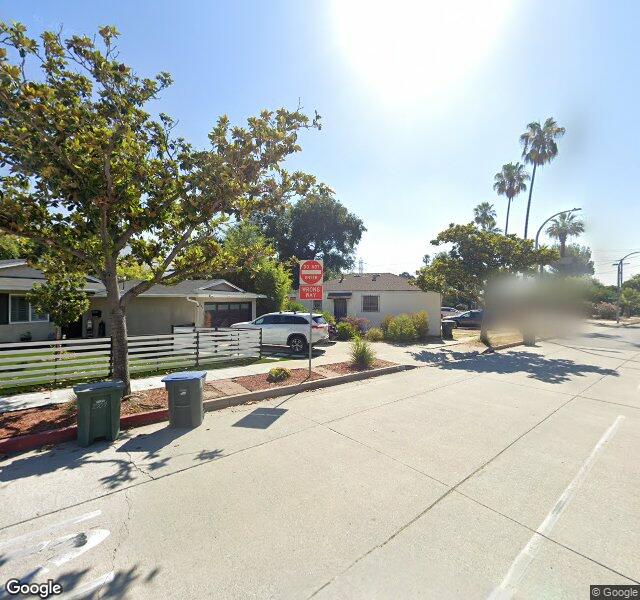
2637 E. WASHINTON BLVD, PASADENA, CA 91107 (626) 798-8991
For profit - Limited Liability company 50 Beds Independent Data: November 2025
Trust Grade
50/100
#934 of 1155 in CA
Last Inspection: March 2024

Within standard 12-15 month inspection cycle. Federal law requires annual inspections.

Overview

Two Palms Care Center has received a Trust Grade of C, indicating it is average and sits in the middle of the pack among nursing homes. It ranks #934 out of 1,155 facilities in California, placing it in the bottom half, and #251 out of 369 in Los Angeles County, meaning only a few local options are better. Unfortunately, the facility's trend appears to be worsening, with issues increasing significantly from 1 in 2023 to 24 in 2024. While staffing has a low turnover rate of 0%, which is a positive sign, the overall staffing rating is poor at 1 out of 5 stars. There have been no fines reported, which is a good indication of compliance. However, there are notable concerns highlighted by recent inspections. For example, the facility failed to provide necessary activities based on residents' preferences, which could negatively impact their mental and social well-being. Additionally, residents receiving oxygen therapy did not receive proper care, such as having their equipment labeled or maintained correctly, which poses a risk to their health. While the home has strengths in staffing consistency and no fines, the increasing number of deficiencies raises significant concerns for potential residents and their families.

Trust Score
C
50/100
In California
#934/1155
Bottom 20%
Safety Record
Low Risk
No red flags
Inspections
Getting Worse
1 → 24 violations
Staff Stability
○ Average
Turnover data not reported for this facility.
Penalties
✓ Good
No fines on record. Clean compliance history, better than most California facilities.
Skilled Nurses
○ Average
RN staffing data not reported for this facility.
Violations
⚠ Watch
38 deficiencies on record. Higher than average. Multiple issues found across inspections.
★★☆☆☆
2.0
Overall Rating
★☆☆☆☆
1.0
Staff Levels
★★★☆☆
3.0
Care Quality
★★★☆☆
3.0
Inspection Score
Stable
2023: 1 issues
2024: 24 issues

The Good

  • Full Sprinkler Coverage · Fire safety systems throughout facility
  • No fines on record

Facility shows strength in fire safety.

The Bad

2-Star Overall Rating

Below California average (3.1)

Below average - review inspection findings carefully

The Ugly 38 deficiencies on record

May 2024 1 deficiency
CONCERN (D) 📢 Someone Reported This

A family member, employee, or ombudsman was alarmed enough to file a formal complaint

Potential for Harm - no one hurt, but risky conditions existed

Deficiency F0604 (Tag F0604)

Could have caused harm · This affected 1 resident

**NOTE- TERMS IN BRACKETS HAVE BEEN EDITED TO PROTECT CONFIDENTIALITY** Based on interview and record review the facility failed to ensure that one (1) out of three (3) sampled residents (Resident 1) ...

Read full inspector narrative →
**NOTE- TERMS IN BRACKETS HAVE BEEN EDITED TO PROTECT CONFIDENTIALITY** Based on interview and record review the facility failed to ensure that one (1) out of three (3) sampled residents (Resident 1) were free from the use of physical restraints (any manual method, physical or mechanical device, equipment, or material that is attached or adjacent to the resident's body, cannot be removed easily by the resident and restricts the resident's freedom of movement or normal access to his body) that was applied to Resident 1 on 5/25/2024. This deficient practice placed Resident 1 not being free of physical restraints that inhibits the freedom of movement of his bilateral hands that was imposed for the purpose of convenience and that is not required to treat Resident 1's medical symptoms. Findings: A review of Resident 1's admission Record indicated the resident was admitted to the facility on [DATE] with diagnoses which included subdural hemorrhage (a serious condition where blood collects between the skull and the surface of the brain), with loss of consciousness, muscle wasting/ atrophy (decrease in size and wasting of muscle tissue) and hypertension (high blood pressure) A review of Resident 1's Nursing admission assessment dated [DATE], indicated Resident 1 has severely impaired cognitive skills (mental action or process of acquiring knowledge and understanding) for daily decision making. The admission assessment indicated Resident 1 required total dependence (helper does all the effort) in bed mobility, transfer, walk in room, dressing, eating, toilet use, personal hygiene, and bathing. A review of Resident 1's Nurse's Progress Notes dated 5/25/2024 at 6:24 PM, indicated, mittens (a type of glove with a single part for all the fingers and a separate part for the thumb) on Resident 1's bilateral hands. Resident 1 unable to demonstrate self- removing mittens. No care plan, physician's order, or consent in place. During an interview with the Director of Nursing (DON) on, 5/29/2024 at 10:21 AM, the DON stated, Resident 1 was a new admit last Friday (5/24/2024) and the resident was confused and trying to pull out his gastrostomy tube (G-tube, is a tube inserted through the belly that brings nutrition directly to the stomach). The DON also stated, on 5/25/2024 (unable to recall time), the Certified Nursing Assistant 1 (CNA 1) went to get mittens in the linen room and applied to Resident 1 hands without physician's orders. During an interview with the Administrator (ADM) on, 5/29/2024 at 10:24 AM, ADM stated, during her interview with CNA 1, CNA 1 admitted that she (CNA 1) put on the mittens on Resident 1 without physician's orders. During an interview with CNA 1 on, 5/29/2024 at 11:47 AM, CNA 1 stated, I heard Resident 1 yelling. I saw him taking his clothes off and I remember seeing mittens in the back of the storage area and I grabbed them. I just slid the mittens on his both hands. I did not think of anything, and I forgot to tell the charge nurse. During a concurrent record review of the policy Restraints and interview with the DON on 5/29/2024 at 12:11 PM, the policy indicated, physical restraints shall be applied in such a manner that they can be easily removed . The DON stated, The mittens were considered restraint if you cannot easily remove the mittens, and there is no freedom of movement and normal access to one's body. During a concurrent record review of the Physician's order dated from 5/24/2024 to 5/29/2024, and interview with the DON on 5/29/2024 at 12:20 PM, the DON verified there was no physician's order for the mittens in the computer. During an interview with CNA 2 on, 5/29/2024 at 1:28 PM, CNA 2 stated, I took care of Resident 1 Saturday (5/25/2024) morning and I saw him with 2 mittens (both hands). Nobody told me anything about the mittens. Resident 1 was wearing the mittens the whole morning. Resident 1 was screaming the whole time. The mittens were restraints because they need an order from the doctor. During an interview with Registered Nurse Supervisor (RNS) on, 5/29/2024 at 2 PM, RNS stated, RNS just saw Resident 1 had the mittens on both hands on 5/25/2024 and nobody reported to RNS. RNS also stated I asked Resident 1 if he was able to remove it, but he was unable to demonstrate. Nobody endorsed from the previous shift. There were no orders from the hospital or the doctor, and there was no consent (for the use of restraint) from the resident's responsible party. A review of facility's policy and procedure titled, Restraints revised on 11/1/2017, indicated residents shall be provided an environment that is restraint- free, unless a restraint is necessary to treat a medical symptom in which case the least restrictive measures shall be used. The policy and procedure also indicated, unless otherwise specified by the attending physician's order, alternative methods of behavioral control must be attempted and documented in the resident's medical record before a physical restraint is used.
Mar 2024 20 deficiencies
CONCERN (D)

Potential for Harm - no one hurt, but risky conditions existed

Resident Rights (Tag F0550)

Could have caused harm · This affected 1 resident

**NOTE- TERMS IN BRACKETS HAVE BEEN EDITED TO PROTECT CONFIDENTIALITY** b. A review of Resident 23's admission Record indicated the facility readmitted the resident on 2/22/2024, with diagnoses that i...

Read full inspector narrative →
**NOTE- TERMS IN BRACKETS HAVE BEEN EDITED TO PROTECT CONFIDENTIALITY** b. A review of Resident 23's admission Record indicated the facility readmitted the resident on 2/22/2024, with diagnoses that included paraplegia (impairment in motor or sensory function of the lower extremities) and contracture (shortening and hardening of muscles, tendons, or other tissue, often leading to deformity and rigidity of joints) of bilateral elbows and knees. A review of Resident 23's MDS, dated [DATE], indicated the resident was rarely able to express ideas and wants and was rarely able to understand verbal content. The MDS indicated Resident 23 was dependent with all activities of daily living. During an observation on 3/30/2024 at 9:36 am to 9:40 am, Certified Nursing Assistant 3 (CNA 3) removed Resident 23's clothes. Resident 23's body was not covered while CNA 3 washed the resident's face, neck, and upper body and poured water on the perineal area, then CNA 3 moved down the legs. During an observation on 3/30/2024 at 9:40 am to 9:48 am, Resident 23's body was not covered while CNA 3 was drying Resident 23's front with a towel. CNA 3 then washed Resident 23's back while the resident whole body was exposed. CNA 3 applied lotion then started to put Resident 23's clothes on. During an interview on 3/31/2024 at 9:41 am, CNA 3 stated she should have covered Resident 23 during bed bath. During an interview on 3/31/24 at 10:11 am, the Director of Staff Development (DSD) stated it was important to keep residents covered up and uncover by body part during a bed bath so Resident 23 would not feel exposed and the resident could lose self-respect. During a review of the facility's Policy and Procedure titled, Bed Baths, dated June 1, 2017, indicated the following procedure for providing a bed bath .Without exposing the resident, remove the top sheet form underneath the bath blanket .Place a bath towel over the resident's chest. Fold the top of the bath blanket down to the abdomen then raise the bath towel and wash the resident's chest. Cover the resident's entire chest area with a bath towel. Fold the bath blanket down to the resident's pubic area. Wash the resident's abdomen. Rinse well and dry the abdomen. Pull the bath blanket back above the abdomen and chest. Washing the Lower Body, begin with the resident's leg farthest from you. Pull the far, lower corner of the bath blanket toward you, exposing only the one leg . During a review of the facility's Policy and Procedure titled, Privacy and Dignity, dated June 1, 2017, indicated the facility promotes resident care in a manner and an environment that maintains or enhances dignity and respect, in full recognition of each resident's individuality. Based on observation, interview, and record review the facility failed to ensure two (2) of three sampled residents (Resident 41 and Resident 23) for the dignity care area, were not provided with dignity and privacy by failing to: a. Assist Resident 41 at eye level during meal. b. Ensure Resident 23's whole body was not exposed during a bed bath by covering the body part not being washed at a time. These failures have the potential to affect Residents 41 and 23's residents' emotional and mental well-being. Findings: a. A review of Resident 41's admission Record indicated Resident 41 was readmitted to the facility on [DATE], with diagnoses that included hypertensive heart disease (heart disease caused by high blood pressure) and type 2 diabetes mellitus (a disease that occurs when blood sugar is too high). A review of Resident 41's Minimum Data Set (MDS, a resident assessment and screening tool), dated 3/5/2024, indicated Resident 41 had clear speech, understood others and made self-understood. Resident 41 required partial/moderate assistance (helper does less than half the effort) for eating and substantial/maximal assistance (helper does more than half the effort) for oral hygiene, upper body dressing and personal hygiene. During an observation on 3/30/2024 at 5:25 pm, in Resident 41's room, Resident 41 was in bed sitting up with dinner tray on bedside table across the resident's bed. Certified Nursing Assistant 2 (CNA2) was standing next to Resident 41's bed assisting Resident 41 with dinner. During an interview on 3/30/2024 at 5:35 pm, CNA2 stated CNA2 should sit down at eye level of Resident 41 when assisting Resident 41's meal. CNA2 stated that was to maintain Resident 41's dignity and respect Resident 41's right. During an interview on 2/9/2024 at 7:22 pm, CNA1 stated CNA1 should sit down at eye level of Resident 41 when assisting Resident 41's meal. CNA1 stated that was to maintain Resident 41's right to be treated with dignity and respect During an interview on 3/31/2024 at 3:07 pm, Infection Prevention Nurse (IPN) stated the facility staff should sit down at eye level of the residents when assisting meal for resident's dignity, respect, and make resident feel home like. During a review of the facility's policy and procedure titled, Privacy and Dignity, revised 6/1/2017, indicated, The facility promotes resident care in a manner and an environment that maintains or enhances dignity and respect, in full recognition of each resident's individuality. The facility promotes independence and dignity in dining.
CONCERN (D)

Potential for Harm - no one hurt, but risky conditions existed

Deficiency F0558 (Tag F0558)

Could have caused harm · This affected 1 resident

**NOTE- TERMS IN BRACKETS HAVE BEEN EDITED TO PROTECT CONFIDENTIALITY** b. A review of Resident 17's admission Record indicated the facility admitted Resident 17 on 12/20/2023 with diagnoses that incl...

Read full inspector narrative →
**NOTE- TERMS IN BRACKETS HAVE BEEN EDITED TO PROTECT CONFIDENTIALITY** b. A review of Resident 17's admission Record indicated the facility admitted Resident 17 on 12/20/2023 with diagnoses that included history of falling and chronic obstructive pulmonary disease (COPD - type of obstructive lung disease characterized by long-term poor airflow). A review of Resident 17's Fall Risk Assessment (method of assessing a patient's likelihood of falling), dated 3/7/2024, indicated Resident 17 was assessed as at high risk for fall. A review of Resident 17's Care Plan, dated 10/19/2023, indicated Resident 17 was at risk for fall related to balance problems The Care Plan interventions indicated for the nursing staff to place Resident 17's call light within reach and to encourage Resident 17 to use the call light for assistance as needed. The CP indicated Resident 17 needed a prompt response to all requests from the nursing staff. A review of Resident 17's MDS, dated [DATE], indicated Resident 17 's cognitive (mental action or process of acquiring knowledge and understanding) skills for daily decision making was severely impaired. The MDS indicated, Resident 17 required moderate assistance with shower and lower body dressing. The MDS indicated, Resident 17 was dependent to staff during toileting hygiene. During a concurrent observation on 3/29/2024 at 6:36 pm, Resident 17 was asleep, lying in bed with call light hanging at the upper right side of Resident 17's bed. During a concurrent observation and interview on 3/29/2024 at 6:36 pm, with Licensed Vocational Nurse 1 (LVN 1), the LVN 1 stated Resident 17's call light was hanging on the upper right side of the bed. LVN 1 stated Resident 17's call light was not within the resident's reach. LVN 1 stated Resident 17 was unable to reach the call light. LVN stated, call light was needed to be within reach for Resident 17 to use if she needed assistance. LVN 1 stated, Resident 17 had history of fall and ensuring the call light was within the resident's reach can avoid accidents or injury . During an interview on 3/30/2024 at 4:19 pm, with the Director of Nursing he (DON), DON stated, call light was needed to be within the resident's reach for the staff to attend to Resident 17's needs in a timely manner. The DON stated, call light should be within reach for Resident 17 to easily call for help and to maintain Resident 1's safety. A record review of the facility's policy and procedure (P&P) titled, Communication- Call System, revised on 10/24/2022, indicated call cords will be placed within the resident's reach in the resident's room. Based on observation, interview and record review, the facility failed to ensure the call light (an alerting device for nurses or other nursing personnel to assist a resident when in need) within reach for two of 17 sampled residents (Resident 15 and Resident 17). This failure had the potential to result in Residents 15 and 17 not receiving assistance in a timely manner. Findings: a. A review of Resident 15's admission Record indicated Resident 15 was admitted on [DATE], with diagnoses that included difficulty walking, dysphagia (difficult swallowing) and depression (a constant feeling of sadness and loss of interest, which stops you doing your normal activities). A review of Resident 15's Minimum Data Set (MDS, a standardized assessment and care planning tool), dated 3/1/2024, indicated Resident 15 had clear speech, had ability to express ideas and wants and had ability to understand others. Resident 15 had intact cognitive skills for daily decision making. Resident 15 required substantial/maximal assistance (helper does more than half the effort, helper lifts or holds trunk or limbs and provides more than half the effort) for chair/bed-to-chair transfer, toilet hygiene, and was partial/moderate assistance (helper does less than half the effort.) for upper body dressing and personal hygiene). During an observation and concurrent interview with Infection Preventionist Nurse (IPN) on 3/29/2024 at 6:40 pm, in Resident 15's room, Resident 15 was sitting in wheelchair away from Resident 15's bed watching TV. Resident 15's call light handler was under Resident 15's bed on the floor. Resident 15 stated Resident 15 could not reach the call light from where Resident 15 sat. IPN stated Resident 15's call light was under Resident 15's bed, and Resident 15 was not able to reach it. IPN stated Resident 15 could fall causing injury if Resident 15 trying to reach call light when need help. Resident 15 stated the call light should place within reach of the resident to prevent accident.
CONCERN (D)

Potential for Harm - no one hurt, but risky conditions existed

Deficiency F0655 (Tag F0655)

Could have caused harm · This affected 1 resident

**NOTE- TERMS IN BRACKETS HAVE BEEN EDITED TO PROTECT CONFIDENTIALITY** Based on observation, interview, and record review, the facility failed to develop a baseline care plan for one of 17 Residents ...

Read full inspector narrative →
**NOTE- TERMS IN BRACKETS HAVE BEEN EDITED TO PROTECT CONFIDENTIALITY** Based on observation, interview, and record review, the facility failed to develop a baseline care plan for one of 17 Residents (Resident 37) who was at risk for developing a pressure ulcer (wound that occurs as a result of prolonged pressure on a specific area of the body) ) and had undergone surgical procedure for a pressure ulcer. This deficient practice had the potential for Resident 37 to not be provided with interventions to prevent the development of a pressure ulcer and worsening of surgical wound. Findings: A review of Resident 37's admission Record indicated the facility initially admitted the resident on 8/20/2023 and readmitted the resident on 2/21/2024, with diagnoses that included type 2 diabetes (a disease in which the body's ability to produce or respond to the hormone insulin is impaired, resulting in elevated levels of glucose/sugar in the blood and urine,) cervical disc disorder at C5-C6 level with radiculopathy (pinched nerve that causes pain, weakness, numbness.) A review of Resident 37's Minimum Data Set (MDS, a standardized assessment and care planning tool), dated 3/6/2024, indicated the resident was rarely able to express ideas and wants and was rarely able to understand verbal content. During an observation on 3/31/24 at 8:25 am, Certified Nursing Assistant 1 (CNA 1) was providing incontinent care to Resident 37. There was an intact dressing to the sacral coccyx area. During a concurrent record review and interview with the Assistant Director of Nursing (ADON) on 3/31/2024 at 1:40 pm, the ADON stated there was no care plan for altered skin integrity or a care plan for the pressure ulcer on readmission on [DATE]. The following care plans for Resident 37 were initiated on 3/6/2024 and on 3/8/2024; a. Potential for pressure ulcer development related to history of ulcers and to immobility was initiated on 3/6/2024 b. Actual impairment to skin integrity of the sacral coccyx related to surgical wound dehiscence was initiated on 3/8/2024. During an interview on 3/31/2024 at 2:46 pm, the Director of Nursing (DON) stated the facility did not and should have developed a care plan specific to Resident 37's pressure ulcer upon admission on [DATE]. The DON stated, If we had developed the care plan on the actual pressure ulcer, we could add interventions such as turning and repositioning, encouraging resident to eat, make sure to keep resident clean and dry, limit the time on the wheelchair because the Resident's family would always want her on the wheelchair even after she came back from the hospital. During a review of the Wound Consultant progress notes dated 2/29/2024, indicated Resident 37 returned from the hospital on 2/21/2024 where a procedure was performed to close the sacral wound with sutures.
CONCERN (D)

Potential for Harm - no one hurt, but risky conditions existed

Pressure Ulcer Prevention (Tag F0686)

Could have caused harm · This affected 1 resident

Based on observation, interview, and record review, the facility failed to provide treatment to manage pressure ulcer (wound that occurs as a result of prolonged pressure on a specific area of the bod...

Read full inspector narrative →
Based on observation, interview, and record review, the facility failed to provide treatment to manage pressure ulcer (wound that occurs as a result of prolonged pressure on a specific area of the body) and promote healing for one of two sampled Residents (Resident 37) for Pressure Ulcer care area, when the facility failed to ensure the resident's low air loss (LAL, operates using a blower based pump that is designed to circulate a constant flow of air through the mattress, commonly used to heal pressure ulcers) mattress was on alternating therapy and not on static (lacking in movement) mode. This deficient practice had the potential to delay the healing of Resident 37's stage 4 pressure ulcer (full thickness skin and tissue loss with exposed or directly palpable fascia, muscle, tendon, ligament, cartilage or bone in the ulcer). Findings: A review of Resident 37's admission Record indicated the facility initially admitted the resident on 8/20/2023 and readmitted the resident on 2/21/2024, with diagnoses that included type 2 diabetes (a disease in which the body's ability to produce or respond to the hormone insulin is impaired, resulting in elevated levels of glucose/sugar in the blood and urine) and cervical disc disorder at C5-C6 level with radiculopathy (pinched nerve that causes pain, weakness, numbness.) During a review of Resident 37's Minimum Data Set (MDS, a standardized assessment and care planning tool), dated 3/6/2024, indicated the resident was rarely able to express ideas and wants and was rarely able to understand verbal content. During an observation on 3/29/2024 at 6:51 pm with the Director of Nursing, Resident 37 was lying on a LAL mattress, which was set at static mode. During an interview on 3/31/2024 at 3:09 pm, the Assistant Director of Nursing (ADON) stated she did not know the static needed to be off. During an interview on 3/31/2024 at 5:28 pm, the Director of Nursing stated when the static setting was on that would mean the air on the mattress was steady instead of the air moving to different sections of the mattress. The DON stated the static setting on the LAL mattress would only be used for cleaning, changing positions and when turning the resident. The DON stated, We needed to ensure the static mode was off by turning off the light, if the light is on where it indicated static then the static mode is on. A review of the User Manual for the LAL mattress indicated the mattress has 20 individual air cells that provides a specialty surface that helps conform to the specific shape of the resident, minimizing soft tissue distortion, helping reduce bone penetration into muscle fascia, and helping promote improved blood flow compared to traditional surfaces. The system has a static button available to discontinue alternation therapy for patient transfers, caregiving, comfort, or preference. A review of the facility's Policy and Procedure (P&P) titled, Pressure Ulcer Prevention, revised 6/1/2017, indicated licensed staff will monitor interventions for effectiveness and resident tolerance.
CONCERN (D)

Potential for Harm - no one hurt, but risky conditions existed

Incontinence Care (Tag F0690)

Could have caused harm · This affected 1 resident

Based on observation, interview, and record review, the facility failed to assess and monitor for the presence of sediments on the suprapubic catheter (a tube placed in the bladder through a cut in th...

Read full inspector narrative →
Based on observation, interview, and record review, the facility failed to assess and monitor for the presence of sediments on the suprapubic catheter (a tube placed in the bladder through a cut in the lower part of the abdomen to drain and collect urine from the bladder) tubing for one of two residents (Resident 11), for Catheter care area. This deficient practice had the potential to lead to a urinary tract infection (UTI, condition in which bacteria invade and grow in any part the urinary system which includes the kidneys, bladder, ureters [tube that carries urine from the kidney to the urinary bladder], and urethra [canal from the bladder]) and delay in treatment. Findings: A review of Resident 11's admission Record indicated the facility admitted the resident on 12/28/2023, with diagnoses that included cerebral infarction (stroke,) cystostomy (a surgical procedure that connects the bladder and the skin to drain urine through a tube. A review of Resident 11's Minimum Data Set (MDS, a standardized assessment and care planning tool), dated 3/18/2024, indicated Resident 11 sometimes able to express ideas and wants and sometimes able to understand verbal content. During an observation on 3/29/2024 at 7:50 pm, there were sediments observed on the catheter tubing. Licensed Vocational Nurse 4 (LVN 4) came to Resident 11's room but did not check the catheter. LVN 4 stated she moved the catheter to the left side so the tubing was not visible upon entering the room. During an interview on 3/30/2024 at 5:10 pm, the Assistant Director of Nursing (ADON) stated, When sediments would be observed on the urine, we could be concerned with possible infection. We need to monitor the urine for sediments. During a concurrent observation and interview on 3/30/24 at 5:13 pm with the ADON. ADON stated, there were sediments observed on the catheter tubing and there were sediment deposits at the bottom of the urine bag. The ADON stated the grain like particles at the bottom of the bag and on the catheter tubing were sediments. During an interview on 3/30/24 at 5:24 pm, the ADON stated there was no documentation that sediments were observed in Resident 11's urine and on the catheter tubing. The ADON stated, We needed to notify the physician because the presence of sediments in the urine is not normal and that could be a change in resident's condition and we are concerned with possible infection. During an interview on 3/30/2024 at 5:34 pm, LVN 4 stated monitoring the urine for color, presence of sediments were part of nursing assessment for residents with a urinary catheter. A review of Resident 11's care plan for suprapubic catheter indicated to monitor for discharge, redness on site and sediments. A review of the facility's Policy and Procedure titled, Change in Condition Notification, revised 6/1/2017, indicated the licensed nurse will notify the resident's attending physician when there is a significant change in the resident's mental, physical or psychosocial status, life-threatening conditions or clinical complications. During a review of the facility's Policy and Procedure (P&P) titled, Care of Catheter-Suprapubic, revised 6/1/2017, indicated to document any unusual observations in the medical record.
CONCERN (D)

Potential for Harm - no one hurt, but risky conditions existed

Deficiency F0692 (Tag F0692)

Could have caused harm · This affected 1 resident

**NOTE- TERMS IN BRACKETS HAVE BEEN EDITED TO PROTECT CONFIDENTIALITY** Based on observation, interview and record review, the facility failed to provide an appropriate food texture to fit the residen...

Read full inspector narrative →
**NOTE- TERMS IN BRACKETS HAVE BEEN EDITED TO PROTECT CONFIDENTIALITY** Based on observation, interview and record review, the facility failed to provide an appropriate food texture to fit the resident's need for one out of two sampled residents (Resident 41), for Nutrition care area. This failure had potential for Resident 41 to lose more weight and result in malnutrition (faulty nutrition due to inadequate or unbalanced intake of nutrients). Findings: A review of Resident 41's admission record indicated Resident 41 was readmitted to the facility on [DATE], with diagnoses that included dehydration (use or lose more fluid than intake, the body doesn't have enough water and other fluids to carry out tis normal functions) and type 2 diabetes mellitus (a condition that happens because of a problem in the way the body regulates and uses sugar as a fuel). A review of Resident 41's Minimum Data Set (MDS, a resident assessment and screening tool), dated 3/5/2024, indicated Resident 41 had clear speech, understood others and made self-understood. Resident 41 required partial/moderate assistance (helper does less than half the effort) for eating and substantial/maximal assistance (helper does more than half the effort) for oral hygiene, upper body dressing and personal hygiene. A review of Resident 41's Order Summary Report, dated 3/31/2024, indicated Resident 41 was on fortified (a food that has extra nutrients added to it) Consistent, controlled carbohydrate (CCHO) diet, regular, cut up meat texture. A review of Resident 41's Dietary notes (DN) for weekly weight review by Registered Dietitian and interdisciplinary team (IDT), dated 3/22/2024, indicated Resident 41 had a four pound (lb) weight loss within a week. The DN indicated Resident 41's po (by mouth) intakes continued to be poor at 30-40 percent and Resident 41 was on feeding program. The DN indicated Resident 41's weight loss was related to poor po intakes, advanced age, chewing difficulty, possible depression (a constant feeling of sadness and loss of interest, which stops person doing normal activities). During an interview on 3/29/2024 at 6:55 pm, Resident 41's Responsible Party (RP 1) stated, Resident 41 had difficulty to chew the food the facility provided. RP 1 stated Resident 41 had experienced weight loss recently. During an observation on 3/30/2024 at 5:25 pm, in Resident 41's room, Resident 41 was in bed sitting up with one staff assisting Resident 41's meal. Resident 41's dinner tray had a ham sandwich, a chopped boiled egg and a vegetable soup. Resident 41 took 100% soup, picked out small pieces of vegetable leaf out of mouth. The staff gave Resident 41 a couple pieces of chopped egg, Resident 41 tried to chew on them, and then picked them out by hand. Resident 41 was not able to chew on sandwiches that was prepared. During an interview on 3/30/2024 at 5:35 pm, Certified Nursing Assistant (CNA2) stated, Resident 41 had difficulty chewing the food offered in the tray. CNA2 stated Resident 41 took all the soup and HPN (high protein nutrition) drink and had no difficulty swallowing. During an interview on 3/30/2024 at 5:46 pm, Licensed Vocational Nurse 1 (LVN 1) stated, Resident 41 had no problem with swallowing, but had difficulty chewing. LVN 1 stated the facility should provide more appropriate food texture for Resident 41 to prevent possible further weight loss and malnutrition. During a concurrent interview, the Director of Nursing (DON) stated, Resident 41' DN indicated Resident 41 had difficulty chewing, the facility should talk to Resident 41's physician and dietitian to offer Resident 41 a better food texture to fit the needs and to increase Resident 41's food intake to prevent further weight loss and malnutrition. A review of the facility's policy and procedure titled, Assessment and Management of Resident Weights, revised 6/1/2017, indicated To ensure that each resident maintains acceptable parameters of weight and nutritional status, such as body weight and protein level, unless the resident's clinical condition demonstrates that this is not possible based on the resident's comprehensive assessment. Significant weight change management: The IDT care plan will be updated to reflect individualized goals and approaches for managing the weight change.
CONCERN (D)

Potential for Harm - no one hurt, but risky conditions existed

Tube Feeding (Tag F0693)

Could have caused harm · This affected 1 resident

Based on observation, interview, and record review, the facility failed to ensure Licensed Vocational Nurse 2 (LVN 2) flushed (cleansed) the gastrostomy tube (GT-a tube inserted into the stomach throu...

Read full inspector narrative →
Based on observation, interview, and record review, the facility failed to ensure Licensed Vocational Nurse 2 (LVN 2) flushed (cleansed) the gastrostomy tube (GT-a tube inserted into the stomach through a surgical incision use for feeding and administration of medication for a resident unable to swallow) before and after medication administration for one of 28 sampled residents (Resident 29) in accordance with the facility's policy and procedure titled Feeding Tube - Administration of Medication. This deficient practice had the potential to result in inconsistent effectiveness of medication for Residents 29. Findings: During a review of Resident 29's admission Record, the admission record indicated the facility admitted Resident 29 on 3/26/2023 with diagnoses that included encounter for attention to gastrostomy (creation of an artificial external opening into the stomach for nutritional support) and dementia (long term and often gradual decrease in the ability to think and remember severe enough to affect a person's daily functioning). During a review of Resident 29's Order Summary Report, dated 3/27/2023, indicated, to flush GT with 20 cubic centimeters (cc, unit of measurement) of water before and after medication administration. During a review of Resident 29's History and Physical (H&P), dated 3/29/2023, the record indicated, Resident 29 did not have the capacity to understand and make decisions. During a review of Resident 29's Minimum Data Set (MDS, a standardized assessment and care planning tool), dated 1/29/2024, the MDS indicated, Resident 29 's cognition (mental action or process of acquiring knowledge and understanding) for daily decision making was severely impaired. The MDS indicated, Resident 29 was dependent to staff with oral hygiene, toileting, shower, and personal hygiene. During a review of Resident 29's Order Summary Report, dated 2/16/2024, indicated, Isosource (milk supplement) 1.5 at 60 millimeter (ml, unit of measurement) per hour (hr) for 20 hours to provide 1,800 kilocalories (kcal) for dysphagia (difficulty in swallowing). During a medication pass observation on 3/30/2024 at 9:04 am, the Licensed Vocational Nurse (LVN) 2 flushed Resident 29's GT with 10 centimeters (cc, unit of measurement) of water before administering medications. During an observation on 3/30/2024 at 9:31 am, the LVN 2 flushed Resident 29's GT with 30 cc of water after administering medications. Observed 30cc of water was spilled on Resident 29's clothing. During an interview on 3/30/2024 at 9:35 am, LVN 2 stated, the 30 cc of water used to flush Resident 29's GT was spilled in Resident 29's clothing. During an interview on 3/30/2024 at 9:38 am, with the facility's Director of Nursing (DON), the DON stated, GT should be flushed with 20cc to 30cc of water before and after administering medication to prevent the GT from clogging. During a review of the facility's Policy and Procedure titled, Feeding Tube - Administration of Medication, revised 6/1/2017, the P&P indicated, after establishing that the tube was patent and in correct position, .etc, flush tube with approximately 30 cc's of water. The P&P indicated, flush with 30 cc's of water after the final medication is administered.
CONCERN (D)

Potential for Harm - no one hurt, but risky conditions existed

Deficiency F0700 (Tag F0700)

Could have caused harm · This affected 1 resident

**NOTE- TERMS IN BRACKETS HAVE BEEN EDITED TO PROTECT CONFIDENTIALITY** . Based on observation, interview, and record review, the facility failed to attempt appropriate alternatives prior to installi...

Read full inspector narrative →
**NOTE- TERMS IN BRACKETS HAVE BEEN EDITED TO PROTECT CONFIDENTIALITY** . Based on observation, interview, and record review, the facility failed to attempt appropriate alternatives prior to installing a side or bed rail for one of 17 sampled residents (Resident 40). This deficient practice had the potential for the side or bed rail to present as a safety hazard to Resident 17. Findings: A review of Resident 40's admission Record indicated the facility admitted the resident on 9/20/2023, with diagnoses that included Alzheimer's disease (irreversible, progressive brain disorder that slowly destroys memory and thinking skills, and eventually the ability to carry out the simplest tasks) and anxiety disorder (group of mental disorders characterized by feelings of anxiety [an unpleasant state of inner turmoil] and fear.) A review of Resident 40's MDS dated [DATE], indicated Resident 40 sometimes was able to express ideas and wants and sometimes was able to understand verbal content. The MDS indicated Resident 40 required maximal assistance (helper does more than half the effort) with rolling left to right and dependent with lying to sitting mobility. During an observation on 3/30/24 at 4:10 pm with the Assistant Director of Nursing (ADON), Resident 40 had removed the padding that was placed on the siderails and had inserted her legs in between the siderails. During a concurrent record review and interview with the ADON on 3/30/24 at 6:10 pm, the ADON stated the Side Rail/Restraint/Device Assessment, dated 12/6/2023, indicated the alternative attempted prior to the use of siderails was frequent monitoring, no other appropriate alternatives was attempted. The ADON stated the use of siderails is an accident hazard because it could put the residents at risk for entrapment. The ADON stated appropriate alternatives would be the use of low bed, fall mats, and bolsters. A review of the facility's Policy and Procedure titled, Bedrails revised 10/24/2022, indicated the assessment of whether to use bed rails should include an evaluation of the alternatives to the use of bed rail that were attempted and how these alternatives failed to meet the resident's assessed needs. Alternatives attempted should be appropriate for the resident, safe and address the medical conditions, symptoms or behavioral patterns for which a bed rail was considered.
CONCERN (D)

Potential for Harm - no one hurt, but risky conditions existed

Deficiency F0726 (Tag F0726)

Could have caused harm · This affected 1 resident

Based on interview, and record review, the facility failed to ensure competent nursing staff by failing to conduct and complete the performance evaluation for one of five staff (Licensed Vocational Nu...

Read full inspector narrative →
Based on interview, and record review, the facility failed to ensure competent nursing staff by failing to conduct and complete the performance evaluation for one of five staff (Licensed Vocational Nurse 4 [LVN 4]) as indicated in the facility's policy and procedure titled, Performance Evaluations This deficient practice had the potential for residents not receive appropriate nursing care and services. Findings: During a concurrent record review of LVN 4's employee file and interview on 3/31/2023 at 12:20 pm with the Director of Staff and Development (DSD), the DSD stated LVN 4 worked full time in the facility since 1/27/2022. The DSD stated there was no documentation that LVN 4's performance evaluation was done by the Director of Nursing (DON). The DSD stated performance evaluation should be conducted annually by the DON. During an interview on 3/31/2024 at 4:10 pm with the facility's DON, the DON stated she was responsible to conduct the performance evaluation of Licensed staff. The DON stated the Performance evaluation should be done annually to evaluate the staff performance if able to provide competent care to residents. During a review of the facility's policy and procedure titled, Performance Evaluation, reviewed 5/2022, indicated performance evaluation may be conducted annually on or around their anniversary date.
CONCERN (D)

Potential for Harm - no one hurt, but risky conditions existed

Pharmacy Services (Tag F0755)

Could have caused harm · This affected 1 resident

**NOTE- TERMS IN BRACKETS HAVE BEEN EDITED TO PROTECT CONFIDENTIALITY** Based on observation, interview, and record review, the facility failed to administer Cyanocobalamin (a synthetic compound of vi...

Read full inspector narrative →
**NOTE- TERMS IN BRACKETS HAVE BEEN EDITED TO PROTECT CONFIDENTIALITY** Based on observation, interview, and record review, the facility failed to administer Cyanocobalamin (a synthetic compound of vitamin B12 used to treat vitamin deficiencies) to one of six sampled Residents (Resident 5) as ordered. This failure had the potential to result in Resident 5's developing vitamin B12 deficiencies causing anemia (a problem of not having enough healthy red blood cells or hemoglobin to carry oxygen to the body's tissues), fatigue and decline in health conditions. Findings: A a review of Resident 5's admission record indicated Resident 5 was readmitted to the facility on [DATE], with diagnoses that included anemia and vitamin D deficiency. A review of Resident 5's Minimum Data Set (MDS, a resident assessment and care screening tool), dated 12/28/23, indicated Resident 5 had clear speech, sometimes understood others, and sometimes made self-understood. A review of Resident 5's Order Summary Report, dated 3/30/2024, indicated Resident 5 was prescribed Cyanocobalamin oral tablet 100 mcg (microgram) one tablet by mouth one time a day for supplement. During a medication administration observation on 3/20/2024 at 8:53 am, Licensed Vocational Nurse 3 (LVN 3) administered vitamin B1 100mg (milligram) one tablet to Resident 5. During an interview on 3/20/2024 at 9:14 am, LVN 3 stated, LVN 3 gave the wrong medication and wrong dose to Resident 5. LVN 3 stated, the physician order was for Resident 5 to be given Cyanocobalamin 100 mcg which was vitamin B12, and LVN 3 administered vitamin B1 100 milligrams (mg). LVN 3 stated, it was important to ensure the right resident, right drug, right dose, right route and right time when doing medication administration to avoid medication errors for resident's health and safety. During an interview with the Director of Nursing (DON), the DON stated, The facility licensed staff should check for right name, right medication, right dose, right route, and right time during medication administration. The DON stated it was for resident's right, safety, and health. The DON stated, Giving the wrong medication could cause harm to residents and delay their healing process. A review of the facility's policy and procedure titled, Medication-Administration, revised 6/1/2017, indicated Medication will be administered by a licensed nurse per the order of an attending physician or licensed independent practitioner. No medication will be used for any resident other than the resident for whom it was prescribed. The licensed nurse must know the following information about any medication they are administering: the drug's name (generic and trade) and the drug's usual dosage. Nursing staff will keep in mind the seven rights of medication when administering medication: the right medication, the right amount, the right resident, the right time .
CONCERN (D)

Potential for Harm - no one hurt, but risky conditions existed

Medication Errors (Tag F0758)

Could have caused harm · This affected 1 resident

Based on observation, interview and record review, the facility failed to ensure one of 5 sampled residents (Resident 23), for unnecessary medication care area, was free from the use of unnecessary ps...

Read full inspector narrative →
Based on observation, interview and record review, the facility failed to ensure one of 5 sampled residents (Resident 23), for unnecessary medication care area, was free from the use of unnecessary psychotropic drug (any medication capable of affecting the mind, emotions, and behavior) by failing to monitor the target behavior for the use of Seroquel (antipsychotic medication). This deficient practice had the potential to place Resident 23 at risk for significant adverse consequence (unwanted, uncomfortable, or dangerous effects that a drug may have) from the use of unnecessary psychotropic drug, which could result to impairment or decline in the residents' mental, physical condition, functional, and psychosocial status. Findings: A review of Resident 23's admission Record indicated the facility readmitted the resident on 2/22/2024, with diagnoses that included paraplegia (impairment in motor or sensory function of the lower extremities) and contracture (shortening and hardening of muscles, tendons, or other tissue, often leading to deformity and rigidity of joints) of bilateral elbows and knees. A review of Resident 23's Minimum Data Set (MDS, a standardized assessment and care planning tool), dated 5/7/2024, indicated the resident was rarely able to express ideas and wants and was rarely able to understand verbal content. The MDS indicated Resident 23 was dependent with all activities of daily living. During a concurrent record review and interview on 3/31/24 3:36 pm with the Assistant Director of Nursing (ADON,) ADON stated Resident 23 had an order for Seroquel 25 milligrams (mg) at bedtime for psychosis manifested by episodes of yelling/screaming, delusions (an unshakable belief in something untrue), hallucinations (an experience in which you see, hear, feel, or smell something that does not exist). ADON stated the medication was started on 2/22/2024. The ADON stated Resident 23's monitoring for yelling, screaming, delusions, hallucinations on the MAR did not allow staff to write the number of times, instead the MAR only allowed initials of the nurse. The ADON stated she is fixing it now to allow licensed nurse to put in the tally number for their shift. During an interview on 3/31/2023 at 3:44 PM, the ADON stated the facility need to monitor how many times the behavior occurred per shift and tally at the end of the month to be able to determine if the use of Seroquel was effective or if there was an opportunity to do a gradual dose reduction.
CONCERN (D)

Potential for Harm - no one hurt, but risky conditions existed

Deficiency F0761 (Tag F0761)

Could have caused harm · This affected 1 resident

**NOTE- TERMS IN BRACKETS HAVE BEEN EDITED TO PROTECT CONFIDENTIALITY** Based on observation, interview and record review, the facility failed to ensure medication room free from expired medication fo...

Read full inspector narrative →
**NOTE- TERMS IN BRACKETS HAVE BEEN EDITED TO PROTECT CONFIDENTIALITY** Based on observation, interview and record review, the facility failed to ensure medication room free from expired medication for one out of one medication storage room. This failure had the potential to result in the residents using ineffective medications which could cause a decline in the Residents' health conditions. Findings: A review of Resident 40's admission Record indicated Resident 40 was admitted to the facility on [DATE], with diagnoses that included depression (a constant feeling a sadness and loss of interest, which stops person from doing normal activities) and hypertension (increased blood pressure). A review of Resident 40's Physician Order Summary report, dated 3/30/2024, indicated, Lorazepam Intensol Oral Concentrated was not on Resident 40's current medication list. A review of Resident 40's Physician Order, dated 11/7/2023, indicated Lorazepam Oral Concentrate 2mg/ml (milligram per milliliter), give 0.5ml by mouth every 4 hours as needed for seizures (sudden, uncontrolled body movement and changes in behavior that occur because of abnormal electrical activity in the brain. Symptoms include loss of awareness, changes in emotion, loss of muscle control and shaking) for 30 days and give 0.5 ml by mouth every 4 hours as needed for anxiety/restlessness for 30 days. During a concurrent inspection of the facility's medication storage room and interview with the Director of Nursing (DON) on 3/30/2024 at 11:26 am, the DON stated, there was a bottle of Lorazepam Intensol Oral Concentrated (a medication used to treat anxiety {act on the brain and nerves to produce a calming effect and works by enhancing the effects of a certain natural chemical in the body}), dated 10/23/2023, in the medication refrigerator. The DON stated the bottle was labeled with Resident 40's name and dated 10/23/2023, which was the date the bottle was opened. The DON stated, the facility should not keep this medication in the medication refrigerator because it was already expired. The DON stated, This medication expired 30 days after opening per the facility's policy. The DON stated, This medication was used to treat anxiety, and if the medication expired, it might lose its effectiveness and if given expired medication to the resident, it might cause harm and decline to resident's health condition. The DON added Resident 40 was not currently taking Lorazepam since the prescription was expired on 12/6/2023. The DON stated the facility staff forgot to discard the medication. During an review of the facility's Policy and Procedure titled, Medication Storage in the Facility, dated 1/2022, indicated, When the original seal of a manufacturer's container or vial is initially broken, the container or vial will be dated. The nurse shall place a date opened sticker on the medication and enter the date opened and the new date of expiration. The expiration date of the vial or container will be 30 days unless the manufacturer recommends another date or regulations/guidelines require different dating. All expired medications will be removed from the active supply and destroyed in the facility, regardless of amount remaining.
CONCERN (D)

Potential for Harm - no one hurt, but risky conditions existed

Deficiency F0883 (Tag F0883)

Could have caused harm · This affected 1 resident

**NOTE- TERMS IN BRACKETS HAVE BEEN EDITED TO PROTECT CONFIDENTIALITY** Based on interview and record review, the facility failed to offer pneumococcal vaccine (protects against serious and potentiall...

Read full inspector narrative →
**NOTE- TERMS IN BRACKETS HAVE BEEN EDITED TO PROTECT CONFIDENTIALITY** Based on interview and record review, the facility failed to offer pneumococcal vaccine (protects against serious and potentially fatal pneumococcal disease that caused by bacteria called Streptococcus pneumoniae [pneumococcus] based on Centers of Disease Control and Prevention [CDC] recommended schedule guidelines for one out of five sampled residents (Resident 8). This failure had the potential to result in leaving residents at risk of acquiring, transmitting, or experiencing complications from pneumococcal disease. Findings: A review of Resident 8's admission Record indicated Resident 8 was readmitted to the facility on [DATE] with diagnoses included hypertension (increased blood pressure) and dementia (loss of memory, language, problem-solving and other thinking abilities). Resident 8's AR indicated Resident was [AGE] years old. A review of Minimum Data Set (MDS, a resident assessment and care screening tool), dated 3/16/23, indicated Resident 8 rarely/never understood others and rarely/never made self-understood. A review of Resident 8' Immunization Audit Report (IAR), indicated, Resident 8 received one dose of Pneumovax (a vaccine indicated for active immunization for the prevention of pneumococcal disease) on 1/4/2016. The report indicated there was no other pneumococcal vaccine provided to Resident 8 from 1/5/2016 to 3/31/2024. During an interview on 3/31/2024 at 9:46 am, Infection Preventionist Nurse (IPN) stated, Resident 8 received one dose of pneumococcal vaccine on 1/4/2016. IPN stated Resident 8 received that dose before being admitted to the facility and was the last time Resident 8 received a pneumococcal vaccine. IPN stated, based on Resident 8's IAR, Resident 8's last dose of pneumococcal vaccine was more than 5 years ago and according to CDC's guideline, Resident 8 should have received another dose of pneumococcal vaccine, especially since the resident is more than [AGE] years old. IPN stated Resident 8 should have been given the opportunity to receive pneumococcal vaccine and be informed alongside resident's Responsible Party (RP) about the benefits and risks of the immunization. IPN stated according to CDC guidelines, another dose of pneumococcal vaccine should be provided around early 2021. IPN stated, Resident 8 or RP was not not given education on the pneumococcal vaccine. IPN stated Resident 8 was not offered pneumococcal vaccine. IPN stated, it was important to keep residents up to date with immunizations to prevent residents from acquiring pneumococcal disease and experiencing possible respiratory distress and hospitalization. A review of the facility's policy and procedure titled, Pneumococcal Disease Prevention, revised 8/28/2024, indicated, The facility will provide education and offer the pneumococcal vaccine to residents tot prevent and control the spread of pneumococcal disease in the facility. Pneumococcal vaccine are recommended for the following classifications of residents: all adults 65 yes of age and older. If the resident has already received the pneumococcal vaccine, a second vaccination may be given in accordance with CDC recommendations.
CONCERN (E)

Potential for Harm - no one hurt, but risky conditions existed

Deficiency F0578 (Tag F0578)

Could have caused harm · This affected multiple residents

**NOTE- TERMS IN BRACKETS HAVE BEEN EDITED TO PROTECT CONFIDENTIALITY** c. A review of Resident 29's admission Record indicated the facility admitted Resident 29 on 3/26/2023 with diagnoses that inclu...

Read full inspector narrative →
**NOTE- TERMS IN BRACKETS HAVE BEEN EDITED TO PROTECT CONFIDENTIALITY** c. A review of Resident 29's admission Record indicated the facility admitted Resident 29 on 3/26/2023 with diagnoses that included encounter for attention to gastrostomy (creation of an artificial external opening into the stomach for nutritional support) and dementia (long term and often gradual decrease in the ability to think and remember severe enough to affect a person's daily functioning). A review of Resident 29's History and Physical (H&P), dated 3/29/2023, indicated Resident 29 did not have the capacity to understand and make decisions. A review of Resident 29's MDS, dated [DATE], indicated Resident 29 's cognitive skills for daily decision making was severely impaired. The MDS indicated Resident 29 was dependent to staff with oral hygiene, toileting, shower and personal hygiene. A review of Resident 29's Advance Directive Acknowledgement Form, dated 4/1/2023, indicated Resident 29 had executed an AD. During an interview on 3/30/2024 at 11:34 am, MRD stated, she was unable to find Resident 29's AD in the chart. The MRD stated, AD should be in Resident 29's clinical records to access immediately in case of emergency. The MRD stated, the form should be filled up completely. During an interview on 3/30/2024 at 4:23 pm, with the facility's Director of Nursing (DON), the DON stated AD should be in the chart to retrieve easily and staff to have easy access. A review of the facility's Policy and Procedure titled, Advance Directives, revised 6/2021, indicated upon admission, admission staff or designee will inform the resident of their right to execute an Advance Directive Form, if one does not already exist. The P&P indicated, if the resident has an Advance Directive, admission Staff or designee will place a copy of the Advance Directive in the resident's medical record and will notify the Director of Social Services of the existence of the Advance Directive. The P&P indicated if the resident chooses to execute an Advance Directive, the Director of Social Services or his or her designee will contact the Ombudsman so that the Ombudsman can witness the resident signing the Advance Directive. Based on interview and record review, the facility failed to follow its policy on Advance Directives (AD, legal documents that provide instructions for medical care and only go into effect if resident cannot communicate his/her own wishes) to three of four sampled residents (Resident 15, Resident 17 and Resident 29) for Advance Directive care area by failing to: 1. Provide information to Resident 15 regarding AD and right to formulate an AD. 2. Ensure Resident 17 and 29's Advance Directive was placed in the residents' medical record. These failures have the potential to not provide option to Residents 15, 17, and 29 to be able to exercise their right to formulate an advanced directive, which could result into conflict in carrying out the residents' wishes for medical treatment and health care decisions. Findings a. A review of Resident 15's admission Record indicated Resident 15 was admitted on [DATE], with diagnoses that included difficulty walking, dysphagia (difficult swallowing) and depression (a constant feeling of sadness and loss of interest, which stops you doing your normal activities). A review of Resident 15's Minimum Data Set (MDS, a resident assessment and care screening tool) dated 3/1/2024, indicated, Resident 15 had clear speech, had ability to express ideas and wants and had ability to understand others. Resident 15 had intact cognitive (mental action or process of acquiring knowledge and understanding) skills for daily decision making. Resident 15 required substantial/maximal assistance (helper does more than half the effort, helper lifts or holds trunk or limbs and provides more than half the effort) for chair/bed-to-chair transfer, toilet hygiene, and was partial/moderate assistance (helper does less than half the effort.) for upper body dressing and personal hygiene). A concurrent record review of Resident 15's medical record (MR) and interview with the Director of Nursing (DON) on 3/20/2024 at 10:57 am, the DON stated Resident 15's MR indicated there was no AD screening for Resident 15. The DON stated the AD screening should be provided to resident upon admission to provide the resident information on AD and to know their treatment preferences. The DON stated it was important to know their treatment options so the facility would not treat the resident against their will. b. A review of Resident 17's admission Record indicated the facility admitted Resident 17 on 12/20/2023 with diagnoses that included history of falling and Chronic Obstructive Pulmonary Disease (COPD - type of obstructive lung disease characterized by long-term poor airflow). A review of Resident 17's MDS, dated [DATE], indicated, Resident 17 's cognitive skills for daily decision making was severely impaired. The MDS indicated, Resident 17 required moderate assistance with shower and lower body dressing. The MDS indicated, Resident 17 was dependent to staff during toileting hygiene. A review of Resident 17's Advance Directive Acknowledgement Form, dated 10/23/2023, indicated Resident 17 had Advance Directive executed. During an interview on 3/30/2024 at 11:19 am, Medical Records Director (MRD) stated, she was unable to find Resident 17's AD in the chart. The MRD stated, AD should be in Resident 17's clinical records to access immediately in case of emergency.
CONCERN (E)

Potential for Harm - no one hurt, but risky conditions existed

Deficiency F0679 (Tag F0679)

Could have caused harm · This affected multiple residents

**NOTE- TERMS IN BRACKETS HAVE BEEN EDITED TO PROTECT CONFIDENTIALITY** Based on observation, interview, and record review, the facility failed to provide an activity based on resident's preference an...

Read full inspector narrative →
**NOTE- TERMS IN BRACKETS HAVE BEEN EDITED TO PROTECT CONFIDENTIALITY** Based on observation, interview, and record review, the facility failed to provide an activity based on resident's preference and activity assessment for two of three sampled residents (Resident 7 and 40) from Activity care area. This deficient practice had the potential not to meet Residents 7 and 40's interests and activity needs, which could affect the physical, mental, and psychosocial well-being of each resident. Findings: a. A review of Resident 7's admission Record indicated the facility readmitted the resident on 1/8/2024 with diagnoses that included metabolic encephalopathy (a problem in the brain caused by a chemical imbalance in the blood) and bipolar disorder (mental disorder with periods of depression and periods of elevated mood. A review of Resident 7's Minimum Data Set (MDS, a standardized assessment and care planning tool), dated 12/21/2024, indicated Resident 7 was rarely able to express ideas and wants and was rarely able to understand verbal content. The MDS indicated Resident 7 was dependent with toileting and required moderate assistance (helper does less than half the effort) with rolling left and right. A review of Resident 7's Activity Quarterly Assessment, dated 3/30/2024, indicated Resident 7 usually preferred to stay in the room to watch TV, play ballgames, and hand spa. During a concurrent record review and interview with the Activities Director (AD) on 3/31/2024 at 4 pm, AD stated Resident 7's Attendance Record for Activities, dated March 2024, indicated there were 5 consecutive days from 3/21/2024 to 3/25/2024 that were blank. The AD stated Resident 7 preferred room activities. The AD stated there were daily group activities, but sometimes the AD did not have enough time for room activities. b. A review of Resident 40's admission Record indicated the facility admitted the resident on 9/20/2023, with diagnoses that included Alzheimer's disease (irreversible, progressive brain disorder that slowly destroys memory and thinking skills, and eventually the ability to carry out the simplest tasks) and anxiety disorder (group of mental disorders characterized by feelings of anxiety [an unpleasant state of inner turmoil] and fear.) A review of Resident 40's MDS, dated [DATE], indicated Resident 40 sometimes was able to express ideas and wants and sometimes able to understand verbal content. The MDS indicated Resident 40 required maximal assistance (helper does more than half the effort) with rolling left to right and dependent with lying to sitting mobility. A review of Resident 40's Activity Initial assessment dated [DATE], indicated Resident 40's activities, interests, and hobbies included TV/radio, hand spa, ballgames, coffee, snacks. During a concurrent record review and interview with the AD on 3/31/2024 at 3:53 pm, AD stated Resident 40's Attendance Record for Activities dated March 2024, indicated there were 5 consecutive days from 3/7/2024 to 3/11/2024 that were blank. The AD stated there were days when she was unable to provide daily in-room activities for those residents who stayed in their rooms. During a review of the facility's Policy and Procedure titled, Activities Program, revised 4/1/2021, indicated to encourage residents to participate in activities to make life more meaningful. To stimulate and support physical and mental capabilities to the fullest extent, and to enable the resident to maintain the highest attainable social, physical and emotional wellbeing. The P&P indicated a variety of activities are offered on a daily basis which includes weekends and evenings.
CONCERN (E)

Potential for Harm - no one hurt, but risky conditions existed

Respiratory Care (Tag F0695)

Could have caused harm · This affected multiple residents

**NOTE- TERMS IN BRACKETS HAVE BEEN EDITED TO PROTECT CONFIDENTIALITY** Based on observation, interview, and record review, the facility failed to ensure two of two sampled residents (Resident 17 and ...

Read full inspector narrative →
**NOTE- TERMS IN BRACKETS HAVE BEEN EDITED TO PROTECT CONFIDENTIALITY** Based on observation, interview, and record review, the facility failed to ensure two of two sampled residents (Resident 17 and 15), for Respiratory care area, receiving oxygen therapy were provided respiratory care and services in accordance with the facility's Oxygen Administration policy and procedure and professional standard of practice by failing to ensure: a. Resident 17's nasal cannula tubing (flexible plastic tubing used to deliver oxygen through nostrils and the tubing is fitted over the patient's ears) was labeled, rolled and inserted to the handle of oxygen concentrator (a medical device that concentrates oxygen from environmental air and delivers it to the resident in need of supplemental oxygen) and cautionary sign posted on the resident's door indicating oxygen in use. b. Resident 15's nebulizer (a device that turns the liquid medicine into a mist which is then inhaled through a mouthpiece or a mask) bag and its connecting tubing off the floor. These failures have the potential for Resident 17 and 15 get infection. Findings: a. A review of Resident 17's admission Record indicated the facility admitted Resident 17 on 12/20/2023 with diagnoses that included history of falling and Chronic Obstructive Pulmonary Disease (COPD, type of obstructive lung disease characterized by long-term poor airflow). A review of Resident 17's Minimum Data Set (MDS, a standardized assessment and care planning tool), dated 3/15/2024, the MDS indicated, Resident 17 's cognitive (mental action or process of acquiring knowledge and understanding) skills for daily decision making was severely impaired. The MDS indicated, Resident 17 required moderate assistance with shower and lower body dressing. The MDS indicated, Resident 17 was dependent to staff during toileting hygiene. A review of Resident 17's Physician Order's, dated 11/29/2023, indicated to administer oxygen at three (3) liters per minute (L/min) via nasal cannula as needed to keep oxygen saturation (amount of oxygen carried in blood) above 92% for shortness of breath related to COPD. During an observation on 3/29/2024 at 6:32 pm, Resident 17 was asleep lying in bed with nasal cannula tubing rolled and inserted in the handle of the oxygen concentrator. During a concurrent observation and interview on 3/29/2024 at 6:33 pm, with Licensed Vocational 1 (LVN 1), Resident 17 was asleep lying in bed. Observed Resident 17's unlabeled nasal cannula tubing was rolled and inserted in the handle of the oxygen concentrator. LVN 1 stated, nasal cannula tubing should be placed inside the storage bag with residents name and date when was it changed. LVN 1 stated, nasal cannula should be labeled with residents name and date when was it changed and needed to be placed inside the storage bag for infection control. During a concurrent observation and interview on 3/29/2024 at 7:01 pm, LVN 1 stated there was no sign posted on Resident 17's door indicating oxygen was in use in the room or smoking was prohibited. LVN 1 stated there should be a smoking sign to remind everyone not to smoke inside the room because oxygen was flammable. During an interview on 3/30/2024 at 4:20 pm, with the facility's Director of Nurses (DON), the DON stated nasal cannula should be labeled with residents name and needed to be dated and if not in use, it should be stored in the storage bag for infection control. The DON stated, smoking sign should be posted at the entrance door of residents receiving oxygen therapy to let the visitor know not to smoke to avoid fire and for residents safety. b. A review of Resident 15's admission Record indicated Resident 15 was admitted on [DATE], with diagnoses that included difficulty walking, dysphagia (difficult swallowing) and depression (a constant feeling of sadness and loss of interest, which stops you doing your normal activities). A review of Resident 15's Minimum Data Set (MDS, a resident assessment and care screening tool) dated 3/1/2024, indicated, Resident 15 had clear speech, had ability to express ideas and wants and had ability to understand others. Resident 15 was cognitively intact (able to think, reasoning and organize). Resident 15 required substantial/maximal assistance (helper does more than half the effort, helper lifts or holds trunk or limbs and provides more than half the effort) for chair/bed-to-chair transfer, toilet hygiene, and was partial/moderate assistance (helper does less than half the effort) for upper body dressing and personal hygiene). During a concurrent observation and interview with Infection Preventionist Nurse (IPN) on 3/29/2024 at 6:40 pm, in Resident 15's room, IPN stated Resident 15's nebulizer bag was hanging on Resident 15's night stand draw knob with lower part of the bag and the connecting tubing touching the floor. IPN stated Resident 15's nebulizer bag and the tubing should be kept off the floor for infection control purposes. A review of the facility's policy and procedure (P&P) titled, Oxygen Administration, revised 6/1/2017, indicated, oxygen items will be stored in a plastic bag at the resident's bedside to protect equipment from dust and dirt when not in use. The P&P indicated, residents using oxygen will have an Oxygen in Use sign placed on the door frame of their room. P&P indicated, no smoking is allowed around oxygen therapy equipment.
CONCERN (E)

Potential for Harm - no one hurt, but risky conditions existed

Menu Adequacy (Tag F0803)

Could have caused harm · This affected multiple residents

Based on observation, interview, and record review, the facility failed to ensure [NAME] 1 followed the menu for 16 of 16 residents on mechanical soft diet. This deficient practice had the potential f...

Read full inspector narrative →
Based on observation, interview, and record review, the facility failed to ensure [NAME] 1 followed the menu for 16 of 16 residents on mechanical soft diet. This deficient practice had the potential for Residents to have a weight loss, which could affect residents' over all well being. Findings: During a kitchen observation on 3/31/2024 from 11:40 am to 12:37 pm, the trayline included the following food: ham, broccoli, sweet potatoes, mechanical soft ham, pureed ham, pureed sweet potato, pureed broccoli, ground broccoli, ground bread, and pureed sweet potato. During this same observation, [NAME] 1 used a green scoop for ham when portioning for the mechanical soft diet. During an interview on 3/31/2024 at 12:38 pm, [NAME] 1 stated he used the #12 scoop for mechanical soft ham, [NAME] 1 stated #12 scoop is the green colored scoop. During a concurrent review of the Spring Cycle Menu for Week 1 Sunday Menu, the Menu indicated to use #10 scoop. The [NAME] stated they did not have the #10 scoop and he had asked the Dietary Services Supervisor (DSS) to order the #10 scoop. The [NAME] stated #12 scoop is smaller than the #10 scoop. During a review of the kitchen's posted scoop size diagram, the posting indicated green scoop (#12 scoop) had a capacity of 2 2/3ounce (oz). The posting indicated #10 scoop had a capacity of 3 ¼ oz. The difference of 0.58 oz. During a review of the facility's Diet Type Report with printed on 3/31/2024, the report indicated there were 16 residents on mechanical soft diet. During an interview on 3/31/24 at 5:37 pm, the DSS stated the kitchen had not needed the #10 scoop for a long time until this new menu, the DSS stated the new menu started approximately two weeks ago. During a review of the Spring Menu from 3/4/2024 to 3/23/2024, indicated the #10 scoop was indicated to be used on the menu for 14 out of 21 days. During a review of the facility's Policy and Procedure (P&P) titled, Dietary Department, dated 10/24/2022, indicated that the dietary department has the requisite organization to meet the nutritional needs of the residents. The P&P indicated the primary objectives of the dietary department include maintenance of accurate records for planning and control of the dietary department's food and non-food supply .provision of effective supervision and training of food service personnel.
MINOR (B)

Minor Issue - procedural, no safety impact

Staffing Information (Tag F0732)

Minor procedural issue · This affected multiple residents

Based on observation, interview and record review, the facility failed to post accurate nurse staffing information of actual hours worked by the licensed and unlicensed nursing staff directly responsi...

Read full inspector narrative →
Based on observation, interview and record review, the facility failed to post accurate nurse staffing information of actual hours worked by the licensed and unlicensed nursing staff directly responsible for resident care per shift daily and was not posted in a prominent location readily accessible to residents and visitors for viewing in accordance with the facility's policy and procedure titled Nursing Department - Staffing, Scheduling and Posting. This deficient practice of posting inaccurate nurse staffing information could mislead the residents and visitors that may affect the quality of nursing care provided to the residents. Findings: During an observation on 3/29/23 at 8:24 pm, the facility's staffing information was not posted in the nurses' station and/or visible areas. During a concurrent interview and record review on 3/29/24 at 8:29 pm, the Regional Director of Staff Development (RDSD) stated she could not find the staffing information posting. The RDSD stated, staffing information posting should be posted in visible areas so staff, visitors and residents could access easily. The RDSD stated, staffing posting should be posted in visible areas for the visitors and residents to know how many nurses were taking care of the residents. During a concurrent interview and record review on 3/31/2024 at 10:40 am with DSD, the nurse staffing information and the actual staffing sign in sheet for the staff who worked in the facility reflected the following: 1. On 3/29/2024 for the 11 pm to 7 am shift, there was 1 Registered Nurse (RN) on the nursing staffing posting while the sign in sheet reflected no RN worked for the night 11 pm to 7 am shift on 3/29/2024. 2. On 3/29/2024 for the 11 pm to 7 am shift, there were 5 Certified Nurse Assistant (CNA) on the nursing staffing posting while the sign in sheet reflected 4 CNAs worked for the night 11 pm to 7 am shift on 3/29/2024. During an interview on 3/31/2024 at 10:20 am, the DSD, the DSD stated, that it was important that the nursing staffing information posted was correct to ensure the facility met the staffing requirement to provide patient care and not to create inaccuracy to the staff and visitors. The DSD stated, During a review of facility's policy and procedure titled, Nursing Department - Staffing, Scheduling and Posting, revised 10/24/2022, the P&P indicated, the facility will post the total number and actual hours worked by the licensed and unlicensed nursing staff directly responsible for resident care per shift. The P&P indicated, the facility will post the nurse staffing data on a daily basis at the beginning of each shift and data must be posted in a prominent place readily accessible to residents and visitors.
MINOR (B)

Minor Issue - procedural, no safety impact

Deficiency F0912 (Tag F0912)

Minor procedural issue · This affected multiple residents

**NOTE- TERMS IN BRACKETS HAVE BEEN EDITED TO PROTECT CONFIDENTIALITY** Based on observation, interview and record review, the facility failed to provide a minimum of 80 square feet (sq. ft., unit of ...

Read full inspector narrative →
**NOTE- TERMS IN BRACKETS HAVE BEEN EDITED TO PROTECT CONFIDENTIALITY** Based on observation, interview and record review, the facility failed to provide a minimum of 80 square feet (sq. ft., unit of measurement) per resident area for fourteen (14) out of eighteen (18) resident rooms (Rooms 1, 2, 3, 4, 5, 10, 11, 12, 13, 14, 15, 16 17 and 18). This deficient practice had the potential to impact the ability to provide safe nursing care and privacy to the residents. Findings: During an interview with the facility Administrator (ADM) on 3/31/2023 at 8:38 am, the ADM stated the facility would like to request a room waiver (a document recording the waiving of a right or claim) this year for Rooms 1, 2, 3, 4, 5, 10, 11, 12, 13, 14, 15, 16, 17 and 18. The ADM stated nothing was changed and the number of bed occupancy in the 14 rooms. During review of the facility's letter to request for room waiver dated 3/31/2024 indicated each resident had personal space provided with sufficient space including a privacy curtain, closet, and nightstand. The room waiver indicated, there was a sufficient space for the provision of routine and emergency nursing care and sufficient space for maneuvering wheelchairs to allow accessibility and freedom of movement. The room waiver indicated there was no adverse effect to the health, safety, and welfare of each resident. The waiver indicated the rooms were in accordance with special needs of residents. During a review of the Client Accommodations Analysis dated 3/31/2024 indicated the following: room [ROOM NUMBER] (0 bed) no resident occupying the room with 133.2 sq. ft. by 66.6 sq. ft. room [ROOM NUMBER] (2 beds) with 2 residents occupying the room with measurement of 144 sq. ft. by 72 sq. ft. room [ROOM NUMBER] (2 beds) with 2 residents occupying the room with measurement of 144 sq. ft. 72 sq. ft. room [ROOM NUMBER] (2 beds) with 2 residents occupying the room with measurement of 144 sq. ft. 72 sq. ft. room [ROOM NUMBER] (2 beds) with 2 residents occupying the room with measurement of 144 sq. ft. 72 sq. ft. room [ROOM NUMBER] (4 beds) with 4 residents occupying the room with measurement of 280 sq. ft. 70 sq. ft. room [ROOM NUMBER] (4 beds) with 4 residents occupying the room with measurement of 280 sq. ft. 70 sq. ft. room [ROOM NUMBER] (4 beds) with 4 residents occupying the room with measurement of 280 sq. ft. 70 sq. ft room [ROOM NUMBER] (4 beds) with 4 residents occupying the room with measurement of 280 sq. ft. 70 sq. ft. room [ROOM NUMBER] (4 beds) with 4 residents occupying the room with measurement of 280 sq. ft. 70 sq. ft. room [ROOM NUMBER] (4 beds) with 3 residents occupying the room with measurement of 280 sq. ft. 70 sq. ft. room [ROOM NUMBER] (4 beds) with 4 residents occupying the room with measurement of 280 sq. ft. 70 sq. ft. room [ROOM NUMBER] (4 beds) with 3 residents occupying the room with measurement of 280 sq. ft. 70 sq. ft. room [ROOM NUMBER] (4 beds) with 4 residents occupying the room with measurement of 280 sq. ft. 70 sq. ft. During the Health Recertification Survey, from 3/29/2024 to 3/31/2024, Rooms 1, 2, 3, 4, 5, 10, 11, 12, 13, 14, 15, 16 17 and 18 had adequate space, nursing care, comfort, and privacy to the residents. The residents were observed to have enough space to move freely inside the rooms. Each resident inside the affected rooms had beds and bedside tables with drawers. There was an adequate room for the operation and use of the wheelchairs (a chair fitted with wheels for use as a means of transport by a person who is unable to walk as a result of illness, injury, or disability) and walkers (is a device that gives additional support to maintain balance or stability while walking). The room size did not affect the care and services provided to the residents when nursing staff were observed providing care to the residents. During an interview on 3/31/2024 at 9:21 am with Certified Nurse Assistant 1 (CNA 1), the CNA 1 stated, there were enough space in the rooms and able to provide care to the residents. CNA 1 stated, she was able to move the resident's wheelchairs and walkers inside the rooms with no issues. During an interview on 3/31/2024 at 9:23 am with Licensed Vocational Nurse 2 (LVN 2), the LVN 2 stated the rooms were enough to provide care and treatment to the residents. LVN 2 stated, able to move wheelchairs and walkers inside the room with no issues. During a concurrent observation and interview on 3/31/2024 at 3:11 pm with Resident 43, Resident 43 was inside room [ROOM NUMBER], lying in bed, with wheelchair on the right side of the bed. Resident 43 stated, he was able to move his wheelchair and wheel himself in and out of the room. Resident 43 stated, the room space was ok with him.
MINOR (C)

Minor Issue - procedural, no safety impact

Garbage Disposal (Tag F0814)

Minor procedural issue · This affected most or all residents

Based on observation, interview, and record review, the facility failed to ensure trash was disposed properly for one of two dumpsters. This deficient practice had the potential for harboring of pest....

Read full inspector narrative →
Based on observation, interview, and record review, the facility failed to ensure trash was disposed properly for one of two dumpsters. This deficient practice had the potential for harboring of pest. Findings: During an observation on 3/29/2024 at 6:32 pm with [NAME] 1, there were two dumpsters outside the facility. One dumpster was full of trash and the lid could not be closed all the way. During a concurrent interview, [NAME] 1 stated both kitchen trash and resident trash would be thrown at both dumpsters. [NAME] 1 stated, the garbage collection comes twice a week. [NAME] 1 stated both dumpsters needed to be covered because the kitchen waste could attract rats, flies and other pests. During an interview on 3/30/2024 at 11:30 am, the Administrator provided a policy on Medical and Pharmaceutical Waste Management Program and was not able to provide a policy on Waste management for both Resident and kitchen trash.
Feb 2024 2 deficiencies
CONCERN (D) 📢 Someone Reported This

A family member, employee, or ombudsman was alarmed enough to file a formal complaint

Potential for Harm - no one hurt, but risky conditions existed

Comprehensive Care Plan (Tag F0656)

Could have caused harm · This affected 1 resident

**NOTE- TERMS IN BRACKETS HAVE BEEN EDITED TO PROTECT CONFIDENTIALITY** Based on interview and record review, the facility failed to develop a resident specific care plan for the use of Albuterol (a m...

Read full inspector narrative →
**NOTE- TERMS IN BRACKETS HAVE BEEN EDITED TO PROTECT CONFIDENTIALITY** Based on interview and record review, the facility failed to develop a resident specific care plan for the use of Albuterol (a medication used to treat lung conditions like asthma) inhalation treatment, as ordered by the physician, for one (1) of three (3) sampled residents (Resident 1) as indicated on the facility's care plan policy. These deficient practice had the potential for Resident 1 not to receive proper monitoring and interventions, which could negatively affect resident's overall wellbeing. Findings: A review of Resident 1's admission Record indicated the resident was admitted to the facility on [DATE] with a diagnosis that included muscle wasting and atrophy (loss of muscle tissue), morbid obesity (weight of more than 80 to 100 pounds above the ideal body weight), and difficulty walking. A review of Resident 1's History and Physical (H&P), dated 11/6/23, indicated Resident 1 had the capacity to understand and make decisions. A review of Resident 1's Minimum Data Set (MDS, comprehensive assessment and care planning tool), dated 11/10/23, indicated Resident 1 had an intact cognitive (mental action or process of acquiring knowledge and understanding) skills for daily decision making. The MDS also indicated Resident 1 required substantial/maximal assistance (helper does more than half the effort) with toileting hygiene, shower, upper and lower body dressing, putting on/taking off footwear, and personal hygiene and required with eating. The MDS also indicated that Resident 1 required partial assistance (helper does less than half the effort) with oral hygiene and required supervision (helper provide verbal cues) with eating. A review of Resident 1 ' s physicians order dated 11/11/23 at 9:51 p.m., indicated an order for Ipratropium-Albuterol inhalation aerosol solution 20-100 microgram (MCG, weight - based measurement/Asthma Control Test [ACT, assesses frequency of shortness of breath and general asthma symptoms]) 1 vial inhale orally every six (6) hours as needed for wheezing (a high - pitched whistling sound made while breathing). During an interview on 2/9/24 at 4 p.m., Licensed Vocational Nurse 1 (LVN 1) stated prescribed medications such as Albuterol breathing treatments should be care planned to monitor its effectiveness and for any side effects. During an interview on 2/9/24 at 4:20 p.m., the Assistant Director of Nursing (ADON) verified and confirmed Resident 1 did not have a care plan for the Albuterol treatment. The ADON stated medications that had sided effects should be care planned so the staff would be aware of the effects of the medications and would know what to watch for when there is a change in condition specific to the side effects. During an interview on 2/9/24 at 5 p.m., the Administrator (ADM) stated developing a care plan was important to ensure the staff was implementing all interventions necessary for the care of the resident. The ADM added, the care plan acts as a guide for the staff to follow. A review of the facility policy titled, Care Planning, revised October 24, 2022, indicated that its purpose was to ensure that a comprehensive person – centered care plan is developed for each resident based on their individual needs. The policy also indicated that it serves as a course of action where the resident (resident ' s family and/or guardian or other legally authorized representative), resident ' s attending physician, and IDT work to help the resident move toward resident specific goals that address the residents medical, nursing, mental, and psychosocial needs.
CONCERN (D) 📢 Someone Reported This

A family member, employee, or ombudsman was alarmed enough to file a formal complaint

Potential for Harm - no one hurt, but risky conditions existed

Deficiency F0773 (Tag F0773)

Could have caused harm · This affected 1 resident

**NOTE- TERMS IN BRACKETS HAVE BEEN EDITED TO PROTECT CONFIDENTIALITY** Based on interview and record review, the facility failed to ensure the physician's order for a STAT (urgent) blood culture (med...

Read full inspector narrative →
**NOTE- TERMS IN BRACKETS HAVE BEEN EDITED TO PROTECT CONFIDENTIALITY** Based on interview and record review, the facility failed to ensure the physician's order for a STAT (urgent) blood culture (medical laboratory test used to detect bacteria or fungi in a resident's blood) was done for one (1) of three (3) sampled residents (Resident 1) as indicated on the physician's order. This deficient practice resulted to a delay in the collection of Resident 1 ' s blood sample, which could potentially cause a negative outcome and a delay in a much needed treatment for Resident 1. Findings: A review of Resident 1's admission Record indicated the resident was admitted to the facility on [DATE] with a diagnosis that included muscle wasting and atrophy (loss of muscle tissue), morbid obesity (weight of more than 80 to 100 pounds above the ideal body weight), and difficulty walking. A review of Resident 1's History and Physical (H&P), dated [DATE], indicated Resident 1 had the capacity to understand and make decisions. A review of Resident 1's MDS dated [DATE], indicated Resident 1 had an intact cognitive (mental action or process of acquiring knowledge and understanding) skills for daily decision making. The MDS also indicated Resident 1 required substantial/maximal assistance (helper does more than half the effort) with toileting hygiene, shower, upper and lower body dressing, putting on/taking off footwear, and personal hygiene and required with eating. The MDS also indicated that Resident 1 required partial assistance (helper does less than half the effort) with oral hygiene and required supervision (helper provide verbal cues) with eating. A review of Resident 1's Physician ' s Order, dated [DATE] at 11:41 a.m., indicated an order for blood culture. A review of Resident 1's Physician ' s Order, dated [DATE] at 9:14 p.m., indicated an order for blood culture #1 and blood culture #two (2) drawn STAT, one time only for 1 day. A review of the Nurses Progress Notes, dated [DATE] at 9:15 a.m., indicated Resident 1 ' s physician was made aware that the resident had a current order for a blood culture to be drawn on [DATE]. The Nurses Progress Notes indicated that the physician cancelled the order for [DATE] and to carry the stat order instead. A review of Resident 1 ' s Nurses Progress Notes, dated [DATE] at 11:44 a.m., indicated Resident 1 was complaining of on and off cough with episodes of clear white sputum. The progress notes also indicated there was a new order from Resident 1 ' s physician for a blood culture for that day ([DATE]). A review of the Nurses Progress Notes, dated [DATE] at 9:29 a.m., indicated that the laboratory called at 9:22 a.m., to redraw the 2 sets of blood cultures for Resident 1 because the tubes were expired. A review of the Nurses Progress Notes, dated [DATE] at 2:58 p.m., indicated that the staff was still waiting for the laboratory for the redraw of Resident 1 ' s 2 sets of blood cultures and that it would be endorsed to oncoming shift. A review of the document from an outside laboratory indicated the first set of Resident 1 ' s blood culture was collected on [DATE] at 8:25 a.m., and the second set at 8:35 a.m. with preliminary report on the first set was on [DATE] at 9:37 p.m., and the second set on [DATE] at 9:41 p.m. During an interview on [DATE] at 4 p.m., the Licensed Vocational Nurse 1 (LVN 1) stated if the order was stat, it had to be done immediately within the same day or night. The LVN also stated if there was a pending laboratory order, the staff should have followed up why it was not drawn. The LVN further stated, it was important to get the result of the blood cultures so that the physician would know what the next step would be. During an interview on [DATE] at 4:20 p.m., the Assistant Director of Nursing (ADON) stated, Something happened to the blood sample of the Resident that it had to be redrawn. The ADON stated, The staff should have followed up with the laboratory and should have told them to come. The ADON further stated the charge nurse should have been the first person to follow up if the laboratory ordered for Resident 1 was done because the residents ' condition could progress and get worse. During an interview on [DATE] at 5 p.m., the Administrator (ADM) stated, the blood cultures should have been drawn as ordered since it was a stat order to be able identify the infections right away and to know if Resident 1 required further treatments. A review of the facility ' s policy titled, Laboratory, Diagnostic, and Radiology Services, revised [DATE], indicated its purpose was to ensure that laboratory, diagnostic, and radiology services are provided to meet resident needs. The policy also indicated that any orders labeled as STAT will be followed up on during the same shift.
Jan 2024 1 deficiency
CONCERN (D) 📢 Someone Reported This

A family member, employee, or ombudsman was alarmed enough to file a formal complaint

Potential for Harm - no one hurt, but risky conditions existed

Pharmacy Services (Tag F0755)

Could have caused harm · This affected 1 resident

**NOTE- TERMS IN BRACKETS HAVE BEEN EDITED TO PROTECT CONFIDENTIALITY** Based on observation, interview, and record review, the facility failed to ensure licensed nurses (LN) obtained vital signs as o...

Read full inspector narrative →
**NOTE- TERMS IN BRACKETS HAVE BEEN EDITED TO PROTECT CONFIDENTIALITY** Based on observation, interview, and record review, the facility failed to ensure licensed nurses (LN) obtained vital signs as ordered by the physician prior to the administration of medications for one of two sampled residents (Resident 1). 1. Facility did not obtain blood pressures for Resident 1 prior to administering metoprolol Succinated Extended Release (medication ordered to manage hypertension [HTN - elevated blood pressure]) 2. Facility did not obtain a heart rate for Resident 1 prior to administering Pacerone (medication used to treat arrhythmia [improper beating of the heart]). These deficient practices had the potential to result in ineffectively managed unmanaged hypertension and may cause a harmful significant decrease in the heart rate and blood pressure for Resident 1. Findings: During a review of Resident 1's admission Record, Resident 1 was admitted to the facility on [DATE] with diagnoses that included chronic obstructive pulmonary disease (a group of lung diseases that block airflow and make it difficult to breathe) and hypertensive (high blood pressure) heart disease with heart failure (a chronic condition in which the heart does not pump and fill blood adequately). A review of Resident 1 ' s History and Physical Examination dated 10/27/23, indicated Resident 1 had the capacity to understand and make decisions. During a review of Resident 1's Minimum Data Set (MDS, a standardized assessment and care-screening tool) dated 10/24/23, indicated Resident 1 had moderate impaired cognition (slight decline in mental abilities). During a review of Resident 1 ' s Physician ' s Orders for 12/1/23 to 12/31/23, indicated the following: Metoprolol Succinated Extended Release 50 milligram (mg) one tablet by mouth in the morning for high blood pressure, hold for systolic blood pressure (SBP-the maximum arterial pressure during contraction of the left ventricle of the heart) less than 110 mercury or heart rate less than 60. Pacerone 200mg one tablet by mouth one time a day for Arrhythmia, hold for pulse less than 60. A review of Resident 1 ' s Weights and Vitals Summary form for blood pressures indicated blood pressures were not obtained prior to the administration of Metoprolol Succinated Extended Release 50 milligram (mg) at 9AM on the following dates: 12/3/24, 12/4/23, 12/5/23, 12/6/23 12/11/23, 12/16/23, 12/17/23, 12/18/23, 12/19/23, 12/20/23, 12/21/23, 12/22/23, 12/23/23, 12/24/23, 12/25/23, 12/26/23, 12/27/23, 12/30/23, 12/31/23, 1/1/24, and 1/2/24. A total of 21 days Resident 1 ' s BP was not obtained prior to medication administration of metoprolol. A review of Resident 1 ' s Weights and Vitals Summary form for Pulses indicated pulses no obtained prior to the administration of Pacerone 200mg at 9 AM on the following dates: 12/3/24, 12/4/23, 12/5/23, 12/6/23, 12/10/23, 12/11/23, , 12/16/23, 12/17/23, 12/18/23, 12/19/23, 12/20/23, 12/21/23, 12/22/23, 12/23/23, 12/24/23, 12/25/23, 12/26/23, 12/27/23, 12/30/23, 12/31/23, 1/1/24, and 1/2/24. A total of 22 days Resident 1 ' s pulse was not obtained prior to the administration of pacerone. During a concurrent observation and interview in Resident ' s room on 1/3/24 at 11:05 AM, Resident 1 was observed sitting in her wheelchair and watching television. Resident 1 stated the rgistry licensed nurse did not check blood pressures (BP) before administration of Metoprolol and Pacerone on 1/1/24 at 10 AM. During a concurrent observation and interview in Resident ' s room on 1/3/24 at 11:05 AM, Resident 1 was observed sitting in her wheelchair and watching television. Resident 1 stated the RLN did not check blood pressures (BP) before administration of Metoprolol and Pacerone on 1/1/24 at 10 AM. Resident 1 stated administering blood pressure medications without obtaining a blood pressure could be dangerous. During an interview on 1/3/24 at 11:39 AM, LVN 1 stated hearing Resident 1 tell RLN to check Resident 1 ' s BP and heart rate. RLN stated she did not check Resident 1 ' s vital signs (VS), such as BP or HR before administering metoprolol and pacerone to Resident 1. LVN1 further stated when the nurse administers BP medications,and the physician order indicates to check a specific VS, the licensed nurse must check the vital signs before administering the BP medication. During an interview on 1/3/24 at 12:20 PM, the administrator (Adm) stated that it ' s our policy that license nurses should administer medications in accordance with written orders of the physician. The Adm. further stated it would not effectively managed Resident 1's hypertension if MD order was not followed. A review of the facility ' s undated policy and procedure titled, Medication Administration-General Guidelines, indicated medications are administered as prescribed in accordance with good nursing principles and practices and only by persons legally authorized to do so.
Sept 2023 1 deficiency
CONCERN (D) 📢 Someone Reported This

A family member, employee, or ombudsman was alarmed enough to file a formal complaint

Potential for Harm - no one hurt, but risky conditions existed

Report Alleged Abuse (Tag F0609)

Could have caused harm · This affected 1 resident

**NOTE- TERMS IN BRACKETS HAVE BEEN EDITED TO PROTECT CONFIDENTIALITY** Based on interview and record review, the facility failed to report alleged violations of misappropriation of properties (the de...

Read full inspector narrative →
**NOTE- TERMS IN BRACKETS HAVE BEEN EDITED TO PROTECT CONFIDENTIALITY** Based on interview and record review, the facility failed to report alleged violations of misappropriation of properties (the deliberate misplacement, exploitation, or wrongful, temporary, or permanent use of a resident's belongings or money) as required by law and facility policy for one of three sampled residents (Resident 1). These deficient practices had the potential to result in Resident 1's loss of rights to be free from theft, loss of property, including the loss of a silver white ring and a broken necklace. Findings: A review of Resident 1's admission Record indicated the facility admitted the resident on 5/21/2023 with diagnoses that included dysphagia (difficulty swallowing foods or liquids), dementia (a group of thinking and social symptoms that interferes with daily functioning), and malignant neoplasm of the prostate (cancer of a man's reproductive system that has spreading to other parts of the body). A review of Resident 1's Minimum Data Set (MDS, a standardized resident assessment and care screening tool), dated 5/13/2023, indicated Resident 1 had impaired decision-making. The MDS indicated, Resident 1 was unable to walk and was extensively dependent on facility staff for completion of all activities of daily living (ADL ' s- dressing, grooming, toileting), except [NAME] that required limited assistance. During interview on 9/6/2023 at 9:30 am, the facility Administrator (ADM) stated that she was aware of Resident 1's son had reported a ring was missing. She stated that facility staff had seen the ring on the Resident 1's hand prior to the allegation. During an interview on 9/6/2023 at 10:10 am, Social Services Designee (SSD) stated when ADM called and asked her about the lost ring that was the time she made aware of missing ring. After facility could not locate the ring the next step is to report and investigate the missing property. During an interview on 9/6/2023 at 10:35 am, Licensed Vocation Nurse (LVN1) stated not sure the date, she saw the son put the ring, a chain, and sunglasses on Resident 1, she did not see the ring again. She stated she was aware of the allegation that the ring was stolen. During an interview on 9/6/2023 at 10:45 am interview Certified Nursing Assistant (CNA1) said stated she was aware of the allegation that the ring was stolen. CNA1 stated that misappropriation of property is a form of abuse and that it should be reported to the administrator immediately. During an interview and concurrent record review of Resident 1's medical chart on 9/6/2023 at 11:20 am, ADM stated that son wrote on Resident 1's inventory of personal effects (belongings), missing ring! Filed police report. ADM stated we never reported the allegation to authorities because the item in question was not on the inventory. ADM stated the facility did their own investigation, following the facility's policy. During an interview on 9/6/2023 at 11:35 am, ADM stated that the facility became aware of the allegation of misappropriation of property on the night of the 8/23/2023 (14 days prior to interview). During an interview and concurrent record review of Resident 1's medical chart on 9/6/2023 at 1:40 pm, ADM stated that the missing ring was not documented anywhere in the medical chart until it was missing. ADM stated we did not report missing ring because it was not documented. ADM stated that it was a form of misappropriation of property and misappropriation of property is a form of abuse and facility did not report it to authorities. A record review of Resident 1's nurses' progress notes dated 8/25/2023 indicated that the son of Resident 1informed the facility of the allegation of the theft of his father's ring. A record review of Resident 1's nurses progress notes dated 8/31/2023 indicated that son of Resident 1 signed Resident 1's inventory of personal effects (belongings) and wrote on it indicated missing ring and filed police report. A review of the facility's policy titled, Abuse Prevention and Prohibition Program, dated 5/1/2023, indicated that, Facility staff are mandated (required) reporters, and that, the facility will report allegations of misappropriation of resident property, no later than 24 hours after the alleged violation. A review of the facility's policy titled, Theft Prevention, dated 11/1/2023, indicated that, When an alleged or suspected case of misappropriation of resident property is reported, the Administrator, or designee, notifies the following person or agencies within 24 hours: Department of Public Health, Ombudsman, Law enforcement officials.
Aug 2021 6 deficiencies
CONCERN (D)

Potential for Harm - no one hurt, but risky conditions existed

Deficiency F0849 (Tag F0849)

Could have caused harm · This affected 1 resident

**NOTE- TERMS IN BRACKETS HAVE BEEN EDITED TO PROTECT CONFIDENTIALITY** Based on interview and record review, the facility failed to have a coordinated plan of care between the hospice agency and the ...

Read full inspector narrative →
**NOTE- TERMS IN BRACKETS HAVE BEEN EDITED TO PROTECT CONFIDENTIALITY** Based on interview and record review, the facility failed to have a coordinated plan of care between the hospice agency and the facility for one of two residents (Resident 203). Resident 203's hospice (a special kind of care that focuses on the quality of life for people and their caregivers who are experiencing an advanced, life-limiting illness) agency care plans were not incorporated into the facility's care plan in regards to hospice care. The facility also did not know who/when the hospice agency visited the resident to provide care. This deficient practice had the potential for the resident to not receive all care and treatment services needed related to end of life. Findings: A review of Resident 203's admission Record indicated the resident admitted to the facility on [DATE] with diagnoses that included but not limited to chronic ischemic heart disease (a condition of recurring chest pain or discomfort that occurs when a part of the heart does not receive enough blood) and dementia (a chronic or persistent disorder of the mental processes caused by brain disease or injury and marked by memory disorders, personality changes, and impaired reasoning). A review of Resident 203's Minimum Data Set (MDS, a standardized assessment and care-screening tool), dated 5/28/21, indicated the resident had moderate impairment in cognitive skills. Resident 203 required total dependence (full staff performance every time) from staff for transferring, dressing, eating, toileting, and personal hygiene. A review of Resident 203's hospice orders indicated that the resident admitted under hospice services on 5/18/2021. A review of all of Resident 203's care plans, there was no documentation of any care plans received from the hospice agency to coordinate care between the facility. During an interview, on 8/5/2021 at 11:40 a.m., the Director of Nursing (DON) stated that there was no hospice care plan if Resident 203's medical records. The DON stated that the care plan that the hospice agency created was not in the resident's medical records. Duringa an interview and record review, on 8/5/21 at 11:40 a.m, the DON stated that Resident 203's record titled, Field Notes, indicated that there was no signature for 7/16/21. The DON stated that she did not know if the hospice agency came to see the resident. During an interview and record review, on 8/5/21 at 11:40 a.m, the DON stated that she could not read the signature of the person who signed Resident 203's record titled, Field Notes, dated 7/23/21. The DON stated that she did not know who came to visit the resident on that day. The DON stated that the field notes say to discontinue (D/C) medication ordered by hospice. The DON also stated that she did not know what medication the note was referring and that the facility did not receive any new orders to D/C medication. During an interview and record review, 8/5/2021 at 11:40 a.m., the DON stated that should could not read the signature of the person signing below the entry made on 7/23/21 from Resident 203's record titled, Field Notes. During an interview, on 8/5/2021 at 12:12 p.m., the DON sated that the facility tried to coordinate with Resident 203's hospice agency but it was difficult to deal with them. The DON stated the facility knew when the hospice was visiting the resident but that there was no follow up or communication with the hospice. The DON stated that the facility did not coordinate with the hospice agency for Resident 203's care and that there should be. A review of the facility's policies and procedures (P&P) titled, Hospice Care, revised on 8/2017, indicated when a resident was elected for hospice care, the facility staff communicated with the hospice agency to establish and agree upon a coordinated plan of care. The P&P indicated that facility staff communicated with the hospice staff when any changes to the plan were indicated. The P&P also indicated the facility develop a plan of care that reflected the participation of the agency and the facility.
CONCERN (E)

Potential for Harm - no one hurt, but risky conditions existed

Safe Environment (Tag F0584)

Could have caused harm · This affected multiple residents

**NOTE- TERMS IN BRACKETS HAVE BEEN EDITED TO PROTECT CONFIDENTIALITY** b. During an observation, on 8/4/21 at 2:25 p.m., a shared mulitiple resident bathroom (next to room [ROOM NUMBER]) was observed...

Read full inspector narrative →
**NOTE- TERMS IN BRACKETS HAVE BEEN EDITED TO PROTECT CONFIDENTIALITY** b. During an observation, on 8/4/21 at 2:25 p.m., a shared mulitiple resident bathroom (next to room [ROOM NUMBER]) was observed with broken tile in the entry doorway and pieces scattered across the floor. During an interview with the Maintenance Supervisor (MS), on 8/4/21 at 2:57 p.m., MS stated he was aware that the floor (entryway of shared resident restroom next to room [ROOM NUMBER]) was broken. MS stated that the plan was to replace the floor (tiles) in two weeks. During an observation and interview with the Assistant Administrator (AADM), on 8/5/21 at 9:19 a.m., the shared multiple residents' restroom (next to room [ROOM NUMBER]) tile was observed broken and the scattered pieces had been cleaned up. The AADM stated she was unaware the floor tile was broken. The AADM stated she was going to have the floor fixed right away because it was dangerous and any resident could fall and get hurt. A review of the facility's P&P titled, Maintaining Resident Rooms, dated 4/2017, indicated that room should be checked at least once a week for stained, broken, or chipped floor tile or sheet vinyl; and to repair or replace faulty equipment and furnishings. Based on observation, interview, and record review, the facility failed to ensure a safe and maintained homelike environment for the following to resident rooms: a. Resident 202's winndow did not have a mesh screen and the window did not close completely. b. The tile in a shared multiple resident's bathroom (next to room [ROOM NUMBER]) was broken and pieces were scattered on the floor. Findings: a. A review of Resident 202's admission Record indicated the resident admitted to the facility on [DATE] with diagnosis that included hypertension (high blood pressure). A review of Resident 202's Minimum Data Set (MDS, a standardized assessment and care screening tool), dated 7/16/21, indicated the resident made self-understood and understood others. During a resident group meeting on 8/4/21 at 10:33 a.m., Resident 202 stated she smelled cigarette smoke after 7 p.m. as if someone was smoking outside by the window of her (bedroom) window. During a follow observation from the group meeting with the Social Services Director (SSD), on 8/4/21 at 10:49 a.m., Resident 202's bedroom window was opened and did not have a screen. Resident 202's window was not able to be closed completely. The SSD stated that she would follow up with this concern. During an interview, on 8/5/21 at 9:59 a.m., the Director of Environmental Care stated the facility did not have a maintenance supervisor therefore the janitorial staff was responsible for making rounds of all residents' rooms and the facility for maintenance purposes. A review of the facility's policy and procedure (P&P) titled, Maintaining Resident Rooms, dated 4/2017, indicated resident rooms were inspected and maintained on a periodic basis to ensure proper function. The procedure included to check windows for proper operation, unbroken glass, and verify that screens were intact and not damaged.
CONCERN (E)

Potential for Harm - no one hurt, but risky conditions existed

Pressure Ulcer Prevention (Tag F0686)

Could have caused harm · This affected multiple residents

**NOTE- TERMS IN BRACKETS HAVE BEEN EDITED TO PROTECT CONFIDENTIALITY** Based on observation, interview, and record review, the facility failed to follow its policy and procedure (P&P) to document and...

Read full inspector narrative →
**NOTE- TERMS IN BRACKETS HAVE BEEN EDITED TO PROTECT CONFIDENTIALITY** Based on observation, interview, and record review, the facility failed to follow its policy and procedure (P&P) to document and monitor wounds at a minimum of weekly until the wound was healed for one of one sampled resident (Resident 203). The facility also failed to follow up on a physician's order for Resident203 to have wound consult as ordered. This deficient practice resulted in the resident acquiring two new pressure injury stage 2 (PI, injuries to the skin and underlying tissue, primarily caused by prolonged pressure on the skin) to the left buttock (site #1 and site #2) and the reopening PI stage 2 to the sacrococcyx (tail bone) from readmission on [DATE]. Findings: A review of Resident 203's admission Record, indicated the resident initially admitted to the facility on [DATE] and re-admitted to the facility on [DATE] with diagnoses that included atrophy (a loss of muscle mass due to the muscles weakening and shrinking and the main cause is a lack of physical activity) and unspecified dementia without behavioral disturbances (a mental disorder in which a person loses the ability to think, remember, learn, make decisions, and solve problems). A review of Resident 203's Minimum Data Set (MDS, a standardized assessment and care-screening tool), dated 5/28/21, indicated the resident had moderate impairment in cognitive skills. Resident 203 required total dependence (full staff performance every time) from staff for transferring, dressing, eating, toileting, and personal hygiene. The MDS indicated Resident 203 was at risk for developing pressure ulcers/injuries. A review of Resident 203's Nursing admission Assessment, dated 5/18/21, indicated that the resident's skin assessment had skin breakdown pressure stage 2 [the skin breaks open, wears away, or forms an ulcer (an open sore caused by poor blood flow), which is usually tender and painful] that measured at length of 2 centimeters (cm., a unit of measurement), width of 2 cm. to the sacrococcyx. A review of Resident 203's Treatment Administration Record (TAR) for the month of May 2021, indicated that the resident received treatment with calmoseptine (an moisture barrier ointment and used to treat minor skin irritations) ointment to the sacral and inner thigh topically every shift for redness, with start date on 5/27/21. The TAR indicated that the licensed nurse initialed that the resident received treatment from 5/28/21 to 5/31/21. Resident 203's TAR for May 2021, there was no other documentation indicating the resident received treatment for the sacrococcyx stage 2 PI. A review of Resident 203's TAR for the month of June 2021, indicated the resident received treatment as ordered to clean with normal saline (NS, a mixture of water and salt that is similar to bodily fluids), pat dry, apply Medihoney (a honey based product used to treat wounds and burns), cover with dry dressing every day for 14 days, started on 6/2/21 to 6/30/21 to the sacrococcyx stage 2 PI. A review of Resident 203's TAR for the month of July 2021, indicated the resident received treatment to the left buttock (site #2, 0.5 cm x 0.5 cm) stage 2 PI as ordered to clean with NS, pat dry, apply xeroform, and cover with dry dressing one time a day for 14 days, which started on 7/25/21. The TAR indicated the licensed nurse initialed treatment provided to the resident from 7/25/21 to 7/31/21. A review of Resident 203's TAR for the month of July 2021, indicated the resident received treatment to the left buttock (site #1, 1.5 cm x 1.5 cm) stage 2 PI as ordered to clean with NS, pat dry, apply xeroform, and cover with dry dressing one time a day for 14 days, which started on 7/25/21. The TAR indicated the licensed nurse initialed treatment provided to the resident from 7/25/21 to 7/31/21. A review of Resident 203's TAR for the month of July 2021, indicated the resident received treatment to the sacrococcyx stage 2 PI as ordered to clean with NS, pat dry, apply xeroform, and cover with dry dressing one time a day for 14 days, which started on 7/25/21. The TAR indicated the licensed nurse initialed treatment provided to the resident from 7/25/21 to 7/31/21. A review of Resident 203's physician's Order Summary Report for the month of August 2021 indicated an order for the resident to have wound consult ordered on 7/26/21. A review of Resident 203's care plan, initiated on 5/18/21, indicated to focus that the resident has sacrococcyx stage 2 PI related to comfort care/hospice (a type of health care that focused on comfort care for terminally ill patient's pain and symptoms and attending to their emotional and spiritual needs at the end of life). The care plan indicated a goal that the resident would not experience complications related to skin tear. The care plan did not provide resident centered interventions such as assessment, monitoring, and evaluating the treatment of the resident's PI stage 2 to the sacrococcyx area. During an interview, on 8/4/21 at 7:50 a.m., the Director of Nursing (DON) stated that Resident 203 had a wound consult order (ordered on 7/26/21) that was still pending. The DON stated that she would follow up today (nine days after order given) when the wound consult would come see Resident 203. During a wound treatment observation and interview with the DON, on 8/4/21 at 8:16 a.m., the DON completed treatment as ordered to the following sites and the following measurements were observed for Resident 203: 1. left buttock wound (#1) measured at 0.9 cm x 1.2 cm. The DON stated that the wound was acquired in the facility. 2. sacrococcyx wound measured at 1 cm x 0.9 cm. The DON stated that this wound was acquired from a general acute care hospital (GACH) and that the wound reopened. 3. left buttock wound (#2, below #1) measured at 0.5 cm x 0.2 cm. The DON stated that the wound developed in the facility. During a follow up interview, on 8/6/21 at 8:45 a.m., the DON stated the facility did not have any records documenting the measurements of Resident 1's PI weekly (from May to July 2021) to track if the resident's wound was healing or worsening. The DON stated that she was going to start and include wound monitoring with the interdisciplinary team (IDT) notes. A review of the facility P&P titled, Wound Management, revised on 11/1/17, the P&P indicated the following: Upon identification of a new wound the nurse would measure the wound (length, width, depth), initiate wound monitoring record sheet, a wound monitoring record would be completed for each wound. If the wound monitoring record was not used, documentation would be recorded within the medical record which may include nursing notes, treatment records or care plans. The P&P indicated that the facility would complete the following: 1. New pressure ulcers or wounds would be documented on the 24-hour log and an incident report would be completed by the licensed nurse. 2. Wound documentation would occur at a minimum of weekly until the wound was healed. 3. IDT - Skin Committee would document discussion and recommendations for: pressure ulcers and wounds that do not respond to treatment and/or residents refusing treatment. 4. Licensed Nurses would document effectiveness of current treatment in resident's medical record on weekly basis and document all notifications following change in the resident's skin condition.
CONCERN (E)

Potential for Harm - no one hurt, but risky conditions existed

Food Safety (Tag F0812)

Could have caused harm · This affected multiple residents

On 8/3/21 at 8:45 a.m., during the inspection of the kitchen with DSS, the following were observed: d. A container of honey had an expiration date of 6/24/21. On 8/3/21 at 8:45 a.m., during in an obs...

Read full inspector narrative →
On 8/3/21 at 8:45 a.m., during the inspection of the kitchen with DSS, the following were observed: d. A container of honey had an expiration date of 6/24/21. On 8/3/21 at 8:45 a.m., during in an observation and interview, [NAME] 1 stated that the expiration date on the honey was 6/24/21. [NAME] 1 stated it was expired and should be thrown away. e. Dried mashed potatoes stored in a plastic beverage pitcher with the lid opened and exposed to air. The DSS stated that dried foods that were out of the original container should be not left opened. f. An opened bag of dried milk with a piece of clear tape used to close the bag. [NAME] powdery substance was observed leaking from the bag. On 8/3/2021 at 9:10 a.m., during an interview, the DSS stated that the bag of dried milk should be put into a sealed container. A review of the facility's P&P titled, Sanitation and Infection Control - Canned and Dry Good Storage, dated 2011, indicated that metal, plastic containers [with tight fitting lids and National Sanitation Foundation (NSF, non profit organization that creates standards for food safety and sanitation to promote public health) approved], or resealable plastic bags would be used for staples and opened packages such as pastas, rice, dry cereal, etc. Based on observation, interview, and record review, the facility failed to ensure the kitchen's food storage and sanitation procedures were done according to facility policy. During observations of the kitchen and storage areas, the following were observed: a. Various food items were observed without open and expiration dates, b. The sanitizing solution was not the correct concentration, c. The ice machine was not cleaned monthly per facility policy, d. Expired container of honey, e. Dried mashed potatoes in a sealed container with lid left opened, f. Opened dried powder milk not stored in a sealed container. These deficient practices had the potential for foodborne illnesses and cross contamination. Findings: a. On 8/3/21 at 8:20 a.m., during initial tour of the kitchen and food storage the following foods were observed with no date labeled: 1. a bin containing bananas 2. a loaf of large white bread 3. a bin containing potatoes 4. 15 two ounce sticks of butter in the refrigerator. During an interview on 8/3/21 at 8:20 a.m., the Dietary Services Supervisor (DSS) stated all food items open and unopened must be dated. A review of the facility's policy and procedure (P&P) titled, Sanitation and Infection Control: Canned and Dry Goods Storage, dated 2011 (no month given), indicated bins holding dry goods such as flour, sugar, beans, etcetera (etc.), must be clearly labeled on the lid and front of the container and dated when product was put into the bin. b. During a tour of the kitchen on 8/3/21 at 8:30 a.m., the facility's [NAME] 1 was observed testing the concentration of a multi-quat sanitizer (a concentrated no rinse sanitizer to clean hard, nonporous non-food contact surfaces) used for sanitizing the kitchen counters and equipment and the result was 100 parts per million (PPM). The [NAME] 1 stated the sanitizing solution should have a concentration of 200 PPM. In another interview on 8/3/21 at 8:45 a.m., the DSS stated the appropriate concentration for the sanitizing solution was between 200 to 400 PPM. A review of the manufacturer's recommendations for the use of the Oasis 146 Multi Quat Sanitizer, indicated the sanitizer was effective for the use on hard, non-porous food prep surfaces and ware against foodborne organisms. The manufacturer's recommendations indicated the range of concentration should be from 150 to 400 PPM. c. A review of the facility's Ice Machine Cleaning Log: 2021, indicated the ice machine was not cleaned or sanitized for the month of July 2021. During an interview on 8/5/21 at 9:27 a.m., the DSS stated the ice machine was supposed to be cleaned every month by the dietary staff. The DSS stated the ice machine was not cleaned for July 2021. A review of the facility's P&P titled, Ice Machine, dated April 2017, indicated the ice machine would be cleaned routinely on no less than a monthly basis. The P&P indicated to remove the ice to wash the inside of the machine. Sanitize the inside of the machine using a sanitizing solution and a clean cloth.
CONCERN (E)

Potential for Harm - no one hurt, but risky conditions existed

Infection Control (Tag F0880)

Could have caused harm · This affected multiple residents

**NOTE- TERMS IN BRACKETS HAVE BEEN EDITED TO PROTECT CONFIDENTIALITY** c. During an observation and interview, on 8/4/21 at 9 a.m., a Laundry Aide 1 (LA 1) stated that she was required to wear gloves...

Read full inspector narrative →
**NOTE- TERMS IN BRACKETS HAVE BEEN EDITED TO PROTECT CONFIDENTIALITY** c. During an observation and interview, on 8/4/21 at 9 a.m., a Laundry Aide 1 (LA 1) stated that she was required to wear gloves, an N95 mask (special face mask to prevent you from breathing in infectious organisms), goggles, and a gown when handling and washing linen and clothing from the yellow zone (area to keep residents exposed or unknown exposure and tested negative). There was no donning or doffing of PPE signage posted in the area where LA 1 stored her PPE next to the (laundry) doorway or by the trashcan immediately outside the doorway where she was to doff her PPE. During an interview with the IPN, on 8/4/21 at 9:28 a.m., IPN stated that while washing laundry, the staff were required to wear a gown, N95 mask, gloves, and face shield. The IPN stated that the laundry staff were to don and doff in the laundry room where the washer and dryer were located. The IPN stated that there should be a donning and doffing signage posted in the laundry room. During an observation and interview with the IPN in the laundry room, on 8/4/21 at 9:32 a.m., the IPN stated that there was no donning and doffing signage posted. The IPN stated that the signage was important because it showed the staff how to don and doff the PPE correctly to maintain infection control and prevent the spread of Covid-19. A review of a local public health guidance titled, Guidelines for Preventing and Managing Covid-19 in Skilled Nursing Facilities, indicated that facilities should post signage on the appropriate steps for donning and doffing PPE in donning and doffing areas. http://publichealth.lacounty.gov/acd/ncorona2019/healthfacilities/snf/prevention/#InfectionPrevention d. During an interview with LA 1 on 8/6/21 at 9:27 a.m., when asked to describe the donning and doffing process, LA 1 was not able to describe the correct order of donning PPE. LA 1 stated she would don PPE in the following order: 1. Gloves 2. N95 mask 3. Goggles 4. Gown A review of the facility's posting for donning and doffing PPE, indicated the following order for donning PPE: 1. Gown 2. Mask 3. Goggles 4. Gloves b. During a general observation, on 8/3/2021 at 9:38 a.m., room [ROOM NUMBER]'s isolation cart did not have any ABHR near/on the cart. There was also no signage posted for donning or doffing of PPE outside the room. During another general observation, on 8/3/2021 at 9:46 a.m., room [ROOM NUMBER]'s isolation cart did not have any ABHR near/or on the cart. room [ROOM NUMBER]'s door was left open. There was also no signage posted for donning or doffing of PPE. No gloves were observed on isolation cart outside of room [ROOM NUMBER]. During an interview, on 8/3/2021 at 11:50 a.m., the Infection Preventionist Nurse (IPN) stated that she did not see any gloves in the isolation cart outside of room [ROOM NUMBER]. The IP stated that she did not see any ABHR on or near the isolation cart. The IP stated that there was no signage posted for donning or doffing PPE and it should be posted. The IP also stated that the door for room [ROOM NUMBER] should be closed to maintain isolation precautions. A review of a guidance from the Centers for Disease Control and Prevention (CDC) titled, Using Personal Protective Equipment (PPE), indicated that hand hygiene using hand sanitizer should be performed during the donning sequence. The CDC guidance also indicated that gloves should be put on while donning prior to entering the room. Retrieved from https://www.cdc.gov/coronavirus/2019-ncov/hcp/using-ppe.html A review of the facility's mitigation plan indicated that they had adopted the state public health guidance titled, Healthcare-Associated Infections Program, indicated recommendations to perform hand hygiene before donning and after doffing of gloves. A review of the facility's policy and procedure titled, Pandemic Flu Emergency Plan, release date of 3/2020, indicated that room doors should be kept closed except when entering or leaving the room. A review of a local public health guideline titled, Preventing and Managing Covid-19 in Skilled Nursing Facilities, indicated that facilities post signage on the appropriate steps for donning and doffing PPE in the donning and doffing areas. Retrieved http://publichealth.lacounty.gov/acd/ncorona2019/healthfacilities/snf/prevention/#InfectionPrevention Based on observation, interview, and record review, the facility failed to maintain a safe, sanitary environment to help prevent the spread of infections during the Coronavirus (COVID-19, an illness caused by a virus that can spread from person to person) crisis. The following were observed: a. One of four residents (Resident 54), who was placed in isolation (to be separated to prevent the spread of disease or infection) for positive COVID-19, did not remain in isolation. Resident 54 was observed in the activities room with three other non-isolated residents. b. 1. Alcohol based hand rub (ABHR) was not available outside two of two isolation rooms (rooms [ROOM NUMBERS]) that were used for residents with suspected COVID-19. 2. No gloves were observed on the isolation cart outside of room [ROOM NUMBER]. Signage for donning (to put on) and doffing (to put off) of personal protective equipment (PPE, such as gowns, gloves, masks, and goggles, used to protect the wearer from the spread of infection or illness) was not posted outside two of two rooms (rooms [ROOM NUMBERS]) that were used for residents with suspected COVID-19. 3. room [ROOM NUMBER]'s (room used for residents with suspected COVID-19) door was left open. c. Instruction signage for proper donning (put on) and doffing (take off) of PPE was not posted in the laundry room. d. Laundry Aide 1 (LA 1) did not know the correct order to don PPE. These deficient practices had the potential for the spread of COVID-19 to other residents, staff, and/or visitors. Findings: a. A review of Resident 54's admission Record indicated the resident admitted to the facility on [DATE], with diagnosis that included COVID-19. A review of Resident 54's Minimum Data Set (MDS, a standardized assessment and care screening tool), dated 6/24/21, indicated Resident 54 had moderate impairment in cognitive skills and required extensive assistance (resident involved in activity, staff provided weight bearing support) from staff with one person physical assist. A review of Resident 54's physician's order, dated 8/2/21, indicated to place the resident in standard (used for all patient care, common sense practices used to prevent the spread of infection) isolation, contact (used for patients with known or suspected infections that represent an increased risk for contact/touch), and droplet (used for patients known or suspected to be infected with pathogens transmitted by respiratory droplets that are generated by a patient who is coughing, sneezing, or talking) precautions. During a general observation, on 8/3/21 at 9:41 a.m., Resident 54 was observed sitting in a wheelchair in the activity room, three other residents were also observed inside the activity room with the resident. During an interview, on 8/3/21 at 9:41 a.m., a Licensed Vocational Nurse 1 (LVN 1) stated Resident 54 should not be in the activity room since he should remain in isolation for suspected exposure to COVID-19.
MINOR (B)

Minor Issue - procedural, no safety impact

Deficiency F0912 (Tag F0912)

Minor procedural issue · This affected multiple residents

Based on observation, interview, and record review, the facility failed to ensure 14 of 18 residents' rooms (Rooms 1, 2, 3, 4, 5, 10, 11, 12, 13, 14, 15, 16, 17, and 18) met the square footage require...

Read full inspector narrative →
Based on observation, interview, and record review, the facility failed to ensure 14 of 18 residents' rooms (Rooms 1, 2, 3, 4, 5, 10, 11, 12, 13, 14, 15, 16, 17, and 18) met the square footage requirement of 80 square feet (sq. ft.) per resident. These rooms could lead to possible inadequate nursing care to the residents and could have an adverse effect on the resident's health and safety. Findings: A review of the facility's letter, dated 8/6/21, indicated that the Assistant Administrator (AADM) requested a room waiver. The letter indicated that resident's Rooms 1, 2, 3, 4, 5, 10, 11, 12, 13, 14, 15, 16, 17, and 18 did not meet the minimum requirement of 80 sq. ft. per resident. The room waiver request indicated that there was enough space for each resident's care, dignity, and privacy. The letter also indicated that the rooms were in accordance with the special needs of the residents, and would not have an adverse effect on the residents' health, safety, and welfare of each resident that the facility cares for. The room waiver request letter indicated the following rooms provided less than 80 square feet per resident: Rooms #Beds Total Sq. Ft Sq. Ft/Resident 1 2 132 66 2 2 144 72 3 2 144 72 4 2 144 72 5 2 144 72 10 4 280 70 11 4 280 70 12 4 283 70 13 4 280 70 14 4 290 72.5 15 4 280 70 16 4 280 70 17 4 280 70 18 4 280 70 The minimum square footage for a 2-bed room is 160 sq. ft. and the minimum square footage for a 4-bed room is 320 sq. ft. During the recertification survey from 8/3/21 to 8/6/21, observations of Rooms 1, 2, 3, 4, 5, 10, 11, 12, 13, 14, 15, 16, 17, and 18 showed that the nursing staff had enough space to provide care to the residents, and that the privacy curtains provided privacy for each resident and the rooms had direct access to the corridors. During a resident group meeting, on 8/4/21 at 9:30 a.m., six out of six residents did not have any complaints regarding their room size or space for nursing care.
Sept 2019 7 deficiencies
CONCERN (D)

Potential for Harm - no one hurt, but risky conditions existed

Transfer Notice (Tag F0623)

Could have caused harm · This affected 1 resident

**NOTE- TERMS IN BRACKETS HAVE BEEN EDITED TO PROTECT CONFIDENTIALITY** Based on interview and record review, the facility failed to provide a written Notice of Proposed Transfer/Discharge (residents'...

Read full inspector narrative →
**NOTE- TERMS IN BRACKETS HAVE BEEN EDITED TO PROTECT CONFIDENTIALITY** Based on interview and record review, the facility failed to provide a written Notice of Proposed Transfer/Discharge (residents' right to appeal form) for two of three closed record review (Resident 141 and Resident 143) in a total sampled of 21 residents. a. The facility transferred Resident 141 to a general acute care hospital (GACH) on 7/7/19, and did not provide a Notice of Proposed Transfer/Discharge. b. The facility discharged Resident 143 home on 5/16/19, and did not provide a Notice of Proposed Transfer/Discharge. This deficient practice resulted in the residents and or resident representatives not being informed of the right to transfers and discharges appeals. Findings: a. A review of Resident 141's admission Face Sheet indicated the facility admitted the resident on 4/1/19, with diagnoses of muscle weakness and tobacco dependence. The record indicated the resident had a responsible party. A review of Resident 141's Minimum Data Set ([MDS] a resident assessment and care screening tool) dated 6/28/19, indicated the resident was severely impaired with cognitive skills (ability to think and reason) for daily decision making and required extensive assistance with bed mobility. A review of Resident 141's Physician's Orders dated 7/7/19, and timed at 3:45 p.m., indicated the facility transferred the resident to a GACH for an evaluation. During a review of Resident 141's medical record on 9/29/19, at 3:46 p.m., the facility's Director of Nursing stated that the facility did not give a written notice of proposed transfer to the resident. b. A review of Resident 143's admission Face Sheet indicated the facility admitted the resident on 4/26/19 with diagnosis of abnormalities of gait and mobility. A review of Resident 143's MDS dated [DATE] indicated the resident was moderately impaired in cognitive skills and required extensive assistance for bed mobility and transfers. A review of Resident 143's Physician's Orders dated 5/16/19 and timed at 1:50 p.m., indicated the facility discharged the resident home. During a review of Resident 143's medical record on 9/28/19 at 4:55 p.m., DON stated that the facility did not provide the resident with a written notice of proposed transfer upon discharge. A review of the facility's undated policy and procedure titled Admission, Transfer & Discharge Rights Policy indicated that before the facility transfer a resident, the facility would notify the resident, and if known, a family member or legal representative of the resident of the transfer or discharge. The policy indicated that the notice should be in a language and manner they understand and should include the reason for transfer.
CONCERN (D)

Potential for Harm - no one hurt, but risky conditions existed

Deficiency F0658 (Tag F0658)

Could have caused harm · This affected 1 resident

Based on observation, interview, and record review, the facility failed to follow safety standard nursing practices to ensure safe administration of Norco (narcotic-medication to treat from moderate t...

Read full inspector narrative →
Based on observation, interview, and record review, the facility failed to follow safety standard nursing practices to ensure safe administration of Norco (narcotic-medication to treat from moderate to severe pain) 5/325 milligrams (mg-unit of measurement) for one of 21 sampled residents (Resident 29). On 9/29/19, at 5 a.m., Licensed Vocational Nurse 2 (LVN 2) left the Norco 5/325 mg on top of Resident 29's bedside tablet and did not administer the Norco 5/325 mg to the resident. This deficient practice had the potential for Resident 29 to experience increased pain. Findings: A review of Resident 29's admission Face Sheet indicated the facility admitted the resident on 8/17/19, with diagnoses of breast cancer and generalized weakness. A review of Resident 29's Physician's Orders dated 8/17/19, indicated for the resident to receive Norco 5/325 mg one tablet every 4 hours as needed (PRN) for severe pain. A review of Resident 29's Care Plan Pain dated 8/17/19, indicated the resident had potential for pain related to breast cancer. One of the interventions was for the nursing staff to administer Norco 5/325 mg one tablet every four hours as needed for severe pain. A review of Resident 29's Minimum Data Set ([MDS], a resident assessment and care-screening tool) dated 8/30/19, indicated the resident was cognitively intact (ability to make decisions) and was independent for bed mobility and transfers. A review of Resident 29's Medication Sheet PRN Record dated 9/29/19, and timed at 5 a.m., indicated that the resident received Norco 5/325 mg one tablet by mouth for right breast pain with a pain scale of 8/10 (severe). During an observation on 9/29/19, at 7:26 a.m., Resident 29 was awake sitting on her bed and stated she had pain (did not specify how much pain). During the concurrent observation at 7:27 a.m., Resident 29 told LVN 2 that she had pain. LVN 2 asked the resident whether she took the Norco. Resident 29 stated that she did not take the Norco, then grabbed a medication cup from the bedside table and took a white pill. During an interview on 9/29/19, at 8:34 a.m. LVN 2 stated the white pill the resident took at 7:27 a.m., was Norco 5/325 mg one tablet. LVN 2 stated he was not supposed to leave the Norco at the resident's bedside table because the Norco was a narcotic, a controlled medication. LVN 2 also stated he assumed the resident took the Norco 5/325 mg at 5 a.m., and that he was supposed to ensure the resident took the medication at that time. A review of the facility's policy and procedure titled Preparation and General Guidelines, with an effective date of August 2014, indicated that when licensed nurse removed a dose of a controlled medication from the container for administration but refused by any resident or not given for any reason, it was not placed back in the container. The policy indicated that the controlled medication must be destroyed according to facility policy in the presence of two licensed nurses and the disposal documented on the accountability record on the line representing that dose.
CONCERN (D)

Potential for Harm - no one hurt, but risky conditions existed

Deficiency F0757 (Tag F0757)

Could have caused harm · This affected 1 resident

**NOTE- TERMS IN BRACKETS HAVE BEEN EDITED TO PROTECT CONFIDENTIALITY** Based on interview and record review, facility failed to ensure one out of 21 sampled residents (Resident 36), who was receiving...

Read full inspector narrative →
**NOTE- TERMS IN BRACKETS HAVE BEEN EDITED TO PROTECT CONFIDENTIALITY** Based on interview and record review, facility failed to ensure one out of 21 sampled residents (Resident 36), who was receiving Tramadol (narcotic-like pain reliever) 50 milligrams (mg) every 6 hours for pain was properly assessed for the continued use of Tramadol. This deficient practice had the potential for unnecessary pain medication administration for Resident 36 and risk for adverse reaction from Tramadol medication. Findings: A review of Resident 36's admission Face Sheet indicated Resident 36 was admitted to the facility on [DATE] with diagnosis of dementia (brain diseases that cause a long-term and often gradual decrease in the ability to think and remember that is great enough to affect a person's daily functioning) and history of fracture of arm and wrist. A review of Resident 36's care plan for pain dated 12/7/18 indicated Resident 36 with potential for pain. The care plan intervention indicated the staff would note the location, intensity, frequency, predisposing factors related to pain. A review of Resident 36's Physician's Orders form dated 1/10/19 indicated an order for Tramadol 50 mg one tablet every six hours routinely for both hand pain related to history of fracture. A review of Resident 36's Care Conference Review dated 1/21/19 indicated Resident 36 was educated of the risk and benefits of Tramadol 50 mg every six hours for both hands pain related to history of fracture. A review of Resident 36's Pain Assessment form dated 2/13/19 indicated a pain reassessment for readmission. The pain assessment form indicated Resident 36 was unable to verbalized pain. The pain assessment form indicated Resident 36 was unable to state what the cause of pain and the source of information was the physician order. A review of Resident 36's Minimum Data Set (MDS - standardized assessment and care planning tool) dated 6/23/19 indicated Resident 36 had cognitive impairment. MDS indicated Resident 36 was totally dependent from staff with activities of daily living including bed mobility, transfer, dressing, toilet use, and personal hygiene. A review of Resident 36's Medication Administration Record (MAR) indicated the following: Pain scale 0 = no pain, 1 -3 = mild pain (MI), 4 - 7 = moderate pain (MO), 8 - 10 = severe pain (S) On 5/1/19 to 5/31/19, from 11PM-7AM shift = 0, 7AM - 3PM shift = 0, 3PM - 11PM shift = 0 On 6/1/19 to 6/30/19, from 11PM-7AM shift = 0, 7AM - 3PM shift = 0, 3PM - 11PM shift = 0 On 9/1/19 to 9/28/19, from 11PM-7AM shift = 4, 7AM - 3PM shift = 0,3PM - 11PM shift = 0 During an interview with Certified Nurse Assistant 3 (CNA 3) on 9/28/19 at 1:25 pm., stated Resident 36 was totally dependent from staff with most of activities of daily living. CNA 3 stated Resident 36 did not complain of pain while providing care. During an interview with Registered Nurse 1 (RN 1) on 9/28/19 at 2:25 pm., stated the pain assessments were conducted upon admission to the facility, annual, pain medication change, and change of dosage. RN 1 stated there was a pharmacy recommendation to discontinue or lower the dosage of Tramadol on 1/11/19. RN 1 stated there was no document from the primary physician that indicate the risk and benefits of the Tramadol routine administration for pain due to history of fracture of both hands. RN 1 stated Resident 36's medical record did not indicate an attempt to lower the dose of Tramadol 50 mg. During the same interview, RN 1 stated Resident 36 has no pain reassessment conducted after 2/13/19 of last assessment. RN 1 stated Resident 36 did not have recent pain as indicated on the MAR pain scale. RN 1 stated Resident 36's order for Tylenol 325 mg 2 tablets as needed for pain was never used. RN 1 stated Resident 36's record did not indicate a non-pharmacological intervention was attempted prior to administration of Tramadol. A review of facility's undated policy and procedures titled, Pain Evaluation and Management indicated, Residents are to be informed of the treatment options and have active part in determining their pain management plan. Treatment plans may include other options than medication. Pain assessment form to be completed upon admission and PRN changes.
CONCERN (D)

Potential for Harm - no one hurt, but risky conditions existed

Deficiency F0790 (Tag F0790)

Could have caused harm · This affected 1 resident

**NOTE- TERMS IN BRACKETS HAVE BEEN EDITED TO PROTECT CONFIDENTIALITY** Based on interview and record review, the facility failed to ensure one of 21 sampled residents (Resident 9), who was assessed t...

Read full inspector narrative →
**NOTE- TERMS IN BRACKETS HAVE BEEN EDITED TO PROTECT CONFIDENTIALITY** Based on interview and record review, the facility failed to ensure one of 21 sampled residents (Resident 9), who was assessed to have no teeth or dentures was provided dental services upon admission to meet the resident's needs. This deficient practice had a potential for Resident 9 not to tolerate consistency of food, risk for choking, weight loss and mouth pain. Findings: A review of Resident 9 admission Face Sheet (admission record) indicated the facility admitted Resident 9 on 8/5/19, with the diagnosis of cerebral infarction (also known as a stroke, refers to damage to tissues in the brain due to a loss of oxygen to the area) muscle weakness of right upper extremity. A review of Resident 9's Nursing Assessment on admission form dated 8/5/19, indicated Resident 9 had no teeth and no dentures. A review of Resident 9's Physician Order form dated 8/5/19, indicated that Resident 9 may have dental consult with follow up care as indicated. A review of Resident 9's care plan on Dental Problem dated 8/5/19, addressed Resident 9 at risk for dental, oral, and gum problems/disease. The facility's intervention was resident for dental consult as indicated. A review of Resident 9's Psychosocial Evaluation record dated 8/9/19 indicated a check mark for glasses but had no check mark for dentures. A review of Resident 9's Nutritional assessment dated [DATE], indicated the facility's dining observation that Resident 9 was able to feed self, needs assist, and had no teeth (edentulous). A review of Resident 9's Minimum Data Set (MDS - standardized assessment and care planning tool) dated 8/18/19, indicated Resident 9's cognition (perception, thought, memory, and ways of processing and structuring information) was intact. The MDS indicated Resident 9 required extensive assistance (how resident involved in activity, staff provide weight-bearing support) with one-person physical assist for bed mobility, transfer, dressing, and personal hygiene. Resident 9 was totally dependent on staff for toilet use. The MDS indicated Resident 9 required change in texture of food or liquids (example, pureed food, thickened liquids). On 9/29/19, at 9:20 a.m., during a review of Resident 9's medical record and concurrent interview the Social Service Designee (SSD) stated Social Service conduct an assessment on the resident within five days upon admission to the facility. SSD was not sure if Resident 9 used dentures because she has not asked the resident. SSD also stated Resident 9 was not referred for dental consult and evaluation. A review of the facility's undated policy and procedure titled Dental Services indicated the following: Each resident is encouraged to choose a dentist who is able to provide dental care to meet the resident's needs; the facility will assist residents, as necessary, in making appointments and arranging transportation to and from the dentist office if services are not provided in the facility; all residents will be asked to identify their dentist during the admission process.
CONCERN (E)

Potential for Harm - no one hurt, but risky conditions existed

Deficiency F0700 (Tag F0700)

Could have caused harm · This affected multiple residents

**NOTE- TERMS IN BRACKETS HAVE BEEN EDITED TO PROTECT CONFIDENTIALITY** Based on observation, interview, and record review, the facility failed to ensure the proper use of bed rails (adjustable metal ...

Read full inspector narrative →
**NOTE- TERMS IN BRACKETS HAVE BEEN EDITED TO PROTECT CONFIDENTIALITY** Based on observation, interview, and record review, the facility failed to ensure the proper use of bed rails (adjustable metal or rigid plastic bars that attach to the bed) for nine of 21 sampled residents (Resident 5, 8, 9, 10, 20, 27, 28, 36, and 38), by failing to: 1. Attempt to use appropriate alternatives prior to installing bed rails. 2. Assess the residents for risk of entrapment (an event in which a resident is caught, trapped, or entangled in the space in or about the bed rail). 3. Obtain an informed consent for Residents 5, 9, 36, and 38 and review the risks and benefits prior to installing the bed rails. These deficient practices had the potential for inappropriate use of bed rails and had the potential to cause injuries. Findings: a. On 9/28/19, at 8:30 a.m., Resident 8 was observed lying in bed awake and both side rails were up. A review of Resident 8's admission Face Sheet indicated the facility admitted the resident on 8/17/18, with diagnoses of muscle weakness and abnormal weight loss. A review of Resident 8's untimed Physician's Orders dated 8/12/19, indicated to have padded side rails as enablers of bed mobility and functional mobility. A review of Resident 8's Minimum Data Set ([MDS] a resident assessment and care screening tool) dated 8/16/19 indicated the resident was cognitively intact for daily decisions and required supervision with bed mobility. A review of Resident 8's Centered Care Plan-Side Rails as Enablers of Bed Mobility dated 8/17/19, indicated to provide a safe and structured environment at all times daily. During a review of Resident 8's medical record on 9/29/19, at 8:48 p.m., the facility's Director of Nursing (DON) stated that the facility did not assess Resident 8 for the risk of entrapment. b. On 9/28/19, at 6 a.m., Resident 10 was observed lying in bed with her eyes closed, both rails were up, and her call light was within reach. A review of Resident 10's admission Face Sheet indicated the facility admitted Resident 10 on 7/24/19, with diagnoses of dementia (decline in mental ability severe enough to interfere with daily life) and muscle weakness. A review of Resident 10's untimed Physician's Orders dated 7/24/19, indicated to have side rails up as enablers of bed mobility and functional positioning. A review of Resident 10's undated Centered Care Plan-Side Rails as Enablers of Bed Mobility indicated to provide a safe and structured environment at all times daily. A review of Review of Resident 10's MDS dated [DATE], indicated the resident was cognitively intact and required limited assistance with bed mobility. During a review of Resident 10's medical records on 9/29/19, at 8:48 a.m., DON stated that the facility did not assess the resident for the risk of entrapment with the use of side rails. c. On 9/28/19, at 1:37 p.m., during an observationResident 20 was sitting in a wheelchair playing bingo. A review of Resident 20's admission Face Sheet indicated the facility admitted the resident on 8/6/12, with diagnoses of spasm of muscle and pain in the joints. A review of Resident 20's untimed Physician's Orders dated 9/18/15, indicated for one side rail up as enabler of bed mobility and functional positioning. A review of Resident 20's undated Centered Care Plan-Side Rails as Enablers of Bed Mobility dated 8/15/19, indicated to provide a safe and structured environment at all times daily. A review of Review of Resident 20's MDS dated [DATE], indicated the resident was cognitively intact and required limited assistance with bed mobility. During a review of Resident 20's medical record on 9/28/19 at 2 p.m., DON stated that the facility did not assess the resident for bedside rail entrapment. d. On 9/28/19, at 1:44 p.m., Resident 27 was observed lying in bed and both rails were up. A review of Resident 27's admission Face Sheet indicated the facility admitted the resident on 11/20/18, with diagnoses of muscle weakness and difficulty in walking. A review of Resident 27's MDS dated [DATE], indicated the resident had severe impairment in cognitive skills and required extensive assistance with bed mobility. A review of Resident 27's untimed Physician's Orders dated 9/18/15 indicated for side rails up as enablers of bed mobility and functional positioning. A review of Resident 27's undated Centered Care Plan-Side Rails as Enablers of Bed Mobility dated 9/15/19, indicated to provide a safe and structured environment at all times daily. During a review of Resident 27's medical record on 9/28/19, at 2:30 p.m., the DON stated that the facility did not assess the resident for bedside rail entrapment. e. On 9/28/19, at 1:46 p.m., Resident 28 was observed lying in bed with her eyes closed and both bedside rails were up. A review of Resident 28's admission Face Sheet indicated the facility admitted the resident on 5/31/19, with diagnoses of muscle weakness and other abnormalities of gait and mobility. A review of Resident 28's untimed Physician's Orders dated 5/31/19, indicated for side rails up as enablers for bed mobility and functional positioning. A review of Resident 28's undated Centered Care Plan-Side Rails as Enablers of Bed Mobility dated 8/15/19, indicated to provide a safe and structured environment at all times daily. A review of Resident 28's MDS dated [DATE], indicated the resident had had severe impairment in cognitive skills and required extensive assistance for bed mobility. During a review of Resident 28's medical record on 9/29/19 at 9:29 a.m., DON stated that the facility did not assess the resident for entrapment. A review of the facility's undated policy and procedure titled, Side-Rails, indicated that alternatives would be explored, rationale and reason for use, and condition of the resident. During an initial tour and observation on 9/28/19, at 5:20 am., at the facility, the following residents were observed: a. Resident 5 was observed lying in bed with both bed rails up and the bed was against the wall. A review of Resident 5's admission Face Sheet indicated the facility admitted Resident 5 on 10/23/18, with diagnosis of dementia and hypertension. A review of Resident 5's Physician's Orders form dated 6/19/19, indicated an order for side rails up as enabler of bed mobility and functional positioning. A review of Resident 5's MDS dated [DATE], indicated Resident 5 has cognitive impairment. MDS indicated Resident 5 was totally dependent on staff for transfer, toilet use, and personal hygiene. Resident 5 required extensive assistance from staff for bed mobility, dressing, and eating. A review of Resident 5's care plan for side rails with initiation date of 10/23/18, indicated two side rails up when resident in bed for safety and the intervention included to provide safe and structured environment at all times daily. b. Resident 9 was observed in bed with both bed rails up and the bed was against the wall. A review of Resident 9 admission Face Sheet (admission record) indicated the facility admitted Resident 9 on 8/5/19, with the diagnosis of cerebral infarction (also known as a stroke, refers to damage to tissues in the brain due to a loss of oxygen to the area) muscle weakness of right upper extremity. A review of Resident 9.s Physician's Orders form dated 8/5/19, indicated an order for side rails may be up as enabler of bed mobility and functional positioning, A review of Resident 9's care plan -side rails date initiated 8/5/19, indicated two side rails up when resident in bed for safety and increased bed mobility. The intervention indicated to provide a safe and structured environment at all times daily. A review of Resident 9's Minimum Data Set (MDS - standardized assessment and care planning tool) dated 8/18/19, indicated Resident 9's cognition (perception, thought, memory, and ways of processing and structuring information) was intact. The MDS indicated Resident 9 required extensive assistance (how resident involved in activity, staff provide weight-bearing support) with one-person physical assist for bed mobility, transfer, dressing, and personal hygiene. Resident 9 was totally dependent on staff for toilet use. c. Resident 36 was lying in bed and both bed rails were up and padded. A review of Resident 36's admission Face Sheet, indicated the facility admitted Resident 36 on 12/10/2015, with diagnosis of dementia (brain diseases that cause a long-term and often gradual decrease in the ability to think and remember that is great enough to affect a person's daily functioning) and history of fracture of arm and wrist. A review of Resident 36's Minimum Data Set (MDS - standardized assessment and care planning tool) dated 6/23/19, indicated Resident 36 had cognitive impairment (BIMS score?). MDS indicated Resident 36 was totally dependent on staff for activities of daily living that includes bed mobility, transfer, dressing, toilet use, and personal hygiene. A review of Resident 36's Physician's Order form dated 4/30/17, indicated an order for padded side rails and maybe up as enabler A review of Resident 36's care plan for side rails date initiated 12/7/18, indicated an intervention to provide the resident safe and structured environment at all times daily. d. Resident 38 was lying in bed sleeping with both rails up and padded, and the bed was against the wall. A review of Resident 38's admission Face Sheet indicated the facility admitted Resident 38 on 7/17/18, with diagnosis that included lack of coordination, and quadriplegia (an injury or disease of nervous system that affect the ability to move all four limbs). A review of Resident 38's Physicians Orders form dated 7/17/18, indicated an order for side rails may be up as enablers of bed mobility and functional positioning. A review of Resident 38's care plan for side rails dated 7/18/19, indicated two side rails up while the resident in bed for safety and increased bed mobility. The intervention indicated to provide a safe and structured environment at all times daily. On 9/28/19, at 2 pm., during a record review and concurrent interview, Registered Nurse 1 (RN 1) stated Resident 5, 9, 36 & 38 used two side rails up when in bed as an enabler. RN 1 stated there was no documentation of other alternatives used prior to the application of side rails. RN 1 also stated there was no assessment for risk for entrapment for the use of bed rails. RN 1 stated there was no informed consent explaining the risk and benefits to residents and residents' responsible party prior to the application of bed rails. RN 1 added that there was no informed consent obtained due to the bed rails were not considered as a restraint as it was being used by the residents as an enabler for bed mobility. A review of the facility's undated policy and procedure titled Side-Rails indicated, the following: Bed rails can be used in the facility when the resident requests or approves of a device to be used to increase his/her independence and mobility. If a resident approves or requests the use of a bed rail, the following procedure must be followed: Alternatives will be explored, rationale and reason for use, and condition of the resident. The continued use of bed rails must be assessed for appropriateness annually as part of updating the resident's service plan, or more often as necessary.
CONCERN (E)

Potential for Harm - no one hurt, but risky conditions existed

Deficiency F0761 (Tag F0761)

Could have caused harm · This affected multiple residents

Based on observation, interview, and record review, the facility failed to: 1. Safe keep the keys that accessed residents' medications as indicated in the facility's policy and procedure. 2. Ensure t...

Read full inspector narrative →
Based on observation, interview, and record review, the facility failed to: 1. Safe keep the keys that accessed residents' medications as indicated in the facility's policy and procedure. 2. Ensure the medication storage room has a specific temperature to determine if the temperature was within range to maintain and protect the integrity of the medications. These deficient practices had the potential for any person to obtain access and alter the residents' medications; including pills, ointments, and solutions. Improper temperature of the medication storage room had the potential to affect the integrity of the stored medications. Findings: A. During an observation on 9/28/19, at 5:45 a.m., a set of keys was on top of the medication cart located in the hallway. During an interview on 9/28/19, at 5:48 a.m., Licensed Vocational Nurse 2 (LVN 2) stated the keys that were on top of the medication cart accessed residents' medications. LVN 2 stated that he forgot the keys on top of the medication cart and that he was supposed to have the keys with him at all times. A review of the undated facility's policy and procedure titled, Safekeeping of Medication Room Key, Medication Cart Keys and Treatment Cart keys, indicated that all keys that could access a room or any place that contained any kind of medication must be kept in the possession of a licensed nurse at all times. B. On 9/28/19, at 6:55 a.m., during a tour of the medication storage room, the following were observed: 1. A variety of house supplies (small supply of commonly used drugs that are maintained in the facility as floor stock or house stock) medications such a plastic container with Bisacodyl suppositories 10 mg each with expiration date of 2/2020 2. There was no thermometer to identify what was the temperature inside the medication storage room and no temperature log. 3. A plastic container with Bisacodyl suppositories 10 mg each with expiration date of 2/2020, indicated to store at temperature of 30 degrees Celsius (86 degree Fahrenheit - measurement of temperature). During concurrent interview with the Director of Nursing (DON) on 9/28/19, at 7:05 a.m., stated there was no temperature log on the medication storage room. DON stated the facility did not have a thermometer inside the medication storage room. DON stated they consider the temperature of the entire facility as the temperature of the medication storage room. A review of the facility's policy and procedure titled Storage of Medications dated 4/2008 indicated medications and biologicals are safely, securely, and properly, following manufacturer's recommendations or those of the supplier. Medications requiring storage at room temperature are kept at temperature ranging from 15 degrees Celsius (59 degrees Fahrenheit) to 30 degrees Celsius (86 degrees Fahrenheit). Medication storage areas are kept clean, well lit, and free of clutter and at extreme temperature. Medication storage condition are monitored on a routine basis and corrective action taken if problems are identified.
MINOR (B)

Minor Issue - procedural, no safety impact

Deficiency F0912 (Tag F0912)

Minor procedural issue · This affected multiple residents

Based on observation, interview, and record review, the facility failed to ensure that 13 of 16 residents' rooms (Rooms 2, 3, 4, 5, 10, 11, 12, 13, 14, 15, 16, 17, and 18) met the square footage requi...

Read full inspector narrative →
Based on observation, interview, and record review, the facility failed to ensure that 13 of 16 residents' rooms (Rooms 2, 3, 4, 5, 10, 11, 12, 13, 14, 15, 16, 17, and 18) met the square footage requirement of 80 square feet per resident. This deficient practice had the potential to result in inadequate useable living space for the residents and working space for the health care providers. Findings: A review of the facility's letter dated 9/28/19, indicated that the Administrator (ADM) requested a room waiver. The letter indicated that resident rooms 2, 3, 4, 5, 10, 11, 12, 13, 14, 15, 16, 17, and 18 did not meet the minimum requirement of 80 square feet per resident. The following rooms provided less than 80 square feet per resident: Rooms #Beds Sq. Ft. Sq. Ft/Bed 2 2 144 72 3 2 144 72 4 2 144 72 5 2 144 72 10 4 280 70 11 4 280 70 12 4 280 70 13 4 280 70 14 4 280 70 15 4 280 70 16 4 280 70 17 4 280 70 18 4 280 70 The minimum square footage for a 2-bed room is 160 sq. ft., and the minimum square footage for a 4-bed room is 320 sq. ft. During the group resident meeting on 9/28/19, at 11 a.m., 12 of 12 residents did not have complaints regarding the room sizes. During an observation on 9/28/19, at 2:09 p.m., Licensed Vocational Nurse 3 (LVN 3) moved Resident 32's bed away from the wall to get to the resident's right side and stated the room was small. LVN 1 and LVN 3 repositioned the resident in bed. During a concurrent interview, Resident 32 stated he had no complaints about the room size. Recommending room size waiver for Rooms 2, 3, 4, 5, 10, 11, 12, 13, 14, 15, 16, 17, and 18.
Understanding Severity Codes (click to expand)
Life-Threatening (Immediate Jeopardy)
J - Isolated K - Pattern L - Widespread
Actual Harm
G - Isolated H - Pattern I - Widespread
Potential for Harm
D - Isolated E - Pattern F - Widespread
No Harm (Minor)
A - Isolated B - Pattern C - Widespread

Questions to Ask on Your Visit

  • "Can I speak with families of current residents?"
  • "What's your RN coverage like on weekends and overnight?"

Our Honest Assessment

Strengths
  • • No major safety red flags. No abuse findings, life-threatening violations, or SFF status.
  • • No fines on record. Clean compliance history, better than most California facilities.
Concerns
  • • 38 deficiencies on record. Higher than average. Multiple issues found across inspections.
  • • Grade C (50/100). Below average facility with significant concerns.
Bottom line: Mixed indicators with Trust Score of 50/100. Visit in person and ask pointed questions.

About This Facility

What is Two Palms's CMS Rating?

CMS assigns TWO PALMS CARE CENTER an overall rating of 2 out of 5 stars, which is considered below average nationally. Within California, this rating places the facility higher than 0% of the state's 100 nursing homes. A rating at this level reflects concerns identified through health inspections, staffing assessments, or quality measures that families should carefully consider.
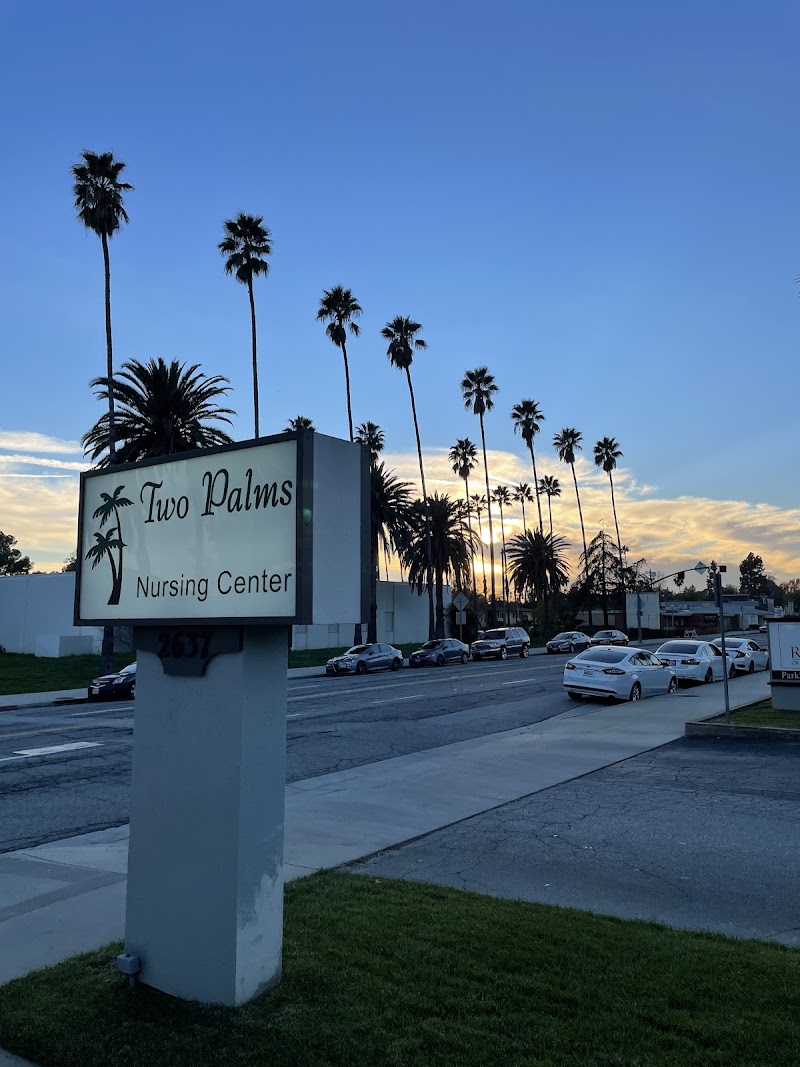
How is Two Palms Staffed?

CMS rates TWO PALMS CARE CENTER's staffing level at 1 out of 5 stars, which is much below average compared to other nursing homes.

What Have Inspectors Found at Two Palms?

State health inspectors documented 38 deficiencies at TWO PALMS CARE CENTER during 2019 to 2024. These included: 33 with potential for harm and 5 minor or isolated issues.

Who Owns and Operates Two Palms?

TWO PALMS CARE CENTER is owned by a for-profit company. For-profit facilities operate as businesses with obligations to shareholders or private owners. The facility operates independently rather than as part of a larger chain. With 50 certified beds and approximately 21 residents (about 42% occupancy), it is a smaller facility located in PASADENA, California.
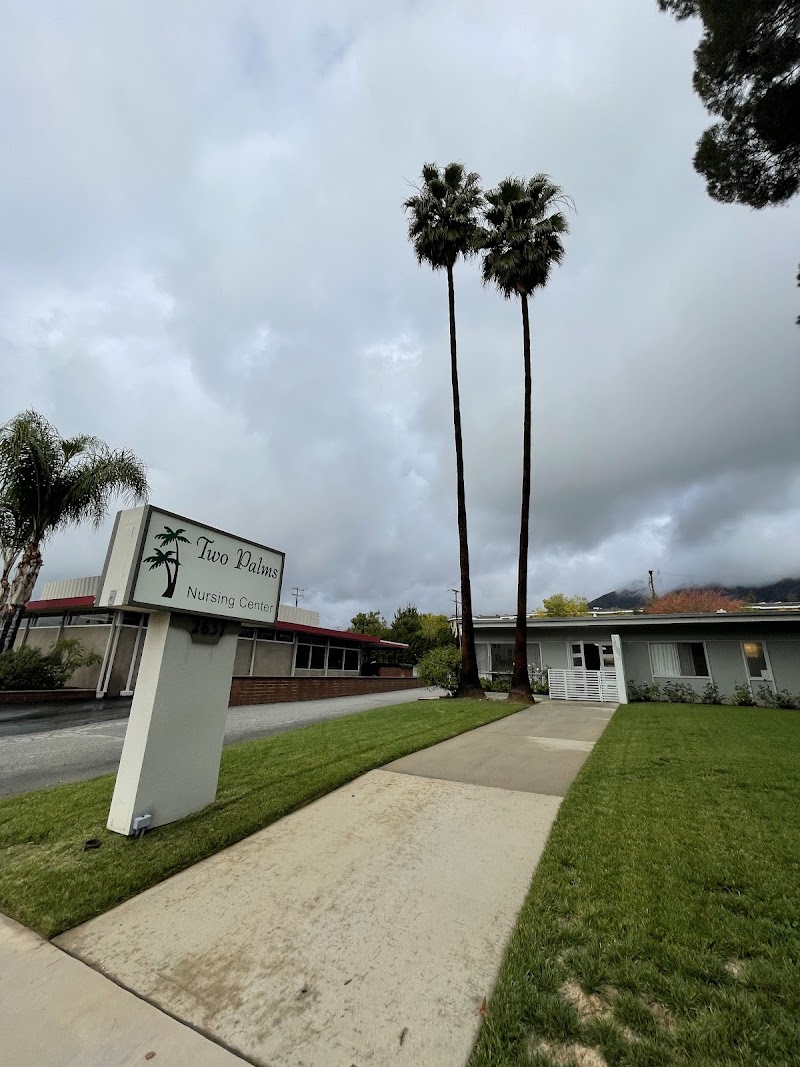
How Does Two Palms Compare to Other California Nursing Homes?

Compared to the 100 nursing homes in California, TWO PALMS CARE CENTER's overall rating (2 stars) is below the state average of 3.1 and health inspection rating (3 stars) is at the national benchmark.

What Should Families Ask When Visiting Two Palms?

Based on this facility's data, families visiting should ask: "Can you walk me through typical staffing levels on day, evening, and night shifts?" "Can I visit during a mealtime to observe dining assistance and food quality?" "How do you handle medical emergencies, and what is your hospital transfer rate?" "Can I speak with family members of current residents about their experience?" These questions are particularly relevant given the below-average staffing rating.

Is Two Palms Safe?

Based on CMS inspection data, TWO PALMS CARE CENTER has a clean safety record: no substantiated abuse findings (meaning no confirmed cases of resident harm), no Immediate Jeopardy citations (the most serious violation level indicating risk of serious injury or death), and is not on the Special Focus Facility watch list (a federal program monitoring the lowest-performing 1% of nursing homes). The facility has a 2-star overall rating and ranks #100 of 100 nursing homes in California. While no facility is perfect, families should still ask about staff-to-resident ratios and recent inspection results during their visit.

Do Nurses at Two Palms Stick Around?

TWO PALMS CARE CENTER has not reported staff turnover data to CMS. Staff turnover matters because consistent caregivers learn residents' individual needs, medications, and preferences. When staff frequently change, this institutional knowledge is lost. Families should ask the facility directly about their staff retention rates and average employee tenure.

Was Two Palms Ever Fined?

TWO PALMS CARE CENTER has no federal fines on record. CMS issues fines when nursing homes fail to meet care standards or don't correct problems found during inspections. The absence of fines suggests the facility has either maintained compliance or corrected any issues before penalties were assessed. This is a positive indicator, though families should still review recent inspection reports for the full picture.

Is Two Palms on Any Federal Watch List?

TWO PALMS CARE CENTER is not on any federal watch list. The most significant is the Special Focus Facility (SFF) program, which identifies the bottom 1% of nursing homes nationally based on persistent, serious quality problems. Not being on this list means the facility has avoided the pattern of deficiencies that triggers enhanced federal oversight. This is a positive indicator, though families should still review the facility's inspection history directly.