EL RANCHO VISTA HEALTH CARE CENTER
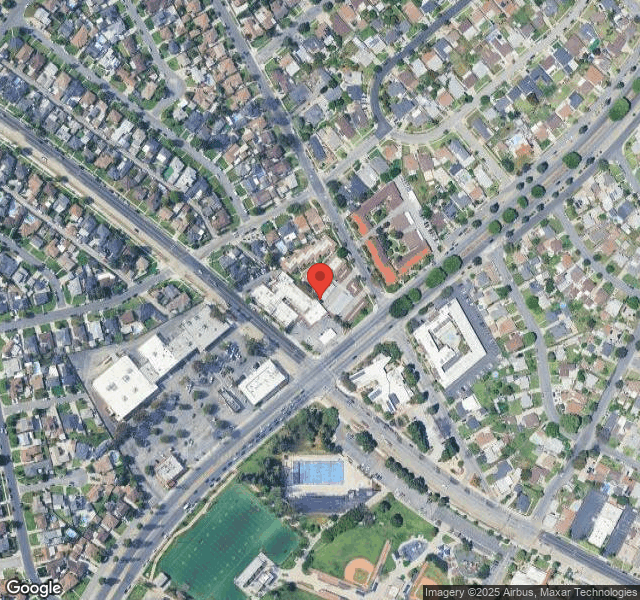
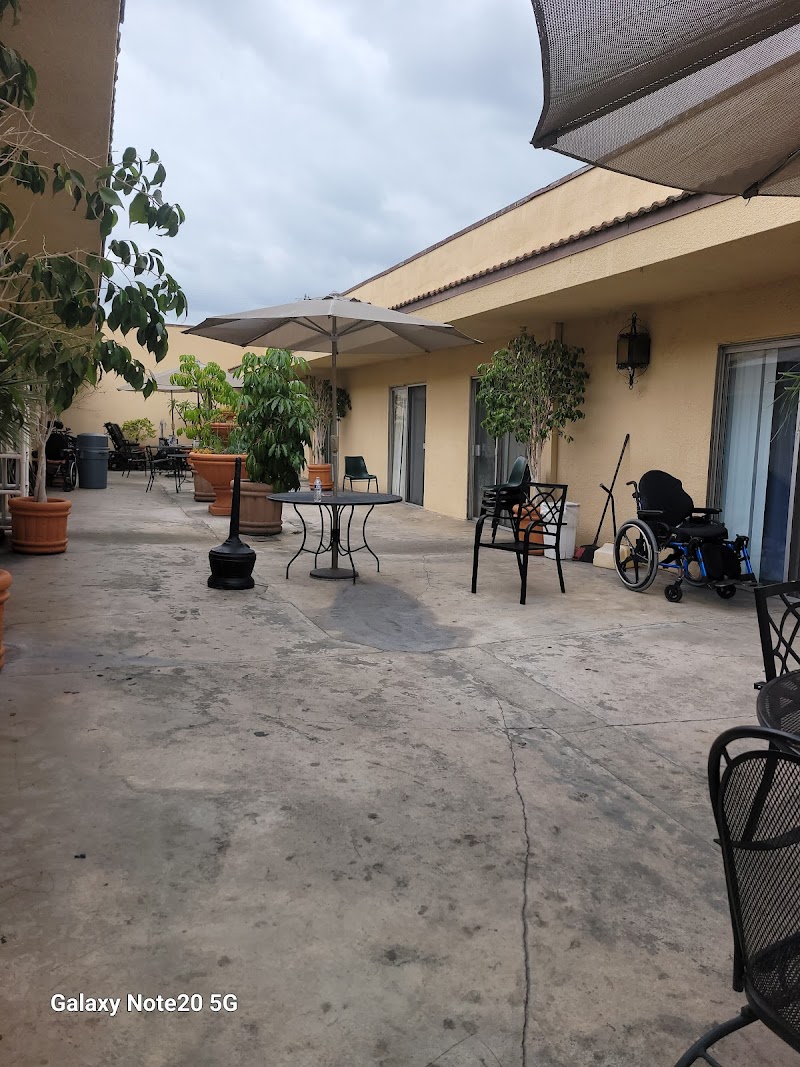
8925 MINES AVENUE, PICO RIVERA, CA 90660 (562) 942-7019
For profit - Corporation 86 Beds Independent Data: November 2025
Trust Grade
80/100
#69 of 1155 in CA
Last Inspection: March 2025

Within standard 12-15 month inspection cycle. Federal law requires annual inspections.

Overview

El Rancho Vista Health Care Center has a Trust Grade of B+, indicating it is above average and recommended for families considering care options. It ranks #69 out of 1,155 facilities in California, placing it in the top half, and #13 out of 369 in Los Angeles County, which means only a dozen local options are superior. However, the facility is experiencing a worsening trend, with the number of issues increasing from 11 in 2024 to 15 in 2025. While staffing turnover is commendably low at 0%, the staffing rating is below average, and there is less RN coverage than 83% of California facilities, which raises some concerns about quality care. Recent inspections revealed serious issues, including unsafe food handling practices in the kitchen that risk foodborne illness for all residents and a high medication error rate that exceeded acceptable limits, highlighting areas that need immediate improvement.

Trust Score
B+
80/100
In California
#69/1155
Top 5%
Safety Record
Low Risk
No red flags
Inspections
Getting Worse
11 → 15 violations
Staff Stability
○ Average
Turnover data not reported for this facility.
Penalties
✓ Good
No fines on record. Clean compliance history, better than most California facilities.
Skilled Nurses
⚠ Watch
Each resident gets only 22 minutes of Registered Nurse (RN) attention daily — below average for California. Fewer RN minutes means fewer trained eyes watching for problems.
Violations
⚠ Watch
41 deficiencies on record. Higher than average. Multiple issues found across inspections.
★★★★★
5.0
Overall Rating
★★☆☆☆
2.0
Staff Levels
★★★★★
5.0
Care Quality
★★★★☆
4.0
Inspection Score
Stable
2024: 11 issues
2025: 15 issues

The Good

  • 5-Star Quality Measures · Strong clinical quality outcomes
  • Full Sprinkler Coverage · Fire safety systems throughout facility
  • No fines on record

Facility shows strength in quality measures, fire safety.

The Bad

No Significant Concerns Identified

This facility shows no red flags. Among California's 100 nursing homes, only 0% achieve this.

The Ugly 41 deficiencies on record

May 2025 1 deficiency
CONCERN (D) 📢 Someone Reported This

A family member, employee, or ombudsman was alarmed enough to file a formal complaint

Potential for Harm - no one hurt, but risky conditions existed

Comprehensive Care Plan (Tag F0656)

Could have caused harm · This affected 1 resident

**NOTE- TERMS IN BRACKETS HAVE BEEN EDITED TO PROTECT CONFIDENTIALITY** Based on interview and record review, the facility failed to develop an individualized care plan for one of three sampled reside...

Read full inspector narrative →
**NOTE- TERMS IN BRACKETS HAVE BEEN EDITED TO PROTECT CONFIDENTIALITY** Based on interview and record review, the facility failed to develop an individualized care plan for one of three sampled residents (Residents 1) after Resident 1 had a change of condition, exhibited behavior of kneeling and placing self on floor, and was a high risk of falls. This failure had the potential to result in Residents 1's needs not being met, unidentified interventions and falls for Resident 1. Findings: During a review of Resident 1's admission Record, the admission Record indicated that Resident 1 was admitted to the facility on [DATE] with diagnoses including Metabolic Encephalopathy (a brain disorder caused by problems in the body's chemistry, leading to changes in brain function) fracture (broken bone) of the right ulna (long bone in the forearm) and unsteadiness on feet. During a review of Resident 1's Minimum Data Set (MDS- a resident assessment tool), dated 4/25/2025, the MDS indicated Resident 1 had severe (serious) cognitive impairment (problems with the ability to think, learn, use judgement, and make decisions). The MDS indicated Resident 1 was dependent (staff does all the effort) for Activities of Daily Living (ADLs) such as showering/bathing self and toileting hygiene. During a review of Resident 1's fall risk assessment dated [DATE], the fall risk assessment indicated Resident 1 was a high fall risk for falls. During a review of Resident 1's care plan dated 4/23/2025, the care plan indicated Resident 1 was at risk for falls related to medication use, incontinence (unable to voluntarily control urination or defecation), impaired physical function and cognition and disease process. The care plan interventions indicated to anticipate and meet the resident's needs. The care plan did not specify the type of supervision or monitoring Resident 1 needed. During a review of Resident 1's SBAR (Situation, Background Assessment, Recommendation- a communication tool used by healthcare workers when there is a change in condition among the residents) dated 4/24/2025, the SBAR indicated Resident 1 had episodes of placing self on floor. The change of condition also indicated to monitor Resident 1's behaviors. During a review of Resident 1's care plan dated 4/24/2025, the care plan indicated Resident 1 had episodes of kneeling/placing self on the floor. The care plan goal indicated Resident 1 would be free from future falls and complications due to a fall for 72 hours. The care plan interventions indicated frequent visual monitoring and place the resident close to the nursing station for closer supervision. The care plan did not indicate a how often frequent visual monitoring should be done for Resident 1. During an interview on 5/20/2025 at 1:51 p.m. with Certified Nursing Assistant (CNA) 1, CNA 1 stated Resident 1 was confused most of the time and would take his left leg and put himself on the floor and a staff member (unnamed) was assigned to perform 1:1 monitoring (one staff/caregiver provides constant monitoring for resident) of the resident on 4/24/2025. During an interview on 5/20/2025 at 2:19 p.m. with Licensed Vocational Nurse (LVN) 1, LVN 1 stated she had to monitor Resident 1 had the nurse's station during her shift to ensure Resident 1 did not fall. During a concurrent interviews and record reviews on 5/21/2025 at 10:14 a.m. and 5/21/2025 at 2:52 p.m., with the Director of Nursing (DON), Resident 1's care plan dated 4/24/2025 was reviewed. The DON stated resident care plans were created to address a resident's identified problems and should be specific to the resident. The DON stated the intervention for frequent visual monitoring did not identify a specific time frame of how often Resident 1 should be monitored. The DON stated residents should be monitored at least every two hours and Resident 1 needed more frequent monitoring due to the resident's behavior. During a review of facility's policy and procedure (P&P) titled, Nursing Manual – Care Plan, dated 3/1/2014, the P&P indicated, It is the policy of this Facility to provide person-centered, comprehensive and interdisciplinary care that fits best practice standards for meeting health, safety, psychosocial, behavioral, and environmental needs of residents in order to obtain or maintain the highest physical, mental, and psychological well-being.
Mar 2025 11 deficiencies
CONCERN (D) 📢 Someone Reported This

A family member, employee, or ombudsman was alarmed enough to file a formal complaint

Potential for Harm - no one hurt, but risky conditions existed

Notification of Changes (Tag F0580)

Could have caused harm · This affected 1 resident

**NOTE- TERMS IN BRACKETS HAVE BEEN EDITED TO PROTECT CONFIDENTIALITY** Based on interview and record review, the facility failed to inform one of three sampled residents' (Resident 34) Family Member ...

Read full inspector narrative →
**NOTE- TERMS IN BRACKETS HAVE BEEN EDITED TO PROTECT CONFIDENTIALITY** Based on interview and record review, the facility failed to inform one of three sampled residents' (Resident 34) Family Member (FM) 3, who was Resident 34's emergency contact, of an unwitnessed fall on 2/22/2025. This deficient practice resulted in FM 3 being unaware of Resident 34's fall which resulted in Resident 34's family being concerned of Resident 34's well-being. Findings: During a review of Resident 34's admission Record (Face Sheet), the Face Sheet indicated Resident 34 was admitted to the facility on [DATE] with diagnoses that included nontraumatic subdural hemorrhage (a collection of blood that accumulates between the brain the inner lining of the skull without any prior head trauma), dementia (a progressive state of decline in mental abilities), and urinary tract infection ([UTI], an infection in the bladder/urinary tract). During a review of Resident 34's Minimum Data Set ([MDS], dated 2/12/2025, the MDS indicated Resident 34's cognitive skills (process of thinking) for daily decision making was severely impaired. The MDS indicated Resident 34 was dependent on staff's assistance with eating, oral hygiene, toileting, bathing, dressing, personal hygiene, and moving from a sit to stand position. During a review of Resident 34's History and Physical Examination (H&P), dated 2/7/2025, the H&P indicated Resident 34 did not have the capacity to understand and make decisions. During a review of Resident 34's Situation, Background, Assessment, Recommendation (SBAR- a communication tool used by healthcare workers when there is a change of condition among the residents) report, dated 2/22/2025, the SBAR report indicated on 2/22/2025 at 9:40 p.m., Resident 34 had an unwitnessed fall and was found sitting on the floor next to his bed. During a review of Resident 34's Interdisciplinary Team ([IDT], a group of healthcare professionals with various areas of expertise who work together towards the goals of the residents) Note, dated 2/23/2025, the IDT Note indicated, Upon further investigation, it was found that the family had not been notified of the fall incident [on 2/22/2025]. The family expressed concern regarding the events. During an interview on 3/13/2025 at 11:32 a.m., with the Director of Nursing (DON), the DON stated Resident 34 had an unwitnessed fall on 2/22/2025. The DON stated Resident 34 was scheduled to discharge from the facility on 2/23/2025 and FM 1 and FM 2 arrived at the facility to bring Resident 34 home. The DON stated upon their arrival to the facility, FM 1 and FM 2 were upset FM 3 was not notified of Resident 34's fall on 2/22/2025. The DON stated FM 3 was listed as Resident 34's first emergency contact and should have been notified. The DON stated notifying FM 3 was important so FM 3 could be aware of what was going on with Resident 34. The DON stated by not notifying FM 3 of the resident's fall, FM 3 was unaware of the incident and caused FM 3 to lose trust in the facility's ability to care for Resident 34. During an interview on 3/13/2025 at 4:10 p.m., with FM 2, FM 2 stated it was the facility's responsibility to notify her of any incident regarding Resident 34's health and well-being. FM 2 stated FM 3 was not notified of Resident 34's fall on 2/22/2025 and FM 1 and herself (FM 2) were unaware of the incident, upon their arrival to the facility to take Resident 34 home, until Resident 34's roommate informed FM 2. During a review of the facility's policy and procedure (P&P) titled, Fall Management Program, revised 3/13/2021, the P&P indicated, after a fall incident, the licensed nurse will notify the Resident's attending physician and Resident's responsible party of the fall incident.
CONCERN (D) 📢 Someone Reported This

A family member, employee, or ombudsman was alarmed enough to file a formal complaint

Potential for Harm - no one hurt, but risky conditions existed

Transfer Requirements (Tag F0622)

Could have caused harm · This affected 1 resident

**NOTE- TERMS IN BRACKETS HAVE BEEN EDITED TO PROTECT CONFIDENTIALITY** Based on interview and record review, the facility failed to ensure one of two sampled residents (Resident 34) had a safe discha...

Read full inspector narrative →
**NOTE- TERMS IN BRACKETS HAVE BEEN EDITED TO PROTECT CONFIDENTIALITY** Based on interview and record review, the facility failed to ensure one of two sampled residents (Resident 34) had a safe discharge by failing to follow Resident 34's care and whereabouts after Resident 34 was transferred to general acute care hospital (GACH) 1 after an unwitnessed fall. This deficient practice resulted in the facility being misinformed of Resident 34's whereabouts and had the potential to result in Resident 34's discharge needs being unmet. Findings: During a review of Resident 34's admission Record (Face Sheet), the Face Sheet indicated Resident 34 was admitted to the facility on [DATE] with diagnoses that included nontraumatic subdural hemorrhage (a collection of blood that accumulates between the brain the inner lining of the skull without any prior head trauma), dementia (a progressive state of decline in mental abilities), and urinary tract infection ([UTI], an infection in the bladder/urinary tract). During a review of Resident 34's Minimum Data Set ([MDS], dated 2/12/2025, the MDS indicated Resident 34's cognitive skills (process of thinking) for daily decision making was severely impaired. The MDS indicated Resident 34 was dependent on staff's assistance with eating, oral hygiene, toileting, bathing, dressing, personal hygiene, and moving from a sit to stand position. During a review of Resident 34's History and Physical Examination (H&P), dated 2/7/2025, the H&P indicated Resident 34 did not have the capacity to understand and make decisions. During a review of Resident 34's situation, background, assessment, recommendation (SBAR- a communication tool used by healthcare workers when there is a change of condition among the residents), dated 2/22/2025, the SBAR indicated on 2/22/2025 at 9:40 p.m., Resident 34 had an unwitnessed fall and was found sitting on the floor next to his bed. During a review of Resident 34's Nurse's Notes, dated 2/23/2025 and timed at 10 a.m., the Nurse's Notes indicated Family Member (FM) 1 was informed of Resident 34's fall on 2/22/2025 and FM 1 requested for Resident 34 to be sent to GACH 1 for further evaluation. During a review of Resident 34's Nurse's Notes, dated 2/23/2025 and timed at 10:30 a.m., the Nurse's Notes indicated Physician 1 ordered to send Resident 34 to GACH 1 for further evaluation due to Resident 34 falling and Resident 34's history of having a subdural hemorrhage (a collection of blood that accumulates between the brain and the outermost layer of tissue covering the brain). During a review of Resident 34's Progress Notes, dated 2/23/2025 and timed at 1:20 p.m., the Progress Note indicated Resident 34 was transferred to GACH 1. During an interview on 3/13/2025 at 4:10 p.m., with FM 2, FM 2 stated on 2/23/2025, she and FM 1 went to the facility to bring Resident 34 home because Resident 34 was being discharged . FM 2 stated when they arrived at the facility, they became aware of Resident 34's fall on 2/22/2025. FM 2 stated the facility was unable to give them details of Resident 34's fall, therefore, FM 1 and FM 2 requested for the facility to send Resident 34 to the GACH for further evaluation. FM 2 stated FM 1 and FM 2 did not sign the discharge paperwork because Resident 34 was being transferred to GACH 1. FM 2 stated Resident 34 was transferred to GACH 1 in the afternoon on 2/23/2025 where GACH 1's physician recommended Resident 34 to be transferred to GACH 2 for a neurosurgery (surgical specialty that focuses on the diagnosis and treatment of disorders and injuries affecting the brain, spinal cord, and nerves) consult due to subdural hemorrhage. FM 2 stated on the evening of 2/23/2025, Resident 34 was transferred from GACH 1 to GACH 2. FM 2 stated when Resident 34 was evaluated at GACH 2, the neurosurgeon informed FM 2 that surgery was not recommended to treat Resident 34's subdural hemorrhage in order to maintain the resident's quality of life. FM 2 stated on the evening of 2/25/2025, Resident 34 was discharged from GACH 2 to home. During an interview on 3/13/2025 at 4:54 p.m., with the admission Coordinator (AC), the AC stated when a resident was transferred to the GACH, she was responsible for calling the GACH the following day to gather information on the resident's status, whether the resident was admitted to the GACH, and the expected discharge date . The AC stated gathering this information was essential to know of the resident's well-being and to ensure the resident was safe. The AC stated after Resident 34 transferred to GACH 1 on 2/23/2025, she called GACH 1 on 2/25/2025 to inquire on Resident 34's status. The AC stated the case manager at GACH 1 informed her that Resident 34 was discharged home. The AC stated after she was informed of Resident 34's discharge, she informed the Director of Nursing (DON), but did not call Resident 34's family to follow up on Resident 34's well-being. The AC stated after being notified that Resident 34 was discharged home, she should have called Resident 34's family to ensure Resident 34 was well and to provide any assistance the resident may need after Resident 34's stay at GACH 1. The AC stated Resident 34 was not officially discharged from the facility and the facility was responsible for ensuring Resident 34 was safe. The AC stated because she did not conduct a follow-up call to Resident 34's family. The AC stated she was unaware that Resident 34 was transferred to GACH 2. The AC stated GACH 2 called the facility, on 2/26/2025, to inquire if Resident 34 previously resided in the facility. The AC stated she did not find out why GACH 2 inquired about Resident 34's previous residency. The AC stated due to Resident 34's transfer to GACH 2, the facility was responsible for calling GACH 2 for Resident 34's status and to assist in Resident 34's discharge needs. The AC stated she did not conduct a follow-up with Resident 34's family when she was misinformed of Resident 34's discharge to home because Resident 34 was initially due to discharge home from the facility on 2/23/2025 and all medical devices and appointments were confirmed. The AC stated because the facility did not conduct the necessary follow-ups with Resident 34's family, the facility was unaware of Resident 34's transfer to GACH 2 and of any additional needs and assistance Resident 34 may have needed on his discharge home on 2/25/2025. The AC stated conducting necessary follow-ups and following Resident 34's transfer from GACH 1, to GACH 2, then to his home, would ensure Resident 34 had a safe discharge. The AC stated due to the lack of follow-ups and inappropriate discharge, Resident 34 was at risk of not receiving assistance and post-discharge care. During an interview on 3/13/2025 at 5:08 p.m., with the Director of Nursing (DON), the DON stated Resident 34 was scheduled for discharge from the facility on 2/23/2025, however, was transferred to GACH 1 per FM 1 and FM 2's request. The DON stated at the time, she did not feel a follow-up call to Resident 34's home was necessary due to Resident 34's prior discharge plan. The DON stated because Resident 34 was discharged from GACH 1, any additional discharge needs would be fulfilled by GACH 1. The DON stated the facility was responsible for Resident 34's well-being because Resident 34 was not officially discharged from the facility on 2/23/2025. The DON stated the facility should have called Resident 34's family to ensure Resident 34 was safe and did not require any additional assistance. The DON stated when the AC received a call from GACH 2, the AC should have inquired further about Resident 34's status. The DON stated this was a missed opportunity to gain knowledge of Resident 34's transfer to GACH 1 to GACH 2. The DON stated because there was no follow-up on Resident 34's status, the facility was unaware of Resident 34's transfer to GACH 2. The DON stated the facility was responsible for ensuring it was appropriate and safe for Resident 34 to be discharged home. The DON stated the sole purpose of following Resident 34's whereabouts was to ensure Resident 34 was safe. The DON stated because the facility did not follow-up on Resident 34's whereabouts, Resident 34 was at risk of being discharged inappropriately and unsafely. During an interview on 3/13/2025 at 5:41 a.m., with the Administrator (ADM), the ADM stated the facility did not have a policy that indicated how to follow-up with a resident's transfer from the facility to the GACH and to home. The ADM stated it was the standard of practice to follow up with the resident throughout all aspects of care after transfer and to discharge. During a review of the facility's policy and procedure (P&P) titled, Notice of Transfer/Discharge, revised 10/2017, the P&P indicated the facility may not transfer or discharge the resident unless the transfer or discharge is appropriate because the resident's health as improved sufficiently so the resident no longer needs the services provided by the facility.
CONCERN (D)

Potential for Harm - no one hurt, but risky conditions existed

Comprehensive Care Plan (Tag F0656)

Could have caused harm · This affected 1 resident

**NOTE- TERMS IN BRACKETS HAVE BEEN EDITED TO PROTECT CONFIDENTIALITY** Based on interview and record review, the facility failed to develop a care plan addressing a resident's diagnosis of clostridio...

Read full inspector narrative →
**NOTE- TERMS IN BRACKETS HAVE BEEN EDITED TO PROTECT CONFIDENTIALITY** Based on interview and record review, the facility failed to develop a care plan addressing a resident's diagnosis of clostridioides difficile ([C. diff], a germ that causes diarrhea and inflammation of the colon [organ in the digestive system that stores and processes waste before it's eliminated from the body]) for one out of eight sampled residents (Resident 56). This deficient practice had the potential to delay and negatively affect the delivery of care for Resident 56. Findings: During a review of Resident 56's admission Record, the admission record indicated Resident 56 was originally admitted to the facility on [DATE] and was readmitted on [DATE] with diagnoses of respiratory failure (serious condition that makes it difficult to breathe, lungs cannot get enough oxygen into the blood) and atrial fibrillation (heart's upper chambers (atria) beat out of coordination with the lower chambers (ventricles), can lead to blood clots in the heart). During a review of Resident 56's History and Physical (H&P) dated 1/26/2025, the H&P indicated Resident 56 had the capacity to understand and make decisions. During a review of Resident 56's Minimum Data Set (MDS), (a resident assessment tool), dated 3/7/2025, the MDS indicated Resident 56's cognitive skills (mental action or process of acquiring knowledge and understanding) for daily decision making was moderately impaired. The MDS indicated Resident 56 required moderate assistance (helper does less than half the effort) for lower body dressing, toileting hygiene and personal hygiene. The MDS indicated Resident 56 required supervision for oral hygiene and upper body dressing. During a review of Residents 56's electronic medical record, unable to locate a completed care plan for Resident 56's diagnosis of clostridioides difficile (C. diff). During an interview on 3/13/2025 at 11:02 a.m. with the Infection Preventionist Nurse (IPN), the IPN stated Resident 56 was diagnosed with C. diff on 3/7/2025. The IPN stated a care plan should have been developed for Resident 56's new diagnosis of C.diff. The IPN stated a care plan was used to monitor residents and the care plan had interventions and goals for staff to follow for residents' plan of care. The IPN stated a C. diff care plan should include a goal to minimize signs and symptoms of C. diff, have interventions to prevent further signs and symptoms of C. diff and prevent dehydration. The IPN stated a care plan should have target dates of when goals and interventions will be met. During an interview on 3/13/2025 at 12:27 p.m. with the Director of Nursing (DON), the DON stated a care plan was developed to provide a plan of care for each resident. The DON stated residents' orders and medical conditions were care planned. The DON stated a care plan had interventions that must be followed and whose effectiveness must be checked. The DON stated Resident 56's new diagnosis of C. diff needed a care plan to provide guidance and a plan of care. During a review of the facility's Policy and Procedure (P&P) titled Comprehensive Person-Centered Care Planning, dated 11/2028, the P&P indicated the facility would provide person-centered, comprehensive and interdisciplinary care that reflects best practice standards for meeting health, safety, psychosocial, behavioral, and environmental needs of residents in order to obtain or maintain the highest physical, mental, and psychosocial well-being. The P&P indicated the comprehensive care plan will be reviewed and revised when there was an onset of new problems, change of condition and when there was a change in care.
CONCERN (D)

Potential for Harm - no one hurt, but risky conditions existed

Quality of Care (Tag F0684)

Could have caused harm · This affected 1 resident

**NOTE- TERMS IN BRACKETS HAVE BEEN EDITED TO PROTECT CONFIDENTIALITY** Based on observation, interview, and record review, the facility failed to ensure residents received treatment and care per the ...

Read full inspector narrative →
**NOTE- TERMS IN BRACKETS HAVE BEEN EDITED TO PROTECT CONFIDENTIALITY** Based on observation, interview, and record review, the facility failed to ensure residents received treatment and care per the physician's orders for three residents (Residents 35, 55, and 124) out of 16 sampled residents by failing to ensure: 1. Resident 124's blood sugar level was monitored. 2. Resident 55's surgical dressing was changed. 3. Licensed Vocational Nurse (LVN) 3 administered regular insulin (a hormone that removed excess sugar from the blood, could be produced by the body or given artificially via medication) 30 minutes prior to Resident 35's meal. These deficient practices had the potential to not meet Resident's 35, 55, and 124's overall healthcare needs. Findings: 1. During a review of Resident 124's admission Record, the admission record indicated Resident 124 was admitted to the facility on [DATE] with diagnoses of diabetes mellitus ([DM], a disorder characterized by difficulty in blood sugar control and poor wound healing) with hyperglycemia (high sugar level) and multiple fractures (broken bones) of the ribs. During a review of Resident 124's History and Physical (H&P) dated 3/6/2025, the H&P indicated Resident 124 was alert and oriented. The H&P indicated Resident 124 had a Glasgow Coma Scale score of 15 ([GCS] indicates a patient is fully awake, responsive, and has no problems with thinking or memory, representing the highest possible score). During a review of Resident 124's Minimum Data Set (MDS), (a resident assessment tool), dated 3/13/2025, the MDS indicated Resident 124's cognitive skills (mental action or process of acquiring knowledge and understanding) for daily decision making was intact. The MDS indicated Resident 124 required supervision for upper body dressing and oral hygiene. The MDS indicated Resident 124 required set up assistance for eating. During a review of Resident 124's Order Summary Report, dated 3/9/2025, the order summary report indicated the following orders: 1. If Resident 124's blood glucose (level of sugar in the bloodstream) was below 70 or above 350 to call the doctor. 2. Monitor for any episodes of hyperglycemia (high blood sugar level in the bloodstream). 3. Monitor for any episodes of hypoglycemia (low blood sugar level in the bloodstream). 4. Administer Metformin HCl (medication used to lower blood sugar levels) tablet 500 milligrams ([mg] metric unit of measurement, used for medication dosage and/or amount), give one tablet by mouth two times a day for DM. During a review of Resident 124's electronic medical record, unable to locate doctors orders indicating to monitor and check Resident 124's blood sugar levels. During a review of Resident 124's Care Plan for DM, dated 3/9/2025, the care plan indicated Resident 124's goal was to be free from any signs and symptoms of hyperglycemia or hypoglycemia. The interventions indicated to administer metformin as ordered, document for side effects and effectiveness, and inform the doctor if the blood glucose was below 70 or above 350. During an interview on 3/11/2025 at 9:34 a.m. with Resident 124, in Resident 124's room, Resident 124 stated the licensed nurses did not want to check his blood sugar levels. Resident 124 stated he checked his blood sugar level every day when he was at home. Resident 124 stated he did not understand why the licensed nurses wanted to give him medication for his DM without knowing what his blood sugar level was. Resident 124 stated he asked the licensed nurses to check his blood sugar, and they told him there was no need to check it. Resident 124 stated he wanted his blood sugar checked because he wanted to know if his blood sugar was high. During an interview on 3/11/2025 at 9:58 a.m. with Licensed Vocational Nurse (LVN 1), LVN 1 stated she had given Resident 124 metformin that morning (3/11/2025) at 9:00 a.m. LVN 1 stated she did not know Resident 124's blood sugar level for 3/11/2025. LVN 1 stated she did not need to know Resident 124's blood sugar level. LVN 1 stated she did not know how to check for Resident 124's blood sugar level and needed to request help from staff. LVN 1 stated Resident 124 did not have an order to check his blood sugar level and that was why it was not checked. During an interview on 3/13/2025 at 12;19 p.m. with the Director of Nursing (DON), the DON stated it was important to check all diabetic residents blood sugar levels to make sure their medication was effective. The DON stated if residents blood sugar levels are not checked staff would not be aware if the residents' blood sugar levels was high or low. The DON stated licensed nurses should check blood sugar levels for residents taking metformin at least once a day. The DON stated licensed nurses must make sure the order for checking blood sugar levels are available. 2. During a review of Resident 55's admission Record, the admission record indicated Resident 55 was originally admitted to the facility on [DATE] and readmitted to the facility on [DATE] with end stage of renal disease ([ESRD] irreversible kidney failure) and chronic kidney disease (gradual loss of kidney function, kidneys are unable to filter wastes and excess fluids from blood). During a review of Resident 55's MDS, dated [DATE], the MDS indicated Resident 55's cognitive skills for daily decision making was intact. The MDS indicated Resident 55 required moderate assistance (the helper does less than half the effort) for upper body dressing, eating and oral hygiene. The MDS indicated Resident 55 required maximal assistance (helper does more than half the effort) for toileting hygiene, shower/bathing and lower body dressing. During a review of Resident 55's electronic medical record, unable to locate doctors order to change Resident's left arm surgical dressing. During an interview on 3/10/2025 at 10:52 a.m. with Resident 55, Resident 55 stated she was concerned about her surgical dressing because it had not been changed since she had surgery. Resident 55 stated the dressing looked dirty and wanted it to be changed. Resident 55 stated she had surgery over 10 days ago and had the same dressing. Resident 55 stated staff did not offer to change the dressing. During an interview on 3/12/2025 at 1:33 p.m. with Treatment Nurse (TN) 1, TN 1 stated Resident 55's dressing was not changed because she did not have orders. TN 1 stated licensed nursing staff should have followed up with the doctor to ask how often he wanted Resident 55's dressing to be changed. TN 1 stated it was important to change the dressing to prevent infection. During an interview on 3/13/2025 at 12:48 p.m. with the DON, the DON stated post-surgical residents dressing must be changed according to the doctors' orders. The DON stated if a resident did not have an order for a dressing change, she expected her licensed nurses to call the doctor to get orders for a dressing change. The DON stated Resident 55's dressing should have been changed every day. 3. During a review of Resident 35's admission Record, the admission record indicated Resident 35 was originally admitted to the facility on [DATE] and readmitted to the facility on [DATE], with diagnosis of DM, anemia (a condition where the body did not have enough healthy red blood cells), and dementia (a progressive state of decline in mental abilities). During a review of Resident 35's MDS, dated [DATE], the MDS indicated Resident 35's cognitive skills for daily decision making was severely impaired. The MDS indicated Resident 35 required supervision with eating; moderate assistance with oral and personal hygiene; and maximal assistance with toileting hygiene, showering/bathing self, transferring in and out of bed, and walking. During a review of Resident 35's H&P, dated 1/23/2025, the H&P indicated Resident 35 did not have the capacity to understand and make decisions. During a review of Resident 35's Order Summary Report, dated 1/24/2025, the report indicated an order to administer regular insulin subcutaneously (beneath the skin) before meals for DM. During a review of the facility's mealtime schedule, undated, the schedule indicated lunch should arrive at Resident 35's station at 12:55 p.m. During a medication pass observation on 3/11/2025 at 11:31 a.m., with LVN 3, observed LVN 3 administer regular insulin 4 units to Resident 35. Resident 35 had no food, snack, or juice after receiving the medication. During an observation on 3/11/2025 at 12:11 p.m. in Resident 35's room, there was no food, snack, or juice observed at Resident 35's bedside. During an interview on 3/11/2025 at 12:16 p.m. with LVN 3, LVN 3 stated Resident 35's lunch had not yet arrived. LVN 3 stated the regular insulin's onset time (when the medication first began to take effect) was 30 minutes to 60 minutes. LVN 3 stated she should administer the regular insulin to Resident 35 around 12:15 p.m. because lunch arrived around 12:45 p.m., to prevent hypoglycemia. LVN 3 stated Resident 35 was prone to develop hypoglycemia with signs and symptoms of sweating, excessive thirst, and confusion. During an interview on 3/12/2025 at 2:53 p.m. with the DON, the DON stated the regular insulin onset time was 30 minutes, and the nurse should administer regular insulin 30 minutes before meals. The DON stated Resident 35 should have something to eat within 30 minutes of regular insulin administration to prevent hypoglycemia. The DON stated it was the standard of practice. During an interview on 3/12/2025 at 4:51 p.m. with the Administrator (ADM), the ADM stated there were no policy specified that nurse should administer regular insulin 30 minutes prior to meals because it was the standard of practice. During a review of facility's policy and procedure (P&P) titled Quality of Care dated 11/2019, the P&P indicated it was the facility's purpose to ensure residents received treatment and care in accordance with the resident's preferences, goals for care and professional standards of practice that will meet each resident's physical, mental, and physiological needs. During a review of the facility's P&P titled Diabetic Management dated 1/2021, the P&P indicated the purpose for the diabetic management program was to address the resident 's individual needs with respect to disease management and nutritional approaches and interventions and to monitor and evaluate resident outcome. The P&P indicated upon admission the licensed nurse will need to assess residents blood sugar testing experience. The P&P indicated for managing diabetes, licensed nurses must check blood sugars and encourage a standing order for blood sugars testing managing physician or licensed independent providers.
CONCERN (D)

Potential for Harm - no one hurt, but risky conditions existed

Pressure Ulcer Prevention (Tag F0686)

Could have caused harm · This affected 1 resident

**NOTE- TERMS IN BRACKETS HAVE BEEN EDITED TO PROTECT CONFIDENTIALITY** 2. During an observation on 3/10/2024 at 12:10 p.m., in Resident 56's room, Resident 56's LALM was observed at 220 pounds. Durin...

Read full inspector narrative →
**NOTE- TERMS IN BRACKETS HAVE BEEN EDITED TO PROTECT CONFIDENTIALITY** 2. During an observation on 3/10/2024 at 12:10 p.m., in Resident 56's room, Resident 56's LALM was observed at 220 pounds. During an observation on 3/11/2024 at 10:48 a.m., in Resident 56's room, Resident 56's LALM was observed to 220 pounds. During a review of Resident 56's face sheet, the face sheet indicated Resident 56 was originally admitted to the facility on [DATE] and was readmitted on [DATE] with diagnoses of respiratory failure (serious condition that made it difficult to breathe, lungs could not get enough oxygen into the blood) and atrial fibrillation (heart's upper chambers [atria] beat out of coordination with the lower chambers [ventricles], could lead to blood clots in the heart). During a review of Resident 56's MDS, dated [DATE], the MDS indicated Resident 56's cognitive skills for daily decision making was moderately impaired. The MDS indicated Resident 56 required moderate assistance for lower body dressing, toileting hygiene and personal hygiene. The MDS indicated Resident 56 required supervision for oral hygiene and upper body dressing. During a review of Resident 56's H&P dated 1/26/2025, the H&P indicated Resident 56 had the capacity to understand and make decisions. During a review of Resident 56's Weight and Vital Summary, dated 3/4/2025, the weight and vital summary indicated Resident 56 weighed 130 pounds. During an interview on 3/10/2025 at 12:12 p.m. with Resident 56, Resident 56 stated she did not know what the mattress was for. Resident 56 stated her bed felt uncomfortable. Resident 56 stated it was hard for her to move around in bed. During an interview on 3/12/2025 at 1:56 p.m. with TN 1, TN 1 stated she was not aware Resident 56's LALM was set to 220 pounds. TN 1 stated the LALM should be set between 120 to 150 pounds. TN 1 stated Resident 56's LALM setting was not beneficial for the resident and would not prevent skin breakdown. TN 1 stated if the LALM was overinflated, it would cause LALM to be hard and it would be like a regular mattress. TN 1 stated if the LALM was underinflated the resident would be touching the bed frame, be uncomfortable, and there would be a high level of pressure to Resident 56's skin. TN 1 stated if the LALM was not set correctly, the LALM would not be beneficial for skin maintenance or skin injury prevention. During an interview on 3/13/2025 at 1:27 p.m. with the DON, the DON stated all LALMs must be checked every day by all staff entering resident's rooms. The DON stated staff must make sure the LALM was set according to the residents' weight. During a review of the facility's Policy and Procedure (P&P) titled Mattresses, dated 1/1/2012, the P&P indicated the purpose for the LALM would be explained to resident. The P&P indicated the staff would make sure LALM was inflating properly. Based on observation, interview, and record review, the facility failed to ensure the interventions to prevent formation and/ or worsening of pressure ulcers/injuries (localized, pressure-related damage to the skin and/or underlying tissue usually over a bony prominence) were implemented for two of two residents (Resident 54 and 56) when the following occurred: 1. Resident 54's low air loss mattress (LALM, a mattress designed to distribute body weight over a broad surface area to help prevent skin breakdown) did not reflect the resident's correct weight on 3/10/2025. 2. Resident 56's LALM did not reflect the resident's correct weight. This deficient practice placed Resident 54 and 56 at risk for worsened condition of their exiting pressure injuries, and/ or the development of new pressure injuries. Findings: 1. During an observation on 3/10/2025 at 10:02 a.m., in Resident 54's room, Resident 54 was observed lying on a low air loss mattress (LALM, a mattress designed to distribute body weight over a broad surface area to help prevent skin breakdown). The LALM was set for 340 pounds (lbs., a unit of measuring mass) to 520 lbs. During an observation on 3/10/2025 at 12:31 a.m., in Resident 54's room, Resident 54 was observed lying on a LALM. The LALM was set for 340 pounds to 520 lbs. During a review of Resident 54's admission Record (face sheet), the face sheet indicated Resident 54 was originally admitted to the facility on [DATE] and readmitted on [DATE], with diagnosis of diabetes mellitus (DM- a disorder characterized by difficulty in blood sugar control and poor wound healing), quadriplegia (paralysis from the neck down, including legs, and arms, usually due to a spinal cord injury), and anemia (a condition where the body did not have enough healthy red blood cells). During a review of Resident 54's Minimum Data Set (MDS - a resident assessment tool), dated 2/26/2025, the MDS indicated Resident 54's cognitive (ability to think, remember, and reason) skills for daily decision making was severely impaired. The MDS indicated Resident 54 was dependent (helper did all the effort) for self-care (eating, oral hygiene, toileting hygiene, and showering/bathing self) and mobility. The MDS indicated Resident 54 had impairments on the lower extremities (legs) and used a wheelchair for mobility. The MDS indicated Resident 54 was at risk of developing pressure injuries and had one unstageable pressure injury (a wound where the true depth and stage could not be determined because the base of the wound was covered by slough [yellow, tan, gray, green, or brown] and/or eschar [tan, brown, or black]). The MDS indicated Resident 54 had a pressure reducing device for the bed and pressure injury care. During a review of Resident 54's History and Physical (H&P), dated 11/4/2024, the H&P indicated Resident 54 did not have the capacity to understand and make decisions. During a review of Resident 54's Braden Scale (a tool helped determine the risk of a resident developing a pressure injury), dated 2/26/2025, the scale indicated Resident 54 was at high risk of developing a pressure injury. During a review of Resident 54's Order Summary Report dated 3/12/2025, the report indicated a physician order dated 3/9/2025, LALM every shift for wound management and prevention. During a review of Resident 54's Weight Summary Record, dated 3/12/2025, the record indicated Resident 54 weighed 163 lbs. on 3/4/2025. During a review of Resident 54's Wound Assessment (by the wound specialist), dated 3/4/2025, the assessment indicated Resident 54 had an unstageable pressure injury and remained at high risk for wound decline and delayed healing. During a concurrent interview and picture review on 3/12/2025 at 9:52 a.m. with Treatment Nurse (TN) 1, the picture taken of Resident 54's LALM pump setting on 3/10/2025 at 10:05 a.m. was reviewed. TN 1 stated the picture revealed Resident 54's LALM was set up for a weight between 340 lbs. to 520 lbs. TN 1 stated the LALM's purpose was to minimize pressure for residents at high risk of developing wounds. TN 1 stated the LALM was for hospice (compassionate care for people who were near the end of life provided at the person's home or within a health care facility) residents, and residents with hip fractures (broken bone), immobility concerns, and pressure injuries. TN 1 stated the LALM aided healing and prevention of further development of pressure injuries and health decline for residents. TN 1 stated the LALM setting was according to the resident's weight and comfort. TN 1 stated Resident 54 received a LALM because Resident 54 had a small wound which was not closing. TN 1 stated the LALM setting should reflect Resident 54's weight. TN 1 stated she checked the LALM settings three times a shift by checking that the LALM pump settings reflect the resident's weight. TN 1 stated maybe the nurse changed Resident 54's LALM setting. TN 1 stated the wrong LALM setting increased the risk of pressure injury development for residents. TN 1 stated incorrect settings affected the quality of care and was not good for the resident's skin. TN 1 stated incorrect settings was not an acceptable standard of practice. During an interview on 3/12/2025 at 2:53 p.m. with the Director of Nursing (DON), the DON stated the LALM would not be effective with the wrong setting. The DON stated the negative outcome of having the wrong LALM setting would cause worsening of the resident's wound. The DON stated the licensed nurses and treatment nurse were responsible for ensuring the correct LALM settings.
CONCERN (D)

Potential for Harm - no one hurt, but risky conditions existed

Deficiency F0694 (Tag F0694)

Could have caused harm · This affected 1 resident

**NOTE- TERMS IN BRACKETS HAVE BEEN EDITED TO PROTECT CONFIDENTIALITY** Based on observation, interview, and record review, the facility failed to label one of one sampled resident's (Resident 69) per...

Read full inspector narrative →
**NOTE- TERMS IN BRACKETS HAVE BEEN EDITED TO PROTECT CONFIDENTIALITY** Based on observation, interview, and record review, the facility failed to label one of one sampled resident's (Resident 69) peripheral intravenous line's ([IV], a soft, flexible tube placed inside a vein to administer medications or fluids) dressing with the date and time of insertion and the initial of the inserting nurse. This deficient practice had the potential to result in Resident 69's IV to be left in place longer than seven days, which could cause preventable infection. Findings: During a review of Resident 69's admission Record (Face Sheet), the Face Sheet indicated Resident 69 was initially admitted to the facility on [DATE] and readmitted on [DATE] with diagnoses that included presence of an artificial right knee joint (surgical procedure where the damaged knee joint is replaced with metal and plastic), end stage renal disease ([ESRD], irreversible kidney damage), AND arthritis (joint inflammation). During a review of Resident 69's Minimum Data Set ([MDS], a resident assessment tool), dated 2/9/2025, the MDS indicated Resident 69's cognition (process of thinking) was intact. The MDS indicated Resident 69 required maximal assistance (helper does more than half the effort) with oral hygiene, bathing, upper body dressing, and personal hygiene. The MDS indicated Resident 69 had a knee replacement. The MDS indicated Resident 69 took an antibiotic (medication used to treat a bacterial infection). During a review of Resident 69's History and Physical (H&P), dated 2/3/2025, the H&P indicated Resident 69 had the capacity to understand and make decisions. During a review of Resident 69's Physician's Orders, dated 2/2/2025, the Physician's Orders indicated to: a. Give cefazolin (an antibiotic, used to treat infections) 1 gram (unit of measurement), intravenously (into the vein), every day for six weeks, for an infected right knee arthroplasty (surgery to restore the function of a joint). b. Rotate peripheral IV site every seven days and as needed. During an observation on 3/10/2025 at 9:37 a.m., in Resident 69's room, observed Resident 69's peripheral IV. The peripheral IV was inserted in her right hand with a dressing over the peripheral IV site without a date, time, and initial. During an interview on 3/12/2025 at 11:19 a.m., with Registered Nurse (RN) 1, RN 1 stated the RNs were responsible for changing a resident's peripheral IV according to the physician's order. RN 1 stated after a peripheral IV was inserted, the RN was responsible for labeling the dressing with the date and time of insertion and the initial of the RN. RN 1 stated labeling the dressing allowed the RNs to know when it was inserted and when the peripheral IV site needed to be changed. During an interview on 3/13/2025 at 10:40 a.m., with the Director of Nursing (DON), the DON stated when a resident had a peripheral IV, the site would be rotated, every three or seven days, according to the physician's order. The DON stated when a new peripheral IV site was started, the RN was responsible for labeling the dressing with the date, time, and their initial. The DON stated labeling the dressing was important for the RNs to keep track of how long the peripheral IV site was in place and to change the site when needed. The DON stated without the necessary label, Resident 69 was at risk of having her peripheral IV site in longer than it was supposed to, which could lead to infection. During a review of the facility's policy and procedure (P&P) titled, IV Peripheral Therapy, undated, the P&P indicated after a peripheral IV was inserted, the dressing must be labeled with the date, time, size of catheter, and initials.
CONCERN (D)

Potential for Harm - no one hurt, but risky conditions existed

Respiratory Care (Tag F0695)

Could have caused harm · This affected 1 resident

**NOTE- TERMS IN BRACKETS HAVE BEEN EDITED TO PROTECT CONFIDENTIALITY** Based on observation, interview, and record review, the facility failed to display a No Smoking sign on the inside and outside o...

Read full inspector narrative →
**NOTE- TERMS IN BRACKETS HAVE BEEN EDITED TO PROTECT CONFIDENTIALITY** Based on observation, interview, and record review, the facility failed to display a No Smoking sign on the inside and outside of the resident's room for one of eight sampled resident's (Resident 14) use of an oxygen concentrator (a medical device that extracted oxygen from the air and delivered it to resident for breathing). This deficient practice had the potential to cause fire hazards to all residents, families, visitors, staff, and residents' properties, and result in serious harm and injury. Findings: During observations on 3/10/2025 at 9:33 a.m., on 3/10/2025 at 1:31 p.m., and on 3/12/2025 at 9:05 a.m., outside Resident 14's room, there was no No Smoking signage observed on the room entrance door. Resident 14 was observed lying in bed with an oxygen concentrator at the bedside. There was no No Smoking signage observed in the room. During a review of Resident 14's admission Record (face sheet), the face sheet indicated Resident 14 was admitted to the facility on [DATE]. Resident 14's diagnoses included pneumonia (an infection/inflammation in the lungs), pain, and anxiety (feelings of fear, dread, and uneasiness). During a review of Resident 14's Minimum Data Set (MDS, a resident assessment tool), dated 2/3/2025, the MDS indicated Resident 14's cognitive (the ability to think and process information) skills for daily decision making was severely impaired. The MDS indicated Resident 14 required maximal assistance (helper did more than half the effort) in eating and oral hygiene and was dependent (helper did all the effort, resident did none of the effort to complete the activity) for toileting hygiene, showering/bathing, personal hygiene, and transferring in and out of bed. During a review of Resident 14's History and Physical (H&P) dated 1/30/2025, the H&P indicated Resident 14 did not have the capacity to understand and make decisions. During a review of Resident 14's Order Summary report, as of 3/12/2025, the summary indicated an order, dated 3/11/2025, to administer oxygen 2 to 5 liters (L, a unit for measuring the volume of a liquid) to maintain oxygen saturation (a measure of how much oxygen was in blood) 94 percent (%) or above as needed for shortness of breath (SOB). During a concurrent observation and interview on 3/11/2025 at 2:22 p.m. with Registered Nurse (RN) 1, outside Resident 14's room, observed there was no No Smoking signage on the room entrance door. Resident 14 was observed lying in bed with the oxygen concentrator at the bedside. There was no No Smoking sign observed inside the room. RN 1 stated the oxygen concentrator was considered oxygen and needed to have the No Smoking signage for safety precautions. RN 1 stated it could be dangerous if people did not notice the oxygen concentrator. RN 1 stated an accident might happen because oxygen was a fire hazard. RN 1 stated the charge nurses and the RNs were responsible with ensuring the No Smoking sign was on the room entrance door. During an interview on 3/12/2025 at 2:53 p.m. with the Director of Nursing (DON), the DON stated there should be a No Smoking sign outside the door when the oxygen concentrator was stored at the bedside, even though the oxygen concentrator was not in use. The DON stated the purpose of the oxygen concentrator was to administer oxygen to the resident. The DON stated the negative outcome would be possible fire hazard and smoke inhalation. The DON stated all staff were responsible for ensuring safety. During a review of the facility policy and procedure (P&P) titled, Oxygen Therapy, revised on 11/2017, the P&P indicated a No Smoking sign would be prominently displayed wherever oxygen was being stored or administered.
CONCERN (D)

Potential for Harm - no one hurt, but risky conditions existed

Pharmacy Services (Tag F0755)

Could have caused harm · This affected 1 resident

**NOTE- TERMS IN BRACKETS HAVE BEEN EDITED TO PROTECT CONFIDENTIALITY** Based on observation, interview, and record review, the facility failed to ensure the safe administration of medications for two...

Read full inspector narrative →
**NOTE- TERMS IN BRACKETS HAVE BEEN EDITED TO PROTECT CONFIDENTIALITY** Based on observation, interview, and record review, the facility failed to ensure the safe administration of medications for two of 20 sampled residents (Residents 125 and 29) by failing to: 1. Ensure Licensed Vocational Nurse (LVN) 1 did not leave medications at Resident 124's bedside and failing to ensure Resident 124 took all his medications. This deficient practice had the potential to result in Resident 124 self-administering his own medications unsafely or potentially leading to another resident self-administering medications not prescribed to them. 2. Ensure Resident 29's Ativan (an antianxiety medication used to treat anxiety [condition characterized by excessive and persistent worry or fear)] was accurately documented in the Medication Administration Record ([MAR], a daily documentation record used by a licensed nurse to document medications and treatments given to a resident) on 3/10/2025. This deficient practice had the potential to result in Resident 29's anxiety being mismanaged and the Ativan dosage being increased unnecessarily. Findings: 1. During an observation on 3/11/2025 at 9:42 a.m. in Resident 124's room, observed one white pill directly on top of the bedside table, one empty medicine cup, and a half-filled water cup. During an observation on 3/11/2025 at 10:20 a.m. in Resident 124's room, observed Resident 124 walk to the restroom. Observed an orange pill on Resident 124's bed. During a review of Resident 124's admission Record, the admission record indicated Resident 124 was admitted to the facility on [DATE] with diagnoses of diabetes mellitus ([DM], a disorder characterized by difficulty in blood sugar control and poor wound healing) with hyperglycemia (high sugar level) and multiple fractures (broken bones) of ribs. During a review of Resident 124's History and Physical (H&P) dated 3/6/2025, the H&P indicated Resident 124 was alert and oriented. The H&P indicated Resident 124 had a Glasgow Coma Scale score of 15 ([GCS] indicates a patient is fully awake, responsive, and has no problems with thinking or memory, representing the highest possible score). During a review of Resident 124's Minimum Data Set (MDS), (a resident assessment tool), dated 3/13/2025, the MDS indicated Resident 124's cognitive skills (mental action or process of acquiring knowledge and understanding) for daily decision making was intact. The MDS indicated Resident 124 required supervision for upper body dressing and oral hygiene. The MDS indicated Resident 124 required set up assistance for eating. During a review of Resident 124's Care Plan for DM, dated 3/9/2025, the care plan indicated Resident 124's goal was to be free from any signs and symptoms of hyperglycemia (high blood sugar) or hypoglycemia (low blood sugar). The care interventions indicated to administer metformin (used to treat DM) medication as ordered and to document for side effects and effectiveness. During a review of Resident 124's Care Plan for Pain, dated 3/9/2025, the care plan indicated Resident 124's goal was for Resident 124 not to have an interruption of normal activities due to pain. The interventions indicated to administer analgesia (pain medication) per doctor's orders, and give methocarbamol (type of muscle relaxant) tablet as ordered. During a review of Resident 124's Order Summary Report, dated 3/9/2025, the order summary report indicated Resident 124 was to receive metformin HCl tablet 500 milligrams ([mg] metric unit of measurement, used for medication dosage and/or amount), give one tablet by mouth two times a day for DM. During a review of Resident 124's Order Summary Report, dated 3/9/2025, the order summary report indicated Resident 124 was to receive methocarbamol oral tablet 500 mg, give 1 tablet by mouth four times a day for muscle pain. During a review of Resident 124's Medication Administration Record (MAR), dated 3/11/2025, the MAR indicated Resident 124 received metformin HCl tablet 500 mg and methocarbamol oral tablet 500 mg at 9:00 a.m. During an interview on 3/11/2025 at 9:44 a.m. with Resident 124, in Resident 124's room, Resident 124 stated the nurse left a cup of pills at his bedside. Resident 124 stated he told the nurse that he did not want to take the pills and the nurse told Resident 124 that she was leaving the pills on his bedside table and he could take the medication when we was ready. Resident 124 stated he was not sure how many pills the nurse left on the bedside table but that one had fallen. During an interview on 3/11/2025 at 9:52 a.m. with Licensed Vocational Nurse (LVN) 1 in Resident 124's room, LVN 1 stated on 3/11/2025 she gave two medications to Resident 124. LVN 1 stated she gave Resident 124 one metformin pill and a methocarbamol tablet. LVN 1 stated Resident 124 swallowed both pills. LVN 1 stated she did not know how the metformin pill was on the bedside table because she thought the resident took his medication. LVN 1 stated she knew Resident 124 took the methocarbamol pill but was not sure if he took the metformin pill. LVN 1 stated she was supposed to watch Resident 124 swallow the medication but she did not. LVN 1 stated because Resident 124 did not take his metformin pill, he could potentially become hyperglycemic or hypoglycemic. LVN 1 stated if Resident 124 did not take his methocarbamol medication his pain would not be relieved. LVN 1 stated she was not supposed to leave medications at Resident 124's bedside table. During an interview on 3/13/2025 at 12:36 p.m. with the Director of Nursing (DON), the DON stated part of the medication administration process was for the licensed nurse to watch residents swallow the medication. The DON stated it was important for residents to take their medications to help their medical condition. The DON stated it was not a safe practice to leave medication at the bedside unattended because the nurse would be unable to determine if the resident took the medication and that another resident could potentially take the medication. The DON stated LVN 1 should have administered the medication to Resident 124 and watch the resident swallow his medication. During a review of the facility's Policy and Procedure (P&P), titled Medication Dispensing System, dated 2023, the P&P indicated part of the medication administration procedure was to ensure the resident swallowed all of the medications. 2. During a review of Resident 29's admission Record (Face Sheet), the Face Sheet indicated Resident 29 was initially admitted to the facility on [DATE] and readmitted on [DATE] with diagnoses that included anxiety disorder, depression (a mood disorder that causes a persistent feeling of sadness and loss of interest), and hemiplegia (paralysis on one side of the body) and hemiparesis (weakness on one side of the body) affecting the left non-dominant side following a cerebral infarct (also known as stroke, a loss of blood flow to a part of the brain). During a review of Resident 29's MDS, dated [DATE], the MDS indicated Resident 29's cognition was moderately impaired. The MDS indicated Resident 29 was dependent on staff's assistance with toileting, bathing, lower body dressing, and personal hygiene. The MDS indicated Resident 29 received antianxiety medication. During a review of Resident 29's H&P, dated 3/7/2024, the H&P indicated Resident 29 could make needs known but could not make medical decisions. During a review of Resident 29's Order Recap Report, dated 3/1/2025 through 3/31/2025, the Order Recap Report indicated to: a. Give Ativan 0.5 mg, two times a day, for anxiety manifested by verbalization of uneasiness due to feeling overwhelmed with family member's current health condition, as exhibited by episodes of seeking attention. The order date was 3/9/2025 to start on 3/10/2025. b. Give Xanax (an antianxiety medication) 0.5mg, by mouth, two times a day for anxiety manifested by the inability to relax. Discontinue medication order when Ativan arrives. The order date was 3/10/2025. During a concurrent interview and record review on 3/13/2025 at 11 a.m., with the DON, Resident 29's MAR, dated 3/1/2025 through 3/31/2025, was reviewed. The DON stated according to Resident 29's MAR, it seemed that Resident 29 received Ativan and Xanax on 3/10/2025 at 9 a.m. The DON stated Ativan and Xanax were both antianxiety medication and should not be administered together. The DON stated Resident 29's Ativan was not delivered to the facility until 3/11/2025. The DON stated Xanax was administered to Resident 29 on 3/10/2025 per the physician's order because the Ativan was not available. The DON stated LVN 1 was supposed to mark the Ativan as hold or medication not available. The DON stated the inaccurate documentation of Resident 29's Ativan had the potential for inaccurate information relayed to Resident 29's healthcare team and might seem like she is being chemically restrained (using medication to control a person's behavior or restrict their movement). During an interview on 3/13/2025 at 11:27 a.m., with LVN 1, LVN 1 stated Resident 29's Ativan was unavailable on 3/10/2025. LVN 1 stated when she was documenting on Resident 29's MAR, she accidentally marked the Ativan as given instead of documenting the medication was unavailable. LVN 1 stated ensuring accurate documentation of Ativan was important because Ativan was ordered to treat Resident 29's anxiety and if Resident 29 exhibited behaviors related to her anxiety, it may seem the Ativan was ineffective. LVN 1 stated this could cause Resident 29's physician to increase the dosage unnecessarily. During a review of the facility's P&P titled, Medication- Administration, revised 1/1/2012, the P&P indicated, Whenever a medication is held for any reason, the hour it was held must be initialed in the MAR by the responsible Licensed Nurse.
CONCERN (D)

Potential for Harm - no one hurt, but risky conditions existed

Deficiency F0760 (Tag F0760)

Could have caused harm · This affected 1 resident

**NOTE- TERMS IN BRACKETS HAVE BEEN EDITED TO PROTECT CONFIDENTIALITY** 2. During a review of Resident 46's admission Record (Face Sheet), the Face Sheet indicated Resident 46 was initially admitted t...

Read full inspector narrative →
**NOTE- TERMS IN BRACKETS HAVE BEEN EDITED TO PROTECT CONFIDENTIALITY** 2. During a review of Resident 46's admission Record (Face Sheet), the Face Sheet indicated Resident 46 was initially admitted to the facility on [DATE] and readmitted on [DATE] with diagnoses that included cerebral infarction (stroke, loss of blood flow to a part of the brain), atrial fibrillation (condition where the heart beats irregularly and too fast), and hypertensive heart disease (caused by chronic high blood pressure that leads to the heart working harder) with heart failure (condition where the heart does not pump enough blood to meet the body's needs). During a review of Resident 46's MDS, dated [DATE], the MDS indicated Resident 46's cognitive skills for daily decision making was severely impaired. The MDS indicated Resident 46 required maximal assistance (helper does more than half the effort) with eating, oral hygiene, toileting, bathing, and dressing. During a review of Resident 46's H&P, dated 1/30/2025, the H&P indicated Resident 46 did not have the capacity to understand and make decisions. During a review of Resident 46's Order Summary Report, order dated 1/28/2025, the Order Summary Report indicated to administer Metoprolol 100 milligrams (mg, unit of measurement), by mouth, every eight hours for hypertension (high blood pressure). Hold (not to give) the medication if the systolic blood pressure ([SBP], the top number in a blood pressure reading, representing the pressure in the arteries when the heart beats and pumps blood out) was less than 110 millimeters of mercury (mm Hg, unit of pressure measurement) or heart rate was less than 60 beats per minute. During a review of Resident 46's Care Plan, dated 4/29/2023, the Care Plan indicated Resident 46 had hypertension. The staff interventions indicated to give Metoprolol tablet as ordered. During a concurrent interview and record review on 3/12/2025 at 3:44 p.m., with LVN 2, Resident 46's Medication admission Record ([MAR], a daily documentation record used by a licensed nurse to document medications and treatments given to a resident), dated 3/1/2025 through 3/31/2025, was reviewed. LVN 2 stated Resident 46 was administered Metoprolol on 3/1/2025 when Resident 46's SBP was 106 mm Hg, on 3/3/2025 when Resident 46's SBP was 95 mm Hg, and on 3/7/2025 when Resident 46's SBP was 98 mm Hg. LVN 2 stated Resident 46 should not have been administered Metoprolol on those days. LVN 2 stated she administered Metoprolol to Resident 46 on 3/7/2025 when Resident 46 did not meet the ordered parameter for the SBP. LVN 2 stated administering Resident 46 Metoprolol when the SBP was lower than 110 mm Hg was inappropriate and could cause Resident 46's blood pressure to decrease lower than it already was. During an interview on 3/13/2025 at 10:56 a.m., with the DON, the DON stated the purpose of the SBP parameters on blood pressure medication was to safely administer the blood pressure medication to prevent hypotension. The DON stated on 3/1/2025, 3/3/2025, and 3/7/2025, Resident 46's Metoprolol should have been held and Resident 46's blood pressure monitored. The DON stated due to the inappropriate administration of Metoprolol, Resident 46 was at risk for hypotension that could cause dizziness, fainting, weakness, and confusion. During a review of the facility's Policy and Procedure (P&P) titled, Medication-Administering, revised on 1/1/2012, the P&P indicated, Medication and treatments will be administered as prescribed to ensure compliance with dose guidelines. Based on observation, interview, and record review, the facility failed to ensure two of two sampled residents (Resident 46 and 65) were free from significant medication error (one which caused the resident discomfort or jeopardizes his or her health and safety) when: 1. Staff did not instruct Resident 65 to rinse his mouth thoroughly after administering Budesonide-Formoterol Fumarate inhaler (a medication to relax airway muscles, making breathing easier). This deficient practice had the potential to result in mouth discomfort and development of oral thrush (a fungal infection of the mouth, resulting in white, raised patches, that could be painful and cause discomfort) for Resident 65. 2. Resident 46 was administered Metoprolol (medication used to treat high blood pressure) outside of the ordered parameters (specific instructions that dictate whether the medication is safe to administer). This deficient practice had the potential to result in Resident 46 becoming hypotensive (low blood pressure) that could cause dizziness, fainting, weakness, and confusion. Findings: 1. During a review of Resident 65's admission Record (face sheet), the face sheet indicated Resident 65 was admitted to the facility on [DATE]. The face sheet indicated Resident 65 had the following diagnoses which included diabetes mellitus (DM- a disorder characterized by difficulty in blood sugar control and poor wound healing), and depression (a persistent low mood, loss of interest or pleasure in activities). During a review of Resident 65's Minimum Data Set ([MDS], a resident assessment tool), dated 1/31/2025, the MDS indicated Resident 65's cognition (the ability to think, remember and reason) was intact. The MDS indicated Resident 65 required setup assistance with eating and oral hygiene, and partial assistance (helper does less than half the effort) for toileting hygiene, showering/ bathing, personal hygiene, and transferring in-and-out of bed. During a review of Resident 65's History and Physical (H&P), dated 1/25/2025, the H&P indicated Resident 65 had the capacity to understand and make decisions. During a review of Resident 65's Order Summary Report, dated 3/12/2025, the order summary report indicated Resident 65 had an active order started on 1/24/2025 to inhale budesonide-formoterol fumarate 2 puffs orally two times a day for shortness of breath (SOB). During a medication pass observation on 3/11/2025 at 8:53 a.m., with Licensed Vocational Nurse (LVN 1), observed LVN 1 hand the budesonide-formoterol fumarate inhaler to Resident 65. Resident 65 took 2 puffs of the inhaler and swallowed the oral medications with water. LVN 1 did not instruct Resident 65 to rinse her mouth thoroughly after using the inhaler. During a concurrent interview and record review on 3/11/2025 at 9:00 a.m., with LVN 1 Resident 65's budesonide-formoterol fumarate inhaler label instructions was reviewed. The inhaler instructions indicated to rinse mouth thoroughly after each use. LVN 1 stated the purpose of rinsing the mouth thoroughly after each use of the budesonide-formoterol fumarate inhaler was to prevent oral thrush. LVN 1 stated without rinsing her mouth after using the inhaler, Resident 65 might have discomfort to her mouth. LVN 1 stated Resident 65 did not spit out the water after using the inhaler. During an interview on 3/11/2025 at 12:37 p.m. with Resident 65, in resident's room, Resident 65 stated staff never instructed her to rinse mouth after using the budesonide-formoterol fumarate inhaler. Resident 65 stated she swallowed water with the medication after using the inhaler. During an interview on 3/12/2025 at 2:53 p.m. with the Director of Nursing (DON), the DON stated staff should instruct residents to rinse their mouth after using the budesonide-formoterol fumarate inhaler to prevent oral thrush. The DON stated the resident might have changes in appetite and weight from the development of oral thrush. The DON stated it was a medication error that staff did not instruct Resident 65 to rinse her mouth thoroughly after using the inhaler. During a review of the manufacture instructions for the budesonide-formoterol fumarate inhaler, undated, the manufacture instructions indicated to advise the resident to rinse their mouth with water without swallowing following inhalation, to help reduce the risk of oropharyngeal candidiasis (known as oral thrush).
CONCERN (D)

Potential for Harm - no one hurt, but risky conditions existed

Deficiency F0761 (Tag F0761)

Could have caused harm · This affected 1 resident

**NOTE- TERMS IN BRACKETS HAVE BEEN EDITED TO PROTECT CONFIDENTIALITY** Based on observation, interview, and record review, the facility failed to remove three bags of expired intravenous (IV -given d...

Read full inspector narrative →
**NOTE- TERMS IN BRACKETS HAVE BEEN EDITED TO PROTECT CONFIDENTIALITY** Based on observation, interview, and record review, the facility failed to remove three bags of expired intravenous (IV -given directly into the blood stream) fluid solution from inside the IV emergency kit (e-kit), in one of one inspected medication room (Medication Room Nursing Station 1). This deficient practice increased the risk that residents could have received medications that were expired and/or ineffective, possibly leading to health complications such as infection (the invasion and multiplication of microorganisms [like bacteria, viruses, etc.] in body tissues, potentially causing illness or harm) and electrolyte imbalance (an abnormal level of electrolytes in the body fluids, like blood and urine, which could disrupt vital functions like nerve and muscle activity, and fluid balance). Findings: During a concurrent observation and interview on [DATE] at 11:40 a.m. with Licensed Vocational Nurse (LVN) 4, in Medication Room Nursing Station 1, three bags of expired IV solution were observed stored in the IV e-kit. One bag of 0.9 percent (%) sodium chloride (NS, a common IV solution used to replace fluids and electrolytes) IV solution was observed with an expired label dated 1/2025. Two bags of 5% dextrose and 0.45% NS IV solution (treatment of dehydration or low blood sugar) were observed with an expired label dated 2/2025. LVN 4 stated the IV bags were expired and the registered nurse (RN) was responsible for checking the IV e-kit. During an interview on [DATE] at 11:40 a.m. with RN 1, RN 1 stated the RN was responsible for checking the IV e-kit every night shift and calling the pharmacy to replace if expired. RN 1 stated the negative outcome was unable to administer the expired IV solutions, which would increase the risk of danger and harm to residents. RN 1 stated the 0.9% NS IV solution was for dehydration and improving blood flow. RN 1 stated the 0.5% dextrose and 0.45 % NS IV solution was to maintain blood sugar level. During an interview on [DATE] at 2:53 p.m. with the Director of Nursing (DON), the DON stated the purpose of the IV e-kit was so IV medications could be administered timely. The DON stated the RN was responsible for checking the IV e-kit once a shift. The DON stated the negative outcome of having the expired IV solution was that the IV solution was not available. The DON stated the expired 0.9% NS IV sodium solution could cause sodium overload that lead to a change in the resident's mentation and electrolyte imbalance. The DON stated the expired 5% dextrose and 0.45% NS IV solution could elevate a resident's blood sugar with signs and symptoms of increase of thirst, urination, and hunger. During a review of the facility's policy and procedure (P&P) titled Emergency Drugs and Supplies, dated 7/2023, the P&P indicated that On a daily basis, the facility personnel will check the status of the e-kits .If the e-kit is used or expired and a red lock is in place, the facility shall call the pharmacy for a replacement. During a review of the facility's P&P titled Medication Return and Disposal of Medications, undated, the P&P indicated that all medications that were expired would be removed from the medication room.
CONCERN (F)

Potential for Harm - no one hurt, but risky conditions existed

Food Safety (Tag F0812)

Could have caused harm · This affected most or all residents

Based on observation, interview, and record review, the facility failed to ensure safe and sanitary practices in the kitchen that affected 67 residents out of 67 sampled residents when: 1. The refrige...

Read full inspector narrative →
Based on observation, interview, and record review, the facility failed to ensure safe and sanitary practices in the kitchen that affected 67 residents out of 67 sampled residents when: 1. The refrigerator contained food with no in date (the date when the food was placed in the refrigerator) and no use by date (date the food item must be consumed by). 2. The freezer had food that was not labeled with an in date and a use by date. 3. Food items in the refrigerator and freezer that were removed from original packaging were not labeled with what it was. 4. Refrigerator and freezer temperatures were not within acceptable range. 5. Dietary [NAME] (DC) 1 did not remove gloves when moving to another task. These failures had the potential to result in harmful bacteria growth and cross contamination that could lead to foodborne illness in residents that are medically compromised residents. Findings: 1. During the initial kitchen tour on 3/10/2025 at 8:40 a.m., the food in the refrigerator did not have a use by date. During the initial kitchen tour on 3/10/2025 at 8:49 a.m., the food in the freezer did not have a use by date. The freezer had opened food packages without an open date and a use by date. During the initial kitchen tour on 3/10/2025 at 9:00 a.m., the refrigerator had food containers that were not labeled with what was inside the container. During an interview on 3/10/2025 at 9:16 a.m. with the Dietary Supervisor (DS), the DS stated all food in the refrigerator and freezer must be dated with the received date and an opened date. The DS stated if the food item was opened it needed to be dated with a use by date. The DS stated food items must be labeled with the type of food it was. 2. During the initial kitchen tour on 3/10/2025 at 8:54 a.m., there was a thermometer inside the refrigerator that displayed a temperature reading of 44 degrees Fahrenheit (F, measure of temperature). The thermometer inside the freezer displayed a temperature reading of 10 degrees F. During a concurrent observation and interview on 3/10/2025 at 9:24 a.m. with DS, in the kitchen, the inside temperature of the refrigerator was 44 degrees F and the inside temperature of freezer was 10 degrees F. The DS stated the inside temperature of the refrigerator should be less than 40 degrees F to maintain food quality. The DS stated the inside temperature of the freezer should be less than zero degrees to maintain food quality. 3. During an observation on 3/13/2025 at 7:38 a.m., Dietary [NAME] (DC) 1 was observed cooking fried eggs, plating food, handling food request slips, and touching her eyeglasses. DC 1 did not remove her gloves and wash her hands when moving from one task to another task. During an interview on 3/13/2025 at 7:47 a.m. with the DS, in the kitchen, the DS stated staff must remove gloves when moving to a new task. The DS stated staff must wear new gloves when they touch food. The DS stated it was important for staff to change gloves to prevent cross contamination. During an interview on 3/13/2025 at 7:55 a.m. with DC 1, in the kitchen, DC 1 stated she forgot to remove her gloves when she moved to another task. DC 1 stated she was not supposed to touch food with soiled gloves. DC 1 stated touching food with dirty gloves could potentially cause cross contamination and cause residents to get sick. During a review of the facility's Policy and Procedure (P&P) titled Glove Use, dated 2023, the P&P indicated gloves are single use items and should be discarded after each use, and especially before handling clean food items. The P&P indicated gloves needed to be changed before beginning a new task. During a review of the facility's P&P titled Cold Storage Temperature Monitoring and Record Keeping, dated 2023, the P&P indicated food and nutrition services staff will check the inside temperature of refrigerators and freezers. The P&P indicated the refrigerator temperature goal was to keep the temperature between 34 to 39 degrees, allowing for a two degree rise in temperature when the door is opened throughout the day. The P&P indicated the freezer temperature standards are zero degrees or below. During a review of the facility's P&P titled Labeling and Dating of Foods, dated 2023, the P&P indicated all food items in the storage room, refrigerator, and freezer needed to be labeled and dated. The P&P indicated all food must be marked with a received date. The P&P indicated open food items must be closed and labeled with an open date and a used by date.
Jan 2025 3 deficiencies
CONCERN (D) 📢 Someone Reported This

A family member, employee, or ombudsman was alarmed enough to file a formal complaint

Potential for Harm - no one hurt, but risky conditions existed

Notification of Changes (Tag F0580)

Could have caused harm · This affected 1 resident

**NOTE- TERMS IN BRACKETS HAVE BEEN EDITED TO PROTECT CONFIDENTIALITY** Based on interview and record review, the facility failed to notify the primary care physician (PCP), when one of three sampled ...

Read full inspector narrative →
**NOTE- TERMS IN BRACKETS HAVE BEEN EDITED TO PROTECT CONFIDENTIALITY** Based on interview and record review, the facility failed to notify the primary care physician (PCP), when one of three sampled residents (Resident 1), refused insulin (medicine for diabetes (DM], - abnormal blood sugar levels) administration, as ordered by the PCP. This failure placed the resident at risk for potential complications from diabetes such as diabetic ketoacidosis (a life-threatening complication that can occur if blood glucose levels are high) leading to hospitalization and death. Findings: During a review of Resident 1's admission Record, the admission Record indicated, Resident 1 was admitted to the facility on [DATE]. Resident 1's diagnoses included polyneuropathy (a condition where multiple nerves become damaged leading to problems with sensation, coordination, or other body functions) and Type 2 DM (when the body is resistant to insulin). During a review of Resident 1's Minimum Data Set ([MDS], a resident assessment tool) dated, 9/29/2024, the MDS indicated Resident 1 was cognitively intact (having the ability to think, remember, and solve problems). The MDS indicated Resident 1 required supervision or touching assistance (helper provides verbal cues and/or touching/steadying and/or contact guard assistance as resident completes activity) for Activities of Daily Living (ADLs) such upper body dressing and required setup or clean-up assistance for ADLs such as oral hygiene. During a review of Resident 1's Order Summary report dated 1/23/2025, Resident 1's physician's order dated 9/22/2024 indicated Insulin Regular Human Injection Solution, to inject as per sliding scale (a varied dose of insulin based on blood glucose level), subcutaneously (inject under skin) before meals and at bedtime, if the blood glucose levels are as follows (normal fasting blood sugar level is between 70 and 100 milligrams per deciliter (mg/dL). A normal blood sugar level two hours after eating is less than 180 mg/dL.): 70-150 = 0 units; 151-200 = 4 units; 201-250 = 6 units; 251-300 = 8 units; 301-350 = 12 units; 351-400 = 14 units. If above 400, give 16 units and call PCP, During a review of Resident 1's Medication Administration Record (MAR) dated 9/24/2024 7a.m., the MAR indicated Resident 1's blood sugar level was 204 mg/dL and was to be given 6 units of insulin per PCP order. The MAR indicated Resident 1 refused insulin. During a review of Resident 1's Nursing progress notes dated 9/24/2024 at 7a.m., the progress notes did not indicate Resident 1's PCP was notified of Resident 1's refusal to receive the insulin. During a review of Resident 1's MAR dated 9/24/2024 at 4 p.m., the MAR indicated Resident 1's blood sugar was 211 mg/dL and should have received 6 units of insulin. The MAR indicated Resident 1 refused insulin. During a review of Resident 1's Nursing progress notes dated 9/24/2024 at 4 p.m., the progress notes did not indicate Resident 1's PCP was notified of Resident 1's refusal to receive the insulin. During a review of Resident 1's Medication Administration Record (MAR) dated 9/24/2024 at 9 p.m., the MAR indicated Resident 1 had a blood sugar level of 219 mg/dL and should have received 6 units of insulin. The MAR indicated Resident 1 refused insulin. During a review of Resident 1's Nursing progress notes dated 9/24/2024 at 9 p.m., the progress notes did not indicate that Resident 1's PCP was notified of Resident 1's refusal to receive the insulin. During a concurrent interview and record review on 1/23/2024 at 2:31 p.m. with the Director of Nursing (DON), Resident 1's chart was reviewed. The DON stated that Resident 1's chart had a Change of Condition ([COC] a document prepared when changes or problems were identified, including notification of the PCP) dated 10/4/2024. The DON stated that a COC should have been created for Resident 1 on 9/24/2024 when Resident 1 refused to receive the insulin injections. The DON stated Resident 1's PCP was not notified when Resident 1 refused insulin injections on 9/24/2024. The DON stated if the PCP was notified, the PCP could have provided orders to help regulate (control according to rule) Resident 1's blood sugar. During a review of the facility's policy and procedure (P&P) titled, Medication Administration, , dated 1/1/2012, the P&P indicated if a resident refused medication, the licensed nurse would notify PCP and document in the medical record.
CONCERN (D) 📢 Someone Reported This

A family member, employee, or ombudsman was alarmed enough to file a formal complaint

Potential for Harm - no one hurt, but risky conditions existed

Comprehensive Care Plan (Tag F0656)

Could have caused harm · This affected 1 resident

**NOTE- TERMS IN BRACKETS HAVE BEEN EDITED TO PROTECT CONFIDENTIALITY** Based on interview and record review, the facility failed to develop a comprehensive care plan to one of 3 residents (Resident 1...

Read full inspector narrative →
**NOTE- TERMS IN BRACKETS HAVE BEEN EDITED TO PROTECT CONFIDENTIALITY** Based on interview and record review, the facility failed to develop a comprehensive care plan to one of 3 residents (Resident 1), who refused to receive insulin (medicine for diabetes mellitus ([DM], abnormal blood sugar levels) injection on 9/24/2024, for the high blood sugar levels, as ordered by the physician. This failure had the potential that interventions Resident 1 would need will not be provided, resulting in poor quality care and complications. Findings: During a review of Resident 1's admission Record, the admission Record indicated, Resident 1 was admitted to the facility on [DATE]. Resident 1's diagnoses included polyneuropathy (a condition where multiple nerves become damaged leading to problems with sensation, coordination, or other body functions) and Type 2 DM (when the body becomes resistant to insulin). During a review of Resident 1's Minimum Data Set ([MDS], a resident assessment tool) dated, 9/29/2024, the MDS indicated that Resident 1 was cognitively intact (having the ability to think, remember, and solve problems). The MDS indicated Resident 1 required supervision or touching assistance (helper provides verbal cues and/or touching/steadying and/or contact guard assistance as resident completes activity) for Activities of Daily Living (ADLs) such upper body dressing and required setup or clean-up assistance for ADLs such as oral hygiene. During a review of Resident 1's Order Summary report dated 1/23/2025, Resident 1's physician's order dated 9/22/2024 indicated Insulin Regular Human Injection Solution to inject as per sliding scale (a varied dose of insulin based on blood glucose level), subcutaneously (inject under skin) before meals and at bedtime, if the blood glucose levels are as follows (normal fasting blood sugar level is between 70 and 100 milligrams per deciliter (mg/dL). A normal blood sugar level two hours after eating is less than 180 mg/dL.): 70-150 = 0 units; 151-200 = 4 units; 201-250 = 6 units; 251-300 = 8 units; 301-350 = 12 units; 351-400 = 14 units. If above 400, give 16 units and call Medical Doctor (PCP). During a review of Resident 1'a Medication Administration Record (MAR), dated 9/24/2024, the MAR indicated Resident 1 refused to receive insulin on 9/24/2024 at 7 a.m., 4 p.m. and at 9 p.m. as ordered by the PCP. During a review of Resident 1's care plan titled, The resident has Diabetes Mellitus, dated 9/28/2024, the care plan did not indicate when Resident 1 refused to receive insulin medicine on 9/24/2024. During a concurrent interview and record review on 1/23/2025 at 2:31 p.m. with the Director of Nursing (DON), Resident 1's care plan was reviewed. The DON stated Resident 1 did not have a care plan that addressed Resident 1's refusal of insulin. The DON stated the care plan for refusal of insulin should have been initiated on 9/24/2024 to communicate to staff and provide guidance on further interventions. During an interview on 1/23/2025 at 2:50 p.m. with the DON, the DON stated the facility did not initiate a care plan or update Resident 1's care plan when Resident 1 refused to receive the insulin medicine. During a review of the facility's Nursing Manual, titled, Care Planning, dated 3/1/2024, the Nursing Manual indicated, it is the policy of the facility to provide person-centered, comprehensive and interdisciplinary care that reflected the best practice standards for meeting the health and safety needs of the residents in order to obtain or maintain the highest physical, mental, and psychosocial well-being.
CONCERN (D) 📢 Someone Reported This

A family member, employee, or ombudsman was alarmed enough to file a formal complaint

Potential for Harm - no one hurt, but risky conditions existed

Deficiency F0658 (Tag F0658)

Could have caused harm · This affected 1 resident

**NOTE- TERMS IN BRACKETS HAVE BEEN EDITED TO PROTECT CONFIDENTIALITY** Based on interview and record review, the facility failed to meet professional standards of practice by failing to ensure one of...

Read full inspector narrative →
**NOTE- TERMS IN BRACKETS HAVE BEEN EDITED TO PROTECT CONFIDENTIALITY** Based on interview and record review, the facility failed to meet professional standards of practice by failing to ensure one of three sampled residents (Resident 1), who was diabetic and who refused insulin (medicine for diabetes) injection, was monitored for any possible diabetic reactions which could be life-threatening. This failure had the potential for Resident 1 to suffer complications from uncontrolled blood sugar levels that could lead to hospitalization and/or death. Findings: During a review of Resident 1's admission Record, the admission Record indicated, Resident 1 was admitted to the facility on [DATE]. Resident 1's diagnoses included polyneuropathy (a condition where multiple nerves become damaged leading to problems with sensation, coordination, or other body functions) and Type 2 diabetes mellitus ([DM] a type of DM when the body becomes resistant to insulin). During a review of Resident 1's Minimum Data Set ([MDS], a resident assessment tool) dated, 9/29/2024, the MDS indicated Resident 1 was cognitively intact (having the ability to think, remember, and solve problems). The MDS indicated Resident 1 required supervision or touching assistance (helper provides verbal cues and/or touching/steadying and/or contact guard assistance as resident completes activity) for Activities of Daily Living (ADLs) such upper body dressing and required setup or clean-up assistance for ADLs such as oral hygiene. During a review of Resident 1's Order Summary report dated 1/23/2025, Resident 1's physician's order dated 9/22/2024 indicated Insulin Regular Human Injection Solution, to inject as per sliding scale (a varied dose of insulin based on blood glucose level), subcutaneously (inject under skin) before meals and at bedtime, if the blood glucose levels are as follows (normal fasting blood sugar level is between 70 and 100 milligrams per deciliter (mg/dL). A normal blood sugar level two hours after eating is less than 180 mg/dL.): 70-150 = 0 units; 151-200 = 4 units; 201-250 = 6 units; 251-300 = 8 units; 301-350 = 12 units; 351-400 = 14 units. If above 400, give 16 units and call Medical Doctor (PCP). During a review of Resident 1's Medication Administration Record (MAR), dated 9/24/2024, the MAR indicated Resident 1 refused to receive insulin on 9/24/2024 at 7 a.m., 4 p.m. and at 9 p.m. as ordered by the PCP. During a concurrent interview and record review on 1/23/2025 at 2:31 p.m. with the Director of Nursing (DON), Resident 1's nursing progress notes dated 9/24/2024 to 9/28/2024, and the MAR from 9/25/2024 to 9/28/2024 were reviewed. The DON stated the MAR indicated Resident 1 refused the insulin injections on 9/25/2024 at 7 a.m., on 9/26/2024 at 7 a.m. and on 9/27/2024 at 4 p.m. and at 9 p.m. The DON stated there was no documentation about Resident 1's refusal to take the insulin injection nor documentation that signs and symptoms of hyperglycemia (high blood sugar) such as headache, increased hunger, thirst, and frequent urination were monitored after Resident 1's refused the insulin. During a review of the facility's Nursing Manual titled, General, Diabetic Care, dated 1/1/2012, the Nursing Manual indicated, the Licensed Nurse should document clearly and consistently all diabetic monitoring and administration of medications. The Nursing Manual indicated, the nursing staff should monitor the resident for signs and symptoms of hypoglycemia (low blood sugar) or hyperglycemia and initiate interventions, if necessary and notify the Attending Physician if signs and symptoms were present.
Mar 2024 11 deficiencies
CONCERN (D)

Potential for Harm - no one hurt, but risky conditions existed

Deficiency F0552 (Tag F0552)

Could have caused harm · This affected 1 resident

**NOTE- TERMS IN BRACKETS HAVE BEEN EDITED TO PROTECT CONFIDENTIALITY** Based on interview and record review, the facility failed to ensure the resident's responsible parties (RP) were informed of the...

Read full inspector narrative →
**NOTE- TERMS IN BRACKETS HAVE BEEN EDITED TO PROTECT CONFIDENTIALITY** Based on interview and record review, the facility failed to ensure the resident's responsible parties (RP) were informed of the utilization of bedrails and informed consent was given for two of 24 sampled residents (Resident 32 and Resident 66) by failing to: These deficient practices did not allow the Resident 32 and Resident 66's RP's the right to be fully informed in advance of the bedrails. Findings: a. During a review of Resident 32's admission Record, the admission record indicated Resident 32 was originally admitted to the facility on [DATE] and readmitted on [DATE] with diagnoses including heart failure (progressive heart disease that affects pumping action of the heart muscles) and hemiplegia (weakness, stiffness, and lack of control in one side of the body). During a review of Resident 32's History and Physical (H&P) dated 3/7/2024, the H&P indicated Resident 32 could make needs known but could not make medical decisions. During a review of Resident 32's Minimum Data Set (MDS, a standardized assessment and care planning tool), dated 11/30/2023, the MDS indicated Resident 32's cognitive skills (mental action or process of acquiring knowledge and understanding) for daily decision making was intact. The MDS indicated Resident 32 required substantial/maximal assistance (helper does more than half the effort) from staff for oral hygiene and required partial/moderate assistance (helper does less than half the effort) for eating. The MDS indicated Resident 32 was dependent on staff to roll from lying on back to left and right side and returning to lying on back on the bed. During a review of Resident 32's Consent for Bedside Rail Use, dated 2/29/2024, the consent indicated bilateral 1/3 bedside rails were ordered. The consent indicated the reason for use of bedrails was for mobility aid to improve functional ability in bed. The consent indicated Residents 32's RP (RP 2) gave telephone consent for the use of bedside rails. The consent indicated the nurse signed the consent indicating she verified the informed consent was given to RP 2. During an interview on 3/6/2024 at 10:34 a.m. with RP 2, in Resident 32's room, RP 2 stated she did not give consent for bedrails to be placed on Resident 32's bed. RP 2 stated she did not know the reason for the bedrails use. RP 2 stated the doctor nor the nursing staff called her to inform RP 2 the facility placed the bedrails on Resident 32's bed. During a concurrent interview and record review on 3/6/2024 at 10:51 a.m. with RP 2, the Consent for Bed Rails, dated 2/29/2024 was reviewed. The consent indicated RP 2 was informed of the benefit and potential risks in using bedside rails. RP 2 reviewed the consent for bed rails and stated she was not aware of when they put the bedrails on Resident 32's bed and RP 2 stated on 2/29/2024 she did not speak to the staff or the doctor. b. During a review of Resident 66's admission Record, the admission record indicated Resident 66 was admitted to the facility on [DATE] with diagnoses including cerebral infarction (disrupted blood supply and restricted oxygen supply to the brain) and hemiplegia. During a review of Resident 66's H&P dated 2/1/2024, the H&P indicated Resident 66 did not have the capacity to understand and make decisions. The H&P indicated Resident 66 was non-verbal, had left facial droop, and did not follow commands. During a review of Resident 66's MDS, dated [DATE], the MDS indicated Resident 66's cognitive skills for daily decision making was not intact. The MDS indicated Resident 66 had a history of atrial fibrillation (heart's upper chambers [atria] beat out of coordination with the lower chambers [ventricles]). During a review of Resident 66's Consent for Bedside Rail use, dated 2/3/2024, the consent indicated bilateral 1/3 bedside rails were ordered. The consent indicated the reason for use of bed rails was for mobility aid to improve functional ability in bed. The consent indicated Residents 66's RP (RP 1) gave telephone consent for the use of bedside rails. The consent indicated the nurse signed the consent indicating she verified the informed consent was given to RP 1. The consent indicated the doctor informed Resident 66's RP of the placement of bedrails. During an interview on 3/4/2024 at 2:38 p.m. with RP 1, in Resident 66's room, RP 1 stated he was not informed of the bedrails. RP 1 stated he did not give his consent to place the bedrails on Resident 66's bed. RP 1 stated he did not know the purpose for the bedrails and thought all residents had the utilization of bedrails. RP 1 stated nursing staff and the doctor did not inform him or ask for his consent for putting the bedrails on Resident 66's bed. During an interview on 3/8/2024 at 11:22 a.m. with Registered Nurse (RN) 1, RN 1 stated a nurse's signature on an informed consent indicated the nurse was present when the doctor explained the risks and benefits to the resident's RP and the RP's consent. RN 1 stated if her signature was on the informed consent, it meant she verified with the resident's RPs by being present when the doctor informed the RP of the bedrails. RN 1 stated a consent without a doctor's signature was an incomplete informed consent because the doctor's signature confirmed that the order was in place and confirmed that information was given to the RP. RN 1 stated that an informed consent without a doctors or nurses signature was an incomplete informed consent. RN 1 stated a nurse should have a complete consent for bed rails before placing bedrails on the bed. During an interview on 3/8/2024 at 11:56 a.m. with RN 1, RN 1 stated she actually did not talk to the RP before the bed rails were placed on the bed. RN 1 stated she was supposed to verify with the RP if they were informed about the bedrails and she did not. RN 1 stated the bedrails were placed on Resident 66's bed without RP 1's consent. During a review of the facility's Policy and Procedure (P&P) titled Informed Consent, dated 12/21/2023, the P&P indicated it was the practitioner responsibility to obtain informed consent for psychoactive medications physical restraints and medical devices. The P&P indicated verification of informed consent must be done before administering the first dose or first increased dose of psychoactive medications, applying physical restraints or medical devices, the licensed nurse will confirm that the healthcare practitioner obtained informed consent and will document the verification in resident's medical record.
CONCERN (D)

Potential for Harm - no one hurt, but risky conditions existed

Notification of Changes (Tag F0580)

Could have caused harm · This affected 1 resident

Based on observation, interview, and record review, the facility failed to report a change in condition of a resident's refusal of monthly weights to the physician for one out of three residents (Resi...

Read full inspector narrative →
Based on observation, interview, and record review, the facility failed to report a change in condition of a resident's refusal of monthly weights to the physician for one out of three residents (Resident 6). This deficient practice had the potential for Resident 6 to have continued weight loss without facility awareness and intervention. Findings: During a review of Resident 6's admission Record, the record indicated the facility originally admitted Resident 6 on 3/6/2023, and readmitted Resident 6 on 8/14/2023. Resident 6's admitting diagnoses included adult failure to thrive (a syndrome of weight loss, decreased appetite, and poor nutrition), signs and symptoms concerning food and fluid intake, dysphagia (difficulty swallowing), dementia (the loss of cognitive functioning such as thinking, remembering, and reasoning interfering with daily life and activities), abnormality of albumin (a protein necessary in the blood that keeps fluid from leaking into tissues), and depression. During a review of Resident 6's Minimum Data Set ([MDS] a standardized assessment and care screening tool), dated 12/13/2023, the MDS indicated Resident 6 was severely cognitively impaired (ability to think and reason). The MDS indicated Resident 6 was required substantial/maximal assistance (helper does more than half the effort) with eating. During a review of Resident 6's current physician orders, dated 8/14/2024, the orders indicated Resident 6 was to receive monthly weights for monitoring. During a review of Resident 6's care plan titled, Nutritional Status, dated 8/14/2023, the Nutritional Status care plan indicated Resident 6 was at risk for weight loss related to failure to thrive, poor intake of food, depression, and low albumin. The Nutritional Status care plan further indicated to monitor Resident 6's monthly weights. The Nutritional Status care plan did not indicate any update regarding Resident 6's refusal to be weighed on 2/5/2024. During a review of Resident 6's monthly weights, dated 8/2023 through 3/2024, the monthly weights indicated Resident 6 was admitted with a weight of 121 pounds and has trended down to 107 pounds on 3/2/2024. The monthly weights further indicated Resident 6 refused to be weighed 2/2024. During an observation on 3/4/2024, at 9:05 a.m., Resident 6 was observed asleep in bed, with a thin appearance. During an observation and concurrent interview on 3/4/2024, at 1 p.m., Resident 6 was observed to have eaten 25% of her lunch. Resident 6 stated she was no longer hungry but to leave the tray so she could try to eat more. During an interview on 3/4/2024, at 1:24 p.m., with Restorative Nursing Assistant (RNA) 1, RNA 1 stated Resident 6 refused to be weighed on 2/5/2024. RNA 1 stated she tried to weigh Resident 6 on two more occasions but Resident 6 still refused. RNA 1 did not know the dates of the other two attempts, but stated she informed Registered Nurse (RN) 1. During an interview on 3/4/2024, at 1:35 p.m., with RN 1, RN 1 stated RNA 1 attempted to weigh Resident 6 three times and reported Resident 6's refusal to her. RN 1 stated she notified the physician and registered dietitian (RD, health professional who has special training in diet and nutrition) but did not remember the date. RN 1 stated she did not document it but should have. During a review of the facility policy and procedure (P&P) titled, Change of Condition, dated 8/2017, the P&P indicated: a. A licensed nurse will notify the physician of any acute medical changes or any sudden or serious change in condition manifested by a marked change in physical, mental, and psychosocial status. b. Communication would document using the Situation, Background, Assessment, and Recommendation ([SBAR] a structured communication framework that can help teams share information about the condition of a patient or team member or about another issue your team needs to address) tool. c. Except emergencies, the physician will be notified of the change within twenty-four (24) hours. d. The change of condition will be developed in the care plan.
CONCERN (D)

Potential for Harm - no one hurt, but risky conditions existed

Comprehensive Care Plan (Tag F0656)

Could have caused harm · This affected 1 resident

**NOTE- TERMS IN BRACKETS HAVE BEEN EDITED TO PROTECT CONFIDENTIALITY** Based on observation, interview, and record review, the facility failed to implement the person-centered care plan's (document t...

Read full inspector narrative →
**NOTE- TERMS IN BRACKETS HAVE BEEN EDITED TO PROTECT CONFIDENTIALITY** Based on observation, interview, and record review, the facility failed to implement the person-centered care plan's (document that helps nurses and other team care members organize aspect of resident care) interventions for one of six sampled residents (Resident 39) when Certified Nursing Assistant (CNA) 1 only wore a gown when providing feeding assistance to Resident 39, who was on Enhanced Standard Precautions (ESP, infection control intervention using gown and gloves during high contact resident care activities designed to reduce the transmission of multi-drug resistant organisms [MDRO]). This deficient practice had the potential to result in Resident 39 contracting an MDRO and potentially spreading the MDRO to other residents in the facility. Findings: During a review of Resident 39's admission Record (Face Sheet), the admission Record indicated Resident 39 was admitted to the facility on [DATE] with diagnoses that included but not limited to heart failure (a chronic condition in which the heart does not provide adequate blood flow to meet the body's needs), benign prostatic hyperplasia (BPH, an age-associated prostate gland enlargement that can cause urination difficulty), and cirrhosis of the liver (chronic liver damage from a variety of causes leading to scarring and liver failure). During a review of Resident 39's Minimum Data Set (MDS, a standardized screening and assessment tool), dated 12/21/2023, the MDS indicated Resident 39 was able to understand and be understood by others. The MDS indicated Resident 39's cognition (process of thinking) was severely impaired. The MDS indicated Resident 39 was dependent on staff for eating, toileting, and bathing. The MDS indicated Resident 39 had an indwelling urinary catheter (a flexible plastic tube inserted into the bladder that remains there to provide continuous urinary drainage). During a review of Resident 39's History and Physical Examination (H&P), dated 2/14/2024, the H&P indicated Resident 39 did not have the capacity to understand and make decisions. During a review of Resident 39's Order Summary Report, dated 3/1/2024, the Order Summary Report indicated Resident 39 was placed on enhanced precautions secondary to an indwelling urinary catheter use. During a review of Resident 39's Care Plan, dated 10/12/2023, the Care Plan indicated Resident was on ESP due to an indwelling urinary catheter and to use proper equipment when feeding the resident. During a review of the facility's Enhanced Standard Precautions sign, undated, the Sign indicated providers and staff must wear gloves and gown for high-contract resident care activities that include dressing, grooming, bathing, changing bed linens, and feeding. During an observation on 3/5/2024 at 12:25 p.m., in Resident 39's room, CNA 1 was providing feeding assistance to Resident 39. CNA 1 sat in a chair next to Resident 39's bed, CNA 1 wore a gown and was not wearing gloves. Outside of Resident 39's room, near the door frame, was the Enhanced Standard Precautions sign. During an interview on 3/5/2024 at 12:37 p.m., with the Infection Preventionist Nurse (IPN), the IPN stated Resident 39 was on ESP because he had an indwelling urinary catheter. The IPN stated having an indwelling urinary catheter placed Resident 39 at higher risk of contracting an MDRO and other infections. The IPN stated when a staff member provided any direct patient care to Resident 39, they had to wear a gown and gloves. The IPN stated wearing the appropriate personal protective equipment (PPE, protective garments or equipment such as gowns, gloves, masks, eye wear that is designed to offer protection from infection and disease) increased the protection for the resident and for the staff member. During an interview on 3/5/2024 at 12:56 p.m., with CNA 1, CNA 1 stated Resident 39 was on ESP, and she was required to wear a gown and gloves when she provided any care to him. CNA 1 stated Resident 39 required feeding assistance and she was supposed to wear a gown and gloves throughout the feeding session. CNA 1 stated she only wore a gown and she had forgotten to put on gloves prior to assisting Resident 39. During an interview on 3/6/2024 at 1:13 p.m., with the IPN, the IPN stated care plans dictated how the staff would care for the resident. The IPN stated in her area, care plans were developed for residents if they contracted an infection or if they required any precautions. The IPN stated the care plan would include the issue and the interventions to care for the resident such as monitoring, administering medications, or donning (put on) certain PPE. The IPN stated the care plan's interventions were created specifically for the resident and the appropriate staff members need to implement those interventions when caring for the resident. The IPN stated she expected all staff members to implement Resident 39's interventions for wearing the appropriate PPE when providing care to prevent any infection that could be harmful to the resident. The IPN stated if the care plan interventions were not followed, that put Resident 39 at risk for infection could possibly spread to other residents and staff. During an interview on 3/6/2024 at 2:45 p.m., with the Minimum Data Set Nurse (MDSN), the MDSN stated everyone had to do their part in implementing the residents' care plan interventions. The MDSN stated Resident 39 was on ESP because he was at higher risk for infection. The MDSN stated the care plan interventions indicated all staff members needed to use the proper equipment when providing care and all staff members needed to comply. The MDSN stated that intervention was in place to protect the resident, other residents, and the staff. During an interview on 3/6/2024 at 2:58 p.m., with Registered Nurse (RN) 1, RN 1 stated all staff members implement the interventions in the care plan to reach the resident's care goals. RN 1 stated care plan interventions regarding precautions for the resident should be followed. RN 1 stated residents on ESP were at higher risk for contracting an infection and implementing the interventions for PPE was for prevention. RN 1 stated the expectation of all staff when caring for a resident on ESP was to don a gown and gloves. RN 1 stated if a staff member did not don gown and gloves while providing care, they were putting the resident at risk for infection. During an interview on 3/7/2024 at 2:54 p.m., with the Director of Nursing (DON), the DON stated the purpose of a care plan was to guide the staff on how they would care for the resident based on the interventions created. The DON stated all staff members, if applicable, were expected to implement the interventions for the residents. The DON stated the interventions were based on the resident's condition, on how to treat a certain condition or to prevent any negative outcome. The DON stated Resident 39's care plan's interventions indicated to use proper equipment when providing care for the resident and she expected all staff members to follow those interventions. The DON stated following the interventions were important because they were put in place to lessen the risk of Resident 39 contracting an infection. During a review of the facility's policy and procedure (P&P) titled, Comprehensive Person-Centered Care Planning, revised 11/2018, the P&P indicated, It is the policy of this facility to provide person-centered, comprehensive, and interdisciplinary care that reflects best practice standards for meeting health, safety, psychosocial, behavioral, and environmental needs of residents in order to obtain or maintain the highest physical, mental, and psychosocial well-being. During a review of the facility's P&P titled, Enhanced Standard Precautions, revised 8/2019, the P&P indicated, The facility will reduce the potential for transmissions of pathogens including MDROs and viruses though the use of enhanced standard and transmission-based precautions.
CONCERN (D)

Potential for Harm - no one hurt, but risky conditions existed

Deficiency F0657 (Tag F0657)

Could have caused harm · This affected 1 resident

**NOTE- TERMS IN BRACKETS HAVE BEEN EDITED TO PROTECT CONFIDENTIALITY** Based on interview and record review, the facility failed to revise the person-centered care plan (document that helps nurses an...

Read full inspector narrative →
**NOTE- TERMS IN BRACKETS HAVE BEEN EDITED TO PROTECT CONFIDENTIALITY** Based on interview and record review, the facility failed to revise the person-centered care plan (document that helps nurses and other team care members organize aspect of resident care) for one of six sampled residents (Resident 59) who had nonstop bleeding of their arteriovenous shunt (AVS, a connection between an artery and vein that is a commonly used access site in patients receiving regular hemodialysis [a process of filtering the blood of a person whose kidneys are not working normally]) and was sent to the general acute care hospital (GACH). This deficient practice had the potential to result in Resident 59's needs not being met due to staff being unaware on how to care for Resident 59's bleeding AVS. Findings: During a review of Resident 59's admission Record (Face Sheet), the admission Record indicated Resident 59 was initially admitted to the facility on [DATE] and readmitted to the facility on [DATE] with diagnoses that included but not limited to transient cerebral ischemic attack (neurological event due to a temporary lack of adequate blood and oxygen to the brain), end stage renal disease (ESRD, a stage where the kidneys can no longer support the body's needs for waste removal and fluid balance), and type 2 diabetes mellitus (condition that results in too much sugar circulating in the blood). During a review of Resident 59's Minimum Data Set (MDS, a standardized screening and assessment tool), dated 12/4/2023, the MDS indicated Resident 59 was able to understand and be understood by others. The MDS indicated Resident 59's cognition (process of thinking) was moderately impaired. The MDS indicated Resident 59 received dialysis while a resident at the facility. During a review of Resident 59's History and Physical Examination (H&P), dated 2/29/2024, the H&P indicated Resident 59 had the capacity to understand and make decisions. During a review of Resident 59's Order Summary Report, dated 2/20/2024, the Order Summary Report indicated Resident 59 was to receive dialysis on Tuesday, Thursday, and Saturday at the dialysis center. The Order Summary Report indicated if bleeding occurred at the AVS site any time after dialysis, apply pressure with clean gauze for five to ten minutes, repeat until bleeding stops, notify the physician if the intervention does not control the bleeding. During a review of Resident 59's Care Plan titled, Emergency Bleeding: Dialysis Access Site, dated 10/27/2023, the Care Plan indicated Resident 59 had the potential for unavoidable bleeding on the AVS site and central line (a soft plastic tube that can be used for hemodialysis that is placed through the skin and into a large vein) related to ESRD with hemodialysis. During a review of Resident 59's Progress Notes, dated 2/20/2024 and timed at 2:03 p.m., the Progress Note indicated Resident 59 returned to the facility from the dialysis center and the nurse noted there was bleeding from the AVS on Resident 59's left upper arm and was able to stop the bleeding after putting pressure on the site. During a review of Resident 59's Situation-Background-Assessment-Recommendation (SBAR) Communication Form, dated 2/20/2024, the SBAR indicated Resident 59 had non-stop bleeding of their AVS and was transferred to the GACH. The SBAR indicated at 3:45 p.m., Resident 59's AVS dressing was saturated with blood and pressure was applied to the site and Resident 59's physician was notified and gave the order to transfer Resident 59 to the GACH. The SBAR indicated Resident 59 left the facility to the GACH at 3:55 p.m. During a concurrent interview and record review on 3/6/2024 at 10:28 a.m., with Licensed Vocational Nurse (LVN 1), Resident 59's Care Plan titled, Emergency Bleeding: Dialysis Access Site, dated 10/27/2023, was reviewed. The Care Plan did not notate any revisions made to the document. LVN 1 stated Resident 59 had a care plan regarding his risk for bleeding from his AVS, however, the care plan was not updated after he had the bleeding episode. LVN 1 stated residents' care plans were to be updated when a change of condition occurred. LVN 1 stated Resident 59's care plan should have been updated upon his transfer to the GACH and when he was readmitted to the facility. LVN 1 stated updating Resident 59's care plan was important to ensure he received the proper care and to ensure the staff were guided on how to care for Resident 59. During an interview on 3/6/2024 at 2:33 p.m., with the MDSN, the MDSN stated care plans were used as a guide on how to care for the residents based on the goals. The MDSN stated the staff were responsible to try to achieve the residents' goals and if they are unable to, the care plans were revised with new interventions. The MDSN stated when a resident's condition changes, the care plan had to be updated. The MDSN stated after Resident 59 had bleeding at this AVS, his care plan should have been updated on how to care for them during that specific situation. The MDSN stated Resident 59's care plan was based on his potential for bleeding, however, now that he had the specific problem of his AVS bleeding, the nurses now needed a guide on how to treat it. The MDSN stated care plans were utilized as a communication tool and notating the bleeding incident would allow for any future incidents to determine if there was a trend. The MDSN stated if Resident 59's AVS were to bleed again, the nurses may not be aware he had bled before and would not be treated appropriately. During an interview on 3/6/2024 at 2:50 p.m., with Registered Nurse (RN) 1, RN 1 stated care plans communicate the status of a resident and anything they were at risk for. RN 1 stated a resident's care plan had to be updated when they had any kind of change of condition for the staff to see if there was a better way to care for the resident. RN 1 stated the care plan's interventions may be revised if the previous interventions did not work. RN 1 stated Resident 59's care plan that indicated his risk for bleeding should have been updated to convey his bleeding episode. During an interview on 3/7/2024 at 3 p.m., with the Director of Nursing (DON), the DON stated care plans were utilized as a guide on how to care for the residents based on their condition. The DON stated the nurses were to follow the written interventions. The DON stated whenever a resident sustained a change in condition, their care plan should be revised. The DON stated Resident 59's potential for bleeding had become an actual condition that required interventions and monitoring. The DON stated care plans should mirror the resident's condition that include specific interventions on how to treat the condition and prevent further occurrence. The DON stated since Resident 59's care plan was not updated; he was at risk for recurrency of bleeding at this AVS because he was now at a higher risk for bleeding and the nurses would not have a guide on how to intervene if his AVS were to bleed again. During a review of the facility's policy and procedure (P&P) titled, Comprehensive Person-Centered Care Planning, revised 11/2028, the P&P indicated, Additional changes or updates to the resident's comprehensive care plan will be made based on the assessed needs of the resident . The comprehensive care plan will also be reviewed and revised at the following times: onset of new problems, change of condition, in preparation for discharge, to address changes in behavior and care, and other times as appropriate or necessary. During a review of the facility's P&P titled, Change of Condition, dated 8/2017, the P&P indicated when a resident has a change of condition, the care plan for the change of condition would be developed.
CONCERN (D)

Potential for Harm - no one hurt, but risky conditions existed

Deficiency F0658 (Tag F0658)

Could have caused harm · This affected 1 resident

Based on observation, interview, and record review, the facility failed to follow physician's orders for one out of three residents (Resident 19) by not getting Resident 19 out of bed. This deficient...

Read full inspector narrative →
Based on observation, interview, and record review, the facility failed to follow physician's orders for one out of three residents (Resident 19) by not getting Resident 19 out of bed. This deficient practice had the potential to negatively affect Resident 19's psychosocial well-being due to lack of socialization and stimulation. Findings: During a review of Resident 19's admission Record, the record indicated the facility originally admitted Resident 19 on 12/17/2019, and readmitted Resident 19 on 1/11/2024. Resident 19's admitting diagnoses included chronic obstructive pulmonary disease ([COPD] a condition involving constriction of the airways and difficulty or discomfort in breathing), congested heart failure ([CHF] a condition where the heart does not adequately pump blood into the body), acute and chronic respiratory failure with hypoxia (a short-term higher in severity and long-term lesser in severity condition making it difficult to breath, accompanied with low oxygen in the blood), acute pulmonary edema (a short-term higher in severity fluid congestion of the lungs), functional quadriplegia (complete immobility due to severe disability), and a cerebral vascular accident (a brain clot or bleed causing lack of blood flow resulting in tissue death in the brain, also known as a stroke). During a review of Resident 19's Minimum Data Set ([MDS] a standardized assessment and care screening tool), dated 11/30/2023, the MDS indicated Resident 19 was severely cognitively impaired (ability to think and reason), and Resident 19 was dependent (helper does all the effort and resident cannot contribute to any of the activity) requiring total assistance with eating, oral hygiene, toileting hygiene, showering/bathing, dressing, personal hygiene, moving, and repositioning. During a review of Resident 19's physician orders, dated 1/11/2024, the orders indicated Resident 19 was to receive continuous supplemental oxygen at a flow rate of two (2) L/min to maintain an oxygen saturation (measure of oxygen level in the blood) of 92 percent (%) or more for acute respiratory failure. During a review of Resident 19's physician orders, dated 1/12/2024, the orders indicated staff was to get Resident 19 out of bed and into the chair twice a week or as tolerated due to Resident 19's immobility, and for stimulation and socialization. During a review of Resident 19's care plan titled, Respiratory, dated 1/12/2024, the care plan indicated Resident 19 was at increased risk for respiratory distress due to history of COPD, pulmonary edema, CHF, and acute/chronic respiratory failure, to prevent complications which included abnormal lung sounds, shortness of breath, irregular respiration (breathing in an inconsistent and abnormal pattern), edema (fluid accumulation that can occur in the lungs, heart, or limbs), and activity intolerance. The care plan further indicated an approach to prevent said complications was to encourage Resident 19 to get out of bed and exercise as tolerated. During a review of Resident 19's care plan titled, Geri-chair (large padded chair with wheeled bases designed to assist individuals with limited mobility) Use, dated 1/16/2024, the care plan indicated Resident 19 was at increased risk for a lack of activities and environmental stimulation, and to get Resident 19 out of bed and into the Geri-chair as part of their approach in mitigating risk or preventing potential problems. During a review of Resident 19's activities of daily living (ADL) flowsheet, dated between 1/12/2024 through 3/4/2024, the ADL flowsheet indicated: a. In the month of January 2024, Resident 19 was not taken out of bed. b. In the month of February 2024, Resident 19 was out of bed once on 2/1/2024. c. In the month of March 2024, Resident was not taken out of bed. During an observation on 3/4/2024, at 8:48 a.m., Resident 19 was observed asleep, lying on her back in bed, and was on 2L of oxygen via nasal cannula (a device that fits into the nostrils and connects to an oxygen tank with a tube). During an observation on 3/5/2024, at 1:06 p.m., Resident 19 had a moist, weak sounding, non-productive (unable to produce phlegm) cough. During an observation and concurrent interview on 3/6/2024, at 9:00 a.m., with Registered Nurse (RN) 1, Resident 19 had diminished (shallow breaths which does not properly exchange gas upon inhalation or exhalation) lungs with crackles (a sound observed by listening to the lungs which is indicative of fluid in the lungs) on the right middle lobe (one out of three portions of the right lung). RN 1 stated she had made rounds to ensure residents get out of bed to chair but did not have a system in place. RN 1 stated Resident 19 had not been taken out of bed to Geri-chair since 3/4/2024. RN 1 stated Resident 19 got out of bed last week but did not recall the date or days of the week. RN 1 stated there were no records to document getting residents out of bed. RN 1 stated Resident 19 had an order to get out of bed twice a week but did not have any set days. RN 1 stated getting Resident 19 out of bed would help her with socialization, stimulation, and help her lungs with breathing. RN 1 stated the charge nurses were responsible for assessing residents' lungs. During an interview on 3/6/2024, at 9:12 a.m., with Certified Nursing Assistant (CNA) 4, CNA 4 stated the last time she had gotten Resident 19 out of bed was 2 weeks ago. CNA 4 stated she did not know how many times a week Resident 19 needed to get out of bed but would get her out of bed if a licensed nurse had told her to. During an interview on 3/6/2024, at 9:22 a.m., with the Director of Staff Development (DSD), the DSD stated she oversaw the certified nursing assistants (CNAs) and monitored residents by making daily rounds to ensure residents were getting out of bed and being turned. The DSD stated she knew when and who needed to get out of bed and be turned but did not write it down. The DSD stated she was not sure if residents getting out of bed should be documented. The DSD stated if Resident 19 had an order to get out of bed staff should be following the orders. The DSD stated she does not know if Resident 19 had an order to get out of bed. The DSD stated getting Resident 19 out of bed would help her lungs and breathing. During an interview and concurrent record review on 3/6/2024, at 9:32 a.m., with the Director of Nursing (DON), the DON stated she did not know how CNAs knew when to get residents' out of bed, but she thinks its verbally discussed during the daily huddle between nurses when the nurses exchange resident information. The DON stated according to Resident 19's flow sheet, staff had not been getting Resident 19 out of bed as ordered, which would help with Resident 19's lungs by postural drainage (techniques that utilize positioning to help drain fluid from the lungs and heart).
CONCERN (D)

Potential for Harm - no one hurt, but risky conditions existed

ADL Care (Tag F0677)

Could have caused harm · This affected 1 resident

**NOTE- TERMS IN BRACKETS HAVE BEEN EDITED TO PROTECT CONFIDENTIALITY** Based on observation, interview, and record review, the facility staff failed to assist residents who were unable to carry out t...

Read full inspector narrative →
**NOTE- TERMS IN BRACKETS HAVE BEEN EDITED TO PROTECT CONFIDENTIALITY** Based on observation, interview, and record review, the facility staff failed to assist residents who were unable to carry out their activities of daily living (ADLs, self care activities performed daily such as grooming, personal hygiene, and dressing) for two out of 24 sampled residents (Resident 32 and Resident 43) by failing to: 1. Ensure Resident 32's and Resident 43's teeth were routinely brushed. 2. Ensure Resident 32's and Resident 43's clothes were changed daily. 3. Ensure Resident 32 and Resident 43 got out of bed daily. These deficient practices had the potential to result in a negative impact on Residents 32's and Resident 43's quality of life and self- esteem. Findings: a. During a review of Resident 32's admission Record, the admission record indicated Resident 32 was originally admitted to the facility on [DATE] and readmitted on [DATE] with diagnoses including heart failure (progressive heart disease that affects pumping action of the heart muscles) and hemiplegia (weakness, stiffness, and lack of control in one side of the body). During a review of Resident 32's History and Physical (H&P) dated 3/7/2024, the H&P indicated Resident 32 could make needs known but could not make medical decisions. The H&P indicated Resident 32 had a diagnosis of depression (a common and serious mental illness that negatively affects how you feel, the way you think and how you act, causing feelings of sadness and/or a loss of interest in activities you once enjoyed). During a review of Resident 32's Minimum Data Set (MDS, a standardized assessment and care planning tool), dated 11/30/2023, the MDS indicated Resident 32's cognitive skills (mental action or process of acquiring knowledge and understanding) for daily decision making was intact. The MDS indicated Resident 32 required substantial/maximal assistance (helper does more than half the effort) from staff for oral hygiene and required partial/moderate assistance (helper does less than half the effort) for eating. The MDS indicated Resident 32 was dependent on staff to roll from lying on back to left and right side and returning to lying on back on the bed. During a review of Resident 32's Care Plan for Activities of Daily Living (ADLs) related to left sided weakness, dated 4/22/2022, the care plan indicated Resident 32's goal was to maintain at current level of function. The staff's interventions indicated for staff to assist Resident 32 with dressing, with bathing/showering, and to assist with routine oral care in the morning, evening and nighttime. During a review of Resident 32's Care Plan for Self-care Deficit related to left sided weakness, dated 2/29/2024, the care plan indicated Resident 32's goal was to be clean, dry, and well-groomed daily for 90 days. The staff's interventions indicated to assist Resident 32's with ADLs as needed and to provide dental/oral care two times a day and as needed. During a review of Resident 32's Care Plan for Risk of Respiratory Distress related to congestive heart failure (CHF, a chronic condition in which the heart doesn't pump blood as well as it should), dated 2/29/2024, the care plan indicated Resident 32's goal was to be relieved of any respiratory distress for 90 days. The staff's interventions indicated to encourage Resident 32 to be out of bed and to assist Resident 32 with ADL's. During a review of Resident 32's ADL flowsheet, dated 2/1/2024 - 2/23/2024, the ADL flowsheet indicated Resident 32 was taken out of bed and placed on her wheelchair on 2/11/2024 and 2/16/2024. b. During a review of Resident 43's admission Record, the admission record indicated Resident 43 was originally admitted to the facility on [DATE] and readmitted on [DATE] with diagnoses including kidney failure (occurs when kidneys suddenly become unable to filter waste products from the blood, kidneys lose their filtering ability, dangerous levels of wastes may accumulate, and blood's chemical makeup may get out of balance) and metabolic encephalopathy (problem in the brain caused by a chemical imbalance in the blood). During a review of Resident 43's H&P dated 12/21/2023, the H&P indicated Resident 43 had the capacity to understand and make medical decisions. During a review of Resident 43's MDS, dated [DATE], the MDS indicated Resident 43's cognitive skills for daily decision making was intact. The MDS indicated Resident 43 required partial/moderate assistance for eating and oral hygiene. During a review of Resident 43's Care Plan for Risk of Self-care Deficit, dated 4/23/2022, the care plan indicated the goal was Resident 43 would participate in self-care activities. The staff's interventions indicated for staff to provide assistance with ADLs and to maintain a consistent schedule with daily routine. During a review of Resident 43's Care Plan for Self- care Deficit, dated 12/20/2023, the care plan indicated Resident 43's goal was to be clean and well-groomed daily for 90 days. The staff's interventions indicated to assist Resident 43 with ADLs as needed and to provide dental/oral care two times a day and as needed. During a review of Resident 43's ADL flowsheet, dated 2/1/2024 - 2/29/2024, the ADL flowsheet indicated Resident 43 was taken out of bed and placed on her wheelchair on 2/11/2024, 2/14/2024, 2/16/2024, 2/17/2024, and 2/28/2024. During an observation on 3/4/2024 at 10:39 a.m. in Resident 32's and Resident 43's room, observed Resident 32 and Resident 43 in bed. Resident 32 was in bed, asleep and wearing pajamas. Resident 43 was in bed, awake, and a wearing gown. During an observation on 3/5/2024 at 8:30 a.m. in Resident 32's and Resident 43's room, observed Resident 32 and Resident 43 in bed. Resident 32 was in bed, asleep and wearing pajamas. Resident 43 was in bed, awake, and a wearing gown. During an interview on 3/5/2024 at 8:32 a.m. with Resident 43, in Resident 43's room, the Resident 43 stated the last time staff took her out of bed was two weeks prior. Resident 43 stated she usually stayed in bed everyday and would like to get out of bed to attend activities. Resident 43 stated she did not know she had a choice of when to get out of bed. Resident 43 stated she was bored of being in bed every day. During an interview on 3/5/2024 at 8:56 a.m. with Resident 32, in Resident 32's room, Resident 32 stated she did not remember the last time she got out of bed. Resident 32 stated staff took her out of bed only for shower time. During an interview on 3/6/2024 at 9:29 a.m. with Resident 32 and Certified Nursing Assistant (CNA) 2, in Resident 32's room, Resident 32 stated she had not brushed her teeth yet. Resident 32 stated she asked CNA 2 to help her brush her teeth and CNA 2 stated to wait to get her teeth brushed during shower time. CNA 2 stated staff occasionally offer to get Resident 32 out of bed. Resident 32 stated she got out of bed 2 two days prior because staff needed to change her bed linen. CNA 2 stated she would like to get Resident 32 out of bed more because she got bored being in bed all day. Resident 32 stated staff did not offer her to get out of bed on a daily basis and that caused her to feel sad and depressed. During an interview with Licensed Vocational Nurse (LVN) 2 on 3/6/2024 at 10:15 a.m., in Resident 32's and 43's room, LVN 2 stated residents should be dressed and asked to get out of bed every day. LVN 2 stated she did not know Resident 32 and Resident 43 wanted to get out of bed. LVN 2 stated she was not aware that the residents were not offered to get out of bed. LVN 2 stated it was important for residents to get out of bed often to prevent further depression and for their overall health. During an interview on 3/6/2024 at 10:47 a.m. with Resident 32's Responsible Party (RP) 2, in Resident 32's room, RP 2 stated her only concern was staff did not take Resident 32 out of bed. RP 2 stated it had been one month that Resident 32 had not gotten out of bed. RP 2 stated Resident 32 mentioned to her that the resident would like to attend activities but staff did not offer to get the resident out of bed to attend activities. RP 2 stated Resident 32 stated she felt isolated because she did not get out of her room and was bored. During an interview on 3/6/2024 11:08 a.m. with Resident 43, in Resident 43's room, Resident 43 stated staff did not offer to get out of bed. Resident 43 stated she wanted to attend activities but when she asked staff to take her, the staff told her activities were over. Resident 43 stated she was bored staying in bed all day, every day. Resident 43 stated her CNA did not offer to brush her teeth today (3/6/2024) or yesterday (3/5/2024). Resident 43 stated CNAs hardly ever offer to assist with brushing the resident's teeth. During an interview on 3/6/2024 at 3:11 p.m. with CNA 2, the CNA 2 stated oral care was part of morning care. CNA 2 stated all residents needed to get their teeth brushed in the morning. CNA 2 stated she assisted Resident 32 with brushing her teeth today (3/6/2024) during shower time. CNA 2 stated she did not brush Resident 43's teeth today (3/6/2024) because Resident 43 had not asked for help with brushing her teeth. CNA 2 stated she did not brush Resident 32's and Resident 43's teeth on 3/5/2024 because she was busy. CNA 2 stated she waited for residents to ask her for assistance in brushing their teeth. CNA 2 stated it was acceptable to brush residents' teeth after lunch or until after dinner. CNA 2 stated it was important to make sure residents brush their teeth daily for better hygiene and to prevent cavities. CNA 2 stated residents must be taken out of bed two times a week. CNA 2 stated she did not take Resident 32 and Resident 43 out of bed because the residents did not ask her to take them out of bed. CNA 2 stated she was supposed to offer Resident 32 and Resident 43 to get out of bed but she did not because she was busy. CNA 2 stated it was important to offer residents to get out of bed to avoid skin sores, alleviate back pain, and so they could attend activities. During an interview on 3/8/2024 at 12:00 p.m. with Registered Nurse (RN) 1, RN 1 stated the CNAs were expected to brush residents' teeth every day. RN 1 stated the CNAs were expected to provide oral care in the morning. RN 1 stated residents must be offered to be taken out of bed two times a week. RN 1 stated she did not know the facility's policy about offering residents to get out of bed every day. During a review of the facility's Policy & Procedure (P&P) titled, Standards for Care Activities of Daily Living, dated 2/2017, the P&P indicated residents will be out of bed and dressed appropriately each day per the resident's choice. The P&P indicated CNAs would assist residents to keep clean, neat and well groomed.
CONCERN (D)

Potential for Harm - no one hurt, but risky conditions existed

Pressure Ulcer Prevention (Tag F0686)

Could have caused harm · This affected 1 resident

Based on observation, interview, and record review, the facility failed to prevent pressure ulcer (injury to the skin and underlying tissue resulting from prolonged pressure on the skin) development f...

Read full inspector narrative →
Based on observation, interview, and record review, the facility failed to prevent pressure ulcer (injury to the skin and underlying tissue resulting from prolonged pressure on the skin) development for one out of three residents (Resident 19) by not turning Resident 19 as needed. This deficient practice resulted in Resident 19 developing a Stage II (partial thickness loss of the top layer of the skin presenting a shallow open ulcer with a red, pink wound bed) pressure ulcer, and had the potential to negatively affect Resident 19's skin by potentially becoming infected and spreading to the bone or blood stream. Findings: During a review of Resident 19's admission Record, the record indicated the facility originally admitted Resident 19 on 12/17/2019, and readmitted Resident 19 on 1/11/2024. Resident 19's admitting diagnoses included chronic obstructive pulmonary disease ([COPD] a condition involving constriction of the airways and difficulty or discomfort in breathing, which could cause a delay in wound healing due to lack of oxygen), congestive heart failure (a condition where the heart does not adequately pump blood into the body, which could cause a delay in wound healing due to blood not being able to circulate tissues normally), type 2 diabetes mellitus (a chronic condition where blood sugar is not regulated by the body normally, which could cause a delay in wound healing due to difficulty transporting blood nutrients to the tissues), and functional quadriplegia (complete immobility due to severe disability). During a review of Resident 19's Minimum Data Set ([MDS] a standardized assessment and care screening tool), dated 11/30/2023, the MDS indicated Resident 19 was severely cognitively impaired (ability to think and reason). The MDS indicated Resident 19 was dependent (helper does all the effort and resident cannot contribute to any of the activity), requiring total assistance with eating, oral hygiene, toileting, hygiene, showering/bathing, dressing, personal hygiene, moving, and repositioning. The MDS further indicated that Resident 19 did not have any pressure ulcers on 11/30/2023, at the time of the MDS assessment. During a review of Resident 19's Physician Orders, dated 1/12/2024, the orders indicated Resident 19 was to receive a head-to-toe skin check on all areas of the skin every Friday. During a review of Resident 19's care plan titled Pressure Ulcer Risk, dated 1/12/2024, the care plan indicated Resident 19 was at increased risk for developing a pressure ulcer due to impaired mobility, inability to communicate, total dependence with all care, incontinence (inability to control) of bowel and bladder, history of pressure ulcers or non-healing wounds, bedfast (unable to get out of bed independently) status, and diagnosis of type 2 diabetes mellitus. The staff's interventions indicated to turn and reposition Resident 19. During an observation on 3/4/2024, at 8:48 a.m., Resident 19 was observed asleep, lying on her back in bed. During an observation on 3/4/2024, at 11:05 a.m., Resident 19 was observed awake, lying on her back. Resident 19 was not able to speak or move. During an observation on 3/4/2024, at 11:21 a.m., Resident 19 was observed asleep, lying on her back. During an observation on 3/4/2024, at 2:41 p.m., Resident 19 was observed awake, lying on her back. Resident 19 was not able to speak or move. During an interview on 3/4/2024, at 2:49 p.m., with Certified Nursing Assistant (CNA 3), CNA 3 stated Resident 19 had redness on her tailbone but CNA 3 did not report it the redness to the licensed nurse. CNA 3 stated Resident 19 was last turned around 2:40 p.m. (on 3/4/2024) and Resident 19 was not on her back because a pillow was under Resident 19's left side. CNA 3 stated she did not know the last time she tuned Resident 19 prior to around 2:40 p.m. CNA 3 stated she tried her best to turn Resident 19 every 2 hours but did not know exactly when the resident was turned. CNA 3 stated she did not write down or keep a record of the turning times but looked at the clock to determine when to turn Resident 19. CNA 3 stated she first turned Resident 19 at 8:00 a.m., at the beginning of her shift. During an observation and concurrent interview on 3/4/2024, at 2:50 p.m., with Licensed Vocational Nurse (LVN) 3. LVN 3 stated Resident 19 had no pressure ulcers on her back. Resident 19 was observed supine (face up) with a pillow under her. Resident 19 was noted with partial thickness loss of the top layer of the skin presenting a shallow open ulcer with a red, pink wound bed on the left side of her sacral area (an area on the triangular bone on the lower back between the hip bones). LVN 3 stated she did not believe Resident 19 had a stage II pressure ulcer but a Stage I (non-blanchable [discoloration of the skin that does not turn white when pressed] redness) pressure ulcer because it was not shiny or moist. LVN 3 stated Resident 19 did not have any skin break down on her sacral area when she assessed Resident 19's skin on 3/1/2024 (Friday). During an interview on 3/6/2024, at 9:22 a.m., with the Director of Staff Development (DSD), the DSD stated she oversaw the CNAs who all monitored residents by making daily rounds to ensure residents were getting out of bed and being turned. The DSD stated she took a mental note of when and which resident needed to get up and be turned but did not write it down. The DSD stated she was not sure if residents getting out of bed or repositioning should be documented. During an interview on 3/6/2024, at 9:27 a.m., with the Infection Preventionist Nurse (IPN), the IPN stated the facility did not practice documenting the turning/repositioning of residents. During an interview on 3/6/2024, at 9:32 a.m., with the Director of Nursing (DON), the DON stated residents should be turned every 2 hours or as needed to prevent pressure ulcers. The DON stated the pressure ulcer on Resident 19's sacral area from 3/4/2024 was identified as a Stage II pressure ulcer. During a review of the facility policy and procedure (P&P) titled, Side Lying Position, dated 12/2017, the P&P indicated the purpose of the P&P was to relieve pressure points on the bedfast resident to prevent pressure ulcers. The P&P further indicated staff were supposed to: a. Provide proper side lying positioning for residents when necessary and as needed. b. Position the top leg by bending it at the knees and bringing it to a 90-degree angle. c. Keep the bottom of the leg straight or slightly bent. d. Place a pillow between the resident's legs to support the weight of the leg and foot. e. Place a pillow under the top arm. f. Be sure the bottom arm is placed in a comfortable position. g. Document the positioning in the nurses' notes.
CONCERN (D)

Potential for Harm - no one hurt, but risky conditions existed

Respiratory Care (Tag F0695)

Could have caused harm · This affected 1 resident

**NOTE- TERMS IN BRACKETS HAVE BEEN EDITED TO PROTECT CONFIDENTIALITY** Based on observation, interview, and record review the facility failed to follow their oxygen administration policy for one resi...

Read full inspector narrative →
**NOTE- TERMS IN BRACKETS HAVE BEEN EDITED TO PROTECT CONFIDENTIALITY** Based on observation, interview, and record review the facility failed to follow their oxygen administration policy for one resident out of 24 sampled residents (Resident 7) by not ensuring Resident 7's nasal cannula (a plastic medical device to provide supplemental oxygen therapy to people who have lower oxygen levels, device goes directly into the nostrils) was labeled. This deficient practice increased the risk for Resident 7 to acquire a respiratory infection. Findings: During a review of Resident 7's admission Record, the admission record indicated Resident 7 was originally admitted to the facility on [DATE] and readmitted on [DATE] with diagnoses including heart failure (a chronic condition in which the heart doesn't pump blood as well as it should). During a review of Resident 7's History and Physical (H&P) dated 12/18/2023, the H&P indicated Resident 7 had the capacity to understand and make decisions. During a review of Resident 7's Minimum Data Set (MDS, a standardized assessment and care planning tool), dated 2/7/2024, the MDS indicated that Resident 7's cognitive skills (mental action or process of acquiring knowledge and understanding) for daily decision making was intact. The MDS indicated Resident 7 required partial/moderate assistance (helper does less than half the effort) from staff for oral hygiene and lower body dressing, and required maximal assistance (helper does more than half the effort) for toileting hygiene, shower, and upper body dressing. The MDS indicated Resident 7 had a diagnosis of respiratory failure (a serious condition that makes it difficult to breathe on your own, lungs can't get enough oxygen into the blood). During a review of Resident 7's Order Summary Report, dated 12/16/2023, the order summary report indicated Resident 7 was to receive 2 liters per minute of oxygen to maintain oxygen above 92 percent (%). During an observation on 3/5/2024 at 9:19 a.m., in Resident 7's room, Resident 7 was observed sitting on her wheelchair receiving 2 liters of oxygen via nasal cannula (a plastic medical device to provide supplemental oxygen therapy to people who have lower oxygen levels, device goes directly into the nostrils) that was connected to a portable oxygen tank. The nasal cannula was not labeled with an open date. During an interview on 3/6/2024 at 1:14 p.m. with the Infection Preventionist Nurse (IPN), the IPN stated a humidifier (medical device that increases the humidity in the nostrils while using supplemental oxygen) and a nasal cannula were to labeled with an open date and were to be changed weekly. The IPN stated if the oxygen equipment was not dated, staff must remove the oxygen equipment immediately and replace them. The IPN stated oxygen equipment must be dated to prevent long term use of the equipment and to prevent respiratory infections. During an observation on 3/6/2024 at 12:53 p.m., in Resident 7's room, Resident 7 was observed sitting on her wheelchair eating lunch. Resident 7 was receiving oxygen through a portable oxygen tank attached to her wheelchair. Resident 7's nasal cannula was not dated. During an observation on 3/7/2024 at 2:48 p.m., in the hallway, Resident 7 was observed sitting on her wheelchair. Resident 7's nasal cannula was not dated. During an observation on 3/8/2024 at 3:11 p.m., in the hallway, Resident 7 was observed sitting on her wheelchair. Resident 7's nasal cannula was not dated.
CONCERN (D)

Potential for Harm - no one hurt, but risky conditions existed

Deficiency F0711 (Tag F0711)

Could have caused harm · This affected 1 resident

**NOTE- TERMS IN BRACKETS HAVE BEEN EDITED TO PROTECT CONFIDENTIALITY** Based on interview and record review, the facility failed to ensure informed consents were signed by the physician prior to the ...

Read full inspector narrative →
**NOTE- TERMS IN BRACKETS HAVE BEEN EDITED TO PROTECT CONFIDENTIALITY** Based on interview and record review, the facility failed to ensure informed consents were signed by the physician prior to the use of administering two antipsychotic (used to treat various mental disorders) medications, and for the utilization of bedside rails for one out of 24 sampled residents (Resident 32). This deficient practice had the potential of delay of necessary services, poor continuity of care and poor follow-up on the resident's status. Findings: During a review of Resident 32's admission Record, the admission record indicated Resident 32 was originally admitted to the facility on [DATE] and readmitted on [DATE] with diagnoses including heart failure (progressive heart disease that affects pumping action of the heart muscles) and hemiplegia (weakness, stiffness, and lack of control in one side of the body). During a review of Resident 32's Minimum Data Set (MDS, a standardized assessment and care planning tool), dated 11/30/2023, the MDS indicated that Resident 32's cognitive skills (mental action or process of acquiring knowledge and understanding) for daily decision making was intact. The MDS indicated Resident 32 required substantial/maximal assistance (helper does more than half the effort) from staff for oral hygiene, and required partial/moderate assistance (helper does less than half the effort) for eating. The MDS indicated Resident 32 was dependent on staff to roll from lying on back to left and right side and returning to lying on back on the bed. During a review of Resident 32's History and Physical (H&P) dated 3/7/2024, the H&P indicated Resident 32 was able to make needs known but could not make medical decisions. The H&P indicated Resident 32 had a diagnosis of depression (a common and serious medical illness that negatively affects how you feel, the way you think and how you act, causing feelings of sadness and/or a loss of interest in activities you once enjoyed). During a review of Resident 32's Consent for Psychoactive Medication, dated 2/29/2024, the consent indicated Resident 32 was to receive Xanax (medication used to treat anxiety [feeling of unease or excessive worry] and panic disorders) 0.5 milligrams (mg, unit of measurement) two times a day. The consent indicated Residents 32's Responsible Party (RP) 2 gave telephone consent for the use of the medication. The consent indicated the licensed nurse signed the consent indicating she verified that informed consent was given to RP 2. The consent was not signed by Resident 32's physician. During a review of Resident 32's Consent for Psychoactive Medication, dated 2/29/2024, the consent indicated Resident 32 was to receive Celexa (medication used to treat depression) 10 mg every day. The consent indicated Residents RP 2 gave telephone consent for the medication. The consent indicated the licensed nurse signed the consent indicating she verified that informed consent was given to RP 2. The consent was not signed by Resident 32's physician. During a review of Resident 32's Consent for Bedside Rail Use, dated 2/29/2024, the consent indicated bilateral 1/3 bedside rail were ordered. The consent indicated the reason for use of bed rails was for mobility aid to improve functional ability in bed. The consent indicated RP 2 gave telephone consent for the use of bedside rails. The consent indicated the licensed nurse signed the consent indicating she verified that informed consent was given to RP 2. The consent was not signed by Resident 32's physician. During an interview on 3/8/2024 at 11:22 a.m. with Registered Nurse (RN) 1, RN 1 stated a nurse's signature indicated the nurse was present when the physician explained the risk and benefits to the responsible party and they were ok with it. RN 1 stated she verified with the resident 's RP by being present when the physician informed the responsible party. RN 1 stated a consent without a physician's signature was incomplete because the signature confirmed that the order was in place and confirmed that information was given to the RP. RN 1 stated a nurse was not allowed to administer medication without a complete informed consent. RN 1 stated a physician's signature stated he/she explained to the RP or resident of what medication was ordered. RN 1 stated a nurse should have a complete consent for bedside rails before use. During an interview on 3/8/2024 at 1:50 p.m. with Licensed Vocational Nurse (LVN) 2, LVN 2 stated prior to administering an antipsychotic medication a nurse must check if there was a consent for that medication. LVN 2 stated that a nurse must check if the informed consent was complete, by checking if the resident/RP and physician signed the informed consent. LVN 2 stated it was not acceptable to give medication without a physician's signature. LVN 2 stated it was important to check the consent form for the physician's signature because the signature indicated the physician informed the resident/RP of the risks and benefits of the recommended treatment. During a review of the facility's Policy and Procedure (P&P) titled, Informed Consent, dated 12/21/2023, the P&P indicated it was the practitioner's responsibility to obtain informed consent for psychoactive (psychotropic) medications, physical restraints, and medical devices. The P&P indicated verification of informed consent must be done before administering the first dose or first increased dose of psychoactive medications, applying physical restraints, or medical devices. The P&P indicated the licensed nurse will confirm that the healthcare practitioner obtained informed consent and will document the verification in resident's medical record.
CONCERN (D)

Potential for Harm - no one hurt, but risky conditions existed

Pharmacy Services (Tag F0755)

Could have caused harm · This affected 1 resident

Based on interview and record review, the facility failed to document medication administration of a Schedule II-controlled substance (drugs with accepted medical use but with a high abuse potential),...

Read full inspector narrative →
Based on interview and record review, the facility failed to document medication administration of a Schedule II-controlled substance (drugs with accepted medical use but with a high abuse potential), Norco (medication used to treat moderate to severe pain), when administering medication to one out of three residents (Resident 9). This deficient practice had the potential for harm due to an inaccurate record of narcotic medication use, and the loss of accountability, which affected the controls against drug loss, diversion (transfer of a legally prescribed controlled substance from the individual for whom it was prescribed to another person for any illicit use), or theft. Findings: During a review of Resident 9's admission Record, the admission record indicated the facility admitted Resident 9 on 5/2/2023. Resident 9's admitting diagnoses included second degree burns (burns that only affect up to the second layer of the skin) of the right arm, and both legs. During a review of Resident 9's Minimum Data Set ([MDS] a standardized assessment and care screening tool), dated 12/13/2023, the MDS indicated Resident 9 was cognitively intact (ability to think and reason). During a review of Resident 9's physician orders, dated 10/31/2027, the orders indicated Resident 9 was to receive one (1) tablet of Norco 5-325 milligrams ([mg] a unit of measurement) every four (4) hours as needed for severe pain. During a review of Resident 9's Medication Administration Record (MAR), dated 3/6/2024, the MAR indicated Resident 9 received Norco 5-325 mg on 3/6/2024, at 9:54 a.m. During a concurrent interview and record review on 3/6/2024, at 10:19 a.m., with the Infection Preventionist Nurse (IPN), Resident 9's Controlled Drug Inventory sheet, dated 2/25/2024 through 3/5/2024 was reviewed. The Controlled Drug Inventory sheet indicated Resident 9 had not received Norco 5-325 mg. The IPN stated administration of controlled substances such as Norco should have been documented in real time, and the count should have reflected the actual number of drugs left, as soon as it is taken out of the bingo card (bubble pack) container. During an interview on 3/7/2024, at 3:20 p.m., with the Director of Nursing (DON), the DON stated the moment a controlled substance was given the nurse should have documented it in the MAR, and the narcotic count sheet should have been updated right away to signify the medication was administered, and the count of the drugs that was left was correct to prevent drug diversion and medication errors. During a review of the facility policy and procedure (P&P) titled, Schedule II Controlled Substance Medication, dated 2023, the P&P indicated the purpose of the P&P is to provide guidelines on how controlled substances are handled at the facility per state and federal regulations. The P&P further indicated when controlled dangerous substances are administered the nurse must document the amount of medication remaining on the declining inventory sheet.
CONCERN (D)

Potential for Harm - no one hurt, but risky conditions existed

Infection Control (Tag F0880)

Could have caused harm · This affected 1 resident

**NOTE- TERMS IN BRACKETS HAVE BEEN EDITED TO PROTECT CONFIDENTIALITY** Based on observation, interview, and record review, the facility failed to implement effective infection prevention measures for...

Read full inspector narrative →
**NOTE- TERMS IN BRACKETS HAVE BEEN EDITED TO PROTECT CONFIDENTIALITY** Based on observation, interview, and record review, the facility failed to implement effective infection prevention measures for one of six sampled residents (Resident 39) when Certified Nursing Assistant (CNA) 1 only wore a gown when providing feeding assistance to Resident 39, who was on Enhanced Standard Precautions (ESP, infection control intervention using gown and gloves during high contact resident care activities designed to reduce the transmission of multi-drug resistant organisms [MDRO]). This deficient practice had the potential to result in Resident 39 contracting an MDRO and potentially spreading infection to other residents and staff. Findings: During a review of Resident 39's admission Record (Face Sheet), the admission Record indicated Resident 39 was admitted to the facility on [DATE] with diagnoses that included but not limited to heart failure (a chronic condition in which the heart does not provide adequate blood flow to meet the body's needs), benign prostatic hyperplasia (BPH, an age-associated prostate gland enlargement that can cause urination difficulty), and cirrhosis of the liver (chronic liver damage from a variety of causes leading to scarring and liver failure). During a review of Resident 39's Minimum Data Set (MDS, a standardized screening and assessment tool), dated 12/21/2023, the MDS indicated Resident 39 was able to understand and be understood by others. The MDS indicated Resident 39's cognition (process of thinking) was severely impaired. The MDS indicated Resident 39 was dependent on staff for eating, toileting, and bathing. The MDS indicated Resident 39 had an indwelling urinary catheter (a flexible plastic tube inserted into the bladder that remains there to provide continuous urinary drainage). During a review of Resident 39's History and Physical Examination (H&P), dated 2/14/2024, the H&P indicated Resident 39 did not have the capacity to understand and make decisions. During a review of Resident 39's Order Summary Report, dated 3/1/2024, the Order Summary Report indicated Resident 39 was placed on enhanced precautions secondary to an indwelling urinary catheter use. During a review of the facility's Enhanced Standard Precautions sign, undated, the Sign indicated providers and staff must wear gloves and gown for high-contract resident care activities that include dressing, grooming, bathing, changing bed linens, and feeding. During an observation on 3/5/2024 at 12:25 p.m., in Resident 39's room, CNA 1 was providing feeding assistance to Resident 39. CNA 1 sat in a chair next to Resident 39's bed, CNA 1 wore a gown and was not wearing gloves. Outside of Resident 39's room, near the door frame, was the Enhanced Standard Precautions sign. During an interview on 3/5/2024 at 12:37 p.m., with the Infection Preventionist Nurse (IPN), the IPN stated residents were placed on ESP if they were at a higher risk of infection due to the presence of invasive lines such as an indwelling urinary catheter or wounds. The IPN stated ESP was implemented for the safety of the resident because a staff member who provided care to them could be a carrier of an MDRO or other infections and could transmit to the resident. The IPN stated all residents who were on ESP had a sign outside their door that indicated the Six Moments for Enhanced Standard Precautions such as dressing, grooming, feeding, and wound care. The IPN stated Resident 39 was on ESP because he had an indwelling urinary catheter. The IPN stated having an indwelling urinary catheter placed Resident 39 at higher risk of contracting an MDRO and other infections. The IPN stated when a staff member provided any direct patient care to Resident 39, they had to wear a gown and gloves. The IPN stated CNA 1 was supposed to wear a gown and gloves when providing feeding assistance because bacteria and infection could be transmitted from CNA 1's hands to Resident 39's mouth. The IPN stated wearing the appropriate personal protective equipment (PPE, protective garments or equipment such as gowns, gloves, masks, eye wear that is designed to offer protection from infection and disease) increased the protection for the resident and for the staff member. During an interview on 3/5/2024 at 12:56 p.m., with CNA 1, CNA 1 stated Resident 39 was on ESP and she was required to wear a gown and gloves when she provided any care to him. CNA 1 stated Resident 39 required feeding assistance and she was supposed to wear a gown and gloves throughout the feeding session. CNA 1 stated she only wore a gown and she had forgotten to put on gloves prior to assisting Resident 39. During an interview on 3/6/2024 at 2:58 p.m., with Registered Nurse (RN) 1, RN 1 stated residents on ESP were at higher risk for contracting an infection and the expectation of all staff members who provide care to the resident was to don a gown and gloves. RN 1 stated if a staff member did not don gown and gloves while providing care, they were putting the resident at risk for infection. During an interview on 3/7/2024 at 2:35 p.m., with the Director of Nursing (DON), the DON stated ESP was put in place for residents who were at an increased risk of infection due to having an indwelling urinary catheter, open wounds, a history of MDRO, or other invasive lines. The DON stated ESP was a precaution that required anyone providing care to the resident to wear a gown and gloves. The DON stated wearing these items would protect the resident and the staff member from any transmission of bacteria and infection. The DON stated when the CNAs performed direct care to the resident such as repositioning, changing their diaper, feeding, dressing, and performing exercises, they were required to wear the gown and gloves. The DON stated wearing a gown and gloves while providing feeding assistance was essential because the hands were a way that bacteria transfers from one person to another. The DON stated staff members could be unaware of the bacteria they carried on their hands and if they were to provide feeding assistance to a resident on ESP and did not wear gloves, they could potentially transfer those bacteria to the resident. The DON stated then the bacteria could spread to other residents and other staff, causing infection. During a review of the facility's P&P titled, Enhanced Standard Precautions, revised 8/2019, the P&P indicated, The facility will reduce the potential for transmissions of pathogens including MDROs and viruses though the use of enhanced standard and transmission-based precautions.
Dec 2021 15 deficiencies
CONCERN (D)

Potential for Harm - no one hurt, but risky conditions existed

Resident Rights (Tag F0550)

Could have caused harm · This affected 1 resident

**NOTE- TERMS IN BRACKETS HAVE BEEN EDITED TO PROTECT CONFIDENTIALITY** Based on observation, interview and record review, the facility failed to provide care in a manner that maintained or enhanced a...

Read full inspector narrative →
**NOTE- TERMS IN BRACKETS HAVE BEEN EDITED TO PROTECT CONFIDENTIALITY** Based on observation, interview and record review, the facility failed to provide care in a manner that maintained or enhanced a resident's dignity and respect in full recognition of his individuality for one (1) of 8 sampled residents (Resident 46). The facility staff was observed sitting on a chair outside Resident 46's room and not attending to Resident 46's call for help in timely manner. This deficient practice had the potential to affect Resident 46's self-esteem and self-worth, due to unmet or unaddressed needs. Findings: During a review of Resident 46's admission Record, the admission record indicated Resident 46 was admitted to the facility on [DATE] and readmitted on [DATE], with diagnoses of, but not limited to, dementia (long term and often gradual decrease in the ability to think and remember severe enough to affect a person's daily functioning), heart failure (a chronic condition in which the heart doesn't pump blood as well as it should), abnormal posture and unspecified protein-calorie malnutrition (lack of sufficinet nutrition for the body to meet energy demands). During a review of Resident 46's Minimum Data Set (MDS - a standardized assessment and screening tool) dated April 16, 2018, MDS indicated the resident had severely impaired cognitive skills for daily decision-making. The MDS indicated Resident 46 needed total assistance with bed mobility, transfers and dressing, eating, toilet use, personal hygiene, and bathing. During concurrent observation and interview on November 30, 2021 at 3:15 p.m. Resident 46 was heard saying help me, help me, help me and raising his left hand. Resident 46 was lying in bed awake, alert and oriented to name with slurred speech. Resident 46's call light was out of reach as it was laying in the floor on the left side of the bed. Certified Nursing Assistant (CNA) 1 was sitting on a chair outside Resident 46's room. CNA 1 stated that Resident 46's always says help, help, help when he hears voices, but does not need anything. CNA 1 stated that Resident 46 does not know how to use call light. During the same observation Resident 46 was pressing the button of the call light to summon help. CNA 1 acknowledged it was important to tend to Resident 46's needs when he called for help because Resdient 46 is a fall risk, and he might fall trying to get out of bed to help himself , he may fall . During a review of facility's policy and procedure titled Resident Dignity and Personal Privacy release dated 2016, indicated that the facility provides care for residents in a manner that respects and enhance each resident's dignity, individuality, and right to personal privacy. Each resident has the right to be treated with dignity and respect. All activities and interactions with residents by any staff, temporary staff or volunteers must focus on assisting the residents in maintaining and enhancing his or her self-esteem and self- worth and incorporating the resident's goals, preferences, and choices. When providing care and services, staff must respect each resident's individuality, as well as honor and value their input.
CONCERN (D)

Potential for Harm - no one hurt, but risky conditions existed

Deficiency F0558 (Tag F0558)

Could have caused harm · This affected 1 resident

**NOTE- TERMS IN BRACKETS HAVE BEEN EDITED TO PROTECT CONFIDENTIALITY** Based on observation, interview and record review, the nursing staff member failed to provide reasonable accommodation to meet t...

Read full inspector narrative →
**NOTE- TERMS IN BRACKETS HAVE BEEN EDITED TO PROTECT CONFIDENTIALITY** Based on observation, interview and record review, the nursing staff member failed to provide reasonable accommodation to meet the resident's needs by failing to ensure the resident's call light was within reach for one (1) out of 8 sampled residents (Resident 46). This deficient practice had the potential to negatively impact Resident 46's psychosocial well-being or result in delayed provision of services. Findings: During a review of Resident 46's admission Record, the admission record indicated Resident 46 was admitted to the facility on [DATE] and readmitted on [DATE], with diagnoses of, but not limited to, dementia (long term and often gradual decrease in the ability to think and remember severe enough to affect a person's daily functioning), heart failure (a chronic condition in which the heart doesn't pump blood as well as it should), abnormal posture and unspecified protein-calorie malnutrition (lack of sufficinet nutrition for the body to meet energy demands). During a review of Resident 46's Minimum Data Set (MDS - a standardized assessment and screening tool) dated April 16, 2018, MDS indicated the resident had severely impaired cognitive skills for daily decision-making. The MDS indicated Resident 46 needed total assistance with bed mobility, transfers and dressing, eating, toilet use, personal hygiene, and bathing. During concurrent observation and interview on November 30, 2021 at 3:15 p.m. Resident 46 was heard saying help me, help me, help me and raising his left hand. Resident 46 was lying in bed awake, alert and oriented to name with slurred speech. Resident 46's call light was out of reach as it was laying in the floor on the left side of the bed. Certified Nursing Assistant (CNA) 1 was sitting on a chair outside Resident 46's room. CNA 1 stated that Resident 46's always says help, help, help when he hears voices, but does not need anything. CNA 1 stated that Resident 46 does not know how to use call light. During the same observation Resident 46 was pressing the button of the call light to summon help. CNA 1 acknowledged it was important to tend to Resident 46's needs when he called for help because Resdient 46 is a fall risk, and he might fall trying to get out of bed to help himself , he may fall. During a review of facility's policy and procedure titled Answering Call Lights, indicated that the purpose of this procedure is to respond to the resident's requests and needs. Steps are taken to ensure that a resident's need and request is consider when request are made and when call light are used to respond to needs at the time of use. Ensure the call light is plugged at all times. When resident is in bed and confined to a chair, the call light will be placed within easy reach of the resident.
CONCERN (D)

Potential for Harm - no one hurt, but risky conditions existed

Notification of Changes (Tag F0580)

Could have caused harm · This affected 1 resident

Based on observation and interview the facility failed to ensure one of seven resident's (Resident 10) physician was notified in a timely manner when Resident 10: exhibited a change in condition on 7/...

Read full inspector narrative →
Based on observation and interview the facility failed to ensure one of seven resident's (Resident 10) physician was notified in a timely manner when Resident 10: exhibited a change in condition on 7/7/2021. This deficient practice resulted in Resident 10's physician being unaware of Resident 10's change in condition (COC) and delaying care and proper management of the COC. Findings: According to the admission record, the facility admitted Resident 10 on 5/24/2021, with diagnoses that included anxiety disorder (mental health disorder characterized by feelings of worry, anxiety, or fear strong enough to interfere with one's daily activities), hyperlipidemia (condition in which there are high levels of fat particles (lipids) in the blood), and hypertensive chronic kidney disease (high blood pressure caused by the narrowing of your arteries that carry blood to your kidneys). A review of Resident 10's Minimum Data Set (MDS- a comprehensive assessment and screening tool) dated 09/29/2021, indicated Resident 10 had clear speech and was able to understand others and was able to be understood. Resident 10 required extensive one-person physical assistance with bed mobility, transfer, getting dressed, toilet use, personal hygiene, and extensive assistance with bathing During a concurrent interview and record review with social services designee (SSD) on 12/1/2021 at 9:56 a.m., SSD stated that Resident 10 goes out on pass (leave the facility per agreement and physician's order) and arranged all his appointments as well as transportation. SSD stated when Resident 10 came back from out on pass, facility staff noticed that Resident 10 looked intoxicated with alcohol or drugs not sure which. SSD stated that policy for Resident Drug and alcohol abuse was discussed and signed by Resident 10 back in July 2021 During a review of nursing notes dated 7/7/2021 indicated staff observed changes or abnormal behavior related to non-compliance with facility policy regarding drug and alcohol abuse. During a concurrent interview and record review on 12/2/2021 at 10:45 a.m. with Registered Nurse 1, RN1 acknowledged that there was no notification of Resident 10's Medical Doctor of the Situation, Background, Appearance and Review (SBAR- internal document for change of condition) on 7/7/2021 when Resident 10 appeared intoxicated. RN 1 stated it was important to let the physician know of any changes in Resident 10's status so the physician can order interventions as needed. RN 1 added to the symptoms of alcohol intoxication included changes in body movement, speech, behavior and change of cognition. During a record review of Policy and Procedure (P/P) titled Change of Condition dated August 2017 indicated that the facility shall promptly notify the resident, his or her attending Physician of changes in the resident's medical/mental condition and or status.
CONCERN (D)

Potential for Harm - no one hurt, but risky conditions existed

Deficiency F0658 (Tag F0658)

Could have caused harm · This affected 1 resident

**NOTE- TERMS IN BRACKETS HAVE BEEN EDITED TO PROTECT CONFIDENTIALITY** Based on observation, interview and record review, the licensed nursing staff failed to meet professional standards of quality f...

Read full inspector narrative →
**NOTE- TERMS IN BRACKETS HAVE BEEN EDITED TO PROTECT CONFIDENTIALITY** Based on observation, interview and record review, the licensed nursing staff failed to meet professional standards of quality for two (Resident 36 and 10) of the 14 sampled residents by failing to: 1.Failing to ensure Resident 36's fall interventions in the care plan were properly updated after multiple falls (10/13/2021, 10/18/2021,10/30/2021,11/2/2021,11/5/2021). 2.Failing to ensure Resident 10's scratch was assessed, care planned and documented properly in a timely manner. Findings: A review of Resident 36's Face sheet indicated the resident was admitted to the facility on [DATE], with diagnoses that included diabetes mellitus (an impairment in the way the body regulates and uses sugar [glucose] as a fuel), history of falling, chronic pulmonary edema (pulmonary edema is usually caused by a heart condition), and unsteadiness on feet. A review of Resident 36's Minimum Data Set (MDS - a comprehensive standardized assessment and care-screening tool), dated 11/22/2021, indicated that Resident 36 was cognitively (ability to make decisions of daily living) intact and could make self-understood and had the ability to understand others and required extensive assistance with transfer, getting dressed, toilet use, and personal hygiene. During a concurrent observation and interview on 11/30/2021 at 3:32 p.m., Resident 36 stated that facility staff did not answer the call lights in a timely manner, as a result, Resident 26 stated he had multiple falls trying to reach the urinal by himself. A review of Situation, Background, Appearance, Review and Notify (SBAR- internal document for change of condition documentation) and care plan dated: 1. 10/13/2021 at 12:50p.m. indicated Resident 36 fell. According to the SBAR, Resident 36 was found on the floor inside his restroom and was transferred to the Emergency Room, interventions indicated to assess resident after the fall, keep call light within reach, ongoing verbal cueing for safety, neuro check (an assessment of the nervous system {the way various body parts communicate with each other] as indicated, anticipate, and attend to needs promptly, refer to rehab for evaluation and screening, Continue to educate/remind resident to use call light and wait for assistance. 2. 10/18/2021 at 12 p.m., SBAR indicated Resident 36 was noted on his right knee on floor mat. Care plan interventions included to assess resident after the fall, keep call light within reach, ongoing verbal cueing for safety, neuro check as indicated, anticipate, and attend to needs promptly, refer to rehab for evaluation and screening mat on floor. 3. 10/30/2021 at 2 p.m., SBAR indicated Resident 36 was noted on his buttocks on the floor mat. Resident 36 tried to get something out of his closet and stood up, walked a few steps, and sat on the floor mat. Charge nurse heard resident call out for help from room [ROOM NUMBER]. Care plan interventions included to assess Resident 36 after the fall, keep call light within reach, ongoing verbal cueing for safety, neuro check as indicated, anticipate, and attend to needs promptly, refer to rehab for evaluation and screening. 4. 11/2/2021 at 2:30p.m., SBAR indicated Resident 36 was on his buttocks on the floor mat, certified nursing assistant (CNA) called charge nurse, charge nurse entered room [ROOM NUMBER] noted resident sitting on his buttocks on the floor mat. Care plan interventions included to assess resident after the fall, keep call light within reach, ongoing verbal cueing for safety, neuro check as indicated, anticipate, and attend to needs promptly, refer to rehab for evaluation and screening, re-educate resident to use call light and wait to be assisted. 5. 11/5/2021 at 7:00p.m., SBAR indicated Resident 36 was trying to transfer from wheelchair to bed without calling for help and lost his balance falling on his buttocks. Care plan interventions included to assess resident after the fall, keep call light within reach, ongoing verbal cueing for safety, neuro check as indicated, anticipate, and attend to needs promptly, refer to rehab for evaluation and screening, mat on floor. 6. Care plan dated 9/15/2021 indicated observed Resident 36 dangling on the side of his bed with pants down and ended up kneeling on the floor while holding onto his wheelchair. Care plan interventions included to assess Resident 36 after the fall, keep call light within reach, ongoing verbal cueing for safety, neuro check as indicated, anticipate, and attend to needs promptly, refer to rehab for evaluation and screening, educate/ remind resident to use call light and wait to be assisted. During an interview on 12/6/2021 at 9:18 a.m. with Minimum Data Set nurse (MDS), MDS stated that falls should have an SBAR, care plan, Interdisciplinary Team meeting conducted, rehab screening, fall assessment updated and pain assessment updated. MDS acknowledged Resident 36 kept falling because the care plan interventions were never updated or changed after each fall. MDS stated that it is almost the same interventions each time resident falls, so the problem was not addressed properly to prevent resident from repeatedly falling. During a review of Policy and Procedure(P/P) titled Fall Prevention Program dated December 2016, P/P indicated the facility will identify interventions related to the resident's specific risks and causes to try to prevent the resident from falling and to try to minimize complications from falling. All residents will be assessed following incident of fall. Plan of care revision: A resident's condition and the effectiveness of the plan of care interventions will be evaluated if revisions are necessary to justify for continuing the existing plan. B. According to admission record, Resident 10 was admitted on [DATE], with diagnoses that included anxiety disorder (mental health disorder characterized by feelings of worry, anxiety, or fear strong enough to interfere with one's daily activities), hyperlipidemia (a condition in which there are high levels of fat particles (lipids) in the blood), hypertensive chronic kidney disease (high blood pressure caused by the narrowing of the blood vessels that carry blood to the kidneys). A review of Resident 10's MDS dated [DATE], indicated Resident 10 had clear speech and was able to understand others and was able to be understood. Resident 10 required extensive one-person physical assist with bed mobility, transfers, getting dressed, toilet use, personal hygiene, and bathing, Resident 10 was unable to walk in the room or walk in the corridor. Resident 10's mood interview coded yes on the little interest or pleasure in doing things in the last several days. During an initial tour on 11/30/2021 at 10:11 am, Resident 10 stated that he was not aware that he had a scratch until 11/29/21, when Certified Nursing Assistant 3 (CNA 3) gave him a shower and informed Resident 10 that he had a scratch; Resident 10 then took a of picture of his scratch with his personal phone. During a record review of stop and watch binder (a binder with documentation of anything new or unusual findings with a Resident) for station 2, for the month of November 2021, there was no documented evidence of any scratch on Resident 10. During a record review of the shower sheet dated 11/29/2021, the document indicated Resident 10 had a scratch on his right buttock; and document was signed by Licensed Vocational Nurse 3 (LVN 3). During a concurrent interview and record review of Resident 10's shower sheet dated 11/29/2021, on 12/1/2021 at 11:13 am, LVN 3 stated that the shower sheet indicated whatever CNA 3 saw during Resident 10's shower day. Per LVN 3, generally, the CNAs documented findings on the sheet and the charge nurse validated by co- signing. LVN 3 stated, then she would have informed the treatment nurse (TX). LVN 3 confirmed Resident 10 had no documentation regarding the scratch because she assessed Resident 10's scratch but she never documented her findings. During a concurrent interview and record review of Resident 10's shower sheet (dated 11/29/2021) on 12/1/2021 at 11:24 am, with TX, TX stated that if the finding of the CNA was something new, the charge nurse coordinated with the TX; and TX would initiate the Situation, Background, Assessment, Recommendation, (SBAR written communication tool that helps provide essential, concise information, usually during crucial situations. Per TX, she was not informed of Resident 10's shower sheet dated 11/29/2021, until the next day 11/20/2021. TX stated that she assessed Resident 10's skin and observed a healed scratch, so she did not initiate an SBAR nor care plan or any documentation because it was already healed. TX nurse added it was scar tissue but intact skin. During a concurrent interview and record review of Resident 10's medical records, on 12/2/2021 at 10:36 a.m. with Registered Nurse (RN)1, RN 1 stated that on 12/1/2021 after Resident 10 returned to the facility from his outpatient appointment, a body assessment was completed, and RN 1 noted a light scratch scar tissue on the right side of Resident 10's hip. During a review of Policy and Procedure (P/P) titled Abuse and Neglect dated July 2018, policy indicated the facility conducts resident pre- admission, admission, and ongoing assessments(screening) and care planning for appropriate interventions and monitoring of residents with needs and behaviors which might lead to conflict or neglect.
CONCERN (D)

Potential for Harm - no one hurt, but risky conditions existed

Quality of Care (Tag F0684)

Could have caused harm · This affected 1 resident

**NOTE- TERMS IN BRACKETS HAVE BEEN EDITED TO PROTECT CONFIDENTIALITY** Based on observation, interview, and record review, the facility failed to ensure residents received treatment and care in accor...

Read full inspector narrative →
**NOTE- TERMS IN BRACKETS HAVE BEEN EDITED TO PROTECT CONFIDENTIALITY** Based on observation, interview, and record review, the facility failed to ensure residents received treatment and care in accordance with professional standards of practice, for 2 of 8 sampled residents (Resident 3 and 34) by: 1.Failing to ensure Resident 3's skin problem was assessed, documented and reported properly in timely manner. 2.Failing to ensure Resident 34's hearing problem was assessed, monitored and reported properly in timely manner. This deficient practice had the potential to negatively affect the residents' physical comfort and psychosocial well-being and delay treatment. Findings: A. During a review of Resident 3's admission Record, the admission record indicated Resident 3 was admitted to the facility on [DATE] and readmitted on [DATE] with diagnoses of, but not limited to, cellulitis (a common bacterial skin infection) of abdominal wall, type 2 diabetes mellitus (an impairment in the way the body regulates and uses sugar (glucose) as a fuel), anemia (a condition in which one lacks enough healthy red blood cells to carry adequate oxygen to the body's tissues), dementia (a general term for loss of memory, language, problem-solving and other thinking abilities that are severe enough to interfere with daily life), Parkinson's disease (a brain disorder that leads to shaking, stiffness, and difficulty with walking, balance, and coordination), functional quadriplegia (complete inability to move body due to severe disability), contracture (a permanent tightening of the muscles, skin, and nearby tissues that causes the joints to shorten and become very stiff) of right and left ankle, contracture of right and left hand. During a review of Resident 3's Minimum Data Set (MDS - a comprehensive assessment and screening tool) dated September 3, 2021, MDS indicated Resident 3 was severely cognitively (include thinking, knowing, remembering, judging, and problem-solving) impaired and required extensive assistance with bed mobility and total dependence with transfer, locomotion, getting dressed, eating (tube feeding), toilet use, personal hygiene, and bathing. During a concurrent observation and interview with certified nursing assistant (CNA) 4 on December 1, 2021, at 11:15 a.m., Resident 3 was lying on bed, both hands on her abdomen with a splint (device used to provide a constant stretch to the soft tissues surrounding a joint. It is most effective when used to increase motion of a joint) on her right hand. Resident 3 was awake, alert, oriented to name and non-verbal. Resident 3 was unable to follow instructions with short commands. CNA 4 acknowledged Resident 3 had a visible red mark along her right side of the neck. During an interview on December 3, 2021, at 11:30 a.m. CNA 4 stated she had seen the skin discoloration on the right side of the neck on December 1, 2021 and reported it to a charge nurse and she also stated that Resident 3 was seen rubbing her neck. CNA 4 stated that Resident 3 had no history of any scratching or rubbing her neck prior to that. During a review of nurse's notes dated December 1, 2021, there was no documentation written that CNA 4 reported the skin problem to the charge nurse. During concurrent observation and interview on December 3, 2021 at 11:28 a.m. with Restorative Nursing Assistant (RNA), RNA stated that Resident 3 had a pressure relief ankle /foot orthosis (devices to correct alignment or provide support) boots for her lower extremities and a splint to her right hand. RNA shown Resident 3's right hand was contracted, and RNA stated that Resident 3 cannot move her right hand and arm due to contracture, however, Resident 3's left hand and arm were able to move with minimal assistance from RNA. During a review of Resident 3's Situation Background Appearance Review and Notify (SBAR- internal document for change of condition documentation) Communication Form, dated December 1, 2021, the SBAR indicated that the change in condition in Resident 3 was self-inflicted skin discoloration on right side of the neck and this condition had not occurred before. SBAR indicated no definitive description of skin discoloration. During a review of Resident 3's non-pressure skin condition report ( a report to generated to assess and document any skin injury that was not a pressure ulcer) dated December 3, 2021, the report indicated the assessment and report was not completed until two days after the skin discoloration happened on December 1, 2021, on Resident 3's neck. During an interview on December 3, 2021 at 1:47 p.m., TX stated that she noticed Resident 3 was rubbing the right side of her neck with her left hand. TX stated that this was the first time she saw Resident 3 do that and she saw reddish discoloration and she stated that looks like new to her. TX stated that it measured 2 cm but no open skin breakdown. Also, LVN stated that it was not normal for Resident 3. TX stated that she did an SBAR for the change of condition but did not do the incident report. TX acknowledged she should document the color, size, and description of the skin problem to have a base line prior for monitoring and treatment and to know if the condition was getting worse or getting well. During an interview on December 3, 2021, at 2:50 p.m., Director of Nursing (DON), confirmed that any unusual occurrences must be documented and investigated, an incident report must be done right away. DON stated that the Registered Nurse on duty must initiate all documentation such as Change of Condition (COC), SBAR and notifying physician and responsible party. DON stated that skin discoloration can be an unusual occurrence, depending on the location and the situation. DON stated that Resident 34's skin discoloration on the right side of the neck needed monitoring. DON confirmed that Resident 34 is not taking any anticoagulants (medication that prevent the blood from clotting as quickly or as effectively as normal, which can lead to easy bruising) medication. DON stated that anything that is not documented, it did not happen. During a review of Resident 3's care plan (CP) initiated on December 1, 2021, the care plan indicated a problem: risk for skin integrity related to skin discoloration, location right neck area, contributing factors were fragile skin and impaired mobility, with risks: infection, pain/comfort. Goal: will be healed in 30 days. Interventions: provide treatment as ordered: Monitor for skin breakdown, monitor signs of infection e.g., redness, presence of drainage, pain and report to the MD, evaluate treatment as needed: call MD and notify responsible party of changes, body check as required to monitor changes and response to treatment. During a review of facility's policy and procedure (P/P) release dated July 2020, titled Incident reporting for residents or visitors, P/P indicated that all accidents and unusual occurrences involving a resident or visitor will be documented and reported to meet all regulatory (state, and federal) and insurance carrier requirements. Unusual occurrence or event: indicated any event not consistent with routine care. Procedures indicated that when an unusual occurrence is discovered the employee making the discovery will notify his or her immediate supervisor of the discovery. If the event requires immediate action from the Administrator, he or she will be notified immediately. The person discovering the event must complete the incident/accident report prior to completing the shift. During a review of facility's policy and procedures release date December 2017, titled Skin Breakdown, Prevention and Management, indicated that it is the goal of the nursing staff with the assistance of the interdisciplinary team (IDT) using the nursing process to identify, assess, plan, prevent, intervene and monitor progress of care for all residents at risks of developing and/or developed any type of pressure or non-pressure skin discoloration or breakdown. The purpose is to assure that all causes pressure or non-pressure skin discoloration and/or breakdown are investigated and documented in timely and thorough manner. B. During a review of Resident 34 's admission Record, the record indicated Resident 34 was admitted to the facility on [DATE] with diagnoses of, but not limited to, type 2 diabetes mellitus (an impairment in the way the body regulates and uses sugar (glucose) as a fuel, retention of urine, abnormal posture, muscle weakness, acquired absence of left leg below knee, and acquired absence of right leg below knee. During a review of Resident 34's MDS dated [DATE], the MDS indicated the Resident 34 was cognitively intact, and required extensive assistance with bed mobility, transfer, locomotion, getting dressed, toilet use, personal hygiene, and bathing. MDS also indicated that Resident 34 had adequate hearing ability. During a concurrent observation and interview on November 30, 2021, Resident 34 stated that he barely heard what this surveyor was saying, and he asked this surveyor to write my questions down, but Resident 34 did not have a communication white board at bedside that was available to use. Resident 34 stated that facility staff were aware he could not hear them for over a week. During a review of Charting Alert Log for Monitoring Resident's Condition logbook indicated that there was no record of hearing problem for Resident 34 as far as October 22, 2021. During an interview on December 3, 2021 at 2:50 p.m., DON verified that unusual occurrences, such as Resident 34's hearing difficulty must be documented and investigated, an incident report must be done right away. DON acknowledged that RN should have initiated all the documentation such as Change of Condition (COC), SBAR and notifying physician and responsible party. During a review of facility's P/P titled Change of Condition release dated August 2017, indicated that it shall promptly notify the resident, his or her attending physician, and representative (sponsor) of changes in the resident medical/mental condition and/or status (e.g. changes in level of care, billing/payments, resident rights, etc.). Acute changes or any sudden or serious change in condition manifested by a marked change in physical, mental and psychosocial status: notify and inform legal surrogate for any change of condition. Nurse's notes will record in the resident's medical record information relative to changes in the resident's medical/mental condition or status.
CONCERN (D)

Potential for Harm - no one hurt, but risky conditions existed

Tube Feeding (Tag F0693)

Could have caused harm · This affected 1 resident

**NOTE- TERMS IN BRACKETS HAVE BEEN EDITED TO PROTECT CONFIDENTIALITY** Based on observation, interview, and record review, the facility failed to ensure that one of 8 sampled residents (Resident 27),...

Read full inspector narrative →
**NOTE- TERMS IN BRACKETS HAVE BEEN EDITED TO PROTECT CONFIDENTIALITY** Based on observation, interview, and record review, the facility failed to ensure that one of 8 sampled residents (Resident 27), who was receiving nutrition by gastrostomy tube (GT - a flexible tube surgically inserted through the abdomen into the stomach for feeding, fluid, and medication administration), was provided service to prevent aspiration by failing to ensure the resident's head of the bed was elevated during feeding. This deficient practice placed Resident 27 at risk for aspiration (inhaling small particles of food or drops of liquid into the lungs) while receiving nutrition by gastrostomy tube that can lead to lung infections such as pneumonia. Findings: A review of Resident 27's admission record indicated, Resident 27 was initially admitted to the facility on [DATE] and readmitted on [DATE] with diagnoses of sepsis (an infection of the blood stream resulting in a cluster of symptoms such as drop in a blood pressure, increase in heart rate and fever), dysphagia (difficulty swallowing), type 2 diabetes mellitus (an impairment in the way the body regulates and uses sugar [glucose] as a fuel). During a review of Resident 27's Minimum Data Set (MDS - a comprehensive assessment and screening tool) dated October 15, 2021, MDS indicated Resident 27 was severely cognitivly (ability to understand and make decisions of daily living) and required extensive assistance with bed mobility and getting dressed. MDS also indicated Resident 27 was totaly dependendent with transfers (in and out of bed), eating (tube feeding), toilet use, personal hygiene, and bathing. During a review of Resident 27's physician's order, dated April 30, 2021, the order indicated to elevate (raise) the head of the bed at 30 to 45 degrees at all times (to prevent aspiration). During concurrent observation and interview on November 30, 2021 at 2:54 p.m., Resident 27 was lying in bed with the head of the bed almost laying flat with small amounts of white fluids coming out of thecorners of his mouth. Resident 27 was connected to a GT formula that was infusing (on). LVN 1 stated that the head of bed of Resident 27 was almost lying flat. LVN 1 elevated the head of the bed to 30 degrees. LVN 1 wiped Resident 27's mouth to remove the white fluids. LVN 1 confirmed that Resident 27's head of bed should be elevated to 35 degrees to prevent aspiration of the feeding. During a review of the facility's policy and procedure (P/P), dated December 2017 titled Enteral Feeding via Pump Administration, P/P indicated the purpose of the procedure is to provide nourishment to the resident who is unable to obtain nourishment orally. Monitor resident for signs and symptoms of aspiration and/or feeding intolerance. Report complications promptly to the supervisor and attending physician. Enteral nutrition will be administered in a safe and effective manner to prevent complications and maintain or improve the residents' hydration and nutrition status. According to the National Health Institute (NIH; an agency primarly responsbile for public health research) indicated that raising the head of the bed is an intervention that can reduce the occurance of aspiration, and aspiration-related pneumonia effectively (https://pubmed.ncbi.nlm.nih.gov/20010041/)
CONCERN (D)

Potential for Harm - no one hurt, but risky conditions existed

Deficiency F0700 (Tag F0700)

Could have caused harm · This affected 1 resident

**NOTE- TERMS IN BRACKETS HAVE BEEN EDITED TO PROTECT CONFIDENTIALITY** Based on observation, interview, and record review, the facility failed to ensure proper use of bed rails (are adjustable metal ...

Read full inspector narrative →
**NOTE- TERMS IN BRACKETS HAVE BEEN EDITED TO PROTECT CONFIDENTIALITY** Based on observation, interview, and record review, the facility failed to ensure proper use of bed rails (are adjustable metal or rigid plastic bars that attach to the bed) for one of 7 sampled residents (Resident 36), as indicated in the facility's policy and procedure by failing to: 1. Ensure the Informed consent was properly completed with specific medical symptoms, indication, patient ' s name, policy and name of device before Resident 36 signed it. 2. Ensure the date of the physician's order date was on the same day as the consent date and the bed rail risk screen assessment tool for use of bed rails. These deficient practices had the potential to result in inappropriate use of bed rails for Resident 36 leading to injuries. Findings: A review of Resident 36's Face sheet indicated the resident was admitted to the facility on [DATE], with diagnoses that included diabetes mellitus (a disease in which your blood sugar levels are too high), history of falling, and unsteadiness on feet. A review of Resident 36's Minimum Data Set (MDS - a comprehensive standardized assessment and care-screening tool), dated 11/22/2021, indicated that Resident 36 was cognitively intact and could make self-understood, had the ability to understand others and required extensive assistance with transfers, getting dressed, toilet use, personal hygiene, and total assistance with bathing. A review of Resident 36's History and Physical (H&P) dated 6/7/2021, indicated that Resident 36 had the capacity to understand and make decisions. During a concurrent observation and interview 11/30/2021 at 3:32 p.m., Resident 36 ' s bed had both 1/3 rails up. During a review of the physician's order dated 6/4/2021 the order indicated, apply bilateral (both sides) 1/3 siderails while resident is in bed to aid in repositioning, bed mobility and aid during transfer, consent given after risk and benefits explained order dated 06/4/2021. A review of the bed rail risk screen (a tool for assessing if Resident is a candidate for bed rails) dated 10/14/2021 (more than four months after the physician's order to use siderails dated 6/7/2021). During a review of Device/Restraint Assessment and Reduction Management Program the review date was 10/14/2021 (more than four months after the physician's order to use siderails). During a review of care plan dated 6/14/2021 initial date and reevaluated 9/2021 and 12/21 with intervention of keep call light within reach, bed at right height, review the risk and benefits of bed rails with resident, ensure that the beds dimensions are appropriate, bed system modification device. During a review of informed consent dated 11/19/2019 for the use of physical restraints policy of underlined/blank, on bottom it indicated give consent that underlined/blank restraint may be used for the purpose underlined/blank on the medical symptom and patients name is underlined/blank as well, signed by Resident 36. During an interview on 12/6/2021 at 9:18a.m. with MDS nurse, MDS nurse stated that consent should be obtained along with the physician's order, risk assessment tool and care plan at the same time. MDS confirmed the consent form should have been completed, after Resident 36 was educated of the risks and benefits of using side rails, and before he signed it. During a review of Policy and Procedure (P/P) titled Bed Rail Assessment and Management dated December 2016, the P/P indicated, before a resident uses bed siderail, the physician and the inter-disciplinary (IDT) team must determine the presence of a specific medical symptom that would require its use, and how it will assist in treating the medical symptom, the medical symptoms that warrant the use of bedside rails shall be documented in the resident's medical record, ongoing assessments
CONCERN (D)

Potential for Harm - no one hurt, but risky conditions existed

Deficiency F0760 (Tag F0760)

Could have caused harm · This affected 1 resident

Based on observation, interview, and record review the facility failed to ensure one (1) of four (4) randomly selected residents (Resident 10) was free from significant medication errors (one which co...

Read full inspector narrative →
Based on observation, interview, and record review the facility failed to ensure one (1) of four (4) randomly selected residents (Resident 10) was free from significant medication errors (one which could cause the resident discomfort or jeopardize his or her health and safety) when the facility administered the incorrect dosage and incorrect frequency of Percocet (a prescription pain medication) as ordered by the physician for Resident 10. These deficiencies placed Resident 10 at a higher risk for increased untoward side effects of Percocet which included nausea, vomiting, fatigue, dizziness, and low blood pressure (pressure of blood in the body). FINDINGS: During a record review of Resident 10's admission record (face sheet), dated 10/15/2021, face sheet indicated the facility admitted Resident 10 on 5/24/2021 with a diagnosis including type 2 diabetes (problem of the way the body processes sugar [glucose]) with other neurological complication (nerve damage mostly in legs or feet), complete traumatic amputation (surgical removal) of left great toe, osteomyelitis (bone infection) left ankle and foot. During a review of Resident 10's minimum data set (a standardized assessment and care screening tool [MDS]), dated 9/29/2021, the MDS indicated Resident 10 had the ability to express ideas and wants, and had the ability to understand others. Further review indicated Resident 10 had intact cognitive skills (the core skills your brain uses to think, read, learn, remember, reason, and pay attention) for daily decision making. The MDS further indicated that Resident 10 needed supervision in eating and one person assistance with activities of daily living ([ADLs] tasks of everyday life, getting , getting into or out of a bed or chair, taking a bath or shower and using the toilet). During a record review of Resident 10's recapitulation (summary) of physician orders for 12/2021 and Residents 10's medication administration record (MAR), Resident 10's Percocet order, which started on 5/28/2021, indicated a discrepancy between the MAR and physician orders: 1. In the orders, Percocet dosage was for 10-325 milligrams (mg) and the MAR indicated 5-325 mg; and 2. Per orders, Percocet was to be administered every six (6) hours as needed (PRN) for severe pain of left foot status post amputation and Resident 10's MAR indicated every four (4) hours PRN for moderate to severe pain. During a concurrent medication pass observation and interview with LVN 3 on 12/1/2021 at 8:59 AM, LVN 3 confirmed Resident 10 will be receiving one (1) tablet of Percocet, PO, 5/325 mg. Per LVN 3, the Percocet was last given to Resident 10 on 12/1/2021 at 4:20 AM. (5 hours and 40 minutes ago). LVN 3, verified the medication label, and MAR, the instructions indicated Percocet 5/325 mg, one (1) tab as needed (PRN) every four (4) hours for moderate to severe pain. After confirming all the information, LVN 3 administered 1 tablet of Percocet 5-325 mg. PO to Resident 10. Per LVN 3, the physician order, MAR, and medication label all must indicate the same dose and frequency as it was facility policy. During an interview with the director of nursing (DON) on 12/3/2021 at 2:47 PM, the DON confirmed medication administration was an important part of resident care and the nurses needed to ensure they administered medications accurately. Per DON, physician orders, MAR, and the bubble pack medication labels all needed to match to ensure residents were receiving accurate treatment as prescribed by their medical provider. DON acknowledged it was unsafe for Resident 5 and 10 to get medication in the wrong dose, the wrong frequency, or the wrong form. During a record review of the undated facility's policy entitled, Medication administration general guidelines for the administration of medications , policy indicated the facility staff will provide safe and accurate medication administration to the residents. The procedure indicated; the nurse reviews each resident's MAR to determine which medications needed to be administered at a given time. The nurse observes the five rights in administering each medication which included the right time and the right dose.
CONCERN (E)

Potential for Harm - no one hurt, but risky conditions existed

Comprehensive Care Plan (Tag F0656)

Could have caused harm · This affected multiple residents

**NOTE- TERMS IN BRACKETS HAVE BEEN EDITED TO PROTECT CONFIDENTIALITY** Based on observation, interview and record review, the licensed nursing staff failed to implement a person-centered care plan fo...

Read full inspector narrative →
**NOTE- TERMS IN BRACKETS HAVE BEEN EDITED TO PROTECT CONFIDENTIALITY** Based on observation, interview and record review, the licensed nursing staff failed to implement a person-centered care plan for Resident 36. This deficient practice had the potential to result in a delay in delivery of care and services Findings: A review of Resident 36's Face sheet indicated the resident was admitted to the facility on [DATE], with diagnoses that included diabetes mellitus (an impairment in the way the body regulates and uses sugar [glucose] as a fuel), history of falling, chronic pulmonary edema (pulmonary edema is usually caused by a heart condition), unsteadiness on feet. A review of Resident 36's Minimum Data Set (MDS - a comprehensive standardized assessment and care-screening tool), dated 11/22/2021, indicated that Resident 36 was cognitively (ability to make decisions of daily living) intact and could make self-understood and had the ability to understand others and required extensive assistance with transfer, getting dressed, toilet use, and personal hygiene. During a concurrent observation and interview on 11/30/2021 at 3:32 p.m., Resident 36 stated that facility staff did not answer the call lights in a timely manner, as a result, Resident 26 stated he had multiple falls trying to reach the urinal by himself. A review of Situation, Background, Appearance, Review and Notify (SBAR- internal document for change of condition documentation) and care plan dated: 1. 10/13/2021 at 12:50p.m. indicated Resident 36 fell. According to the SBAR, Resident 36 was found on the floor inside his restroom and was transferred to the Emergency Room, interventions indicated to assess resident after the fall, keep call light within reach, ongoing verbal cueing for safety, neuro check (an assessment of the nervous system {the way various body parts communicate with each other] as indicated, anticipate, and attend to needs promptly, refer to rehab for evaluation and screening, Continue to educate/remind resident to use call light and wait for assistance. 2. 10/18/2021 at 12 p.m., SBAR indicated Resident 36 was noted on his right knee on floor mat. Care plan interventions included to assess resident after the fall, keep call light within reach, ongoing verbal cueing for safety, neuro check as indicated, anticipate, and attend to needs promptly, refer to rehab for evaluation and screening mat on floor. 3. 10/30/2021 at 2 p.m., SBAR indicated Resident 36 was noted on his buttocks on the floor mat. Resident 36 tried to get something out of his closet and stood up, walked a few steps, and sat on the floor mat. Charge nurse heard resident call out for help from room [ROOM NUMBER]. Care plan interventions included to assess Resident 36 after the fall, keep call light within reach, ongoing verbal cueing for safety, neuro check as indicated, anticipate, and attend to needs promptly, refer to rehab for evaluation and screening. 4. 11/2/2021 at 2:30p.m., SBAR indicated Resident 36 was on his buttocks on the floor mat, certified nursing assistant (CNA) called charge nurse, charge nurse entered room [ROOM NUMBER] noted resident sitting on his buttocks on the floor mat. Care plan interventions included to assess resident after the fall, keep call light within reach, ongoing verbal cueing for safety, neuro check as indicated, anticipate, and attend to needs promptly, refer to rehab for evaluation and screening, re-educate resident to use call light and wait to be assisted. 5. 11/5/2021 at 7:00p.m., SBAR indicated Resident 36 was trying to transfer from wheelchair to bed without calling for help and lost his balance falling on his buttocks. Care plan interventions included to assess resident after the fall, keep call light within reach, ongoing verbal cueing for safety, neuro check as indicated, anticipate, and attend to needs promptly, refer to rehab for evaluation and screening, mat on floor. 6. Care plan dated 9/15/2021 indicated observed Resident 36 dangling on the side of his bed with pants down and ended up kneeling on the floor while holding onto his wheelchair. Care plan interventions included to assess Resident 36 after the fall, keep call light within reach, ongoing verbal cueing for safety, neuro check as indicated, anticipate, and attend to needs promptly, refer to rehab for evaluation and screening, educate/ remind resident to use call light and wait to be assisted. During an interview on 12/6/2021 at 9:18 a.m. with Minimum Data Set nurse (MDS), MDS stated that falls should have an SBAR, care plan, Interdisciplinary Team meeting conducted, rehab screening, fall assessment updated and pain assessment updated. MDS acknowledged Resident 36 kept falling because the care plan interventions were never updated or changed after each fall. MDS stated that it is almost the same interventions each time resident falls, so the problem was not addressed properly to prevent resident from repeatedly falling. During a review of Policy and Procedure (P/P) titled Fall Prevention Program dated December 2016, P/P indicated the facility will identify interventions related to the resident's specific risks and causes to try to prevent the resident from falling and to try to minimize complications from falling. All residents will be assessed following incident of fall. Plan of care revision: A resident's condition and the effectiveness of the plan of care interventions will be evaluated if revisions are necessary to justify for continuing the existing plan. During a review of Policy and Procedure (P/P) titled Comprehensive Plan of Care dated December 2016, P/P indicated the comprehensive plan of care will include: Address the resident's individual needs, strengths and preferences; reflect current standards of professional practice, include treatment goals with measurable objectives, include interventions to attempt to manage risk factors.
CONCERN (E)

Potential for Harm - no one hurt, but risky conditions existed

Deficiency F0688 (Tag F0688)

Could have caused harm · This affected multiple residents

**NOTE- TERMS IN BRACKETS HAVE BEEN EDITED TO PROTECT CONFIDENTIALITY** Based on observation, interview, and record review, the facility failed to follow its own policy to ensure one of seven sampled ...

Read full inspector narrative →
**NOTE- TERMS IN BRACKETS HAVE BEEN EDITED TO PROTECT CONFIDENTIALITY** Based on observation, interview, and record review, the facility failed to follow its own policy to ensure one of seven sampled residents (Resident 14) who had a limited range of motion (ROM - movement of the joints within normal limits) received the appropriate treatment and services to increase, maintain or prevent decline of the ROM mobility for one of seven residents (Resident 14). This deficient practice had the potential to result in a decrease in ROM of resident 14's limbs and increase the risk of contracture (muscle shortening, often accompanied by pain, and loss of range of motion) and physical decline. Findings: A review of the Face sheet indicated Resident 14 was admitted to the facility on [DATE], with diagnoses that included Type 2 Diabetes mellitus (the body's inability to process and use sugar) with Diabetic Nephropathy (a type of kidney nerve damage that can occur due to diabetes), Pressure ulcer right hip (injuries to skin and underlying tissue resulting from prolonged pressure on the skin) Chronic Kidney disease (inability of kidneys to fully function). A review of Resident 14's Minimum Data Set (MDS-a comprehensive screening and care planning tool) dated 09/20/2021, indicated Resident 14 had the ability to make himself understood and understand others; MDS indicated Resident 14's cognition (ability to make decisions of daily living) was moderately impaired. MDS indicated Resident 14 needed extensive assistance with bed mobility, transfer from and to the bed, locomotion on and off unit, getting dressed, toilet use, personal hygiene, and bathing. MDS also indicated Resident 14 in ROM no impairment on both upper and lower extremities in range of motion. During an interview on 12/2/2021 at 2:04 p.m. with Licensed Vocational Nurse 3 (LVN3), LVN 3 stated in the past Resident 14 used to sit at the edge of the bed, but now was no longer able to. LVN 3 stated Resident 14 was able to use his wheelchair in the hallways of the facility and now rarely does. During an interview on 12/2/21 at 3:26 p.m. with Occupational Therapist (OT; a physical therapist that provides therapy to maintain or increase ability to perform ADL's), OT acknowledged that she did not assess Joint Mobility assessment/ Screening of Resident 14 to recommend restorative nursing assistant (RNA; a type of nursing assistant trained to help nurses in restoring mobility to residents) services. OT stated that one of the benefits of ROM therapy with an RNA is to prevent the physical decline of Resident 14 in performing ADL's. OT acknowledged Resident 24 could have a functional decline in mobility and worse can get contractures due to not getting RNA services. During a review of Policy and Procedure (P/P) titled, Standards for Restorative Nursing Program dated September 2019 indicated, Restorative Nursing Program is a service provided by the facility generally under nursing, to ensure maintenance of a patient's optimum level of function. The patients on this program are encouraged or assisted to achieve and maintain their highest level of self-care and independence.
CONCERN (E)

Potential for Harm - no one hurt, but risky conditions existed

Deficiency F0761 (Tag F0761)

Could have caused harm · This affected multiple residents

Based on observation, interview, and record review, the facility failed to ensure one (1) of three (3) Intravenous (administered into the veins [IV]) emergency kit (set of medications used for giving ...

Read full inspector narrative →
Based on observation, interview, and record review, the facility failed to ensure one (1) of three (3) Intravenous (administered into the veins [IV]) emergency kit (set of medications used for giving emergency treatment [E-kit]) was refille as soon as possible, for one of one medication storage areas. The deficient practice had the potential to result in an insufficient number of medications on hand in case of an emergency. FINDINGS: During a concurrent observation, interview, and record review of medication order form for an E-kit on 12/1/2021 at 9:19 AM, registered nurse 1 (RN 1) confirmed the E-Kit for IV had been opened and five (5) items were missing in the kit: 1. One (1) liter Normal Saline ( IV medication for fluid and electrolyte [minerals in the body] replenishment[NS]), 2. Rocephin (medication that inhibits or destroys microorganisms [germs]) one (1) gram (a unit of measure) 3. Two hundred (200) milliliter bag of NS, and 4. Two (2) one liter bags of 0.45 percent concentration of NS. Further review of the medication E-kit order form with RN 1 during the medication storage inspection, the forms indicated: 1. NS (1 liter) was removed on 11/5/2021, 2. Rocephin was removed on 11/11/2021, 3. NS (200 milliliter bag) was removed on 11/11/2021, and 4. the 0.45 percent of NS was removed on 11/12/2021. Per RN 1, the E-kit should have been replenished when it was first opened on 11/5/2021. Per RN 1, they should have had it replaced within 72 hours. During an interview with director of nursing (DON) on 12/3/2021 at 7:40 AM, DON acknowledged the E-Kit still needed to be replaced. Per DON, as a standard of nursing practice, facility staff should notify the pharmacy right away to ensure the contents of the E-Kit were replaced in a timely manner to avert insufficient supplies during an emergency. During a record review of the undated facility's policy entitled, Medication dispensing emergency drug kit, the purpose was to ensure a selection of medications were available in the facility for immediate use. Per policy, the used emergency drug kit will be returned to the pharmacy to be restocked, sealed, and then returned to the facility.
CONCERN (F)

Potential for Harm - no one hurt, but risky conditions existed

Unnecessary Medications (Tag F0759)

Could have caused harm · This affected most or all residents

**NOTE- TERMS IN BRACKETS HAVE BEEN EDITED TO PROTECT CONFIDENTIALITY** Based on observations, interviews and record review, the facility failed to ensure a medication error rate of less than five (5)...

Read full inspector narrative →
**NOTE- TERMS IN BRACKETS HAVE BEEN EDITED TO PROTECT CONFIDENTIALITY** Based on observations, interviews and record review, the facility failed to ensure a medication error rate of less than five (5) percent, due to improper medication administration for two (2) of four (4) randomly selected residents (Resident 5 and 10). The outcome was five (5) medication errors out of twenty-five opportunities for errors, which resulted in a medication administration error Rate of twenty (20) percent, that exceeded the five(5) percent threshold. Findings: a.During a record review of Resident 5's admission record (face sheet), the face sheet indicated the facility admitted Resident 5 on 9/10/2021 with diagnoses including, acute chronic congestive heart failure (heart does not pump efficiently) and chronic venous hypertension with ulcer of left lower extremity (high blood pressure[elevated force of blood] inside the left leg and ulcers [sores] form in the leg). A review of the minimum data set (a standardized assessment and care screening tool [MDS]), dated 9/18/2021, indicated Resident 5 had intact cognitive skills (the core skills your brain uses to think, read, learn, remember, reason, and pay attention) for daily decision making. The MDS further indicated that Resident 5 needed supervision in eating and one person assistance with activities of daily living ([ADLs] tasks of everyday life, getting dressed, getting into or out of a bed or chair, taking a bath or shower, toileting). During a concurrent medication pass observation, interview and record review of Resident 5's medication bubble packs (pre-packaged cared with doses of medication in small clear plastic bubbles or compartments marked for medication to be taken at specific times of the day) with licensed vocational nurse 2 (LVN 2) on 12/1/2021 at 8:16 AM, LVN 2 confirmed Resident 5 will be receiving the following medications: 1.One tablet (tab) of gemfibrozil (medication to lower lipids) 600 milligrams (mg- a unit of measure) by mouth (PO); and 2.One tablet of potassium chloride (a supplement [KCl]) 20 milliequivalent (meq: concentration of the supplement in a liter of fluid), PO. Per LVN 2, the gemfibrozil had specific instructions to be taken on an empty stomach twice daily for hyperlipidemia. During the continued medication pass observation and interview with LVN 2 on 12/1/2021 at 8:26 AM, LVN 2 verbally confirmed and then administered the following medications to Resident 5: 1.One tablet of gemfibrozil 600 mg by mouth PO; and 2.One tablet of potassium chloride 20 meq PO. During an interview with Resident 5 on 12/1/2021 at 8:27 AM, Resident 5 stated he had had an omelet and cereal for breakfast today a little after 7:00 AM. During a concurrent interview and record review of Resident 5's bubble pack for gemfibrozil on 12/3/2021 at 11:06 AM, LVN 2 confirmed and stated that the medication label indicated the gemfibrozil needed to be administered on an empty stomach. Per LVN 2, she should not have administered the gemfibrozil to Resident 5 at that time. LVN 5 stated she should have either given it 2 hours after consuming breakfast or she should have not given it without clarifying with the pharmacist whether the medication needed to be administered on an empty stomach or not. During a concurrent interview and record review of Resident 5's summary of physician orders dated 12/2021, a bubble pack for KCl and Resident 5's medication administration record (MAR) for KCl for September to December 2021 on 12/3/2021 at 11:06 AM, registered nurse 1 (RN 1) confirmed the following: 1.Resident 5's summary of physician order for December 2021 indicated an order for KCl 20 micrograms (mcg: one millionth of a gram [a unit of measurement of weight]). 2.The medication (to be administered to Resident 5), was labeled as KCl 20 meq PO daily. Per RN 1, the physician order, MAR, and KCl bubble pack label should all have matching doses. Per RN1, it should have been clarified with the physician or the original handwritten physician's order. Per RN1, there were eighty-one (81) missed opportunities when staff could have clarified and confirmed the order by calling the pharmacist, physician or clarifying with the original handwritten order for KCl. Per RN1 it was important to ensure medications were transcribed and administered to residents as originally ordered to ensure resident was receiving the correct dose and the intended treatment. b.During a record review of Resident 10's face sheet, the face sheet indicated the facility admitted Resident 10 on 5/24/2021 with diagnoses including type 2 diabetes (bodies inability to processes sugar) with neurological complication (nerve damage mostly in legs or feet), complete traumatic amputation of left great toe (loss of the left great toe, due to accident), osteomyelitis (bone infection) of left ankle and foot. A review of Resident 10's MDS, dated [DATE], indicated Resident 10 had the ability to express ideas and wants, and the ability to understand others. Further review indicated Resident 10 had intact cognitive skills for daily decision making. The MDS further indicated that Resident 10 needed supervision in eating and one person assistance with activities of daily living. During a record review of Resident 10's summary of physician orders dated 12/2021, and Resident 10's MAR, the record indicated a medication order, started on 5/28/2021, for Percocet (pain medication): 1.Dosage on orders for percocet was 10-325 milligrams (mg) but the MAR indicated 5-325 mg (a smaller dosage). 2.The order for frequency for administration of the Percocet, indicated every 6 hours as needed (PRN) for severe pain of left foot status post amputation however the MAR indicated every 4 hours PRN (more frequently than ordered) for moderate to severe pain. During a concurrent medication pass observation and interview with LVN 3 on 12/1/2021 at 8:59 AM, LVN 3 confirmed Resident 10 will be receiving one (1) tablet of Percocet, PO, 5/325 mg. Per LVN 3, the Percocet was last given to Resident 10 on 12/1/2021 at 4:20 AM. (5 hours and 40 minutes ago). LVN 3, verified the medication label, and MAR, the instructions indicated Percocet 5/325 mg, one (1) tab as needed (PRN) every four (4) hours for moderate to severe pain. After confirming all the information, LVN 3 administered 1 tablet of Percocet 5-325 mg. PO to Resident 10. During an interview with the director of nursing (DON) on 12/3/2021 at 2:47 PM, the DON confirmed medication administration was an important part of resident care and the nurses needed to ensure they administered medications accurately. Per DON, physician orders, MAR, and the bubble pack medication labels all needed to match to ensure residents were receiving accurate treatment as prescribed by their medical provider. DON acknowledged it was unsafe for Resident 5 and 10 to get medication in the wrong dose, the wrong frequency or the wrong form. During a record review of the undated facility's policy entitled, Medication administration general guidelines for the administration of medications, indicated the facility staff will provide safe and accurate medication administration to the residents. The procedure indicated, nursing reviews each resident's MAR to determine which medications need to be administered at the given time. The nurse observes the five rights in administering each medication which included the right time and the right dose.
CONCERN (F)

Potential for Harm - no one hurt, but risky conditions existed

Food Safety (Tag F0812)

Could have caused harm · This affected most or all residents

Based on observation, interview, and record review, the facility failed to ensure to kitchen equipment in a sanitary manner to prevent growth of microorganisms that could cause food borne illness (foo...

Read full inspector narrative →
Based on observation, interview, and record review, the facility failed to ensure to kitchen equipment in a sanitary manner to prevent growth of microorganisms that could cause food borne illness (food poisoning: any illness resulting from the food spoilage of contaminated food pathogenic bacteria, viruses, or parasites that contaminate food, as well as toxins) for 56 residents in the facility by: 1. Failing to ensure the fan in the food preparation area was clean. 2. Failing to ensure staff member used a clean handheld mixer in food preparation. These deficient practices had the potential to result in pathogen (germ) exposure to residents and placed residents at risk for developing foodborne illness (food poisoning) with symptoms including upset stomach, stomach cramps, nausea, vomiting, diarrhea and fever which can lead to other serious medical complications and hospitalization. Findings: During an observation on December 1, 2021 at 8:42 a.m., in the kitchen, the fan on top of the microwave in the preparation for residents food area was covered with gray to black dusty matter on fan's blades., and a dusty radio on top of kitchen warmer was observed. During an observation on December 1, 2021 at 8:50 a.m. in the kitchen, [NAME] 2 observed got a handheld mixer from the utensil shelf and accidentaly dropped it into a dirty sink then picked it up and used it to mix the pureed (food cooked, and blended to the conisistency of a creamy paste or liquid) food in the container without washing the hand held mixer. During an interview on December 1, 2021 9:25 a.m., Dietary Supervisor (DS) stated that all kitchen staff had in-service training regarding sanitation and infection control for Kitchen. During a review of the facility's policy and procedure dated 2018 titled Sanitation, indicated that the food and nutrition services department shall have equipment of the type and in the amount necessary for the proper preparation, serving and storing of food. There shall be adequate equipment for cleaning, disposal of waste and general storage. All equipment shall be maintained as necessary and kept in working order. All utensils, counters, shelves and equipment shall be kept clean, maintained in good repair and shall be free from breaks, corrosions, open seam, cracks and chipped areas. No radios allowed in the kitchen.
CONCERN (F)

Potential for Harm - no one hurt, but risky conditions existed

QAPI Program (Tag F0867)

Could have caused harm · This affected most or all residents

Based on interview and record review the facility's Quality Assessment and Assurance Committee (QA&A), failed to implement corrective action to the systemic problems identified, thereby affecting 56 o...

Read full inspector narrative →
Based on interview and record review the facility's Quality Assessment and Assurance Committee (QA&A), failed to implement corrective action to the systemic problems identified, thereby affecting 56 out of 56 residents: a.ensure medication administration error rate was below five (5) percent. b.ensure the proper implementation of change of condition (COC) procedure. c.ensure staff maintained professional standards in assessing, documenting, monitoring, and creating meaningful interventions for residents plans of care. d.ensure the infection control program (preventative measures implemented to mitigate spread of infectious diseases) was efficient and being followed. As a result, the facility's deficient practices placed the residents at risk for not receiving the quality of treatment necessary to adequately meet their highest practicable well-being. FINDINGS: During a record review of the facility's Statement of Deficiencies ([2567] document issued by the state department of health that describes facility's deficiencies in complying with licensing laws or conditions of participation) for the 2019 recertification survey, form CMS 2567 indicated repeat deficiencies for the regulatory groupings: accuracy of assessments, services provided meet professional standards, and infection control. During a record review of the facility's last abbreviated (focused) survey completed on 11/11/2021, the 2567 indicated the facility received an immediate jeopardy ([IJ] a situation in which the provider's non-compliance with one or more requirements of participation has caused or is likely to cause serious injury, harm, impairment, or death to a resident) under the regulatory grouping, quality of care. During an interview with the administrator and the director of nursing (DON) on 12/6/2021 at 10:21 AM, the administrator and the DON acknowledged the facility should have showed improvement in regarding: e.Proper staff implementation of the change of condition of a resident (COC) facility protocol, specifically in addressing problems identified thoroughly, timely notification of the physician, and adequate monitoring of the issue/s identified. f.Screening of all staff, who enter the building for risk of coronavirus disease 2019 (highly contagious respiratory disease [covid-19]). g.Licensed nurses' poor adherence to professional standards when rendering resident care. Licensed nurses need to document to reflect the assessment, care, interventions provided. Licensed nurses need to be accurate in their assessments. h.Medication administration error aversion. Per DON and administrator, leadership was looking forward to revamping facility operations and correcting deficiencies identified to be able to serve residents and the community better. During a record review of the facility's policy titled Quality assurance and performance improvement (QAPI) program (9/19/2019), policy indicated the primary goals of QAPI was to provide a structure and process to correct identified opportunities for improvement and establish benchmarks to measure outcomes.
CONCERN (F)

Potential for Harm - no one hurt, but risky conditions existed

Infection Control (Tag F0880)

Could have caused harm · This affected most or all residents

**NOTE- TERMS IN BRACKETS HAVE BEEN EDITED TO PROTECT CONFIDENTIALITY** Based on observations, interviews and record review, the facility failed to follow and maintain an infection control program (pr...

Read full inspector narrative →
**NOTE- TERMS IN BRACKETS HAVE BEEN EDITED TO PROTECT CONFIDENTIALITY** Based on observations, interviews and record review, the facility failed to follow and maintain an infection control program (program designed to prevent the spread of infection in the facility) for 56 out of 56 residents when: a. Staff entered the facility without being screened for coronavirus disease 2019 (highly contagious respiratory disease [covid-19]), b. Licensed vocational nurse 5 (LVN 5) did not clean and sanitize the blood pressure cuff (medical device consisting of a piece of rubber wrapped around a resident's arm and then inflated to measure blood pressure [force of blood flowing in the veins]) in between residents, and when LVN 5 did not perform hand hygiene (a way of cleaning one's hands that substantially reduces bacteria [HH]) in between several residents, while taking resident's vital signs (measurements of the body's most basic functions, heart rate, respirations, blood pressure), and c. The treatment nurse (TX) did not follow aseptic technique (using practices and procedures to prevent contamination from pathogens [an organism that can cause disease]) when rendering wound treatment for Resident 14. Ran These deficient practices had the potential to result in the transmission of infections, including Covid-19, between all the residents in the facility, thereby threatening their health and wellbeing. Findings: a) During a record review of timesheets (time account of employees that worked in the facility) dated 11/20/2021, 11/21/2021, 11/27/2021, and 11/28/2021 for facility employees, the timesheets indicated: i. On 11/20/2021, 46 employees worked in the facility. ii. On 11/21/2021, 40 employees worked in the facility. iii. On 11/272021 38 employees worked in the facility. iv. On 11/28/2021 39 employees worked in the facility. During a record review of the facility's daily screening logs (record noting the screening[series of questions asked to determine a person's risk for Covid-19] done on employees) indicated: i. On 11/20/2021, 36 employees were screened prior to entry to the facility, 10 were not screened prior to entry ii. On 11/21/2021, 27 employees were screened prior to entry to the facility, 13 were not screened prior to entry. iii. On 11/272021, 32 employees were screened prior to entry to the facility; 6 were not screened prior to entry. iv. On 11/28/2021, 28 employees were screened prior to entry to the facility and 11 were not screened prior to entry. During a concurrent interview with dietary aid 2 (DA 2) and record review of the daily screening logs dated 11/20/2021, 11/21/2021, 11/27/2021, and 11/28/2021 on 12/3/2021 at 11:28 AM, DA 2 confirmed that he did not get screened on those four days when he came to work. During a concurrent interview and record review of the facility daily screening log and employee time sheets on 12/3/2021 at 11:25 AM, the infection preventionist (IP) stated and confirmed DA 2, certified nurse assistant 8 (CNA 8), and licensed vocational nurse 3 (LVN 3) were not screened on varied days prior to working their shifts in the facility. During an interview and record review of daily screening log on 11/20/2021 and 11/27/2021 on 12/3/2021 at 12:17 PM, LVN 3 stated and confirmed she did not get screened prior to entering the facility on 11/20/2021 and 11/27/2021. During an interview and record review of daily screening log on 11/20/2021 and 11/27/2021 on 12/3/2021 at 12:17 PM, CNA 8 stated and confirmed he did not get screened prior to entering the facility on 11/20/2021 and 11/27/2021. During an interview with the administrator and the director of nursing (DON) on 12/6/2021 at 10:21 AM, the DON and the administrator both acknowledged the problem with staff screening prior to facility entry. Per DON, screening prior to entry to the facility, was vital in mitigating the spread of Covid -19, amongst facility residents, staff, and the community. During a record review of the facility's policy titled guidance for infection prevention and control for residents with suspected or confirmed Covid-19 (8/3/2020), policy indicated preventing exposure and transmission of SARS-CoV-2 ( virus that causes COVID-19) was paramount at nursing centers, where many residents were more vulnerable to complications from the novel disease because of chronic health problems and weakened immune systems. Per policy, all staff will be screened for signs and symptoms of SARS-CoV-2 infection prior to starting their shift. During a record review of the Skilled Nursing Facilities B73 Covid-19 - Procedural Guidance for Department of public health (DPH) Staff (guidelines from the Department of Public Health, that outline actions that Skilled Nursing Facilities (SNFs) should take to help prevent and manage COVID-19) updated 10/27/2021, the manual indicated all persons, regardless of vaccination status, should be screened for signs and symptoms of COVID-19 infection, including temperature checks prior to entering the facility. Additionally, all persons who are partially vaccinated or unvaccinated should be screened for any recent travel outside of California in the past 14 days. Per guidance, all staff should be screened at least once per shift. b)During a record review of the minimum data set (a standardized assessment and care screening tool [MDS]), dated 9/27/2021, the MDS indicated the facility admitted Resident 7 on 7/18/2021. Per MDS, Resident 7 had the ability to express ideas and wants and had the ability to understand others. Further review indicated Resident 7 had moderately impaired cognitive skills (the core skills your brain uses to think, read, learn, remember, reason, and pay attention) for daily decision making. The MDS further indicated that Resident 7 needed supervision in eating and required extensive assistance to total dependence with activities of daily living ([ADLs] tasks of everyday life, getting dressed, getting into or out of a bed or chair, taking a bath or shower and using the toilet). During a record review of MDS dated [DATE], the MDS indicated the facility admitted Resident 12 on 2/11/2020. Per MDS, Resident 12 had the ability to express ideas and wants and had the ability to understand others. Further review indicated Resident 12 had intact cognitive skills for daily decision making. The MDS further indicated that Resident 12 needed supervision in eating and required supervision to limited assistance with ADLs. During a concurrent observation and interview with LVN 5 on 11/30/2021 at 3:15 PM, LVN 5 was observed taking Resident 7's vital signs then preceding to take Resident 12's vital signs without hand sanitizing or washing hands and without sanitizing the blood pressure apparatus. LVN 5 was further observed entering rooms [ROOM NUMBER], checking more residents vital signs without any gloves on. LVN 5 stated she only used gloves during medication administration or when doing any sort of treatment, but not when checking vital signs. Per LVN 5, she confirmed not performing hand hygiene upon entering or leaving residents rooms, and before and after vital signs were checked. LVN 5 also confirmed not sanitizing the blood pressure machine after every use. c.A review of the face sheet indicated Resident 14 was admitted to the facility on [DATE], with diagnoses that included, Diabetes Mellitus (an illness that causes inability to process and use sugar), hypertension (high blood pressure) and hypertensive chronic kidney disease with Stage 4 (damage to the kidney function caused by hypertension). During a review of Resident 14's MDS dated [DATE], the MDS indicated Resident 14 had the ability to express ideas and wants and had the ability to understand others. Further review indicated Resident 14 had moderately impaired cognitive skills for daily decision making. The MDS further indicated that Resident 14 needed supervision in eating and required extensive assistance to total dependence with activities of daily living. During an observation of Resident 14's wound treatment on 12/1/2021 at 9:31 AM, TX did not wash her hands when going between clean and dirty fields (areas with no or minor contamination and areas with higher amount of potential contamination) while rendering wound care and not changing her gloves during six (6) different missed opportunities: a. After cleansing right side of the wound on the outer knee, TX used the same dirty gloves and did not wash her hands to apply a new clean gauze pad (material used for wound dressing) on the wound. b. After cleansing the sacral (tail bone) wound, TX used the same dirty gloves and did not perform HH prior to applying a new clean gauze to cover the wound. c. After cleansing Resident 14's right upper thigh wound, TX used same contaminated gloves to apply a new dressing and she did not wash her hands. d. After cleansing toes on the right side of Resident 14's foot, TX used the same dirty gloves to apply a new clean gauze pad on the wound and she did not wash her hands. e. After Resident 14's wound treatment, TX placed items away, she did not wash her hands and she used dirty gloves to recap Tetracyte topical (to be applied on skin) spray (solution to prevent the risk of skin infection). f. After wound care treatment, TX used the same dirty gloves to moisturize both of Resident 14's legs with A &D ointment (vitamin a and d protective ointment). During a follow up interview with TX on 12/03/2021 at 10:52 AM, TX confirmed after handling the wound in the dirty field, TX should have removed soiled gloves, washed hands, put on new clean gloves prior to covering the wound with a clean dressing as ordered. During a record review of the facility's policy, Clinical procedures standard (dated 8//2017), policy indicated the policy was to strive to provide services and care under standardized nursing procedures. Per policy prior to initiating any nursing procedure wash hands and following the nursing procedure clean the equipment as appropriate and wash hands again. During a record review of the facility's policy titled hand hygiene (9/1/2020), policy indicated the facility considers hand hygiene as the primary means to prevent the spread of infections. Hand hygiene meant cleaning hands by handwashing (washing hands with soap and water), antiseptic hand wash or antiseptic hand rub (alcohol-based hand rub [ABHR])). Per policy, facility staff, healthcare personnel (HCP), residents, visitors, and volunteers must perform HH to prevent the transmission healthcare associated infections (infection acquired in the healthcare facility [HAI]). Policy further indicated the following situations required appropriate hand hygiene: immediately upon entering and exiting a resident room and after contact with non-intact skin, wound drainage, and soiled dressing. During a review of the facility's mitigation plan 2020, mitigation plan indicated HCP and all other staff members should perform HH before and after ALL resident encounters including in multi-occupancy rooms as per World Health Organization's (WHO) 5 Moments of Hand hygiene (global campaign to promote HH practices to save lives). Per mitigation plan, all staff, residents, and visitors should perform HH frequently including every time they enter and exit the facility, resident rooms, and common areas; before and after eating; after using the restroom. WHO's five (5) moments of hand hygiene recommend HCP to clean their hands: 1. before touching a patient, 2. before clean/ aseptic procedures, 3. after body fluid exposure/ risk, 4. after touching the patient, and 5. after touching patient surroundings.
Understanding Severity Codes (click to expand)
Life-Threatening (Immediate Jeopardy)
J - Isolated K - Pattern L - Widespread
Actual Harm
G - Isolated H - Pattern I - Widespread
Potential for Harm
D - Isolated E - Pattern F - Widespread
No Harm (Minor)
A - Isolated B - Pattern C - Widespread

Questions to Ask on Your Visit

  • "Can I speak with families of current residents?"
  • "What's your RN coverage like on weekends and overnight?"

Our Honest Assessment

Strengths
  • • Grade B+ (80/100). Above average facility, better than most options in California.
  • • No major safety red flags. No abuse findings, life-threatening violations, or SFF status.
  • • No fines on record. Clean compliance history, better than most California facilities.
Concerns
  • • 41 deficiencies on record. Higher than average. Multiple issues found across inspections.
Bottom line: Generally positive indicators. Standard due diligence and a personal visit recommended.

About This Facility

What is El Rancho Vista Health's CMS Rating?

CMS assigns EL RANCHO VISTA HEALTH CARE CENTER an overall rating of 5 out of 5 stars, which is considered much above average nationally. Within California, this rating places the facility higher than 99% of the state's 100 nursing homes. This rating reflects solid performance across the metrics CMS uses to evaluate nursing home quality.

How is El Rancho Vista Health Staffed?

CMS rates EL RANCHO VISTA HEALTH CARE CENTER's staffing level at 2 out of 5 stars, which is below average compared to other nursing homes.

What Have Inspectors Found at El Rancho Vista Health?

State health inspectors documented 41 deficiencies at EL RANCHO VISTA HEALTH CARE CENTER during 2021 to 2025. These included: 41 with potential for harm.

Who Owns and Operates El Rancho Vista Health?

EL RANCHO VISTA HEALTH CARE CENTER is owned by a for-profit company. For-profit facilities operate as businesses with obligations to shareholders or private owners. The facility operates independently rather than as part of a larger chain. With 86 certified beds and approximately 64 residents (about 74% occupancy), it is a smaller facility located in PICO RIVERA, California.

How Does El Rancho Vista Health Compare to Other California Nursing Homes?

Compared to the 100 nursing homes in California, EL RANCHO VISTA HEALTH CARE CENTER's overall rating (5 stars) is above the state average of 3.2 and health inspection rating (4 stars) is above the national benchmark.

What Should Families Ask When Visiting El Rancho Vista Health?

Based on this facility's data, families visiting should ask: "Can you walk me through typical staffing levels on day, evening, and night shifts?" "Can I visit during a mealtime to observe dining assistance and food quality?" "How do you handle medical emergencies, and what is your hospital transfer rate?" "Can I speak with family members of current residents about their experience?" These questions are particularly relevant given the below-average staffing rating.

Is El Rancho Vista Health Safe?

Based on CMS inspection data, EL RANCHO VISTA HEALTH CARE CENTER has a clean safety record: no substantiated abuse findings (meaning no confirmed cases of resident harm), no Immediate Jeopardy citations (the most serious violation level indicating risk of serious injury or death), and is not on the Special Focus Facility watch list (a federal program monitoring the lowest-performing 1% of nursing homes). The facility has a 5-star overall rating and ranks #1 of 100 nursing homes in California. While no facility is perfect, families should still ask about staff-to-resident ratios and recent inspection results during their visit.

Do Nurses at El Rancho Vista Health Stick Around?

EL RANCHO VISTA HEALTH CARE CENTER has not reported staff turnover data to CMS. Staff turnover matters because consistent caregivers learn residents' individual needs, medications, and preferences. When staff frequently change, this institutional knowledge is lost. Families should ask the facility directly about their staff retention rates and average employee tenure.

Was El Rancho Vista Health Ever Fined?

EL RANCHO VISTA HEALTH CARE CENTER has no federal fines on record. CMS issues fines when nursing homes fail to meet care standards or don't correct problems found during inspections. The absence of fines suggests the facility has either maintained compliance or corrected any issues before penalties were assessed. This is a positive indicator, though families should still review recent inspection reports for the full picture.

Is El Rancho Vista Health on Any Federal Watch List?

EL RANCHO VISTA HEALTH CARE CENTER is not on any federal watch list. The most significant is the Special Focus Facility (SFF) program, which identifies the bottom 1% of nursing homes nationally based on persistent, serious quality problems. Not being on this list means the facility has avoided the pattern of deficiencies that triggers enhanced federal oversight. This is a positive indicator, though families should still review the facility's inspection history directly.