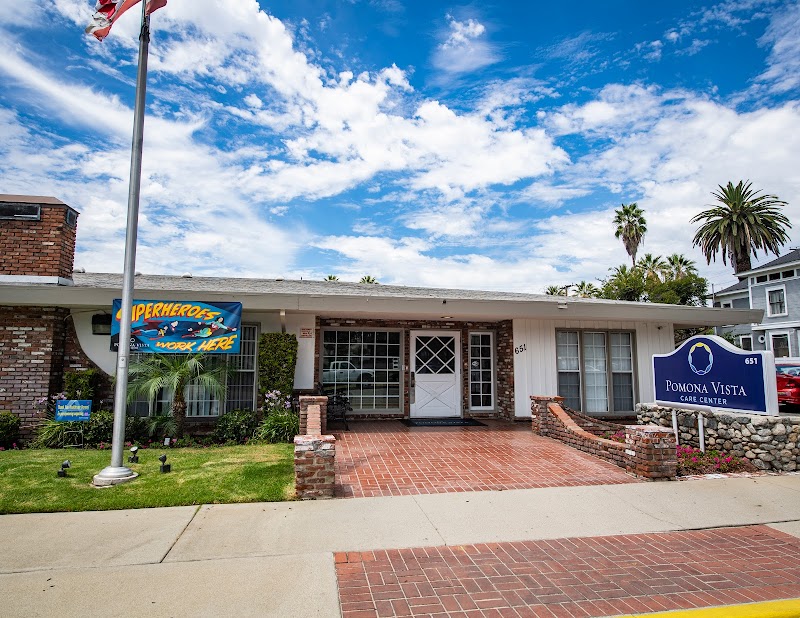
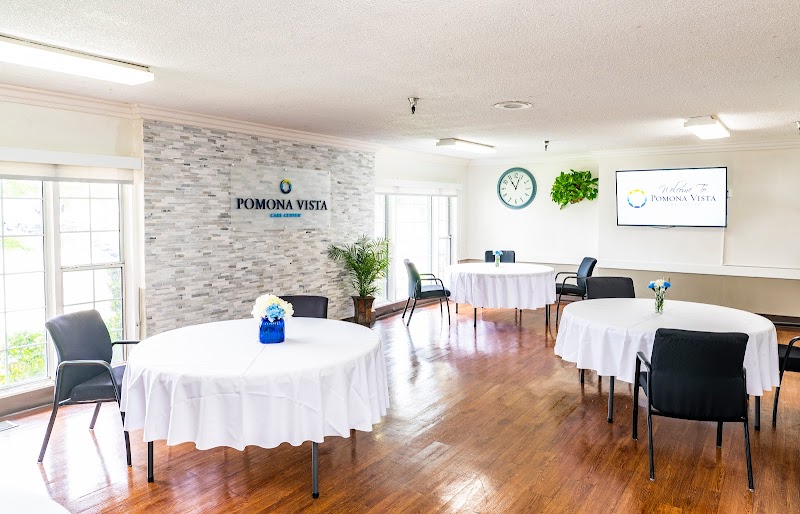
POMONA VISTA CARE CENTER

651 N MAIN ST, POMONA, CA 91768 (909) 623-2481
For profit - Limited Liability company 59 Beds DAVID & FRANK JOHNSON Data: November 2025
Trust Grade
30/100
#882 of 1155 in CA
Last Inspection: April 2025

Within standard 12-15 month inspection cycle. Federal law requires annual inspections.

Overview

Pomona Vista Care Center has received a Trust Grade of F, which indicates poor performance with significant concerns. Ranking #882 out of 1155 in California places it in the bottom half of the state, and at #227 out of 369 in Los Angeles County, it is among the least favorable local options. While the facility is improving, having reduced issues from 27 in 2024 to 17 in 2025, it still has a concerning total of $154,508 in fines, higher than 98% of California facilities. Staffing is a strength, with a 4 out of 5-star rating and a turnover rate of 22%, which is well below the state's average. However, there have been serious incidents, including failure to monitor a resident's diabetes properly and not assisting another resident with necessary mobility, which raises significant concerns about the quality of care provided.

Trust Score
F
30/100
In California
#882/1155
Bottom 24%
Safety Record
High Risk
Review needed
Inspections
Getting Better
27 → 17 violations
Staff Stability
✓ Good
22% annual turnover. Excellent stability, 26 points below California's 48% average. Staff who stay learn residents' needs.
Penalties
✓ Good
$154,508 in fines. Lower than most California facilities. Relatively clean record.
Skilled Nurses
○ Average
Each resident gets 31 minutes of Registered Nurse (RN) attention daily — about average for California. RNs are the most trained staff who monitor for health changes.
Violations
⚠ Watch
75 deficiencies on record. Higher than average. Multiple issues found across inspections.
★★☆☆☆
2.0
Overall Rating
★★★★☆
4.0
Staff Levels
★★★★☆
4.0
Care Quality
★★☆☆☆
2.0
Inspection Score
Stable
2024: 27 issues
2025: 17 issues

The Good

  • 4-Star Staffing Rating · Above-average nurse staffing levels
  • 4-Star Quality Measures · Strong clinical quality outcomes
  • Low Staff Turnover (22%) · Staff stability means consistent care
  • Full Sprinkler Coverage · Fire safety systems throughout facility
  • No fines on record
  • Staff turnover is low (22%)

    26 points below California average of 48%

Facility shows strength in staffing levels, quality measures, staff retention, fire safety.

The Bad

2-Star Overall Rating

Below California average (3.1)

Below average - review inspection findings carefully

Federal Fines: $154,508

Well above median ($33,413)

Significant penalties indicating serious issues

Chain: DAVID & FRANK JOHNSON

Part of a multi-facility chain

Ask about local staffing decisions and management

The Ugly 75 deficiencies on record

2 actual harm
Apr 2025 14 deficiencies
CONCERN (D)

Potential for Harm - no one hurt, but risky conditions existed

Resident Rights (Tag F0550)

Could have caused harm · This affected 1 resident

Based on observation, interview, and record review, the facility failed to ensure resident privacy during the provision of personal care for one of two sampled residents (Resident 19). This deficient...

Read full inspector narrative →
Based on observation, interview, and record review, the facility failed to ensure resident privacy during the provision of personal care for one of two sampled residents (Resident 19). This deficient practice had the potential to cause, or may have caused, psychosocial harm, including embarrassment, loss of dignity, and emotional distress. Findings: During a review of Resident 19's admission Record (AR), the AR indicated the facility admitted Resident 19 on 3/1/2023, and re-admitted the resident on 9/4/2023, with diagnoses including hemiplegia (when one side of a person's body is paralyzed or has no movement, usually because of brain damage, like from a stroke [when blood flow to part of the brain gets blocked or a blood vessel in the brain bursts]) and hemiparesis (weakness on one side of the body with reduced strength and movement) affecting right dominant side, gout (a painful joint condition caused by too much uric acid [a natural waste product in the body when it breaks down certain foods), and repeated falls. During a review of Resident 19's Minimum Data Set (MDS, a resident assessment tool), dated 12/3/2024, the MDS indicated Resident 19's cognition (the ability to think and process information) was intact. The MDS indicated Resident 19 required supervision or touching assistance (helper provides verbal cues, touching/steadying, and/or contact guard assistance as resident completes activity) with activities of daily living (ADL, term used in healthcare that refers to self-care activities) and supervision or touching assistance with mobility. During an observation on 4/17/2025 at 9:59 AM, Certified Nursing Assistant (CNA) 1 was observed providing an upper body bed bath to Resident 19, who occupied Bed C in a 3-bed room. During the care, the privacy curtain around Bed C was not drawn (to close), leaving Resident 19's upper body exposed. The door to the room was open, and Bed C was in plain view of the unit hallway. The hallway had frequent foot traffic from staff, visitors, and other residents. During an interview on 4/17/2025 at 10:15 AM, with CNA 1, CNA 1 stated CNA 1 was assisting Resident 19 with an upper body bed bath and, while focused on the task, CNA 1 unintentionally forgot to pull the privacy curtain. CNA 1 stated drawing the curtain during personal care was important and helped preserve Resident 19's dignity and privacy. During an interview on 4/17/2025 at 10:23 AM, with Resident 19, Resident 19 stated most of the time, staff pulled the privacy curtain, which made him feel comfortable. Resident 19 stated there were times when staff forgot to pull the curtain, and it made him feel exposed and uncomfortable. Resident 19 stated Resident 19 didn't want to be seen during personal care and preferred staff always pulled the curtain out of respect for his privacy. During an interview on 4/18/2025 at 2:02 PM, with the Director of Nursing (DON), the DON stated that drawing the curtain during personal care was essential to protect the resident's (in general) privacy and dignity. The DON stated [drawing privacy curtains] ensured residents felt safe, respected, and prevented unnecessary exposure. The DON stated drawing the curtain during personal care was a form of building trust and helped residents feel comfortable. During a review of the facility's Policy and Procedure (P&P) titled, Promoting/Maintaining Resident Dignity revision dated 12/19/2022, the P&P indicated it is the practice of the facility to protect and promote resident rights and treat each resident with respect and dignity as well as care for each resident in a manner and in an environment, that maintains or enhances resident's quality of life by recognizing each resident's individuality. Compliance Guidelines included: -All staff members are involved in providing care to residents to promote and maintain resident dignity and respect resident rights. -Maintain resident privacy.
CONCERN (D)

Potential for Harm - no one hurt, but risky conditions existed

Deficiency F0676 (Tag F0676)

Could have caused harm · This affected 1 resident

Based on observation, interview, and record review, the facility failed to provide good hygiene to one of one sampled resident (Resident 16). This deficient practice had the potential to cause skin in...

Read full inspector narrative →
Based on observation, interview, and record review, the facility failed to provide good hygiene to one of one sampled resident (Resident 16). This deficient practice had the potential to cause skin infections to Resident 16. Findings: During a review of Resident 16's admission Record (AR), the AR indicated the facility admitted Resident 16 on 6/27/2024, with diagnoses that included dementia (a group of conditions, decline in mental ability, that interfere with daily activities), Alzheimer's disease (irreversible, progressive brain disorder that slowly destroys memory and thinking skills, and eventually the ability to carry out the simplest tasks). During a review Resident 16's Minimum Data Set (MDS - a resident assessment tool), dated 3/21/2025, the MDS indicated Resident 16's cognition (ability to understand and process information) was severely impaired. The MDS indicated Resident 16 had no impairment with the range of motion (ROM, full movement potential of a joint) of both upper extremities (arms and legs). The MDS indicated Resident 16 was dependent on staff with toileting hygiene and required setup assistance with eating. During a concurrent observation and interview on 4/17/2025 T 10:59 AM, with the Director of Nursing (DON), Resident 16 had long fingernails with black substance under the left fingernails. The DON stated Resident 16's fingernails needed to be cleaned because [black substance under the fingernails] could be a source of infection. During a review of the facility's Policy and Procedure (P&P) titled, Activities of Daily Living (ADLs), revised 12/19/2025, the P&P indicated the facility will, based on the resident's comprehensive assessment and consistent with the resident's needs and choices, ensure a resident's abilities in ADLs do not deteriorate unless deterioration is unavoidable. The P&P indicated care and services may consist of the following activities of daily living: bathing, dressing, grooming and oral care. The P&P indicated a resident who is unable to carry out activities of daily living will receive the necessary services to maintain good nutrition, grooming, personal and oral hygiene.
CONCERN (D)

Potential for Harm - no one hurt, but risky conditions existed

Deficiency F0692 (Tag F0692)

Could have caused harm · This affected 1 resident

Based on observation, interview, and record review, the facility failed to provide care and services to prevent weight loss for one of three sampled residents when Resident 43 did not meet the goal of...

Read full inspector narrative →
Based on observation, interview, and record review, the facility failed to provide care and services to prevent weight loss for one of three sampled residents when Resident 43 did not meet the goal of 75-100 % meal intake. This deficient practice had the potential to result in further weight loss and a physical decline to Resident 43. Findings: During a review of Resident 43's admission Record (AR), the AR indicated the facility admitted Resident 43 on 10/10/2024, with diagnoses that included dementia (a group of conditions, decline in mental ability, that interfere with daily activities) and dysphagia (difficulty swallowing). During a review of Resident 43's Minimum Data Set (MDS - a resident assessment tool), dated 4/4/2025, the MDS indicated Resident 43 had moderate impaired cognition and was dependent on staff with all activities of daily living (ADL, term used in healthcare that refers to self-care activities). During a review of Resident 43's Interdisciplinary (IDT, a team of health care professions who work together to establish plans of care for residents) Care Conference note, dated 4/8/2025, the notes did not indicate Resident 43's meal intake was addressed. During a review of Resident 43's meal intake percentage for April 2025, the meal intake from 4/9/2025 to 4/15/2025 indicated Resident 43's meal intake was below the 75-100 % goal except on 2 mealtimes on 4/11/2024 lunch and 4/13/2025 breakfast. During an observation on 4/17/2025 at 12:38 PM, CNA 6 assisted Resident 43 during lunch. Resident 43 stated, No mas [no more]. During a concurrent interview and record review on 4/18/2025 at 2:28 PM, with the Director of Nursing (DON), the DON stated Resident 43 was being monitored during the weekly variance meeting. The DON stated the last dietary assessment was completed on 4/4/2025, the assessment indicated a plan to monitor Resident 43's intake. During a concurrent review of Resident 43's meal intake percentage, dated April 2025, the meal intake and interview on 4/18/2025 at 2:32 PM, the DON stated majority of the intake during meals did not meet the 75-100% intake goal. The DON stated there was an IDT on 4/8/2025 but the IDT did not address Resident 43 not meeting the desired meal intake goal. During an interview on 4/18/2025 at 2:41 PM, the DON stated the DON needed to follow up on a weekly basis if Resident 43 met the goal of 75-100 % intake so there would be a reassessment for Resident 43 not meeting the goal of 75-100 % meal intake. During a review of the facility's Policy and Procedure (P&P) titled Weight Management Policy, revised 12/19/2022, the P&P indicated interventions will be identified, implemented, monitored, and modified (as appropriate), consistent with the resident's assessed needs, choices, preferences, goals and current professional standards to maintain acceptable parameters of nutritional status.
CONCERN (D)

Potential for Harm - no one hurt, but risky conditions existed

Deficiency F0699 (Tag F0699)

Could have caused harm · This affected 1 resident

Based on interview and record review, the facility failed to provide trauma-informed care for one of one sampled resident (Resident 16) by not ensuring that the resident received adequate care and ser...

Read full inspector narrative →
Based on interview and record review, the facility failed to provide trauma-informed care for one of one sampled resident (Resident 16) by not ensuring that the resident received adequate care and services to address their Post-Traumatic Stress Disorder (PTSD-a mental health condition that can develop after someone has experienced a deeply disturbing or frightening event). This deficient practice resulted in inadequate attention to Resident 16's specific trauma-related needs and the potential to affect the resident's physical and psychosocial well-being. Cross Reference F656 Findings: During a review of Resident 16's admission Record (AR), the AR indicated the facility admitted Resident 16 on 6/27/2024, with diagnosis including, PTSD, hypertension (HTN-high blood pressure), and peripheral vascular disease (PVD- a slow progressive narrowing of the vessels [blood flow] to the arms and legs). During a review of Resident 16's Minimum Data Set (MDS - a resident assessment tool), dated 3/21/2025, the MDS indicated Resident 16 had severe cognitive (the ability to think and process information) impairment. The MDS indicated Resident 16 required substantial/maximal assistance (helper does more than half the effort) with activities of daily living (ADL, term used in healthcare that refers to self-care activities) and required substantial/maximal assistance with mobility. During an interview on 4/17/2024 at 11:57 AM, with Certified Nursing Assistant (CNA) 3, CNA 3 stated CNA 3 didn't exactly know what PTSD stood for, but believed it was when someone went through a really bad experience. CNA 3 stated CNA 3 couldn't be specific or provide examples. CNA 3 stated CNA 3 couldn't recall ever caring for any residents who had PTSD. CNA 3 stated CNA 3 couldn't provide examples of PTSD triggers, but always ensured not to upset anyone. CNA 3 stated CNA 3 treated residents with respect and treated them like CNA 3 would like to be treated. CNA 3 stated CNA 3 had received in-services on general behavior issues, like dementia (a group of conditions, decline in mental ability, that interfere with daily activities), but for PTSD specifically, It hadn't been a big focus. During an interview on 4/17/2024 at 11:58 AM, with Licensed Vocational Nurse (LVN) 1, LVN 1 stated LVN 1 was not aware of any residents with a formal PTSD diagnosis in the facility. LVN 1 stated PTSD affected how individuals responded to their environment, processed emotions, and interacted with others. LVN 1 stated without the understanding of the signs and triggers of PTSD, staff could have misinterpreted their behaviors, which could have led to frustration or ineffective support [to the residents with PTSD]. LVN 1 stated being mindful of PTSD helped the facility approach each resident with empathy and patience, ensured a safe and supportive environment. LVN 1 stated LVN 1 could not recall any in-services [provided by the facility] on PTSD. LVN 1 stated incorporating PTSD into the facility's lesson plan could help the facility stay up to date with the best practices and could have promoted an environment of understanding and compassion for the residents. During an interview on 4/17/2025 at 12:35 PM, with the Director of Staff Development (DSD), the DSD stated the DSD was unaware Resident 16 had a diagnosis of PTSD. The DSD stated it was crucial for staff to know if a resident had PTSD, because it affected how individuals responded to their environment, processed emotions, and interacted with others. The DSD stated PTSD could impact a resident's emotional and psychological well-being, and awareness of the diagnosis enabled staff to tailor their approach to the resident's specific needs. The DSD stated without an understanding of the signs and triggers of PTSD, staff might have misunderstood certain behaviors, which could have led to frustration or ineffective support to Resident 16. The DSD stated being mindful of PTSD ensured the facility approached each resident with empathy and patience, fostering a safe and supportive environment. The DSD stated staff had not been in-serviced on specific PTSD related topics. The DSD stated incorporating PTSD in the in-service lesson plan would help staff stay current with best practices and ultimately created an environment of understanding and compassion, benefiting everyone. During an interview on 4/18/2025 at 11:31 AM, with Family Member (FM) 1, FM 1 stated Resident 16 was a former veteran with a documented history of PTSD. FM 1 stated Resident 16 endured severe trauma during his military service and often had episodes where he believed he was still in a combat zone or that the U.S. was under attack. FM 1 stated FM 1 was concerned the facility had never addressed these issues and stated she was unsure if the facility was even aware of his PTSD or how to treat his symptoms. FM 1 stated FM 1 would love for the facility to recognize these concerns to better support Resident 16's well-being and provide the care necessary to manage his symptoms effectively. During an interview on 4/18/2025 at 2:02 PM, with the Director of Nursing, the DON stated PTSD awareness was critical in the facility as it directly impacted resident care. The DON stated many residents had experienced trauma, and PTSD could affect both emotional and physical health. The DON stated without awareness, staff may misinterpret behaviors. The DON there was no was no care plan developed with PTSD interventions for Resident 16. The DON emphasized the importance of regular PTSD-specific in-services to help staff recognize symptoms and respond appropriately. The DON stated training ensured all staff provided care with sensitivity and compassion. The DON added creating a supportive environment helped promote healing and minimize potential triggers. During a review of the facility's policy and procedure (P&P) titled, Behavioral Health Services revision date 12/19/2022, the P&P indicated it is the policy of this facility to ensure all residents receive necessary behavioral health services to assist them in reaching and maintaining their highest level of mental and psychosocial functioning. The P&P indicated Definitions that included: Post-Traumatic Stress Disorder occurs is some individuals who have encountered a shocking, scary, or dangerous situation. Symptoms usually begin early, within three months of the traumatic incident, but sometimes they begin years afterward. Symptoms must last more than a month and be severe enough to interfere with relationships or work to be considered PTSD. The P&P indicated Policy Explanation and Compliance Guidelines included: 1. Behavioral health encompasses a resident's whole emotional and mental well-being, which includes, adjustment difficulty, and trauma or PTSD. 2. The facility will consider the acuity of the resident population. This includes residents with mental disorders, psychosocial disorders, or substance use disorders (SUDs), and those with a history of trauma and/or post-traumatic stress disorder (PTSD), as reflected in the facility assessment. 3. The facility will ensure that necessary behavioral health care services are person-centered and reflect the resident's goals for care, while maximizing the resident's dignity, autonomy, privacy, socialization, independence, choice, and safety. 4. Conditions that are frequently seen in nursing home residents and may require the facility to provide specialized services and supports based upon residents' individual needs, include, but are not limited to: a. Anxiety and anxiety disorders - There are many types of anxiety disorders, each with different symptoms. The most common types of anxiety disorders include Generalized Anxiety Disorder, Social Anxiety Disorder, Panic Disorder, Phobias and Post-Traumatic Stress Disorder. 5. The resident, and as appropriate the resident's family, are included in the comprehensive assessment process along with the interdisciplinary team and outside sources, as indicated. The care plan shall: a. Have interventions that are person-centered, evidence-based, culturally competent, trauma informed, and in accordance with professional standards of practice. b. Account for the resident's experiences and preferences. 6. All facility staff, including contracted staff and volunteers, shall receive education to ensure appropriate competencies and skill sets for meeting the behavioral health needs of residents. Education shall be based on the role of the staff member and resident needs identified through the facility assessment. Behavioral health training as determined by the facility assessment will include, but is not limited to, the competencies and skills necessary to provide the following: a. Care specific to the individual needs of the residents that are diagnosed with a mental, psychosocial, or substance use disorder, a history of trauma and/or post-traumatic stress disorder, substance use disorder, or other behavioral health conditions.
CONCERN (D)

Potential for Harm - no one hurt, but risky conditions existed

Staffing Information (Tag F0732)

Could have caused harm · This affected 1 resident

Based on observation, interview, and record review, the facility failed to ensure nurse staffing data in, two of two nursing stations (North Station and South Station), was posted in a prominent place...

Read full inspector narrative →
Based on observation, interview, and record review, the facility failed to ensure nurse staffing data in, two of two nursing stations (North Station and South Station), was posted in a prominent place readily accessible to residents and visitors. This deficient practice had the potential for residents and visitors to not be aware of the actual and accurate nursing hours to ensure facility had enough staff to provide care during each shift. Findings: During a concurrent observation, interview, and record review on 4/18/2025 at 3:35 PM with Licensed Vocational Nurse (LVN) 2, in the South Station, LVN 2 was asked where the facility's actual staffing schedule was posted. LVN 2 took a green colored binder titled, South Station Daily Assignment and Monthly Schedule (SDAMS), that was kept on the lower counter of the nursing station was reviewed. The lower counter was not visible from the hallway. The nursing staffing schedule for the day shift (7:00AM), dated 4/18/25, was the latest on file. LVN 2 stated, the SDAMS is where the staff checked their assignment. During a concurrent observation, interview, and record review on 4/18/2025 at 3:52 PM with the Director of Staff Development (DSD), in the North Station, the facility's actual staffing schedule filed in a binder titled, North Station Daily Assignment (NSAMS), kept on the lower counter of the nursing station, was reviewed. The lower counter was not visible from the hallway. The nursing staffing schedule for the day shift (7 AM), dated 4/18/2025, was the latest on file. The Census and Direct Care Service Hours Per Patient Day (DHPPD), dated 4/18/2025, was posted on the wall by the door entrance. The DSD stated, that's the only place where it's [DHPPD] posted. The DSD stated it was important to post the staffing schedule for residents and visitors to know the staff working for the day caring for residents. During a concurrent observation and interview on 4/18/2025 at 4:09 PM with the Director of Nursing (DON), in the North Station, the DHPPD was posted on the wall by the door entrance. The DON stated, the nursing hours did not necessarily need to be viewable to visitors and should only be in the nursing station. The DON stated, it was important to make the nursing hours viewable to visitors and should be posted in the hallway where visitors would be able to see. The DON stated, there had been some family members asking if there was enough staff scheduled on the weekends. During a review of the facility's policy and procedure (P&P) titled, Nurse Staffing Posting Information, date revised 3/10/2025, the P&P indicated, it was the policy of the facility to make nurse staffing information readily available in a readable format to residents and visitors at any given time. The P&P indicated, the nursing staffing sheet would be posted on a daily basis and would contain the following information: a. Facility Name b. The current date c. Facility's current resident census d. The total number and the actual hours worked by the following categories of licensed and unlicensed nursing staff directly responsible for resident care per shift: i. Registered Nurse ii. Licensed Practical Nurses/Licensed Vocational Nurses iii. Certified Nurse Aides. The P&P indicated; the facility would post the Nurse Staffing Sheet at the beginning of each shift. The information posted should be up-to-date and current. The information should reflect staff absences on that shift due to call-outs and illness and after the start of each shift, actual hours would be updated to reflect such.
CONCERN (D)

Potential for Harm - no one hurt, but risky conditions existed

Deficiency F0760 (Tag F0760)

Could have caused harm · This affected 1 resident

Based on observation, interview, and record review, the facility failed to ensure one of four sampled residents (Resident 56) was free from a significant medication error by failing to clarify a physi...

Read full inspector narrative →
Based on observation, interview, and record review, the facility failed to ensure one of four sampled residents (Resident 56) was free from a significant medication error by failing to clarify a physician's order for oral (PO) medication administration, despite Resident 56 being documented as NPO (nothing by mouth) and receiving medications via gastrostomy-tube (G-tube-a surgical opening fitted with a device to allow feedings to be administered directly to the stomach common for people with swallowing problems). This failure resulted in the administration of medication without confirming the appropriate route of administration and placed Resident 56 at risk for adverse medication side effects (unwanted, uncomfortable, or dangerous effects that a resident may have due to a medication). Findings: During a review of Resident 56's admission Record (AR), the AR indicated the facility admitted Resident 56 on 3/26/2023, with diagnoses including encephalopathy (a serious health problem that affects brain function or structure), diabetes mellitus (DM, a disorder characterized by difficulty in blood sugar control and poor wound healing), and dysphagia (difficulty swallowing). During a review of Resident 56's Minimum Data Set (MDS - a resident assessment tool), dated 4/1/2025, the MDS indicated Resident 56 has severe cognitive (the ability to think and process information) impairment. The MDS indicated Resident 56 was dependent (helper does all of the effort) with activities of daily living (ADL, term used in healthcare that refers to self-care activities) and dependent with mobility. During a review of Resident 56's Order Summary Report (OSR), dated active as of 4/17/2025, the OSR included a physician's order (PO), dated 3/26/2025, the PO indicated Resident 56 was NPO (nothing by mouth). The OSR included the following POs for Resident 56 indicating: a. Divalproex Sodium Oral Capsule Delayed Release Sprinkle 125 milligrams (mg, unit of measurement) (Divalproex Sodium), give 4 capsules via G-tube two times a day for seizure (sudden burst of electrical activity in the brain, can cause changes in behavior, movements, feelings and levels of consciousness) disorder, start date: 3/27/2025. b. Docusate Sodium Oral Tablet (Docusate Sodium) Give 200 mg via G-ube to times a day for bowel movement. The order indicated to hold for loose stools. 100 mg times 2 tabs, start date: 3/27/2025. c. Levetiracetam Oral Solution 100 milligram/milliliter (ml-unit of measurement) Give 5 ml via G-tube two times a day for seizure disorder, start date: 3/31/2025. d. Metoprolol Tartrate oral tablet (Metoprolol Tartrate) Give 12.5 mg via G-tube every 12 hours for hypertension (HTN-high blood pressure). The order indicated to hold if systolic blood pressure (SBP-measures the pressure your blood is pushing against your artery walls when the heart beats) and to hold if the SBP was less than 100 and the pulse rate (the number of times your heart beats in one minute) was less than 60 beats per minute, start date: 3/26/2025. e. Quetiapine Fumarate oral tablet (Quetiapine Fumarate) Give 75 mg by mouth two times a day for psychosis manifested by combativeness/aggression towards staff for no apparent reason, start date: 3/27/2025. f. Zoloft Oral Tablet 25 mg (Sertraline HCl [hydrochloride, the most commonly used salt and unit of measurement) Give 1 tablet via G-tube one time a day for depression manifested by feeling hopeless and loss of interest in life, start date: 4/8/2025. g. Brimonidine 0.2% eye drop instill 1 drop in the left eye two times a day for glaucoma (a group of eye diseases that damage the optic nerve, which connects the eye to the brain), start date: 3/27/2025. During a medication administration observation on 4/17/2025 at 08:45 AM, Licensed Vocational Nurse (LVN) 2 prepared the following medications for Resident 56 to administer the medications via G-tube: Divalproex, Docusate Sodium, Levetiracetam, Metoprolol, Quetiapine, and Zoloft. During a concurrent medication administration observation on 4/17/2025 at 9 AM, LVN 2 administered Quetiapine to Resident 56 via G-tube. During an interview and concurrent record review on 4/17/2025 at 10:39 AM, Resident 56's OSR was reviewed with LVN 2. LVN 2 stated Resident 56's Quetiapine order indicated to give the medication, By mouth. LVN 2 stated LVN 2 administered Quetiapine via G-tube without clarifying the route (by mouth) indicated on the physician's order with the physician. LVN 2 stated it was important to verify any oral medication with the physician before administering the medication through G-tube, because the formulation may not be safe or effective when altered. LVN 2 stated not all medications were suitable for G-tube administration due to potential changes in absorption, effectiveness, or risk of tube obstruction. During an interview on 4/18/2025 at 2:02 PM, with the Director of Nursing (DON), the DON stated it was critical for [licensed] nursing staff to verify all physician orders for oral medications before administering them via G-tube. The DON stated not all oral medications were safe to crush or alter, and doing so without clarification could lead to reduced effectiveness, altered absorption, or even harm to the patient, such as tube blockage or adverse reactions. The DON stated clear communication with the prescribing physician was essential to ensure safe medication administration. During a review of the facility's Policy and Procedure (P&P) titled, Medication Administration via Enteral Tube revision date 12/19/2022, the P&P indicated it was the policy of the facility to ensure the safe and effective administration of medications via enteral feeding tubes by utilizing best practice guidelines. The P&Ps procedure indicated, verify physician orders for medication and enteral tube flush amount.
CONCERN (D)

Potential for Harm - no one hurt, but risky conditions existed

Deficiency F0761 (Tag F0761)

Could have caused harm · This affected 1 resident

Based on observation, interview, and record review, the facility failed to ensure one of one locked medicine refrigerator (RM - a refrigerator that is dedicated to storing and keeping the temperature ...

Read full inspector narrative →
Based on observation, interview, and record review, the facility failed to ensure one of one locked medicine refrigerator (RM - a refrigerator that is dedicated to storing and keeping the temperature of medicines and biologicals) was maintained under proper temperature controls in accordance with the facility's policy and procedure (P&P) titled, Medication Storage. This deficient practice could potentially lead to degrading and losing the potency (intensity of effect) of the medicines and biologicals which could potentially be harmful and compromise the health, safety, and well-being of the residents. Findings: During an observation on 4/18/2025 at 12:03 PM with the Registered Nurse Supervisor (RN), the facility's RM inside the medication storage room had a supply of medications that included insulin (a hormone that removes excess sugar from the blood, can be produced by the body or given artificially via medication) pens and vaccines (medications used to prevent diseases usually given by injection or by mouth). The temperature inside the RM was forty-three point five (43.5) degrees Fahrenheit (*F - units/scale used to measure temperature). During a concurrent interview and record review on 4/18/2025 at 12:03 PM with the RN, the facility's Refrigerator Temperature Log (RTL), dated February 2025, March 2025, and April 2025 were reviewed. The RTL indicated, a temperature range between thirty-six to forty- six (36-46 *F). The RTL indicated, the temperatures on the following dates during the night (11 to 7 PM) shift and during the day (7 to 3 PM) shift were out of range and no actions were taken: 2/1/25=47.8 and 47.0 2/2/25=47.8 and 48.0 2/3/25=46.6 and 47.0 2/4/25=46.8 2/5/25=47.8 and 47.0 2/6/25=47.5 and 47.0 2/7/25=46.9 and 47.0 2/8/25=46.9 2/9/25=46.8 2/10/25=46.9 2/13/25=48.0 (Day Shift) 2/19/25=47.0 (Day Shift) 2/20/25=47.0 (Day Shift) 2/21/25=46.2 2/26/25=46.7 and 47.0 2/28/25=47.0 (Day Shift) 3/3/25=46.2 3/5/25=46.4 3/6/25=46.8 and 46.6 3/7/25=46.4 and 46.2 3/8/25=47.6 3/9/25=47.8 3/18/25=46.4 and 46.8 3/19/25=46.5 3/20/25=46.3 3/22/25=48.0 (Day Shift) 3/27/25=47.5 4/8/25=47.6 but reported 4/9/25=46.6 4/10/25=48.0 (Day Shift) The RN stated, it was important for the refrigerator temperature to be within range, For the effectiveness of the medication, if it's [temperature] too cold, it [the medication] could freeze, if it's too hot, it could damage. During a review of the facility's P&P titled, Medication Storage, date revised 12/19/2022, the P&P indicated, it was the policy of the facility to ensure all medications housed on the facility's premises would be stored in the pharmacy and/or medication rooms according to the manufacturer's recommendations and sufficient to ensure proper sanitation, temperature, light, ventilation, moisture control, segregation, and security. The P&P indicated, all drugs and biologicals would be stored in locked compartments (i.e., medication carts, cabinets, drawers, refrigerators, medication rooms) under proper temperature controls. The P&P indicated; temperatures were maintained within 36-46 degrees F for refrigerated products.
CONCERN (E)

Potential for Harm - no one hurt, but risky conditions existed

Comprehensive Care Plan (Tag F0656)

Could have caused harm · This affected multiple residents

**NOTE- TERMS IN BRACKETS HAVE BEEN EDITED TO PROTECT CONFIDENTIALITY** Based on observation, interview, and record review, the facility failed to develop comprehensive care plans (CP) for two of two ...

Read full inspector narrative →
**NOTE- TERMS IN BRACKETS HAVE BEEN EDITED TO PROTECT CONFIDENTIALITY** Based on observation, interview, and record review, the facility failed to develop comprehensive care plans (CP) for two of two sampled residents (Resident 42 and Resident 16) when, A. For Resident 42, a CP was not developed that addressed Resident 42's non-compliance to turning and repositioning. B. For Resident 16, a CP was not developed that addressed Resident 16's Post Traumatic Stress Disorder (PTSD, a mental health condition that can developed after experiencing or witnessing a traumatic event) diagnosis. This deficient practice had the potential to result in unmet individualized needs for Residents 42 and 16 and the potential to affect the resident's physical and psychosocial well-being. (Cross Reference F699) Findings: A. During a review of Resident 42's admission Record (AR), the AR indicated Resident 42 was admitted to the facility 9/3/2024 with diagnoses that included unspecified dementia (a group of conditions, decline in mental ability, that interfere with daily activities), hyperlipidemia (having too many lipids [fats] in the blood), and psychosis (a collection of symptoms that affect the mind, where there has been some loss of contact with reality). During a review of Resident 42's Minimum Data Set (MDS - a resident assessment tool), dated 3/31/2025, the MDS indicated Resident 42's cognition (ability to understand and process information) was severely impaired. The MDS indicated Resident 42 was dependent with oral, toileting and personal hygiene and required maximal assistance with rolling left and right. During an observation on 04/17/2025 at 9:51 AM, CNA 3 and CNA 6 entered Resident 42's room to provide care. CNA 6 removed the resident's gown and adult brief. CNA 6 wiped the perineal (an area lower in the body located between the thighs) area with a moistened towel and patted dry. CNA 6 turned Resident 42 to face the right side, Resident 42's left hand held on to the left siderails. CNA 3 stated, It's okay, I'm here. I'll hold your hand. Resident 42 slowly let go of the side rail and CNA 3 turned Resident 42 to the right side. CNA 3 stated Resident 42 was scared when being turned. During an interview on 4/17/2025 at 2:57 PM, with CNA 6, CNA 6 stated CNA 6 did not turn or reposition Resident 42 because Resident 42 refused to be turned, It's like this every day. CNA 6 stated CNA 6 reported to the nurses occasionally and reported today to Licensed Vocational Nurse 1 (LVN 1) that Resident 42 refused to turn and reposition. CNA 6 stated LVN 1 stated, Okay. During an interview on 4/17/2025 at 3:08 PM, the Treatment Nurse (TN) stated Resident 42 looked scared when being turned to the sides. The TN stated the TN observed the behavior when the TN helped change Resident 42's adult briefs two weeks ago. During an interview on 4/18/2025 at 8:28 AM with the Director of Nursing (DON), the DON stated the licensed nurses needed to develop a CP that addressed the refusal to turn and reposition and develop interventions to address the refusal to turn and reposition. During an interview on 4/18/25 at 9:10 AM, the DON stated the MDS coordinator needed to develop a CP specific to address Resident 42's refusal to be turned and repositioned. During a concurrent review of Resident 42's CPs and interview on 4/18/2025 at 9:25 AM with the DON, the DON stated there was no CP developed to addressed Resident 42's refusal to turn and reposition. During a review of the facility's P&P titled Comprehensive Care Plans dated 12/19/2022, the P&P indicated the comprehensive care plan will be prepared by an interdisciplinary team, that includes, but is not limited to the attending physician, a registered nurse with responsibility for the resident, a nurse aide with responsibility for the resident, the resident and the resident representative .The P&P indicate the facility will attempt alternate methods for refusal of treatment and services and document such attempts in the clinical record, including discussions with the resident and/or resident representative B. During a review of Resident 16's AR, the AR indicated the facility admitted Resident 16 on 6/27/2024, with diagnosis including, PTSD, hypertension (HTN-high blood pressure), and peripheral vascular disease (PVD- a slow progressive narrowing of the vessels [blood flow] to the arms and legs). During a review of Resident 16's MDS, dated [DATE], the MDS indicated Resident 16 had severe cognitive (the ability to think and process information) impairment. The MDS indicated Resident 16 required substantial/maximal assistance (helper does more than half the effort) with activities of daily living (ADL, term used in healthcare that refers to self-care activities) and required substantial/maximal assistance with mobility. During an interview and a concurrent record review on 4/17/2025 at 12:35 PM, Resident 16's Care Plans were reviewed with the Director of Staff Development (DSD), the DSD stated Resident 16 did not have a CP for PTSD and the DSD was unaware Resident 16 had a PTSD diagnosis. The DSD stated the facility should have initiated an individualized, person-centered CP that addressed Resident 16's PTSD diagnosis. The DSD stated it was crucial for staff to know if a resident had PTSD, as it directly affected how staff approached care. The DSD stated PTSD could impact a resident's emotional and psychological well-being, and awareness of the diagnosis enabled staff to tailor their approach to the resident's specific needs. The DSD stated developing a PTSD CP ensured all members of the healthcare team were aligned with their approach and CPs outlined strategies for managing triggers, appropriate communication techniques, and ways to address behavioral concerns. The DSD stated CPs promoted consistent, compassionate, and mindful care delivery that supported the resident's mental health needs. During an interview on 4/18/2025 at 2:02 PM, with the Director of Nursing, the DON stated early identification of PTSD allowed for personalized care and strategies to prevent triggers. The DON stated developing a PTSD CP was essential to keep all staff aligned and address each resident's unique needs. The DON stated the facility should have initiated a PTSD CP for Resident 16 that included specific interventions, coping strategies, and trigger avoidance. During a review of the facility's P&P titled, Comprehensive Care Plans, revision date 12/19/2022, the P&P indicated it is the policy of this facility to develop and implement a comprehensive person-centered care plan for each resident, consistent with resident rights, that includes measurable objectives and timeframes to meet a resident's medical, nursing, and mental, and psychosocial needs that are identified in the resident's comprehensive assessment. The P&P indicated the following definition: Trauma-informed care is an approach to delivering care that involves understanding, recognizing, and responding to the effects of all types of traumas. A trauma-informed approach to care delivery recognizes the widespread impact, and signs and symptoms of trauma in residents, and incorporates knowledge about trauma into care plans, policies, procedures and practices to avoid re-traumatization. The P&P indicated policy explanation and compliance guidelines: a. Individualized interventions for trauma survivors that recognizes the interrelation between trauma and symptoms of trauma, as indicated. Trigger-specific interventions will be used to identify ways to decrease the resident's exposure to triggers which re-traumatize the resident, as well as identify ways to mitigate or decrease the effect if the trigger on the resident.
CONCERN (E)

Potential for Harm - no one hurt, but risky conditions existed

Pressure Ulcer Prevention (Tag F0686)

Could have caused harm · This affected multiple residents

Based on observation, interview, and record review, the facility failed to provide nursing care and services to prevent pressure injury (injury to skin and underlying tissue resulting from prolonged p...

Read full inspector narrative →
Based on observation, interview, and record review, the facility failed to provide nursing care and services to prevent pressure injury (injury to skin and underlying tissue resulting from prolonged pressure on the skin and/or underlying soft tissue usually present over a bony prominence) for one of four sampled residents (Resident 42) when the facility failed to: a. Develop a care plan to address Resident 42's non-compliance to turning and repositioning. b. Ensure staff would follow the same system for turning and repositioning for Resident 42. c. Ensure proper communication of Resident 42's changes in skin condition. These deficient practices incresed the risk for Resident 42 to develop a deep tissue injury (DTI - Intact skin with localized area of persistent non-blanchable deep red, maroon, purple discoloration due to damage of underlying soft tissue on the right malleolus. Findings: During a review of Resident 42's admission Record (AR), the AR indicated Resident 42 was admitted to the facility 9/3/2024 with diagnoses that included unspecified dementia (a group of conditions, decline in mental ability, that interfere with daily activities), hyperlipidemia (having too many lipids [fats] in the blood), and psychosis (a collection of symptoms that affect the mind, where there has been some loss of contact with reality). During a review of Resident 42's Minimum Data Set (MDS - a federally mandated resident assessment tool) dated 3/31/2025, the MDS indicated Resident 42 rarely/never understands verbal content and was rarely/never able to express ideas and wants. The MDS indicated Resident 42 was dependent with oral, toileting and personal hygiene and required maximal assistance with rolling left and right. The MDS indicated Resident 42 was at risk of developing pressure ulcers. During a review of Resident 42's Pressure Ulcer Risk Evaluation, dated 3/24/2025, the evaluation indicated a score of 13. The evaluation indicated Resident 42 had slightly limited sensory perception, constantly moist and had problem with friction and shear. During an observation on 04/17/2025 at 9:51 AM, CNA 3 and CNA 6 entered Resident 42's room to provide care. CNA 6 removed the resident gown and then the incotinence brief. CNA 6 wiped the perineal area with moistened towel and pat dry. When CNA 6 turned Resident 42 to face the Resident 42's right side, Resident 42's left hand held on to the left siderails. CNA 3 said, It's okay, I'm here. I'll hold your hand. Resident 42 slowly let go of the side rail and CNA 3 turned Resident 42 to the right side. CNA 3 stated Resident 42 was scared when being turned. When the CNAs were starting to turn Resident 42 to the left side, Resident 42 held the right siderails with both hands and after a minute of talking to Resident 42, CNA 3 was able to turn resident 42 to the the left side, there was a purple discoloration to the right lateral of Resident 42's foot. CNA 6 stated the discoloration was new and CNA 6 would notify the Treatment Nurse (TN). CNA 3 and CNA 6 assisted Resident 42 to lay on his back with no positioning pillow placed on either right or left side or under Resident 42's heels. During an interview on 4/17/2025 at 2:57 PM, CNA 6 stated CNA 6 did not turn and reposition Resident 42 because Resident 42 would refuse when being turned. CNA 6 stated, It's like this everyday. CNA 6 stated CNA 6 filled up the Skin Assessment Sheet and handed the sheet to the TN. CNA 6 stated CNA 6 did not verbally report the change in skin condition to the TN. During an interview on 4/17/2025 at 3:08 PM, the TN stated Resident 42 looked scared when being turned to the sides. The TN observed the behavior when TN helped change Resident 42's incontinence brief two weeks ago. The TN stated the TN did not report Resident 42's resistance to care to the Registered Nurse Supervisor. The TN stated Resident 42 did not have a pressure ulcer or injury. The TN stated the CNAs needed to turn and reposition the residents who were not ambulatory and had fragile skin. The TN stated there was no turning schedule as the CNAs turn and reposition the residents who needed assistance every 2 hours. During a concurrent Resident 42's skin observation and interview on 4/17/2025 at 3:27 PM to 3:35 PM with TN and the Registered Nurse Supervisor (RNS). Resident 42 was lying on his back with the ankles crossed and the heels were not offload. The TN and RNS stated the right ankle had a discoloration on the right malleolus. The TN and RNS stated the area of discoloration was blue and purple in color. The TN and RNS stated there was no extra pillow or positioning pillows on Resident 42's bed, closet or anywhere inside Resident 42's room. During an interview on 4/17/2025 at 3:37 PM, the RNS stated Resident 42 had a blue, purple discoloration on the right malleolus. The RNS stated Resident 42 had a DTI because it would be unknown what was underneath the skin discoloration. During an interview on 4/17/2025 at 3:41 PM, the RNS stated Resident 42 was not cooperative during admission and was not relaxed during turning. The RNS stated just like how the TN and RNS assured Resident 42 during turning, the staff just needed to talk more and reassure Resident 42 when turning and repositioning and give Resident 42 time to understand what is going on. Resident 42 has dementia, we need to give instructions clearly and inform Resident 42 what was going on and give time for Resident 42 to understand. During an interview on 4/17/2025 at 3:57 PM, the RNS stated the assigned CNA needed to have everything such as pillows ready when performing incontinence care and place a pillow to position Resident 42 to the left, right or on Resident 42's back and to offload Resident 42's heels. The RNS stated Resident 42's resistance to turning and repositioning was not a reason to leave Resident 42 on his back and not offloading the heels. During an interview on 4/17/2025 at 4:36 PM, CNA 8 stated Resident 42 needed assistance with turning and repositioning because Resident 42 could not move independently. CNA 8 stated the facility followed a turning schedule and CNA 8 showed the schedule on the back of CNA 8's badge. The schedule indicated at 6AM to 8 AM residents would be on the back, at 8AM -10 AM, residents would be facing the door, at 10 AM to 12 PM resident would be facing the window, at 12PM to 2PM, residents would be on the back and at 2PM - 4 PM, residents would be facing the door. CNA 8 stated the turning schedule was provided by the Director of Staff Development when CNA 8 started working at the facility a year ago. CNA 8 stated Resident 42 would refuse turning by holding the siderails during repositioning. CNA 8 stated the licensed nurses were aware of Resident 42's refusal to turn. During an interview on 4/17/2025 at 3:44 PM, the TN, the TN was not informed verbally that Resident 42 had a discolored area on the ankle. The TN stated the TN signed the Skin Assessment Sheet (SAS) but did not check and missed the skin report made by CNA 6. During an interview on 4/18/2025 at 8:28 AM, the Director of Nursing (DON) stated when residents (in general) would refuse turning and repositioning, the CNA's need to continue to offer because initially the residents would refuse, when the CNA's go back and offer to reposition again. The DON stated the licensed nurses need to develop a care plan to address the refusal to turning and repositioning to develop interventions to address the refusal to turn and reposition. During an interview on 4/18/2025 at 8:34 AM, Licensed Vocational Nurse 1 (LVN 1) stated Resident 42 would have moments of refusing to turn and reposition approximately 3 out of 7 days in a week. Resident 42 would refuse turning and repositioning by holding on to the siderails. LVN 1 stated there was no turning schedule to follow but it was facility practice to turn and reposition the residents who needed assistance with turning and repositioning every 2 hours. When residents (in general) were not turned and repositioned, it could lead to the development of a pressure injury because of the pressure from the mattress to the bony prominences. During an interview on 4/18/25 at 9:10 AM, the DON stated interventions to the care plan when Resident 42 refused turning and repositioning, CNAs needed to attempt to turn and reposition Resident 42 three times. CNAs then needed to notify the charge nurse. The Charge Nurse once aware of the refusal needed to reach out to family members who might be able to talk to Resident 42. The DON stated the MDS Nurse needed to develop a care plan specific to the refusal to turn and reposition. During a concurrent review of Resident 42's plan of care and interview on 4/18/2025 at 9:25 AM, the DON stated there was no care plan developed to address Resident 42's refusal to turn and reposition. During a review of Resident 42's Change of Condition (COC) dated 4/18/2025, the COC indicated purplish discoloration (DTI) to the right lateral malleolus. During a review of the facility's Policy and Procedure (P&P) titled, Pressure Injury Prevention Guidelines, dated 11/27/2023, the P&P indicated interventions will be documented in the care plan and communicated to all relevant staff. The P&P indicated individualized interventions will address specific factors identified in the resident's risk assessment, skin assessment and any pressure injury assessment. During a review of the facility's P&P titled, Pressure Injury Prevention and Management, dated 9/12/23, the P&P indicated interventions on a resident's plan of care will be modified as needed. Considerations for needed modifications included resident non-compliance. During a review of the facility's P&P titled, Comprehensive Care Plans, dated 12/19/2022, the P&P indicated the comprehensive care plan will be prepared by an interdisciplinary team, that includes, but is not limited to the attending physician, a registered nurse with responsibility for the resident, a nurse aide with responsibility for the resident, the resident and the resident representative .The P&P indicate the facility will attempt alternate methods for refusal of treatment and services and document such attempts in the clinical record, including discussions with the resident and/or resident representative.
CONCERN (E)

Potential for Harm - no one hurt, but risky conditions existed

Tube Feeding (Tag F0693)

Could have caused harm · This affected multiple residents

**NOTE- TERMS IN BRACKETS HAVE BEEN EDITED TO PROTECT CONFIDENTIALITY** c. During a review of Resident 41's AR, the AR indicated Resident 41 was admitted to the facility on [DATE], with diagnoses that...

Read full inspector narrative →
**NOTE- TERMS IN BRACKETS HAVE BEEN EDITED TO PROTECT CONFIDENTIALITY** c. During a review of Resident 41's AR, the AR indicated Resident 41 was admitted to the facility on [DATE], with diagnoses that included hemiplegia (paralysis [complete or partial loss of muscle function] on one side of the body) and hemiparesis following cerebral infarction (one sided weakness and paralysis after a stroke), respiratory failure with hypoxia (occurs when you don't have enough oxygen in the blood). During a review of Resident 41's MDS, dated [DATE], the MDS indicated Resident 41's cognition was severely impaired. During an observation on 4/15/2025 at 10:37 AM, Resident 41 was asleep in bed, a 1-liter (unit of volume) bag of diabetisource (a formula used for tube feeding, TF) had a written date of 4/15/2025, timed at 3:49 AM, there was 800 ml (milliliters, unit of volume) left in the bag. The TF set up had a bag of water for water flush that had a written date of 4/10/2025, there was 500 ml left inside the water bag. Both bags were attached to the TF pump. During an interview with the DON on 4/18/2025 at 2:02 PM, the DON stated the water flush bag for the feeding should be changed within 24 hours. The DON stated potential complications [from not changing the bag timely] included clogged tubing, patient discomfort or nausea, vomiting, and abdominal cramping if contaminated water reached the stomach and reduced nutrient/fluid delivery due to the potential of a compromised water bag. During a review of the facility's policy and procedure (P&P) titled, Flushing a Feed Tube, revised 12/19/2022, the P&P indicated, Policy: It is the policy of this facility to ensure that staff providing care and services to the resident via a feeding tube are aware of, competent in and utilize facility protocols regarding feeding nutrition and care. Feeding tube care and services will be provided in accordance with resident needs and professional standards of practice. During a review of the facility's P&P titled, Care and Treatment of Feeding Tubes, revised 12/19/2022, the P&P indicated, Policy: It is the policy of this facility to utilize feeding tubes in accordance with current clinical standards of practice, with interventions to prevent complications to the extent possible. Policy Explanation and Compliance Guidelines: Direction for staff on how to provide the following care will be provided: use of infection control precautions and related techniques to minimize the risk of contamination. During a review of the undated Cardinal Health's, Kangaroo OMNI Enteral Feed Pump Setup and Troubleshooting Guide, dated 2023, the guide indicated, Reusing feeding sets can impact feeding accuracy. Feeding sets are designed for single-patient use with a recommended 24 hour use time. Using the feeding set beyond the recommended 24 hours can impact the delivery accuracy of the pump by subjecting the silicone tubing to excessive or repeated strain. During a review of the facility's P&P titled, Medication Administration via Enteral Tube, revised 12/19/2022, the P&P indicated, Policy: It is the policy of this facility to ensure the safe and effective administration of medications via enteral feeding tubes by utilizing best practice guidelines. Policy Explanation and Compliance Guidelines: Verify physician orders for medication and enteral tube flush amount. Based on observation, interview, and record review, the facility failed to ensure 2 of 2 sampled residents (Resident 56 and Resident 41), who were fed by enteral feeding tubes (a tube inserted into the digestive system to deliver liquid nutrition when someone cannot eat or drink normally) received appropriate treatment by failure to: a. change the water flush bag for Resident 56 to follow the manufacturer's recommended time of a 24-hour use time. b. clarify a physician's order for oral (PO) medication administration for Resident 56, despite Resident 56 being documented as NPO (nothing by mouth) and receiving medications via gastrostomy-tube (G-tube-a surgical opening fitted with a device to allow feedings to be administered directly to the stomach common for people with swallowing problems). c. change the water flush bag for Resident 41 to follow the manufacturer's recommended time of a 24-hour use time. These deficient practices had the potential for Resident 56 and Resident 41 to experience nausea and vomiting and failure increased the risk for aspiration (condition in which food, liquids, saliva, or vomit is breathed into the airways). Findings: a. During a review of Resident 56's admission Record (AR), the AR indicated, Resident 56 was admitted to the facility on [DATE] with diagnoses that included encephalopathy (brain disease that alters brain function or structure), protein-calorie malnutrition (a condition where there is a deficiency of both protein and calories in the diet, leading to serious health consequences), other abnormalities of gait and mobility (includes various conditions affecting a person's ability to walk and move), muscle weakness-generalized (a lack of strength in multiple muscle groups across the body ), dysphagia (difficulty swallowing), encounter for attention to gastrostomy (a surgical opening fitted with a device to allow feedings to be administered directly to the stomach common for people with swallowing problems), dementia (progressive state of decline in mental abilities), anxiety disorder (a mental health condition characterized by persistent and excessive worry or fear that can interfere with daily life and cause significant distress), and unspecified psychosis (a collection of symptoms that affect the mind, where there has been some loss of contact with reality). During a review of Resident 56's History and Physical (H&P), dated 3/26/2025, the H&P indicated Resident 56 did not have the capacity to understand and make decisions. During a review of Resident 56's Minimum Data Set (MDS - a resident assessment tool), dated 4/1/2025, the MDS indicated Resident 56 was dependent on staff with oral hygiene, toileting hygiene, shower/bathe self, upper/lower body dressing, putting on/taking off footwear, and personal hygiene. During an observation on 4/15/2025 at 04:32 PM in Resident 56's room, the water flush bag for Resident 56's tube feeding was observed with the date of 4/11/2025 written on the bag with black marker, and the tube feeding bag was dated 4/15/2025, timed 3:35 AM. During an interview with the Director of Nursing (DON) on 4/18/2025 at 2:02 PM, the DON stated the water flush bag for the feeding should be changed within 24 hours. The DON stated potential complications [from not changing the bag timely] included clogged tubing, patient discomfort or nausea, vomiting, and abdominal cramping if contaminated water reached the stomach and reduced nutrient/fluid delivery due to the potential of a compromised water bag. b. During a review of Resident 56's Order Summary Report (OSR), dated active as of 4/17/2025, the OSR included a physician's order (PO), dated 3/26/2025, the PO indicated Resident 56 was NPO (nothing by mouth). The OSR included the following POs for Resident 56 indicating: Quetiapine Fumarate oral tablet (Quetiapine Fumarate) Give 75 mg (milligrams, unit of measurement) by mouth two times a day for psychosis manifested by combativeness/aggression towards staff for no apparent reason, start date: 3/27/2025. During a medication administration observation with Licensed Vocational Nurse 2 (LVN 2) on 4/17/2025 at 08:45 AM in Resident 56's room, LVN 2 administered Quetiapine Fumarate (medication used to treat several kinds of mental health conditions including schizophrenia [a serious mental health condition that affects how people think, feel, and behave] and bipolar disorder [serious mental illness that causes unusual shifts in mood] oral tablet via G-tube to Resident 56. During an interview with the Director of Nursing (DON) on 4/18/2025 at 2:02 PM, the DON stated the nurse must clarify with the physician if Resident 56 was NPO or need to receive medications via G-Tube. The DON stated the route must be verified and clarified with the physician. The DON stated administering medications the wrong way can cause harm to the residents. The DON stated even if given via G-tube, if the order indicated PO (by mouth), the order needed clarification from the physician.
CONCERN (E)

Potential for Harm - no one hurt, but risky conditions existed

Respiratory Care (Tag F0695)

Could have caused harm · This affected multiple residents

**NOTE- TERMS IN BRACKETS HAVE BEEN EDITED TO PROTECT CONFIDENTIALITY** Based on observation, interview, and record review, the facility failed to provide respiratory care and services for two of two ...

Read full inspector narrative →
**NOTE- TERMS IN BRACKETS HAVE BEEN EDITED TO PROTECT CONFIDENTIALITY** Based on observation, interview, and record review, the facility failed to provide respiratory care and services for two of two sampled residents (Resident 20 and Resident 41) when, a. Resident 20's oxygen [colorless, odorless gas] was not on continuously as indicated in Resident 20's care plan (CP). b. Resident 41's nebulizer mask and tubing was not changed in accordance with the facility's Policy and Procedure (P&P) titled, Oxygen Administration. These deficient practices had the potential to result in physical declines to Residents 20 and 41. Findings: a. During a review of Resident 20's admission Record (AR), the AR indicated the facility admitted Resident 20 on 2/28/2025, with diagnoses that included acute (sudden) respiratory failure (when lungs cannot release enough oxygen into the blood, which prevents the organs from properly functioning. It also occurs if the lungs cannot remove carbon dioxide from the blood), chronic obstructive pulmonary disease (COPD- type of obstructive lung disease characterized by long-term poor airflow). During a review of Resident 20's CP titled, The resident has COPD, at risk for SOB [shortness of breath] initiated on 3/3/2025, the CP indicated to provide oxygen at 4 L (liters, unit of volume) per minute via nasal cannula ([NC] a device-lightweight flexible plastic tubing used to deliver supplemental oxygen, tubing ending is placed in the nostrils and is fitted over the patient's ears) continuously every shift for acute respiratory failure. During a review of Resident 20's Minimum Data Set (MDS - a resident assessment tool), dated 3/4/2025, the MDS indicated Resident 20 had moderate deficit in cognition (ability to understand and process information), Resident 20 was dependent on staff with toileting hygiene and required maximal assistance (helper does more than half the effort) with personal hygiene and rolling left and right bed mobility. During the following observations on 4/17/2025 at 8:21 AM, 9:44 AM, and at 10:39 AM, Resident 20's oxygen was off, the NC was not on Resident 20's nostrils and was on Resident 20's chin. During an interview on 4/17/2025 at 10:53 AM, the Director of Nursing (DON) stated the nurses, and the CNA assigned to Resident 20 needed to make rounds and check [to ensure oxygen delivery] Resident 20. During a review of the facility's P&P titled, Oxygen Administration revised 5/20/2024, the P&P indicated oxygen is administered under orders of a physician. The P&P indicated the resident's care plan shall identify the interventions for oxygen therapy, based upon the resident's assessment and orders, such as, but not limited to: 1. The type of oxygen delivery system. 2. When to administer, such as continuous or intermittent and/or when to discontinue. b. During a review of Resident 41's AR, the AR indicated Resident 41 was admitted to the facility on [DATE], with diagnoses that included hemiplegia (paralysis [complete or partial loss of muscle function] on one side of the body), hemiparesis following cerebral infarction (one sided weakness and paralysis after a stroke), and respiratory failure with hypoxia (occurs when a person doesn't have enough oxygen in the blood). During a review of Resident 41's MDS, dated [DATE], the MDS indicated Resident 41's cognition was severely impaired. During an observation on 4/15/2025 at 10:35 AM, Resident 41 was asleep in bed, the nebulizer mask tubing had a label indicating a date 3/23/2025. The tubing was hooked up to the nebulizer machine, with the nebulizer mask inside a clear, plastic bag dated 3/23/2025. During an interview on 4/16/2025 at 1:20 PM, Licensed Vocational Nurse 3 (LVN 3) stated the nurses administered the breathing treatments, the nebulizer mask and tubing dated 3/23/2025 were old and the masks and tubing needed to be changed weekly for infection control [purposes]. During an interview on 4/18/2025 at 11:10 AM, the Registered Nurse Supervisor (RN), the RN stated if the nebulizer mask was not changed per the facility's policy, there was a potential to not deliver the correct amount of nebulizer medication because the facility was using an old nebulizer mask and tubing. During a review of the facility's Policy and Procedure (P&P) titled, Oxygen Administration dated 5/20/2024, the P&P indicated to change the nebulizer tubing and delivery devices weekly and PRN [as needed], per manufacturer's recommendation or per facility policy and if they became soiled or contaminated.
CONCERN (E)

Potential for Harm - no one hurt, but risky conditions existed

Medical Records (Tag F0842)

Could have caused harm · This affected multiple residents

Based on interview and record review, the facility failed to ensure completeness of medical records for two of two sampled residents (Residents 2 and 24). This deficient practice had the potential to...

Read full inspector narrative →
Based on interview and record review, the facility failed to ensure completeness of medical records for two of two sampled residents (Residents 2 and 24). This deficient practice had the potential to lead to inconsistent and/or inaccurate treatments provided to Residents 2 and 24. Findings: a. During a review of Resident 2's admission Record (AR), the AR indicated Resident 2 was admitted to the facility 10/7/2024 with diagnoses that included lack of coordination, major depressive disorder, and heart failure (condition in which the heart cannot pump enough blood to all parts of the body). During a review of Resident 2's Minimum Data Set (MDS - a resident assessment tool), dated 2/12/2025, the MDS indicated Resident 2's cognition was intact. b. During a review of Resident 24's admission Record (AR), the AR indicated Resident 2 was admitted to the facility 5/31/2022 with diagnoses included hemiplegia/hemiparesis (paralysis [complete or partial loss of muscle function] on one side of the body) and unspecified dementia (a group of conditions, decline in mental ability, that interfere with daily activities). During a review of Resident 24's Minimum Data Set (MDS, standardized assessment and care screening tool), dated 2/25/25, the MDS indicated Resident 24 had mild congnitive impairment. During an interview and concurrent record review on 4/18/2025 at 2:39 PM with Licensed Vocational Nurse 2 (LVN 2), Resident 2 and Resident 24's undated informed consents (IC, document indicating permission for something to happen or agreement to do something) for psychotropic (medications that change brain function) medications were reviewed. Residents 2 and 24's ICs did not have the signed dates. LVN 2 stated the ICs for Resident 2 and for Resident 24 were incomplete (missing dates). LVN 2 stated it was important to complete the ICs because the ICs were a part of the resident's (in general) medical record. During an interview and concurrent record review on 4/18/2025 at 3 PM with the Director of Nursing (DON), Resident 2 and Resident 24's undated ICs were reviewed. Residents 2 and 24's ICs did not have the signed dates. The DON stated, it was important to date the ICs for the facility to know when the doctor approved the administration of the psychotrophic medications. The DON stated the Registered Nurse Supervisors (in general) were responsible for reviewing [completeness] of the ICs and the Registered Nurse Supervisors should have noticed the undated ICs for Residents 2 and 24. During a review of the facility's policy and procedure (P&P) titled, Documentation in Medical Record, revised date 12/19/2022, the P&P indicated documentation shall be accurate, relevant, and complete, containing sufficient details about the resident's care and/or responses to care.
CONCERN (E)

Potential for Harm - no one hurt, but risky conditions existed

Infection Control (Tag F0880)

Could have caused harm · This affected multiple residents

**NOTE- TERMS IN BRACKETS HAVE BEEN EDITED TO PROTECT CONFIDENTIALITY** Based on observation, interview, and record review, the facility failed to follow infection (the invasion and growth of germs in...

Read full inspector narrative →
**NOTE- TERMS IN BRACKETS HAVE BEEN EDITED TO PROTECT CONFIDENTIALITY** Based on observation, interview, and record review, the facility failed to follow infection (the invasion and growth of germs in the body) prevention and control practices designed to provide a safe, sanitary and comfortable environment for 13 of 13 sampled residents (Residents 14, 28, 5, 4, 48, 18, 54, 47, 34, 26, 10, and 30) and the residents (in general) by failing to ensure: a. Personal toiletries and resident care items were labeled with resident names and not stored inside the [NAME] and [NAME] restroom (a restroom that has two doors and is sandwiched between two bedrooms accessible by the residents in both bedrooms) of Residents 14, 28, 5, 4, 48, 18, and of Residents 54, 47, 34, 26, and 10. b. medical supplies, stored in the medication storage room, were not expired. c. staff personal belongings were not stored in the medication storage room. d. the enteral feeding ([also referred to as tube feeding], a way to deliver liquid nutrition directly into the stomach or small intestine through a tube when a person cannot eat or drink normally) water flush bag was changed within the required 24-hour timeframe for Residents 5 and 30. e. a sanitary environment for Resident 17 when multiple staff failed to pick up and dispose of an absorbent brief observed on the floor near Resident 17's bed. Findings: a.During a review of Resident 14's admission Record (AR), the AR indicated, Resident 14 was originally admitted to the facility on [DATE] and readmitted on [DATE] with multiple diagnoses including dementia (a progressive state of decline in mental abilities), unspecified severity, with other behavioral disturbance and Alzheimer's disease (a disease characterized by a progressive decline in mental abilities). During a review of Resident 14's History and Physical (H&P), dated 9/9/2024, the H&P indicated, Resident 14 did not have the capacity to understand and make decisions. During a review of Resident 14's Minimum Data Set (MDS - a resident assessment tool), dated 3/10/2025, the MDS indicated Resident 14's cognitive skills (ability to think and process information) for daily decision making were severely impaired. During a review of Resident 28's AR, the AR indicated, Resident 28 was originally admitted to the facility on [DATE] and readmitted on [DATE] with multiple diagnoses including sepsis (life-threatening complication of an infection), unspecified organism and dementia in other diseases classified elsewhere, unspecified severity, with other behavioral disturbance. During a review of Resident 28's H&P, dated 2/9/2025, the H&P indicated, Resident 28 did not have the capacity to understand and make decisions. During a review of Resident 5's AR, the AR indicated, Resident 5 was originally admitted to the facility on [DATE] and readmitted on [DATE] with multiple diagnoses including chronic obstructive pulmonary disease (COPD - a long-standing lung disease causing difficulty in breathing), unspecified and personal history of COVID-19 (coronavirus - a mild to severe respiratory illness that spreads from person to person). During a review of Resident 5's H&P, dated 1/16/2025, the H&P indicated, Resident 5 had fluctuating capacity to understand and make decisions. During a review of Resident 5's MDS, dated [DATE], the MDS indicated, Resident 5's cognition was intact. During a review of Resident 4's AR, the AR indicated, Resident 4 was admitted to the facility on [DATE] with multiple diagnoses including immunodeficiency (a weakened or malfunctioning immune system, making individuals more susceptible to infections), unspecified and essential (primary) hypertension (HTN - high blood pressure). During a review of Resident 4's H&P, dated 1/25/2025, the H&P indicated, Resident 4 did not have the capacity to understand and make decisions. During a review of Resident 4's MDS, dated [DATE], the MDS indicated, Resident 4's cognition was moderately impaired. During a review of Resident 48's AR, the AR indicated, Resident 48 was originally admitted to the facility on [DATE] and readmitted on [DATE] with multiple diagnoses including immunodeficiency, unspecified and essential (primary) hypertension. During a review of Resident 48's H&P, dated 2/24/2025, the H&P indicated, Resident 48 had fluctuating capacity to understand and make decisions. During a review of Resident 48's MDS, dated [DATE], the MDS indicated, Resident 48's cognition was intact. During a review of Resident 18's AR, the AR indicated, Resident 18 was originally admitted to the facility on [DATE] and readmitted on [DATE] with multiple diagnoses including immunodeficiency, unspecified and sepsis, unspecified organism. During a review of Resident 18's H&P, dated 2/16/2025, the H&P indicated, Resident 18 did not have the capacity to understand and make decisions. During a review of Resident 18's MDS, dated [DATE], the MDS indicated Resident 18's cognition was severely impaired. During a review of Resident 54's AR, the AR indicated, Resident 54 was originally admitted to the facility on [DATE] and readmitted on [DATE] with multiple diagnoses including unspecified psychosis (a severe mental condition in which thought, and emotions are so affected that contact is lost with reality) not due to a substance or known physiological condition and anxiety (a mental health condition characterized by persistent, excessive fear or worry that significantly interferes with daily life) disorder, unspecified. During a review of Resident 54's H&P, dated 2/12/2025, the H&P indicated, Resident 54 did not have the capacity to understand and make decisions. During a review of Resident 54's MDS, dated [DATE], the MDS indicated, Resident 54's cognition was severely impaired. During a review of Resident 47's AR, the AR indicated, Resident 47 was admitted to the facility on [DATE] with multiple diagnoses including unspecified dementia, unspecified severity, without behavioral disturbance and immunodeficiency, unspecified. During a review of Resident 47's H&P, dated 12/6/2024, the H&P indicated, Resident 47 did not have the capacity to understand and make decisions. During a review of Resident 47's MDS, dated [DATE], the MDS indicated Resident 47's cognition was severely impaired. During a review of Resident 34's AR, the AR indicated, Resident 34 was admitted to the facility on [DATE] with multiple diagnoses including urinary tract infection (UTI - an infection in the bladder/urinary tract), site not specified and unspecified dementia, unspecified severity, without behavioral disturbance. During a review of Resident 34's H&P, dated 2/5/2025, the H&P indicated, Resident 34 did not have the capacity to understand and make decisions. During a review of Resident 34's MDS, dated [DATE], the MDS indicated, Resident 34's cognition was severely impaired. During a review of Resident 26's AR, the AR indicated, Resident 26 was admitted to the facility on [DATE] with multiple diagnoses including essential (primary) hypertension and urinary tract infection, site not specified. During a review of Resident 26's H&P, dated 11/12/2024, the H&P indicated, Resident 26 did not have the capacity to understand and make decisions. During a review of Resident 26's MDS, dated [DATE], the MDS indicated, Resident 26's cognition was severely impaired. During a review of Resident 10's AR, the AR indicated, Resident 10 was admitted to the facility on [DATE] with multiple diagnoses including immunodeficiency, unspecified and unspecified dementia, unspecified severity, without behavioral disturbance. During a review of Resident 10's H&P, dated 1/25/2025, the H&P indicated, Resident 10 did not have the capacity to understand and make decisions. During a review of Resident 10's MDS, dated [DATE], the MDS indicated, Resident 10's cognition was moderately impaired. During a concurrent observation and interview on 4/15/2025 at 10:03 AM with Certified Nursing Assistant (CNA) 4, inside the shared restroom of Residents 14, 28, 5, 4, 48, and 18, there was an unlabeled, opened 118 ml (milliliters - a measure of volume) of UltraSure (brand name) anti-perspirant deodorant stored on the windowsill. CNA 4 stated, Residents 14 and 5 were ambulatory (able to walk). CNA 4 stated, the anti-perspirant deodorant was for resident care and should not have been on the windowsill. CNA 4 stated, personal toiletries should be labeled with a resident's name, placed inside a Ziploc bag, and stored at the resident's bedside or the resident's closet for infection control [purposes]. During a concurrent observation and interview on 4/15/2025 at 10:30 AM with the Restorative Nurse Assistant (RNA), inside the shared restroom of Residents 54, 47, 34, 26, and 10, an unlabeled, uncapped 222 ml bottle of TotalBath (brand name) skin and hair cleanser was stored on top of the sink. The RNA stated the skin and hair cleanser was a personal item and should not have been left on the sink. The RNA stated, personal items should be labeled with a resident's name and placed inside a, Baggie and kept at the bedside for infection control [purposes]. During an interview on 4/18/2025 at 4:55 PM with the Director of Nursing (DON), the DON stated, resident personal toiletries were not supposed to be stored inside the restroom. The DON stated, resident personal toiletries were supposed to be individually packed, labeled with the resident's name, and kept in the drawer or closet for infection control [purposes]. b.During a concurrent observation and interview on 4/18/2025 at 12:03 PM with the Registered Nurse Supervisor (RN) inside the medication storage room, a box of Cardinal Health (name brand) 200 ct (count) alcohol prep pads (made from a gauze swab impregnated with an alcohol disinfectant solution, used to prepare the skin prior to an injection and to decrease germs in minor cuts and scrapes) with a date Use By 2025-01 were inside a bottom drawer. The RN stated, the expired alcohol prep pads could affect the effectivity and doubt if it's still effective in disinfecting (clean with a chemical, in order to kill germs). During a concurrent observation and interview on 4/18/2025 at 12:36 PM with Licensed Vocational Nurse (LVN) 2, the Med Cart South had supplies of alcohol prep pads inside the first drawer. LVN 2 stated, the alcohol prep pads were used to cleanse the area. LVN 2 stated, staff got the supply of alcohol prep pads from Central Supply or from the medication storage room. LVN 2 stated, alcohol prep pads would not work if the alcohol prep pads were expired. c. During a concurrent observation and interview on 4/18/2025 at 12:03 PM with the RN inside the medication storage room, there was a navy-colored floral printed lunch bag on top of a box of sterile pre-filled 3 ml normal saline flush injection syringes (mixture of water and salt, used to flush/clean out intravenous IV catheter) and a black colored lady's hand bag stored on the counter of the cabinet with supply of tube feeding formulas (a liquid form of food that's carried through your body through a flexible tube) and nutritional supplement drinks. The RN stated, the bags belonged to the staff. During an interview on 4/18/2025 at 4:55 PM with the DON, the DON stated, staff personal belongings should not be stored inside the medication storage room for infection control [purposes]. During a review of the facility's policy and procedure (P&P) titled, Infection Prevention and Control Program, date revised 12/19/2022, the P&P indicated, the facility had established and maintained an infection prevention and control program designed to provide a safe, sanitary, and comfortable environment and to help prevent the development and transmission of communicable diseases and infections as per accepted national standards and guidelines. The P&P indicated, sterile supplies were routinely checked for expiration dates and were replaced as necessary. e. During a review of Resident 17's AR, the AR indicated, Resident 17 was admitted to the facility on [DATE] with diagnoses that included, multiple sclerosis (MS- a long standing, progressive disease involving damage to the nerve cells in the brain and spinal cord), muscle weakness - generalized (lack of muscle strength), Alzheimer's Disease, respiratory failure with hypoxia (a condition where you don't have enough oxygen in the tissues in your body), depression (a mood disorder that causes a persistent feeling of sadness and loss of interest), and anxiety disorder. During a review of Resident 17's History and Physical (H&P), dated 8/29/2024, the H&P indicated Resident 17 did not have the capacity to understand and make decisions. During a review of Resident 17's Minimum Data Set (MDS - a federally mandated resident assessment tool), dated 9/3/2024, the MDS indicated Resident 17's cognition was severely impaired. The MDS indicated Resident 17 required set up or clean-up assistance with eating, and partial/moderate assistance with oral hygiene, toileting hygiene, shower/bathe self, upper/lower body dressing, putting on/taking off footwear, and personal hygiene. During a review of Resident 17's Change in Condition Evaluation - V5.1, (CIC, a sudden clinically important deviation from a resident's baseline in physical, cognitive, behavioral, or functional domains), dated 4/10/2025, the CIC indicated the primary physician was notified, Upon getting report resident has noted diarrhea x 3, also upon checking resident while making rounds, resident has another episode, denies any pain, lower abdomen-nondistended, all vitals stable. The CIC indicated, Recommendation of Primary Clinician: MD ordered D5NS [5% Dextrose and 0.9% Sodium Chloride] at 75cc [unit of volume]/hour IV [intravenous fluid therapy] for 48 hours and Flagyl (medication antibiotic used to treat various infections) 500 mg (milligrams, unit of measurement) TID [three times a day] for 7 days for diarrhea. During an observation on 4/17/2025 at 07:35 AM, there was an absorbent brief located on the floor next to the left side of the room's doorway and across from Resident 17's foot of the bed. During an observation on 4/17/2025 at 07:39 AM the Treatment Nurse (TN) entered Resident 17's room glanced at the absorbent brief located on the floor and proceeded to check if Resident 17 was awake for breakfast. The TN left the room and the absorbent brief remained on the floor. During an observation on 4/17/2025 at 07:42 AM the Social Services Director (SSD) entered Resident 17's room glanced at the absorbent brief located on the floor and proceeded inside the room to check on the residents. At 07:44 AM the SSD looked at the absorbent brief for a second time and left the room. The SSD left the room, and the absorbent brief remained on the floor. During an observation on 4/17/2025 at 07:47 AM, the Activities Director (AD) entered Resident 17's room, glanced at the absorbent brief located on the floor, and proceeded to check on the residents. The AD left the room, and the absorbent brief remained on the floor. During an observation on 4/17/2025 at 07:51 AM, the TN returned to Resident 17's room and brought a drink for Resident 17. The TN glanced at the absorbent brief located on the floor, left the room, and the absorbent brief remained on the floor. During an observation on 4/17/2025 at 7:54 AM, CNA 1 picked up the absorbent brief located on the floor in Resident 17's room and placed it in the trash. During an interview on 4/17/2025 at 7:55 AM with CNA 1, CNA 1 stated CNA 1 threw the absorbent brief in the trash because CNA 1 saw it there in the corner by the doorway when CNA 1 entered Resident 17's room. CNA 1 stated the brief on the floor was unsanitary. CNA 1 stated no one told CNA 1 about the absorbent brief being on the floor. CNA 1 stated Resident 17 was alert and removed her absorbent brief and threw it on the floor. During an interview on 4/17/2025 at 8:01 AM with the IP, the IP stated staff knew if they saw an absorbent brief on the floor, it should be picked up and thrown in the trash. The IP stated Resident 17 was always taking off her brief and throwing it on the floor. The IP stated the absorbent brief on the floor was an infection control issue because germs from the brief could spread. During a review of the facility's P&P titled, Infection Prevention and Control Program, revised 12/19/2022, the P&P indicated under Policy Explanation and Compliance Guidelines: Standard Precautions: All staff shall assume that all residents are potentially infected or colonized with an organism that could be transmitted during the course of providing resident care services. Environmental cleaning and disinfection shall be performed according to facility policy. All staff have responsibilities related to the cleanliness of the facility and are to report problems outside of their scope to the appropriate department. d. During a review of Resident 5's AR, the AR indicated the facility admitted Resident 5 on 12/7/2022, and re-admitted the resident on 6/24/2024, with diagnosis including, chronic obstructive pulmonary disease (COPD-a long standing lung disease causing difficulty in breathing), hemiplegia (when one side of a person's body is paralyzed or has no movement, usually because of brain damage, like from a stroke [when blood flow to part of the brain gets blocked or a blood vessel in the brain bursts]) and hemiparesis (is weakness on one side of the body with reduced strength and movement) following cerebral infarction (loss of blood flow to a part of the brain) and dysphagia (difficulty swallowing). During a review of Resident 5's MDS dated [DATE], the MDS indicated Resident 5's cognition (the ability to think and process information) was intact. The MDS indicated Resident 5 was dependent (helper does all of the effort) with activities of daily living (ADL, term used in healthcare that refers to self-care activities) and required substantial/maximal assistance (helper does more than half the effort) with mobility. During a review of Resident 5's Order Summary Report (OSR), dated active as of 4/16/2025, the OSR included a physician's order (PO), start date 6/25/2024, the PO indicated enteral feed order, every 8 hours flush tube with 200 milliliters (ml-unit of volume) of water. D1. During a review of Resident 30's AR, the AR indicated the facility admitted Resident 30 on 8/14/2023, and re-admitted the resident on 7/18/2024, with diagnosis including, hemiplegia and hemiparesis following cerebral infarction, diabetes mellitus (DM-a disorder characterized by difficulty in blood sugar control and poor wound healing), and adult failure to thrive (a decline in overall health and well-being in older adults, characterized by a loss of appetite, weight loss, reduced physical activity, and a general decrease in the ability to perform daily tasks). During a review of Resident 30's MDS dated [DATE], the MDS indicated Resident 30 had severe cognitive (the ability to think and process information) impairment. The MDS indicated Resident 30 was dependent with activities of daily living and required substantial/maximal assistance with mobility. During a review of Resident 30's OSR, dated active as of 4/17/2025, the OSR included a physician's order (PO), start date 8/1/2024, the PO indicated enteral feed order, every 6 hours flush enteral tube with 125 ml of water. During an observation on 4/15/2025 at 10:33 AM, Resident 5 was observed lying in bed, there was an enteral feeding setup at Resident 5's bedside. The bag connected to Resident 5's enteral feeding system was labeled and dated 4/10/2025. During an observation on 4/15/2025 at 1:55 PM, Resident 30 was observed lying in bed, there was an enteral feeding setup at Resident 30's bedside. The bag connected to Resident 5's enteral feeding system was labeled and dated 4/10/2025. During an interview on 4/16/2025 at 1:38 PM, with the Infection Preventionist Nurse (IP), the IP nurse stated tube feeding flush bags should be changed every 24 hours. The IP stated this should be done to prevent bacterial (living organism that can cause an infection) growth and reduce the risk of infection. The IP stated once the water bag was opened and hung, the sterile water could become contaminated, especially in warm environments. During an interview on 4/18/2025 at 2:02 PM, with the DON, the DON stated it was essential to change tube feeding water flush bags every 24 hours to prevent bacterial growth and prevent infections. The DON stated exceeding this timeframe increased the risk for contamination, which could have potentially harmed residents (in general). The DON stressed that timely bag changes was a key part of maintaining safe and sanitary enteral feeding practices. During a review of the facility's P&P titled, Infection Prevention and Control Program revision date 12/19/2022, the P&P indicated the facility has established and maintains an infection prevention and control program designed to provide a safe, sanitary, and comfortable environment and to help prevent the development and transmission of communicable diseases and infections as per accepted national standards and guidelines. During a review of the facility's undated Competency Skills Checklist titled, Enteral Feeding Administration by Pump the checklist indicated the syringes and pole bags should be related with date and initials when changed and discarded after 24-hours.
MINOR (B)

Minor Issue - procedural, no safety impact

Deficiency F0912 (Tag F0912)

Minor procedural issue · This affected multiple residents

**NOTE- TERMS IN BRACKETS HAVE BEEN EDITED TO PROTECT CONFIDENTIALITY** Based on observation, interview, and record review, the facility failed to ensure 15 of 22 resident rooms (Rooms 3, 4, 5, 6, 7, ...

Read full inspector narrative →
**NOTE- TERMS IN BRACKETS HAVE BEEN EDITED TO PROTECT CONFIDENTIALITY** Based on observation, interview, and record review, the facility failed to ensure 15 of 22 resident rooms (Rooms 3, 4, 5, 6, 7, 8, 10, 11, 17, 18, 20, 21, 22, 23, and 24) met the minimum 80 square foot (sq. ft.) requirement per resident in multiple resident bedrooms. This failure had the potential to result in adequate useable living space for residents and limited working area for the facility staff to provide the care and services for the residents. Findings: During a review of the facility's Request for Room Size Waiver letter (RRSWL), dated 4/15/2025, the RRSWL indicated, the Administrator (ADM) submitted a written room size waiver request for Rooms 3, 4, 5, 6, 7, 8, 10, 11, 17, 18, 20, 21, 22, 23, and 24. The RRSWL indicated, the specified rooms did not meet the required 80 sq. ft. per resident in multiple-resident bedrooms. The RRSWL indicated, the facility diligently ensured that the special care needs of the residents were met, and residents' health and safety were not adversely affected. During a review of the facility's Client Accommodation Analysis, dated 4/15/2025, the analysis indicated rooms 3, 4, 5, 6,7, 8, 10, 11, 17, 18, 20, 21, 22, 23, and 24 all measured 147 sq. ft. (14 ft. x 10.5 ft.). The analysis indicated rooms 3, 4, 5, 6,7, 10, 11, 17, 18, 20, 21, 22, 23, and 24 were three-bed rooms and room [ROOM NUMBER] was a two-bed room. During an observation on 4/17/20205 at 1:13 PM with the Maintenance Supervisor (MS), the MS randomly selected three of 22 resident rooms. The rooms measured the following useable living space for the residents: 1. room [ROOM NUMBER] (three-bed) measured 14 ft x 10.5 ft. 2. room [ROOM NUMBER] (three-bed) measured 14 ft x 10.5 ft. 3. room [ROOM NUMBER] (three-bed) measured 14 ft x 10.5 ft. During an interview on 4/18/2025 at 1:01 PM, with Certified Nursing Assistant (CNA) 2, CNA 2 stated the rooms were set up well and had enough space to safely and effectively provide resident care. During an interview on 4/18/2025 at 1:13 PM, with Resident 22, Resident 22 stated Resident 22 had enough space to move around freely and never experienced any issues with the space in his room (17). Resident 22 stated staff always had sufficient space to provide care whenever he needed it. During an interview on 4/18/2025 at 1:19 PM, with Resident 2, Resident 2 stated her room (21) offered ample space for Resident 2 to move around comfortably. Resident 2 stated there were no problems with space when staff needed to assist Resident 2 with care. During a review of the facility's policy and procedure (P&P), titled, Resident Rooms, dated 12/19/2022, the P&P indicated resident bedrooms must be designed and equipped for adequate nursing care, comfort and privacy of residents. The P&P indicated, resident bedrooms must measure at least 80 sq. ft. per resident in multiple resident bedrooms and at least 100 sq. ft. in single resident bedrooms. The P&P indicated, the facility shall request and/or maintain variances from the survey agency if the room variances: a. Are in accordance with the special needs of the resident. b. Will not adversely affect the residents' health and safety.
Jan 2025 3 deficiencies
CONCERN (D) 📢 Someone Reported This

A family member, employee, or ombudsman was alarmed enough to file a formal complaint

Potential for Harm - no one hurt, but risky conditions existed

Investigate Abuse (Tag F0610)

Could have caused harm · This affected 1 resident

**NOTE- TERMS IN BRACKETS HAVE BEEN EDITED TO PROTECT CONFIDENTIALITY** Based on interview and record review, the facility failed to conduct a thorough investigation of an allegation of abuse that occ...

Read full inspector narrative →
**NOTE- TERMS IN BRACKETS HAVE BEEN EDITED TO PROTECT CONFIDENTIALITY** Based on interview and record review, the facility failed to conduct a thorough investigation of an allegation of abuse that occurred between Residents 1 and 2 on 1/18/2025 per the facility's Policy and Procedure (P&P) titled, Abuse, Neglect and Exploitation, by failing to obtain a statement/information from Resident 3 who identified herself as a witness. This failure had the potential to omit possible evidence in the allegation of abuse between Residents 1 and 2. Findings: During a review of Resident 1's admission Record, (AR), the AR indicated Resident 1 was admitted to the facility on [DATE] with diagnoses including metabolic encephalopathy (damage or disease that affects the brain) and type 2 diabetes (disorder characterized by difficulty in blood sugar control). During a review of Resident 1's Minimum Data Set (MDS - a resident assessment tool) dated 1/2/2025, the MDS indicated Resident 1 had moderately impaired cognition (ability to think, reason, plan) and required supervision or touching assistance (helper provides verbal cues and/or touching/steadying as resident completes activity) for bathing and toileting. During a review of Resident 2's AR, the AR indicated Resident 2 was admitted on [DATE] and readmitted on [DATE] with diagnoses including metabolic encephalopathy and dementia (a progressive state of decline of mental abilities.) During a review of Resident 2's MDS dated [DATE], the MDS indicated Resident 2 had severely impaired cognition and required substantial or maximum assistance (helper does more than half the effort) for toileting and bathing. During a review of Resident 3's AR, the AR indicated Resident 3 was admitted to the facility on [DATE] with diagnoses including type 2 diabetes and immunodeficiency (decreased ability of the body to fight infections and other diseases.) During a review of Resident 3's MDS dated [DATE], the MDS indicated Resident 3 had intact cognition and was dependent (helper does all of the effort) for toileting and bathing. During an interview on 1/30/2025 at 10:00 AM with Resident 3 in Resident 3's room, Resident 3 stated Resident 3 was a roommate of Resident 1 and Resident 3 witnessed Resident 2 enter Resident 1's room and approached Resident 1. Resident 3 stated, there were no staff present during the interaction between Residents 1 and 2 on 1/18/2025 and Resident 2 left the room without staff intervention. During an interview on 1/30/2025 at 4:33 PM with Registered Nurse Supervisor (RNS), RNS stated RNS watched Resident 2 enter Resident 1's room and redirected Resident 2 out of Resident 1's room. During a concurrent interview and record review on 1/31/2025 at 1:46 PM with the Administrator (ADM), the P&P titled, Abuse, Neglect and Exploitation, dated 12/19/2022 was reviewed. The P&P indicated under V. The investigation of alleged abuse, neglect and exploitation B. Written procedures for investigations include: 4. Identifying and interviewing all involved persons, including the alleged victim, alleged perpetrator, witnesses, and others who might have knowledge of the allegations. The ADM stated there was no need to interview Resident 3 as a witness because the RNS was already a witness to the abuse allegation and had not witnessed any abuse between Residents 1 and 2. The ADM stated the ADM did not feel the need to interview additional people including Resident 3 and stated a complete investigation had been made.
CONCERN (D) 📢 Someone Reported This

A family member, employee, or ombudsman was alarmed enough to file a formal complaint

Potential for Harm - no one hurt, but risky conditions existed

Comprehensive Care Plan (Tag F0656)

Could have caused harm · This affected 1 resident

**NOTE- TERMS IN BRACKETS HAVE BEEN EDITED TO PROTECT CONFIDENTIALITY** Based on interview and record review, the facility failed to develop and implement a comprehensive Care Plan (CP - document crea...

Read full inspector narrative →
**NOTE- TERMS IN BRACKETS HAVE BEEN EDITED TO PROTECT CONFIDENTIALITY** Based on interview and record review, the facility failed to develop and implement a comprehensive Care Plan (CP - document created to identify a patient's needs) in a timely manner to address wandering into resident rooms for one of seven sampled residents (Resident 2). This deficient practice had the potential to leave Resident 2's wandering behavior unaddressed and potentially affecting the safety of Resident 2, other facility residents, and their families. Findings: During a review of Resident 2's admission Record, (AR), the AR indicated Resident 2 was admitted on [DATE] and readmitted on [DATE] with diagnoses including metabolic encephalopathy (damage or disease that affects the brain) and dementia (a progressive state of decline of mental abilities.) During a review of Resident 2's Elopement Risk, (ER) dated 1/8/2025, the ER indicated Resident 2 had goal directed wandering behavior. During a review of Resident 2's Minimum Data Set, (MDS - a resident assessment tool) dated 1/13/2025, the MDS indicated Resident 2 had severe cognitive impairment (ability to think, reason, plan) and required substantial or maximum assistance (helper does more than half the effort) for toileting and bathing. During a review of Resident 2's Progress Notes, (PN) dated 1/15/2025 at 2:52 AM, the PN indicated Resident 2 had been wandering in and out of residents' rooms and was aggressive when staff attempted to redirect Resident 2. During a review of Resident 5's AR, the AR indicated Resident 5 was admitted on [DATE] with diagnoses including acute respiratory failure (occurs when the lungs cannot release enough oxygen into the blood) and immunodeficiency (decreased ability of the body to fight infections and other diseases.) During a review of Resident 5's MDS dated [DATE], the MDS indicated Resident 5 had intact cognition and required maximal assistance (helper does more than half of the effort) for toileting and bathing. During an interview on 1/30/2025 at 3:09 PM with Resident 5, Resident 5 stated Resident 2 started entering Resident 5's room about two weeks prior. Resident 5 stated the facility staff (unidentified) was aware of Resident 2's wandering and behavior of entering other residents' rooms. Resident 5 stated, staff (in general) stated they could not do anything about Resident 2 entering other residents' rooms because Resident 2 had dementia. Resident 5 stated, Resident 5 felt it was unsafe because Resident 2 had entered Resident 5's room often and Resident 5 felt the need to protect Resident 5's non-verbal roommates who could not speak for themselves. During a review of Resident 6's AR, the AR indicated Resident 6 was admitted on [DATE] with diagnoses including dementia and functional quadriplegia (the complete inability to move due to severe disability.) During a review of Resident 6's MDS dated [DATE], the MDS indicated Resident 6 had severely impaired cognitive skills for daily decision making. The MDS indicated Resident 6 was dependent (helper does all of the effort) from staff for toileting, hygiene and bathing. During an interview on 1/31/2025 at 11:16 AM with Resident 6's Family Member 2 (FM 2), FM 2 stated FM 2 was startled on 1/17/2025 when Resident 2 hit FM 2 on the shoulder without provocation in the resident's hallway. FM 2 stated Resident 2 entered another resident's room afterwards and staff redirected Resident 2 back to Resident 2's room. FM 2 stated the facility staff was aware of Resident 2's wandering behavior but did not address the problem timely because Resident 2 continued to enter other people's rooms before staff intervention. During a concurrent interview and record review on 1/31/2025 at 1:00 PM with the facility's Director of Nursing (DON), Resident 2's CP for risk for elopement/ wandering dated 1/21/2025 was reviewed. The DON stated a CP to address Resident 2's risk for elopement/wandering should have been created on admission. The DON stated, if staff observed a resident's behavior of wandering into other residents' rooms, a CP should be created or an existing CP should be updated. The DON stated Resident 2's existing CP should have been updated when the staff implemented close monitoring before the one-to-one monitoring was implemented. During a review of the facility's Policy and Procedure (P&P) titled, Accidents and Supervision, dated 2022, the P&P indicated under 3. Implementation of interventions - using specific interventions to try to reduce a resident's risk from hazards in the environment. The process includes d. Documenting interventions (e.g. care plans for the individual resident.)
CONCERN (D) 📢 Someone Reported This

A family member, employee, or ombudsman was alarmed enough to file a formal complaint

Potential for Harm - no one hurt, but risky conditions existed

Medical Records (Tag F0842)

Could have caused harm · This affected 1 resident

**NOTE- TERMS IN BRACKETS HAVE BEEN EDITED TO PROTECT CONFIDENTIALITY** Based on interview and record review, the facility failed to accurately document in the resident's clinical record when close mo...

Read full inspector narrative →
**NOTE- TERMS IN BRACKETS HAVE BEEN EDITED TO PROTECT CONFIDENTIALITY** Based on interview and record review, the facility failed to accurately document in the resident's clinical record when close monitoring and one-to-one supervision was implemented for one of seven sampled residents (Resident 2.) This failure had the potential to result in inconsistency of care for Resident 2. Findings: During a review of Resident 2's admission Record, (AR), the AR indicated Resident 2 was admitted on [DATE] and readmitted on [DATE] with diagnoses including metabolic encephalopathy (damage or disease that affects the brain) and dementia (a progressive state of decline of mental abilities.) During a review of Resident 2's Minimum Data Set, (MDS - a resident assessment tool) dated 1/13/2025, the MDS indicated Resident 2 had severe cognitive impairment (ability to think, reason, plan) and required substantial or maximum assistance (helper does more than half the effort) for toileting and bathing. During an interview on 1/31/2025 at 1:00 PM with the facility's Director of Nursing (DON), the DON stated a sitter was provided for one-to-one monitoring for Resident 2 on 1/20/2025 for wandering behavior. During a review of Resident 2's Care Plan (CP - document created to identify a patient's needs) for elopement risk/wandering dated 1/21/2025, the CP indicated the intervention for 1:1 supervision will be rendered by staff dated 1/28/2025. During a review of the facility's Nursing Staffing Assignment and Sign-In Sheet (NSA), dated 1/20/2025 for 7:00 AM, 3:00 PM and 11:00 PM for North and South Station, there was no documentation of a sitter (person who provides direct care and supervision to a resident), or one-to-one monitoring provided to Resident 2. During a review of the Resident 2's Progress Notes (PN), dated 1/20/2025, the PN did not indicate a sitter, or one-to-one monitoring was provided to Resident 2. During a review of the facility's Policy and Procedure (P&P) titled, Accidents and Supervision, dated, 2022, the P&P indicated under 3. Implementation of interventions - using specific interventions to try to reduce a resident's risk from hazards in the environment. The process includes communicating the interventions to relevant staff, assigning responsibility and documenting interventions.
Aug 2024 2 deficiencies
CONCERN (D) 📢 Someone Reported This

A family member, employee, or ombudsman was alarmed enough to file a formal complaint

Potential for Harm - no one hurt, but risky conditions existed

Free from Abuse/Neglect (Tag F0600)

Could have caused harm · This affected 1 resident

**NOTE- TERMS IN BRACKETS HAVE BEEN EDITED TO PROTECT CONFIDENTIALITY** Based on observation, interview, and record review, the facility failed to protect a resident's right to remain free from physic...

Read full inspector narrative →
**NOTE- TERMS IN BRACKETS HAVE BEEN EDITED TO PROTECT CONFIDENTIALITY** Based on observation, interview, and record review, the facility failed to protect a resident's right to remain free from physical abuse (willful infliction of injury, deliberate aggressive or violent behavior with the intention to cause harm) for one of two sampled residents (Resident 2) by failing to protect Resident 2 from being hit by Resident 3. On 8/6/2024, Resident 3 hit Resident 2 on Resident 2's chest. This failure had the potential to result in Resident 2 feeling afraid and not safe while under the care of the facility. Findings: 1. During a review of Resident 2's admission Record (AR), the AR indicated, the facility admitted Resident 2 to the facility on 9/4/2023, with diagnoses including hemiplegia (muscle weakness or partial paralysis on one side of the body that can affect the arms, legs, and facial muscles) of the right side, personal history of cerebral infarction (also called ischemic stroke, occurs as a result of disrupted blood flow to the brain), and muscle weakness. During a review of Resident 2's Minimum Data Set (MDS, a standardized assessment and care screening tool), dated 6/3/2024, the MDS indicated, Resident 2 had no impairment in cognitive skills (ability to make daily decisions). The MDS indicated, Resident 2 required setup or clean-up assistance from staff for eating, toileting, and oral and personal hygiene. During a review of Resident 2's, SBAR (Situation-Background-Assessment-Recommendation) Communication Form (SBAR), dated 8/6/2024, timed at 5 pm, the SBAR indicated on 8/6/2024, untimed, while Resident 2 was sitting in his wheelchair next to his room, Resident 3 tried to go inside Resident 2's room. The SBAR indicated, Resident 3 came very fast and tried to push his (Resident 2's) w/c (wheelchair) and (Resident 2) tried to stop his w/c and Resident 3 was upset and he (Resident 3) swing his hand very fast, and his hand hit on (Resident 2's) chest. 2. During a review of Resident 3's AR, the AR indicated, the facility originally admitted Resident 3 to the facility on [DATE], and readmitted Resident 3 on 6/10/2024, with diagnoses including dementia (a group of thinking and social symptoms that interferes with daily functioning) with behavioral disturbance, Alzheimer's disease (a progressive disease that destroys memory and other important mental functions), and chronic obstructive pulmonary disease (COPD, a group of diseases that cause airflow blockage and breathing-related problems). During a review of Resident 3's MDS, dated 6/15/2024, the MDS indicated, Resident 3 was severely impaired in cognitive skills (ability to make daily decisions). The MDS indicated, Resident 3 required supervision or touching assistance from staff for dressing, toileting, bathing, and walking 150 feet. During a review of Resident 3's, SBAR, dated 8/6/2024, timed at 5:30 p.m., the SBAR indicated on 8/6/2024, untimed, Resident 3 had a change of condition when Resident 3 exhibited Physical aggression and Agitation/Angry towards resident and staff. The SBAR indicated, Resident 3 swung his hand very fast and hit Resident 2 on Resident 2's chest. During a review of Resident 3's care plan titled, Aggressive behavior ., initiated 4/6/2024, the care plan indicated Resident 3 had a history of hitting staff. During an interview on 8/8/2024 at 10:41 a.m. with the Activities Assistant (AA) 1, AA 1 stated AA 1 was conducting an activity with residents (in general) in the hallway outside Resident 2's room. AA 1 stated Resident 2 was sitting in his w/c in the hallway next to Resident 2's room. AA 1 stated Resident 3 was a confused resident. AA 1 Stated Resident 3 was trying to walk into Resident 2's room so AA 1 tried to redirect Resident 3 away from Resident 2's room. AA 1 stated Resident 3 was trying to push Resident 2's w/c. AA 1 stated AA 1 was redirecting Resident 3 from pushing Resident 2's w/c. AA 1 stated Resident 3 became upset because AA 1 was trying to redirect Resident 3. AA 1 stated AA 1 did not see Resident 3 hit Resident 2 because it happened so fast. During an observation and interview on 8/8/2024 at 11:10 a.m. with Resident 2, Resident 2 stated Resident 3 was a confused resident who walked in the hallways. Resident 2 stated Resident 3 was lost. Resident 2 stated Resident 3 hit Resident 2 on Resident 2's chest. Resident 2 demonstrated that Resident 3 had a closed fist when Resident 3 hit Resident 2 on the chest. Resident 2 stated it was like Resident 3 was trying to pat Resident 2 like a dog but that the patting action was hard. During an observation and interview on 8/8/2024 at 3:04 p.m. with Certified Nursing Assistant (CNA) 1, Resident 3 was lying in bed. CNA 1 stated CNA 1 was the 1:1 (staff person with resident at all times) CNA assigned to Resident 3. CNA 1 stated Resident 3 could get physically aggressive sometimes. CNA 1 stated Resident 3 had punched and kicked CNA 1 in the past. CNA 1 stated Resident 3 was confused. During an interview on 8/8/2024 at 3:08 p.m. with CNA 2, CNA 2 stated on 8/6/2024, CNA 2 was assigned as the 1:1 CNA to Resident 3. CNA 2 stated Resident 3 required 1:1 monitoring/supervision because Resident 3 wandered in the hallways and was confused. CNA 2 stated Resident 3 might pick something up and put it in Resident 3's mouth. CNA 2 stated on 8/6/2024, unable to recall time, Resident 3 was wandering the hallways and stopped at Resident 2's room. CNA 2 stated Resident 2 was blocking the entry into Resident 2's room since Resident 2 was sitting in front of the doorway. CNA 2 stated Resident 3 tried to move Resident 2 out of the way by grabbing Resident 2's w/c. CNA 2 stated Resident 3 then swung his arm at Resident 2 and struck Resident 2 in the chest. CNA 2 stated the incident happened fast. CNA 2 stated Resident 3's hand was closed in a fist. During a review of the facility's policy and procedure (P&P) titled, Abuse, Neglect and Exploitation, dated 12/19/2022, the P&P indicated, It is the policy of this facility to provide protections for the health, welfare and rights of each resident by developing and implementing written policies and procedures that prohibit and prevent abuse, neglect, exploitation and misappropriation of resident property. The P&P indicated, physical abuse, includes, but is not limited to hitting, slapping, punching, biting, and kicking. The P&P indicated, the facility would make efforts to ensure all residents were protected from physical and psychosocial harm.
CONCERN (D) 📢 Someone Reported This

A family member, employee, or ombudsman was alarmed enough to file a formal complaint

Potential for Harm - no one hurt, but risky conditions existed

Report Alleged Abuse (Tag F0609)

Could have caused harm · This affected 1 resident

**NOTE- TERMS IN BRACKETS HAVE BEEN EDITED TO PROTECT CONFIDENTIALITY** Based on interview and record review, the facility failed to report an allegation of abuse to the California Department of Publi...

Read full inspector narrative →
**NOTE- TERMS IN BRACKETS HAVE BEEN EDITED TO PROTECT CONFIDENTIALITY** Based on interview and record review, the facility failed to report an allegation of abuse to the California Department of Public Health (the Department), the Ombudsman (an official appointed to investigate individuals' complaints against maladministration), and to the local law enforcement, within two hours, in accordance with the facility's policy and procedure (P&P), titled Abuse, Neglect and Exploitation, dated 12/19/2022, for one of two sampled residents (Resident 1). This failure resulted in the delay of notification to the Department and other officials and had the potential for Resident 1 to be subjected to potential further abuse. Findings: During a review of Resident 1's admission Record (AR), the AR indicated, the facility admitted Resident 1 to the facility on [DATE], with diagnoses including metabolic encephalopathy (brain disease that alters brain function or structure), type 2 diabetes mellitus (a chronic condition that affects the way the body processes blood sugar), and dementia (a group of thinking and social symptoms that interferes with daily functioning). During a review of Resident 1's Minimum Data Set (MDS, a standardized assessment and care screening tool), dated 7/2/2024, the MDS indicated, Resident 1 had severely impaired (never/rarely made decisions) cognitive skills (ability to make daily decisions). The MDS indicated, Resident 1 required setup or clean-up assistance from staff for eating and personal hygiene. During an interview on 8/7/2024 at 9:40 a.m. with Resident 1's Responsible Party (RP), RP stated on the morning of 7/4/2024, Resident 1 informed RP that a resident (unidentified) at the facility punched Resident 1 in the face earlier that morning. RP stated RP informed a nurse at the facility. RP stated RP did not remember who the nurse was. During an interview on 8/8/2024 at 11:18 a.m. with Resident 1, Resident 1 stated there was a time at the facility when a woman (unidentified) hit Resident 1 on Resident 1's right shoulder. Resident 1 stated Resident 1 responded by hitting the woman. Resident 1 stated Resident 1 told RP about the incident. During an interview on 8/8/2024 at 12:35 p.m. with the Administrator (ADM), the ADM stated RP informed the ADM that someone hit Resident 1's shoulder. The ADM stated the ADM did not report the allegation of someone hitting Resident 1 on the shoulder to the Department and other officials because the ADM determined it was not possible that someone had hit Resident 1 on the shoulder. During an interview on 8/8/2024 at 1:03 p.m. with the Director of Nursing (DON), the DON stated Resident 1 informed the DON that a guy (unidentified) tried to pat Resident 1 on the arm and that Resident 1 hit the guy back. During a review of the facility's P&P titled, Abuse, Neglect and Exploitation, dated 12/19/2022, the P&P indicated, the facility designated an Abuse Prevention Coordinator in the facility who was responsible for reporting allegations of suspected abuse, neglect, or exploitation to the state survey agency and other officials in accordance with state law. The P&P indicated, reporting of all alleged violations to the Administrator, state agency, adult protective services and to all other required agencies (e.g., law enforcement when applicable) within specified timeframes: Immediately, but not later than 2 hours after the allegation was made, if the events that cause the allegation involved abuse or result in serious bodily injury.
Jul 2024 1 deficiency
CONCERN (E) 📢 Someone Reported This

A family member, employee, or ombudsman was alarmed enough to file a formal complaint

Potential for Harm - no one hurt, but risky conditions existed

Infection Control (Tag F0880)

Could have caused harm · This affected multiple residents

Based on observation, interview, and record review, the facility failed to implement its infection prevention and control program for a census of 52 residents by failing to ensure Certified Nursing As...

Read full inspector narrative →
Based on observation, interview, and record review, the facility failed to implement its infection prevention and control program for a census of 52 residents by failing to ensure Certified Nursing Assistant (CNA) 1 and CNA 2 performed hand hygiene (cleaning hands by either washing them with soap and water, or by using alcohol-based hand rub [ABHR- liquid, gel, or foam which contains alcohol and applied to hands to kill most bacteria and viruses]) in accordance with the hand hygiene in-service (ongoing employee educational and training program) provided to all staff by the Infection Prevention Nurse (IPN- responsible for coordinating infection prevention and control program activities to prevent, detect, and mitigate communicable diseases and infections within the facility) on 5/5/2024. This failure had the potential to spread infection to all residents and staff in the facility. Findings: During an observation on 7/2/2024 at 11:51 am, CNA 1 removed CNA 1's soiled gloves after CNA 1 provided care to Resident 3. CNA 1 did not wash CNA 1's hands or used ABHR after removing gloves. CNA 1 exited Resident 3's room, walked to the clean linen cart, and lifted the blue cover on the clean linen cart, without washing hands and/or using ABHR. During an interview on 7/2/2024 at 12 pm with CNA 1, CNA 1 stated CNA 1 changed Resident 3 because Resident 3 was wet. CNA 1 stated after changing Resident 3, CNA 1 went outside Resident 3's room to look for a plastic bag. CNA 1 stated the linen inside the clean linen cart with the blue cover was used by staff for all residents. CNA 1 stated CNA 1 was supposed to wash CNA 1's hands and sanitize CNA 1's hands after removing dirty gloves to prevent the spread of infection. During an interview on 7/2/2024 at 12:09 pm with Licensed Vocational Nurse (LVN) 2, LVN 2 stated after removing dirty gloves, staff (in general) were supposed to perform hand hygiene to prevent the spread of infection. During an observation on 7/2/24 at 12:23 pm, CNA 2 was observed picking up Resident 6's tray on top of Resident 6's table. CNA 2 touched Resident 6's table while CNA 2 picked up Resident 6's tray. CNA 2 went outside Resident 6's room and put Resident 6's tray on top of the food cart that was in the hallway. CNA 2 did not use ABHR or wash CNA 2's hands after CNA 2 left Resident 6's room. CNA 2 then got another tray from the food cart and set the tray down on Resident 7's table inside Resident 7's room. CNA 2 touched the privacy curtain when CNA 2 set the tray down on Resident 7's table. CNA 2 left Resident 7's room and still have not used ABHR or washed CNA 2's hands. CNA 2 then went towards the kitchen, touched the doorknob to open the door to the kitchen, and talked to a dietary staff. CNA 2 then got another tray from the food cart, went inside Resident 8's room, touched Resident 8's wheelchair and table, and set the tray on Resident 8's table. CNA 2 removed the lid from the plate on Resident 8's tray and removed the plastic wrap covering Resident 8's dessert. CNA 2 left Resident 8's room and still have not used ABHR or washed CNA 2's hands. CNA 2 got another tray from the food cart, placed the tray on top of Resident 9's table, then CNA 2 pulled Resident 9's privacy curtain close. CNA 2 left Resident 9's room and still have not performed hand hygiene. CNA 2 walked towards the kitchen, opened the kitchen door, spoke to a dietary staff, then went inside Resident 10's room and asked Resident 10 if Resident 10 wanted Resident 10's tray. CNA 2 left Resident 10's room without performing hand hygiene and walked towards the kitchen and opened the kitchen door. CNA 2 came back from the kitchen with two bowls, went inside Resident 7's room, and handed the two bowls to Resident 7. During an interview on 7/2/2024 at 12:34 pm with CNA 2, CNA 2 was informed CNA 2 was observed delivering food to Resident 7, Resident 8, and Resident 9, touching tables, a wheelchair, and privacy curtains in the residents' rooms without performing hand hygiene. CNA 2 stated, I'm supposed to use hand sanitizer when going in and out of residents' rooms. I forgot. During an interview on 7/2/2024 at 12:42 pm with LVN 3, LVN 3 stated staff (in general) needed to perform hand hygiene after removing gloves. LVN 3 stated when passing out food trays, staff (in general) were supposed to use ABHR if they (staff) touched something inside the resident's room. LVN 3 stated if staff did not touch anything in the resident's room while passing food trays out, staff did not have to use ABHR. LVN 3 stated it was important to perform hand hygiene to prevent the spread of germs (disease causing microbes). During an interview on 7/2/2024 at 1:04 pm with CNA 3, CNA 3 stated staff (in general) were supposed to use ABHR every time they (staff) go in and out of residents' rooms. CNA 3 stated staff were supposed to wash hands after providing resident care and after removing gloves. CNA 3 stated hand hygiene was performed to prevent the spread the infection. During an interview on 7/2/2024 at 4:10 pm with the Director of Staff Development (DSD), the DSD stated staff were supposed to use ABHR every time they go in and out of a resident's room and supposed to wash hands after providing resident care and after removing gloves. The DSD stated performing hand hygiene was important to prevent the spread of any infection in the facility. During a phone interview on 7/17/2024 at 1:57 pm with the IPN, the IPN stated staff were supposed to perform hand washing before and after providing resident care and were supposed to use ABHR before going inside and when exiting a resident's room. The IPN stated hand hygiene was important to prevent the spread of infection. During a review of the handout (printed information provided to accompany a lecture) which accompanied the hand hygiene in-service provided by the IPN on 5/5/2024, the handout indicated hand hygiene was performed before touching a resident, before touching shared equipment, and before entering a resident room. The handout indicated hand hygiene was performed after removing gloves, after touching a resident, after exiting a resident room, after touching resident surroundings, and after performing a resident care task.
Jun 2024 1 deficiency
CONCERN (D) 📢 Someone Reported This

A family member, employee, or ombudsman was alarmed enough to file a formal complaint

Potential for Harm - no one hurt, but risky conditions existed

Accident Prevention (Tag F0689)

Could have caused harm · This affected 1 resident

**NOTE- TERMS IN BRACKETS HAVE BEEN EDITED TO PROTECT CONFIDENTIALITY** Based on interview and record review, the facility failed to monitor and supervise one of three sampled residents (Resident 8) b...

Read full inspector narrative →
**NOTE- TERMS IN BRACKETS HAVE BEEN EDITED TO PROTECT CONFIDENTIALITY** Based on interview and record review, the facility failed to monitor and supervise one of three sampled residents (Resident 8) by failing to ensure Resident 8 did not wander (to go about from place to place usually without a plan or definite purpose) into other residents' rooms. This failure had the potential to result in resident-to-resident altercation involving Resident 8 and had the potential to cause injury/harm to Resident 8 and/or other residents. Findings: During a review of Resident 8's admission Record (AR), the AR indicated the facility initially admitted Resident 8 to the facility on [DATE], and readmitted Resident 8 on 12/8/23, with diagnoses that included COVID-19 (minor to severe respiratory illness caused by a virus and spread from person to person), unspecified psychosis (mental disorder causing disconnection from reality), and unspecified dementia with other behavioral disturbance (a group of thinking and social symptoms that interfered with daily functioning). During a review of Resident 8's untitled Care Plan (CP) dated 10/10/23, the CP indicated Resident 8 was at risk for wandering/elopement (leaving the facility without notice) with episodes of going to another (resident's) room. The CP interventions indicated visual supervision will be rendered by staff at all times. During a review of Resident 8's History & Physical (H&P), dated 10/12/23, the H&P, indicated Resident 8 did not have the capacity to understand and make decisions. A review of Resident 8's Minimum Data Sheet (MDS, a standardized assessment and care planning tool), dated 4/15/24, the MDS indicated Resident 8 had severely impaired cognition (ability to think, learn, remember, use judgement, and make decisions) required supervision or touching assistance to walk 50 to 150 feet and was independent to walk 10 feet. During a review of Resident 8's untitled CP revised on 4/23/24, the CP indicated Resident 8 was an elopement risk and was a wanderer. The CP interventions indicated visual check for safety precaution. During an interview on 6/6/24 at 3:28 p.m. with Licensed Vocational Nurse (LVN) 1, LVN 1 stated Resident 8 would go around the facility and look inside different residents' rooms. LVN 1 stated Resident 8 would sometimes get stuff of other residents and touch other residents' blanket. During an interview on 6/6/24 at 3:53 p.m. with Certified Nurse Assistant (CNA) 1, CNA 1 stated Resident 8 was a wandering resident who walked around the facility and needed redirection. CNA 1 stated CNA 1 had seen Resident 8 go inside other residents' rooms. CNA 1 stated Resident 8 would stand in other residents' rooms but did not take anything from other residents. CNA 1 stated there was no 1:1 sitter (one staff stayed and directly supervised one resident) for Resident 8. During an interview on 6/6/24 at 4:12 p.m. with LVN 2, LVN 2 stated Resident 8 was usually a wanderer and walked around the facility a lot. LVN 2 stated LVN 2 had seen Resident 8 go into other residents' rooms. LVN 2 stated Resident 8 usually walked in and out of other residents' rooms and other residents' bathrooms. LVN 2 stated Resident 8 was confused and at times would take things from his roommates, but Resident 8 would give it right back. LVN 2 stated Resident 8 would touch other residents' blankets and beds but had not heard any residents complain that Resident 8 touched them inappropriately. During an interview on 6/7/24 at 9:36 a.m. with Resident 12, Resident 12 stated Resident 8 wandered around the facility and into Resident 12's room and would use Resident 12's bathroom. During an interview on 6/7/24 at 3:13 p.m. with the Business Office Manager (BOM), the BOM stated the BOM had seen Resident 8 wandering around the facility a lot. The BOM stated the BOM had observed Resident 8 standing in front of other residents' room doors. During an interview on 6/7/24 at 3:14 p.m. with the Director of Staff Development (DSD), the DSD stated Resident 8 had a history of wandering in the hallway and into different residents' rooms. The DSD stated the staff were aware Resident 8 wandered into other residents' room and knew to redirect Resident 8 when Resident 8 would go inside other residents' rooms. The DSD stated the facility did not provide a 1:1 sitter for Resident 8 but facility nurses were instructed to monitor and supervise Resident 8. The DSD stated Resident 8 had dementia. The DSD stated it was important to closely monitor dementia residents for safety and protection of residents. The DSD stated there was no specific monitoring or supervision schedule for Resident 8. During an interview on 6/7/24 at 3:40 p.m. with Resident 5, Resident 5 stated Resident 8 wandered all the time into his room and other residents' rooms. During an interview on 6/7/24 at 4:23 p.m. with the Social Services Director (SSD), the SSD stated Resident 8 was confused and wandered around the facility. The SSD stated the staff must monitor and redirect Resident 8 when he wandered inside other residents' rooms. The SSD stated at times, the SSD would hear other residents telling Resident 8 to get out of their rooms and Resident 8 would usually leave. During an interview on 6/7/24 at 4:35 p.m. with LVN 1, LVN 1 stated Resident 8 was very confused and always wandered around the facility. LVN 1 stated residents would yell at Resident 8 and would ask Resident 8 to get out of their rooms. LVN 1 stated all facility staff including housekeeping and kitchen staff were aware of Resident 8's wandering behavior and would monitor Resident 8. LVN 1 stated some families had complained about Resident 8 going into their family member's rooms. LVN 1 stated the facility had not considered 1:1 supervision for Resident 8's wandering or dementia related behaviors. LVN 1 stated it was important to provide monitoring and supervision for residents with wandering and dementia related behaviors to prevent harm and ensure safety of residents. During a review of the facility's policy and procedure (P&P) titled Accidents and Supervision, dated 12/19/2022, the P&P indicated each resident received adequate supervision to prevent accidents. This included implementing interventions to reduce hazard(s) and risk(s). The P&P indicated adequacy of supervision: defined by type and frequency and based on the individual resident's assessed needs and identified hazards in the resident environment.
May 2024 2 deficiencies
CONCERN (D) 📢 Someone Reported This

A family member, employee, or ombudsman was alarmed enough to file a formal complaint

Potential for Harm - no one hurt, but risky conditions existed

Deficiency F0744 (Tag F0744)

Could have caused harm · This affected 1 resident

**NOTE- TERMS IN BRACKETS HAVE BEEN EDITED TO PROTECT CONFIDENTIALITY** Based on observation, interview, and record review, the facility failed to ensure two of two sampled residents (Residents 1, Res...

Read full inspector narrative →
**NOTE- TERMS IN BRACKETS HAVE BEEN EDITED TO PROTECT CONFIDENTIALITY** Based on observation, interview, and record review, the facility failed to ensure two of two sampled residents (Residents 1, Resident 2) were free from physical abuse from Resident 3 by failing to ensure Resident 3 who was newly admitted to the facility and diagnosed with dementia (a general term to describe a group of symptoms related to loss of memory, judgment, language, complex motor skills, and other intellectual function, caused by the permanent damage or death of the brain's nerve cells, or neurons) was provided and received the appropriate treatment ( specific treatment?) and services to attain or maintain Resident 3 ' s highest practicable physical, mental, and psychosocial well-being. This deficient practice resulted in Resident 1 and Resident 2 being physically abused by Resident 3. Findings: During a review of Resident 1 ' s admission Record (AR), the AR indicated, Resident 1 was admitted to the facility on [DATE] with multiple diagnoses that included spinal stenosis (abnormal narrowing), site unspecified and unspecified dementia, unspecified severity, without behavioral disturbance, psychotic (disconnection from reality) disturbance, mood disturbance, and anxiety (intense, excessive, and persistent worry and fear about everyday situations). During a review of Resident 1 ' s History and Physical (H&P), dated 1/26/24,the H&P indicated, Resident 1 did not have the capacity to understand and make decisions. During a review of Resident 1 ' s most recent Minimum Data Set (MDS, an assessment and screening tool), dated 4/24/24, the MDS indicated, Resident 1 ' s BIMS (Brief Interview for Mental Status) Score indicated Resident 1 had severely impaired cognition (ability to think and process information) status. During a review of Resident 1 ' s Progress Notes (PN), dated 5/16/24, at 7:15 a.m., the PN, indicated, Resident 1 was tapped on the shoulder by Resident 3. The PN, indicated, Resident 3 denied tapping Resident 1 on the shoulder but Resident 1 was Soscared to what have happened. During a review of Resident 1 ' s Change in Condition (COC) form, dated 5/16/24, at 7:16 a.m., the COC, indicated, Resident 1 stated, Resident 1 was by hit by Resident 3. During a review of Resident 1 ' s PN, dated 5/16/24, timed at 8:30 a.m., the PN, indicated, Resident 1 was hit on the arm by Resident 3. During a review of Resident 1 ' s Care Plan (CP, provides direction on the type of nursing care an individual needs that include goals of treatment, specific nursing interventions [actions, treatments, procedures, or activities designed to meet an objective] and an evaluation plan), date initiated 5/16/24, the CP, indicated, assessment revealed suspected abuse. During a review of Resident 2 ' s AR, the AR indicated, Resident 2 was originally admitted to the facility on [DATE] and last readmitted on [DATE] with multiple diagnoses that included muscle weakness (generalized) and dementia in other diseases classified elsewhere, unspecified severity, with other behavioral disturbance. During a review of Resident 2 ' s H&P, dated 6/29/23, the H&P indicated, Resident 2 had fluctuating capacity to understand and make decisions. During a review of Resident 2 ' s MDS, dated 4/24/24, the MDS indicated, Resident 2 ' s BIMS Score indicated moderately impaired cognition status. During a review of Resident 2 ' s PN, dated 5/17/24, at 6:45 a.m., the PN, indicated, Resident 2 claimed Resident 2 was tapped on the left outer wrist by roommate, Resident 3. The PN, indicated, the incident started when Resident 3 tried to get personal belongings from Resident 2 ' s cabinet. Resident 2 shouted at Resident 3 to stop getting in Resident 2 ' s cabinet but Resident 3 went to Resident 2 ' s bedside and tapped Resident 2 on the upper left outer wrist and stated, Shut up! The PN indicated, the charge nurse (unidentified) placed a 1:1 (providing one to one continuous nursing or observation care to an individual patient with behavioral problems for a period of time) CNA (Certified Nursing Assistant, unidentified) in the room. During a review of Resident 2 ' s COC, dated 5/17/24, at 6:45 a.m., the COC, indicated, Resident 2 got tapped on the left upper wrist by roommate, Resident 3. During a review of Resident 2 ' s CP, date initiated 5/17/24, the CP, indicated, assessment revealed suspected abuse. During a review of Resident 3 ' s AR, the AR indicated, Resident 3 was newly admitted to the facility on [DATE] with multiple diagnoses including unspecified dementia, unspecified severity, without behavioral disturbance, psychotic (a mental disorder characterized by disconnection from reality) disturbance, mood disturbance, and anxiety and unspecified psychosis not due to a substance or known physiological condition. During a review of Resident 3 ' s H&P, dated 5/13/24, the H&P indicated, Resident 3 did not have the capacity to understand and make decisions. During a review of Resident 3 ' s MDS, dated 5/14/24, the MDS indicated, Resident 3 ' s BIMS Score indicated severely impaired cognition status. The MDS indicated, Resident 3 exhibited other behavioral symptoms not directed towards others (e.g., physical symptoms such as hitting or scratching self, pacing, rummaging, public sexual acts, disrobing in public, throwing,or smearing food or bodily wastes, or verbal/vocal symptoms like screaming, disruptive sounds) and significantly intrude on the privacy or activity of others and disrupt care or living environment. The MDS indicated, Resident 3 had a behavior of wandering daily that significantly intruded on the privacy or activities of others. During a review of Resident 3 ' s PN, dated 5/11/24, at 1:59 a.m., the PN, indicated, Resident 3 had a history of dementia (wandering around). During a review of Resident 3 ' s PN, dated 5/11/24, at 3:11 p.m., the PN, indicated, Resident 3 was ambulatory and wandered, walked all over the facility, wandered off to other resident ' s room and took other resident ' s belongings. During a review of Resident 3 ' s CP, date initiated 5/15/24, the CP, indicated, Resident 3 had a behavior problem. During a review of Resident 3 ' s PN, dated 5/16/24, at 3:27 p.m., the PN, indicated, Resident 3 was monitored at this time due to s/p (status post) incident of hitting roommate on the arm and head. During a review of Resident 3 ' s PN, dated 5/17/24, at 3:20 p.m., the PN, indicated, Resident 3 was monitored for behavior of hitting roommate on the arm and other roommate on the left wrist and getting belongings from other residents and still having episode of hitting other residents. During an interview on 5/21/24 at 10:24 a.m. with Resident 1, Resident 1 stated, roommate, Resident 3 hit Resident 1 on the head. Resident 1 stated, Resident 1 cried, and a staff (unidentified) got Resident 3 out of the room. Resident 1 stated, Resident 1 had pain but now no more. During a concurrent observation and interview on 5/21/24 at 11:12 a.m., with CNA 1, Resident 3 was in bed. CNA 1 stated, CNA 1 was doing a 1:1 supervision since Resident 3 gets into things and had hit a resident. Resident 3 denied hitting a resident, became uncooperative and got slightly restless (inability to rest or relax) during the interview. During a concurrent observation and interview on 5/21/24 at 11:24 a.m. with Resident 2, Resident 2 had a small reddish colored bruise on the left wrist. Resident 2 stated, roommate, Resident 3 was slamming the closet doors and going thru everybody ' s clothes then approached Resident 2 and hit Resident 2 ' s left wrist. Resident 2 stated, Resident 2 screamed and woke the other roommate up and the staff came. Resident 2 stated, Resident 2 had some pain and tenderness on the left wrist but did not notify staff. During an interview on 5/21/24 at 1:04 p.m. with the Occupational Therapy Assistant (OTA), the OTA stated, Resident 3 was confused and had days where Resident 3 had some irritation, agitation, and impulsive tendencies. During an interview on 5/22/24 at 10:20 a.m. with the Director of Nursing (DON), the DON stated, Resident 3 had a history of dementia and unspecified psychosis. The DON stated agitation was the most common behavior for residents with dementia. The DON stated, agitation could potentially lead to a lot, might be hitting other people. The DON stated, the facility was required to have an IDT (Interdisciplinary Team, a group of health care professionals with various areas of expertise who work together toward the goals of their patients) to be able to provide better care, but the incidents (physical abuse) had already happened prior to doing the IDT. The DON stated, residents admitted with dementia had the same needs as the rest of the residents and there is no difference in assessment and care provided to residents who had dementia and residents who did not have dementia. During a review of the facility ' s policy and procedure (P&P) titled, Dementia Care, date revised 12/19/22, the P&P indicated, it was the policy of the facility to provide the appropriate treatment and services to every resident who displays signs of, or is diagnosed with dementia, to meet his or her highest practicable physical, mental, and psychosocial well-being. The P&P indicated, the facility will assess, develop, and implement care plans through an IDT approach that includes the resident, their family, and/or resident representative, to the extent possible.
CONCERN (E) 📢 Someone Reported This

A family member, employee, or ombudsman was alarmed enough to file a formal complaint

Potential for Harm - no one hurt, but risky conditions existed

Free from Abuse/Neglect (Tag F0600)

Could have caused harm · This affected multiple residents

**NOTE- TERMS IN BRACKETS HAVE BEEN EDITED TO PROTECT CONFIDENTIALITY** Based on observation, interview, and record review, the facility failed to ensure one of two sampled residents (Resident 2) was ...

Read full inspector narrative →
**NOTE- TERMS IN BRACKETS HAVE BEEN EDITED TO PROTECT CONFIDENTIALITY** Based on observation, interview, and record review, the facility failed to ensure one of two sampled residents (Resident 2) was free from physical abuse from Resident 3 who had just hit another resident (Resident 1) by failing to provide a 1:1 (providing one to one continuous nursing or observation care to an individual patient with behavioral problems for a period of time) supervision to Resident 3, in accordance with Resident 3's care plan (CP, provides direction on the type of nursing care an individual needs that include goals of treatment, specific nursing interventions [actions, treatments, procedures, or activities designed to meet an objective] and an evaluation plan), titled The resident has a behavior problem . This deficient practice resulted in Resident 3 hitting Resident 2 after an incident involving Resident 3 who had hit Resident 1 the previous day. Findings: During a review of Resident 1's admission Record (AR), the AR indicated, Resident 1 was admitted to the facility on [DATE] with multiple diagnoses including spinal stenosis (abnormal narrowing), site unspecified and unspecified dementia (a general term to describe a group of symptoms related to loss of memory, judgment, language, complex motor skills, and other intellectual function, caused by the permanent damage or death of the brain's nerve cells, or neurons), unspecified severity, without behavioral disturbance, psychotic (a mental disorder characterized by disconnection from reality) disturbance, mood disturbance, and anxiety (intense, excessive, and persistent worry and fear about everyday situations). During a review of Resident 1's History and Physical (H&P), dated 1/26/24, the H&P indicated, Resident 1 did not have the capacity to understand and make decisions. During a review of Resident 1's Minimum Data Set (MDS, an assessment and screening tool), dated 4/24/24, the MDS indicated, Resident 1's BIMS (Brief Interview for Mental Status) Score indicated severely impaired cognition (ability to think and process information) status. During a review of Resident 1's Progress Notes (PN), dated 5/16/24, at 7:15 a.m., the PN, indicated, Resident 1 was tapped on the shoulder by Resident 3. The PN, indicated, Resident 3 denied tapping Resident 1 on the shoulder but Resident 1 was So scared to what have happened. During a review of Resident 1's Change in Condition (COC), dated 5/16/24, at 7:16 a.m., the COC, indicated, Resident 1 stated, Resident 1 was hit in the arm by her roommate (Resident 3) next to Resident 1's bed. During a review of Resident 1's PN, dated 5/16/24, at 8:30 a.m., the PN, indicated, a rehab staff (unidentified) reported to charge nurse that Resident 1 was hit on the arm by Resident 3. During a review of Resident 1's Change in Condition (COC), dated 5/16/24, at 10:45 a.m., the COC, indicated, Resident 1 complained to the charge nurse (unidentified) that roommate (Resident 3) also hit Resident 1 in the head. During a review of Resident 1's Care Plan, initiated on 5/16/24, the CP, indicated, assessment revealed suspected abuse. During a review of Resident 2's AR, the AR indicated, Resident 2 was originally admitted to the facility on [DATE] and last readmitted on [DATE] with multiple diagnoses including muscle weakness (generalized) and dementia in other diseases classified elsewhere, unspecified severity, with other behavioral disturbance. During a review of Resident 2's H&P, dated 6/29/23, the H&P indicated, Resident 2 had fluctuating capacity to understand and make decisions. During a review of Resident 2's MDS, dated 4/24/24, the MDS indicated, Resident 2's BIMS Score indicated Resident 2 was moderately impaired cognitively. During a review of Resident 2's PN, dated 5/17/24, at 6:45 a.m., the PN, indicated, Resident 2 claimed Resident 2 was tapped on the left outer wrist by roommate, Resident 3. The PN, indicated, the incident started when Resident 3 tried to get personal belongings from Resident 2's cabinet. Resident 2 shouted at Resident 3 to stop getting in Resident 2's cabinet but Resident 3 went to Resident 2's bedside and tapped Resident 2 on the upper left outer wrist and stated, Shut up! The PN indicated, charge nurse (unidentified) placed a 1:1 CNA (Certified Nursing Assistant, unidentified) in the room. During a review of Resident 2's COC, dated 5/17/24, at 6:45 a.m., the COC, indicated, Resident 2 got tapped on the left upper wrist by roommate, Resident 3. During a review of Resident 2's CP, date initiated 5/17/24, the CP, indicated, assessment revealed suspected abuse. During a review of Resident 3's AR, the AR indicated, Resident 3 was newly admitted to the facility on [DATE] with multiple diagnoses including unspecified dementia, unspecified severity, without behavioral disturbance, psychotic disturbance, mood disturbance, and anxiety and unspecified psychosis not due to a substance or known physiological condition. During a review of Resident 3's PN, dated 5/11/24, timed at 1:59 a.m., the PN, indicated, Resident 3 had history of dementia (wandering around). During a review of Resident 3's PN, dated 5/11/24, timed at 3:11 p.m., the PN, indicated, Resident 3 was ambulatory and wandered, walked all over the facility, wandered off to other resident's room and took other resident's belongings. During a review of Resident 3's H&P, dated 5/13/24, the H&P indicated, Resident 3 did not have the capacity to understand and make decisions. During a review of Resident 3's MDS, dated 5/14/24, the MDS indicated, Resident 3's BIMS Score indicated Resident 3 was severely impaired cognitively. The MDS indicated, Resident 3 exhibited other behavioral symptoms not directed towards others (e.g., physical symptoms such as hitting or scratching self, pacing, rummaging, public sexual acts, disrobing in public, throwing, or smearing food or bodily wastes, or verbal/vocal symptoms like screaming, disruptive sounds) and significantly intruded on the privacy or activity of others and disrupted care or living environment. The MDS indicated, Resident 3 had a behavior of wandering daily that significantly intruded on the privacy or activities of others. During a review of Resident 3's CP, date initiated 5/15/24, the CP, indicated, Resident 3 had a behavior problem. The CP, indicated one of the interventions initiated on 5/16/24 included a 1:1 supervision as needed. During a review of Resident 3's PN, dated 5/16/24, timed at 3:27 p.m., the PN, indicated, Resident 3 was monitored at this time due to s/p (status post) incident of hitting roommate on the arm and head. During a review of Resident 3's PN, dated 5/17/24, at 3:20 p.m., the PN, indicated, Resident 3 was monitored for behavior of hitting Resident 3's roommate on the arm and other roommate on the left wrist and getting belongings from other residents and still having episode of hitting other residents. During an interview on 5/21/24 at 10:24 a.m. with Resident 1, Resident 1 stated, roommate, Resident 3 hit Resident 1 on the head. Resident 1 stated, Resident 1 cried, and a staff (unidentified) got Resident 3 out of the room. Resident 1 stated, Resident 1 had pain but now no more. During a concurrent observation and interview on 5/21/24 at 11:12 a.m., with CNA 1, Resident 3 was in bed. CNA 1 stated, CNA 1 was doing a 1:1 supervision since Resident 3 gets into things and had hit a resident. Resident 3 denied hitting a resident, became uncooperative and got slightly restless (inability to rest or relax) during the interview. During a concurrent observation and interview on 5/21/24 at 11:24 a.m. with Resident 2, Resident 2 had a small reddish colored bruise on the left wrist. Resident 2 stated, roommate, Resident 3 was slamming the closet doors and going thru everybody's clothes then approached Resident 2 and hit Resident 2's left wrist. Resident 2 stated, Resident 2 screamed and woke the other roommate up and the staff came. Resident 2 stated, Resident 2 had some pain and tenderness on the left wrist but did not notify staff. During an interview on 5/21/24 at 1:04 p.m. with the Occupational Therapy Assistant (OTA), the OTA stated, Resident 3 was confused and had days where Resident 3 had some irritation, agitation, and impulsive tendencies. During a concurrent interview and record review on 5/21/24 at 3:24 p.m., with the Registered Nurse (RN), the facility's Census and Staff Assignment (SA), were reviewed. The SA indicated, on 5/16/24 during the evening shift (3:00 p.m. to 11:00 p.m.) and night shift (11:00 p.m. to 7:00 a.m.), there was no 1:1 staff supervision assigned to Resident 3. RN stated, 1:1 meant the CNA was specifically assigned to the resident and to focus on the resident 1:1. RN stated, based on the SA schedule on 5/16/24, there was no 1:1 staff supervision assigned to Resident 3. During an interview on 5/22/24 at 9:04 a.m. with CNA 3, CNA 3 stated, CNA 3 worked on the night shift of 5/16/24. CNA 3 stated, CNA 3 had four resident rooms assigned including the room where Resident 3 was. CNA 3 stated, CNA 3 was assigned to Resident 3 but was not assigned as a 1:1 supervision to Resident 3. CNA 3 stated, a 1:1 supervision was to watch the patient properly, maybe the patient has behavior problems and to keep the residents safe. During an interview on 5/22/24 at 9:21 a.m. with Resident 2, Resident 2 stated, there was no staff assigned as 1:1 supervision to Resident 3 or staff assigned to the room only. Resident 2 stated, Resident 3 got a 1:1 after she hit me. During an interview on 5/22/24 at 9:29 a.m. with the Licensed Vocational Nurse (LVN), the LVN stated, there was no documented evidence that a 1:1 supervision was provided to Resident 3. During an interview on 5/22/24 at 10:20 a.m. with the Director of Nursing (DON), the DON stated, Resident 3 had history of dementia and unspecified psychosis. The DON stated agitation was the most common behavior for residents with dementia. The DON stated, agitation could potentially lead to a lot, might be hitting other people. The DON stated, a 1:1 supervision was not provided to Resident 3 right away because the DON did not expect Resident 3 to hit another resident. During an interview on 5/22/24 at 11:05 a.m. with CNA 1, CNA 1 stated, there was no specific documentation for 1:1 supervision and was just communicated with the CNA staff assigned to the room. During a review of the facility's policy and procedure (P&P) titled, Abuse, Neglect and Exploitation, date revised 12/19/22, the P&P indicated, it was the policy of the facility to provide protections for the health, welfare, and rights of each resident by developing and implementing written policies and procedures that prohibit and prevent abuse, neglect, exploitation, and misappropriation of resident property. The P&P indicated, the facility would make efforts to ensure all residents were protected from physical and psychosocial harm, as well as additional abuse, during and after the investigation that included but not limited to increased supervision of the alleged victim and residents. During a review of the facility's P&P, titled Accidents and Supervision, date revised 12/19/22, the P&P indicated, each resident will receive adequate supervision to prevent accidents that include implementing interventions. The P&P indicated the facility would provide adequate supervision to prevent accidents.
May 2024 2 deficiencies
CONCERN (D) 📢 Someone Reported This

A family member, employee, or ombudsman was alarmed enough to file a formal complaint

Potential for Harm - no one hurt, but risky conditions existed

Safe Transfer (Tag F0626)

Could have caused harm · This affected 1 resident

**NOTE- TERMS IN BRACKETS HAVE BEEN EDITED TO PROTECT CONFIDENTIALITY** Based on interview and record review, the facility failed to readmit Resident 1 back to the facility from the General Acute Care...

Read full inspector narrative →
**NOTE- TERMS IN BRACKETS HAVE BEEN EDITED TO PROTECT CONFIDENTIALITY** Based on interview and record review, the facility failed to readmit Resident 1 back to the facility from the General Acute Care Hospital (GACH) 2 as indicated in the facility's policy and procedure titled, readmission to Facility. This deficient practice violated Resident 1's right to return to the facility. Findings: During a review of Resident 1's admission Record (AR), the AR indicated, the facility initially admitted Resident 1 to the facility on [DATE] and readmitted Resident 1 on 3/19/2024, with diagnoses that included cerebral infarction (stroke - damage to tissues in the brain due to a loss of oxygen to the area), epilepsy (a brain condition that causes repeated seizures), and dementia (the loss of the ability to think, remember, and reason to levels that affect daily life and activities). During a review of Resident 1's Minimum Data Set (MDS, a standardized assessment and care screening tool), dated 11/6/2023, the MDS indicated, Resident 1 had the ability to understand others and was understood by others. The MDS indicated, Resident 1 required setup or clean-up assistance (helper set up or cleaned up; helper assisted only prior to or following the activity) with eating and oral hygiene and required supervision or touching assistance (helper provided verbal cues and touching/steadying as resident completed activity) with toileting, dressing, and putting on/taking off footwear. During a review of Resident 1's Physician's Order (PO), dated 4/28/2024, timed at 12:12 am, the PO indicated an order to send Resident 1 to GACH 1 for further evaluation and treatment for psychosis (a mental disorder characterized by disconnection from reality) and physical altercation causing injury to another resident. During a review of Resident 1's Nurses Progress Note (NPN), dated 4/28/2024 at 3:20 am, the NPN indicated, the transport personnel picked up Resident 1 and Resident 1 left the facility at 3 am. During a review of Resident 1's Notice of Proposed Transfer/Discharge (NPT), dated 4/28/2024, untimed, the NPT indicated, Resident 1 was transferred to GACH 1. The NPT indicated, the transfer/discharge was necessary for the resident's welfare and the resident's needs cannot be met in the facility. During a review of Resident 1's clinical record, the clinical record indicated there was no bed-hold documented for Resident 1. During an interview on 5/1/2024 at 4:55 pm with the Director of Case Management (DCM) from GACH 2, DCM stated Resident 1 was currently at GACH 2 (transferred from GACH 1). The DCM stated GACH 2's case manager contacted the facility on 4/29/2024 to transfer Resident 1 back to the facility and the facility declined to accept Resident 1 back. DCM stated GACH 2's case manager had to start looking for another facility for Resident 1 to go to. During an interview on 5/1/2024 at 5:04 pm with the Director of Business Development (DBD), the DBD stated he spoke to GACH 2's case manager on 4/29/2024 and the DBD informed GACH 2's case manager that the facility was not going to accommodate Resident 1 back to the facility. The DBD stated when he spoke to GACH 2's case manager, the facility decided they were not going to readmit Resident 1. During an interview on 5/1/2024 at 5:04 pm with the Administrator (ADM), the ADM stated it was not safe to accept/readmit Resident 1 back to the facility. During a review of the facility's policy and procedure (P&P) titled, readmission to Facility, revised on 12/19/2022, the P&P indicated, the facility protected the resident's right to readmission by initiating a bed-hold and permitting each resident to return to the facility after they were hospitalized or placed on therapeutic leave, regardless of payment source. The P&P indicated, the facility initiated a bed-hold and permitted residents to return to the facility and resume residence after they were hospitalized or placed on therapeutic leave.
CONCERN (D) 📢 Someone Reported This

A family member, employee, or ombudsman was alarmed enough to file a formal complaint

Potential for Harm - no one hurt, but risky conditions existed

Quality of Care (Tag F0684)

Could have caused harm · This affected 1 resident

**NOTE- TERMS IN BRACKETS HAVE BEEN EDITED TO PROTECT CONFIDENTIALITY** Based on interview and record review, the facility failed to perform neurological checks (neuro checks, an assessment tool that ...

Read full inspector narrative →
**NOTE- TERMS IN BRACKETS HAVE BEEN EDITED TO PROTECT CONFIDENTIALITY** Based on interview and record review, the facility failed to perform neurological checks (neuro checks, an assessment tool that evaluated the brain and nervous system [the body's command center that included the brain, spinal cord, and nerves] functioning) as indicated in the facility's policy and procedure (P&P) titled, Head Injury, for one of two sampled residents (Resident 1), after a change in condition. This deficient practice had the potential to place Resident 1 at risk for any neurological (relating to disorders of the nervous system) issues not being identified. Findings: During a review of Resident 1's admission Record (AR), the AR indicated, the facility initially admitted Resident 1 to the facility on [DATE] and readmitted Resident 1 on 3/19/2024, with diagnoses that included cerebral infarction (stroke - damage to tissues in the brain due to a loss of oxygen to the area), epilepsy (a brain condition that causes repeated seizures), and dementia (the loss of the ability to think, remember, and reason to levels that affect daily life and activities). During a review of Resident 1's Minimum Data Set (MDS, a standardized assessment and care screening tool), dated 11/6/2023, the MDS indicated, Resident 1 had the ability to understand others and was understood by others. The MDS indicated, Resident 1 required setup or clean-up assistance (helper set up or cleaned up; helper assisted only prior to or following the activity) with eating and oral hygiene and required supervision or touching assistance (helper provided verbal cues and touching/steadying as resident completed activity) with toileting, dressing, and putting on/taking off footwear. During a review of Resident 1's Nurse Progress Note (NPN), dated 3/16/2024, timed at 1 am, the NPN indicated, Resident 1 had been aggressively exit seeking (actively trying to leave an area) since last night. The NPN indicated, nothing was noted on Resident 1's head and face while asleep. The NPN indicated, the lump and redness on forehead and scratch on bridge of nose was noted this morning upon resident waking up (time not specified). During a review of Resident 1's eINTERACT Change in Condition Evaluation, (COC), dated 3/16/2024, timed at 9 am, the COC indicated at 7 am (on 3/16/2024), Resident 1 was noted with a lump with redness on the left side of the forehead, redness on top of the lump on the head, and a small scratch on the bridge of the nose. The COC indicated, staff notified Resident 1's physician and the physician ordered to monitor Resident 1 for 72 hours. During a review of Resident 1's clinical record, Resident 1's clinical record indicated there were no neuro checks done for Resident 1 after the change in condition on 3/16/2024. During an interview on 5/1/2024 at 3:47 pm with Registered Nurse 1 (RN 1), RN 1 stated neuro check needed to be done for Resident 1 to make sure there were no deficits (shortage in amount) or any changes in mental status (state of mind of a person). RN 1 stated staff needed to check if the head was affected, if motor skills (muscle movements people use daily) were affected, and if the resident had slurred speech (there is weakness in the muscles used for speaking). During an interview on 5/1/2024 at 5:12 pm with the Director of Nursing (DON), the DON stated the morning shift staff found Resident 1 with a bump on the forehead on 3/16/2024. The DON stated the NPN only indicated Resident 1 was exit seeking and nobody witnessed anything else. The DON stated neuro checks were done to check for any changes in mental status. The DON stated a neuro check should have been done for Resident 1. During a review of the facility's P&P titled, Head Injury, revised on 3/25/2024, the P&P indicated, the facility reported potential head injuries to the physician and implemented interventions to prevent further injury. The P&P indicated, assess resident following a known, suspected, or verbalized head injury. The P&P indicated, the assessment may include the following . neurological evaluation for changes in physical functioning, behavior, cognition, level of consciousness, dizziness, nausea, irritability, slurred speech or slow to answer questions . Any injuries to head, neck, eyes, or face, including lacerations, abrasions, or bruising . Perform neuro checks as indicated or as specified by the physician.
Apr 2024 16 deficiencies
CONCERN (D)

Potential for Harm - no one hurt, but risky conditions existed

Deficiency F0554 (Tag F0554)

Could have caused harm · This affected 1 resident

Based on observation, interview, and record review, the facility failed to conduct an assessment to determine if self-administration of medications was clinically appropriate for one of one sampled re...

Read full inspector narrative →
Based on observation, interview, and record review, the facility failed to conduct an assessment to determine if self-administration of medications was clinically appropriate for one of one sampled resident (Resident 53) as indicated in the facility's policy and procedure (P&P), titled, Resident Self-Administration of Medication. This failure had the potential in harm and to negatively affect Resident 53's physical well-being due to possible drug-to-drug interactions and unforeseen drug adverse effects. Findings: During a review of Resident 53's admission Record (AR), the AR indicated the facility initially admitted Resident 53 on 1/21/24 with multiple diagnoses including chronic pulmonary edema (excess fluid in the lungs), heart failure, and hypertension (high pressure of blood pushing against the wall of the arteries). During a review of Resident 53's History and Physical (H&P), dated 1/22/24, the H&P indicated Resident 53 had fluctuating capacity to understand and make decisions. During a review of Resident 53's Minimum Data Set (MDS, a standardized resident assessment and care-planning tool), dated 1/25/24, the MDS indicated Resident 53 had no impairment in cognition (ability to think, remember, and reason). The MDS indicated Resident 53 required supervision with eating, oral hygiene and required partial/moderate assistance with toileting, showering, and upper and lower body dressing. During a concurrent observation and interview on 4/15/2024 at 10:19 a.m. with Resident 53, Oxymetazoline Hydrochloride 0.05% (decongestant nasal spray to treat nasal discomfort with possible side effects that included increased blood pressure and fast, irregular heartbeat) was observed at Resident 53's bedside. Resident 53 stated the nasal spray was brought in by Resident 53's daughter and the nurses were aware Resident 53 had the medication at the bedside. During a concurrent interview and record review on 4/16/2024 at 10:50 a.m. with Licensed Vocational Nurse 3 (LVN 3), Resident 53's medical records were reviewed. LVN 3 stated Resident 53 was alert and oriented. LVN 3 stated LVN 3 was not aware of Resident 53's nasal spray at Resident 53's bedside. LVN 3 stated there was no documented evidence that Resident 53 was assessed for Resident 53's ability to safely self-administer the medication at Resident 53's bedside. During an interview on 4/18/2024 at 4:45 PM, the Director of Nursing (DON) stated when a resident (in general) wished to keep a medication at the bedside, the facility had to assess the resident's ability to self-administer the medication. The DON stated if determined appropriate, the licensed nurse must obtain a physician's order for the medication and update the resident's care plan. The DON stated the care plan for self-administration of medication must reflect the medication's drug-to-drug interactions or possible side effects for adequate monitoring to ensure the safety of the resident. The DON stated all resident belongings must be inspected and the licensed nurse must inform the residents that all medications must be kept in the facility inside the locked medication carts of the licensed nurses. During a review of the facility's P&P, titled Resident Self-Administration of Medication, dated 12/19/2022, the P&P indicated the following: 1. The resident may only self-administer medications after the facility's interdisciplinary team (group of healthcare professionals from different disciplines that work together to treat the residents) has determined which medications must be self-administered safely. 2. The resident's preference to self-administer medications must be documented on the appropriate form and placed in the medical record. 3. When determining if self-administration is clinically appropriate for a resident, the interdisciplinary team must at a minimum consider the following: a. Medications appropriate and safe for self-administration b. Resident's physical capacity to swallow without difficulty, open medication bottles, and administer injections. c. Resident's cognitive status and capability to follow directions. d. Resident's comprehension of instructions for the medications they are taking, including the dose, timing, and signs of side effects, and when to report to the facility staff. e. Resident's ability to ensure that medication is stored safely and securely. 4. All nurses and aides are required to report to the charge nurse on-duty any medication found at the bedside not authorized for bedside storage. Families and responsible parties must be reminded of policy and procedures regarding resident's self-administration of medications when necessary. 5. The nursing staff is responsible for proper rotation of bedside stock and removal of expired medications. 6. The care plan must reflect resident self-administration and storage arrangements for such medications.
CONCERN (D)

Potential for Harm - no one hurt, but risky conditions existed

Deficiency F0645 (Tag F0645)

Could have caused harm · This affected 1 resident

**NOTE- TERMS IN BRACKETS HAVE BEEN EDITED TO PROTECT CONFIDENTIALITY** Based on interview and record review, the facility failed to follow up with the Department of Health Care Services (DHCS, state-...

Read full inspector narrative →
**NOTE- TERMS IN BRACKETS HAVE BEEN EDITED TO PROTECT CONFIDENTIALITY** Based on interview and record review, the facility failed to follow up with the Department of Health Care Services (DHCS, state-designated authority for Preadmission Screening and Resident Review [PASRR] determinations) for one of two sampled resident (Resident 24) regarding the PASRR process. Resident 24 had a Positive Level I Screening (an initial screening that indicated Resident 24 required a Level II Evaluation, a person-centered evaluation to determine the most appropriate placement and if specialized services were required) on 1/22/24. This failure had the potential to cause a decline in Resident 24's psychosocial well-being due to possible lack of specialized services. Findings: During a review of Resident 24's admission Record (AR), the AR indicated the facility initially admitted Resident 24 on 11/5/22 with multiple diagnoses including Alzheimer's disease (onset date 1/21/24, brain disorder that progressively destroys memory, thinking skills, and ability to carry out simple tasks), anxiety disorder (onset date 1/21/24, persistent and excessive worry that interfere with daily activities), major depressive disorder (onset date 1/21/24, persistently depressed mood or loss of interest in activities that cause significant impairment in daily life), respiratory failure (onset date 1/21/24), and atrial fibrillation (onset date 1/21/24, irregular and rapid heart rate). During a review of Resident 24's History and Physical (H&P), dated 1/22/24, the H&P indicated Resident 24 did not have the capacity to understand and make decisions. During a review of Resident 24's Minimum Data Set (MDS, a standardized resident assessment and care-planning tool), dated 2/1/24, the MDS indicated Resident 24 was readmitted to the facility on [DATE] from a short-term general hospital. Resident 24 had severe impairment in cognition (ability to think, remember, and reason). The MDS indicated Resident 24 sometimes experienced social isolation. The MDS indicated Resident 24 was mostly dependent on staff for self-care activities and mobility. During a review of Resident 24's DHCS Notice of Need letter (NNL), dated 1/22/24, the DHCS NNL indicated Resident 24 had a Positive Level I Screening that indicated Level II Mental Health Evaluation is Required. During a concurrent interview and record review on 4/18/224 at 10:19 a.m., with Admissions Coordinator 1 (AC 1), Resident 24's DHCS NNL was reviewed. AC 1 stated Level II Evaluation should have been done at the hospital as indicated, but AC 1 was not able to follow up if Resident 24's Level II Evaluation was done. AC 1 stated AC 1 was responsible for obtaining PASRR forms from the hospital prior to the resident's arrival at the facility. AC 1 stated if the PASRR forms were not available or completed at the hospital, AC 2 referred the case to the Director of Nursing (DON) and licensed nurses to conduct the PASRR Level II Screening. During an interview on 4/18/2024 at 4:45 pm., the Director of Nursing (DON) stated the PASRR Level II Evaluation was conducted to determine if a resident (in general) required specialized services related to resident's mental health issues. The DON stated if the evaluation was not conducted timely, the facility might provide incorrect treatments/services to the resident, and this could result in a delay of specialized services needed by the resident. During a review of the facility's policy and procedure (P&P), titled Resident Assessment - Coordination with PASARR Program, dated 12/18/23, the P&P indicated the following: 1. The facility must coordinate assessments with the PASRR program under Medicaid to ensure that individuals with a mental disorder (MD), intellectual disability (ID), or a related condition receive care and services in the most integrated setting appropriate to their needs. 2. The facility must screen the individual using the State's Level I screening process and refer any resident who has or may have MD, ID, or a related condition to the appropriate state-designated authority for Level II PASRR evaluation and determination, if the resident was not screened due to being readmitted directly from a hospital and the resident remains in the SNF longer than 30 days. 3. The Level II resident review must be completed within 40 calendar days of admission. 4. The Social Services Director or designee must be responsible for keeping track of each resident's PASRR screening status and referring to the appropriate authority. 5. Recommendations, such as any specialized services, from a PASRR Level II determination and/or PASRR evaluation report must be incorporated into the resident's assessment, care planning, and transitions of care.
CONCERN (D)

Potential for Harm - no one hurt, but risky conditions existed

Comprehensive Care Plan (Tag F0656)

Could have caused harm · This affected 1 resident

**NOTE- TERMS IN BRACKETS HAVE BEEN EDITED TO PROTECT CONFIDENTIALITY** Based on interview and record review, the facility failed to develop a comprehensive plan of care for one of one sampled residen...

Read full inspector narrative →
**NOTE- TERMS IN BRACKETS HAVE BEEN EDITED TO PROTECT CONFIDENTIALITY** Based on interview and record review, the facility failed to develop a comprehensive plan of care for one of one sampled resident (Resident 22). This failure resulted in the resident not receiving individualized care and had the potential to result in Resident 22 not to maintain the highest practical physical and mental well-being. Findings: During a review of Resident 22's admission Record (AR), the AR indicated Resident 22 was admitted to the facility on [DATE] with diagnoses that included metabolic encephalopathy (brain disease that alters brain function or structure), peripheral vascular disease (reduced blood flow to the limbs [arms and legs]), and unspecified dementia (a decline in mental ability). During a review of Resident 22's History & Physical (H&P) dated 1/30/24, the H&P indicated Resident 22 did not have the capacity to understand and make decisions. During a review of Resident 22's Minimum Data Set (MDS, a resident assessment and care screening tool) dated 1/31/24, the MDS indicated Resident 22 was severely impaired in cognitive (ability to understand and process information) skills and required substantial/maximal assistance with eating, toileting, and personal hygiene. During a review the Medical Nutritional Therapy Assessment Recommendations (MNTAR) dated 4/3/24, the MNTAR's problem indicated Resident 22 had a 5% weight loss. During an observation on 4/15/24 at 1 p.m., Certified Nurse Assistant (CNA 4) was assisting Resident 22 with eating Resident 22's lunch. Resident 22 was eating with Resident 22's eyes closed. CNA 4 stated Resident 22 won't open Resident 22's mouth, Resident 22 clenched her teeth, and CNA 4 could not feed Resident 22. Resident 22 ate approximately 10% of the food and the food tray was returned to the food cart by CNA 4. During an interview on 4/17/24 at 5:08 p.m., with the Registered Dietitian (RD), the RD stated the facility had been trying to get Resident 22's weight up for a while. The RD stated Resident 22 lost 18 pounds (lbs., unit of weight) and had significant weight loss. During a concurrent interview and record review on 4/18/24 at 5:46 p.m., with the Director of Nursing (DON), the DON indicated Resident 22's Interdisciplinary Team (IDT, a team of health care professions who work together to establish plans of care for residents) conducted a weight variance for Resident 22 on 4/3/24 and the information was obtained from, weights provided by the Restorative Nurse Assistant (RDA), input from the Dietary Supervisor's (DS), and RD recommendations for Resident 22. During a review of Resident 22' Order Summary Report (OSR) with active orders as of 4/18/24, the OSR included a physician's order dated 2/21/24 and indicated Boost (nutritional shake) three times a day for supplement for weight loss. The OSR also included a physician's order, dated 4/8/24 that indicated Remeron oral (by mouth) Tablet 15 milligrams (mg., unit of measurement), one tablet, by mouth at bedtime for depression manifested by poor appetite. During a concurrent interview and record review on 4/18/24 at 5:56 p.m., with the DON, no weight loss care plan (CP, provides direction on the type of nursing care an individual needs that include goals of treatment, specific nursing interventions [actions, treatments, procedures, or activities designed to meet an objective] and an evaluation plan]) was found for Resident 22 in Resident 22's clinical record. The DON stated it was important to develop a CP to address Resident 22's weight loss to avoid further weight loss or any other nutritional problems. During a record review of the facility's Policy & Procedure (P&P), titled Comprehensive Care Plans, revised 12/19/2022, the P&P indicated it was the policy of the facility to develop and implement a comprehensive person-centered care plan for each resident, consistent with resident rights, that included measurable objectives and timeframes to meet a resident's medical, nursing, mental, and psychosocial needs that were identified in the resident's comprehensive assessment.
CONCERN (D)

Potential for Harm - no one hurt, but risky conditions existed

Deficiency F0679 (Tag F0679)

Could have caused harm · This affected 1 resident

Based on observation, interview, and record review the facility failed to provide a preferred activities for one of one sampled resident (Resident 20) as indicated in Resident 20's Minimum Data Set (M...

Read full inspector narrative →
Based on observation, interview, and record review the facility failed to provide a preferred activities for one of one sampled resident (Resident 20) as indicated in Resident 20's Minimum Data Set (MDS, an assessment and screening tool) dated 6/14/23, which indicated Resident 20 liked listening to music. This deficient practice had the potential to result in a decline to Resident 20's physical, mental, and psychosocial well-being. Findings: During a review of Resident 20's admission Record (AR), the AR indicated Resident 20 was admitted to the facility 6/8/21 with diagnoses that included dementia (a decline in mental ability), major depressive disorder, and hypertension (high blood pressure). During a review of Resident 20's Minimum Data Set (MDS, an assessment and screening tool) dated 6/14/23, the MDS indicated Resident 20 was severely impaired in cognitive (ability to understand and process information) skills. The MDS indicated listening to music Resident 20 liked was somewhat important. During a review of Resident 20's care plan (CP), the CP's focus indicated Resident 20 needed social and sensory stimulation, needed encouragement to participate in activities due to short- and long-term memory loss causing dementia, dated 3/24/22, target date 3/4/24. The CP's goal was for Resident 20 to maintain involvement in cognitive stimulation and social activities as desired. During a review of Resident 20's activity Assessment, dated 3/14/24, the assessment indicated Resident 20's activity interest included music and soothing music. During an observation on 4/17/24, at 3:15 p.m., Resident 20 was observed in Resident 20's wheelchair, laying/resting Resident 20's head on the handrail near the conference room. During an interview on 4/17/24, at 3:33 p.m., with the Activities Director (AD), the AD stated activity assessments were done every three months or as needed and Resident 20's last activity assessment was conducted 3/14/24. The AD stated Resident 20 liked eating snacks, listening to music, sitting in the patio, attended activities of choice, required a lot of encouragement, watched tv in the dining room, family visits, and participated in Happy Feet (singing conducted on Monday, Wednesday, Friday). The AD stated the AD tried to encourage Resident 20 to do some stuff but, Resident 20 sometimes liked to just sit, and Resident 20 interacted with who she wanted. During an interview, on 4/17/24, on 4:01 p.m., with the Activity Aide (AA), the AA stated the AD conducted daily room visits along with AA2 and AA3. During a concurrent observation and interview on 4/17/24 at 4:21 p.m., with AAE, AAE stated AAE donated AAE's mother in law's radio to Resident 20 and no radio was observed in Resident 20's room. AAE stated it was important to have music available in Resident 20's room because Resident 20 liked it, and music was therapeutic to Resident 20. AAE stated AAE did not provide Resident 20 a room visit today. During a review of the facility's policy and procedure (P&P), revised 12/19/23, the P&P indicated it is the policy of the facility to provide an ongoing program to support residents in their choice of activities based on their comprehensive assessment, care plan, and preferences.
CONCERN (D)

Potential for Harm - no one hurt, but risky conditions existed

Deficiency F0685 (Tag F0685)

Could have caused harm · This affected 1 resident

**NOTE- TERMS IN BRACKETS HAVE BEEN EDITED TO PROTECT CONFIDENTIALITY** Based on interview and record review, the facility failed to ensure hearing aids were made available daily for one of one sample...

Read full inspector narrative →
**NOTE- TERMS IN BRACKETS HAVE BEEN EDITED TO PROTECT CONFIDENTIALITY** Based on interview and record review, the facility failed to ensure hearing aids were made available daily for one of one sampled resident (Resident 19). Resident 19 was hard of hearing. This failure resulted in Resident 19 not being able to hear adequately and had the potential to result in a psychosocial decline to Resident 19. Findings: During a review of Resident 19's admission Record (AR), the AR indicated Resident 19 was readmitted to the facility on [DATE] with diagnoses that included chronic obstructive pulmonary disease (group of lung diseases that block airflow), anxiety disorder (strong feeling of worry, anxiety, or fear), and Alzheimer's disease (a progressive disease that destroys memory and other important mental functions). During a review of Resident 19's History & Physical (H&P), dated 6/29/23, the H&P indicated Resident 19 had fluctuating capacity to understand and make decisions. During a review of Resident 19's physician assistant (PA) visit, dated 3/30/23 & 11/2/23, the PA indicated Resident 19 had hearing loss. During a review of Resident 19's Resident Property Update, dated 11/10/23, indicated Resident 19 had hearing aid with a charger. During a review of Resident 19's Minimum Data Set (MDS, a resident assessment and care screening tool) dated 1/24/24, the MDS indicated Resident 19 had moderately impaired cognition (ability to process thoughts and perform various mental activities) and required partial/moderate assistance with upper body dressing and substantial/maximal assistance with personal hygiene. During an observation and interview on 4/15/24 at 10:31 a.m., Resident 19 was gesturing with Resident 19's hands near Resident 19's ears. Resident 19 stated what? Resident 19 stated staff was supposed to bring Resident 19's hearing aids in the morning and they [staff] didn't. Resident 19 stated staff just looked at Resident 19 and usually the medication nurse (unidentified) brought the hearing aids to Resident 19's but, Resident 19 had not seen the medication nurse. During an interview on 4/16/24 at 4:24 p.m., with Certified Nurse Assistant (CNA 5), CNA 5 stated Resident 19 sometimes had a little hard time hearing without the hearing aids and with hearing aids Resident 19 told CNA 5 Resident 19 could hear. CNA 5 stated Resident 19 was alert and Resident 19 put Resident 19's hearing aids on. CNA 5 stated Resident 19 was hard of hearing without Resident 19's hearing aids and Resident 19 had a difficult time hearing. CNA 5 stated the normal protocol when residents removed their hearing aids was for the residents to give them to the nurse or CNA (in general) and the hearing aids were kept in the medication cart where they were kept overnight and returned to the resident in the morning by the CNA or the medication nurse. During a concurrent observation and interview on 4/16/24 at 4:35 p.m., with CNA 5, Resident 19 was not wearing hearing aids in both ears and Resident 19's television was turned on. Resident 19 stated Resident 19 did not have hearing aids in Resident 19's ears and Resident 19 stated Resident 19 had seen Resident 19's hearing aids around three times since Resident 19 had been at the facility. Resident 19 stated Resident 19 could not hear the television. During an interview, on 4/16/24, at 5 p.m., CNA 5 stated Resident 19 was not wearing Resident 19's hearing aids this morning and this affected Resident 19 because it was very hard to Resident 19 because Resident 19 could not hear well. During a review of Resident 19's care plan (CP, provides direction on the type of nursing care an individual needs that include goals of treatment, specific nursing interventions [actions, treatments, procedures, or activities designed to meet an objective] and an evaluation plan]), dated 5/16/2022, target date 4/1/24, the CP indicated Resident 19 was hard of hearing when not in a quiet setting. During a record review of the facility's Policy & Procedure (P&P), titled, Use of Assistive Devices, dated 12/2022, indicated, the facility will provide assistive devices for residents who need them. A nurse with responsibility for the resident will monitor for the consistent use of the device and safety in the use of the device.
CONCERN (D)

Potential for Harm - no one hurt, but risky conditions existed

Incontinence Care (Tag F0690)

Could have caused harm · This affected 1 resident

Based on observation, interview, and record review, the facility failed to provide the care and services for one of one sampled resident (Resident 12) who had an indwelling urinary catheter (IUC, a fl...

Read full inspector narrative →
Based on observation, interview, and record review, the facility failed to provide the care and services for one of one sampled resident (Resident 12) who had an indwelling urinary catheter (IUC, a flexible plastic tube inserted into and retained in the bladder to provide continuous urinary drainage) in accordance with the facility's policy and procedure (P&P) and professional standards of practice. This failure had the potential to increase Resident 12's risk for catheter-associated urinary tract infection (CAUTI, germs enter and infect the urinary tract through the urinary catheter). Findings: During a review of Resident 12's AR (AR), the AR indicated the facility initially admitted Resident 12 on 11/17/2023 with multiple diagnoses including type 2 diabetes mellitus (disorder causing elevated sugar level in the blood), history of stroke (brain damage due to blocked blood supply to the brain), chronic kidney disease, and obstructive and reflux uropathy (blocked urine flow causing urine to flow back into the kidneys). During a review of Resident 12's History and Physical (H&P), dated 11/18/2023, the H&P indicated Resident 12 had the capacity to understand and make decisions. During a review of Resident 12's Minimum Data Set (MDS, a standardized resident assessment and care-planning tool), dated 2/21/2024, the MDS indicated Resident 12 had no impairment in cognition (ability to think, remember, and reason). The MDS indicated Resident 12 required partial/moderate assistance with showering/bathing and lower body dressing, and supervision/touching assistance with toileting hygiene, upper body dressing, and personal hygiene. The MDS indicated Resident 12 had an IUC. During a review of Resident 12's Order Summary Report (OSR) for 4/2024, the OSR indicated the following physician orders for the IUC maintenance: 1. Order Date: 11/20/2023 - Cleanse with normal saline (NS, salt solution) or soap and water, pat dry, and leave open to air every day and evening shift and as needed 2. Order Date: Foley catheter Fr. 16 with 10 cc balloon - Change for blockage, leaking, pulled out, and excessive sedimentation. Change catheter drainage bag as needed and with every change of IUC. During an interview on 4/17/2024 at 10:27 AM, Treatment Nurse 1 (TXN 1) stated Certified Nursing Assistants (CNAs) assigned to Resident 12 would perform the daily IUC care to Resident 12 using soap and water as ordered by the physician. TXN 1 stated TXN 1 would then document in the Treatment Administration Record (TAR) that Resident 12's day shift IUC care was done. TXN 1 stated Resident 12 had an incident of hematuria (blood in the urine) in the past due to possible pulling of the catheter balloon. During an interview on 4/17/2024 at 10:38 AM, Certified Nursing Assistant 6 (CNA 6) stated he would clean Resident 12's IUC during Resident 12's shower, but Resident 12 would usually refuse daily IUC care. During a concurrent observation and interview on 4/17/2024 at 10:41 AM, TXN 1 provided IUC care to Resident 12. TXN 1 prepared the clean field on the overbed table and placed a NS bottle, medication cup with a few gauze pads inside, and exposed extra gauze pads and clean gloves in the clean field. TXN 1 donned clean gloves and assisted Resident 12 to pull down his underwear and expose Resident 12's IUC. White, sticky substance was observed on the outer part of the IUC tubing close to Resident 12's urinary meatus (opening where urine exits). Without doffing his gloves, TXN 1 proceeded with touching the NS bottle in the clean field to pour NS into the medication cup with gauze pads. TXN 1 proceeded with cleaning Resident 12's urinary meatus and then cleaning the white substance on the IUC tubing. TXN 1 stated the white substance was probably the Zinc Oxide being applied to Resident 12's skin to prevent skin breakdown. TXN 1 dried the areas with a dry gauze, doffed his gloves, and disposed of the trash. During a concurrent observation of the urinary collection bag, Resident 12 had 700 milliliters (mL, unit of measurement of volume) of slightly cloudy urine with a small amount of sediments (matter that commonly settles to the bottom of a liquid) present in the tubing and collection bag. TXN 1 proceeded with disposing of the trash and dirty linens in the respective bins. TXN 1 observed placing the NS bottle on top of the treatment cart without cleaning or disinfecting the NS bottle. TNX 1 removed his gloves and performed hand hygiene. During an interview on 4/17/2024 at 10:50 AM, TXN 1 stated he should have poured the NS into the medication cup prior to entering Resident 12's room and starting the IUC care. TXN 1 stated he forgot this step because he did not routinely perform Resident 12's IUC care. TXN 1 stated once the resident or catheter tubing was touched, his gloves would be considered contaminated. TXN 1 stated reusable items in the clean field that were touched with the contaminated gloves must be cleaned and disinfected. TXN 1 stated he would dispose of the NS bottle to prevent transmission of possible catheter-related infections in the facility. During an interview on 4/17/2024 at 3:13 PM, the Infection Preventionist Nurse (IPN) stated the treatment nurse and the charge nurse must provide IUC care. The IPN stated if the Certified Nursing Assistant (CNA) was providing perineal care (cleaning the genitals and anal area of the resident), the licensed nurse must be present to assess the condition of the IUC and urine characteristics. The IPN stated the licensed nurse must perform hand hygiene prior to and after the IUC care procedure and upon touching any potentially contaminated device, equipment, surface, or part of the resident's body before touching anything from the clean tray or supplies to prevent possible transmission of infections. During an interview on 4/17/2024 at 4:23 PM, Registered Nurse 2 (RN 2) stated the licensed nurses must do Resident 12's daily evening IUC care as ordered by the physician. RN 2 stated Resident 12 had hematuria and sediments in the IUC on 4/15/2024. RN 2 stated he notified the physician and obtained an order for urinalysis (UA, physical and microscopic examination and chemical evaluation of the urine), and urine culture and sensitivity (C&S, lab test to check for bacteria or other germs in a urine sample). RN 2 stated UA result indicated elevated white blood cells (cells that fight germs and if found in the urine could indicate UTI) with pending urine C&S result. During an interview on 4/18/2024 at 4:45 PM, the Director of Nursing (DON) stated the treatment nurse or the licensed nurse must provide the IUC care. The DON stated CNAs were not trained to perform IUC care or touching the catheter tubing. The DON stated during resident showers (in general), the licensed nurse must assist the CNAs to ensure proper IUC care was provided, and the catheter tubing was not pulled. The DON stated this process was important to prevent increased pain, bleeding, or infection risks to the resident. During a review of the facility's policy and procedure (P&P 1), titled Catheter Care, dated 12/19/2022, P&P 1 indicated the facility must ensure that residents with IUC receive appropriate care. The P&P indicated the IUC care must be performed every shift and as needed by nursing personnel. During a review of the facility's policy and procedure (P&P 2), titled Provision of Physician Ordered Services, dated 5/15/2023, P&P 2 indicated the facility must have a reliable process for the proper and consistent provision of physician-ordered services according to professional standards of quality. During a review of the Centers for Disease Control and Prevention (CDC) guidelines, titled CDC/STRIVE Infection Control Training, dated 8/14/2023, the CDC guidelines indicated the following evidence-based techniques for IUC maintenance to prevent CAUTI: 1. Use appropriate hand hygiene and gloves. Perform hand hygiene before each and every patient contact and before any manipulation of the catheter device or site. 2. Maintain good hygiene at the catheter-urethral interface. 3. Incorporate observation of urinary catheter and bag into routine rounds to maintain unobstructed flow of urine. 4. Perform catheter care per facility policy. 5. Inspect the meatus for redness, irritation, and drainage. Clean the meatus during daily bathing with soap and water. 6. Assess the catheter where it enters the meatus for encrusted material and drainage. 7. Remove any encrusted materials on the tubing. 8. Ensure the tubing does not go in and out of the urethra during cleaning.
CONCERN (E)

Potential for Harm - no one hurt, but risky conditions existed

Deficiency F0657 (Tag F0657)

Could have caused harm · This affected multiple residents

**NOTE- TERMS IN BRACKETS HAVE BEEN EDITED TO PROTECT CONFIDENTIALITY** B. During a review of Resident 19's admission Record (AR), the AR indicated Resident 19 was readmitted to the facility on [DATE]...

Read full inspector narrative →
**NOTE- TERMS IN BRACKETS HAVE BEEN EDITED TO PROTECT CONFIDENTIALITY** B. During a review of Resident 19's admission Record (AR), the AR indicated Resident 19 was readmitted to the facility on [DATE] with diagnoses that included chronic obstructive pulmonary disease (group of lung diseases that block airflow), anxiety disorder (strong feeling of worry, anxiety, or fear), and Alzheimer's disease (destroys memory and other mental functions). During a review of Resident 19's Care Plan titled, Communication Problem related to Hard of Hearing, initiated on 6/3/22, indicated Resident 19 had hard of hearing when the resident was not in quiet setting. Therew was no intervention for staff to provide bilateral hearing aids for Resident 19. During a review of Resident 19's Provider 1 (PA1) visit notes, dated 3/30/23 and 11/2/23, the PA1 notes visit indicated Resident 19 had hearing loss and Resident 19's audiogram (a test showing type, degree, and configuration of hearing loss) was done on 6/27/23. The PA1 visit notes indicated Resident 19 had hearing loss significant enough to qualify for hearing aids. During a review of Resident 19's History & Physical (H&P), dated 6/29/23, the H&P indicated Resident 19 had fluctuating capacity to understand and make decisions. During a review of Resident 19's Resident Property Update, dated 11/10/23, indicated Resident 19 had hearing aids with chargers. During a review of Resident 19's MDS, dated [DATE], the MDS indicated Resident 19 had moderately impaired cognition (ability to process thoughts and perform various mental activities) and required partial/moderate assistance with upper body dressing and substantial/maximal assistance with personal hygiene. During a concurrent observation and interview, on 4/15/24, at 10:31 a.m., with Resident 19, Resident 19 stated, what and gestured with one hand near the resident's right ear when the surveyor spoken to the resident. Resident 19 was observed with difficulty hearing. Resident 19 stated the staff was supposed to bring Resident 19's hearing aids in the morning but they don't. Resident 19 stated staff said we don't do that or they just look at me. Resident 1 stated usually the medication nurse brings them to me. Resident 19 stated she had not seen them (hearing aids). Resident 19 stated Resident 19 had seen the hearing aids three times since she admitted to the facility. During a concurrent observation and interview, on 4/16/24, at 4:35 p.m., with the Certified Nursing Assistant (CNA) 5 at Resident 19's bedside, Resident 19 was observed not wearing hearing aid in bilateral (both) ears. Resident 19 stated Resident 19 did not have the hearing aids and Resident 19 had only seen them maybe three times since Resident 19 had been at the facility. Resident 19 stated she could not hear the television. During an interview, on 4/16/24, at 5:00 p.m., CNA 5 stated that Resident 19 could not hear well, CNA 5 stated it was very hard for Resident 19 to hear without wearing Resident 19's hearing aids. During a record review of the facility's Policy & Procedure (P&P), titled, Care Plan Revisions Upon Status Change, dated 2022, indicated the care plan will be updated with new or modified interventions. The P&P indicated Care plans will be modified by the MDS Coordinator or other designated staff member. The Unit Manager or other designated staff member will conduct an audit on all residents experiencing a change in status, at time the change in status is identified, to ensure care plans have been updated to reflect current resident needs. Based on observation, interviews, and record review, the facility failed to revise and implement an individualized care plan for two of two sampled residents (Residents 47 and 19). A. The care plan for Resident 47, who was assessed with range of motion (ROM, full movement potential of a joint) and mobility (ability to move) limitations, was not revised to address the further decline in the ROM of both lower extremities. B. The care plan for Resident 19 was not revised to address Resident 19's need to wear hearing aids. These failures had the potential to cause a decline in the Resident 47 and 19's physical and/or psychosocial well-being related to the delay in the delivery of the necessary care and services. Findings: A. During a review of Resident 47's admission Record (AR), the AR indicated the facility initially admitted Resident 47 on 11/22/2023 with multiple diagnoses including type 2 diabetes mellitus (disorder causing elevated sugar level in the blood), Parkinson's disease (brain disorder causing uncontrollable movements including shaking), generalized muscle weakness, spinal stenosis (narrowing of one or more spaces inside the bones of the spine commonly causing pain in the lower back and legs), and peripheral vascular disease (reduced blood flow to the limbs commonly causing leg pain). During a review of Resident 47's History and Physical (H&P), dated 11/25/2023, the H&P indicated Resident 47 did not have the capacity to understand and make decisions. During a review of Resident 47's Minimum Data Set (MDS, a standardized resident assessment and care-planning tool), dated 11/27/2023, the MDS indicated Resident 47 had moderate impairment in cognition (ability to think, remember, and reason). The MDS indicated Resident 47 was dependent on staff for most self-care activities and mobility. The MDS indicated Resident 47 had a functional limitation in ROM (limited ability to move a joint that interferes with activities of daily living or places the resident at risk of injury) to both upper and lower extremities. During a review of Resident 47's care plan (CP) on Restorative Nursing Program (RNP, nursing program aimed to maintain or improve the residents' functional abilities to perform daily tasks) related to a potential for decline in ROM, revised on 2/13/2024, the CP indicated the following interventions/tasks: 1. Monitor for any changes (decline/improvements) and to refer to nurse and/or rehab with any change of condition. 2. Bilateral (both) lower extremities - Active Assisted Range of Motion (AAROM, joint receives partial assistance from an outside force, such as staff member) daily 5 times a week as tolerated and Hip/knee flexion (bending movement)/extension (straightening movement) 2 sets of 10 repetition and Knee flexion/extension 2 sets of 10 repetition. During a concurrent observation and interview on 4/18/2024 at 9:41 AM with Licensed Vocational Nurse 2 (LVN 2), Resident 47's bilateral lower extremities were observed. Resident 47 was able to follow simple commands. Resident 47 was able to slightly move both lower extremities. LVN 2 stated Resident 47 had ROM limitation to both lower extremities. LVN 2 was unable to state prior ROM and mobility condition of Resident 47's bilateral lower extremities. During a concurrent interview and record review on 4/18/2024 at 3:32 PM with Physical Therapist 1 (PT 1), Resident 47's PT Evaluation, PT Discharge Summary, PT Encounter Notes, and Joint Mobility Assessments (JMA, screenings to determine the joints' ability to move freely through its ROM) were reviewed. PT 1 stated Resident 47 received physical therapy services on 11/23/2023 and was discharged to the RNP on 2/9/2024 due to lack of progress towards the set goals. PT 1 stated Resident 47's JMA, dated 11/23/2024, indicated Resident 47 had minimal limitation (75% to 100%) in ROM in both knees. PT 1 stated Resident 47's JMA, dated 3/5/2024, indicated Resident 47 had a decline to moderate limitation (50% - 75%) in ROM in both knees. PT 1 stated she would have recommended and added to the plan of care Resident 47's splinting (application of a device to support the extremity in the best position while resting) to prevent further ROM decline. PT 1 stated the rehabilitative staff could have assessed splinting tolerance for 1-2 weeks before discharging back to the RNP. During a concurrent interview and record review on 4/18/2024 at 3:55 PM with the MDS nurse (MDSN), Resident 47's MDS assessments, changes in condition, nursing notes, and care plans were reviewed. The MDSN stated Resident 47 had a functional impairment in both upper and lower extremities upon admission to the facility. The MDSN stated there was no documented evidence the physician and/or the licensed nurse was notified regarding Resident 47's change in condition related to the further decline in bilateral ROM in both knees. The MDSN stated the last care plan revision was on 2/12/2024 and no revisions were made after the JMA, dated 3/5/2024. During an interview on 4/18/2024 at 4:45 PM, the Director of Nursing (DON) stated if a resident (in general) had a further decline in ROM, the Certified Nursing Assistant (CNA), Restorative Nursing Aide (RNA), or the rehabilitative staff musty notify the Charge Nurse, so the Charge Nurse could notify the physician and obtain new orders. The DON stated rehabilitative staff could be consulted to obtain recommendations to revise existing plan of care. The DON stated it was important to address any ROM decline to prevent other issues, such as pain and skin issues. During a review of the facility's policy and procedure (P&P 1), titled Specialized Rehabilitative Services, dated 12/19/2022, P&P 1 indicated the care plan for individuals receiving specialized rehabilitative services must be monitored and revised as indicated by a licensed professional. During a review of the facility's policy and procedure (P&P 2), titled Joint Mobility Screening and Assessment, dated 12/19/2022, P&P 2 indicated the following: 1. A resident who enters the facility without limited range of motion and/or limited range of motion must receive appropriate services, equipment, and assistance to maintain or improve mobility with the maximum practicable independence unless a reduction in mobility was unavoidable. 2. The rehabilitative staff must complete the initial Joint Mobility Assessment (JMA) form to provide the baseline information of the resident's functional abilities including joint mobility. Subsequent information from the previous quarterly MDS assessment must be compared with the data entered in the current MDS assessment to identify changes in the resident's joint mobility. 3. Residents identified with, or at risk for joint mobility or movement limitations, must have an individualized plan of care developed by the Interdisciplinary Team. During a review of the facility's policy and procedure (P&P 3), titled Prevention of Decline in Range of Motion, dated 12/19/2022, P&P 3 indicated the following: 1. Based on the comprehensive assessment, the facility must provide interventions, exercises, and/or therapy in accordance with professional standards of practice to maintain or improve range of motion. 2. Care plan interventions must be developed and documented on the resident's person-centered care plan. 3. The nurse responsible for the resident must monitor for consistent implementation of the care plan interventions. Refusals of care or problems associated with range of motion exercises must be documented in the medical record. 4. Modifications to the plan of care must be made as needed.
CONCERN (E)

Potential for Harm - no one hurt, but risky conditions existed

Quality of Care (Tag F0684)

Could have caused harm · This affected multiple residents

**NOTE- TERMS IN BRACKETS HAVE BEEN EDITED TO PROTECT CONFIDENTIALITY** Based on observation, interview, and record review, the facility failed to provide care and services for two of two sampled resi...

Read full inspector narrative →
**NOTE- TERMS IN BRACKETS HAVE BEEN EDITED TO PROTECT CONFIDENTIALITY** Based on observation, interview, and record review, the facility failed to provide care and services for two of two sampled residents (Resident 19 and Resident 41) by failing to: a. Ensure Resident 19 was offered her dentures before each meal and facility followed up with Resident 19's dentist timely to obtain the status of dental treatment authorization for a dental procedure. This deficient practice had the potential to cause mouth pain/discomfort, choking, and weight loss for Resident 19. b. Ensure Resident 41's peripheral intravenous (IV, into or within a vein) Heplock (H/L, a medical device catheter placed in a vein to administer medication or fluid into the bloodstream) was changed in accordance with the facility's policy and procedure (P&P), titled Intravenous Therapy. This deficient practice had the potential to result in complications from an old IV access including infiltration (when IV fluid leaked into tissue because of improper catheter placement or dislodgement), phlebitis (inflammation of a vein) and bloodstream infection (the invasion and growth of germs in the body) that could compromise Resident 41's health. Findings: a. During a review of Resident 19's admission Record (AR), the AR indicated, the facility readmitted Resident 19 to the facility on 5/14/22 with diagnoses that included chronic obstructive pulmonary disease (group of lung diseases that block airflow), anxiety disorder (strong feeling of worry, anxiety, or fear), and Alzheimer's disease (destroys memory and other mental functions). During a review of Resident 19's History & Physical (H&P), dated 6/29/23, the H&P indicated, Resident 19 had fluctuating capacity to understand and make decisions. During a review of Resident 19's Minimum Data Set (MDS, a resident assessment and care screening tool) dated 1/24/24, the MDS indicated, Resident 19 had moderately impaired cognition (ability to process thoughts and perform various mental activities), was edentulous (no natural teeth or tooth fragment/s), and at risk for malnutrition. During a concurrent observation and interview on 4/18/24 at 1:15 p.m. with Dietary Services Director (DSD) 2, Resident 19 was observed placing dark green zucchini rind from her mouth onto her food tray. DSD 2 asked if Resident 19 wanted alternatives to the zucchini vegetable and rind. DSD 2 stated zucchini rind was hard to chew and stated to Resident 19 that food alternatives must meet Resident 19 diet guidelines. Resident 19 asked for Resident 19 dentures from bedside drawer. Resident 19 stated Resident 19 had the dentures for about one year and the dentures did not fit right. Resident 19 stated staff (unidentified) was aware dentures did not fit but staff did not follow up. During an interview on 4/18/24, at 2:13 p.m. with Certified Nurse Assistant (CNA 2), CNA 2 stated CNA 2 cared for Resident 19 the previous week and the current week. CNA 2 stated Resident 19 had dentures and when CNA 3 offered to put on Resident 19's dentures Resident 19 would not wear the dentures because the dentures did not fit Resident 19. CNA 2 stated sometimes CNA 2 forgot to offer the dentures during meals to Resident 19 but if CNA 2 remembered, CNA 2 would ask Resident 19 if Resident 19 wanted to wear the dentures. CNA 2 stated Resident 19 had dentures for a long time. CNA 2 stated CNA 2 thought it was already documented that Resident 19's dentures did not fit well and Resident 19 preferred not to wear the dentures. CNA 2 stated Resident 19 could possibly eat more than Resident 19 did if Resident 19's dentures fit well. CNA 2 stated if the dentures fit Resident 19, Resident 19 might want to wear the dentures. CNA 2 stated CNAs assisted the residents with denture insertion with each meal and ask residents if they wanted to wear them. During a concurrent interview and record review of Resident 19's Dental Progress Notes (DPN) dated 2/20/24, on 4/18/24, at 4:51 p.m. with the Social Services Director (SSD), the DPN indicated Resident 19 was not using dentures (F2's) and having difficulty tolerating dentures. The SSD stated the DPN indicated Resident 19 had bone loss and the dentures did not fit properly due to bone loss. The SSD stated Resident 19's dentist submitted a Treatment Authorization Request (TAR) and was awaiting approval. The SSD stated the first follow up on the TAR request by SSD was 4/18/24. The SSD stated Resident 19 was seen by the dentist briefly the previous week and the dentist stated it would take 8-12 weeks for TAR to get approved by DentiCal (insurance) for tissue conditioning to help with the dentures fitting properly. However, the SSD was not able to provide documentation. The SSD stated it was important to follow up because SSD knew the TAR took about 8-12 weeks and SSD failed to follow-up. The SSD stated it would be a good practice to document that moving forward and to follow up and make sure the TAR did not fall through the cracks and cause delay or no services. During a record review of the facility's P&P, titled, Provision of Quality Care, dated 2022, the P&P indicated, each resident would be provided care and services to attain or maintain his/her highest practicable physical, mental, and psychosocial well-being. b. During a review of Resident 41's admission Record (AR), the AR indicated, Resident 41 was originally admitted to the facility on [DATE] with multiple diagnoses including sepsis, (a life-threatening medical emergency when your body has a severe response to an infection) unspecified organism, unspecified atrial fibrillation (an irregular, often rapid heart rate that commonly causes poor blood flow) and urinary tract (the organs that make urine and remove it from the body) infection (UTI), site not specified. During a review of Resident 41's History and Physical Examination (H&P), dated 2/11/24, the H&P indicated, Resident 41 did not have the capacity to understand and make decisions. During a review of Resident 41's Minimum Data Set (MDS, an assessment and screening tool), dated 2/9/24, the MDS indicated, Resident 41's cognitive (ability to think and process information) skills for daily decision making could not be completed. During a review of Resident 41's Order Summary Report (OSR), dated as of 4/15/24, the OSR indicated, an order on 4/3/24 for Ertapenem Sodium (an IV medication used to treat certain serious infections) use 1 gram (gm, a unit of measurement) intravenously in the afternoon for 12 days until 4/16/24 at 11:59 p.m. secondary to UTI. The OSR did not indicate an order to keep the IV site longer than seventy-two (72) hours. During a review of Resident 41's IV Administration Report (IAR), dated 4/2024, the IAR indicated, Resident 41 received Ertapenem Sodium 1 gm IV at 4:00 p.m. daily from 4/4/24 to 4/16/24. During a concurrent observation and interview on 4/15/24 at 9:15 a.m. with Licensed Vocational Nurse (LVN) 1, in Resident 41's room, Resident 41 was in bed. Resident 41 had a pink colored IV H/L catheter in the right wrist covered with a clear dressing dated 3/31/24 and an elastic net dressing protector over the clear dressing. LVN 1 stated Resident 41 was still on antibiotic, and it was the Registered Nurse Supervisor's responsibility to change the IV or dressing. LVN 1 stated LVN 1 learned in nursing school that IV dressing changes were done every three (3) days. During an interview on 4/15/2024 at 10:14 a.m. with the Director of Nursing (DON), the DON stated IV H/L and dressing changes were done every 3 days, for the IV H/L could get wet during showers and for infection control. The DON stated if the IV antibiotic was ordered for more than seven (7) days, the IV H/L was replaced with a peripherally inserted central catheter (PICC, an intravenous line much longer than a regular IV and goes all the way up to the vein near the heart or just inside the heart). During an interview on 4/18/24 at 9:36 a.m. with LVN 3, LVN 3 stated residents were assessed including presence of IV and documented as soon as residents were admitted to the facility. During a review of the facility's P&P titled, Intravenous Therapy, revised 12/19/22, the P&P indicated, the facility adhered to accepted standards of practice regarding infusion practices. The P&P indicated, IV sites were changed every 72 hours unless otherwise ordered by the physician, if the site became infiltrated, or if the resident exhibited signs and symptoms of phlebitis. The P&P indicated, in the event an IV was left in place longer than 72 hours, IV site care would be done every twenty-four (24) hours.
CONCERN (E)

Potential for Harm - no one hurt, but risky conditions existed

Deficiency F0692 (Tag F0692)

Could have caused harm · This affected multiple residents

**NOTE- TERMS IN BRACKETS HAVE BEEN EDITED TO PROTECT CONFIDENTIALITY** Based on observation, interview, and record review, the facility failed to ensure one of four sampled residents' (Resident 5) nu...

Read full inspector narrative →
**NOTE- TERMS IN BRACKETS HAVE BEEN EDITED TO PROTECT CONFIDENTIALITY** Based on observation, interview, and record review, the facility failed to ensure one of four sampled residents' (Resident 5) nutritional status and progressive weight loss was accurately and consistently monitored and assessed as needed and acted upon promptly. This failure resulted in significant weight loss to Resident 5. Findings: During a review of Resident 5's admission Record (AR), the AR indicated, Resident 5 was originally admitted to the facility on [DATE] and readmitted on [DATE] with multiple diagnoses including type 2 diabetes mellitus (adult-onset disease in which your blood glucose, or blood sugar, levels are too high) without complications, hemiplegia (paralysis of one side of the body after a stroke) and hemiparesis (weakness or inability to move on one side of the body, making it hard to perform everyday activities like eating or dressing) following unspecified cerebrovascular disease (a group of conditions that affect the blood vessels and blood supply to the brain) affecting the right dominant side and unspecified severe protein-calorie malnutrition. During a review of Resident 5's Clinical admission Evaluation (CAE), dated 10/16/23, timed at 7:42 p.m., the CAE indicated, Resident 5 was readmitted to the facility receiving nutritional intake by tube feed. The CAE indicated, Resident 5 had a NGT (nasogastric tube, a special thin flexible plastic tube that carries food and medicine to the stomach through the nose) and Fibersource HN (nutritional formula) tube feeding was started at 30 cc (milliliters, unit of measurement) per hour and 200 cc water flush every shift. During a review of Resident 5's History and Physical (H&P), dated 10/18/23, the H&P indicated, Resident 5 had fluctuating capacity to understand and make decisions. During a review of Resident 5's undated Weights and Vitals Summary (WVS), the WVS indicated the following weights from 10/4/23 to 4/17/24: 10/4/23 111 lbs (pounds, unit of weight) 10/17/23 118 lbs 10/19/23 118 lbs 10/24/23 118 lbs 10/31/23 116 lbs 11/7/23 114 lbs 11/14/23 113 lbs 11/21/23 112 lbs 11/29/23 109 lbs 12/5/23 105 lbs 12/12/23 102 lbs 12/19/23 103 lbs 1/2/24 101 lbs 2/6/24 101 lbs 3/5/24 96 lbs The WVS indicated, Resident 5 had progressively lost weight since readmission to the facility. During a review of Resident 5's Care Plan (CP, provides direction on the type of nursing care an individual needs that include goals of treatment, specific nursing interventions [actions, treatments, procedures, or activities designed to meet an objective] and an evaluation plan), titled The resident has potential for dehydration or potential fluid deficit, date initiated 10/17/23, the CP indicated, one of the interventions was to report as needed for signs and symptoms of dehydration such as weight loss. During a review of Resident 5's CAE, dated 10/21/23, timed at 7 p.m., the CAE indicated, Resident 5 was on modified consistency diet. During a review of Resident 5's Telephone/Verbal Order Signature Details (VOD), dated 11/1/23 to 4/18/24, the VOD indicated, a fortified diet (have nutrients added that don't naturally occur in the food) was not ordered until 12/6/23. The VOD indicated, dietary supplements (Multivitamin-Minerals, Vitamin C, Zinc Sulfate and Folic Acid) were not ordered until 3/14/24. During a review of the facility's Weekly wt Variance (WWV), dated 11/6/23 to 11/29/23, the WWV indicated, Resident 5's weight on 11/7/23 was 114 lbs and 104 lbs on 11/21/23 resulting in a significant weight loss of 10 lbs (-8.77%) within 2 weeks. During a review of Resident 5's Interdisciplinary (IDT, a group of health care professionals with various areas of expertise who work together toward the goals for the residents) Care Conference IDTC, for December 2023, the IDTC did not indicate Resident 5's significant weight loss was addressed. During a review of Resident 5's Minimum Data Set (MDS, a standardized assessment and care screening tool), dated 1/19/24, the MDS indicated, Resident 5's cognitive (ability to think and reason) status was moderately impaired. The MDS indicated, Resident 5 was dependent (helper does all of the effort, resident does none of the effort to complete the activity) for eating and Resident 5 had malnutrition (protein or calorie) or at risk for malnutrition. During a concurrent observation and interview on 4/15/24 at 12:45 p.m. with Certified Nursing Assistant (CNA) 2, Resident 5 was lying in bed, appeared thin and weak and had a liquidized diet tray. CNA 2 stated, Resident 5 required to be fed and usually ate 80% but just takes time to feed her. During a concurrent interview and record review on 4/17/24 at 10:34 a.m. with the Registered Dietician (RD), Resident 5's Nutritional Assessment (NA), was reviewed. The RD stated, the RD assessed residents for nutritional assessment upon admission, quarterly, and then as soon as weight changes 3% or more, either lose or gain. The record indicated an initial NA was completed and dated 10/18/23. The next nutritional assessment conducted by the RD was dated 1/17/24 (quarterly). There were no documented Dietary Progress Notes from 10/17/23 thru 11/2023. The RD stated, Resident 5's diet was changed on 3/15/24 to fortified diet plus supplement Health Shakes after resident's weight loss variance of 11.40% between 11/7/23 and 2/6/24. During a concurrent interview and record review on 4/18/24 at 7:37 a.m. with the DON, Resident 5's Medical Record (MR), since readmission to the facility on [DATE] was reviewed. The DON stated weight loss assessment was done quarterly unless there was significant weight loss. The DON stated, Resident 5's weights fluctuated would lose a pound, gain a pound. The DON stated it was the IDT who analyzed resident weight trends. The DON stated the last time the IDT discussed Resident 5's significant weight loss was on 10/18/23. The DON stated, Resident 5's trending weight loss and the 6% monthly weight loss was significant, and Resident 5 should have been monitored and a COC (change of condition) should have been completed. The DON stated the COC was important so facility would be able to track the weight trend and avoid further weight loss and decline of Resident 5. During a concurrent interview and record review on 4/18/24 at 3:37 p.m. with the Registered Nurse (RN), Resident 5's MR was reviewed. The RN stated the facility was aware of Resident 5's weight loss from October 2023 since Resident 5 was being weighed weekly. The RN stated, a COC was supposed to be completed after significant weight loss. The RN stated, the RN could not find any COC documentation regarding the significant weight loss from 11/2023 to 12/2023. During a review of the facility's policy and procedure (P&P) titled, Assisted Nutrition and Hydration, date revised 12/19/22, the P&P indicated, the facility would recognize, evaluate, and address the needs of every resident, including but not limited to, the resident at risk or already experiencing impaired nutrition and hydration. During a review of the facility's P&P titled, Weight Monitoring, date revised 12/19/22, the P&P indicated, a significant change in weight is defined as: a.5% change in weight in 1 month (30 days) b.7.5% change in weight in 3 months (90 days) c.10% change in weight in 6 months (180 days) The following formula may be used to calculate the percentage of weight change: % of body weight loss = (previous weight-current weight/previous weight) x 100. During a review of the facility's P&P titled, Notification of Changes, date revised 12/19/22, the P&P indicated, the purpose of the policy was to ensure the facility promptly informed the resident, consulted the resident's physician; and notified, consistent with his or her authority, the resident's representative where there is a change requiring notification. The P&P indicated, significant change in the resident's physical, mental or psychosocial condition such as deterioration in health, mental or psychosocial status that included life-threatening conditions, or clinical complications.
CONCERN (E)

Potential for Harm - no one hurt, but risky conditions existed

Unnecessary Medications (Tag F0759)

Could have caused harm · This affected multiple residents

**NOTE- TERMS IN BRACKETS HAVE BEEN EDITED TO PROTECT CONFIDENTIALITY** Based on observation, interview, and record review, the facility failed to ensure that the medication error rate was less than 5...

Read full inspector narrative →
**NOTE- TERMS IN BRACKETS HAVE BEEN EDITED TO PROTECT CONFIDENTIALITY** Based on observation, interview, and record review, the facility failed to ensure that the medication error rate was less than 5% for two of five sampled residents (Residents 4 and 10) during the medication administration. The medication error rate was 11.11% due to three medication errors in a total of 27 opportunities observed. A. For Resident 4, Licensed Vocational Nurse 5 (LVN 5) failed to verify Resident 4's Metformin (medication prescribed to lower sugar level in the blood) Extended Release (ER, slowly released into the body over a period of time usually 12 or 24 hours) and famotidine (medication prescribed to lower acid production in the stomach and prevent heartburn [stomach acid irritating the food pipe lining and causing burning chest pain]) were crushable and administered in accordance with the professional standards of practice. B. For Resident 10, LVN 2 failed to ensure Licensed Vocational Nurse (LVN ) verified the medication expiration date prior to the administration of diltiazem (medication to treat high blood pressure and chest pain) to Resident 10 in accordance with the facility's policy and procedures (P&P). These failures had the potential to result in a decreased medication efficacy (ability to produce a desired or intended result) for Residents 4 and 10. Findings: A. During a review of Resident 4's admission Record (AR 1), AR 1 indicated the facility initially admitted Resident 4 on 1/6/2023 with multiple diagnoses including Alzheimer's disease (brain disorder that progressively destroys memory, thinking skills, and ability to carry out simple tasks), type 2 diabetes mellitus (brain disorder that progressively destroys memory, thinking skills, and ability to carry out simple tasks), and gastroesophageal reflex disease (GERD, chronic disease wherein stomach acid or bile flows into the food pipe and irritates the lining). During a review of Resident 4's History and Physical (H&P 1), dated 2/25/2024, H&P 1 indicated Resident 4 did not have the capacity to understand and make decisions. During a review of Resident 4's Minimum Data Set (MDS 1, a standardized resident assessment and care-planning tool), dated 4/9/2024, MDS 1 indicated Resident 4 had severe impairment in cognition (ability to think, remember, and reason). MDS 1 indicated Resident 4 was dependent on staff for self-care activities. During a review of Resident 4's Medication Review Report (MRR) for 4/2024, the MRR indicated the following physician's orders: 1. Order Date: 1/6/2023 - May crush all crushable medications 2. Order Date: 1/7/2023 - Famotidine oral tablet 10 milligrams 1 tablet by mouth in the morning for GERD 3. Order Date: 5/16/2023 - Metformin Hydrochloride oral tablet 500 milligrams 1 tablet by mouth two times a day for diabetes mellitus During a concurrent observation of the medication administration and interview on 4/17/2024 at 8:33 AM with Licensed Vocational Nurse 5 (LVN 5), LVN 5 prepared Resident 4's available medications scheduled to be given at 9 AM. LVN 5 crushed 1 tablet of Metformin ER 500 milligrams. LVN 5 crushed 1 tablet of famotidine 10 milligrams. LVN 5 stated he crushed and mixed Resident 4's medications because Resident 4 was on a pureed diet and Resident 4 had problems swallowing. When LVN 5 stated he was ready to administer the medications. The surveyor and LVN 5 reviewed the medication labels. Resident 4's blister pack of Metformin ER had a label that indicated Do not chew or crush before swallowing. Resident 4's box of famotidine had directions that indicated To relieve symptoms, swallow 1 tablet with a glass of water. Do not chew. To prevent symptoms, swallow 1 tablet with a glass of water at any time 15 to 60 minutes before eating food or drinking beverages that cause heartburn. LVN 5 stated he would not administer Resident 4's medications because it was unsafe. LVN 5 stated if Metformin ER was not crushed and given to Resident 4, Resident 4 could choke. LVN 5 stated if Metformin ER was crushed and given to Resident 4, it could potentially cause Resident 4's blood sugar to drop quicker. LVN 5 stated if famotidine was chewed or crushed, the medication efficacy could be decreased. During an interview on 4/18/2024 at 4:45 PM, the Director of Nursing (DON) stated crushing Metformin ER could result in less effective medication and poorer control of Resident 4's blood sugar. The DON was unable to provide the specific product labels for Resident 4's Metformin ER and famotidine. The DON stated crushing famotidine could result in decreased effectiveness of the medication to treat Resident 4's GERD. The DON stated a new pack of Metformin (not ER) and famotidine in liquid form were sent to the facility by Resident 4's pharmacy. During a review of the facility's policy and procedure (P&P 1), titled Medication Administration, dated 12/19/2022, P&P 1 indicated the following: 1. Medications must be administered by licensed nurses as ordered by the physician and in accordance with the professional standards of practice. 2. Refer to the drug reference material if unfamiliar with the medication, including its mechanism of action or common side effects. 3. Administer the medication as ordered in accordance with the manufacturer's specifications. Do not crush medications with Do not crush instructions.B. During a review of Resident 10's admission Record (AR), the AR indicated Resident 10 was admitted to the facility on [DATE] with diagnoses including hypertensive heart disease (heart?problem that occur because of high blood pressure over?a long time) with heart failure (condition when the heart is unable to pump sufficiently to maintain blood flow to meet the body's needs), atherosclerotic (thickening or hardening of the arteries caused?by plaque buildup) heart disease of coronary (relating to or denoting the arteries which surround and supply the heart) artery with unspecified angina pectoris (chest pain). During a review of Resident 10's History and Physical Examination (H&P), dated 1/19/2024, the H&P indicated Resident 10 had fluctuating capacity to understand and make decisions. During a review of Resident 10's Care Plan titled The resident has hypertension (HTN) and Hyperlipidemia (HDL) revised 3/1/2024, the Care Plan indicated a goal for Resident 10 to remain free of complications related to hypertension/hyperlipidemia. One of the interventions was for licensed staff to administer Diltiazem 12 milligrams per milliliters (mg/ml- a measurement of a solution's concentration) via (through) gastrostomy tube (GT- creation of an artificial external opening into the stomach for nutritional support) give 5 milliliters (ml), twice a day (BID). During a review of Resident 10's Minimum Data Set (MDS, an assessment and screening tool), dated 3/28/24, the MDS indicated Resident 10's cognitive (ability to think and reason) status was intact.? The MDS indicated Resident 10 had active diagnoses that included coronary artery disease, heart failure and hypertension (high blood pressure). During a review of Resident 10's Order Summary Report (OSR), dated as of April 2024, the OSR indicated, an order on 3/26/24 for Resident 10 to receive Diltiazem 12 mg/ml, 5 ml via GT, BID for hypertension. During a review of Resident 10's Medication Administration Record (MAR), dated April 2024, the MAR indicated, Resident 10 was administered Diltiazem BID via GT from 4/1/2024 to 4/17/24. During a medication pass observation on 4/17/24 at 8:23 a.m., LVN 2 prepared all of Resident 10's medications due at 9:00 a.m. The medications included Diltiazem. LVN 2 did not check for expiration date on the bottle of the Diltiazem and proceeded to draw up Diltiazem 5 ml liquid form using a 5-cc syringe that was inside the plastic bag where the Diltiazem was kept inside the refrigerator. LVN 2 sprayed the drawn-up Diltiazem into a medication cup. The bottle of Diltiazem had a pharmacy-applied label indicating an expiration date of 4/6/24. During an interview on 4/17/24 at 9:29 a.m. with LVN 2, LVN 2 stated the process for medication pass included checking for the right resident, right drug, right dose, right form, right route, right time, and expiration date. LVN 2 stated, LVN 2 needed to check for expiration date of Resident 10's medication. LVN 2 stated, administering an expired Diltiazem for Resident 10 would cause nausea and vomiting and the medication would be ineffective. LVN 2 stated it was important to check for expiration date for the protection and safety of the residents. During an interview on 4/18/24 at 7:37 a.m. with the Director of Nursing, the DON stated, one of the steps in the process of medication administration included checking for expiration date. The DON stated it was important to check for expired medications since administering expired medications could cause harm to the resident. The DON stated, expired medications would not be effective since it (expired medication) passed the capacity of the medicine, it's not as potent, the efficacy won't be as effective anymore. During a review of the facility's P&P titled Medication Administration, revised 12/19/2022, the P&P indicated medications are administered by licensed nurses or other staff who are legally authorized to do so, as ordered by the physician and in accordance with professional standards of practice. The P&P indicated to identify expiration date and if expired, to notify the nurse manager.
CONCERN (E)

Potential for Harm - no one hurt, but risky conditions existed

Deficiency F0760 (Tag F0760)

Could have caused harm · This affected multiple residents

**NOTE- TERMS IN BRACKETS HAVE BEEN EDITED TO PROTECT CONFIDENTIALITY** Based on observation, interview, and record review, the facility failed to ensure two of four sampled residents (Residents 4 and...

Read full inspector narrative →
**NOTE- TERMS IN BRACKETS HAVE BEEN EDITED TO PROTECT CONFIDENTIALITY** Based on observation, interview, and record review, the facility failed to ensure two of four sampled residents (Residents 4 and 10) were free of significant medication errors. A. Licensed Vocational Nurse 5 (LVN 5) did not verify Resident 4's Metformin (medication prescribed to lower sugar level in the blood) Extended Release (ER, slowly released into the body over a period of time usually 12 or 24 hours) was crushable and administer in accordance with the professional standards of practice. B. Ensure Licensed Vocational Nurse (LVN) verified the medication expiration date prior to the administration of diltiazem (medication to treat high blood pressure and chest pain) to Resident 10 in accordance with the facility's policy and procedures (P&P). These failures had the potential to cause a decline in Resident 4 and 10's physiological well-being related to the decreased medication efficacy (ability to produce the desired beneficial effect). Findings: A. During a review of Resident 4's admission Record (AR 1), AR 1 indicated the facility initially admitted Resident 4 on 1/6/2023 with multiple diagnoses including Alzheimer's disease (brain disorder that progressively destroys memory, thinking skills, and ability to carry out simple tasks) and type 2 diabetes mellitus (disorder causing elevated sugar level in the blood). During a review of Resident 4's History and Physical (H&P 1), dated 2/25/2024, H&P 1 indicated Resident 4 did not have the capacity to understand and make decisions. During a review of Resident 4's Minimum Data Set (MDS 1, a standardized resident assessment and care-planning tool), dated 4/9/2024, MDS 1 indicated Resident 4 had severe impairment in cognition (ability to think, remember, and reason). MDS 1 indicated Resident 4 was dependent on staff for self-care activities. During a review of Resident 4's Medication Review Report (MRR) for 4/2024, the MRR indicated the following physician's orders: 1. Order Date: 1/6/2023 - May crush all crushable medications 2. Order Date: 5/16/2023 - Metformin Hydrochloride oral tablet 500 milligrams 1 tablet by mouth two times a day for diabetes mellitus During a concurrent observation of the medication administration and interview on 4/17/2024 at 8:33 AM, LVN 5 crushed 1 tablet of Metformin ER 500 milligrams. LVN 5 stated he crushed Resident 4's medication because Resident 4 was on a pureed diet and had problems swallowing. When LVN 5 stated he was ready to administer the medication, they surveyor reviewed of the medication label with LVN 5. After the reviewed of the lable, LVN 5 stated he would not administer Resident 4's Metformin ER because it was unsafe. LVN 5 stated if Metformin ER was not crushed and given to Resident 4, Resident 4 could choke. LVN 5 stated if Metformin ER was crushed and given to Resident 4, it could potentially cause Resident 4's blood sugar to drop quicker. During an interview on 4/18/2024 at 4:45 PM, the Director of Nursing (DON) stated crushing Metformin ER could result in less effective medication and poorer control of Resident 4's blood sugar. The DON was unable to provide the specific product label for Resident 4's Metformin ER. The DON stated new pack of Metformin (not ER) was sent to the facility by Resident 4's pharmacy. During a review of the facility's policy and procedure (P&P 1), titled Medication Administration, dated 12/19/2022, P&P 1 indicated the following: 1. Medications must be administered by licensed nurses as ordered by the physician and in accordance with the professional standards of practice. 2. Refer to the drug reference material if unfamiliar with the medication, including its mechanism of action or common side effects. 3. Administer the medication as ordered in accordance with the manufacturer's specifications. Do not crush medications with Do not crush instructions.B. During a review of Resident 10's admission Record (AR), the AR indicated, Resident 10 was admitted to the facility on [DATE] with multiple diagnoses including hypertensive heart disease (heart problems that occur because of high blood pressure that is present over a long time) with heart failure, atherosclerotic (thickening or hardening of the arteries caused by plaque buildup) heart disease of native coronary (relating to or denoting the arteries which surround and supply the heart) artery with unspecified angina pectoris. During a review of Resident 10's History and Physical Examination (H&P), dated 1/19/24, the H&P indicated, Resident 10 had fluctuating capacity to understand and make decisions. During a review of Resident 10's Care Plan (CP, provides direction on the type of nursing care an individual needs that include goals of treatment, specific nursing interventions [actions, treatments, procedures, or activities designed to meet an objective] and an evaluaton plan), titled The resident has hypertension (HTN) and Hyperlipidemia (HDL, a condition in which there are high levels of fat particles (lipids) in the blood), date revised 3/1/24, the CP indicated one of the goals was Resident 10 would remain free of complications related to hypertension/hyperlipidemia and one of the interventions was Diltiazem 12mg/ml give 5 ml via GT BID. During a review of Resident 10's Minimum Data Set (MDS, an assessment and screening tool), dated 3/28/24, the MDS indicated, Resident 10's cognitive (ability to think and reason) status was intact. The MDS indicated, Resident 10 had active diagnoses that included coronary artery disease, heart failure and hypertension (high blood pressure). During a review of Resident 10's Order Summary Report (OSR), dated April 2024, the OSR indicated, an order on 3/26/24 for Diltiazem 12 mg/ml (milligrams per milliliters, a measurement of a solution's concentration) give 5 ml via GT (gastrostomy tube, a medical device inserted through the belly that brings nutrition and/or medications directly to the stomach) BID (two times a day) for hypertension. During a review of Resident 10's Medication Administration Record (MAR,) dated April 2024, the MAR indicated, Resident 10 was administered Diltiazem via GT BID. During an observation on 4/17/24 at 8:23 a.m., during the medication pass, LVN 2 was preparing all of Resident 10's medications that were due at 9:00 a.m. The medications included Diltiazem. LVN 2 did not check for expiration date on the bottle of the Diltiazem and proceeded to draw up Diltiazem 5 ml liquid form using a 5 cc syringe that was inside the plastic bag where the Diltiazem was kept inside the refrigerator. LVN 2 squirted the drawn up Diltiazem into a medication cup. The bottle of Diltiazem had a pharmacy-applied label indicating an expiration date of 4/6/24. During an interview on 4/17/24 at 9:29 a.m. with LVN 2, LVN 2 stated, the process for med pass included checking for the right resident, right drug, right dose, right form, right route, right time and expiration date. LVN 2 stated, LVN 2 was supposed to check for expiration date. LVN 2 stated, administering an expired Diltiazem could cause nausea and vomiting and the medication could be ineffective. LVN 2 stated, it was important to check for expiration date for the protection and safety of the residents. During an interview on 4/18/24 at 7:37 a.m. with the Director of Nursing, the DON stated, one of the steps in the process of medication administration included checking for expiration date. The DON stated, it was important to check for expired medications since administering expired medications could cause harm to the resident. The DON stated, expired medications would not be effective since it (expired medication) passed the capacity of the medicine, it's not as potent, the efficacy (the power to produce a desired result), it won't be as effective anymore. During a review of the facility's policy and procedure (P&P), titled Medication Administration, dated 12/9/2022, indicated for staff to identify expiration date on the medication. The P&P indicated for staff to remove expired medication from source, do not touch the expired medicaiton with bare hands, and to notify the nurse manager.
CONCERN (E)

Potential for Harm - no one hurt, but risky conditions existed

Deficiency F0761 (Tag F0761)

Could have caused harm · This affected multiple residents

**NOTE- TERMS IN BRACKETS HAVE BEEN EDITED TO PROTECT CONFIDENTIALITY** Based on observation, interview and record review, the facility failed to ensure: a. Expired medications were not stored in one...

Read full inspector narrative →
**NOTE- TERMS IN BRACKETS HAVE BEEN EDITED TO PROTECT CONFIDENTIALITY** Based on observation, interview and record review, the facility failed to ensure: a. Expired medications were not stored in one of one facility Medication Storage room, in accordance with professional standards of practice and the facility's policy and procedure (P&P) titled, Medication Storage. b. Licensed Vocation Nurse 2 (LVN 2) did not prepare expired medication for one of one resident (Resident 10) during medication pass administration. Resident 10's Diltiazem (medication to treat high blood pressure and chest pain) liquid form medication had an expiration date of 4/6/2024. These failures had the potential to result in resident harm and/or residents not getting the full benefits of the medication. Findings: a. During a concurrent observation and interview on 4/18/2024 at 6:30 p.m. in the facility's medication storage room with Registered Nurse (RN), one cabinet labeled House Supply Meds, was inspected. The cabinet had multiple supply of unopened house supply (over the counter) medications with the manufacturer's expiration date circled in black color.? One bottle containing 100 tablets of Magnesium (an essential mineral) 500 milligrams (mg- unit of measurement of mass) Dietary Supplement had expiration date of 3/2024. The RN stated the person who stocked the cabinet with medication was responsible for checking expired medications.?The RN stated the medication should not be kept in the Medication Storage room because it was expired. The RN stated, the RN also checked the Medication Storage room for expired medications. The RN stated, the expired medication should not be kept in the cabinet in the Medication Storage room to prevent staff from administering expired medication to the residents that would potentially result in adverse side effects. During a review of the facility's P&P titled Medication Storage, revised 12/19/2022, the P&P indicated, it was the policy of the facility to ensure all medications housed on the facility's premises would be stored in the pharmacy and/or medication rooms according to the manufacturer's recommendations.? The P&P indicated, the pharmacy and all medication rooms were routinely inspected by the consultant pharmacist for discontinued, outdated, defective or deteriorated medications. b. During a review of Resident 10's admission Record (AR), the AR indicated Resident 10 was admitted to the facility on [DATE] with diagnoses including hypertensive heart disease (heart?problem that occur because of high blood pressure over?a long time) with heart failure (condition when the heart is unable to pump sufficiently to maintain blood flow to meet the body's needs), atherosclerotic (thickening or hardening of the arteries caused?by plaque buildup) heart disease of coronary (relating to or denoting the arteries which surround and supply the heart) artery with unspecified angina pectoris (chest pain). During a review of Resident 10's History and Physical Examination (H&P), dated 1/19/2024, the H&P indicated Resident 10 had fluctuating capacity to understand and make decisions. During a review of Resident 10's Care Plan titled The resident has hypertension (HTN) and Hyperlipidemia (HDL) revised 3/1/2024, the Care Plan indicated a goal for Resident 10 to remain free of complications related to hypertension/hyperlipidemia. One of the interventions was for licensed staff to administer Diltiazem 12 milligrams per milliliters (mg/ml- a measurement of a solution's concentration) via (through) gastrostomy tube (GT- creation of an artificial external opening into the stomach for nutritional support) give 5 milliliters (ml), twice a day (BID). During a review of Resident 10's Minimum Data Set (MDS, an assessment and screening tool), dated 3/28/24, the MDS indicated Resident 10's cognitive (ability to think and reason) status was intact.? The MDS indicated Resident 10 had active diagnoses that included coronary artery disease, heart failure and hypertension (high blood pressure). During a review of Resident 10's Order Summary Report (OSR), dated as of 4/18/24, the OSR indicated, an order on 3/26/24 for Resident 10 to receive Diltiazem 12 mg/ml, 5 ml via GT, BID for hypertension. During a review of Resident 10's Medication Administration Record (MAR), dated April 2024, the MAR indicated, Resident 10 was administered Diltiazem BID via GT from 4/1/2024 to 4/17/24. During a medication pass observation on 4/17/24 at 8:23 a.m., LVN 2 prepared all of Resident 10's medications due at 9:00 a.m.? The medications included Diltiazem.? LVN 2 did not check for expiration date on the bottle of the Diltiazem and proceeded to draw up Diltiazem 5 ml liquid form using a 5-cc syringe that was inside the plastic bag where the Diltiazem was kept inside the refrigerator.? LVN 2 sprayed the drawn-up Diltiazem into a medication cup.? The bottle of Diltiazem had a pharmacy-applied label indicating an expiration date of 4/6/24.? During an interview on 4/17/24 at 9:29 a.m. with LVN 2, LVN 2 stated the process for medication pass included checking for the right resident, right drug, right dose, right form, right route, right time, and expiration date.? LVN 2 stated, LVN 2 needed to check for expiration date of Resident 10's medication.? LVN 2 stated, administering an expired Diltiazem for Resident 10 would cause nausea and vomiting and the medication would be ineffective.? LVN 2 stated it was important to check for expiration date for the protection and safety of the residents. During an interview on 4/18/24 at 7:37 a.m. with the Director of Nursing, the DON stated, one of the steps in the process of medication administration included checking for expiration date.? The DON stated it was important to check for expired medications since administering expired medications could cause harm to the resident.? The DON stated, expired medications would not be effective since it (expired medication) passed the capacity of the medicine, it's not as potent, the efficacy won't be as effective anymore. During a review of the facility's P&P titled Medication Administration, revised 12/19/2022, the P&P indicated medications are administered by licensed nurses or other staff who are legally authorized to do so, as ordered by the physician and in accordance with professional standards of practice. The P&P indicated to identify expiration date and if expired, to notify the nurse manager.
CONCERN (E)

Potential for Harm - no one hurt, but risky conditions existed

Food Safety (Tag F0812)

Could have caused harm · This affected multiple residents

Based on observation, interview, and record review, the facility failed to ensure for one of two red buckets (Red Bucket 1, used to wipe contact surfaces for infection prevention and control) located ...

Read full inspector narrative →
Based on observation, interview, and record review, the facility failed to ensure for one of two red buckets (Red Bucket 1, used to wipe contact surfaces for infection prevention and control) located in the kitchen that contained sanitization fluid had adequate concentration levels. In addition, the facility failed to ensure Almond milk and 2% low-fat milk located in one of two kitchen refrigerator (Refrigerator 2) were labeled correctly as indicated in the Refrigerated Storage Quick Reference Guide. This failure had the potential to result in cross contamination (process by which bacteria can be transferred from one area to another), the spread of infections, and physical declines to residents who ingested the facility's food. Findings: During a concurrent observation and interview on 4/15/24 at 9:46 a.m., with the Dietary Services Director (DSD 2), in the facility's kitchen, one opened carton of Almond milk was observed labeled with a use by date of 4/10/24 and one carton of 2% reduced fat milk was observed labeled with a use by date 4/13/24 in Refrigerator 2. DSD 2 stated it was the responsibility of DSD 2 to check the dates of the contents in the refrigerator daily in the morning and it was DSD 2's fault because DSD 2 missed the dates. DSD 2 stated it was important not to use expired food and drinks and accurate dates [were important] to keep residents safe and prevent illnesses. During a concurrent observation and interview on 4/15/24 at 9:59 a.m., with DSD 2, Red Bucket 1 and 2 were in the facility's kitchen, the sanitizing fluid in both buckets was tested to obtain fluid concentration. Red bucket 1 had a concentration of 200 parts per million (ppm, unit of concentration). DSD 2 stated red bucket sanitizing concentration should be between 50 to 100 ppm and the red buckets were changed every two hours, more often, or as needed. The DSD 2 stated it was important to maintain the correct concentration in the red buckets to ensure all surfaces were sanitized and for bacteria not to go from one place to another because this could cause foodborne illnesses. During a review of the facility's Refrigerated Storage Quick Reference Guide, revised 2020, indicated, the recommended storage time for opened liquid whole or low-fat milk was one week. During a review of the facility's Policy & Procedure (P&P), titled, Food Storage, dated 12/2019, the P&P indicated improper storage of food was the main reason for foodborne illness. During a record review of the facility's Policy & Procedure (P&P), titled, Sanitation Inspection, dated 12/2022, indicated it is the policy of this facility, as part of the department's sanitation program, to conduct inspections to ensure food service areas are clean, sanitary and in compliance with applicable state and federal regulations.
CONCERN (E)

Potential for Harm - no one hurt, but risky conditions existed

Deficiency F0847 (Tag F0847)

Could have caused harm · This affected multiple residents

**NOTE- TERMS IN BRACKETS HAVE BEEN EDITED TO PROTECT CONFIDENTIALITY** Based on interview and record review, the facility failed to ensure the resident and/or the responsible party (RP) for three of ...

Read full inspector narrative →
**NOTE- TERMS IN BRACKETS HAVE BEEN EDITED TO PROTECT CONFIDENTIALITY** Based on interview and record review, the facility failed to ensure the resident and/or the responsible party (RP) for three of three sampled residents (Residents 53, 12, and Resident 24) understood the Binding Arbitration Agreement (BAA, contract between the facility and resident/RP requiring disputes to be resolved by a neutral arbitrator [third party decision-maker] instead of a judge or jury in court) signed upon the residents' admission to the facility. This failure had the potential to cause a decline in the residents' psychosocial well-being due to the failure to understand the implications of the signed documents. Findings: a. During a review of Resident 53's admission Record (AR 1), AR 1 indicated, the facility initially admitted Resident 53 on 1/21/2024 with multiple diagnoses including chronic pulmonary edema (excess fluid in the lungs), heart failure, and hypertension (high pressure of blood pushing against the wall of the arteries). During a review of Resident 53's History and Physical (H&P 1), dated 1/22/2024, H&P 1 indicated, Resident 53 had fluctuating capacity to understand and make decisions. During a review of Resident 53's BAA (BAA 1), BAA 1 indicated Resident 53 signed the agreement on 1/24/2024. During a review of Resident 53's Minimum Data Set (MDS 1, a standardized resident assessment and care-planning tool), dated 1/25/2024, MDS 1 indicated, Resident 53 had no impairment in cognition (ability to think, remember, and reason). During an interview on 4/17/2024 at 3:42 PM with Admissions Assistant 1 (AA 1), AA 1 stated she was responsible for explaining the BAA and obtaining a signed copy of the BAA if the resident or RP agreed to enter into a BAA. AA 1 stated if the resident and/or RP refused to sign, AA 1 would inform Admissions Coordinator 1 (AC 1) and/or the Administrator to explain to the resident again the BAA with at least 3 attempts. AA 1 stated she would indicate in the report why the resident or RP refused to sign. AA 1 stated she would explain to the resident and/or RP that signing the BAA would not affect the resident's rights or treatment at the facility and would not be a condition for admission to the facility. AA 1 stated the arbitrator and arbitration venue would be randomly assigned to the case and the resident and/or the facility don't have a say (no influence on the outcome or decision) on who would be the arbitrator or where the venue of the arbitration would be. During a concurrent interview and record review on 4/18/2024 at 8:58 AM with Resident 53, BAA 1 was reviewed. Resident 53 confirmed she signed BAA 1, but Resident 53 stated she could not recall any staff explaining the binding arbitration process, including the selection of the neutral arbitrator and the venue convenient for the resident and the facility. b. During a review of Resident 12's AR (AR 2), AR 2 indicated, the facility initially admitted Resident 12 on 11/17/2023 with multiple diagnoses including type 2 diabetes mellitus (disorder causing elevated sugar level in the blood), history of stroke (brain damage due to blocked blood supply to the brain), chronic kidney disease, and obstructive and reflux uropathy (blocked urine flow causing urine to flow back into the kidneys). During a review of Resident 12's History and Physical (H&P 2), dated 4/18/2023, H&P 2 indicated, Resident 12 had the capacity to understand and make decisions. During a review of Resident 12's BAA (BAA 2), BAA 2 indicated Resident 12 signed the agreement on 1/12/2024. During a review of Resident 12's Minimum Data Set (MDS 3, a standardized resident assessment and care-planning tool), dated 2/21/2024, MDS 3 indicated Resident 12 had no impairment in cognition (ability to think, remember, and reason). During a concurrent interview and record review on 4/18/2024 at 9:31 AM with Resident 12, BAA 2 was reviewed. Resident 12 stated, A lady had me sign the paper and took off. She did not explain to me the form (BAA 2). c. During a review of Resident 24's admission Record (AR 3), AR 3 indicated, the facility initially admitted Resident 24 on 11/5/2022 with multiple diagnoses including Alzheimer's disease (brain disorder that progressively destroys memory, thinking skills, and ability to carry out simple tasks), anxiety disorder (persistent and excessive worry that interfere with daily activities), major depressive disorder (persistently depressed mood or loss of interest in activities that cause significant impairment in daily life), respiratory failure, and atrial fibrillation (irregular and rapid heart rate). AR 3 indicated Resident 24's responsible party was RP?1. During a review of Resident 24's History and Physical (H&P 3), dated 1/22/2024, H&P 3 indicated, Resident 24 did not have the capacity to understand and make decisions. During a review of Resident 24's Minimum Data Set (MDS 3, a standardized resident assessment and care-planning tool), dated 2/1/2024, MDS 3 indicated Resident 24 was readmitted to the facility on [DATE] from a short-term general hospital. Resident 24 had severe impairment in cognition (ability to think, remember, and reason). During a review of Resident 24's BAA (BAA 3), BAA 3 indicated RP 1 signed the agreement on 2/1/2024. During a telephone interview on 4/18/2024 at 9:14 AM, RP 1 stated no facility staff explained that it was optional to sign the document (BAA). RP 1 stated with regard to BAA, she recalled being informed, You can't sue (the facility) for any disputes. RP 1 stated no facility staff explained the arbitration process, including how the neutral arbitrator or the convenient venue for the arbitration proceedings would be chosen. During an interview on 4/18/2024 at 5:56 PM, the Administrator stated the Admissions staff were responsible for explaining the BAA and obtaining a signed copy of the BAA if the resident or the resident's RP decides to enter into the BAA with the facility. The Administrator stated he was uncertain how the neutral arbitrator and the arbitration venue would be chosen. During a review of the facility's policy and procedure (P&P), titled Binding Arbitration Agreements, dated 12/19/2022, the P&P indicated the following: 1. The facility must not require binding arbitration as a condition of admission to, or as a requirement to continue to receive care at the facility. 2. The facility must explain to the resident and/or responsible party the BAA in a form and manner that the resident and/or responsible party would understand and would acknowledge that he/she understood the BAA. 3. The BAA must provide for the selection of a neutral arbitrator agreed upon by both parties and for the selection of a venue that is convenient to both parties.
CONCERN (E)

Potential for Harm - no one hurt, but risky conditions existed

Infection Control (Tag F0880)

Could have caused harm · This affected multiple residents

**NOTE- TERMS IN BRACKETS HAVE BEEN EDITED TO PROTECT CONFIDENTIALITY** E. During a review of Resident 15's admission Record (AR), the AR indicated, Resident 15 was originally admitted to the facility...

Read full inspector narrative →
**NOTE- TERMS IN BRACKETS HAVE BEEN EDITED TO PROTECT CONFIDENTIALITY** E. During a review of Resident 15's admission Record (AR), the AR indicated, Resident 15 was originally admitted to the facility on [DATE] and readmitted on [DATE] with multiple diagnoses including type 2 diabetes mellitus (adult-onset disease in which your blood glucose, or blood sugar, levels are too high) without complications, essential (primary) hypertension (high blood pressure) and insomnia (a common sleep disorder in which you have trouble falling and/or staying asleep), unspecified. During a review of Resident 15's History and Physical (H&P), dated 4/8/24, the H&P indicated, Resident 15 had the capacity to understand and make decisions. During a review of Resident 15's Minimum Data Set (MDS, a standardized assessment and care screening tool), dated 4/9/24, the MDS indicated, Resident 15's cognitive (ability to think and reason) status was intact. The MDS indicated, Resident 9 required partial/moderate assistance (helper does less than half the effort) with oral hygiene and required substantial/maximal assistance (helper does more than half the effort) with personal hygiene. During a review of Resident 15's Care Plan (CP, provides direction on the type of nursing care an individual needs that include goals of treatment, specific nursing interventions [actions, treatments, procedures, or activities designed to meet an objective] and an evaluation plan), titled The resident has oral/dental health problems, date initiated 4/12/24, the CP indicated, the goal was for Resident 15 to be free of infection, pain, or bleeding in the oral cavity. During a review of Resident 57's AR, the AR indicated, Resident 57 was admitted to the facility on [DATE] with multiple diagnoses including urinary tract infection (UTI, an infection in any part of the urinary system: kidneys, bladder, or urethra [tube through which the urine leaves the body]), site not specified, anemia (lack of blood), unspecified and Bell's palsy (a condition that causes sudden weakness in the muscles on one half of the face). During a review of Resident 57's H&P, dated 3/11/24, the H&P indicated, Resident 57 could make needs known but could not make medical decisions. During a review of Resident 57's MDS, dated 3/15/24, the MDS indicated, Resident 57's cognitive status was intact. The MDS did not indicate what type of assistance Resident 57 required with oral and personal hygiene. During a review of Resident 57's CP, titled, The resident has impaired immunity related to renal (refers to the kidney) disease, date initiated, 3/21/24, the CP, indicated, the goal was for Resident 57 to remain free from infection. During a concurrent observation and interview on 4/15/24 at 10:23 a.m. with Certified Nursing Assistant (CNA) 1 in Resident 15's and Resident 17's shared restroom, an unlabeled opened FreshMint alcohol free mouthwash and a black colored comb was observed stored on the sink. CNA 1 stated, the toiletries should have been labeled and kept at the resident's bedside cubie so staff knew who the toiletries belonged to, to prevent contamination, and for infection control. During an interview on 4/18/24 at 12:36 p.m. with the Infection Preventionist (IP), the IP stated, toiletries did not necessarily have to be labeled with resident names but toiletries especially lotion and mouthwash were personal belongings and should not be kept in the resident shared restroom to prevent one resident from mistakenly using toiletries which were not their own, leading to contamination, for infection control. During a review of the facility's P&P, titled Infection Prevention and Control Program, dated 9/2/2022, P&P 2 indicated the following: 1. All staff must assume that all residents are potentially infected or colonized with an organism that could be transmitted during the course of providing resident care services. 2. Hand hygiene must be performed in accordance with our facility's established hand hygiene procedures. 3. All staff must use personal protective equipment (PPE) according to established facility policy governing the use of PPE. During a review of the facility's P&P, title Resident Personal Belongings, dated reviewed 12/19/22, the P&P indicated, the facility would ensure resident belongings were kept in a neat and orderly fashioned and maintained in each resident's room. C. During a review of Resident 159's admission Record (AR), the AR indicated Resident 159 was admitted to the facility on [DATE] with diagnoses that included respiratory failure (difficult to breath on your own), immunodeficiency (failure or absence of elements of immune system), and benign prostatic hyperplasia (prostate gland enlargement that can cause urine difficulty). During a review of Resident 159's History & Physical (H&P), dated 4/3/24, the H&P indicated Resident 159 had the capacity to understand and make decisions. During a review of Resident 159's Minimum Data Set (MDS, a resident assessment and care screening tool) dated 4/5/24, the MDS indicated Resident 159 was cognitively intact and had an IUC. During an observation on 4/15/24, at 10:31 a.m., Resident 159 had an IUC and Enhanced Barrier Precautions (EBP) signage was not posted by Resident 159's wall by Resident 159's door. During a review of the facility's policy and procedure (P&P 1), titled Enhanced Barrier Precautions, dated 2/23/24, P&P 1 indicated the following: 1. The facility must implement EBP for the prevention of transmission of multidrug-resistant organisms. 2. EBP refers to the use of gown and gloves during high-contact resident care activities for a certain resident population. Face protection may also be needed if performing activity with a risk of splash or spray. 3. EBP must be implemented for residents known to be colonized or infected with MDRO and those at increased risk of MDRO acquisition, such as residents with wounds or indwelling medical devices. 4. A physician's order for EBP must be obtained for residents with indwelling medical devices, such as urinary catheters, central lines, hemodialysis catheters, feeding tubes, tracheostomy/ventilator tubes) and chronic wounds such as pressure sores, diabetic foot ulcers, unhealed surgical wounds, chronic venous stasis ulcers. 5. High-contact resident care activities include dressing, bathing, transferring, providing hygiene, changing linens, assisting with toileting or changing briefs, indwelling medical device care, and wound care. D. During a review of Resident 3's admission Record (AR), the AR indicated Resident 3 was readmitted to the facility on [DATE] with diagnoses that included unspecified systolic heart failure (heart doesn't pump blood well), [NAME] cell carcinoma (cancer cells that form on the skin), and unspecified asthma (airways become inflamed, narrow, or swell causing difficulty breathing). During a review of Resident 3's Minimum Data Set (MDS, a resident assessment and care screening tool) dated 9/19/23, the MDS indicated Resident 3 was cognitively intact (ability to understand and process information) and required limited assistance with bed mobility, transfers, and supervision with locomotion on and off the unit. During a review of Resident 3's History & Physical (H&P), dated 4/5/23, the H&P indicated Resident 3 did not have the capacity to understand and make decisions. During a concurrent medication administration observation and interview on 4/17/24, at 9:02 a.m., with Licensed Vocational Nurse (LVN 5), Resident 3's wall by Resident 3's room door had a posting that indicated Enhanced Barrier Precautions (EBP) and directions to follow. LVN 5 stated Resident 3's was on EBP because Resident 3 was on chemotherapy (drugs used in treatment for cancer) and Resident 3's immune system was down. LVN 5 did not perform hand hygiene after direct contact with Resident 3 when LVN 5 obtained Resident 3's blood pressure. LVN 5 exited Resident 3's room to returned to the medication cart to prepare medications. LVN 5 stated hand hygiene should be performed after direct contact with a resident (in general) and a gown and gloves should be put on before entering a resident's room who was on EBP. LVN 5 stated this was important to stop transmission of diseases. Based on observation, interview, and record review, the facility failed to follow infection prevention and control practices and implement interventions to prevent and control the spread of infections in the facility for five of five sampled residents (Residents 12, 159, 3, 15, & 57) in accordance with the facility's policies and procedures (P&Ps) and national health guidelines by failing to implement the facility's P&P on Enhanced Barrier Precautions (EBP, use of gown and gloves for use during high-contact resident care activities for certain resident population) timely for the following residents: A. Res 12 who had an indwelling urinary catheter (IUC, a flexible plastic tube inserted into and retained in the bladder to provide continuous urinary drainage). B. Ensure Treatment Nurse 1 (TXN 1) followed proper infection control practices while providing Resident 12's IUC care in accordance with the facility's P&Ps and professional standards of practice. C. Res 159 who had an IUC. D. Ensure Licensed Vocational Nurse 5 (LVN 5) performed hand hygiene and put on proper Personal Protective Equipment (PPE, protective clothing or equipment, designed to protect the wearer from injury or the spread of infection or illness) before obtaining Resident 3's blood pressure (BP), who was on isolation (staying away/kept away from others) precautions. E. Ensure toiletries in the shared restroom of Residents 15 & 57 were properly labeled and stored. These failures had the potential to result in an increased spread of infection throughout the facility. Findings: A. During a review of Resident 12's AR (AR), the AR indicated the facility initially admitted Resident 12 on 11/17/23 with multiple diagnoses including type 2 diabetes mellitus, history of stroke, chronic (long standing) kidney disease, and obstructive and reflux uropathy (disorder of the urinary tract that occurs due to obstructed urinary flow). During a review of Resident 12's History and Physical (H&P), dated 11/18/23, the H&P indicated Resident 12 had the capacity to understand and make decisions. During a review of Resident 12's Minimum Data Set (MDS, a standardized resident assessment and care-planning tool), dated 2/21/24, the MDS indicated Resident 12 had no impairment in cognition (ability to think, remember, and reason). The MDS indicated Resident 12 required partial/moderate assistance with showering/bathing and lower body dressing, and supervision/touching assistance with toileting hygiene, upper body dressing, and personal hygiene. The MDS indicated Resident 12 had an IUC. During a concurrent observation and interview on 4/17/24 at 10:41 a.m., Resident 12's IUC care provided by TXN 1 was observed. TXN 1 put on gloves and proceeded with the IUC care, TXN 1 did not wear a gown while providing care. During an interview on 4/17/24 at 10:58 a.m., TXN 1 stated he received an in-service regarding EBP. TXN 1 stated EBP was implemented for compromised/immunocompromised residents to prevent transmission of infections. During a concurrent interview and record review on 4/17/24 at 3:13 p.m., with the Infection Preventionist Nurse (IPN), the facility's EBP was reviewed. The IPN stated currently, only Resident 3 was placed on EBP because Resident 3 was receiving chemotherapy (cancer treatment). The IPN stated Resident 3 did not meet the criteria to be placed on EBP, such as having an indwelling medical device or non-healing wounds. During a review of the facility's policy and procedure (P&P 1), titled Enhanced Barrier Precautions, dated 2/23/24, P&P 1 indicated the following: 1. The facility must implement EBP for the prevention of transmission of multidrug-resistant organisms. 2. EBP refers to the use of gown and gloves during high-contact resident care activities for a certain resident population. Face protection may also be needed if performing activity with a risk of splash or spray. 3. EBP must be implemented for residents known to be colonized or infected with MDRO and those at increased risk of MDRO acquisition, such as residents with wounds or indwelling medical devices. 4. A physician's order for EBP must be obtained for residents with indwelling medical devices, such as urinary catheters, central lines, hemodialysis catheters, feeding tubes, tracheostomy/ventilator tubes) and chronic wounds such as pressure sores, diabetic foot ulcers, unhealed surgical wounds, chronic venous stasis ulcers. 5. High-contact resident care activities include dressing, bathing, transferring, providing hygiene, changing linens, assisting with toileting or changing briefs, indwelling medical device care, and wound care. B. During a review of Resident 12's Order Summary Report (OSR) for 4/2024, the OSR indicated the following physician order: Order Date: 11/20/23 - Indwelling Catheter: Cleanse with normal saline (NS) or soap and water, pat dry, and leave open to air every day and evening shift and as needed for maintenance. During a concurrent observation and interview on 4/17/24 at 10:41 a.m., TXN 1 provided IUC care to Resident 12. TXN 1 prepared the clean field on the overbed table and placed a normal saline (NS, salt water) bottle, medication cup with a few gauze pads inside, and exposed extra gauze pads and clean gloves in the clean field. TXN 1 put on clean gloves and assisted Resident 12 to pull down Resident 12's underwear and exposed Resident 12's IUC. White, sticky substance was observed on the outer part of the IUC tubing close to Resident 12's urinary meatus (opening where urine exits). Without taking off his gloves, TXN 1 proceeded by touching the NS bottle located on the clean field to pour NS into the medication cup with gauze pads. TXN 1 proceeded with cleaning Resident 12's urinary meatus and then cleaned the white substance on the IUC tubing. TXN 1 stated the white substance was probably the Zinc Oxide being applied to Resident 12's skin to prevent skin breakdown. TXN 1 dried the areas with a dry gauze, removed his gloves, and disposed them in the trash. During a concurrent observation of the urinary collection bag, Resident 12 had 700 milliliters (mL, unit of measurement of volume) of slightly cloudy urine with a small amount of sediments (matter that commonly settles to the bottom of a liquid) present in the tubing and collection bag. TXN 1 proceeded and disposed of the trash and dirty linens in the respective bins. TXN 1 placed the NS bottle on top of the treatment cart without cleaning or disinfecting the NS bottle. TNX 1 removed his gloves and performed hand hygiene. During an interview on 4/17/24 at 10:50 a.m., TXN 1 stated he should have poured the NS into the medication cup prior to entering Resident 12's room and starting the IUC care. TXN 1 stated he forgot this step because TXN 1 did not routinely perform Resident 12's IUC care. TXN 1 stated once the resident or catheter tubing was touched, gloves were considered contaminated. TXN 1 stated reusable items in the clean field that were touched with the contaminated gloves had to be cleaned and disinfected. TXN 1 stated TXN 1 would dispose of the NS bottle to prevent transmission of possible catheter-related infections in the facility. During an interview on 4/17/24 at 3:13 p.m., the Infection Preventionist Nurse (IPN) stated the licensed nurse must follow proper infection control practices and perform hand hygiene prior to and after the IUC care procedure and upon touching any potentially contaminated device, equipment, surface, or part of the resident's body before touching anything from the clean tray or supplies to prevent possible transmission of infections. During a review of the facility's P&P, titled Personal Protective Equipment, dated 12/19/2022, P&P 3 indicated the following: 1. Change gloves and perform hand hygiene between clean and dirty tasks, when moving from one body part to another, when heavily contaminated, or torn. 2. Wear gowns to protect arms, exposed body areas, and clothing from contamination with blood, body fluids, and other potentially infectious material. During a review of the Centers for Disease Control and Prevention (CDC) guidelines, titled CDC/STRIVE Infection Control Training, dated 8/14/2023, the CDC guidelines indicated the following evidence-based techniques for indwelling urinary catheter maintenance to prevent CAUTI: 1. Use appropriate hand hygiene and gloves. Perform hand hygiene before each and every patient contact and before any manipulation of the catheter device or site. 2. Maintain good hygiene at the catheter-urethral interface. [Source: https://www.cdc.gov/infectioncontrol/pdf/strive/CAUTI104-508.pdf] [Source: https://www.cdc.gov/infectioncontrol/training/strive.html#anchor_CAUTI]
MINOR (B)

Minor Issue - procedural, no safety impact

Deficiency F0912 (Tag F0912)

Minor procedural issue · This affected multiple residents

**NOTE- TERMS IN BRACKETS HAVE BEEN EDITED TO PROTECT CONFIDENTIALITY** Based on observation, interview, and record review, the facility failed to ensure that 15 of 22 resident rooms (Rooms 3, 4, 5, 6...

Read full inspector narrative →
**NOTE- TERMS IN BRACKETS HAVE BEEN EDITED TO PROTECT CONFIDENTIALITY** Based on observation, interview, and record review, the facility failed to ensure that 15 of 22 resident rooms (Rooms 3, 4, 5, 6, 7, 8, 10, 11, 17, 18, 20, 21, 22, 23, and 24) met the minimum 80 square feet (sq. ft.) requirement per resident in multiple resident bedrooms. This failure had the potential to result in adequate useable living space for residents and limited working area for the facility staff to provide the care and services for the residents. Findings: During a review of the facility's Request for Room Size Waiver Letter (RRSWL), dated 5/2/2024, the RRSWL indicated, the Administrator submitted a written room size waiver request for Rooms 3, 4, 5, 6, 7, 8, 10, 11, 17, 18, 20, 21, 22, 23, and 24. The RRSWL indicated, the specified rooms did not meet the required 80 sq. ft. per resident in a multiple-resident bedroom. The RRSWL indicated, Rooms 3, 4, 5, 6, 7, 8, 10, 11, 17, 18, 20, 21, 22, 23, and 24 had a floor area of 147 sq. ft. (14 ft. x 10.5 ft). The RRSWL indicated, Rooms 3, 4, 5, 6, 7, 10, 11, 17, 18, 20, 21, 22, 23, and 24 were designated three-bedroom units while room [ROOM NUMBER] was a two-bedroom unit. The RRSWL indicated, the facility diligently ensured that the special care needs of the residents were met and residents' health and safety were not adversely affected. During an observation on 4/18/2024 at 12:18 PM with the Maintenance Director (MainDir), the MainDir randomly selected eight of 22 resident rooms to measure. The current useable living space for the resident rooms were: 1. room [ROOM NUMBER] (three-bed) measured 14 ft x 10.5 ft 2. room [ROOM NUMBER] (three-bed) measured 14 ft x 10.5 ft 3. room [ROOM NUMBER] (three-bed) measured 14 ft x 10.5 ft 4. room [ROOM NUMBER] (three-bed) measured 14 ft x 10.5 ft 5. room [ROOM NUMBER] (two-bed) measured 14 ft x 10.5 ft 6. room [ROOM NUMBER] (three-bed) measured 14 ft x 10.5 ft 7. room [ROOM NUMBER] (three-bed) measured 14 ft x 10.5 ft 8. room [ROOM NUMBER] (three-bed) measured 14 ft x 10.5 ft During an interview on 4/18/2024 at 12:17 PM with Certified Nursing Assistant 3 (CNA 3), CNA 3 stated there was enough space in multi-occupancy rooms to provide resident care. During an interview on 4/18/2024 at 12:22 PM with Resident 12, Resident 12 stated he had enough room to move around in the room while sitting in his wheelchair and for the facility staff to provide care to him while in bed. During an interview on 4/18/2024 at 12:25 PM with Resident 30, Resident 30 stated he had plenty of room to move around in the room and for the facility staff to provide care to him while in bed and during transfers. During a review of the facility's policy and procedure (P&P), titled Resident Rooms, dated 12/19/2022, the P&P indicated, resident bedrooms must be designed and equipped for adequate nursing care, comfort, and privacy of residents. The P&P indicated, resident bedrooms must measure at least 80 sq. ft. per resident in multiple resident bedrooms and at least 100 sq. ft. in single resident bedrooms. The P&P indicated, the facility must request and/or maintain variances from the survey agency according to resident needs and preferences.
Mar 2024 1 deficiency
CONCERN (D) 📢 Someone Reported This

A family member, employee, or ombudsman was alarmed enough to file a formal complaint

Potential for Harm - no one hurt, but risky conditions existed

Deficiency F0624 (Tag F0624)

Could have caused harm · This affected 1 resident

**NOTE- TERMS IN BRACKETS HAVE BEEN EDITED TO PROTECT CONFIDENTIALITY** Based on interview and record review, the facility failed to ensure a safe discharge (when a resident/patient is moved to anothe...

Read full inspector narrative →
**NOTE- TERMS IN BRACKETS HAVE BEEN EDITED TO PROTECT CONFIDENTIALITY** Based on interview and record review, the facility failed to ensure a safe discharge (when a resident/patient is moved to another facility or location, and return to the original facility is not expected) for 1 of 3 sampled residents (Resident 1) by failing to ensure: 1. Resident 1, who was at risk for elopement (when an individual who is incapable of protecting himself/herself leaves the health care facility unsupervised and undetected) and required supervision or steadying assistance to walk 50 feet with two turns, was discharged to a secured facility (a facility with provisions to prevent elopement, i.e., exit doors are locked). Resident 1's family filed a missing person report. 2. Sufficient preparation and orientation was provided to Resident 1 prior to discharge on [DATE]. These failures resulted in Resident 1 to leave Independent Living Facility 1 (ILF 1, a facility which provided a room, light housekeeping, three meals per day, and a full activities calendar, but personal care and medical services were not provided; not a secured facility) unsupervised and walk 1.4 miles or 7,392 feet with 4 turns to General Acute Care Hospital (GACH) 1 and placed Resident 1 at risk for a fall and injury. Findings: During a review of Resident 1's admission Record (AR), the AR indicated the facility initially admitted Resident 1 on 1/4/24 with diagnoses which included metabolic encephalopathy (a disorder where medical problems such as blood infections or liver or kidney failure affects the brain, thinking, and behavior) and anxiety disorder (a mental health disorder characterized by feelings of worry, anxiety, or fear that are strong enough to interfere with one's daily activities). The AR indicated Resident 1 had a history of falling and alcohol abuse. During a review of Resident 1's Elopement Risk form (ERF), dated 1/4/24, the ERF indicated Resident 1 was at risk for elopement. The ERF indicated Resident 1 had a history of elopement or an attempted elopement while at home, had a history of attempting to leave the facility without informing staff, verbally expressed the desire to go home, packed his belongings to go home and/or stayed near an exit door. The ERF indicated Resident 1 wandered, Resident 1's wandering behavior was a pattern, and Resident 1 had a specific destination in mind. The ERF further indicated Resident 1 had been recently admitted within the past 30 days and was not accepting the situation and had a history of alcohol abuse. During a review of Resident 1's History and Physical (H&P, physician's clinical evaluation and examination of the resident), dated 1/5/24, the H&P indicated Resident 1 did not have the capacity to understand and make decisions. During a review of Resident 1's Referral for Probate Conservatorship Investigation (RPCI), dated 1/5/24, the RPCI indicated Resident 1 had poor memory and unsteady walk, and the facility requested for guardianship (conservatorship, when the court appoints a person or institution as a guardian to make decisions for a person about housing, medical care, legal issues, financial issues and services) so the Interdisciplinary Team (IDT, a team of professionals from various disciplines who work in collaboration to address the resident's care) would be able to assist Resident 1 to move to a facility which provided a lower level of care and to arrange for services needed by Resident 1. During a review of Resident 1's care plan, dated 1/5/24, the care plan indicated Resident 1 was a risk for wandering and/or elopement. The care plan interventions indicated to identify if there were triggers for wandering/eloping, to identify if there was a pattern and purpose of wandering, to identify wandering/elopement de-escalation behaviors, and to always provide visual supervision by staff. During a review of Resident 1's Minimum Data Set (MDS, a standardized assessment and care planning tool), dated 3/14/24, the MDS indicated Resident 1's cognitive (ability to think and process information) status was severely impaired and required set-up or clean-up assistance with eating, oral hygiene, toileting hygiene, and personal hygiene. The MDS indicated Resident 1 required partial assistance (helper did less than half effort) to shower, to dress and undress, and to put on/take off footwear. The MDS further indicated Resident 1 walked 10 feet independently and required supervision or touching assistance (helper provided verbal cues and/or steadying assistance as resident completed activity) to walk 50 feet with two turns and to walk 150 feet. During a review of Resident 1's physician's order, dated 3/14/24, the physician's order indicated to discharge Resident 1 on 3/14/24 to ILF 1 with home health services to evaluate for safety, medication administration, and physical therapy evaluation. During a review of Resident 1's medical record, there was no documented evidence a sufficient preparation and orientation was provided to Resident 1 prior to discharge on [DATE]. During a review of Resident 1's Notice of Proposed Transfer/Discharge, dated 3/14/24, the notice indicated Resident 1 was to be discharged on 3/14/24 to ILF 1. The notice indicated the discharge was appropriate because the health of Resident 1 had improved, and Resident 1 no longer required services provided by the facility. The notice was signed by Resident 1 and several members of the IDT. During a review of Resident 1's Post Discharge Plan of Care and Summary (PDPOC), dated 3/14/24, the PDPOC indicated Resident 1's diet, medications, and name, address, and phone number of the facility where Resident 1 was being discharged to was discussed with Resident 1 and Family Member 1 (FM 1). During a review of Resident 1's Medical Social Worker Note from GACH 1, dated 3/19/24, timed at 4:29 pm, the note indicated Resident 1 walked inside Medical Office Building 4 (MOB 4) and requested for assistance. The note indicated Resident 1 stated Resident 1 was held hostage in ILF 1 and the facility transported Resident 1 to ILF 1. The note indicated Resident 1 required further evaluation due to disorientation and confusion. The note indicated Resident 1 did not appear able to care for himself and to navigate the community. The note indicated hospital security escorted Resident 1 to GACH 1 Emergency Department (ED) for further evaluation. During a review of Resident 1's Triage Nurse ED Note from GACH 1, dated 3/19/24, timed at 4:51 pm, the note indicated Resident 1 stated he was brought to an independent living facility against his will and ended up walking to GACH 1 grounds. During a review of Resident 1's Nurse's Note from GACH 1 ED, dated 3/20/24, timed at 3:40 pm, the note indicated police officers were talking to a social worker at Resident 1's bedside because Resident 1 was reported as a missing person. During an interview on 3/21/24 at 12:04 pm with the Director of Nursing (DON), the DON stated Resident 1 was discharged to an Assisted Living Facility (a facility which provided room, meals, housekeeping and laundry, and assistance with bathing, dressing, grooming, walking, and transferring) because Resident 1 did not want to be in the facility anymore and insisted on being discharged . The DON stated Resident 1 was alert but had periods of confusion. The DON stated Resident 1 had increased episodes of voicing out the desire to leave but was not at risk for elopement because he did not try to leave the facility. The DON stated Resident 1 moved to the facility from a sister-facility because Resident 1 needed a more secure place. The DON stated the facility was a secured facility and all exit doors are locked. During an interview on 3/21/24 at 12:46 pm with the Social Services Director (SSD), the SSD stated Resident 1 was discharged to a secured Memory Care Facility (a facility which provided care to individuals with memory problems). The SSD stated Resident 1 was discharged because Resident 1 wanted to leave the facility. The SSD stated the facility found a suitable place for Resident 1 to go to. The SSD stated a suitable place for Resident 1 meant a place which promoted a little bit of independence but was secured. The SSD stated, Secured means (Resident 1) could not elope from the building. The SSD stated Resident 1 had no history of elopement but had history of dementia (loss of memory, language, problem-solving and other thinking abilities that are severe enough to interfere with daily life) and was at risk for elopement. The SSD stated Resident 1 could not make decisions for himself and the IDT acted as guardian/conservator for Resident 1. The SSD stated Resident 1 was discharged to an Assisted Living Facility and not a Memory Care Facility, but the Assisted Living Facility was secured. The SSD stated the co-owner of ILF 1, Manager 2 (MAN 2), came to the facility to screen Resident 1 and MAN 2 stated Resident 1 was appropriate for ILF 1. During an interview on 3/21/24 at 2:04 pm with the DON and the Administrator (ADM), the DON and the ADM were asked why Resident 1, who was at risk for elopement, was transferred to an Independent Living Facility. The ADM stated that was not how the IDT understood ILF 1 was like. The ADM stated ILF 1 was painted as an Assisted Living with lots of caregivers. During a phone interview on 3/21/24 at 2:15 pm with FM 1, FM 1 stated Resident 1 was moved to the facility after Resident 1 walked out of the sister-facility and had to be convinced by CNAs to come back in. FM 1 stated she was not notified of Resident 1's discharge to ILF 1 and had to file a missing person report because Resident 1 was not in the facility when she visited. FM 1 stated a facility staff eventually told her Resident 1 was discharged to ILF 1. FM 1 stated she found Resident 1 in GACH 1 ED on 3/20/24 and called the police to notify them that she found Resident 1. During a phone interview on 3/21/24 at 2:32 pm with the Owner/Manager of ILF 1 (MAN 1), MAN 1 stated, (ILF 1) is an independent house, (Resident 1) came to wrong facility. MAN 1 stated Resident 1 verbalized MAN 1 could not hold Resident 1 hostage in ILF 1. MAN 1 stated he could not hold Resident 1 because ILF 1 was an Independent Living Facility. MAN 1 stated he gave Resident 1 money and MAN 1's phone number, and Resident 1 left ILF 1. During an observation on 3/21/2024 from 3:10 pm to 4:20 pm, all exit doors in the facility's resident care areas were all locked. During an interview on 3/21/24 at 3:19 pm with Licensed Vocational Nurse (LVN) 1, LVN 1 stated Resident 1 was alert and oriented with episodes of forgetfulness. LVN 1 stated Resident 1 occasionally walked with an unsteady gait and used the hallway handrails to steady himself while walking. LVN 1 stated Resident 1 was not at risk for elopement but Resident 1 always verbalized wanting to go home. During an interview on 3/21/24 at 3:26 pm with LVN 2, LVN 2 stated Resident 1 walked by himself and occasionally walked with an unsteady gait. During an interview on 3/21/24 at 3:45 pm with Certified Nursing Assistant (CNA) 1, CNA 1 stated Resident 1 was alert with occasional confusion. CNA 1 stated Resident 1 sometimes verbalized wanting to go out the exit door and wanting to go home. CNA 1 stated Resident 1 tried to open exit doors and would sometimes follow behind another person out the exit door. During an interview on 3/21/24 at 5:15 pm with the SSD, the SSD stated she did not know what services ILF 1 provided because the SSD did not have a brochure or a pamphlet from ILF 1. The SSD stated she only had the address and phone number for ILF 1. The SSD stated MAN 2 was a new vendor who came into the facility the previous week and presented to the SSD, ADM, DON, and the Marketer what services MAN 2 offered. The SSD stated other services provided the SSD with brochures and pamphlets, but MAN 2 did not provide brochures and pamphlets about ILF 1. The SSD stated MAN 2 stated ILF 1 was a locked Assisted Living Facility with 24-hour caregivers, and the IDT took MAN 2's word. The SSD stated she normally made sure she knew what services were provided by the facility the resident was being discharged to and if the facility was licensed. The SSD stated once she found out the services the facility provided, the family or the resident toured the facility, and if the family or the resident were in agreement with all the information, then they move forward with the discharge. During an interview on 3/21/24 at 5:35 pm with the DON, the DON stated resident's discharge and placement were delegated to the SSD and the SSD was supposed to ensure a safe and secure discharge for all facility residents. The DON stated she expected the SSD to know exactly what services the facility provided prior to discharge of the resident, to ensure the resident's safety. The DON stated MAN 2 ensured the SSD that ILF 1 was a safe and secured facility with enough caregivers to look after the residents discharged to their care. The DON stated MAN 2 did not say ILF 1 was a locked facility. The DON reviewed the Resident 1's medical record and was unable to find evidence of a detailed preparation and/or orientation of Resident 1 to ILF 1 prior to discharge. The DON stated MAN 2 did not provide the facility a copy of the assessment and interview they did with Resident 1. During an interview on 3/21/24 at 5:51 pm with the ADM and the DON, the ADM stated his expectation was a safe discharge for all facility residents. During a review of the facility's policy and procedure (P&P), titled, Transfer and Discharge, dated 12/19/22, the P&P indicated for non-emergency discharges, Orientation for transfer or discharges will be provided and documented to ensure safe and orderly transfer or discharge from the facility, in a form and manner that the resident can understand .
Jan 2024 2 deficiencies
CONCERN (D) 📢 Someone Reported This

A family member, employee, or ombudsman was alarmed enough to file a formal complaint

Potential for Harm - no one hurt, but risky conditions existed

Comprehensive Care Plan (Tag F0656)

Could have caused harm · This affected 1 resident

Based on interviews and record review, the facility failed to develop and implement an individualized care plan for elopement (leaving a facility without notice) for one of three sampled residents (Re...

Read full inspector narrative →
Based on interviews and record review, the facility failed to develop and implement an individualized care plan for elopement (leaving a facility without notice) for one of three sampled residents (Resident 1) in accordance with the facility's policies and procedures. This failure had the potential to cause inconsistent care and services provided to Resident 1. Cross Reference with F689 Findings: During a review of Resident 1's admission Record (AR), the AR indicated the facility initially admitted Resident 1 on 11/2/2023 with multiple diagnoses including cerebral infarction (stroke due to disrupted blood flow to the brain), difficulty walking, lack of coordination, epilepsy (seizure disorder), history of falling, and dementia (group of thinking and social symptoms that interfere with daily functioning). During a review of Resident 1's Elopement Risk assessment (ERA), dated 11/2/2023, the ERA indicated Resident 1 was at risk for elopement due to a history of elopement and wandering (roams around and becomes lost or confused about one's own location) and verbal expression of desire to go home. During a review of Resident 1's History and Physical (H&P), dated 11/4/2023, the H&P indicated Resident 1 did not have the capacity to understand and make decisions. During a review of Resident 1's Minimum Data Set (MDS, a standardized resident assessment and care-planning tool), dated 11/6/2023, the MDS indicated Resident 1 had moderate impairment in cognition (mental action or process of understanding information). The MDS indicated Resident 1 required partial or moderate assistance with showering and personal hygiene; supervision with toileting hygiene, upper and lower body dressing, putting on/taking off footwear, sit-to-stand, chair/bed-to-chair transfers, walking 150 feet and 50 feet with 2 turns, and picking up an object from a standing position; and setup or clean-up assistance with eating and oral hygiene. During a review of Resident 1's care plan for elopement risk/wandering, initiated on 11/16/2023, the care plan indicated the following: 1. The goals included Resident 1 will not leave the facility unattended and Resident 1's safety will be maintained. 2. The interventions included for staff to assess Resident 1 for fall risk; distract the resident from wandering by offering pleasant diversions, structured activities, food, conversation, television, book; and monitor for fatigue and weight loss. During an interview on 1/10/2024 at 12:32 p.m. with Certified Nursing Assistant 2 (CNA 2), CNA 2 stated Resident 1's assigned CNA (CNA 1) took his lunch break, so all the other staff were monitoring Resident 1 and all the exit doors. CNA 2 stated he last saw Resident 1 walking in the hallway, carrying a bag, shortly before 7 p.m. on 1/4/2024 before he went to assist a resident in another room. CNA 2 stated he was alerted of the elopement when it was announced throughout the facility and all staff started searching for Resident 1. During an interview on 1/10/2024 at 12:57 p.m. with Licensed Vocational Nurse 1 (LVN 1), LVN 1 stated she saw Resident 1 walking by the nurses' station around 7 p.m. on 1/4/2024. LVN 1 stated around 7:30 p.m., CNA 1 came back from lunch, noticed Resident 1 not in bed, and found a stool in the bathroom and a bathroom window screen pushed out. LVN 1 stated Resident 1 had not attempted to touch the bathroom windows before or had not made any attempts to elope from the facility through the bathroom window. LVN 1 stated all residents must be monitored at least every 2 hours, but for residents with high elopement risk, monitoring must be more frequent. LVN 1 was unable to state what more frequent meant objectively or in a quantifiable amount of time. During an interview on 1/10/2024 at 2:26 p.m. with CNA 1, CNA 1 stated he observed Resident 1 sitting on his bed right before he went to lunch at 7 p.m. CNA 1 stated he advised his supervisor and fellow CNAs on the shift that he was going on break. CNA 1 stated he would check on his residents approximately every 10 minutes. CNA 1 stated Resident 1 would sometimes say he would like to go home and would watch the exit doors, so the staff would monitor Resident 1 closely. During a concurrent interview and record review on 1/10/2024 at 3:54 p.m. with the Director of Nursing (DON), Resident 1's elopement risk assessment and care plan for elopement were reviewed. The DON stated there was no documented evidence that Interdisciplinary Team (group of staff from different disciplines who work together to share expertise, knowledge, and skills to devise the best plan of care) discussed and evaluated the factors contributing to Resident 1's elopement risks and developed a person-centered care plan that included the staff supervision/monitoring required and any potential hazards identified. The DON stated new interventions that included a 1:1 sitter (staff to provide constant observation) and visual supervision of staff at all times were added to Resident 1's elopement care plan on 1/10/2024 to prevent another elopement incident. During a review of the facility's policy and procedures (P&P 1), titled Comprehensive Care Plans, dated 12/19/2022, the P&P 1 indicated the facility must develop and implement a comprehensive person-centered care plan for each resident, consistent with resident rights, that includes measurable objectives and timeframes to meet the resident's medical, nursing, mental, and psychosocial needs. The P&P 1 indicated person-centered care means to focus on the resident as the locus of control and support the resident in making their own choices and having control over their daily lives. The P&P 1 indicated the interdisciplinary team must prepare the comprehensive care plan and review and revise the comprehensive care plan after each comprehensive and quarterly assessment. During a review of the facility's policy and procedures (P&P 2), titled Elopements and Wandering Residents, dated 5/17/2023, the P&P 2 indicated the interdisciplinary team (IDT, group of staff from different disciplines who work together to share expertise, knowledge, and skills to devise the best plan of care) must evaluate the unique factors contributing to risk in order to develop a person-centered care plan. The P&P 2 indicated interventions to increase staff awareness of the resident's risk, modify the resident's behavior, or to minimize the risks associated with hazards must be added to the resident's care plan and communicated to the appropriate staff.
CONCERN (D) 📢 Someone Reported This

A family member, employee, or ombudsman was alarmed enough to file a formal complaint

Potential for Harm - no one hurt, but risky conditions existed

Accident Prevention (Tag F0689)

Could have caused harm · This affected 1 resident

Based on observation, interview, and record review, the facility failed to follow its policy and procedures titled, Elopement and Wandering Residents, for one of three sampled residents (Resident 1) b...

Read full inspector narrative →
Based on observation, interview, and record review, the facility failed to follow its policy and procedures titled, Elopement and Wandering Residents, for one of three sampled residents (Resident 1) by failing to: 1. Ensure the interdisciplinary team (IDT, group of staff from different disciplines who work together to share expertise, knowledge, and skills to devise the best plan of care) evaluated the unique factors contributing to Resident 1's high elopement (leaving a facility without notice) risk and developed an elopement risk care plan with person-centered interventions. This failure had the potential to increase Resident 1's risk for elopement which could result in injury or death. Cross Reference with F656 Findings: During a review of Resident 1's admission Record (AR), the AR indicated the facility initially admitted Resident 1 on 11/2/2023 with multiple diagnoses including cerebral infarction (stroke due to disrupted blood flow to the brain), difficulty walking, lack of coordination, epilepsy (seizure disorder), history of falling, and dementia (group of thinking and social symptoms that interfere with daily functioning). During a review of Resident 1's Elopement Risk assessment (ERA), dated 11/2/2023, the ERA indicated Resident 1 was at risk for elopement due to a history of elopement and wandering and verbal expression of desire to go home. During a review of Resident 1's History and Physical (H&P), dated 11/4/2023, the H&P indicated Resident 1 did not have the capacity to understand and make decisions. During a review of Resident 1's Minimum Data Set (MDS, a standardized resident assessment and care-planning tool), dated 11/6/2023, the MDS indicated Resident 1 had moderate impairment in cognition (mental action or process of understanding information). The MDS indicated Resident 1 required partial or moderate assistance with showering and personal hygiene; supervision with toileting hygiene, upper and lower body dressing, putting on/taking off footwear, sit-to-stand, chair/bed-to-chair transfers, walking 150 feet and 50 feet with 2 turns, and picking up an object from a standing position; and setup or clean-up assistance with eating and oral hygiene. During a review of Resident 1's care plan for elopement risk/wandering (roams around and becomes lost or confused about one's own location), initiated on 11/16/2023, the care plan indicated the following: 1. The goals included Resident 1 will not leave the facility unattended and Resident 1's safety will be maintained. 2. The interventions included for staff to assess Resident 1 for fall risk; distract the resident from wandering by offering pleasant diversions, structured activities, food, conversation, television, book; and monitor for fatigue and weight loss. During a review of Resident 1's SBAR [Situation, Background, Assessment, and Recommendation] Communication Form, dated 1/4/2024, the SBAR indicated the following: 1. On 1/4/2024 at 6:45 p.m., Staff saw Resident 1 next to the kitchen, took coffee, and was walking around the facility with a bag. 2. On 1/4/2024 at 7:35 p.m., the certified nursing assistant went to Resident 1's room and Resident 1's bathroom and noted there was a high chair in the bathroom and the bathroom window screen was torn. CNA informed the Charge Nurse that Resident 1 was missing. 3. On 1/4/2024 at 7:45 p.m., the registered nurse announced the elopement and all staff gathered and checked all the rooms and outside the facility. The Police, Primary Physician, and Responsible Party were notified. During a review of Resident 1's Interdisciplinary Progress Note (IDT note), dated 1/5/2024, timed at 9:31 a.m., the IDT note indicated the Police notified the facility on 1/5/2024 that Resident 1 was found and was taken to General Acute Care Hospital 1 - emergency room (GACH 1 - ER) for a thorough examination. The IDT note indicated Resident 1 did not have any injuries except for an abrasion on his hand. The IDT note indicated Resident 1 was transferred back to the facility and was assigned to another room. During an interview on 1/10/2024 at 12:32 p.m. with Certified Nursing Assistant 2 (CNA 2), CNA 2 stated Resident 1's assigned CNA (CNA 1) took his lunch break, so all the other staff were monitoring Resident 1 and all the exit doors. CNA 2 stated he last saw Resident 1 walking in the hallway, carrying a bag, shortly before 7 p.m. on 1/4/2024 before he went to assist a resident in another room. CNA 2 stated he was alerted of the elopement when it was announced throughout the facility and all staff started searching for Resident 1. CNA 2 stated Resident 1 was not found on 1/4/2024, but staff assumed Resident 1 jumped out the bathroom window after staff found a stool (a seat without back or arms), which was used by the CNAs as a chair when charting in the hallway, next to Resident 1's bathroom window and the bathroom window screen was pushed. CNA 2 stated Resident 1 had not been a resident of the facility for a long time, and this was Resident 1's first elopement episode. During an interview on 1/10/2024 at 12:57 p.m. with Licensed Vocational Nurse 1 (LVN 1), LVN 1 stated Resident 1 did not have any unusual behaviors on the date of the elopement. LVN 1 stated Resident 1 was alert and confused, but needed to be reminded several times where his room was. LVN 1 stated Resident 1 would say Voy (In English, it means I'm going), but Resident 1 was easily redirectable and not aggressive. LVN 1 stated, on 1/4/2024 at 7 p.m., she saw Resident 1 walking by the nurses' station. LVN 1 stated at around 7:30 p.m., CNA 1 came back from lunch, noticed Resident 1 not in bed, and found a stool in the bathroom while the bathroom window screen was pushed out. LVN 1 stated Resident 1 had not attempted to touch the bathroom windows before or to elope through the bathroom window prior to the elopement incident on 1/4/2024. During an interview on 1/10/2024 at 1:19 p.m. with Registered Nurse 1 (RN 1), RN 1 stated Resident 1 would sometimes experience sundowning (state of confusion occurring in the late afternoon and lasting into the night) and verbalize he would like to go home. RN 1 stated staff would help him call his family members and Resident 1 would be okay after. RN 1 stated on 1/4/2024 at 7 p.m., CNA 1 informed him he was going on break and all his residents were okay and/or in bed. RN 1 stated on 1/4/2024 at 7:30 p.m., CNA 1 came back from break and informed him that Resident 1 was missing, so the elopement protocol was initiated when Resident 1 was not found after the search inside and outside the facility. During an interview on 1/10/2024 at 2:26 p.m. with CNA 1, CNA 1 stated he observed Resident 1 was sitting on his bed right before he went to lunch. CNA 1 stated he advised his supervisor and fellow CNAs on that shift that he was going on break. CNA 1 stated he would check residents at risk for elopement approximately every 10 minutes. CNA 1 stated he did not open the bathroom window because it was too cold. CNA 1 stated he did not give Resident 1 the stool or observed when Resident 1 got the stool from the hallway. CNA 1 stated he did not observe any unusual behavior from Resident 1 on the date of the incident. CNA 1 stated Resident 1 would sometimes say he would like to go home and would watch the exit doors, so the staff would monitor him closely. During a concurrent observation on 1/10/2024 at 3:25 p.m. with the Maintenance Supervisor, the bathroom windows and high stool were measured. The bathroom window's distance from the floor was 56.75 inches. The bathroom window was measured with a maximum opening width of 15.25 inches without a lock and a height of 22 inches. The rubber brown high stool has a height of 30 inches. During a concurrent interview and record review on 1/10/2024 at 3:54 p.m. with the Director of Nursing (DON), Resident 1's elopement risk assessment, care plan for elopement, policy and procedures (P&P) for elopement and wandering, and progress notes were reviewed. The DON stated she was not aware of any episodes of Resident 1 verbalizing he would like to go home or attempting to go home. The DON stated there was no IDT meeting held from Resident 1's admission to the facility until the elopement incident on 1/4/2024. The DON stated there was no documented evidence that the IDT evaluated the factors contributing to Resident 1's elopement risks and developed a person-centered care plan that addressed the level of staff supervision required and hazards identified. The DON stated new interventions were added to Resident 1's care plan for elopement that included a 1:1 sitter (staff to provide constant observation) and visual supervision of Resident 1 by the staff at all times. During a review of the facility's P&P, titled Elopements and Wandering Residents, dated 5/17/2023, the P&P indicated the facility must ensure that residents who are at risk for elopement receive adequate supervision to prevent accidents and receive care in accordance with their person-centered plan of care addressing the unique factors contributing to wandering or elopement risk. The P&P indicated the following guidelines: a. The facility must establish and utilize a systematic approach to monitoring and managing residents at risk for elopement or unsafe wandering, including identification and assessment of risk, evaluation and analysis of hazards and risks, implementing interventions to reduce hazards and risks, and monitoring for effectiveness and modifying interventions when necessary. b. The interdisciplinary team will evaluate the unique factors contributing to risk in order to develop a person-centered care plan. c. Interventions to increase staff awareness of the resident's risk, modify the resident's behavior, or to minimize the risks associated with hazards would be added to the resident's care plan and communicated to the appropriate staff.
Oct 2023 1 deficiency
CONCERN (D) 📢 Someone Reported This

A family member, employee, or ombudsman was alarmed enough to file a formal complaint

Potential for Harm - no one hurt, but risky conditions existed

Abuse Prevention Policies (Tag F0607)

Could have caused harm · This affected 1 resident

Based on interview and record review, the facility failed to ensure one of seven sampled employees (Licensed Vocational Nurse 1 [LVN 1]) had a complete background check done prior to providing care to...

Read full inspector narrative →
Based on interview and record review, the facility failed to ensure one of seven sampled employees (Licensed Vocational Nurse 1 [LVN 1]) had a complete background check done prior to providing care to the residents as indicated in the facility's Policy and Procedure (P&P), titled, Pre-Employment Screening. This failure had the potential to result in an unsafe environment for the residents residing at the facility. Findings: During a concurrent interview and record review with the Director of Staff Development, a review of LVN 1's employee file was done. The DSD stated, LVN 1 left the faciity on 9/1/21 and was rehire on 3/9/22. The DSD stated, LVN 1 ' s background check upon rehire was done on 4/4/22. During an interview on 10/24/23 at 4:40 p.m., the DSD stated, upon hire, the background check for all staff should be done before they start working in the building. The DSD stated, LVN 1 ' s background check was done on 4/4/22 and her hire date was 3/9/22. A completed background check before working in the building was important to do because we want to make sure there are no criminal issues for that employee and assure the safety of residents. During a interview on 10/25/23 at 4 p.m. the DSD stated, LVN 1 worked as a Charge Nurse on 3/15/22 and 3/21/22. The DSD stated, before an employee starts to work on the floor, they have to complete all necessary steps for hire, which includes background checks. The DSD stated, the previous DSD miss completing the backgroung check. During a review of the Nursing Staff Assignment and Sign In-Sheet, with the DSD, dated 3/14/22, indicated LVN 1 was assigned to orientation on the 7 a.m. to 3:30 p.m. shift in the North Station. On 3/15/22 and 3/21/22, LVN 1 was assigned as the Charge Nurse 7 a.m. to 3:30 p.m. shift in North Station. During a review of the facility's P&P titled, Pre-Employment Screening, dated 12/19/2022, indicated: Job reference checks, licensure verifications and criminal conviction record checks are conducted on all personnel making application for employment with this company. The above verifications shall only be completed after a contingent offer of employment has been made, but before the employee concludes their orientation.
Aug 2023 1 deficiency
CONCERN (D) 📢 Someone Reported This

A family member, employee, or ombudsman was alarmed enough to file a formal complaint

Potential for Harm - no one hurt, but risky conditions existed

Report Alleged Abuse (Tag F0609)

Could have caused harm · This affected 1 resident

Based on observation, interviews, and record review, the facility failed to report an allegation of sexual abuse to one of three sampled residents (Resident 1) within the required time frame to the St...

Read full inspector narrative →
Based on observation, interviews, and record review, the facility failed to report an allegation of sexual abuse to one of three sampled residents (Resident 1) within the required time frame to the State Survey Agency, Ombudsman, and the local law enforcement. This failure had the potential to result in further abuse of Resident 1 or other residents. Findings: During a review of Resident 1's admission Record indicated the facility initially admitted Resident 1 on 2/2/2023, with multiple diagnoses including hypertensive heart disease (chronic high blood pressure that causes structural and functional damage to the heart) with a history of heart attack, viral hepatitis C (infection that causes liver inflammation and damage) with liver cirrhosis (severe scarring of the liver), and type 2 diabetes mellitus (chronic condition in which the body does not produce enough insulin or it resists insulin, causing high blood sugar). During a review of Resident 1's History and Physical, dated 2/6/2023, indicated Resident 1 had the capacity to understand and make decisions. During a review of Resident 1's Minimum Data Set (MDS, a standardized resident screening and care-planning tool), dated 5/5/2023, indicated Resident 1 had moderate impairment in cognition (mental action or process of acquiring knowledge and understanding), required limited assistance with bed mobility, transfers, locomotion on and off unit, and required extensive assistance with dressing, toilet use, personal hygiene, and bathing. During a review of Resident 1's SBAR (Situation, Background, Assessment, and Recommendations) Communication Form (tool used by the nursing staff to communicate details about the resident's condition) dated 7/21/2023, timed at 1 p.m., indicated Resident 1 had an altered mental status and confusion. The SBAR Communication Form indicated Licensed Vocational Nurse 1 (LVN 1) documented, Resident shows weakness and confusion. She's naming staff and accusing staff, calling for police on one resident[s]. The SBAR Communication Form indicated Resident 1's primary physician recommended Resident 1 to be transferred to the emergency room for further evaluation. During a review of Resident 1's SBAR Communication Form, dated 7/24/2023, timed at 4:40 p.m., indicated, Resident has been telling other resident's family members that she was touched inappropriately by two male nurses at night shift. The SBAR Communication Form indicated due to her confusion on 7/21/2023, the primary physician ordered laboratory tests on 7/22/2023, but Resident 1 refused the blood draw and refused to go to the hospital. During a telephone interview on 7/25/2023 at 3:31 p.m., LVN 1 stated, Resident 1 was placed at the nurses' station where he was working on 7/22/2023. LVN 1 stated, he knew Resident 1 had been very confused since 7/21/2023, but she refused to be transferred to the hospital. LVN 1 stated, Resident 1 started talking to him while he was at the nurses' station stating, You pervert (person whose sexual behavior is considered strange and unpleasant by most people)! You had a light on your forehead and came to my room last night and touched me. LVN 1 stated, he responded to Resident 1, What are you talking about? I don't even work at night. I am a desk nurse, and I just check the call lights. LVN 1 stated, he did not report the incident on 7/22/2023, because the Director of Nursing (DON) had been made aware of Resident 1's confusion and behavior since 7/21/2023. LVN 1 stated, Resident 1 was, accusing everybody. LVN 1 stated, Activity Staff 2 (AS 2) and Certified Nursing Assistant 4 (CNA 4) witnessed the incident on 7/22/2023. LVN 1 stated, he worked on 7/23/2023, but he was not assigned to the station where the resident was located and he did not work on 7/24/2023. During a telephone interview on 7/26/2023 at 12:50 p.m., CNA 4 stated, he witnessed Resident 1 talking to the staff on 7/22/2023, but he could not understand what Resident 1 was saying because of the language barrier. During a telephone interview on 7/26/2023 at 2:43 p.m., LVN 2 stated, he has not been assigned to Resident 1 for more than a month when Resident 1 made the allegation of inappropriate touching. LVN 2 stated, he worked as a desk nurse at times during the day shift and worked as a Charge Nurse during night shift, but he has not helped any other nurses care for Resident 1 since one month ago. During a telephone interview on 7/26/2023 at 4:49 p.m., AS 2 stated, on 7/22/2023 around, nineish in the morning, Resident 1 was, very confused, and kept on, picking on, LVN 1. AS 2 stated, Resident 1 was, saying bad things to him, saying that he was bothering her and touching her inappropriately. AS 2 stated, Resident 1 did not mention any specific details, such as, when, how, and where the alleged incident happened. AS 2 stated, she was uncertain if the incident was reported on 7/22/2023. AS 2 stated, LVN 1 was the supervisor-in-charge on 7/22/2023, because the Administrator and the DON were not working that weekend and there was no Registered Nurse (RN) or substitute Administrator. AS 2 stated, she worked on 7/23/2023, but there were no other incidents that happened. AS 2 stated, she worked on 7/24/2023 and reported between Resident 1 and LVN 1, to the Activity Director and DON as soon as she started her shift in the morning. AS 2 stated, on 7/24/2023, around 3 p.m.- 4 p.m., she heard Resident 1 yelling when LVN 2 started working on the evening shift, but DON was already made aware of the incident at that time. During an interview on 7/31/2023 at 10:57 a.m., the DON stated, she was first made aware of the alleged inappropriate touching of Resident 1 by male staff members on 7/24/2023 at around 4:15 p.m. DON stated, she immediately placed LVN 1 and LVN 2 on suspension and sent LVN 2 home at 4:30 p.m. pending the completion of the abuse investigation. The DON stated, if Resident 1 made an allegation that a staff member was a, pervert, and touched her, the staff and/or witnesses had to report it immediately to the Administrator, regardless of if the day fell on a weekend. The DON stated, if the resident (in general) reported the abuse allegation to the alleged abuser, the incident must still be reported to the Administrator. During a concurrent interview and record review, on 8/1/2023 at 11:35 a.m., LVN 1's signed Declaration form, dated 8/1/2023, was reviewed. LVN 1 stated, Resident 1 accused him on 7/22/2023, and alleged that, I am a pervert, and that, I had light on my forehead and touched her. LVN 1 stated, Resident 1's allegations were false as he did not have any interaction with Resident 1 prior to that day. During an interview on 8/1/2023 at 12:13 p.m., the Administrator stated, the facility would, take it seriously, if a resident (in general) called a staff member a, pervert. The Administrator stated, the facility would act immediately to determine if there was any sexual abuse that occurred and would suspend any alleged abusers immediately. The Administrator stated, reporting must be done within two hours when a staff member was notified of the alleged abuse, because late reporting could potentially lead to further abuse. During a concurrent interview and record review, on 8/3/2023 at 10:30 a.m. AS 2's signed Declaration form, dated 8/3/2023, was reviewed. AS 2 documented on her signed Declaration form that on 7/24/2023, at around, three-ish in the afternoon, she called the DON because Resident 1 verbalized to other residents of being touched inappropriately by a male staff. AS 2 stated, she could not recall her statements during the telephone interview on 7/26/2023 at 4:49 p.m. AS 2 stated, she would get the, days, and the, two LVNs mixed up all the time. When asked to address the reason for the change in her statements, AS 2 stated, she did not want to document the reason for the change in her statements on her signed Declaration form. During a review of the facility's fax of the Report of Suspected Dependent Adult/Elder Abuse form regarding Resident 1's allegation to the State Survey Agency, Ombudsman, and the local law enforcement was completed on 7/24/2023, and faxed on 7/24/2023 at 6:11 p.m. During a review of the facility's policy and procedures (P&P) titled, Abuse, Neglect, and Exploitation, dated 12/19/2022, the P&P indicated that sexual abuse is non-consensual sexual contact of any type with a resident. The P&P indicated the facility must have written procedures that include reporting all alleged violations to the Administrator, State Agency, Adult Protective Services, and to all other required agencies (e.g., law enforcement when applicable) immediately, but not later than two hours after the allegation is made, if the events that cause the allegation involve abuse or result in serious bodily injury.
Jul 2023 2 deficiencies
CONCERN (D) 📢 Someone Reported This

A family member, employee, or ombudsman was alarmed enough to file a formal complaint

Potential for Harm - no one hurt, but risky conditions existed

Notification of Changes (Tag F0580)

Could have caused harm · This affected 1 resident

Based on observation, interview, and record review, the facility failed to inform one of five sampled resident's (Resident 1) emergency contacts: 1. Conservator (court-appointed individual who is give...

Read full inspector narrative →
Based on observation, interview, and record review, the facility failed to inform one of five sampled resident's (Resident 1) emergency contacts: 1. Conservator (court-appointed individual who is given the ability to manage another person's finances and personal affairs) and/or 2. Friend, regarding a black-and-blue discoloration under Resident 1's right eye. This failure resulted in Resident 1's Conservator and/or friend, to not become aware of the black-and-blue discoloration under Resident 1's right eye and had the potential for them not to become aware of any new treatment the physician might recommend related to the black-and-blue discoloration under Resident 1's right eye. Cross reference F842 Findings: During a review of Resident 1's admission Record indicated the facility admitted Resident 1 on 3/3/2021 with diagnoses which included dementia (loss of memory, language, problem-solving and other thinking abilities that are severe enough to interfere with daily life). The admission Record indicated Resident 1 was self-responsible and Resident 1's Conservator was listed as an emergency contact 1 and a friend as emergency contact 2. During a review of Resident 1's History and Physical (H&P, physician's clinical evaluation and examination of the resident), dated 3/22/2023, indicated Resident 1 did not have the capacity to understand and make decisions. During a review of Resident 1's Minimum Data Set (MDS, a standardized assessment and care planning tool), dated 6/7/2023, indicated Resident 1 had severely impaired cognitive (ability to think and reason) skills for decision making, was totally dependent on staff to move to or from bed, chair, wheelchair, or standing position, to move around to different locations in the facility, and to use the toilet, required extensive assistance of staff to move around in bed, to dress, and to maintain personal hygiene (includes combing hair, brushing teeth, shaving, applying make-up, washing/drying face and hands), and required limited assistance to eat. During a review of Resident 1's Change in Condition Evaluation (COC), dated 6/17/2023 at 7:30 am, indicated Licensed Vocational Nurse 1 (LVN 1) noted a dark discoloration under Resident 1's right eye and Resident 1 stated, she rubbed her eye. The COC indicated Resident 1 denied falling, denied bumping her right eye, and denied getting hit by anyone. The COC indicated LVN 1 informed Resident 1 of the discoloration under her right eye and wrote, resident is self-responsible, on the Resident Representative Notification portion of the COC. The COC indicated LVN 1 did not notify Resident 1's Conservator and/or Resident 1's friend about the discoloration under Resident 1's right eye. During a review of Resident 1's care plan, dated 6/17/2023, indicated Resident 1 had a self-inflicted discoloration under her right eye. The care plan interventions indicated to monitor Resident 1's right eye for pain and irritation, and to call the doctor for any changes in Resident 1's condition. During a review of Resident 1's clinical record, there was no documented evidence Resident 1's Conservator was notified of the black-and-blue discoloration under Resident 1's right eye. The clinical record indicated there were no follow-up calls made to Resident 1's Conservator and/or Resident 1's friend regarding the discoloration under Resident 1's right eye. During an interview on 7/5/2023 at 12:15 pm, the Director of Nursing (DON) stated, Resident 1 had a, bluish, blackish discoloration, on the bottom of her right eye. The DON explained Resident 1 told nursing staff she rubbed her right eye with her knuckles and, might have overdone it. The DON stated, Resident 1 denied falling or bumping herself and a COC was initiated. During a concurrent observation and interview, on 7/5/2023 at 1:01 pm, in the front dining room, Resident 1 was observed eating her lunch while seated in a wheelchair. Resident 1 was noted to have a light purplish discoloration under her right eye and a light greenish discoloration on the outer side of her right eye. When asked what happened to her right eye, Resident 1 stated, I rubbed it. Resident 1 denied pain, denied falling, denied bumping her right eye, and denied getting hit by anyone. During a concurrent interview and record review on 7/5/2023 at 1:14 pm, LVN 2 stated, he remembered Resident 1's right eye discoloration was discovered on the night shift (NOC, 11 pm to 7 am). LVN 2 reviewed Resident 1's COC, dated 6/17/2023 at 7:30 am, and the COC indicated LVN 1 noted a dark discoloration under Resident 1's right eye. LVN 2 stated, the COC indicated LVN 1 did not call Resident 1's Conservator and/or friend because LVN 1 wrote, resident is self-responsible, instead of the conservator's or friend's name in the Resident Representative Notification portion of the COC. When asked if Resident 1 was self-responsible, LVN 2 reviewed Resident 1's admission Record and H&P. LVN 2 stated, Resident 1 should not be self-responsible because the H&P indicated Resident 1 did not have the capacity to understand and make decisions. LVN 2 stated, Resident 1's discoloration under her right eye was considered an injury. LVN 2 stated, he would notify the resident's Conservator and/or friend of any injury even if the resident was self-responsible, because that is standard procedure. During an interview on 7/5/2023 at 1:47 pm, the DON stated, [Resident 1's] right eye discoloration was considered a change in condition that's why we did a COC. During a concurrent interview and record review on 7/5/2023 at 2:24 pm, the DON reviewed Resident 1's admission Record, Resident 1's H&P, dated 3/22/2023, and Resident 1's COC, dated 6/17/2023 at 7:30 am. The DON stated, Resident 1 should not be self-responsible, and the admission Record should not indicate Resident 1 was self-responsible, because the H&P indicated Resident 1 did not have the capacity to understand and make decisions. The DON stated, LVN 1 should have informed Resident 1's Conservator about the discoloration under Resident 1's right eye. The DON stated, Resident 1's Conservator should have been notified of Resident 1's change in condition. During a phone interview on 7/5/2023 at 2:50 pm, Certified Nursing Assistant 1 (CNA 1) stated, he noticed a red discoloration on Resident 1's right eye on 6/17/2023 during his last round and he notified the charge nurse at the time he noted the discoloration. CNA 1 stated, Resident 1 was in bed and told him she was rubbing her eye. CNA 1 stated, he did not notice anything unusual during his shift. During a phone interview on 7/6/2023 at 7:06 am, LVN 1 stated, at around 6 am on 6/17/2023, he noted a reddish discoloration under Resident 1's right eye. LVN 1 stated, Resident 1 stated she felt her right eye tearing up, so she rubbed her right eye with her knuckle. LVN 1 stated, Resident 1 denied falling, denied being hit by anyone, and denied having something fall on her eye. LVN 1 stated, he informed Resident 1's physician by phone about the discoloration under Resident 1's right eye and the physician ordered to monitor Resident 1's right eye for any changes for 72 hours and to apply a cold pack to the site as needed. LVN 1 stated, he tried to notify Resident 1's friend and Conservator about the discoloration but they did not answer their phone. LVN 1 stated, Resident 1's admission Record indicated Resident 1 was self-responsible so he, just documented (resident is self-responsible), on the COC. LVN 1 stated, he did not make any follow-up calls and did not notify the next shift to inform Resident 1's Conservator or Resident 1's friend regarding the discoloration under Resident 1's right eye. During a review of the facility's policy and procedure titled, Notification of Changes, dated 12/19/2022, indicated, the facility must inform the resident's legal representative when there is an accident or unexpected incident which results in injury and has the potential to require a physician intervention.
CONCERN (D) 📢 Someone Reported This

A family member, employee, or ombudsman was alarmed enough to file a formal complaint

Potential for Harm - no one hurt, but risky conditions existed

Medical Records (Tag F0842)

Could have caused harm · This affected 1 resident

Based on interview and record review, the facility failed to ensure one of five sampled resident's (Resident 1) clinical record contained accurate information: 1. Resident 1's admission Record indicat...

Read full inspector narrative →
Based on interview and record review, the facility failed to ensure one of five sampled resident's (Resident 1) clinical record contained accurate information: 1. Resident 1's admission Record indicated Resident 1 was self-responsible while Resident 1's History and Physical (H&P, physician's clinical evaluation and examination of the resident) indicated Resident 1 did not have the capacity to understand and make decisions. Resident 1's Conservator (court-appointed individual who was given the ability to manage another person's finances and personal affairs) was listed as an emergency contact 1 and a friend as emergency contact 2. 2. Licensed Vocational Nurse 1 (LVN 1) did not document in Resident 1's medical record he notified Resident 1's Conservator and/or friend regarding the discoloration under Resident 1's right eye. LVN 1 only indicated they did not answer their phone. These failures resulted in Resident 1's Conservator and/or friend not be informed of the black-and-blue discoloration under Resident 1's right eye and had the potential for them not to become aware of any new treatment the physician might recommend related to the black-and-blue discoloration under Resident 1's right eye. Cross reference F580 Findings: During a review of Resident 1's admission Record indicated the facility admitted Resident 1 on 3/3/2021 with diagnoses which included dementia (loss of memory, language, problem-solving and other thinking abilities that are severe enough to interfere with daily life). The admission Record indicated Resident 1 was self-responsible and Resident 1's Conservator was listed as an emergency contact 1 and a friend as emgency contact 2. During a review of Resident 1's H&P dated 3/22/2023, indicated Resident 1 did not have the capacity to understand and make decisions. During a review of Resident 1's Minimum Data Set (MDS, a standardized assessment and care planning tool), dated 6/7/2023, indicated Resident 1 had severely impaired cognitive (ability to think and reason) skills for decision making, was totally dependent on staff to move to or from bed, chair, wheelchair, or standing position, to move around to different locations in the facility, and to use the toilet, required extensive assistance of staff to move around in bed, to dress, and to maintain personal hygiene (includes combing hair, brushing teeth, shaving, applying make-up, washing/drying face and hands), and required limited assistance to eat. During a review of Resident 1's Change in Condition Evaluation (COC), dated 6/17/2023 at 7:30 am, indicated Licensed Vocational Nurse 1 (LVN 1) noted a dark discoloration under Resident 1's right eye and Resident 1 stated, she rubbed her eye. The COC indicated Resident 1 denied falling, denied bumping her right eye, and denied getting hit by anyone. The COC indicated LVN 1 informed Resident 1 of the discoloration under her right eye and wrote, resident is self-responsible, on the Resident Representative Notification portion of the COC. The COC indicated LVN 1 did not notify Resident 1's Conservator and/or Resident 1's friend about the discoloration under Resident 1's right eye. During a review of Resident 1's care plan, dated 6/17/2023, indicated Resident 1 had a self-inflicted discoloration under her right eye. The care plan interventions indicated to monitor Resident 1's right eye for pain and irritation, and to call the doctor for any changes in Resident 1's condition. During a review of Resident 1's clinical record, there was no documented evidence Resident 1's Conservator was notified of the black-and-blue discoloration under Resident 1's right eye. The clinical record indicated there were no follow-up calls made to Resident 1's Conservator and/or Resident 1's friend regarding the discoloration under Resident 1's right eye. During an interview on 7/5/2023 at 12:15 pm, the Director of Nursing (DON) stated, Resident 1 had a, bluish, blackish discoloration, on the bottom of her right eye. The DON explained Resident 1 told nursing staff she rubbed her right eye with her knuckles and, might have overdone it. The DON stated, Resident 1 denied falling or bumping herself and a COC was initiated. During a concurrent observation and interview, on 7/5/2023 at 1:01 pm, in the front dining room, Resident 1 was observed eating her lunch while seated in a wheelchair. Resident 1 was noted to have a light purplish discoloration under her right eye and a light greenish discoloration on the outer side of her right eye. When asked what happened to her right eye, Resident 1 stated, I rubbed it. Resident 1 denied pain, denied falling, denied bumping her right eye, and denied getting hit by anyone. During a concurrent interview and record review on 7/5/2023 at 1:14 pm, LVN 2 stated, he remembered Resident 1's right eye discoloration was discovered on the night shift (NOC, 11 pm to 7 am). LVN 2 reviewed Resident 1's COC, dated 6/17/2023 at 7:30 am, and the COC indicated LVN 1 noted a dark discoloration under Resident 1's right eye. LVN 2 stated, the COC indicated LVN 1 did not call Resident 1's Conservator and/or friend because LVN 1 wrote, resident is self-responsible, instead of the conservator's or friend's name in the Resident Representative Notification portion of the COC. When asked if Resident 1 was self-responsible, LVN 2 reviewed Resident 1's admission Record and H&P. LVN 2 stated, Resident 1 should not be self-responsible because the H&P indicated Resident 1 did not have the capacity to understand and make decisions. LVN 2 stated, Resident 1's discoloration under her right eye was considered an injury. LVN 2 stated, he would notify the resident's Conservator and/or friend of any injury even if the resident was self-responsible, because that is standard procedure. During an interview on 7/5/2023 at 1:47 pm, the DON stated, [Resident 1's] right eye discoloration was considered a change in condition that's why we did a COC. During a concurrent interview and record review on 7/5/2023 at 2:24 pm, the DON reviewed Resident 1's admission Record, Resident 1's H&P, dated 3/22/2023, and Resident 1's COC, dated 6/17/2023 at 7:30 am. The DON stated, Resident 1 should not be self-responsible, and the admission Record should not indicate Resident 1 was self-responsible, because the H&P indicated Resident 1 did not have the capacity to understand and make decisions. The DON stated, LVN 1 should have informed Resident 1's Conservator about the discoloration under Resident 1's right eye. The DON stated, Resident 1's Conservator should have been notified of Resident 1's change in condition. During a phone interview on 7/5/2023 at 2:50 pm, Certified Nursing Assistant 1 (CNA 1) stated, he noticed a red discoloration on Resident 1's right eye on 6/17/2023 during his last round and he notified the charge nurse at the time he noted the discoloration. CNA 1 stated, Resident 1 was in bed and told him she was rubbing her eye. CNA 1 stated, he did not notice anything unusual during his shift. During a phone interview on 7/6/2023 at 7:06 am, LVN 1 stated, at around 6 am on 6/17/2023, he noted a reddish discoloration under Resident 1's right eye. LVN 1 stated, Resident 1 stated she felt her right eye tearing up, so she rubbed her right eye with her knuckle. LVN 1 stated, Resident 1 denied falling, denied being hit by anyone, and denied having something fall on her eye. LVN 1 stated, he informed Resident 1's physician by phone about the discoloration under Resident 1's right eye and the physician ordered to monitor Resident 1's right eye for any changes for 72 hours and to apply a cold pack to the site as needed. LVN 1 stated, he tried to notify Resident 1's friend and Conservator about the discoloration but they did not answer their phone. LVN 1 stated, Resident 1's admission Record indicated Resident 1 was self-responsible so he, just documented (resident is self-responsible), on the COC. LVN 1 stated, he did not make any follow-up calls and did not notify the next shift to inform Resident 1's Conservator or Resident 1's friend regarding the discoloration under Resident 1's right eye. During a review of the facility's policy and procedure (P&P) titled, Notification of Changes, dated 12/19/2022, indicated the facility must inform the resident's legal representative when there is an accident or unexpected incident which results in injury and has the potential to require a physician intervention. During a review of the facility's P&P titled, Documentation in Medical Record, dated 12/19/2022, indicated documentation in each resident's medical record should be accurate, relevant, and complete.
Apr 2023 23 deficiencies 2 Harm
SERIOUS (G)

Actual Harm - a resident was hurt due to facility failures

Quality of Care (Tag F0684)

A resident was harmed · This affected 1 resident

**NOTE- TERMS IN BRACKETS HAVE BEEN EDITED TO PROTECT CONFIDENTIALITY** Based on observation, interview, and record review, the facility failed to provide care and services in accordance with the resi...

Read full inspector narrative →
**NOTE- TERMS IN BRACKETS HAVE BEEN EDITED TO PROTECT CONFIDENTIALITY** Based on observation, interview, and record review, the facility failed to provide care and services in accordance with the resident's plan of care, the facility's policies and procedures and professional standards of practice for two of 21 sampled residents (Resident 39 and 46). a. For Resident 39, the facility failed to: 1. Inform Resident 39's physician (MD 1) about Resident 39's diagnosis of Type 2 diabetes mellitus (a medical condition characterized by the body's inability to regulate blood sugar levels), advocate (to promote and protect patient's rights, health, and safety) for Resident 39, and obtain the necessary orders to monitor and control Resident 39's blood sugar level. 2. Monitor, document, and report to MD 1 regarding Resident 39's signs and symptoms of hyperglycemia (an excess of glucose [sugar] in the bloodstream) such as increased thirst as indicated on Resident 39's plan of care. As a result, on 4/12/2023 at 10:30 am, Resident 39 had slurred speech (a symptom characterized by the poor pronunciation of words, mumbling, or a change in speed or rhythm) and an elevated blood sugar level of HI (blood glucose level more than 600 milligrams per deciliter [mg/dL, a unit of measurement], normal range = 99 mg/dL) and received 10 units of regular insulin (injectable medication used to manage diabetes mellitus and high blood sugar) subcutaneously (SQ, below the skin). On 4/12/2023 at 10:50 am, Resident 39 was transferred to General Acute Care Hospital 1 (GACH 1) via emergency services (911) for further evaluation and was found to have an elevated blood sugar over 700 mg/dL with significant hypernatremia (high concentration of sodium [salt] in the blood in people who do not drink enough water). Resident 39 was admitted to GACH 1's Intensive Care Unit (ICU, a unit with a specialized staff, equipment, and standards to handle severe, potentially life-threatening illness). b. For Resident 46, the facility failed to obtain weekly weights on 2/14/2023 and 2/21/2023 as ordered by the physician. This deficient practice had the potential for the staff to miss potential weight loss for Resident 46 and not provide the neccessary care and services. Findings: a. A review of Resident 39's admission Records indicated the facility admitted Resident 39 on 8/3/2021, with diagnoses including Type 2 diabetes mellitus with hyperglycemia , gastrostomy tube (G-tube, an opening into the stomach from the abdominal wall, made surgically for the introduction of food and medications), and hypertensive heart disease (heart problems that occur because of high blood pressure that is present over a long time) with heart failure (a condition that develops when the heart does not pump enough blood for the body's needs). A review of Resident 39's History and Physical dated 8/3/2022, indicated Resident 39 did not have the capacity to understand and make decisions. A review of Resident 39's untitled Care Plan revised on 10/16/2022, indicated Resident 39 had increased potential for exacerbation (to become worse) of symptoms and complications related to Type 2 diabetes mellitus with hyperglycemia and long term (current) use of insulin. The goal indicated Resident 39 would be free from any signs and symptoms (s/sx) of hypoglycemia (low blood sugar), hyperglycemia, and complications related to diabetes. The nursing interventions included to monitor, document, and report as needed any s/sx of hyperglycemia such as increased thirst, dry skin, and weight loss, and any s/sx of hypoglycemia such as slurred speech. A review of Resident 39's Laboratory (a room equipped for research and testing) Results Report dated 2/6/2023, indicated Resident 39's blood glucose level was 293 mg/dL. A review of Resident 39's Licensed Progress Notes dated 2/6/2023, timed at 5:51 pm, indicated the licensed staff reported the lab results to MD 1 and MD 1 did not give any new orders. A review of Resident 39's Minimum Data Set (MDS, a standardized assessment and care planning tool) dated 3/14/2023, indicated Resident 39 had severely impaired cognitive skills (ability to think, understand, learn, and remember). The MDS indicated Resident 39 required extensive to total assistance with activities of daily living. The MDS indicated Resident 39 had an active diagnosis of diabetes mellitus but did not receive any insulin injection during the last seven days. A review of Resident 39's Medication Review Report from 4/1/2023 to 4/30/2023, indicated the following physician's orders: 1. Enteral (passing through the intestine via the mouth or through an artificial opening) feeding of Isosource 1.5 (complete nutrition formula with fiber for increased calorie needs and/or limited fluid tolerance) every evening shift via tube feeding (T/F) at 60 cubic centimeters (cc, measurement unit of volume) per hour (cc/hr) for 12 hours, start at 8 pm and off at 8 am, order dated 8/3/2021. 2. Nothing by mouth (NPO) diet, order dated 4/29/2022. A review of Resident 39's Licensed Progress Notes dated 4/12/2023 at 10:30 am, indicated Resident 39 had slurred speech and Resident 39's blood sugar reading indicated HI. The notes indicated Licensed Vocational Nurse 1 (LVN 1) notified MD 1, and MD 1 ordered to give regular insulin 10 units subcutaneously now. The notes indicated the LVN 1 administered 10 units of regular insulin to Resident 39 and called the paramedics (healthcare professionals who respond to emergency calls for medical help outside of a hospital). The notes indicated the paramedic brought Resident 39 to GACH 1. A review of Resident 39's Physician Order dated 4/12/2023 at 10:34 am, indicated to transfer Resident 39 to GACH 1's Emergency Department (ED) via 911 for further evaluation related to altered level of consciousness (ALOC, decreased wakefulness, awareness, or alertness), slurred speech, and hyperglycemia. A review of Resident 39's History and Physical Report from GACH 1, dated 4/12/2023, indicated Resident 39 presented with altered mental status with elevated blood sugar of over 700 with significant hypernatremia. The report indicated Resident 39 was started on an insulin drip (a method of delivering insulin directly into the bloodstream to lower blood sugar level) as a stroke (a life-threatening condition that happens when part of the brain doesn't receive enough blood flow to maintain its functions) due to confusion (declined in mental ability to think and make decisions). The report indicated GACH 1's assessment of Resident 39 included metabolic encephalopathy (a problem in the brain caused by a chemical imbalance in the blood) due to hyperosmolar (a condition in which the blood has a high concentration of sodium, glucose, and other substances) hyperglycemic state, dehydration (occurs when the body use or lose more fluid than it takes in), severe hypernatremia, acute (sudden) kidney injury (condition where the kidneys suddenly stop working properly), and uncontrolled diabetes (occurs when the blood sugar has been high for too long). The report indicated GACH 1's plan was to admit Resident 39 to the ICU. A review of Resident 39's Discharge/Transfer Documentation from GACH 1 dated 4/17/23, indicated Resident 39's Hemoglobin A1C, (Hb A1C, a blood test that measures the average blood sugar levels over the past 3 months) level was 10.5% (normal range is below 5.7%) on 4/12/2023. GACH 1's discharge documentation indicated Resident 39's discharge diagnosis included hyperosmolar hyperglycemic state (HHS, a life-threatening complication of diabetes, mainly Type 2 diabetes, and happens when the blood glucose levels are too high for a long period, leading to severe dehydration and confusion), hypernatremia, and dehydration. During a concurrent observation of Resident 39 and interview with Resident 39 on 4/18/2023 at 8:30 am, Resident 39 was lying in bed with Isosource 1.5 going at 60 ml/hr via G-tube. Resident 39 stated she could not eat and that she had a G-tube in place. Resident 39 stated she was thirsty, asked for water and juice, and stated, Please just a little bit of juice or water, please, I'm thirsty, please, please. Resident 39's lips and face were dry. During an interview with Licensed LVN 5 on 4/19/2023 at 4:24 pm, LVN 5 stated Resident 39 was always thirsty and asking for water, but she could have nothing by mouth. During an interview and concurrent review of Resident 39's Nurses Notes for the month of April 2023, on 4/20/2023 at 9:18 am, LVN 2 stated Resident 39 constantly asked for water. LVN 2 stated there was no documentation in Resident 39's Nurses Notes indicated Resident 39 was monitored for increased thirst and always asking for water (s/sx of hyperglycemia) as listed in Resident 39's care plan. LVN 2 stated there was no documentation that MD 1 was notified of Resident 39's increased thirst. During an interview and concurrent review of Resident 39's Medication Administration Record (MAR), dated from 12/1/222 to 4/11/2023, on 4/20/2023 at 11:01 am, Minimum Data Set Nurse 1 (MDS 1) stated there was no documentation in Resident 39's MAR indicated Resident 39's blood sugar was monitored from 12/1/2022 to 4/11/2023. MDS 1 stated there was no documentation of a physician order for the monitoring of Resident 39's blood sugar from 12/1/2022 to 4/11/2023. MDS 1 stated Resident 39's admitting diagnoses included Type 2 diabetes mellitus. MDS 1 stated it was important to monitor Resident 39's blood sugar to know if Resident 39's blood sugar was high or low. MDS 1 stated it was important to check Resident 39's blood sugar due to Resident 39 was on G-tube feeding and was at risk for having high blood sugars that could result in diabetic coma (a life-threatening disorder that causes unconsciousness [when a person is unable to respond to people and activities]), kidney failure (a condition in which one or both the kidneys no longer work on their own), or stroke. MDS 1 stated that it was important to communicate Resident 39's diagnosis of diabetes to MD 1 and obtain a physician order for blood sugar monitoring for Resident 39. During an interview and concurrent review of Resident 39's laboratory results dated [DATE], on 4/20/2023 at 2:43 pm, the Director of Nursing (DON) stated MD 1 was notified of Resident 39's laboratory results obtained on 2/6/2023 that included a blood glucose level of 293 mg/dL. The DON stated Resident 39 had slurred speech on 4/12/2023, which was a change in Resident 39's condition. The DON stated on 4/12/2023, the licensed staff (unidentified) checked Resident 39's blood sugar level which indicated HI and thought Resident 1 had a stroke. The DON stated the licensed staff sent Resident 39 to the hospital immediately via emergency services. During an attempt telephone interview with MD 1 on 4/20/2023 at 3 pm, MD 1 was not available and did not return the call. During an interview on 4/21/2023 at 8:35 am, the DON stated that it was the standard of practice to monitor the blood sugar of residents (in general) with diabetes by doing regular glucose checks. The DON stated licensed nurses (unidentified) did not monitor Resident 39's blood sugar level from 12/1/2022 to 4/11/2023. The DON stated she expected the licensed nurses to contact MD 1 and remind MD 1 that Resident 39 was diabetic. The DON stated the licensed nurses (unidentified) needed to advocate for Resident 39 and obtain the physician's order for blood sugar monitoring. The DON stated it was important to monitor Resident 39's blood sugar level to evaluate if Resident 39 required medications to control Resident 39's blood sugar level. The DON stated Resident 39 needed to be on a diabetic diet or diabetic formula, such as Diabetic Isosource or Glucerna (a meal replacement or supplement made specifically for individuals with diabetes) rather than Isosource 1.5, to help manage Resident 39's blood sugar. During an attempt telephone interview with MD 1 on 4/21/2023 at 10:25 am, MD 1 was not available and did not return the call. During an interview on 4/21/2023 at 3:14 pm, the DON stated Resident 39's hospitalization could have been prevented by informing MD 1 about Resident 39's diagnosis of diabetes and that Resident 39 had no orders for blood sugar monitoring. The DON stated uncontrolled blood sugar placed Resident 39 at risk for kidney failure, comatose (a period of prolonged unconsciousness brought on by illness or injury) state, impaired cognition, and death. A review of the facility's policy and procedures titled, Comprehensive Care Plans, revised on 9/2/2022, indicated it is the policy of the facility to develop and implement a comprehensive person-centered care plan for each resident, consistent with resident rights, that includes measurable objectives and timeframes to meet a resident's medical, nursing, and mental and psychosocial needs that are identified in the resident's comprehensive assessment. A review of the facility's policy and procedures titled, Provision of Quality of Care, revised on 9/2/2022, indicated based on comprehensive assessments, the facility will ensure that residents receive treatment and care by qualified persons in accordance with professional standards of practice, the comprehensive person-centered care plans, and the resident's choices. The policy indicated each resident will be provided care and services to attain or maintain his or her highest practicable physical, mental, and psychosocial well-being. A review of the Centers for Disease Control and Prevention (CDC) website under Monitoring Your Blood Sugar, dated 12/20/2022, indicated regular blood sugar monitoring is the most important thing you can do to manage diabetes. You'll be able to see what makes your numbers go up or down, such as eating different foods, taking your medicine, or being physically active. With this information, you can work with your health care team to make decisions about your best diabetes care plan. These decisions can help delay or prevent diabetes complications such as heart attack, stroke, kidney disease, blindness, and amputation. b. A review of Resident 46's admission Record indicated the facility admitted Resident 46 on 1/27/2023, with diagnoses that included unspecified atrial fibrillation (an irregular, often rapid heart rate commonly causing poor blood flow) and dysphagia (difficulty swallowing). A review of Resident 46's Physician Order, dated 1/27/2023 and 3/30/2023, indicated for the staff to obtain weekly weights for four weeks then every month thereafter as needed. A review of Resident 46's Minimum Data Set (MDS, a resident assessment and care-screening tool), dated 2/3/23, indicated Resident 46 had severe cognitive impairment (processes of thinking and reasoning) and required extensive assistance with bed mobility, eating, and personal hygiene. The MDS indicated Resident 46 weighed 81.6 pounds (lbs.). A review of Resident 46's Weights and Vitals Summary indicated Resident 46's weights were obtained on 2/3/2023, 2/7/2023, 3/7/2023, 4/6/2023, and 4/10/2023. The summary indicated Resident 46 weighed 80.4 lbs. on 3/7/2023 and weighed 75.4 lbs. on 4/6/2023, resulting in 5 lbs. weight loss. During an interview and concurrent review of Resident 46's medical record on 4/19/2023, at 11:14 am, the Infection Prevention Nurse (IPN, staff responsible for the facility infection prevention and control program), stated the staff did not obtain and document Resident 46's weekly weight on 2/14/2023 and 2/21/2023. The IPN stated Resident 46's weights should have been obtained on 2/14/2023 & 2/21/2023. A review of the facility's policy and procedures titled, Provision of Physician Ordered Services, dated 9/2/2022, indicated this policy is to provide a reliable process for the proper and consistent provision of the physician ordered services according to professional standards of quality. Professional standards of quality means that care and services are provided according to accepted standards of clinical practice.
SERIOUS (G)

Actual Harm - a resident was hurt due to facility failures

Deficiency F0688 (Tag F0688)

A resident was harmed · This affected 1 resident

**NOTE- TERMS IN BRACKETS HAVE BEEN EDITED TO PROTECT CONFIDENTIALITY** Based on observation, interview, and record review, the facility failed to provide services to maintain mobility (ability to mov...

Read full inspector narrative →
**NOTE- TERMS IN BRACKETS HAVE BEEN EDITED TO PROTECT CONFIDENTIALITY** Based on observation, interview, and record review, the facility failed to provide services to maintain mobility (ability to move) for one of five sampled residents (Resident 43) with rehabilitation (restoring function) and mobility concerns, by failing to: 1. Assist Resident 43 with ambulation (walking) for 200 feet with contact guard assistance (physical steadying assistance) in accordance with the Physical Therapy (PT, profession aimed in the restoration, maintenance, and promotion of optimal physical function) discharge recommendation on 11/10/22. 2. Report Resident 43's decline in mobility and increased need for physical assistance to the Rehabilitation Coordinator (RC). These deficient practices resulted in a significant decline in Resident 43's mobility from able to walk for 200 feet with contact guard assistance to requiring maximum assistance (50-75 percent [%] of physical assistance) for sit to stand transfers and maximum assistance of two people to walk 20 feet. Findings: A review of Resident 43's admission Record indicated the facility admitted Resident 43 on 3/24/22 and re-admitted the resident on 8/13/22, with diagnoses including hemiplegia and hemiparesis (weakness and paralysis to one side of the body) following other nontraumatic intracranial hemorrhage (bleeding in brain tissue) affecting the left non-dominant side, muscle weakness, difficulty walking, and dysphagia (difficulty swallowing). A review of Resident 43's PT Evaluation and Plan of Treatment, dated 3/25/22, indicated Resident 43 was independent with bed mobility, transfers, and walking without an assistive device (a device to assist a person to perform a task) prior to admission to the facility. The PT Evaluation and Plan of Treatment indicated Resident 43 required maximum assistance for bed mobility and transfers between surfaces. The PT Evaluation and Plan of Treatment indicated Resident 43 was unable to walk at the time of the PT Evaluation upon admission. The PT treatment plan for Resident 43 included exercises, neuromuscular (relating to nerves and muscles) reeducation and gait (manner of walking) training therapy, five times a week for four weeks. A review of Resident 43's PT Evaluation and Plan of Treatment, dated 7/6/22, indicated Resident 43 required moderate assistance for bed mobility, transfers, and walking 50 feet with the use of a hemi-walker (assistive device that allows a person to lean on one side while walking for support). The PT treatment plan for Resident 43 included exercises, neuromuscular reeducation, and gait training therapy, four times a week for four weeks. A review of Resident 43's PT Discharge summary, dated [DATE], indicated Resident 43 required contact guard assistance for bed mobility and transfers. The PT Discharge Summary also indicated Resident 43 required minimum assistance with walking 175 feet using a hemi-walker. The PT discharge recommendations indicated for Resident 43 to use a hemi-walker for safe mobility and an ankle foot orthosis (AFO, brace to hold the foot and ankle in the correct position). The discharge reason indicated a change in Resident 43's payer source. A review of Resident 43's PT Evaluation and Plan of Treatment, dated 8/3/22, indicated Resident 43 required minimum assistance for bed mobility and transfers. The PT Evaluation and Plan of Treatment indicated Resident 43 required moderate assistance to walk 100 feet using a hemi-walker. The PT treatment plan for Resident 43 included exercises, neuromuscular reeducation, and gait training therapy, five times per week for four weeks. A review of the PT Discharge summary, dated [DATE], indicated Resident 43 was discharged to the hospital. A review of Resident 43's Census List (record of hospitalizations, room changes, and payer source changes) indicated Resident 43 was discharged to the hospital on 8/10/22 and was readmitted back to the facility on 8/13/22. A review of Resident 43's PT Evaluation and Plan of Treatment, dated 8/15/22, indicated Resident 43 had a decline in ambulation, mobility, and strength after Resident 43's hospitalization on 8/10/22. The PT Evaluation indicated Resident 43 was totally dependent (more than 75% physical assistance) for bed mobility and transfers. The PT Evaluation did not assess Resident 43's ability to walk. The PT treatment plan for Resident 43 included exercises, neuromuscular reeducation, and gait training therapy, five times per week for four weeks. A review of Resident 43's PT Discharge summary, dated [DATE], indicated Resident 43 required contact guard assistance for bed mobility, minimum assistance for transfers, and contact guard assistance to walk 200 feet using a hemi-walker. The discharge reason indicated Resident 43 achieved the highest practicable level (upmost functioning and wellbeing). The PT discharge recommendations included a Restorative Nursing Program [RNP, nursing program that uses restorative nursing aides (RNAs) to help residents maintain their function and joint mobility] with the use of an assistive device for safe mobility. A review of Resident 43's Restorative Nursing Program care plan, initiated on 11/10/22, indicated interventions for Resident 43 to walk 200 feet with a hemi-walker and contact guard assistance, every day, five times per week or as tolerated. The care plan interventions included to monitor Resident 43 for any changes (decline/improvements) and to refer to nursing and/or rehabilitation staff nurse with any change of condition. A review of Resident 43's Documentation Survey Report (record of nursing assistant tasks) for 11/2022 indicated RNA (unidentified) assisted Resident 43 in walking 200 feet using a hemi-walker with contact guard assistance on 11/11/22, 11/14/22 to 11/18/22, and 11/21/22 to 11/25/22. A review of Resident 43's Census List indicated Resident 43 was discharged to the hospital on [DATE] and re-admitted back to the facility on [DATE]. A review of Resident 43's PT Evaluation and Plan of Treatment, dated 11/29/22, indicated Resident 43 was seen for an evaluation only. The PT Evaluation indicated Resident 43 required contact guard assistance for bed mobility, minimum assistance for transfers, and contact guard assistance for walking 200 feet. The PT Evaluation indicated Resident 43 was referred to RNP for ambulation. A review of Resident 43's Documentation Survey Report for 11/2022 indicated the RNA (unidentified) assisted Resident 43 in walking 200 feet using a hemi-walker with contact guard assistance on 11/30/22. A review of Resident 43's Documentation Survey Report for 12/2022 indicated Resident 43 received RNA services five times per week to walk 200 feet using a hemi-walker with contact guard assistance. A review of Resident 43's Minimum Data Set (MDS, a comprehensive assessment and care planning tool), dated 12/27/22, indicated Resident 43 had clear speech, clearly expressed ideas, and wants, clearly understood others, and had moderately impaired cognition (ability to think, understand, learn, and remember). The MDS indicated Resident 43 required extensive assistance (resident involved in activity while staff provide weight-bearing support) with bed mobility, transfers between surfaces, walking in room, walking in corridor, locomotion on unit (moving locations in room and nearby corridor, self-sufficient in wheelchair), locomotion off unit (other areas of the facility like the dining room and activity room), dressing, toileting, and personal hygiene. A review of Resident 43's Documentation Survey Report for 1/2023 and 2/2023 indicated Resident 43 received RNA services five times per week to walk 200 feet using a hemi-walker with contact guard assistance. A review of Resident 43's Documentation Survey Report for 3/2023 indicated Resident 43 received RNA services to walk 200 feet using a hemi-walker with contact guard assistance on 3/1/2/23, 3/2/23, 3/6/23, 3/7/23, and 3/8/23. A review of Resident 43's PT Evaluation and Plan of Treatment, dated 3/7/23, indicated Resident 43 was referred back to PT due to decreased mobility, decreased strength, limitation with ambulation, and increased need for assistance from others. The PT Evaluation indicated Resident 43 required maximum assistance for bed mobility and transfers. The PT Evaluation did not assess ambulation due to Resident 43's inability to walk. The PT treatment plan for Resident 43 included exercises, neuromuscular reeducation, therapeutic gait training therapy, and wheelchair management training, four times per week for four weeks. A review of Resident 43's Restorative Nursing Program care plan dated 3/8/23 indicated the RNP Program for walking 200 feet with a hemi-walker and contact guard assistance was resolved (discontinued) on 3/8/23. A review of Resident 43's MDS, dated [DATE], indicated Resident 43 transferred between surfaces only once or twice during the MDS assessment period. The MDS indicated Resident 43 did not walk in the room, did not walk in the corridor, did not participate in locomotion on unit, and did not participate in locomotion off unit during the MDS assessment period. During an observation and concurrent interview with Restorative Nursing Aide 1 (RNA 1) on 4/19/23 at 10:58 AM, RNA 1 stated RNA 1's job duties included the provision of RNA services and stocking the facility's central supply room. RNA 1 stated currently there were 21 residents in the facility requiring RNA services. RNA 1 observed and demonstrated the process of viewing each resident with RNA tasks and how to document RNA sessions on a computer screen mounted to the wall in the hallway. During a follow-up interview with RNA 1 on 4/19/23 at 2:39 PM, RNA 1 stated RNA 1 was the main RNA staff at the facility except on weekends. During an observation on 4/20/23 at 9:08 AM, Resident 43 sat up in a wheelchair to work with Physical Therapy Assistant 1 (PTA 1). Resident 43 was fully dressed and wore shoes. PTA 1 applied a sling to Resident 43's left arm and wheeled Resident 43 to the hallway. Resident 43's wheelchair was positioned with the facility's hallway railing on Resident 43's right side, which was Resident 43's stronger side. Resident 43 used the right arm to pull onto the railing to transfer from sitting to standing as PTA 1 stayed on Resident 43's left side. Resident 43 shifted Resident 43's body weight from the right leg to the left leg to practice stepping forward and backward with PTA 1's assistance. PTA 1 assisted Resident 43 to sit back in the wheelchair. PTA Student 1 (SPTA 1) stood in front of Resident 43 to assist PTA 1, who continued to be on Resident 43's left side, for the remainder of the PT treatment session. SPTA 1 and PTA 1 assisted Resident 43 in transferring from sitting in the wheelchair to standing. PTA 1 stated Resident 43 required maximum assistance to stand. PTA 1 physically moved Resident 43's left leg forward while the SPTA stood in front of Resident 43 while standing. Resident 43 then transferred Resident 43's body weight to the left leg to step forward with the right leg while holding on to the railing using the right arm. PTA 1 continued to physically lift and move Resident 43's left leg forward prior to Resident 43 stepping forward with the right leg in order to walk. Resident 43 walked with PTA 1 and SPTA 1's assistance for 10 feet. Resident 43 sat back down in the wheelchair and walked again another 10 feet with PTA and SPTA's physical assistance. During an interview with RNA1 on 4/20/23 at 9:49 AM, RNA 1 stated the Rehabilitation Coordinator (RC) and RNA 1 met weekly to discuss any concerns with residents receiving RNA services, including if any resident (in general) experienced a decline. RNA 1 stated the PT staff (unidentified) reviewed Resident 43's RNP program for ambulation prior to Resident 43's discharge from PT. RNA 1 did not remember PT's recommended distance to walk with Resident 43. RNA 1 stated sometimes the complete RNA task was not visible on the computer screen including the distance to walk with the resident. RNA 1 stated RNA 1 assisted Resident 43 to walk an average of 25 feet. RNA 1 stated the farthest distance Resident 43 walked with RNA 1 was 50 feet. A review of the facility's RNP Caseload Review (records of the weekly RC and RNA meetings) indicated RC and RNA 1 met on 11/25/22, 12/2/22, 12/9/22, 12/22/22, 12/30/22, 1/4/23, 1/25/23, 2/8/23, 2/15/23, 3/1/23, 3/8/23, 3/17/23, 3/20/23, and 3/29/23. The RNP Caseload Review records did not indicate any concerns for Resident 43. During an interview with Resident 43 on 4/20/23 at 1:25 PM, Resident 43 stated Resident 43 used to walk the whole length of the facility's hallway with one person's assistance while using a hemi-walker with PT. Resident 43 stated Resident 43 never walked a whole hallway with RNA 1, did not walk with RNA 1 consistently, and did not walk with RNA 1 five times a week. Resident 43 admitted to having a bad memory but stated Resident 43 would have remembered working with RNA1 if RNA 1 walked Resident 43 five days a week. During a follow-up interview with Resident 43 on 4/20/23 at 1:35 PM, Resident 43 stated feeling scared to lose the ability to walk. During a review of Resident 43's clinical record and interview with PTA1 on 4/20/23 at 1:55 PM, PTA 1 stated Resident 43 received PT services from 3/25/22 to 11/10/22. PTA 1 reviewed Resident 43's Treatment Encounter Note dated 11/9/22. PTA 1 stated Resident 43 required minimum assistance for sit to stand transfers, minimum assistance for transfers to the wheelchair, and contact guard assistance for walking, requiring verbal prompts and occasional physical assistance to walk. PTA 1 stated PTA 1 trained RNA 1 on Resident 43's RNP prior to discharge from PT on 11/10/22. PTA 1 stated RNA 1 was trained on the hemi-walker's placement and RNA 1's positioning to replicate the amount of assistance and distance Resident 43 achieved while walking with PT. PTA 1 stated PTA 1 expected RNA 1 to maintain Resident 43's mobility after working with PT, including assisting Resident 43 to walk from 125 to 200 feet using the hemi-walker. PTA 1 stated Resident 43 currently required maximum assistance for sit to stand transfers and maximum assistance of two people for walking. PTA 1 stated Resident 43 had obviously declined in mobility. During an observation, interview with RNA 1 and review of Documentation Survey Report for Resident 43 on 4/21/23 at 2:02 PM, RNA 1 stated Resident 43 walked 25 feet using a hemi-walker during RNA sessions (unidentified dates). RNA 1 stated Resident 43 walked a maximum distance of 50 feet using a hemi-walker from Resident 43's room to Nursing Station 1 (NS1). RNA 1 observed using a measuring tape to measure the distance from Resident 43's room to NS1 which measured 50 feet. RNA 1 did not remember PT's recommended distance to walk with Resident 43. RNA 1 stated Resident 43 required more assistance to walk since RNA 1 had difficulty holding onto Resident 43. RNA 1 stated Resident 43 walked 15 feet prior resuming PT on 3/2023. RNA 1 reviewed Resident 43's Documentation Survey Report from 11/2022 to 3/2023. RNA 1 stated RNA 1 never assisted Resident 43 to walk 200 feet. RNA 1 did not remember if Resident 43's decline in mobility and increase in physical assistance was reported to PT. RNA 1 stated Resident 43's decline should have been reported to PT for reassessment. During an interview with RC, PTA 1, and RNA 1 and review of Resident 43's clinical record on 4/21/23 at 2:42 PM, RC stated RNA was important to maintain a resident's mobility and to ensure the resident did not experience a decline in mobility. PTA 1 stated Resident 43's PT treatment session, prior to discharge on [DATE], included walking from the therapy room, down the entire hallway (approximately 100 feet), turning, and walking back to the rehabilitation gym (total of approximately 200 feet). PTA 1 stated Resident 43 walked an average of 175 feet with contact guard assistance using a hemi-walker. PTA 1 stated Resident 43 currently required maximum assistance for sit to stand transfers and maximum assistance of two people to walk a total of 20 feet. RC and PTA 1 stated Resident 43 experienced a significant decline in mobility from requiring contact guard assistance when discharged from PT to maximum assistance to currently walk with PT. The RC stated Resident 43's decline was not reported to PT. RC stated Resident 43's significant decline in mobility was avoidable since it was not reported to PT. During an interview with the Director of Nursing (DON) on 4/21/23 at 3:33 PM and record review of Resident 43's Documentation Survey Report for RNP ambulation program from 11/2022 to 3/2023, the DON stated Resident 43's Documentation Survey Report indicated RNA 1 completed the task of walking Resident 43, 200 feet using a hemi-walker with contact guard assistance. The DON stated, if RNA 1 did not actually assist Resident 43 with walking 200 feet, then Resident 43's Documentation Survey Report for RNP was inaccurate. The DON stated Resident 43 experienced a significant decline in mobility since Resident 43 went from walking 200 feet with contact guard assistance to walking 20 feet with maximum assistance of two people. The DON stated Resident 43's decline was preventable and should have been reported. During an interview on 4/21/23 at 4:01 PM, the facility's Therapy Regional Director stated the facility's policy to maintain a resident's mobility was included in the policy for Activities of Daily Living. A review of the facility's Policy and Procedure titled, Activities of Daily Living (ADLs), revised 9/2/22, indicated the facility will ensure a resident's abilities in ADLs do not deteriorate unless deterioration is unavoidable. Care and services may consist of the following activities of daily living: (2). Transfer and Ambulation.
CONCERN (D)

Potential for Harm - no one hurt, but risky conditions existed

Deficiency F0676 (Tag F0676)

Could have caused harm · This affected 1 resident

Based on observation, interview, and record review, the facility failed to ensure one of three sampled residents (Resident 10), who received mobility (ability to move) and range of motion (ROM, full m...

Read full inspector narrative →
Based on observation, interview, and record review, the facility failed to ensure one of three sampled residents (Resident 10), who received mobility (ability to move) and range of motion (ROM, full movement potential of a joint [where two bones meet]) services, was provided with an adequate communication device to assist Resident 10 to communicate effectively with the facility staff. This failure had the potential to result in a physical and psychosocial decline for Resident 10 due to the inability to express specific needs. Findings: During a review of Resident 10's admission Record, the admission Record indicated the facility re-admitted Resident 10 on 5/12/22. The admission Record indicated Resident 10's diagnoses included Parkinson's disease (progressive disease of the nervous system resulting impaired movement), dysphagia (difficulty swallowing) following cerebral infarction (brain damage due to a loss of oxygen to the area), spastic hemiplegia (muscle stiffness and weakness on one side of the body), dysarthria (difficulty speaking due to weak speech muscles), anarthria (most severe form of dysarthria with complete loss of speech production), and right hand contractures (shortening and hardening of muscles, tendons, or other tissue, often leading to deformity and tightness of the joints). During a review of Resident 10's Minimum Data Set (MDS, a comprehensive assessment used as a care planning tool), dated 4/27/23, the MDS indicated Resident 10 understood others. The MDS indicated Resident 10 had severely impaired cognition (ability to think, understand, learn, and remember) and was totally dependent (full staff performance) for toileting, hygiene, and bathing. During an observation on 6/29/23 at 9:09 AM with Restorative Nursing Aide 2 (RNA 2, certified nursing aide program that helps residents maintain function and joint mobility) in Resident 10's bedroom, Resident 10 was lying in bed. RNA 2 provided passive range of motion (PROM, movement of joint through the ROM with no effort from the person) to Resident 10's legs and right arm. RNA 2 provided active assistive range of motion (AAROM, use of muscles surrounding the joint to perform the exercise but required some help from a person or equipment) to Resident 10's left arm. On 6/29/23, at 9:20 AM, RNA 2 left Resident 10's room without providing ROM to both of Resident 10's wrists and hands. During an interview on 6/29/23 at 9:20 AM with Resident 10, Resident 10 lifted the left hand and stated very faintly, my hand. Resident 10 mouthed (mouth movements without sound production) the word, yes, when asked if Resident 10 wanted RNA 2 to perform exercises to both hands. During a concurrent observation and interview on 6/29/23 at 9:25 AM, RNA 2 returned to Resident 10's bedroom. RNA 2 performed AAROM to Resident 10's left wrist and hand. RNA 2 then performed PROM to Resident 10's right wrist and hand. Resident 10 was observed mouthing words without any sound to communicate with RNA 2. RNA 2 stated, I wish I could understand Resident 10. To hear Resident 10's voice, Resident 10 required an ear directly positioned in front of Resident 10's mouth. Resident 10 very faintly stated, pad, and made a writing gesture with the left hand. Resident 10 was asked if Resident 10 would like a writing pad, Resident 10 nodded the head and mouthed, yes. Resident 10's tray table and nightstand (cabinets next to bed) did not have any writing pads or communication devices. During an interview on 6/29/23 at 9:58 AM with Director of Nursing 2 (DON 2), DON 2 stated Resident 10 understood others clearly but did not have clear expressive language. DON 2 stated Resident 10 could speak but had a very low voice. DON 2 stated staff needed to stop and really listen to understand Resident 10. DON 2 stated a white board (wipeable board with a white surface which requires a dry erase marker) or communication board (paper with symbols, pictures, or photos that a person could point to communicate) would be beneficial for Resident 10. During a concurrent observation and interview on 6/29/23 at 11:51 AM in Resident 10's room, Resident 10 was lying in bed. There was a white board observed on Resident 10's nightstand. Resident 10 held a dry erase marker with the left hand to write words onto the white board. Resident 10 wrote more comf (more comfortable) in response to the reason Resident 10 was lying flat on the bed. Resident 10 wrote, I have to tell them, in response to whether the staff was turning Resident 10's body. Resident 10 started to mouth words and no sound come from Resident 10's mouth. Resident 10 was encouraged to use the white board for communication. Resident 10 wrote a drink in response to whether Resident 10 needed anything. Certified Nursing Assistant 12 (CNA 12) entered Resident 10's room at 12:07 PM to provide water to Resident 10. During a concurrent observation and interview on 6/29/23 at 2:45 PM with Treatment Nurse 2 (TN 2) and CNA 11 in Resident 10's room, Resident 10 was visibly upset and appeared to yell without any sounds coming out of Resident 10's mouth. CNA 11 elevated Resident 10's head-of the bed, which increased Resident 10's agitation. CNA 11 and TN 2 were unable to understand Resident 10's attempts to communicate verbally. CNA 11 did not know Resident 10 had a white board at the bedside. CNA 11 provided the white board to Resident 10, who wrote left side. Resident 10 nodded, yes, in response to whether Resident 10 wanted to lay on the left side. TN 2 and CNA 11 repositioned Resident 10 onto the left side. Resident 10 appeared calmer. TN 2 stated the white board was helpful for Resident 10 to communicate with staff. During a concurrent observation and interview on 6/30/23 at 10:44 AM with DON 3 and the Infection Prevention Nurse (IPN) in Resident 10's bedroom, Resident 10 nodded the head and mouthed the word, yes, in response to having difficulty speaking. Resident 10 wrote writ (writing) on the white board was helping Resident 10 communicate with staff. During a review of the facility's Policy and Procedure (P&P) titled, Resident with Communication Problems, revised 6/2008, the P&P indicated the Staff will provide adaptive devices as needed per resident's preference to communicate as effectively as possible. During a review of the facility's P&P titled, Activities of Daily Living (ADLs), revised 12/19/22, the P&P indicated the facility will, based on the resident's comprehensive assessment and consistent with the resident's needs and choice, ensure a resident's abilities in ADL do not deteriorate unless deterioration is unavoidable. The facility further indicated care and services may consist of ADLs, including Using speech, language or other functional communication systems.
CONCERN (D)

Potential for Harm - no one hurt, but risky conditions existed

Tube Feeding (Tag F0693)

Could have caused harm · This affected 1 resident

**NOTE- TERMS IN BRACKETS HAVE BEEN EDITED TO PROTECT CONFIDENTIALITY** Based on observation, interview, and record review, the facility failed to ensure the enteral feeding tube (a way of delivering ...

Read full inspector narrative →
**NOTE- TERMS IN BRACKETS HAVE BEEN EDITED TO PROTECT CONFIDENTIALITY** Based on observation, interview, and record review, the facility failed to ensure the enteral feeding tube (a way of delivering nutrition directly to your stomach or small intestine) was delivering enteral formula (liquid food products to increase the amount of various food elements and nutrients) for one of one sampled resident (Resident 266) by failing to: On 4/18/23, the stopcock (device, which allows health care workers to access the feeding tube without breaking open the line) for Resident 266's enteral feeding tube was turned off to the resident and instead turned on to an uncapped opening causing the enteral formula to flow onto the Resident 266's skin, bed, and clothing. This deficient practice had the potential to result in unmet nutritional needs and weight loss for Resident 266. Findings: A review of Resident 266's admission Record indicated Resident 266 was admitted to the facility on [DATE] with diagnoses that included dysphagia (difficulty or discomfort in swallowing) due to cerebral infarct (disruption of blood flow to the brain due to problematic vessels that cause lack of blood supply and oxygen to the brain) and gastrostomy tube (G-tube- tube inserted through the belly that brings nutrition directly to the stomach). A review of Resident 266's Minimum (MDS- a standardized resident assessment and care screening tool) Data Set, dated 12/27/22, indicated Resident 266 had moderate cognitive (ability to think, remember and reason) impairment. Resident 266 required extensive assistance (involved in activity, staff provide weight-bearing support) with bed mobility, transfers (moving a resident from one flat surface to another), locomotion on and off the unit, dressing and personal hygiene. Resident 266 was totally dependent with eating and toilet use. A review of Resident 266's Medication Administrated Record (MAR) for 4/2023 indicated, Resident 266 had an enteral feed order, dated 3/24/23: Isosource 1.5 (Enteral formula), rate of 80 cubic center (cc- also known as mL or milliliters, a liquid form of measurement) per hour, starting at 2 PM to provide 1600 mL/2400 kilocalories (K-cal- a unit of energy used to express the nutritional value of food) via G-tube. A review of Resident 266's care plan for nutritional problem related to enteral nutrition via G-tube, undated, indicated Resident 266 would maintain adequate nutritional status as evidenced by weight gaining. During an observation on 4/18/2023, at 11:40 AM, Resident 266's enteral feed was leaking and there was formula on the towel (placed under the tubing), on Resident 266's skin, clothing, and on the bedsheets. During an interview on 4/18/2023, at 11:45 AM, Licensed Vocational Nurse (LVN) 3 stated whoever changed Resident 266 must have switched the valve on the stopcock of the G-tubing, and the enteral formula was leaking on Resident 266, the bedding, and a towel. LVN 3 stated Certified Nursing Assistants (CNA) were supposed to tell LVN 3 when Resident 266 was changed so LVN 3 could check the G-tube when done. LVN 3 stated if the enteral formula leaked Resident 266 could potentially lose weight and not get enough nutrition. During an interview on 4/20/2023 at 9:20 AM, CNA 5 stated if a resident needed to be changed, get a bath, get dressed or be transferred, CNA 5 had to get a licensed nurse so they can hold the resident's (in general) enteral feedings. CNA 5 stated if not careful, the resident's tubing could be pulled and result in leading of the enteral formula. CNA 5 stated this would place residents at risk to not receive enough nutrition and suffer weight loss. During an interview on 4/21/2023, at 9:07 AM, the Director of Nursing (DON) stated CNAs were supposed to get the licensed nurses to stop the enteral feeding before patient care was provided. The DON stated if CNAs did not inform LVNs, there could be issues with the enteral feedings. The DON stated if the G-tubing was not connected correctly and enteral formula leaked, this put Resident 266 at risk to not get enough nutrition weight loss. A review of the facility's policy and procedure (P&P) titled, Appropriate Use of Feeding Tubes, revised 9/2/2022, indicated the facility will ensure that a resident maintains acceptable parameters of nutritional and hydration status. The P&P indicated a resident who is fed by enteral mean receives the appropriate treatment and services to restore, if possible, oral eating skills and to prevent complications of enteral feeding including but not limited to aspiration pneumonia, diarrhea, dehydration, and metabolic abnormalities. It also included feeding tubes will be utilized in accordance with current clinical standards of practice, with interventions to prevent complications to the extent possible.
CONCERN (D)

Potential for Harm - no one hurt, but risky conditions existed

Deficiency F0697 (Tag F0697)

Could have caused harm · This affected 1 resident

**NOTE- TERMS IN BRACKETS HAVE BEEN EDITED TO PROTECT CONFIDENTIALITY** Based on observation, interview, and record review, the facility failed to identify, report, assess, and administer pain medicat...

Read full inspector narrative →
**NOTE- TERMS IN BRACKETS HAVE BEEN EDITED TO PROTECT CONFIDENTIALITY** Based on observation, interview, and record review, the facility failed to identify, report, assess, and administer pain medication for one of two sampled resident's (Resident 10) pain. For Resident 10, who received a Restorative Nursing Program (RNP, nursing program that uses restorative nursing aides [RNAs] to help residents maintain their function and joint mobility) for passive range of motion (PROM, movement of a joint through the ROM with no effort from person), the facility failed to provide adequate pain management in accordance with Resident 10's care plan and assess the origin of Resident 10's pain. This failure resulted in Resident 10 experiencing increased pain in the right arm, both legs, and sacrococcyx area (sacral [a triangular shaped bone at the bottom of the spine] coccyx [tailbone]). Cross reference F686 and F580 Findings: A review of Resident 10's admission Record indicated the facility originally admitted Resident 10 on 10/26/20 and re-admitted Resident 10 on 5/12/22. Resident 10's admission diagnoses included acute (sudden) heart failure, Parkinson's disease (progressive disease of the nervous system resulting impaired movement), dysphagia (difficulty swallowing) following cerebral infarction (brain damage due to a loss of oxygen to the area), spastic hemiplegia (muscle stiffness and weakness on one side of the body), dysarthria (difficulty speaking due to weak speech muscles) and anarthria (most severe form of dysarthria with complete loss of speech production), and right hand contractures (shortening and hardening of muscles, tendons, or other tissue, often leading to deformity and tightness of the joints). A review of Resident 10's Physician's Order, dated 10/26/20, indicated to perform a pain evaluation every shift. A review of Resident 10's care plan for potential for acute (sudden) and chronic (long-term) pain related to neuropathic (nerve) pain, initiated on 11/16/21, indicated interventions to monitor, record, or report resident's complaints of pain or requests for pain treatment to the nurse. A review of Resident 10's care plan for Restorative Nursing Program - Range of Motion, initiated on 3/30/22, indicated interventions to provide Resident 10 with PROM to both legs and both arms, five days per week as tolerated. A review of Resident 10's care plan for alteration in musculoskeletal (related to muscles and bones) status related to contracture (chronic loss of joint motion associated with deformity and joint stiffness) of the right hand, initiated on 8/9/22, indicated interventions to monitor, document, report as needed any signs of symptoms related to pain after exercise. A review of Resident 10's Minimum Data Set (MDS, a comprehensive assessment used as a care planning tool), dated 1/27/23, indicated Resident 10 made self-understood and was able to understand others. Resident 10 had severe impaired cognition (ability to think, understand, learn, and remember). The MDS indicated Resident 10 required extensive assistance (resident involved in the activity with staff providing support) for bed mobility and was totally dependent (full staff performance) during transfers between surfaces, dressing, toileting, hygiene, and bathing. The MDS indicated Resident 10 had functional range of motion (ROM, movement potential of a joint) limitations in both arms. During an observation and interview on 4/19/23, at 11:02 AM in the resident 10's room, Resident 10 laid in bed with Resident 10's back resting on the mattress. Resident 10 appeared to understand verbal language but had difficulty communicating clearly with verbal language. Resident 10 nodded the head, yes, to participate in exercises with the Restorative Nursing Aide 1 (RNA 1). RNA 1 provided PROM to Resident 10's right arm. Resident 10 quietly stated, That hurts! RNA 1 performed PROM exercises to Resident 10's left arm and then performed PROM exercises to Resident 10's left leg. RNA 1 bent Resident 10's left hip and knee toward Resident 10's torso (main part of the body that contains the chest, abdomen, pelvis, and back). Resident 10 immediately and quietly screamed, Owww! Resident 10's mouth was in an open position, eyes were squinted, and eyebrows were furrowed (marked with lines or wrinkles). RNA 1 continued with the left hip and knee exercises. RNA 1 performed repetitive PROM exercises to the left ankle, bending the ankle toward and away from the body. Resident 10 continued to quietly scream, Owww! RNA 1 performed PROM exercises to Resident 10's left hip, lifting the leg toward the left and away from the body's midline. Resident 10 was observed with increased quiet screams of Owww! Resident 10 stopped quietly screaming when RNA 1 stopped performing PROM exercises to the left leg. RNA 1 moved to Resident 10's right leg and bent Resident 10's right hip and knee toward Resident 10's torso. Resident 10 immediately screamed, Owww! RNA 1 continued with the right hip and knee exercises. RNA 1 performed PROM exercises to the right hip, lifting the leg toward the right and away from the body's midline. Resident 10 continued to quietly scream while RNA 1 repeatedly lifted the left leg away from Resident 10's body. During a concurrent interview, Resident 10 nodded, yes, to having pain in both legs. RNA 1 returned to the room and notified Resident 10 that the head-of-bed (HOB) needed to be raised prior to drinking water. Resident 10 observed to quietly scream, Owww! while RNA 1 raised the HOB. During an interview on 4/19/23, at 11:15 AM, RNA 1 stated Resident 10 complained of pain during the exercises and stated the exercises needed to continue. RNA 1 stated Resident 10's right hand had limited extension since the large knuckles could not extend but Resident 10's fingertips could passively straighten. RNA 1 stated Resident 10 usually complained of pain when the HOB was elevated which was the reason RNA 1 had to notify Resident 10 that the HOB needed to be raised before Resident 10 drank water. A review of Resident 10's Monitor Record for 4/2023 indicated Resident 10 had zero out of 10 (10 being the highest pain experienced) pain on 4/19/23 during the day (7 AM to 3 PM) and evening (3 PM to 11 PM) shifts. On 4/20/23 during the night shift, Resident 10 had 0/10 pain. A review of Resident 10's Nursing Progress Notes did not indicate nursing documentation that indicated Resident 10 was in pain on 4/19/23. During an observation and a concurrent interview on 4/20/23, at 8:25 AM, Resident 10 was lying in bed flat with her back on the mattress and wearing a hospital gown. Resident 10 appeared sleepy. Resident 166, (Resident 10's roommate) stated Resident 10 was crying all night. Resident 166 stated the night staff attended to Resident 10's needs, which briefly stopped Resident 10's crying, but Resident 10 continued to cry throughout the night. During an observation and interview on 4/20/23 at 10:07 AM, Resident 10 was lying flat on the bed and was wearing a floral top. RNA 1 asked Resident 10 to perform exercises. Resident 10 tried to verbally communicate with RNA 1. RNA 1 stated he was unable to understand Resident 10. RNA 1 performed PROM on Resident 10's right arm and right leg. Resident 10 furrowed both eyebrows while RNA 1 bent the right hip and knee toward Resident 10's torso. RNA 1 lifted Resident 10's right leg toward the right and away from midline. Resident 10 continued to [NAME] both eyebrows and sleepily stated, Owww! RNA 1 continued to perform PROM to Resident 10's right ankle and left arm. RNA 1 bent the left hip and knee toward Resident 10's torso. Resident 10 woke up, furrowed both eyebrows, and tiredly yelled, Owww! RNA 1 lifted the left leg toward the left and away from midline. RNA 1 stated Resident 10 was possibly screaming because RNA 1 over did the exercises. RNA 1 stated Resident 10 was in more pain yesterday than today. RNA 1 stated Resident 10 was in pain since Resident 10 yelled, Owww! In a concurrent interview, Resident 10 stated feeling pain and attempted to state the location of the pain. Resident 10 stated a word that sounded like ice. Resident 10 responded, no, when asked if Resident 10 wanted ice. RNA 1 elevated Resident 10's HOB and Resident 10 stated, Owww! Resident 10 nodded, yes, when RNA 1 asked if Resident 10 wanted the HOB flat. During an interview on 4/20/23, at 10:27 AM, RNA 1 stated Resident 10 was in pain during the PROM exercises yesterday (4/19/23) and today (4/20/23). RNA 1 stated Resident 10 had pain in the right arm and both legs yesterday and had pain in both legs today. RNA 1 stated RNA 1 did not know why Resident 10 had pain when raising the HOB and stated Resident 10 possibly had back pain. During an interview and concurrent record review on 4/20/23, at 10:57 AM, Licensed Vocation Nurse 1 (LVN 1) reviewed Resident 10's medications. LVN 1 stated Resident 10 had a physician's order for Gabapentin (medication to relieve nerve pain) but did not have any other physician's orders for pain. LVN 1 stated Resident 10's pain monitoring indicated Resident 10 did not have any pain on 4/19/23. During an interview and concurrent record review on 4/20/2023, at 11:22 AM, LVN 2 stated a licensed nurse needed to assess a resident (in general) when there was a report of pain. LVN 2 stated Resident 10 would be repositioned to make the Resident 10 more comfortable, and medication could be administered if Resident 10 continued to have pain. LVN 2 stated Resident 10 sometimes complained of back pain when the HOB was fully elevated and Resident 10's pain stopped when lowering the HOB. LVN 2 stated RNA 1 asked LVN 2 to check on Resident 10 who may have pain. LVN 2 stated LVN 2 attempted to check on Resident 10 but did not want to disturb Resident 10 while sleeping. LVN 2 stated Resident 10 did not have any physician's orders for pain medication as needed and had not received medication for pain. A review of the Medication Administration Record, date 4/2023, confirmed there was no pain medication administration for Resident 10's complaints of pain during the day shift RNA sessions on 4/19/23 and on 4/20/23. During an observation and interview on 4/20/23, at 4:10 PM, Resident 10 was lying flat on the bed sleeping on Resident 10's back. Resident 10 woke up with auditory (hearing) cues. Resident 10 nodded, yes, to feeling pain. Resident 10 continued to state ice in response to the pain location. Resident 10 responded, no, to different body parts in attempts to locate Resident 10's pain. Resident 10 was asked if the pain location was in Resident 10's ass. Resident 10's eyes widened and nodded, yes. During an observation and concurrent interviews on 4/20/23, at 4:15 PM in Resident 10's room, the Treatment Nurse (TN) stood on the left side and LVN 2 stood on the right side of Resident 10's bed. The TN and LVN 2 removed Resident 10's bed sheet. Resident 10 was lying on Resident 10's back. The TN and LVN 2 removed Resident 10's adult brief and turned Resident 10's body toward the left. Resident 10 had two open wounds with one wound on each side of Resident 10's lower back and located in the sacrococcyx area. The TN and LVN 2 stated Resident 10's wounds were not reported to either of them today. During an interview on 4/21/23, at 8:02 AM, LVN 2 stated LVN 2 did not assess Resident 10 after RNA 1 reported Resident 10's pain yesterday (4/20/23). LVN 2 stated Resident 10 was asleep when LVN 2 attempted to check on Resident 10. During an interview on 4/21/23, at 2:02 PM, RNA 1 stated RNA 1 should report any resident reports of pain to the charge nurse for further assessment. RNA 1 stated RNA 1 was not sure whether RNA 1 reported Resident 10's pain during the RNA session on 4/19/23 to the charge nurse. A review of the facility's policy titled, Prevention of Decline in Range of Motion, revised 9/2/22, indicated general guidelines for ROM including c. Move each joint gently, smoothly, and slowly through its range of motion. d. Stop an exercise before the point of pain, e. Report pain to the nurse.
CONCERN (D)

Potential for Harm - no one hurt, but risky conditions existed

Deficiency F0726 (Tag F0726)

Could have caused harm · This affected 1 resident

Based on observation, interview, and record review, the facility failed to ensure documented evidence of skills competence necessary to care for residents' needs in accordance with the facility's job ...

Read full inspector narrative →
Based on observation, interview, and record review, the facility failed to ensure documented evidence of skills competence necessary to care for residents' needs in accordance with the facility's job description of a treatment nurse for one of one Treatment Nurse (TN). This deficient practice had the potential to result in inaccurate skin assessment and treatment of skin integrity concerns, including but not limited to pressure injuries (also known as pressure ulcers [lesion/wound caused by unrelieved pressure that results in damage of underlying tissue]). Findings: A review of Resident 10's admission Record indicated the facility originally admitted Resident 10 on 10/26/20 and re-admitted Resident 10 on 5/12/22. Resident 10's admission diagnoses included acute (sudden) heart failure, Parkinson's disease (progressive disease of the nervous system resulting impaired movement), dysphagia (difficulty swallowing) following cerebral infarction (brain damage due to a loss of oxygen to the area), spastic hemiplegia (muscle stiffness and weakness on one side of the body), dysarthria (difficulty speaking due to weak speech muscles), anarthria (most severe form of dysarthria with complete loss of speech production), and right hand contracture (chronic loss of joint [part of the body where two or more bones meet] motion associated with deformity and joint stiffness). A review of Resident 10's Minimum Data Set (MDS, a comprehensive assessment used as a care planning tool), dated 1/27/23, indicated Resident 10 clearly understood verbal content and had severely impaired cognition (ability to think, understand, learn, and remember). The MDS indicated Resident 10 required extensive assistance (resident involved in the activity with staff providing support) for bed mobility and totally dependent (full staff performance) for transfers between surfaces, dressing, toileting, hygiene, and bathing. During an observation and interview on 4/20/23 at 4:10 PM, Resident 10 was lying in bed and nodded yes to feeling pain. Resident 10 was unable to clearly state the location of the pain. Resident 10 responded, no, to different body parts in attempts to locate Resident 10's pain. Resident 10 was asked if the pain location was in Resident 10's buttock. Resident 10's eyes widened and nodded, yes. During an observation and concurrent interviews on 4/20/23, at 4:15 PM in Resident 10's room, after drawing the privacy curtains, the Treatment Nurse (TN) stood on the left side and LVN 2 stood on the right side of Resident 10's bed. The TN and LVN 2 removed Resident 10's bed sheet. Resident 10 was lying on Resident 10's back while both legs were turned toward the left. The TN and LVN 2 removed Resident 10's adult brief and turned Resident 10's body toward the left. Resident 10 had two open wounds with one wound on each side of Resident 10's lower back and located in the sacrococcyx (sacral [a triangular shaped bone at the bottom of the spine] coccyx [tailbone]) area. The TN stated Resident 10's weekly skin assessment was not completed today. The TN and LVN 2 stated Resident 10's wounds were not reported to them today. The TN stated Resident 10's open wound on the right side was excoriation (skin damage from a mechanical injury) and the open wound on the left side was a Stage 2 pressure injury (localized damage to the skin and underlying tissue, primarily caused by prolonged pressure on the skin, shear (mechanical force that causes skin to break of), or friction [surfaces rub against each other]). A review of Resident 10's Change in Condition Evaluation (CICE) completed by TN, dated 4/20/23 at 5:58 PM, indicated Resident 10 had excoriation on both the right and left side coccyx. The CICE indicated Resident 10's skin was so fragile. The CICE observation summary indicated Resident 10's right side coccyx had dry skin without bleeding open areas while the left side coccyx had scant (barely) bleeding pink wound bed. During an interview and record review on 4/21/23 at 5:47 PM, the TN stated both of Resident 10's wounds were documented on the CICE as excoriation after the TN observed Resident 10's skin with the facility's Nursing Regional Director (NRD) on 4/20/2023. The TN stated Resident 10's skin had excoriations since the wound borders were not clear. The TN stated the TN did not use a standard of practice guideline to determine Resident 10 had excoriations. The TN stated performing an internet search to determine Resident 10's skin injuries were excoriations. A review of the facility's job description titled, Treatment Nurse, dated 2003, indicated a specific list of medical care functions including but not limited to identify, manage, and treat specific skin disorders such as skin abrasions, foot problems, decubitus ulcers (pressure sores); complete a quarterly physical dermatologic (skin) examination of residents and record results; and ensure that residents with decubitus ulcers receive appropriate prophylaxis and treatment including daily inspection and turning. During an interview with the DON and a review of TN's entire personnel file and job description as a treatment nurse on 4/21/23 at 6:53 PM, the DON stated the TN had a competency evaluation as a charge nurse but did not have a documented skills competency as a treatment nurse in accordance with the facility's job description. The DON stated the TN was qualified as a treatment nurse since TN was a licensed vocational nurse. The DON stated the facility used TN's previous experience, resume, and references as indicators of TN's skills competency as a treatment nurse.
CONCERN (D)

Potential for Harm - no one hurt, but risky conditions existed

Drug Regimen Review (Tag F0756)

Could have caused harm · This affected 1 resident

Based on interview and record review, the facility failed to ensure a Medication Regimen Review (MRR, a review of all medications the patient is currently using to identify any potential adverse effec...

Read full inspector narrative →
Based on interview and record review, the facility failed to ensure a Medication Regimen Review (MRR, a review of all medications the patient is currently using to identify any potential adverse effects and drug reactions) was completed and maintained in one of five sampled resident's (Resident 9) medical record or readily available upon request and as indicated in the facility's Policy and Procedure (P&P), titled, Addressing Medication Regimen Review Irregularities. This deficient practice had the potential to result in unnecessary medication administration for Resident 9. Findings: a. A review of Resident 9's admission Record indicated Resident 9 was admitted to facility on 1/6/23 with multiple diagnoses including Alzheimer's disease (a progressive disease that destroys memory and other important mental functions), anxiety disorder (a mental health disorder characterized by feelings of worry, anxiety, or fear that are strong enough to interfere with one's daily activities), and dementia (loss of memory and other mental abilities severe enough to interfere with daily life). A review of Resident 9's Minimum Data Set (MDS, a standardized assessment and care screening tool), dated 1/10/23, indicated Resident 9 had cognition (ability to understand and process information). Resident 9 was totally dependent on staff (full staff performance every time) for transfers, dressing, toilet use, eating and personal hygiene. A review of Resident 9's monthly Order Summary Report for April 2023, indicated Resident 9's active medication orders: 1. Ondansetron HCI (a medication used to treat nausea and vomiting) 4 milligram (mg, a unit of measurement) table, give 1 tablet by mouth (PO) every 4 hours as needed for nausea and vomiting. 2. Promethazine (a medication used to treat nausea and vomiting) 25 mg/Haldol (used to treat certain mental/mood disorders) 0.5 mg unwrap and insert 1 suppository per rectum every 6 hours as needed for nausea and vomiting. 3. Prochlorperazine (a medication used to treat nausea and vomiting) 50 mg suppository inserted rectally every 12 hours as needed for nausea vomiting, may give if oral (by mouth) medication is ineffective after 1 dose. 4. Senna (a medication used to treat constipation) oral tablet 8.6 mg 1 tablet by mouth at bedtime for constipation. Hold for loose stools. 5. Seroquel (a medication used to treat schizophrenia, bipolar disorder, and depression) oral tablet 50 mg 1 tablet by mouth at bedtime for Alzheimer's disease. 6. Acetaminophen (a medication used to treat minor aches and pains, and reduces fever) rectal suppository 650 mg insert 1 suppository rectally every 6 hours as needed for temperature above 100 degrees Fahrenheit (F) 7. Donepezil HCI (a medication used to treat Alzheimer disease) oral tablet 10 mg give 1 tablet by mouth at bedtime for dementia related to Alzheimer's disease 8. Famotidine (a medication used to treat ulcers, gastroesophageal reflux disease [GERD] and heartburn) oral tablet 10 mg give 1 tablet by mouth in the morning for GERD. 9. Fluoxetine HCI (a medication used to treat depression) oral capsule 40 mg give 1 capsule by mouth one time a day for depression. 10. ABHR Gel (a medication used to treat nausea and vomiting) apply to inner wrist topically (on the surface of the body) every 4 hours as needed for anxiety manifested by inability to relax. During a concurrent interview and record review on 4/21/23, at 11:00 AM with the Director of Nursing (DON), Resident 9's chart was reviewed. The DON stated the MRR documents were not in Resident 9's medical records. The DON stated the facility did not have a separate binder to store residents' MRR documents. The DON stated she would request the pharmacy faxed Resident 9's MRR documents to the facility and include in the medical record. During an interview on 4/21/23, at 11:20 AM, the DON stated MRR records should be in residents' charts (contain medical records) to confirm the MRR had been done for residents. The DON stated there was a risk that there could be medicine interactions when administering medications when there was no verification an MMR had been done. A review of the facility's P&P, titled, Addressing Medication Regimen Review Irregularities, reviewed 9/2/2022, indicated the medication regimen of each resident must be reviewed by a licensed pharmacist at least once a month. If no irregularities were identified during the review, the pharmacist includes a signed and dated statement to that effect. The pharmacist findings are considered part of each residence medical record and as such are available to the resident slash representative upon request. If documentation of the findings is not in the active record, it will be maintained within the facility and will be readily available for review.
CONCERN (D)

Potential for Harm - no one hurt, but risky conditions existed

Medication Errors (Tag F0758)

Could have caused harm · This affected 1 resident

**NOTE- TERMS IN BRACKETS HAVE BEEN EDITED TO PROTECT CONFIDENTIALITY** Based on observation, interview, and record review, the facility failed to ensure one of five sampled residents (Resident 30), w...

Read full inspector narrative →
**NOTE- TERMS IN BRACKETS HAVE BEEN EDITED TO PROTECT CONFIDENTIALITY** Based on observation, interview, and record review, the facility failed to ensure one of five sampled residents (Resident 30), who was administered psychotropic (drugs/medications that affect a person's mental state) medications, remained free from unnecessary drugs. In addition, the facility failed to reevaluate the use of psychotropic medications on an ongoing basis when Resident 30 demonstrated signs of drowsiness and excessive sleeping. This failure resulted in over sedation and lethargy (lack of energy) for Resident 30 and had the potential to result in a physical and mental decline for the Resident 30. Findings: A review of Resident 30's admission Record indicated Resident 30 was admitted to the facility on [DATE] with diagnoses that included generalized muscle weakness (weakness of muscles caused by lack of exercise, ageing, injury, or disease) unspecified psychosis (severe mental condition in which thoughts and emotions are affected that contact is lost with external reality), and encephalopathy (disease of the brain that alters brain function or structure). A review of Resident 30's care plan, initiated [DATE], for Escitalopram (medication that treats depression [serious illness that negatively affects how one feels, thinks and acts] and anxiety disorders) Oxalate Oral Tablet 10 milligram (mg, unit of measurement) 1 tablet for depression, indicated a goal for Resident 30 to be free from adverse reactions related to the antidepressant. The interventions included monitoring for drowsiness. A review of Resident 30's care plan, initiated [DATE], for Seroquel (psychiatric medication to treat mental illnesses) 25 mg 1 tablet at bedtime for psychosis, indicated a goal for Resident 30 to be free from complications. The interventions included monitoring for drowsiness. A review of Resident 30's Minimum Data Set (MDS- a standardized resident assessment and care screening tool), dated [DATE], indicated Resident 30 had severe impaired cognition (ability to think, remember, and reason). Resident 30 was independent (no help or staff oversight at any time) with eating. Resident 30 was totally dependent (full staff performance every time during entire 7-day period) with dressing, toilet use, and personal hygiene. A review of Resident 30's Order Summary Report indicated the following active physician orders: 1. Seroquel, oral tablet (Pill) 100 mg. Give one tablet by mouth at bedtime for psychosis (collection of symptoms that affect the mind, where there has been some loss of contact with reality) manifested by manic (a period of abnormally elevated, extreme changes in mood or emotions, energy level or activity level) episodes of getting aggressive or striking out. Order dated: [DATE], Start date: [DATE] 2. Seroquel Oral Tablet 50 Mg- Give one tablet by mouth in the morning for psychosis manifested by manic episodes of getting aggressive or striking out. Order date: [DATE], Start date: [DATE] 3. Antipsychotic Medication- Monitor for dry mouth, constipation (difficulty with bowel movement), blurred vision, disorientation, confusion, difficulty urinating, hypertension (elevated blood pressure), dark urine, yellow skin, nausea and vomiting, lethargy, drooling, akathisia (inability to sit still), cognitive/behavior impairment (deceased mental status), Parkinsonism (tremors, rigidity), tardive dyskinesia (facial and tongue movements). The order indicated to enter Y if the side effect was observed, otherwise enter N, and used every shift for Seroquel. Order date: [DATE], Start date: [DATE] 4. Monitor for Psychosis manifested by episodes of getting aggressive, striking out, and record the number of times the behavior was manifested every shift for the use of Seroquel. Order date: [DATE], Start date: [DATE] 5. Escitalopram Oxalate Oral Tablet 10 Mg- Give one tablet by mouth, one time a day for depression manifested by sad facial expressions. Order date: [DATE], Start Date: [DATE] 6. Antidepressant Medication- Monitor for dry mouth, constipation, blurred vision, disorientation, confusion, difficulty urinating, hypertension, dark urine, yellow skin, nausea and vomiting, lethargy, drooling. Enter Y if side effect is present, otherwise enter N and use every shift for the use of Escitalopram. Order date: [DATE], Start Date: [DATE] 7. Monitor for: Depression manifested by sad facial expressions and record the number of times the behavior was manifested. Every shift for the use Escitalopram. Order date: [DATE], Start Date: [DATE] A review of Resident 30's Medication Administration Record (MAR- a report that serves as a legal record of the medications administered to a resident) for 4/2023, indicated the following: 1. Seroquel Oral Tablet 50 Mg- Give one tablet by mouth in the morning for psychosis manifested by manic episodes of getting aggressive, striking out. The MAR indicated Resident 30 received the medication at 9 AM from [DATE] through [DATE]. 2. Seroquel Oral Tablet 100 Mg- Give one tablet by mouth at bedtime for psychosis manifested by manic episodes of getting aggressive, striking out. The MAR indicated Resident 30 received the medication at 9 PM from [DATE] through [DATE]. 3. Antipsychotic Medication- Monitor for dry mouth, constipation, blurred vision, disorientation, confusion, difficulty urinating, hypertension, dark urine, yellow skin, nausea and vomiting, lethargy, drooling. The MAR indicated, from [DATE] through [DATE], Resident 30 did not experience any side effects from Seroquel during any shift. 4. Monitor for Psychosis manifested by episodes of getting aggressive, striking out. The MAR indicated, from [DATE] through [DATE], Resident 30 did not experience any psychotic behaviors for the use of Seroquel during any shift. 5. Escitalopram Oxalate Oral Tablet 10 Mg- Give one tablet by mouth, one time a day for depression manifested by sad facial expression. The MAR indicated the medication was given at 9 AM, from [DATE] through [DATE]. 6. Antidepressant Medication- Monitor for dry mouth, constipation, blurred vision, disorientation, confusion, difficulty urinating, hypertension, dark urine, yellow skin, nausea and vomiting, lethargy, drooling. The MAR indicated, from [DATE] through [DATE], Resident 30 did not experience any side effects from the use of Escitalopram during any shift. 7. Monitor for depression manifested by sad facial expression and record the number of times the behavior was manifested. The MAR indicated, from [DATE] through [DATE], Resident 30 did not experience any behaviors during any shift for the use of Escitalopram. During an observation on [DATE], at 9 AM, Resident 30 was sleeping in bed and did not want to be disturbed. During an observation on [DATE], at 2 PM, Resident 30 was sleeping in bed. During an observation on [DATE], at 4:25 PM, Resident 30 was sleeping in bed. During an interview and concurrent record review on [DATE], at 4:31 PM, Resident 30's MAR and Treatment Administration Record (TAR) were reviewed with the Infection Preventionist Nurse (IPN). The IPN stated Resident 30's Seroquel dose was increased 3/2023 to twice daily. The IPN stated staff tracked side effects of anti-depressants and anti-psychotic medications on the TAR. The IPN stated monitoring for excessive drowsiness was not on the TAR for anti-psychotics and anti-depressants. For Resident 20, the IPN stated the TAR for lethargy monitoring from [DATE] to [DATE], licensed staff input N, indicating no lethargy. For monitoring signs and symptoms of psychosis on TAR, from [DATE] to [DATE], licensed staff input 0, indicating no psychosis. During an observation on [DATE], at 9:09 AM, Resident 30 was sleeping in bed. During an interview on [DATE], at 9:31 AM, Certified Nurse Assistant (CNA) 4 stated Resident 30 normally slept all day and all night. CNA 4 stated Resident 30 allowed her to perform all patient care tasks, but Resident 30 preferred to sleep. CNA 4 stated having to wake up Resident 30 for each meal, and stated Resident 30 did not want to wake up for meals and slept instead. During an interview on [DATE], at 10:12 AM, Licensed Vocational Nurse 3 (LVN) 3 stated the side effects monitored for residents taking antipsychotic and antidepressant medications were dry mouth, constipation, blurred vision, disorientation, confusion, difficulty urinating, hypertension, dark urine, lethargy, and drooling. LVN 3 stated monitoring the signs toward the end of her shift and ensured accurate documentation. LVN 3 stated she would only make the determination Resident 30 was experiencing lethargy if Resident 30 did not wake up. LVN 3 stated Resident 30 wanting to sleep all day was not a sign of lethargy or cognitive impairment. LVN 3 stated before Resident 30 started the increased dose of Seroquel, Resident 30 would go up and down the hallway, yell, and was combative toward staff. LVN 3 stated since starting the new dose of Seroquel, Resident 30 did not want to go on the wheelchair anymore, despite being asked if she wanted to do so. LVN 3 did not think the resident was experiencing excessive drowsiness or lethargy. LVN 3 stated Resident 30 was not experiencing these excessive drowsiness and lethargy because Resident 30 would wake up to take medications and eat but Resident 30 went back to sleep right after. During an observation on [DATE], at 12 PM, Resident 30 was sleeping in bed. Resident 30 stated she was tired and sleepy and did not want to do anything. During an observation on [DATE], at 2:43 PM, Resident 30 was asleep in bed. During an interview and record review on [DATE], at 3:01 PM, the Director of Nursing (DON) stated the facility monitored specific behaviors for residents who were on antipsychotic and antidepressant medications. The DON stated she would define lethargy as sleepy or tired looking. The DON stated she would define excessive drowsiness as sleeping more than usual, and sleeping all day was a sign of lethargy and excessive drowsiness. The DON stated if something was written in a resident's care plan, it had to be translated to the MAR and TAR for monitoring and the staff had to monitor residents. The DON confirmed for Resident 30's MAR and TAR for 4/2023, staff indicated Resident 30 did not experience any side effects from administration of antipsychotic and antidepressant medications. The DON stated if Resident 30 was lethargic, staff should have reported the side effects to the physician so that an assessment of the medications was done. The DON stated if staff were not accurately monitoring Resident 30's medication side effects, it was possible Resident 30 was over medicated if Resident 30 was sleeping all day, and the physician would not be informed because it was not being documented. During an interview on [DATE], at 4:46 PM, LVN 4 stated Resident 30 was sometimes awake during the evening, however shortly after dinner every night, Resident 30 would go to sleep and slept for the rest of the night. During an observation and concurrent interview on [DATE], at 10:02 AM, Resident 30 was observed sitting in her wheelchair in the dining room at a table and Resident 30's head was drooped. Resident 30 stated she liked to come out to the dining room, but was so uncomfortable because she was sleepy. During an observation on [DATE], at 10:51 AM, Resident 30 was observed sitting in her wheelchair in the dining room. Resident 30's arms were folded on the table with Resident 30's head resting on top her arms, and Resident 30 was sleeping. A review of the facility's policy and procedure (P&P) titled Medication Monitoring, revised [DATE], indicated the facility takes a collaborative, systematic approach to medication management, including the monitoring medications for efficacy and adverse consequences. The P&P indicated licensed nurses, with periodic oversight by nurse managers shall adhere to the facility's policies and current standards of practice for administration and monitoring of medications, and to report refusals of medications, frequent holding of medications, or signs of adverse consequences of medications to the physician. A review of the facility's P&P titled, Addressing Medication Regimen Review Irregularities, revised [DATE], indicated the facility will provide a Medication Regimen Review (MRR) for each resident in order to identify irregularities and respond to those irregularities in a timely manner to prevent the occurrence of an adverse drug event. The P&P indicated assessment may be conducted by nursing staff for identification of acute changes in a resident's condition that could possibly be medication related. Some examples include, but are not limited to the following: confusion, cognitive decline, worsening of dementia (delirium), excessive sedation, insomnia, or sleep disturbance. A review of the facility's P&P titled Use of Psychotropic Medication, revised [DATE], indicated residents are not given psychotropic drugs unless medication is necessary to treat a specific condition, as diagnosed and documented in the clinical record, and the medication is beneficial to the resident, as demonstrated by monitoring and documentation of the resident's response to the medication(s). The P&P indicated the effects of the psychotropic medications on a resident's physical, mental and psychosocial well-being will be evaluated on an ongoing basis, such as but not limited to upon physician evaluation- routine and as needed, during the pharmacists MRR, during significant change and, in accordance with nurse assessments and medication monitoring parameters consistent with clinical standards of practice, manufacturer's specifications and the resident's comprehensive care plan. The resident's response to the medications, including progress towards goals and presence/absence of adverse consequences, shall be documented in the resident's medical record.
CONCERN (D)

Potential for Harm - no one hurt, but risky conditions existed

Deficiency F0806 (Tag F0806)

Could have caused harm · This affected 1 resident

**NOTE- TERMS IN BRACKETS HAVE BEEN EDITED TO PROTECT CONFIDENTIALITY** Based on observation, interview, and record review the facility failed to accommodate one of one sampled resident's (Resident 46...

Read full inspector narrative →
**NOTE- TERMS IN BRACKETS HAVE BEEN EDITED TO PROTECT CONFIDENTIALITY** Based on observation, interview, and record review the facility failed to accommodate one of one sampled resident's (Resident 46) food preferences. This deficient practice had the potential to result in unmet nutritional needs for Resident 46 and the potential for the resident not to reach the highest practicable physical well-being. Findings A review of Resident 46's admission Record indicated Resident 46 was admitted to the facility on [DATE] with diagnoses that included unspecified atrial fibrillation (an irregular, often rapid heart rate commonly causing poor blood flow) and dysphagia oropharyngeal phase (difficulty swallowing). A review of Resident 46's History and Physical (H&P), dated 1/29/23 indicated Resident 46 did not have the capacity to understand and make decisions. A review of Resident 46's Minimum Date Set (MDS, a resident assessment and care-screening tool), dated 2/3/23, indicated Resident 46 had severe cognitive (processes of thinking and reasoning) impairment and required extensive assistance with bed mobility, eating, and personal hygiene. A review of Resident 46's Registered Dietitian Consultation Report, dated 2/7/23 and 4/11/23, these reports did not indicate Resident 46's food preferences. A review of Resident 46's Order Summary Report, included a physician's order, dated 4/19/23, indicated a pureed texture diet for Resident 46. During an interview on 4/19/23, at 12:40 PM, the Speech Therapist (ST) stated Resident 46's swallowing was intact, and the resident had prolonged but appropriate age mastication (food is crushed and ground by teeth). The ST stated Resident 46 did not eat facility food very well and sometimes Family Member 2 (FAM 2) would bring food and Resident 46 ate better. During an observation on 4/19/23, at 12:45 PM, Resident 46's food tray was observed sitting in front of Resident 46 while in bed. Resident 46 was not eating and staring to her front. During an observation and concurrent interview, on 4/19/23, at 12:53 PM, The ST removed soup and the mechanical soft (blended food) food tray from Resident 46's bedside. The ST switched the removed tray to a pureed (creamy, paste, or liquid consistency) food tray and stated this was the safest option for Resident 46's prolonged mastication concern. During an interview on 4/19/23, at 3:39 PM, The Registered Dietitian (RD) stated FAM 2 stated Resident 46 was used to a different type of cuisine that included sauces, rice, and noodles [these foods can be pureed]. The RD stated the Dietary Supervisor (DS) could provide Resident 46 rice and noodles but, she had not given direction to the DS regarding Resident 46's food preferences. The RD stated resident food preferences were updated daily. The RD stated Resident 46's food preferences had not been communicated to the DS. During an interview and concurrent record review, on 4/20/223, at 11:28 AM, the DS stated, her practice was to ask for resident diet food preferences upon admission, when residents were not eating, and quarterly thereafter. The DS stated she talked to FAM 2 this week because Resident 46 was identified as not eating. The DS stated on 4/19/23 Resident 46's diet changed to pureed texture, and there was an interdisciplinary (IDT) telephone meeting with FAM 3 on 4/14/23. The DS stated Resident 46's diet preferences were discussed, and FAM 2 wanted mashed potatoes and rice for Resident 46. The DS stated food preferences were only provided when they were a part of the food menu. The DS stated Resident 46 preferred more cultural foods that had not been provided at the facility. During an observation and concurrent interview on 4/20/2023, at 4:50 PM FAM 2 stated Resident 46 did not like the facility's food. FAM 2 stated feeding Resident 46 crackers and chicken soup Chinese style brought from home and Resident 46 liked it. Resident 46 was observed eating crackers and drinking soup. A review of the facility's food menu, indicated, on 4/18/23, glazed ham, macaroni & cheese, and brussels sprouts were served. On 4/19/23, pot roast & carrots were served. On 4/20/23, fish, corn, and zucchini were served. Resident 46 was not provided an alternative food choice on these dates. A review of the Diet Essential tray card, dated 4/20/23, indicated Resident 46's food preferences were pasta, rice, and soy sauce. A record review of the facility's policy and procedure, dated 9/2/22, titled, Menus and Adequate Nutrition, indicated the purpose of this policy is to assure menus are developed and prepared to meet resident choices including their nutritional, religious, cultural, and ethnic needs, while using established guidelines.
CONCERN (D)

Potential for Harm - no one hurt, but risky conditions existed

Deficiency F0839 (Tag F0839)

Could have caused harm · This affected 1 resident

**NOTE- TERMS IN BRACKETS HAVE BEEN EDITED TO PROTECT CONFIDENTIALITY** Based on interview and record review, the facility failed to ensure one of one Director of Nursing (DON 2) had an active and val...

Read full inspector narrative →
**NOTE- TERMS IN BRACKETS HAVE BEEN EDITED TO PROTECT CONFIDENTIALITY** Based on interview and record review, the facility failed to ensure one of one Director of Nursing (DON 2) had an active and valid Registered Nurse (RN) license upon hire on [DATE] in accordance with the facility's job description, Policy and Procedure (P&P), and State law. This deficient practice resulted in the facility employing a DON without validating qualifications, knowledge, and skills to practice nursing safely and supervise all licensed nurses, which had the potential to affect the care and well-being of all residents residing at the facility. Findings: During an interview on [DATE] at 9:58 AM with DON 2, DON 2 stated the facility hired DON 2 on [DATE]. During a concurrent interview and review of employee personnel files on [DATE] at 11:32 AM with the Director of Staff Development (DSD), the DSD stated the need to leave the facility early due to a family emergency. The DSD did not provide DON 2's personnel record. The DSD stated the DSD would provide DON 2's personnel file prior to leaving the facility on [DATE]. During a review of DON 2's Employment Application, dated [DATE], the Employment Application indicated DON 2 had a professional license as a Registered Nurse (RN) in the State (California). The expiration date for DON 2's RN license on the Employment Application was left blank. During a review of DON 2's signed job description titled, Director of Nursing Services, the signed job description indicated DON 2's date of hire was on [DATE]. DON 2's signed job description indicated specific job requirements including but not limited to possessing a current and active license to practice as a RN in the State. During a review of the State RN license verification website (www.DCA.ca.gov), DON 2's State RN license was delinquent, renewal fees had not been paid and the license expired on [DATE]. The State RN license verification website indicated DON 2 was not permitted to practice as a RN until the license was renewed and in active status. During an interview on [DATE] at 3:38 PM with the Administrator (ADM) and DON 2, the ADM stated the DSD and the ADM were responsible for hiring personnel. DON 2 stated the DSD and DON 2 were aware DON 2's RN license was expired upon hire. DON 2 stated DON 2 attempted to renew the RN license but was unable to because DON 2 had to complete the required continuing education (educational activities which serve to maintain, develop, or increase professional knowledge and skills). DON 2 stated DON 2 submitted the renewal application for the RN license on [DATE] or [DATE] after completing the continuing education but did not have any documentation of the submission. The ADM stated the ADM knew DON 2 had an expired RN license at the beginning of the month (6/2023, specific date unknown). The ADM and DON 2 stated a qualification to be the facility's DON included a current and active RN license. The ADM stated it was important for DON 2 to have an active license because DON 2 managed all licensed nursing staff. During a review of the facility's P&P titled, License Verification, dated 6/2023, the P&P indicated the Human Resources Director, or designee, is responsible for maintain and ensuring the validity and current status of individual certification/licensure. During a concurrent interview and record review on [DATE] at 12:30 PM with the ADM, the facility's P&P tilted, License Verification, was reviewed. The ADM stated the DSD was the designee responsible for verifying the staff's State licensure status.
CONCERN (D)

Potential for Harm - no one hurt, but risky conditions existed

Infection Control (Tag F0880)

Could have caused harm · This affected 1 resident

**NOTE- TERMS IN BRACKETS HAVE BEEN EDITED TO PROTECT CONFIDENTIALITY** Based on observation, interview, and record review, the facility failed to ensure standard infection prevention control practice...

Read full inspector narrative →
**NOTE- TERMS IN BRACKETS HAVE BEEN EDITED TO PROTECT CONFIDENTIALITY** Based on observation, interview, and record review, the facility failed to ensure standard infection prevention control practices (a set of practices that prevent or stop the spread of infections and or diseases in the healthcare setting) were followed in accordance with the facility's policy and procedures and the Centers for Disease Control and Prevention (CDC) guidelines by failing to: Ensure that one of one staff member performed hand hygiene (a way of cleaning one's hands that substantially reduces potential pathogens [harmful microorganisms] on the hands) before providing care to one of 21 sampled residents (Resident 51). This deficient practice had the potential to cause infection to Resident 51 and could potentially cause the staff to spread infectious agents from resident to resident that could result in widespread infection in the facility. Findings: A review of Resident 51's admission Record indicated the facility initially admitted Resident 51 on 12/13/2022 and readmitted on [DATE], with diagnoses including urinary tract infection (UTI, infection in any part of the urinary system, the kidneys, bladder, or urethra), neuromuscular bladder dysfunction (a lack of bladder control due to a brain, spinal cord, or nerve problem), and encephalopathy (brain disease that alters brain function or structure). A review of Resident 51's Minimum Data Set (MDS, a standardized assessment and care screening tool) dated 3/16/2023, indicated Resident 51 had moderate cognitive (ability to think, remember and reason) impairment. The MDS indicated Resident 51 required extensive assistance (resident involved in activity, staff provide weight-bearing support) with bed mobility, transfer, locomotion on and off unit, toilet use and personal hygiene. During an interview on 4/21/2023 at 8:54 am, the Director of Nursing (DON) stated staff must perform hand hygiene before donning (put on) gloves to perform indwelling catheter (a thin, hollow tube inserted through the urethra [tube through which urine leaves the body] into the urinary bladder [the organ that stores urine] to collect and drain urine) care. During an observation and concurrent interview on 4/21/2023 at 11:00 am, the Treatment Nurse (TN) gathered supply for suprapubic catheter (a hollow, flexible tube inserted through the abdomen, used to drain urine directly from the bladder, bypassing the urethra) care, touched the treatment cart, Resident 51's privacy curtains and bedside tray, then donned gloves. The TN stated she needed to perform hand hygiene before donning gloves. The TN stated it was important to perform hand hygiene to prevent infection. A review of the facility's policy and procedure (P&P) titled, Catheter Care, revised on 9/2/2022, indicated the facility will ensure that residents with indwelling catheters receive appropriate catheter care and maintain their dignity and privacy when indwelling catheters are in use. The P&P indicated for staff to gather needed supply, assist the resident to a lying position or the most comfortable position for the resident, drape the resident, perform hand hygiene, then don gloves. A review of the CDC website under Hand Hygiene Guidance, dated 1/30/2020, indicated healthcare personnel should use alcohol-based hand rub or wash with soap and water for the following clinical indications: immediately before touching a patient, before performing aseptic (state of being free from disease-causing micro-organisms) task (e.g., placing an indwelling device) or handling invasive medical devices, and after touching a patient or the patient's immediate environment.
CONCERN (E)

Potential for Harm - no one hurt, but risky conditions existed

Resident Rights (Tag F0550)

Could have caused harm · This affected multiple residents

**NOTE- TERMS IN BRACKETS HAVE BEEN EDITED TO PROTECT CONFIDENTIALITY** b. A review of Resident 30's admission Record indicated Resident 30 was admitted to the facility on [DATE] with diagnoses that i...

Read full inspector narrative →
**NOTE- TERMS IN BRACKETS HAVE BEEN EDITED TO PROTECT CONFIDENTIALITY** b. A review of Resident 30's admission Record indicated Resident 30 was admitted to the facility on [DATE] with diagnoses that included generalized muscle weakness (weakness of muscles caused by lack of exercise, aging, injury, or disease) and encephalopathy (disease of the brain that alters brain function or structure). A review of Resident 30's MDS, dated [DATE], indicated Resident 30 had severe impaired cognition (ability to understand and process information). Resident 30 required staff supervision with eating. Resident 30 was totally dependent (full staff performance every time during a 7-day period) with dressing, toilet use, and personal hygiene. During an observation on 4/20/2023, at 1:08 PM, CNA 4 was observed standing over Resident 30 while feeding the resident lunch. During an interview on 4/20/2023, at 1:12 PM, CNA 4 stated she usually helped Resident 30 eat her breakfast and lunch and provided feeding assistance. CNA 4 stated she usually stood up when feeding Resident 30 but CNA 4 was supposed to sit down while feeding residents to ensure their necks were visible and to observe proper swallowing. During an interview on 4/21/2023, at 8:59 AM, the DON stated when providing feeding assistance, staff were supposed to open the tray of food and sit with the resident at eye-to-eye level. The DON stated it was important for staff to be at eye level so residents could trust the staff assisting with feeding, this would make residents feel comfortable. The DON stated if staff were positioned at eye level when feeding residents, this would make the resident feel bad. Based on observation, interview, and record review, the facility failed to maintain the dignity of 4 of 4 sampled residents (Residents 267, 30, 6, and 27), by failing to: a. Promptly respond to Resident 267's call light during the night shift (11 PM to 7 AM). b. Ensure Certified Nursing Assistant 4 (CNA 4) fed Resident 30 while providing eye level and not stand over Resident 30. c. Ensure Residents 6's bed had two privacy curtains hung and closed while CNA 4 provided care to Resident 6. d. Ensure Resident 27 was provided with one-to-one feeding assistance from staff. On 4/19/23, Resident 27 was observed licking food of his plate and no assistance from staff was provided. These deficient practices resulted in Resident 267 feeling embarrassed and not feeling respected, resulted in body exposure and a violation of privacy to Resident 6. In addition, the deficient practices had the potential to result in psychosocial (mental, emotional, social, and spiritual effects) harm to Residents 267, 30, 6, and 27. Findings: a. A review of Resident 267's admission Record indicated, Resident 267 was admitted to facility on 2/2/23 with multiple diagnoses including chronic obstructive pulmonary disease (COPD, a group of diseases that cause airflow blockage and breathing-related problems), type 2 diabetes mellitus (a chronic condition that affects the way the body processes blood sugar), and muscle weakness. A review of Resident 267's History and Physical, dated 2/6/23, indicated Resident 267 had the capacity to understand and make decisions. A review of Resident 267's Minimum Data Set (MDS, a standardized assessment and care screening tool), dated 2/7/23, indicated the Resident 267 was moderately impaired in cognitive skills (decisions poor; cue/supervision required). Resident 267 required extensive assistance (resident involved in activity, staff provide weight-bearing support) from staff for transfers, dressing, toilet use, and personal hygiene. A review of Resident 267's care plan titled, The Resident Has an Alteration in Musculoskeletal Status, initiated 3/10/23, indicated interventions that included anticipating and meeting Resident 267's needs, being sure the call light was within reach, and a prompt response to all requests for assistance. During an interview on 4/18/23, at 11:37 AM, Resident 267 stated, when she needed assistance and used her call light during the night shift, Resident 267 sometimes waited for a long time. Resident 267 stated she pressed her call light on 4/17/23 sometime after 11:00 PM and waited 30 - 45 minutes before staff responded to help change Resident 267's soiled pull-ups (a type of adult brief). Resident 267 stated she sometimes had to wait for an hour before getting help at night. During an interview on 4/20/23, at 9:32 AM, Resident 267 stated feeling embarrassed when staff did not answer the call light promptly to assist with changing of Resident 267's soiled pull-up. Resident 267 stated she did not feel respected when staff made her wait 30 minutes before answering the call light. During an interview on 4/20/23, at 10:38 AM, CNA 4 stated Resident 2 should not have to wait longer than 2 minutes for assistance after pressing the call light. CNA 2 stated it was important to answer call lights quickly because it might be a case of an emergency. CNA 4 stated answering call lights promptly protected resident's (in general) dignity and respect. During an interview on 4/20/23, at 10:42 AM, the Director of Nursing (DON) stated any staff member that passed a resident's room that had a call light activated should respond/assist the residents. The DON stated residents should not have to wait 30 minutes because that was too long of time. The DON stated residents might feel discomforted and degraded if they waited and the result was incontinence (a loss of control of a person's bowels or bladder which can cause accidental leakage of body fluids and waste). The DON stated residents could feel depressed when experiencing this type of situation. A review of the facility's policy and procedure (P&P) titled, Call Lights: Accessibility and Timely Response, reviewed 9/2/22, indicated staff members who see or hear an activated call light are responsible for responding. If the staff member cannot provide what the resident desires the appropriate personnel shall be notified. A review of the facility's P&P titled, Promoting/Maintaining Resident Dignity, reviewed 9/2/22, indicated it is the practice of this facility to protect and promote resident rights and treat each resident with respect and dignity as well as care for each resident in a manner and in an environment, that maintains or enhances resident's quality of life by recognizing each resident's individuality. The compliance guidelines included, responding to requests for assistance in a timely manner. c. A review of Resident 6's admission Record indicated Resident 6 was admitted to the facility on [DATE] with diagnoses that included nontraumatic chronic (long standing) subdural hematoma (a type of brain bleed), cerebral atherosclerosis (a disease when brain arteries become hard, thick, and narrow from plaque buildup), and type 2 diabetes mellitus. A review of Resident 6's MDS, dated [DATE], indicated Resident 6 was cognitively (processes of thinking and reasoning) intact, required extensive assistance with transfers, toilet use, and personal hygiene. During an observation on 4/20/23, at 8:40 AM, CNA 4 was assisting Resident 6 get dressed and the privacy curtain was not fully closed. Resident 6's legs were exposed while CNA 4 was assisting Resident 6. During an interview on 4/20/23, at 8:47 AM, CNA 7 stated Resident 6's privacy curtain was pulled closed but Resident 6 had one privacy curtain missing. CNA 7 stated pulling/closing one privacy curtain did not provide privacy to Resident 6 and it was important to pull the entire privacy curtains (two) to protect the resident's privacy. During an interview on 4/21/23, at 8:51 AM, the Maintenance Supervisor (MS) stated each resident should have two privacy curtains. The MS stated there should be one located on the side and one on the front of resident's beds. The MS stated housekeeping was responsible for taking privacy curtains down, putting them back on, and ensuring each bed had two privacy curtains. A record review of the facility's policy & procedure, dated 9/2/22, titled. Promoting/Maintaining Resident Dignity, indicated it is the practice of this facility to protect and promote resident rights and treat each resident with respect and dignity and maintain resident privacy. A review of the facility's policy and procedure titled, Promoting/Maintaining Resident Dignity, reviewed 9/2/22, indicated it is the practice of this facility to protect and promote resident rights and treat each resident with respect and dignity as well as care for each resident in a manner and in an environment, that maintains or enhances resident's quality of life by recognizing each resident's individuality. The compliance guidelines included, maintaining resident privacy. The policy indicated all staff members are involved in providing care to residents to promote and maintain resident dignity and respect resident rights, and each resident will be provided equal access to quality care regardless of diagnosis, severity of condition or payment source. d. A review of Resident 27's admission Record indicated Resident 27 was admitted to the facility on [DATE] with diagnoses that included paroxysmal atrial fibrillation (rapid erratic heart rate begins suddenly and stops on its own within seven days), dysphagia (difficulty swallowing), and unspecified dementia (loss of memory and other mental abilities severe enough to interfere with daily life) with other behavioral disturbance. A review of Resident 27's History and Physical (H&P), dated 3/1/23, indicated Resident 27 was confused and had poor intake (eating) and did not have the capacity to understand and make decisions. A record review of Resident 27's Medication Review Report, included a physician's order, dated 3/3/23, which indicated Resident 27 required one on one full feeding assistance from staff for all meals. A review of Resident 27's MDS, dated [DATE], indicated Resident 27 had severe cognitive (processes of thinking and reasoning) impairment and required support and supervision with eating. During a dining observation on 4/18/23, at 1 PM, Resident 27 was sitting across the bed side table with a food tray on top of the table. Resident 27 was holding a fork and tried to feed himself. Resident 27 was not able to bring the food up to his mouth. During an observation on 4/19/23, at 12:42 PM, Resident 27 was observed in a Geri chair (large, padded chair used for persons who have mobility issues, can be used for residents who have difficulty sitting up) in Resident 27's room with a food tray located in front of him. There was no staff assisting Resident 27 with his meal. Resident 27 was observed with his face bent over his food plate and Resident 27 was eating and licking the food with his tongue. During a dining observation on 4/20/23, at 1:15 PM, Resident 27 was observed feeding himself slowly and staff member assisted the resident. Resident 27 was having difficulty scooping the food and taking the food from the plate to his mouth. Resident 27 grabbed the food with his hands. A review of the facility's P&P titled Promoting/Maintaining Resident Dignity, revised 9/2/2022, indicated the facility will protect and promote resident rights and treat each resident with respect and dignity, as well as care for each resident in a matter and in an environment that maintains or enhances resident's quality of life by recognizing each resident's individuality. The P&P indicated all staff are members are involved in providing care to residents to promote and maintain resident dignity and respect resident rights, and each resident will be provided equal access to quality care regardless of diagnosis, severity of condition or payment source.
CONCERN (E)

Potential for Harm - no one hurt, but risky conditions existed

Notification of Changes (Tag F0580)

Could have caused harm · This affected multiple residents

**NOTE- TERMS IN BRACKETS HAVE BEEN EDITED TO PROTECT CONFIDENTIALITY** Based on observation, interview, and record review, the facility failed to follow its policy and procedure on Notification of Ch...

Read full inspector narrative →
**NOTE- TERMS IN BRACKETS HAVE BEEN EDITED TO PROTECT CONFIDENTIALITY** Based on observation, interview, and record review, the facility failed to follow its policy and procedure on Notification of Changes for two of two sampled residents (Residents 10 and 117) by failing to ensure: 1. Certified Nurse Assistant 2 (CNA 2) Reported Resident 10's skin redness on the sacrococcyx area (sacral [a triangular shaped bone at the bottom of the spine] coccyx [tailbone]) to the Treatment Nurse (TN) or Licensed Vocational Nurse 2 (LVN 2) on 4/20/23 during the morning shift so they (TN and LNV 2) would notify the Wound Physician's Assistant (WPA) regarding the change of condition in Resident 10's skin on the sacrococcyx area. 2. TN assessed Resident 117's skin condition and reported Resident 117's the skin redness to the WPH. These failures resulted in Resident 10's development of two open skin injuries with pain on each side of the sacrococcyx area, requiring treatment to the open wounds and on-going consultation with the WPA. Resident 117 had skin breakdown and requiring treatment. Cross reference to F697 Findings: a. A review of Resident 10's admission Record indicated the facility originally admitted Resident 10 on 10/26/20 and re-admitted Resident 10 on 5/12/22. Resident 10's admission diagnoses included acute (sudden) heart failure, Parkinson's disease (progressive disease of the nervous system resulting impaired movement), dysphagia (difficulty swallowing) following cerebral infarction (brain damage due to a loss of oxygen to the area), spastic hemiplegia (muscle stiffness and weakness on one side of the body), dysarthria (difficulty speaking due to weak speech muscles) and anarthria (most severe form of dysarthria with complete loss of speech production), and right hand contractures (shortening and hardening of muscles, tendons, or other tissue, often leading to deformity and tightness of the joints). A review of Resident 10's History and Physical Examination, dated 12/10/22, indicated Resident 10 did not have the capacity to understand and make decisions. A review of Resident 10's Minimum Data Set (MDS, a comprehensive assessment used as a care planning tool), dated 1/27/23, indicated Resident 10 made self-understood and understood others. The MDS indicated Resident 10 had severely impaired cognition (ability to think, understand, learn, and remember). The MDS indicated Resident 10 required extensive assistance (resident involved in the activity with staff providing support) for bed mobility and was totally dependent (full staff performance) during transfers between surfaces, dressing, toileting, hygiene, and bathing. A review of the facility's weekly skin inspections, dated 4/6/23 and 4/13/23, indicated Resident 10's skin was intact. During an observation of Resident 10's Restorative Nursing Aide (RNA, nursing aide program that helps residents to maintain their function and joint mobility) session and concurrent interview with Resident 10 on 4/19/23, at 11:02 AM in Resident 10's room, Resident 10 laid in bed with her back flat on the mattress. Resident 10 nodded head to grant permission to watch the RNA session. Resident 10 had difficulty communicating clearly with verbal language. Restorative Nursing Aide 1 (RNA 1, certified nursing aide that helps residents maintain their function and joint mobility) provided passive range of motion (PROM, movement of a joint through the ROM with no effort from person) to both of Resident 10's arms and legs. RNA 1 performed PROM to both of Resident 10's legs, repeatedly bending Resident 10's right hip and knee toward Resident 10's torso (main part of the body that contains the chest, abdomen, pelvis, and back) and then lifted the right leg toward the right side away from midline. RNA 1 then performed PROM to the left leg, bending the left hip and knee toward Resident 10's torso and then lifting the left leg toward the left side away from midline. Resident 10 observed furrowing both eyebrows and quietly screaming during PROM exercises to both legs. During an observation and concurrent interview on 4/20/23, at 8:25 AM, Resident 10 was lying in bed with her back flat on the mattress and wearing a hospital gown. Resident 10 appeared sleepy. In a concurrent interview, Resident 10's roommate (Resident 166), who was alert and cognitively intact, stated Resident 10 was crying all night. The roommate stated the night shift (11:00 PM to 7:00 AM) staff changed and attended to Resident 10's needs and the crying stopped but continued shortly after, and Resident 10 continued to cry throughout the night. During an observation and concurrent interview on 4/20/23, at 10:07 AM, Resident 10 was lying in bed with her back flat on the mattress and wearing a floral top. RNA 1 asked Resident 10 to perform exercises. Resident 10 tried to verbally communicate with RNA 1. RNA 1 performed PROM to both of Resident 10's arms and legs. Resident 10 furrowed both eyebrows while RNA 1 bent the right hip and knee toward Resident 10's torso. RNA 1 lifted Resident 10's right leg toward the right and away from midline. RNA 1 bent the left hip and knee toward Resident 10's torso. Resident 10 woke up and furrowed both eyebrows. RNA 1 lifted the left leg toward the left and away from midline. During an observation on 4/20/23, at 11:21 AM, Resident 10 was lying in bed sleeping on Resident 10's back with the head-of bed slightly elevated to 20 degrees. During an observation and interview on 4/20/23 at 4:10 PM, Resident 10 was lying in bed and nodded, yes, to feeling pain. Resident 10 was unable to state the location of the pain. Resident 10 was asked if the pain location was in Resident 10's buttock. Resident 10's eyes widened and nodded, yes. During an observation and concurrent interviews on 4/20/23, at 4:15 PM in Resident 10's room, after drawing the privacy curtains, the Treatment Nurse (TN) stood on the left side and LVN 2 stood on the right side of Resident 10's bed. The TN and LVN 2 removed Resident 10's bed sheet. Resident 10 was lying on Resident 10's back while both legs were turned toward the left. The TN and LVN 2 removed Resident 10's adult brief and turned Resident 10's body toward the left. Resident 10 had two open wounds with one wound on each side of Resident 10's lower back and located in the sacrococcyx area. The TN stated Resident 10's weekly skin assessment was not completed today. The TN and LVN 2 stated Resident 10's wounds were not reported to either of them today. The TN stated Resident 10's open wound on the right side was excoriation (skin damage from a mechanical injury) and the open wound on the left side was a Stage 2 pressure injury (localized damage to the skin and underlying tissue, primarily caused by prolonged pressure on the skin, shear (mechanical force that causes skin to break of), or friction [surfaces rub against each other]). During an observation and concurrent interview on 4/20/23, at 4:47 PM in Resident 10's room with the Director of Nursing (DON), Certified Nursing Assistant 1 (CNA 1), and the TN. The TN stated Resident 10's skin was cleaned, and a dressing (physical barrier) was applied. CNA 1 and the TN turned Resident 10 to the left side. The TN removed the dressing while CNA 1 continued to turn Resident 10 to the left side. The TN stated Resident 10 had two separate skin openings and measured each one: 1) left side sacrococcyx wound measured 2.5 centimeters (cm, unit of measurement) long by 1.8 cm wide and 2) right side sacrococcyx wound measured 2.5 cm long by 1.5 cm wide. The TN stated Resident 10's sacrococcyx wound on the left side was a Stage 2 pressure injury since the superficial skin was not intact and was bleeding. The TN stated Resident 10's skin between the two open wounds was dry. The DON observed Resident 10's wounds and stated, It's red so it's very new. The DON stated Resident 10's wounds were a result of shearing. The TN and DON stated the CNAs required more training on positioning, repositioning, and to avoid pulling Resident 10. During a concurrent interview on 4/20/23, at 4:47 PM in Resident 10's room, CNA 1 stated CNAs were supposed to report all skin changes to the Registered Nurse (RN) supervisor and the charge nurse. CNA 1 stated CNA 1 assisted Resident 10's Certified Nursing Assistant, CNA 2, at approximately 2:00 PM to turned Resident 10 while CNA 2 cleaned and changed Resident 10's adult brief. CNA 1 stated CNA 1 did not see Resident 10's skin since CNA 1 was turning Resident 10. CNA 1 stated Resident 10 was turned toward the left at 2:00 PM. During an observation on 4/21/23, at 7:53 AM, Resident 10 was sleeping in bed and wearing a hospital gown. Resident 10's bed sheet covered the body, but the outlines of both knees under the sheet were observed facing toward the left side. Resident 10's back was observed flat on the bed. During an observation and concurrent interview on 4/21/23, at 7:56 AM, the TN came into the room and removed Resident 10's sheet. The TN described Resident 10's position in bed and stated Resident 10's back rested on the mattress, the left buttock rested on the mattress, and the right buttock rested on a pillow. The TN stated Resident 10 was not turned to the side adequately in bed. The TN stated Resident 10's whole body should be turned toward the left for proper body alignment. During a telephone interview on 4/21/23, at 11:41 AM, CNA 2 stated CNA 2 changed Resident 10's adult brief three times on 4/20/23, once after breakfast, once before lunch, and once at 2:00 PM. CNA 2 stated Resident 10's skin was intact but noticed Resident 10 had redness in the area above the buttocks. CNA 2 stated she did not notify the TN or LVN 2 because CNA 2 was very busy. CNA 2 stated Resident 10 did not like to be repositioned and preferred to lie on Resident 10's back. During an interview on 4/21/23, at 12:35 PM, the Wound Physician (WPA) stated Resident 10 was a very high-risk patient for skin breakdown due to Resident 10's Parkinson's disease diagnosis, advanced age, and incontinence. The WPA stated Resident 10 had moisture associated skin damage (MASD, caused by prolonged exposure to various sources of moisture usually develop between skin folds, inner thighs, buttocks, and perineal [skin between the genitals and anus] area) due to Resident 10's incontinence which caused the skin to be more vulnerable to skin breakdown. The WPA stated MASD could be prevented with frequent diaper changes, applying a barrier cream, and changing positions every two hours. The WPA stated frequent position changes were very important for Resident 10 since Resident 10 could not turn without assistance. The WPA stated Resident 10 currently required intervention including topical (applied to skin) anti-inflammatory (treat swelling), topical anti-fungal (treat fungal infections), and a skin protectant. The WPA stated Resident 10 will continue treatment and a weekly wound consultation until the open areas were healed. A review of Resident 10's Change in Condition Evaluation (CICE), dated 4/20/23 at 5:58 PM, indicated Resident 10 had excoriation on the right and left side of the coccyx. The CICE indicated Resident 10's skin was so fragile. The CICE observation summary indicated Resident 10's right side coccyx had dry skin, without bleeding, open areas while the left side of the coccyx had scant (barely) bleeding pink wound bed. A review of Resident 10's physician's orders, dated 4/21/23, indicated to cleanse Resident 10's left buttock with normal saline (mixture of sodium chloride and water used in cleaning wounds), pat dry, apply Triad cream (ointment to heal wounds), Nystatin (medicated cream to treat fungal or yeast infection on the skin), and cover with dry dressing for 14 days. A review of Resident 10's physicians, orders, dated 4/21/23, indicated to cleanse Resident 10's left button with normal saline, pat dry, apply Triad cream, Nystatin, and cover with dry dressing for 14 days. During an interview and concurrent record review on 4/21/23, at 5:47 PM, the TN reviewed Resident 10's skin assessments, dated 4/6/23 and 4/13/23, and stated Resident 10's skin was intact. The TN stated she did not have time to complete the residents' skin assessments this week because the TN worked as the desk nurse on Wednesday (4/19/23). The TN stated CNA 2 did not report Resident 10 having skin redness. The TN stated if Resident 10's redness was reported, the TN could have assessed, repositioned, and applied a clear yellow skin barrier ointment to Resident 10's affected areas. b. A review of Resident 117's admission Record indicated Resident 117 was admitted to the facility on [DATE] with diagnoses that included disorders of the muscle, unspecified (diseases/disorders affecting the human muscle tissue that can cause weakness, pain, or paralysis), Type 2 diabetes (chronic condition that affects the way the body processes blood sugar), and muscle wasting and atrophy (a decrease in size and wasting of muscle tissue). A review of Resident 117's Minimum Date Set (MDS, a resident assessment and care-screening tool), dated 1/17/2023, indicated he had moderate cognitive (processes of thinking and reasoning) impairment, required extensive assistance with mobility & transfers, personal hygiene, and total dependence for toileting. A review of Resident 117's History and Physical (H&P) dated 7/15/2022 indicated Resident 117 did have the capacity to understand and make decisions. During an observation of Resident 117's buttock area and a concurrent interview with Resident 117 on 4/20/2023, at 8:55 AM, Resident 117's left buttock area was red. Resident 117 stated it hurts all the time. During an interview, on 4/21/2023, at 11:15 AM with Resident 117 Family representative (FAM 1), she stated Resident 117 has pain on the resident bottom. FAM 1 stated she thinks the pain is due to rash on Resident 117's bottom. FAM 1 stated Resident 117 could not turn or reposition himself. During an interview, on 4/21/2023, at 7:38 PM, with the TN, she stated she checked Resident 117's skin for blanching, repositions the resident, and made sure Resident 117 skin is clean. The TN stated she applied A&D ointment (a skin protectant that works by moisturizing and sealing the skin, and aids in skin healing) to Resident 117's red buttock area. The TN stated she will notify the WPA regarding Resident 117's skin redness if it is not blanchable. The TN stated She stated blanchable means when the skin is pressed the redness goes away. The TN stated she checked Resident 117's skin for blanching every week. The TN stated when the skin was blanchable, she applied A&D ointment and when the skin was non-blanchable then she would obtain an order from the WPA. The TN stated she did not check Resident 117's skin on the buttock area for blanching today. The TN stated last time she checked Resident 117's skin on the buttock area for blanching was last week. The TN stated Resident 117 had loose bowel movements. The TN stated Resident 117 could not control the resident's bowel movements. The TN stated Resident 117's skin in the buttock area is red due to the resident had frequent loose bowel movements. During an observation of Resident 117's buttock area with the TN and the WPA and concurrent interview, on 4/21/2023, at 11:19 AM, the WPA stated there are redness on Resident 117's inner bilateral buttocks and the sacral/coccyx area (buttock area). The WPA touch Resident 117's buttock area and the resident complaint of pain (not rated). The WPA stated of course, Resident 117 had pain on the buttock area because the readiness was the beginning of skin breakdown. During an interview, on, 4/21/2023, at 11:40 AM, with the WPA, he stated the redness on Resident 117's bottom had not been reported to him. The WPA stated this is the first time he has seen/evaluated Resident 117. During an observation and concurrent interview, on 4/21/2023, at 11:45 AM., with the TN, she stated yes, the redness on Resident 117's bottom is the beginning of skin breakdown. During an interview, on 4/21/2023, at 12:58 PM with WPA, he stated Resident 117 had skin breakdown and should be treated or Resident 117's skin will progress to MASD. During an interview, on 4/21/23, at 5:42 PM, CNA 8 stated she cared for Resident 117 at least 10 times. CNA 8 stated Resident 117 required total care and the resident did not move his hands and feet. CNA 8 stated she told the Charge Nurse (CN, unidentified) Resident 117 had diarrhea and the resident's bottom was red and she told the CN to change Resident 117 frequent, clean the resident well and apply cream to Resident's buttock area. A review of Resident 117's record for Skin Inspection, dated 4/2/2023, 4/4/2023, 4/5/2023, 4/6/2023. 4/7/23, 4/12/2023, and 4/19/2023 did not indicate Resident 117 had redness in Resident 117's buttock area. A review of Resident 117's Treatment Record, dated 4/2/2023, 4/4/2023, 4/5/2023, 4/6/2023. 4/7/23, 4/12/2023, and 4/19/2023 indicated Resident 117 did not receive any treatment for skin redness in the resident's buttock area. A review of the facility's policy titled, Notification of Changes, revised 9/2/22, indicated circumstances requiring notification to the resident, the physician, and resident's representative included significant changes in the resident's physical condition and circumstances requiring new treatment.
CONCERN (E)

Potential for Harm - no one hurt, but risky conditions existed

Assessment Accuracy (Tag F0641)

Could have caused harm · This affected multiple residents

**NOTE- TERMS IN BRACKETS HAVE BEEN EDITED TO PROTECT CONFIDENTIALITY** Based on interview and record review, the facility failed to ensure accuracy of assessments in accordance with the facility's po...

Read full inspector narrative →
**NOTE- TERMS IN BRACKETS HAVE BEEN EDITED TO PROTECT CONFIDENTIALITY** Based on interview and record review, the facility failed to ensure accuracy of assessments in accordance with the facility's policy and procedure (P&P), titled: Conducting an Accurate Resident Assessment, by failing to: a. Develop an accurate nutritional assessment for one of two sampled residents (Resident 39). b.Accurately assess the bowel and bladder function for one of two sampled residents (Resident 117). These deficient practices had the potential to result in a decline and physical needs not being met for Residents 39 and 117. Cross Reference F692 Findings: b.A review of Resident 39's admission Record indicated the facility admitted the resident on 8/3/21. Resident 39's medical diagnosis included type 2 diabetes mellitus (DM, a medical condition characterized by the body's inability to regulate blood sugar levels) with hyperglycemia (high blood sugar), and gastrostomy (an opening into the stomach from the abdominal wall, made surgically for the introduction of food and medications). A review of Resident 39's History and Physical (H&P) dated 8/3/22 indicted Resident 39 did not have the capacity to understand and make decisions. A review of Resident 39's Nutritional Assessment, dated 2/1/23, indicated diet orders that included enteral feeding formula, Isosource (a high calorie, high-nitrogen, complete liquid formula with fiber for residents with high calorie and protein needs and/or limited volume (fluid intake) tolerance) 1.5 at 60 cubic centimeters (cc- measurement unit of volume) per hour for and given for 12 hours. A review of Resident 39's Medication Review Report, dated range 4/1/23 to 4/30/23, included a physician's order, dated 8/5/21, indicated enteral (food given through the gastrointestinal [passageway of digestive system] tract) feeding every evening (3 PM to 11 PM) shift by tube feeding, Isosource 1.5 at 60 cc per hour for 12 hours, start at 8 pm and off at 8 am. During an observation and concurrent interview on 4/18/23, at 8:30 AM, Resident 39 was lying in bed, the G-tube (feeding tube, a tube that is inserted through the nose, down the throat and esophagus [canal that connects the throat to the stomach], and into the stomach) was on at 60 cc/hour of Isosource 1.5. Resident 39 stated she was thirsty and asked for water and juice, Please just a little bit of juice or water, please, I'm thirsty, please, please. Upon observation, Resident 39 had dry lips, appeared tired and weak, drooping eyelids, and furrowed eyebrows. During a telephone interview and concurrent record review on 4/19/23, at 3 PM, Registered Dietician 1 stated Resident 39's latest nutritional and fluid intake needs [Nutritional Assessment, dated 2/1/23] were determined by the review of sodium laboratory test results, dated 2/6/23, and Resident 39's hospice status. During a concurrent record review of Resident 39's current physicians' orders, RD 1 stated Resident 39's hospice status was discontinued on 12/1/22. RD 1 stated not being aware that Resident 39 was no longer a hospice resident. RD 1 verified Resident 39's laboratory test, dated 2/6/23 and stated her assessment, dated 2/1/23, was conducted prior to the lab results. During an interview and concurrent record review of Resident 39's Nutritional Assessment, dated 2/1/23, on 4/20/23, at 2:43 PM, the Director of Nursing (DON) stated if RD 1 based Resident 39's fluids and nutritional needs on lab tests drawn on 2/6/23 and a hospice diagnosis, this was not an accurate assessment for Resident 39. The DON stated Resident 39 should not have been on Isosource because this tube feeding was not for diabetic residents and stated Resident 39 should have been on Diabetic Source or Glucerna. b. A review of Resident 117's admission Record indicated Resident 117 was admitted to the facility on [DATE] with diagnoses that included disorders of the muscle, unspecified, type 2 diabetes (chronic condition that affects the way the body processes blood sugar), and muscle wasting and atrophy (a decrease in size and wasting of muscle tissue). A review of Resident 117's Minimum Date Set (MDS), a resident assessment and care-screening tool), dated 1/17/23, indicated he had moderate cognitive (processes of thinking and reasoning) impairment, required extensive assistance with mobility, transfers, personal hygiene, and total dependence for toileting. A review of Resident 117's History and Physical (H&P), dated 7/15/22 indicated Resident 117 did have the capacity to understand and make decisions. A record review of Resident 117's Bowel and Bladder Assessment, dated 7/28/22, indicated Resident 117 was, never, continent of bowel and bladder and was a poor candidate for toileting. The assessment indicated, Resident 117 was dependent and unaware of toileting needs or ability to discern urge. During an interview on 4/21/23, at 6:59 PM, Minimum Data Set 1 (MDS 1) nurse stated Resident 117 had sensation and control and could call the nursing assistants when Resident 117 needed help with adult brief changing and stated Resident 117 was continent (bladder and bowel control). MDS 1 stated she did not know why Resident 117 did not receive bowel and bladder (B&B) training upon admission, and stated Resident 117 should have received this training. MDS 1 stated it was important for residents (in general) to receive B&B training to prevent skin issues and to improve physical function. MDS 1 stated she interviewed Resident 117, and he told MDS 1 he felt pee pee or stool in the adult brief. MDS 1 stated B&B assessments were done upon admission and yearly thereafter. A review of the Facility's Policy and Procedures titled: Conducting an Accurate Resident Assessment revised 9/2/22, indicated the purpose of this policy was to assure that all residents received an accurate assessment, reflective of the resident's status at the time of the assessment, by staff qualified to assess relevant care areas. Accuracy of assessment means that the appropriate, qualified health professional correctly documents the resident's medical, functional, and psychosocial problems and identify resident strengths to maintain or improve medical status, functional abilities, and psychosocial status. Qualified staff who are knowledgeable about the resident will conduct an accurate assessment addressing each resident's status, needs, strengths, and areas of decline. Information provided by the initial comprehensive assessment establishes baseline data for the ongoing assessment of resident progress.
CONCERN (E)

Potential for Harm - no one hurt, but risky conditions existed

Comprehensive Care Plan (Tag F0656)

Could have caused harm · This affected multiple residents

**NOTE- TERMS IN BRACKETS HAVE BEEN EDITED TO PROTECT CONFIDENTIALITY** Based on observation, interview, and record the facility failed to develop and implement care plans for six of 21 sampled reside...

Read full inspector narrative →
**NOTE- TERMS IN BRACKETS HAVE BEEN EDITED TO PROTECT CONFIDENTIALITY** Based on observation, interview, and record the facility failed to develop and implement care plans for six of 21 sampled residents (Residents 5, 30, 32, 117, 51, and 266). a. For Resident 5, who was at risk for bleeding related to anticoagulant (blood thinner) use and hemodialysis (treatment to clean one's blood by removing waste and extra fluid when the kidneys are unable to), the facility failed to monitor, document, and report skin changes to Resident 5's physician as indicated on Resident 5's care plan. This deficient practice had the potential to negatively affect and/or delay the provision of necessary care and treatment to Resident 5. b. For Resident 30, the facility failed to accurately monitor, document, and report side effects from the use of antipsychotic (medication used to treat symptoms of psychosis [mental disorder characterized by a disconnection from reality]) and antidepressant medications to Resident 30's physician as indicated on Resident 30's care plan. This deficient practice had the potential to cause overmedication and unnecessary use of antipsychotic and antidepressant medications and could result in physical and cognitive decline and psychosocial (mental, emotional, social, and spiritual effects) harm to Resident 30. Cross Reference F758 c. For Resident 51, the facility failed to develop a plan of care that included interventions to address Resident 51's suprapubic catheter (a hollow, flexible tube inserted through the abdomen, used to drain urine directly from the bladder, bypassing the urethra) care and treatment and the monitoring of Resident 51's suprapubic catheter insertion site for leaking and skin breakdown. This deficient practice had the potential to cause delay in the provision of necessary care and treatment and put Resident 51 at risk for urinary tract infection, skin infection, and further skin breakdown. Cross Reference F690 d. For Resident 266, the facility failed to monitor and document catheter pain and discomfort from Resident 266's loose catheter securement device as indicated on Resident 266's care plan. This deficient practice put Resident 266 at risk for unrelieved pain from the indwelling catheter tugging on Resident 266's urethra, UTI, and other complications. Cross Reference F690 e. For Resident 32, the facility failed to develop a care plan for Resident 32's change of condition for congestion and possible exposure to COVID-19 (Coronavirus, a severe respiratory illness caused by a virus and spread from person to person). This deficient practice had the potential to result in inconsistencies and delay of individualized care and services for Residents 32. f. For Resident 117, the facility failed to develop a care plan for Resident 117's bowel and bladder incontinence. This deficient practice had the potential to result in inconsistencies and delay of individualized care and services for Residents 117. Findings: a. A review of Resident 5's admission Record indicated the facility admitted Resident 5 on 2/20/2023, with diagnoses that included Type 2 diabetes (DM2, a condition that happens because of a problem in the way the body regulates and uses sugar as fuel) with neuropathy (a condition that involves damage to the peripheral nervous system from injury or disease process) and circulatory (blood flow) complications, end stage renal disease (ESRD, condition in which the kidneys cease functioning leading to the need for regular course of long-term dialysis or kidney transplant to maintain life). A review of Resident 5's care plan initiated on 2/21/2023 and revised on 4/18/2023, indicated Resident 5 needed hemodialysis related to renal (kidney) failure. The care plan goal indicated the resident will not have any signs or symptoms of complications from dialysis through the review date of 5/16/2023. The interventions included to monitor, document, and report signs and symptoms of complications such as bleeding to Resident 5's physician if indicated. A review of Resident 5's care plan initiated on 2/21/2023 and revised on 4/19/2023, indicated Resident 5 was on anticoagulation therapy of Apixaban (blood thinning medication) related to disease process and was at risk for bleeding and bruising due to anticoagulation use. The goals indicated Resident 5 will be free from discomfort or adverse reactions related to anticoagulant use. The interventions included to report skin abnormalities via daily skin inspection to the nurse and monitor, document, and report adverse reactions of anticoagulation therapy including bruising. A review of Resident 5's Minimum Data Set (MDS, a standardized resident assessment and care screening tool) dated 2/23/2023, indicated the resident had severely impaired cognition (ability to think, remember, and reason). The MDS indicated Resident 5 required extensive assistance (resident involved activity, staff provide weight-bearing support) with bed mobility, transfer, dressing, toilet use, and personal hygiene. The MDS indicated Resident 5 was independent with eating. During an observation and concurrent interview with the Treatment Nurse (TN) and Resident 5 on 4/19/2023 at 9:48 am, Resident 5 was sitting in her wheelchair. Resident 5's skin was very thin and had discoloration (bruise) on the back side of Resident 5's right wrist and into the lower forearm area that approximately measured seven and a half centimeters (cm- unit of metric measurement) long and one inch wide. The TN stated the area looked like ecchymosis (discoloration of the skin resulting from bleeding underneath, typically caused by bruising). Resident 5 had two open wound that measured one cm and three cm on the discolored/bruised area of Resident 5's skin that were mildly bleeding. Resident 5 stated her wrist burned. Resident 5's identification band was on the resident's right arm and was sliding down the resident's forearm onto the wrist and over the wounds. The TN stated she performed skin sweeps (head to toe skin assessment) once a week, every Thursday and Friday. The TN stated she was not aware of any new skin issues on Resident 5. During an interview on 4/19/2023 at 10:08 am, Certified Nurse Assistant 7 (CNA 7) stated she made sure the residents did not have any skin tears, issues, or open wounds. CNA 7 stated Resident 5 had several bruises because Resident 5 was on blood thinners and dialysis. CNA 7 stated the bruise on Resident 5's (right) wrist was over a week old. CNA 7 stated she reported the bruise to Licensed Vocational Nurse 3 (LVN 3) the previous day (4/18/2023) and LVN 3 told CNA 7 that the bruise was reported to the TN over a week ago. CNA 7 stated the bruise looked the same as it did the previous day, except there were no open lacerations (cuts). During an interview and concurrent review of Resident 5's medical record on 4/19/2023 at 10:15 am, the TN stated there was no physician order to monitor Resident 5's skin or skin changes. The TN stated Resident 5's care plan indicated to monitor Resident 5's skin for bruising due to anticoagulant use and to monitor for signs and symptoms of bleeding due to Resident 5 being on dialysis. The TN stated the progress notes indicated LVN 3 was not notified on 4/18/2023 about the bruise, and LVN 3's skin assessment for 4/18/2023 indicated Resident 5's skin was intact. The TN stated it was important to follow the care plan to ensure the resident was getting proper care and treatment. The TN stated if the care plan was not followed, Resident 5 could suffer. During an interview and concurrent review of Resident 5's medical record on 4/19/2023 at 12:05 pm, the Director of Medical Records (DMR) stated Resident 5 did not have treatment or monitoring orders for skin issues/changes. During an interview and concurrent review of Resident 5's record on 4/20/2023 at 12:15 pm, the TN stated if the resident had something written for monitoring on the care plan but did not have a physician order for it, the nurses were supposed to document the monitoring on their daily assessments in the progress notes. The TN stated Resident 5 had a Change of Condition/Situation-Background-Assessment-Recommendation Communication Form (COC/SBAR) documented on 4/19/2023 at 3:30 pm, indicating new skin condition of ecchymosis to the right wrist/forearm. However, the progress notes dated 4/19/2023, timed at 5:23 pm, indicated Resident 5's skin was within normal limits (WNL). During an interview on 4/21/2023 at 9:02 am, the Director of Nursing (DON) stated it was important to monitor Resident 5 for signs and symptoms of bleeding and any other side effects of anticoagulation therapy or dialysis as indicated on Resident 5's care plan. The DON stated monitoring was documented on the Medication Administration Record (MAR) and Treatment Administration Record (TAR). The DON stated if documentation of monitoring was not being done and skin issues were not being reported, Resident 5 would not be cared for and could have untreated bruising or bleeding. The DON stated it was bad that Resident 5 had bruising and bleeding due to anticoagulation therapy and dialysis and must be monitored for it. A review of the facility's policy and procedures titled, Comprehensive Care Plans, revised on 9/2/2022, indicated it is the policy of the facility to develop and implement a comprehensive person-centered care plan for each resident, consistent with resident rights, that includes measurable objectives and timeframe to meet a resident's medical, nursing, and mental and psychosocial needs that are identified in the resident's comprehensive assessment. b. A review of Resident 30's admission Record indicated the facility admitted Resident 30 on 1/30/2023, with diagnoses that included generalized muscle weakness, psychosis (a severe mental condition in which thoughts and emotions are affected that contact is lost with external reality), and encephalopathy (disease of the brain that alters brain function or structure). A review of Resident 30's care plan dated 1/31/2023, indicated Resident 30 used Escitalopram Oxalate (antidepressant medication) for depression manifested by sad facial expression. The goals indicated the resident would be free from discomfort or adverse reactions related to antidepressant therapy through the review date of 5/1/2023. The interventions included to monitor, document, and report adverse reactions to antidepressant therapy such as disorientation, confusion, lethargy (a condition marked by drowsiness and an unusual lack of energy and mental alertness) and drooling. A review of Resident 30's care plan dated 1/31/2023, indicated Resident 30 used Quetiapine (antipsychotic medication) tablet for psychosis manifested by manic (extremely elevated and excitable mood) episodes of getting aggressive and striking out. The goal indicated Resident 30 will be free from psychotropic drug complications including hypotension or cognitive/behavioral impairment through the review date of 5/1/2023. The interventions included to monitor, document, and report adverse reactions such as disorientation, confusion, lethargy, and drooling. A review of Resident 30's MDS dated [DATE], indicated the Resident 30 had severely impaired cognition. The resident was independent with eating and was totally dependent on the staff for dressing, toilet use, and personal hygiene. A review of Resident 30's MAR for 2/2023, 3/2023, and 4/2023 indicated the following: 1. Antipsychotic Medication- Monitor for dry mouth, constipation, blurred vision, disorientation, confusion, difficulty urinating, hypertension, dark urine, yellow skin, nausea and vomiting, lethargy, drooling. Enter Y if side effect is present, otherwise enter N. Every shift for use of Seroquel. For the 7 am to 3 pm shift, all boxes indicated N from 2/1/2023 through 4/19/2023. For the 3 pm to 11 pm shift, all boxes indicated N from 2/1/2023 through 4/19/2023. For the 11 pm to 7 am shift, all boxes indicated N from 2/1/2023 through 4/19/2023. 2. Antidepressant Medication- Monitor for dry mouth, constipation, blurred vision, disorientation, confusion, difficulty urinating, hypertension, dark urine, yellow skin, nausea and vomiting, lethargy, drooling. Enter Y if side effect is present, otherwise enter N. Every shift for use of Escitalopram. For the 7 am to 3 pm shift, all boxes indicated N from 2/1/2023 through 4/19/2023. For the 3 pm to 11 pm shift, all boxes indicated N from 2/1/2023 through 4/19/2023. For the 11 pm to 7 am shift, all boxes indicated N from 2/1/2023 through 2/19/2023. During an observation on 4/19/2023 at 9 am, Resident 30 was sleeping in bed and did not want to be disturbed. During an observation on 4/19/2023 at 2 pm, Resident 30 was sleeping in bed. During an observation on 4/19/2023 at 4:25 pm, Resident 30 was sleeping in bed. During an interview and concurrent review of Resident 30's MAR and TAR on 4/19/2023 at 4:31 PM, the Infection Preventionist Nurse (IPN, staff responsible for the facility's infection control and prevention program) stated Resident 30's Seroquel dose was increased on 3/22/2023 to the current dose. The IPN stated staff monitor side effects of antidepressants and antipsychotic medications on the TAR. The IPN stated monitoring for excessive drowsiness was not on the TAR for antipsychotics and antidepressants. For Resident 30, the IPN stated the TAR for lethargy monitoring from 4/1/2023 to 4/19/2023, licensed staff input N, indicating no lethargy. For monitoring signs and symptoms of psychosis on TAR, from 4/1/2023 to 4/19/2023, licensed staff input 0, indicating no psychosis. During an observation on 4/20/2023 at 9:09 am, Resident 30 was sleeping in bed. During an interview on 4/20/2023 at 9:31 AM, CNA 4 stated Resident 30 normally slept all day and all night. CNA 4 stated Resident 30 allowed her to perform all patient care but Resident 30 preferred to sleep. CNA 4 stated she had to wake Resident 30 up for each meal, and about three times a week, the resident did not want to wake up for her meals and slept instead. During an interview on 4/20/2023 at 10:12 am, LVN 3 stated she monitored residents on antipsychotic and antidepressant medication for side effects such dry mouth, constipation, blurred vision, disorientation, confusion, difficulty urinating, hypertension, dark urine, lethargy, and drooling. LVN 3 stated that she checked for these signs towards the end of her shift to ensure accuracy of documentation. LVN 3 stated she assessed Resident 30 for episodes of psychosis and antipsychotics and antidepressants side effects during her shift, 7 am to 3 pm, the previous day (4/19/2023). LVN 3 stated she would only make the determination that Resident 30 was experiencing lethargy if Resident 30 did not wake up. LVN 3 stated Resident 30 wanting to sleep all day was not a sign of lethargy or cognitive decline or impairment. LVN 3 stated before Resident 30 started taking her current dose of Seroquel, the resident would go up and down the hallway, yell, not listen to staff, and be awake and combative with staff all the time. LVN 3 stated since starting the new dose of Seroquel (on 3/22/2023), Resident 30 did not want to go in her wheelchair despite being asked if she wanted to. LVN 3 stated she was supposed to follow Resident 30's care plan and monitor Resident 30 for excessive drowsiness and lethargy. LVN 3 stated Resident 30 was not experiencing these signs and symptoms because the resident would wake up to take her medications and eat but would go back to sleep right after. During an observation and concurrent interview on 4/20/2023 at 12 pm, Resident 30's eyes were closed. Resident 30 stated she was tired and sleepy and did not want to do anything. During an observation on 4/20/2023 at 2:43 pm, Resident 30 was asleep in bed. During an interview and concurrent review of Resident 30's medical record on 4/20/2023 at 3:01 pm, the DON stated the facility monitored specific behaviors and side effects for residents who are on antipsychotic and antidepressant medications. The DON stated she would define lethargy as sleepy or tired looking. The DON stated she would define excessive drowsiness as sleeping more than normal, and that sleeping all day was a sign of lethargy and excessive drowsiness. The DON stated if something was written in the resident's care plan, it had to be transcribed to the MAR and TAR for monitoring and staff must monitor the resident. The DON confirmed that Resident 30's MAR and TAR for 4/2023 indicated Resident 30 did not experience any side effects from the use of antipsychotic and antidepressant medications. The DON stated if Resident 30 was lethargic, staff needed to report the presence of side effect to Resident 30's physician for the physician to assess the use of the medication. The DON stated if staff were not accurately monitoring Resident 30's medication side effects, it was possible Resident 30 was being over medicated if she was sleeping all day, and the physician would not be informed because it was not being documented accurately. A review of the facility's policy and procedure (P&P) titled, Use of Psychotropic Medication, revised on 9/2/2022, indicated residents are not given psychotropic drugs unless medication is necessary to treat a specific condition, as diagnosed and documented in the clinical record, and the medication is beneficial to the resident, as demonstrated by monitoring and documentation of the resident's response to the medication(s). The P&P indicated the effects of the psychotropic medications on a resident's physical, mental and psychosocial well-being will be evaluated on an ongoing basis, such as but not limited to upon physician evaluation- routine and as needed, during the pharmacists MRR, during significant change and, in accordance with nurse assessments and medication monitoring parameters consistent with clinical standards of practice, manufacturer's specifications and the resident's comprehensive care plan. The resident's response to the medications, including progress towards goals and presence/absence of adverse consequences, shall be documented in the resident's medical record. A review of the facility's policy and procedures titled, Comprehensive Care Plans, revised on 9/2/2022, indicated it is the policy of the facility to develop and implement a comprehensive person-centered care plan for each resident, consistent with resident rights, that includes measurable objectives and timeframes to meet a resident's medical, nursing, and mental and psychosocial needs that are identified in the resident's comprehensive assessment. c. A review of Resident 51's admission Record indicated the facility admitted Resident 51 on 12/13/2022 and readmitted on [DATE], with diagnoses that included UTI, neuromuscular bladder dysfunction (a lack of bladder control due to a brain, spinal cord, or nerve problem), and encephalopathy. A review of Resident 51's untitled Care Plan, undated, indicated Resident 51 had an indwelling catheter and was at risk for UTI. The nursing interventions included to monitor, record, and report to Resident 51's physician s/sx of UTI such as pain, burning, blood-tinged urine, cloudiness, urinary frequency, altered mental status, and change in behavior. The care plan did not indicate intervention to monitor and report presence of hypergranulation (light red or dark pink flesh that can be smooth, bumpy, or granular and forms beyond the surface of a stoma opening caused by infection, friction to a wound region, nutritional deficit, and stress), skin breakdown, leaking and/or bleeding from the suprapubic catheter insertion site, inflammation (swelling), or complications associated with a suprapubic catheter. The care plan did not indicate to provide daily care to the suprapubic catheter site as ordered by the physician. A review of Resident 51's Order Summary for 2/2023, 3/2023, and 4/2023, indicated no physician order for care or cleaning instructions of the Resident 51's suprapubic catheter. A review of Resident 51's MAR for 2/2023, 3/2023, and 4/2023, indicated to check suprapubic catheter care every shift, starting 12/13/2022. The MAR indicated no instructions for how to care for the suprapubic catheter. A review of Resident 51's MDS dated [DATE], indicated resident had moderate cognitive impairment. Resident 51 required extensive assistance with bed mobility, transfers, locomotion on and off unit, toilet use and personal hygiene. During an interview on 4/21/2023 at 8:54 am, the DON stated CNAs could perform catheter care and catheter care was supposed to be done every shift. The DON stated staff were supposed to clean around the urethra with soap and water, working from the inside out. The DON stated the care was the same for suprapubic catheters. During an observation and concurrent interview on 4/21/2023 at 11 am, the treatment nurse (TN) performed suprapubic catheter care on Resident 51. TN touched the treatment supply cart and Resident 51's privacy curtains. The TN donned (put on) gloves without performing hand hygiene. The suprapubic catheter insertion site was covered with gauze and no tape securing the gauze. The TN stated she did not tape the gauze down to the Resident 51's skin due to hair in the area. Once the gauze was removed, the insertion site was red and mildly bleeding with mildly cloudy fluid coming out of and surrounding the insertion site. The TN stated the redness was hypergranulation tissue and the catheter insertion site was leaking because the tube was old. The TN stated the presence of hypergranulation tissue and fluid around the suprapubic insertion site were not normal and were signs of irritation and possible infection. The TN stated the site looked the same on 4/20/2023 and had been leaking longer than a week. The TN stated she (TN) did not notify MD 1 regarding the leaking of the suprapubic catheter and the hypergranulation tissue and could not provide a reason why. The TN stated there was no specific physician order on how to provide/perform care or cleaning of the suprapubic catheter site. The TN stated she would clean the suprapubic catheter site with a clean gauze (thin dressing) and saline (salt water) and cover the area with a clean gauze around the tubing after. During an interview on 4/21/2023 at 11:32 AM, TN stated it was important to report skin breakdown and potential issues to the physician so they can assess and give recommendations for treatment. During an interview on 4/21/2023 at 3:20 PM, DON stated it was the CNAs responsibility to check the residents' skin every shift and when doing patient care. She stated CNAs are supposed to report skin concerns or issues to licensed nursing staff and that CNAs must fill out a skin assessment every shift, and that licensed nurses are supposed to review the skin assessment documentation. d. A review of Resident 266's admission Record indicated the facility admitted Resident 266 on 12/7/2022, with diagnoses including gross hematuria (occurs when there is enough blood present in the urine making it visible to the naked eye) and benign prostatic hyperplasia with lower urinary tract symptoms (overgrowth of the prostate tissue that pushes against the urethra and the bladder, blocking the flow of urine). A review of Resident 266's MDS dated [DATE], indicated Resident 266 had moderate cognitive impairment. Resident 266 required extensive assistance with bed mobility, transfers, locomotion on and off the unit, dressing and personal hygiene. The resident was totally dependent with eating and toilet use. A review of Resident 266's untitled Care Plan, undated, indicated the resident had a catheter due to urinary retention from obstructive uropathy (a disorder of the urinary tract that occurs due to obstructed urinary flow). The nursing interventions included to monitor for signs and symptoms of pain/discomfort due to catheter. During an interview on 4/18/2023 at 11:38 am, Resident 266 stated his catheter felt like it was tugging on his penis and was uncomfortable. During an observation and concurrent interview on 4/18/2023 at 11:46 am, LVN 4 showed Resident 266's catheter securement site (place on the leg where catheter tubing is secured by device or strap). The catheter tubing was secured with a self-adherent wrap that was normally used to compress or protect wound sites and immobilize injuries. LVN 4 stated the TN secured the catheter for Resident 266. LVN 4 stated using the self-adherent wrap could constrict Resident 266's leg and catheter tubing and create a blockage. LVN 4 stated she was the treatment nurse at another facility and did not use a self-adherent wrap to secure catheters. During an observation and concurrent interview on 4/19/2023 at 8:46 am, Resident 266's catheter was wrapped around the resident's thigh with a self-adherent wrap to secure the urinary catheter tubing. Resident 266 stated the catheter felt like it was tugging on his penis. Resident 266 stated he told the staff (unable to identify) about the discomfort (unable to recall time and date) and the staff told him to just leave it. During an observation and concurrent interview on 4/19/2023 at 8:50 am, the TN stated she used the self-adherent wrap to secure Resident 266's urinary catheter tubing to Resident 266's leg. The TN stated she was not supposed to use the self-adherent wrap to secure the catheter tubing because the wrap could constrict Resident 266's leg circulation. The TN stated she used the self-adherent wrap because Resident 266 would remove the other securement or anchor. The TN stated it was not normal practice to use the self-adherent wrap because the wrap could leave marks on the skin and clamp the catheter tubing which could cause a blockage that could lead to an infection. The TN stated the self-adherent wrap could become loose and cause the catheter to pull on Resident 266 and even dislodge the catheter from Resident 266's bladder. The TN stated she did not document Resident 266's monitoring for pain/discomfort due to catheter on the treatment administration record. During an interview on 4/21/2023 at 8:54 am, the DON stated urinary catheters were supposed to be secured by a Velcro leg-band or a stat lock (urinary catheter stabilization device used to secure catheter in place without a leg strap). The DON stated it was not acceptable to secure catheter tubing with a self-adherent wrap because it could constrict leg circulation and tubing and could lead to an infection. The DON stated the self-adherent wrap could become loose and cause pain and catheter dislodgement. A review of the facility's P&P titled, Comprehensive Care Plans,, revised on 9/2/2022, indicated the facility will develop and implement comprehensive, person-centered care plans for each resident, consistent with resident rights, that includes measurable objectives and timeframes to meet at resident's medical, nursing, and mental and psychosocial needs that are identified in the resident's comprehensive assessment. The P&P indicated the comprehensive care plan will describe at minimum, the following: the services that are to be furnished to attain or maintain the resident's highest practicable physical, mental, and psychosocial well-being. The comprehensive care plan will include measurable objectives and timeframes to meet the residents needs as identified in the resident's comprehensive assessment. The objectives will be utilized to monitor the resident's progress. Alternative interventions will be documented, as needed. e. A review of Resident 32's Face Sheet indicated the facility admitted Resident 32 on 11/5/2022, with diagnoses that included pneumonia (lung infection), major depressive disorder (mood disorder), and dementia (group of thinking and social symptoms that interferes with daily functioning). A review of Resident 32's History and Physical dated 11/6/2022, indicated Resident 32 did not have the capacity to understand and make decisions. A review of Resident 32's Minimum Data Set (MDS, a resident assessment and care-screening tool), dated 11/9/2022, indicated he had severe cognitive impairment (processes of thinking and reasoning). During an interview and concurrent review of Resident 32's medical record on 4/20/2023 at 5:32 pm, the Infection Prevention Nurse (IPN, staff responsible for the facility's infection control and prevention program) stated Resident 32 had a Change of Condition (COC) on 11/23/2022 for congestion and 11/29/2022 for possible exposure to COVID-19 (Coronavirus, a severe respiratory illness caused by a virus and spread from person to person). The IPN stated there was no care plan found in the Resident 32's clinical record for Resident 32's COC dated 11/23/2022 and 11/29/2022. During an interview on 4/20/2023 at 7:02 pm, Minimum Data Set Nurse 1 (MDS 1) stated it was important to develop a resident care plan for staff to identify the problem of the resident and come up with measurable goal and interventions to the problem. f. A review of Resident 117's admission Record indicated the facility admitted Resident 117 on 7/14/2022, with diagnoses that included disorders of the muscle (diseases/disorders affecting the human muscle tissue that can cause weakness, pain, or paralysis), Type 2 diabetes (chronic condition that affects the way the body processes blood sugar), and muscle wasting and atrophy (a decrease in size and wasting of muscle tissue). A review of Resident 117's Minimum Data Set (MDS, a resident assessment and care-screening tool) dated 1/17/2023, indicated Resident 117 had moderate cognitive impairment and required extensive assistance with mobility, transfers, personal hygiene, and total dependence for toileting. A review of Resident 117's History and Physical dated 7/15/2022, indicated Resident 117 had the capacity to understand and make decisions. A review of Resident 117's Bowel and Bladder assessment dated [DATE], indicated Resident 117 was never continent of bowel and bladder and was a poor candidate for toileting. The assessment indicated Resident 117 was dependent and was unaware of toileting needs or ability to discern urge. A review of Resident 117's clinical record indicated no care plan was found in Resident 117's clinical record for bowel and bladder incontinence. During an interview on 4/21/2023 at 5:42 pm, Certified Nurse Assistant 8 (CNA 8) stated she had cared for Resident 117 at least 10 times. CNA 8 stated Resident 117 required total care and was unable to move his hands or his feet. CNA 8 stated Resident 117 was totally incontinent and always had diarrhea at every incontinence change. CNA 8 stated incontinent residents were checked every two hours or whenever the residents asked as needed. It was important to change residents when soiled for protection of the body and prevent sores. CNA 8 stated Resident 117 had contractures on the upper and lower extremities. CNA 8 stated Resident 117 had always been like this. CNA 8 stated Resident 117 never used a bedpan, could not walk, and could not go to the bathroom without assistance. CNA 8 stated Resident 117 had always been incontinent.
CONCERN (E)

Potential for Harm - no one hurt, but risky conditions existed

ADL Care (Tag F0677)

Could have caused harm · This affected multiple residents

**NOTE- TERMS IN BRACKETS HAVE BEEN EDITED TO PROTECT CONFIDENTIALITY** Based on observation, interview and record review, the facility failed to provide oral care for three of three sampled residents...

Read full inspector narrative →
**NOTE- TERMS IN BRACKETS HAVE BEEN EDITED TO PROTECT CONFIDENTIALITY** Based on observation, interview and record review, the facility failed to provide oral care for three of three sampled residents (Resident 33, Resident 39, and Resident 45). This deficient practice had the potential to result in infection and oral thrush (a fungal [yeast] infection that can grow in the mouth and throat). Findings: a. A review of Resident 39's admission Record indicated the facility admitted the resident on 8/3/2021 with diagnoses including type 2 diabetes mellitus (DM, a medical condition characterized by the body's inability to regulate blood sugar levels) with hyperglycemia (high blood sugar) and gastrostomy (an opening into the stomach from the abdominal wall, made surgically for the introduction of food and medications). A review of Resident 39's History and Physical (H&P) dated 8/3/2022 indicated Resident 39 did not have the capacity to understand and make decisions. A review of Resident 39's Care Plan titled Dental Care revised on 10/16/2022 indicated Resident 39 had increased potential for oral and dental health problems due to poor oral hygiene and requiring extensive assistance with personal care. The goal was that Resident 39 would be free of infection, pain, or bleeding in the oral cavity. The care plan interventions included for the staff to monitor, document and report as needed any signs and symptoms of oral or dental problems needed attention such as debris in the mouth, cracked lips and coated tongue and to provide mouth care as per activities of daily living (ADLs). During an observation on 4/18/23 at 12:54 pm, Resident 39 was in bed and the resident's lips looked dry. During a concurrent interview, Resident 39 stated her lips felt dried. During an observation and concurrent interview on 4/18/2023 at 12:55 pm, Certified Nursing Assistant 8 (CNA 8) verified Resident 39's lips and tongue were dry and stated she would clean the resident's mouth. CNA 8 stated she did not clean the resident's mouth this morning, and stated, I'm sorry but I was busy. CNA 8 stated Resident 39 cannot have anything by mouth (NPO). During an observation and concurrent interview on 4/19/23 at 4:21 pm, Certified Nursing Assistant 9 (CNA 9) stated Resident 39's lips were dry, and her tongue looked dry with a white substance on top of her tongue. CNA 9 stated she has just started her shift at 3 pm and has not worked with Resident 39 yet. During a concurrent observation and interview on 4/19/2023 at 4:24 pm, Licensed Vocational Nurse 4 (LVN 4) stated Resident 39's lips and tongue looked very dry. LVN 4 stated residents (in general) on G-tube will not have white substance on their tongue if they receive oral care every shift. During an interview on 4/20/23 at 2:43 pm, the facility's Director of Nurses (DON) stated mouth care should be provided to the residents (in general) before and after breakfast and after dinner. The DON stated it was important to provide mouth care to prevent the development of infection and oral thrush. b. A review of Resident 33's admission Records indicated the facility originally admitted the resident on 4/21/22 and re-admitted on [DATE] with diagnoses including type 2 diabetes mellitus (DM2) and unspecified candidiasis (a fungal infection caused by a yeast [a type of fungus] called Candida) with onset date of 4/7/23. A review of Resident 33's physician's telephone order dated 4/1/23 at 4:49 pm, indicated for the resident to receive Fluconazole (medication to treat a fungal infection) Oral (by mouth) 100 milligrams (mg- unit of measurement), two tablets by mouth, one time only for oral thrush. A review of Resident 33's Medication Administration Record (MAR) for the dates 4/1/23 to 4/30/23 indicated Resident 33 received two tablets of fluconazole, a total of 100 mg by mouth, one time only for oral thrush on 4/1/23. A review of Resident 33's History and Physical (H&P) dated 4/6/23 indicated Resident 33 did not have the capacity to understand and make decisions. A review of Resident 33's undated Care Plan titled Difficulty chewing and swallowing, Oral discomfort related to Oral Thrush indicated Resident 33 had ADLs self-care deficit related to dementia (a general term for loss of memory, language, problem-solving and other thinking abilities severe enough to interfere with daily life) and at risk of further decline in ADLs. The care plan goals indicated Resident 33 would improve current level of function in dressing, transferring, toileting, ambulating, walking through the review date and Resident 33 would be groomed daily. The care plan interventions included oral care (the practice of keeping one's oral cavity [mouth] clean and free of disease) routinely in the morning (AM), after meals (PC) and at bedtime (HS), brushing teeth, rinsing dentures, cleaning gums with toothette (swabs used in routine oral care to gently massage the gums), and rinsing mouth with wash. A review of Resident 33's physician telephone order dated 4/19/23 at 7:11 am, indicated Nystatin (antifungal medicine) mouth/throat suspension, place and dissolve 5 milliliters (ml- a metric unit of volume/fluids) buccally (mouth) every six hours for thrush until 4/25/23 and put one half of the dose (2.5 ml) in each side of the mouth using a sponge. A review of Resident 33's MAR for the dates 4/1/23 to 4/30/23 indicated the resident received Nystatin mouth/throat suspension as ordered. During an observation on 4/20/23 at 12:27 pm, Resident 33's dentures had a white substance on them. During a concurrent interview, the Resident's Representative (RP 1) stated she visits Resident 33 at least twice a week and she noticed that Resident 33's dentures sometimes do not look clean. RP 1 stated she has not noticed the staff cleaning Resident 33's dentures. During an interview on 4/20/23 at 12:28 pm, Resident 33 did not answer to questions regarding mouth care. c. A review of Resident 45's admission Records indicated the facility admitted the resident on 5/31/22 with diagnoses including hemiplegia (complete paralysis of half of the body) of right dominant side and hemiparesis (weakness that impacts one side of the body) of right side of the body, and muscle weakness. A review of Resident 45's H&P dated 6/2/22 indicated Resident 45 had the capacity to understand and make decisions. A review of Resident 45's untitled care plan initiated on 11/10/22 indicated Resident 45 had oral/dental health problems and needs assistance with oral care and hygiene. The care plan goals included for Resident 45 to be free of infection, pain or bleeding in the oral cavity. The care plan interventions included to provide mouth care as per ADL personal hygiene. During an observation on 4/20/23 at 12:33 pm, Resident 45's teeth were observed with buildup. During a concurrent interview, Resident 45 stated nurses (in general) brushed her teeth on occasion but not every day. Resident 45 stated she would like to have her teeth brushed every day. Resident 45 stated her mouth did not feel clean and that bothered her. Resident 45 stated she was not able to clean her mouth on her own and required assistance from staff. A review of the facility's Policy and Procedure titled Oral Care revised 9/2/22 indicated it is the facility's practice to provide oral care to residents in order to prevent and control plaque associated oral diseases. A review of the facility's Policy and Procedure titled Activities of Daily Living revised 9/2/22 indicated a resident who was unable to carry out activities of daily living will receive the necessary services to maintain good nutrition, grooming, and personal and oral hygiene.
CONCERN (E)

Potential for Harm - no one hurt, but risky conditions existed

Pressure Ulcer Prevention (Tag F0686)

Could have caused harm · This affected multiple residents

Based on observation, interview, and record review, the facility failed to provide treatment and services to prevent the development of pressure injuries (PIs, localized damage to the skin and underly...

Read full inspector narrative →
Based on observation, interview, and record review, the facility failed to provide treatment and services to prevent the development of pressure injuries (PIs, localized damage to the skin and underlying tissue, primarily caused by prolonged pressure on the skin, shear (mechanical force that causes skin to break of), or friction [surfaces rub against each other]) for one of two sampled residents (Residents 10) by failing to: 1. Complete Resident 10's Braden Scale (tool which uses a scoring system to evaluate resident's risk of developing a pressure injury) quarterly and in accordance with the facility's policy titled, Pressure Injury Prevention and Management, 2. Accurately assess Resident 10's risk for developing a pressure injury on the Braden Scale, dated 2/1/23. 3. Implement Resident 10's potential to develop pressure injury care plan, initiated 10/26/20, to provide and encourage small frequent position changes or at least every two hours to ensure Resident 10 did not consistently lie on Resident 10's back in bed. These deficient practices had the potential for Resident 10 to development PIs. Cross reference to F697 Findings: A review of Resident 10's admission Record indicated the facility originally admitted Resident 10 on 10/26/20 and re-admitted Resident 10 on 5/12/22. Resident 10's admission diagnoses included acute (sudden) heart failure, Parkinson's disease (progressive disease of the nervous system resulting impaired movement), dysphagia (difficulty swallowing) following cerebral infarction (brain damage due to a loss of oxygen to the area), spastic hemiplegia (muscle stiffness and weakness on one side of the body), dysarthria (difficulty speaking due to weak speech muscles) and anarthria (most severe form of dysarthria with complete loss of speech production), and right hand contractures (shortening and hardening of muscles, tendons, or other tissue, often leading to deformity and tightness of the joints). A review of Resident 10's care plan for the potential to develop PI related to impaired mobility, incontinence (lack of voluntary control over urination or defecation), and malnutrition (lack of proper nutrition), initiated on 10/26/20 and revised on 4/21/22 indicated a goal for Resident 10 to have intact skin, be free of redness, and no blisters or discoloration. The interventions for Resident 10 included to follow the facility's policies and protocols for the prevention and treatment of skin breakdown, monitor nutritional status, and encourage small frequent position changes. A review of Resident 10's Braden Scale for Predicting Pressure Ulcer Risk, dated 6/3/22, indicated Resident 10 achieved a score of 15 (the scale ranges from 6 to 23, a lower score indicates higher levels of risk for pressure injury) and indicated Resident 10 was At Risk for developing pressure injuries. A review of Resident 10's History and Physical Examination, dated 12/10/22, indicated Resident 10 did not have the capacity to understand and make decisions. A review of Resident 10's Minimum Data Set (MDS, a comprehensive assessment used as a care planning tool), dated 1/27/23, indicated Resident 10 made self-understood and understood others. The MDS indicated Resident 10 had severely impaired cognition (ability to think, understand, learn, and remember). The MDS indicated Resident 10 required extensive assistance (resident involved in the activity with staff providing support) for bed mobility and was totally dependent (full staff performance) during transfers between surfaces, dressing, toileting, hygiene, and bathing. A review of Resident 10's Braden Scale for Predicting Pressure Ulcer Risk, dated 2/1/23, indicated Resident 10 achieved a score of 15 and indicated Resident 10 was At Risk for developing pressure injuries. Resident 10's Braden Scale included a section titled, Friction and Shear, which indicated Resident 10 had a potential problem, moves freely or requires minimum assistance. During a move, skin probably slides to some extent against sheets, chair, restraints, or other devices. Maintains relatively good position in chair or bed most of the time but occasionally slides down. During an interview and concurrent review of Resident 1's Braden Scale, dated 6/3/22 and 2/1/23, on 4/21/23, at 5:11 PM, the Minimum Data Set Coordinator 1 (MDS 1) stated completion of a Braden Scale was important to identify residents (in general) who were at risk for skin integrity issues. MDS 1 stated the Braden Scale should be completed for all residents upon admission, quarterly, during significant changes, and annually. MDS 1 stated the Braden Scale assessment was consistent with the MDS assessment calendar. MDS 1 reviewed Resident 10's clinical record and stated Resident 10's MDS assessments were dated 7/29/22 and 10/28/22. MDS 1 stated the facility did not complete two quarterly Braden Scale assessments for Resident 10 on 7/29/22 and 10/28/22 (the third and fourth quarter). During an interview and record review of Resident 10's Braden scale, dated 2/1/2023 completed by MDS 1, on 4/21/23, at 5:11 PM, MDS 1 reviewed the Braden Scale section titled, Friction and Shear, which indicated Resident 10 had a potential problem. MDS 1 stated the Friction and Shear section for Resident 10 was not accurately assessed since Resident 10 required extensive assistance with bed mobility and Resident 10's diagnoses included contractures and spastic hemiplegia. MDS 1 stated the Friction and Shear section of Resident 10's Braden Scale should have been assessed as a problem instead of a potential problem. MDS 1 stated changing the Friction and Shear section would have identified Resident 10 at Moderate Risk [lower Braden Scale score to indicate a higher risk] for developing pressure injuries. During an observation of Resident 10's Restorative Nursing Aide (RNA, nursing aide program that helps residents to maintain their function and joint mobility) session on 4/19/23, at 11:02 AM in Resident 10's room, Resident 10 laid in bed with her back flat on the mattress. Resident 10 nodded head to grant permission to watch the RNA session. Resident 10 had difficulty communicating clearly with verbal language. Restorative Nursing Aide 1 (RNA 1, certified nursing aide that helps residents maintain their function and joint mobility) provided passive range of motion (PROM, movement of a joint through the ROM with no effort from person) to Resident 10's right arm. RNA 1 performed PROM to both of Resident 10's legs, repeatedly bending Resident 10's right hip and knee toward Resident 10's torso (main part of the body that contains the chest, abdomen, pelvis, and back) and then lifted the right leg toward the right side away from midline. RNA 1 then performed PROM to the left leg, bending the left hip and knee toward Resident 10's torso and then lifting the left leg toward the left side away from midline. During an observation and concurrent interview on 4/20/23, at 8:25 AM, Resident 10 was lying in bed with her back flat on the mattress and wearing a hospital gown. Resident 10 appeared sleepy. In a concurrent interview, Resident 10's roommate (Resident 166), who was alert and cognitively intact, stated Resident 10 was crying all night. The roommate stated the night shift (11:00 PM to 7:00 AM) staff changed and attended to Resident 10's needs and the crying stopped but continued shortly after, and Resident 10 continued to cry throughout the night. During an observation and concurrent interview on 4/20/23, at 10:07 AM, Resident 10 was lying in bed with her back flat on the mattress and wearing a floral top. RNA 1 asked Resident 10 to perform exercises. Resident 10 tried to verbally communicate with RNA 1. RNA 1 performed PROM to both of Resident 10's arms and legs. Resident 10 furrowed both eyebrows while RNA 1 bent the right hip and knee toward Resident 10's torso. RNA 1 lifted Resident 10's right leg toward the right and away from midline. RNA 1 bent the left hip and knee toward Resident 10's torso. Resident 10 woke up and furrowed both eyebrows. RNA 1 lifted the left leg toward the left and away from midline. During an observation on 4/20/23, at 11:21 AM, Resident 10 was lying in bed sleeping on Resident 10's back with the head-of bed (HOB) slightly elevated to 20 degrees. During an observation and concurrent interview on 4/20/23, at 4:47 PM in Resident 10's room with the Director of Nursing (DON), Certified Nursing Assistant 1 (CNA 1), and the TN. Resident 10 had a pillow positioned on the right side of the back, slightly turning resident's trunk toward the left. The TN and DON stated the CNAs required more training on positioning, repositioning, and to avoid pulling Resident 10. During an observation on 4/21/23, at 7:53 AM, Resident 10 was sleeping in bed and wearing a hospital gown. Resident 10's bed sheet covered the body, but the outlines of both knees under the sheet were observed facing toward the left side. Resident 10's back was observed flat on the bed. During an observation and concurrent interview on 4/21/23, at 7:56 AM, the TN came into the room and removed Resident 10's sheet. The TN described Resident 10's position in bed and stated Resident 10's back rested on the mattress, the left buttock rested on the mattress, and the right buttock rested on a pillow. The TN stated Resident 10 was not turned to the side adequately in bed. The TN stated Resident 10's whole body should be turned toward the left for proper body alignment. During an observation and interview on 4/21/23, at 10:29 AM in Resident 10's room, Resident 10's body and both legs were observed turned toward the right side. The TN came into Resident 10's room and stated Resident 10's body was properly aligned since the whole body was turned toward the right. The TN stated the pillows were folded widthwise instead of lengthwise to ensure Resident 10's body was kept turned toward the right side. During an observation and concurrent interview on 4/21/23, at 10:38 AM with Certified Nursing Assistant 3 (CNA 3), Resident 10 was heard crying and CNA 3 went to Resident 10's room. CNA 3 stated Resident 10 complained of pain and requested to be repositioned. During an interview and concurrent record review on 4/21/23, at 5:11 PM, MDS 1 stated Resident 10's care plan interventions for skin integrity included following the facility's policies and protocols for the prevention and treatment of skin breakdown. MDS 1 was not familiar with the facility's policies and procedures for the prevention and treatment of skin breakdown. MDS 1 stated Resident 10's care plans did not include Resident 10's preference for lying on Resident 10's back. A review of the facility's policy titled, Pressure Injury Prevention and Management, revised 9/2/22, indicated the facility was committed to the prevention of avoidable pressure injuries. The policy indicated the facility will conduct assessments of the pressure injury risk, including the following: a. Licensed nurses will conduct a pressure injury risk assessment, using the Braden Scale for Predicting Pressure Ulcer risk, on all residents upon admission/re-admission, weekly x four weeks, then quarterly or whenever the resident's condition changes significantly c. Licensed nurses will conduct a full body skin assessment at least weekly after admission/re-admission. Findings will be documented in the medical record e. Nursing assistants will inspect skin during bath and will report any concerns to the resident's nurse immediately after the task.
CONCERN (E)

Potential for Harm - no one hurt, but risky conditions existed

Incontinence Care (Tag F0690)

Could have caused harm · This affected multiple residents

**NOTE- TERMS IN BRACKETS HAVE BEEN EDITED TO PROTECT CONFIDENTIALITY** Based on observation, interview, and record review, the facility failed to provide appropriate care and services for residents w...

Read full inspector narrative →
**NOTE- TERMS IN BRACKETS HAVE BEEN EDITED TO PROTECT CONFIDENTIALITY** Based on observation, interview, and record review, the facility failed to provide appropriate care and services for residents with indwelling catheter (a thin, hollow tube inserted through the urethra [tube through which urine leaves the body] into the urinary bladder [the organ that stores urine] to collect and drain urine) for two of four sampled residents (Resident 51 and 266). a. For Resident 51, the facility failed to: 1. Clarify the physician order for Resident 51's suprapubic catheter (a hollow, flexible tube inserted through the abdomen, that is used to drain urine directly from the bladder, bypassing the urethra) care every shift with Resident 51's physician (MD 1) and obtain specific order on how to provide/perform suprapubic catheter care every shift. 2. Notify MD 1 timely regarding Resident 51's leaking suprapubic catheter and presence of hypergranulation tissue (light red or dark pink flesh that can be smooth, bumpy, or granular and forms beyond the surface of a stoma opening caused by infection, friction to a wound region, nutritional deficit, and stress) with bleeding. These deficient practices put Resident 51 at risk for urinary tract infection (UTI, infection in any part of the urinary system, the kidneys, bladder, or urethra), skin infection, and further skin breakdown. b. For Resident 266, the facility failed to ensure Resident 266's indwelling catheter was secured to Resident 266's leg with the appropriate securement device. Resident 266's indwelling catheter was secured to Resident 266's leg with a self-adherent (sticks to itself) wrap (used to compress or protect wound sites and immobilize injuries). This deficient practice put Resident 266 at risk for pain from the indwelling catheter tugging on Resident 266's urethra, UTI, and other complications. Findings: a. A review of Resident 51's admission Record indicated the facility initially admitted Resident 51 on 12/13/2022 and readmitted on [DATE], with diagnoses including UTI, neuromuscular bladder dysfunction (a lack of bladder control due to a brain, spinal cord, or nerve problem), and encephalopathy (brain disease that alters brain function or structure). A review of Resident 51's Minimum Data Set (MDS, a standardized assessment and care screening tool) dated 3/16/2023, indicated Resident 51 had moderate cognitive (ability to think, remember and reason) impairment. The MDS indicated Resident 51 required extensive assistance (resident involved in activity, staff provide weight-bearing support) with bed mobility, transfer, locomotion on and off unit, toilet use and personal hygiene. A review of Resident 51's untitled Care Plan, undated, indicated Resident 51 had an indwelling catheter and was at risk for UTI. The nursing interventions included to monitor, record, and report to Resident 51's physician s/sx of UTI such as pain, burning, blood-tinged urine, cloudiness, urinary frequency, altered mental status, and change in behavior. A review of Resident 51's Medication Review Report for 4/2023, indicated the following physician orders: 1. Suprapubic catheter, catheter size: 20 french (FR, unit of measurement for tubing) balloon (inflatable part of catheter tubing used to keep the catheter inside the bladder) size: 10 cubic centimeter (cc, measurement unit of volume). Change for blockage, leaking, pulled out, and excessive sedimentation (particles in the urine). Change catheter drainage bag (bag where urine is collected) as needed with every change of indwelling catheter and outlet obstruction, order dated 2/24/2023. 2. Check suprapubic catheter care every shift, order dated 2/24/2023. A review of Resident 51's Medication Administration Record (MAR) 4/2023, indicated the suprapubic catheter was not changed 2/2023, 3/2023, and 4/2023. from 4/1/2023 to 4/21/2023 A review of Resident 51's Treatment Administration Record (TAR) for 4/2023, indicated various licensed staff checked and provided suprapubic catheter care every shift from 4/1/2023 to 4/21/2023. However, the TAR did not indicate a specific order on how the licensed staff provided/performed suprapubic catheter care. A review of Resident 51's Skin Inspection, dated 4/19/2023, indicated no skin issues. During an interview on 4/21/2023 at 8:54 am the Director of Nursing (DON) stated certified nursing assistants (CNA) could perform catheter care and catheter care was supposed to be done every shift. The DON stated staff were supposed to clean around the urethra with soap and water, working from the inside out. The DON stated the care was the same for suprapubic catheters. During an observation and concurrent interview on 4/21/2023 at 11 am, the treatment nurse (TN) performed suprapubic catheter care on Resident 51. TN touched the treatment supply cart and Resident 51's privacy curtains. The TN donned (put on) gloves without performing hand hygiene. The suprapubic catheter insertion site was covered with gauze and no tape securing the gauze. The TN stated she did not tape the gauze down to the Resident 51's skin due to hair in the area. Once the gauze was removed, the insertion site was red and mildly bleeding with mildly cloudy fluid coming out of and surrounding the insertion site. The TN stated the redness was hypergranulation tissue and the catheter insertion site was leaking because the tube was old. The TN stated the presence of hypergranulation tissue and fluid around the suprapubic insertion site were not normal and were signs of irritation and possible infection. The TN stated the site looked the same on 4/20/2023 and had been leaking longer than a week. The TN stated she (TN) did not notify MD 1 regarding the leaking of the suprapubic catheter and the hypergranulation tissue and could not provide a reason why. The TN stated there was no specific physician order on how to provide/perform care or cleaning of the suprapubic catheter site. The TN stated she would clean the suprapubic catheter site with a clean gauze (thin dressing) and saline (salt water) and cover the area with a clean gauze around the tubing after. During an interview on 4/21/2023 at 11:20 am, the TN stated Resident 51's suprapubic catheter was not changed as needed for leaking as ordered by the physician because staff were not allowed to change the suprapubic catheter in the facility. The TN stated the suprapubic catheter had to be changed at the hospital. During an observation and concurrent interview on 4/21/2023 at 11:20 am, the Wound Physician (WMD) stated he needed to apply silver nitrate (a natural compound that is used as an anti-infective agent and is used to cauterize [seal off a wound or incision by burning or freezing] infected tissue and stop bleeding around a skin wound) to Resident 51's suprapubic catheter insertion site because the site was showing signs of skin breakdown and he needed to prevent further breakdown. The WMD placed a new gauze around the insertion site and taped the gauze down. The WMD stated he (WMD) was not informed regarding Resident 51's leaking suprapubic catheter insertion site and hypergranulation tissue or a leaking suprapubic catheter insertion site until 4/21/2023. During an interview on 4/21/2023 at 11:32 am, the TN stated it was important to report skin breakdown and potential issues to the physician so the physician can assess and give recommendations for treatment. During an interview on 4/21/2023 at 12:42 pm, the WMD stated Resident 51's suprapubic catheter surgical site had hypergranulation tissue due to irritation .and needed to be treated to prevent infection and inflammation. The WMD stated Resident 51 was at risk for moisture-associated skin breakdown due to the leaking from the catheter insertion site. The WMD stated in his opinion, Resident 51 had chronic (long-term) hypergranulation tissue of his suprapubic catheter site. During an interview on 4/21/2023 at 3:20 pm, the DON stated it was the CNAs responsibility to check the resident's skin every shift and when doing patient care. The DON stated CNAs were supposed to report skin concerns or issues to the licensed nurse. The DON stated CNAs must fill out a skin inspection every shift, and the licensed nurses were supposed to review the skin inspection documentation. A review of the facility's policy and procedures (P&P) titled, Catheter Care, revised on 9/2/2022, indicated the facility will ensure that residents with indwelling catheters receive appropriate catheter care and maintain their dignity and privacy when indwelling catheters are in use. The P&P indicated catheter care will be performed every shift and as needed by nursing personnel. The P&P did not indicate how to provide care for suprapubic catheters. A review of the facility's P&P titled, Indwelling Catheter Use and Removal, revised on 9/22/2023, indicated the facility will ensure indwelling catheters that are inserted or remain in place are justified and removed according to the regulations and current standards of practice. The P&P indicated the facility will provide care for the catheter in accordance with current professional standards of practice and resident care P&P that include but are not limited to ongoing monitoring for changes in condition related to potential catheter-associated UTI, recognizing, reporting, and addressing such changes. Additional care practices included: recognition and assessment for complications and their causes and maintaining records of any catheter-related problems. b. A review of Resident 266's admission Record indicated the facility admitted Resident 266 on 12/7/2022, with diagnoses including gross hematuria (occurs when there is enough blood present in the urine making it visible to the naked eye) and benign prostatic hyperplasia with lower urinary tract symptoms (overgrowth of the prostate tissue that pushes against the urethra and the bladder, blocking the flow of urine). A review of Resident 266's MDS dated [DATE], indicated Resident 266 had moderate cognitive impairment. Resident 266 required extensive assistance with bed mobility, transfers, locomotion on and off the unit, dressing and personal hygiene. The resident was totally dependent with eating and toilet use. A review of Resident 266's untitled Care Plan, undated, indicated the resident had a catheter due to urinary retention from obstructive uropathy (a disorder of the urinary tract that occurs due to obstructed urinary flow). The nursing interventions included to monitor for signs and symptoms of pain/discomfort due to catheter. During an interview on 4/18/2023 at 11:38 am, Resident 266 stated his catheter felt like it was tugging on his penis and was uncomfortable. During an observation and concurrent interview on 4/18/2023 at 11:46 am, LVN 4 showed Resident 266's catheter securement site (place on the leg where catheter tubing is secured by device or strap). The catheter tubing was secured with a self-adherent wrap that was normally used to compress or protect wound sites and immobilize injuries. LVN 4 stated the TN secured the catheter for Resident 266. LVN 4 stated using the self-adherent wrap could constrict Resident 266's leg and catheter tubing and create a blockage. LVN 4 stated she was the treatment nurse at another facility and did not use a self-adherent wrap to secure catheters. During an observation and concurrent interview on 4/19/2023 at 8:46 am, Resident 266's catheter was wrapped around the resident's thigh with a self-adherent wrap to secure the urinary catheter tubing. Resident 266 stated the catheter felt like it was tugging on his penis. During an observation and concurrent interview on 4/19/2023 at 8:50 am, the TN stated she used the self-adherent wrap to secure Resident 266's urinary catheter tubing to Resident 266's leg. The TN stated she was not supposed to use the self-adherent wrap to secure the catheter tubing because the wrap could constrict Resident 266's leg circulation. The TN stated she used the self-adherent wrap because Resident 266 would remove the other securement or anchor. The TN stated it was not normal practice to use the self-adherent wrap because the wrap could leave marks on the skin and clamp the catheter tubing which could cause a blockage that could lead to an infection. The TN stated the self-adherent wrap could become loose and cause the catheter to pull on Resident 266 and even dislodge the catheter from Resident 266's bladder. During an interview on 4/21/2023 at 8:54 am, the DON stated urinary catheters were supposed to be secured by a Velcro leg-band or a stat lock (urinary catheter stabilization device used to secure catheter in place without a leg strap). The DON stated it was not acceptable to secure catheter tubing with a self-adherent wrap because it could constrict leg circulation and tubing and could lead to an infection. The DON stated the self-adherent wrap could become loose and cause pain and catheter dislodgement. A review of the facility's P&P titled, Catheter Care, revised on 9/2/2022, indicated the facility will ensure residents with indwelling catheters receive appropriate catheter care. A review of the facility's P&P titled, Indwelling Catheter Use and Removal, revised on 9/2/2022, indicated care practices that included keeping the catheter anchored to prevent excessive tension on the catheter, which could lead to urethral tears or dislodgement of the catheter, and securement of the catheter to facilitate flow of urine, prevention of kinks in the tubing and positioning the below the level of the bladder.
CONCERN (E)

Potential for Harm - no one hurt, but risky conditions existed

Deficiency F0692 (Tag F0692)

Could have caused harm · This affected multiple residents

**NOTE- TERMS IN BRACKETS HAVE BEEN EDITED TO PROTECT CONFIDENTIALITY** Based on observation, interview and record review, the facility failed to ensure one of three sampled residents with gastrostomy...

Read full inspector narrative →
**NOTE- TERMS IN BRACKETS HAVE BEEN EDITED TO PROTECT CONFIDENTIALITY** Based on observation, interview and record review, the facility failed to ensure one of three sampled residents with gastrostomy tube (GT- an opening into the stomach from the abdominal wall, made surgically for the introduction of food and medications) (Resident 39) received adequate fluid intake to maintain proper hydration (to supply with ample fluid or moisture). This deficient practice resulted in Resident 39 complaining of thirst and dry mouth and throat. Findings: A review of Resident 39's admission Record indicated the facility admitted the resident on 8/3/2021 with diagnoses including type 2 diabetes mellitus (DM, a medical condition characterized by the body's inability to regulate blood sugar levels) with hyperglycemia (high blood sugar) and gastrostomy. A review of Resident 39's History and Physical (H&P) dated 8/3/2022 indicated Resident 39 did not have the capacity to understand and make decisions. A review of Resident 39's Medication Review Report (MAR) for the dates of 4/1/2023 to 4/30/2023 indicated for Resident 39 to receive enteral feed ( form of nutrition delivered as a liquid) every evening shift through tube feeding of Isosource 1.5 (a high calorie, high-nitrogen, complete liquid formula with fiber for residents with high calorie and protein needs and/or limited volume tolerance) to run at 60 cubic centimeters (cc- measurement unit of volume) per hour for 12 hours, to start at 8 pm and off at 8 am. A review of Resident 39's MAR for the dates of 4/1/2023 to 4/30/2023 indicated for staff to infuse (instill) 150 milliliters (ml-unit of measurement) of water via G-tube, every six hours. A review of Resident 39's MAR for the dates of 4/1/2023 to 4/30/2023 indicated for Resident 39 to receive Furosemide (Lasix-water pill) one tablet through G-tube one time a day for congestive heart failure (CHF- a long-term condition affecting the heart's ability to pump enough blood supply to the body). A review of Resident 39's plan of care titled Dehydration, Fluid Maintenance, revised on 10/16/2022 indicated a goal for Resident 39 to be free of symptoms of dehydration and maintain moist mucous membranes and good skin turgor. The care plan interventions included to monitor, document, and report as needed any signs and symptoms of dehydration, such as decreased or no urine output, concentrated urine, strong odor, tenting skin, cracked lips, furrowed tongue, headache, fatigue and weakness, and thirst. A review of Resident 39's Laboratory Results Report dated 2/6/2023 indicated elevated Blood Urea Nitrogen (BUN- test that measures the amount of waste product in the blood that filters through the kidneys) 40 milligrams (mg) per deciliter (7-23 normal range.) A review of Resident 39's Progress Notes dated 2/6/2023 at 5:51 pm indicated licensed staff (unidentified) reported lab results to the primary physician with no new orders obtained. A review of Resident 39's Physician Order dated 4/12/2023 at 10:34 am, indicated to transfer Resident 39 to GACH 1's Emergency Department (ED) through 911(number called during any situation that requires immediate assistance from the police, fire department or ambulance) for further evaluation related to resident's altered level of consciousness (ALOC), slurred speech, and hyperglycemia. A review of Resident 39's GACH 1's History and Physical Report, dated 4/12/2023 indicated hypernatremia (high concentration of sodium in the blood in people who do not drink enough water) and stroke (a life-threatening condition that happens when part of the brain doesn't receive enough blood flow to maintain its functions) alert because of confusion (declined in mental ability to think and make decisions). The H&P Assessment and Plan included severe hypernatremia, acute (sudden) kidney injury (condition where the kidneys suddenly stop working properly) and to admit Resident 39 to GACH 1's Intensive Care Unit (ICU- provides critical care and life support for acutely ill patients) A review of Resident 39's GACH 1's History and Physical Reports dated 4/12/23 at 2:30 pm, indicated a BUN level of 73 (high, normal range between 8-25), sodium (Na- concentration of salt in the blood) level of 159 (high- normal range between 135 to 145). Resident 39's creatinine level on 4/12/23 at 11:57 am was 1.6 (High, normal range, between 0.8-1.4) A review of Resident 39's GACH 1's Discharge/Transfer Documentation signed 4/17/23 at 1:25 pm indicated, discharge medical diagnosis including hypernatremia, dehydration, renal insufficiency (kidney failure) and Altered Level of Consciousness. During an observation on 4/18/2023 at 8:30 am, Resident 39 was lying in bed, with GT feeding of Isosource 1.5 running at 60 ml/hour. During a concurrent interview, Resident 39 stated she could not eat and that she had a GT, but she was thirsty and asked for water and juice, stating: please just a little bit of juice or water, please, I'm thirsty, please, please. Upon observation, the resident's lips were dry and her face appeared dry. Resident 39 appeared tired and weak with dropping eyelids, lowered lip corners, and furrowed eyebrows. During an observation on 4/18/2023 at 12:54 pm, Resident 39's lips appeared dry. During a concurrent interview, Resident 39 stated her lips were dry. During an observation and concurrent interview on 4/18/2023 at 12:55 pm, Certified Nursing Assistant 8 (CNA 8) stated Resident 39's lips and tongue were dry. CNA 8 stated she changed Resident 39's adult briefs between 8 am and 9 am today and the resident's diaper was not very wet with urine. CNA 8 stated Resident 39's adult brief was wet, but it was not saturated with urine. During an interview with Registered Dietician 1 (RD 1) on 4/19/23 at 2:59 pm, RD 1, stated Resident 39's estimated nutritional needs was from 1100 to 1400 calories (Kcal) to maintain the resident's weight between 120 to 125 pounds (lbs.). During a concurrent record review of Resident 39's fluid needs, the resident needed 1100-1400 ml per day. RD 1 stated Resident 39's sodium level was low, and she did not want to lower it more by adding more fluids. During a concurrent record review with RD 1 of Resident 39's laboratory results dated [DATE], indicated a Sodium level of 134. RD 1 stated that she was not aware if Resident 39 had a history of low sodium level and that she only accessed the Laboratory Report on 2/6/23. During a concurrent review of Resident 39's Lab Result Report with received date 2/6/23 and a telephone interview with RD1, RD1 stated a high BUN and creatinine for Resident 39 indicated the resident's kidneys were not working properly and indicated a dehydration status that the kidneys are not filtering enough water. RD 1 stated a high BUN, would indicate dehydration. RD 1 stated, if a resident (in general) had dry mouth and was complaining of thirst, it would indicate that they were dehydrated. RD 1 stated increasing fluids would prevent dehydration. RD 1 stated that she determined Resident 39's nutritional and fluid needs according to the resident's sodium level on 2/6/23 and the resident's terminal diagnosis of hospice status (care provided to a resident with a terminal illness). During a review of Resident 39's (discontinued orders) medical record with RD 1, indicated Resident 39 was discontinued from hospice services on 12/1/1022. RD 1 stated she was not aware and stated she thought the resident was still on hospice because she saw something on the resident's record. RD 1 ended the call at this time stating that she was currently at another building and could not talk anymore. During an observation on 4/19/23 at 4:19 pm, Resident 39 was resting in bed and the G-tube was off. Resident 39 looked tired and weak, the resident's skin on both arms and face appears wrinkly and dull. During a concurrent interview, Resident 39 stated her lips and mouth felt dry. Resident 39 stuck out her tongue and it appeared dry and furrowed (grooved on the dorsal (top) surface of the tongue). During an observation and concurrent interview on 4/19/23 at 4:21 pm, Certified Nursing Assistant 9 (CNA 9) stated Resident 39's lips and tongue looked dry. At this time, the resident stated I just want a little water. They all look at me but don't give me water. During concurrent interview on 4/19/2023 at 4:24 pm, Licensed Vocational Nurse 4 (LVN 4) stated Resident 39's lips and tongue looked very dry. LVN 4 stated Resident 39 was dehydrated. At this time, the resident stated she was experiencing a headache of 4/10 on the pain scale of 1 to 10 (0 lowest pain level and 10 highest pain level) and that she had two adult brief changes this morning. LVN 4 stated Resident 39 was alert and is able to state her needs. LVN 4 stated the reason Resident 39 would have only two adult brief changes in a shift while on Lasix (water pill) is that she is not receiving enough fluids. During an observation and concurrent interview on 4/19/2023 at 4:30 pm, CNA 9 changed Resident 39's adult brief which was soiled with urine and had a strong urine smell. CNA 9 stated the strong smell, and the yellow color urine was from Resident 39's adult brief. During an interview on 4/20/2023 at 9:18 am, Licensed Vocational Nurse 2 (LVN 2) stated Resident 39 was always asking for water and that she administered extra water through the GT this morning. LVN 2 stated she will notify Resident 39's physician today that the resident was constantly asking for water. LVN 2 stated there was no indication that Resident 39's physician was notified about Resident 39's constantly asking for water. During an interview and concurrent record review, on 4/20/23 at 2:43 pm, the DON stated when a resident (in general) had dry mouth and complained of being thirsty and asked for water, it was an indication of dehydration, and the physician needed to be notified. During a concurrent record review of Resident 39's Nutritional assessment dated [DATE], the DON stated if the RD had looked at the resident's Laboratory Tests dated 2/6/2023 and the resident's end stage diagnosis in order to determine the Resident 39's fluids recommendations, then the RD's assessment was not an accurate assessment. The DON stated Resident 39 did not have a physician's order for fluid restriction. During a record review and concurrent interview on 4/21/2023 at 4:53 pm, MDS 1 stated there was no documentation in Resident 39's medical record that the resident's physician was notified of Resident 39's complaint of thirst. MDS 1 stated Resident 39's care plan titled Dehydration, Fluid Maintenance, revised on 10/16/2022 was not implemented because there was no documentation in the medical record indicating monitoring and notification of Resident 39's dehydration status. A review of the facility's Policy and Procedures titled Appropriate Use of Feeding Tubes revised 9/2/2022 indicated it is the policy of the facility to ensure a resident maintains acceptable parameters of nutritional and hydration status. Feeding tubes will be used only as necessary to address malnutrition and dehydration, or when the resident's clinical condition deems this intervention medically necessary. A review of the facility's Policy and Procedures titled Nutritional Management revised 9/2/2022, indicated that the facility provides care and services to each resident to ensure their resident maintains acceptable parameters of nutritional status in the context of his or her overall condition. Acceptable parameters of nutritional status refer to factors that on individuals' nutritional status is adequate, relative to his or her condition and prognosis, such as weight, food/fluid intake, and pertinent laboratory values. A registered dietitian will complete a comprehensive nutritional assessment. Components of the assessment may include, but are not limited to general appearance, height and weight, medical diagnosis, food and fluid intake, evidence of fluid loss and retention, presence of poor intake or continued weight loss, review of medications list, and review of laboratory or diagnostic data.
CONCERN (E)

Potential for Harm - no one hurt, but risky conditions existed

Menu Adequacy (Tag F0803)

Could have caused harm · This affected multiple residents

Based on observation, interview, and record review, the facility failed to follow mechanical soft diets for 12 of 12 residents and as indicated in the facility's lunch menu, dated 4/18/23. 12 resident...

Read full inspector narrative →
Based on observation, interview, and record review, the facility failed to follow mechanical soft diets for 12 of 12 residents and as indicated in the facility's lunch menu, dated 4/18/23. 12 residents who were on mechanical soft diets received less protein. This deficient practice had the potential to result in meal dissatisfaction, decreased nutritional intake, and weight loss for the 12 residents. Findings: According to the facility's lunch menu for mechanical soft diet, dated 4/18/23, the following food items would be served: ground glazed ham #6 scoop (5 ounces oz.), gravy (1oz.), macaroni and cheese #8 scoop (½ cup), soft and chopped seasoned brussels sprouts #8 scoop (½ cup), soft and buttered bread or roll with butter (1 each), brownie (omit nuts), and choice of beverage. During an observation of the tray line service for lunch on 4/18/23, at 12:05 PM, for residents who were on mechanical soft diets, [NAME] 1 served ground glazed ham using a 3-ounce oz. solid serving spoon instead of #6 scoop that yields 5 ounces oz. During an interview with [NAME] 1 (Cook 1) on 4/18/23, at 12:35 PM, Cook1 stated she followed the recipe and the portion sizes that were written on the recipe for glazed ham. During a concurrent review of the menu and the spreadsheet (food portioning and serving guide) [NAME] 1 stated she did not look at the spreadsheet while serving lunch. [NAME] 1 reviewed the serving size for mechanical soft diet glazed ham on the menu and spreadsheet and verified the portion size was #6 scoop or 5 oz. Cook1 stated she used a 3 oz measuring spoon to serve glazed ham for residents who required mechanical soft diets. Cook1 stated she served less ham than what was indicated on the menu and spreadsheet. During an interview and concurrent record review of the facility menu, dated April 2023, the Dietary Supervisor (DS) stated the menu, and the spreadsheet was always available for the cooks. The DS stated cooks should look at the spreadsheet when serving meals because it indicated the portions and serving sizes. The DS added that cook 1 used the wrong serving size and served less protein to the residents who were on mechanical soft diets. The DS stated residents would stay hungry and could lose weight which would delay recovery when the correct portions were not served. A review of facility's policy titled Standardized Menus, revised3/2023, indicated, The facility shall provide nourishing, palatable meals to meet the nutritional needs of the residents based on the Recommended Daily Allowances (RDA); Menus will be planned to meet basic nutritional needs by providing meals based on individual nutritional assessment and the individualized plan of care, Menus will be planned to include 100% RDA's.
CONCERN (E)

Potential for Harm - no one hurt, but risky conditions existed

Deficiency F0804 (Tag F0804)

Could have caused harm · This affected multiple residents

Based on observation, interview, and record review the facility failed to prepare food by methods that conserved flavor, texture, and appearance for 45 out of 45 residents. This deficient practice ha...

Read full inspector narrative →
Based on observation, interview, and record review the facility failed to prepare food by methods that conserved flavor, texture, and appearance for 45 out of 45 residents. This deficient practice had potential to result in meal dissatisfaction, decreased intake and placed residents at risk for unplanned weight loss. Findings: During initial facility tour on 4/18/23, at 8:30 AM, complaints about the texture and flavor of food were identified. During an observation and interview in the kitchen on 4/18/23, at 9:30 AM, [NAME] 1 was preparing frozen brussels sprouts in water and slicing ham and weighing ham pieces on the scale. Cook1 was opening canned, ready to eat, macaroni and cheese. [NAME] 1 confirmed that today's lunch included glazed ham, seasoned brussels sprouts, and macaroni and cheese. [NAME] 1 stated canned macaroni and cheese was ready and needed to be warmed up in oven. During an observation of the lunch tray line service on 4/18/23, at 12:05 PM, the sliced ham looked dry with burnt and dark pieces around the edges. The Brussel sprouts were light green in color and the steam table contained excess water. During a concurrent tray line observation during lunch on 4/18/23, at 12:35 PM, the cooked Brussel sprouts were in hot water on the steam table and had a yellow appearance. During the tasting of a test tray concurrent interview on 4/18/23, at 12:50 PM, the Brussel sprouts were overcooked, mushy, and tasted bland. The sliced glazed ham was dry, and the macaroni and cheese had a bitter aftertaste. The Dietary supervisor (DS) stated that Brussel sprouts were cooked for a long period of time and were mushy. The DS stated that leaving vegetables in the water for a long time would continue the cooking process and it would have been better if the vegetables was roasted with no water added. The DS tasted the macaroni and cheese and stated it had an after taste and did not taste good. The DS stated the facility used canned macaroni and cheese because the facility had it available. The DS stated sometimes canned food was used when ingredients for macaroni and cheese, such as the cheese, was not available due to back orders. During an interview on 4/18/23, at 1:30 PM, [NAME] 1 stated she did not follow the menu and recipe when preparing the macaroni and cheese. Cook1 stated that canned macaroni and cheese was provided and prepared the canned instead of making it from scratch as the menu indicated. [NAME] 1 stated she did not taste the canned macaroni and cheese. [NAME] 1 was asked if Brussel sprouts were seasoned but no answer was provided. During an interview on 4/19/23, at 9:30AM, the DS stated the facility menu was new and had been implemented for two weeks. The DS stated some residents had communicated to the DS regarding not being satisfied with the menu. The DS stated she provided alternative meals and sandwiches when residents did not want the food given. The DS stated canned macaroni and cheese was not satisfactory and its use would be stopped. The DS stated the Brussel sprouts were prepared too early and continued to cook in the water until the end of lunch service. The DS stated she would provide in-servicing (education) to the kitchen staff regarding following the recipes and not overcooking food. A review of the facility's recipe for seasoned brussels sprouts, undated, indicated to boil or steam vegetables and then drain. The next step included adding butter/margarine and seasonings such as celery seed, dill, fennel, or lemon. A review of the facility's recipe for macaroni and cheese from scratch, undated, indicated to boil the macaroni pasta and add shredded cheddar cheese with other seasonings, milk, butter, then sprinkle top with breadcrumbs and bake. A review of facility's policy titled Food Preparation Guidelines (revised3/2023) indicated, It is the policy of this facility to prepare foods in a manner to preserve or enhance a resident's nutrition and hydration status . The cook, or designee, shall prepare menu items following the facility's written menus and standardized recipes Food shall be prepared by methods that conserve nutritive value a. preparing foods as directed, b. cooking foods in appropriate amount of water, c. Minimizing holding time prior to meal service.
CONCERN (E)

Potential for Harm - no one hurt, but risky conditions existed

Food Safety (Tag F0812)

Could have caused harm · This affected multiple residents

Based on observation, interview and record review, the facility failed to ensure safe and sanitary food storage in the kitchen for 46 out of 52 residents, when: 1. Food items were not labeled with a d...

Read full inspector narrative →
Based on observation, interview and record review, the facility failed to ensure safe and sanitary food storage in the kitchen for 46 out of 52 residents, when: 1. Food items were not labeled with a discard date after they were opened and within reach inside the refrigerator. 2. Personal food in plastic bags was stored in the facility's reach in freezer. These failures had the potential to result in harmful bacteria growth and cross contamination that could lead to food borne illnesses for the 46 residents who received food from the kitchen. Findings: 1. During a observation and concurrent interview with the Dietary Supervisor (DS) on 4/18/23, at 8:15 AM, the following items were found in the reach in refrigerator: one open carton of almond milk with an open date of 4/17/23 and a use by manufacture by date of 12/28/23, one gallon of milk with an open date of 4/18/23 and no discard date, one container of cream cheese with open date of 1/31/23 and a manufacture use by date of 5/31/23, one reduced fat lactose free milk with open date 4/17/23 and manufacture expiration date of 6/2/23, previously cooked breakfast sausage in a plastic storage bag with preparation date of 4/14/23 and no discard date exceeding storage period for previously prepared food stored in the reach in refrigerator. The DS sated inventory and delivery staff labeled items with open and receive dates and wrote the manufacture expiration dates on open items. The DS stated that once food items were opened, if not perishable, they were kept for one month. The DS stated the cream cheese was perishable and it had been there for more than one month and should be discarded. The DS stated the breakfast sausage should be discarded and all items should have open and end dates, this would help to know when to discard food. 2. During an observation and concurrent interview 4/18/23, at 8:15 AM, with the DS, the following items were found in the reach freezer: one plastic shopping bag with frozen raw chicken stored and two large frozen pieces of pork belly. The DS stated the food belonged to facility staff, was for personal use, and should not be stored in the kitchen freezer. The DS stated there was potential for cross contaminate when storing personal food from facility staff in the freezer. A review of facility's policy titled Date marking for food safety(dated 2022) indicated, Refrigerated, ready to eat, time/temperature control for safety food (perishable food) shall be held at a temperature of 41degrees F or less for a maximum of 7 days .the food shall be clearly marked to indicate the date or day by which the food shall be consumed or discarded .the discard date may not exceed the manufacturers use by date, or four days, whichever is earliest (for example food prepared on Tuesday shall be discarded on or by Friday).
MINOR (B)

Minor Issue - procedural, no safety impact

Deficiency F0912 (Tag F0912)

Minor procedural issue · This affected multiple residents

**NOTE- TERMS IN BRACKETS HAVE BEEN EDITED TO PROTECT CONFIDENTIALITY** Based on observation and record review, the facility failed to ensure that 15 of 22 residents' rooms (Rooms 3, 4, 5, 6, 7, 8, 10...

Read full inspector narrative →
**NOTE- TERMS IN BRACKETS HAVE BEEN EDITED TO PROTECT CONFIDENTIALITY** Based on observation and record review, the facility failed to ensure that 15 of 22 residents' rooms (Rooms 3, 4, 5, 6, 7, 8, 10, 11, 17, 18, 20, 21, 22, 23, and 24) met the minimum 80 square feet (sq. ft.) requirement per resident in multiple resident bedrooms. This deficient practice had the potential to result in not enough room for residents and limited space for the facility staff to provide care and services for the residents. Findings: During an observation on 4/1/23, at 8:53 AM, the Maintenance Supervisor (MS) was asked to measure three out of 22 random rooms. room [ROOM NUMBER] measured 18 ft x 12 ft; room [ROOM NUMBER] measured 18 ft x 12 ft; and room [ROOM NUMBER] measured 18 ft x 12 ft. During an interview on 4/21/23, at 8:56 AM, Licensed Vocational Nurse (LVN) 3 stated she had enough room to care for the residents safely. LVN 3 stated they could move the beds to safely perform tasks if needed. During an interview on 4/21/23, at 8:58 AM, Resident 265 stated he had plenty of room to move around in his wheelchair. A review of the facility's Room Size Waiver Request, dated 1/20/23, indicated a written request for continuation of current room size waiver for the following rooms: 3, 4, 5, 6, 7, 8, 10, 11, 17, 18, 20, 21, 22, 23 and 24. Current square footage for the rooms were 216 sq. ft. The Room Size Waiver Request indicated that special care needs were accommodated for the residents who occupy the rooms and that their health and safety was not adversely affected. The department is recommending approval of the room waiver request.
Mar 2023 2 deficiencies
CONCERN (D) 📢 Someone Reported This

A family member, employee, or ombudsman was alarmed enough to file a formal complaint

Potential for Harm - no one hurt, but risky conditions existed

Deficiency F0572 (Tag F0572)

Could have caused harm · This affected 1 resident

**NOTE- TERMS IN BRACKETS HAVE BEEN EDITED TO PROTECT CONFIDENTIALITY** Based on interview and record review, the facility failed to explain and obtain signatures for all admission documents for one o...

Read full inspector narrative →
**NOTE- TERMS IN BRACKETS HAVE BEEN EDITED TO PROTECT CONFIDENTIALITY** Based on interview and record review, the facility failed to explain and obtain signatures for all admission documents for one of four sampled resident (Resident 4). The admission agreement was not completed prior to or within 24 hours, in accordance with the facility's policy and procedure. This deficient practice had the potential for the resident and/or responsible party to not be informed of their rights and/or obligations. Findings: A review of Resident 4's admission Record indicated, Resident 4 was admitted to the facility on [DATE] with multiple diagnoses including dysphagia (difficulty swallowing foods or liquids) following cerebral infarction (also called ischemic stroke, occurs as a result of disrupted blood flow to the brain), chronic obstructive pulmonary disease (COPD, a group of diseases that cause airflow blockage and breathing-related problems), and type 2 diabetes mellitus (a chronic condition that affects the way the body processes blood sugar). A review of resident 4's History and Physical, dated 12/7/2023, indicated Resident 4 did not have the capacity to understand and make decisions. A review of Resident 4's Minimum Data Set (MDS, a standardized assessment and care screening tool), dated 12/10/2022, indicated the resident was severely impaired in cognition (poor decisions, required cuing and supervision) and was totally dependent on staff for bed mobility, dressing, toilet use, and personal hygiene. During an interview on 1/23/2023, at 1:50 pm, the admission Coordinator (AC) stated, the admission paperwork was usually given within 24 - 48 hours after admission. The resident or responsible party signs the forms electronically when she provides them the different forms from the admission packet. The AC stated, she did not know why family member 1 (FM 1) was not provided the admission forms until 1/12/2023. During an interview on 1/23/2023, at 2:45 pm, the AC stated, the admission paperwork was not signed by Resident 4 upon admission. The AC stated, this deficiency was discovered when her assistant was doing an audit and discovered the admission packet was not completed. The reason it took so long to follow up on the missing admission paperwork was because she was backed up. The AC stated, she does admissions for two different facilities. It was important for residents and responsible parties to receive admission paperwork timely, so they have a copy of the admission agreement, and to make sure they know what is going on regarding their admission. During a telephone interview on 1/26/2023, at 4:22 pm, FM 1 stated, when Resident 4 was admitted to the facility, she was never asked to sign his admission paperwork. She stated she visited Resident 4 every day since admission on [DATE] until 12/27/2022 and was never asked to sign the admission paperwork. FM 1 stated, her biggest concern was that the forms were needed for licensing standards and the facility should not be providing care without getting the admission paperwork signed. A review of the facility's, Resident admission Agreement, undated, indicated this document informed the residents and/or responsible parties of resident rights, resident care, financial obligations, transfers and discharges, bed holds, and facility rules. A review of the facility's, Resident Signature Tracking Form, dated 12/1/2022, indicated Resident 4's admission Agreement was not signed. A review of the facility's policy and procedures titled, Admissions to the Facility, revised in 12/2014, indicated the objectives or the admission policy is to: a. Provide uniform guidelines for admitting residents to the facility; b. Admit residents who can be adequately cared for by the facility; c. Address concerns or residents and families during the admission process; d. Review with the resident, and/or his/her representative (sponsor), the facility's policies and procedures relating to resident rights, resident care, financial obligations, visiting hours, etc.; and e. Assure that the facility receives appropriate medical and financial records prior to or upon the resident's admission. f. Policies regarding resident rights and responsibilities, theft and loss, filing grievances and advanced directives are included in the admission agreement. g. The admission agreement will be completed prior to or within 24 hours or admission depending on the resident's condition and ability to sign. h. In the event the resident is unable to sign the admission agreement the responsibility party will be contacted to sign the admission agreement. i. Efforts to contact the responsibility party or surrogate decision maker will be documented in the business office file. j. In the event the responsible party refuses to sign the admission agreement and the resident is not capable or able, the physician will be notified, and the Interdisciplinary Team (a group of health care professionals with various areas of expertise who work together toward the goals of their clients) will sign the consent to treat, and other documents required to insure resident rights arc respected. The Administrator, through the Admissions Department, shall assure that the resident and the facility follow applicable admission policies.
CONCERN (D) 📢 Someone Reported This

A family member, employee, or ombudsman was alarmed enough to file a formal complaint

Potential for Harm - no one hurt, but risky conditions existed

Infection Control (Tag F0880)

Could have caused harm · This affected 1 resident

**NOTE- TERMS IN BRACKETS HAVE BEEN EDITED TO PROTECT CONFIDENTIALITY** Based on interview and record review, the facility failed to maintain infection control practices when staff entered the room of...

Read full inspector narrative →
**NOTE- TERMS IN BRACKETS HAVE BEEN EDITED TO PROTECT CONFIDENTIALITY** Based on interview and record review, the facility failed to maintain infection control practices when staff entered the room of a resident infected with COVID-19 (a respiratory illness that can spread from person to person) without wearing proper personal protective equipment (PPE, equipment worn to minimize exposure to hazards that cause serious workplace injuries and illnesses) for one of four sampled residents (Resident 4) in accordance with the facility's policies and procedures. This deficient practice had the potential for the spread of COVID-19 infection to the residents. Findings: A review of Resident 4's admission Record indicated, Resident 4 was admitted to the facility on [DATE] with multiple diagnoses including dysphagia (difficulty swallowing foods or liquids) following a cerebral infarction (also called ischemic stroke, occurs as a result of disrupted blood flow to the brain), chronic obstructive pulmonary disease (COPD, a group of diseases that cause airflow blockage and breathing-related problems), and type 2 diabetes mellitus (a chronic condition that affects the way the body processes blood sugar). A review of resident 4's History and Physical, dated 12/7/2023, indicated Resident 4 did not have the capacity to understand and make decisions. A review of Resident 4's Minimum Data Set (MDS, a standardized assessment and care screening tool), dated 12/10/2022, indicated the resident was severely impaired in cognition (poor decisions, required cuing and supervision) and was totally dependent on staff for bed mobility, dressing, toilet use, and personal hygiene. During an interview on 1/23/2023, at 3:04 pm, the Director of Nursing (DON) stated, she was informed a staff was not wearing a mask when she handed the telephone to Resident 4. The DON stated, she questioned the staff and the staff confirmed she had entered Resident 4's room without wearing the proper PPE. The DON stated, the staff person knew what PPE she should have worn but that she was in a hurry to give the telephone to Resident 4. During a telephone interview on 1/26/2023, at 4:22 pm, Resident 4's family member 1 (FM 1) stated, on 12/29/2023, she saw a staff person go into Resident 4's room without wearing a mask or gown. FM 1 stated, Resident 4 was quarantined because he had COVID-19. FM 1 stated she spoke to the DON about the incident. The DON informed her she had spoken to the staff about the incident and the staff admitted to entering Resident 4's room without the proper PPE. During a telephone interview on 2/16/2023, at 2:28 pm, the DON stated, the staff who entered Resident 4's room without wearing the proper PPE, was Certified Nursing Assistant 1 (CNA 1). The DON stated, CNA 1 was currently on vacation. On 2/16/2023 and 2/17/2023, attempts were made to call and interview CNA 1. CNA 1 did not answer. During a telephone interview on 3/8/2023, at 1:45 pm, the Infection Preventionist (IP, nurse who helps prevent and identify the spread of infectious agents like bacteria and viruses in a healthcare environment) stated staff entering the Red Zone (physically separate area designated for residents who have confirmed COVID-19 with or without symptoms) were required to wear N95 respirator (mask used to filter 95% of airborne particles), face shield, gown, and gloves. The IP stated he provided in-service training (education) to all staff, including CNA 1, regarding proper PPE use on 11/30/2022 and 12/27/2022. The IP stated CNA 1 received 1 to 1 in-service training regarding proper PPE use on 1/23/2023. A review of the facility's policy and procedures titled, Coronavirus (COVID-19) Prevention and Response Policy and Procedure, reviewed on 11/9/2022, indicated healthcare personnel who enter the room of a resident with suspected or confirmed SARS-CoV-2 (COVID-19) infection should adhere to standard precautions and use a NIOSH-approved particulate respirator with N95 filters or higher, gown, gloves, and eye protection.
Jan 2023 1 deficiency
CONCERN (D) 📢 Someone Reported This

A family member, employee, or ombudsman was alarmed enough to file a formal complaint

Potential for Harm - no one hurt, but risky conditions existed

Infection Control (Tag F0880)

Could have caused harm · This affected 1 resident

Based on observation, interview, and record review, the facility failed to follow infection control practices for 2 of 11 sampled residents (Residents 10 and 11) and for one of one kitchen staff (Kitc...

Read full inspector narrative →
Based on observation, interview, and record review, the facility failed to follow infection control practices for 2 of 11 sampled residents (Residents 10 and 11) and for one of one kitchen staff (Kitchen Aide Cook, KAC), as indicated in the Los Angeles Department of Public Health's (DPH) guidelines and the facility's policy and procedures (P&P) to prevent and control the spread of COVID-19 (Coronavirus, an infectious disease that can cause mild to severe respiratory illness and is a virus that spreads from person to person) by failing to ensure: 1. Signs were posted outside of Resident 10 and 11's rooms to indicate they were located in the red zone (a cohort or group in an area for residents who are confirmed positive for COVID-19), the type of transmission-based precautions (TBP, isolation precautions, a set of practices where persons who enter an isolation area/room must wear protective gear such as a gown, mask, gloves, and eye protection, and must also wash their hands or use alcohol-based hand sanitizer depending on the disease that is warranting isolation precautions), and the sequence (order) of donning and doffing (put on/take off) PPE. 2. Certified Nursing Assistant 1 (CNA 1) removed his gown and gloves prior to exiting Resident 10's room located in the red zone. 3. KAC wore the N95 respirator (a respiratory protective device designed to achieve a very close facial fit and efficiently filters airborne particles) appropriately and put on gloves when handling food. Theses failures had the potential to result in the spread of COVID-19 infection and food borne illness that could lead to hospitalization and death amongst the facility's residents and healthcare staff. Findings: During an observation and interview on 12/5/22, at 11:24 a.m., with IP 1, Kitchen Aide [NAME] (KAC) was observed in the kitchen wearing an N95 mask below her chin while handling and labeling small individual containers of fresh garden salad with no gloves. IP 1 stated, the N95 mask should cover KAC's mouth and nose and KAC should wear gloves for the purpose of infection control. During an observation on 12/5/22, at 11:40 a.m., with IP 1, Resident 9 and Resident 10's rooms were located in the red zone and did not have signs posted on the doors indicating: red zone, type of TBP, and the order for donning or doffing PPE. During a concurrent red zone observation and interview on 12/5/22, at 12:10 p.m., with IP 1, CNA 1 exited Resident 10's room wearing a gown and gloves. CNA 1 walked across to the courtyard (part of the red zone) located by Resident 11's room and removed his gown and gloves, tossed them in a trash can, and performed hand hygiene. IP 1 stated, CNA 1 should have removed his gown and gloves before leaving the resident's room, to contain it, you don't want to spread out the infection outside. During an interview on 12/5/22, at 12:28 p.m., CNA 1 stated he was supposed to remove the gown and gloves inside the resident's room to prevent the spread of the viral infection, I want to be honest with you, I forgot. During an interview on 12/5/22, at 4:23 p.m., IP 2 stated it was not okay to wear masks below the chin and the mask should be covering the nose and mouth for infection control purposes. IP 2 stated staff should remove their PPE prior to leaving the resident's room and not outside because that breaks infection control. During a concurrent telephone interview and record review on 1/9/23 at 12:20 p.m., with IP 2, the facility's policy and procedure, titled Coronavirus Prevention and Response, dated 11/8/22, were discussed and indicated: 1. Health care providers should follow transmission-based precautions for each zone and wear the appropriate PPE while providing resident care. In the red zones, staff should wear N95 respirators, goggles/face shield, and wear gowns for every resident encounter. 2. Post appropriate Transmission-Based Precautions signage outside of each resident room. 3. Post signage on the appropriate steps for donning and doffing PPE and donning and doffing areas. 4. Gowns should be used for each resident encounter in the red zones for COVID-19 precautions including in resident rooms, shower rooms, rehabilitation gyms and other areas where close contact may occur during resident care. 5. Gowns should be worn prior to entering and removed prior to exiting resident room care areas including resident rooms and shared shower rooms. Gowns worn during close contact activities must be removed prior to reentering common areas like hallways. According to http://publichealth.lacounty.gov/acd/ncorona2019/healthfacilities/snf/prevention/ --- Guidelines for Preventing & Managing COVID-19 in Skilled Nursing Facilities, section, Transmission Based Precautions and Personal Protective Equipment (PPE), updated 12/12/22, indicated, health care providers should follow transmission-based precautions for each cohort including standard precautions and wearing appropriate PPE. The guidelines indicated, glove use as standard precautions for all resident care. Gowns should be used for each resident encounter in the red zones for COVID-19 precautions including in resident rooms and gowns should be donned prior to entering and doffed prior to exiting resident care areas, which includes but are not limited to resident rooms. A review of the Centers for Disease Control and Prevention's (CDC - a federal government agency whose mission is to protect public health by preventing and controlling disease, injury, and disability), undated signage, titled, Sequence for Putting on Personal Protective Equipment, indicated the staff were to put on a gown, followed by a mask or respirator, goggles or face shield, and gloves at the end. When putting on the respirator, fit the flexible band to the nose bridge and fit snug to the face below the chin. The signage titled, How to Safely Remove Personal Protective Equipment, indicated, PPE included gown and gloves and all PPE (except for respirator) was to be removed before exiting the patient's room. A review of the facility's undated policy and procedure titled, Dietary Employee Personal Hygiene, indicated, employees should never use bare hand contact with any foods, ready-to-eat or otherwise and gloves are to be worn and changed appropriately to reduce the spread of infection. The policy further indicated, all dietary staff must wear face masks while in the kitchen.
Nov 2022 1 deficiency
CONCERN (D) 📢 Someone Reported This

A family member, employee, or ombudsman was alarmed enough to file a formal complaint

Potential for Harm - no one hurt, but risky conditions existed

Report Alleged Abuse (Tag F0609)

Could have caused harm · This affected 1 resident

Based on observation, interviews, and record review, the facility failed to report an injury of unknown origin for one of three sampled residents (Resident 1). Certified Nursing Assistant 2 (CNA 2) o...

Read full inspector narrative →
Based on observation, interviews, and record review, the facility failed to report an injury of unknown origin for one of three sampled residents (Resident 1). Certified Nursing Assistant 2 (CNA 2) observed a bruise with a small scratch on Resident 1's left leg on 10/16/2022 during the 11:00 p.m. to 7:00 a.m. shift. CNA 2 did not report the injury as soon as it was discovered to the charge nurse and the facility failed to report Resident 1's injury to the California Department of Public Health (CDPH) with-in 24-hours and as indicated in the facility's policies and procedures. This deficient practice had the potential to cause a decline in Resident 1's physical and psychosocial well-being. Findings: A review of Resident 1's admission Record indicated the facility admitted the resident on 5/31/2022 with multiple diagnoses including hemiplegia (paralysis on one side of the body) and hemiparesis (weakness on one side of the body) after a stroke (a block of blood supply to part of the brain or when a blood vessel in the brain burst) affecting the right side and generalized muscle weakness. A review of Resident 1's History and Physical, dated 6/2/2022, indicated the resident had the capacity to understand and make decisions. A review of Resident 1's Minimum Data Set (MDS, a standardized resident screening and care-planning tool), dated 9/2/2022, indicated Resident 1 had short-term and long-term memory problems. The MDS indicated Resident 1 had severely impaired cognitive skills (brain-based functions needed to carry out any task) for daily decision-making. The MDS indicated Resident 1 was totally dependent on staff with bed mobility, dressing, eating, toilet use, personal hygiene, and bathing. A review of Resident 1's Nurses Progress Note, dated 10/17/2022 timed at 5:03 p.m., indicated Registered Nurse 1 (RN 1) documented the following: a. Resident 1 had reddish discoloration on the left lower extremity (pertaining to the arms or legs) anterior (front of the body) area that included two sites. Site 1 measured 8.5-centimeters (cm, unit of measure) x 5-cm and had a cut in the middle that measured 0.1-cm x 1.4-cm. Site 2 measured 1.5-cm x 2-cm secondary to episodes of swaying left leg hitting the nightstand. b. Resident 1 had fading greenish discoloration to the left lower extremity inner aspect that measured 2-cm x 1.5-cm during a head-to-toe skin assessment of Resident 1 and performed with the treatment nurse (unidentified). During an observation on 10/31/2022, at 11:36 a.m., Resident 1 had yellowish discoloration on her left leg that measured approximately 9 cm in length and 4 cm in width with a small dry scab in the middle. Resident 1 was unable to explain what happened to her left leg. During an interview conducted in Resident 1's room on 10/31/2022, at 11:46 a.m., Family Member 2 (FM 2) stated she observed a large palm-size bruise on Resident 1's anterior left leg on 10/17/2022 at around 10:30 a.m. and immediately notified CNA 1. FM 2 stated CNA 1 said he had too many residents and was not able to report the injury right away. During an interview on 10/31/2022, at 11:59 a.m., Licensed Vocational Nurse 1 (LVN 1) stated CNA 1 notified her on 10/17/2022 at around 9 a.m., of Resident 1's redness on the left leg that measured approximately 2-3 inches in diameter. LVN 1 stated she did not witness Resident 1 hitting her left leg, but she observed Resident 1 moving her left leg during the morning rounds on 10/17/2022. LVN 1 stated she notified RN 1 and the Director of Nursing (DON) regarding the incident on 10/17/2022 at around 10 a.m. LVN 1 stated she did not conduct any interviews to inquire how Resident 1 sustained the redness on the left leg. During an interview on 10/31/2022, at 12:29 p.m., CNA 1 stated when he conducted his first rounds on 10/17/2022 around 7 a.m. to 7:10 a.m., CNA 1 observed the left side of the bed was against the wall. CNA 1 stated he immediately moved the bed away from the wall. In addition, CNA 1 stated Resident 1 had slid down towards the foot of the bed and was observed kicking the wall and the footboard. CNA 1 stated he did not observe Resident 1's left leg bruise until he provided incontinence care for Resident 1 around 10:15 a.m. to 10:20 a.m. CNA 1 stated the left leg bruise almost covered the whole shinbone with a superficial cut about 1 inch in the middle of the bruise. CNA 1 stated he asked Resident 1 multiple times in her primary language what happened to her left leg, Resident 1 stated she did not know what happened. CNA 1 stated around 10:30 a.m., he immediately reported the left leg bruise to LVN 1. CNA 1 stated LVN 1 and TN 1 came to assess Resident 1's bruise. CNA 1 stated DON was notified of the left leg bruise after FM 2 arrived at the facility after 11:30 a.m. CNA 1 stated he was assigned to Resident 1 on 10/16/2022 from 7:00 a.m. to 3:00 p.m., and Resident 1 did not have a bruise during that shift. During an interview on 10/31/2022, at 12:54 p.m., RN 1 stated on 10/17/22, CNA 1 notified her that FM 2 wanted to speak with her around 11 a.m. to 12 p.m. RN 1 stated she instructed CNA 1 to notify LVN 1 because RN 1 needed to attend to the needs of another resident. RN 1 stated LVN 1 did not notify her about Resident 1's bruise on the left leg. RN 1 stated around 2:30 p.m., FM 2 approached her and showed her pictures of Resident 1's bruise. RN 1 stated if she had been notified about the left leg bruise in the morning, she would have assessed Resident 1 sooner. RN 1 stated she was not made aware of the cause of the left leg bruise. RN 1 stated for injuries of unknown origin, it was important to assess the injury immediately, interview the assigned staff and/or potential staff witnesses, check the resident's behavior and current medications, and observe the resident's surroundings to possibly identify a root cause and rule out abuse. During an interview on 10/31/2022, at 1:56 p.m., the Director of Nursing (DON) stated she was not notified of Resident 1's left leg bruise until she heard a commotion in the nursing station between the facility staff and FM 2. DON stated when she interviewed CNA 2, who worked on 10/16/2022 from 11:00 p.m. to 7:00 a.m. shift (previous shift), CNA 2 stated she observed there was a change in the skin condition on Resident 1's left leg in the early morning of 10/17/2022, but she was asked to assist another resident and forgot to notify her charge nurse. The DON stated she did not ask who, the reason, and if CNA 2 placed the nightstand on the right side of Resident 1. The DON stated she did not report the incident to the State and Federal regulatory agencies, because the facility has identified the probable cause of the injury. During a telephone interview on 10/31/2022, at 2:43 p.m., CNA 2 stated she observed a bruise with a small scratch on Resident 1's left leg when she worked on 10/16/2022 from 11:00 p.m. to 7:00 a.m. shift., but she was not able to report the incident to her charge nurse because she forgot about it when another CNA asked her for assistance. CNA 2 stated she did not know who placed the nightstand and why it was placed on the right side of Resident 1's bed. CNA 2 stated, It was like that when I started my shift. A review of the facility's policy and procedure, titled Accidents and Incidents - Investigating and Reporting, dated 4/2016, indicated the following: a. Accidents and incidents involving residents must be investigated and reported to the appropriate State and Federal regulatory agencies. b. Regardless of how minor the accident or incident might be, including an injury of an unknown source, it must be reported to the DON and Administrator as soon as such accident/incident was discovered or when information of such accident/incident was learned. c. An employee witnessing an accident or incident involving a resident must report such occurrence to the Charge Nurse immediately so appropriate assistance could be provided. d. The Administrator must notify the Department of Health Services in a timely manner (within 24 hours) by telephone and in writing of the reportable incident/unusual occurrence. Follow-up reporting must be communicated as required by the regulation. e. The responsible party and the physician must be notified as soon as possible. A review of the facility's policy and procedures, titled Injuries of Unknown Origin - Investigation, dated 11/2016, indicated the following: a. All unexplained injuries must be promptly and thoroughly investigated and addressed to ensure resident safety and prevent future occurrences. b. An injury of an unknown source is an injury wherein the source of the injury was not observed by any person or could not be explained by the resident and the injury was suspicious due to its extent, location, and/or number of injuries. c. If a resident is observed with unexplained injuries, the Charge Nurse on-duty must immediately notify the DON, Administrator, or Supervisor and record such information in the resident's medical record. d. Documentation must include information relevant to risk factors and conditions and any descriptions in the medical record must be objective and sufficiently detailed (e.g., size and location of bruises), and should not speculate about causes. e. The DON or designee must discuss the situation with the Attending Physician or Medical Director to consider whether medical conditions or other risk factors could account for the findings.
Understanding Severity Codes (click to expand)
Life-Threatening (Immediate Jeopardy)
J - Isolated K - Pattern L - Widespread
Actual Harm
G - Isolated H - Pattern I - Widespread
Potential for Harm
D - Isolated E - Pattern F - Widespread
No Harm (Minor)
A - Isolated B - Pattern C - Widespread

Questions to Ask on Your Visit

  • "Can I speak with families of current residents?"
  • "What's your RN coverage like on weekends and overnight?"

Our Honest Assessment

Strengths
  • • 22% annual turnover. Excellent stability, 26 points below California's 48% average. Staff who stay learn residents' needs.
Concerns
  • • Multiple safety concerns identified: 2 harm violation(s), $154,508 in fines. Review inspection reports carefully.
  • • 75 deficiencies on record, including 2 serious (caused harm) violations. Ask about corrective actions taken.
  • • $154,508 in fines. Extremely high, among the most fined facilities in California. Major compliance failures.
  • • Grade F (30/100). Below average facility with significant concerns.
Bottom line: Trust Score of 30/100 indicates significant concerns. Thoroughly evaluate alternatives.

About This Facility

What is Pomona Vista's CMS Rating?

CMS assigns POMONA VISTA CARE CENTER an overall rating of 2 out of 5 stars, which is considered below average nationally. Within California, this rating places the facility higher than 0% of the state's 100 nursing homes. A rating at this level reflects concerns identified through health inspections, staffing assessments, or quality measures that families should carefully consider.

How is Pomona Vista Staffed?

CMS rates POMONA VISTA CARE CENTER's staffing level at 4 out of 5 stars, which is above average compared to other nursing homes. Staff turnover is 22%, compared to the California average of 46%. This relatively stable workforce can support continuity of care.

What Have Inspectors Found at Pomona Vista?

State health inspectors documented 75 deficiencies at POMONA VISTA CARE CENTER during 2022 to 2025. These included: 2 that caused actual resident harm, 70 with potential for harm, and 3 minor or isolated issues. Deficiencies causing actual harm indicate documented cases where residents experienced negative health consequences.

Who Owns and Operates Pomona Vista?

POMONA VISTA CARE CENTER is owned by a for-profit company. For-profit facilities operate as businesses with obligations to shareholders or private owners. The facility is operated by DAVID & FRANK JOHNSON, a chain that manages multiple nursing homes. With 59 certified beds and approximately 53 residents (about 90% occupancy), it is a smaller facility located in POMONA, California.

How Does Pomona Vista Compare to Other California Nursing Homes?

Compared to the 100 nursing homes in California, POMONA VISTA CARE CENTER's overall rating (2 stars) is below the state average of 3.1, staff turnover (22%) is significantly lower than the state average of 46%, and health inspection rating (2 stars) is below the national benchmark.

What Should Families Ask When Visiting Pomona Vista?

Based on this facility's data, families visiting should ask: "Can I visit during a mealtime to observe dining assistance and food quality?" "How do you handle medical emergencies, and what is your hospital transfer rate?" "Can I speak with family members of current residents about their experience?"

Is Pomona Vista Safe?

Based on CMS inspection data, POMONA VISTA CARE CENTER has a clean safety record: no substantiated abuse findings (meaning no confirmed cases of resident harm), no Immediate Jeopardy citations (the most serious violation level indicating risk of serious injury or death), and is not on the Special Focus Facility watch list (a federal program monitoring the lowest-performing 1% of nursing homes). The facility has a 2-star overall rating and ranks #100 of 100 nursing homes in California. While no facility is perfect, families should still ask about staff-to-resident ratios and recent inspection results during their visit.

Do Nurses at Pomona Vista Stick Around?

Staff at POMONA VISTA CARE CENTER tend to stick around. With a turnover rate of 22%, the facility is 24 percentage points below the California average of 46%. Low turnover is a positive sign. It means caregivers have time to learn each resident's needs, medications, and personal preferences. Consistent staff also notice subtle changes in a resident's condition more quickly. Registered Nurse turnover is also low at 14%, meaning experienced RNs are available to handle complex medical needs.

Was Pomona Vista Ever Fined?

POMONA VISTA CARE CENTER has been fined $154,508 across 2 penalty actions. This is 4.5x the California average of $34,624. Fines at this level are uncommon and typically indicate a pattern of serious deficiencies, repeated violations, or failure to correct problems promptly. CMS reserves penalties of this magnitude for facilities that pose significant, documented risk to resident health or safety. Families should request specific documentation of what issues led to these fines and what systemic changes have been implemented.

Is Pomona Vista on Any Federal Watch List?

POMONA VISTA CARE CENTER is not on any federal watch list. The most significant is the Special Focus Facility (SFF) program, which identifies the bottom 1% of nursing homes nationally based on persistent, serious quality problems. Not being on this list means the facility has avoided the pattern of deficiencies that triggers enhanced federal oversight. This is a positive indicator, though families should still review the facility's inspection history directly.