ASISTENCIA VILLA HEALTHCARE CENTER
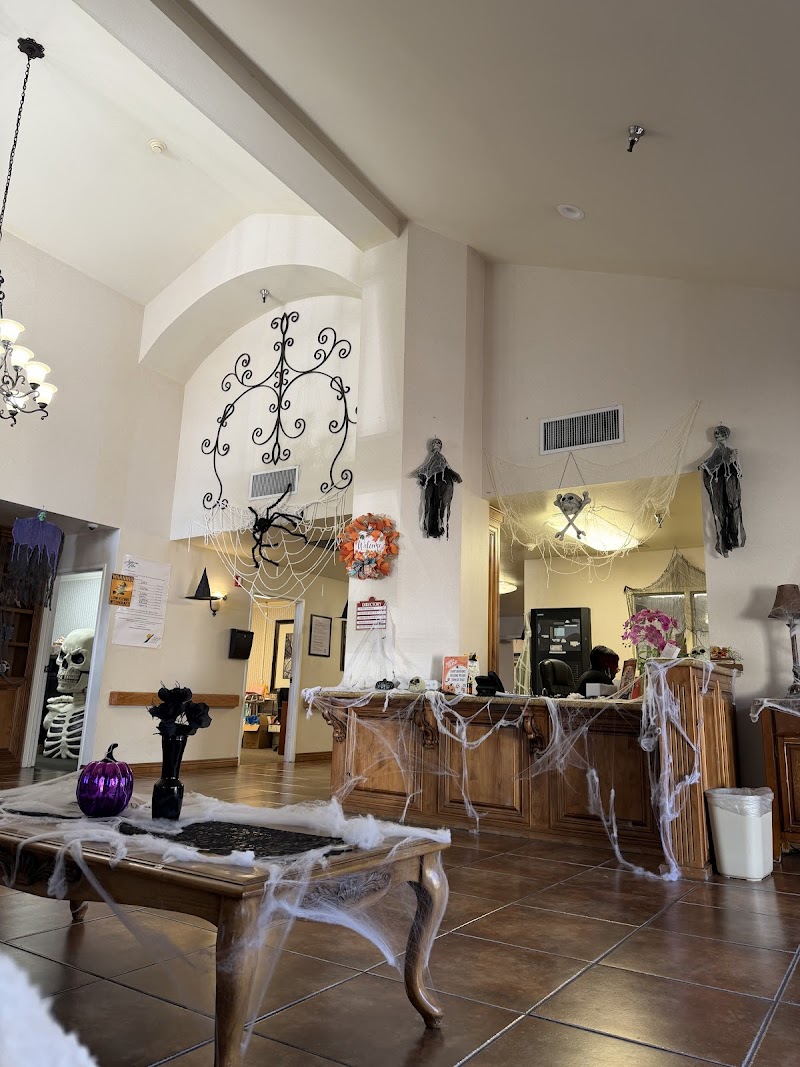
1875 BARTON ROAD, REDLANDS, CA 92373 (909) 793-1382
For profit - Limited Liability company 99 Beds P&M MANAGEMENT Data: November 2025
Trust Grade
53/100
#526 of 1155 in CA
Last Inspection: October 2024

Within standard 12-15 month inspection cycle. Federal law requires annual inspections.

Overview

Asistencia Villa Healthcare Center has a Trust Grade of C, which means it is considered average, sitting in the middle of the pack among nursing homes. In terms of rankings, it is #526 out of 1,155 facilities in California, placing it in the top half, and #39 out of 54 in San Bernardino County, indicating that only a few local options are rated higher. The facility shows an improving trend, having reduced its issues from 10 in 2024 to just 3 in 2025. However, staffing is a concern with a poor rating of 1 out of 5 stars and a high turnover rate of 55%. Additionally, the center has faced some serious incidents, including a resident sustaining abrasions due to unsafe mobility equipment during transfer and concerns over food safety standards, such as improper kitchen sanitation and staff not adhering to food service safety protocols, which could potentially expose residents to health risks. Overall, while there are strengths in the facility's recent trends, these serious incidents and staffing issues are important factors for families to consider.

Trust Score
C
53/100
In California
#526/1155
Top 45%
Safety Record
Moderate
Needs review
Inspections
Getting Better
10 → 3 violations
Staff Stability
⚠ Watch
55% turnover. Above average. Higher turnover means staff may not know residents' routines.
Penalties
○ Average
$10,033 in fines. Higher than 73% of California facilities. Some compliance issues.
Skilled Nurses
○ Average
Each resident gets 34 minutes of Registered Nurse (RN) attention daily — about average for California. RNs are the most trained staff who monitor for health changes.
Violations
⚠ Watch
47 deficiencies on record. Higher than average. Multiple issues found across inspections.
★★★☆☆
3.0
Overall Rating
★☆☆☆☆
1.0
Staff Levels
★★★★★
5.0
Care Quality
★★★☆☆
3.0
Inspection Score
Stable
2024: 10 issues
2025: 3 issues

The Good

  • 5-Star Quality Measures · Strong clinical quality outcomes
  • Full Sprinkler Coverage · Fire safety systems throughout facility
  • No fines on record

Facility shows strength in quality measures, fire safety.

The Bad

3-Star Overall Rating

Near California average (3.1)

Meets federal standards, typical of most facilities

Staff Turnover: 55%

Near California avg (46%)

Higher turnover may affect care consistency

Federal Fines: $10,033

Below median ($33,413)

Minor penalties assessed

Chain: P&M MANAGEMENT

Part of a multi-facility chain

Ask about local staffing decisions and management

The Ugly 47 deficiencies on record

1 actual harm
Jul 2025 1 deficiency
CONCERN (D) 📢 Someone Reported This

A family member, employee, or ombudsman was alarmed enough to file a formal complaint

Potential for Harm - no one hurt, but risky conditions existed

Deficiency F0757 (Tag F0757)

Could have caused harm · This affected 1 resident

**NOTE- TERMS IN BRACKETS HAVE BEEN EDITED TO PROTECT CONFIDENTIALITY** Based on interview and record review, the facility failed to ensure blood pressure medication was not administered in duplicated...

Read full inspector narrative →
**NOTE- TERMS IN BRACKETS HAVE BEEN EDITED TO PROTECT CONFIDENTIALITY** Based on interview and record review, the facility failed to ensure blood pressure medication was not administered in duplicated dose for one of three sampled residents (Resident 1). This failure had the potential for Resident 1 to receive an excessive dosage of the medication which could jeopardize her health and safety. Findings: During a review of Resident 1's admission record (information about the patient's personal details, reason for admission, and medical history), the document indicated Resident 1 was admitted to the facility on [DATE], with diagnoses that included cardiac arrest (the heart suddenly and unexpectedly stops pumping blood to the brain and other vital organs). During a review of the facility provided document titled Progress Notes, for Resident 1, dated May 24, 2025, at 2:18 AM, the Progress Notes indicated an entry from Licensed Vocational Nurse (LVN 1) stating: Double dose given, MD [Doctor of Medicine] notified, and receive the order for continually monitor for Hypotensive [low blood pressure]. During a review of the physician's order for Resident 1, dated April 28, 2025, the physician's order indicated Metoprolol Tartrate Oral Tablet 100 mg (Metoprolol Tartrate) Give 100 mg via G-Tube [ Gastrostomy tube - is a tube inserted into the stomach, providing a pathway for nutrition, fluids, and medications.) every 12 hours for HTN [hypertension-high blood pressure] Hold for SBP [systolic blood pressure- is the top number in a blood pressure reading, representing the pressure in arteries when the heart beats]. During a telephone interview on June 23, 2025, at 12:39 PM, LVN 1 stated Resident 1 was given Metoprolol (medication to lower blood pressure) twice - first by him and then by another Licensed Vocational Nurse (LVN 2). LVN 1 stated he initially administered the medication at approximately 8:00 PM but was interrupted by another resident before he could document it. Upon returning to document the medication, he found that LVN 2 had already recorded the administration, as he saw LVN 2 had just left the room. When LVN 1 questioned LVN 2 about this, LVN 2 admitted to giving the medication as well, mistakenly thinking that Resident 1 was assigned to him. During an interview with LVN 2 on July 1, 2025, at 7:25 AM, LVN 2 stated he had been assigned to care for Resident 1 for the two nights leading up to the incident. LVN 2 stated he did not check their assignment before administering medications. He further stated LVN 1 approached him that night claiming he also gave the same medication to Resident 1. The doctor was called, and Resident 1 was monitored and remained stable. Additionally, LVN 2 confirmed the Metoprolol was in a bubble pack (type of packaging) in his cart, and noted there was also the same medication, intended for Resident 1, in LVN 1's cart. However, they did not know how this situation occurred. During a review of the Medication Administration Record (MAR), dated May 2025, for Resident 1, the MAR indicated that Resident 1 received Metoprolol Tartrate 100 mg on May 23, 2025, at 9:00 PM signed by LVN 2. MAR did not 3indicate that the administration of the same medication, which is Metoprolol Tartrate 100 mg, which LVN 1 reported administering approximately thirty (30) minutes earlier on May 23, 2025, after LVN 2 accidentally administer the same medication was documented. During a concurrent interview and record review on June 23, 2025, at 1:56 PM, with the Administrator (Admin), the facility's policy and procedure (P&P) titled, Documentation of Administration of Medication, dated November 2022 was reviewed. The P&P indicated, .Administration of medication is documented immediately after it is given . The Admin stated that policy was not followed. During a concurrent interview and record review on June 23, 2025, at 2:02 PM, with the Director of Nursing (DON), the facility's policy and procedure (P&P) titled, Documentation of Administration of Medication, dated November 2022 was reviewed. The P&P indicated, .Administration of medication is documented immediately after it is given . The DON stated the staff must verify the orders and adhere to the five rights of medication administration. Additionally, proper documentation is required. When asked whether this P&P was followed, the DON stated, It was not followed.
Apr 2025 1 deficiency
CONCERN (D) 📢 Someone Reported This

A family member, employee, or ombudsman was alarmed enough to file a formal complaint

Potential for Harm - no one hurt, but risky conditions existed

Deficiency F0676 (Tag F0676)

Could have caused harm · This affected 1 resident

**NOTE- TERMS IN BRACKETS HAVE BEEN EDITED TO PROTECT CONFIDENTIALITY** Based on observation, interview, and record review the facility failed to provide the necessary care and services to ensure resi...

Read full inspector narrative →
**NOTE- TERMS IN BRACKETS HAVE BEEN EDITED TO PROTECT CONFIDENTIALITY** Based on observation, interview, and record review the facility failed to provide the necessary care and services to ensure residents received care and services with activities of daily living (ADL) when two out of three residents (Resident 1 and Resident 2) waited a long time to be cleaned and changed. This failure had the potential to place two clinically compromised Residents (Resident 1 and Resident 2) ' s health and safety at risk, when the residents ' activities of daily living were not met in timely manner. Findings: 1. During review of Resident 1 ' s admission Record (general demographics), the document indicated Resident 1 was last admitted to the facility on [DATE], with diagnoses that included chronic respiratory failure (a condition when the lungs cannot get enough oxygen into the blood or get rid of the waste product from the blood), morbid obesity (a condition with too much body fat), dependence on respirator (a condition when one cannot breath on their own and needs a machine) , and quadriplegia (a condition in which all four limbs are paralyzed). During an observation and interview on April 3, 2025, at 6:10 AM with Resident 1, Resident 1 stated, I had to wait a long time to be changed a couple of times, and I understand that I am not the only that needs help, but you don ' t get the help quickly. During a review of the clinical record for Resident 1, the Care Plan Report dated October 20, 2024, indicated, Focus: Resident has problems with ADL decline . related to muscle wasting and atrophy. Goal: Resident will improve ADL performance on grooming, upper body dressing lower body dressing toileting . 2. During review of Residents 2 ' s admission Record (general demographics), the document indicated Resident 2 was admitted to the facility on [DATE], with diagnoses that included Chronic respiratory failure, chronic obstructive pulmonary disease (a condition that makes it harder to breath), paraplegia (a condition that the legs and not able to that part of the body) and dependence on respirator. During an observation and interview on April 3, 2025, at 6:15 AM, with Resident 2, Resident 2 stated, It is bad on the night. Sometimes I wait a while before I get help with a change. During a review of the clinical record for Resident 2, the Care Plan Report dated January 29, 2025, indicated, Focus: [name of Resident 2], has an ADL self-care performance deficit related to disease process paraplegia unspecified. Goal: [name of Resident 1] will maintain current level of function . Intervention: . The resident total dependent on 1 staff with personal hygiene and oral care. During an interview with Certified Nursing Assistant (CNA 2), on April 3, 2025, at 6:30 AM, CNA 2 stated, I am able to provide care to the residents but sometimes it takes a while to attend to a resident need when there is not enough help. During an interview with Director of Nursing (DON), on April 3, 2025, at 7:35 AM, DON stated, I expect nursing staff to attend to residents and provide assistance in a timely manner. During a concurrent interview and review on April 15, 2025, at 3:09 PM with DON, facility ' s policy and procedure (P&P), titled, Activities of Daily Living (ADLs), Supporting, dated March 2018 was reviewed. The P&P indicated, . 1. Residents will be provided with care, treatment and services to ensure that their activities of daily living (ADLs) do not diminish unless the circumstances of their clinical conditions(s) demonstrate that diminishing ADLs are unavoidable . 2. Appropriate care and services will be provided for residents who are unable to carry out ADLs independently, with the consent of the resident and in accordance with the plan of care . DON stated, Residents needs should have been met in a timely manner.
Jan 2025 1 deficiency
CONCERN (D) 📢 Someone Reported This

A family member, employee, or ombudsman was alarmed enough to file a formal complaint

Potential for Harm - no one hurt, but risky conditions existed

Deficiency F0760 (Tag F0760)

Could have caused harm · This affected 1 resident

**NOTE- TERMS IN BRACKETS HAVE BEEN EDITED TO PROTECT CONFIDENTIALITY** Based on observation, interviews, and record reviews, the facility failed to follow its policy and procedure regarding medicati...

Read full inspector narrative →
**NOTE- TERMS IN BRACKETS HAVE BEEN EDITED TO PROTECT CONFIDENTIALITY** Based on observation, interviews, and record reviews, the facility failed to follow its policy and procedure regarding medication error and adverse drug reaction reporting, for one of four sampled residents (Resident 1) when Resident 1 did not receive Pirfenidone (a medication to treat pulmonary fibrosis – a disease that damages the lung tissue, making it difficult to breathe) on December 21, 2024. This failure resulted in Resident 1 not receiving one dose of Pirfenidone and had the potential to adversely affect the health and safety of Resident 1 by causing a decline in lung function (when lung tissues cannot expand enough). Findings: During a review of Resident 1's admission Record (It contains demographic information), the admission Record indicated, Resident 1 was admitted to the facility on [DATE], with a diagnosis that included acute respiratory failure (is a serious condition that occurs when the body's respiratory system is unable to meet the body's need for oxygen or remove carbon dioxide). During a review of Resident 1's clinical records, the Brief Interview for Mental Status (BIMS- screening tool to identify and monitor cognitive decline), dated November 22, 2024, indicated, Resident 1's score was a 15, which indicated Resident 1 had no mental impairment. During a review of Resident 1's Medication Administration Record (MAR- is the report that serves as a legal record of the drugs administered to a patient at the facility) for the month of December 2024, the MAR indicated Resident 1 was prescribed Pirfenidone 267 mg (milligram-unit of measurement) for interstitial lung disease (ILD - which causes scarring in the lungs, making it difficult to breathe). to be taken three times a day for seven days, starting December 16, 2024, until December 26, 2024. The MAR indicated the 5:00 p.m. dose on December 21, 2024, was not administered. During an interview on December 26, 2024, at 1:32 PM, with Licensed Vocational Nurse (LVN) 1, LVN 1 stated, she had disposed of a bottle of the Resident 1's medication Pirfenidone, in the designated medication disposal container after the morning medication administration, believing that the medication had been discontinued. She realized this at approximately 3:00 PM, that same day, December 21, 2024. LVN 1 further stated, as a result, the medication was not administered. During a concurrent interview and record review on December 26, 2024, at 2:48 PM, with the Director of Nursing (DON ), the MAR for the month of December 2024, was reviewed. The DON stated Pirfenidone 267 mg scheduled to be given on December 21, 2024, at 5 PM, was not given to Resident 1 because it was not available. The DON further stated LVN 1 mistakenly disposed of all the specific medications believing it was discontinued, as the facility's regular pharmacy did not supply them, [name of the pharmacy] provided the required medication. During a telephone interview on January 6, 2025, at 5:18 PM, with Licensed Vocational Nurse (LVN 2), LVN 2 stated, she was unable to administer the 5:00 PM dose of Pirfenidone medication on December 21, 2024, because the medication was not available. LVN 2 further stated, according to what she heard, the medication was accidentally discarded by another staff member. During a concurrent telephone interview and record review on January 8, 2025, at 11:47 AM with the DON, the facility's policy and procedure (P&P) titled, Medication Error and Adverse Drug Reaction Reporting, dated March 2024. The P&P indicated, Definitions . Medication Error/Discrepancy: An incorrect medication prescribed, dispensed, or administered to a resident; an omission of a vital medication due to a prescribing, dispensing, or administering error; medication administered to an individual with a documented allergy to that medication. The DON stated, the facility staff did not follow the policy.
Oct 2024 7 deficiencies
CONCERN (D)

Potential for Harm - no one hurt, but risky conditions existed

Deficiency F0637 (Tag F0637)

Could have caused harm · This affected 1 resident

**NOTE- TERMS IN BRACKETS HAVE BEEN EDITED TO PROTECT CONFIDENTIALITY** Based on the observation, interview and record review, the facility failed to ensure a Significant Change of Status Assessments ...

Read full inspector narrative →
**NOTE- TERMS IN BRACKETS HAVE BEEN EDITED TO PROTECT CONFIDENTIALITY** Based on the observation, interview and record review, the facility failed to ensure a Significant Change of Status Assessments (SCSA) of the Minimum Data Set (MDS-a computerized assessment instrument) was completed within 14 days for one resident (Resident 36) when Resident 36 had a significant change in the nutrition route from enteral (nutrition delivered directly to the stomach or intestines) to oral (nutrition taken by mouth) after gastric tube (g-tube is a small tube that is placed through the skin into the stomach, used to give food, water, or medicine to people who can't eat by mouth) removal and a changed in the level of eating assistance. This failure resulted in Resident 36's care plan not being updated and revised to reflect his current status, which had the potential to delay the implementation of care and support needs. Findings: During a review of Resident 36's admission Record (a document that contains demographic and clinical data), indicated, Resident 36 was admitted to the facility on [DATE], with diagnoses which included acute kidney failure (a condition where the kidneys suddenly stop working properly) and metabolic encephalopathy (a brain problem caused by issues with how the body uses food and energy). During an observation on October 14, 2024, at 12:25 PM, Activity Director (AD) serve and set up Resident 36's lunch tray in the dining room, Resident 36 began to eat his lunch independently. He continued to eat independently throughout his meal. During a record review on October 14, 2024, at 2:00 PM, with Director of Nursing (DON), the DON reviewed Resident 36's physician order dated July 10, 2024, which indicated . Order Summary: Regular diet. Pureed texture (smooth soft consistency, like pudding) , Regular/Thin consistency, large portion . During a concurrent interview and record review, October 17, 2024, at 2:20 PM, with the DON and MDS nurse, the DON and the MDS nurse reviewed Resident 36's clinical record dated July 26, 2024, which indicated, .Summarize your observations, evaluation, and recommendations: resident noted to have g-tube removed able to tolerate PO [by mouth] diet . Recommendation of Primary Clinician(s): [name of the Nurse Practitioner] in facility to remove G-Tube . The MDS nurse stated she did not know Resident 36's g- tube was removed on July 26, 2024. During a concurrent interview and record review, October 17, 2024, at 2:40 PM, with the DON and MDS nurse, the DON and the MDS nurse reviewed Resident 36's clinical record of MDS assessments. The assessments indicated the following levels of eating assistance for Resident 36: a. July 18, 2024, MDS Quarterly assessment , indicated, Partial/moderate assistance [helper does less than half the effort] b. April 19, 2024, MDS Quarterly assessment , indicated, Not attempted . c. January 23, 2024, MDS Quarterly assessment , indicated, Not attempted . d. October 25, 2023, MDS admission assessment, indicated, Not applicable. The DON and MDS nurse stated Resident 36's level of assistance changed from dependent gastric tube feeding to oral partial/moderate assistance for eating. A review of the MDS assessments for Resident 36 revealed the last assessment completed was a quarterly assessment completed July 18, 2024. No other MDS assessments had been completed since July 18, 2024, the DON and MDS nurse confirmed that no additional MDS assessments had been completed since July 18, 2024. The MDS nurse stated that she missed completing the SCSA for Resident 36, which should have been completed by August 10, 2024. (It has been 68 days since the SCSA was due, and it has not been completed to reflect Resident 36's current status). A review of the facility policy and procedure titled Change in Resident's Condition or Status revised January 2024, indicated . 2. A significant change of condition is major decline or improvement in resident status that: a. will not normally resolve itself without intervention . b. impacts more than one area of the resident's health status; c. requires interdisciplinary review and/or revision to the care plan; . 9. If a significant change in resident's physical or mental condition occurs, a comprehensive assessment of the resident's condition will be conducted as required by current OBRA [is a federal law that establishes regulations for nursing facilities] regulations governing resident assessments and as outlined in the MDS RAI [Resident Assessment Instrument. It's a tool used in nursing homes to assess residents' health and needs] Instruction Manual . A review of the RAI manual revised October 2023, indicated . The SCSA is a comprehensive assessment for a resident . It can be performed at any time after the completion of an admission assessment .The MDS completion date (item Z0500B) must be no later than 14 days from the ARD [(Assessment Reference Date) is the last day of this observation period] (ARD + 14 calendar days) and no later than 14 days after the determination that the criteria for an SCSA were met
CONCERN (D)

Potential for Harm - no one hurt, but risky conditions existed

Assessment Accuracy (Tag F0641)

Could have caused harm · This affected 1 resident

**NOTE- TERMS IN BRACKETS HAVE BEEN EDITED TO PROTECT CONFIDENTIALITY** Based on interview and record review, the facility failed to ensure Minimum Data Set (MDS- a computerized assessment instrument)...

Read full inspector narrative →
**NOTE- TERMS IN BRACKETS HAVE BEEN EDITED TO PROTECT CONFIDENTIALITY** Based on interview and record review, the facility failed to ensure Minimum Data Set (MDS- a computerized assessment instrument) Assessments were completed accurately to reflect the resident's status, care, and services for one of two sampled residents (Resident 68) reviewed for restraints (tools used to keep a patient safe by limiting their movement. They can be things like special belts, mittens, or straps that prevent a person from hurting themselves or others, or from pulling out important medical equipment). This failure had the potential to cause inaccuracy in identifying Resident 68's care and support needs. Findings: During a review of Resident 68's admission Record (a document that contains demographic and clinical data), the admission Record indicated, Resident 68 was admitted to the facility on [DATE], with diagnoses which included metabolic encephalopathy (a brain problem caused by issues with how the body uses food and energy) and attention of tracheostomy (tube helps people breathe when they can't breathe normally through their mouth or nose). During an observation on October 14, 2024, at 2:30PM, in room [ROOM NUMBER], Resident 68 was wearing mittens (in a medical care setting, a type of cloth glove that covers the hands to limit movement and prevent self-harm or pulling out medical devices) on both hands and an abdominal binder (a stretchy piece of fabric that wraps around the stomach) on his abdomen. During a concurrent observation and interview on October 17, 2024, at 12:30 PM, with a License Vocational Nurse 1 (LVN 1), in room [ROOM NUMBER], Resident 68 was wearing mittens on both hands and an abdominal binder on his abdomen. LVN 1 stated the mittens were used to prevent Resident 68 from pulling out his tracheostomy, and the abdominal binder was used to block him [Resident 68] from pulling on his gastric tube (g-tube is a small tube that is placed through the skin into the stomach, used to give food, water, or medicine to people who can't eat by mouth). During a concurrent interview and record review, on October 17, 2024, at 3:00 PM, with the Director of Nursing (DON) and Minimum Data Set Nurse (MDS Nurse), the DON and MDS Nurse reviewed Resident 68's physician orders. The order dated August 8, 2024, indicated, May have abdominal binder due to pulling at G-tube, and the order dated August 23, 2024, indicated, May have bilateral mittens as needed due to pulling at medical equipment. The DON and MDS Nurse confirmed the orders. The MDS Nurse stated she was aware of Resident 68 uses both mittens and an abdominal binder. During a further record review and interview on October 17, 2024, at 3:10 PM with the DON and MDS Nurse, the DON and MDS Nurse reviewed Resident 68's Quarterly MDS assessment dated [DATE], the assessments under Section P titled Restraints and Alarms, indicated Resident 68 did not use physical restraints. The DON and MDS Nurse confirmed Trunk restraint [a device or strap that secures a person's torso (their trunk, which includes the chest and abdomen) to a bed or chair] and Limb restraint [using straps or devices to secure a person's arms or legs] were not coded for Resident 68's Quarterly MDS Assessments. The MDS nurse stated it should have been coded. During a concurrent interview and record review on October 17, 2024, at 3:40 PM, with the DON and MDS Nurse, the DON and MDS Nurse reviewed the facility policy and procedures (P&P) titled Certifying Accuracy of the Resident Assessment, revised January 2024. The P&P indicated . 3. The information captured on the assessment reflects the status of the resident during the observation (look-back) period for that assessment. The DON and MDS Nurse stated that the facility did not follow the policy. During a review of CMS (The Centers for Medicare & Medicaid Services) RAI manual (Resident Assessment Instrument, this manual provides guidelines and definitions for completing MDS assessment) dated October 2023, it indicated .The RAI process .require that (1) the assessment accurately reflects the resident's status . When the use of physical restraints is considered, thorough assessment of problems to be addressed by restraint use is necessary to determine reversible causes and contributing factors and to identify alternative methods of treating non-reversible issues . Steps for Assessment 1. Review the resident's medical record (e.g., physician orders, nurses' notes, nursing assistant documentation) to determine if physical restraints were used during the 7-day look-back period. 2. Consult the nursing staff to determine the resident's cognitive and physical status/limitations. 3. Considering the physical restraint definition as well as the clarifications listed below, observe the resident to determine the effect the restraint has on the resident's normal function .
CONCERN (D)

Potential for Harm - no one hurt, but risky conditions existed

Deficiency F0761 (Tag F0761)

Could have caused harm · This affected 1 resident

Based on the observation, interview and record review, the facility failed to store all drugs and biological in accordance with currently accepted professional principles and the facility's policies a...

Read full inspector narrative →
Based on the observation, interview and record review, the facility failed to store all drugs and biological in accordance with currently accepted professional principles and the facility's policies and procedures when one of four medication carts (200's hall medication cart ) reviewed for medication storage found to be unsanitary on October 16, 2024. This failure had the potential increase the risk of infection to a resident's receiving medications with unwanted chemical reactions and decreased efficacy. Findings: During an observation on October 16, 2024, at 10:50 AM with License Vocational Nurse 2 (LVN 2), LVN 2 inspected the contents of the 200's hall medication cart. The left bottom drawer, was noted with yellow moist build up. LVN 2 stated the drawer contains the as needed over the counter medications and acknowledged there was a yellow build up on the paper towel used to wipe inside of the 200's hall medication cart left bottom drawer. During a concurrent observation and interview on October 16, 2024, at 11:10 AM with Infection Control Preventionist (ICP) nurse. The ICP nurse inspected the 200's hall medication cart and acknowledged there was a yellow build up on the paper towel used to wipe inside of the 200's hall medication cart left bottom drawer. The ICP nurse stated all medication carts should have been clean to maintain the efficacy of the medications and prevent contamination, (when something harmful, like dirt, germs, or chemicals, mixes with something clean or safe, making it unsafe to use). During an interview and concurrent record review on October 16, 2024, at 4:10 PM with the Director of Nurses (DON), the DON reviewed the facility's policy and procedure (P&P) titled, Storage of Medications, effective date January 2024, which indicated, Policy heading . The facility stores all drugs and biologicals in a safe, secure, and orderly manner . Policy Interpretation and Implementation . 3. The nursing staff is responsible for maintaining medication storage and preparation areas in a clean, safe, and sanitary manner. The DON stated the policy was not followed.
CONCERN (D)

Potential for Harm - no one hurt, but risky conditions existed

Antibiotic Stewardship (Tag F0881)

Could have caused harm · This affected 1 resident

**NOTE- TERMS IN BRACKETS HAVE BEEN EDITED TO PROTECT CONFIDENTIALITY** Based on interviews and record reviews, the facility failed to implement its policy and procedure on antibiotic stewardship (a s...

Read full inspector narrative →
**NOTE- TERMS IN BRACKETS HAVE BEEN EDITED TO PROTECT CONFIDENTIALITY** Based on interviews and record reviews, the facility failed to implement its policy and procedure on antibiotic stewardship (a set of practices aimed at ensuring the safe and effective use of antibiotics [medications used to treat infections]) for one of fourteen sampled residents (Resident 47) reviewed for antibiotic used, when the Infection Control Preventionist (ICP) nurse did not accurately assess and collect data to indicate the rationale and common clinical conditions necessary to ensure the appropriate use of antibiotic therapy for Resident 47. This failure had the potential to placed Resident 47 at risk for adverse events, including the development of anti-biotic resistant organisms, from unnecessary or inappropriate antibiotic use. Findings: During a review of Resident 47's admission Record (a document that contains demographic and clinical data), the admission Record indicated, Resident 47 was admitted to the facility on [DATE], with diagnoses which included metabolic encephalopathy (a brain problem caused by issues with how the body uses food and energy) and ventilator (a machine that helps someone breathe when they can't do it on their own) associated pneumonia (a type of lung infection that can happen to people who are on a ventilator). During a record review on October 15, 2024, at 3:00 PM of Resident 47s physician's order dated September 28, 2024, the physician's order indicated, . Merrem Intravenous [a powerful antibiotic given through an intravenous (IV - a method of delivering fluids, medications, or nutrients directly into a person's bloodstream) to help treat serious bacterial infections]. Solution 1 gram [gr - unit of measure] intravenously three times a day for Sepsis (serious condition caused by an infection that can lead to organ failure) until 10/09/2024 [October 9, 2024] and Zyvox Intravenous [a strong antibiotic administered through an IV to treat serious bacterial infections] Solution 600 mg [mg - milligram is unit of measure] intravenously every 12 hours for Sepsis until 10/09/2024 [October 9, 2024]. During a concurrent interview and record review on October 16, 2024, at 9:45 AM with the ICP nurse, the ICP nurse reviewed form titled Surveillance Data Collection Form (a form used to monitor and collect data to understand and ensure the residents received the appropriate antibiotic), indicated as follows: a. Resident name: [Resident 47 name] . Loeb's minimum criteria for initiating antibiotics [was not filled to indicated criteria data] . treatment. Antibiotic treatment : Merrem . Date started: 9/28/24 [September 28, 2024]. Diagnosis: [left blank]. Drug/dosage/route: Merrem IV 1 gr tid [three times a day] x 10 days for Sepsis. Culture: [left blank]. Type: [left blank ] . isolation/precaution: yes. Type: c. auris [candida auris is a type of fungus that can cause serious infections] Loeb's criteria [ ] met. [ ] Does not meet. [left blank]. b. Resident name: [Resident 47 name] . Loeb's minimum criteria for initiating antibiotics [was not filled to indicated criteria data] . treatment. Antibiotic treatment : Zyvox IV . Date started: 9/28/24 [September 28, 2024]. Diagnosis: [left blank]. Drug/dosage/route: Zyvox IV Q [every] 12 x 10 days. Culture: [left blank]. Type: [left blank] . isolation/precaution: [left blank]. Type: [left blank] Loeb's criteria [ ] met. [ ] Does not meet. [left blank]. The ICP nurse stated the facility used the Loeb Criteria (a criteria helps staff determine whether a patient has a true infection that needs treatment or if the symptoms are due to something else to be able to provide the best treatment) to monitor outcomes of true infection (means that the criteria indicate a real infection) versus untrue infection (patients might show some of these signs but don't actually have an infection) to ensure the appropriate use of antibiotic therapy. During a concurrent interview and record review on October 16, 2024, at 10:05 AM, with the Director of Nursing (DON) and the ICP nurse, the DON and ICP nurse reviewed Resident 47's clinical records of infection notes dated September 30, 2024, the notes indicated, Patient on medication Merrem IV 1gm tid due to sepsis and Zyvox 600mg IV due to sepsis well tolerated and no ase [adverse side effect] noted. No additional infection notes have been documented since September 30, 2024, to indicate whether the usage of the two antibiotics was for a true infection or an untrue infection. The ICP nurse stated that she should have been conducting an analysis (looking for trends, spikes, or unusual patterns in the data) and reviewing the Loeb Criteria to confirm whether Resident 47 has a true infection, ensuring the appropriate use of antibiotic therapy. During an interview and concurrent record review on October 16, 2024, at 10:15 AM with the DON and ICP nurse, the DON and ICP nurse reviewed the facility's policy and procedure (P&P) titled, Antibiotic Stewardship - Review and Surveillance of Antibiotic Use and Outcomes, revised December 2016. The P&P indicated, Policy Statement . Antibiotic usage and outcome data will be collected and documented using a facility-approved antibiotic surveillance tracking form. The data will be used to guide decisions for improvement of individual resident antibiotic prescribing practices and facility-wide antibiotic stewardship . Policy Interpretation and Implementation 1. As part of the facility antibiotic stewardship program, all clinical infections treated with antibiotics will undergo review by the infection preventionist, or designee. 2. The IP, or designee, will review antibiotic utilization as part of antibiotic stewardship program and a. Therapy may require further review and possible changes if: (1) the organism is not susceptible to antibiotic chosen; (2) the organism is susceptible to narrower spectrum antibiotic; (3) therapy was ordered for prolonged surgical prophylaxis; or (4) therapy was started awaiting culture, but culture results and clinical findings do not indicate continued need for antibiotics. 3. At the conclusion of the review, the provider will be notified of the review findings. 4. All resident antibiotic regimens will be documented on the facility-approved antibiotic surveillance tracking form. The DON and the ICP nurse stated the facility did not follow the policy.
CONCERN (E)

Potential for Harm - no one hurt, but risky conditions existed

Deficiency F0887 (Tag F0887)

Could have caused harm · This affected multiple residents

Based on observation, interview, and record review, the facility failed to implement their infection control program to help prevent the spread of COVID-19 (Corona Virus Disease, a highly infectious d...

Read full inspector narrative →
Based on observation, interview, and record review, the facility failed to implement their infection control program to help prevent the spread of COVID-19 (Corona Virus Disease, a highly infectious disease caused by the SARS-CoV-2 virus) when the facility did not have any tracking and documentation of staff COVID-19 vaccination status. This failure had the potential to cause harm to the 95 residents residing within the facility by causing cross contamination of the environment and increasing the risk of exposure and spread of the COVID-19 virus. Findings: During a concurrent interview and record review on October 17, 2024, at 9:40 AM, with the Infection Control Preventionist (ICP) nurse, the ICP nurse was asked to review the staff COVID-19 vaccination status. The ICP nurse was not able to provide a document that indicated a tracking system of staff members and their COVID-19 vaccination status. The ICP nurse stated she was unaware of her responsibility to maintain a system for documenting staff COVID-19 vaccination. The ICP nurse further stated she realized this duty only after reading the facility's Policy and Procedure on COVID-19 Vaccination for Staff, which she provided to the surveyor. During an interview on October 17, 2024, at 9:55 AM, with the Director of Nursing (DON), the DON stated the ICP nurse did not have any tracking and documentation of staff COVID-19 vaccination status. Furthermore, the DON emphasized that this documentation should have been consistently maintained and regularly updated to helps the facility implement targeted infection control measures to protect residents and staff. During a follow up interview and record review, on October 17, 2024, at 10:10 AM, with the DON and ICP nurse the facility's policy and procedure (P&P) titled, Coronavirus Disease (COVID-19) - Vaccination of Staff, revised January 2024, was reviewed. The P&P indicated . Policy Statement . It is the policy of this facility to offer current COVID-19 vaccination to all healthcare providers and all residents . Policy Interpretation and Implementation . Tracking, Documentation and Reporting 1. The infection preventionist maintains a tracking worksheet of staff members and their vaccination status. 2. The tracking worksheet provides the most current vaccination status of all staff who provide any care, treatment, or other services for the facility and/or its residents. The worksheet includes: a. staff name (and/or employee ID); b. initial start of employment or service; c. termination of employment or service (if applicable); d. job title or role; e. assigned work area; f. a brief description of how they interact with residents; g. vaccination status: (1) the specific vaccine received; (2) dates of each dose; (3) date of the next scheduled dose (for a multi-dose vaccine); and (4) any booster doses (date and specific type of vaccine); 3. The facility maintains documentation related to staff COVID-19 vaccination that includes, at a minimum, the following (as applicable): a. That staff were offered the COVID-19 vaccine or information on obtaining COVID-19 vaccine, b. That staff were provided education regarding the benefits and potential risks associated with COVID- 19 vaccine; c. A copy of the informed consent; and d. Verification of vaccination or documentation of exemption/delay. The DON stated the facility did not follow the policy.
CONCERN (E)

Potential for Harm - no one hurt, but risky conditions existed

Room Equipment (Tag F0908)

Could have caused harm · This affected multiple residents

Based on observations, interviews, and record review, the facility failed to ensure their equipment was maintained in safe operating condition when: The countertop water dispenser was found leaking an...

Read full inspector narrative →
Based on observations, interviews, and record review, the facility failed to ensure their equipment was maintained in safe operating condition when: The countertop water dispenser was found leaking and collecting standing water in the drain. This facility's failure to ensure a safe, operating equipment has the potential to increase risk of resident harm and attract pests due to the standing water which can affect the population of 59 residents who receive food from the kitchen. Findings: During an observation on October 14, 2024, at 08:04 AM, there was a leaking water dispenser on the countertop, with sitting water in the drain underneath the cover. During an interview on October 14, 2024, at 08:09 AM, with [NAME] 1, she stated they do not use it and it that it looks like it is leaking and needs to be fixed. During an interview on, October 16, 2024, at 3:10 PM, with Registered Dietitian Nutritionist (RDN 1), and Registered Dietitian Nutritionist (RDN 2), RDN 2 stated that it was her expectation that the water dispenser should be fixed as soon as possible. During a review of the facility's policy and procedure titled, Maintenance Service, dated January 2024, the policy and procedure statement indicated, Maintenance service shall be provided to all areas of the building, grounds, and equipment. 1. The maintenance department is responsible for maintaining the buildings, grounds, and equipment in a safe and operable manner at all times. During further review of the FDA Federal Food Code, dated 2022, under Section: Equipment, 4-501.11 titled, Good Repair and Proper Adjustment, indicated, EQUIPMENT shall be maintained in a state of repair and condition Proper maintenance of equipment to manufacturer specifications helps ensure that it will continue to operate as designed. Failure to properly maintain equipment could lead to violations of the associated requirements of the Code that place the health of the consumer at risk.
CONCERN (F)

Potential for Harm - no one hurt, but risky conditions existed

Food Safety (Tag F0812)

Could have caused harm · This affected most or all residents

Based on observations, interviews, and record review, the facility failed to maintain a sanitary kitchen when: 1. There was a cabinet that stored a juice dispenser, the door to the cabinet had a stick...

Read full inspector narrative →
Based on observations, interviews, and record review, the facility failed to maintain a sanitary kitchen when: 1. There was a cabinet that stored a juice dispenser, the door to the cabinet had a sticky residue. Inside the cabinet there was a red juice spill. The cabinet under the steam table had food crumbs and trash. There was food residue around the floor sink under the steam table. This had the potential to attract pests and for microorganisms' growth. 2. The industrial mixer was stored with white food residue on the mixer. This had the potential to contaminate food being mixed in the mixer. 3. The ice machine had some brown build-up in the area where ice is formed. This had the potential to contaminate the ice. The facility failures had the potential to attract pests and cause foodborne illness to a population of 59 residents eating facility prepared meals. Findings: 1. During an observation on October 14, 2024, at 08:02 AM, on the stainless-steel counter there was a juice dispenser and below there was a cabinet. The handle to open the cabinet had a sticky residue. When the cabinet door was removed, there was a red juice spill. During an observation on October 14, 2024, at 08:13 AM, below the steam table there was a compartment which was opened and noted to have a large piece of foil with crumbs and other pieces of debris/nonfood items. During an observation on October 14, 2024, at 08:14 AM, there were crumbs and some food residue around one of the floor sinks (drains) under the steam table. During an interview on October 14, 2024, at 08:09 AM, with [NAME] 1, she stated that the area with the juice spill and the sticky residue on the handle of the cabinet should be kept clean. During an interview on, October 16, 2024, at 3:00 PM, with the Registered Dietitian Nutritionist (RDN 1) and Registered Dietitian Nutritionist (RDN 2), RDN 2 stated it was her expectation that the cabinet with the sticky residue be cleaned and cleaned frequently to avoid any issues. In addition, RDN 2, stated the area below the steam tables should be cleaned and maintained clean. During an interview on October 16, 2024, at 03:10 PM, with RDN 2, RDN 2 stated it was her expectation that the area below the steam tables be cleaned and that the domes be placed in their proper location. Finally, regarding the crumbs and food residue found around the floor sink under the steam table, RDN 2 stated it should be kept clean. During a review of the facility's policy and procedure titled, Sanitization, dated January 2024, indicated, The food service area is maintained in a clean and sanitary manner. 1. All kitchens, kitchen areas and dining areas are kept clean, free from garbage and debris, and protected from rodents and insects. During a review of the FDA Federal Food Code, dated 2022, 4-602.13 indicated, NonFOOD - CONTACT SURFACES of EQUIPMENT shall be cleaned at a frequency necessary to preclude accumulation of soil residues. In addition, The presence of food debris or dirt on nonfood contact surfaces may provide a suitable environment for the growth of microorganisms which employees may inadvertently transfer to food. If these areas are not kept clean, they may also provide harborage for insects, rodents, and other pests. 2. During an observation on October 14, 2024, at 08:30 AM, the industrial mixer was stored with a black plastic bag covering it. When the bag was removed the exterior of the mixer had some white food material splashes. During an interview on October 16, 2024, at 3: 08 PM, with RDN 1 and RDN 2, RDN 2 stated that the mixer should be cleaned thoroughly before putting the bag over it. During a review of the facility's policy and procedure titled, Sanitization, dated January 2024, the P&P statement indicated, The food service areas is maintained in a clean and sanitary manner. During a review of the FDA Federal Food Code, dated 2022, 4-602.13 indicated, NonFOOD -CONTACT SURFACES of EQUIPMENT shall be cleaned at a frequency necessary to preclude accumulation of soil residues. In addition, The presence of food debris or dirt on nonfood contact surfaces may provide a suitable environment for the growth of microorganisms which employees may inadvertently transfer to food. If these areas are not kept clean, they may also provide harborage for insects, rodents, and other pests. 3. During an observation on October 14, 2024, at 10:24 AM in the kitchen, in the ice maker part of the ice machine there was a spot of brown buildup. During a concurrent observation and interview on October 14, 2024, at 10:26 AM, with the facility Maintenance Director (MD 1), in the kitchen, the tray below the ice maker part of the ice machine had a spot of brown buildup. The maintenance director stated that this area should be kept clean. During an interview on, October 16, 2024, at 3:00 PM, with Registered Dietitian Nutritionist (RDN 2), RDN 2 stated that it was her expectation that the ice machine be kept clean. During record review of the facility's policy and procedure titled, Ice Machines and Ice Storage Chests, dated January 2024, the policy and procedure indicated, Ice machines and storage/distribution containers will be used and maintained to assure a safe and sanitary supply of ice. During a review of the FDA Federal Food Code, dated 4-602.11 indicated, (4) In Equipment such as ice bins and BEVERAGE dispensing nozzles and enclosed components of EQUIPMENT such as ice makers, cooking oil storage tanks and distribution lines, BEVERAGE and syrup dispensing lines or tubes, coffee bean grinders, and water vending EQUIPMENT: (a) At a frequency specified by the manufacturer, or (b) Absent manufacturer specifications, at a frequency necessary to preclude accumulation of soil or mold. In addition, ice makers, and ice bins must be cleaned on a routine basis to prevent the development of slime, mold, or soil residues that may contribute to an accumulation of microorganisms.
Jul 2024 1 deficiency
CONCERN (D) 📢 Someone Reported This

A family member, employee, or ombudsman was alarmed enough to file a formal complaint

Potential for Harm - no one hurt, but risky conditions existed

Quality of Care (Tag F0684)

Could have caused harm · This affected 1 resident

**NOTE- TERMS IN BRACKETS HAVE BEEN EDITED TO PROTECT CONFIDENTIALITY** Based on observation, interview, and record review, the facility failed to follow their policy and procedure to ensure the remov...

Read full inspector narrative →
**NOTE- TERMS IN BRACKETS HAVE BEEN EDITED TO PROTECT CONFIDENTIALITY** Based on observation, interview, and record review, the facility failed to follow their policy and procedure to ensure the removal of medication from the medication cart immediately upon receipt of a physician order to discontinue an order to prevent error in administration of medication for one of four sampled residents (Resident 1). This failure had the potential to place a clinically compromised Resident 1's health and safety at risk when Resident 1 was administered a medication that had already been discontinued. Findings: During a review of Resident 1 ' s admission record, the face sheet (contains demographic and medical information), indicated Resident 1 was admitted on [DATE], with a diagnosis that included polyneuropathy, unspecified ( is a damage or disease affecting peripheral nerves [made of fibers that send messages from the brain and spinal cord] roughly the same areas on both sides of the body, featuring weakness, numbness, and burning, pain). During a review of the clinical record for Resident 1 the Brief Interview for Mental Status (BIMS- screening tool to identify and monitor cognitive decline), dated July 18, 2024, indicated, Resident 1 ' s score was a 11, which indicated Resident 1 had no mental impairment. During an interview with the registered nurse supervisor (RN 1) on July 25, 2025, at 12:40 PM, RN 1 stated that one of the licensed vocational nurses (LVN 1) approached and informed him on July 24, 2024, that he had given a medication to Resident 1 that had already been discontinued. When inquired about the process of discontinuing a medication, the RN 1 explained that upon receiving an order to discontinue medication, the supervisor typically instructs the charged nurses to remove it from the resident ' s medication cart and dispose of it in the pharmacy container. During an interview with the administrator (ADM 1) on July 25, 2024, at 2:05 PM, ADM 1 acknowledged that LVN 1 made a medication error by administering discontinued medication to Resident 1. When questioned about the process for discontinuing medication, the Administrator 1 stated a discontinued medication should promptly remove from the cart to prevent inadvertent medication administration. The ADM 1 mentioned that in this instance, the medication was not removed from the medication cart by the staff who received the order to discontinue it on July 22, 2024. The medication remained in the medication cart despite being discontinued, ultimately contributing to the medication error. During a telephone interview with LVN 1 on July 30, 2024, at 2:54 PM, LVN 1 stated he administered a discontinued medication Methocarbamol (a muscle relaxant) on July 24, 2024, at 12:00 PM. When questioned how he noticed the error, LVN 1 explained he recognized it himself, and the grandson of Resident 1, also noticed the mistake and brought it to his attention. When questioned about the procedure of discontinuing medication. LVN 1 explained the initial step is to remove the medication from the medication cart. LVN 1 also acknowledged being busy at that time and failing to notice that the medication had already been discontinued, despite the medications still being in the medication cart. Furthermore, LVN 1 stated the presence of the medication in the medication cart contributed to the medication error. LVN 1 accepted responsibility for the mistake and expressed that he is accountable for it. During a review of Resident 1 ' s order summary dated July 22, 2024, at 4:13 PM, the order summary indicated that one tablet of Methocarbamol oral tablet 500 milligrams (MG-unit of measurement) was to be given by mouth three times a day for musculoskeletal pain, and this was discontinued on July 22, 2024, at 4:12 PM. Upon further review of Resident 1 ' s progress notes dated July 24, 2024, at 3:45 PM, which was created by LVN 1, the progress note indicated the medication Methocarbamol was administered despite having been discontinued on July 22, 2024. During the review of the facility- provided document titled Discontinued Medications - Disposal policy and procedure manual, dated March 2024, it was noted that the procedure states, Medication shall be removed from the medication cart immediately upon receipt of an order to discontinue in order to avoid inadvertent administration .
Jun 2024 1 deficiency
CONCERN (D) 📢 Someone Reported This

A family member, employee, or ombudsman was alarmed enough to file a formal complaint

Potential for Harm - no one hurt, but risky conditions existed

Quality of Care (Tag F0684)

Could have caused harm · This affected 1 resident

**NOTE- TERMS IN BRACKETS HAVE BEEN EDITED TO PROTECT CONFIDENTIALITY** Based on observation, interview, and record review, the facility failed to follow policy and procedure to ensure the call lights...

Read full inspector narrative →
**NOTE- TERMS IN BRACKETS HAVE BEEN EDITED TO PROTECT CONFIDENTIALITY** Based on observation, interview, and record review, the facility failed to follow policy and procedure to ensure the call lights were answered in a timely manner to provide care and services for two of three residents (Resident 1 and Resident 2). This failure had the potential to place two clinically compromised Residents (Resident 1 and Resident 2) health and safety at risk when residents call lights were not answered promptly to assist with their activities of daily living. Findings: 1.During a review of Resident 1's clinical record, the face sheet (contains demographic and medical information), indicated Resident 1 was admitted on [DATE], with diagnoses that included chronic obstructive pulmonary disease (COPD - is a common lung disease causing restricted airflow and breathing problems). During a review of the clinical record for Resident 1's the Brief Interview for Mental Status (BIMS- screening tool to identify and monitor cognitive decline), dated March 4, 2024, indicated, Resident 1's score was a 15, which indicated Resident 1 had no mental impairment. In an interview with Resident 1, on June 18, 2024, at 11:15 AM, Resident 1 stated that the average response time for assistance when he uses the call light is 20 minutes. Additionally, Resident 1 mentioned that the staff have at times falsely documented that he refused to shower even though he did not refuse. When questioned about the source of his information, Resident 1 stated that the staff from the previous shift informed him about the false documentation by the previous staff. 2.During a review of Resident 2's clinical record, the face sheet (contains demographic and medical information), indicated Resident 2 was admitted on [DATE], with diagnoses that included chronic respiratory failure with hypoxia (a condition where a patient does not have enough oxygen [gas essential to living] in the tissues or carbon dioxide [respiratory drive in a human body] in the blood which makes it hard to breath). During a review of the clinical record for Resident 2, the Brief Interview for Mental Status (BIMS- screening tool to identify and monitor cognitive decline), dated May 14, 2024, indicated, Resident 2's score was a 15, which indicated Resident 1 had no mental impairment. During an interview with Resident 2, on June 18, 2024, at 11:41 AM, Resident 2 stated that response time for staff to answer call lights ranges from 10 minutes to two hours, with daytime response times averaging one hour at nighttime response times averaging two hours. The resident mentioned that he had to wait in soiled diapers for two hours. The most difficult times to get assistance are between 9:00 PM and 6:00 AM, and during shift changes. During an interview with the Certified Nursing Assistant (CNA 1) on June 18, 2024, at 11:34 AM, CNA 1 stated residents have raised concerns about the lack of shower for several days. CNA 1 also confirmed that some residents have gone without showering for multiple days. During a review of the clinical records, the care plans indicated: 1. Resident 1 ' s care plan dated December 21, 2023, indicated Resident 1 has an activity of daily living deficit (tasks of everyday life) related to congestive heart failure (CHF - heart does not pump enough blood), neuropathy (a nerve problem that causes pain, numbness, tingling, swelling, or muscle weakness in different parts of the body), and obesity (excessive fat). Problem: Eating, personal hygiene, bed mobility, dressing, toilet use, bathing. transfer, walk in room, walk in corridor, locomotion on unit, and locomotion off unit. Plan: Have call light within reach and staff to answer promptly. 2. Resident 2's care plan dated February 18, 2024, indicated Resident 2 has an activity of daily living deficit (tasks of everyday life) related to eating, personal hygiene, bed mobility, dressing, toilet use, bathing, transfer, walk in room, walk in corridor, locomotion on unit, and locomotion off unit. During an interview with the assistant director of nursing (ADON) on June 18, 2024, at 12:10 PM, the ADON did not provide any comment regarding my finding that the staff did not answer call lights on time. However, the ADON, did mention that the CNAs will participate in an in-service regarding answering call lights promptly. During a review of the facility's policy and procedure (P&) titled, Answering the call light, revised, October 2010, the P&P indicated The purpose of this procedure is to respond to the residents requests and needs.
May 2024 1 deficiency
CONCERN (D) 📢 Someone Reported This

A family member, employee, or ombudsman was alarmed enough to file a formal complaint

Potential for Harm - no one hurt, but risky conditions existed

Accident Prevention (Tag F0689)

Could have caused harm · This affected 1 resident

**NOTE- TERMS IN BRACKETS HAVE BEEN EDITED TO PROTECT CONFIDENTIALITY** Based on observation, interview, and record review, the facility failed to ensure adequate supervision was provided to prevent a...

Read full inspector narrative →
**NOTE- TERMS IN BRACKETS HAVE BEEN EDITED TO PROTECT CONFIDENTIALITY** Based on observation, interview, and record review, the facility failed to ensure adequate supervision was provided to prevent avoidable accidents when one of four residents (Resident 4) was unsupervised and fell on the floor. This failure contributed to Resident 4 falling and hitting his head and sustaining a subdural hematoma (a collection of blood between the covering of the brain after an injury to head). Findings: During a review of Resident 4 ' FACE SHEET (general demographics) on May 16, 2024, the document indicated Resident 4 was originally admitted to the facility on [DATE], with diagnoses that include repeated falls, seizures (a condition that causes a sudden uncontrolled body movements and changes in the brain), dementia (a condition with the loss of thinking, remembering and reasoning) and other abnormalities of gait and mobility (a condition that causes abnormal walking and balance). A review of Resident 4 ' s History and Physical dated, October 13, 2023, indicated, . Other . CAPACITY: This resident does NOT have the capacity to understand and make decisions. A review of Resident 4 ' s care plan dated October 13, 2023, indicated, At risk for fall r/t (related to): Dementia with behavior ., poor safety ., Approaches/plan: . Maintain safe environment . A review of Departmental Notes dated, May 1, 2023, indicated, 1000 hrs. (hours) resident was sitting at the nurses ' station on wheelchair when CNA reported an unwitnessed fall, patient was sitting against trash can . Patient reported that his head was hurting and felt dizzy. He was transferred to Redlands Hospital ED (Emergency Department) . During an interview on May 16, 2024, at 12:20 AM with Resident 3, Resident 3 stated, My roommate was usually up and talking even though I did not understand his language. He was very active few weeks ago. He used to get up every day and moved around in his wheelchair. Something happened two weeks ago, and he went to the hospital and has changed since. During an interview on May 16, 2024, at 12:30 PM, with Certified Nursing Assistant 1 (CNA 1), who was assigned to Resident 4, CNA 1 was asked about Resident 4. CNA 1 stated, Before few weeks ago, he (Resident 4) was up in his wheelchair every day and went for activities. He has not been getting up since the fall. During an interview on May 16, 2024, at 12:35 PM, with Licensed Vocational Nurse 1 (LVN 1), LVN 1 was asked about Resident 4. LVN 1 stated, He (Resident 4) fell two weeks ago, and he has not been talking or eating by mouth since. A review of Resident 1 ' s clinical record, dated May 1, 2024, indicated, CT (computed tomography) SCANNING .CT/CT HEAD W/O (without) contrast . IMPRESSION: 1. Bilateral subdural hematomas . During a review of the facility ' s policy and procedure (P&P), titled, Accident and Resident Safety Reporting, dated, November 21, 2017, the P&P indicated, POLICY The facility will: a. Protect the resident ' s environment to remain as free of accident hazards as possible; and each resident receives adequate supervision and assistance devices to prevent accidents . c. Provide an environment that is free as possible from accident hazards over which the facility has control and provides supervision and assistive devices to each resident to prevent avoidable accidents . During a review of the facility ' s P&P, titled, Safety and Supervision of Residents, dated, July 20, 2017, the P&P indicated, Policy Statement Our facility strives to make the environment as free from accident hazards as possible. Resident safety and supervision and assistance to prevent accidents are facility-wide priorities . During a concurrent phone interview and record review on May 22, 2024, at 3:30 PM, with the Assistant Director of Nurse (ADON), the facility P&Ps titled, Accident and Resident Safety Reporting, dated, November 21, 2017, was reviewed. The P&P indicated, POLICY The facility will: a. Protect the resident ' s environment to remain as free of accident hazards as possible; and each resident receives adequate supervision and assistance devices to prevent accidents . c. Provide an environment that is free as possible from accident hazards over which the facility has control and provides supervision and assistive devices to each resident to prevent avoidable accidents . The ADON acknowledged the facility did not follow the facility policy by providing supervision for Resident 4, and stated, There should have been more supervision for the resident. During a concurrent phone interview and record review on May 22, 2024, at 3:30 PM, with the ADON, the facility P&Ps titled, Safety and Supervision of Residents, dated, July 20, 2017, was reviewed. The P&P indicated, Policy Statement Our facility strives to make the environment as free from accident hazards as possible. Resident safety and supervision and assistance to prevent accidents are facility-wide priorities . The ADON acknowledged the facility did not follow the facility policy by providing supervision for Resident 4, and stated, There should have been more supervision for the resident.
Dec 2023 1 deficiency
CONCERN (D) 📢 Someone Reported This

A family member, employee, or ombudsman was alarmed enough to file a formal complaint

Potential for Harm - no one hurt, but risky conditions existed

Deficiency F0745 (Tag F0745)

Could have caused harm · This affected 1 resident

Based on interview and record review the facility failed to ensure one of three clinically compromised residents (Resident 2) was provided transportation for her medical appointment. This failure had ...

Read full inspector narrative →
Based on interview and record review the facility failed to ensure one of three clinically compromised residents (Resident 2) was provided transportation for her medical appointment. This failure had the potential to result in a delay of treatment that could adversely affect and further compromise Resident 2. Findings: During a review of Resident 2's Face Sheet (general demographics) on December 4, 2023, the document indicated Resident 2 was last admitted to the facility April 22, 2023, diagnoses that include respiratory failure (a condition that make it difficult to breathe), hemiplegia (a condition with loss of strength on one side of the body), 2 diabetes mellitus (a condition that affects the way the body process blood sugar) and hypertension (a condition with blood pressure that is higher than normal). During a review of Resident 2's History and Physical on December 4, 2023, the document indicated Resident 2 diagnoses include Thyroid nodules (a condition of a growth and enlargement of the thyroid gland or the front of the neck), respiratory failure (a condition of the lungs). During a review of the Physician Orders on December 4, 2023, the order dated August 25, 2023, indicated, APOOINTMENT WITH DR. (name) (ONCOLOGY) ON 11/14/2023 AT 1300 (CHECK IN 1245) (address). During an interview on December 4, 2023, at 11:30 am, in Resident 2's room, Resident 2 stated he missed her oncology appointment on November 14, 2023, because there was no transportation. During a phone interview on December 4, 2023, at 1:50 PM with Registered Nurse (RN), The RN stated the transportation for the appointment did not show up. The RN further stated, I forgot to follow up to reschedule the appointment for the resident. During a concurrent interview and review on December 4, 2023, at 4:00 PM, with the Director of Nursing (DON), the facility's policy and procedure (P&P), titled, Transportation, Social Services, dated, December 2008, was reviewed. The P&P indicated, Our facility shall help arrange transportation for residents as needed . 2). Social services will help the resident as needed to obtain transportation . The DON stated, The nurses should have followed up with transportation and rescheduled the appointment for the resident. During a concurrent interview and review on December 4, 2023, at 4:00 PM, with the DON, the P&P, titled, Referrals, Social Services, dated December 2008, indicated, . 6. Social services will help arrange transportation to outside agencies, clinic appointments, etc., as appropriate. The DON stated, The nurses should have followed up with transportation and rescheduled the appointment for the resident.
Sept 2023 1 deficiency
CONCERN (D) 📢 Someone Reported This

A family member, employee, or ombudsman was alarmed enough to file a formal complaint

Potential for Harm - no one hurt, but risky conditions existed

Safe Environment (Tag F0584)

Could have caused harm · This affected 1 resident

**NOTE- TERMS IN BRACKETS HAVE BEEN EDITED TO PROTECT CONFIDENTIALITY** Based on observation, interview, and record review, the facility failed to maintain a comfortable and homelike environment for o...

Read full inspector narrative →
**NOTE- TERMS IN BRACKETS HAVE BEEN EDITED TO PROTECT CONFIDENTIALITY** Based on observation, interview, and record review, the facility failed to maintain a comfortable and homelike environment for one of three residents (Resident 1), when Resident 1 ' s overhead light located on the wall, at the head of the bed, had the light shining directly at him. The light setting couldn ' t be adjusted or turned off since the beaded cord was stuck. This failure has the potential to negatively impact Resident 1 ' s sense of well-being and comfort. Findings: A review of Resident 1 ' s Face sheet (a document with clinical and demographic data) indicated Resident 1 was admitted to the facility on [DATE], with diagnoses which included, other sequelae of cerebral infraction (stroke), nontraumatic intracerebral hemorrhage (a common subtype of stroke with a poor prognosis, high mortality, and long-term morbidity), and abnormal posture. During an observation on September 12, 2023, at 11:50 AM, in Resident ' s room, Resident 1 was lying in bed, with his eyes closed. The overhead light that was located on the wall at the head of the bed, was on and shining directly at him. During a concurrent observation and interview, with the Licensed Vocational Nurse (LVN), on September 12, 2023, at 11:55 AM, inside Resident 1 ' s room, the LVN pulled the beaded string on the overhead light to try to turn it off. She stated, this one doesn ' t work, it ' s broken, I can ' t turn it off or dim the lights, I will let maintenance know. During a concurrent interview and record review with the Director of Nursing (DON), on September 12, 2023, at 2:21 PM, the DON reviewed the facility's policy and procedure (P&P) titled, Homelike Environment, revised April 2021, which indicated, Residents are provided with a safe, clean, comfortable and homelike environment and encouraged to use their personal belongings to the extent possible .4. Comfortable and adequate lighting is provided in all areas of the facility to promote a safe, comfortable, and homelike environment. The lighting design emphasizes a. Sufficient general lighting in resident-use areas; b task lighting as needed; c. Reduction in glare; d. Even light levels .g. dimming switches, where feasible . The DON stated that ' s the expectation that the facility must provide for the residents. During a review of the facility's policy and procedure titled, Maintenance Service, dated December 2009, it indicated Maintenance service shall be provided to all areas of the building, grounds, and equipment .1. The Maintenance Department is responsible for maintaining the buildings, grounds, and equipment in a safe and operable manner at all times .2. Functions of maintenance personnel include, but are not limited to .e. Maintaining lighting levels that are comfortable .
Aug 2023 12 deficiencies 1 Harm
SERIOUS (G) 📢 Someone Reported This

A family member, employee, or ombudsman was alarmed enough to file a formal complaint

Actual Harm - a resident was hurt due to facility failures

Accident Prevention (Tag F0689)

A resident was harmed · This affected 1 resident

**NOTE- TERMS IN BRACKETS HAVE BEEN EDITED TO PROTECT CONFIDENTIALITY** Based on observation, interview, and record review, the facility failed to ensure all mobility equipment was safe to be used on ...

Read full inspector narrative →
**NOTE- TERMS IN BRACKETS HAVE BEEN EDITED TO PROTECT CONFIDENTIALITY** Based on observation, interview, and record review, the facility failed to ensure all mobility equipment was safe to be used on residents during transfers from bed to chair, when an electric lift (a mobility tool used to allow a person to be lifted and transferred with minimum physical effort. A weighing scale can be attached to the lift to weigh residents when lifted) used by two Certified Nursing Assistants (CNA 1 and 2) to transfer a resident (Resident 8) had a base that did not securely lock into place, causing the lift to tilt and the digital scale to hit Resident 8 on the forehead. This failure resulted in harm for one of eight sampled residents (Resident 8), when Resident 8 sustained two abrasions (the surface layers of the skin has been broken) on the right side of the forehead. Findings: During an interview on August 11, 2023 at 10:46 AM with Resident 8, Resident 8 stated there was a time when she was being transferred from bed to chair using an electric lift that did not lock, causing the lift to tilt and hit her on the forehead. Resident 8 further stated CNA 1 and CNA 2 were present when the incident occurred. During an interview on August 11, 2023 at 10:55 AM with CNA 1, CNA 1 stated Resident 8 required two-person assist for transfers. CNA 1 further stated she was transferring Resident 8 from bed to chair using an electric lift with the help of CNA 2, when the two legs of the lift did not lock and collapsed closer together, causing the electric lift to tilt over and the weight scale attached to the lift hit Resident 8 on the right side of the forehead. CNA 1 was unable to state the date and time of the incident. During an interview on August 11, 2023 at 11:52 AM with CNA 2, CNA 2 stated they were transferring Resident 8 from bed to chair when the legs of the electric lift closed and caused the lift to tilt and part of the weighing scale hit Resident 8 on the right forehead. CNA 2 further stated she noticed redness on the right forehead of Resident 8 and reported the incident to the Charge Nurse. CNA 2 was unable to state the date and time of incident. During an observation on August 11, 2023 at 12:00 PM within facility hallway 200, CNA 1 and CNA 2 identified the electric lift located along hallway 200 that was used for Resident 8. The electric lift had a sticker label that indicated, Brand name and model, with #1 (number one) handwritten on the boom (a beam used to move and carry the load) and mast (the vertical bar that fits into the base). During a concurrent observation and interview on August 11, 2023 at 12:05 PM with the Maintenance Supervisor (MS), the MS demonstrated the use and operation of electric lift number one. The MS stated the legs of the base will spread wide and open by using the shifter handle located behind the mast of the lift. The MS further stated the lift should only be used to lift residents with the legs in maximum open position and locked in place. The MS was unable to demonstrate the legs of the base were able to lock securely in place during use. During a concurrent interview and record review on August 11, 2023 at 2:00 PM with the MS, the electric lift number one's Operations Manual (OM) for Brand name and model, titled, Manual/Electric Portable Patient Lift Owner's Installation and Operating Instructions, undated, was reviewed. The OM indicated, . Operation . Warning . Only operate this lift with the legs in maximum open position and locked in place. The base legs must be locked in the open position at all times for stability and patient safety when lifting and transferring a patient . The MS stated the electric lift number one did not lock securely into place when in an open position during use for resident transfer. The MS further stated the OM's instruction for safe transfer of residents using the lift was not followed. During a review of Resident 8's Face Sheet (a document containing basic information), dated August 9, 2023, the face sheet indicated Resident 8 was admitted to the facility on [DATE], with diagnoses that included morbid obesity (having too much body fat), other symptoms and signs involving the nervous (includes the brain, spinal cord, and a complex network of nerves) and musculoskeletal (includes the bones and muscles) system. During a review of Resident 8's MDS (Minimum Data Set - a standardized assessment tool that measures health status in nursing home residents) Section C (Cognitive [involving conscious intellectual activity] Patterns), dated June 1, 2023, the MDS Section C indicated, Resident 8 had a BIMS (Brief Interview for Mental Status- a tool used to screen how a resident is functioning cognitively) score of 12 (a BIMS score of 8 to 12 suggests moderately impaired cognition). During a review of Resident 8's MDS Section G (Functional Status), dated June 1, 2023, the MDS Section G indicated, Resident 8 was totally dependent for transfers to and from bed, requiring two-person physical assist. During a concurrent interview and record review on August 11, 2023 at 2:10 PM with the Director of Rehabilitation (DOR), Resident 8's medical record document titled, PT (Physical Therapy) Evaluation and Plan of Treatment (PT evaluation), dated with Certification Period 4/29/2023 - 5/25/2023 was reviewed. The PT evaluation indicated, .Functional Mobility Assessment . Transfers= Total Dependence w/o (without) attempts to initiate (Pt [patient] is [brand of lift] dep [dependent] .). The DOR stated Resident 8 required two-person assist during transfers with the use of a lift. During a concurrent interview and record review on August 11, 2023 at 2:15 PM with the Registered Nurse Supervisor 1 (RN 1), Resident 8's Progress Notes, dated July 18, 2023 was reviewed. The Progress Notes indicated, a late entry for July 17, 2023. The Progress Notes further indicated, . while being transferred from bed to w/c (wheelchair) using (brand of lift) lift with two CNAs the (brand of lift) lift bumped her R (right) side of the face d/t (due to) falty (faulty) equipment . Resident was assessed with 2 small scrapes to the right side of the face . The RN 1 stated the lift used for Resident 8 had legs at the base that did not lock and tipped over, hitting Resident 8 on the right side of the forehead, causing two scrapes measuring two centimeters each that required first aid. During a concurrent interview and record review on August 11, 2023 at 2:26 PM with the Administrator, the facility's policy and procedure (P&P) titled, Lifting Machine, Using a Mechanical, revised July 2017 was reviewed. The P&P indicated, . The purpose of this procedure is to establish the general principles of safe lifting using mechanical lifting device. It is not a substitute for manufacturer's training or instructions . Steps in the Procedure . 7. Make sure the lift is stable and locked . 8. Make sure that all necessary equipment (slings, hooks, chains, straps and supports) is on hand and in good condition . The Administrator stated the electric lift should have been in good repair and safe for resident use. The Administrator further stated both the P&P and operations manual for using the electric lift were not followed.
CONCERN (D)

Potential for Harm - no one hurt, but risky conditions existed

Deficiency F0558 (Tag F0558)

Could have caused harm · This affected 1 resident

**NOTE- TERMS IN BRACKETS HAVE BEEN EDITED TO PROTECT CONFIDENTIALITY** 3. During a review of Resident 10's Face Sheet, indicated, Resident 10 was admitted to the facility on [DATE], with diagnoses th...

Read full inspector narrative →
**NOTE- TERMS IN BRACKETS HAVE BEEN EDITED TO PROTECT CONFIDENTIALITY** 3. During a review of Resident 10's Face Sheet, indicated, Resident 10 was admitted to the facility on [DATE], with diagnoses that included spinal stenosis (narrowing of the space in the spine which creates pressure on the spinal cord), postlaminectomy syndrome (recurrent back pain after spinal surgery), and bowel obstruction (a blockage that prevents food and liquid from passing through intestine). During a concurrent observation and interview, on August 8, 2023 at 9:06 AM with Resident 10, in Resident 10's room, she was lying in bed requesting assistance for drinking water. Resident 10 stated staff never responded to her call light. Resident 10 tried to press the call light three times and was unable to trigger a visual or auditory cue from the call light. Resident 10 stated, she did not have the strength to press the call light with more force. During a concurrent observation and interview on August 8, 2023, at 9:08 AM with the Director of Staff Development (DSD) in Resident 10's in room, the DSD requested Resident 10 to press her call light. Resident 10 was unable to trigger an auditory or visual cue from the call light. The DSD confirmed that Resident 10 was unable to press the call light button sufficiently to activate the call light system. The DSD stated, Resident 10 was having difficulty using her call light, and maintenance would change it out for one that Resident 10 could use. The DSD further stated, Resident 10 would be at risk of increased harm and injury if unable to use her call light. During an interview on August 8, 2023, at 9:23 AM with the Maintenance Supervisor (MS) in Resident 10's room, the MS stated that there were alternative call light devices that could be installed, and the resident needs to be able to use call light for their safety. During an interview on August 11, 2023 at 9:47 AM with the ADON, the ADON stated, the facility expectation is that residents were able to activate their call lights to prevent falls and injuries, and get staff's attention when they are not feeling well. The ADON further stated, staff should make sure that call lights are always available to the residents before leaving the room. During a review of the facility's P&P titled, Accommodation of Needs, revised January 2020, the P&P indicated, .#2, The resident's needs and preferences, including the need for adaptive devices and modifications to the physical environment, shall be evaluated upon admission and reviewed on an ongoing basis . Based on observations, interviews, and record review, the facility failed to ensure call lights (a device that triggers a visual and/or auditory cue when a resident needs assistance) were accessible for use to provide assistance to meet the needs of three Residents 66, 79, and 10 of 33 sampled residents' when: 1. Resident 66 could not reach their call light while lying in bed. 2. Resident 79's call light was found on the floor while Resident 79 was in bed. 3. Resident 10 was provided a call light that is not working properly for her to use. These failures had the potential to affect the health and safety of Residents' 66, 79, and 10 in case of an emergency. Findings: 1. A review of Resident 66's clinical record titled, Face Sheet (contains demographic and medical information), it indicated Resident 66 was admitted on [DATE] to the facility with diagnoses, which included hypertensive heart disease (high blood pressure) with heart failure (a condition that develops when your heart does not pump enough blood for your body's needs), morbid obesity (body weight is more than 80 to 100 pounds above ideal body weight), type two diabetes mellitus (disease when too much blood sugar stays in the bloodstream), and anxiety disorder (a mental disorder characterized by persistent and excessive worry that interferes with daily activities). A review of Resident 66's clinical record titled, History and Physical (physician's examination of a patient), dated July 18, 2023, it indicated Resident 66 had a history of acute respiratory failure (not enough oxygen in a person's blood) and baseline function (measures the patient's health status at the time of assessment) of being wheelchair bound. During a concurrent observation and interview on August 10, 2023, at 6:12 AM, in Resident 66's room, Resident 66 was lying in bed. Resident 66's call light cord was tied to the left side bed rail, the call light button was draped over the bed rail, behind Resident 66 and out of reach. When asked to reach the call light, Resident 66 stated she could not reach the call light. During a concurrent observation and interview on August 10, 2023, at 6:14 AM, with the Certified Nursing Assistant 3 (CNA 3), in Resident 66's room, CNA 3 verified Resident 66's call light cord was tied to the left side bed rail and the call light button was draped on the bed rail, out of Resident 66's reach. During a concurrent interview and review of the facility's policy and procedure (P&P) titled, Answering the Call Light, dated October 2010, on August 11, 2023, at 9:46 AM, with the Assistant Director of Nursing (ADON), at the nursing station, the ADON stated that facility policy was to have resident call lights be placed within easy reach of the resident. The ADON further stated that facility staff had to ensure that call lights are within resident's reach prior to leaving the resident's room, and it was not acceptable facility practice to have the call light tied to the resident's bed rail, and call light hung behind the resident and out of reach. A review of the facility's P&P titled Answering the Call Light, revised October 2010, the P&P indicated, .When the resident is in bed or confined to a chair be sure the call light is within easy reach of the resident . 2. During a concurrent observation and interview on August 8, 2023, at 8:25 AM, Resident 79 was seen eating breakfast in bed inside her room. Resident 79 stated she doesn't have her call light with her. Resident 79's call light button was observed to be on the floor on the left side of her bed, outside of resident's reach. During an observation on August 8, 2023, at 8:57 AM, Certified Nurse Assistant 5 (CNA 5) was observed taking Resident 79's meal tray out of resident's room. Resident 79's call light button was observed to remain on the floor, outside of resident's reach. During a concurrent observation and interview on August 8, 2023, at 10:45 AM with Registered Nurse 2 (RN 2), he saw Resident 79's call light on the floor and placed it within Resident 79's reach. RN 2 was made aware that Resident 79's call light button was observed on the floor and outside of resident's reach for more than two hours. RN 2 stated the call light should always remain within resident's reach. A review of Resident 79's Face sheet indicated, Resident 79 was admitted to the facility on [DATE], with diagnoses that included unspecified dementia (impaired ability to remember, think, or make decisions that interfere with doing every day activity), other abnormalities of gait and mobility, and abnormal posture. During a review of Resident 79's Minimum Data Set (MDS)- a standardized assessment tool that measures health status in nursing home residents) Section C (Cognitive Patterns), dated June 29, 2023, MDS Section C indicated Resident 79 had a Brief Interview for Mental Status (BIMS- assesses thinking, reasoning, and remembering) score of 6 (a score of 0 to 7 suggests severe memory impairment). During a concurrent interview and record review on August 10, 2023, at 2:18 PM with the ADON, the facility's P&P titled, Answering the Call Light, revised October 2010 was reviewed. The P&P indicated, .Purpose .The purpose of this procedure is to respond to the resident's requests and needs .General Guidelines .5. When the resident is in bed or confined to a chair be sure the call light is within easy reach of the resident . The ADON stated the facility did not follow the policy on call lights.
CONCERN (D)

Potential for Harm - no one hurt, but risky conditions existed

Deficiency F0578 (Tag F0578)

Could have caused harm · This affected 1 resident

**NOTE- TERMS IN BRACKETS HAVE BEEN EDITED TO PROTECT CONFIDENTIALITY** Based on observation, interview, and record review, the facility failed to ensure one of eight sampled resident (Resident 505), ...

Read full inspector narrative →
**NOTE- TERMS IN BRACKETS HAVE BEEN EDITED TO PROTECT CONFIDENTIALITY** Based on observation, interview, and record review, the facility failed to ensure one of eight sampled resident (Resident 505), Physician Orders for Life-Sustaining Treatment (POLST - a mobile medical order form that communicates choice of life sustaining treatment in an emergency situation) was filled out in its entirety in accordance with the facility's policy and procedure. This failure has the potential to imply full treatment without taking Resident 505's wishes or current medical condition into consideration. Findings: During a review of Resident 505's Face Sheet (contains demographic and medical information), indicated Resident 505 was admitted to the facility on [DATE], with diagnoses that included craniectomy right (removal of the skull without replacement of the bone), bilateral subdural hematoma (brain bleed to both sides of brain), and left tibial fracture (broken left lower leg bone). During a concurrent interview and record review on [DATE], at 12:24 PM, with the Minimum Data Set Resource Nurse (MDS), Resident 505's POLST was reviewed. The POLST indicated an order for Do Not Attempt Resuscitation (DNR) and was signed by the Medical Director. The other necessary sections of the document were incomplete, which included the following: .B: Medical Interventions . C: Artificially Administered Nutrition, and .D: Information and Signatures . The MDS stated, the POLST is incomplete and was also not dated, or signed by a patient representative. The MDS further stated, the POLST was not valid and resident would be a full code (all resuscitation procedures will be provided to keep them alive) if emergency services needed to be rendered. During a concurrent interview and record review on [DATE] at 11:25 AM with the Assistant Director of Nursing (ADON), Resident 505's Interdisciplinary Team (IDT - a team of healthcare professionals working toward the best outcome for a resident) Care Conference, dated [DATE] marked Bioethics Committee, was reviewed. The IDT care conference indicated, .resident does not have capacity to understand and make decisions . Decisions regarding medical care interventions for this resident shall be made by the Bioethics Committee to the best of the resident's well-being. The ADON stated, the IDT made decisions regarding Resident 505's care. During a concurrent interview and record review on [DATE], at 11:25 AM, with the ADON, Resident 505's IDT Continuing Treatment Notice, dated [DATE] and signed by the SSD was reviewed. The IDT Continuing Treatment Notice indicated, .Based upon these determinations, medical decisions for you have been made by the facility's IDT taking into account the recommendations made by your physician . The ADON stated, the IDT made decisions regarding Resident 505's care. During a concurrent interview and record review on [DATE] at 11:25 AM with the ADON, Resident 505's History and Physical (H&P), dated [DATE] was reviewed. The H&P indicated, Code Status: POLST: Do Not Attempt Resuscitation (DNR/no CPR). The ADON stated, DNR status was decided to be in Resident 505's best interest. During a concurrent interview and record review on [DATE] at 11:25 AM with the ADON, Resident 505's POLST located in Resident 505's medical chart was reviewed. The POLST, indicated, Do Not Attempt Resuscitation (DNR) and was signed by the MD with the other necessary sections of the document incomplete, which included the following: B: Medical Interventions . C: Artificially Administered Nutrition . and D: Information and Signatures . The ADON stated, sections B, C and D were not complete and therefore, the POLST would not be honored, because it was not completed and updated. The ADON further stated, the facility needed a better process for communicating that the POLST needed to be completed and updated after it was decided by the MD and reviewed in IDT.
CONCERN (D)

Potential for Harm - no one hurt, but risky conditions existed

Comprehensive Care Plan (Tag F0656)

Could have caused harm · This affected 1 resident

**NOTE- TERMS IN BRACKETS HAVE BEEN EDITED TO PROTECT CONFIDENTIALITY** Based on observation, interview, and record review, the facility failed to develop a care plan for a resident with an identified...

Read full inspector narrative →
**NOTE- TERMS IN BRACKETS HAVE BEEN EDITED TO PROTECT CONFIDENTIALITY** Based on observation, interview, and record review, the facility failed to develop a care plan for a resident with an identified medical condition related to peripheral neuropathy (a medical condition that involves the damaged nerves causing pain, numbness, and weakness mostly felt in the hands and feet). This failure had the potential to limit the services and provision of individualized care necessary for one of eight sampled residents (Resident 304). Findings: During an interview on August 10, 2023 at 12:10 PM with Resident 304, Resident 304 stated she was experiencing pain on her lower legs usually in the early mornings and described the pain as shooting pain or like pins and needles. A review of Resident 304's Face Sheet (a document containing a resident's basic information), dated August 9, 2023, indicated Resident 304 was admitted to the facility on [DATE]. A review of Resident 304's admission History and Physical (H&P- a reference document that provides concise information about a patient's history and examination findings at the time of admission), dated July 20, 2023, indicated, .Patient Active Problem List .DM 2 (diabetes mellitus type 2- a condition that happens because of a problem in the way the body regulates and uses sugar as a fuel) with peripheral neuropathy (happens when the nerves that are located outside of the brain and spinal cord [peripheral nerves] are damaged. It is common in patients with diabetes) . During a concurrent interview and record review on August 10, 2023 at 12:39 PM with Registered Nurse Supervisor 1 (RN 1), physician orders for Resident 304 were reviewed. RN 1 stated Resident 304 has an order for Gabapentin (a medication used to treat nerve pain) 300 mg (milligram- a unit of weight) at bedtime for neuropathy (when nerve damage leads to pain, weakness, numbness or tingling in one or more parts of your body). During a concurrent interview and record review on August 10, 2023 at 12:42 PM with RN 1, RN 1 was unable to show a care plan for neuropathy for Resident 304. RN 1 further stated there should have been a care plan for Resident 304's medical condition related to neuropathy. During a concurrent interview and record review on August 10, 2023 at 2:18 PM with the Assistant Director of Nursing (ADON), the facility's policy and procedure (P&P) titled, Care Plans, Comprehensive Person-Centered, revised December 2016 was reviewed. The P&P indicated, .A comprehensive, person-centered care plan that includes measurable objectives and timetables to meet the resident's physical, psychosocial and functional needs is developed and implemented for each resident . 8. The comprehensive, person-centered care plan will: .g. Incorporate identified problem areas . k. Reflect treatment goals, timetables, and objectives in measurable outcomes . o. Reflect currently recognized standards of practice for problem areas and conditions . The ADON stated there should have been a care plan for neuropathy identifying interventions to address the medical condition. The ADON further stated the facility did not follow their policy.
CONCERN (D)

Potential for Harm - no one hurt, but risky conditions existed

Quality of Care (Tag F0684)

Could have caused harm · This affected 1 resident

**NOTE- TERMS IN BRACKETS HAVE BEEN EDITED TO PROTECT CONFIDENTIALITY** Based on interview, and record review, the facility failed to follow their policy and procedure when the SBAR (Situation, Backgr...

Read full inspector narrative →
**NOTE- TERMS IN BRACKETS HAVE BEEN EDITED TO PROTECT CONFIDENTIALITY** Based on interview, and record review, the facility failed to follow their policy and procedure when the SBAR (Situation, Background, Assessment and Recommendation- a standardized tool used by a facility to make detailed observations and gather relevant information to improve clinical communication about a resident) was not completed for a change of condition for one of eight sampled residents (Resident 8) who sustained an injury following an accident. This failure had the potential to cause negative physical, mental or psychosocial outcome for Resident 8. Findings: During an interview on August 11, 2023 at 10:46 AM with Resident 8, Resident 8 stated there was a time when she was being transferred from bed to chair using an electric lift that did not lock, causing the lift to tilt and hit her on the forehead. Resident 8 further stated Certified Nursing Assistant 1 (CNA 1) and Certified Nursing Assistant 2 (CNA 2) were present when the incident occurred. During an interview on August 11, 2023 at 10:55 AM with CNA 1, CNA 1 stated Resident 8 required two-person assist for transfers. CNA 1 further stated she was transferring Resident 8 from bed to chair using an electric lift with the help of CNA 2, when the two legs of the lift did not lock and closed together, causing the electric lift to tilt over and the weight scale attached to the lift hit Resident 8 on the right side of the forehead. CNA 1 was unable to state the date and time of the incident. During an interview on August 11, 2023 at 11:52 AM with CNA 2, CNA 2 stated they were transferring Resident 8 from bed to chair when the legs of the electric lift closed and caused the lift to tilt and part of the weighing scale hit Resident 8 on the right forehead. CNA 2 further stated she noticed redness on the right forehead of Resident 8 and reported the incident to the Charge Nurse. CNA 2 was unable to state the date and time of incident. During a review of Resident 8's Face Sheet (a document containing basic information), dated August 9, 2023, the face sheet indicated Resident 8 was admitted to the facility on [DATE], with diagnoses that included morbid obesity (having too much body fat), other symptoms and signs involving the nervous (includes the brain, spinal cord, and a complex network of nerves) and musculoskeletal (includes the bones and muscles) system. During a review of Resident 8's MDS (Minimum Data Set - a standardized assessment tool that measures health status in nursing home residents) Section C (Cognitive Patterns [ability to think and reason]), dated June 1, 2023, the MDS Section C indicated Resident 8 had a BIMS (Brief Interview for Mental Status- a tool used to screen how a resident is functioning mentally) score of 12 (a BIMS score of 8 to 12 suggests moderately impaired cognition). During an interview on August 11, 2023, at 2:15 PM with the Registered Nurse Supervisor 1 (RN 1), the RN 1 stated the incident for Resident 8 happened on July 17, 2023 at 2:50 PM but the documentation was not done until the following day, on July 18, 2023. RN 1 stated the documentation should have been completed immediately after the incident. The RN 1 further stated the facility policy is to create an SBAR for the incident and monitor the resident for further change in condition. RN 1 stated there was no SBAR created for Resident 8 for the incident. During a concurrent interview and record review on August 11, 2023 at 2:41 PM with the Assistant Director of Nursing (ADON), the facility's policy and procedure (P&P) titled, Change in a Resident's Condition or Status was reviewed. The P&P indicated, . 3. Prior to notifying the physician or health care provider, the nurse will make detailed observations and gather relevant and pertinent information for the provider, including (for example) information prompted by the SBAR (Interact Version 4.0) Communication Form . The ADON stated there was no SBAR created for Resident 8 during the accident, further stating the facility did not follow their policy.
CONCERN (D)

Potential for Harm - no one hurt, but risky conditions existed

Deficiency F0688 (Tag F0688)

Could have caused harm · This affected 1 resident

**NOTE- TERMS IN BRACKETS HAVE BEEN EDITED TO PROTECT CONFIDENTIALITY** Based on observation, interview, and record review, the facility failed to provide essential services to increase range of motio...

Read full inspector narrative →
**NOTE- TERMS IN BRACKETS HAVE BEEN EDITED TO PROTECT CONFIDENTIALITY** Based on observation, interview, and record review, the facility failed to provide essential services to increase range of motion (measurement of how far you can move a body part) or to prevent further decrease in range of motion for one of three sampled residents (Resident 465). Resident 465 was not assessed for or provided access to a Restorative Nursing Assistance program (RNA- a program aimed to help residents in the long-term care to maintain the highest level of functioning like bed mobility, transfer, walking, dressing, etc.) after Physical Therapy (PT- a branch of rehabilitative health that uses specially designed exercise to help regain or improve their physical abilities) and Occupational Therapy (OT-a branch of rehabilitative health that focuses on improving the ability to perform activities of daily living such as bathing, toileting, eating, personal hygiene, etc.) programs were discontinued for Resident 465. This failure had the potential to worsen Resident 465's already decreased range of motion and could have limited Resident 465's ability to function independently with comfort and quality of life. Findings: During a concurrent observation and interview on August 8, 2023, at 8:36 AM with Resident 465 who was sitting in a wheelchair in his room with his daughter. Resident's 465's daughter stated, Resident 465 was not getting any kind of physical therapy for a long time. During a review of Resident 465's Face Sheet ( A record of residents chart containing patient's demographic and clinical data) indicated, Resident 465 was admitted to the facility on [DATE], with diagnoses that included osteomyelitis (bone infection) of left femur (thigh bone), and acute (severe and sudden) osteomyelitis of the left ankle, and foot, history of falling, and explanation of hip joint prosthesis (removal of the damage section of the hip joint and replacement with new artificial parts). During a review of Resident 465's Treatment Encounter Note(s) for PT and OT, the last training occurred on June 8, 2023. During an interview on August 9, 2023, at 10:30 AM with the Director of Rehabilitation (DOR), the DOR stated Resident 465 was on PT/OT services before, but was discharged from services due to Resident 465 being discharged to the hospital. The DOR stated Resident 465 should have been evaluated for the RNA program when Resident 465 came back from General Acute Care hospital on June 11, 2023. The DOR stated she failed to conduct an assessment for Resident 465, which led to missing an order for RNA services possibly needed at that time. During review of Resident 465's Physician's Order dated June 9, 2023, the Physician's order indicated, Resident 465 was sent to a General Acute Care Hospital emergency room on June 9, 2023, for further evaluation of trembling bilateral hands and prolonged hiccups. During a review of Resident 465's, Progress notes dated June 11, 2023, indicated that Resident 465 was back at the facility on June 11, 2023 and no documentation noted that Resident 465 was seen by rehabilitation staff and no RNA order or treatment notes in the chart was documented for Resident 465. During an interview on August 9, 2023, at 2:04 PM with RNA 2, RNA 2 stated Resident 465 did not have RNA orders since admission to the facility on April 5, 2023, when asked how she determined if residents had an RNA order, RNA 2 stated the Rehabilitation Department would determine the need and provide the RNA order for the residents. RNA 2 further stated the Rehabilitation Department would usually put the paper order in the RNA box at the Nurse's station where RNA staff checked it every day and nurses sometimes informed RNAs of orders. During a review of the facility's policy and procedure (P&P) titled, Restorative Nursing Services, revised July 2017, the P&P indicated, Residents may be started on a restorative nursing program upon admission, during the course of stay or when discharged from rehabilitative care.
CONCERN (D)

Potential for Harm - no one hurt, but risky conditions existed

Deficiency F0692 (Tag F0692)

Could have caused harm · This affected 1 resident

**NOTE- TERMS IN BRACKETS HAVE BEEN EDITED TO PROTECT CONFIDENTIALITY** Based on observation, interview, and record review, the facility failed to maintain acceptable parameters of nutrition status fo...

Read full inspector narrative →
**NOTE- TERMS IN BRACKETS HAVE BEEN EDITED TO PROTECT CONFIDENTIALITY** Based on observation, interview, and record review, the facility failed to maintain acceptable parameters of nutrition status for one resident (Resident 6), when Resident 6 lost 10 pounds (lbs.) and the Registered Dietitian (RD) was not notified and did not assess (evaluate) Resident 6. This failure had the potential to result in Resident 6 to decline medically and nutrionally. Findings: During a review of Resident 6's Face Sheet (contains demographic information), it indicated, Resident 6 was admitted to the facility on [DATE], with the diagnoses of chronic respiratory failure with hypercapnia (airways in lungs become narrow and damaged and too much carbon dioxide in the blood), paraplegia (paralysis that occurs in the lower half of the body), and anoxic brain damage (complete loss of oxygen flowing to the brain causing damage). During a review of Resident 6's History and Physical, dated November 11, 2022, indicated, Resident 6, .This resident does NOT have the capacity to understand and make decisions. Alternate decision maker: NAME (brother). During a review of Resident 6's Weights, undated, indicated Resident 6 weighed: 127 lbs. on May 4, 2023 127 lbs. on June 5, 2023 117 lbs. on August 4, 2023 During an interview with Resident 6's Responsible Party (RP), on August 10, 2023, at 10:24 AM, RP stated he was not informed that Resident 6 had lost weight. During an interview with Assistant Director of Nursing (ADON), on August 11, 2023, at 9:21 AM, ADON stated that the RD should have been informed of Resident 6's weight loss. During a concurrent interview and record review of the facility's policy and procedures (P&P) titled, NUTRITIONAL SCREENING/ASSESSMENTS/RESIDENT CARE PLANNING, dated 2020, with the ADON, on August 11, 2023, at 9:26 AM, the P&P indicated .the resident's nutritional status and his nutritional needs will be assessed . weights and other problems will be recorded .Dietician will be aware of all dietary changes .weight changes . The P&P was reviewed with the ADON. The ADON stated the P&P was not followed when the RD was not made aware of Resident 6's 10 lbs. weight loss. During a review of Resident 6's Nutrition Care Plan, dated November 10, 2022, it indicated Resident 6 was .at risk for altered nutrition/hydration R/T [related to] NPO/Artificial Nutrition [nothing by mouth] .Goals .Maintain weight range 125-130#(pounds) .Approach .Monitor weight monthly .RD.
CONCERN (D)

Potential for Harm - no one hurt, but risky conditions existed

Pharmacy Services (Tag F0755)

Could have caused harm · This affected 1 resident

Based on observation, interview and record review, the facility failed to ensure safe medication administration to meet the needs of one of seven residents, (Resident 41), when Resident 41 was provide...

Read full inspector narrative →
Based on observation, interview and record review, the facility failed to ensure safe medication administration to meet the needs of one of seven residents, (Resident 41), when Resident 41 was provided a stool softener (medication for easier passage and less strain) without being assessed for loose stools, as directed by the physician order. This failure had the potential for placing Resident 41 at risk for fluid volume deficit (when fluid output exceeds fluid intake from diarrhea and causing dehydration). Findings: During an observation on August 10, 2023, at 9:00 AM in Resident 41's room, with Licensed Vocational Nurse 1 (LVN 1), LVN 1 was observed administering medication to Resident 41. LVN 1 was observed giving stool softener medication without assessing Resident 41 for loose stool, as indicated in the Medication Administration Record (MAR - a record of medication detailing the drugs administered to a patient by a healthcare professional in the nursing home), as a parameter for holding the medication. During an interview on August 10, 2023, at 9:10 AM, with LVN 1, LVN 1, was asked about the expectations when administering a stool softener to the residents. LVN 1 stated, since Resident 41 was nonverbal, she should have checked the Certified Nursing Assistant's, (CNA's) documentation for Bowel & Bladder record to verify if Resident 41, was having loose stools prior to administering the stool softener medication. During an interview on August 10, 2023, at 1:27 PM. with Assistant Director of Nursing (ADON) the ADON, stated, it was an expectation for Medication Nurses to assess residents for loose stool prior to administering a stool softener, as ordered by the physician. During a review of Residents 41's Physician Order, dated August 31, 2022, the Physician Order indicated, Colace (stool softener) Capsule 100 mg (unit of measurement) every 12 hours via (through) Gastrostomy tube (G-tube - a tube inserted through the abdomen that delivers nutrition, hydration, and medication directly to the stomach) for bowel management. Hold for loose stool. During a review of Resident 41's MAR dated for the month of August 2023, the MAR indicated, Resident 41 had been receiving Colace Capsule 100 MG every 12 hours, through the G-tube with an indicated parameter to hold the medication administration if Resident 41 had loose stools. During a review of facility's policy and procedure (P&P) titled, Policy Statement Administering Medications, revised April 2019, the P&P indicated .Medications are administered in accordance with the prescriber orders, including any required time frame .
CONCERN (D)

Potential for Harm - no one hurt, but risky conditions existed

Infection Control (Tag F0880)

Could have caused harm · This affected 1 resident

**NOTE- TERMS IN BRACKETS HAVE BEEN EDITED TO PROTECT CONFIDENTIALITY** 2. During a concurrent observation and interview on August 8, 2023 at 8:36 AM with CNA 7 and CNA 8 for Clostridium Difficile (C....

Read full inspector narrative →
**NOTE- TERMS IN BRACKETS HAVE BEEN EDITED TO PROTECT CONFIDENTIALITY** 2. During a concurrent observation and interview on August 8, 2023 at 8:36 AM with CNA 7 and CNA 8 for Clostridium Difficile (C.diff - Clostridium Difficile, bacteria that can be transmitted by person to person by spores), CNA 7 and CNA 8 responded to Resident 462's call light, without wearing the required PPE. A contact isolation precaution signage was posted outside Resident 462's room, with gloves and gowns located in a drawer at Resident's 462's doorway. CNA 7 stated she heard that the Resident 462 was off isolation. CNA 7 stated she heard it from another staff member, but not from the IP. CNA 8 stated, she did not know, it was only her second day in this job. During an interview on August 8, 2023, at 9:00 AM with the IP, the IP stated Resident 462 was already off contact isolation precaution for C. Diff, since Resident 462 had been asymptomatic (not having symptoms) for more than 72 hours. When the IP was asked why the contact isolation precaution signage was still on Resident 462's room doorway, the IP stated the resident's room needed to be disinfected by the housekeeping. The IP agreed that while the isolation precaution signage was still applied on the resident's room, staff should have observed the contact isolation protocol. During an interview with Registered Nurse Supervisor 3 (RN 3) on August 10, 2023, at 2:04 PM, RN 3 stated if contact isolation signage was still on Resident 462's doorway, staff should observe contact precaution and must wear required PPE. During a review of Resident 462's Patient Care Plan MDRO (Multi-drug resistant organisms - bacteria that resist treatment with more than one antibiotic) dated July 31, 2023, indicated Resident 462 had active C-Diff infection that started on July 29, 2023, and was placed on Contact Isolation which includes, .Educate visitors and staff regarding infection control practice . in the plan of care. During review of the facility's P&P titled, Isolation Categories of Transmission-Based Precaution, revised January 2012, the P&P indicated, .staff must wear gloves and a disposable gown upon entering contact precaution rooms or cubicles . Based on observation, interview, and record review, the facility failed to maintain infection control practices when: 1. One Certified Nursing Assistant 4 (CNA 4) entered a transmission-based precaution room (a separate room that keep residents with certain medical conditions or infections separate from other people while they receive medical care) with contact precautions (require anyone entering the room to wear a gown and gloves) without wearing a gown or gloves for Resident 2. 2. Two Certified Nursing Assistants (CNA 7 and 8) entered a transmission-based precaution room with contact precautions without wearing a gown or gloves for Resident 462. 3. One Certified Nursing Assistant (CNA 6) opened a trash bin with his bare hands and entered Resident 46's room without performing hand hygiene (washing hands with use of soap and water, or using a hand sanitizing gel to prevent spread the spread of germs). These failures had the potential to cause cross-contamination (the unintentional physical movement or transfer of harmful bacteria from one person, object, or place to another) of infectious pathogens (bacteria and microorganisms) within the facility. Findings: 1.During an observation on August 10, 2023, at 7:51 AM, CNA 4 entered Resident 2's room. Outside of Resident 2's room were two facility signs titled, Stop and Contact Precautions, which indicated when entering and leaving the room, providers and staff must put on gloves and a gown. CNA 4 stood at the foot of Resident 2's bed, not wearing gloves or a gown, and asked Resident 2 if she needed more coffee or anything else. Resident 2 stated no, and CNA 4 exited Resident 2's room, and proceeded to walk down the hallway. During a concurrent observation and interview, with CNA 4, on August 10, 2023, at 7:53 AM, in the hallway in front of Resident 2's room, CNA 4 stated the signage on Resident 2's room indicated Contact Precautions. CNA 4 further stated that facility staff was to perform hand hygiene and wear a gown and gloves prior to entering Contact Precaution rooms. CNA 4 stated that she did not wear a gown or gloves upon entering Resident 2's room. During a record review of Resident 2's Physician's Telephone Order (Order), dated August 5, 2023, the Order indicated, .Contact Isolation for possible exposure of C. Auris (Candida Auris- yeast infection) . During a concurrent interview and record review, with the Infection Preventionist (IP) on August 10, 2023, at 12:25 PM, outside of the IP's office, the IP reviewed the facility's policy and procedure (P&P) titled, Isolation - Categories of Transmission-Based Precautions, revised January 2012, the P&P indicated, .wear gloves . when entering the room .Wear a disposable gown upon entering the Contact Precautions room or cubicle . The IP stated that facility policy regarding Contact Precautions includes staff performing hand hygiene and wearing gloves and a disposable gown prior to entering a resident's room. The IP subsequently stated the purpose of wearing Personal Protective Equipment (PPE- specialized clothing or equipment worn by an employee for protection against infectious disease) is to prevent cross contamination from one resident to facility staff and other residents in the facility and to prevent the potential infection of other individuals. The IP further stated that CNA 4 should have worn appropriate PPE prior to entering Resident 2's room and that CNA 4 did not follow the facility's policy. 3. During an observation on August 8, 2023 at 9:09 AM along the main hallway of the facility, CNA 6 was observed coming out from room [ROOM NUMBER] and opened the lid of a trash bin on the hallway with his bare hands. CNA 6 went back inside the room [ROOM NUMBER] and closed the curtain for resident on bed B. During an interview on August 8, 2023, at 9:14 AM with CNA 6, CNA 6 stated he threw a trash bag containing used gloves and items used during assisting in a diaper change. CNA 6 stated staff are expected to wash their hands after handling trash or before and after providing care to residents, further stating, I should have washed my hands after throwing the trash. During a concurrent interview and record review on August 10, 2023 at 2:29 PM with the IP, the facility's P&P titled, Infection Control Guidelines for all Nursing Procedures was reviewed. The P&P indicated, .General Guidelines .Employees must wash their hands for ten (10) to fifteen (15) seconds using antimicrobial or non-antimicrobial soap and water under the following conditions: a. Before and after direct contact with residents .c. After contact with blood, body fluids, secretions, mucous membranes, or non-intact skin. d. After removing gloves . The IP stated CNA 6 should have washed his hands after throwing the trash and before going back to the resident's room. The IP further stated the facility's P&P was not followed.
CONCERN (E)

Potential for Harm - no one hurt, but risky conditions existed

Menu Adequacy (Tag F0803)

Could have caused harm · This affected multiple residents

Based on observation, interview, and record review, the facility failed to follow the approved menus when: 1. Residents on CCHO (Consistent Carbohydrate diet, diet for diabetic residents, residents wh...

Read full inspector narrative →
Based on observation, interview, and record review, the facility failed to follow the approved menus when: 1. Residents on CCHO (Consistent Carbohydrate diet, diet for diabetic residents, residents who have elevated blood sugar levels) received a larger portion of red roasted potatoes than was indicated on the menu for lunch on August 8, 2023. (1/2 cup was served and the menu indicated ¼ cup of potato) 2. There was no planned vegan (food containing no animal product) menu for one resident (Resident 353) on a vegan diet. 3. Resident 10 on a fortified (extra calories) full liquid diet (fluids and foods that are normally liquid and foods that turn into liquid when they are at room temperature) did not receive the correct lunch on August 8, 2023. These failures resulted in lower calorie content of meals served, a potential to contribute to a decline in nutritional status and undesirable weight loss when menus are not planned and followed, for 17 residents on CCHO diet who are medically compromised residents. Findings: 1. During a tray line (when cook serves food on plates for each resident according to the menu) observation on August 8, 2023, at 12:28 PM, in the kitchen, [NAME] 2 served red potatoes using a green handle serving spoon (1/2 cup). During review of facility document titled, Cooks Spreadsheet Summer Menus, dated August 8, 2023, indicated, roasted red potatoes 1/4c (cup) for CCHO diet. During an interview with the Registered Dietitian (RD), on August 9, 2023, at 2:49 PM, the RD stated it was her expectation that the cook follows the menu for portion size as stated on the cooks spreadsheet. During a review of facility's policy and procedure (P&P) titled Menu Planning dated 2020, the P&P indicated, .4. The menus are planned to meet nutritional needs of residents in accordance with established national guidelines, Physician's orders and .in accordance with the most recent recommended dietary allowances .2. Menus are written for regular and modified diets in compliance with the diet manual. 2. During a tray line observation on August 8, 2023, at 12:31 PM, in the kitchen, [NAME] 2 served ½ cup of potatoes and ½ cup of peas for Resident 353 on a vegan diet. During an interview with Resident 353 on August 8, 2023, at 1:22 PM, in Resident 353's room, Resident 353 stated she received peas, potatoes and a peanut butter and jelly sandwich with soymilk. Resident 353 stated she did not eat the peanut butter and jelly sandwich because it was on white bread. During an interview with the RD, on August 9, 2023, at 2:49 PM, the RD stated it was her expectation to serve residents on a vegan diet no meat and no dairy products. The RD further stated that the lunch tray served to Resident 353 on August 8, 2023, was not acceptable because it did not include an entrée (main dish of a meal). During a review of the facility's P&P titled Menu Planning dated 2020, the P&P indicated, .8. Menus are planned to consider A. The religious, cultural, and ethnic needs of the resident population, as well as input received from residents and resident groups .Procedures 1. The facilities' diet manual and the diets ordered by the physician should mirror the nutritional care provided by the facility. 3. During a tray line observation on August 8, 2023, at 12:32 PM, in the kitchen, the [NAME] 2 served broth for Resident 10 on a fortified full liquid diet. Resident 10's tray also included juice and ice cream. During an observation of Resident 10, on August 8, 2023, at 1:13 PM, in Resident 10's room, Resident 10 was being fed the broth by a certified nursing assistant. During an interview with the RD on August 9, 2023, at 2:56 PM, the RD stated she could have recommended a protein shake supplement but failed to do so, she did not think about how the kitchen would implement a fortified full liquid diet that she recommended. The RD stated her expectation for the fortified full liquid diet is to contain a strained cream soup with melted butter in the soup for extra calories and a protein shake supplement, in addition to the juice and ice cream. During a review of the diet manual titled, FULL LIQUID DIET, dated 2020, the diet manual indicated, .This diet is not adequate for all age groups and genders . To continue this diet, it is important to include a commercial protein supplement and multivitamin with mineral supplement to meet residents daily nutritional needs .sample menu .lunch 8oz (ounces-unit of measurement) cream soup (strained) . and protein supplement. During a review of the diet manual titled, FORTIFIED DIET, dated 2020, it indicated, The goal is to increase the calorie density of the foods commonly consumed by the resident. The amount of calorie increase should be approximately 300-400 per day .Foods .examples of adding calories may include .extra margarine or butter to food items such as .hot cereal .etc .
CONCERN (E)

Potential for Harm - no one hurt, but risky conditions existed

Room Equipment (Tag F0908)

Could have caused harm · This affected multiple residents

Based on observation, interview, and record review, the facility failed to maintain kitchen equipment in operating condition when three pieces of equipment (steamer, convection oven, and industrial mi...

Read full inspector narrative →
Based on observation, interview, and record review, the facility failed to maintain kitchen equipment in operating condition when three pieces of equipment (steamer, convection oven, and industrial mixer) were not functioning. These failures led to equipment accumulating dust and grime and providing a source for bacterial growth that could be inadvertently transferred to food and can affect 90 medically compromised residents receiving food from the kitchen. Findings: During the tour of the kitchen, on August 8, 2023, at 7:53 AM, a steamer, convection oven, and one industrial mixer had signs on the equipment stating, out of service and there was dust collecting on the bottom of the convection oven and dust collecting on the cover of the industrial mixer. During an interview with the Dietary Services Supervisor (DSS 1), on August 8, 2023, at 10:00 AM, in the kitchen, the DSS 1 stated the equipment needed to be repaired and were waiting for outside vendor quotes. During an interview with the Registered Dietitian (RD), on August 9, 2023, at 2:56 PM, the RD stated it was her expectation for out of service equipment to be repaired or replaced. During a review of policy and procedure (P&P) titled, Malfunctions and Repairs dated 2008, the P&P indicated, All malfunctions and repairs are reported to the food service manager and maintenance department .3. If repairs require outside help or the purchase of parts, this must be approved per facility policy. During a review of the FDA Federal Food Code, dated 2022, indicated, EQUIPMENT shall be maintained in a state of repair and condition that meets the requirements .
CONCERN (F)

Potential for Harm - no one hurt, but risky conditions existed

Food Safety (Tag F0812)

Could have caused harm · This affected most or all residents

Based on observation, interview, and record review, the facility failed to maintain professional standards for food service safety when the [NAME] (Cook 2) was not wearing a facial hair restraint whil...

Read full inspector narrative →
Based on observation, interview, and record review, the facility failed to maintain professional standards for food service safety when the [NAME] (Cook 2) was not wearing a facial hair restraint while serving food during lunch on August 8, 2023. This failure had the potential to expose 90 medically compromised residents who receive food from the kitchen to foodborne illness due to food contamination. Findings: During an observation on August 8, 2023, at 12:14 PM, in the kitchen, [NAME] 2 did not wear a facial hair restraint during lunch tray line (when cook serves food on plates for each resident). [NAME] 2 had visible facial hair. During an interview on August 9, 2023, at 10:28 AM, with the Dietary Services Supervisor (DSS 1), the DSS 1 stated it was her expectation that the cook wears a facial hair restraint during tray line. During an interview on August 9, 2023, at 2:36 PM, with the Registered Dietitian (RD), the RD stated it was her expectation that facial hair restraints be worn if the cook has facial hair. During a review of facility's policy and procedure (P&P) titled, DRESS CODE FOR WOMEN AND MEN, dated 2018, the P&P indicated, .Personal hygiene and appropriate dress are a very important part .of the Food & Nutrition Services Department .Men: . 8. Beards and mustaches (any facial hair) must wear beard [facial hair] restraint. During a review of the 2022 Food Code, U.S. (United States) Food and Drug Administration (FDA), 2-402.11 indicated, Food employees shall wear hair restraints such as hats, hair coverings or nets, beard restraints, and clothing that covers body hair, that are designed and worn to effectively keep their hair from contacting exposed food, clean equipment, utensils, and linens; and unwrapped single-service and single-use articles . In addition, Consumers are particularly sensitive to food contaminated by hair. Hair can be both a direct and indirect vehicle of contamination. Food employees may contaminate their hands when they touch their hair. A hair restraint keeps dislodged hair from ending up in the food and may deter employees from touching their hair.
Aug 2023 1 deficiency
CONCERN (D) 📢 Someone Reported This

A family member, employee, or ombudsman was alarmed enough to file a formal complaint

Potential for Harm - no one hurt, but risky conditions existed

Deficiency F0760 (Tag F0760)

Could have caused harm · This affected 1 resident

**NOTE- TERMS IN BRACKETS HAVE BEEN EDITED TO PROTECT CONFIDENTIALITY** Based on interview and record review, the facility failed to ensure a medication was administered and or prescribed for a curren...

Read full inspector narrative →
**NOTE- TERMS IN BRACKETS HAVE BEEN EDITED TO PROTECT CONFIDENTIALITY** Based on interview and record review, the facility failed to ensure a medication was administered and or prescribed for a current medical condition for one of three residents (Resident 1). This failure had the potential to affect the Resident 1's kidney function and her overall health and safety. Finding: An abbreviated survey was conducted on July 18, 2023, at 11:28 AM to investigate a complaint related to quality of care. During a review of Resident 1's clinical record, the face sheet indicated Resident 1 was admitted on [DATE], with diagnoses, which included Urinary retention, and gastrointestinal hemorrhage (bleeding). A review of the IV (intravenous, into the vein) Administration Record for Resident 1, dated June 2023, indicated IV Vancomycin (to treat serious or severe bacterial infections) for Osteomyelitis (infection in the bone) of right great toe to be given every twelve hours. The medication was given from June first to the third and from June 8th to the 23rd. During review of the clinical record for Resident 1, the discharge medication list (from the hospital), dated May 6, 2023, did not indicate Vancomycin was listed as a medication to be administered to Resident 1. The facility could not provide documentation that indicated Vancomycin was ordered upon discharge from the hospital and to be administered while in the facility. During an interview and concurrent record review of Resident 1's clinical records with the Registered Nurse Supervisor (RN 1) on July 18, 2023, at 1:44 PM, RN 1 stated, On the Discharge medication list. There was no order for Vancomycin. I brought it up to the (Nurse Practitioner, NP). I didn't see anything about Resident 1's right toe infection and nothing that stated Osteomyelitis or Vancomycin. It only said something about a Urinary Tract Infection (UTI, bladder infection). I said, That's strange. Why is Resident 1 on the Vancomycin. I went to talk to Resident 1 bedside. I talked to Resident 1 and looked at her foot. It didn't look red. After the bedside visit with Resident 1. RN 1 spoke with the NP. RN 1 stated, The (NP) just said discontinue the Vancomycin. The NP also looked at the History and Physical's (physical exam) and none of them stated a right toe infection. RN 1 stated further, She was only to receive one IV antibiotic. During an interview and concurrent record review of Resident 1's clinical records with the Director of Nursing (DON), on July 18, 2023, at 2:35 PM, DON stated, There is nothing in the records to state give Vancomycin for osteomyelitis. She did not have an order for Vancomycin to be given here. I did not see a diagnosis of osteomyelitis in the medical record. I told the Doctor the resident's foot is clear. No wounds. Resident 1 should not have received that dose of Vancomycin. I could not justify it after I found out. It was a UTI. DON stated further, It is important to give the right medication for the safety of the patient. The right dose, right medication, right diagnosis. During an interview and concurrent record review of Resident 1's clinical records with the Administrator on July 18, 2023, at 3:31 PM, Administrator stated, It was a miscommunication between what's in the chart and what was given. The medication that was authorized to be given, should not have been given. Administrator stated further, After researching the file we did not see a order for Vancomycin from the hospital. No she should not have been on Vancomycin while in the facility. The facility policy and procedure titled, Adverse Consequences and Medication Errors dated April 2014, indicated The interdisciplinary team evaluates medication usage in order to prevent and detect adverse consequences and medication-related problems such as adverse drug reactions (ADRs) and side effects .5. A medication error is defined as the preparation or administration of drugs which is not in accordance with accepted professional standards and principles of the professional(s) providing services .6. Examples of medication errors include .f. Wrong drug .
Aug 2023 1 deficiency
CONCERN (D) 📢 Someone Reported This

A family member, employee, or ombudsman was alarmed enough to file a formal complaint

Potential for Harm - no one hurt, but risky conditions existed

Accident Prevention (Tag F0689)

Could have caused harm · This affected 1 resident

Based on interview and record review, the facility failed to provide a mattress that fit the bedframe for one of three sampled residents (Resident 1). Resident 1 fell to the floor requiring a transfer...

Read full inspector narrative →
Based on interview and record review, the facility failed to provide a mattress that fit the bedframe for one of three sampled residents (Resident 1). Resident 1 fell to the floor requiring a transfer to a general acute care hospital for evaluation. This failure placed Resident 1 a clinically compromised, health and safety at risk for severe injuries due to falls. Findings: During a review of Resident 1's admission Record ( general demographics), admitted to facility on October 18, 2022, with diagnosis (DX) hemiplegia following cerebral infarction affecting right dominant side ( right side paralysis after stroke), chronic respiratory failure (condition when the lungs cannot get enough oxygen into the blood or eliminate carbon dioxide from the body ), tracheostomy ( an opening surgically created through the neck into the windpipe to allow air to fill the lungs), Gastrostomy ( An opening into the stomach from the abdominal wall, made surgically for the introduction of food), Dependent on Ventilator ( need for mechanical ventilation , unable to breath independently ), Vegetative State (A chronic state of brain dysfunction in which a person shows no signs of awareness ), Hypertension,( High blood pressure ), Seizures ( sudden, uncontrolled body movements ). During an interview on July 11, 2023, at 3:55 PM. with Licensed Vocational Nurse (LVN1). The LVN1 was asked about the fall incident that occurred on June 26,2023, at 8:29 am. LVN1 stated that she was outside the door passing medication at the time of occurrence. LVN1 heard a loud thump noise and knew that Resident 1 has fallen off her bed. LVN1 then quickly ran to Resident 1 ' s room with the Respiratory Therapist 1 (RT1). LVN1 and RT1 found Resident 1 on the floor, tracheostomy remained secured and intact, and ventilator was still attached and in place. LVN1 notified the Primary Physician (MD1) and ordered to send Resident 1 to hospital ER for further evaluation. The LVN1 asked about the bed mattress, LVN 1 stated that it was small for the bed frame and one week or two weeks prior to the fall incident, LVN 1 had reported to her supervising charge nurse (CN1) the need for bariatric air loss bed replacement. LVN1 stated that on 6/23/2023, Resident1 ' s family spoke to the Director of Nursing (DON) about replacing the bed. LVN1 was asked if the fall accident could have been prevented. LVN1 stated that if the bed was replaced with the bariatric air loss bed (a specialized bed made specifically to accommodate larger and heavier patients), the fall accident could have been prevented. During an interview on July 11, 2023, at 3:20 pm. with Resident 1 ' s roommate (Resident 2). Resident 2 was asked if she had witness Resident 1 ' s family requesting a bigger mattress to the nurses. Resident 2 stated that Resident 1 ' s family have been requesting multiple times to the nurses. Resident 1 ' s family also expressed to nurses for several weeks that they fear Resident 1 could easily fall off the bed from having too small of a mattress with no guard rails. When Resident 2 was asked if the bed was replaced, Resident 2 stated that they did put a new bed after Resident 1 ' s fall accident. During a concurrent interview and record review on July 11,2023, at 5:20 pm. with the DON. The DON was asked about Resident 1 ' s Mattress, and DON stated that on June 23,2023, Resident 1 ' s family made DON aware regarding mattress being too small for the bed frame. DON went to Resident 1 ' s room for confirmation and DON stated she saw and verified that the mattress was too small for the bed frame. DON contacted Environmental Services Supervisor (EVS1) for a bed replacement. EVS1 found the bed and notified the DON of the availability and the exact location of the replacement bed. DON stated she endorsed to Registered Nurse charge nurse (RN1) to replace the bed before she left the facility that day. The DON was asked if the bed was replaced, DON stated that it was not done and was not made aware of it until Resident 1 had already had a fall incident on July 26, 2023. The DON was asked why the bed was not replaced. DON stated that she was told by RN1 that the replacement bed was not working. EVS 1 was asked if the bed was checked before making it available to the DON. EVS 1 stated that there was no Not working order tag attached to the bed. During record review, DON was asked for documentation of her requesting a bed replacement to EVS 1. DON stated that it was not in writing. DON notified EVS1 with a phone call request. DON was also asked about documentation why the bed was not replaced on 6/23/2023, and DON stated that there was no documentation. The DON was asked if the fall accident could have been prevented, DON stated that it could have been prevented if the bed was replaced with the bariatric Air loss bed. During a review of the facility ' s policy and procedure titled, Assistive Devices and Equipment Revised July 2017. It states, Our facility provides, maintains, trains and supervises the use or assistive devices and equipment for residents.
Jul 2023 1 deficiency
CONCERN (D) 📢 Someone Reported This

A family member, employee, or ombudsman was alarmed enough to file a formal complaint

Potential for Harm - no one hurt, but risky conditions existed

Quality of Care (Tag F0684)

Could have caused harm · This affected 1 resident

Based on interview and record review the facility failed to follow their Policy. The licensed nurses failed to monitor percentage of food eaten daily and did not notify M.D. which resulted in delayed ...

Read full inspector narrative →
Based on interview and record review the facility failed to follow their Policy. The licensed nurses failed to monitor percentage of food eaten daily and did not notify M.D. which resulted in delayed treatment for one of the three sampled residents. (Resident 1). This failure has placed a clinically compromised Residents (Resident 1) health and safety at risk which resulted in a transfer to a general acute care hospital. Findings: During review of Resident 1's admission Record (general demographics) on June 26,2023 at 3:30 P.M., indicates admitted to facility on June 6, 2023, with diagnosis (DX) chronic kidney disease ( kidneys are damage and can't filter blood the way they should ), type 2 diabetes mellitus ( Adult onset diabetes, high blood sugar ), Retention of urine (difficulty urinating and completely emptying the bladder), metabolic encephalopathy (Problem in the brain caused by a chemical imbalance in the blood), weakness (lacking strength). During Record Review (RR) Amount Eaten Summary Flow Sheet on June 26, 2023, at 12:00 p.m. From June 7,2023, and until the date of Transfer on June 11,2023. Resident 1 eating only 10-20% and refused dinner every night from June 7,2023 until June 11, 2023. During record review of progress notes with Licensed Nurse (LVN2), on June 26, 2023, at 2:35 pm. On June 11, 2023, at 5:00 pm. Resident 1 was found to be unresponsive and transferred out to a higher level of care for further evaluation. During concurrent interview and record review with Licensed Nurse (LVN1), on June 26, 2023, at 3:00 p.m. LVN1 acknowledged after reviewing R1's percentages of food Summary flow sheet, licensed personnel should have had a Changed of Condition (COC) documentation and a Physician notification. During concurrent interview and record review with Director of Nursing (DON) and Administrator (ADM) on June 26,2023 at 3:15 pm. DON and ADM acknowledged after reviewing R1's percentages of food summary flow sheet, Licensed personnel should have done a COC and physician notification. During a review of the facility's policy and procedure titled, Resident Hydration and Prevention of Dehydration, revised October 2017, was reviewed. The policy and procedure indicated, If potential inadequate intake and /or signs and symptoms of dehydration are observed, Intake and Output monitoring will be initiated. The Physician will be notified .
Apr 2023 2 deficiencies
CONCERN (D) 📢 Someone Reported This

A family member, employee, or ombudsman was alarmed enough to file a formal complaint

Potential for Harm - no one hurt, but risky conditions existed

Deficiency F0676 (Tag F0676)

Could have caused harm · This affected 1 resident

**NOTE- TERMS IN BRACKETS HAVE BEEN EDITED TO PROTECT CONFIDENTIALITY** Based on observation, interview, and record review the facility failed to follow policy and procedure to provide Activities of D...

Read full inspector narrative →
**NOTE- TERMS IN BRACKETS HAVE BEEN EDITED TO PROTECT CONFIDENTIALITY** Based on observation, interview, and record review the facility failed to follow policy and procedure to provide Activities of Daily Living Services (ADLS) and ensure call lights were answered in timely manner to provide care for 2 of 3 sampled residents. (Resident 2 and 3). This failure had the potential to place two clinically compromised Residents (Resident 2 and 3) health and safety at risk. When residents were left soiled, and their activities of daily living were not met in timely manner. Findings: During a review of Resident 2's admission Record (general demographics), the document indicated Resident 2 was admitted to the facility on [DATE], with diagnoses to include quadriplegia (paralysis from neck down), tracheostomy (surgical opening in windpipe making able to breath), pressure ulcer sacral (wound to lower back/spine). During interview on March 27, 2023, at 11:17 AM, with Resident 2, resident 2 states, the call light takes a long time to answer especially at night. I turn on for my call light, they don't come, wait for hours at night shift. I lay here waiting to get changed and I get soaked before anyone comes in to change me. During a review of Resident 3's admission Record (general demographics), the document indicated Resident 3 was admitted to the facility on [DATE], with diagnoses to include urinary tract infection (infection of the kidneys/bladder), dysuria (painful urination), type 2 diabetes (body doesn't produce enough insulin, or resist insulin). During an observation of Resident 3 on March 27, 2023, at 11:22 AM, incontinent adult briefs is wet, and in need of change. During an interview on March 27, 2023, at 11:37 AM with Resident 3's Family Member (FM) at bedside, states, every trip out here, my mother is found to be in a soaked bed. I usually arrive in the afternoon, and she is always found soaked. I had family here yesterday, and she was completely soaked yet again. This is a big issue for this facility. During an interview on March 27, 2023, at 11:28 AM, with the Certified Nursing Assistant 1 (CNA1), states, When I received Resident 3 from the previous shift, she was wet, and I had to change the whole bedding. On my run today, most of the residents were drenched in urine from the previous shift. During an interview on March 27, 2023, at 11:43 AM with the Certified Nursing Assistant 2 (CNA2), states, I have witnessed from the previous shifts some resident's incontinent adult briefs being soaked. I have worked on the different shifts, and I did notice these staff changing these residents right before change of shift. Night shift hours (NOC) shift had lot of registry staff. The DON does come at night, it goes good for a bit then we notice it again. During an interview on March 27, 2023, at 12:12 PM with the Director of Nursing (DON), DON states I was not aware of the complaints of ADLs, I will have to come NOC shift and do rounds. I will address this. During a review of the facility's policy and procedure titled, Activities of Daily Living, ADLS revised March 2018, the policy and procedure indicated, Residents will be provided with care, treatment, and services as appropriate to maintain or improve their ability to carry out activities of daily living (ADLs). Residents who are unable to carry out activities of daily living independently will receive the services necessary to maintain good nutrition, grooming and personal and oral hygiene. During a review of the facility's policy and procedure titled, Answering the Call light revised October 2010, the policy and procedure indicated, The purpose of this procedure is to respond to the resident's request and needs . 6. Some residents may not be able to use their call light. Be sure you check these residents frequently.
CONCERN (D) 📢 Someone Reported This

A family member, employee, or ombudsman was alarmed enough to file a formal complaint

Potential for Harm - no one hurt, but risky conditions existed

Quality of Care (Tag F0684)

Could have caused harm · This affected 1 resident

**NOTE- TERMS IN BRACKETS HAVE BEEN EDITED TO PROTECT CONFIDENTIALITY** Based on interview, and record review, the facility failed to ensure one of 3 sampled residents (Resident 1) was properly assess...

Read full inspector narrative →
**NOTE- TERMS IN BRACKETS HAVE BEEN EDITED TO PROTECT CONFIDENTIALITY** Based on interview, and record review, the facility failed to ensure one of 3 sampled residents (Resident 1) was properly assessed by the licensed nurse when a change in condition (COC) occurred. This failure resulted in Resident 1 change in condition of low oxygen saturation of 74% resulting in transfer out to hospital. Findings: During a review of Resident 1's admission Record (general demographics), the document indicated Resident 1 was initially admitted to the facility on [DATE], with diagnoses to include encephalopathy metabolic (disease such as toxins affecting the brain), chronic respiratory failure (lungs cannot get enough oxygen), intracerebral hemorrhage (bleeding into the brain), epilepsy (neurological disorder resulting in convulsions, loss of conscious, sensory disturbance). During a concurrent interview and record review on March 27, 2023, at 12:12 PM, with Director of Nursing (DON), review of Resident 1 . 1. Nurse Note dated March 14, 2023, at 2:19 PM, states Covid positive, Oxygen (02) Saturation decreased slightly to 90-92%, placed on 2L (liters of oxygen), now 97% will continue to monitor. 2. Daily Nurse Notes dated March 15, 2023, at 1030 PM, vital signs (clinical measurement of oxygen) Pulse Sat 96%. 3. Daily Nurses Notes dated March 16, 2023, at 1030 PM vital signs Pulse Saturation 96%. 4. Facility could not provide Daily Note for March 17 and 18, 2023. 5. Medication Administration Record (MAR) dated March 17, 2023, states Pulse saturation for Day shift 98%, Evening shift (no vitals taken), Night shift 97%. 6. Nurse Note dated March 18, 2023, at 1:12 AM states, Approx at 1905 Resident 02 drop to 74%, sent out for further evaluation, family member at bedside, doctor made aware. DON states, a facility should not depend on the residents loved ones to assess the resident, the nurse and Certified nursing Assistants (CNAs) should assess. The nurse is required to do vital signs on residents every shift at a minimum or as needed. And at 74% Pulse Saturation, the nurse should have caught that. During a review of the facility's policy and procedure titled, Resident Examination and Assessment revised February 2014, the policy and procedure indicated, The purpose of this procedure is to examine and assess the resident for any abnormalities in health status, which provides a basis for the care plan. Review the resident's admission assessment and/or preliminary care plan to assess for any special situations regarding the resident's care .Documentation: The following information should be recorded in the resident's medical record; 3.All assessment data obtained during the procedure. During a review of the facility's policy and procedure titled, Change in a Resident's Condition or Status revised May 2017, the policy and procedure indicated, Our facility shall promptly notify the resident, his or her Attending Physician, and representative (sponsor) of changes in the resident's medical/mental condition and/or status (e.g., changes in level of care, billing/payments, resident rights, etc.). 3. Prior to notifying the Physician or healthcare provider, the nurse will make detailed observations and gather relevant and pertinent information for the provider, including (for example) information prompted by the Interact SBAR Communication Form.
Feb 2023 1 deficiency
CONCERN (D) 📢 Someone Reported This

A family member, employee, or ombudsman was alarmed enough to file a formal complaint

Potential for Harm - no one hurt, but risky conditions existed

Accident Prevention (Tag F0689)

Could have caused harm · This affected 1 resident

**NOTE- TERMS IN BRACKETS HAVE BEEN EDITED TO PROTECT CONFIDENTIALITY** Based on observation, interview, and record review, the facility failed to ensure adequate supervision/assistance was provided t...

Read full inspector narrative →
**NOTE- TERMS IN BRACKETS HAVE BEEN EDITED TO PROTECT CONFIDENTIALITY** Based on observation, interview, and record review, the facility failed to ensure adequate supervision/assistance was provided to prevent an avoidable fall when one resident (Resident 1) of three sampled residents, fell off the bed unto the floor during care. This failure resulted in a fall with fracture to Resident 1's left knee. She was transferred to the hospital and had a left knee surgery. Findings: A review of Resident 1 ' admission RECORD indicated, Resident 1 was admitted to the facility on [DATE], with diagnoses of type II diabetes mellitus (high blood sugar caused by poor eating habits and heredity ), morbid obesity (overweight causing serious health condition that can interfere with basic physical functions) and dementia (loss of memory, language, problem-solving and other thinking abilities). A review of Resident 1 ' s History and Physical dated, August 15, 2022, under Other CAPACITY, indicated, This resident has fluctuating capacity to understand and make decisions. A review of Resident 1 ' s Minimum Data Set (MDS - resident care assessment tool), dated June 13, 2022, under Section C, Cognitive Pattern, indicated Resident 1 had a Brief Interview for Mental Status (BIMS, it is a screening process to identify resident's current cognition) was a score of 11 out of 15 which suggests that Resident 1 has moderately impaired mental ability. (A score of 13 to 15 suggests the patient is cognitively intact, 8 to 12 suggests moderately impaired and 0 to 7 suggests severe impairment). A review of Resident 1 ' s Minimum Data Set (MDS - resident care assessment tool), dated June 13, 2022, under Section G, Functional Status (activities of Daily Living ADL), indicated, Resident 1 was identified as needing . 4. Total dependence . I. Toilet use- how resident uses the toilet room, commode, bedpan, or urinal; transfers on/off toilet; cleanses self after elimination; changes pad; Manages ostomy or catheter; and adjusts clothes . A review of Resident 1 ' s care plan December 31, 2021, indicated, Problem/Needs At risk for fall R/T: Balance problem, memory problem . approaches/ plan . maintain safe environment, and assist with adl ' s (activities of daily living) as needed. During a phone interview on, December 7, 2022, at 11:27 AM, with the Director of Nursing (DON), he stated, CNA 1 went alone in the room to change Resident 1. CNA 1 stood on the left side and rolled Resident 1 to the right away from her. Resident 1 was on a low airloss matters (an therapeutic air mattress, designed to keep the skin free from skin pressure, one of the risks of a low airloss mattress is it shifts the air away, when resident rolled). The DON stated, when CNA 1 rolled Resident 1 to the right side, air shifted to the left side. The DON stated, Resident 1 started falling on the floor and was clinging on siderails and won't not let go. Resident 1's face was on the floor and her left knee was split open and bleeding. The DON also stated, Resident 1 should be a two person-assist. He further stated, CNA 1 should have asked help from another staff. Resident 1 was transferred to the hospital and had surgery. When surveyor asked DON to interview CNA 1, he stated CNA 1, is no longer working at the facility. A review of Resident 1 ' s clinical record admission Information, indicated, Date of Service: 8/18/22 . PROCEDURE:X-Ray- Preoperative diagnoses Right type 3 open proximal tibial fracture, Left closed distal femur fracture ( fracture of the left thigh) . Implants: Bilateral [NAME] external fixator .( device used to keep fractured bones stabilized and in alignment). A review of the facility ' s policy titled, Activities of Daily Living (ADLs), Supporting, dated revised March 2018, policy indicated, Residents will be provided with care, treatment, and services as appropriate to maintain or improve their ability to carry out activities of daily living (ADLs). Residents who are unable to carry out activities of daily living independently will receive the services necessary to maintain good nutrition, grooming and personal and oral hygiene . 2. Appropriate care and services will be provided for residents who are unable to carry out ADLs independently, with the consent of the resident and in accordance with the plan of care, including appropriate support and assistance with: .c. Elimination (toileting) .
Jun 2021 14 deficiencies
CONCERN (D)

Potential for Harm - no one hurt, but risky conditions existed

Deficiency F0557 (Tag F0557)

Could have caused harm · This affected 1 resident

Based on observation, interview, and record review, the facility failed to provide personal privacy to one of 20 sampled residents (Resident 425) when she removed her lap blanket exposing her soiled, ...

Read full inspector narrative →
Based on observation, interview, and record review, the facility failed to provide personal privacy to one of 20 sampled residents (Resident 425) when she removed her lap blanket exposing her soiled, incontinent brief to staff and other residents, while sitting in her Geri-chair (GC - a specialized chair used for persons at risk for falling from a wheelchair, it is padded, and reclines) at the nurse' station. This failure to ensure Resident 425 was covered by clothing and not just a blanket, had the potential to cause embarrassment or self-consciousness for Resident 425, as well as for the witnesses. Findings: During an observation on June 17, 2021, at 7:50 AM, Resident 425 was sitting in the nurse's station, in a GC Resident 425 was confused, and was fidgeting in the GC, and picking at her blanket that was covering her from the waist down. There were numerous staff in the nurse's station, and staff and other residents walking around the station. Resident 425 was in full view of all persons in and around the nurse's station. During an interview on June 17, 2021, at 7:50 AM, with the Registered Nurse Supervisor (RN 2), who was seated with his back to Resident 425 at the desk, RN 2 stated the nursing staff likes to keep Resident 425 at the nurse's station so they can keep an eye on her. During an observation on June 17, 2021, at 7:54 AM, Resident 425 removed the blanket being used to cover her lower body and threw it on the floor. Resident 425 turned herself over in the GC and exposed her soiled (yellow with urine) incontinent brief, and her skin below the waist. RN 2 looked over and saw Resident 425. RN 2 jumped up from his chair and called for the Licensed Vocational Nurse (LVN 1) to come and help him with Resident 425. LVN 1 came into the nurse's station, and together RN 2 and LVN 1 pulled Resident 425 up in the GC, as she had scooted to the bottom of the GC, and was exposed from the waist down, except for her incontinent brief. During an interview on June 17, 2021, at 8:05 AM, with RN 2 in the nurse's station, RN 2 stated that he should have been watching Resident 425 more closely, so that she could not remove her coverings to expose herself in the nurse's station. During a review of the Face Sheet (Demographic Information) for Resident 425, it indicated the Resident's admission date to the facility was May 8, 2018, with diagnoses including; intracerebral hemorrhage (stroke), encephalopathy (brain disease that alters brain function), and abnormal posture (rigid body movements and chronic abnormal positions.) During a review of the facility policy and procedure (P&P), titled, Quality of Life - Dignity, Revised February 2020, the P&P indicated, .10 .maintain and protect resident privacy, including bodily privacy .
CONCERN (D)

Potential for Harm - no one hurt, but risky conditions existed

Deficiency F0645 (Tag F0645)

Could have caused harm · This affected 1 resident

**NOTE- TERMS IN BRACKETS HAVE BEEN EDITED TO PROTECT CONFIDENTIALITY** Based on interview and record review, the facility failed to ensure that a level II PASRR (Pre admission Screening And Resident ...

Read full inspector narrative →
**NOTE- TERMS IN BRACKETS HAVE BEEN EDITED TO PROTECT CONFIDENTIALITY** Based on interview and record review, the facility failed to ensure that a level II PASRR (Pre admission Screening And Resident Review) assessment was completed for one of 20 sampled residents (Resident 13) when the admitting staff failed to see a psychiatric diagnosis was present that would have triggered a level II assessment. This failure had the potential to prevent Resident 13 from having appropriate psychological care. Findings: During a review of the clinical record for Resident 13 on June 16, 2021, at 6:55 AM, the Psychiatric Evaluation dated May 21, 2021, indicated Resident 13's diagnoses of bipolar(a personality disorder with mood swings from very excited to very depressed) and anxiety are unchanged. There was no level II [NAME] completed. During an interview on June 17, 2021, at 11:06 AM, with a Social Worker (SW.) The SW stated the ASA level I is completed by the admission staff, and the PASRR level II is completed only if triggered by the initial assessment. During a concurrent record review with the SW, he stated the psychiatric diagnosis was missed, and Resident 13 should have had a Level II PASRR assessment completed. During a review of the clinical record for Resident 13, it indicated Resident 13 was readmitted on [DATE], with an original admission date of August 28, 2019. admission diagnoses included Quadriplegia (unable to move arms or legs), psychoactive substance abuse, and opioid dependence. During a review of the facility policy and procedure(P&P) titled, PASRR level I, [undated] the P&P indicated, .XII. The admission coordinator / case manager will ensure that the PASRR is part of the Admissions mini packet. During a review of the facility policy and procedure (P&P) titled, PASRR level II, [undated] the P&P indicated, .If the resident's PASRR level II report indicated that he/she needs specialized services, and .he/she is not receiving them, the business office manager will notify the Medicaid/Medical agency for authorization for .provision of these services .
CONCERN (D)

Potential for Harm - no one hurt, but risky conditions existed

ADL Care (Tag F0677)

Could have caused harm · This affected 1 resident

**NOTE- TERMS IN BRACKETS HAVE BEEN EDITED TO PROTECT CONFIDENTIALITY** Based on observation, interview, and record review, the facility failed to ensure that one of twenty sampled Residents (Resident...

Read full inspector narrative →
**NOTE- TERMS IN BRACKETS HAVE BEEN EDITED TO PROTECT CONFIDENTIALITY** Based on observation, interview, and record review, the facility failed to ensure that one of twenty sampled Residents (Resident 64) received assistance with feeding when Resident 64 was served meals, and no staff member provided one to one feeding assistance. This failure had the potential to cause decreased oral intake, malnutrition, and dehydration. Findings: During the initial dining observation on June 14, 2021, at 12:50 PM, the dining cart with lunch trays (lasagna, bread, vegetables, apples, juice, and milk, per menu) were delivered to Hallway 2. During an observation on June 14, 2021, at 1:00 PM the lunch tray for Resident 64 was delivered to her bedside, by a Certified Nursing Assistant (CNA 3) and was placed on her table, which was positioned over her lap. CNA 3 removed the cover from the plate, took the cover, and left the room. During an observation on June 14, 2021, at 1:15 PM, the lunch tray was still at the bedside, and Resident 64 was not eating it. During an observation on June 14, 2021, 1:32 PM, the lunch tray was still at the bedside, Resident 64 had not taken any of it, no staff members had attempted to feed her, warmed the food up, or offered her a substitute. During an observation on June 14, 2021, at 1:35 PM, the lunch tray was still at the bedside, Resident 64 had still not touched it, a Certified Nursing Assistant (CNA 2) peeked into the room and stated, She is probably not hungry. When asked if he was assigned to Resident 64, CNA 2 stated, Yes, but I am feeding another Resident right now. CNA 2 turned and walked down the hallway. During an observation on June 14, 2021, at 1:45 PM, the lunch tray was still at the bedside, untouched, it had not been warmed up, and no substitute was offered. A Certified Nursing Assistant (CNA 3) came into the room, and stated she was Picking up trays. CNA 3 offered Resident 64 a bite, and Resident 64 turned her head away and said no. CNA 3 left the room and did not take the lunch tray. During an observation on June 14, 2021, at 1:48 PM, the lunch tray was still uncovered at the bedside of Resident 64. A Certified Nursing Assistant (CNA 1) came into the room, CNA 1 spooned up a bite of food and offered it to Resident 64. Resident 64 said, No, and turned her head. The food was not warmed up, and a substitute was not offered. During an observation on June 14, 2021, at 1:54 PM, CNA 1 picked up the untouched tray, and took it from the room, placed it on the cart, she stated that she would tell Resident 64's CNA that she refused lunch. During an observation on June 14, 2021, at 2:00 PM, with Resident 64, she was asked why she did not want to eat, she opened her eyes and looked at the surveyor, but she did not answer. Resident 64 closed her eyes. During an observation on June 16, 2021, at 1:00 PM, the lunch tray was uncovered and on the bedside table, positioned in front of Resident 64, no staff members were in the room, no one was feeding her, and she was not feeding herself. Resident 64's eyes were closed. A container of Nepro (a nutritional supplement) was on the bedside table, it was opened, was full, and was room temperature. During an observation on June 16, 2021, at 1:08 PM, the lunch tray was still uncovered and in front of Resident 64, she was not eating, and no staff were in her room. During an observation on June 16, 2021, at 1:22 PM, a Certified Nursing Assistant (CNA 5) came into the room of Resident 64 and offered her a bite of food from the tray. Resident 64 turned her head to the side, and CNA 5 stated, I tried to feed her a little bit, but it looks like she is not hungry. CNA 5 stated that she was not assigned to Resident 64, and she left the tray on the bedside table, and left the room. During an observation on June 16, 2021, at 1:40 PM, a Certified Nursing Assistant (CNA 6) came into the room of Resident 64 and picked up the lunch tray. CNA 6 stated that she was told that Resident 64 refused her lunch and took the tray from the room. During a concurrent interview, CNA 6 stated that she was assigned to Resident 64, so she would tell the charge nurse that she refused her lunch, because she also refused her breakfast. The lunch tray was removed, untouched. When asked if Resident 64 was offered a substitute meal, CNA 6 stated, I'm not sure. During an interview on June 16, 2021, at 3:00 PM with the Director of Nursing (DON), the DON stated, One to one feeding assistance means one person (staff) should sit with the resident and assist or feed the resident until the resident is finished eating. During a review of the clinical record for Resident 64, the Physician Orders dated May 14, 2021, indicated, .***NEEDS 1:1 FEEDING ASSISTANCE***. During a review of the clinical record for Resident 64, the Face Sheet (demographic information) indicated Resident 64 was admitted to the facility on [DATE], with diagnoses that included; dysphagia (difficulty swallowing) and hemiplegia (paralysis on one side of the body) following a cerebral infarct (stroke) on right dominant side. During a review of the Activities of Daily Living (ADL flow sheet) for Resident 64, it indicated she refused breakfast and lunch on June 14, 2021 and on June 15, 2021, no substitute was documented. The ADL flow sheet indicated, If less than 50% [of meal is consumed] or refused, offer substitute .If refused substitute, document on additional notes page. There was no further documentation. During a review of the facility policy and procedure (P&P) titled, Assistance with Meals, revised July 2017, indicated, .Residents Requiring Full Assistance: .2. Residents who cannot feed themselves will be fed with attention to safety, comfort, and dignity .
CONCERN (D)

Potential for Harm - no one hurt, but risky conditions existed

Tube Feeding (Tag F0693)

Could have caused harm · This affected 1 resident

**NOTE- TERMS IN BRACKETS HAVE BEEN EDITED TO PROTECT CONFIDENTIALITY** Based on observations, interviews, and record review, the facility failed to administer enteral tube feeding, (a tube placed int...

Read full inspector narrative →
**NOTE- TERMS IN BRACKETS HAVE BEEN EDITED TO PROTECT CONFIDENTIALITY** Based on observations, interviews, and record review, the facility failed to administer enteral tube feeding, (a tube placed into the stomach to provide nutrition) as ordered when: 1. For one out of 38 residents, (Resident 8) the incorrect Enteral Feeding Formula was administered. This had a potential to cause nausea, vomiting, diarrhea, constipation, weight gain and metabolic abnormalities (too many or not enough nutrients). 2. For one out of 38 residents, (Resident 381) the enteral feeding formula was being administered at the wrong rate. This had a potential to cause dehydration, malnourishment, weight loss and metabolic abnormalities. Findings: 1. During an observation on June 15, 2021, at 10:25 AM, it was noted that Jevity 1.5 (A dietary supplement) running at a rate of 65 milliliters an hour (ml/hr-a unit of measurement) was being administered via an enteral feeding tube (A tube placed into the stomach to provide nutrition) to Resident 8. During record review on June 15, 2021, at 10:45 AM, Resident 8 had a Physician order dated June 13, 2021, at 7:00 PM for Jevity 1.2 at 65 ml/hr X 20 hours to provide 1300 ml/1560 Kcal. During an interview on June 16, 2021, at 2:30 PM with a Licensed Vocational Nurse (LVN 21) when asked if Jevity 1.5 was the correct formula for Resident 8, she stated No, this is not the correct formula, it should be Jevity 1.2. During an interview on June 17, 2021, at 10:37 AM, with the Registered Nurse Supervisor (RN 2) when asked if Jevity 1.5 was the correct formula for Resident 8, he verbalized that it was not the right formula. He referred to the Physician's order and stated that Jevity 1.2 is what should be administered. During an interview on June 17, 2021, at 11:47 AM, with the Director of Nursing (DON) when asked if the correct formula for Resident 8 is Jevity 1.5, he stated that Jevity 1.5 is not correct, Jevity 1.2 is what should be administered. A review of the Facility's Policy and Procedure titled Enteral Tube Feeding via Continuous Pump, with a revision date of November 2018, under the section titled General Guidelines indicated, .3. Check the enteral nutrition label against the order before administration. Check the following information: .b Type of formula; 2. During a review of Resident 381's clinical record, the Facesheet (contains demographic and medical information) indicated Resident 381 was admitted on [DATE], with diagnoses which included: pedestrian on foot injured in collision with pick-up truck, fracture of T7-T8 (vertebra in the mid spine), multiple fractures of ribs, and disorder of bone. During an observation on June 15, 2021, at 8:37 AM, in room [ROOM NUMBER]-A, Resident 381 was observed to be receiving Nepro 1.8 Calories (a dietary supplement) via an enteral feeding tube. The enteral feeding was being administered through a pump at the resident's bedside which was running at a rate of 40 milliliters an hour (ml/hr - a unit of measurement). The Nepro 1.8 dietary supplement being administered had handwritten information on it which indicated, 6-14 [June 14, 2021] .2 P [2:00 PM] .60 cc [cc - cubic centimeter - a volume which equals one milliliter] .and initials [initials of LVN 9]. During a review of Resident 381's physician's orders, an order dated June 13, 2021, indicated, Enteral feed order: NEPRO 1.8 @ [at] 60 ml/hour x 20 hours to provide 1200 cc in 20 hours via enteral pump [a pump which delivers the dietary supplement at a specified rate] . The order further specified the feeding was to be begin at 2:00 PM and be off at 10:00 AM ,or until the dose was administered. During a concurrent observation and interview on June 15, 2021, at 8:53 AM, with Licensed Vocational Nurse 9 (LVN 9), LVN 9 observed Resident 381's enteral feeding Nepro 1.8 and acknowledged it was being administered to the resident at 40 ml/hr instead of 60 ml/hr with approximately 550 mls left in the container. LVN 9 stated it was her initials on the container and she was the nurse who labeled the container and initiated the enteral feeding on June 14, 2021, at 2:00 PM. LVN 9 further stated the enteral feeding should have been administered at a rate of 60 ml/hr but she forgot to check the pump to ensure the pump was set for the correct rate. LVN 9 stated the entire container was 1000 mls when full and acknowledged the resident would have received more of the enteral supplement at 60 mls/hr than the current amount administered to the resident while set at 40 mls/hr. LVN 9 acknowledged the resident did not receive the full dose as ordered by the physician. During an interview on June 17, 2021, at 12:08 PM, with the Director of Nursing (DON), the DON stated nurses should be checking and comparing the rate of enteral feedings against the rate specified in the physician's order to verify the rate is correct. The DON further stated the importance of ensuring enteral feedings were administered at the rate specified by the physician was to ensure the resident received the correct nourishment as was calculated by the Registered Dietitian. During a review of Resident 381's clinical record, a nutrition care plan titled, At risk for altered nutrition/hydration ., dated June 4, 2021, indicated, .related to malnutrition, poor appetite, depression, NPO [nothing by mouth]/artificial nutrition [enteral feeding] .Diet as ordered . A review of the facility's policy and procedure titled, Enteral Tube Feeding via Continuous Pump, revised November 2018, under the section titled, General Guidelines indicated .3. Check the enteral nutrition label against the order before administration. Check the following information: .g. Rate of administration (ml/hour).
CONCERN (D)

Potential for Harm - no one hurt, but risky conditions existed

Respiratory Care (Tag F0695)

Could have caused harm · This affected 1 resident

**NOTE- TERMS IN BRACKETS HAVE BEEN EDITED TO PROTECT CONFIDENTIALITY** Based on observation, interview, and record review, the facility failed to ensure the humidification bottle (sterile water used ...

Read full inspector narrative →
**NOTE- TERMS IN BRACKETS HAVE BEEN EDITED TO PROTECT CONFIDENTIALITY** Based on observation, interview, and record review, the facility failed to ensure the humidification bottle (sterile water used to humidify the airway of a patient receiving oxygen therapy to prevent excessive drying) for one resident (Resident 376), was changed in the frequency specified in the facility's policy and procedure. This failure had the potential to compromise the health and safety of Resident 376 due to the increased risk of infection from microorganisms. Findings: During a review of Resident 376's clinical record, the Facesheet (contains demographic and medical information) indicated Resident 376 was admitted on [DATE], with diagnoses which included candida sepsis (a severe infection caused a yeast [a type of fungus] called Candida), quadriplegia (paralysis of all four limbs), and Gastro-esophageal reflux disease (GERD - a disease in which stomach acid backs up into the esophagus). During a review of Resident 376's physician's orders, an oxygen therapy order dated June 7, 2021, indicated Resident 376 was to receive oxygen at a flow rate of 2 liters per minute via his tracheostomy (a hole in the trachea or windpipe where a tube is placed to aid in breathing) with .Continuous/Cool aerosol [humidification] PRN [as needed]). During an observation on June 14, 2021, at 10:47 AM, in room [ROOM NUMBER]-A, Resident 376 was observed to be receiving oxygen from an oxygen concentrator (a medical device that uses environmental air and delivers it to a patient in the form of supplemental oxygen) which was providing oxygen to the resident via the resident's tracheostomy. A humidification bottle of sterile water was in use on the concentrator and had a date written on it which read 5/30/21 [May 30, 2021]. During a concurrent observation and interview on June 14, 2021, at 10:53 AM, in room [ROOM NUMBER]-A, with Respiratory Therapist 1, RT 1 confirmed Resident 376 was receiving oxygen from an oxygen concentrator which had a humidification bottle in use dated, May 30, 2021. RT 1 stated the humidification bottle should have been changed out for a new one after one week. RT 1 further stated it was important to change out the humidification bottle for infection control practices to decrease the amount of potential bacteria. During a concurrent interview and record review on June 14, 2021, at 12:09 PM, with the Administrator (ADMIN), the ADMIN provided the facility's policy and procedure titled, Subacute Program Policy and Procedure. Subject: Changing Disposable Equipment, revised September 17, 2019. The policy was reviewed and indicated, .Purpose: To minimize the risk of infection .Policy: Disposable equipment is for single patient use only and will be change [sic] as regularly scheduled and on a PRN [as needed] basis .HUMIDIFIERS .Once a week and PRN. The ADMIN stated it was the facility practice that humidifier bottles were to be changed every week, and as needed. During an interview on June 17, 2021, at 12:08 PM, with the Director of Nursing (DON), the DON reviewed the facility policy titled, Subacute Program Policy and Procedure, revised September 17, 2019, and stated staff should be changing and replacing the humidification bottles at least on a weekly basis.
CONCERN (D)

Potential for Harm - no one hurt, but risky conditions existed

Deficiency F0698 (Tag F0698)

Could have caused harm · This affected 1 resident

**NOTE- TERMS IN BRACKETS HAVE BEEN EDITED TO PROTECT CONFIDENTIALITY** Based on observation, interview, and record review, the facility failed to communicate with the Dialysis Center for one of 19 sa...

Read full inspector narrative →
**NOTE- TERMS IN BRACKETS HAVE BEEN EDITED TO PROTECT CONFIDENTIALITY** Based on observation, interview, and record review, the facility failed to communicate with the Dialysis Center for one of 19 sampled Residents (Resident 64). This failure had the potential to cause weight loss, dehydration, or malnutrition for Resident 64. Findings: During an observation on June 15, 2021, at 8:30 AM, Resident 64 was not in her room. During a concurrent interview with the Registered Nurse Supervisor (RN 2), RN 2 stated Resident 64 had left for dialysis, and that she leaves the facility at about 4:15-4:30 AM for a 5:00 AM chair time at [Name of Dialysis Center.] RN 2 further stated the Resident was sent with a packed breakfast that was prepared by the dietary staff. During an observation and concurrent interview on June 15, 2021, at 9:00 AM, with the Dietary Services Supervisor (DSS) in the kitchen, the DSS showed me a sample meal that was prepared the evening before dialysis by the dietary staff, consisting of a sandwich, graham crackers, and milk, then placed in a one gallon zippered baggie. The DSS stated the nursing staff comes to the kitchen and takes the packed meal (breakfast or lunch) out of the refrigerator and sends the meal with each dialysis resident when they are picked up by transportation. Each baggie has the resident name, and date of dialysis on a printed label. During an interview on June 16, 2021, at 5:15 AM, with Certified Nursing Assistant (CNA 4), she stated that Resident 64 leaves early on Tuesday, Thursday and Saturday, and that either the CNA or the Licensed Vocational Nurse (LVN) goes to the kitchen to get her breakfast to go, and sends it to dialysis with her. During an interview on June 16, 2021, at 5:20 AM, LVN 2, she confirmed that prepared breakfasts are sent with dialysis residents who leave early in the morning. During an observation on June 17, 2021, Resident 64 was not in her room, and RN 2 confirmed that Resident 64 is gone to dialysis. During a telephone interview on June 17, 2021, at 2:30 PM, the Dialysis Registered Nurse (DRN) who had taken care of Resident 64 at the Dialysis Center, the DRN stated that Resident 64 did not eat anything while she was at the Dialysis Center on June 15, 2021 or on June 17, 2021. The DRN further stated that she did not notify any nurse at the facility regarding Resident 64's lack of intake. During an interview on June 17, 2021, at 2:24 PM, with RN 2, RN 2 stated that he did not know if Resident 64 had eaten at the Dialysis Center on June 15 or June 17, 2021. RN 2 further stated the Dialysis Center had not been called by the facility to inquire about the food and fluid intake of Resident 64. RN 2 confirmed there was no documentation in the Clinical Record for Client 64 regarding her food and fluid intake while at the Dialysis Center. During a review of the Face Sheet (demographic information) for Resident 64, it indicated Resident 64 was admitted to the facility on [DATE], with diagnoses that included; dysphagia (difficulty swallowing), end stage renal disease (the kidneys do not function, and dialysis is necessary to filter and clean the blood). During a review of the Dialysis Binder for Resident 64, the forms titled Pre and Post Dialysis Assessments, dated June 15, 2021 and June 17, 2021 did not indicate if Resident 64 had or had not eaten the meal sent by the facility to the dialysis center. During a review of the facility Policy and Procedure (P&P), titled, End-Stage Renal Disease, Care of a Resident with, Revised September 2010, the P&P indicated, 1. Staff .shall be trained in the care and special needs of these residents. 2. a. The nature and clinical management . including nutritional needs.
CONCERN (D)

Potential for Harm - no one hurt, but risky conditions existed

Pharmacy Services (Tag F0755)

Could have caused harm · This affected 1 resident

**NOTE- TERMS IN BRACKETS HAVE BEEN EDITED TO PROTECT CONFIDENTIALITY** Based on observation, interview, and record review, the facility failed to ensure safe and accurate pharmaceutical services in a...

Read full inspector narrative →
**NOTE- TERMS IN BRACKETS HAVE BEEN EDITED TO PROTECT CONFIDENTIALITY** Based on observation, interview, and record review, the facility failed to ensure safe and accurate pharmaceutical services in accordance with the facility's policies and procedures. This occurred when: 1. A facility staff did not contact the physician for a clarification of an unclear written order for an acetaminophen (a pain medication) for one of seven residents reviewed for medication administration (Resident 227). This failure had the potential for the resident to experience ineffective pain management. 2. The facility failed to discard one of one opened insulin (drug to treat high blood sugars) vials 28 days after opening that was observed stored in the medication refrigerator and available for resident use. This failure had the potential for the resident to be administered a subpotent or deteriorated (reduced quality) medication resulting in ineffective blood sugar management. 3. The facility failed to document whether risk and benefits of medication refusals were explained to one of 19 sampled residents, Resident 324. This failure had the potential to result in continued refusal of medications by Resident 324 due to lack of knowledge of the consequences of refusal and potentially negatively affecting Resident 324's health and well-being. Findings: 1. During a review of Resident 227's medical record Physician Orders, dated June 02, 2021, the Physician Orders indicated: Acetaminophen 325 mg (mg- milligram a unit of measurement) tablet, give 1 tablet oral every 6 hours as needed for mild pain. Acetaminophen 325 mg tablet, give 2 tablets oral every 6 hours as needed for moderate pain. During a concurrent interview and observation on June 15, 2021, at 9:35 AM, in the Resident's room, Resident 227 was sitting on his wheelchair and informed a Licensed Vocational Nurse (LVN 7) that his pain level was seven out of ten (a pain scale where 0 is no pain and 10 is severe pain) on his hands. Resident 227 further stated, This pain is chronic. During an observation of medication pass on June 15, 2021, at 9:40 AM, with LVN 7, LVN 7 entered Resident 227's room and administered 2 tablets of Acetaminophen 325 mg. During an interview on June 15, 2021, at 1:05 PM, with LVN 7, LVN 7 acknowledged a pain scale was needed for mild and moderate pain. LVN 7 stated, I should have called the physician to clarify the medication orders for pain. During a review of Resident 227's Face Sheet (a clinical record that contains Resident's 227 demographic information), the Face Sheet indicated, Resident 227 had a current diagnosis of primary osteoarthritis ( joint disease and it can cause joint pain) on the right hand. During a review of Resident 227's Medication Administration Record (MAR), for the month of June 2021, the MAR indicated, Resident 227 received the following: a. June 2, 2021, at 6:38 AM, 1 tablet of Acetaminophen 325 mg for a pain scale of 7/10. b. June 4, 2021, at 5:10 AM, 1 tablet of Acetaminophen 325 mg for a pain scale of 7/10. c. June 15, 2021, at 9:38 AM, 2 tablets of Acetaminophen 325 mg for a pain scale of 7/10. During a concurrent interview and record review on June 17, 2021, at 9:15 AM, with the Director of Nursing (DON), the DON acknowledged that the current acetaminophen medication order for Resident 227 needed clarification. The DON stated, The nurses should have called the provider. During a review of the facility's policy and procedure (P&P) titled, Medication Administration- General Guidelines, Effective Date: October 2012, the P&P indicated, .the nurse calls the provider pharmacy for clarification prior to the administration of the medication or if necessary contacts the prescriber for clarification. 2. During a concurrent observation and interview, on June 14, 2021, at 7:52 AM, with the Quality Assurance (QA) Nurse, in the medication room, an opened vial of insulin was observed stored approximately halfway full. The opened vial was dated May 8, 2021 (approximately 37 days from labeled date of opening to date of observation). The QA Nurse acknowledged the labeled opened date of May 8, 2021. During an interview on June 14, 2021, at 7:53 AM, with the QA Nurse, the QA Nurse stated, it should have been discarded 28 days after opening. During an interview on June 14, 2021, at 11:05 AM, with the RN Supervisor (RN 2), RN 2 stated, Opened insulin vials should be discarded 28 days after it is opened. During a review of the facility's policy and procedure (P&P) titled, Medication Storage in the Facility, revised June 2016, the P&P indicated, All insulin .shall be discarded 28 days after opening. 3. During an interview on June 14, 2021, at 10:51 AM, with Resident 324, Resident 324 indicated she had been refusing some of her medications. A review of the Face Sheet (contains clinical and demographic information) for Resident 324, the Face Sheet indicated, Resident 324 was admitted to the facility on [DATE], with diagnoses which included type two diabetes (an impairment in the way the body regulates and uses sugar (glucose) as a fuel) and depression. During a review of Resident 324's Medication Administration Record (MAR), dated June 2021, the MAR indicated, Resident 324 refused the following medications on the following dates and times and was not informed of the risk and benefits of refusing, according to the documentation in Resident 324's Administration Record notes, dated June 2021: a) Bupropion (an antidepressant) HCL (hydrochloride) SR (sustained release) 150 mg (Mg - milligrams a unit of measure); -June 3, 2021 at 6:21 PM -June 8, 2021 at 9:19 PM -June 14, 2021 at 11:43 PM b) Gabapentin (medication used to relieve nerve pain) 300 mg; -June 3, 2021 at 6:21 PM c) Lamotrigine (medication used to treat seizures an also extreme mood swings) 100 mg; -June 3, 2021 at 6:21 PM -June 8, 2021 at 9:19 PM -June 14, 2021 at 11:43 PM d) Topiramate (medication used to treat seizures and migraine headaches) 100 mg; -June 3, 2021 at 6:21 PM -June 8, 2021 at 9:19 PM -June 14, 2021 at 11:43 PM e) Famotidine (medication used to treat heartburn) 20 mg; -June 7, 2021 at 6:25 AM -June 13, 2021 at 5:31 AM f) Trazodone (an antidepressant) 100 mg; -June 7, 2021 at 8:06 PM During a concurrent interview and record review, on June 17, 2021, at 10:17 AM, with a Licensed Vocational Nurse 1 (LVN 1), Resident 324's Electronic Medication Administration Record (eMAR), dated June 2021, was reviewed. When asked what the process was for a resident refusing medications, LVN 1 stated, You have to do risk and benefits, after refusing three times, inform the doctor, if they still refuse, notify the doctor. When asked how the doctor was notified, LVN 1 stated, We text the doctor, she further stated that they chart the doctor was notified. LVN 1 acknowledged that for the above listed medications, risk and benefit were not charted as being done. During an interview on June 17, 2021, at 10:32 AM, with the Director of Nursing (DON), when asked, what the process was for a resident refusing medications, the DON stated, Notify the physician. If it's more than three times we evaluate the medication, she would assess and find out what the refusal is pertaining to. We try to see what the barriers are and they [licensed nurses] should explain risk and benefits. The DON further stated, I'm guessing a nurse didn't do what she was supposed to do. During a concurrent interview and record review, on June 17, 2021, at 4:12 PM, with the DON, Resident 324's MAR, dated, June 2021, was reviewed. The DON acknowledged that for the above listed medications, risk and benefits were not charted as being done. The DON further stated that for Resident 324's June 8, 2021, 9:19 PM, medication refusals, the licensed nurse inaccurately documented, was held. Special requirement not met, for Resident 324's Bupropion, Lamotrigine, and Topiramate, and stated, There is no reason for that. It looks like a mistake. During a review of the facility's policy and procedure (P&P) titled, Refusal of Treatment, revised May 2013, the P&P indicated, .7. Documentation pertaining to a resident's refusal of treatment shall include at least the following: . b. The medication .refused; c. The resident's response and reason(s) for refusal; .e. That the resident was informed (to the extent of their ability to understand) of the purpose; .g. The date and time the physician was notified as well as the physician response. 8. The Attending Physician must be notified of refusal of treatment, in a time frame determined by the resident's condition and potential for serious consequences of the refusal. For example, a resident's refusal to take a diuretic while experiencing acute congestive heart failure should be reported immediately, while a refusal to take a blood pressure medication while the blood pressure is well controlled can be reported within 24 hours.
CONCERN (D)

Potential for Harm - no one hurt, but risky conditions existed

Deficiency F0761 (Tag F0761)

Could have caused harm · This affected 1 resident

Based on observation, interview, and record review, the facility failed to ensure drugs and biologicals were labeled in accordance with currently accepted standards of practice when:. 1. The contracte...

Read full inspector narrative →
Based on observation, interview, and record review, the facility failed to ensure drugs and biologicals were labeled in accordance with currently accepted standards of practice when:. 1. The contracted pharmacy provider failed to ensure two of two compounded (mixed) sterile (germ-free) preparations (CSPs - also known as intravenous medications administered through the resident's vein) prepared by the pharmacy staff were labeled with the correct beyond-use-date (BUD - the date after which the medication must not be stored) for one of 20 sampled residents (Resident 381). This failure had the potential for the resident to received contaminated CSPs which could result in adverse health consequences such as prevent infections. 2. The facility failed to ensure eye drops were labeled with the completely labeled with the resident's name for three of three resident-specific eyedrops who could not be immediately identified based on the observation of the labeling of the medication cartons. This failure had the potential for residents to experience preventable medication errors from administration to the wrong resident and/or adverse health consequences such as preventable infections from cross-contamination. Findings: 1. During an observation on June 14, 2021, at 8:11 AM, an inspection of the medication room refrigerator was conducted with the Quality Assurance (QA Nurse). Two (2) intravenous (IV - administered through the resident's vein) fluid solution bags containing 1000 milliliters (mLs - unit of measurement for volume) of dextrose (sugar water) 5% (concentration) with 20 milliequivalents (unit of measurement) of potassium chloride (supplement) were observed stored in the medication room refrigerator. The two IV fluid solution bags prepared by the contracted provider pharmacy indicated a labeled BUD of 07/10/21 (a time period of 26 days from time of observation to the labeled BUD)for RX [prescription] #2864321 and a labeled BUD of 07/12/21 (a time period of 28 days from the time of observation to the labeled BUD) for RX #2865858 for Resident 381. During a telephone interview on June 17, 2021, at 10:06 AM, the Contracted Pharmacist stated the labeled BUD should be 14 days for RX #2864321 and RX#2865858 for the two CSPs prepared by the contracted pharmacy staff for Resident 381. During an interview on June 17, 2021, at 11:40 AM, the QA Nurse acknowledged the BUD dates of the two IV fluid solution bags prepared by the contracted provider pharmacy observed stored in the facility's medication room refrigerator on June 14, 2021, at 8:11 AM. The QA Nurse acknowledged a labeled BUD of 07/10/21 (a time period of 26 days from time of observation to the labeled BUD) for RX #2864321 and a labeled BUD of 07/12/21 (a time period of 28 days from the time of observation to the labeled BUD) for RX #2865858 for Resident 381. During a review of the facility document titled PHARMACY SERVICES AGREEMENT effective April 1, 2018, the document indicated the contract between Skilled Nursing Facility (FACILITY) and Pharmacy (PROVIDER). The document indicated on page 1 the PROVIDER agrees to .Properly dispense drugs in accordance with the requirements of state and federal law, including but not limited to .labeling and issuance of the drug or biological for each individual resident. During a review of the contracted provider pharmacy document titled MASTER FORMULA [compounding directions] dated September 7, 2020, the document indicated PRODUCT: D5W [dextrose 5%] w/20 meq [milliequivalent - a unit of measurement] KCL [abbreviation for the supplement potassium chloride] 1000 ml. The MASTER FORMULA document indicated Stability/Storage .Beyond Use Date .14 days refrigerated. During a review of the facility's policy and procedure titled PROVIDER PHARMACY REQUIREMENTS, dated October 2012, the policy indicated: .C. The provider pharmacy is responsible for rendering the required service in accordance with local, state, and federal laws and regulations; facility policies and procedures; community standards of practice; and professional standards of practice. D. The provider pharmacy agrees to perform the following pharmaceutical services, including but not limited to .Labeling all medications dispensed in accordance with the medication labeling policy .and with state and federal requirements. During a review of the facility's policy and procedure titled MEDICATION LABELS, dated June 2016, the policy indicated, Medications are labeled in accordance with facility requirements and state and federal laws. 2. During an observation and concurrent interview on June 16, 2021, at 2:22 PM, at Med Cart 200 - Front, an inspection of the medication cart was conducted with a LIcensed Vocational Nurse (LVN 10). An opened container of artificial tears eye drops indicated the National Drug Code (NDC) 57896-181-05 was observed not labeled with the resident's first and last name. LVN 10 acknowledged the observation of the opened patient-specific eye drops lacking the resident's full name. During an observation and concurrent interview on June 16, 2021 at 2:44 PM at Med Cart 300 - Back, an inspection of the medication cart was conducted with LVN 10. An opened container of artificial tears eye drops indicated the National Drug Code (NDC) 57896-181-05 was observed not labeled with the resident's first and last name. LVN 10 acknowledged the observation of the opened patient-specific eye drops lacking the resident's full name. During an observation and concurrent interview on June 16, 2021 at 3:06 PM at Med Cart 400 - Front, an inspection of the medication cart was conducted with LVN 10. An opened container of artificial tears eye drops indicated the National Drug Code (NDC) 57896-181-05 was observed not labeled with the resident's first and last name. LVN 10 acknowledged the observation of the opened patient-specific eye drops lacking the resident's full name. During an interview with LVN 8 on June 17, 2021, at 3:03 PM, LVN 8 stated the residents can change rooms. During an interview on June 17, 2021, at 3:04 PM, with LVN 11, LVN 11 stated I prefer full name (to label house supply eyedrops with the resident's first name and last name) so there is no mistake During an interview on June 17, 2021, at 4:12 PM, with LVN 12, LVN 12 stated Personally, I always use a Sharpie [permanent marker] to put residents complete name, first name, last name. There could be multiple residents with the same last name. During a review of the facility's policy and procedure titled MEDICATION LABELS, dated June 2016, the policy indicated, Medications are labeled in accordance with facility requirements and state and federal laws .A .If a label does not fit directly onto the product, e.g., eye drops, the label may be affixed to an outside container or carton, but the resident's name, at least must be maintained directly on the actual product container. B. Each prescription medication label includes:1) Resident's name. During a review of the facility's policy and procedure titled MEDICATION ADMINISTRATION - GENERAL GUIDELINES, dated October 2012, the policy indicated, Procedures .FIVE RIGHTS - Right resident.
CONCERN (D)

Potential for Harm - no one hurt, but risky conditions existed

Deficiency F0804 (Tag F0804)

Could have caused harm · This affected 1 resident

**NOTE- TERMS IN BRACKETS HAVE BEEN EDITED TO PROTECT CONFIDENTIALITY** Based on observation and interview, the facility staff failed to serve one of 19 sampled residents (Resident 64) food that was w...

Read full inspector narrative →
**NOTE- TERMS IN BRACKETS HAVE BEEN EDITED TO PROTECT CONFIDENTIALITY** Based on observation and interview, the facility staff failed to serve one of 19 sampled residents (Resident 64) food that was warm, when the nursing staff delivered a lunch tray to Resident 64, and attempted to feed her bites of the food that had been sitting uncovered on her bedside table for 54 minutes. This failure had the potential to lead to decreased intake for Resident 64. Findings: During an observation on June 14, 2021, at 12:50 PM the dining cart with lunch trays (lasagna, bread, vegetables, apples, juice, and milk (per menu) were delivered to Hallway 2. During an observation on June 14, 2021, at 1:00 PM the lunch tray for Resident 64 was delivered to her bedside, by a Certified Nursing Assistant (CNA 3) and was placed on her over-bed table, which was positioned over her. CNA 3 removed the cover from the plate, took the cover, and left the room. During an observation on June 14, 2021, at 1:15 PM, the lunch tray was still at the bedside, and Resident 64 was not eating it. During an observation on June 14, 2021 1:32 PM, the lunch tray was still at the bedside, Resident 64 had not taken any of it, and no staff members had attempted to feed her, warmed the food up, or offered her a substitute. During an observation and concurrent interview on June 14, 2021, at 1:35 PM, the lunch tray was still at the bedside, Resident 64 had still not touched it, a Certified Nursing Assistant (CNA 2) peeked into the room and stated, She is probably not hungry. When asked if he was assigned to Resident 64, CNA 2 stated, Yes, but I am feeding another Resident right now. CNA 2 turned and walked down the hallway. During an observation on June 14, 2021, at 1:45 PM, the lunch tray is still at the bedside, untouched. The plate had not been warmed up, and no substitute was offered. A Certified Nursing Assistant (CNA 3) came into the room to and stated she was Picking up trays. CNA 3 offered Resident 64 a bite, and Resident 64 turned her head away and said No. CNA 3 left the room and did not take the lunch tray. During an observation on June 14, 2021, at 1:48 PM, the lunch tray was still uncovered at the bedside of Resident 64. A Certified Nursing Assistant (CNA 1) came into the room. CNA 1 spooned up a bite of food and offered it to Resident 64. Resident 64 said, No and turned her head. The food was not warmed up, and a substitute was not offered. During a concurrent interview with CNA 1, when asked if the food should be warmed up, because it had been at the bedside since 1:00 PM, CNA 1 replied, Probably. CNA 1 did not warm up the tray. During an observation on June 14, 2021, at 1:54 PM, CNA 1 picked up the untouched tray, and took it from the room, placed it on the cart, she stated that she would tell Resident 64's CNA that she refused lunch. During an interview with on June 14, 2021, at 2:00 PM, when asked why she did not eat her lunch, Resident 64 did not answer, and closed her eyes. During a review of the clinical record for Resident 64, the Face Sheet (demographic information) indicated Resident 64 was admitted to the facility on [DATE], with diagnoses that included; dysphagia (difficulty swallowing) and hemiplegia (paralysis on one side of the body) following a cerebral infarct (stroke) on right dominant side. During a review of the Activities of Daily Living (ADL flow sheet) for Resident 64, it indicated She refused breakfast and lunch on June 14, 2021. No substitute was documented. The ADL flow sheet indicated, if less than 50% [of meal is consumed] or refused, offer substitute .If refused substitute, document on additional notes page. There was no further documentation. The Director of Nursing stated the facility did not have a policy and procedure regarding heating up plates of food for the resident's after the tray had been delivered to the resident room.
CONCERN (D)

Potential for Harm - no one hurt, but risky conditions existed

Deficiency F0813 (Tag F0813)

Could have caused harm · This affected 1 resident

Based on interviews and record review, the facility failed to assist family and visitors to understand safe food handling practices (such as safe cooling/reheating processes, hot/cold holding temperat...

Read full inspector narrative →
Based on interviews and record review, the facility failed to assist family and visitors to understand safe food handling practices (such as safe cooling/reheating processes, hot/cold holding temperatures, preventing cross contamination, hand hygiene, etc.) when bringing outside food for residents. This failure had the potential to cause food borne illness in an immunocompromised population of 42 residents. Findings: During an interview on June 14, 2021, at 4:55 PM, with a Certified Nursing Assistant 8, (CNA 8), she verbalized the process for getting food from family and storing it. She stated she does not talk to the families; the nurse would do that. During an interview on June 14, 2021, at 5:05 PM, with the Certified Dietary Manager (CDM), he stated that if family brings food from outside, he discusses risks and benefits with resident and updates the care plan. He does not provide education to the families or staff about safe food handling practices. During an interview on June 16, 2021, at 12:05 PM, with Registered Dietitian (RD), she stated that they are not currently providing education to the families or staff about safe food handling, but will update the policy and start doing that. During a review of the facility's policy and procedure (P&P) titled, Foods Brought by Family/Visitors, undated, the policy does not specify how the staff will provide safe food handling education to the staff and families.
CONCERN (D)

Potential for Harm - no one hurt, but risky conditions existed

Garbage Disposal (Tag F0814)

Could have caused harm · This affected 1 resident

Based on observation, interview, and record review, the facility failed to ensure proper disposal of garbage and refuse when one of three lids on garbage receptacles, was not fully closed and there wa...

Read full inspector narrative →
Based on observation, interview, and record review, the facility failed to ensure proper disposal of garbage and refuse when one of three lids on garbage receptacles, was not fully closed and there was a bag of trash on the ground. This failure had the potential to attracts pests. Findings: During an observation on June 14, 2021, at 4:34 PM, in the garbage storage area, located outside the facility, one of three garbage containers was not fully closed, and there was a bag that contained soiled gloves and paper, under another garbage container. During an interview on June 14, 2021, at 4:38 PM, with the Maintenance Supervisor, he stated that garbage container lids must be closed, and trash must always be inside the containers. During an interview on June 16, 2021, at 12:03 PM, with the Registered Dietician (RD), she verbalized that garbage containers should be closed because of the potential to attract pests. The RD also stated that bags with trash should not be on the ground. During a review of facility policy and procedure (P&P) titled, Food-Related Garbage and Refuse Disposal, dated 2017, indicated, . 2. All garbage and refuse containers are provided with tight-fitting lids or covers and must be kept covered when stored or not in continuous use, and, .5. garbage and refuse containing food wastes will be stored in a manner that is inaccessible to pests. During a review of the FDA Federal Food Code 2017, 5-501.113, indicated, Receptacles and waste handling units for refuse, recyclables, and returnables shall be kept covered: . (B) With tight-fitting lids or doors if kept outside the food establishment and Proper storage and disposal of garbage and refuse are necessary to minimize the development of odors, prevent such waste from becoming an attractant and harborage or breeding place for insects and rodents.
CONCERN (E)

Potential for Harm - no one hurt, but risky conditions existed

Deficiency F0692 (Tag F0692)

Could have caused harm · This affected multiple residents

**NOTE- TERMS IN BRACKETS HAVE BEEN EDITED TO PROTECT CONFIDENTIALITY** Based on observation, interview, and record review, the facility failed to recognize, evaluate and address the needs of seven of...

Read full inspector narrative →
**NOTE- TERMS IN BRACKETS HAVE BEEN EDITED TO PROTECT CONFIDENTIALITY** Based on observation, interview, and record review, the facility failed to recognize, evaluate and address the needs of seven of 80 residents at risk or already experiencing impaired nutrition and hydration when: 1. Resident 381's weight was not taken on admission to the facility and the Registered Dietitian (RD) assessed his needs based on a previous hospital weight that was 33 pounds heavier. This had the potential to lead to negative health outcomes. 2. Resident 381's care plan for Dehydration/Diuretic (medicine used to remove excess water) Medication goal was to be free of signs of symptoms of dehydration for 90 days, and this would be achieved by recording intake and outputs (I&O) every shift, which was not being recorded. This had the potential to lead to the resident becoming dehydrated. 3. Seven additional residents (Residents 425, 229, 8, 380, 379, and 382) were also not weighed on admission to the facility or weekly as required, which had the potential to lead to negative health outcomes. These failures led to an increased risk of mortality and other negative outcomes, such as impairment, decline in function, fluid and electrolyte imbalance/dehydration, and unplanned weight change. FINDINGS 1. Review of the Face Sheet for Resident 381, showed he was admitted to the facility on [DATE] with a diagnosis of chronic respiratory failure with hypoxia (condition where not enough oxygen makes it to the cells) or hypercapnia (excessive carbon dioxide in the bloodstream). His current diagnosis was respiratory failure. He had a tracheostomy tube (a hole in your windpipe that a doctor makes to help you breathe) and was on enteral nutrition (method of feeding that uses the gastrointestinal (GI) tract to deliver nutrition). During a review of the document titled, Nutrition Assessment, dated June 11, 2021, the Registered Dietitian (RD) calculated his nutrition needs based on a weight of 144 pounds which was taken off of the acute care hospital records prior to admission to the facility. The RD recommended that the formula be increased to Nepro 1.8 at 60 milliliters (ml- a unit of measurement)/hour for 20 hours to provide 1200 ml or 2160 calories (kcals), 97 grams protein and 87 ml of free water. Increase water to 250 cubic centimeters (cc) every 4 hours and increase the water per the resident's tolerance. During a review of the Resident 381's electronic medical record online, no admission or weekly weights were documented. During a review of the acute care hospital records from where Resident 381 was prior to being admitted to the facility, the vitals summary (includes temperature, pulse, respiration and blood pressure), showed his weight on May 28, 2021, as 149 pounds. During a review of the acute care hospital records, document titled, Orthopaedic Spine Surgery Progress Note, dated June 1, 2021, Resident 381's weight was documented as 144 pounds. During a review of the hospital records, printed on June 3, 2021, weight readings on the last three encounters were documented as follows: June 1, 2021- 144 pounds April 16, 2021 - 124 pounds November 6, 2020 - 144 pounds During a concurrent interview and record review of Resident 381's weight record on June 16, 2021, at 1:18 PM, a Certified Nurse Assistant 7 (CNA 7) stated the resident weight 113 pounds on June 3, 2021, 111 pounds on June 9, 2021 and 112 pounds on June 16, 2021. She stated that she is not sure why the RD based her assessment on his weight being 144 pounds, because she got his weight on admission and it was 113 lbs. During an interview on June 16, 2021, at 1:30 PM, with the Registered Dietitian (RD), she stated Resident 381's current weight was not available on the date of her assessment on June 11, 2021, so she used the most recent hospital weight. During an interview on June 16, 2021, at 3:20 PM, with RD, she stated that the admission weight was a documentation error. An admission weight was not taken. During an observation on June 17, 2021, at 8:15 AM, Resident 381 was lying in bed, he was alert, but did not respond to questions. He appeared cachectic (a general state of ill involved marked weight loss and muscle loss), his cheek bones were really defined and bones were visible on his chest. During an interview on June 17, 2021, at 11:45 AM, with the Director of Nurses (DON) he stated that they missed taking Resident 381's admission weight. He stated the person who is assigned to take weights was not working that week. He confirmed that the Physician was not informed of the weight discrepancy from the hospital to the facility until June 16, 2021, because the facility had not noticed the weight variance. During a review of facility's policy and procedures (P&P) titled, Weight Assessment and Intervention, dated 2001, P&P indicated, .1. The nursing staff will measure resident weights on admission, the next day, and weekly for two weeks thereafter. If no weight concerns are noted at this point, weights will be measured monthly thereafter. 2. During a review of the Resident 381's medical record, the Care Plan for Dehydration/Diuretic Medication, dated June 13, 2021, read record I&O qs (every shift). During an interview on June 17, 2021, at 11:45 AM, with the DON, he stated they currently do not have a system for tracking I&O. 3. During a review of the Weekly Weights record for all the residents admitted between May 28, 2021 to June 16, 2021, it showed that admission weights and weekly weights were not documented for Residents 425, 229, 8, 380, 379, and 382. During an interview on June 17, 2021, at 11:45 AM, with the Director of Nurses (DON) He stated the person who is assigned to take weights was not working that week and staff was not educated during that time on the policy for taking weights. During a review of facility's policy and procedure (P&P) titled, Weight Assessment and Intervention, dated 2001, indicated, .1. The nursing staff will measure resident weights on admission, the next day, and weekly for two weeks thereafter. If no weight concerns are noted at this point, weights will be measured monthly thereafter.
CONCERN (E)

Potential for Harm - no one hurt, but risky conditions existed

Food Safety (Tag F0812)

Could have caused harm · This affected multiple residents

Based on observation, interview, and record review, the facility failed to ensure safe and sanitary food preparation and storage practices in the kitchen when: 1. There was food debris and dead insect...

Read full inspector narrative →
Based on observation, interview, and record review, the facility failed to ensure safe and sanitary food preparation and storage practices in the kitchen when: 1. There was food debris and dead insects on the floor under shelving in dry storage; black grime and trash on the floor behind stove; and trash and food debris around drain under the steam table. This had the potential to attract pests. 2. There was open rat traps and a glue trap under the shelves of dry food storage. That has the potential to contaminate the food. 3. The handwashing sink in the kitchen was not providing enough hot water pressure to wash hands effectively, which had the potential to lead to foodborne illness. 4. A Restorative Nursing Assistant (RNA 1) was assisting a resident with feeding and touched ready to eat food with her bare hands. This had the potential to contaminate the food. These failures had the potential to attract pests, contaminate residents' food and cause foodborne illnesses to a population 42 of 80 medically compromised residents who received food from the kitchen. FINDINGS: 1. During an observation on June 14, 2021, at 10:03 AM, in the kitchen, in the dry storage room, in the left corner and under the shelves there was food debris and dead insects on the floor. During an observation on June 14, 2021, at 10:05 AM, behind the stove, the floor was covered in black grime and there was trash. During an observation on June 14, 2021, at 10:08 AM, around the drain under the steam table there was a build-up of trash and food debris. During an interview on June 14, 2021 at 9:50 AM, with the Certified Dietary Manager (CDM), he stated that he has been working at the facility since March 2021. During an interview on June 14, 2021, at 10:09 AM, with the CDM, he stated the floors in the dry storage should be clean. In reference to the drain, he stated that they have a cleaning schedule, but the drain under the steam table must have been missed. During an interview on June 14, 2021, at 4:38 PM, with the CDM, he stated they were not cleaning behind the stove since he has been working in the facility. During an interview on June 16, 2021, at 11:50 AM, with Registered Dietitian (RD), she stated the dry storage should be free of dirt, debris and dead insects, and cleaning should be done more frequently if found dirty. She stated she cannot recall ever inspecting behind the stove for cleanliness, but she expects that area to be clean. She stated the area around the drain under the steam table should be keep clean and be included on the cleaning schedule. During a review of facility's policy and procedure (P&P) titled, What is food sanitation, dated 2018, indicated, The purpose of sanitation is to remove soil. For soil is, matter out of place, and is anything from dust, grease, food particles to bacteria. In the same policy on page 10, the policy indicated. Food is stored safely and free from contamination by dirt, vermin and bacteria. During a review of the FDA Federal Food Code 2017, 6-501.112, indicated, Dead or trapped birds, insects, rodents, and other pests shall be removed from control devices and the premises at a frequency that prevents their accumulation, decomposition, or the attraction of pests. During a review of the FDA Federal Food Code 2017, 6-501.12, indicated, .(A) Physical Facilities shall be cleaned as often as necessary to keep them clean. 2. During an observation on June 14, 2021, at 10:13 AM, there was open rat traps, and glue traps, under the shelves of dry food storage. During an interview on June 16, 2021, at 11:57 AM, with the Registered Dietitian (RD), she stated that rat traps should be enclosed. During a review of facility document, titled Pest Control, dated 2008, indicated, .4. Only approved FDA and EPA insecticides and rodenticides are permitted in the facility and all such supplies are stored in areas away from food storage areas. According to the FDA Federal Food Code 2017, 7-206.12 Rodent bait shall be contained in a covered, tamper-resistant bait station, and Open bait stations may result in the spillage of the poison being used. Also, it is easier for pests to transport the potentially toxic bait throughout the establishment. Consequently, the bait may end up on food-contact surfaces and ultimately in the food being prepared or served. 3. During an observation on June 15, 2021, at 8:43 AM, the handwashing sink located in the dish washing area, was not providing enough hot water pressure, and when cold water was used to increase the pressure, it did not reach the minimum required temperature of 100 degrees Fahrenheit. Surveyor thermometer tested the hot water only and it reached 110 degrees Fahrenheit but with the cold water running to provide adequate pressure, the temperature only reached 80 degrees Fahrenheit. During an observation on June 15, 2021, at 8:44 AM, Dietary Aide 1 (DA 1) was washing dishes, then stopped and wash her hands in the handwashing sink, and turned on the hot and cold water to wash her hands. During an observation on June 15, 2021 at 8:51 AM, the Regional Registered Dietitian (RD 2) was washing her hands and she turned on both the hot water and cold water to wash her hands. During an interview on June 15, 2021, at 8:45 AM, with Certified Dietary Manager (CDM), he stated maintenance has already been notified of the low hot water pressure. During an interview on June 16, 2021, at 11:59 AM, with Registered Dietitian (RD), she stated that she noticed the pressure for the hot water in the hand washing sink is not strong enough. She stated you cannot dilute the hot water when it comes to the handwashing sink. According to the FDA Federal Food Code 2017, 6-103.12, indicated, Water under pressure shall be provided to all fixtures, equipment, and nonfood equipment that are required to use water and inadequate water pressure could lead to situations that place the public health at risk. For example, inadequate pressure could result in improper handwashing. According to the FDA Federal Food Code 2017, 5-202.12, indicated, A handwashing sink shall be equipped to provide water at a temperature of at least 38° C (100°F) through a mixing valve or combination faucet, and, Warm water is more effective than cold water in removing the fatty soils encountered in kitchens. An adequate flow of warm water will cause soap to lather and aid in flushing soil quickly from the hands. ASTM Standards for testing the efficacy of handwashing formulations specify a water temperature of 40°C ± 2°C (100 to 108°F). During a review of facility document titled Policy and Procedure: Proper Handwashing, dated 2018, indicated, Proper handwashing: .b. using warm (100 degrees Fahrenheit) running water, wet hands and forearms with finger tips pointed downward. 4. During an observation on June 14, 2021, at 12:44 PM, RNA 1 was helping Resident 425 with feeding, she had bare hands and her nails were long and painted. The resident put too much food (sandwich) in her mouth so the RNA 1 grabbed the sandwich with her bare hands, and removed it from the residents mouth and placed it back on the residents plate. Resident 425 finished chewing and continued to eat the sandwich RNA 1 had touched. During an interview on June 15, 2021, at 1:21 PM, with RNA 1, she stated that resident eats fast and she did not have a chance to put gloves on, to remove the food from her mouth when she took a large bite of the sandwich. She stated she is not supposed to touch food with bare hands. During an interview on June 16, 2021, at 12:01 PM, with Registered Dietitian (RD), she stated that ready to eat food should not be touched with bare hands. During a review of the facility's document titled, Policy and Procedure: Proper Hand Washing, dated 2018, indicate, Employee should never use bare hand contact with any foods, ready to eat or otherwise. According to the FDA Federal Food Code 2017, 3-301.11, indicated, Food employees may not, ontact exposed, ready to eat food with their bare hands, and, National Advisory Committee on Microbiological Criteria for Foods (NACMCF) concluded that bare hand contact with ready-to-eat foods can contribute to the transmission of foodborne illness.
CONCERN (E)

Potential for Harm - no one hurt, but risky conditions existed

Infection Control (Tag F0880)

Could have caused harm · This affected multiple residents

**NOTE- TERMS IN BRACKETS HAVE BEEN EDITED TO PROTECT CONFIDENTIALITY** Based on observations, interviews, and record review, the facility failed to implement their infection control program by not fo...

Read full inspector narrative →
**NOTE- TERMS IN BRACKETS HAVE BEEN EDITED TO PROTECT CONFIDENTIALITY** Based on observations, interviews, and record review, the facility failed to implement their infection control program by not following their policy and procedures when: 1. A Respiratory Therapist (RT1) failed to use appropriate Personal Protective Equipment when entering an isolation room, as specified in the Facility's Mitigation Plan. This had the potential to expose other residents and staff to COVID-19 (an infectious respiratory ailment that can be fatal in compromised residents and staff.) 2. A dietary supplement of Nepro® was left opened at Resident 64's bedside for more than four hours. This had a potential to cause nausea, vomiting, stomach pains, diarrhea, weakness headaches and fever or chills due to microbial contamination per the manufacturer's instructions for use. 3. A pillow that dropped onto the floor was picked up and placed under Resident 425's legs. This had a potential to expose the resident to infectious diseases spread by contact with contaminated surfaces. 4. The facility failed to maintain one of one shower beds in the shower on the 200 Hall in sanitary condition. This failure had the potential to spread infection to all residents who are showered using the shower bed. 5. The facility failed to provide documented evidence on the facility's COVID-19 Nursing Home/SNF Daily Communication Worksheet, to communicate to the dialysis centers for four out of four dialysis residents (Residents 64,19, 326 and 61) the number of COVID-19 positive residents or Persons Under Investigation for COVID-19 (PUIs) in the facility. This failure had the potential for the four out of four dialysis residents (Residents 64, 19, 326, and 61) to potentially expose patients at the dialysis unit to COVID-19 (an infectious respiratory ailment that can be fatal in compromised residents). 6. For Resident 11, a Licensed Vocational Nurse (LVN 6) administered a medication that was potentially contaminated after it fell on a paper on top of the medication cart. This failure had the potential for the spread of infection (infectious organisms gains access into the new host or making someone sick) placing Resident 11's health and safety at risk. 7. For Resident 61, before direct contact with the Resident, a Licensed Vocational Nurse (LVN 5) did not perform hand hygiene before donning gloves. This failure had the potential for the spread of infection (infectious organisms gains access into the new host or making someone sick) placing Resident 61's health and safety at risk. 8. For Resident 9, before direct contact with the Resident, a Licensed Vocational Nurse (LVN 5) did not perform hand hygiene before donning gloves. LVN 5 also did not sanitize the blood pressure cuff, pulse oximeter (a device to measure the oxygen level of the blood), thermometer, and glucometer (a machine used to measure blood glucose) after Resident use. This failure had the potential for the spread of infection (infectious organisms gains access into the new host or making someone sick) placing Resident 9's health and safety at risk. Findings: During an observation on June 14, 2021, at 11:46 AM, a Respiratory Therapist (RT1) was seen in a room designated as yellow zone, (A zone that houses residents requiring droplet precautions due to potential exposure to COVID-19.) RT1 was providing care to a newly admitted resident (Resident 377) without wearing a gown. During an interview on June 15, 2021, at 11:50 AM, with a Licensed Vocational Nurse/Infection Preventionist (LVN/IP) when asked which Personal Protective Equipment (PPE- includes gowns, gloves, face masks and protective eye shields) should be worn in a room designated as a yellow zone, the LVN/IP explained that anyone entering the room should be wearing a gown, gloves, face mask and face shield. During an interview on June 15, 2021, at 11:55 AM, with RT1 when asked if he should have been wearing a gown when providing care to Resident 377 he stated, Yes, I should have been wearing a gown. During an interview on June 16, 2021, at 1:57 PM, with the Director of Nursing (DON), when asked what PPE is required to enter a yellow zone room, he stated that a facemask, gown, gloves and a face shield or goggles should be worn. During record review on June 16, 2021, at 2:21 PM, of the Facility's Mitigation Plan on page 31 under the section titled, OVID-19 New Resident Admissions, indicated .5, Staff wear gloves, isolation gown, eye protection and an N 95 or higher respirator if available. 2. During an observation on June 16, 2021, at 2:45 PM, a Licensed Vocational Nurse (LVN 1) entered the room of Resident 64, with a glass of water. LVN 1 offered Resident 64 a drink of water, and Resident 64 turned her head and refused the water. LVN 1 picked up the [NAME], poured it down the sink, and threw the container in the trash can. During a concurrent interview with LVN 1, LVN 1 stated she put the container of [NAME] on the bedside table of Resident 64 at 10:00 AM and verified the [NAME] had been left at the bedside for 4 hours and 45 minutes. LVN 1 stated the Nepro is scheduled to be given to the Resident at 10:00 AM. I asked LVN 1 if Resident 64 drank any of the Nepro and she said, No. When asked if Resident 64 should have been assisted with the Nepro, LVN 1 stated that she did not know. LVN 1 stated that there is no method to document if Resident 64 drank the Nepro, and that she just checked off on the Medication Administration Record (MAR) when she opened the container and set it at the bedside. When asked how long the Nepro could sit opened at the bedside, LVN 1 stated that she did not know. During an interview on June 16, 2021, at 3:30 PM, with the Director of Nursing (DON), the DON stated there was no policy or method on documenting the amount of Nutritional Supplement that is taken by a resident, that the facility nurses only document on the MAR when the Nutritional Supplement is given to the resident. The DON further stated that he could not find the manufacturer's guidelines for the Nepro but stated he could provide me a copy of the outside of the container. The DON could not provide a safe time limit for leaving an opened container of Nepro at the bedside of a resident. During a review of the clinical record for Resident 64, the Face Sheet (demographic information) indicated Resident 64 was admitted to the facility on [DATE], with diagnoses that included; dysphagia (difficulty swallowing) and hemiplegia (paralysis on one side of the body) following a cerebral infarct (stroke) on right dominant side. 3. During an observation on June 17, 2021, at 7:50 AM, Resident 425 was sitting in the nurse's station, in a Geri-Chair (GC - a specialized chair used for persons at risk for falling from a wheelchair, it is padded, and reclines.) Resident 425 was confused, and was fidgeting in the GC, and picking at her blanket that was covering her from the waist down. During a concurrent interview with the Registered Nurse Supervisor (RN 2), who was seated with his back to Resident 425 at the desk, RN 2 stated the nursing staff likes to keep Resident 425 at the nurse's station so they can keep an eye on her. During an observation on June 17, 2021, at 7:54 AM, Resident 425 removed the blanket, and pillow being used for positioning, and threw them on the floor of the nurse's station. When RN 2 noticed that Resident 425 had thrown her blanket and pillow on the floor, RN 2 called for Licensed Vocational Nurse (LVN 1) to come and help him with Resident 425. LVN 1 came into the nurse's station, and together RN 2 and LVN 1 pulled Resident 425 up in the GC, as she has scooted to the bottom of the GC. RN 2 picked up the pillow off the floor, and handed it to LVN 1, who placed it under the knees of Resident 425. During a concurrent interview with LVN 1, when asked if she should take a pillow off the floor of the nurses station, and put it under the knees of the Resident, LVN 1 stated that RN 2 gave her the pillow, and she did not realize it had been on the floor. During an interview on June 17, 2021, at 8:05 AM, with RN 2, he stated he should have been watching Resident 425 more closely, and that he should not have handed LVN 1 the pillow from off the floor. During an interview on June 17, 2021, at 8:15, AM at the nurses station with the Licensed Vocational Nurse/Infection Preventionist (LVN IP), the LVN IP stated that if a pillow with a pillow case on it drops on the floor, it should not be used for a Resident, but best practice would be put the dirty pillow case into the laundry, and then disinfect the pillow, then put a clean pillow case on the pillow before using it for any Resident. During a review of the Face Sheet (Demographic Information) for Resident 425, it indicated the Resident's admission date to the facility was May 8, 2018, with diagnoses including; intracerebral hemorrhage (stroke), encephalopathy (brain disease that alters brain function), and abnormal posture (rigid body movements and chronic abnormal positions.) During a review of the facility policy and procedure (P&P), titled, Laundry and Bedding, Soiled, Revised October 2018, the P&P indicated, Soiled laundry/bedding shall be handled, transported and processed according to best practices for infection prevention and control. 4. During an observation on June 17, 2021, at 1:30 PM, in the shower room on the 200 Hall, the plastic covering for the shower bed was observed with numerous cracks over the entire bed. The foam rubber was exposed through the cracks and was wet. During an interview on June 17, 2021, at 1:40 PM, with the Licensed Vocational Nurse, Infection Preventionist (LVN/ IP), in the shower room, the LVN IP stated the cracks in the plastic were very bad, and that the shower bed needed to be replaced. During an interview on June 17, 2021, at 3:00 PM, with the Registered Nurse Supervisor (RN 2), in the shower room, RN 2 stated the Shower Bed would not be able to be sanitized because of the exposed foam rubber. During an interview on June 17, 2021, at 3:50 PM, with the Director of Nurses (DON), the DON stated the shower beds should be disinfected after every use. During an interview on June 17, 2021, at 3:55 PM, with the Director of Staff Development (DSD), in the shower room, the DSD stated the shower bed could not be sanitized because of the cracks in the plastic, and the exposed foam, and that it would need to be replaced. During a review of the facility Policy and Procedure (P&P), titled. Infection Control, Mattresses, Pillows, and Overlays, Revised October 2018, the P&P indicated, Mattresses that are torn . or have been wet for prolonged periods are discarded. 5a. A review of the form COVID-19 Nursing Home/SNF Daily Communication Worksheet, indicated it was left blank on June 5 and 17, 2021 for Resident 64. There was no documented evidence provided to the dialysis center that the facility did not have COVID-19 positive or PUI residents. A review of the Face Sheet (contains clinical and demographic information) for Resident 64, the Face Sheet indicated, Resident 64 was admitted to the facility on [DATE], with diagnoses which included end stage renal disease (the gradual loss of kidney function - kidneys are no longer able to work as they should to meet your body's needs) and heart failure. During a concurrent interview and record review on June 17, 2021, at 11:15 AM, with the Licensed Vocational Nurse Infection Preventionist (LVN/IP), regarding the COVID-19 Nursing Home/SNF Daily Communication Worksheet, when asked what the process was for filling out the communication sheets, the LVN/ IP stated they should be filled out completely. During a concurrent interview and record review on June 17, 2021, at 3:22 PM, with the Administrator (Admin), when asked what the process was for filling out the communication sheets with the dialysis center, the Admin stated, I think if you have the questions it should be filled out, referring to missing information on 4 of 4 residents COVID-19 Nursing Home/SNF Daily Communication Worksheet. During a review of a facility document located inside the dialysis binder for dialysis residents, untitled, undated, the facility document indicated, All dialysis residents have to have 2 forms filled out for each treatment .2)Covid communication worksheet must be filled out & returned also. As above if the form is incomplete or missing the nurse on duty is to follow up. During a review of the Centers for Disease Control and Prevention's (CDC) document, titled, Interim Infection Prevention and Control Recommendations to Prevent SARS-CoV-2 Spread in Nursing Homes, dated March 29, 2021, the CDC document indicated, New Admissions and Residents who Leave the Facility .new admissions and readmissions should be placed in a 14-day quarantine . For residents going to medical appointments, regular communication between the medical facility and the nursing home (in both directions) is essential to help identify residents with potential exposures or symptoms of COVID-19 before they enter the facility so proper precautions can be implemented. 5b. A review of the form COVID-19 Nursing Home/SNF Daily Communication Worksheet, indicated it was left blank on June, 5, 6, 12 and 17, 2021 for Resident 19. There was no documented evidence provided to the dialysis center that the facility did not have COVID-19 positive or PUI residents. A review of the Face Sheet for Resident 19 indicated, Resident 19 was admitted to the facility on [DATE], with diagnoses which included end stage renal disease and depression. During a concurrent interview and record review on June 17, 2021, at 11:15 AM, with the LVN/IP, regarding the COVID-19 Nursing Home/SNF Daily Communication Worksheet, when asked what the process was for filling out the communication sheets, the IP stated they should be filled out completely. During a concurrent interview and record review on June 17, 2021, at 3:22 PM, with the Administrator (Admin), when asked what the process was for filling out the communication sheets with the dialysis center, the Admin stated, I think if you have the questions it should be filled out, referring to missing information on 4 of 4 residents COVID-19 Nursing Home/SNF Daily Communication Worksheet. During a review of a facility document located inside the dialysis binder for dialysis residents, untitle, undated, the facility document indicated, All dialysis residents have to have 2 forms filled out for each treatment .2) Covid communication worksheet must be filled out & returned also. As above if the form is incomplete or missing the nurse on duty is to follow-up. During a review of the Centers for Disease Control and Prevention's (CDC) document, titled, Interim Infection Prevention and Control Recommendations to Prevent SARS-CoV-2 Spread in Nursing Homes, dated March 29, 2021, the CDC document indicated, New Admissions and Residents who Leave the Facility .new admissions and readmissions should be placed in a 14-day quarantine . For residents going to medical appointments, regular communication between the medical facility and the nursing home (in both directions) is essential to help identify residents with potential exposures or symptoms of COVID-19 before they enter the facility so proper precautions can be implemented. 5 c. A review of the form COVID-19 Nursing Home/SNF Daily Communication Worksheet, indicated it was left blank on June, 5, 8, 12 and 16, 2021, for Resident 326. There was no documented evidence provided to the dialysis center that the facility did not have COVID-19 positive or PUI residents. A review of the Face Sheet for Resident 326, it indicated Resident 326 was admitted to the facility on [DATE], with diagnoses which included chronic kidney disease and anemia. Resident 326's admission date of June 2, 2021, would make Resident 326 a PUI through June 16, 2021, and should have been listed as such on his COVID-19 Nursing Home/SNF Daily Communication Worksheet, and should have been reflected on the PUI count on the other three residents .Worksheet's. During a concurrent interview and record review on June 17, 2021, at 11:15 AM, with the LVN/IP regarding the COVID-19 Nursing Home/SNF Daily Communication Worksheet, when asked what the process was for filling out the communication sheets, the IP stated they should be filled out completely. During a concurrent interview and record review on June 17, 2021, at 3:22 PM, with the Administrator (Admin), when asked what the process was for filling out the communication sheets with the dialysis center, the Admin stated, I think if you have the questions it should be filled out, referring to missing information on 4 of 4 residents COVID-19 Nursing Home/SNF Daily Communication Worksheet. During a review of a facility document located inside the dialysis binder for dialysis residents, untitled, undated, the facility document indicated, All dialysis residents have to have 2 forms filled out for each treatment .2)Covid communication worksheet must be filled out & returned also. As above if the form is incomplete or missing the nurse on duty is to follow-up. During a review of the Centers for Disease Control and Prevention's (CDC) document, titled, Interim Infection Prevention and Control Recommendations to Prevent SARS-CoV-2 Spread in Nursing Homes, dated March 29, 2021, the CDC document indicated, New Admissions and Residents who Leave the Facility .new admissions and readmissions should be placed in a 14-day quarantine .For residents going to medical appointments, regular communication between the medical facility and the nursing home (in both directions) is essential to help identify residents with potential exposures or symptoms of COVID-19 before they enter the facility so proper precautions can be implemented. 5d. A review of the form COVID-19 Nursing Home/SNF Daily Communication Worksheet, indicated it was left blank on June 3, 5, 10, 12 and 17, 2021 for Resident 61. There was no documented evidence provided to the dialysis center that the facility did not have COVID-19 positive or PUI residents. A review of the Face Sheet for Resident 61, it indicated Resident 61 was admitted to the facility on [DATE], with diagnoses which included anxiety and anemia. During a concurrent interview and record review on June 17, 2021, at 11:15 AM, with the LVN/IP, regarding the COVID-19 Nursing Home/SNF Daily Communication Worksheet, when asked what the process was for filling out the communication sheets, the IP stated they should be filled out completely. She further stated Resident 61 should always be considered a PUI as Resident 61 was not vaccinated against COVID 19, indicating at least 1 PUI should be noted on the communication sheet. During a concurrent interview and record review on June 17, 2021, at 3:22 PM, with the Administrator (Admin), when asked what the process was for filling out the communication sheets with the dialysis center, the Admin stated, I think if you have the questions it should be filled out, referring to missing information on 4 of 4 residents COVID-19 Nursing Home/SNF Daily Communication Worksheet. During a review of a facility document located inside the dialysis binder for dialysis residents, untitled, undated, the facility document indicated, All dialysis residents have to have 2 forms filled out for each treatment .2)Covid communication worksheet must be filled out & returned also. As above if the form is incomplete or missing the nurse on duty is to followup. During a review of the Centers for Disease Control and Prevention's (CDC) document, titled, Interim Infection Prevention and Control Recommendations to Prevent SARS-CoV-2 Spread in Nursing Homes, dated March 29, 2021, the CDC document indicated, New Admissions and Residents who Leave the Facility .new admissions and readmissions should be placed in a 14-day quarantine .For residents going to medical appointments, regular communication between the medical facility and the nursing home (in both directions) is essential to help identify residents with potential exposures or symptoms of COVID-19 before they enter the facility so proper precautions can be implemented. 6. During a review of the Resident 11's Face Sheet (a clinical record that contains Resident's demographic information), it indicated that Resident 11 was admitted on [DATE], and has a current diagnosis of hypertensive heart disease without heart failure ( a heart problem due to high blood pressure) During a review of Resident 11's Medication Administration Record, for the month of June 2021, it indicated that Resident 11 had an order for Isosorbide Mononitrate ( a medication to prevent chest pain) 30 milligram ( a unit of measurement) 1 tablet in the morning for hypertension (a high blood pressure). During a medication administration observation on June 16, 2021, at 5:53 AM, for Resident 11, a Licensed Vocational Nurse (LVN 6) was preparing to administer Resident 11's Isosorbide Mononitrate. LVN 6 pulled a medicine blister pack (contains medication in each sealed compartment) that contains Resident 11's isosorbide mononitrate. LVN 6 pushed the medication out of the blister pack and it dropped on a paper on the top shelf of the medication cart. LVN 6 scooped up the tablet with 2 unused spoons and placed it in the medicine cup. During a subsequent observation and interview LVN 6 entered Resident 11's room, holding the medicine cup that contains Resident 11's isosorbide mononitrate tablet that was dropped on a paper. The surveyor asked LVN 6 if she was going to administer the medicine, LVN 6 stated Yes, it's still clean. During a concurrent interview and record review with the Licensed Vocational Nurse/Infection Preventionist (LVN/IP), on June 16, 2021, at 9:20 AM, the LVN/IP reviewed the facility's policy and procedure titled Administering Medications revised April 2019, and acknowledged the policy was not followed. The LVN/IP stated, The medicine should have been discarded. During a review of the facility's policy and procedure (P&P) titled, Administering Medications revised April 2019, the P&P indicated, Staff follows established facility infection control procedures (e.g. hand washing, aseptic technique .) for the administration of medications . 7. During a review of Resident 61's Face Sheet (a clinical record that contains Resident's demographic information), it indicated that Resident 61 was admitted on [DATE]. Resident 61's current diagnosis is end stage renal disease (kidney failure). During a medication administration observation on June 16, 2021, at 5:22 AM, for Resident 61, a Licensed Vocational Nurse (LVN 5) entered Resident 61's room and did not perform hand hygiene before donning gloves. LVN 5 pulled the privacy curtain and administered Resident 61's oral medications. During an interview with LVN 5, on June 16, 2021, at 5:45 AM, when asked what the process was before putting non-sterile gloves, LVN 5 stated, Wash hands. LVN 5 further stated, I forgot. During a concurrent interview and record review with the Licensed Vocational Nurse (LVN/IP), on June 16, 2021, at 9:23 AM, the LVN/IP reviewed the facility's policy and procedure (P&P) titled, Handwashing/Hand Hygiene revised August 2019, the P&P indicated, Use an alcohol-based hand rub containing at least 62% alcohol .before and after direct contact with residents. The LVN/IP acknowledged the policy was not followed. The LVN/IP stated, All staff are expected to do hand hygiene before putting gloves. 8. During a review of Resident 9's Face Sheet (a clinical record that contains Resident's demographic information) it indicated that Resident 9 was admitted on [DATE]. Resident 9's admission diagnosis was chronic obstructive pulmonary disease with acute exacerbation (a chronic lung disease). During a medication administration observation on June 16, 2021, at 5:35 AM, for Resident 9, a Licensed Vocational Nurse (LVN 5) entered the room and did not perform hand hygiene before donning gloves. LVN 5 checked Resident 9's blood pressure, heart rate, oxygen saturation (oxygen level in the blood), respiratory rate, and blood sugar. During a subsequent observation, LVN 5 did not sanitize the blood pressure cuff, pulse oximeter, thermometer, and glucometer (used to test fingerstick blood sugar) after using all the equipment on Resident 9. LVN 5 placed all the used equipment on the top shelf of the medication cart. During an interview and observation with LVN 5 on June 16, 2021, at 5:45 AM, when asked what the process was after using the above equipment on a resident is, LVN 5 stated, Wipe with bleach wipes. LVN 5 further stated I forgot. During an interview with LVN 5, on June 16, 2021, at 5:50 AM, LVN 5 stated I should have disinfected my hands before putting gloves. LVN 5 further stated, It slipped my mind. During a concurrent interview and record review with the Licensed Vocational Nurse (LVN/IP), on June 16, 2021, at 9:22 AM, the LVN/IP reviewed the facility's policy and procedure (P&P) titled, Handwashing/Hand Hygiene, revised August 2019, and acknowledged the policy was not followed. The LVN/IP stated, Hand hygiene must be done before donning gloves. During a concurrent interview and record review with the LVN/IP, on June 16, 2021, at 9:25 AM, the LVN/IP reviewed the facility's policy and procedure (P&P) titled, Infection Control Guidelines for All Nursing Procedures revised August 2012, and stated, It was not followed. The LVN/IP further stated, Staff are expected to disinfect equipment after resident use. During a review of the facility's policy and procedure (P&P) titled, Handwashing/ Hand Hygiene, revised August 2019, the P&P indicated, Perform hand hygiene before applying non-sterile gloves. During a review of the facility's policy and procedure (P&P) titled, Infection Control Guidelines for All Nursing Procedures, revised August 2012, the P&P indicated, Transmission-Based Precautions will be used .after handling used dressings, contaminated equipment, etc.
Understanding Severity Codes (click to expand)
Life-Threatening (Immediate Jeopardy)
J - Isolated K - Pattern L - Widespread
Actual Harm
G - Isolated H - Pattern I - Widespread
Potential for Harm
D - Isolated E - Pattern F - Widespread
No Harm (Minor)
A - Isolated B - Pattern C - Widespread

Questions to Ask on Your Visit

  • "Can I speak with families of current residents?"
  • "What's your RN coverage like on weekends and overnight?"

Our Honest Assessment

Strengths
  • • Licensed and certified facility. Meets minimum state requirements.
Concerns
  • • 47 deficiencies on record, including 1 serious (caused harm) violation. Ask about corrective actions taken.
  • • $10,033 in fines. Above average for California. Some compliance problems on record.
  • • Grade C (53/100). Below average facility with significant concerns.
Bottom line: Mixed indicators with Trust Score of 53/100. Visit in person and ask pointed questions.

About This Facility

What is Asistencia Villa Healthcare Center's CMS Rating?

CMS assigns ASISTENCIA VILLA HEALTHCARE CENTER an overall rating of 3 out of 5 stars, which is considered average nationally. Within California, this rating places the facility higher than 0% of the state's 100 nursing homes. This mid-range rating indicates the facility meets federal standards but may have areas for improvement.

How is Asistencia Villa Healthcare Center Staffed?

CMS rates ASISTENCIA VILLA HEALTHCARE CENTER's staffing level at 1 out of 5 stars, which is much below average compared to other nursing homes. Staff turnover is 55%, compared to the California average of 46%. RN turnover specifically is 67%, which is notably high. RNs provide skilled clinical oversight, so turnover in this role can affect medical care quality.

What Have Inspectors Found at Asistencia Villa Healthcare Center?

State health inspectors documented 47 deficiencies at ASISTENCIA VILLA HEALTHCARE CENTER during 2021 to 2025. These included: 1 that caused actual resident harm and 46 with potential for harm. Deficiencies causing actual harm indicate documented cases where residents experienced negative health consequences.

Who Owns and Operates Asistencia Villa Healthcare Center?

ASISTENCIA VILLA HEALTHCARE CENTER is owned by a for-profit company. For-profit facilities operate as businesses with obligations to shareholders or private owners. The facility is operated by P&M MANAGEMENT, a chain that manages multiple nursing homes. With 99 certified beds and approximately 91 residents (about 92% occupancy), it is a smaller facility located in REDLANDS, California.

How Does Asistencia Villa Healthcare Center Compare to Other California Nursing Homes?

Compared to the 100 nursing homes in California, ASISTENCIA VILLA HEALTHCARE CENTER's overall rating (3 stars) is below the state average of 3.1, staff turnover (55%) is near the state average of 46%, and health inspection rating (3 stars) is at the national benchmark.

What Should Families Ask When Visiting Asistencia Villa Healthcare Center?

Based on this facility's data, families visiting should ask: "Can you walk me through typical staffing levels on day, evening, and night shifts?" "Can I visit during a mealtime to observe dining assistance and food quality?" "How do you handle medical emergencies, and what is your hospital transfer rate?" "Can I speak with family members of current residents about their experience?" These questions are particularly relevant given the below-average staffing rating.

Is Asistencia Villa Healthcare Center Safe?

Based on CMS inspection data, ASISTENCIA VILLA HEALTHCARE CENTER has a clean safety record: no substantiated abuse findings (meaning no confirmed cases of resident harm), no Immediate Jeopardy citations (the most serious violation level indicating risk of serious injury or death), and is not on the Special Focus Facility watch list (a federal program monitoring the lowest-performing 1% of nursing homes). The facility has a 3-star overall rating and ranks #100 of 100 nursing homes in California. While no facility is perfect, families should still ask about staff-to-resident ratios and recent inspection results during their visit.

Do Nurses at Asistencia Villa Healthcare Center Stick Around?

ASISTENCIA VILLA HEALTHCARE CENTER has a staff turnover rate of 55%, which is 9 percentage points above the California average of 46%. Moderate turnover is common in nursing homes, but families should still ask about staff tenure and how the facility maintains care continuity when employees leave.

Was Asistencia Villa Healthcare Center Ever Fined?

ASISTENCIA VILLA HEALTHCARE CENTER has been fined $10,033 across 1 penalty action. This is below the California average of $33,179. While any fine indicates a compliance issue, fines under $50,000 are relatively common and typically reflect isolated problems that were subsequently corrected. Families should ask what specific issues led to these fines and confirm they've been resolved.

Is Asistencia Villa Healthcare Center on Any Federal Watch List?

ASISTENCIA VILLA HEALTHCARE CENTER is not on any federal watch list. The most significant is the Special Focus Facility (SFF) program, which identifies the bottom 1% of nursing homes nationally based on persistent, serious quality problems. Not being on this list means the facility has avoided the pattern of deficiencies that triggers enhanced federal oversight. This is a positive indicator, though families should still review the facility's inspection history directly.