NORTHRIDGE CARE CENTER
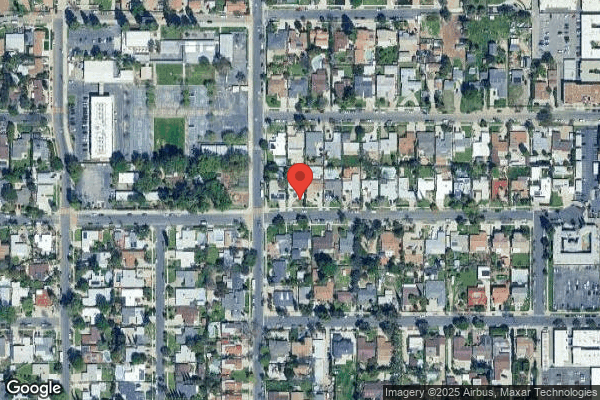
7836 RESEDA BLVD, RESEDA, CA 91335 (818) 881-7414
For profit - Corporation 97 Beds LONGWOOD MANAGEMENT CORPORATION Data: November 2025
Trust Grade
43/100
#864 of 1155 in CA
Last Inspection: January 2025

Within standard 12-15 month inspection cycle. Federal law requires annual inspections.

Overview

Northridge Care Center in Reseda, California, has a Trust Grade of D, indicating below-average performance and some significant concerns. It ranks #864 out of 1155 nursing homes in California, placing it in the bottom half of facilities in the state, and #216 out of 369 in Los Angeles County, meaning there are better local options available. The facility's condition is worsening, with the number of reported issues increasing from 11 in 2024 to 15 in 2025. Staffing is a relative strength, with a 3 out of 5-star rating and 34% turnover, which is below the state average, suggesting that staff tend to stay longer. However, the facility has faced serious concerns, including incidents of physical abuse between residents, and failures to ensure privacy during medication administration, raising red flags about resident safety and dignity.

Trust Score
D
43/100
In California
#864/1155
Bottom 26%
Safety Record
Moderate
Needs review
Inspections
Getting Worse
11 → 15 violations
Staff Stability
○ Average
34% turnover. Near California's 48% average. Typical for the industry.
Penalties
✓ Good
$3,145 in fines. Lower than most California facilities. Relatively clean record.
Skilled Nurses
⚠ Watch
Each resident gets only 23 minutes of Registered Nurse (RN) attention daily — below average for California. Fewer RN minutes means fewer trained eyes watching for problems.
Violations
⚠ Watch
79 deficiencies on record. Higher than average. Multiple issues found across inspections.
★★☆☆☆
2.0
Overall Rating
★★★☆☆
3.0
Staff Levels
★★☆☆☆
2.0
Care Quality
★★☆☆☆
2.0
Inspection Score
Stable
2024: 11 issues
2025: 15 issues

The Good

  • Full Sprinkler Coverage · Fire safety systems throughout facility
  • No fines on record
  • Staff turnover below average (34%)

    14 points below California average of 48%

Facility shows strength in fire safety.

The Bad

2-Star Overall Rating

Below California average (3.1)

Below average - review inspection findings carefully

Staff Turnover: 34%

12pts below California avg (46%)

Typical for the industry

Federal Fines: $3,145

Below median ($33,413)

Minor penalties assessed

Chain: LONGWOOD MANAGEMENT CORPORATION

Part of a multi-facility chain

Ask about local staffing decisions and management

The Ugly 79 deficiencies on record

1 actual harm
Sept 2025 1 deficiency
CONCERN (D) 📢 Someone Reported This

A family member, employee, or ombudsman was alarmed enough to file a formal complaint

Potential for Harm - no one hurt, but risky conditions existed

Accident Prevention (Tag F0689)

Could have caused harm · This affected 1 resident

Based on observation, interview, and record review, the facility failed to ensure one of three sampled residents (Resident 1) was provided with a proper functioning bed pad alarm (an alerting device i...

Read full inspector narrative →
Based on observation, interview, and record review, the facility failed to ensure one of three sampled residents (Resident 1) was provided with a proper functioning bed pad alarm (an alerting device intended to monitor a resident's movement) as ordered by the physician.This deficient practice had the potential to place Resident 1 at an increased risk for further falls, accidents, and injuries.Findings:During a review of Resident 1's admission Record, the admission Record indicated the facility admitted the resident on 12/19/2024 with diagnoses that include fracture (break in a bone) of right femur (thigh bone), hemiplegia (one-sided paralysis [complete or partial loss of muscle function]) following cerebral infarction (stroke- loss of blood flow to a part of the brain) affecting left non-dominate side, morbid obesity (excessive body fat), dementia (a progress state of decline in mental abilities), and history of falling.During a review of Resident 1's History and Physical (H&P) dated 12/21/2024, the H&P indicated Resident 1 had capacity to understand and make decisions.During a review of Resident 1's Minimum Data Set (MDS- a resident assessment tool) dated 6/27/2025, the MDS indicated Resident 1's cognition (ability to think and make decisions) was moderately impaired. The MDS further indicated that Resident 1 required set up assistance with eating, moderate assistance with oral hygiene, maximum assistance with upper body dressing and personal hygiene and dependent on staff for toileting hygiene, showering and lower body dressing.During a review of Resident 1's physician order dated 9/8/2025, the physician order indicated the use of a bed pad alarm to decrease potential for injury.During a concurrent observation and interview on 9/17/2025 at 2:15 p.m., with Certified Nursing Assistant 1 (CNA 1), CNA 1 attempted to demonstrate that Resident 1's bed pad alarm was working. CNA 1 pressed the bed pad alarm and no alert was heard. CNA 1 stated that she (CNA 1) did not believe the bed pad alarm was working properly.During a concurrent observation and interview on 9/17/2025 at 2:17 p.m., with the Director of Nursing (DON), the DON confirmed the observation by stating that the bed pad alarm for Resident 1 was not currently operating properly.During an interview on 9/17/2025 at 2:55 p.m., with the Central Supply Manager (CSM), the CSM stated that normally the CSM will check all the position change alarms on a daily basis to make sure they are operating properly. The CSM stated that at times the nursing staff will inform the CSM of a position change alarm not functioning properly and the CSM will fix the existing one or change it with a new one. The CSM stated that the CSM did not check Resident 1's bed pad alarm today.During an interview on 9/17/2025 at 3:20 p.m., with the DON, the DON confirmed that the bed pad alarm should be in working order at all times. The DON stated that Resident 1's bed pad alarm was not working at the time of inspection. The DON stated that a non-working bed pad alarm for Resident 1 could lead to increased risk of fall, accident, or injury.During a review of the facility's policy and procedure (P&P) titled, Personal Alarm dated 3/15/2025, the policy indicated this facility will use, as indicated, a sensor pad that conveniently sounds an audible alarm when the sensor detects a patient rising out of the bed/wheelchair reminding the resident to return to a safe position while alerting staff to a potential fall.If fall risk associated with fall from bed/chair is identified, physician orders will be obtained for assessment by appropriate staff.Check alarm system everyday for proper functioning.
May 2025 1 deficiency
CONCERN (D) 📢 Someone Reported This

A family member, employee, or ombudsman was alarmed enough to file a formal complaint

Potential for Harm - no one hurt, but risky conditions existed

Deficiency F0699 (Tag F0699)

Could have caused harm · This affected 1 resident

Based on interview and record review, the facility failed to: 1. Ensure a thorough Trauma (refers to an emotional, psychological, or physical response to a deeply distressing or disturbing event that ...

Read full inspector narrative →
Based on interview and record review, the facility failed to: 1. Ensure a thorough Trauma (refers to an emotional, psychological, or physical response to a deeply distressing or disturbing event that overwhelms a resident ' s ability to cope) Care Evaluation was completed for one of four sampled residents (Resident 1). 2. Develop a comprehensive person-centered care plan (a written course of action that helps a resident achieve outcomes that improve their quality of life) that addressed past trauma and triggers (something that reminds you of a past traumatic experience and causes a strong emotional reaction, like experiencing the trauma again) for one of four sampled residents (Resident 1). These deficient practices had the potential to result in delayed identification of underlying trauma-related issues, which could compromise resident care, delay appropriate referrals, and negatively impact resident outcomes. Findings: During a review of Resident 1 ' s admission Record, the admission Record indicated the facility admitted Resident 1 on 8/12/2023 with diagnoses that included complete paraplegia (a complete loss of feeling and movement in both legs), anxiety disorder (mental health condition characterized by persistent and excessive worry, fear, and nervousness that can interfere with daily life) and depression (a mood disorder that causes a persistent feeling of sadness and loss of interest). During a review of Resident 1 ' s psychiatric Intake Note dated 4/3/2025, the Intake Note indicated Resident 1 reported trauma history of being shot in the back leading to his legs being paralyzed. The Intake Note further indicated Resident 1 reported a history of depression secondary to the gunshot injury to his back. During a review of Resident 1 ' s Minimum Data Set (MDS- a resident assessment tool) dated 5/1/2025, the MDS indicated Resident 1 ' s cognition (the mental action or process of acquiring knowledge and understanding through thought, experience and the senses) was intact. During an interview on 5/22/25 at 1:00 p.m. with Resident 1, Resident 1 stated, I hate when the staff slams my door because loud noises like that are a trigger for me. Resident 1 further stated that he was shot in the back and sudden, loud noises remind him of the loud sound of the gun firing. During a concurrent interview and record review on 5/23/2025 at 3:00 p.m. with the Social Services Director (SSD), Trauma Care Evaluation dated 5/2/25 was reviewed. The Trauma Care Evaluation indicated under question number one (1), the resident declined to participate and questions two (2) through six (6) were left blank. The Trauma Care Evaluation instructions indicated if a resident is not able to participate, contact family members and review the History and Physical (H&P-a comprehensive assessment performed by a healthcare provider to gather information about a patient's medical history and conduct a physical exam) to gain information. The SSD stated the Trauma Care Evaluation was incomplete and more information should have been gathered and documented. The SSD stated gathering and documenting more information about Resident 1 ' s trauma was necessary to help the facility identify the ways Resident 1 ' s past trauma is affecting him now. The SSD stated the information could then help the facility understand Resident 1 ' s trauma in order provide more services and resources to help Resident 1 deal with his past trauma. During a concurrent interview and record review on 5/23/2025 at 3:35 p.m. with the Director of Nursing (DON), Resident 1 ' s care plans from 8/12/2023 to 5/23/2025 were reviewed. The DON stated she could not find a care plan that addressed Resident 1 ' s past trauma and/or potential triggers. The DON stated all staff were aware that Resident 1 experienced trauma in his past and therefore a care plan should have been created to address that trauma. The DON stated having a care plan to address Resident 1 ' s past trauma and potential triggers would help the staff provide appropriate care and treatment for Resident 1 to avoid Resident 1 having to experience any further trauma. During a review of the facility ' s policy and procedure titled, Trauma-Informed and Culturally Competent Care, last revised in March 2023, indicated, it is the policy of the facility to ensure staff provide care that is culturally competent and trauma-informed, as well address the needs of trauma survivors by minimizing triggers and/or re-traumatization. The policy and procedure also indicated staff is to perform screening of residents for identification of possible exposure to traumatic events and utilize the screening to identify the need for further assessments and care. The policy and procedure further indicated the facility is to develop individualized care plans that address past trauma in collaboration with the resident and family, that identify and decrease exposure to triggers that may re-traumatize the resident.
Jan 2025 13 deficiencies
CONCERN (D)

Potential for Harm - no one hurt, but risky conditions existed

Deficiency F0638 (Tag F0638)

Could have caused harm · This affected 1 resident

**NOTE- TERMS IN BRACKETS HAVE BEEN EDITED TO PROTECT CONFIDENTIALITY** Based on interview and record review, the facility failed to ensure a resident's Quarterly Minimum Data Set (MDS - a standardize...

Read full inspector narrative →
**NOTE- TERMS IN BRACKETS HAVE BEEN EDITED TO PROTECT CONFIDENTIALITY** Based on interview and record review, the facility failed to ensure a resident's Quarterly Minimum Data Set (MDS - a standardized assessment and care screening tool) was completed timely for one (Resident 37) out of 1 sampled resident. This deficient practice had the potential to negatively affect the provision of necessary care and services for Resident 37. Findings: During a review of Resident 37's admission Record, the admission Record indicated the facility admitted the resident on 8/24/2024 with diagnoses including asthma (a chronic lung disease that causes inflammation in the airways, making it difficult to breathe) and Parkinson`s disease (a chronic brain disorder that causes movement problems, and can also impact mental health, sleep, and pain). During a review of Resident 37's MDS, dated [DATE], the MDS indicated the resident had intact cognition (thought processes) and dependent on staff for most activities of daily living (ADLs - fundamental skills that people need to care for themselves independently). On 01/08/2025 at 3:31 p.m., during a concurrent interview and record review with Minimum Data Set Nurse 1 (MDS Nurse 1), reviewed the Centers for Medicare and Medicaid Services (CMS - a federal agency that manages Medicare, Medicaid, the Children's Health Insurance Program [CHIP], and the Affordable Care Act [ACA] health insurance marketplaces) Submission Report, dated 01/02/2025. The record indicated that the assessment was completed more than 14 days after assessment reference date (ARD). MDS Nurse 1 stated the ARD was 11/29/2024, so the assessment should have been completed by 12/12/2024. On 01/10/2025 at 8:03 a.m., during a concurrent interview and record review, with MDS Nurse 1, reviewed the Resident Assessment Instrument (RAI - a public document that provides guidance on how to use the RAI to assess residents in long-term care facilities) Omnibus Budget Reconciliation Act of 1987 (OBRA - a federal law that reformed nursing homes and improved the quality of care for residents) required Assessment Summary with MDS Nurse 1. MDS Nurse 1 stated according to the guidelines, the Quarterly MDS completion date was supposed to be completed no later than 14 days from the ARD. When asked what date Resident 37's Quarterly MDS assessment was actually completed, MDS Nurse 1 stated it was completed on 12/26/2024. MDS Nurse 1 stated it should have been completed on 12/12/2024.
CONCERN (D)

Potential for Harm - no one hurt, but risky conditions existed

Comprehensive Care Plan (Tag F0656)

Could have caused harm · This affected 1 resident

**NOTE- TERMS IN BRACKETS HAVE BEEN EDITED TO PROTECT CONFIDENTIALITY** Based on interview and record review, the facility failed to develop a comprehensive person-centered care plan (a plan for an in...

Read full inspector narrative →
**NOTE- TERMS IN BRACKETS HAVE BEEN EDITED TO PROTECT CONFIDENTIALITY** Based on interview and record review, the facility failed to develop a comprehensive person-centered care plan (a plan for an individual's specific health needs and desired health outcomes) for one of four sampled resident (Resident 58) investigated under accidents. This deficient practice had the potential for Resident 58 to not receive the necessary care and services to prevent potential injury caused by the use of bed rails (adjustable metal or rigid plastic bars that attach to the bed that are available in a variety of types, shapes, and sizes) Findings: During review of Resident 58's admission Record, the admission Record indicated the facility originally admitted the resident on 12/08/2021 and readmitted on [DATE] with diagnoses including muscle weakness and history of falling. During a review of Resident 58's Minimum Data Set (MDS - a standardized assessment and care screening tool), dated 02/08/2024, the MDS indicated the resident's cognitive (the mental action or process of acquiring knowledge and understanding through thought, experience, and the senses) skills for daily decision making was intact and the resident was dependent on staff for toileting hygiene, shower, upper body dressing, lower body dressing and personal hygiene. During a concurrent record review and interview with the Director of Nursing (DON) on 01/08/2025 at 10:31 a.m., reviewed Resident 58`s assessments records. The DON stated the resident did not have a safety assessment for the use of the bed side rails. The DON checked the resident`s room and verified that a quarter bed side rail is attached to the resident`s bed. The DON stated every resident using a bed side rail must be assessed for safety and risk for entrapment to prevent potential injury to the resident. The DON stated that Resident 58 could suffer an injury in the event that a part of her body is entrapped within the gaps of the bed side rails. The DON stated that the use of bed rails should be care planned to ensure that there is an identified problem in which its use is warranted. The DON stated that care plan must have a timeframe for evaluating the effectiveness of the intervention, determining if treatment goals are met, and ensuring that the ongoing use of the bed rails does not put the resident's safety at risk. During a review of the facility`s policy and procedures titled The Resident Care Plan, last reviewed on 03/15/2024, the policy and procedure indicated an objective to provide an individualized nursing care plan and to promote continuity of resident care .the care plan generally includes identification of medical, nursing, and psychosocial needs; goals stated in measurable/observable terms; approaches (staff action to meet the above goals .
CONCERN (D)

Potential for Harm - no one hurt, but risky conditions existed

Deficiency F0679 (Tag F0679)

Could have caused harm · This affected 1 resident

**NOTE- TERMS IN BRACKETS HAVE BEEN EDITED TO PROTECT CONFIDENTIALITY** Based on observations, interview, and record review the facility failed to provide appropriate and consistent activities for one...

Read full inspector narrative →
**NOTE- TERMS IN BRACKETS HAVE BEEN EDITED TO PROTECT CONFIDENTIALITY** Based on observations, interview, and record review the facility failed to provide appropriate and consistent activities for one of 21 sampled residents (Resident 52). This deficient practice had the potential to negatively affect Resident 52's physical, cognitive, sense of belonging, and emotional health. Findings: During a review of Resident 52's admission Record (Face sheet) , the admission Record indicated the resident was initially admitted to the facility on [DATE], and re-admitted on [DATE], with diagnoses including paraplegia (a chronic condition that involves the loss of muscle control in the lower half of the body), anxiety (a feeling of fear, dread, and uneasiness), and depression (an illness characterized by persistent sadness and a loss of interest in activities, accompanied by an inability to carry out daily activities). During a review of Resident 52's Minimum Data Set (MDS, a standardized assessment tool and care screening tool) dated 11/1/2024, the MDS indicated the resident had intact cognition (ability to make decisions, understand, learn). The MDS indicated the resident required maximal - to- moderate assistance from staff for most activities of daily living (transfer, bed mobility, locomotion on unit and off unit, dressing, eating, toilet use, and personal hygiene). During a review of Resident 52's History and Physical (H&P) dated 8/14/2023, the H&P indicated the resident had the capacity to understand and make decisions. During a review of Resident 52's activity care plan initiated on 8/14/2023 and revised on 10/30/2024, the care plan interventions indicated that Resident 52 will be encouraged to participate in activities of interest like special event and spiritual events. During a concurrent observation and interview on 1/6/2025, at 9:44 a.m., with Resident 52 in his room, observed the resident sitting in the wheelchair. Resident 52 stated that he likes to participate in bible studies on Sunday afternoons. However, the facility has recently discontinued this activity without providing any explanation to the residents. Resident 52 stated that is his right to attend a religious activity. During a review of the Activities Calendar for the year 2024 and 2025, the calendar indicated religious services are scheduled every Sunday at 9 a.m., with Bible study taking place at 2 p.m. During an interview and record review with the Activity Director (AD) on 1/6/2025, at 11:40 a.m., the AD stated that religious services and bible studies were provided to residents every Sunday. The AD stated that that bible studies where not provided to the residents for last 3-4weeks resident because of possible COVID-19 outbreak in the religious institution providing the bible services to the facility. The AD was unable to provide a list of participants in the bible studies or contact information of the religious organization providing the bible studies in the facility. The AD stated that it is important to provide to Resident 52 the activities of his choice to promote emotional health and sense of belonging. During an interview with the Director of Nursing (DON), on 1/9/2025 at 4:43 p.m., the DON stated that facility should provide Resident 52 his activities of choice. The DON stated not providing Resident 52 his activities of choice may increase the resident's anxiety and depression. The DON stated that it is the AD responsibility to contact a religion organization and organize bible studies for the residents. During a review of the facility policy titled Spiritual and Religious Activities, reviewed on 3/15/2024, the policy indicated Spiritual and religious activities are provided for resident population. A variety of spiritual and religious activities are available and scheduled through local religious organizations. Residents are encouraged to attend religious activities of their choice.
CONCERN (D)

Potential for Harm - no one hurt, but risky conditions existed

Accident Prevention (Tag F0689)

Could have caused harm · This affected 1 resident

**NOTE- TERMS IN BRACKETS HAVE BEEN EDITED TO PROTECT CONFIDENTIALITY** Based on observation, interview, and record review, the facility failed to provide an environment free from accidents and hazard...

Read full inspector narrative →
**NOTE- TERMS IN BRACKETS HAVE BEEN EDITED TO PROTECT CONFIDENTIALITY** Based on observation, interview, and record review, the facility failed to provide an environment free from accidents and hazards for one of eight sampled residents (Resident 50) reviewed under the accidents care area by failing to ensure Resident 50 did not store medications at bedside readily accessible to other residents. This deficient practice had the potential to result in residents obtaining medication without staff knowledge resulting in accidental ingestion causing harm to residents. Findings: During a review of Resident 50's Face Sheet (front page of the chart that contains a summary of basic information about the resident), the Face Sheet indicated the facility admitted the resident on 12/30/2022 and readmitted the resident on 5/31/2024 with diagnoses including diabetes mellites type 2 (a long-term medical condition in which the body does not use insulin [a hormone that lowers the level of sugar in the blood] properly), myalgia (muscle aches and pain), and essential hypertension (high blood pressure). During a review of Resident 50's Minimum Data Set (MDS - a resident assessment tool), dated 10/7/2024, the MDS indicated the resident had intact cognition (the mental process of acquiring knowledge and understanding through thought, experience, and the senses) and required supervision-to- moderate assistance from staff for most activities of daily living (ADLs - activities such as bathing, dressing and toileting a person performs daily). During a review of Resident 50's Order Summary Report , the Order Summary Report indicated an order dated 6/18/2024 for self-administration of over the counter (OTC) medications at bedside per patient ordered via online and requested to keep it: Endopeak (supplement) Relion glucose tabs (supplement that helps to support blood sugar) BPS-5 (supplement), Visiblue (vision supplement) Ocuprime (supplement) cranberry extract (supplement), zinc 50 mg (supplement that helps the body fight off infection and for wound healing), Nervogen pro (supplement) , Advance Amino (supplement), Cinnachroma (supplement), Vitamin A, Eye pressure support, B 12 (vitamin), Fenugreek (supplement), Glucosamine (supplement), Ginko (supplement). During a review of Resident 50's self-administration of drug assessment, the self-administration drug assessment dated [DATE] indicated Resident 50 is safe to self-administer OTC medications but requires assistance with eyedrops as needed. During an observation on 1/6/2024 at 9:20 a.m., observed Resident 50 in the bed in his room. Observed three clear plastic drawers next to the resident's bed containing the following: 1. Heal (supplement)-six (6) bottles. 2. Ocuprime (supplement)-five (5) bottles 3. Visi-Clear (vision supplement)-five (5) bottles 4. Sight care (vision supplement) -six (6) bottles 5. Visi-blue advance (vision supplement)-five (5) bottles 6. Advance Amino Formula (supplement) -five (5) bottles 7. Niacin 500 mg (Vitamin B 3)-three (3) bottles 8. Glucosamine (supplement) -two (2) bottles 9. Vitamin C 1000 mg (vitamin) -two (2 )bottles 10. Vitamin E 3 bottles (vitamin) - three (3) bottles 11. Cleanse supplement (supplement)- five (5) bottles 12. Centrum 50 + (vitamins) - two(2) bottles 13. Vitamin D3 (vitamin)-three (3 )bottles 14. Vitamin B12(vitamin) - five (5) bottles Resident 50 stated that all the medications in the plastic containers next to his bed are his supplements and that he takes these medications by himself all the time. During an interview on 1/6/2024 at 9:25 a.m., with Licensed Vocational Nurse 3 (LVN 3), LVN 3 stated that Resident 50 did not want to comply with facility policy about not storing medication at bedside. LVN 3 stated Resident 50 had an assessment for self-administration of medications. LVN 3 stated keeping medication at the bedside of Resident 50 create a risk to allow other residents to consume the medications, who are confused and may enter Resident 50's room. During an interview on 1/9/202 at 4:43 p.m., with the Director of Nursing (DON), the DON stated it was important not to leave medications accessible to other residents at bedside because the residents may take the medications and consume it, and it could lead to the residents experiencing adverse side effects. During a review of the facility's policy and procedure titled, Self-Administration of Medication, last reviewed and revised on 3/15/2024, the policy and procedure indicated that bedside medications storage is permitted only when it does not present a risk to confused residents who wander into the rooms of, or room with, residents who self-administer. During a review of the facility's policy and procedure titled, Storage of Medication, last reviewed and revised on 3/15/2024, the policy and procedure indicated: The medication supply is accessible only to licensed nursing personnel, pharmacy personnel, or staff members lawfully authorized.
CONCERN (D)

Potential for Harm - no one hurt, but risky conditions existed

Tube Feeding (Tag F0693)

Could have caused harm · This affected 1 resident

Based on observation, interview, and record review the facility failed to ensure residents receiving enteral feeding (EF, also known as tube feeding, a method of supplying nutrients directly in to the...

Read full inspector narrative →
Based on observation, interview, and record review the facility failed to ensure residents receiving enteral feeding (EF, also known as tube feeding, a method of supplying nutrients directly in to the gastrointestinal [the body's system for processing liquids and foods] tract) received appropriate care and services to prevent complications of enteral feeding for one out of three sampled residents (Resident 47) by failing to cover the enteral feeding tube with a cap after disconnecting the tubing from Resident 47 once the enteral feeding had been completed. The deficient practice had the potential to contaminate the enteral feeding system and placed the resident at risk for infection. Findings: During a review of Resident 47's admission Record, the admission Record indicated that the facility admitted Resident 47 on 6/14/2024 with diagnoses including cerebral infarction (a serious condition that occurs when blood flow to the brain is blocked), acute respiratory failure with hypoxia (a serious condition that occurs when the air sacs of the lungs cannot release enough oxygen into the blood), gastrostomy malfunction (when a gastrostomy [ G- Tube, a feeding tube that delivers nutrition, fluids and medication directly into the stomach)] is blocked, dislodged, or has other issues), and schizophrenia(a mental health problem where you experience psychosis [a mental disorder characterized by a disconnection from reality] as well as mood symptoms). During a review of Resident 4's Minimum Data Set (MDS - a federally mandated resident assessment tool), dated 12/19/2024, the MDS indicated that the resident had moderately impaired cognition (a moderate damaged mental abilities, including remembering things, making decisions, concentrating, or learning). The MDS further indicated that Resident 47 was totally dependent on staff with all activities of daily living (ADLs - basic tasks that must be accomplished every day for an individual to thrive). During the review of Resident 47's History and Physical, dated 6/18/2024, the History and Physical indicated that Resident 47 had a capacity to make needs known, but cannot make decisions. During a review of Resident 47's Order Summary Report, the Order Summary Report indicated an order dated 12/09/2024 for Jevity 1.2 (feeding formula) at 50 cc/hours (rate of infusion of feeding formula) for 20 hours via pump off at 8 a.m. and start on 12 p.m. During a review of Resident 47's care plan (a document that outlines the actions and interventions needed to address a resident's health and care needs) regarding gastrostomy status initiated on 6/19/2024, and revised on 9/12/2024, the care plan indicated a goal to minimize risk of infection at G-Tube site. During an observation on 1/6/2025 at 11:51 a.m. in Resident 47's room, observed a bottle of Jevity 1.2 on the pole (a device that holds a bag of feeding formula in place), with the tubing disconnected from Resident 47 and hanging on the pole. The tip of the tubing was not covered with a cap. During an interview on 1/6/2025 at 11:52 a.m., with Licensed Vocational Nurse 2 (LVN 2), LVN 2 confirmed that the tip of the tubing was not capped. LVN 2 stated that the tubing should be covered with cap once it is disconnected from the resident to prevent cross contamination and decrease risk of healthcare acquired infection to Resident 47. During an interview on 1/8/2025 at 10 a.m. with the Infection Preventionist (IP), the IP stated that the tubing tip should be covered with a cap once it is disconnected from the resident to prevent microbial growths. LVN 2 stated that failing to cap the tip of the tubing increased the risk of infection for Resident 47. During an interview on 1/9/2024 at 4:34 p.m. with the Director of Nursing (DON), the DON stated that the tip of the formula tubing should be covered with a cap once it is disconnected from the resident to prevent microbial growths. The DON stated that failing to cap the tip of the tubing increased the risk of healthcare acquired infections for Resident 47. During a review of the facility policy named Enteral Feeding - Safety Precautions, last reviewed on 3/15/2024, the policy stated: The facility will remain current in and follow accepted best practices in enteral nutrition.
CONCERN (D)

Potential for Harm - no one hurt, but risky conditions existed

Deficiency F0694 (Tag F0694)

Could have caused harm · This affected 1 resident

**NOTE- TERMS IN BRACKETS HAVE BEEN EDITED TO PROTECT CONFIDENTIALITY** Based on observation, interview, and record review, the facility failed to label the insertion site (areas where intravenous [IV...

Read full inspector narrative →
**NOTE- TERMS IN BRACKETS HAVE BEEN EDITED TO PROTECT CONFIDENTIALITY** Based on observation, interview, and record review, the facility failed to label the insertion site (areas where intravenous [IV, into or within a vein] lines are placed such as the forearm) of the intravenous catheter (a device used to provide medications) dressing per facility protocol to one out of three sampled residents (Resident 13) who had an IV access. This deficient practice has the potential to fail to identify the signs and symptoms of intravenous site insertion complications such as swelling and redness in the insertion site. Findings: During a review of Resident 13's Face Sheet (front page of the chart that contains a summary of basic information about the resident), the document indicated the resident was admitted to the facility on [DATE] and re-admitted on [DATE] with diagnoses that included hypertension (high blood pressure). During a review of Resident 13's Minimum Data Set (MDS, a federally mandated resident assessment tool) dated 10/24/2024, the MDS indicated Resident 13 was cognitively (the process of acquiring knowledge and understanding through thought, experience, and the senses) intact with skills required for daily decision making. The MDS indicated Resident 13 was dependent (helper does all the effort) on staff for personal hygiene. During a review of Resident 13's Physician's Orders, it indicated an order for Ceftriaxone (an antibiotic medication to treat a bacterial infection) Solution 1 gram (gm, metric unit of measurement, used for medication dosage and/or amount) intravenously every 24 hours for Respiratory syncytial virus (RSV, a contagious virus that infects the respiratory tract and lungs) pneumonia (an infection/inflammation in the lungs), every 24 hours for three days, dated 12/26/2024. During a review of Resident 13's Medication Administration Record (MAR - a daily documentation record used by a licensed nurse to document medications and treatments given to a resident), the MAR indicated Resident 13 received Ceftriaxone by intravenous access on the dates 12/26/2024, 12/27/2024, and 12/28/2024. During a review of Resident 13's Care Plan for Antibiotic Therapy, the care plan, initiated 12/27/2024, indicated Resident 13 was on Ceftriaxone one gm by IV access for RSV pneumonia. The care plan indicated a goal that infection will clear in 14 days through interventions. The care plan indicated to administer antibiotics as ordered. During a concurrent interview and observation on 1/06/2025 at 9:55 a.m., with the Director of Nurses (DON), observed Resident 13's IV site to the left forearm that was undated. Resident 13's Family Member 1 (FM 1) stated Resident 13 had the IV from the GACH before entering the facility. FM 1 could not state the exact date the IV was started. The DON stated if a resident is on IV antibiotics, the doctor is to be notified when the IV medication was complete. The DON stated they would check to see if Resident 13 was still ordered IV antibiotics. During an interview with the DON on 1/07/2025 at 9:55 a.m., the DON stated Resident 13's IV antibiotic medication was completed by 12/29/2024. The DON stated the licensed nurse from the GACH should tell when the IV was started in their phone report to the facility but there was no indication in the medical records that there was a start date for the IV. The DON stated Registered Nurse 1 (RN 1) notified Resident 13's physician on 1/06/2025 of the IV site and received an order to discontinue the IV access site. During a concurrent interview and record review with RN 1 on 1/07/2025 at 11:56 a.m., reviewed Resident 13's 12/2024 MAR. RN 1 stated they gave Resident 13, the Ceftriaxone on 12/27/2024. RN 1 stated they discontinued Resident 13's IV access site on 1/06/2025. RN 1 stated they did not know when Resident 13's IV was started but must be at least 11 days since the resident was admitted to the facility from the GACH on 12/26/2024. RN 1 stated the process is for the registered nurse administering the last dose to a resident to call a resident's physician to see if they wanted to keep the IV access or to discontinue it. RN 1 stated a resident can get phlebitis (inflammation of the vein) if left in for too long. During a concurrent interview and record review with the DON on 1/07/2025 at 2:14 p.m., reviewed the facility's policy and procedure titled, Peripheral Catheter Removal, last reviewed 3/15/2024. The policy and procedure indicated peripheral catheters are removed when clinically indicated, at the completion of therapy, or if the site is reddened, swollen, painful, leaking/draining. The policy and procedure indicated a physician order is not required to remove a peripheral catheter. The DON, stated, even though the policy indicated a physician order is not required to remove an IV, the registered nurse should still notify a resident's physician when an antibiotic is completed to ensure a resident is safe and that there is no infection at the IV insertion site. The DON stated the registered nurses failed to notify the doctor of the presence of the IV. The DON stated, according to policy, that indicated peripheral IV catheter sites will be changed when clinically indicated means that the IV antibiotic is finished then it is to be removed unless the doctor wants to continue the IV medication or change to a different one. The DON stated if the physician wants to keep the IV, the registered nurses will obtain an order to keep the IV inserted for another three days. During a phone interview and record with RN 2 on 1/07/2025 at 3:32 p.m., reviewed Resident 13's 12/2024 MAR. RN 2 stated RN 2 gave Resident 13 the IV Ceftriaxone on 12/26/2024. RN 2 stated they gave Resident 13 the IV antibiotic medication but not the last registered nurse to give the medication. RN 2 stated that after the last dose, policy dictates the nurse would remove the IV line after speaking with the doctor in the case he wants to continue the medication. During a phone interview and concurrent record review with RN 3 on 1/07/2025 at 4:14 p.m., reviewed Resident 13's 12/2024 MAR. RN 3 stated RN 3 was the last nurse to administer Resident 13's IV antibiotic medication which was on 12/28/2024. RN 3 stated they gave the medication at 11:40 a.m. and did not notify Resident 13's physician that night that the IV medication was completed but endorsed to the 7 a.m. to 3 p.m. nurse on 12/29/2024 but was unable to remember the registered nurse's name. During a review of the facility's policy and procedure titled, Peripheral Catheter Removal, last reviewed 3/15/2024, the policy indicated peripheral catheters are removed when clinically indicated, at the completion of therapy, or if the site is reddened, swollen, painful, leaking/draining. The policy and procedure indicated a physician order is not required to remove a peripheral catheter.
CONCERN (D)

Potential for Harm - no one hurt, but risky conditions existed

Deficiency F0700 (Tag F0700)

Could have caused harm · This affected 1 resident

**NOTE- TERMS IN BRACKETS HAVE BEEN EDITED TO PROTECT CONFIDENTIALITY** Based on observation, interview, and record review, the facility failed to ensure a resident was assessed for risk of entrapment...

Read full inspector narrative →
**NOTE- TERMS IN BRACKETS HAVE BEEN EDITED TO PROTECT CONFIDENTIALITY** Based on observation, interview, and record review, the facility failed to ensure a resident was assessed for risk of entrapment from the use of bed side rails (adjustable metal or rigid plastic bars that attach to the bed) as indicated in the facility's policy and procedure for one of one sampled residents (Resident 58). This deficient practice had the potential for inappropriate use of bed rails that could lead to entrapment and result to injury. Findings: During review of Resident 58's admission Record, the admission Record indicated the facility originally admitted the resident on 12/08/2021 and readmitted on [DATE] with diagnoses including muscle weakness and history of falling. During a review of Resident 58's Minimum Data Set (MDS - a standardized assessment and care screening tool), dated 02/08/2024, the MDS indicated the resident's cognitive (the mental action or process of acquiring knowledge and understanding through thought, experience, and the senses) skills for daily decision making was intact and the resident was dependent on staff for toileting hygiene, shower, upper body dressing, lower body dressing and personal hygiene. During an observation on 01/06/2024 at 11:26 a.m., observed Resident 58 lying in bed sleeping with both bed side rails in raised position. During a record review and interview 01/08/2025 at 10:31 a.m., with the Director of Nursing (DON), reviewed Resident 58`s assessments records. The DON stated the resident did not have a safety assessment for the use of the bed side rails. The DON checked the resident`s room and verified that a quarter bed side rail is attached to the resident`s bed. The DON stated every resident using a bed side rail must be assessed for safety and risk for entrapment to prevent potential injury to the resident. The DON stated that Resident 58 could suffer an injury in the event that a part of her body is entrapped within the gaps of the siderails. During a review of the facility`s policy and procedure titled Side Rail Use When Not A Restraint, last reviewed on 03/15/2024, the policy and procedure indicated that the facility shall Complete Physical Restraint Assessment Form .the licensed nurse should obtain an order from the attending physician that may include the ff: 1. Resident may have both side rails up when in bed, resident does not have voluntary or involuntary movement and resident is immobile and cannot voluntarily get out of bed due to physical limitation .
CONCERN (D)

Potential for Harm - no one hurt, but risky conditions existed

Deficiency F0813 (Tag F0813)

Could have caused harm · This affected 1 resident

**NOTE- TERMS IN BRACKETS HAVE BEEN EDITED TO PROTECT CONFIDENTIALITY** Based on observation, interview, and record review, the facility failed to ensure leftover food brought from outside by resident...

Read full inspector narrative →
**NOTE- TERMS IN BRACKETS HAVE BEEN EDITED TO PROTECT CONFIDENTIALITY** Based on observation, interview, and record review, the facility failed to ensure leftover food brought from outside by resident`s family and visitors was labeled with resident identifier and use by date for one of one (Resident 141) sampled resident. This deficient practice had the potential to result in foodborne illness (also called food poisoning, illness caused by eating contaminated food) among the residents. Findings: During a review of Resident 141's admission Record, the admission Record indicated the resident was admitted to the facility on [DATE], with diagnoses including muscle weakness and history of falling. During a review of Resident 141`s Minimum Data Set (MDS - a standardized assessment and care screening tool), dated 12/26/2024, the MDS indicated the resident`s cognitive (the mental action or process of acquiring knowledge and understanding through thought, experience, and the senses) skills for daily decision making was intact. The MDS also indicated that the resident was dependent on staff for toileting hygiene, shower, lower body dressing and putting on/taking off footwear. During a concurrent observation and interview with Resident 14 on 01/06/25 at 09:28 a.m., observed Resident 141 in bed. Observed a plastic a plastic bag containing a food item and placed on top of the over-bed table. Resident 141 stated the plastic bag contained two pieces of tamales that were brought by a family member the day before. During an interview and follow up observation of Resident 141, with the Director of Nursing (DON) on 01/06/25 at 09:35 a.m., the DON confirmed that the plastic bag containing two pieces of tamales was on top of the resident`s over-bed table. The DON stated that any left-over food brought by visitors should be refrigerated, labeled with resident`s name and use by date. The DON stated that labeling the food with the date it was brought in will ensure that food is discarded after three days. The DON stated that anyone who consumes an undated food can potentially be at risk for acquiring foodborne illnesses which can result to food poisoning and diarrhea. During a review of the facility`s policy and procedures titled Food Brought by Family/Visitors, last reviewed on 3/15/2024, the policy and procedures indicated that .food brought by family/visitors that is left with the resident to consume later is labeled and stored in a manner that is clearly distinguishable from facility-prepared food .perishable foods are stored in re-sealable continers with tightly fitting lids in a refrigerator. Containers are labeled with resident`s name, the item and the use by date.
CONCERN (E)

Potential for Harm - no one hurt, but risky conditions existed

Resident Rights (Tag F0550)

Could have caused harm · This affected multiple residents

**NOTE- TERMS IN BRACKETS HAVE BEEN EDITED TO PROTECT CONFIDENTIALITY** Based on interview and record review, the facility failed to provide privacy to four of seven residents (Resident 54, 35, 58 and...

Read full inspector narrative →
**NOTE- TERMS IN BRACKETS HAVE BEEN EDITED TO PROTECT CONFIDENTIALITY** Based on interview and record review, the facility failed to provide privacy to four of seven residents (Resident 54, 35, 58 and 3) observed during medication administration. This deficient practice violated the resident`s right to be treated with dignity and respect which could affect the residents' sense of self-worth and sense of well-being. Findings: a. During a review of Resident 54's admission Record, the admission Record indicated that the facility admitted the resident on 10/31/2024 with diagnoses that included dysphagia (difficulty swallowing) and type 2 diabetes mellitus (DM-a chronic condition that affects how the body uses sugar [glucose] for energy). During a review of Resident 54's Minimum Data Set (MDS - a standardized assessment and care screening tool), dated 11/07/2024, the MDS indicated that the resident's cognitive (the mental action or process of acquiring knowledge and understanding through thought, experience, and the senses) skills for daily decision making intact and the resident was dependent on staff for toileting hygiene, shower, upper and lower body dressing, and personal hygiene. During a medication administration observation on 01/07/25 at 12:08 p.m., observed Licensed Vocational Nurse 1 (LVN1) check Resident 54's blood sugar (glucose) using a glucometer (measures the amount of glucose in your blood) in the resident's room while the resident was in a wheelchair and the privacy curtain was open. b. During a review of Resident 35's admission Record, the admission Record indicated that the facility originally admitted the resident on 11/16/2021 and readmitted on [DATE] with diagnoses that included seizures (abnormal electrical activity in your brain that temporarily affects your consciousness, muscle control and behavior) and type 2 diabetes mellitus (DM-a chronic condition that affects how the body uses sugar [glucose] for energy). During a review of Resident 35's Minimum Data Set (MDS - a standardized assessment and care screening tool), dated 11/18/2024, the MDS indicated that the resident's cognitive (the mental action or process of acquiring knowledge and understanding through thought, experience, and the senses) skills for daily decision making was impaired and the resident required maximal assistance from staff for toileting hygiene, shower, lower body dressing and personal hygiene. During a medication administration observation on 01/07/25 at 12:15 p.m., observed Licensed Vocational Nurse 1 (LVN 1) check Resident 35's blood sugar (glucose) using a glucometer (measures the amount of glucose in your blood) in the resident's room while the resident was in bed and the privacy curtain was open. c. During review of Resident 58's admission Record, the admission Record indicated that the facility originally admitted the resident on 12/08/2021 and readmitted on [DATE] with diagnoses that included muscle weakness and history of falling. During a review of Resident 58's Minimum Data Set (MDS - a standardized assessment and care screening tool), dated 02/08/2024, the MDS indicated that the resident's cognitive (the mental action or process of acquiring knowledge and understanding through thought, experience, and the senses) skills for daily decision making was intact and the resident was dependent on staff for toileting hygiene, shower, upper body dressing, lower body dressing and personal hygiene. During a medication administration observation on 01/07/25 at 12:22 p.m., observed Licensed Vocational Nurse 1 (LVN1) check Resident 58's blood sugar (glucose) using a glucometer (measures the amount of glucose in your blood) in the resident's room while the resident was in bed and the privacy curtain was open. LVN 1 stated Resident 58's blood sugar was 156 mg/dl. LVN 1 prepared 1 unit of insulin and administered the insulin without closing the curtain to ensure the resident's privacy. d. During a review of Resident 3's admission Record, the admission Record indicated that the facility admitted the resident on 11/20/2023 with diagnoses that included shortness of breath and type 2 diabetes mellitus (DM-a chronic condition that affects how the body uses sugar [glucose] for energy). During a review of Resident 3's Minimum Data Set (MDS - a standardized assessment and care screening tool), dated 11/20/2024, the MDS indicated that the resident's cognitive (the mental action or process of acquiring knowledge and understanding through thought, experience, and the senses) skills for daily decision making was severely impaired and the resident was dependent on staff for toileting hygiene, shower, lower body dressing and personal hygiene. During a medication administration observation on 01/07/25 at 12:26 p.m., observed Licensed Vocational Nurse 1 (LVN1) check Resident 3's blood sugar (glucose) using a glucometer (measures the amount of glucose in your blood) in the resident's room while the resident was in bed and the privacy curtain was open. LVN 1 stated Resident 3's blood sugar was 216 mg/dl. LVN1 then prepared 4 units of insulin and administered the insulin without closing the curtain to ensure the resident's privacy. During an interview on 1/07/2025 at 12:30 p.m., with LVN 1, LVN 1 stated that he should have ensured privacy was provided to the four residents when he (LVN 1) was checking their blood sugar and giving the insulin. LVN 1 stated that resident should not be put in a situation that could cause them to feel embarrassed about their condition. LVN 1 stated the residents should be treated with respect and dignity by providing privacy during medication administration. During a review of the facility`s policy and procedure titled Dignity, last reviewed on 3/15/2024, the policy indicated that each resident shall be cared for in a manner that promotes and enhances his or her well-being, level of satisfaction with life, and feeling of self-worth and self-esteem .residents are treated with respect and dignity at all times .
CONCERN (E)

Potential for Harm - no one hurt, but risky conditions existed

Deficiency F0657 (Tag F0657)

Could have caused harm · This affected multiple residents

**NOTE- TERMS IN BRACKETS HAVE BEEN EDITED TO PROTECT CONFIDENTIALITY** Based on interview and record review, the facility failed to: 1. Revise the comprehensive person-centered care plan (a care plan...

Read full inspector narrative →
**NOTE- TERMS IN BRACKETS HAVE BEEN EDITED TO PROTECT CONFIDENTIALITY** Based on interview and record review, the facility failed to: 1. Revise the comprehensive person-centered care plan (a care plan is a form where you can summarize a person's health conditions, specific care needs, and current treatments) addressing the residents activity needs for two of three (Resident 15 and 69) residents investigated under the activity care area. This deficient practice had the potential for the residents to not receive the necessary care and services related to their activity needs. 2. Revise the comprehensive person-centered care plan addressing nutritional needs of one of three (Resident 25) residents investigated under the nutrition care area. This deficient practice had the potential for Resident 25 to not receive the necessary care and services related to his nutritional needs. Findings: 1.a. During a review of Resident 15's admission Record, the admission Record indicated that the resident was originally admitted to the facility on [DATE] and readmitted to the facility on [DATE], with diagnoses including anxiety disorder (mental health conditions that involve persistent feelings of fear or worry that can significantly impair a person`s life) and Parkinson's disease (a chronic brain disorder that causes movement problems, and can also impact mental health, sleep, and other health issues). During a review of Resident 15`s Minimum Data Set (MDS - a standardized assessment and care screening tool), dated 11/11/2024, the MDS indicated the resident`s cognitive (the mental action or process of acquiring knowledge and understanding through thought, experience, and the senses) skills for daily decision making was intact and was totally dependent on staff for eating, oral hygiene, toileting hygiene, shower, dressing and personal hygiene. During a concurrent interview and record review on 01/08/2025 at 08:34 a.m., with the Director of Nursing (DON), reviewed Resident 15`s care plan for activity which indicated a target date of a 11/10/2024. The DON stated that the care plan is not active care plan and should have been evaluated on the target date of 11/10/2024 and renewed for another quarter. The DON stated that the resident's care plans should be evaluated quarterly to determine if the goals of the resident related to activity needs are met. The DON stated that quarterly revision of the care plan ensures that there is an ongoing activity provided to Resident 15 to address his psychosocial needs. The DON stated that without a care plan in place addressing Resident 15's activity needs, the resident could experience emotional distress, potentially leading to depression. During a review of the facility`s policy and procedures titled The Resident Care Plan, last reviewed on 3/15/2024, the policy and procedure indicated that the resident care plan shall be implemented for each resident on admission and developed throughout the assessment process .the resident`s plan of care shall be reviewed at least quarterly . During a review of the facility`s policy and procedures titled Activity Program, last reviewed on 3/15/2024, the policy and procedure indicated that the Activity Coordinator shall interview the resident and develop an individual activity plan based on the resident`s needs and interests. The initial assessment shall be on the basis for activity plan that is part of the resident care plan . 1.b. During a review of Resident 69's admission Record, the admission Record indicated the resident was originally admitted to the facility on [DATE] and readmitted to the facility on [DATE], with diagnoses including quadriplegia (paralysis of all four limbs) and epilepsy (a chronic brain disorder that causes seizures, which are brief episodes of abnormal electrical activity in the brain). During a review of Resident 69`s Minimum Data Set (MDS - a standardized assessment and care screening tool), dated 11/20/2024, the MDS indicated that the resident`s cognitive (the mental action or process of acquiring knowledge and understanding through thought, experience, and the senses) skills for daily decision making was severely impaired and was totally dependent on staff for eating, oral hygiene, toileting hygiene, shower, dressing and personal hygiene. During a concurrent interview and record review on 01/08/2025 at 08:34 a.m., with the Director of Nursing (DON), reviewed Resident 69`s care plan for activity which indicated a target date of 11/19/2024. The DON stated that the care plan is not active care plan and should have been evaluated on the target date of 11/19/2024 and renewed for another quarter. The DON stated that the resident's care plans should be evaluated quarterly to determine if the goals of the resident related to activity needs are met. The DON stated that quarterly revision of the care plan ensures that there is an ongoing activity provided to Resident 69 to address her psychosocial needs. The DON stated that without a care plan in place addressing Resident 69's activity needs, the resident could experience emotional distress, potentially leading to depression. During a review of the facility`s policy and procedures titled The Resident Care Plan, last reviewed on 3/15/2024, the policy and procedure indicated that the resident care plan shall be implemented for each resident on admission and developed throughout the assessment process .the resident`s plan of care shall be reviewed at least quarterly . During a review of the facility`s policy and procedures titled Activity Program, last reviewed on 3/15/2024, the policy and procedure indicated that the Activity Coordinator shall interview the resident and develop an individual activity plan based on the resident`s needs and interests. The initial assessment shall be on the basis for activity plan that is part of the resident care plan . 2. During a review of Resident 25's admission Record, the admission Record indicated the resident was originally admitted to the facility on [DATE] and readmitted to the facility on [DATE], with diagnoses including acute respiratory failure (a condition in which your blood doesn't have enough oxygen causing shortness of breath and difficulty breathing, often caused by a disease or injury), type 2 diabetes (a long-term medical condition in which the body does not use insulin [a hormone that lowers the level of sugar in the blood] properly), end stage renal disease (final, permanent stage of chronic kidney disease, where kidney function has declined to the point that the kidneys can no longer function on their own). During a review of Resident 25`s Minimum Data Set (MDS - a standardized assessment and care screening tool), dated 12/18/2024, the MDS indicated the resident`s cognitive (the mental action or process of acquiring knowledge and understanding through thought, experience, and the senses) skills for daily decision making was moderately impaired and resident required moderate assistance from staff for eating, oral hygiene, toileting hygiene, shower, dressing and personal hygiene. During a review of Resident 25's History and Physical, dated 11/22/2024, the History and Physical indicated that Resident 25 had a capacity to make needs known, but cannot make decisions. During a review of Resident 25 Nutritional Assessment, dated 01/07/2025 , the Nutritional Assessment indicated that Resident 25 was at risk for malnutrition. During a review of Resident 25 Nutritional Dietary Note, dated 01/07/2025, the Nutritional Dietary Note indicated that Resident 25 had weight loss due to fluid shift (the movements of fluid within the body, specifically from tissues and cells into the bloodstream during a dialysis treatment) related to end stage renal disease. During a concurrent interview and review on 01/09/2025 at 2:47 p.m., with the Director of Dietary Services (DDS), Resident 25`s care plan for alteration in nutritional status on 01/09/2025 at 2:47 p.m., indicated that the care plan was initiated on 10/22/2024, revised on 12/13/2024 and had a target date of 4/24/2025. The DDS stated that the care plan for alteration in nutritional status is an active care plan. The DDS stated that care plans are evaluated quarterly to determine if the goals of the resident related to nutritional needs are met. The DDS reviewed the care plan and stated that current care plan indicated that Resident 25 had a risk for malnutrition due to broken teeth and leaves 25% of food uneaten on therapeutic diet. The DDS stated that the care plan did not indicate that the resident is undergoing dialysis which could significantly contribute to weight fluctuation. The DDS stated that Resident 25's care plan should be person centered and address all nutritional risk factors to meet the resident's needs, preventing nutritional distress and potential weight loss. During a concurrent interview and review of Resident 25`s care plan for nutritional status with the Director of Nursing (DON) on 1/9/2025 at 4:43 p.m., the DON stated that the care plan has to be person-centered and based on current assessment to meet the resident's needs. The DON stated that missing nutritional risk factors in care plan had the potential for Resident 25 to not receive the necessary care and services related to his nutritional needs. During a review of the facility`s policy and procedures titled The Resident Care Plan, last reviewed on 3/15/2024, the policy and procedure indicated that the resident care plan shall be implemented for each resident on admission, and developed throughout the assessment process .the president's plan of care shall be reviewed at least quarterly .
CONCERN (E)

Potential for Harm - no one hurt, but risky conditions existed

Deficiency F0761 (Tag F0761)

Could have caused harm · This affected multiple residents

**NOTE- TERMS IN BRACKETS HAVE BEEN EDITED TO PROTECT CONFIDENTIALITY** c. During a review of Resident 13's Face Sheet (front page of the chart that contains a summary of basic information about the r...

Read full inspector narrative →
**NOTE- TERMS IN BRACKETS HAVE BEEN EDITED TO PROTECT CONFIDENTIALITY** c. During a review of Resident 13's Face Sheet (front page of the chart that contains a summary of basic information about the resident), the document indicated the resident was admitted to the facility on [DATE] and re-admitted on [DATE] with diagnoses including hypertension (high blood pressure). During a review of Resident 13's Census (a document that lists a resident, their admissions, discharges to hospital, and room changes since admission to the facility), the census indicated the following: 10/17/2024 admitted to the facility into room [ROOM NUMBER]-A. 12/21/2024 transfer out to GACH. 12/26/2024 re-admission to facility into room [ROOM NUMBER]-A During a review of Resident 13's Minimum Data Set (MDS, a federally mandated resident assessment tool) dated 10/24/2024, the MDS indicated Resident 13 was cognitively (the process of acquiring knowledge and understanding through thought, experience, and the senses) intact with skills required for daily decision making. The MDS indicated Resident 13 was dependent (helper does all the effort) on staff for personal hygiene. During a review of Resident 13's Physician's Orders, the document indicated the following: -Artificial Tears Ophthalmic Solution 1%, instill 1 drop in left eye every six hours as needed for dry eye, dated 10/17/2024. -Artificial Tears Ophthalmic Solution 1%, instill 1 drop in left eye every six hours as needed for dry eye, dated 12/26/2024. During a review of Resident 13's Care Plan for Increased Eye Dryness, the care plan, initiated 1/07/2025, indicated a goal that eye dryness will be relieved through appropriate interventions daily through the next assessment. The care plan indicated an intervention to administer eye drops as ordered/indicated. d. During a review of Resident 19's Face Sheet, the document indicated the resident was admitted to the facility on [DATE] with diagnoses including diabetes mellitus (DM-a disorder characterized by difficulty in blood sugar control and poor wound healing). During a review of Resident 19's MDS, dated [DATE], the MDS indicated Resident 19 was severely impaired in cognition with skills required for daily decision making. The MDS indicated Resident 19 was dependent on staff for personal hygiene. During a review of Resident 19's Physician's Orders an order for Artificial Tears, the document indicated to instill one drop in both eyes two times a day for eye redness, dated 10/04/2023. During a review of Resident 19's Care Plan for Increased Eye Dryness, the care plan, initiated 1/07/2025, indicated a goal that eye dryness will be relieved through appropriate interventions daily through the next assessment. The care plan indicated an intervention to administer eye drops as ordered/indicated. e. During a review of Resident 33's Face Sheet, the document indicated the resident was admitted to the facility on [DATE] and re-admitted on [DATE] with diagnoses that included diabetes mellitus. During a review of Resident 33's MDS, dated [DATE], the MDS indicated Resident 33 was cognitively intact with skills required for daily decision making. The MDS indicated Resident 33 required set-up assistance (helper sets up) with toileting. During a review of Resident 33's Physician's Orders an order for Artificial Tears, the document indicated to instill two drops in both eyes two times a day for dry eyes, dated 8/30/2024. During a review of Resident 33's Care Plan for Impaired Visual Functioning, the care plan, initiated 11/08/2023, indicated a goal that there will be minimization of risk for injury to seeing daily through the next assessment. The care plan indicated an intervention to administer eye drops as ordered. During a medication cart inspection of Medication Cart One with Licensed Vocational Nurse 1 (LVN 1), on 1/07/2025, observed three boxes that contained Artificial Tears with the room and bed number for Resident 13, Resident 19, and Resident 33. There was no name on each of the boxes. LVN 1 stated the name is not required because the licensed nurses change the room and bed number if a resident moves to a new room. LVN 1 stated licensed nurses also move the artificial tears to the new medication cart of that resident if required. During an interview with LVN 3 on 1/07/2025 at 8:30 a.m., LVN 3 stated licensed nurses put the name as well as the room and bed number on a box for residents who have been prescribed Artificial Tears. LVN 3 stated the reason is that if a resident changes room they will know which resident the Artificial Tears are for. LVN 3 stated this is important so the right resident will receive the right medication. During a concurrent interview and record review with the Director of Nursing (DON) on 1/07/2025, reviewed Resident 13's Census and Physician's Orders. The DON confirmed that Resident 13 who had an order for Artificial Tears was in room [ROOM NUMBER]-A, was discharged to the GACH on 12/21/2024 and returned to the facility 12/26/2024 into room [ROOM NUMBER]-A. The DON confirmed that that the Artificial Tears labeled 11-A was not moved to the medication cart for room [ROOM NUMBER]-A and the room number was not changed on the box. The DON stated the importance of labeling a box of Artificial Tears with the resident's name to avoid the wrong resident getting the wrong medication. Reviewed the facility's policy and procedure titled, Disposal of Medications and Medication-Related Supplies, last reviewed 3/15/2024, indicated when a resident is transferred [to the hospital] or discharged and does not take medications with him/her, the medications are marked as discontinued or stored in a separate location and later destroyed. The DON stated the policy does not indicate what the time frame is for discontinued medications to be removed from the medication cart, but the licensed nurses would conduct this action within three days. The DON stated this was important to prevent another resident from receiving the wrong medication. During a review of the facility's policy and procedure titled, Medication Ordering and Receiving from Pharmacy, last reviewed 3/15/2024, the policy indicated the following: labels are permanently affixed to the outside of the prescription container. If a label does not fit directly onto the product, e.g., eye drops, the label may be affixed to an outside container or cartoon, but the resident's name, at least, must be maintained directly on the actual product container. Based on observation, interview and record review, the facility failed to: a. Ensure a multi-dose vial (contain more than one dose of medication) of Aplisol (used in a skin test to help diagnose tuberculosis [TB, a contagious bacterial infection that can affect the lungs and other parts of the body)] infection) found in one of three medication rooms (Medication Room A), was labeled with an open date. This deficient practice increased the risk that residents could have received the medication that had become ineffective or toxic and result in health complications and inaccurate test results. b. Ensure one unopened insulin (a medication to treat diabetes mellitus [a chronic condition that affects the way the body processes blood sugar]) pen (an injection device with a needle that delivers insulin) was not stored in Medication Cart 2 for one of one sampled resident (Resident 8). This deficient practice had the potential to compromise the therapeutic effectiveness of insulin and result in mismanagement of Resident 8`s Type 2 Diabetes Mellitus (DM-a chronic condition that affects how the body uses sugar [glucose] for energy). c. Ensure that all drugs and biologicals used in the facility were labeled in accordance with professional standards by failing to label a box of Artificial Tears (eye drops that moisten dry eyes) with a resident's name but instead used a room number, during the investigation of one of the facility's six medication carts. d. Ensure Resident 13's medications were removed from Medication Cart One when the resident was discharge to the General Acute Care Hospital (GACH, or simply, hospital). These deficient practices had the potential for a resident to receive a medication not intended for that resident. Findings: a. During a concurrent medication cart inspection and interview on 01/07/2025 at 10:37 a.m., with the Director of Nursing (DON), observed in Medication Room A an opened Aplisol multi-dose vial without an open date. The DON stated that upon opening a multi-dose vial of Aplisol, licensed nurses should have to labeled it with an open date and discard after 28 or 30 days. The DON stated that the purpose of dating is to ensure the multi-dose vial is not used beyond its discard date which if unknown and is still being used, could lead to inaccurate skin test result/s and may not detect infection with Mycobacterium tuberculosis (bacteria that causes tuberculosis) During a review of the facility`s policy and procedure titled Vials and Ampules of Injectable Medications, last reviewed on 3/15/2024, the policy indicated that vials and ampules of injectable medications are used in accordance with the manufacturer`s recommendations or the provider pharmacy`s directions for storage, use, and disposal .the date opened and initials of the first person to use the vial are recorded on multi-dose vials . During a review of the Aplisol package insert/manufacturer`s instructions (a document included in the package of a medication that provides information about that drug and its use), dated 3/2016, the document indicated under section Dosage and Administration, that vials in use for more than 30 days should be discarded. b. During a review of Resident 8's admission Record, the admission Record indicated the facility originally admitted the resident on 12/06/2024 and readmitted the resident on 01/01/2025 with diagnoses that included diabetes mellitus (a chronic condition that affects the way the body processes blood glucose [sugar]), long term use of insulin, and depression (a mood disorder that causes a persistent feeling of sadness and loss of interest). During a review of Resident 8's Minimum Data Set (MDS - a resident assessment tool), dated 12/13/2024, the MDS indicated that the resident has the ability to sometimes makes self-understood and the ability to sometimes understand others. The MDS indicate that Resident 8 is totally dependent on staff for oral hygiene, toileting hygiene, shower, upper and lower body dressing, putting on/taking off footwear and personal hygiene. During a review of Resident 8's Order Summary Report, the report indicated a physician's order dated 01/09/2025 to administer Insulin Lispro Injection Solution (Humalog- a fast-acting insulin) 100 unit per milliliters (U/ml, a unit of measurement) 4 units subcutaneously (administering medication where a short needle is used to inject a medication into the tissue layer between the skin and the muscle) before meals. During a medication cart inspection on 01/09/2025 at 10:04 a.m. with Licensed Vocational Nurse 2 (LVN 2), inspected Medication Cart 2 and found an unopened Insulin Lispro pen without an open date. The Insulin Lispro pen was placed in a plastic bag with a sticker that indicated Refrigerate until used, once in use, store at room temperature. LVN2 stated that the Insulin Lispro pen is new and should have been placed in the refrigerator upon receipt. LVN 2 stated that to maintain the integrity and efficacy of the Insulin Lispro pen it should be stored in room temperature or in the medication cart once opened and marked the date it was used and discard after 28 days. During an interview with the Director of Nursing (DON) 01/09/25 at 11:28 a.m., the DON stated that insulin is used for 28 days per manufacturer`s instruction and if unopened it should be stored in the refrigerator to maintain its efficacy. The DON stated if an insulin lost its efficacy, it will not be effective in managing diabetes and can potentially place Resident 8 at risk for hyperglycemia (a condition where the blood sugar levels are abnormally high) with symptoms such as dizziness, headache, nausea and vomiting. During a review of the manufacturer`s guidelines for Insulin Lispro (Humalog) provided by the facility, indicated that an unopened 3 mL Insulin Lispro should be stored in the refrigerator between 36 to 46 degrees Fahrenheit (unit of temperature) until expiration date.
CONCERN (E)

Potential for Harm - no one hurt, but risky conditions existed

Infection Control (Tag F0880)

Could have caused harm · This affected multiple residents

**NOTE- TERMS IN BRACKETS HAVE BEEN EDITED TO PROTECT CONFIDENTIALITY** Based on observation, interview, and record review, the facility failed to observe infection control guidelines when Registered ...

Read full inspector narrative →
**NOTE- TERMS IN BRACKETS HAVE BEEN EDITED TO PROTECT CONFIDENTIALITY** Based on observation, interview, and record review, the facility failed to observe infection control guidelines when Registered Nurse 1 (RN 1) was observed leaving a resident's room during a medication pass observation while still wearing an isolation gown and gloves for one (Resident 295) of nine residents who were on enhanced barrier precautions (EBP-a method of using personal protective equipment [PPE - clothing and equipment that is worn or used to provide protection against hazardous substances and/or environments] to reduce the spread of pathogens between residents in skilled nursing facilities). This deficient practice had the potential to increase the risk of spreading infection to other residents. Findings: During a review of Resident 295's Face Sheet, the Face Sheet indicated the resident was admitted to the facility on [DATE] with diagnoses that included discitis ( an infection or inflammation of the discs in the spine [the backbone, a column of bones that runs from the base of the skull to the tailbone]), urinary tract infection (an infection in any part of the urinary system), major depressive disorder (a mental health disorder characterized by persistently depressed mood or loss of interest in activities, causing significant impairment in daily life). During a review of Resident 295' s Minimum Data Set (MDS, a resident assessment tool), dated 12/27/2024, the MDS indicated Resident 295 was moderately impaired in cognition (the process of acquiring knowledge and understanding through thought, experience, and the senses) with skills required for daily decision making. The MDS indicated Resident 295 was dependent (helper does all the effort) on staff for eating, dressing, and personal hygiene. During the review of Resident 295's History and Physical , dated 12/23/2024, the History and Physical indicated that Resident 295 had a capacity to make needs known, but cannot make decisions. During a review of Resident 295's Physician's Orders, the physician's orders indicated the following: 1. Cefazolin Sodium (antibiotic used to treat certain infections) injection 2 gram (gm- unit of measurement) intravenously every eight (8) hours for discitis for 56 days. Start day 12/21/2024. 2. On enhanced barrier precaution (EBP-a method of using personal protective equipment). Start day 12/22/2024. During a medication pass observation with RN 1 on 1/07/2025 at 12:55 p.m., observed RN 1 administer Cefazolin 2 gm via central line at 100 ml /hour rate for Resident 295. RN 1 then did not remove his gloves and gown and exited Resident 295's room while still wearing an isolation gown and gloves. RN 1's gowned arms and gloved hands touched the medication cart. When asked why RN 1 was still wearing the isolation gown after exiting a resident's room on EBP precautions, RN 1 stated he should have removed the isolation gown and gloves before exiting the room. RN 1 removed the isolation gown and gloves. RN 1 stated it is important to follow EBP guidelines to prevent the spread of infection. During an interview with the Infection Preventionist (IP) on 1/8/2025 at 10:50 a.m., the IP stated staff providing care for residents who are on EBP, the practice is to remove the isolation gown and gloves before leaving a resident's room. The IP stated RN 1 should have removed the gown and gloves before exiting Resident 295's room. The IP stated this was important to prevent the spread of infection. During an interview with the Director of Nursing (DON) on 1/9/2024 at 4:43 p.m., the DON stated RN 1 should have removed the gown and gloves before exiting Resident 295's room. The DON stated this was important to prevent the spread of infection. During a review of the facility's policy and procedure titled, Enhanced Barrier Precautions, revised 3/15/2024, the policy indicated EBP is used in conjunction with standard precautions (a set of infection control practices that are used to prevent the spread of disease in healthcare settings, such as hand washing) and expand the use of PPE during high-contact resident care activities. The policy indicated EBP are to be used for residents with indwelling medical devices, such as a central line, even if the resident is not known to be infected or colonized with a multidrug-resistant organism (MDRO, bacteria that are resistant to three or more classes of antimicrobial drugs). The policy indicated the PPE: gloves and gown, are to be used in maintaining EBP.
MINOR (B)

Minor Issue - procedural, no safety impact

Deficiency F0912 (Tag F0912)

Minor procedural issue · This affected multiple residents

Based on observation, interview, and record review, the facility failed to provide at least 80 square (sq.) feet (ft.) per resident in 27 of 43 resident rooms (Rooms 4, 6, 8, 10, 11, 12, 14, 15, 17, 1...

Read full inspector narrative →
Based on observation, interview, and record review, the facility failed to provide at least 80 square (sq.) feet (ft.) per resident in 27 of 43 resident rooms (Rooms 4, 6, 8, 10, 11, 12, 14, 15, 17, 18, 19, 20, 21, 22, 23, 24, 25, 27, 28, 29, 31, 33, 35, 37, 39, 41, and 42). The room size for these rooms had the potential to have inadequate space for resident care and mobility. Findings: On 01/06/2025, the Administrator (ADM) submitted an application for the Room Variance Waiver, dated 01/06/2025, for 27 resident rooms. The room waiver request indicated the following: Room # Square Footage (sq ft) Bed Capacity Sq Ft per Resident 4 154.64 2 77.32 6 155.25 2 77.625 8 151.20 2 75.6 10 153.9 2 76.95 11 153.17 2 76.585 12 153.17 2 76.585 14 153.17 2 76.585 15 157.95 2 78.975 17 153.17 2 76.585 18 157.93 2 78.965 19 153.17 2 76.585 20 157.93 2 78.965 21 157.93 2 78.965 22 155.11 2 77.555 23 157.93 2 78.965 24 158.68 2 79.34 25 155.11 2 77.555 27 309.54 4 77.385 28 309.54 4 77.385 29 153 2 76.5 31 153 2 76.5 33 154.18 2 77.09 35 154.18 2 77.09 37 154.18 2 77.09 39 154.18 2 77.09 41 154.18 2 77.09 42 154.18 2 77.09 The minimum requirement for a 2-bed room should be at least 160 sq. ft. The minimum requirement for a 3-bed room should be at least 240 sq. ft. The minimum requirement for a 4-bed room should be at least 320 sq. ft. During the Resident Council meeting on 01/06/2025 at 10:37 a.m., the residents in attendance did not express concerns regarding their room size. During a general observation on 01/09/2025 at 8:30 a.m., residents and staff had enough space to move freely inside the rooms. The nursing staff had enough space to safely provide care to the residents with space for the beds, side tables, dressers, and resident care equipment. During a review of the room waiver letter dated 01/06/2025, the letter indicated each room has adequate space for each resident with his/her own closet space, over bed table and night stand. Cubicle curtains are hung at each bedside, giving each resident privacy when pulled closed. The rooms are also equipped with call lights for each resident. The rooms are in accordance with the special needs of the residents and would not impede the ability of any resident in the room to attain his or her highest practicable well-being. There is adequate space to move around in the rooms for both ambulatory and non-ambulatory residents and adequate space for wheelchair accessibility and medication carts to provide care.
Nov 2024 3 deficiencies
CONCERN (D) 📢 Someone Reported This

A family member, employee, or ombudsman was alarmed enough to file a formal complaint

Potential for Harm - no one hurt, but risky conditions existed

Deficiency F0692 (Tag F0692)

Could have caused harm · This affected 1 resident

Based on interview and record review, the facility failed to follow their policy and procedure regarding Weight Change by failing to ensure a resident's physician's progress note addressed a resident'...

Read full inspector narrative →
Based on interview and record review, the facility failed to follow their policy and procedure regarding Weight Change by failing to ensure a resident's physician's progress note addressed a resident's weight loss for one (1) of three (3) sampled residents (Resident 1). This deficient practice had the potential to lead to a delay or lack of delivery of care and services for Resident 1. Findings: During a review of Resident 1's admission Record, the admission Record indicated the facility admitted the resident on 6/7/2024 with diagnoses that included fracture (break in the bone) of the first lumbar vertebra (bone in the spine of the lower back), lumbar region spondylosis (inflammation and stiffness in the spine), and generalized muscle weakness. During a review of Resident 1's admission Minimum Data Set (MDS - a resident assessment tool) dated 6/14/2024, the MDS indicated Resident 1 had severely impaired cognition (the mental action or process of acquiring knowledge and understanding through thought, experience, and the senses). During a review of Resident 1's Interdisciplinary Team (a group of health care professionals with various areas of expertise who work together toward the goals of the residents' care plan) meeting notes for Weight Management dated 7/5/2024, the IDT meeting notes indicated Resident 1 had a weight loss of four (4) pounds (lbs. - unit of measurement) in one month. During a review of Resident 1's IDT meeting notes for Weight Management dated 8/5/2024, the IDT meeting notes indicated Resident 1 had a weight loss of four (4) lbs. in one month. During a review of Resident 1's IDT meeting notes for Weight Management dated 9/9/2024, the IDT meeting notes indicated Resident 1 had a weight loss of five (5) lbs. in one month. During a review of Resident 1's IDT meeting notes for Weight Management dated 10/14/2024, the IDT meeting notes indicated Resident 1 had a weight variance of 10% in a three (3) month period. During a review of Resident 1's physician's Progress Notes dated 7/3/2024 to 9/12/2024, the Progress Notes had no indication that Resident 1 was having monthly weight loss. During an interview on 11/13/2024 at 12:20 p.m., with the Director of Nursing (DON), the DON stated Resident 1's physician was aware of the weight loss, as he was the one giving the orders for the weight loss interventions such as supplements, diet changes, and medication. The DON stated the physician should have addressed Resident 1's weight loss in the progress notes as it was a part of Resident 1's care plan and part of the weight loss policy. During a review of the facility's undated policy and procedure titled, Weight Change, the policy indicated it is the policy of the facility to monitor all residents' weights monthly and in cases of high-risk weight loss, ensure that the physician completes progress notes for weight loss or gain.
CONCERN (D) 📢 Someone Reported This

A family member, employee, or ombudsman was alarmed enough to file a formal complaint

Potential for Harm - no one hurt, but risky conditions existed

Deficiency F0697 (Tag F0697)

Could have caused harm · This affected 1 resident

Based on interview and record review, the facility failed to provide pain medication as ordered by the physician and follow the physician's order for pain medication parameters for one (1) of three (3...

Read full inspector narrative →
Based on interview and record review, the facility failed to provide pain medication as ordered by the physician and follow the physician's order for pain medication parameters for one (1) of three (3) sampled residents (Resident 1). This deficient practice had the potential to result in Resident 1's pain not being managed properly and potentially cause the resident to experience prolonged discomfort and pain. Findings: During a review of Resident 1's admission Record, the admission Record indicated the facility admitted the resident on 6/7/2024 with diagnoses that included fracture (break in the bone) of the first lumbar vertebra (bone in the spine of the lower back), lumbar region spondylosis (inflammation and stiffness in the spine), and generalized muscle weakness. During a review of Resident 1's admission Minimum Data Set (MDS - a resident assessment tool) dated 6/14/2024, the MDS indicated Resident 1 had severely impaired cognition (the mental action or process of acquiring knowledge and understanding through thought, experience, and the senses). The MDS further indicated Resident 1 had frequent pain that interfered with day-to-day activities. During a review of Resident 1's Order Summary Report, the Order Summary Report indicated the following physician's orders: - Percocet (pain medication used for moderate to severe pain) 5-325 milligrams (mg - unit of measurement), give one tablet by mouth every six (6) hours as needed for moderate pain (4-6/10, numerical scale used to measure pain with 0 being no pain and 10 being the worst pain), dated 8/30/2024. - Percocet 5-325 mg, give two tablets by mouth every six (6) hours as needed for severe pain (7-10/10), dated 8/11/2024. During a review of Resident 1's Medication Administration Record (MAR, a report detailing the drugs administered to a resident by the licensed nurse in the facility) for 9/2024, the MAR indicated Resident 1 received one tablet of Percocet 5-325mg on 9/4/2024 after reporting a pain level of eight (8), a pain level higher than the 4-6/10 parameter indicated on the physician's order. During a concurrent interview and record review on 11/13/2024 at 11:30 a.m., with Licensed Vocational Nurse 2 (LVN 2), reviewed Resident 1's MAR for 9/2024. LVN 2 stated that if Resident 1 reported a pain level of 8, then according to the physician's orders, Resident 1 should have been medicated with two tablets of Percocet 5-325 mg, not one tablet. LVN 2 stated that a pain level of 8 means Resident 1 had severe pain and the one tablet of Percocet 5-325 mg was to be given for moderate pain. During a concurrent interview and record review on 11/13/2024 at 12:20 p.m., with the Director of Nursing (DON), reviewed Resident 1's MAR for 9/2024. The DON stated that on 9/4/2024, Resident 1 was not given the appropriate dose of pain medication based on Resident 1's pain level. The DON stated Resident 1 should have received two tablets of Percocet 5-325 mg for a pain level of eight (8) and not one tablet. The DON stated by not getting the appropriate physician ordered dose of pain medication, Resident 1 could have been undermedicated and left in pain. During a review of the facility's policy and procedure titled, Pain Assessment and Management, last revised 3/2020, the policy indicated it is the policy of the facility to help staff identify pain in the resident and to develop interventions that are consistent with the resident's goals and needs. The policy and procedure further indicated that when implementing pain management strategies, the medication regimen should be implemented as ordered.
MINOR (B) 📢 Someone Reported This

A family member, employee, or ombudsman was alarmed enough to file a formal complaint

Minor Issue - procedural, no safety impact

Assessment Accuracy (Tag F0641)

Minor procedural issue · This affected multiple residents

**NOTE- TERMS IN BRACKETS HAVE BEEN EDITED TO PROTECT CONFIDENTIALITY** Based on interview and record review, the facility failed to ensure a resident's Quarterly Minimum Data Set (MDS - a resident as...

Read full inspector narrative →
**NOTE- TERMS IN BRACKETS HAVE BEEN EDITED TO PROTECT CONFIDENTIALITY** Based on interview and record review, the facility failed to ensure a resident's Quarterly Minimum Data Set (MDS - a resident assessment tool) assessment accurately reflected a resident's status for one (1) of three (3) sampled residents (Resident 1). This deficient practice had the potential to lead to a delay or lack of delivery of care and services for Resident 1. Findings: During a review of Resident 1's admission Record, the admission Record indicated the facility admitted the resident on 6/7/2024 with diagnoses that included fracture (break in the bone) of the first lumbar vertebra (bone in the spine of the lower back), lumbar region spondylosis (inflammation and stiffness in the spine), and generalized muscle weakness. During a review of Resident 1's physician's Progress Notes dated 6/10/2024, the progress notes indicated Resident 1 had significant physical disability (any physical limitations or disabilities that inhibit the physical function of one or more limbs of a person). During a review of Resident 1's admission MDS dated [DATE], the MDS indicated Resident 1 had severely impaired cognition (the mental action or process of acquiring knowledge and understanding through thought, experience, and the senses). The MDS also indicated Resident 1 needed partial/moderate assistance with eating. The MDS further indicated Resident 1 was at risk of developing pressure ulcers/injuries (localized damage to the skin and/or underlying tissue usually over a bony prominence). During a review of Resident 1's Quarterly MDS dated [DATE], the MDS indicated Resident 1 needed supervision or touching assistance with eating. The MDS further indicated Resident 1 is not at risk of developing pressure ulcers/injuries. During a review of Resident 1's Interdisciplinary Team (a group of health care professionals with various areas of expertise who work together toward the goals of the residents' care plan) meeting notes dated 9/12/2024, the IDT meeting notes indicated Resident 1 was non-ambulatory and required extensive assistance with activities of daily living (ADLs- activities related to personal care such as bathing, dressing and toileting). During an interview on 11/13/2024 at 10:08 a.m., with Certified Nursing Assistant 1 (CNA 1), CNA 1 stated Resident 1 was dependent on staff for all ADLs and needed partial and sometimes extensive assistance with eating. CNA 1 also stated that Resident 1 was mostly in bed and was being repositioned every two hours to prevent the development of pressure ulcers. During a concurrent interview and record review on 11/13/2024 at 11:50 a.m., with the Director of Nursing (DON), reviewed Resident 1's Quarterly MDS dated [DATE]. The DON stated Resident 1's Quarterly MDS dated [DATE] was an inaccurate reflection of Resident 1. The DON stated Resident 1 needed a lot of assistance from staff when eating and was a risk for developing pressure ulcers due to her immobility. During a concurrent interview and record review on 11/13/2024 at 12:05 p.m., with the MDS Coordinator (MDSC), reviewed Resident 1's MDS dated [DATE]. The MDSC stated that having an inaccurate MDS would affect the resident's care plan and could possibly create care plans not appropriate for the resident. During a review of the facility's undated policy and procedure titled, Resident Assessment, the policy indicated the MDS should be completed for each resident and should be used to develop a comprehensive care plan to allow the resident to reach his/her highest practicable level of physical, mental, and psychosocial functioning. During a review of the facility's policy and procedure titled, Charting and Document, last revised 7/2017, the policy indicated documentation in the medical record will be objective, complete, and accurate.
Oct 2024 1 deficiency
CONCERN (D) 📢 Someone Reported This

A family member, employee, or ombudsman was alarmed enough to file a formal complaint

Potential for Harm - no one hurt, but risky conditions existed

Pressure Ulcer Prevention (Tag F0686)

Could have caused harm · This affected 1 resident

**NOTE- TERMS IN BRACKETS HAVE BEEN EDITED TO PROTECT CONFIDENTIALITY** Based on observation, interview, and record review the facility failed to provide care consistent with the professional standard...

Read full inspector narrative →
**NOTE- TERMS IN BRACKETS HAVE BEEN EDITED TO PROTECT CONFIDENTIALITY** Based on observation, interview, and record review the facility failed to provide care consistent with the professional standards of practice to help prevent pressure ulcer (injury to skin and underlying tissue resulting from prolonged pressure on the skin) for one of three sampled residents (Resident 1) by failing to ensure Resident 1's bilateral (both) heel protectors (device that can help prevent and treat heel pressure ulcer) were place on the resident's heels as ordered by the physician. This deficient practice had the potential for development and worsening of Resident 1's pressure ulcer. Findings: During a review of Resident 1's admission Record, the admission Record indicated that Resident 1 was originally admitted to the facility on [DATE] and readmitted on [DATE] with diagnoses that included respiratory failure (when lungs are unable to get enough oxygen into your blood) with hypoxia (body does not have enough oxygen to function normally), and type two (2) diabetes mellitus (high levels of sugar in the blood). During a review of Resident 1's Minimum Data Set (MDS -a federally mandated assessment tool), dated 7/23/2024, the MDS indicated that Resident 1 was cognitively impaired (the mental action or process of acquiring knowledge and understanding through thought, experience, and the senses) and dependent from staff for transfer, dressing, toilet use, personal hygiene, and bathing. During a review of Resident 1's Physician Order Summary Report, the Physician Order Summary Report indicated the following: a. Heel protectors for skin integrity management with an order date of 1/26/2024. During a concurrent observation and interview on 10/15/2024 at 11:35 a.m., with the Licensed Vocational Nurse 1 (LVN 1) and Certified Nurse Aide 1 (CNA 1), observed Resident 1 inside the resident's room in bed without heel protectors. CNA 1 stated that CNA 1 removed Resident 1's heel protectors earlier that day (10/15/24). During interview on 10/15/2024 at 4:15 p.m., with the Director of Nursing (DON), the DON stated that Resident 1 should have had bilateral heel protector placed as per the physician order to prevent possible further skin breakdown. During a review of the facility`s policy and procedure, titled Pressure Sore Management, dated 3/2024, the facility policy indicated that all available measures shall be taken to reduce skin breakdown and pressure sores.
Aug 2024 1 deficiency
CONCERN (D) 📢 Someone Reported This

A family member, employee, or ombudsman was alarmed enough to file a formal complaint

Potential for Harm - no one hurt, but risky conditions existed

Pharmacy Services (Tag F0755)

Could have caused harm · This affected 1 resident

**NOTE- TERMS IN BRACKETS HAVE BEEN EDITED TO PROTECT CONFIDENTIALITY** Based on interview and record review, the facility failed to implement its policy and procedure on Medication Ordering and Recei...

Read full inspector narrative →
**NOTE- TERMS IN BRACKETS HAVE BEEN EDITED TO PROTECT CONFIDENTIALITY** Based on interview and record review, the facility failed to implement its policy and procedure on Medication Ordering and Receiving from Pharmacy by failing to reorder and refill one of three sampled residents (Resident 1) Alprazolam (a medication used to treat anxiety disorder [a condition in which a person has excessive worry and feelings of fear, dread, and uneasiness]) timely (five days in advance of anticipated need). This deficient practice resulted in delay in the delivery of medication for Resident 1's and may result to Resident 1 having anxiety attacks. Findings: During a review of Resident 1's admission Record indicated the facility originally admitted Resident 1 on 6/8/2024 and re-admitted on [DATE], with diagnoses that included chronic obstructive pulmonary disease (a common lung disease causing restricted airflow and breathing problems), hypertension (elevated blood pressure), and anxiety disorder. During a review of Resident 1's History and Physical dated 6/21/2024 indicated Resident 1 has the capacity to understand and make decisions. During a review of Resident 1's Minimum Data Set (MDS - a comprehensive assessment and screening tool) dated 6/27/2024, indicated Resident 1's cognition (the mental action or process of acquiring knowledge and understanding through thought, experience, and the sense) was intact. Resident 1 required supervision with eating, and oral hygiene. The MDS indicated Resident 1 required moderate assistance with toileting hygiene, lower body dressing and personal hygiene. During a review of Resident 1's Physician's Order dated 7/31/2024, indicated to administer Alprazolam one milligram (mg- unit of measure), give one tablet by mouth every four hours as needed for anxiety manifested by hyperventilation (a type of abnormal breathing that involves rapid and deep breaths) leading to shortness of breath (SOB). During a review of Resident 1's Medication Administration Record (MAR - a report detailing the medications administered to a resident by a healthcare professional) dated 8/2024, indicated that on 8/11/2024 Resident 1 received Alprazolam one mg tablet at 12:27 a.m., 6:48 a.m., 11:31 a.m., and 3:31 p.m. During an interview on 8/13/2024 at 8:35 a.m. with Resident 1, Resident 1 stated that she (Resident 1) was informed by the nurse (unable to recall who) the other day (8/12/2024) that the facility does not have Resident 1's medication (Alprazolam one mg tablet) as they were waiting for the pharmacy to deliver Resident 1's medication (Alprazolam one mg tablet) for anxiety. Resident 1 stated she was unsure why the facility did not have the medication (Alprazolam one mg tablet) available. During an interview on 8/13/2024 at 8:45 a.m. with Licensed Vocational Nurse 1 (LVN 1), LVN 1 stated that on 8/11/2024 at around 3:30 p.m., LVN 1 administered the last Alprazolam one mg tablet dose in the bubble pack (packaging used to hold medication) to Resident 1. LVN 1 stated that she asked Registered Nurse Supervisor 1 (RNS) 1 to call the pharmacy to order/refill Resident 1's Alprazolam as ordered. During an interview on 8/13/2024 at 9:40 a.m. with RNS 1, RNS 1 stated that on 8/11/2024 (unable to recall time) he was informed by LVN 1 that Resident 1's Alprazolam needed to be refilled and ordered from the pharmacy. RNS 1 stated that he faxed the physician's order to the pharmacy and received a confirmation that the pharmacy received the physician order. During a review of the Pharmacy Delivery Confirmation Receipt, dated 8/12/2024 at 12:54 a.m., indicated Alprazolam one mg tablet (total of 30 tablets) for Resident 1 was delivered to the facility. During an interview on 8/12/2024 at 12:00 p.m. with the Director of Nursing (DON), the DON stated that the correct process regarding ordering of as needed medications, is for the nursing staff to reorder the medications from the pharmacy when there are five (5) medications left in the bubble pack. The DON stated that on the bubble pack the color changes from light blue to dark blue indicating the medication needed to be reordered from the pharmacy. The DON confirmed that the Alprazolam one mg tablet for Resident 1 should have been reordered prior to the last medication dose given in the bubble pack to provide time for the pharmacy to deliver the medication timely. A review of the facility policy and procedure (P&P) titled Medication Ordering and Receiving from Pharmacy dated 1/2022 indicated medications and related products are received from the dispensing pharmacy on a timely basis. The facility maintains accurate records of medication order and receipt .If not automatically refilled by the pharmacy, repeat medications are written on a medication order form/ordered by peeling the bottom part of the pharmacy label and placing in the appropriate area on the ordered form provided by the pharmacy for that purpose and ordered as follows: a. Reorder medication five days in advance of need to assure an adequate supply is on hand. Reorder as needed medication five days in advance of anticipated need based on the current usage. b. The nurse who reorders the medication is responsible for notifying the pharmacy of changes in directions for use. c. The refill order is called in, faxed, or otherwise transmitted to the pharmacy.
Jul 2024 1 deficiency
CONCERN (D) 📢 Someone Reported This

A family member, employee, or ombudsman was alarmed enough to file a formal complaint

Potential for Harm - no one hurt, but risky conditions existed

Free from Abuse/Neglect (Tag F0600)

Could have caused harm · This affected 1 resident

**NOTE- TERMS IN BRACKETS HAVE BEEN EDITED TO PROTECT CONFIDENTIALITY** Based on interview and record review, the facility failed to protect the resident's right to be free from physical abuse (delibe...

Read full inspector narrative →
**NOTE- TERMS IN BRACKETS HAVE BEEN EDITED TO PROTECT CONFIDENTIALITY** Based on interview and record review, the facility failed to protect the resident's right to be free from physical abuse (deliberately aggressive or violent behavior by one resident towards another) for one of six sampled residents (Resident 1) on 6/19/2024, when Resident 2 struck Resident 1 in the face with his closed fist. This deficient practice resulted in Resident 1 being subjected to physical abuse by Resident 2 while under the care of the facility and had the potential to cause emotional harm which could result to a feeling of embarrassment, low self-esteem, and self-worth. Findings: A review of Resident 1's admission Record indicated Resident 1 was originally admitted to the facility on [DATE], and re-admitted on [DATE], with diagnoses that included alcoholic cirrhosis of the liver (overconsumption of alcohol that results in permanent scarring that damages the liver and interferes with its functioning), acute respiratory failure (when the air sacs of the lungs cannot release enough oxygen into the blood) and hypertension (high blood pressure). A review of Resident 1's Minimum Data Set (MDS- a standardized assessment and care planning tool) dated 4/22/2024 indicated Resident 1 had moderately intact cognition (ability to think and make decisions). The MDS indicated Resident 1 required moderate assistance from staff with oral hygiene, toileting hygiene, bathing, dressing and personal hygiene. A review of Resident 1's Situation - Background - Assessment - Recommendation (SBAR) Communication Form (SBAR - a form used to facilitate prompt communication regarding a change in a resident's health condition), dated 6/19/2024, indicated that on 6/19/2024 at around 1:00 p.m., Resident 1 was wheeling his (Resident 1) wheelchair inside the dining room when Resident 1 passed and wheeled beside Resident 2 and bumped on the wheelchair of Resident 2. Resident 2 got mad and punched Resident 1 in the face. A review of Resident 2's admission Record indicated Resident 2 was originally admitted to the facility on [DATE], and re-admitted on [DATE], with diagnoses that included type 2 diabetes mellitus (a condition that happens because of a problem in the way the body regulates and uses sugar as a fuel), acute kidney failure (occurs when the kidneys suddenly become unable to filter waste products from the blood), and hypertension. A review of Resident 2's MDS dated [DATE] indicated Resident 2 had fully intact cognition. The MDS indicated Resident 2 required moderate assistance with oral hygiene and required maximum assistance from staff with toileting hygiene, bathing, dressing, and personal hygiene. A review of Resident 2's SBAR Communication Form dated 6/19/2024 indicated Resident 2 was involved in a resident-to-resident altercation in which Resident 2 got mad and punched another resident (Resident 1) in the face. A review of a letter written by Resident 2's Psychologist (a person who specializes in the study of mind and behavior or in the treatment of mental, emotional, and behavioral disorders) dated 6/20/2024 indicated Resident 2 was evaluated on 6/20/2024. The letter indicated Resident 2 displayed a high degree of anxiety (a feeling of fear, dread and uneasiness) and emotional dysregulation (an emotional response that is poorly regulated and does not fall within the traditionally accepted range of emotional reaction). The letter further indicated additional intervention was needed to calm Resident 2 down. During an interview with Resident 1 on 7/8/2024 at 9:45 a.m., Resident 1 stated he remembers the altercation with Resident 2 that took place on 6/19/2024. Resident 1 stated he bumped into Resident 2's wheelchair by accident, not intentionally. Resident 1 stated Resident 2 threw a punch at him, but he was not injured. During an attempted interview with Resident 2 on 7/8/2024 at 11:10 a.m., Resident 2 stated he did not want to be interviewed. During an interview with Certified Nursing Assistant 1 (CNA 1) on 7/8/2024 at 12:44 p.m., CNA 1 stated that on 6/19/2024, at around 12:00 p.m., CNA 1 was in the dining room assisting the residents with lunch. CNA 1 stated that around 1:00 p.m., Resident 1 finished lunch and was exiting the dining room in his wheelchair when he accidentally bumped into Resident 2's wheelchair. CNA 1 stated Resident 2 became upset and started to yell and threw his (Resident 2) right closed fist at Resident 1 and struck the left side of Resident 1's face as Resident 1 was wheeling himself out of the dining room. During an interview with the Social Services Director (SSD) on 7/8/2024 at 1:00 p.m., the SSD stated she spoke with Resident 2 on 6/20/2024, the day following the altercation. The SSD stated on 6/20/2024, Resident 2 was still upset about the altercation and admitted that he hit Resident 1 because Resident 1 provoked him by bumping into his wheelchair. During an interview with the Director of Nursing (DON) on 7/8/2024 at 1:40 p.m., the DON stated that the resident-to-resident altercation between Resident 1 and Resident 2 was reported to her. The DON stated staff (CNA 1) witnessed Resident 2 punch Resident 1 in the face while in the dining room, sometime after lunch. The DON stated that the act of Resident 2 punching Resident 1 in the face was considered abuse. The DON stated that it is the job of the facility to protect the residents from abuse and ensure residents are free from abuse. A review of the undated policy and procedure titled, Abuse & Mistreatment of Residents, indicated it is the policy of the facility to uphold a resident's right to be free from verbal, sexual, and mental abuse, corporal punishment, and involuntary seclusion.
Apr 2024 1 deficiency
CONCERN (D) 📢 Someone Reported This

A family member, employee, or ombudsman was alarmed enough to file a formal complaint

Potential for Harm - no one hurt, but risky conditions existed

Infection Control (Tag F0880)

Could have caused harm · This affected 1 resident

**NOTE- TERMS IN BRACKETS HAVE BEEN EDITED TO PROTECT CONFIDENTIALITY** Based on interview and record review, the facility failed to implement its infection control policy and procedures for Isolation...

Read full inspector narrative →
**NOTE- TERMS IN BRACKETS HAVE BEEN EDITED TO PROTECT CONFIDENTIALITY** Based on interview and record review, the facility failed to implement its infection control policy and procedures for Isolation (separation of an infected resident from the healthy resident until the infected resident is no longer able to transmit the disease)- Initiating Transmission-Based Precautions (TBP- used to prevent infection transmission) for one of six sampled residents (Resident 5), when on 3/1/2024 upon re-admission of Resident 5, who was positive for Clostridium Difficile (also known as C. Diff, a germ [bacteria] that causes diarrhea [a condition in which feces are discharged from the bowels frequently and in a liquid form] and colitis [an inflammation of the colon]), was cohorted (place infected residents with the same organism in the same room) with Resident 6 who was not on Isolation-TBP and did not have a diagnosis of Clostridium Difficile. This deficient practice had the potential to spread the infection and cross contamination (the physical movement or transfer of harmful bacteria [germs] from one person, object, or place to another) among staff and other residents. Findings: A review of Resident 5's admission Record indicated the facility readmitted Resident 5 on 3/1/2024 and was transferred to General Acute Care Hospital 1 (GACH 1) on 3/20/2024 with diagnoses that included encephalopathy (group of conditions that cause brain dysfunction), enterocolitis (an inflammation that occurs throughout the intestines) due to clostridium difficile, and cirrhosis (a condition in which the liver is scarred and damaged) of the liver. Resident 5's last re-admission to the facility was on 4/3/2024. A review of Resident 5's Minimum Data Set (MDS- a standardized assessment and screening tool), dated 3/24/2024, indicated Resident required maximum assistance from staff with toileting hygiene, shower, and bathing self. The MDS indicated Resident 5 required moderate assistance from staff with lower body dressing and supervision with oral hygiene, upper body dressing and personal hygiene. A review of Resident 5's admission Assessment, dated 3/1/2024, timed at 8:40 p.m. indicated Resident 5 was re-admitted to the facility on [DATE] at 7:20 p.m. A review of Resident 5's Physician's Order, dated 3/1/2024, indicated to place Resident 5 on contact (mechanisms of disease transmission, spread by direct or indirect contact with the resident or resident's environment) and spore (plant bacteria or virus that can cause a disease) isolation for C. Diff for 10 days. A review of Resident 5's Care Plan regarding Clostridium Difficile, with an initiation date of 3/2/2024, indicated a goal to reduce risk of complications and infection daily. The interventions included to observe contact isolation precautions (steps that healthcare facility visitors and staff need to follow before entering a resident's room to help stop germs from spreading) and to isolate (separate) and/or cohort as indicated. A review of the Daily Census, dated 3/1/2024, indicated Resident 5 was placed upon re-admission on [DATE] with Resident 6 who was who was not on TBP and did not have a diagnosis of Clostridium Difficile. A review of Resident 6's admission Record indicated Resident 6 was originally admitted to the facility on [DATE] with diagnoses that included encephalopathy, dementia (impaired ability to remember, think, or make decisions that interferes with doing everyday activities) and hypertension (high blood pressure). A review of Resident 6's MDS, dated [DATE], indicated Resident 6's cognitive (relating to the mental process involved in knowing, learning, and understanding things) skills for daily decision making was severely impaired. The MDS further indicated Resident 6 was dependent on staff with toileting hygiene. The MDS indicated Resident 6 required maximum assistance from staff with lower body dressing, moderate assistance from staff with shower/bathing, upper body dressing and personal hygiene. A review of Resident 6's Social Service Note, dated 3/2/2024, timed at 10:12 a.m., indicated Resident 6 was moved on 3/2/2024 (next day) from the shared room with Resident 5 to another room. During an interview on 4/12/2024 at 2:19 p.m., with Infection Preventionist (IP), IP stated, it is the facility's policy not to cohort a resident who is C. Diff positive with a resident who does not require isolation. The IP further stated he was aware of Resident 5's return to the facility on 3/1/2024 and he had instructed the Registered Nurse (RN) Supervisor to place Resident 5 in an isolation room. The IP stated Resident 5 should have been placed in an isolation room upon readmission to the facility on 3/1/2024. The IP stated by cohorting Resident 5 who was C. Diff positive with Resident 6 who did not have a diagnosis of C. Diff and did not require isolation, Resident 6 was placed at risk for acquiring C. Diff infection. During a phone interview with RN 3 on 4/15/2024 at 10:11 a.m., RN 3 stated she remembers Resident 5 however she does not recall what happened on 3/1/2024. RN 3 stated she must have accidentally cohorted Resident 5 with Resident 6. During an interview on 4/15/2024 at 11:32 a.m., with the Director of Nursing (DON), the DON stated Resident 5 should have been placed in an isolation room immediately upon readmission to prevent the spread of infection. The DON further stated the RN Supervisor should have followed the facility's policy on Isolation. A review of the facility's policy and procedure titled, Isolation - Initiating Transmission-Based Precautions, revised 4/2023, indicated transmission-based precaution (TBP) are initiated when a resident develops signs and symptoms of a transmissible infection; arrives for admission with symptoms of an infection; or has a laboratory confirmed infection; and is at risk of transmitting the infection to other residents. It further indicates TBP may include contact precautions, droplet precautions, or airborne precautions.
Apr 2024 1 deficiency
CONCERN (D) 📢 Someone Reported This

A family member, employee, or ombudsman was alarmed enough to file a formal complaint

Potential for Harm - no one hurt, but risky conditions existed

Infection Control (Tag F0880)

Could have caused harm · This affected 1 resident

Based on interview and record reviewed, the facility failed to implement its policy titled Tuberculosis [TB- a potentially serious infectious bacterial disease that mainly affects the lungs] Infection...

Read full inspector narrative →
Based on interview and record reviewed, the facility failed to implement its policy titled Tuberculosis [TB- a potentially serious infectious bacterial disease that mainly affects the lungs] Infection Control Program by failing to conduct an annual TB Risk Assessment (TBRA- assessment that identifies and evaluates the risk of transmission of TB within the facility) as indicated. This deficient practice had the potential to place the residents at risk for tuberculosis. Findings: During an interview and concurrent record review with the Infection Preventionist (IP) on 4/6/2024 at 12:43 p.m., the IP reviewed the facility's Tuberculosis Risk Assessment policy. The IP stated that he has not conducted the facility's Tuberculosis Risk Assessment because he was not aware of the facility's Tuberculosis Risk Assessment policy. The IP continued to state that he was not aware of the policy until today (4/6/2024). When asked what the reason was why he was not aware of the Tuberculosis Risk Assessment policy, the IP stated that his concentration has been on Covid (a highly contagious respiratory disease) and he has not been able to review all policies on tuberculosis. The IP stated that because he was not aware of the policy, he does not have any documented evidence of any tuberculosis risk assessments. When asked about the importance of knowing the facility's TB program policy, the IP stated that it is important to know the facility's TB policy to ensure interventions were implemented timely to prevent the spread of TB in the facility. During an interview with the Director of Nursing (DON) on 4/6/2024 at 2:45 p.m., the DON stated that the IP should have known about the policies related to tuberculosis because it is his job to implement the policies in the facility. He will not be able to implement policies if he is not aware of them. The facility's policy and procedure titled Tuberculosis Infection Control Program last reviewed 3/15/2024, indicated the facility recognizes that tuberculosis transmission has been identified as a risk in healthcare settings. To try to prevent nosocomial transmission of TB, our facility has instituted a tuberculosis infection control program. The program incorporates an annual TB Risk Assessment and TB risk classification based on the information obtained from the TBRA. The facility's policy and procedure titled Tuberculosis Risk Assessment last reviewed 3/15/2024, indicated the purpose of the tuberculosis risk assessment is to help evaluate the risk of transmission of tuberculosis within the facility, and to help establish appropriate administrative, environmental, and respiratory protection controls for the recognition and/or prevention of tuberculosis. Obtain current surveillance data prevalence in the community. Obtain current surveillance data on TB in the state. Obtain current surveillance data prevalence in the country. Obtain current facility surveillance data on: a. TB prevalence in the last five years; b. TB prevalence in the last year.
Mar 2024 3 deficiencies
CONCERN (D) 📢 Someone Reported This

A family member, employee, or ombudsman was alarmed enough to file a formal complaint

Potential for Harm - no one hurt, but risky conditions existed

Quality of Care (Tag F0684)

Could have caused harm · This affected 1 resident

Based on interview and record review, the facility failed to provide a treatment plan to manage hypoglycemia (a condition in which the body's blood sugar level goes below the standard range; severe ca...

Read full inspector narrative →
Based on interview and record review, the facility failed to provide a treatment plan to manage hypoglycemia (a condition in which the body's blood sugar level goes below the standard range; severe cases may trigger a loss of consciousness or seizures [a burst of uncontrolled electrical activity between brain cells (also called neurons or nerve cells) that causes temporary abnormalities in muscle tone or movements (stiffness, twitching or limpness), behaviors, sensations or states of awareness]) for Resident 1 who was receiving insulin (to lower the level of sugar in the blood) for one of three sampled residents (Resident 1). This deficient practice placed Resident 1 at risk for delayed interventions of hypoglycemia. Findings: A review of Resident 1's admission Record indicated the facility originally admitted the resident on 11/09/2023 with a readmission dated 1/29/2024. Resident 1 diagnoses included type 2 diabetes mellitus (DM - when the body can not properly store or use blood sugar). A review of Resident 1's Minimum Data Set (MDS - a standardized assessment and care planning tool) dated 12/19/2023, indicated Resident 1 was able to understand and be understood, could make decisions, and required extensive assistance from staff with mobility (movement). A review of Resident 1's Physician Orders dated 2/29/2024 indicated to: - Administer Insulin Glargine (a medication used to treat diabetes) subcutaneously (under the skin) inject (use of a syringe and needle to push fluids or medication into the body) 30 units at bedtime, hold it if the blood sugar is lower than 70 milligrams per deciliters (mg/dL), and check blood sugar prior to injection. - Administer Insulin Lispro (a medication used to treat diabetes) subcutaneously inject 12 units with meals and check blood sugar before giving. During an interview and record review on 3/20/2024, at 4:23 p.m., Registered Nurse 2 (RN 2) reviewed Resident 1's physician orders and the Medication Administration Record (MAR - a report detailing the medications administered to a resident by a healthcare professional at a facility) for 3/2024 and stated there was no order to treat hypoglycemia in the event Resident 1 manifested hypoglycemia symptoms (shakiness, sweating, headache, nausea, uneven heartbeat, fatigue, irritability, problems concentrating, dizziness, lightheadedness, tingling or numbness of the lips, tongue or cheek, confusion, loss of coordination, slurred speech or blurry vision). RN 2 stated she could call the physician to get an order for hypoglycemia. RN 2 further stated if there was no order to treat hypoglycemia, they could not give it to the resident. A review of the facility's policy and procedure titled, Diabetes -Clinical Protocol, last reviewed on 3/15/2024, indicated, risk of hypoglycemia should be considered in any treatment plan, as it is a significant and high-risk complication of treatment. A review of the facility's recent policy and procedure titled, Management of Hypoglycemia, last reviewed on 3/15/2024, indicated, To provide guidelines for managing hypoglycemia secondary to insulin therapy or therapy with oral hypoglycemic agents in the diabetic resident. Signs and symptoms of hypoglycemia usually have a sudden onset If there is a protocol in place, follow the existing approved protocol. Notify the physician if the resident has signs and symptoms of hypoglycemia that are not resolved following the facility protocol for hypoglycemia management.
CONCERN (D) 📢 Someone Reported This

A family member, employee, or ombudsman was alarmed enough to file a formal complaint

Potential for Harm - no one hurt, but risky conditions existed

Medical Records (Tag F0842)

Could have caused harm · This affected 1 resident

Based on interview and record review, the facility failed to document blood sugar (BS - body's primary source of energy) level accurately for one of three sampled residents (Resident 1). On 3/9/2024 a...

Read full inspector narrative →
Based on interview and record review, the facility failed to document blood sugar (BS - body's primary source of energy) level accurately for one of three sampled residents (Resident 1). On 3/9/2024 at 12:30 p.m., Resident 1's blood sugar level was documented as 1796 milligrams per deciliters (mg/dL- unit of measure) and on 3/11/2024 at 9:00 p.m. Resident 1's BS was documented as 27 mg/dL when the normal fasting (without eating for eight hours) BS level range from 100 to 125 mg/dL. This deficient practice resulted in inaccurate medical record information and had the potential to negatively affect Resident 1's medical treatment plan. Findings: A review of Resident 1's admission Record indicated the facility originally admitted the resident on 11/09/2023 with a readmission dated 1/29/2024. Resident 1 diagnoses included type 2 diabetes mellitus (DM - when the body can not properly store or use blood sugar) and hypertension (a condition in which the force of the blood against the artery walls is too high). A review of Resident 1's Minimum Data Set (MDS - a standardized assessment and care planning tool) dated 12/19/2023, indicated Resident 1 was able to understand and be understood, could make decisions, and required extensive assistance from staff with mobility (movement). A review of Resident 1's Physician Orders dated 2/29/2024 indicated to: - Administer Insulin Glargine (a medication used to treat diabetes) subcutaneously (under the skin) inject (use of a syringe and needle to push fluids or medication into the body) 30 units at bedtime, hold it if the blood sugar is lower than 70 milligrams per deciliters (mg/dL), and check blood sugar prior to injection. - Administer Insulin Lispro (a medication used to treat diabetes) subcutaneously inject 12 units with meals and check blood sugar before giving. A review of Resident 1's Medication Administration Record (MAR - a report detailing the medications administered to a resident by a healthcare professional at a facility) for 3/2024 indicated the BS levels were: - On 3/9/2024 at 12:30 p.m. 1796 mg/dL. - On 3/11/2024 at 9:00 p.m. 27 mg/dL. On 3/20/2024, at 4:23 p.m., during an interview with Registered Nurse 2 (RN 2) and a concurrent review of Resident 1's clinical record for 3/2024, RN 2 stated the results were not possible because there was no documentation in the nursing notes and the physician's orders that Resident 1 had a change of condition (COC- a sudden clinically important deviation from a patient's baseline in physical, cognitive, behavioral, or functional domains). RN 2 stated it was more likely that there was a typo error. On 3/21/2024, at 1:55 p.m., during an interview with the Assistant Director of Nursing (ADON) and concurrent review of Resident 1's 3/2024 Blood Sugar Summary Report, the ADON stated the BS Summary Report indicated that on 3/9/2024 at 12:17 p.m., Resident 1's BS was documented as 196 mg/dL (not 1796 as indicated in the MAR) and on 3/11/2024 at 9:02 p.m. Resident 1's BS was documented as 227 mg/dL (not 27 as indicated in the MAR). A review of the facility's policy and procedure titled, Charting and Documentation, last reviewed on 3/15/2024, indicated, All the services provided to the resident, progress toward the care plan goals, or any changes in the resident's medical, physical functional, or psychosocial condition, shall be documented in the resident's medical record. The medical record should facilitate communication between the interdisciplinary team regarding the resident's condition and response to care Documentation in the medical record will be objective (not opinionated or speculative), complete, and accurate.
CONCERN (E) 📢 Someone Reported This

A family member, employee, or ombudsman was alarmed enough to file a formal complaint

Potential for Harm - no one hurt, but risky conditions existed

Deficiency F0757 (Tag F0757)

Could have caused harm · This affected multiple residents

Based on interview and record review, the facility failed to follow physician's orders to hold anti-hypertensive medication (a type of drug used to treat high blood pressure) if pulse rate (PR- a meas...

Read full inspector narrative →
Based on interview and record review, the facility failed to follow physician's orders to hold anti-hypertensive medication (a type of drug used to treat high blood pressure) if pulse rate (PR- a measurement of the heart rate, or the number of times the heart beats per minute) was lower than 60 beats per minutes (bpm - unit of measure) for one of three sampled residents (Resident 1). This deficient practice placed Resident 1 at risk for side effects including very slow heartbeats and lightheaded feeling. Findings: A review of Resident 1's admission Record indicated the facility originally admitted the resident on 11/09/2023 and readmitted Resident 1 on 1/29/2024 with diagnoses that included type 2 diabetes mellitus (DM - when the body can not properly store or use blood sugar) and hypertension (a condition in which the force of the blood against the artery walls is too high). A review of Resident 1's Minimum Data Set (MDS - a standardized assessment and care planning tool) dated 12/19/2023, indicated Resident 1 was able to understand and be understood, could make decisions, and required extensive assistance from staff with mobility (movement). A review of Resident 1's Physician Order dated 1/29/2024 indicated to administer Metoprolol (a medication used to treat hypertension) 100 milligram (mg- unit of measure), one tablet by mouth once a day, and hold if systolic blood pressure (SBP- the first number, measures the pressure in the arteries when the heart beats) is lower than 110 millimeters of mercury (mmHg - unit of measure) or the PR is lower than 60 bpm. A review of Resident 1's Medication Administration Record (MAR - a report detailing the medications administered to a resident by a healthcare professional at a facility) for 3/2024 indicated Metoprolol was given to Resident 1 when the PR was lower than 60 bpm on 11 days as follows: 1. On 3/1/2024 at 9 a.m. PR 59. 2. On 3/5/2024 at 9 a.m. PR 58. 3. On 3/7/2024 at 9 a.m. PR 59. 4. On 3/9/2024 at 9 a.m. PR 55. 5. On 3/10/2024 at 9 a.m. PR 56. 6. On 3/12/2024 at 9 a.m. PR 59. 7. On 3/13/2024 at 9 a.m. PR 58. 8. On 3/14/2024 at 9 a.m. PR 58. 9. On 3/16/2024 at 9 a.m. PR 58. 10. On 3/17/2024 at 9 a.m. PR 52. 11. On 3/18/2024 at 9 a.m. PR 59. On 3/20/2024, at 2:46 p.m., during an interview with Licensed Vocational Nurse 1 (LVN 1) and concurrent review of Resident 1's MAR from 3/1/2024 to 3/19/2024, LVN 1 stated Metoprolol should have not been given when the PR was lower than 60 bpm because it could cause the blood pressure and pulse rate to go down and result in dizziness and fall. During an interview with the Assistant Director of Nursing (ADON) on 3/21/2024, at 1:40 p.m., the ADON stated if Resident 1's PR was below 60 then the blood pressure medications should have been held as per physician's order because it could lower the blood pressure and pulse rate and can make the resident lightheaded and dizzy. A review of the facility's policy and procedure titled, Blood Pressure-Prior to Administration of Medications, last reviewed on 3/15/2024, indicated Blood pressure will be taken prior to the administration of antihypertensives Check physician orders for parameters, if ordered, and administer and/or hold medication as per parameters as ordered. Record blood pressure on MAR, and document if medication held and notification of physician if indicated. A review of the facility's recent policy and procedure titled, Hypertension-Clinical Protocol, last reviewed on 3/15/2024, indicated The staff and physician will identify individuals with history of hypertension, those receiving antihypertensive medications, and those with identified complications of hypertension the nurse shall assess and document/report Vital signs. All current medication, especially antihypertensive therapy.
Dec 2023 15 deficiencies
CONCERN (D)

Potential for Harm - no one hurt, but risky conditions existed

Resident Rights (Tag F0550)

Could have caused harm · This affected 1 resident

**NOTE- TERMS IN BRACKETS HAVE BEEN EDITED TO PROTECT CONFIDENTIALITY** Based on observation, interview, and record review, the facility failed to ensure a resident was treated with dignity and respec...

Read full inspector narrative →
**NOTE- TERMS IN BRACKETS HAVE BEEN EDITED TO PROTECT CONFIDENTIALITY** Based on observation, interview, and record review, the facility failed to ensure a resident was treated with dignity and respect by failing to ensure Certified Nurse Assistant 3 (CNA 3) knocked and asked permission from the resident before entering the room for one of one sampled resident (Resident 68) reviewed for dignity. This deficient practice had the potential to affect the resident's sense of self-worth and self-esteem. Findings: A review of Resident 68's admission Record indicated the facility originally admitted the resident on 4/6/2022 and readmitted on [DATE], with diagnoses including unspecified dementia (a general term for loss of memory and other thinking abilities severe enough to interfere with daily life) and major depressive disorder (mood disorder that causes a persistent feeling of sadness and loss of interest). A review of Resident 68's Minimum Data Set (MDS - a standardized assessment and care screening tool) dated 10/9/2023, indicated Resident 68 rarely made self-understood and rarely understood others. The MDS indicated Resident 68 required extensive assistance with dressing, toilet use, personal hygiene, and bathing. During an observation on 12/26/2023 at 10:49 a.m., observed CNA 3 enter Resident 68's room without knocking and asking permission to go in. CNA 3 stated that she was passing nutrients, turned on the television and closed the window blinds. CNA 3 stated that she usually knocks but in the case of Resident 68 she did not knock because the resident cannot speak and the door was open. CNA 3 stated that the resident's dignity is important and had to be respected. CNA 3 stated that she should have knocked as a form of respect. During an interview on 12/28/2023 at 10:56 a.m., with Minimum Data Set Nurse 1 (MDSN 1), MDSN 1 stated that staff should knock on the door and ask permission from the resident before entering a resident's room. MDSN 1 stated that before care is provided, the facility staff should explain to the resident what they are going to do and provide privacy while providing care. MDSN 1 stated that the facility should promote the resident's dignity by ensuring that they knock before entering a resident's room. MDSN 1 stated that even if a resident is non-verbal, this should not excuse the staff from not respecting the resident's dignity because the staff must not assume that a non-verbal resident does not understand and cannot hear. A review of the facility's policy and procedures titled. Dignity, last reviewed on 7/27/2023, indicated, Each resident shall be cared for in a manner that promotes and enhances his or her sense of well-being, level of satisfaction with life, and feeling of self-worth and self-esteem .staff are to knock and request permission before entering residents' rooms .
CONCERN (D)

Potential for Harm - no one hurt, but risky conditions existed

Deficiency F0558 (Tag F0558)

Could have caused harm · This affected 1 resident

**NOTE- TERMS IN BRACKETS HAVE BEEN EDITED TO PROTECT CONFIDENTIALITY** Based on observation, interview, and record review, the facility failed to ensure call lights were within reach for two of five ...

Read full inspector narrative →
**NOTE- TERMS IN BRACKETS HAVE BEEN EDITED TO PROTECT CONFIDENTIALITY** Based on observation, interview, and record review, the facility failed to ensure call lights were within reach for two of five sampled residents (Residents 70 and 28) investigated for accommodation of needs. This deficient practice had the potential to cause a delay in resident care and for the residents' needs to remain unmet. Findings: a. A review of Resident 70's admission Record indicated the facility admitted the resident on 11/1/2023 with diagnoses including generalized muscle weakness and adult failure to thrive (syndrome of weight loss, decreased appetite and poor nutrition, and inactivity. A review of Resident 70's Minimum Data Set (MDS - a standardized assessment and care screening tool), dated 11/8/2023, indicated the resident had moderately impaired cognition (the mental action or process of acquiring knowledge and understanding through thought, experience, and the senses) and was dependent on staff for most activities of daily living (ADLs - activities related to personal care). A review of Resident 70's care plan (a written document outlining a patient's needs, goals, and care) for self-care deficit, initiated on 11/15/2023, indicated the resident had self-care deficits and required total assistance with all ADL care. One of the interventions listed was to keep the call light within reach and attend needs promptly. During a concurrent observation and interview on 12/26/2023 at 9:58 a.m., with Licensed Vocational Nurse 3 (LVN 3), observed Resident 70's call light on the floor. LVN 3 confirmed by stating that Resident 70's call light was on the floor and stated it should have been within the resident's reach. During an interview on 12/28/2023 at 10:36 a.m., with the Director of Staff Development (DSD), the DSD stated he provided in-services to the CNAs regarding call lights. The DSD stated he teaches them that call lights should be clipped to residents' gowns, so it was within reach, and residents would be able to use it as needed. The DSD stated it was important to answer call lights timely because a resident could be having an emergency. The DSD stated if call lights were not answered timely, a resident could have a change in condition or attempt to get up unassisted. During an interview on 12/28/2023 at 10:42 a.m., with the Director of Nursing (DON), the DON stated call lights should be within residents' reach. The DON stated it was important to answer call lights timely in order to meet residents needs and to prevent potential injuries if a resident was high risk for falls. A review of the facility's policy and procedure titled, Call Lights, last reviewed on 7/27/2023, indicated the purpose of the policy was to assure residents received prompt assistance. The policy indicated to monitor the lights and make sure lights are answered promptly, regardless of who is assigned to each resident. b. A review of Resident 28's admission Record indicated the facility originally admitted the resident on 10/21/2022 and readmitted the resident on 3/22/2023 with diagnoses including acute respiratory failure (occurs when the lungs can't get enough oxygen into the blood) and dysphagia (difficulty swallowing). A review of Resident 28's MDS, dated [DATE], indicated the resident had severely impaired cognition and required maximum assistance from staff for transferring and bed mobility. A review of Resident 28's care plan, initiated on 10/21/2022, indicated the resident was at risk for falls/injury. One of the interventions listed was to keep the call light within easy reach and encourage the resident to use it to get assistance. During a concurrent observation and interview on 12/26/2023 at 8:25 a.m., with Certified Nursing Assistant 2 (CNA 2), observed Resident 28's call light under the bed. CNA 2 confirmed by stating that Resident 28's call light was under the bed and proceeded to clip the call light to the resident's bed sheet. During an interview on 12/28/2023 at 10:36 a.m., with the DSD, the DSD stated he provided in-services to the CNAs regarding call lights. The DSD stated he teaches them that call lights should be clipped to residents' gowns, so it was within reach, and residents would be able to use it as needed. The DSD stated it was important to answer call lights timely because a resident could be having an emergency. The DSD stated if call lights were not answered timely, a resident could have a change in condition or attempt to get up unassisted. During an interview on 12/28/2023 at 10:42 a.m., with the DON, the DON stated call lights should be within residents' reach. The DON stated it was important to answer call lights timely in order to meet residents needs and to prevent potential injuries if a resident was high risk for falls. A review of the facility's policy and procedure titled, Call Lights, last reviewed on 7/27/2023, indicated the purpose of the policy was to assure residents received prompt assistance. The policy indicated to monitor the lights and make sure lights are answered promptly, regardless of who is assigned to each resident.
CONCERN (D)

Potential for Harm - no one hurt, but risky conditions existed

Deficiency F0578 (Tag F0578)

Could have caused harm · This affected 1 resident

**NOTE- TERMS IN BRACKETS HAVE BEEN EDITED TO PROTECT CONFIDENTIALITY** Based on interview and record review, the facility failed to inform and provide the resident and/or his/her responsible party wi...

Read full inspector narrative →
**NOTE- TERMS IN BRACKETS HAVE BEEN EDITED TO PROTECT CONFIDENTIALITY** Based on interview and record review, the facility failed to inform and provide the resident and/or his/her responsible party with written information regarding the right to formulate an advance directive (a written statement of a person's wishes regarding medical treatment) for two of four sampled residents (Resident 38 and 45) investigated for advance directive. This deficient practice violated Resident 38 and 45's and/or his/her representative's rights to be fully informed of the option to formulate an advance directive and had the potential to cause conflict with the residents' wishes regarding his/her health care. Findings: a. A review of Resident 38's admission Record indicated the facility originally admitted the resident on 5/7/2021 and readmitted the resident on 2/15/2023 with diagnoses including anxiety disorder (intense, excessive, and persistent worry and fear about everyday situations), and essential (primary) hypertension (high blood pressure [the force of the blood pushing on the blood vessel walls is too high]). A review of Resident 38's Minimum Data Set (MDS - a standardized assessment and care screening tool) dated 10/23/2023, indicated the resident had the ability to make self- understood and the ability to understand others. The MDS indicated that Resident 38 required moderate assistance with dressing and personal hygiene. A review of Resident 38's Physician Orders for Life Sustaining Treatment (POLST- a portable medical order form that records patients' [resident's] treatment wishes so that emergency personnel know what treatments the resident wants in the event of a medical emergency) dated 7/28/2023, under Section D, indicated Resident 38 had no advance directive. During a concurrent interview and record review on 12/28/2023 at 9:34 a.m., with Social Services Assistant 1 (SSA 1), reviewed Resident 38's Advance Directive Acknowledgement (ADA) form dated 7/28/2023. Resident 38's ADA form did not indicate the resident and/or the resident representative received information regarding the right to formulate an advance directive. Resident 38's ADA form does not contain the resident or his/her representative's signature which indicated that the resident or his/her representative did not receive information that they can formulate an advance directive. SSA 1 stated that during admission she would inquire from the resident or their representative if they have an existing advance directive or if they would want to execute an advance directive. SSA 1 stated that the ADA form should be signed by the resident or his/her representative to indicate that information was provided to them. A review of the facility's policy and procedure titled, Advanced Directives, last reviewed on 7/27/2023, indicated that upon admission of a resident, the social services director or designee inquires of the resident, his/her family members and/or his or her legal representative, about the existence of any written advance directive .the resident or representative is provided with written information concerning their right to refuse or accept medical or surgical treatment and to formulate an advance directive is he or she chooses to do so . b. A review of Resident 45's admission Record indicated the facility originally admitted the resident on 10/5/2021 and readmitted the resident on 4/27/2022 with diagnoses including anoxic brain damage (occurs when the brain is deprived of oxygen) and essential hypertension. A review of Resident 45's MDS dated [DATE], indicated the resident had the ability to sometimes make self-understood and the ability to sometimes understand others. The MDS indicated that Resident 38 is totally dependent on staff with eating, toileting, dressing, and personal hygiene. During a concurrent interview and record review on 12/28/2023 at 2:41 p.m., with Social Services Assistant 2 (SSA 2), reviewed Resident 45's Advance Directive Acknowledgement (ADA) dated 9/12/2023. Resident 45's ADA form did not indicate the resident and/or the resident representative received information regarding the right to formulate an advance directive. Resident 45's ADA form does not contain the resident or his/her representative's signature which indicated that the resident or his/her representative did not receive information that they can formulate an advance directive. SSA 2 stated Resident 45 is unable to sign, and the family member had not signed the ADA form to indicate that they were provided information regarding the resident's right to formulate an advance directive. SSA 2 stated that it is part of their admission packet but in the case of Resident 45, the ADA form was blank. A review of the facility's policy and procedure titled, Advanced Directives, last reviewed on 7/27/2023, indicated that upon admission of a resident, the social services director or designee inquires of the resident, his/her family members and/or his or her legal representative, about the existence of any written advance directive .the resident or representative is provided with written information concerning their right to refuse or accept medical or surgical treatment and to formulate an advance directive is he or she chooses to do so .
CONCERN (D)

Potential for Harm - no one hurt, but risky conditions existed

Safe Environment (Tag F0584)

Could have caused harm · This affected 1 resident

Based on observation, interview, and record review, the facility failed to ensure a resident's room temperature was between 71 to 81 degrees Fahrenheit (F- unit of measurement for temperature), as ind...

Read full inspector narrative →
Based on observation, interview, and record review, the facility failed to ensure a resident's room temperature was between 71 to 81 degrees Fahrenheit (F- unit of measurement for temperature), as indicated in the policy and procedure, for one of three sampled residents (Resident 36) investigated under the care area of environment. This deficient practice resulted in the resident's increased level of discomfort and had the potential to negatively impact the resident's quality of life. Findings: A review of Resident 36's admission Record indicated the facility originally admitted the resident on 1/9/2018 and readmitted the resident on 3/21/2021 with diagnoses including chronic respiratory failure (condition in which not enough oxygen passes from your lungs into your blood). A review of Resident 36's Minimum Data Set (MDS - a standardized assessment and care screening tool), dated 10/26/2023, indicated the resident had intact cognition (the mental action or process of acquiring knowledge and understanding through thought, experience, and the senses) and required moderate assistance from staff for dressing, toileting, and personal hygiene. During an interview on 12/26/2023 at 8:25 a.m., with Resident 36. Resident 36 stated his room was always cold. During a concurrent observation and interview on 12/27/2023 at 10:28 a.m., with the Director of Maintenance (DOM), the DOM used his temperature gun (device used to measure temperature from a distance) to detect the temperature in Resident 36's side of the room. The temperature gun indicated it was 68 degrees Fahrenheit. Observed the vents in the room closed. The DOM stated the vents should be open in order for the room to warm up. The DOM stated he keeps opening the vents, but the staff keep closing it. During an interview on 12/27/2023 at 10:33 a.m., with the DOM, the DOM stated the normal temperature range for the residents' rooms should be between 70 - 80 degrees Fahrenheit. A review of the facility's policy and procedure titled, Homelike Environment, last reviewed on 7/27/2023, indicated that residents are provided with a safe, clean, comfortable and homelike environment .The facility staff and management maximizes, to the extent possible, the characteristics of the facility that reflect a personalized, homelike setting. These characteristics include comfortable and safe temperatures (71 to 81 degrees Fahrenheit).
CONCERN (D)

Potential for Harm - no one hurt, but risky conditions existed

Deficiency F0655 (Tag F0655)

Could have caused harm · This affected 1 resident

Based on interview and record review, the facility failed to develop and implement a baseline care plan (a written document outlining a patient's needs, goals, and care) within 48 hours of admission f...

Read full inspector narrative →
Based on interview and record review, the facility failed to develop and implement a baseline care plan (a written document outlining a patient's needs, goals, and care) within 48 hours of admission for one of one sampled resident (Resident 294) who was on anticoagulant (helps prevent blood clots [clumps that occur when blood hardens from a liquid to a solid]) therapy. This deficient practice had the potential to negatively affect the delivery of care and services to Resident 294. Findings: A review of Resident 294's admission Record indicated the facility admitted the resident on 12/21/2023 with diagnoses including history of falling and diabetes mellitus (DM- chronic condition that affects the way the body processes blood sugar). A review of Resident 294's History and Physical (a physician's examination of a patient) dated 12/23/2023, indicated that Resident 294 did not have the capacity to understand and make decisions. A review of Resident 294's physician's orders dated 12/21/2023, indicated an order for Heparin sodium (an anticoagulant- a blood thinner that's used to treat and prevent blood clots) injection solution 5,000 Unit/milliliter (U/ml- a unit of measurement), inject one ml every eight hours for deep vein thrombosis (DVT- a medical condition that occurs when a blood clot forms in a deep vein) prophylaxis (action taken to prevent disease). During a concurrent interview and record review on 12/28/2023 at 10:29 a.m., with Minimum Data Set Nurse 1 (MDSN 1), reviewed Resident 294's physician's order for Heparin sodium injection solution 5,000 U/ml inject one ml every eight hours for DVT prophylaxis and care plans dated from 12/21/2023 to 12/28/2023. MDSN 1 verified by stating that there was no baseline care plan for the use of Heparin. MDSN 1 stated that for newly admitted residents on anticoagulant therapy, there must be a baseline care plan that would identify the resident's risk factor or problem when taking Heparin and the baseline care plan will include goals, objectives, interventions, and a date when to evaluate if the goals have been meet. MDSN 1 stated that one potential complication of Heparin is bleeding. MDSN 1 stated the baseline care plan should include monitoring the resident for signs and symptoms of bleeding. MDSN 1 stated that without a baseline care plan there will be no guideline on what to monitor and interventions on how to prevent complications of the Heparin therapy. MDSN 1 stated that uncontrolled bleeding could lead to death. A review of the facility's policy and procedure titled, Anticoagulant/Antiplatelet, last reviewed on 7/27/2023, indicated to monitor signs and symptoms of bleeding.
CONCERN (D)

Potential for Harm - no one hurt, but risky conditions existed

Comprehensive Care Plan (Tag F0656)

Could have caused harm · This affected 1 resident

Based on observation, interview, and record review, the facility failed to develop and implement a person-centered care plan (a written document outlining a patient's needs, goals, and care) for two o...

Read full inspector narrative →
Based on observation, interview, and record review, the facility failed to develop and implement a person-centered care plan (a written document outlining a patient's needs, goals, and care) for two of seven sampled residents (Resident 246 and 38) by failing to: 1. Develop a care plan addressing Resident 246's use of buspirone (medication used to treat anxiety disorders [(intense, excessive, and persistent worry and fear about everyday situations]). 2. Develop a care plan addressing Resident 38's Restorative Nursing Assistant (RNA- specially trained Certified Nursing Assistant who use specialized techniques to maintain and improve each resident's abilities and functions) program. This deficient practice had the potential to result in failure to deliver necessary care and services. Findings: a. A review of Resident 246's admission Record indicated the facility admitted the resident on 12/9/2023 with diagnoses including acute respiratory failure (occurs when the lungs can't get enough oxygen into the blood), hypoxemia (low levels of oxygen in the blood), and a history of falling. A review of Resident 246's Minimum Data Set (MDS - a standardized assessment and care screening tool), dated 12/16/2023, indicated the resident had intact cognition (the mental action or process of acquiring knowledge and understanding through thought, experience, and the senses). The MDS also indicated the resident was dependent on staff for toileting and required maximum assistance from staff for bed mobility. During a concurrent interview and record review on 12/28/2023 at 10:24 a.m., with the Assistant Director of Nursing (ADON), reviewed Resident 246's physician's orders and care plans dated from 12/9/2023 to 12/28/2023. The ADON stated the resident had an order for buspirone 10 milligrams (mg - unit of measurement) by mouth two times a day for anxiety manifested by restlessness for 14 days. Upon review of Resident 246's care plans, the ADON stated she could not find a care plan addressing the resident's use of buspirone. The ADON stated a care plan should have been initiated. The ADON stated a care plan would have allowed the interdisciplinary team (IDT - a group of professionals from different disciplines who work together towards a common goal) to know what interventions to implement while the resident received the medication. The ADON stated a care plan would have also made IDT members aware of what side effects to monitor. During an interview on 12/28/2023 at 10:50 a.m., with the Director of Nursing (DON), the DON stated it was important to develop a care plan for Resident 246's use of buspirone in order for staff to provide continuity of care. The DON stated it also helped with determining if the medication was effective. The DON stated the purpose of creating a care plan was for IDT members to be on the same page as to what they should be monitoring for. A review of the facility's policy and procedure titled, The Resident Care Plan, last reviewed on 7/27/2023, indicated the resident care plan shall be implemented for each resident on admission and developed throughout the assessment process. Healthcare professionals involved in the care of the resident shall contribute to the resident's written care plan. Although the Care Area Assessments (CAAs - provides guidance on how to focus on key issues identified during a comprehensive MDS assessment) trigger most problem areas, all other problems not identified in the CAAs must also be included in the care plan. It is the responsibility of the Licensed Nurse to ensure that the plan of care is initiated and evaluated. b. A review of Resident 38's admission Record indicated the facility originally admitted the resident on 5/7/2021 and readmitted the resident on 2/15/2023 with diagnoses including anxiety disorder and essential (primary) hypertension (high blood pressure [the force of the blood pushing on the blood vessel walls is too high]). A review of Resident 38's Minimum Data Set (MDS - a standardized assessment and care screening tool) dated 10/23/2023, indicated the resident had the ability to make self-understood and the ability to understand others. The MDS indicated that Resident 38 required moderate assistance with dressing and personal hygiene. A review of Resident 38's physician's order dated 6/29/2023, indicated an order for RNA once daily three times per week for ambulation with front wheel walker as tolerated. During a concurrent interview and record review on 12/28/2023 at 10:14 a.m., with Minimum Data Set Nurse 1 (MDSN 1), reviewed Resident 38's care plans from 2/15/2023 to 12/28/2023. MDSN 1 confirmed by stating that there was no care plan developed regarding Resident 38's RNA order. MDSN 1 stated that there should be a care plan for RNA to identify the resident's potential risks for decline in ambulation related to the resident's medical condition. MDSN 1 stated that the rehabilitation department should have initiated a care plan once the potential risk for decline in ambulation was identified. MDSN 1 stated that a care plan for RNA would identify the problem, specify the goal, outline interventions to achieve the goals and determine a date of when to evaluate the effectiveness of the care plan. MDSN 1 stated that without the care plan as a guide, the resident's ambulation may decline. A review of the facility's policy and procedures titled, Resident Care Plan, last reviewed on 7/27/2023, indicated, The resident care plan shall be implemented for each resident on admission, and developed throughout the assessment process .The Care Plan Generally Includes: identification of medical, nursing, and psychosocial needs; goals stated in measurable/observable terms; approaches to meet the above goals; staff responsible for approaches; reassessment and change as needed to reflect current status .
CONCERN (D)

Potential for Harm - no one hurt, but risky conditions existed

Deficiency F0657 (Tag F0657)

Could have caused harm · This affected 1 resident

**NOTE- TERMS IN BRACKETS HAVE BEEN EDITED TO PROTECT CONFIDENTIALITY** Based on interview and record review, the facility failed to update and revise a comprehensive person-centered care plan (a writ...

Read full inspector narrative →
**NOTE- TERMS IN BRACKETS HAVE BEEN EDITED TO PROTECT CONFIDENTIALITY** Based on interview and record review, the facility failed to update and revise a comprehensive person-centered care plan (a written course of action that helps a patient achieve outcomes that improve their quality of life with specific interventions for two of three sampled residents (Resident 69 and 84) by: 1. Failing to ensure Resident 69's care plan for Alteration in Nutritional Status dated 7/10/23 was reassessed and revised after the resident experienced a significant weight gain (a gain of 10 percent [%-unit of measure] of a resident's body weight in a period of six months) of 13% of 10/5/2023. 2. Failing to ensure Resident 84's care plan for Actual Pressure Ulcer( is a breakdown of skin integrity due to pressure) dated 10/27/2023 was reassessed and revised after the resident's sacral (tail bone) pressure ulcer progressed from a stage II (A shallow wound with a pink or red base ) to a stage IV (pressure injuries extend to muscle, tendon, or bone) These deficient practices had the potential to negatively affect and delay the delivery of care and services for Resident 69 and 84. Findings: 1. A review of Resident 69's admission Record indicated the facility admitted the resident on 6/20/2023 with diagnoses including end stage renal disease (a condition in which the kidneys lose the ability to remove waste and balance fluids). A review of Resident 69's Minimum Data Set (MDS-a standardized assessment and care screening tool) dated 9/22/2023, indicated Resident 69 had an intact cognition (ability to think, understand and reason). A review of Resident 69's Weight log indicated the following weights for the resident: a. 6/20/2023 146 pounds (lbs.-unit of measurement) b. 7/5/2023 158 lbs. c. 10/5/2023 167 lbs. d. 12/5/2023 165 lbs. A review of Resident 69's care plan for Alteration in Nutritional Status, dated 7/10/2023, indicated Resident 69's alteration in nutrition status was related to the resident's weight gain. During an interview on 12/28/2023 at 8:02 a.m. with Registered Nurse 1 (RN 1), RN 1 stated that Resident 69 had a total weight gain of 19 lbs. or 13% within six months. RN 1 stated that given Resident 69's continued to weight gain, the facility should have weight revised and updated the resident's Alteration in Nutritional Status care plan. RN 1 stated that it is important to revise Resident 69's care plan so that staff may monitor the resident's progress on specific issues such as weight gain; and updated the interventions specific to the resident's need. A review of the facility's policy and procedure titled The Resident Care plan reviewed on 7/27/2023, indicated that the resident care plan shall be implemented for each resident on admission and developed throughout the assessment process. 2. A review of Resident 84's admission record indicated the facility originally admitted the resident on 9/18/2023 and readmitted the resident on 12/23/2023 with diagnoses including stroke (damage to the brain from interruption of its blood supply), muscle weakness and dysphagia (difficulty swallowing). A review of Resident 84's MDS dated [DATE], indicated resident had severely impaired cognition. The MDS further indicated that Resident 84 had a stage IV pressure ulcer. A review of Resident 84's care plan dated 10/27/2023, indicated resident had an actual pressure ulcer noted on sacrum stage II. A review of Resident 84's skin progress note dated 11/3/2023, indicated Resident 84 had a stage IV pressure ulcer. The progress note further indicated that Resident 84's sacral wound has worsened from stage II to Stage IV. During an interview on 12/28/2023 at 11:20 a.m. with RN 1, RN 1 stated that Resident 84 was seen by the facility's wound consultant nurse on 11/3/2023 and it was discovered that Resident 84's sacral pressure ulcer had worsened by going from a stage II to a stage IV. RN 1 stated that Resident 84's care plan for Actual Pressure Ulcer dated 10/27/2023 was not updated or revised regarding the wound worsening to a stage IV pressure ulcer. RN 1 further stated that licensed nurses should initiate or updated the care plan of residents for any new or worsening problems such as pressure ulcers. A review of the facility's policy and procedure titled The Resident Care plan reviewed on 7/27/2023, indicated that the resident care plan shall be implemented for each resident on admission and developed throughout the assessment process.
CONCERN (D)

Potential for Harm - no one hurt, but risky conditions existed

Pressure Ulcer Prevention (Tag F0686)

Could have caused harm · This affected 1 resident

**NOTE- TERMS IN BRACKETS HAVE BEEN EDITED TO PROTECT CONFIDENTIALITY** Based on observation, interview, and record review, the facility failed to ensure residents' low air loss mattress (LAL - mattre...

Read full inspector narrative →
**NOTE- TERMS IN BRACKETS HAVE BEEN EDITED TO PROTECT CONFIDENTIALITY** Based on observation, interview, and record review, the facility failed to ensure residents' low air loss mattress (LAL - mattresses designed to prevent and treat pressure ulcers [skin and soft tissue injuries that can occur when an area of skin is under pressure for a long time or is applied with great force over a short period] by reducing pressure and moisture build-up on the skin) was set to the correct setting according to the residents' weight for two of four sampled residents (Resident 5 and 70) investigated for pressure ulcers. This deficient practice placed the residents at risk of discomfort and development of new pressure ulcers. Findings: a. A review of Resident 70's admission Record indicated the facility admitted the resident on 11/1/2023 with diagnoses including stage four (4) pressure ulcer (characterized by severe tissue damage that extends below the subcutaneous fat [type of fat that's stored just beneath the skin] into deep tissues) of the sacral region (the part of the spine between the lower back and tailbone). A review of Resident 70's Minimum Data Set (MDS - a standardized assessment and care screening tool), dated 11/8/2023, indicated the resident had moderately impaired cognition (the mental process of acquiring knowledge and understanding through thought, experience, and the senses) and was dependent on staff for most activities of daily living (ADLs - activities related to personal care). The MDS also indicated the resident had one stage 4 pressure ulcer and was using a pressure reducing device in bed as treatment. During a concurrent observation, interview, and record review on 12/26/2023 at 9:58 a.m., with Licensed Vocational Nurse 3 (LVN 3), observed Resident 70 asleep in bed. Observed Resident 70's LAL mattress set to 340 pounds (lbs - unit of measurement). LVN 3 verified by stating that Resident 70's LAL mattress was set to 340 lbs and stated Resident 70 weighed less than 340 lbs. Upon review of Resident 70's Weight and Summary Report, LVN 3 stated Resident 70 weighed 86 lbs. During an interview on 12/28/2023 at 10:50 a.m., with the Director of Nursing (DON), the DON stated it was important to ensure that LAL mattresses were set to the correct setting in order to ensure its effectiveness. The DON stated the LAL mattress should be set to the weight of the resident to prevent the worsening of pressure ulcers or the development of new ones. The DON stated, if not set correctly, the resident's pressure ulcer could potentially worsen or not heal. A review of the Proactive Medical Products Operation Manual for Protekt Aire 3000/3500/3600 (LAL mattress brand) indicated to determine the patient's weight and set the control knob to that weight setting on the control unit. A review of the facility's policy and procedure titled, Pressure Sore Management, last reviewed on 7/27/2023, indicated that all available measures shall be taken to reduce skin breakdown and pressure sores. b. A review of Resident 5's admission Record indicated the facility originally admitted the resident on 7/27/2023 and readmitted the resident on 11/29/2023 with diagnoses including stage 4 pressure ulcer of the sacral region, stage 4 pressure ulcer on the right upper back, and a stage 4 pressure ulcer on another site. A review of Resident 5's MDS, dated [DATE], indicated the resident was severely impaired in cognition and dependent on staff for most ADLs. The MDS also indicated the resident had three stage 4 pressure ulcers and was using a pressure reducing device for bed as treatment. A review of Resident 5's Weights and Vitals Summary indicated that on 12/5/2023, the resident weighed 97 lbs. During an observation on 12/26/2023 at 10:09 a.m., observed Resident 5 asleep in bed. Observed Resident 5's LAL mattress set to 400 lbs. During a concurrent observation and interview on 12/26/2023 at 10:20 a.m., with Registered Nurse 1 (RN 1), RN 1 verified by stating that Resident 5's LAL mattress was set to 400 lbs. During an interview on 12/28/2023 at 10:50 a.m., with the DON, the DON stated it was important to ensure that LAL mattresses were set to the correct setting in order to ensure its effectiveness. The DON stated it should be set to the weight of the resident to prevent the worsening of pressure ulcers or the development of new ones. The DON stated, if not set correctly, the resident's pressure ulcer could potentially worsen or not heal. A review of the Proactive Medical Products Operation Manual for Protekt Aire 3000/3500/3600 (LAL mattress brand) indicated to determine the patient's weight and set the control knob to that weight setting on the control unit. A review of the facility's policy and procedure titled, Pressure Sore Management, last reviewed on 7/27/2023, indicated that all available measures shall be taken to reduce skin breakdown and pressure sores.
CONCERN (D)

Potential for Harm - no one hurt, but risky conditions existed

Laboratory Services (Tag F0770)

Could have caused harm · This affected 1 resident

Based on interview and record review, the facility failed to obtain a laboratory test in a timely manner as ordered by the physician for one of three sampled residents (Resident 78) by failing to ensu...

Read full inspector narrative →
Based on interview and record review, the facility failed to obtain a laboratory test in a timely manner as ordered by the physician for one of three sampled residents (Resident 78) by failing to ensure Resident 78's serum digoxin level (measures the amount of digoxin that is in the body) was obtained when ordered. This deficient practice placed Resident 78 at risk for digoxin toxicity (type of poisoning that occurs in people who take too much of the medication) and ineffective medication. Findings: A review of Resident 78's admission Record indicated the facility admitted the resident on 11/1/2023 with diagnoses including cardiomyopathy (condition that makes it hard for the heart to deliver blood to the body), atrial fibrillation (irregular heartbeat) and congestive heart failure (condition in which the heart doesn't pump blood as well as it should). A review of Resident 78's Minimum Data Set (MDS-a standardized assessment and screening tool), dated 11/8/2023, indicated that the resident had intact cognition (ability to think, understand and reason). A review of Resident 78's physician's order dated 11/1/2023, indicated an order for digoxin (medication used for heart rhythm problems) 125 micrograms (mcg-unit of measurement), give one tablet by mouth every other day for atrial fibrillation. A review of Resident 78's physician's order dated 12/9/2023, indicated an order for serum digoxin level on 12/11/2023. A review of Resident 78's Medication Regimen Review (MRR) dated 12/6/2023, indicated to consider monitoring serum digoxin level. During a concurrent interview and record review on 12/29/2023 at 9:58 a.m., with Registered Nurse 1 (RN 1), reviewed Resident 78's MRR dated 12/6/2023, physician's orders, and laboratory results from 12/11/2023 to 12/29/2023. RN 1 stated that Resident 78 was on digoxin for atrial fibrillation. RN 1 stated that Resident 78's MRR dated 12/6/2023, indicated a recommendation to monitor the digoxin level. RN 1 stated that it was relayed to the physician and a digoxin level was ordered for 12/11/2023. RN 1 stated that there were no laboratory results for a digoxin level from 12/11/2023 to 12/29/2023. RN 1 stated that it is important to obtain a digoxin level for Resident 78 to see if the medication was effective or the resident was getting too much digoxin. RN 1 stated that with the digoxin level, the physician would be able to know how to treat the resident properly by adjusting the medication. A review of the facility's policy and procedure titled, Laboratory Tests, last reviewed on 7/27/2023, indicated laboratory requests will be completed as ordered. It also indicated that specimens will be drawn and/or obtained as ordered.
CONCERN (D)

Potential for Harm - no one hurt, but risky conditions existed

Food Safety (Tag F0812)

Could have caused harm · This affected 1 resident

Based on observation, interview, and record review, the facility failed to follow proper food handling practices by failing to ensure food items not in their original containers were labeled and dated...

Read full inspector narrative →
Based on observation, interview, and record review, the facility failed to follow proper food handling practices by failing to ensure food items not in their original containers were labeled and dated. This deficient practice had the potential to place 88 of 93 residents living in the facility at risk for foodborne illnesses (refers to illness caused by the ingestion of contaminated food or beverages). Findings: During an observation of the facility's kitchen and concurrent interview on 12/26/2023 at 7:56 a.m., with Dietary Aide 1 (DA 1), observed a container bin containing potato flakes. Upon closer inspection, the container bin containing potato flakes did not have a date as to when the content was poured into it. DA 1 stated that he forgot to write the date on the container bin to be able to track when the content was placed into it. During an interview on 12/28/2023 at 1:47 p.m., with the Dietary Manager (DM), the DM stated that any food item that is removed from their original container and placed in another container must be labeled with a date. The DM added that this protocol will ensure food items are discarded if it has reached its use by date otherwise if it is still used, it might result in foodborne illnesses for the residents. A review of the facility's policy and procedure titled, Storage of Canned and Dry Goods, last reviewed on 7/27/2023, indicated, New stock must be placed behind the old stock so oldest items will be used first, products should be date to ensure 'FIFO-First-In First-Out.' All food will be dated according to-month, day, and year .
CONCERN (E)

Potential for Harm - no one hurt, but risky conditions existed

Pharmacy Services (Tag F0755)

Could have caused harm · This affected multiple residents

**NOTE- TERMS IN BRACKETS HAVE BEEN EDITED TO PROTECT CONFIDENTIALITY** 3. A review of Resident 56's admission Record indicated the resident was originally admitted on [DATE] and was readmitted on [DA...

Read full inspector narrative →
**NOTE- TERMS IN BRACKETS HAVE BEEN EDITED TO PROTECT CONFIDENTIALITY** 3. A review of Resident 56's admission Record indicated the resident was originally admitted on [DATE] and was readmitted on [DATE], with diagnoses including paraplegia (paralysis of the legs and lower body), muscle spasm (sudden involuntary contraction of a muscle), and polyneuropathy (condition in which a person's peripheral nerves [nerves located outside of the brain and spinal cord] are damaged). A review of Resident 56's Minimum Data Set (MDS-a standardized assessment and screening tool) dated 11/6/2023, indicated the resident had intact cognition (ability to think and make decisions). A review of Resident 56's physician's order dated 8/14/2023, indicated an order for oxycodone-acetaminophen (used treat moderate to severe pain) 5/325 milligram (mg- a unit of measurement), give one tablet by mouth every four hours as needed for moderate pain level. A review of Resident 56's CDR for oxycodone-acetaminophen 5-325 mg indicated the medication was removed from the narcotic storage on: - 12/16/2023 at 6:00 p.m. - 12/22/2023 at 5:50 a.m. - 12/22/2023 at 2:00 p.m. - 12/23/2023 at 9:00 p.m. - 12/24/2023 at 2:00 a.m. During a concurrent interview and record review on 12/27/2023 at 10:25 a.m., with Licensed Vocational Nurse (LVN 2), reviewed Resident 56's CDR and MAR for 12/2023. LVN 2 was unable to find documented evidence that oxycodone-acetaminophen 5-325 mg was administered on the following dates: - 12/16/2023 at 6:00 p.m. - 12/22/2023 at 5:50 a.m. - 12/22/2023 at 2:00 p.m. - 12/23/2023 at 9:00 p.m. - 12/24/2023 at 2:00 a.m. LVN 2 stated that the CDR and the MAR should match. LVN 2 stated that all of the narcotic medications (a drug that in moderate doses dulls the senses, relieves pain, and induces profound sleep) such as oxycodone-acetaminophen, were stored in a locked cabinet and licensed nurses need to document on the CDR when the narcotic medication was taken out. LVN 2 also stated that the licensed nurse should document on the MAR once the medication was given to the resident. LVN 2 stated that if it is not documented accurately, there is potential for drug diversion and for medication error. A review of the facility's policy and procedure titled, Controlled Medications, last reviewed on 7/27/2023, indicated the medications included in the Drug Enforcement Administration classification as controlled substances are subject to special handling, storage, disposable, and recordkeeping in the facility, in accordance with federal and state laws and regulations. It also indicated that when a controlled medication is administered, the licensed nurse administering the medication immediately enters the following information on the accountability record and the medication administration record: Date and time of administration Amount administered. Signature of the nurse administering the dose of the accountability record at the time the medication is removed from the supply. Initials of the nurse administering the dose on the MAR after the medication is administered. 4. A review of Resident 38's admission Record indicated the facility originally admitted the resident on 5/7/2021 and readmitted the resident on 2/15/2023 with diagnoses including anxiety disorder (intense, excessive, and persistent worry and fear about everyday situations), hypertension, and diabetes mellitus (DM- (chronic condition that affects the way the body processes blood sugar). A review of Resident 38's Minimum Data Set (MDS - a standardized assessment and care screening tool) dated 10/23/2023, indicated the resident had the ability to make self-understood and the ability to understand others. The MDS indicated that Resident 38 required moderate assistance with dressing and personal hygiene. A review of Resident 38's physician's orders indicated the following orders: - Novolog R (a rapid-acting insulin) injection solution 100 unit/milliliter (U/ml- unit of measurement), inject per sliding scale (progressive increase in the insulin dosage, based on pre-defined blood glucose ranges) subcutaneously (beneath the skin) before meals and at bedtime for DM dated 6/8/2023. - Lantus (a long-acting insulin) subcutaneous solution 100 U/ml, inject 12 units subcutaneously at bedtime for DM dated 8/2/2023. During a concurrent interview and record review on 12/28/2023 8:18 a.m., with Minimum Data Set Nurse 1 (MDSN 1), reviewed Resident 38's physician's orders for insulin and Medication Administration Record (MAR) for 12/2023. MDSN 1 confirmed by stating that the order for Novolog R and Lantus insulin did not include to rotate injection sites (insulin injection sites can include a person's abdomen, thighs, and upper arm). MDSN 1 confirmed by stating that there was no documentation that insulin injection sites were rotated for the administration of insulin from 12/1/2023 to 12/25/2023. MDSN 1 stated that with insulin therapy, the standard of practice is to rotate the injection sites to prevent lipodystrophy (fat either breaks down or builds up under the skin, causing lumps or indentations that interfere with insulin absorption) which can result in swelling and affect the absorption of insulin which could result in hyperglycemia (too much sugar in the blood). A review of the facility's policy and procedure titled, Insulin Administration, last reviewed on 7/27/2023, indicated that injection sites should be rotated, preferably within the same general area (abdomen, thigh, upper arm) . 5. A review of Resident 91's admission Record indicated the facility admitted the resident on 9/25/2023 with diagnoses including acute kidney failure (condition in which the kidneys suddenly can't filter waste from the blood) and hypertension. A review of Resident 91's History and Physical (a physician's examination of a patient) dated 9/29/2023, indicated that Resident 91 did not have the capacity to understand and make decisions. A review of Resident 91's physician's order indicated an order for metoprolol tartrate (used to treat high blood pressure) oral tablet 25 milligram (mg- unit of measurement), give one tablet via gastrostomy tube (G-Tube- an opening to the stomach from the abdominal wall made surgically for the introduction of food and medication) two times a day for hypertension and hold if systolic blood pressure (SBP- measures the pressure in your arteries when your heart beats) is less than 110 millimeters of Mercury (mmHg- a unit of measure) or pulse rate less than 60 beats per minute (bpm), ordered on 9/25/2023. During a concurrent interview and record review on 12/28/2023 at 2:13 p.m., with Minimum Data Set Nurse 1 (MDSN 1), reviewed Resident 91's Medication Administration Record (MAR- used to document medications taken by each individual) from 9/26/2023 to 9/30/2023. MDSN 1 verified that on these dates, Resident 91's blood pressure was not documented in the MAR prior to administration of metoprolol. MDSN 1 stated that the licensed nurses administering the medication should have obtained the blood pressure and follow the parameter to administer or hold the metoprolol based on Resident 91's blood pressure. MDSN 1 stated that giving metoprolol when the SBP is below 110 mmHg or the pulse rate below 60 bpm can lead to hypotension (low blood pressure) which can result in the resident becoming weak, lethargic and may pass out. A review of the facility's policy and procedure titled, Blood Pressure- Prior to Administration of Medication, last reviewed on 7/27/2023, indicated that blood pressure will be taken prior to the administration of antihypertensive. Based on observation, interview, and record review, the facility failed to: 1. Ensure residents' insulin was given according to the physician's orders for two of four sampled residents (Resident 46 and 50) investigated for insulin administration by failing to ensure Resident 46 and 50's blood sugar check and insulin were documented immediately after being given. This had the potential to cause confusion for when a resident actually received their insulin. 2. Ensure Station 2 Medication Room did not have an emergency kit (E-kit a box that contains medications that can be given to residents quickly in time of need, i.e. a medication ordered such as antibiotic, or a pain medication) that had expired. This had the potential for a resident to receive expired medications that were less effective. 3. Ensure the Controlled Drug Record (CDR-accountability record of medications that are considered to have a strong potential for abuse) coincided with the Medication Administration Record (MAR) for one of three sampled residents (Resident 56). These deficient practices had the potential to result in medication error and/or drug diversion (illegal distribution or abuse of prescription drug). 4. Ensure insulin (lowers the level of glucose [sugar] in the blood) injection administration sites are rotated for one of one sampled resident (Resident 38). 5. Ensure a blood pressure (the pressure of circulating blood against the walls of blood vessels) was obtained prior to administration of hypertensive medications (used to treat high blood pressure [the force of the blood pushing on the blood vessel walls is too high]) for one of one sampled resident (Resident 91). These deficient practices had the potential to result in medication error. Findings: 1.a. A review of Resident 46's admission Record indicated the facility admitted the resident on 1/4/2012 and readmitted on [DATE] with diagnoses that included diabetes mellitus (chronic condition that affects the way the body processes blood sugar) and hypertension (high blood pressure [the force of the blood pushing on the blood vessel walls is too high]). A review of Resident 46's Minimum Data Set, dated [DATE], indicated Resident 46 had intact cognition (the mental action or process of acquiring knowledge and understanding through thought, experience, and the senses) with skills required for daily decision making. The MDS indicated Resident 10 required setup help only with eating and required limited assistance (resident highly involved in activity; staff provide guided maneuvering of limbs or other non-weight bearing assistance) with wheeling himself in the wheelchair. A review of Resident 46's Care Plan for Diabetes Mellitus, initiated 6/20/2021, indicated a goal that Resident 46 will not have unrecognized hypoglycemia (lower than normal blood sugar) or hyperglycemia (higher than normal blood sugar). The care plan indicated an intervention for licensed staff to take the finger stick (technique for collecting a very small amount of blood from the fingertip area) as ordered and to administer medication as ordered. A review of Resident 46's physician's orders indicated an order for insulin lispro (rapid-acting insulin) solution 100 units/milliliter (U/ml- a unit of measurement), inject as per sliding scale (the amount of insulin to be administered based on the blood sugar): if 71 - 150 milligram/deciliter (mg/dL- unit of measurement) then give no insulin; 151 - 200 mg/dL then give no insulin; 201-250 mg/dL then give one unit; 251 - 300 mg/dL, then give two units; 301 - 350 mg/dL, then give three units; 351 - 400 mg/dL then give four units subcutaneously (SQ - administering medication where a short needle is used to inject a medication into the tissue layer between the skin and the muscle) before meals and at bedtime for diabetes; check blood sugar before injection, dated 11/15/2023. A review of Resident 46's Administration Audit (gives the exact times a medication is given, not just the time ordered which is indicated in the Medication Administration Record [MAR]) for 12/2023, indicated Resident 46 had documentation dates later than the meal times as follows: - 12/1/2023 7:30 a.m. insulin lispro administration was documented as given at 9:05 a.m. - 12/3/2023 7:30 a.m. insulin lispro administration was documented as given at 8:43 a.m. - 12/4/2023 7:30 a.m. insulin lispro administration was documented as given at 11:21 a.m. - 12/5/2023 7:30 a.m. insulin lispro administration was documented as given at 10:09 a.m. - 12/5/2023 12:30 p.m. insulin lispro administration was documented as given at 2:15 p.m. - 12/7/2023 7:30 a.m. insulin lispro administration was documented as given at 11:23 a.m. During a concurrent interview and record review on 12/29/2023 at 2:32 p.m., with the Director of Nursing (DON), reviewed the facility's policy and procedure titled, Med Pass, last reviewed on 7/27/2023 and Resident 46's Administration Audit for 12/2023. The DON verified by stating insulin lispro administrations on 12/1/2023 7:30 a.m., 12/3/2023 7:30 a.m., 12/4/2023 7:30 a.m., 12/5/2023 7:30 a.m., 12/5/2023 12:30 p.m., and 12/7/2023 7:30 a.m., were documented late. The DON stated she believed these medications were given at the time of administration but were documented at a later time. The DON stated she thought the licensed nurses gave the medications on time but did not document until later. The DON stated medications should be given according to the pour-pass-chart procedure in which medications are documented as being given right after they are given. The policy and procedure indicated for licensed nurses to prepare the medication correctly, administer the medication correctly and chart the medication pass correctly. The policy and procedure indicated before going to the next resident, and after current resident takes the medication, the medication on the MAR is to be signed out. The DON stated this was important to not cause confusion among the licensed nurses whether or not a resident received their insulin. The DON stated there was a potential for a resident to get the insulin twice if not signed immediately after giving it and as a result a resident could suffer signs and symptoms of hypoglycemia and require further treatment or hospitalization. 1.b. A review of Resident 50's admission Record indicated the facility admitted the resident on 12/30/2022 with diagnoses that included diabetes mellitus and hypertension. A review of Resident 50's MDS, dated [DATE], indicated Resident 50 was cognitively intact with skills required for daily decision making. The MDS indicated Resident 10 required setup help only with eating and required supervision only with oral hygiene and toileting. A review of Resident 50's Care Plan for Diabetes Mellitus, initiated 1/22/2023, indicated a goal that Resident 50 will not have unrecognized hypoglycemia or hyperglycemia. The care plan indicated an intervention for licensed staff to take the finger stick as ordered and to administer medication as ordered. A review of Resident 50's physician's orders indicated the following: - Insulin lispro (Humalog- brand name) injection solution 100 units/ml, inject four units subcutaneously three times a day before meals for diabetes, dated 1/18/2023. - Insulin regular (short-acting insulin) solution 100 units/ml, inject as per sliding scale: if 70 - 149 mg/dL then give no insulin; 150 - 199 mg/dL then give two units; 200 -249 mg/dL, then give three units; 250 - 299 mg/dL, then give four units; 300 - 349 mg/dL, then give five units; 350 - 399 mg/dL then give six units SQ before meals and at bedtime; if blood sugar is below 70 mg/dL or above 400 mg/dL, call the physician. A review of Resident 50's Administration Audit for 12/2023, indicated Resident 50 had documentation dates later than the meal times as follows: - 12/2/2023 4:30 p.m. regular insulin administration was documented as given at 9:34 p.m. - 12/4/2023 11:30 a.m. Humalog administration was documented as given at 1:32 p.m. - 12/5/2023 11:30 a.m. Humalog administration was documented as given at 1:27 p.m. - 12/6/2023 11:30 a.m. Humalog administration was documented as given at 1:30 p.m. - 12/7/2023 11:30 a.m. Humalog administration was documented as given at 1:47 p.m. - 12/19/2023 11:30 a.m. Humalog administration was documented as given at 1:53 p.m. - 12/22/2023 11:30 a.m. Humalog administration was documented as given at 4:09 p.m. - 12/24/2023 4:30 p.m. Humalog administration was documented as given at 9:07 p.m. During a concurrent interview and record review on 12/29/2023 at 9:17 a.m., with Licensed Vocational Nurse 5 (LVN 5), reviewed Resident 50's Administration Audit for 12/2023. LVN 5 confirmed by stating that she documented Resident 50's 11:30 a.m. Humalog administration for 12/4/2023, 12/5/2023, 12/6/2023, 12/19/2023, and 12/22/2023. LVN 5 stated she usually checks blood sugars and administers insulin 15 to 30 minutes before lunch. LVN 5 stated on those dates she took the blood sugars before lunch for Resident 50 and other residents but did not document after giving the insulin but at a later time. LVN 5 stated she writes down the residents and their blood sugars and amount of insulin administered on a piece of paper. LVN 5 stated she uses that paper later to document in Resident 50's and other residents MARs. LVN 5 stated she should document right after giving the medication so as to not cause confusion between staff as to whether or not a resident received their insulin. During a concurrent phone interview and record review on 12/29/2023 at 1:59 p.m., with LVN 4, reviewed Resident 50's Administration Audit for 12/2023. LVN 4 stated she gave Resident 50 his regular insulin on 12/2/2023 at 4:30 p.m. even though she signed later as having given at 9:34 p.m. LVN 4 stated she gives her residents insulin at the scheduled time but is busy and at times documents on the MAR at a later time. LVN 4 stated she gave Resident 50's Humalog insulin as ordered on 12/24/2023 at 4:30 p.m. but signed as given at a later time. During a concurrent interview and record review on 12/29/2023 at 2:32 p.m., with the DON, reviewed the facility's policy and procedure titled, Med Pass, last reviewed on 7/27/2023 and Resident 50's Administration Audit for 12/2023. The DON verified by stating Humalog administration completed on 12/4/2023 11:30 a.m., 12/5/2023 11:30 a.m., 12/6/2023 11:30 a.m., 12/7/2023 11:30 a.m., 12/19/2023 11:30 a.m., 12/22/2023 11:30 a.m., and 12/24/2023 4:30 p.m. and regular insulin administration completed on 12/2/2023 4:30 p.m., was documented late. The DON stated medications should be given according to the pour-pass-chart procedure in which medications are documented as being given right after they are given. The policy and procedure indicated for licensed nurses to prepare the medication correctly, administer the medication correctly and chart the medication pass correctly. The policy and procedure indicated before going to the next resident, and after current resident takes the medication, the medication on the MAR is to be signed out. The DON stated this was important to not cause confusion among the licensed nurses whether or not a resident received their insulin. The DON stated there was a potential for a resident to get the insulin twice if not signed immediately after giving it and as a result a resident could suffer signs and symptoms of hypoglycemia and require further treatment or hospitalization. 2. During an observation of Station 2 Medication Room on 12/26/23 11:31 a.m., with Registered Nurse 1 (RN 1), observed an E-kit that that had an expiration date of 12/5/2023. RN 1 stated this E-kit should have been returned to the pharmacy on or before 12/5/2023. RN 1 stated there was a potential for a resident to receive a medication that was ineffective. During an interview on 12/26/2023 at 2:46 p.m., with the DON, the DON stated the E-kit should have been removed on or before 12/5/2023 to ensure residents do not receive ineffective medications. A review of the facility's policy and procedure titled, Storage of Medications, last reviewed on 7/27/2023, indicated outdated medications are removed from stock.
CONCERN (E) 📢 Someone Reported This

A family member, employee, or ombudsman was alarmed enough to file a formal complaint

Potential for Harm - no one hurt, but risky conditions existed

Deficiency F0760 (Tag F0760)

Could have caused harm · This affected multiple residents

**NOTE- TERMS IN BRACKETS HAVE BEEN EDITED TO PROTECT CONFIDENTIALITY** Based on observation, interview, and record review, the facility failed to ensure residents' insulin (medication used to lower b...

Read full inspector narrative →
**NOTE- TERMS IN BRACKETS HAVE BEEN EDITED TO PROTECT CONFIDENTIALITY** Based on observation, interview, and record review, the facility failed to ensure residents' insulin (medication used to lower blood sugar) were given according to the physician's orders for three of four sampled residents (Resident 10, 46, and 50) investigated for insulin administration by failing to: 1. Ensure a blood sugar was taken before meals and insulin was administered as ordered for Resident 10 and Resident 46. 2. Ensure Resident 50 received the ordered insulin on 12/24/2023 at 4:30 p.m. and did not receive ordered insulin too early on four instances in 12/2023. This had the potential for the residents to have uncontrolled blood sugars and result in mismanagement of diabetes (chronic condition that affects the way the body processes blood sugar) in residents. Findings: 1.a. A review of Resident 10's admission Record indicated the facility admitted the resident on 1/4/2012 and re-admitted on [DATE] with diagnoses that included diabetes mellitus, hypertension (high blood pressure [the force of the blood pushing on the blood vessel walls is too high]), and atherosclerotic heart disease (damage or disease in the heart's major blood vessels). A review of Resident 10's Minimum Data Set (MDS, a standardized assessment and care screening tool), dated 10/17/2023, indicated Resident 10 was cognitively intact (the process of acquiring knowledge and understanding through thought, experience, and the senses) with skills required for daily decision making. The MDS indicated Resident 10 was independent (requiring no staff assistance) with eating and setup help only with oral hygiene. A review of Resident 10's Care Plan for Diabetes Mellitus, initiated 3/31/2018, indicated a goal that Resident 10 will not have unrecognized hypoglycemia (lower than normal blood sugar) or hyperglycemia (higher than normal blood sugar). The care plan indicated an intervention for licensed staff to take the finger stick (technique for collecting a very small amount of blood from the fingertip area) as ordered and to administer medication as ordered. A review of Resident 10's physician's orders indicated the following: - Insulin lispro (rapid-acting insulin) injection solution 100 units/milliliter (U/ml, a unit of measure for insulin), inject 15 units subcutaneously (SQ, to be given in the fat below the skin) with meals for diabetes; check blood sugar before injection, dated 4/9/2023. - Insulin lispro solution 100 units/ml, inject as per sliding scale (the amount of insulin to be administered based on the blood sugar): if 71-150 millimeters per deciliter (mg/dL, a unit of measure for blood sugar), then give no insulin; 151 - 200 mg/dL then give three units; 201 -250 mg/dL, then give six units; 251 - 300 mg/dL, then give 10 units; 301 - 350 mg/dL, then give 12 units; 351 - 400 mg/dL then give 14 units; if over 400 mg/dL, then give 16 units and notify the doctor, SQ before meals and at bedtime for diabetes; check blood sugar before injection, if blood sugar is less than 70 mg/dL then give Glucogel (a medication to raise blood sugar) or orange juice, dated 4/9/2023. During an interview on 12/27/2023 at 12:53 p.m., with Licensed Vocational Nurse 3 (LVN 3), LVN 3 stated he had not checked Resident 10's blood sugar before she started eating her lunch. During a concurrent observation and interview on 12/27/2023 at 1 p.m., with Resident 10, observed Resident 10 in the dining room eating lunch. When Resident 10 was asked when she had her blood sugar checked, Resident 10 stated it was checked early in the morning after breakfast and before receiving her shower. A review of Resident 10's Administration Audit (which gives the exact times a medication is given, not just the time ordered which is indicated in the Medication Administration Record [MAR]) for 12/2023, indicated Resident 10 received insulin lispro on 12/27/2023 at 1:15 p.m. During an interview on 12/27/2023 at 2:04 p.m., with LVN 3, LVN 3 stated after Resident 10 finished eating lunch in the dining room, he took Resident 10 back to her room and checked the resident's blood sugar and gave the ordered insulin. LVN 3 stated he became busy checking tray tickets when the trays arrived at the dining room from the kitchen. LVN 3 stated he did not ask any other licensed staff to help him with checking Resident 10's blood sugar. LVN 3 stated it is important for a resident to get their blood sugar checked to make sure they do not suffer from signs and symptoms of hyperglycemia or hypoglycemia. During an interview on 12/29/2023 at 11 a.m., with the Director of Nursing (DON), the DON stated the physician's orders should be followed as written. The DON stated blood sugars are to be taken before meals for there to be a true picture of a resident's blood sugar. The DON stated this is important to check a resident's blood sugar so that the resident does not suffer from hyperglycemia or hypoglycemia. 1.b. A review of Resident 46's admission Record indicated the facility admitted the resident on 6/10/2021 and re-admitted on [DATE] with diagnoses that included diabetes mellitus and hypertension. A review of Resident 46's MDS dated [DATE], indicated Resident 46 was cognitively intact with skills required for daily decision making. The MDS indicated Resident 10 required setup help only with eating and required limited assistance (resident highly involved in activity; staff provide guided maneuvering of limbs or other non-weight bearing assistance) with wheeling himself in the wheelchair. A review of Resident 46's Care Plan for Diabetes Mellitus, initiated 6/20/2021, indicated a goal that Resident 46 will not have unrecognized hypoglycemia or hyperglycemia. The care plan indicated an intervention for licensed staff to take the finger stick as ordered and to administer medication as ordered. A review of Resident 46's physician's orders indicated an order for insulin lispro solution 100 units/ml, inject as per sliding scale: if 71 - 150 mg/dL then give no insulin; 151 - 200 mg/dL then give no insulin; 201 -250 mg/dL, then give one unit; 251 - 300 mg/dL, then give two units; 301 - 350 mg/dL, then give three units; 351 - 400 mg/dL then give four units SQ before meals and at bedtime for diabetes; check blood sugar before injection, dated 11/15/2023. During a concurrent observation and interview on 12/27/2023 at 12:42 p.m., with Resident 46, observed Resident 46 eating his lunch. Resident 46 stated he had not had his blood sugar checked yet. During an interview on 12/27/2023 at 12:53 p.m., with LVN 3, LVN 3 stated he had not checked Resident 46's blood sugar before he started eating his lunch. During an interview on 12/27/2023 at 2:04 p.m., with LVN 3, LVN 3 stated Resident 46 should have had his blood sugar checked before lunch time. LVN 3 stated he became busy checking tray tickets when the trays arrived at the dining room from the kitchen. LVN 3 stated he did not ask any other licensed staff to help him with checking Resident 46's blood sugar. LVN 3 stated it is important for a resident to get their blood sugar checked to make sure they do not suffer from signs and symptoms of hyperglycemia or hypoglycemia. During an interview on 12/29/2023 at 11 a.m., with the DON, the DON stated the physician's orders should be followed as written. The DON stated blood sugars are to be taken before meals for there to be a true picture of a resident's blood sugar. The DON stated this is important to check a resident's blood sugar so that the resident does not suffer from hyperglycemia or hypoglycemia. A review of the facility's policy and procedure titled, Insulin Administration, last reviewed on 7/27/2023, indicated to check blood glucose (sugar) per physician order or facility protocol. A review of the facility's policy and procedure titled, Obtaining a Fingerstick Glucose Level, last reviewed on 7/27/2023, indicated the purpose of this procedure is to obtain a blood sample to determine the resident's blood glucose level. The policy indicated to verify that there is a physician's order for this procedure. A review of the facility's policy and procedure titled, Blood Sugar Monitoring with Insulin Administration, last reviewed on 7/27/2023, indicated the facility will administer insulin according to physician's orders. If ordered, blood sugar will be monitored using a glucometer. The blood sugar value will be documented and, if ordered, insulin coverage will be administered and documented. The sliding scale will be included in the physician's orders as well as on the MAR for insulin coverage. Any concerns related to blood sugar levels and/or administration of insulin will be referred to the attending physician. 2. A review of Resident 50's admission Record indicated the facility admitted the resident on 12/30/2022 with diagnoses that included diabetes mellitus and hypertension. A review of Resident 50's MDS dated [DATE], indicated Resident 50 was cognitively intact with skills required for daily decision making. The MDS indicated Resident 10 required setup help only with eating and required supervision only with oral hygiene and toileting. A review of Resident 50's Care Plan for Diabetes Mellitus, initiated 1/22/2023, indicated a goal that Resident 50 will not have unrecognized hypoglycemia or hyperglycemia. The care plan indicated an intervention for licensed staff to take the finger stick as ordered and to administer medication as ordered. A review of Resident 50's physician's orders indicated the following: - Insulin lispro (Humalog- brand name) injection solution 100 units/ml, inject four units subcutaneously three times a day before meals for diabetes, dated 1/18/2023. - Insulin regular (short-acting insulin) solution 100 units/ml, inject as per sliding scale: if 70 - 149 mg/dL then give no insulin; 150 - 199 mg/dL then give two units; 200 -249 mg/dL, then give three units; 250 - 299 mg/dL, then give four units; 300 - 349 mg/dL, then give five units; 350 - 399 mg/dL then give six units SQ before meals and at bedtime; if blood sugar is below 70 mg/dL or above 400 mg/dL, call the physician. A review of Resident 50's MAR for 12/2023 indicated Resident 50's blood sugar was 237 mg/dL on 12/24/2023 at 4:30 p.m. The MAR indicated Resident 50 received his four units of Humalog as ordered but NA was documented in the space to document for the regular insulin sliding scale administration. A review of Resident 50's Administration Audit for 12/2023, indicated Resident 50 received insulin early on the following dates: - 12/11/2023 11:30 a.m. Humalog was given at 10:40 a.m. - 12/11/2023 11:30 a.m. regular insulin was given at 10:40 a.m. - 12/12/2023 11:30 a.m. Humalog was given at 10:56 a.m. - 12/25/2023 11:30 a.m. Humalog was given at 10:39 a.m. During a concurrent interview and record review on 12/29/2023 at 10:17 a.m., with LVN 2, reviewed Resident 50's Administration Audit for 12/2023. LVN 2 stated she administered the Humalog insulin and regular insulin on the above dates. LVN 2 stated lunch is served at approximately 12:15 p.m. to 12:30 p.m. When asked what before meals means, LVN 2 stated the Humalog and regular insulin can be administered one hour before or one hour after the ordered time. LVN 2 stated Humalog insulin is fast-acting. During a concurrent interview and record review on 12/29/2023 at 10:35 a.m., with the DON, reviewed the facility's policy and procedure titled, Med Pass, last reviewed 7/27/2023, the manufacturer's guidelines for Humalog insulin, and the facility's policy and procedure titled, Insulin Administration, last reviewed 7/27/2023. The Med Pass policy indicated special-time medications, which included medications that are to be given before meals and medications to be given with meals are to be given as close to the scheduled time as possible. The policy and procedure indicated these medications are not subject to a two-hour window. The DON stated LVN 2 should have given the Humalog and regular insulin closer to lunch time. A review of the policy and procedure titled, Insulin Administration, indicated the nursing staff will have access to specific instructions (from the manufacturer if appropriate) on all forms of insulin delivery systems prior to their use. The DON stated Humalog, according to the manufacturer's instructions should be given within 15 minutes before a meal. The DON stated the manufacturer's instructions should be followed when the policy is not specific with a timeframe. During a phone interview on 12/29/2023 at 1:59 p.m., with LVN 4, LVN 4 stated she gave Resident 50's insulin as ordered on 12/24/2023 at 4:30 p.m. When asked why NA was documented in the space to document how many units of the sliding scale was administered, she could not explain why she documented, NA. During a concurrent interview and record review on 12/29/2023 at 2:32 p.m., with the DON, reviewed Resident 50's MAR for 12/2023. The DON stated LVN 4 should have given Resident 50 three units of regular insulin for the sliding scale on 12/24/2023 at 4:30 p.m. The DON stated that the NA that was documented indicated three units was not given to Resident 50 on 12/24/2023 at 4:30 p.m. The DON stated it was important to follow the physician's order for the sliding scale insulin so Resident 50's blood sugar would be under control. The DON stated if a resident's blood sugar is not under control, they could suffer from complications of hyperglycemia or hypoglycemia. A review of the facility's policy and procedure titled, Insulin Administration, last reviewed on 7/27/2023, indicated the purpose is to provide guidelines for the safe administration of insulin to residents with diabetes .The nursing staff will have access to specific instructions (from the manufactures if appropriate) on all forms of insulin delivery system(s) prior to their use. The policy indicated rapid-acting insulins have an onset (how quickly the insulin reaches the bloodstream and begins to lower blood glucose) of 10-15 minutes. A review of the facility's policy and procedure titled, Blood Sugar Monitoring with Insulin Administration, last reviewed on 7/27/2023, indicated the facility will administer insulin according to physician's orders. The blood sugar value will be documented and, if ordered, insulin coverage will be administered and documented. The sliding scale will be included in the physician's orders as well as on the MAR for insulin coverage. Any concerns related to blood sugar levels and/or administration of insulin will be referred to the attending physician.
CONCERN (E)

Potential for Harm - no one hurt, but risky conditions existed

Deficiency F0761 (Tag F0761)

Could have caused harm · This affected multiple residents

**NOTE- TERMS IN BRACKETS HAVE BEEN EDITED TO PROTECT CONFIDENTIALITY** Based on observation, interview and record review, the facility failed to ensure medication and biologicals were stored with cur...

Read full inspector narrative →
**NOTE- TERMS IN BRACKETS HAVE BEEN EDITED TO PROTECT CONFIDENTIALITY** Based on observation, interview and record review, the facility failed to ensure medication and biologicals were stored with currently accepted professional standards for two of three medication carts (Med Cart 1 and 2) investigated during the Medication Storage task by failing to: 1. Ensure one opened bottle of glucometer (medical device for determining the approximate concentration of glucose [sugar] in the blood) Control Solution (solutions used to test the glucometer for proper function) found in Med Cart 1 was not used past 90 days. 2. Ensure one opened bottle of glucometer test strips (works with glucometer to read the blood sugar levels) found in Med Cart 2 was labeled with an open date. These deficient practices had the potential cause inaccurate blood sugar readings and mismanagement of residents with diabetes (chronic condition that affects the way the body processes blood sugar). 3. Ensure one opened ipratropium bromide inhalation solution (medication to help relieve shortness of breath) was labeled with an open date found in Med Cart 1 for one of three sampled residents (Resident 81). This deficient practice had the potential to compromise the therapeutic effectiveness of the medications being received by Resident 81 and could possibly lead to health complications resulting in hospitalization. 4. Ensure one unopened bottle of lorazepam (medication for anxiety [intense, excessive, and persistent worry and fear about everyday situations]) was stored according to the manufacturer's guidelines to keep medication refrigerated until opened in Med Cart 1 for one of three sampled residents (Resident 295). This had the potential to compromise the effectiveness of medication. Findings: 1. During a concurrent observation, interview, and record review on 12/26/2023 at 3:17 p.m., with Licensed Vocational Nurse 1 (LVN 1), observed in Med Cart 1 a bottle of glucometer control solution with an open date of 7/1/2023. Reviewed the glucometer control solution vial and LVN 1 stated that according to the manufacturer's guidelines, the control solution should be used within 90 days of first opening. A review of the Assure glucometer control solution manufacturer's guidance indicated that the solution should be used within 90 days after first opening. 2. During a concurrent observation and interview on 12/27/2023 at 10:07 a.m., with Licensed Vocational Nurse 2 (LVN 2), observed in Med Cart 2 an opened glucometer test strip bottle not labeled with an open date. LVN 2 stated that according to the manufacturer's guidelines, the glucometer test strip bottle should be used within three months of first opening. A review of the Assure glucometer test strips manufacturer's guidelines, indicated that when the vial was first open, write the date on the vial label and use test strips within three months of first opening the vial. 3. A review of Resident 81's admission Record indicated the facility originally admitted the resident on 11/9/2023 and readmitted on [DATE] with diagnoses including a fall, diabetes mellitus, and asthma (condition in which a person's airways become inflamed, narrow and swell, which make it difficult to breath). A review of Resident 81's Minimum Data Set (MDS- a standardized assessment and care-screening tool) dated 11/16/2023, indicated the resident had intact cognition (ability to think and make decisions). A review of Resident 81's physician's orders dated 12/9/2023 indicated the following orders: - Ipratropium bromide inhalation solution 0.02% 2.5 milliliter (ml-unit of measurement), inhale orally every two hours as needed for difficulty breathing. - Ipratropium bromide inhalation solution 0.02% 2.5 ml, inhale orally every six hours for asthma via nebulizer (a breathing machine that turns liquid medicine into a mist that can be inhaled through a mask or mouthpiece). During a concurrent observation and interview on 12/26/2023 at 3:20 p.m., with LVN 1, observed in Med Cart 1, Resident 81's ipratropium bromide inhalation solution foil opened. LVN 1 stated there was no date on the foil pouch or box of the medication. LVN 1 stated that the foil pouch should have a date when the medication was first opened since the medication can expire once the foil pouch was opened. A review of the ipratropium bromide solution manufacturer's guideline indicated that once the foil pouch was opened, the vials could be used for up to 30 days. 4. A review of Resident 295's admission Record indicated the facility admitted the resident on 12/6/2023 with diagnoses including stroke (damage to the brain from interruption of its blood supply), cancer of the stomach, and alcohol use. A review of Resident 295's MDS dated [DATE] indicated the resident had severely impaired cognition. A review of Resident 295's physician's order dated 12/12/2023, indicated an order for lorazepam oral concentration two milligram/milliliter (mg/ml-unit of measurement), give 0.25 ml by mouth at bedtime for anxiety manifested by restlessness causing shortness of breath. During a concurrent observation and interview on 12/26/2023 at 3:25 p.m., with LVN 1, observed in Med Cart 1, Resident 295's lorazepam liquid solution bottle. LVN 1 stated that Resident 295's lorazepam liquid solution bottle was not opened. LVN 1 stated that according to the manufacturer's recommendation, the unopened lorazepam liquid solution bottle was to be placed in the refrigerator. LVN 1 stated that it can affect the medication effectiveness if it is not refrigerated per the manufacturer's recommendation. A review of the facility's policy and procedure titled, Medication Storage in the Facility, last reviewed on 7/27/2023, indicated that all medications and biologicals are stored safely, securely and properly, following manufacturer's recommendations or those of the supplier. It also indicated that medications requiring refrigeration or temperature between 36 Fahrenheit (?-unit of measurement) and 46 ? are kept in a refrigerator with a thermometer to allow temperature monitoring.
CONCERN (E)

Potential for Harm - no one hurt, but risky conditions existed

Infection Control (Tag F0880)

Could have caused harm · This affected multiple residents

**NOTE- TERMS IN BRACKETS HAVE BEEN EDITED TO PROTECT CONFIDENTIALITY** Based on observation, interview, and record review, the facility failed to: 1. Ensure a resident's urinal (a container used to c...

Read full inspector narrative →
**NOTE- TERMS IN BRACKETS HAVE BEEN EDITED TO PROTECT CONFIDENTIALITY** Based on observation, interview, and record review, the facility failed to: 1. Ensure a resident's urinal (a container used to collect urine) was labeled with a resident identifier for one of nine sampled residents (Resident 36) investigated for infection control. 2. Ensure a resident's oxygen tubing (device that delivers oxygen) was labeled with the date of when it was last changed for two of nine sampled residents (Resident 58 and 244) investigated for infection control. 3. Ensure a resident's nasal cannula (a medical device that delivers supplemental oxygen therapy to people with low oxygen levels) oxygen tubing was not touching the floor for two of nine sampled residents (Resident 244 and 57) investigated for infection control. These deficient practices had the potential to result in contamination of the resident's care equipment and risk of transmission of bacteria that can lead to infection. Findings: 1. A review of Resident 36's admission Record indicated the facility originally admitted the resident on 1/9/2018 and readmitted the resident on 3/21/2021 with diagnoses including chronic respiratory failure (condition in which not enough oxygen passes from your lungs into your blood). A review of Resident 36's Minimum Data Set (MDS - a standardized assessment and care screening tool), dated 10/26/2023, indicated the resident had intact cognition and required moderate assistance with most activities of daily living (ADLs - activities related to personal care). During a concurrent observation and interview on 12/26/2023 at 8:25 a.m., with Licensed Vocational Nurse 1 (LVN 1), observed Resident 36 awake in bed with an unlabeled urinal at his bedside. LVN 1 verified by stating that Resident 36's urinal was unlabeled and stated it should have been labeled with the date it was last changed and the room number. LVN 1 stated it was important to label the urinal so that no other residents will use it. During an interview on 12/28/2023 at 9:46 a.m., with the Infection Preventionist (IP), the IP stated it was the facility's policy to label residents' equipment, such as wash basins and urinals, with the resident's room and bed number in order to prevent cross-contamination. The IP stated, if not labeled, the urinal can be used by another resident, and cross-contamination can occur. During an interview on 12/28/2023 at 10:42 a.m., with the Director of Nursing (DON), the DON stated it was important to label urinals with the resident's bed, room number, and initials in order to prevent cross-contamination among residents. A review of the facility's policy and procedure titled, Resident's Urinal, last reviewed on 7/27/2023, indicated to mark the urinal with the resident's room, and replace the urinal every week or if damaged. 2.a. A review of Resident 58's admission Record indicated the facility originally admitted the resident on 5/6/2021 and readmitted the resident on 5/17/2021 with diagnoses including chronic obstructive pulmonary disease (COPD - a chronic lung disease that makes it difficult to breathe). A review of Resident 58's MDS, dated [DATE], indicated the resident had intact cognition (the mental process of acquiring knowledge and understanding through thought, experience, and the senses) and required maximal assistance from staff for dressing, toilet use, and bed mobility. A review of Resident 58's physician's order, dated 6/17/2021, indicated to administer oxygen at two (2) liters/minute (L/min - unit of measurement for the delivery of oxygen) via nasal cannula for shortness of breath as needed. During a concurrent observation and interview on 12/26/2023 at 9:52 a.m., with Certified Nursing Assistant 5 (CNA 5), observed Resident 58 asleep in bed receiving oxygen at three (3) L/min via nasal cannula. When asked if Resident 58's oxygen tubing had a date on it, CNA 5 stated it was not labeled with the date of when it was last changed. During an interview on 12/28/2023 at 9:46 a.m., with the IP, the IP stated that oxygen tubing should be labeled with the date of when it was last changed. The IP stated, when not in use, the oxygen tubing should be placed inside the plastic bag in which it came. The IP stated these were important in order to prevent infection to the resident. During an interview on 12/28/2023 at 10:42 a.m., with the DON, the DON stated that oxygen tubing should be kept off the floor and labeled with the date of when it was last changed in order to prevent infection to the resident. A review of the facility's policy and procedure titled, Oxygen Administration, last reviewed on 7/27/2023, indicated that the oxygen tubing should be changed weekly and as needed, including changing the mask, cannula (a medical device that delivers supplemental oxygen therapy to people with low oxygen levels), nebulizer (a breathing machine that turns liquid medicine into a mist that can be inhaled through a mask or mouthpiece) equipment, etc. When not in use, the oxygen tubing should be stored in a clean bag. The date, time, and initials should be noted on oxygen equipment when it is initially used and when changed. 2.b. A review of Resident 244's admission Record indicated the facility admitted the resident on 12/21/2023 with diagnoses including atrial fibrillation (an irregular and often very rapid heart rhythm). A review of Resident 244's History and Physical (a physician's examination of a patient), dated 12/25/2023, indicated the resident had the capacity to understand and make decisions. During a concurrent observation and interview on 12/26/2023 at 8:55 a.m., with Certified Nursing Assistant 4 (CNA 4), CNA 4 observed and stated Resident 244's oxygen tubing was not labeled with the date of when it was last changed. During an interview on 12/28/2023 at 9:46 a.m., with the IP, the IP stated that oxygen tubing should be labeled with the date of when it was last changed. The IP stated these were important in order to prevent infection to the resident. During an interview on 12/28/2023 at 10:42 a.m., with the DON, the DON stated that oxygen tubing should be labeled with the date of when it was last changed in order to prevent infection to the resident. A review of the facility's policy and procedure titled, Oxygen Administration, last reviewed on 7/27/2023, indicated that the oxygen tubing should be changed weekly and as needed, including changing the mask, cannula (a medical device that delivers supplemental oxygen therapy to people with low oxygen levels), nebulizer (a breathing machine that turns liquid medicine into a mist that can be inhaled through a mask or mouthpiece) equipment, etc. When not in use, the oxygen tubing should be stored in a clean bag. The date, time, and initials should be noted on oxygen equipment when it is initially used and when changed. 3.a. During a concurrent observation and interview on 12/26/2023 at 8:55 a.m., with Certified Nursing Assistant 4 (CNA 4), observed Resident 244's oxygen tubing on the floor. CNA 4 confirmed by stating that Resident 244's oxygen tubing was on the floor and stated it should not be on the floor. During an interview on 12/28/2023 at 9:46 a.m., with the IP, the IP stated when not in use, the oxygen tubing should be placed inside the plastic bag in which it came. The IP stated these were important in order to prevent infection to the resident. During an interview on 12/28/2023 at 10:42 a.m., with the DON, the DON stated that oxygen tubing should be kept off the floor in order to prevent infection to the resident. 3.b. A review of Resident 57's admission Record indicated the facility originally admitted the resident on 8/4/2022 and readmitted on [DATE] with diagnoses including hyperlipidemia (a condition in which there are high levels of fat particles in the blood) and hypertension (high blood pressure [the force of the blood pushing on the blood vessel walls is too high]). A review of Resident 57's MDS dated [DATE], indicated the resident's cognitive skills for daily decision making was severely impaired. The MDS indicated that Resident 57 was totally dependent on staff for eating, oral hygiene, toileting, dressing, and personal hygiene. A review of Resident 57's physician's orders dated 12/7/2023, indicated an order to administer oxygen (O2) at 2 L/min via nasal cannula and may titrate (gradually adjust) up to five (5) liters per minute for O2 saturation (amount of oxygen that is circulating in your blood) less than 93%. During a concurrent observation and interview on 12/26/23 at 10:24 a.m., with Certified Nurse Assistant 5 (CNA 5), observed CNA 5 enter Resident 57's room and picked up the length of Resident 57's oxygen tubing that was touching the floor and placed it in a plastic bag hanging by the resident's bedside drawer. CNA 5 stated that she had to put the oxygen tubing back in the bag for infection control. During an interview on 12/26/2023 3:32 p.m., with the IP, the IP stated that oxygen tubing is replaced every Sunday for infection control as the tubing may already become dirty. The IP stated that staff must ensure the O2 tubing is not touching the floor to prevent contamination. The IP stated if the O2 tubing is touching the floor it must be replaced immediately with a new one because it is a potential source of infection. The IP stated that upon replacing the new O2 tubing, the tubing will then be dated. A review of the facility's policy and procedure titled, Oxygen Administration, last reviewed on 7/27/2023, indicated that oxygen tubing should be used in a manner that prevents it from touching the floor.
MINOR (B)

Minor Issue - procedural, no safety impact

Deficiency F0912 (Tag F0912)

Minor procedural issue · This affected multiple residents

Based on observation, interview, and record review, the facility failed to provide at least 80 square (sq.) feet (ft.) per resident in 27 of 43 resident rooms (Rooms 4, 6, 8, 10, 11, 12, 14, 15, 17, 1...

Read full inspector narrative →
Based on observation, interview, and record review, the facility failed to provide at least 80 square (sq.) feet (ft.) per resident in 27 of 43 resident rooms (Rooms 4, 6, 8, 10, 11, 12, 14, 15, 17, 18, 19, 20, 21, 22, 23, 24, 25, 27, 28, 29, 31, 33, 35, 37, 39, 41, and 42). The room size for these rooms had the potential to have inadequate space for resident care and mobility. Findings: On 12/26/2023, the Administrator (ADM) submitted an application for the Room Variance Waiver, dated 10/10/2023, for 27 resident rooms. The room waiver request showed the following: Room # Square Footage (sq ft) Bed Capacity Sq Ft per Resident 4 154.64 2 77.32 6 155.25 2 77.625 8 151.20 2 75.6 10 153.9 2 76.95 11 153.17 2 76.585 12 153.17 2 76.585 14 153.17 2 76.585 15 157.95 2 78.975 17 153.17 2 76.585 18 157.93 2 78.965 19 153.17 2 76.585 20 157.93 2 78.965 21 157.93 2 78.965 22 155.11 2 77.555 23 157.93 2 78.965 24 158.68 2 79.34 25 155.11 2 77.555 27 309.54 4 77.385 28 309.54 4 77.385 29 153 2 76.5 31 153 2 76.5 33 154.18 2 77.09 35 154.18 2 77.09 37 154.18 2 77.09 39 154.18 2 77.09 41 154.18 2 77.09 42 154.18 2 77.09 The minimum requirement for a 2-bed room should be at least 160 sq. ft. The minimum requirement for a 3-bed room should be at least 240 sq. ft. The minimum requirement for a 4-bed room should be at least 320 sq. ft. During a general observation on 12/26/2023 at 8:30 a.m., both residents and staff had enough space to move freely inside the rooms. The nursing staff had enough space to safely provide care to the residents with space for the beds, side tables, dressers, and resident care equipment. During the Resident Council meeting on 12/27/2023 at 10:04 a.m., the residents in attendance did not express concerns regarding their room size. A review of the room waiver letter dated 10/10/2023 indicated each room has adequate space for each resident with his/her own closet space, over bed table and night stand. Cubicle curtains are hung at each bedside, giving each resident privacy when pulled closed. The rooms are also equipped with call lights for each resident. The rooms are in accordance with the special needs of the residents and would not impede the ability of any resident in the room to attain his or her highest practicable well-being. There is adequate space to move around in the rooms for both ambulatory and non-ambulatory residents and adequate space for wheelchair accessibility and medication carts to provide care.
Nov 2023 3 deficiencies
CONCERN (D) 📢 Someone Reported This

A family member, employee, or ombudsman was alarmed enough to file a formal complaint

Potential for Harm - no one hurt, but risky conditions existed

Infection Control (Tag F0880)

Could have caused harm · This affected 1 resident

Based on observation, interview, and record review, the facility failed to implement infection control policy and procedures by failing to ensure two staff members (Licensed Vocational Nurse [LVN 1] a...

Read full inspector narrative →
Based on observation, interview, and record review, the facility failed to implement infection control policy and procedures by failing to ensure two staff members (Licensed Vocational Nurse [LVN 1] and Certified Nursing Assistant 1 [CNA 1]) donned (put on) a face shield, gown, and gloves prior to entering a Coronavirus disease-2019 (COVID-19, a highly contagious viral infection that can trigger respiratory tract infection) isolation room (a type of room that keeps resident with infectious illnesses away from other residents) for one of three sampled residents (Resident 3). This deficient practice had the potential to spread infection and cross contamination (the physical movement or transfer of harmful bacteria [germs] from one person, object, or place to another) among staff other residents. Findings: A review of Resident 3 ' s admission Record indicated the facility admitted the resident on 11/16/2023 with diagnoses that included fracture (break) of unspecified part of neck of right femur (upper leg bone), and COVID-19. A review of Resident 3 ' s History and Physical dated 11/17/2023 indicated Resident 3 had the capacity to understand and make decisions. A review of Resident 3 ' s Physician ' s Orders dated 11/17/2023 at 10:48 a.m., indicated that Resident 3 was on droplet isolation (for diseases or germs that are spread in tiny droplets caused by coughing and sneezing) precaution for COVID-19. A review of Resident 3 ' s care plan titled COVID-19, initiated 11/16/2023, indicated under interventions: Donning/doffing (remove) required personal protective equipment (PPE- specialized clothing or equipment worn by an employee for protection against infectious materials); Observe isolation precautions; Observe proper hand hygiene with soap and water or use of alcohol-based hand sanitizer (ABHS). During an observation on 11/22/2023 at 3:15 p.m., observed LVN 1 inside Resident 3 ' s room. Observed LVN 1 at the bedside of Resident 3 wearing an N95 (a type of disposable respirator meant to form a tight seal to the face, removing particles from the air as you breathe) mask and gloves. LVN 1 was observed not wearing a face shield or gown. During an interview with LVN 1 on 11/22/2023 at 3:17 p.m., LVN 1 stated that Resident 3 ' s room is an isolation room because Resident 3 is COVID-19 positive. LVN 1 stated that in a COVID-19 isolation room, nurses should wear an isolation gown, face shield, an N95 mask, and gloves. LVN 1 continued to state that she should have worn a gown and face shield to avoid the risk of spreading infection. During an observation on 11/22/2023 at 3:47 p.m., observed CNA 1 inside Resident 3 ' s room. Observed CNA 1 at the bedside of Resident 3 wearing an N95 mask, but was not wearing a face shield, gown, and gloves. During an interview with on 11/22/2023 at 3:48 p.m., CNA 1 stated that she was inside Resident 3 ' s room with only an N95 mask and stated that she did not wear a face shield, gloves, and gown. CNA 1 stated that she should have worn a face shield, gloves, and gown. During an interview on 11/22/2023 at 4:16 p.m., with the Director of Nursing (DON), the DON stated all staff that enter a COVID-19 positive room should be wearing an N95 mask, a gown, gloves, and a face shield to protect staff and residents to prevent the spread of infections. A review of the facility-provided policy and procedure titled COVID-19 Policy, dated 10/20/2023, indicated Personal Protective Equipment: Residents in isolation: N95 respirators should be worn for duration of shift when in the same indoor airspace as residents. Use eye protection in all resident care areas. Don/doff gowns for each resident encounter.
CONCERN (D) 📢 Someone Reported This

A family member, employee, or ombudsman was alarmed enough to file a formal complaint

Potential for Harm - no one hurt, but risky conditions existed

Deficiency F0883 (Tag F0883)

Could have caused harm · This affected 1 resident

**NOTE- TERMS IN BRACKETS HAVE BEEN EDITED TO PROTECT CONFIDENTIALITY** Based on interview and record review, the facility failed to implement the facility ' s Influenza (also known as the flu, it is ...

Read full inspector narrative →
**NOTE- TERMS IN BRACKETS HAVE BEEN EDITED TO PROTECT CONFIDENTIALITY** Based on interview and record review, the facility failed to implement the facility ' s Influenza (also known as the flu, it is an infection of the nose, throat, and lungs) vaccine (medication that prevents infection from influenza) policy by failing to ensure residents were assessed for their current vaccine status and offered the influenza vaccine upon admission for two of five sampled residents (Resident 1 and Resident 3). This deficient practice had the potential for residents to not be aware of the risks and benefits of the influenza vaccine. Findings: 1. A review of Resident 1 ' s admission Record indicated the facility admitted the resident on 11/2/2023 with diagnoses that included acute osteomyelitis (inflammation or swelling that occurs in the bone due to infection) of the right ankle and foot; and Coronavirus Disease-2019 (COVID-19, a highly contagious viral infection that can trigger respiratory tract infection). A review of Resident 1 ' s Minimum Data Set (MDS- a standardized assessment and screening tool) dated 11/9/2023, indicated Resident 1 had intact cognitive (refers to conscious mental activities including thinking, reasoning, understanding, learning, and remembering) skills for daily decision making. A review of Resident 1 ' s Immunization Record dated 8/4/2023, indicated that there was no documented evidence that Resident 1 received the influenza vaccine. During a concurrent interview and record review on 11/27/2023 at 8:25 a.m., with the Infection Preventionist (IP), the IP reviewed Resident 1 ' s Immunization Record dated 8/4/2023 and stated that there is no documented evidence that Resident 1 ' s vaccine status was assessed and that the influenza vaccine was offered to Resident 1 upon admission. During an interview with Resident 1 on 11/27/2023 at 10:30 a.m., Resident 1 stated that he was admitted to the facility on [DATE]. Resident 1 stated that the seasonal influenza vaccine was not offered when he arrived at the facility. 2. A review of Resident 3 ' s admission Record indicated the facility admitted the resident on 11/16/2023 with diagnoses that included fracture (break) of unspecified part of neck of right femur (upper leg bone), presence of right artificial hip joint, and COVID-19. A review of Resident 3 ' s History and Physical dated 11/17/2023 indicated Resident 3 had the capacity to understand and make decisions. During a concurrent interview and record review on 11/27/2023 at 8:31 a.m. with the IP, the IP reviewed Resident 3 ' s Immunization Records as of 11/27/2023 and stated that there is no documentation that Resident 3 was assessed for his influenza vaccination status. The IP stated that Resident 3 ' s facility Immunization Record was blank. The IP stated that there was also no documented evidence that Resident 3 was offered the influenza vaccine upon admission on [DATE]. A review of a facility-provided policy and procedure titled Influenza Vaccine, last reviewed by the facility on 7/27/2023, indicated residents admitted between October 1st and March 31st shall be offered the vaccine within five (5) working days of the resident ' s admission to the facility. A review of a facility-provided policy and procedure titled, Vaccination of Resident, last reviewed by the facility on 7/27/2023, indicated all new residents shall be assessed for current vaccination status upon admission.
CONCERN (E) 📢 Someone Reported This

A family member, employee, or ombudsman was alarmed enough to file a formal complaint

Potential for Harm - no one hurt, but risky conditions existed

Deficiency F0885 (Tag F0885)

Could have caused harm · This affected multiple residents

**NOTE- TERMS IN BRACKETS HAVE BEEN EDITED TO PROTECT CONFIDENTIALITY** Based on interview and record review the facility failed to implement their Coronavirus Disease-2019 (COVID-19, a highly contagi...

Read full inspector narrative →
**NOTE- TERMS IN BRACKETS HAVE BEEN EDITED TO PROTECT CONFIDENTIALITY** Based on interview and record review the facility failed to implement their Coronavirus Disease-2019 (COVID-19, a highly contagious viral infection that can trigger respiratory tract infection) policy by failing to ensure residents and their residents' representatives were informed of the COVID-19 case status of the facility for three of three sampled residents (Resident 6, Resident 7 and Resident 8). This deficient practice has the potential to violate residents' rights and/or representatives' rights to be informed of the facility's COVID-19 status. Findings: a. A review of Resident 6 ' s admission Record indicated the facility originally admitted the resident on 10/5/2021 and readmitted on [DATE] with diagnoses that included anoxic brain damage (brain injury caused by a complete lack of oxygen to the brain) and asthma (a respiratory condition causing difficulty in breathing). A review of Resident 6' s Minimum Data Set (MDS- a standardized assessment and screening tool) dated 10/11/2023, indicated Resident 6 had moderately impaired cognitive (refers to conscious mental activities including thinking, reasoning, understanding, learning, and remembering) skills for daily decision making. During a review of Resident 6's Progress Notes from 11/9/2023 to 11/16/2023 and Social Services Notes from 11/9/2023 to 11/16/2023, there was no documented evidence found that Resident 6's responsible party was made aware of the COVID-19 status of the facility. b. A review of Resident 7' s admission Record indicated the facility originally admitted the resident on 5/5/2023 and readmitted the resident on 9/26/2023 with diagnoses that included displaced transverse fracture (bone breaks into two or more pieces and moves out of alignment) of shaft (long portion) of right femur (thigh bone) and hypertension (high blood pressure). A review of Resident 7' s MDS dated [DATE], indicated Resident 7 had intact cognitive skills for daily decision making. During a review of Resident 7's Progress Notes from 11/9/2023 to 11/16/2023 and Social Services Notes from 11/9/2023 to 11/16/2023, there was no documented evidence found that Resident 7 was made aware of the COVID-19 status of the facility. c. A review of Resident 8's admission Record indicated the facility originally admitted the resident on 2/14/2023 and readmitted on [DATE] with diagnoses that included aphasia (language disorder that affects a person's ability to communicate) following cerebrovascular disease (a group of conditions that affect blood flow and the blood vessels in the brain), hypertension, hemiplegia (muscle weakness on one side of the body that can affect the arms, legs, and facial muscles) and hemiparesis (partial paralysis [complete or partial loss of muscle function] on one side of the body that can affect the arms, legs, and facial muscles). A review of Resident 8' s MDS dated [DATE], indicated Resident 8 had severely impaired cognitive skills for daily decision making. During a review of Resident 8's Progress Notes from 11/9/2023 to 11/16/2023 and Social Services Notes from 11/9/2023 to 11/16/2023, there was no documented evidence found that Resident 8's responsible party was made aware of the COVID-19 status of the facility. During a concurrent record review and interview with the Social Services Director (SSD) on 11/22/2023 at 4:05 p.m., the SSD stated that it is the Social Services Department's responsibility to notify residents and their responsible parties about the COVID-19 status of the facility including a confirmed COVID-19 positive case. The SSD stated that residents and their responsible parties are informed via phone call or email; are not informed daily, but rather they are informed if there is a change in the facility's COVID-19 status. The SSD stated there were only two email communication found regarding COVID-19 notification to residents and/or resident representatives dated 11/9/2023 and 11/14/2023. The SSD stated both email communications sent on 11/9/2023 and 11/14/2023 did not include COVID-19 negative residents and or their resident representatives. The SSD stated all residents including COVID-19 negative residents and or their resident representatives should have been notified to update them on the current COVID-19 status of the facility. During an interview and concurrent record review with the Infection Preventionist (IP) on 11/27/2023 at 2:29 p.m., the IP stated that on 11/9/2023 the facility had a classified COVID-19 outbreak opened (when there is a positive COVID-19 test result from a resident that is attributed as having been infected while at the facility). The IP stated that the Social Services Department should have been notifying residents and residents' representatives when the facility would have a newly identified positive COVID-19 case. The IP stated that notification should be made via phone call or through email. The IP further stated that the Social Services Department should have documented in the residents' Progress Notes that residents or their resident representatives/responsible party were made aware of the facility's COVID-19 outbreak status. The IP stated that there should have been documentation of notifications to residents and or their resident representatives on 11/9/2023, 11/10/2023, 11/11/2023, 11/12/2023, 11/14/2023, 11/15/2023, and 11/16/2023. When asked who oversees the Social Services Department, the IP stated the Administrator (ADM). During an interview with the ADM on 11/27/2023 at 3:01 p.m., the ADM stated that the facility is to notify the resident and/or residents' responsible parties of the COVID-19 cases in the facility via phone call or emails. The ADM stated that she failed to supervise the Social Services Department in ensuring that the task of notifying the residents and/or residents' responsible parties of the COVID-19 cases in the facility was completed. The ADM stated that she should have asked SSD for proof of completion of the task completed such as documentation in the residents' chart that all residents and or their responsible parties were informed of the ongoing COVID-19 outbreak status of the facility. A review of the facility provided policy and procedure titled COVID-19 Policy, revised 7/27/2023, indicated the purpose of this policy is to describe our approach to handling the impact of COVID-19 to the facility and by so doing, support the following incident objectives: communicate to our staff, residents, and families with regular messaging. Notify residents/responsible parties of the facility COVID status as needed.
Oct 2023 1 deficiency 1 Harm
SERIOUS (G) 📢 Someone Reported This

A family member, employee, or ombudsman was alarmed enough to file a formal complaint

Actual Harm - a resident was hurt due to facility failures

Free from Abuse/Neglect (Tag F0600)

A resident was harmed · This affected 1 resident

**NOTE- TERMS IN BRACKETS HAVE BEEN EDITED TO PROTECT CONFIDENTIALITY** Based on interview and record review, the facility failed to protect the resident's right to be free from physical abuse (delibe...

Read full inspector narrative →
**NOTE- TERMS IN BRACKETS HAVE BEEN EDITED TO PROTECT CONFIDENTIALITY** Based on interview and record review, the facility failed to protect the resident's right to be free from physical abuse (deliberately aggressive or violent behavior with the intention to cause harm by one resident towards another) for two of five sampled residents (Resident 1 and Resident 2) when on 10/1/2023, Resident 1 hit Resident 2 in the head with a trashcan lid, and Resident 2 hit Resident 1 in the head with a wooden back scratcher. This deficient practice resulted in Resident 1 and Resident 2 being subjected to physical abuse while under the care of the facility, and both Resident 1 and Resident 2 required transfer to the General Acute Care Hospital (GACH) for possible head injuries as a result of the physical altercation. Findings: A review of Resident 1's admission Record indicated the facility admitted the resident on 11/9/2022 and readmitted on [DATE] with diagnoses included depression (persistent sadness) and anxiety disorder (persistent and excessive worry that interferes with daily activities). A review of Resident 1's Minimum Data Set (MDS, a standardized assessment and care planning tool) dated 8/19/2023 indicated Resident 1 was able to remember, communicate, and make decisions. The MDS further indicated that Resident 1 needed extensive assistance from staff with bed mobility and transfer and needed supervision with locomotion (movement from one place to another). A review of Resident 1's Change in Condition (CIC - when there is a sudden change from a resident's health) Evaluation Form dated 10/1/2023, indicated that on 10/1/2023, at approximately 7:30 p.m., facility staff (unidentified) heard a screaming at the staff and resident's lounge. The CIC Evaluation Form indicated that Resident 1 was hit by Resident 2 and noted with a small lesion (wound) with red discoloration (redness) to the left side of the head. The CIC Evaluation Form indicated that Resident 1 then hit Resident 2 and as a result, Resident 2 sustained red discoloration to the forehead. Resident 1's physician ordered to transfer the resident to the GACH for a Computed Tomography (CT - a diagnostic imaging procedure that uses a combination of X-ray [a photographic or digital image of a part of the body] and computer technology to produce images of the inside of the body) of the brain. A review of Resident 1's head CT result dated 10/2/2023 done at the GACH indicated, the reason for the examination was for dizziness due to blunt trauma (injury of the body by forceful impact with a dull object). A review of Resident 1's Physician's Order indicated an order dated 10/2/2023 for treatment for Resident 1's scrape (skin injury) to the left front temporal area (left side of the head) by cleansing the site with Normal Saline (NS - solution composed of salt and water), pat dry, apply antibiotic ointment (medication that are applied on skin to help kill bacteria) and to leave the injury open to air daily for 10 days. A review of Resident 1's Skin Assessment Form dated 10/2/2023, indicated, Resident 1 was involved in a resident-to-resident physical altercation that resulted with Resident 1 sustaining a scrape measuring one (1) centimeter (cm-unit of measure) in length, and one (1) cm in width to Resident 1's left side of the forehead with discoloration (change in natural skin color) measuring at seven (7) cm in length and three (3) cm in width. A review of Resident 2's admission Record indicated the facility admitted the resident on 6/10/2021 and readmitted on [DATE] with diagnoses that included neuropathy (when nerve damage leads to pain, weakness, numbness or tingling in one or more parts of your body). A review of Resident 2's MDS dated [DATE] indicated Resident 2 was able to remember, communicate, and make decisions. The MDS further indicated that Resident 2 needed extensive assistance from staff with bed mobility and transfer and needed limited assistance from staff with locomotion. A review of Resident 2's CIC Evaluation Form dated 10/1/2023, indicated, at 7:30 p.m., at approximately 7:30 p.m., facility staff (unidentified) heard a screaming at the staff and resident's lounge. The CIC Evaluation Form indicated that Resident 2 had a physical altercation with Resident 1 and was noted with red discoloration to the forehead. The CIC Evaluation Form further indicated that Resident 2's physician ordered for the resident to be transferred to the GACH for a CT of the head. A review of Resident 2's CT of the head result dated 10/2/2023 done at the GACH indicated, the reason for examination was trauma. A review of Resident 2's GACH Discharge Instructions Form dated 10/2/2023, indicated, Resident 2's discharge diagnosis was closed head injury (occur when there is a non-penetrating injury to the brain with no break in the skull [the bony framework of the head]). A review of Resident 2's Skin Assessment Form dated 10/2/2023, indicated, Resident 2 was involved in a resident-to-resident physical altercation resulting in Resident 2 sustaining a bruise (an injury appearing as an area of discolored skin on the body) measuring five (5) cm in length and four (4) cm in width to Resident 2's left hand as a result of blocking the physical assault (intentionally causing or attempting to cause physical harm to another through force or violence) from Resident 1 on 10/1/2023. A review of Resident 3's admission Record indicated the facility admitted the resident on 12/30/2022 with diagnoses that included diabetes mellitus (the body's inability to control the amount of sugar in the blood). A review of Resident 3's MDS dated [DATE] indicated Resident 3 was able to remember, communicate, and make decisions. The MDS further indicated that Resident 3 needed supervision with locomotion. During an interview with Resident 2 on 10/17/2023 at 12:36 p.m., Resident 2 stated that on 10/1/2023 (unable to recall exact time) while playing a card game with Resident 1 and Resident 3, Resident 1 became angry and was not following the rules of the game. Resident 2 stated that with his wooden back scratcher, Resident 2 gestured to Resident 1 as if he was about to hit Resident 1 with the wooden back scratcher. Resident 2 stated he was unsure if he hit Resident 1 with the wooden back scratcher at that time. Resident 2 then stated that Resident 1 picked up the lid of a nearby trash can and attempted to hit Resident 2 in the head. Resident 2 stated that he used his left arm to block Resident 1's attack. Resident 2 stated that as a result of blocking Resident 1's attack, he sustained a bruise to his left hand. Resident 2 stated that Resident 1 attempted to strike Resident 2's head multiple times, but that Resident 2's head was okay. Resident 2 stated that in his angry state, he used his wooden back scratcher to then hit Resident 1 in the head. Resident 2 stated that Resident 3 was there the entire time and witnessed the altercation. During an interview with Resident 3 on 10/17/2023 at 12:55 p.m., Resident 3 stated that on 10/1/2023 at around 7:30 p.m., he was playing a card game with Resident 1 and Resident 2. He stated that Resident 1 did not agree to one of the rules of the card game being led by Resident 2 at the time. Resident 3 stated that Resident 1 informed Resident 2 that he was no longer going to play the card game, at which point Resident 2 attempted to hit Resident 1 with his back scratcher. Resident 3 stated he then witnessed Resident 1 pick up the lid of a trash can and hit Resident 2 in the head. Resident 3 stated everything happened so quickly, and then he suddenly noticed that Resident 1 was bleeding from the head. Resident 3 stated that facility staff arrived soon after and separated Resident 1 and Resident 2. During an interview with Resident 1 on 10/17/2023 at 2:30 p.m., Resident 1 stated that about two weeks ago (10/1/2023), at around 7:30 p.m., while playing a card game with Resident 2 and Resident 3, Resident 2 hit his head with a wooden back scratcher three to four times. Resident 1 stated that he began bleeding from his head and needed to be transferred to the GACH and have a brain CT done. During an interview with the Director of Nursing (DON) on 10/17/2023 at 5:10 p.m., DON stated, the facility was aware about the on-going card games being played by Resident 1, Resident 2, and Resident 3. The DON stated that Resident 1, Resident 2, and Resident 3 were all alert and had intact cognition (ability to think and make decisions). When the DON was asked if the incident where in Resident 1 and Resident 2 both hit one another in the head multiple times would be considered physical abuse, the DON stated that there is always a possibility of a resident-to-resident altercation to occur because the residents have the ability to lose control as a result of the games being played. The DON stated that facility staff intervened and both Resident 1 and Resident 2 were separated after the physical contact. A review of the facility's policy and procedure (P&P) titled, Abuse & Mistreatment of Residents, reviewed on 7/27/2021, indicated, To uphold a resident's right to be free from verbal, sexual, and mental abuse, corporal punishment (physical punishment), and involuntary seclusion. The policy defined abuse as the willful (intentional) infliction of injury .
Oct 2023 2 deficiencies
CONCERN (D) 📢 Someone Reported This

A family member, employee, or ombudsman was alarmed enough to file a formal complaint

Potential for Harm - no one hurt, but risky conditions existed

Report Alleged Abuse (Tag F0609)

Could have caused harm · This affected 1 resident

Based on interview and record review, the facility failed to implement policies and procedures for ensuring the reporting of a reasonable suspicion of a crime in accordance with section 1105B of the A...

Read full inspector narrative →
Based on interview and record review, the facility failed to implement policies and procedures for ensuring the reporting of a reasonable suspicion of a crime in accordance with section 1105B of the Act by failing to report an allegation of physical abuse (any intentional act causing injury, trauma, bodily harm or other physical suffering to another resident by way of bodily contact) on 9/25/2023 within two (2) hours of being made aware of an allegation of Certified Nurse Assistant 1 (CNA 1) using bed sheet as a physical restraint (any manual method, physical or mechanical device, equipment attached to a resident's body restricting the resident's freedom of movement) for one of five sampled residents (Resident 1). This deficient practice had the potential to result in unidentified abuse in the facility and failure to protect the resident from further abuse. Findings: A review of Resident 1 ' s admission Record indicated the facility admitted Resident 1 on 9/17/2023 with diagnoses that included dementia (a general term for loss of memory, language, problem-solving and other thinking abilities that are severe enough to interfere with daily life) and history of falling. A review of Resident 1 ' s History and Physical dated 9/19/2023 indicated Resident 1 did not have the capacity to understand and make decisions due to dementia. A review of Resident 1 ' s Minimum Data Set (MDS, a standardized assessment and care-planning tool), dated 9/24/2023, indicated Resident 1 was able to communicate, make needs known, make decisions, and remember. The MDS further indicated that Resident 1 needed extensive assistance from two staff with bed mobility, transfer, and dressing. A review of Resident 1's Concern Record Form dated 9/25/2023 indicated CNA 1 and Certified Nurse Assistant 2 (CNA 2) were arguing by using profanities. A review of the Interview Record (IR) Form dated 9/25/2023, timed at 6:00 a.m., indicated an allegation of CNA 1 using a bed sheet as a safety belt (a belt fastening a person to an object to prevent falling or injury) on Resident 1 while in the wheelchair for Resident 1 ' s safety. The IR Form further indicated CNA 2 believes the bed sheet was used as a form of physical restraint while Resident 1 was sitting on the wheelchair. During a concurrent interview and record review with Registered Nurse 2 (RN 2) on 10/11/2023 at 8:02 a.m., RN 2 reviewed Resident 1 ' s physician ' s orders from 9/17/2023 to 10/11/2023. RN 2 stated that there was no physician order for the use of physical restraints for Resident 1. During an interview with the Director of Nursing (DON) on 10/11/2023 at 10:37 a.m., DON stated that when the facility was first made aware of the possible abuse allegation of a staff tying the resident to a wheelchair without a physicians order on 9/25/2023, the facility should have reported the incident immediately to the State Survey Agency (SSA), Ombudsman (advocates for residents' rights and quality care in nursing homes) Office, and the Local Law Enforcement (LLE) in a timely manner. During a concurrent interview and record review with the Administrator (ADM) on 10/11/2023 at 1:30 p.m., ADM reviewed the facility IR dated 9/25/2023. ADM stated if any staff used a physical restraints without a physician ' s order, that would may be considered a potential abuse, and it is the facility ' s responsibility to report the possible abuse to the required authorities. When the ADM was asked how come the incident wherein CNA 1 allegedly tied Resident 1 to a wheelchair was not reported to the SSA, Ombudsman Office, and Local Law Enforcement, the ADM stated that she should have reported the incident within two (2) hours of being made aware. A review of the facility ' s policy and procedure titled, Abuse Allegation Reporting, reviewed on 7/27/2023, indicated that all employees who identified suspected abuse committed against an individual who is a resident must report the incident and provide a written report to the local Ombudsman, the SSA, and Local Law Enforcement .
CONCERN (D) 📢 Someone Reported This

A family member, employee, or ombudsman was alarmed enough to file a formal complaint

Potential for Harm - no one hurt, but risky conditions existed

Deficiency F0729 (Tag F0729)

Could have caused harm · This affected 1 resident

**NOTE- TERMS IN BRACKETS HAVE BEEN EDITED TO PROTECT CONFIDENTIALITY** Based on interview and record review, the facility failed to ensure that a Certified Nursing Assistant ' s (CNA) certification w...

Read full inspector narrative →
**NOTE- TERMS IN BRACKETS HAVE BEEN EDITED TO PROTECT CONFIDENTIALITY** Based on interview and record review, the facility failed to ensure that a Certified Nursing Assistant ' s (CNA) certification was renewed and active while working at the facility for one of two sampled staff (Certified Nursing Assistant 1 [CNA 1]). This deficient practice had the potential for knowledge, training, and certification deficit leading to inadequate resident care. Findings: A review of CNA 1 ' s License and Certification Verification Detail Page (system that displays information to show the status of a CNA ' s certification, whether active or inactive) verified by the Direct of Staff Development (DSD) on [DATE], indicated that CNA 1 ' s certification was active and due to expire on [DATE]. A review of CNA 1 ' s License and Certification Verification Detail Page dated [DATE] indicated that no data available when checking the status of CNA 1 ' s certificate. During an interview with the DSD on [DATE] at 12:14 p.m., DSD stated that the facility had failed to confirm and check to ensure CNA 1 ' s certification did not expire. DSD stated that when he checked to verify the status of CNA 1 ' s certification on the License and Certification Verification Detail page on [DATE], the page indicated that there was no data available regarding CNA 1 ' s certification. DSD stated that CNA 1 took a leave from work starting sometime on 7/2023 and did not return to work until [DATE]. DSD stated that the facility should have verified that CNA 1 ' s certification was still active when CNA 1 returned to work on [DATE] before allowing CNA 1 to provide direct resident care. DSD stated that if the License and Certification Verification Detail page shows a result of no data available when searching for a CNA ' s certification status, that should be considered as the CNA having an expired certification. DSD stated that if a CNA has an expired certification, that CNA is not qualified to serve or provide resident care. During an interview with the Director of Nursing (DON) on [DATE] at 2 p.m., DON stated that CNAs need to renew their certified nursing assistant certificates every two (2) years. DON stated that the facility should monitor each CNA ' s certificate to ensure the certificate remains active and not expired/inactive. DON stated that if any CNA ' s had an inactive certificate, those CNAs should not be assigned to provide direct care to residents, as it could lead to safety issues. A review of the facility provided CNA Job Description with an approved date of [DATE], last reviewed on [DATE], indicated, Employment is contingent upon . ongoing training and maintaining an active certificate in good standing.
Jul 2023 2 deficiencies
CONCERN (D) 📢 Someone Reported This

A family member, employee, or ombudsman was alarmed enough to file a formal complaint

Potential for Harm - no one hurt, but risky conditions existed

Report Alleged Abuse (Tag F0609)

Could have caused harm · This affected 1 resident

**NOTE- TERMS IN BRACKETS HAVE BEEN EDITED TO PROTECT CONFIDENTIALITY** Based on interview and record review, the facility failed to implement policies and procedures for ensuring the reporting of a r...

Read full inspector narrative →
**NOTE- TERMS IN BRACKETS HAVE BEEN EDITED TO PROTECT CONFIDENTIALITY** Based on interview and record review, the facility failed to implement policies and procedures for ensuring the reporting of a reasonable suspicion of a crime in accordance with section 1150B of the Act by failing to report an allegation of staff to resident abuse to the State Survey Agency (SSA) for one of three sampled residents (Resident 7). On 7/11/2023, Resident 7 reported to Certified Nursing Assistant 3 (CNA 3) that Registered Nurse 2 (RN 2) hit Resident 7 ' s upper back area. The Administrator (ADM), who is also the Abuse Coordinator reported the allegation to the State Survey Agency (SSA) on 7/12/2023, one day after the facility was made aware of the allegation of abuse. These deficient practices had the potential to result in unidentified abuse in the facility and failure to protect other residents from further abuse. Findings: A review of Resident 7 ' s admission Record indicated the facility initially admitted the resident on 4/23/2019 and re-admitted on [DATE] with diagnoses including essential hypertension (high blood pressure that has no clearly identifiable cause), chronic obstructive pulmonary disease (COPD-group of lung diseases that block airflow and make it difficult to breathe) and cancer (the uncontrolled growth of abnormal cells [basic structural and functional unit of all forms of life] in the body) of the tongue. A review of Resident 7 ' s Minimum Data Set (MDS - a standardized assessment and care-screening tool), dated 2/2/2023, indicated the resident ' s cognitive (the mental action or process of acquiring knowledge and understanding through thought, experience, and the senses) skills was intact. A review of Resident 7 ' s Change of Condition (COC - a deterioration in health, mental, or psychosocial status) Form, dated 7/12/2023, indicated Resident 7 reported to the Infection Preventionist Nurse (IPN) that RN 2 hit her back area. A review of facility ' s fax confirmation to the SSA and Ombudsman, dated 7/12/2023, indicated the Administrator reported the incident via fax on 7/12/2023 at 2:38 p.m. During an interview on 7/13/2023 at 11:25 a.m. Resident 7 stated that on the night of 7/11/2023, she was in the hallway outside her room when she felt somebody hit her upper back. Resident 7 stated that when she turned around, she saw a male nurse with dark hair, and wearing dark scrubs walking away. Resident 7 stated she told CNA 3 regarding the incident on the same night. Resident 7 also stated that she told the IPN on 7/12/2023 to follow up again. During an interview on 7/13/2023 at 1:04 p.m. with CNA 3, CNA 3 stated that on 7/11/2023 around 7:40 p.m., Resident 7 informed her that a male wearing dark scrubs with dark hair hit her upper back area and that she reported the allegation of abuse to Licensed Vocational Nurse 2 (LVN 2) as well. CNA 3 stated she assumed LVN 2 was aware. CNA 3 stated that she did not follow up with LVN 2 if the allegation of abuse was reported to the ADM or Director of Nursing (DON). CNA 3 stated that she should have confirmed with LVN 2 if the abuse allegation was reported by the resident. During an interview on 7/13/2023 at 2:16 p.m., LVN 2 stated that she was the evening shift charge nurse on 7/11/2023. LVN 2 stated that she was not informed by Resident 7 of an allegation of staff to resident physical abuse. LVN 2 stated that if she would have known, LVN 2 would have reported it to the administrator as soon as possible. During an interview on 7/13/2023 at 1:33 p.m., with the Director of Staff Development (DSD), the DSD stated that all allegation of abuse shall be reported to the administrator as soon as the staff is aware of the alleged abuse allegation. During an interview on 7/13/2023 at 3:10 p.m., with the DON, the DON stated that she was not aware of the staff to resident abuse allegation until 7/12/2023 when Resident 7 informed the IPN. The DON stated on 7/12/2023, the facility immediately started the investigation and completed Resident 7 ' s COC form. CNA 3 was aware of the staff to resident abuse allegation on the night of 7/11/2023 but did not report the abuse allegation to anyone on 7/11/2023. The DON stated that all allegation of abuse should be reported immediately to the ADM or designee as soon as possible. A review of the facility ' s undated policy and procedure titled Abuse Allegation Reporting indicated that all allegations involving mistreatment, neglect, or abuse, including injuries of unknown source and misappropriation of resident property will be reported immediately to the administrator/abuse coordinator. It also indicated that the Administrator/abuse coordinator will report all allegations of abuse according to the abuse allegation time frames.
CONCERN (D) 📢 Someone Reported This

A family member, employee, or ombudsman was alarmed enough to file a formal complaint

Potential for Harm - no one hurt, but risky conditions existed

Deficiency F0624 (Tag F0624)

Could have caused harm · This affected 1 resident

Based on interview and record review, the facility failed to properly arrange discharge for one of two sampled resident (Resident 6) being discharged home from the Skilled Nursing Facility (SNF) with ...

Read full inspector narrative →
Based on interview and record review, the facility failed to properly arrange discharge for one of two sampled resident (Resident 6) being discharged home from the Skilled Nursing Facility (SNF) with wound care services on 7/7/2023 to be done by a home health agency (HHA - skilled care or services that are provided at home by the licensed health care professionals) until 7/13/2023. This deficient practice had the potential to place Resident 6 at increased risk of wound infection and worsening of wound. Findings. A review of Resident 6 ' s admission Record indicated the facility initially admitted the resident on 4/23/2019 with diagnoses including essential hypertension (high blood pressure that has no clearly identifiable cause), chronic obstructive pulmonary disease (COPD group of lung diseases that block airflow and make it difficult to breathe) and gangrene (death of a body tissue due to a lack of blood flow and infection). A review of Resident 6 ' s Minimum Data Set (MDS - a standardized assessment and care-screening tool), dated 6/12/2023, indicated the resident ' s cognitive (the mental action or process of acquiring knowledge and understanding through thought, experience, and the senses) skills was intact. The MDS further indicated that Resident 6 had one venous (vein) and arterial ulcers (type of painful skin wound commonly found on the lower leg) present. A review of Resident 6 ' s Physician Order dated 6/12/2023, indicated Resident 6 had to cleanse Resident 6 ' s left foot 4th toe gangrene with normal saline (liquid solution used to clean wounds), pat dry and apply betadine (a liquid solution used to provide infection against a variety of germs that can cause infection in minor cuts, scrapes and burns) and cover with dry dressing every day shift. A review of Resident 6 ' s Physician Order dated 7/6/2023, indicated that Resident 6 had an order to be discharge home with home health per resident request and to follow up durable medical equipment (DME - equipment and supplies ordered by a healthcare provider for everyday or extended use that helps a person complete daily activities) walker on 7/7/2023 at resident home. Resident 6 ' s insurance will arrange home health for wound care and for DME. During an interview on 7/13/2023 at 11:43 a.m., Treatment Nurse 1 (TN 1) stated that Resident 6 needed wound care on his left foot daily. TN 1 stated that resident was unable to do the wound care himself because he is unable to reach his toes. During an interview on 7/13/2023 at 2:30 p.m. Home Health Agency (HHA) Case Manager stated that Resident 6 was scheduled to be seen by the HHA nurse on 7/13/2023. HHA stated that the HHA referral was received on 7/11/2023. During an interview on 7/13/2023 at 2:45 p.m. Social Service Director (SSD) stated that Resident 6 was discharged on 7/7/2023. SSD stated that Resident 6 had an order from the physician to be discharge with HHA for wound care and walker. SSD stated that she did not confirm with the HHA Case Manager if Resident 6 ' s HHA wound care services and walker were arranged prior to discharging Resident 6 home on 7/7/2023. SSD stated that she should have confirmed with the HHA Case Manager if the HHA wound care services and walker were already arranged and confirmed prior to discharging Resident 6 home. During an interview on 7/13/2023 at 3:10 p.m., the Director of Nursing (DON) stated that facility staff should have confirmed that Resident 6 ' s HHA and walker were arranged prior to discharging Resident 6 home. DON stated that Resident 6 needed wound care daily for his left foot. DON stated that since Resident 6 was not provided wound care or wound monitoring for six (6) days, it placed Resident 6 at increased risk for wound infection. A review of facility ' s undated policy and procedure titled Transfer/Discharge indicated that the purpose of the policy and procedure is to assure that there is a continuity of care when a transfer is necessary.
Jul 2023 1 deficiency
CONCERN (D) 📢 Someone Reported This

A family member, employee, or ombudsman was alarmed enough to file a formal complaint

Potential for Harm - no one hurt, but risky conditions existed

Infection Control (Tag F0880)

Could have caused harm · This affected 1 resident

Based on observation, interview, and record review, the facility failed to implement infection control practices by failing to ensure a resident's oxygen tubing (used for oxygen delivery) was not on t...

Read full inspector narrative →
Based on observation, interview, and record review, the facility failed to implement infection control practices by failing to ensure a resident's oxygen tubing (used for oxygen delivery) was not on the floor for one of three sampled residents (Resident 1). This deficient practice had the potential to result in contamination (making something impure or unsuitable by contact with something unclean) of the oxygen tubing which could place the resident at increased risk for contracting infection. Findings: A review of Resident 1's Face Sheet indicated the facility admitted the resident on 6/07/2023 with diagnosis including pneumonia, (an infection that affects one or both lungs), chronic obstructive pulmonary disease (a group of lung diseases that block airflow and make it difficult to breathe), and dependence on supplemental oxygen (indicates the patient is on long term oxygen therapy). A review of Resident 1's Minimum Data Set (MDS - a standardized assessment and care screening tool), dated 6/14/2023, indicated the resident had the ability to make self-understood and able to understand others. The MDS indicated Resident 1 required limited assistance from staff with bed mobility, dressing, toilet use, and personal grooming. A review of Resident 1's Care Plan initiated on 6/22/2023 with a goal target date of 9/12/2023 indicated the resident was at risk for respiratory distress (life threatening condition where the lungs cannot provide the body ' s vital organs with enough oxygen). The Care Plan included an intervention to administer oxygen as needed. A review of Resident 1`s physician order dated 6/7/2023, included but not limited to, administer oxygen at two liters (l - unit of measure) per minute (lpm) via nasal cannula (a device used to provide supplemental oxygen therapy) and may titrate (changes to medication doses to achieve the best clinical response) up to five l/min for oxygen saturation (blood oxygen level) less than 94 percent (% - unit of measure). During a room observation on 07/05/2023 at 2:40 p.m., observed Resident 1 lying in bed with an oxygen concentrator (a medical device that gives you extra oxygen) on the floor close to the foot of the bed of Resident 1. Upon further observation, the oxygen tubing that was attached to the oxygen concentrator was coiled on the floor. During a concurrent observation and interview on 7/5/2023 at 2:45 p.m., with the Infection Preventionist Nurse (IPN), the IPN stated that part of the resident`s oxygen tubing was coiled on the floor while the concentrator was on and delivering supplemental oxygen to the resident. The IPN stated that the tubing should not be touching the floor because it can result to contamination of the tubing and can be a potential source of infection. The IPN stated that the resident can contract infection and become sick from a contaminated oxygen tubing. A review of the facility`s undated policy and procedure, titled Oxygen Administration, indicated that oxygen tubing should be used in a manner that prevents it from touching the floor. A review of the Centers for Disease Control (CDC) source material, Guidelines for Environmental Infection Control in Health-Care Facilities, 2003, indicated floors can become rapidly recontaminated from airborne microorganisms and those transferred from shoes, equipment wheels, and body substances.
May 2023 1 deficiency
MINOR (B) 📢 Someone Reported This

A family member, employee, or ombudsman was alarmed enough to file a formal complaint

Minor Issue - procedural, no safety impact

Comprehensive Assessments (Tag F0636)

Minor procedural issue · This affected multiple residents

**NOTE- TERMS IN BRACKETS HAVE BEEN EDITED TO PROTECT CONFIDENTIALITY** Based on interview and record review, the facility failed to ensure the comprehensive admission Minimum Data Set (MDS - a compre...

Read full inspector narrative →
**NOTE- TERMS IN BRACKETS HAVE BEEN EDITED TO PROTECT CONFIDENTIALITY** Based on interview and record review, the facility failed to ensure the comprehensive admission Minimum Data Set (MDS - a comprehensive standardized assessment and screening tool) assessment was completed within the required time frame for one of five sampled residents (Resident 2). This deficient practice had the potential to negatively affect the provision of necessary care and services. Findings: A review of Resident 2's admission Record indicated the facility admitted the resident on 3/28/2023 and readmitted on [DATE] with diagnoses including respiratory failure (a serious condition that makes it difficult to breathe on your own) and chronic obstructive pulmonary disease (a group of lung conditions that cause breathing difficulties). A review of Resident 2's MDS dated [DATE] indicated that the facility did not complete the comprehensive admission MDS assessment (required by day 14 from the admission date). The MDS indicated the signature of the Registered Nurse (RN) Assessment Coordinator verifying the assessment completion and the date the RN Assessment Coordinator signed the assessment as complete was left blank. A review of Resident 2's History and Physical Exam dated 3/30/2023 indicated, the resident had the capacity to understand and make decisions. During an interview on 5/3/2023 at 1:15 p.m., with the MDS Coordinator (MDSC - a person to ensure complete, accurate, and timely completion of assessments and care plans), the MDSC stated that she started as an MDS Nurse about two weeks ago and currently receiving orientation from the MDS Consultant. When asked for the schedule to complete Resident 2's comprehensive admission MDS, the MDSC referred to the MDS Consultant. During a concurrent interview and record review on 5/3/2023 at 1:21 p.m., with the MDS Consultant, reviewed Resident 2's comprehensive admission MDS dated [DATE]. The MDS Consultant stated he was orientating the new MDSC and coordinating with another part time MDS Nurse to complete MDS per required schedules. When asked for the schedule for Resident 2's comprehensive admission MDS completion, the MDS Consultant stated that the facility should follow the Resident Assessment Instrument (RAI - also known as the Long-Term Care Facility Resident Assessment Instrument 3.0 User's Manual). The MDS Consultant stated Resident 2's admission MDS assessment should have been completed by 4/10/2023, even though the resident was transferred to the hospital on 4/12/2023 and returned to the facility on 4/20/2023. The MDS Consultant stated the first comprehensive admission MDS for Resident 2 should have been completed by 4/10/2023 and it had not been completed as of 5/3/2023. During a concurrent interview and record review on 5/3/2023 at 4:10 p.m., with the Director of Nursing (DON), reviewed Resident 2's comprehensive admission MDS dated [DATE]. The DON confirmed the signature of the RN Assessment Coordinator verifying the assessment completion and the date the RN Assessment Coordinator signed the assessment as complete was left blank and not completed. The DON stated the comprehensive admission MDS should be completed by the 14th day from the admission date. The DON clarified that Resident 2's admission MDS should have been completed by 4/10/2023. When the DON was asked why it was important to complete the comprehensive admission MDS assessment in a timely manner, the DON stated that the facility needed to collect all the relevant information and data to have plans of care and to provide the necessary services to the residents. A review of the facility's policy and procedures, titled Resident Assessment, undated, indicated, Schedule and Completion of the MDS: Assessment (admission, quarterly, annual, significant change) will be completed as per the RAI instructions/guidelines. A review of the facility-provided Long-Term Care Facility Resident Assessment Instrument 3.0 User's Manual, dated October 2019, indicated, admission Assessment: The admission Assessment is a comprehensive assessment for a new resident and, under some circumstances, a returning resident that must be completed by the end of day 14, counting the date of admission to the nursing home as day one (1) Federal statute and regulations require that residents are assessed promptly upon admission (but no later than day 14) and the results are used in planning and providing appropriate care to attain or maintain the highest practicable well-being. The RAI Manual also indicated the admission MDS completion date (item Z0500B0- section of the MDS) should be no later than the 14th calendar day of the resident's admission (admission date + 13 calendar days).
Apr 2023 1 deficiency
CONCERN (E) 📢 Someone Reported This

A family member, employee, or ombudsman was alarmed enough to file a formal complaint

Potential for Harm - no one hurt, but risky conditions existed

Pharmacy Services (Tag F0755)

Could have caused harm · This affected multiple residents

Based interview, and record review, the facility failed to: 1. ensure that Licensed Vocational Nurse 1 (LVN 1) did not sign the Controlled Drug (medications with a high potential for abuse) Count Reco...

Read full inspector narrative →
Based interview, and record review, the facility failed to: 1. ensure that Licensed Vocational Nurse 1 (LVN 1) did not sign the Controlled Drug (medications with a high potential for abuse) Count Records (CDCR-a record that documents the process in which two licensed nurses count the total number of remaining controlled medications in a to ensure that quantity of remaining controlled medications are the same as is documented in the medical records) in advance, before counting the controlled medications with the in-coming shift licensed nurse. 2. ensure that licensed nurses signed the Controlled CDCR for April 2023 in two of three inspected medication carts (Cart 2 and Cart 3 at Nursing Station 2 [NS 2]). These deficient practices had the potential to result in unidentified controlled medication loss and increased the risk for drug diversion (transfer of a medication from a legal to an illegal use). Findings: 1. On 4/18/2023 at 2:45 p.m., during an interview with LVN 1 and concurrent review of the CDCR for the month of April 2022 for Cart 3 in NS 2, LVN 1 stated that she had signed the CDCR for the day of 4/18/2023 in advance. Noted in the CDCR for the day of 4/18/2023 was LVN 1 ' s initials indicating that she had counted the controlled drugs on hand inside the medication cart alongside the on-coming shift licensed nurse. LVN 1 stated that she did not count the controlled medications with the on-coming shift licensed nurse as per facility policy. LVN 1 stated that she signed on the CDCR in advance, because LVN 1 was going to be leave soon. 2. A review of the CDCR for the month of April 2023 for Cart 3 at NS 2 indicated missing signatures by the two licensed nurses on the following dates: a) 4/7/2023: 11 p.m.-7 a.m. shift b) 4/8/2023: 11 p.m.-7 a.m. shift c) 4/9/2023: 11 p.m.-7 a.m. shift d) 4/15/2023: 7 a.m.-3 p.m. shift and 11-7 shift e) 4/16/2023: 7 a.m.-3 p.m., 3p.m.-11p.m., and 11p.m.-7 a.m. shift On 4/18/2023 at 2:45 p.m. during an interview with LVN 1 and concurrent record review of the CDCR for the month of April 2023 for Cart 3 at NS 2, LVN 1 stated that the facility protocol was that both the outgoing and incoming licensed nurses are to sign the CDCR together only after counting the controlled medications in the cart and ensuring the quantity of the controlled medications matches the resident ' s medical records. LVN 1 stated after reviewing the CDCR for April 2022 for Cart 3 at NS 2 that there were missing signatures by two nurses on the following dates: i. 4/7/2023: 11 p.m.-7 a.m. shift ii. 4/8/2023: 11 p.m.-7 a.m. shift iii. 4/9/2023: 11 p.m.-7 a.m. shift iv. 4/15/2023: 7 a.m.-3 p.m. shift and 11-7 shift v. 4/16/2023: 7 a.m.-3 p.m., 3p.m.-11p.m., and 11p.m.-7 a.m. shift A review of the CDCR for the month of April 2023 for Cart 2 at NS 2 indicated missing signatures by the two licensed nurses on the following dates: 1. 4/8/2023: 11 p.m.-7 a.m. shift 2. 4/9/2023: 11 p.m. -7 a.m. shift 3. 4/10/2023: 7 a.m.-3 p.m. shift 4. 4/16/2023: 11p.m. -7 a.m. shift On 4/18/2023 at 3:05 p.m., during an interview with Licensed Vocational Nurse 2 (LVN 2) and concurrent review of the CDCR for the month of April 2022 for Cart 2 at NS 2, LVN 2 stated that it is the facility ' s practice that two licensed nurses, the in-coming and outgoing licensed nurses, are supposed to sign the CDCR form together after they have confirmed by counting that the remaining amount of controlled medications inside the medication cart matches what is in the medical records. LVN 2 stated after reviewing the CDCR for April 2022 for Cart 2 at NS 2 that there were missing signatures by two nurses on the following dates: i. 4/8/2023: 11 p.m.-7 a.m. shift ii. 4/9/2023: 11 p.m. -7 a.m. shift iii. 4/10/2023: 7 a.m.-3 p.m. shift iv. 4/16/2023: 11p.m. -7 a.m. shift LVN 2 stated she was unsure why the other nurses did not sign the CDCR form for April 2023. On 4/18/2023 at 4:24 p.m., during an interview, the Director of Nursing (DON) stated that two nurses; the on coming shift nurse and the outgoing shift nurse must sign the CDCR of the medication cart together. The DON stated that license nurses should not sign alone or in advance before counting controlled medications with the in-coming shift nurse. The DON stated that she was going to provide in-services (training to staff regarding a specific topic) training to reinforce to the licensed nurses that they should count and sign the CDCR of each medication carts together. A review of the facility ' s undated policy and procedures titled, Controlled Medication - Accountability indicated, ' This facility will provide accountability for controlled medications: The oncoming and off-going Medication Nurses will count the controlled medications to ensure accountability. The Charge Nurse (CN) will verify that the controlled medication count is correct by acknowledgement with his/her initials, both at the beginning of the shift and at the end of the shift. If there are concerns with the accountability of controlled medications, the CN will contact the DON for directions. '
Apr 2023 1 deficiency
CONCERN (D) 📢 Someone Reported This

A family member, employee, or ombudsman was alarmed enough to file a formal complaint

Potential for Harm - no one hurt, but risky conditions existed

Free from Abuse/Neglect (Tag F0600)

Could have caused harm · This affected 1 resident

**NOTE- TERMS IN BRACKETS HAVE BEEN EDITED TO PROTECT CONFIDENTIALITY** Based on observation, interview and record review, the facility failed to protect the resident ' s right to be free from residen...

Read full inspector narrative →
**NOTE- TERMS IN BRACKETS HAVE BEEN EDITED TO PROTECT CONFIDENTIALITY** Based on observation, interview and record review, the facility failed to protect the resident ' s right to be free from resident-to-resident physical abuse for one of eight sampled residents (Resident 1). On 3/20/2023 Resident 2 hit Resident 1 five times with a helmet. This deficient practice placed Resident 1 at risk of injuries and psychosocial harm. Findings: A review of Resident 1 ' s admission Record, indicated the resident was originally admitted to the facility on [DATE] and readmitted on [DATE] with diagnoses including dementia (the impaired ability to remember, think, or make decisions that interferes with doing everyday activities). A review of Resident 1 ' s History and Physical exam, dated 12/29/2022, indicated the resident did not have the capacity to understand and make decisions. A review of Resident 1 ' s Minimum Data Set (MDS- a standardized assessment and care-screening tool), dated 12/24/2022, indicated the resident could sometimes understand others and be understood. A review of Resident 2 ' s admission Record, indicated the resident was originally admitted to the facility on [DATE] and readmitted on [DATE] with diagnoses including dementia. A review of Resident 2 ' s MDS dated [DATE], indicated the resident could sometimes understand others and be understood. A review of Resident 3 ' s admission Record, indicated the resident was originally admitted to the facility on [DATE] with diagnoses including complete paraplegia (paralysis [inability to move] the legs). A review of Resident 3 ' s History and Physical exam, dated 11/11/2022, indicated the resident had the capacity to understand and make decisions. On 3/20/2023 at 11:25 a.m., during an observation of the activities room Resident 1 was noted sitting in her wheelchair with her back against the wall and a round table in front of her. A white plastic helmet, shaped like a bicycle helmet but appears to be a thin plastic material without any padding inside, was on top of the round table. Resident 1 was observed dozing in and out of sleep while sitting up in her wheelchair with her head tilted toward the right side. Resident 2 was observed sitting approximately 1 foot away to the left of Resident 1, sitting in her wheelchair awake with her back against the wall. An Activities Aide (AA) was observed standing across the room from the two residents preparing snacks at this time. Resident 2 was observed suddenly reaching over, grabbing the white helmet from the table with her right hand and striking Resident 1 on the left shoulder five times. The AA went quickly across the room and took the helmet away from Resident 2 and separating the two residents. During this incident, Resident 3 who was sitting faced toward the two residents at a separate table away from Residents 1 and Resident 2, was commenting on the incident as he saw it occur. During an interview on 3/20/2023 at 11:30 a.m., Resident 3 stated he saw Resident 2 grabbing the helmet and hitting Resident 1 on the shoulder with it. Resident 3 stated that this was the first time he has ever seen Resident 2 become physically violent. During an interview on 3/20/2023 at 11:35 a.m., the AA stated that he did not see Resident 2 pick up the helmet but does recall hearing hitting sounds and recalls looking up to see Resident 2 strike Resident 1 on her shoulder area at least one time. During an interview on 3/20/2023 at 1:40 p.m., the Administrator stated that all abuse allegations should be reported right away, and the incident was reported to the State department, and that it will be investigated to submit the five-day investigation report. During a concurrent interview and record review on 3/20/2023 at 4:50 p.m., the Director of Nursing (DON) indicated that per the facility ' s policy, all residents have the rights to be free from injury in the facility. A review of the facility ' s policy titled, Abuse and Mistreatment of Residents, undated, indicated to uphold the resident ' s right to be free from abuse. The policy defines abuse as the willful infliction of injury.
Dec 2022 3 deficiencies
CONCERN (D) 📢 Someone Reported This

A family member, employee, or ombudsman was alarmed enough to file a formal complaint

Potential for Harm - no one hurt, but risky conditions existed

Resident Rights (Tag F0550)

Could have caused harm · This affected 1 resident

Based on observation, interview and record review, the facility failed to provide care in a manner that maintained a resident ' s dignity for one of three sampled residents (Resident 1) by failing to ...

Read full inspector narrative →
Based on observation, interview and record review, the facility failed to provide care in a manner that maintained a resident ' s dignity for one of three sampled residents (Resident 1) by failing to ensure the resident ' s urinary collection bag was covered with privacy bag. This deficient practice had the potential to affect the self-esteem and self-worth of Resident 1. Findings: A review of Resident 1 ' s admission Record (Face Sheet) indicated the facility admitted the resident on 11/9/2022 with a diagnoses that included paraplegia (loss of muscle function of lower legs and lower body), asthma (airway becomes narrow making it hard to breathe), muscle weakness and urinary tract infection (UTI- when bacteria get into your urine and travels up to your bladder). A review of Resident 1 ' s History and Physical dated 11/11/2022, indicated, Resident 1 had the capacity to understand and make decisions. A review of Resident 1 ' s Minimum Data Set (MDS - a standardized assessment and care-screening tool) dated 11/18/2022, indicated Resident 1 ' s cognitive (mental action or process of acquiring knowledge and understanding) skills for daily decisions were intact. The MDS indicated Resident 1 required extensive assistance for moving in bed, transferring to bed to chair, toilet use and dressing. During an observation on 12/20/2022 at 07:51 a.m., inside Resident 1 ' s room. Observed residents ' urine bag hanging on the bed frame with clear yellow urine. During a concurrent observation and interview on 12/20/2022 at 8:23 a.m., with Registered Nurse 2 (RN 2), Resident 1 ' s urine bag was observed. RN 2 stated that there was no privacy bag, and that urine drainage bag should be covered for sanitary purposes. During an interview on 12/20/2022 at 9:15 a.m., with the Director of Nursing (DON), DON confirmed that urine bag needed to be covered with privacy bag to provide privacy and maintain resident dignity. A review of facility ' s policy and procedure titled, Indwelling Catheter Urinary Drainage Bag Maintenance dated 2/17/2022, indicated, Cover urinary collection bags with privacy bag to ensure dignity.
CONCERN (D) 📢 Someone Reported This

A family member, employee, or ombudsman was alarmed enough to file a formal complaint

Potential for Harm - no one hurt, but risky conditions existed

Assessment Accuracy (Tag F0641)

Could have caused harm · This affected 1 resident

Based on interview, and record review, Registered Nurse 1 (RN 1) failed to ensure an accurate assessment is conducted for one of three sampled residents (Resident 1). On 11/23/2022 at 8:50 a.m., Resid...

Read full inspector narrative →
Based on interview, and record review, Registered Nurse 1 (RN 1) failed to ensure an accurate assessment is conducted for one of three sampled residents (Resident 1). On 11/23/2022 at 8:50 a.m., Resident 1 claimed he fell but no assessment and monitoring was documented. This deficient practice has the potential to result in Resident 1 ' s delay in necessary care and treatment. Findings: A review of Resident 1 ' s admission Record (Face Sheet) indicated the facility admitted the resident on 11/9/2022 with a diagnoses that included paraplegia (loss of muscle function of lower legs and lower body), asthma (airway becomes narrow making it hard to breathe), muscle weakness and urinary tract infection (UTI- when bacteria gets into your urine and travels up to your bladder). A review of Resident 1 ' s History and Physical dated 11/11/2022, indicated, Resident 1 had the capacity to understand and make decisions. A review of Resident 1 ' s Minimum Data Set (MDS - a standardized assessment and care-screening tool) dated 11/18/2022, indicated Resident 1 ' s cognitive (mental action or process of acquiring knowledge and understanding) skills for daily decisions were intact. The MDS indicated Resident 1 required extensive assistance for moving in bed, transferring to bed to chair, toilet use and dressing. A review of Resident 1 ' s Change of Condition (COC) dated 11/23/2022 at 8:50 a.m., indicated fall and need to evaluate in the hospital. A review of Resident 1 ' s Physicians Order dated 11/23/2022, indicated an order to transfer resident to General Acute Care Hospital 1 (GACH 1) for fall and psychiatric evaluation and treatment. During an interview on 12/20/2022 at 7:51 a.m., with Resident 1, Resident 1 stated he fell a month ago from his wheelchair. Stated he was screaming for help, but nobody came so he went back to bed by himself to reach the call light. During an interview with Medical Records (MR ), MR stated there were no records of fall. MR stated she checked and no COC on 11/23/22 regarding fall only about behavior. During an interview on 12/20/2022 at 9:15 a.m., with the Director of Nursing (DON), DON stated Resident 1 had no incidence of fall at the facility. During an interview on 12/29/2022 at 10:51 a.m., with Registered Nurse 1 (RN 1), RN 1 stated on 11/23/2022 at 8:50 a.m., Resident 1 was screaming in his room and claimed he fell but when she came into his room resident was in his bed. RN 1 stated she assess him with no injury noted. RN 1 stated she notified the physician with order to monitor the resident and transfer to GACH 1, but resident refused to be transferred and so she called back the physician and informed him. RN 1 stated I don ' t want to do a COC if it didn ' t happen, if it ' s a witnessed fall then I will do it. RN 1 stated she monitored the resident but not sure if she documented her assessment and monitoring post fall. RN 1 stated she doesn ' t remember if she documented that resident refused to be transferred to GACH 1 also. During an interview on 12/29/2022 at 11:04 a.m., with the Assistant Director of Nursing (ADON), ADON stated if resident claimed he fell, and physician ordered for monitoring and transfer, it should all be documented. A review of facility ' s policy and procedure titled, Initial Fall Risk Assessment, dated 2/17/2022 indicated, Each resident will be given a score, if the score is at least 3 of 5, the resident will be considered moderate to high risk of fall and a plan of care will be established immediately for implementation of interventions to attempt prevention of fall. A review of facility ' s policy and procedure titled, Incidents/Accidents, dated 2/17/2022 indicated, Charge nurse initiating the report will be responsible for the completeness and accuracy of the information contained in the report. Nursing assessment and documentation of incident on nurses notes to include: I. Complete body check II. Documentation of resident ' s activities prior to incident III. M.D notified IV. M.D orders carried out.
CONCERN (E) 📢 Someone Reported This

A family member, employee, or ombudsman was alarmed enough to file a formal complaint

Potential for Harm - no one hurt, but risky conditions existed

Pharmacy Services (Tag F0755)

Could have caused harm · This affected multiple residents

Based on interview and record review, facility failed to ensure Licensed Vocational Nurse 1 (LVN 1) and LVN 2 followed physician ' s order for one of three sampled residents (Resident 1) when Resident...

Read full inspector narrative →
Based on interview and record review, facility failed to ensure Licensed Vocational Nurse 1 (LVN 1) and LVN 2 followed physician ' s order for one of three sampled residents (Resident 1) when Resident 1 was given Percocet (medication used to treat pain) five milligram (mg-unit of measure) despite physician ' s order to administer Percocet 10 mg for pain level between 7-10. This deficient practice had the potential to result in Resident 1 ' s uncontrolled pain. Findings: A review of Resident 1 ' s admission Record (Face Sheet) indicated the facility admitted the resident on 11/9/2022 with a diagnoses that included paraplegia (loss of muscle function of lower legs and lower body), asthma (airway becomes narrow making it hard to breathe), muscle weakness and urinary tract infection (UTI- when bacteria get into your urine and travels up to your bladder). A review of Resident 1 ' s History and Physical dated 11/11/2022, indicated, Resident 1 had the capacity to understand and make decisions. A review of Resident 1 ' s Minimum Data Set (MDS - a standardized assessment and care-screening tool) dated 11/18/2022, indicated Resident 1 ' s cognitive (mental action or process of acquiring knowledge and understanding) skills for daily decisions were intact. The MDS indicated Resident 1 required extensive assistance for moving in bed, transferring to bed to chair, toilet use and dressing. A review of Resident 1 ' s Physicians Order dated 11/17/2022, indicated an order for Percocet 5-325 milligram (mg-unit of measure) give one tablet by mouth every four hours as needed for moderate pain four to seven and Percocet 10-325 mg give one tablet by mouth every four hours as needed for severe pain seven to ten. A review of Resident 1 ' s Medication Administration Record (MAR- flowsheet that indicates medications given to a resident), dated 11/2022 and 12/2022, indicated Licensed Vocational Nurse 1 (LVN 1) administered Percocet 5-325 mg on the following dates and times: 11/19/2022- 8 a.m., with pain level 8 11/19/2022- 1 p.m. with pain level 8 12/6/2022- 8 p.m., with pain level 8 12/10/2022- 12 m.n. with pain level 9 12/10/2022- 12 nn with pain level 8 12/11/2022 – 8 a.m., with pain level 8 12/13/2022- 9 p.m., with pain level 8 12/17/2022- 7:55 a.m., with pain level 8 A review of Resident 1 ' s MAR dated 11/2022 and 12/2022, indicated LVN 2 administered Percocet 5-325 mg on the following dates and times: 11/15/2022- 8:13 p.m., with pain level 8 11/16/2022- 5 p.m., with pain level 8 11/17/2022- 5 p.m., with pain level 8 11/23/2022- 6:52 p.m., with pain level 8 11/24/2022- 10:57 p.m., with pain level 8 12/7/2022 – 5:40 p.m., with pain level 8 12/8/2022 – 7:10 p.m., with pain level 8 12/14/2022- 5:30 p.m., with pain level 8 During a concurrent interview and record review on 12/28/2022 at 3:08 p.m., with the Assistant Director of Nursing (ADON), Resident 1 ' s Physician order and MAR, dated 11/2022 and 12/2022 was reviewed. The physician order dated 11/17/2022 indicated an order for Percocet 5-325 mg., give one tablet by mouth every four hours as needed for moderate pain 4-7 and Percocet 10-325 mg give one tablet by mouth every four hours as needed for severe pain 7-10. The ADON confirmed MAR on 11/2022 and 12/2022 indicated multiple medication error. ADON stated LVN 1 and LVN 2 should give Percocet 10 mg by mouth for pain level above 7 as per physician ' s order. ADON stated pain may not be controlled if given less than what the physician had order for Resident 1 ' s pain. During an interview on 1/4/2023 at 9:19 a.m., with LVN 2, LVN 2 stated he remembered they had no Percocet 10 mg on stock, so he admitted giving Percocet five mg. for pain level of seven and above. LVN 2 stated when he is on the rush, he tries to give medication on time. LVN 2 stated he should have given him Percocet 10 mg as per physician ' s order. During a concurrent interview and record review on 1/4/2023 at 3:43 p.m., with LVN 1, Resident 1 ' s MAR dated 11/2022 and 12/2022 was reviewed. LVN 1 confirmed giving Percocet five mg on the following dates and times: 11/19/2022- 8 a.m., with pain level 8 11/19/2022- 1 p.m. with pain level 8 12/6/2022- 8 p.m., with pain level 8 12/10/2022- 12 m.n. with pain level 9 12/10/2022- 12 nn with pain level 8 12/11/2022 – 8 a.m., with pain level 8 12/13/2022- 9 p.m., with pain level 8 12/17/2022- 7:55 a.m., with pain level 8 LVN 1 stated every time she assesses Resident 1 ' s pain level, resident will always cry and say its 8 or 9. LVN 1 stated sometimes Percocet 10 mg is not available and pharmacy was hard to reach for refill and the physician to change the order. LVN 1 stated she should have given him Percocet 10 mg as per physician order for pain level of 7-10 or should have documented that she called the physician that she only gave 5 mg. LVN 1 stated the five rights of medication administration includes the right dose. A review of Resident 1 ' s care plan on alteration in comfort/pain dated 11/10/2022 indicated an intervention to administer medication as ordered. A review of facility ' s policy and procedure titled, Med Pass dated 2/17/2022, indicated, Prepare the med correctly, administer the med correctly and chart the med pass correctly. Make sure the meds are administered according to c. right dose.
Jun 2021 23 deficiencies
CONCERN (D)

Potential for Harm - no one hurt, but risky conditions existed

Resident Rights (Tag F0550)

Could have caused harm · This affected 1 resident

**NOTE- TERMS IN BRACKETS HAVE BEEN EDITED TO PROTECT CONFIDENTIALITY** Based on observation, interview and record review, the facility failed to acknowledge and treat Resident 42 respectfully when th...

Read full inspector narrative →
**NOTE- TERMS IN BRACKETS HAVE BEEN EDITED TO PROTECT CONFIDENTIALITY** Based on observation, interview and record review, the facility failed to acknowledge and treat Resident 42 respectfully when the resident asked for a cigarette, for one of two sampled residents. This deficient practice had the potential to affect resident's sense of self-worth and self-esteem. Findings: A review of the admission record indicated Resident 42 was admitted to the facility on [DATE] with diagnoses that included nicotine dependence (dependence on a toxic chemical that is in tobacco), dementia (brain disease causing memory problems) and failure to thrive (a syndrome of weight loss, decreased appetite and poor nutrition, and inactivity, often accompanied by dehydration and depressive symptoms). The admission record indicated Resident 42 was her own responsible party (an individual who makes medical decisions for themselves or another person). A review of the Minimum Data Set (MDS - a standardized assessment and care screening tool), dated 4/30/2021, indicated Resident 42 was moderately impaired in cognition (the process of acquiring knowledge and understanding through thought, experience, and the senses) in skills required for daily decision making). The MDS indicated Resident 42 required one-person supervision (oversight, encouragement or cueing) with bed mobility, walking, toilet use, and personal hygiene. The MDS indicated Resident 42 had nicotine dependence. During an observation and interview with Resident 42, on 6/15/2021 at 4:15 p.m., Resident 42 was observed walking in the hallway. Resident 42 stated the facility was not letting her smoke. Resident 42 stated she wanted to smoke. Resident 42 stated she felt bad and felt like a prisoner. Resident 42 stated she did smoke when she begs and staff would give her a cigarette. During an observation and interview with the Certified Nursing Assistant 8 (CNA 8), on 6/16/2021, at 5 p.m., Resident 42 asked CNA 8 for a cigarette. CNA 8 was observed not to address Resident 42 directly but stated the smoking times. During an interview with the Director of Nurses (DON), on 6/16/21 at 5:05 p.m., she stated Resident 42 was a smoker and her name was on the smoking list. The DON stated Resident 42 used her need for attention so staff would be with her when she smoked. A review of the facility's policy titled, Residents Rights, Dignity/Right to have personal property, dated 2/18/2021, indicated it is the policy of the facility to provide care and services in such a manner to acknowledge and respect resident rights. The policy indicated a resident has a right to be treated with respect and dignity.
CONCERN (D)

Potential for Harm - no one hurt, but risky conditions existed

Deficiency F0558 (Tag F0558)

Could have caused harm · This affected 1 resident

**NOTE- TERMS IN BRACKETS HAVE BEEN EDITED TO PROTECT CONFIDENTIALITY** Based on observation, interview, and record review, the facility failed to ensure the call light was within reach for two out of...

Read full inspector narrative →
**NOTE- TERMS IN BRACKETS HAVE BEEN EDITED TO PROTECT CONFIDENTIALITY** Based on observation, interview, and record review, the facility failed to ensure the call light was within reach for two out of three sampled residents (Resident 24 and 69) investigated addressing accommodation of needs. This deficient practice placed the residents at risk for inability to summon health care workers as needed to receive assistance that may include urgent care. Findings: a. A review of Resident 24's admission Record indicated the facility admitted the resident on 03/29/2021 for diagnoses that included muscle weakness (lack of strength in the muscles) and dementia (a loss of mental ability severe enough to interfere with normal activities of daily living). A review of Resident 24's Minimum Data Set (MDS- a standardized assessment and care-screening tool), dated 04/07/2021, indicated the resident required extensive assistance for bed mobility, transfers, dressing, eating, toilet use, and personal hygiene with physical assistance from nursing staff. A review of Resident 24's care plan focusing on self-care deficits, revised on 04/08/2021, indicated the resident goal of minimizing risk of decline daily with interventions that included use of call light within reach and attending to resident's needs promptly. During an observation on 06/15/2021 at 8:55 a.m., Resident 24 was in bed; the resident's call light was not within reach and was located at the left side corner of the bed. During a concurrent observation and interview on 06/15/2021 at 9:01 a.m., the Certified Nursing Assistant 1 (CNA 1) confirmed Resident 24's call light was located on the left side upper corner of the bed. During an interview on 06/18/2021 at 3:58 p.m., the Director of Nursing (DON) stated call lights should be placed in residents' beds and should be reachable. The DON stated call lights help in the communication of residents to nurses if they want something, in order to provide assistance with activities of daily living (daily self-care activities) to meet the resident's needs. A review of the facility's policy and procedures titled Call lights, revised on 02/18/2021, indicated that the purpose of this policy is to assure residents receive prompt assistance. The policy and procedures indicated all staff shall know how to place the call light for a resident and how to use the call light system. Nursing and care duties indicated that nursing staff is responsible for ensuring that the call light is within the resident's reach when in his/her room or when on the toilet. b. A review of Resident 69's admission Record indicated the facility admitted the resident on 05/17/2021 for diagnoses that included chronic obstructive pulmonary disease (COPD - a lung disease that makes breathing hard), gastroenteritis (inflammation of the small intestine), and colitis (inflammation of the colon). A review of Resident 69's admission assessment dated [DATE], indicated the resident was alert, oriented to time, place, and person, and readily answered questions. A review of Resident 69's Minimum Data Set (MDS- a standardized assessment and care-screening tool), dated 05/26/2021, indicated the resident required extensive assistance for bed mobility, dressing, toilet use, and personal hygiene with physical assistance from nursing staff. A review of Resident 69's care plan focusing on self-care deficits, revised on 05/27/2021 indicated the resident goal of minimizing risk of decline daily with interventions that included use of call light within reach and attending to resident's needs promptly. During a concurrent observation and interview on 06/15/2021 at 9:12 a.m., Resident 69 was awake in bed. Certified Nursing Assistant 1 (CNA 1) confirmed the resident's call light was clipped to the wall and was out of reach from the resident. CNA 1 proceeded to place the call light next to the resident. Resident 69 asked what the call light was for. CNA 1 replied that the resident can use it if help is needed. CNA 1 stated it is for the resident to get hold of staff when they need help/assistance. CNA 1 stated she does not know the reason the call light was clipped to the wall and that it should have been within the resident's reach. During an interview on 06/18/2021 at 3:58 p.m., the Director of Nursing (DON) stated call lights should be placed in residents' beds and should be reachable. The DON stated call lights help in the communication of residents to nurses if they want something, in order to provide assistance with activities of daily living (daily self-care activities) to meet the resident's needs. A review of the facility's policy and procedures titled Call lights, revised on 02/18/2021, indicated that the purpose of this policy is to assure residents receive prompt assistance. The policy and procedures indicated all staff shall know how to place the call light for a resident and how to use the call light system. Nursing and care duties indicated that nursing staff is responsible for ensuring that the call light is within the resident's reach when in his/her room or when on the toilet.
CONCERN (D)

Potential for Harm - no one hurt, but risky conditions existed

Notification of Changes (Tag F0580)

Could have caused harm · This affected 1 resident

**NOTE- TERMS IN BRACKETS HAVE BEEN EDITED TO PROTECT CONFIDENTIALITY** Based on observation, interview, and record review, the facility failed to notify the physician when Resident 42 continued to sm...

Read full inspector narrative →
**NOTE- TERMS IN BRACKETS HAVE BEEN EDITED TO PROTECT CONFIDENTIALITY** Based on observation, interview, and record review, the facility failed to notify the physician when Resident 42 continued to smoke tobacco and was administered a nicotine patch (a sticky patch applied to the skin that releases nicotine into the body through the skin) continuously. As a result, Resident 42 was at risk for adverse side effects from receiving an excessive amount of nicotine such as increased blood pressure and increased heart rate. Findings: A review of the admission record indicated Resident 42 was admitted to the facility on [DATE] with diagnoses that included nicotine dependence (dependence on a toxic chemical that is in tobacco), dementia (brain disease causing memory problems) and failure to thrive (a syndrome of weight loss, decreased appetite and poor nutrition, and inactivity, often accompanied by dehydration and depressive symptoms). The record indicated Resident 42 was her own responsible party (an individual who makes medical decisions for themselves or another person). A review of the Minimum Data Set (MDS, a standardized assessment and care screening tool), dated 4/30/2021 indicated Resident 42 was moderately impaired in cognition (the process of acquiring knowledge and understanding through thought, experience, and the senses) in skills required for daily decision making). The record indicated Resident 42 required one-person supervision (oversight, encouragement or cueing) with bed mobility, walking, toilet use, and personal hygiene. The record indicated Resident 42 had nicotine dependence. A review of the Physician's Orders indicated Resident 42 was to receive an order for Nicotine Patch 24 hour - 21 mg/24 hour (milligrams-unit of measurement) - apply one transdermal (applying medication to the skin) patch one time a day for smoking cessation (to stop smoking) and remove per schedule, dated 1/20/2021 and discontinued 6/17/2021. A review of the Medication Administration Record, indicated Resident 42 received the nicotine patch 21 mg/24 hours from 1/22/2021 until 6/16/2021, for a total of one hundred forty-five times. During an observation and concurrent interview with Registered Nurse 1 (RN 1) and Resident 42, on 6/16/2021at 4:30 p.m., Resident 42 stated she had smoked for years and did not understand why staff wanted her to wear the patch because she wanted to smoke. Resident 42 was observed wearing the patch on the left shoulder in the presence of RN 1. During an interview, on 6/16/2021 at 5:05 p.m., the Director of Nursing (DON) stated Resident 42 had the patch since admission 1/21/2021 but the nicotine patch would not stop her from smoking. When asked if Resident 42's primary care physician was notified that Resident 42 smoked and also wore the nicotine patch, the DON stated she did not know and was not able to find documentation of Resident 42's primary care physician notification. During an interview with Resident 42's primary care physician (MD 1), on 6/17/2021 at 9:19 a.m., MD 1 stated he was Resident 42's primary care physician. MD 1 stated the nicotine patch was for smokers who wanted to quit smoking. MD 1 stated he spoke to Resident 42 and told her not to smoke and that Resident 42 stated she would try. MD 1 was unable to remember when this occurred and was unsure if the conversation was documented in his progress notes. MD 1 stated the facility called him on the evening of 6/16/2021 and notified him Resident 42 refused the nicotine patch that day. MD 1 stated Resident 42 wanted to continue smoking and he discontinued the order for the nicotine patch. The Department notified him that Resident 42 had been receiving the nicotine patch since 1/21/2021 and had not refused the patch before 6/16/2021. MD 1 stated he did not know how much Resident 42 smoked. MD 1 stated a person should not be smoking and wearing the patch because that would be double-dosing (getting twice as much medication) and could be harmful which can lead to cancer. A review of the facility's policy titled, Notification of Physician, reviewed 2/18/2021, indicated when there is a change of condition the attending physician or designee/alternative will be notified promptly. The policy indicated the licensed nurse contacting the physician will document the notification of the physician in the nurses' notes.
CONCERN (D)

Potential for Harm - no one hurt, but risky conditions existed

Tube Feeding (Tag F0693)

Could have caused harm · This affected 1 resident

**NOTE- TERMS IN BRACKETS HAVE BEEN EDITED TO PROTECT CONFIDENTIALITY** Based on observation, interview, and record review, the facility failed to follow professional standards of practice for gastros...

Read full inspector narrative →
**NOTE- TERMS IN BRACKETS HAVE BEEN EDITED TO PROTECT CONFIDENTIALITY** Based on observation, interview, and record review, the facility failed to follow professional standards of practice for gastrostomy (GT- a flexible tube inserted through the abdominal wall that directly delivers nutrition to the stomach) enteral feeding (nutrition taken through the mouth or through a tube that goes directly to the stomach or small intestine) for two of two sampled residents (Resident 54 and 179) by failing to: 1. Label the enteral nutrition (tube feeding) bag with the date and time and change the tubing according to physician's orders for Resident 54. 2. Ensure that Resident 179's gastrostomy enteral feeding was provided as ordered. This deficient practice had the potential for contaminating Resident 54's tube feeding and placed Resident 179 at risk for malnutrition (lack of proper nutrition) and dehydration (absence of a sufficient amount of water in your body) to maintain healthy tissues and organ function. Findings: a. A review of Resident 54's admission Record indicated Resident 54 was admitted into the facility on 7/24/2019 and readmitted on [DATE] with diagnoses that included, but not limited to, gastrostomy (tube placed into stomach for nutritional support), encephalopathy (disease that affects brain function or structure), and diabetes mellitus type two (chronic condition characterized by high blood sugar). A review of the History and Physical indicated Resident 54 did not have the capacity to understand and make decisions. A review of the Physician's Orders indicated the following: Resident 54 was to receive Osmolite 1.2 at 55 ml (milliliter) per hour for 20 hours via pump to provide 1320 kilocalories/1100 ml per day. Change spike set and pump tubing when hanging a new formula bag one time a day. During an observation, on 6/15/2021 at 9:31 a.m., the enteral nutrition bag was observed without a label that indicated the date and time the bag was last changed. The tubing was observed to be labeled with a start date and time of 6/14/2021 at 3 a.m. During a concurrent observation and interview, on 6/15/2021 at 9:35 a.m., the Licensed Vocational Nurse 5 (LVN 5) checked the tubing and verified the label was outdated. LVN 5 stated that the tubing was changed daily along with the enteral nutrition bag by the night shift nurse and labeled with the date and time. LVN 5 confirmed that date and time written on the tubing label was past 30 hours and stated that the tubing should have been changed and labeled for 6/15/2021 at 3 a.m. LVN 5 agreed that it was possible that the night shift nurse did not change the tubing. LVN 5 verified the enteral nutrition bag was not labeled. LVN 5 stated that the date, time, and rate should have been written on the enteral nutrition bag. A review of the facility's policy titled, Enteral Feeding Monitoring, dated 2/18/2021, indicated licensed nurse will write the time, date, and rate on the formula bottle including initials and the tubing will also be labeled with time and date with initials. b. A review of the admission Record indicated Resident 179 was admitted to the facility on [DATE]with diagnoses that included acute kidney failure (kidneys lose the ability to filter waste from your blood sufficiently over a period of days) and hypertension (high blood pressure). A review of Resident 179's baseline care plan for nutritional/fluid impairment related to GT, dated 06/11/2021, indicated the resident had a goal of remaining adequately nourished and hydrated without unplanned weight changes monthly with interventions included providing GT feeding and care as ordered. A review of Resident 179's Physician Orders indicated the resident with enteral feed order every shift via gravity or bolus: Jevity 1.5 (nutritional supplement) at 50 cc/hours (cubic centimeters-unit of measurement) via pump per 1000 cc/1500 kcal/day (calories) (GT pump on at 1 p.m. off at 9 a.m.) with a start date of 06/17/2021. During an observation on 06/15/2021 at 9:28 a.m., Resident 179 was lying in bed with lips observed to be dry and cracked. During a concurrent observation and interview on 06/18/2021 at 7:56 a.m., the Certified Nurse Assistant 6 (CNA 6) at bedside confirmed Resident 179 had dry and cracked lips, and dry and flaky arms. During a concurrent interview and record review on 06/18/2021 at 11:01 a.m., the Licensed Vocational Nurse 4 (LVN 4) confirmed new order for GT enteral order with start date 06/17/2021 to increase 50 milliliter (mL)/hr of Jevity 1.5 from 45 mL/hr. During a concurrent observation and interview on 06/18/2021 at 11:08 a.m., LVN 4 at bedside confirmed Resident 179's GT machine connected to resident and delivered 847 mL, setting rate at 45 mL, and will complete at 900 mL. During an interview on 06/18/2021 at 11:10 a.m., LVN 4 confirmed the new order was not carried out for increase rate of 50 ml and new amount delivered to 1000 ml. LVN 4 stated the order was missed. During an interview on 06/18/21 at 2:41 p.m., the Director of Nursing (DON) stated it was important to follow the physician orders to receive the right amount of diet in order to maintain the weight and nutrients and supplement and prevent any dehydration. A review of the facility's policy titled Physician Orders and Telephone Orders updated and approved on 02/18/2021, indicated that physician's orders shall be obtained prior to the initiation of any medication or treatment from a person lawfully authorized to prescribe for and treat human illness.
CONCERN (D)

Potential for Harm - no one hurt, but risky conditions existed

Deficiency F0802 (Tag F0802)

Could have caused harm · This affected 1 resident

Based on observation, interview, and record review, the facility failed to ensure dietary staff was competent in checking the sanitizer effectiveness in the dish machine at an appropriate concentratio...

Read full inspector narrative →
Based on observation, interview, and record review, the facility failed to ensure dietary staff was competent in checking the sanitizer effectiveness in the dish machine at an appropriate concentration. This failure had the potential to result in ineffective sanitizing of the dishes and kitchen utensils used to prepare food for residents. Ineffective sanitizing of kitchen utensils, dishes and pots and pans had the potential to result in food borne illness in population of 79 residents who were served the food. Findings: During an observation of the dish washing area on 06/17/2021 at 9:47 a.m., the Dietary Aide 4 (DA 4) was asked to demonstrate how she tested the concentration of the dish machine sanitizer used to sanitize kitchen utensils, dishes, pots and pans. DA 4 was asked to demonstrate dish machine operation and testing the sanitizer effectiveness. DA 4 started the machine and when the wash and rinse cycle was finished, DA 4 took a test strip and checked the sanitizer on the side of the machine where the water drains instead of checking directly on the dish surface. DA 4 ran the dish machine again and using the test strip for chlorine sanitizer touched directly on the dish directly touched the strip did not change color, which means there was no sanitizer present. DA 4 stated it should change to color purple. DA 4 stated since the test strip did not change color purple that she was still going to use the plates to serve food to the residents because it was cleaned. The recommended concentration level for chlorine sanitizer is between 50-100 parts per million (ppm) per manufacturer's instructions. During a concurrent observation and interview of the dish washing area on 06/17/2021 at 10:18 a.m., the Dietary Director (DD) confirmed that sanitizer was checked on the side of the dish machine. DD stated the dish machine was not working and no bleach (sanitizer) was coming out. DD stated the sanitizer came out through the tubing and if nothing came out then it was not working. A review of the facility policy titled Dish Machine, dated 02/18/2021, indicated that it is the facility's policy that dishes will be properly sanitized through the dish machine. The dish machine will be kept clean and in good condition. Low temperature machine: final rinse sanitizer solution concentration is 50-100 PPM chlorine on dish surface in final rinse.
CONCERN (D)

Potential for Harm - no one hurt, but risky conditions existed

Deficiency F0806 (Tag F0806)

Could have caused harm · This affected 1 resident

**NOTE- TERMS IN BRACKETS HAVE BEEN EDITED TO PROTECT CONFIDENTIALITY** Based on observation, interview, and record review, the facility failed to ensure Resident 44's food preferences was communicate...

Read full inspector narrative →
**NOTE- TERMS IN BRACKETS HAVE BEEN EDITED TO PROTECT CONFIDENTIALITY** Based on observation, interview, and record review, the facility failed to ensure Resident 44's food preferences was communicated to dietary department for one out of 79 sampled residents reviewed under the dining observation investigation with meals that accommodated her food preferences. This deficient practice had the potential to result in decreased meal intake and could lead to weight loss and malnutrition. Findings: A review of the admission Record indicated Resident 44 was admitted to the facility on [DATE] with diagnoses that included osteoarthritis (joint disease) of hip and hypertension (high blood pressure). A review of the Minimum Data Set (MDS-a standardized assessment and care-screening tool), dated 04/07/2021, indicated Resident 44's cognitive skills for daily decision making were intact and required extensive assistance for bed mobility, transfers, dressing, eating, toilet use, and personal hygiene with physical assistance from nursing staff. A review of Resident 44's Alteration in Nutritional Status care plan, revised on 04/19/2021, indicated the staff's interventions were to provide diet as ordered and to adhere to food preferences. During an interview on 06/15/2021 at 9:16 a.m., Resident 44 stated she preferred sandwiches during her lunch but the facility staff kept sending her hot food. Resident 44 stated she kept sending it back to the kitchen. Resident 44 stated she had complained about it and no one from the kitchen had come and spoken to her about it. During a concurrent observation and interview on 06/15/2021 at 12:33 p.m., the Certified Nursing Assistant 3 (CNA 3) confirmed resident had hot meal food of chicken, potato, corn and carrots. Resident 44 stated she did not want hot food during lunch and only preferred sandwiches and continued to receive hot food. CNA 3 stated she would bring the meal plate back to the kitchen and got her sandwiches. Resident 44 stated she wanted a ham and cheese sandwich. During a concurrent interview and record review of the Nutritional Assessment (Screening), dated 04/26/2021, the MDS Coordinator (MDS) stated Resident 44 liked all food and had no food dislikes. During an interview on 06/18/2021 at 10:03 a.m., CNA 3 stated that during lunch Resident 44 usually liked sandwiches. CNA 3 stated Resident 44 did not want a hot meal for lunch and liked ham and cheese sandwiches and cold foods. During an interview on 06/18/2021 at 3:59 p.m., the Director of Nursing (DON) stated if the resident was alert, the CNA should inform the charge nurse and communicate this to the kitchen using the diet list. DON stated the CNA should communicated this to the charge nurse and to the kitchen for the change in food preferences. A review of the facility's policy titled Dietary Care, dated 02/18/2021, indicated that it is the facility's policy to ensure that all residents shall be served nourishing and attractive meals according to the diets prescribed by their physicians. Activities to be completed included: Making rounds during meal times to observe that trays are being passed and residents are eating with person responsible Charge Nurse. Checking trays before serving to ensure that residents receive proper diets according to preference and physician's order with person responsible Licensed Nurse. Serving each resident the appropriate tray and collecting tray when resident is finished with person responsible Nurse Assistant.
CONCERN (D)

Potential for Harm - no one hurt, but risky conditions existed

Deficiency F0808 (Tag F0808)

Could have caused harm · This affected 1 resident

Based on observation, interview, and record review, the facility failed to ensure therapeutic diets were served as prescribed by the physician for three of 79 sampled residents (Resident 177, 178 and ...

Read full inspector narrative →
Based on observation, interview, and record review, the facility failed to ensure therapeutic diets were served as prescribed by the physician for three of 79 sampled residents (Resident 177, 178 and 15) reviewed under the dining observation investigation. This failure had the potential to result in not receiving the amount of nutrients and caloric such as limiting of salt or cholesterol for residents with hypertension and control in calories, carbohydrates, proteins, and fats for diabetic residents. Findings: a. A review of Resident 177's admission Record indicated the facility admitted the resident on 06/10/2021 for diagnoses that included cellulitis (skin infection) of right lower limb and hypertension (high blood pressure). A review of Resident 177's Physician's Orders, indicated the resident with regular no added salt diet provided with meals ordered date 06/10/2021. A review of Resident 177's care plan for alteration in nutritional status, revised date 06/15/2021, indicated the resident with goals of minimizing any unplanned weight changes daily with interventions included providing diet as ordered. b. A review of Resident 178's admission Record indicated the facility admitted the resident on 06/10/2021 for diagnoses that included Type 2 diabetes mellitus (disease with too much sugar in the blood, problem with making food into energy) and hyperlipidemia (high cholesterol). A review of Resident 178's Physician's Orders indicated the resident with consistent carbohydrate (CCHO), no added salt (NAS) diet, regular texture, and thin consistency ordered date 06/10/2021. A review of Resident 178's care plan for alteration in nutritional status, revised date 06/15/2021, indicated the resident with goals of minimizing any unplanned weight changes daily with interventions included providing diet as ordered. During a concurrent observation and interview on 06/15/2021 at 1:01 p.m., the Certified Nursing Assistant 3 (CNA 3) confirmed Resident 178 had Resident 177's meal tray and Resident 177 had Resident 178's meal tray. CNA 3 confirmed both residents ate all the food on their meal trays. During an interview on 06/16/2021 at 9:06 a.m., CNA 4 stated she did not see the name on the meal tray properly and mixed up the tray. CNA 4 stated she informed her Director of Staff Development (DSD) and that she also spoke to CNA 3. During an interview on 06/18/2021 at 2:37 p.m., the Director of Nursing (DON) stated the CNA should have read the label and ensure to right trays for the residents. DON stated if the CNA was unable to read the resident label of the meal tray, they should not serve it. DON stated Resident 178 was monitored for potential for hyperglycemia (high blood sugar). A review of the facility's policy titled Diet Orders, updated and approved on 02/18/2021, indicated the it is the facility's policy to provide resident with diets prescribed by the physician; to meet special resident needs; to ensure continuing communication with the dietary department. c. A review of Resident 15's admission Record indicated the facility admitted the resident on 05/14/2021 for diagnoses that included end stage renal disease, dependence on renal dialysis, heart failure, and type 2 diabetes mellitus. A review of Resident 15's Minimum Data Set (MDS- a standardized assessment and care-screening tool), dated 03/29/2021, indicated the resident's cognitive skills for daily decision making were intact. The MDS document indicated the resident required extensive assistance with bed mobility, transfers, dressing, location on and off unit, toilet use, and personal hygiene with physical assistance from nursing staff. A review of Resident 15's Dialysis/Weight care plan revised date 05/17/2021, indicated staff's interventions to follow nutrition and hydration standard of care (SOC). During a concurrent observation and interview on 06/16/2021 at 9:20 a.m., Resident 15 confirmed he had the salt and sugar packets filled in the Styrofoam cup. Resident 15 stated he had it there, so he did not have to ask the nurses to get it for him. Resident 15 stated sugar and salt was good for his diabetes. During a concurrent observation and interview at Resident 15's bedside on 06/16/2021 at 1:05 p.m., CNA 1 confirmed resident kept sugar and salt packets on his cup on top of his overbed table. CNA 1 stated it had been there since the start of her shift and today was the first day she had taken care of resident. During a concurrent interview and record review of Resident 15's Physician Orders on 06/17/2021 at 3:22 p.m., the MDS Coordinator (MDS) confirmed resident's diet order of Renal 80 grams, CCHO, NAS, regular texture and thin consistency. MDS confirmed there was no orders for salt and sugar at bedside. MDS stated there should not be any salt and sugar packets at the bedside. MDS stated resident has hypertension (high blood pressure) and could get worse and may affect residenst with fluid overload or retention. During an interview on 06/18/2021 at 2:34 p.m., DON stated the resident was not supposed to have sugar and salt at the bedside per the physician's order. DON stated it was better the dietary supervisor or dietitian explain this to the resident. A review of the facility's policy titled Diet Orders, updated and approved on 02/18/2021, indicated the it is the facility's policy to provide resident with diets prescribed by the physician; to meet special resident needs; to ensure continuing communication with the dietary department.
CONCERN (D)

Potential for Harm - no one hurt, but risky conditions existed

Deficiency F0813 (Tag F0813)

Could have caused harm · This affected 1 resident

Based on observation, interview, and record review, the facility failed to ensure Resident 58's personal food was not kept at the facility staff's refrigerator with no monitoring of food temperatures....

Read full inspector narrative →
Based on observation, interview, and record review, the facility failed to ensure Resident 58's personal food was not kept at the facility staff's refrigerator with no monitoring of food temperatures. This deficient practice had the potential for Resident 58 to be at risk for food-borne illnesses (food poisoning-can cause symptoms including upset stomach, stomach cramps, nausea, vomiting, diarrhea, and fever and can lead to other serious medical complications and hospitalization. Findings: A review of Resident 58's admission Record indicated the facility admitted the resident on 05/07/2021 for diagnoses that included muscle weakness (lack of strength in the muscles) and Parkinson's disease (a progressive nervous system disorder that affects movement). During a concurrent observation and interview on 06/15/2021 at 4:41 p.m., Registered Nurse 1 (RN 1) confirmed there was a refrigerator used inside the conference room for the yellow zone (isolation unit for newly admitted and readmitted residents, residents who were exposed with tests pending, residents with signs and symptoms pending test results, residents with frequent external appointments). RN 1 stated residents are allowed to bring outside food but only has to be from yesterday and/or today. RN 1 confirmed there was Resident 58's food with date 06/15/2021. RN confirmed there was no temperature log noted on this refrigerator and she will ask her Director of Nursing (DON). During an interview on 06/15/2021 at 4:42 p.m., the DON stated the refrigerator in the yellow zone conference room was only for facility staff and not for use for residents. The DON stated they do not have refrigerator designated for residents. The DON stated residents are discouraged from bringing outside food. The DON stated food brought in outside by residents or families the facility staff informs them they can bring it but have to be consumed right after. A review of the facility's policy titled Food from Outside Sources, updated and approved on 02/18/2021, indicated that food from outside sources is discouraged due to concerns with food safety and infection control and maintaining control of therapeutic diet orders. Procedure: 3. The charge nurse must be notified if any outside food or beverage is brought in. It is recommended that only enough food/beverage be brought for that visit/meal with he resident. The staff will discard any leftovers.
CONCERN (D)

Potential for Harm - no one hurt, but risky conditions existed

Deficiency F0883 (Tag F0883)

Could have caused harm · This affected 1 resident

**NOTE- TERMS IN BRACKETS HAVE BEEN EDITED TO PROTECT CONFIDENTIALITY** Based on interview and record review, the facility failed to follow professional standards of practice involving influenza (cont...

Read full inspector narrative →
**NOTE- TERMS IN BRACKETS HAVE BEEN EDITED TO PROTECT CONFIDENTIALITY** Based on interview and record review, the facility failed to follow professional standards of practice involving influenza (contagious respiratory infection) and pneumococcal (infection caused by bacteria) vaccination (substance used to stimulate the resistance against a particular disease) for two of five residents (Residents 16 and 3) reviewed during the infection control facility task by failing to: 1. Offer a pneumococcal vaccine for Resident 16 yearly after the resident initially refused on 10/1/2018. 2. Monitor Resident 3 for adverse reactions after the influenza vaccine was administered. These deficient practices had the potential for Resident 16 to acquire, transmit or experience the complications from pneumonia (lung disease) and placed Resident 3 at risk for experiencing adverse reactions from the influenza vaccine without adequate monitoring. Findings: a. A review of the admission Record indicated Resident 16 was admitted to the facility on [DATE] and readmitted on [DATE], with diagnoses that included, but not limited to, rheumatoid arthritis (chronic disorder that causes joint inflammation and pain), atherosclerotic heart disease (narrowing of the arteries that supply blood to the heart), and hypertension (elevated blood pressure). A review of the Minimum Data Set (MDS - an assessment and care screening tool), dated 3/31/2021, indicated Resident 16 had the ability to make self-understood and the ability to understand others. During a concurrent interview and record review, on 6/17/2021 at 4:43 p.m., the Infection Preventionist (IP) reviewed Resident 16's medical record and stated that Resident 16 refused the pneumococcal vaccine on 10/1/2018 while the resident was in the facility. However, the IP verified there was no documented evidence that showed that Resident 16 or their representative was offered the pneumococcal vaccine yearly after the refusal. The IP explained the pneumococcal vaccine was supposed to be offered every year to residents that refused. The IP stated she could not find documented evidence that Resident 16 was offered the vaccine again, but if she refused, her refusal should have been documented on the pneumococcal vaccination record sheet which would have indicated if the resident was offered the vaccine. A review of the facility's policy titled, Pneumococcal Immunization, dated 2/18/2021, indicated each resident will be offered pneumococcal immunization unless the immunization is medically contraindicated or the resident has already been immunized. b. A review of the admission Record indicated Resident 3 was admitted to the facility on [DATE], with diagnoses that included, but not limited to, diabetes mellitus type two (chronic condition characterized by high blood sugar), hypertension, and chronic kidney disease (progressive loss of kidney [organ that filters blood to remove wastes, toxins, and excess fluid] function). A review of the MDS, dated [DATE], indicated Resident 3 had the ability to usually make self-understood and the ability to usually understand others. During a concurrent interview and record review, on 6/17/2021 at 4:43 p.m., the IP verified that Resident 3 received her influenza vaccine on 11/4/2020. The IP stated that residents who receive their influenza vaccine were monitored for 72 hours for adverse reactions and vital signs were documented on the influenza vaccination record sheet. The IP was unable to provide Resident 3's influenza vaccination record sheet nor provide any documented evidence that the 72 hour monitoring was done after the influenza vaccine was administered. The IP further stated the influenza vaccination record sheet should be in the chart. The IP explained that it was important to monitor residents for 72 hours for potential allergic reactions to the vaccine such as redness and swelling at the injection site, hives and breathing problems. A review of the facility's policy titled, Influenza Immunization Will be Offered to all Residents Annually, dated 2/18/2021, did not indicate the monitoring requirements for residents upon receiving their influenza vaccines.
CONCERN (E)

Potential for Harm - no one hurt, but risky conditions existed

Deficiency F0578 (Tag F0578)

Could have caused harm · This affected multiple residents

**NOTE- TERMS IN BRACKETS HAVE BEEN EDITED TO PROTECT CONFIDENTIALITY** Based on interview and record review, the facility failed to ensure the residents' medical records were updated to show document...

Read full inspector narrative →
**NOTE- TERMS IN BRACKETS HAVE BEEN EDITED TO PROTECT CONFIDENTIALITY** Based on interview and record review, the facility failed to ensure the residents' medical records were updated to show documentation in regards to advance directives (written statement of a person's wishes regarding medical treatment made to ensure those wishes are carried out should the person be unable to communicate them to a doctor) for 15 of 16 sampled residents (Residents 3, 12, 15, 16, 29, 32, 38, 44, 47, 51, 54, 34, 37, 67, 76) by: 1. Failing to have Resident 29's advance directive in the physical chart. 2. Failing to provide documented evidence that advance directives were discussed with Residents 3, 12, 15, 16, 32, 38, 44, 47, 51, 54, 34, 37, 67 and 76. These deficient practices had the potential to delay emergency treatment or the potential to force emergency, life-sustaining procedures against the residents' personal preferences and/or violated the residents' rights and/or representatives' rights to be fully informed of the option to formulate their advance directives. Findings: a. A review of Resident 29's admission Record indicated the resident was admitted to the facility on [DATE] and was readmitted on [DATE], with diagnoses that included cerebral infarction (damage to tissues in brain due to disrupted blood flow), hemiplegia (paralysis of one side of the body) and hemiparesis (weakness to one side of the body) affecting left non-dominant side, and Alzheimer's disease (irreversible, progressive brain disorder that slowly destroys memory and thinking skills). A review of Resident 29's Minimum Data Set (MDS - an assessment and care screening tool), dated 4/13/2021, indicated the resident had the ability to usually make self-understood and the ability to usually understand others. A review of Resident 29's Physician Orders for Life-Sustaining Treatment (POLST - a portable medical order form that records resident's treatment wishes so that emergency personnel know the treatments the resident wants in the event of a medical emergency) indicated that Resident 29 had an advance directive. During a concurrent interview and record review, on 6/16/2021 at 4:31 p.m., with the Administrator (ADM) and Director of Nursing (DON), the ADM and DON reviewed Resident 29's POLST. Resident 29's POLST indicated that Resident 29 had an advance directive; however, the ADM and DON verified there was no advance directive in the chart. The DON stated the advance directive was probably in the overflow (another area to store records) but it should be in the chart. The DON explained that advance directives are reviewed by the Social Service Director (SSD) during the admission process. During an interview, on 6/16/2021 at 4:31 p.m., the SSD stated she asks the residents if they have an advance directive during the admission process. The SSD further stated that she does not document if residents without an advance directive were offered and educated on how to formulate an advance directive. A review of the facility's policy and procedures titled Advance Directive - Notice to Acute Hospitals/Paramedics, revised on 02/18/2021, indicated it is the facility's policy that acute hospitals and transferring of paramedics will be advised of advance directive status. The procedure indicated if a resident has a change of condition and needs to be transported to the acute hospital, a copy of the Advance Directive, the foregoing document will be documented in the clinical records as indicated. b. A review of Resident 3's admission Record indicated the resident was admitted to the facility on [DATE], with diagnoses that included diabetes mellitus type 2 (chronic condition characterized by high blood sugar), hypertension (elevated blood pressure), and chronic kidney disease (progressive loss of kidney [organ that filters blood to remove wastes, toxins, and excess fluid] function). A review of Resident 3's Minimum Data Set (MDS - an assessment and care screening tool), dated 6/7/2021, indicated the resident had the ability to usually make self-understood and the ability to usually understand others. A review of Resident 3's Physician Orders for Life-Sustaining Treatment (POLST - a portable medical order form that records resident's treatment wishes so that emergency personnel know the treatments the resident wants in the event of a medical emergency) did not indicate whether Resident 3 had an advance directive or not. During an interview, on 6/16/2021 at 4:31 p.m., with the Social Service Director (SSD), the SSD stated she asks the residents if they have an advance directive during the admission process. The SSD further stated that she does not document if residents without an advance directive were offered and educated on how to formulate an advance directive. During a concurrent interview and record review, on 6/16/2021 at 5:02 p.m., with the Director of Nursing (DON), the DON verified that the POLST form should have been completed and indicated if Resident 3 had an advance directive. Upon reviewing Resident 3's medical record, the DON confirmed that an advance directive was neither in the resident's chart nor there was documented evidence to show that information on how to formulate an advance directive was discussed and offered. The DON stated the facility requests for a copy if a resident has an advance directive and places the copy under the tab labeled advance directive within the resident's chart. The DON further stated advance directives should be readily accessible. A review of the facility's policy and procedures titled Advance Directive - Notice to Acute Hospitals/Paramedics, revised on 02/18/2021, indicated it is the facility's policy that acute hospitals and transferring of paramedics will be advised of advance directive status. The procedure indicated if a resident has a change of condition and needs to be transported to the acute hospital, a copy of the Advance Directive, the foregoing document will be documented in the clinical records as indicated. c. A review of Resident 16's admission Record indicated the resident was admitted to the facility on [DATE] and was readmitted on [DATE], with diagnoses that included rheumatoid arthritis (chronic disorder that causes joint inflammation and pain), atherosclerotic heart disease (narrowing of the arteries that supply blood to the heart), and hypertension (elevated blood pressure). A review of Resident 16's Minimum Data Set (MDS - an assessment and care screening tool), dated 3/31/2021, indicated the resident hads the ability to usually make self-understood and the ability to usually understand others. A review of Resident 16's Physician Orders for Life-Sustaining Treatment (POLST - a portable medical order form that records resident's treatment wishes so that emergency personnel know the treatments the resident wants in the event of a medical emergency) indicated that Resident 16 did not have an advance directive. During an interview, on 6/16/2021 at 4:31 p.m., with the Social Service Director (SSD), the SSD stated she asks the residents if they have an advance directive during the admission process. The SSD further stated that she does not document if residents without an advance directive were offered and educated on how to formulate an advance directive. During a concurrent interview and record review, on 6/16/2021 at 4:58 p.m., with the Director of Nursing (DON), the DON reviewed Resident 16's medical record and confirmed that Resident 16 did not have an advance directive on file or that there was documented evidence to show that information on how to formulate an advance directive was discussed and offered. The DON stated she is in the process of working with the Administrator (ADM) to start calling residents' family to offer an advance directive and request for a copy if a resident already has one. A review of the facility's policy and procedures titled Advance Directive - Notice to Acute Hospitals/Paramedics, revised on 02/18/2021, indicated it is the facility's policy that acute hospitals and transferring of paramedics will be advised of advance directive status. The procedure indicated if a resident has a change of condition and needs to be transported to the acute hospital, a copy of the Advance Directive, the foregoing document will be documented in the clinical records as indicated. d. A review of Resident 54's admission Record indicated the resident was admitted into the facility on 7/24/2019 and was readmitted on [DATE] with diagnoses that included gastrostomy (tube placed into stomach for nutritional support), encephalopathy (disease that affects brain function or structure), and diabetes mellitus type 2 (chronic condition characterized by high blood sugar). A review of Resident 54's History and Physical indicated that the resident did not have the capacity to understand and make decisions. During a concurrent interview and record review, on 6/16/2021 at 4:31 p.m., with the Administrator (ADM) and Director of Nursing (DON), the ADM and DON verified that the POLST did not indicate if Resident 54 had an advance directive or not. The ADM and DON confirmed there was no acknowledgement form or documented evidence that the resident was informed on how to formulate an advance directive. The ADM stated advance directives should be offered. The DON explained that advance directives are reviewed by the SSD during the admission process. During an interview, on 6/16/2021 at 4:31 p.m., with the SSD, the SSD stated she asks the residents if they have an advance directive during the admission process. The SSD further stated that she does not document if residents without an advance directive were offered and educated on how to formulate an advance directive. A review of the facility's policy and procedures titled Advance Directive - Notice to Acute Hospitals/Paramedics, revised on 02/18/2021, indicated it is the facility's policy that acute hospitals and transferring of paramedics will be advised of advance directive status. The procedure indicated if a resident has a change of condition and needs to be transported to the acute hospital, a copy of the Advance Directive, the foregoing document will be documented in the clinical records as indicated. l. A review of Resident 12's admission Record indicated the resident was admitted on [DATE] with diagnoses that included hemiplegia (mild loss of strength in a leg, arm, or face) and hemiparesis (severe or complete loss of strength on one side of the body) following cerebral infarction (damage to tissues in the brain due to loss of oxygen to the area) affecting left non-dominant side and type 2 diabetes mellitus (high blood sugar). A review of Resident 12's Minimum Data Set (MDS - a standardized assessment and care screening tool), dated 03/22/2021, indicated the resident was cognitively (the mental action or process of acquiring knowledge and understanding through thought, experience, and the senses) intact. During a concurrent interview and record review of Resident 12's medical records, on 06/16/2021, at 12:33 p.m., Licensed Vocational Nurse 1 (LVN 1) stated she was unable to find any documented evidence that advance directives were discussed with Resident 12 or responsible party. During a concurrent interview and record review, on 06/16/2021, at 4:31 p.m., with the Administrator (ADM) and the Social Service Director (SSD), the ADM stated advance directive should be offered. The SSD stated residents are asked during the admission process if they have an advanced directive, if the resident does not have an advanced directive, the SSD stated she does not offer or discuss with residents on how to formulate an advance directive. During an interview on 06/17/2021, at 3:40 p.m., the Director of Nursing (DON) stated an advance directive should be reviewed during the admission process and the advance directive should have been offered, discussed, and documented in the resident's medical record. During an interview on 06/18/21, at 4 p.m., the SSD verified Resident 12 did not have an Advance Directive Acknowledgement Form or any documented evidence that advance directives were discussed and stated she is currently working on offering education to all residents who do not have an advance directive. A review of the facility's policy and procedures titled Advance Directive - Notice to Acute Hospitals/Paramedics, revised on 02/18/2021, indicated it is the facility's policy that acute hospitals and transferring of paramedics will be advised of advance directive status. The procedure indicated if a resident has a change of condition and needs to be transported to the acute hospital, a copy of the Advance Directive, the foregoing document will be documented in the clinical records as indicated. m. A review of Resident 32's admission Record indicated the resident was readmitted on [DATE] with diagnoses that included atherosclerotic heart disease (plaque buildup in the wall of the arteries that supply blood to the heart), myocardial infarction (blood flow to the heart muscle is blocked), and type 2 diabetes mellitus (disease with too much sugar in the blood). A review of Resident 32's Minimum Data Set (MDS - a standardized assessment and care screening tool) dated 04/20/2021, indicated the resident was severely impaired in cognition (the mental action or process of acquiring knowledge and understanding through thought, experience, and the senses). During a concurrent interview and record review of Resident 32's medical record, on 06/16/2021 at 12:15 p.m., Licensed Vocational Nurse 1 (LVN 1) verified Resident 32's Physician Orders for Life-Sustaining Treatment (POLST- a portable medical order form that records the resident's treatment wishes so that emergency personnel know what treatments the resident wants in the event of a medical emergency) indicated the resident did not have an advance directive. LVN 1 stated she was unable to find any documented evidence that advance directives were discussed with Resident 32 or responsible party. During a concurrent interview and record review, on 06/16/2021 at 4:31 p.m., with the Administrator (ADM) and the Social Service Director (SSD), the ADM stated advance directive should have been offered. The SSD stated residents are asked during the admission process if they have an advanced directive, if the resident does not have an advanced directive, the SSD stated she does not offer or discuss with residents on how to formulate an advance directive. During an interview on 06/17/2021, at 3:40 p.m., the Director of Nursing (DON) stated an advance directive should be reviewed during the admission process and the advance directive should have been offered, discussed, and documented in the resident's medical record. During an interview on 06/18/21, at 4 p.m., the SSD verified Resident 32 did not have an Advance Directive Acknowledgement form or any documented evidence that advance directives were discussed and stated she is currently working on offering education to all residents who do not have an advance directive. A review of the facility's policy and procedures titled Advance Directive - Notice to Acute Hospitals/Paramedics, revised on 02/18/2021, indicated it is the facility's policy that acute hospitals and transferring of paramedics will be advised of advance directive status. The procedure indicated if a resident has a change of condition and needs to be transported to the acute hospital, a copy of the Advance Directive, the foregoing document will be documented in the clinical records as indicated. n. A review of Resident 38's admission Record indicated the resident was readmitted on [DATE] with diagnoses that included other acute (of a disease or its symptoms [of short duration but typically severe]) osteomyelitis (infection of a bone) of left ankle and foot, peripheral vascular disease (blood circulation disorder that causes the blood vessels outside of your heart and brain to narrow, block, or spasm), type 2 diabetes mellitus (disease with too much sugar in the blood). A review of Resident 38's Minimum Data Set (MDS - a standardized assessment and care screening tool) dated 04/26/2021, indicated the resident had intact cognition (the mental action or process of acquiring knowledge and understanding through thought, experience, and the senses). During a concurrent interview and record review of Resident 38's medical record, on 06/16/2021, at 12:30 p.m., Licensed Vocational Nurse 1 (LVN 1) verified Resident 38's Orders for Life-Sustaining Treatment (POLST- a portable medical order form that records the resident's treatment wishes so that emergency personnel know what treatments the resident wants in the event of a medical emergency) indicated the resident did not have an advance directive. LVN 1 stated she was unable to find any documented evidence that advance directives were discussed with Resident 38 or responsible party. During a concurrent interview and record review, on 06/16/2021, at 4:31 p.m., with the Administrator (ADM) and the Social Service Director (SSD), the ADM stated advance directive should have been offered. The SSD stated residents are asked during the admission process if they have an advanced directive, if the resident does not have an advanced directive, the SSD stated she does not offer or discuss with residents on how to formulate an advance directive. During an interview on 06/17/2021, at 3:40 p.m., the Director of Nursing (DON) stated an advance directive should be reviewed during the admission process and the advance directive should have been offered, discussed, and documented in the resident's medical record. During an interview on 06/18/21, at 4 p.m., the SSD verified Resident 38 did not have an Advance Directive Acknowledgement Form or any documented evidence that advance directives were discussed and stated she is currently working on offering education to all residents who do not have an advance directive. A review of the facility's policy and procedures titled Advance Directive - Notice to Acute Hospitals/Paramedics, revised on 02/18/2021, indicated it is the facility's policy that acute hospitals and transferring of paramedics will be advised of advance directive status. The procedure indicated if a resident has a change of condition and needs to be transported to the acute hospital, a copy of the Advance Directive, the foregoing document will be documented in the clinical records as indicated. o. A review of Resident 51's admission Record indicated the resident was readmitted on [DATE] with diagnoses that included other idiopathic (of unknown cause) peripheral autonomic neuropathy (a disorder in which peripheral nerves [relay information between your brain and the rest of your body] are damaged throughout the body), Parkinson's disease (progressive nervous system disorder that affects movement), type 2 diabetes mellitus (disease with too much sugar in the blood). A review of Resident 51's Minimum Data Set (MDS - a standardized assessment and care screening tool), dated 05/09/2021, indicated the resident had intact cognition (the mental action or process of acquiring knowledge and understanding through thought, experience, and the senses). During a concurrent interview and record review of Resident 51's medical record, on 06/16/2021, at 12:41 p.m., Licensed Vocational Nurse 1 (LVN 1) verified Resident 51's Orders for Life-Sustaining Treatment (POLST- a portable medical order form that records the resident's treatment wishes so that emergency personnel know what treatments the resident wants in the event of a medical emergency) indicated the resident did not have an advance directive. LVN 1 stated she was unable to find any documented evidence that advance directives were discussed with Resident 51 or responsible party. During a concurrent interview and record review, on 06/16/2021, at 4:31 p.m., with the Administrator (ADM) and the Social Service Director (SSD), the ADM stated advance directive should have been offered. The SSD stated residents are asked during the admission process if they have an advanced directive, if the resident does not have an advanced directive, the SSD stated she does not offer or discuss with residents on how to formulate an advance directive. During an interview on 06/17/2021, at 3:40 p.m., the Director of Nursing (DON) stated an advance directive should be reviewed during the admission process and the advance directive should have been offered, discussed, and documented in the resident's medical record. During an interview on 06/18/21, at 4 p.m., the SSD verified Resident 51 did not have an Advance Directive Acknowledgement Form or any documented evidence that advance directives were discussed and stated she is currently working on offering education to all residents who do not have an advance directive. A review of the facility's policy and procedures titled Advance Directive - Notice to Acute Hospitals/Paramedics, revised on 02/18/2021, indicated it is the facility's policy that acute hospitals and transferring of paramedics will be advised of advance directive status. The procedure indicated if a resident has a change of condition and needs to be transported to the acute hospital, a copy of the Advance Directive, the foregoing document will be documented in the clinical records as indicated. e. A review of Resident 34's admission record indicated the resident was admitted to the facility on [DATE] with diagnoses that included myelodysplastic syndrome (disorders caused by blood cells that don't work properly), hypotension (low blood pressure), and anxiety disorder (feelings of worry or fear that are strong enough to disrupt daily life). A review of Resident 34's Minimum Data Set (MDS- an assessment and care screening tool) dated 04/19/2021, indicated the resident can make himself understood and can understand others. During a concurrent interview and record review on 06/16/21 at 12:05 p.m., the Director of Nursing (DON) stated that she could not locate an advance directive or an acknowledgement form to show that information had been provided to Resident 34. During a concurrent interview and record review on 06/16/21 at 12:33 p.m., the Social Services Director (SSD) verified Resident 34's Physician Orders for Life-Sustaining Treatment (POLST- a form that gives ill patients more control over their end-of-life care) dated 06/08/2021 indicated the resident did not have an advance directive. The SSD was unable to find any documented evidence that advance directives were discussed with Resident 34. The SSD stated that there was no Advance Directive Acknowledgement Form in the resident's medical record. During an interview on 06/16/21 at 4:25 p.m., with the Administrator (ADM), DON and SSD, the ADM stated that every resident should be offered information on how to formulate an advance directive if they do not have one and that evidence of the provided information should be kept in the resident's chart. During an interview, on 6/16/2021 at 4:31 p.m., with the SSD, the SSD stated she asks the residents if they have an advance directive during the admission process. The SSD further stated that she does not document if residents without an advance directive were offered and educated on how to formulate an advance directive. A review of the facility's policy and procedures titled Advance Directive - Notice to Acute Hospitals/Paramedics, revised on 02/18/2021, indicated it is the facility's policy that acute hospitals and transferring of paramedics will be advised of advance directive status. The procedure indicated if a resident has a change of condition and needs to be transported to the acute hospital, a copy of the Advance Directive, the foregoing document will be documented in the clinical records as indicated. f. A review of Resident 37's admission Record indicated the resident was readmitted to the facility on [DATE] with diagnoses that included fracture of the left femur (breaking of the thigh bone), difficulty walking, and muscle weakness. A review of Resident 37's Minimum Data Set (MDS- an assessment and care screening tool) dated 04/26/2021 indicated the resident can make herself understood and can understand others. During a concurrent interview and record review on 06/16/21 at 12:05 p.m., the Director of Nursing (DON) stated that she could not locate an advance directive or an acknowledgement form to show that information had been provided to Resident 37 or their representative. During a concurrent interview and record review on 06/16/21 at 12:33 PM, the Social Services Director (SSD) verified Resident 37's Physician Orders for Life-Sustaining Treatment (POLST- a form that gives ill patients more control over their end-of-life care) dated 04/21/2021 did not indicate whether the resident had an advance directive. The SSD was unable to find any documented evidence that advance directives were discussed with Resident 37 or resident representative and verified that, there was no Advance Directive Acknowledgement Form in the resident's medical record. During an interview, on 6/16/2021 at 4:31 p.m., with the SSD, the SSD stated she asks the residents if they have an advance directive during the admission process. The SSD further stated that she does not document if residents without an advance directive were offered and educated on how to formulate an advance directive. A review of the facility's policy and procedures titled Advance Directive - Notice to Acute Hospitals/Paramedics, revised on 02/18/2021, indicated it is the facility's policy that acute hospitals and transferring of paramedics will be advised of advance directive status. The procedure indicated if a resident has a change of condition and needs to be transported to the acute hospital, a copy of the Advance Directive, the foregoing document will be documented in the clinical records as indicated. g. A review of Resident 67's admission Record indicated the resident was admitted to the facility on [DATE] with diagnoses that included hemiplegia (paralysis of one side of the body), hemiparesis (muscle weakness or partial paralysis on one side of the body), and cerebral infarction (stroke). A review of Resident 67's Minimum Data Set (MDS- an assessment and care screening tool) dated 05/14/2021 indicated that the resident can usually understand and usually, he is understood by others. During a concurrent interview and record review on 06/16/21 at 12:06 PM, the Director of Nursing (DON) stated that she could not locate an advance directive or an acknowledgement form to show that information had been provided to Resident 67. During a concurrent interview and record review on 06/16/21 at 12:34 PM, Social Services Director (SSD) verified Resident 67's Physician Orders for Life-Sustaining Treatment (POLST- a form that gives ill patients more control over their end-of-life care) dated 08/24/2020 did not indicate whether the resident had an advance directive. The SSD was unable to find any documented evidence that advance directive was discussed with Resident 67 and verified that, there was no Advance Directive Acknowledgement Form in the resident's medical record. During an interview, on 6/16/2021 at 4:31 p.m., with the SSD, the SSD stated she asks the residents if they have an advance directive during the admission process. The SSD further stated that she does not document if residents without an advance directive were offered and educated on how to formulate an advance directive. A review of the facility's policy and procedures titled Advance Directive - Notice to Acute Hospitals/Paramedics, revised on 02/18/2021, indicated it is the facility's policy that acute hospitals and transferring of paramedics will be advised of advance directive status. The procedure indicated if a resident has a change of condition and needs to be transported to the acute hospital, a copy of the Advance Directive, the foregoing document will be documented in the clinical records as indicated. h. A review of Resident 76's admission Record indicated the resident was admitted to the facility on [DATE] and was readmitted on [DATE] with diagnoses that included encephalopathy (brain disease that alters brain function or structure), bacteremia (bacteria in the blood), and end stage renal disease (long standing kidney disease leading to failure). A review of Resident 76's Minimum Data Set (MDS- an assessment and care screening tool) dated 06/07/2021 indicated that the resident can make himself understood and can understand others. During a concurrent interview and record review of the Physician Orders for Life-Sustaining Treatment (POLST- a form that gives ill patients more control over their end-of-life care) on 06/16/21 at 12:07 PM, the Director of Nursing (DON) stated Resident 76's POLST indicated he did not have an advance directive, but she could not locate an acknowledgement form to show that information had been provided to the resident. During an interview on 06/16/21 at 4:25 PM, the DON verified that there was no documented evidence that facility had provided Resident 76 with information on how to formulate an advance directive. During an interview on 06/16/21 at 4:25 PM with the Administrator (ADM), DON and Social Services Director (SSD), the ADM stated that every resident should be offered information on how to formulate an advance directive if they do not have one and that evidence of the provided information should be kept in the resident's chart. During an interview, on 6/16/2021 at 4:31 p.m., the SSD stated she asks the residents if they have an advance directive during the admission process. The SSD further stated that she does not document if residents without an advance directive were offered and educated on how to formulate an advance directive. A review of the facility's policy and procedures titled Advance Directive - Notice to Acute Hospitals/Paramedics, revised on 02/18/2021, indicated it is the facility's policy that acute hospitals and transferring of paramedics will be advised of advance directive status. The procedure indicated if a resident has a change of condition and needs to be transported to the acute hospital, a copy of the Advance Directive, the foregoing document will be documented in the clinical records as indicated. i. A review of Resident 47's admission Record indicated the facility admitted the resident on 03/21/2021 for diagnoses that included polyosteoarthritis (a condition where pain and inflammation occur in multiple joints at once) and chronic respiratory failure (long-term inability of the lungs to maintain normal respiratory function). During a concurrent interview and record review of Resident 47's clinical record on 06/16/21 at 3:56 p.m., the Social Services Director (SSD) confirmed the resident's Physician Orders for Life-Sustaining Treatment (POLST-a medical order that tells emergency health care professionals what to do during a medical crisis where the resident cannot speak for him or herself) dated 03/31/2021, indicated the resident does not have an Advance Directive (a legal document that explains how you want medical decisions about you to be made if you cannot make the decisions yourself) and it was not discussed and offered. A review of the facility's policy and procedures titled Advance Directive - Notice to Acute Hospitals/Paramedics, revised on 02/18/2021, indicated it is the facility's policy that acute hospitals and transferring of paramedics will be advised of advance directive status. The procedure indicated if a resident has a change of condition and needs to be transported to the acute hospital, a copy of the Advance Directive, the foregoing document will be documented in the clinical records as indicated. j. A review of Resident 15's admission Record indicated the facility admitted the resident on 05/14/2021 for diagnoses that included end stage renal disease (ESRD - a condition[TRUNCATED]
CONCERN (E)

Potential for Harm - no one hurt, but risky conditions existed

Comprehensive Care Plan (Tag F0656)

Could have caused harm · This affected multiple residents

**NOTE- TERMS IN BRACKETS HAVE BEEN EDITED TO PROTECT CONFIDENTIALITY** Based on observation, interview, and record review, the facility failed to develop and implement a comprehensive person-centered...

Read full inspector narrative →
**NOTE- TERMS IN BRACKETS HAVE BEEN EDITED TO PROTECT CONFIDENTIALITY** Based on observation, interview, and record review, the facility failed to develop and implement a comprehensive person-centered care plan (written guide that organizes information about the resident's care) with measurable goals, objectives, and individualized interventions for three out of 19 (Resident 37, 42, and 43) sampled residents whose care plans were reviewed by failing to ensure: 1. Resident 37, who had a weight loss of 7.69% in one month, had a care plan to address weight loss variances. 2. Resident 42 had an individualized care plan whose desire was to smoke. 3. Resident 43, who had dementia (brain disease causing memory problems), implemented dementia care plan interventions such as activities to meet the resident's needs. 4. Resident 43 had a care plan for the use of Haloperidol (an antipsychotic/psychoactive medication, used to treat certain mental/mood conditions) medication. This deficient practice had the potential to result in inconsistent implementation of the care plan that may lead to a delay in or lack of delivery of care and services. Findings: a. A review of the admission Record indicated Resident 137 was readmitted to the facility, on 04/19/2021, with diagnoses that included fracture of the left femur (breaking of the thigh bone), difficulty walking and muscle weakness (lack of strength in the muscles). A review of the Minimum Data Set (MDS-an assessment and care screening tool) dated 04/26/2021, indicated Resident 137 could make herself understood and understand others. A review of the Interdisciplinary Team (IDT- involves team members from different disciplines working together, with a common purpose, to set goals, make decisions for a resident) Weight Management update, dated 04/28/2021, indicated Resident 137 had a weight loss of seven pounds in a week. A review of the IDT-Weight Management dated 05/05/2021, indicated Resident 137 had weight loss of seven pounds in a month. A review of the IDT-Weight Management, dated 06/05/2021, indicated Resident 137 had weight loss of six pounds in a month. During a concurrent interview and record review, on 06/17/2021 at 2:25 p.m., the MDS Coordinator (MDSC) verified that on 04/19/2021, Resident 37 weighed 117 pounds and on 05/19/2021, the resident weighed 108 pounds which was a 7.69 % loss in weight. The MDS stated there was no care plan implemented. The MDS further stated that the care plan was needed for the interventions to be evaluated to meet the goals. During a concurrent interview and record review, on 06/17/2021 at 3:21 p.m., the Director of Nursing (DON) verified that the resident did not have a care plan addressing Resident 37's weight loss. The DON further stated that Resident 37 should have her weight loss addressed in the care plan to ensure that all interventions were implemented and effective, as well as to verify that the identified goals were measurable. c. A review of the admission Record indicated Resident 43 was admitted to the facility on [DATE] for diagnoses that included dementia and hypertension (high blood pressure). A review of the MDS, dated [DATE], indicated Resident 43 had clear speech and understood others and was able to be understood by others. The MDS indicated Resident 43 required two or more physical assistance in bed mobility, transfers, dressing, eating, toilet use, and personal hygiene. A review of Resident 43's care plan for cognitive and communication deficit as manifested by dementia, revised date 05/03/2021, indicated the resident had goals of having all needs anticipated and met daily including interventions of encouraging choices of care, clothes, and activity as capable and placing the resident in activities that enhance resident's abilities, reinforce strengths, and maximize deficits. There was no dpcumented evidence the careplan indicated specific interventions for Resident 43's communication efforts from the staff. During a concurrent observation and interview, on 06/15/2021 at 12:34 p.m., CNA 1 confirmed there was no radio, no TV, and no communication board noted in room for Resident 43's use. CNA 1 stated she asked resident simple questions in English when communicating or pointed at the object. During an interview, on 06/16/2021 at 12:00 p.m., CNA 2 confirmed Resident 43 had this communication papers posted on the resident's board, but he did not use it because the resident spoke Russian. CNA 2 stated the activities they have provided to him was for resident to participate in the activities at the salon/main dining room, but he was brought back to his room because the resident was trying to get out of his chair. CNA 2 stated resident was calm when his family was here, and they took him around the facility or took him out on the patio, but they did not come often. CNA 2 stated the resident was able to go outside only when the family was here. During a concurrent interview and record review on 06/18/21 at 12:48 p.m., the Activity Director (AD) stated she used the language translation application to communicate to the resident using simple words and by facial gestures. AD stated the communication board was for use for all staff who is communicating to the resident. During an interview on 06/18/2021 at 2:21 p.m., the DON stated the activity staff could have provided a radio or place resident on a geri-chair or a special chair and provide the resident's activities. DON stated the staff should use the communication board that was provided to communicate to the resident. d. A review of the Physician Orders indicated Resident 43 had an order of Haloperidol tablet, give 2 milligram (mg) by mouth every 6 hours as needed (PRN) for anxiety for 30 days, start Haldol 2mg per milliliter (mL), give 0.5 mg (0.25 ml) by mouth every 6 hours as needed for anxiety as evidenced by agitation for 30 days with ordered date 06/10/2021. During a concurrent interview and record review, on 06/18/2021 at 9:06 a.m., the MDSC confirmed there was no care plan developed for Haldol use. The MDSC stated there should have been a care plan to monitor if resident's medication, Haldol, was effective. The MDSC stated there should be monitoring of resident's agitation behavior episodes. During an interview on 06/18/2021 at 2:17 p.m., the DON stated there should be a care plan for Haldol use. DON stated care plans was used to manage the resident's care. A review of the facility's policy titled, The Resident Care Plan, updated and approved on 02/18/2021, indicated the nursing care plan acts as a communication instrument between nurses and other disciplines. The policy indicated the care plan contains information of importance for all nurses concerning nursing approach and problem solving. The policy indicated the resident care plan shall be implemented for each resident upon admission and developed throughout the assessment process. The policy indicated it is the responsibility of the DON to ensure that each professional involved in the care of the resident is aware of the written plan of care, including its location, the current problems of the resident, and the goals or objectives of the plan. b. A review of the admission Record indicated Resident 42 was admitted to the facility, on 01/20/2021, with diagnoses that included nicotine dependence (dependence on a toxic chemical that is in tobacco), dementia and failure to thrive (a syndrome of weight loss, decreased appetite and poor nutrition, and inactivity, often accompanied by dehydration and depressive symptoms). The record indicated Resident 42 was her own responsible party (an individual who makes medical decisions for themselves or another person). A review of the MDS dated [DATE], indicated Resident 42 was moderately impaired in cognition (the process of acquiring knowledge and understanding through thought, experience, and the senses) in skills required for daily decision making). Resident 42 required one-person supervision (oversight, encouragement, or cueing) with bed mobility, walking, toilet use, and personal hygiene. The MDS indicated Resident 42 had nicotine dependence. A review of Resident 42's Physician's Orders indicated an order for Nicotine Patch 24 hour - 21 milligrams (mg)/24 hour - apply one transdermal (applying medication to the skin) patch, one time a day, for smoking cessation (to stop smoking) and to remove per schedule, dated 01/20/2021, and discontinued 06/17/2021. A review of Resident 42's Care Plan for smoking, initiated 04/09/2021, indicated that Resident 42 was a smoker. There was no indication that Resident 42 was prescribed the nicotine transdermal patch which was contraindicated while smoking. During an interview, on 06/18/2021 at 10:00 a.m., the DON stated the process was for medications to be discussed in the care plan meeting. The DON stated the licensed nurses should review a resident care plan to ensure they were aware of residents' conditions. The DON stated the licensed nurses should be aware that Resident 42 smokesd since Resident 42 has a care plan for smoking.
CONCERN (E)

Potential for Harm - no one hurt, but risky conditions existed

Deficiency F0679 (Tag F0679)

Could have caused harm · This affected multiple residents

**NOTE- TERMS IN BRACKETS HAVE BEEN EDITED TO PROTECT CONFIDENTIALITY** Based on observation, interview, and record review, the facility failed to ensure that four of six sampled residents (Resident 1...

Read full inspector narrative →
**NOTE- TERMS IN BRACKETS HAVE BEEN EDITED TO PROTECT CONFIDENTIALITY** Based on observation, interview, and record review, the facility failed to ensure that four of six sampled residents (Resident 15, 43, 65 and 76) investigated under the care area of activities were engaged in preferred activities as evidenced by: 1. Resident 65 was not engaged in any preferred activities as identified in the care plan throughout the week of 6/14/2021-6/18/2021. 2. Resident 76 was not given reading materials such as magazines, informational books as his identified preference on the activity assessment. 3. Resident 15 did not receive ongoing program of activities such as preference to watch Spanish news on his television (TV) in his room and/or in the main dining room. 4. Resident 43 did not receive ongoing program activities as indicated in the activity assessment. 5. Resident 43's assigned Certified Nursing Assistant did not know how to use the communication board (is a picture symbol board that can be used to support an interaction around an activity) to communicate to the resident. These deficient practices had the potential to affect the resident's sense of self-worth and psychosocial well-being through feelings of usefulness, self-respect, and self-satisfaction. Findings: a. A review of Resident 65's admission Record indicated the resident was admitted to the facility on [DATE] and was readmitted on [DATE] with diagnoses that included Parkinson's disease (a disorder of the central nervous system that affects movement), muscle contractures (tightening or shortening of muscle causing a deformity), and muscle weakness. A review of Resident 65's Minimum Data Set (MDS- an assessment and care screening tool) dated 05/21/2021 indicated that sometimes he can understand what others are saying and sometimes, he is understood by others. A review of Resident 65's Activity assessment dated [DATE] indicated the resident participates with no or minimal cueing as the level of participation. The assessment also indicated the resident prefers activities in his own room and is wheelchair dependent. Staff assessment of preferred daily activities included listening to music, participating in favorite activities and spending time outdoors. A review of Resident 65's Care Plan indicating Resident requires assistance and encouragement in attending and/or participating with planned and preferred activity program, initiated on 04/17/2018 and revised on 01/07/2019, identified a goal that Resident 65 will participate in activities within his abilities at least daily as tolerated. Interventions included reminding resident of activities. Resident 65's interests were identified as: arts/crafts, exercise, spiritual, crosswords/table/card games, current events/educational, music, reading, television and family visits. During an observation and interview on 06/16/21 at 2:54 p.m., observed Resident 65 lying in bed in his room. When asked if he was doing okay, Resident 65 nodded. During an observation in the resident's room on 06/17/21 at 3 p.m., observed Resident 65 lying in bed with eyes open. During an observation in the resident's room on 06/18/21 at 9:06 a.m., observed Resident 65 lying in bed, eyes open. During an interview on 06/18/2021 at 10 a.m., the Activities Director (AD) stated that she is currently tasked with screening staff and visitors in/out in the mornings from 6:30 a.m. until she is relieved around 10:15 a.m. The AD stated that she attempted to do a room visit activity on 6/16/2021 after lunch but Resident 65 was sleeping. The AD further stated that the resident should get daily activities, but she shares the room visit responsibilities with the Activities Assistant (AA). The AD verified that the activities department only consists of two people but to meet each resident's needs in the facility, four personnel are needed. During an interview and concurrent record review on 06/18/21 at 2:05 p.m. of Resident 65's Room Visit Task (record containing activities provided to and/or participated by the resident), the AA stated that she attempted a room visit activity for Resident 65 once this week, observed that he was sleeping and left. The AA verified that this week Resident 65 was not engaged in any activities but should have been. A review of the facility's policy and procedure titled, Activity Program, dated 02/18/2021 indicated that the purpose of an activity program is that it contributes to the resident's rehabilitation to prevent further deterioration (unless unavoidable), promotes the coordination of activities and nursing goals, encourages motivation for activities of daily living and the resumption of as normal of functioning as is reasonably possible, maintains the resident's sense of usefulness, self-respect, and self-satisfaction. This facility shall retain on a full-time basis an activity coordinator who shall be responsible for the development, administration, and implementation of its total activity program. The activity coordinator shall interview the resident and develop an individual activity plan based on the resident's needs and interests. The initial assessment shall be on the basis for activity plan that is part of the resident's care plan. b. A review of Resident 76's admission Record indicated the resident was admitted to the facility on [DATE] and was readmitted on [DATE] with diagnoses that included encephalopathy (any brain disease that alters brain function or structure), bacteremia (bacteria in the blood), and end stage renal disease (long standing kidney disease leading to failure). A review of Resident 76's Minimum Data Set (MDS- an assessment and care screening tool) dated 06/07/2021 indicated that the resident can make himself understood and can understand others. During an interview on 06/15/21 at 10:13 a.m., Resident 76 stated that he wished he could read more. Resident 76 stated that he likes magazines and reads for information because he still enjoys learning. When asked whether he gets magazines or informational books at the facility, Resident 76 stated no. Resident 76 stated his main concerns are the inability to listen to music and not having the capability to obtain magazines. A review of Resident 76's Activity assessment dated [DATE] indicated the resident participates with no or minimal cueing as the level of participation and prefers the activity setting to be in his own room. Staff assessment of preferred daily activities included listening to music, reading books, newspapers or magazines, participating in favorite activities and spending time outdoors. During an interview on 06/18/21 at 10:16 a.m., the Activities Director (AD) stated that Resident 76's preferred activities is being on the phone and the facility has offered him a tablet and some book titles he was not interested in. When asked whether Resident 76 was asked what kind of books, magazines he liked to read, the AD stated no, Resident 76 was not asked. The AD stated she did not know that Resident 76 liked to read. The AD verified that Resident 76's Activity Assessment did identify reading as a preferred activity. During an interview on 06/18/21 at 1:19 p.m., Resident 76 stated that he had not been offered any reading materials, because they do not have any available. During an interview and concurrent record review on 06/18/21 at 2:05 p.m. of the Resident 76's Room Visit Task (record containing activities provided to and/or participated by the resident), the AA stated that the documented sensory stimulation for Resident 76 referred to conversations that she had with the resident. The Activities Assistant (AA) further stated that she had not offered Resident 76 any magazines or books but let him know that romantic novels were available. A review of Resident 76's Care Plan indicating Activity participation challenged by: prefers not to attend group activities, initiated on 06/01/2021 indicated that Resident 76 prefers not to attend group activities. Goal was identified as: resident will participate in independent activities at least 2x/week. Identified interventions are encourage self-directed activities, using cellphone, watching television, conduct rounds to monitor activity needs and offer appropriate interventions and encourage out of bed/out of room activities. A review of the facility's policy and procedure titled, Activity Program, dated 02/18/2021 indicated that the purpose of an activity program is that it contributes to the resident's rehabilitation to prevent further deterioration (unless unavoidable), promotes the coordination of activities and nursing goals, encourages motivation for activities of daily living and the resumption of as normal of functioning as is reasonably possible, maintains the resident's sense of usefulness, self-respect, and self-satisfaction. This facility shall retain on a full-time basis an activity coordinator who shall be responsible for the development, administration, and implementation of its total activity program. The activity coordinator shall interview the resident and develop an individual activity plan based on the resident's needs and interests. The initial assessment shall be on the basis for activity plan that is part of the resident's care plan. c. A review of Resident 15's admission Record indicated the facility admitted the resident on 05/14/2021 for diagnoses that included end stage renal disease (ESRD - a condition in which the kidneys are no longer able to function at a level for day-to-day life), dependence on renal dialysis (process of removing waste products and excess fluid from the body), heart failure (the heart is unable to provide adequate blood flow to other organs), and type 2 diabetes mellitus (a chronic condition that affects the way the body processes blood sugar [glucose]). A review of Resident 15's Minimum Data Set (MDS- a standardized assessment and care-screening tool), dated 03/29/2021, indicated the resident's cognitive skills for daily decision making were intact. The MDS document indicated the resident required extensive assistance with bed mobility, transfers, dressing, location on and off unit, toilet use, and personal hygiene with physical assistance from nursing staff. During an interview on 06/16/21 at 9:10 a.m., Resident 15 stated for activities besides exercise of walking he likes to stay in his room and watch Spanish news on his TV. Resident 15 stated but his TV does not have Spanish channel and not even Spanish channel news. Resident 15 stated even if he cannot see clearly, he likes to listen and see the TV on about his country because it means a lot to him. Resident 15 stated that this is the only entertainment he has for his mind that he enjoys. During a concurrent interview and record review of Resident 15's Activity Assessment, dated 05/17/2021, on 06/17/21 at 3:41 p.m., the Minimum Data Set Coordinator (MDSC) confirmed the resident likes watch television and keeping with the news. During a concurrent observation and interview at Resident 15's bedside on 06/18/21 at 8:21 a.m., the Maintenance Staff (MS) stated he needs the master remote to reprogram resident's TV. MS confirmed there are no Spanish news channel on the resident's TV using the resident's remote. During a concurrent observation and interview in the main dining room on 06/18/21 at 8:24 a.m., Activity Assistant (AA) confirmed there is one large TV and currently it is not showing many channels. AA stated Resident 15 comes in the activity room around afternoon to watch his Spanish tv news but right now it is not working. AA stated she does not how to get those channels. AA stated it stopped working last Thursday/Friday and the maintenance supervisor is not here and is the one who reprograms it. AA stated there is a remote and sometimes the residents may accidentally press it and lose the channels. During an interview on 06/18/21 at 2:30 p.m., the Director of Nursing (DON) stated the activity department is responsible of ensuring resident has his Spanish tv news and initiate and offer to resident. DON stated the activities also informs maintenance staff about the tv channel issue. DON stated watching Spanish news on the TV is part of resident's preferences and have to be followed up on. A review of the facility's policy and procedure titled Activity Program updated and approved on 02/18/2021 indicated the benefits of an activity program included promoting the coordination of activities and nursing goals and maintaining the resident's sense of usefulness, self-respect, and self-satisfaction. The policy indicated the Activity Coordinator shall interview the resident and develop an individual activity plan based on the resident's needs and interests. The initial assessment shall be on the basis for activity plan that is part of the resident's care plan. d. A review of Resident 43's admission Record indicated the facility admitted the resident on 04/23/2021 for diagnoses that included dementia (a loss of mental ability severe enough to interfere with normal activities of daily living) and hypertension (high blood pressure). A review of Resident 43's Minimum Data Set (MDS-a standardized assessment and care-screening tool), dated 05/02/2021, indicated the resident had clear speech and understood other and was able to be understood by others. The MDS indicated the resident required two or more physical assist in bed mobility, transfers, dressing, eating, toilet use, and personal hygiene. The MDS also indicated that while the resident is in this facility is it very important for the resident to listen to the music he likes and do his favorite activities. The MDS indicated it is somewhat important to the resident to keep up with the news, go outside to get fresh air when the weather is good, and to participate in religious services or practices. A review of Resident 43's Activity Participation care plan, revised date 05/04/2021, indicated the resident with goals of the resident participating in 1:1 activities without disruptive behavior included interventions of providing resident's specified language speaking staff/volunteers as needed, encourage self-directed activities: watching television (TV), encourage out of bed and out of room activities. During a concurrent observation and interview on 06/15/2021 at 12:34 p.m., Certified Nursing Assistant 1 (CNA 1) confirmed there is no radio, no TV, and no communication board noted in room or Resident 43's use. CNA 1 stated she ask resident simple questions in English when communicating or point at the object. During a concurrent observation and interview on 06/16/2021 at 11:50 a.m., Resident 43 was lying on his back on the floor. Certified Nursing Assistant 2 (CNA 2) stated the resident crawled out of his bed and went into the landing mattress and then crawled out of landing mattress into the floor going through the window. CNA 2 stated the resident does this frequently many times throughout the day. CNA 2 stated from the start of his shift up to now the resident has crawled out of his bed three times. CNA 2 stated he is waiting for CNA 5 and another staff to assist him with transferring resident from floor back to bed. During an interview on 06/16/2021 at 12:00 p.m., CNA 2 confirmed the resident has this communication papers posted on the resident's board, but he does not use it because the resident speaks Russian and he cannot pronounce the Russian words. CNA 2 stated the activities they have provided to him was for resident to participate in the activities at the salon/main dining room, but he was brought back to his room because the resident was trying to get out of his chair. CNA 2 stated resident is calm when his family is here, and they take him around the facility or take him out on the patio, but they do not come often. CNA 2 stated the resident is able to go outside only when the family is here. During a concurrent interview and record review on 06/18/21 at 12:48 p.m., the Activity Director (AD) stated she uses the language translation application to communicate to the resident using simple words and by facial gestures. AD stated the communication board is for use for all staff that is communicating to the resident. During an interview on 06/18/2021 at 2:21 p.m., the Director of Nursing (DON) stated the activity staff could have provided a radio or place resident on a geri-chair (are large padded chairs with wheeled bases, and are designed to assist seniors with limited mobility) or a special chair and provide the resident's activities. The DON stated the staff should use the communication board that is provided to communicate to the resident. A review of the facility's policy and procedure titled Activity Program updated and approved on 02/18/2021 indicated the benefits of an activity program included promoting the coordination of activities and nursing goals and maintaining the resident's sense of usefulness, self-respect, and self-satisfaction. The policy indicated the Activity Coordinator shall interview the resident and develop an individual activity plan based on the resident's needs and interests. The initial assessment shall be on the basis for activity plan that is part of the resident's care plan. A review of Resident 43's care plan for cognitive and communication deficit as manifested by dementia, revised date 05/03/2021, indicated the resident with goals of having all needs anticipated and met daily included interventions of encouraging choices of care, clothes, and activity as capable and placing the resident in activities that enhance resident's abilities, reinforce strengths, and maximize deficits. During a concurrent observation and interview on 06/15/2021 at 12:34 p.m., CNA 1 confirmed there is no radio, no TV, and no communication board noted in room for Resident 43's use. CNA 1 stated she ask resident simple questions in English when communicating or point at the object. During an interview on 06/16/2021 at 12:00 p.m., CNA 2 confirmed the resident has this communication papers posted on the resident's board, but he does not use it because the resident speaks Russian and he cannot pronounce the Russian words. CNA 2 stated the activities they have provided to him was for resident to participate in the activities at the salon/main dining room, but he was brought back to his room because the resident was trying to get out of his chair. CNA 2 stated resident is calm when his family is here, and they take him around the facility or take him out on the patio, but they do not come often. CNA 2 stated the resident is able to go outside only when the family is here. During a concurrent interview and record review on 06/18/21 at 12:48 p.m., the Activity Director (AD) stated she uses the language translation application to communicate to the resident using simple words and by facial gestures. AD stated the communication board is for use for all staff who is communicating to the resident. During an interview on 06/18/2021 at 2:21 p.m., the Director of Nursing (DON) stated the activity staff could have provided a radio or place resident on a geri-chair or a special chair and provide the resident's activities. DON stated the staff should use the communication board that is provided to communicate to the resident. A review of the facility's policy and procedure titled Activity Program updated and approved on 02/18/2021 indicated the benefits of an activity program included promoting the coordination of activities and nursing goals and maintaining the resident's sense of usefulness, self-respect, and self-satisfaction. The policy indicated the Activity Coordinator shall interview the resident and develop an individual activity plan based on the resident's needs and interests. The initial assessment shall be on the basis for activity plan that is part of the resident's care plan.
CONCERN (E)

Potential for Harm - no one hurt, but risky conditions existed

Accident Prevention (Tag F0689)

Could have caused harm · This affected multiple residents

**NOTE- TERMS IN BRACKETS HAVE BEEN EDITED TO PROTECT CONFIDENTIALITY** c. During an observation, on 6/18/2021 at 10:35 a.m., the strips of black padding observed on the floor of shower room four were...

Read full inspector narrative →
**NOTE- TERMS IN BRACKETS HAVE BEEN EDITED TO PROTECT CONFIDENTIALITY** c. During an observation, on 6/18/2021 at 10:35 a.m., the strips of black padding observed on the floor of shower room four were deteriorating exposing the tiles underneath. During an observation, on 6/18/2021 at 10:43 a.m., the strips of black padding observed on the floor of shower room two were deteriorating, exposing the tiles underneath. During a concurrent observation and interview, on 6/18/2021 at 11:21 a.m., with the Maintenance Supervisor (MS), the MS stated the strips of black padding observed in the floors of two shower rooms within the facility have an anti-slip mechanism to prevent residents from accidentally slipping and falling. The MS stated they also prevent wheelchairs and walkers from sliding. The MS confirmed that the black paddings are deteriorating and should be replaced. The MS further stated that the deteriorating slip resistant padding on the floor can potentially cause residents to slip and fall. During a concurrent observation and interview, on 06/18/21 at 11:43 a.m., with Certified Nursing Assistant 9 (CNA 9), CNA 9 stated that the strips of black padding on the shower room floors look worn. CNA 9 further stated she started working in the facility since March 2021 and the padding appeared worn back then as well. CNA 9 stated the purpose of the padding is to keep the shower chairs in place so they will not roll as much and to prevent falls while residents are using the shower room. During a concurrent observation and interview, on 06/18/21 at 4:15 p.m., with the Director of Nursing (DON), the DON confirmed that the strips of black padding on the shower floors in shower room number two and number four serve the purpose of preventing residents from falling and to keep shower chairs from rolling away. The DON agreed the black padding looked worn and should be replaced. The DON further stated the worn padding may result in residents potentially slipping and falling, leading to an injury. The facility did not have a policy and procedure related to maintenance of anti-slip flooring of shower rooms. A review of the facility's policy and procedure titled Accident/Incident Prevention, updated and approved on 02/18/2021, indicated it is the facility's policy to prevent accidents by providing an environment that is free from accident hazards over which the facility has control, as well as identification of each resident at risk for accident/incidents and the provision of adequate care plans with procedures to prevent accidents. The procedure included to provide an environment that is free of accident hazards, the facility will provide non-skid surfaces for bathing facilities. Based on observation, interview, and record review, the facility failed to maintain a safe environment, by failing to ensure: 1. Resident 15's whereabouts were known on 06/15/2021 for one of four residents investigated under the accidents care area. 2. Residents were safe from accidents when facility staff did not place caution signs on a wet floor for 84 of 84 residents residing in the facility. 3. Slip resistant flooring for two out of two shower rooms within the facility were not in deteriorating condition. These deficient practices placed the residents at risk for falls and injury and for Resident 15's safety at risk for accidents/incidents. Findings: a. A review of Resident 15's admission Record indicated the facility admitted the resident on 05/14/2021 for diagnoses that included end stage renal disease (ESRD - a condition in which the kidneys are no longer able to function at a level for day-to-day life), dependence on renal dialysis (blood purifying treatment), heart failure (inability of the heart muscles to pump effectively), and type 2 diabetes mellitus (disease with too much sugar in the blood, problem with making food into energy). A review of Resident 15's Minimum Data Set (MDS- a standardized assessment and care-screening tool), dated 03/29/2021, indicated the resident's cognitive skills for daily decision making were intact. The MDS document indicated the resident required extensive assistance with bed mobility, transfers, dressing, location on and off unit, toilet use, and personal hygiene with physical assistance from nursing staff. A review of Resident 15's Physician's Order: Out on Pass, dated 05/14/2021, indicated the resident may go out on pass with responsible party. A review of Resident 15's Activities of Daily Living/Self-Care Deficit, revised date 05/17/2021, indicated the resident goal of minimizing risk of declines in daily function with interventions including providing a safe environment. A review of Resident 15's Release of Responsibility for Leave of Absence, dated 06/15/2021, indicated resident was out with his wife to the bank at 8:30 a.m. and returned to the facility at 5:00 p.m. During an observation, on 06/15/2021 at 9:23 a.m., Resident 15 was not in his room. During an interview, on 06/15/2021 at 12:50 p.m., the Licensed Vocational Nurse 4 (LVN 4) stated is not resident's dialysis day. LVN 4 stated he does not know where the resident is, but he knows he went out with his wife. LVN 4 stated the wife should have signed the resident out on the out on pass (OOP) book but he does not think the wife did. During an interview, on 06/15/2021 at 1:14 p.m., the LVN 4 stated he spoke to the resident's family and that the wife left with the resident at 8:30 a.m. to go to the bank but did not sign out on the OOP book. LVN 4 stated the wife should have signed out the resident on the book and should be back. During an interview, on 06/17/2021 at 3:16 p.m., the Minimum Data Set Coordinator (MDSC) stated when residents go out on pass the resident representative should sign the out on pass book. MDS stated it is the responsibility of the facility to monitor resident's whereabouts for safety. During an interview, on 06/18/2021 at 2:32 p.m., the Director of Nursing (DON) stated if a resident wants to go out of the facility there is a physician's order for out on pass. The DON stated for Resident 15 is self-responsible and resident's family is indicated in the face sheet (admission record) should sign out and sign in on the out on pass book. DON stated have to sign in and out for resident's safety and know where he is, and educate resident make sure he is coming back and where he is going. A review of the facility's policy and procedure titled Out on Pass, updated and approved on 02/18/2021, indicated it is the facility's policy that residents may go out on pass with physician's order. The policy indicated the procedure residents/responsible party will be asked to sign out-on-pass book at nurses' station to indicate date, time, and destination of out-on-pass. A review of the facility's policy and procedure titled Accident/Incident Prevention, updated and approved on 02/18/2021, indicated it is the facility's policy to prevent accidents by providing an environment that is free from accident hazards over which the facility has control, as well as identification of each resident at risk for accident/incidents and the provision of adequate care plans with procedures to prevent accidents. The procedure included to provide an environment that is free of accident hazards, the facility will provide care planning with implementation plans. b. During an observation and concurrent interview, on 6/16/21 at 4:43 PM, the hallway floor by rooms [ROOM NUMBER] was wet with no caution signs to indicate the wet floor areas. Dietary Aide 4 (DA 4) stated she had just mopped the floor. DA 4 stated she should have used the caution signs so others can see which parts of the floor are wet. During an interview with the Housekeeping Supervisor (HSKS), on 6/16/21 at 4:50 PM, he stated DA 4 should have used the caution signs so other residents would know which parts of the floor were wet. Da 4 stated housekeeping staff are trained to use the caution signs when the floor is wet. A review of the facility's policy and procedure titled, General Housekeeping Procedures/Safe Work Practices, reviewed 2/18/21, indicated to clean floors to a completely dry finish if possible. If clean-to-dry is not possible, use barriers and wet floor warning signs to keep people off the wet area, especially when mopping floors. A review of the facility's policy and procedure titled Accident/Incident Prevention, updated and approved on 02/18/2021, indicated it is the facility's policy to prevent accidents by providing an environment that is free from accident hazards over which the facility has control, as well as identification of each resident at risk for accident/incidents and the provision of adequate care plans with procedures to prevent accidents. The procedure included to provide an environment that is free of accident hazards, the facility will identify and eliminate electrical appliances with frayed wires, lock up cleaning supplies not in use, and identify wet floors.
CONCERN (E)

Potential for Harm - no one hurt, but risky conditions existed

Deficiency F0698 (Tag F0698)

Could have caused harm · This affected multiple residents

**NOTE- TERMS IN BRACKETS HAVE BEEN EDITED TO PROTECT CONFIDENTIALITY** Based on observation, interview, and record review, the facility failed to ensure that a resident who was receiving hemodialysis...

Read full inspector narrative →
**NOTE- TERMS IN BRACKETS HAVE BEEN EDITED TO PROTECT CONFIDENTIALITY** Based on observation, interview, and record review, the facility failed to ensure that a resident who was receiving hemodialysis (clinical purification of blood as a substitute for the normal function of the kidney) treatment received services consistent with professional standards of practice for two of two sampled residents (Resident 76 and 15) investigated under the dialysis care area, by failing to: 1. Completely and accurately document the assessment of the left arteriovenous shunt (AV shunt-an abnormal connections between coronary arteries and a compartment of the venous side of the heart) used for dialysis (process of removing waste products and excess fluid from the body) for Residents 76 and 15. 2. Follow up on Resident 15's dialysis clinic recommendations and communicating to resident's primary physician of a critical lab result (are considered life threatening and require immediate notification of the physician) for potassium of 6.8 milliequivalent (mEq - unit of measurement) /Liter (L - unit of measurement) (reference range 3.5-5.1 mEq/L). These deficient practices had the potential to result in lack of provision of necessary treatment and services before and/or after dialysis for residents in the event of an emergency, such as bleeding and critical hyperkalemia (high potassium) blood levels resulting in fatal cardiac standstill (heart stoppage) and death. Findings: a. A review of Resident 76's admission Record indicated the resident was admitted to the facility on [DATE] and was readmitted on [DATE] with diagnoses that included end stage renal disease (ESRD - long standing kidney disease leading to failure), dependency on dialysis (process of removing waste products and excess fluid from the body) and muscle weakness. A review of Resident 76's Minimum Data Set (MDS - a standardized assessment and care screening tool), dated 06/07/2021, indicated that the resident can make himself understood and can understand others. During a concurrent interview and record review on 06/17/21 at 09:43 a.m. of Resident 76's Dialysis Communication Record (DCR), the Director of Nursing (DON) verified the following: -On DCR dated 6/1/2021, no assessment of the left AV Shunt for bruit, thrill and bleeding was documented before and after dialysis. -On DCR dated 6/8/2021, no assessment of the left AV shunt for bruit, thrill and bleeding was documented after dialysis. -On DCR dated 6/12/2021, no assessment of the left AV shunt for bruit, thrill and bleeding was documented before dialysis. -On DCR dated 6/15/2021, no assessment of the left AV shunt for bruit and thrill was documented before dialysis. The DON stated the assessments should have been done and completed to prevent complications and delay in dialysis care. A review of Resident 76's Care Plan titled, potential for unavoidable bleeding on the AV shunt site related to ESRD, initiated on 06/01/2021, indicated that the goal was to reduce the risk of emergency bleeding and interventions included to document monitoring of dialysis site every shift and as needed for any evidence of changes in condition to include access site patency (bruit [sound of blood flowing through the AV shunt] and thrill [vibration of blood going through the AV shunt]) and bleeding. A review of the facility's policy and procedure titled, Care of Resident Receiving Renal Dialysis, revised on 02/18/2021, indicated, that the objective is to ensure that nursing staff are aware of special needs of residents receiving renal dialysis, and provide care accordingly [ .] Nursing assessment identified shunt areas: check shunt area for bruit and thrill [ .] Complete dialysis Communication Record during dialysis days and send the form with the resident to be completed by the dialysis nurse. Completed Dialysis Communication Record will be sent back with resident and facility nurse will complete post dialysis. b. A review of Resident 15's admission Record indicated the facility admitted the resident on 05/14/2021 for diagnoses that included end stage renal disease (ESRD - a condition in which the kidneys are no longer able to function at a level for day-to-day life), dependence on renal dialysis (process of removing waste products and excess fluid from the body), heart failure (inability of the heart muscles to pump effectively), and type 2 diabetes mellitus (disease with too much sugar in the blood, problem with making food into energy). A review of Resident 15's Minimum Data Set (MDS - a standardized assessment and care screening tool), dated 03/29/2021, indicated the resident's cognitive skills for daily decision making were intact. The MDS document indicated the resident required extensive assistance with bed mobility, transfers, dressing, location on and off unit, toilet use, and personal hygiene with physical assistance from nursing staff. A review of Resident 15's Hemodialysis Care Plan, revised date 05/26/2021, indicated the resident with goals to minimize risk of complications from dialysis treatment through appropriate interventions included documentation of general condition when taken to dialysis, post dialysis: documentation of date, time, and resident's condition and checking special instructions from dialysis clinic, and facility staff will communicate special information with dialysis center as needed. During a concurrent interview and record review on 06/17/2021 at 3:25 p.m., of Resident 15's Dialysis Communication Record (DCR) dated 06/16/2021, the Minimum Data Set Coordinator (MDSC) confirmed the document indicated the resident with potassium lab result of 6.8 milliequivalent (mEq - unit of measurement) was not followed up by the licensed nurses and there was no documentation that resident's primary physician was notified. MDSC confirmed there was also a recommendation for Kayexalate (medication use dto treat elevated potassium levels) order but was also not done. During a concurrent interview and record review on 06/18/2021 at 9:28 a.m., of Resident 15's DCR dated 06/14/2021, MDSC confirmed pre-dialysis assessment of resident's arteriovenous shunt (AV shunt-an abnormal connections between coronary arteries and a compartment of the venous side of the heart) was not done. During an interview on 06/18/2021 at 2:44 p.m., DON stated the licensed nurses may have missed it in the dialysis communication. DON stated the resident is at risk for hyperkalemia and still need to check on the resident and maintain the potassium level on dialysis and have to provide the right supplements. A review of A review of the facility's policy and procedure titled, Care of Resident Receiving Renal Dialysis, updated and approved on 02/18/2021, indicated, that the facility's objective is to ensure that nursing staff are aware of special needs of residents receiving renal dialysis, and provide care accordingly. Nursing assessment identified shunt areas: check shunt area for bruit and thrill. Complete dialysis Communication Record during dialysis days and send the form with the resident to be completed by the dialysis nurse. Complete additional comments for any significant information. Follow up on any dialysis center recommendations. Notify MD of any significant change in condition upon return from dialysis center.
CONCERN (E)

Potential for Harm - no one hurt, but risky conditions existed

Deficiency F0757 (Tag F0757)

Could have caused harm · This affected multiple residents

**NOTE- TERMS IN BRACKETS HAVE BEEN EDITED TO PROTECT CONFIDENTIALITY** Based on observation, interview, and record review, the facility failed to ensure one (Resident 42) out of six sample residents ...

Read full inspector narrative →
**NOTE- TERMS IN BRACKETS HAVE BEEN EDITED TO PROTECT CONFIDENTIALITY** Based on observation, interview, and record review, the facility failed to ensure one (Resident 42) out of six sample residents was receiving a medication without adequate indication by administering a nicotine patch (a sticky patch applied to the skin that releases nicotine into the body through the skin. It is for nicotine replacement therapy to help people to stop smoking tobacco, who want to stop smoking, not those who continue to smoke) to a resident who also smoked. As a result, Resident 42 was at risk for side effects from receiving an excessive amount of nicotine such as increased blood pressure and increased heart rate. Findings: A review of the admission record indicated Resident 42 was admitted to the facility on [DATE] with diagnoses that included nicotine dependence (dependence on a toxic chemical that is in tobacco), dementia (brain disease causing memory problems) and failure to thrive (a syndrome of weight loss, decreased appetite and poor nutrition, and inactivity, often accompanied by dehydration and depressive symptoms). The admission record indicated Resident 42 was her own responsible party (an individual who makes medical decisions for themselves or another person). A review of the Minimum Data Set (MDS, a standardized assessment and care screening tool), dated 4/30/2021, indicated Resident 42 was moderately impaired in cognition (the process of acquiring knowledge and understanding through thought, experience, and the senses) in skills required for daily decision making). Resident 42 required one-person supervision (oversight, encouragement or cueing) with bed mobility, walking, toilet use, and personal hygiene. The MDS indicated Resident 42 has nicotine dependence. A review of Resident 42's Physician's Orders indicated an order for Nicotine Patch 24 hour - 21 mg/24 hour (milligrams-unit of measurement) - apply one transdermal (applying medication to the skin) patch one time a day for smoking cessation (to stop smoking) and remove per schedule, dated 1/20/2021 and discontinued 6/17/2021. A review of Resident 42's Smoker Risk Assessment Form, dated 1/21/2021, indicated Resident 42 required supervision with smoking. A review of Resident 42's Interdisciplinary Team (IDT, involves team members from different disciplines working together, with a common purpose, to set goals, make decisions for a resident) Notes, dated 1/21/2021 indicated Resident 42 was provided with the education regarding smoking policy and a need for supervision. A review of Resident 42's Care Plan for Smoking, initiated 4/9/2021, indicated a goal that Resident 42 would be able to smoke according to facility policy and have no smoke-related incidents in the facility. The care plan indicated interventions for Resident 42 to follow when smoking. There was no indication that Resident 42 was prescribed the nicotine transdermal patch. A review of Resident 42's Medication Administration Record, indicated Resident 42 received the nicotine patch 21 mg/24 hours from 1/22/2021 until 6/16/2021 for a total of one hundred forty-five times. During an observation and concurrent interview with Registered Nurse 1 (RN 1) and Resident 42 on 6/16/2021at 4:30 p.m., Resident 42 stated she had smoked for years and did not understand why staff wanted her to wear the patch because she wanted to smoke. Resident 42 showed the Department the patch on the left shoulder in the presence of RN 1. During an interview with the Director of Nurses (DON) on 6/16/21 at 5:05 PM, she stated Resident 42 was a smoker and her name was on the smoking list. The DON stated she had the patch since admission on [DATE] but the nicotine patch would not stop her from smoking. When asked if Resident 42's primary care physician was notified that Resident 42 smoked and was also wearing the nicotine patch, the DON stated she did not know and was not able to find documentation of any call made to Resident 42's primary care physician. During an interview with Licensed Vocational Nurse 1 (LVN 1) and LVN 2 on 6/16/2021 at 5:18 PM, LVN 1 stated she did not know Resident 42 smoked. LVN 2 stated he was aware Resident 42 smoked and he had seen Resident 42 smoke in the past. During a phone interview with Resident 42's primary care physician (MD 1) on 6/17/2021 at 9:19 a.m., MD 1 stated he was Resident 42's primary care physician. MD 1 stated the nicotine patch was for smokers who want to quit smoking. MD 1 stated he spoke to Resident 42 and told her not to smoke and that Resident 42 stated she would try. MD 1 was unable to remember when this occurred and was unsure if the conversation was documented in his progress notes. MD 1 stated the facility called him on the evening of 6/16/2021 and notified him Resident 42 refused the nicotine patch that day. MD 1 stated Resident 42 stated she wanted to continue smoking and he discontinued the order for the nicotine patch. The Department notified him that Resident 42 had been receiving the nicotine patch since 1/21/2021 and had not refused the patch before 6/16/2021. MD 1 stated he did not know how much Resident 42 smoked. MD 1 stated a person should not be smoking and wearing the patch because that would be double-dosing (getting twice as much medication) and could be harmful which can lead to harmful conditions. MD 1 stated he was unsure of the nature of the conversation he had with the facility licensed nurses regarding Resident 42's smoking. A review of the policy and procedure titled Smoking - Patches, reviewed 2/18/2021, indicated the use of nicotine patches does not prevent a resident from smoking but will aid to curb the desire to smoke and eventually will be weaned from smoking. There was no documentation of a discussion of weaning Resident 42 from smoking because Resident 42 had stated she does not want to quit smoking. A review of the Nicotine Transdermal System Product information booklet, revised August 2017, indicated this product is only for those who want to stop smoking (p.14). The documented indicated the start time of the patch is the morning of the day one has quit which is referred to as the action stage (p.4). The document indicated if one is not planning on quitting soon, this is not the time to use the patch (p. 5). The document indicated nicotine can increase blood pressure and heart rate (p. 15).
CONCERN (E)

Potential for Harm - no one hurt, but risky conditions existed

Medication Errors (Tag F0758)

Could have caused harm · This affected multiple residents

**NOTE- TERMS IN BRACKETS HAVE BEEN EDITED TO PROTECT CONFIDENTIALITY** Based on interview and record review, the facility failed to ensure two of five sampled residents (Resident 37 and 43) reviewed ...

Read full inspector narrative →
**NOTE- TERMS IN BRACKETS HAVE BEEN EDITED TO PROTECT CONFIDENTIALITY** Based on interview and record review, the facility failed to ensure two of five sampled residents (Resident 37 and 43) reviewed for unnecessary medications, was free from unnecessary psychotropic (any medication capable of affecting the mind, emotions, and behavior) medications by failing to: 1. Clarify the duration and provide a specific behavior for the use of alprazolam (medication used to treat anxiety [intense, excessive, and persistent worry and fear about everyday situations]) as needed (PRN) for Resident 37. 2. Provide a specific behavior for the use of Seroquel (medication used to treat psychosis [severe mental disorder in which thought, and emotions are so impaired that contact is lost with external reality]) for Resident 37. 3. Ensure Resident 43's haloperidol (Haldol - antipsychotic medication-works by changing the actions of chemicals in the brain) PRN medication was limited to 14 days and has been evaluated by physician for the appropriateness of that medication. 4. Monitor Resident 43's haloperidol medication use for side effects and behavior episodes manifested by agitation. These deficient practices had the potential to result in inconsistent monitoring and placed the residents at risk for receiving unnecessary psychotropic medications and unrecognized adverse effects (unwanted effects that a medications may have) including sedation, fatigue, death typically occurred due to heart failure (a progressive heart disease that affects pumping action of the heart muscles), sudden death, or infections (primarily pneumonia [an infection of the air sacs in one or both the lungs]). Findings: a. A review of Resident 37's admission Record indicated the resident was readmitted to the facility on [DATE] with diagnoses that included fracture (break-in bone) of the left femur (thigh bone), difficulty walking, and muscle weakness. A review of Resident 37's Minimum Data Set (MDS-a standardized assessment and care screening tool) dated 04/26/2021, indicated resident made herself understood and understood others. During an interview and concurrent record review on 06/17/21 at 10:25 a.m., Mininum Data Set Coordinator (MDSC) verified that Resident 37 had a medication order for alprazolam 0.25 milligrams (mg - unit of measurement) for anxiety (intense, excessive, and persistent worry and fear about everyday situations) as needed (PRN) every 12 hours, ordered on 06/03/2021. MDSC verified the order did not have a stop date. MDSC stated that this PRN order should have a stop date of 14 days in order to monitor and re-evaluate its need and effectiveness. MDSC further stated that this order needed the behavior manifestation for anxiety for staff to know what to look out for while caring for Resident 37. A review of Resident 37's Care Plan titled, Anxiety, initiated on 04/28/2021, indicated that the goal was to minimize the risk of adverse side effects of medications use daily. Identified interventions included, dependence may occur, and medication may need to be gradually reduced with discontinuing, use caution when combined with other sedatives or hypnotic agents. During an interview and concurrent record review on 06/17/2021 at 11:57 a.m., MDSS verified that Resident 37 had a medication order for Seroquel 25 mg three times a day for psychosis (severe mental disorder in which thought, and emotions are so impaired that contact is lost with external reality) ordered on 05/30/2021. MDSC verified the order did not have specific behavior manifestation(s) for the staff to look out for. MDSC confirmed that psychosis is a diagnosis and not a manifestation of a behavior. MDSC stated in order to evaluate the effectiveness and indication for that medication the manifestation should be included in the psychotropic medication order for Resident 37. A review of Resident 37's Care Plan titled, Antipsychotic drug/dementia indicated Resident 37 has psychosis and is on quetiapine (Seroquel) initiated on 04/28/2021. Identified interventions included monitor for effectiveness increase/decrease of behaviors and behavioral management interdisciplinary team (IDT-involves team members from different disciplines working together, with a common purpose, to set goals, make decisions for a resident). A review of facility's policy and procedure titled, Psychotherapeutic Medications, revised on 02/18/2021, indicated that the purpose of this policy is to provide psychotherapeutic medication for adjunct behavioral management to the least amount possible in consideration of a resident's overall health and well-being. The use of psychotherapeutic medications shall be kept to a minimum in this facility. These medications are to be used only for specific behaviors by a resident, quantitatively and qualitatively documented by the facility, that cause danger to self, danger to other residents or staff, psychotic symptoms (hallucinations, paranoia, delusion) that create frightful distress in the resident. [ .] A specific diagnosis, and a specific behavior or thought process justifying the need for psychotherapeutic medications are to be identified I the resident's health record. All PRN medication orders are to be discouraged. A review of facility's policy and procedure titled, Psychotherapeutic Drug overview, revised on 02/18/2021, indicated that psychotherapeutic drugs must have identified documented behavioral symptoms [ .] alternative to antipsychotic drugs attempted and documented. b. A review of Resident 43's admission Record indicated the facility admitted the resident on 04/23/2021 for diagnoses that included dementia (memory disorders, personality changes, and impaired reasoning that interferes with daily functioning) and hypertension (high blood pressure). A review of Resident 43's MDS dated [DATE], indicated the resident had clear speech and made self-understood and was able to be understood by others. The MDS indicated the resident required two or more physical assistance with bed mobility, transfers, dressing, eating, toilet use, and personal hygiene. A review of Resident 43's Physician Orders indicated the resident with order of Haldol tablet, give 2 milligrams (mg - unit of measurement) by mouth every 6 hours as needed (PRN) for anxiety (intense, excessive, and persistent worry and fear about everyday situations) for 30 days, start Haldol 2 mg per milliliter (mL - unit of measurement), give 0.5 mg (0.25 ml) by mouth every 6 hours as needed for anxiety as evidenced by agitation for 30 days with ordered date 06/10/2021. A review of Resident 43's June 2021 Medication Administration Record, indicated the resident received two doses of Haldol 2mg by mouth PRN on 06/10/2021 (ordered date 06/07/2021) and 06/12/2021 (ordered date 06/10/2021). During a concurrent interview and record review of Resident 43's clinical record on 06/18/2021 at 8:57 a.m., the Minimum Data Set Coordinator (MDSC) confirmed the licensed nurse who received the order for Haldol should have clarified the order for the PRN duration for 30 days. MDS confirmed there are no monitoring for medication use side effects and resident's agitation behavior episodes for Haldol medication use. During an interview on 06/18/2021 at 2:17 p.m., the Director of Nursing (DON) stated there should be a care plan for Haldol use. The DON stated care plan is how they will plan to manage the resident's care. DON stated hospice (type of care that focuses on the chronically ill, terminally ill or seriously ill patient's pain and symptoms) does not want to put stop date for the Haldol use PRN. DON stated should have stop date for Haldol PRN and she clarified the order to 30 days. DON stated the importance of monitoring resident's agitation behavior episodes is to know if the medication is effective and if the current interventions are effective or if not then may need to add more interventions. A review of facility's policy and procedure titled, Psychotherapeutic Medications, updated and approved on 02/18/2021, indicated that the purpose of this policy is to provide psychotherapeutic medication for adjunct behavioral management to the least amount possible in consideration of a resident's overall health and well-being. The use of psychotherapeutic medications shall be kept to a minimum in this facility. Initial assessment for antipsychotic drug use will be on or about 14 days of admission. Data shall be collected on all episodes of this specific behavior for the physician to use in evaluating the effectiveness of the medication. Data shall also be provided for any and all adverse reactions to the medication. The data collected is to be made available to the physician in the consolidated manner on a monthly basis. Documentation on the MAR will include a tally of hash-marks for behavior not controlled through intervention with explanation on reverse MAR. All PRN medication orders are to be discouraged. A review of facility's policy and procedure titled, Psychotherapeutic Drug overview, updated and approved on 02/18/2021, indicated that psychotherapeutic drugs must have identified documented behavioral symptoms.
CONCERN (E)

Potential for Harm - no one hurt, but risky conditions existed

Deficiency F0761 (Tag F0761)

Could have caused harm · This affected multiple residents

Based on observation, interview, and record review, the facility failed to: 1. Ensure that daily medication room thermometer readings were monitored and recorded in a room temperature log in the of th...

Read full inspector narrative →
Based on observation, interview, and record review, the facility failed to: 1. Ensure that daily medication room thermometer readings were monitored and recorded in a room temperature log in the of the Station 2 Central Supply Office to ensure a safe temperature range for medication storage for one of one central supply storage room for over-the-counter (OTC) floor stock medications at the facility. 2. Ensure that the Station 2 medication room's refrigerator maintained a safe temperature for medications required for safe temperatures, for one of two medication storage rooms. These deficient practices had the potential for the residents to receive ineffective drug dosages. Findings: a. During a medication storage room observation and concurrent record review, on 6/17/2021 at 2:21 p.m., in the presence of Licensed Vocational Nurse 4 (LVN 4), the Department of Health (the Department) the medication refrigerator's temperature was 28 degrees Fahrenheit (F). At 2:30 p.m., the temperature was observed to be 32 degrees F. During an interview, LVN 4 stated the temperature should be between thirty-six and forty-six degrees F. A review of the 6/2021 Refrigerator Temperature Log indicated the refrigerator temperature must be between 36 and 46 degrees F. The log indicated fourteen entries that were below 36 degrees F. During an interview, the LVN 4 stated the medications should be discarded because they could be ineffective. The medications in the refrigerator included the following: 1. Resident # 76 - Epoetin Alfa Solution 3000 unit/ml (milliliters - unit of measurement) (to treat low red blood cell count) 2. Resident # 78 Retacrit Solution 10000 unit/ml (to threat low red blood cell count) 3. Resident # 53 Insulin Aspart FlexPen Solution Pen-Injector 100 unit/ml (to lower blood sugar) 4. Resident # 128 Insulin Aspart Flexpen Solution Pen Injector 100 unit/ml (to lower blood sugar) 5. Resident # 53 - Levemir (Detemir) Solution 100 unit/ml (to lower blood sugar) 6. Resident # 15 - Lantus SoloStar Solution Pen-injector 100 unit/ml (to lower blood sugar) 7. Resident # 51 - Novolog Flex Pen Solution Pen-injector 100 unit/ml (to lower blood sugar) 8. Resident # 49 - Pneumovax 23 (pneumonia vaccine) 9. Resident # 129 IV Altplase (medication to dissolve blood clots) 10. Resident # 127 - Caspofungin Acetate Solution Reconstituted 50 mg (an antifungal) 11. Resident # 36 Aranesp 40 mcg (to treat low red blood cell count) 12. Resident # 178 - Insulin Glargine Solution (Lantus, to lower blood sugar) 13. Resident # 76 - IV Cefazolin 3gm (to treat infections) 14. Resident # 76 - IV Cefazolin 2 gm/100 ml (to treat infections) 15. Resident # 43 Lorazepam (to treat anxiety) 16. Resident # 43 Haloperidol (to treat mood disorders) 17. Resident # 58 Latanoprost (to treat glaucoma [eye disorder]) A review of the facility's policy titled, Medication Storage in the Facility, dated 2/18/2021, indicated medications requiring refrigeration or temperatures between thirty-six degrees F and forty-six degrees F are kept in a refrigerator with a thermometer to allow temperature monitoring. b. During an observation on 6/18/21 at 12:13 p.m., of the Station 1 Central Supply Room with the Registered Nurse 2 (RN 2), there was no room thermometer nor a room temperature monitoring log observed in the room. There were shelves observed that contained numerous OTC (over the counter) oral medications including, but not limited to, pain relievers (e.g., regular aspirin, chewable aspirin, enteric coated aspirin, acetaminophen, ibuprofen, naproxen), dietary supplements (e.g., vitamin C, niacin, ferrous sulfate or iron, zinc sulfate, magnesium oxide, and fish oil concentrate). During an interview, the RN 2 stated the staff should be monitoring all medications, not just those in the medication rooms at the nurses stations. During an interview, on 6/18/2021 at 3:59 p.m., the Director of Nursing (DON) confirmed that central supply closet for medications did not have a thermometer. The DON stated that the temperatures should be monitored according to policy. A review of the facility's policy titled, Medication Storage in the Facility, dated 2/18/2021, indicated medications stored at room temperature are kept at a temperature ranging from fifty-nine degrees F to eighty-six degrees F.
CONCERN (E)

Potential for Harm - no one hurt, but risky conditions existed

Menu Adequacy (Tag F0803)

Could have caused harm · This affected multiple residents

Based on observation, interview, and record review, the facility failed to serve the correct serving size during a tray line observation on 06/15/2021 and 06/17/2021. This deficient practice placed th...

Read full inspector narrative →
Based on observation, interview, and record review, the facility failed to serve the correct serving size during a tray line observation on 06/15/2021 and 06/17/2021. This deficient practice placed the residents at risk for potential weight loss or gain. Findings: A review of the facility's Cooks Spreadsheet, dated 06/15/2021, indicated baked fresh zucchini would be served for lunch. During an interview on 06/15/2021 at 12:15 p.m., the Dietary Director (DD) stated that the lunch menu should be zucchini. DD stated the facility was supposed to have delivery for zucchini last Friday but did not arrive. DD stated another delivery should arrive today and did not know the time of arrival. DD stated he replaced the zucchini with carrots and corn. DD stated that on the menu it should be baked fresh zucchini for lunch today. On 06/15/2021 at 12:17 p.m., during a tray line observation, the [NAME] 1 used a tong for regular texture meat to serve. On 06/17/2021 at 12:14 p.m., during a tray line observation, the sample tray with vanilla mousse did not have chocolate chip garnish. DD stated there should be chocolate chip garnish on the vanilla mouse. DD stated the cook probably forgot to put it there. During an interview on 06/18/2021 at 10:31 a.m., DD stated the cook should use a weighing scale to measure the meat before serving it. DD confirmed [NAME] 1 used tongs to serve meat. DD stated the staff was supposed to use green dipper and use a scale to weigh the meat. During an interview on 06/18/2021 at 3:26 p.m., [NAME] 3 stated the staff should make sure the resident received the right amount. [NAME] 3 stated if a resident was on a renal diet and did not receive the right portion, the resident could be harmed. [NAME] 3 stated it was important for staff to follow the menu. A review of the facility's policy titled Menu, dated 02/18/2021, indicated the standard menu will ensure nutritional adequacy of all diets, offer a variety of food in adequate amounts at each meal, and a standardized food production. When changes in the menu are necessary, substitutions shall be of comparable nutritive value and the substituted food shall come from the same food group. Menu changes must be noted on the back of the menu. The reason for the change must also be noted.
CONCERN (E)

Potential for Harm - no one hurt, but risky conditions existed

Deficiency F0804 (Tag F0804)

Could have caused harm · This affected multiple residents

Based on observation, interview, and record review, the facility failed to ensure food was served and maintained at the proper temperature. This deficient practice has the potential to result in poor ...

Read full inspector narrative →
Based on observation, interview, and record review, the facility failed to ensure food was served and maintained at the proper temperature. This deficient practice has the potential to result in poor intake and affect overall 79 resident population's nutritional status. Findings: During a concurrent observation and interview, on 06/16/2021 at 12:44 p.m., Resident 32 was eating lunch. Resident 32 stated the food was not warm. During Residents group interview, on 06/16/2021 at 10:24 a.m., four of seven residents (Resident 66, 47, 36, and 9) stated they had issues with the food. Resident 66 stated the food that was supposed to be hot was cold and the food that was supposed to cold was warm. Resident 66 and 36 stated they had issues with the temperature of the food. On 06/17/2021 at 12:02 p.m., during the observation of the tray line, the temperature of hot and cold food was taken by the [NAME] 1 at the steam table. The soup was observed to be 203 degrees Fahrenheit (°F). The pork was was observed to be 209 °F. The vegetables green beans was was observed to be186 °F. The food cart was taken by the dietary staff member to the Nursing Station II for the food to be distributed to residents at 12:55 p.m. The temperature of the soup was observed to be 121.8 °F. The pork was observed to be 110.4 °F. The vegetables green beans was observed to be 112.6 °F The milk was observed to be 48.2 °F. The apple juice was observed to be 67.3 °F. The vanilla mousse was observed to be 67 °F. On 06/17/2021 at 1:08 p.m. during an interview, the DD stated the food was lukewarm. DD stated the food should be warmer and the cold food were warm. During an interview, on 06/18/2021 at 3:28 p.m., the [NAME] 3 stated that five minutes before they served the milk, juices, and water they placed it on an ice tray and then they placed it in the meal trays cart by cart because the milk gotten warm and would get out of range for the temperature. [NAME] 3 stated the right temperature should be 30 °F for milk. [NAME] 3 it should keep that temperature so when it went out to the hallway it would stay cold and if served warm could harm the residents. A review of the facility's policy titled Daily Food Temperature Control, updated and approved on 02/18/2021, indicated that temperature of all hot and cold food shall be taken prior to every meal service and recorded on the Temperature Log. This is done to ensure that food is safe and is served within appropriate temperature. Procedure: All hot foods shall be cooked to proper temperature and held for service at temperatures 140 degrees Fahrenheit or above. All cold foods shall be held for service at temperatures 40 degrees Fahrenheit or below. Food items that are not within proper temperature will be reheated or discarded.
CONCERN (E)

Potential for Harm - no one hurt, but risky conditions existed

Food Safety (Tag F0812)

Could have caused harm · This affected multiple residents

Based on observation, interview, and record review, the facility failed to ensure safe food and sanitation practices in the Food and Nutrition Service Department as evidenced by: 1. Potatoes were obs...

Read full inspector narrative →
Based on observation, interview, and record review, the facility failed to ensure safe food and sanitation practices in the Food and Nutrition Service Department as evidenced by: 1. Potatoes were observed to be placed inside a cardboard box and was stored directly on the floor inside the refrigerator. 2. Six vanilla shakes were observed inside the refrigerator with a thaw date of 06/05/2021 and was not disposed on 06/15/2021. 3. One kitchen cook and one licensed nurse was observed not wearing proper head covering inside the kitchen. 4. One licensed nurse was observed entering the kitchen and did not perform hand washing. These failures had the potential to result in food-borne illnesses (food poisoning-can cause symptoms including upset stomach, stomach cramps, nausea, vomiting, diarrhea, and fever) and could lead to other serious medical complications and hospitalization in 79 residents who consume food prepared by the facility. Findings: During a concurrent observation and interview kitchen tour, on 06/15/2021 at 8:08 a.m., the Dietary Aide 2 (DA 2) confirmed there were six vanilla shakes with thawed date of 06/05/2021. DA 2 stated the vanilla shakes were good for two days after thawing. DA 2 confirmed potatoes placed inside box was sitting directly on the floor. During an interview, on 06/15/2021 at 8:18 a.m., DA 3 stated delivery would come every Tuesday and Friday. DA 3 stated she placed the potato directly on the floor because there was no more space to store them. DA 3 stated it should not be sitting directly on the floor to prevent contamination. DA 3 stated it would be on the floor for about two days. During an observation, on 06/15/2021 at 11:27 a.m., [NAME] 2 was observed wearing a partial head cover with a portion of her hair placed in a bun that was not fully covered and exposed while preparing sandwiches. During an observation, on 06/15/2021 at 11:53 a.m., the Licensed Vocational Nurse 2 (LVN 2) entered the kitchen with no hair covering and did not perform hand washing and spoke with the Dietary Director (DD). During a concurrent observation and interview, on 06/15/2021 at 12:28 p.m., the Dietary Consultant confirmed [NAME] 2 was not wearing a head covering that covered the entire head. During an interview, on 06/18/2021 at 10:10 a.m., DD stated they did not place anything on the bottom of the refrigerator to prevent contamination. DD stated she did not know why the potatoes were sitting directly on the floor. DD stated the DA should have asked her and there was still room in the shelves and could be placed in small containers. During an interview, on 06/18/2021 at 10:16 a.m., DD stated kitchen staff had to wear a head cover in the kitchen because hair could get on the food and contaminate the food. DD stated once it was contaminated the cook had to prepare new food because they cannot serve the food to the residents. A review of the 2017 U.S. Food and Drug Administration Food Code indicated, Ready-to-eat, Time/Temperature control for safety food should be marked by date or day of preparation, with a procedure to discard the food on or before the last date or day by which the food must be consumed, sold or discarded. It further states Time/Temperature control for safety refrigerated food must be consumed, sold or discarded by the expiration date. In addition, according to the 2017 U.S. Food and Drug Administration Food Code, certain foods may be difficult to identify after they are removed from their original packaging. The mistaken use of food from unlabeled containers could result in chemical poisoning. For example, foodborne illness and death have resulted from the use of unlabeled salt, instead of sugar. A review of the facility's policy titled Refrigerator/Freezer Storage, updated and approved on 02/18/2021, indicated the dietary staff will check and record temperatures of all refrigerators and freezers to ensure the equipment is within appropriate temperature for food storage and handling. Procedure: Fresh fruits and vegetables should be stored in designated bins in a designated area of refrigerator. All meat and perishable food, e.g. milkshakes, pies, etc. placed in the refrigerator for thawing must be labelled and re-dated with the date the item was transferred to the refrigerator. A review of the facility's policy titled Sanitation and Infection Control, updated and approved on 02/18/2021, indicated that food service employees will follow infection control policies to ensure the department operates under sanitary conditions at all times. Only authorized personnel will be allowed in the kitchen to prevent chances of outside contamination. Unauthorized personnel will be directed to stay behind boundaries identified per facility. A hair net or head covering which completely covers all hair should be worn at all times.
CONCERN (E)

Potential for Harm - no one hurt, but risky conditions existed

Medical Records (Tag F0842)

Could have caused harm · This affected multiple residents

**NOTE- TERMS IN BRACKETS HAVE BEEN EDITED TO PROTECT CONFIDENTIALITY** Based on interview and record review, the facility failed to accurately document in the clinical record to reflect activities th...

Read full inspector narrative →
**NOTE- TERMS IN BRACKETS HAVE BEEN EDITED TO PROTECT CONFIDENTIALITY** Based on interview and record review, the facility failed to accurately document in the clinical record to reflect activities that were provided for one of one sampled resident (Resident 65). This deficient practice resulted in inaccurate documentation and the resident was not provided needed activities services for the weeks of 6/14/2021-6/17/2021 and 06/05/2021, 06/06/2021, 06/12/2021 and 06/13/2021. Findings: A review of the admission Record indicated Resident 65 was admitted to the facility on [DATE] and readmitted on [DATE] with diagnoses that included Parkinson's Disease (a disorder of the central nervous system that affects movement) , muscle contractures (tightening or shortening of muscle causing a deformity) and muscle weakness. A review of the Minimum Data Set (MDS- an assessment and care screening tool), dated 05/21/2021, indicated Resident 65 sometimes could understand what others were saying and sometimes, he was understood by others. A review of the Activity Assessment, dated 03/18/2020 indicated Resident 65 participated with no or minimal cueing as the level of participation. The assessment indicated Resident 65 preferred activities in his own room and was wheelchair dependent. Staff assessment of preferred daily activities included listening to music, participating in favorite activities, and spending time outdoors. A review of Resident 65's Care Plan titled, Resident requires assistance and encouragement in attending and/or participating with planned and preferred activity program, initiated on 04/17/2018 and revised on 01/07/2019 identified a goal that Resident 65 would participate in activities within his abilities at least daily as tolerated. The careplan's interventions included reminding resident of activities. Resident 65's interests were identified as: arts/crafts, exercise, spiritual, crosswords/table/card games, current events/educational, music, reading, television and family visits. During an interview on 06/15/2021 at 9:54 a.m., Resident 34 stated all I ever see them do with him is feeding and sometimes they take him for a shower, that is it. During an observation and interview on 06/16/2021 at 2:54 p.m., Resident 65 was lying in bed in his room. When asked if he was doing okay, Resident 65 nodded. When asked whether the door should be left open or closed, Resident 65 stated, close. During an observation in the resident's room on 06/17/21 at 3 p.m., observed Resident 65 lying in bed with eyes open. During an observation in the resident's room on 06/18/21 at 9:06 a.m., observed Resident 65 lying in bed, eyes open. During an interview on 06/18/2021 at 10 a.m., the Activities Director (AD) stated that she was currently tasked with screening staff and visitors in/out in the mornings from 6:30 a.m. until she was relieved around 10:15 a.m. The AD stated that she attempted to do a room visit activity on 6/16/2021 after lunch but Resident 65 was sleeping. The AD further stated that the resident should get daily activities, but she shared the room visit responsibilities with the Activities Assistant (AA). The AD verified that the activities department only consisted of two people but to meet each resident's needs in the facility, four personnel were needed. During an interview and concurrent record review, on 06/18/2021 at 2:05 p.m., of Resident 65's Room Visit Task (record containing activities provided to and/or participated by the resident), the AA stated that she attempted an activity visit for Resident 65's once this week and observed that he was sleeping and left the room. The AA verified that this week Resident 65 was not engaged in any activities but should have been. When asked why activity was documented as done, the AA stated that she was trained to document what was done and she should not have documented what was not done for Resident 65. During an interview, on 06/18/21 at 3:25 p.m., the Director of Nursing (DON) stated that services provided to residents should be documented and those not provided should not be documented. During an interview on 06/18/21 3:28 p.m., the ADM stated that if services were not provided, it should not be documented as done. A review of the facility's policy titled, Documentation principles, revised on 02/18/2021 indicated that Resident's health record shall be current and kept in detail consistent with good medical and professional practice based on the service provided to each resident [ .] entries are complete, accurate, timely and objective.
MINOR (B)

Minor Issue - procedural, no safety impact

Assessment Accuracy (Tag F0641)

Minor procedural issue · This affected multiple residents

**NOTE- TERMS IN BRACKETS HAVE BEEN EDITED TO PROTECT CONFIDENTIALITY** Based on interview and record review, the facility failed to ensure the Minimum Data Set (MDS- as assessment and care screening ...

Read full inspector narrative →
**NOTE- TERMS IN BRACKETS HAVE BEEN EDITED TO PROTECT CONFIDENTIALITY** Based on interview and record review, the facility failed to ensure the Minimum Data Set (MDS- as assessment and care screening tool) accurately reflected the resident's discharge status coded as discharge to acute hospital for a resident that left against medical advice for one out of three residents (Resident 78) investigated for closed record review. This deficient practice had the potential to inaccurately reflect other aspects of Resident 78's Minimum Data Set. Findings: A review of Resident 78's admission Record indicated the resident was admitted on [DATE] with diagnoses that included encounter for surgical aftercare following surgery on the digestive system (system of organs responsible for getting food into and out of the body and for making use of food to keep the body healthy), paroxysmal atrial fibrillation (episodes of irregular heart beat that occur occasionally and usually stop spontaneously), right heart failure (right side of the heart is not pumping blood to the lungs as well as normal). A review of resident 78's History and Physical Examination, dated 5/09/2021, indicated the resident had the capacity to understand and make decisions. A review of Resident 78's Minimum Data Set (MDS), dated [DATE], indicated that according to Section A, Resident 78 was discharged to an acute hospital. A review of Resident 78's Discharge Summary Report, dated 5/27/2021, indicated discharge to left against medical advice (AMA). During a concurrent interview and record review on 6/18/2021 at 3:57 p.m., the Minimum Data Set Coordinator (MDSC) verified that Section A, identification information, subsection discharge status, of the Minimum Data Set, was coded incorrectly. The MDS stated this is a coding error marked as discharge to acute hospital and the Minimum Data Set should indicate discharge to community. A review of the facility-provided Centers for Medicare and Medicaid Services (CMS) Resident Assessment Instrument (RAI) Version 3.0 Manual, Section A: identification information, dated 04/2012, indicated the intent of this section is to obtain key information to uniquely identify each resident, the home in which he or she resides, and the reasons for the assessment.
MINOR (B)

Minor Issue - procedural, no safety impact

Deficiency F0912 (Tag F0912)

Minor procedural issue · This affected multiple residents

Based on observation, interview, and record review, the facility failed to ensure that 27 of 43 resident rooms (Rooms 4, 6, 8, 10, 11, 12, 14, 15, 17, 18, 19, 20, 21, 22, 23, 24, 25, 27, 28, 29, 31, 3...

Read full inspector narrative →
Based on observation, interview, and record review, the facility failed to ensure that 27 of 43 resident rooms (Rooms 4, 6, 8, 10, 11, 12, 14, 15, 17, 18, 19, 20, 21, 22, 23, 24, 25, 27, 28, 29, 31, 33, 35, 37, 39, 41, and 42) met the square footage requirement of 80 square feet (sq. ft.) per resident in multiple resident rooms. Findings: On 06/15/2021, the Administrator (ADM) submitted the Client Accommodation Analysis, and a letter requesting for continuation of the room waiver. A review of the Client Accommodation Analysis indicated 27 out of 43 resident rooms did not have at least 80 square feet per resident. The room waiver request and Client Accommodation Analysis' showed the following: Room Room Size Approved Capacity Square foot per resident 4 19'1 x16 '10 4 80.335 6 11'5 x 13' 5 2 77.625 8 11'2 x 13'5 2 77.625 10 11'4 x 13'5 2 76.95 11 11'5 x 13'5 2 76.58 12 11'5' x 13'5 2 76.58 14 11'5' x 13'5 2 76.58 15 11'5' x 13'5 2 76.58 17 11'5' x 13'5 2 76.58 18 11'5 x 13'10 2 78.96 19 11'5' x 13'5 2 76.58 20 13'10 x 11'5 2 78.96 21 13'10 x 11'5 2 78.96 22 11'5 x 13'7 2 77.55 23 13'10 x 11'5 2 78.96 24 13'7 x 11'8 2 79.34 25 13'7 x 11'5 2 77.55 27 16'6 x 18'9 4 77.38 28 18'9 x 16'6 4 77.38 29 13'6 x 11'4 2 76.5 31 13'6 x 11'4 2 76.5 33 13'6 x 11'5 2 77.09 35 13'6 x 11'5 2 77.09 37 13'6 x 11'5 2 77.09 39 13'6 x 11'5 2 77.09 41 13'6 x 11'5 2 77.09 42 13'6 x 11'5 2 77.09 During the Resident Council meeting on 06/16/21 at 10:24 a.m., the residents in attendance did not express concerns regarding their room size. On 06/16/21 9 a.m., during a general observation, both residents and staff had enough space to move about freely inside the rooms. The nursing staff had enough space to safely provide care to the residents with space for the beds, side tables, dressers and resident care equipment.
Understanding Severity Codes (click to expand)
Life-Threatening (Immediate Jeopardy)
J - Isolated K - Pattern L - Widespread
Actual Harm
G - Isolated H - Pattern I - Widespread
Potential for Harm
D - Isolated E - Pattern F - Widespread
No Harm (Minor)
A - Isolated B - Pattern C - Widespread

Questions to Ask on Your Visit

  • "Can I speak with families of current residents?"
  • "What's your RN coverage like on weekends and overnight?"

Our Honest Assessment

Strengths
  • • $3,145 in fines. Lower than most California facilities. Relatively clean record.
  • • 34% turnover. Below California's 48% average. Good staff retention means consistent care.
Concerns
  • • 79 deficiencies on record, including 1 serious (caused harm) violation. Ask about corrective actions taken.
  • • Grade D (43/100). Below average facility with significant concerns.
Bottom line: Trust Score of 43/100 indicates significant concerns. Thoroughly evaluate alternatives.

About This Facility

What is Northridge's CMS Rating?

CMS assigns NORTHRIDGE CARE CENTER an overall rating of 2 out of 5 stars, which is considered below average nationally. Within California, this rating places the facility higher than 0% of the state's 100 nursing homes. A rating at this level reflects concerns identified through health inspections, staffing assessments, or quality measures that families should carefully consider.

How is Northridge Staffed?

CMS rates NORTHRIDGE CARE CENTER's staffing level at 3 out of 5 stars, which is average compared to other nursing homes. Staff turnover is 34%, compared to the California average of 46%. This relatively stable workforce can support continuity of care.

What Have Inspectors Found at Northridge?

State health inspectors documented 79 deficiencies at NORTHRIDGE CARE CENTER during 2021 to 2025. These included: 1 that caused actual resident harm, 72 with potential for harm, and 6 minor or isolated issues. Deficiencies causing actual harm indicate documented cases where residents experienced negative health consequences.
Who Owns and Operates Northridge?

NORTHRIDGE CARE CENTER is owned by a for-profit company. For-profit facilities operate as businesses with obligations to shareholders or private owners. The facility is operated by LONGWOOD MANAGEMENT CORPORATION, a chain that manages multiple nursing homes. With 97 certified beds and approximately 94 residents (about 97% occupancy), it is a smaller facility located in RESEDA, California.
How Does Northridge Compare to Other California Nursing Homes?

Compared to the 100 nursing homes in California, NORTHRIDGE CARE CENTER's overall rating (2 stars) is below the state average of 3.1, staff turnover (34%) is significantly lower than the state average of 46%, and health inspection rating (2 stars) is below the national benchmark.

What Should Families Ask When Visiting Northridge?

Based on this facility's data, families visiting should ask: "Can I visit during a mealtime to observe dining assistance and food quality?" "How do you handle medical emergencies, and what is your hospital transfer rate?" "Can I speak with family members of current residents about their experience?"

Is Northridge Safe?

Based on CMS inspection data, NORTHRIDGE CARE CENTER has a clean safety record: no substantiated abuse findings (meaning no confirmed cases of resident harm), no Immediate Jeopardy citations (the most serious violation level indicating risk of serious injury or death), and is not on the Special Focus Facility watch list (a federal program monitoring the lowest-performing 1% of nursing homes). The facility has a 2-star overall rating and ranks #100 of 100 nursing homes in California. While no facility is perfect, families should still ask about staff-to-resident ratios and recent inspection results during their visit.

Do Nurses at Northridge Stick Around?

NORTHRIDGE CARE CENTER has a staff turnover rate of 34%, which is about average for California nursing homes (state average: 46%). Moderate turnover is common in nursing homes, but families should still ask about staff tenure and how the facility maintains care continuity when employees leave.

Was Northridge Ever Fined?

NORTHRIDGE CARE CENTER has been fined $3,145 across 1 penalty action. This is below the California average of $33,110. While any fine indicates a compliance issue, fines under $50,000 are relatively common and typically reflect isolated problems that were subsequently corrected. Families should ask what specific issues led to these fines and confirm they've been resolved.

Is Northridge on Any Federal Watch List?

NORTHRIDGE CARE CENTER is not on any federal watch list. The most significant is the Special Focus Facility (SFF) program, which identifies the bottom 1% of nursing homes nationally based on persistent, serious quality problems. Not being on this list means the facility has avoided the pattern of deficiencies that triggers enhanced federal oversight. This is a positive indicator, though families should still review the facility's inspection history directly.