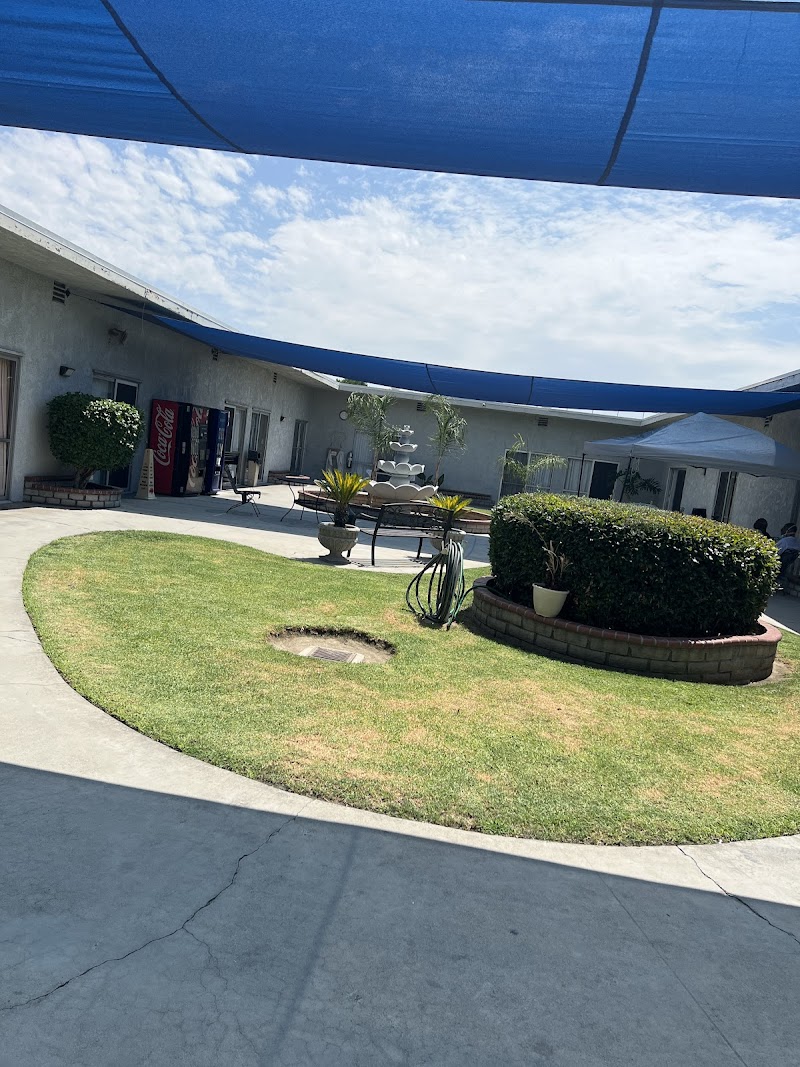
HAVEN POST ACUTE

1311 EAST DATE STREET, SAN BERNARDINO, CA 92404 (909) 882-3316
For profit - Limited Liability company 99 Beds BVHC, LLC Data: November 2025 1 Immediate Jeopardy citation
Trust Grade
48/100
#367 of 1155 in CA
Last Inspection: March 2025

Within standard 12-15 month inspection cycle. Federal law requires annual inspections.

Overview

Haven Post Acute has received a Trust Grade of D, indicating below-average quality with some concerns about care. Ranked #367 out of 1155 facilities in California, they are in the top half, but at #23 of 54 in San Bernardino County, they have several competitors providing better care. The facility is worsening, with issues increasing from 2 in 2024 to 6 in 2025, raising red flags for families considering placement. Staffing received an average rating of 3 out of 5 stars, and with a turnover rate of 47%, it is concerning as it is higher than the state average, suggesting staff may not stay long enough to build strong relationships with residents. Notably, $55,737 in fines is alarming, as it is higher than 83% of facilities in California, indicating ongoing compliance issues. Additionally, the facility has less RN coverage than 87% of similar facilities, which can impact the quality of care and oversight. Specific incidents include a failure to monitor a resident at risk for wandering, resulting in the resident being missing for over 72 hours, and a lack of proper food safety practices in the kitchen, which could jeopardize the health of vulnerable residents. Overall, while there are some strengths like good health inspection ratings, the concerning trends and specific incidents should be carefully considered by families looking for a safe and supportive environment for their loved ones.

Trust Score
D
48/100
In California
#367/1155
Top 31%
Safety Record
High Risk
Review needed
Inspections
Getting Worse
2 → 6 violations
Staff Stability
⚠ Watch
47% turnover. Above average. Higher turnover means staff may not know residents' routines.
Penalties
✓ Good
$55,737 in fines. Lower than most California facilities. Relatively clean record.
Skilled Nurses
⚠ Watch
Each resident gets only 17 minutes of Registered Nurse (RN) attention daily — below average for California. Fewer RN minutes means fewer trained eyes watching for problems.
Violations
⚠ Watch
27 deficiencies on record. Higher than average. Multiple issues found across inspections.
★★★★☆
4.0
Overall Rating
★★★☆☆
3.0
Staff Levels
★★★★☆
4.0
Care Quality
★★★★☆
4.0
Inspection Score
Stable
2024: 2 issues
2025: 6 issues

The Good

  • 4-Star Quality Measures · Strong clinical quality outcomes
  • Full Sprinkler Coverage · Fire safety systems throughout facility
  • No fines on record

Facility shows strength in quality measures, fire safety.

The Bad

Staff Turnover: 47%

Near California avg (46%)

Higher turnover may affect care consistency

Federal Fines: $55,737

Above median ($33,413)

Moderate penalties - review what triggered them

Chain: BVHC, LLC

Part of a multi-facility chain

Ask about local staffing decisions and management

The Ugly 27 deficiencies on record

1 life-threatening
Mar 2025 6 deficiencies
CONCERN (D)

Potential for Harm - no one hurt, but risky conditions existed

Deficiency F0697 (Tag F0697)

Could have caused harm · This affected 1 resident

**NOTE- TERMS IN BRACKETS HAVE BEEN EDITED TO PROTECT CONFIDENTIALITY** Based on observation, interview, and record review, the facility failed to ensure the Pain Assessment and Management policy was ...

Read full inspector narrative →
**NOTE- TERMS IN BRACKETS HAVE BEEN EDITED TO PROTECT CONFIDENTIALITY** Based on observation, interview, and record review, the facility failed to ensure the Pain Assessment and Management policy was implemented for one of two residents (Resident 214) reviewed for pain, when Resident 214's PRN (pro re nata; as needed) pain medication was not administered as ordered by the physician. This failure had the potential to put Resident 214 in unnecessary prolonged pain and discomfort and had the potential for increased suffering, delayed recovery, and reduced mobility, ultimately affecting the resident's overall well-being. Findings: During a review of Resident 214's admission Record (contains demographic and medical information), it indicated Resident 214 was admitted to the facility on [DATE], with the diagnoses for displaced intertrochanter fracture of the left femur (broken left hip), hypertension (elevated blood pressure), and type 2 diabetes mellitus (a condition where the body has trouble to regulating blood sugar.) During a review of Resident 214's Physician Orders, dated March 1, 2025, at 9:00 AM, it indicated Resident 214 had an order to receive Pregabalin (used to treat nerve pain) 100 mg (milligrams - unit of weight) give 1 capsule by mouth every morning and bedtime for nerve pain. During a review of Resident 214's Physician Orders dated, March 1, 2025, at 11:15 AM, it indicated Hydrocodone -Acetaminophen (Norco - is a opioid, pain medication use for severe pain) oral tablet 10-325 mg give 1 tablet by mouth every 6 hours PRN as needed for pain 1-10 NTE (not to exceed) more than 3 grams (grams unit on weight) in 24 hrs. (hours) Start Date, March 1, 2025 at 11:15 AM. During an observation on March 4, 2025, at 9:19 AM, inside Resident 214's room, Resident 214 was lying in bed, awake, alert, oriented x 3 and was able to verbalize needs. Resident 214 had a facial grimace and stated she was experiencing pain, with a pain scale (tool used to measure and quantify the intensity of pain; 10 means worst pain possible.) of 7/10 (severe pain) in the left hip when moving. She also stated she had not yet received her morning medications. During further observation on March 4, 2025, at 9:35 AM, License Vocational Nurse (LVN 1) entered Resident 214's room and took Resident 214's vital signs (measurements that indicate basic bodily functions and overall health). Resident 214 reported pain of 8/10 (severe pain) to LVN 1. During further observation on March 4, 2025, at 9:47 AM, LVN 1 administered Pregabalin 100 mg to Resident 214. LVN 1 did not offered or give Norco. During a subsequent interview on March 4, 2025, at 9:52 AM, with LVN 1, LVN 1 acknowledged the Norco should have been given as ordered to Resident 214. During a concurrent interview and record review on March 6, 2025, at 11:26 AM, with the Director of Nurses (DON), the facility's policy and procedure (P&P) titled Administering Medications, revised April 2019, was reviewed. The P&P indicated, Policy Statement, Medications are administered in a safe and timely manner, and as prescribed ., 4. Medications are administered in accordance with prescriber orders, including any required time frame .7. Medications are administered within one (1) hour of their prescribe time, unless otherwise specified (for example, before and after meal orders). 10. The individual administering the medication check the label THREE (3) times to verify the right resident, right medication, right dosage, right time and right method (route) of administration before giving the medication The DON stated Norco should have been administered for Resident 214's 8/10 pain as ordered by the physician. The DON stated the facility policy was not followed and further stated there was no physician order requiring Norco and Pregabalin to be given separately or one hour apart.
CONCERN (D)

Potential for Harm - no one hurt, but risky conditions existed

Unnecessary Medications (Tag F0759)

Could have caused harm · This affected 1 resident

**NOTE- TERMS IN BRACKETS HAVE BEEN EDITED TO PROTECT CONFIDENTIALITY** Based on observation, interview, and record review, the facility failed to ensure the medication error rate (determined by calcu...

Read full inspector narrative →
**NOTE- TERMS IN BRACKETS HAVE BEEN EDITED TO PROTECT CONFIDENTIALITY** Based on observation, interview, and record review, the facility failed to ensure the medication error rate (determined by calculating the percentage of medication errors (observed or identified preparation or administration of medications or biologicals which is not in accordance with prescriber's order; manufacturer's specifications; or accepted professional standards and principles) observed during a medication administration observation) were not 5 percent or greater. There were three medication errors identified out of 33 opportunities for errors, affecting one of 8 residents (Resident 214), resulting in an overall medication error rate of 9.09 % when three of Resident 214's were not administered in accordance with prescriber's order and facility policy on March 4, 2025. This failure had the potential to place Resident 214 at risk for dangerously high blood sugar, increasing the risk of serious health complications including infection (when harmful bacteria, viruses or fungi enter the body and start growing causing illness, delayed wound healing, and sepsis (severe infection that spreads through the blood and can damage organs or be life-threatening).Furthermore, this failure had the potential to put Resident 214 in unnecessary prolonged pain and discomfort and had the potential for increased suffering, delayed recovery, and reduced mobility, ultimately affecting the resident's overall well-being. Findings: During a review of Resident 214's admission Record (contains demographic and medical information) indicated Resident 214 was admitted to the facility on [DATE], with the diagnoses for displaced intertrochanter fracture of the left femur (broken left hip), hypertension (elevated blood pressure), and type 2 diabetes mellitus ( a condition where the body has trouble regulating blood sugar.) During a review of Resident 214's Physician Orders dated March 1, 2025, at 8:00 AM, it indicated Resident 214 had an order to receive Metformin HCL (used to treat high blood sugar levels) 850 mg (milligram- unit of measurement) Give 1 (one) tablet by mouth two times a day for diabetes with breakfast and evening .Start Date, March 1, 2025, at 8:00 AM, and Glipizide (used to treat high blood sugar levels) ER (Extended Release) tablet, Extended Release 24-hour 5 mg, give 1 tablet by mouth one time a day for diabetes hold if bs (blood sugar) is less than 100. Do not crush Start Date March 1, 2025, at 8:00 AM. During a review of Resident 214's Physician Orders dated, March 1, 2025, at 11:15 AM, it indicated Hydrocodone -Acetaminophen (Norco - opioid, pain medication use for severe pain) oral tablet 10-325 mg give 1 tablet by mouth every 6 hours PRN as needed for pain 1-10 NTE (not to exceed) more than 3 grams (grams unit on weight) in 24 hrs. (hours) Start Date, March 1, 2025 at 11:15 AM. During an observation on March 4, 2025, at 9:19 AM, inside Resident 214's room, Resident 214 was lying in bed, awake, alert, and oriented, able to verbalize need. Resident 214 had a facial grimace and stated she was experiencing pain, with a pain scale (tool used to measure and quantify the intensity of pain; 10 means worst pain possible.) of 7/10 (severe pain) in the left hip when moving. Resident 214 stated she had not yet received her morning medications. During a further observation on March 4, 2025, at 9:35 AM, License Vocational Nurse (LVN 1) entered Residents 214's room and took Resident 214's vital signs (measurements that indicate basic bodily functions and overall health) which included her blood sugar, which was 251mg/dL (milligrams per deciliter, used to measure the amount of sugar in the body.) Resident 214 reported pain of 8/10 (severe pain) to LVN 1. During further observation on March 4, 2025, at 9:42 AM, in Resident 214's room, LVN 1 administered Metformin HCL 850 and Glipizide ER 5 mg to Resident 214. (These medications were scheduled for 8:00 AM. The administration time was noted as being one hour and forty-two minutes after the scheduled time.) During further observation on March 4, 2025, at 9:47 AM, LVN 1 continued to administer Resident 214's medications. LVN 1 did not offered or give Norco. During a subsequent interview with LVN 1, on March 4, 2025, at 9:52 AM, LVN 1 stated the Resident 214's Metformin and Glipizide were administered late. LVN 1 also stated the Norco should have been given as ordered to Resident 214. During a concurrent interview and record review on March 6, 2025, at 11:26 AM with the Director of Nurses (DON), the facility's policy and procedure (P&P) titled Administering Medications Policy dated, revised April 2019, was reviewed. The P&P indicated, Policy Statement Medications are administered in a safe and timely manner, in accordance with prescriber orders, including any required time frame ., 7. Medications are Administered within one (1) hour of their prescribed time, unless otherwise specified (for example, before and after meal orders) . The DON stated the staff did not follow the policy and that the delay in administering Metformin and Glipizide was not in compliance with the physician's orders. She further stated that Metformin was scheduled to be given with breakfast because it was more effective when taken with food to help regulate blood sugar levels through the day. The DON acknowledged that delaying diabetes medications can increase blood sugar. The DON also stated Norco should have been administered for Resident 214's 8/10 pain as ordered by the physician.
CONCERN (D)

Potential for Harm - no one hurt, but risky conditions existed

Deficiency F0760 (Tag F0760)

Could have caused harm · This affected 1 resident

**NOTE- TERMS IN BRACKETS HAVE BEEN EDITED TO PROTECT CONFIDENTIALITY** Based on observation, interview, and record review, the facility failed to ensure one of eight residents (Resident 214) reviewed...

Read full inspector narrative →
**NOTE- TERMS IN BRACKETS HAVE BEEN EDITED TO PROTECT CONFIDENTIALITY** Based on observation, interview, and record review, the facility failed to ensure one of eight residents (Resident 214) reviewed for medication administration was free of significant medication error (observed or identified preparation or administration of medications or biologicals which is not in accordance with prescriber's order; manufacturer's specifications (not recommendations); or accepted professional standards and principles, which causes the resident discomfort or jeopardizes his or her health and safety) when three of Resident 214's medications were not administered in accordance with physician's order and facility policy on March 4, 2025. This failure had the potential to place Resident 214 at risk for dangerously high blood sugar, increasing the risk of serious health complications including infection (when harmful bacteria, viruses or fungi enter the body and start growing causing illness, delayed wound healing, and sepsis (severe infection that spreads through the blood and can damage organs or be life-threatening).Furthermore, this failure had the potential to put Resident 214 in unnecessary prolonged pain and discomfort and had the potential for increased suffering, delayed recovery, and reduced mobility, ultimately affecting the resident's overall well-being. Findings: During a review of Resident 214's admission Record (contains demographic and medical information) indicated Resident 214 was admitted to the facility on [DATE], with the diagnoses for displaced intertrochanter fracture of the left femur (broken left hip), hypertension (elevated blood pressure), and type 2 diabetes mellitus ( a condition where the body has trouble regulating blood sugar.) During a review of Resident 214's Physician Orders dated March 1, 2025, at 8:00 AM, it indicated Resident 214 had an order to receive Metformin Hydrochloride (used to treat high blood sugar levels) 850 mg Give 1 (one) tablet by mouth two times a day for diabetes with breakfast and evening .Start Date, March 1, 2025, at 8:00 AM, and Glipizide (used to treat high blood sugar levels) Extended Release 24-hour 5 mg, give 1 tablet by mouth one time a day for diabetes hold if bs (blood sugar) is less than 100. Do not crush Start Date March 1, 2025, at 8:00 AM. During a review of Resident 214's Physician Orders dated, March 1, 2025, at 11:15 AM, it indicated Hydrocodone -Acetaminophen (Norco - opioid, pain medication use for severe pain) oral tablet 10-325 mg give 1 tablet by mouth every 6 hours PRN as needed for pain 1-10 NTE (not to exceed) more than 3 grams (grams unit on weight) in 24 hrs. (hours) Start Date, March 1, 2025 at 11:15 AM. During an observation on March 4, 2025, at 9:19 AM, inside Resident 214's room, Resident 214 was lying in bed, awake, alert, and oriented, able to verbalize need. Resident 214 had a facial grimace and stated she was experiencing pain, with a pain scale (tool used to measure and quantify the intensity of pain; 10 means worst pain possible.) of 7/10 (severe pain) in the left hip when moving. Resident 214 stated she had not yet received her morning medications. During further observation on March 4, 2025, at 9:35 AM, License Vocational Nurse (LVN 1) entered Residents 214's room and took Resident 214's vital signs (measurements that indicate basic bodily functions and overall health) which included her blood sugar, which was 251mg/dL (milligrams per deciliter, used to measure the amount of sugar in the body.) Resident 214 reported pain of 8/10 (severe pain) to LVN 1. During further observation on March 4, 2025, at 9:42 AM, in Resident 214's room, LVN 1 administered Metformin HCL 850 and Glipizide ER 5 mg to Resident 214. (These medications were scheduled for 8:00 AM. The administration time was noted as being one hour and forty-two minutes after the scheduled time.) During further observation on March 4, 2025, at 9:47 AM, LVN 1 continued to administer Resident 214's medications. LVN 1 did not offered or give Norco. During a subsequent interview with LVN 1, on March 4, 2025, at 9:52 AM, LVN 1 stated the Resident 214's Metformin and Glipizide were administered late. LVN 1 also stated the Norco should have been given as ordered to Resident 214. During a concurrent interview and record review on March 6, 2025, at 11:26 AM with the Director of Nurses (DON), the facility's policy and procedure (P&P) titled Administering Medications Policy dated, revised April 2019, was reviewed. The P&P indicated, Policy Statement Medications are administered in a safe and timely manner, in accordance with prescriber orders, including any required time frame ., 7. Medications are Administered within one (1) hour of their prescribed time, unless otherwise specified (for example, before and after meal orders) . The DON stated the staff did not follow the policy and that the delay in administering Metformin and Glipizide was not in compliance with the physician's orders. She further stated that Metformin was scheduled to be given with breakfast because it was more effective when taken with food to help regulate blood sugar levels through the day. The DON acknowledged that delaying diabetes medications can increase blood sugar. The DON also stated Norco should have been administered for Resident 214's 8/10 pain as ordered by the physician.
CONCERN (E)

Potential for Harm - no one hurt, but risky conditions existed

Deficiency F0692 (Tag F0692)

Could have caused harm · This affected multiple residents

**NOTE- TERMS IN BRACKETS HAVE BEEN EDITED TO PROTECT CONFIDENTIALITY** Based on interview and record review, the facility failed to ensure their weight change protocol was implemented for one of two ...

Read full inspector narrative →
**NOTE- TERMS IN BRACKETS HAVE BEEN EDITED TO PROTECT CONFIDENTIALITY** Based on interview and record review, the facility failed to ensure their weight change protocol was implemented for one of two residents (Resident 50) reviewed for nutrition when the Registered Dietitian Nutritionist (RDN) recommendations for Resident 50, which included weekly weights monitoring and administration of appetite stimulant (substances that increase hunger and food intake) were not carried out timely. These failures have the potential to place Resident 50 at risk for malnutrition (state of nutritional deficiency or imbalance that occurs when the body does not receive or absorb sufficient nutrients to meet its physiological needs), increasing the risk of further weight loss, frailty, and weakened immune function, muscle wasting, weakness, reduced mobility, and cognitive and psychological decline, potentially leading to confusion, lethargy, and depression. Findings: During a review of Resident 50's admission Record (contains demographic and medical information), it indicated Resident 50 was admitted to the facility on [DATE] with diagnoses of acute kidney failure (a condition where kidney suddenly stop working properly, making difficult to eliminate waste), dysphagia (difficulty of swallowing foods, liquids or even saliva) and depression ( a mental health condition that causes persistent sadness, hopelessness and loss of interest.) During a review of Resident 50's Nutritional Initial Screener dated July 28, 2024, at 1:57 PM, it indicated, 1. Admitting Diagnosis: Difficulty in walking, acute kidney failure .2. Diet, NAS diet, (not added salt) Regular texture .,12. Appetite a. Poor (0-49%) ., 22. Most Recent Weight, Weight: 142 lbs. (pounds) . During a review of Resident 50's Care Plan dated, August 14, 2024, indicated, Nutritional risk r/t advancing age, weakness, decrease mobility, decrease strength .Goal, maintain weight acceptable to resident / responsible party and clinically appropriate ., Interventions ., monitor weight and notify MD for any undesirable weight changes ., Other dietary interventions . During a review of Resident 50's IDT (Interdisciplinary Team)Weight Variance (measurement of the spread of data points around their weighted mean, assigning different importance to each data point based on its assigned weight), dated September 4, 2024, at 4:30 PM, it indicated .weight 128 lbs. (which is a equivalent of 14 pounds less from the RD evaluation, 9.86 % in, 38 days), Interventions: 1. Weekly weights x 4 d/t weight loss (weekly weight for four weeks due to weight loss), 2 fortify diet d/t weight loss. During a review of Resident 50's Vital Weights for the month of September 2024, there was no documented evidence to indicate Resident 50's weekly weights were taken on the following weeks: September 9, 2024 - September 15, 2024, September 16, 2024 - September 22, 2024, and September 23, 2024 - September 30, 2024. (Three of four weekly weights was not done.) During a review of Resident 50's IDT weight Variance dated November 5, 2024, at 2:45 PM, it indicated A. Weight, Most Recent Weight, Weight:113 lbs. (from last weight, -15 pounds less; 18.7%) .,6. Interventions: Recommendations: 1. Appetite stimulant d/t weight loss/ poor appetite, weights x 4 d/t weight loss.) . During a review of Resident 50's Vital Weights for the month of November 2024, there was no documented evidence to indicate Resident 50's weekly weights were taken on the following weeks: November 5, 2024 - November 10, 2024, November 11, 2024 - November 17, 2024, and November 18, 2024 - November 24, 2024. (Three of four weekly weights was not done) During a review of Resident 50's clinical records, there was no documented evidence to indicate an appetite stimulant was ordered for Resident 50 for the months, November 2024 and December 2024. During a review of Resident 50's Physician Orders dated January 23, 2025, at 9:00 PM, it indicated Mirtazapine (aka Remeron- anti-depressive medication which can be used to improve appetite) Oral Tablet 15 mggive 1 tablet by mouth at bedtime for depression m/b (manifested by) decrease appetite. Start Date January 23, 2025, at 9:00 PM. During a phone interview and concurrent record review of Resident 50's clinical records, on March 5, 2025, at 11:19 AM, with the RD, the RD stated she recommended weekly weight monitoring and appetite stimulant to Resident 50 on November 5, 2024, due to continued weight loss. The record review indicated the appetite stimulant was not ordered until January 23, 2025 (79 days later, with no documentation explaining the delay). The RD stated she had concerns over the lack of follow - through with her recommendations. She stated weekly weight monitoring was essential for tracking fluctuations and ensuring timely interventions but stated she relies on facility staff to implement her recommendations and does not personally verify follow through. During a concurrent interview and record review on March 6, 2025, at 10:34 AM, with the Director of Nurses (DON), the DON reviewed Resident 50's clinical record stated Resident 50's weekly weights monitoring were not consistently performed as recommended by RD, specifically from September 9, 2024, through September 30, 2024, and November 5, 2024, through November 24, 2024. She further stated the appetite stimulant recommended by the RD on November 5, 2024, was not implemented until January 23, 2025 (resulting in 79 - day delay.) The DON stated these failures to a breakdown in communication and an oversight due to an email miscommunication, which led the Resident 50's name being omitted from the list of residents requiring interventions. She stated that while she typically ensures follow-up on RD recommendations through nursing staff, in this instance, she failed to confirm whether the orders were carried out. During a concurrent interview and record review on March 6, 2025, at 10:58 AM, with the DON, the DON reviewed the facility's policy and procedure (P&P) titled, weight Change Protocol dated 2023, which indicated, Early identification of a weight problem and possible cause (s) can minimize complications Assessment of resident experiencing weight changes should be completed in a timely manner. Residents will be weighed monthly and weekly for those newly admitted and those deemed to be at high risk for weight changes or according to the facility's policies. Variances are calculated from monthly and weekly weights that are obtained by facility staff. Resident who experience significant changes in weight or insidious weight loss will be assessed by the RD. The following criteria significant or insidious weight changes: Slow and progressive weight change trending away from weight goal. This can refer to weekly or monthly weights. 3# weight loss or gain in 1 week or as facility policy states, 5# weight loss or gain in 1 month .,5.0% weight loss or gain in 1 month .7.5% weight loss or gain in 3 months . The DON stated this policy was not followed.
CONCERN (E)

Potential for Harm - no one hurt, but risky conditions existed

Deficiency F0761 (Tag F0761)

Could have caused harm · This affected multiple residents

**NOTE- TERMS IN BRACKETS HAVE BEEN EDITED TO PROTECT CONFIDENTIALITY** Based on observation, interview, and record review, the facility failed to ensure that medications and treatment supplies were s...

Read full inspector narrative →
**NOTE- TERMS IN BRACKETS HAVE BEEN EDITED TO PROTECT CONFIDENTIALITY** Based on observation, interview, and record review, the facility failed to ensure that medications and treatment supplies were stored in accordance with the facility's policy and procedure when: 1. Two expired Central Line Trays (a kit containing the necessary supplies for maintaining a central venous catheter [long thin tube inserted into a large vein near the heart]) were found in the intravenous cart (IV cart- mobile cart used to store intravenous supplies) and were available for use. 2. Six different types of expired dressings (pads or materials applied directly to wounds to protect them, promote healing, and absorb fluids), in various quantities were found inside the treatment cart and were available for use. 3. A medication treatment cup filled with an unidentified cream was found underneath Resident 5's bed. These failures had the potential for the medical and treatment supplies to loss sterility and adhesive strength, increasing the likelihood of infection and ineffective wound care, placing 88 residents' health at risk. Findings: 1. During a concurrent observation and interview on [DATE], at 9:14 AM, with the Registered Nurse (RN 1), the IV cart was inspected. Two central line trays with an expiration date of [DATE] (Expired for four months) were found inside the IV Cart. RN 1 validated the expiration date and stated they should not be inside the IV cart. During a concurrent interview and record review on [DATE], at 8:00 AM, with the Director of Nursing (DON), the facility's policy and procedure (P&P) titled, Labeling of Medication Containers, revised [DATE], was reviewed. The P&P indicated, All medications maintained in the facility are properly labeled in accordance with current state and federal guidelines and regulations .4. Labels for stock medications . c. The expiration date . The DON stated the policy was not followed. 2. During a concurrent observation and interview on [DATE], at 9:30 AM, with the Treatment Licensed Vocational Nurse (Tx LVN), the Treatment Cart was inspected. The following expired dressings were found: a. Six Dermafilm hydrocolloid dressings (dressing that maintain a moist wound environment that remains breathable to moisture vapor) dated [DATE], (Expired for more than 22 months) b. Four Medi honey Hydrogel dressings (flexible dressing with manuka honey and sodium alginate which creates an antibacterial environment for wound protection) dated expired [DATE], (Expired for more than 14 months) c. Two Replicare dressings (dressing designed to create and maintain a moist wound environment by absorbing wound secretions to form a soft gel) dated [DATE], (Expired for more than 13 months) d. Six Cutimed Sorbact dressings (dressing that is used to treat infected wounds; coated with a hydrophobic fatty acid that binds to germs and removes them from the wound) dated [DATE], (Expired for more than 11 months) e. One DynaDerm hydrocolloid dressing (waterproof dressing that creates a protective patch over a wound, acting as a scab) dated [DATE], (Expired for more than months) f. One Mepilex Lite dressing (thin foam dressing designed to manage no- to low-exudate wounds) dated [DATE]. (Expired for more than 2 months) The Tx LVN validated the dressings were expired and stated the dressings should not be inside the treatment cart. During a concurrent interview and record review on [DATE], at 8:00 AM, with the Director of Nursing (DON), the facility's policy and procedure (P&P) titled, Labeling of Medication Containers revised [DATE] was reviewed. The P&P indicated, All medications maintained in the facility are properly labeled in accordance with current state and federal guidelines and regulations .4. Labels for stock medications . c. The expiration date . The DON stated the policy was not followed. 3. During a concurrent observation and interview on [DATE], at 9:45 AM, with Licensed Vocational Nurse 1 (LVN 1), in Resident 5's room, a medication treatment cup filled with an unidentified cream was found on the floor, underneath Resident 5's bed. LVN 2 verified the finding, and stated it was not supposed to be left in a resident's room or be within reach to a resident. LVN 2 further stated medications should be properly stored in either the medication room or one of the medication carts. During an interview on [DATE], at 4:15 PM, with the Director of Nursing (DON), the DON stated the expectation was for medications to be safely stored where it cannot be easily accessed by a resident. The DON further stated the medication treatment cup filled with an unidentified cream should have been disposed of and not left inside Resident 5's room. During a concurrent interview and record review on [DATE], at 4:30 PM, with the Administrator (Admin), the facility's policy and procedure (P&P) titled, Storage of Medications, revised [DATE], was reviewed. The P&P indicated, .Drugs and biologicals used in the facility are stored in locked compartments under proper temperature, light and humidity controls. The Admin stated the facility staff should have followed the P&P.
CONCERN (F)

Potential for Harm - no one hurt, but risky conditions existed

Food Safety (Tag F0812)

Could have caused harm · This affected most or all residents

Based on observation, interview, and record review, the facility failed to store and prepare food in accordance with professional standards for food safety when buildup of grime and debris were noted ...

Read full inspector narrative →
Based on observation, interview, and record review, the facility failed to store and prepare food in accordance with professional standards for food safety when buildup of grime and debris were noted on the floor and walls of kitchen's walk-in refrigerator. This failure had the potential to result in accumulation of pathogenic microorganisms (germs or infectious agents that can cause disease) and attraction of insects or rodents, which could place the health and safety of 88 highly vulnerable residents who receives food from the kitchen at risk. Findings: During a concurrent observation and interview with the Dietary Supervisor (DS), on March 3, 2025, at 8:44 AM, in the kitchen, the walk-in refrigerator was inspected. There was buildup of grime and debris on the floors and walls, underneath the shelve racks. The DS acknowledged the finding, and stated it is unacceptable. The DS further stated the walk-in refrigerator should be free of grime and debris. During a concurrent interview and record review on March 5, 2025, at 9:09 AM, with the Administrator (Admin), the facility's policy and procedure (P&P) titled, Sanitation, revised 2023, was reviewed. The P&P indicated, .11. All utensils, counters, shelves, and equipment shall be kept clean, maintained in good repair and shall be free from breaks, corrosions, open seam, and chipped areas 16. The kitchen staff is responsible for all the cleaning with the exception of ceiling vents, light fixtures, and the hood over stove, which will be cleaned by the maintenance staff. The Admin stated the facility staff did not follow the P&P. The Admin further stated the kitchen should be clean, including the walk-in fridge. During a review of the US FDA (United States Food and Drug Administration) Federal Food Code, dated 2022, section 6-601.11, titled, Equipment, Food-Contact Surfaces, Nonfood-Contact Surfaces, and Utensils, it indicated, Equipment food-contact surfaces and utensils shall be clean to sight and touch .The food-contact surfaces of cooking equipment and pans shall be kept free of encrusted grease deposits and other soil accumulations .Nonfood-contact surfaces of equipment shall be kept free of an accumulation of dust, dirt, food residue, and other debris. The FDA Food Code, Section 4-601.11, further indicated, The objective of cleaning focuses on the need to remove organic matter from food-contact surfaces so that sanitization can occur and to remove soil from nonfood contact surfaces so that pathogenic microorganisms will not be allowed to accumulate, and insects and rodents will not be attracted.
May 2024 1 deficiency
CONCERN (D) 📢 Someone Reported This

A family member, employee, or ombudsman was alarmed enough to file a formal complaint

Potential for Harm - no one hurt, but risky conditions existed

Quality of Care (Tag F0684)

Could have caused harm · This affected 1 resident

**NOTE- TERMS IN BRACKETS HAVE BEEN EDITED TO PROTECT CONFIDENTIALITY** Based on observation, interviews, and record review, the facility failed to follow its policy and procedure to provide care and ...

Read full inspector narrative →
**NOTE- TERMS IN BRACKETS HAVE BEEN EDITED TO PROTECT CONFIDENTIALITY** Based on observation, interviews, and record review, the facility failed to follow its policy and procedure to provide care and services for residents and ensure call lights are answered in a timely manner for all four sampled residents (Residents 1, 2, 3, and 4). This failure has the potential to jeopardize the health and safety of clinically compromised Residents (Residents 1, 2, 3, and 4) when their requests for assistance with activities of daily living were not responded to promptly. Findings: During the review of Resident 1's admission record (It contains important information about the patient such as their personal details, the reason for their admission, and their medical history), the document indicated Resident 1 was admitted to the facility on [DATE], with a diagnosis that included unspecified hyperlipidemia (increase levels of lipids - like cholesterol [waxy substance found in the blood] with high cholesterol increases the chance of heart problem). During interview and observation with Resident 1 on May 30, 2024, at 12:00 PM, Resident 1 expressed dissatisfaction with the night shift response to call lights, noting that occasional wait times extend up to two hours. During the review of Resident 2's admission record, the document indicated Resident 2 was admitted to the facility on [DATE], with a diagnosis that included sepsis (an infection in the blood). During an interview and observation with Resident 2 on May 30, 2024, at 12:30 PM, Resident 2 expressed concern regarding the response time to call light, indicating that staff members take an extended period, ranging from 15 minutes to 15 hours. This has resulted in instances where Resident 2 has been left unattended and soiled. During the review of Resident 3's admission records the document indicated Resident 3 was admitted to the facility on [DATE], with a diagnosis that included Rhabdomyolysis (a condition that causes muscles to breakdown). During an interview and observation with Resident 3 on May 2, 2024, at 12:30 PM, Resident 3 reported extended wait times over an hour or more for staff to respond to her call lights. There was one instance of a three hour- delay, which required intervention by her husband. Resident 3 mentioned that her husband had to file a grievance before she noticed any improvement any staff response time to her call lights. During the review of Resident 4's admission records the document indicated Resident 4 was admitted on [DATE], with a diagnosis that included end stage renal disease (a medical condition in which a person's kidney stop working). During an interview and observation with Resident 4 on May 2, 2024, at 12:56 PM, Resident 4 stated the staff does not respond to call lights on time. During an interview with Social Worker 1 on May 2, 2024, at 1:04 PM, social worker confirmed receiving a grievance from resident 3, and staff were in service about bedside manner. A review of facility provided document titled Resident Grievance/Complaint Investigation Report indicated that a resident reported a grievance on May 14, 2024, regarding a Certified Nurse Assistance bedside manner. The document also mentioned that the Director of Staff Development (DSD) was informed about the grievance. During a review of the facility's policy titled Call System, Resident. The policy indicated, Calls for assistance are answered as soon as possible, but no later than 5 minutes. Urgent requests for assistance are addressed immediately.
Mar 2024 1 deficiency 1 IJ
CRITICAL (J) 📢 Someone Reported This

A family member, employee, or ombudsman was alarmed enough to file a formal complaint

Immediate Jeopardy (IJ) - the most serious Medicare violation

Accident Prevention (Tag F0689)

Someone could have died · This affected 1 resident

**NOTE- TERMS IN BRACKETS HAVE BEEN EDITED TO PROTECT CONFIDENTIALITY** Based on interview, and record review, the facility failed to provide adequate supervision, to a resident identified as having m...

Read full inspector narrative →
**NOTE- TERMS IN BRACKETS HAVE BEEN EDITED TO PROTECT CONFIDENTIALITY** Based on interview, and record review, the facility failed to provide adequate supervision, to a resident identified as having moderate risk of elopement (risk that refers to a situation where a resident, has a moderate likelihood or possibility of leaving the premises without authorization or supervision, wandering away from a controlled environment, which can pose safety risks for the individual) for one of three sampled residents (Resident 1), when Resident 1 ' s elopement and wandering care plan did not address the specific monitoring needs and frequency necessary to minimize the risk or prevent Resident 1 leaving a safe area without the facility ' s awareness on March 6, 2024, and had not been found for more than 72 hours. This failure had the potential to place Resident 1's health and safety at risk and for him to likely experience some serious adverse outcome, due to exposure of the (outdoor) elements, missed antipsychotic medications (drugs used to treat symptoms of psychosis (mental disorder characterized by a disconnection from reality) and without vital resources such as food, water, and shelter. Resident 1 was placed at high risk for accidents, psychotic outburst (which might lead danger to self and/or others), heat exposure, hypothermia (prolonged exposure to the cold can lead to complete failure of your heart and respiratory system and eventually to death), dehydration and/or other medical complications, including severe injury and even death. Findings: A review of Resident 1's clinical record titled, admission Record (contains medical and demographic information) indicated Resident 1 was admitted to the facility on [DATE], with diagnoses which included schizoaffective disorder (mental health disorder including schizophrenia [disorder that affects a person's ability to think, feel, and behave clearly] and mood disorder symptoms), altered mental status, and toxic encephalopathy (a degenerative neurological (nerve cell) (condition that can lead to memory loss, impaired or loss of vision, and altered mental status). During a review of Resident 1's clinical record from the hospital, dated November 3, 2023, it indicated .Patient [Resident 1] was confused and not able to hold conversation get distracted and walking around . lacks decision making capacity . brought to ER [Emergency Room] for AMS [Altered Mental Status]. Patient stated he is from Chicago and walked to California and took for him 99 months to reach California . During a review of Resident 1's History and Physical (H&P), dated November 17, 2023, it indicated Patient [Resident 1] is not able to make own decision . consider psych eval (also known as Psychiatric diagnostic evaluations; used to determine a patient's mental state and guide recommendations for the best treatment. During a review of Resident 1's psychiatric follow up/progress note, dated February 20, 2024, it indicated . Pt [Resident 1] continue to endorse auditory hallucination [happen when you hear voices or noises that don't exist in reality] . MSE [Mental State Examination] Memory - impaired . Insight [level of understanding] - poor . Judgment [ability to make decisions] - poor . Plan/Recommendation/Intervention. 1) Medication Recommendation: a. Continue Olanzapine [medication used to treat schizophrenia] . schizoaffective/hallucinations. b. Increase Depakote [medication used as mood stabilizer], - schizoaffective/mood lability . 5. Continue to monitor for safety . During a review of Resident 1's Initial Elopement Assessment (a form to complete to determine if an individual requires necessary safety intervention. A score 0-18 used to determine the risk level resident for elopement), completed upon admission, dated November 16, 2023, it indicated Resident 1 had score of 9, which was moderate risk (refers to a situation where a resident, has a moderate likelihood or possibility of leaving the premises without authorization or supervision, wandering away from a controlled environment). A review of Resident 1's Social Service Notes, dated January 4, 2024, at 9:27 AM, indicated .discuss resident [Resident 1] medication and referral to public guardianship per (Public Guardian 1 (PG 1)) . Riverside County, Department of Public Social Services. The resident has no Public Guardian set at this time . During a review of Resident 1's Physician's Order Sheet, dated January 10, 2024, it indicated Resident 1 had an order to receive Zyprexa . 10 MG [milligrams-a unit of measure] (Olanzapine) Give 10 mg by mouth every morning and at bedtime for schizoaffective . A review of Resident 1's Physician's Order Sheet, dated February 20, 2024, it indicated Resident 1 had an order to receive Depakote . Give 500 mg by mouth two times a day for schizophrenia disorder . During a review of Resident 1 ' s Quarterly (completed in 3 months from the last elopement assessment) Elopement Reassessment, dated February 8, 2024, the elopement reassessment indicated Resident 1 had score of 7 (moderate risk). During a review of Resident 1's Minimum Data Set (MDS- part of the U.S. federally mandated process for clinical assessment of all residents in Medicare or Medicaid-certified nursing homes), Section GG Functional Abilities and Goals, dated February 12, 2024, the MDS indicated Resident 1 required supervision or touching assistance (Helper provides verbal cues and/or touching/steadying and/or contact guard assistance as patient/resident completes activity. Assistance may be provided throughout the activity or intermittently) with mobility. During a review of Resident 1's undated Care plan for Self-care deficit: due to need assistance in ADL [activities of daily living]: Impaired cognitive[mental abilities], physical limitation/disability . it indicated the interventions included, .Provide assistance if needed . During a review of Resident 1's undated Care Plan for At risk for elopement and wandering out the facility, it indicated the interventions included Check resident's whereabout. The care plan did not specify supervision, monitoring and frequency required for Resident 1. A review of Resident 1's Social Service Note, dated March 6, 2024, at 4:46 PM, indicated IDT (Interdisciplinary team- composed of staff from various disciplines) met to discuss . resident [Resident 1] was missing from his room, per staff [License Vocational Nurse (LVN 1)] the resident was last seen at before 10AM . During a concurrent interview and record review on March 8, 2024, at 3:30 PM with the Director of Nursing (DON) of the Facility's Notification Memo, sent to the San [NAME] District Office, dated March 7, 2024, written by the Administrator, indicated I am reporting an unusual occurrence that occurred yesterday, March 6, 2024. Our resident [Resident 1] eloped from the facility. It was reported to me at approximately 1:30PM [on March 6, 2024] that Resident 1 could not be located in the facility . The administrator directed the RN [Registered Nurse] Supervisor to notify the physician, conservator, and San [NAME] Police Department per policy . Additional calls have been placed to the police and local hospitals today. Additional expanded searches were completed today of the neighborhoods, parks, and homeless encampments . The DON stated Resident 1 was last seen by staff [LVN 1] in the facility at 10:00 AM during the morning routine medication administration. Resident 1 was not identified as missing despite Resident 1 not being present during lunch time. (There was three and a half hours without adequate supervision and Resident 1 had been gone from the facility had not been found for more than 72 hours.) During further interview on March 8, 2024, at 3:45 PM, with the DON, the DON stated Certified Nurse Assistant 1 (CNA 1) was assigned to care for Resident 1 but failed to report to Licensed Vocational Nurse (LVN 1) Resident 1 was not present for lunch when it was served between 12:15- 12:30 PM. The DON further stated CNA 1 assumed Resident 1 was in the restroom. The DON stated CNA 1 should have checked Resident 1's restroom to confirm Resident 1's location and should have checked Resident 1 more frequently throughout the shift. During a follow up interview on March 8, 2024, at 3:50 PM, with the DON, the DON stated she was not aware that Resident 1 had a previous hospitalization record of walking long distance, resulting in altered mental status and fracture, before admitted to this facility. During a concurrent interview and record review on March 8, 2024, at 3:55 PM with CNA 1 of the statement written by Director of Staff Development (DSD)'s when interview with CNA 1, dated March 7, 2024, it indicated CNA 1 said at 8:40 AM on 3/6/24 [March 6, 2024] she passed his breakfast tray, and she woke him [Resident 1] to eat. Then at lunch she delivered his lunch at 12:20 PM the bathroom door was shut but the light was on, so she assumed he is here. She knocked and then went out of the room. At 1:00 PM she went back to see if he was finished. She noticed he never ate his food [lunch meal], she searches the room and then asked her charge nurse [name of LVN 1] if she had seen him. After checking around there is no sign of [name of Resident 1] . CNA 1 stated she should have not assumed Resident 1 whereabout. Furthermore CNA 1 stated she should have checked Resident 1 restroom to make sure he is actually inside and should had check him more frequently, not just during mealtimes. During an interview on March 8, 2024, at 4:00 PM, with the Social Services Director (SSD), the SSD stated she did not realize that she has not seen Resident 1 all morning until code yellow was announced [facility's code for missing resident] for Resident 1 and while searching Resident 1's room, she noticed that Resident 1's belonging were not in his room. During an interview on March 8, 2024, at 4:05 PM, with LVN 1, LVN 1 stated the last encounter she had with Resident 1 on March 6, 2024, was when she passed his routine morning medication between 9:45 AM to 10:00 AM. LVN 1 further stated, CNA 1 did not report to her that when CNA 1 did not see Resident 1 visually when CNA 1 left Resident 1 lunch tray in his room. LVN 1 stated she did not check on or look for Resident 1 from after the morning medication was passed from 10:00 AM to 1:30 PM after she received report Resident 1 did not eat his lunch and was nowhere to be found. During a phone interview on March 8, 2024, at 4:15 PM, with Receptionist, the Receptionist stated that on March 6, 2024, that she had not seen him all morning, but later she discovered that Resident 1 went missing after the nurses went out the front door to search for him. During a concurrent interview and record review on March 8, 2024, at 4:35 PM with DON, the DON reviewed an undated facility document titled, Certified Nursing Assistant Job Description which indicated . Report to: Charge Nurse. Position Description: A nursing assistant responsible to providing routine nursing care accordance with establish policy and procedures and as may directed by the Charge Nurse, RN Supervisor, Director of Nurses or Administrator, to assure that the highest degree of quality care can be maintain at all times . General Duties and Responsibility: General . Make resident rounds at the beginning of each shift and every 2 hours thereafter to administer quality nursing care . The DON stated the facility did not follow the policy. During a concurrent interview and record review on March 8, 2024, at 4:40 PM with DON, the DON reviewed an undated facility document titled, Charge Nurse Job Description which indicated .Report to: Director of Nursing Services [DNS also known as Director of Nursing (DON)]. Position Description: The Charge Nurse is responsible for staff assignment and provides overall supervision of resident care activities . General Duties and Responsibility: . Supervision . Make resident's round to review physical, medical an emotional status and to implement required nursing intervention . Assure that nursing personal follow establish nursing procedures . The DON stated the facility did not follow the policy. During an interview on March 8, 2024, at 8:20 PM with the Administrator (ADMIN), the ADMIN stated Resident 1 had diminished mental capacity due to his mental health status. The Admin further stated Resident 1 eloped from the facility on March 6, 2024, left with his belongings, and have not been found since. During a concurrent interview and record review on March 8, 2024, at 8:30 PM with LVN 2 , LVN 2 reviewed Resident 1's undated Care plan for At risk for elopement and wandering out the facility and stated checking resident whereabouts meant checking maybe every 30 minutes to an hour. The LVN 2 remained uncertain with the frequency of checking resident's whereabout for residents with risk of elopement and where to document the findings, as no specific direction/guidance was provided. During a concurrent interview and record review, on March 8, 2024, at 8:45 PM, with DON, the DON reviewed Resident 1's undated Care Plan for At risk for elopement and wandering out the facility, and acknowledged it did not specify the frequency on how often to check on resident's whereabouts. The DON further stated the staff should do it every hour, and it should be documented to ensure the task was completed. The DON was unable to provide documentation to show Resident 1's whereabouts were checked by the staff. During a review of the facility's policy and procedure (P&P) titled, Wandering and Elopement, revised March 2019, the P&P indicated .The facility will identify residents who are at risk of unsafe wandering and strive to prevent harm while maintaining the least restrictive environment for resident . Policy interpretation and implementation. 1. If identified as at risk for wandering, elopement, or other safety issue, the resident's care plan will include strategies and intervention to maintain resident's safety . An Immediate Jeopardy (IJ- represents a situation in which entity noncompliance has placed the health and safety of recipients in its care at risk for serious injury, serious harm, serious impairment or death) was called under F689 §483.25(d)(2) Each resident receives adequate supervision and assistance devices to prevent accidents) on March 8, 2024 at 9:10 PM, after confirming Resident 1 did not receive supervision and monitoring required to keep Resident 1 safe on March 6, 2024 when Resident 1 was found to have eloped from the facility and had not been found for more than 48 hours. An IJ was called on March 8, 2024, at 9:10 PM in the presence of the Director or Nursing (DON), Administrator (ADMIN) and Chief Clinical Officer (CCO). A Corrective Action Plan (CAP- a plan which includes interventions to remove the potential or actual harm of an immediate jeopardy situation) was requested and a preliminary CAP was received on March 9, 2024, at 2:21 PM and included the following: * On 03/07/2024, The Interdisciplinary Team (IDT) reviewed the other two (2) residents who are at risk of elopement including the measures and care plans in place to prevent future elopement. Added Q hour visual checks to be documented frequent visual check log. Kept at nurse's station. * Providing adequate supervision and a safe environment for residents identified as moderate or high risk for elopement, the facility has implemented every hour monitoring of identified residents. Q [every] hour visual checks to be documented frequent visual check log. Kept in Elopement binder at nurse's station. * Licensed Nurses (LNs) and the IDT will assess residents for any possible risk of elopement upon admission, quarterly, annually, and as needed thereafter to ensure necessary interventions are initiated to meet their needs including the provisions of adequate supervision to prevent elopement. * The Elopement Binder located at the Nursing Station which contains a list of residents identified to be at risk for elopement will be updated as necessary by LNs and the IDT. * LNs will conduct huddles at the beginning of every shift to ensure needed information and instructions are communicated and provided to the CNAs to ensure frequent monitoring and adequate supervisions are provided to all residents at risk of elopement., Maintained in Huddle binder at station 1. * LNs and Certified Nursing Assistants (CNAs) in their respective shifts will continue to monitor the whereabouts of residents who are at risk of elopement using the Monitoring Log. Any residents noted with exit seeking behavior will be reported to the ADM and DNS immediately. * During the change of shift, incoming and outgoing Nurses will conduct rounds to ensure residents who are at risk of elopement are in the facility. Any issues identified will be reported to the ADM and DNS immediately. * Starting on 03/09/2024, at 8AM the Director of Staffing Development (DSD) provided in-services to staff regarding the policies and procedures on Wandering and Elopements and Emergency Procedure-Missing Person. All Staff will be in-serviced prior to their next scheduled shift. * Staff will implement the protocol for a missing resident immediately upon discovering that a resident cannot be located in the facility by following the emergency procedure. Emergency Procedure - Missing Resident Policy Statement Resident elopement resulting in a missing resident is considered a facility emergency. 1. Residents at risk for wandering and/or elopement will be monitored, and staff will take necessary precautions to ensure their safety. 2. Staff will implement the protocol for missing resident immediately upon discovering that a resident cannot be located. * Additional in-services will be provided by the DNS or designee and/or DSD or designee regarding monitoring log put in place. * Maintenance Director or designee will check alarms of all exit doors on a weekly basis to ensure they are properly functioning and record on log. The doors were checked on 3-6-24 and 3-9-24 and logged in the maintenance log located in the maintenance office. The facility submitted an IJ Removal Plan which was reviewed and accepted on March 9, 2024, at 2:21 PM. After observation, interview, and record review, to confirm implementation of the IJ removal plan, without any remaining non-compliance the IJ was lifted while on site on March 10, at 10:57 AM, in the presence of the ADMIN, the DON, and the Medical Records Director (MRD).
Sept 2023 1 deficiency
CONCERN (D) 📢 Someone Reported This

A family member, employee, or ombudsman was alarmed enough to file a formal complaint

Potential for Harm - no one hurt, but risky conditions existed

Pressure Ulcer Prevention (Tag F0686)

Could have caused harm · This affected 1 resident

**NOTE- TERMS IN BRACKETS HAVE BEEN EDITED TO PROTECT CONFIDENTIALITY** Based on interview and record review, the facility failed to ensure proper care was provided to prevent a pressure ulcer/injury ...

Read full inspector narrative →
**NOTE- TERMS IN BRACKETS HAVE BEEN EDITED TO PROTECT CONFIDENTIALITY** Based on interview and record review, the facility failed to ensure proper care was provided to prevent a pressure ulcer/injury (localized damage to the skin and/or underlying soft tissue usually over a bony prominence or related to a medical or other device) for one of four sampled residents (Resident 1). This failure placed Resident 1's health and safety at risk, when he developed a facility acquired sacrum (lower back/spine) pressure injury and right hip stage IV (full-thickness skin and tissue loss). Findings: During review of Residents 1 ' s admission Record (general demographics), the document indicated Resident 1 was admitted to the facility on [DATE], with diagnoses which included cerebral infarction (disrupted blood flow to the brain), acute embolism and thrombosis of deep veins of right upper extremity (deep vein thrombosis, clots), hypertension (high blood pressure), hereditary and idiopathic neuropathy (sensory and motor nerves are affected). During a concurrent interview and record review, on August 30, 2023, at 2:02 PM, of Resident 1 ' s Medical Record, with the Director of Nursing (DON), the following were reviewed: 1. Body Assessment, dated October 29, 2022, indicated Resident 1 had a Peg tube (abdominal feeding tube) 20FR (Enteral feeding tube, French tube measurement). Further review indiacted his skin was clear, intact, and warm to touch, with normal coloration and turgor. Further review indicated he had no rashes, or suspicious skin lesions noted. 2. Wound Care Progress Note, dated [DATE], at 6:00 PM, (about three months after his admission) indicated Right lateral foot chronic ulcer (painful injury due to poor circulation) unstageable size 1.5xUTD, 100% eschar (dry, dark scab or falling away dead skin). 3. There was no documented evidence to indicate pressure ulcer prevention was initiated and implemented by the facility for Resident 1 prior to February 9, 2023. 4. Change of Condition (COC), dated June 25, 2023, at 12:28 PM, (about eight months after his admission)indicated during the monthly skin sweep (skin assessment), Resident 1 was noted with new wounds to left heel arterial (painful injury due to poor circulation) wound and sacrum pressure injury. 5. Wound Care Progress Note, dated June 27, 2023, at 12:01 PM, indicated New reopened pressure injury to right hip stage IV (stage four) measures 2.5 x 1.5 x 0.7 cm, 50% granulation (healing process, pink tissue new connective tissue), 50% slough (yellowish material in the wound bed). Wound edges are not attached to base .extensive scarring noted, moderate serosanguineous (contains blood and liquid serum) drainage .LAL (Low Air Loss mattress) mattress needed for wound management . Wound site to Right lateral malleolus plateau (bone on the outside of the ankle joint). Measurement 0.7 x 0.3 x UTD. 100% eschar (dry, dark scab or falling away dead skin). No drainage, wound edges attached to base, pressure ulcer. 6. Wound Care Progress Note, dated August 15, 2023, at 7:17 AM, indicated For weekly wound consult on August 14, 2023, upon assessment, a. Pressure Injury to Right hip stage 4 stable and progressing .measurement 1x1x0.2cm 80% granulation, 20% eschar .gentle debridement (removal of damaged tissue) performed. b. Right lateral foot arterial ulcer measurements 1.4x1.5x2,80% granulation, 20 % eschar debridement performed. c. Right medial foot measures 0.4x0.5x0.2cm 80% granulation, 20% slough, debridement performed. During an interview on August 30, 2023, at 2:20 PM, with the Treatment Nurse, the Treatment Nurse stated, Everything is preventable, but it happened, after the wound developed, we put him [Resident 1] on an air loss mattress. During an interview and record review on August 30, 2023, at 2:02 PM, with the Director of Nurses (DON), the DON stated, Resident 1 had no wounds on admission, only Peg tube (abdominal feeding tube). When asked should a resident develop a pressure injury while in the facility? The DON replied, no they [residents] should not develop, but there are some factors. Of course, some factors are unavoidable, nutrition and lack of mobility, age and moisture. The DON reviewed Resident 1 ' s clinical record and aknowledged Resident 1 acquired sacrum pressure injury and right hip stage IV in the facility. During a review of the facility ' s policy and procedure titled, Prevention of Pressure Injuries Level III, revised April 2020, the policy and procedure indicated, The purpose of this procedure is to provide information regarding identification of pressure injury risk factors and interventions for specific risk factors. Skin assessment .Inspect the skin on a daily basis when performing or assisting with personal care or ADLs. a. Identify any signs of developing pressure injuries (i.e., non-blanchable erythema). For darkly pigmented skin, inspect for changes in skin tone, temperature, and consistency; b. Inspect pressure points (sacrum, heels, buttocks, coccyx, elbows, ischium, trochanter, etc. Prevention . 1.Keep the skin clean and hydrated.2.Clean promptly after episodes of incontinence.
Sept 2023 1 deficiency
CONCERN (D) 📢 Someone Reported This

A family member, employee, or ombudsman was alarmed enough to file a formal complaint

Potential for Harm - no one hurt, but risky conditions existed

Report Alleged Abuse (Tag F0609)

Could have caused harm · This affected 1 resident

**NOTE- TERMS IN BRACKETS HAVE BEEN EDITED TO PROTECT CONFIDENTIALITY** Based on interview, and record review, the facility failed to ensure that an allegation of abuse was promptly reported to the Ad...

Read full inspector narrative →
**NOTE- TERMS IN BRACKETS HAVE BEEN EDITED TO PROTECT CONFIDENTIALITY** Based on interview, and record review, the facility failed to ensure that an allegation of abuse was promptly reported to the Administrator, who is the Abuse Coordinator, and the appropriate agencies in accordance with the facility's policy and procedure, for one of three residents (Resident 1). This failure had the potential for an allegation of abuse to go uninvestigated and unreported thereby increasing the chances of harm to Resident 1. Finding: An unannounced visit was made to the facility on August 15, 2023, at 4:05 PM to investigate a complaint alleging that Resident 1 was physically abused by another resident. A review of Resident 1's face sheet (contains demographic information and diagnoses) indicated that Resident 1 was admitted to the facility on [DATE], with diagnoses which included: difficulty walking, limitation of activities due to disability and a mild cognitive impairment (memory loss.) During an observation of Resident 1 on August 15, 2023, at 4:46 PM, Resident 1 was observed to have bruising to the left eye. The bruise circled Resident 1's eye and was approximately 1 inch in diameter. The circle around the eye was black in color. During an interview with Resident 3 (the room mate of Resident 1) on August 15, 2023, at 4:50 PM, Resident 3 stated, The other day someone was smacking Resident 1 around and I heard it. I don't know the name of the person. It was on day shift. It was about 2 or 3 PM. I heard slapping around. Someone said it's getting red where Resident 1 was hit. After that, they kept checking on Resident 1's eye. Resident 3 stated further, I told LVN 3 what happened, and she said good luck with that story. During an interview and concurrent record review with Licensed Vocational Nurse (LVN 1) on August 15, 2023, at 5:20 PM, LVN 1 stated, Resident 1 had a situation with a roommate (Resident 2). Resident 1 and Resident 2 were arguing. Resident 2 was upset. Resident 1 was swinging a sheet trying to hit Resident 2 because he was mad. Resident 1 took his nightgown off and was trying to hit Resident 2 with it. Initially, Resident 1 was in (another room). We moved Resident 1 out of the room. I did not witness Resident 2 hit Resident 1. Resident 1 went to bed with no problem. There was no bruising or a blackened eye. LVN 1 confirmed Resident 1 did not have a black eye after the Resident to Resident altercation on August 11, 2023. LVN 1 stated further, Their incident was nights ago but let me look. I documented on it. It happened on August 11, 2023. I was told that the bruising happened on August 13, 2023. The bruise to Resident 1's eye, it doesn't look like a sheet did that. It looks funny like someone could have hit him. During an interview with Resident 1 and a certified nursing assistant (CNA1, translated Spanish) on August 15, 2023, at 5:32 PM, Resident 1 stated, LVN 2 hit me. LVN 2 hit me with the ball. During a record review of Resident 1's medical record, the SBAR communication form written by LVN 2, on August 15, 2023, at 5:38 PM indicated, Change in skin color or condition. This started on August 13, 2023. Appearance: Discovered left eye. Discoloration after flailing arms in attempts to strike out on August 11, 2023. LVN 2 wrote a late entry note on August 15, 2023, that indicated LVN 2 discovered Resident 1's blackened or bruised left eye on August 13, 2023. During an interview with the Director of Nursing on August 17, 2023, at 12:35 PM, the DON stated, LVN 1 said that Resident 1 hit himself and that's how he got the black eye but there was no discoloration after Resident 1 hit himself. On Sunday, it was noted that Resident 1 had the discoloration to the left eye. LVN 2 called and informed me of the bruise to Resident 2's left eye. The only time discoloration was noted is when LVN 2 went in to see him on Sunday. LVN 2 did a Change of Condition note late (August 15, 2023). DON confirmed this incident of alleged abuse or mistreatment was not reported to the Administrator or the appropriate authorities. DON stated further, Someone should have reported the allegation of abuse to me. It has to be reported so we can start our investigation. That still should have been reported. It should have been investigated. During an interview with the Administrator in training (AIT) on August 17, 2023, at 1:02 PM, AIT stated, That incident should have been reported because it is an allegation of abuse by a staff member to a resident. We should have been told so that we could do an investigation. We investigate the allegation to see if there is any abuse to the resident by a staff member. The facility did not provide documentation that indicated the allegations of abuse, mistreatment or unusual occurrence to Resident 1 was reported to the appropriate authorities as per their policy. The facility policy and procedure titled Abuse Investigation and Reporting dated July 2017, indicated All reports of resident abuse and or injuries of unknown source (abuse ) shall be promptly reported to local, state, and federal agencies as defined by current regulations and thoroughly investigated by facility management . Reporting 2. All alleged violations involving abuse, neglect, exploitation, or mistreatment, including injuries of unknown source will be reported by the facility Administrator, or his/her designee, to the following persons: a. The State licensing certification agency responsible for surveying licensing the facility; Ombudsman; Adult protective services, law enforcement officials. An alleged violation of abuse, neglect, exploitation, or mistreatment (including allegations of unknown source of origin) will be reported immediately, but not later than: Two (2) hours if the alleged violation involves abuse or has resulted in serious bodily injury or Twenty-four (24) hours if the alleged violation does not involve abuse AND has not resulted in serious bodily injury . The facility policy and procedure titled Unusual Occurrence Reporting dated December 2007 indicated As required by federal or state regulations, our facility reports unusual occurrences or other reportable events which affect the health, safety, or welfare of our residents, employees, or visitors .1. Our facility will report the following events to appropriate agencies: g. Allegations of abuse, neglect, and misappropriation of resident property; and h. Other occurrences that .affect the welfare, safety, or health of residents. 2. Unusual occurrences shall be reported via telephone to appropriate agencies as required by current law and or regulations within twenty-four hours of such incident or as otherwise required by federal and state regulations. The facility policy and procedure titled Abuse Prevention Program dated December 2016, indicated Our residents have the right to be free from abuse .This includes but is not limited to verbal, mental, and physical abuse. As part of the resident abuse prevention, the administrator will .4. Require staff training orientation programs that include such topics as abuse prevention, identification and reporting of abuse, and handling verbally and physically aggressive resident behavior .6. Identify and assess all possible incidents of abuse; 7. Investigate and report any allegations of abuse within timeframes as required by federal requirements .
Jun 2023 1 deficiency
CONCERN (D) 📢 Someone Reported This

A family member, employee, or ombudsman was alarmed enough to file a formal complaint

Potential for Harm - no one hurt, but risky conditions existed

Report Alleged Abuse (Tag F0609)

Could have caused harm · This affected 1 resident

**NOTE- TERMS IN BRACKETS HAVE BEEN EDITED TO PROTECT CONFIDENTIALITY** Based on interview and record review, the facility failed to report for one of 5 sampled residents (Resident 1) per there policy...

Read full inspector narrative →
**NOTE- TERMS IN BRACKETS HAVE BEEN EDITED TO PROTECT CONFIDENTIALITY** Based on interview and record review, the facility failed to report for one of 5 sampled residents (Resident 1) per there policy and procedure to the state agency and the local ombudsman for an alleged financial abuse by staff member towards (Resident 1). This failure has the potential to put (Resident 1) health, safety and well-being at risk. Findings: During review of Residents 1's admission Record (general demographics), the document indicated Resident 1 was admitted to the facility on [DATE], with diagnoses to include urinary tract infection (bladder infection), pressure ulcer of sacral region (wound to lower back), osteomyelitis (inflammation of bone). During a review concurrent interview and record review of Resident 1's Medical Record with the Director of Nursing (DON), reviewed are as follows: 1. Social Worker Note dated May 23, 2023 @1720 . call received to Social Services Department (SSD) and Administrator about a staff taking personal items .family will report to police, the news, Administrator attempt to get more info from family. 2. Social Worker Note dated May 24, 2023 @1645 . SSD and Administrator were visited today regarding staff member taking personal belongings from resident, Resident 1's mother stated she had proof to conduct investigation. 3. Timecard Report for CNA1, CNA1 was off May 25, 2023, and back working May 26, 2023, morning shift. 4. Allegation Investigation done by Administrator and Social Services Department, started May 24, 2023, to June 02, 2023. No documentation of Allegation abuse Reporting to any agency. During an interview with the Social Worker (SW) on June 07, 2023, at 11:06 AM, the (SW) stated, Resident 1's family member came into the facility, she didn't initially did give me a name, or a Police report. She came in 3 times, on the 3rd visit she showed me a screenshot of the person in question, and she told me it was CNA 1, but I could not verify because she showed me the screenshot and quickly took it away. During an interview with the Director of Nursing (DON) on June 07, 2023, the DON stated, Resident 1 first called May 23, 2023, stating we are calling the police, that same person called back again, they alleged a second cell phone that was missing. On May 24, 2023, family alleged they had CNA 1, screen shot on an (app to transfer payments and money) account and stole from a cell phone. We asked for the screen shots. We were trying to get more details, each person from the family gave us different details all, had different stories. We were trying to piece all stories. It was hard to validate the story. I had our social worker go to the acute hospital Resident 1 was transferred to and follow up on this issue. On May 24, 2023, was the day CNA1 was mentioned, and he was off that day, on May 25, 2023, we put on administrative leave and was back to work 26th. We did not report because it was not reliable, we could not validate the allegation and the family was uncooperative. We asked for screenshots. If we feel it's a concrete financial abuse, we will report if we have substantiated cause to do an investigation. During an interview with the Administrator (Admin) on June 07, 2023, the (Admin) stated, We did not report this to the state because I was not able to substantiate the allegation, I have documentation on the investigation we did and cannot substantiate it. We did not have a second cell phone in the inventory. CNA 1 was only assigned to this resident one-day morning shift, readmitted back from acute hospital and all department heads were in and out of her room all day. I can tell you that CNA1 was with her a limited time. We put CNA1 on administrative leave until investigation was completed. During a review of the facility's policy and procedure titled, Abuse Investigation and Reporting revised July 2017, the policy and procedure indicated, Reports of resident abuse, exploitation, and mistreatment and or injuries of unknown source shall be promptly reported to local, state, and federal agencies (as defined by current regulations) and investigated by facility management. Findings of abuse investigations will also be reported. Role of Administrator:4.will suspend immediately any employee who has been accused of resident abuse, pending the outcome of the investigation .Reporting 1. Alleged violations involving abuse, neglect, exploitation, or mistreatment, including injuries of an will be reported by the facility Administrator, or his/her designee, to the following persons or agencies:. The State licensing/certification agency, B. local/state ombudsman, e. law enforcement .2. An alleged violation .will be reported immediately, but not later than: a. Two (2) hours of the alleged violation involves abuse OR has resulted in serious bodily injury or B. Twenty-four (24) hour if alleged violation does not involve abuse AND has not resulted in serious bodily injury. During a review of the facility's policy and procedure titled, Abuse Prevention Program revised December 2016, the policy and procedure indicated, Our residents have the right to be free from abuse, neglect, and exploitation . 7. Investigate and report any allegations of abuse within timeframe's as required by federal requirements, 8. Protect residents during abuse allegations. During a review of the facility's policy and procedure titled, Resident Rights revised December 2016, the policy and procedure indicated, Employees shall treat all residents with kindness, respect, and dignity. AC. be free from abuse, neglect, misappropriation of property and exploitation.
May 2023 1 deficiency
CONCERN (D) 📢 Someone Reported This

A family member, employee, or ombudsman was alarmed enough to file a formal complaint

Potential for Harm - no one hurt, but risky conditions existed

Medical Records (Tag F0842)

Could have caused harm · This affected 1 resident

**NOTE- TERMS IN BRACKETS HAVE BEEN EDITED TO PROTECT CONFIDENTIALITY** Based on interview, and record review, the facility failed to accurately document that one of three residents (Resident 1) was d...

Read full inspector narrative →
**NOTE- TERMS IN BRACKETS HAVE BEEN EDITED TO PROTECT CONFIDENTIALITY** Based on interview, and record review, the facility failed to accurately document that one of three residents (Resident 1) was discharged with their personal belongings. This failure resulted in misplaced personal property for Resident 1. Findings: An abbreviated survey was conducted on May 17, 2023, at 1:20 PM, to investigate an allegation of Misappropriation of Property. During a review of Resident 1's clinical record, the face sheet (contains demographic and medical information), indicated Resident 1 was admitted on [DATE], with diagnoses which included: right hand deformity, osteoporosis (weakens bones which can easily break) and rheumatoid arthritis (inflammation and swelling to the joints). During a review of the clinical record for Resident 1, the Resident Inventory record, indicated At the time of admission, identify the resident's belongings by including the quantity and identifying the attributes of each item of personal belongings .This form must be updated throughout the resident's stay whenever a new item is brought to the Facility or taken out of the Facility .Resident information: Resident 1, Date of admission: [DATE]. Date of discharge: [DATE]. Initial Inventory: 1 cell phone, 1 charger, 1 pair of glasses Receipt: I certify that the items listed above, that remain at the Facility, have been provided to me upon discharge The receipt section of this document was not signed or dated on Resident 1's day of discharge. The missing signatures and dates indicate the facility did not verify all items were sent with resident 1 upon discharge. During a review of the clinical record for Resident 1 with Social Services Director (SSD), on May 17, 2023, at 4:04 PM, SSD stated, The inventory sheet should have been dated and signed. SSD confirmed the inventory sheet was not signed or dated to indicate Resident 1's personal belongings were received upon discharge. During a concurrent interview and record review of Resident 1's Inventory record with the Director of Nursing (DON) on May 17, 2023, at 5:07 PM, the DON stated, I don't see a signature for May 5, 2023. It should have been signed, the resident inventory sheet. The DON confirmed the inventory sheet was not signed or dated to indicate Resident 1's personal belongings were received upon discharge. The facility policy and procedure titled Release of a Resident's Personal Belongings dated March 2017, indicated Our facility protects the personal belongings of a resident who has been transferred or discharged from our facility. 1. The personal belongings of a resident transferred or discharged from our facility will be released to the resident or authorized resident representative .3. Individuals receiving the resident's personal belongings will be required to sign a release for such items. The facility policy and procedure titled, Personal Property dated September 2012 indicated .The resident's personal belongings and clothing shall be inventoried and documented upon admission .
Apr 2023 2 deficiencies
CONCERN (D) 📢 Someone Reported This

A family member, employee, or ombudsman was alarmed enough to file a formal complaint

Potential for Harm - no one hurt, but risky conditions existed

Deficiency F0558 (Tag F0558)

Could have caused harm · This affected 1 resident

**NOTE- TERMS IN BRACKETS HAVE BEEN EDITED TO PROTECT CONFIDENTIALITY** Based on observation, interview, and record review, the facility failed to ensure one of three residents (Resident 1) had the ca...

Read full inspector narrative →
**NOTE- TERMS IN BRACKETS HAVE BEEN EDITED TO PROTECT CONFIDENTIALITY** Based on observation, interview, and record review, the facility failed to ensure one of three residents (Resident 1) had the call light within easy reach. This failure had the potential for Resident 1 to have her needs not met in a timely manner and deprive this mentally compromised resident of assistance when needed to prevent falls. Findings: During a review of Resident 1's clinical record, the face sheet (contains demographic and medical information), indicated Resident 1 was admitted on [DATE], with diagnoses which included: Encephalopathy (damage of the brain), osteoporosis (weakens bones which can easily break) and fracture of left femur (broken thigh bone). While completing a brief tour of the facility on March 30, 2023, at 11:25 AM, Resident 1 was observed lying on the left side. Resident 1's call light was attached to the privacy curtain which is positioned in between two residents. The call light was out of Resident 1's reach. In an interview with Certified Nursing Assistant (CNA 1) on March 30, 2023, at 11:42 AM, CNA 1 stated, The call light is hanging from the curtain. It is supposed to be in her reach. CNA 1 stated further, the call light is to be within reach so that if anything happens, Resident 1 can let us know right away. During a review of the clinical record for Resident 1, the care plan, undated, indicated Resident is at risk for falls and/or injuries related to the fall risk assessment which states Resident 1 is a high risk for falls and has a history of falls. Interventions: Encourage/remind resident to ask for help when needed if able. Keep the environment free of hazards, clutter free, and the call light within reach. In an interview with Licensed Vocational Nurse (LVN 1), on March 30, 2023, at 11:47 AM, LVN 1 stated, We are to place the call lights on the bed right next to the resident. The call light is supposed to be next to Resident 1 so that Resident 1 can reach it. So, if they need us, they can call us. During an interview with the Director of Nursing on March 30, 2023, at 1:33 PM, when questioned about the position of Resident 1's call light the DON stated, It should be within reach. As long as the resident can access it. The call light should have been within Resident 1's reach. The facility policy and procedure titled, Answering the Call Light dated October 2010, indicated Purpose. The purpose of this procedure is to respond to the resident's request and needs. General Guidelines .5. When the resident is in bed or confined to a chair be sure the call light is within easy reach of the resident.
CONCERN (D) 📢 Someone Reported This

A family member, employee, or ombudsman was alarmed enough to file a formal complaint

Potential for Harm - no one hurt, but risky conditions existed

Quality of Care (Tag F0684)

Could have caused harm · This affected 1 resident

**NOTE- TERMS IN BRACKETS HAVE BEEN EDITED TO PROTECT CONFIDENTIALITY** Based on observation, interview, and record review, the facility failed to ensure the call light was answered in a timely manner...

Read full inspector narrative →
**NOTE- TERMS IN BRACKETS HAVE BEEN EDITED TO PROTECT CONFIDENTIALITY** Based on observation, interview, and record review, the facility failed to ensure the call light was answered in a timely manner for one of three residents (Resident 3). This failure resulted in Resident 3 not receiving medication to treat shortness of breath in a timely manner. Findings: During a review of Resident 3's clinical record, the face sheet (contains demographic and medical information), indicated Resident 1 was admitted on [DATE], with diagnoses which includes: chronic Bronchitis (inflammation of the airway), chronic obstructive pulmonary disease (COPD - narrowing of the airways making it hard to breathe), and depression. During a review of the clinical record for Resident 3, the care plans indicated: 1. Resident requires assistance from staff .Interventions: Educate resident to call for assistance using call light . 2. Alteration in respiratory status due to diagnosis of Chronic Bronchitis, Asthma and COPD. Interventions: Albuterol Sulfate Nebulization Solution .Inhale orally via nebulizer every 6 hours as needed for shortness of breath . During an review of the Resident Council Minutes, with the Activity Director (AD) on March 28, 2023, at 12:41 PM, the AD stated, For the month of January 2023: Resident 3 stated, that the nursing staff from 3 PM to 11 PM and 11 PM to 7 PM were not answering the call lights in a timely manner. AD stated further that she did not have any records to indicate Resident 3's concerns regarding the prolonged answering of the call lights was addressed by the facility. In an interview with Resident 3 on March 28, 2023, at 12:54 PM, Resident 3 stated, The call lights at night, it still takes the staff a long time to answer. It takes them maybe 30 minutes to answer when I need my nebulizer treatment at night. I have a problem breathing and it really scares me. I start to panic because it takes them 20 to 30 minutes. During an interview with the Director of Nursing on June 8, 2022, at 1:33 PM, DON stated, The call light protocol is to answer the call lights immediately and anyone can answer a call light. They are everybody's responsibilities. Staff are to answer the call lights so that we can address the residents needs and concerns. DON stated further, The call light should have been answered immediately. The facility policy and procedure titled, Answering the Call Light dated October 2010, indicated Purpose. The purpose of this procedure is to respond to the resident's request and needs. General Guidelines .5. When the resident is in bed or confined to a chair be sure the call light is within easy reach of the resident .8. Answer the resident's call as soon as possible .
Mar 2023 1 deficiency
CONCERN (E) 📢 Someone Reported This

A family member, employee, or ombudsman was alarmed enough to file a formal complaint

Potential for Harm - no one hurt, but risky conditions existed

Pharmacy Services (Tag F0755)

Could have caused harm · This affected multiple residents

Based on observation, interview, and record review, the facility failed to ensure a Schedule II medication (C-2- prescription medications containing narcotics use to relief pain) emergency kit (e-kit-...

Read full inspector narrative →
Based on observation, interview, and record review, the facility failed to ensure a Schedule II medication (C-2- prescription medications containing narcotics use to relief pain) emergency kit (e-kit- a supply kit containing emergency medications) was available for use from January 25, 2023, to February 2, 2023. (A Total of nine consecutive days.) This failure had the potential to result in delayed treatment which could jeopardize the highest practicable level of health and well-being for vulnerable population of 90. Findings: During concurrent interview and observation, with a Registered Nurse (RN), on February 3, 2023, at 4:15 PM, in the Station 1 and Station 2 medication room, there was no C-2 e-kit inside the locked cabinet. The RN confirmed the finding, and stated, We (are) still waiting for pharmacy to deliver the C-2 emergency kit. During an interview with License Vocational Nurse (LVN), on February 3, 2023, at 5:05 PM, LVN acknowledged there was no C-2 e-kit available in the facility. LVN stated she has been instructed to call the physician and the pharmacy, if there were any new orders for pain medication, or any need for pain medication after hours. During a concurrent interview and record review, with the Director of Nurses (DON), on February 3, 2023, at 5:30 PM, the DON reviewed a facility document regarding an unusual occurrence report, dated January 26, 2023, which indicated .On Wednesday, January 25, 2023 around 4:30 PM it was reported by [Name of Pharmacy] that two C-2 E-KIT were not found in the building. Each E-kit were located in the two nurses' station's medication room . The DON confirmed the C-2 e-kits were reported as missing on January 25, 2023, and stated the two C-2 e-kits have not been replaced. The DON further stated there were no C-2 e-kits that has been delivered to the facility since January 25, 2023. During an interview with the Administrator (Admin), on February 3, 2023, at 5:40 PM, the Admin stated the facility does not have a C-2 e-kit since January 25, 2023. The Admin further stated she just placed an order to the pharmacy for the two C-2 e-kits. (Nine days after the C-2 e-kits were reported as missing.) During a concurrent interview and record review, with the DON, on February 3, 2023, at 5:50 PM, the DON reviewed the facility's policy and procedure titled, Emergency Medication, revised April 2007, which indicated, .The facility shall maintain a supply of medication .2.The emergency medication kit will include medications and biologicals that are essential in providing emergency treatment .9. Medication and supplies used from the emergency kit must be replaced upon the next routine drug order . The DON stated the facility policy and procedure was not followed. A review of California Code of Regulation, Division 5. Licensing and Certification of Health Facilities, Home Health Agencies, Clinics, and Referral Agencies, Chapter 3. Skilled Nursing Facilities, Title 22, under §72377. Pharmaceutical Service -Equipment and Supplies, indicated (b) Emergency supplies as approved by patient care policy committee or pharmaceutical service committee shall be readily available to each nursing station .
Nov 2022 2 deficiencies
CONCERN (D) 📢 Someone Reported This

A family member, employee, or ombudsman was alarmed enough to file a formal complaint

Potential for Harm - no one hurt, but risky conditions existed

Deficiency F0551 (Tag F0551)

Could have caused harm · This affected 1 resident

**NOTE- TERMS IN BRACKETS HAVE BEEN EDITED TO PROTECT CONFIDENTIALITY** Based on interview, and record review, the facility failed to ensure resident representative (RP) was informed of the residents ...

Read full inspector narrative →
**NOTE- TERMS IN BRACKETS HAVE BEEN EDITED TO PROTECT CONFIDENTIALITY** Based on interview, and record review, the facility failed to ensure resident representative (RP) was informed of the residents right to consent to medical procedures and treatments when the Consent to Treatment Form (to ensure that the resident and or representative was fully aware and accepting of medical procedures or treatments while in the facility) was not completed in accordance with their policy and procedure for one of 3 sampled residents (Resident 3) . This failure had the potential for Resident 3 to receive medical procedures or treatments that were not consistent and in accordance with his wishes. Findings: An abbreviated survey was conducted on April 7, 2022, at 11:30 AM, to investigate a complaint related to Quality of Care. During a review of Resident 3's face sheet (contains demographic information) indicated, Resident 3 was admitted to the facility on [DATE], with diagnoses which included: Cirrhosis of liver (severe scarring and damage to organ that cleans the blood and aids in digestion) , chronic respiratory failure a (cannot get into oxygen into the blood), Diabetes (high blood sugar) and Palliative care (refers to relieving the symptoms of an incurable medical condition.) During review of the clinical record for Resident 3, the Advance Health Care Directive (a legal document that allow you to spell out your decisions about your end of life care ahead of tme) dated May 6, 2021, indicated, Power of Attorney for Health Care. Designation of Agent: I designate the following individual as my agent to make health care decisions for me: Agent Name: (Name of Responsible Person) .My agent is authorized to make all healthcare decisions for me, including decisions to provide, with hold, or withdraw artificial nutrition and hydration and all other forms of health care to keep me alive .My initials indicate that my agent's authority becomes effective immediately . The Advance Health Care Directive was initialed by Resident 3. During a review of the clinical record for Resident 3, the History and Physical (H&P) dated August 25, 2021, indicated, Patient has fluctuating ability (person's ability to make decisions change frequently or occasionally) to make his own decisions. During a review of the clinical record for Resident 3, the Consent to Treatment undated indicated The resident hereby consents to routine nursing care provided by this Facility, as well as emergency care that may be required. However, you have the right, to the extent permitted by law, to refuse any treatment and the right to be informed of potential medical consequences should you refuse treatment .If you are, or become, incapable of making your own medical decisions, we will follow the direction of a person with legal authority to make medical treatment decisions on your behalf, such as a guardian, conservator, next of kin, or a person designated in an Advance Health Care Directive .By signing below, the Resident and the Facility agree to the terms of this Consent to Treatment . The Consent to Treatment document was not signed by the responsible party or a representative of the facility and the document was not dated. During a concurrent interview and record review, with the Registered Nurse (RN 1), on April 7, 2022, at 4:17 PM, RN 1 stated, The consent for treatment is to be filled out. It is not. Resident 3 is not able to sign the consent due to fluctuating capacity. I would look for the Responsible Person. Fluctuating capacity means that the Resident is unable to sign. RN 1 stated further, the Advance Directive would have made me go and seek the Responsible Person. During an interview and concurrent record review, with the Director of Nursing (DON), on April 7, 2022, at 4:33 PM, DON stated, Resident 3 came into the facility under (name of agency) hospice with liver disease. Resident 3 is verbal. He had a responsible person on file upon admission with the hospice agency. Resident 3 is alert and oriented. He has fluctuating capacity. DON stated further, They are to sign the Consents which are in the Admissions packet. The consent should have been signed. The consent needs to be signed. The Responsible Person should have signed it. It is an authorization for treatment to be done. The facility could not provide documentation that stated the Consent for treatment was signed and dated by the responsible party and the facility representative during Resident 3's stay at the facility. The facility's policy and procedure (P&P) titled Consent to Treat dated April 8, 2022, indicated, Purpose: To provide guidance regarding the completion of Resident's Consent to Treat on admission. 1. Residents have the right to consent to treatment and to be informed of other consents consistent with the regulatory and facility requirements at the time of admission and throughout their stay including informed consents and other treatment consents as may be required .4. The Resident will be presumed to have capacity unless otherwise documented in the clinical record, thus all notifications, consents/informed consents will be signed by the resident in those cases where the resident has the capacity to sign. Where that is not the case, the designated representative may sign on behalf of the resident .The physician will designate capacity when the history and physical are completed but may be after the consents are presented/completion; thus, the presumed capacity will stand at that time until specified otherwise. 5. The person indicated as the Resident Representative may be a family member or by law any of the following: a conservator, a person designated under the Resident's Advance Directive or Power of Attorney for HealthCare, the resident's next of kin, a person authorized by the court.
CONCERN (D) 📢 Someone Reported This

A family member, employee, or ombudsman was alarmed enough to file a formal complaint

Potential for Harm - no one hurt, but risky conditions existed

Deficiency F0625 (Tag F0625)

Could have caused harm · This affected 1 resident

**NOTE- TERMS IN BRACKETS HAVE BEEN EDITED TO PROTECT CONFIDENTIALITY** Based on interview and record review, the facility failed to ensure the resident or the responsible party (RP) was informed of t...

Read full inspector narrative →
**NOTE- TERMS IN BRACKETS HAVE BEEN EDITED TO PROTECT CONFIDENTIALITY** Based on interview and record review, the facility failed to ensure the resident or the responsible party (RP) was informed of the Bed Hold Agreement in accordance with their policy and procedure for one of three sampled residents (Resident 3) . This failure resulted in Resident 3's responsible party being uninformed of the right to hold a bed when Resident 3 was transferred to the hospital. Findings: An abbreviated survey was conducted on April 7, 2022, at 11:30 AM, to investigate a complaint related to Admission, Transfer and Discharge Rights. During a review of Resident 3's face sheet (contains demographic information) indicated, Resident 3 was admitted to the facility on [DATE], with diagnoses which included: Alcoholic cirrhosis of liver (severe scarring and damage to the organ that cleans the blood and aids in digestion), chronic respiratory failure (cannot get oxygen into the blood), Diabetes (high blood sugar) and Palliative care (refers to relieving the symptoms of an incurable medical condition.) During a review of the clinical record for Resident 3, the Physicians Orders, dated October 12, 2021, indicated, Sent out to hospital for further evaluation. Discharge to hospital. During a review of the clinical record for Resident 3, the History and Physical dated (H&P) August 25, 2021, H&P indicated, Patient has fluctuating ability (person's ability to make decisions change frequently or occasionally) to make his own decisions. During a review of the Notice of Proposed Transfer discharge date d October 12, 2021, at 4:10 PM, indicated, Notice of Discharge and Transfer: 1. Resident: (Resident 3) 2. Date of Discharge October 12, 2021. 3. Location (General Acute Care Hospital) . During a review of the Facility's Bed hold Agreement Form, undated, the Bed Hold agreement Form indicated, The Facility has a bed hold policy and will hold the bed for up to seven (7) days if the resident is transferred to a general acute care hospital ., as long as the resident or their representative notifies the facility within twenty-four (24) hours of the transfer/leave that they wish to have the Facility hold the resident's bed .This Section to be completed Upon admission or Return to Facility. I (name) have been informed that I or my representative have the right to request that the facility hold the bed for 7 days should I be transferred to an acute hospital . The facilitywas unable to provide a documentation that stated Resident 3's representative was informed of and signed the Bed Hold Agreement. During a concurrent interview and record review of Resident 3's medical records with the Registered Nurse (RN 1), on April 7, 2022, at 4:17 PM, RN 1 stated, they are to sign the consent for the bed hold agreement which is in the Admissions packet. RN 1 stated further, I don't see a bed hold agreement and it should have been completed. There is no Bed Hold Agreement in Resident 3's records. The facility was unable to provide documentation that Resident 3 or the Responsible Representative received and signed the bed hold Agreement. During a concurrent interview and record review, with the Director of Nursing (DON), on April 7, 2022, at 4:33 PM, DON stated, They are to sign the bed hold agreement which is in the Admissions packet. The bed hold should have been completed on admission. We're informing them of the bed hold per regulation in case of a resident transfer. We can put the resident on a 7-day bed hold then the resident can come back to the facility. During review of the clinical record for Resident 3, the Advance Health Care Directive (a legal document that allow you to spell out your decisions about your end of life care ahead of tme) dated May 6, 2021, indicated, Power of Attorney for Health Care. Designation of Agent: I designate the following individual as my agent to make health care decisions for me: Agent Name: (Responsible Person) .My agent is authorized to make all healthcare decisions for me, including decisions to provide, with hold, or withdraw artificial nutrition and hydration and all other forms of health care to keep me alive .My initials indicate that my agent's authority becomes effective immediately . The Advance Health Care Directive was initialed by Resident 3. A review of the facility's policy and procedure (P&P) titled Bed-Holds and Returns undated, the P&P indicated, Policy Statement. Prior to transfers and therapeutic leaves, residents or resident representatives will be informed in writing of the bed-hold and return policy. 1. Residents may return to and resume residence in the facility after hospitalization or therapeutic leave as outlined in this policy .3. Prior to a transfer, written information will be given to the residents and the resident representatives that explains in detail: a. The rights and limitations of the resident regarding bed-holds .
Nov 2021 10 deficiencies
CONCERN (D)

Potential for Harm - no one hurt, but risky conditions existed

Resident Rights (Tag F0550)

Could have caused harm · This affected 1 resident

Based on observation, interview, and record review, the facility failed to treat residents with respect and dignity when one out of six sampled residents (Resident 94) was seen wearing only a hospital...

Read full inspector narrative →
Based on observation, interview, and record review, the facility failed to treat residents with respect and dignity when one out of six sampled residents (Resident 94) was seen wearing only a hospital gown and had no personal clothing in their possession. This failure had a potential to cause embarrassment and limit socialization. Findings: During an observation and concurrent interview on November 1, 2021, at 7:55 AM, with a Resident, (Resident 94) it was noted that he was wearing a hospital gown. He stated that he had been in the facility about six weeks, and he had asked the staff, but he hadn't been able to get any clothes. He stated that his wife is not able to visit, and his family does not live in California. During an interview on November 1, 2021, at 10:00 AM, with the Social Services Director (SSD), she stated that when residents are admitted to the facility they try and have family bring in clothes, but when they are unable to bring them, the facility has clothes that can be provided to the resident. She stated that attempts were made to get clothing brought into the facility for Resident 94 without any success. However, there had been no clothing provided to the resident. During an interview on November 1, 2021, at 4:45 PM, with a social services assistant (SSA 1), he stated that residents who don't have any personal clothes to wear can be given them from the donated clothes closet. He stated that the staff usually ask for clothes right after the resident has been admitted . During an interview on November 2, 2021, at 11:00 AM, with the Administrator (ADMIN), she stated that the staff know when residents need clothes, and they ask for them from social services. She stated that sometimes residents end up with more clothes than they need. During a review of a facility document titled admission Record (contains clinical and demographic information) for Resident 94, it details an admission date of September 16, 2021 with a principal diagnosis of fracture of neck. A review of Resident 94's inventory list contained items of jewelry such as rings and a watch, but no items of clothing were listed.
CONCERN (D)

Potential for Harm - no one hurt, but risky conditions existed

Deficiency F0602 (Tag F0602)

Could have caused harm · This affected 1 resident

**NOTE- TERMS IN BRACKETS HAVE BEEN EDITED TO PROTECT CONFIDENTIALITY** Based on observation, interviews, and record review, the facility failed to ensure that residents were safeguarded from misappro...

Read full inspector narrative →
**NOTE- TERMS IN BRACKETS HAVE BEEN EDITED TO PROTECT CONFIDENTIALITY** Based on observation, interviews, and record review, the facility failed to ensure that residents were safeguarded from misappropriation of property when one out of six sampled residents (Resident 312) reported the loss of $2040 from his belongings upon admission, and the facility failed to report the incident to all the agencies listed within the facility policy. This failure had the potential for further allegations of misappropriation of property from residents to occur within the facility. Findings During a concurrent observation and interview on November 1, 2021, at 9:42 AM, with a Resident, (Resident 312) he was observed to have difficulty being able to see when he was feeling for his walking cane and then stated that he was blind. He reported that $2040 was missing from his belongings when he was admitted to the facility on [DATE]. He stated that he had reported the loss to staff, but nothing was investigated, so he contacted the police department on October 31, 2021 and filed a report. He stated that an inventory list of his belongings was not taken on admission and the money was still missing. During an interview on November 1, 2021, at 10:58 AM, with the Director of Social Services, (SSD) she stated that the loss had been reported to her this morning and she was investigating the incident. During an interview on November 1, 2021, at 1:55 PM, with the Administrator (ADMIN), she stated that she was aware of the incident and that social services was investigating the allegation. She stated that the Director of Marketing (DM), had picked up Resident 312's clothes from his Sister's house and had then given them to a certified nursing assistant (CNA). The CNA said that she would give them to his assigned CNA. The ADMIN stated that they were following the facility theft and loss policy, but no staff claim to have seen his money. During a record review on November 1, 2021, at 2:55 PM, of the facility policy titled Theft and Loss the Policy statement details, All reports of theft or misappropriation of resident property shall be promptly and thoroughly investigated .2. The facility will maintain a personal property inventory in the medical record. a. established on admission and maintained during the residents stay .5. Should an alleged or suspected case of misappropriation of resident property be reported, the facility Administrator, or his/her designee, will notify the following persons or agencies in a timely manner, as appropriate: a. State Licensing and Certification Agency .d. Law Enforcement Officials; (Law enforcement notified of property worth more than $100.00) .9. The Administrator will report the results of the investigation to the ombudsman and to the state survey and certification agency within five (5) working days of the incident. During a record review on November 1, 2021, at 4:00 PM, of the resident's progress notes there was an entry with an effective date of October 27, 2021, at 3:00 PM, written by a Registered Nurse, (RN 1) with a note text detailed Resident arrived at around 2:50 PM from [Name of general acute care hospital] via gurney with two transport personnel. An entry dated October 31, 2021, at 6:17 AM written by RN 2 with a note text that noted, San [NAME] Police Department (SBPD) arrived at the facility in response to pt. [(patient)] reporting $2040 was stolen from his belongings. An additional entry with an effective date of November 1, 2021, at 11:30 AM written by the Social Services Director (SSD) with a note text revealed Social Services Director was made aware that resident is missing money from belongings bag, SS [(Social Services)] was asked by Administrator to fill out a SOC 341 and do an investigation on allegation, SS will follow up. During a record review on November 2, 2021 at 10:00 AM, of a document titled Resident Inventory in Resident 312's medical chart, under the tab titled Resident Information the Name of Resident, Date of Admission, Date of Discharge, Room No. [(number)] and Bed No. There was no information recorded and the form was noted to be blank. The date recorded on the Resident's inventory list was noted to be October 30, 2021. During a concurrent interview and record review on November 4, 2021, at 1:55 PM, with the social services assistant (SSA 2), she stated that inventory list should have the resident name and identifiers on them. When she was shown a copy of the inventory list found in Resident 312's medical record, she stated that there are no identifiers and agreed that the list could belong to any resident. She also stated that she did not know if the misappropriation of property was reported as specified in the facility policy. During an interview on November 5, 2021, at 2:45 PM, with the ADMIN, she stated that she had not reported the misappropriation of property as specified in the facility policy because there was no specific person who had been named in the allegation.
CONCERN (D)

Potential for Harm - no one hurt, but risky conditions existed

Comprehensive Assessments (Tag F0636)

Could have caused harm · This affected 1 resident

**NOTE- TERMS IN BRACKETS HAVE BEEN EDITED TO PROTECT CONFIDENTIALITY** Based on observation, interview, and record review, the facility failed to ensure the smoking assessment for one of one resident...

Read full inspector narrative →
**NOTE- TERMS IN BRACKETS HAVE BEEN EDITED TO PROTECT CONFIDENTIALITY** Based on observation, interview, and record review, the facility failed to ensure the smoking assessment for one of one resident (Resident 58) was completed within 14 days of admission. This deficient practice had the potential for place Resident 58 at risk for smoking related injuries by delaying accurately assessing Resident 58's safety awareness when smoking. Findings: During an interview on November 1, 2021, at 4:53 PM, with Resident 58, she stated that she smokes daily in the designated smoking area. During an observation on November 3, 2021, at 1:17 PM, in the smoking patio, Resident 58 was observed sitting on a chair, smoking, with staff supervision. During a review of Resident 58's admission Record (clinical record with demographic information), the admission Record indicated, Resident 58 was admitted to the facility on [DATE], with diagnosis which includes chronic obstructive pulmonary disease (lung disease that causes obstructed airflow from the lungs) and diabetes mellitus (an impairment in the way the body regulates and uses sugar). During a concurrent interview and record review with Minimum Data Set ( a computerized assessment)Coordinator (MDS Coordinator), on November 4, 2021, at 9:47 AM, the facility's document titled 07-Smoking Safety Screen - V3 [(Assessment)] dated November 1, 2021, was reviewed. The assessment indicated, Resident 58 was a smoker or user of tobacco products, two to five times a day. The MDS Coordinator was unable to find a smoking assessment prior to November 1, 2021, and acknowledged that the facility missed doing a smoking assessment upon admission. During a concurrent interview and record review with the MDS Coordinator on November 4, 2021, at 9:55 AM, the facility's policy and procedure (P&P) titled, Resident Assessments, revised November 2019, was reviewed. The P&P indicated, 1 .a. OBRA required assessments - conducted for all residents in the facility: .(1) Initial Assessment (Comprehensive) - Conducted within fourteen (14) days of the resident's admission to the facility . The MDS Coordinator acknowledged that there was no assessments done before November 1, 2021, and that the policy was not followed.
CONCERN (D)

Potential for Harm - no one hurt, but risky conditions existed

Deficiency F0655 (Tag F0655)

Could have caused harm · This affected 1 resident

**NOTE- TERMS IN BRACKETS HAVE BEEN EDITED TO PROTECT CONFIDENTIALITY** Based on observation, interview, and record review, the facility failed to ensure that a smoking care plan was completed for two...

Read full inspector narrative →
**NOTE- TERMS IN BRACKETS HAVE BEEN EDITED TO PROTECT CONFIDENTIALITY** Based on observation, interview, and record review, the facility failed to ensure that a smoking care plan was completed for two of twenty-nine residents (Resident 58 and 99) within seven days of admission. This deficient practice had the potential for placing Residents 58 and 99 at risk for smoking related injuries. Findings: 1. During an interview on November 1, 2021, at 4:53 PM, with Resident 58, she stated that she smokes daily in the designated smoking area. During an observation on November 3, 2021, at 1:17 PM, in the smoking patio, Resident 58 was observed sitting on a chair, smoking, with staff supervision. During a review of Resident 58's admission Record (clinical record with demographic information), the admission Record indicated, Resident 58 was admitted to the facility on [DATE], with diagnosis which includes chronic obstructive pulmonary disease (lung disease that causes obstructed airflow from the lungs) and diabetes mellitus (an impairment in the way the body regulates and uses sugar). A concurrent interview and record review of Resident 58's care plan for smoking was conducted on November 4, 2021, at 9:49 AM, with Minimum Data Set (a computerized assessment) Coordinator (MDS Coordinator). The care plan for smoking was dated September 4, 2021, (15 days after admission) and indicated, Resident 58 may smoke under supervision. The MDS Coordinator was unable to find a smoking care plan prior to September 4, 2021 and acknowledged that the care plan should have been implemented within seven days of admission, but it was missed. During a concurrent interview and record review on November 4, 2021, at 10:00 AM, with the MDS Coordinator, the facility's policy and procedure (P&P) titled, Care Planning - Interdisciplinary Team, revised September 2013, was reviewed. The P&P indicated, 1. A comprehensive care plan for each resident is developed within seven (7) days of completion of the resident assessment (MDS) The MDS Coordinator acknowledged that the care plan was not developed within seven days and that the policy was not followed. During a concurrent interview and record review on November 4, 2021, at 10:30 AM, with the Director of Nurses (DON), the facility's policy and procedure (P&P) titled, Smoking Policy - Residents, revised July 2017, was reviewed. The P&P indicated, .5.The resident will be evaluated on admission to determine if he or she is a smoker or non-smoker . The DON acknowledged that the policy was not followed. 2. During an observation on November 2, 2021, at 11:50 AM, Resident 99 was observed smoking in the designated smoking area. Certified nursing assistant (CNA 3) was monitoring residents in the smoking area at the time. During an interview on November 2, 2021, at 12 PM, with CNA 3, when asked what her responsibilities were when monitoring residents who smoke, CNA 3 stated, To make sure they are safe, the ones who aren't alert we provide a smoking blanket. When asked if she knew whether Resident 99 was on the smoking list, CNA 3 stated, Me personally, no. A review of the facility document titled, admission Record, (a document containing clinical and demographic data), the admission Record indicated, Resident 99 was admitted to the facility on [DATE] with diagnoses which included, lack of coordination and high blood pressure. A document review of a document titled, Focus, Goal, Interventions/Tasks, (Care Plan), dated November 2, 2021, for Resident 99, the Care Plan indicated, Focus: Resident has potential for injury related to smoking. Activity staff will provide visual supervision while resident is smoking. Date initiated: November 2, 2021 .Goal: Activity staff will provide resident with a Smoking Policy and Smoking Schedules and will educate the safety of smoking. Date initiated: November 2, 2021. During a concurrent interview and record review on November 4, 2021, at 10:28 AM, with the Minimum Data Set (a computerized assessment) Coordinator (MDS Coordinator), when asked what the process was for residents who smoke, the MDS Coordinator stated, A smoking assessment should be done on admission, we care plan it within 7 days .residents are required to sign the [smoking] contract as soon as we know they are smoking. When asked if there was a smoking care plan in place for Resident 99, the MDS Coordinator reviewed the smoking care plan and stated, We were late for this. The MDS Coordinator stated the smoking care plan was not completed until November 2, 2021, after it was brought to the attention of the facility by this surveyor. A review of the facility policy and procedure (P & P) titled, Smoking Policy - Residents, revised July 2017, the P & P indicated, .8. Any smoking-related privileges, restrictions, and concerns (for example, need for close monitoring) shall be noted on the care plan, and all personnel caring for the resident shall be alerted to these issues.
CONCERN (D)

Potential for Harm - no one hurt, but risky conditions existed

Accident Prevention (Tag F0689)

Could have caused harm · This affected 1 resident

**NOTE- TERMS IN BRACKETS HAVE BEEN EDITED TO PROTECT CONFIDENTIALITY** Based on observation, interview, and facility record review, the facility failed to implement interdisciplinary team (IDT-a meet...

Read full inspector narrative →
**NOTE- TERMS IN BRACKETS HAVE BEEN EDITED TO PROTECT CONFIDENTIALITY** Based on observation, interview, and facility record review, the facility failed to implement interdisciplinary team (IDT-a meeting of clinical staff) recommendations to prevent future falls, following a fall with major injuries for one resident, Resident 91. This failure had the potential to result in injury related to fall precautions not being implemented. Findings: A review of the facility document titled admission Record, (a document that contains clinical and demographic data), the admission Record, indicated Resident 91 had been re-admitted to the facility on [DATE], with diagnoses which included, Multiple sclerosis (a chronic, typically progressive disease involving damage to the sheaths of nerve cells in the brain and spinal cord), and, Age-related osteoporosis .(a condition of significantly diminished bone mass due to long-standing imbalance between bone resorption and bone formation). During an interview on November 1, 2021, at 4:52 PM, with Family Member (FM 1), FM 1 indicated Resident 91 had a fall that resulted in a broken femur (thigh bone). A review of the facility document titled, Progress Notes: Type: IDT NOTES, dated September 14, 2021, the Progress Notes: Type: IDT NOTES indicated, .resident high risk for falls .IDT recommend to lower the bed, floor mat on each side of the bed, visual monitoring q shift. During an observation on November 2, 2021, at 10:04 AM, Resident 91 was observed to be in bed, bed was raised and there were no floor mats on either side of the bed. During an observation on November 3, 2021, at 2:15 PM, Resident 91 was observed to be in bed, bed was raised and there were no floor mats on either side of the bed. During an interview on November 4, 2021, at 3:30 PM, with the Director of Nurses (DON) and the Administrator (Admin), when asked if IDT recommendations are to be followed, the DON stated, If it's recommended then we have to follow those recommendations, the Admin was observed to be nodding her head. When asked if the facility followed the IDT recommendations dated September 14, 2021, for Resident 91, the DON stated, Let me go check, and left the room. When the DON returned, he stated, I've lowered her bed. When asked what the process was for implementing IDT recommendations, the DON stated, We have to communicate to staff the plan of action and that the recommendations are followed through on. The DON acknowledged the IDT recommendations were not implemented. A review of the facility policy and procedure (P & P) titled, Falls and Fall Risk, Managing, revised March 2018, the P & P indicated, Policy Statement: Based on previous evaluations and current data, the staff will identify interventions related to the resident's specific risks and causes to try to prevent the resident from falling and to try to minimize complications from falling .Resident-Centered Approaches to Managing Falls and Fall Risk: 1. The staff, with the input of the attending physician, will implement a resident-centered fall prevention plan to reduce the specific risk factor(s) of falls for each resident at risk or with a history of falls.
CONCERN (D)

Potential for Harm - no one hurt, but risky conditions existed

Respiratory Care (Tag F0695)

Could have caused harm · This affected 1 resident

**NOTE- TERMS IN BRACKETS HAVE BEEN EDITED TO PROTECT CONFIDENTIALITY** Based on observation, interview, and record review, the facility failed to discontinue oxygen as per physician's order for one o...

Read full inspector narrative →
**NOTE- TERMS IN BRACKETS HAVE BEEN EDITED TO PROTECT CONFIDENTIALITY** Based on observation, interview, and record review, the facility failed to discontinue oxygen as per physician's order for one of six sampled residents (Resident 58) when oxygen was being administered at 5 liters (a unit of measurement) via a nasal cannula (a tubing that delivers oxygen through the nose) to a resident with a diagnosis of chronic obstructive pulmonary disease (COPD- a lung disease that causes obstructed airflow from the lungs). This failure had the potential for Resident 58's to lose the drive to breath due to diagnosis of COPD. Findings: During a concurrent observation and interview, on November 1, 2021, at 12:17 PM, with a Licensed Vocational Nurse 1 (LVN 1), inside Resident 58's room, Resident 58 was observed sitting at the edge of the bed. An oxygen concentrator (device containing pressurized oxygen which delivers oxygen to the resident) was observed to be supplying five liters per minute (LPM unit of measurement) via nasal cannula. LVN 1 stated that Resident 58 was on continuous oxygen. During a concurrent interview and electronic record review, on November 1, 2021 at 12:20 PM, with the LVN 1, the LVN 1 was unable to find the physicians order for oxygen delivery. During a review of Resident 58's admission Record (clinical record with demographic information), the admission Record indicated, Resident 58 was admitted to the facility on [DATE], with diagnosis which includes COPD and diabetes mellitus (an impairment in the way the body regulates and uses sugar). During a concurrent interview and record review on November 3, 2021, at 1:04 PM, with the Director of Nurses (DON), Resident's 58 physician's telephone order number 1370233 was reviewed. The Physicians' order indicated that oxygen was discontinued as of October 30, 2021, at 12:03 PM. The DON acknowledged that the order was discontinued. During a concurrent interview and record review on November 4, 2021, at 10:35 AM, with the DON, the facility's policy and procedure (P&P) titled, Oxygen Administration revised October 2010, was reviewed. The P&P indicated, under Preparation, 1. Verify that there is a physician's order for this procedure. Review the physician's orders or facility protocol for oxygen administration . The DON acknowledged that nurses should verify physician's orders and the policy was not followed.
CONCERN (D)

Potential for Harm - no one hurt, but risky conditions existed

Safe Environment (Tag F0921)

Could have caused harm · This affected 1 resident

Based on observation, interview, and record review, the facility failed to ensure the safety of residents when a mechanical lift and two laundry hampers were stored in front of one out of four emergen...

Read full inspector narrative →
Based on observation, interview, and record review, the facility failed to ensure the safety of residents when a mechanical lift and two laundry hampers were stored in front of one out of four emergency exits. This failure had the potential to cause harm and even death to residents needing to evacuate the facility in the event of a disaster such as a fire. Findings: During an observation on November 1, 2021, at 7:46 AM, a mechanical lift (a lift used to move residents who can not assist themselves) was seen stored in front of the emergency exit in the resident hallway. During an interview on November 1, 2021, at 7:48 AM, with a certified nursing assistant (CNA 3), she stated that the exit isn't used, it's only used if we had a fire or something, so the lift is stored there until meal tray passes are finished, and then it's moved. During an interview on November 1, 2021, at 7:55 AM, with a certified nursing assistant (CNA 4,) she stated that it's normal for the lift to be there, it's always stored there, that's where it is kept. During an interview on November 1, 2021, at 08:00 AM, with a Registered Nurse (RN 2), she stated that the lift should not be blocking the emergency exit, I will make sure it is moved. During an observation on November 3, 2021, at 5:10 AM, two large linen hampers were seen stored in front of the emergency exit in the resident hallway. During an interview on November 3, 2021, at 5:15 AM, with a certified nursing assistant (CNA 6), she stated that the linen hampers are kept there because that's the entrance to the laundry. During an interview on November 3, 2021, at 5:25 AM, with a licensed vocational nurse (LVN 3), he stated that the the entrance to the laundry is right there on the right, we don't use those exit doors. During a review of the facility map titled Facility Evacuation Route, the emergency exit door that was observed to be blocked by the lift and laundry hampers was designated as an emergency exit route. During a record review of the facility document titled, Internal Evacuation Procedures undated, lists Ambulatory residents will be directed to exits .Non-ambulatory residents will be assisted to the exits.
CONCERN (E)

Potential for Harm - no one hurt, but risky conditions existed

Food Safety (Tag F0812)

Could have caused harm · This affected multiple residents

Based on observation, interview, and facility policy and procedure (P & P) review, the facility failed to ensure the food preparation sink was equipped with an air gap (backflow prevention to stop cro...

Read full inspector narrative →
Based on observation, interview, and facility policy and procedure (P & P) review, the facility failed to ensure the food preparation sink was equipped with an air gap (backflow prevention to stop cross-connections and contamination by discharging water and waste across an unobstructed space (a gap of air) to prevent cross contamination. This failure had the potential to place 94 of 95 residents receiving meals prepared in the kitchen to foodborne illness related to cross contamination. Findings: During a concurrent observation and interview on November 1, 2021, at 8:03 AM, with the Dietary Services Supervisor (DSS), it was observed that the food preparation sink did not have an air gap. When asked what the importance of an air gap was, the DSS stated, The importance of the air gaps is no contaminated water, it doesn't back up and contaminate the food. The DSS acknowledged the food preparation sink did not have an air gap. During an interview on November 3, 2021, at 2:25 PM, with the Registered Dietician (RD), when asked what the purpose was of an air gap on food preparation sinks, the RD stated, Air gaps prevent water from coming back into the sink and contaminating the food in the sink. When asked if the food preparation sink in the facility had an air gap, the RD acknowledged there was not an air gap in the food preparation sink. A review of the facility policy and procedure (P & P), titled, Food Preparation and Service, revised April 2019, the P & P indicated, .Food Preparation Area: .4. Appropriate measures are used to prevent cross contamination. These include: d. Cleaning and sanitizing work surfaces (including cutting boards) and food-contact equipment between uses, following food code guidelines. A review of the document titled, Food Code: U.S. [United States] Public Health Service; FDA U.S. Food and Drug Administration, dated 2017, the document indicated, 5-402.11 Backflow Prevention: Improper plumbing installation or maintenance may result in potential health hazards such as cross connections, back siphonage or backflow. These conditions may result in the contamination of food, utensils, equipment, or other food-contact surfaces.
CONCERN (E)

Potential for Harm - no one hurt, but risky conditions existed

Deficiency F0813 (Tag F0813)

Could have caused harm · This affected multiple residents

Based on observation, interview, and facility record review, the facility failed to: 1. Maintain temperature logs for the facility resident refrigerator, 2. Discard food items in the facility resident...

Read full inspector narrative →
Based on observation, interview, and facility record review, the facility failed to: 1. Maintain temperature logs for the facility resident refrigerator, 2. Discard food items in the facility resident refrigerator by the use by date listed on each item. These failures had the potential to spread foodborne illness to residents who utilize the facility resident refrigerator. Findings: 1. During a concurrent observation and interview on November 4, 2021, at 7:53 AM, with the rehabilitation nursing assistant (RNA 1), the resident refrigerator temperature log was not posted on the resident refrigerator located in the staff break room. When asked about the resident refrigerator temperature log, RNA 1 stated, It should be on the refrigerator. RNA 1 acknowledged there was not a temperature log on the resident refrigerator for November 2021. During a follow up interview on November 4, 2021, at 8:18 AM with RNA 1, resident refrigerator temperature logs were unable to be located for the following months: -August 2021 -September 2021 -October 2021 A review of the facility policy and procedure (P & P) titled, Refrigerators and Freezers, revised December 2014, the P & P indicated, .Policy Interpretation and Implementation: .2. Monthly tracking sheets for all refrigerators and freezers will be posted to record temperatures. 3. Monthly tracking sheets will include time, temperature, initials, and 'action taken.' The last column will be completed only if temperatures are not acceptable. 2. During an observation on November 4, 2021, at 7:45 AM, the resident's refrigerator located in the staff lounge had food items that were past their use by date as listed on the container. A review of a documednt posted on the resident refrigertor,untitled and undated, indicated, All resident's food must be labeled with name and date. Food cannot be left in the refrigerator more than 72 hours. During a concurrent observation and interview on November 4, 2021, at 7:53 AM, with RNA 1, RNA 1 acknowledged the following items were in the resident refrigerator: a. A sealed plastic container with a resident's name and room number, with use by date of October 30, 2021, containing salad, b. A paper plate wrapped in foil, with resident's name and room number, with a use by date of October 31, 2021, containing a foiled wrapped baked potato and leftover cooked meat, c. A sealed plastic container with a resident's name and room number, with a use by date of October 30, 2021, with sliced lemons, d. A sealed container, undated, with a resident's name and room number with chives During a concurrent interview and observation on November 4, 2021, at 8:05 AM, with the Dietary Services Supervisor (DSS), the DSS stated the above listed items should have been discarded by the use by' date listed on the containers. A Review of the facility policy and procedure (P & P) titled, Foods Brought by Family/Visitors, revised October 2017, the P & P indicated, .7. Food brought in by family/visitors that is left with the resident to consume later will labeled and stored in a manner that it is clearly distinguishable from facility-prepared food .7b. Perishable foods must be stored in re-sealable containers with tightly fitting lids in a refrigerator. Containers will be labeled with the resident's name, the item, and the use by date. 8. The nursing staff will discard perishable foods on or before the use by date.
CONCERN (E)

Potential for Harm - no one hurt, but risky conditions existed

Infection Control (Tag F0880)

Could have caused harm · This affected multiple residents

**NOTE- TERMS IN BRACKETS HAVE BEEN EDITED TO PROTECT CONFIDENTIALITY** Based on observation, interview, and facility record review, the facility failed to maintain infection control practices when: 1...

Read full inspector narrative →
**NOTE- TERMS IN BRACKETS HAVE BEEN EDITED TO PROTECT CONFIDENTIALITY** Based on observation, interview, and facility record review, the facility failed to maintain infection control practices when: 1. One of six sampled residents (Resident 23) and two of two unsampled residents (Resident 60 and 61) had urinals in their rooms which were not labeled with room/bed number and/or resident's name. 2. Staff were observed entering Yellow Zone (residents in the Yellow Zone are considered Persons Under Investigation (PUIs) for COVID-19 (a contagious and potentially fatal respiratory virus) rooms without donning (putting on) the appropriate personal protective equipment (PPE - gown, gloves, isolation gown, face shield or goggles, and an N95 respirator (a mask that filters 95% of airborne particles). These failures had the potential to spread infectious disease to other residents and staff in the facility. Findings: 1a. During an observation on November 1, 2021, at 10:26 AM, in Resident 60's shared room, a urinal (a bottle for urination) was observed on Resident 60's night table. The urinal was not labeled with the resident's name and/ or room number. During an interview on November 1, 2021, at 10:27 AM, with Resident 60, Resident 60 stated that the urinal does not always get marked with name and room number. During a concurrent observation and interview on November 1, 2021, at 10:30 AM, with the Director of Nurses (DON), the DON acknowledged that the urinal was not labeled with Resident 60's name and/ or room number. During an observation on November 1, 2021, at 10:46 AM, in Resident 61's shared room, a urinal was observed on Resident 61's bed rails. The urinal was not labeled with the resident's name and/ or room number. During an interview on November 1, 2021, at 10:47 AM, with Resident 61, Resident 61 stated that the urinal does not usually have a name and room number written and he always uses the urinal. During a concurrent observation and interview on November 1, 2021, at 10:49 AM, with a Licensed Vocational Nurse 1 (LVN 1), the LVN 1 acknowledged that the urinal was not labeled with Resident 61's name and/ or room number and it should be labeled. During a review of Resident 60's admission Record (clinical record with demographic information), the admission Record indicated, Resident 60 was admitted to the facility on [DATE], with diagnosis which includes type 2 diabetes mellitus (an impairment in the way the body regulates and uses sugar), polyneuropathy (dysfunction of nerves) and urinary incontinence (loss of bladder control). During a review of Resident 61's admission Record (clinical record with demographic information), the admission Record indicated, Resident 61 was initially admitted to the facility on [DATE], with diagnosis which includes fracture of left lower tibia (one of two bones that make up the lower leg) and lack of coordination. During a concurrent interview and record review on November 4, 2021, at 10:52 AM, with the Director of Staff Development (DSD), the facility's policy and procedure (P&P) titled, Accommodation of Needs, undated, was reviewed. The P&P indicated, .d. Identifying resident's personal items with name or room number to differentiate from other residents . The DSD acknowledged that urinals were considered residents' personal items and that the policy was not followed. b. During an observation on November 1, 2021, at 8:15 AM, in Resident 23's shared room, a urinal (a bottle for urination) was observed on Resident 23's bed rail. The urinal was not labeled with the resident's name and/ or room number. During an interview on November 1, 2021, at 8:15 AM, with Resident 23, Resident 23 stated that the urinal has never been labeled with his name or room number. During an interview on November 4, 2021, at 10:45 AM, with the Director of Staff Development (DSD), the DSD acknowledged that the urinal was not labeled with Resident 23's name and/ or room number and stated that all personal items such as the urinal should be labeled. During a record review on November 4, 2021, at 1:58 PM, of the facility's policy and procedure (P&P) titled, Accommodation of Needs, undated. The P&P indicated, .d. Identifying resident's personal items with name or room number to differentiate from other residents. 2a. During an observation on November 3, 2021, at 8:19 AM, a Phlebotomist (a person who works in a laboratory and draws blood) was observed entering a resident room in the Yellow Zone without donning an isolation gown, N95 and face shield. When the Phlebotomist exited the room, she did not use alcohol based hand rub (ABHR) located outside the room, to clean her hands. During an interview on November 3, 2021, at 8:24 AM, with the Phlebotomist, when asked what PPE should be worn in the Yellow Zone, she responded, I should wear a gown, N95 respirator, gloves and face shield before entering the room. I did not see the signs for contact (precautions used for diseases transmitted during contact with the resident) and droplet precautions (precautions used to prevent the spread of pathogens that are passed through respiratory secretions) outside the room. The Phlebotomist also acknowledged that she should use the ABHR to disinfect her hands when exiting the isolation room. During an interview on November 3, 2021, at 8:26 AM, with the Infection Preventionist (IP), she stated that staff should be wearing a gown, gloves, N95 respirator and face shields before entering the rooms in the yellow zone because they are in droplet precautions. During a concurrent interview and record review on November 4, 2021, at 11:56 AM, with the IP, the facility's policy and procedure (P&P) titled Isolation - Transmission-Based Precautions, undated, was reviewed. The P&P indicated .b. Contact Precautions: (1) A notice at the doorway instructing visitors to report to the nurses' station before entering room .c. Droplet Precautions: (1) A notice at the doorway instructing visitors to report to the nurses' station before entering room . IP stated Phlebotomist did not follow the policy. b. During an observation and concurrent interview on November 3, 2021 at 4:00 PM, an environmental services technician (EVS 1) was seen entering a resident's room in the Yellow Zone of the facility wearing a surgical mask underneath an N95 respirator. She stated that she was not trained to wear the N95 with anything underneath it but felt that it gave her double protection. During an interview on November 4, 2021, at 10:25 AM, with the infection preventionist, (IP) she stated that All staff should be wearing N95 respirators directly against their skin without anything underneath, due to the fact that there needs to be a seal to protect the wearer. During a record review on November 4, 2021, of the facility COVID-19 Mitigation plan with a revision date of December 10, 2020 PPE will be worn according to Centers for Disease Control (CDC) guidelines During a record review of CDC guidelines Proper N95 Respirator Use for Respiratory Protection Preparedness .Filtration, Fit and Proper Use . 2. The respirator must fit the user's face snugly (i.e., create a seal) to minimize the number of particles that bypass the filter through gaps between the user's skin and the respirator seal. c. During a concurrent observation and interview on November 3, 2021, at 7:55 AM, with a certified nursing assistant (CNA 1) who was observed entering room [ROOM NUMBER] wearing a gown, gloves, and a surgical mask. room [ROOM NUMBER] is in the Yellow Zone and residents in room [ROOM NUMBER] are on droplet precautions (used to prevent the spread of pathogens that are passed through respiratory secretions). Upon leaving room [ROOM NUMBER], CNA 1 was observed entering room [ROOM NUMBER] after donning (putting on) a gown and gloves, wearing the same surgical mask. room [ROOM NUMBER] was in the Yellow Zone and residents in room [ROOM NUMBER] were on droplet precautions. The sign posted outside the room indicated the residents were on droplet precautions and the required PPE for entering a Yellow Zone room were, a gown, gloves, face shield or goggles, and an N95 respirator. When asked what PPE was required when entering rooms on droplet precautions, CNA 1 stated she was not sure, she then looked at the sign posted prior to entering the room titled, Droplet Precautions, and stated, I was wearing a gown and gloves and I had on this mask [pointing to her surgical mask]. I didn't have on a face shield. When asked which mask is required to enter a room on droplet precautions, CNA 1 stated, N95, CNA 1 acknowledged she was not wearing the correct mask and acknowledged she was not wearing a face shield when working in rooms [ROOM NUMBERS]. During a concurrent observation and interview on November 3, 2021, at 12:59 PM with CNA 2, CNA 2 was observed entering room [ROOM NUMBER] after donning gown, gloves, surgical mask, and face shield, room [ROOM NUMBER] is in the Yellow Zone and residents in room [ROOM NUMBER] are on droplet precautions. CNA 2 was observed assisting the resident in bed A with their meal. When asked what PPE was required for entering rooms in the Yellow Zone, CNA 2 stated she didn't know, then stated, I should be wearing the mask that is in the cart [PPE cart located outside of room]. When asked what kind of mask she should be wearing, CNA 2 stated, An N95. CNA 2 acknowledged she was wearing a surgical mask and not an N95 respirator. A review of the Centers for Disease Control and Prevention (CDC) titled, Interim Infection Prevention and Control Recommendations for Healthcare Personnel During the Coronavirus Disease 2019 (COVID-19) Pandemic, updated September 10, 2021, the CDC document indicated, .2. Recommended infection prevention and control (IPC) practices when caring for a patient with suspected or confirmed SARS-CoV-2 [COVID-19] infection .Personal Protective Equipment: HCP [health care personnel] who enter the room of a patient with suspected or confirmed SARS-CoV-2 infection should adhere to standard precautions and use a NIOSH [(National Institute for Occupational Safety and Health)]-approved N95 or equivalent or higher-level respirator, gown, gloves, and eye protection (i.e., [for example] goggles, or a face shield that covers the front and sides of the face).
Understanding Severity Codes (click to expand)
Life-Threatening (Immediate Jeopardy)
J - Isolated K - Pattern L - Widespread
Actual Harm
G - Isolated H - Pattern I - Widespread
Potential for Harm
D - Isolated E - Pattern F - Widespread
No Harm (Minor)
A - Isolated B - Pattern C - Widespread

Questions to Ask on Your Visit

  • "What changes have you made since the serious inspection findings?"
  • "Can I speak with families of current residents?"
  • "What's your RN coverage like on weekends and overnight?"

Our Honest Assessment

Strengths
  • • Licensed and certified facility. Meets minimum state requirements.
Concerns
  • • Multiple safety concerns identified: 1 life-threatening violation(s), $55,737 in fines, Payment denial on record. Review inspection reports carefully.
  • • 27 deficiencies on record, including 1 critical (life-threatening) violation. These warrant careful review before choosing this facility.
  • • $55,737 in fines. Extremely high, among the most fined facilities in California. Major compliance failures.
  • • Grade D (48/100). Below average facility with significant concerns.
Bottom line: Trust Score of 48/100 indicates significant concerns. Thoroughly evaluate alternatives.

About This Facility

What is Haven Post Acute's CMS Rating?

CMS assigns HAVEN POST ACUTE an overall rating of 4 out of 5 stars, which is considered above average nationally. Within California, this rating places the facility higher than 99% of the state's 100 nursing homes. This rating reflects solid performance across the metrics CMS uses to evaluate nursing home quality.

How is Haven Post Acute Staffed?

CMS rates HAVEN POST ACUTE's staffing level at 3 out of 5 stars, which is average compared to other nursing homes. Staff turnover is 47%, compared to the California average of 46%.

What Have Inspectors Found at Haven Post Acute?

State health inspectors documented 27 deficiencies at HAVEN POST ACUTE during 2021 to 2025. These included: 1 Immediate Jeopardy (the most serious level, indicating potential for serious harm or death) and 26 with potential for harm. Immediate Jeopardy findings are rare and represent the most serious regulatory concerns. They require immediate corrective action.

Who Owns and Operates Haven Post Acute?

HAVEN POST ACUTE is owned by a for-profit company. For-profit facilities operate as businesses with obligations to shareholders or private owners. The facility is operated by BVHC, LLC, a chain that manages multiple nursing homes. With 99 certified beds and approximately 92 residents (about 93% occupancy), it is a smaller facility located in SAN BERNARDINO, California.

How Does Haven Post Acute Compare to Other California Nursing Homes?

Compared to the 100 nursing homes in California, HAVEN POST ACUTE's overall rating (4 stars) is above the state average of 3.2, staff turnover (47%) is near the state average of 46%, and health inspection rating (4 stars) is above the national benchmark.

What Should Families Ask When Visiting Haven Post Acute?

Based on this facility's data, families visiting should ask: "What changes have been made since the serious inspection findings, and how are you preventing similar issues?" "Can I visit during a mealtime to observe dining assistance and food quality?" "How do you handle medical emergencies, and what is your hospital transfer rate?" "Can I speak with family members of current residents about their experience?" These questions are particularly relevant given the facility's Immediate Jeopardy citations.

Is Haven Post Acute Safe?

Based on CMS inspection data, HAVEN POST ACUTE has documented safety concerns. Inspectors have issued 1 Immediate Jeopardy citation (the most serious violation level indicating risk of serious injury or death). The facility has a 4-star overall rating and ranks #1 of 100 nursing homes in California. Families considering this facility should ask detailed questions about what corrective actions have been taken since these incidents.

Do Nurses at Haven Post Acute Stick Around?

HAVEN POST ACUTE has a staff turnover rate of 47%, which is about average for California nursing homes (state average: 46%). Moderate turnover is common in nursing homes, but families should still ask about staff tenure and how the facility maintains care continuity when employees leave.

Was Haven Post Acute Ever Fined?

HAVEN POST ACUTE has been fined $55,737 across 3 penalty actions. This is above the California average of $33,636. Fines in this range indicate compliance issues significant enough for CMS to impose meaningful financial consequences. Common causes include delayed correction of deficiencies, repeat violations, or care failures affecting resident safety. Families should ask facility leadership what changes have been made since these penalties.

Is Haven Post Acute on Any Federal Watch List?

HAVEN POST ACUTE is not on any federal watch list. The most significant is the Special Focus Facility (SFF) program, which identifies the bottom 1% of nursing homes nationally based on persistent, serious quality problems. Not being on this list means the facility has avoided the pattern of deficiencies that triggers enhanced federal oversight. This is a positive indicator, though families should still review the facility's inspection history directly.