HAYES CONVALESCENT HOSPITAL

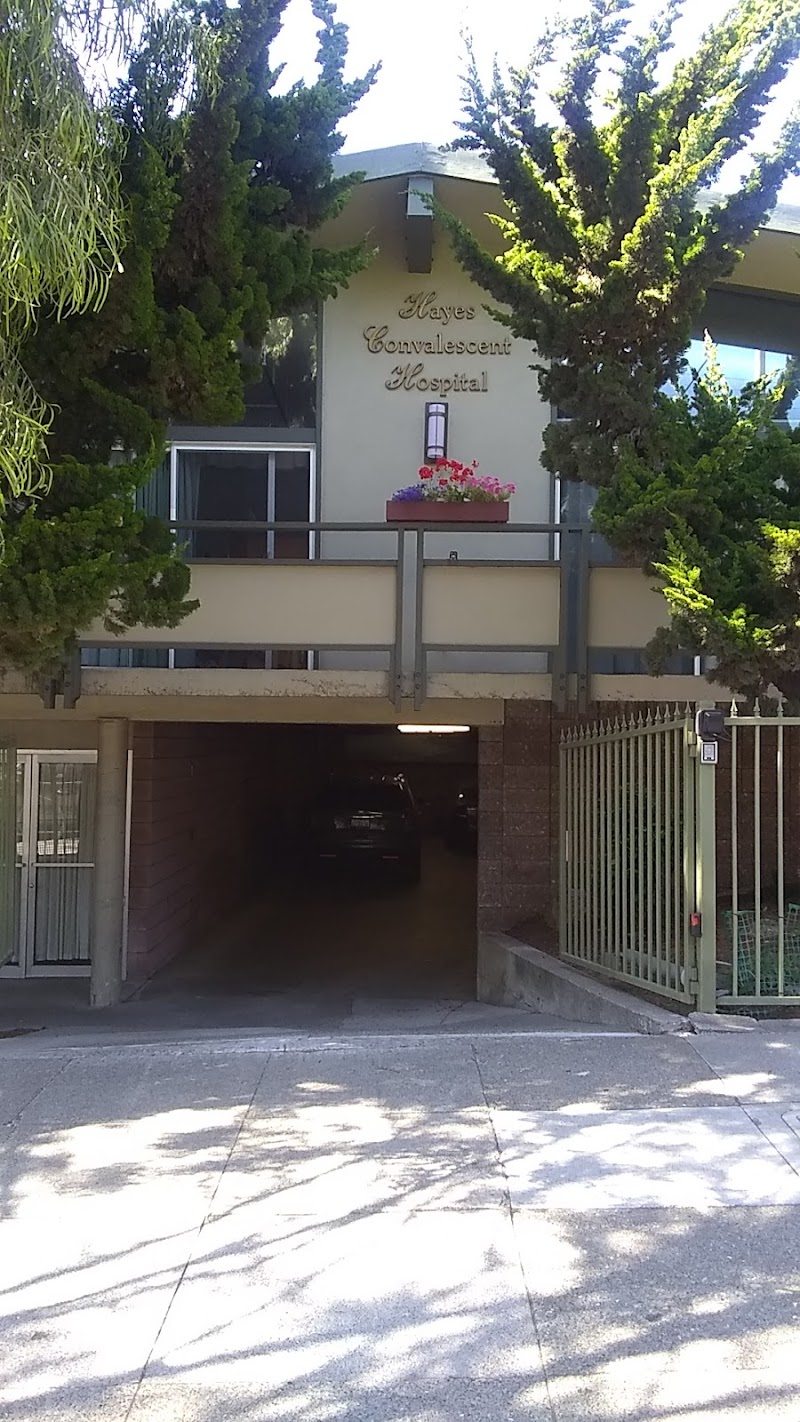
1250 HAYES STREET, SAN FRANCISCO, CA 94117 (415) 931-8806
For profit - Limited Liability company 34 Beds Independent Data: November 2025
Trust Grade
85/100
#92 of 1155 in CA
Last Inspection: December 2024

Within standard 12-15 month inspection cycle. Federal law requires annual inspections.

Overview

Hayes Convalescent Hospital has a Trust Grade of B+, which indicates it is recommended and above average compared to other facilities. It ranks #92 out of 1,155 nursing homes in California, placing it in the top half of facilities in the state, and #4 out of 17 in San Francisco County, meaning there are only three local options rated higher. The facility is improving, showing a reduction in issues from eight in 2023 to three in 2024. Staffing is a mixed bag, with a decent rating of 3 out of 5 stars and an impressive 0% turnover rate, indicating staff stays long-term; however, this means there may be room for improvement in staff numbers. There have been no fines reported, which is a positive sign, and the facility has more registered nurse coverage than 82% of California facilities, ensuring better oversight of resident care. However, there are some concerns to consider. Recent inspections found issues such as improper food storage in communal refrigerators, which could lead to foodborne illnesses, and dietary staff not adhering to sanitary practices, like failing to wear hair restraints and not changing gloves after handling potentially contaminated items. Additionally, hazardous cleaning supplies were found left unattended, posing a risk for accidents. These findings highlight areas that need attention, despite the overall positive ratings.

Trust Score
B+
85/100
In California
#92/1155
Top 7%
Safety Record
Low Risk
No red flags
Inspections
Getting Better
8 → 3 violations
Staff Stability
○ Average
Turnover data not reported for this facility.
Penalties
✓ Good
No fines on record. Clean compliance history, better than most California facilities.
Skilled Nurses
✓ Good
Each resident gets 43 minutes of Registered Nurse (RN) attention daily — more than average for California. RNs are trained to catch health problems early.
Violations
⚠ Watch
16 deficiencies on record. Higher than average. Multiple issues found across inspections.
★★★★★
5.0
Overall Rating
★★★☆☆
3.0
Staff Levels
★★★★☆
4.0
Care Quality
★★★★★
5.0
Inspection Score
Stable
2023: 8 issues
2024: 3 issues

The Good

  • 4-Star Quality Measures · Strong clinical quality outcomes
  • Full Sprinkler Coverage · Fire safety systems throughout facility
  • No fines on record

Facility shows strength in quality measures, fire safety.

The Bad

No Significant Concerns Identified

This facility shows no red flags. Among California's 100 nursing homes, only 0% achieve this.

The Ugly 16 deficiencies on record

Dec 2024 3 deficiencies
CONCERN (D)

Potential for Harm - no one hurt, but risky conditions existed

Deficiency F0604 (Tag F0604)

Could have caused harm · This affected 1 resident

**NOTE- TERMS IN BRACKETS HAVE BEEN EDITED TO PROTECT CONFIDENTIALITY** Based on observation, interview, and record review, the facility failed to follow their policy regarding restraints for two of 1...

Read full inspector narrative →
**NOTE- TERMS IN BRACKETS HAVE BEEN EDITED TO PROTECT CONFIDENTIALITY** Based on observation, interview, and record review, the facility failed to follow their policy regarding restraints for two of 12 sample residents (Resident 8 and 18). For Resident 18 the facility failed to assess her restraint on a regular basis for restraint reduction and/or elimination. For Resident 8 the facility failed to obtain consent from the responsible party and a Physician order. Failure to follow their restraint policy did not ensure Resident 8 and 18 were free from restraints. Findings: Review of Resident 18's MDS (Minimum Data Set, a standardized resident assessment tool) dated 9/14/24 indicated: 1. She was severely impaired in her cognition. 2. She had no impairment in range of motion for her upper and lower extremities. 3. She used a walker as a mobility device. 4. she required set up for meals and was dependent on staff for all other ADLs (activity of daily living). 5. She exhibited behaviors not directed towards other (screaming, disruptive sounds, hitting or scratching self, etc.). Observation of Resident 18 on 12/11/24 at 11:00 a.m., with the DON (Director of Nursing) indicated Resident 18 was in a Geri chair (a recliner chair with raised arm rests that prevent residents from getting out of the chair). There was a tray table (mechanically attached to the Geri chair) across Resident 18's lap that also prevents her from getting out of the Geri Chair. During an interview on 12/11/24 at 11:02 a.m., the DON stated the Geri chair with tray table was implemented to address Resident 18's physical and verbally abusive behaviors towards staff and Resident 18's high fall risk. The DON was asked to search Resident 18's records for ongoing assessments to indicate the facility attempted to reduce and/or eliminate the use of the Geri chair. The last assessment the DON found for the use of the Geri chair was dated 9/20/23. Review of the facility's policy titled Use of Restraints (undated) indicated .Restrained individuals shall be reviewed regularly (at least quarterly) to determine whether they are candidates for restraint reduction, less restrictive methods of restraints, or total restraint elimination. Review of Resident 8's MDS dated [DATE] indicated: 1. She was moderately impaired in her cognition. 2. No range of motion impairment in her upper and lower extremities. 3. She used a walker or a wheelchair as her mobility devices. 4. She required supervision and/or touching assistance to transfer, to stand, to sit and to lie down. 5. She used a bed rail daily and it was coded as a restraint. Observation of her bed on 12/11/24 at 10:00 a.m., indicated there were bilateral bed rails on the sides of her bed. These bed rails were approximately 6 inches wide and 18 inches above the mattress. During an interview on 12/11/24 at 10:46 a.m., the DON stated the facility was required to code side rails as a restraint. DON stated Resident 8 uses those bed rails to assist her in getting in and out of bed. DON was asked to search Resident 8's records for documented evidence they obtained consent from the resident and/or responsible party prior to implementing the side rail and a physician order for the side rail. The DON was unable to find these documents. Review of facility's policy titled Use of Restraints, (undated), indicated .Restraints shall only be used upon the written order of a physician and after obtaining consent from the resident and/or representative .
CONCERN (D)

Potential for Harm - no one hurt, but risky conditions existed

Deficiency F0657 (Tag F0657)

Could have caused harm · This affected 1 resident

**NOTE- TERMS IN BRACKETS HAVE BEEN EDITED TO PROTECT CONFIDENTIALITY** Based on observation, interview, and record review, the facility failed to follow their policy regarding care planning restraint...

Read full inspector narrative →
**NOTE- TERMS IN BRACKETS HAVE BEEN EDITED TO PROTECT CONFIDENTIALITY** Based on observation, interview, and record review, the facility failed to follow their policy regarding care planning restraints for two of 12 sample residents (Resident 8 and 18). The facility failed to address these issues in Resident 18's care plan: 1. assess her restraint on a regular basis for restraint reduction and/or elimination. 2. Formulate interventions for restraint reduction and/or elimination. For Resident 8 the facility failed to formulate a restraint care plan for her side rails. Failure to follow facility policy regarding care planning restraints did not ensure Resident 8 and 18 were free from restraints. Findings: Review of Resident 18's MDS dated [DATE] indicated: 1. She was severely impaired in her cognition. 2. She had no impairment in range of motion for her upper and lower extremities. 3. She used a walker as a mobility device. 4. she required set up for meals and was dependent on staff for all other ADLs 5. She exhibited behaviors not directed towards other (screaming, disruptive sounds, hitting or scratching self, etc.). Observation of Resident 18 on 12/11/24 at 11:00 a.m., with the DON (Director of Nursing) indicated Resident 18 was in a Geri chair. There was a tray table (mechanically attached to the Geri chair) across Resident 18's lap that prevented her from getting out of the Geri Chair. During an interview on 12/11/24 at 11:02 a.m., the DON stated the Geri chair with tray table was implemented to address Resident 18's physical and verbally abusive behaviors towards staff and Resident 18's high fall risk. The DON was asked to search Resident 18's care plans for: 1. Ongoing assessments for the use of the Geri chair. 2. Interventions to reduce and/or eliminate the use of the Geri chair. The DON was unable to find the requested documents. Review of Resident 8's MDS dated [DATE] indicated: 1. She was moderately impaired in her cognition. 2. No range of motion impairment in her upper and lower extremities. 3. She used a walker or a wheelchair as her mobility devices. 4. She required supervision and/or touching assistance to transfer, to stand, to sit and to lie down. 5. She used a bed rail daily and it was coded as a restraint. Observation of her bed on 12/11/24 at 10:00 a.m., indicated there were bilateral bed rails on the sides of her bed. These bed rails were approximately 6 inches wide and 18 inches above the mattress. During an interview on 12/11/24 at 10:46 a.m.,, the DON stated the facility was required to code side rails as a restraint. The DON stated Resident 8 used those bed rails to assist her in getting in and out of bed. The DON was asked to search Resident 8's care plan for the restraint. The DON stated the restraint was not care planned. Review of facility's policy titled Use of Restraints (undated) indicated . Care plans for residents in restraints will reflect interventions that address not only the immediate medical symptom(s), but the underlying problems that may be causing the symptom(s). Care plans shall also include the measures taken to systematically reduce or eliminate the need for restraint use.
CONCERN (F)

Potential for Harm - no one hurt, but risky conditions existed

Deficiency F0813 (Tag F0813)

Could have caused harm · This affected most or all residents

Based on observation, interview, and record review, the facility failed to ensure safe and sanitary storage of foods brought to residents by family when the foods are stored in a communal refrigerator...

Read full inspector narrative →
Based on observation, interview, and record review, the facility failed to ensure safe and sanitary storage of foods brought to residents by family when the foods are stored in a communal refrigerator, comingled with staff lunch bags, not labeled, and not placed in a re-sealable container with tightly fitting lids. This failure had the potential to cause food borne illness when stored food are served to residents. FINDINGS: During concurrent observation and interview on 12/10/24 at 12:13 p.m., in the breakroom with DS (Dietary Supervisor), the refrigerator that family members store food brought from outside the facility and also used for staff to store their food was observed to have plastic grocery bags containing food items, brown paper bag with food items inside, unlabeled opened milk carton of Kerns Milk and [NAME] Drink, unlabeled opened liquid coffee creamer, 1 apple, one small individual container of pudding, one small individual container of jello, a plastic container of food item unlabeled. The label outside refrigerator did not specify or designate space/storage for resident's food. When asked who is monitoring the refrigerator, the DS stated, he does not monitor or record the refrigerator temperature. During an observation on 12/11/24 at 8:30 a.m., in the breakroom, the refrigerator contained a pink striped lunch bag, a container that looks like a water bottle, a black plastic bag containing another plastic bag of food items, not labeled nor any identifying note of the items contained in the bags. All items found on 12/10/24 are still in the refrigerator. During an interview on 12/11/24 at 8:45 am, with DON (Director of Nursing), the DON stated, nurses do not monitor the refrigerator. During a concurrent interview and observation on 12/11/24 at 9 a.m., with SSD/AA (Social Services Designee/Activity Assistant), the SSD/AA stated, food brought in by family from outside are given to certified nursing assistants, they label food and place them inside the breakroom refrigerator. She looked inside the refrigerator, she stated these belongs to the staff and maybe some belong to the residents. During a concurrent interview and observation on 12/12/24 at 8:15 am, with CNA 1, CNA 1 stated, he had not done any storing lately but what he will do is to receive food items, label container and store inside pointing at the refrigerator. A review of the undated facility policy and procedures (P&P) on Food Brought by Family/Visitor, the P&P indicated, Food brought to the facility by visitors and family is permitted. Facility staff will strive to balance resident's choice and a homelike environment with the nutritional and safety needs of residents. .5. Food brought by family/visitors that is left with the resident to consume later is labeled .
Oct 2023 7 deficiencies
CONCERN (D)

Potential for Harm - no one hurt, but risky conditions existed

Deficiency F0552 (Tag F0552)

Could have caused harm · This affected 1 resident

**NOTE- TERMS IN BRACKETS HAVE BEEN EDITED TO PROTECT CONFIDENTIALITY** Based on observation, interview and record review, the facility failed to ensure that Resident 18 (R18) had a signed informed co...

Read full inspector narrative →
**NOTE- TERMS IN BRACKETS HAVE BEEN EDITED TO PROTECT CONFIDENTIALITY** Based on observation, interview and record review, the facility failed to ensure that Resident 18 (R18) had a signed informed consent form before receiving an antipsychotic medication, Citalopram. This failure has the potential to harm the resident while taking the medication without knowing the harm or side effects associated with this type of medication. Findings: The clinical record of Resident 18 was reviewed. The Minimum Data Set (MDS, an assessment tool) dated 09/03/2023 indicated, R18 was admitted to the facility on [DATE] with diagnoses including: Hypertension (High blood pressure), Gastroesophageal Reflux Disease (GERD, acid reflux), Viral Hepatitis, (infection that causes liver inflammation and damage), Thyroid disorder (a disease in the thyroid gland), Arthritis (a condition that affects bone joints), Alzheimer's Disease (brain disorder affecting a person's ability to function), Asthma, Cataracts, Diverticulosis (condition in which small bulging pouches develop in the digestive tract). Resident 18 had no Brief Interview for Mental Status score (BIMS) on record on file. During an observation on 10/09/23 at 9:00 AM, R18 was seen on her bed in her room sleeping deeply and unarousable. The resident's room was well kept, clean and homelike. The resident was clean, in deep sleep and not arousable. R18 was fed by a Certified Nursing Assistant (CNA) and was eating with her eyes closed. Resident 18 finished her lunch. During an interview with the Director of Nursing (DON) on 10/09/23 at 1:30 PM, the DON stated that the resident usually stays that way always. A record review of R18's clinical record on 10/09/23 at 1:40 PM, indicated that R18 had been taking some antipsychotic medications including Citalopram for which the prescription was dated 09/09/23. There was a consent form in the resident's medical records that was neither signed by the resident's representative nor the resident's Physician. When the DON was questioned about the unsigned consent form, she stated that she will get the Physician and the resident's representative to sign it. When the resident's record was checked again on 10/12/23 at 9:00 AM, the consent form was finally signed on 10/11/23 by R18's representative and the Resident's Physician. During the review of the facility's Informed Consent Policy, it stated, informed consent will be obtained by the physician from the resident or responsible person, if the resident is incapable of giving consent, before initiating the use of psychotropic drugs or physical restraints. The facility will verify that informed consent has been obtained before beginning treatment.
CONCERN (D)

Potential for Harm - no one hurt, but risky conditions existed

Deficiency F0578 (Tag F0578)

Could have caused harm · This affected 1 resident

**NOTE- TERMS IN BRACKETS HAVE BEEN EDITED TO PROTECT CONFIDENTIALITY** Based on observation, interview and record review, the facility failed to ensure that a current copy of a resident's advance dir...

Read full inspector narrative →
**NOTE- TERMS IN BRACKETS HAVE BEEN EDITED TO PROTECT CONFIDENTIALITY** Based on observation, interview and record review, the facility failed to ensure that a current copy of a resident's advance directive was in the resident's medical record for Resident 10 (R10). This failure could result in the Resident or her representative's inability to make decisions regarding her health care and related treatment choices. Findings: The clinical record of R10 was reviewed. The Minimum Data Set (MDS, an assessment tool) dated 08/03/2023, indicated Resident 10 was admitted to the facility on [DATE] with diagnoses including Hypertension (High blood pressure), Diabetes Mellitus (High blood Sugar), Hyperlipidemia (High Cholesterol), Depression (a mood disorder), Osteoarthritis (disease that affects joints). R10's Brief Interview for Mental Status (BIMS) score was 04 (severely impaired). During observation on 10/09/23 at 8:45 AM, R10 looked clean, in good spirit, communicated and her environment looked clean and homelike. During a concurrent interview R10 communicated a little bit but stated to call her [family member] for more information. During a review of the R10's medical records on 10/09/23 at 9:15 AM, Advance Directive and Physician Orders for Life-Sustaining Treatment (POLST) were not found in R10's medical records. During an interview with the Director of Nursing (DON) on 10/10/23 at 10:09 AM, the DON stated that she was aware that those documents were missing in R10's medical record and they were working on getting the family to complete the required documents. During interview on 10/12/23 at 1:11 PM with R10's Representative (REP) about the missing Advanced Directive and POLST, the REP stated that R10 had advanced directives and POLST in 2000 or 2008. When asked why it was not in the resident's medical records binder, the REP stated that had not been given to the facility because nobody had asked for it. The REP continued to say that she completed the POLST on 3/9/23 when a Home Health Nurse had told her to have it handy and that it was given to the ambulance which transported R10 to the hospital. During a review of the Facility's Policy Statement on Advance Directives, it indicated, the resident has the right to formulate Advance directive, including the right to accept or refuse medical or surgical treatment. Advance directives are honored in accordance with state law and facility policy.
CONCERN (D)

Potential for Harm - no one hurt, but risky conditions existed

Accident Prevention (Tag F0689)

Could have caused harm · This affected 1 resident

**NOTE- TERMS IN BRACKETS HAVE BEEN EDITED TO PROTECT CONFIDENTIALITY** Based on observation, interview and record review, the facility failed to provide adequate supervision as per physician's orders...

Read full inspector narrative →
**NOTE- TERMS IN BRACKETS HAVE BEEN EDITED TO PROTECT CONFIDENTIALITY** Based on observation, interview and record review, the facility failed to provide adequate supervision as per physician's orders for one of seven sampled residents (Resident 22) when staff removed the tabletop tray from Resident 22's Geri chair (recliner chair with tray top). This failure resulted in Resident 22 falling to the floor from her Geri chair on 6/30/23. Findings: Review of Resident 22's clinical records indicated Resident 22 was admitted on [DATE] with diagnoses including vascular dementia with behavioral disturbance (loss of brain function with changes in behavior), delusional disorders (having beliefs not based on reality) and hypertensive heart disease with heart failure (heart muscle not pumping effectively). During observation on 10/9/23 at 9:05 AM, Resident 22 was observed sitting in a Geri chair, calling out for help. During an interview with the Director of Nursing (DON) on 10/10/23 at 1:42 PM, the DON confirmed the fall happened on 6/30/23 at 11:00 PM during night shift. The DON reported the care plan was updated to include instructions on not removing the tray table from the Geri chair. The DON also reported Resident 22 is removed from the chair with assistance, for toileting and for activities. Review of Resident 22's clinical record (all paper based) on 10/10/23 at 1:42 PM indicated Resident 22's care plan for the prevention of falls was updated on 6/30/23 to include instructions to not remove the tray table from the Geri chair. During an interview with Licensed Vocational Nurse (LVN)1 on 10/12/23 at 12:34 PM, LVN 1 reviewed Resident 22's clinical records and LVN 1 stated Resident 22 fell on 6/30/23 at 11:00 PM from the Geri chair. During the interview on 10/12/23 at 12:34 PM with LVN 1, LVN 1 stated that on 6/30/23 at 11:00 PM, she had just started her shift and was getting report from the previous shift LVN. LVN 1 stated she heard Resident 22 was agitated. LVN 1 further stated, she went to Resident 22's room, and asked Resident 22 what was wrong. Resident 22 said to LVN 1 she wanted the tray table taken off the chair. LVN 1 stated she removed the tray table. Furthermore, LVN 1 said she asked Resident 22 Is this better and Resident 22 said Yes. LVN 1 also stated she found Resident 22 on the floor that night; LVN 1 stated Resident 22 slid down from her geri chair. LVN 1 stated I didn't have any worry about her getting up from the chair, because she'd always sit in the chair, and I didn't think she would be in any danger of falling if I removed the tray table. Review of Resident 22's Physician Orders included: a) Recliner Chair with tabletop tray, may attach mobility alarm when in chair related to vascular dementia with behavioral disturbances, manifested by poor safety awareness, impulsiveness, high risk for falls and prior use, ordered since 3/29/21. b) May release tabletop tray during toileting, ADL (Activities of Daily Living, daily self-care activities) care at activity room with direct supervision, ordered since 6/6/2023.
CONCERN (D)

Potential for Harm - no one hurt, but risky conditions existed

Drug Regimen Review (Tag F0756)

Could have caused harm · This affected 1 resident

**NOTE- TERMS IN BRACKETS HAVE BEEN EDITED TO PROTECT CONFIDENTIALITY** Based on interview and record review, the facility failed to act upon the Pharmacist Consultant's (PC) recommendations: A) to c...

Read full inspector narrative →
**NOTE- TERMS IN BRACKETS HAVE BEEN EDITED TO PROTECT CONFIDENTIALITY** Based on interview and record review, the facility failed to act upon the Pharmacist Consultant's (PC) recommendations: A) to change the timing of administration of Omeprazole (a medication that decreases the amount of acid produced by the stomach) to be given before all other medications and before food, for one of seven sampled residents (Resident 22). B) when there was no monitoring of target behavior for the use of Mirtazapine (an antidepressant) for one of 12 sampled Residents (Resident 21). These failures placed Resident 22 at risk for harm due to possible decreased therapeutic effects of Omeprazole and the potential of inadequate monitoring for effectiveness and potential side effects of Mirtazapine for Resident 21. Findings: A. Review of Resident 22's clinical records indicated Resident 22 was admitted on [DATE] with diagnoses including vascular dementia with behavioral disturbance (loss of brain function with changes in behavior), delusional disorders (having beliefs not based in reality) and hypertensive heart disease with heart failure (heart muscle not pumping effectively). Review of Resident 22's physician orders indicated Omeprazole was ordered by the attending physician for the indication of duodenal ulcer. During an interview on 10/11/23 at 1:10 PM, with the Director of Nursing (DON), the DON reviewed the PC's Medication Regimen Review (MRR - a thorough evaluation of the medication regimen of a resident, with the goal of promoting positive outcomes and minimizing adverse consequences and potential risks associated with medication) for Resident 22 and Resident 22's Medication Administration Records (MAR) for April 2023. The MRR indicated the PC recommended nursing instructions to be modified for the administration of Omeprazole for Resident 22. Resident 22's MRR indicated Omeprazole should be given half an hour before all other medications and before food. The DON also reviewed Resident 22's MAR for October 2023 which indicated Omeprazole was timed to be administered at 6:00 AM. Two other medications, Carbidopa-levodopa [Medication for Parkinson's disease (brain disorder that causes unintended or uncontrollable movements) or Parkinson-like symptoms (such as shakiness, stiffness, difficulty moving] and Lorazepam [anti- anxiety (excessive and persistent worry and fear) medication] were also timed to be administered at 6:00 AM. The DON confirmed the changes to administration time were not made in Resident 22's MAR from May to September 2023 and stated it needed to be changed. A record review on 10/11/23 at 1:10 PM with the DON indicated, the timing of administration of Omeprazole was not changed to match PC's recommendation in the MRR report dated April 2023. B. Review of Resident 21's clinical record indicated Resident 21 was admitted on [DATE] with diagnoses including Dementia (a general term for loss of memory, language, problem-solving and other thinking abilities that are severe enough to interfere with daily life), without behavioral disturbance, psychotic disturbance, mood disturbance, anxiety, type 2 diabetes (too much sugar in the blood), and protein-calorie malnutrition (not getting enough protein). Review of Resident 21's physician orders for October 2023 indicated Mirtazapine 15 mg (milligrams, a unit of measure) one tablet by mouth every night at bedtime for depression (a mood disorder that causes persistent feelings of sadness, emptiness, and loss of joy), with instructions to monitor for poor oral intake and to monitor behavior for Mirtazapine every shift as manifested by poor oral intake. During a concurrent interview with the Director of Nursing (DON) and review of Resident 21's clinical records on 10/11/23 at 1:10 PM, Resident 21's Medication Regimen Review report (MRR), dated March 2023, indicated a recommendation by the Pharmacist Consultant (PC) to include instructions in Resident 21's Medication Administration Record (MAR) to monitor for poor oral intake. During further review of Resident 21's clinical records with the DON, the MAR for Resident 21 dated June 2023 and July 2023 did not contain instructions to monitor for poor oral intake. The DON confirmed that there were no instructions to monitor for poor oral intake. The DON stated it was missed by the nurse who does monthly order reconciliation and transcription for the pharmacy. During an interview on 10/12/23 at 12:06 PM, the PC stated that Mirtazapine is a psychotropic medication and needs to have a behavior monitor indicator to monitor for therapeutic indicators (such as decreased oral intake) and for sedation. The PC also stated, The potential risk of not listing a behavior indicator to monitor in the MAR is oversedation or not tracking whether the medication is working to increase oral intake. Review of undated facility policy titled Medication Regimen Review, indicated . Policy Interpretation and Implementation .5. The MRR involves a thorough review of the resident's medical record to prevent, identify, report, and resolve medication related problems, medication errors, and other irregularities, for example: . e. potentially significant drug-drug or drug-food interactions; g. incorrect medications, administration times or dosage forms.
CONCERN (D) 📢 Someone Reported This

A family member, employee, or ombudsman was alarmed enough to file a formal complaint

Potential for Harm - no one hurt, but risky conditions existed

Deficiency F0757 (Tag F0757)

Could have caused harm · This affected 1 resident

**NOTE- TERMS IN BRACKETS HAVE BEEN EDITED TO PROTECT CONFIDENTIALITY** Based on interview and record review, the facility failed to ensure one of 12 sampled residents' (Resident 9) drug regimen was f...

Read full inspector narrative →
**NOTE- TERMS IN BRACKETS HAVE BEEN EDITED TO PROTECT CONFIDENTIALITY** Based on interview and record review, the facility failed to ensure one of 12 sampled residents' (Resident 9) drug regimen was free from unnecessary drugs when Resident 9 was not monitored for signs and symptoms of bleeding/bruising and thromboembolism (a circulating blood clot that gets stuck and causes an obstruction) for the use of Clopidogrel (a medication used to prevent blood clot). This failure placed Resident 9 at risk for experiencing unidentified side effects of the medication. Findings: Review of Resident 9's admission Record indicated he was admitted on [DATE] with diagnoses including peripheral vascular disease (a disorder that causes the blood vessels outside of the heart and brain to narrow, spasm, or block blood circulation), thrombocytopenia [low blood platelet (a blood component that controls bleeding) count], and spontaneous ecchymoses (discoloration of the skin due to the rupture of the blood vessels below the surface of the skin). During a review of Resident 9's clinical records with the Director of Nursing (DON) on 10/11/23 at 1:40 PM, the Consultant Pharmacist's Medication Regimen Review (MRR - a thorough evaluation of the medication regimen of a resident, with the goal of promoting positive outcomes and minimizing adverse consequences and potential risks associated with medication), dated 8/8/23, indicated High Risk Medication Monitoring Recommendation: The resident (referring to Resident 9) is on the Anticoagulant: Clopidogrel. Please consider placing an order to monitor for signs/symptoms of bleeding/bruising and for signs/symptoms of thromboembolism. Resident 9's physician's order for October 2023, indicated Start date . 7/7/22 .Clopidogrel 75 mg (milligrams, a unit of measure) tablet . take one tablet by mouth daily . Resident 9's medication administration record (MAR) indicated Clopidogrel was administered to Resident 9 from 10/1/23 to 10/9/23. The Pharmacist Consultant's (PC) recommendation were not included in Resident 9's MAR. In a concurrent interview, the DON verified that the PC's recommendation was not added in Resident 9's MAR and there was no documentation of monitoring for signs and symptoms of bleeding/bruising, and thromboembolism. The DON stated, I still have to do it. It should be included in the MAR. During an interview on 10/12/23 at 12:04 PM, the PC stated that it is important to monitor for signs and symptoms of bleeding while using Clopidogrel because there's a risk of bleeding and bruising. Resident (Resident 9) could have non-stop bleeding or might have thromboembolism, and it's something that they (facility staff) should follow up. Review of the undated facility policy, titled Medication Regimen Reviews, indicated Policy Interpretation and Implementation . 4. The goal of the MRR is to promote positive outcomes while minimizing adverse consequences and potential risks associated with medication. 5. The MRR involves a thorough review of the resident's medical record to prevent, identify, report, and resolve medication related problems medication errors, and other irregularities, for example: . d. inadequate monitoring for adverse consequences . f. potentially significant medication-related adverse consequences or actual signs and symptoms that could represent adverse consequences .
CONCERN (D) 📢 Someone Reported This

A family member, employee, or ombudsman was alarmed enough to file a formal complaint

Potential for Harm - no one hurt, but risky conditions existed

Unnecessary Medications (Tag F0759)

Could have caused harm · This affected 1 resident

Based on observation, interview, and record review, the facility failed to ensure the medication administration error rate was less than five percent (5%) when two medication errors occurred out of 32...

Read full inspector narrative →
Based on observation, interview, and record review, the facility failed to ensure the medication administration error rate was less than five percent (5%) when two medication errors occurred out of 32 opportunities, resulting in an error rate of 6.25%: 1. Resident 12 was ordered Aspirin EC (enteric coated - a special coating that prevents release and absorption of the medication contents until they reach the intestine) 81 mg (milligrams, a unit of measure) but was given chewable Aspirin 81 mg. 2. Resident 12 was administered two different eye drops with one minute interval. This resulted in medications not given according to the prescriber's order and had the potential for Resident 12 to not receive the full therapeutic effect of the medications. Findings: 1. During medication administration observation on 10/11/23 at 8:21 AM, Licensed Vocational Nurse (LVN) 2 administered crushed chewable Aspirin 81 mg tablet mixed in applesauce to Resident 12. During a concurrent interview and review on 10/11/23 at 10:01 AM with LVN 2, Resident 12's physician's order (PO) and Medication Administration Record (MAR) for October 2023 were reviewed. The PO and the MAR indicated an order for Aspirin EC 81 mg tablet. LVN 2 stated she administered chewable Aspirin because she had to crush it and Aspirin EC cannot be crushed. During further review of the PO and the MAR, LVN 2 confirmed that the order for Aspirin was enteric coated and not chewable. LVN 2 also confirmed that there was no order to crush medications for Resident 12. During a concurrent interview and review of Resident 12's clinical records on 10/11/23 at 10:21 AM, LVN 3 reviewed Resident 12's PO and MAR for October 2023. LVN 3 stated, There's no order (to crush medications). 2. During medication administration observation on 10/11/23 at 8:29 AM, LVN 2 instilled one drop of Pataday 0.7% (used to treat itching and redness in the eyes due to allergies) in each eye of Resident 12, followed with administration of Refresh Tears 0.5% eye drops (used to relieve dry, irritated eyes) in each eye of Resident 12 at 8:30 AM. Concurrent interview and review of Resident 12's October 2023 PO and MAR, on 10/11/23 at 10:24 AM with LVN 2, indicated an order for Pataday 0.7% drops once daily to instill one drop into both eyes every morning and Refresh Tears 0.5% eye drops to instill one drop into both eyes twice daily. LVN 2 stated that she should have waited two to three minutes in between administration of the two eye drops. LVN 2 stated, To make sure first one is properly absorbed, it could react to one another. During an interview on 10/11/23 at 11:28 AM, the Director of Nursing (DON) verified that Resident 12's physician's order for Aspirin was the enteric-coated type and not the chewable type. The DON stated, They (licensed nurses) should have clarified the order (with the physician). The DON also stated that the facility's policy for administration of two different eye drops is to wait two minutes in between, so that the first medication will be absorbed, and not be wiped away by the second medication. Review of undated facility policy, titled Administering Medications indicated Policy heading . Medications are administered in a safe and timely manner, and as prescribed. Policy Interpretation and Implementation .4. Medications are administered in accordance with prescriber orders . Review of the undated facility policy, titled Eye Drop Administration indicated Purpose: To administer ophthalmic (relating to the eye) solution/suspension into the eye in a safe, accurate, and effective manner. Procedures: .10. If another drop of the same or different medication is prescribed for administration in the same eye at the same time, wait 2 (two) minutes .
CONCERN (D) 📢 Someone Reported This

A family member, employee, or ombudsman was alarmed enough to file a formal complaint

Potential for Harm - no one hurt, but risky conditions existed

Infection Control (Tag F0880)

Could have caused harm · This affected 1 resident

**NOTE- TERMS IN BRACKETS HAVE BEEN EDITED TO PROTECT CONFIDENTIALITY** Based on observation, interview, and record review, the facility failed to maintain an infection control and prevention program ...

Read full inspector narrative →
**NOTE- TERMS IN BRACKETS HAVE BEEN EDITED TO PROTECT CONFIDENTIALITY** Based on observation, interview, and record review, the facility failed to maintain an infection control and prevention program when Certified Nursing Assistant (CNA) 1 did not wear appropriate personal protective equipment (PPE - equipment worn to minimize exposure to hazards that cause serious workplace injuries and illnesses) while inside the room of one of one sampled resident (Resident 80) who was on isolation for COVID-19 infection (a highly contagious viral infection). This failure had the potential for spread of COVID-19 infection among residents, staff, and visitors. Findings: Review of Resident 80 's admission Record, indicated she was admitted on [DATE]. Review of the facility document, titled COVID-19 Outbreak Surveillance (9/29/2023), indicated Resident 80 tested positive for COVID-19 on 9/29/23. During an observation on 10/9/23 at 8:55 AM, Resident 80's room door had a signage indicating gloves, gown, eye protection, and N-95 respirator (a protective device designed to achieve a very close facial fit and very efficient filtration of airborne particles) are to be worn while inside Resident 80's room. During an observation on 10/9/23 at 8:57 AM, CNA 1 entered Resident 80's room wearing a surgical mask. CNA 1 did not put on gloves, gown, eye protection, and a N-95 respirator prior to entering Resident 80's room. At 8:58 AM, CNA 1 came out of Resident 80's room, holding a food tray containing a used plate and two cups, placed the tray in the meal cart, and entered another resident's room, wearing the same surgical mask. During an interview on 10/9/23 at 9 AM, Licensed Vocational Nurse (LVN) 2 stated, She (Resident 80) was COVID positive, still on isolation (separation of an infected individual from the healthy until that individual is no longer able to transmit the disease) today for COVID. Isolation period ends tomorrow. During an interview on 10/9/23 at 10:19 AM, CNA 1 stated, We're (staff) still supposed to wear full PPE, like N-95 (respirator), gown, everything. I was just going in and out, took the tray out . still need to wear PPE every time we go in. During a joint interview with the Infection Preventionist (IP) and LVN 2 on 10/9/23 at 10:27 AM, the IP stated that Resident 80 tested positive for COVID-19 on 9/29/23. The IP also stated, She's (Resident 80) still on isolation. (Staff) should wear N-95, face shield, gown, and gloves when going inside the resident's room . for their protection and protection of the resident herself. LVN 2 stated, There's potential for cross-infection (occurs when one person spreads an infection to another, either directly or indirectly), if appropriate PPE is not worn inside Resident 80's room during the isolation period. Review of Resident 80's Nurse's Notes, dated 9/29/23 at 3 PM, indicated Resident (Resident 80) is COVID -19 positive done this morning. Resident is asymptomatic (showing no symptoms) . Review of Resident 80's physician's order, dated 9/29/23, indicated Initiate transmission-based precautions (measures used to help stop the spread of germs from one person to another) . every shift for positive COVID-19. Review of the undated facility policy, titled Coronavirus Disease (COVID-19) - Identification and Management of Ill Residents, indicated Policy Statement . Strategies used for the rapid identification and management of SARS-COV2 (severe acute respiratory syndrome coronavirus 2- the virus that causes COVID-19 infection) infected residents are consistent with the current recommendations from the Centers for Disease Control and Prevention (CDC). Policy Interpretation and Implementation .Screening and Monitoring 1. The infection preventionist is responsible for establishing and overseeing screening and monitoring efforts . Personal Protective Equipment 13. Staff who enter the room of a resident with suspected or confirmed SAR-CoV-2 infection will adhere to standard precautions and use a NIOSH (National Institute for Occupational Safety and Health- a government agency that conducts research and makes recommendations for the prevention of work-related injury and illness) approved particulate respirator with N-95 filters or higher, gown, gloves, and eye protection (i.e. [that is] goggles or a face shield that covers the front and sides of the face.) . Duration of Empiric Transmission-Based Precautions for Symptomatic Residents being Evaluated for SARS-CoV-2 Infection .6. Residents who were asymptomatic throughout their infection and who are not moderately to severely immunocompromised will remain on transmission-based precautions until: a. at least 10 days have passed since the date of their first positive viral test .
May 2023 1 deficiency
CONCERN (D) 📢 Someone Reported This

A family member, employee, or ombudsman was alarmed enough to file a formal complaint

Potential for Harm - no one hurt, but risky conditions existed

Accident Prevention (Tag F0689)

Could have caused harm · This affected 1 resident

**NOTE- TERMS IN BRACKETS HAVE BEEN EDITED TO PROTECT CONFIDENTIALITY** Based on interview and record review, the facility failed to provide adequate supervision and interventions for one of Hospice r...

Read full inspector narrative →
**NOTE- TERMS IN BRACKETS HAVE BEEN EDITED TO PROTECT CONFIDENTIALITY** Based on interview and record review, the facility failed to provide adequate supervision and interventions for one of Hospice residents (Resident 1) when: 1) Resident 1, IDT (interdisciplinary Team)/Care Plan Conference Meeting did not address safety/fall risk, attempting to get up to go to the bathroom as reason for fall on 5/11/22. 2) There was no evidence of monitoring for effectiveness and necessary modification of recommended interventions. This failure resulted in Resident 1's unwitnessed fall on 5/11/22. The fall resulted in Resident 1 sustaining a fracture of the hip (a break in the hip bone). Findings: Review of Resident 1's clinical record indicated Resident 1 was admitted on [DATE] with diagnosis including Dementia (memory loss). On 6/10/2021, Resident 1 was admitted to Bridge Hospice with primary diagnosis of Cerebral Atherosclerosis (a disease that occurs in the brain, brain becomes hard, thick, and narrow due to plaque build-up). On 5/13/22 Resident 1 was diagnosed with Fracture of left and right Pubis, fracture of neck of right Femur. admission record indicated, date of Discharge 5/23/2022 to Mc Avoy O'Hara Mortuary. Review of Resident 1's Minimum Data Set (MDS, an assessment tool) on 7/27/2017, indicated under functional status, bed mobility, transfer, walk in room, walk in corridor, locomotion in unit, eating, toilet use, requires Supervision (means oversight, encouragement, or cueing). For dressing and personal hygiene is limited assistance (means resident highly involved in activity, staff provide guided maneuvering of limbs, one-person physical assist). Review of Resident 1's MDS dated [DATE] under functional status, indicated, Bed mobility, transfer, walk in room and corridor, locomotion on and off unit, dressing, toilet use, personal hygiene, total dependence (means full staff performance every time, with one-person physical assist). Eating is independent, needs set up only. Review of facility Comprehensive Care Plan -Safety/Fall, dated 7/14/2017, indicated, safety risk/ fall, has bed alarm and chair sensor pad, needs help to toilet as needed. Care plan updated last 9/10/21. No changes in care plan, no additional approaches found. On 5/11/22 care plan for S/P (status-post, after) fall, unwitnessed fall, no injury. Resident stated she wanted to go to bathroom and lost balance. Found on her back no complaints of pain. Resident sent to ER for evaluation per Hospice RN assessment due to pain on 5/13/22. Review of last Fall Risk Evaluation done 5/11/22, indicated, summary to prevent further falls: make sure to check resident for pain, discomfort, hunger, thirst. Fall safety precautions at all times, make sure mobility alarm bed/wheelchair attached properly, do not leave resident in hallways, keep close to nursing station at all times. Review of facility Investigation Summary, indicated, around 2 PM the resident was given Tylenol for mild tooth pain. Between 3 PM and 5 PM, Resident 1 was observed watching television in the activity room with other residents. Sometime around 5 PM, activity staff wheeled Resident 1 in the hallway. She was taken to the bathroom prior to taking her to the hallway. Review of Investigation Summary, indicated, Resident is alert to name only, has episodes of confusion. Her BIMS (Brief Interview for Mental Status, cognitive assessment) score is 1 out of 15. She is incontinent of bowel and bladder. She ambulates via wheelchair with assistance from staff. She requires two- person assistance with ADLs (activities of daily living) care and needs. She is in Hospice care and services under Bridge Hospice. Review of Interdisciplinary Team meeting (IDT) dated 5/12/22, indicated, safety/fall risk, none Additional comments, continue monitor resident condition and adhere to the recommendations to prevent further fall, discussed in the post fall assessment, at this time no signs and symptoms of injury noted. Interview on 3/28/23 at 1 PM, with Assistant Administrator (AA), the AA stated, I remember the incident and reported it. Resident has been under Hospice since 2021. Resident was found on the floor lying on her back, no witnesses to fall. The nurse assessed her and found no apparent injury, no complaints of pain. Resident told nurses that she wanted to go to the bathroom and lost her balance. The doctor and conservator were notified by nursing. Director of Nursing (DON) started the investigation. Interview on 5/15/23 at 1:15 PM with the certified nursing assistant (CNA), CNA stated, worked for 15 years at facility, I know resident, I work AM shift and the fall happened on PM shift. She wants to go to the bathroom every 10 minutes but does not do anything. She has some behavior at times. Has a wheelchair alarm, when she moves the alarm goes off, resident is able to reach the alarm and take it off. Everybody knows her, she is in front of the nursing station, able to stand up, needs a walker to walk. Confused, only asking for bathroom. Patient will ask for help to go to bathroom. Alarm will not go off when patient takes it off or not connected. During the fall I don't know if it was connected cause it happened in the evening, I was off already. Interview on 5/15/23 at 3:45 PM, with the licensed vocational nurse (LVN), LVN stated, been assigned to resident, been working for a year by that time of the fall. Patient can ambulate with assistance, asking to go to bathroom all the time, alert, and oriented x 1, confused, does not know what she really wants. Not sure if she has the alarm on the bed or wheelchair, not working on that day. Resident gets up by herself. She was on Hospice. During AM shift, resident is in the activity room, every time she asks to go to bathroom, someone takes her. She doesn't really complain of pain. She is Spanish speaking, but we have a lot of Spanish speaking CNAs. Review of Fall Risk Evaluation, dated 5/21, under gait/balance, charted as balance problem standing/walking, requires use of walker, was ambulatory. Quarterly Evaluation dated 6/21, 9/21, 12/21- gait/balance, not able to perform, ambulation status- chairbound. Changes not reflected in care plan. Bridge Hospice contacted on 5/10/23, for care plan on admission to Hospice, not provided. Review of facility policy on Care Plans, Comprehensive person Centered, dated 12/16, . The interdisciplinary team must review and update the care plan: . a. When there has been a significant change in the resident's condition . d. At least quarterly, in conjunction with the required quarterly MDS (minimum Data Set) assessment. Review of facility policy and procedure, Fall Prevention and Management, no date, indicated, complete care plan/Post fall assessment. A care plan addressing risk for fall shall be implemented within 24 hours of admission. With each subsequent fall the care plan will be reviewed and updated by the IDT.
Oct 2021 5 deficiencies
CONCERN (D)

Potential for Harm - no one hurt, but risky conditions existed

Deficiency F0557 (Tag F0557)

Could have caused harm · This affected 1 resident

Based on observation, interview and record review, the facility failed to maintain privacy for one of 12 sampled residents (Resident 22) when staff did not fully close the privacy curtains during deli...

Read full inspector narrative →
Based on observation, interview and record review, the facility failed to maintain privacy for one of 12 sampled residents (Resident 22) when staff did not fully close the privacy curtains during delivery of care. This failure exposed resident's uncovered body parts to the public view and had the potential to negatively affect resident's self esteem and self-worth. Findings: Review of Resident 22's Face Sheet, dated 10/20/21, indicated, Resident 22 had diagnoses that included Dementia (memory disorders, personality changes, and impaired reasoning) and Alzheimer's disease (progressive mental deterioration). A review of the minimum data set (MDS an assessment tool), dated 9/10/21, indicated Resident 22 had severe cognitive impairment. During an observation, on 10/19/21, at 9:15 A.M., the room of Resident 22 was open. The privacy curtains were not fully closed while Certified Nursing Assistant (CNA) 1 was dressing up Resident 22. Resident 22 was lying on the bed, with body parts from the waist down uncovered, visible to public view from the hallway. During an interview on 10/19/21, at 9:25 A.M., CNA 1 acknowledged that she pulled the privacy curtains halfway and not fully closed while she was providing care to Resident 22. CNA 1 stated, Before starting to give care, pull the curtain all the way for privacy. During an interview on 10/19/21, at 9:30A.M., with CNA 2, CNA 2 stated, that when providing care to residents, the door should be closed and privacy curtains should be pulled all the way to maintain resident privacy. Review of undated facility's policy and procedure (P&P), titled, Quality of Life-Dignity and Privacy, indicated, Policy Statement: Each resident shall be cared for in a manner that promotes and enhances quality of life, dignity, respect and individuality . Policy Interpretation and Implementation . 10. Staff shall promote, maintain and protect resident privacy, including bodily privacy during assistance with personal care and during treatment procedures .
CONCERN (D)

Potential for Harm - no one hurt, but risky conditions existed

Deficiency F0805 (Tag F0805)

Could have caused harm · This affected 1 resident

Based on observation, interview, and record review, the facility failed to distribute meals in accordance with physician ordered therapeutic diets for one of 19 residents (Resident 10) when Resident 1...

Read full inspector narrative →
Based on observation, interview, and record review, the facility failed to distribute meals in accordance with physician ordered therapeutic diets for one of 19 residents (Resident 10) when Resident 10, who had a soft diet (made up of foods that are soft and easy to chew and swallow) order, was plated regular texture sliced fresh cantaloupe during lunch on 10/20/21. This deficient practice had the potential to negatively affect the health and safety of residents on therapeutic diets. Findings: During tray line (a cafeteria-style of food distribution) observation with the Registered Dietitian (RD) on 10/20/21 beginning at 11:44 AM, Dietary Staff (DS) 2 and DS 3 began plating meals for multiple residents. The plated meals were placed in four food delivery carts. During an interview on 10/20/21 at 12:37 PM, after the last meal was placed in the last food delivery cart, DS 3 stated, the meals were ready for distribution to the residents, including the plated meal for Resident 10. During an observation with the RD, DS 2, and DS 3, on 10/20/21 at 12:39 PM, the plated meal for Resident 10 included sliced fresh cantaloupe. The yellow-colored tray card on Resident 10's food tray indicated, Soft Diet. In a concurrent interview, DS 2 stated, .No, not this (referring to cantaloupe slices) . Sliced cantaloupe is for regular diet . DS 2 stated that Resident 10 should have been plated canned diced peaches. During an interview on 10/20/21 at 1:02 PM, the RD verified that the current physician order for Resident 10 was soft diet, and stated, Residents should get what was ordered by the physician . to avoid any potential problems . for soft diet: chewing .not able to tolerate food . Review of the undated facility policy and procedure, titled, Tray Identification, indicated, . Policy Interpretation and Implementation . 2. The food services manager or supervisor will check trays for correct diets before the food carts are transported to their designated areas .
CONCERN (D)

Potential for Harm - no one hurt, but risky conditions existed

Infection Control (Tag F0880)

Could have caused harm · This affected 1 resident

**NOTE- TERMS IN BRACKETS HAVE BEEN EDITED TO PROTECT CONFIDENTIALITY** Based on observation, interview, and record review, the facility failed to implement infection prevention and control measures w...

Read full inspector narrative →
**NOTE- TERMS IN BRACKETS HAVE BEEN EDITED TO PROTECT CONFIDENTIALITY** Based on observation, interview, and record review, the facility failed to implement infection prevention and control measures when: 1. Staff did not wear the required personal protective equipment (PPE) inside an isolation room (room [ROOM NUMBER]), and 2. There was no signage on the use of specific PPE outside room [ROOM NUMBER], and the type of Transmission Based Precaution (TBP) the residents were being observed for. This failure had the potential to result in the spread of infectious diseases among staff, visitors, and residents. Definition of Terms: Personal Protective equipment (PPE - refers to protective clothing, gloves, face shields, goggles, face masks and/or respirators or other equipment designed to protect the wearer from injury or the spread of infection) Isolation - separates sick people with a contagious disease from people who are not sick. Transmission-Based Precaution (TBP) - actions (precautions) implemented, in addition to standard precautions that are based upon the means of transmission (airborne, contact, and droplet) in order to prevent or control infections. Findings: 1. During an observation on 10/19/21, at 10:51 AM, Certified Nursing Assistant (CNA) 5 was inside room [ROOM NUMBER]. CNA 5 was wearing a gown, gloves, and a black-colored surgical mask (a loose-fitting, disposable device that creates a physical barrier between the mouth and nose of the wearer and potential contaminants in the immediate environment). During a concurrent observation and interview on 10/19/21, at 10:53 AM, CNA 5 stepped out of room [ROOM NUMBER] wearing the same surgical mask. CNA 5 stated Resident 11 and Resident 16 were placed on observation for COVID-19 infection (an infectious disease caused by the SARS-CoV-2 virus that can be transmitted from person to person) on 10/18/21. CNA 5 stated she provided Resident 11 a sponge bath this morning, wearing a gown, gloves, and a surgical mask. CNA 5 stated she was supposed to use a N-95 respirator (a high filtering mask) but . For now, no need to wear (a face shield) . inside room [ROOM NUMBER]. During an interview on 10/19/21, at 12 PM, with the Director of Nursing (DON), DON stated, Both residents in room [ROOM NUMBER] are PUIs (persons under investigation for COVID-19 infection) placed on isolation yesterday (10/18/21). The DON stated that staff should wear a N-95 respirator and a face shield inside room [ROOM NUMBER]. According to the Centers for Disease Control and Prevention (CDC), the Interim Infection Prevention and Control Recommendations for Healthcare Personnel During the Coronavirus Disease 2019 (COVID-19) Pandemic, updated on 9/10/21, and accessed at https://www.cdc.gov/coronavirus/2019-ncov/hcp/infection-control-recommendations.html on 11/1/21, indicated, . 2. Recommended infection prevention and control (IPC) practices when caring for a patient with suspected or confirmed SARS-CoV-2 infection (also known as COVID-19) . The IPC recommendations described below also apply to patients with symptoms of COVID-19 (even before results of diagnostic testing) . Personal Protective Equipment . HCP (health care personnel) who enter the room of a patient with suspected or confirmed SARS-CoV-2 infection should adhere to Standard Precautions (practices designed to both protect HCP and prevent HCP from spreading infections among patients. Standard Precautions include, but not limited to, use of personal protective equipment (e.g., gloves, masks, eyewear), hand hygiene) and use a NIOSH (National Institute for Occupational Safety and Health - a government agency for the prevention of work-related injury and illness)-approved N95 or equivalent or higher-level respirator, gown, gloves, and eye protection (i.e., goggles or a face shield that covers the front and sides of the face) . 2. During an observation on the hallway on 10/19/2,1 at 10:32 AM, a cart labeled Isolation was situated between room [ROOM NUMBER] and room [ROOM NUMBER]. There was no signage on either room to identify which room was on isolation and what type of isolation the residents were being observed for. During an interview on 10/19/21, at 10:40 AM, with the Infection Preventionist (IP), IP stated, . (Resident 11) had symptom of COVID-19 .last weekend . on isolation . droplet precaution .contact precaution until we get results (referring to COVID testing) back . The IP stated that room [ROOM NUMBER] was placed on isolation on the evening of 10/18/21. The IP stated that a signage indicating the type of TBP, the required PPE, and the instructions on donning and doffing of PPE should have been posted immediately upon designation of room [ROOM NUMBER] as isolation room. During an interview on 10/19/21, at 12 PM, with the DON, DON stated that signage must be posted immediately when a resident's room is designated as isolation room, . so that staff is aware that patient is on isolation . for infection control . Review of the undated facility policy and procedure, titled, Isolation - Categories of Transmission-Based Precautions, indicated, Policy Statement . Transmission-based precautions are initiated when a resident develops signs and symptoms of a transmissible infection .and is at risk of transmitting the infection to other residents . Policy Interpretation and Implementation . 5. When a resident is placed on transmission-based precautions, appropriate notification is placed on the room entrance door and on the front of the chart so that personnel and visitors are aware of the need for and the type of precaution. a. The signage informs the staff of the type of CDC precaution(s), instructions for use of PPE, and/or instructions to see a nurse before entering the room .
CONCERN (E)

Potential for Harm - no one hurt, but risky conditions existed

Accident Prevention (Tag F0689)

Could have caused harm · This affected multiple residents

Based on observation, interview and record review, the facility failed to provide an environment free from accident hazards when one plastic spray container containing greenish solutions labeled, All ...

Read full inspector narrative →
Based on observation, interview and record review, the facility failed to provide an environment free from accident hazards when one plastic spray container containing greenish solutions labeled, All Purpose 700 milliliter (ml); one white plastic spray container labeled, CSI Disinfectant one quart (32 fluid ounces); one plastic spray container containing bluish solution labeled, Glass Cleanser; and one container labeled, Powder Bleach Cleanser 21 ounces containing white powder, were left unattended at the hallway between Room A and Room B. This failure had the potential to subject residents to accidents and injuries. Findings: During a concurrent observation on 10/19/21, at 9:46 A.M., with CNA 2, observed two plastic spray bottles of cleaning solution (one white plastic spray bottle labeled CSI (brand name) disinfectant one quart (32 fluid ounces) and one plastic transparent spray bottle with ZEP All Purpose Cleaner 700 ml bottle with greenish liquid) hanging on open mopping cart (a rolling mop cleaning cart containing a mop, water and cleaning solution), unattended at the hallway outside of room A and B. CNA 2 stated, the solutions are disinfectants. CNA 2 told Housekeeper 1 to put the spray bottles in the Janitor's Closet (JC) and to get them only when needed. CNA 2 stated, Residents can drink it and it's bad. During an interview on 10/19/21, at 9:47 A.M., with Certified Nursing Assistant (CNA) 3, CNA 3 stated, the solution in the spray bottles are disinfectant. During an interview on 10/19/21, at 9:50 A.M., with the Administrator Assistant (AA), while standing by the mopping cart, AA stated, They are supposed to lock chemicals in another cart, they can not hang them on the mopping cart During observation on 10/19/21, at 10:20 A.M., at the hallway by room A, Housekeeping cart was found unattended with one plastic spray bottle of ZEP All Purpose Cleaner 700 ml bottle with greenish liquid solution; one plastic spray bottle of CSI disinfectant one quart (32 ounces), one plastic half size spray bottle labeled, Glass Cleanser, with blue liquid cleaning solution, and one disposable manufacturer's container labeled, Powder Bleach Cleanser 21 ounces white powder were found on top of the housekeeping cart. During an interview on 10/19/21, at 10:25 A.M., with CNA 2, CNA 2 stated that cleaning solutions need to be locked when not in use. During a review of the facility's policy and procedure (P&P) titled, Cleaning and Disinfection of Environment Surfaces, (undated), the P&P indicated, .Policy Interpretation and Implementation (13) When unattended, cleaning solutions will be stored in a locked storage and/or an area not accessible to residents. (ie [sic]: janitor closet, laundry room, and housekeeping cart) .
CONCERN (F)

Potential for Harm - no one hurt, but risky conditions existed

Food Safety (Tag F0812)

Could have caused harm · This affected most or all residents

**NOTE- TERMS IN BRACKETS HAVE BEEN EDITED TO PROTECT CONFIDENTIALITY** Based on observation, interview, and record review, the facility failed to ensure dietetic services were implemented in accordan...

Read full inspector narrative →
**NOTE- TERMS IN BRACKETS HAVE BEEN EDITED TO PROTECT CONFIDENTIALITY** Based on observation, interview, and record review, the facility failed to ensure dietetic services were implemented in accordance with acceptable standards of practice when: 1. Dietary Staff (DS) 1 was not wearing a hair restraint in the kitchen, 2. DS 3 did not change gloves and did not perform hand washing after handling potentially contaminated items, and 3. Unlabeled, undated, and expired food items and beverages were available for resident consumption inside the refrigerator, freezer, and dry storage area. This failure had the potential to subject residents to food borne illnesses. Findings: 1. During an observation on 10/19/21, at 9:02 AM, DS 1 was in the kitchen, handling cups and bowls. DS 1 was not wearing a hair restraint. DS 1 stated, the cups and bowls were clean. DS 1 also stated, that he should wear a hair restraint while in the kitchen. During an interview on 10/20/21, at 12:58 PM, with the RD, RD stated that staff are supposed to wear hair restraint inside the kitchen to avoid potential contamination of food. 2. During tray line (a cafeteria-style of food distribution) on 10/20/21, at 12:18 PM, with the RD, a staff knocked on the kitchen door, requesting to exchange a beverage for a resident. The RD opened the door while DS 3, with gloved hands, took the cup from the staff, and placed the cup in the sink. Without changing gloves and performing hand washing, DS 3 picked up a clean cup, poured amber-colored liquid into the cup, and handed the cup to the staff waiting at the kitchen door. Using the same gloves, DS 3 proceeded to pick up another cup from a tray inside the food cart, poured clear liquid into the cup, and took two more cups from the same food cart, and poured red-colored liquid into both cups. During continued observation at 12:28 PM, a staff knocked on the kitchen door, requesting for a beverage for a resident. DS 3 removed her gloves, disposed the gloves into the trash can, and donned new gloves, without performing hand washing. DS 3 proceeded to pick up a jug containing red-colored liquid and poured the liquid into a cup, and placed the cup in the food cart. In a concurrent interview, the RD stated, that the cups given by the staff to DS 3 were considered contaminated. The RD stated, that DS 3 should have changed gloves and performed hand washing prior to handling clean cups and pouring beverages into the cups for residents' consumption. Review of the undated facility policy and procedure, titled, Preventing Foodborne Illness - Employee Hygiene and Sanitary Practices, indicated, .Policy statement . Food and nutrition services employees will follow appropriate hygiene and sanitary procedures to prevent the spread of foodborne illness. Policy Interpretation and Implementation .6. Employees must wash their hands: . f. after handling soiled equipment or utensils .h. after engaging in other activities that contaminate the hands . 12. Hair nets or caps and/or beard restraints must be worn to keep hair from contacting exposed food . 3. During an observation on 10/19/21, at 9:08 AM, with DS 1, the following were observed in the dry food storage in the kitchen: - one bottle of [NAME] style cooking wine with a use by date (UBD) of 7/2/21, - one bottle of blended sesame oil with a UBD of 10/2/21, - one bin of dry grated coconut with a UBD of 10/13/21, and - one unlabeled and undated opened bottle of clover honey. During an observation on 10/19/21, at 9:12 AM, with DS 1, the following unlabeled and undated opened food items were observed in the freezer: - one bag of mixed vegetables, - one bag of shredded mozzarella cheese, - one bag of French fries, and - two bags of waffles. During an observation on 10/19/21, at 9:28 AM, with DS 1, the following were observed inside the kitchen refrigerator: - one jug of pineapple juice with a UBD of 10/13/21, - one jug of pineapple juice with a UBD of 10/17/21, - one jug of cranberry juice with a UBD of 10/18/21, and - one plastic tub containing brown-colored liquid and sliced meat with a UBD of 10/10/21. In a concurrent interview, DS 1 stated, . It's chicken. It's old . I'll throw this away. It's not good for the residents' tummy, might get sick . During an observation of the kitchen on 10/19/21, at 9:38 AM, with DS 1, observed an unlabeled and undated plate containing six slices of chocolate cake, and an unlabeled and undated saucer containing one cookie were stored on the kitchen shelf. In a concurrent interview, DS 1 stated, . It's leftover from yesterday . no good anymore . During an interview on 10/20/21, at 12:58 PM, with the Registered Dietitian (RD), RD stated, all opened food items in the kitchen should be dated and labeled. The RD also stated, . Any food that is past the use by date should be discarded . Review of the undated facility policy and procedure, titled, Food Receiving and Storage, indicated, Policy Statement . Foods shall be received and stored in a manner that complies with safe food handling practices. Policy Interpretation and Implementation . 7. Dry foods that are stored in bins will be removed from original packaging, labeled and dated (use by date) . 8. All foods stored in the refrigerator or freezer will be covered, labeled and dated (use by date) .
Understanding Severity Codes (click to expand)
Life-Threatening (Immediate Jeopardy)
J - Isolated K - Pattern L - Widespread
Actual Harm
G - Isolated H - Pattern I - Widespread
Potential for Harm
D - Isolated E - Pattern F - Widespread
No Harm (Minor)
A - Isolated B - Pattern C - Widespread

Questions to Ask on Your Visit

  • "Can I speak with families of current residents?"
  • "What's your RN coverage like on weekends and overnight?"

Our Honest Assessment

Strengths
  • • Grade B+ (85/100). Above average facility, better than most options in California.
  • • No major safety red flags. No abuse findings, life-threatening violations, or SFF status.
  • • No fines on record. Clean compliance history, better than most California facilities.
Concerns
  • • 16 deficiencies on record. Higher than average. Multiple issues found across inspections.
Bottom line: Generally positive indicators. Standard due diligence and a personal visit recommended.

About This Facility

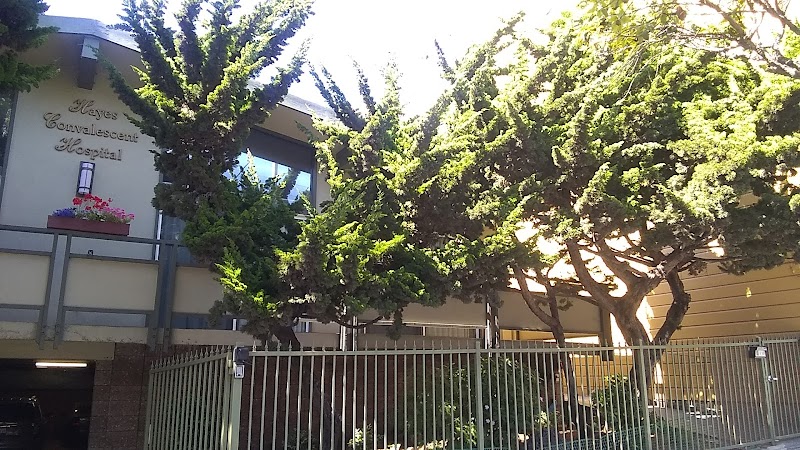
What is Hayes Convalescent Hospital's CMS Rating?

CMS assigns HAYES CONVALESCENT HOSPITAL an overall rating of 5 out of 5 stars, which is considered much above average nationally. Within California, this rating places the facility higher than 99% of the state's 100 nursing homes. This rating reflects solid performance across the metrics CMS uses to evaluate nursing home quality.
How is Hayes Convalescent Hospital Staffed?

CMS rates HAYES CONVALESCENT HOSPITAL's staffing level at 3 out of 5 stars, which is average compared to other nursing homes.

What Have Inspectors Found at Hayes Convalescent Hospital?

State health inspectors documented 16 deficiencies at HAYES CONVALESCENT HOSPITAL during 2021 to 2024. These included: 16 with potential for harm.
Who Owns and Operates Hayes Convalescent Hospital?

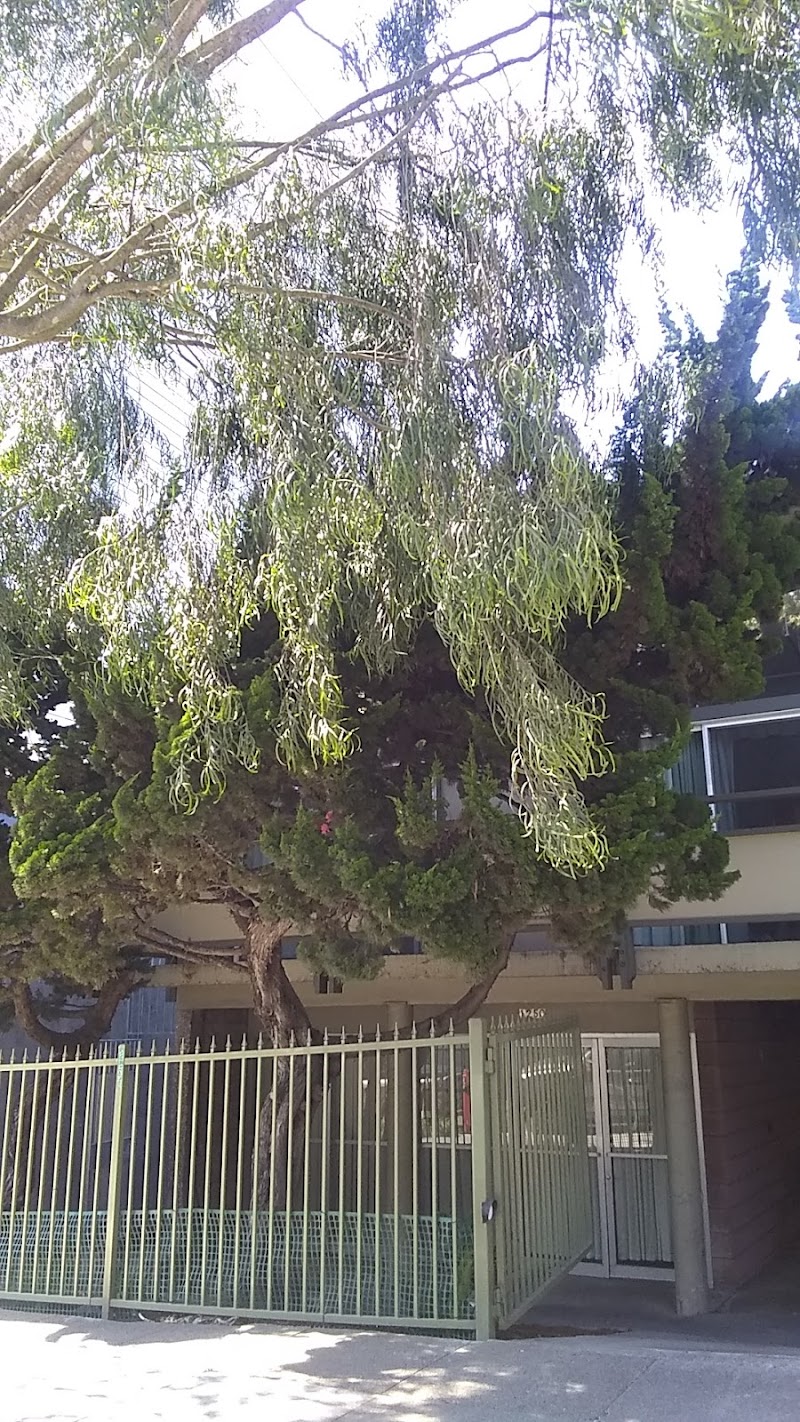
HAYES CONVALESCENT HOSPITAL is owned by a for-profit company. For-profit facilities operate as businesses with obligations to shareholders or private owners. The facility operates independently rather than as part of a larger chain. With 34 certified beds and approximately 29 residents (about 85% occupancy), it is a smaller facility located in SAN FRANCISCO, California.
How Does Hayes Convalescent Hospital Compare to Other California Nursing Homes?

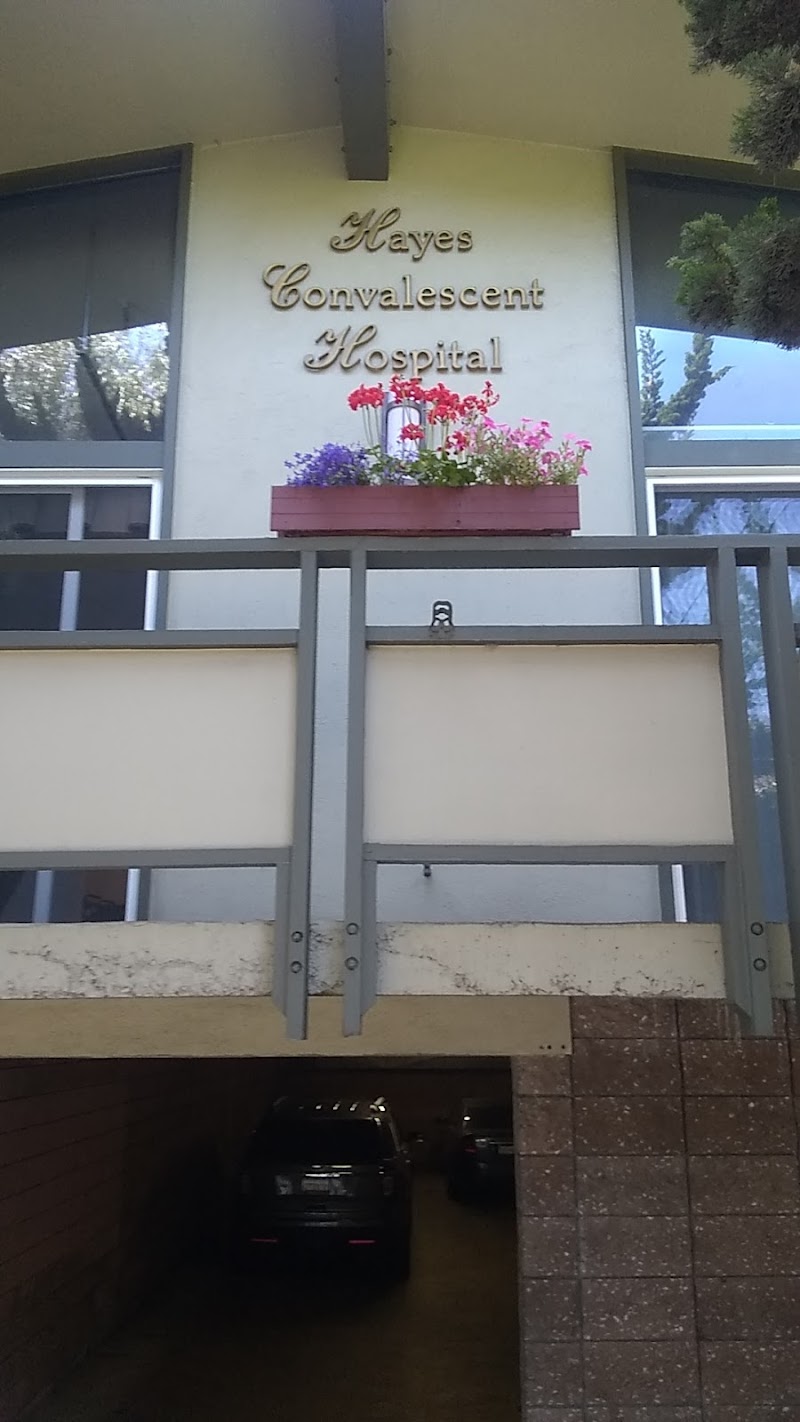
Compared to the 100 nursing homes in California, HAYES CONVALESCENT HOSPITAL's overall rating (5 stars) is above the state average of 3.2 and health inspection rating (5 stars) is much above the national benchmark.

What Should Families Ask When Visiting Hayes Convalescent Hospital?

Based on this facility's data, families visiting should ask: "Can I visit during a mealtime to observe dining assistance and food quality?" "How do you handle medical emergencies, and what is your hospital transfer rate?" "Can I speak with family members of current residents about their experience?"

Is Hayes Convalescent Hospital Safe?

Based on CMS inspection data, HAYES CONVALESCENT HOSPITAL has a clean safety record: no substantiated abuse findings (meaning no confirmed cases of resident harm), no Immediate Jeopardy citations (the most serious violation level indicating risk of serious injury or death), and is not on the Special Focus Facility watch list (a federal program monitoring the lowest-performing 1% of nursing homes). The facility has a 5-star overall rating and ranks #1 of 100 nursing homes in California. While no facility is perfect, families should still ask about staff-to-resident ratios and recent inspection results during their visit.

Do Nurses at Hayes Convalescent Hospital Stick Around?

HAYES CONVALESCENT HOSPITAL has not reported staff turnover data to CMS. Staff turnover matters because consistent caregivers learn residents' individual needs, medications, and preferences. When staff frequently change, this institutional knowledge is lost. Families should ask the facility directly about their staff retention rates and average employee tenure.

Was Hayes Convalescent Hospital Ever Fined?

HAYES CONVALESCENT HOSPITAL has no federal fines on record. CMS issues fines when nursing homes fail to meet care standards or don't correct problems found during inspections. The absence of fines suggests the facility has either maintained compliance or corrected any issues before penalties were assessed. This is a positive indicator, though families should still review recent inspection reports for the full picture.

Is Hayes Convalescent Hospital on Any Federal Watch List?

HAYES CONVALESCENT HOSPITAL is not on any federal watch list. The most significant is the Special Focus Facility (SFF) program, which identifies the bottom 1% of nursing homes nationally based on persistent, serious quality problems. Not being on this list means the facility has avoided the pattern of deficiencies that triggers enhanced federal oversight. This is a positive indicator, though families should still review the facility's inspection history directly.