CONCERN
(D)
Potential for Harm - no one hurt, but risky conditions existed
Deficiency F0582
(Tag F0582)
Could have caused harm · This affected 1 resident
Based on interview and record review, the facility failed to issue a Skilled Nursing Facility Advance Beneficiary Notice (SNFABN) to three residents (Resident 1, Resident 2 and Resident 23). This fail...
Read full inspector narrative →
Based on interview and record review, the facility failed to issue a Skilled Nursing Facility Advance Beneficiary Notice (SNFABN) to three residents (Resident 1, Resident 2 and Resident 23). This failure left the residents or their responsible parties without information related to continuing to receive Part A Medicare services, the cost, and their appeal rights.
Findings:
During review of Resident 1, Resident 2 and Resident 23's clinical record, there were no signed SNF-ABN forms by the residents or the responsible parties.
Additionally, there were no signed NOMNC for Residents 2 and 23.
Interview with the Administrator on 4/19/23 at 3:40 pm, he acknowledged lack of signed SNFABN form on Residents 1, 2 and 23. Additionally, there were no NOMNC on Residents 2 and 23.
CONCERN
(D)
📢 Someone Reported This
A family member, employee, or ombudsman was alarmed enough to file a formal complaint
Potential for Harm - no one hurt, but risky conditions existed
Grievances
(Tag F0585)
Could have caused harm · This affected 1 resident
**NOTE- TERMS IN BRACKETS HAVE BEEN EDITED TO PROTECT CONFIDENTIALITY** Based on interview and record review, the facility failed to ensure a written grievance decision was issued to one resident (Res...
Read full inspector narrative →
**NOTE- TERMS IN BRACKETS HAVE BEEN EDITED TO PROTECT CONFIDENTIALITY** Based on interview and record review, the facility failed to ensure a written grievance decision was issued to one resident (Resident A).
This failure had the potential to not ensure Resident A and/or other residents are appropriately apprised of progress and/or decisions on grievances reported to the facility.
Findings:
Resident A was admitted to the facility on [DATE] with diagnoses that included sepsis (life threatening complication of an infection), chronic kidney disease (progressive damage and loss of kidney function) and gastroenteritis (intestinal infection.)
During a review of Resident A's nursing progress notes, dated 4/17/22, the note indicated that the resident wanted to leave due to reported rodents at the facility.
During an interview on 7/18/23 at 1:10 PM, with the Director of Nursing (DON), DON explained the facility's grievance officer or designee, was the Social Worker. DON stated the grievance officer involved in Resident A's grievance investigation no longer worked at the facility. DON stated Resident A's grievance, on 4/17/22, was discussed by management at the time. DON stated Resident A's grievance was investigated and recorded on the grievance log.
During an interview on 7/18/23 at 1:24 PM, with the DON, DON stated she was not sure if Resident A was notified of the facility's findings and/or resolution on the reported grievance. DON stated she will find out and provide further information.
During a concurrent interview and record review on 7/20/23 at 12:33 PM, with the DON, the facility's grievance form related to Resident A's grievance, dated 4/18/22, was reviewed. The grievance form indicated, Resolution: Respond to resident or designee within 7 working days of concern with resolution: Interventions/Action. There was no information on the grievance form about a written decision issued to Resident A pertinent to the grievance. When asked, DON stated, it [response] was not followed through. I'm not seeing that in the documentation.
During an interview on 7/20/23 at 12:37 PM, with the DON, DON confirmed there was no documented evidence that the facility notified Resident A, verbally and in writing, of the investigation findings and the facility's decision and resolution on the grievance. DON stated, I couldn't find evidence. I don't see evidence, record of it. DON explained the facility's practice was to provide residents with a report as soon as possible or within 5 days of knowledge of the grievance.
During a review of the facility's Policy and Procedures (P&P), titled, Grievances/Complaint, Filing, revision dated 4/2017, the P&P indicated, .Residents and their representatives have the right to file grievances, either orally or in writing, to the facility staff . The administrator and staff will make prompt efforts to resolve grievances to the satisfaction of the resident and/or representative .The resident, or person filing the grievance and/or complaint on behalf of the resident, will be informed (verbally and in writing) of the findings of the investigation and the actions that will be taken to correct any identified problems. a. The administrator, or his or her designee, will make such reports orally within __ [blank] working days of the filing of the grievance or complaint with the facility. b. A written summary of the investigation will also be provided to the resident, and a copy will be filed in the business office .
During a review of the facility's Policy and Procedures (P&P), titled, Resident Rights, revision dated 12/2016, the P&P indicated, .Policy Interpretation and Implementation - 1. Federal and state laws guarantee certain basic rights to all residents of this facility. These rights include the resident's right to: . v. have the facility respond to his or her grievances .
CONCERN
(D)
Potential for Harm - no one hurt, but risky conditions existed
Comprehensive Assessments
(Tag F0636)
Could have caused harm · This affected 1 resident
**NOTE- TERMS IN BRACKETS HAVE BEEN EDITED TO PROTECT CONFIDENTIALITY** Based on interview and record review, the facility failed to ensure Minimum Data Set (MDS, a resident assessment tool) comprehen...
Read full inspector narrative →
**NOTE- TERMS IN BRACKETS HAVE BEEN EDITED TO PROTECT CONFIDENTIALITY** Based on interview and record review, the facility failed to ensure Minimum Data Set (MDS, a resident assessment tool) comprehensive assessment was completed within the required period of within 14 days of admission for two of 19 sampled residents (Resident 21 and Resident 90).
Failure to complete a comprehensive resident assessment within the required timeframe could result in delayed identification of needs and significant issues that may affect the physical, mental, and psychosocial well-being of Resident 90.
Findings:
a. During review of Resident 21's clinical record, indicated Resident 21 was admitted on [DATE]. Review of Resident 21's admission MDS assessment indicated, the assessment was completed on 1/11/23, 20 days after admission.
b. During review of Resident 90's clinical record, indicated Resident 90 was admitted on [DATE]. Review of Resident 90's admission MDS assessment indicated, the assessment was completed on 4/6/23, 15 days after admission.
During an interview on 4/19/23, at 9:48 AM, the MDS Coordinator (MDSC) stated, admission MDS assessment should be completed on the 14th day of admission. MDSC acknowledged the admission MDS assessment for Resident 21 and Resident 90 were late in completion.
Review of Long-Term Care Facility Resident Assessment Instrument 3.0 User's Manual, dated October 2019, indicated, .The OBRA (Omnibus Budget Reconciliation Act of 1987) regulations require nursing homes that are Medicare certified, Medicaid certified or both, to conduct initial and periodic assessments for all their residents . The admission assessment is a comprehensive assessment for a new resident and, under some circumstances, a returning resident that must be completed by the end of day 14, counting the date of admission to the nursing home as day 1 .
Review of facility policy and procedure titled, MDS Completion and Submission Timeframes, revised July 2017, indicated, Our facility will conduct and submit resident assessments in accordance with current federal and state submission timeframes . 2. Timeframes for completion and submission of assessments is based on the current requirements published in the Resident Assessment Instrument Manual .
CONCERN
(D)
Potential for Harm - no one hurt, but risky conditions existed
Deficiency F0637
(Tag F0637)
Could have caused harm · This affected 1 resident
**NOTE- TERMS IN BRACKETS HAVE BEEN EDITED TO PROTECT CONFIDENTIALITY** Based on interview and record review, the facility failed to complete significant change in status assessment (SCSA, is a compre...
Read full inspector narrative →
**NOTE- TERMS IN BRACKETS HAVE BEEN EDITED TO PROTECT CONFIDENTIALITY** Based on interview and record review, the facility failed to complete significant change in status assessment (SCSA, is a comprehensive assessment for a resident that must be completed when the IDT has determined that a resident meets the significant change guidelines for either major improvement or decline) for one of 19 sampled residents (Resident 14) when Resident 14 was discharged from hospice services.
This failure could potentially delay the provision of appropriate treatment and services for Resident 14.
Findings:
Review of Resident 14's profile in the electronic health record (EHR) indicated, was admitted on [DATE] with diagnoses included atrial fibrillation (irregular, rapid heart rate that causes poor blood flow), heart failure, kidney failure, and hypertension (high blood pressure).
Review of Resident 14's Minimum Data Set (MDS, a resident assessment tool), dated 2/15/23, indicated, Resident 14 was on hospice care.
During an interview on 4/19/23, at 1:39 PM, Licensed Vocational Nurse (LVN) 2 stated, Resident 14 completely stopped eating and was later admitted to hospice due to failure to thrive. LVN 2 also stated, Resident 14 was discharged from hospice care three weeks ago.
Review of Client Coordination Note Report dated 3/29/23, indicated, Resident 14 was discharged from hospice care on 3/29/23 due to prolonged prognosis.
During an interview on 4/20/23, at 9:40 AM, MDS Coordinator (MDSC) stated, Resident 14 was admitted to hospice on 8/2/22 and was discharged on 3/29/23. MDS C also stated a significant change assessment in the MDS was required to be completed 14 days after Resident 14 was discharged from hospice care.
Review of Resident 14's MDS Summary in the EHR indicated, significant change assessment with Assessment Reference Date (ARD, specific endpoint for the look-back periods in the MDS assessment process) of 4/11/23 was in progress. The assessment was 22 days late from the required completion date on the day of the review.
Review of Long-Term Care Facility Resident Assessment Instrument 3.0 User's Manual, dated October 2019, indicated, .The OBRA (Omnibus Budget Reconciliation Act of 1987) regulations require nursing homes that are Medicare certified, Medicaid certified or both, to conduct initial and periodic assessments for all their residents . An SCSA is required to be performed when a resident is receiving hospice services and then decides to discontinue those services (known as revoking of hospice care). The ARD must be within 14 days from one of the following: . 2) the expiration date of the certification of terminal illness; or 3) the date of the physician's or medical director's order stating the resident is no longer terminally ill .
Review of facility policy and procedure titled, MDS Completion and Submission Timeframes, revised July 2017, indicated, Our facility will conduct and submit resident assessments in accordance with current federal and state submission timeframes . 2. Timeframes for completion and submission of assessments is based on the current requirements published in the Resident Assessment Instrument Manual .
CONCERN
(D)
Potential for Harm - no one hurt, but risky conditions existed
Deficiency F0638
(Tag F0638)
Could have caused harm · This affected 1 resident
**NOTE- TERMS IN BRACKETS HAVE BEEN EDITED TO PROTECT CONFIDENTIALITY** Based on interview and record review, the facility failed to ensure Minimum Data Set (MDS, a resident assessment tool) quarterly...
Read full inspector narrative →
**NOTE- TERMS IN BRACKETS HAVE BEEN EDITED TO PROTECT CONFIDENTIALITY** Based on interview and record review, the facility failed to ensure Minimum Data Set (MDS, a resident assessment tool) quarterly assessment was completed at least every 92 days following the previous OBRA (Omnibus Budget Reconciliation Act of 1987) assessment type for six of 19 sampled residents (Resident 6, 21, 62, 14, 80, and 50).
Failure to complete quarterly resident assessment within the required timeframe could result in delayed identification of needs and significant issues that may affect the physical, mental, and psychosocial well-being of the residents.
Findings:
Review of the MDS Summary in the electronic health record (EHR), indicated the following:
a. Resident 6 was admitted on [DATE]. Review of Resident 6's quarterly MDS assessment dated [DATE] indicated, the assessment was completed on 3/23/23, 16 days after the Assessment Reference Date (ARD, specific endpoint for the look-back periods in the MDS assessment process). Further review revealed, quarterly MDS assessment dated [DATE] indicated, the assessment was completed on 12/30/22, 25 days after the ARD.
b. Resident 21 was admitted on [DATE]. Review of Resident 21's quarterly MDS assessment dated [DATE] indicated, the assessment was completed on 4/18/23, 18 days after the ARD.
c. Resident 62 was readmitted on [DATE] (original admission [DATE]). Review of Resident 62's quarterly MDS assessment dated [DATE] indicated, the assessment was completed on 3/22/23, 20 days after the ARD.
d. Resident 14 was admitted on [DATE]. Review of Resident 14's quarterly MDS assessment dated [DATE] indicated, the assessment was completed on 3/6/23, 19 days after the ARD.
e. Resident 50 was admitted on [DATE]. Review of Resident 50's quarterly MDS assessment dated [DATE] indicated, the assessment was completed on 3/29/23, 21 days after the ARD. Further review revealed, quarterly MDS assessment dated [DATE] indicated, the assessment was completed on 12/30/22, 24 days after the ARD.
f. Resident 80 was readmitted on [DATE] (original admission [DATE]). Review of Resident 80's quarterly MDS assessment dated [DATE] indicated, the assessment was completed on 2/22/23, 23 days after the ARD.
During an interview on 4/19/23, at 1:32 PM, MDS Coordinator (MDSC) stated, quarterly MDS assessment should be completed 14 days after the ARD. MDSC acknowledged the quarterly MDS assessments for Resident 21 and Resident 14 were late.
During an interview on 4/20/23, at 4:22 PM, Assistant Regional Director of Clinical Services (ARDCS) acknowledged the quarterly MDS assessments for Residents 6, 21, 62, and 14 were completed late.
During an interview on 4/21/23, at 10:10 AM, the Director of Nursing (DON) acknowledged the quarterly MDS assessments for Residents 80 and 50 were completed late.
Review of Long-Term Care Facility Resident Assessment Instrument 3.0 User's Manual, dated October 2019, indicated, .The OBRA (Omnibus Budget Reconciliation Act of 1987) regulations require nursing homes that are Medicare certified, Medicaid certified or both, to conduct initial and periodic assessments for all their residents . The Quarterly assessment is an OBRA non-comprehensive assessment for a resident that must be completed at least every 92 days following the previous OBRA assessment of any type. It is used to track a resident's status between comprehensive assessments to ensure critical indicators of gradual change in a resident's status are monitored . The ARD (A2300) must be not more than 92 days after the ARD of the most recent OBRA assessment of any type . The ARD must be within 92 days after the ARD of the previous OBRA assessment (Quarterly, Admission, SCSA, SCPA, SCQA, or Annual assessment + 92 calendar days). The MDS completion date (item Z0500B) must be no later than 14 days after the ARD (ARD + 14 calendar days) .
Review of facility policy and procedure titled, MDS Completion and Submission Timeframes, revised July 2017, indicated, Our facility will conduct and submit resident assessments in accordance with current federal and state submission timeframes . 2. Timeframes for completion and submission of assessments is based on the current requirements published in the Resident Assessment Instrument Manual .
CONCERN
(D)
Potential for Harm - no one hurt, but risky conditions existed
Assessment Accuracy
(Tag F0641)
Could have caused harm · This affected 1 resident
**NOTE- TERMS IN BRACKETS HAVE BEEN EDITED TO PROTECT CONFIDENTIALITY** Based on observation, interview, and record review, the facility failed to ensure complete and accurate assessment for one of 19...
Read full inspector narrative →
**NOTE- TERMS IN BRACKETS HAVE BEEN EDITED TO PROTECT CONFIDENTIALITY** Based on observation, interview, and record review, the facility failed to ensure complete and accurate assessment for one of 19 sampled residents (Resident 36) when coding in Section M of the Minimum Data Set (MDS, a resident assessment tool) did not reflect Resident 36's actual skin condition as of the Assessment Reference Date (ARD, specific endpoint for the look-back periods in the MDS assessment process).
The deficient practice resulted in an inaccurate assessment and interventions provided for Resident 36. Additionally, the deficient practice lead to delayed healing and development of a new pressure ulcer/injury (PU/PI - a localized damage to the skin and/or underlying soft tissue usually over a bony prominence, or related to a medical or other device, as a result of intense and/or prolonged pressure or pressure in combination with shear) for Resident 36.
Findings:
Review of Resident 36's clinical record, indicated Resident 36 was admitted on [DATE] with diagnoses included rhabdomyolysis (a breakdown of muscle tissue that releases a damaging protein into the blood); unstageable (full-thickness skin and tissue loss in which extent cannot be confirmed because the wound bed is covered by a non-viable, dead, or devitalized tissue) pressure ulcer of right hip; and stage 2 pressure ulcer of other site.
Review of Resident 36's history & physical (H&P), dated 3/22/23, indicated, .She (referring to Resident 36) received ongoing wound care for ischial and bilateral tibial wounds, present on admission, which do not appear infected . Physical Exam: . SKIN: Sacral pressure injury, unstageable 4.4 x 7.2 cm, 1.8 x .8 cm wound L (left) shin under the knee with slough, 5.2 x 2 cm wound R (right) shin with slough . The H&P indicated no mention of a stage 2 pressure injury on the left medial foot or bunion (a bony bump that forms on the joint at the base of your big toe).
Review of Resident 36's MDS assessment dated [DATE], indicated, one unhealed stage 2 pressure ulcer and one unstageable/eschar (dead or devitalized tissue that is hard or soft in texture; usually black, brown, or tan in color, and may appear scab-like) present on admission and were coded under Section M: Skin Conditions. M0300. Current Number of Unhealed Pressure Ulcers/Injuries at Each Stage. In addition, Section M: Skin Conditions. M1040. Other Ulcers, Wounds and Skin Problems was coded x which indicated None of the above were present.
Review of Resident 36's Admission/readmission Evaluation/Assessment dated 3/21/23, indicated the following under Skin Evaluation section:
- Right lower leg (front), trauma injury; no wound measurement or description indicated.
- Left lower leg (front), trauma injury; no wound measurement or description indicated.
- Sacrum (a triangular bone in the lower back formed from fused vertebrae and situated between the two hipbones of the pelvis) unstageable pressure; no wound measurement or description indicated.
- Left Bunion pressure, no wound measurement or description indicated.
Resident 36's Skin & Wound Evaluation V5.0 dated 3/21/23 in the electronic health record (EHR) was also reviewed and indicated the following:
- Unstageable PU/PI on right ischial tuberosity (known as Sitz bone, a pair of rounded bones that extends from the bottom of the pelvis) measuring 2.2 centimeters (cm) x 1.0 cm, no description of the wound bed indicated.
- Unstageable PU/PI on right ischial tuberosity measuring 4.4 cm x 7.2 cm, 40% of wound filled with eschar.
- Stage 2 PU/PI on left medial foot measuring 1.9 cm x 1.6 cm, no description of the wound bed indicated.
- Laceration on right shin measuring 5.2 cm x 2.1 cm, wound bed filled with 60% slough (non-viable yellow, tan, gray, green or brown tissue; usually moist, can be soft, stringy, and mucinous in texture).
- Laceration on left shin measuring 1.8 cm x 1.8 cm, wound bed filled with 50% slough.
During an interview on 4/20/23, at 10:24 AM, MDS Coordinator (MDS C) stated, Resident 36 was admitted on [DATE] and confirmed two pressure ulcers/injuries were present on admission. MDS C further stated, it was unclear on the skin & wound evaluation whether the two unstageable PU/PI were both located on the right ischial tuberosity. MDS C added, there was no mention of the unstageable PU/PI on the sacrum as indicated in the admission skin evaluation. MDS C acknowledged Resident 36's MDS dated [DATE] did not reflect two unstageable PU/PI on right ischial tuberosity and lacerations on left and right shin as indicated in the Skin & Wound Evaluation V5.0 completed on admission. Additionally, MDS C was not aware of the unstageable PU/PI on the sacrum as indicated in the Admission/readmission Evaluation/Assessment, thus was not coded in the MDS assessment.
During wound care observation and concurrent interview on 4/20/23, at 11:28 AM, in resident's room, Registered Nurse (RN) 1 stated Resident 36 had three wounds located on the sacrum, left shin and right shin. Resident 36's sacrum was observed with pale pink colored, intact skin while the right lower buttock area was observed with irregular shape closed wound covered with black adherent patch. RN 1 pointed towards the right lower buttock, identified it (right lower buttock) as the sacrum, and described the wound as black scab. RN 1 was unable to stage the PU/PI and stated, I'll have to look at the order. RN 1 administered and explained the treatment order for the sacrum was to cleanse with wound cleanser, pat dry, apply skin sealant, and cover with Allevyn (a brand name of foam dressing) dressing. Further wound care observation revealed an oval shape wound covered with black scab on the right and left shin. RN 1 described the wounds on the right and left shin as abrasion but also stated, Both shins were moist and less scabby but now looks like an eschar. RN 1 administered and explained the treatment order was to cleanse with normal saline (NS) solution, apply Medihoney (aids and supports autolytic debridement and moist wound healing environment), and cover with foam dressing. Further observation revealed an irregular shape brownish-black discoloration on left medial foot and big toe. RN 1 was also unable to stage the PU/PI found.
During an interview on 4/20/23, at 11:57 AM, RN 1 stated Resident 36 had a stage 2 pressure injury on the left medial foot and thought it was already healed since he did not see a treatment order. RN 1 added that he was also not aware of the discolorations on the left big toe and that it appeared to be new one. On the same interview, RN 1 described the discolorations as brownish scab and stated he had to look at the chart because he was not sure how to stage the discolorations found on the left medial foot and big toe.
Review of Resident 36's Order Summary Report dated 3/22/23, indicated the following treatment orders:
- Allevyn heel foam for prevention every day shift every Wed, Sat twice a week.
- Cam boot for [for] both feet every shift.
- Float heel with pillow at all times every shift.
- Low air loss bed every shift.
- Treatment to R shin wound: after cleaning with NS, pat dry and apply Medihoney HCS (Hydrogel Colloidal Sheet) as needed for soilage AND every day shift every other day.
- Treatment to L shin wound: after cleaning with NS, pat dry and apply Medihoney HCS as needed for soilage AND every day shift every other day.
- Treatment to sacral pressure injury wound: cleanse with [with] wound cleanser, pat dry then spray area where dressing will be with Cavilon skin sealant then apply an upside down sacral Allevyn dressing as needed for soilage AND every day shift every other day.
- Turn and reposition per clinical guideline and place reposition pillow between knees when side lying every shift.
Review of Resident 36's undated care plan addressing pressure ulcer, indicated, The resident has pressure ulcer or potential for pressure ulcer development .admitted with right shin laceration, PU to sacrum UTD (unstageable full thickness skin or tissue loss-depth unknown), PU right ischial tuberosity UTD, stage 2 PU left mid foot . Goal: the resident's pressure ulcer will show signs of healing and remain free from infection .The resident will have intact skin , free of redness, blisters or discoloration by/through review date. Further review indicated the following interventions:
- Administer treatments as ordered and monitor for effectiveness.
- Follow facility policies/protocols for the prevention/treatment of skin breakdown.
- Inform the resident/family/caregivers of any new area of skin breakdown.
- Monitor nutritional status. Serve diet as ordered, monitor intake and record.
- Monitor/document/report PRN (as needed) any changes in skin status: appearance, color, wound healing, s/sx (signs/symptoms) of infection, wound size (length X width X depth), stage.
- Weekly treatment documentation to include measurement of each area of skin breakdown's width, length, depth, type of tissue and exudate.
During an interview on 4/20/23, at 3:04 PM, the Director of Nursing (DON) explained, the admitting nurse is responsible for completing the admission assessments that includes the skin and wound assessment during admission. During a follow-up interview at 3:07 PM, the DON confirmed the admission assessment and wound evaluation were not consistent in identifying, measuring, and describing Resident 36's wounds.
During an interview on 4/20/23, at 3:10 PM, the DON acknowledged Resident 36's care plan did not reflect accurate description of the wounds such as type, stage, and current treatment orders. The DON stated, Resident 36's care plan should be updated with accurate and current information to reflect resident's status and current plan of care.
During an interview on 4/20/23, at 4:22 PM, Assistant Regional Director of Clinical Services (ARDCS) explained, Section M: Skin Condition of the MDS assessment is completed based on the information gathered from hospital documentation, admission note, H&P, and wound assessments by admission nurse who take photos, measurement, and description of the wound. Additionally, licensed vocational nurse (LVN) completes the nursing sections of the MDS and an RN working remotely will verify all sections are completed before signing and submitting the MDS assessment.
Review of Resident 36's Skin & Wound in the EHR (a tab/section for skin and wound assessment that includes photos of the wound) dated 3/21/23 indicated the following:
- Medial foot with redness measuring 1.9 cm x 1.5 cm was described as Stage 2 pressure.
- Right ischial tuberosity measuring 4.4 cm x 7.2 cm was described as unstageable/eschar.
- Right ischial tuberosity measuring 2.18 cm x 0.97 cm was described as unstageable pressure.
- Right shin laceration measuring 5.2. cm x 2.09 cm with 60% slough.
- Left shin laceration measuring 1.82 cm x 1.84 cm with 50% slough.
During an interview on 4/23/23, at 4:34 PM, ARDCS stated the photos shown and description of the wounds (referring to the Skin & Wound assessment above) were taken from an app called Skin & Wound. ARDCS acknowledged the wound assessments recorded on several skin and wound evaluation were not consistent and were not reflected on the MDS assessment. ARDCS also stated that based on the photos, the PU/PI on medial foot should have been coded as unstageable instead of stage 2 as it appears as dark red/brownish discoloration on admission. ARDCS further stated, the wounds were not accurately assessed and coded in the MDS.
Review of Long-Term Care Facility Resident Assessment Instrument 3.0 User's Manual, dated October 2019, indicated, .The OBRA (Omnibus Budget Reconciliation Act of 1987) regulations require nursing homes that are Medicare certified, Medicaid certified or both, to conduct initial and periodic assessments for all their residents . Section M: Skin Conditions - Intent: The items in this section document the risk, presence, appearance, and change of pressure ulcers/injuries. This section also notes other skin ulcers, wounds, or lesions, and documents some treatment categories related to skin injury or avoiding injury. It is important to recognize and evaluate each resident's risk factors and to identify and evaluate all areas at risk of constant pressure. A complete assessment of skin is essential to an effective pressure ulcer prevention and skin treatment program . Steps for Assessment: 1. Review the medical record, including skin care flow sheets or other skin tracking forms, nurses' notes, and pressure ulcer/injury risk assessments. 2. Speak with the treatment nurse and direct care staff on all shifts to confirm conclusions from the medical record review and observations of the resident. 3. Examine the resident and determine whether any ulcers, injuries, scars, or non-removable dressings/devices are present. Assess key areas for pressure ulcer/injury development (e.g., sacrum, coccyx, trochanters, ischial tuberosities, and heels). Also assess bony prominences (e.g., elbows and ankles) and skin that is under braces or subjected to pressure (e.g., ears from oxygen tubing).
CONCERN
(D)
Potential for Harm - no one hurt, but risky conditions existed
Quality of Care
(Tag F0684)
Could have caused harm · This affected 1 resident
**NOTE- TERMS IN BRACKETS HAVE BEEN EDITED TO PROTECT CONFIDENTIALITY** Based on observation, interview, and record review, the facility failed to provide care and services for one of 19 sampled resid...
Read full inspector narrative →
**NOTE- TERMS IN BRACKETS HAVE BEEN EDITED TO PROTECT CONFIDENTIALITY** Based on observation, interview, and record review, the facility failed to provide care and services for one of 19 sampled residents (Resident 21) when physician's treatment orders for Resident 21's healing burn area on right forearm were not implemented.
Failure to implement physician's treatment orders could result to delayed wound healing and the potential for infection.
Findings:
Review of Resident 21's clinical record indicated, Resident 21 was admitted on [DATE] with diagnoses included but not limited to burn of third degree (full-thickness burn) of right forearm and other site of trunk, cerebral infarction (occurs as a result of disrupted blood flow to the brain due to problems with the blood vessels that supply it), dementia (memory loss), and Parkinson's disease (refers to brain conditions that cause slowed movements, stiffness, and tremors).
Review Resident 21's Minimum Data Set (MDS, a resident assessment tool), dated 3/31/23, indicated, Resident 21 had severe cognitive impairment. The MDS assessment also determined Resident 21 had no impairment on both upper and lower extremities. Section M: Skin Conditions. M1040. Other Ulcers, Wounds and Skin Problems of the MDS assessment indicated, Resident 21 had Surgical wound(s) and Burn(s) (second or third degree).
Review of Resident 21's history & physical (H&P) dated 12/24/22, indicated, .Discharge Diagnoses: A 12% total body surface area full-thickness flame burn to right trunk and right arm . Assessment and Plan: [Resident 21] .was hospitalized after sustain a burn to her R (right) arm and torso while cooking. She underwent skin grafting. She is transferred [Facility Name] for therapy. Wound care at outpatient burn clinic .
During an observation on 4/17/23, at 10:57 AM, in resident's room, Resident 21 was awake in bed, wearing a short-sleeved pink shirt exposing her pale pink arm and an open wound on the elbow. A wedge pillow (used to elevate the upper or lower body to help improve circulation, reduce snoring, and relieve pressure on sensitive areas) was observed tucked under the bed sheet on both sides of the bedrail. A moist, yellow-colored gauze (a thin, translucent fabric with a loose open weave) and dry crumpled white gauze was observed on the bed sheet by Resident 21's left upper arm. There was no wound observed on Resident 21's left arm. Further observation showed an open wound on the right elbow with no cover or dressing, and red spots on the sheets.
During an interview on 4/17/23, at 11:14 AM, Certified Nursing Assistant (CNA) 9 stated, Resident 21's right arm and body got burned. CNA 9 also stated it was her first day taking care of Resident 21 and to ask the charge nurse for more information of the burn on right arm.
Review of Resident 21's Order Summary Report dated 4/5/23, indicated the following orders:
- Apply Tubigrip (provides firm support for sprains, strains and swelling) size E to right upper arm and apply Tubigrip size D to right lower arm. Check placement q (every) shift.
- Topical Tx (treatment) to healing burn area on right forearm - cleanse with wound cleanser, pat to dry, apply collagen dressing and xeroform (non-adherent gauze dressing used on low exudating wounds) cover, then wrap with Kerlix (bandage roll used as primary dressing for exuding wounds, burns, as a cover for surgical wounds and to secure and prevent movement of primary dressing) every other day every 4 hours as needed for Saturation or soiling.
- Topical Tx to healing burn area on right forearm - cleanse with wound cleanser, dry, apply collagen dressing and Xeroform cover, then wrap with Kerlix every other day one time a day every other day.
- Topical Tx to R (right) elbow/upper arm daily - cleanse with wound cleanser, dry, apply collagen dressing and Xeroform to small open areas right elbow and right upper arm, wrap with Kerlix daily; until healed every day shift for burn areas.
- Turning and repositioning as tolerated for wound management q shift.
- Wound eval (evaluation)/consult.
During an observation on 4/18/23, at 8:48 AM, in resident's room, Resident 21 was awake in bed, scratching and picking the skin on her exposed right arm. During concurrent interview at 8:49 AM, CNA 7 stated, Resident 21 usually scratches the skin on her burned skin. CNA 7 further stated that there should be a cover on her right arm to protect from scratching, I will tell the nurse.
During an interview on 4/18/23, at 10:59 AM, Licensed Vocational Nurse (LVN) 2 stated, Resident 21 had a burn on the right arm and body and was admitted to facility for wound care. LVN2 added, a Tubigrip is applied on the right arm to cover and help prevent Resident 21 from scratching or removing the dressing. Further interview, LVN 2 acknowledged Resident 21 had no dressing or cover on her right arm and stated, It should be covered. I will tell the treatment nurse.
Review of Resident 21's care plan addressing burn area on right elbow, revised on 3/28/23, indicated the following interventions:
- Monitor s/s (signs/symptoms) for pain q shift.
- Topical Tx as ordered. Updated 3/28/23 Cleanse with NS (normal saline, a mixture of sodium chloride and water), apply medihoney (aids and supports autolytic debridement and moist wound healing environment), collagen sheet, xeroform, cover with foam daily and PRN (as needed) for soiling and saturation.
- Turning and repositioning q 2 hrs (hours).
Review of Resident 21's care plan addressing burn area on right torso, initiated on 12/23/22, indicated the following interventions:
- Monitor s/s (signs/symptoms) for pain q shift.
- Topical Tx as ordered.
- Turning and repositioning q 2 hrs.
Review of Resident 21's care plan addressing burn area on right forearm, revised on 3/28/23, indicated the following interventions:
- Encourage long-sleeved shirts and pants to protect extremities, as indicated.
- Keep RP (resident representative) and MD (medical doctor) updated, as indicated.
- Monitor for any complaints of pain (location, duration, quantity, quality, alleviating factors, aggravating factors).
- Monitor labs as indicated.
- Treat area per MD orders. Treatment: Cleanse with NS, apply collagen, xeroform, wrap with kerlix every other day and PRN for saturation and soiling.
- Wound specialist MD to follow resident weekly.
During concurrent interview and record review on 4/18/23, at 11:23 AM, Director of Nursing (DON) reviewed Resident 21's treatment orders and care plan addressing third degree burn on the right arm and torso. DON stated, Resident 21's burned area should have a dressing and cover including kerlix and Tubigrip on the right arm. DON explained, Tubigrip looks like a cloth sleeve and stated, Resident 21 needs to have it all the time. Check placement every shift. DON added, I don't see it (referring to Tubigrip) in the care plan.
Review of Resident 21's care plan addressing skin integrity, initiated and revised on 12/25/22, indicated, Actual and potential for alteration in skin integrity .r/t (related to) s/p (status post) Burn on right arm and right torso . Interventions: .Follow physician orders for skin care and treatment .
During a follow-up observation on 4/19/23, at 1:19 PM and 4/20/23, at 11:15 AM, in resident's room, Resident 21 had no dressing or cover on her right forearm.
Review of Resident 21's Treatment Administration Record for April 2023, indicated, treatment order, Apply Tubigrip size E to right upper arm and apply Tubigrip size D to right lower arm. Check placement q (every) shift. had check marks and initials on 4/1/23 through 4/20/23.
During an interview on 4/20/23, at 11:20 AM, Registered Nurse (RN) 1 stated, the check marks and initials in the Treatment Administration Record indicates treatment order was administered to the resident.
Review of facility's policy and procedure titled, Wound Care, revised 10/2010, indicated, . 1. Verify that there is a physician's order . 2. Review the resident's care plan to assess for any special needs of the resident .
Review of facility's policy and procedure titled, Care Plans, Comprehensive Person-Centered, revised December 2016, indicated, A comprehensive, person-centered care plan that includes measurable objectives and timetables to meet the resident's physical, psychosocial and functional needs is developed and implemented for each resident . 2. The care plan interventions are derived from a thorough analysis of the information gathered as part of the comprehensive assessment . 13. Assessments of residents are ongoing and care plans are revised as information about the residents and resident's condition change .
CONCERN
(D)
Potential for Harm - no one hurt, but risky conditions existed
Pressure Ulcer Prevention
(Tag F0686)
Could have caused harm · This affected 1 resident
**NOTE- TERMS IN BRACKETS HAVE BEEN EDITED TO PROTECT CONFIDENTIALITY** Based on observation, interview, and record review, the facility failed to provide preventive care and treatment to avoid worsen...
Read full inspector narrative →
**NOTE- TERMS IN BRACKETS HAVE BEEN EDITED TO PROTECT CONFIDENTIALITY** Based on observation, interview, and record review, the facility failed to provide preventive care and treatment to avoid worsening and development of additional pressure ulcer/injury (PU/PI - a localized damage to the skin and/or underlying soft tissue usually over a bony prominence, or related to a medical or other device, as a result of intense and/or prolonged pressure or pressure in combination with shear) on left medial toe (big toe); and promote healing of existing pressure injuries for one of 4 sampled residents (Resident 36) when:
1. The facility did not ensure complete and accurate wound assessment on admission that includes identification, measurement, and description of wound. Additionally, there was no consistency in wound identification, measurement, and description of wound among nursing and physician/practitioner.
2. There was no ongoing wound assessment to monitor the status and progress of Resident 36's multiple pressure injuries.
3. The care plan addressing Resident 36's pressure injuries did not include person-centered wound care and treatment as indicated in the physician orders.
These failures resulted in delayed wound healing and development of new pressure injury on left medial toe (big toe) for Resident 36.
Findings:
1. Review of Resident 36's History & Physical (H&P), dated 3/22/23, indicated, admitted to facility on 3/21/23 with diagnoses included COVID-19 (Corona Virus 2019 - is an infectious disease caused by SARS-Cov-2 virus) infection; rhabdomyolysis (a breakdown of muscle tissue that releases a damaging protein into the blood); acute kidney injury (kidney damage that happens within a few hours or a few days); hypertension (high blood pressure); and diabetes mellitus (high blood sugar).
Review of Resident 36's Minimum Data Set (MDS, a resident assessment tool), dated 3/23/23, indicated, Resident 36 had severe cognitive impairment. The functional status assessment dated [DATE] indicated, Resident 36 required extensive assistance with one-person physical assist with bed mobility and dressing. Resident 36 had impairment on both sides of lower extremities. Further review of the same MDS assessment indicated, Resident 36 was at risk of developing pressure injuries. In addition, the MDS indicated one unhealed stage 2 pressure injury and one unstageable/eschar (dead or devitalized tissue that is hard or soft in texture; usually black, brown, or tan in color, and may appear scab-like).
Review of Resident 36's Admission/readmission Evaluation/Assessment dated 3/21/23, indicated the following under Skin Evaluation section:
- Right lower leg (front), trauma injury; no wound measurement or description indicated.
- Left lower leg (front), trauma injury; no wound measurement or description indicated.
- Sacrum (a triangular bone in the lower back formed from fused vertebrae and situated between the two hipbones of the pelvis) unstageable pressure; no wound measurement or description indicated.
- Left Bunion pressure, no wound measurement or description indicated.
During concurrent interview and record review on 4/20/23, at 10:24 AM, MDS Coordinator (MDSC) stated Resident 36 was admitted to the facility on [DATE] with pressure injuries present. MDSC reviewed Resident 36's Admission/readmission Evaluation/Assessment dated 3/21/23 and confirmed there were two pressure injuries documented on admission. Resident 36's Skin & Wound Evaluation V5.0 dated 3/21/23 in the electronic health record (EHR) was also reviewed and indicated the following:
- Unstageable pressure injury on right ischial tuberosity (known as Sitz bone, a pair of rounded bones that extends from the bottom of the pelvis) measuring 2.2 centimeters (cm) x 1.0 cm, no description of the wound bed indicated.
- Unstageable pressure injury on right ischial tuberosity measuring 4.4 cm x 7.2 cm, 40% of wound filled with eschar.
- Stage 2 pressure injury on left medial foot measuring 1.9 cm x 1.6 cm, no description of the wound bed indicated.
- Laceration on right shin measuring 5.2 cm x 2.1 cm, wound bed filled with 60% slough (non-viable yellow, tan, gray, green or brown tissue; usually moist, can be soft, stringy, and mucinous in texture).
- Laceration on left shin measuring 1.8 cm x 1.8 cm, wound bed filled with 50% slough.
MDSC stated it was unclear on the Skin & Wound Evaluation whether the two unstageable pressure injuries were both located on the right ischial tuberosity. MDSC added, there was no mention of the unstageable pressure injury on the sacrum as indicated in the admission Skin Evaluation. In addition, MDSC reviewed Resident 36's MDS dated [DATE] and confirmed only one Stage 2 pressure injury, and one unstageable/eschar were coded/documented.
Review of Resident 36's History & Physical (H&P), dated 3/22/23, indicated, .She (referring to Resident 36) received ongoing wound care for ischial and bilateral tibial wounds, present on admission, which do not appear infected . Physical Exam: . SKIN: Sacral pressure injury, unstageable 4.4 x 7.2 cm, 1.8 x .8 cm wound L (left) shin under the knee with slough, 5.2 x 2 cm wound R (right) shin with slough . The H&P indicated no mention of a stage 2 pressure injury on the left medial foot or bunion (a bony bump that forms on the joint at the base of your big toe).
During an interview on 4/20/23, at 12:13 PM, Registered Nurse (RN) 1 introduced himself as the treatment nurse and explained that wound assessments are completed using an app (mobile application) called Skin & Wound (an advanced mobile app designed for wound evaluation, documentation, and status communication across the care team for improved care outcomes) wherein measurements of the wound will automatically populate after a photo of the wound is taken. During concurrent record review, Resident 36's Skin & Wound in the EHR (a tab/section for skin and wound assessment that includes photos of the wound) dated 3/21/23 indicated the following:
- Medial foot with redness measuring 1.9 cm x 1.5 cm was described as Stage 2 pressure, location (left or right) was not indicated.
- Right ischial tuberosity measuring 4.4 cm x 7.2 cm was described as unstageable/eschar.
- Right ischial tuberosity measuring 2.18 cm x 0.97 cm was described as unstageable pressure.
- Right shin laceration measuring 5.2. cm x 2.09 cm with 60% slough.
- Left shin laceration measuring 1.82 cm x 1.84 cm with 50% slough.
RN1 confirmed the wound assessments indicated in the Skin & Wound were completed when Resident 36 was admitted to facility on 3/21/23 and that the assessment did not include or mention the unstageable pressure injury on the sacrum.
During an interview on 4/20/23, at 3:04 PM, the Director of Nursing (DON) explained, the admitting nurse is responsible for completing the admission assessments that include the skin and wound assessment during admission. The DON stated, the treatment nurse will follow up on the status of the wound and will notify the doctor to obtain treatment orders. The DON also stated that residents with pressure injuries, burns, or surgical wounds are referred to the wound doctor for weekly follow up. The DON added, the wound doctor usually comes every Tuesday to evaluate the progress of the resident's wound.
During concurrent interview and record review with the DON on 4/20/23, at 3:07 PM, Resident 36's Admission/readmission Evaluation/Assessment and Skin & Wound Evaluation V5.0 dated 3/21/23 were reviewed. The DON confirmed and stated the admission assessment and wound evaluation were not consistent in identifying, measuring, and describing Resident 36's wounds. The DON stated, Resident 36 was not referred to the wound doctor for her pressure injuries.
2. During wound care observation and concurrent interview on 4/20/23, at 11:28 AM, RN 1 stated Resident 36 has three wounds, located on the sacrum, left shin and right shin. Resident 36's sacrum was observed with pale pink colored, intact skin while the right lower buttock area was observed with irregular shape closed wound covered with black adherent patch. RN 1 pointed towards the right lower buttock, identified it (right lower buttock) as the sacrum, and described the wound as black scab. RN 1 stated he was not sure about stage of the wound, I'll have to look at the order. RN 1 administered and explained the treatment order for the sacrum was to cleanse with wound cleanser, pat dry, apply skin sealant, and cover with Allevyn (a brand name of foam dressing) dressing. Further wound care observation showed an oval shape wound covered with black scab on the right and left shin. RN 1 described the wounds on the right and left shin as abrasion but also stated, Both shins were moist and less scabby but now looks like an eschar. RN 1 administered and explained the treatment order was to cleanse with normal saline (NS) solution, apply Medihoney (aids and supports autolytic debridement and moist wound healing environment), and cover with foam dressing. Further observation showed an irregular shape brownish-black discoloration on left medial foot and big toe.
During an interview on 4/20/23, at 11:57 AM, RN 1 stated Resident 36 had a Stage 2 pressure injury on the left medial foot and thought it was already healed since he did not see a treatment order. RN 1 added that he was also not aware of the discolorations on the left big toe and that it appeared to be new one. On the same interview, RN 1 described the discolorations as brownish scab and stated he had to look at the chart because he was not sure how to stage the discolorations found on the left medial foot and big toe.
Review of Resident 36's Skin & Wound Evaluation section in the EHR indicated, one wound assessment dated [DATE] was completed since Resident 36 was admitted on [DATE]. The Skin & Wound Evaluation V5.0 dated 4/12/23 indicated the following: right lower leg skin tear measuring 5 cm x 3 cm, left lower leg skin tear measuring 4 cm x 2 cm, sacrum unstageable measuring 6 cm x 4 cm.
During concurrent interview on 4/20/23, at 12:21 PM, RN 1 explained he documented skin tear on the assessment for the right and left shin because he cannot find laceration from the choices for the types of wounds. The Skin & Wound Evaluation V5.0 indicated no mention of the brownish-black discolorations on the left medial foot and big toe. Further record review, RN 1 was unable to find wound assessments scheduled for 3/29/23, 4/5/23, and 4/19/23. RN 1 stated, I'm not seeing it right now (referring to the missing weekly wound assessment). I only see one assessment (referring to 4/12/23 wound assessment). RN 1 acknowledged and stated the wound assessment/evaluation was not consistently completed every week to monitor the progress of Resident 36's pressure injuries and stated, I try to complete the [wound] assessments every week if I can. RN 1 further stated, wound assessments should be completed every week on Wednesdays.
During an interview on 4/20/23, at 3:14 PM, the DON acknowledged and stated there were no wound assessments on 3/29/23, 4/5/23, and 4/18/23. The DON stated, wound assessments are completed weekly, either on Tuesdays when the wound doctor visits or on Wednesdays. The DON also stated that wound assessment should be completed every week to monitor wound healing, able to see changes in wound appearance, and identify worsening or development of new wounds. In addition, the brownish-black discoloration found on Resident 36's left medial foot and big toe were not identified accurately and timely.
3. During an observation on 4/20/23, at 11:25 AM, in resident's room, Resident 36 was lying on her right side with knees bent rubbing against each other and both feet resting on the mattress with no socks on. Further observation showed an irregular shape brownish-black discoloration on left medial foot and big toe.
During an interview on 4/20/23, at 12:05 PM, Certified Nursing Assistant (CNA) 7 stated she was not aware of the brownish-black discolorations on Resident 36's left foot and that nobody told her about it. CNA 7 further stated that Resident 36's legs are stiff. CNA 7 added, resident has a pair of foam booties in the closet and was supposed to wear the foam booties for few hours when in bed.
During an interview on 4/20/23, at 12:24 PM, RN 1 stated, Resident 36 does not wear foam protectors or foam booties on both feet. RN 1 further stated that Resident 36 has no treatment orders for the feet.
Review of Resident 36's Order Summary Report dated 3/22/23, indicated the following treatment orders:
- Allevyn heel foam for prevention every day shift every Wed, Sat twice a week.
- Cam boot for [for] both feet every shift.
- Float heel with pillow at all times every shift.
- Low air loss bed (n air mattress covered with tiny holes) every shift.
- Treatment to R shin wound: after cleaning with NS, pat dry and apply Medihoney HCS (Hydrogel Colloidal Sheet) as needed for soilage AND every day shift every other day.
- Treatment to L shin wound: after cleaning with NS, pat dry and apply Medihoney HCS as needed for soilage AND every day shift every other day.
- Treatment to sacral pressure injury wound: cleanse with [with] wound cleanser, pat dry then spray area where dressing will be with Cavilon skin sealant then apply an upside down sacral Allevyn dressing as needed for soilage AND every day shift every other day.
- Turn and reposition per clinical guideline and place reposition pillow between knees when side lying every shift.
Review of Resident 36's undated care plan addressing pressure ulcer, indicated, The resident has pressure ulcer or potential for pressure ulcer development .admitted with right shin laceration, PU to sacrum UTD (unstageable full thickness skin or tissue loss-depth unknown), PU right ischial tuberosity UTD, stage 2 PU left mid foot . Goal: the resident's pressure ulcer will show signs of healing and remain free from infection .The resident will have intact skin , free of redness, blisters or discoloration by/through review date. Further review indicated the following interventions:
- Administer treatments as ordered and monitor for effectiveness.
- Follow facility policies/protocols for the prevention/treatment of skin breakdown.
- Inform the resident/family/caregivers of any new area of skin breakdown.
- Monitor nutritional status. Serve diet as ordered, monitor intake and record.
- Monitor/document/report PRN (as needed) any changes in skin status: appearance, color, wound healing, s/sx (signs/symptoms) of infection, wound size (length X (by) width X depth), stage.
- Weekly treatment documentation to include measurement of each area of skin breakdown's width, length, depth, type of tissue and exudate (a mass of cells and fluid that has seeped out of blood vessels or an organ).
During an interview on 4/20/23, at 3:10 PM, the DON stated, the interventions provided for Resident 36's pressure injuries include treatment orders for the wound, low air loss mattress, nutritional supplements, and pillows for positioning. The DON also stated that Resident 36 has no order for booties. During concurrent record review, the DON reviewed Resident 36's care plan in the EHR and stated, the care plan addressing pressure ulcers/injuries was initiated on 3/22/23 and was updated on 3/30/23. The DON acknowledged and stated Resident 36's care plan did not reflect accurate description of the wounds such as type, stage, and current treatment orders. The DON further stated Resident 36's care plan should be updated with accurate and current information to be able to see whether the wound is healing or wound treatments/interventions are effective.
During an interview on 4/20/23, at 4:34 PM, Assistant Regional Director of Clinical Services (ARDCS) stated, wound assessments should be completed weekly and residents with any type of pressure ulcer/injury are referred to the wound doctor who also visits weekly. ARDCS further stated, wounds should be re-evaluated every 14 days determine progress of wound healing and effectiveness of wound treatment. Additionally, resident's care plan should be updated or revised to reflect changes in wound status and wound treatment.
Review of facility's policy and procedure titled, Pressure Ulcers/Skin Breakdown-Clinical Protocol, revised 4/2018, indicated, Assessment and Recognition . 2. In Addition, the nurse shall describe and document/report the following: a. Full assessment of pressure sore including location, stage, length, width and depth, presence of exudates or necrotic tissue; b. Pain assessment; c. Resident's mobility status; d. Current treatments, including support surfaces; and 3. All active diagnoses. 3. The staff and practitioner will examine the skin of newly admitted residents for evidence of existing pressure ulcers or other skin conditions. 4. The physician will assist the staff to identify the type (for example, arterial or stasis ulcer) and characteristics (presence of necrotic tissue, status of wound bed, etc.) of an ulcer . Monitoring: 1. During resident visits, the physician will evaluate and document the progress of wound healing-especially for those with complicated, extensive, or poorly-healing wounds. 2. The physician will guide the care plan as appropriate, especially when wounds are not healing as anticipated or new wounds develop despite existing interventions. (a) Healing may be delayed or may not occur, or additional ulcers may occur because of other factors which cannot be modified. (b) Current approaches should be reviewed for whether they remain pertinent to the resident/patient's medical conditions, are affected by factors influencing wound development or healing, and the impact of specific treatment choices made by the resident/patient or a substitute decision-maker.
Review of facility's policy and procedure titled, Wound Care, revised 10/2010, indicated, .Documentation: The following information should be recorded in the resident's medical record: 1. The type of wound care given . 6. All assessment data (i.e., wound bed color, size, drainage, etc.) obtained when inspecting the wound .
CONCERN
(D)
Potential for Harm - no one hurt, but risky conditions existed
Deficiency F0699
(Tag F0699)
Could have caused harm · This affected 1 resident
Based on observation, interview and record review, the facility failed to provide trauma informed care for one of three residents (Resident 12) when facility did not identify and address symptoms of P...
Read full inspector narrative →
Based on observation, interview and record review, the facility failed to provide trauma informed care for one of three residents (Resident 12) when facility did not identify and address symptoms of PTSD (Post -Traumatic Stress Disorder).
This failure to identify symptoms had the potential to result in inaccurate and inappropriate provision of care.
Findings:
Review of Resident 12's clinical record on 4/19/23 at 1:00 PM, Resident 12 was admitted to facility on 11/16/2016 with diagnoses included bipolar disorder (mood swings disorder) and PTSD.
During observation on 4/18/23 at 11:00 AM, Resident 12 was awake and lying in bed. Resident 12 did not respond when greeted.
During interview on 4/18/23 at 12:00 pm with CNA 2, CNA 2 stated, 'I have worked with resident since he was admitted , I have worked here over 20 years. He eats by himself, he gets violent if you remove something from his table, he does not talk to strangers, he starts screaming and yelling, and he tends to be forgetful. He refused to go out of bed, even for showers. CNA 2 cleans him up in bed. Resident 12 speaks Spanish and can answer some English. CNA 2 communicates well with him. He was calm and cooperative. His family member used to come and visit but moved back to their country. Activity staff comes to his room. Resident 12 likes to eat while he watches tv.
Review of Resident 12's care plan on 4/19/23 at 3:00 PM with DON, DON stated there was no care plan to address trauma specific interventions.
During interview on 4/18/23 at 7:53 AM with activity director (AD), AD stated,Resident 12 has been offered activities but refused, not sure of what he wants, he enjoys haircuts, he gets it regularly in his room, he enjoys pet visit, enjoys watching tv, he sometimes yell out but he is better.
CONCERN
(D)
Potential for Harm - no one hurt, but risky conditions existed
Deficiency F0745
(Tag F0745)
Could have caused harm · This affected 1 resident
Based on observation, interview and record review, the facility failed to provide medically related social services to attain or maintain highest practicable physical, mental, psychosocial well-being ...
Read full inspector narrative →
Based on observation, interview and record review, the facility failed to provide medically related social services to attain or maintain highest practicable physical, mental, psychosocial well-being for one (Resident 12) of three residents reviewed when social worker (SW) did not address care plan and progress note on diagnoses of PTSD and history of trauma.
This failure can result in staff not recognizing the trauma symptoms can trigger re- traumatization.
Findings:
Review of Resident 12's clinical record, Long Term Care Psychiatry dated 4/18/23, Nurse Practitioner (NP) indicated, PTSD symptoms after being tortured in Nicaraguan civil war. He is alert, calm pleasant and cooperative, grateful to God. Says he has a lot of memories of his participation in war, dreams about weapons or about killing people from a helicopter, makes him feel like a murderer. Does not like seeing news on tv about war, is concerned about Russia/Ukraine war, he was trained by Russians in Nicaragua. He hopes for International peace. Impression: still has some PTSD symptoms, hard to tell how often or frequent, has dramatic improvement in lability, anger, anxiety, attention-seeking behavior and problem behavior, no need to add any medication at this time.
During interview with SW on 4/18/23 at 10:00 AM, SW stated she did not do any care plan or progress notes regarding his behavior.
CONCERN
(D)
Potential for Harm - no one hurt, but risky conditions existed
Pharmacy Services
(Tag F0755)
Could have caused harm · This affected 1 resident
Based on observation, interview, and document review the facility failed to meet the needs of the residents when unauthorized personnel that had access to the station one medication room.
Findings:
D...
Read full inspector narrative →
Based on observation, interview, and document review the facility failed to meet the needs of the residents when unauthorized personnel that had access to the station one medication room.
Findings:
During an observation on 4/18/23 at 7:00 AM the station one medication room was left unlocked and opened. The deadlock was holding the door open. The deadlock was preventing the door from closing. There were multiple staff and residents that walked by the opened medication room.
During an observation and interview on 4/18/23 at 7:00 AM CNA 1 walked past the open medication room. CNA stated that she was not supposed to have access to the medication room.
During an observation and interview on 4/18/23 at 7:05 AM Staff 1 walked past the open medication room. Staff 1 stated that she primary does housekeeping and was not supposed to have access to the medication room.
During an observation on 4/18/23 at 7:05 AM inside the medication room was multiple prescription medications on the shelves and the medication refrigerator.
During an observation on 4/18/23 at 2:00 PM the station two medication room was left unlocked and opened. The door appeared to be sticking but it was clearly visibly opened.
A review on 4/18/23 of the undated facility policy entitled Storage of Medications indicated The facility shall store all drugs and biologicals in a safe, secure, and orderly manner .Only persons authorized to prepare and administer medications shall have access to the medication room .
During an interview on 4/18/23 at 2:05 PM the Director of Nursing stated that only nurses should have access to the medication rooms.
CONCERN
(D)
Potential for Harm - no one hurt, but risky conditions existed
Unnecessary Medications
(Tag F0759)
Could have caused harm · This affected 1 resident
Based on observation, interview, and document review the facility failed to maintain a medication error rate less than five percent when three medications errors were observed for twenty-six observed ...
Read full inspector narrative →
Based on observation, interview, and document review the facility failed to maintain a medication error rate less than five percent when three medications errors were observed for twenty-six observed opportunities which would equal a medication error rate of eleven percent.
Findings:
1. During an observation on 4/18/23 at 8:25 AM LVN 1 prepared 30 mg of Furosemide (diuretic medication used for edema) for Resident 90. LVN 1 had prepared the 30 mg of Furosemide for administration. A review of the physician orders indicated that Resident 90 was to receive 60 mg daily of Furosemide. When asked why LVN 1 was about to administer the 30 mg instead of the 60 mg she stated that the pharmacy label indicated to administer 30 mg.
During an interview on 4/18/23 at 8:45 AM Pharmacist 1 stated that Resident 90's pharmacy label was mislabeled. Pharmacist 1 also stated the instruction on the label indicated that the 30 mg daily would be administered instead of the 60 mg daily as ordered by the physician.
2. A review of the Enoxaparin manufacture's' insert indicated Subcutaneous Injection Technique .Introduce the whole length of the needle into a skin fold held between the thumb and forefinger, hold the skin fold throughout the injection
During an observation on 4/18/23 at 9:00 AM LVN 1 administered Enoxaparin 40 mg (medication used to prevent blood clots) to Resident 90. LVN 1 did not introduce the needle into a skin fold held between the thumb and forefinger, holding the skin fold throughout Resident 90's injection. It was also observed that there were multiple small bruises (3-5 cm) near the injection site.
During an interview on 4/18/23 at 11:30 AM LVN 1 stated that she did not introduce the needle into a skin fold held between the thumb and forefinger, holding the skin fold throughout Resident 90's injection. She also stated she noticed the small bruises and she was concerned about the bruising.
3. A review of the Insulin Aspart Injectable Pen indicated INSTRUCTIONS FOR USE .Insert the needle into the skin. Push down on the plunger to inject your dose .The needle should remain in the skin for at least 6 seconds to make sure you have injected all the insulin .
During an observation on 4/18/23 at 11:00 AM LVN 2 administered 2 units of insulin aspart injectable pen (medication use to treat diabetes) to Resident 11. It was also observed that LVN 2 inserted the needle into the skin, however she immediately pulled the needle out of the skin. LVN 2 did not keep the needle into Residents skin for at least 6 seconds.
CONCERN
(D)
Potential for Harm - no one hurt, but risky conditions existed
Deficiency F0761
(Tag F0761)
Could have caused harm · This affected 1 resident
Based on observation, interview, and record review the facility failed to appropriately label and store medications as evidence by:
1. The facility pharmacy dispensed medications that was mislabeled. ...
Read full inspector narrative →
Based on observation, interview, and record review the facility failed to appropriately label and store medications as evidence by:
1. The facility pharmacy dispensed medications that was mislabeled. The labeling indicated incorrect administration instructions that did not correspond to the physician's orders.
2. The facility station two medication refrigerator was too cold for the medications that were stored inside the refrigerator.
Findings:
1. During an observation on 4/18/23 at 8:25 AM LVN 1 prepared 30 mg of Furosemide (diuretic medication used for edema) for Resident 90. LVN 1 had prepared the 30 mg of Furosemide for administration. A review of the physician orders indicated that Resident 90 was to receive 60 mg daily of Furosemide. When asked why LVN 1 was about to administer the 30 mg instead of the 60 mg she stated that the pharmacy label indicated to administer 30 mg.
During an interview on 4/18/23 at 8:45 AM Pharmacist 1 stated that Resident 90's pharmacy label was mislabeled. Pharmacist 1 also stated the instruction on the label indicated that the 30 mg daily would be administered instead of the 60 mg daily as ordered by the physician. Pharmacist 1 said that the confusion had to do with only dispensing half tablets and not updating the instruction on the label.
During an interview on 4/19/23 at 9:40 AM LVN 1 stated that on 4/17/23 she administered 20mg of Furosemide to Resident 90 instead of 60 mg as ordered by the physician. She also stated that got confused because of the labeling and only gave 20 mg.
During an interview on 4/19/23 at 10:50 AM DON stated that LVN 3 had administer the wrong dose on 4/16/23. The DON said that LVN 3 had administer 20mg of Furosemide instead of the 60 mg as ordered. DON also stated that the labeling was wrong, and she had already taken corrective measures to prevent future errors.
2. During an observation on 4/18/23 at 7:06 AM the station two medication refrigerator indicated the internal temperature of the refrigerator was 29 degrees Fahrenheit. During an observation on 4/18/23 at 7:40 AM the station two medication refrigerator indicated the internal temperature of the refrigerator was 30 degrees Fahrenheit. During an observation on 4/18/23 at 10:06 AM the station two medication refrigerator indicated the internal temperature of the refrigerator was 30 degrees Fahrenheit.
During an observation on 4/18/23 between the times of 7:06 AM and 10:06 AM the medications that were found in the refrigerator indicated on the labels of the medications to store between 36-46 degrees Fahrenheit. The following are the list of some of medications found in the refrigerator at temperatures below what was recommended by the manufacturer:
* PPD vaccine
*Influenza vaccine
*Ketorolac
*Multiple Insulins
*Ofloxacin
*Xalatan
*Retacrit
A review of the manufacture's inserts of the medications listed above indicated that they all required storage between 36-46 degrees Fahrenheit.
CONCERN
(D)
Potential for Harm - no one hurt, but risky conditions existed
Infection Control
(Tag F0880)
Could have caused harm · This affected 1 resident
**NOTE- TERMS IN BRACKETS HAVE BEEN EDITED TO PROTECT CONFIDENTIALITY** Based on observation, interview, and record review, the facility failed to implement and maintain its infection control program ...
Read full inspector narrative →
**NOTE- TERMS IN BRACKETS HAVE BEEN EDITED TO PROTECT CONFIDENTIALITY** Based on observation, interview, and record review, the facility failed to implement and maintain its infection control program when:
1. For Resident 62, the undated urinary drainage bag (collection bag) was stored together with the undated urinal (a bottle for urination) in a black bag touching the floor.
2. Resident 25 and Resident 18's oxygen tubing in use were undated.
Failure to implement infection prevention practices may result in cross contamination of infection that may jeopardize the health and safety of the residents.
Findings:
1. Review of Resident 62's undated Facesheet indicated, was admitted on [DATE] with diagnoses included spinal stenosis (narrowing of the spinal canal), quadriplegia (paralysis that affects all a person's limbs and body from the neck down), and neuromuscular dysfunction of bladder (a condition where a person lacks bladder control due to brain, spinal cord or nerve problems).
During an observation on 4/17/23, at 9:47 AM, in resident's room, Resident 62 was lying in bed watching television (TV). A black open bag was found on the floor that contain an empty urinal with yellowish and light brown discoloration inside; and an undated/unlabeled urinary drainage bag with yellow colored urine. The collecting tube attached to the urinary drainage bag was kinked and the lower part of the tube was touching the floor . During concurrent interview, Certified Nursing Assistant (CNA) 2 stated she used the urinal to empty the urinary drainage bag for Resident 62. The undated/unlabeled urinary drainage bag was brought to CNA 2's attention and she stated, the urinary drainage bag and tubing should not be touching the floor to prevent infection. CNA 2 akcnowledged the drainage bag and urinal were undated/unlabeled and stated, she was unsure of the date it was actually changed. CNA 2 added, the urinal is changed when it becomes dirty (referring to yellowish/light brown discoloration) and drainage bag every week by the charge nurse.
During an interview on 4/18/23, at 11:09 AM, Director of Nursing (DON) stated, urinary drainage bags are changed as needed unless specified in the physician's order. DON explained the urinary drainage bag should be inside the black bag and not touching the floor. DON also stated the urinal should not be cleaned after use and not stored togehter with the drainage.
Review of the facility policy and procedure titled, Catheter Care, Urinary, revised August 2022, indicated, .General Guidelines . 3. Empty the collection bag at least every eight (8) hours using a separate, clean collection container for each resident. Avoid splashing, and prevent from contact of the drainage spigot with the nonsterile container . Infection Control . 2. Be sure the catheter tubing and drainage bag are kept off the floor . Maintaining Unobstructed Urine Flow 1. keep the catheter adn tubing free of kinks .
2. During an observation on 4/17/23, at 11:19 AM, in resident's room, Resident 18 was lying in bed with oxygen on at 1.5 liters per minute (LPM) via nasal cannula (NC, a medical device to provide supplemental oxygen therapy to people who have lower oxygen levels). The oxygen tubing was unlabeled/undated. During concurrent interview at 11:20 AM, Licensed Vocational Nurse (LVN) 1 acknowledged and stated the oxygen tubing for Resident 18 was undated. LVN1 further stated, oxygen tubings are changed every three to five days by night shift nurse.
During an observation 4/17/23, at 12:40 PM, in resident's room, Resident 25 was in bed asleep with oxygen on at 4 liters per minute (LPM) via NC. The oxygen tubing was unlabeled/undated. During concurrent interview at 12:41 PM, CNA 6 acknowledged and stated Resident 25's oxygen tubing was undated/unlabeled.
During an interview on 4/19/23, at 2:11 PM, DON stated oxygen tubings are changed every week by night shift nurses and a label should indicate the date it was changed.
Review of facility policy and procedure titled, Oxygen Administration, revised October 2010, indicated, The purpose of this procedure is to provide guidelines for safe oxygen administration . Steps in the Procedure . 22. Change oxygen tubing weekly and p.r.n. (as needed) .
CONCERN
(D)
Potential for Harm - no one hurt, but risky conditions existed
Deficiency F0912
(Tag F0912)
Could have caused harm · This affected 1 resident
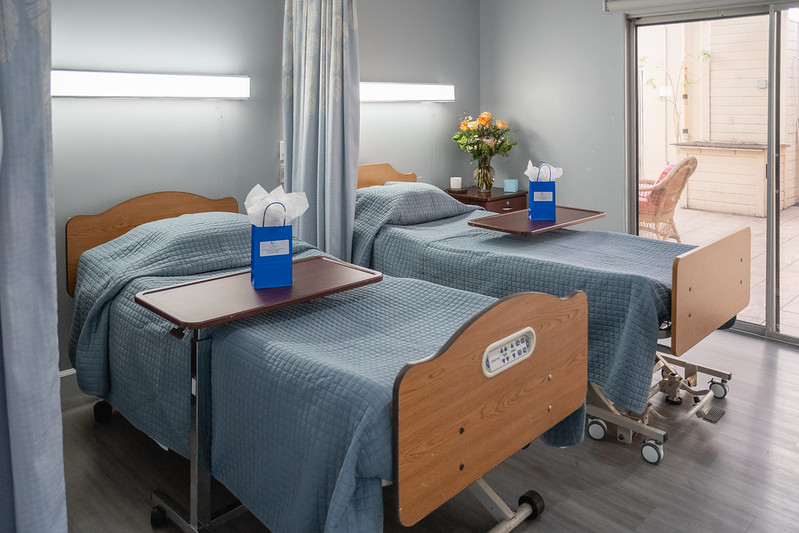
Based on observation, interview and record review, the facility failed to provide the required 80 square feet per resident in multiple resident bedrooms.
This failure had the potential for inadequate...
Read full inspector narrative →
Based on observation, interview and record review, the facility failed to provide the required 80 square feet per resident in multiple resident bedrooms.
This failure had the potential for inadequate, unsafe space for resident care and may impact their quality of life.
Findings:
The room measurement indicated multiple resident rooms were less than 80 square feet per resident.
Room # # of occupants Space per Resident
1 2 74.27
2 3 74.27
3 2 75.25
4 3 74.27
5 2 76.58
6 3 72.26
8 3 77.19
9 3 74.80
11 3 74.53
12 3 76.13
14 2 76.22
15 2 77.59
16 2 73.61
17 2 76.13
18 3 76.13
19 2 76.13
20 2 77.90
21 3 76.13
22 3 76.13
23 3 76.13
24 3 79.32
25 3 73.66
26 2 76.39
27 3 73.12
28 3 78.36
29 3 73.12
30 2 73.12
31 3 74.00
32 2 75.37
33 2 75.93
34 2 75.93
35 2 75.93
None of the rooms were observed to inhibit the staff from providing care or the residents from receiving adequate care. The staff and the residents moved freely in the rooms. Wheelchairs and Geri chairs (medical recliners) were easily accommodated. The residents and the staff stated the square footage of the rooms was not a concern.
Continuance of the room waiver is recommended.
CONCERN
(D)
Potential for Harm - no one hurt, but risky conditions existed
Deficiency F0925
(Tag F0925)
Could have caused harm · This affected 1 resident
Based on observation and interview, the facility failed to maintain a safe and pest free environment for residents and an effective pest control program, when a rodent was sighted on 4/18/23 in the ba...
Read full inspector narrative →
Based on observation and interview, the facility failed to maintain a safe and pest free environment for residents and an effective pest control program, when a rodent was sighted on 4/18/23 in the basement. This failure can result to infection control problem.
Findings:
During observation on 4/18/23 at 8:15 AM, a running mouse was sighted in the basement near the kitchen. Housekeeping supervisor (HKS) stated, It's a mice [sic].
During interview with kitchen supervisor (KS) on 4/18/23 at 10:00 AM, KS stated, did not see mice in the kitchen today.
During interview with Maintenance Supervisor (MS), MS stated, there has been no reports of sighting or droppings this month, but has been in the past month. No logged in report this month. Terminix is the commercial General Pest Control we use, comes in 2 times a month. We had a problem with mice in the building in December 2022, we did what Terminix recommended for us to do, patching the holes, replaced the ceiling with hole in the kitchen, patched the holes with Foam patch to areas with holes as identified by Terminix. To prevent the entry of rodents to the building through the holes in identified areas. We will continue with the scheduled pest control program.
CONCERN
(E)
Potential for Harm - no one hurt, but risky conditions existed
Deficiency F0698
(Tag F0698)
Could have caused harm · This affected multiple residents
**NOTE- TERMS IN BRACKETS HAVE BEEN EDITED TO PROTECT CONFIDENTIALITY** Based on observation, interview, and record review, the facility failed to ensure care and services were consistent with profess...
Read full inspector narrative →
**NOTE- TERMS IN BRACKETS HAVE BEEN EDITED TO PROTECT CONFIDENTIALITY** Based on observation, interview, and record review, the facility failed to ensure care and services were consistent with professional standards of care and the residents' comprehensive, person-centered care plan and preferences for 2 out of 2 residents (Resident 60 and Resident 23) who received hemodialysis [a treatment for advanced kidney failure where a machine filters wastes and water from the blood] at an offsite location when:
1.There was no interdisciplinary team (IDT) recommendation to monitor, document, and ensure nutrition and hydration needs related to provision of meals or snacks, including bagged meals were provided to residents before going to dialysis appointments
2.The dialysis care plans were not specific, individualized and implemented to ensure nutrition and hydration needs related to provision of meals or snacks, including bagged meals were provided to residents on dialysis days
These failures resulted in Resident 60 and Resident 23 to not consistently receive meals or snacks including bagged meals before their scheduled dialysis appointments.
Failure to ensure dialysis residents were monitored and provided with nutrition and hydration prior to dialysis appointments offsite could result in residents' missing their scheduled meals and snacks, feel hungry, potentially lose weight, and may experience clinical complications related to their medical diagnoses.
Findings:
1.Resident 60 was admitted to the facility on [DATE] with diagnoses included end stage renal disease (a condition wherein the kidneys fail to function leading to a need for dialysis or kidney transplant). Resident 60's dialysis care plan indicated hemodialysis treatments at an offsite location, three times a week, at 5:45 AM, with transportation pick up at the facility at 5:05 AM.
During a review of the Registered Dietitian's (RD) Nutrition/Dietary Note, for Resident 60, dated 1/27/23, the note indicated recommendations that included Provide HS [at bedtime] snack: PB [peanut butter] and jelly sandwich (please keep in resident fridge to give in AM before dialysis MWF [Monday, Wednesday, Friday]).
The RD's note also indicated, Give brown bag lunch MWF (include crackers, SF pudding, & fruit) to take with him to dialysis on MWF.
During an observation and interview on 4/19/23 at 12:10 PM, in the resident's room, Resident 60 stated he's up at 4 AM during his scheduled dialysis days and got picked up by transportation at around 5 AM. When asked, Resident 60 stated he did not get a bagged meal when he leaves for his dialysis appointments at an offsite location. Resident 60 stated he would like something to eat before he leaves the facility for his dialysis appointments. Resident 60 stated he had informed the nursing staff about this matter but was told that the kitchen was closed. Resident 60 stated the facility's nutritionist spoke to him last week and was also aware of this matter.
During an interview on 4/19/23 at 3:20 PM, with the Registered Dietitian (RD), RD stated Resident 60 told her on 4/12/23 that he was not given bagged meals by staff on dialysis days. RD stated prior to meeting with the resident on 4/12/23, she had assumed Resident 60 received dialysis bagged meals. RD stated the expectation was for the Certified Nursing Assistants (CNAs) to get the bagged meal from the Kitchen/Dietary Services Department, and then give it to residents who go offsite for dialysis treatments. RD stated he spoke with the Kitchen Supervisor and mentioned to the IDT last week to make sure Resident 60 got the dialysis bagged meal. RD stated bagged meals were provided to all residents on dialysis treatments offsite.
During a review of the Registered Dietitian's (RD) Nutrition/Dietary Note, for Resident 60, dated 4/12/23, the note indicated, He [Resident 60] says he does not receive a bagged meal to take with him to dialysis and misses breakfast since he returns around 10 AM. Will notify nursing to get bagged meal from kitchen before pt [patient] leaves for dialysis and will add 10am nourishment for pt [patient].
During an interview on 4/20/23 at 7:48 PM, with Licensed Vocational Nurse (LVN) 4, LVN 4 stated Resident 60 was very alert and oriented. LVN 4 stated she had not given Resident 60 a bagged snack or meal during dialysis days. LVN 4 stated she had offered Resident 60 snacks before leaving for dialysis appointments, but the resident declined. LVN 4 stated she did not document the dates and times the resident refused or accepted snacks or meals prior leaving the facility for dialysis.
During an interview on 4/20/23 at 8:08 PM, with Certified Nursing Assistant (CNA) 5, CNA 5 stated she had given Resident 60 some food to eat but not a bagged meal or snacks prior to dialysis appointments. CNA stated she did not document and did not recall the dates and times she had given Resident 60 with snacks before leaving for dialysis offsite and when the resident refused snacks. CNA 5 stated she had never gone down to the kitchen to get a bagged meal or snack for the resident. CNA 5 stated she did not have access to the kitchen and that the kitchen was closed at the time the resident leaves for dialysis.
During a review of Resident 60's medical records, there was only one care plan meeting record, dated 1/16/23, which was participated and signed by the Interdisciplinary Team (IDT) members. The care plan meeting record had no information or recommendation by the IDT on how Resident 60 will be monitored and provided with meals or snacks including bagged meals on dialysis appointment days.
Resident 23 was admitted to the facility on [DATE] with diagnoses that included End Stage Renal Disease. Resident 23's dialysis care plan indicated hemodialysis treatments at an offsite location, three times a week, at 1:30 PM to 4:30 PM. The care plan did not indicate the transport pick up time for the resident.
During a review of the Resident 23's Nutrition/Dietary Notes, dated 2/24/23 and 4/7/23, the note indicated, dialysis and weight reviews were conducted by the Registered Dietitian (RD). There was no information or recommendation indicated in the RD notes if Resident 23 needed meals or snacks including a bagged meal to take with her on dialysis appointment days.
During an interview on 4/19/23 at 1:06 PM, with Resident 23's nursing staff, the Licensed Psychiatric Technician (LPT) stated Resident 23 was picked up between 11:30 AM to 11:50 AM for transport to offsite dialysis three times a week. LPT stated Resident 23's daughter also went with the resident on her dialysis appointments. Lunch meals were typically served at the facility between 12 PM to 1 PM.
During an interview on 4/19/23 at 9:40 AM, with Certified Nursing Assistant (CNA) 4, CNA 4 stated she offered snacks or bagged meals during dialysis days to Resident 23 and to Resident 23's daughter but both the resident and the resident's daughter declined.
During an interview on 4/21/23 at 11:03 AM, with Resident 23's daughter, with Resident 23 present, in the resident's room, the resident's daughter stated she was not aware of a bagged meal or snacks given to her mother on dialysis days. The resident's daughter stated the staff asked her about a bagged meal or snacks for her mother only that day, 4/21/23. Resident 23 responded she was not given a bagged meal or snacks by staff on dialysis days, when asked by the daughter in her native language. Resident 23's daughter stated she preferred that a bagged meal be provided to her mother on dialysis days.
During a review of Resident 23's medical records, there was only one care plan meeting record, dated 1/24/23, which was participated and signed by the Interdisciplinary Team (IDT) members. The care plan meeting record had no information or recommendation by the IDT on how Resident 23 will be monitored for and provided with meals or snacks including bagged meals on dialysis appointment days.
During an interview and concurrent record review of Resident 60 and Resident 23's medical records, on 4/19/23 at 4:21 PM with the Director of Nursing (DON), DON explained that dialysis residents were offered and given nourishments or snacks by the nursing staff to take with them on dialysis appointments. DON stated the kitchen staff would prepare the bagged meals or snacks and the nursing staff were responsible to get them from the kitchen staff. When asked, DON stated she did not see information on the residents' records including the residents' dialysis binders wherein licensed nurses and certified nursing assistants offered and provided meals and snacks including bagged meals to Resident 60 and Resident 23 during dialysis days. DON stated she was not aware of dialysis residents not getting bagged meals or snacks.
During an interview on 4/20/23 at 9:57 AM, with the Kitchen Supervisor (KS), KS stated he and another kitchen staff would prepare bagged meals or snacks for dialysis residents only when the nursing staff comes down to the kitchen and asked for it. KS stated for the month of April 2023, there was no nursing staff who asked him or the kitchen staff for a bagged meal or snack to be given to dialysis residents. KS stated he did not document dates and times a bagged meal or snack were picked up by nursing staff in the previous months.
During an interview on 4/21/23 at 12:03 PM, with the Registered Dietitian, RD stated Resident 23 should receive a bagged meal on dialysis days. RD stated that to her knowledge, all dialysis residents should be getting a dialysis bagged meal prepared by the kitchen staff.
During an interview on 4/21/23 at 12:45 PM, with DON, DON stated all dialysis residents should receive a bagged meal on dialysis days. DON stated the nurses were responsible to ensure dialysis residents have their bagged meals with them before leaving the facility for dialysis offsite.
During a review of the facility's Policy and Procedures (P&P), titled, Care of a Resident with End-Stage Renal Disease, revision dated 9/2010, the P&P indicated, Residents with end-stage renal disease (ESRD) will be cared for according to currently recognized standards of care . Policy Interpretation and Implementation - 1.Staff caring for residents with ESRD, including residents receiving dialysis care outside the facility, shall be trained in the care and special needs of these residents. 2. Education and training of staff includes, specifically: a. The nature and clinical management of ESRD (including . nutritional needs) . b. The type of assessment data that is to be gathered about the resident's condition on a daily or per shift basis . 4. Agreements between this facility and the contracted ESRD facility will include all aspects of how the resident's care will be managed, including: a. How the care plan will be developed and implemented .5. The resident's comprehensive care plan will reflect the resident's needs related to ESRD/dialysis care .
During a review of the facility's Policy and Procedures (P&P), titled, Care Planning - Interdisciplinary Team, revision dated 9/2013, the P&P indicated, Our facility's Care Planning/Interdisciplinary Team is responsible for the development of an individualized comprehensive care plan for each resident . The care plan is based on the resident's comprehensive assessment and is developed by a Care Planning/Interdisciplinary Team which includes, but is not necessarily limited to the following personnel: a. The resident's Attending Physician; b. The Registered Nurse who has responsibility for the resident; C. The Dietary Manager/Dietitian; d. The Social Services Worker responsible for the resident . g. Consultants (as appropriate); h. the Director of Nursing (as applicable); i. The Charge Nurse responsible for resident care; j. Nursing Assistants responsible for the resident's care; and k. Others as appropriate or necessary to meet the needs of the resident .
2. During a review of the Resident 60's Dialysis Care Plan, with date printed 4/19/23, the document did not indicate when the care plan was created. The care plan indicated, Focus - Resident has ESRD [End-Stage Renal Disease], dependence on hemodialysis .
Interventions/Tasks . Coordinate meals, activities, medications and treatments with dialysis appointments .
Position [Staff/Discipline Responsible] - RN [Registered Nurse], LVN [Licensed Vocational Nurse], LPN [Licensed Practical Nurse] .
Frequency/Resolved - Blank .
Schedule [for Offsite Dialysis] M-W-F
Time: 5:45 AM .
Pick Up [by Transportation]: 5:05 AM
During a review of the Resident 23's Dialysis Care Plan, with date printed 4/19/23, the document did not indicate when the care plan was created. The care plan indicated, Focus - Resident has ESRD [End-Stage Renal Disease], dependence on hemodialysis .
Interventions/Tasks . Coordinate meals, activities, medications and treatments with dialysis appointments .
Position [Staff/Discipline Responsible] - RN [Registered Nurse], LVN [Licensed Vocational Nurse], LPN [Licensed Practical Nurse] .
Frequency/Resolved - Blank .
Schedule [for Offsite Dialysis] M-W-F .
[Time] at 13:30 PM - 16:30 PM
Time of Pick Up [by Transportation] - Blank .
During an interview on 4/21/23 at 12:54 PM, with the Director of Nursing (DON), DON acknowledged there should be an IDT assessment and recommendation to monitor, document, and ensure meals or snacks including bagged meals were provided by nursing staff to all dialysis residents before going to dialysis appointments offsite. DON acknowledged Resident 60 and Resident 23's dialysis care plans were not specific, individualized and implemented by staff to reflect such practice, service, and care standards provided to dialysis residents. DON said, we'll [facility] tighten this process.
During a review of the facility's Policy and Procedures (P&P), titled, Comprehensive Person-Centered Care Plans, revision dated 12/2016, the P&P indicated, A comprehensive, person-centered are plan that includes measurable objectives and timetables to meet the resident's physical, psychosocial and functional needs is developed and implemented for each resident. Policy Interpretation and Implementation - 1. The Interdisciplinary Team (IDT), in conjunction with the resident and his/her family or legal representative, develops and implements a comprehensive, person-centered care plan for each resident. 2. The care plan interventions are derived from a thorough analysis of the information gathered as part of the comprehensive assessment. 3. The IDT includes: a. The Attending Physician; b. A registered nurse . c. A nurse aid . d. A member of the food and nutrition services staff; e. The resident and the resident's legal representative . and f. Other appropriate staff or professional . 7. The care planning process will . b. Include an assessment of the resident's strengths and needs; and c. Incorporate the resident's personal and cultural preferences in developing goals of care . 8. The comprehensive, person-centered care plan will: a. Include measurable objectives and time frames; b. Describe the services that are to be furnished to attain or maintain the resident's highest practicable physical, mental and psychosocial well-being; c. Describe services that would otherwise be provided above .g. Incorporate identified problem areas . j. Reflect the resident's expressed wishes regarding care and treatment goals; k. Reflect treatment goals, timetables and objectives in measurable outcomes; l. Identify the professional services that are responsible for each element of care . o. Reflect currently recognized standards of practice for problem areas and conditions .9. Areas of concerns that are identified during the resident assessment will be evaluated before interventions are added to the care plan . 10. Identifying problem areas and their causes, and developing interventions that are targeted and meaningful to the resident, are the endpoint of an interdisciplinary process . 11. Care plan interventions are chosen only after careful data gathering, proper sequencing of events, careful consideration of relationship between the resident's problem areas and their causes, and relevant clinical decision making . 13. Assessments of residents are ongoing and care plans are revised as information about the residents and the residents' conditions change. 14. The Interdisciplinary Team must review and update the care plan .
CONCERN
(E)
Potential for Harm - no one hurt, but risky conditions existed
Deficiency F0813
(Tag F0813)
Could have caused harm · This affected multiple residents
Based on observation, interview, and record review, the facility failed to ensure policies and procedures regarding use and storage of foods brought to residents by family or visitors were implemented...
Read full inspector narrative →
Based on observation, interview, and record review, the facility failed to ensure policies and procedures regarding use and storage of foods brought to residents by family or visitors were implemented when:
1.The temperature inside the refrigerator designated for residents was at 43°F. This temperature was above the acceptable temperature range of 34°F to 38°F as indicated on the food refrigerator temperature log.
2.A food item found inside the refrigerator was not labeled with a resident name and room number.
This failure had the potential to cause unsafe food storage, handling, and consumption of foods by residents.
This failure could result in the resident not knowing and/or receiving foods brought in by their family or visitor if there was no name and/or identifying information.
Findings:
1. During a concurrent observation and interview on 4/20/23 at 10:42 AM, with the licensed psychiatric technician (LPT) present, LPT checked the temperature inside the refrigerator designated for residents only located in Nursing Station 1. LPT read the thermometer and stated the temperature was at 43°F. LPT stated the temperature was out of range and should be within 34°F to 38°F as indicated on the Food Refrigerator Temperature Range log.
2. During a concurrent observation and interview on 4/20/23 at 10:44 AM, with Certified Nursing Assistant (CNA) 3 present, the same refrigerator was inspected. CNA 3 found a food item that was covered and tied close with a green plastic wrapper labeled use by 4/20/23, and today [sic] date 4/18/23. CNA 3 stated there was no name and room number indicated on the food item. CNA 3 stated the resident's name and room number should be included in the label.
During a review of the facility's Policy and Procedures (P&P), titled, Food Receiving and Storage, revision dated 11/2022, the P&P indicated, Foods shall be received and stored in a manner that complies with safe food handling practices . Foods and Snacks Kept on Nursing Units - 1. All food items to be kept at or below 41°F are placed in the refrigerator located at the nurses' station and labeled with a use by date. 2. All foods belonging to residents are labeled with resident's name, the item and the use by date. 3. Refrigerators must have working thermometers and are monitored for temperature according to state-specific guidelines .
CONCERN
(F)
Potential for Harm - no one hurt, but risky conditions existed
Food Safety
(Tag F0812)
Could have caused harm · This affected most or all residents
**NOTE- TERMS IN BRACKETS HAVE BEEN EDITED TO PROTECT CONFIDENTIALITY** Based on observation, interview and record review, the facility failed to store, prepare, and distribute food in a safe and sani...
Read full inspector narrative →
**NOTE- TERMS IN BRACKETS HAVE BEEN EDITED TO PROTECT CONFIDENTIALITY** Based on observation, interview and record review, the facility failed to store, prepare, and distribute food in a safe and sanitary manner when:
1.Packaged food items were not sealed close or secured after opening, had no use by dates, and not stored properly
2.A pitcher was stored wet in the pitcher cupboard
3.Kitchen trays and plate covers or domes were not maintained in good condition
4.Food storage containers and equipment found in the kitchen were not kept clean
5.Kitchen staff did not wear a hairnet in the kitchen
6.Cooling procedures of potentially hazardous foods was not followed (PHF, food that requires time/temperature control for safety to limit the growth of pathogenic microorganisms [such as bacterial or viral organisms] that can cause foodborne illness. Examples of PHF include meat, poultry, chicken, seafood, milk, etc.)
7.Recipe for pureed food was not followed for a lunch menu item on 4/18/23
These deficient practices had the potential to put residents at risk for foodborne illnesses.
Failure to ensure foods were correctly prepared may affect the quality and consistency of food provided to 16 residents who received pureed food from the kitchen.
Findings:
1. During an initial kitchen tour observation and concurrent interview on 4/17/22, at 9:06 AM, with the kitchen supervisor (KS) present, KS confirmed and acknowledged the following findings:
1.1
A bag of frozen fish fillet, frozen cookies and frozen garlic bread sticks were opened, and not sealed close or secured
1.2
A packet of ground coffee beans was opened, and had no use by date
1.3
A container of bread crumbs was opened, had no use by date, and stored inside a kitchen drawer along with disposable paper cups, stacks of paper and a clipboard
1.4
A bag of corn flake crumbs was opened, not sealed close or secured, had no use by date, and stored inside a kitchen drawer along with disposable paper cups, stacks of paper and a clipboard
1.5
Two containers of sprinkles were opened and had no use by dates
1.6
One bottle of white cupcake topping was opened and had no use by date
1.7
One opened peanut butter jar was opened and had no use by date
During an interview on 4/17/23 at 9:55 AM, KS stated the frozen bags of fish fillet, cookies, and garlic bread sticks were supposed to be sealed close or secured once opened. KS stated food items that were opened had to be labeled with use by dates, covered, and sealed close. KS explained the bread and corn flake crumbs were supposed to be stored in a designated location where the salt, sugar, and starch were stored.
2. During a concurrent observation and interview on 4/17/23 at 9:56 AM, in the kitchen, with KS, a pitcher was stored wet along with other clean, dry pitchers in the cupboard. KS stated the pitcher was clean and should be air dried before storage.
During a review of the facility's policy and procedure (P&P) titled, Sanitization, revision dated 11/2022, the P&P indicated, .Food preparation equipment and utensils that are manually washed are allowed to air dry whenever practical. Drying food preparation equipment and utensils with a towel or cloth may increase risks for cross contamination.
3. During a concurrent observation and interview on 4/17/23 at 10:22 AM, in the kitchen, with KS, 6 trays used to dry bowls had edges that were chipped, cracked, and open with metal exposed. There were also 12 cranberry-colored plate covers or domes on the drying rack with interior surfaces that were significantly worn out and faded in color. KS stated the trays and plate domes should no longer be used and had to be replaced.
During a review of the facility's policy and procedure (P&P) titled, Sanitization, revision dated 11/2022, the P&P indicated, .All utensils, counters, shelves and equipment are kept clean, maintained in good repair and are free from breaks, corrosions, open seams, cracks and chipped areas that may affect their use and proper cleaning . Plastic ware, china and glassware that cannot be sanitized or are hazardous because of chips, cracks or loss of glaze are discarded. Damaged or broken equipment that cannot be repaired is discarded .
4. During a concurrent observation and interview on 4/17/23 at 10:06 AM, in the kitchen, with KS present, KS acknowledged and confirmed the following findings:
4.1 There was a fan on the tile floor placed next to the side of the ice machine. The fan's wire guards had a thick accumulation of dust-like matter and debris.
4.2 A fan by the dishwashing area counter sink had wire guards that had dust-like material. KS stated the two fans were dirty and had to be cleaned.
4.3 The rails of the 4-shelf drying rack for plate covers or domes had orange-brown color residues. The racks were also sticky and had dust-like matter. KS stated the residue on the rails of the drying rack was rust. KS stated the drying rack had to be cleaned.
4.4 The scoop container for the rice bin located in the dry storage room had 2 packets of pepper and a brown-colored substance.
4.5 The scoop container for the flour bin located in the dry storage room had a packet of pepper and an accumulation of several clumps of dried flour. KS stated the scoop containers for the rice and flour bins had to be cleaned.
During a review of the facility's policy and procedure (P&P) titled, Sanitization, revision dated 11/2022, the P&P indicated, The food service area is maintained in a clean and sanitary manner . All kitchens, kitchen areas and dining areas are kept clean . All utensils, counters, shelves and equipment are kept clean .
During a review of the facility's policy and procedure (P&P) titled, Food Receiving and Storage, revision dated 11/2022, the P&P indicated, .Foods shall be received and stored in a manner that complies with safe food handling practices .Non-refrigerated foods . are stored in a designated dry storage unit . and kept clean .
5.During a concurrent staff observation and interview on 4/18/23 at 9:37, in the kitchen, with KS present, a Kitchen Helper (KH) wore his own beanie (a round, brimless hat), in the kitchen. KS stated staff should wear a hairnet instead of their personal hat in the kitchen. KH stated he worked in the kitchen as a reliever cook and a kitchen helper in addition to performing dishwashing duties. KH stated he forgot to wear a hairnet.
During a review of the facility's policy and procedure (P&P) titled, Preventing Foodborne Illness - Employee Hygiene and Sanitary Practices, revision dated 11/2022, the P&P indicated, .Hair Nets - Hair nets or caps and/or beard restraints are worn when cooking, preparing or assembling food to keep hair from contacting exposed food, lean equipment, utensils and linens .
6.During a concurrent interview and record review, on 4/19/23, at 8:34 AM, with the Kitchen Supervisor (KS), the Food Temperature Cooling Log, for period dated 3/3/23 through 4/13/23 was reviewed. The log indicated the following:
At Time of Storage
Date
Food Item
Time/Temp
Time/Temp
Time/Temp
3/5/23
Roast Beef
10AM, 160(°F)
11AM, 137(°F)
12PM, 98(°F)
3/19/23
Roast Beef
11AM, 161(°F)
12PM, 139(°F)
1PM, 99(°F)
3/27/23
Roast Beef
11AM, 161(°F)
12PM, 138(°F)
1PM, 98(°F)
4/4/23
Pork Loin
10AM, 161(°F)
11AM, 139(°F)
12PM, 99(°F)
4/8/23
Roast Beef
11AM, 160(°F)
12PM, 137(°F)
1PM, 99(°F)
KS stated the food items above were not cooled to 70°F after 2 hours. When asked, KS stated he had no evidence that showed proper cooling of foods were followed by staff. KS stated it was important to follow rapid cooling procedures of potentially hazardous foods to prevent rapid growth of pathogenic microorganisms that cause foodborne illness.
The Food Temperature Cooling Log, indicated, Cooling Time - 140°F to 70°F within 2 hours . If the hot food is not cooled to 70°F after 2 hours, discard or reheat to 165°F for fifteen seconds within two hours then repeat the cooling procedure. If the food does not reach 70°F after 2 hours again, it must be discarded . Reminder: Danger Zone is between 41°F to 140°F . Cooling tips: 1. remove food item from original container 2. cut in small pieces 3. drain off liquids, if appropriate 4. put in freezer, cover loosely 5. put in shallow pans 6. stir 7. use ice bath 8. Put on upper shelf .
During a review of the facility's policy and procedure (P&P) titled, Food Preparation and Service, revision dated 11/2022, the P&P indicated, .Rapid Cooling 1. Potentially hazardous foods are cooled rapidly. This is defined as cooling from 135°F to 70°F within two hours . 2. Large or dense foods are cooled using special interventions in order to meet the time and temperature requirements for cooling. For example, roasts may be cut in smaller pieces; beans or legumes may be cooled in shallow pans or food containers may be placed in ice baths to expediate cooling .
7. During a review of the Facility Menu for Tuesday, 4/18/23, the lunch menu indicated, Arroz Con [NAME] (Chicken with Rice).
During an observation of food production activities in the kitchen on 4/18/23 at 10:23 AM, with the Kitchen Supervisor (KS) present, the Kitchen [NAME] (KC) was observed on the preparation of the pureed recipe for the chicken with rice lunch menu item. KC used an orange-color handle spoodle [a serving utensil, equivalent to 8 ounces] and scooped three portions of diced, cooked chicken that included some cooking juices from a pan in a food processor. KC scooped two portions of cooked vegetables using a gray-color handle spoodle [equivalent to 4 ounces] and one spoon of food thickener using a disposable white plastic spoon into the mixture in the food processor. The mixture was processed continuously. When asked, KC stated she would stop processing the mixture when the texture was completely ground and had no more lumps. KC stated that when the texture was stiff, and not too liquidy or thick then the pureed texture was achieved. KC repeated the procedure five times and stated the completed pureed chicken with rice product was equivalent to 12 to 14 servings. KC stated the KS taught her how to prepare pureed food.
During an interview on 4/18/23, at 11:43 AM, with KS, KS provided the surveyor a recipe titled, PUREED Fish/Meat/Poultry - 3oz, Recipe# P15. KS stated this was the recipe used to prepare for the pureed chicken with rice lunch menu item that day.
Review of the recipe titled, PUREED Fish/Meat/Poultry - 3 oz, Recipe# P15, the recipe indicated, Ingredients - 15 oz, Meat Product, Cooked; 1 Cup Reserved Cooking Liquid or Broth, Hot; 1 ½ Tsp (teaspoon) Thickener . Diets - Appropriate for Puree . Number of Servings: 5 . Directions: 1. Remove required portion amounts from regular prepared recipe; place in food processor . NOTE: Remember to weight meat only; do not include cooking juices or gravy . Process until meat is smooth in consistency. Gradually add broth or gravy and thickener to meat while processing . Ensure mixture achieves smooth, lump free and extremely thick consistency .
During a concurrent interview and record review of the recipe PUREED Fish/Meat/Poultry - 3 oz, Recipe# P15, on 4/19/21 at 8:45 AM, with KS stated the recipe was not followed by the KC during preparation of the pureed chicken with rice lunch menu yesterday. KS stated if the recipe was not followed, the quality, texture and consistency of the food may be affected. KS stated he provided training for the KC on pureed food preparation.
During a concurrent interview and record review of the recipe PUREED Fish/Meat/Poultry - 3 oz, Recipe# P15, on 4/19/21 at 3:01 PM, with the Registered Dietitian (RD), RD stated the KC should have followed the recipe to prepare for pureed chicken with rice lunch menu yesterday. RD stated she would use 42 ounces of the cooked chicken for the recipe. RD stated she did not know how KC came up with 15 spoodles total of cooked chicken that was used for the pureed mixture. RD stated she would not add vegetables with the chicken in the food processor. RD stated not following the recipe may affect the quality of the pureed food served.
CONCERN
(F)
Potential for Harm - no one hurt, but risky conditions existed
Garbage Disposal
(Tag F0814)
Could have caused harm · This affected most or all residents
Based on observation, interview, and record review, the facility failed to ensure garbage and refuse were disposed properly when:
1.The dumpster lids for garbage and recycled items were kept open
2.A ...
Read full inspector narrative →
Based on observation, interview, and record review, the facility failed to ensure garbage and refuse were disposed properly when:
1.The dumpster lids for garbage and recycled items were kept open
2.A facility staff did not close the dumpster lid after garbage bags were thrown into the garbage dumpster
These failures could result in harborage and feeding of pests in the facility.
Findings:
1. During a concurrent observation and interview on 4/18/23 at 9:51 AM, with the Kitchen Supervisor (KS) present, the dumpster site located in the garage area of the facility was inspected. The garbage dumpster lid was propped open by a wooden plank. The recycle dumpster lid was wide open. KS stated both dumpster lids for garbage and recyclables should be closed. KS stated housekeeping and kitchen staff use these dumpsters. KS stated the staff forgot to close the lids and KS closed both the dumpster lids.
2. During a concurrent observation and interview on 4/18/23 at 9:55 AM, with KS present, in the garage area, the Kitchen Helper (KH) disposed garbage bags into the garbage dumpster and left the dumpster lid open. When asked, KH stated he did not close the garbage dumpster lid and kept it open. KH stated the dumpster lid had to be closed to prevent pest infestation.
During a review of the facility's Policy and Procedures (P&P), titled, Food-Related Garbage and Refuse Disposal, revision dated 10/2017, the P&P indicated, Food-related garbage and refuse are disposed of in accordance with current state laws . All garbage and refuse containers are provided with tight-fitting lids or covers and must be kept covered when stored or not in continuous use . Garbage and refuse containing food wastes will be stored in a manner that is inaccessible to pests . Outside dumpsters provided by garbage pickup services will be kept closed and free from surrounding litter.