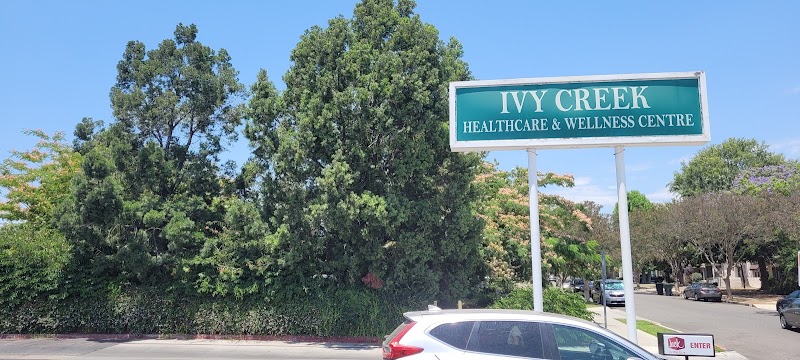
IVY CREEK HEALTHCARE & WELLNESS CENTRE
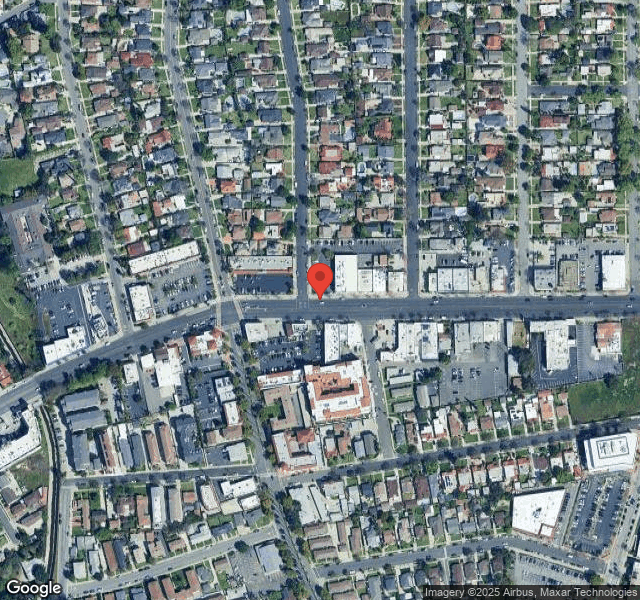
115 BRIDGE ST., SAN GABRIEL, CA 91775 (626) 289-4439
For profit - Corporation 98 Beds Independent Data: November 2025
Trust Grade
63/100
#608 of 1155 in CA
Last Inspection: April 2025

Within standard 12-15 month inspection cycle. Federal law requires annual inspections.

Overview

Ivy Creek Healthcare & Wellness Centre has a Trust Grade of C+, indicating it is slightly above average but not outstanding in quality. It ranks #608 out of 1155 facilities in California, placing it in the bottom half, and #116 out of 369 in Los Angeles County, meaning there are better local options available. The facility's performance trend is stable, with 16 reported issues in both 2024 and 2025, and it has no fines, which is a positive sign. Staffing is decent, with a turnover rate of 27%, which is lower than the state average, but the RN coverage is only average, meaning there might be room for improvement in oversight. However, there are significant concerns as the facility has had issues with medication administration and care for residents on dialysis, which could lead to serious health risks. For example, staff failed to restrict fluid intake for two dialysis residents, which could cause harmful fluid overload. Additionally, there were several medication errors, including delays in administering critical medications, which raises concerns about the quality of care. While there are strengths in staffing stability and lack of fines, these weaknesses highlight areas that families should consider carefully.

Trust Score
C+
63/100
In California
#608/1155
Bottom 48%
Safety Record
Low Risk
No red flags
Inspections
Holding Steady
16 → 16 violations
Staff Stability
✓ Good
27% annual turnover. Excellent stability, 21 points below California's 48% average. Staff who stay learn residents' needs.
Penalties
✓ Good
No fines on record. Clean compliance history, better than most California facilities.
Skilled Nurses
⚠ Watch
Each resident gets only 25 minutes of Registered Nurse (RN) attention daily — below average for California. Fewer RN minutes means fewer trained eyes watching for problems.
Violations
⚠ Watch
41 deficiencies on record. Higher than average. Multiple issues found across inspections.
★★★☆☆
3.0
Overall Rating
★★★☆☆
3.0
Staff Levels
★★★★☆
4.0
Care Quality
★★★☆☆
3.0
Inspection Score
Stable
2024: 16 issues
2025: 16 issues

The Good

  • 4-Star Quality Measures · Strong clinical quality outcomes
  • Low Staff Turnover (27%) · Staff stability means consistent care
  • Full Sprinkler Coverage · Fire safety systems throughout facility
  • No fines on record
  • Staff turnover is low (27%)

    21 points below California average of 48%

Facility shows strength in quality measures, staff retention, fire safety.

The Bad

3-Star Overall Rating

Near California average (3.1)

Meets federal standards, typical of most facilities

The Ugly 41 deficiencies on record

Apr 2025 13 deficiencies
CONCERN (D)

Potential for Harm - no one hurt, but risky conditions existed

Resident Rights (Tag F0550)

Could have caused harm · This affected 1 resident

**NOTE- TERMS IN BRACKETS HAVE BEEN EDITED TO PROTECT CONFIDENTIALITY** Based on observation, interview, and record review the facility failed to promote respect and dignity for one (1) of 1 sampled r...

Read full inspector narrative →
**NOTE- TERMS IN BRACKETS HAVE BEEN EDITED TO PROTECT CONFIDENTIALITY** Based on observation, interview, and record review the facility failed to promote respect and dignity for one (1) of 1 sampled resident (Resident 56) by not providing privacy during brief change. This deficient practice had the potential for Resident 56 to experience loss of dignity, self-esteem, and affect resident's psychosocial well-being. Findings: During a review of Resident 56's admission Record, the admission Record indicated Resident 56 was initially admitted to the facility on [DATE] with diagnosis which included history of falling, adult failure to thrive (adults whose independence is declining), bed confinement status (unable to get up from bed without assistance, unable to ambulate, and unable to sit in a chair or wheelchair). During a review of Resident 56's Minimum Data Set (MDS, a resident assessment tool), dated 3/21/2025, the MDS indicated Resident 56 cognitive skills (processes of thinking and reasoning) for daily decision making was severely impaired (never/rarely made decisions). The MDS indicated Resident 56 was dependent (helper does all the effort) on toilet hygiene (the ability to maintain perineal hygiene, adjust clothes before and after voiding or heaving bowel movement), personal hygiene (the ability to maintain personal hygiene, including combing hair, shaving, applying makeup, washing and drying face and hands. During observation on 4/8/2025 at 6:39 AM at the hallway outside Resident 56's room, observed certified nursing assistant 3 (CNA 3) changing Resident 56's briefs (protective underwear to prevent leakage) with the privacy curtain and door open. During an interview on 4/8/2025 at 6:40 AM with CNA 3, CNA 3 stated the privacy curtain, and door should have been closed while changing Resident 56. During an interview on 4/9/2025 at 2:53 PM with the Director of Nursing (DON), the DON stated when changing residents, the staff should provide full privacy, close door and curtains completely. The DON also stated this can possibly make the resident feel embarrassed. During an interview 4/10/2025 at 2:37 PM with CNA 4, CNA 4 stated when changing residents, privacy should be provided by closing the privacy curtain and door. CNA 4 also stated privacy is important to promote self-esteem, dignity and for resident to feel more comfortable. Privacy was supposed to be provided for alert and not alert residents. During a review of the facility's Policy and Procedure titled, Residents Rights - Quality of Life, revised 3/2017, the policy indicated to ensure that each resident receives the necessary care and services to attain or maintain the highest practicable physical, mental and psychosocial well-being, consistent with the resident's comprehensive assessment and plan of care. The P&P indicated each resident shall be cared for in a manner that promotes and enhances the quality of life, dignity, respect, individuality and receives services in a person-centered manner, as well as those that support the resident in attaining or maintaining his/her highest practicable wellbeing. The P&P also indicated facility staff promotes, maintains and protects resident privacy, including bodily privacy when assisting with personal care and during treatment procedures.
CONCERN (D)

Potential for Harm - no one hurt, but risky conditions existed

Comprehensive Care Plan (Tag F0656)

Could have caused harm · This affected 1 resident

**NOTE- TERMS IN BRACKETS HAVE BEEN EDITED TO PROTECT CONFIDENTIALITY** 2. During a review of Resident 245's admission Record, the admission Record indicated resident 245 was admitted to the facility ...

Read full inspector narrative →
**NOTE- TERMS IN BRACKETS HAVE BEEN EDITED TO PROTECT CONFIDENTIALITY** 2. During a review of Resident 245's admission Record, the admission Record indicated resident 245 was admitted to the facility on [DATE] with diagnoses that included osteoarthritis (a progressive disorder of the joints, caused by a gradual loss of cartilage), gastro esophageal reflux disease (GERD - chronic digestive disease where the contents of the stomach refluxes and irritates the esophagus) and fusion of thoracic spine (a surgical procedure where two or more bones in the mid-back are joined together to eliminate movement between them). During a review of Resident 245's MDS, dated [DATE], the MDS indicated Resident 245 was moderately impaired with cognitive skills for daily decision making. The MDS also indicated Resident 245 was dependent (helper does all effort needed to complete activity) with toileting hygiene and dressing, required substantial/maximal assistance (helper does more than half the effort needed to complete the activity) with bathing, and required partial/ moderate assistance (helper does less than half the effort needed to complete the activity) with oral hygiene and supervision or touching assistance (helper provides verbal cues, touching/steadying and/or contact guard assistance during activity) with eating. The MDS also indicated Resident 245 was always incontinent of bowel (no continent episodes of bowel movements). During a review of Resident 245's History & Physical (H&P), dated 4/3/2025, the H&P indicated Resident 245 with a complaint of severe leg weakness and weakness in the low back. During a review of Resident 245's Baseline Care Plan, dated 3/30/2025, the care plan indicated Resident 245's functional abilities with self-care was supervision or touching assistance with eating and oral hygiene, dependent with bathing, toileting and lower body dressing and partial/moderate assistance with upper body dressing and personal hygiene. The care plan also indicated Resident 245 was frequently incontinent of bowel. During a review of Resident 245's Bowel and Bladder (B&B) Program Screener, dated 3/30/2025, the B&B Screener indicated Resident 245 was incontinent of stool daily and was immobile (not able to move or be moved) or required 2-person assistance in his ability to get to the bathroom/transfer to a toilet/commode/urinal, adjust clothing and wipe etc. During a concurrent interview and record review on 4/9/2025 at 2:16 PM with MDS Nurse 1 (MDSN 1), Resident 245's medical chart was reviewed. MDSN 1 stated Resident 245 did not have a care plan for self-care functional levels and bowel incontinence. MDSN 1 stated there should have been a care plan for Resident 245's bowel incontinence and ADL assistance to include interventions such as monitoring for any skin breakdown, repositioning and goals to give quality of life, dignity and prevent bed sores. MDSN also stated staff cannot provide the right care of the resident without a care plan. During a concurrent observation and interview on 4/7/2025 at 8:45 AM with Certified Nursing Assistant 5 (CNA 5), at Resident 245's bedside, CNA 5 was observed cleaning, changing the diaper and Resident 245's clothes after a bowel movement. Resident 245 was observed with no participation during his diaper change. CNA 5 stated he has worked with Resident 245 before and Resident 245 needed assistance with showers, putting on clothes, and B&B care. During an interview on 4/9/2025 at 1:26 PM with CNA 6, CNA 6 stated Resident 245 is not able to provide care to himself from his legs down and not able to help much and above the waist. CNA 6 stated Resident 245 is total assistance with incontinent care after bowel movements and diaper changes. During an interview of 4/9/2025 1:48 PM with Licensed Vocational Nurse 2 (LVN 2), LVN 2 stated Resident 245 is dependent on staff during hygiene care like brushing teeth, combing hair, and B&B care. LVN 2 stated, Resident (Resident 245) ambulates very little and needs a lot of assistance with transferring to /from his wheelchair. LVN 2 stated care plans are needed for residents to address any issues. During an interview on 4/10/2025 at 11:21AM with the Director of Nursing (DON), the DON stated there should be a care plan for Resident 245's bowel incontinence and ADL function based on an assessment to develop interventions and monitor if the interventions are effective or need revisions. DON stated if care plans are not initiated, staff would not know the plan [of care] or interventions in place to provide the resident with appropriate care. During a review of the facility's Policy & Procedure (P&P) titled, Comprehensive Person-Centered Care Planning, revised 8/24/2023, the P&P indicated the comprehensive care plan will be developed within seven (7) days from completion of the MDS assessment, all goals and interventions from the current baseline care plan will be included in the resident's care plan and additional changes or updates to the resident's comprehensive care plan will be made based on the assessed needs of the resident. Based on interview and record review, the facility failed to develop and implement a comprehensive resident-centered care plan ( a document that outlines the facility's plan to provide personalized care to a resident that includes measurable objectives and timeframes to meet a resident's medical, nursing, and mental and psychosocial needs) for two (2) of 19 sampled residents (Resident 25 and Resident 245) as indicated on the facility's policy: 1. Resident 25 did not have a comprehensive resident-centered care plan for the use of Eliquis (a drug to prevent and treat blood clots) 2.5 milligram (mg, a unit of measurement of mass in the metric system equal to a thousandth of a gram) for peripheral vascular disease (PVD, chronic disease that blocks blood flow). 2. Resident 245 did not have a comprehensive resident - centered care plan for Activities of Daily Living (ADLs- routine tasks/activities such as bathing, dressing and toileting a person performs daily to care for themselves) functional abilities and bowel incontinence as assessed on the Minimum Data Set (MDS, a resident assessment tool) and admission nursing assessment. This deficient practice had the potential to result in a delay of nursing care and medical interventions which could affect Residents 25 and 245's overall wellbeing. Findings: 1. During a record review of Resident 25's admission Record, the admission Record indicated Resident 25 was initially admitted to the facility on [DATE] and readmitted on [DATE], with diagnoses of anemia (a problem of not having enough healthy red blood cells or hemoglobin to carry oxygen to the body's tissues. It can cause tiredness, weakness and shortness of breath.), Muscle weakness, insomnia (difficulty either falling or staying asleep). During a review of Resident 25's Physician's Order Summary Report, dated 11/27/2024, the Physician's order indicated Eliquis 2.5 mg, give 1 tablet by mouth two times a day for peripheral vascular disease (PVD, is a slow and progressive disorder of the blood vessels. Narrowing, blockage, or spasms in a blood vessel). During a review of Resident 25's MDS, dated [DATE], the MDS indicated Resident 25's cognitive (mental action or process of acquiring knowledge and understanding) skills for daily decision making were moderately impaired. The MDS indicated Resident 25 required partial/moderate assistance (helper does less than half the effort) with personal hygiene. Resident 25 required substantial/ maximal assistance (helper does more than half the effort) on toilet hygiene, shower bath self. During a review of Resident 25's Care Plans, the care plan did not reflect any care plan for the use of Eliquis 25 mg. During concurrent interview and record review of Resident 25's care plan on 4/8/2025 at 4:10 PM with the Director of Nursing (DON), the DON stated of Resident 25 did not and should have a care plan initiated for Eliquis 25 mg for Resident 25. During an interview on 4/10/2025 at 2:52 PM with Infection Preventionist Nurse (IPN), IPN stated as soon as the order for Eliquis 25 mg was received, the care plan should have been developed so the staff will know how to take care of the resident, including what to observe. During a review of the facility's Policy and Procedure (P&P) titled, Comprehensive Person-Centered Care Planning, revised 8/24/202, the P&P indicated the baseline care plan must reflect the residents' stated goals and objectives and include interventions that address his/ her needs. The P&P indicated comprehensive care plan within seven days from the completion of the comprehensive MDS assessment, the comprehensive care plan will be developed.
CONCERN (D)

Potential for Harm - no one hurt, but risky conditions existed

Deficiency F0657 (Tag F0657)

Could have caused harm · This affected 1 resident

**NOTE- TERMS IN BRACKETS HAVE BEEN EDITED TO PROTECT CONFIDENTIALITY** Based interview and record review, the facility failed to ensure the dental care plan (a document that outlines the facility's p...

Read full inspector narrative →
**NOTE- TERMS IN BRACKETS HAVE BEEN EDITED TO PROTECT CONFIDENTIALITY** Based interview and record review, the facility failed to ensure the dental care plan (a document that outlines the facility's plan to provide personalized care to a resident based on the resident's needs) was reviewed and revised for one (1) of 19 residents (Resident 28) after the completion of the Minimum Data Set (MDS - a resident assessment tool) on 2/19/2025 and based on the assessed needs of the resident as indicated in the facility's policy. This failure had the potential for Resident 28 to receive inappropriate care and/or inadequate services, negatively affecting Resident 28's well-being. Findings: During a review of Resident 28's admission Record, the admission Record indicated Resident 28 was admitted to the facility on [DATE] with diagnoses that included hemiplegia (total paralysis of the arm, leg, and trunk on the same side of the body) and hemiparesis (inability to move one side of the body), dysphagia (difficulty swallowing foods or liquids) following cerebral infarction (also known as a stroke; refers to damage to the tissues in the brain due to a loss of oxygen to the area), and major depressive disorder (a mood disorder that causes a persistent feeling of sadness and loss of interest). During a review of Resident 28's MDS, dated [DATE], the MDS indicated Resident 28 with moderately impaired cognitive skills (ability to understand and make decisions) for daily decision making. The MDS indicated Resident 28 was dependent (helper does all effort needed to complete activity) with oral hygiene, toileting hygiene, personal hygiene, dressing and bathing. The MDS also indicated Resident 28 had no natural teeth or tooth fragment(s). During a review of Resident 28's Oral/Dental Health Problems care plan, dated 9/27/2024, the care plan indicated Resident 28 had a broken upper denture ridge with a staff intervention for Resident 28 to refrain from using the upper denture until fixed. During a review of Resident 28's Dental Progress Notes, dated 10/24/2024, the Progress Notes indicated a full upper denture was repaired and delivered to Resident 28. During a review of Resident 28's Long Term Care Evaluation, dated 3/31/2025, the Long-Term Care Evaluation indicated Resident 28 has upper and lower dental appliances. During an interview on 4/10/2025 at 10:16 AM with Certified Nursing Assistant 2 (CNA 2), CNA 2 stated she was assigned to Resident 28 on 4/10/2025. CNA2 stated Resident 28 wears upper and lower dentures every day. CNA 2 stated Resident 28 stated she cleaned and put a top and bottom denture in the resident's mouth that morning (4/10/2025). During an interview on 4/10/2025 at 10:21 AM with Licensed Vocational Nurse 3 (LVN 3), LVN 3 stated she has provided care to Resident 28 and he wears both top and bottom dentures. During a concurrent interview and record review on 4/10/2025 at 11:30 AM with the Director of Nursing (DON), Resident 28's medical chart was reviewed. The DON stated Resident 28's medical chart did not indicate a revised care plan which reflected the fixed upper denture. The DON stated the care plan should have been revised once Resident 28's dentures were fixed to update current interventions to reflect the resident's current condition. During a review of the facility's Policy & Procedure (P&P) titled, Comprehensive Person-Centered Care Planning, revised 8/24/2023, the P&P indicated the comprehensive care plan will be periodically reviewed and revised by IDT after each assessment (including MDS assessments) as required, at the onset of new problems, change of condition, to address changes in behavior and care and other times as appropriate or necessary. The P&P also indicated additional changes or updates to the resident's comprehensive care plan will be made based on the assessed needs of the resident.
CONCERN (D)

Potential for Harm - no one hurt, but risky conditions existed

Quality of Care (Tag F0684)

Could have caused harm · This affected 1 resident

**NOTE- TERMS IN BRACKETS HAVE BEEN EDITED TO PROTECT CONFIDENTIALITY** Based on observation, interview and record review, the facility failed to apply Geri sleeves (protective sleeves that prevent te...

Read full inspector narrative →
**NOTE- TERMS IN BRACKETS HAVE BEEN EDITED TO PROTECT CONFIDENTIALITY** Based on observation, interview and record review, the facility failed to apply Geri sleeves (protective sleeves that prevent tearing, bruising, and abrasions of the skin) for one (1) of two (2) sampled residents (Resident 4) as indicated on the physician's order. This failure had the potential for Resident 4 to acquire additional skin tears (traumatic wounds caused by friction when the upper layer of the skin becomes torn from the underlying layers) to the arms and a lack of services to attain or maintain his highest practicable physical well-being. Findings: During a review of Resident 4's admission Record, the admission Record indicated Resident 4 was admitted to the facility on [DATE] with diagnoses that included acute respiratory failure (a sudden condition in which not enough oxygen passes from the lungs into the blood), muscle weakness, and dementia (a progressive state of decline in mental abilities). During a review of Resident 4's Minimum Data Set (MDS- a resident assessment tool), dated 3/10/2025, the MDS indicated Resident 4 with moderately impaired cognitive skills (ability to understand and make decisions) for daily decision making. The MDS indicated Resident 4 with partial/moderate assistance (helper does less than half the effort needed to complete the activity) with oral, toileting and personal hygiene, dressing and bathing and supervision or touching assistance (helper provides verbal cues, touching/steadying and/or contact guard assistance during activity) with eating. During a review of Resident 4's Change in Condition Evaluation, dated 3/15/2025, the Evaluation indicated Resident 4 was observed scratching both forearms causing skin tears to both forearms with scant (very little) bleeding noted. During a review of Resident 4's Physician Order, dated 3/17/2025, the order indicated, Application of bilateral upper extremity Geri sleeves at all times, may remove during hygiene care for skin maintenance, wound management and skin breakdown everyday shift. During a review of Resident 4's Skin Tear Right Forearm care plan (a document that outlines the facility's plan to provide personalized care to a resident based on the resident's needs), created 3/15/2025, the care plan indicated if skin tear occurs, treat per facility protocol, identify potential causative factors and eliminate/resolve when possible and inform/instruct staff of causative factors and measures to prevent skin tears. During a concurrent observation and interview on 4/9/2025 at 3:50 PM with Licensed Vocational Nurse 2 (LVN 2) at Resident 4's bedside, Resident 4 was observed lying in bed without Geri sleeves on to the resident's left or right forearms. LVN 2 was observed checking Resident 4's bedside and closet for either Resident 4's Geri sleeves. LVN 2 stated Resident 4 does not have on his Geri sleeves on, and she was unable to find them in the resident's room. LVN 2 stated Resident 4 scratches himself and wears the Geri sleeves to both arms to prevent skin tears. LVN 2 stated, per the physician's order, Resident 4 should have been wearing the Geri sleeves. During an interview on 4/9/2025 at 3:56 PM with the Director of Nursing (DON), the DON stated Resident 4 has an order to wear Geri sleeves at all times and the order should be followed. The DON stated Resident 4 has skin tears to his left and right forearm, has fragile skin, and he tends to scratch. The DON also stated if Resident 4 refused to wear the gerisleeves, staff should explain the risks and benefits to the resident three (3) times, notify the family, physician, and create a care plan for the refusal. During a review of the facility's Policy & Procedure (P&P) titled, Medication - Administration, revised 1/1/2012, the P&P indicated medications and treatments will be administered as prescribed.
CONCERN (D)

Potential for Harm - no one hurt, but risky conditions existed

Medical Records (Tag F0842)

Could have caused harm · This affected 1 resident

**NOTE- TERMS IN BRACKETS HAVE BEEN EDITED TO PROTECT CONFIDENTIALITY** Based on interview and record review, the facility failed to accurately document the site of blood pressure measurement for one ...

Read full inspector narrative →
**NOTE- TERMS IN BRACKETS HAVE BEEN EDITED TO PROTECT CONFIDENTIALITY** Based on interview and record review, the facility failed to accurately document the site of blood pressure measurement for one of 19 sampled residents (Resident 20), for consistent monitoring and clinical interpretation. This deficient practice had the potential to affect the accuracy of clinical assessments and medical management of Resident 20. Findings: During a review of Resident 20's admission Record, the admission Record indicated Resident 20 was admitted on [DATE] with diagnosis of End Stage Renal Disease (ESRD- Condition in which the kidneys cease functioning on a permanent basis leading to the need for regular course of long-term dialysis or kidney transplant to maintain life) and required hemodialysis (a treatment to cleanse the blood of wastes and extra fluids artificially through a machine when the kidney(s) have failed). During a review of Resident 20's Order Summary, dated 3/9/2025, indicated no Blood Pressure checks, no blood draw on left arm as appropriate, dialysis (hemodialysis) access site: Left Arm. During a review of Resident 20's Minimum Data Set (MDS - a resident assessment tool), dated 3/20/2025, the MDS indicated Resident 20 had moderate cognitive (ability to think, reason, and make decisions) impairment for skills for daily decision making. The MDS indicated Resident 20 required set up or clean up assistance (helper sets up or cleans up; resident completes activity. Helper assists only prior to or following the activity) to eat, partial assistance (helper does less than half the effort to lift, hold, or support trunk or arms and legs, but provides less than half the effort) for oral hygiene, upper body dressing, personal hygiene, sit to lying, lying to sitting on side of bed, sit to stand, and chair/bed transfer. The MDS indicated Resident 20 maximal assistance (helper does more than half the effort to lift or hold trunk or limbs and provides more than half the effort) for toileting, showering, lower body dressing, and putting on/taking off footwear. During a review of Resident 20's Weights and Vitals Summary, indicated the licensed vocational nurse 1 (LVN 1) documented blood pressure checks for Resident 20, were performed on the left arm on 2/5/2025, 2/15/2025, 2/19/2025, 2/20/2025, 3/15/2025, 3/22/2025, and 4/3/2025. During an interview on 4/09/2025 at 1:39 PM with LVN 1, LVN 1 stated she made a mistake while documenting the site for blood pressure check for Resident 20 on the dates she documented the site on the left arm on 2/5/2025, 2/15/2025, 2/19/2025, 2/20/2025, 3/15/2025, 3/22/2025, and 4/3/2025. LVN 1 stated Resident 20 has an arteriovenous (direct connection between a patient's artery and vein) shunt (a passage or device that redirects blood or fluid from one are of the body to another) on his left arm where he gets hemodialysis, therefore no blood draws, and no blood pressure checks should be taken on the left arm. LVN 1 stated if the blood pressure was checked on the same side as the AV shunt, it could cause harm to the resident such as damage to the AV shunt which is necessary to use during dialysis to filter out wastes from the body and prevent them resident from accumulating fluids in the body which would cause worsening of the resident's condition. LVN 1 stated she should have reviewed her documentation prior to finalizing to ensure accuracy of her documentation and avoid any assumptions and misinterpretations by clinical staff. During an interview on 4/10/2025 at 8:30 AM with Resident 20 in Resident 20's room, Resident 20 stated the licensed nurses only take blood pressure checks on his right arm never on his left arm. During an interview on 4/10/2025 at 8:53 AM with the Director of Nursing (DON), the DON stated principles of good nursing documentation include accuracy, completeness, and legibility. The DON stated it is important to document accurately to ensure that the facility staff can monitor residents and to avoid assumptions and opinions, such as the assumption that Resident 20's blood pressure reading was checked on the left arm, where his AV shunt was placed. During a review of the facility's policy and procedure (P&P) titled, Completion and Correction, dated 1/12012, indicated the facility will work to complete and correct medical records in a standardized manner to provide the highest quality and accuracy in documentation. The P&P also indicated entries will be complete, legible, descriptive, and accurate and if an error needs to be corrected, draw one line through the entry, designate the entry as an error, and initial next to the change.
CONCERN (D)

Potential for Harm - no one hurt, but risky conditions existed

Deficiency F0919 (Tag F0919)

Could have caused harm · This affected 1 resident

**NOTE- TERMS IN BRACKETS HAVE BEEN EDITED TO PROTECT CONFIDENTIALITY** Based on observation, interview, and record review, the facility failed to ensure the call light (a visible and audible alarm ac...

Read full inspector narrative →
**NOTE- TERMS IN BRACKETS HAVE BEEN EDITED TO PROTECT CONFIDENTIALITY** Based on observation, interview, and record review, the facility failed to ensure the call light (a visible and audible alarm activated by a call button) for one of 19 of sampled residents (Resident 3) was within reach as indicated on care plan and facility's policy. This failure had the potential to result in the inability for Resident 3 to obtain necessary care and services which could result to harm/injury to the resident. Findings: During a record review of Resident 3's admission Record, the admission Record indicated Resident 3 was admitted to the facility on [DATE] with the diagnoses including but not limited to metabolic encephalopathy (abnormalities of water, electrolytes, vitamins, and other chemicals that adversely affect the brain function), chronic obstructive pulmonary disease (COPD, disease that causes obstructed airflow from the lungs), and cerebral infarction (a stroke, damage to tissue in the brain due to loss of oxygen to the area). During a record review of Resident 3's Minimum Data Set (MDS, a resident assessment and tool), dated 2/28/2025, the MDS indicated the resident's cognitive (mental action or process of acquiring knowledge and understanding) skills for daily decision making was moderately impaired. The MDS indicated Resident 3 required supervision or touching assistance (helper provides verbal cues and/or touching/steadying and/or contact guard assistance as resident completes activity) for toileting hygiene, shower/bathing self, personal hygiene, sit to standing, and chair/bed-to-chair transferring. During a record review of Resident 3's care plan, revised 8/12/2024, the care plan indicated Resident 3 was at risk for falls related to impulsive behavior, trying to be independent beyond ability, and poor safety judgment. The staff interventions were to ensure Resident 3's call light was within reach and encourage the resident to use it for assistance as needed, and to keep frequently used items within easy reach. During an observation on 4/7/2025 at 9:42 AM in Resident 3's room, Resident 3 was lying in bed and the call light was observed on the floor on the right side of the bed. During a concurrent observation and interview on 4/7/2025 at 9:48 AM in Resident 3's room with Restorative Nursing Assistant 1 (RNA 1), RNA 1 stated Resident 3's call light was on the floor and needed to be placed on the bed next to Resident 3. During an interview on 4/10/2025 at 11:02 AM with the Director of Nursing (DON), the DON stated residents' call lights should be placed within reach. The DON stated the call light should not be on the floor because the resident may need to call for assistance. The DON stated residents' needs may not be addressed promptly when the call lights are not placed within their reach. During a record review of the facility's policy and procedure titled, Communication - Call System, revised 1/1/2012, the policy indicated call cords will be placed within the resident's reach in the resident's room.
CONCERN (D)

Potential for Harm - no one hurt, but risky conditions existed

Safe Environment (Tag F0921)

Could have caused harm · This affected 1 resident

**NOTE- TERMS IN BRACKETS HAVE BEEN EDITED TO PROTECT CONFIDENTIALITY** Based on observation, interview, and record review the facility failed to maintain safe, clean, comfortable sanitary and home li...

Read full inspector narrative →
**NOTE- TERMS IN BRACKETS HAVE BEEN EDITED TO PROTECT CONFIDENTIALITY** Based on observation, interview, and record review the facility failed to maintain safe, clean, comfortable sanitary and home like environment for one (1) of (3) three sampled residents (Resident 56) for the environment care area by failing to ensure the linen bin was not overflowing in Room A. This deficient practice caused an unsanitary environment and had a potential for residents to be placed at risk for serious illness and/ or injury. Findings: During a review of Resident 56's admission Record, the admission Record indicated Resident 56 was initially admitted to the facility on [DATE] with diagnosis which included history of falling, adult failure to thrive (adults whose independence is declining), bed confinement status (unable to get up from bed without assistance, unable to ambulate, and unable to sit in a chair or wheelchair). During a review of Resident 56's Minimum Data Set (MDS, a resident assessment tool), dated 3/21/2025, the MDS indicated Resident 56 cognitive skills (processes of thinking and reasoning) for daily decision making was severely impaired (never/rarely made decisions). During an observation on 4/7/2025 at 9:44 AM in Room A (Resident 56's room), linen bin was observed to be overflowing with used white linen and not lined with plastic lining. During observation in Room A and interview on 4/9/2025 at 1:57 PM with the Director of Nursing (DON), the DON stated Resident 56's linen bin on Room A does not have plastic lining, and it was left open and overflowing with used linen. The DON stated the linen bins were supposed to be closed, lined with plastic lining and not overflowing to provide clean environment to the resident. During interview on 4/9/2025 at 3:47 PM with the Registered Nurse Supervisor (RNS), the RNS stated the linen bin needs to have plastic lining and is not supposed to be overflowing with used linen and needs to be fully closed for infection control purposes. RNS also stated it can possibly spread bacteria that can cause sickness like stomachache, skin problem, and diarrhea to the resident. During a record review of the facility's Policy and Procedure (P&P) titled Resident Room and Environment revised date 1/1/2012, the P&P indicated purpose to provide residents with safe, clean comfortable, and homelike environment. The P&P also indicated the facility staff aim to create personalized, homelike atmosphere, paying attention to the cleanliness and order.
CONCERN (E)

Potential for Harm - no one hurt, but risky conditions existed

Deficiency F0698 (Tag F0698)

Could have caused harm · This affected multiple residents

**NOTE- TERMS IN BRACKETS HAVE BEEN EDITED TO PROTECT CONFIDENTIALITY** Based on observation, interview, and record review, the facility failed to provide two (2) of three (3) sampled residents (Resid...

Read full inspector narrative →
**NOTE- TERMS IN BRACKETS HAVE BEEN EDITED TO PROTECT CONFIDENTIALITY** Based on observation, interview, and record review, the facility failed to provide two (2) of three (3) sampled residents (Residents 37 and 43) on dialysis (a lifesaving treatment for residents with kidney failure) treatment, a safe and appropriate care in accordance with the facility's policy by failing to ensure: 1a. Resident 37's fluid intake was restricted to 1200 milliliters (ml, unit of volume) per day as indicated on the physician's orders and care plan. 1b. A current Interdisciplinary Team (IDT, group of healthcare professionals from diverse fields who work in a coordinated manner toward a common goal for the resident) meeting was conducted for Resident 37's fluid restriction noncompliance. 2. Resident 43's fluid intake was restricted to 1000 ml per day as indicated on the physician's order and care plan. This deficient practice had the potential to result in overloading (harmful amount of fluid in the body) Resident's 37 and 43 with fluid which could cause complications such as swelling, high blood pressure, shortness of breath, and pulmonary edema (an accumulation of fluid in the lungs). Findings: 1. During a record review of Resident 37's admission Record, the admission Record indicated Resident 37 was initially admitted to the facility on [DATE] and readmitted on [DATE] with the diagnoses including but not limited to end stage renal disease (ESRD, advanced stage kidney failure), dependence on renal dialysis, type 2 diabetes mellitus (a disease that occurs when there is a problem in the way the body regulates and uses sugar as fuel) with diabetic chronic kidney disease (a serious complication of diabetes where the kidneys are damaged due to persistently high blood sugar levels), and hypertensive chronic kidney disease (high blood pressure caused by damage to the kidneys). During a record review of Resident 37's Minimum Data Set (MDS, a resident assessment and tool), dated 2/20/2025, the MDS indicated the resident's cognitive (mental action or process of acquiring knowledge and understanding) skills for daily decision making was severely impaired. The MDS indicated Resident 37 required substantial/maximal assistance (helper does more than half the effort) for toileting hygiene, shower/bathing self, chair/bed-to-chair transferring, toilet transferring and walking ten feet. The MDS also indicated Resident 37 received hemodialysis. During a record review of Resident 37's Physician Order Summary, dated 2/13/2025, the order indicated for Fluid Restriction = 1200 ml/day; Dietary: 600 ml; Nursing: 11-7: 100 ml; 7-3: 300 ml; 3-11: 200 ml every shift for ESRD (No water pitcher at bedside). During a record review of Resident 37's Intake and Output and Medication Administration Record (MAR, a medical record used by healthcare providers to document the administration of a medication or treatment) for the month of March 2025, the record indicated Resident 37 received over 1200 ml on the following days: - 3/3/2025 (1500 ml), 3/4/2025 (1280 ml), 3/5/2025 (1380 ml), 3/6/2025 (1280 ml), 3/7/2025 (1500 ml), 3/9/2025 (1380 ml), 3/10/2025 (1390 ml), 3/11/2025 (1280 ml), 3/12/2025 (1220 ml), 3/13/2025 (1280 ml), 3/14/2025 (1800 ml), 3/16/2025 (1400 ml), 3/17/2025 (1280 ml), 3/18/2025 (1280 ml), 3/21/2025 (1600 ml), 3/22/2025 (1280 ml), 3/23/2025 (1480 ml), 3/25/2025 (1400 ml), 3/26/2025 (1440 ml), 3/28/2025 (1500 ml), 3/29/2025 (1320 ml), 3/30/2025 (1240 ml), and 3/31/2025 (1480 ml) (23 out of 31 days). During a record review of Resident 37's Intake and Output and MAR for the month of April 2025, the record indicated Resident 37 received over 1200 ml on the following days: - 4/2/2025 (1390 ml), 4/3/2025 (1280 ml), 4/4/2025 (1320 ml), 4/5/2025 (1500 ml), 4/7/2025 (1480 ml), and 4/8/2025 (1280 ml) (6 out of 9 days). During a record review of Resident 37's care plan, revised 3/9/2024, the care plan indicated Resident 37 had renal insufficiency related to end stage renal disease. Fluid Resident of 1200 ml/day. The staff interventions were to encourage resident to comply with fluid restriction, discuss risk of noncompliance including fluid overload, and to notify the physician. During a record review of Resident 37's care plan, revised 1/24/2025, the care plan indicated Resident 37 had a potential fluid deficit related to fluid restriction for diagnosis of ESRD, noncompliant with fluid restriction, getting water by herself from water dispenser despite multiple reminders to comply with fluid restriction, and family brought resident's own pitcher. The staff interventions were to ensure fluid restriction of 1200 ml/day and to monitor vital signs as ordered/per protocol and record. During an observation on 4/7/2025 at 12:04 PM in Resident 37's room, Resident 37 was sitting in her wheelchair with a personal cup on top of her bedside table. During a concurrent interview and record review on 4/9/2025 at 2:19 PM with Registered Nurse Supervisor 1 (RNS 1) of Resident 37's Intake and Output and MAR for March 2025 and April 2025, RNS 1 stated Resident 37 received a fluid intake which exceeded the physician's order of fluid restriction of 1200 ml/day for multiple days for the month of March 2025 and April 2025. RNS 1 stated when Resident 37 received too much fluids there could be an overflow of fluids in the body. RNS 1 stated complications that could result from fluid overload were congestion, shortness of breath, and a decrease in oxygen saturation (a decrease in the amount of oxygen in the blood). During a concurrent interview and record review on 4/9/2025 at 4 PM with RNS 1 of Resident 37's care plan, RNS 1 stated Resident 37 was noncompliant with the physician's order for fluid restriction. RNS 1 stated one of the care plan interventions was to notify the physician of Resident 37's noncompliance for fluid restriction. During a concurrent interview and record review on 4/9/2025 at 4:10 PM with RNS 1 of Resident 37's nursing progress notes and change of condition (COC, tool used by health care professionals when communicating about critical changes in a resident's status), RNS 1 stated the physician was not notified of Resident 37's noncompliance in March 2025 and April 2025 as indicated in the care plan. During a concurrent follow up interview and record review on 4/9/2025 at 4:35 PM with RNS 1 of Resident 37's IDT notes, RNS 1 stated the last IDT meeting for Resident 37's noncompliance was discussed with the physician on 7/3/2024. RNS 1 stated there was no current physician notification of Resident 37's noncompliance. During an interview on 4/10/2025 at 11:45 AM with Certified Nursing Assistant 1 (CNA 1), CNA 1 stated Resident 37 is able to verbalize her needs. CNA 1 stated Resident 37 drank what the kitchen had placed onto her food trays. CNA 1 stated she was aware Resident 37 had a fluid restriction. CNA 1 stated CNA 1 would sometimes get extra water for Resident 37 to drink when Resident 37 would request for it. During an interview on 4/10/2025 at 12:01 PM with Resident 37, Resident 37 stated the nursing staff gave her water every 2 to 3 hours. Resident 37 stated she was not able to get out of bed to get the water by herself from the dining room. Resident 37 stated most of the time, she would have to ask the staff for water, and staff would bring the water for her. Resident 37 stated the nursing staff did not talk to her about her fluid restriction when they brought in water for her. Resident 37 stated she was aware she had a fluid restriction but was not informed by the staff when they brought in water requested by her. During a concurrent review of Resident 37's last IDT meeting, dated 2/6/2025 and interview on 4/10/2025 at 2:12 PM with the Director of Nursing (DON), the DON stated Resident 37's noncompliance to fluid restriction was not and should have been discussed. The DON stated Resident 37's noncompliance should have been addressed during the IDT meeting so the family and the whole team could be aware of Resident 37's fluid restriction noncompliance. During a concurrent review of the policy and procedure (P&P) with the DON, the DON stated if the resident continued to be noncompliant, the IDT would meet with the resident and his/her family to discuss risks and benefits. 2. During a record review of Resident 43's admission Record, the admission Record indicated Resident 43 was initially admitted to the facility on [DATE] and readmitted on [DATE] with the diagnoses including but not limited to metabolic encephalopathy (abnormalities of water, electrolytes, vitamins, and other chemicals that adversely affect the brain function), ERSD, dependence on renal dialysis, and type 2 diabetes mellitus with diabetic chronic kidney disease. During a record review of Resident 43's MDS, dated [DATE], the MDS indicated the resident's cognitive skills for daily decision making was intact. The MDS indicated Resident 43 required supervision or touching assistance (helper provides verbal cues and/or touching/steadying and/or contact guard assistance as resident completes activity) for personal hygiene, rolling left and right, sit to lying, sit to standing, and toilet transferring. The MDS also indicated Resident 43 was on dialysis. During a record review of Resident 43's physician ordered, dated 1/20/2025, the order indicated for fluid restriction: 1000 ml/day = Dietary: 360 ml + Nursing: 640 ml (11-7:100 ml; 7-3: 340 ml; 3-11: 200 ml) (no water pitcher at bedside) every shift for ESRD on hemodialysis monitor fluid intake (ml) provided by nursing per shift. During a record review of Resident 43's care plan, revised 1/20/2025, the care plan indicated Resident 43 had a potential nutritional problem related to fluid restriction. The staff interventions were to ensure fluid restriction of 1000 ml/day with 360 ml provided from dietary and 640 ml provided from nursing, provide diet as ordered, and to monitor intake and record every meal. During a record review of Resident 43's Intake and Output and MAR for the month of March 2025, the record indicated Resident 43 received over 1000 ml on the following days: - 3/1/2025 (1440 ml), 3/2/2025 (1120 ml), 3/4/2025 (1740 ml), 3/5/2025 (1200 ml), 3/6/2025 (1200 ml), 3/7/2025 (1200 ml), 3/8/2025 (1200 ml), 3/9/2025 (1500 ml), 3/10/2025 (1640 ml), 3/11/2025 (1740 ml), 3/12/2025 (1140 ml), 3/14/2025 (1320 ml), 3/15/2025 (1740 ml), 3/16/2025 (1640 ml), 3/17/2025 (1640 ml), 3/18/2025 (1540 ml), 3/19/2025 (1180 ml), 3/20/2025 (1120 ml), 3/21/2025 (1640 ml), 3/22/2025 (1110 ml), 3/24/2025 (1120 ml), 3/25/2025 (1190 ml), 3/26/2025 (1040 ml), 3/27/2025 (1590 ml), 3/28/2025 (1440 ml), 3/29/2025 (1560 ml), 3/30/2025 (1480 ml), and 3/31/2025 (1740 ml) (28 out of 31 days). During a record review of Resident 43's Intake and Output and MAR for the month of April 2025, the record indicated Resident 43 received over 1000 ml on the following days: - 4/1/2025 (1120 ml), 4/2/2025 (1360 ml), 4/3/2025 (1740 ml), 4/4/2025 (1180 ml), 4/5/2025 (1640 ml), 4/7/2025 (1040 ml), 4/8/2025 (1540 ml), and 4/9/2025 (1440 ml) (eight out of nine days). - During an observation on 4/7/2025 at 12:43 PM in Resident 43's room, Resident 43 was lying down in bed with bedside table with the food tray to the right side of the bed. During a concurrent interview and record review on 4/9/2025 at 2:52 PM with RNS 1 of Resident 43's Intake and Output and MAR for March 2025 and April 2025, RNS 1 stated Resident 43 received a fluid intake which exceeded the physician's order of fluid restriction of 1000 ml/day for multiple days for the month of March 2025 and April 2025. RNS 1 stated when Resident 43 received too much fluids, there could be an overflow of fluids in the body. RNS 1 stated complications that could result from fluid overload were congestion, shortness of breath, and a decrease in oxygen saturation. During an interview and record review on 4/9/2025 at 2:59 PM with RNS 1 of Resident 43's care plan, RNS 1 stated nursing staff did not and should have ensured Resident 43's fluid restriction of 1000 ml/day with 360 ml being provided from dietary and 640 ml being provided from nursing as indicated on the care plan. During an interview on 4/10/2025 at 11:02 AM with the Director of Nursing (DON), the DON stated when dialysis residents are placed on fluid restrictions it is to avoid fluid overload. The DON stated dialysis residents are not able to excrete excess fluids, therefore the residents received dialysis treatment to excrete the toxins from their body. The DON stated fluid overload complications could result in shortness of breath, cough, congestion and a presence of edema (swelling caused by too much fluid trapped in the body's tissues). The DON stated with fluid overload, residents could experience a change of condition and respiratory distress. During a record review of the facility's Policy and Procedure (P&P) titled, Dialysis Care, revised 1/1/2012, the policy indicated as follows: - If the resident does not comply with his or her care plan, the facility will document this noncompliance with following care plan and make the necessary adjustments, including providing additional education to the resident. If the resident continues to be noncompliant, the IDT will meet with the resident and his/her family to discuss risks and benefits. - For residents who are alert, able to understand instructions, able to verbalize needs and ambulatory, but are noncompliant to his/her fluid restriction, the following protocol applies: i. The Nursing Staff will advise the resident of the risk and benefits of adherence to the physician's order regarding fluid restriction. ii. The Nursing Staff will notify the attending physician about resident's noncompliance to the fluid restriction. - Fluid Restrictions: i. Dialysis residents are given fluid based on the fluid restriction as ordered by the physician. ii. The Nursing and Dietary Staff will carefully organize the division and distribution of fluid. During a record review of the facility's P&P titled, Intake and Output, revised 2/27/2025, the policy indicated the facility will record intake and output as ordered by the physician and per regulations. During a record review of the facility's P&P titled, Dialysis Management, revised 1/25/2024, the policy indicated diet and fluid restrictions will be followed as ordered.
CONCERN (E)

Potential for Harm - no one hurt, but risky conditions existed

Pharmacy Services (Tag F0755)

Could have caused harm · This affected multiple residents

**NOTE- TERMS IN BRACKETS HAVE BEEN EDITED TO PROTECT CONFIDENTIALITY** Based on observation, interview and record review, the facility failed to administer medications as indicated on facility policy...

Read full inspector narrative →
**NOTE- TERMS IN BRACKETS HAVE BEEN EDITED TO PROTECT CONFIDENTIALITY** Based on observation, interview and record review, the facility failed to administer medications as indicated on facility policy for three (3) of four (4) sampled residents (Resident 245, 4 and 11), by failing to administer: 1. Resident 245's cyclobenzaprine (a muscle relaxer that treats muscle spasms) between 7 AM and 9 AM. 2. Resident 4's bethanechol (medication that stimulates the bladder to urinate), metoprolol (medication that lowers blood pressure), verquvo (medication that reduces risks of death or hospitalization with heart failure), eliquis (medication that reduces blood clotting), entresto (medication that reduces stress on the heart and strengthens the heart's pumping action) between 8 AM and 10 AM. 3. Resident 11's amlodipine (medication to lower blood pressure) and clopidogrel (medication that prevents blood platelets from sticking together) between 8 AM and 10 AM. This deficient practice had the potential to result in adverse reactions (an undesired harmful effect resulting from a medication or other intervention) to Residents 245, 4, and 11. Findings: 1. During a review of Resident 245's admission Record, the admission Record indicated resident 245 was admitted to the facility on [DATE] with diagnoses that included osteoarthritis (a progressive disorder of the joints, caused by a gradual loss of cartilage), gastro esophageal reflux disease (GERD - chronic digestive disease where the contents of the stomach refluxes and irritates the esophagus) and fusion of thoracic spine (a surgical procedure where two or more bones in the mid-back are joined together to eliminate movement between them). During a review of Resident 245's Minimum Data Set (MDS- a resident assessment tool), dated 4/5/2025, the MDS indicated Resident 245 with moderately impaired cognitive skills (ability to understand and make decisions) for daily decision making. The MDS also indicated Resident 245 was dependent (helper does all effort needed to complete activity) with toileting hygiene and dressing, partial/moderate assistance (helper does less than half the effort needed to complete the activity) with oral hygiene and required supervision or touching assistance (helper provides verbal cues, touching/steadying and/or contact guard assistance during activity) with eating. During a review of Resident 245's Order Summary Report, the Report indicated an order for cyclobenzaprine HCl oral tablet 10 milligrams (mg- a unit of mass or weight equal to one thousandth of a gram), give 10 mg by mouth 3 times a day for muscle spasm. During an observation on 4/9/2025 at 9:25 AM with Licensed Vocational Nurse 2 (LVN 2) at Resident 245's bedside, LVN 2 was observed administering Cyclobenzaprine 10mg to Resident 245. During a review of Resident 245's Medication Admin Audit Report, dated 4/9/2025, the Report indicated scheduled time of 8 AM for cyclobenzaprine 10 mg and documented administration time of 9:28 AM. 2. During a review of Resident 4's admission Record, the admission Record indicated Resident 4 was admitted to the facility on [DATE] with diagnoses that included obstructive and reflux uropathy (a blockage and backwards flow of urine), hypertensive heart disease (heart problems caused by consistently high blood pressure), and dementia (a progressive state of decline in mental abilities). During a review of Resident 4's MDS, dated [DATE], the MDS indicated Resident 4 with moderately impaired cognitive skills for daily decision making. The MDS indicated Resident 4 required partial/moderate assistance with oral, toileting and personal hygiene, dressing and bathing and supervision or touching assistance with eating. During a review of Resident 4's Order Summary Report, the Report indicated the following orders: a. Bethanechol chloride 25 mg, give 25 mg by mouth 4 times a day for urine retention (inability to completely empty the bladder). b. Metoprolol tartrate 25 mg, give 25mg by mouth two (2) times a day for hypertension (HTN - high blood pressure), hold if SBP less than 110 or pulse less than 60. c. Verquvo 2.5 mg, give one (1) tablet by mouth 2 times a day for heart failure (a condition that develops when your heart doesn't pump enough blood for your body's needs). d. Eliquis 2.5 mg, give 2.5 mg by mouth 2 times a day for atrial fibrillation (AFib - irregular, often rapid heart rate that can cause poor blood flow, leading to blood clots, stroke, or heart failure). e. Entresto 24-26 mg, give 1 tablet by mouth in the morning for congestive heart failure (CHF - a heart disorder which causes the heart to not pump the blood efficiently, sometimes resulting in leg swelling) hold if systolic blood pressure (SBP - maximum pressure in the arteries during one heartbeat) less than 110. During an observation on 4/9/2025 at 10:21 AM with LVN 2 at Resident 4's bedside, LVN 2 was observed administering bethanechol 25 mg, metoprolol 25 mg, verquvo 2.5 mg, eliquis 2.5 mg and entresto 24-26 mg to Resident 4. During a review of Resident 4's Medication Admin Audit Report, dated 4/9/2025, the Report indicated scheduled times of 8 AM for verquvo 2.5mg, bethanechol 25 mg, metoprolol 25 mg and 9 AM for eliquis 2.5 mg and entresto 24-26 mg, with documented administration times of 10:26 AM for all medications. 3. During a review of Resident 11's admission Record, the admission Record indicated Resident 11 was admitted to the facility on [DATE] with diagnoses included chronic kidney disease (CKD - longstanding disease of the kidneys leading to renal failure) stage 3, atherosclerotic heart disease (blockage of blood supply to the heart muscle due to buildup of plaque in the arteries) and essential hypertension (abnormal high blood pressure that is not the result of a medical condition). During a review of Resident 11's MDS, dated [DATE], the MDS indicated Resident 11 with moderately impaired cognitive patterns for daily decision making. The MDS indicated Resident 11 required partial/moderate assistance with eating, oral hygiene and substantial/maximal assistance with toileting, personal hygiene and bathing. During a review of Resident 11's Order Summary Report, the Report indicated an order for amlodipine besylate oral tablet 10 mg, give 10 mg by mouth one time a day for hypertension, hold if SBP less than 110 and an order for clopidogrel bisulfate oral tablet 75mg, give 75mg by mouth in the morning for coronary artery disease (CAD - a narrowing or blockage of your coronary arteries). During an observation on 4/9/2025 at 10:43 AM at Resident 11's bedside, LVN 2 observed administering amlodipine 10 mg and Clopidogrel 75 mg to Resident 11. During a review of Resident 11's Medication Admin Audit Report, dated 4/9/2025, the Report indicated scheduled times of 9 AM for amlodipine 10 mg and 9 AM for clopidogrel 75 mg and documented administration time of 10:52 AM for both for amlodipine 10 mg and clopidogrel 75 mg. During an interview on 4/9/2025 at 7:57 AM with LVN 2, LVN 2 stated the facility process for medication administration is to watch and follow the six (6) rights of medication: right resident, right dose, right time, right medication, right route and right of refusal. During an interview on 4/10/2025 at 3:11 PM with LVN 2, LVN 2 stated the time frame for medication administration is between 1 hour before and 1 hour after the scheduled time. LVN 2 stated it is important to make sure meds are given on time so that residents are not receiving double doses of the medications. During an interview on 4/10/2025 at 3:27 PM with the Director of Nursing (DON), the DON stated per facility policy, the medication administration window is 1 hour before and 1 hour after [scheduled time] and the medication administration times need to be followed for consistency and accurate monitoring of the medication's effect to the resident. During a review of the facility Policy & Procedure (P&P) titled, Medication- Administration, revised 1/1/2012, the P&P indicated medications will be administered as prescribed, medications may be administered one hour before or after the scheduled medication administration time, and nursing staff will keep in mind the seven rights of medication when administering medication: right medication, right amount, right resident, right time, right route, right to know what the medication does and right to refuse the medication.
CONCERN (E)

Potential for Harm - no one hurt, but risky conditions existed

Unnecessary Medications (Tag F0759)

Could have caused harm · This affected multiple residents

**NOTE- TERMS IN BRACKETS HAVE BEEN EDITED TO PROTECT CONFIDENTIALITY** Based on observation, interview, and record review, the facility failed to ensure its medication error rate was less than five (...

Read full inspector narrative →
**NOTE- TERMS IN BRACKETS HAVE BEEN EDITED TO PROTECT CONFIDENTIALITY** Based on observation, interview, and record review, the facility failed to ensure its medication error rate was less than five (5) percent (%). Eight (8) medication errors (the observed or identified preparation or administration of medications or biologicals which is not in accordance with the prescriber's order/ manufacturer's specifications/accepted professional standards and principles) out of 26 opportunities (observed administered medications) for error, which yielded a facility medication error rate of 30.77% for three (3) of four (4) sampled residents (Residents 245, 4 and 11) observed during medication administration (med pass). The medication errors were as follows: 1. Resident 245's cyclobenzaprine (a muscle relaxer that treats muscle spasms) was not administered between 7 AM and 9 AM. 2. Resident 4's bethanechol (medication that stimulates the bladder to urinate), metoprolol (medication that lowers blood pressure), verquvo (medication that reduces risks of death or hospitalization with heart failure), eliquis (medication that reduces blood clotting), entresto (medication that reduces stress on the heart and strengthens the heart's pumping action) were not administered between 8 AM and 10 AM. 3. Resident 11's amlodipine (medication to lower blood pressure) and clopidogrel (medication that prevents blood platelets from sticking together) were not administered between 8 AM and 10 AM. These failures have the potential to result in adverse reactions (an undesired harmful effect resulting from a medication or other intervention) to Residents 245, 4 and 11. Findings: 1. During a review of Resident 245's admission Record, the admission Record indicated Resident 245 was admitted to the facility on [DATE] with diagnoses that included osteoarthritis (a progressive disorder of the joints, caused by a gradual loss of cartilage), gastro esophageal reflux disease (GERD - chronic digestive disease where the contents of the stomach refluxes and irritates the esophagus) and fusion of thoracic spine (a surgical procedure where two or more bones in the mid-back are joined together to eliminate movement between them). During a review of Resident 245's Minimum Data Set (MDS - a resident assessment tool), dated 4/5/2025, the MDS indicated Resident 245 with moderately impaired cognitive skills (ability to understand and make decisions) for daily decision making. The MDS also indicated Resident 245 was dependent (helper does all effort needed to complete activity) with toileting hygiene and dressing, partial/moderate assistance (helper does less than half the effort needed to complete the activity) with oral hygiene and required supervision or touching assistance (helper provides verbal cues, touching/steadying and/or contact guard assistance during activity) with eating. During a review of Resident 245's Order Summary Report, the Report indicated an order for cyclobenzaprine HCl oral tablet 10 milligrams (mg - a unit of mass or weight equal to one thousandth of a gram), give 10 mg by mouth 3 times a day for muscle spasm. During an observation on 4/9/2025 at 9:25 AM with Licensed Vocational Nurse 2 (LVN 2) at Resident 245's bedside, LVN 2 was observed administering cyclobenzaprine 10mg to Resident 245. During a review of Resident 245's Medication Admin Audit Report, dated 4/9/2025, the Report indicated scheduled time of 8 AM for cyclobenzaprine 10 mg and documented administration time of 9:28 AM. 2. During a review of Resident 4's admission Record, the admission Record indicated Resident 4 was admitted to the facility on [DATE] with diagnoses that included obstructive and reflux uropathy (a blockage and backwards flow of urine), hypertensive heart disease (heart problems caused by consistently high blood pressure), and dementia (a progressive state of decline in mental abilities). During a review of Resident 4's MDS, dated [DATE], the MDS indicated Resident 4 with moderately impaired cognitive skills for daily decision making. The MDS indicated Resident 4 required partial/moderate assistance with oral, toileting and personal hygiene, dressing and bathing and supervision or touching assistance with eating. During a review of Resident 4's Order Summary Report, the Report indicated the following orders: a. Bethanechol chloride 25 mg, give 25 mg by mouth 4 times a day for urine retention (inability to completely empty the bladder). b. Metoprolol tartrate 25 mg, give 25 mg by mouth two (2) times a day for hypertension (HTN - high blood pressure), hold if SBP less than 110 or pulse less than 60. c. Verquvo 2.5 mg, give one (1) tablet by mouth 2 times a day for heart failure (a condition that develops when your heart doesn't pump enough blood for your body's needs). d. Eliquis 2.5 mg, give 2.5 mg by mouth 2 times a day for atrial fibrillation (AFib - irregular, often rapid heart rate that can cause poor blood flow, leading to blood clots, stroke, or heart failure). e. Entresto 24-26 mg, give 1 tablet by mouth in the morning for congestive heart failure (CHF - a heart disorder which causes the heart to not pump the blood efficiently, sometimes resulting in leg swelling) hold if systolic blood pressure (SBP-maximum pressure in the arteries during one heartbeat) less than 110. During an observation on 4/9/2025 at 10:21 AM with LVN 2 at Resident 4's bedside, LVN 2 was observed administering bethanechol 25 mg, metoprolol 25 mg, verquvo 2.5 mg, eliquis 2.5 mg and entresto 24-26 mg to Resident 4. During a review of Resident 4's Medication Admin Audit Report, dated 4/9/2025, the Report indicated scheduled times of 8 AM for verquvo 2.5 mg, bethanechol 25 mg, metoprolol 25 mg and 9 AM for eliquis 2.5 mg and entresto 24-26 mg, with documented administration times of 10:26 AM for all medications. 3. During a review of Resident 11's admission Record, the admission Record indicated Resident 11 was admitted to the facility on [DATE] with diagnoses included chronic kidney disease (CKD - longstanding disease of the kidneys leading to renal failure) stage 3, atherosclerotic heart disease (blockage of blood supply to the heart muscle due to buildup of plaque in the arteries) and essential hypertension (abnormal high blood pressure that is not the result of a medical condition). During a review of Resident 11's MDS, dated [DATE], the MDS indicated Resident 11 with moderately impaired cognitive patterns for daily decision making. The MDS indicated Resident 11 required partial/moderate assistance with eating, oral hygiene and substantial/maximal assistance with toileting, personal hygiene and bathing. During a review of Resident 11's Order Summary Report, the Report indicated an order for amlodipine besylate oral tablet 10 mg, give 10mg by mouth one time a day for hypertension, hold if SBP less than 110 and an order for clopidogrel bisulfate oral tablet 75 mg, give 75 mg by mouth in the morning for coronary artery disease (CAD- a narrowing or blockage of your coronary arteries). During an observation on 4/9/2025 at 10:43 AM at Resident 11's bedside, LVN 2 observed administering amlodipine 10 mg and Clopidogrel 75 mg to Resident 11. During a review of Resident 11's Medication Admin Audit Report, dated 4/9/2025, the Report indicated scheduled times of 9 AM for amlodipine 10 mg and 9 AM for clopidogrel 75 mg and documented administration time of 10:52 AM for both for amlodipine 10 mg and clopidogrel 75 mg. During an interview on 4/9/2025 at 7:57 AM with LVN 2, LVN 2 stated the facility process for medication administration is to watch and follow the six (6) rights of medication: right resident, right dose, right time, right medication, right route and right of refusal. During an interview on 4/10/2025 at 3:11 PM with LVN 2, LVN 2 stated the time frame for medication administration is between 1 hour before and 1 hour after the scheduled time. LVN 2 stated it is important to make sure meds are given on time so that residents are not receiving double doses of the medications. During an interview on 4/10/2025 at 3:27 PM with the Director of Nursing (DON), the DON stated per facility policy, the medication administration window is 1 hour before and 1 hour after [scheduled time] and the medication administration times need to be followed for consistency and accurate monitoring of the medication's effect to the resident. During a review of the facility Policy & Procedure (P&P) titled Medication- Administration, revised 1/1/2012, the P&P indicated medications will be administered as prescribed, medications may be administered one hour before or after the scheduled medication administration time, and nursing staff will keep in mind the seven rights of medication when administering medication: right medication, right amount, right resident, right time, right route, right to know what the medication does and right to refuse the medication.
CONCERN (E)

Potential for Harm - no one hurt, but risky conditions existed

Garbage Disposal (Tag F0814)

Could have caused harm · This affected multiple residents

Based on observation, interview, and record review, the facility failed to ensure three (3) of 3 dumpsters (a movable waste container designed to be brought and taken away) were closed and not overflo...

Read full inspector narrative →
Based on observation, interview, and record review, the facility failed to ensure three (3) of 3 dumpsters (a movable waste container designed to be brought and taken away) were closed and not overflowing, in accordance with the facility's Policy and Procedure (P&P) titled, Waste Management. This deficient practice had a potential to attract vermin (animals that are believed to be harmful, carry diseases such as rodents, parasitic worms, or insects), pests (any living thing that has a negative effect on humans), and wildlife (undomesticated animal species) and may cause disease and other health issues to residents, staff, and the community. Findings: During an observation on 4/7/2025 at 7:34 AM at the west side of the facility building, 3 dumpsters located outside the facility building, near the facility entrance and parking area were observed overflowing with empty boxes and clear plastic bag containing kitchen trash. During a concurrent observation of the 3 dumpsters outside the facility and interview on 4/7/2025 at 7:54 AM with the Dietary Service Supervisor (DSS), the DSS stated dumpsters were overflowing with empty boxes and kitchen trash. During an interview on 4/9/2025 at 1:24 PM with DSS, the DSS stated all kitchen trash was thrown in the dumpsters outside. DSS stated the dumpsters were not supposed to be overflowing and it should be closed properly because it could attract rodents, flies and insects and could cause sickness like vomiting, diarrhea, and/ or stomach flu. During an interview on 4/9/2025 at 1:46 PM with the Director of Nursing (DON), the DON stated trashcans are supposed to be fully closed and not overflowing for the safety of the staff and residents to reduced cross contamination. During a record review of the facility's P&P titled, Waste Management, revised 4/21/2022, the P&P indicated to reduces risk of contamination from regulated waste (waste contaminated with blood, body fluids, or other potentially infectious materials, requiring specific handling and disposal due to the potential risk of infection) and maintain appropriate handling and disposable of all waste. The P&P under the procedure indicated food waste will be placed in covered garbage and trash cans
CONCERN (E)

Potential for Harm - no one hurt, but risky conditions existed

Infection Control (Tag F0880)

Could have caused harm · This affected multiple residents

Based on observation, interview, and record review, the facility staff failed to obtain an accurate water temperature reading and ensure the water used to wash two loads of soiled linens in two (2) of...

Read full inspector narrative →
Based on observation, interview, and record review, the facility staff failed to obtain an accurate water temperature reading and ensure the water used to wash two loads of soiled linens in two (2) of 2 washing machines had the correct temperature in accordance with the facility policy. This deficient practice had the potential to compromise infection control measures to eliminate disease causing bacteria, germs, and viruses on linens which could get residents sick and potentially spread infection in the facility. Findings: During a concurrent observation and interview on 4/9/2025 at 9:27 AM in the laundry room with Laundry 1 (LD 1), LD 1 stated LD 1 did not check the thermometer for the water temperature in the washing machine. LD 1 stated there were 2 loads of white linens currently being washed in washing machines 1 and 2. During a concurrent observation and interview on 4/9/2025 at 9:34 AM with Maintenance Supervisor (MS), MS stated the thermometer to check for the water temperature of the washing machine was broken. MS stated the reading on the thermometer was between 70-80 degrees Fahrenheit (F). MS stated the water heater was turned off and was not heating the water for the washing machine. MS stated the water heater was set at 140 degrees F therefore the temperature for the washing machine should be at 140 degrees F. MS stated the water temperature reading when checked manually was between 72-74 degrees F. MS stated there are two loads of laundry being washed and one load has already been washed. MS stated the water temperature for the washing machines was not and should have been at 140 degrees F. MS stated when washing linens, the water should be set at a high temperature. MS stated washing the two loads of laundry at 72 degress F does not kill the bacteria on the linens. During a concurrent observation and interview on 4/9/2025 at 9:44 AM with LD 2, LD 2 stated the washing machine thermometer currently indicated water temperature at 130 degrees F which was acceptable. LD 2 stated the load of laundry from the washing machine which contained linens such as fitted sheets, pillowcases, and flat sheets were taken out from the washing machine and were transferred into the dryer. LD 2 stated, at 9 AM today (4/9/2025), LD 2 had checked but did not log the water temperature reading of 146 degrees F from the thermometer. During an interview on 4/10/2025 at 9:27 AM with the Administrator (ADM), the ADM stated the washing machines were low temperature washing machines and the temperatures should be between 120-160 degrees F when washing laundry. During an interview on 4/10/2025 at 10:06 AM with the Infection Prevention Nurse (IPN), IPN stated the washing machines should be set at the hottest available temperature to kill the bacteria and pathogens on the laundry. IPN stated the bacteria from the laundry would not be eradicated when washing them at a low temperature. IPN stated all the residents used the linens and as a result, these linens could transmit pathogens to other residents in the facility. During a record review of the facility's policy and procedure titled, Laundry - Sorting, Washing, & Drying, revised 1/1/2012, the policy indicated when washing the laundry sheets and pillowcases, the hottest available water is used, along with the correct setting on the machine, and the correct amount of detergent for the load.
MINOR (B)

Minor Issue - procedural, no safety impact

Deficiency F0912 (Tag F0912)

Minor procedural issue · This affected multiple residents

Based on observation, interview, and record review, the facility failed to ensure four (4) of 47 resident bedrooms measure at least 80 square feet (sq. ft.) per resident in multiple resident bedrooms....

Read full inspector narrative →
Based on observation, interview, and record review, the facility failed to ensure four (4) of 47 resident bedrooms measure at least 80 square feet (sq. ft.) per resident in multiple resident bedrooms. Rooms 24, 26, 28, and 44 measured less than 80 sq. ft. per resident. This deficient practice had the potential to cause the residents in these rooms not to have enough room for activities of daily living and hinder staff from providing care to the residents. Findings: During a review of the facility's room waiver (a legal document which allows to give up certain legal rights or claims), dated 4/7/2025, the waiver indicated that these rooms did not meet the requirements for 80 square feet per bed. The room waiver also indicated these rooms had adequate space for nursing care, and the health and safety of the residents occupying these rooms are not in jeopardy. The room waiver further indicated these rooms were in accordance with the needs of the residents and would not have an adverse effect on the residents' health and safety or impede the ability of any resident to attain his or her practical well-being. The room waiver showed the following: Room # Room Sq. Ft. Number of beds 24 230.84 3 26 221.56 3 28 217.74 3 44 234.4 3 During an interview with the Administrator (ADM) on 4/7/2025 at 10:20 AM, the ADM stated 4 resident rooms (rooms 24, 26, 28, and 44) did not meet the minimum requirement of 80 sq. ft. per resident in multiple resident rooms. The ADM submitted a room wavier for these resident rooms. During observations on 4/7/2025 from 7:30 AM to 4:35 PM, rooms 24, 26, 28, and 44 did not meet the minimum requirement of 80 sq. ft. per resident. The residents in these rooms were able to maneuver their wheelchairs easily and ambulated inside the rooms without difficulty. The nursing staff had enough space to provide care to the residents in the room. The rooms had space for beds, bedside tables, nightstands, and other medical equipment. During interview with residents residing in rooms 24, 26, 28 and 44 both individually and collectively from 4/7/2025 to 4/10/2025, the residents did not express any concerns regarding the size of their rooms and stated they had enough space to move around freely. During interviews with nursing staff assigned to rooms 24, 26, 28 and 44 from 4/7/2025 to 4/10/2025, the staff stated they were able to work and provide care to the residents in those rooms without issues/difficulty moving around. The staff stated there was enough space for them to provide care to residents and provide the residents with privacy and dignity. During a review of the facility's submitted room waiver request letter, the letter indicated a request for the waiver to be granted on the condition that there was ample room to accommodate wheelchairs and other medical equipment, as well as space for mobility and movement of ambulatory residents. It also indicated that there was adequate space for nursing care, and the health and safety code of residents occupying these rooms were not in jeopardy. These rooms were in accordance and do not have an adverse effect on the residents' health and safety or impede the ability of any resident in the rooms to attain his or her highest practicable well-being. During multiple observations made to rooms 24, 26, 28, and 44 from 4/7/2025 to 4/10/2025, the room sizes of the above rooms did not adversely affect the residents' health and or safety. The department is recommending approval of the room waiver for rooms 24, 26, 28, and 44, as requested by the facility.
Feb 2025 1 deficiency
CONCERN (D) 📢 Someone Reported This

A family member, employee, or ombudsman was alarmed enough to file a formal complaint

Potential for Harm - no one hurt, but risky conditions existed

Medical Records (Tag F0842)

Could have caused harm · This affected 1 resident

**NOTE- TERMS IN BRACKETS HAVE BEEN EDITED TO PROTECT CONFIDENTIALITY** Based on observation, interview, and record review, the facility failed to document the administration of the two (2) doses of i...

Read full inspector narrative →
**NOTE- TERMS IN BRACKETS HAVE BEEN EDITED TO PROTECT CONFIDENTIALITY** Based on observation, interview, and record review, the facility failed to document the administration of the two (2) doses of intravenous (IV, directly into the blood stream) antibiotics (medicines that treat bacterial infections by killing or stopping the growth of bacteria0 medication on to the Medication Administration Record (MAR) for one (1) of five (5) sampled residents (Resident 4) in accordance with the Medication Administration policy. This deficient practice had the potential to result in the doubling up of medications (taking the dose twice). Findings: During a review of Resident 4's admission Record, the admission Record indicated the resident was admitted to the facility on [DATE] with diagnoses of pneumonia (an infection/inflammation in the lungs). During a review of the Physician ' s Order dated 2/6/2024 at 8 PM, the Physicians order indicated cefepime HCL (antibiotics used to treat pneumonia) 1 gram (gm, unit of measurement), IV to be given 2 times a day until 2/10/2025 10:24 PM. During a review of Resident 4's Minimum Data Set (MDS- a resident assessment tool), dated 2/13/2025, the MDS indicated Resident 4 had moderate impairment in cognitive (mental action or process of acquiring knowledge and understanding) skills for daily decision making. The MDS also indicated Resident 4 required partial assistance (helper does less than half the effort) with oral, toileting and personal hygiene, shower, upper and lower body dressing and putting on/taking off footwear. The MDS further indicated Resident 4 required supervision (helper provides verbal cues) with eating. During a review of Resident 4 ' s February 2025 MAR, the MAR did not indicate a signature for the medication administration for cefepime HCL 1 gm for the 9 PM doses on 2/9/2025 and 2/10/2025. During an interview on 2/25/2025 at 3:34 PM, Registered Nurse 1 stated administering the 9 PM dose of Resident 4 ' s cefepime HCL on 2/10/25. RN 1 stated she should have signed the MAR right after administering the medication for accuracy and to indicate that the medication was administered. During an interview on 2/25/2025 at 3:45 PM, RN 2 stated administering Resident 4 ' s cefepime HCL IV antibiotic to Resident 4 on 2/9/2025 at 9 PM. RN 2 also stated that he should sign after the medication was administered as proof that the medication was administered. During a concurrent interview and record review of the medication administration policy on 2/25/2025 at 4 PM with the Director of Nursing (DON), the DON stated RN's should document the administration of the IV medications for the facility to track if the residents had received the ordered medications. The DON stated signing the MAR was one proof that the licensed staff administered the medications. During a review of the facility policy titled Medication - Administration revised January 1, 2012, indicated to ensure the accurate administration of medication for residents in the facility. The policy also indicated that the licensed nurses would chart the drug, time administered and initial his/her name with each medication administration and sign full name and title on each page of the MAR. The policy further indicated under documentation, that the time and dose of the drug or treatment administered to the patient will be recorded in the patient ' s individual medication record by the person who administers the drug or treatment
Feb 2025 2 deficiencies
CONCERN (D) 📢 Someone Reported This

A family member, employee, or ombudsman was alarmed enough to file a formal complaint

Potential for Harm - no one hurt, but risky conditions existed

Report Alleged Abuse (Tag F0609)

Could have caused harm · This affected 1 resident

**NOTE- TERMS IN BRACKETS HAVE BEEN EDITED TO PROTECT CONFIDENTIALITY** Based on interview and record review the facility failed to report an allegation of physical abuse (the willful infliction of in...

Read full inspector narrative →
**NOTE- TERMS IN BRACKETS HAVE BEEN EDITED TO PROTECT CONFIDENTIALITY** Based on interview and record review the facility failed to report an allegation of physical abuse (the willful infliction of injury, unreasonable confinement, intimidation, or punishment with resulting physical harm, pain or mental anguish) on 1/23/2025 for one (1) of three (3) sampled residents (Residents 1) within two (2) hour timeframe to the State Survey Agency (SA, where state law provides for jurisdiction in long-term care facilities), the state ombudsman (advocates for residents of nursing homes, board and care homes and assisted living facilities), and local law enforcement. This deficient practice had the potential to compromise or impede the protection of Resident 1, which could affect the resident's emotional and mental wellbeing. Findings: During a review of Resident 1's admission Record, the admission record indicated Resident 1 was admitted to the facility on [DATE] and re- admitted on [DATE]. Resident 1's diagnoses included metabolic encephalopathy (ME, occurs when problems with your metabolism cause brain dysfunction), chronic kidney disease (CKD, is a condition in which the kidneys are damaged and cannot filter blood as well as they should) and bipolar disorder (a mental illness that causes unusual shifts in a person's mood, energy, activity levels, and concentration) During a review of Resident 1's Minimum Data Set (MDS, a resident assessment tool), dated 1/13/2025, the MDS indicated Resident 1 was moderately impaired with cognitive (mental action or process of acquiring knowledge and understanding) skills for daily decision making. The MDS indicated Resident 1 required partial/ moderate assistance (Helper does less than half the effort, helper lifts, hold, or supports trunk or limbs but provides less than half the effort) in toileting hygiene, shower/ bathe self, lower body dressing, putting on and taking off footwear, personal hygiene and tub/ shower transfer. Resident 10 needed supervision or touching assistance (helper provides verbal cues and/or touching/ steadying and/or contact guard assistance as resident completes activity) in oral hygiene, upper body dressing, roll left and right, sit to lying, sit to stand, chair/ bed-to-chair transfer, toilet transfer, walk 10, 50, and 150 feet. During an observation on 2/5/2025 at 6:11 AM, Resident 1 was observed in bed sleeping. A greenish colored discoloration was observed to the back of Resident 1's right hand. During a review of Resident 1's Change of Condition (COC) notes, dated 1/23/2025, timed at 6:25 AM, the COC indicated Resident 1 had a skin dislocation to the back of the resident's right hand. The COC indicated that according to Resident 1, the dislocation was from a blood draw done on 1/22/2025. During an interview with Certified Nursing Assistant 1 (CNA 1) on 2/5/2025 at 6:20 AM, CNA 1 stated she was with Resident 1 on 1/22/2025 when Resident 1 refused blood draw. During an interview with CNA 3 on 2/5/2025 at 7:01 AM, CNA 3 stated that on Thursday (1/23/2025) morning (time not specified), CNA3 saw Licensed Vocational Nurse 1 (LVN 1) come out from Resident 1's room. CNA3 stated LVN 1 looked stressed. CNA3 stated after LVN 1 came out of Resident 1's room, LVN 1 told CNA3 that Resident 1 accused CNA 1 of hurting her. During an observation on 2/5/2025 at 7:21 AM, Resident 1 was observed in bed awake but refused to discuss the abuse allegation against CNA1. During an interview with the Director of Nursing (DON) on 2/5/2025 at 8:49 AM, the DON stated that on Thursday (1/23/2025) morning at 7AM, LVN 1 assessed Resident 1's skin discoloration on the right hand. The DON stated on 1/23/2025 at 3:45PM, the DON assessed Resident 1's right hand. The DON stated Resident 1 had a swollen, reddish discoloration on the right hand. The DON added that according to Resident 1, it happened during transfer but could not identify the staff. During an interview with the DON on 2/5/2025 at 9:09 AM, the DON stated, We need to report abuse allegation within 2 hours per our policy. If abuse incident was not reported on time, we might have delay in care, and there will be delay of investigation. We need to make sure the resident was safe. During an interview with the Director of Staff Development (DSD) on 2/5/2025 at 10:04 AM, DSD stated, If we cannot report within 2 hours, there is a possibility that the resident involved might get abused, resident might feel scared, and there will be a possible issue of resident safety. During an interview with the DON on 2/5/2025 at 10:06 AM, the DON stated she received a text message from LVN 1 on 1/23/2025 at 9:15 AM that Resident 1 had informed LVN 1 regarding allegation of being hit by CNA (CNA1) on Wednesday (1/22/2025) morning. The DON stated the text message indicated that according to LVN 1, LVN 1 did not work on Wednesday morning so was not sure on what actually happened that day. LVN 1 added that she had asked CNA1 who reported that Resident 1 was agitated and kicked CNA 1 on Wednesday morning. The DON stated, It was my fault, I was not reading the text carefully. I must have misread it. I would have reported it right away. Every abuse allegation should be reported right away. We need to report abuse allegation timely, so we can conduct the investigation and make sure the resident involved was safe. The DON stated Resident 1's abuse allegation against CNA1 was reported to the California Department of Public Health (CDPH) on 1/23/25 at 5 PM. During an interview with LVN 1 on 2/5/2025 at 10:50 AM, LVN 1 stated On 1/23/2025, Thursday morning before resident (Resident 1) went for dialysis (process of removing waste products and excess fluid from the body), I took the resident's vital signs on the right arm because she has a left arm arteriovenous shunt (AVS, is the most commonly used vascular access in resident's receiving regular hemodialysis [a machine filters wastes, salts and fluid from the blood when the kidneys are no longer healthy enough to work adequately]). I saw a discoloration to the back of the resident's (Resident 1) right hand. LVN 1 stated, I sent a text message to the DON on Thursday morning after 8 AM and was able to speak with the DON at 9 AM about the resident's (Resident 1) hand discoloration. During an interview with LVN 1 on 2/5/205 at 11:01 AM, LVN 1 did not give any information regarding Resident 1's allegation of abuse against CNA 1 but stated, If there is an allegation of abuse, we should report it as soon as possible to the DON. We should also inform the physician and Responsible Party. The DON will follow up with the other stuff needed to be submitted such as reporting the abuse to the agencies. During a review of the facility's Policy and Procedure (P&P) titled, Abuse Prevention and Management, revised 5/30/2024, the P&P indicated the facility will report all allegations of abuse and criminal activity as required by law and regulations to the appropriate agencies. Reports of resident abuse, mistreatment, neglect, exploitation, injuries of unknown source and any suspicion of crimes are promptly reported and thoroughly investigated. The P&P indicated the Administrator, or designated representative will notify law enforcement, by telephone immediately, or as soon as practicably possible, but no longer than two (2) hours of an initial report and send a written SOC 341 report (report of suspected dependent adult/elder abuse) to the Ombudsman, Law Enforcement, and CDPH Licensing and Certification within 2 hours.
CONCERN (E) 📢 Someone Reported This

A family member, employee, or ombudsman was alarmed enough to file a formal complaint

Potential for Harm - no one hurt, but risky conditions existed

Deficiency F0676 (Tag F0676)

Could have caused harm · This affected multiple residents

**NOTE- TERMS IN BRACKETS HAVE BEEN EDITED TO PROTECT CONFIDENTIALITY** Based on observation and interview, the facility failed to provide a communication board (a device that displays photos, symbols...

Read full inspector narrative →
**NOTE- TERMS IN BRACKETS HAVE BEEN EDITED TO PROTECT CONFIDENTIALITY** Based on observation and interview, the facility failed to provide a communication board (a device that displays photos, symbols, or illustrations to help people with limited language skills express themselves) for two (2) of three (3) sampled residents (Residents 1 and 2) that was readily accessible with the language the residents were able to understand in accordance with the facility's policy. This failure had the potential for Residents 1 and 2 to experience a delay in receiving appropriate care and treatment and feeling lonely and isolated due to the staff not being able to properly communicate with the residents. Findings: 1. During a review of Resident 1's admission Record, the admission record indicated Resident 1 was admitted to the facility on [DATE] and re- admitted on [DATE]. Resident 1's diagnoses included metabolic encephalopathy (ME, occurs when problems with your metabolism cause brain dysfunction), diabetes mellitus (DM, is a metabolic disease, involving inappropriately elevated blood glucose levels), chronic kidney disease (CKD, is a condition in which the kidneys are damaged and cannot filter blood as well as they should) and bipolar disorder (a mental illness that causes unusual shifts in a person's mood, energy, activity levels, and concentration) During a review of Resident 1's Minimum Data Set (MDS, a resident assessment tool), dated 1/13/2025, the MDS indicated Resident 1 was moderately impaired with cognitive (mental action or process of acquiring knowledge and understanding) skills for daily decision making. The MDS indicated Resident 1 required partial/ moderate assistance (Helper does less than half the effort, helper lifts, hold, or supports trunk or limbs but provides less than half the effort) in toileting hygiene, shower/ bathe self, lower body dressing, putting on and taking off footwear, personal hygiene and tub/ shower transfer. Resident 10 needed supervision or touching assistance (helper provides verbal cues and/or touching/ steadying and/or contact guard assistance as resident completes activity) in oral hygiene, upper body dressing, roll left and right, sit to lying, sit to stand, chair/ bed-to-chair transfer, toilet transfer, walk 10, 50,and 150 feet. During a record review of Resident 1's care plan (CP) dated 4/21/2022, the CP indicated Resident 1 was at risk for ineffective communication manifested by impaired ability to make self-understood and understand others. Primary language is not English. Communication: Resident 1 prefers to communicate with her primary language. During an observation in Resident 1's room on 2/5/2025 7:23 AM. Resident 1 was laying on her bed. The Communication board was hanging on top of Resident 1's bedside table and was not in the language that Resident 1 speaks. The Communication board was also observed not within Resident 1's reach. During a concurrent observation in Resident 1's room and interview with Licensed Vocational Nurse 2 (LVN 2) on 2/5/2025 at 7:34 AM, LVN 2 took the communication board from the resident's bedside table. LVN 2 stated the communication board does not have the language Resident 1 speaks so it will be difficult to communicate her needs with the staff if using the communication board. During a concurrent observation in Resident 1's room and interview with Certified Nursing Assistant 2 (CNA 2) on 2/5/2025 at 7:36 AM, CNA 2 stated the communication board hanging on top of Resident 1's bedside table did not have the language Resident 1 speaks. CNA 2 stated, I do not speak the Resident's (Resident 1) language. I just do hand gestures to communicate with the Resident. The communication board had incorrect language. If we have the wrong communication board, the Resident will not be able to communicate her needs with the staff. During an interview with the Director of Nursing (DON) on 2/5/2025 at 12:59 PM, the DON stated The communication board hanging on top of the Resident's (Resident 1) bedside table had a different language from what the resident was speaking. There is a possibility of miscommunication. The resident (Resident 1) will not be able to communicate her needs, and staff will not be able to address the resident's needs. During a concurrent record review of Resident 1's care plan and interview with DON on 2/5/2025 at 1:01 PM, the DON stated, Communication Board should be included in the care plan because it was the communication tool used by the resident (Resident 1). 2. During a review of Resident 2's admission Record, the admission record indicated Resident 1 was admitted to the facility on [DATE] and re- admitted on [DATE]. Resident 2's diagnoses included Parkinson's disease (a brain disorder that causes unintended or uncontrollable movements, such as shaking, stiffness, and difficulty with balance and coordination), and hemiplegia (paralysis of one side of the body) and hemiparesis (weakness on one side of the body) following cerebral infarction (refers to damage to tissues in the brain due to a loss of oxygen to the area) affecting the left non-dominant side. During a review of Resident 2's MDS, dated [DATE], the MDS indicated Resident 2 has severely impaired cognitive skills for daily decision making. The MDS indicated Resident 2 required substantial/ maximal assistance (helper does more than half the effort. helper lifts, holds trunk or limbs, and provides more than half the effort) in roll left and right, sit to lying, sit to stand, chair/ bed-to-chair transfer, toilet transfer, and walk 10 feet. Resident 2 needed partial/ moderate assistance in toileting hygiene, shower/ bathe self, upper/lower body dressing, putting on and taking off footwear, and personal hygiene. During a record review of Resident 2's CP, dated 4/17/2023, the CP indicated Resident 2 has communication deficit due to inability to understand and make herself understood at times. Resident 2's primary language is not English. Resident 1 prefers to communicate with her primary language. During a concurrent observation in Resident 2's room and interview with CNA 2 on 2/5/2025 at 8:17 AM, Resident 2 was laying on her bed. There was no communication board on the bedside or hung on the head part of the bed. Resident 2 was observed crossing her arms across her chest. CNA 2 pulled the blanket and covered Resident 2's shoulders and neck. CNA 2 stated, Resident (Resident 2) might be cold. We just communicate with the resident (Resident 2) by doing hand gestures, or the rsident will point at the bathroom or the overhead light. But if there was communication board, the resident (Resident 2) might be able to communicate her needs with the staff. During a concurrent observation in Resident 2's room and interview with LVN 2 on 2/5/2025 at 8:19 AM, LVN 2 stated, There was no communication board for the resident (Resident 2). I was just about to get it right now. If there was no communication board at the bedside, it can delay care because resident (Resident 2) cannot communicate with the staff. During an interview with the Director of Staff Development (DSD) on 2/5/2025 at 10:12 AM, DSD stated, Communication board'ss purpose was to communicate the Residents' needs with the staff if Residents' do not speak English. If communication board had the wrong language, the residents' needs might not be met. There was a barrier in the communication between the staff and it should be replaced right away. During a review of the facility's Policy and Procedure (P&P) titled, Accommodation of Residents' Communication Needs, revised 3/2017, the P&P indicated the facility provides assistance to residents with communication challenges through a number of adaptive services. Staff will provide adaptive devices as needed to enable the resident to communicate as effectively as possible. The following are examples of adaptive devices the staff may provide the resident: Communication Boards/Charts. Any accommodation identified and provided by facility staff will be reflected in the residents' plan of care and updated as appropriate.
Apr 2024 14 deficiencies
CONCERN (D)

Potential for Harm - no one hurt, but risky conditions existed

Resident Rights (Tag F0550)

Could have caused harm · This affected 1 resident

**NOTE- TERMS IN BRACKETS HAVE BEEN EDITED TO PROTECT CONFIDENTIALITY** Based on observation, interview and record review, the facility failed to provide care in a manner that maintained or enhanced d...

Read full inspector narrative →
**NOTE- TERMS IN BRACKETS HAVE BEEN EDITED TO PROTECT CONFIDENTIALITY** Based on observation, interview and record review, the facility failed to provide care in a manner that maintained or enhanced dignity and respect in full recognition of the resident's individuality for two (2) of 19 sampled residents (Resident 11 and 37). The facility staff was observed standing above the resident's eye level while assisting the resident during a meal. This deficient practice had the potential to affect Resident 11's and 37's self-esteem and self-worth. Findings: 1. A review of Resident 11's admission Record indicated the resident was initially admitted to the facility on [DATE] and readmitted on [DATE], with diagnosis of, but not limited to, dementia (long term and often gradual decrease in the ability to think and remember severe enough to affect a person's daily functioning), dysphagia oropharyngeal phase (swallowing problems occurring in the mouth and/or the throat). A review of Resident 11's History and Physical (H&P) dated 3/3/24 indicated Resident 11 does not have the capacity to understand and make decisions. A review of Resident 11's Minimum Data Set (MDS, a standardized assessment and screening tool) dated 4/5/24, indicated the resident required touching assistance (helper provides verbal cues and/or touching/steadying and/or contact guard assistance as patient/resident completes activity) for eating and oral hygiene. Resident 11 required partial or moderate assistance (the resident can perform 50% of the mobility task while the caregiver assists with 50%) for toileting hygiene, shower, and lower body dressing. During a meal observation on 4/09/24 at 12:09 PM, at Resident 11's room, Resident 11 was observed seated at side of bed. Certified Nursing Assistant 2 (CNA2) was observed standing while feeding lunch to Resident 11. Resident 11 was observed extending his neck to look up at CNA2. During an interview with CNA2 on 4/9/24 at 12:11 PM, CNA2 stated she should have sat down on a chair next to Resident 11 while feeding him to ensure CNA2 is at an eye level of the resident and resident does not have to look up/ extend his neck. CNA2 stated, I am sorry, that was my mistake. When feeding a resident, I am supposed to sit next to the resident and take my time feeding them. During an interview with the Director of Nursing (DON) on 4/11/24 at 2:15 PM, the DON stated staff should sit down while feeding residents to be at the resident's eye level. A review of the facility's Policy and Procedure titled, Resident Rights-Quality of Life, revised March 2017 indicated, Each resident shall be cared for in a manner that promotes and enhances the quality of life, dignity, respect, individuality and receives services in a person-centered manner, as well as those that support the resident in attaining or maintaining his/her highest practicable well-being. A review of the facility's Policy and Procedure titled, Restorative Dining Program, revised 1/1/2012 indicated under techniques is to position resident comfortably and safely with feet flat on floor, knees, hips at feet 90 degrees and staff member should sit while assisting or feeding resident. 2. A review of Resident 37's admission Record indicated the resident was originally admitted on [DATE] and was readmitted on [DATE] with the following diagnosis of dysphagia (difficulty swallowing) and protein-calorie malnutrition (lack of proper nutrition caused by not eating enough). A review of Resident 37's H&P, dated 2/29/24, indicated resident does not have the capacity to understand and make decisions. A review of Resident 37 MDS, dated [DATE], indicated the resident was severely impaired with cognitive skills for daily decision making. The MDS also indicated resident was dependent (helper does all of the effort. Resident does none of the effort to complete the activity or the assistance of 2 or more helpers is required for the resident to complete the activity) with eating, oral hygiene, toileting hygiene, shower/bathe self, upper body dressing, lower body dressing, putting on/taking off footwear and personal hygiene. A review of Resident 37 Care Plan, dated 3/17/24, with focus of Activities of Daily Living (ADL; activities related to personal care such as bathing/showering, dressing, getting in and out of bed or a chair, walking, using the toilet and eating) self-care performance deficit indicated interventions will provide privacy and dignity when giving care at all times. During a concurrent observation in Resident 37's room and interview with Certified Nursing Assistant 8 (CNA8) on 4/9/24 at 12:20 PM, CNA 8 was observed feeding Resident 37 while standing up. CNA 8 stated it is not okay to assist Resident 37 during mealtime and CNA 8 was supposed to sit while feeding the resident. CNA 8 also stated sitting down at the resident's eye level was important to ensure to provide dignity and respect to the resident. During a concurrent observation and interview on 4/9/24 at 12:25 PM, Director of Staff Development (DSD) stated it is not okay for the CNAs to feed the resident standing up because they need to maintain at resident's eye level to maintain dignity. DSD also stated the resident can feel rushed while eating. A review of the facility's Policy and Procedure titled, Resident Rights, dated 1/1/12, indicated employees are to treat all residents with kindness, respect, and dignity and honor the exercise of residents' rights.
CONCERN (D)

Potential for Harm - no one hurt, but risky conditions existed

Deficiency F0558 (Tag F0558)

Could have caused harm · This affected 1 resident

**NOTE- TERMS IN BRACKETS HAVE BEEN EDITED TO PROTECT CONFIDENTIALITY** 2. A review of Resident 73's admission Record indicated Resident 73 was admitted to the facility on [DATE] with diagnoses that i...

Read full inspector narrative →
**NOTE- TERMS IN BRACKETS HAVE BEEN EDITED TO PROTECT CONFIDENTIALITY** 2. A review of Resident 73's admission Record indicated Resident 73 was admitted to the facility on [DATE] with diagnoses that included dementia (a brain disorder that results in memory loss, poor judgement, and confusion), neurocognitive disorder with Lewy bodies (type of progressive dementia that leads to a decline in thinking, reasoning, and independent function), and pigmentary retinal dystrophy (an eye condition that damages the retina which leads to decreased vision). A review of Resident 73's H&P, dated 12/17/23, indicated Resident 73 did not have the mental capacity to understand and make decisions due to dementia. A review of Resident 73's MDS, dated [DATE], indicated Resident 73 was assessed having intact memory and cognitive (mental action or process of acquiring knowledge and understanding) skills for daily decision making and required partial/moderate assistance (helper does less than half the effort) with shower/bathe self, upper body dressing, sit to stand, and chair/bed-to-chair transfer. The MDS indicated Resident 73 required supervision/touching assistance (helper provides verbal cues and/or touching assistance as resident completes activity) with eating, oral hygiene, and personal hygiene. Resident 73's ability to see in adequate light (with glasses or other visual appliances) was assessed to be moderately impaired (limited vision, not able to see newspaper headlines but can identify objects). A review of Resident 73's Care Plan, revised on 1/26/23, indicated Resident 73 was at risk for falls related to impulsive behavior, trying to be independent beyond ability, difficulty walking. The care plan interventions indicated to be sure the resident's call light is within reach and encourage resident to use it for assistance as needed. The resident needs prompt response to all requests for assistance. During a concurrent observation in Resident 73's room and interview, on 4/9/24 at 9:28 AM, Resident 73 was sitting on his wheelchair listening to the television. Resident 73 stated he had impaired vision and did not know where his call light was. Resident 73 stated the facility staff did not tell him where his call light was this morning. During a concurrent observation in Resident 73's room and interview with Certified Nursing Assistant (CNA 10), on 4/9/24, at 9:32 AM, CNA 10 entered Resident 73's room and retrieved Resident 73's call light behind the resident's bed. CNA 10 stated the call light fell between Resident 73's headboard and mattress. 3. A review of Resident 3's admission Record indicated Resident 3 was initially admitted to the facility on [DATE] and was readmitted on [DATE] with diagnoses that included Alzheimer's disease (a brain disorder that slowly destroys memory and thinking skills and eventually the ability to carry out the simplest tasks), encounter for attention to gastrostomy (G-tube, a flexible tube surgically inserted through the wall of the abdomen directly into the stomach for feeding, fluid, and medication administration), and dysphagia (difficulty or discomfort in swallowing). A review of Resident 3's H&P, dated 10/17/23, indicated Resident 3 did not have the mental capacity to understand and make decisions due to dementia. A review of Resident 3's MDS, dated [DATE], indicated Resident 3 was severely impaired (never/rarely made decisions) with cognitive skills (ability to make decisions) for daily decision making. The MDS also indicated Resident 3 was dependent (helper does all of the effort) with shower/bathe self, lower body dressing, personal hygiene, rolling left and right, sit to lying, and tub/shower transfer. In addition, the MDS indicated Resident 3 also required substantial/maximal assistance (helper does more than half the effort) with oral hygiene, toileting hygiene, and upper body dressing. A review of Resident 3's Care Plan, revised on 12/3/23, indicated Resident 3 was at risk for falls related to psychoactive drug use. The care plan interventions indicated to be sure the resident's call light is within reach and encourage the resident to use it for assistance as needed. The resident needs prompt response to all requests for assistance. The care plan further indicated the resident needs a safe environment with a working and reachable call light, the bed in low position at night and personal items within reach. During a concurrent observation in Resident 3's room and interview with Infection Control Nurse (IPN), on 4/9/24, at 10:10 AM, Resident 3 was in bed. Resident 3's call light was on the floor and was not within the resident's reach. IPN entered Resident 3's room and stated the call light should be next to Resident 3 so resident can reach the call light when resident needs to call for staff's assistance. During an interview with CNA 11, on 4/12/24, at 9:21 AM, CNA 11 stated Resident 73's call light needs to be within the resident's reach at all times. CNA 11 stated Resident 73 had impaired vision and needs to be reminded where the call light is. CNA 11 stated the residents use the call light to inform staff when they need water or assistance to use the restroom. CNA 11 stated not having the call light within reach can cause residents to soil themselves or cause a fall which can lead to injury or hospitalization. During an interview with the Director of Nursing (DON), on 4/12/24, at 9:58 AM, the DON stated it is important for residents to have the call light within reach so staff can provide assistance to the residents. The DON stated if the call light is not within the resident's reach, unstable residents can fall, get injured and end up in the hospital. A review of the facility's Policy and Procedure (P&P) titled, Resident Rights- Accommodation of Needs, revised on 1/1/22, indicated the purpose is The facility's environment is designed to assist the resident in achieving independent functioning and maintaining the resident's dignity and well-being. Facility Staff will assist residents in achieving these goals. Based on observation, interview and record review, the facility failed to reasonably accommodate the needs of three (3) of 19 sampled residents (Resident 37, 73, and 3) by failing to have residents call light (an alerting device for nurses or other nursing personnel to assist a resident when in need) within reach. This deficient practice had the potential for the residents not to be able to call the staff for assistance, which could result to not receiving or delayed needed care or services necessary for the residents' well-being. Findings: 1. A review of Resident 37's admission Record indicated the resident was originally admitted on [DATE] and was readmitted on [DATE] with the following diagnosis of dysphagia (difficulty swallowing) and protein-calorie malnutrition (lack of proper nutrition caused by not eating enough). A review of Resident 37's History and Physical (H&P), dated 2/29/24, indicated resident does not have the capacity to understand and make decisions. A review of Resident 37's Minimum Data Set (MDS, a standardized care screening and assessment tool), dated 3/7/24, indicated the resident is severely cognitively impaired for daily decision making. The MDS also indicated resident is dependent (helper does all of the effort. Resident does none of the effort to complete the activity. Or the assistance of 2 or more helpers is required for the resident to complete the activity) with eating, oral hygiene, toileting hygiene, shower/bathe self, upper body dressing, lower body dressing, putting on/taking off footwear and personal hygiene. A review of Resident 37's Care Plan, dated 3/17/24, with focus of Activities of Daily Living (ADL; activities related to personal care such as bathing/showering, dressing, getting in and out of bed or a chair, walking, using the toilet and eating) self-care performance deficit indicated encourage the resident to use bell to call for assistance. During a concurrent observation in Resident 37's room and interview on 4/9/24 at 12:09 PM, Resident 37's call light was on the right side of the bed and out of the resident's reach. Certified Nursing Assistant (CNA) 8 stated it is not okay that the call light is not within reach of Resident 37 because she would not be able to call and ask for assistance when needed. During an interview on 4/11/24 at 8:31 AM, Director of Staff Development (DSD) stated it is not okay that the call light was not within reach because if the residents were to have an emergency, she should be able to call the staff right away. DSD also stated the facility staff should always make sure the resident's call light are within reach. A review of the facility's Policy and Procedure titled, Communication - Call System, dated 1/1/12, indicated call cords will be placed within the resident's reach in the resident's room.
CONCERN (D)

Potential for Harm - no one hurt, but risky conditions existed

Deficiency F0583 (Tag F0583)

Could have caused harm · This affected 1 resident

**NOTE- TERMS IN BRACKETS HAVE BEEN EDITED TO PROTECT CONFIDENTIALITY** Based on observation, interview, and record review, the nursing staff failed to provide privacy and confidentiality (safeguardin...

Read full inspector narrative →
**NOTE- TERMS IN BRACKETS HAVE BEEN EDITED TO PROTECT CONFIDENTIALITY** Based on observation, interview, and record review, the nursing staff failed to provide privacy and confidentiality (safeguarding the content of information including video, audio, or other computer stored information from unauthorized disclosure without the consent of the resident and/or the individual's surrogate or representative) of the resident's medical records by not closing the unattended computer screen for one (1) of 19 sampled residents (Resident 11). This deficient practice violated Resident 11's right for privacy and confidentiality. Findings: A review of Resident 11's admission Record indicated the resident was initially admitted to the facility on [DATE] and readmitted on [DATE], with diagnosis of, but not limited to, dementia (long term and often gradual decrease in the ability to think and remember severe enough to affect a person's daily functioning), dysphagia, oropharyngeal phase (swallowing problems occurring in the mouth and/or the throat). A review of Resident 11's History and Physical (H&P) dated 3/3/24 indicated Resident 11 does not have the capacity to understand and make decisions. A review of Resident 11's Minimum Data Set (MDS, a standardized assessment and screening tool) dated 4/5/24, indicated the resident required touching assistance (helper provides verbal cues and/or touching/steadying and/or contact guard assistance as patient/resident completes activity) for eating and oral hygiene. Resident 11 required partial or moderate assistance (helper does less than half the effort) for toileting hygiene, shower, and lower body dressing. During concurrent observation in the nursing station East and record review on computer with RNS1 on 4/10/24 at 8:39 AM, RNS1 walked away from nursing station to call nursing staff to assist with printing resident's documents from computer and left the Resident 11's care plan information on the computer screen. During observation in the nursing station East on 4/10/24 at 8:43 AM, RNS1 got up a 2nd time from the nursing station to get water leaving the computer screen open with Resident 11's care plan information and there were multiple staff (unable to identify) passing by the nursing station East while the computer screen was left open. During an observation in the nursing station East with RNS1 on 4/10/24 at 8:50 AM, RNS1 got up a third time and walked away from nursing station without closing the computer screen and leaving Resident 11's medical orders information on screen to look for the Director of Nursing (DON). During observation in the nursing station East, interview, and record review with the DON on 4/10/24 at 9:05 AM, the DON stated it is not okay to leave the computer screen open. The DON stated, there is patient information on the screen and we want to be in compliance with Health Insurance Portability Accountability Act (HIPAA, the Privacy Rule that protects all individually identifiable health information held or transmitted by a covered entity or its business associate, in any form or media, whether electronic, paper, or oral) if you leave the station at least close the screen because anyone passing by can read it. During an observation in the nursing station [NAME] and interview on 4/11/24 at 8:07 AM, RNS1 was assisting surveyor with record review at nursing station West. Observed RNS1 logged in to computer with name and password. RNS1 stated she would get the wound care nurse (WCN) to assist surveyor to complete record review. RNS1 asked a passing staff to call wound care nurse to the station. During a concurrent observation in the nursing station [NAME] and interview on 4/11/24 at 8:14 AM, WCN arrived at nursing station [NAME] to assist surveyor with record review on the computer. RNS1 got up from desk and allowed WCN to sit at the desk where the computer with wound care information that was opened without logging out from RNS1's account. WCN then proceeded to use same computer screen that held wound care information and navigated the screen assisting surveyor to locate the wound care orders, treatments, and care plans without logging in to computer with own name and password. During an observation on 4/11/24 at 8:22 AM, WCN completed the record review needed with the surveyor. WCN then proceeded to get up from nursing station and walked away without closing computer screen with wound care and medical orders information still visible to any passerby at nursing station West. During an observation on 4/11/24 at 8:32 AM, multiple staff walked by nursing station [NAME] and computer screen was still displaying wound care and medical order information. During an interview with both Administrator and DON on 4/11/24 at 8:32 AM, Administrator and the DON stated the computer screen should not be open displaying resident's medical information and all staff should log off and close the computer screens before leaving the nursing station. A review of the facility's Policy and Procedure (P&P) titled, Resident Rights, revised 1/01/12 indicated, To promote and protect the rights of all residents at the facility including to provide privacy and confidentiality. A review of the facility's P&P titled,Notice of Privacy Practices, revised 12/1/12 indicated, Facility staff will be trained on the privacy practices of the facility, including the practices outlined in the Privacy Notice upon hire and annually.
CONCERN (D)

Potential for Harm - no one hurt, but risky conditions existed

Deficiency F0642 (Tag F0642)

Could have caused harm · This affected 1 resident

**NOTE- TERMS IN BRACKETS HAVE BEEN EDITED TO PROTECT CONFIDENTIALITY** Based on interview and record review, the facility failed to ensure a Registered Nurse (RN) signed and certified the Minimum Da...

Read full inspector narrative →
**NOTE- TERMS IN BRACKETS HAVE BEEN EDITED TO PROTECT CONFIDENTIALITY** Based on interview and record review, the facility failed to ensure a Registered Nurse (RN) signed and certified the Minimum Data Set (MDS, standardized assessment and care screening tool)/ Care Area Assessment (CAA, provides guidance to focus on key issues identified in the comprehensive MDS) for one (1) of two (2) sampled residents (Resident 84), for Resident Assessment Care Area, in accordance with the facility's policy. This deficient practice had the potential to result in an incomplete assessment and inaccurate depiction of resident specific issues affecting the development of an individualized care plan. Findings: A review of Resident 84's admission Record indicated the resident was initially admitted to the facility on [DATE] with diagnosis that included type 2 diabetes mellitus (DM, body's failure to regulate and use sugar as a fuel). A review of Resident 84's History and Physical (H&P), dated 11/10/23, indicated Resident 84 had the capacity to understand and make decisions. A review of Resident 84's MDS, standardized assessment and care screening tool), dated 11/16/23, indicated Resident 84 had moderate impairment in cognitive (mental action or process of acquiring knowledge and understanding) skills for daily decision making. The MDS also indicated Resident 84 required substantial assistance (helper does more than half the effort) with toileting, shower, lower body dressing, and putting on/taking off footwear and required partial assistance (helper does less than half the effort) on upper body dressing. It also indicated that MDS 1/Licensed Vocational Nurse 6 (LVN 6) signed the MDS section verifying assessment completion, CAA, and care planning sections which required a signature of an RN Assessment Coordinator. During a concurrent interview and record review on 4/12/24 at 11:41 AM, the Clinical Consultant (CC) confirmed and verified MDS 1/LVN 6 was the one who signed the MDS assessment, dated 11/16/23. The CC stated a Registered Nurse (RN) should be signing and validating the completion of the MDS and not an LVN per facility policy. The CC also stated that the CAA section should be signed by an RN. A review of the facility policy and procedure titled, Resident Assessment Instrument (RAI) Process, dated October 4, 2016, indicated that the facility utilizes the RAI process as the basis for the accurate assessment of each resident's functional capacity and health status, as outlined in the Centers for Medicare and Medicaid Services (CMS) RAI MDS 3.0 Manual. A review of the CMS RAI version 3.0 Manual, dated October 2023, indicated that federal regulation requires the RN assessment coordinator to sign and thereby certify that the assessment was complete on section requiring Signature of RN coordinator verifying assessment completion. The CMS RAI version 3.0 manual also indicated that CAAs and Care Planning sections requiring a signature, needs to be signed by the RN coordinator.
CONCERN (D)

Potential for Harm - no one hurt, but risky conditions existed

Comprehensive Care Plan (Tag F0656)

Could have caused harm · This affected 1 resident

**NOTE- TERMS IN BRACKETS HAVE BEEN EDITED TO PROTECT CONFIDENTIALITY** Based on observation, interview, and record review, the facility failed to implement the care plan for one (1) of two (2) sample...

Read full inspector narrative →
**NOTE- TERMS IN BRACKETS HAVE BEEN EDITED TO PROTECT CONFIDENTIALITY** Based on observation, interview, and record review, the facility failed to implement the care plan for one (1) of two (2) sampled residents (Resident 18) to ensure the head of bed (HOB) was elevated while resident was on oxygen. This deficient practice had the potential to result in complications from hypoxia (lack of sufficient oxygen in the body) and can lead to shortness of breath, rapid breathing, confusion, and loss of consciousness, and irregular heartbeat. Findings: A review of Resident 18's admission Record indicated Resident 18 was admitted to the facility on [DATE] with diagnoses that included COVID -19 (Coronavirus, a respiratory illness caused by a virus that can spread from person to person), pneumonia (an infection that affects one or both lungs) due to Coronavirus disease 2019, and respiratory failure. A review of Resident 18's History and Physical Examination (H&P), dated 1/5/24, indicated Resident 18 did not have capacity to make decisions due to dementia. A review of Resident 18's Minimum Data Set (MDS, a standardized assessment and care planning tool), dated 1/9/24, indicated Resident 18 was severely impaired with cognitive (mental action or process of acquiring knowledge and understanding) skills for daily decision making and was dependent (helper does all of the effort) with toileting hygiene, shower/bathe self, roll left and right (the ability to roll from lying on back to left and right side), sit to lying, and lying to sitting on side of the bed. Resident 18 required substantial/maximal assistance (helper does more than half the effort) with upper/lower body dressing and personal hygiene. A review of Resident 18's Care Plan, dated 3/3/24, indicated Resident 18 had oxygen therapy related to respiratory failure. The staff interventions included were to position resident to facilitate ventilation/perfusion (flow of air into and out of the lungs) matching: use upright, high-Fowler's position (seated upright with the spine straight) whenever possible to allow for optimal diaphragm (a dome-shaped muscle in the abdomen responsible for controlling inhalation and exhalation), when on side, the good side should be down (e.g. [example] damaged lung should be up). During a concurrent observation of Resident 18 and interview with Licensed Vocational Nurse 3 (LVN 3) on 4/10/24, at 10:51 AM, Resident 18 was observed sleeping in bed on 2 liters of oxygen per minute (LPM) via nasal cannula (oxygen tubing used to deliver supplemental oxygen that is placed directly on the nostrils). Resident 18 was laying on her back with the HOB in flat position. LVN 3 stated Resident 18's HOB should be elevated since she is on oxygen. During an interview with LVN 3, on 4/10/24, at 3:51 PM, LVN 3 stated it is important for Resident 18's HOB to be elevated to allow the lungs to expand and take in more air. LVN 3 stated having the HOB flat can cause Resident 18 to experience shortness of breath, decreased oxygen in the body, and tachycardia (increased heart rate). LVN 3 stated if Resident 18 does not get enough oxygen she can get sick and end up getting hospitalized . During an interview with the Director of Nursing (DON), on 4/12/24, at 10:02 AM, the DON stated all interventions in Resident 18's care plan should be followed which includes having the HOB in an upright and elevated position. The DON stated Resident 18 can have shortness of breath, respiratory distress, and can end up in a hospital if the HOB is flat. The DON stated it is important for Resident 18's care plan for oxygen therapy to be followed because it is specific to Resident 18's needs. The DON stated Resident 18's care plan interventions are assessed and evaluated so the goal can be reached. A review of the facility's Policy and Procedure (P&P) titled, Oxygen Therapy, revised on 11/2017 indicated oxygen is administered under safe and sanitary conditions to meet resident needs. Licensed Nursing staff will administer oxygen as prescribed. A review of the P&P titled, Comprehensive Person Centered Care Planning, revised on 11/18, indicated, It is the policy of this Facility to provide person-centered, comprehensive and interdisciplinary care that reflects best practice standards for meeting health, safety, psychosocial, behavioral, and environmental needs of residents in order to obtain or maintain the highest physical, mental, and psychosocial well-being.
CONCERN (D)

Potential for Harm - no one hurt, but risky conditions existed

Deficiency F0676 (Tag F0676)

Could have caused harm · This affected 1 resident

**NOTE- TERMS IN BRACKETS HAVE BEEN EDITED TO PROTECT CONFIDENTIALITY** Based on observation, interview, and record review, the facility failed to ensure one (1) of 1 sampled resident (Resident 17) fo...

Read full inspector narrative →
**NOTE- TERMS IN BRACKETS HAVE BEEN EDITED TO PROTECT CONFIDENTIALITY** Based on observation, interview, and record review, the facility failed to ensure one (1) of 1 sampled resident (Resident 17) for the activities of daily living (ADL) care area, who was unable to carry out ADL received the necessary services to maintain good personal hygiene. This deficient practice resulted in Resident 17 having white crust on the eyelids and brownish stains around the mouth. Findings: A review of Resident 17's admission Record indicated resident was originally admitted on [DATE] and was readmitted on [DATE] with the following diagnosis of dementia (Impaired ability to remember, think, or make decisions that interferes with doing everyday activities) and encounter for palliative care (interdisciplinary [combination of multiple academic disciplines into one activity] medical caregiving approach aimed at optimizing quality of life and mitigating suffering among people with serious, complex, and often terminal illness). A review of Resident 17's History and Physical (H&P), dated 5/1/23, indicated resident does not have the capacity to understand and make decisions. A review of Resident 17's Minimum Data Set (MDS, a standardized care screening and assessment tool), dated 3/1/24, indicated resident is severely impaired (never/rarely made decisions) with cognitive skills for daily decision making. The MDS also indicated Resident 17 was dependent (helper does all of the effort. Resident does none of the effort to complete the activity or the assistance of 2 or more helpers is required for the resident to complete the activity) with eating, oral hygiene, toileting hygiene, shower/bathe self, upper body dressing, lower body dressing, putting on/ taking off footwear and personal hygiene. A review of Resident 17's Care plan, dated 1/30/22, with focus of resident ADL self-care performance deficit indicated resident personal hygiene and oral care is dependent. Care plan also indicated to provide dignity and care during care at all times. During a concurrent observation in Resident 17's room and interview on 4/9/24 at 3:20 PM, Resident 17 was observed with white crust around the eyes and brownish stains around the mouth. Certified Nursing Assistant (CNA) 9 stated it is not okay for the resident to be with brown stains around mouth and white crust around the eyes, and staff should be cleaning the resident. CNA 9 also stated it is for to ensure resident gets proper hygiene. During an interview on 4/10/24 at 4:05 PM, Director of Staff Development (DSD) stated it is not okay that the resident has white crust around the eyes and brownish stains around the mouth. DSD stated the resident should be cleaned right away and reported to the charge nurse if there is any changes in the resident's condition. A review of the facility's Policy and Procedure titled, Bed bath, review date 8/31/22, indicated when washing the residents face to wash the resident's eyes from the nose to the outside of the face. A review of the facility's Policy and Procedure titled, Resident Rights, dated 1/1/12, indicated employees are to treat all residents with kindness, respect, and dignity and honor the exercise of residents' rights.
CONCERN (D)

Potential for Harm - no one hurt, but risky conditions existed

Quality of Care (Tag F0684)

Could have caused harm · This affected 1 resident

**NOTE- TERMS IN BRACKETS HAVE BEEN EDITED TO PROTECT CONFIDENTIALITY** Based on observation, interview, and record review, the facility failed to ensure two (2) of 19 sampled residents (Residents 3 a...

Read full inspector narrative →
**NOTE- TERMS IN BRACKETS HAVE BEEN EDITED TO PROTECT CONFIDENTIALITY** Based on observation, interview, and record review, the facility failed to ensure two (2) of 19 sampled residents (Residents 3 and 30) received treatment and care in accordance with the physician's order, care plan, and professional standards of practice by failing to: 1. Ensure facility staff applied Resident 3's abdominal binder (a wide compression belt that wraps around the abdomen) to prevent the gastrostomy tube (g-tube, a flexible tube surgically inserted through the wall of the abdomen directly into the stomach for feeding, fluid, and medication administration) dislodgement as ordered by the physician. This deficient practice had the potential to result in Resident 3 pulling her g-tube and suffer complications and hospitalization. 2. Reassess and monitor Resident 30's right big toe as indicated in the resident's care plan. This deficient practice had the potential to result in the recurrence of Resident 30's diabetic foot ulcer (an open wound that occurs in approximately 15 percent of residents with diabetes [body failure to regulate and uses sugar as a fuel], commonly located on the bottom of the foot). Findings: 1. A review of Resident 3's admission Record indicated Resident 3 was initially admitted to the facility on [DATE] and was readmitted on [DATE] with diagnoses that included Alzheimer's Disease (a brain disorder that slowly destroys memory and thinking skills and eventually the ability to carry out the simplest tasks), encounter for attention to gastrostomy, and dysphagia (difficulty or discomfort in swallowing). A review of Resident 3's History and Physical (H&P), dated 10/17/23, indicated Resident 3 did not have the mental capacity to understand and make decisions due to dementia. A review of Resident 3's Minimum Data Set (MDS, standardized assessment and care screening tool), dated 2/20/24, indicated Resident 3 was assessed having severely impaired (never/rarely made decisions) cognitive skills (ability to make decisions) for daily decision making. Resident 3 was dependent (helper does all of the effort) with shower/bathe self, lower body dressing, personal hygiene, rolling left and right, sit to lying, and tub/shower transfer. Resident 3 also required substantial/maximal assistance (helper does more than half the effort) with oral hygiene, toileting hygiene, and upper body dressing. A review of Resident 3's Order Summary Report, dated 4/12/24, indicated a physician order, with an order date of 10/24/22, for abdominal binder on at all times for g-tube placement, management, may remove for showers and ADL's. A review of Resident 3's Care Plan, revised on 9/18/22, indicated Resident 3 required tube feeding related to dysphagia. Staff interventions indicated to have abdominal binder on at all times for g-tube placement management, may remove for showers and activities of daily living (ADLs). During a concurrent observation in Resident 3's room and interview with Licensed Vocational Nurse 4 (LVN 4), on 4/11/24, at 2:15 PM, Resident 3 was observed lying in bed. Resident 3 did not have an abdominal binder covering her g-tube site. LVN 4 stated Resident 3's abdominal binder was being washed in the laundry because it got soiled from an earlier diaper change. LVN 4 stated she did not know if Resident 3 had an extra abdominal binder. LVN 4 stated she could not find an extra abdominal binder in Resident 3's drawer. LVN 4 stated she did not ask other staff to get a replacement abdominal binder for Resident 3. During an interview with LVN 3 on 4/11/24, at 2:18 PM, LVN 3 stated Resident 3 had a history of pulling her g-tube. LVN 3 stated Resident 3 was ordered to wear an abdominal binder to prevent her from pulling the g-tube. During an interview with Registered Nurse Supervisor 1 (RNS 1) on 4/11/24, at 2:25 PM, RNS 1 confirmed Resident 3 had a history of pulling her g-tube. RNS 1 stated it is important for Resident 3's g-tube site to be covered with the abdominal binder to prevent dislodgement. RNS 1 stated Resident 3 moves very fast and can easily pull her g-tube if it is not covered. RNS 1 stated Resident 3 needs to have an extra abdominal binder to replace the binder that is dirty. RNS 1 stated if Resident 3's g-tube gets dislodged she will not be able to receive her ordered g-tube feeds or she can end up in the hospital. During an interview with the Director of Nursing (DON), on 4/12/24, at 9:59 AM, the DON stated it is important for Resident 3 to always have her binder on to prevent her g-tube from getting pulled. The DON stated the abdominal binder was ordered by the physician to prevent Resident 3 from pulling her g-tube. The DON stated Resident 3 will not receive adequate nutrition if her g-tube is dislodged. A review of the Policy and Procedure titled, Comprehensive Person Centered Care Planning, revised on 11/18, indicated, It is the policy of this Facility to provide person-centered, comprehensive and interdisciplinary care that reflects best practice standards for meeting health, safety, psychosocial, behavioral, and environmental needs of residents in order to obtain or maintain the highest physical, mental, and psychosocial well-being. 2. A review of Resident 30's admission Record indicated the resident was initially admitted to the facility on [DATE] with diagnosis that included type 2 diabetes mellitus. A review of Resident 30's H&P, dated 2/25/24, indicated Resident 30 does not have the capacity to make decisions. A review of Resident 30's MDS, dated [DATE], indicated Resident 30 had moderate impairment in cognitive skills for daily decision making. The MDS also indicated Resident 30 required substantial assistance with oral and personal hygiene, and upper body dressing, and was dependent with toileting, shower, lower body dressing, and putting on/taking off footwear. The MDS further indicated Resident 30 had a diabetic foot ulcer. A review of Resident 30's Care Plan, initiated on 3/6/23, indicated a staff intervention which included inspecting Resident 30's feet daily for open areas, sores, pressure areas (damage caused by unrelieved pressure when a soft tissue is compressed between areas where bones are close to the surface for a prolonged period), blisters, edema, or redness. A review of Resident 30's Weekly Skin/Wound Assessment, dated 4/8/24, did not indicate any documentation of any skin impairment or redness on Resident 30's right big toe. During an observation on 4/9/24 at 9:33 AM, Resident 30 was seen with redness on the right big toe measuring 1.2 by 1.5 centimeter (cm, unit of measurement). During a concurrent observation and interview on 4/11/24 at 11:21 AM, Treatment Nurse 1 (TN 1) confirmed Resident 30 had a 1.2 by 1.5 cm. blanchable (discoloration disappears with pressure, but then returns because the blood is still inside the vessels being moved around) redness on the right big toe which was not currently being treated. TN 1 also stated that skin checks were supposed to be done by the Certified Nursing Assistant (CNA) daily and any skin abnormalities reported to the charge nurse so they can catch any abnormal skin conditions while it is still early. TN 1 further stated early detection of skin abnormalities was essential to prevent it from getting worse and treatment can be initiated right away. During an interview on 4/11/24 at 12:12 PM, RNS 1 stated the nurses should have checked Resident 30's foot for any redness and open wounds and the charge nurse should have notified the physician so treatment could be provided right away to prevent complications that could result to amputation. During an interview on 4/11/24 at 3:42 PM, CNA 3 stated she noticed redness on Resident 30's right big toe few days ago and notified her charge nurse (could not recall the date she noticed the redness and the name of the charge nurse she reported to). CNA 3 also stated any unusual skin conditions observed on Resident 30 should have been reported so the resident could get proper treatment. During an interview on 4/11/24 at 3:54 PM, LVN 1 stated Resident 30's care plan should have been followed and residents' feet monitored because the resident had issues with delayed healing due to DM. LVN 1 also stated the goal of care for Resident 30 was for the wound not to get worse. A review of the facility's Policy and Procedure titled, Care of the Foot, revised 1/1/12, indicated its purpose was to provide hygienic care of the feet, to prevent skin breakdown or infections and to promote comfort. The policy also indicated to report any unusual observations to the charge nurse for follow up.
CONCERN (D)

Potential for Harm - no one hurt, but risky conditions existed

Deficiency F0849 (Tag F0849)

Could have caused harm · This affected 1 resident

**NOTE- TERMS IN BRACKETS HAVE BEEN EDITED TO PROTECT CONFIDENTIALITY** Based on interview and record review, the facility failed to ensure there was a coordination of care between facility and hospic...

Read full inspector narrative →
**NOTE- TERMS IN BRACKETS HAVE BEEN EDITED TO PROTECT CONFIDENTIALITY** Based on interview and record review, the facility failed to ensure there was a coordination of care between facility and hospice (care designed to give supportive care to people in the final phase of a terminal illness and focus on comfort and quality of life, rather than cure) staff for one (1) of 1 sampled resident (Resident 79), for hospice care area, by failing to ensure Hospice nursing/ visitation notes were maintained in the resident's medical record, in accordance with the hospice policy. This deficient practice had the potential to result in a delay or lack of coordination in delivery of hospice care and services to Resident 79. Findings: A review of Resident 79's admission Record indicated Resident 79 was admitted to the facility on [DATE] with diagnoses that included Alzheimer's disease (a brain disorder that slowly destroys memory and thinking skills and eventually the ability to carry out the simplest tasks), iron deficiency anemia (a condition in which the blood does not have enough healthy red blood cells to carry oxygen in the body), and chronic kidney disease (a condition in which the kidneys are damaged and cannot filter blood as well as they should). A review of Resident 79's Minimum Data Set (MDS, a standardized assessment and care planning tool), dated 3/11/24, indicated Resident 79 was severely impaired with cognitive (mental action or process of acquiring knowledge and understanding) skills for daily decision making and was dependent (helper does all of the effort) with eating, oral hygiene, upper/lower body dressing, personal hygiene, sit to stand, sit to lying, and tub/shower transfer. A review of Resident 79's Order Summary Report, dated 4/12/24, indicated a physician order, with a start date of 1/9/24, to admit to Hospice on 12/11/23, with hospice diagnosis of Alzheimer's Dementia. A review of Resident 79's Order Summary Report, dated 4/12/24, indicated a physician order, with a start date of 12/11/23, for Hospice frequency visits: Skilled Nurse (SN) 1 time a week, Certified Home Health Aide (CHHA) 2 times a week, Medical Social Worker (MSW) initial and as needed, Spiritual Counselor (SC) initial and as needed. A review of Resident 79's Care Plan, dated 12/19/23, indicated Resident had a terminal prognosis related to Alzheimer's Dementia. The care plan interventions indicated to work cooperatively with hospice team to endure the resident's spiritual, emotional, intellectual, physical, and social needs are met. During an interview with Certified Nursing Assistant 12 (CNA 12), on 4/11/24, at 8:55 AM, CNA 12 stated the CHHA comes twice a week to check Resident 79's vital signs, reposition, and give a bed bath. CNA 12 stated she has not talked or received report from the CHHA because the CHHA comes in the afternoon. During a concurrent interview and record review of Resident 79's hospice binder with the Director of Nursing (DON) on 4/11/24, at 10:50 AM, the DON stated the hospice should have a copy of the resident's Physician Orders for Life-Sustaining Treatment (POLST, describes health care wishes for someone facing a life-threatening medical condition), schedule of visits, physician's orders, plan of care, and nursing notes. The DON confirmed the last Licensed Vocational Nurse (LVN) note in the hospice binder was from 2/13/24. The DON confirmed the last CHHA note in the hospice binder was from 3/8/24. The DON stated he does not know who is responsible for making sure all the hospice notes are in Resident 79's hospice binder. The DON stated all hospice notes should be in the Resident 79's hospice binder to communicate with the facility staff what type of care was provided to Resident 79. A review of the facility's Policy and Procedure (P&P) titled, Hospice Care of Residents, revised on 1/1/12, indicated, Hospice notes will be included in the Facility Progress notes. The P&P further indicated, All documentation concerning hospice services will be maintained in the resident's medical record.
CONCERN (D)

Potential for Harm - no one hurt, but risky conditions existed

Infection Control (Tag F0880)

Could have caused harm · This affected 1 resident

**NOTE- TERMS IN BRACKETS HAVE BEEN EDITED TO PROTECT CONFIDENTIALITY** Based on observation, interview, and record review, the facility failed to enforce its policy and procedure on infection control...

Read full inspector narrative →
**NOTE- TERMS IN BRACKETS HAVE BEEN EDITED TO PROTECT CONFIDENTIALITY** Based on observation, interview, and record review, the facility failed to enforce its policy and procedure on infection control by : 1. Certified Nursing Assistant 6 (CNA 6) did not perform hand hygiene after doffing (remove) dirty gloves and donning (put on) clean gloves during resident care. 2. CNA 7 picked up resident's nasal cannula tubing (device used to deliver supplemental oxygen from the tube to nose) off the floor and connecting it to the oxygen concentrator (a device that concentrates oxygen by removing nitrogen giving a supply of 95% oxygen) from the floor and attached it to the resident's oxygen concentrator. 3. Failing to disinfect the laundry washers after every use. These deficient practices have the potential to transmit infectious microorganisms and increase the risk of infection for the residents. Findings: 1. and 2. A review of Resident 143's admission Record indicated resident was originally admitted on [DATE] and was readmitted on [DATE] with the following diagnoses of dementia (impaired ability to remember, think, or make decisions that interferes with doing everyday activities) and chronic kidney disease (long standing disease of the kidneys [organs that filter waste and excess fluid from the blood] leading to renal failure [a condition in which the kidneys lose the ability to remove waste and balance fluids]). A review of Resident 143's History and Physical (H&P), dated 4/8/24, indicated the resident does not have the capacity to understand and make decisions. A review of Resident 143's Minimum Data Set (MDS, a standardized care screening and assessment tool), dated 1/10/24, indicated resident was severely impaired with cognitive (mental action or process of acquiring knowledge and understanding) skills for daily decision making. MDS also indicated Resident 143 was dependent (helper does all of the effort. Resident does none of the effort to complete the activity or the assistance of 2 or more helpers is required for the resident to complete the activity) with toileting hygiene, shower/bathe self, upper body dressing, lower body dressing and putting on/taking off footwear. MDS indicated Resident 143 required substantial/maximal assistance (helper does more than half the effort. Helper lifts or holds trunk or limbs and provides more than half the effort) with oral hygiene and personal hygiene. MDS indicated Resident 143 was always incontinent of both bowel (intestine) and bladder (organ that acts as a reservoir for urine). A review of Resident 143's Physician Orders, dated 4/5/24, indicated oxygen (a gas that will help support life) at two (2) liters (L, unit of measure) per minute via nasal cannula to keep oxygen saturation (level of oxygen found in a person's blood) above 92% every shift for chronic respiratory failure (respiratory system is unable to adequately exchange oxygen and carbon dioxide in the body) with hypoxia (absence of enough oxygen in the tissues to sustain bodily functions). During an observation on 4/9/24 at 9:43 AM, observed CNA7 picking up Resident 143's nasal cannula tubing from the floor and connecting it to the oxygen concentrator (a medical device that helps breathe up to 95% pure oxygen). During an interview on 4/10/24 at 4:02 PM, Director of Staff Development (DSD) stated the nasal cannula tubing that was on the floor should be changed. DSD also stated that this was an infection control issue. During an interview on 4/10/24 at 4:16 PM, Infection Preventionist Nurse (IPN) stated picking up the tubing off the floor and connecting it to the oxygen concentrator was an infection control issue. During a concurrent observation and interview on 4/11/24 at 10:35 AM, CNA 6 did not perform hand hygiene after doffing of dirty gloves and donning clean gloves during peri-care. CNA 6 stated she did not and should have performed hand hygiene after doffing gloves. CNA 6 stated, hand hygiene prevents the spread of germs and bacteria. During an interview on 4/11/24 at 11:22 AM, Director of Staff Development (DSD) stated CNAs are supposed to perform hand hygiene in between glove changes for infection control and to prevent infection like urinary tract infection (UTI, condition in which bacteria invade and grow in any part the urinary system which includes the kidneys, bladder, ureters [tube that carries urine from the kidney to the urinary bladder], and urethra [canal from the bladder]). A review of the facility's Policy and Procedure titled, Oxygen Therapy, dated 11/2017, indicated oxygen is administered under safe and sanitary conditions to meet resident needs. Policy also indicated oxygen tubing, mask, and cannulas will be changed no more than every seven (7) days and as needed. A review of the facility's Policy and Procedure titled, Infection Control, dated 1/1/12, indicated policy is intended to facilitate maintaining a safe, sanitary, and comfortable environment and to help prevent and manage transmission of diseases and infections. During an interview on 4/11/24 at 11:27 AM, IPN stated CNAs are supposed to perform hand hygiene in between glove changes to prevent the spread of infection. A review of the facility's Policy and Procedure titled, Hand Hygiene, dated 9/1/20, indicated the following situations require appropriate hand hygiene such as before donning and after doffing Personal Protective Equipment (PPE, equipment worn to minimize exposure to a variety of hazards such as gloves, foot and eye protection, respirators, gown). 3. During a concurrent observation and interview with IPN on 4/12/24 at 8:45 AM, Laundry Staff (LS) 1 was observed wearing gloves and loading dirty linen into Washer 1. LS 1 was then observed doffing gloves and proceeded to the dirty linen area without performing hand hygiene. LS 1 also did not disinfect Washer 1 after loading the dirty linen. LS 1 stated the washers are disinfected daily after the shift. IPN stated LS 1 did not and should have performed hand hygiene after doffing of PPE. IPN also stated LS 1 did not and should have wiped down the machines after use. During a concurrent observation on 4/12/24 at 8:48 AM, LS 2 was observed taking clean laundry out of Washer 2 and loaded them in Dryer 1 and Dryer 2. During an interview on 4/12/24 at 9 AM, IPN stated LS 1 should have performed hand hygiene after she removed her gloves. IPN also stated LS 1 should be wiping down the washers after every use so they are not contaminated. IPN stated this is to prevent the spread of infection. IPN stated LS 1 can contaminate the dryers and spread infection as LS 2 takes the clothes from the washers to the dryers. A review of the facility's Policy and Procedure titled, Laundry Supply and Storage, dated 1/1/12, indicated after each use of the washing machine or dryer, and at least daily all machines are wiped down with a disinfectant solution. A review of the facility's Policy and Procedure titled, Hand Hygiene, dated 9/1/20, indicated the following situations require appropriate hand hygiene such as before donning and after doffing PPE. A review of the facility's Policy and Procedure titled, Infection Control, dated 1/1/12, indicated for the facility to maintain a safe, sanitary, and comfortable environment and to help prevent and manage transmission of diseases and infections.
CONCERN (D)

Potential for Harm - no one hurt, but risky conditions existed

Room Equipment (Tag F0908)

Could have caused harm · This affected 1 resident

Based on observation and interview, the facility failed to maintain equipment in the kitchen in safe operating condition when the kitchen burners did not ignite when [NAME] turned knob on 4/9/24. This...

Read full inspector narrative →
Based on observation and interview, the facility failed to maintain equipment in the kitchen in safe operating condition when the kitchen burners did not ignite when [NAME] turned knob on 4/9/24. This failure had the potential to cause the staff to burn their hands while igniting burners, which could result to hospitalization and death. Findings: During the initial tour observation and interview with DSS (Dietary Staff Supervisor) and [NAME] on 4/9/24 at 8:58 AM, [NAME] turned one of the kitchen burners on with a piece of paper. [NAME] stated he usually turns the burner on that way because the flame is small and that way, he can get the flame to be bigger. During an interview with DSS on 4/9/24 at 9:01 AM, DSS stated, The cook uses the paper to ignite the burners, he should not ignite them with paper it's dangerous, there's an igniter we use for that, maybe he misplaced it. During concurrent interview with [NAME] on 4/9/24 at 9:03 AM, [NAME] stated, I've burned myself before when igniting the burners. I do have an igniter, a lighter, but sometimes the staff will borrow it when they smoke and don't return it so I just use the paper instead. During a concurrent interview with DSS on 4/9/24 at 9:05 AM, DSS stated, We will get a new igniter for the cook. Maintenance comes in once a month or as needed to repair, replace, or maintain equipment in the kitchen. DSS acknowledged the burners needed to be replaced and stated she would contact the maintenance supervisor immediately. During an interview with Maintenance Assistant on 4/10/24 at 11:06 AM, MA stated he was not made aware the kitchen burners did not ignite automatically During a review of the facility's Policy and Procedure titled, Equipment Operation, revised 11/1/14 indicated, To establish guidelines for safe equipment operation. During a review of the facility's Policy and Procedure titled, Maintenance Service, revised 1/01/12, indicated, To protect the health and safety of residents, visitors, and Facility Staff. I. The Maintenance Department is responsible for maintaining the buildings, grounds, and equipment in a safe and operable manner at all times. III. The Director of Maintenance is responsible for developing and maintain a schedule of maintenance service to assure that the buildings, grounds, and equipment are maintained in a safe and operable manner. VIII. Maintenance Staff follow established safety regulations to ensure the safety and well-being of all concerned.
CONCERN (E)

Potential for Harm - no one hurt, but risky conditions existed

Safe Environment (Tag F0584)

Could have caused harm · This affected multiple residents

**NOTE- TERMS IN BRACKETS HAVE BEEN EDITED TO PROTECT CONFIDENTIALITY** Based on observation, interview, and record review, the facility failed to ensure residents were provided a homelike environment...

Read full inspector narrative →
**NOTE- TERMS IN BRACKETS HAVE BEEN EDITED TO PROTECT CONFIDENTIALITY** Based on observation, interview, and record review, the facility failed to ensure residents were provided a homelike environment for three (3) of four (4) sampled residents (Residents 19, 81, and 20) for the environment care area by: 1. and 2. Failing to provide Residents 19 and 81 a room without unfinished and peeling paint on the walls and unmaintained baseboards (wooden or plastic board covering the lowest part of a wall). 2. Leaving a plastic cup of frozen beverage, owned by staff, on top of Resident 20's hand sanitizer dispenser. These deficient practices have the potential for an unsafe and unsanitary resident's environment which had the potential to negatively affect the resident's quality of life. Findings: 1. A review of Resident 19's admission Record indicated Resident 19 was admitted to the facility on [DATE] with diagnoses that included metabolic encephalopathy (damage or disease that affects the brain), chronic obstructive pulmonary disease (COPD, a lung disease characterized by long term poor airflow), and cerebral infarction (when the blood supply to part of the brain is blocked or reduced). A review of Resident 19's History and Physical Examination (H&P), dated 3/10/24, indicated Resident 19 did not have the capacity to understand and make decisions. A review of Resident 19's Minimum Data Set (MDS, a standardized assessment and care planning tool), dated 3/16/24, indicated Resident 19 was severely impaired with cognitive (mental action or process of acquiring knowledge and understanding) skills for daily decision making and required substantial/maximal assistance (helper does more than half the effort) with oral hygiene, toileting hygiene, lower body dressing, and personal hygiene. Resident 19 was dependent (helper does all of the effort) with shower/bathe self and required setup or clean up assistance (helper sets up of cleans up) with eating. During an observation of Resident 19's room on 4/9/24, at 8:42 AM, Resident 19's room was observed to have brown baseboards that were peeling off the wall. Resident 19's wall paint was observed to be peeling. 2. A review of Resident 81's admission Record indicated Resident 81 was initially admitted to the facility on [DATE] and was readmitted on [DATE] with diagnoses that included gout (a form of arthritis that causes pain and swelling in the joints), type 2 diabetes mellitus (a disease that occurs when the blood sugar is too high), and difficulty in walking. A review of Resident 81's H&P, dated 1/5/24, indicated Resident 81 did not have the capacity to make decisions due to dementia (a brain disorder that results in memory loss, poor judgement, and confusion). A review of Resident 81's MDS, dated [DATE], indicated indicated Resident 81 was severely impaired with cognitive skills for daily decision making and required and required partial/moderate assistance (helper does less than half the effort) with shower/bathe self, upper/lower body dressing, putting on/taking off footwear, and personal hygiene. Resident 81 required supervision or touching assistance with toilet transfer, sit to stand, eating, oral hygiene, and toileting hygiene. During an observation of Resident 81's room on 4/9/24, at 8:47 AM, Resident 81's room was observed to have peeling paint and white patches on the wall next to his bed and around the electrical outlet. During an interview with the Director of Nursing (DON), on 4/10/24, at 3:23 PM, the DON stated the resident's rooms should be presentable and personalized to what the resident likes. The DON stated it is important for the rooms to look and feel like they are at home. The DON stated when the residents have a nice room, they feel dignified and respected. The DON stated broken baseboards, peeling paint, and white patches on the walls is not considered homelike. The DON stated the Maintenance Department is responsible for checking which rooms need to be repaired. The DON stated facility staff also rounds to check which rooms need to be repaired. The DON stated he was unsure if the partially removed baseboard, peeling paint, and white patches on the walls had been addressed during rounds. During an interview with Maintenance Assistant (MA 1), on 4/10/24, at 3:33 PM, MA 1 stated he was told by the Maintenance Supervisor (MS) to fix the baseboard today. MA 1 stated MS was the person who does the rounds in the facility to see what needs to be repaired. MA 1 stated he was not sure how long the paint has been peeling and how long the white patches has been on the walls. MA 1 stated the baseboard in Resident 19's room should have been fixed right away for the safety of the resident and facility staff. MA 1 stated the residents like it when everything in their room is fixed and homelike. 3. A review of Resident 20's admission Record indicated Resident 20 was initially admitted to the facility on [DATE] and was readmitted on [DATE] with diagnoses that included respiratory failure (a condition in which the blood does not have enough oxygen or has too much carbon dioxide), type 2 diabetes mellitus, and dysphagia (difficulty or discomfort in swallowing). A review of Resident 20's H&P, dated 1/20/24, indicated Resident 20 did not have the capacity to understand and make decisions. A review of Resident 20's MDS, dated [DATE], indicated Resident 20 was moderately impaired with cognitive skills for daily decision making and required substantial/maximal assistance with toileting hygiene, shower/bathe self, lower body dressing. Resident 20 required partial/moderate assistance with oral hygiene, upper body dressing, personal hygiene, and sit to stand. Resident 20 required setup or clean-up assistance with eating. During a concurrent observation in Resident 20's room and interview with Registered Nurse 1 (RN 1), on 4/11/24, at 4:59 PM, a plastic cup of frozen beverage was observed placed on top of Resident 20's hand sanitizer (a liquid, gel, or foam generally used to kill viruses and bacteria on the hands) dispenser. RN 1 stated the beverage belonged to facility staff and should not have been left in Resident 20's room. During an interview with the DON, on 4/11/24, at 5:29 PM, the DON stated facility staff are not allowed to leave their beverages in resident's rooms. The DON stated the beverage should not have been left in Resident 20's room because it is not Resident 20's property. The DON stated Resident 20's room is his own private space and it is not homelike if facility staff leaves their beverages there. A review of the facility's policy and procedure (P&P) titled, Resident Rights, revised on 1/1/12, indicated, Employees are to treat all residents with kindness, respect, and dignity and honor the exercise of resident's rights. A review of the facility's P&P titled, Resident Rooms and Environment, revised on 1/1/12, indicated the following: 1. The Facility will provide residents with a safe, clean, comfortable and homelike environment. 2. Facility Staff aim to create a personalized, homelike atmosphere, paying close attention to the following: a. Cleanliness and order A review of the facility's P&P titled, Maintenance Service, revised on 1/1/12, indicated, The Maintenance Department is responsible for maintaining the buildings, grounds, and equipment in a safe and operable manner at all times. The P&P further indicated, Functions of the Maintenance Department may include, but are not limited to: maintaining the building in good repair and free from hazards.
CONCERN (E)

Potential for Harm - no one hurt, but risky conditions existed

Respiratory Care (Tag F0695)

Could have caused harm · This affected multiple residents

**NOTE- TERMS IN BRACKETS HAVE BEEN EDITED TO PROTECT CONFIDENTIALITY** Based on observation, interview, and record review, the facility failed to follow its policy to ensure licensed nurses administe...

Read full inspector narrative →
**NOTE- TERMS IN BRACKETS HAVE BEEN EDITED TO PROTECT CONFIDENTIALITY** Based on observation, interview, and record review, the facility failed to follow its policy to ensure licensed nurses administer oxygen to two (2) of 2 sampled residents (Resident 143 and 85) for Respiratory Care area, as indicated on the care plan. This deficient practice had the potential for Residents 143 and 85 not to receive the appropriate respiratory care and services, which can affect the residents' overall wellbeing. Findings: 1. A review of Resident 143's admission Record indicated resident was originally admitted on [DATE] and was readmitted on [DATE] with the diagnoses of dementia (impaired ability to remember, think, or make decisions that interferes with doing everyday activities) and chronic kidney disease (long standing disease of the kidneys [organs that filter waste and excess fluid from the blood] leading to renal failure [a condition in which the kidneys lose the ability to remove waste and balance fluids]). A review of Resident 143's History and Physical (H&P), dated 4/8/24, indicated the resident does not have the capacity to understand and make decisions. A review of Resident 143's Minimum Data Set (MDS, a standardized care screening and assessment tool), dated 1/10/24, indicated resident was severely impaired with cognitive (mental action or process of acquiring knowledge and understanding) skills for daily decision making. MDS also indicated Resident 143 was dependent (helper does all of the effort. Resident does none of the effort to complete the activity or the assistance of 2 or more helpers is required for the resident to complete the activity) with toileting hygiene, shower/bathe self, upper body dressing, lower body dressing and putting on/taking off footwear. MDS indicated Resident 143 required substantial/maximal assistance (helper does more than half the effort. Helper lifts or holds trunk or limbs and provides more than half the effort) with oral hygiene and personal hygiene. MDS indicated Resident 143 had a respiratory treatment of oxygen therapy. A review of Resident 143's Physician Orders, dated 4/5/24, indicated oxygen (a gas that will help support life) at 2 liters (L, unit of measure) per minute via nasal cannula to keep oxygen saturation (level of oxygen found in a person's blood) above 92% every shift for chronic respiratory failure (respiratory system is unable to adequately exchange oxygen and carbon dioxide in the body) with hypoxia (absence of enough oxygen in the tissues to sustain bodily functions). A review of Resident 143's Medication Administration Record (MAR) for the month of April, indicated oxygen at 2 L/ per minute via nasal cannula to keep oxygen saturation above 92% every shift for chronic respiratory failure with hypoxia. A review of Resident 143's Care Plan, revised 1/20/23, indicated Resident has a diagnosis of respiratory failure with hypoxia. Staff interventions included oxygen at 2 L/ per minute via nasal cannula to keep oxygen saturation above 92% every shift for chronic respiratory failure with hypoxia, which was the responsibility of Licensed Nurses. During an observation on 4/9/24 at 9:43 AM, observed Certified Nursing Assistant 7 (CNA7) picking up Resident 143's nasal cannula tubing (device that helps deliver oxygen through a tube to the nose) from the floor and connecting it to the oxygen concentrator (a medical device that helps breathe up to 95% pure oxygen). CNA 7 stated she was not supposed to connect the tubing to the oxygen concentrator because she does not know how much oxygen the resident was supposed to get, and it was the licensed nurse job to administer the oxygen to the resident. 2. A review of Resident 85's admission Record indicated resident was admitted on [DATE] with the following diagnosis of chronic obstructive pulmonary disease (COPD, respiratory diseases that cause airflow blockage and breathing related problems) and dependence on supplemental oxygen. A review of Resident 85's MDS, dated [DATE], indicated resident had intact cognitive skills for daily decision making. MDS also indicated Resident 85 required substantial/maximal assistance (helper does more than half the effort. Helper lifts or holds trunk or limbs and provides more than half the effort) with oral hygiene, toileting hygiene, shower/bath self, upper body dressing, lower body dressing, putting on/taking off footwear and personal hygiene. MDS indicated Resident 85 required supervision or touching assistance (helper provides verbal cues and/or touching/steadying and/or contact guard assistance as resident completes activity. Assistance may be provided throughout the activity or intermittently) with eating. MDS indicated Resident 85 had respiratory treatment of oxygen therapy. A review Resident 85's Physician Orders, dated 3/17/24, indicated oxygen at 2 liters per minute via nasal cannula as needed for shortness of breath (SOB) or to keep oxygen saturation above 91%. A review of Resident 85's Medication Administration Record (MAR) for the month of April, indicated oxygen at 2 liters per minute via nasal cannula as needed for shortness of breath (SOB) or to keep oxygen saturation above 91%. A review of Resident 85's Care Plan, dated 11/15/23, indicated Resident has COPD. Staff interventions included oxygen at 2 L/ per minute via nasal cannula to keep oxygen saturation above 91%, which was the responsibility of Licensed Nurses. During an observation on 4/9/24 at 10:21 AM, observed CNA 10 putting the nasal cannula tubing on Resident 85's nostrils and regulating the oxygen concentrator. CNA 10 stated it should be the licensed nurse who needs to administer the oxygen to Resident 85 for the safety of the resident. CNA 10 also stated she should not administer oxygen to the resident. During an interview on 4/10/24 at 4:02 PM, Director of Staff Development (DSD) stated it should be the charge nurse that connects the tubing to the oxygen concentrator and regulates it. DSD also stated the CNA should have reported to the charge nurse that the resident needed the oxygen. During an interview on 4/10/24 at 4:16 PM, Infection Preventionist Nurse (IPN) stated it is the Licensed Vocational Nurses responsibility to connect the nasal cannula tubing to the oxygen concentrator. During an interview on 4/10/24 at 4:21 PM, Director of Nursing (DON) stated it is the licensed nurse's responsibility and not the CNA to administer the oxygen to the residents and regulate the oxygen concentrator. A review of the facility's Policy and Procedure titled, Oxygen Therapy, dated 11/2017, indicated oxygen is administered under safe and sanitary conditions to meet residents' needs. Licensed nursing staff will administer oxygen as prescribed. A review of the facility's Policy and Procedure titled, Oxygen Safety and Handling, dated 10/21/21, indicated purpose of the policy is the proper safety and handling regulations for the use of oxygen and oxygen cylinders to ensure resident safety.
CONCERN (E)

Potential for Harm - no one hurt, but risky conditions existed

Food Safety (Tag F0812)

Could have caused harm · This affected multiple residents

Based on observation, interview, and record review, the facility failed to ensure the storage, preparation and distribution of food were done under sanitary conditions by failing to ensure: 1. One red...

Read full inspector narrative →
Based on observation, interview, and record review, the facility failed to ensure the storage, preparation and distribution of food were done under sanitary conditions by failing to ensure: 1. One red fruit Jello was labeled with use by date and expiration date. 2. Apple sauce tray cups were labeled with a use by date. 3. [NAME] noodles and garlic bag were labeled with received, use by, and expiration date. 4. Expired cilantro bag was not mixed in with carrots in same container. 5. Chorizo container labeled as Chorizo, contained a bacon and not a chorizo. These deficient practices have the potential to result in pathogen (germ) exposure to residents and placed residents at risk for developing foodborne illness (food poisoning) with symptoms including upset stomach, stomach cramps, nausea, vomiting, diarrhea, and fever, which could lead to hospitalization. Findings: 1. 2. and 3. During concurrent observation and interview with the Dietary Staff Supervisor (DSS) on 4/9/24 at 8:30 AM, DSS confirmed there was no use by date on a red fruit Jello container in the walk in freezer. DSS also confirmed that apple sauce cups, rice noodles and garlic bags were not labeled with received, use by and expiration date. During a concurrent observation and interview with DSS and Dietary Aid (DA) on 4/9/24 at 8:31 AM, DSS and DA confirmed the red fruit Jello container for snack was not labeled. DSS stated, Yes, it is not labeled, maybe the [NAME] forgot. Dietary supervisor stated the red fruit Jello was made yesterday on 4/8/2024. During a concurrent interview with DA on 4/9/24 at 8:35 AM, DA stated, The red fruit Jello is for dessert. The cook was supposed to label this from yesterday. I was supposed to throw it away yesterday but the Supervisor told me not to, that maybe we can use it for today. 4. During concurrent observation and interview with DSS on 4/9/24 at 8:41 AM, DSS confirmed the cilantro inside the bag was spoiled and mixed in with the same container with the carrots. DSS stated, The cilantro is not good. I will have to toss it since it's already spoiled. I should have thrown it out yesterday. 5. During concurrent observation and interview with DSS on 4/9/24 at 8:43 AM, DSS confirmed the container labeled, Chorizo, with a use by date of 4/6/24 did not have chorizo inside. DSS stated, It's bacon inside, bacon bag is labeled with use by date 5/3/24. A review of the facility's Policies and Procedures titled, Food Storage, revised on 7/25/19 indicated, Food items will be stored, thawed, and prepared in accordance with good sanitary practice. All items will be correctly labeled and dated. A review of the facility's Policies and Procedures titled, Dietary Department-Infection Control for Dietary Employees, revised 11/09/16 indicated, To ensure that the dietary department is maintained in a sanitary condition in order to prevent food contamination and the growth of disease producing organisms and toxins.
MINOR (B)

Minor Issue - procedural, no safety impact

Deficiency F0912 (Tag F0912)

Minor procedural issue · This affected multiple residents

**NOTE- TERMS IN BRACKETS HAVE BEEN EDITED TO PROTECT CONFIDENTIALITY** Based on observation, interview, and record review, the facility failed to ensure four (4) of 47 resident bedrooms measure at le...

Read full inspector narrative →
**NOTE- TERMS IN BRACKETS HAVE BEEN EDITED TO PROTECT CONFIDENTIALITY** Based on observation, interview, and record review, the facility failed to ensure four (4) of 47 resident bedrooms measure at least 80 square feet (sq. ft.) per resident in multiple resident bedrooms. Rooms 24, 26, 28, and 44 measured less than 80 sq. ft. per resident. This deficient practice had the potential to cause the residents in these rooms not to have enough room for activities of daily living and hinder staff from providing care to the residents. Findings: During a general observation of the facility from 4/9/24 to 4/12/24 of Rooms 24, 26, 28, and 44, room [ROOM NUMBER] was occupied by two residents with one empty bed. room [ROOM NUMBER], 28 and 44 were occupied with three residents. The spaces were sufficient for the resident's use and staff had enough space to safely provide care to the residents. A concurrent interview with the Administrator and review of the Client Accommodation Analysis record on 4/11/24 at 12:01 PM, the Administrator stated the record indicated Rooms 24, 26, 28, and 44, did not meet the 80 square feet per resident requirements per federal regulation. The record indicated the following: Room # Room Size Number of beds 24 230.84 square feet 3 26 221.56 square feet 3 28 217.74 square feet 3 44 237.6 square feet 3 A review of the facility room waiver request, dated 4/9/24, indicated the facility's request for a room size waiver for 4 resident rooms. The request indicated that there is adequate space for nursing care and the health and safety of residents occupying these rooms are not in jeopardy. It also indicated that the facility's letter is the written request for re-authorization of waivers for the following 4 resident 3-bed rooms floor areas ranging from 215-235 square feet per room. The Department is recommending the room waiver for Rooms 24, 26,28, and 44, as requested by the facility.
Jan 2024 2 deficiencies
CONCERN (E) 📢 Someone Reported This

A family member, employee, or ombudsman was alarmed enough to file a formal complaint

Potential for Harm - no one hurt, but risky conditions existed

Infection Control (Tag F0880)

Could have caused harm · This affected multiple residents

**NOTE- TERMS IN BRACKETS HAVE BEEN EDITED TO PROTECT CONFIDENTIALITY** Based on observation, interview, and record review the facility failed to maintain infection control (methods used to prevent, c...

Read full inspector narrative →
**NOTE- TERMS IN BRACKETS HAVE BEEN EDITED TO PROTECT CONFIDENTIALITY** Based on observation, interview, and record review the facility failed to maintain infection control (methods used to prevent, control, or stop the spread of infections) precautions by having expired alcohol hand sanitizer bottles available and used throughout the facility. This failure had the potential to result in the spread of bacteria, viruses and pathogens (harmful microorganisms) to residents, visitors and staff while increasing the risk of infections. Findings: During an observation on [DATE] at 12:28 pm at the front lobby, two visitors seen using bottled alcohol sanitizer with an expiration date of 6/2022. During a concurrent observation and interview on [DATE] at 12:31 pm with Central Supply Manager (CSM) at the indoor facility supply cabinet, seven bottles of alcohol hand sanitizer found with expiration dates of 6/2022. CSM stated these bottles should not be used and should have been thrown away. During a concurrent observation and interview on [DATE] at 12:36 pm with Licensed Vocational Nurse (LVN) in the [NAME] Nurse's Station, one bottle of alcohol hand sanitizer found with the expiration date of 6/2022. LVN stated, he along with other staff use this bottle for hand hygiene (a way of cleaning one's hands that substantially reduces potential pathogens on the hands). During an observation on [DATE] at 12:40 pm in the facility hallway, one bottle of alcohol hand sanitizer with expiration date of 6/2022 seen on top of isolation cart for Room A. During a concurrent observation and interview on [DATE] at 12:46 pm with the Director of Nursing (DON) in Nurse's Station 3, three bottles of alcohol hand sanitizer found with the expiration dates of 6/2022. The DON stated the expired bottles of hand sanitizer should not be I the nurse's station and should have been thrown away. During an interview on [DATE] at 2:07 pm with CSM, CSM stated he is responsible for the restocking and ordering supplies as well as checking the expiration dates of facility's supplies. CSM also stated the facility protocol is to throw away all supplies 2 months before the supply expires. During a concurrent interview and record reviews on [DATE] at 3:07 pm with CSM, the facility's Covid 19- Inventory and the Order Supply Summary for [DATE], [DATE] and [DATE] were reviewed. The inventory list and order summaries did not include any ordering or quantity amounts for the facility's alcohol sanitizer bottles. CSM also stated the facility does not currently have a supply of unexpired bottled alcohol hand sanitizer available in the facility for the facility staff to use. During an interview on [DATE] at 3:30 pm with Infection Preventionist Nurse (IPN), IPN stated expired hand sanitizers should not be used and need to be thrown away (since it might not be effective in sanitizing or killing the bacteria when used). IPN stated the expired hand sanitizers bottles were in the facility and the facility cannot ensure that they were not being used. During a review of the facility's P&P titled, Hand Hygiene, revised on [DATE], the P&P indicated hand hygiene as the primary means to prevent the spread of infections and defines hand hygiene as the means of cleaning your hands by washing with soap and water, an antiseptic (a substance that stops or slows down the growth of microorganisms) hand rub and/or using an alcohol-based hand rub. The P&P also indicated the purpose of the policy is to establish the use of appropriate hand hygiene for all residents, visitors, staff volunteers and healthcare personnel while in the facility. During a review of the facility's P&P titled, Standard Precautions, revised on [DATE], the P&P indicated, standard precautions include hand hygiene and precautions are used in the care of all residents. During a review of the facility's policy and procedure (P&P) titled, Infection Control, revised on [DATE], the P&P indicated the facility's infection control policies are to maintain a safe, sanitary environment for staff, residents, visitors, and the public, and to help prevent and manage the spread of diseases and infections.
CONCERN (E) 📢 Someone Reported This

A family member, employee, or ombudsman was alarmed enough to file a formal complaint

Potential for Harm - no one hurt, but risky conditions existed

Safe Environment (Tag F0921)

Could have caused harm · This affected multiple residents

Based on observation, interview and record review, the facility failed to ensure facility supplies for resident care and treatment, including Personal protective equipment (PPE- equipment worn to mini...

Read full inspector narrative →
Based on observation, interview and record review, the facility failed to ensure facility supplies for resident care and treatment, including Personal protective equipment (PPE- equipment worn to minimize exposure and spread of illnesses) and gastrostomy tube (GT - a tube that is surgically inserted into the resident's stomach to allow access for food fluids and medications) feedings (nutritious and caloric supplements) were stored in a safe and sanitary environment. This failure had the potential for staff to use contaminated (the presence of an infectious agent on or inside) supplies during the care and treatments provided to the residents and increasing the possible spread of bacteria, viruses, and pathogens (harmful microorganisms). Findings: During a concurrent observation and interview on 1/24/2024 at 12:55 pm with Central Supply Manager (CSM- responsible for ordering, storing, inspecting and distributing supplies as needed for patient care) at the facility's supply storage shed, the following were observed: 1. Three stacked boxes of supplies damp to touch with a mixture of dirt, soil, and leaf debris around the bottom of the box. 2. One box of gloves, one box of isolation gowns and multiple individual bottles of liquid (unreadable labels; green, orange and pink in color) all removed from the manufacturer's packaging. 3. One box of Glucerna (a fiber and fat-containing formula) on the bare ground, with nothing to keep the box elevated from touching the ground. 4. One bag of Prevail underwear and box of surgical masks on the bare ground with wet soil and leave debris, and nothing to keep boxes elevated from touching the ground. CSM stated this is the facility's other supply storage and that cleaning this shed is the job of maintenance supervisor (MS). During an interview on 1/24/2024 at 1:25 pm with Infection Preventionist (IP), IP stated the shed is where the facility keeps the extra supplies of PPEs, milk formulas for GT feeding (Jevity and Glucerna) and other house supply that is used for the resident when the supply cabinet located in the facility is out of supplies. During an interview on 1/24/2024 at 2:07 pm with CSM, CSM stated isolation gowns, gloves, shampoo, needles, masks, and GT feedings are stored in the supply storage shed. CSM also stated it gets dusty in the shed because of the small opening at the top of the shed and wet boxes should be thrown away. During an interview on 1/24/2024 at 3:30 pm with IP, IP stated supplies located in the supply storage shed include Glucerna, Jevity (a fiber fortified tube-feeding formula), gauze, iodine (an antiseptic used for skin disinfection) swabs, gloves, shoe covers, surgical masks and treatment supplies and any boxes that are opened, dusty, moist (from unknown water source) and/or touching the grown should not be used. IP also stated using these supplies is an infection control risk that could lead to transmission (passing of from one person or place to another) of infections or contaminated PPE. During a concurrent observation and interview on 1/24/2024 at 4:09 pm with CMS inside the supply storage shed, the following opened, dirty, wet, or compromised boxes and/or supplies were found: 1. One box of purell (hand sanitizers) dispensers 2. One box of red biohazard bags 3. One box of Glucerna 4. 18 suction canisters (a cylinder container used to collect fluids), no packaging or box 5. Vitamin A&D ointments (a skin protectant for minor cuts, scrapes, irritations and burns) (no packaging or box) 6. One box of non-rebreather masks (a special medical device that helps provide you with oxygen in emergencies) 7. One opened box of blue diapers 8. Three opened boxes of isolation gowns 9. Stack of emesis basins (open containers used by patients for vomiting) (no packaging or box) 10. One box of Purell soap 11. One box of iodine swabs 12. One opened box of suction connecting tubes (plastic tubing used to connect a suction device to the canister for the purpose of suctioning body fluids) 13. One box of Jevity MS stated that supply storage shed has open areas at the top that are accessible to rodents, squirrels, and bugs. MS also stated, if pests were to get inside of shed and to the supplies, the supplies will be contaminated are not to be used. During a review of the facility's policy and procedure (P&P) titled, Infection Control, revised on 1/1/2012, indicated the facility's infection control policies are to maintain a safe, sanitary environment for staff, residents, visitors, and the public and to help prevent and manage the spread of diseases and infections. During a review of the facility's policy and procedure (P&P) titled, Maintenance - Storage Areas, revised on 1/12/2012 indicated, storage areas are to be kept clean and safe and purpose of the policy is to protect the health and safety of residents, visitors, and staff. The P&P also indicated storage areas are to be kept free from accumulation of trash and debris. During a review of the facility's policy and procedure (P&P) titled, Personal Protective Equipment, revised on 1/12/2012, indicated PPE is repaired and replaced as needed to maintain its effectiveness. The P&P indicated PPE to include gowns, gloves, masks and goggles and face shields.
Nov 2023 1 deficiency
CONCERN (D) 📢 Someone Reported This

A family member, employee, or ombudsman was alarmed enough to file a formal complaint

Potential for Harm - no one hurt, but risky conditions existed

Accident Prevention (Tag F0689)

Could have caused harm · This affected 1 resident

**NOTE- TERMS IN BRACKETS HAVE BEEN EDITED TO PROTECT CONFIDENTIALITY** Based on observation, interview, and record review, the facility failed to implement intervention to prevent falls (multiple fac...

Read full inspector narrative →
**NOTE- TERMS IN BRACKETS HAVE BEEN EDITED TO PROTECT CONFIDENTIALITY** Based on observation, interview, and record review, the facility failed to implement intervention to prevent falls (multiple factors that increases an older person's chance of falling) for two out of three sampled residents (Resident 1 2) by failing to place fall risk identifiers for Resident 1 and 2 in accordance with the facility's policy and procedure. This failure had the potential to result in Resident 1 and Resident 2 being at risk for falling and possibly sustaining a serious bodily injury. Findings: During a review of Resident 1's admission record indicated the resident was admitted in the facility on 11/7/22 with diagnoses that included other seizures (a burst of uncontrolled electrical activity between brain cells (also called neurons or nerve cells) that causes temporary abnormalities in muscle tone or movements (stiffness, twitching or limpness), behaviors, sensations or states of awareness), type 2 diabetes mellitus (DM, A group of diseases that result in too much sugar in the blood) without complications and difficulty walking. During a review of Resident 1's Fall Risk Assessment, dated 8/6/23, indicated a Fall Risk Score of 16 which is considered a high risk for falls. During a review of Resident 1's Minimum Data Set (MDS, comprehensive assessment of each resident's functional capabilities and identifies health problems), dated 8/9/23, indicated the resident was assessed to be severely impaired with cognitive (ability to understand and make decisions). During a review of Resident 1's undated Care Plan (documents that specify residents health care needs and outlines how staff will meet requirements), it indicated a low bed for fall management that was initiated on 11/8/22, and to follow the facility fall protocol on 11/8/22.The Care Plan further indicated the Falling Star Program to be initiated on 11/8/22 and specified placement of the red name on door and a red star on the wheelchair. During a review of Resident 2's admission record indicated the resident was originally admitted in the facility on 7/24/06 and readmitted on [DATE] with diagnoses that included type 2 DM, chronic obstructive pulmonary disease (COPD, a condition involving constriction of the airways and difficulty or discomfort breathing), unspecified and radiculopathy (a range of symptoms produced by the pinching of a nerve root in the spinal column [a bony column that surrounds and protect the spinal cord]), lumbar region. During a review of Resident 2's Fall Risk Assessment, dated 9/24/23, it indicated a Fall Risk Score of 10, which is considered a high risk for falls. During a review of Resident 2's MDS, dated [DATE], it indicated Resident 2 used a walker and wheelchair. Resident 2 required partial or moderate assistance (staff assistance- helper does less than half the effort, lifts or holds the trunk [chest] or limbs [arms and/ or legs]) in the following areas: showering/bathing self, toileting, and upper body dressing. The MDS also indicated Resident 2 substantial or maximal assistance (helper does more than half the effort and lifts or holds the trunk or limb) in the following areas: lower body dressing, putting on and taking off footwear, moving from a sitting to standing position, transferring from chair and or bed to chair, toilet, and tub or shower. The MDS also indicated the resident does is cognitively intact. During a review of Resident 2's undated Care Plan, it indicated to follow facility's fall protocol which was initiated on 3/13/22. During a concurrent observation outside Resident 1 and 2's room and interview on 11/16/23, at 12:45 p.m., with Registered Nurse (RN) 1, there were no signs next to the residents' names posted on the wall before entering their rooms to identify both Resident 1 and 2 were high risk for falls. RN 1 stated there were no resident's name written in a red paper indicating Resident 1 was a high risk for fall. RN1 stated that on 10/30/23, Resident1 fell out of bed and sustained a left 7th rib fracture (partial or complete break in the bone). RN 1 stated resident's name written on a red paper should be posted right before entering the resident's room and a red star sticker was usually placed on the resident's wheelchair to indicate the resident was at a high risk for falls. RN 1 stated the identifiers is completed by the Director of Nursing (DON). During an observation and interview of Resident 1 on 11/16/23 at 12:56 p.m., Resident 1 was in his room, lying in bed and stated he fell out of bed twice on 10/30/23. Resident 1 stated he told his daughter the first time he fell out of bed on 10/30/23, in the afternoon (unable to recall exact time) and stated he felt fine so they did not tell the facility staff Resident 1 stated he fell out of bed the second time on 10/30/23 at night (unable to recall exact time) and hit the left side of his abdomen (stomach) on the side table and stated he had pain. During a review of the Interdisciplinary Team (IDT) Notes dated 11/1/23 for Resident 1 indicated Resident 1 notified family member of first fall at 5:30 p.m. During an interview with Certified Nursing Assistant (CNA) 1, on 11/16/23, at 1:49 p.m., CNA 1 stated there are no signs nor red stickers nor resident's name written on a red paper posted before entering the resident's room to indicate residents are at a high risk for falls. During an interview with Licensed Vocational Nurse (LVN) 1, on 11/16/23 at 2:17 p.m., LVN 1 stated LVNs can view residents for high fall risk on PointClickCare (PCC, Electronic Medical Record for residents) but CNAs are not able to access\. LVN 1 further stated is the facility have a falling star program (program created by the facility to prevent resident fall) for high fall risk residents but unaware of details of the program. LVN 1 stated resident's name written on a red paper or other fall risk identifiers are not being used at this time to indicate whether a resident is at a high risk for falls. During an interview with CNA 3, on 11/16/23 at 2:24 p.m., CNA 3 stated staff only find out about falls during huddles (meeting with staff before shift starts). CNA 3 stated red star stickers used to be placed on chairs for high fall risk residents but are currently not being used. CNA 3 stated red star stickers or fall identifiers are not used at this time to indicate if a resident is at a high risk for falls. During a review of IDT Progress Note for Resident 2 dated 9/25/23, Resident 2 fell on 9/24/23 with an abrasion (rubbing away of skin by friction) on right buttock. The IDT progress notes also indicated Resident 2 had one to two falls in the past three months the resident declined being moved closer to nurses' station after the fall and refused pad alarm (pad that is placed under sheet and responds to changes in weight and pressure by producing an alarm) to alert staff that resident needs assistance and for safety measures. During a concurrent interview and record review on 11/16/23, at 3:45 p.m. with the DON, the Fall Management Falling Star Program, dated 10/26/23 was reviewed. The DON stated, their program indicated residents in Falling Star Program will have resident's name written in red paper and posted by the resident's door and a red star attached to resident's wheelchair. The DON stated, Resident 2 should be included in the Falling Star Program because of his history of fall and therefore Resident 2 is considered at risk for falling. The DON stated red identifiers are not on doors of residents who are at high risk for. The DON stated there is no excuse to not have risk for fall identifiers for residents at a high risk for falls on doors and wheelchairs and it is the licensed nurse's responsibility in ensuring this is implemented. During a review of facilities QI Plan titled Fall Management Falling Star Program, updated 10/26/23, indicated residents are considered at a high risk for falls if residents have had multiple falls within the last 3 months, falls with major injuries such as a fracture and or traumatic brain injury (violent jolt to the head), or behavior of frequent non-compliance with safety precautions. If a resident refuses to move close to a nursing station, the resident will have red name by the door and red star on their wheelchair to be identified as resident in Falling Star Program.
Aug 2023 1 deficiency
CONCERN (E) 📢 Someone Reported This

A family member, employee, or ombudsman was alarmed enough to file a formal complaint

Potential for Harm - no one hurt, but risky conditions existed

Infection Control (Tag F0880)

Could have caused harm · This affected multiple residents

**NOTE- TERMS IN BRACKETS HAVE BEEN EDITED TO PROTECT CONFIDENTIALITY** Based on observation, interview, and record review, the facility failed to ensure infection control practices (a set of practice...

Read full inspector narrative →
**NOTE- TERMS IN BRACKETS HAVE BEEN EDITED TO PROTECT CONFIDENTIALITY** Based on observation, interview, and record review, the facility failed to ensure infection control practices (a set of practices that prevent or stop the spread of infections and or diseases in healthcare settings) were followed for six (6) of seven (7) sampled resident (Residents 1, 2, 3, 4, 5, and 6) in accordance with the facility's policy and procedure when: 1. The facility failed to ensure indwelling catheter (is a closed sterile system with a catheter and retention balloon that lets urine leave your bladder and your body to allow for bladder drainage) bag for Resident 1 was not touching the floor. 2. The facility failed to follow standard precautions (a set of infection control practices used to prevent transmission of diseases that can be acquired by contact with blood, body fluids, non-intact skin, and mucous membranes) by failing to remove soiled gloves and failed to perform hand hygiene (the act of cleaning one's hands with soap and water to remove viruses/bacteria/microorganisms, dirt, grease, or other harmful and unwanted substances stuck to the hands) before and after resident contact with Resident 2, 3, 4, 5, and 6 . was not used. These deficient practices had the potential to spread infection to all residents, staff and visitors in the facility and the potential for development of catheter associated urinary tract infection (a bacterial infection of the bladder and associated structures) to Resident 1. Findings: 1. A review of Resident 1's admission Record indicated the resident was admitted to the facility on [DATE] with a diagnosis of chronic respiratory failure (an ongoing condition that occurs when the lungs cannot get enough oxygen into the blood or eliminate enough carbon dioxide from the body) and anoxic brain damage (caused by a complete lack of oxygen to the brain). A review of Resident 1's Minimum Data Set (MDS, a standardized assessment and care screening tool), dated 6/1/23, indicated Resident 1 brief interview of mental status (BIMS, a standardized assessment and care screening tool) was not conducted due to resident was rarely /never understood. Resident 1's required total dependence (full staff performance every time during the entire 7-day period) on bed mobility, transfer, dressing, eating, toilet use, and personal hygiene. During an observation on 8/29/23 at 11:10 a.m., Resident 1's indwelling catheter bag was seen touching the floor. During a concurrent observation and interview on 8/29/23 at 11:15 a.m. with the Director of Nursing (DON) inside Resident 1's room, the DON confirmed the indwelling catheter bag of Resident 1 was touching the floor. The DON stated the indwelling catheter bag should not be touching the floor, to prevent the Resident 1 from acquiring urinary tract infection. During an interview on 8/29/23 at 3:36 p.m., the Administrator (ADM) stated it is an infection control issue when the bag of the indwelling catheter touched the floor. A review of the facility's policy and procedure titled, Catheter Care, revised 6/10/ 2021, indicated its purpose was To prevent catheter-associated urinary tract infections. The policy also indicated, The catheter tubing, bag, . will be anchored to not touch the floor. 2. A review of Resident 2's admission Record indicated the resident was initially admitted to the facility on [DATE] and readmitted on [DATE] with a diagnosis of chronic kidney disease (CKD, the kidney is damaged and unable to filter blood the way they should) and Chronic Obstructive Pulmonary Disease (COPD, a constriction of the airway making it hard and uncomfortable to breathe). A review of Resident 2's MDS dated [DATE], indicated Resident 2 has moderately impaired cognitive status (ability to understand and make decisions). Resident 2 required extensive assistance (resident involved in activity, staff provide weight bearing support) on bed mobility, transfer, dressing, toilet use, and personal hygiene. A review of Resident 3's admission Record indicated the resident was admitted to the facility on [DATE] with a diagnosis of multiple sclerosis (a disorder in which the body's immune system attacks the protective covering of the nerve cells in the brain) and Parkinson's disease (a progressive disease of the nervous system marked by rhythmic movement in one or more parts of the body, inability of the muscles to relax normally, and slow, non-precise movement affecting middle aged and elderly people). A review of Resident 3's MDS dated [DATE], indicated Resident 3 has moderately impaired cognitive status. Resident 3 required total dependence on bed mobility, transfer, dressing, toilet use, and personal hygiene. A review of Resident 4's admission Record indicated the resident was admitted to the facility on [DATE] with a diagnosis of hemiplegia and hemiparesis hemiplegia and hemiparesis (muscle weakness or partial paralysis on one side of the body that can affect the arms, legs, and facial muscles) following a cerebral infarction (occurs as a result of disrupted blood flow to the brain due to problems with the blood vessels that supply it) affecting left non-dominant side. A review of Resident 4's MDS dated [DATE], indicated Resident 4 has severely impaired cognitive status. Resident 4 required total dependence on bed mobility, transfer, dressing, toilet use, and personal hygiene. Resident 4 also required supervision with eating. A review of Resident 5's admission Record indicated the resident was admitted to the facility on [DATE] with a diagnosis of hemiplegia and hemiparesis following cerebral infarction affecting right dominant side. A review of Resident 5's MDS dated [DATE], indicated Resident 5 has severely impaired cognitive status. Resident 5 required total dependence on bed mobility, transfer, toilet use, and personal hygiene. Resident 5 also required extensive assistance in dressing and eating. A review of Resident 6's admission Record indicated the resident was admitted to the facility on [DATE] with a diagnosis which included acute respiratory failure (a recent condition that occurs when the lungs cannot get enough oxygen into the blood or eliminate enough carbon dioxide from the body) and history of Covid-19 (Coronavirus disease 2019, a disease caused by a virus named SARS-CoV-2 which stands for severe acute respiratory syndrome coronavirus 2). A review of Resident 6's MDS dated 7/ 10 /23, indicated Resident 6 has severely impaired cognitive status. Resident 6 required total dependence on bed mobility, transfer, dressing, eating, toilet use, and personal hygiene. During a concurrent observation in Resident 2's room and interview on 8/29/23 at 10:50 a.m., Resident 2 sitting on a wheelchair and Certified Nursing Assistant 1 (CNA 1) was assisting (pushing) Resident 2 wheelchair from the bathroom going out the hallway. CNA 1 did not remove her gloves after assisting Resident 2 and did not perform hand hygiene. CNA 1 proceeded to help Resident 3 who was sitting in the wheelchair (along the hallway) to go back inside Resident 3's room. CNA 1 stated not changing gloves and performing hand hygiene between resident care is an infection control issue. CNA 1 stated she could spread infections between Resident 2 and 3 since she did not change gloves and perform hand hygiene after helping Resident 2 and before touching and assisting Resident 3. During an interview on 8/29/23 at 11:15 a.m., the DON stated hand hygiene is one way of preventing transmission of infections. During a concurrent observation and interview on 8/29/23 at 12 p.m., CNA 2 went into Resident 4's room to assist resident setting up the food tray. CNA 2 left Resident 4's room without performing hand hygiene. CNA 2 then went to Resident 5's room to assist with setting the resident's food tray. CNA 2 did not perform hand hygiene before leaving Resident 5's room. CNA 2 went into Resident 6' room to assist resident with setting up the food tray. CNA 2 stated she should perform hand hygiene before and after she touched the residents (Resident 4, 5 and 6) to prevent transmission of infections to the residents. A review of the facility's policy and procedure titled, Hand Hygiene, revised 9/1/2020, indicated its purpose was, To establish the use of appropriate hand hygiene for all facility staff, healthcare personnel (HCP) .while at the facility. The policy also indicated, Facility staff must perform hand hygiene to prevent transmissions of Healthcare Associated Infections (HAI, infections people get while they are receiving health care for another condition). The policy further indicated, The following situation that require appropriate hand hygiene included, immediately upon entering and exiting a resident's room.
May 2021 7 deficiencies
CONCERN (D)

Potential for Harm - no one hurt, but risky conditions existed

Deficiency F0558 (Tag F0558)

Could have caused harm · This affected 1 resident

**NOTE- TERMS IN BRACKETS HAVE BEEN EDITED TO PROTECT CONFIDENTIALITY** Based on observation, interview and record review, the facility failed to ensure call light was within reach for one of 21 sampl...

Read full inspector narrative →
**NOTE- TERMS IN BRACKETS HAVE BEEN EDITED TO PROTECT CONFIDENTIALITY** Based on observation, interview and record review, the facility failed to ensure call light was within reach for one of 21 sampled residents (Resident 46) according to the facility's policy and procedure. This deficient practice placed the resident at risk for inability to call for assistance when needed. Findings: A review of Resident 46's Facesheet indicated the resident was readmitted to the facility on [DATE], with diagnoses that included muscle weakness and dementia (loss of ability to think, or make decisions that interferes with everyday activities). A review of Resident 46's Minimum Data Set (MDS - a standardized assessment and screening tool) dated 2/7/21, indicated the resident had moderate cognitive (mental) impairment but able to understand and express ideas and wants. The MDS indicated the resident had functional range of motion (measurement of the amount of movement around a specific joint or body part) to both upper extremities but had impaired range of motion to both lower extremities. The MDS indicated the resident required extensive assistance with bed mobility and personal hygiene and totally dependent with toilet use. During an observation on 5/25/21 at 11:56 am, Resident 46 was sitting on a wheelchair and the call light was placed in the middle of the bed more than an arm's length away from the resident. During a concurrent observation and interview with the Activity Assistant 1 (AA1) on 5/25/21 at 12:02 pm, AA1 stated the call light was not within reach of Resident 46. AA1 stated the call light should be close to the resident so Resident 46 can ask for help by pressing the call light. AA1 placed the call light on the arm of the wheelchair but did not use the clip to keep it in place. AA1 stated using the clip would ensure the call light would not fall and become out of reach for the resident. During an interview with the Director of Nursing (DON) 5/28/21 at 12:31 pm, he stated the call light should be within reach of the resident at all times. DON stated, facility staff needed to make sure call lights were close to the residents so they can reach it when they need help. A review of the facility's Policy and Procedure titled Accommodation of Resident's Communication Needs dated March 2017, indicated the purpose of the policy is to assist residents' to express or communicate their requests, needs, opinions, urgent problems, and/or participate in social conversations, whether through speech, in writing, using gestures, with adaptive devices or a combination of these methods. Bells or Sound Making Devices is an example of adaptive devices staff may provide to the resident to enable the resident to communicate.
CONCERN (D)

Potential for Harm - no one hurt, but risky conditions existed

Deficiency F0657 (Tag F0657)

Could have caused harm · This affected 1 resident

**NOTE- TERMS IN BRACKETS HAVE BEEN EDITED TO PROTECT CONFIDENTIALITY** Based on observation, interview and record review, the facility failed to revise the care plan for a resident with pressure inju...

Read full inspector narrative →
**NOTE- TERMS IN BRACKETS HAVE BEEN EDITED TO PROTECT CONFIDENTIALITY** Based on observation, interview and record review, the facility failed to revise the care plan for a resident with pressure injury (PI, localized damage to the skin and underlying soft tissue usually over a bony prominence or related to a medical or other device) according to the recommendation of the Interdisciplinary Team (IDT) for one of three sampled residents (Resident 39). The IDT recommended to change the turning schedule for Resident 39 from every two hours to every hour. This deficient practice had the potential for prolong healing or worsening of pressure injury for Resident 39. Findings: A review of the facility's Facesheet indicated Resident 39 was admitted on [DATE] with diagnoses that included: difficulty walking, hypertension (increased blood pressure) and muscle weakness. A review of the Resident 39's Minimum Data Set (MDS), a resident assessment and care screening tool, dated 3/31/21 indicated the resident had unclear speech, usually made self understood and sometimes understood others. Resident 39 required extensive assistance (resident involved in activity, staff provide guided maneuvering) with one person assist for bed mobility, dressing and personal hygiene. During an observation on 5/25/21 at 10:29 am, Resident 39 was in her room lying in bed on her right side facing window. On 5/25/21 at 11:54 am, Resident 39 was lying in bed on her left side facing the door. A review of the facility's IDT meeting notes dated 5/14/21 indicated Resident 39 developed stage 4 pressure injury (Full-thickness skin and tissue loss) at sacrum (tailbone) on 2/5/21. The IDT recommended escalating the current skin intervention to prevent further skin breakdown such as turning and repositioning every hour x 14 days and re-evaluate for effectiveness. A review of Resident 39's care plan related to skin/pressure ulcer from admission dated 9/28/20 to 5/26/21 indicated the facility did not revise the care plan specifically base on the IDT's recommendation. The IDT's recommendation to change turning schedule from every two hours to every hour was not written in Resident 39's care plan. During an interview and concurrent record review on 5/26/21 at 11:29 am, Treatment Nurse (TN) stated he joined the IDT meeting on 5/14/21 regarding Resident 39's pressure injury. TN stated the IDT recommended Resident 39's turning schedule changed from turning/reposition every two hours to every hour to prevent further pressure injury. TN stated the resident's care plan should be revised right away after IDT meeting following recommendations. TN admitted he forgot to update Resident 39's care plan for skin/pressure injury and the current care plan did not reflect changing intervention of turning/reposition schedule to every hour. TN stated it was important for staff to follow more frequent turning schedule to prevent worsening of Resident 39's pressure injury and possible decline of the resident's condition. During and interview on 5/26/21 at 11:45 am, Licensed Vocational Nurse 2 (LVN 2) stated she had been taking care of Resident 39 since admission. LVN 2 stated Resident 39 had stage 4 pressure injury at sacrum and Resident 39's turning schedule was every two hours by using an indicator by facing the window or facing the door every two hours. LVN 2 stated she was not aware that Resident 39's turning schedule was changed from every two hours to every hour. LVN 2 stated she did not receive updated intervention change from TN or IDT. LVN 2 stated it is important to receive updated interventions to improve the quality of care given to the resident and to promote wound healing. During an interview on 5/27/21 at 8:14 am, Certified Nursing Assistant 1 (CNA 1) stated she knew Resident 39 since her admission on [DATE]. CNA 1 stated she was turning Resident 39 every two hours by facing the window or facing the door as indicator. CNA 1 stated the facility had a turning log for each resident that needed to be turned. CNA 1 stated she was not informed that Resident 39' s turning schedule had been changed from every two hours to every hour. During an interview on 5/28/21 at 10:40 am, the Director of Nursing (DON) stated he was one of IDT committee members. DON stated if there was any recommendations by the IDT, he would communicate it with nursing staff including LVNs and RNs (Registered Nurse) and they would pass the updated information to the CNAs. DON stated for Resident 39's IDT meeting on 5/14/21, there was a missing communication from the DON, TN and nursing staff. DON stated communication of updated care plan among staff is very important so that updated care interventions will be carried out immediately to promote healing and quality of life for residents. A review of the facility's Police and Procedure titled Pressure Injury Prevention revised November 2018 indicated nursing staff will implement interventions identified in the care plan which may include, but are not limited to, Repositioning and turning; The care plan will be initiated on admission and updated as necessary. A review of the facility's Police and Procedure titled Comprehensive Person-Center Care Plan revised November 2018 indicated the comprehensive care plan will also be reviewed and revised at the following time: iv. To address changes in behavior and care.
CONCERN (D)

Potential for Harm - no one hurt, but risky conditions existed

Deficiency F0676 (Tag F0676)

Could have caused harm · This affected 1 resident

**NOTE- TERMS IN BRACKETS HAVE BEEN EDITED TO PROTECT CONFIDENTIALITY** Based on observation, interview and record review, the facility failed to provide any communication device or hearing aid to one...

Read full inspector narrative →
**NOTE- TERMS IN BRACKETS HAVE BEEN EDITED TO PROTECT CONFIDENTIALITY** Based on observation, interview and record review, the facility failed to provide any communication device or hearing aid to one of 21 sampled residents (Resident 21) in accordance with the resident's plan of care and facility's policy and procedure. This deficient practice had the potential for Resident 21 not to be able to communicate his needs and concern and engage in meaningful conversations with staff and other residents. Findings: A review of Resident 21's Facesheet indicated the resident was readmitted to the facility on [DATE], with diagnoses that included heart failure (when the heart muscle is unable to pump enough blood and oxygen to meet the body's needs) and dementia ( loss of ability to think, or make decisions that interferes with everyday activities). A review of Resident 21's Minimum Data Set (MDS - a standardized assessment and care planning tool) dated 2/14/21, indicated the resident had severe cognitive impairment ( ability to understand), The MDS indicated the resident had moderate difficulty in hearing. During a concurrent observation and interview with Resident 21 inside his room on 5/25/21 at 9:36 am, the resident pointed at his ear and shook his head when attempting to talk. There was no pen and paper, communication board nor picture board at the resident's bedside. Resident 21 was not wearing a hearing aid. During an interview with Resident 21 inside his room on 5/25/21 at 9:50 am, surveyor asked Resident 21 using surveyor's own pen and paper. Resident 21 stated he needed a hearing aid and he had an audiology consultation a long time ago. During an interview with the facility's Social Services Director (SSD) on 5/27/21 at 2:10 pm, she stated bilateral hearing aids for Resident 21 were delivered on 12/21/20. During an interview with Resident 21 inside his room on 5/27/21 at 2:11 pm, the resident did not have hearing aids. There was no pen and paper at the bedside, no communication board nor picture board at the bedside for the resident to use to communicate. Resident 21 stated No when asked if he had a hearing aid. Licensed Vocational Nurse 1 (LVN 1) stated he kept Resident 21's hearing aids inside the medication cart for safekeeping. Resident 21 stated Yes when asked if he wanted to wear the hearing aids. During an interview on 5/28/21 at 12:29 pm with the Director of Nursing (DON), he stated staff needed to ensure residents wear the hearing aids if the resident has one. The DON stated hearing aids will be kept inside the medication cart for safekeeping at night. DON stated, the facility staff should ensure that if the hearing aid is not at the bedside, the licensed nurse and/or the certified nursing assistant (CNA) needs to locate the device for the resident to use. A review of Resident 21's Care Plan on Communication dated 1/20/20 and re evaluated on 4/2020 indicated the resident was at risk for impaired communication related to moderate difficulty with hearing problem. The care plan goal was to use alternative form of communication effectively such as paper and pen. One of the interventions identified was to use alternative methods for communication such as communication board, gesture, pen and paper, pictures, writing pad or device A review of the facility's Policy and Procedure titled Care of Deaf or Hearing Impaired Resident dated 1/1/2012 indicated the facility will provide a means to communicate with the hearing impaired resident that included pencil and paper, hearing aid when indicated, communication board, large print materials, hearing amplifiers.
CONCERN (D)

Potential for Harm - no one hurt, but risky conditions existed

Deficiency F0692 (Tag F0692)

Could have caused harm · This affected 1 resident

**NOTE- TERMS IN BRACKETS HAVE BEEN EDITED TO PROTECT CONFIDENTIALITY** Based on observation, interview and record review, the facility failed to provide care and services to prevent weight loss for o...

Read full inspector narrative →
**NOTE- TERMS IN BRACKETS HAVE BEEN EDITED TO PROTECT CONFIDENTIALITY** Based on observation, interview and record review, the facility failed to provide care and services to prevent weight loss for one of five sampled residents ( Resident 55) by failing to; 1. Provide encouragement and assistance to Resident 55 when delivering snacks in accordance to the resident's plan of care. 2. Ensure High Protein Nutrition was given to Resident 55 in accordance to the resident's plan of care These deficient practices had the potential to result in weight loss to Resident 55. Findings: A review of Resident 55's Facesheet indicated the resident was admitted to the facility on [DATE], with diagnoses that included pressure ulcer (lesion or wound caused by unrelieved pressure that results in damage of underlying tissue) of the sacral (tailbone) region and dementia (loss of ability to think, or make decisions that interferes with everyday activities). A review of Resident 55's Minimum Data Set (MDS - a standardized assessment and screening tool) dated 4/10/21, indicated the resident had severe cognitive impairment ( ability to understand). The MDS indicated Resident 55 required extensive assistance (staff provides weight bearing support) with bed mobility, dressing, toilet use, and personal hygiene. The MDS indicated Resident 55 required limited assistance (staff provides guided maneuvering of limbs) with eating. 1. During a concurrent observation and interview on 5/27/21 at 2:59 pm, there was no snacks at Resident 55's bedside. Activity Assistant 2 (AA2) stated she did not assist Resident 55 with snacks because Resident 55 would always refuse snacks. AA2 stated she went to the room and asked if she wants her snacks and the resident said No A review of Resident 55's Medication Administration Record (MAR) for May 2021, indicated snacks to be given three times a day at 10:00 am, 2:00 pm and 9:00 pm for supplement. The MAR indicated that on 5/27/21 at 2:00 pm, it was signed as given. During an interview with the Director of Nursing (DON) on 5/28/21 at 12:53 pm, he stated if snacks were ordered for a resident, staff would offer the snacks and encourage the resident to eat by talking to and assist the resident if necessary. The DON stated the Activity Assistant (AA) can assist residents with their snacks and if the resident would still refuse, the AA needed to communicate with the nurse. During a record review of the MAR dated May 2021 and interview on 5/28/21 at 1:13 pm with Licensed Vocational Nurse 2 (LVN 2), she stated she signed the MAR on 5/27/21 for the 2:00 pm snacks as given but she did not see if the resident ate the snacks. LVN 1 stated it is important to accurately document if snacks was given or not because the Registered Dietitian would look at this documentation. LVN 1 stated snacks were ordered by the physician for supplementing Resident 55's intake. A review of Resident 55's Care Plan for Nutrition and Hydration, dated 8/12/20 indicated the resident was at risk for weight loss with the goal that the resident will have no significant weight changes of five percent (5%) or more. The care plan interventions included to encourage oral fluids and eating at each meal and offer assistance as necessary. 2. During a concurrent review of Resident 55's Weight Log and an interview with the Registered Dietitian (RD) on 5/27/21 at 2:41 pm, Resident 55's weight on 4/1/21 was 131 pounds (lb.) and 116 lbs on 5/6/21. The Registered dietitian stated the resident was on prostat (liquid protein supplement) twice a day, med plus 2.0 (supplement - provides additional calories and protein) 120 cc. twice a day, 4 ounce (oz) High Protein Nutrition (HPN, liquid protein supplement) three times a day with meals and snacks three times a day. During a concurrent observation and interview on 5/28/21 at 7:50 am, Certified Nursing Assistant 1 (CNA1) completed feeding Resident 55 with breakfast. Resident 55's breakfast intake was as follows: one hundred percent (100%) on the plate was consumed, 50 % of the milk, 50% of the coffee and none of the orange juice. CNA 1 stated Resident 55 finished her breakfast. Resident 55's meal form indicated the resident's breakfast list included 8 ounce (oz) whole milk, 4 oz juice, 8 oz coffee and 4 oz high protein nutrition (HPN). HPN was not on the tray. CNA 1 stated there was no HPN on the breakfast tray and stated the HPN would be on the medication cart. During an interview on 5/28/21 at 7:52 am with LVN 2, she stated HPN should be on the breakfast tray and not in the medication cart. During an interview on 5/28/21 at 2:19 pm with the Dietary Services Supervisor, she stated she helped with the food preparation so she was not able to check the breakfast tray of Resident 55. A review of Resident 55's Medication Administration Record (MAR) for May 2021, indicated to administer the following; Med Plus 2.0 120 cc by mouth twice a day for supplement, initiated on 2/26/21. Prostat SF 30 ml by mouth twice a day for supplement, initiated on 2/26/21. 4 oz HPN three times with all meals for supplement, initiated on 3/16/21. Snacks three times a day at 10 am, 2 pm and at 9 pm for supplement, initiated on 4/1/21 Megace 400 milligrams per milliliter (mg/ml) by mouth twice a day for appetite stimulant, initiated on 5/6/21. A review of Resident 55's Care Plan for Nutrition and Hydration dated 8/12/20 indicated to offer assistance as necessary, encourage oral fluids and eating at each meal, assist resident with self-feeding activities as needed. A review of Resident 55's Care Plan for Weight Gain/Weight Loss dated 3/19/21 indicated offer supplements as ordered: SF HPN three times with all meals. A review of the facility's Policy and Procedure titled Evaluation of Weight and Nutritional Status dated January 2019, indicated the facility will work to maintain an acceptable nutritional status for residents by defining and implementing interventions for maintaining, or improving nutritional status that are consistent with resident needs, goals, and recognized standards of practice.
CONCERN (E)

Potential for Harm - no one hurt, but risky conditions existed

Deficiency F0582 (Tag F0582)

Could have caused harm · This affected multiple residents

Based on interview and record review, the facility failed to issue Skilled Nursing Facility Advanced Beneficiary Notice of Non-coverage (SNFABN; CMS-10055 form) for three of three sampled residents (R...

Read full inspector narrative →
Based on interview and record review, the facility failed to issue Skilled Nursing Facility Advanced Beneficiary Notice of Non-coverage (SNFABN; CMS-10055 form) for three of three sampled residents (Residents 5, 9, 13) and to their representatives when benefit days were not exhausted. As a result, the residents were not given the right to exercise their rights and given the opportunity to make informed decision whether to continue receiving the skilled services that may not be paid for by Medicare. Findings: A review of the facility's Notice of Medicare Non-Coverage (Form CMS 10123-NOMNC) provided to the residents indicated Resident 5's last covered day of Part A service was 1/29/21, Resident 9's last covered day of Part A service was 12/8/20 and Resident 13's last covered day of Part A service was 2/16/21. During an interview on 5/28/21 at 10am, Business Office Manager (BOM) stated she became the facility's BOM since October 2015. BOM stated she did not provide CMS-10055 form to residents or their family members when residents were discharged from Medicare Part A with benefit days remaining for those discharge home or remained in the facility. BOM stated she did not know that she needed to fill out and provide this form to residents or family members and she did not provide this form for the last five years. BOM stated it is important to provide this form to residents because they had right to know if they have any financial responsibility that may not be covered by Medicare Part A. A review of the facility's policy and procedure titled Medicare Denial Process revised March 2018 indicated the BOM or designee prepares the appropriated denial notice; the denial notices or liability notices include the following: iv. AP-28-Form H-Skilled Nursing Facility Advance Beneficiary Notice (SNFABN/CMS-10055). The facility designee will issue AP-28-form H-SNF Advanced Beneficiary Notice i. Initiation of Services, ii. Reduction of services, iii. Termination of services.
CONCERN (E)

Potential for Harm - no one hurt, but risky conditions existed

Deficiency F0726 (Tag F0726)

Could have caused harm · This affected multiple residents

Based on interview and record review, the facility failed to ensure staff competencies and skill sets were evaluated routinely for three of five sampled staff (Registered Nurse 10 [RN10], Certified Nu...

Read full inspector narrative →
Based on interview and record review, the facility failed to ensure staff competencies and skill sets were evaluated routinely for three of five sampled staff (Registered Nurse 10 [RN10], Certified Nursing Assistant 20 [CNA 20] and Laundry Staff 10 [LS 10] ). This deficient practice had the potential for the facility staff not appropriately evaluated for competencies and skills sets to provide nursing and related services to the residents. Findings: During an interview and record review of employee files on 5/28/21 at 9:11 am, the Director of Staff Development (DSD) verified the following information: 1. Registered Nurse 10 who was hired on 3/21/17 did not have annual evaluation and skills validation since 5/25/18. 2. Certified Nursing Assistant 20 who was hired on 9/28/18 did not have annual evaluation and skills validation since hire date. 3. Laundry Staff 10 who was hired on 5/12/16, did not have annual evaluation and skills validation since hire date. In a concurrent interview, the DSD stated it is very important for the facility to perform yearly evaluation to all staff to see how staff performs and to identify areas of weakness or improvement. DSD stated all staff should have skills validation yearly to make sure their skills are updated and current. During an interview on 5/28/21 at 9:56 am, the Director of Nursing (DON) stated it was the facility's policy to do annual evaluation and skills validation for staff including CNAs, LVNs and RNs. DON stated it is important to do an annual evaluation to ensure staff are following the proper way of caring for the residents. A review of the facility's Policy and Procedure titled Staff Competency or Skills Checks revised 8/22/19 indicated each department manager will be responsible to see that staff have competency evaluations or skills checks performed as appropriate; the annual evaluation of an employee will include skills checks and/or competency evaluation.
MINOR (B)

Minor Issue - procedural, no safety impact

Deficiency F0912 (Tag F0912)

Minor procedural issue · This affected multiple residents

**NOTE- TERMS IN BRACKETS HAVE BEEN EDITED TO PROTECT CONFIDENTIALITY** Based on observation, interview and record review, the facility failed to ensure four of the 47 residents' bedrooms measured at ...

Read full inspector narrative →
**NOTE- TERMS IN BRACKETS HAVE BEEN EDITED TO PROTECT CONFIDENTIALITY** Based on observation, interview and record review, the facility failed to ensure four of the 47 residents' bedrooms measured at least 80 square feet (sq. ft.) per resident in multiple resident bedrooms. Rooms 24, 26, 28, and 44, measured less than 80 sq. ft. per resident. This deficient practice has the potential to cause the residents in these rooms not to have enough room for activities of daily living and hinder staff from providing care to the residents. Findings: During the Resident Council Meeting on 5/26/21 at 10:37 am, there were no concerns brought up by the residents regarding room size. During a general observation of the facility from 5/25/21 to 5/28/21 of Rooms 24, 26, 28, and 44, room [ROOM NUMBER] was empty on 5/25/21. On 5/26/21, room [ROOM NUMBER] was occupied by two residents with one empty bed. room [ROOM NUMBER] was occupied by one resident with two empty beds. room [ROOM NUMBER] was occupied by two residents with one empty bed and room [ROOM NUMBER] was occupied by one resident with two empty beds. The spaces were sufficient for the resident's use and staff had enough space to safely provide care to the residents. On 5/28/21, the facility Administrator submitted the Client Accommodation Analysis record dated 5/28/21. The record indicated Rooms 24, 26, 28, and 44, did not meet the 80 square feet per resident requirements per federal regulation. The Administrator provided a fax confirmation dated 9/4/20 of a room waiver request that was submitted to Health Facilities Inspection Division. The Client Accommodation Analysis record indicated the following: Room # Room Size Number of Beds 24 227.36 square feet 3 26 227.36 square feet 3 28 223.44 square feet 3 44 235.40 square feet 3 The Department would be recommending the room waiver for Rooms 24, 26, 28, and 44, as requested by the facility.
Understanding Severity Codes (click to expand)
Life-Threatening (Immediate Jeopardy)
J - Isolated K - Pattern L - Widespread
Actual Harm
G - Isolated H - Pattern I - Widespread
Potential for Harm
D - Isolated E - Pattern F - Widespread
No Harm (Minor)
A - Isolated B - Pattern C - Widespread

Questions to Ask on Your Visit

  • "Can I speak with families of current residents?"
  • "What's your RN coverage like on weekends and overnight?"

Our Honest Assessment

Strengths
  • • No major safety red flags. No abuse findings, life-threatening violations, or SFF status.
  • • No fines on record. Clean compliance history, better than most California facilities.
  • • 27% annual turnover. Excellent stability, 21 points below California's 48% average. Staff who stay learn residents' needs.
Concerns
  • • 41 deficiencies on record. Higher than average. Multiple issues found across inspections.
Bottom line: Mixed indicators with Trust Score of 63/100. Visit in person and ask pointed questions.

About This Facility

What is Ivy Creek Healthcare & Wellness Centre's CMS Rating?

CMS assigns IVY CREEK HEALTHCARE & WELLNESS CENTRE an overall rating of 3 out of 5 stars, which is considered average nationally. Within California, this rating places the facility higher than 0% of the state's 100 nursing homes. This mid-range rating indicates the facility meets federal standards but may have areas for improvement.

How is Ivy Creek Healthcare & Wellness Centre Staffed?

CMS rates IVY CREEK HEALTHCARE & WELLNESS CENTRE's staffing level at 3 out of 5 stars, which is average compared to other nursing homes. Staff turnover is 27%, compared to the California average of 46%. This relatively stable workforce can support continuity of care.

What Have Inspectors Found at Ivy Creek Healthcare & Wellness Centre?

State health inspectors documented 41 deficiencies at IVY CREEK HEALTHCARE & WELLNESS CENTRE during 2021 to 2025. These included: 38 with potential for harm and 3 minor or isolated issues.

Who Owns and Operates Ivy Creek Healthcare & Wellness Centre?

IVY CREEK HEALTHCARE & WELLNESS CENTRE is owned by a for-profit company. For-profit facilities operate as businesses with obligations to shareholders or private owners. The facility operates independently rather than as part of a larger chain. With 98 certified beds and approximately 94 residents (about 96% occupancy), it is a smaller facility located in SAN GABRIEL, California.

How Does Ivy Creek Healthcare & Wellness Centre Compare to Other California Nursing Homes?

Compared to the 100 nursing homes in California, IVY CREEK HEALTHCARE & WELLNESS CENTRE's overall rating (3 stars) is below the state average of 3.1, staff turnover (27%) is significantly lower than the state average of 46%, and health inspection rating (3 stars) is at the national benchmark.

What Should Families Ask When Visiting Ivy Creek Healthcare & Wellness Centre?

Based on this facility's data, families visiting should ask: "Can I visit during a mealtime to observe dining assistance and food quality?" "How do you handle medical emergencies, and what is your hospital transfer rate?" "Can I speak with family members of current residents about their experience?"

Is Ivy Creek Healthcare & Wellness Centre Safe?

Based on CMS inspection data, IVY CREEK HEALTHCARE & WELLNESS CENTRE has a clean safety record: no substantiated abuse findings (meaning no confirmed cases of resident harm), no Immediate Jeopardy citations (the most serious violation level indicating risk of serious injury or death), and is not on the Special Focus Facility watch list (a federal program monitoring the lowest-performing 1% of nursing homes). The facility has a 3-star overall rating and ranks #100 of 100 nursing homes in California. While no facility is perfect, families should still ask about staff-to-resident ratios and recent inspection results during their visit.

Do Nurses at Ivy Creek Healthcare & Wellness Centre Stick Around?

Staff at IVY CREEK HEALTHCARE & WELLNESS CENTRE tend to stick around. With a turnover rate of 27%, the facility is 19 percentage points below the California average of 46%. Low turnover is a positive sign. It means caregivers have time to learn each resident's needs, medications, and personal preferences. Consistent staff also notice subtle changes in a resident's condition more quickly.

Was Ivy Creek Healthcare & Wellness Centre Ever Fined?

IVY CREEK HEALTHCARE & WELLNESS CENTRE has no federal fines on record. CMS issues fines when nursing homes fail to meet care standards or don't correct problems found during inspections. The absence of fines suggests the facility has either maintained compliance or corrected any issues before penalties were assessed. This is a positive indicator, though families should still review recent inspection reports for the full picture.

Is Ivy Creek Healthcare & Wellness Centre on Any Federal Watch List?

IVY CREEK HEALTHCARE & WELLNESS CENTRE is not on any federal watch list. The most significant is the Special Focus Facility (SFF) program, which identifies the bottom 1% of nursing homes nationally based on persistent, serious quality problems. Not being on this list means the facility has avoided the pattern of deficiencies that triggers enhanced federal oversight. This is a positive indicator, though families should still review the facility's inspection history directly.