LIVE OAK REHAB CENTER
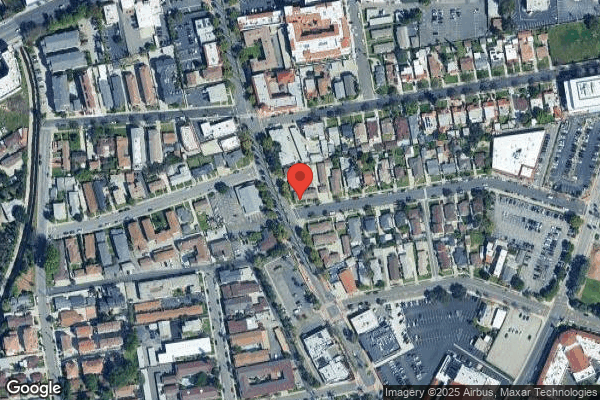
537 W LIVE OAK, SAN GABRIEL, CA 91776 (626) 289-3763
For profit - Corporation 99 Beds LONGWOOD MANAGEMENT CORPORATION Data: November 2025 1 Immediate Jeopardy citation
Trust Grade
18/100
#1057 of 1155 in CA
Last Inspection: February 2025

Within standard 12-15 month inspection cycle. Federal law requires annual inspections.

Overview

Live Oak Rehab Center has received a Trust Grade of F, indicating significant concerns about the facility's care and operations. It ranks #1057 out of 1155 nursing homes in California, placing it in the bottom half of facilities statewide, and #316 out of 369 in Los Angeles County, meaning there are very few local options that rank lower. The facility is improving, with the number of reported issues decreasing from 30 in 2024 to 22 in 2025. Staffing is rated average with a turnover rate of 52%, which is concerning compared to the California average of 38%. Despite having average RN coverage, the facility has faced serious incidents, including a failure to provide adequate CPR during a code blue and a resident falling while left unattended, resulting in pain and injury. Overall, while there are some strengths in staffing stability and a trend toward improvement, the facility's poor trust grade and critical issues raise significant concerns for families considering this home for their loved ones.

Trust Score
F
18/100
In California
#1057/1155
Bottom 9%
Safety Record
High Risk
Review needed
Inspections
Getting Better
30 → 22 violations
Staff Stability
⚠ Watch
52% turnover. Above average. Higher turnover means staff may not know residents' routines.
Penalties
✓ Good
$29,760 in fines. Lower than most California facilities. Relatively clean record.
Skilled Nurses
⚠ Watch
Each resident gets only 21 minutes of Registered Nurse (RN) attention daily — below average for California. Fewer RN minutes means fewer trained eyes watching for problems.
Violations
⚠ Watch
76 deficiencies on record. Higher than average. Multiple issues found across inspections.
★☆☆☆☆
1.0
Overall Rating
★★★☆☆
3.0
Staff Levels
★★★★☆
4.0
Care Quality
★☆☆☆☆
1.0
Inspection Score
Stable
2024: 30 issues
2025: 22 issues

The Good

  • 4-Star Quality Measures · Strong clinical quality outcomes
  • Full Sprinkler Coverage · Fire safety systems throughout facility
  • No fines on record

Facility shows strength in quality measures, fire safety.

The Bad

1-Star Overall Rating

Below California average (3.1)

Significant quality concerns identified by CMS

Staff Turnover: 52%

Near California avg (46%)

Higher turnover may affect care consistency

Federal Fines: $29,760

Below median ($33,413)

Moderate penalties - review what triggered them

Chain: LONGWOOD MANAGEMENT CORPORATION

Part of a multi-facility chain

Ask about local staffing decisions and management

The Ugly 76 deficiencies on record

1 life-threatening 1 actual harm
Sept 2025 1 deficiency
MINOR (B) 📢 Someone Reported This

A family member, employee, or ombudsman was alarmed enough to file a formal complaint

Minor Issue - procedural, no safety impact

Staffing Information (Tag F0732)

Minor procedural issue · This affected multiple residents

Based on observation, interview, and record review, the facility failed to ensure to post accurate and updated Direct Care Service Hours Per Patient Day (DHPPD, refers to the actual hours of work perf...

Read full inspector narrative →
Based on observation, interview, and record review, the facility failed to ensure to post accurate and updated Direct Care Service Hours Per Patient Day (DHPPD, refers to the actual hours of work performed per patient day by a direct caregiver) and Daily Posted Nurse Staffing in accordance with the facility's policy and procedure (P&P) titled Posting Direct Care Daily Staffing Numbers. This deficient practice resulted in residents and visitors not being informed of the facility census, staffing and actual hours worked by staff.Findings: During a concurrent observation and interview on 8/30/2025 at 4:34 AM with Registered Nurse Supervisor (RN 1), the Daily Staffing dated 8/29/2025, Nurse Staffing Assignment and Sign-In Sheet dated 8/29/2025 and 8/30/2025 were reviewed. The Daily Staffing dated 8/29/2025, indicated one RN, four Licensed Vocational Nurses (LVNs), and five Certified Nurse Aides (CNAs) for 11PM to 11:59 PM and one RN, four LVNs, and 8 CNAs for 12 AM to 7 AM. The Nursing Staffing Assignment and Sign-In Sheet indicated four CNAs signed in and worked the 11PM to 7AM shift. RN 1 stated there were only five CNAs that were scheduled for 8/29/2025 but only four CNAs that worked the 11 PM to 7 AM shift with a census of 97 Residents. RN 1 stated that it was the Payroll officer (PR) that completed the Daily Posted Nurse Staffing on weekdays. RN 1 stated he does not know who completes and posts it on the weekends (Saturdays and Sundays) as the assistant Director of Staff Development (ADSD) and PR do not report to the facility on the weekends. RN 1 stated he was not trained to do the Daily DHPPD. RN 1 stated that according to the policy, Nurse staffing should be posted daily for the residents, family and visitors to see. During an interview on 8/30/2025 at 6:40 AM with the Administrator (ADM), the ADM stated that there were no Daily Posted Nurse Staffing during the weekend. The ADM stated that the DHPPD was done by PR on Mondays. The ADM stated that according to the facility policy, Daily Posted Nurse Staffing and DHPPD will be posted daily. The ADM stated that the facility did not follow their policy. During an observation at nursing station 1 on 9/2/2025 at 6:49 AM, Daily Posted Nurse Staffing dated 8/29/2025 was posted at the designated staffing posting area. During a concurrent observation and interview on 9/2/2025 at 7:18 AM with Payroll staff (PR), the PR observed Daily Posted Nurse Staffing posted was still dated 8/29/2025. The PR stated that she does not work on Saturdays and Sundays and only completes the DHPPD form on Mondays and posts it when she is done. The PR stated she did not know that posting should be done within two hours of the beginning of the shift. The PR stated that it was a holiday on 9/1/2025 and she was off, so the DHPPD was not updated. The PR stated that according to their policy, nurse staffing should be posted daily. The PR confirmed that the policy was not followed. During a review of the facility's P&P titled, Posting Direct Care Daily Staffing Numbers revised 8/2022, the P&P indicated: The facility will post on a daily basis for each shift nurse staffing data, including the number of nursing personnel responsible for providing direct care to residents. Within two (2) hours of the beginning of each shift, the number of licensed nurses (RNs and LVNs) and the number of unlicensed nursing personnel (CNAs and Nurse Aides [NAs]) directly responsible for resident care is posted in a prominent location (accessible to residents and visitors) and in a clear and readable format. Within two (2) hours of the beginning of each shift, the charge nurse or designee computes the number of direct care staff and completes the Nurse Staffing Information form. The charge nurse completes the form and posts the staffing information in the location(s) designated by the administrator. The previous shift's forms are maintained with the current shift form for a total of 24 hours of staffing information in a single location.
Aug 2025 2 deficiencies
CONCERN (D) 📢 Someone Reported This

A family member, employee, or ombudsman was alarmed enough to file a formal complaint

Potential for Harm - no one hurt, but risky conditions existed

Report Alleged Abuse (Tag F0609)

Could have caused harm · This affected 1 resident

**NOTE- TERMS IN BRACKETS HAVE BEEN EDITED TO PROTECT CONFIDENTIALITY** Based on interview and record review the facility failed to report an unusual occurrence (events or situations that do not happe...

Read full inspector narrative →
**NOTE- TERMS IN BRACKETS HAVE BEEN EDITED TO PROTECT CONFIDENTIALITY** Based on interview and record review the facility failed to report an unusual occurrence (events or situations that do not happen daily or that may have had an impact on the residents) to the Department within 24 hours for one of the sampled residents (Resident 1) by failing to:a. Ensure the facility reported to the Department when the facility was made aware on 1/9/2025 of Resident 1's sustained further injury and dislocation (a disruption of the normal position of the ends of two or more bones where they meet at a joint) of the right hip in accordance with the facility's policy and procedure (P&P) titled, Unusual Occurrence Reporting.This failure had the potential to affect the health, safety, and well-being of the residents. Findings:During a review of Resident 1's admission record indicated Resident 1 was admitted to the facility on [DATE] with the diagnoses including, but not limited to, a right upper thigh fracture, recent right hip joint replacement surgery, encephalopathy (a condition affecting brain function), difficulty walking, and muscle weakness.During a review of Resident 1's Minimum Data Set (MDS), dated [DATE], the MDS indicated the resident had moderate cognitive impairment affecting daily decision-making. The MDS indicated a short-term memory problem, with difficulty recalling information after 5 minutes. The MDS indicated Resident 1 required substantial to maximal assistance with activities of daily living and mobility.During a review of Resident 1's nursing progress notes, dated 1/9/2025, the progress notes indicated an x-ray was conducted at the facility. The x-ray report indicated Resident 1 had a right hip dislocation.During a review of Resident 1's Situation, Background, Assessment, Recommendation (SBAR - a communication tool used by healthcare workers when there is a change of condition [COC] to the resident) form, dated 1/9/2025, the form indicated Resident 1 was transferred to a general acute care hospital (GACH) for further evaluation due to a possible right hip dislocation after complaining of pain and discomfort.During an interview on 8/29/2025 at 11:52 AM, Administrator (ADM) stated the injury was not and should have been reported to the state agency. During a record review of the facility's P&P titled, Unusual Occurrence Reporting, revised in 12/2007, the P&P indicated that unusual occurrences must be reported to appropriate agencies within 24 hours as required by law.During a review of the facility's P&P titled, Abuse, Neglect, or Misappropriation-Reporting and Investigating, revised March 2023, the P&P indicated that all reports of resident abuse (including injuries of unknown origin) neglect, exploitation, or theft/misappropriation of resident property are reported to local, state and federal agencies (as required by current regulations) immediately and thoroughly investigated by facility management within 24 hours of an allegation that does not involve abuse or result in serious bodily injury.
CONCERN (D) 📢 Someone Reported This

A family member, employee, or ombudsman was alarmed enough to file a formal complaint

Potential for Harm - no one hurt, but risky conditions existed

Investigate Abuse (Tag F0610)

Could have caused harm · This affected 1 resident

Based on interview and record review, the facility failed to investigate an injury of an unknown source for one of four sampled residents (Resident 1) per the facility's policy and procedure (P&P).Thi...

Read full inspector narrative →
Based on interview and record review, the facility failed to investigate an injury of an unknown source for one of four sampled residents (Resident 1) per the facility's policy and procedure (P&P).This failure had the potential to affect the health and safety of the resident.Findings:During a review of Resident 1's admission Record, the admission Record indicated the facility admitted the resident on 1/3/2025, with the diagnoses including but not limited to fracture of the right thighbone, aftercare following right hip surgery, Parkinson's disease (a progressive brain disorder that causes uncontrollable movements such as stiffness), and dementia (a progressive state of decline in mental abilities).During a review of Resident 1's Minimum Data Set (MDS, a standardized care screening and assessment tool), dated 1/9/2025, the MDS indicated resident had a short-term memory problem and is moderately impaired in cognitive skills for daily decision making.During a review of Resident 1's Change of Condition (COC, communicating significant changes in resident health) form, dated 1/9/2025, the COC form indicated the Physical Therapist notified the Charge Nurse, Resident 1 had pain and discomfort in the hip.During a review of Resident 1's nursing progress notes, dated 1/9/2025, the notes indicated a bilateral hip x-ray was ordered. The x-ray report indicated Resident 1 had a right hip dislocation and was transferred to the general acute care hospital (GACH) for further evaluation.During an interview on 8/29/2025 at 10:51 a.m. with Director of Nursing (DON), DON stated staff did not know how Resident 1 sustained a hip dislocation injury. The DON stated they did not investigate it because she thought it was an injury that happened before Resident 1 was admitted to the facility. The DON also stated Resident 1's injury was not but should have been investigated. During a concurrent interview and record review on 8/29/2025 at 1:04 PM of the facility's policy and procedure titled Abuse, Neglect, Exploitation, or Misappropriation -Reporting and Investigating, revised 3/2023, was reviewed. The Administrator (ADM) stated injuries of unknown origin is considered an abuse and it should have but was not investigated. During a review of the facility's Policy and Procedure (P&P) titled Abuse, Neglect, Exploitation, or Misappropriation -Reporting and Investigating, revised 3/2023, the P&P indicated injuries of unknown origin are to be reported and thoroughly investigated. The P&P also indicated the administrator initiates the investigations.
Aug 2025 1 deficiency
CONCERN (D) 📢 Someone Reported This

A family member, employee, or ombudsman was alarmed enough to file a formal complaint

Potential for Harm - no one hurt, but risky conditions existed

Deficiency F0558 (Tag F0558)

Could have caused harm · This affected 1 resident

**NOTE- TERMS IN BRACKETS HAVE BEEN EDITED TO PROTECT CONFIDENTIALITY** Based on interview and record review, the facility failed to ensure the residents' choices or preferences were honored for one (...

Read full inspector narrative →
**NOTE- TERMS IN BRACKETS HAVE BEEN EDITED TO PROTECT CONFIDENTIALITY** Based on interview and record review, the facility failed to ensure the residents' choices or preferences were honored for one (1) of three (3) sampled residents (Resident 1) in accordance with the facility's policy and procedure. This deficient practice had the potential to negatively affect Resident 1's self-worth, self-esteem, and psychosocial well-being. Findings:During a review of Resident 1's admission Record, the admission Record indicated Resident 1 was admitted to the facility on [DATE] and re- admitted on [DATE] with diagnoses included cerebral infarction (refers to damage to tissues in the brain due to a loss of oxygen to the area) affecting left dominant side, anxiety disorder (a disorder characterized by nervousness characterized by a state of excessive uneasiness and apprehension, typically with compulsive behavior [repetitive, persistent, and often uncontrollable actions that a person feels driven to perform] or panic attacks), and panic disorder (sudden, intense feelings of fear that cause physical symptoms like a racing heart, fast breathing and sweating) During a review of Resident 1's Minimum Data Set (MDS, a resident assessment tool), the MDS dated [DATE], indicated Resident 1 has intact cognitive (mental action or process of acquiring knowledge and understanding) skills for daily decision making. The MDS indicated Resident 1 needed partial/ moderate assistance (helper does less than half the effort, helper lifts, holds, or supports trunk or limbs but provides less than half the effort) in oral hygiene, toileting hygiene, shower/bathe self, upper and lower body dressing, putting on and taking off footwear, personal hygiene, roll left and right, sit to lying, lying to sitting on side of the bed, sit to stand, chair / bed- to-chair transfer, toilet transfer, tub/ shower transfer and walk 10 feet. During a record review of a facility form titled, Concern Record (Theft/ Loss and Grievance Report), dated 3/14/2025, the Concern Record indicated Resident 1 would like to improve the quality of care as follows: Ensure pitcher and call light were placed in reach. Please inform the Resident what procedures your about to do prior to engaging. When staff are feeding a Resident, their co-workers should not come inside the room and have conversations. Staff should limit perfume use. Introduce the floater prior going to lunch During a concurrent interview and record review on 8/19/2025 at 1:40 PM with Social Services Director (SSD), Resident 1's Concern Record, dated 3/14/2025, was reviewed. SSD stated when Resident has concerns, the licensed nurses, social service director (SSD) or the Director of Nursing (DON) completes the concern record form. The Concern Record form will be submitted to the Social Services Department then filed in the Grievance Binder. SSD stated the SSD will do the follow-up interview with the Resident and the DON and Administrator will investigate. SSD also stated, if the staff were not able to follow the resident's preferences, it could lead to unmet needs and resident could get frustrated. During a concurrent interview and record review on 8/19/2025 at 1:58 PM with Resident 1, Resident 1's Concern Record, dated 3/14/2025 was reviewed. Resident 1 stated, I need to remind my CNA (Certified Nursing Assistant) to put my call light on my right-hand side. I cannot move my left arm. Resident 1 stated, The call light usually gets misplaced or falls on the floor and I get very upset. I will just blow up. I get so much anxiety when I cannot find my call light. During an interview on 8/19/2025 at 2:02 PM with Resident 1, Resident 1 stated that during lunch on 8/19/2025, CNA 1 and another staff (hospice [compassionate care for people who are near the end of life] staff) were talking so loudly, while CNA 1 was assisting one of her roommates. Resident 1 stated, I told them to keep it down because they were talking too loudly, but they did not stop. I got upset. Resident 1 also stated the night shift staff still wear strong perfume when they come in to work, despite being requested not to. Resident 1 stated, I can smell the night shift staff in the hallway even just standing by my door. During a concurrent interview and record review on 8/19/2025 at 2:24 PM with SSD, the Social Services Notes, dated 4/1/2025 to 8/19/2025 were reviewed. There was no documentation that SSD followed up with Resident 1 from 4/2025 to 8/19/2025 to discuss Resident 1's preferences. SSD stated, I visit and talk to Resident 1, but she brings up personal stories. SSD stated she did not document every visit to Resident 1. During an interview on 8/19/2025 at 3 PM with CNA 1, CNA 1 stated when she covers for lunch break, she only introduces herself to the resident if she answers the resident's call light. If the Resident did not press their call light, she does not introduce herself to them. During a concurrent interview and record review on 8/19/2025 at 3:05 PM with Registered Nurse Supervisor 1 (RNS 1), the facility's policy and procedure (P&P) titled, Accommodation of Needs, revised 3/2021, the P&P indicated, in order to accommodate individual needs and preferences, staff attitudes and behaviors are directed towards assisting the residents in maintaining independence, dignity and well-being to the extent possible and in accordance with the residents' wishes. RNS 1 stated, Resident 1 wants things done in a certain way or has preferences, the Interdisciplinary Team (IDT, a group of professional and direct care staff that have primary responsibility for the development of a plan for the care and treatment of a resident) will discuss and if it meets facility policy then it will be added to the resident's care plan and implemented by the facility. RNS1 stated the facility has to meet Resident 1's needs. RNS 1 stated, We have to listen to the resident and accommodate as much as possible. During a concurrent Interview and record review on 8/19/2025 at 3:27 PM with RNS 1, Resident 1 Care Plans dated 3/2024 to 8/2025 were reviewed. RNS 1 stated there were no care plans developed to address Resident 1's preferences. RNS 1 stated, No care plan means it was not consistently done. RNS 1 stated the care plans were made unique to the Resident and an organized way to determine if the facility is managing or solving the problem of the Resident. During an interview on 8/19/2025 at 3:35 PM with RNS 1, RNS 1 stated, We should always introduce ourselves to the Resident to let the Resident know who to call for if they need assistance. It was part of the Resident rights. We introduce ourselves to the Resident for dignity and respect. RNS1 stated this keeps the Resident aware if the staff were to leave and who will be covering. During a concurrent interview and record review on 8/19/2025 at 3:41 PM with Administrator (ADM), the Concern Record dated 3/14/2025 was reviewed. ADM stated, The Concern Record was all of Resident 1's preferences. We always come and see Resident 1, but we did not have a documentation every time we visit her to ensure that her preferences are being followed by the staff. During a review of the facility's Policy and Procedure (P&P) titled, Dignity revised 2/2021, the P&P indicated each resident shall be cared for in a manner that promotes and enhances his or her sense of well-being, level of satisfaction with life, and feelings of self-worth and self-esteem.1. Residents are treated with dignity and respect at all times.2. The facility supports dignity and respect for residents by honoring resident goals, choices, preferences, values and beliefs. This begins with the initial admission and continues throughout the resident's facility stay.3. Individual needs and preferences of the residents are identified through the assessment process.
Aug 2025 2 deficiencies 1 Harm
SERIOUS (G) 📢 Someone Reported This

A family member, employee, or ombudsman was alarmed enough to file a formal complaint

Actual Harm - a resident was hurt due to facility failures

Accident Prevention (Tag F0689)

A resident was harmed · This affected 1 resident

**NOTE- TERMS IN BRACKETS HAVE BEEN EDITED TO PROTECT CONFIDENTIALITY** Based on observation, interview and record review, the facility failed to ensure one (1) of two (2) sampled residents (Resident ...

Read full inspector narrative →
**NOTE- TERMS IN BRACKETS HAVE BEEN EDITED TO PROTECT CONFIDENTIALITY** Based on observation, interview and record review, the facility failed to ensure one (1) of two (2) sampled residents (Resident 1) received adequate supervision and assistance to prevent accidents and injuries, by failing to provide the assistance needed to Resident 1who was assessed to be dependent (helper does all effort needed to complete activity) to facility staff while toileting on 7/21/2025. This deficient practice resulted in Resident 1 having an unwitnessed fall and being found sitting in front of the toilet in the resident's restroom after the resident was left unattended by facility staff on 7/21/2025. Resident 1 experienced left inner thigh pain with a rating of 7 out of 10 (a tool for assessing pain intensity using scale 0 to 10, where 0 represents no pain and 10 represents the worst pain imaginable). Resident 1 underwent x- ray (an imaging study that takes pictures of bones and soft tissues) of left upper leg (femur/ thigh bone) on 7/21/20245 and result showed a left acute minimally displaced intertrochanteric fracture (a break in the upper part of the thigh bone [femur], specifically in the area between the femoral neck and the lesser trochanter [a bony prominence or projection on the femur near the hip joint, serving as an attachment site for muscles], where the broken pieces have shifted out of alignment). Resident 1 was sent to General Acute Care Hospital (GACH) emergency room (ER) on 7/21/2025, admitted to the GACH's medical surgical unit (a specialized area where patients receive care for a wide range of medical and surgical conditions. These units handle patients recovering from surgery, managing chronic illnesses, or requiring treatment for acute medical issues) on 7/22/2025 and underwent left hip open reduction internal fixation (ORIF- a surgical procedure used to treat fractures or dislocations by realigning the broken bones and stabilizing them with screws, plates, or rods) on 7/25/2025. Resident 1 stayed in GACH from 7/22/2025 until 7/28/2025 (7 days). Findings:During a review of Resident 1's admission Record, the admission Record indicated Resident 1 was originally admitted to the facility on [DATE], with diagnoses that included cerebral infarction (also known as a stroke, a condition where part of the brain tissue dies due to a lack of blood supply) and dementia (a progressive state of decline in mental abilities). The admission records also indicated diagnosis of history of falling with onset (the first date that a resident experiences the first symptoms of a medical condition) on 2/3/2025 and repeated falls with onset date of 4/16/2025. During a review of Resident 1's Fall Risk Evaluation, dated 7/14/2025, the Fall Risk Evaluation indicated Resident 1 is at a high risk of falls. During a review of Resident 1's Minimum Data Set (MDS - a resident assessment tool), dated 7/16/2025, the MDS indicated Resident 1 had severely impaired cognitive skills (ability to understand and make decisions) for daily decision making. The MDS indicated Resident 1 was dependent (helper does all effort needed to complete activity) with toileting hygiene (the ability to maintain perineal hygiene [refers to the care and cleaning of the region between the genitals and the anus]), shower/bathing and lower body dressing and substantial/maximal assistance (helper does more than half the effort needed to complete the activity) with personal hygiene and upper body dressing. The MDS indicated Resident 1 had impairments on both lower extremities (hips, knees, ankles, feet), substantial/maximal assistance with sit to stand mobility (the ability to come to a standing position from sitting in a chair, wheelchair, or on the side of the bed) and toilet transfers (the ability to get on and off a toilet or commode) were not evaluated due to medical condition or safety concerns. The MDS also indicated a bed and w/c alarm were used in Resident 1's care. During a review of Resident 1's Change of Condition (COC)/Situation, Background, Assessment, Recommendation-a communication tool used by healthcare workers when there is a change of condition among the residents) Interact Assessment Form, dated 7/21/2025, the COC/ SBAR Assessment Form indicated Resident 1 had an unwitnessed fall at 8:50 AM and was found sitting in front of the toilet in the resident's restroom. The COC/ SBAR Assessment Form indicated the assigned Certified Nursing Assistant (CNA) 2 assisted Resident 1 onto a shower chair and into the resident's restroom, then left [the restroom] to grab something from Resident 1's bed. The COC/SBAR indicated CNA 2 then found Resident 1 sitting on the restroom floor. The COC Assessment Form also indicated Resident 1 stated tried to stand up to grab the toilet paper in front of the resident when Resident 1 lost her balance and fell onto the floor. The COC/ SBAR Assessment Form indicated at 2:43 PM, Resident 1 complained of left inner thigh pain with a rating of 7 out of 10 and Norco (the brand name of a medication that combines two pain-relieving drugs: hydrocodone and acetaminophen) 5-325 milligrams (mg- metric unit of measurement, used for medication dosage and/or amount) was administered to Resident 1. During a review of Resident 1's Medication Administration Record (MAR), dated 7/21/2025, the MAR indicated Resident 1 received 1,000 mg of Tylenol (brand name for acetaminophen; a pain medication) for 6 out of 10 left thigh pain and Norco for 7 out of 10 left extremity (left leg) pain. During a review of Resident 1's Order Summary Report, dated 7/21/2025, the Order Summary Report indicated for a statim (stat- urgent, without delay) x-ray of left upper leg (femur) due to complaints of pain status post (s/p - after) fall. During a review of Resident 1's Radiology Results Report, dated 7/21/2025, the Radiology Results Report indicated findings of a left minimally displaced acute intertrochanteric fracture. During a review of Resident 1's Order Summary Report, dated 7/21/2025, the Order Summary Report indicated to transfer to GACH ER for further evaluation related to acute minimally displaced intertrochanteric fracture due to s/p fall 7/21/2025. During a review of Resident 1's GACH records titled History & Physical (H&P), dated 7/22/2025, the H&P indicated Resident 1 chief complaint of left hip fracture after a mechanical fall with a left minimally displaced acute intertrochanteric fracture and Resident 1 was complaining of significant pain with movement. The H&P also indicated, Resident 1 was admitted to GACH's medical surgical unit (a specialized area where patients receive care for a wide range of medical and surgical conditions. These units handle patients recovering from surgery, managing chronic illnesses, or requiring treatment for acute medical issues). During a review of Resident 1's GACH records titled Consultation: Orthopedic Surgery, dated 7/22/2025, the Consultation form indicated Resident 1 was scheduled for left hip open reduction internal fixation (ORIF- a surgical procedure used to treat fractures or dislocations by realigning the broken bones and stabilizing them with screws, plates, or rods) on Friday 7/25/2025 at 2:00 PM. During a review of Resident 1's GACH record titled Progress Note, dated 7/25/2025 and timed 10:00 AM, the Progress Note indicated Resident 1 was in the recovery room status post ORIF to treat acute left hip fracture. During a review of Resident 1's GACH Femur X-ray Radiology Report, dated 7/25/2025, the Radiology Report indicated Resident 1 was s/p left hip surgery (date not indicated) with a compression screw and nail now noted within the left femur. During a review of Resident 1's GACH Patient Discharge Summary, dated 7/28/2025, the Discharge Summary indicated Resident 1 had an ORIF on the left hip and will be discharged back to the facility. During a review of Resident 1's MAR, (from the facility) dated 7/28/2025, the MAR indicated Resident 1 was admitted at the facility on 7/28/2025. The MAR also indicated Resident 1 received Tylenol 650 mg for 3 out of 10 left femur fracture pain. During a review of Resident 1's Falling Star Program care plan, revised 7/29/2025, the care plan indicated Resident with falls [in the facility] on 6/8/2025, 7/14/2025 and 7/21/2025 with the goal to reduce risk of falls and/or injury through appropriate intervention(s) daily until the next assessment. The care plan also indicated Resident 1 overestimates her ability to perform tasks independently. During a review of Resident 1's MAR, dated 8/4/2025, the MAR indicated Resident 1 received Norco 5-325 mg for 10 out of 10 left toe pain. During an interview on 8/6/2025 at 10:04 AM with Resident 1, Resident 1 stated she cannot remember what happened with her fall, but she was currently still having left leg pain. During an interview on 8/6/2025 at 1:32 PM with the CNA 2, CNA stated she was taking care of Resident 1 on 7/21/2025 when the fall occurred. CNA 2 stated she assisted Resident 1 onto a shower chair (assistive equipment designed to provide a safe and stable seating option in a shower or bathtub) and moved the shower chair to the toilet so that Resident 1 can use the restroom prior to the resident's shower. CNA 2 stated, CNA 2 left Resident 1 unattended in the restroom to grab wipes from Resident 1's bed. CNA 1 stated when CNA 2 was outside the restroom to grab the wipes, CNA 2 then heard a noise that was really heavy, went back into the restroom and found Resident 1 sitting on the floor in front of the toilet. During an interview on 8/6/2025 at 1:45 PM with Licensed Vocational Nurse (LVN) 2, LVN 2 stated she was assigned to Resident 1 on 7/21/2025 and responded to Resident 1 after the fall and was not there when the fall occurred. LVN 2 stated Resident 1 was in the restroom, when CNA 2 left Resident 1 alone while the resident is using the toilet to grab something from Resident 1's bed, then Resident 1 had an unwitnessed fall. LVN 2 stated Resident 1 is known for trying to be independent with activities of daily life (ADLs- routine tasks/activities such as bathing, dressing and toileting a person performs daily to care for themselves) despite needing assistance and has a history of falls in the facility. During an interview on 8/7/2025 at 2:42 PM with LVN 3, LVN 3 stated Resident 1 has periods of cognitive confusion, attempts to be independent with ADLS when Resident 1 believes she can complete the task. LVN 3 stated Resident 1 should not have been left alone in the restroom by CNA 2 on 7/21/2025 because it was unsafe for Resident 1 with the resident's cognition and history of falls. LVN 3 also stated leaving Resident 1 alone in the restroom was unsafe because there was no alarm on the shower chair to alert staff if she was attempting to move and without the alarm or staff supervision, staff cannot ensure resident is safe and does not fall. In addition, LVN 3 stated Resident 1 ultimately had a fall requiring hip surgery after being left alone in the restroom. During an interview on 8/7/2025 at 3:46 PM with the Director of Nursing (DON), the DON stated Resident 1 was left alone by staff on 7/21/2025 after stepping away to grab something from Resident 1's bed and it was unsafe to leave Resident 1 alone because Resident 1 was high risk for falls and according to Resident 1's MDS, Resident 1 is dependent to staff for toileting. The DON stated Resident 1 fell because the resident did not receive the necessary supervision and assistance during toileting. The DON stated, Resident 1 was left alone and unattended during toileting on 7/21/2025 and if Resident 1 was not left unattended, the fall could have been prevented. The DON also stated Resident 1 sustained a fracture to the left hip due to the fall on 7/21/2025. During a review of the facility's P&P titled Safety and Supervision of Residents, revised 7/2017, the P&P indicated:a. The facility strives to make the environment as free from accident hazards as possible.b. Resident safety, supervision and assistance to prevent accidents are facility-wide priorities.c. Facility utilizes resident-centered approach to address safety and accident hazards for individual residents.d. Resident supervision is a core component to the system approach to safety and the type and frequency of resident supervision is determined by the resident's assessed needs and identified hazards in the environment. During a review of the facility's policy and procedures (P&P) titled Falls and Fall Risk, Managing, revised 3/2023, the P&P indicated:a. Based on previous evaluations and current date, the staff will identify interventions related to the resident's specific risks and causes to try to prevent the resident from falling and to try to minimize complications from falling.b. Resident conditions that may contribute to the risk of falls include cognitive impairments and delirium (a serious disturbance in a person's mental abilities that results in a decreased awareness of one's environment and confused thinking), incontinence and lower extremity weakness.
CONCERN (D) 📢 Someone Reported This

A family member, employee, or ombudsman was alarmed enough to file a formal complaint

Potential for Harm - no one hurt, but risky conditions existed

Comprehensive Care Plan (Tag F0656)

Could have caused harm · This affected 1 resident

**NOTE- TERMS IN BRACKETS HAVE BEEN EDITED TO PROTECT CONFIDENTIALITY** Based on observation, interview and record review, the facility failed to develop a care plan (a document that outlines the faci...

Read full inspector narrative →
**NOTE- TERMS IN BRACKETS HAVE BEEN EDITED TO PROTECT CONFIDENTIALITY** Based on observation, interview and record review, the facility failed to develop a care plan (a document that outlines the facility's plan to provide personalized care to a resident based on the resident's needs) for one (1) of two (2) sampled residents (Resident 1), when Resident 1 was noted to have a decline in the resident's cognitive skills (ability to understand and make decisions), mobility (ability to move or be moved) and function for Activities of Daily Living (ADLs- routine tasks/activities such as bathing, dressing and toileting a person performs daily to care for themselves) assistance, based on the Change of Condition Minimum Data Set (MDS - a resident assessment tool), dated 7/16/2025. This failure had the potential for Resident 1 to experience a lack of care, and/or care that is not personalized to the resident's specific needs, which could negatively affect the resident's overall well-being.Findings:During a review of Resident 1's admission Record, the admission Record indicated Resident 1 was originally admitted to the facility on [DATE] and readmitted on [DATE], with diagnoses that included a history of falling, cerebral infarction (also known as a stroke, a condition where part of the brain tissue dies due to a lack of blood supply), dementia (a progressive state of decline in mental abilities) and displaced intertrochanteric fracture (a break in the upper part of the thigh bone [femur], specifically in the area between the femoral neck and the lesser trochanter [a bony prominence or projection on the femur near the hip joint, serving as an attachment site for muscles], where the broken pieces have shifted out of alignment) of left femur. During an interview on 8/6/2025 at 1:03 PM with Licensed Vocational Nurse 1 (LVN 1), LVN 1 stated when she started caring for Resident 1 around 4/2025, Resident 1 was more independent with care, alert and not cognitively confused and used a front wheel walker (FWW- is a mobility aid with 2 wheels on the front legs, that helps provide stability and balance while walking) before experiencing multiple falls. LVN 1 stated prior to the resident's fall on 7/21/2025, Resident 1 was noted to need assistance from 2 certified nursing assistants (CNAs) with transfers and unable to use a FWW until cleared by physical therapists on 8/5/2025. During an interview on 8/7/2025 at 2:42 PM with LVN 3, LVN 3 stated she noticed Resident 1 has experienced changes in the resident's cognition and dependence levels since working with the resident 3 weeks ago. LVN 3 stated Resident 1 had episodes of confusion, short term memory and repeatedly asks the same questions. LVN 3 stated this was a change from Resident 1's baseline. LVN 3 also stated Resident 1 used to be more independent with ADLs and able to walk with FWW, but now required partial/moderate assistance (helper does less than half the effort needed to complete the activity) and supervision from staff with transfers and ADLs. During a concurrent interview and record review on 8/7/2025 at 3:03 PM with the Minimum Data Set Nurse (MDSN), Resident 1's Minimum Dats Set (MDS - a resident assessment tool), dated 6/18/2025, Change of Condition MDS, dated 7/16/2025 and Resident 1's medical chart dated 2/3/2025 through 8/7/2025 were reviewed. The MDSs indicated from 6/18/2025 and 7/16/2025:a. Resident 1's cognitive skills declined from moderately impaired noted on 6/18/2025 to severely impaired noted on 7/16/2025.b. Resident 1's functional eating ability declined from setup or clean-up assistance (helper helps only prior to or following the activity completion) noted on 6/18/2025 to supervision or touching assistance (helper provides verbal cues, touching/steadying and/or contact guard assistance during activity) noted on 7/16/2025.c. Resident 1's oral hygiene ability declined from supervision or touching assistance noted on 6/18/2025 to partial/moderate assistance noted on 7/16/2025. d. Resident 1's toileting hygiene (the ability to maintain perineal hygiene [refers to the care and cleaning of the region between the genitals and the anus]) ability declined from partial/moderate assistance on 6/18/2025 to dependent (helper does all effort needed to complete activity) noted on 7/16/2025.e. Resident 1's ability to transfer from chair to bed/bed to chair and complete position change of sit to stand/ stand to sit, declined from supervision or touching assistance on 6/18/2025 to substantial/maximal assistance (helper does more than half the effort needed to complete the activity) noted on 7/16/2025.f. Resident 1's ability to complete toilet transfers (the ability to get on and off a toilet or commode) and walk (varied distances of 10 feet [ft- plural for foot, a unit of length equal to 12 inches], 50 ft and/or 150 ft) declined from supervision or touching assistance ted on 6/18/2025 to not attempted due to medical condition or safety concerns noted on 7/16/2025.Resident 1's medical chart did not indicate a developed care plan for Resident 1's decline in cognitive and functional abilities. The MDSN stated Resident 1's current care plan only reflected Resident 1 with moderately impaired cognitive skills and did not reflect her current condition of severely impaired cognitive skills. The MDSN also stated Resident 1's medical chart did not reflect any specific interventions for Resident 1's functional ability with ADLs, only bowel and bladder function, and it should have a care plan to address Resident 1 needs for ADLS because Resident 1's ADL abilities declined, and the changes are significant. The MDSN stated it was important to have a resident centered care plan for Resident 1 so that the health care providers are aware of Resident 1's actual current condition and so that the appropriate interventions can be implemented, because the new condition requires different interventions and level of care/ assistance. During an interview on 8/7/2025 at 3:46 PM with the Director of Nursing, the DON stated Resident 1 experienced a stroke (a serious life-threatening medical condition that happens when the blood supply to part of the brain is cut off) that caused a cognitive decline, becoming confused and forgetful. The DON also stated Resident 1 experienced a decline with ADLs, requiring more cues with feeding, and more help with transfers and toileting. The DON stated Resident 1 should have a care plan that reflects these declines because staff need to address the new problems and needs. The DON stated the care plan is what will outline how they meet Resident 1's needs. During a review of the facility's policy & Procedure (P&P) titled Care Plans, Comprehensive Person- Centered, revised 3/2023, the P&P indicated a comprehensive, person - centered care plan that includes measurable objectives and timetables to meet the resident's physical, psychosocial and functional needs is developed and implemented for each resident within seven (7) days of completion of the resident's MDS assessment. The P&P also indicated each resident's comprehensive care plan: a. Describes the services that are to be furnished to attain or maintain the residents' highest practicable physical, mental and psychosocial well-being.b. Reflects currently recognized standards of practice for problem areas and conditions.c. Builds on the residents' strengths.d. Revised as information about the residents' condition changes.e. Reviewed and updated at least quarterly and when there has been a significant change in the residents' condition.
Apr 2025 1 deficiency
CONCERN (D) 📢 Someone Reported This

A family member, employee, or ombudsman was alarmed enough to file a formal complaint

Potential for Harm - no one hurt, but risky conditions existed

Free from Abuse/Neglect (Tag F0600)

Could have caused harm · This affected 1 resident

Based on observation, interview and record review, the facility failed to protect the resident's right to be free from physical abuse (willful infliction of injury which includes, but is not limited t...

Read full inspector narrative →
Based on observation, interview and record review, the facility failed to protect the resident's right to be free from physical abuse (willful infliction of injury which includes, but is not limited to, hitting, slapping, punching, biting, and kicking) for one of two sampled residents (Resident 1). On 4/10/2025 at around 4:42 PM, Certified Nurse Assistant 1 (CNA 1) grabbed Resident 1's shirt from the back and caused the shirt to choke Resident 1 from the neck area and CNA 1 slap Resident 1's back which made a loud smacking noise. This failure resulted in Resident 1 to experience physical abuse from CNA 1 and had the potential to affect the resident's emotional, mental, and psychosocial (relating to social factors and individual thought and behavior) well-being. Findings: During a review of Resident 1's admission Record, the admission Record indicated the facility admitted Resident 1 on 3/11/2025 with diagnoses that included, but not limited to, delirium (a serious disturbance in a person's mental abilities that results in a decreased awareness of one's environment and confused thinking), depression (a common and serious mental health disorder that negatively affects how you feel, think, act, and perceive the world), dementia (a progressive state of decline in mental abilities), and mood disorder (a mental health condition characterized by persistent and significant changes in mood that interfere with daily functioning and well-being). During a review of Resident 1's Minimum Data Set (MDS-a resident assessment tool) dated 3/1/2025, the MDS indicated Resident 1 had severe impairment of cognitive (capable of remembering, learning new things, concentrating or making decisions that affect everyday life) skills for daily decision making. The MDS indicated Resident 1 required set up or clean up assistance (Helper sets up or cleans up; resident completes the activity. Helper assists only prior to or following the activity) with eating, oral, and personal hygiene. The MDS indicated Resident 1 required supervision or touching assistance (Helper provides verbal cues and/or touching/steadying and/or contact guard assistance as resident completes activity. Assistance may be provided throughout the activity or intermittently) with upper body dressing. The MDS indicated Resident 1 required partial/moderate assistance (Helper lift, holds, or supports trunk or limbs, but provides less than half the effort) with toileting hygiene, lower body dressing and putting on/taking off footwear. The MDS also indicated Resident 1 required substantial/maximal assistance (Helper lifts or holds trunk or limbs and provides more than half the effort) with shower/bathing self. During an interview on 4/15/2025 at 2:47 PM with CNA 2, CNA 2 stated she was at the nurses' station 1 on 4/10/2025 around 4:42 PM when CNA 1, who was assigned one-to-one monitoring (1:1 monitoring involves a single staff member providing continuous supervision to a resident for a specific period, ensuring their safety and well-being) for Resident 1, held Resident 1's shirt from the back which also caused the shirt to choke Resident 1 from the front neck area as Resident 1 got up from the chair. CNA 2 stated as Resident 1 started to walk towards the desk, Resident 1 turned towards CNA 1 and threw a cup of water at CNA 1's face. CNA 2 stated CNA 1 then slapped Resident 1's back with CNA 2's left hand which made a loud slapping sound. CNA 2 stated staff cannot hit resident's back when residents are being aggressive to staff. CNA 2 stated the Administrator (ADM) also witnessed the incident. During an interview on 4/15/2025 at 2:55 PM with CNA 3, CNA 3 stated, CNA 3 was also at the nurses' Station 1 on 4/10/2025 at 4:42 PM when Resident 1 stood up from the chair to grab something at the desk, CNA 1 grabbed Resident 1's shirt from the back and caused the shirt to choke Resident 1 from the neck area and that was when Resident 1 threw a cup of water at CNA 1's face. CNA 3 stated she saw CNA 1 slap Resident 1's back which made a loud smacking noise. During a concurrent interview and record review on 4/15/2025 at 4 PM with ADM, the facility's surveillance video recorded on 4/10/2025 at 4:42 PM was reviewed. The surveillance video showed, Resident 1 was seated in a chair at the nurses' station 1 while then Resident 1 stood up and walked closer to the desk while CNA 1 grabbed Resident 1's shirt from the back, Resident 1 turned to CNA 1 and threw a cup of water to CNA 1's face. The video surveillance showed CNA 1 then hit Resident 1's back with CNA 1's left hand. ADM stated, according to the video surveillance the facility staff that slapped Resident 1's back was CNA 1. ADM stated he was standing ADM's office door facing nurses' station 1 on 4/10/2025 at 4:42 PM and witnessed CNA 1's physical abuse to Resident 1. ADM stated Resident 1 was seated in a chair at the nurses' station 1 then Resident 1 stood up and walked towards the desk. ADM stated CNA 1 held onto Resident 1's shirt from the back to stop Resident 1from throwing a cup of water to CNA 1's face. ADM stated CNA 1 did not follow the facility's policy on abuse. A review of the facility's Policy and Procedures (P&P) titled, Abuse, Neglect, Exploitation and Misappropriation Prevention Program, revised April 2021, indicated: Residents have the right to be free from abuse,. This includes physical abuse. Protect residents from abuse, by anyone including, but not limited to facility staff, other residents, consultants, volunteers, staff from other agencies, family members, friends, visitors, and/or any other individual. Develop and implement policies and protocols to prevent and identify abuse or mistreatment of residents. Establish and maintain a culture of compassion and caring for all residents and particularly those with behavioral, cognitive, or emotional problems. Implement measures to address factors that may lead to abusive situations, for example: adequately prepare staff for caregiving responsibilities; help staff understand how cultural, religious and ethnic differences can lead to misunderstanding and conflicts. Based on observation, interview and record review, the facility failed to protect the resident's right to be free from physical abuse (willful infliction of injury which includes, but is not limited to, hitting, slapping, punching, biting, and kicking) for one of two sampled residents (Resident 1). On 4/10/2025 at around 4:42 PM, Certified Nurse Assistant 1 (CNA 1) grabbed Resident 1's shirt from the back and caused the shirt to choke Resident 1 from the neck area and CNA 1 slap Resident 1's back which made a loud smacking noise. This failure resulted in Resident 1 to experience physical abuse from CNA 1 and had the potential to affect the resident's emotional, mental, and psychosocial (relating to social factors and individual thought and behavior) well-being. Findings: During a review of Resident 1's admission Record, the admission Record indicated the facility admitted Resident 1 on 3/11/2025 with diagnoses that included, but not limited to, delirium (a serious disturbance in a person's mental abilities that results in a decreased awareness of one's environment and confused thinking), depression (a common and serious mental health disorder that negatively affects how you feel, think, act, and perceive the world), dementia (a progressive state of decline in mental abilities), and mood disorder (a mental health condition characterized by persistent and significant changes in mood that interfere with daily functioning and well-being). During a review of Resident 1's Minimum Data Set (MDS-a resident assessment tool) dated 3/1/2025, the MDS indicated Resident 1 had severe impairment of cognitive (capable of remembering, learning new things, concentrating or making decisions that affect everyday life) skills for daily decision making. The MDS indicated Resident 1 required set up or clean up assistance (Helper sets up or cleans up; resident completes the activity. Helper assists only prior to or following the activity) with eating, oral, and personal hygiene. The MDS indicated Resident 1 required supervision or touching assistance (Helper provides verbal cues and/or touching/steadying and/or contact guard assistance as resident completes activity. Assistance may be provided throughout the activity or intermittently) with upper body dressing. The MDS indicated Resident 1 required partial/moderate assistance (Helper lift, holds, or supports trunk or limbs, but provides less than half the effort) with toileting hygiene, lower body dressing and putting on/taking off footwear. The MDS also indicated Resident 1 required substantial/maximal assistance (Helper lifts or holds trunk or limbs and provides more than half the effort) with shower/bathing self. During an interview on 4/15/2025 at 2:47 PM with CNA 2, CNA 2 stated she was at the nurses' station 1 on 4/10/2025 around 4:42 PM when CNA 1, who was assigned one-to-one monitoring (1:1 monitoring involves a single staff member providing continuous supervision to a resident for a specific period, ensuring their safety and well-being) for Resident 1, held Resident 1's shirt from the back which also caused the shirt to choke Resident 1 from the front neck area as Resident 1 got up from the chair. CNA 2 stated as Resident 1 started to walk towards the desk, Resident 1 turned towards CNA 1 and threw a cup of water at CNA 1's face. CNA 2 stated CNA 1 then slapped Resident 1's back with CNA 2's left hand which made a loud slapping sound. CNA 2 stated staff cannot hit resident's back when residents are being aggressive to staff. CNA 2 stated the Administrator (ADM) also witnessed the incident. During an interview on 4/15/2025 at 2:55 PM with CNA 3, CNA 3 stated, CNA 3 was also at the nurses' Station 1 on 4/10/2025 at 4:42 PM when Resident 1 stood up from the chair to grab something at the desk, CNA 1 grabbed Resident 1's shirt from the back and caused the shirt to choke Resident 1 from the neck area and that was when Resident 1 threw a cup of water at CNA 1's face. CNA 3 stated she saw CNA 1 slap Resident 1's back which made a loud smacking noise. During a concurrent interview and record review on 4/15/2025 at 4 PM with ADM, the facility's surveillance video recorded on 4/10/2025 at 4:42 PM was reviewed. The surveillance video showed, Resident 1 was seated in a chair at the nurses' station 1 while then Resident 1 stood up and walked closer to the desk while CNA 1 grabbed Resident 1's shirt from the back, Resident 1 turned to CNA 1 and threw a cup of water to CNA 1's face. The video surveillance showed CNA 1 then hit Resident 1's back with CNA 1's left hand. ADM stated, according to the video surveillance the facility staff that slapped Resident 1's back was CNA 1. ADM stated he was standing ADM's office door facing nurses' station 1 on 4/10/2025 at 4:42 PM and witnessed CNA 1's physical abuse to Resident 1. ADM stated Resident 1 was seated in a chair at the nurses' station 1 then Resident 1 stood up and walked towards the desk. ADM stated CNA 1 held onto Resident 1's shirt from the back to stop Resident 1from throwing a cup of water to CNA 1's face. ADM stated CNA 1 did not follow the facility's policy on abuse. A review of the facility's Policy and Procedures (P&P) titled, Abuse, Neglect, Exploitation and Misappropriation Prevention Program, revised April 2021, indicated: · Residents have the right to be free from abuse,. This includes physical abuse. · Protect residents from abuse, by anyone including, but not limited to facility staff, other residents, consultants, volunteers, staff from other agencies, family members, friends, visitors, and/or any other individual. · Develop and implement policies and protocols to prevent and identify abuse or mistreatment of residents. · Establish and maintain a culture of compassion and caring for all residents and particularly those with behavioral, cognitive, or emotional problems. · Implement measures to address factors that may lead to abusive situations, for example: adequately prepare staff for caregiving responsibilities; help staff understand how cultural, religious and ethnic differences can lead to misunderstanding and conflicts.
Feb 2025 15 deficiencies
CONCERN (D)

Potential for Harm - no one hurt, but risky conditions existed

Resident Rights (Tag F0550)

Could have caused harm · This affected 1 resident

**NOTE- TERMS IN BRACKETS HAVE BEEN EDITED TO PROTECT CONFIDENTIALITY** Based on observation, interview and record review the facility failed to promote dignity and respect for one (1) of 1 sampled re...

Read full inspector narrative →
**NOTE- TERMS IN BRACKETS HAVE BEEN EDITED TO PROTECT CONFIDENTIALITY** Based on observation, interview and record review the facility failed to promote dignity and respect for one (1) of 1 sampled resident (Resident 44) when Certified Nursing Assistant 6 (CNA 6) was observed standing above Resident 44's eye level while assisting the resident during mealtime. This failure had the potential to affect Resident 44's self-esteem and self-worth and violated Resident 44's right to be treated with dignity. Findings: During a review of Resident 44's admission Record, the admission Record indicated the resident was initially admitted to the facility on [DATE] and readmitted [DATE] with diagnoses of metabolic (the chemical process in the body that creates energy and materials for life) encephalopathy (a general term for brain damage or disease that affects how the brain functions) and generalized muscle weakness (weakness or lack of strength in most muscles throughout the body making it difficult to perform normal movements). During a review of Resident 44's Minimum Data Set (MDS - a resident assessment tool), dated 12/9/2024, the MDS indicated the resident was moderately impaired (decision poor; cues/supervision required) with cognitive (ability to think, remember, and reason) skills for daily decision making. Resident 44 was dependent (helper does all of the effort) with personal hygiene and putting on/taking off footwear, needed substantial/maximal assistance (helper does more than half the effort) with upper and lower body dressing (that ability to dress and undress above and below the waist) and needed partial/moderate assistance (helper does less than half the effort) with transfers (how a resident moves to and from bed, chair, wheelchair, standing position) and eating. During a review of Resident 44's Nutritional Status Care Plan, dated 10/25/2024, Resident 44's Nutritional Status Care Plan indicated Resident 44 had difficulty with her nutrition and indicated an intervention for providing assistance with eating as needed. During an observation on 2/18/2025 at 12:35 PM in the hallway outside of Resident 44's room, Resident 44 was observed sitting in her wheelchair with her lunch tray on top of a bedside table in front of her. Resident 44 was being assisted with her meal by CNA 6 who was standing and feeding Resident 44. During an observation on 2/20/2025 at 1:01 PM in the hallway outside of Resident 44's room, Resident 44 was observed sitting in her merry walker (a mobility aid that combines a walker and a wheelchair) with a bedside table placed in front of her. Resident 44 was being assisted by CNA 6 who was standing next to Resident 44 and holding up a cup containing a beige thick liquid to her mouth while Resident 44 drank the contents of the cup. During an interview on 2/21/2025 at 10:45 AM with CNA 6, CNA 6 stated she should not be standing while assisting a resident with feeding and should be eye level with the resident. During an interview on 2/21/2025 at 10:55 AM with the Director of Nursing (DON), the DON stated when staff assist a resident with feeding, regardless of whether the resident was sitting in their wheelchair or merry walker, staff should be sitting down and eye level with the resident for their dignity. During a review of the facility's policy and procedure (P&P) titled, Assistance with Meals, revised March 2022, the P&P indicated, Residents who cannot feed themselves will be fed with attention to safety, comfort and dignity, for example: a. Not standing over residents while assisting them with meals. During a review of the facility's P&P titled, Dignity, revised February 2021, the P&P indicated, Each resident shall be cared for in a manner that promotes and enhances his or her sense of well-being, level of satisfaction with life, and feelings of self-worth and self-esteem. The P&P also indicated: a. Residents are treated with dignity and respect at all times. b. When assisting with care, residents are supported in exercising their rights. For example, residents are: a. Provided with a dignified dining experience.
CONCERN (D)

Potential for Harm - no one hurt, but risky conditions existed

Deficiency F0645 (Tag F0645)

Could have caused harm · This affected 1 resident

**NOTE- TERMS IN BRACKETS HAVE BEEN EDITED TO PROTECT CONFIDENTIALITY** Based on observation, interview, and record review, the facility failed to follow up to ensure a Level 2 Preadmission Screening ...

Read full inspector narrative →
**NOTE- TERMS IN BRACKETS HAVE BEEN EDITED TO PROTECT CONFIDENTIALITY** Based on observation, interview, and record review, the facility failed to follow up to ensure a Level 2 Preadmission Screening and Resident Review (Level 2 PASARR, comprehensive evaluation conducted by the appropriate state-designated authority that determines whether an individual has mental disorder [MD-a health condition that affects a person's thinking, mood, behavior, or feelings], intellectual disability [ID-a condition characterized by significant limitations in both intellectual functioning and adaptive behavior that originates before the age of 22] or related condition, determines the appropriate setting for the individual, and recommends what if any, specialized services and/or rehabilitative services the individual needs) was conducted for one of one sampled resident (Resident 79) with a diagnosis of schizophrenia (serious mental illness in which people interpret reality abnormally) as indicated in the facility policy. This failure placed Resident 79 at risk for not receiving care and services in a setting appropriate to resident's needs. Findings: During a review of Resident 79's admission Record, the admission Record indicated Resident 79 was admitted on [DATE] with diagnosis of schizophrenia. During a review of Resident 79's Minimum Data Set (MDS, a resident assessment tool), dated 12/11/2024, the MDS indicated Resident 79 had severe impaired cognition (ability to think, reason, and make decisions) for daily decision making. The MDS indicated Resident 79 required setup or clean up assistance (helper sets up or cleans up; resident completes activity. Helper assists only prior to or following the activity) to eat. Resident 79 required maximal assistance (helper does more than half the effort to lift or hold trunk or limbs and provides more than half the effort) for toileting, showering, personal hygiene, lower body dressing, putting on footwear, sit to stand, and chair to bed transfer. Resident 79 required partial assistance (helper does less than half the effort to lift, hold, or support trunk or arms and legs, but provides less than half the effort) to roll left and right, sit to lying down, lying to sitting on side of bed, oral hygiene, and upper body dressing. During a concurrent observation and interview on 2/19/2025 at 1:06 PM in Resident 79's room, with Certified Nursing Assistant 7 (CNA7), Resident 79 was observed laying down in his bed, his head laid on the foot of the bed, and his feet were laying on the head of the bed. Resident 79 was curled up in fetal position, and his lunch tray remained untouched against the wall on a bedside table. The CNA7 stated Resident 79 gets confused, can get aggressive, and sometimes grabs her arm while she's trying to provide care. CNA7 stated, Resident 79 refuses care sometimes and does not want to comply with completing activities of daily living (ADLs). During an interview on 2/19/2025 at 4:05 PM with the Director of Staff Development (DSD), the DSD stated Resident 79 is very combative, refuses care a lot of times, will start eating then stops eating all together, is difficult to communicate with, and gets aggravated with anything so fast, that they have to approach him in a certain way to prevent getting him upset. During an interview on 2/20/2025 at 10:14 AM with the Director of Nursing (DON), the DON stated Resident 79 had been evaluated for a PASARR Level 1 on 5/19/2024 at the hospital where he was admitted which indicated Resident 79 required a Level 2 Mental Health Evaluation. The DON stated when Resident 79 returned to the facility, after hospitalization, the facility failed to contact the agency responsible for conducting Level 2 PASRR for further evaluation as indicated. The DON stated failing to follow up on the Level 2 PASRR placed Resident 79 at risk for unmet needs because the facility did not have recommendations on what type of care and outside services were needed to care for Resident 79 who had a diagnosis of schizophrenia and was taking a psychotropic (drugs/medications that affect a person's mental state) medication for mental illness. The DON stated after the Level 1 PASRR was performed, the Level 2 PASRR is usually performed within one week. During a review of the facility's policy and procedure (P&P) titled, Preadmission Screening and Resident Review (PASARR), dated 6/2024, the P&P indicated if a Level 2 evaluation is necessary, the facility will assist the contractor with additional information, face-to-face visit for further evaluation, review available information from the PASARR online system regularly to follow up on Level determination/ recommendations, document and maintain the records.
CONCERN (D)

Potential for Harm - no one hurt, but risky conditions existed

Comprehensive Care Plan (Tag F0656)

Could have caused harm · This affected 1 resident

**NOTE- TERMS IN BRACKETS HAVE BEEN EDITED TO PROTECT CONFIDENTIALITY** Based on observation, interview, and record review the facility failed to develop a comprehensive person-centered care plan (a d...

Read full inspector narrative →
**NOTE- TERMS IN BRACKETS HAVE BEEN EDITED TO PROTECT CONFIDENTIALITY** Based on observation, interview, and record review the facility failed to develop a comprehensive person-centered care plan (a document that outlines the facility's plan to provide personalized are to a resident that includes measurable objectives and timeframes to meet a resident's medical, nursing, and mental and psychosocial needs) to reflect a pharmacological intervention (refers to the administration of medication to treat or prevent a disease or illness) for pain for one of 20 sampled residents (Resident 197) in accordance with the resident's physician order. This deficient practice resulted in inadequate pain management and interventions for Resident 197. Findings: During a review of Resident 197's admission Record, the admission Record indicated Resident 197 was initially admitted to the facility on [DATE] with diagnoses that included fracture (a crack of break in a bone that occurs when there is too much force applied to it) of upper and lower end of right fibula (calf bone), other displaced fracture of upper end of right humerus (the long bone of the upper arm that extends from the shoulder to the elbow), displaced (when the broken bone pieces move out of alignment) fracture of olecranon (the bone at the back of the elbow that forms the elbow's outer bump) process without intra-articular extension (a fracture that extends into a joint) of right ulna (the bigger of two bones in the forearm, located on the pinkie side), and unspecified fracture of the lower end of right radius (the smaller of two bones in the forearm, located on the thumb side) and lower end of right ulna. During a review of Resident 197's Minimum Data Set (MDS- a resident assessment tool), dated 2/5/2025, the MDS indicated Resident 197 was independent with cognitive (mental action or process of acquiring knowledge and understanding) skills for daily decision making. Resident 197 required substantial/maximal assistance (helper does more than half the effort) with shower/bathe self, upper/lower body dressing, personal hygiene, sit to lying, sit to stand, and toile transfer. Resident 197 was dependent (helper does all of the effort) with putting on/taking off footwear. Resident 197 was assessed to have pain almost constantly which occasionally made it hard for her to sleep at night. Resident 197 was assessed having frequently limited day-to-day activities because of pain. During a review of Resident 197's Order Summary Report, dated 2/19/2025, the Order Summary Report indicated a physician order the following orders: Fentanyl (a potent synthetic pain medication used to treat chronic severe pain or severe pain following surgery) Patch 72 hour 25 micrograms (mcg-unit of measurement)/hour (hr), apply 1 patch transdermally (through the skin) every 72 hours for pain for 14 days, rotate site and remove per schedule with a start date of 2/4/2025. During a concurrent observation and interview with Resident 197 in her room on 2/18/2025, at 11:12 AM, Resident 197 was observed lying in bed, rubbing her right leg, grimacing, and teary. Resident 197 stated her pain was 11 out of 10 and needed her Fentanyl patch and her Norco. Resident 197 stated Licensed Vocational Nurse 1 (LVN 1) did not apply a new Fentanyl patch after LVN 1 removed the old Fentanyl patch at around 9AM. During a concurrent interview and record review with Infection Prevention Nurse 1 (IPN 1) on 2/20/2025, at 10:21 AM, the care plan with focus on Resident 197's potential for alteration in comfort/pain related to fracture, arthritis (a group of conditions that cause inflammation and pain in the joints), migraine (severe, throbbing or pulsating headaches that typically occur on one side of the head) , positioning discomfort, rehabilitation therapy, and gout (a type of arthritis that causes sudden and severe pain and swelling in the joints caused by a buildup of uric acid in the joints) was reviewed. IPN 1 stated Resident 197 was ordered for Fentanyl patch every 72 hours on 2/4/2025 for severe pain. IPN 1 stated Resident 197's Fentanyl patch was a strong medication for pain that continuously released the medication once applied to the skin. IPN 1 stated the Fentanyl patch had special handling instructions that needed to be followed for the safety of Resident 197 and facility staff. IPN 1 stated Resident 197's care plan was not and should have been revised on 2/4/2025 after the Fentanyl was ordered. IPN 1 stated Resident 197's care plan for pain did not include Fentanyl and how it should be handled and administered to Resident 197. IPN 1 stated it was the responsibility of all licensed staff to update and revise Resident 197's care plan if there are any new interventions such as use of new pain medication. During an interview with the Director of Nursing (DON), on 2/21/2025, at 11:15 AM, the DON stated Resident 197's care plan should have been updated to include her Fentanyl patch as soon as it was ordered by the physician on 2/4/2025. The DON stated it was important for the care plan intervention to include the side effects of Fentanyl, possible reactions from the medication, assessing the effectiveness of the medication, protecting the resident and staff from unnecessary contact with the medication, and safe handling of the Fentanyl. During a review of the facility's policy and procedure (P&P) titled, Care Plans, Comprehensive Person-Centered, revised on 3/2022, the P&P indicated the assessment of residents are ongoing, and care plans are revised as information about the residents and the residents' conditions change.
CONCERN (D)

Potential for Harm - no one hurt, but risky conditions existed

Deficiency F0676 (Tag F0676)

Could have caused harm · This affected 1 resident

**NOTE- TERMS IN BRACKETS HAVE BEEN EDITED TO PROTECT CONFIDENTIALITY** Based on observation, interview, and record review, the facility failed to ensure one of four sampled residents (Resident 60), w...

Read full inspector narrative →
**NOTE- TERMS IN BRACKETS HAVE BEEN EDITED TO PROTECT CONFIDENTIALITY** Based on observation, interview, and record review, the facility failed to ensure one of four sampled residents (Resident 60), who was a non-English speaking resident had access to a communication board (a visual tool that displays pictures, symbols, or illustrations, allowing individuals with limited verbal communication abilities to express themselves by pointing to the images to convey their needs, wants, or thoughts; essentially acting as a bridge for communication through visual cues instead of spoken words.) or translation services. This failure placed Resident 60 at risk for unmet needs which may have led to increased distress and a decline in psychosocial well-being. Findings: During a review of Resident 60's admission Record, the admission Record indicated Resident 60 was admitted on [DATE] with diagnosis of dementia (progressive impaired ability to think, remember or make decisions that interferes with doing everyday activities) and that resident's primary language was not English. During a review of Resident 60's Minimum Data Set (MDS, resident assessment tool), dated 1/6/2025, the MDS indicated Resident 60 had severely impaired cognitive (ability to think, reason, and make decisions) skills for daily decision making. The MDS indicated Resident 60 was dependent (helper does all of the effort, resident does none of the effort to complete the activity) on staff to carry out activities of daily living (ADLs). The MDS indicated Resident 60 was rarely able to make self-understood and understand others. During a review of Resident 60's Care Plan, dated 12/4/2024, the care plan indicated Resident 60 was at risk for having needs unmet related to difficulty in communication. Staff interventions included were to use a communication board in the Resident's language or use a staff member to translate in the Resident's language as needed. During a concurrent observation and interview on 2/19/2025 at 12:46 PM in Resident 60's room, with Certified Nursing Assistant 8 (CNA8), Resident 60 was observed holding her right hand to cover her right eye and had a bruise (a discoloration of the skin that occurs when small blood vessels break) on her left hand. CNA8 attempted to communicate with Resident 60 by using hand gestures and pointing to Resident 60's left hand where she had a bruise and asking Resident 60 if she had pain on her eye using the English language. Resident 60 did not respond and looked confused. CNA8 stated Resident 60 did not speak English and it was difficult to communicate with her. CNA8 stated Resident 60 was always contracted (a condition that causes a loss of movement in the joints of the arms or legs. They can occur due to a number of conditions, including injuries, neuromuscular diseases, and prolonged inactivity), but she had not noticed the bruise on her hand this morning during care and that her eye was teary a lot of times. CNA8 tried to look for a communication board in the room, but no communication had been provided to Resident 60. CNA8 did not seek staff who spoke the Resident's language to help translate for Resident 60. During an interview on 02/20/25 at 9:49 AM, the Director of Staff Development (DSD) stated the staff member who speaks the Resident's language was out with a resident for an appointment, and no other staff member was at the facility to help translate for Resident 60. The DSD stated staff could use communication boards or google assist to help translate. During an interview on 2/20/2025 at 11:10 AM with the Director of Nursing (DON), the DON stated staff is the number one resource for providing interpretive services to residents, and that Resident 60 required more of a human approach for communicating due to her complex medical conditions to meet her needs. The DON stated, although not all staff members have been in serviced on using translation services, the CNAs should use the resources available to communicate with residents who do not speak English and require translation. The DON stated every resident should at least have a communication board in the room. During a review of the facility's policy and procedure (P&P) titled, Activities of Daily Living, Supporting, dated March 2018, the P&P indicated appropriate care and services will be provided for residents who are unable to carry out ADLs independently, with the consent of the resident and in accordance with the plan of care, including appropriate support and assistance with communication (speech, language, and any functional communication systems).
CONCERN (D)

Potential for Harm - no one hurt, but risky conditions existed

ADL Care (Tag F0677)

Could have caused harm · This affected 1 resident

**NOTE- TERMS IN BRACKETS HAVE BEEN EDITED TO PROTECT CONFIDENTIALITY** Based on observation, interview, and record review, the facility staff failed to provide nail care (the practice of keeping resi...

Read full inspector narrative →
**NOTE- TERMS IN BRACKETS HAVE BEEN EDITED TO PROTECT CONFIDENTIALITY** Based on observation, interview, and record review, the facility staff failed to provide nail care (the practice of keeping resident's fingernails clean, short, and properly trimmed) for one of one sampled resident (Resident 80), who needed total physical assistance with personal hygiene (the ability to maintain personal hygiene, including combing hair, shaving, applying makeup, washing/drying face and hands). This deficient practice had the potential to place Resident 20 at risk for increased risk for infection, skin breakdown around the nails and potential complications. Findings: During a review of the admission record, the admission record indicated Resident 80 was admitted to the facility on [DATE] with diagnoses that included but not limited to cerebral infarction (a medical condition where blood flow to the brain is interrupted, leading to damage or death of brain tissue), respiratory failure (a serious medical condition where the lungs are unable to adequately exchange gases, leading to insufficient oxygen levels in the blood [hypoxemia- low oxygen in blood]) unspecified whether with hypoxia ( a condition where there is an inadequate supply of oxygen to the body), unspecified dementia (the loss of cognitive functioning, thinking, remembering, and reasoning to such an extent that it interferes with a person's daily life and activities), peripheral vascular disease (a condition that affects the blood vessels outside of the heart and brain). During a record review of Resident 80's History and Physical (H&P), dated 4/27/2024, the H&P indicated Resident 80 does not have the capacity to understand and make decisions. During a review of Resident 80's Minimum Date Set (MDS -resident assessment tool), dated 12/25/2024, the MDS indicated Resident 80 is in need of dependent care (helper does all of the effort, the resident does none of the effort to complete the activity) for oral/toileting/personal hygiene, shower/bathing self, upper and lower body dressing and putting on/taking off footwear. During a review of Resident 80's care plan, initiated on 4/26/2024, the care plan indicated Resident 80 has self-care deficits needs from extensive to total assistance with Activities of Daily Living (ADLs- referring to basic personal care tasks like bathing, dressing, eating, toileting, transferring, getting in and out of a chair or bed, and walking, which are used to assess a resident's functional ability and determine the level of care they need within the facility) related to cognitive deficits (impairments in their cognitive abilities, such as problems with memory, thinking, reasoning, decision-making, or understanding, which can affect their daily functioning and require additional care support), communication deficits, joint limitation, muscular weakness, poor balance, poor safety awareness. The care plan indicated interventions are to assist with ADLs as needed and assist with grooming and trimming of fingernails. During initial observation of Resident 80 on 2/18/2025 at 9:52 AM, Resident 80 was resting in bed, eyes open but unable to speak. Observed Resident 80's both hands to be contracted (a condition that can cause one or more fingers to curl toward the palm, making it difficult to straighten them) and fingernails to be short with a brown color crust around the nailbed. During a concurrent observation of Resident 80 on 2/19/2025 at 1:12 PM, Resident 80 was resting in bed. Observed Resident 80's nails to be dirty with thick brown crust around nail bed (similar to what was observed on 2/18/2025 at 9:52 AM). During an interview with Family (F1) on 2/18/25 12:42 PM, F1 stated she visited Resident 80 often and noticed that Resident 80's fingernails are not being cleaned or washed daily and have fungus (are decomposers that get their food from dead and decaying matter. Fungi are found in many places, including soil, water, air, and on and in plants and animals and some fungi can be harmful to humans. Fungal infections can range from mild to life-threatening). During an interview with the Director of Nursing (DON) on 2/19/2025 at 1:15 PM, the DON stated the certified nursing assistants (CNAs) are responsible for providing ADL care including cleaning nails for all the residents in the facility including the residents that are on hospice care (a type of specialized medical care that focuses on providing comfort and support to people who are nearing the end of their lives). The DON stated it is unacceptable to leave a resident with dirty nails and it could cause an infection and harm to the resident. The DON also stated the CNAs are extra support for residents on hospice care and need to clean their nails as needed. During a review of the facility's policy and procedure (P&P) titled, Care of Fingernail/Toenails, revised 2/2018, the P&P indicated that the purposes of this procedure are to clean the nail bed, to keep nails trimmed, and to prevent infections. The policy also indicated review the resident's care plan to assess for any special needs of the resident which includes daily cleaning and regular trimming, removing the dirt from around and under each nail with an orange stick. The policy indicated proper nail care can aid in the prevention of skin problems around the nail bed. During a review of the facility's P&P titled, Supporting Activities of Daily Living (ADLs), revised 3/2018, the P&P indicated, Residents who are unable to carry out activities of daily living independently will receive the services necessary to maintain good nutrition, grooming and personal and oral hygiene. The policy also indicated appropriate care and services will be provided for residents who are unable to carry out ADLs independently, with the consent of the resident and in accordance with the plan of care, including appropriate support and assistance with hygiene (bathing, dressing, grooming, and oral care).
CONCERN (D)

Potential for Harm - no one hurt, but risky conditions existed

Deficiency F0679 (Tag F0679)

Could have caused harm · This affected 1 resident

**NOTE- TERMS IN BRACKETS HAVE BEEN EDITED TO PROTECT CONFIDENTIALITY** Based on observation, interview, and record review, the facility failed to assess and provide specific resident preferred activi...

Read full inspector narrative →
**NOTE- TERMS IN BRACKETS HAVE BEEN EDITED TO PROTECT CONFIDENTIALITY** Based on observation, interview, and record review, the facility failed to assess and provide specific resident preferred activities and interests for one of one sampled resident (Resident 39). This deficient practice had the potential to negatively affect Resident 39's sense of self-worth and psychosocial well-being Findings: During a review of Resident 39's admission Record, the admission Record indicated Resident 39 was admitted to the facility on [DATE] with diagnoses that included hemiplegia affecting right dominant side (paralysis or weakness affecting the right side of the body), unspecified sequelae of nontraumatic intracerebral hemorrhage (deficit that occurs after a brain bleed), and aphasia (a language disorder caused by damage to parts of the brain that control speech and understanding of language). During a review or Resident 39's MDS, dated [DATE], the MDS indicated it was very important for Resident 39 to do his favorite activities, listen to music he liked, have books/newspapers/and magazines to read, and keep up with the news while he was in the facility. The MDS also indicated it was somewhat important for Resident 39 to do things with groups of people. During a review of Resident 39's Minimum Data Set (MDS- a resident assessment tool), dated 1/22/2025, the MDS indicated Resident 39 was assessed having modified independence (some difficulty in new situations only) with cognitive (mental action or process of acquiring knowledge and understanding) skills for daily decision making. Resident 39 required setup or clean-up assistance with eating. Resident 39 was dependent (helper does all of the effort) with toileting hygiene, shower/bathe self, upper/lower body dressing, personal hygiene, and chair/bed-to-chair transfer. During a review of Resident 39's care plan, , revised 12/30/2024, the care plan indicated Resident 39 was a younger resident. Activity participation challenged by limited time out of bed related to (r/t) due to medical condition. Need for social and sensory stimulation r/t unable to make needs known. Resident 39's care plan indicated the following interventions: > Identify lifestyle activities of daily living (ADLs - routine tasks/activities such as bathing, dressing, and toileting as Resident performs daily to care for themselves) > Allow to attend activities r/t lifestyle ADL > Conduct rounds to monitor activity needs and offer appropriate interventions During a review of Resident 39's care plan, dated 7/23/2024, revised 12/30/2024, the care plan indicated Resident 39 was younger than the majority of other residents in the facility. Resident 39's care plan indicated to assess resident for activities of interest and to provide activities appropriate for resident's age. During a review of Resident 39's Activity Assessment, dated 7/6/2024, the Activity Assessment indicated Resident 39's current activity preference included music (independent), reading/writing (independent), watch television (independent) and talking/conversing (independent). During a concurrent observation and interview with Resident 39 in his room, on 2/18/2025, at 9:43 AM, Resident 39 was in bed using his electronic device (iPad) and watching television. Resident 39 refused to speak but shook (to move the head from side to side to indicate disagreement or refusal) or nodded (to move head up and down to indicated agreement, understanding, or approval) his head when asked questions. Resident 39 shook his head when asked if he participated in activities. Resident 39 shook his head when asked if he went to the Activity Room. Resident 39 nodded when asked if he wanted to participate in activities. During a follow up interview with Resident 39 in his room, on 2/19/2025, at 2:38 PM, Resident 39 stated he does not go to the Activity Room or participate in activities because there is nothing to do there. Resident 39 stated the Activity Director did not offer him activities for his age. During an interview with Certified Nursing Assistant 1 (CNA 1), on 2/19/2025, at 2:56 PM, CNA 1 stated Resident 39 always refused to participate in activities or go to the Activity Room when he was asked. CNA 1 stated most residents who participate in activities were older. CNA 1 stated Resident 39 might be interested in activities that were more appropriate for his age. During a concurrent interview and record review with Activities Director (AD), on 2/19/2025, at 3:11 PM, Resident 39's Activity Assessment, dated 7/9/2024, was reviewed. AD stated Resident 39 was one of the younger residents in the facility. AD stated she completed Resident 39's Activity Assessment form on 7/9/2024 but did not ask Resident 39 what specific activities he wanted to do. AD stated she did not know that Resident 39 refused to go to the Activity Room because he felt there was nothing to do there. AD stated staying in the room all day can cause Resident 39 to feel bad about being in the facility. AD stated Resident 39's specific activity preference should be identified to help make him feel good about himself. During an interview with the Director of Nursing (DON), on 2/21/2025, at 11 AM, the DON stated it was important for activities to be specific to Resident 39's age and ethnicity (a way to describe a group of people who share a common culture, such as language, religion, traditions, and ancestry). The DON stated Resident 39's preferred activities and interests should be assessed yearly. The DON stated the facility did not and should have a policy regarding activities and assessing the residents preferred activities yearly. The DON stated it was important for residents to engage in activities and socialize with other residents for stimulation and to prevent decline. The DON stated activities in the facility should be personalized and feed the interests of the residents. During a review of the Job Description for the Activity Director/Coordinator, dated 1/27/2022, the Job Description, under essential duties and responsibilities, included the following: > Interviews and evaluates each resident, as well as family, friends, or responsible party, to determine his/her background, interests, abilities, physical limitations, and needs for the purpose of planning and implementing a meaningful program. > Ensures residents are brought to all appropriate activities and that every Resident has a reasonable and adequate activity plan. During a review of the facility's policy and procedure (P&P), titled, Dignity, revised on 2/2021, the P&P indicated each resident shall be cared for in a manner that promotes and enhances his or her sense of well-being, level of satisfaction with life, and feelings of self-worth and self-esteem. The P&P indicated the facility culture supports the dignity and respect for residents by honoring resident goals, choices, preferences, values, and beliefs. This begins with the initial admission and continues throughout the resident's facility stay. The individual needs and preferences of the resident are identified through the assessment process. During a review of the P&P titled, Accommodation of Needs, revised on 3/2021, the P&P indicated the following: > Our facility's environment and staff behaviors are directed toward assisting the Resident in maintaining and/or achieving safe independent functioning, dignity, and well-being. > The Resident's individual needs and preferences are accommodated to the extent possible, except when the health and safety of the individual or other residents would be endangered.
CONCERN (D)

Potential for Harm - no one hurt, but risky conditions existed

Deficiency F0692 (Tag F0692)

Could have caused harm · This affected 1 resident

**NOTE- TERMS IN BRACKETS HAVE BEEN EDITED TO PROTECT CONFIDENTIALITY** Based on observation, interview, and record review, the facility failed to ensure that one of five (5) sampled residents (Reside...

Read full inspector narrative →
**NOTE- TERMS IN BRACKETS HAVE BEEN EDITED TO PROTECT CONFIDENTIALITY** Based on observation, interview, and record review, the facility failed to ensure that one of five (5) sampled residents (Resident 79), who was experiencing significant weight loss, received Restorative Nursing Assistant (RNA-helps patients regain their ability to perform daily tasks after an illness or injury. They work in long-term care settings like nursing homes and rehabilitation centers) feeding assistance as ordered by physician and that staff accurately and timely documented Resident 79's nutritional intake on 2/18/2025 and 2/19/2025. This failure had the potential for Resident 79 for inadequate nutrition and hydration (the process of replacing water in the body) causing further weight loss. Findings: During a review of Resident 79's admission Record, the admission record indicated resident was admitted on [DATE] with diagnosis of metabolic encephalopathy (A problem in the brain caused by a chemical imbalance in the blood. The imbalance is caused by an illness or organs that are not working as well as they should. It is not caused by a head injury. When the imbalance affects the brain, it can lead to personality changes), cancer of the rectum, dementia (a progressive state of decline in mental abilities), and hemiparesis (one-sided muscle weakness caused by a disruption of the brain, spinal cord, or nerves connected to the affected muscles) affecting right dominant side. During a review of Resident 79's Minimum Data Set (MDS- resident assessment tool), dated 12/11/2024, the MDS indicated Resident 79 required set up or clean up assistance (helper sets up or cleans up; resident completes activity. Helper assists only prior to or following the activity) for eating. The MDs indicated Resident 79 had severe impairment with cognitive skills (ability to think, reason, and make decisions) for daily decision making. The MDS indicated Resident 79 weighed 122 pounds (lbs- a measure of weight). Resident 79 had a weight loss more than 5 percent in the last month or loss of 10 percent or more in the last six months. Resident 79 was on a therapeutic (low salt, low cholesterol, diabetic [a healthy eating plan focused on managing blood sugar levels by prioritizing whole foods like fruits, vegetables, whole grains, lean proteins, and low-fat dairy, while limiting added sugars, refined carbohydrates, and saturated fats, essentially aiming for a balanced diet with controlled portion sizes and consistent meal times to maintain stable blood glucose level]) diet, and required a change in texture of food or liquids. During a review of Resident 79's Progress Notes, dated 2/14/2025, by the Registered Dietician (RD), the progress notes indicated Resident 79's current body weight was 113 pounds. The Progress Notes indicated Resident 79 had lost seven (7 lbs) in one month, and 20 lbs in 3 months, and Ideal Body Weight range should be between 112-136 lbs. During a review of resident 79's order summary, dated 2/4/2025, the order summary indicated Resident 79 was on a Restorative Nursing Assistance (RNA) feeding program for breakfast and lunch for weight management. During a review of Resident 79's Interdisciplinary Team (IDT-a group of professionals from different fields who work together to address a complex issue by combining their unique expertise and knowledge, often collaborating to provide comprehensive care for a patient or client, considering all aspects of their needs) Weight Management Care Plan, dated 2/9/2025, the care plan indicated Resident will consume 80-100% of the diet ordered daily for three months. During a review of Resident 79's Nutritional Amount Eaten, dated 2/20/2025, the report indicated Resident 79 had eaten 100 percent of his lunch meal on 2/18/2025. No nutritional intake was found in the Resident's record for 2/19/2025. During an interview on 2/19/2025 at 1:06 PM with Certified Nursing Assistant 7 (CNA7), CNA7 stated she was assigned to Resident 79 on 2/18/2025 and remembers Resident 79 eating about 75 percent of his lunch tray but could not remember exactly how much he ate because she was switched assignments various times and could not remember if she was even assigned to Resident 79. CNA7 stated she was not aware that Resident 79 was having weight loss, and believed he was eating ok, but had not assisted him in eating on 2/18/2025 because he can do it on his own. CNA7 stated Resident 79 gets confused, can get aggressive, and sometimes grabs her arm. CNA7 was not aware that Resident 79 was on the RNA feeding program. CNA7 stated she had not assisted Resident 79 to eat, nor cue him to encourage him to eat his lunch because Resident 79 speaks a non-English language, and CNA7 does not. During an interview on 2/19/2025 at 3:15 PM with the RD, the RD stated Resident 79 has rectal cancer (a type of cancer that develops in the rectum) and is on weight management due to unplanned significant weight loss over the last six months. The RD stated she reviews the nurse's documentation regarding nutritional intake and the nurses should notify her when residents have poor oral intake. The RD stated the staff should be with Resident 79 to assist him to eat, and that is why he was placed on the RNA feeding program for breakfast and lunch to ensure he would meet nutritional needs and prevent further weight decline. During an interview on 2/19/2025 at 3:51 PM with the Registered Nurse Supervisor 1 (RNS1) the RNS 1 stated the purpose of Resident 79 being on the RNA feeding program is to provide him with cueing and encouragement to eat his meals, even if he can independently feed himself, someone should be there to ensure he is eating, offer him snacks, and document the amount he eats to measure his progress. During a concurrent interview and review on 2/20/2025 at 9:10 AM with the Director of Staff Development (DSD), the DSD stated CNA8 forgot to enter Resident 79's percentage eaten for breakfast and lunch on 2/19/2025. The DSD confirmed Resident 79 had received meals; however, the lack of documentation made it impossible to verify whether the resident was meeting daily nutritional requirements. The DSD stated failure to properly document and monitor nutritional intake had the potential to compromise the resident's health, weight maintenance, and placed him at risk for unmet dietary needs. During an interview on 2/21/2025 at 10:45 AM with the RNA1, the RNA 1 stated during morning huddle she gets a list of residents who are on the RNA1 feeding program and require assistance during breakfast and lunch. The RNA1 stated she was assigned to Resident 79 on 2/18/2025, but she was feeding other residents in the dining room and was not able to assist Resident 79 at lunch time, however, when she went to check on Resident 79 in his room at around 12:45 PM, she noticed Resident 79 only ate about 10 percent of his lunch. The RNA1 stated she did not relay this information to CNA7 so that she could document this on resident's chart. The RNA1 stated she did not report Resident 79's 10% intake on 2/18/2025 to a licensed nurse, or that she was unavailable to assist Resident 79 to eat his lunch. During an interview on 2/21/2025 at 11:26 AM with the Director of Nursing (DON), the DON stated inadequate documentation of feeding assistance, staffing assignments not aligning with resident needs, and lack of consistent oversight in RNA implementation placed Resident 79 at risk for further weight loss and associated health complications. The DON stated it is important to document in real time to monitor resident's intake, progress, and to prevent further decline. The DON stated staff were required to monitor and record meal consumption to ensure appropriate dietary intake and identify any concerns regarding weight loss or nutritional deficiencies. During a review of the facility's undated policy and procedure (P&P) titled, Restorative Feeding Program-Promoting Nutritional Status, the P&P indicated the Restorative Feeding Program is to be conducted by certified RNAs and should include helping the resident set up the meal tray, explain the feeding procedure to the resident, provide verbal cues, and document the meal percentage after the meal. During a review of the facility's P&P titled, Nutrition Impaired/ Unplanned Weight Loss-Clinical Protocol, dated 9/2017, indicated the staff will monitor nutritional status, an individual's response to interventions, and possible complications. When medical conditions contribute to altered nutritional status, the staff will adjust interventions, considering the resident's goals, wishes, prognosis, and complications.
CONCERN (D)

Potential for Harm - no one hurt, but risky conditions existed

Deficiency F0697 (Tag F0697)

Could have caused harm · This affected 1 resident

**NOTE- TERMS IN BRACKETS HAVE BEEN EDITED TO PROTECT CONFIDENTIALITY** Based on observation, interview, and record review, the facility failed to assess and manage the resident's pain timely and effe...

Read full inspector narrative →
**NOTE- TERMS IN BRACKETS HAVE BEEN EDITED TO PROTECT CONFIDENTIALITY** Based on observation, interview, and record review, the facility failed to assess and manage the resident's pain timely and effectively for one of one sampled resident (Resident 197) when the licensed nurses failed to: 1. Ensure the licensed nursing staff assessed Resident 197's potential to have pain after the Fentanyl patch was removed. 2. Reorder Fentanyl (a potent synthetic pain medication used to treat chronic severe pain or severe pain following surgery) five days in advance per facility policy 3. Implement Resident 197's care plan (a document that outlines the facility's plan to provide personalized are to a Resident that includes measurable objectives and timeframes to meet a Resident's medical, nursing, and mental and psychosocial needs) interventions to address and manage resident's pain. This deficient practice resulted in Resident 197 not receiving pain medication as scheduled and experience unnecessary pain. Findings: During a review of Resident 197's admission Record, the admission Record indicated Resident 197 was initially admitted to the facility on [DATE] with diagnoses that included fracture (a crack of break in a bone that occurs when there is too much force applied to it) of upper and lower end of right fibula (calf bone), other displaced fracture of upper end of right humerus (the long bone of the upper arm that extends from the shoulder to the elbow), displaced (when the broken bone pieces move out of alignment) fracture of olecranon (the bone at the back of the elbow that forms the elbow's outer bump) process without intra-articular extension (a fracture that extends into a joint) of right ulna (the bigger of two bones in the forearm, located on the pinkie side), and unspecified fracture of the lower end of right radius (the smaller of two bones in the forearm, located on the thumb side) and lower end of right ulna. During a review of Resident 197's Minimum Data Set (MDS- a resident assessment tool), dated 2/5/2025, the MDS indicated Resident 197 was assessed having intact memory and cognitive (mental action or process of acquiring knowledge and understanding) skills for daily decision making. Resident 197 required substantial/maximal assistance (helper does more than half the effort) with shower/bathe self, upper/lower body dressing, personal hygiene, sit to lying, sit to stand, and toile transfer. Resident 197 was dependent (helper does all of the effort) with putting on/taking off footwear. Resident 197 was assessed to have pain almost constantly which occasionally made it hard for her to sleep at night. Resident 197 was assessed having frequently limited day-to-day activities because of pain. During a review of Resident 197's Order Summary Report, dated 2/19/2025, the Order Summary Report indicated a physician order the following orders: a. Pain management consult and treatment as needed with a start date of 1/29/2025. b. Pain assessment (0= no pain), (1-3= mild pain), (4-6= moderate pain), (7-9= severe pain), (10= very severe pain) every four hours for pain management related to (r/t) multiple fractures with a start date of 2/1/2025. c. Fentanyl Patch 72 hour 25 micrograms (mcg-unit of measurement)/hour (hr), apply 1 patch transdermally (through the skin) every 72 hours for pain for 14 days, rotate site and remove per schedule with a start date of 2/4/2025. d. Norco (a pain medication used to relieve moderate to severe pain) oral tablet 10-325 milligrams (mg- unit of measurement) give 1 tablet by mouth every six hours as needed for severe pain (7-10) with a start date of 1/30/2025. During a review of Resident 197's Medication Administration Record (MAR), dated 2/1/2025 to 2/28/2025, the MAR indicated Resident 197's Fentanyl Patch was removed on 2/18/2025, at 9:23 AM. The MAR indicated the replacement Fentanyl Patch was not applied on 2/18/2025, at 9 AM. During a review of Resident 197's Pain Risk Assessment, dated 1/29/2025, the Pain Risk Assessment indicated a total pain risk score of 19 (a total score of above 10 indicated high risk for potential pain, a prevention protocol should be initiated immediately and documented in the plan of care). During a review or Resident 197's Progress Note, dated 2/18/2025, at 9:42 AM, the Progress Note indicated, out of Fentanyl Patch 25 mcg/hr apply 1 patch transdermally every 72 hours for pain for 14 days. It also indicated pharmacy was notified and the Fentanyl patch was on its way now and should be at the facility shortly. During a concurrent observation and interview with Resident 197 in her room on 2/18/2025, at 11:12 AM, Resident 197 was observed lying in bed, rubbing her right leg, grimacing, and teary. Resident 197 stated her pain was 11 out of 10 and needed her Fentanyl patch and her Norco. Resident 197 stated Licensed Vocational Nurse 1 (LVN 1) did not apply a new Fentanyl patch after LVN 1 removed the old Fentanyl patch at around 9AM. Resident 197 stated she asked facility staff (not identified) for pain medication, but no one came to her room to administer it. During an observation in Resident 197's room on 2/18/2025, at 11:18 AM, the Infection Prevention Nurse 1 (IPN 1) entered Resident 197's room. Resident 197 informed IPN 1 she needed her Norco and asked for her Fentanyl patch. IPN 1 stated she will notify LVN 1. During an observation in Resident 197's room on 2/18/2025, at 11:20 AM, IPN 1 and LVN 1 entered the room. Resident 197 was crying and informed IPN 1 and LVN 1 she needed her Fentanyl patch and Norco. Resident 197 informed IPN 1 and LVN 1 her Fentanyl patch was not replaced after the old one was removed. During an interview with IPN 1 and LVN 1 on 2/18/2025, at 11:29 AM, LVN 1 stated Resident 197's Fentanyl patch was removed at 9 AM as ordered. IPN 1 stated the facility did not have Resident 197's Fentanyl patch. IPN 1 stated Resident 197's replacement Fentanyl patch has not been delivered by the pharmacy. LVN 1 stated she did not administer Resident 197's Norco upon learning the replacement Fentanyl patch was not available because Resident 197 did not complain of pain. During a concurrent interview and record review with IPN 1 on 2/20/2025, at 10:21 AM, IPN 1 stated it was the responsibility of the charge nurse who last administered the Fentanyl patch to order the medication from the pharmacy. IPN 1 stated Resident 197's Fentanyl patch should have been ordered from the pharmacy on 2/15/2025 when the last patch was administered. IPN 1 stated Resident 197's Fentanyl patch was not ordered until 2/18/2025 at around 9 AM. IPN 1 stated LVN 1 should have reassessed Resident 197's pain 30 minutes to an hour after her Fentanyl patch was removed because the efficacy of Fentanyl wears out over time. IPN 1 stated LVN 1 should have offered Resident 197 Norco 30 minutes to an hour after the Fentanyl patch was removed. IPN 1 stated Resident 197's care plan for pain which included monitoring the signs and symptoms (s/sx) of pain and administering medications as ordered was not followed. During an interview with the Director of Nursing (DON), on 2/51/2025, at 11:15 AM, the DON stated the Fentanyl patch should have been ordered when there was only one patch remaining in Resident 197's medication cart. The DON stated it was not acceptable for Resident 197's to receive her Fentanyl patch five hours later than the scheduled time. The DON stated Resident 197's pain should have been reassessed 30 minutes after the Fentanyl patch was removed. The DON stated Resident 197 could suffer from rebound pain (when pain comes back worse after pain medication wears off) since the Fentanyl patch was not replaced after it was removed. The DON stated it was not acceptable that Resident 197 had to wait two hours to get her Norco pain medication. During a review of the facility's policy and procedure (P&P) titled, Medication Ordering and Receiving From Pharmacy, dated 4/2008, the P&P indicated medications and related products are received from the dispensing pharmacy on a timely basis. The P&P further indicated to reorder medication five days in advance of need to assure an adequate supply is on hand. During a review of the facility's P&P titled, Pain Assessment and Management, revised on 3/2020, the P&P indicated the following: > The purpose of this procedure re to help the staff identify pain in the resident, and to develop intervention that are consistent with the resident's goals and needs and that address the underlying causes of pain. > The pain management program is based on a facility-wide commitment to appropriate assessment and treatment of pain, based on professional standards of practice, the comprehensive care plan, and the resident's choice related to pain management. > Pain management is defined as the process of alleviating the Resident's pain based on his or her clinical condition and established treatment goals. > Pain management is a multidisciplinary care process that includes the following: a) Assessing the potential for pain. b) Addressing the underlying causes of the pain. c) Modifying approaches as necessary. > Acute pain (or significant worsening of chronic pain) should be assessed every 30 minutes after the onset and reassessed as indicated until relief is obtained. > In recognizing pain, the P&P indicated to review the medication administration record to determine how often the individual requests and receives as needed (PRN) pain medication, and to what extent the administered medications relieve the resident's pain.
CONCERN (D)

Potential for Harm - no one hurt, but risky conditions existed

Deficiency F0699 (Tag F0699)

Could have caused harm · This affected 1 resident

**NOTE- TERMS IN BRACKETS HAVE BEEN EDITED TO PROTECT CONFIDENTIALITY** Based on interview and record review, the facility failed to provide trauma-informed care (an approach to delivering care that i...

Read full inspector narrative →
**NOTE- TERMS IN BRACKETS HAVE BEEN EDITED TO PROTECT CONFIDENTIALITY** Based on interview and record review, the facility failed to provide trauma-informed care (an approach to delivering care that involves understanding, recognizing, and responding to the effects of all types of trauma and recognizes the widespread impact and signs and symptoms of trauma in residents, and incorporates knowledge about trauma into care plans [a document that outlines the facility's plan to provide personalized care to resident that includes measurable objectives and timeframes to meet a resident's medical, nursing, and mental and psychosocial needs] to avoid re-traumatization [when stress reactions experienced as a result of a previous traumatic event are relived when faced with a new similar incident]) for one of 20 sampled residents (Resident 71) who was diagnosed with post-traumatic stress disorder (PTSD- a disorder in which a person has difficulty recovering after experiencing or witnessing a terrifying event). This deficient practice had the potential for Resident 71 to experience re-traumatization that could lead to severe psychosocial harm and negatively affect her quality of life. Findings: During a review of Resident 71's admission Record, the admission Record indicated Resident 71 was initially admitted to the facility on [DATE] and was readmitted on [DATE] with diagnoses that included type 2 diabetes mellitus (DM- a disorder characterized by difficulty in blood sugar control and poor wound healing), major depressive disorder (a mood disorder that causes a persistent feeling of sadness and loss of interest), and PTSD. During a review of Resident 71's History and Physical (H&P), dated 10/6/2024, the H&P indicated Resident 71 had a past medical history (PMH) of sexual assault (sexual contact or behavior that occurs without explicit consent of the victim). During a review of Resident 71's Minimum Data Set (MDS- a resident assessment tool), dated 1/8/2025, the MDS indicated Resident 71 was assessed having moderately impaired cognitive (mental action or process of acquiring knowledge and understanding) skills for daily decision making. Resident 71 required partial/moderate assistance (helper does less than half the effort) with oral hygiene, upper body dressing, personal hygiene and sit to lying. Resident 71 was dependent (helper does all of the effort) with toileting hygiene, shower/bathe self, lower body dressing, sit to stand, and toilet transfer. During a concurrent observation of Resident 71 in her room and interview with Certified Nursing Assistant 5 (CNA 5) on 2/18/2025, at 10:11 AM, Resident 71 was observed covering her face with her left hand while speaking to CNA 5. Resident 71 reminded CNA 5 to make sure she closed the curtains before CNA 5 leaving the room. CNA 5 stated she was unsure why Resident 71 spoke to her with her face covered. During an interview with CNA 4 on 2/20/2025, at 12:13 PM, CNA 4 stated was familiar with Resident 71 and has been assigned to her more than once. CNA 4 stated Resident 71 wanted to always have her curtains drawn and wanted a female staff assigned to her. CNA 4 stated Resident 71 disliked hearing male voices. CNA 4 stated she did not know Resident 71 had a history of PTSD. CNA 4 stated she was not informed of Resident 71's triggers (anything including sound, sight, smell, or thought that is a reminder of a traumatic event). CNA 4 stated it was important that Resident 71's triggers be communicated with staff caring to increase awareness and to lessen Resident 71's stress. During an interview with Licensed Vocational Nurse 2 (LVN 2) on 2/20/2025, at 12:30 PM, LVN 2 stated caring for Resident 71 on more than once occasion. LVN 2 stated Resident 71 did not like men in her room and was always bothered by the light. LVN 2 stated she was never informed of Resident 71's PTSD diagnosis and her triggers. LVN 2 stated it was important to know Resident 71's triggers to avoid disturbing and stressing Resident 71. LVN 2 stated Resident 71 should have a care plan about her PTSD diagnosis and her triggers, so staff knows how to properly care for Resident 71. During a concurrent interview and record review, on 2/20/2025, at 12:30 PM, with Social Services Director (SSD), SSD stated Resident 71's trigger males. SSD stated Resident 71 would also get triggered outside of the facility during her outside appointments. SSD stated Resident 71 does not talk about her triggers to the facility staff. SSD stated Resident 71's daughter was the one who provided SSD information regarding Resident 71's PTSD and triggers. SSD stated Resident 71 did not have a trauma assessment (a comprehensive evaluation of how a person has been impacted by a traumatic event) specifically for PTSD. SSD stated she did not know Resident 71 had a PMH of sexual assault. During the same concurrent interview and record review, on 2/20/2025, at 12:30 PM, SSD stated Resident 71 did not have a care plan specifically for PTSD and her triggers. SSD stated it was important for Resident 71 to have a care plan for PTSD to inform the staff of Resident 71's triggers and diagnoses. SSD stated it was important to prevent triggers and retraumatization for Resident 71. During an interview with the Medical Records Director (MRD) on 2/20/2025, at 3:30 PM, the MRD stated Resident 71 did not have an interdisciplinary team (IDT- a group of healthcare professionals who work together to help residents receive the care they need) meeting for PTSD. During an interview with the Director of Nursing (DON) on 2/21/2025, at 11:09 AM, the DON stated the facility should have had an IDT meeting regarding Resident 71's PTSD. The DON stated Resident 71's PTSD diagnosis should have been care planned by facility staff. The DON stated Resident 71's triggers should have been communicated to licensed staff directly involved in her care to prevent her traumas from coming back. During a review of the facility's policy and procedure (P&P) titled, Behavioral Assessment, Intervention and Monitoring, revised on 3/2019, the P&P indicated: 1. The facility will provide, and residents will receive behavioral health services as needed to attain or maintain the highest practicable physical, mental, and psychosocial well-being in accordance with the comprehensive assessment and plan of care. 2. Behavioral symptoms will be identified using facility-approved behavioral screening tools and the comprehensive assessment. 3. Residents who do not display symptoms of, or have not been diagnosed with, mental, psychiatric, psychosocial adjustment, substance abuse or post-traumatic stress disorder(s) will not develop behavioral disturbances that cannot be attributed to a specific clinical condition that makes the pattern unavoidable. 4. As part of the comprehensive assessment, staff will evaluate, based on input from the resident, family and caregivers, review of medical record and general observations: a. the resident's usual patterns of cognition, mood, and behavior. b. the resident's usual method of communicating things like pain, hunger, thirst, and other physical discomforts. c. the resident's typical or past responses to stress, fatigue, fear, anxiety, frustrations and other triggers; and d. the resident's previous patterns of coping with stress, anxiety (a feeling of fear, dread, and uneasiness), and depression 5. The interdisciplinary team will evaluate behavioral symptoms in residents to determine the degree of severity, distress and potential safety risk to the Resident, and develop a plan of care accordingly. Safety strategies will be implemented immediately if necessary to protect the resident and others from harm.
CONCERN (D)

Potential for Harm - no one hurt, but risky conditions existed

Pharmacy Services (Tag F0755)

Could have caused harm · This affected 1 resident

**NOTE- TERMS IN BRACKETS HAVE BEEN EDITED TO PROTECT CONFIDENTIALITY** Based on observation, interview, and record review, the facility failed to follow the physician's order to Give with food when a...

Read full inspector narrative →
**NOTE- TERMS IN BRACKETS HAVE BEEN EDITED TO PROTECT CONFIDENTIALITY** Based on observation, interview, and record review, the facility failed to follow the physician's order to Give with food when administering Oyster Shell Calcium/D tablet (medication used to prevent or treat low blood calcium levels in people who do not get enough calcium from their diets) for one of two sampled residents (Resident 54). This failure increased the risk for Resident 54 to experience adverse reactions and or reduced effectiveness of the medication. Findings: During a review of Resident 54's admission Record, dated 2/20/2025, the admission record indicated Resident 54 was admitted on [DATE], with diagnosis of dementia (a progressive state of decline in mental abilities) and multiple fractures of ribs and vertebra (bone and cartilage that form the spine). During a review of Resident 54's Minimum Data Set (MDS- a resident assessment tool), dated 11/27/2024, the MDS indicated Resident 54 had mildly impaired cognitive (ability to think, reason, and make decisions) skills for daily decision making. The MDS indicated Resident 54 required set up assistance (helper sets up or cleans up; resident completes activity. Helper assists only prior to or following the activity) with eating. During a review of Resident 54's Order Summary Report, dated 2/20/2025, the order summary report indicated Oyster Shell Calcium/D tablet 500-5 milligram-microgram (unit of mass) give one tablet by mouth one time a day for bone supplement Give with food. During a concurrent observation and interview on 2/19/2025 at 9:05 AM in Resident 54's room, with Licensed Vocational Nurse 2 (LVN 2), the LVN 2 stated she was passing scheduled medications to Resident 54, and the last time Resident 54 had food was at 7:30 AM for breakfast. LVN 2 stated she was giving Resident 54 the Oyster Shell Calcium/D tablet without food since she had already eaten at 7:30 AM, and believed Resident 54 didn't need any food. LVN 2 did not ask Resident 54 to take her medication with food, as ordered by physician. During an interview on 2/19/2025 at 3:35 PM with Infection Prevention Nurse 1 (IPN 1), the IPN 1 stated best practice for administering medications that were ordered to be given with food was to give food within 15-20 minutes before administering the medication. The IPN 1 stated if a medication was ordered to be given with food by the physician, the order must be followed and food be given with the medication to prevent any unwanted side effects such as nausea (feeling of sickness or discomfort in the stomach that can lead to an urge to vomit), upset stomach, diarrhea, and because some medications may be better absorbed with food. The IPN 1 stated giving medication one and half hours after ingesting food was not acceptable since food may already be digested, and apple sauce, or crackers should have been offered to the resident. During a review of the facility's policy and procedure (P&P) titled, Administering Medications, dated 4/2019, the P&P indicated medications are to be administered in accordance with prescriber orders, including any required time frame.
CONCERN (D)

Potential for Harm - no one hurt, but risky conditions existed

Deficiency F0806 (Tag F0806)

Could have caused harm · This affected 1 resident

**NOTE- TERMS IN BRACKETS HAVE BEEN EDITED TO PROTECT CONFIDENTIALITY** Based on observation, interview, and record review the facility failed to ensure one (1) of 1 sampled resident (Resident 61) rec...

Read full inspector narrative →
**NOTE- TERMS IN BRACKETS HAVE BEEN EDITED TO PROTECT CONFIDENTIALITY** Based on observation, interview, and record review the facility failed to ensure one (1) of 1 sampled resident (Resident 61) received food that accommodated resident intolerances and preference as indicated on the facility policy. This failure had the potential to result in Resident 61 having a decreased meal intake which would lead to weight loss and malnutrition (a state of nutritional deficiency or imbalance that occurs when the body does not receive or absorb sufficient nutrients [calories, protein, vitamins, minerals] to maintain health and function properly). Findings: During a review of Resident 61's admission Record, the admission Record indicated the resident was initially admitted to the facility on [DATE] and readmitted [DATE] with diagnoses of gastro-esophageal reflux disease (GERD; a condition where stomach contents flow back up into the esophagus [a muscular tube that connects the throat to the stomach]) and type two (2) diabetes mellitus (DM2; a disease in which glucose [sugar] levels in the blood are higher than normal). During a review of Resident 61's Minimum Data Set (MDS - a resident assessment tool), dated 11/13/2024, the MDS indicated the resident was cognitively intact (ability to think, remember, and reason) with cognitive skills for daily decision making. Resident 61 needed substantial/maximal assistance (helper does more than half the effort) with transfers (how resident moves to and from bed, chair, wheelchair, standing position), putting on/taking off footwear and lower body dressing (the ability to dress and undress below the waist). Resident 61 needed partial/moderate assistance (helper does less than half the effort) with personal hygiene and upper body dressing (the ability to dress and undress above the waist) and was independent with eating. During a review of Resident 61's Order Summary Report, dated February 2025, the Order Summary Report indicated an order with a start date for 2/19/2025 to provide soft foods as requested by resident due to right upper tooth/gum discomfort with meals until 2/21/2025. During a review of Resident 61's nutrition care plan, dated 12/17/2024, the nutrition care plan indicated that Resident 61 cognition was intact and was clear with her decisions/preferences. Staff interventions included were to provide diet as ordered and follow nutrition and hydration standard of care, provide substitutes if resident does not like what is on the menu, and the resident may be provided assistance with eating as needed. During an interview on 2/28/2025 at 9:37 AM with Resident 61, Resident 61 stated she had a preference of no tomatoes and even though it was indicated on her preference sheet, Resident 61 was still served food with tomatoes, and that it upsets her stomach since she has GERD. During a concurrent observation and interview on 2/18/2025 at 12:45 PM with Resident 61 in her room, Resident 61's lunch tray was observed. Resident 61's tray had jambalaya with tomatoes and the preference sheet on the lunch tray indicated Resident's 61's dislikes which included tomatoes. Resident 61 stated the jambalaya was too spicy and had tomatoes, and Resident 61 could not eat the lunch provided on 2/18/25. During a concurrent observation and interview on 2/19/2025 at 12:33 PM with Resident 61 in her room, Resident 61's lunch tray was observed to be a regular diet tray of meatloaf with reddish colored gravy, scalloped potatoes and peas. Resident 61 stated, I can't eat that, and further stated she had spoken to the Dietary Supervisor 1 (DSS 1) earlier that morning letting her know that for lunch she would like only rice and a bowl of soup since she had a toothache. During an interview on 2/19/2025 at 12:37 PM with DSS 1, DSS1 stated she spoke with Resident 61 earlier in the morning and Resident 61 had informed her of her toothache and requested chicken noodle soup and rice for lunch instead of her normal lunch tray. During an interview on 2/19/2025 at 3:23 PM with Resident 61, Resident 61 stated they fixed her tray to what she had originally requested and stated there was a lack of communication between the kitchen staff and it frustrated her. During a concurrent interview and record review on 2/20/2025 at 10:27 AM with Registered Dietician (RD), Resident 61's Nutrition/Dietary Note, dated 2/5/2025, indicated Resident 61's food preferences included that she dislikes tomatoes. RD stated Resident 61's meal ticket should also indicate Resident 61's dislike for tomatoes so that when the kitchen prepares Resident 61's meals, the kitchen does not serve Resident 61 tomatoes. RD stated if there was anything on the menu that includes tomatoes, they need to offer Resident 61 an alternative or something else that similar in nutritional value. During a concurrent interview and record review on 2/20/2025 at 10:39 AM with DSS 1, the facility's recipe sheet titled, Recipe: Chicken Jambalaya (undated) was reviewed. The Recipe: Chicken Jambalaya sheet indicated ingredients including, diced tomatoes with juice. DSS 1 stated the chicken jambalaya that was served on 2/18/2025 had tomatoes in it. DSS 1 stated since Resident 61 has a preference of disliking tomatoes, she should have provided the resident a tray that day of chicken jambalaya with no tomatoes. During the same interview on 2/20/2025 at 10:39 AM with DSS 1, DSS1 stated on 2/19/2025 Resident 61 did speak with her that morning and ordered what she would like to eat for lunch but still received the wrong tray. DSS 1 stated when a resident's preferences were not met, it could make them feel upset and frustrated. During a review of the facility's policy and procedure (P&P) titled, Accommodation of Needs, revised March 2021, the P&P indicated, The resident's individual needs and preferences are accommodated to the extent possible, except when the health and safety of the individual or other residents would be endangered. During a review of the facility's P&P titled, Food Preparation, (undated), the P&P indicated: a. The list of resident food dislikes will be recorded in the resident profile card and meal ticket and will be updated as needed. b. A substitute of equal nutritive value will be provided as a replacement for the food not acceptable to the resident.
CONCERN (D)

Potential for Harm - no one hurt, but risky conditions existed

Infection Control (Tag F0880)

Could have caused harm · This affected 1 resident

**NOTE- TERMS IN BRACKETS HAVE BEEN EDITED TO PROTECT CONFIDENTIALITY** Based on observation, interview, and record review, the facility failed to observe infection control measures for two of eight s...

Read full inspector narrative →
**NOTE- TERMS IN BRACKETS HAVE BEEN EDITED TO PROTECT CONFIDENTIALITY** Based on observation, interview, and record review, the facility failed to observe infection control measures for two of eight sampled residents (Residents 49 and 299) as indicated on the facility policy by failing to ensure: 1. Resident 49's indwelling catheter drainage bag (Foley catheter- a tube that allows urine to drain from the bladder into a drainage bag) was not touching the floor. 2. Licensed nurse adhered to enhanced barrier precaution (EBP, infection control interventions, primarily used in nursing homes, that focus on reducing the transmission of multidrug-resistant organisms (MDROs) by emphasizing the use of gowns and gloves during high-contact resident care activities) policy by failing to wear a gown when handling Resident 299's feeding tube. This failure had the potential to expose Residents 49 and 299 to harmful bacteria and viruses, leading to infection, delayed recovery, prolonged illness, and/or hospitalization. Findings: 1. During a review of Resident 49's admission Record, the admission Record indicated Resident 49 was initially admitted to the facility on [DATE] and was readmitted on [DATE] with diagnoses that included diverticulosis of large intestine (a condition where small, bulging pouches form in the wall of the large intestine) without perforation or abscess (a collection of pus [a thick yellowish or greenish liquid produced in infected tissue] in any part of the body) without bleeding, acute kidney failure (a sudden loss of kidney function that occurs over a short period of time), and retention of urine (condition that makes it difficult to empty the bladder). During a review of Resident 49's Minimum Data Set (MDS- a resident assessment tool), dated 1/17/2025, the MDS indicated Resident 49 was assessed having severely impaired cognitive (mental action or process of acquiring knowledge and understanding) skills for daily decision making. Resident 49 was dependent (helper does all of the effort, resident does none of the effort to complete the activity) with eating, toileting hygiene, upper/lower body dressing, shower/bathe self, sit to lying, sit to stand, and toilet transfer. Resident 49 had an indwelling catheter. During a review of Resident 49's Order Summary Report, dated 2/19/2025, the Order Summary Report indicated a physician order, with at start date of 1/28/2025, for foley catheter attached to bedside drainage bag due to: urinary retention secondary to neurogenic bladder (a condition that causes a loss of bladder control due to nerve damage in the brain, spinal cord, or nerves) every shift. During a review of Resident 49's Care Plan, dated 1/17/2025, the Care Plan indicated Resident 49 had alteration in urinary elimination and at risk for urinary tract infection (UTI) secondary to use of foley catheter due to benign prostatic hyperplasia (BPH- a non-cancerous enlargement of the prostate gland) neurogenic bladder, urinary retention. Resident 49's Care Plan intervention indicated to place a basin underneath foley catheter bag to prevent the bag touching the floor. During an observation of Resident 49, on 2/18/2025, at 3:13 PM, Resident 49 was observed asleep in bed. Resident 49's bed was on the lowest level and the foley catheter drainage bag was observed touching the floor. Resident 49 did not have a basin underneath his foley catheter drainage bag to prevent the bag from touching the floor. During an interview with Certified Nursing Assistant 2 (CNA 2), on 2/19/2025, at 12:23 PM, CNA 2 stated Resident 49's foley catheter drainage bag should not touch the floor. CNA 2 stated the foley catheter drainage bag should be placed in a basin to prevent it from touching the floor. CNA 2 stated the basin prevents urine from spilling on the floor. During an interview with Treatment Nurse 1 (TN 1), on 2/19/2025, TN 1 stated Resident 49 can get a UTI if the foley catheter drainage bag touches the floor. TN 1 stated a basin should be placed underneath the foley catheter drainage bag to prevent the bag from touching the floor. TN 1 stated a UTI can cause Resident 49 to get sick and end up in the hospital. TN 1 stated Resident 49's care plan to prevent UTI was not followed. During an interview with the Director of Nursing (DON), on 2/21/2025, at 11:04 AM, the DON stated the foley catheter drainage bag should not touch the floor because it is dirty. The DON stated facility staff was responsible in placing the basin under the foley catheter drainage bag. The DON stated Resident 49 can get a UTI and end up septic (a serious condition in which the body responds improperly to an infection) in the hospital. During a review of the facility's policy and procedure (P&P), titled, Catheter Care, Urinary, revised on 8/2022, the P&P, under infection control, indicated to be sure the catheter tubing and drainage bag are kept off the floor. 2. During a review of Resident 299's admission Record, the admission record indicated Resident 299 was admitted to the facility on [DATE] with diagnoses of sepsis (a life-threatening blood infection) and gastrostomy tube (G-tube- tube inserted through the belly that brings nutrition directly to the stomach). During a review of Resident 299's Minimum Data Set (MDS- a resident assessment tool), dated 1/6/2025, the MDS indicated Resident 299 had severely impaired cognitive (ability to think, reason, and make decisions) skills for daily decision making. The MDS indicated Resident 299 was dependent (helper does all of the effort, resident does none of the effort to complete the activity) on staff for sitting, laying down, lying to sitting on side of bed, sit to stand, transfer to a chair/bed, toilet transfer, shower transfer, oral hygiene, toileting, showering, upper and lower body dressing, putting on and taking off footwear, and personal hygiene. The MDS indicated Resident 299 required partial assistance (helper does less than half the effort to lift, hold, or support trunk or arms and legs, but provides less than half the effort) to eat, and maximal assistance (helper does more than half the effort to lift or hold trunk or limbs and provides more than half the effort) to roll left and right. During a review of Resident 299's Order Summary Report, dated 2/5/2025, the Order Summary Report indicated Resident 299 was on Enhanced Barrier Precautions due to G-tube. During a concurrent observation and interview on 2/19/2025 at 8:40 AM in Resident 299's room, with Licensed Vocational Nurse 2 (LVN2), the LVN 2 entered Resident 299's room and administered scheduled medications to Resident 299 via G-tube, wearing gloves. The LVN 2 did not wear a gown as indicated on the signage outside Resident 299's room. The LVN 2 stated she was aware that she was supposed to wear a gown when handling G-tubes for any resident to protect herself from getting splashed or contaminated with gastric content from the resident's G-tube. The LVN 2 stated she did not see a PPE cart outside the room and that is why she failed to protect herself. The LVN 2 stated she could potentially contaminate her uniform and pass harmful bacteria to other residents she was caring for and giving medications to that morning. During an interview on 2/19/2025 at 3:32 PM with the Infection Prevention Nurse 1, the IPN 1 stated that licensed nurses passing medications to residents who are on EBP precautions must wear a gown, especially when handling the G-tube to prevent cross contamination and spread of bacteria to the staff and residents in the facility in case gastric contents leak out of the G-tube, which could happen when handling the feeding tube. During a review of the facility's policy and procedure (P&P) titled Enhanced Barrier Precautions, dated 6/5/2024, the P&P indicated examples of high-contact resident care activates requiring the use of gown and gloves for EBPs include feeding tube care or use.
CONCERN (E)

Potential for Harm - no one hurt, but risky conditions existed

Deficiency F0761 (Tag F0761)

Could have caused harm · This affected multiple residents

3. During a concurrent observation of the facility storage room on 2/20/25 at 12 PM with certified nurse assistant 3 (CNA3), the storage room was observed with a door code access. During a concurrent...

Read full inspector narrative →
3. During a concurrent observation of the facility storage room on 2/20/25 at 12 PM with certified nurse assistant 3 (CNA3), the storage room was observed with a door code access. During a concurrent observation inside the storage room on 2/20/25 at 12:05pm, observed multiple unlocked cupboards with ADL supplies for residents and over the counter (OTC- medication that can be bought at a pharmacy without a prescription) medication such as milk of magnesia (used as a laxative), iron supplements (helps the body produce red blood cells that carries oxygen to the body), glucose gel (a medication that contains dextrose and water, and is used to treat low blood sugar), stool softener, allergy relief, melatonin (to help regulate sleep), pain relief and acetaminophen (a drug that reduces pain and fever) tablets. During an observation and interview with RN Supervisor (RN Sup) on 2/20/25 at 12:06pm, RN Sup stated that everyone knows the code to the storage room including the licenses nurses and CNAs. RN Sup stated maintenance supervisor and the rest of the housekeeping team also have access to the storage room because they stock up the room. RN Sup stated staff have access to the storage room so the staff can get the residents' ADL (Activities of Daily Living) supplies. RN Sup also confirmed that anyone that had access to the room also had access to the OTC medication inside the cupboards. During a consecutive interview with RN Sup on 2/20/25 at 12:10pm, RN Sup stated there were two medication storage rooms in the facility and confirmed that OTC medication should be stored inside the medication rooms. RN Sup stated that some OTC medications have been stored in the storage room a long time but it would make sense for all the OTC medications to be kept in the medication room so it can be locked up and accessed by only authorized staff. During a concurrent observation and interview in the storage room with RN Sup on 2/20/25 at 12:09 pm, observed Housekeeper (HKP1) to unlock the storage room door, walked in and began to stock resident ADL supplies. HKP1 stated he has been working in the facility for four (4) months and has always had access to the storage room including the code to the door. HKP1 stated he stocks supplies for the staff like basic needs like shampoo and razors so the CNAs can have access. During a continued interview and observation in the storage room with RN Sup on 2/20/25 at 12:14pm, observed CNA3 unlock door and walked inside the storage room. CNA3 stated she had noticed the OTC medication stored inside the cupboards but never thought anything of it because It's always been here, at least since I have been working here, and I've been here since 1995. During a review of the facility's policy and procedure (P&P) titled, Medication Storage in the Facility, dated April 2008, the P&P indicated, Medication and biologicals are stored safely, securely, and properly, following manufacturer's recommendations or those of the supplier. The medication supply is accessible only to licensed nursing personnel, pharmacy personnel, or staff members lawfully authorized. Based on observation, interview and record review the facility failed to ensure safe provision of pharmaceutical services as indicated in the facility policy by failing to: 1. Lock/secure over the counter medications (OTC, medications that can be bought without a prescription) in the facility's central supply room. 2. Lock/secure a liquid vial of Lorazepam (brand name of a controlled anxiety medication) in the medication fridge in the medication room. 3. Ensure OTC medications were kept in a locked storage room that was not accessible by non-licensed and authorized staff. This deficient practice had the potential to result in unauthorized access to medications by residents, visitors, and staff and predisposing them to possible medication overdose (taking a toxic or poisonous amount of a drug or medication), unauthorized use of medications, adverse reactions (any unexpected or dangerous reaction to a drug), and drug-to-drug interactions (a reaction between two or more drugs or between a drug, and a good, beverage, or supplement). Findings: 1. During an observation on 2/20/2025 at 12:08 PM in the central supply room, the central supply room had a long four-tier shelf along the wall with multiple rows of OTC medication bottles such as loperamide (generic anti-diarrheal medication), ClearLax (brand name for polyethylene glycol - a laxative medication that promotes bowel movements), Vitamin D (supplement) and fish oil (supplement) stored on the top two shelves and the gate to the room was observed to be unlocked. During a concurrent observation and interview on 2/20/2025 at 12:12 PM with Maintenance Supervisor (MS) in the central supply room, the central supply room was observed to have a gate that was unlocked. MS stated the gate was unlocked and that it should have been locked. 2. During a concurrent observation and interview on 2/18/2025 at 3:07 PM with Registered Nurse Supervisor 1 (RNS 1) in medication room, a liquid vial of Lorazepam was observed inside the medication fridge which was unlocked. RNS 1 stated Lorazepam is a controlled medication (a drug of substance whose production, possession and use are regulated by law due to its potential for abuse or misuse) which means it should be kept inside a locked refrigerator which could only be accessed by licensed staff. During an interview on 2/20/2025 at 11:48 AM with the Director of Nursing (DON), the DON stated, Controlled medications are a big deal and can be lost, misplaced or misused which could negatively affect resident care. The DON stated it is expected of the licensed staff and those who have authorization to access the medication room and medication fridge to lock them after retrieving what they need. During a concurrent record review and interview on 12/21/2025 at 12:20 PM with the DON, the facility's policy and procedure (P&P) titled Medication Storage in the Facility, dated April 2008 was reviewed. The DON stated the P&P indicated, Medication and biologicals are stored safely, securely, and properly, following manufacturer's recommendations or those of the supplier. The medication supply is accessible only to licensed nursing personnel, pharmacy personnel, or staff members lawfully authorized. The DON stated the P&P also indicated, Only licensed nurses, pharmacy personnel, and those lawfully authorized are allowed access to medications. Medication rooms, carts, and medication supplies are locked or attended by persons with authorized access. The DON stated the central supply room should always be locked since OTC medications are stored in there and to follow their policy, the OTC medications in the storage room that was accessible by staff other than licensed and authorized staff should be moved into a locked medication room to prevent unauthorized staff from potentially taking them without anyone's knowledge.
CONCERN (E)

Potential for Harm - no one hurt, but risky conditions existed

Deficiency F0804 (Tag F0804)

Could have caused harm · This affected multiple residents

**NOTE- TERMS IN BRACKETS HAVE BEEN EDITED TO PROTECT CONFIDENTIALITY** 2. During a review of the admission Record, the admission Record indicated Resident 82 was admitted to the facility on [DATE] an...

Read full inspector narrative →
**NOTE- TERMS IN BRACKETS HAVE BEEN EDITED TO PROTECT CONFIDENTIALITY** 2. During a review of the admission Record, the admission Record indicated Resident 82 was admitted to the facility on [DATE] and re-admitted on [DATE] with diagnoses that included unspecified hypertension (a type of high blood pressure that does not have a clear cause), type 2 diabetes (a disease that occurs when your blood glucose, also called blood sugar, is too high), and major depressive disorder (a mental health condition that causes a persistently low or depressed mood and a loss of interest in activities that once brought joy). During a review of Resident 82's History and Physical (H&P), dated 9/27/2024, the H&P indicated Resident 82 has the capacity to understand and make own decisions. During a review of Resident 82's MDS, dated [DATE], the MDS indicated the resident has no cognitive impairment (mental process of thinking and understanding) and is dependent (helper does all of the effort) for showers, lower body dressing and putting on/taking off footwear, also Resident 82 requires substantial assistance (helper does more than half the effort) for toilet use and personal hygiene. During a review of Resident 82's Order Summary Report, dated 9/28/2024, the Order Summary Report indicated diet of no salt added (NAS) regular texture, thin consistency. During a review of Resident 82's Care Plan Report initiated 6/07/2024, the care plan staff intervention included was to provide diet as ordered, follow nutrition/hydration standard of care, and staff to encourage resident to eat 75%-100% of the diet as tolerated. During an initial observation and interview on 2/18/2025 at 10:35 AM, Resident 82 was resting in bed with breakfast tray on side table untouched. Resident 82 stated, The chicken is rubbery and low quality. Resident 82 stated she spoke to Dietary Staff Supervisor (DSS) and was informed that the facility has a menu and it can't be changed. Resident 82 stated, I would like to be provided with a decent meal, fresh food not processed. I've been here for over eight (8) months and have been eating the same thing over and over. It's just not right only because they want to stick to a budget. During an interview with Resident 82 on 2/19/25 10:51 AM, Resident 82 stated, The food is not appetizing or flavorful, the food tastes processed and I'm tired of eating it. At times I just won't eat because it's not a good experience. During a review of the facility's Weekly Menu for 2/19/2025, the menu indicated the residents lunch consisted of, Old fashioned meatloaf, scalloped potatoes, seasoned peas with red peppers, wheat roll, and orange blossom parfait. During a sample of the facility's lunch test tray (sampling of food) on 2/19/2025 at 12:30 PM, observed the test tray to have a plate of meatloaf, peas with red peppers and scallop potatoes. The texture for the potato was thick and sticky, bland with no flavor. The meatloaf in the Regular diet tray did not have much flavor. Visually it did not look appetizing. The test tray had a brown meatloaf, green peas, and grey scallop potatoes. The test trat was not attractive and not appetizing or flavorful. During a concurrent sample of the facility's lunch test tray on 2/20/2025 at 12:30 PM with Dietary Aid 1, observed the food tray to have roast beef, red beans rice, white rice, and carrots with parsley. Tested the potato and the flavor was bland (lacking taste or flavor), and texture was thick and sticky and hard to swallow. The rice with beans was a bit spicy, the white rice was sticky, watery and bland, and the roast beef was hard to chew. During a test of the facility's lunch tray with Dietary Aid (DS1) on 2/20/2025 at 12:36 PM, DS1 confirmed the potatoes texture was gummy, sticky and thick. DS1 also stated that it could be a potential harm for a resident because it can cause the resident to choke (airway is partly or completely blocked, meaning they may be unable to breathe properly). During same testing of sample lunch tray with Administrator (Admin) in the presence of DSS on 2/20/25 01:10 PM, Admin stated the potato texture was gummy and sticky, and the white rice was bland and sticky. Admin stated the food texture and flavor could be improved. During a concurrent interview with Resident 82 on 2/20/2025 at 3:25 PM, Resident 82 stated, I eat to survive. I'm hungry. I eat only because I have to but not because I look forward to eating my meals. During a review of the facility's undated Policy and Procedure (P&P) titled, Food Preparation, the P&P indicated: a. All food will be prepared by methods that preserve nutritive value, flavor, and appearance and will be attractively served at the proper temperature an in a form to meet the individual needs of the resident. b. A substitute of equal nutritive value will be provided as a replacement for the food not acceptable to the resident. During a review of the facility's P&P titled, Accommodation of Needs revised March 2021 indicated, the P&P indicated Our facility's environment and staff behaviors are directed toward assisting the resident in maintaining and/or achieving safe independent functioning dignity and well-being. 1. The resident's individual needs and preferences are accommodated to the extent possible, except when the health and safety of the individual or other residents would be endangered. Based on observation, interview, and record review the facility failed to provide two (2) of 2 sampled residents (Residents 61 and 82) meal trays that were appetizing and palatable (agreeable to one's sense of taste). This failure had the potential to result in dissatisfaction, decreased food intake and placed Residents 61 and 82 at risk for unplanned weight loss. Findings: 1. During a review of Resident 61's admission Record, the admission Record indicated the resident was initially admitted to the facility on [DATE] and readmitted [DATE] with diagnoses of gastro-esophageal reflux disease (GERD, a condition where stomach contents flow back up into the esophagus [a muscular tube that connects the throat to the stomach]) and type two (2) diabetes mellitus (DM2, a disease in which glucose [sugar] levels in the blood are higher than normal). During a review of Resident 61's Minimum Data Set (MDS - a resident assessment tool), dated 11/13/2024, the MDS indicated the resident had intact cognitive (ability to think, remember, and reason) skills for daily decision making. Resident 61 needed substantial/maximal assistance (helper does more than half the effort) with transfers (how resident moves to and from bed, chair, wheelchair, standing position), putting on/taking off footwear and lower body dressing (the ability to dress and undress below the waist). Resident 61 needed partial/moderate assistance (helper does less than half the effort) with personal hygiene and upper body dressing (the ability to dress and undress above the waist) and was independent with eating. During a review of Resident 61's Order Summary Report, dated February 2025, the Order Summary Report indicated an order for controlled carbohydrate (CCHO; a dietary pattern that restricts carbohydrate intake to manage blood sugar levels), no added salt (NAS) diet regular texture, thin consistency. During a review of Resident 61's nutrition care plan, dated 12/17/2024, the nutrition care plan indicated that Resident 61 is cognitively intact and is clear with her decisions/preferences. Staff interventions included were to provide diet as ordered and follow nutrition and hydration standard of care. During a concurrent observation and interview on 2/18/2025 at 12:45 PM with Resident 61 in her room, Resident 61's lunch tray was observed with jambalaya with tomatoes, garlic toast and soup with her meal ticket indicating her dislike of tomatoes. Resident 61 stated the jambalaya is too spicy and has tomatoes and cannot eat it. During the test tray on 2/19/2025 at 12:25 PM, a regular texture, mechanical soft (soft, moist foods that are easy to chew and swallow) texture and pureed (foods that have been blended, mashed, or processed into a smooth, lump-free consistency) texture tray was sampled with scalloped potatoes, meatloaf and peas. The trays were observed to not look appetizing, were dull in color, and the scalloped potatoes were bland with a sticky, gum like texture. During the test tray on 2/20/2025 at 12:38 PM, a regular texture, mechanical soft and pureed texture tray was sampled with mashed potatoes, rice and meat with gravy and carrots. The trays did not look appealing, and the meat and gravy appeared gray in color. The pureed texture mashed potatoes were very thick, gummy, and sticky in texture that stuck to the roof of one's mouth. The mechanical soft texture white rice was very watery in texture and bland while the regular texture fried rice was spicy and the meat was dry. During the same test tray on 2/20/2025 at 12:38 PM with Dietary Staff 1 (DS 1), DS 1 tasted the pureed texture mashed potatoes and stated, It is sticky and thick in texture. I would not feed it to my loved ones. During the same test tray on 2/20/2025 at 1:10 PM with the Administrator (ADM), the ADM tasted the pureed texture mashed potatoes and stated it was thick and sticky. The ADM also tasted the mechanical soft texture white rice and stated it did not have a lot of flavors and was sticky in texture.
CONCERN (E)

Potential for Harm - no one hurt, but risky conditions existed

Food Safety (Tag F0812)

Could have caused harm · This affected multiple residents

Based on observation, interview, and record review, the facility failed to follow proper food handling practices in accordance with its policy and procedure (P&P) by failing to ensure: 1. To discard ...

Read full inspector narrative →
Based on observation, interview, and record review, the facility failed to follow proper food handling practices in accordance with its policy and procedure (P&P) by failing to ensure: 1. To discard expired food items which were stored in Refrigerator 3. 2. Staff's personal food container was not in the kitchen refrigerator. 3. Food items stored in the dry food storage were labeled with delivery and use by dates. 4. Micro-kill germicidal alcohol wipes (a powerful disinfectant solution premoistened with alcohol solution that effectively kills bacteria and viruses) and ThickenUp instant food and drink thickener (a powder based, instant thickening agent that can be used with both liquids and food to help manage swallowing difficulties) were not stored together (one area) in the kitchen, by the coffee machine. 5. Dietary [NAME] 1 perform hand hygiene prior to handling food and after touching/opening trash can lid. These deficient practices had the potential to result in pathogen (germ) exposure to residents and placed 95 residents at risk for developing foodborne illness (food poisoning) with symptoms including upset stomach, stomach cramps, nausea, vomiting, diarrhea, and fever and can lead hospitalization. Findings: 1. During a concurrent observation in the kitchen and interview with the Dietary Staff Supervisor (DSS) on 2/18/2025 at 7:58 AM, observed bottle of opened cranberry juice in the Kitchen Refrigerator 3, with label indicating DO 2/06/2025 and 2/15/2025 date. DSS stated, DO meant date opened, which was 2/6/2025 and 2/15/25 was the use by date. DSS stated the opened cranberry juice bottle's used by date was 2/15/2025 which means it is already expired. 2. During a concurrent observation in the kitchen and interview with DSS on 2/18/2025 at 8 AM, observed a small plastic container of food in the Kitchen Refrigerator 3. DSS stated the plastic food container was a staff's personal lunch. DSS stated staffs' personal food was not supposed to be in the refrigerator. DSS stated staff were aware that they cannot have personal food mixed with residents' food to prevent any type of contamination. 3. During concurrent observation in the kitchen and interview with DSS on 2/18/2025 at 8:11 AM, observed inside the dry food storage were plastic containers containing dry food (Rice, Pasta, Mashed Potato) labeled with name of item and delivery date. DSS stated, We go by delivery day. The date on the label is 2/3/2025 which is when we received it. DSS stated that the label on the dry food items should not only have delivery date but should include a use by date. 4. During a concurrent observation in the kitchen and interview with DSS on 2/18/2025 at 8:37 AM, observed one container of micro-kill one germicidal alcohol wipes mixed in with two (2) Nestle ThickenUp instant food and drink thickener. 5. During a concurrent observation and interview with the Dietary [NAME] (DC1) in the kitchen on 2/19/2025 at 6:25 AM, DC1 was observed not wearing gloves while preparing breakfast, walking back and forth to different stations (kitchen area, prepared food table area, and utensil storage area) and touching multiple surfaces in the kitchen area with bare hands. DC1 was observed wearing oven mitts as she opened the oven and removed food containers from the oven and placed them on a serving table. DC1 then removed the foil from top of the tray of bacon and proceeded to open the trashcan lid while still using the oven mitts, threw the foil inside the trashcan. DC1 then continued to remove the foil from other food containers in the oven without removing contaminated oven mitts. Once DC1 removed food items from the oven, DC1 removed oven mitts and placed them on the serving table then proceeded to grab a bag of bread, took out the bread with bare hands and placed the bread slices inside the toaster. DC1 then placed oven mitts back on and continued to remove food items from the oven. DC1 removed the oven mitts and grabbed the serving utensils and placed them on table to get them ready for tray line. During observation of DC1 in the kitchen on 2/19/2025 at 6:55 AM, DC1 without performing hand hygiene and with her bare hands was observed placing the frying pan on the burner. DC1 was observed pouring liquid eggs from a cardboard box container onto the frying pan. DC1 then proceeded to opening the trash can lid with his bare hands and threw out the empty egg container in the trash. DC1 then went back to cooking the eggs without washing hands or wearing gloves. At 7 AM, observed DC1 reach inside the bread bag, pulled out some bread slices and began to prepare toast. DC1 then was observed opening the trash can lid with her bare hands and threw out the empty bread bag in the trashcan. During interview on 2/19/2025 at 7:10 AM, DSS stated that using oven mitts or using bare hands to open the trashcan lid and then back to kitchen area without washing hands was considered cross contamination and was a danger to residents and can cause potential harm. During an interview with the Director of Nursing (DON) on 2/19/2025 at 12:13 PM, DON stated that there is a possibility for cross contamination and infection control if handwashing was not performed by kitchen staff before they touch the food or after opening the trash can lid prior to food preparation. The DON stated that another option to prevent cross contamination is to have clean hands and use hand sanitizer or wash hands every time kitchen staff touches the trash can or the lid before going back to touching the food. During a review of the facility's undated policy and procedure (P&P) titled, Refrigerator/Freezer Storage, the P&P indicated, 11. All items should be properly covered, dated, and labeled. Food items should have the following appropriate dates: Delivery date- upon receipt Open date- opened containers of PHF Thaw date- any frozen items 15. No food item that is expired or beyond the best buy date are in stock. Dry goods storage guidelines to be followed unless manufacture recommendation showing it can be kept longer. During a review of the facility's undated P&P titled, Storage of Canned and Dry Goods, the P&P indicated Food and supplies will be stored properly and in a safe manner. 3. No chemicals or cleaning products will be stored with food items. Separate storage area should be available for chemical and cleaning products. 7. Plastic or metal containers (with tight fitting lids and NSF approved), or re-sealable plastic bags will be used for staples and opened packages (like pasta, rice, cereal, flour, etc.) Food items will be dated and labeled when placed in the containers. Scoops should not be left in the container and will be cleaned after each use. 15. No food item that is expired or beyond the best buy date are in stock. During a review of the facility's undated P&P titled, Sanitation and Infection Control, the P&P indicated, Food service employees will follow infection control policies to ensure the department operates under sanitary conditions at all times. 8. Employees must wash hands frequently. 12. Employee personal belongings (i.e. clothing, food, cell phone, etc.) should be stored in a separate area away from food or items used in food service. Handwashing 8. After handling any waste and waste products. Use of Disposable Gloves 1. Disposable gloves will be worn when handling food directly with bare hands to prevent food borne illnesses. 2. Disposable gloves are a single use item and should be discarded after each use, or when damaged or soiled. Disposable gloves are to be worn when handling food directly with hands when: *Handling ready-to-eat foods *Working with raw meat, poultry, eggs, and fish Wash hands when changing gloves. Change disposable gloves when: *Beginning a different task *After handling waste *During food preparation, as often as necessary when it gets soiled and when changing task to prevent cross contamination. During a review of the facility's P&P titled, Preventing Foodborne Illness-Employee Hygiene and Sanitary Practices, revised 11/2022, the P&P indicated, Food and nutrition services employees follow appropriate hygiene and sanitary procedures to prevent the spread of food borne illness. Hand Washing/Hand Hygiene 6. Employees must wash their hands g. during food preparation, as often as necessary to remove soil and contamination and to prevent cross contamination when changing tasks: and/or h. after engaging in other activities that contaminate the hands. 7. Antimicrobial hand gel is not used in place of handwashing in food service area. Gloves and Direct Food Contact 8. Contact between food and bare (ungloved) hands is prohibited. 11. Gloves are worn when directly touching ready-to-eat foods. During a review of the facility's P&P titled, Handwashing/Hand Hygiene, revised 8/2019, the P&P indicated, This facility considers hand hygiene the primary means to prevent the spread of infections. 2. All personnel shall follow the handwashing /hand hygiene procedures to help prevent the spread of infections to other personnel, residents, and visitors. 7. Use an alcohol-based hand rub containing at least 62% alcohol; or, alternatively, soap (antimicrobial or non-antimicrobial) and water for the following situations: o. Before and after handing food 8. Hand hygiene is the final step after removing and disposing of personal protective equipment. 9. The use of gloves does not replace hand washing/hand hygiene. Integration of glove use along with routine hand hygiene is recognized as the best practice for preventing healthcare-associated infections.
Dec 2024 1 deficiency
CONCERN (D) 📢 Someone Reported This

A family member, employee, or ombudsman was alarmed enough to file a formal complaint

Potential for Harm - no one hurt, but risky conditions existed

Infection Control (Tag F0880)

Could have caused harm · This affected 1 resident

**NOTE- TERMS IN BRACKETS HAVE BEEN EDITED TO PROTECT CONFIDENTIALITY** Based on observation, interview and record review, the facility failed to ensure the visitor for one of five sampled residents (...

Read full inspector narrative →
**NOTE- TERMS IN BRACKETS HAVE BEEN EDITED TO PROTECT CONFIDENTIALITY** Based on observation, interview and record review, the facility failed to ensure the visitor for one of five sampled residents (Resident 2) wore required personal protective equipment (PPE - clothing and equipment that is worn or used to provide protection against hazardous substances and/or environments) of gloves and gown while in a contact isolation (separation of residents with an infection from residents without an infection) room. This failure had the potential to spread infectious agents throughout the facility to residents, staff and/or other visitors. Findings: During a review of Resident 1 ' s admission Record, the admission record indicated Resident 1 was admitted to the facility on [DATE] with diagnoses that included urinary tract infection (UTI- an infection in the bladder/urinary tract), Klebsiella pneumoniae (a bacteria that can cause a wide range of infections) and depression (mood disorder that causes a persistent feeling of sadness and loss of interest in life). During a review of Resident 1 ' s Order Summary Report, dated 12/4/2024, the order summary report indicated isolation precautions due to Klebsiella pneumoniae and UTI one time only for Klebsiella Pneumoniae; UTI until 12/9/2024. During a review of Resident 1 ' s Other Contact Isolation: Klebsiella Pneumoniae care plan, initiated 12/1/2024, the care plan indicated contact isolation precautions (measures taken to prevent the spread of germs that are transmitted through touching) will be observed. During a concurrent observation and interview on 12/4/2024 at 11:31AM with Licensed Vocational Nurse 1 (LVN 1) outside of Room A, a contact isolation sign was observed on the wall that indicated the use of an isolation gown and gloves when entering the room. Family Member 1 (FM1) was observed at the bedside of Resident 1 without wearing required PPE of gloves and an isolation gown. LVN 1 stated Resident 1 is on contact isolation and FM1 should be wearing a gown and gloves while at the bedside of Resident 1. LVN 1 stated it is important for FM1 and all visitors and staff to wear the PPE for contact isolation to protect the resident and visitors from the [infectious] bacteria and to prevent and control a spread of the infection. During an interview on 12/4/2024 at 12:44PM with Infection Preventionist Nurse (IPN), IPN stated Resident 1 requires contact isolation because of Klebsiella Pneumoniae in the urine and the resident ' s visitors, including FM 1 should wear the required PPE of isolation gown and gloves before entering the resident ' s room. During a concurrent interview and record review on 12/4/2024 at 4:30PM with IPN, the facility ' s Policy and Procedure (P&P), titled Isolation- Categories of Transmission-Based Precautions (additional infection control guidelines to prevent the spread of infectious disease), revised 9/2022, the P&P indicated transmission-based precautions are initiated when a resident develops signs and symptoms of a transmissible infection; and is at risk of transmitting the infection to other residents. The P&P indicated staff and visitors need to wear gloves and a disposable gown (isolation gown) upon entering the room. IPN stated it is important for visitors to wear the appropriate PPE for contact isolation to protect the resident and visitors from exposure to bacteria. IPN also stated PPE usage is important to protect the residents already on isolation because their immune system may be suppressed (due to the reason they are on isolation).
Nov 2024 2 deficiencies
CONCERN (D) 📢 Someone Reported This

A family member, employee, or ombudsman was alarmed enough to file a formal complaint

Potential for Harm - no one hurt, but risky conditions existed

Deficiency F0558 (Tag F0558)

Could have caused harm · This affected 1 resident

**NOTE- TERMS IN BRACKETS HAVE BEEN EDITED TO PROTECT CONFIDENTIALITY** Based on observation, interview, and record review, the facility failed to ensure two (2) of seven (7) sampled residents (Reside...

Read full inspector narrative →
**NOTE- TERMS IN BRACKETS HAVE BEEN EDITED TO PROTECT CONFIDENTIALITY** Based on observation, interview, and record review, the facility failed to ensure two (2) of seven (7) sampled residents (Residents 2 and 3) had call lights (one of the major communication technologies that link nursing home staff to the needs of residents) were placed within the residents' reach. This deficient practice had the potential for the delay in residents receiving care and/or risk for injury from falls if residents attempted to get out of bed on their own. Findings: 1. During a review of Resident 2's admission Records indicated the resident was admitted to the facility on [DATE] and re-admitted on [DATE] with diagnoses including hemiplegia (weakness to one side of the body) and hemiparesis (inability to move one side of the body) following cerebral infarction (stroke - damage to the tissues in the brain due to a loss of oxygen to the area) affecting left non-dominant side, muscle weakness, and hypertension (high blood pressure). During a review of Resident 2's History and Physical Examination (H&P) dated 10/9/2024, the H&P indicated Resident 2 did not have the capacity to understand and make decisions. During a review of Resident 2's Minimum Data Set (MDS-a federally mandated resident assessment tool), dated 7/1/2024, indicated Resident 2 was cognitively (a mental process of acquiring knowledge and understanding) impaired. The MDS indicated Resident 2 was dependent (helper does all of the effort, resident does none of the effort to complete the activity) for toileting hygiene, shower/bathe self, lower body dressing, sit to lying, and sit to stand. During an observation and interview on 11/13/2024 at 12:05 PM in Resident 2's room with Certified Nursing Assistant 1 (CNA 1), Resident 2 was lying in bed and the resident's call light was on the floor. CNA 1 stated, Resident 2's call light was on the floor and should be placed within the resident's reach. 2. During a review of Resident 3's admission Records indicated the resident was admitted to the facility on [DATE] and re-admitted on [DATE] with diagnoses including hemiparesis following cerebral infarction affecting right dominant side, and peripheral vascular disease (a condition in which narrowed blood vessels reduce blood flow to the legs.). During a review of Resident 3's Care Plan initiated on 3/2/2022 and revised on 3/7/2024, indicated resident had an ADL (activity daily living) self-care performance deficit related to cognitive deficits, poor balance, and poor safety awareness. The care plan indicated staff interventions included call light within reach and attend needs promptly. During a review of Resident 3's H&P dated 10/3/2024, the H&P indicated Resident 3 had the capacity to make decisions for activities of daily living. During a review of Resident 3's MDS, dated [DATE], indicated Resident 3 was cognitively impaired. The MDS indicated Resident 3 was dependent for toileting hygiene, shower/bathe self, lower body dressing, sit to lying, and sit to stand. During an observation and concurrent interview on 11/13/2024 at 12:19 PM in Resident 3's room with CNA 1, observed Resident 3's call light was on the nightstand. CNA 1 stated the call light was on top of the nightstand and not within the resident's reach. CNA 1 stated it was important that residents could reach the call light so they can call for assistance. CNA 1 also stated residents were at risk for injury from fall if residents attempted to get out of bed on their own. During an interview the Director of Nursing (DON) on 11/13/2024 at 1:12 PM, the DON stated, it is important that the resident's call light is within reach of the resident so the resident can call for help and get assistance in a timely manner. A review of the facility's undated policy and procedure titled, Call System, Resident, the purpose of the policy was to ensure residents were provided with a means to call staff for assistance through a communication system that directly calls a staff member or a centralized workstation.
CONCERN (D) 📢 Someone Reported This

A family member, employee, or ombudsman was alarmed enough to file a formal complaint

Potential for Harm - no one hurt, but risky conditions existed

Staffing Information (Tag F0732)

Could have caused harm · This affected 1 resident

Based on observation, interview, and record review, the facility failed to post the nurse staffing information (refers to the actual hours of work performed per patient day by a direct caregiver) at t...

Read full inspector narrative →
Based on observation, interview, and record review, the facility failed to post the nurse staffing information (refers to the actual hours of work performed per patient day by a direct caregiver) at the start of each shift on 11/13/2024 in accordance with the facility policy. This deficient practice had the potential for the residents and visitors being unaware of the nursing hour and number of nurses working for each shift. Findings: During a concurrent observation and interview on 11/13/2024 at 2:01 PM at the nursing station with the Administrator (ADM). ADM stated the Daily Nursing Staffing form indicating the projected nursing hours and actual nursing hours had not been posted for 11/13/2024 at the beginning of the morning shift (7 AM - 3 PM). The ADM stated it is important of making the residents and families aware of the daily nursing hours. During an interview with Director of Staff Development (DSD) on 11/13/2024 at 2:11 PM, the DSD stated she was supposed to update and post the staffing information every day at 9 AM The DSD stated she forgot to post the staffing information for 11/13/2024 at the start of her shift (morning shift). A review of facility's policy and procedure titled, Posting Direct Care Daily Staffing Numbers, revised on August 2022, indicated the facility would post on a daily basis for each shift nurse staffing data, including the number of nursing personnel responsible for providing direct care to residents.
Jun 2024 1 deficiency
CONCERN (E) 📢 Someone Reported This

A family member, employee, or ombudsman was alarmed enough to file a formal complaint

Potential for Harm - no one hurt, but risky conditions existed

Deficiency F0887 (Tag F0887)

Could have caused harm · This affected multiple residents

Based on interview and record review, the facility failed to have a copy of employee's vaccination cards, and an updated and accurate list of employees with COVID 19 (Coronavirus Disease 19; a respira...

Read full inspector narrative →
Based on interview and record review, the facility failed to have a copy of employee's vaccination cards, and an updated and accurate list of employees with COVID 19 (Coronavirus Disease 19; a respiratory viral infection that affects primarily the lungs and result in cough and difficulty breathing) vaccination for the year 2023-2024. This deficient practice placed the residents and staff at risk for possible COVID-19 infection. Findings: During a concurrent record review of the facility's National Healthcare Safety Network (NHSN; a Centers for Disease Control and Prevention [CDC] tracking system for healthcare-associated infections) reporting report dated 1/14/2024 to 6/9/2024, and interview on 6/14/2024 at 8:35 AM, Infection Preventionist Nurse (IPN) stated the facility did not have 100% COVID 19 vaccination for the employees and the NHSN indicated 100% COVID 19 vaccination for the staff which is incorrect. IPN also stated she does not have a current vaccination list for the facility's employees. During a concurrent record review of the facility's NSHN reporting report dated 1/14/2024 to 6/9/2024 and interview on 6/14/2024 at 9:11 AM, Administrator (ADM) stated the report did indicate 100% staff vaccination and that is incorrect because the facility only has 30% COVID 19 vaccinated employees. During an interview on 6/14/2024 at 10:36 AM, IPN stated she does not have a copy of the COVID 19 vaccination cards for Licensed Vocational Nurse 1 (LVN 1) and Certified Nursing Assistant 1 (CNA 1). During a concurrent record review of the facility's policy's titled COVID 19, dated 5/1/24, and interview on 6/14/2024 at 10:45 AM, ADM stated the facility should have a list and copy of the staffs' vaccination cards upon hiring them. ADM also stated the facility should have proof the staff's vaccination per policy. A review of the facility's Policy and Procedure titled COVID 19, dated 5/1/2024, indicated the facility will keep copies of the proof of vaccinations for staff and residents. A review of the Center of Disease Control and Prevention (CDC), dated 3/15/2023, indicated CDC is fully committed to ensuring complete and accurate reporting, which is critical for protecting patients and guiding national, state, and local prevention priorities. CDC also indicated want to emphasize that accurate reporting to NHSN through strict adherence to the NHSN definitions is critical. https://www.cdc.gov/nhsn/cms/cms-reporting.html A review of the National Healthcare Safety Network (NHSN) Manual, reviewed date 1/2024, indicated NHSN is to ensure that reporting of COVID-19 vaccination data is both consistent overtime and allows facilities to better identify and target unvaccinated persons which may also result in increased COVID-19 vaccinations. The manual also indicated all healthcare facilities enroll in NHSN and report COVID 19 vaccination data.
Jun 2024 1 deficiency
CONCERN (E) 📢 Someone Reported This

A family member, employee, or ombudsman was alarmed enough to file a formal complaint

Potential for Harm - no one hurt, but risky conditions existed

Deficiency F0558 (Tag F0558)

Could have caused harm · This affected multiple residents

**NOTE- TERMS IN BRACKETS HAVE BEEN EDITED TO PROTECT CONFIDENTIALITY** Based on observation, interview and record review, the facility failed to reasonably accommodate the needs of two of two sampled...

Read full inspector narrative →
**NOTE- TERMS IN BRACKETS HAVE BEEN EDITED TO PROTECT CONFIDENTIALITY** Based on observation, interview and record review, the facility failed to reasonably accommodate the needs of two of two sampled Residents (Resident 1 and 2) by failing to answer the call light (an alerting device for nurses or other nursing personnel to assist a patient when in need) timely. This deficient practice had the potential for the residents not to be able to call the staff for assistance, which could result to not receiving or delayed needed care or services necessary for the resident's well-being. Findings: 1. A review of Resident 1's admission Record indicated resident was originally admitted on [DATE] and was readmitted on [DATE] with the following diagnoses of muscle weakness and left non-dominant side hemiplegia (muscle weakness on one side of the body) and hemiparesis (weakness and inability to move on one side of the body). A review of Resident 1's History and Physical (H&P), dated 2/18/23, indicated the resident has the capacity to understand and make decisions. A review of Resident 1's Minimum Data Set (MDS; a standardized care screening and assessment tool), dated 2/19/2024, indicated the resident is cognitive (the function brain uses to think, pay attention, process information, and remember things) skills for daily decision making is independent. The MDS also indicated resident required substantial/maximal assistance (helper does more than half the effort. Helper lifts or holds trunk or limbs and provides more than half the effort) with toileting hygiene, shower/bathe self, lower body dressing, and putting on/taking off footwear. The MDS indicated resident required partial/moderate assistance (helper does less than half the effort. Helper lifts, holds, or supports trunk or limbs, but provides less than half the effort) with oral hygiene, upper body dressing and personal hygiene. The MDS also indicated resident is frequently incontinent for urinary continence and frequently incontinent for bowel incontinence. A review of Resident 1's Care Plan, revised on 9/8/2022, with focus of ADL (Activities of Daily Living)/ self-care deficit indicated to assist resident in toileting needs and/ or provide incontinent care after incontinent episodes. During an interview on 6/13/2024 at 10:30 AM, Resident 1 stated she pressed the call light earlier that day at 7:05am and had to wait for assistance until 8:30 AM. Resident 1 stated she felt uneasy. During an interview on 6/13/24 at 10:45 AM, Licensed Vocational Nurse 1 (LVN 1) stated she attended to Resident 1's call light around 8:30 AM. During an interview on 6/14/2024 at 8:50 AM, Certified Nursing Assistant 1 (CNA 1) stated she noted that Resident 1's call light was on at 8:30 AM as she was entering Resident 1's room. 2. A review of Resident 2's admission Record indicated resident was admitted on [DATE] with the following diagnoses of muscle weakness and abnormal gait and mobility. A review of Resident 2's H&P, dated 5/18/2024, indicated the resident has the capacity to understand and make decisions. A review of Resident 2's MDS, dated [DATE], indicated resident is cognitive skills for daily decision making is independent. The MDS also indicated resident required partial/moderate assistance with toileting hygiene, shower/bathe self, lower body dressing, putting on/taking off footwear and personal hygiene. A review of Resident 2's Care Plan, revised on 5/25/2024, with focus of ADL /self-care deficit indicated to assist resident in toileting needs and/ or provide incontinent care after incontinent episodes. During an interview on 6/13/2024 at 10:55 AM, Resident 2 stated she had to wait 15 to 20 minutes for her call light to be answered and it makes herupset. During an observation on 6/13/2024 at 11:23 AM in Resident 2's room, resident activated the call light, and the call light was answered at 11:30 AM. During an interview on 6/13/2024 at 12:16 PM, the Director of Nursing (DON) stated timely manner for answering call lights should be within five (5) minutes. During an interview on 6/13/2024 at 1:28 PM, the DON stated it is not okay that the call light is not answered within 5 minutes because the resident can have an emergency, or an urgent assistance is needed. A review of the Resident Council (structured platform for residents to voice their opinions, suggest improvements, and be actively involved in decisions that affect their community) Minutes, dated 3/20/2024, indicated a nursing issue was call lights not being answered in a timely manner. A review of the Resident Council Minutes, dated 4/22/2024, indicated a nursing issue was call lights not being answered in a timely manner. A review of the facility's Policy and Procedure (P&P), dated 09/2022, indicated calls for assistance are answered as soon as possible, but no later than 5 minutes. Urgent requests for assistance are addressed immediately.
May 2024 1 deficiency
CONCERN (D) 📢 Someone Reported This

A family member, employee, or ombudsman was alarmed enough to file a formal complaint

Potential for Harm - no one hurt, but risky conditions existed

Medication Errors (Tag F0758)

Could have caused harm · This affected 1 resident

**NOTE- TERMS IN BRACKETS HAVE BEEN EDITED TO PROTECT CONFIDENTIALITY** Based on observation, interview, and record review, the facility failed to ensure three (1) of two (2) sampled residents (Reside...

Read full inspector narrative →
**NOTE- TERMS IN BRACKETS HAVE BEEN EDITED TO PROTECT CONFIDENTIALITY** Based on observation, interview, and record review, the facility failed to ensure three (1) of two (2) sampled residents (Resident 1) was free from an unnecessary psychotropic drug (any medication capable of affecting the mind, emotions, and behavior) in accordance with the facility policy and procedure by failing to ensure: 1. Resident 1 have a specific target behavior in addition to panicky feeling for the use of Ativan (Lorazepam, medication used to treat anxiety). 2. Resident 1 have a physician's order for Ativan prior to administering it to the resident on 5/5/2024. This deficient practice had the potential to place Resident 1 at risk for significant adverse (harmful) consequences from the use of unnecessary psychotropic drug. Findings: A review of Resident 1's admission Record indicated an initial admission to the facility on 8/29/2022, and readmission on [DATE] with diagnoses of dementia (a brain disorder that results in memory loss, poor judgment, and confusion), anxiety disorder (persistent and excessive worry that interferes with daily activities), and panic disorder (sudden and repeated panic attacks of overwhelming anxiety and fear). A review of Resident 1's Minimum Data Set (MDS, a standardized assessment and care planning screening tool), dated 8/25/2023, indicated Resident 1 had no cognitive (person's ability to think, learn, remember, use judgement, and make decisions) impairment. The MDS indicated Resident 1 did not have any mood or behavior symptoms. The MDS indicated Resident 1 required supervision (oversight, encouragement, or cueing) with eating. The MDS indicated Resident 1 required limited assistance (resident highly involved in activity; staff provide guided maneuvering of limbs or other non-weight-bearing assistance) with bed mobility (how resident moves to and from lying position, turns side to side, and positions body while in bed or alternate sleep furniture). A review of Resident 1's Order Summary Report, dated 5/6/2024, indicated an order for Ativan 0.5 milligrams (mg, a unit of measurement) by mouth every 12 hours as needed for anxiety manifested by panicky feelings causing stress for 14 days, ordered on 4/19/2024 and discontinued on 5/3/2024. During a concurrent observation in Resident 1's room and interview on 5/6/2024 at 1:15 PM, Resident 1 was observed laying on her bed. Resident 1 stated, I take medication for my anxiety but not every day, only when I feel anxious. I get anxious when I hear other residents screaming, sometimes I breath faster when I am anxious. During a concurrent record review of Resident 1's Ativan Controlled Drug Record and interview with Licensed Vocational Nurse 1 (LVN 1) on 5/6/2024 at 3:10 PM, LVN 1 stated, according to the record, Resident 1 received an Ativan 0.5 mg tab on 5/5/2024. During a concurrent observation of medication cart 1 and interview with LVN 3 on 5/6/2024 at 3:15 PM, LVN 3 stated, Resident 1's Ativan medication bubble pack (a card that packages doses of medication within small, clear, or light-resistant plastic bubbles) should have been removed from the medication cart because there was no active physician's order. LVN 3 stated that discontinued narcotic medications should have been given to the Director of Nursing for destruction. LVN 3 stated that having discontinued medications mixed with medications with a physician order had a high risk to be mistakenly administered to the resident. During a telephone interview with LVN 2 on 5/6/2024 at 3:50 PM, LVN 2 stated that she remembered administering Ativan 0.5 mg tablet to Resident 1 on 5/5/2024, but LVN 2 cannot remember if she documented it in electronic medication administration record. During telephone interview on 5/7/2024 at 2 PM with Pharmacist Consultant (PC), PC stated, Resident 1's order for Ativan 0.5 milligrams by mouth every 12 hours as needed for anxiety manifested by panicky feelings causing stress for 14 days, ordered 4/19/2024 was not captured during her visit because it was ordered after she left the facility. PC stated, Resident 1's behavior manifestation of panicky feelings causing stress is kind of vague. PC stated, specific behavior manifestation such as screaming, resident's verbalization of having anxiety, breathing fast should have been in the order and not just panicky feeling. In addition, PC stated Resident 1 behavior should have been monitored and that to be tallied by hashmark on a weekly or monthly basis to determine the effectiveness of the medications or the need to change or adjust the medication. During a concurrent record review of Resident 1's order Summary report and interview with the Director of Nursing (DON) on 5/7/2024 at 2:30 PM, the DON stated the Ativan order was incomplete because it did include indication for a specific target behavior. The DON stated it was important to include the specific target behavior so the licensed nurses would know what behavior to monitor and when to administer the Ativan. The DON stated, antianxiety medication needs monitoring of specific target behavior so the facility would know if the behavioral management and/ or the medication was effective or not. During the same interview the DON on 5/7/2024 at 2:30 PM, the DON stated, this is discussed during the monthly behavior meeting of the facility where the Psychiatrist (a medical doctor who diagnoses and treats mental, emotional, and behavioral disorder) is part of. The DON added during this meeting, the team would discuss the need of extending the psychotropic medications, depending on the resident's behavior. The DON stated Resident 1 received Ativan on 5/5/2024 without a physician's order. The DON also stated, Resident 1's discontinued Ativan should have been removed from the medication cart. The DON stated it is not facility's practice to administer medication without an active physician order. The DON stated, Resident may not need it. It may cause harm and drug adverse side effect that can lead to death. A review of facility's Policy and Procedure (P&P), titled Psychotropic Medication Use, revised March 2023, indicated Residents will not receive medications that are not clinically indicated to treat a specific condition. It also indicated that Psychotropic medications are not prescribed or given on a as needed (PRN) basis unless that medication is necessary to treat a diagnosed specific condition that is documented in the clinical record. A review of facility's Policy and Procedure titled, Administering Oral Medications, revised October 2010, indicated to verify that there is a physician's order.
Apr 2024 1 deficiency
CONCERN (D) 📢 Someone Reported This

A family member, employee, or ombudsman was alarmed enough to file a formal complaint

Potential for Harm - no one hurt, but risky conditions existed

Deficiency F0604 (Tag F0604)

Could have caused harm · This affected 1 resident

**NOTE- TERMS IN BRACKETS HAVE BEEN EDITED TO PROTECT CONFIDENTIALITY** Based on observation, interview, and record review, the facility failed to ensure one of three sampled resident (Resident 1) was...

Read full inspector narrative →
**NOTE- TERMS IN BRACKETS HAVE BEEN EDITED TO PROTECT CONFIDENTIALITY** Based on observation, interview, and record review, the facility failed to ensure one of three sampled resident (Resident 1) was free of unnecessary physical restraint (any direct physical contact where the intention of the person intervening is to prevent, restrict, or subdue movement of the body, or part of the body of another person). On 4/1/2024 at 3:30 am, Licensed Vocational Nurse (LVN) 1 and LVN 2, tied Resident 1 with a white linen from waist down, and tied at the back of the wheelchair which restricted the resident from movement and getting up from her wheelchair. This deficient practice resulted to unnecessary restraint and placed the resident at risk of physical harm from impeding the circulation of resident's whole body from the restraint and it can also cause psychosocial harm, skin break down for Resident 1. Findings: During a review of Resident 1 ' s admission record, it indicated Resident 1 was initially admitted on [DATE] and readmitted on [DATE], with diagnoses of, unspecified cerebrovascular disease (a group of conditions that affect blood flow and the blood vessels in the brain), encounter for attention to gastrostomy (a surgical opening into the stomach. a gastrostomy may be used for feeding, usually via a feeding tube called a gastrostomy tube) dysphagia (swallowing difficulties) and anxiety disorder (persistent and excessive worry that interferes with daily activities). During a review of Resident 1's Minimum Data Set (MDS- a comprehensive assessment and screening tool) dated 1/3/2024, the MDS indicated Resident 1 was not able to follow commands, and required moderate assistance with the toilet, personal hygiene, change of position and transfer. A review of the Resident 1 history and physical, dated 1/12/2024, indicated Resident 1 does not have the capacity to understand and make decisions. During an interview on 4/2/2024 at 10:01 am, with the Director of Nurses (DON), the DON stated her LVN (Licensed Vocational Nurse) 1 reported to her about Resident 1 was restrained by a fitted bedsheet to her own wheelchair on 4/1/2024 morning near Nursing Station 1 7:15 am. During an interview on 4/2/2024 at 11:32 am, with LVN 1, LVN 1 stated she was checking for Resident 1 ' s G-tube (a tube inserted through the belly that brings nutrition directly to the stomach site) for assessment around 8 am on 4/1/2024 in the shower room with Certified Nursing Assistant 1 (CNA1) and Resident 1. LVN1 stated CNA1 reported to her about Resident 1 was restrained by a white linen/ bed sheet in her wheelchair on 4/1/024 morning when CNA1 came to work on 4/1/20224 morning around 7:05 am. During a telephone interview on 4/2/2024 at 12:58 pm, with (CNA1). CNA1 stated Resident 1 was not in her own room. CNA1 stated she found Resident 1 in Nursing Station 1 near the front lobby area as soon as she arrived at work around 7 am on 4/1/2024. CNA1 stated Resident 1 was in her wheelchair with a white linen/ bedsheet tied around the resident ' s waist to the back of her own wheelchair on 4/1/2024 around 7 am. CNA1 stated she reported about Resident 1 ' s restraint to LVN 1 in the shower room. During an observation and interview on 4/2/2024 at 9:25 am in Resident 1 ' s room. CNA3 and LVN1 was changing Resident 1. Resident 1 was asked if she knew where she is, and Resident 1 stated I do not know my name. During a telephone interview on 4/2/2024 at 3:55 pm, with LVN 3, LVN3 stated she was assisting LVN2 to monitor Resident 1 for the night of 3/31/24 for the shift of 11 pm to 7 am of 4/1/2024. LVN3 stated LVN2 and LVN3 had tried to put Resident 1 ' s abdominal binder (compression belts that encircle abdomen) backward, Resident 1 was able to get it off. LVN3 stated LVN2 and her then tried to put a white bed sheet around Resident 1 ' s waist area to prevent her from pulling out her G-tube again. LVN3 stated the time was near 4 am when they tied Resident 1 ' s waist with a white bedsheet and tied it at the back of wheelchair. During a concurrent interview and facility ' s surveillance video located at Nursing Station 1 review on 4/2/2024 at 4:15 pm with the DON and Administrator (ADM), the DON and ADM validated in the surveillance video time stamped on 4/1/24 at 3:30 am Resident 1 sitting on the wheelchair while LVN 2 and LVN 3 tying Resident 1 with a white linen around the waist and tied it to the back of the wheelchair. The facility ' s video surveillance also showed, LVN2 and LVN3 placing a resident gown on top of the tied white bed sheet. During a concurrent interview and record review on 4/3/2024 at 2:25 pm with the DON, the facility ' s policy, and procedure (P&P) titled, Use of Restraints, revised in April 2017 was reviewed. The P & P indicated, Physical Restraints are defined as any manual method or physical or mechanical device, material or equipment attached or adjacent to the resident's body that the individual cannot remove easily, which restricts freedom of movement or restricts normal access to one's body. The DON stated LVN2 and LVN3 should have tried to put Resident 1 ' s abdominal binder back a few more times to R1 instead of tying the resident with a white bedsheet to her wheelchair. During a concurrent interview and record review on 4/3/2024 at 2:30 pm with ADM, ADM stated LVN2 and LVN3 were not supposed to use physical restrain to the facility ' s residents for safety purpose without trying other less restrictive alternatives. A record review of the policy entitled, Use of Restraints, revised April 2017, indicated practices that inappropriately utilize equipment to prevent resident mobility are considered restraints and are not permitted, including using bedrails to keep a resident from voluntarily getting out of bed as opposed to enhancing mobility while in bed; b. tucking sheets so tightly that a bed-bound resident cannot move; c. placing a resident in a chair that prevents the resident from rising; and d. placing a resident who uses a wheelchair so close to the wall that the wall prevents the resident from rising. The policy also indicated prior to placing a resident in restraints, there shall be a pre-restraining assessment and review to determine the need for restraints. The assessment shall be used to determine possible underlying causes of the problematic medical symptom and to determine if there are less restrictive interventions (programs, devices, referrals, etc.) that may improve the symptoms.
Mar 2024 21 deficiencies
CONCERN (D)

Potential for Harm - no one hurt, but risky conditions existed

Notification of Changes (Tag F0580)

Could have caused harm · This affected 1 resident

**NOTE- TERMS IN BRACKETS HAVE BEEN EDITED TO PROTECT CONFIDENTIALITY** Based on observation, interview, and record review, the facility failed to notify the physician of a significant weight loss for...

Read full inspector narrative →
**NOTE- TERMS IN BRACKETS HAVE BEEN EDITED TO PROTECT CONFIDENTIALITY** Based on observation, interview, and record review, the facility failed to notify the physician of a significant weight loss for one (1) of two (2) sampled residents (Residents 40) who experienced severe weight loss (weight loss greater than five [5] % in one month) for nutrition care area. This deficient practice placed Resident 40 at risk for further decline in nutritional status and continued weight loss. Findings: A review of Resident 40's admission Record indicated Resident 40 was initially admitted to the facility on [DATE] and readmitted on [DATE], with diagnoses encounter for attention to gastrostomy (a surgical procedure for inserting a tube through the abdomen wall and into the stomach used for feeding or drainage), type 2 diabetes mellitus (a disease that occurs when there is a problem in the way the body regulates and uses sugar as fuel) with diabetic chronic kidney disease (gradual loss of kidney damage where kidneys cannot filter the blood the way they should), and dementia (progressive brain disorder that slowly destroys memory and thinking skills). A review of Resident 40's History and Physical (H&P, the initial clinical evaluation and examination of the resident), dated 11/19/23, indicated Resident 40 did not have the capacity to understand and make decisions. A review of Resident 40's (MDS, a standardized resident assessment care screening tool), dated 3/1/24, indicated Resident 40's cognitive (mental action or process of acquiring knowledge and understanding) skills for daily decision making were severely impaired. The MDS indicated Resident 40 was dependent (helper does all the effort, resident does none of the effort to complete the activity) with toileting hygiene, shower/bathe self, upper and lower body dressing, personal hygiene, roll left and right, sit to lying, lying to sitting on side of bed, chair/bed-to-chair transfer, and tub/shower transfer. The MDS also indicated Resident 40 had a swallowing disorder and a weight loss of 5 % or more in the last month or loss of ten (10) % or more in the last six months. The nutritional approach indicated Resident 40 had a feeding tube (a way to provide nutrition, hydration, and medication to the stomach or intestines when a person cannot eat or drink safely by mouth) and was on a therapeutic diet (a meal plan that controls the intake of certain foods or nutrients in the treatment or management of certain diseases, illnesses, or medical conditions). A review of Resident 40's Physician Order Summary Report indicated as follows: a. From 2/5/24 to 2/7/24, enteral feed (nutrition is delivered using the gut) Glucerna (a meal replacement or supplement made specifically for individuals with diabetes) 1.2 kilocalorie (kcal, equal to one calorie) at 40 cubic center (cc, measurement of volume) per hour for 20 hours via pump to provide 800 cc/960 kcal per day. b. From 2/7/24 to 2/9/24, enteral feed Glucerna 1.2 kcal at 50 cc per hour for 20 hours via pump to provide 1000 cc/1200 kcal per day. c. From 2/9/24 to 2/22/24, enteral feed Glucerna 1.5 kcal at 55 cc per hour for 20 hours via pump to provide 1650 cc/1100 kcal per day. d. From 2/22/24 to 3/4/24, enteral feed order: Glucerna 1.5 kcal at 600 cc per hour for 20 hours via pump to provide 1800cc/1200 kcal per day. e. From 3/4/24 to 3/13/24, enteral feed order: Nepro (a nutritionally complete liquid formula with a vitamin and mineral profile specifically designed for those with chronic or acute renal failure) at 60 cc per hour for 20 hours via pump to provide 2160 kcals/120 cc per day related to chronic kidney disease (CKD, gradual loss of kidney damage where kidneys cannot filter the blood the way they should). f. Current active order dated 3/13/24, indicated enteral feed order: Nepro at 65 cc per hour x 20 hours via pump to provide 2340 kcals/1300 cc per day related to CKD. A review of Resident 40's Care Plan, dated 12/7/23, indicated Resident 40 was on gastrostomy tube (GT, a flexible tube surgically inserted through the abdomen into the stomach for feeding, fluid, and medication administration) feeding and was at risk for weight fluctuation, weight gain and weight loss. Care plan interventions included to administer enteral feedings as ordered, nutritional assessment and follow up by Registered Dietician as indicated, monitor weights as ordered and notify physician of significant weight loss or undesirable weight gain. A review of Resident 40's weight indicated as follows: - On 2/6/24, the resident's weight was 121 pounds (lbs., unit of measurement). - On 2/13/24, the resident's weight was 112 lbs., (-9 lbs., 7.44 % severe weight loss). - On 2/20/24, the resident's weight was 107 lbs., (-14 lbs., 11.57 % severe weight loss). - On 2/20/24, the resident's weight was 107 lbs., (-14 lbs., 11.57 % severe weight loss). - On 2/27/24, the resident's weight was 104 lbs., (-17 lbs., 14.05 % severe weight loss). A review of Resident 40's latest Interdisciplinary Team (IDT, group of healthcare professionals from diverse fields who work in a coordinated manner toward a common goal for the resident) for Weight Management Care Plan, dated 2/19/24, indicated Resident 40's most recent weight was on 2/2/24 at 108 lbs. and the previous weight was 113 lbs. Resident 40's ideal body weight (IBW, measurement used for comparing a person's current [actual] weight against a recommended weight based on height) range was 122 lbs. to 150 lbs. The care plan indicated IDT indicated the problem was a weight loss at 5 lbs. The IDT indicated the physician was aware of the 5 lbs. weight loss. The IDT did not include the most current weight dated 2/13/24 of 112 lbs. with the previous weight on 2/6/24 of 121 lbs. which was a -9 lbs. (7.44%) weight loss. During a concurrent interview and record review of Resident 40's weight on 3/15/24 at 8:53 AM with Licensed Vocational Nurse 10 (LVN 10), LVN 10 stated Resident 40 had a weight loss of 17 lbs. in one month on 3/5/24. LVN 10 stated licensed nurses were aware of the resident's weights, and it was their responsibility to notify the physician of a weight loss or a weight gain of 5 lbs. or more. LVN 10 stated licensed nurses needed to notify the physician the same day of the weight change and do a change of condition (COC/SBAR, tool used by health care professionals when communicating about critical changes in a resident's status). A concurrent record review of Resident 40's medical record indicated the physician was not notified of the 17 lbs. weight loss on 3/5/24. LVN 10 stated it was important to follow up with Resident 40's weight loss with the physician because Resident 40's weight loss could be evidence of another underlying condition. LVN 10 stated license nurses should notify the physician to ensure Resident 40's health was not declining and ensure Resident 40 was getting enough nutrients. A concurrent record review of the Nutrition/Dietary Note, dated 3/7/24, with LVN 10 indicated the physician was notified on 3/7/24 (2 days after the severe weight loss). During an interview on 3/15/24 at 10:21 AM with the Dietary Supervisor (DS), the DS stated the physician needed to be notified when a resident's weight changed by 5 lbs. The DS stated the licensed nurses were responsible for notifying the physician and dietary of the weight loss. The DS stated she does not call the physician to give any updates of weight changes. A concurrent review of the Nutrition/Dietary Note, dated 3/7/24, with the DS, indicated Resident 40 lost 4 lbs. in one month. The DS stated she had used the weight on 2/2/24 of 108 lbs. and should had used the weight on 2/6/24 of 121 lbs. The DS stated Resident 40 had lost 17 lbs. The DS also stated she did not notify the physician or Resident 40's family member of the weight loss on 3/7/24. The DS stated she had documented the physician and family member were notified. The DS stated she had not witnessed a licensed nurse call the physician and stated it was common practice for her to document that the physician and family were notified. During an interview on 3/15/24 at 1:20 PM with the Director of Nursing (DON), the DON stated the licensed nurses should determine when a resident had a significant weight loss. The DON stated a significant weight loss was 5 % in 30 days. The DON stated the licensed nurses should contact the physician to address the problem. A current record review of Resident 40's medical record with the DON did not indicate the physician was notified of Resident 40's 17 lbs. weight loss on 3/5/24. The DON stated the physician was notified on 3/15/24 (10 days after the 17 lbs. weight loss) with the Registered Dietician's recommendation. A review of the facility's policy and procedure titled, Nutrition (Impaired)/Unplanned Weight Loss, revised 9/2017, indicated the staff will report to the physician significant weight gains or losses or any abrupt or persistent change from baseline appetite or food intake. A review of the facility's policy and procedure titled, Change in a Resident's Condition or Status, revised 2/2021, indicated the nurse will notify the resident's attending physician or physician on call when there has been a significant change in the resident's physical/emotional/mental condition. A significant change of condition is a major decline or improvement in the resident's status that: will not normally resolve itself without intervention by staff or by implementing standard disease-related clinical interventions; and impacts more than one area of the resident's health status' requires interdisciplinary review and/or revision to the care plan. Except in medical emergencies, notifications will be made within twenty-four (24) hours of a change occurring in the resident's medical/mental condition or status. A review of the facility's policy and procedure titled, Weight Assessment and Intervention, revised 3/2022, indicated resident weights are monitored for undesirable or unintended weight loss or gain. Any weight change of 5 % or more since the last weight assessment is retaken the next day for confirmation. The threshold for significant unplanned and undesired weight loss will be based on the following criteria [where percentage of body weight loss = usual weight - actual weight)/(usually weight) x 100]: a. 1 month - 5% weight loss is significant; greater than 5% is severe. b. 3 months - 7.5% weight loss is significant; greater than 7.5% is severe. c. 6 months - 10 % weight loss is significant; greater than 10% is severe.
CONCERN (D)

Potential for Harm - no one hurt, but risky conditions existed

Assessment Accuracy (Tag F0641)

Could have caused harm · This affected 1 resident

**NOTE- TERMS IN BRACKETS HAVE BEEN EDITED TO PROTECT CONFIDENTIALITY** Based on interview and record review, the facility failed to ensure an accurate assessment was conducted regarding the resident'...

Read full inspector narrative →
**NOTE- TERMS IN BRACKETS HAVE BEEN EDITED TO PROTECT CONFIDENTIALITY** Based on interview and record review, the facility failed to ensure an accurate assessment was conducted regarding the resident's active diagnoses (current diagnosis) for one of three sampled resident (Resident 19) in the resident assessment care area. This deficient practice had the potential to negatively affect Resident 19's plan of care and delivery of necessary care and services. Findings: A review of Resident 19's admission Record (AR, a record containing diagnostic and demographic resident information), dated 3/15/24, the AR indicated she was readmitted to the facility on [DATE], with diagnoses that included dementia (a condition or illness that affects the way the person's brain is working ), major depressive disorder (mood disorder that caused a persistent feeling of sadness and loss of interest), generalized anxiety disorder (you were worrying constantly and can't control the worrying), and paranoid schizophrenia (a disorder that affected a person's ability to think, feel, and behave). A review of Resident 19's Minimum Data Set (MDS, a standardized resident assessment and care screening tool) dated 3/4/24, the MDS indicated Resident 19's has severe cognitive impairment (when a person had trouble remembering, learning new things, concentrating, or making decisions that affected their everyday life.) The MDS also indicated Resident 19 did not have active diagnosis of schizophrenia. During an interview on 3/15/24 at 10:21 AM with Medical Record Assistant (MRA), the MRA stated Resident 19's MDS assessment dated [DATE] indicated no schizophrenia on active diagnosis. The MRA stated an inaccurate assessment meant the staff would not be able to provide appropriate care and medication to resident and would not be able to address the resident's needs based on the resident's diagnosis. During an interview on 3/15/24 at 10:43 AM with Minimum Data Set Nurse (MDSN) 1, the MDSN 1 stated she was the one who completed Resident 19's MDS assessment on 3/4/24. MDSN 1 stated there was no schizophrenia diagnosis on Resident 19's MDS assessment. MDSN 1 was not able to verbalize the impact on quality of care on the resident with inaccurate diagnosis. During an interview on 3/15/24 at 11:34 AM with Registered Nurse 1 (RN 1), RN 1 stated if there was no schizophrenia diagnosis on Resident 19's MDS assessment, there would not be a care plan developed with interventions for schizophrenia because it was not indicated as diagnosis of the resident and the resident would not receive the needed treatments. A review of the facility's policy and procedure, titled Certifying the Accuracy of the Resident Assessment, revised 3/22, indicated all persons who have completed any portion of the MDS resident assessment form must sign the document attesting to the accuracy of such information.
CONCERN (D)

Potential for Harm - no one hurt, but risky conditions existed

Deficiency F0676 (Tag F0676)

Could have caused harm · This affected 1 resident

**NOTE- TERMS IN BRACKETS HAVE BEEN EDITED TO PROTECT CONFIDENTIALITY** 2. A review of Resident 37's admission Record indicated the resident was admitted to the facility on [DATE]. Resident 37's diagn...

Read full inspector narrative →
**NOTE- TERMS IN BRACKETS HAVE BEEN EDITED TO PROTECT CONFIDENTIALITY** 2. A review of Resident 37's admission Record indicated the resident was admitted to the facility on [DATE]. Resident 37's diagnoses included End-stage renal disease (ESRD, irreversible decline in a person's own kidney function), peripheral vascular disease (is the reduced circulation of blood to a body part other than the brain or heart caused by a narrowed or blocked blood vessel) and diabetes mellitus (DM, a metabolic disease, involving inappropriately elevated blood glucose levels) A review of Resident 37's MDS, dated [DATE], indicated Resident 37 has moderate impaired cognitive (mental action or process of acquiring knowledge and understanding) skills impairment for daily decision making. Resident 37 required partial/moderate assistance (helper does less than half the effort, helper lifts, holds, or supports trunks or limbs, but provides less than half the effort) in oral hygiene, toileting hygiene, shower/bathe self, upper and lower body dressing, personal hygiene, roll left and right, sit to lying, and lying to sitting on side of the bed, toilet transfers, car transfers and walk 10 feet to 50 feet. A review of Resident 37's Care Plan (CP) indicated, staff will provide/utilize communication boards in Resident 37's preferred language. During an observation and interview with Resident 37 on, 3/13/24 at 10:25 AM, there was no communication board on Resident 37's bedside. Resident 37 stated even though the staff speaks the same foreign language as him, the staff still could not understand what he is saying. Resident 37 also stated, the facility staff always brings him cold soup. Resident 37 stated they did not provide the resident communication board even before. During an observation in Resident 37's room on, 3/14/24 at 4:04 PM, Resident 37 has no communication board noted around the resident's area. During a concurrent observation and interview with Certified Nursing Assistant (CNA) 8 on, 3/15/24 at 9:12 AM, CNA 8 grabbed a communication book/ binder (same purpose as the communication board) in the room placed near the Resident 37's closet. was named for Resident 37's roommate and was not written in the language of Resident 37's primary/ preferred language spoken. The CNA 8 stated, I just communicate with Resident 37 through gestures. The communication binder will help the resident with language barrier communicate with the staff. Resident 37 gets frustrated because of the language barrier. During a concurrent observation in Resident 37's room and interview with Social Services Director (SSD) on, 3/15/24 at 12:11 PM, SSD stated, We do not have the communication binder for Resident 37 in the room. We only have the other communication binder for the other resident (Resident 37's roommate). SSD also stated, the communication binder should be provided for the residents because it is used to clarify questions. To confirm and clarify what Resident 37 was asking for and to avoid confusion. A review of facility's policy and procedure (P&P) titled, Accommodation of Needs, revised March 2021, P&P indicated, interacting with the residents in ways that accommodate the physical or sensory limitations of the residents, promote communication, and maintain dignity. Based on observation, interview, and record review, the facility failed to ensure two (2) of 23 residents (Residents 4 and 37) received treatment and services to maintain or improve level of assistance needed with Activities of Daily Living (ADL), as indicated on the facility's policy: 1. Resident 4 was not provided assistance with eating. 2. Resident 37 was not provided with a communication board. This deficient practice had the potential for Residents 4 and 37's functional abilities to decline. Findings: 1. A review of Resident 4 admission Record indicated resident was originally admitted on [DATE] and was readmitted on [DATE]. Resident 4 's diagnoses included dementia (impaired ability to remember, think, or make decisions that interferes with doing everyday activities) and anorexia (an eating disorder characterized by restriction of food intake leading to low body weight). A review of Resident 4's Care Plan, revised 7/8/23, focus on nutritional status indicated an intervention to provide assistance with eating as needed. The Care plan also indicated an intervention for staff to observe for chewing or swallowing difficulties. A review of Resident 4 History and Physical (H&P), dated 7/17/24, indicated resident does not have the capacity to understand and make decisions. A review of Resident 4 Minimum Data Set (MDS; a standardized care screening and assessment tool), dated 2/5/24, indicated resident was severely impaired with cognitive skills for daily decision making. MDS also indicated Resident 4 required supervision or touching assistance (helper provides verbal cues and/or touching/steadying and/or contact guard assistance as resident completes activity. Assistance may be provided throughout the activity or intermittently) with eating. MDS indicated resident was dependent (helper does all of the effort. Resident does none of the effort to complete the activity. Or, the assistance of 2 or more helpers is required for the resident to complete the activity.) with oral hygiene, toileting hygiene, shower/bath self, upper body dressing, lower body dressing, putting on/taking off footwear and personal hygiene. During a concurrent observation in Resident 4's room and interview on 3/12/24 at 12:39 PM, Activities Director observed resident laying down and eating with food tray on the side of the bed without supervision or assistance. Activities Director stated it was not okay for resident to be laying down while eating. Activities Director added, the resident should be sitting upright because the resident can choke and aspirate. During a concurrent observation and interview with Certified Nursing Assistant 2 (CNA 2) in the presence of Activities Director on 3/12/2024 at 12:48 PM at Resident 4's bedside, CNA 2stated it was not ok for the resident to lay down and eat because she can choke. A review of the facilities policy and procedure titled, Assistance with Meals, revised 3/2022, indicated residents shall receive assistance with meals in a manner that meets the individual needs of each resident. Policy also indicated facility staff will serve resident trays and will help residents who require assistance with eating. Policy stated the nursing staff will prepare residents for eating. A review of the facilities policy and procedure tilted Safety and Supervision of Residents, revised 7/2017, indicated the facility strives to make the environment as free form accidents hazards as possible. Resident safety and supervision and assistance to prevent accidents are facility-wide priorities. Policy also indicated resident supervision is a core component of the systems approach to safety. The type and frequency of resident supervision is determined by the individual resident's assessed needs and identified hazards in the environment.
CONCERN (D)

Potential for Harm - no one hurt, but risky conditions existed

Deficiency F0685 (Tag F0685)

Could have caused harm · This affected 1 resident

**NOTE- TERMS IN BRACKETS HAVE BEEN EDITED TO PROTECT CONFIDENTIALITY** Based on interview and record review, the facility failed to provide audiology (audiology is the branch of science and medicine ...

Read full inspector narrative →
**NOTE- TERMS IN BRACKETS HAVE BEEN EDITED TO PROTECT CONFIDENTIALITY** Based on interview and record review, the facility failed to provide audiology (audiology is the branch of science and medicine concerned with the sense of hearing. Audiologists are health care professionals who diagnose, manage, and treat hearing, balance, or ear problems) and Ear, Nose, Throat (ENT) for hearing loss in accordance with physician's order for one of four sampled residents (Resident 20) for the communication and sensory care area. This deficient practice had the potential for Resident 20 to have increased hearing loss. Findings: A review of Resident 20 admission Record indicated resident was originally admitted on [DATE] and was readmitted on [DATE] with the following diagnosis for blindness and dysphagia (difficulty swallowing). A review of Resident 20's History and Physical (H&P), dated 2/27/24, indicated the resident has the capacity to understand and make decisions. A review of Resident 20's Minimum Data Set (MDS, a standardized care screening and assessment tool), dated 12/16/23, indicated the resident is moderately cognitively intact for daily decision making. The MDS also indicated resident required partial/moderate assistance (helper does less than half the effort. Helper lifts, holds, or supports trunk or limbs, but provides less than half the effort) with eating, oral hygiene, upper body dressing and personal hygiene. The MDS indicated resident required substantial/maximal assistance (helper does more than half the effort. Helper lifts or holds trunk or limbs and provides more than half the effort) with toileting hygiene, shower/bathe self, lower body dressing and putting on/taking off footwear. A review of Resident 20's ENT, dated 10/26/22, indicated stuffy ears, ear discomfort, recent changes in hearing, vertigo or ringing of the ears. Physical exam indicated 75% right ear and 100% left ear wax build up. A review of the facility's email thread dated 4/19/23 at 9:59 PM, ENT Senior Care Group indicated the facility is due for a 6 month follow up. A review of Resident 20's physician orders, dated 1/24/24, indicated the following: 1. audiology consults as needed for hearing problems. 2. ENT consult and follow up treatment as needed. During an interview on 3/13/24 at 11:50 AM, Resident 20 stated she cannot hear well, and she does not use hearing aids. During an interview on 3/14/24 at 4:35 PM, the Director of Nursing (DON) stated the resident should get a referral to see ENT to observe for increased hearing loss. The DON also stated resident already has hearing loss and did not have a care plan to address resident's hearing loss. During an interview on 3/15/24 at 5:40 PM, Social Services Director (SSD) stated the last time Resident 20 was seen by ENT was in 2022 and the resident should have an annual checkup and be seen in 2023. A review of the facility's undated policy and procedure titled Caring for Hearing-Impaired Residents, indicated residents shall be observed for increased hearing loss. Policy also indicated addressing hearing problems on resident's Care Plan. A review of the facility's Social Service Job Description, dated 1/27/22, indicated Social Service is to facilitate any identified problems, for example, dental, visual, communication, etc. Assists with supplying a communication board or whatever tools necessary to ensure communication to make resident needs known.
CONCERN (D)

Potential for Harm - no one hurt, but risky conditions existed

Pressure Ulcer Prevention (Tag F0686)

Could have caused harm · This affected 1 resident

**NOTE- TERMS IN BRACKETS HAVE BEEN EDITED TO PROTECT CONFIDENTIALITY** Based on observation, interview, and record review, the facility failed to implement treatment for the prevention of pressure ul...

Read full inspector narrative →
**NOTE- TERMS IN BRACKETS HAVE BEEN EDITED TO PROTECT CONFIDENTIALITY** Based on observation, interview, and record review, the facility failed to implement treatment for the prevention of pressure ulcer (painful wound caused as a result of pressure or friction) by failing to ensure that the low air loss mattress (LAL, operates using a blower based pump that is designed to circulate a constant flow of air through the mattress, commonly used to heal pressure ulcers) was on the correct settings for one (1) of two (2) sampled residents (Residents 48) for pressure injury care area, in accordance with the facility's policy and procedure. This deficient practice had the potential to place Resident 48 to be at risk for progression of pressure ulcer. Findings: A review of Resident 48's admission Record indicated the resident was admitted to the facility on [DATE]. Resident 48's diagnoses included Unstageable pressure injury (obscured full-thickness skin and tissue loss) of the sacral region (triangular-shaped bone at the base of the spine just superior to the coccyx[tailbone]), right humerus (bone in your upper arm) fracture (broken bone) and hypertension (high blood pressure) A review of Resident 48's Minimum Data Set (MDS, a standardized assessment and care-screening tool), dated 2/19/24, indicated Resident 48 had intact cognitive skills for daily decision making. The MDS indicated Resident 48 required substantial/maximal assistance (helper does more than half the effort, helper lifts, holds, or supports trunks or limbs, but provides more than half the effort) in toileting hygiene, upper and lower body dressing, putting on/taking off footwear. Resident 48 required partial/moderate assistance (helper does less than half the effort, helper lifts, holds, or supports trunks or limbs, but provides less than half the effort) in oral hygiene, personal hygiene, roll left and right, sit to stand, toilet transfer, chair /bed-to-chair transfer and walk 10 feet (ft. unit of measure). A review of Resident 48's MDS, dated [DATE], The Resident 48's MDS Skin Conditions indicated Resident 48 has a stage 1 pressure ulcer (areas of skin damage caused by lack of blood flow. Stage 1 is characterized by superficial reddening of the skin [or red, blue, or purple hues in darkly pigmented skin] that when pressed does not turn white [non-blanchable erythema]) or greater, scar over bony prominence, or a non-removable dressing/device. Resident 48 is at risk of developing pressure ulcers. Resident 48 has one unhealed pressure ulcer at stage 1 or higher. Resident 48 has one unstageable slough (when the stage is not clear. In these cases, the base of the wound is covered by a layer of dead tissue that may be yellow, grey, green, brown, or black. The doctor cannot see the base of the wound to determine the stage) and eschar (known but no stageable due to coverage if wound bed by slough/ and or eschar/ that was present during the admission/reentry. A review of Resident 48's Physician's Order, dated 3/13/24, indicated, 1. low air loss mattress for wound care and management every shift. 2. Coccyx Stage 3: Cleanse with Normal saline, Pat dry, and apply Santyl (prescription medicine that removes dead tissue from wounds so they can start to heal) and collagen (stimulate the growth of new tissue in the wound bed by promoting deposition and organization of new collagen fibers) and cover with dry dressing. A review of Resident 48's Wound Risk assessment dated [DATE], indicated if the score is 8 or greater, the resident should be considered as high risk for skin breakdown. Any resident with current pressure ulcer/wound should automatically be considered as high Risk. Resident 48's score was 9. Resident 48 should be considered as High Risk for skin breakdown. During multiple observation in Resident 48's room, on 3/12/24 at 8 AM, Resident 48 was observed in bed with the LAL set at maximum 240 millimeter of mercury (mmHg, unit of pressure). During a concurrent observation in Resident 48's room and interview with the Licensed Vocational Nurse 1 (LVN 1) on 3/12/24 at 4:16 PM, Resident 48's LAL was set on 240 mmHg. LVN 1 stated, Resident 48's weight on 3/5/24 was 187 pounds (lbs., unit of measure). The LAL setting was incorrect because the LAL was not set based on the resident's weight. LVN 1 stated the LAL mattress should have been set at 160 or 200 mmHg. During a concurrent interview and record review with the Registered Nurse 1 (RN 1) on 3/12/24 at 4:16 PM, Resident 48's treatment order indicated low air loss mattress for wound care and management every shift. RN 1 stated, If the LAL setting was higher than the Resident's weight, it will be too firm for the resident and it will defeat the purpose of the LAL. A review of the facility's policy and procedure (P&P) titled, Support Surface Guidelines, dated 9/2013, P&P indicated Redistributing support surfaces are to promote comfort for all bed- or chairbound residents, prevent skin breakdown, promote circulation, and provide pressure relief or reduction. Support surfaces are modifiable. Individual Resident needs differ. A review of the facility's policy and procedure (P&P) titled, Prevention of Pressure Injuries, dated 3/2023, P&P indicated select appropriate support surfaces based the Resident's risk factors, in accordance with current clinical practice.
CONCERN (D)

Potential for Harm - no one hurt, but risky conditions existed

Drug Regimen Review (Tag F0756)

Could have caused harm · This affected 1 resident

**NOTE- TERMS IN BRACKETS HAVE BEEN EDITED TO PROTECT CONFIDENTIALITY** Based on interview and record review, the facility failed to act upon the consultant pharmacist's recommendation to include manu...

Read full inspector narrative →
**NOTE- TERMS IN BRACKETS HAVE BEEN EDITED TO PROTECT CONFIDENTIALITY** Based on interview and record review, the facility failed to act upon the consultant pharmacist's recommendation to include manufacturers recommendation for the use of Carvedilol (medication to treat high blood pressure) for 1 of 5 sampled residents (Resident 20). This deficient practice had the potential for Resident 20 to have fast absorption of Carvedilol, if not taken with food, and may suffer from the medication side effects such as feeling of dizziness or fainting when standing up. Findings: During a review of Resident 20's admission Record, the record indicated Resident 20 was recently readmitted on [DATE] with diagnosis that included hypertension (a condition in which the force of the blood against the artery walls is too high) and end stage renal disease (a condition in which the kidneys lose the ability to remove waste and balance fluids). During a review of Order Summary Report, dated 3/15/24, the report indicated on 2/8/2024, Resident 20 was prescribed Carvedilol 3.125 mg by mouth 2 times a day. During a review of Resident 20's Medication Regimen Review (MMR, report of pharmacist review of resident's medications) dated 1/19/24, the MMR indicated the consultant pharmacist's recommendation, Noted the resident has an order for Coreg (Carvedilol). The manufacturer recommends it be given with food. Please add to the order: 'with food'. During an interview on 3/15/2024 at 10:07 AM, with Licensed Vocational Nurse (LVN) 6, LVN 6 stated Resident 20's order for Coreg did not include with food. During an interview on 3/15/24 at 10:22 AM, with the Director of Nursing (DON), the DON stated Resident 20's order for Coreg did not include to take medicine with food. The DON stated the MRR recommendation should be followed to ensure the resident was receiving the medication correctly, and it is important to ensure the patient is not getting unnecessary medications.
CONCERN (D)

Potential for Harm - no one hurt, but risky conditions existed

Medication Errors (Tag F0758)

Could have caused harm · This affected 1 resident

**NOTE- TERMS IN BRACKETS HAVE BEEN EDITED TO PROTECT CONFIDENTIALITY** 2. During a review of Resident 19's admission Record (a record containing diagnostic and demographic resident information), date...

Read full inspector narrative →
**NOTE- TERMS IN BRACKETS HAVE BEEN EDITED TO PROTECT CONFIDENTIALITY** 2. During a review of Resident 19's admission Record (a record containing diagnostic and demographic resident information), dated 3/15/24, the record indicated she was readmitted to the facility on [DATE], with diagnoses that included but not limited to, dementia ( a condition or illness that affects the way the person's brain is working ), major depressive disorder (mood disorder that caused a persistent feeling of sadness and loss of interest), generalized anxiety disorder (you were worrying constantly and can't control the worrying), and paranoid schizophrenia (a disorder that affected a person's ability to think, feel, and behave.) During a review of Resident 19's (MDS, a standardized resident assessment and care screening tool), dated 4/24/23, the MDS indicated the resident did not present trouble falling or staying asleep. A review of Resident 19's Minimum Data Set, dated [DATE], the MDS indicated Resident 19's has severe cognitive impairment (when a person had trouble remembering, learning new things, concentrating, or making decisions that affected their everyday life). During a review of the physician's order, dated 2/23/24, the order indicated Resident 19 was prescribed Temazepam oral capsule 15 milligrams (mg - a unit of measure for mass) by mouth every 24 hours as needed for insomnia (a sleep disorder) at bedtime for inability to sleep/sleeplessness. Further review of the temazepam PRN order, it did not indicate a stop-date or duration of use of the medication. During an interview with Licensed Vocational Nurse 7 (LVN 7), LVN 7 stated PRN psychotropics medication (medications that affects the mind, emotions, and behavior of an individual, ie. Temazepam) should be ordered for 14 Days only. LVN 7 stated, if the PRN psychotropic medication was ordered longer than 14 days, the residents may receive unnecessary medication that may cause behavior changes to the resident. LVN 7 also stated Resident 19's Temazepam PRN order did not have a stop date and was prescribed to the resident more than 14 days. During an interview with RN 2 on 3/15/24 at 7:32 PM, RN 2 stated psychotropics PRN medications should have a stop date and should be ordered for 14 days only. RN 2 stated when a PRN psychotropic medication had no stop date, the RN should call the physician for order clarification. RN 2 stated prolonged used of psychotropic medications (more than 14 days) may affect the residents' behavior and mental health status. Reviewed facility policy Psychotropic Medication Use, dated June 2021, indicated PRN orders for psychotropic drugs are limited to 14 days. A psychotropic dug, ., which includes but is not limited to antipsychotics, anxiolytics, hypnotics and antidepressants. Based on observation, interview and record review, the facility failed to ensure two (2) of 5 sampled residents (Residents 44 and 19), for unnecessary medication care area, were free from the use of unnecessary psychotropic drug (any medication capable of affecting the mind, emotions, and behavior) when: 1. Resident 44 did not receive a Gradual Dose (GDR, is the stepwise tapering of a dose to determine if symptoms, conditions, or risks can be managed by a lower dose or if the dose or medication can be discontinued). for the use of Mirtazapine (a medication used to treat depression [a mood disorder that causes a persistent feeling of sadness and loss of interest]). 2. There was no rationale documented by the physician for Resident 19's extended use (more than 14 days) of as needed (PRN) Temazepam (medication to treat sleep problem). This deficient practice had the potential to place Residents 44 and 19 at risk for significant adverse consequence (unwanted, uncomfortable, or dangerous effects that a drug may have) from the use of unnecessary psychotropic drug, which could result to impairment or decline in the residents' mental, physical condition, functional, and psychosocial status. Findings: 1. A review of Resident 44's admission Record indicated the resident was initially admitted to the facility on [DATE] and readmitted on [DATE] with diagnoses that included major depressive disorder. A review of Resident 44's Minimum Data Set (MDS, a comprehensive standardized assessment and screening tool), dated 12/27/23, indicated the resident had moderately impaired cognitive skills (ability to understand and make decision) for daily decision making. The MDS also indicated Resident 44 was dependent (helper does all the effort) with lower body dressing and putting on/taking off footwear and required substantial assistance (helper does more than half the effort) with toileting hygiene and shower. The MDS further indicated that Resident 44 required partial assistance (helper does less than half the effort) with oral and personal hygiene and upper body dressing. A review of Resident 44's History and Physical (H&P), dated 5/26/23, indicated Resident 44 has the capacity to understand and make decisions. A review of Resident 44's Physician Order Sheet, dated 6/27/23, indicated Mirtazapine 15 milligram (mg, unit dose) tablet (tab) oral at bedtime (HS) for depression manifested by constantly worrying about medical condition causing stress or sadness. A review of a facility form titled, Note to the Attending Physician/ Prescriber, from Consultant Pharmacist 1 (Ph 1), dated 12/19/23, indicated Resident 44 was currently receiving Mirtazapine 15 mg at HS for depression since 5/2023 that was due for assessment of gradual GDR. A review of Resident 44's Monthly Behavior Monitoring Flowsheet for 12/2023, and from 1/2024 to 3/2024, indicated 0 hashmarks documented for episodes of depression manifested by constantly worrying about medical condition causing stress or sadness. During a concurrent interview and record review on 3/15/24 at 10:27 AM, the Licensed Vocational Nurse 8 (LVN 8) verified and confirmed Resident 44 did not have any behavior as indicated on the hashmarks for depression in 12/ 2023, and from 1/2024 to 3/2024. LVN 8 stated, The physician could have adjusted the Mirtazapine and even to the point of discontinuation. LVN 8 also stated a GDR was important because of the potential side effects to consider if Resident 44 continued to receive same dose of Mirtazapine over time. During a concurrent interview and record review on 3/15/24 at 11:14 AM, LVN 8 confirmed there was no GDR done for Resident 44's use of Mirtazapine. LVN 8 verified physician was not aware of the pharmacy recommendation for GDR and confirmed that the Monthly Behavior Monitoring was not filled out or completed. During a concurrent interview and record review on 3/15/24 at 12:53 PM, the Director of Nursing (DON) stated she was not able to find any documentation that confirmed a copy of the GDR recommendation was provided to the physician. The DON stated the GDR recommendation for Resident 44's Mirtazapine should have been faxed to the physician. The DON further stated a GDR is necessary to make sure Resident 44 was not given unnecessary medications. A review of a facility form titled, Psychotropic Medication Use, dated June 2021, indicated that within the first year in which a resident is admitted , or on a psychotropic medication or after a prescribing practitioner has initiated a psychotropic medication, the facility must attempt a GDR in 2 separate quarters (with at least one month between attempts), unless clinically contraindicated. A review of a facility document titled, Tapering Psychotropic Medications and Gradual Dose Reduction, indicated that residents who use psychotropic medications shall receive GDR and behavioral interventions, unless clinically contraindicated, in an effort to discontinue these drugs.
CONCERN (D)

Potential for Harm - no one hurt, but risky conditions existed

Infection Control (Tag F0880)

Could have caused harm · This affected 1 resident

**NOTE- TERMS IN BRACKETS HAVE BEEN EDITED TO PROTECT CONFIDENTIALITY** Based on observation, interview, and record review, the facility failed to ensure standard infection prevention control practice...

Read full inspector narrative →
**NOTE- TERMS IN BRACKETS HAVE BEEN EDITED TO PROTECT CONFIDENTIALITY** Based on observation, interview, and record review, the facility failed to ensure standard infection prevention control practices (a set of practices that prevent or stop the spread of infections and or diseases in the healthcare setting) were followed for (1) of thirteen (13) sampled resident (Resident 3) for the infection control care area in accordance with the facility's policy and procedure when: a) There was no proper sign for Contact Isolation (used for patients with diseases caused by microorganisms [bacteria and viruses] that are spread through direct and indirect contact) posted on Resident 3's door. b) Certified Nurse Assistant 2 (CNA 2) did step out of the isolation room multiple times and touched the clean linen cart then came back inside the Resident 3's room wearing the same gown. c) Licensed Vocational Nurse 1 (LVN1) used her own equipment for vital signs instead of the designated equipment inside Resident 3's room. These deficient practices have a potential to contaminate clean items and can place the residents at risk for infection. Findings: A review of Resident 3's admission Record indicated the resident was admitted to the facility on [DATE] with diagnoses which multidrug resistant organism (MDRO, is a germ that is resistant to many antibiotics), carbapenem-resistant Enterobacterales (Enterobacterales that test resistant to at least one of the carbapenem antibiotics [ertapenem, meropenem, doripenem, or imipenem]or produce a carbapenemase [an enzyme that can make them resistant to carbapenem antibiotics]), vancomycin-resistant enterococci (VRE, bacteria that was resistant to some powerful antibiotics), extended-spectrum beta-lactamase (ESBL, are enzymes that break down commonly used antibiotics, making them ineffective) to gastrostomy tube (GT, is a tube inserted through the belly that brings nutrition directly to the stomach) A review of Resident 3's Minimum Data Set (MDS, a standardized assessment and care-screening tool), dated 12/12/23, indicated Resident 3 has severely impaired cognitive skills (mental action or process of acquiring knowledge and understanding) for daily decision making. The MDS indicated Resident 3 required substantial/maximal assistance (helper does more than half the effort, helper lifts, holds, or supports trunks or limbs, but provides more than half the effort) in oral hygiene, upper body dressing, and personal hygiene. Resident 3 was dependent (helper does all the effort. Resident does none of the effort to complete the activity. Or the assistance of 2 or more helpers is required for the resident to complete the activity) in eating, toilet hygiene, oral hygiene, lower body dressing, putting on/taking off footwear, chair /bed-to-chair transfer, roll left and right, sit to lying, and lying to sitting on side of the bed. A review of Resident 3's Physician's Order Summary dated 2/19/24 indicated, Contact Isolation Precautions for CRE, VRE, ESBL to GT site. A review of Resident 3's Care plan titled Risk for Infection, revised on 2/26/24, interventions indicated provide standard precaution (are an infection control intervention designed to reduce transmission of infection) all the time. During a concurrent observation and interview with the Director of Staff Development (DSD) on, 3/13/24 at 11:25AM, DSD stated, Resident 3 was on contact isolation precaution for CRE. During a concurrent observation and interview with the Director of Nursing (DON) on, 3/13/24 11:26 AM, the DON stated, Resident 3 is on isolation for CRE of urine and the Isolation Sign posted outside the resident's room did not indicate what kind of isolation resident has. During a concurrent observation outside Resident 3's room and interview with the Infection Preventionist Nurse (IPN) on, 3/13/24 at 11:30 AM, IPN stated, the isolation sign posted outside Resident 3's room did not indicate resident is on contact isolation precautions. The IPN also stated, it is the only one I use for contact isolation. I have not changed it. During an observation inside Resident 3's room on, 3/13/24 at 11:34 AM, enhanced standard precaution (are an infection control intervention designed to reduce transmission of multidrug-resistant organisms [MDROs]in nursing homes. It involves gown and glove use during high-contact resident care activities for residents known to be colonized or infected with a MDRO as well as those at increased risk of MDRO acquisition [e.g., residents with wounds or indwelling medical devices]) posted at the head of Resident 3's bed. During a concurrent observation outside Resident 3's room and interview with the Certified Nursing Assistant 3 (CNA 3) on, 3/13/24 at 11:40 AM, CNA 3 stated the sign posted outside Resident 3's room was not clear and did not indicate what isolation the resident has. During a concurrent observation inside Resident 3's room with CNA 2 on, 3/13/24 at 11:41 AM, CNA 2 removed Resident 3's dirty bed linen. CNA 2 stepped out of Resident 3's room while wearing soiled gown and put away the dirty linen in the dirty linen cart located y the hallway. CNA 2 then came back inside Resident 3's room wearing the same soiled gown, removed the gloves and put on a new set of gloves. During a concurrent observation inside Resident 3's room with CNA 2 on, 3/13/24 11:50 AM, CNA 2 removed her dirty gloves and stepped out of Resident 3's room while wearing the same soiled gown to get a new set of linen in her clean linen cart that was parked by the hallway. CNA 2 came back inside the isolation room wearing the same soiled gown. During a concurrent observation inside Resident 3's room and interview with the CNA 2 on, 3/13/24 at 11:58AM, CNA 2 stated the signage on the head of Resident 3's bed indicated enhanced isolation precaution. CNA 2 stated, the sign only shows gown and gloves which is half of the Personal Protective Equipment (PPE, is specialized clothing or equipment worn by an employee for protection against infectious materials, such as gowns, gloves, masks, and goggles) we need to wear for contact isolation (required PPE: gown, gloves and mask). During a concurrent observation in Resident 3's room and interview with the Licensed Vocational Nurse 8 (LVN 8) on, 3/15/24 at 9:24 AM, LVN 8 stated, LVN's were the ones taking vital signs (measure the basic functions of your body. They include your body temperature, blood pressure, pulse [heart rate] and respiratory [breathing] rate) for Resident 3, but LVN 1 took the resident's vital signs with her own equipment. Resident 3 should have her own vital signs equipment (blood pressure cuff, thermometers, and stethoscopes) because she is on contact isolation, but there was no vital signs equipment in the room. I did not see a designated equipment for taking Resident 3's vital signs before. It is important to use her own equipment because Resident 3 has a lot of infection, and it is important to prevent spread of infection. During a concurrent observation and interview with LVN 1 on, 3/15/24 at 9:28 AM, LVN 1 stated, I used our own vital signs equipment to take Resident 3's vital signs. Resident 3 has her own vital signs equipment located on the wall inside Resident 3's room, but I still used our own because I did not know that you have to use her designated vital signs equipment inside the resident's room. It is important to use Resident 3's designated equipment because she is on isolation and to prevent spread of infection. During an interview with the DON on, 3/15/23 at 6:06PM, the DON stated, We did not have the appropriate sign posted for the Contact Isolation Room (for Resident 3's room). We need to have a clearer sign posted outside the room (not inside the resident's room) so it can be recognized right away that the room was on contact isolation precaution. A review of the facility's Policy and Procedure titled, Multidrug- Resistant Organism, revised April 2023, P&P indicated, appropriate precautions are taken when caring for individuals known for individuals known for multidrug-resistant organism. The P&P also indicated implement contact precaution routinely for all residents infected with MDRO because of environmental surfaces and medical equipment, especially those in close proximity to the resident, may be contaminated, don gown and gloves before or upon entry to the resident's room or cubicle. In addition, the P&P indicated implement resident-dedicated or single-use disposable non-critical equipment (e.g., blood pressure cuff, stethoscope,) instruments and devices.
CONCERN (D)

Potential for Harm - no one hurt, but risky conditions existed

Deficiency F0882 (Tag F0882)

Could have caused harm · This affected 1 resident

Based on interview, and record review the facility failed to designate a full-time (work 40 or more hours in a week) Infection Preventionist Nurse (IPN) per facility policy. This deficient practice ha...

Read full inspector narrative →
Based on interview, and record review the facility failed to designate a full-time (work 40 or more hours in a week) Infection Preventionist Nurse (IPN) per facility policy. This deficient practice had the potential for infection control practices to be unaccounted for including identifying, controlling, and containing the spread of infections within the facility. Findings: During an interview with the Director of Nursing (DON) on, 3/15/24 at 12:51 PM, the DON stated the Director of Staff Development (DSD) is the one covering the duties of the IP Nurse when the previous IPN left January of 2024 and when the new IPN started 2 weeks ago. During an interview with DSD on, 3/15/24 at 12:52 PM, DSD stated, the previous IP Nurse worked until middle of January 2024 (unable to recall exact date). The DSD stated I was the one covering last middle of January 2024 when the IP nurse left. I only do National Healthcare Safety Network (NHSN, is a national healthcare-associated infection [HAI] reporting system developed and maintained by the CDC [Centers for Disease Control and Prevention]) reporting. During an interview with DSD on, 3/15/24 at 12:56 PM, DSD stated, I was not able to touch the antibiotic stewardship (the effort to measure and improve how antibiotics are prescribed by clinicians and used by residents) and antibiotic surveillance (efforts to monitor changes in populations of microbes to help understand evolving patterns of resistance to anti-infectives [medicines that work to prevent or treat infection]), immunization, and vaccination. During an interview with the DON on, 3/15/24 at 1:01 PM, The DON was asked why antibiotic stewardship was not completed and why the facility did not have a full time IP Nurse. The DON stated, I do not know, I am only working in the facility for 6 weeks. A review of the facility's policy and procedure (P&P) titled, Infection Preventionist, revised on April 2023, P&P indicated the infection preventionist is responsible for coordinating the implementation and updating of the infection prevention control program. Additional hours are scheduled as indicated by the needs identified in the facility assessment and the resources required for the infection prevention and control program.
CONCERN (D)

Potential for Harm - no one hurt, but risky conditions existed

Deficiency F0919 (Tag F0919)

Could have caused harm · This affected 1 resident

**NOTE- TERMS IN BRACKETS HAVE BEEN EDITED TO PROTECT CONFIDENTIALITY** Based on observation, interview and record review, the facility failed to ensure call light (used in healthcare facilities as an...

Read full inspector narrative →
**NOTE- TERMS IN BRACKETS HAVE BEEN EDITED TO PROTECT CONFIDENTIALITY** Based on observation, interview and record review, the facility failed to ensure call light (used in healthcare facilities as an alerting device for nurses or other nursing personnel to assist a resident when in need) was within reach for one (1) of 23 sampled residents (Resident 63) as indicated in the facility's policy and procedure and care plan. This deficient practice had the potential not to meet Resident 63's needs and preference. Findings: A review of Resident 63's admission Record indicated the resident was admitted to the facility on [DATE] with diagnoses which included hemiplegia (paralysis of one side of the body) and hemiparesis (weakness on one side of the body) following cerebral infarction (refers to damage to tissues in the brain due to a loss of oxygen to the area) affecting left non-dominant side, dysarthria (a condition in which the resident have difficulty saying words because of problems with the muscles that help resident talk) and history of falling. A review of Resident 63's Minimum Data Set (MDS, a standardized assessment and care-screening tool), dated 1/12/24, indicated Resident 63 has severely impaired cognitive skills (mental action or process of acquiring knowledge and understanding) for daily decision making. The MDS indicated Resident 63 required substantial/maximal assistance (helper does more than half the effort, helper lifts, holds, or supports trunks or limbs, but provides more than half the effort) in lower body dressing, putting on/taking off footwear, personal hygiene, and chair /bed-to-chair transfer. Resident 63 required partial/moderate assistance (helper does less than half the effort, helper lifts, holds, or supports trunks or limbs, but provides less than half the effort) in oral hygiene, upper body dressing, roll left and right, sit to lying, and lying to sitting on side of the bed. A review of Resident 63's Care plan titled, Self-Care Deficit, revised on 2/29/24, indicated Resident 63 has self-care deficits. The Care plan intervention indicated Resident 63 will have the call light within reach and attend needs promptly. During an observation in Resident 63's room on 3/12/24 at 8:20 AM, Resident 63 was laying down on his bed. Resident 63's call light was hanging on the left side of the bed and touching the floor. During a concurrent observation in Resident 63's room on 3/12/24 at 8:21 AM, Certified Nursing Assistant 2 (CNA 2) picked up the call light on the floor and placed it next to Resident 63's left arm. CNA 2 stated, It was important to place the call light within resident's reach because the call light is used by the residents to call for help when they need it. During a concurrent observation in Resident 63's room and interview with CNA 6 on 3/12/24 at 8:27 AM, CNA 6 verified that the call light was next to Resident 63's left arm. CNA 6 stated, Maybe the call light should be on Resident 63's right side. The right arm was good and left arm was bad. maybe it will be easy for resident to use the call light on the right side. A review of facility's undated policy and procedure (P&P) titled, Resident Call System, dated March 2023, indicated, residents are provided with a means to call staff for assistance through a communication system that directly calls a staff member or a centralized workstation.
CONCERN (E)

Potential for Harm - no one hurt, but risky conditions existed

Resident Rights (Tag F0550)

Could have caused harm · This affected multiple residents

**NOTE- TERMS IN BRACKETS HAVE BEEN EDITED TO PROTECT CONFIDENTIALITY** 4. A review of Resident 72's admission Record indicated the resident was admitted on [DATE] with the diagnosis that included rep...

Read full inspector narrative →
**NOTE- TERMS IN BRACKETS HAVE BEEN EDITED TO PROTECT CONFIDENTIALITY** 4. A review of Resident 72's admission Record indicated the resident was admitted on [DATE] with the diagnosis that included repeated falls, cerebral infarction (damage to tissues in the brain due to a loss of oxygen to the area) without residual deficits (physical leftover issues), failure to thrive (failure to grow or to gain or maintain weight), and multiple rib fractures. A review of Resident 72's Minimum Data Set (MDS, a standardized assessment and care screening tool) indicated the resident is cognitively intact. The MDS further indicated Resident 72 finds it very important to take care of his personal belongings and things. Resident 72 requires partial/moderate assistance (staff does less than half) with oral hygiene, upper and lower body dressing, personal hygiene, and putting on/taking off footwear. During a concurrent observation and interview on 3/12/24 at 8:18 AM, with Resident 72 in room [ROOM NUMBER], Resident 72 was observed in bed eating his breakfast. Resident 90 walked in the room using the merry walker (a type of walker which had a seat attached) and tried to grab Resident 72's food. Resident 72 stated Resident 90 was bothering him and had a frown on his face. Resident 72 stated the staff were aware that Resident 90 grabs his food, and it means nothing to the staff because they cannot do anything about it. During a concurrent observation and interview on 3/12/24 at 8:37 AM, with Residents 72 and 90 in room [ROOM NUMBER], Resident 90 was observed trying to grab Resident 72's right foot. Resident 72 stated Resident 90 always tries to grab his foot and it makes him feel upset. At 8:41 AM, Resident 90 walked closer to Resident 72 and Resident 72 yelled no out no and nurse. Resident 72 closed his right hand and made it into a fist. During an interview on 3/15/23 at 9:35 AM, with the Administrator (ADM), the ADM stated he was not aware Resident 72 was grabbing Resident 90's foot or food. ADM stated it is important to respect the resident's space, so the resident feels self-worth and that is their rights. During a review of the facility's policy and procedure, titled Dignity, revised in 2/2021, the P&P indicated resident's private space and property are respected at all times. 5. A review of Resident 90's admission Record indicated the resident was admitted on [DATE] with diagnosis that included schizoaffective disorder (mental health disorder that is marked by a combination of schizophrenia symptoms, such as hallucinations or delusions, and mood disorder symptoms, such as depression or mania), encephalopathy (impairment of brain function), major depressive disorder (mental health illness causes a persistent feeling of sadness and loss of interest and can interfere with your daily), and dysphagia (difficulty swallowing). A review of Resident 90's MDS indicated Resident 90's cognitive skills for daily decision making are severely impaired (resident never/rarely makes decisions). The MDS also indicated the resident requires partial moderate assistance with eating. During an observation on 3/12/24 at 12:23 PM, in the main dining room, Certified Nurse Assistant (CNA) 9 was observed standing in front of Resident 90 while assisting Resident 90 during mealtime. During an interview on 3/12/24 at 12:25 PM, with CNA 9, CNA 9 stated she was standing up in front of Resident 90 because it was comfortable for her back. She also stated she does not know why she has to sit down while assisting the resident during meal. During an interview on 3/14/23 at 12:21 PM, with CNA 10, CNA 10 stated standing over a resident during meal assistance can make the resident feel scared. CNA 10 also stated it is important to sit at the resident's eye level to ensure the resident is safe and enjoying the food. During an interview on 3/14/23 at 12:40 PM, with CNA 8, CNA 8 stated it is important to sit at eye level with resident because it makes the resident feel like they are having a human interaction. During a review of the facility's policy and procedure (P&P) titled Assistance with Meals, revised 3/22, the P&P indicated residents who cannot feed themselves will be fed with attention to safety, comfort, and dignity. The P&P further indicated not standing over resident during meal assistance as an example. 3. A review of Resident 89's admission Record indicated the resident was admitted to the facility on [DATE]. Resident 89's diagnoses included blindness (inability to see or a lack of vision) on right and left eye, dysphagia (difficulty swallowing), and diabetes mellitus (DM, a metabolic disease, involving inappropriately elevated blood glucose levels) A review of Resident 89's Minimum Data Set (MDS, a standardized assessment and care-screening tool), dated 1/24/24, indicated Resident 89 has severe cognitive (mental action or process of acquiring knowledge and understanding) skills impairment for daily decision making. Resident 89 required partial/moderate assistance (helper does less than half the effort, helper lifts, holds, or supports trunks or limbs, but provides less than half the effort) in eating, oral hygiene, toileting hygiene, shower/bathe self, upper and lower body dressing, putting on/ taking off footwear, personal hygiene, roll left and right, sit to lying, and lying to sitting on side of the bed, toilet transfers, car transfers and walk 10 feet to 150 feet. A review of Resident 89's Care Plan (CP) indicated difficulty in nutrition due to hypertension (high blood pressure), revised on 2/16/24. The CP intervention included Resident 89 may be provided assistance with eating as needed. A review of Resident 89's Order Summary Report, dated 2/8/24 indicated Restorative Nursing Assistant (RNA) feeding for breakfast and lunch once a day, seven (7) times per week for prompting in self-feeding with use of assistive device due to low vision. During a concurrent observation and interview with Resident 89 on 3/13/24 at 8:26 AM, Resident 89 was laying on his bed with food debris on his clothes and there was a dry white colored liquid all over his chin. Resident 89 stated he has very poor vision on his both eyes. During a concurrent observation in Resident 89's room and interview with Certified Nursing Assistant 14 (CNA14) on 3/13/24 at 8:29 AM, CNA 14 stated, It is not okay to have food debris on Resident 89's shirt. Resident 89 probably did not have a bib on his chest while eating. Resident 89 needed to be cleaned up after eating. During a concurrent observation and interview with Licensed Vocational Nurse (LVN) 1 on 3/13/24 at 8:31AM, LVN 1 stated, It is not okay to have food debris on Resident 89's shirt. Resident 89 needs to be cleaned after eating. It is not okay to see him dirty. During a concurrent observation in Resident 89's room and interview with CNA 12 on 3/13/24 at 8:32 AM, CNA 12 verified observation of Resident 12 having food debris on his shirt and dry white colored liquid on his chin. CNA12 stated, I assisted Resident 89 with eating. He ate by himself, so I just supervised him. It is not okay to have food debris left on his shirt and dry white colored liquid on his chin. We need to clean the resident every time, after we feed him. A review of facility's policy and procedure (P&P) titled, Restorative Nursing Services, revised July 2017, P&P indicated, Restorative goals may include, but are not limited to supporting and assisting the Resident in maintaining his dignity, independence, and self-esteem. A review of facility's policy and procedure (P&P) titled, Dignity, revised February 2021, P&P indicated, Residents are treated with dignity and respect at all times. A review of facility's policy and procedure (P&P) titled, Assistance with Meals, revised March 2022, P&P indicated, Residents who cannot feed themselves will be fed with attention to safety, comfort, and dignity. 2. A review of Resident 85's admission Record indicated Resident 85 was admitted to the facility on [DATE], with diagnoses of dementia (progressive brain disorder that slowly destroys memory and thinking skills), muscle weakness, and abnormalities of gait (a manner of walking or moving on foot) and mobility. A review of Resident 85's Minimum Data Set (MDS, a standardized resident assessment care screening tool), dated 3/1/24, indicated Resident 85's cognitive (mental action or process of acquiring knowledge and understanding) skills for daily decision making were severely impaired. The MDS indicated Resident 85 was dependent (helper does all the effort, resident does none of the effort to complete the activity) with shower/bathe self and required substantial/maximal assistance (helper does more than half the effort, helper lifts or holds trunk or limbs and provides more than half the effort) with eating, toileting, upper and lower body dressing, personal hygiene (the ability to maintain personal hygiene including combing hair, shaving, washing/drying face and hands), roll left and right, sit to lying, lying to sitting on side of bed, sit to stand, and chair/bed-to-chair transfer. The MDS indicated Resident 85's ability to walk 10 feet was not attempted due to medical condition or safety concerns. The MDS also indicated Resident 85 was incontinent (inability to control) for urinary (having to do with urine or the organs of the body that produce and get rid of urine) and bowel (the long tube that carries solid waste from the stomach out of the body) continence (the ability to control movements of the urine and bowels). A review of Resident 85's Care Plan, dated 12/7/23, indicated Resident 85 had activities of daily living (ADL)/Self Care Deficit and required assistance with ADL because of cognitive deficits, communication deficits, poor safety awareness, and unsteady gait. Staff interventions included were to assist Resident 85 with grooming, toileting needs and/or provide incontinent care after incontinent episodes, follow ADL standard of care, and maintain resident's privacy. During an observation on 3/14/24 at 8:54 AM, Resident 85 was sitting in at the edge of his bed wearing a blue sweater and an incontinence brief with his lower extremities exposed. Resident 85's blankets were on the floor and the curtain was not drawn. During an observation on 3/14/24 at 9:02 AM, Certified Nursing Assistant 11 (CNA 11) entered Resident 85's room who had the exposed incontinent brief, then left the room. During a concurrent observation in Resident 85's room, CNA 11 confirmed Resident 85 was still sitting at the foot of his bed wearing a brief with his lower extremities exposed and curtains were not drawn. CNA 11 stated she did not like seeing Resident 85 only wearing his briefs and would prefer Resident 85 to have a bottom piece covering his brief. CNA 11 stated Resident 85 should have his dignity protected. CNA 11 stated Resident 85 was dependent on the nurses with dressing and was not able to put on his clothes by himself. During an interview on 3/15/24 at 9:36 am with CNA 12, CNA 12 stated residents should not be left in their briefs to protect their dignity. CNA 12 stated, the resident should either be in a gown or have bottoms covering their brief, when they are not oriented or were dependent. CNA 12 stated the residents have roommates and should not be left wearing only briefs. During an interview on 3/15/24 at 1:20 PM with the Director of Nursing (DON), the DON stated residents should at least have a gown on to cover their briefs. The DON stated the nurses should provide the residents with privacy and dignity by not leaving the residents wearing briefs only. A review of the facility's policy and procedure titled, Dignity, revised 2/2021, indicated staff are to promote, maintain and protect resident privacy, including bodily privacy. The policy indicated demeaning practices and standards of care that compromise dignity and respect. Based on observation, interview, and record review, the facility failed to promote dignity and respect for 5 of 6 residents (Residents 16, 85, 89, 72, and 90) for dignity care area as indicated on the facility's policy when: 1. Resident 16 was found with food on her clothes, face, and hands. 2. Resident 85 was not provided privacy when he was sitting in bed wearing an incontinent brief with the privacy curtain opened. 3. Resident 89 was found with food debris on his shirt and dried white colored liquid on his chin after eating breakfast. 4. Resident 72's personal space was not protected when Resident 90 grabs Resident 72's food and/or the resident's foot. 5. Resident 90 was assisted with feeding by the staff standing over the resident (above the resident's eye level) during meal assistance. This deficient practice had the potential to affect Residents 16, 85, 89, 72, and 90's sense of self-worth and self-esteem which could result in problems with emotional and mental well-being. Findings 1. A review of Resident 16's admission Record indicated resident was admitted on [DATE]. Resident 16's diagnoses included aphasia (loss of ability to understand or express speech) and dysphagia (difficulty swallowing). A review of Resident 16 History and Physical, dated 2/16/24, indicated resident does not have the capacity to understand and make decisions. A review of Resident 16 Minimum Data Set (MDS, a standardized care screening and assessment tool), dated 2/22/24, indicated resident was cognitively intact for daily decision making. MDS also indicated Resident 16 required partial/moderate assistance (helper does less than half the effort. Helper lifts, holds or supports trunk or limbs, but provides less than half the effort) with eating, oral hygiene, toileting hygiene, upper body dressing and lower body dressing. During the same observation and interview on 3/12/24 at 12:48 PM, Family 1 stated Resident 16 was getting food on her clothes, tray, and hands. Family 1 also stated Resident 16 needed help to eat and need a bib because she looks messy. During a concurrent observation and interview on 3/12/24 at 12:50 PM, Resident 16 was observed without a bib and there were food droppings on the resident's clothes, face, and hands. Certified Nursing Assistant 3 (CNA 3) stated Resident 16 should have a bib and have someone feed her because the food was going on her clothes hands and face. CNA 3 also stated it can affect the resident's dignity and the resident can lose weight. During an interview on 3/15/24 at 9:09 AM, Licensed Vocational Nurse 7 (LVN 7) stated the resident should be wearing a bib and should be supervised because food was getting into the resident's clothes and was not eating much of her food. A review of the facility's policy and procedure titled, Dignity, revised 2/2021, indicated residents are treated with dignity and respect at all times. Policy also indicated when assisting with care, residents are supported in exercising their rights such as provided with a dignified dining experience. A review of the facility's policy and procedure titled, Assistance with Meals, dated 3/2022, indicated residents shall receive assistance with meals in a manner that meets the individual needs of each resident. Policy also indicated facility staff will serve resident trays and will help residents who require assistance with eating.
CONCERN (E)

Potential for Harm - no one hurt, but risky conditions existed

Deficiency F0578 (Tag F0578)

Could have caused harm · This affected multiple residents

**NOTE- TERMS IN BRACKETS HAVE BEEN EDITED TO PROTECT CONFIDENTIALITY** 2. A review of Resident 68's admission Record (AR, a record containing diagnostic and demographic resident information), dated 3...

Read full inspector narrative →
**NOTE- TERMS IN BRACKETS HAVE BEEN EDITED TO PROTECT CONFIDENTIALITY** 2. A review of Resident 68's admission Record (AR, a record containing diagnostic and demographic resident information), dated 3/15/24, the record indicated Resident 68 was readmitted to the facility on [DATE], with diagnoses that included dementia (a condition or illness that affected the way the person's brain was working ) and Alzheimer's disease (a brain disorder that slowly destroyed memory and thinking skills, and eventually, the ability to carry out the simplest tasks.) A review of Resident 68's Minimum Data Set (MDS, a standardized resident assessment and care screening tool) dated 2/24/24, the MDS indicated Resident 68's has severe cognitive impairment (when a person had trouble remembering, learning new things, concentrating, or making decisions that affected their everyday life). A review of Resident 68's Physician Orders for Life-Sustaining Treatment (POLST, a physician's order that outlined a plan of end-of-life care reflecting both a patient's preferences concerning care at life's end and a physician's judgment based on a medical evaluation) indicated it was prepared on 9/7/2023, the POLST indicated Resident 68 was Do Not Attempt Resuscitation/ DNR (Allow nature death) and nothing was checked off under section D where Advanced Directive information was located. During a concurrent interview and record review, on 3/13/24 at 12:38 PM with the Medical Record Assistance (MRA), the MRA stated Resident 68's medical record did not have a copy of the resident's AD. 3. A review of Resident 251's AR, dated 3/15/24, the record indicated Resident 251 was readmitted to the facility on [DATE], with diagnoses that included dementia and schizophrenia. A review of Resident 251's History and Physical (H&P, a comprehensive physician's note assessing a resident's current medical status), dated 9/1/23, indicated Resident 251 did not have the capacity to understand and make decisions. A review of Resident 251's MDS dated [DATE], the MDS indicated Resident 251's BIMS score was zero, which suggested severe cognitive impairment. A review of Resident 251's POLST indicated Resident 251 was DNR and there was advance directive dated 12/21/09 available and reviewed. During a concurrent interview and record review, on 3/13/24 at 12:38 PM with the Medical Record Assistance (MRA), the MRA stated Resident 251's medical record did not have a copy of the resident's AD. During an interview on 3/13/24 at 10:58 AM, with the Licensed Vocational Nurse (LVN), the LVN stated the resident's advance directives should be obtained by the facility upon resident's admission to know the resident's plan to for resuscitation or medication when resident was unable to make decision. During an interview on 3/14/24 at 9:40 AM, with Social Services Director (SSW), the SSW stated the resident should have a physical copy of the resident's advance directives in the resident's medical record. The SSW stated if the resident's advance directives was not in the medical record, the resident's nurse would not know the resident's wishes for his or her medical treatment. During a review of the facility's policy and procedure titled, Advanced Directives, revised in September 2022, the P&P indicated If the resident or the resident representative has executed one or more advanced directive(s), or executes one upon admission, copies of these documents are obtained and maintained in the same section of the residents medical record and are readily retrievable by any facility staff. Based on interview and record review, the facility failed to follow its Advance Directives (a written instruction, such as a living will or durable power of attorney for health care, recognized under State law relating to the provision of health care when the individual is incapable) policy for three (3) of seven (7) sampled residents (Resident 44, 68, and 251) for Advance Directive care area when: 1. Resident 44 did not have documented evidence on being informed of his choice to complete an Advanced Directive. 2. Resident 68's advance directive was not maintained in the residents' chart. 3. Resident 251's advance directive was not maintained in the residents' chart. These deficient practices have the potential not to carry out Residents 44, 68, and 251's wishes regarding health care decisions during an emergency. 1. A review of Resident 44's admission Record indicated the resident was initially admitted to the facility on [DATE] and readmitted on [DATE] with diagnoses that included end stage renal disease (ESRD, stage when the kidneys can no longer support the body's needs of removing waste and excess water from the body) and dependence on renal dialysis. A review of Resident 44's History and Physical (H&P), dated 5/26/23, indicated Resident 44 had the capacity to understand and make decisions. A review of Resident 44's Minimum Data Set (MDS, comprehensive standardized assessment and screening tool), dated 12/27/2023, indicated the resident had moderately impaired cognitive skills (mental action or process of acquiring knowledge and understanding) for daily decision making. The MDS also indicated Resident 44 was dependent (helper does all the effort) with lower body dressing and putting on/taking off footwear and required substantial assistance (helper does more than half the effort) with toileting hygiene and shower. The MDS further indicated Resident 44 required partial assistance (helper does less than half the effort) with oral and personal hygiene and upper body dressing. During a concurrent interview and record review on 3/13/24 at 11:19 AM, Licensed Vocational Nurse 10 (LVN 10) stated Resident 44 was not provided the information on the choice to complete an advance directive because the resident did not have an advance directives acknowledgement form in the resident's chart. During an interview on 3/14/24 at 11:26 AM, the Director of Nursing (DON) stated an advance directives acknowledgement form should have been completed to indicate whether the resident had an advanced directives or not and to ensure staff would know how to manage the resident during emergencies. The DON also stated the staff should have verified with Resident 44 whether he had executed an advance directive and know what his preferences was. A review of the facility's Policy and Procedure titled, Advanced Directives, revised September 2022, indicated that the resident has the right to formulate an advance directive, including the right to accept or refuse medical or surgical treatment. The policy also indicated that information about whether the resident has executed an advance directive should be displayed prominently in the medical record in a section of the record that is retrievable by any staff.
CONCERN (E)

Potential for Harm - no one hurt, but risky conditions existed

Comprehensive Care Plan (Tag F0656)

Could have caused harm · This affected multiple residents

**NOTE- TERMS IN BRACKETS HAVE BEEN EDITED TO PROTECT CONFIDENTIALITY** 3. A review of Resident 79's admission Record, the record indicated the resident was admitted at the facility on 6/12/23 with th...

Read full inspector narrative →
**NOTE- TERMS IN BRACKETS HAVE BEEN EDITED TO PROTECT CONFIDENTIALITY** 3. A review of Resident 79's admission Record, the record indicated the resident was admitted at the facility on 6/12/23 with the diagnosis that included peripheral vascular disease (PVD, problem with poor blood flow). During a review of Resident 79's Order Summary Report (a summary of all current physician orders), dated 3/15/24 indicated, Resident 79 was prescribed the following anticoagulation medications: a. On 8/21/23, aspirin (a medication used to prevent blood cells from forming into a clot) 81 mg by mouth one time a day for cerebrovascular accident (an interruption in the flow of blood to cells in the brain) prevention was ordered. b. On 8/21/23, Plavix (a medication used to prevent blood cells from forming into a clot) 75 mg by mouth one time a day for PVD was ordered. During a of review of Resident 79's comprehensive care plan (a plan that outlines resident-specific interventions used to guide a resident's care for a given area of concern), last reviewed on 2/12/24, the care plan indicated Resident 79 was at risk for bleeding and bruising due to anticoagulation therapy. The care plan's goal was, no unrecognized signs or symptoms (s/s) of bleeding or gastrointestinal distress until next assessment and the care plan interventions included, monitor/assess for signs and symptoms of bleeding. During an interview on 3/15/24 at 10:38 AM, with Minimum Data Set Nurse (MDSN) 1, MDSN 1 stated Resident 79 did not have documented evidence of the care plan to monitor/ assess signs and symptoms of bleeding was implemented. MDSN 1 stated it is important for the care plan interventions to be implemented to ensure if the medication is effective or not and to avoid possible side effects of the use of aspirin and Plavix. During a review of the facility's policy and procedure, titled Care Plans, Comprehensive Person-Centered, revised in 3/23, the P&P indicated a comprehensive, person-centered care plan that includes measurable objectives and timetables to meet the resident's physical, psychosocial and functional needs is developed and implemented for each resident. 2. A review of Resident 37's admission Record indicated the resident was admitted to the facility on [DATE]. Resident 37's diagnoses included right below-the-knee amputation (BKA, is surgery to remove your leg below the knee) cellulitis (a bacterial infection that enters your skin and tissue through a wound), end-stage renal disease (ESRD, irreversible decline in a person's own kidney function), and diabetes mellitus (DM, a metabolic disease, involving inappropriately elevated blood glucose levels). A review of Resident 37's MDS, dated [DATE], indicated Resident 37 has moderate impaired cognitive (mental action or process of acquiring knowledge and understanding) skills impairment for daily decision making. Resident 37 required partial/moderate assistance (helper does less than half the effort, helper lifts, holds, or supports trunks or limbs, but provides less than half the effort) in oral hygiene, toileting hygiene, shower/bathe self, upper and lower body dressing, personal hygiene, roll left and right, sit to lying, and lying to sitting on side of the bed, toilet transfers, car transfers and walk 10 feet to 50 feet. A review of Resident 37's Physician's Order dated 3/13/24 indicated, Piperacillin Sodium-Tazobactam (is a combination antibiotic medication used to treat a wide variety of bacterial infections) every 12 hours for cellulitis, Right BKA wounds until 3/17/24. A review of Resident 37's care plan dated 3/13/24 indicated, Resident 37 requires Intravenous therapy (IV therapy is a medical technique that administers fluids, medications, and nutrients directly into a person's vein) of: (SPECIFY) related to (SPECIFY). Potential for infection and or complications related to IV access and medication administration. The care plan did not indicate any goal and interventions for the IV therapy access potential for infection and for the antibiotic use. During a concurrent interview and record review of Resident 37's care plan dated 3/13/24 with the Director of Nursing (DON) on, 3/15/23 at 6:08 PM. The DON stated, there was no care plan for the IV antibiotic therapy for Resident 37. The DON also stated, we should always formulate a care plan every time a resident is on antibiotics to monitor the medication side effects on the resident. A reviewed of facility's policy and procedure (P&P) titled, Care Plans, Comprehensive Person-Centered, revised on March 2023, P&P indicated A comprehensive, person-centered care plan that includes measurable objectives and timetables to meet the resident's physical, psychosocial and functional needs is developed and implemented for each resident and care plan interventions are chosen only after data gathering, proper sequencing of events, careful consideration of the relationship between the resident's problem areas and their causes, and relevant clinical decision making. When possible, interventions address the underlying source(s) of the problem area(s), not just symptoms or triggers. Based on observation, interview, and record review, the facility failed to develop an individualized resident-centered care plan (a care plan that prioritizes the unique health needs and desired outcomes of the resident) with measurable objectives, timeframe, and interventions to meet the residents' needs for three (3) of 23 sampled residents (Residents 58, 37, and 79). 1. Resident 58 did not have a care plan to address resident's behavior of not wanting to share the shared restroom with other residents. This deficient practice can lead to worsening of resident's behavior and can affect another resident and not able to used the shared restroom. 2. Resident 37's comprehensive care plan on the use of antibiotic medication (a drug used to treat infections caused by bacteria and other microorganisms). This deficient practice had the potential for Resident 37 to experience infection, complications from inadequate monitoring. 3. Resident 79 did not implement the resident's care plan for the use of anticoagulant (medications that help prevent blood clots) to monitor/ assess for signs and symptoms of bleeding. This deficient practice had the potential for delay in care when Resident 79's showed signs and symptoms of bleeding. Findings: 1. A review of Resident 58's admission Record (Facesheet) indicated resident was originally admitted at the facility on 5/31/22 and was readmitted on [DATE] with the following diagnosis with age related cataract (a cloudy area in the lens of your eye) and repeated falls. A review of Resident 58's Minimum Data Set (MDS; a standardized assessment and care screening tool), dated 12/6/23, indicated resident is moderately cognitively impaired for daily decision making. The MDS also indicated Resident 58 requires partial/moderate assistance (helper does less than half the effort. Helper lifts, holds, or supports trunk or limbs, but provides less than half the effort) with oral hygiene, toileting hygiene, shower/bathe self, upper body dressing, lower body dressing, putting on/taking off footwear and personal hygiene. The MDS indicated Resident 1 required supervision or touching assistance (helper proves verbal cues and/or touching/steadying and/or contact guard assistance as resident completes activity. Assistance may be provided throughout the activity or intermittently) with eating. A review of Resident 17's admission Record indicated resident was originally admitted at the facility on 7/26/13 and was readmitted on [DATE] with the following diagnosis of bipolar disorder (a mental illness that causes unusual shifts in a person's mood, energy, and activity levels and concentration) and cataract. A review of Resident 17's MDS, dated [DATE], indicated resident is severely cognitively impaired for daily decision making. The MDS also indicated resident required partial/moderate assistance with oral hygiene, toileting hygiene, lower body dressing, putting on/taking off footwear and personal hygiene. Resident required substantial/maximal assistance (helper does more than half the effort. Helper lifts or holds trunk or limbs and provides more than half the effort) with shower/bathe self and upper body dressing, During an observation on 3/13/24 at 8:15 AM at Resident 58 room's shared restroom with Resident 17), Resident 58 was noted on the wheelchair in the restroom fixing briefs with door wide open. During an interview on 3/14/24 at 8:30 AM, Certified Nursing Assistant (CNA 1) stated Resident 58 and Resident 17 was using the communal restroom at the same time and were shouting back and forth at each other. CNA 1 also stated Resident 58 is not considerate of her roommates when using the restroom and had the same issue when the resident was in a different room before. During an interview on 3/14/24 at 8:48 AM, Resident 17 stated she has an issue with Resident 58 when using the restroom because Resident 58 would not let her use the restroom. During an interview on 3/14/24 at 9:12 AM, Medical Record stated there is no care plan for resident 58's behavior of not wanting to share the restroom. During an interview on 3/14/24, Social Services stated Resident 58 is not courteous of her roommates when using the restroom. Social services stated when she was in room [ROOM NUMBER] Resident 58's previous room), she would use the restroom with the door open while having a bowel movement and her roommate including the roommate's family would be eating. Social service stated that is why Resident 58 was moved to room [ROOM NUMBER] (with communal restroom with Resident 17). During an interview on 3/14/24 at 10:02 AM, the Director of Nursing (DON) stated the Certified Nursing Assistants needs to report to the licensed nurse and the licensed nurse needs to do a care plan. The DON also stated Resident 58 should have a care plan for the behavior when using the communal restroom and there is no care plan. A review of the facility's policy and procedure titled Comprehensive Person-Centered Care Plan, revised March 2023, indicated the comprehensive, person- centered care plan describes the services that are to be furnished to attain or maintain the resident's highest practicable physical, mental, and psychosocial well-being. The policy also indicated a comprehensive, person- centered care plan that includes measurable objectives and timetables to meet the resident's physical, psychosocial and functional needs is developed and implemented for each resident.
CONCERN (E)

Potential for Harm - no one hurt, but risky conditions existed

Deficiency F0688 (Tag F0688)

Could have caused harm · This affected multiple residents

**NOTE- TERMS IN BRACKETS HAVE BEEN EDITED TO PROTECT CONFIDENTIALITY** 2. A review of Resident 63's admission Record indicated the resident was admitted to the facility on [DATE] with diagnoses which...

Read full inspector narrative →
**NOTE- TERMS IN BRACKETS HAVE BEEN EDITED TO PROTECT CONFIDENTIALITY** 2. A review of Resident 63's admission Record indicated the resident was admitted to the facility on [DATE] with diagnoses which included hemiplegia (paralysis of one side of the body) and hemiparesis (weakness on one side of the body) following cerebral infarction (refers to damage to tissues in the brain due to a loss of oxygen to the area) affecting left non-dominant side, dysarthria (a condition in which the resident have difficulty saying words because of problems with the muscles that help resident talk) and history of falling. A review of Resident 63's Minimum Data Set (MDS, a standardized assessment and care-screening tool), dated 1/12/24, indicated Resident 63 has severely impaired cognitive skills (mental action or process of acquiring knowledge and understanding) for daily decision making. The MDS indicated Resident 63 required substantial/maximal assistance (helper does more than half the effort, helper lifts, holds, or supports trunks or limbs, but provides more than half the effort) in lower body dressing, putting on/taking off footwear, personal hygiene, and chair /bed-to-chair transfer. Resident 48 required partial/moderate assistance (helper does less than half the effort, helper lifts, holds, or supports trunks or limbs, but provides less than half the effort) in oral hygiene, upper body dressing, roll left and right, sit to lying, and lying to sitting on side of the bed. A review of Resident 63's Care plan indicated Resident 63 has limitation(s) in: Range of motion/Contractures, Gait related to CVA cerebral vascular accident (CVA or stroke, is an interruption in the flow of blood to cells in the brain) revised on 7/27/23, interventions indicated, Minimize complications related to decreased mobility or contractures through appropriate interventions. Restorative Nursing Referral by Rehab. Restorative Nursing Treatment as ordered. RNA for Bilateral Upper Extremities (BUE) AAROM and to apply L resting hand and L elbow splint up to 2-4hrs every day (QD) 7 times per week or as tolerated. RNA program for AAROM exercises on BLE QD 3x per week A review of Resident 63's Physician's Order Summary dated 1/24/23 indicated, RNA for BUE AAROM and to apply Left resting hand and Left elbow splint up to 2-4hrs every day (QD) 7 times per week or as tolerated. A review of Resident 63's Joint Mobility Screen- Quarterly dated 11/8/23 indicated, Continue with RNA Program as ordered: RNA for AAROM exercises on BLE x QD 3x/week. BUE AAROM and to apply left resting hand and left elbow splint up to 2-4 hours QD 7x/week or as tolerated. A review of Resident 63's Documentation Survey Report for the month of February - March 2024 indicated RNA program for AAROM exercises on BLE everyday 3 times per week or as tolerated. These are the following weeks that Resident 63's missing the RNA services: 1/28/24 - 2/3/24 - missing 2 RNA services. 2/4/24 - 2/10/24 - missing 1 RNA service. 2/11/24 - 2/17/24 - missing 1 RNA service. 2/18/24 - 2/24/24 - missing 2 RNA services. 2/25/24 - 3/2/24- missing 1 RNA service. 3/3/24 - 3/9/24 - missing 1 RNA service. During an observation in Resident 63's room on 3/12/24 at 8:20 AM, Resident 63 was laying down on his bed. Resident 63's left arm was contracted across his chest. There was no resting hand and elbow splint observed. During an observation in Resident 63's room on 3/12/24 at 4:36 PM, Resident 63's left upper extremity was resting across his chest with no resting hand and elbow splint observed. During a concurrent observation and interview with Certified Nursing Assistant 5 (CNA 5) on, 3/14/24 04:09 PM, Resident 63 was lying on his bed with no resting hand and elbow splint noted. CNA 5 stated, there was a splint before. I saw it once and it was shaped like a carrot, but I have not seen it for a while. I do not remember when the last time that I saw it. During a concurrent observation and interview with Restorative Nursing Assistant 1 (RNA 1) on, 3/15/24 at 9:03AM, Resident 63 was not wearing his left elbow splint. RNA 1 showed Resident 63's splint inside the drawer of his bedside table. RNA 1stated, Resident 63 usually wears splint on his left arm. He usually wears the splint when he is up on his wheelchair. We are the one who puts the splint it on his left arm. But I was not able to put it on yesterday. It is important to use the L resting hand and elbow splint so Resident 63 will not get contracted. During a concurrent observation and interview with Certified Nursing Assistant 8 (CNA 8) on, 3/15/24 at 9:16 AM, Resident 63 was not wearing his left elbow splint. CNA 8 stated, Resident 63 has splint for his elbow. The RNA puts it on the resident when he is up on the wheelchair. I have seen it on him last week but not this week. It is important to wear those splints helps to manage the pain with his contractures. 3. A review of Resident 15's admission Record indicated the resident was admitted to the facility on [DATE] with diagnoses which included hemiplegia and hemiparesis cerebral infarction affecting right dominant side, dysarthria, and contracture (a condition of shortening and hardening of muscles, tendons, or other tissue, often leading to deformity and rigidity of joints) of left ankle. A review of Resident 15's Minimum Data Set (MDS, a standardized assessment and care-screening tool), dated 1/12/24, indicated Resident 15 has severely impaired cognitive skills (mental action or process of acquiring knowledge and understanding) for daily decision making. The MDS indicated Resident 15 was dependent (helper does all the effort. Resident does none of the effort to complete the activity. Or the assistance of 2 or more helpers is required for the resident to complete the activity) in eating, oral hygiene, upper and lower body dressing, putting on/taking off footwear, personal hygiene, and chair /bed-to-chair transfer, roll left and right, sit to lying, and lying to sitting on side of the bed. A review of Resident 15's Care plan revised on 8/17/23, indicated Resident 15 had decreased PROM of BUE and BLE. Interventions indicated, a. RNA for BLE PROM exercises and don/doff of B PRAFO x 4 hours or as tolerated RNA QD 7x/week b. RNA program for BUE PROM and apply Bilateral elbow and Bilateral hand splint for 2-4 hours QD 7x /week or as tolerated. A review of Resident 15's Physician's Order Summary dated 1/16/23 indicated, a. RNA for Passive ROM of all joints of BLE and donning of B AFO for up to 4 hours, QD 7x/week or as tolerated RNA QD b. RNA for BUE PROM and to apply B elbow and B resting hand splint for 2-4 hours QD 7x /week or as tolerated. A review of Resident 15's Joint Mobility Screen- Quarterly dated 12/13/23 indicated: a. RNA for Passive ROM of all joints of BLE and donning of B AFO for up to 4 hours, QD 7x/week or as tolerated RNA QD b. RNA for BUE PROM and to apply B elbow and B resting hand splint for 2-4 hours QD 7x /week or as tolerated. A review of Resident 15's Documentation Survey Report for the month of February- March 2024 indicated for the following, RNA for Passive ROM of all joints of BLE and donning of B AFO for up to 4 hours, QD 7x/week or as tolerated RNA QD and RNA for BUE PROM and to apply B elbow and B resting hand splint for 2-4 hours QD 7x /week or as tolerated. These are the following dates that Resident 15 were missing the RNA services: a. February 2024 - 2/2/24 to 2/3/24, 2/10/24 to 2/12/24, 2/16/24, 2/18/24 to 2/24/24, and 2/26/24 to 2/27/24. b. March 2024 - 3/1/24 to 3/2/24, 3/4/24 to 3/6/24, and 3/11/24 to 3/12/24. During an observation in Resident 15's room on, 3/12/24 at 8:04 AM, Resident 15 was awake, laying on his bed. Resident 15's bilateral upper extremities were observed contracted and no bilateral elbow and bilateral hand splint applied on the resident's upper extremities. During an observation in Resident 15's room on, 3/13/24 at 9:23 AM, Resident 15 was observed sleeping and not bilateral elbow and bilateral hand splint applied. During an observation in Resident 15's room on, 3/15/24 at 8:29 AM, Resident 15 was awake and moaning, with left arm was placed across his chest. There was no bilateral elbow and bilateral hand splint observed that were applied on the resident's upper extremities. During a concurrent observation and interview with RNA 2 on, 3/15/24 at 8:46 AM, Resident 15 was sleeping. There was no bilateral elbow and bilateral hand splint. RNA 2 stated, Resident 15 has BUE/BLE splint for contractures. RNA 2 showed Resident 15's splints were inside the Resident's closet under all his clothes. RNA 2 stated, It is important to put on Resident 15's splint because if we do not put it on him, he will be more contracted. A review of the facility's Policy and Procedure titled, Resident Mobility and Range of Motion, revised 7/2017, indicated residents with limited range of motion will receive treatment and services to increase and/or prevent a further decrease in ROM. A review of the facility's Policy and Procedure titled, Restorative Nursing Services, revised 7/2017, indicated residents will receive restorative nursing care as needed to help promote optimal safety and independence. Restorative nursing care consists of nursing interventions that may or may not be accompanied by formalized rehabilitative services (e.g., physical, occupational or speech therapies). Based on observation, interview, and record review, the facility failed to provide appropriate treatment and services to increase, prevent, or maintain range of motion (ROM, full movement potential of a joint) by not providing restorative nursing services (a program available in nursing homes that helps residents maintain any progress made during therapy treatments, enabling them to achieve their highest practicable level of functioning) for three (3) of four (4) sampled residents (Residents 64, 63, and 15) for position or ROM care area, as ordered by the physician. This deficient practice placed Residents 64, 63, and 15 at risk for decline in physical functions and developing contractures (condition of shortening and hardening of muscles, tendons, or other tissue, often leading to deformity and rigidity of joints) in other extremities (a limb of the body, such as the arm or leg) for not receiving the needed exercises. Findings: 1. A review of Resident 64's admission Record indicated Resident 64 was admitted to the facility on [DATE], with diagnoses of encounter for attention to gastrostomy (a surgical procedure for inserting a tube through the abdomen wall and into the stomach used for feeding or drainage), hemiplegia (a condition caused by brain damage or spinal cord injury that leads to paralysis [loss of motor function in one or more muscles] on one side of the body), and hemiparesis (weakness on one side of the body) following cerebral infarction (also known as a stroke, damage to tissue in the brain due to loss of oxygen to the area) affecting the left non-dominant (part of the body that is not used as much) side, muscle weakness, and contracture of the left knee. A review of Resident 64's Joint Mobility Screening (JMS), dated 7/9/23, indicated the approximate passive ROM for Resident 64's left wrist, left hand/fingers, right elbow, and right shoulder were severe (greater than 50 % loss). The JMS included Resident 64 had a diagnosis/condition that puts her at risk for contracture development and recommended skilled therapy evaluation and RNA/functional maintenance program. A review of Resident 64's History and Physical (H&P, the initial clinical evaluation and examination of the resident), dated 7/22/23, indicated Resident 64 did not have the capacity to understand and make decisions. A review of Resident 64's Minimum Data Set (MDS, a standardized resident assessment care screening tool), dated 1/12/24, indicated Resident 64's cognitive (mental action or process of acquiring knowledge and understanding) skills for daily decision making were severely impaired. The MDS indicated Resident 64's had a functional limitation in range of motion impairment on one side of the upper extremity (shoulder, elbow, write, hand) and impairment on one side of the lower extremity (hip, knee, ankle, foot). The MDS indicated Resident 64 was dependent (helper does all the effort, resident does none of the effort to complete the activity) with eating, oral hygiene, toileting hygiene, shower/bathe self, upper and lower body dressing, personal hygiene (the ability to maintain personal hygiene including combing hair, shaving, washing/drying face and hands), sit to lying, lying to sitting on side of bed, chair/bed-to-chair transfer, and tub/shower transfer. The MDS also indicated Resident 64 was on the restorative nursing program requiring seven (7) days a week for passive range of motion (the range that can be achieved by external means such as another person or a device) and splint or brace assistance. A review of Resident 64's Physician Order Summary Report indicated as follows: a. Order start dated 8/30/23 for Restorative Nursing Assistant (RNA) order for bilateral (both the right and left sides of the body) upper extremities (BUE, both arms from shoulder to the hands) passive range of motion (PROM) and apply left resting hand splint and left elbow splint for four (4) to six (6) hours every day 7 times per week or as tolerated. b. Order start date of 8/28/23 for RNA for PROM all joints of bilateral lower extremities (BLE, both legs from the hip to the toes) and donning (to put on a garment or piece of equipment) of left knee splint for 4 to 6 hours every day 7 times per week as tolerated. A review of Resident 64's Care Plan, dated 8/28/23, indicated Resident 64 had limitations in range of motion and contracture of BLE and BUE. Nursing interventions included were to provide restorative nursing treatment as ordered; RNA for BUE PROM and to apply left resting hand splint and left elbow splint for 4 to 6 hours every day 7 times per week or as tolerated; and RNA for PROM all joints of BLE and donning of left knee splint for 4 to 6 hours every day 7 times per week as tolerated. Resident 64's Care Plan, dated 7/21/24, indicated Resident 64 had left side weakness and contractures on the left knee and left wrist. A review of Resident 64's Documentation Survey Report for the month of February 2024 indicated RNA services for RNA for BUE PROM and to apply left resting hand splint and left elbow splint for 4 to 6 hours every day 7 times per week or as tolerated and RNA for PROM all joints of BLE and donning of left knee splint for 4 to 6 hours every day 7 times per week as tolerated, were not completed on the following days (12 missed RNA services): - 2/3/24, 2/10/24, 2/11/24, 2/16/24, 2/17/24, 2/18/24, 2/21/24, 2/22/24, 2/25/24, 2/28/24, and 2/29/24. A review of Resident 64's Documentation Survey Report for the month of March 2024, indicated RNA services for BUE PROM and to apply left resting hand splint and left elbow splint for 4 to 6 hours every day 7 times per week or as tolerated and RNA for PROM all joints of BLE and donning of left knee splint for 4 to 6 hours every day 7 times per week as tolerated, were not completed on the following days (8 missed RNA services): - 3/1/24, 3/2/24, 3/4/24, 3/5/24, 3/6/24, 3/7/24, 3/8/24, and 3/12/24. During observations of Resident 64 on 3/12/24, Resident 64 was observed lying in bed with no splint on the left hand, left elbow, or left knee during the following times: 9:59 AM, 12:48 PM, 3:25 PM, and 3:48 PM. During an interview on 3/14/24 at 9:50 AM with RNA 1, RNA 1 stated she would work as a Certified Nursing Assistant (CNA) when the facility did not have enough CNAs to take care of the residents. RNA 1 stated about one to two times per week, she worked as a CNA instead of an RNA, since the facility did not have enough CNAs to work. RNA 1 stated Resident 64 required RNA services and used a splint. RNA 1 stated Resident 64 was contracted on her right side. RNA 1 stated half of one arm and leg were contracted. RNA 1 stated Resident 64 received ROM and needed application of the splint for resting hand, elbow splint and knee splint applied for 4 to 6 hours. RNA 1 stated Resident 64's order was RNA services for 7 days a week. During concurrent review of Resident 64's RNA services for the month of February and March 2024 on 3/14/24 at 10:18 AM with RNA 1, RNA 1 stated RNA services for Resident 64 were not done 7 times a week for the BUE and BLE. RNA 1 stated Resident 64 should had received the RNA services 7 times a week. RNA 1 stated the RNAs (general) were working as CNAs and did not provide the restorative nursing services, therefore did not document that the services were completed. RNA 1 stated Resident 64 needed to receive the RNA services to prevent getting contractions. RNA 1 stated Resident 64 especially needed RNA services to apply the splints since she had contractions. RNA 1 stated the need to prevent more contractions by performing and ROM and wearing the splints every day to prevent further decline. RNA 1 stated residents would decline when they were not provided with the RNA services. During an interview on 3/15/24 at 1:20 PM with the Director of Nursing (DON), the DON stated the RNA services should be done per the physician's order. The DON stated the importance for residents to receive RNA services were to minimize a decline of range of motion, ambulation, promote the highest level of functioning, and prevent contractures. The DON stated it was especially important to be doing RNA services with residents who had contractures to prevent any further decline. A review of the facility's Policy and Procedure titled, Resident Mobility and Range of Motion, revised 7/2017, indicated residents with limited range of motion will receive treatment and services to increase and/or prevent a further decrease in ROM. A review of the facility's Policy and Procedure titled, Restorative Nursing Services, revised 7/2017, indicated residents will receive restorative nursing care as needed to help promote optimal safety and independence. Restorative nursing care consists of nursing interventions that may or may not be accompanied by formalized rehabilitative services (e.g., physical, occupational or speech therapies).
CONCERN (E)

Potential for Harm - no one hurt, but risky conditions existed

Tube Feeding (Tag F0693)

Could have caused harm · This affected multiple residents

**NOTE- TERMS IN BRACKETS HAVE BEEN EDITED TO PROTECT CONFIDENTIALITY** 2. A review of Resident 68's admission Record (AR, a record containing diagnostic and demographic resident information), indicat...

Read full inspector narrative →
**NOTE- TERMS IN BRACKETS HAVE BEEN EDITED TO PROTECT CONFIDENTIALITY** 2. A review of Resident 68's admission Record (AR, a record containing diagnostic and demographic resident information), indicated Resident 68 was readmitted to the facility on [DATE], with diagnoses that included attention to gastrostomy, Chronic Obstructive Pulmonary Disease (COPD, a common lung disease causing restricted airflow and breathing problems), acute respiratory failure with hypoxia (a condition where you didn't have enough oxygen in the tissues in your body), dementia (a condition or illness that affected the way the person's brain was working ), and Alzheimer's disease (a brain disorder that slowly destroyed memory and thinking skills, and eventually, the ability to carry out the simplest tasks.) A review of Resident 68's physician's order dated 8/2/2023, indicated Aspiration Precaution: elevate HOB at 30-45 degrees at all times during GT feeding. During an observation on 3/12/24 at 12:43 PM, Resident 68 was observed in the room, lying in bed with the HOB elevated below 30 to 45 degrees. Resident 68 was connected to a running GT feeding. During a concurrent observation and interview, on 3/12/24 at 12:46 PM, with Registered Nurse 1 (RN1), RN1 stated Resident 68's HOB was low (below 30 to 45 degrees) and should be higher when GT feeding was running. RN1 stated the HOB should be at least 30-45degree during GT feeding to prevent aspiration. During an interview on 3/14/24 at 11:16 AM with the Director of Nursing (DON), the DON stated when the resident's HOB is below 30 to 45 degrees during GT feeding, the resident is at risk for aspiration. The DON stated the license nurses were responsible for checking the resident to ensure the HOB was elevated to 30 to 45 degrees when the resident was on tube feeding. A review of the facility's policy and procedure, revised on 3/2023, titled Enteral Feedings- Safety Precautions indicated elevate the head of the bed (HOB) at least 30 degree-45 degree during tube feeding. Based on observation, interview, and record review, the facility failed to ensure the residents' head of bed (HOB) was elevated above 30 to 45 degrees when receiving enteral feedings through a gastrostomy tube (GT, a tube inserted through the belly that brings nutrition directly to the stomach) for two of five sampled residents (Resident 62 and 68) for the tube feeding care area. This deficient practice had the potential for Resident 62 and 68 to aspirate (when something enters the airway or lungs by accident) which can lead to lung problems such as pneumonia (a lung infection). Findings: 1. A review of Resident 62's admission Record indicated the resident was initially admitted to the facility on [DATE] and readmitted on [DATE] with diagnosis that included dysphagia, oropharyngeal phase (difficulty transferring food from the mouth into the pharynx and esophagus to initiate an involuntary swallowing process) and gastro-esophageal reflux disease (a common condition in which the stomach contents move up into the esophagus). A review of the Resident 62's physicians order dated 8/13/23 indicated aspiration precaution and elevating Resident 62's head of bed at 30 - 45 degrees during GT feeding. A review of Resident 62's History and Physical (H&P), dated 8/14/23, indicated Resident 62 does not have the capacity to understand and make decisions. A review of Resident 62's Minimum Data Set (MDS, standardized assessment and care screening tool), dated 11/24/23, indicated Resident 62 had severe impairment in cognitive (mental action or process of acquiring knowledge and understanding) skills for daily decision making. The MDS also indicated Resident 62 was dependent (helper does all the effort) with eating, oral, toileting, and personal hygiene, shower, upper and lower body dressing, and putting on/taking off footwear. During an observation on 3/12/24 at 9:05 AM, Resident 62 was seen receiving GT feeding of Nepro (milk formula used for GT feeding) at 45 cc/hour with the head of bed at almost flat in bed at approximately 20 degrees head elevation. During a concurrent observation and interview on 3/12/24 at 12:50 PM, the Licensed Vocational Nurse 1 (LVN 1) stated Resident 62's head of bed was at approximately at 20 degrees elevation while receiving GT feeding. During the same observation and interview on 3/12/24 at 12:50 PM, the Infection Prevention Nurse (IPN) came in to check the GT with LVN 1 but did not ensure the head of bed was readjusted to at least 30 - 45 degrees. The IPN stated Resident 62's head of bed was about 20 degrees elevation. The IPN stated Resident 62's head of bed should be elevated to at least 40 degrees so the resident would not choke or aspirate if the GT feeding backed up. During an interview on 3/14/24 at 3:06 PM, LVN 8 stated Resident 62's head of bed elevation should be at 45 degrees to prevent aspiration when the GT feeding is on.
CONCERN (E)

Potential for Harm - no one hurt, but risky conditions existed

Respiratory Care (Tag F0695)

Could have caused harm · This affected multiple residents

**NOTE- TERMS IN BRACKETS HAVE BEEN EDITED TO PROTECT CONFIDENTIALITY** Based on observation, interview, and record review, the facility failed to provide necessary respiratory care services for two (...

Read full inspector narrative →
**NOTE- TERMS IN BRACKETS HAVE BEEN EDITED TO PROTECT CONFIDENTIALITY** Based on observation, interview, and record review, the facility failed to provide necessary respiratory care services for two (2) of 2 sampled residents (Residents 36 and 40) for respiratory care area by failing to: 1.a. Ensure Resident 36's oxygen humidifier (a device used to make supplemental oxygen moist) was changed per physician's order. This deficient practice had the potential for Resident 36 to develop a respiratory infection. 1.b. Place a visible oxygen signage by Resident 36's door/wall prior to entering the room. This deficient practice had the potential for harm to Resident 36 and other residents, in an event of fire. 2.a Ensure Resident 40's humidifier and oxygen tubing were changed every seven (7) days per policy. This deficient practice had the potential for Resident 40 to develop a respiratory infection. 2.b. Place a visible oxygen signage by Resident 36's door/wall prior to entering the room. This deficient practice had the potential for harm to Resident 36 and other residents, in an event of fire. Findings: 1. A review of Resident 36's admission Record indicated Resident 36 was admitted to the facility on [DATE], with diagnoses of encephalopathy (brain disease, damage, or malfunction that results in an altered mental state), dementia (progressive brain disorder that slowly destroys memory and thinking skills), psychotic (mental health disorder which a resident loses touch with reality) disorder with hallucinations (an experience which a person sees, hears, feels, or smells something that does not exist), and cerebral ischemia (a condition in which a blockage in an artery restricts the delivery of oxygen-rich blood to the brain resulting in damage to brain tissue). A review of Resident 36's Minimum Data Set (MDS, a standardized resident assessment care screening tool), dated 3/1/24, indicated Resident 36's cognitive (mental action or process of acquiring knowledge and understanding) skills for daily decision making were severely impaired. The MDS indicated Resident 36 was dependent (helper does all the effort, resident does none of the effort to complete the activity) with toileting hygiene, shower/bathe self, sit to stand, chair/bed-to-chair transfer, and toilet transfer. The MDS indicated Resident 36 required substantial/maximal assistance (helper does more than half the effort, helper lifts or holds trunk or limbs and provides more than half the effort) with eating, upper and lower body dressing, personal hygiene (the ability to maintain personal hygiene including combing hair, shaving, washing/drying face and hands), and lying to sitting on side of bed. The MDS also indicated Resident 36 was on continuous oxygen therapy. A review of Resident 36's Physician Order Summary Report, dated 1/22/24, indicated to: a. Administer oxygen at 2 Liters per minute (LPM, volume of oxygen supplied over a period of time) via nasal cannula (NC, device used to deliver supplemental oxygen placed directly on a resident's nostrils). May titrate (adjust the flow rate of oxygen to achieve a specific target saturation range) up to five (5) LPM for oxygen saturation (SpO2, measures how much oxygen is carried by the hemoglobin [Hgb- a protein in red blood cells that carries oxygen to the body's organs and tissues and transports carbon dioxide from your organs and tissues back to the lungs] in the blood or how well a resident is breathing) less than 94% every shift. b. Change the oxygen humidifier (a device used to moisten the air being delivered through an oxygen mask or nasal canula) every night shift, every Sunday, and as needed when consumed. A review of Resident 36's Care Plan, dated 2/9/24, indicated Resident 36 received oxygen therapy due to severe ischemic (an inadequate blood supply to an organ or part of the body) disease, cerebral atrophy (a condition in which the brain or regions of the brain decrease or shrink in size). Care plan interventions included were to change the oxygen tubing weekly or as needed, observe for safety when using oxygen (note that oxygen is flammable, no smoking, or anything that creates spark/fire is not allowed within the vicinity), and provide oxygen as ordered. A review of Resident 36's Medication Administration Record (MAR, a medical record used by healthcare providers to document the administration of a medication or treatment) for the month of March 2024, indicated Resident 36's oxygen humidifier was changed on 3/3/24 and 3/10/24. During an observation on 3/12/24 at 8:14 AM, Resident 36 was sitting up in bed receiving 2 LPM of oxygen via nasal cannula using the humidifier dated 3/4/24. During an observation on 3/12/24 at 9:51 AM, Resident 36 was sleeping in bed receiving 2 LPM of oxygen via nasal cannula and the humidifier attached to the oxygen concentrator (a machine that takes air from surroundings and extracts oxygen and filters it into purified oxygen) was dated 3/4/24. During a concurrent observation, record review of Resident 36's MAR, and interview on 3/13/24 at 4:47 PM with Licensed Vocational Nurse 11 (LVN 11), LVN 11 stated Resident 36 was receiving 2 LPM of oxygen. LVN 11 stated the humidifier was dated 3/4/24 and the bottle was completely used. LVN 11 stated Resident 36's MAR indicated the humidifier was changed on 3/4/24 and 3/10/24. LVN 11 stated the humidifier was not changed on 3/10/24 since the humidifier, dated 3/4/24, was still being used. LVN 11 stated the humidifier and oxygen tubing should be labeled with the date when changed. LVN 11 stated the date as labeled on the humidifier and oxygen tubing would inform the licensed nurse when it needed to be changed. 2. A review of Resident 40's admission Record indicated Resident 40 was initially admitted to the facility on [DATE] and readmitted on [DATE], with diagnoses encounter for attention to gastrostomy (a surgical procedure for inserting a tube through the abdomen wall and into the stomach used for feeding or drainage), type 2 diabetes mellitus (a disease that occurs when there is a problem in the way the body regulates and uses sugar as fuel) with diabetic chronic kidney disease (gradual loss of kidney damage where kidneys cannot filter the blood the way they should), and dementia. A review of Resident 40's History and Physical (H&P, the initial clinical evaluation and examination of the resident), dated 11/19/23, indicated Resident 40 did not have the capacity to understand and make decisions. A review of Resident 40's MDS, dated [DATE], indicated Resident 40's cognitive skills for daily decision making were severely impaired. The MDS indicated Resident 40 was dependent (helper does all the effort, resident does none of the effort to complete the activity) with toileting hygiene, shower/bathe self, upper and lower body dressing, personal hygiene, roll left and right, sit to lying, lying to sitting on side of bed, chair/bed-to-chair transfer, and tub/shower transfer. The MSD also indicated Resident 40 was on oxygen therapy. A review of Resident 40's Physician Order Summary Report, dated 3/2/24, indicated to administer oxygen at 2 LPM via nasal cannula. May titrate up to 5 LPM for oxygen saturation less than 90 % as needed. A review of Resident 40's Care Plan, dated 2/12/24, indicated Resident 40 received oxygen therapy. Care plan interventions included were to change the oxygen tubing weekly or as needed, observe for safety when using oxygen (note that oxygen is flammable, no smoking, or anything that creates spark/fire is not allowed within the vicinity), and provide oxygen as ordered. A review of Resident 40's MAR for the month of March 2024, indicated Resident 40's oxygen was administered on 3/1/24, 3/2/24, and 3/7/24. A review of Resident 40's Oxygen Saturation (measures of how much oxygen is traveling through the body in the red blood cells) Summary for the month of March 2024, indicated Resident 40 received oxygen via nasal cannula on the following days: 3/1/24, 3/4/24, 3/7/24, 3/8/24, 3/9/24, 3/11/24, and 3/12/24. During an observation on 3/12/24 at 9:20 AM, Resident 40 was sleeping in bed with nasal cannula at 2 LPM. The humidifier and oxygen tubing were not labeled. During an observation on 3/13/24 at 8:18 AM, Resident 40 was lying on his back in bed and was not receiving oxygen. The oxygen was next to the bedside. The oxygen tubing and humidifier were not dated. During a follow up interview on 3/13/24 at 5:07 PM with LVN 11, LVN 11 stated Resident 40's humidifier and oxygen tubing were not dated. LVN 11 stated only the bag used to place the oxygen tubing was dated. LVN 11 stated both the humidifier and oxygen tubing needed to be dated with the open date to ensure they were being changed. During an interview on 3/15/204 at 1:20 PM with the Director of Nursing (DON), the DON stated nurses were supposed to label the humidifier, oxygen tubing, and bag used for storing tubing when not being used by the resident with a date when it was changed. The DON stated the humidifiers and oxygen tubing needed to be changed every week on Sundays or changed as needed to prevent infection. During a concurrent observation and interview on 3/15/24 at 4:07 PM with LVN 9, LVN 9 stated when residents have an oxygen tank in the room, there should be a visible signage indicating oxygen in use prior to entering the resident's room. LVN 9 stated Resident 36 received continuous oxygen but there was no oxygen signage. LVN 9 stated Resident 40 also had oxygen, but there was no visible signage outside the door or inside the room. A review of the facility's policy and procedure titled, Oxygen Administration, revised 1/2010, indicated the following equipment and supplies will be necessary when oxygen is administered: 1. Nasal cannula, nasal catheter, as (as ordered); 2. Humidifier bottle; 3. No Smoking/Oxygen in Use signs A review of the facility's policy and procedure titled, Departmental (Respiratory Therapy) - Prevention of Infection, revised 4/2023, indicated to mark the humidifier bottle with date and initial upon opening and discard after twenty-four (24) hours. Change the oxygen cannula and tubing every seven (7) days, or as needed. Keep the oxygen cannula and tubing used as needed (PRN, pro re nata which is Latin for as needed).
CONCERN (E)

Potential for Harm - no one hurt, but risky conditions existed

Deficiency F0698 (Tag F0698)

Could have caused harm · This affected multiple residents

**NOTE- TERMS IN BRACKETS HAVE BEEN EDITED TO PROTECT CONFIDENTIALITY** 3. A review of Resident 5's admission Record indicated the resident was initially admitted to the facility on [DATE] and readmit...

Read full inspector narrative →
**NOTE- TERMS IN BRACKETS HAVE BEEN EDITED TO PROTECT CONFIDENTIALITY** 3. A review of Resident 5's admission Record indicated the resident was initially admitted to the facility on [DATE] and readmitted on [DATE] with diagnosis that included ESRD, and dependence on renal dialysis. A review of Resident 5's H&P, dated 3/7/24, indicated Resident 14 has the capacity to understand and make decisions. A review of Resident 5's MDS, dated [DATE], indicated Resident 5 had severe impairment in cognitive skills for daily decision making. The MDS also indicated Resident 5 was dependent (helper does all the effort. Resident does none of the effort to complete the activity. Or the assistance of 2 or more helpers is required for the resident to complete the activity) in eating, toilet hygiene, oral hygiene, lower body dressing, putting on/taking off footwear, chair /bed-to-chair transfer, roll left and right, sit to lying, and lying to sitting on side of the bed. A review of Resident 5's Care Plan, revised on 2/22/24, indicated staff interventions included were to ensure no intramuscular (IM, within the muscles), blood pressure, intravenous (IV, into the veins) and blood draw on the access site, and an alert sign posted. The care plan also included an intervention for Resident 5 to have an emergency kit (dialysis emergency kit) at bedside to include gauze dressing, wrap bandage, and tape for the management of emergency bleeding on the venous access site. During an observation on 3/12/24 at 8:10 AM, Resident 5 was observed with an AV shunt on the left upper arm with a small piece of gauze taped and secured. There was no dialysis emergency kit and no alert sign posted to indicate no IM/BP/IV and no blood draw on the access site at Resident 5's bedside. During an observation on 3/13/24 at 10:33 AM, Resident 5 was laying on her bed. There was no dialysis emergency kit and no alert sign posted to indicate no IM/BP/IV and no blood draw on the access site at Resident 5's bedside. During an interview with the Licensed Vocational Nurse 8 (LVN 8) on, 3/14/24 at 3:46 AM, LVN 8 stated, we need the signage for the access site for the dialysis residents. LVN 8 also stated, it was important so the staff would know where the dialysis access site and for the staff to know not to perform blood draw and monitoring if the access is functioning or not. During a concurrent interview and record review with LVN 8 on, 3/14/24 at 3:57 PM, LVN 8 stated dialysis emergency kit should be included in the policy for dialysis care and maintenance. During an observation on 3/14/24 at 4:16 PM, Resident 5 was laying on her bed. There was no dialysis emergency kit and no alert sign posted to indicate no IM/BP/IV and no blood draw on the access site at Resident 5's bedside. During an observation on 3/15/24 at 9:02AM, Resident 5 was laying on her bed. There was no dialysis emergency kit and no alert sign posted to indicate no IM/BP/IV and no blood draw on the access site at Resident 5's bedside. During an interview with Certified Nursing Assistant 8 (CNA 8) on 3/15/24 at 9:14 AM, CNA 8 stated, there was no alert access site posted for Resident 5. The access site postage should help the staff be more careful with taking care of the resident on dialysis. During an interview on 3/15/24 at 9:37 AM, the Director of Nursing (DON) stated it is standard policy to have an emergency kit at the bedside when the resident has AV shunts. The DON also stated a dialysis emergency kit should be kept at the bedside in case of emergencies such as bleeding from the dialysis site. The DON further stated they follow the standard of practice in the care of dialysis residents which included ensuring an emergency kit is at the bedside. A review of the facility's policy and procedure titled, Care of a Resident with End-Stage Renal Disease, revised September 2010, indicated, residents with end-stage renal disease will be cared for according to currently recognized standards of care. The policy also indicated the staff caring for the residents with ESRD, including residents receiving dialysis care outside the facility, shall be trained in the care and special needs of theses residents. A review of the facility's policy and procedure titled, Hemodialysis Access Care, revised September 2010, indicated care of arteriovenous fistula (AVF, a connection that is made by joining the artery and a vein for dialysis access) and arteriovenous graft (AVG, the artery and vein is connected using an artificial graft created from a looped plastic tube for dialysis access) to prevent infection and/or clotting included not to use the access site arm to take blood samples, administer IV fluids or give injections. The policy also indicated not to use the access arm to take blood pressure. 2. A review of Resident 14's admission Record indicated the resident was initially admitted to the facility on [DATE] and readmitted on [DATE] with diagnosis that included end stage renal disease (ESRD, stage when the kidneys can no longer support the body's needs of removing waste and excess water from the body), and dependence on renal dialysis. A review of Resident 14's History and Physical (H&P), dated 11/29/23, indicated Resident 14 does not have the capacity to understand and make decisions. A review of Resident 14's Minimum Data Set (MDS, standardized assessment and care screening tool), dated 3/17/23, indicated Resident 14 had severe impairment in cognitive (mental action or process of acquiring knowledge and understanding) skills for daily decision making. The MDS also indicated Resident 14 was dependent (helper does all the effort) with toileting hygiene and shower and required substantial assistance (helper does more than half the effort) with lower body dressing and putting on/taking off footwear. The MDS further indicated that Resident 14 required partial assistance (helper does less than half the effort) with oral and upper body dressing. A review of Resident 14's Care Plan, revised on 4/2/23, indicated staff interventions included were to ensure no intramuscular (IM, within the muscles), blood pressure, intravenous (IV, into the veins) and blood draw on the access site, and an alert sign posted. The care plan also included an intervention for Resident 14 to have an emergency kit at bedside to include gauze dressing, wrap bandage, and tape for the management of emergency bleeding on the venous access site. During an observation on 3/12/24 at 8:32 AM, Resident 14 was observed with an Arterio-Venous shunt (AV shunt, surgically created passageway that allows blood to flow from an artery to a vein without going through a capillary network for a dialysis access) on the left upper arm with a small piece of gauze taped and secured. There was no dialysis emergency kit and no alert sign posted to indicate no IM/BP/IV and no blood draw on the access site at Resident 14's bedside. During a concurrent observation and interview on 3/13/24 at 9:44 AM, the Licensed Vocational Nurse 10 (LVN 10) confirmed there was no dialysis emergency kit and alert posted sign at Resident 14's bedside. LVN 10 stated they should have a dialysis emergency kit at bedside. LVN 10 also stated the emergency kit which included the hemostat (an instrument for preventing the flow of blood from an open blood vessel by compression of the vessel), rolled gauze, tape, regular gauze and scissors were important in the care of Resident 14 in case the resident bleed from the AV shunt. LVN 10 further stated an alert sign should be posted at Resident 14's bedside to ensure the staff would not take blood pressure in the same arm as the AV shunt causing it to bleed. During an interview on 3/13/24 at 9:53 AM, LVN 6 stated they need to have the dialysis emergency kit placed at Resident 14's bedside in case of bleeding from the dialysis access site. LVN 6 also stated an alert sign must be posted to indicate not to take blood pressure on the dialysis access side to prevent bleeding. During a concurrent interview and record review on 3/14/24 at 3:57 PM, LVN 8 stated that dialysis emergency kit should be included in the policy for dialysis care and maintenance. During an interview on 3/15/24 at 9:37 AM, the Director of Nursing (DON) stated it is standard policy to have an emergency kit at the bedside when the resident has AV shunts. The DON also stated a dialysis emergency kit should be kept at the bedside in case of emergencies such as bleeding. The DON further stated they follow the standard of practice in the care of dialysis residents which included ensuring an emergency kit is at the bedside. A review of the facility's policy and procedure titled, Care of a Resident with End-Stage Renal Disease, revised September 2010, indicated that residents with end-stage renal disease will be cared for according to currently recognized standards of care. The policy also indicated that the staff caring for the residents with ESRD, including residents receiving dialysis care outside the facility, shall be trained in the care and special needs of theses residents. A review of the facility's policy and procedure titled, Hemodialysis Access Care, revised September 2010, indicated care of arteriovenous fistula (AVF, a connection that is made by joining the artery and a vein for dialysis access) and arteriovenous graft (AVG, the artery and vein is connected using an artificial graft created from a looped plastic tube for dialysis access) to prevent infection and/or clotting included not to use the access site arm to take blood samples, administer IV fluids or give injections. The policy also indicated not to use the access arm to take blood pressure. Based on observation, interview and record review, the facility failed to ensure a resident who received dialysis (process of removing waste products and excess fluid from the body) received care and treatment in accordance with the resident's care plan for three (3) of five (5) sampled residents (Resident 5, 14, and 20) for dialysis care area by failing to ensure: 1. A dialysis emergency kit was placed at the bedside for Resident 5 and an alert sign postage to indicate precautions on the resident's dialysis site access. 2. A dialysis emergency kit was placed at the bedside for Resident 14 and an alert sign postage to indicate precautions on the resident's dialysis site access. 3. A dialysis emergency kit was placed at the bedside for Resident 20. These deficient practices had the potential for Residents 5, 14, and 20 to be at risk for complications such as bleeding and potential for delay in provision of dialysis care and treatment in case of emergencies. Findings: 1. A review of Resident 20 admission Record indicated resident was originally admitted on [DATE] and was readmitted on [DATE] with the following diagnosis for blindness and dysphagia (difficulty swallowing). A review of Resident 20 History and Physical (H&P), dated 2/27/24, indicated the resident has the capacity to understand and make decisions. A review of Resident 20 Minimum Data Set (MDS, a standardized care screening and assessment tool), dated 12/16/23, indicated resident is moderately cognitively intact for daily decision making. MDS also indicated resident required partial/moderate assistance (helper does less than half the effort. Helper lifts, holds or supports trunk or limbs, but provides less than half the effort) with eating, oral hygiene, upper body dressing and personal hygiene. MDS indicated resident required substantial/maximal assistance (helper does more than half the effort. Helper lifts or holds trunk or limbs and provides more than half the effort) with toileting hygiene, shower/bathe self, lower body dressing and putting on/taking off footwear. During a concurrent observation and interview on 3/13/24 at 12:05 PM, Licensed Vocational Nurse (LVN) 7 stated there is no emergency kit provided for Resident 20, but there should be one provided because in case of emergencies the resident can bleed and we need
CONCERN (E)

Potential for Harm - no one hurt, but risky conditions existed

Deficiency F0745 (Tag F0745)

Could have caused harm · This affected multiple residents

**NOTE- TERMS IN BRACKETS HAVE BEEN EDITED TO PROTECT CONFIDENTIALITY** Based on observation, interview and record review, the facility failed to provide social services by not assisting and arranging...

Read full inspector narrative →
**NOTE- TERMS IN BRACKETS HAVE BEEN EDITED TO PROTECT CONFIDENTIALITY** Based on observation, interview and record review, the facility failed to provide social services by not assisting and arranging care and services for two of two sampled residents (Resident 70 and Resident 79). 1. Social Services did not follow up on Resident 70's misplaced hearing aids. 2. The facility did not follow their policy to call law enforcement when Resident 70 hearing aids were missing. 3. Social Services did not follow up on Resident 79 dental services for new dentures. These deficient practices had the potential for residents to have a delay in care and services. Findings: 1. A review of Resident 70's admission Record indicated resident was admitted to the facility on [DATE] with diagnoses of dementia (impaired ability to remember, think, or make decisions that interferes with doing everyday activities) and glaucoma (a group of eye diseases that can cause vision loss). A review of Resident 70's History and Physical (H&P), dated 2/6/23, indicated resident did not have the capacity to understand and make decisions. A review of Resident 70's Minimum Data Set (MDS, a standardized care screening and assessment tool), dated 1/29/24, indicated the resident had moderately impaired (decisions poor; cues/ supervision required) cognition for daily decision making. The MDS also indicated Resident 70 required substantial/maximal assistance (helper does more than half the effort. Helper lifts or holds trunk or limbs and provides more than half the effort) with oral hygiene, toilet hygiene, upper body dressing, lower body dressing, and putting on/taking off footwear. The MDS indicated Resident 70 was dependent (helper does all of the effort. Resident does none of the effort to complete the activity. Or, the assistance of 2 or more helpers is required for the resident to complete the activity) with shower/bathe self and personal hygiene. A review of Resident 70's Concern Record, dated 2/27/24, indicated Resident 70 verbalized not having hearing aids. The Record indicated Social Services would submit a request for the renewal of hearing aids and the facility to reimburse if not found. During an interview on 3/12/24 at 10:55 AM, Resident 70 stated her hearing aids are missing. During an interview on 3/14/24 at 10:30 AM, Certified Nursing Assistant (CNA) 1 confirmed the hearing aids were not in resident's room. During an interview on 3/14/24 at 10:36 AM, Licensed Vocational Nurse (LVN) 7 confirmed the hearing aids were not in resident's room. During an interview on 3/14/24 at 11:06 AM, Social Services Director (SSD) stated the hearing aids were missing since 2/27/24 and were nowhere to be found. During an interview on 3/14/24 at 11:40 AM, in the presence of the SSD, the Administrator (ADM) stated Resident 70's missing hearing aids were not reported to law enforcement. The ADM stated since Resident 70's hearing aids were over a hundred dollars, the lost hearing aids should have been reported per policy. A review of the facility's Social Service Job Description, dated 1/27/22, indicated Social Service was to facilitate any identified problems, for example, dental, visual, communication, etc. The Description indicated social service was to assist with supplying a communication board or whatever tools necessary to ensure communication to make resident needs known. A review of the facility's undated policy and procedure titled Caring for Hearing-Impaired Residents, indicated staff members were to provide additional means of communication to hearing-impaired residents, which may include hearing aide. A review of the facility's undated policy and procedure titled Theft and Loss Policy and Procedures, indicated reports to the local law enforcement agency within 36 hours when the administrator of the facility had reason to believe patient property with a then current value of one hundred dollars had been stolen. 2. A review of Resident 79's admission Record indicated the resident was originally admitted on [DATE] and readmitted on [DATE] with diagnoses of dysphagia (difficulty swallowing) and schizophrenia (false beliefs, seeing or hearing things that do not exist, unusual physical behavior, and disorganized thinking and speech). A review of Resident 79's H&P, dated 8/22/23, indicated resident had the capacity to understand and make decisions. A review of Resident 79's MDS, dated [DATE], indicated resident 79 had intact cognition (sufficient judgment, planning, organization, self-control, and the persistence needed to manage the normal demands of the participant's environment) for daily decision making. The MDS indicated resident 79 required partial/ moderate assistance (helper does less than half the effort. Helper lifts, holds, or supports trunk or limbs, but provides less than half the effort) with toilet hygiene, shower/bathe self, lower body dressing and putting on/taking off footwear. Resident 79 required supervision or touching assistance (Helper provides verbal cues and /or touching/steadying and/or contact guard assistance as resident completes activity. Assistance may be provided throughout the activity or intermittently) with oral hygiene, upper body dressing and personal hygiene. A review of Resident 79's physician orders, dated 8/21/23, indicated an order for dental consult and treatment as needed for dental problems. A review of Resident 79's dental care record titled Lumina Healthcare, dated 7/6/23, indicated resident required new dentures. During an interview on 3/14/24 at 2:12 PM, the Director of Nursing (DON) stated Resident 79 was not provided dental care in the facility since Resident 79's responsible party (RP) took Resident 79 to her dental appointment. During an interview on 3/14/24 at 2:51 PM, Resident 79's RP stated she did not take the resident out of the facility for dental appointments. During an interview on 3/14/24 at 3:03 PM, Social Services Assistant (SSA) stated residents should be provided dental service follow up in the facility every 3 to 6 months. During a concurrent interview and record review with Social Service Director (SSD) on 3/14/24 at 3:10 PM, Resident 79's Dental Notes was reviewed. SSD stated Resident 79's last dental appointment was on 7/6/23 and indicated Resident 79 required new dentures, since the current dentures were loose/damaged. During an interview on 3/14/24 at 3:24 PM, SSA stated Resident 79's dental care for new dentures were not followed up. SSA stated Resident 79 did not have a dental care service follow up since 7/6/23, and stated Resident 79 should have had a follow up dental care service every three to six months. A review of the facility's policy and procedure titled Dental Services, revised 12/2016, indicated routine and emergency dental services are available to meet the resident's oral health services in accordance with the resident's assessment and plan of care. The Policy also indicated failure of a dentist to provide follow-up services will result in the facility's right to use its consultant dentist to provide the resident's dental needs. The Policy indicated if dentures were damaged or lost, residents would be referred for dental services within 3 days. If the referral was not made within 3 days, documentation will be provided regarding what was being done to ensure that the resident was able to eat and drink adequately while awaiting the dental services, and the reason for the delay. A review of the facility's policy and procedure titled Dental Examination/ Assessment, revised 12/2013, indicated resident shall be offered dental services as needed. The Policy indicated upon conducting a dental examination, a resident needing dental services will be promptly referred to a dentist.
CONCERN (E)

Potential for Harm - no one hurt, but risky conditions existed

Food Safety (Tag F0812)

Could have caused harm · This affected multiple residents

Based on observation, interview, and record review, the facility failed to label foods in the kitchen with item 'use by' date (the last date recommended for the use of the product) and failed to disca...

Read full inspector narrative →
Based on observation, interview, and record review, the facility failed to label foods in the kitchen with item 'use by' date (the last date recommended for the use of the product) and failed to discard expired food as indicated in the facility's policy and procedure. These deficient practices had the potential to result in pathogen (germ) exposure to residents and placed residents at risk for developing foodborne illness (food poisoning) with symptoms including upset stomach, stomach cramps, nausea, vomiting, diarrhea, and fever and can lead to other serious medical complications and hospitalization. Findings: During a concurrent observation and interview on 3/12/24 at 8:04 AM with the Dietary Trayline (DT), the kitchen was observed with food items not labeled to indicate the food items use by date. The DT stated all food items were supposed to be labeled with used by date and discarded when expired. The DT stated the following items were found in the kitchen's refrigerators: a. A clear container filled with cut up watermelon labeled fruit with used by date of 3/11/24. b. A clear container filled with Jello with used by date of 3/8/24. c. A clear container filled with egg salad with used by date of 3/11/24. d. A bottle of Lemon Juice with open date of 3/7/24 with no used by date. e. A clear container filled with apple sauce with open date of 3/8/24 with no used by date. During the same interview on 3/12/24 at 8:04 AM with the DT, the DT stated expired food items must be thrown away. The DT stated the apple sauce should be labelled with the used by date. The DT stated the apple sauce was expired since 3/11/2024. The DT stated when a food item was opened, she needed to label it with an open date to know how long the product was good for. The DT also stated once a food item was opened, she needed to put an expiration date to know when the food items expired. During a concurrent observation and interview in the kitchen on 3/12/2024 at 8:13 AM with the DT, the dry storage room was observed. Two 1 Liter (L - unit of fluid volume) cartons of Cranberry Juice were observed indicating a use by date of 2/28/24. The DT stated the two Cranberry Juice cartons were expired and should be thrown away. During an interview on 3/12/24 at 8:58 AM with the Dietary Supervisor (DS), the DS stated food items should be thrown out by the 'use by' date since the used by date was indicative of the food items expiration date. A review of the facility's policy and procedure titled, Refrigerator/Freezer Storage, not dated, indicated all items should be properly dated and labelled with the delivery date and open date. Leftovers will be covered, dated, labeled, and discarded within 72 hours. No food item that is expired or beyond the best buy date are in stock. A review of the facility's policy and procedure titled, Storage of Canned and Dry Goods, not dated, indicated no food item that is expired or beyond the best buy date are in stock.
CONCERN (E)

Potential for Harm - no one hurt, but risky conditions existed

Antibiotic Stewardship (Tag F0881)

Could have caused harm · This affected multiple residents

**NOTE- TERMS IN BRACKETS HAVE BEEN EDITED TO PROTECT CONFIDENTIALITY** Based on interview and record review, the facility failed to ensure the antibiotic stewardship program protocols for prescribing...

Read full inspector narrative →
**NOTE- TERMS IN BRACKETS HAVE BEEN EDITED TO PROTECT CONFIDENTIALITY** Based on interview and record review, the facility failed to ensure the antibiotic stewardship program protocols for prescribing the appropriate antibiotics (medication used to treat or prevent some types of bacterial infection) was provided for eight of ten sampled residents (Resident 73, 64, 29, 87, 37, 3, 11, and 65) prior to the administration of their antibiotic therapy. 1. The facility did not complete the Surveillance Data Collection form for (Resident 73, 64, 29, 87, 37, 3) who were receiving antibiotics in March 2024. 2. The facility did not follow the surveillance data collection form prior to prescribing antibiotics for Resident 11 and 65 residents in February 2024. This deficient practice had the potential for the residents to be prescribed inappropriate antibiotics and increased the risk for developing antibiotic-resistant organisms (bacteria that are not controlled or killed by antibiotics). Findings: A review of Resident 73's admission Record indicated resident was admitted on [DATE] with the following diagnosis of glaucoma (a group of eye conditions that can cause blindness), hemiplegia (paralysis of one side of the body) and hemiparesis (muscle weakness or partial paralysis on one side of the body that can affect the arms, legs and facial muscles). A review of Resident 73's History and Physical (H&P), dated 10/26/23, indicated resident had the capacity to understand and make decisions. A review of Resident 73's Minimum Data Set (MDS; a standardized care screening and assessment tool), dated 1/1/24, indicated resident 73's cognition was intact for daily decision making. The MDS also indicated resident 73 required partial/moderate assistance (helper does less than half the effort. Helper lifts, holds, or supports trunk or limbs, but provides less than half the effort) with toileting hygiene, shower/bathe self, lower body dressing, and putting on/taking off footwear. Resident required supervision or touching assistance (helper provides verbal cues and/or touching/steadying and/or contact guard assistance as resident completes activity. Assistance may be provided throughout the activity or intermittently) with oral hygiene, upper body dressing, and personal hygiene. A review of Resident 73's physician orders, dated 3/5/24, indicated Moxifloxacin (antibiotic used to treat infections) HCL Ophthalmic Solution. Instill 1 drop in right eye three times a day for eye infection. A review of Resident 64's admission Record indicated resident was admitted on [DATE] with the following diagnosis of cataract (clouding of the normally clear lens of the eye) and dementia (a group of thinking and social symptoms that interferes with daily functioning). A review of Resident 64's H&P, dated 7/22/23, indicated resident did not have the capacity to understand and make decisions. A review of Resident 64's MDS, dated [DATE], indicated resident was severely impaired (never/rarely make decisions) with cognitive skills for daily decision making. MDS also indicated resident is dependent (helper does all of the effort. Resident does none of the effort to complete the activity. Or, the assistance of 2 or more helpers is required for the resident to complete the activity) with eating, oral hygiene, toileting hygiene, shower/bathe self, upper body dressing, lower body dressing, putting on/taking off footwear and personal hygiene. A review of Resident 64's physician orders, dated 3/6/24, indicated Erythromycin Ophthalmic Ointment 5 milligrams (mg; unit of measure). Instill 1 centimeter in both eyes two times a day for blepharoconjunctivitis (an ophthalmic disease that combines the features of blepharitis [inflammation of eyelid margin from infection] and conjunctivitis [the mucous membrane that covers the front of the eye and lines the inside of the eyelids becomes inflamed by infection]) for 14 days apply over eyelids and into outer eyes for 14 days. A review of Resident 29's admission Record indicated resident was originally admitted to the facility on [DATE] and readmitted on [DATE] with the following diagnosis cataract and macular degeneration (an eye disease that causes vision loss). A review of Resident 29's H&P, dated 5/25/23, indicated the resident did not have the capacity to understand and make decisions. A review of Resident 29's MDS, dated [DATE], indicated resident was severely cognitively impaired for daily decision making. The MDS also indicated resident was dependent with eating, oral hygiene, toileting hygiene, shower/bathe self, upper body dressing, lower body dressing, putting on/taking off footwear and personal hygiene. A review of Resident 29's physician orders, dated 3/13/24, indicated Ofloxacin (antimicrobial drug that treats various bacterial infections) Ophthalmic Solution 0.3%. Instill 1 drop in both eyes four times a day for bacterial conjunctivitis for 4 days. A review of Resident 29's physician orders, dated 3/14/24, indicated Ceftriaxone (antibiotic to treat infections) Sodium Infection Solutions Reconstituted 1 gram (gm; unit of measure) intravenously (IV, into the veins) one time a day for UTI for 7 days. A review of Resident 87's admission Record indicated resident was originally admitted on [DATE] and was readmitted on [DATE] with the following diagnosis of glaucoma (group of eye conditions that can cause blindness) and blindness. A review of Resident 87's H&P, dated 2/2/24, indicated resident had the capacity to understand and make decisions. A review of Resident 87's MDS, dated [DATE], indicated resident was cognitively intact for daily decision making. The MDS also indicated resident required partial/moderate assistance with oral hygiene, toileting hygiene, shower/bathe self, lower body dressing, putting on/taking off footwear and personal hygiene. Resident required supervision or touching assistance with eating and upper body dressing. A review of Resident 87's physician orders, dated 3/14/24, indicated doxycycline (antibiotic use to treat infections) hyclate oral capsule 100 mg. Give 1 capsule by mouth in the evening for bullous pemphigoid (a rare skin condition that mainly affects older people) for 3 months. A review of Resident 37's admission Record indicated resident was originally admitted to the facility on [DATE] and readmitted on [DATE] with the following diagnosis peripheral vascular disease (a circulatory condition in which narrowed blood vessels reduce blood flow to the limbs) and anemia (not having enough healthy red blood cells to carry oxygen to the body tissues). A review of Resident 37's H&P, dated 3/12/24, indicated resident had the capacity to understand and make decisions. A review of Resident 37's MDS, dated [DATE], indicated resident was cognitively moderately intact for daily decision making. The MDS also indicated resident required partial/moderate assistance with oral hygiene, toileting hygiene, shower/bathe self, upper body dressing, lower body dressing and personal hygiene. Resident required substantial/maximal assistance (helper does more than half the effort. Helper lifts or holds trunk or limbs and provides more than half the effort) with putting on and taking off footwear. A review of Resident 37's physician orders, dated 3/13/24, indicated piperacillin sod-tazobactam (antibiotic) intravenous solution reconstituted 3-0.375 GM. Use 1 application intravenously every 12 hours for cellulitis, right BKA wound until 3/17/2024 20:59 give at rate of 25ml/hr. Related to renal dosing. A review of Resident 3 admission Record indicated resident was originally admitted to the facility on [DATE] and readmitted on [DATE] with the following diagnosis of resistance (germs develop the ability to defeat the drugs designed to kill them) to multiple antibiotics and resistance to vancomycin (antibiotic used to treat infection). A review of Resident 3's History and Physical (H&P), dated 2/20/24, indicated resident had the capacity to understand and make decisions. A review of Resident 3's MDS, dated [DATE], indicated resident was severely cognitively impaired for daily decision making. The MDS also indicated resident is dependent with eating, toilet hygiene, shower/bathe self, lower body dressing, putting on/taking off footwear. The MDS also indicated resident required substantial/maximal assistance with oral hygiene, upper body dressing, and personal hygiene. A review of Resident 3's physician orders, dated 3/5/24, indicated Neomycin-Polymyxin-HC Ophthalamic (antibiotic used to treat eye infection) Suspension. Instill 1 application in both eyes three times a day for discharge, redness of the eyes for 10 days until finished. A review of Resident 11's admission Record, indicated resident was admitted to the facility on [DATE] with the following diagnosis of dementia and anemia. A review of Resident 11's H&P, dated 1/12/24, indicated resident did not have the capacity to understand and make decisions. A review of Resident 11's MDS, dated [DATE], indicated resident was severely cognitively impaired (never/rarely made decisions) for daily decision making. The MDS also indicated resident required partial/moderate assistance with eating and is dependent with oral hygiene, toileting hygiene, shower/bathe self, upper body dressing, lower body dressing, putting on/taking off footwear and personal hygiene. A review of Resident 11's Surveillance Data Collection Form, dated 2/22/24, indicated Resident 11 only met criteria 2.The Form also indicated that both criteria 1 (at least one of the following signs or symptoms sub-criteria; for example Suprapubic pain [pain in the lower abdomen near the hips) and Gross Hematuria [blood in the urine which can be seen as pink, purplish-red, brownish red or tea-colored urine]) and criteria 2 (one of the following microbiologic sub-criteria such as a number of microorganisms in the urine collected) must be present. There were no other indications on the form indicating the reason for Resident 11 to receive antibiotic since only meeting one criteria. A review of Resident 65's admission Record indicated resident was originally admitted to the facility on [DATE] and readmitted on [DATE] with the following diagnosis of dementia and diabetes (body does not make enough insulin or cannot use it well as it should). A review of Resident 65's H&P, dated 2/18/23, indicated resident had the capacity to understand and make decisions. A review of Resident 65's MDS, dated [DATE], indicated resident was cognitively intact for daily decision making. The MDS also indicated resident required partial/moderate assistance with oral hygiene, upper body dressing and personal hygiene. Resident 65 required substantial/maximal assistance with toileting hygiene, shower/bathe self, lower body dressing and putting on/taking off footwear. A review of Resident 65's Surveillance Data Collection Form, dated 2/6/24, indicated resident 65 only met criteria 1. There were no other indications on the form indicating the reason for Resident 65 to receive antibiotic since only meeting one criteria. During a concurrent interview and record review on 3/15/24 at 10:20 AM with Infection Preventionist (IP) Nurse, the facility's surveillance binder was reviewed. IP Nurse stated that the facility did not have any surveillance for the residents who were currently on antibiotic therapy for March 2024. During a concurrent interview and record review on 3/15/24 at 12:55 PM with IP Nurse, stated the surveillance data collection form was reviewed. The IP Nurse stated, both criteria's must be met for antibiotic therapy to be initiated. The IP Nurse also stated there was no documentation that indicated the doctor was notified, after Residents 65 and 11 only met criteria 1 on the surveillance data form. A review of the facility's Infection Control Preventionist Job description, dated 11/28/16, indicated to maintain infection log and surveillance report for each resident that had infection. Description also indicated to perform surveillance of residents reported to have infections by collecting and analyzing and interpreting data documented. A review of the facility's policy and procedure titled Infection Prevention and Control Program (IPCP), dated 4/2023, indicated the element of the infection prevention and control program consist of but not limited to surveillance. Policy also indicated surveillance data and reporting information is used to inform the committee of potential issues and trends. Policy indicated process surveillance and outcome surveillance are used as measures of the IPCP effectiveness. Surveillance tools are used for recognizing the occurrence of infections, recording the number and frequency, detecting outbreaks and epidemics, monitoring resident infection, monitoring adherence to IPCP, and detecting unusual pathogens with infection control implications. A review of the facility's policy and procedure titled Surveillance for infections, revised 4/2023, indicated the infection preventionist will conduct ongoing surveillance for infections. Policy also indicated the infection preventionist is responsible for gathering and interpreting surveillance data.
CONCERN (E)

Potential for Harm - no one hurt, but risky conditions existed

Safe Environment (Tag F0921)

Could have caused harm · This affected multiple residents

Based on observation, interview, and record review, the facility failed to wipe down the handle of two (2) of 2 laundry washers (Washer 1 and Washer 2) with an Environmental Protection Agency (EPA, fe...

Read full inspector narrative →
Based on observation, interview, and record review, the facility failed to wipe down the handle of two (2) of 2 laundry washers (Washer 1 and Washer 2) with an Environmental Protection Agency (EPA, federal government agency created to protect human health and environment by providing environmental laws, and provides technical support to minimize threats) approved disinfectant solution (approved by EPA that is safe to use and at the same time effective in disinfecting the surface/ killing the bacteria to avoid spread of infection and illness) as indicated on the facility policy. This deficient practice had the potential for spread of infection to the residents in the facility. Findings: During an observation on 3/15/24 at 9:20 AM, Laundry Staff (LS) was observed loading soiled clothes in Washer 1 with bare hands. LS did not disinfect the machine/Washer 1's handle and door after loading the soiled clothes. LS proceeded to open Washer 2 (after cleaning cycle) and unloaded the clean clothes with her bare hands. LS was not observed disinfecting the machine/Washer 2's handle. During an interview on 3/15/24 at 9:35 AM, LS stated she did not disinfect Washer 1 handle after loading the soiled clothes. LS stated she did not disinfect Washer 2's handle prior to or after unloading the clean clothes and linens. LS stated she did not know that she needed to disinfect the handles of the washers, but stated she can contaminate the clothes as she unloads the clean laundry. During an interview on 3/15/24 at 9:41 AM, Infection Preventionist (IP) Nurse stated the laundry washer handle in the laundry room should have been disinfected prior to taking out the clean clothes to prevent the spread of infection. A review of the facility's undated Policy and Procedure titled, Maintenance of the Laundry Room and Laundry Equipment, indicated to wipe down all machines after use with a disinfection solution. A review of the facility's Policy and Procedure titled, Soiled Laundry and Bedding, revised 4/2023, indicated staff handle soiled textiles/linens with minimum agitation to avoid the contamination of air, surfaces, and persons.
Feb 2024 1 deficiency
CONCERN (D) 📢 Someone Reported This

A family member, employee, or ombudsman was alarmed enough to file a formal complaint

Potential for Harm - no one hurt, but risky conditions existed

Report Alleged Abuse (Tag F0609)

Could have caused harm · This affected 1 resident

Based on interview and record review, the facility failed to report to their assigned state agency (California Department of Public Health, CDPH) of an unusual occurrence of injury of unknown (source ...

Read full inspector narrative →
Based on interview and record review, the facility failed to report to their assigned state agency (California Department of Public Health, CDPH) of an unusual occurrence of injury of unknown (source of injury was not observed by any person and origin could not be explained by the resident) origin for one out of two sampled residents (Resident 1). This failure had resulted to the facility not reporting injury of unknown origin and can place Resident 1 at risk for sustaining another injury. Findings: During a review of Resident 1's admission Record (Face Sheet), admission Record indicated Resident 1 was admitted to facility on 02/07/2023 with diagnosis that included but was not limited to, unspecified dementia (a condition with a loss of thinking, remembering, and reasoning to an extent that it interferes with daily life and activities), age-related osteoporosis (a medical condition which bones are brittle and fragile), and anxiety (a feeling of worry or unease). During a review of Resident 1's Minimum Data Sheet (MDS, a standardized assessment and screening tool) dated 11/29/2023, Resident 1 is limited to making her needs known and is limited to on respond to simple, direct communication. During a review of Resident 1's Care plan dated 01/26/2024, indicated Resident 1's at risk for spontaneous stress fracture (broken bones) related to osteoporosis. Interventions for this risk included providing a safe and hazard free environment. During a record review of Resident 1's Nursing Progress Notes, dated 01/29/2024 signed by Licensed Vocational Nurse 2 (LVN 2), Certified Nursing Assistant (CNA) had notified charge nurse about discoloration on right hand starting from the thumb to the index finger (second finger). Right hand further assessed and compared to Resident 1's left hand. Resident 1's right hand was assessed to have been swollen and warm to touch. During an interview with Licensed Vocational Nurse 2 (LVN 2) on 02/12/2024 at 2:53 P.M., LVN 2 stated being assigned to Resident 1's care on 01/29/2024 when discoloration of Resident 1's right hand was discovered by a CNA. LVN 2 stated reporting findings to Treatment Nurse who then proceeded to report to Director of Nursing (DON). LVN 2 stated it was important to report to administration as soon as possible of any concerns or findings to ensure resident safety. LVN 2 stated that when they were informed that Resident 1 was out on pass (when a resident is not at facility due to an appointment or time with visitors but, will return within a few hours) with Resident 1's daughter in law the day prior to discovery of the bruise on the right hand, LVN 2 reported information to DON in the event there was any possibility of abuse (intentional act of injury, unreasonable confinement, intimidation, or punishment with resulting physical harm, pain or mental anguish). During an interview with the Director of Nursing (DON) on 02/12/2024 at 3:17 P.M., the DON stated there is a certain time to reporting unusual occurrence like injury of unknown origin. It is two hours. During an interview with Administrator (ADMIN) on 02/12/2024 at 4:12 P.M., ADMIN stated they are primarily in charge of reporting. ADMIN stated when it comes to discoloration, it would prompt facility investigation to ask physician for an x-ray. ADMIN stated during facility's investigation, Resident 1 was not out on pass with family member, but rather family member and Resident 1 were seen out in facility patio. ADMIN stated facility had reported to CDPH on 01/31/2024 upon receiving result of fracture. ADMIN stated Resident 1 having discoloration to any part of the body is an unusual occurrence of injury of unknown origin and should have been reported to CDPH in accordance with the facility's policy. During a record review of facility's policy titled, Abuse, Neglect, Exploitation or Misappropriation - Reporting and Investigating, dated 09/2022, indicated, All reports of resident abuse (including injuries of unknown origin), neglect, exploitation, or theft/misappropriation of resident property are reported to local, state, and federal agencies (as required by current regulations). In addition, policy indicated, The administrator or the individual making the allegation immediately reports to his or her suspicion to the following persons or agencies which listed, The state licensing/certification agency responsible for surveying/licensing the facility. The policy also indicated, immediately is defined as within two hours of allegation involving abuse or serious bodily injury or within 24 hours of an allegation that does not involve abuse or result in serious bodily injury.
Jan 2024 1 deficiency
CONCERN (D) 📢 Someone Reported This

A family member, employee, or ombudsman was alarmed enough to file a formal complaint

Potential for Harm - no one hurt, but risky conditions existed

Accident Prevention (Tag F0689)

Could have caused harm · This affected 1 resident

Based on observation, interview, and record review the facility failed to ensure the safety for one of three sampled residents (Resident 1) by not monitoring residents while in the activity room. This...

Read full inspector narrative →
Based on observation, interview, and record review the facility failed to ensure the safety for one of three sampled residents (Resident 1) by not monitoring residents while in the activity room. This deficient practice resulted in Resident 1 obtaining paint from the activity cart and ingesting (swallowing) the paint. Findings: A review of Resident 1 ' s admission Record indicated the facility admitted Resident 1 on 10/17/2022 with diagnosis which include history of falling, Alzheimer disease (a progressive disease beginning with mild memory loss and possibly leading to loss of the ability to carry on a conversation and respond to the environment), anxiety (a feeling of fear, dread, and uneasiness). A review of Resident 1 ' s Minimum Data Set (MDS, standardized care and screening tool), dated 10/13/2023, indicated Resident 1 was severely impaired with cognitive (processes of thinking and reasoning) skills for daily decision making. The MDS indicated Resident 1 required partial/ moderate assistance (helper does less than half the effort, helper lifts, hold or supports trunk or limb, but provide less than half the effort) for toileting hygiene, shower, upper body dressing, lower body dressing, putting on and taking off footwear and personal hygiene. Resident 1 required supervision or touching assistance (helper provide verbal cues and/or touching steadily and /or contact guard assistance as resident completes activity) with eating and oral hygiene. A review of Resident 1 ' s Care Plan for At Risk for Wandering, revised on 12/19/23, indicated interventions to monitor Resident 1 while in the activity room. During concurrent observation and interview in the facility hallway with the medical records (MR) on 1/4/2024 at 12:00 p.m., MR stated Resident 1 was always walking and wandering around in the facility hallways. MR stated Resident 1 was always confused and required redirection. During a concurrent observation of the facility surveillance camera and interview with the Administrator (ADM) on 1/4/24 at 5:00 pm, Resident 1 was observed in the activity room. The ADM stated Resident 1 was in the facility ' s activity room with certified nurse assistant (CNA) 2 present to supervise residents. The ADM stated Resident 1 obtained a paint from the activity cart located near CNA2 and proceeded to ingest the paint. The ADM stated CNA2 was on her cellphone, therefore, was not supervising and monitoring Residents in the facility ' s activity room. A review of the facility ' s policy and procedure (P&P), titled Safety and Supervision of Residents, revised 7/2017, indicated resident safety and supervision and assistance to prevent accidents were facility-wide priorities. The P&P indicated for individualized, resident-centered approach to safety to address safety and accident hazards for individual residents, and to reduce accidents risks and hazards, the facility ensures interventions are implemented. During a review of facility policy and procedure (P&P) titled Job Description revised date 1/27/2022 indicated: Job Title: Activity Assistant. Summary: Assist activity director in planning coordinating, conducting, and implementing a therapeutic activity program to meet both group and individual patients needs and interest. Assist in providing a clean, safe, dignified, happy, and healthy environment for residents by performing the duties as described.
Dec 2023 1 deficiency
CONCERN (D) 📢 Someone Reported This

A family member, employee, or ombudsman was alarmed enough to file a formal complaint

Potential for Harm - no one hurt, but risky conditions existed

ADL Care (Tag F0677)

Could have caused harm · This affected 1 resident

**NOTE- TERMS IN BRACKETS HAVE BEEN EDITED TO PROTECT CONFIDENTIALITY** Based on interview and record review, the facility failed to ensure one (1) of three (3) sampled Residents (Resident 3) received...

Read full inspector narrative →
**NOTE- TERMS IN BRACKETS HAVE BEEN EDITED TO PROTECT CONFIDENTIALITY** Based on interview and record review, the facility failed to ensure one (1) of three (3) sampled Residents (Resident 3) received care with elimination/toileting in accordance with the facility's policy and procedure. This deficient practice resulted in Resident 3's diapers left wet for an extended period which could potentially result in skin irritation or skin breakdown. Findings: A review of Resident 3's admission Record indicated the resident was initially admitted to the facility on [DATE] and readmitted on [DATE] with diagnosis that included hemiplegia and hemiparesis (a condition caused by brain injury that results in a varying degree of weakness, stiffness, and lack of control on one side of the body) following cerebral infarction (lack of adequate blood supply to the brain). A review of Resident 3's Minimum Data Set (MDS, a standardized assessment and care screening tool), dated 11/10/23, indicated Resident 3 was severely impaired with cognitive (thought process and ability to reason or make decisions) skills for daily decision making. The MDS also indicated Resident 3 was dependent (helper does all the effort) in eating, oral and toileting hygiene, shower, upper and lower body dressing, putting on/taking off footwear, and personal hygiene. The MDS further indicated Resident 3 was always incontinent of urine (no incidence of continent voiding) and always incontinent of bowels (no episodes of continent bowel movements). A review of Resident 3's Care Plan, revised 3/18/22, indicated Resident 3 has alteration in elimination patterns related to bladder and bowel incontinence. The care plan goal indicated Resident 3 will minimize risk of skin breakdown. The staff interventions included were to monitor Resident 3 for incontinent episodes, changing briefs promptly when soiled/soaked, providing good incontinent care with each episode, and keeping the resident clean and dry. A review of Resident 3's Care Plan, revised 7/4/22, indicated Resident 3 has a self-care deficit related to impaired physical mobility, and contractures (abnormal shortening of muscle tissue) of the left and right ankle. The staff interventions included were to provide incontinent care as needed. During a concurrent observation and interview on 12/13/23 at 11:28 a.m., the Certified Nursing Assistant 1 (CNA 1) confirmed Resident 3 ' s diaper was soaked with urine. CNA 1 stated he had not checked Resident 3 ' s diaper since he came in to work at 6:55 a.m. During an interview on 12/13/23 at 11:52 a.m., the Licensed Vocational Nurse 2 (LVN 2) stated Resident 3 was high risk for the development of pressure ulcers (wound that occurs as a result of prolonged pressure on a specific area of the body) and skin irritations from urine and stools. LVN 2 also stated Resident 3 should have been changed every two (2) hours and as needed for wet or soiled diapers. During an interview on 12/13/23 at 12:10 p.m., the Registered Nurse Supervisor (RNS) stated Resident 3 was at risk for skin breakdown and should be checked if his diaper was wet and changed at least every 2 hours and as needed. During an interview on 12/13/23 at 1:16 p.m., the Director of Nursing (DON) stated the CNAs should check the residents every 2 hours and as needed if the resident ' s diaper was wet and needed changing to prevent skin problem/issues such as pressure sores and moisture acquired skin disorder (MASD, a spectrum of injury characterized by the inflammation and a breakdown of the outer layer of the skin resulting from prolonged exposure to moisture, urine, and stools). The DON also stated the CNAs should do their rounds, identify and change the residents who were wet to ensure comfort and prevent skin breakdown. A review of the facility's undated policy and procedure titled, Incontinent Care, indicated an objective to keep incontinent residents clean, dry . and to prevent skin breakdown. The policy also indicated steps which included checking residents if needed and changing every 2 hours and as needed.
Nov 2023 2 deficiencies
CONCERN (D) 📢 Someone Reported This

A family member, employee, or ombudsman was alarmed enough to file a formal complaint

Potential for Harm - no one hurt, but risky conditions existed

Drug Regimen Review (Tag F0756)

Could have caused harm · This affected 1 resident

**NOTE- TERMS IN BRACKETS HAVE BEEN EDITED TO PROTECT CONFIDENTIALITY** Based on interview and record review, the facility failed to address the use of Ativan (Lorazepam, medication used to treat anxi...

Read full inspector narrative →
**NOTE- TERMS IN BRACKETS HAVE BEEN EDITED TO PROTECT CONFIDENTIALITY** Based on interview and record review, the facility failed to address the use of Ativan (Lorazepam, medication used to treat anxiety [persistent and excessive worry that interferes with daily activities]) on the medication regimen review (MRR, or Drug Regimen Review, a thorough evaluation of the medication regimen of a resident, with the goal of promoting positive outcomes and minimizing adverse consequences and potential risks associated with medication) for two (2) of six (6) sampled Residents (Resident 2 and 3) in accordance with the facility policy. This deficient practice had the potential for unnecessary medication administered to Residents 2 and 3, which could result to serious harm. Cross Reference with F758 Findings: 1. A review of Resident 2's admission Record indicated an admission to the facility on 1/4/23 with diagnoses of seizure (abnormal electrical activity in the brain that happens quickly), schizophrenia (a chronic and severe mental disorder that affects how a person thinks, feels, and behaves), and dysphagia (difficulty swallowing). A review of Resident 2's Minimum Data Set (MDS, a comprehensive standardized assessment and screening tool), dated 10/6/23, indicated Resident 2 had severely impaired (never/rarely made decisions) cognition (mental action or process of acquiring knowledge and understanding). The MDS indicated Resident 2 did not have any mood or behavior symptoms. The MDS indicated Resident 2 was dependent (helper does all the effort) with oral hygiene, toileting hygiene, shower/bathing, upper body dressing, lower body dressing, putting on/taking off footwear and personal hygiene. The MDS indicated Resident 2 required substantial/maximal assistance (helper does more than half the effort. Helper lifts or holds trunk or limbs and provides more than half the effort) with eating. A review of Resident 2's 11/2023 Order Summary Report did not indicate an order for antianxiety medication (medication that can treat anxiety). During a concurrent record review of Resident 2's Controlled Drug Record and physician's order and interview with Licensed Vocational Nurse 2 (LVN 2) on 11/17/23 at 3:55 PM, LVN 2 stated that Resident 2's Ativan order was discontinued on 7/19/23. LVN 2 stated Controlled Drug Record for Ativan one (1) milligram (mg, unit of measurement) via gastrostomy tube (G-tube, surgical procedure wherein a tube is inserted through the abdomen wall and into the stomach used for nutrition and medication administration) every 12 hours as needed for restlessness indicated that Resident 2 received the medication on the following dates: 1. 10/28/23 at 4 PM 2. 10/29/23 at 12:30 AM 3. 10/29/23 at 9 PM 4. 10/31/23 at 2:50 AM 5. 11/1/23 at 4:30 PM 6. 11/2/23 at 7 AM 7. 11/3/23 at 12 AM 8. 11/4/23 at 12 AM 9. 11/6/23 at 12 AM 10. 11/6/23 at 12 PM 11. 11/7/23 at 12 AM 12. 11/7/23 at 12 PM 13. 11/8/23 at 4:30 PM 14. 11/9/23 at 8 AM 15. 11/9/23 at 9 PM 16. 11/14/23 at 8 PM 17. 11/15/23 at 9 PM 2. A review of Resident 3's admission Record indicated an admission to the facility on [DATE] with diagnoses of hypertension (high blood pressure), dementia (a brain disorder that results in memory loss, poor judgment, and confusion) and anxiety. A review of Resident 3's MDS dated , 10/6/23, indicated Resident 3 did not have any mood or behavior symptoms. The MDS indicated Resident 3 required partial/moderate assistance with eating. The MDS indicated Resident 3 required substantial/maximal assistance with oral hygiene, toileting, upper body dressing and personal hygiene. Resident 3 was dependent with shower, lower body dressing and putting on/taking off footwear. A review of Resident 3's 11/2023 Order Summary Report did not indicate an order for antianxiety medication. A review of Resident 3's Controlled Drug Record for Ativan 0.5 mg by mouth every 12 hours as needed for anxiety manifested by restlessness causing shortness of breath indicated Resident 3 received the medication on 11/7/23 at 1 AM. During a concurrent observation of medication cart 2 and interview with LVN 2 on 11/17/23 at 3:15 PM, LVN 2 stated that Resident 2 and Resident 3's Ativan medication cards should have been removed from the medication cart because there was no active physician's order. LVN 2 stated that discontinued narcotic medications should have been given to the Director of Nursing (DON) for destruction. LVN 2 stated that having discontinued medications mixed with medications with a physician order had a high risk to be mistakenly administered to the resident. During a concurrent record review of Resident 3's physician's order and interview with LVN 2 on 11/17/23 at 4 PM, LVN 2 stated that Resident 3's Ativan order was discontinued on 5/8/23. LVN 2 stated Resident 3's Controlled Drug Record indicated Resident 3 received Ativan 0.5 mg by mouth on 11/7/23 at 1 AM. LVN 2 stated Resident 3 received Ativan on 11/7/23 without a physician's order. During an interview on 11/17/23 at 5 PM with LVN 2, LVN 2 stated that Resident 2 and Resident 3's Ativan would not be in the medication regimen review conducted by the Pharmacy Consultant (perform medication regimen reviews based on a patient's health history to evaluate the appropriateness, safety, benefits, risks, and cost-effectiveness of medication therapy) because the Ativan orders have been discontinued. LVN 2 stated that pharmacy consultant reviews all active medications every month and generates a report that are being submitted to the DON every month. During an interview on 11/17/23 at 5:32 PM, the DON stated that Resident 2 and Resident 3's discontinued medications should have been removed from the medication cart. The DON stated it is not facility's practice to administer medication without an active physician order. The DON stated, Resident may not need it. It may cause harm and drug adverse side effect that can lead to death. The DON stated, This should have been captured in the MRR. The pharmacy consultant should have checked the medication carts and Controlled Drug Record during the MRR. A review of facility's Policy and procedure titled,Medication Regimen reviews, revised May 2019, policy indicated the consultant pharmacist reviews the medication regimen of each resident at least monthly.
CONCERN (E) 📢 Someone Reported This

A family member, employee, or ombudsman was alarmed enough to file a formal complaint

Potential for Harm - no one hurt, but risky conditions existed

Medication Errors (Tag F0758)

Could have caused harm · This affected multiple residents

**NOTE- TERMS IN BRACKETS HAVE BEEN EDITED TO PROTECT CONFIDENTIALITY** Based on observation, interview, and record review, the facility failed to ensure three (3) of six (6) sampled residents (Reside...

Read full inspector narrative →
**NOTE- TERMS IN BRACKETS HAVE BEEN EDITED TO PROTECT CONFIDENTIALITY** Based on observation, interview, and record review, the facility failed to ensure three (3) of six (6) sampled residents (Residents 1, 2, and 3) was free from an unnecessary psychotropic drug (any medication capable of affecting the mind, emotions, and behavior) in accordance with the facility policy and procedure by failing to ensure: 1. Resident 1 have a specific target behavior for the use of Ativan (Lorazepam, medication used to treat anxiety). 2. Resident 2 have a physician's order for Ativan received for 17 days. 3. Resident 3 have a physician's order for Ativan received for one (1) day. This deficient practice had the potential to place Residents 1, 2 and 3 at risk for significant adverse (harmful) consequences from the use of unnecessary psychotropic drug. Cross reference with F756 Findings: 1. A review of Resident 1's admission Record indicated an initial admission to the facility on 8/29/22, and readmission on [DATE] with diagnoses of dementia (a brain disorder that results in memory loss, poor judgment, and confusion), anxiety disorder (persistent and excessive worry that interferes with daily activities), and panic disorder (sudden and repeated panic attacks of overwhelming anxiety and fear). A review of Resident 1's Minimum Data Set (MDS, a standardized assessment and care planning screening tool), dated 8/25/23, indicated Resident 1 had no cognitive (person's ability to think, learn, remember, use judgement, and make decisions) impairment. The MDS indicated Resident 1 did not have any mood or behavior symptoms. The MDS indicated Resident 1 required supervision (oversight, encouragement or cueing) with eating. The MDS indicated Resident 1 required limited assistance (resident highly involved in activity; staff provide guided maneuvering of limbs or other non-weight-bearing assistance) with bed mobility (how resident moves to and from lying position, turns side to side, and positions body while in bed or alternate sleep furniture). The MDS indicated Resident 1 required extensive assistance (staff provide weight bearing support) with transfer, dressing, toilet use, and personal hygiene. A review of Resident 1's 11/2023 Order Summary Report indicated an order for Ativan 0.5 milligrams (mg, a unit of measurement) by mouth every 6 hours as needed for anxiety for 14 days, ordered 11/16/23. A review of Resident 1's Care Plan for the use of antianxiety drug, initiated 9/9/22, indicated to administer Ativan as ordered for episodes of anxiety manifested by restlessness and inability to cope with daily activities. During a concurrent observation in Resident 1's room and interview on 11/17/23 at 10:45 AM, Resident 1 was observed sitting on her bed. Resident 1 was well groomed and had personal belongings organized in her room on a dresser and in boxes. Resident 1 stated, I take medication for my anxiety but not every day, only when I feel anxious. I get anxious when I hear other residents screaming, sometimes I breath faster when I'm anxious. During an interview on 11/17/23 at 1:20 PM, Licensed Vocational Nurse 1 (LVN1) stated, Resident 1 was administered Ativan 0.5 mg yesterday for anxiety manifested by Resident 1 raising her voice to staff and threatening staff. During a concurrent record review of Resident 1's order summary report and interview with LVN 2 on 11/17/23 at 2 PM, LVN 2 stated the Ativan order was not complete because the specific target behavior was not included in the order. LVN 2 stated Resident 1's Ativan order, dated 11/16/23, only indicated 0.5 mg by mouth every 6 hours. LVN 2 stated it was important to include the specific target behavior so the licensed nurses would know when to administer the Ativan. During an interview on 11/17/23 at 5:30 PM, the Director of Nursing (DON) verified that Resident 1's Ativan order was incomplete because it did not have a specific target behavior. The DON stated this was necessary so the staff will know when to administer Ativan. The DON stated that Antianxiety medication needs monitoring of specific target behavior so the facility would know if the behavioral management was effective or not. The DON stated this is discussed during the monthly behavior meeting of the facility where the Psychiatrist is part of. The DON added during this meeting, the team would discuss the need of extending the psychotropic order, depending on the Resident's behavior. 2. A review of Resident 2's admission Record indicated an admission to the facility on 1/4/23 with diagnoses of seizure (abnormal electrical activity in the brain that happens quickly), schizophrenia (a chronic and severe mental disorder that affects how a person thinks, feels, and behaves) and dysphagia (difficulty swallowing). A review of Resident 2's MDS, dated [DATE], indicated Resident 2 had severely impaired (never/rarely made decisions) cognition. The MDS indicated Resident 2 did not have any mood or behavior symptoms. The MDS indicated Resident 2 was dependent (helper does all the effort) with oral hygiene, toileting hygiene, shower/bathing, upper body dressing, lower body dressing, putting on/taking off footwear and personal hygiene. The MDS indicated Resident 2 required substantial/maximal assistance (helper does more than half the effort. Helper lifts or holds trunk or limbs and provides more than half the effort) with eating. A review of Resident 2's 11/2023 Order Summary Report did not indicate an order for antianxiety medication (medication that can treat anxiety). A review of Resident 2's Care Plan for anxiety, initiated 6/3/23, indicated staff intervention was to administer medication as ordered for periods of anxiety manifested by inability to cope with daily living activities causing anger. During a concurrent record review of Resident 2's physician order and interview with LVN 2 on 11/17/23 at 3:45 PM, LVN 2 stated that Resident 2's Ativan 1 mg via gastrostomy tube (G-Tube, a flexible tube surgically inserted through the abdomen into the stomach for feeding, fluid, and medication administration) every 12 hours as needed for restlessness order was discontinued on 7/19/23. During a concurrent record review of Resident 2's Controlled Drug Record and interview with LVN 2 on 11/17/23 at 3:55 PM, LVN 2 stated that Resident 2's Controlled Drug Record for Ativan 1 mg via G-Tube every 12 hours as needed for restlessness indicated that Resident 2 received the medication on the following dates: 1. 10/28/23 at 4 PM 2. 10/29/23 at 12:30 AM 3. 10/29/23 at 9 PM 4. 10/31/23 at 2:50 AM 5. 11/1/23 at 4:30 PM 6. 11/2/23 at 7 AM 7. 11/3/23 at 12 AM 8. 11/4/23 at 12 AM 9. 11/6/23 at 12 AM 10. 11/6/23 at 12 PM 11. 11/7/23 at 12 AM 12. 11/7/23 at 12 PM 13. 11/8/23 at 4:30 PM 14. 11/9/23 at 8 AM 15. 11/9/23 at 9 PM 16. 11/14/23 at 8 PM 17. 11/15/23 at 9 PM 3. A review of Resident 3's admission Record indicated an admission to the facility on [DATE] with diagnoses of hypertension (high blood pressure), dementia and anxiety. A review of Resident 3's MDS dated [DATE], indicated Resident 3 did not have any mood or behavior symptoms. The MDS indicated Resident 3 required partial/moderate assistance with eating. The MDS indicated Resident 3 required substantial/maximal assistance with oral hygiene, toileting, upper body dressing and personal hygiene. Resident 3 was dependent with shower, lower body dressing and putting on/taking off footwear. A review of Resident 3's 11/2023 Order Summary Report did not indicate an order for antianxiety medication. A review of Resident 3's Controlled Drug Record for Ativan 0.5 mg by mouth every 12 hours as needed for anxiety manifested by restlessness causing shortness of breath indicated Resident 3 received the medication on 11/7/23 at 1 AM. During a concurrent observation of medication cart 2 and interview with LVN 2 on 11/17/23 at 3:15 PM, LVN 2 stated that Resident 2 and Resident 3's Ativan medication cards should have been removed from the medication cart because there was no active physician's order. LVN 2 stated that discontinued narcotic medications should have been given to the Director of Nursing for destruction. LVN 2 stated that having discontinued medications mixed with medications with a physician order had a high risk to be mistakenly administered to the resident. During a concurrent record review of Resident 3's physician's order and interview with LVN 2 on 11/17/23 at 4 PM, LVN 2 stated that Resident 3's Ativan order was discontinued on 5/8/23. LVN 2 stated Resident 3's Controlled Drug Record indicated Resident 3 received Ativan 0.5 mg by mouth on 11/7/23 at 1 AM. LVN stated Resident 3 received Ativan on 11/7/23 without a physician's order. During an interview on 11/17/23 at 5:32 PM, the DON stated that Resident 2 and Resident 3's discontinued medications should have been removed from the medication cart. The DON stated it is not facility's practice to administer medication without an active physician order. The DON stated, Resident may not need it. It may cause harm and drug adverse side effect that can lead to death. A review of facility's Policy and Procedure (P&P), titled Psychotropic Medication Use, revised March 2023, indicated Residents will not receive medications that are not clinically indicated to treat a specific condition. It also indicated that Psychotropic medications are not prescribed or given on a PRN basis unless that medication is necessary to treat a diagnosed specific condition that is documented in the clinical record. A review of facility's Policy and procedure titled, Discarding and Destroying Medications, revised April 2019, indicated disposal of controlled substances must take place immediately (no longer than three days) after discontinuation of use by the resident.
Oct 2023 1 deficiency
CONCERN (D) 📢 Someone Reported This

A family member, employee, or ombudsman was alarmed enough to file a formal complaint

Potential for Harm - no one hurt, but risky conditions existed

Infection Control (Tag F0880)

Could have caused harm · This affected 1 resident

Based on observation, interview, and record review, the facility failed to ensure standard infection prevention control practices (a set of practices that prevent or stop the spread of infections and ...

Read full inspector narrative →
Based on observation, interview, and record review, the facility failed to ensure standard infection prevention control practices (a set of practices that prevent or stop the spread of infections and or diseases in the healthcare setting) were followed in accordance with the facility's policy and procedure by: 1. LS failed to wipe down the handle of the washer Washer 1 with an EPA (Environmental Protection Agency, federal government agency created to protect human health and environment by providing environmental laws, and provides technical support to minimize threats) approved disinfectant solution (approved by EPA that is safe to use and at the same time effective in disinfecting the surface/ killing the bacteria to avoid spread of infection and illness) after loading the washer with soiled linens and/ or clothes. that were from the facility's red zone. 2. LSs did not perform hand hygiene after handling the soiled linens and/ or clothes after loading them in the washer. This deficient practice had the potential for spread of Coronavirus 2019 (COVID- 19, infectious disease caused by coronavirus) COVID- 19 to the residents and staff in the facility. Findings: During the entrance conference on 10/25/2023 at 11 am, Infection Preventionist (IP) Nurse stated the facility is currently on an COVID 19 outbreak and there are 31 residents in the red zone. During an observation and interview with the Director of Nursing (DON) on 10/25/23 at 12:14 pm, LS was observed loading clothes in washing machine 1 Washer 1 and did not disinfect the machine/handle after handlingtouching the handle and closing the Washer 1's door. LS was observed doffing and not performing hand hygiene after loading the soiled clothes and linens in. LS was also observed opening washing machine 2Washer 2 (after cleaning cycle) and unloading the clean clothes with bare hands. LS stated she did not disinfect washer 2Washer 2 handle earlier after loading the it with soiled clothes and linens that were from the facility's red zone (unit where resident that are positive for COVID- 19 resides) COVID clothes in washer 2. LS stated that it wass not ok and it can cause a spread of COVID. During the same observation and interview with the DON and LS on 10/25/23 at 12:20 pm, Laundry LS was observed attending to the clean clothes in Washer 2 with no Personal Protective Equipment- gloves, open the washing machine and taking clothes out with bare hands. LS stated she should have disinfected the machine prior to taking the clean clothes out to prevent cross contamination which can spread COVID - 19 since she did not disinfect the handle of Washer 2 when she loaded it with the soiled clothes and linens from the facility's red zone residents. The DON stated, that she observed LS, and she should have disinfected Washer 2the machine prior to taking the clean clothes out to prevent contamination of clothing. The DON also stated LS should have worn gloves and LS should have performed hand hygiene. During an interview on 10/25/23 at 12:26 pm, Housekeeping Supervisor (HKS) stated LS staff needs to disinfect the machines before and after each use or load and unloading, to prevent the spread of COVID. HKS stated it was not ok that LS did not perform hand hygiene after loading the washerWasher 1 and Washer 2 with the soiled linens and clothes. In addition, it was not acceptable that LS did not disinfect the washer's Washer 2's handle prior to touching it and taking out the clean clothes from the washer because it can contaminate the clothes and spread COVID - 19. During an interview on 10/25/23 at 12:37 pm, Infection Preventionist (IP) Nurse stated the washer handle in the laundry room should have been disinfected prior to taking out the clean clothes to prevent the spread of COVID - 19. IP Nurse also stated the facility should be following the policy that indicated the machines should be disinfected after every use and LS did not do that. During an interview on 10/26/23 at 11 am, HKS stated that it should be in the facility's policy to disinfect before and not just after each use of the laundry machines especially the washer after loading soiled linens. A review of the facility's undated policy and procedure titled Maintenance of the Laundry Room and Laundry Equipment indicated to wipe down all machines after use with a disinfection solution. A review of the facility's policy and procedure titled Laundry and Bedding, Soiled, revised 04/2023, indicated staff handle soiled textiles/linens with minimum agitation to avoid the contamination of air, surfaces, and persons. A review of the facility's policy and procedure for COVID- 19 Policy dated 10/20/23, indicated staff with cleaning responsibilities will use EPA- registered (approved) disinfectants that have qualified for use against COVID- 19 and clean and disinfects products used in the facility. The policy also indicated facility will educate staff on general infection control and prevention guidance and Centers for Disease Control and Prevention (CDC, conducts and supports health promotion, preventions, and preparedness activities in the United States with the goal of improving overall public health) guidelines for preventing and managing COVID. According to CDC's Hand Hygiene Guidance reviewed on 1/20/2020, indicated the core infection prevention and control practices for safe care delivery in all healthcare settings include the recommendations for hand hygiene after contact with contaminated surfaces.
Sept 2023 2 deficiencies
CONCERN (D) 📢 Someone Reported This

A family member, employee, or ombudsman was alarmed enough to file a formal complaint

Potential for Harm - no one hurt, but risky conditions existed

Resident Rights (Tag F0550)

Could have caused harm · This affected 1 resident

**NOTE- TERMS IN BRACKETS HAVE BEEN EDITED TO PROTECT CONFIDENTIALITY** Based on interview and record review, the facility failed to communicate the planned discharge to the family of one of one sampl...

Read full inspector narrative →
**NOTE- TERMS IN BRACKETS HAVE BEEN EDITED TO PROTECT CONFIDENTIALITY** Based on interview and record review, the facility failed to communicate the planned discharge to the family of one of one sampled resident (Resident 1) to Skilled Nursing Facility 2 (SNF 2). This deficient practice violated Resident 1's right to be treated with respect and has the potential to have negative psychosocial outcomes for the residents. Findings: During a review of the admission Record indicated Resident 1 was admitted to the facility on [DATE], with diagnosis of dementia (a loss of memory, language, problem-solving and other thinking abilities that are severe enough to interfere with daily life) with unspecified severity, without behavioral, psychotic (disconnection from reality), and mood disturbance (periods of extreme happiness, extreme sadness, or both). A review of Resident 1 ' s Minimum Data Set (MDS, a standardized assessment and care screening tool), dated 7/25/23, indicated the resident had moderately impaired cognitive skills (mental action or process of acquiring knowledge and understanding). The MDS also indicated Resident 1 required extensive assistance (resident involved in activity; staff provide weight bearing support) in bed mobility, transfer, dressing, toilet use, and personal hygiene. During a review of Resident 1 ' s Physicians Order dated 9/14/23 at 1:58 p.m., indicated to transfer Resident 1 to the general acute care hospitals (GACH) emergency room for further evaluation of reddish drainage from the indwelling catheter bag (a tube that is inserted into the bladder, allowing the urine to drain freely) and a decreased urine output. During a review of Resident 1 ' s Discharge summary, dated [DATE], indicated the discharge date was 9/14/23 at 3:30 p.m. for evaluation of increased agitation, restlessness, reddish drainage in the indwelling catheter bag and a decreased urine output. During an interview on 9/20/23 at 12:52 p.m., the Director of Nursing (DON) stated the facility had a stand-up meeting (regularly held gatherings during which team members share status reports on their work) with the facility Marketer (MKT) on 9/15/23 to see if they could find a placement for Resident 1 due to the progression of the resident ' s dementia. During an interview on 9/20/23 at 1:46 p.m., Resident 1 ' s Responsible Party (RP) stated, she did not get notified of Resident 1 ' s discharge to SNF 2 by the facility. RP stated the nurses from the General Acute Care Hospital (GACH) were the ones who notified her of Resident 1 ' s discharge. RP further stated, she was upset that she did not get the courtesy call from the facility so she could be involved in the process of looking for another facility to place Resident 1. During the same interview on 9/20/23 at 1:46 p.m., Resident 1 ' s Responsible Party (RP) stated she was not made aware since 9/15/23 of the facility ' s plan for placement of Resident 1 to another SNF. During an interview on 9/20/23 at 2:05 p.m., the Social Worker (SW) from GACH stated Resident 1's RP was not made aware by the facility that Resident 1 would not be going back to the facility anymore and would be discharged to SNF 2. The SW also stated that RP only found out of the planned discharge to SNF 2 from GACH. A review of the facility records did not show documented evidence that the facility notified Resident 1 ' s family of the planned discharge to SNF 2. A review of the facility ' s policy and procedure titled, Transfer or Discharge, Facility-Initiated, dated 10/2022, indicated that the facility-initiated transfers and discharges, when necessary, must meet specific criteria and require resident/resident representative notification and orientation, and documentation as specified in the policy. The policy further indicated that if the facility does not permit a resident's return to the facility (i.e., initiates a discharge) based on inability to meet the resident's needs, the facility will notify the resident, and/or his or her representative in writing of the discharge, including notification of appeal rights. A review of the facility ' s policy and procedure titled, Discharging the Resident, revised 12/2016, indicated its purpose was to provide guidelines for the discharge process. The policy also indicated that if discharging the resident to another long-term care facility that the resident will be notified that his family will be informed of the discharge and where the resident will be living. The policy further indicated that the resident will be notified why the discharge is necessary.
CONCERN (D) 📢 Someone Reported This

A family member, employee, or ombudsman was alarmed enough to file a formal complaint

Potential for Harm - no one hurt, but risky conditions existed

Safe Transfer (Tag F0626)

Could have caused harm · This affected 1 resident

**NOTE- TERMS IN BRACKETS HAVE BEEN EDITED TO PROTECT CONFIDENTIALITY** Based on interview and record review, the facility failed to readmit one of one sampled resident (Resident 1) on 9/18/23 and did...

Read full inspector narrative →
**NOTE- TERMS IN BRACKETS HAVE BEEN EDITED TO PROTECT CONFIDENTIALITY** Based on interview and record review, the facility failed to readmit one of one sampled resident (Resident 1) on 9/18/23 and did not make an effort to find out an accurate status of the resident's condition based on the facility's policy and procedure. This deficient practice resulted to Resident 1 discharge to Skilled Nursing facility 2 (SNF 2) and is in the violation of Resident 1's rights to resume residency at the facility. Findings: During a review of the admission Record indicated Resident 1 was admitted to the facility on [DATE], with diagnosis of dementia (a loss of memory, language, problem-solving and other thinking abilities that are severe enough to interfere with daily life) with unspecified severity, without behavioral, psychotic (disconnection from reality), and mood disturbance (periods of extreme happiness, extreme sadness, or both). A review of Resident 1's Minimum Data Set (MDS, a standardized assessment and care screening tool), dated 7/25/23, indicated the resident had moderately impaired cognitive skills (mental action or process of acquiring knowledge and understanding). The MDS also indicated Resident 1 required extensive assistance (resident involved in activity; staff provide weight bearing support) in bed mobility, transfer, dressing, toilet use, and personal hygiene. During a review of Resident 1's Physicians Order dated 9/14/23 at 1:58 p.m., indicated to transfer Resident 1 to the general acute care hospital's (GACH) emergency room for further evaluation of reddish drainage from the indwelling catheter bag (a tube that is inserted into the bladder, allowing the urine to drain freely) and a decreased urine output. During a review of Resident 1's Discharge summary, dated [DATE], indicated the discharge date was 9/14/23 at 3:30 p.m. for evaluation of increased agitation, restlessness, reddish drainage in the indwelling catheter bag and a decreased urine output. During a review of the order sheet from General Acute Care Hospital (GACH) dated 9/17/23 at 12:06 p.m., indicated an order to discharge Resident 1 to Skilled Nursing Facility (SNF). During an interview on 9/20/23 at 11:15 a.m., the Director of Nursing (DON) stated, the facility had some residents with dementia but because of Resident 1's behavior which included pulling on his indwelling catheter and a fall risk, the facility was unable to take him back. During an interview on 9/20/23 at 11:30 a.m., the Administrator (ADM) stated Resident 1 had tried to get up on his own multiple times in the past before he left the facility and was concerned for his safety which is why the facility started looking for another SNF placement. The ADM also stated the facility do have other residents like Resident 1 but manageable. During an interview on 9/20/23 at 12:25 p.m., the facility's Marketer (MKT) stated GACH called on 9/17/23 and got a message from someone, so he called the number back and was told (unable to recall name of the person he spoke to) that the resident was ready to come back to the facility. During the same interview on 9/20/23 at 12:25 p.m., the MKT stated, the facility's admission process was once the facility received the electronic fax of the residents clinicals from the hospital, the facility would verify the resident's insurance and any red flags and pass it to the clinical team and the DON signs it off when she accepts the resident. The MKT also stated the facility did not have the updated clinicals from the hospital when the decision was made not to admit resident back to the facility and instead to discharge Resident 1 to SNF 2. During the same interview on 9/20/23 at 12:52 p.m., the DON stated she did not have the updated medical record of Resident 1 from GACH on the referral for Resident 1 on Monday 9/18/23 and the decision not to accept Resident 1 was based on Resident 1's assessment of his behavioral condition before the resident was discharged to GACH on 9/14/23. The DON also stated, the facility should have checked and looked at the medical records from GACH of Resident 1 from the hospital first which was their usual process before the decision was made not to admit Resident 1 to their facility. During an interview on 9/20/23 at 2:05 p.m., the Social Worker (SW) from GACH stated there was an order for Resident 1 to discharge back to SNF on 9/17/23. The SW also stated the medical records and referrals for Resident 1 were sent to the facility on 9/17/23. The SW further stated Resident 1 ended up getting discharged to SNF 2 on 9/19/23. A review of the facility's policy and procedure titled, Bed-holds and Returns, revised 03/2022, indicated, the resident will be permitted to return to an available bed in the location of the facility that he or she previously resided. A review of the facility's policy and procedure titled, Transfer or Discharge, Facility-Initiated, dated 10/2022, indicated, once admitted to the facility, residents have the right to remain in the facility. The policy also indicated that residents who are sent to the acute care setting for routine treatment/planned procedures are also allowed to return to the facility.
Aug 2023 1 deficiency
CONCERN (D) 📢 Someone Reported This

A family member, employee, or ombudsman was alarmed enough to file a formal complaint

Potential for Harm - no one hurt, but risky conditions existed

Deficiency F0658 (Tag F0658)

Could have caused harm · This affected 1 resident

**NOTE- TERMS IN BRACKETS HAVE BEEN EDITED TO PROTECT CONFIDENTIALITY** Based on interview and record review, the facility failed to provide treatment and services for one of one sampled resident (Res...

Read full inspector narrative →
**NOTE- TERMS IN BRACKETS HAVE BEEN EDITED TO PROTECT CONFIDENTIALITY** Based on interview and record review, the facility failed to provide treatment and services for one of one sampled resident (Resident 1) by failing to assess the resident ' s peripherally inserted central catheter (PICC- a long, thin tube that's inserted through a vein in your arm and passed through to the larger veins near your hear) line venous access site in accordance with the current professional standard of practice, and facility policy. This deficient practice had the potential for Resident 1 to develop complications that includes bleeding, infection, blocked or PICC line venous access, which could result to harm and death. Findings: An announced visit was made on 8/16/23 to investigate an allegation of Improper Infection Control Practiced By Facility. A review of Resident 1's Face Sheet (document gives resident quick information at a glance) indicated the resident was originally admitted on [DATE] and was readmitted to the facility on [DATE] with diagnoses including sepsis (a life-threatening complication of an infection), pneumonia (a lung infection), and type 2 diabetes (body does not regulate glucose [sugar] properly). A review of Resident 1's Minimum Data Set (MDS, a standardized assessment and care planning screening tool), dated 6/20/23, indicated Resident 1 was moderately impaired with cognitive (the ability to clearly think, learn, and remember) skills for daily decision making. Resident 1 was totally dependent (full staff performance) with one person for bed mobility, dressing, eating, toilet use and personal hygiene. A review of Resident 1 ' s Licensed Nurse Record Change of Condition (COC) notes, dated 8/4/23, timed at 7:16 AM, completed by Licensed Vocational Nurse 1 (LVN 1) indicated an entry for 11-7 shift. There was no assessment and documentation regarding Resident 1 ' s PICC line venous access site. During a review of Resident 1 ' s Nurse ' s Progress Notes and interview with LVN 2 on 8/16/23 at 10:30 AM, LVN 2 stated the Nurse ' s Progress Notes, timed 9:39 AM indicated 911 was called and Resident 1 was transferred to GACH on 8/4/23 at 9:06 AM. LVN 2 stated that Resident 1 had a PICC line during resident ' s stay in the facility. LVN 2 stated she did not assess or document Resident 1 ' s PICC line venous access assessment prior to transfer to the General Acute Care hospital on 8/4/23. During a concurrent record review of Resident 1 COC and interview with Infection Preventionist Nurse (IPN) on 8/16/23 at 2:30 PM, IPN stated COC dated 8/4/23, timed at 7:16 AM did not reflect assessment of Resident 1 ' s PICC line venous access. IPN stated that if the PICC line venous assessment was not documented, it was not done. IPN stated that checking the IV access can be done by LVN and Registered Nurse (RN) 1. IPN stated documenting the observation during the shift was important because maintaining a clean and intact PICC line access was necessary for infection control. IPN stated that if PICC line access was not being monitored and it was dirty, it can lead to sepsis (a very severe infection). During a concurrent record review of Resident 1 ' s COC notes and interview with Registered Nurse 1 (RN 1) on 8/16/23 at 3:30 PM, RN 1 stated the licensed nurse record dated 8/4/23, timed at 7:16 AM did not reflect a documentation related to Resident 1 ' s PICC line venous access. RN 1 verified that LVN 2 did not document PICC line access upon endorsing Resident 1 to paramedics. RN 1 stated that all licensed nurses can check the PICC line, and document what they observed. RN 1 stated that PICC line access and site should be monitored for redness, drainage, swelling, and if it feels warmth. RN 1 stated that these were signs of infection. RN 1 added, if the dressing was clean or soiled, it should be documented and changed accordingly. RN 1 stated that since there was no documentation, it ' s hard to prove that Resident 1 ' s PICC line was clean and intact before Resident 1 was transferred out via 911 (a number to contact emergency services) on 8/4/23. RN 1 stated monitoring and documentation of PICC line venous access was important to prevent infection and to ensure PICC line access was not pulled/dislodged. A review of the facility's policy titled, PICC dressing change, dated March 2010, indicated assessment of venous access site is performed: 1. During dressing changes 2. Frequently during continuous therapy 3. Before and after administration of intermittent infusions 4. At least once every shift when not in use A review of the facility ' s LVN job description, with approved date of 8/23/11, indicated essential duties and responsibilities of LVN included were to perform peripheral Intravenous insertion, peripheral site changes, peripheral dressing changes, and assessing intravenous insertion site for s/s of infection and/or need for changes. Other duties indicated LVN to provide proper infection control to ensure resident care and safety, and LVN to establishes and implements patient plans of care and documents care provided appropriately.
Jul 2023 1 deficiency
CONCERN (D) 📢 Someone Reported This

A family member, employee, or ombudsman was alarmed enough to file a formal complaint

Potential for Harm - no one hurt, but risky conditions existed

Deficiency F0726 (Tag F0726)

Could have caused harm · This affected 1 resident

Based on interview and record review, the facility failed to ensure Infection Preventionist (IP) Nurse 1 was working with an active licensed vocational nurse (LVN) license. This deficient practice vio...

Read full inspector narrative →
Based on interview and record review, the facility failed to ensure Infection Preventionist (IP) Nurse 1 was working with an active licensed vocational nurse (LVN) license. This deficient practice violated the facility's policies and had the potential for residents not receive appropriate services. Findings: During an interview on 7/13/2023 at 10:40 AM, Administrator (ADM) stated Infection Preventionist (IP) Nurse 1 was working with an inactive LVN license. ADM also stated he does not know how long she has been working with an inactive license but was inactive when he checked on 6/20/2023 and 6/22/2023. ADM stated IP nurse 1 was terminated from the facility. During an interview on 7/13/2023 at 11:51 AM, Director of Nursing (DON) stated every employee needs to be verified to have an active license prior to orientation. The DON also stated it is a monthly basis for the Director of Staff Development (DSD) to make sure all licensed staff working in the facility has an active license. TheDON stated when they checked IP Nurse 1 license, it was active, but no one followed up on the expiration date. A review of the license verification dated 6/20/2023, indicated IP Nurse 1 license is inactive and the licensee may not practice in California. A review of the license verification dated 6/22/2023, indicated IP Nurse 1 license is inactive and the licensee may not practice in California. A review of the facility ' s email dated 7/14/2023 at 12:27 PM, indicated the facility reported IP Nurse 1 to the Board of Vocational Nursing and Psychiatric Technicians (BVNPT). A review of the facility ' s undated policy and procedure titled Policy: Hiring Process, indicated licenses and certifications shall be verified before hiring by the DON and DSD, respectively. A review of the facility's policy and procedure titled Credentialingof Nursing Services Personnel, revised May 2019, indicated nursing service personnel who require a license or certification to provide resident care or treatment without direction or supervision within the scope of the individual's license or certification must present verification of such license or certification prior to or upon employment. Policy also indicated a copy of annual license renewals/certifications (as applicable) must be presented to the director of nursing no later than February 1st of each year.
Jun 2023 2 deficiencies
CONCERN (D) 📢 Someone Reported This

A family member, employee, or ombudsman was alarmed enough to file a formal complaint

Potential for Harm - no one hurt, but risky conditions existed

Accident Prevention (Tag F0689)

Could have caused harm · This affected 1 resident

**NOTE- TERMS IN BRACKETS HAVE BEEN EDITED TO PROTECT CONFIDENTIALITY** Based on observation, interview and record review, the facility failed to ensure that a resident receives adequate supervision a...

Read full inspector narrative →
**NOTE- TERMS IN BRACKETS HAVE BEEN EDITED TO PROTECT CONFIDENTIALITY** Based on observation, interview and record review, the facility failed to ensure that a resident receives adequate supervision and assistance devices to prevent accidents for one of three sampled residents (Resident 4) based on his care plans. This deficient practice has resulted to Resident 4 had four documented unwitnessed fall in the facility from January to June 2023 and may lead to serious injury to the resident. Findings A review of Resident 4's admission Record indicated the resident was admitted to the facility on [DATE] with diagnoses which included cerebral infarction (refers to damage to tissues in the brain due to a loss of oxygen to the area), dementia (a mental disorder in which a person loses the ability to think, remember, learn, make decisions, and solve problems) and dizziness. A review of Resident 4's Care Plan, initiated on 2/7/2022 and revised on 2/27/2022, indicated Resident 1 is a Fall Risk. Resident 1 has history of falls dated 2/18/2022, 3/15/2022, 1/14/2023, and 3/24/2023. Interventions indicated staff will observe resident frequently. A review of Resident 4's History and Physical (H&P), dated 3/30/2022 and signed by Resident 4's attending physician (MD), indicated Resident 4 does not have the capacity to understand and make decisions, reason: dementia. A review of Resident 4's MDS dated [DATE], indicated the resident has moderate difficulty of hearing and severely impaired cognitive skills (mental action or process of acquiring knowledge and understanding). The MDS also indicated Resident 4 requires extensive assistance (staff provide weight bearing support) with one-person physical assist on walking in room and in corridor. Resident 4 requires limited assistance (staff provide guided maneuvering of limbs or other non-weight bearing assistance) with one-person physical assist in bed mobility, transfer, locomotion, dressing, and toilet use and personal hygiene. A review of Resident 4's Fall Risk Assessment indicated the total score will reflect potential for falls and a score of 18 or more is High Risk and Care Plan will be developed to reduce falls and injuries. a. On 1/14/2023 at 8 AM, total score is 20. b. On 3/24/2023 at 3:40 PM, total score is 20. c. On 5/12/2023 at 2:41 PM, total score is 28. d. On 6/14/2023 at 10:42 PM, total score is 26. A review of Resident 4's Nurses' Progress Notes dated from 1/14/2023 to 6/23/2023 indicated, a. On 1/14/2023 at 8:04 AM, Resident 4 had an unwitnessed fall. Resident 4 was found on the floor near his bed. Red discoloration noted on his head. Resident 4 complained of pain on the area. b. On 3/24/2023 at 3:30 PM, Resident 4 was found on the bathroom floor on his right side halfway lying with one arm supporting. Resident 4 stated he lost his balance during self-transfer. c. On 5/31/2023 at 2:30 AM, Resident 4 had unwitnessed fall. d. On 6/9/2023 at 6:15 PM, Resident 4 had unwitnessed fall and was transferred to the hospital. During an observation on 6/23/2023 at 10:28 AM, Resident 4's call light (a device used by residents to call for assistance from the staff) was on the floor and the Director of Nursing (DON) picked it up from the floor and attached it on the Resident 4's pillow and placed it next to the resident. The call light alarm cord was on the bed and was not connected to the alarm sensor box. The DON reconnected the cord to the alarm sensor box. During a concurrent interview and record review on, 6/23/2023, at 2:16 PM, with the DON, Resident 4's Fall Risk Assessments dated 1/14/2023, 3/24/2023, 5/12/2023 and 6/14/2023 were reviewed and indicated Resident 4 is a high risk for fall. The DON confirmed Resident 4 is a high risk for fall. During a concurrent interview and record review on, 7/20/2023, at 3:56 PM, with the DON, Resident 4's Interdisciplinary Team (IDT, means a group of professional and direct care staff that have primary responsibility for the development of plan of care for the resident) Fall Risk/Compliance dated 1/16/2023 was reviewed. The IDT Fall Risk /Compliance indicated, Resident 1 did not call for assist or used the call light. Areas reviewed in bowel and bladder incontinence indicated assisted toileting/ incontinence changes. Environmental /behavioral therapy approaches attempted indicated useful interventions provided, low bed and frequent supervision. During a concurrent interview and record review on, 7/20/2023 at 4 PM, with the DON, Resident 4's Care Plan (CP) dated 1/14/2023 was reviewed. The CP indicated, attach the call light to bed within access of resident. The DON stated, there was no intervention to offer assistance to the bathroom by any of the staff and encourage or remind Resident use the call light. The DON also stated, there was no documented evidence in the resident's medical records that there was frequent monitoring for Resident 4 and no intervention to assess the dizziness related to fall in the care plan. During a concurrent interview and record review on, 7/20/2023, at 4:08 PM, with the DON, Resident 4's COC dated 3/24/2023 was reviewed. The COC indicated Resident 4 was found in the bathroom floor and that Resident 4 stated he lost his balance during self-transfer. The DON stated, Resident 4 was found in the bathroom floor. During a concurrent interview and record review on, 7/20/2023, at 4:14 PM, with the DON, Resident 4's CP dated 3/24/2023 was reviewed. The CP indicated, assist to bathroom before and after meals. The DON stated, the staff should randomly check Resident 4 for wetness while awake, whenever the staff change him and offer him if he wanted to go to the bathroom when Resident 4 is awake and before and after meals. The DON stated there was no intervention for frequent monitoring to make sure Resident 4 is getting assistance since Resident 4 does not use his call light. There is no intervention of reminding or encouraging the Resident 1 to use call light to ask for assistance. During a concurrent interview and record review on, 7/20/2023, at 4:25 PM, with the DON, Resident 4's COC dated 5/31/2023 was reviewed. The COC indicated, Resident 4 was getting out of bed onto his wheelchair to use the restroom when the bed moved, and resident fell to the floor hitting his head. The COC indicated the bed was not properly locked. The DON stated, Resident 4 had unwitnessed fall and the bed moved because it was not properly locked. During a concurrent interview and record review on, 7/20/2023, at 4:27PM, with the DON, Resident 4's Interdisciplinary team (IDT) Fall Risk/Compliance dated 6/6/2023 was reviewed. IDT Fall Risk /Compliance indicated, Resident 4 was found on sitting position and that Resident 4 stated he needed to use the restroom and when transferring from his bed to his wheelchair the bed had moved, and he missed his wheelchair and fell to the floor. The DON stated the fall was related to the bed moving because it was not locked. The DON also stated, they should remind the facility staff to check the bed because it was not locked. During a concurrent interview and record review on, 7/20/2023, at 4:29 PM, with the DON, Resident 4's CP dated 5/31/2023 was reviewed. The CP indicated, instruct resident not to use moveable objects. Attach call light to bed within access of resident. The DON verified there was no intervention to remind or encourage the resident to use the call light to call for assistance. During a concurrent interview and record review on, 7/20/2023, at 4:42 PM, with the DON, Resident 4's CP dated 6/9/2023 was reviewed. The CP indicated, attach call light to bed within access of resident and place resident close to the nursing station for close observation. The DON stated there is no intervention for frequent observation and monitoring, the staff should have conducted frequent rounds to monitor Resident 4 and remind resident to use the call light when he needs to get up or transfer. During the same interview with the DON, and the review of the facility's policy and procedure (P&P) titled, Change of Condition, revised date 1/24/2017, P&P indicated, to ensure proper assessment and follow through for any resident with change of condition. The DON stated, it meant to ensure there was an intervention done when resident has a change of condition. During a review of the facility's policy and procedure (P&P) titled, Falling Star Program, undated, P&P indicated, to identify and assess any resident who may be at risk for falling and to begin intervention. Evaluation for appropriate useful interventions for fall reduction.
CONCERN (E) 📢 Someone Reported This

A family member, employee, or ombudsman was alarmed enough to file a formal complaint

Potential for Harm - no one hurt, but risky conditions existed

Comprehensive Care Plan (Tag F0656)

Could have caused harm · This affected multiple residents

**NOTE- TERMS IN BRACKETS HAVE BEEN EDITED TO PROTECT CONFIDENTIALITY** Based on interview and record review, the facility failed to develop a comprehensive person-centered (to focus on the resident a...

Read full inspector narrative →
**NOTE- TERMS IN BRACKETS HAVE BEEN EDITED TO PROTECT CONFIDENTIALITY** Based on interview and record review, the facility failed to develop a comprehensive person-centered (to focus on the resident as the locus of control and support the resident in making their own choices and having control over their daily lives) care plan for two of three sampled residents (Resident 1 and Resident 4). 1. The facility failed to initiate a care plan to address Resident 1's behavior of hitting her head on the bed side rails (adjustable metal or rigid plastic bars that attach to the bed). 2. The facility failed to initiate a person- centered care plan for Resident 4's frequent falls in the facility. These deficient practices have the potential for Resident 1 to have an injury and for Resident 4's another fall that can lead to serious injury such as fracture. Findings: 1. A review of Resident 1's admission Record indicated resident was originally admitted at the facility on 8/19/2022 and was readmitted on [DATE] with the diagnosis of dementia (a group of thinking and social symptoms that interferes with daily functioning) and Alzheimer's disease (a progressive disease that destroys memory and other important mental functions causing memory loss and confusion). A review of Resident 1's Minimum Data Set (MDS; a standardized care screening and assessment tool), dated 5/22/2023, indicated Resident 1 is severely impaired (never/rarely make decisions) in cognitive skills for daily decision making. The MDS also indicated Resident 1 is one-person total dependence (full staff performance every time during entire 7-day period) with locomotion (resident moves to and from) on and off unit, dressing, eating, toilet use, and personal hygiene. The MDS also indicated, the resident required two persons total dependence with transferring and one-person extensive assistance (resident involved in activity, staff provide weight bearing support) with bed mobility. A review of Resident 1's nurse's notes with entry date of 6/13/2023 at 4:42, indicated Resident 1 had a discoloration on the Right orbital and resident was transferred to general acute care hospital (GACH). During an interview on 6/21/2023 at 10:45 AM, Registered Nurse (RN) stated Resident 1 has a history of hitting her head on the bed side rails and it happened twice. RN also stated resident has a history of being aggressive during care. RN stated the Certified Nursing Assistant (CNA) reported Resident 1's discoloration around the eye on 6/13/2023 at 4:10 PM. RN stated, there was no care plan initiated for Resident 1 before 6/13/2023 to address the behavior of hitting her head on the bed side rails. During an interview on 6/21/2023 at 12:24 PM, CNA 1 stated when Resident 1 holds on to something, she will hold on to it really tight. CNA 1 also stated she Resident 1 can pull herself up with the bed side rail and she would move a lot while in bed. CNA stated she noticed skin discoloration around the eye on 6/13/2023 at 3:15 PM. During an interview on 6/21/2023 at 12:27 PM, Licensed Vocational Nurse (LVN) 1 stated Resident 1 gets agitated when providing care. LVN 1 stated she would grab the bed side rails and pull herself up. LVN 1 stated she noticed the skin discoloration around the right eye on 6/13/2023 at 4:10 PM when the CNA reported it to her. During an interview on 6/21/2023 at 12:48 PM, Director of Nursing (DON) stated there is no care plan initiated before 6/13/2023 for the Resident 1's behavior of grabbing the bed side rails and hitting resident's head against it. The DON stated the licensed nurses are supposed to make a care plan for the nurses to follow interventions. A review of the facility's policy and procedure titled Comprehensive Person-Centered Care Plans, revised March 2023, indicated assessments of residents are ongoing and care plans are revised as information about the residents and the residents' condition of change. Policy also indicated the interdisciplinary team reviews and updates the care plan when there has been a significant change in the resident's condition. A review of the facility's undated policy and procedure titled Change of Condition indicated documentation of change of condition shall be performed by the licensed nurse accordingly care plan evident and change of condition (COC) will be completed as indicated. 2. A review of Resident 4's admission Record indicated the resident was admitted to the facility on [DATE] with diagnoses which included cerebral infarction (refers to damage to tissues in the brain due to a loss of oxygen to the area), dementia (a mental disorder in which a person loses the ability to think, remember, learn, make decisions, and solve problems) and dizziness. A review of Resident 4's Care Plan, initiated on 2/7/2022 and revised on 2/27/2022, indicated Resident 1 is a Fall Risk. Resident 1 has history of falls dated 2/18/2022, 3/15/2022, 1/14/2023, and 3/24/2023. Interventions indicated staff will observe resident frequently. A review of Resident 4's History and Physical (H&P), dated 3/30/2022 and signed by Resident 4's attending physician (MD), indicated Resident 4 does not have the capacity to understand and make decisions, reason: dementia. A review of Resident 4's MDS dated [DATE], indicated the resident has moderate difficulty of hearing and severely impaired cognitive skills (mental action or process of acquiring knowledge and understanding). The MDS also indicated Resident 4 requires extensive assistance (staff provide weight bearing support) with one-person physical assist on walking in room and in corridor. Resident 4 requires limited assistance (staff provide guided maneuvering of limbs or other non-weight bearing assistance) with one-person physical assist in bed mobility, transfer, locomotion, dressing, and toilet use and personal hygiene. A review of Resident 4's Fall Risk Assessment indicated the total score will reflect potential for falls and a score of 18 or more is High Risk and Care Plan will be developed to reduce falls and injuries. a. On 1/14/2023 at 8 AM, total score is 20. b. On 3/24/2023 at 3:40 PM, total score is 20. c. On 5/12/2023 at 2:41 PM, total score is 28. d. On 6/14/2023 at 10:42 PM, total score is 26. A review of Resident 4's Nurses' Progress Notes dated from 1/14/2023 to 6/23/2023 indicated, a. On 1/14/2023 at 8:04 AM, Resident 4 had an unwitnessed fall. Resident 4 was found on the floor near his bed. Red discoloration noted on his head. Resident 4 complained of pain on the area. b. On 3/24/2023 at 3:30 PM, Resident 4 was found on the bathroom floor on his right side halfway lying with one arm supporting. Resident 4 stated he lost his balance during self-transfer. c. On 5/31/2023 at 2:30 AM, Resident 4 had unwitnessed fall. d. On 6/9/2023 at 6:15 PM, Resident 4 had unwitnessed fall. During an observation on 6/23/2023 at 10:28 AM, Resident 4's call light (a device used by residents to call for assistance from the staff)as on the floor and the Director of Nursing (DON) picked it up from the floor and attached it on the Resident 4's pillow and placed it next to the resident. The call light alarm cord was on the bed and was not connected to the alarm sensor box. The DON reconnected the cord to the alarm sensor box. During a concurrent interview and record review on, 6/23/2023, at 2:16 PM, with the DON, Resident 4's Fall Risk Assessments dated 1/14/2023, 3/24/2023, 5/12/2023 and 6/14/2023 were reviewed. Fall Risk Assessments indicated Resident 4 is a high risk for fall. The DON stated the total scores were getting higher and Resident 4 is a high risk for fall. During a concurrent interview and record review on, 7/20/2023, at 3:50 PM, with the DON, Resident 4's change of condition (COC) dated 1/14/2023 was reviewed. The COC indicated, Resident 4 was found on the floor and complained of dizziness. The DON stated, Resident 4 had unwitnessed fall. During a concurrent interview and record review on, 7/20/2023, at 3:56 PM, with the DON, Resident 4's Interdisciplinary Team (IDT, means a group of professional and direct care staff that have primary responsibility for the development of plan of care for the resident) Fall Risk/Compliance dated 1/16/2023 was reviewed. IDT Fall Risk /Compliance indicated, Resident 1 did not call for assist or used the call light. Areas reviewed in bowel and bladder incontinence indicated assisted toileting/ incontinence changes. Environmental /behavioral therapy approaches attempted indicated useful interventions provided, low bed and frequent supervision. The DON stated, assisted toileting means assist the resident to the toilet. During a concurrent interview and record review on, 7/20/2023 at 4 PM, with the DON, Resident 4's Care Plan (CP) dated 1/14/2023 was reviewed. The CP indicated, attach the call light to bed within access of resident. The DON stated, there was no intervention to offer assistance to the bathroom by any of the staff and encourage or remind Resident 4 to use the call light. There is no frequent monitoring for Resident 4 and no intervention to assess the dizziness related to fall in the care plan. During a concurrent interview and record review on, 7/20/2023, at 4:08 PM, with the DON, Resident 4's COC dated 3/24/2023 was reviewed. The COC indicated Resident 4 was found in the bathroom floor. Resident 1 stated he lost his balance during self-transfer. The DON stated, Resident 4 was found in the bathroom floor. Resident 4 transferred without asking for assistance and lost his balance and it was an unwitnessed fall. During a concurrent interview and record review on, 7/20/2023, at 4:10 PM, with the DON, Resident 4's IDT Fall Risk/Compliance dated 3/27/2023 was reviewed. The IDT Fall Risk /Compliance indicated, toileting program- anticipate and assist resident in going to the bathroom at least every 2 hours. The DON stated, Resident 4 refused to participate in toileting program, facility staff should encourage to offer assistance to the bathroom before and after meals. During a concurrent interview and record review on, 7/20/2023, at 4:14 PM, with the DON, Resident 4's CP dated 3/24/2023 was reviewed. The CP indicated, assist to bathroom before and after meals. The care plan interventions included anticipate and assists resident in the bathroom every 2 hours was not in the interventions. The DON stated, the staff should randomly check Resident 4 for wetness while awake, whenever the staff change him and offer him if he wanted to go to the bathroom when Resident 4 is awake and before and after meals. The DON stated there was no intervention for frequent monitoring to make sure Resident 4 is getting assistance since Resident 4 does not use his call light. There is no intervention of reminding or encouraging the Resident 1 to use call light to ask for assistance. During a concurrent interview and record review on, 7/20/2023, at 4:25 PM, with the DON, Resident 4's COC dated 5/31/2023 was reviewed. The COC indicated, Resident 4 was getting out of bed onto his wheelchair to use the restroom when the bed moved, and resident fell to the floor hitting his head. The COC indicated the bed was not properly locked. The DON stated, Resident 4 had unwitnessed fall. and the bed moved because it was not properly locked. During a concurrent interview and record review on, 7/20/2023, at 4:27PM, with the DON, Resident 4's Interdisciplinary team (IDT) Fall Risk/Compliance dated 6/6/2023 was reviewed. IDT Fall Risk /Compliance indicated, Resident 4 was found on sitting position and that Resident 4 stated he needed to use the restroom and when transferring from his bed to his wheelchair the bed had moved, and he missed his wheelchair and fell to the floor. The DON stated the fall was related to the bed moving because it was not locked. The DON also stated, they should remind the staff to check the bed because it was not locked. During a concurrent interview and record review on, 7/20/2023, at 4:29 PM, with the DON, Resident 4's CP dated 5/31/2023 was reviewed. The CP indicated, instruct resident not to use moveable objects. Attach call light to bed within access of resident. The DON verified there was no intervention to remind or encourage the resident to use the call light to call for assistance. During a concurrent interview and record review on, 7/20/2023, at 4:42 PM, with the DON, Resident 4's CP dated 6/9/2023 was reviewed. The CP indicated, attach call light to bed within access of resident and place resident close to the nursing station for close observation. DON stated there is no intervention for frequent observation and monitoring, the staff should have conducted frequent rounds to monitor Resident 4 and remind resident to use the call light when he needs to get up or transfer. During an interview on, 7/20/2023, at 4:53 PM, with the DON, DON stated there are no care plans for Resident 4 behavior of non-compliance/being independent to prevent resident from falling and his new diagnosis of cardiomegaly (enlargement of the heart). The DON also stated they are missing interventions in Resident 2's care plan that is specific for the Resident 4's needs such as in this case the frequent falling and trying to get up on his own, and making sure the bed is locked. During a review of the facility's policy and procedure (P&P) titled, Policy: The Resident Care Plan, no date issued, P&P indicated, the resident care plan shall be implemented for each resident on admission and developed throughout the assessment process. The care plan generally includes identification of medical, nursing, and psychosocial needs, approaches (staff action) to meet the above goals and reassessment and change as needed to reflect current status. During a review of the facility's policy and procedure (P&P) titled, Procedure: The Resident Care Plan, no date issued, P&P indicated, to provide individualized nursing care plan and to promoted continuity of resident care. Record the care necessitated by the resident's individual needs.
Feb 2023 1 deficiency 1 IJ (1 affecting multiple)
CRITICAL (K) 📢 Someone Reported This

A family member, employee, or ombudsman was alarmed enough to file a formal complaint

Immediate Jeopardy (IJ) - the most serious Medicare violation

Deficiency F0678 (Tag F0678)

Someone could have died · This affected multiple residents

**NOTE- TERMS IN BRACKETS HAVE BEEN EDITED TO PROTECT CONFIDENTIALITY** Based on observations, interviews and record reviews, the facility failed to ensure proper and effective basic life support ( le...

Read full inspector narrative →
**NOTE- TERMS IN BRACKETS HAVE BEEN EDITED TO PROTECT CONFIDENTIALITY** Based on observations, interviews and record reviews, the facility failed to ensure proper and effective basic life support ( level of medical care which is used for victims of life-threatening illnesses or injuries until they can be given full medical care at a hospital, and may include recognition of sudden cardiac arrest, activation of the emergency response system) including cardiopulmonary resuscitation (CPR: an emergency lifesaving procedure performed when the heart stops beating) was continuously performed for 1 of 65 identified full code (full support which includes, if the resident has no heartbeat and was not breathing) residents (Resident 1) in the facility during a code blue (an unexpected cardiac or respiratory arrest requiring resuscitation) by: 1. Licensed Vocational Nurse 1 (LVN1), LVN 2 and Certified Nurse Assistant 1 (CNA1) not placing Resident 1 in a supine (lying facing upward) position and placing the resident on a firm flat surface while performing CPR. 2. LVN 1 and CNA 1 not performing continuous, and uninterrupted CPR until emergency medical services (EMS, ambulance services or emergency services that provide treatment and stabilization for the patient) took over. 3. The facility staff did not complete the Emergency Cart 1 (EC #1: A movable collection of emergency equipment and supplies meant to be readily available for resuscitative effort) content checklist to ensure EC #1 content were complete and in working order from [DATE] to [DATE]. These deficient practices resulted in Resident 1 ' s death on [DATE] at 5:40 AM and placed the facility ' s identified 65 full code residents at risk to not receive effective and proper life-saving measures during a code blue, potentially leading to greater harm and/or death to other residents residing in the facility. On [DATE] at 5:45 PM an Immediate Jeopardy (IJ: a situation in which the facility ' s ' noncompliance with one or more requirements of participation has caused, or is likely to cause, serious injury, harm, impairment, or death to a resident) was identified in the presence of the facility's Administrator (ADM) and the Director of Nursing (DON) regarding the facility's failure to provide continuous and effective basic life support (BLS) including CPR when Resident 1, who is full code was found unresponsive on [DATE] at 5:30 AM. On [DATE] at 12:04 PM the IJ was removed after the facility submitted an acceptable IJ Removal Plan (interventions to correct the deficient practices). The surveyor verified and confirmed the implementation of the Plan of Action (POA) while onsite by observation, interview, and record review. The IJ was removed in the presence of the ADM and DON. The acceptable IJ Removal Plan included the following: 1. The Administrator scheduled a CPR training recertification from a certified CPR/BLS instructor from American Professional Ambulance Company. Ambulance company staff will provide CPR training recertification to all CNAs, LVNs, Registered Nurses (RNs), Physical Therapists (PTs), Occupational Therapists (OTs), Physical Therapist Aide (PTAs) and Occupational Therapists Aide (OTAs) to be done in groups of 20. The first session was conducted on [DATE] at 2 PM and 3 PM and two more sessions on [DATE] at 2 PM and 3 PM for the remainder of the staff. 2. The DON and Director of Staff Development (DSD) initiated In-services/education using demonstration to the RNs, LVNs and CNAs on [DATE] and will completed the in-service/education to the remaining RNs, CNAs and LVNs on [DATE] regarding Emergency Services Response including CPR. During the in-service, the DON and DSD provided demonstration on proper positioning of resident during CPR, bag- valve- mask (BVM: a bag valve mask, sometimes known by the proprietary name Ambu bag or generically as a manual resuscitator or self-inflating bag, is a hand-held device commonly used to provide positive pressure ventilation to patients who are not breathing or not breathing adequately) mask connection to oxygen source, checking resident's code status and the importance of continuous CPR until EMS takes over the care. The DON and DSD also in-serviced the RNs and LVNs on [DATE] to check Emergency cart 1 and Emergency cart 2 each shift to ensure the cart was efficiently supplied with the necessary emergency items as listed on the checklist and testing the Oxygen (02) gauge (reduces, controls, and measures the flow of oxygen to the patient to ensure a safe and effective working pressure), 02 tank (a metal cylinder containing oxygen under pressure) and suctioning machine (medical equipment that is used to remove obstructions from a person's airway), to ensure functionality. In addition, DSD provided one- to- one (1:1) demonstration/In-service to LVN 2 on [DATE] and provided 1:1 demonstration/in-service to CNA 1 on [DATE] regarding Emergency Services Response including CPR with return demonstration. 3. Effective [DATE], Emergency cart 1 and Emergency cart 2 was checked every shift by the RN Supervisor or Charge Nurse assigned to ensure the Emergency carts were efficiently supplied with the necessary emergency items as listed on the emergency cart checklist and testing the 02 Gauge, 02 tank and suctioning machine to ensure functionality. Effective [DATE], the DON will review Emergency Cart 1 and Emergency Cart 2 checklists weekly to ensure both carts are being checked and signed by RN Supervisor or Charge Nurse each shift. 4. Medical Records representative will conduct a daily audit of Emergency Cart 1 and Emergency Cart 2 checklists to ensure compliance and notify the DON of any findings for immediate action. Medical Records Assistant revised the Emergency Cart 1 and 2 checklists to remove the basic tracheostomy care kit and added the 02 key (used for opening the valve on oxygen/medical air cylinders) to the checklist. 5. All full code residents have been identified and an identifying sticker was placed on each resident medical chart for the nurses to easily identify full code residents. On [DATE], the RN Supervisor on duty for 3 PM to 11 PM shift stayed until [DATE] at 6 AM to provide supervision, assistance and guidance if needed during an emergency situation that would require CPR. The DON relieved (took over) RN supervisor after6 AM on [DATE]. 6. Administrator implemented a competency checklist for Emergency response/CPR effective [DATE] for LVNs, RNs and CNAs to be completed upon hire and annually thereafter and as needed. The competency checklist will be signed off by DSD or DON designee. 7. All the above actions taken was incorporated and updated the facility ' s Cardiopulmonary Resuscitation (CPR) policy and procedure. Findings: A review of Resident 1 ' s admission Record indicated an initial admission to the facility on [DATE], and readmission on [DATE] with diagnoses of congestive heart failure (the heart is unable to pump blood throughout the body efficiently), end stage renal failure (a medical condition in which a person's kidneys cease functioning on a permanent basis leading to the need for a regular course of long-term dialysis [a procedure to remove waste products and excess fluid from the blood when the kidneys stop working properly] or a kidney transplant to maintain life), and dependence on renal dialysis. A review of Resident 1 ' s History and Physical dated [DATE], indicated Resident 1 did not have the capacity to understand and make decisions. A review of Resident 1 ' s Physician Orders for Life-Sustaining Treatment (POLST: a physician order that documents and directs the patient ' s medical considerations regarding life-sustaining interventions) dated [DATE], indicated to attempt CPR, and to provide full treatment (primary goal of prolonging life by all medically effective means). A review of Resident 1 ' s annual Minimum Data Set (MDS: a standardized assessment and care planning screening tool) dated [DATE], indicated Resident 1 required extensive assistance (staff provide weight bearing support) with one-person assist for bed mobility and eating. Resident 1 was totally dependent (full staff performance) with two- person assist for transfers. Resident 1 was totally dependent and required one- person assist for dressing, toilet use, and personal hygiene. A review of Resident 1 ' s Change of Condition (COC) Assessment Form, dated [DATE], indicated Resident 1 ' s symptom (not specified) onset began at 5:30 AM. The COC indicated Resident 1 expired. The COC indicated the current blood pressure was 40/26 millimeter per mercury (mmHg, unit of measurement), pulse was nine (9) beats per minute, temperature was 51 degrees Fahrenheit (F: a temperature scale) and indicated Resident 1 was a full code. The COC indicated LVN1 last witnessed Resident 1 responsive at 3:30 AM, in which LVN 1 spoke to Resident 1 and closed Resident 1 ' s glass sliding door. The COC indicated at 5:30 AM, Resident 1 was found unresponsive by LVN1, who then initiated a Code Blue (an unexpected cardiac or respiratory arrest requiring resuscitation). The COC indicated CPR was initiated by LVN1, while LVN2 obtained the EC #1. The COC indicated LVN1 called 911 (a number to contact emergency services) on speaker phone while doing chest compressions (hands to push down hard and fast in a specific way on the person's chest. Compressions are the most important step in CPR) on Resident 1. The COC indicated at 5:38 AM, EMS arrived and entered Resident 1 ' s room. The COC indicated EMS personnel verified Resident 1 ' s code status, and that Resident 1 had expired at 5:40AM. During an interview on [DATE] at 7:08 AM, LVN2 stated on [DATE] at 5:30 AM, a code blue was called and LVN2 brought EC #1 to Resident 1 ' s room and assisted in performing CPR and used a BVM on Resident 1 while LVN1 did chest compressions. LVN2 stated Resident 1 was not completely lying flat in bed when CPR was performed since Resident 1 ' s bed was stuck[LI4] in a sitting position.LVN 2 stated the resident ' s head of bed (HOB) was elevated at a 15-degree angle and were unable to lay Resident 1 ' s HOB flat. LVN2 stated while performing CPR on Resident 1, LVN1, LVN2 and CNA1 did not utilize a CPR board (used to provide a flat and hard surface beneath a person who requires chest compressions to pump blood through his or her circulatory system). LVN 2 stated Resident 1 ' s mattress was not hard. LVN2 stated when EMS arrived, LVN2 left the resident ' s room to open the facility ' s front floor. LVN2 stated, LVN 1 and CNA 1 should have performed the CPR continuously on Resident 1 until EMS took over of the chest compressions/ CPR. During an interview on [DATE] at 7:32 AM, the DON stated while performing CPR, a resident must be lay flat and on a firm and hard surface to ensure CPR was effective. The DON stated if a resident was not lying completely flat and on hard surface, CPR was ineffective since the required depth of compressions during CPR was not achieved. During a concurrent interview and record review of EC #1 ' s Emergency Cart Content Checklist on [DATE] at 7:52AM, the Emergency Cart Content Checklist for February 2023 indicated no documented evidence that EC #1 was checked from [DATE] to [DATE]. The DSD stated, it was blank meaning the checklist was not done, and that the checklist should have been completed daily and on every shift by the RN supervisor. The DSD further stated the RN supervisors are responsible for informing the DSD when items needed to be replaced and to replace the missing items from the emergency cart right away. The DSD stated the facility had another emergency cart, EC #2, which was kept downstair in the rehabilitation room. The DSD stated when staff are performing CPR, a resident must be lying flat and on a hard surface to prevent a resident from bouncing up and down during chest compressions, since that would be ineffective. The DSD stated, in service training for BLS had not been provided by the facility or offered to facility staff for at least one year. During an interview on [DATE] at 9:06 AM, RN1 stated charge nurses, RN supervisors and the DON were responsible for checking and ensuring EC #1 ' s content were complete and in working order. RN1 stated on days that RN1 worked in the facility, RN1 had never checked EC#1 if contents were complete and in working order and did not know who checks EC #2. During an interview on [DATE] at 10:35 AM, EMS personnel 1 stated on [DATE], upon arrival to the facility for Resident 1, EMS personnel 1 observed the resident in a high [NAME] ' s position (seated upright with spine straight. The upper body is between 60 degrees and 90 degrees) and not supine (lying on the back or with the face upward) and there was no CPR board utilized. The EMS personnel 1 stated CPR was not being performed on the resident, and LVN1 was standing at Resident 1 ' s foot of bed, holding the BVM in her hand and another staff (unnamed) was standing at the bedside. The EMS personnel 1 asked LVN 1 why CPR was stopped, LVN1 could not answer. The EMS personnel 1 stated when a resident is identified as being unconscious with no chest rise or pulse, CPR should be initiated immediately, and resident should be placed on a hard, flat surface for CPR to be adequate and effective. The EMS personnel 1 stated Resident 1 had a simple face mask (used to deliver a low to moderate amount of oxygen) that was not connected to oxygen and the oxygen tank was missing the oxygen regulator/ oxygen gauge (reduces, controls, and measures the flow of oxygen to the patient to ensure a safe and effective working pressure). During an interview on [DATE] at 10:50AM, in the presence of the EMS personnel 1, EMS personnel 2 stated upon arrival to the facility on [DATE], Resident 1 was observed in a high fowlers position with Resident 1 ' s head flopping around and chin touching her chest, closing Resident 1 ' s airway. EMS personnel 2 stated LVN1 could not state why CPR was stopped after identifying Resident 1 was a full code. EMS personnel 2 stated Resident 1 ' s jaw was stiff, and Resident 1 had lividity (bluish-purple discoloration of skin after death) on her back side and upper thighs. EMS personnel 2 stated, Resident 1 was not hooked up to oxygen since the EMS personnel 2 observed the BVM reservoir (part of BVM, a bag reservoir, which can be filled with pure oxygen from a compressed oxygen source, thus increasing the amount of oxygen delivered to the patient to nearly 100%) not inflated. During an interview on [DATE] at 1:24 PM, LVN 1 stated as she was getting ready to administer medication to Resident 1 on [DATE] at 5:30AM, LVN1 found Resident 1 unresponsive. LVN1 stated CNA1 went to Resident 1 ' s bed where LVN1 was and assisted in trying to stimulate Resident 1. LVN1 stated she left the resident ' s room to go to the nurse ' s station and called a Code Blue while CNA1 remained with Resident 1 and no CPR was started. LVN 1 stated she immediately returned to Resident 1 ' s room then LVN2 entered the room and LVN2 went out to get EC #1 from the nurse ' s station. LVN1 stated LVN2 re-entered Resident 1 ' s room with EC #1 and that was when LVN1 and LVN2 initiated CPR. During the same interview with LVN1 on [DATE] at 1:24 PM, LVN 1 stated Resident 1 ' s bed was not functional, and the resident ' s head of bed could not go down and was unable to place the resident in a supine position. LVN1 stated Resident 1 was in a horrible position. LVN1 stated the CPR board was not placed under Resident 1 before and during CPR. LVN 1 stated, LVN 1 did the chest compressions while LVN 2 did the BVM on Resident 1. LVN 1 stated, LVN2 stepped out of the resident ' s room to open the door for EMS, and CNA1 and LVN 2 switched. LVN1 stated when she heard EMS coming down the facility hallway, she stopped performing CPR on Resident 1 to clear the way for EMS. LVN1 could not state how long CPR was stopped from the time LVN1 and CNA1 stopped CPR on Resident 1 until CPR administration was resumed by the EMS personnel. LVN1 stated Resident 1 should have been lying flat, with a CPR board at the resident ' s back for better air flow and ventilation and for an effective chest compression. During a concurrent observation of EC #2 and interview on [DATE] at 12:44 PM, Minimum Data Set Nurse (MDSN) stated EC #2 did not have an Emergency Cart Content Checklist and that the checklist must be on the cart to ensure all contents were checked, available and functioning on EC #2. MDSN stated the emergency cart content checklist must be done daily and was important to ensure the checklist was done and complete since emergency carts were used during an emergency situation. During an interview on [DATE] at 11:08 AM, LVN3 stated checking the contents and function of EC #1 on the morning of [DATE] with the DON. LVN3 could not state who was responsible in checking EC #2 on [DATE]. During a concurrent interview and record review of Emergency Cart Content Checklist for EC # 1 and EC #2 on [DATE] at 12:14 PM, MDSN stated the following items were missing from EC #1 Cart content checklist: basic tracheostomy kit (oxygen spare tracheostomy tubes [a surgically created hole (stoma) in your windpipe (trachea) that provides an alternative airway for breathing] that can easily be inserted in an emergency), tape and box of tissues. MDSN stated the following items were missing from EC #2 cart content checklist: suction tubing (flexible tubing used with suction equipment to remove bodily fluids), scissors, and protective gown. THE MDSN stated the light weight wrench or oxygen key (used to open portable oxygen cylinders) was not attached to the oxygen tank, allowing for the oxygen key to be misplaced or overlooked on EC#2. The MDSN stated an oxygen key was required to use the portable oxygen tank on EC #2. The MDSN stated EC #1 content checklist and EC #2 content checklist was not complete according to the checklist and missing items should be replaced immediately since EC #1 and EC #2 were used in emergency situations. During a concurrent observation of EC #2 and interview on [DATE] at 12:15PM, MDSN stated EC#1 did not have a basic tracheostomy kit, tape, and a box of tissues. MDSN stated EC #2 did not have a suction tubing, scissors, and protective gowns. During an interview on [DATE] at 2:21PM, CNA1 stated last witnessed Resident 1 being responsive at 3:30 AM on [DATE]. CNA1 stated Resident 1 was alert and responsive and laying at a 45-degree angle ([NAME]'s position: standard position in which the patient is seated in a semi-sitting position (45-60 degrees). CNA 1 stated at 5:30 AM, CNA1 was with Resident 1 ' s roommate, and heard LVN1, who was with Resident 1 call out Resident 1 ' s name three times. CNA1 stated she went to LVN1 and Resident 1 to assist. CNA1 stated calling for LVN2 and LVN2 came with EC #1 and was holding the BVM. CNA1 stated when 911 arrived, CNA1 took over for LVN2 and used the BVM and squeeze the bag to ventilate air to give breath to the resident and LVN1 did the chest compressions. CNA1 stated when they heard EMS was in the hallway, LVN1 told CNA1 to move out of the way so EMS could come in and do their jobs with the machine. CNA1 stated Resident 1 ' s HOB was up at a 45-degree angle and could not put Resident 1 ' s HOB down. A review of EMS Personnel ' s Run Report dated [DATE] at 5:50 AM, EMS Personnel was in route to the facility for CPR in progress for Resident 1. The Report indicated upon arrival; Resident 1 was found in high fowlers with the bed all the way to the ground with no CPR in progress. The Report indicated one LVN was holding a BVM and not giving respirations. The Report indicated Resident 1 had a non-rebreather mask (NRB: a device used in medicine to assist in the delivery of oxygen therapy) on with no oxygen attached. The Report indicated staff showed no signs of fatigue typically present when 5-10 minutes of CPR was performed. The Reported indicated the BVM was not hooked up to an O2 source and the O2 bottle did not have the adapted (oxygen regulator) to connect the BVM. The Report indicated EMS personnel questioning why CPR was stopped knowing that Resident 1 was full code and LVN1 could not provide EMS personnel how long CPR was stopped for. The Report indicated Resident 1 had obvious signed of rigor mortis (stiffening of the joints and muscles of a body a few hours after death, usually lasting from one to four days) around the jaw and lividity (pooling of blood in gravitationally dependent parts of the body after death) in the sacral area (located below the lumbar spine and above the tailbone) The Report indicated Dead on Arrival (DOA). A review of the facility ' s Licensed Vocational Nurse (LVN) Job Description, dated [DATE], indicated LVN duties including responding to life saving situations based upon nursing standards, polices, procedures, and protocols. A review of the facility ' s undated policy, titled Emergency Cart, indicated emergency cart would be available for use in case of medical emergency, and medical supplied would be provided. The policy indicated key and bandage scissors would be included for emergency use. A review of the facility ' s undated policy, titled CPR, indicated, prior to the arrival of emergency medical services / paramedics, the facility would provide CPR as indicated/needed when a resident suffers a cardiopulmonary arrest (sudden loss of all heart activity due to an irregular heart rhythm) unless contraindicated by advance directives (legal documents that provide instructions for medical care and only go into effect if you cannot communicate your own wishes). The policy indicated paramedics would be called to assess/ provide interventions and/or pronounce resident. A review of the facility ' s policy titled, Code Blue, dated [DATE], indicated to Do CPR. A review of American Heart Association (AHA) Journal, dated [DATE], titled Circulation: Adult Basic Life Support, indicated the following: 1. If the victim is unresponsive, the rescuer will need to determine whether the victim is breathing adequately. To assess breathing, the victim should be supine (lying on his or her back) with an open airway. 2. For resuscitative efforts and evaluation to be effective, the victim must be supine and, on a firm, flat surface. The victim is now appropriately positioned for CPR. 3. The victim must be in the horizontal, supine position on a firm surface during chest compressions to optimize the effect of the compressions and blood flow to the brain. When the head is elevated above the heart, blood flow to the brain is reduced or eliminated. 4. If the victim cannot be removed from a bed, place a rigid board (back board), preferably the full width of the bed, under the victim ' s back to avoid diminished effectiveness of chest compression. 5. Early CPR is the best treatment for cardiac arrest (when the heart stops beating suddenly) until the arrival of advanced cardiovascular life support (ACLS: set of clinical guidelines for the urgent and emergent treatment of life-threatening cardiovascular conditions that will cause or have caused cardiac arrest, using advanced medical procedures, medications, and techniques) care. 6. Early CPR contributes to preservation of heart and brain function, and significantly improves survival. 7. There is evidence to suggest that adult cardiac arrest victims are more likely to be saved if a higher number of chest compressions are delivered during CPR. https://www.ahajournals.org/doi/full/10.1161/circ.102.suppl_1.I-22Retrieved on [DATE]
Apr 2021 13 deficiencies
CONCERN (D)

Potential for Harm - no one hurt, but risky conditions existed

Deficiency F0558 (Tag F0558)

Could have caused harm · This affected 1 resident

**NOTE- TERMS IN BRACKETS HAVE BEEN EDITED TO PROTECT CONFIDENTIALITY** Based on observation, interview and record review, the facility failed to provide one of one resident (Resident 51) with an adeq...

Read full inspector narrative →
**NOTE- TERMS IN BRACKETS HAVE BEEN EDITED TO PROTECT CONFIDENTIALITY** Based on observation, interview and record review, the facility failed to provide one of one resident (Resident 51) with an adequate size bed. Resident 51's feet were longer than the end of the bed. This deficient practice resulted in discomfort to the resident and had the potential to result in pain to Resident 51's right leg. Findings: A review of the admission Record indicated Resident 51 was admitted to the facility on [DATE] with diagnoses that included fracture of the lower end of right femur (bone in thigh and longest bone in the body), fracture of left first metacarpal bone (bone in the hand), fracture of right rib, fracture of right tibia (shinbone) and fracture of right talus (bone that sits between the heal bone and other two bones of lower leg). A review of Resident 51's Minimum Data Set (MDS, a standardized assessment and care screening tool) dated 3/24/21 indicated the resident was able to understand and be understood by others. Resident 51's mental status was intact. During an observation on 4/13/21 at 10:33 am, Resident 51 was wheeling himself on a wheelchair down the hallway. Resident 51's right leg was elevated, had a full leg brace, and the resident's left arm had a bandage from his fingers to the forearm. During an interview on 4/13/21 at 9:54 am., Resident 51 stated he was 6 feet and 7 inches tall and his bed was short for him. Resident 51 stated that his feet were past the foot of the bed which ends at his ankles. Resident 51 stated the leg brace was heavy and pushed down on the bed and ankle area. Resident 51 stated the bed situation made him felt shocked and stated I can't be the only tall patient you have. Resident 51 stated he had been on a regular bed for 20 days since he was admitted on [DATE]. During an observation on 4/13/21 at 12:35 pm, Resident 51 was lying in bed eating lunch and both feet are longer than the foot of the bed. The resident's ankle and feet were off the bed and not resting on the mattress. During an interview on 4/13/21 at 2:55 pm, Maintenance Supervisor (MS) stated two weeks ago, Resident 51 made him aware that he wanted a longer bed. MS stated a part to extend the frame of the bed was ordered and arrived yesterday but it was not the right part. MS stated Resident 51's bed was too short for him and that was the reason the foot board was removed. MS stated, currently the facility does not have long beds for tall residents; the facility only have standard beds. During an observation and concurrent interview with Director of Nursing on 4/13/21 at 3:13 pm, Resident 51 was lying in bed in an upright position talking to visitors through the room window. The DON stated, Resident 51's feet were not supposed to be like that. The DON stated the risks of Resident 51's feet hanging off the bed included injury, pain, and muscle spasms. During an interview on 4/13/21 at 3:39 pm, the facility Administrator stated the facility will receive the bed extension by tomorrow (4/14/21) and Resident 51 will be provided with a bed, big enough for him. A review of the facility's undated policy and procedure titled Accommodation of Needs provided by the facility on 4/15/21 indicated residents will receive services in the facility with reasonable accommodation of individual needs and preferences and efforts will be made to individualize the resident's environment.
CONCERN (D)

Potential for Harm - no one hurt, but risky conditions existed

Deficiency F0565 (Tag F0565)

Could have caused harm · This affected 1 resident

Based on interview, and record review, the facility failed to ensure the monthly Resident Council Meeting was conducted in the presence of the Resident Council President for six of six residents (Resi...

Read full inspector narrative →
Based on interview, and record review, the facility failed to ensure the monthly Resident Council Meeting was conducted in the presence of the Resident Council President for six of six residents (Residents 10, 13, 19, 20, 30 and 41). This deficient practice violated Resident 10's, 13's, 19's, 20's, 30's and 41's rights and had potential for the residents not to verbalize their concerns and grievances during the monthly Resident Council Meeting. Findings: A review of the facility's Resident Council Members for the month of April 21 indicated Resident 30 was the Resident Council President. During a group interview with Residents 10, 13, 19, 20, 30 and 41 on 4/14/21, at 10 am, Resident 30 stated she did not speak English and she was not a Resident Council President. Resident 30 stated the Resident Council President needs to speak both languages (English and Spanish). Resident 30 sated she could not communicate with the residents who speak English. All six residents did not know who was the Resident Council President that represented them during the monthly Resident Council Meeting. A review of the Resident Council Minutes of the meeting dated 1/8/21, 2/15/21, and 3/15/21, indicated the Resident Council President section was left blank. A review the facility's undated Policy and Procedures, titled Residents' Rights indicated for staff to ensure each resident is able to fully exercise his or her right as a resident. The Policy indicated the facility shall establish and maintain a Resident Council which includes facility residents and other interested parties. Facility staff shall encourage all residents to offer suggestions and direct complaints to staff members individually and/or through their Resident Council.
CONCERN (D)

Potential for Harm - no one hurt, but risky conditions existed

Deficiency F0574 (Tag F0574)

Could have caused harm · This affected 1 resident

Based on interview and record review, the facility's staff failed to ensure six of six residents who attended the Resident's Council meeting during the recertification survey were aware of their right...

Read full inspector narrative →
Based on interview and record review, the facility's staff failed to ensure six of six residents who attended the Resident's Council meeting during the recertification survey were aware of their right to access medical records, the State Long-Term Care Ombudsman program information and the state inspection survey results. This deficient practice had the potential to violate the right of the resident to be well-informed about their legal rights. Findings: During the Resident's Council Meeting and interview with six residents on 04/14/21, at 10 am, all six residents stated they did not know where and how to access their medical record, the State Long-Term Care Ombudsman program information and the state inspection results. A review of Resident Council Minutes dated 1/8/21, 2/15/21, and 3/15/21, did not indicate the facility informed the residents of their right to access their medical record, the State Long-Term Care Ombudsman program information and the state inspection results. During an interview with the Director of Activities (DOA) on 04/14/21 at 11:04 am, she stated she has not informed the residents regarding the State Long-Term Care Ombudsman. The DOA stated she did not put in the Resident Council Minutes that she informed the residents about their right to access the Survey Binder. A review the facility's undated Policy and Procedures, titled Residents' Rights indicated for staff to ensure each resident is able to fully exercise his or her right as a resident. Ensuring that residents are afforded these rights contributes to their quality of life and thus to the overall quality of care provided in the facility. The policy indicated the facility shall cooperate with the State Long-Term Care Ombudsman and any ombudsman designee in order to ensure that all requirements are met.
CONCERN (D)

Potential for Harm - no one hurt, but risky conditions existed

Pharmacy Services (Tag F0755)

Could have caused harm · This affected 1 resident

Based on observation, interview, and record review the facility failed to ensure a controlled medication was disposed of per facility policy for 1 of 1 resident. This deficient practice had the potent...

Read full inspector narrative →
Based on observation, interview, and record review the facility failed to ensure a controlled medication was disposed of per facility policy for 1 of 1 resident. This deficient practice had the potential to result in diversion of controlled medications. Findings: During a concurrent observation and interview on 4/15/21 at 1:57 pm of Station 1's medication storage refrigerator, there were two open vials of Lorazepam (also known as Ativan, a medication used to manage anxiety) for Resident 39. LVN 1 stated the opened vials were for single use and the remaining should have been discarded with two licensed staff. A review of the Resident 39's admission record indicated a history of anxiety, schizophrenia (a mental disorder characterized by delusions, hallucinations, disorganized speech and behavior), and schizoaffective disorder (a mental disorder in which a person experiences a combination of schizophrenia and mood disorder symptoms). A review of the United Stated Drug Enforcement Administration's undated website indicated Lorazepam as Schedule IV drug (drug with a low potential for abuse and low risk of dependence). A review of Resident 39's Physician Orders indicated to administer Lorazepam intramuscularly every 6 hours as needed for anxiety. A review of the medication administration record indicated Lorazepam was given on 4/13/21 and 4/14/21. A review of the controlled drug record for Resident 39 indicated only 1 signature for 4/13/21 and 4/14/21. A review of the facility's Policy and Procedure, titled Disposal of Medications and Mediation-Related Supplies, dated 4/2008 indicated when a dose of a controlled medication is removed from the container for administration, it is not placed back in the container and is destroyed in the presence of two licensed nurses. The policy indicated the disposal is then documented in the accountability record on the line representing that dose.
CONCERN (D)

Potential for Harm - no one hurt, but risky conditions existed

Deficiency F0760 (Tag F0760)

Could have caused harm · This affected 1 resident

**NOTE- TERMS IN BRACKETS HAVE BEEN EDITED TO PROTECT CONFIDENTIALITY** Based on interview and record review, the facility failed to ensure significant medication error was prevented by ensuring Resid...

Read full inspector narrative →
**NOTE- TERMS IN BRACKETS HAVE BEEN EDITED TO PROTECT CONFIDENTIALITY** Based on interview and record review, the facility failed to ensure significant medication error was prevented by ensuring Resident 55's medications order to be continued from a subacute hospital in accordance to facility's Policy and Procedure. This deficient practice had the potential to cause resident discomfort and jeopardizes resident's health and safety. Findings: A review of Resident 55's admission Record indicated the resident was readmitted to the facility on [DATE] with diagnoses that included respiratory failure (the lungs can't get enough oxygen into the blood or a buildup of carbon dioxide can also damage the tissues and organs and further impair oxygenation of blood and, as a result, slow oxygen delivery to the tissues), unspecified whether with hypoxia (low oxygen) or hypercapnia (carbon dioxide buildup), and history of COVID-19 (a mild to severe respiratory illness that is caused by a coronavirus). A review of Resident 55's Cumulative Diagnoses List dated 1/20/21, indicated the resident had a diagnoses of respiratory failure and chronic obstructive pulmonary disease [COPD, a chronic inflammatory lung disease that causes obstructed airflow from the lungs. Symptoms include breathing difficulty, cough, mucus (sputum) production and wheezing]. A review of Resident 55's Computed Tomography (CT scan - a series of x-rays that has more detailed images than a regular x-ray) of the thorax (chest) dated 1/11/21 indicated resident had COPD, pneumonia, and cardiomegaly (when the heart muscle become thicker or cause one of the chambers of the heart to dilate, making the heart larger is a sign of another medical condition). A review of Resident 55's Discharge Medications/Reconciliation Report from a Subacute Hospital dated 1/20/21 indicated to continue Albuterol for the resident on discharge. The report indicated the Albuterol were reconciled and initialed by the Subacute Hospital Registered Nurse 3 (RN 3) as follows: 1. Albuterol Sulfate, 4 puffs inhalation, aerosol metered dose inhalator (MDI) every 6 hours. Last dose was administered at the Sub Acute hospital on 1/20/21 at 1:16 pm. The medication order was reconciled and initialed by RN 3 2. Albuterol Sulfate, 4 puffs inhalation MDI every 4 hours as needed (prn) shortness of breath, wheezing. First dose was administered 12/20/21 at 8:48 am. The medication order was reconciled and initialed by RN 3. A review of Resident 55's Recapped Physician Orders dated 1/20/21, indicated there was no order for albuterol every 6 hours nor albuterol every 4 hours as needed. A review of Resident 55's Change of Condition (COC) indicated the following the resident had two COC as follows: 1. The first COC dated 1/31/21 at 11:30 pm, indicated Resident 55 was observed with tachypnea (fast, shallow breathing) tachycardia (heart rate over 100 beats per minute), and low blood pressure (the pressure of blood pushing against the walls of your arteries, a normal blood pressure is 120/80 millimeters of mercury (mm Hg)]. Resident 55 had the the following vital signs: Respiration Rate (RR, number of breaths per minute), a normal respiration rate is 12-16 bpm) was 26 bpm. Oxygen saturation [O2 Sat, the amount of oxygen in the bloodstream, normal oxygen saturation is 94 to 99 percent (%)] was 96% on 2 liters of oxygen. Blood Pressure (BP, the force of the blood pushing against the artery walls during contraction and relaxation of the heart) was 80/50 mm Hg. Pulse (P, number of times the heart beats per minute, the normal pulse is 60 to 100 beats per minute) was 138. 2. The second COC dated 2/2/21 at 13:21 pm, indicated on 2/2/21 at 10 am Resident 55 had labored and shallow breathing with the following vital signs: RR = 30 breaths per minute. O2 Sat = 80% with 2 liters of oxygen. BP = 86/62 mm Hg. HR = 115 beats per minutes. Blood Sugar = 187 mg/dl. During an interview with Registered Nurse 1 (RN 1), on 4/16/21 at 10:44 am, she stated during the readmissions, the assigned nurse to contact the Resident Attending Physician (AP) to continue previous orders from the Sub Acute Hospital. During an interview with RN 1 on 4/16/21 at 10:55 am, she stated the purpose of the medication reconciliation during a readmission was to check if there were changes to Resident 55's medications. Albuterol was not ordered because RN 1 explained to the AP that Resident 55 would not be able to follow instructions in using an inhaler and Resident 55 had no shortness of breath on admission. During an interview with the Director of Nursing (DON), on 4/16/21 at 5:13 pm, she stated during admission nurse to call AP 1 and read the discharge medication list from the subacute hospital. AP 1 will let the admitting nurse know which medication to continue or discontinue. The admitting nurse had the responsibility to ask AP 1 the reason for discontinuing the recommended medication from the subacute hospital and the nurse needs to document the reason for discontinuing the medication. The DON stated the admitting nurse needed to ask AP 1 for an alternative medication if Resident could not use an inhaler. During a review of the Nurse's Notes with the DON, on 4/16/21 at 5:27 pm, there were no documents indicated the reason for the facility not to continue to administer albuterol according to the Subacute Hospital discharge orders. During an interview with the DON on 4/19/21 at 1:20 pm, she stated albuterol was ordered from the Subacute Hospital because Resident 55 needed the medication. The DON stated the resident could develop shortness of breath immediately or later without the albuterol treatment. During an interview with the DON on 4/19/21 at 1:22 pm, she stated there were alternative breathing treatment that can be provided to Resident 55 when the resident was not able to follow instructions for the use of inhalers. During a telephone interview with the AP 1 on 4/27/21 at 2:58 pm, he stated for resident with new admission, the facility nursing staff would contact him to inform him what medications the resident was on at the transferring facility. The AP stated Resident 55 developed COPD due to COVID-19. The AP stated Resident 55 needed albuterol prn but the admitting nurse did not informed him that Resident 55's has any signs and symptoms of respiratory distress. A review of the facility's Policy and Procedure, titled Medication Orders, dated April 2008 indicated for the receiving nurse to verify the order with the current attending physician before medications are administered. The nurse documents verification on the admission order record by entering the time, date, and signature.
CONCERN (E)

Potential for Harm - no one hurt, but risky conditions existed

Comprehensive Care Plan (Tag F0656)

Could have caused harm · This affected multiple residents

Based on observation, interview and record review, the facility failed to develop activity care plans for four of four sampled residents (Residents 18, 40, 208, and 257). This deficient practice resu...

Read full inspector narrative →
Based on observation, interview and record review, the facility failed to develop activity care plans for four of four sampled residents (Residents 18, 40, 208, and 257). This deficient practice resulted in Residents 18, 40, 208 and 257's activity needs not being met by the facility and had the potential to result in lack of individualized activity for the resident. Findings: A review of Resident 18's admission Record indicated the resident was readmitted to the facility's yellow zone on 4/4/21 with diagnoses that included fracture (broken bone) of the right wrist and lack of coordination. During an observation on 4/14/21 at 8:12 am,Resident 18 was in bed, in supine position. Resident 18 was awake. During an observation on 4/14/21 at 9:43 am, Resident 18 was sleeping on his right side. During an observation on 4/14/21 at 10:54 am, Resident 18 was lying on his back. During an observation on 4/14/21 at 12:29 pm, Resident 18 was sleeping on his back. During a record review of Resident 18's clinical record and interview with the Director of Activities (DOA) on 4/15/21 at 4:45 pm, she stated the resident did not have an activity assessment and no activities care plan was developed on the resident's readmission. The DOA, stated activities assessment upon readmission was needed because there could be changes to the resident's condition upon readmission. The DOA stated the activity care plan should be based on the resident's current condition. A review of Resident 40's admission Record indicated the resident was admitted to the facility's Yellow Zone (area for residents who have been in close contact with known cases of COVID-19 [respiratory illness], newly admitted or re-admitted residents, those who have symptoms of possible COVID-19 pending test results and for residents with indeterminate tests) on 3/24/21 with diagnoses that included type 2 diabetes mellitus (a disease in which the body's ability to produce or respond to the hormone insulin is impaired, resulting in elevated levels of glucose/sugar in the blood and urine) and muscle weakness. A review of Resident 208's admission Record indicated the resident was admitted to the facility's Yellow Zone on 4/10/21 with diagnoses that included collapsed vertebra (small bones forming the back bone) and type 2 diabetes mellitus. A review of the admission Assessment for Resident 208 dated 4/10/21 indicated the resident was not able to walk and was aphasic (language disorder that affects a person's ability to communicate caused by brain damage). A review of Resident 257's admission Record indicated the resident was admitted to the facility's Yellow Zone on 4/13/21 with diagnoses that included heart failure (condition when the heart is unable to pump sufficiently to maintain blood flow to meet the body's needs), anxiety disorder (intense, excessive and persistent worry and fear about everyday situations) and glaucoma (condition that causes damage to the eye's optic nerve [carries electrical impulses from the eye to the brain, which converts the impulses into the things that are seen]). During record review and concurrent interview with the Medical Record Staff (MRS) on 4/19/21 at 8:39 am, the MRS, stated there were no activity care plans found in Residents 40, 208, or 257's medical records. During an interview with the DOA on 4/19/21 at 11:12 am.,she stated she is responsible for initiating activity care plans for all residents. DOA stated she fell behind on conducting Resident 208's activity assessment and she usually did the activity assessments and care plans around the same time. DOA stated if the care plans were not in the resident's medical records, she might not have done it. DOA stated the purpose of creating an activity care plan is to carry out individualized activity needs of the residents. DOA stated currently in the Yellow Zone, there is no documentation for activity visits, and she is working on an approach to document for these residents. The DOA stated she is aware Resident 40 likes to read and Activity Assistant 2 (AA2) had taken him a newspaper but there was no follow up done to ensure Resident 40 received the newspaper. DOA stated she was not familiar with Resident 208 and had not assessed her yet. DOA stated for residents who are non-verbal( unable to speak), the following activities are appropriate: exercise, music, sensory/visual stimulation, pictures, and magazines. There was no documented evidence that Residents 40 or 208 received individualized activities or activities of their preference. During an interview with AA2 on 4/19/21 at 12:28 pm, she stated she does not go to the Yellow Zone and only stays in the [NAME] Zone (area for residents with no known exposure and tested negative for COVID-19). A review of the facility's Continuous Improvement Standards, Activitiesdated 2/24/21, indicated care plans are to be developed within five days of resident's admission.
CONCERN (E)

Potential for Harm - no one hurt, but risky conditions existed

Deficiency F0679 (Tag F0679)

Could have caused harm · This affected multiple residents

Based on observation, interview and record review, the facility failed to ensure three of thirteen sampled residents (Residents 18, 40 and 208) in the Yellow Zone (area for residents who have been in ...

Read full inspector narrative →
Based on observation, interview and record review, the facility failed to ensure three of thirteen sampled residents (Residents 18, 40 and 208) in the Yellow Zone (area for residents who have been in close contact with known cases of COVID-19 [respiratory illness], newly admitted or re-admitted residents, those who have symptoms of possible COVID-19 pending test results and for residents with indeterminate tests) received individualized activities. In addition, the facility failed to develop an activity assessment for Resident 18 and Resident 208. These deficient practices resulted to Resident 18, 40 and Resident 208's activity needs not being met that could affect their physical, mental, and psychosocial well-being. Findings: A review of Resident 18's admission Record indicated the resident was readmitted to the facility's Yellow Zone on 4/4/21 with diagnoses that included fracture (broken bone) of the right wrist and lack of coordination. During an observation in the Yellow Zone on 4/13/21 at 12:37 pm, Resident 18 was sitting on a chair eating his lunch. During an observation in the Yellow Zone on 4/13/21 at 3:19 pm, Resident 18 was lying in bed. The television (TV) was 6 feet away from the resident and placed on top of a cabinet. A TV show was on but Resident 18 was not watching the show. Resident 18 stated he would watch the news if he could change the channel. Resident 18 could not find the TV remote and reached for the bed control instead and pressed it. During an interview with Certified Nursing Assistant 3 (CNA 3) on 4/13/21 at 3:36 pm, she stated she found the TV remote for Resident 18 on top of the cabinet. CNA 3 stated it was important for Resident 18 to have access to the TV remote so he can choose the TV shows to watch. CNA 3 stated Resident 18 was the only resident in the room so he could have the TV remote. During an observation on 4/14/21 at 8:12 am, Resident 18 was in bed, awake. During an observation on 4/14/21 at 9:43 am, Resident 18 was sleeping on his right side. During an observation on 4/14/21 at 10:54 am, Resident 18 was lying on his back. During an observation on 4/14/21 at 12:29 pm, Resident 18 was sleeping on his back. During a record review and interview with the Director of Activities (DOA) on 4/15/21 at 4:45 pm, she stated Resident 18 did not have an activity assessment and activities care plan on readmission. The DOA stated Resident 18 had no activities provided on 4/13/21, 4/14/21 and 4/15/21. The DOA stated she was assigned to provide activities to the residents in the Yellow Zone and the Activities Assistant was assigned to provide activities to residents in the [NAME] Zone. The DOA did not respond why activities were not provided to Resident 18 on 4/13/21 and 4/14/21 and 4/15/21. A review of Resident 40's admission Record indicated the resident was admitted to the facility's Yellow Zone on 3/24/21 with diagnoses that included type 2 diabetes mellitus (a disease in which the body's ability to produce or respond to the hormone insulin is impaired, resulting in elevated levels of glucose/sugar in the blood and urine) and muscle weakness. A review of Resident 208's admission Record indicated the resident was admitted to the facility's Yellow Zone on 4/10/21 with diagnoses that included collapsed vertebra (small bones forming the back bone) and type 2 diabetes mellitus. A review of the admission Assessment for Resident 208 dated 4/10/21 indicated the resident was not able to walk and was aphasic (language disorder that affects a person's ability to communicate caused by brain damage). During an interview on 4/16/21 at 11:50 am., Resident 40 stated he had no activities just what I can do myself in my room. Resident 40 stated he had not seen the activity lady (no name recollection) since almost two weeks. Resident 40 stated he saw the activity lady the first week upon admission but had not seen any activity staff after that. Resident 1 stated the activity person he saw, introduced herself and gave him a puzzle and asked for his activity interest. Resident 1 made the activity staff aware that he enjoyed reading. Resident 1 stated I'd like other activities other than just watching television. Resident 40 stated that the Activity Staff informed him she would come back but she never came back. A review of the Activity Assessment conducted by Director of Activities (DOA) dated 3/30/21 (six days after admission), indicated the DOA visited Resident 40 to welcome the resident to the facility and encouraged Resident 40 to ask for materials needed for independent activity. The Activity Assessment for Resident 40 indicated the DOA provided word search and will provide newspapers. The Activity Assessment for Resident 40 indicated a note by the DOA indicating she will continue to monitor Resident 40 for any changes in activity and offer more materials as needed. During an interview on 4/19/21 at 9:33 am., Activity Assistant 1 (AA1) stated she would go to the Yellow Zone when the charge nurse would make her aware that residents want magazines or some activity. AA1 stated according to the DOA, activities in the Yellow Zone were to be provided as needed. AA1 stated she would offer magazines and newspaper to Resident 40 and he would refuse. During an observation in the Yellow Zone with AA1 and a concurrent interview with Resident 40 on 4/19/21 at 9:55 am, the resident was sitting down beside his bed reading his personal bible. There was one crossword puzzle on top of his table. Resident 40 looked at AA1 and stated, She has not been in my room, she has not given me any newspaper or magazine, I don't have any in my room, she's getting me confused with someone else. I've never seen her before. Resident 40 stated he would like to read books or newspapers. During an interview with AA1 on 4/19/21 at 9:57 am, she stated she had not visited Resident 40 in his room. AA1 stated the facility had one newspaper and it's for the [NAME] Zone ( area for residents with no known exposure and tested negative for COVID-19). AA1 stated I have not offered this resident ( Resident 40) any newspapers or magazines. During an interview with AA1 on 4/19/21 at 10:07 am, she stated that residents get one activity per day and she sometimes play music for Resident 40. AA1 stated there were no schedule of activities to be followed. During an observation on 4/16/21 at 12:31 pm., Resident 208 was lying in bed, with eyes open. There was no music or television sound in the room. During an interview on 4/16/21 at 12:07 pm., Licensed Vocational Nurse 2 (LVN 2) stated the activity staff would enter the Yellow Zone to assist with nourishments but for activities hey don't come too often. LVN 2 stated if residents want certain activities, LVN 2 would communicate it to activity staff. During an observation and concurrent interview with AA1 on 4/19/21 at 10:07 am, Resident 208 was lying in bed, awake with cervical collar (brace to support a person's neck) in place; there was no sound of music or television on. AA1 stated she provided Resident 208 with face time (video chat) with family, I did face time yesterday. There was no documented evidence that music was played for this resident (Resident 208) and one activity note dated 4/15/21 at 2:22 pm. indicating facetime calls with resident's sister was conducted. During a phone interview on 4/19/21 at 11:12 am, DOA stated, currently in the Yellow zone, there was no documentation for activity visits. DOA stated she was working on an approach to document for these residents. DOA stated she was aware Resident 40 likes to read and Activity Assistant 2 (AA2) had given him a newspaper. There was no follow up done to ensure Resident 208 received the newspaper. DOA stated she was not familiar with Resident 208 and she had not assessed the resident for her activity needs. DOA stated for residents that are non-verbal ( non communicative)the he following activities were appropriate: exercise, music, sensory/visual stimulation, pictures, and magazines . There was no documented evidence that Residents 40 or 208 received individualized activity or activities of their preference. DOA stated for Resident 208, she had not provided any activities. DOA stated the activity assessment is important so that all staff know the activity needs and preferences of the residents. During an interview with AA2 on 4/19/21 at 12:28 pm, AA2 stated she was not assigned and does not go inside the Yellow Zone, AA2 stated she stays in the [NAME] Zone. A review of the facility's Continuous Improvement Standards, Activities dated 2/24/21 indicated an initial activity assessment is completed and added to the resident's chart within five days of admission. A review of the facility's undated Activity Program: Purpose & Policies indicated the activity coordinator shall interview the resident and develop and individual activity plan based on the resident's needs and interest. The initial assessment shall be on the basis for activity plan that is part of the resident care plan.
CONCERN (E)

Potential for Harm - no one hurt, but risky conditions existed

Quality of Care (Tag F0684)

Could have caused harm · This affected multiple residents

**NOTE- TERMS IN BRACKETS HAVE BEEN EDITED TO PROTECT CONFIDENTIALITY** Based on interview and record review, the facility failed to ensure one of three sampled residents (Resident 47) received care a...

Read full inspector narrative →
**NOTE- TERMS IN BRACKETS HAVE BEEN EDITED TO PROTECT CONFIDENTIALITY** Based on interview and record review, the facility failed to ensure one of three sampled residents (Resident 47) received care and services in accordance with professional standards of practice. The physician was not notified when Resident 47 had a blood sugar level below 60 mg/dl (milligrams per deciliter- unit of measurement) on 3/2/2021, 3/9/2021 and 4/8/2021 and blood sugar level above 400 mg/dl on 3/18/2021 and 3/25/2021 as ordered. In addition, a Change of Condition assessment was not initiated when Resident 47 had a blood sugar level below 60 mg/dl and above 400 mg/dl, per facility's policy and procedure. These deficient practices had the potential to result in inadequate monitoring of a resident with poorly controlled blood sugar levels which may result in hospitalization. Findings: A review of Resident 47's admission Record indicated that the resident was initially admitted to the facility on [DATE] and readmitted on [DATE] with diagnoses of diabetes mellitus (a long-term disorder characterized by high blood sugar) and intellectual disability (below average intelligence). A review of Resident 47's Minimum Data Set (MDS - a standardized assessment and care planning tool), dated 3/15/2021, indicated the resident had a severely impaired cognition (mental process involved in knowing, learning, and understanding things). Resident 47 required extensive assistance with bed mobility, transfer, dressing, and toileting. Resident 47 was totally dependent on personal hygiene, and locomotion on and off the unit. A review of Resident 47's Order Summary Report for March and April 2021, indicated a physician's order of Humalog Solution Insulin Lispro (hormone which regulates the amount of glucose in the blood) 100 unit/ml inject per sliding scale (variable scale for insulin dose based on blood sugar level). If blood sugar is 400 and above call physician (MD) for further order. Notify MD if blood sugar (BS) is more than 400 or below 60 subcutaneously (applied under the skin) before meals. A review of Resident 47's Medication Administration Record (MAR) for March 2021 indicated a blood sugar reading of 54 mg/dl on 3/2/2021 at 4:30 pm, 58 mg/dl on 3/9/2021 at 4:30 pm, 521 mg/dl on 3/18/2021 at 4:30 pm and 434 mg/dl on 3/25/2021 at 6:30 am. A review of Resident 47's Medication Administration Record (MAR) for April 2021 indicated a blood sugar reading of 58 mg/dl on 4/8/2021 at 4:30 pm. A review of Resident 47's Progress Notes for March 2021 and April 2021 did not indicate the licensed staff notified the physician each time Resident 47 had abnormal blood sugar level ( more than 400 mg/dl or below 60 mg/dl) . A review of Resident 47's Progress Notes for March 2021 and April 2021 did not indicate a Change of Condition assessment was initiated each time the resident had abnormal blood sugar level ( more than 400 mg/dl or below 60 mg/dl). A review Resident 47's care plan, revised on 1/12/2021, indicated resident was at risk for hypoglycemia (low blood sugar levels) and hyperglycemia (high blood sugar levels) related to diabetes mellitus. Identified interventions included monitor for signs and symptoms of hypoglycemia and hyperglycemia, initiate nursing measures for hypoglycemia and hyperglycemia immediately and notify medical doctor promptly. During a concurrent interview and record review on 4/15/2021 at 3:35 pm, Licensed Vocational Nurse (LVN 1) stated the physician's order indicated to notify MD if BS is more than 400 or below 60. LVN 1 stated it is important to notify the attending physician to better control and manage the resident's diabetes mellitus. LVN 1 stated there were no documented evidence that the licensed staff notified the physician and initiated a change of condition each time Resident 47 had abnormal blood sugar levels. During an interview on 4/15/2021 at 3:59 pm, the Director of Nursing (DON) stated licensed staff should notify the physician for blood sugar levels below or above the parameters to prevent worsening of resident's condition and complications. The DON stated licensed staff should initiate a Change of Condition assessment each time the resident had abnormal blood sugar levels, inform the family member and document in the progress notes. The DON stated that there was no documented evidence that the licensed staff notified the doctor and initiated a change of condition assessment each time the resident had abnormal blood sugar levels. A review of the facility's undated procedure titled, Fingerstick Blood sugar Monitoring, indicated to document result of the test in the MAR and follow Physician Orders for medication administration. Notify MD for any abnormalities of the result. A review of the facility's policy and procedure titled, Change of Condition, revised 1/24/2017, indicated all changes of condition in a resident shall be handled promptly. Upon a change of condition for any reason, physician shall be called promptly. Documentation of change in condition shall be performed by the Licensed Nurse accordingly. COC/SBAR will be completed as indicated.
CONCERN (E)

Potential for Harm - no one hurt, but risky conditions existed

Deficiency F0692 (Tag F0692)

Could have caused harm · This affected multiple residents

**NOTE- TERMS IN BRACKETS HAVE BEEN EDITED TO PROTECT CONFIDENTIALITY** Based on observation, interview, and record review, the facility failed to ensure nutritional care and services were provided to...

Read full inspector narrative →
**NOTE- TERMS IN BRACKETS HAVE BEEN EDITED TO PROTECT CONFIDENTIALITY** Based on observation, interview, and record review, the facility failed to ensure nutritional care and services were provided to three of nine sampled Residents ( Residents 25, 29 and Resident 256) as indicated on the physician's order and facility policy and procedure by not: a. communicating the diet change to add extra sauce, gravy, and cheese to all meals as ordered for Resident 25. b. following the prescribed no added salt (NAS) diet for Resident 256. c. ensuring food brought in from outside was communicated to Resident 29's nurse and to the dietary service supervisor to determine if the outside food was within the resident's prescribed diet. These deficient practices had the potential to result in weight loss for Resident 25 and a potential for medical complication for Resident 29 and Resident 256. Findings: a. During a review of the admission Record, it indicated Resident 25 was admitted to the facility on [DATE]. Resident 25's diagnoses included history of Parkinson's disease (long-term degenerative disorder of the central nervous system, which mainly affects movement), muscle weakness, anemia (low number of red blood cells), pressure ulcer (wound that occurs as a result of prolonged pressure on a specific area of the body), depression (mood disorder that causes a persistent feeling of sadness and loss of interest), and dysphagia (difficulty swallowing). During a review of a facility form titled, Weights and Vitals Summary, it indicated Resident 25's weight was 114 pounds (lbs) on 3/9/21 and 100 lbs on 4/5/21 (12.3% weight loss). During a review of Resident 25's physician's diet supplement order, dated 2/26/21, it indicated to add extra gravy, sauce, and cheese, to all meals for two months for weight gain. During a concurrent record review of Resident 25's diet card and interview with Dietary Services Supervisor (DSS) on 4/16/21, at 3:02 pm, she stated Resident 25's diet card placed on meal trays did not reflect the added supplement. DSS stated she missed the diet communication slip dated 3/9/21 to add gravy, sauce, and cheese to all meals. During a review of Resident 25's care plan titled, Resident Has Alteration In Nutritional Status, revised 3/13/21, it indicated interventions were to offer substitute for any meals refused or poor intake, diet and supplements as ordered. During a review of the facility's undated policy titled, Weight Change, it indicated the Dietary Department is to be notified with recommendations documented and follow-up performed. b. During a review of the admission Record, it indicated Resident 256 was admitted to the facility on [DATE]. Resident 256's diagnoses included schizophrenia (mental disorder characterized by abnormal social behavior and failure to understand what is real) and major depressive disorder (mood disorder that causes a persistent feeling of sadness and loss of interest). During a review of Resident 256's recapped (summarized) Physician Order Report, dated 4/15/2021, it indicated a diet order of no added Salt (NAS), regular texture, thin consistency, and large portions. During observation on 4/13/21, at 12:54 pm, Certified Nursing Assistant 1 (CNA 1) went inside Resident 256's room. Resident 256 was heard requesting for another lunch plate and salt. During observation on 4/13/21, at 1:05 pm, CNA 1 brought packets of pepper and 1 packet of salt. During interview on 4/16/21, at 11:07 am, CNA 1 stated, she would provide extra salt packet to the residents if they ask for it. CNA 1 stated, the nurse needed to be informed of Resident 256's request for extra salt packets to check if the resident was allowed to have it. During interview on 4/16/21, at 1:57 pm, the Dietary Services Supervisor (DSS) stated, CNA 1 needed to notify Resident 256's assigned licensed nurse that the resident was requesting for extra salt. During interview on 4/19/21 at 1:33 p.m., Licensed Vocational Nurse 3 (LVN 3) stated, CNA 1 did not inform her of Resident 256's request for additional salt. LVN 3 stated she needed to be informed so she can educate Resident 256 regarding prescribed diet. LVN 3 added if Resident 256 would insist, LVN 3 would notify the attending physician to check if the prescribed diet needed to be continued or if salt can be allowed on Resident 256's diet. During a record review of Resident 256's care plan titled, Difficulty With Nutrition, dated 4/14/21, it indicated interventions were to follow diet as ordered (Regular, NAS double portion) diet. c. During a review of the admission Record, it indicated Resident 29 was admitted to the facility on [DATE]. Resident 29's diagnoses included diabetes mellitus (high blood sugar) and obesity (disorder involving excessive body fat that increases the risk of health problems). During a review of Resident 29's Minimum Data Set (MDS, a standardized assessment and care planning tool), dated 2/18/21, it indicated Resident 29 was independent with cognitive skills (mental action or process of acquiring knowledge and understanding) for daily decision making. Resident required supervision with eating. The MDS indicated Resident 29 had an unstageable pressure ulcer (wound that occurs as a result of prolonged pressure on a specific area of the body) with skin and ulcer treatment that included nutrition and hydration interventions to manage skin problems and depression (mood disorder that causes a persistent feeling of sadness and loss of interest). During a concurrent observation with Licensed Vocational Nurse 1 (LVN 1) and interview with Resident 29 on 4/13/21, at 10:46 am, there was a brown colored spongy cake, a big bag of popcorn and white cubes inside a clear container labeled as Tofu at Resident 29's bedside. There was no date labed on the container. Resident 29 stated the cake was made of chocolate and peanuts. During an interview with the Dietary Services Supervisor (DSS) on 4/19/21 at 9:41 a.m, she stated she was not made aware that Resident 29 had outside food brought in by her family. DSS confirmed seeing the brown colored spongy cake at the bedside. DSS stated she did not receive any report from the previous DSS regarding Resident 29's preference for food from outside or from home. DSS stated food from outside had to be consumed right away since the facility does not store food from outside. During an interview with LVN 1 on 4/19/21, at 9:56 a.m., she stated residents could have food from outside in small portions just enough to be eaten right away. LVN 1 stated, the outside food we saw at Resident 29's bedside was brought from previous shifts so LVN 1 was not aware of it. LVN 1 stated the facility staff who received the food from outside needed to inform the nurse. LVN 1 also stated, outside food would put Resident 29 at risk for infection control, upset stomach and uncontrolled carbohydrate intake. During a review of the facility's Policy and Procedure titled, Food From Outside Sources, dated 2019, indicated if the resident, family member or friend wants to bring the resident an outside food of beverage, the resident, family member, or friend should first check with the charge nurse of Dietary Service Supervisor to determine if the outside food or beverage is within the resident's prescribed diet.
CONCERN (E)

Potential for Harm - no one hurt, but risky conditions existed

Deficiency F0698 (Tag F0698)

Could have caused harm · This affected multiple residents

**NOTE- TERMS IN BRACKETS HAVE BEEN EDITED TO PROTECT CONFIDENTIALITY** Based on observation, interview, and record review, the facility failed to ensure each resident who receive care and services fo...

Read full inspector narrative →
**NOTE- TERMS IN BRACKETS HAVE BEEN EDITED TO PROTECT CONFIDENTIALITY** Based on observation, interview, and record review, the facility failed to ensure each resident who receive care and services for the provision of kidney dialysis (procedure to remove wastes or toxins from the blood and adjust fluid and electrolyte imbalances) was consistent with professional standard of practice for five of six sampled residents ( 12, 40, 208, 210, and 355), by failing to: a. Ensure dialysis clamps were kept at the bedside for five residents (Residents 12, 40, 208, 210, and 355) on dialysis. These deficient practices had the potential to result in uncontrolled bleeding from the dialysis site. b. Complete the Post Dialysis Communication Record during dialysis days for one resident (Resident 355) on dialysis. This deficient practice had the potential for the resident not to receive care after a dialysis treatment. Findings: a. A review of Resident 12's admission Record indicated the resident was admitted to the facility 5/16/20 with diagnoses that included severe chronic kidney disease (condition characterized by a gradual loss of kidney function over time). A review of Resident 12's Physician's Order dated 4/15/21 indicated to monitor Resident 12's left upper chest tunneled catheter for bleeding every shift. A review of Resident 12's Care Plan for bleeding risk for unavoidable bleeding from the central line related to hemodialysis initiated on 8/14/20 indicated the following interventions: emergency kit (gauze dressing, wrap bandage, tape) and a [NAME] clamp kept at the bedside for management of emergency bleeding. A review of Resident 40's admission Record indicated the resident was admitted to the facility on [DATE] with diagnoses that included acute (sudden) kidney failure and dependence on kidney dialysis. A review of Resident 40's Physician's Order dated 3/25/21 indicated to monitor Resident 40's right upper chest tunneled catheter (Central Venous Catheter/central line, CVC- thin flexible tube that is inserted into a vein for long term access) for bleeding every shift. A review of Resident 40's Care Plan for bleeding risk for unavoidable bleeding from the central line related to hemodialysis, initiated on 4/13/21 indicated the following interventions: emergency kit (gauze dressing, wrap bandage, tape) and a [NAME] clamp kept at the bedside for management of emergency bleeding. A review of Resident 208's admission Record indicated the resident was admitted to the facility on [DATE] with diagnoses that included chronic kidney disease and dependence on kidney dialysis. A review of Resident 208's Physician's Order dated 4/10/21 indicated to monitor Resident 208's left upper arm AV shunt site (Arteriovenous, AV shunt- type of access used for dialysis) for bleeding every shift. A review of Resident 208's Care Plan for potential for unavoidable bleeding on the AV shunt site related to hemodialysis initiated on 4/13/21, indicated the following interventions: placing an AV shunt clamp (fistula clamp, different than the [NAME] clamp) at Resident 208's bedside for management of emergency bleeding. A review of Resident 210's admission Record indicated the resident was admitted to the facility 3/23/21 with diagnoses that included chronic kidney disease and dependence on kidney dialysis. A review of Resident 210's Physician's Order dated 3/23/21 indicated to monitor Resident 210's right upper chest tunneled catheter for bleeding every shift. A review of Resident 210's Care Plan for potential for unavoidable bleeding on the central line related to hemodialysis initiated on 4/12/21 indicated the following interventions: emergency kit (gauze dressing, wrap bandage, tape) and a [NAME] clamp kept at the bedside for management of emergency bleeding. A review of Resident 355's admission Record indicated the resident was originally admitted to the facility 4/2/20 and readmitted [DATE] with diagnoses that included end stage kidney disease ( a medical condition in which a person's kidneys cease functioning on a permanent basis) and dependence on kidney dialysis. A review of Resident 355's Physician's Order dated 4/9/21 indicated to monitor right upper chest tunneled catheter for bleeding every shift. A review of Resident 355's Care Plan for potential for unavoidable bleeding on the central line related to hemodialysis, initiated 9/11/20 indicated the following interventions: emergency kit (gauze dressing, wrap bandage, tape) and a [NAME] clamp kept at the bedside for management of emergency bleeding on central line access for Resident 355. During an observation and concurrent interview with Registered Nurse 1 (RN 1) on 4/13/21 at 4:18 pm., RN 1 stated for dialysis residents, the facility keeps a plastic bag/dialysis kit used to stop bleeding and located in the room. RN 1 stated that for AV shunts, there should be a clamp inside the bag. RN 1 stated Resident 40 has a right tunneled catheter and there is no need for a clamp at the bedside; just apply pressure to the site. During an observation and concurrent interview with Licensed Vocational Nurse 2 (LVN 2) on 4/15/21 at 8:55 am., LVN 2 stated Resident 40 did not have a [NAME] clamp at his bedside. LVN 2 stated the clamp is used to stop emergency bleeding from the dialysis site and there should be one in Resident 40's room. Resident 40 stated, Ain't no clamp in the drawers, just my personal belongings. The following observations were conducted with Registered Nurse 1 (RN 1) on 4/15/21: - At 10:03 am., Resident 12 had a tunneled catheter located on his left upper chest, a dialysis bag was hanging on the wall inside the room and contained a fistula clamp (clamp for AV shunts). There was no [NAME] clamp found at Resident 12's bedside. - At 10:13 am., Resident 210 had a tunneled catheter located on her right upper chest, a dialysis bag was hanging on the wall inside the room and contained a fistula clamp. There was no [NAME] clamp found at Resident 210's bedside. - At 10:17 am., Resident 208 was lying in bed and had an AV shunt on her left arm. There was no fistula clamp inside the dialysis bag hanging on wall of Resident 208. - At 10:20 am., Resident 355 had a tunneled catheter on the right upper chest. There was no [NAME] clamp at Resident 355's bedside. During an interview with the Director of Nursing (DON) on 4/15/21 at 2:09 pm., the DON stated, dialysis in-service to staff was done on 2/4/21 and RN 1 was not present. DON stated, the in-service included the type of clamps needed at the bedside according to the type of dialysis access: AV shunts versus tunneled catheters. DON stated [NAME] clamps are needed for tunneled catheters and fistula clamps for AV shunts; both are used for bleeding emergencies. A review of the facility's Complete Communication Record, Dressing Change and Monitoring for Bleeding in-service dated 2/4/21 indicated RN 1 did not attend. A review of the facility's undated Policy and Procedure titled Possible Hemodialysis Patient Emergency Situations, provided by the facility on 4/15/21, indicated post-dialysis bleeding from a graft or fistula could be located in forearm, upper arm, or thigh, remember, with an arterial flow, significant blood loss can occur if it is not taken care of promptly. The action is to apply moderate pressure by for a minimum of five to ten minutes then check frequently to ensure hemostasis (stop bleeding) and avoiding occlusive dressings. Bleeding from dialysis catheters (CVC), make sure catheter clamps are clamped and end caps screwed securely with bridge tape. This policy does not indicate the type of clamps to be used during bleeding emergencies that nor does it provide direction on how to use the clamps. A review of the facility's undated Policy and Procedure, titled Post Dialysis - Emergency Bleeding Management, provided by the facility on 4/15/21, indicated the facility will provide emergency car for residents receiving dialysis in the event of emergency bleeding. Resident will be assessed upon return from dialysis to include evidence of bleeding and if the resident has a central line, a [NAME] clamp will be available at the bedside to manage the bleeding. This policy does not indicate the type of clamp to be used for residents with grafts or fistulas nor does it provide direction on how to use the clamps. b. A review of Resident 355's admission Record indicated the resident was originally admitted to facility on 4/2/20, and readmitted on [DATE], with diagnosis that included dependence on renal dialysis (the process of removing waste products and excess fluid from the body. Dialysis is necessary when the kidneys are not able to adequately filter the blood. Dialysis allows patients with kidney failure a chance to live productive lives), and hypertensive (high blood pressure). A review of Resident 355's Minimum Data Set (MDS, a standardized assessment and care planning tool), dated 3/12/21, indicated Resident 355's cognitive skills (ability to think and made decisions) was severely impaired. The MDS indicated Resident 355 required total dependence from staff for activities of daily living. A review of Resident 355's Physician Order Summary Report dated 4/8/2021, indicated the dialysis central line dressing and cap are to be changed at the dialysis center every Tuesday and Saturday. A review of Resident 355's Physician Order Summary Report dated 4/14/2021, indicated dialysis central line dressing and cap are to be changed at the dialysis center on Tuesday, Thursday and Saturday. During a review of Resident 355's Dialysis Communication Record with RN 1, on 4/16/21, at 9:19 am, the record dated 4/10/21, and 4/15/21 indicated the record was not completed. The Post Dialysis Assessment for the cognitive status and central line location size were left blank. A review the facility's policy an procedure, titled Care of Resident Receiving Renal Dialysis, undated, indicated for facility to ensure nursing staff are aware of special needs of residents receiving renal dialysis, and provide care accordingly. The policy indicated Complete Dialysis Communication Record during dialysis days and send the form with the resident to be completed by the dialysis nurse. Completed Dialysis Communication Record: Complete Post-Dialysis assessment on return from treatment. Complete additional comments for any significant information.
CONCERN (E)

Potential for Harm - no one hurt, but risky conditions existed

Deficiency F0761 (Tag F0761)

Could have caused harm · This affected multiple residents

**NOTE- TERMS IN BRACKETS HAVE BEEN EDITED TO PROTECT CONFIDENTIALITY** 2a. During an observation of station 1's medication storage refrigerator on [DATE] at 1:57 pm, an open multi-dose Levemir insuli...

Read full inspector narrative →
**NOTE- TERMS IN BRACKETS HAVE BEEN EDITED TO PROTECT CONFIDENTIALITY** 2a. During an observation of station 1's medication storage refrigerator on [DATE] at 1:57 pm, an open multi-dose Levemir insulin (long acting injected medication to lower blood sugar) vial did not have an open date label for Resident 13. During interview with Licensed Vocational Nurse 1 (LVN 1) on [DATE] at 12:05 pm, she stated the open date is important for Levemir insulin because the medication will not be effective after 42 days from date opened. A review of Resident 13's admission record indicates resident 13 has a history of type 2 diabetes (chronic condition that affects the way the body processes blood sugar) with hyperglycemia (high blood sugar levels). A review of Resident 13's Physician Orders indicated for staff to administer Levemir insulin to the resident twice a day for type 2 diabetes with hyperglycemia. 2b. During observation on [DATE] at 2:55 pm, Resident 257's medications were in a plastic container with no label with the resident's name on four eye drops. During interview [DATE] 12:15 pm with LVN 2, he stated the eye drops came from home and had no label. LVN 2 stated labels on medications are important to identify they belong to the right resident. A review of the facility's Policy and Procedure, titled Medication Ordering and Receiving from Pharmacy, dated 4/2008 indicated the resident's name must be directly on the medication. 2c. During concurrent observation of Medication Cart #2 located in Station 1 and interview on [DATE] at 3:16 pm, Medication Cart #2 had an expired glucose control normal and high solutions. The expiration date on the bottles was [DATE] with an open date of [DATE]. LVN 3 stated expired solutions should not be used. During an interview with LVN 1 on [DATE] at 11:00 am, she stated expired glucose control solutions should not be used because once it is expired it is not effective. A review of the control solution's manufacturer's information dated 3/2014 indicated the intended use for normal and high solutions as a quality control check to verify the accuracy of blood glucose tests results. Manufacturer's information indicates to use solution before the expiration date printed on the bottle. A review of the facility's quality control record indicates the expired solutions were used on the blood glucose meter on [DATE] and [DATE]. Based on observation, interview, and record review, the facility failed to store and label medications in accordance with professional standards by failing to : 1. Ensure there were no medications at the bedside for one of one resident (Resident 256) in accordance to the facility's policy and procedure. This deficient practice had the potential for the resident to self administer medications without supervision by facility staff. 2. Label an opened multi-dose vial with an open date, label the eye drops bottle, and discard glucometer control solution according to the manufacturer's expiration date. These deficient practices had the potential to result in altered effectiveness of medication, medication administrator errors, and inaccurate blood sugar readings. Findings: 1. A review of Resident 256's admission Record indicated the resident was admitted to the facility on [DATE] with diagnoses including schizophrenia [a serious mental disorder in which people interpret reality abnormally. Schizophrenia may result in some combination of hallucinations (an experience in which people see, hear, feel, or smell something that does not exist), delusions (false beliefs that conflict with reality), and extremely disordered thinking and behavior that impairs daily functioning, and can be disabling), major depressive disorder (a mood disorder that causes a persistent feeling of sadness and loss of interest). A review of Resident 256's MDS (Minimum Data Set, a standardized assessment and care planning tool) dated [DATE], indicated the resident had no cognitive (ability to think and process information) impairment and required limited assistance with transfers, locomotion and personal hygiene. The MDS indicated Resident 256 had hallucinations and had episodes of verbal behavioral with symptoms of screaming, threatening and cursing at others. During a concurrent observation and interview on [DATE] at 12:56 pm, Resident 256 stated he used to take dilaudid (pain medication), and now he is taking Tylenol # 3 (pain medication). Resident 256 pulled out a medication bottle from his fanny pack (belt bag - a pouch worn like a belt around the waist) to show the label for dilaudid. The dilaudid bottle was empty but there were other medication bottles inside the fanny pack. A review of Resident 256's Inventory List dated [DATE], indicated the resident belongings included a green fanny pack and a phone. Resident 256's inventory list did not indicate what were the contents inside the resident's fanny pack and did not indicate if Resident 256 refused for facility staff to check the contents of the fanny pack. During an interview on [DATE] at 8:37 am, the Director of Nursing (DON) stated Resident 256 had been refusing for facility staff to check his fanny pack. The DON stated Resident 256's refusal was discussed during the Interdisciplinary Team (IDT) meeting. During a concurrent record review of Resident 256's Nurse Notes, the IDT Notes and interview with the DON on [DATE] at 8:38 am, the DON stated there was no documentation indicated facility staff attempted to check the contents of Resident 256's fanny pack. There was no documentation if an inquiry was made regarding the medications inside the fanny pack on the day of Resident admission and the next few days after admission. The DON stated there was no documentation indicating Resident 256 refused to have facility staff to check the contents of the fanny pack. During a concurrent interview and a review of Resident 256's inventory list on [DATE] at 8:45, the DON stated the inventory list did not indicate what were the contents of the fanny pack and did not indicate if the resident refused to have facility staff check the contents of the fanny pack. During an interview on [DATE] 08:47 am, the DON stated Resident 256's belongings needed to be checked on admission and list the items on the inventory list. during an interview on [DATE] at 3:05 pm, the DON stated she checked Resident 256's fanny pack and there were empty medication bottles inside and one bottle with colace (stool softener). The DON stated she took the medication from Resident 256 because there should be no medications at the bedside. The DON stated the facility would be providing and administering all medications to Resident 256. A review of Resident 256's admission assessment dated [DATE], there was no documentation that indicated Resident 256 refused to have facility staff check the contents of his fanny pack. A review of the facility's undated Policy and Procedure, titled Inventory of Residents' Personal Valuables & Property, indicated upon admission, an inventory of resident's personal valuables and property will be prepared by admitting Certified Nursing Assistant (CNA) that included the number of each item and with appropriate description as possible. The P&P indicated the resident has the right for privacy and to refuse search of his/her personal belongings
CONCERN (E)

Potential for Harm - no one hurt, but risky conditions existed

Food Safety (Tag F0812)

Could have caused harm · This affected multiple residents

Based on observation, interview, and record review, the facility failed to ensure: 1. Two of 15 bottles of dried spices (onion powder and Italian seasoning), and one of six bottles of liquid seasoning...

Read full inspector narrative →
Based on observation, interview, and record review, the facility failed to ensure: 1. Two of 15 bottles of dried spices (onion powder and Italian seasoning), and one of six bottles of liquid seasoning (vinegar) have a date opened labels. 2. One of one can was sticky with food residue. This deficient practice had potential for food borne illness. Findings: 1. During an initial observation of the Kitchen with the Dietary Supervisor (DS), on 04/13/21, at 09:03 am, there were one bottle of onion powder, one bottle of Italian Seasoning powder, and one bottle of vinegar were opened without the labels with the initial open dates. 2. During an initial observation of the Kitchen with the DS on 4/13/21, at 9:40 am, there was a can opener with sticky food residue. During an interview with the DS on 4/13/21, at 9:51 am, she stated the kitchen staff did not write the open date on the bottles. The DS further stated staff need to wash the can opener after each use. A review of the facility's Policy and Procedures, titled Handling Potentially Hazardous Food (PHF), dated revised 2019, indicated all potentially hazardous food (PHF) shall be cooked and handled in a safe and sanitary manner to protect residents and staff from food borne illness. the policy indicated for staff to date and label food items at all time. Food items should have the following appropriate dates: Delivery date - Upon receipt. Open date - Opened containers of PHF, and Thaw date - any frozen items.
CONCERN (E)

Potential for Harm - no one hurt, but risky conditions existed

Infection Control (Tag F0880)

Could have caused harm · This affected multiple residents

**NOTE- TERMS IN BRACKETS HAVE BEEN EDITED TO PROTECT CONFIDENTIALITY** Based on observation, interview, and record review, the facility failed to ensure: 1. Central Venous Catheter (CVC) dressings we...

Read full inspector narrative →
**NOTE- TERMS IN BRACKETS HAVE BEEN EDITED TO PROTECT CONFIDENTIALITY** Based on observation, interview, and record review, the facility failed to ensure: 1. Central Venous Catheter (CVC) dressings were dated for two of six sampled dialysis residents (Residents 12 and 355). 2. One of one staff, Activity Assistant 1 (AA 1), removed the isolation gown before exiting a resident room while in the yellow zone. 3. An indwelling catheter bag was off the floor for one of four sampled residents' (Resident 20). These deficient practices had the potential to result in severe infections for Residents 355, 12, and 20. Findings: 1a. A review of Resident 12's admission Record indicated the facility admitted the resident to the facility on 5/16/20 with diagnoses that included type 2 diabetes mellitus (an impairment in the way the body regulates and uses sugar (glucose) as a fuel), muscle weakness, hypertension, and severe chronic kidney disease (longstanding damage of the kidneys). A review of Resident 12's Physician's Order dated 8/10/20 indicated for the resident to receive dialysis every Monday, Wednesday, and Friday. A review of the admission Record indicates Resident 355 was originally admitted to the facility 4/2/20 and readmitted [DATE] with diagnoses that include: end stage kidney disease, type 2 diabetes, seizures, and hypertension. During an observation with Registered Nurse 1 (RN 1) on 4/15/21 at 10:03 am, Resident 12's CVC dressing located on his left upper chest was not dated. 1b. A review of Resident 355's Physician Order dated 4/14/21 indicated for the resident to receive dialysis every Tuesday, Thursday, and Saturday. Resident 355 also had a physician order to for the central line (CVC) dressing and cap changes to be done at the dialysis center. During an observation with RN 1 on 4/15/21 at 10:22 am, Resident 355's CVC dressing located on her right upper check was not dated. During an interview on 4/15/21 at 10:23 am, RN 1 stated that the dialysis centers changed the resident's dressings and they should write down the date the dressing was changed. During an interview on 4/15/21 at 2:09 pm, the Director of Nursing (DON) stated that it is a basic nursing practice for the (CVC) dressings to be changed every seven days or as needed and dated when changed. The DON stated facility's nursing staff need to check the CVC dressing upon receiving a resident from the dialysis center. The DON stated nursing staff need to communicate with the dialysis center's staff if date was missing . A review of the facility's Policy and Procedure, titled Central Venous Catheter (CVC) Dressing Change, dated June 2018 indicated that dressings changes are performed by Registered Nurses and intravenous certified Licensed Vocational Nurses according to state law. Once changed, the dressing is to be labeled with a date, time, and nurse initials. 2. During observations and concurrent interview on 4/19/21 at 10:02 am, Activity Assistant 1 (AA 1) don (put on) a yellow gown, gloves, and entered a resident room located in the yellow zone. AA 1 talked to resident in bed C and when done, AA 1 removed her gloves and discarded them in the trash can before exiting the room. AA 1 did not remove the gown and walked out of the room. AA 1 was asked are you ready to go to the next room? yeah. AA 1 walked down the hall and at 10:05 am., she entered another resident room while wearing the same gown. The sequence for putting on and removing personal protective equipment was posted outside of both rooms. During an observation on 4/19/21 at 10:06 am, Licensed Vocational Nurse 2 (LVN 2) made AA 1 aware that she had to remove her gown before leaving a resident's room and could not be in hallway with gown on. A review of the facility's Policy and Procedure, titled COVID-19 Preparedness, dated 9/24/20 indicated for facility staff to use PPE (personal protective equipment) based on CDC (Centers of Disease Control and Prevention) and public health guidance. A review of the CDC Sequence for Putting on PPE, undated (provided by the facility 4/19/21), indicated for staff to Remove all PPE before exiting the patient room.3. A review of Resident 20's admission Record indicated the resident was originally admitted to facility on 1/26/21, with diagnoses that included neuromuscular dysfunction of bladder (a problem in which a person lacks bladder control due to a brain, spinal cord, or nerve condition), and hypertension (high blood pressure). A review of Resident 20's the minimum data set (MDS, a standardized assessment and care planning tool) dated 2/2/21 indicated the resident's cognitive skills (ability to think and make decission) was moderately impaired. Resident 20 required extensive assistance to total dependence from staff for activities of daily living. The MDS indicated Resident 20 had an Indwelling/Foley Catheter (a thin, sterile tube inserted into the bladder to drains urine from the bladder into a bag outside the body]. A review of Resident 20's Physician Order Summary Report dated 1/27/21, indicated the resident has a Foley Catheter 16 French (Fr)/10 milliliter (ml) attached to bedside drainage bag due to neurogenic bladder. The summary report indicated for staff to monitor Resident 20's Foley Catheter with the urinary drainage bag and document the following color, consistency, odor, hematuria, bladder distention, burning sensation, presence of signs and symptoms (s/s) of urinary tract infection (UTI), and absence of s/s of UTI every shift. During an initial observed on 04/13/21, at 11:46 am, Resident 20 sat on a wheelchair (w/c) and the resident's Foley catheter bag was covered with the dignity bag. During an interview on 04/13/21, at 11:49 am, Resident 20 stated I had UTI two weeks ago. During an observed on 04/16/21, at 7:44 am, Resident 20's drainage bag was full of urine and was on the floor. During an observed and interview Licensed Vocational Nurse 1 (LVN 1), on 4/16/21, at 7:45 am, she stated the drainage bag was on the floor. LVN 1 stated the drainage bag should not touch the floor. During an interview with the infection preventionist nurse (IPN) on 04/19/21, at 09:10 am, she stated due to infection control staff need to prevent tubing kinking and microorganism transfer into the resident's bladder by keeping the indwelling catheter drainage bag above the floor. A review of the facility's policy and procedure, titled Foley Catheter Maintenance, undated, indicated for staff to maintain a closed drainage system, to prevent bacterial contamination and backflow of the urine.
Understanding Severity Codes (click to expand)
Life-Threatening (Immediate Jeopardy)
J - Isolated K - Pattern L - Widespread
Actual Harm
G - Isolated H - Pattern I - Widespread
Potential for Harm
D - Isolated E - Pattern F - Widespread
No Harm (Minor)
A - Isolated B - Pattern C - Widespread

Questions to Ask on Your Visit

  • "What changes have you made since the serious inspection findings?"
  • "Can I speak with families of current residents?"
  • "What's your RN coverage like on weekends and overnight?"

Our Honest Assessment

Strengths
  • • Licensed and certified facility. Meets minimum state requirements.
Concerns
  • • Multiple safety concerns identified: 1 life-threatening violation(s), 1 harm violation(s), $29,760 in fines. Review inspection reports carefully.
  • • 76 deficiencies on record, including 1 critical (life-threatening) violation. These warrant careful review before choosing this facility.
  • • $29,760 in fines. Higher than 94% of California facilities, suggesting repeated compliance issues.
  • • Grade F (18/100). Below average facility with significant concerns.
Bottom line: Trust Score of 18/100 indicates significant concerns. Thoroughly evaluate alternatives.

About This Facility

What is Live Oak Rehab Center's CMS Rating?

CMS assigns LIVE OAK REHAB CENTER an overall rating of 1 out of 5 stars, which is considered much below average nationally. Within California, this rating places the facility higher than 0% of the state's 100 nursing homes. A rating at this level reflects concerns identified through health inspections, staffing assessments, or quality measures that families should carefully consider.
How is Live Oak Rehab Center Staffed?

CMS rates LIVE OAK REHAB CENTER's staffing level at 3 out of 5 stars, which is average compared to other nursing homes. Staff turnover is 52%, compared to the California average of 46%.

What Have Inspectors Found at Live Oak Rehab Center?

State health inspectors documented 76 deficiencies at LIVE OAK REHAB CENTER during 2021 to 2025. These included: 1 Immediate Jeopardy (the most serious level, indicating potential for serious harm or death), 1 that caused actual resident harm, 73 with potential for harm, and 1 minor or isolated issues. Immediate Jeopardy findings are rare and represent the most serious regulatory concerns. They require immediate corrective action.
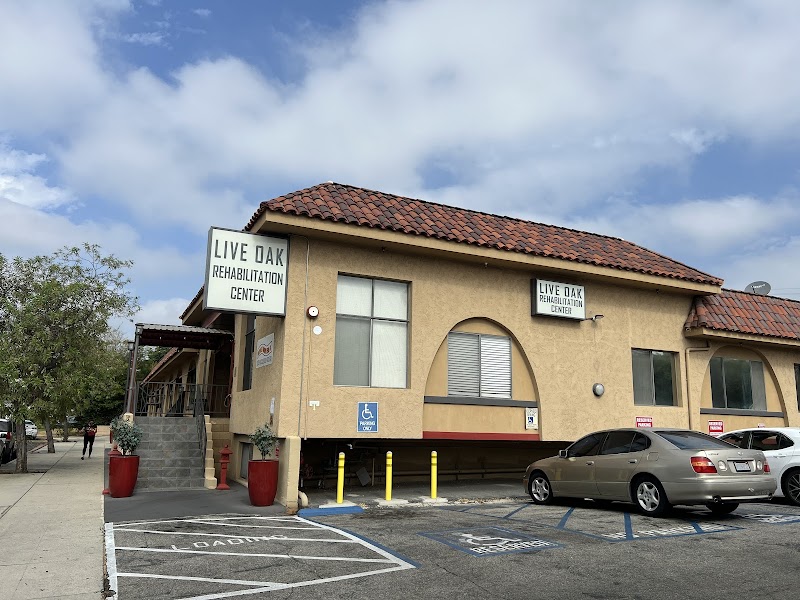
Who Owns and Operates Live Oak Rehab Center?

LIVE OAK REHAB CENTER is owned by a for-profit company. For-profit facilities operate as businesses with obligations to shareholders or private owners. The facility is operated by LONGWOOD MANAGEMENT CORPORATION, a chain that manages multiple nursing homes. With 99 certified beds and approximately 95 residents (about 96% occupancy), it is a smaller facility located in SAN GABRIEL, California.
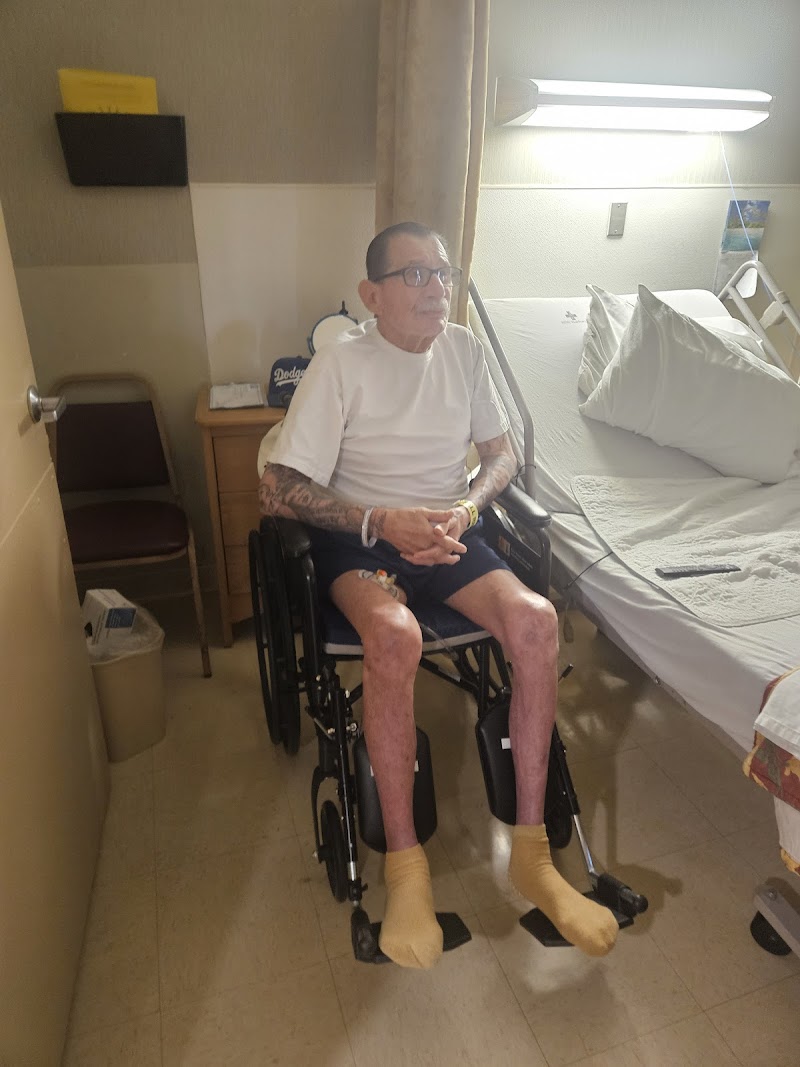
How Does Live Oak Rehab Center Compare to Other California Nursing Homes?

Compared to the 100 nursing homes in California, LIVE OAK REHAB CENTER's overall rating (1 stars) is below the state average of 3.1, staff turnover (52%) is near the state average of 46%, and health inspection rating (1 stars) is much below the national benchmark.

What Should Families Ask When Visiting Live Oak Rehab Center?

Based on this facility's data, families visiting should ask: "What changes have been made since the serious inspection findings, and how are you preventing similar issues?" "Can I visit during a mealtime to observe dining assistance and food quality?" "How do you handle medical emergencies, and what is your hospital transfer rate?" "Can I speak with family members of current residents about their experience?" These questions are particularly relevant given the facility's Immediate Jeopardy citations.

Is Live Oak Rehab Center Safe?

Based on CMS inspection data, LIVE OAK REHAB CENTER has documented safety concerns. Inspectors have issued 1 Immediate Jeopardy citation (the most serious violation level indicating risk of serious injury or death). The facility has a 1-star overall rating and ranks #100 of 100 nursing homes in California. Families considering this facility should ask detailed questions about what corrective actions have been taken since these incidents.

Do Nurses at Live Oak Rehab Center Stick Around?

LIVE OAK REHAB CENTER has a staff turnover rate of 52%, which is 6 percentage points above the California average of 46%. Moderate turnover is common in nursing homes, but families should still ask about staff tenure and how the facility maintains care continuity when employees leave.

Was Live Oak Rehab Center Ever Fined?

LIVE OAK REHAB CENTER has been fined $29,760 across 1 penalty action. This is below the California average of $33,376. While any fine indicates a compliance issue, fines under $50,000 are relatively common and typically reflect isolated problems that were subsequently corrected. Families should ask what specific issues led to these fines and confirm they've been resolved.

Is Live Oak Rehab Center on Any Federal Watch List?

LIVE OAK REHAB CENTER is not on any federal watch list. The most significant is the Special Focus Facility (SFF) program, which identifies the bottom 1% of nursing homes nationally based on persistent, serious quality problems. Not being on this list means the facility has avoided the pattern of deficiencies that triggers enhanced federal oversight. This is a positive indicator, though families should still review the facility's inspection history directly.