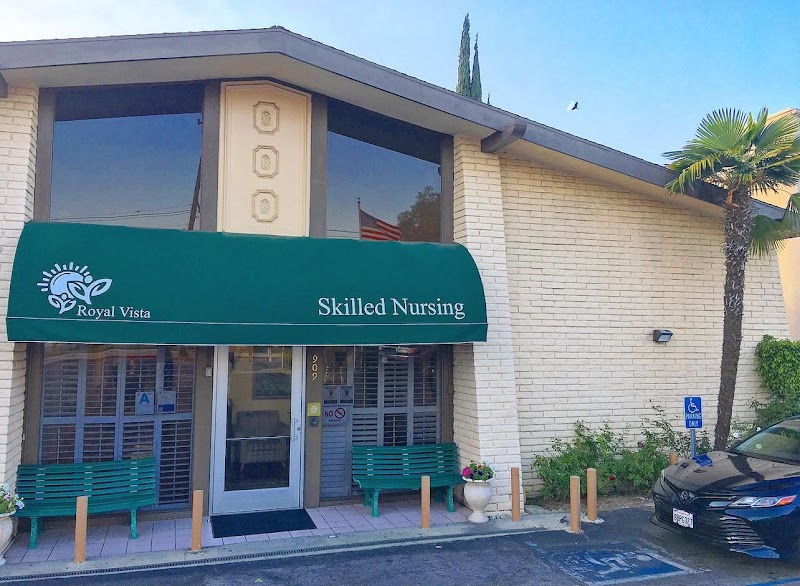
ROYAL VISTA CARE CENTER

909 W. SANTA ANITA AVE, SAN GABRIEL, CA 91776 (626) 289-5365
For profit - Limited Liability company 99 Beds AHMC HEALTHCARE Data: November 2025
Trust Grade
33/100
#1098 of 1155 in CA
Last Inspection: November 2024

Within standard 12-15 month inspection cycle. Federal law requires annual inspections.

Overview

Royal Vista Care Center in San Gabriel, California, has a Trust Grade of F, indicating significant concerns about the quality of care provided. With a state rank of #1098 out of 1155, they fall in the bottom half of California facilities, and are #338 out of 369 in Los Angeles County, showing limited local options for better care. Although the trend is improving, going from 43 issues in 2024 to just 7 in 2025, the facility still has vital weaknesses, including a serious incident where a high-risk resident fell unattended and sustained injuries. Staffing has a low turnover rate of 0%, which is a positive sign, but the facility still faces challenges with compliance, as indicated by $11,591 in fines and deficiencies related to inadequate staffing reports and obstructed exit pathways. Overall, while there are some strengths in staffing stability, families should be cautious given the number of concerns reported.

Trust Score
F
33/100
In California
#1098/1155
Bottom 5%
Safety Record
Moderate
Needs review
Inspections
Getting Better
43 → 7 violations
Staff Stability
○ Average
Turnover data not reported for this facility.
Penalties
✓ Good
$11,591 in fines. Lower than most California facilities. Relatively clean record.
Skilled Nurses
⚠ Watch
Each resident gets only 21 minutes of Registered Nurse (RN) attention daily — below average for California. Fewer RN minutes means fewer trained eyes watching for problems.
Violations
⚠ Watch
83 deficiencies on record. Higher than average. Multiple issues found across inspections.
★☆☆☆☆
1.0
Overall Rating
★☆☆☆☆
1.0
Staff Levels
★★★☆☆
3.0
Care Quality
★☆☆☆☆
1.0
Inspection Score
Stable
2024: 43 issues
2025: 7 issues

The Good

  • Full Sprinkler Coverage · Fire safety systems throughout facility
  • No fines on record

Facility shows strength in fire safety.

The Bad

1-Star Overall Rating

Below California average (3.1)

Significant quality concerns identified by CMS

Federal Fines: $11,591

Below median ($33,413)

Minor penalties assessed

Chain: AHMC HEALTHCARE

Part of a multi-facility chain

Ask about local staffing decisions and management

The Ugly 83 deficiencies on record

1 actual harm
Mar 2025 1 deficiency
CONCERN (E) 📢 Someone Reported This

A family member, employee, or ombudsman was alarmed enough to file a formal complaint

Potential for Harm - no one hurt, but risky conditions existed

Safe Environment (Tag F0921)

Could have caused harm · This affected multiple residents

**NOTE- TERMS IN BRACKETS HAVE BEEN EDITED TO PROTECT CONFIDENTIALITY** Based on observation, interview and record review, the facility failed to ensure the facility exit doors and hallways were free ...

Read full inspector narrative →
**NOTE- TERMS IN BRACKETS HAVE BEEN EDITED TO PROTECT CONFIDENTIALITY** Based on observation, interview and record review, the facility failed to ensure the facility exit doors and hallways were free from obstruction and clutter. This deficient practice had the potential to place residents and facility staff at risk for accidents, such as tripping and falling, and impede or hinder immediate evacuation from the facility in cases of emergency. Findings: During an observation of the facility on 3/13/2025 at 7:36 AM, one wheelchair was observed on the left side of the hallway and one wheelchair was observed on the right side of the hallway blocking the exit doors by rooms [ROOM NUMBERS]. During an observation of the facility on 3/13/2025 at 7:38 AM, one wheelchair was observed on the right side of the hallway blocking the exit doors by rooms [ROOM NUMBERS]. During an observation of the facility on 3/13/2025 at 7:40 AM, one wheelchair was observed on the left side of the wall and two soiled linen bins were observed on the right side of the wall blocking the exit doors by rooms [ROOM NUMBERS]. During an observation of the facility on 3/13/2025 at 7:42 AM, one wheelchair was observed placed on the left side of the wall and another wheelchair was placed on the right side of the wall in front of the exit doors. During an observation of the facility on 3/13/2025 at 7:44 AM, by the hallway before the back dining room, a bed was observed placed on the left side of the wall and a wheelchair, 2 drawer carts and a linen cart were observed placed on the right side of the wall blocking the exit doors. During a concurrent observation and interview on 3/13/2025 at 7:52 AM with the Interim Director of Nursing (IDON), the five exit doors with wheelchairs, bed, soiled linen bins, drawer carts and equipment were observed. The IDON stated that any object placed near the exit doors should be three feet (ft-a unit of length, equal to 12 inches) away from the exit doors so they remain unobstructed. The IDON stated if the exit doors were obstructed, residents and staff could not safely exit the facility. The IDON stated that only one side of the hallway should be used to place wheelchairs, carts, bins or any equipment. During an interview on 3/13/2025 at 11:53 AM with Certified Nurse Assistant 1 (CNA 1), CNA 1 stated staff should not leave any wheelchairs or carts by the exit doors and carts and wheelchairs should only be placed on one side of the hallway. CNA 1 stated the importance of placing the carts and wheelchairs on one side and not blocking or placing them by the exit door was for safety in cases of emergencies evacuation. CNA 1 stated residents and staff could not get out of the facility if exit doors were blocked and would be trapped inside the building. CNA 1 stated if wheelchairs, carts or other equipment were placed on each side of the hallways the hallways, the residents could also trip then fall and hurt themselves. During an interview on 3/13/2025 at 12:36 PM with the Director of Staff Development (DSD), the DSD stated all facility staff were responsible in ensuring the hallways leading to the emergency exit doors were clear for the safety of the residents. The DSD stated wheelchairs or carts should be stored inside the residents ' rooms or placed on one side of the hallway. During a concurrent interview and record review on 3/13/2025 at 1:25 PM with the Administrator (ADM), the Policy and Procedure (P&P) titled Emergency Job Tasks – Fire, updated 11/2024, was reviewed. The P&P indicated all staff, and other employees were to ensure hallways and exits are free from obstruction, including medical equipment. The P&P also indicated that Maintenance Personnel were to ensure exits have three feet of space from the exit door and ensure fire doors remain closed with only one side free from obstruction to egress (action of going out of or leaving a place). The ADM also stated there were still no red tape on the exit doors. The ADM stated it was very important to have the hallways and the exit doors clear of any obstruction to allow safe and fast evacuation of residents and staff in cases of emergencies. The ADM further stated that it was very important to have the hallways free of clutter to prevent accidents, slipping and falling.
Mar 2025 3 deficiencies
CONCERN (D) 📢 Someone Reported This

A family member, employee, or ombudsman was alarmed enough to file a formal complaint

Potential for Harm - no one hurt, but risky conditions existed

Report Alleged Abuse (Tag F0609)

Could have caused harm · This affected 1 resident

**NOTE- TERMS IN BRACKETS HAVE BEEN EDITED TO PROTECT CONFIDENTIALITY** Based on interview and record review, the facility failed to report to the State Agency (SA) within 24 hours after an unusual oc...

Read full inspector narrative →
**NOTE- TERMS IN BRACKETS HAVE BEEN EDITED TO PROTECT CONFIDENTIALITY** Based on interview and record review, the facility failed to report to the State Agency (SA) within 24 hours after an unusual occurrence (events or situations that do not happen daily or that may have had an impact on the residents) for one of two sampled residents (Resident 1) when the facility was made aware on 2/3/2025 of Resident 1's sustained a fracture (complete or partial break in the bone) from a fall in accordance with the facility's policy and procedure titled Unusual Occurrence Reporting. This deficient practice had a potential for ongoing/ another unusual occurrence for Resident 1 or other residents in the facility. Findings: During a review of Resident 1's admission Record, the admission Record indicated Resident 1 was originally admitted to the facility on [DATE] and was readmitted on [DATE] with the following diagnoseof dementia (a progressive state of decline in mental abilities), muscle weakness and fracture of the left ilium (the large broad bone forming the upper part of the pelvis). During a review of Resident 1's Minimum Data Set (MDS - a resident assessment tool), dated 2/10/2025, the MDS indicated resident was moderately impaired in cognitive (the ability to understand and make decisions) skills for daily decision making. The MDS also indicated Resident 1 required substantial/maximal assistance (Helper does more than half the effort. Helper lifts or holds trunk or limbs and provides more than half the effort.) with oral hygiene and personal hygiene. The MDS indicated Resident 1 was also dependent (Helper does all of the effort. Resident does none of the effort to complete the activity. Or, the assistance of 2 or more helpers is required for the resident to complete the activity) with toileting hygiene, upper body dressing, lower body dressing, putting on/taking off footwear, roll left and right, sit to lying, lying to sitting on the side of bed, sit to stand, chair/bed to chair transfer, toilet transfer and tub/shower transfer. During a review of Resident 1's Fall Risk Assessment, dated 12/3/2024, the assessment indicated Resident 1 was at high risk for potential falls. During a review of Resident 1's SBAR (situation, background, assessment, recommendation - a communication tool used by healthcare workers when there is a change of condition [COC] among the residents)/COC, dated 1/26/2025, the SBAR/COC indicated an unwitnessed fall with skin laceration (skin wound) on right upper eyelid and left hip and sacral (a large triangular bone at the base of the spine) pain. The SBAR/COC also indicated Resident 1 was found on the floor, complained of pain in the left hip and sacral area and was transferred to a general acute care hospital (GACH). During a review of Resident 1's Progress Notes, dated 1/26/2025 at 1:14 PM, the Progress Notes indicated Resident 1 was transferred to a GACH via ambulance due to an unwitnessed fall with a right upper eyelid laceration and left hip and sacral pain. During a review of Resident 1's Fall Risk Assessment, dated 2/3/2025, the assessment indicated Resident 1 was at high risk for potential falls. During a review of Resident 1's GACH discharge instructions, dated [DATE] at 1:15 PM, the discharge instructions indicated a diagnosis of left iliac (the largest and uppermost bone of the hip) fracture. During a review of Resident 1's Progress Notes, dated 2/3/2025 at 9:38 PM, the Progress Notes indicated Resident 1 was admitted back to the facility around 4 PM with a left iliac fracture. During an interview on 3/3/2025 at 11:09 AM, the Registered Nurse (RN) stated Resident 1 fell on 1/26/2025. During an interview on 3/3/2025 at 1:09 PM, the RN stated when the resident falls and sustains a fracture, it is considered an unusual occurrence. During a concurrent record review and interview on 3/3/2025 at 2 PM with the Director of Nursing (DON), the facility's Policy and Procedure titled, Unusual Occurrence Reporting, revised 2/2025 was reviewed. The P&P indicated unusual occurrences shall be reported via telephone to appropriate agencies as required by current law and/or regulations within 24 hours of such incident or as otherwise required by federal and state regulations. The DON stated if a resident has an unwitnessed fall, the facility will need to report to SA as indicated in the P&P. During an interview on 3/3/2025 at 2:16 PM, the RN stated the facility found out about Resident 1's fracture was when the resident was readmitted to the facility on [DATE]. During an interview on 3/3/2025 at 2:40 PM, the DON stated Resident 1's fall needs to be reported to SA as an unusual occurrence since the fall resulted to the reisdent sustained a fracture. During a review of the facility's P&P titled, Unusual Occurrence Reporting, revised 2/2025, the P&P indicated a written report detailing the incident and actions taken by the facility after the event shall be sent or delivered to the state agency as required by federal and state regulations.
CONCERN (D) 📢 Someone Reported This

A family member, employee, or ombudsman was alarmed enough to file a formal complaint

Potential for Harm - no one hurt, but risky conditions existed

Comprehensive Care Plan (Tag F0656)

Could have caused harm · This affected 1 resident

**NOTE- TERMS IN BRACKETS HAVE BEEN EDITED TO PROTECT CONFIDENTIALITY** Based on observation, interview and record review, the facility failed to implement a care plan for one of two sampled residents...

Read full inspector narrative →
**NOTE- TERMS IN BRACKETS HAVE BEEN EDITED TO PROTECT CONFIDENTIALITY** Based on observation, interview and record review, the facility failed to implement a care plan for one of two sampled residents (Resident 1) by not ensuring a floor mat (a cushioned floor pad designed to help prevent injury should a person fall) was placed at Resident 1's bedside after an unwitnessed fall on 1/26/2025 wherein the resident sustained a fracture (the cracking or breaking of the bone). This deficient practice has the potential for Resident 1 to have further falls with injury. Findings: During a review of Resident 1's admission Record, the admission Record indicated Resident 1 was originally admitted to the facility on [DATE] and was readmitted on [DATE] with the following diagnoses of dementia (a progressive state of decline in mental abilities), muscle weakness and fracture of the left ilium (the large broad bone forming the upper part of the pelvis). During a review of Resident 1's SBAR (situation, background, assessment, recommendation - a communication tool used by healthcare workers when there is a change of condition [COC] among the residents)/COC, dated 1/26/2025, the SBAR/COC indicated an unwitnessed fall with skin laceration on right upper eyelid and left hip and sacral pain. During a review of Resident 1's Care Plan with focus At risk for falls, dated 1/26/2025, the Care Plan indicated an intervention of placing a floor mat at Resident 1's bedside. During a review of Resident 1's Fall Risk Assessment, dated 2/3/2025, the Care Plan indicated Resident 1 was at high risk for potential falls. During a review of Resident 1's Minimum Data Set (MDS - a resident assessment tool), dated 2/10/2025, the MDS indicated resident is moderately impaired in cognitive (the ability to understand and make decisions) skills for daily decision making. The MDS also indicated Resident 1 required substantial/maximal assistance (Helper does more than half the effort. Helper lifts or holds trunk or limbs and provides more than half the effort) with oral hygiene and personal hygiene. Resident 1 is also dependent (Helper does all of the effort. Resident does none of the effort to complete the activity. Or, the assistance of 2 or more helpers is required for the resident to complete the activity) with toileting hygiene, upper body dressing, lower body dressing, putting on/taking off footwear, roll left and right, sit to lying, lying to sitting on the side of bed, sit to stand, chair/bed to chair transfer, toilet transfer and tub/shower transfer. During a concurrent observation and interview on 3/3/2025 at 1:20 PM with Registered Nurse (RN) 1, Resident 1 was observed sleeping in bed with floor mat placed under the bed. RN 1 stated it is not okay because the resident can fall and get hurt. RN 1 also stated the facility is not following Resident 1's plan of care for risk for fall. During a concurrent record review of the facility's Policy and Procedure (P&P) titled, Comprehensive Person-Centered Care Plans, revised 2/2025, and interview on 3/3/2025 at 2pm with the Director of Nursing (DON), the P&P indicated the interdisciplinary team (IDT - a group of health care professionals with various areas of expertise who work together toward the goals of the residents) with the resident/responsible party develops and implements a comprehensive, person-centered care plan for each resident.
CONCERN (D) 📢 Someone Reported This

A family member, employee, or ombudsman was alarmed enough to file a formal complaint

Potential for Harm - no one hurt, but risky conditions existed

Infection Control (Tag F0880)

Could have caused harm · This affected 1 resident

**NOTE- TERMS IN BRACKETS HAVE BEEN EDITED TO PROTECT CONFIDENTIALITY** Based on observation, interview and record review, the facility failed to ensure the facility staff performs hand hygiene (an ac...

Read full inspector narrative →
**NOTE- TERMS IN BRACKETS HAVE BEEN EDITED TO PROTECT CONFIDENTIALITY** Based on observation, interview and record review, the facility failed to ensure the facility staff performs hand hygiene (an action of hand cleansing such as with soap and water or applying alcohol based handrub to the surface of the hands) according to the facility's policy for one (1) of 4 sampled residents. This deficient practice had the potential to spread infection to staff and residents. Findings: During a review of Resident 3's admission Record, the admission Record indicated Resident 3 was originally admitted to the facility on [DATE] and was readmitted on [DATE] with the following diagnoses of chronic kidney disease (CKD - progressive damage and loss of function in the kidneys), urinary tract infection (UTI - an infection in the bladder/urinary tract), and diabetes mellitus (metabolic disease, involving inappropriately elevated blood glucose levels). During a review of Resident 3's History and Physical (H&P), dated 1/30/2025, the H&P indicated Resident 3 has the capacity to understand and make decisions. During a review of Resident 3's Minimum Data Set (MDS - a resident assessment tool), dated 11/22/2024, the MDS indicated Resident 3 is dependent (Helper does all of the effort. Resident does none of the effort to complete the activity. Or, the assistance of 2 or more helpers is required for the resident to complete the activity) with eating, oral hygiene, toileting hygiene, shower/bathe self, upper body dressing, lower body dressing, putting on/taking off footwear and personal hygiene. During a concurrent observation and interview on 3/3/2025 at 10:45 AM, Activities 1 was observed feeding Resident 3 with bare hands. Activities 1 was then observed touching Resident 1's hair and ears when talking to Resident 1. After touching Resident 1, Activities 1 did not perform hand hygiene. and then went to touch Resident 4's shoulder area and wheelchair. Activities 1 then went back to assist Resident 1 with meals and did not perform hand hygiene. Activities 1 stated he should have performed hand hygiene before and after each resident to prevent the spread of infection. During an interview on 3/3/2025 at 11 AM, Activities Director (AD) stated Activities 1 is not supposed to feed Resident 3 with his bare hands and should have worn gloves to prevent the spread of infection. AD also stated Activities 1 should have perform hand hygiene before and after assisting with each Resident 1 and Resident 4. During an interview on 3/3/2025 at 12:17 PM, Infection Preventionist Nurse (IPN) stated staff should perform hand hygiene before and after feeding/touching residents. IPN also stated Activities 1 should have performed hand hygiene and use a glove when feeding Resident 3. During a review of the facilities Policy and Procedure (P&P), titled Handwashing/Hand Hygiene, revised 10/2023, the P&P indicated hand hygiene is indicated: 1. Immediately before touching a resident. 2. After touching a resident. 3. After touching a resident's environment. The P&P also indicated all personnel are expected to adhere to hand hygiene policies and practices to help prevent the spread of infections to other personnel, residents, and visitors.
Jan 2025 1 deficiency 1 Harm
SERIOUS (G) 📢 Someone Reported This

A family member, employee, or ombudsman was alarmed enough to file a formal complaint

Actual Harm - a resident was hurt due to facility failures

Accident Prevention (Tag F0689)

A resident was harmed · This affected 1 resident

**NOTE- TERMS IN BRACKETS HAVE BEEN EDITED TO PROTECT CONFIDENTIALITY** Based on interview and record review, the facility failed to ensure one (1) of two (2) sampled residents (Resident 1) who was as...

Read full inspector narrative →
**NOTE- TERMS IN BRACKETS HAVE BEEN EDITED TO PROTECT CONFIDENTIALITY** Based on interview and record review, the facility failed to ensure one (1) of two (2) sampled residents (Resident 1) who was assessed as a high risk for falls and with diagnoses of dementia (a progressive state of decline in mental abilities), cerebral infarction (damage to tissues in the brain due to a loss of oxygen to the area), lack of coordination and repeated falls was free from falls and injury. On 1/18/2025, the Director of Activities (DOA) wheeled Resident 1 outside of the activity room to take care of other residents and left Resident 1 unattended while sitting in a wheelchair (WC) at the hallway (outside the activity room). This deficient practice resulted in Resident 1 fell in the hallway outside the activity room on 1/18/2025 around 11:13 AM. Resident 1 sustained redness on the right side of resident's forehead. On 1/24/2025 (6 days after the fall), Resident 1 complained of pain on the resident's right ribs (slender curved bones protecting the lungs). Resident 1 underwent a Xray (a quick, painless test that captures images of the inside of the body) on 1/25/2025 and the result showed that Resident 1 had a fracture (a break in a bone) on the resident's eighth (8th) and ninth (9th) ribs. Findings: During a review of Resident 1's admission Record, it indicated the resident was admitted to the facility on [DATE] with diagnoses that included: dementia, cerebral infarction, lack of coordination and repeated falls. During a review of Resident 1's admission Fall Risk Assessment (AFRA) dated 1/17/2025, it indicated, Resident 1 is chair bound (unable to walk and dependent on a chair/ wheelchair to move around) and has a high risk for potential falls. During a review of Resident 1's Care Plan (CP) dated 1/17/2025, the CP indicated Resident 1 was at risk for falls due to history of falls. The CP did not indicate interventions such as facility staff actions or strategies to prevent resident from falling while the resident is in the wheelchair, such as monitoring and/ or supervising the reisdent while in wheelchair. During a review of Resident 1's Change of Condition (CoC) dated 1/18/2025 at 11:13 AM, it indicated Resident 1 fell outside the activity room while trying to turn his WC and the resident's right hand slipped causing the resident to fall on the floor. The COC also indicated the resident was observed having redness to the right side of the forehead. During a review of Resident 1's CoC dated 1/24/2025 at 7:44 PM, COC indicated the resident has hemiparesis (weakness to one side of body) and complained of pain on the right side of his ribs. During a review of Resident 1's physician's order, dated 1/24/2025, it indicated Resident 1 may have Xray of the right ribs due to pain. During a review of Resident 1's Radiology Report (Xray of ribs) dated 1/25/2025, it indicated Resident 1 had right 8th and 9th rib fractures. During a review of Resident 1's CoC dated 1/25/2025 at 11:09 PM, it indicated the resident's Xray result indicated the resident sustained fractures to the 8th and 9th rib and Tylenol (acetaminophen - medicine for mild pain) and ice were ordered for pain. During a review of Resident 1's Medication Administration Record (MAR) dated 1/1/2025 to 1/31/2025, it indicated Resident 1 received acetaminophen on 1/18/2025 at 11:28 AM for a pain (location of pain not indicated) level of two (2) out of 10 (mild pain). The MAR also indicated Resident 1 received acetaminophen on 1/26/2025 at 5:56 AM for a pain (location of pain not indicated) level of four (4) out of 10 (moderate pain). During an interview on 1/29/2025 at 8:04 AM with the DOA, DOA stated on 1/18/2025, DOA wheeled Resident 1 outside of the activity room and left Resident 1 at the hallway unattended to take care of other residents that were inside of the activity room. DOA also stated, DOA heard a sound coming from the hallway outside of the activity room and turned finding Resident 1 on the floor. DOA stated, Resident 1 is at high risk for falling and that means the resident must be constantly monitored, and the resident needs someone with him at all times especially when the resident is in the wheelchair. DOA stated on 1/18/2025, DOA did not tell another staff member to watch Resident 1 while DOA attends to other residents. DOA stated, Resident 1 should not have been left unattended by facility staff on 1/18/2025 and the fall could have been prevented. During an interview on 1/29/2025 at 8:26 AM with Certified Nursing Assistant (CNA) 1, CNA 1 stated on 1/18/2025, CNA 1 saw Resident 1 being wheeled out of the activity room by the DOA and left unattended in the hallway outside of the activity room. CNA 1 also stated, CNA 1 walked past Resident 1, then heard a thump, turned around and saw Resident 1 on the floor of the hallway outside of the activity room. During an interview on 1/29/2025 at 10:24 AM with RN 1, RN 1 stated Resident 1 is confused, has right sided weakness and is unable to use the WC by himself. RN 1 stated, on 1/18/2025 RN 1 was called to assess Resident 1 after the resident fell in the hallway outside of the activity room and saw redness on Resident 1's forehead. RN 1 also stated, Resident 1 had multiple falls before being admitted at the facility and was assessed to be at high risk for falling. RN 1 stated Resident 1 needs to always be monitored/ supervised because the resident is at risk for falling. RN 1 stated, Resident 1's fall and injury could have been prevented if the resident was monitored/ supervised by facility staff last 1/18/2025 while in the activity room. During a record review on 1/29/2025 at 11:46 AM with the Director of Nursing (DON), the facility's P&P titled, Fall Risk Assessment updated 1/27/2025 was reviewed. The P&P indicated: 1. The nursing staff, in conjunction with others will seek to identify and document resident risk factors for falls and establish a resident centered falls prevention plan based on relevant assessment information. 2. Upon admission the nursing staff and physician will review a resident's record for a history of falls, especially falls in the last 90 days and recurrent or periodic bouts of falling over time.
Jan 2025 2 deficiencies
CONCERN (D) 📢 Someone Reported This

A family member, employee, or ombudsman was alarmed enough to file a formal complaint

Potential for Harm - no one hurt, but risky conditions existed

Comprehensive Care Plan (Tag F0656)

Could have caused harm · This affected 1 resident

**NOTE- TERMS IN BRACKETS HAVE BEEN EDITED TO PROTECT CONFIDENTIALITY** Based on interview and record review, the facility failed to implement the comprehensive care plan related to alleged rough hand...

Read full inspector narrative →
**NOTE- TERMS IN BRACKETS HAVE BEEN EDITED TO PROTECT CONFIDENTIALITY** Based on interview and record review, the facility failed to implement the comprehensive care plan related to alleged rough handling by staff for one of one sampled resident (Resident 1) in accordance with the facility policy. This deficient practice had the potential to result in delay or lack of delivery of care and services to Resident 1 which could affect resident's overall wellbeing. Findings: During a review of Resident 1's admission Record (front page of the chart that contains a summary of basic information about the resident), the admission record indicated Resident 1 was originally admitted to the facility on [DATE]. Resident 1's diagnoses included dysphagia (difficulty swallowing), pneumonia (an infection/inflammation in the lungs), and hypertension (HTN-high blood pressure). During a review of Resident 1's Minimum Data Set (MDS, a resident assessment tool), dated 10/9/2024, the MDS indicated Resident 1 was moderately impaired (decisions poor; cues/supervision required) with cognitive (processes of thinking and reasoning) skills for daily decision making. It also indicated Resident 1was dependent (helper does all the effort. Resident does none of the effort to complete the activity) with eating, oral hygiene, toileting hygiene, shower/bath, upper and lower body dressing, putting on/taking off footwear and personal hygiene. During a review of Resident 1's care plan focusing on Resident 1's complaint against an employee, alleging that he was handled roughly. The staff interventions included the following: Addresses physical pain and emotional distress, including anxiety (fear characterized by behavioral disturbances) and depression (mood disorder that causes a persistent feeling of sadness and loss of interest). Encourage resident to verbalize any signs of further abuse. Ensure a safe and secure environment. Ensure that resident feel his needs and preferences are respected for overall satisfaction and comfort. Ensure to reduce patient's fear, improve psychological functioning. Involving resident and family in care planning to empowers them to voice concerns and preferences, making it harder for abuse (the willful infliction of injury, unreasonable confinement, intimidation, or punishment with resulting physical harm, pain or mental anguish) or neglect to go unnoticed. Provide emotional support and listening without judgement. Tailoring care to individual needs to ensure that resident's health and comfort are prioritized. During a review of Resident 1's SBAR/Change of condition (COC) notes, dated 1/7/2025, indicated Resident 1 reported an alleged abuse by staff member. During a concurrent interview and record review on 1/10/2025 at 7:14 AM with Licensed Vocational Nurse 1 (LVN 1), Resident 1's electronic medical records was reviewed. LVN 1 stated Resident 1 has an SBAR on 1/7/2025 regarding alleged abuse from staff member. LVN 1 stated Resident 1 was not and should have been placed on 72 hours monitoring for psychosocial wellbeing. LVN 1 stated the Licensed nurses should have monitored and documented Resident 1's status every eight hours for 72 hours. During a concurrent interview and record review on 1/10/2025 at 12:50 AM with MDS nurse (MDSN), Resident 1's electronic medical records were reviewed. MDSN verified Resident 1 did not have a COC note indicating Resident 1 was monitored by the Licensed Nurse after reporting an alleged abuse on 1/7/2025. MDSN stated it was important to implement the care plan interventions and have a documentation regarding Resident 1's emotional distress, including anxiety and depression after Resident 1 reported an alleged abuse to know if Resident 1 has changes in psychosocial state (a person's mental, emotional, social, and spiritual well-being) and to further assess the need for treatment. MDSN verified there was no Licensed Nurse documentation addressing the implementation of Resident 1's care plan interventions for the alleged rough handling by staff. During a concurrent interview and record review on 1/10/2025 at 1:11 PM with the Director of Nursing (DON), Resident 1's medical records were reviewed. The DON verified Licensed nurses did not have a COC documentation for Resident 1 since 1/7/205. The DON stated COC documentation is being done for a minimum of 72 hours, and documentation every 8 hours by Licensed nurses. The DON stated Resident 1 has a care plan regarding the alleged rough handling by a staff member, but there is no documentation that Resident 1 was being monitored. The DON stated it was important for Resident 1's care plan to be implemented so the staff would know how to care for Resident 1 after reporting an alleged rough handling by staff. During a review of facility's Policy and Procedure (P&P) titled, Care Plans, Comprehensive Person-Centered, dated March 2022, the P&P indicated care plan interventions are chosen only after data gathering, proper sequencing of events, careful consideration of the relationship between the resident's problem areas and their causes, and relevant clinical decision making. Assessments of residents are ongoing and care plans are revised as information about the residents and the residents' conditions change. During a review of Facility's P&P titled, Change in a Resident's Condition or Status, revised in February 2021, the P&P indicated the nurse will record in the resident's medical record information relative to changes in the resident's medical/mental condition or status.
CONCERN (D) 📢 Someone Reported This

A family member, employee, or ombudsman was alarmed enough to file a formal complaint

Potential for Harm - no one hurt, but risky conditions existed

Infection Control (Tag F0880)

Could have caused harm · This affected 1 resident

**NOTE- TERMS IN BRACKETS HAVE BEEN EDITED TO PROTECT CONFIDENTIALITY** Based on observation, interview, and record review, the facility failed to follow its infection control policy for one (1) of tw...

Read full inspector narrative →
**NOTE- TERMS IN BRACKETS HAVE BEEN EDITED TO PROTECT CONFIDENTIALITY** Based on observation, interview, and record review, the facility failed to follow its infection control policy for one (1) of two (2) sampled residents (Resident 1) by failing to ensure staff were using a gown while rendering diaper change and administering medication via gastrostomy (a surgical opening fitted with a device to allow feedings to be administered directly to the stomach common for residents with swallowing problems) tube to Resident 1 who was on enhanced barrier precaution (EBP, an infection control practice that involves wearing gowns and gloves during high-contact activities with residents in nursing homes). This deficient practice had the potential to result in Resident 1 developing an infection and spread of infection among staff and residents. Findings: During a review of Resident 1's admission Record (front page of the chart that contains a summary of basic information about the resident), the admission Record indicated Resident 1 was originally admitted to the facility on [DATE]. Resident 1's diagnoses included dysphagia (difficulty swallowing), pneumonia (an infection/inflammation in the lungs), and hypertension (HTN-high blood pressure). During a review of Resident 1's Minimum Data Set (MDS, a resident assessment tool), dated 10/9/2024, the MDS indicated Resident 1 was moderately impaired (decisions poor; cues/supervision required) with cognitive (processes of thinking and reasoning) skills for daily decision making. It also indicated Resident 1was dependent (helper does all the effort. Resident does none of the effort to complete the activity) with eating, oral hygiene, toileting hygiene, shower/bath, upper and lower body dressing, putting on/taking off footwear and personal hygiene. During an observation on 1/8/2025 at 3:40 PM, an EBP signage was observed outside Resident 1 ' s room but there was no personal protective equipment (PPE - clothing and equipment that is worn or used to provide protection against hazardous substances and/or environments) cart observed During an observation on 1/10/2025 at 6:19 AM in Resident 1 ' s room, with Certified Nurse Assistant 1 (CNA 1) and CNA 2, both CNAs were not observed wearing a gown while providing incontinent care treatment to Resident 1. During an interview with CNA 2 on 1/10/2025 at 6:20 AM, CNA 2 stated that she did not wear a gown when she was in Resident 1 ' s room because she was only there to hand towels to CNA 1 while he was rendering care (peri care [washing the genitals and anal area], diaper change) to Resident 1. CNA 2 stated CNA 1 should have worn a gown and not only gloves during incontinent care. CNA 2 stated that there was no PPE cart outside Resident 1 ' s room to alert staff and visitors to wear appropriate PPE while rendering close contact care to Resident 1. During an interview with CNA 1 on 1/10/2025 at 6:27 AM, CNA 1 stated I don ' t know anything about the resident, it ' s my first time handling him. During an interview on 1/10/2025 at 6:28 AM with Licensed Vocational Nurse 1 (LVN 1), LVN 1 stated EBP should be implemented for Resident 1 because he has a G-tube. LVN 1 stated CNA 1 should have worn a gown while giving care to Resident 1 because staff were in close contact with Resident 1. LVN 1 verified an EBP signage was outside Resident 1 ' s room, but there was no PPE cart. LVN 1 added that EBP should have been ordered and added in Resident 1 ' s care plan. During an observation on 1/10/2025 at 8:47 AM in Resident 1 ' s room, LVN 2 was observed administering medication to Resident 1 through the resident ' s G-tube without wearing a gown. During a concurrent observation and interview on 1/10/2025 at 8:48 AM with Treatment Nurse (TN), TN verified LVN 2 was not wearing a gown during medication administration through Resident 1 ' s G-tube. TN verified an EBP signage and PPE cart was placed outside Resident 1 ' s room. TN stated the facility does adhere to EBP, wherein PPE, such as wearing gown, gloves, and mask, needs to be worn during physical contact care like medication administration via G-tube. TN1 stated wearing PPE was important to protect the resident. TN stated staff providing care to Resident 1 should wear the proper PPE for infection control because Resident 1 has a G-tube. During an interview on 1/10/2025 at 11:06 AM with LVN 2, LVN 2 stated he did not wear a gown when he administered medications through Resident 1 ' s G-tube. LVN 2 stated that he should have also worn a gown and not only gloves during close contact with Resident 1. During a concurrent interview and record review on 1/10/2025 at 1:10 PM with Director of Nursing (DON), Resident 1 ' s medical records were reviewed. The DON verified EBP was not in Resident 1 ' s active orders. The DON also stated Resident 1 has no care plan for EBP. The DON stated PPE requirements for EBP is for staff to wear gloves and gowns during high contact care activities for residents on EBP. The DON stated CNA 1 and LVN 2 should have worn a gown during incontinent care and medication administration through G-tube because both staff were in close contact with Resident 1. During a review of facility ' s Policy and Procedure (P&P) titled, Enhanced Barrier Precaution, dated October 2024, the P&P indicated Enhanced Barrier Precautions is to prevent the transmission of multidrug-resistant organisms (MDROs, a bacteria that does not respond to antibiotics) and other infectious agents (organisms that can cause disease) while ensuring that residents experience a homelike, comfortable environment. The set of practices include the use of PPE like gowns and gloves during high-contact resident care activities. It also indicated the following high contact resident activities: · Dressing · Grooming · Bathing/showering · Oral care, brushing teeth · Transferring · Providing hygiene/ peri-care · Changing linens · Changing briefs · Device care: feeding tube · Medical treatment related to the use of the device such as administering tube feedings/medications. The P&P indicated gowns and gloves will be available immediately near or outside of the resident's room
Dec 2024 2 deficiencies
CONCERN (D) 📢 Someone Reported This

A family member, employee, or ombudsman was alarmed enough to file a formal complaint

Potential for Harm - no one hurt, but risky conditions existed

Medical Records (Tag F0842)

Could have caused harm · This affected 1 resident

**NOTE- TERMS IN BRACKETS HAVE BEEN EDITED TO PROTECT CONFIDENTIALITY** Based on interview and record review, the facility failed to ensure licensed nurses document accurate information of Resident 1'...

Read full inspector narrative →
**NOTE- TERMS IN BRACKETS HAVE BEEN EDITED TO PROTECT CONFIDENTIALITY** Based on interview and record review, the facility failed to ensure licensed nurses document accurate information of Resident 1's skin condition and wound care treatment in the resident's Skilled Nursing Assessment form on 9/11/2024 and 10/25/2024 and in the Weekly Summary form on 9/18/2024, 10/11/2024, and 10/18/2024, This deficient practice had the potential to result in miscommunication, improper delivery of care and delayed communication of the progression of Resident 1's pressure ulcer. Findings: During a review of Resident 1's admission Record, the admission Record indicated the resident was initially admitted to the facility on [DATE] and was readmitted on [DATE] with diagnoses that included chronic kidney disease (a condition in which the kidneys are damaged and cannot filter blood as well as they should) and lack of coordination. During a review of Resident 1's Minimum Data Set (MDS, a federally mandated assessment tool), dated 11/1/2024, the MDS indicated Resident 1 had moderately impaired cognitive (mental action or process of acquiring knowledge and understanding) skills for daily decision making. The MDS also indicated Resident 1 was dependent (helper does all the effort) on toileting, shower, lower body dressing, and putting on and taking off footwear. The MDS further indicated Resident 1 required substantial assistance (helper does more than half the effort) with upper body dressing and personal hygiene and supervision (helper provides verbal cues) with oral hygiene. The MDS also indicated Resident 1 was at risk for developing pressure ulcers (shallow sore that looks like a blister or abrasion with visible damage to the deeper layers of the skin) with 1 stage 2 pressure ulcer which was not present on admission. During a review of Resident 1's medical records titled, Admission/readmission Data Collection, dated 9/3/2024, the Admission/readmission Data Collection indicated Resident 1 had redness on the coccyx (tail bone). During a review of the Resident 1's Treatment Administration Record (TAR) for the month of 9/2024, the TAR indicated a wound treatment for sacrococcyx (pertains to both large triangular shaped bone in the lower spine that forms part of the pelvis and the tailbone) using collagen powder (a wound dressing that can be used to treat a variety of wounds) and calcium alginate (a light, nonwoven fabrics derived from algae or seaweed) which started 9/4/2024 to 9/30/2024. During a review of Resident 1's Skilled Nurses Notes dated 9/11/2024, the Skilled Nurses Notes did not indicate that the resident had a treatment order for the Moisture Associated Skin Damage (MASD, a spectrum of injury characterized by the inflammation and a breakdown of the outer layer of the skin resulting from prolonged exposure to various sources of moisture and potential irritants such as urine and stools) on the sacrococcyx area. During a review of the licensed nurses Weekly Summary of Resident 1's skin condition signed on 9/18/2024, the Weekly Summary indicated Resident 1 had no current treatments for the MASD on his sacrococcyx. During a review of the Resident 1's TAR for the month of 10/2024, the TAR indicated a wound treatment for the resident's MASD on sacrococcyx using collagen powder and calcium alginate from 10/1/2024 to 10/17/2024. During a review of the licensed nurses Weekly Summary of Resident 1's skin conditions signed on 10/11/2024, the Weekly Summary indicated Resident 1 had no current treatment on the resident's MASD on the sacrococcyx. During a review of the Wound Care Doctor's communication log dated 10/17/2024, the wound care doctor's communication log indicated Resident 1 had MASD on the sacrococcyx. The log also indicated under new treatment order of using MediHoney (a medical- grade honey dressing that can be used to treat a variety of wounds) and calcium alginate for the sacrococcyx wound. During a review of the Resident 1's TAR for the month of 10/2024, the TAR indicated a wound treatment for the resident's sacrococcyx using MediHoney and calcium alginate on 10/18/2024 to 10/24/2024. During a review of the licensed nurses Weekly Summary of Resident 1's skin conditions signed on 10/18/2024, the Weekly Summary indicated Resident 1 did not have a current treatment for MASD on the sacrococcyx. During a review of the Wound Care Doctor's communication log dated 10/24/2024, the wound care doctor's communication log indicated Resident 1 had Stage 2 pressure ulcer (shallow sore that looks like a blister or abrasion with visible damage to the deeper layers of the skin) on the left buttock. During a review of the Resident 1's TAR for the month of 10/2024, the TAR indicated a wound treatment for the resident's left buttock Stage 2 pressure ulcer using MediHoney and calcium alginate on 10/25/2024 to 10/31/2024. During a review of Resident 1's unsigned Skilled Nurses Notes dated 10/25/2024, the Skilled Nurses Notes did not indicate that the resident had a new skin problem of Stage 2 pressure ulcer on left buttock. The Skilled Nurses Notes also indicated Resident 1 had an intact general skin condition, did not indicate the resident have treatment orders for Stage 2 pressure ulcer on the left buttock. During a concurrent interview and record review on 12/18/2024 at 3:13 PM, the Minimum Data Set (MDS) Nurse confirmed Resident 1's Admission/readmission Data Collection dated 9/3/2024 indicated resident had redness on the coccyx (last bone/ bottom of the spine) area. The MDS nurse stated Resident 1's redness on the coccyx area is the same as MASD. The MDS nurse confirmed Resident 1 had an order for collagen powder and calcium alginate treatment for the redness on the coccyx from 9/4/2024 until 10/18/2024 then changed to MediHoney and calcium alginate on 10/18/2024 after MASD progressed. During an interview on 12/18/2024 at 3:38 PM, the DON stated the licensed nurses should be doing and documenting complete and accurate weekly skin assessment for the residents to catch any possible skin issues and prevent progression of wound if not identified and/ or monitored. During an interview on 12/18/2024 at 6:18 PM, the DON stated, the skin assessments documented by the licensed nurses in the Skilled Nursing Assessment on 9/11/24 and 10/25/2024 and in the Weekly Summary form on 9/18/2024, 10/11/2024 and 10/18/2024, were not consistent with what skin condition/ wound Resident 1 had in accordance with the Wound Care Doctor's communication log and TAR. During an interview with the Administrator (ADM) on 12/18/2024 at 6:27 PM, the ADM stated the licensed nurses' documentation on the Weekly Summary form dated 9/18/2024, 10/11/2024 and 10/18/2024, and Skilled Nurses' Assessment on 9/11/2024 and 10/25/2024 were inaccurate representation of Resident 1's condition at that time. The ADM also stated the nurses probably did not take time to look and assess Resident 1's skin and/ or wound on the back that is why it did not reflect the actual Resident 1's skin condition and wound treatment. During an interview on 12/18/2024 at 6:40 PM, the Wound Care Doctor stated Sacro-coccyx and left buttock pressure ulcer was one and the same. The Wound Care Doctor stated he re-classified the sacrococcyx MASD to left buttock stage 2 pressure ulcer after he re-evaluated Resident 1 on 10/24/2024. During a review of the facility's policy titled, Pressure Ulcers/Skin Breakdown - Clinical Protocol, on assessment and recognition revised March 2014, indicated, the nurse shall describe and document/report full assessment of pressure sore (pressure ulcer) including location, stage, length, width, and depth (distance from the top or surface to the bottom of something), presence of exudates (fluid that leaks out of blood vessels into nearby tissues) or necrotic tissue (Exudate may ooze from cuts or from areas of infection or inflammation). The policy also included that the nurse shall describe and document current treatments. During a review of the facility's policy titled, Charting and Documentation, revised July 2017, indicated, all services provided to the resident, progress toward the care plan goals, or any changes in the resident's medical, physical, functional, or psychosocial condition, shall be documented in the resident's medical record. The medical record should facilitate communication between the interdisciplinary team regarding the resident's condition and response to care. The policy also indicated that documentation in the medical record will be objective (not opinionated or speculative), complete, and accurate.
CONCERN (E) 📢 Someone Reported This

A family member, employee, or ombudsman was alarmed enough to file a formal complaint

Potential for Harm - no one hurt, but risky conditions existed

Pressure Ulcer Prevention (Tag F0686)

Could have caused harm · This affected multiple residents

**NOTE- TERMS IN BRACKETS HAVE BEEN EDITED TO PROTECT CONFIDENTIALITY** Based on interview and record review the facility failed to provide care consistent with the professional standards of practice ...

Read full inspector narrative →
**NOTE- TERMS IN BRACKETS HAVE BEEN EDITED TO PROTECT CONFIDENTIALITY** Based on interview and record review the facility failed to provide care consistent with the professional standards of practice (the set of guidelines, principles, and expectations that govern the conduct and performance of nursing professionals) to prevent worsening of the pressure ulcer (PU, a localized area of skin damage caused by prolonged pressure on the skin) for one of two sampled residents (Residents 1) by failing to: 1. Assess and document detailed observations in SBAR (situation, background, assessment, recommendation-a communication tool used by healthcare workers when there is a change of condition among the residents) of Resident 1's change with skin condition and/ or wound condition on the resident's sacral area (lower back region specifically triangular- shaped bone called the sacrum) and/ or left buttocks on 10/17/2024, 10/24/2024, 11/14/2024 and 11/30/2024. 2. Monitor Resident 1's change with wound condition on the resident's left buttock of foul odor noted on 11/25/2024 every shift from 11/25/2024 afternoon shift (3 PM to 11 PM) to 11/26/2024 night shift (11 PM to 7 AM) and the progression in size of the wound on 11/27/2024 every shift from 11/27/2024 night shift to 11/29/2024 night shift. These deficient practices resulted to Resident 1's worsening of the PU. Resident 1 developed fever on 12/1/2024 with a temperature of 100.4 degrees Fahrenheit (F - unit of measurement. Normal adult temperature is 97 F to 99 F) and was admitted to General Acute Care Hospital (GACH) with diagnoses of infected sacral decubitus ulcer (another term for PU), fever, and leukocytosis (a condition where there are more white blood cells [WBC, cells that help your body fight infection/ diseases and other foreign substances. It elevates when there is an infection] than normal in the body) from 12/1/2024 to 12/10/2024. Resident 1 also received broad-spectrum antibiotic (a type of antibiotic that can treat a wide range of bacteria) treatment and underwent excisional debridement (a surgical procedure that involves cutting away or removing damaged tissues from the skin or subcutaneous tissue [under the skin]) of sacral PU on 12/4/2024. Findings: During a review of Resident 1's admission Record, the admission Record indicated Resident 1 was admitted to the facility on [DATE] and re admitted on [DATE], with diagnoses that included chronic obstructive pulmonary disease (a condition caused by damage to the airways or other parts of the lung, that leads to inflammation and other problems that block airflow and make it hard to breathe), and type 2 diabetes mellitus without complications (a chronic condition that occurs when the body doesn't use insulin properly, resulting in high blood sugar). During a review of Resident 1's History and Physical (H&P), dated 9/1/2024, the H&P indicated Resident 1 has capacity to understand and make decisions. During a review of Resident 1's MDS dated [DATE], indicated Resident 1 was assessed to require substantial and maximum assistance, (helper does more than half the effort) with roll on the left and right, sit to lying, and personal hygiene. The MDS also indicated Resident 1 was assessed to be dependent (helper does all of the effort to complete the activity) on sit to stand, chair/bed-to-chair transfer and toilet hygiene. The MDS indicated Resident 1 was assessed to be at risk of developing pressure ulcer and the resident has one or more unhealed pressure ulcers/injuries (location not specified). During a review of the GACH records with an admission date of 12/1/2024 and discharge date of 12/10/2024, the GACH records indicated Resident 1 was admitted with consultation to General Surgery (medical specialty that involves diagnosing and treating a wide range of diseases and conditions that require surgical intervention) and Infectious Disease (medical specialty that involves in preventing, diagnosing, and treating communicable diseases and/ or infectious disease). The GACH records also indicated Resident 1 received broad-spectrum antibiotic treatment. The GACH record further indicated, Resident 1 underwent excisional debridement on 12/4/2024 and discharged from GACH on 12/10/2024. The GACH records indicated discharge diagnoses which included the following: a) Infected sacral PU stage 4 (full thickness tissue loss with exposed bone, tendon, or muscle, dead tissue may be present on some parts of the wound bed, often includes undermining and tunneling) b) Fever c) Leukocytosis During a review of Resident 1's SBAR dated 11/25/2024 entered at 2:04 PM, Resident 1 noted with foul odor from wound during wound care (location not specified). The SBAR also indicated, Resident 1 appears slightly confused which is not usual for the resident. During a review of Resident 1's care plan for Active Infection Wound on Coccyx (the small, triangular bone at the end of the spine) initiated on 11/25/2024, indicated Resident 1 has pressure ulcer(s): Stage 2 (it means the skin is broken, but the damage has not reached the underlying tissues like fat, muscle, or bone), on 11/25/2024-Left buttock Unstageable (the wound's depth and extent of tissue damage cannot be determined because the wound bed is obscured by dead tissue) -New treatment order/Antibiotic Therapy. The care plan also indicated the goal is to ensure pressure ulcer will exhibit signs of healing and be free from signed and symptoms (S/S) of infection (redness, inflammation, warmth, odor free, drainage) for 90 days. The care plan also indicated intervention is to monitor for sign and symptoms of infection (i.e. fever). During a review of Resident 1's SBAR dated 11/27/2024 entered at 3:48 PM, the SBAR indicated progression (increased) in size of the PU and provided treatment on the left buttock unstageable PU. During an interview on 12/17/2024 at 10:35 AM with Resident 1's family (Family 1), Resident 1's son stated the Certified Nursing Assistant (CNAs) did not change Resident 1's diaper on time, and the urine in the wet diaper made the resident's wound worst and got infected. Family 1 stated his mom's diapers were wet for most of time every time 342ewFamily 1 visits Resident 1. Resident 1's son stated he understanded that Resident 1 refused diaper change at times, but why CNAs not tried to talk to Resident 1 and convinced the resident with the importance of diaper change. During a review of Resident 1's SBAR dated 12/1/2024, SBAR indicated Resident 1's temperature was 100.4 Fahrenheit. The SBAR also indicated the resident's wound got worse, resident had loss of appetite and the son at bedside and requested to send resident to the GACH's emergency room (ER). The SBAR indicated Reisdent 1's primary physician gave an order to send Resident 1 to GACH. During a concurrent interview and record review with Wound Treatment Nurse (WTN) on 12/16/2024 at 1:45 PM, Resident 1's Weekly Wound Communication log (WCL) dated 10/17/2024 to 11/30/2024 were reviewed, indicated the following: a. On 10/17/2024, Resident 1's sacrococcyx [refers to the joint between the sacrum (the triangular bone at the base of the spine) and the coccyx] has developed moisture-associated skin damage [MASD- is a range of skin conditions that occur when the skin is repeatedly exposed to moisture]. b. On 10/24/2024, indicated Resident's 1 left buttock has worsen from MASD to pressure ulcer stage 2. c. On11/14/2024, indicated Resident's 1 left buttock has pressure ulcer stage 2 progressed to unstageable. d. On 11/30/2024 indicated Resident's 1 left buttock has pressure ulcer stage progressed from unstageable to stage 4. WTN 1 stated there was no SBAR/ change of condition (COC) documentation has been established for the above wound status changes noted on 10/17/2024, 10/24/2024, 11/14/2024 and 11/30/2024. WTN 1 stated there was no documented evidence in Resident 1's medical record that Interdisciplinary Team (IDT- group of healthcare professionals from diverse fields who work in a coordinated manner toward a common goal for the resident) was informed of the worsening of Resident 1's wound on sacrococcyx and/ or left buttocks. The IDT review and revisions of care plan/ treatment can promote a more comprehensive wound treatment, and this can prevent Resident 1's wound getting worse, and to prevent infection of the wound. During an interview on 12/16/2024 at 4:00 PM with the MDSN, MDSN stated she only do quarterly assessment on Resident 1 including resident's skin assessment and condition. MDSN stated there were no other assessment and documentation using SBAR done by the licensed nurses regarding Residents 1's changes with the skin and/ or wound condition on10/17/2024, 10/24/2024, 11/14/2024 and 11/30/2024. MDSN stated licensed nurses or treatment nurses should have assessed the resident and completed the SBAR. During an interview on 12/18/2024 at 7:45 AM with the Registered Nurse Supervisor (RNS), RNS stated there were no COC/ SBAR done for Resident 1's changes with skin and wound condition on 10/17/2024, 10/24/2024, 11/14/2024 and 11/30/2024. RNS stated not completing the SBAR can affect the resident care, residents may not get the right care and it can cause skin condition getting worse due to no communications between the respective divisions (nursing, physician and/ or dietitian). RNS also stated, since there were no SBAR done for the change in Resident 1's skin condition on 10/17/2024, 10/24/2024, 11/14/2024 and 11/30/2024, no monitoring of the resident's wound was done every shift for 72 hours which can lead to worsening of the wound. During an interview on 12/18/2024 at 3:35 PM with the Director of Nursing (DON), the DON stated SBAR form should have bene completed for Resident 1 when there is a changed in the resident's wound condition, including PU on the left buttock, it can be bad and good change of condition to make sure proper treatment and care are provided. The DON stated license nurses were supposed to do the SBAR when Resident 1's wound progresses/ had changes on 10/17/2024, 10/24/2024, 11/14/2024 and 11/30/2024. The DON stated COC is connected to the notification, of all the IDT divisions and disciplines, WCD, dietitian and primary care doctor in that way they can put recommendations to ensure better wound healing. In addition, it is important to monitor the resident's change in condition/ wound condition every shift after the COC was noted. The DON stated, there was no documented evidence Resident 1's wound was monitored every shift if the condition got better or worst on 10/17/2024, 10/24/2024, 11/14/2024 and 11/30/2024. The DON also stated, there was SBAR done for Reisdent 1's changes with the wound condition on the left buttock on 11/25/2024 and on 11/27/2024, however there was no documented evidence that the licensed nurses monitored Reisdent 1's wound condition every shift for the foul smell coming from the resident's wound noted on 11/25/2024 from 11/25/2024 (afternoon shift) to 11/26/2024 (night shift) and for increase in size of the wound on the left buttock noted on 11/27/2027 from 11/27/2024 (night shift) to 11/29/2024 (night shift). The DON stated MASD wound to PU2 to unstageable to PU4 were considered significant changes, and licenses nurses were supposed to completed SBAR form to indicate if the primary physician was called, and if there were any new orders and/ or treatment. During a concurrent interview and record review on 12/18/2024 at 8:15 AM with WTN, Resident 1's Nurses Progress Notes dated from 10/16/2024 to 11/30/2024 was reviewed. The progress notes indicated the following: a. On 10/16/2024, indicated spoke to son regarding sacrococcyx recurrent moisture associate skin damage. The WTN nurse stated, he entered the note and that Resident 1 had MASD on sacrococcyx and there was no documented evidence in the resident's medical records that licensed nurse assessed and documented the change in resident's skin condition in the SBAR. b. On 10/24/2024, indicated left buttock PU 2 measurements 8 cm x 6 cm x 0.1 cm noted by WCD and WCD reassessed sacrococcyx MASD and the wound was assessed to be Stage 2 on left buttocks on 10/24/2024. The WTN nurse stated, he noted the Resident 1's stage 2 PU on left buttocks and there was no documented evidence in the resident's medical records that licensed nurse assessed and documented in the SBAR the change in resident's skin condition. In addition, the WTN stated, there was no documented evidence that the change in skin condition was monitored within 72 hours every shift whether it was improving or not. c. On 11/14/2024, indicated resident was seen by WCD, left buttock unstageable PU measurement noted _5 cm x 4 cm x UTD cm 100 % esc. tissue noted, continue treatment to left buttock pressure injury 2. The WTN nurse stated, there was no documented evidence in the resident's medical records that licensed nurse assessed and documented in the SBAR the change in resident's skin condition on 11/14/2024. In addition, the WTN stated, there was no documented evidence that the change in skin condition was monitored within 72 hours every shift whether it was improving or not. d. On 11/30/2024, indicated resident was seen by WCD, left buttock PU stage 4 measurement noted 6 cm x 5 cm x 3 cm 100 % esc. tissue noted, continue treatment to left buttock pressure injury 2. The WTN nurse also stated, there was no documented evidence in the resident's medical records. The WTN nurse stated, there was no documented evidence in the resident's medical records that licensed nurse assessed and documented in the SBAR the change in resident's skin condition on 11/30/2024. In addition, the WTN stated, there was no documented evidence that the change in skin condition was monitored within 72 hours every shift whether it was improving or not. During a review of the facility's Policy and Procedure titled Change in a Resident's Condition or Status , revised February 2021, indicated,our facility promptly notifies the resident, his or her attending physician, and the resident representative of changes in the resident's medical/mental condition and/or status (e.g., changes in level of care, billing/payments, resident rights, etc). ¢ The nurse will notify the resident's attending physician or physician on call when there has been a refusal of treatment or medications two (2) or more consecutive times and a significant change of condition is a major decline or improvement in the resident's status that requires interdisciplinary review and/or revision to the care plan; and ¢ Prior to notifying the physician or healthcare provider, the nurse will make detailed observations and gather relevant and pertinent information for the provider, including (for example) information prompted by the Interact SBAR Communication Form. ¢ The nurse will record in the resident's medical record information relative to changes in the resident's medical condition or status. During a review of the facility's Policy and Procedure titled Pressure Ulcers/Skin Breakdown - Clinical Protocol , revised March 2014, indicated, the nurse shall describe and document/report the following: Full assessment of pressure sore (same as PU) including location, stage, length, width and depth, presence of exudates or necrotic tissue. During a review of the facility's Policy and Procedure titled, Prevention of Pressure Injuries, revised April 2020, indicated that the purpose of the policy was to provide information regarding identification of pressure injury (PU) risk factors and interventions for specific risk factors. The policy also indicated to review the resident's care plan and identify the risk factors as well as the interventions designed to reduce or eliminate those considered modifiable.
Nov 2024 31 deficiencies
CONCERN (D)

Potential for Harm - no one hurt, but risky conditions existed

Deficiency F0552 (Tag F0552)

Could have caused harm · This affected 1 resident

**NOTE- TERMS IN BRACKETS HAVE BEEN EDITED TO PROTECT CONFIDENTIALITY** Based on observation, interview, and record review, the facility failed to fully inform the resident in advance, of the risks an...

Read full inspector narrative →
**NOTE- TERMS IN BRACKETS HAVE BEEN EDITED TO PROTECT CONFIDENTIALITY** Based on observation, interview, and record review, the facility failed to fully inform the resident in advance, of the risks and benefits of proposed care for two of 23 sampled residents (Resident 185 and 62) in accordance with the facility policy when: 1. Resident 185's admission Consent Forms (consent for treatment, disclose medical record, and photograph) were not completed and signed upon admission on [DATE]. 2. An informed consent was not obtained prior to Resident 62's use of psychoactive medication (drug that changes brain function and results in altercations in perception, mood, consciousness or behavior) Seroquel (an antipsychotic drug to treat certain mental conditions). This deficient practice had the potential for Residents 185 and 62 not to be able to exercise their right to choose their treatment plan. Findings: 1. During a review of Resident185's admission Record, the admission Record indicated the resident was admitted to the facility on [DATE] with diagnoses which included dementia (a mental disorder in which a person loses the ability to think, remember, learn, make decisions, and solve problems), adult failure to thrive (FTT, a syndrome of weight loss, decreased appetite and poor nutrition, and inactivity), syncope (fainting or passing out), and fall (unintentionally coming to rest on the ground, floor, or other lower level, but not as a result of an overwhelming external force). During a review of Resident 185's History and Physical (H&P), dated on 11/13/2024, Resident 185 does not have the capacity to understand and make decisions. During a review of Resident 185's Skilled Nurses' Notes, dated 11/13/2024, the nurses' notes indicated Resident 185 was totally dependent (helper does all of the effort, resident does none of the effort to complete the activity) with bed mobility, transfer, locomotion, and toileting. During a concurrent interview with Registered Nurse Supervisor 1 (RNS 1) and review of Resident 185's admission Consent Form on 11/19/2024 at 4:04 PM, the admission Consent Form had no date and was not signed by the resident, responsible party, and facility representative. RNS 1 stated, the admission Consent Form contains consent for treatment, disclose medical record and photograph and should have been completed during admission. RNS1 stated if the resident came in later that evening, the staff should have completed the form the following day. RNS 1 stated the facility staff should have called the family member. RNS 1 added, The admission Consent form is important because it is a legal document. It contains Health Insurance Portability and Accountability Act (HIPAA, is a federal law that protects the privacy and security of health information) and disclosing of medical records. It means the resident/ responsible party was giving us consent to take care of the resident. During an interview with the RNS 1 on 11/19/2024 at 4:06 PM, RNS 1 stated, Not completing the admission Consent Form meant, the resident did not give consent to treatment, disclose medical records, and take the resident's photograph. During a review of the facility's policy and procedure (P&P) titled, Resident Rights, dated on 2/2021, P&P indicated federal and state laws guarantee certain basic rights to all residents of this facility. These rights include the Resident's right to be informed of, and participate, in his or her care planning and treatment; choose an attending physician and participate in decision making regarding his or her care. 2. During a review of the Resident 62's admission Record, the admission Record indicated Resident 62 was admitted to the facility on [DATE], with diagnoses of psychosis (a mental disorder characterized by a disconnection from reality) and dementia (progressive brain disorder that slowly destroys memory and thinking skills). During a record review of Resident 62's Minimum Data Set (MDS, a federally mandated resident assessment and tool), dated 9/26/2024, the MDS indicated the resident's cognitive (mental action or process of acquiring knowledge and understanding) skills for daily decision making was severely impaired. The MDS indicated Resident 62 had a psychiatric/mood disorder. The MDS also indicated Resident 62 did not have any mood and behaviors. During a review of Resident 62's Physician Order Summary Report, dated 5/15/2024, the Physician Order Summary Report indicated the following order: - Quetiapine Fumarate (Seroquel, antipsychotic drug used to treat certain mental conditions) oral tablet 25 mg: Give one tablet by mouth at bedtime for psychosis. During a concurrent review of Resident 62's medical record and interview with RNS 1 on 11/21/2024 at 4:23 PM, RNS 1 stated Resident 62 did not and should have an informed consent prior to use of Seroquel. RNS 1 stated the psychotropic medication had a lot of side effects and would help control the resident's behavior, so the licensed nurse needed to obtain an informed consent from the resident or responsible party and signed by the physician in order to administer the medication to Resident 62. During a review of the facility's Policy and Procedure (P&P) titled, Antipsychotic Medication Use, revised 8/2022, the P&P indicated residents (and/or resident representatives) will be informed of the recommendation, risks, benefits, purpose, and potential adverse consequences of antipsychotic medication use.
CONCERN (D)

Potential for Harm - no one hurt, but risky conditions existed

Deficiency F0554 (Tag F0554)

Could have caused harm · This affected 1 resident

**NOTE- TERMS IN BRACKETS HAVE BEEN EDITED TO PROTECT CONFIDENTIALITY** Based on observation, interview, and record review, the facility failed to follow its policy on Self-administration of Medicatio...

Read full inspector narrative →
**NOTE- TERMS IN BRACKETS HAVE BEEN EDITED TO PROTECT CONFIDENTIALITY** Based on observation, interview, and record review, the facility failed to follow its policy on Self-administration of Medications for one (1) of 23 sampled residents (Resident 20) by failing to obtain a physician order and conducting an assessment to determine if the resident was capable to self-administer medications. This deficient practice had the potential to result in unsafe medication administration, omission, and/or duplication of medications, which can result to complications. Findings: During a review of Resident 20's admission Record, the admission Record indicated Resident 20 was admitted to the facility on [DATE] with diagnoses that included calculus of gallbladder with acute cholecystitis without obstruction (a condition where gallstones build up in the gallbladder and cause inflammation), lack of coordination, and unspecified glaucoma (a chronic eye disease that occurs when fluid builds up in the eye damaging the optic nerve and causing increased pressure in the eyeball). During a review of Resident 20's Minimum Data Set (MDS- a resident assessment tool), dated 8/21/2024, the MDS indicated Resident 20 was assessed having moderately impaired cognitive (mental action or process of acquiring knowledge and understanding) skills for daily decision making. Resident 20 required setup of clean-up assistance with eating. Resident 20 was dependent (helper does all of the effort) with toileting hygiene, upper/lower body dressing, and personal hygiene. During a concurrent observation in Resident 20's room and interview with Resident 20 on 11/18/2024, at 3:28 PM, 1 bottle of Cod Liver Oil (a vitamin A and D supplement) and 1 bottle of Halibut Liver Oil (a vitamin A and D supplement) were noted on top of Resident 20's bedside table. Resident 20 stated she owned both medications and takes them at night or when she is hungry. Resident 20 stated she wanted to take the medications herself. Resident 20 stated her family brought the medications to the facility. Resident 20 stated the medications were not prescribed by her physician. During a concurrent observation in Resident 20's room and interview with Registered Nurse Supervisor 1 (RNS 1), on 11/21/2024, at 1:49 PM, RNS 1 confirmed Resident 20 had a Cod Liver Oil bottle and a Halibut Liver Oil bottle on top of her bedside table. RNS 1 stated these medications were not prescribed by Resident 20's physician. RNS 1 stated all medications taken by residents should be prescribed by the physician. RNS 1 stated licensed nurses need to inform and get an order from the physician about medications brought by family members. RNS stated facility staff should have immediately addressed the medications kept at Resident 20's bedside table to the licensed nurse and Resident 20's physician. RNS 1 stated Resident 20 should not self-administer unprescribed medications brought by her family. RNS 1 stated medications should be administered by the Charge Nurse (CN). RNS 1 stated unprescribed medications had the potential to cause toxicity, overdose, or can be taken by another resident. RNS 1 stated she was unsure regarding the facility's policy and procedure (P&P) regarding resident's self-administration of medications. RNS 1 stated the facility's P&P on self-administration of medications should be followed. During a concurrent review of Resident 20's clinical record and interview with Medical Records Director 1 (MDR 1), on 11/21/2024, at 4:08 PM, MDR 1 stated Resident 20 did not have an IDT assessment form to self-administer medication. During a review of the facility's P&P, titled, Self-Administration of Medications, revised on 2/2021, the P&P indicated the following: - Residents have the right to self-administer medications if the interdisciplinary team (IDT- a group of healthcare professionals who work together to help people receive the care they need) had determined that it is clinically appropriate and safe for the residents to do so. - As part of the evaluation comprehensive assessment, the IDT assesses each resident's cognitive and physical abilities to determine whether self-administering medications is safe and clinically appropriate for the resident. - Self-administered medications are stored in a safe and secure place, which is not accessible by other residents. - Any medications found at the bedside that are not authorized for self-administration are turned over to the nurse in charge for return to the family or responsible party. During a review of the facility's P&P titled, Administering Medications, revised on 4/2019, the P&P indicated, Residents may self-administer their own medications only if the attending physician, in conjunction with the interdisciplinary care planning team, has determined that they have the decision-making capacity to do so safely.
CONCERN (D)

Potential for Harm - no one hurt, but risky conditions existed

Deficiency F0558 (Tag F0558)

Could have caused harm · This affected 1 resident

**NOTE- TERMS IN BRACKETS HAVE BEEN EDITED TO PROTECT CONFIDENTIALITY** Based on observation, interview, and record review, the facility failed to ensure the call light (device used by residents to ca...

Read full inspector narrative →
**NOTE- TERMS IN BRACKETS HAVE BEEN EDITED TO PROTECT CONFIDENTIALITY** Based on observation, interview, and record review, the facility failed to ensure the call light (device used by residents to call staff) was in reach for one (1) of 23 sampled residents (Resident 185) in accordance with the facility policy and procedure for Residents'Call System. This failure had the potential for Resident 185 to not be able to call for assistance, which could result in untimely delivery of care and services. Findings: During a review of Resident 185's admission Record, the admission Record indicated the resident was admitted to the facility on [DATE] with diagnoses which included adult failure to thrive (FTT, a syndrome of weight loss, decreased appetite and poor nutrition, and inactivity), benign prostatic hyperplasia (BPH, also known as an enlarged prostate, is a noncancerous condition in which the prostate gland becomes larger than normal), syncope (fainting or passing out), and fall (unintentionally coming to rest on the ground, floor, or other lower level, but not as a result of an overwhelming external force). During a review of Resident 185's History and Physical (H&P), dated on 11/13/2024, Resident 185 does not have the capacity to understand and make decisions. During a review of Resident 185's Skilled Nurses Notes dated 11/13/2024, the nurses' notes indicated Resident 185 was total dependent (helper does all of the effort, resident does none of the effort to complete the activity) in bed mobility, transfer, locomotion, and toileting. During a review of Resident 185's care plan dated 11/12/2024, indicated Resident 185 was at risk for further decline in cognition (ability to think and make decision). Resident 185 has cognitive and communication deficit as manifested by diagnosis of dementia (a mental disorder in which a person loses the ability to think, remember, learn, make decisions, and solve problems), short term memory problem, failure to thrive, and history of syncope and collapse. The care plan indicated intervention to keep call light within reach. During a concurrent observation in Resident 185's room and interview with Resident 185 on 11/18/2024 at 9:26 AM, Resident 185 stated he did not know where his call light is. Observed Resident 185's call light placed under the draw sheet and not within Resident 185's reach. Resident 185 stated he knows how to use the call light, but he cannot find it. Resident 185 wanted some hot tea, or hot water that is why he needs to use the call light to ask for facility's staff's assistance. During a concurrent observation in Resident 185's room and interview with Licensed Vocational Nurse 2 (LVN 2) on 11/18/2024 at 9:28 AM, LVN 2 came inside Resident 185's room and saw Resident 185's call light was placed under the resident's sheets. LVN 2 stated, call light should always be placed within Residents 185' reach so he can call for assistance when he needs help. During a review of the facility's policy and procedure (P&P) titled, Call System, Residents revised on 9/2022, the P&P indicated each resident is provided with a means to call staff directly for assistance from his/her bed, from toileting/bathing facilities and from the floor.
CONCERN (D)

Potential for Harm - no one hurt, but risky conditions existed

Deficiency F0578 (Tag F0578)

Could have caused harm · This affected 1 resident

**NOTE- TERMS IN BRACKETS HAVE BEEN EDITED TO PROTECT CONFIDENTIALITY** Based on interview and record review, the facility failed to inform and provide a written information for one (1) of four (4) sa...

Read full inspector narrative →
**NOTE- TERMS IN BRACKETS HAVE BEEN EDITED TO PROTECT CONFIDENTIALITY** Based on interview and record review, the facility failed to inform and provide a written information for one (1) of four (4) sampled residents (Resident 21) on the option to formulate an advance directive (a written instruction, such as a living will or durable power of attorney for health care, recognized under State law relating to the provision of health care when the resident is incapacitated [clinical state in which a resident is unable to participate in a meaningful way in medical decisions]) as indicated on the facility's policy. This deficient practice violated the resident's and/or the representative's right to be fully informed of the option to formulate their advance directives and had the potential to unwanted treatment with the resident's wishes regarding health care. Findings: During a review of Resident 21's admission Record, the admission Record indicated the resident was admitted to the facility on [DATE] with diagnoses which included heart failure (a lifelong condition in which the heart muscle cannot pump enough blood to meet the body needs for blood and oxygen), chronic kidney disease (is a condition in which the kidneys are damaged and cannot filter blood as well as they should), and hypertensive heart disease (a long-term condition that develops over many years in people who have high blood pressure) During a review of Resident 21's Minimum Data Set (MDS, a resident assessment tool) dated 8/9/2024, the MDS indicated Resident 21 had severely impaired cognitive (mental action or process of acquiring knowledge and understanding) skills for daily decision making. The MDS also indicated Resident 21 was dependent (helper does all of the effort, resident does none of the effort to complete the activity) with oral hygiene, toileting hygiene, shower/bathe self, upper and lower body dressing, putting on and taking off footwear, sit to stand, chair/bed -to chair transfer, toilet transfer, sit to lying, lying to sitting on side of the bed, chair/bed-to chair transfer and tub/shower transfer. During a record review of Resident 21's medical record on 11/19/2024 at 9:51 AM, there was no advance directive or advance directive acknowledgement form to indicate the resident or resident representative was made aware of the resident's right to formulate an advance directive. During a concurrent review of Resident 21's medical record and interview with Social Services Director (SSD) on 11/19/2024 at 3:40 PM, SSD stated, she cannot find neither the advance directive nor the advance directive acknowledgement form to indicate the resident or resident representative was made aware of the resident's right to formulate an advance directive. During an interview with SSD on 11/19/2024 at 3:45 PM, SSD stated it was important to have the Advance Directives in the Resident's chart, so the staff knows what to do, what to follow regarding the medical decision, and know who the decision maker is. During a review of the facility's Policy and Procedure titled, Advance Directives, dated 2001, P&P indicated the resident or representative is provided with written information concerning the right to refuse or accept medical or surgical treatment and to formulate an advance directive if he or she chooses to do so.
CONCERN (D)

Potential for Harm - no one hurt, but risky conditions existed

Deficiency F0583 (Tag F0583)

Could have caused harm · This affected 1 resident

**NOTE- TERMS IN BRACKETS HAVE BEEN EDITED TO PROTECT CONFIDENTIALITY** Based on observation, interview, and record review, the facility staff failed to provide privacy and confidentiality (safeguardi...

Read full inspector narrative →
**NOTE- TERMS IN BRACKETS HAVE BEEN EDITED TO PROTECT CONFIDENTIALITY** Based on observation, interview, and record review, the facility staff failed to provide privacy and confidentiality (safeguarding the content of information including video, audio, or other computer stored information from unauthorized disclosure without the consent of the resident and/or the individual's surrogate or representative) of the resident's medical records for one of 23 sampled residents (Resident 71). This deficient practice had the potential to expose Resident 71's records to others and violated the resident's right for privacy and confidentiality. Findings: During a record review of Resident 71's admission Record, the admission Record indicated Resident 71 was admitted to the facility on [DATE], with diagnoses of nontraumatic intracerebral hemorrhage (bleeding into the substance of the brain in the absence of trauma or surgery), encephalopathy (brain disease, damage, or malfunction that results in an altered mental state), and acute kidney failure (when the kidneys suddenly become unable to filter waste products from the body). During a record review of Resident 71's Minimum Data Set (MDS, a federally mandated resident assessment and tool), dated 9/19/2024, the MDS indicated the resident's cognitive (mental action or process of acquiring knowledge and understanding) skills for daily decision making was intact. The MDS indicated Resident 71 was dependent (helper does all the effort, resident does not of the effort to complete the activity) for toileting hygiene and required substantial/maximal assistance (helper does more than half the effort) for upper and lower body dressing. During an observation in the hallway on 11/18/2024 at 10:49 AM, Resident 71's Physician's Order Details were left exposed and unattended on top of medication cart 1. The Physician's Order Details contained Resident 71's name, diagnoses, and diagnostic test performed and to be performed. During an observation in the hallway on 11/18/2024 at 11:24 AM and at 12:28 PM, Resident 71's Physician's Order Details were continuously left exposed and unattended on top of medication cart 1. . During an interview on 11/18/2024 at 1 PM with Licensed Vocational Nurse (LVN 3), LVN 3 confirmed Resident 71's appointment order was left on top of medication cart 1. LVN 3 stated he left out Resident 71's Physician's Order Details on top of the medication cart 1 to remind him to carry out all of Resident 71's orders since Resident 71 had just been discharged home. During an interview on 11/21/2024 at 8:29 AM with Registered Nurse Supervisor (RNS 1), RNS 1 stated resident files and personal information should not be left on top of the medication cart. RNS 1 stated it was against Health Insurance Portability and Accountability Act (HIPAA, an act of 1996 established federal standards protecting sensitive health information from disclosure without resident's consent) to leave Resident 71's file on top of the medication cart since it was a private document and should have not been left out. During a record review of the facility's Policy and Procedure (P&P) titled, HIPPA Training Program, revised 4/2007, the P&P indicated all facility personnel are to ensure the confidentiality of our resident's protected health information (PHI).
CONCERN (D)

Potential for Harm - no one hurt, but risky conditions existed

Deficiency F0645 (Tag F0645)

Could have caused harm · This affected 1 resident

**NOTE- TERMS IN BRACKETS HAVE BEEN EDITED TO PROTECT CONFIDENTIALITY** Based on interview and record review, the facility failed to ensure the preadmission screening and annual resident review assess...

Read full inspector narrative →
**NOTE- TERMS IN BRACKETS HAVE BEEN EDITED TO PROTECT CONFIDENTIALITY** Based on interview and record review, the facility failed to ensure the preadmission screening and annual resident review assessment (PASARR, preventing individuals with mental illness, developmental disability, intellectual disability, or related conditions from being inappropriately placed in nursing homes for long term care) form was accurately completed for a resident who had a mental illness for one of four sampled residents (Resident 62). This deficient practice led Resident 62 to not receive the necessary and appropriate psychiatric (of or relating to the study of mental illness) level of treatment and evaluation in the facility. Findings: During a review of the Resident 62's admission Record, the admission Record indicated Resident 62 was admitted to the facility on [DATE], with diagnoses of psychosis (a mental disorder characterized by a disconnection from reality) and dementia (progressive brain disorder that slowly destroys memory and thinking skills). During a record review of Resident 62's Minimum Data Set (MDS, a federally mandated resident assessment and tool), dated 9/26/2024, the MDS indicated the resident's cognitive (mental action or process of acquiring knowledge and understanding) skills for daily decision making was severely impaired. The MDS indicated Resident 62 had a psychiatric (relating to mental illness or its treatment)/mood disorder. The MDS also indicated Resident 62 did not have any mood and behaviors. During a review of Resident 62's Physician Order Summary Report, dated 5/15/2024, the Physician Order Summary Report indicated the following order: - Quetiapine Fumarate (Seroquel, medication commonly used for mood conditions) oral tablet 25 milligram (mg, unit of measurement): Give one tablet by mouth at bedtime for psychosis. During a review of Resident 62's care plan, dated 10/6/2024, the care plan indicated Resident 62 was taking an antipsychotic medication (drugs that work by altering brain chemistry to help reduce psychotic symptoms like hallucinations, delusions, and disordered thinking) for psychosis. The care plan indicated staff interventions included were to monitor behavior and assess every shift, remove resident from situation when combative, and reduce the following stressors that may be contributing to the resident's inappropriate behavior. During a review of Resident 62's PASARR Level I Screening, dated 5/15/2024, the record indicated the PASARR Level I was negative (there was no suspected mental illness or intellectual/developmental disability or related condition). The PASARR Level I Screening also indicated under Section three Resident 62 did not have a serious diagnosis of mental disorder such as depressive disorder (depressed mood or loss of pleasure or interest in activities for long periods of time), anxiety disorder (persistent and excessive worry that interferes with daily activities), panic disorder (an anxiety disorder with sudden attacks of panic or fear), schizophrenia (a chronic and severe mental disorder that affects how a person thinks, feels, and behaves)/schizoaffective disorder (a mental illness that causes loss of contact with reality), or symptoms of psychosis, delusions (believed to be true or real but is actually false or unreal), and/or mood disturbance. In addition, the PASARR indicated Resident 62 was not prescribed psychotropic medications (drug or other substance that affects how the brain works and causes changes in mood, awareness, thoughts, feelings, or behavior) for mental illness. During a concurrent interview and record review of Resident 62's PASARR on 11/19/2024 at 3:22 PM with Admissions Coordinator (ADC), ADC stated Resident 62 had a diagnosis of psychosis and was prescribed with a psychotropic medication which were not reflected on the PASARR. During a concurrent interview and review of Resident 62's PASARR on 11/19/2024 at 3:40 PM with MDS Nurse (MDSN 1), MDSN 1 stated Resident 62's PASARR Level I Screening indicated that Resident 62 did not have a serious mental illness but Resident 62 had a diagnosis of psychosis upon admission. MDSN 1 also stated Resident 62's PASARR Level I Screening did not and should have indicated Resident 62 was prescribed a psychotropic medication upon admission. MDSN 1 stated the PASARR screening should be accurately completed to ensure correct placement of residents in the facility. During a review of the facility's Policy and Procedure titled, admission Criteria, revised 3/2019, the policy indicated all new admissions and readmissions are screened for mental disorders (MD), intellectual disabilities (ID) or related disorders (RD) per the Medicaid PASARR process. The facility conducts a Level I PASARR screen for all potential admissions to determine if the individual meets the criteria for a MD, ID, or RD.
CONCERN (D)

Potential for Harm - no one hurt, but risky conditions existed

Comprehensive Care Plan (Tag F0656)

Could have caused harm · This affected 1 resident

**NOTE- TERMS IN BRACKETS HAVE BEEN EDITED TO PROTECT CONFIDENTIALITY** Based on interview and record review, the facility failed to develop a resident-centered comprehensive care plan (a care plan de...

Read full inspector narrative →
**NOTE- TERMS IN BRACKETS HAVE BEEN EDITED TO PROTECT CONFIDENTIALITY** Based on interview and record review, the facility failed to develop a resident-centered comprehensive care plan (a care plan developed and implemented to meet the resident's preferences and goals, and addresses the resident's medical, physical, mental, and psychosocial needs) with individualized interventions for one (1) of 23 sampled residents (Resident 8) who was hard of hearing and refused to wear his hearing aid. This deficient practice had the potential to negatively affect and delay the delivery of care and services for Resident 8. Findings: During a review of Resident 8's admission Record, the admission Record indicated Resident 8 was initially admitted to the facility on [DATE] and was readmitted on [DATE] with diagnoses that included acute respiratory failure with hypoxia (condition where there's not enough oxygen or too much carbon dioxide in the body), pneumonia (an infection that affects one or both lungs), and type 2 diabetes mellitus without complications(DM- a disorder characterized by difficulty in blood sugar control and poor wound healing) . During a review of Resident 8's Minimum Data Set (MDS- a federally mandated resident assessment tool), dated 10/10/2024, the MDS indicated Resident 8 was assessed having severely impaired cognitive (mental action or process of acquiring knowledge and understanding) skills for daily decision making. Resident 8 was dependent (helper does all of the effort) with oral hygiene, upper/lower body dressing, personal hygiene, and sit to stand. Resident 8 had moderate difficulty (speaker has to increase volume and speak distinctly) with hearing. During a review of Resident 8's Pure Tone Audiogram result, dated 5/8/2023, the result indicated Resident 8 had no hearing on the left ear and moderately severe hearing loss on the right ear. During an observation in Resident 8's room, on 11/18/2024, at 12:49 PM, Resident 8 sat on his wheelchair while waiting for his lunch to be served. An unidentified staff member entered Resident 8's room and spoke to Resident 8 in Spanish. Resident 8 did not answer the unidentified staff member. During an interview with Certified Nursing Assistant 1 (CNA 1), on 11/19/2024, at 2:55 PM, CNA 1 stated the staff need to speak louder when talking to Resident 8. CNA 1 stated Resident 8 was hard of hearing and could only hear from one ear. CNA 1 stated he did not know which side was the good ear. During an interview with MDS Nurse 1 (MDSN 1) on 11/20/2024, at 10:09 AM, MDSN 1 stated Resident 8 was hard of hearing. MDSN 1 stated Resident 8 could only hear from the right ear. During an interview with Responsible Party 3 (RP3), on 11/20/2024, at 3:39 PM, RP 3 stated Resident 8 can only hear from the right ear. RP 3 stated Resident 8 had hearing aids and ear amplifiers but refuses to use them. During a concurrent interview and record review with MDSN 1, on 11/20/2024, at 4PM, Resident 8's Care Plan for hearing, dated 7/3/2024, was reviewed. MDSN 1 stated Resident 8's care plan did not indicate which ear was the good ear. MDSN 1 stated Resident 8's care plan indicated Resident 8 had hearing aids but did not address Resident 8's refusal to wear them. MDSN 1 stated Resident 8's care plan for hearing was not resident-centered and comprehensive. MDSN 1 stated the care plan was important because it was a way to communicate the Resident 8's specific needs and interventions with facility staff. During an interview with Registered Nurse Supervisor 1 (RNS 1), on 11/21/2024, at 3:47 PM, RNS 1 stated Resident 8's care plan should be resident-centered and indicate which ear Resident 8 can hear from. RNS 1 stated Resident 8's care plan should indicate that Resident 8 refused to wear his hearing aids so an intervention can be put in place on how to better communicate with Resident 8. RNS 1 stated it was important for Resident 8 to have a resident-centered care plan so staff will know what intervention to follow to better communicate with Resident 8. During a review of the facility's policy and procedure (P&P), titled, Care plans, Comprehensive Person-Centered, revised on 3/2022, the P&P indicated, A comprehensive, person-centered care plan that includes measurable objectives and timetables to meet the resident's physical, psychosocial and functional needs is developed and implemented for each resident. The P&P indicated, the comprehensive, person-centered care plan describes services that are to be furnished to attain or maintain the Resident's highest practicable physical, mental, and psychosocial well-being.
CONCERN (D)

Potential for Harm - no one hurt, but risky conditions existed

Quality of Care (Tag F0684)

Could have caused harm · This affected 1 resident

**NOTE- TERMS IN BRACKETS HAVE BEEN EDITED TO PROTECT CONFIDENTIALITY** Based on interview, and record review, the facility staff failed to ensure one (1) of 23 sampled residents (Resident 8) received...

Read full inspector narrative →
**NOTE- TERMS IN BRACKETS HAVE BEEN EDITED TO PROTECT CONFIDENTIALITY** Based on interview, and record review, the facility staff failed to ensure one (1) of 23 sampled residents (Resident 8) received treatment and care in accordance with professional standards (the guidelines, policies, and procedure that define the expected behaviors and performance level for specific profession) of practice by failing to perform appropriate laboratory tests and monitor Resident 8's blood sugar (concentration of glucose in the blood). This deficient practice had the potential to result in a lack of or delay in assessing for possible complications of hypoglycemia (when the blood sugar is lower than normal) and hyperglycemia (high blood sugar) for Resident 8 which can lead to hospitalization. Findings: During a review of Resident 8's admission Record, the admission Record indicated Resident 8 was initially admitted to the facility on [DATE] and was readmitted on [DATE] with diagnoses that included acute respiratory failure with hypoxia (condition where there's not enough oxygen or too much carbon dioxide in the body), pneumonia (an infection that affects one or both lungs), and type 2 diabetes mellitus without complications(DM- a disorder characterized by difficulty in blood sugar control and poor wound healing). During a review of Resident 8's Minimum Data Set (MDS- a resident assessment tool), dated 10/10/2024, the MDS indicated Resident 8 was assessed having severely impaired cognitive (mental action or process of acquiring knowledge and understanding) skills for daily decision making. Resident 8 was dependent (helper does all of the effort) with oral hygiene, upper/lower body dressing, personal hygiene, and sit to stand. During an interview with Minimum Data Set Nurse 1 (MDSN 1) on 11/20/2024, at 10:13 AM, MDSN 1 stated Resident 8 was diagnosed with diabetes when he was readmitted from the hospital on 7/3/2024. MDSN 1 stated Resident 8 received insulin (an injection medication used to control blood sugar) from 7/3/2024 to 7/17/2024. MDSN 1 stated Resident 8 did not have an order to monitor his blood sugar after the insulin was discontinued on 7/17/2024. MDSN 1 stated Resident 8 has not had any blood tests done to check his blood sugar since the insulin was discontinued on 7/17/2024 until 11/20/204. MDSN 1 stated Resident 8's blood sugar should be monitored at least quarterly if it is not being monitored daily. During an interview with the Interim Director of Nursing (IDON), on 11/21/2024, at 3:49 PM, the IDON stated it was important to continue to monitor Resident 8's blood sugar after the insulin was discontinued to make sure Resident 8's blood sugar was in the proper range. The IDON stated the physician should have been informed that Resident 8 did not have an order for blood sugar monitoring. The IDON stated he was not sure about the facility's policy and procedure (P&P) in diabetes management. During an interview with Registered Nurse Supervisor 1 (RNS 1), on 11/21/2024, at 3:55 PM, RNS 1 stated diabetes management included checking the resident's blood sugar and hemoglobin AIC (HbA1c- a blood test that measures the average blood sugar level over the past two or three months) on a regular basis. The RNS 1 stated it was important to monitor and check the resident's blood sugar to prevent hypoglycemia and hyperglycemia which can cause the resident to get sick and end up in the hospital. During a review of the facility's P&P, titled, Diabetes-Clinical Protocol, revised on 12/2020, the P&P indicated the following: For residents who meet the criteria for diabetes testing, the physician will order pertinent screening; for example, HbA1C, fasting plasma glucose (a measure of amount of glucose in the blood), or 2-hour plasma glucose with oral glucose load (a standardized amount of glucose that is administered to a reisdent during oral glucose tolerance test). As indicated, the Physician will order appropriate lab tests (for example, periodic finger sticks or HbA1C) and adjust treatment based on these results and other parameters such as glycosuria (sugar in the urine), weight gain or loss, hypoglycemic episode, etc. The physician will order desired parameters for monitoring and reporting information related to blood sugar management. The staff will incorporate such parameters into the Medication Administration record and care plan.
CONCERN (D)

Potential for Harm - no one hurt, but risky conditions existed

Accident Prevention (Tag F0689)

Could have caused harm · This affected 1 resident

**NOTE- TERMS IN BRACKETS HAVE BEEN EDITED TO PROTECT CONFIDENTIALITY** Based on observation, interview, and record review, the facility failed to ensure one of two sampled resident (Resident 70), who...

Read full inspector narrative →
**NOTE- TERMS IN BRACKETS HAVE BEEN EDITED TO PROTECT CONFIDENTIALITY** Based on observation, interview, and record review, the facility failed to ensure one of two sampled resident (Resident 70), who was assessed at moderate to high risk for falls, had a floor matt placed in Resident 70's room as ordered by facility physician. This deficient practice had the potential to result in injury to Resident 70. Findings: During a review of Resident 70's admission Record (a document containing diagnostic and demographic information), dated 11/20/2024, the record indicated Resident 70 was an [AGE] year-old male admitted to the facility on [DATE] with diagnoses of lumbar (the lower back region of the spine) fracture (a partial or complete break in the bone), osteoarthritis (OA- is a degenerative joint disease that causes the cartilage in your joints to break down over time. It's the most common type of arthritis and can affect the hands, hips, knees, neck, and lower back), and history of falling. During a review of Resident 70's History and Physical (H&P- a term used to describe a physician's examination of a resident), dated 8/15/2024, the H&P indicated Resident 70 had history of generalized weakness and multiple falls. The H&P indicated Resident 70 can make needs known but not make medical decisions due to diagnosis of dementia (progressive impaired ability to think, remember or make decisions that interferes with doing everyday activities). During a Review of Resident 70's Minimum Data Set (MDS, a federally mandated resident assessment tool), dated 8/20/2024, the MDS indicated Resident 70 was dependent (helper does all of the effort, resident does none of the effort to complete the activity) on staff to perform activities of daily living (ADLs). The MDS indicated Resident 70 had a history of previous falls (last month prior to admission). During a review of Resident 70's Orders (a set of written instructions from a doctor for a patient's care and treatment), dated 8/13/2024, the Orders indicated Resident 70 must have floor mats (A cushioned floor pad designed to help prevent injury should a person fall) every shift for fall risk. During a review of Resident 70's Fall Risk Assessment (a standardized questionnaire or set of tests used by healthcare professionals to evaluate a person's likelihood of falling, typically by assessing various factors like medical history, medication use, balance, gait, vision, and mobility, to identify potential risk factors and develop preventive strategies; essentially, it helps determine if someone is at low, moderate, or high risk of falling), dated 8/13/2024, the Fall Risk Assessment indicated Resident 70 was at moderate to high risk for falls, prompting additional preventative measures. During a concurrent observation and interview on 11/19/2024 at 9:29 AM in Resident 70's room, with Registered Nurse Supervisor 3 (RNS 3), the RNS 3 verified that Resident 70 had an order for floor mats because Resident 70 was at risk for falls, however, upon entering Resident 70's room, the RNS 3 stated, there were no floor mats in the room and Resident 70 should have floor mats if there was a physician order. The RNS 3 stated not following the physician's orders could result in Resident 70 acquiring an injury if Resident 70 fell on the floor, especially because Resident 70 has a history of osteoarthritis which could result in a fracture, causing pain and reducing quality of life for Resident 70. During a review of the facility's policy and procedure (P&P) titled Falls and Fall Risk, Managing, dated March 2018, the P&P indicated the facility will identify interventions to prevent residents from falling, and minimize complications from falling. Resident conditions that may contribute to the risk of falls include cognitive impairment and arthritis.
CONCERN (D)

Potential for Harm - no one hurt, but risky conditions existed

Deficiency F0692 (Tag F0692)

Could have caused harm · This affected 1 resident

**NOTE- TERMS IN BRACKETS HAVE BEEN EDITED TO PROTECT CONFIDENTIALITY** Based on observation, interview, and record review, the facility failed to provide and accurately monitor fluid intake for one o...

Read full inspector narrative →
**NOTE- TERMS IN BRACKETS HAVE BEEN EDITED TO PROTECT CONFIDENTIALITY** Based on observation, interview, and record review, the facility failed to provide and accurately monitor fluid intake for one of one sampled resident (Resident 75) with fluid restrictions. This deficient practice had the potential to cause fluid overload (too much fluid in the body) or increase Resident 75's risk for dehydration (condition that occurs when the loss of body fluids, mostly water, exceeds the amount that is taken in). Findings: During a review of Resident 75's admission Record, the admission Record indicated Resident 75 was admitted to the facility on [DATE], with diagnoses that included end stage renal disease (a permanent condition that occurs when the kidneys are no longer able to function and require dialysis or a kidney transplant to survive), chronic kidney disease (a condition where the kidneys are damaged and can't filter blood properly), unspecified intellectual disabilities (a diagnosis given when it's difficult or impossible to assess the degree of intellectual disability in someone over the age of 5), and dependence on renal dialysis [(a state of requiring dialysis, (a type of treatment that helps your body remove extra fluid and waste products from your blood when the kidneys are not able to) to maintain life] . During a review of the Minimum Data Set (MDS- a federally mandated resident assessment tool), dated 10/7/2024, the MDS indicated Resident 75 had severely impaired (never/ rarely made decisions) cognitive skills (the mental processes that allow people to think, learn, and solve problems) for daily decision making. Resident 75 was dependent, (helper does all of the effort) with the eating, oral, toilet, personal hygiene, change of position, and transfer. During a review of Resident 75's Physician Orders, dated 11/18/2024, indicated Resident 75's fluid restriction was 1000 cubic centimeters (1000 cc) per 24 hours. During a concurrent observation and interview on 11/19/2024 at 5:07 PM with Certified Nurse Assistant 6 (CNA6) in front of Resident 75's room, observed CNA6 bought a dinner tray to Resident 75's bedside table with 1 main dish, 1 cup of yellow juice, 1 cup of soup, and 1 cup of dessert. The meal cart on Resident 75's dinner tray indicated renal diet with no milk, no dairy products. There was no indication of fluid restriction for 1000 cc per 24 hours. CAN 6 stated that she only knew Resident 75 was a dialysis resident, but she did not know Resident 75 was on any fluid restriction. CNA6 also stated there was no signage on the wall to indicate Resident 75 was on any fluid restriction. During an interview on 11/20/2024 at 10:20 AM with Dietary Supervisor (DTS), DTS stated Resident 75 was on renal pureed (texture modified diet that consists of foods that are ground, pressed, or strained to a smooth, pudding consistency) diet with 1000 cc fluid restriction. DTS stated she followed doctor's order for 480 cc per day for Resident 75. DTS confirmed Resident 75 received 4 ounces (unit of measurement for liquid volume), (oz), (120 cc) of juice, 6 ounces (180 cc) of soup, and 4 ounces (120 cc) of pureed dessert for Resident 75's 11/19/2024's dinner tray. DTS stated, Resident (Resident 75) supposed to only have 4 oz of fluid for her dinner, nothing like bowl of soup and bowl of yellow dessert were supposed to be in the resident's dinner tray. DTS stated Resident 75 can be at risk for fluid overload which could affect the resident's health and cause other complications as a result of fluid overloaded. During an interview on 11/20/2024 at 4:16 PM with Licensed Vocational Nurse 9 (LVN 9), LVN 9 stated Resident 75 received 200 cc of water with some apple sauce for her last medication administration. LVN 9 acknowledged that the total fluid volume of 200 cc of water with some apple sauce that she gave to Resident 75 has exceeded the 120 cc restriction for the shift of 3PM-11PM. LVN 9 stated it can cause fluid overloaded, edema, maybe chest pain to Resident 75. During an interview on 11/21/2024 at 3:26 PM with Registered Nurse Supervisor 1 (RNS 1), RNS 1 stated Resident 75 was on 1000 cc fluid restriction per 24 hours per doctor's order. RNS1 stated the extra fluid intake can cause fluid overload to Resident 75 which could cause chest pain, edema, and confusion from fluid overload. During a review of the facility's Policy and Procedure (P&P) titled, Food and Nutrition Services Policies and Procedures, revised August 2022, the P&P indicated the purpose of fluid restriction is to properly treat disease states which require restriction of fluids intake. The policy indicated the Food and Nutrition Services (FANS) will provide a standard amount of fluids to ensure that the prescribed fluid restrictions are maintained. Procedures included: 1. FANS Department monitors and/ or restricts fluid provided on patient trays as appropriate for their diet order. 2. Fluid restrictions are ordered by the physician and recorded in the Physician's Orders section of the medical record. 3. When a physician orders the following fluid restrictions, the total volume must be divided equally between FANS and Nursing. If additional fluid is needed by Nursing, Nursing staff is to notify FANS of the requested amount. 4. All patients, dependent on the fluid restriction volume, will receive on their meal tray: Total Fluids (ml):1000; Amount to FANS (ml) 500; Amount to Nursing (ml) 500 To further specify amounts given during meals see below: Total Fluids (ml):1000; Amount to FANS (ml) 500; breakfast (ml) 240; lunch (ml) 120; dinner (ml) 120. 5. 'Fluids' are also those foods which are liquid at room temperature: soups, beverages, Jell-O, ice cream, sherbet, popsicles, etc.
CONCERN (D)

Potential for Harm - no one hurt, but risky conditions existed

Tube Feeding (Tag F0693)

Could have caused harm · This affected 1 resident

**NOTE- TERMS IN BRACKETS HAVE BEEN EDITED TO PROTECT CONFIDENTIALITY** Based on interview and record review, the facility failed to implement the order for gastrostomy tube (GT, a tube inserted throu...

Read full inspector narrative →
**NOTE- TERMS IN BRACKETS HAVE BEEN EDITED TO PROTECT CONFIDENTIALITY** Based on interview and record review, the facility failed to implement the order for gastrostomy tube (GT, a tube inserted through the belly that brings nutrition directly to the stomach) feeding for one of two sampled residents (Resident 78) in accordance with the facility's policy. This deficient practice resulted in Resident 78 to not receive the volume of tube feeding formula ordered which could lead to weight loss and worsening malnutrition (serious condition that occurs when a resident's diet does not contain the right amount of nutrients). Findings: During a review of the Resident 78's admission Record, the admission Record indicated Resident 78 was admitted to the facility on [DATE], with diagnoses of malignant neoplasm of nasopharynx (cancer that starts in the tissue connecting the back of the nose to the back of the mouth), sepsis (a serious condition resulting from the presence of harmful microorganisms in the blood), adult failure to thrive (refers to a state where resident experiences a substantial decline in overall health and functional abilities), gastrotomy status (a surgical procedure for inserting a tube through the abdomen wall and into the stomach used for feeding or drainage). During a review of Resident 78's Minimum Data Set (MDS, a federally mandated resident assessment and tool), dated 10/17/2024, the MDS indicated the resident's cognitive (mental action or process of acquiring knowledge and understanding) skills for daily decision making was intact. The MDS indicated Resident 78 was dependent (helper does all of the effort, resident does none of the effort to complete the activity) for eating. The MDS also indicated Resident 78 had a feeding tube for acquiring nutrition. During a review of Resident 78's Nutritional Care, dated 10/13/2024, the record indicated Resident 78 was dependent on enteral feeding. During a review of Resident 78's Nutritional Care, dated 10/15/2024, the record indicated the following: 1. Resident 78's current weight was 95 pounds (lbs) with estimated nutritional needs of 1075 to 1290 kilocalories (kcal, unit of energy) and fluids of 1075 to 1290 milliliters (ml, unit of volume). 2. Resident 78's nutritional needs did not meet resident's current intake and needed to increase tube feeding to meet needs due to Resident 78's body mass index (BMI, medical screening tool to measure ratio of height to weight to estimate amount of fat) 15.3 which was low (normal BIM 18.5 to 25). 3. The nutritional intervention was to increase tube feeding Jevity (a calorically dense, fiber-fortified therapeutic nutrition that provides complete, balanced nutrition for long- or short-term feeding) 1.2 at 50 ml/hour for 20 hours to provide 1000 ml, 1200 kcal, 55.5 gram (gm, unit of measurement) protein, 807 ml free water and flush with 125 ml every six hours for a total of 500 ml with a total water per day of 1307 ml. During a review of Resident 78's Physician Order Summary, the Physician Order Summary indicated an order on 10/17/2024 for Enteral Feeding Jevity 1.2 at 50 ml per hour for 20 hours via pump to provide 1000 ml/1200 kcal, 55.5 gm protein, 807 ml free water per day. The order was discontinued on 10/25/2024. During a review of Resident 78's Physician Order Summary, the Physician Order Summary indicated an order on 10/25/2024 for bolus feed (manual administration of a large dose of formula) Jevity 1.2 can 212 ml four times a day, flush 60 ml of water before and after each feeding. The order was discontinued on 10/28/2024. During a review of Resident 78's Nurses Progress Notes, dated 10/28/2024, the Nurses Progress Notes indicated Nurse Practitioner (NP) did not agree with dietary recommendation for the bolus feeding order and to reinstate Resident 78's previous order for Jevity 1.2 at 50 ml per hour for 20 hours via pump to provide 1000 ml/1200 kcal, 55.5 gm protein, 807 ml free water per day. During a concurrent review of Resident 78's Physician's Order Summary Report, Nurses Progress Notes, Resident's Weight, and interview with RNS 1 on 11/20/2024 at 10:05 AM with RNS 1, RNS 1 stated: 1. Resident 78's initial plan was to be discharged home with a bolus feeding. RNS 1 stated Resident 78's family wanted a bolus feed, and the Registered Dietician placed on order for the bolus feed on 10/25/2024. 2. Resident 78 initially weighed 95 lbs on 10/11/2024, 91 lbs on 11/4/2024, and 90 lbs on 11/16/2024. 3. On 10/28/2024, the NP did not agree with the enteral feeding bolus order and wanted to reinstate Resident 47's previous continuous feeding order. RNS 1 stated the licensed nurses did not and should have reinstated the feeding order for Jevity 1.2 at 50 ml per hour for 20 hours via pump to provide 1000 ml/1200 kcal, 55.5 gm protein, 807 ml free water per day. 4. NP had cancelled Resident 78's bolus feeding order on 10/28/2024 because Resident 78 had gotten sick. 5. On 11/9/2024 Resident 78 had a change in condition, was transferred to the General Acute Care Hospital (GACH) and was readmitted to the facility on [DATE]. RNS 1 stated when Resident 78 returned to the facility on [DATE], the licensed nurses continued Resident 78's enteral bolus feeding. RNS 1 stated the continuance of the bolus feeding and not the ordered continuous enteral feeding per NP order led to Resident 47 not receiving the right amount required for his nutritional needs. During a concurrent record review of Resident 78's Physician Order Summary Report and Nurses Progress Note and interview with Registered Dietician (RGD 2) on 11/21/2024 at 11:24, RGD 2 stated on 10/28/2024 the NP had an order to discontinue Resident 78's bolus feeding and to continue previous enteral feeding for Resident 78 to receive 1200 kcal. RGD 2 stated Resident 78 did not receive the correct kcal for 12 days. RDG 2 stated the licensed nursed did not follow the NP's order and could have resulted in Resident 78 losing weight. During a record review of the facility's Policy & Procedure (P&P) titled, Enteral Nutrition, revised 11/2018, the P&P indicated enteral nutrition is ordered by the provider based on the recommendations of the dietician. The nurse confirms that the orders for enteral nutrition are complete. Complete orders include: a. The enteral nutrition product. b. Delivery site (tip placement). c. The specific enteral access device. d. Administration method (continuous, bolus, intermittent). e. Volume and rate of administration. f. The volume/rate goals and recommendations for advancement toward these; and g. Instructions for flushing (solution, volume, frequency, timing, and 24-hour volume).
CONCERN (D)

Potential for Harm - no one hurt, but risky conditions existed

Deficiency F0697 (Tag F0697)

Could have caused harm · This affected 1 resident

**NOTE- TERMS IN BRACKETS HAVE BEEN EDITED TO PROTECT CONFIDENTIALITY** Based on interview and record review, the facility failed to provide treatment and care to manage pain of one of two sampled res...

Read full inspector narrative →
**NOTE- TERMS IN BRACKETS HAVE BEEN EDITED TO PROTECT CONFIDENTIALITY** Based on interview and record review, the facility failed to provide treatment and care to manage pain of one of two sampled residents (Resident 64) by failing to: a. Administer Resident 64's methadone (medication used to treat moderate to severe pain. It can also treat narcotic drug addiction) on 11/18/2024 at 9 AM as ordered by the physician. b. Reassess Resident 64's pain level after administering pain medication (methadone and Percocet [medication to treat moderate to severe pain]) on 11/21/2024 at 10 AM, to ensure pain medication was effective. These deficient practices resulted in Resident 64 experiencing severe pain reporting a pain score of nine out of ten (9/10) on 11/18/2024 from 10 AM to 12:01 PM (2 hours and 1 minute). In addition, Resident 64 experienced pain with a score of eight out of ten (8/10) on 11/21/2024 from 10 AM to 1:09 PM (3 hours and 9 minutes) which resulted in physical distress to Resident 64. Findings: During a review of Resident 64's admission Record (a document containing diagnostic and demographic information), dated 11/20/2024, the record indicated Resident 64 was a [AGE] year-old female admitted to the facility on [DATE] with diagnoses of thoracic (middle region of the spine) fracture (a partial or complete break in the bone), osteomyelitis (a serious bone infection that causes inflammation and swelling of bone tissue) of the spine, right hip, and sacrococcygeal region (the region at the base of the spine, where the sacrum and coccyx [tailbone] meet), and opioid (a class of drugs that derive from, or mimic, natural substances found in the opium poppy plant. Opioids work in the brain to produce a variety of effects, including pain relief) dependence with withdrawal (Taking opioids over a long period of time produces dependence, such that when people stop taking the drug, they have physical and psychological symptoms of withdrawal such as muscle cramping, sweating, pain, diarrhea, and anxiety). During a review of Resident 64's History and Physical (H&P- a term used to describe a physician's examination of a resident), dated 11/12/2024, the H&P indicated Resident 64 had history of chronic opioid use disorder, chronic back pain on methadone, and underwent a thoracic spine fusion (a surgical procedure that joins two or more vertebrae in the thoracic spine to eliminate movement between them). During a Review of Resident 64's Minimum Data Set (MDS, a federally mandated resident assessment tool), dated 8/21/2024, the MDS indicated Resident 64 had intact cognition (ability to think and make decisions), and was dependent (helper does all of the effort, resident does none of the effort to complete the activity) on staff to perform activities of daily living (ADLs). During a review of Resident 64's Order Summary (a set of written instructions from a doctor for a patient's care and treatment), dated 11/17/2024, the Orders indicated to give methadone oral tablet 40 milligram (MG- a unit of volume) by mouth every 12 hours for pain/drug addiction. The Order Summary indicated to give Percocet (medication used to treat pain) 7.5-325 MG by mouth every six hours as needed for pain. During an interview on 11/18/2024 at 12:01 PM with Resident 64 in Resident 64's room, Resident 64 stated she had not yet received her morning medications which included methadone, and her pain score is at 9/10 (score of 10 means the most/ worst pain) since 10 AM. Resident 64 stated she had reported her pain of 9/10 to the licensed nurse at around 10 AM, but still had not received any pain medication. During an interview on 11/18/2024 at 12:39 PM with Licensed Vocational Nurse 8 (LVN 8), LVN 8 stated Resident 64 had reported her pain score of 9/10 around 10 AM today and was waiting for another LVN to become available to give Resident 64 her medications. LVN 8 stated the facility was short one LVN for the day to pass medication, that is why LVN 8had not administered Resident 64's pain medication when the reisdent verbalized pain around 9 AM. LVN 8 verified the physician's order for Resident 64's methadone should have been given to Resident 64 at 9 AM, and not 12 PM, and a delay in treating Resident 64's pain could result in uncontrollable pain and physical distress to the resident. During an interview on 11/19/2024 at 3:57 PM with the Director of Staff Development (DSD), DSD stated licensed nurses should administer scheduled medications ordered by the physician one hour before up to one hour after the indicated time of the order. DSD stated it is important to give medications on time to ensure medications have a therapeutic effect for the residents. DSD stated any licensed nurse, including the Registered Nurse Supervisor (RNS), and the Director of Nursing (DON) can both help pass out medication if there is not enough LVNs to pass medications. DSD stated giving Resident 64 medications three hours after they were scheduled (at 9 AM) can put Resident 64 at risk for uncontrolled pain leading to physical distress. During an interview on 11/20/2024 at 2:03 PM with the DON, the DON stated it is important to give scheduled medications as ordered by the physician to ensure effectiveness of the medication and to ensure consistency of treatment. The DON stated Resident 64 was put at high risk for exacerbation of symptoms related to opioid withdrawal (a set of symptoms that occur when someone stops or reduces their use of opioids after being physically dependent on them) and chronic pain because methadone is given to wean off (slowly decreasing the dosage before discontinuing the medication) the opioids and not giving it on time can cause withdrawals. The DON stated he was aware that they needed more licensed nurses to help with medication administration. During an interview on 11/21/2024 at 1:09 PM, with Resident 64 in Resident 64's room, Resident 64 stated she received her medication in the morning at 10 AM which included her pain medication, but her pain level was still an eight out of ten (8/10). Resident 64 stated I think getting up and walking would help relieve some pain off my back. The nurse never came back to check on me, they never usually do. Resident 64 stated the nurse did not come back to check if my pain had improved after giving the pain medication. During an interview on 11/21/2024 at 2 PM with the Infection Prevention Nurse (IPN), the IPN stated she gave Resident 64 the resident's morning medications around 10 AM which included methadone and Percocet, along with other medications. The IPN stated she did not come back to check on Resident 64's pain score and to see if the medication was effective. IPN stated she should have gone back 30 minutes after administration of the pain medicine to reassess Resident 64 if the resident was still in pain and needed to provide additional intervention to manage the resident's pain. During a review of the facility's policy and procedure (P&P) titled Administering Medications, dated April 2019, the P&P indicated staffing schedules are arranged to ensure that medications are administered without unnecessary interruptions. Medications are administered within one hour of their prescribed time. During a review of the facility's policy and procedure (P&P) titled Pain Assessment and Management, undated, the P&P indicated acute pain or worsening of chronic pain should be assessed every 30 to 60 minutes after the onset and reassessed as indicated until relief is obtained. Pain management requires monitoring for the effectiveness of interventions, when opioids are used for pain management, the resident is monitored for medication effectiveness, adverse effects, and potential overdose.
CONCERN (D)

Potential for Harm - no one hurt, but risky conditions existed

Pharmacy Services (Tag F0755)

Could have caused harm · This affected 1 resident

**NOTE- TERMS IN BRACKETS HAVE BEEN EDITED TO PROTECT CONFIDENTIALITY** Based on observation, interview, and record review, the facility failed to provide pharmaceutical services including procedures ...

Read full inspector narrative →
**NOTE- TERMS IN BRACKETS HAVE BEEN EDITED TO PROTECT CONFIDENTIALITY** Based on observation, interview, and record review, the facility failed to provide pharmaceutical services including procedures to ensure the accurate acquiring, administering of all drugs and biologicals to meet the needs of two (2) of five sampled residents (Resident 31 and Resident 284) in accordance with the facility's policy and procedure (P&P) by failing to: 1. Ensure Resident 31 received the full dose of Humulin R insulin (a hormone that removes excess sugar from the blood) by not waiting approximately five (5) seconds before removing the needle after injection as indicated in the facility's policy and procedure (P&P). This deficient practice placed Resident 31 at risk of inadequate blood sugar management which can cause hyperglycemia (elevated blood sugar level) or hypoglycemia (low blood sugar level) 2.a. Administer Letrozole (a medication used to treat certain types of breast cancer (cells begin to grow out of control) for Resident 284 as ordered daily. 2.b. Administer clopidogrel bisulfate (a medication used to prevent blood clots) and metoprolol (a medication used to treat high blood pressure, chest pain, and heart failure [heart's inability to pump an adequate supply of blood]) within 60 minutes of scheduled time of 9 AM for Resident 284. These deficient practices had the potential for Resident 284 to experience chest pain, high blood pressure, and decline in overall health status. Findings: 1. During a review of Resident 31's admission Record, the admission Record indicated Resident 31 was admitted to the facility on [DATE] with diagnoses that included radiculopathy (a condition that occurs when a nerve root in the spine is damaged or compressed), diabetes mellitus (DM, persistently high levels of sugar in the blood), and other lack of coordination (a problem with movement, balance, or coordination). During a review of Resident 31's MDS, dated [DATE], the MDS indicated Resident 31 was assessed having moderately impaired cognitive skills for daily decision making. Resident 31 required partial/moderate assistance (helper does less than half the effort) with oral hygiene, personal hygiene, and upper/lower body dressing. Resident 31 required supervision or touching assistance with eating, toileting hygiene, and toilet transfer. During a review of Resident 31's Order Summary Report, dated 11/21/2024, the Order Summary Report indicated a physician order, with a start date of 3/8/2024, for Humulin R injection 100 unit/milliliter (ml- unit of measurement) inject subcutaneously (beneath, or under, all the layers of the skin) before meals and at bedtime for DM, as per sliding scale (the progressive increase in the pre-meal or nighttime insulin dose based on pre-defined blood glucose ranges): If 70- 130 = 0 unit 131-180 = 2 units 181- 240 = 4 units 241-300 = 6 units 301-350 = 8 units 351-400 = 10 units Unit > (greater than) 400 = 12 units call physician (MD) During observation of medication administration (med pass) on 11/20/2024, from 11:27 AM to 11:39 AM, Licensed Vocational Nurse 5 (LVN 5) was observed preparing Resident 31's medications. LVN 5 prepared 4 units of Resident 31's Humulin R insulin injection pen. LVN 5 administered the insulin on Resident 31's lower left quadrant (the quarter of the abdomen on the left side, below the belly button, and left of the midline) and removed the needle immediately after injection. During an interview with LVN 5 on 11/20/2024, at 11:42 AM, LVN 5 stated he did not and should have left the needle in the skin for at least 5 seconds. LVN 5 stated it was important to leave the needle in the skin for at least 5 seconds to make sure the insulin was absorbed in the skin. LVN 5 stated Resident 31's blood sugar will remain high if the insulin was not absorbed properly which could lead to hypoglycemia. During an interview with the Registered Nurse Supervisor 1 (RNS 1) on 11/21/2024, at 4:06 PM, RNS 1 stated it was important to leave the needle in the skin for 5 seconds to make sure the insulin was absorbed. RNS 1 stated the insulin can leak out and Resident 31 will not receive the complete dose if the needle was removed too early or too fast. RNS 1 stated proper insulin administration and diabetic management was very important and should always be followed. During a review of the facility's P&P titled, Insulin Administration, revised on 9/2014, the P&P indicated during insulin administration the licensed nurse should depress the plunger and remove the needle after approximately five (5) seconds. During a review of the Humulin R manufacturer's insert, the insert indicated to insert the needle into the skin, push the Dose Knob (the knob you turn to select the insulin dose you need, located on one end of the insulin pen) all the way in, and to continue to hold the Dose Knob in and slowly count to 5 before removing the needle. 2. During a review of Resident 284's admission Record, the admission Record indicated the resident was admitted to the facility on [DATE] with diagnoses which included malignant neoplasm of the breast (a cancerous tumor that originates in the breast tissue, meaning it is a form of breast cancer), chronic obstructive pulmonary disease (COPD) is a chronic inflammatory lung disease that causes obstructed airflow from the lungs and peripheral vascular disease (is the reduced circulation of blood to a body part other than the brain or heart caused by a narrowed or blocked blood vessel) During a review of Resident 284's MDS, dated [DATE], the MDS indicated Resident 284 had intact cognitive skills for daily decision making. The MDS also indicated Resident 284 required substantial/ maximal assistance (helper does more than half the effort) with and lower body dressing, putting on and taking off footwear. The MDS also indicated Resident 284 required partial/ moderate with shower/bathe self, personal hygiene, sit to stand, chair/bed -to chair transfer, and tub/shower transfer, and walk 10 feet. During a review of Resident 284's Order Summary Report, dated 11/21/2024, the Order Summary Report indicated a physician order for the following medications: 1. Letrozole 2.5 mg, give 1 tablet by mouth one time a day for ovulation problem. 2. Clopidogrel Bisulfate 75 mg, give 1 tablet by mouth one time a day for prophylaxis (action to be taken to prevent disease). 3. Metoprolol Succinate 25 mg, give 1 tablet by mouth one time a day for hypertension. Hold if systolic blood pressure (SBP, pressure in the arteries when the heart contracts and pumps blood out) was less (<) than 110 or heart rate (HR) was less than 60. During a review of Resident 284's Medication Administration Record (MAR) from 11/1/2024 to 11/30/2024, the MAR indicated Resident 284 was scheduled to receive three medications at 9 AM: 1. Letrozole 2.5 mg 2. Clopidogrel Bisulfate 75 mg 3. Metoprolol Succinate 25 mg During a concurrent observation of the medication preparation and interview with Infection Preventionist Nurse (IPN) on 11/20/2024, at 10:06 AM, IPN stated Resident 284's Letrozole medication bubble pack was empty. IPN stated, There were no more medication in the bubble pack. We have to call the pharmacy to follow up. During an observation of the medication pass on 11/20/2023, at 10:12 AM, IPN administered the following medications: 1. Clopidogrel Bisulfate 75 mg, give 1 tablet by mouth one time a day for prophylaxis. 2. Metoprolol Succinate 25 mg, give 1 tablet by mouth one time a day for hypertension. Hold if SBP< 110 or HR<60. IPN did not administer Letrozole 2.5 mg to Resident 284. During an interview with IPN on 11/21/2024 at 8:27 AM, IPN stated, We missed a dose of Letrozole yesterday. I received it later in the day and I was not able to give it to the resident (Resident 284). During the same interview with IPN, on 11/21/24 08:30 AM, IPN stated, It is important not to miss a medication dose for continuity of the dosing of the medication in the resident's system. If she did not get her medication, the resident might feel some symptoms for nasal allergies and pain. During a review of the facility's P&P, titled, Administering Medications, revised on 4/2019, the P&P indicated the following: Medications are administered in a safe and timely manner, and as prescribed. Staffing schedules are arranged to ensure that medications are administered without unnecessary interruptions. Medications are administered in accordance with prescriber orders, including any required time frame. Medications are administered within one (1) hour of their prescribed time, unless otherwise specified (for example, before and after meal orders).
CONCERN (D)

Potential for Harm - no one hurt, but risky conditions existed

Drug Regimen Review (Tag F0756)

Could have caused harm · This affected 1 resident

**NOTE- TERMS IN BRACKETS HAVE BEEN EDITED TO PROTECT CONFIDENTIALITY** 2. During a review of Resident 45's admission Record (a document containing diagnostic and demographic information), dated 11/21...

Read full inspector narrative →
**NOTE- TERMS IN BRACKETS HAVE BEEN EDITED TO PROTECT CONFIDENTIALITY** 2. During a review of Resident 45's admission Record (a document containing diagnostic and demographic information), dated 11/21/2024, indicated Resident 45 was a [AGE] year-old male admitted to the facility on [DATE] with diagnoses including dementia (progressive impaired ability to think, remember or make decisions that interferes with doing everyday activities). During a review of Resident 45's MDS, dated [DATE], the MDS indicated Resident 45 was severely impaired with cognitive skills for daily decision making. Resident 45 was dependent (helper does all of the effort, resident does none of the effort to complete the activity) on staff to perform activities of daily living (ADLs). Resident 45 did not have any mood or behaviors. During a review of Resident 45's Order Summary Report (a summary of all currently active physician orders), dated 6/25/2024, the Orders indicated Seroquel 12.5 mg by mouth at bedtime for psychosis manifested by combative to nurses during care. During a review of the consultant pharmacist's recommendation, dated 9/24/2024, indicated the consultant pharmacist asked the physician to consider reducing the dose of Resident 45's Seroquel or to indicate a clinical rationale as to why an attempt would be clinically contraindicated. During an interview on 11/21/2024 at 4:02 PM with the MDS Nurse 1 (MDSN 1), the MDSN 1 verified the pharmacist's recommendations to reduce Seroquel 12.5 mg due to behaviors have not been seen dated 9/1/2024. The MDSN 1 stated Social Services is responsible for contacting the physician to make the physician aware of the pharmacists' recommendations. The MDSN 1 verified that Resident 45 had not had any behaviors manifested by being combative with nurses for the month of September, October, and November 2024. The MDSN 1 verified that the physician had not acknowledged review of the pharmacist's recommendations, and verified the document provided by the pharmacist was blank and not signed by the physician. The MDSN 1 stated that the pharmacist's recommendations should have been provided to the physician by calling the physician's office and notify that the form needed to be filled out by the physician and faxed back to the facility by the end of the month (September 2024) at the latest. The MDSN 1 stated not notifying the physician about Resident 45's GDR recommendation put the resident at risk for getting a higher dose of Seroquel than the resident needed, which could result in unwanted side effects such as tardive dyskinesia (a chronic neurological disorder that causes involuntary, repetitive movements in the body. It's usually caused by taking antipsychotic drugs, also known as neuroleptics, for months or years, but it can also occur after short-term use). During an interview on 11/21/2024 at 4:18PM with the Social Services Director (SSD), The SSD stated the process for ensuring the physician is made aware of the pharmacist's recommendations is to personally hand over the monthly pharmacist's recommendations to the physician and walk with the physician who is assessing residents, filling out and signing forms. The staff members responsible for informing the physician include the SSD and a Registered Nurse. The SSD stated she did not hand over the recommendations to the physician back in September, but she should have done so to prevent any delay in treatment or assessment of the residents. During a review of Resident 45's clinical record, no documentation was found indicating the physician responded to the consultant pharmacist's request to consider a GDR for Seroquel from 9/1/2024 through 11/21/2024. This review was verified by the MDNS 1 and the SSD who confirmed the physician had not reviewed the pharmacist's recommendations since 9/1/2024. During a review of the facility Policy and Procedure titled, Medication Regimen Review, revised May 2019, indicated the 1. The consultant pharmacist performs a medication regimen review (MRR) for every resident in the facility receiving medication. 2. Medication regimen reviews are done upon admission (or as close to admission as possible) and at least monthly thereafter, or more frequently if indicated. 3. The goal of the MRR is to promote positive outcomes while minimizing adverse consequences and potential risks associated with medication. 4. If the identified irregularity represents a risk to a person's life, health, or safety, the consultant pharmacist contacts the physician immediately (within one hour) to report the information to the physician verbally and documents the notification. 5. If the physician does not provide a timely or adequate response, or the consultant pharmacist identifies that no action has been taken, he/she contacts the medical director or (if the medical director is the physician of record) the administrator. 6. The attending physician documents in the medical record that the irregularity has been reviewed and what (if any) action was taken to address it. Based on interview and record review, the facility failed to relay to the doctor the recommendations form the pharmacist indicated in the Medication Regimen Review (MRR, a monthly thorough evaluation by the consulting pharmacist of a resident's medication regimen, with the goal of promoting positive outcomes and minimizing adverse consequences and potential risks associated with medication) for the month of September 2024 for two of five sampled residents (Resident 45 and 55). The MRR indicated to consider a gradual dose reduction (GDR - a periodic attempt to manage a resident's behavioral issues with a lower dose of medication) related to the use of Seroquel (an antipsychotic medication used to treat a severe mental condition in which thought, and emotions are so affected that contact is lost with external reality also called psychosis) for Resident 55 and 45. This deficient practice had the potential to result in adverse reaction (unwanted, uncomfortable, or dangerous effects that a drug may have) to Resident 45 and 55 and unnecessary medications to the residents. Findings: 1. During a review of Resident 55's admission Record indicated Resident 55 was admitted to the facility on [DATE], with diagnoses that included major acute respiratory failure with hypoxia (the respiratory system has trouble exchanging oxygen and carbon dioxide, resulting in low oxygen levels in the body's tissues), anxiety disorder (a condition in which a person has excessive worry and feelings of fear, dread, and uneasiness), unspecified dementia (a general term for dementia that doesn't have a specific diagnosis), and sepsis (the body's extreme response to an infection). During a review of the Minimum Data Set (MDS- a federally mandated resident assessment tool) dated 9/5/2024, indicated Resident 55 had severely impaired (never/ rarely made decisions) cognitive skills (mental action or process of acquiring knowledge and understanding) for daily decision making. Resident 55 required substantial and maximum assistance, (helper does more than half the effort) with the toilet, personal hygiene, change of position, and transfer. The MDS also indicated Resident 55 was receiving psychotropic medication [drug used to treat symptoms of psychosis, these include hallucinations (sights, sounds, smells, tastes, or touches that a person believes to be real but are not real), delusions (false beliefs), and dementia (loss of the ability to think, remember, learn, make decisions, and solve problems)]. During a review of Resident 19's Physician Orders, dated 9/24/2024, the Physician Orders indicated Resident 55 to have Seroquel 25 milligrams (mg - a unit of measure for mass) two times a day (mg, a unit of measure) for agitation and dementia. During a review of Consultant Pharmacist's Medication Regimen Review, dated 9/24/2024, the MRR indicated to reevaluate if a gradual dose reduction is appropriate at this time due to Resident 55 has been on Seroquel 25 mg BID for the past 6 months. During a concurrent interview and record review on 11/21/2024 at 3:51 PM, with the Registered Nurse Supervisor 1 (RNS 1), RNS 1 stated the Director of Nurses (DON) supposed to review the monthly MRR, but the DON was on leave, so there was no one who reviewed the September 2024 MRR. RNS 1 stated if MRR result was not reviewed and if there were any irregularities or recommendation in the MRR were not relayed to the doctor and no action has been taken by the facility, it can cause medications overdose or medication misuse which can lead to resident harm, serious illness, and/ or worsening of condition. During an interview on 7/11/2024 at 9:27 AM, with the Administrator (ADM), ADM stated she still has the MRR of September 2024 in her computer, the MRR results were not reviewed for irregularities and/ or recommendations by the pharmacist therefore was not relayed to the doctor and was not carried out (implemented).
CONCERN (D)

Potential for Harm - no one hurt, but risky conditions existed

Deficiency F0760 (Tag F0760)

Could have caused harm · This affected 1 resident

**NOTE- TERMS IN BRACKETS HAVE BEEN EDITED TO PROTECT CONFIDENTIALITY** Based on observation, interview, and record review, the facility failed to ensure two (2) of five sampled residents (Resident 31...

Read full inspector narrative →
**NOTE- TERMS IN BRACKETS HAVE BEEN EDITED TO PROTECT CONFIDENTIALITY** Based on observation, interview, and record review, the facility failed to ensure two (2) of five sampled residents (Resident 31 and Resident 284) were free from significant medication errors by failing to: 1. Administer Resident 31's of Humulin R insulin (a hormone that removes excess sugar from the blood) 4 units as indicated in the facility's policy and procedure (P&P) and manufacturer's guidelines. This deficient practice placed the resident at risk of inadequate blood sugar management, which can cause hyperglycemia (high blood sugar) and untreated can lead to complications, such as eye, kidney, or heart disease or nerve damage. 2.a. Ensure Resident 284's Mometasone spray (medication used to treat and prevent the symptoms of seasonal and year-round allergy symptoms) 50 micrograms (mcg- unit of measurement) was not expired when administered on [DATE] to [DATE]. 2.b. Ensure Resident 284's Clopidogrel Bisulfate (a medication used to prevent blood clots) 75 mg Metoprolol (a medication used to treat high blood pressure, chest pain, and heart failure) 25 mg medication was administered within 60 minutes of administration time 2.c. Ensure Resident 284's Letrozole (a medication used to treat certain types of breast cancer) 2.5 mg was administered as ordered daily. These deficient practices had the potential for Resident 284 to experience allergy symptoms, chest pain, high blood pressure, and decline in overall health status. Findings: Findings: 1. During a review of Resident 31's admission Record, the admission Record indicated Resident 31 was admitted to the facility on [DATE] with diagnoses that included radiculopathy (a condition that occurs when a nerve root in the spine is damaged or compressed), diabetes mellitus (DM, persistently high levels of sugar in the blood), and other lack of coordination (a problem with movement, balance, or coordination). During a review of Resident 31's MDS, dated [DATE], the MDS indicated Resident 31 was assessed having moderately impaired cognitive skills for daily decision making. Resident 31 required partial/moderate assistance (helper does less than half the effort) with oral hygiene, personal hygiene, and upper/lower body dressing. Resident 31 required supervision or touching assistance with eating, toileting hygiene, and toilet transfer. During a review of Resident 31's Order Summary Report, dated [DATE], the Order Summary Report indicated a physician order, with a start date of [DATE], for Humulin R injection 100 unit/milliliter (ml- unit of measurement) inject subcutaneously (beneath, or under, all the layers of the skin) before meals and at bedtime for DM, as per sliding scale (the progressive increase in the pre-meal or nighttime insulin dose based on pre-defined blood glucose ranges): If 70- 130 = 0 unit 131-180 = 2 units 181- 240 = 4 units 241-300 = 6 units 301-350 = 8 units 351-400 = 10 units Unit > (greater than) 400 = 12 units call physician (MD) During observation of medication administration (med pass) on [DATE], from 11:27 AM to 11:39 AM, Licensed Vocational Nurse 5 (LVN 5) was observed preparing Resident 31's medications. LVN 5 prepared 4 units of Resident 31's Humulin R insulin injection pen. LVN 5 administered the insulin on Resident 31's lower left quadrant (the quarter of the abdomen on the left side, below the belly button, and left of the midline) and removed the needle immediately after injection. During an interview with LVN 5 on [DATE], at 11:42 AM, LVN 5 stated he did not and should have left the needle in the skin for at least 5 seconds. LVN 5 stated it was important to leave the needle in the skin for at least 5 seconds to make sure the insulin was absorbed in the skin. LVN 5 stated Resident 31's blood sugar will remain high if the insulin was not absorbed properly which could lead to hypoglycemia. During an interview with the Registered Nurse Supervisor 1 (RNS 1) on [DATE], at 4:06 PM, RNS 1 stated it was important to leave the needle in the skin for 5 seconds to make sure the insulin was absorbed. RNS 1 stated the insulin can leak out and Resident 31 will not receive the complete dose if the needle was removed too early or too fast. RNS 1 stated proper insulin administration and diabetic management was very important and should always be followed. During a review of the facility's P&P titled, Insulin Administration, revised on 9/2014, the P&P indicated during insulin administration the licensed nurse should depress the plunger and remove the needle after approximately five (5) seconds. During a review of the Humulin R manufacturer's insert, the insert indicated to insert the needle into the skin, push the Dose Knob (the knob you turn to select the insulin dose you need, located on one end of the insulin pen) all the way in, and to continue to hold the Dose Knob in and slowly count to 5 before removing the needle. 2. During a review of Resident 284's admission Record, the admission Record indicated the resident was admitted to the facility on [DATE] with diagnoses which included malignant neoplasm of the breast (a cancerous tumor that originates in the breast tissue, meaning it is a form of breast cancer), chronic obstructive pulmonary disease (COPD) is a chronic inflammatory lung disease that causes obstructed airflow from the lungs and peripheral vascular disease (is the reduced circulation of blood to a body part other than the brain or heart caused by a narrowed or blocked blood vessel) During a review of Resident 284's MDS, dated [DATE], the MDS indicated Resident 284 had intact cognitive skills for daily decision making. The MDS also indicated Resident 284 required substantial/ maximal assistance (helper does more than half the effort) with and lower body dressing, putting on and taking off footwear. The MDS also indicated Resident 284 required partial/ moderate with shower/bathe self, personal hygiene, sit to stand, chair/bed -to chair transfer, and tub/shower transfer, and walk 10 feet. During a review of Resident 284's Order Summary Report, dated [DATE], the Order Summary Report indicated a physician order for the following medications: 1. Mometasone spray 50 mcg 2. Letrozole 2.5 mg, give 1 tablet by mouth one time a day for ovulation problem. 3. Clopidogrel Bisulfate 75 mg, give 1 tablet by mouth one time a day for prophylaxis (action to be taken to prevent disease). 4. Metoprolol Succinate 25 mg, give 1 tablet by mouth one time a day for hypertension. Hold if systolic blood pressure (SBP, pressure in the arteries when the heart contracts and pumps blood out) was less (<) than 110 or heart rate (HR) was less than 60. During a review of Resident 284's Medication Administration Record (MAR), from [DATE] to [DATE], the MAR indicated Resident 284 was scheduled to receive three medications at 9 AM: 1. Clopidogrel Bisulfate 75 mg, give 1 tablet by mouth one time a day for prophylaxis. 2. Metoprolol Succinate 25 mg, give 1 tablet by mouth one time a day for hypertension. Hold if SBP< 110 or HR<60. 3. Letrozole 2.5 mg, give 1 tablet by mouth. During a review of the same MAR, from [DATE] to [DATE], the MAR indicated Resident 284 received Mometasone spray 50 mcg on [DATE] to [DATE]. During a concurrent observation of medication preparation and interview with Infection Preventionist Nurse (IPN) on [DATE] at 10:03 AM, IPN stated Resident 284's Mometasone nasal spray expired on 2/2024. The IPN stated the pharmacy delivered the expired medication to the facility on [DATE]. The IPN stated the facility staff did not check the expiration of the medication before administering the medication to Resident 284. IPN stated Resident 284 was administered the expired mometasone spray from [DATE] to [DATE]. During a concurrent observation of the medication preparation and interview with Infection Preventionist Nurse (IPN) on [DATE], at 10:06 AM, IPN stated Resident 284's Letrozole medication bubble pack was empty. IPN stated, There were no more medication in the bubble pack. We have to call the pharmacy to follow up. During an observation of the medication pass on [DATE], at 10:12 AM, IPN administered the following medications: 1. Clopidogrel Bisulfate 75 mg, give 1 tablet by mouth one time a day for prophylaxis. 2. Metoprolol Succinate 25 mg, give 1 tablet by mouth one time a day for hypertension. Hold if SBP< 110 or HR<60. IPN did not administer Letrozole 2.5 mg to Resident 284. During an interview with the Director of Staff Development (DSD) on [DATE], at 10:25 AM, the DSD stated expired medication should not be administered to a resident. The DSD stated the resident should be assessed and the physician should be notified if an expired medication was administered. During an interview with IPN on [DATE] at 8:27 AM, IPN stated, We missed a dose of Letrozole yesterday. I received it later in the day and I was not able to give it to the resident (Resident 284). During the same interview with IPN, on [DATE] 08:30 AM, IPN stated, It is important not to miss a medication dose for continuity of the dosing of the medication in the resident's system. If she did not get her medication, the resident might feel some symptoms for nasal allergies and pain. During a review of the facility's P&P, titled, Administering Medications, revised on 4/2019, the P&P indicated the following: Medications are administered in a safe and timely manner, and as prescribed. Staffing schedules are arranged to ensure that medications are administered without unnecessary interruptions. Medications are administered in accordance with prescriber orders, including any required time frame. Medications are administered within one (1) hour of their prescribed time, unless otherwise specified (for example, before and after meal orders).
CONCERN (D)

Potential for Harm - no one hurt, but risky conditions existed

Deficiency F0806 (Tag F0806)

Could have caused harm · This affected 1 resident

**NOTE- TERMS IN BRACKETS HAVE BEEN EDITED TO PROTECT CONFIDENTIALITY** Based on observation, interview and record review, the facility failed to provide appropriate food preferences for one of 23 sam...

Read full inspector narrative →
**NOTE- TERMS IN BRACKETS HAVE BEEN EDITED TO PROTECT CONFIDENTIALITY** Based on observation, interview and record review, the facility failed to provide appropriate food preferences for one of 23 sampled residents (Resident 284). This deficient practice had the potential to result in decreased meal intake and can lead to weight loss and malnutrition (the condition that develops when the body is deprived of vitamin, minerals, and other nutrients it needs to maintain healthy tissue and organ function). Findings: During a review of Resident 284 admission Record, the admission Record indicated the resident was admitted to the facility on [DATE] with diagnoses which included malignant neoplasm of the breast (a cancerous tumor that originates in the breast tissue, meaning it is a form of breast cancer), chronic obstructive pulmonary disease (COPD- is a chronic inflammatory lung disease that causes obstructed airflow from the lungs) and peripheral vascular disease (is the reduced circulation of blood to a body part other than the brain or heart caused by a narrowed or blocked blood vessel). During a review of Resident 284's MDS dated [DATE], the MDS indicated Resident 284 had intact cognitive (mental action or process of acquiring knowledge and understanding) skills for daily decision making. The MDS also indicated Resident 284 was substantial/ maximal assistance (helper does more than half the effort. helper lifts, holds trunk or limbs, and provides more than half the effort) with and lower body dressing, putting on and taking off footwear. Resident 284's MDS also indicated partial/ moderate assistance (helper does less than half the effort, helper lifts, hold, or supports trunk or limbs but provides less than half the effort) with shower/bathe self, personal hygiene, sit to stand, chair/bed -to chair transfer, and tub/shower transfer and walk 10 feet. During an interview with Resident 284 on 11/18/2024 at 8:39 AM, Resident 284 stated her meals in the facility was terrible. Resident 284 stated she received most of the time are hamburger and sandwich with cheese for her meals since she got admitted at the facility. Resident 284 stated she cannot eat the hamburger and bread with cheese, these are not her regular foods, and that she told the certified nurse aids (CNAs) that the resident wants Chinese food, no hamburger, and no bread with cheese. During a dining observation of lunch on 11/18/2024 at 12:53 PM in Resident 284's room, observed Reisdent 284's lunch tray/food tray with 1 cup of water, 1 cup of juice, 1 cup of rice soup, 1 chocolate ice cream in a cup and a plate with rice, chicken, vegetables and a sliced of bread. In addition, menu card placed on the food tray indicated Asian food. Resident 284 stated she does not like her foods today including the juice served to her. Resident 284 stated she only eat the vegetable and the rice soup from her food tray today, and the chicken thigh served tasted very dry, bland and taste just like eating [NAME]. Resident 284 stated in her county, the do not eat bread for lunch, and the vegetable is very mushy and overcooked. Resident 284 stated foods served to her were more like junk foods and the meals served always appeal unappetizing and unpalatable. During an interview with Resident 284 on 11/20/2024 at 10:36 AM in the activity room, Resident 284 stated her dinner from last night was similar from her yesterday's lunch which were vegetables and chicken thigh. Resident 284 dated the piece of her chicken was just smaller than the chicken thigh from her lunch, and that the chicken was very dry again. Resident 284 also stated the night snacks are almost the same every night, there is only peanut butter jelly sandwich every night. During a review of Resident 284's Care Plan dated 11/11/2024 at the Point Click Care system (a software platform designed for long-term care facilities like skilled nursing homes and assisted living communities, allowing caregivers to easily access and input patient health information with a simple point-and-click interface, streamlining tasks like resident assessments, care planning, medication management, and billing, all within a cloud-based system), there was no care plan that indicates for Reisdent 284's diet preference. During a review of the facility Policy and Procedure titled, Resident Food Preferences, dated 2001, indicated the individual food preferences will be assessed upon admission and communicated to the interdisciplinary team. 1. Upon the resident's admission (or within twenty-four [24] hours after his/her admission) the dietitian or nursing staff will identify a resident's food preferences. 2. When possible, staff will interview the resident directly to determine current food preferences based on history and life patterns related to food and mealtimes. 3. Nursing staff will document the resident's food and eating preferences in the care plan. 4. If the resident refuses or is unhappy with his or her diet, the staff will create a care plan that the resident is satisfied with. 5. The food services department will offer a variety of foods at each scheduled meal, as well as access to nourishing snacks throughout the day and night. 6. The facility's quality assessment and performance improvement (QAPI) committee will periodically review issues related to food preferences and meals to try to identify more widespread concerns about meal offerings, food preparation, etc.
CONCERN (D)

Potential for Harm - no one hurt, but risky conditions existed

Deficiency F0808 (Tag F0808)

Could have caused harm · This affected 1 resident

**NOTE- TERMS IN BRACKETS HAVE BEEN EDITED TO PROTECT CONFIDENTIALITY** Based on observation, interview, and record review, the facility failed to ensure one of 23 sampled residents (Resident 286) was...

Read full inspector narrative →
**NOTE- TERMS IN BRACKETS HAVE BEEN EDITED TO PROTECT CONFIDENTIALITY** Based on observation, interview, and record review, the facility failed to ensure one of 23 sampled residents (Resident 286) was provided mechanically altered (texture of a diet is altered) diet as indicated on the physician's order. This deficient practice had the potential to cause Resident 286 to choke (severe difficulty in breathing because of a constricted/obstructed throat) which could lead to death. Findings: During a review of Resident 286's admission Record, the admission Record indicated Resident 286 was admitted to the facility on [DATE], with diagnoses that included type two diabetes mellitus (a chronic disease that occurs when the body doesn't produce enough insulin or doesn't use it properly, resulting in high blood sugar levels), dysphagia ( difficulty swallowing) and depression (a serious medical illness that negatively affects how you feel, the way you think and how you act). During a review of the Minimum Data Set (MDS- a federally mandated resident assessment tool), dated 11/11/2024, indicated Resident 286 had severely impaired cognitive skills (the mental processes that allow people to think, learn, and solve problems) for daily decision making. Resident 286 was dependent, (helper does all of the effort) with the eating, oral, toilet, personal hygiene, change of position, and transfer. MDS indicated Resident 286 has mechanically altered diet. During a review of Resident 286's Physician Orders, dated 11/14/2024, indicated a diet order of Consistent Carbohydrate Diet (CCHO, diet that involves eating the same amount of carbohydrates at each meal and snack to help manage blood sugar levels) & No added salt (NAS) diet, pureed (smooth, uniform texture similar to pudding, without lumps, strings, skins, or seeds) texture, regular/thin consistency for wound and weight loss. During a concurrent observation in Resident 286's room and interview on with Certified Nurse Assistant 6 (CNA 6) on 11/19/2024 at 4:49 PM, CNA6 bought a dinner tray to Resident 286's bedside table with dinner card indicated cardiac regular. CNA6 stated the dinner tray was supposed to be for the next bed. CNA6 stated Resident 286 was supposed to have pureed diet and needed to be fed. CNA6 stated Resident 286 could have choked if was given the Regular texture diet instead of pureed diet as ordered. During an interview on 11/21/2024 at 3:16 PM with Registered Nurse Supervisor 1 (RNS1), RNS1 stated Resident 286 was supposed to have been given a mechanically altered diet, cardiac pureed meal tray. RNS1 stated Resident 286's food must be in a pureed format, because regular texture food can be a choking hazard to Resident 286.
CONCERN (D)

Potential for Harm - no one hurt, but risky conditions existed

Medical Records (Tag F0842)

Could have caused harm · This affected 1 resident

**NOTE- TERMS IN BRACKETS HAVE BEEN EDITED TO PROTECT CONFIDENTIALITY** Based on interview and record review, the facility failed to ensure two of 23 sampled residents (Residents 21 and 185) medical r...

Read full inspector narrative →
**NOTE- TERMS IN BRACKETS HAVE BEEN EDITED TO PROTECT CONFIDENTIALITY** Based on interview and record review, the facility failed to ensure two of 23 sampled residents (Residents 21 and 185) medical record is complete by failing to ensure Residents 21 and 185's Resident's Clothing and Possessions Form we're signed by the resident/ resident representative. This deficient practice placed Resident 21 and 185 at risk for loss or theft of belongings. Findings: 1. During a review of Resident 21's admission Record, the admission Record indicated the resident was admitted to the facility on [DATE] with diagnoses which included heart failure (a lifelong condition in which the heart muscle cannot pump enough blood to meet the body needs for blood and oxygen), chronic kidney disease (is a condition in which the kidneys are damaged and cannot filter blood as well as they should) and hypertensive heart disease (a long-term condition that develops over many years in people who have high blood pressure) During a review of Resident 21's Minimum Data Set (MDS, a resident assessment tool) dated 8/9/2024, the MDS indicated Resident 21 had severely impaired cognitive (mental action or process of acquiring knowledge and understanding) skills for daily decision making. The MDS also indicated Resident 21 was dependent (helper does all of the effort, resident does none of the effort to complete the activity) with oral hygiene, toileting hygiene, shower/bathe self, upper and lower body dressing, putting on and taking off footwear, sit to stand, chair/bed -to chair transfer, toilet transfer, sit to lying, lying to sitting on side of the bed, chair/bed-to chair transfer and tub/shower transfer. During a concurrent interview with Registered Nurse Supervisor 1 (RNS 1) and record review on 11/21/2024 at 8:52AM, Resident 21's Resident's Clothing and Possessions Form was reviewed. The form did not have Resident 21 or the responsible party's signature. RNS 1 stated, the form was incomplete because the form is missing the family/Responsible Party or Resident 21's signature and the staff's signature. During an interview with RNS 1 on 11/21/24 at 8:53 AM, the facility should have completed the Resident's Clothing and Possessions Form to be able to monitor and ensure the facility is not missing Resident 21's property like a cellphone, or wedding ring. RNS 1 stated the facility must make sure the residents were able to take their personal property back home after stay in the facility or else if it is missing, the facility will have to pay for it or replace it. 2. During a review of Resident185's admission Record, the admission Record indicated the resident was admitted to the facility on [DATE] with diagnoses which included adult failure to thrive (FTT, a syndrome of weight loss, decreased appetite and poor nutrition, and inactivity), benign prostatic hyperplasia (BPH, also known as an enlarged prostate, is a noncancerous condition in which the prostate gland becomes larger than normal), and syncope (fainting or passing out) During a review of Resident 185's History and Physical (H&P) dated 11/13/2024, the H&P indicated, Resident 185 does not have the capacity to understand and make decisions. During a review of Resident 185's Skilled Nurse's Notes dated 11/13/2024, the nurse's notes indicated Resident 185 was total dependent (helper does all of the effort, resident does none of the effort to complete the activity) in bed mobility, transfer, locomotion, and toileting. During a concurrent interview with RNS 1 and record review on 11/19/2024 at 3:56 PM, Resident's Clothing and Possessions Form was reviewed. RNS 1 stated, Resident 185's inventory form was incomplete because there was no staff signature on the witness area and there was no signature on the responsible party or the resident's signature. During an interview with RNS 1 on 11/19/2024 at 3:59 PM, RNS 1 stated, it is important to ensure the Resident's Clothing and Possessions form is completed because it is the proof of record of the Resident's belongings upon admission and during stay in the facility. RNS 1 stated the facility checks the form before the resident goes home and we can look at the form and stands as a proof if the resident's belongings were missing or complete. During a review of the facility's policy and procedure (P&P) revised on 8/2022, the P&P indicated the residents' personal belongings and clothing are inventoried and documented upon admission and updated as necessary.
CONCERN (D)

Potential for Harm - no one hurt, but risky conditions existed

Deficiency F0919 (Tag F0919)

Could have caused harm · This affected 1 resident

**NOTE- TERMS IN BRACKETS HAVE BEEN EDITED TO PROTECT CONFIDENTIALITY** Based on observation, interview, and record review, the facility failed to ensure the call light (a device used by a resident to...

Read full inspector narrative →
**NOTE- TERMS IN BRACKETS HAVE BEEN EDITED TO PROTECT CONFIDENTIALITY** Based on observation, interview, and record review, the facility failed to ensure the call light (a device used by a resident to signal his or her need for assistance) was functioning to alert the staff that assistance was needed as for one (1) of 23 sampled residents (Resident 25). This deficient practice had the potential to result in delay in meeting Resident 25's needs for hydration, toileting, and activities of daily living (ADL) which can lead to falls and/ or accidents. Findings: During a review of Resident 25's admission Record, the admission Record indicated Resident 25 was initially admitted to the facility on [DATE] and was readmitted on [DATE] with diagnoses that included epilepsy (a brain disorder that causes recurring , unprovoked episodes of abnormal electrical activity in the brain), personal history of transient ischemic attack (TIA- a brief stroke that occurs when blood flow to the brain is temporarily blocked) and cerebral infarction (a condition that occurs when blood flow to the brain is disrupted causing brain cells to die) without residual effects, and hypotension (low blood pressure). During a review of Resident 25's History and Physical Examination (H&P), dated 6/4/2024, the H&P indicated Resident 25 had the capacity to understand and make decisions. During a review of Resident 25's Minimum Data Set (MDS- a resident assessment tool), dated 8/30/2024, the MDS indicated Resident 25 was assessed to require substantial/maximal assistance (helper does more than half the effort) with toileting hygiene, personal hygiene, and upper and lower body dressing. Resident 25 required supervision or touching assistance with sit to lying, sit to stand, and toilet transfer. During a concurrent observation in Resident 25's room and interview with Resident 25 on 11/18/2024, at 8:49 AM, Resident 25's call light indicator on the wall did not turn on after Resident 25 pushed the call light button. Resident 25 stated she did not know how she can call for assistance since the call light was not functioning (resident unable to recall since when). During the same observation and concurrent interview with Certified Nursing Assistant 8 (CNA 8), on 11/18/2024, at 8:49 AM, CNA 8 stated the call light indicator on the wall and above the door was supposed to light up when the resident pushes the call light button. CNA 8 pushed Resident 25's call light button and both call light indicators on the wall and outside Resident 25's room did not light up. CNA 8 stated, Resident 25's call light system was not working. During an interview with the Maintenance Supervisor (MTS), on 11/18/2024, at 9:06 AM, the MTS stated Resident 25's call light was broken. MTS stated facility staff did not inform him that Resident 25's call light was broken. During an interview with CNA 1, on 11/19/2024, at 3:11 PM, CNA 1 stated residents use the call light when assistance is needed. CNA 1 stated if residents are not able to get assistance, they can have accidents on the bed or fall. CNA 1 stated the call light needs to be functional at all times. CNA 1 stated, broken call lights need to be reported to the Charge Nurse (CN) right away. During a follow up interview with the MTS, on 11/19/2024, at 3:30 PM, the MTS stated it was the facility staff's responsibility to report broken call lights in the facility. The MTS stated call lights in need of repair are logged in the Maintenance Communication book. The MTS stated the Maintenance Communication book was checked by the MTS daily. The MTS stated Resident 25's broken call light was not reported or logged in the Maintenance Communication book. The MTS stated it was important for residents to have a functioning call light to get the assistance they need especially during an emergency. During a review of the facility's policy and procedure (P&P), titled, Call System, Residents, revised on 9/2022, the P&P indicated the following: Residents are provided with a means to call staff for assistance through a communication system that directly calls a staff member or a centralized workstation. Each resident is provided with a means to call staff directly for assistance from his/her bed, from toileting/bathing facilities and from the floor. The resident call system remains functional at all times. If audible communication is used, the volume is maintained at an audible level that can be easily heard. If visual communication is used, the lights remain functional. The resident call system is routinely maintained and tested by the maintenance department.
CONCERN (E)

Potential for Harm - no one hurt, but risky conditions existed

Resident Rights (Tag F0550)

Could have caused harm · This affected multiple residents

**NOTE- TERMS IN BRACKETS HAVE BEEN EDITED TO PROTECT CONFIDENTIALITY** 5. During a review of Resident 75's admission Record, the admission Record indicated Resident 75 was admitted to the facility on...

Read full inspector narrative →
**NOTE- TERMS IN BRACKETS HAVE BEEN EDITED TO PROTECT CONFIDENTIALITY** 5. During a review of Resident 75's admission Record, the admission Record indicated Resident 75 was admitted to the facility on [DATE], with diagnoses that included end stage renal disease (a permanent condition that occurs when the kidneys are no longer able to function and require dialysis or a kidney transplant to survive), chronic kidney disease (a condition where the kidneys are damaged and cannot filter blood properly), unspecified intellectual disabilities (a diagnosis given when it's difficult or impossible to assess the degree of intellectual disability in someone over the age of five [5]), and dependence on renal dialysis [(a state of requiring dialysis, (a type of treatment that helps your body remove extra fluid and waste products from your blood when the kidneys are not able to) to maintain life] . During a review of the MDS, dated [DATE], indicated Resident 75 had severely impaired (never/ rarely made decisions) for cognitive skills (the mental processes that allow people to think, learn, and solve problems) for daily decision making. Resident 75 is dependent, (helper does all of the effort) with the eating, oral, toilet, personal hygiene, change of position, and transfer. During a concurrent observation and interview on 11/19/2024 at 5:07 PM in Resident 75's room, observed CNA6 feeding Resident 75 by standing up next to Resident 75's left side of the bed. CNA6 stated she feeds all her residents standing up as there is no chair for her to sit down to feed the residents. During a review of the facility's P&P titled, Dignity, dated 2/2021, the P&P indicated each resident shall be cared for in a manner that promotes and enhances his or her sense of well-being, level of satisfaction with life, and feelings of self-worth and self-esteem. Residents are always treated with dignity and respect. Demeaning practices and standards of care that compromise dignity is prohibited. Staff are expected to treat cognitively impaired residents with dignity and sensitivity. During a review of the facility's P&P titled, Dignity, revised 2/2021, the P&P indicated when assisting with care, residents are provided with a dignified dining experience. 4. During a review of Resident 25's admission Record, the admission Record indicated Resident 25 was initially admitted to the facility on [DATE] and was readmitted on [DATE] with diagnoses that included epilepsy (a brain disorder that causes recurring , unprovoked episodes of abnormal electrical activity in the brain), personal history of transient ischemic attack (TIA- a brief stroke that occurs when blood flow to the brain is temporarily blocked) and cerebral infarction (a condition that occurs when blood flow to the brain is disrupted causing brain cells to die) without residual effects, and hypotension (low blood pressure). During a review of Resident 25's MDS, dated [DATE], the MDS indicated Resident 25 was assessed having severely impaired cognitive (mental action or process of acquiring knowledge and understanding) skills for daily decision making. Resident 25 required substantial/maximal assistance (helper does more than half the effort) with toileting hygiene, personal hygiene, and upper and lower body dressing. Resident 25 required supervision or touching assistance with sit to lying, sit to stand, and toilet transfer. During a review of Resident 25's Care Plan, dated 8/12/2020, the care plan indicated Resident 25 had impaired cognitive function/impaired thought processes, short term memory loss, long term memory loss related to (r/t) cerebral hemorrhage (when a blood vessel in the brain ruptures and bleeds between the brain and skull) due to (d/t) ruptured aneurysm (a bulge or ballooning in the wall of a blood vessel) status post (s/p) coil embolization (the use of a metal coil to block blood flow in a blood vessel), dementia (a progressive state of decline in mental abilities). Resident 25 was alert with episode of confusion, verbally responsive, able to converse. Resident 25's care plan intervention indicated to use communication techniques to facilitate interaction: use resident's preferred name and promote dignity. During a review of Resident 25's Care Plan, dated 8/12/2020, the care plan indicated Resident 25's preference to be called by her name. Resident 25's care plan intervention indicated to frequently call Resident 25 by her name to get attention by making eye contact for a few seconds or minutes. During an observation in Resident 25's room and interview with Resident 25, on 11/18/2024, at 8:56 AM, Resident 25 was sitting on her bed looking for her call light. Certified Nursing Assistant 8 (CNA 8) entered the room and called Resident 25 Mama while helping Resident 25. Resident 25 told CNA 8 Don't call me Mama. Resident 25 informed CNA 8 to call Resident 25 by her name. During a follow up interview with CNA 8, on 11/18/2024, at 12:44 PM, CNA 8 stated she forgot that Resident 25 does not like to be called Mama. CNA 8 stated Resident 25 always gets upset when she is not called by her name. During an interview with Resident 25, on 11/18/2024, at 12:58 PM, Resident 25 stated facility staff always call her Mama even after she told the staff to call her by her name. Resident 25 stated this has been happening since she was admitted to the facility. Resident 25 stated, Do I look like a Mama to you? Resident 25 stated she felt irritated, insulted, and did not like not being called by her name. During an interview with CNA 1, on 11/19/2024, at 3:05 PM, CNA 1 stated facility staff should ask residents what name they prefer to be called and address residents by that preferred name. CNA 1 stated it was disrespectful to call Resident 25 Mama if she preferred to be called by her name. During an interview with RNS 1 on 11/21/2024, at 3:59 PM, RNS 1 stated facility staff should respect the wishes of the residents to be called by their preferred names. RNS 1 stated facility staff should treat residents with dignity. During a review of the facility's P&P titled, Dignity, revised on 2/2021, the P&P indicated the following: -Each Resident shall be cared for in a manner that promotes and enhances his or her sense of well-being, level of satisfaction with life, and feelings of self-worth and self-esteem. -Residents are treated with dignity and respect at all times. -The facility culture supports dignity and respect for residents by honoring resident goals, choices, preferences, values, and beliefs. This begins with the initial admission and continues throughout the resident's facility stay. -Staff speak respectfully to residents at all times, including addressing the resident by his or her name of choice and not labeling or referring to the resident by his or her room number, diagnoses, or care needs. Based on observation, interview, and record review, the facility failed to treat resident with respect and dignity, and maintain privacy for five (5) of 23 sampled residents (Residents 47, 59, 73, 75, and 25) in accordance with the facility policy by failing to ensure: 1. Resident 47 was fed at eye level. 2. Resident 59's curtain or door was closed when staff changed the resident. 3. Resident 73's curtain or door was closed when staff changed the resident. 4. Failing to address Resident 25 by her name. 5. Resident 75 was fed at eye level. These deficient practices had the potential to negatively affect Residents 47, 59, 73, 75, and 25's self-worth, self-esteem, and psychosocial well-being. Findings: 1. During a record review of Resident 47's admission Record, the admission Record indicated Resident 47 was admitted to the facility on [DATE], with diagnoses of metabolic encephalopathy (abnormalities of water, electrolytes, vitamins, and other chemicals that adversely affect the brain function), schizoaffective disorders (a mental illness that causes loss of contact with reality), and major depressive disorders (a mental health disorder characterized by persistently depressed mood or loss of interest in activities, causing significant impairment in daily life). During a record review of Resident 47's Minimum Data Set (MDS, a federally mandated resident assessment and tool), dated 10/26/2024, the MDS indicated the resident's cognitive (mental action or process of acquiring knowledge and understanding) skills for daily decision making was severely impaired. The MDS indicated Resident 47 was dependent (helper does all the effort, resident does none of the effort to complete the activity) for eating. During an observation on 11/18/2024 at 12:47 PM in Resident 47's room, Certified Nursing Assistant (CNA 9) was standing and reaching over the bedside table to feed Resident 47 in bed. During an interview with CNA 9, CNA 9 stated CNA 9 was in a standing position while feeding Resident 47. During an interview on 11/21/2024 at 8:28 AM with Registered Nurse Supervisor (RNS 1), RNS 1 stated staff were supposed to sit in a chair when feeding a resident while in bed. RNS 1 stated sitting while feeding the resident was respectful and showed the resident staff were not rushed to feed the resident. During a review of Resident 47's care plan, dated 10/21/2024, the care plan indicated Resident 47 had self-care deficits related to cognitive deficits, communication deficits, muscular weakness, poor safety awareness, and weakness. The care plan interventions for staff were to assist with activities of daily living as needed, maintain resident's privacy, and respect their rights, and provide with adequate hydration and nutrition. During a review of the facility's Policy and Procedure (P&P) titled, Dignity, revised 2/2021, the P&P indicated when assisting with care, residents are provided with a dignified dining experience. 2. During a record review of Resident 59's admission Record, the admission Record indicated Resident 59 was admitted to the facility on [DATE], with diagnoses of dementia (progressive brain disorder that slowly destroys memory and thinking skills), history of falling, and altered mental status (AMS, a change in the resident's average mental function). During a record review of Resident 59's MDS, dated [DATE], the MDS indicated the resident's cognitive skills for daily decision making was severely impaired. The MDS indicated Resident 59 was dependent for shower/bath self. The MDS indicated Resident 59 was dependent for shower/bathe self. The MDS also indicated Resident 59 required partial/moderate assistance (helper does less than half the effort) for toileting hygiene, upper and lower body dressing, personal hygiene (ability to maintain hygiene, including combing hair, shaving, applying makeup, washing/drying face, and hands), sit to lying, sit to stand, and toilet transfer. During a review of Resident 59's care plan, dated 12/10/2023, the care plan indicated Resident 59 had impaired cognitive function/impaired thought processes. The care plan interventions were for staff to promote dignity, converse with resident and ensure privacy when providing care, and to provide a homelike environment. During an observation on 11/19/2024 at 10:25 AM in Resident 59's room, CNA 10 was changing Resident 59. Resident 59 was sitting on a shower chair with bottom part of her body exposed while the curtain and door were opened. During an interview on 11/19/2024 at 10:34 AM with CNA 10, CNA 10 stated Resident 59 was just brought back from taking a shower. CNA 10 stated she changed Resident 59 with the curtain and door open. CNA 10 stated she should have closed the curtain or the door to ensure the resident's privacy was protected. 3. During a record review of Resident 73's admission Record, the admission Record indicated Resident 73 was admitted to the facility on [DATE], with diagnoses of angina pectoris (chest pain or discomfort that occurs when part of the heart muscle does not get enough oxygen-rich blood), emphysema (long-term lung condition that causes shortness of breath), and chronic obstructive pulmonary disease (COPD, disease that causes obstructed airflow from the lungs). During a record review of Resident 73's MDS, dated [DATE], the MDS indicated the resident's cognitive skills for daily decision making was severely impaired. The MDS indicated Resident 73 required substantial/maximal assistance (helper does more than half the effort) for toileting hygiene, shower/bathe self, upper and lower body dressing, sit to lying, sit to stand, and chair/bed-to-chair transfer. During an observation on 11/18/2024 at 11:02 AM in Resident 73's room, CNA 11 was observed changing Resident 73's clothes with the curtain and door opened. During an interview on 11/18/2024 at 11:06 AM with CNA 11, CNA 11 stated she just changed Resident 73's briefs (protective underwear to prevent leakage), cleaned his bottom, and transferred him to the wheelchair. CNA 11 stated she was aware the curtain and door were opened when changing Resident 73. CNA 11 stated she should have closed the curtain and door per facility's policy was to maintain the resident's privacy. During an interview on 11/21/2024 at 8:25 AM with RNS 1, RNS 1 stated staff should either close the curtain or the door when changing residents to ensure their privacy. RNS 1 stated when resident curtains or door is not closed, there were passersby who could see the residents being changed. RNS 1 also stated even if the resident was confused, staff still needed to respect the individual as a human being and ensure privacy. During a review of Resident 73's care plan, dated 8/22/2024, the care plan indicated Resident 73 had self-care deficits related to cognitive deficits, communication deficits, muscular weakness, poor safety awareness, unsteady gait, and weakness. The care plan interventions for staff were to assist with activities of daily living as needed, encourage resident to do as much as possible to increase independence, and maintain resident's privacy and respect their rights. During a review of the facility's P&P titled, Dignity, revised 2/2021, the P&P indicated staff promote, maintain, and protect resident privacy, including bodily privacy during assistance with personal care and during treatment procedures.
CONCERN (E)

Potential for Harm - no one hurt, but risky conditions existed

Safe Environment (Tag F0584)

Could have caused harm · This affected multiple residents

**NOTE- TERMS IN BRACKETS HAVE BEEN EDITED TO PROTECT CONFIDENTIALITY** Based on observation, interview, and record review, the facility failed to ensure residents were provided a comfortable and home...

Read full inspector narrative →
**NOTE- TERMS IN BRACKETS HAVE BEEN EDITED TO PROTECT CONFIDENTIALITY** Based on observation, interview, and record review, the facility failed to ensure residents were provided a comfortable and homelike environment (one that de-emphasizes the institutional character of the setting and is as close to that of the environment of a private home as possible) for five of seven sampled residents (Resident 8, 22, 43, 44, and 72) who were in attendance during the Resident Council (a group of residents who meet regularly to discuss concerns, suggest improvements, and plan activities related to their living situation within the facility) meeting by the facility failing to provide communal dining to their residents. This deficient practice had the potential to result in decreased social interactions, decreased psychosocial wellbeing, and weight loss in residents. Findings: 1. During a review of Resident 8's admission Record indicated Resident 8 was admitted to the facility on [DATE] and re admitted on [DATE], with diagnoses that included acute respiratory failure with hypoxia (the lungs are unable to adequately exchange oxygen, leading to a dangerously low level of oxygen in the blood) and chronic obstructive pulmonary disease with acute exacerbation (a condition caused by damage to the airways or other parts of the lung, that leads to inflammation and other problems that block airflow and make it hard to breathe that can last for several days or weeks). During a review of Resident 8's History and Physical (H&P), dated 8/27/2024, indicated Resident 8 does not have the capacity to understand and make decisions. During a review of Resident 8's Minimum Data Set (MDS, a standardized assessment and care planning tool), dated 8/29/24, indicated Resident 8 does require set up and clean up assistance (helpers set up or cleans up; resident completes activity) with eating. During an interview on 11/19/2024 at 10:36 AM, Resident 8 stated he want a communal dinning in the dining areas. Resident 8 stated there was no communal dinning since 2020. 2. During a review of Resident 22's admission Record indicated Resident 22 was admitted to the facility on [DATE] and readmitted on [DATE], with diagnoses that included chronic obstructive pulmonary disease (a condition caused by damage to the airways or other parts of the lung, that leads to inflammation and other problems that block airflow and make it hard to breathe), hepatic failure (a person's liver is failing to function properly). During a review of Resident 22's History and Physical (H&P), dated 5/1/2024, indicated Resident 22 has capacity to understand and make decisions. During a review of Resident 22's MDS, dated [DATE], indicated Resident 22 does require supervision (helpers provide verbal cues) with eating. During an interview on 11/19/2024, at 10:36 AM, Resident 22 stated he wants a communal dinning in the dining areas. Resident 22 stated common dining area is the place that he can meet up with his other friends in the facility so that he can feel less lonely by eating alone in his own room. Resident 22 stated there was no communal dinning since 2020. Resident 22 stated he wants the facility to resume communal dining for all residents. In addition, Resident 22 stated, the resident has talked to the Activity Director (AD) about resuming communal dining for a few times already and AD will just respond back that administrator has been made aware, but nothing was done. 3. During a review of Resident 43's admission Record indicated Resident 43 was admitted to the facility on [DATE] with diagnoses that included hemiplegia (a severe or complete loss of strength or paralysis on one side of the body) and hemiparesis (a mild loss of strength in a leg, arm, or face) following cerebral infarction (a damage to tissues in the brain due to a loss of oxygen to the area) affecting left nondominant side, hypertensive heart disease (a group of conditions that can occur when chronic high blood pressure damages the heart) with heart failure (the heart is unable to pump enough blood to meet the body's needs). During a review of Resident 43's H&P, dated 5/22/2024, indicated Resident 43 has the capacity to understand and make decisions. During a review of Resident 43's MDS, dated [DATE], indicated Resident 43 does require supervision (helpers provide verbal cues) with eating. During an interview on 11/19/2024 at 10:36 AM, Resident 43 stated she always want to eat her meals at the dining room, she spends most of her time at the dining room for her activities and there is no reason for not serving their meals at the dining room after the activities. Resident 43 stated dinning in the activity room can reduce the chances of residents get hit by the wheelchair due to staffs are rushing to send all the residents back to their room for lunch and dinner after activities. Resident 43 stated she want the facility to resume the communal dinning for the residents inside the facility. 4. During a review of Resident 44's admission Record indicated Resident 44 was admitted to the facility on [DATE], with diagnoses that included unspecified injury at unspecified level of cervical spinal cord (a damage to the spinal cord in the neck region without details about the precise level or type of damage involved), major depressive disorder (a serious mood disorder that involves a depressed mood and loss of interest in activities for at least two weeks). During a review of Resident 44's H&P, dated 7/24/2024, indicated Resident 44 has the capacity to understand and make decisions. During a review of Resident 44's MDS, dated [DATE], indicated Resident 44 has capacity to understand and make decisions and does require supervision (helpers provide verbal cues) with eating. During an interview on 11/19/2024 at 10:36 AM Resident 44 stated he always want to eat his meals at the dining room because it makes him feel good to eat with other people together and it can promote social life. Resident 44 stated there was no communal dinning since 2020 at the facility. 5. During a review of Resident 72's admission Record indicated Resident 72 was admitted to the facility on [DATE], with diagnoses that included metabolic encephalopathy (it occurs when problems with your metabolism cause brain dysfunction. Causes range from low blood sugar to excess fluid in the brain.) and cerebral ischemia (this occurs when the brain doesn't receive enough blood flow). During a review of Resident 72's H&P, dated 8/20/24, indicated Resident 72 has the capacity to understand and make decisions. During a review of Resident 72's MDS, dated [DATE], indicated Resident 72 does not require supervision with eating. During an interview on 11/19/2024 at 10:36 AM, Resident 72 stated he hates to eat inside his room because he feels lonely to eat by himself inside his room. Resident 72 stated he wants a communal dinning in the dining areas with other residents to enjoy his meals. Resident 72 stated he wants the facility to resume communal dining for all residents. During an interview on 11/21/2024 at 8:22 A.M. with the AD, the AD stated the facility closed the communal dining room since 2020 during the COVID-19 pandemic (viral respiratory disease that spreads worldwide). The AD stated they had not yet offered communal dining since then. The AD stated it was part of a homelike environment to offer communal dining and any resident who wants to be a part of lunch or dinner looks forward to it. The AD stated when communal dining is not provided then it could have resulted in increased depression, increased anxiety levels, decreased level of satisfaction with life, feelings of low self-worth, low self-esteem, and weight loss could develop as a result. During a review of the facility policy and procedure (P&P) titled, Home Like Environment, revised February 2021, indicated: 1. The facility staff and management maximize, to the extent possible, the characteristics of the facility that reflect a personalized, homelike setting. These characteristics include clean, sanitary, and orderly environment, personalized furniture, and room arrangements. Provide contrasting colors (for example, plates that contrast with the table linens) 2. Staff provides person-centered care that emphasizes the residents' comfort, independence and personal needs and preferences. During a review of the facility policy and procedure (P&P) titled, Dignity, revised February 2021, indicated: Each resident shall be cared for in a manner that promotes and enhances his or her sense of well-being, level of satisfaction with life, and feelings of self-worth and self-esteem. 1. When assisting with care, residents are supported in exercising their rights. For example, residents are provided with a dignified dining experience. 2. Residents are treated with dignity and respect at all times. 3. The facility culture supports dignity and respect for residents by honoring resident goals, choices, preferences, values, and beliefs. This begins with the initial admission and continues throughout the resident's facility stay.
CONCERN (E)

Potential for Harm - no one hurt, but risky conditions existed

Deficiency F0676 (Tag F0676)

Could have caused harm · This affected multiple residents

**NOTE- TERMS IN BRACKETS HAVE BEEN EDITED TO PROTECT CONFIDENTIALITY** 3. During a review of Resident 63's admission Record, the admission Record indicated Resident 63 was admitted to the facility on...

Read full inspector narrative →
**NOTE- TERMS IN BRACKETS HAVE BEEN EDITED TO PROTECT CONFIDENTIALITY** 3. During a review of Resident 63's admission Record, the admission Record indicated Resident 63 was admitted to the facility on [DATE] and readmitted on [DATE] with diagnoses that included encounter for surgical aftercare following surgery on the skin, contact with and suspected exposure to other communicable diseases, and tuberculosis of lung (a serious bacterial infection that can be fatal if left untreated). During a review of Resident 63's MDS, dated [DATE], the MDS indicated Resident 63 was moderately impaired with cognitive skills for daily decision making. Resident 63 required helper to do more than half of the effort for resident for toileting, personal hygiene, change of position and transfer. Resident 63 is moderate dependent. During a concurrent observation in Resident 63's room and interview on 11/18/2024 at 9:48 AM, Resident 63 stated English is not his primary language and only understands a very little of English. Resident 63 stated, there is not much communication between himself and the staff. Resident 63 stated the staff do not use a communication board when attempting to speak with him. Resident 63 stated his sister helps him to communicate with the facility staff. Resident 63 stated the communication board on the bed side table was delivered to his bed side this morning not long before surveyor walked into his room. Resident 63 stated for most of the time, staff would come to his room and provide care without properly communicating with him. During a review of the facility's Policy and Procedure (P&P) titled, Translation and/or Interpretation of Facility Services, revised 11/2020, the P&P indicated to ensure that resident with Limited English Proficiency or who have hearing deficiencies, have the same access to Facility services as other residents, and translation and interpretation are provided in a way that is culturally relevant and appropriate to the Limited English Proficiency Individual. During a review of the facility's P&P titled, Accommodation of Residents' Communication Needs, revised 3/2017, the P&P indicated The facility provides assistance to residents with communication challenges through a number of adaptive services, and indicated procedures including staff will provide adaptive devices as needed to enable the resident to communicate as effectively as possible. The following are examples of adaptive devices the staff may provide the resident: Communication Boards/Charts. 2. During a review of Resident 42's admission Record, the admission Record indicated Resident 42 was admitted to the facility on [DATE] with diagnoses that included metabolic encephalopathy (problem in the brain caused by a chemical imbalance in the blood), syncope (temporary loss of consciousness) and collapse, and history of falling. During a review of Resident 42's MDS, dated [DATE], the MDS indicated Resident 42 was assessed having severely impaired cognitive skills (process of thinking and reasoning) for daily decision making. Resident 42's preferred a non-English language. Resident 42 needed or wanted an interpreter to communicate with a doctor or healthcare staff. Resident 42 required substantial/maximal assistance (helper does more than half the effort) with eating, oral hygiene, and tub/shower transfer. Resident 42 was independent (helper does all of the effort) with toileting hygiene, lower body dressing, personal hygiene, and sit to stand. During a review of Resident 42's care plan, dated 1/13/2024, the care plan indicated Resident 42 had impaired communication: sometimes understood/sometimes understands; unclear speech related to (r/t) dementia (a progressive state of decline in mental abilities), r/t language barrier- non-English language, and r/t visual impairment. Resident 42's care plan interventions indicated to use alternative communication tools as needed: (communication board, writing pad, signs, gestures, pictures). During a concurrent observation in Resident 42's room and interview with Responsible Party 2 (RP 2) on 11/18/2024, at 12:12 PM, Resident 42 and RP 2 were in Resident 42's room looking at a folder with pictures and words in a non-English language. RP 2 stated this was the first time she has seen the folder in Resident 42's room. During an interview with Certified Nursing Assistant 2 (CNA 2), on 11/18/2024, at 12:56 PM, CNA 2 stated the folder was dropped off in Resident 42's room by an unknown facility staff in the morning of 11/18/2024. CNA 2 stated Resident 42 only speaks non-English language and the folder was Resident 42's communication board (a sheet of symbols, pictures or photos that a resident will point to, to communicate with those around them). During an interview with CNA 12, on 11/20/2024, CNA 12 stated communication boards are used to talk to residents and should always be at the resident's bedside. Based on observation and interview, the facility failed to provide a communication board (a device that displays photos, symbols, or illustrations to help people with limited language skills express themselves) for three (3) of four (4) sampled residents (Residents 41, 42 and 63) readily accessible with the language the residents were able to understand in accordance with the facility's policy. This failure had the potential for the residents to experience a delay in receiving appropriate care and treatment and feeling lonely and isolated due to the staff not being able to properly communicate with the residents. Findings: 1.During a review of Resident 41's admission Record, the admission Record indicated the resident was admitted to the facility on [DATE] with diagnoses which included hemiplegia (paralysis of one side of the body) and hemiparesis (weakness on one side of the body) cerebral infarction (refers to damage to tissues in the brain due to a loss of oxygen to the area) affect the left non- dominant side of the body, intraventricular hemorrhage (IVH, is bleeding inside or around the ventricles [spaces in the brain that contain the cerebral spinal fluid]), and left eye blindness During a review of Resident 41's Minimum Data Set (MDS, a resident assessment tool) dated 10/17/2024, the MDS indicated Resident 411 had severely impaired cognitive (mental action or process of acquiring knowledge and understanding) skills for daily decision making. The MDS also indicated Resident 41 needed substantial/ maximal assistance (helper does more than half the effort. helper lifts, holds trunk or limbs, and provides more than half the effort) with toileting hygiene, lower body dressing, putting on and taking off footwear. Resident 41 also needed partial/ moderate assistance (helper does less than half the effort, helper lifts, hold, or supports trunk or limbs but provides less than half the effort) with oral hygiene, upper body dressing, personal hygiene, roll left and right, sit to lying, lying to sitting on side of the bed, sit to stand, chair/bed -to chair transfer, and walk 10 feet. During an observation in Resident 41's room and interview on 11/18/2024 at 12:17 PM, Resident 41 was observed sitting on her wheelchair. Communication board indicated a non-English language. During an interview with Responsible Party 1 (RP 1) on 11/18/2024 at 12:27 PM, RP 1 stated, Communication is our problem because a lot of staff do not speak the same language as my mom. My mom just gives up when the staff talks to her. My mom tries to communicate her needs to the staff just by pointing at things like tumbler for water and points to the restroom if she needed to use the restroom. Communication is the hardest issue that we had. During an interview with Activity Director (ACD) on 11/19/2024 at 3:09 PM, ACD stated the facility give communication binder upon resident's admission to the facility. ACD stated, staff do rounds to check if the residents have the communication binder in their room. ACD stated the communication binder is also kept in the activity room and sometimes in the nurse station. During an interview with ACD on 11/19/2024 at 3:13 PM, ACD stated there were no communication board/binder in the residents' room not until yesterday morning when she placed them in the residents' rooms. During an interview with ACD on 11/19/2024 at 3:22 PM, ACD stated, the purpose of the communication board was to help the residents express their needs and concerns, likes, and dislikes. ACD added the residents can also express their emotions and staff can address their needs using the communication board, such as when the residents are tired and sleepy, or cold, if they want to go to the restroom, or ask for food if they are hungry. During a concurrent review of Resident 41's impaired communication care plan and interview with MDSN 1 on 11/21/2024 at 2:22 PM, MDSN 1 stated the care plan did not specifically indicate Resident 41's language. The care plan was not patient centered because, the care plan did not indicate the language that Resident 41 was speaking.
CONCERN (E)

Potential for Harm - no one hurt, but risky conditions existed

Deficiency F0679 (Tag F0679)

Could have caused harm · This affected multiple residents

**NOTE- TERMS IN BRACKETS HAVE BEEN EDITED TO PROTECT CONFIDENTIALITY** 2. During a review of Resident 22's admission Record, the admission Record indicated Resident 22 was admitted to the facility on...

Read full inspector narrative →
**NOTE- TERMS IN BRACKETS HAVE BEEN EDITED TO PROTECT CONFIDENTIALITY** 2. During a review of Resident 22's admission Record, the admission Record indicated Resident 22 was admitted to the facility on [DATE] and re admitted on [DATE], with diagnoses that included chronic obstructive pulmonary disease (a condition caused by damage to the airways or other parts of the lung, that leads to inflammation and other problems that block airflow and make it hard to breathe), and hepatic failure (a person's liver is failing to function properly). During a review of Resident 22's History and Physical (H&P), dated 5/1/2024, the H&P indicated Resident 22 has capacity to understand and make decisions. During a review of Resident 22's MDS, dated [DATE], indicated Resident 22 required supervision (helpers provide verbal cues) with eating, oral hygiene, shower, dressing, personal hygiene, bed mobility, transfer, and walking. During an interview on 11/19/2024 at 10:36 AM, Resident 22 stated he wants other activities besides Bingo, watching exercise videos and reading newspaper during the activity time with other residents. Resident 22 stated he wants mahjong (a game of skill, strategy, and luck), trips out of the facility, and visit to the nearby museum. Resident 22 stated there were candlelight dinners before at the front dining room, but there had no candlelight dinner now. Resident 22 stated the front dining room was now always occupied by the nursing students. During an observation on 11/19/2024 at 3:17 PM in the activity room, observed Activity Director (AD) was singing a song to the resident in front of the TV. There were a few of other residents sitting in the room with no other ongoing activities or games. During an observation on 11/20/2024 from 10:17 AM to 10:45 AM at the activity room, observed residents watching exercise video to exercise with the AD and one activity aid. Observed newspapers in the activity room all dated 11/15/2024. Observed TV channel in the activity room changed to cooking channel after the exercise video. During an interview with AD on 11/21/2024 at 8:22 AM in the activity room, AD stated it was hard to get four people to play the mahjong game, some time the residents fight during the game, so the mahjong game had stopped. AD stated there was a van for the residents' outings before, but the facility's van had broken down. AD stated the last administrator refused to fix the van, so the residents outing had stopped since then. AD stated a wide variety of activities can help residents stay active, happy, and they can promote resident's emotional health and sense of belongings. During a review of the facility's policy and procedure (P&P) titled, Activity Programs, revised date August 2006, the P&P indicated activity programs designed to meet the needs of each resident are available on a daily basis. 1. Activity programs are designed to encourage maximum individual participation and are geared to the individual resident's needs. 2. Activities are scheduled seven days a week and residents are given an opportunity to contribute to the planning, preparation, conducting, cleanup, and critique of the programs. 3. Our activity programs consist of individual and small and large group activities that are designed to meet the needs and interests of each resident and include, as a minimum: a. Activities that stimulate the cardiovascular system and assist with range of motion, such as exercise, movement to music, wheelchair basketball/volleyball, etc., are offered five to seven times per week. b. Intellectual activities that are mentally stimulating, such as current events, trivia, word games, book reviews, educational movies, etc., are provided five to seven times per week. c. Weather permitting, at least one activity a month is held away from the facility. d. Weather permitting, outdoor activities are held on a regular basis. e. At least one evening activity is offered per week, depending on population needs. f. Spiritual programming is scheduled to meet the religious needs of the residents. Based on observation, interview, and record review the facility failed to ensure two of two sampled residents (Residents 78 and 22) were provided activities, based on comprehensive assessment and resident's preferences and interests in accordance with the facility policy. This deficient practice had the potential to negatively affect Residents 78 and 22's physical, mental, and psychosocial well-being. Findings: 1. During a review of the Resident 78's admission Record, the admission Record indicated Resident 78 was admitted to the facility on [DATE], with diagnoses of malignant neoplasm of nasopharynx (cancer that starts in the tissue connecting the back of the nose to the back of the mouth), sepsis (a serious condition resulting from the presence of harmful microorganisms in the blood), adult failure to thrive (refers to a state where resident experiences a substantial decline in overall health and functional abilities), gastrotomy status (a surgical procedure for inserting a tube through the abdomen wall and into the stomach used for feeding or drainage). During a record review of Resident 78's Minimum Data Set (MDS, a federally mandated resident assessment and tool), dated 10/17/2024, the MDS indicated the resident's cognitive (mental action or process of acquiring knowledge and understanding) skills for daily decision making was intact. The MDS indicated Resident 78 required substantial/maximal assistance (helper does more than half the effort) for toileting hygiene, upper and lower body dressing, and personal hygiene (ability to maintain personal hygiene, including combing hair, shaving, washing/drying face, and hands). The MDS also indicated Resident 78 felt it was very important to do his favorite activities. During a concurrent interview and observation on 11/19/2024 at 10:59 AM in Resident 78's room, Resident 78 was lying in bed and stated he was not provided with any activities since being admitted on [DATE]. Resident 78 stated he stayed in bed all day. Resident 78 stated no one had ever offered any activities for him to participate in. Resident 78 stated he really wanted to listen to the radio, but he did not have a cell phone or a radio. Resident 78 stated he really wanted a radio placed next to him since he was hard of hearing. During an interview on 11/20/2024 at 8:19 AM with Certified Nursing Assistant (CNA 14), CNA 14 stated Resident 78 liked to stay in his bed. During an interview on 11/20/2024 at 8:31 AM with Activities Director (ACD), ACD stated Resident 78 spent most of his time sleeping in bed and had not participated in any activities in the activity room. ACD stated Resident 78 was newly admitted to the facility on [DATE], and she had not and should have offered his preferred activity of listening to the radio. A concurrent record review of Resident 78's MDS with ACD, ACD stated Resident 78 indicated it was very important to do the resident's favorite activities.
CONCERN (E)

Potential for Harm - no one hurt, but risky conditions existed

Medication Errors (Tag F0758)

Could have caused harm · This affected multiple residents

**NOTE- TERMS IN BRACKETS HAVE BEEN EDITED TO PROTECT CONFIDENTIALITY** 4. During a review of Resident 45's admission Record (a document containing diagnostic and demographic information), dated 11/21...

Read full inspector narrative →
**NOTE- TERMS IN BRACKETS HAVE BEEN EDITED TO PROTECT CONFIDENTIALITY** 4. During a review of Resident 45's admission Record (a document containing diagnostic and demographic information), dated 11/21/2024, indicated Resident 45 was a [AGE] year-old male admitted to the facility on [DATE] with diagnoses including dementia (progressive impaired ability to think, remember or make decisions that interferes with doing everyday activities). During a review of Resident 45's History and Physical (H&P - a record of a comprehensive physician's assessment), dated 12/1/2023, the H&P confirmed dementia diagnoses being treated with Donepezil (medication used to treat dementia), and stated Resident 45 does not have the capacity to understand and make decisions. During a review of Resident 45's Minimum Data Set (MDS, a federally mandated resident assessment tool), dated 10/9/2024, the MDS indicated Resident 45 was severely impaired with cognitive (mental action or process of acquiring knowledge and understanding ) skills for daily decision making. Resident 45 was dependent (helper does all of the effort, resident does none of the effort to complete the activity) on staff to perform activities of daily living (ADLs). Resident 45 did not have any mood or behaviors. During a review of Resident 45's Order Summary Report (a summary of all currently active physician orders), dated 6/25/2024, the Orders indicated on 6/25/2024, Resident 45 was prescribed Seroquel 12.5 milligrams (mg - a unit of measure for mass) by mouth at bedtime for psychosis manifested by combative to nurses during care. During a review of the consultant pharmacist's recommendation, dated 9/24/2024, indicated the consultant pharmacist asked the physician to consider reducing the dose of Resident 45's Seroquel or to indicate a clinical rationale as to why an attempt would be clinically contraindicated. During an interview on 11/21/2024 at 4:02 PM with the Minimum Data Set Nurse 1 (MDSN 1), the MDSN 1 verified the pharmacist's recommendations to reduce Seroquel 12.5 mg due to behaviors have not been seen dated 9/1/2024. The MDSN 1 stated Social Services is responsible for contacting the physician to make the physician aware of the pharmacist's recommendations. The MDSN 1 verified that Resident 45 had not had any behaviors manifested by being combative with nurses for the month of September, October, and November 2024. The MDSN 1 verified that the physician had not acknowledged review of the pharmacist's recommendations, and verified the document provided by the pharmacist was blank and not signed by the physician. The MDSN 1 stated that the pharmacist's recommendations should have been provided to the physician by calling the physician's office and notify that the form needed to be filled out by the physician and faxed back to the facility by the end of the month (September 2024) at the latest. The MDSN 1 stated not notifying the physician about Resident 45's GDR recommendation put the resident at risk for getting a higher dose of Seroquel than the resident needed, which could result in unwanted side effects such as tardive dyskinesia (a chronic neurological disorder that causes involuntary, repetitive movements in the body. It's usually caused by taking antipsychotic drugs, also known as neuroleptics, for months or years, but it can also occur after short-term use). During an interview on 11/21/2024 at 4:18 PM with the Social Services Director (SSD), The SSD stated the process for ensuring the physician is made aware of the pharmacist's recommendations is to personally hand over the monthly pharmacist's recommendations to the physician and walk with the physician who is assessing residents, filling out and signing forms. The staff members responsible for informing the physician include, the SSD and a Registered Nurse. The SSD stated she did not hand over the recommendations to the physician back in September, but she should have done so to prevent any delay in treatment or assessment of the residents. During an interview 11/21/2024 at 4:22 PM with the MDSN 1, the MDSN 1 stated a review of Resident 45's electronic medical administration record (eMAR), the eMAR indicated Resident 45 had continued to be administered Seroquel 12.5 MG after the pharmacist recommended for a GDR. The MDSN 1 stated that according to the eMAR, Resident 45 had not displayed any behaviors of psychosis from September through November 2024, yet the resident was still being administered Seroquel 12.5 MG. The MDSN 1 stated, this was most likely due to the physician not responding to the recommendations of the pharmacist in a timely manner which was due to their failure to follow up with the physician. During a review of the facility policy and procedure (P&P) titled Tapering Medications and Gradual Dose Reduction, the P&P indicated during the first year in which a resident is admitted on a psychotropic medication, or after the facility has initiated such medication, the facility will attempt to taper the medication during at least two separate quarters with at least one month between the attempts, unless clinically contraindicated. The tapering may be considered clinically contraindicated if the continue use is in accordance with relevant standards of practice and the physician has documented the clinical rationale for why any attempted dose reduction would be likely to impair the resident's function or cause instability. 3. During a review of Resident 33's admission Record, the admission Record indicated the resident was admitted to the facility on [DATE] and re-admitted on [DATE] with diagnoses which included Parkinson's disease (a brain disorder that causes unintended or uncontrollable movements, such as shaking, stiffness, and difficulty with balance and coordination), adjustment disorder with anxiety and depression. During a review of Resident 33's MDS dated [DATE], the MDS indicated Resident 33 had intact cognitive skills for daily decision making. The MDS also indicated Resident 33 was dependent (helper does all of the effort, resident does none of the effort to complete the activity) shower/bathe self, lower body dressing, putting on and taking off footwear, personal hygiene, and tub/shower transfer. MDS also indicated substantial/ maximal assistance (helper does more than half the effort. helper lifts, holds trunk or limbs, and provides more than half the effort) with oral hygiene, toileting hygiene, roll left and right, sit to lying, lying to sitting on side of the bed, sit to stand, and chair/bed -to chair transfer. During a review of Resident 33's Order Summary Report, dated 9/25/2024, the report indicated Escitalopram Oxalate oral tablet 10 mg, give 1 tablet by mouth at bedtime for depression, started on 10/10/2024. During a concurrent interview with RNS 1 and record review of Resident 33's Physician's orders on 11/21/2024 at 5:25 PM, RNS 1 stated, Escitalopram was prescribed to Resident 33 for depression on 9/25/2024 but it did not include a specific indication/behavior for use behavior. RNS 1 stated there was no order for behavior monitoring for the use of escitalopram. RNS 1 stated Resident 33 should be monitored for a specific behavior manifestation of depression. RNS1 added, Resident 33 being overly concerned about her health should have been noted in the behavior monitoring for her depression. During a concurrent observation in Resident 33's room and interview with Resident 33 on 11/21/2024 at 5:29 PM, Resident was lying down on her bed. Resident 33 stated she was taking anti-depressant because she felt anxious. Resident 33 stated, I feel sad when I started taking the medications. I can barely eat my breakfast. I cannot take a bite. I feel sad because I cannot do physical therapy (PT, is a medical treatment used to restore functional movements, such as standing, walking, and moving different body parts). I was not able to walk properly, and I feel very stiff. Based on interview and record review the facility failed ensure resident's drug regimen was free from unnecessary medication use for four (4) of five (5) sampled residents (Residents 47, 62, 33, and 45) in accordance with the facility policy by failing to ensure: 1.a. Resident 47 was free from taking two anxiety (a feeling of nervousness, panic, and fear) medications, Clonazepam (drug used to treat anxiety) and Lorazepam (drug used to relieve anxiety [fear characterized by behavioral disturbances] and treat insomnia caused by anxiety or temporary situational stress) 1.b. A specific indication for use/behavior was monitored for Resident 47's use of Clonazepam and Lorazepam. 1.c. Resident 47's behavior of crying for the use of Cymbalta (drug used to treat depression [a mood disorder that causes a persistent feeling of sadness and loss of interest] and anxiety) was monitored via hashmark from 10/21/2024 to 10/31/2024 1.d. Resident 47's behavior of paranoid delusions (fears, anxieties, and suspicions that someone may feel even though they are not based in reality) for the use of Zyprexa (drug used to treat several mental health conditions like schizophrenia [a mental illness that is characterized by disturbances in thought] and bipolar disorder [mental disorder characterized by episodes of mania extreme highs] and depression]) was monitored via hashmark 11/1/2024 to 11/19/2024. 2. A specific indication for use/behavior was monitored for Resident 62's use of Quetiapine Fumarate (Seroquel, drug commonly used for mood conditions) for psychosis (severe mental condition in which thought, and emotions are so affected that contact is lost with reality). 3. Resident 33's behavior was monitored for the use of Escitalopram (a drug for treating depression and generalized anxiety disorder [GAD, is a mental health condition that causes people to experience excessive and persistent anxiety about everyday situations]). 4. A gradual dose reduction (GDR - a periodic attempt to manage a resident's behavioral issues with a lower dose of medication) was attempted for Resident 45's use of Seroquel (an antipsychotic [a class of medications that treat symptoms of psychosis and other mental health conditions] medication used to treat a severe mental condition in which thought and emotions are so affected that contact is lost with external reality also called psychosis]) or document a clinical rationale as to why an attempt would be contraindicated. The deficient practice increased the risk of Resident 47, 62, 33, and 45 to experience adverse effects (unwanted, uncomfortable, or dangerous effects that a drug may have) related to psychotropic medication (drug or other substance that affects how the brain works and causes changes in mood, awareness, thoughts, feelings, or behavior) possibly leading to impairment or decline in their mental or physical condition or functional or psychosocial status. Findings: 1. During a record review of Resident 47's admission Record, the admission Record indicated Resident 47 was admitted to the facility on [DATE], with diagnoses of schizoaffective disorder (a mental illness that causes loss of contact with reality, major depressive disorders (a mental health disorder characterized by persistently depressed mood or loss of interest in activities, causing significant impairment in daily life), and anxiety disorder (persistent and excessive worry that interferes with daily activities). During a record review of Resident 47's Minimum Data Set (MDS, a federally mandated resident assessment and tool), dated 10/26/2024, the MDS indicated the resident's cognitive (mental action or process of acquiring knowledge and understanding) skills for daily decision making was severely impaired. The MDS indicated Resident 47 did not have any mood or behaviors. The MDS also indicated Resident 47 had psychiatric (of or relating to the study of mental illness)/mood disorders such as anxiety disorder, depression, psychotic disorder (other than schizophrenia), and schizophrenia (a chronic and severe mental disorder that affects how a person thinks, feels, and behaves). During a record review of Resident 47's Physician Order Summary Report, for the month of November, the Physician Order Summary Report indicated the following orders: - On 11/18/2024: Clonazepam oral tablet 1 milligram (mg, unit of measurement): Give one tablet by mouth two times a day for anxiety for 14 days. - On 11/18/2024: Lorazepam oral tablet 0.5 mg: Give 1 tablet by mouth every six hours as needed for anxiety manifested by (m/b) restlessness for 14 days. - On 10/21/2024: Cymbalta (drug used to treat depression and anxiety) oral capsule delayed release particles 30 mg: Give 1 capsule by mouth one time a day for depression m/b crying. - On 10/23/2024: Zyprexa oral tablet 5 mg: Give 1 tablet by mouth every 12 hours for psychosis manifested by paranoid delusions. - On 10/21/2024: Monitor behavior episodes of anxiety m/b restlessness and tally with hashmarks for each episode on the Medication Administration Record (MAR, a medical record used by healthcare providers to document the administration of a medication or treatment) every shift. - On 10/21/2024: Monitor behavior episodes of depression m/b crying and tally with hashmarks for each episode on the MAR every shift. - On 10/21/2024: Monitor behavior episodes of psychosis (a mental disorder characterized by a disconnection from reality) m/b paranoia (thought process that causes an irrational suspicion or mistrust of others) and tally with hashmarks for each episode on the MAR every shift. During a record review of Resident 47's care plan, dated 10/21/2024, the care plan indicated Resident 47 had periods of anxiety m/b restlessness. The care plan interventions were for staff to administered medication as ordered, monitor and records episode(s) of behavior per facility policy/protocol, and monitor for potential adverse drug effects and complications. During a record review of Resident 47's care plan, dated 10/21/2024, the care plan indicated Resident 47 had periods of depression m/b crying. The care plan interventions were for staff to administer medication as ordered; monitor and record episode(s) of behavior per facility policy/protocol, monitor for potential adverse drug effects and complications; and monitor/document observed behavior and attempted interventions in resident record. During a record review of Resident 47's MAR for October 2024 the behavior monitoring are as follows: -From 10/21/2024 to 10/31/2024 there were no episodes for anxiety. -From 10/21/2024 to 10/31/2024 for depression there was one YES for 10/31/2024 7 AM to 3 PM shift. There was no tally with hashmarks to determine how many episodes Resident 47 had. -From 10/21/2024 to 10/31/2024, there were no episodes for psychosis. During a record review of Resident 47's MAR, Resident 47 received Clonazepam 1 mg on the following days: Received Twice: 10/22/2024, 10/23/2024, 10/24/2024, 10/25/2024, 10/27/2024, 10/28/2024, 10/29/2024, and 10/30/2024. Received once: 10/26/2024 and 10/31/2024. During a record review of Resident 47's MAR, Resident 47 received Lorazepam 0.5 mg on 10/23 at 10:02 PM. Resident 47's MAR for behavior monitoring on 10/23/2024 from 3 PM to 11 PM shift indicated Resident 47 did not have anxiety. During a record review of Resident 47's MAR for November 2024 the behavior monitoring are as follows: -From 11/1/2024 to 11/21/2024 for anxiety, there a YES on 11/6/2024 (3 PM to 11 PM), 11/19/2024 (7 AM to 3 PM) and 11/20/2024 (7 AM to 3 PM). -From 11/1/2024 to 11/19/2024 for depression a YES was indicated on 11/3/2024 (7 AM to 3 PM), 11/6/2024 (3 PM to 11 PM), 11/8/2024 (7AM to 3 PM), 11/9/2024 (7 AM to 3 PM), 11/15/2024 (7 AM to 3 PM), 11/18/2024 (7 AM to 3 PM), 11/19/2024 (7 AM to 3 PM). There was no tally with hashmarks to determine how many crying episodes Resident 47 had. -From 11/1/2024 to 11/19/2024 for psychosis, there was one YES on 11/19/2024 (7AM to 3 PM). There was no tally with hashmarks to determine how many paranoia episodes Resident 47 had. During a record review of Resident 47's MAR, Resident 47 received Clonazepam 1 mg on the following days: Received twice: 11/1/2024 to 11/9/2024 and 11/19/2024. Received once: 11/11/2024 and 11/18/2024. During a record review of Resident 47's MAR, Resident 47 received Lorazepam 0.5 mg on 11/18/2024 at 4:17 PM and 11/19/2024 at 12:25 PM. Resident 47's MAR for behavior monitoring on 11/18/2024 from 3 PM to 11 PM shift indicated Resident 47 did not have anxiety. During observations in Resident 47's room on the following days and times in Resident 47 was crying: - 11/18/2024 at 9:36 AM - 11/18/2024 at 12:27 PM - 11/19/2024 at 8:15 AM - 11/19/2024 at 3:02 PM - 11/19/2024 at 3:09 PM - 11/19/2024 at 3:39 PM - 11/19/2024 at 3:54 PM - 11/20/2024 at 9:20 AM - 11/20/2024 at 9:31 AM - 11/20/2024 at 4:27 PM - 11/20/2024 at 4:31 PM - 11/20/2024 at 4:35 PM - 11/20/2024 at 4:42 PM - 11/20/2024 at 4:49 PM During an interview on 11/21/2024 at 8:02 AM with Registered Nurse Supervisor (RNS 1), RNS 1 stated Resident 47 yells and cries. RNS 1 stated in the morning Resident 47 would cry and yell about twice every hour. RNS 1 stated Resident 47 cried and yelled daily. During an interview on 11/21/2024 at 9:16 AM with Restorative Nursing Aide (RNA 1), RNA 1 stated Resident 47 had a behavior of talking and crying. RNA 1 stated everyday Resident 47 had a habit of talking and crying which occurred every day. During a concurrent interview record review of Resident 47's MAR on 11/21/2024 with RNS 1, RNS 1 stated Resident 47 was currently prescribed with two anxiety medications on 11/18/2024, the Clonazepam and Lorazepam. RNS 1 also stated the MAR should and did not contain hashmarks for monitoring the behavior for the shift. RNS 1 stated when the licensed nurses document YES, the YES did not indicate how many behaviors Resident 47 had for his anxiety and depression. RNS 1 stated Resident 47 had daily behaviors of crying and yelling, and the licensed nurses had not monitored and documented correctly. RNS 1 stated based on Resident 47's observed behaviors, Resident 47 may need his medications to be adjusted. During a concurrent interview and record review of Resident 47's MAR on 11/21/2024 at 2:08 PM with the Interim Director of Nursing (IDON), the IDON stated the physician's order for Clonazepam should contain a specific behavior for anxiety in order for the licensed nursed to monitor and evaluate if the specific behavior decreased or increased and if the medication was effective. The IDON stated Resident 47 was also prescribed Lorazepam for anxiety m/b restlessness. The IDON stated the behavior of restlessness needed to be specific. The IDON stated monitoring the specific behavior would determine if the medication was working for the resident. The IDON stated Resident 47 was prescribed with two anxiety medications and should only be prescribed with one anxiety medication. During the same interview and record review of Resident 47's MAR on 11/21/2024 at 2:08 PM with the IDON, the IDON stated the monitoring for depression and anxiety was accomplished by hashmarks done by tallying. The IDON stated if the behaviors were not tallied via hashmarks, the facility would not be able to determine how many behavior episodes the resident had experienced. The IDON stated the tallying was needed to show an increase or decrease in the specific behavior for the physician to make an adjustment for the resident's medication regimen. The IDON stated the tallies from the behavior monitoring would also be used to see if the physician needed to increase or decrease the medications for a gradual dose reduction. 2. During a review of the Resident 62's admission Record, the admission Record indicated Resident 62 was admitted to the facility on [DATE], with diagnoses of psychosis (a mental disorder characterized by a disconnection from reality) and dementia (progressive brain disorder that slowly destroys memory and thinking skills). During a record review of Resident 62's MDS, dated [DATE], the MDS indicated the resident's cognitive skills for daily decision making was severely impaired. The MDS indicated Resident 62 had a psychiatric/mood disorder. The MDS also indicated Resident 62 did not have any mood and behaviors. During a review of Resident 62's Physician Order Summary Report, dated 5/15/2024, the Physician Order Summary Report indicated the following order: - Quetiapine Fumarate (Seroquel, drug used to treat certain mental conditions) oral tablet 25 mg: Give one tablet by mouth at bedtime for psychosis. - Monitor behavior episodes of restlessness/agitation and tally with hashmarks for every episode on the MAR every shift. During a review of the Consultant Pharmacist's Medication Regimen Review, dated 8/25/2024, the Consultant Pharmacist (CP) indicated Resident 62 received the antipsychotic Seroquel and needed to have evidence the behavioral symptoms present to the resident, or others and the symptoms are identified as being due to mania or psychosis (such as: auditory, visual, or other hallucinations; delusions, paranoia or grandiosity [sense of superiority, uniqueness, or invulnerability that is unrealistic and not based on personal capability]). The current behavior restlessness/agitation does not justify the need for an antipsychotic medication. Please clarify and describe agitation to be more specific. During a review of Resident 62's care plan, dated 10/6/2024, the care plan indicated Resident 62 was taking an antipsychotic (drug that work by altering brain chemistry to help reduce psychotic symptoms like hallucinations, delusions, and disordered thinking) medication. The care plan interventions for staff were to monitor behavior and assess every shift. During a concurrent interview and record review of Resident 62's MAR on 11/21/2024 at 2:08 PM with the IDON, the IDON stated the physician's order for Seroquel should contain a specific behavior for psychosis in order for the licensed nursed to monitor the behavior to see if it decreased or increased and if the medication was effective. The IDON stated the behavior monitoring was accomplished by hashmarks done by tallying. The IDON stated tallying was needed to show an increase or decrease in the specific behavior for the physician to make an adjustment for the resident's medication regimen. The IDON stated the tallies from the behavior monitoring would also be used to see if the physician needed to increase or decrease the medications for a gradual dose reduction. During a review of the facility's Policy and Procedure (P&P) titled, Antipsychotic Medication Use, revised 8/2022, the P&P indicated diagnoses alone do not warrant the use of antipsychotic medication. Antipsychotic medications will generally only be considered if the following conditions are also met: - The behavioral symptoms present a danger to the resident or others; AND: o The symptoms are identified as being due to mania or psychosis (such as auditory, visual, or other hallucinations; delusions, paranoia, or grandiosity); or o Behavioral interventions have been attempted and included in the plan of care, except in emergency. The P&P also indicated all antipsychotic medications will be used within the clinically recommended dosage guidelines, or clinical justification will be documented for dosages that exceed guidelines for more than 48 hours. Residents will not receive as needed doses of psychotropic medications unless that medication is necessary to treat a specific condition that is documented in the clinical record. The staff will observe, document, and report to the attending physician information regarding the effectiveness of any interventions including antipsychotic medications. During a review of the facility's P&P titled, Medication Regimen Reviews, revised 5/2019, the P&P indicated all residents who use psychotropic medications shall receive gradual dose reductions and behavioral interventions, unless clinically contraindicated, in an effort to discontinue these drugs. 3. During a review of Resident 33's admission Record, the admission Record indicated the resident was admitted to the facility on [DATE] and re-admitted on [DATE] with diagnoses which included Parkinson's disease (a brain disorder that causes unintended or uncontrollable movements, such as shaking, stiffness, and difficulty with balance and coordination), adjustment disorder with anxiety and depression. During a review of Resident 33's MDS dated [DATE], the MDS indicated Resident 33 had intact cognitive skills for daily decision making. The MDS also indicated Resident 33 was dependent (helper does all of the effort, resident does none of the effort to complete the activity) shower/bathe self, lower body dressing, putting on and taking off footwear, personal hygiene, and tub/shower transfer. MDS also indicated substantial/ maximal assistance (helper does more than half the effort. helper lifts, holds trunk or limbs, and provides more than half the effort) with oral hygiene, toileting hygiene, roll left and right, sit to lying, lying to sitting on side of the bed, sit to stand, and chair/bed -to chair transfer. During a review of Resident 33's Order Summary Report, dated 9/25/2024, the report indicated Escitalopram Oxalate oral tablet 10 mg, give 1 tablet by mouth at bedtime for depression, started on 10/10/2024. During a concurrent interview with RNS 1 and record review of Resident 33's Physician's orders on 11/21/2024 at 5:25 PM, RNS 1 stated, Escitalopram was prescribed to Resident 33 for depression on 9/25/2024 but it did not include a specific indication/behavior for use behavior. RNS 1 stated there was no order for behavior monitoring for the use of escitalopram. RNS 1 stated Resident 33 should be monitored for a specific behavior manifestation of depression. RNS1 added, Resident 33 being overly concerned about her health should have been noted in the behavior monitoring for her depression. During a concurrent observation in Resident 33's room and interview with Resident 33 on 11/21/2024 at 5:29 PM, Resident was lying down on her bed. Resident 33 stated she was taking anti-depressant because she felt anxious. Resident 33 stated, I feel sad when I started taking the medications. I can barely eat my breakfast. I cannot take a bite. I feel sad because I cannot do physical therapy (PT, is a medical treatment used to restore functional movements, such as standing, walking, and moving different body parts). I was not able to walk properly, and I feel very stiff.
CONCERN (E)

Potential for Harm - no one hurt, but risky conditions existed

Unnecessary Medications (Tag F0759)

Could have caused harm · This affected multiple residents

**NOTE- TERMS IN BRACKETS HAVE BEEN EDITED TO PROTECT CONFIDENTIALITY** Based on observation, interview, and record review, the facility failed to ensure its medication error rate was less than five (...

Read full inspector narrative →
**NOTE- TERMS IN BRACKETS HAVE BEEN EDITED TO PROTECT CONFIDENTIALITY** Based on observation, interview, and record review, the facility failed to ensure its medication error rate was less than five (5) percent (%). Four (4) medications errors (the observed or identified preparation or administration of medications or biologicals which is not in accordance with the prescriber's order/ manufacturer's specifications / accepted professional standards and principles) out of 25 opportunities (observed administered medications) for error and yielded a facility medication rate of 16% for two (2) of 5 sampled residents (Resident 31 and Resident 284) observed during medication administration (med pass). 1. Licensed Vocational Nurse 5 (LVN 5) failed to ensure Resident 31 received the full dose of Humulin R insulin (a hormone that removes excess sugar from the blood) by not waiting approximately 5 seconds before removing the needle after injection. 2.a Infection Preventionist Nurse (IPN), failed to administer Letrozole (a medication used to treat certain types of breast cancer) for Resident 284 as ordered daily. 2.b IPN failed to administer clopidogrel bisulfate (a medication used to prevent blood clots) and metoprolol (a medication used to treat high blood pressure, chest pain, and heart failure) within 60 minutes of scheduled time of 9 AM for Resident 284. These deficient practices had the potential to result in harm to Resident 31 and Resident 284 by not administering medications as prescribed by the physician in order to meet their individual medication needs. Findings: 1. During a review of Resident 31's admission Record, the admission Record indicated Resident 31 was admitted to the facility on [DATE] with diagnoses that included radiculopathy (a condition that occurs when a nerve root in the spine is damaged or compressed), diabetes mellitus (DM, persistently high levels of sugar in the blood), and other lack of coordination (a problem with movement, balance, or coordination). During a review of Resident 31's MDS, dated [DATE], the MDS indicated Resident 31 was assessed having moderately impaired cognitive skills for daily decision making. Resident 31 required partial/moderate assistance (helper does less than half the effort) with oral hygiene, personal hygiene, and upper/lower body dressing. Resident 31 required supervision or touching assistance with eating, toileting hygiene, and toilet transfer. During a review of Resident 31's Order Summary Report, dated 11/21/2024, the Order Summary Report indicated a physician order, with a start date of 3/8/2024, for Humulin R injection 100 unit/milliliter (ml- unit of measurement) inject subcutaneously (beneath, or under, all the layers of the skin) before meals and at bedtime for DM, as per sliding scale (the progressive increase in the pre-meal or nighttime insulin dose based on pre-defined blood glucose ranges): If 70- 130 = 0 unit 131-180 = 2 units 181- 240 = 4 units 241-300 = 6 units 301-350 = 8 units 351-400 = 10 units Unit > (greater than) 400 = 12 units call physician (MD) During observation of medication administration (med pass) on 11/20/2024, from 11:27 AM to 11:39 AM, Licensed Vocational Nurse 5 (LVN 5) was observed preparing Resident 31's medications. LVN 5 prepared 4 units of Resident 31's Humulin R insulin injection pen. LVN 5 administered the insulin on Resident 31's lower left quadrant (the quarter of the abdomen on the left side, below the belly button, and left of the midline) and removed the needle immediately after injection. During an interview with LVN 5 on 11/20/2024, at 11:42 AM, LVN 5 stated he did not and should have left the needle in the skin for at least 5 seconds. LVN 5 stated it was important to leave the needle in the skin for at least 5 seconds to make sure the insulin was absorbed in the skin. LVN 5 stated Resident 31's blood sugar will remain high if the insulin was not absorbed properly which could lead to hypoglycemia. During an interview with the Registered Nurse Supervisor 1 (RNS 1) on 11/21/2024, at 4:06 PM, RNS 1 stated it was important to leave the needle in the skin for 5 seconds to make sure the insulin was absorbed. RNS 1 stated the insulin can leak out and Resident 31 will not receive the complete dose if the needle was removed too early or too fast. RNS 1 stated proper insulin administration and diabetic management was very important and should always be followed. During a review of the facility's P&P titled, Insulin Administration, revised on 9/2014, the P&P indicated during insulin administration the licensed nurse should depress the plunger and remove the needle after approximately five (5) seconds. During a review of the Humulin R manufacturer's insert, the insert indicated to insert the needle into the skin, push the Dose Knob (the knob you turn to select the insulin dose you need, located on one end of the insulin pen) all the way in, and to continue to hold the Dose Knob in and slowly count to 5 before removing the needle. 2. During a review of Resident 284's admission Record, the admission Record indicated the resident was admitted to the facility on [DATE] with diagnoses which included malignant neoplasm of the breast (a cancerous tumor that originates in the breast tissue, meaning it is a form of breast cancer), chronic obstructive pulmonary disease (COPD) is a chronic inflammatory lung disease that causes obstructed airflow from the lungs and peripheral vascular disease (is the reduced circulation of blood to a body part other than the brain or heart caused by a narrowed or blocked blood vessel) During a review of Resident 284's MDS, dated [DATE], the MDS indicated Resident 284 had intact cognitive skills for daily decision making. The MDS also indicated Resident 284 required substantial/ maximal assistance (helper does more than half the effort) with and lower body dressing, putting on and taking off footwear. The MDS also indicated Resident 284 required partial/ moderate with shower/bathe self, personal hygiene, sit to stand, chair/bed -to chair transfer, and tub/shower transfer, and walk 10 feet. During a review of Resident 284's Order Summary Report, dated 11/21/2024, the Order Summary Report indicated a physician order for the following medications: 1. Letrozole 2.5 mg, give 1 tablet by mouth one time a day for ovulation problem. 2. Clopidogrel Bisulfate 75 mg, give 1 tablet by mouth one time a day for prophylaxis (action to be taken to prevent disease). 3. Metoprolol Succinate 25 mg, give 1 tablet by mouth one time a day for hypertension. Hold if systolic blood pressure (SBP, pressure in the arteries when the heart contracts and pumps blood out) was less (<) than 110 or heart rate (HR) was less than 60. During a review of Resident 284's Medication Administration Record (MAR) from 11/1/2024 to 11/30/2024, the MAR indicated Resident 284 was scheduled to receive three medications at 9 AM: 1. Letrozole 2.5 mg 2. Clopidogrel Bisulfate 75 mg 3. Metoprolol Succinate 25 mg During a concurrent observation of the medication preparation and interview with Infection Preventionist Nurse (IPN) on 11/20/2024, at 10:06 AM, IPN stated Resident 284's Letrozole medication bubble pack was empty. IPN stated, There were no more medication in the bubble pack. We have to call the pharmacy to follow up. During an observation of the medication pass on 11/20/2023, at 10:12 AM, IPN administered the following medications: 1. Clopidogrel Bisulfate 75 mg, give 1 tablet by mouth one time a day for prophylaxis. 2. Metoprolol Succinate 25 mg, give 1 tablet by mouth one time a day for hypertension. Hold if SBP< 110 or HR<60. IPN did not administer Letrozole 2.5 mg to Resident 284. During an interview with IPN on 11/21/2024 at 8:27 AM, IPN stated, We missed a dose of Letrozole yesterday. I received it later in the day and I was not able to give it to the resident (Resident 284). During the same interview with IPN, on 11/21/24 08:30 AM, IPN stated, It is important not to miss a medication dose for continuity of the dosing of the medication in the resident's system. If she did not get her medication, the resident might feel some symptoms for nasal allergies and pain. During a review of the facility's P&P, titled, Administering Medications, revised on 4/2019, the P&P indicated the following: Medications are administered in a safe and timely manner, and as prescribed. Staffing schedules are arranged to ensure that medications are administered without unnecessary interruptions. Medications are administered in accordance with prescriber orders, including any required time frame. Medications are administered within one (1) hour of their prescribed time, unless otherwise specified (for example, before and after meal orders).
CONCERN (E)

Potential for Harm - no one hurt, but risky conditions existed

Deficiency F0761 (Tag F0761)

Could have caused harm · This affected multiple residents

**NOTE- TERMS IN BRACKETS HAVE BEEN EDITED TO PROTECT CONFIDENTIALITY** Based on observation, interview, and review, the facility failed to label and store drugs in locked compartments when the facili...

Read full inspector narrative →
**NOTE- TERMS IN BRACKETS HAVE BEEN EDITED TO PROTECT CONFIDENTIALITY** Based on observation, interview, and review, the facility failed to label and store drugs in locked compartments when the facility failed to: 1. Ensure safe drug storage by leaving two medications unattended on top of the medication cart. This deficient practice had the potential to result in other residents having access to medications causing adverse consequences or possible hospitalization if ingested. 2. Ensure the unopened insulin (a hormone that works by lowering levels of sugar in the blood) pens of Residents 75 and 48 were stored inside the refrigerator instead of inside the medication cart per manufacturer's guidelines. This deficient practice had the potential for loss of efficacy of the insulin injection. 3. Ensure the opened Resident 37's Ipratropium-Albuterol Solution (a medication that treats chronic obstructive pulmonary disease [COPD- a long-term lung disease causing difficulty breathing]) box, which expires 7 days after opening, was labeled with date opened for Resident 37. This deficient practice had the potential for loss of efficacy of the medication and unintentional medication administration of possibly expired medication. 4. Ensure the expired Mometasone spray medication (a medication sprayed in the nose to treat allergy symptoms) for Resident 284 was removed from the medication cart as indicated in the facility's policy and procedure (P&P). This deficient practice had the potential to result in the use of ineffective medications for Resident 284. 5. Maintain proper storage of five (5) medications and label opened medications for one of one medication storage room. These deficient practices had the potential for medication contamination and medication dispensing errors. Findings: 1. During a concurrent observation of Medication Cart 2 (Med Cart 2) and interview with Licensed Vocational Nurse 3 (LVN 3), on 11/18/2024, at 8:35 AM, Med Cart 2 was left unattended outside the entrance of Room A. Med Cart 2 had nine tablets of Banophen diphenhydramine HCL (medication used to treat, sneezing, runny nose, itching, hives, and other symptoms of allergies and the common cold) tablets and two bisacodyl suppositories (a rectal medication used to treat constipation). LVN 3 stated the medications left on top of Med Cart 2 were house supply medications (stock supplies of over-the-counter medications). During a follow up interview with LVN 3, on 11/18/2024, at 3:39 PM, LVN 3 stated he left the medications unattended on top of Med Cart 2 because he had to get something at the Nurse's Station. LVN 3 stated medications should not be left unattended on top of the medication cart (med cart). During an interview with the Registered Nurse Supervisor 1 (RNS 1), on 11/21/2024, at 4:03 PM, the RNS 1 stated medication should not be left on top of the medication carts. RNS 1 stated medications should always be placed inside the med cart drawers. RNS 1 stated the med cart drawers should always be locked when unattended. RNS 1 stated the facility had confused residents who walks down the halls and can easily grab and take the medications left on top of the med carts. RNS 1 stated a resident can have an allergic reaction or can get very sick if the resident accidentally takes a medication not prescribed to the resident. 2. A. During a review of Resident 75's admission Record, the admission Record indicated Resident 75 was admitted to the facility on [DATE] with diagnoses that included end stage renal disease (ESRD- a condition in which the kidneys lose the ability to remove waste and balance fluids), type 2 diabetes mellitus (DM-a disorder characterized by difficulty in blood sugar control and poor wound healing), and anemia (a condition where the blood does not carry enough oxygen to the rest of the body). During a review of Resident 75's Minimum Data Set (MDS- a resident assessment tool), dated 10/7/2024, the MDS indicated Resident 75 was assessed having severely impaired cognitive (mental action or process of acquiring knowledge and understanding) skills for daily decision making. Resident 75 was dependent (helper does all of the effort, resident does none of the effort to complete the activity) with toileting hygiene, eating, upper/lower body dressing, and lying to sitting on side of bed. During a review of Resident 75's Order Summary Report, dated 11/21/2024, the Order Summary Report indicated a physician order, with a start date of 10/29/2024, for Insulin Regular Human Injection Solution inject as per sliding scale. 2.B. During a review of Resident 48's admission Record, the admission Record indicated Resident 48 was initially admitted to the facility on [DATE] and was readmitted on [DATE] with diagnoses that included ESRD, DM, and history of falling. During a review of Resident 48's MDS, dated [DATE], the MDS indicated Resident 48 was assessed having severely impaired cognitive skills for daily decision making. Resident 48 was dependent with toileting hygiene, shower/bathe self, lower body dressing, and personal hygiene. Resident 48 required substantial/maximal assistance (helper does more than half the effort) with upper body dressing, sit to stand, and chair/bed-to-chair transfer. During a review of Resident 48's Order Summary Report, dated 11/21/2024, the Order Summary Report indicated a physician order, with a start date 10/31/2023, for Humulin 70/30 Subcutaneous Suspension (70-30) 100 unit/milliliter (ml- unit of measurement) (Insulin NPH Isophane & Reg (Human)) inject 15 unit subcutaneously two times a day for DM, hold if blood sugar (BS) < (less than) 70. The Order Summary Reported also indicated a physician order, with a start date of 11/17/2023 for Humulin R Injection Solution 100 unit/ml (Insulin Regular (Human)) inject as per sliding scale: During the medication inspection of Medication Cart 2 (Med Cart 2), on 11/21/2024, at 2:04 PM, 2 unopened and undated Novolin R insulin pens and 1 unopened and undated Humulin insulin pen was noted one of the medication trays. The three insulin pens were placed in individual clear plastic bags with a blue sticker that indicated, Refrigerate Until Opened. During an interview with Licensed Vocational Nurse 7 (LVN 7), on 11/21/2024, at 2:44 PM, LVN 7 stated unopened insulin pens should be stored in the refrigerator. LVN 7 stated only used insulin pens can be stored in the medication carts. 3. During a review of Resident 37's admission Record, the admission Record indicated Resident 37 was admitted to the facility on [DATE] with diagnoses that included metabolic encephalopathy (problem in the brain caused by a chemical imbalance in the blood), COPD, and DM. During a review of Resident 37's MDS dated [DATE], the MDS indicated Resident 37 had intact memory and cognitive skills for daily decision making. The MDS also indicated Resident 37 was dependent with oral hygiene, toileting hygiene, lower body dressing, and personal hygiene. The MDS indicated, Resident 37 required substantial/maximal assistance with upper body dressing, sit to lying, and chair/bed-to-chair transfer. During a review of Resident 37's Order Summary Report, dated 11/21/2024, indicated a physician order, with a start date of 8/12/2024, for Ipratropium-Albuterol Inhalation Solution 0.5-2.5 3 milligram (mg- unit of measurement)/3ml - 1 dose inhale orally via nebulizer (a device used for producing a fine spray of liquid, used for inhaling a medicinal drug) every 4 hours as needed for shortness of breath (SOB)/wheezing (breathing with a whistling or rattling sound in the chest). During the concurrent medication inspection of Med Cart 2 and interview with LVN 7, on 11/21/2024, at 2:35 PM, a box of Ipratropium-Albuterol solution was noted inside a medication tray. The box contained a foil packet with 3 plastic vials of Ipratropium-Albuterol solution inside. The box indicated an expiration date of 7 days from date opened. LVN 7 stated the box and the foil packetwas not labeled with open date. LVN 7 stated the Ipratropium-Albuterol indicated the vials expired 7 days after the open date. LVN 7 stated it was important for the Ipratropium-Albuterol box to to be labeled with date opened so that licensed nurses would know the expiration date of the medication. LVN 7 stated the effectiveness of the medication can be affected if the medication was expired. LVN 7 stated it will not benefit the health of Resident 37 if he took an expired medication. During an interview with the Registered Nurse Supervisor 1 (RNS 1), on 11/21/2024, at 4:10 PM, RNS 1 stated expired medications should not be left in the medication cart. RNS 1 stated it was the licensed nurse's responsibility to check the medication cart and make sure the cart did not have expired medications. RNS 1 stated a licensed nurse can accidentally administer an expired medication to a resident if an expired medication was left inside the medication cart. RNS 1 stated the licensed nurse who opened the box of Ipratropium-Albuterol should have followed the instruction and should have written the opened date on the box and the packet to know when the medication expires. RNS 1 stated only used insulin pens should be stored in the medication cart. RNS 1 stated unopened and unused insulin pens should be stored in the refrigerator to maintain the potency of the insulin. RNS 1 stated the policy for medication storage was not followed by the facility staff. 4. During a review of Resident 284's admission Record, the admission Record indicated the resident was admitted to the facility on [DATE] with diagnoses which included malignant neoplasm of the breast (a cancerous tumor that originates in the breast tissue, meaning it is a form of breast cancer), chronic obstructive pulmonary disease (COPD) is a chronic inflammatory lung disease that causes obstructed airflow from the lungs and peripheral vascular disease (is the reduced circulation of blood to a body part other than the brain or heart caused by a narrowed or blocked blood vessel) During a review of Resident 284's MDS dated [DATE], the MDS indicated Resident 284 had intact cognitive skills for daily decision making. The MDS also indicated Resident 284 was substantial/ maximal assistance with and lower body dressing, putting on and taking off footwear. Resident 284's MDS also indicated partial/ moderate assistance (helper does less than half the effort, helper lifts, hold, or supports trunk or limbs but provides less than half the effort) with shower/bathe self, personal hygiene, sit to stand, chair/bed -to chair transfer, and tub/shower transfer and walk 10 feet. During a concurrent observation of medication administration and interview with Infection Preventionist Nurse (IPN), on 11/20/2024 at 10:03 AM, IPN stated Resident 284's Mometasone nasal spray expired on 2/2024. The IPN stated the pharmacy delivered the expired medication to the facility. The IPN stated the facility staff who received the expired medication should have checked the expiration of the medication before placing it in the medication cart. During an interview with LVN 7, on 11/21/2024, at 2:48 PM, LVN 7 stated the medication cart should not store expired medications for the residents' safety. LVN 7 stated expired medications can accidentally be administered to residents if the licensed nurse does not check the expiration date. LVN 7 stated it is the responsibility of the licensed nurse who administers medications to make sure expired medications are removed from the medication carts. During a review of the facility's P&P, titled, Medication Labeling and Storage, revised on 2/2023, the P&P indicated the following: The facility stores all medications and biologicals in locked compartments under proper temperature, humidity, and light controls. Only authorized personnel have access to keys. The nursing staff is responsible for maintaining medications storage and preparation areas in a clean, safe, and sanitary manner. Compartments (including, but not limited to, drawers, cabinets, rooms, refrigerators, carts, and boxes) containing medications and biologicals are locked when not in use, and trays or carts used to transport such items are not left unattended if open or otherwise potentially available to others. Medications requiring refrigeration are stored in a refrigerator located in the medication room at the nurse's station or other secured location. Multi-dose vials that have been opened or accessed (example needle punctured) are dated and discarded within 28 days unless the manufacturer specifies a shorter or longer date for the open vial. During a review of the facility's P&P, titled, Administering Medications, revised on 4/2019, the P&P indicated the following: No medications are kept on top of the cart. The cart must be clearly visible to the personnel administering medications, and all outward sides must be inaccessible to residents or others passing by. The expiration/beyond use date on the medication label is checked prior to administering. When opening a multi-dose container, the date opened is recorded on the container. 5. During an observation on 11/21/2024 at 2:51 PM with Registered Nurse Supervisor (RNS 1) the following medications were opened in the medication storage room: a. Open bottle of 1000 count Docusate Sodium (stool softener)100 milligram (mg, unit of measurement) labeled with open date of 10/21/2024. b. Opened unit dose blister pack originally containing 100 capsules of Diphenhydramine HCl (an antihistamine used to treat sneezing, runny nose, watery eyes, hives, skin rash, itching, and other cold or allergy symptoms) 25 mg with no label of open date, amd 16 capsules left inside. c. Opened box of 24 count of Loperamide HCl (used to treat diarrhea and symptoms of gas) 2 mg, with no label of date opened. d. Open bottle of 120 count Magnesium Oxide (used to treat or prevent low magnesium levels in the blood) 400 mg labeled with open date of 8/31/2024. e. Open bottle of Calcium Supplement (used to treat conditions caused by low calcium levels) 600 mg with open date 9/23/2024. During an interview on 11/21/2024 at 3:08 PM with RNS 1, RNS 1 stated the medication storage room should not contain any opened medication. RNS 1 stated if the licensed nurses needed the medications, then the licensed nurses need to store the medication in the medication cart. RNS 1 stated the opened medications should also be labeled with opened date and placed in the medication cart and not in the medication storage room. RNS 1 stated the nurses were taking the medication from the medication storage room and putting the medication into smaller bottles for their convenience. RNS 1 stated the transferring of medication containers could result in medication errors, contamination, and the medications could have different expiration dates. During a record review of the facility's Policy and Procedure titled, Medication Labeling and Storage, revised 2/2023, the policy indicated medications and biologicals are stored in the packaging, containers, or other dispensing systems in which they are received. Only the issuing pharmacy is authorized to transfer medications between containers. The policy also indicated medications may not be transferred between containers.
CONCERN (E)

Potential for Harm - no one hurt, but risky conditions existed

Food Safety (Tag F0812)

Could have caused harm · This affected multiple residents

Based on observation, interview, and record review, the facility failed to follow proper food handling practices in accordance with their policy and procedure by failing to: 1. Discard expired food a...

Read full inspector narrative →
Based on observation, interview, and record review, the facility failed to follow proper food handling practices in accordance with their policy and procedure by failing to: 1. Discard expired food and label food in the dry storage room, refrigerators, and freezers in the kitchen with item name, date opened and expiration date, and failed to 2. Ensure kitchen equipment and food carts were clean and free of food debris (leftover food particles). 3. Ensure electric fans were free form dust and were not stored in the kitchen dry storage room. 4. Ensure dietary staff (Cook 1 and Chef 1) perform hand hygiene (is the act of cleaning the hands with soap or handwash and water to remove viruses/bacteria/microorganisms, dirt, grease, or other harmful and unwanted substances stuck to the hands) and change gloves during cooking and tray line assembly. (the dates that are placed on food labels to ensure foods maintain best texture or taste and prevent food spoilage) These deficient practices had the potential to result in pathogen (germ) exposure to residents, which could place the residents at risk for developing foodborne illness ([food poisoning] with symptoms including upset stomach, stomach cramps, nausea, vomiting, diarrhea, and fever) and can lead to other serious medical complications and hospitalization. Findings: During the initial observation in the kitchen and interview with [NAME] 1 on 11/18/2024 at 7:50 AM, the food cart was observed with food debris left on the top surface. [NAME] 1 stated food cart was dirty because it was used to distribute the juice or trays to the residents for breakfast this morning. During a concurrent observation in the dry storage room and interview with [NAME] 1, on 11/18/2024 at 7:53AM, the following were observed: a) One bag of used brown bread on the bread rack with no date open. [NAME] 1 stated, I used the bread for breakfast this morning, but I got busy, and I forgot to write the date opened. b) Three dusty food container lids were observed in the storage shelf containing buttermilk pancake mix, graham crackers, and vanilla wafers. a) Two plastic containers with plastic forks and spoons were left opened and not completely covered with a lid. b) Two dusty electric fans were stored in the corner between the two food racks. [NAME] 1 stated, I do not know why the fans were placed in there. c) Dusty coffee machine and thermos were placed at the bottom of the food rack. d) Food cart with food debris, food bowl and knife were left in the middle of the dry storage room. e) Box of opened Styrofoam cups were left open on top of the food rack. f) Plastic cup lids were stored on an open food storage container. g) Two packs of bread rolls were left on top of the file binders. [NAME] 1 stated, The bread rolls should not be on top of the binder to prevent food contamination. h) Cheesecake powder bag has no open date on the storage bag. [NAME] 1 stated, We need to write the open date on the food packages, so we know if the items were expired to prevent food contamination. During a concurrent observation in the kitchen and interview with [NAME] 1 on 11/18/2024 at 8:06 AM, the following kitchen equipment were observed: a) Microwave knob had dry white colored food debris. [NAME] 1 stated, It is just not clean right now. b) The top of the food processor had brownish orange food debris. c) Tabletop can opener blade had dry brownish orange food stains. Cook 1 stated, The kitchen equipment were dirty. They have dry food debris left on them. We should be cleaning them properly. During a concurrent observation in the kitchen and interview with Dietary Supervisor (DTS) on 11/18/2024 at 8:11 AM, the following were observed inside Freezer 1: a) Cookie dough bag did not have a label to indicate date opened. b) A food storage bag had Sweet written on the outer side and an open date of 9/2024. DTS stated, That is sweet potato fries, and it will last up to six months. c) Ice cream box did not have a label to indicate date opened. d) A bag of onion hush puppies was not labeled with the name of the food item and date opened. DTS stated, We labeled the food inside, but when the bag becomes frozen the sticker comes off and gets lost in the freezer. During a concurrent observation in the kitchen and interview with DTS on 11/18/2024 at 8:20 AM, four boxes of gloves and two discolored mittens were placed on top of the food storage containers under the preparation table. DTS stated, Boxes of gloves should not be on top of the food containers under the table preparation to prevent food contamination. During a concurrent observation in the kitchen and interview with DTS on 11/18/2024 at 8:23 AM, the garbage container was placed next to Freezer 2. DTS stated, Garbage can should not be next to the refrigerator to prevent food contamination. During a concurrent observation in the kitchen and interview with DTS on 11/18/2024 at 8:31 AM, there was a bag of ground meat inside Freezer 2 without a label to indicate name of the food item and date food was prepared. DTS stated, It is a bag of ground chicken, and it was prepared yesterday. The staff probably just forgot to put the label. During a concurrent observation in the kitchen and interview with DTS on 11/18/2024 at 8:24 AM, a container of soy sauce was leaking inside Refrigerator 2. DTS stated, It should be wiped and cleaned before storing inside the refrigerator. During a concurrent observation in the kitchen and interview with DTS on, 11/18/2024 at 8:33 AM, inside Refrigerator 3 were two bowls with lids with a date of 11/16. AS was written on the cover of the bowls. DTS stated, AS means apple sauce. The staff should have written the full name to make sure that the food label is correct. During observation in the kitchen on 11/20/2024 at 12:02 PM, [NAME] 1 was wearing rubber mittens over the disposable gloves. [NAME] 1 removed the rubber mittens and proceeded touching the food trays with the same disposable gloves. During observation in the kitchen on 11/20/2024 at 12:07 PM, [NAME] 1 used rubber mittens over the disposable gloves. [NAME] 1 removed the rubber mittens and used the kitchen tools with same disposable gloves. [NAME] 1 touched the oven handle with the same disposable gloves. During a concurrent observation in the kitchen and interview with Chef 1 on 11/20/2024 at 12:16 PM, Chef 1 was using disposable gloves while touching the food trays. Chef 1 opened the refrigerator twice without changing her disposable gloves, then proceeded to scoop soup and put the lid on the soup bowl without changing her gloves. Chef 1 stated, We change our gloves every time we handle different kinds of food like meat or other food. We need to change gloves in between tasks to prevent food contamination. During an interview with DTS on 11/20/2024 at 12:56 PM, DTS stated, We usually need to wear disposable gloves during food preparation. We just need stay on that task and not do something else. We need to change gloves in between tasks to prevent food contamination. During a review of the facility's policy and procedure (P&P) titled, Preventing Food Borne Illnesses, dated 9/2008, the P &P indicated Food will be protected from sources of possible contamination or deterioration throughout the food service process from purchasing to ware washing. Food is stored by methods that reduce deterioration, contamination, or loss. Food is prepared by methods that ensure safe, sanitary food products. Food service areas are protected from contamination by the proper disposal of wastes. Food preparation equipment. utensils and work surfaces are cleaned, sanitized, and properly stored between use. Dietary personnel frequently wash their hands by the approved hand washing procedure. During a review of the P&P titled, Storage of Food and Non-Food Supplies, dated 9/2008, the P&P indicated all food and non- food items purchased for the dietary department will be properly stored. Perishable food will be kept refrigerated or frozen except during necessary periods of preparation and services. Procedures included: 2. Storage practices: d. Opened containers of food will be stored in tightly closed non-corrosive containers or in sealed plastic bags. No exposed food will be stored in the storeroom, refrigerator, or freezer. 3. Food storage area: a. The storeroom is clean, well-lighted, well ventilated . Opened dry staples (such as flour and sugar) are stored in labeled containers of corrosion- resistant materials with the tight-fitting lids. Original packaging materials should be removed. Portable bins or dollies are recommended. 1.) all containers are washed before refilling. Date and label containers . 4. Perishable storage . All walk-in freezer and refrigerator are properly lighted and clean. 1.) A best practice to clean refrigerator and freezer prior receiving deliveries. Containers are labeled, dated.
CONCERN (E)

Potential for Harm - no one hurt, but risky conditions existed

Infection Control (Tag F0880)

Could have caused harm · This affected multiple residents

**NOTE- TERMS IN BRACKETS HAVE BEEN EDITED TO PROTECT CONFIDENTIALITY** 3. During a review of Resident 63's admission Record, the admission Record indicated Resident 63 was admitted to the facility on...

Read full inspector narrative →
**NOTE- TERMS IN BRACKETS HAVE BEEN EDITED TO PROTECT CONFIDENTIALITY** 3. During a review of Resident 63's admission Record, the admission Record indicated Resident 63 was admitted to the facility on [DATE] and readmitted on [DATE] with diagnoses that included encounter for surgical aftercare following surgery on the skin, contact with and suspected exposure to other communicable diseases, and tuberculosis of lung (a serious bacterial infection that can be fatal if left untreated). During a review of Resident 63's MDS, dated [DATE], the MDS indicated Resident 63 was moderately impaired with cognitive for daily decision making. Resident 63 required helper to do more than half of the effort for resident for the toilet, personal hygiene, change of position and transfer. MDS indicated Resident 63 is on isolation or quarantine for active infectious disease. MDS indicated Resident 63 has a personal history of tuberculosis of lung. During an observation in front of Resident 63's room on 11/18/2024 at 8:31 AM, observed a posting indicating Isolation Room and a yellow triangle with the exclamation mark on top of the wording. During a concurrent observation in front of Resident 63's room and an interview with MDS Nurse 1 (MDSN 1) on 11/18/2024 at 10:02 AM, MDSN 1 stated she has to put a signage indicating the particular PPE to use prior to going inside the room. MDSN 1 stated there has no proper signage for infection precaution for Resident 63's room. During a review of Resident 63's Care Plan dated 9/10/2024, there was no care plan that indicates for the isolation precaution for Resident 63. During an interview on 11/21/2024 at 5:44 PM with Registered Nurse Supervisor 1 (RNS 1), RNS 1 stated Resident 63 is in isolation precaution for chronic wounds, chronic tuberculosis in the bone and sepsis (a life-threatening blood infection). RNS 1 stated there was supposed to be an enhanced barrier precautions sign to remind nurses, staff, and visitors to wear gowns, gloves, and wash hands before and after entering the resident's room for precaution purpose. During a review of the facility Policy and Procedure titled, Enhanced Barrier Precautions, dated October 2024, indicated: EBP (Enhanced barrier precautions) signage (see Appendix) will be prominently displayed in designated areas to remind staff and visitors of the appropriate steps for using Enhanced Barrier Precautions. Enhanced barrier precautions should be used for the duration of a resident's stay in the facility. Infection Preventionist periodically monitor and assess the adherence to the precautions and determine the need for additional training and education. Staff are provided training Enhanced Barrier precautions including but not limited to the use of Personal Protective Equipment (PPE), on hire and at least annually and are expected to comply with precautions. Based on observation, interview, and record review, the facility staff failed to observe infection control measures in accordance with the facility policy by failing to : 1. Handle soiled linens in a safe and sanitary method while changing Resident 16's soiled bedding. 2. Clean and disinfect the glucometer (an instrument for measuring the concentration of glucose [sugar] in the blood) after use with Resident 31 and before returning it in the medication cart drawer. 3. Post an enhanced barrier precautions (set of infection control measures that use personal protective equipment [PPE] to reduce the spread of multi drug resistant organisms [MDRO, microorganisms that are resistant to multiple classes of antibiotics and antifungals, which could be difficult to treat and spread quickly]) signage by Resident 63's room who was on isolation precautions. 4. Licensed Vocational Nurse 4 (LVN 4) failed to perform hand hygiene before and after administering medications to Resident 40. 5. Infection Preventionist Nurse (IPN) failed to perform hand hygiene before and after administering medications to Resident 284 These deficient practices had the potential to put residents at higher risk for healthcare associated infections and potential spread of infections in the facility. Findings: 1. During a review of Resident 16's admission Record, the admission Record indicated Resident 16 was admitted to the facility on [DATE] with diagnoses that included chronic obstructive pulmonary disease (COPD-a long-term lung disease causing difficulty breathing), type 2 diabetes mellitus without complications (DM- a disorder characterized by difficulty in blood sugar control and poor wound healing), and essential hypertension (HTN- high blood pressure). During a review of Resident 16's Minimum Data Set (MDS- a federally mandated resident assessment tool), dated 8/8/2024, the MDS indicated Resident 16 was assessed having severely impaired cognitive (mental action or process of acquiring knowledge and understanding) skills for daily decision making. Resident 16 required substantial/maximal assistance (helper does more than half the effort) with eating, upper body dressing, and sit to stand. Resident 16 was dependent (helper does all of the effort, Resident does none of the effort to complete the activity) with toileting hygiene, lower body dressing, personal hygiene, and chair/bed-to-chair transfer. During a concurrent observation and interview with Certified Nursing Assistant 2 (CNA 2) on 11/18/2024, at 9:41 AM, CNA 2 exited Resident 16's room while holding linen close to her body and touching her scrubs. CNA 2's did not have gloves on while she held the linen. CNA 2 placed the linen in the dirty linen bin. CNA 2 stated the linen she placed in the dirty linen bin were Resident 16's dirty linen. During an interview with the Director of Staff Development (DSD), on 3:45 PM, the DSD facility staff should wear gloves while handling dirty laundry. The DSD stated dirty linen should be placed in a plastic bag after removed from the bed. The DSD stated dirty linen should never touch the clothing of facility staff. The DSD stated the facility staff's clothing was considered dirty and contaminated if the dirty linen touched the staff's clothing. The DSD stated residents can get infected with bacteria and viruses if they get in contact with the facility staff's dirty clothing. The DSD stated residents can get sick and end up in the hospital from the infection. During an interview with the Registered Nurse Supervisor 1 (RNS 1), on 11/21/2024, at 4:01 PM, RNS 1 stated facility staff's clothing should not touch dirty linen because the facility staff's clothing can get contaminated with the infection or bacteria on the dirty linen. RNS 1 stated facility staff can transfer the infection to the residents while providing care. During a review of the facility's P&P, titled, Laundry and Bedding, Soiled, revised on 9/2022, the P&P indicated the following: Soiled laundry/bedding shall be handled, transported and processed according to best practices for infection prevention and control. All used laundry is handled as potentially contaminated using standard precautions (example: gloves, and gowns when sorting). Contaminated laundry is bagged or contained at the point of collection (example: location where it was used). Contaminated linen and laundry bags/containers are not held close to the body or squeezed during transport. 2. During a review of Resident 31's admission Record, the admission Record indicated Resident 31 was admitted to the facility on [DATE] with diagnoses that included radiculopathy (a condition that occurs when a nerve root in the spine is damaged or compressed), DM, and other lack of coordination (a problem with movement, balance, or coordination). During a review of Resident 31's MDS, dated [DATE], the MDS indicated Resident 31 was assessed having moderately impaired cognitive skills for daily decision making. Resident 31 required partial/moderate assistance (helper does less than half the effort) with oral hygiene, personal hygiene, and upper/lower body dressing. Resident 31 required supervision or touching assistance with eating, toileting hygiene, and toilet transfer. During a review of Resident 31's Order Summary Report, dated 11/21/2024, the Order Summary Report indicated a physician order, with a start date of 3/8/2024, for Humulin R injection 100 unit/milliliter (ml- unit of measurement) inject as per sliding scale: If 70- 130 = 0 unit 131-180 = 2 units 181- 240 = 4 units 241-300 = 6 units 301-350 = 8 units 351-400 = 10 units Unit > (greater than) 400 = 12 units call physician (MD) subcutaneously (beneath, or under, all the layers of the skin) before meals and at bedtime for DM. During a concurrent observation of Resident 31's insulin (a hormone that removes excess sugar from the blood, can be produced by the body or given artificially via medication) administration and interview with Licensed Vocational Nurse 5 (LVN 5), on 11/20/2024, at 11:42 AM, LVN 5 checked Resident 31's blood sugar level using the glucometer. LVN 5 administered Resident 31's insulin and placed the glucometer on top of the medication cart after exiting Resident 31's room. LVN 5 did not clean and disinfect the glucometer before placing it back in the medication cart drawer. LVN 5 stated the glucometer should be disinfected before placing it back in the drawer. LVN 5 stated it was important to clean and disinfect the glucometer after use to stop the spread of infection and spread of blood borne pathogens (a virus or bacteria that can cause disease in humans and is carried in blood or other bodily fluids). During an interview with the Registered Nurse Supervisor 1 (RNS 1) on 11/21/2024, at 4:06 PM, RNS 1 stated it was the responsibility of the licensed nurse to disinfect the glucometer before and after use. RNS 1 stated facility staff should disinfect the glucometer before placing it back in the drawer because it can have blood and can contaminate the other items in the drawer. RNS 1 stated other residents can get sick from getting exposed with the contaminated glucometer. During a review of the facility's P&P, titled, Cleaning and Disinfection of Resident-Care Items and Equipment, revised on 10/2018, the P&P indicated, Resident-care equipment, including reusable items and durable medical equipment will be cleaned and disinfected according to current Centers for Disease Control and Prevention (CDC) recommendations for disinfection and the Occupational Safety and Health Administration (OSHA) Bloodborne Pathogens Standard. The P&P indicated, Reusable items are cleaned and disinfected or sterilized between residents. During a review of the facility's P&P, titled, Standard Precautions, revised on 10/18/2024, the P&P indicated, Resident-care equipment soiled with blood, body fluids, sections, and excretions are handled in a manner that prevents skin and mucous membrane exposure, contamination of clothing, and transfer of microorganisms to other residents and environments. 4. During a review of Resident 40 admission Record, the admission Record indicated the resident was admitted to the facility on [DATE] with diagnoses which included heart failure (a lifelong condition in which the heart muscle cannot pump enough blood to meet the body needs for blood and oxygen), adult failure to thrive (FTT, a syndrome of weight loss, decreased appetite and poor nutrition, and inactivity), and chronic kidney disease (a condition in which the kidneys are damaged and cannot filter blood as well as they should). During a review of Resident 40's MDS, dated [DATE], the MDS indicated Resident 21 had moderately impaired cognitive (mental action or process of acquiring knowledge and understanding) skills for daily decision making. The MDS also indicated Resident 40 was dependent (helper does all of the effort, resident does none of the effort to complete the activity) with oral hygiene, toileting hygiene, shower/bathe self, personal hygiene, sit to lying, lying to sitting on side of the bed, chair/bed-to chair transfer and tub/shower transfer. During an observation of medication administration on 11/19/2024 at 4:20 PM, LVN 4 did not perform handwashing before preparing Resident 40's medications. During a concurrent observation and interview with LVN 4 on 11/19/2024 at 4:29 PM, LVN 4 did not perform hand hygiene after administering medications to Resident 40 and went directly to her computer to sign the medications she administered to Resident 40. LVN 4 stated, To prepare for medication administration, first we should sanitize everything (pertaining to the top surface of her medication cart and the medicine tray) before anything else. Then perform hand hygiene before starting the medication administration. During an interview with LVN 4 on 11/19/2024 at 4:30 PM, LVN 4 stated, I should have done the hand hygiene before leaving the room because it is infection control. We do not want to bring any germs anywhere near the residents. I forgot to do the hand hygiene earlier because I was nervous before we started. 5. During a review of Resident 284 admission Record, the admission Record indicated the resident was admitted to the facility on [DATE] with diagnoses which included malignant neoplasm of the breast (a cancerous tumor that originates in the breast tissue, meaning it is a form of breast cancer), chronic obstructive pulmonary disease (COPD) is a chronic inflammatory lung disease that causes obstructed airflow from the lungs and peripheral vascular disease (is the reduced circulation of blood to a body part other than the brain or heart caused by a narrowed or blocked blood vessel) During a review of Resident 284's MDS dated [DATE], the MDS indicated Resident 284 had intact cognitive (mental action or process of acquiring knowledge and understanding) skills for daily decision making. The MDS also indicated Resident 284 was substantial/ maximal assistance (helper does more than half the effort. helper lifts, holds trunk or limbs, and provides more than half the effort) with and lower body dressing, putting on and taking off footwear. Resident 284's MDS also indicated partial/ moderate assistance (helper does less than half the effort, helper lifts, hold, or supports trunk or limbs but provides less than half the effort) with shower/bathe self, personal hygiene, sit to stand, chair/bed -to chair transfer, and tub/shower transfer and walk 10 feet. During an observation of medication administration on 11/20/2024 at 10:03 AM, IPN did not perform handwashing before preparing Resident 284's medications. During an observation of medication administration on 11/20/2024 at 10:13 AM, IPN did not perform hand hygiene before going inside Resident 284's room to administer the resident's medications. During an observation of medication administration on 11/20/2024 at 10:15 AM, IPN came out of Resident 284' room after administering Resident 284's medications. IPN used the computer right away to sign the medications that she administered to Resident 284 without performing hand hygiene. During an interview with IPN on 11/20/2024 at 10:17 AM, IPN stated, We should perform hand hygiene or hand washing before we walk in and after walking out of a resident's room. During an interview with IPN on 11/20/2024 at 10:20 AM, IPN stated, I usually use hand sanitizer during medication administration, but I did not apply hand sanitizer before and after administering medication to the resident. It is important to perform hand hygiene before and after resident's care, so we do not pass any germs from one resident to another. During a review of the facility's policy and procedure (P&P) titled Administering Medications revised on 4/2019, the P&P indicated Staff follows established facility infection control procedures (e.g., handwashing, antiseptic technique, gloves, isolation precautions, etc.) for the administration of medications, as applicable.
CONCERN (E)

Potential for Harm - no one hurt, but risky conditions existed

Safe Environment (Tag F0921)

Could have caused harm · This affected multiple residents

**NOTE- TERMS IN BRACKETS HAVE BEEN EDITED TO PROTECT CONFIDENTIALITY** 2. During a review of Resident 43's admission Record indicated Resident 43 was admitted to the facility on [DATE] with diagnoses...

Read full inspector narrative →
**NOTE- TERMS IN BRACKETS HAVE BEEN EDITED TO PROTECT CONFIDENTIALITY** 2. During a review of Resident 43's admission Record indicated Resident 43 was admitted to the facility on [DATE] with diagnoses that included hemiplegia (a severe or complete loss of strength or paralysis on one side of the body) and hemiparesis (a mild loss of strength in a leg, arm, or face) following cerebral infarction (a damage to tissues in the brain due to a loss of oxygen to the area) affecting left nondominant side. During a review of Resident 43's History and Physical (H&P), dated 5/22/2024, indicated Resident 43 has the capacity to understand and make decisions. During a review of Resident 43's Minimum Data Set (MDS, a resident assessment tool), dated 9/6/2024, indicated it is very important for Resident 43 to do things with groups of people in the activity room, it is also important for her to go outside to get fresh air when the weather is good. During an interview on 11/19/2024 at 10:36 AM, Resident 43 stated there is a potential for the residents to get hit by the wheelchairs during the rush hours after morning and afternoon activities and all residents have to go back to their rooms for lunch or dinner. Resident 43 stated there were multiple wheelchairs and other equipment such as Hoyer lift, walker, and clean linen cart along the hallway which can cause residents to trip and fall. During an observation on 11/18/2024 at 9:44 AM in front of room [ROOM NUMBER], there were four wheelchairs and one gray trash bin along the hallway in front of room [ROOM NUMBER]. During an observation on 11/18/2024 at 12:25 PM in the hallway in between room [ROOM NUMBER] and room [ROOM NUMBER], there was one isolation cart, one linen cart, one front wheeled- walker and two wheelchairs. During a concurrent observation and interview on 11/21/2024 at 8:45 AM with Certified Nursing Assistant 7 (CNA7) in the hallway near room [ROOM NUMBER] and room [ROOM NUMBER], CNA7 stated the wheelchairs parked along the hallway will be used by the residents who were in the activity room, and it is a little packed. CNA7 stated trash bin, wheelchairs, and linen carts should be placed all in one side of the hallway only to avoid clutter in the hallway. During a concurrent observation and interview on 11/21/2024 at 8:41 AM with Licensed Vocational Nurse 5 (LVN5) in the hallway near room [ROOM NUMBER] and room [ROOM NUMBER], LVN5 stated all the wheelchairs and Hoyer lift have been in the hallway for a long time. LVN 5 stated there are also one gray bin which is used for soiled linen and a blue bin for other trash cluttered along the hallway. LVN5 that the facility staff should keep all the wheelchairs, equipment, and bins on one side of the hallway. During an interview on 11/21/2024 at 3:26 PM with Registered Nurse Supervisor 1 (RNS1), RNS1 stated linen carts, bins, wheelchairs have been in the hallway for a long time, this can be a potential issue for patient injury, tripping hazard and risk of fall. During a review of the facility's Policy and Procedure titled Safety and Supervision of Residents, revised July 2017, indicated the following: a. The facility-oriented and resident-oriented approaches to safety are used together to implement a systems approach to safety, which considers the hazards identified in the environment and individual resident risk factors, and then adjusts interventions accordingly. b. The interdisciplinary care team shall analyze information obtained from assessments and observations to identify any specific accident hazards or risks for individual residents. c. The care team shall target interventions to reduce individual risks related to hazards in the environment, including adequate supervision and assistive devices. d. When accident hazards are identified, the Quality Assurance and Performance Improvement (QAPI- a data-driven approach to improving the quality of care and services provided to patients), safety committee shall evaluate and analyze the cause(s) of the hazards and develop strategies to mitigate or remove the hazards to the extent possible. The QAPI committee and staff shall monitor interventions to mitigate accident hazards in the facility and modify as necessary. Based on observation, interview, and record review, the facility failed to provide a safe environment for one of 23 sampled residents (Resident 43) by: 1. Failing to ensure the designated exit door was not blocked by a wheelchair. This deficient practice had the potential for residents to be placed at risk for injury by not allowing a rapid evacuation in case of an emergency. 2. Failing to ensure the hallway for Resident 43 to pass through back and forth from the resident's room to the activity room was not cluttered with multiple parked wheelchairs and equipment (such as Hoyer lift [mechanical device that helps transfer people with limited mobility from one place to another. It allows a person to be lifted and transferred with a minimum of physical effort], walker and clean linen cart). This deficient practice placed Resident 43 at risk for accident, tripping, or fall. Findings: 1. During an observation of the facility, on 11/18/2024, at 10:54 AM, a wheelchair was observed in the middle of the hallway in front of the emergency exit doors. During an interview with the Activity Director (ACD), on 11/21/2024, at 9:30 AM, the ACD stated unused wheelchairs were placed in the hallways or in the residents' rooms. ACD stated wheelchairs should not be left in the middle of the hallway that leads to the emergency exit doors. ACD stated residents will not be able to immediately evacuate the facility if the emergency exit doors were blocked. ACD stated residents who walk around the facility can push the wheelchair and hit another resident if they see a wheelchair in the middle of the hallway. ACD stated all facility staff were responsible in ensuring the hallways leading to the emergency exit doors were clear for the residents' safety. During an interview with the Interim Director of Nursing (IDON), on 11/21/2024, at 9:41 AM, the IDON stated emergency exit doors should be clear for egress (action of going out of or leaving a place) and to allow emergency personnel to enter the facility during an emergency. The IDON stated wheelchairs were stored outside the residents' rooms or inside the room as long as the wheelchairs were not blocking the way. During a record review of the facility's policy and procedure (P&P), titled, Exit or Means of Egress, revised on 1/2019, the P&P indicated, All personnel shall keep exits clear at all times. Exit doors should never be blocked, even briefly. The P&P further indicated, Whoever discovers a blocked exit shall clear the exit, if possible, and report the finding to his or her Immediate Supervisor or to a supervisor or manager in the building if the Immediate Supervisor is not present.
MINOR (B)

Minor Issue - procedural, no safety impact

Staffing Information (Tag F0732)

Minor procedural issue · This affected multiple residents

Based on observation, interview, and record review, the facility failed to ensure staffing information was posted and placed in a visible and prominent place on a daily basis. As a result, the total ...

Read full inspector narrative →
Based on observation, interview, and record review, the facility failed to ensure staffing information was posted and placed in a visible and prominent place on a daily basis. As a result, the total number of staff and the actual hours worked by the staff was not readily accessible to residents, staff, and visitors. Findings: During an observation on 11/18/2024 at 8:45 AM, the daily staffing information was not posted at the nursing station. During an interview on 11/18/2024 at 8:45 AM with Registered Nurse Supervisor 1 (RNS 1), RNS 1 stated the Director of Staff Development (DSD) was responsible for posting the daily staffing at the nursing station. During an observation at the nursing station on 11/21/2024 at 8:42 AM, the daily staffing information posted was dated 11/19/2024. During an interview on 11/21/2024 at 10:43 AM with DSD, DSD stated she was in charge of posting the daily staffing information, which included the projected and actual hours. DSD stated she must post the daily staffing information every day and post it every morning. DSD stated she did not post the daily staffing information for the past few days due to not being able to find the form. DSD stated the purpose of posting the daily staffing information was to inform the resident, family, and staff about the staff to resident ratio and to show awareness that the facility has enough number of staff to provide care for the residents. During a review of the facility's policy and procedure titled, Staffing, Sufficient and Competent Nursing, revised August 2022, indicated staffing numbers and the skill requirements of direct care staff are determined by the needs of the residents based on each resident's plan of care, the resident assessments, and the facility assessment. Direct care daily staffing numbers (the number of nursing personnel responsible for providing direct care to residents) are posted in the facility for every shift.
MINOR (B)

Minor Issue - procedural, no safety impact

Deficiency F0912 (Tag F0912)

Minor procedural issue · This affected multiple residents

Based on observation, interview and record review, the facility failed to ensure 10 of 36 rooms (17, 42, 43, 44, 51, 52, 53, 54, 62 and 63) met the square footage requirement of 80 square feet (sq. ft...

Read full inspector narrative →
Based on observation, interview and record review, the facility failed to ensure 10 of 36 rooms (17, 42, 43, 44, 51, 52, 53, 54, 62 and 63) met the square footage requirement of 80 square feet (sq. ft.) per resident in multiple resident rooms. This deficient practice had the potential of not providing the required space for resident's personal care, or the ability to permit the use of residents' care devices, room for visitors, and the use of personal furniture. Findings: During a review of the facility's room waiver (a legal document which allows to give up certain legal rights or claims), dated 11/18/2024, the waiver indicated that these rooms did not meet the Federal requirements according to 42 CFR 483.70 (80 square feet per bed). The room waiver also indicated these rooms had adequate space for nursing care, and the health and safety of the residents occupying these rooms are not in jeopardy. The room waiver further indicated these rooms were in accordance with the special needs of the residents and would not have an adverse effect on the residents' health and safety or impede the ability of any resident to attain his or her practical well-being. The room waiver showed the following: Room Sq. Ft. Beds 17 153.28 2 42 319.88 4 43 312.47 4 44 313.99 4 51 316.25 4 52 311.46 4 53 311.12 4 54 319.88 4 62 311.28 4 63 314.65 4 During an interview with the Administrator (ADM) on 11/18/2024 at 9:24 AM, the ADM stated ten (10) resident's rooms (Rooms 17, 42, 43, 44, 51, 52, 53. 54, 62 and 63) did not meet the minimum requirement of 80 sq. ft. per resident in multiple resident rooms. The ADM stated, the ADM will submit a room wavier for these resident rooms. During an observation on 11/18/2024 from 7:30 AM to 3:13 PM, Rooms 17, 42, 43, 44, 51, 52, 53, 54, 62 and 63 did not meet the minimum requirement of 80 sq. ft. per resident. The residents in these rooms were able to maneuver their wheelchairs easily and ambulated inside the rooms without difficulty. The nursing staff had enough space to provide care to the residents in the room. The rooms had space for beds, bedside tables, nightstands, and other medical equipment. During interview with residents residing in Rooms 17, 42, 43, 44, 51, 62, 53, 54, 62 and 63 both individually and collectively from 11/18/2024 to 11/21/2024, the residents did not express any concerns regarding the size of their rooms and stated they had enough space to move around freely. During interviews with nursing staff assigned to Rooms 17, 42, 43, 44, 51, 62, 53, 54, 62 and 63 from 11/18/2024 to 11/21/2024, the staff stated they were able to work and provide care to the residents in those rooms without issues/difficulty moving around. The staff stated there was enough space for them to provide care to residents and provide the residents with privacy and dignity. A review of the facility's submitted room waiver request letter indicated a request for the waiver to be granted on the condition that there was ample room to accommodate wheelchairs and other medical equipment, as well as space for mobility and movement of ambulatory residents. It also indicated that there was adequate space for nursing care, and the health and safety code of residents occupying these rooms were not in jeopardy. These rooms were in accordance and do not have an adverse effect on the resident's health and safety or impede the ability of any resident in the rooms to attain his or her highest practicable well-being. During multiple observations made to rooms 17, 42, 43, 44, 51, 62, 53, 54, 62 and 63 from 11/18/2024 to 11/21/2024, the room sizes of the above rooms did not adversely affect the residents' health and or safety. The department is recommending approval of the room waiver submitted by the facility.
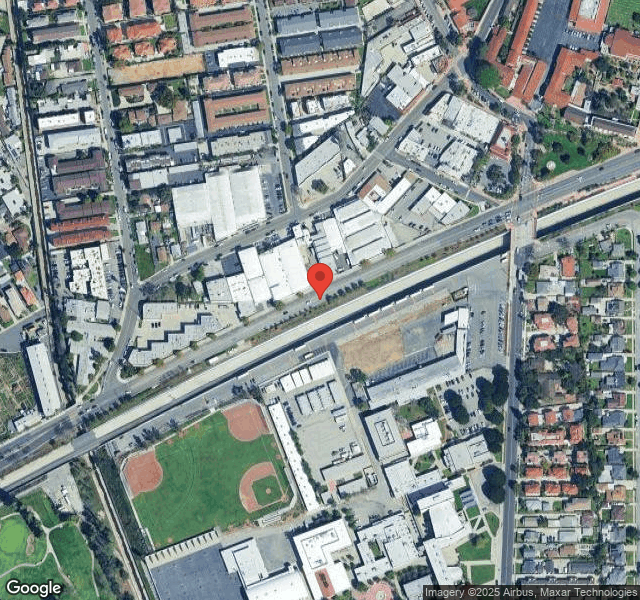
Oct 2024 1 deficiency
CONCERN (D) 📢 Someone Reported This

A family member, employee, or ombudsman was alarmed enough to file a formal complaint

Potential for Harm - no one hurt, but risky conditions existed

Deficiency F0573 (Tag F0573)

Could have caused harm · This affected 1 resident

**NOTE- TERMS IN BRACKETS HAVE BEEN EDITED TO PROTECT CONFIDENTIALITY** Based on interview and record review, the facility failed to provide a copy of the medical records for one of one sampled reside...

Read full inspector narrative →
**NOTE- TERMS IN BRACKETS HAVE BEEN EDITED TO PROTECT CONFIDENTIALITY** Based on interview and record review, the facility failed to provide a copy of the medical records for one of one sampled resident (Resident 1) within 48 hours (excluding weekends and holidays) from when the written request was received from the resident's representative on 10/3/2024. This deficient practice has resulted in the delay of access to Resident 1's medical records in a timely manner. Findings: During a review of Resident 1's admission Record, the admission Record indicated the resident was initially admitted to the facility on [DATE] and was transferred to the emergency room (ER) in General Acute Hospital (GACH) on 9/18/2024 via ambulance. During a review of Resident 1's History and Physical (H&P), dated 11/16/2022, with diagnosis of Alzheimer's disease (a brain disorder that slowly destroys memory and thinking skills and, eventually, the ability to carry out the simplest tasks), dementia (impaired ability to remember, think, or make decisions that interferes with doing everyday activities) and generalized weakness. The H&P indicated Resident 1 does not have the capacity to understand and make decisions. During a review of Resident 1's Minimum Data Set (MDS, a federally mandated assessment tool), dated 7/5/2024, the MDS indicated Resident 1 had severe cognitive (mental action or process of acquiring knowledge and understanding) skills for daily decision making. The MDS also indicated Resident 1 was dependent (helper does all of the effort, resident does none of the effort to complete the activity) eating, oral hygiene, toileting hygiene, shower/bathe self, upper and lower body dressing, and putting on/ taking off footwear, personal hygiene, roll left and right, chair/ bed - to -chair transfer and tub/shower transfer. During a review of the authorization for the release of Resident 1's medical records dated 9/27/2024, indicated the facility received a request from Resident 1's representative to provide a copy of Resident 1's medical records on 10/3/2024 via electronic mail (email). During a review of the undated Facility's Authorization of Release of Information Form, it did not indicate that facility released Resident 1's records from 10/3/2024 to 10/24/2024. During an interview of Medical Records Director (MRD) on 10/24/2024, at 9:29 AM, MRD stated, If the resident or family made a request for the copy of the whole medical records. They can pick up the medical records within 48 hours in the facility. They just need to sign the authorization records and that is it. During a concurrent interview of MRD and record review of list of medical record request received by the facility dated 9/30/2024 to 10/24/2024, on 10/24/2024 at 9:55AM, the list indicated there was one request received by the facility on 10/3/2024 and it was from Resident 1's representative. MRD stated, I am not aware of the pending request from Resident 1, but we are working on it, and it is due tomorrow (10/25/2024). We are currently working on their request, and they can get the copy of the chart tomorrow (10/25/2024). During an interview with the Social Services Director (SSD) on 10/24/2024, at 10:10 AM, SSD stated, I received Resident 1's Medical Record Request on 10/16/2024, it was an order from our ADM. ADM asked me to take care of request which I did for the electronic records. It was a portal with a link that was given to me, and I did upload it on (10/18/2024). I was not able to finish the same day and took another day (10/21/2024) because it has to be pulled from months, but I did send it to them last week. During a concurrent record review of the policy titled Release of Information revised on 11/2009, and interview with the ADM on 10/24/2024, at 1:34PM, the policy indicated a resident may have access to his or her records within forty-eight (48) hours (excluding weekend or holidays) upon resident's / resident representative's written or oral request. ADM stated the facility received the request for a copy of Resident 1's medical records from Reisdent 1's representative on 10/3/2024. ADM also stated, I have confirmed the authorization on 10/8/2024. We sent the electronic chart to the link that they provided on 10/18/2024. The chart was paper chart was copies were started 10/21/2024 and tomorrow (10/25/24) was the due date ADM added, the facility passed the 48 hours timeframe of releasing copies of Resident 1's medical records requested by the resident's representative on 10/3/2024. ADM stated the facility did not have medical records personnel from 9/27/2024 to 10/9/2024. During a review of the facility's policy and procedure (P&P) titled Release of Information revised on 11/2009, indicated a resident may obtain photocopies of his or her records by providing the facility with at least 48 hours (excluding weekends and holidays) advance notice of such request.
Oct 2024 1 deficiency
CONCERN (E) 📢 Someone Reported This

A family member, employee, or ombudsman was alarmed enough to file a formal complaint

Potential for Harm - no one hurt, but risky conditions existed

Comprehensive Care Plan (Tag F0656)

Could have caused harm · This affected multiple residents

**NOTE- TERMS IN BRACKETS HAVE BEEN EDITED TO PROTECT CONFIDENTIALITY** Based on observation, interview and record review, the facility failed to create a resident- centered care plan for one (1) of t...

Read full inspector narrative →
**NOTE- TERMS IN BRACKETS HAVE BEEN EDITED TO PROTECT CONFIDENTIALITY** Based on observation, interview and record review, the facility failed to create a resident- centered care plan for one (1) of three (3) sampled residents (Resident 1) with interventions to prevent future fall (to drop suddenly or collapse) after the resident's fall incidents on 5/22/2024, 7/26/2024 and 9/27/2024. This failure resulted in Resident 1 had another fall on 7/26/2024 and 9/27/2024 and place resident at risk for another incident of fall. Findings: During a review of Resident 1's admission Record, admission Record indicated the resident was initially admitted to the facility on [DATE] with diagnoses of Alzheimer's disease (a brain disorder that slowly destroys memory and thinking skills, and eventually, the ability to carry out the simplest tasks) and muscle wasting and atrophy (decrease in size or wasting away of a body part or tissue). During a review of Resident 1's History and Physical Examination (H&P), dated 2/2/2024, H&P indicated the resident does not have the capacity to understand and make decisions. During a review of Resident 1's Minimum Data Set (MDS - a federally mandated resident assessment tool), dated 8/8/2024, MDS indicated the resident had severe impairment (difficulty with or unable to make decision, learn, remember things) with cognitive (ability to think, remember, and reason) skills for daily decision making. Resident 1 needed supervision or touching assistance (helper provides verbal cues and/or touching/steadying and/or contact guard assistance as resident completes activity) with walking 150, 50 and 10 feet and transfers (how resident moves to and from bed, chair, wheelchair, standing position), needed substantial/maximal assistance (helper does more than half the effort) with personal hygiene and dressing (how a resident puts on, fastens and takes off all items of clothing) and was independent with eating. During a review of Resident 1's Change in Condition Form dated 5/22/2024, the Change in Condition Form indicated Resident 1 was found (specific time not indicated) sitting on the floor next to her bed and according to Resident 1, the resident was trying to go to the bathroom by herself when she lost balance and fell. During a review of Resident 1's Change in Condition Form dated 7/26/2024, the Change in Condition Form indicated Resident 1 was last seen by staff at 12:15 PM sitting in bed eating lunch and then at 1:30 PM it was reported by Resident 1's roommate's family member that Resident 1 had a fall as the reisdent attempted to get up out of bed and fell to the floor. During a review of Resident 1's Change in Condition Form dated 9/27/2024, the Change in Condition Form indicated Resident 1 had an unwitnessed fall and was found lying on the floor near the bed around 3:30 AM. During an interview on 10/8/2024 at 10:30 AM with Licensed Vocational Nurse 1 (LVN 1), LVN 1 stated Resident 1 is a fall risk and that she does get up on her own to use the restroom which is why it is important to make sure that the resident's call light (a device that allows patients in hospitals and nursing homes to communicate with healthcare staff for assistance) is near her so she can easily call facility staff for assistance, ensure the resident's bed is in the lowest position and that the resident needs frequent visual checks from the staff every 15 to 20 minutes. LVN 1 also stated, although the resident is aware how to use her call light, the resident must constantly be reminded to use it. During a concurrent interview and record review on 10/8/2024 at 11:01 AM with Minimum Data Set Nurse (MDSN), Resident 1's Fall Risk Care Plan dated 9/27/2024 was reviewed. Resident 1's Fall Risk Care Plan indicated interventions that were last updated on 2/28/2022. MDSN stated, Resident 1's last fall was on 9/27/2024 and that although her Fall Risk Care Plan was updated to reflect the fall on 9/27/2024, the interventions were not created to Resident 1's needs to prevent another fall. MDSN stated the purpose of a care plan was to make sure interventions are in place for a specific resident problem and stated, after Resident 1's fall incident on 9/27/2024, the care plan should have been reviewed and revised/ created a new one to reflect interventions that such as frequent visual checks indicating how often resident should be checked. During an interview on 10/8/2024 at 11:09 AM with Certified Nursing Assistant 1 (CNA 1), CNA 1 stated, Resident 1 is a fall risk and that since the resident likes to stay in bed most of the time, when the resident tries to get up, she gets dizzy. During an interview on 10/8/2024 at 11:13 AM with the Director of Nursing (DON), the DON stated for fall risk residents, the facility needs to assess the care plans if they are specific to the needs of the resident and to make sure the CNAs and licensed staff are aware of the problem such as the fall and interventions to prevent another fall. The DON also stated they put an emphasis on those residents who have a history of falls. The DON stated, after a fall incident, the resident's care plan should be created for the actual fall and that the interventions should be specific to the resident's need and in addition the facility staff needed to check if the interventions are effective or not effective and to also make sure the nurses are following through with the interventions. During a concurrent interview and record review on 10/8/2024 at 2:03 PM with the DON, Resident 1's Fall Risk Care Plan dated 9/27/2024 was reviewed. Resident 1's Fall Risk Care Plan indicated the interventions were last updated on 2/8/2022. The DON stated Resident 1's Fall Risk Care Plan interventions should have been reviewed and should have included new interventions to prevent another fall after 9/27/2024. During a concurrent interview and record review on 10/8/2024 at 2:05 PM with DON, the following Resident 1's Fall Risk care plans were reviewed: a. Care plan dated 8/25/2024, indicated interventions for Resident 1's call light to be within reach and to encourage to use it for assistance as needed and to respond promptly to all requests for assistance. b. Care plan dated 5/22/2024 did not indicate any intervention for resident to be on a toileting schedule. c. 7/26/2024 indicated to keep call light within reach and answered promptly and to encourage resident to call for assistance as needed. The DON stated, Resident 1 rarely used her call light, and that Resident 1 always wants to do things herself. The DON also stated, the DON the intervention to remind Resident 1 to call for help was appropriate but stated, the interventions needed to be reviewed and discussed to see what is working and what is not since the resident had three (3) falls. The DON also stated because on 5/22/2024 Resident 1 fell attempting to go to the bathroom, an intervention that addressed putting the resident on a toileting schedule should have been included in Resident 1's care plan initiated on 5/22/2024. The DON stated interventions need to be personalized to the resident because everyone has different needs and mental diagnosis. During a concurrent interview and record review on 10/8/2024 at 2:50 PM with the DON, Resident 1's Fall Risk Care Plans dated 5/22/2024 and 7/26/2024 were reviewed. Resident 1's Fall Risk Care Plan dated 5/22/2024 indicated an intervention for resident to have frequent visual checks and Resident 1's Fall Risk Care Plan dated 7/26/2024 did not indicate any intervention for a more specific time frame for resident's visual checks. The DON stated for best practice, frequent visual checks for residents who are fall risks should be done every hour or as needed depending on the clinical condition of the resident. The DON stated she does agree with the facility staff stating that visual checks for Resident 1 need to be around every 20 minutes and stated a specific time frame should have been included in Resident 1's 7/26/2024 Care Plan for fall, so that the interventions would be more personalized to the resident. The DON further stated Resident 1's noncompliance of using the call light when calling for assistance before getting up in bed should have been addressed in the resident's care plan as well. During a review of the facility's policy and procedure (P&P) titled Safety and Supervision of Residents revised July 2017, the P&P indicated under Individualized, Resident-Centered Approach to Safety: The care team shall targe interventions to reduce individual risks related to hazards in the environment including adequate supervision and assistive devices. Monitoring the effectiveness of interventions shall include the following: o Ensuring that interventions are implemented correctly and consistently; o Evaluating the effectiveness of interventions; o Modifying or replacing interventions as needed; and o Evaluating the effectiveness of new or revised interventions. Systems Approach to Safety o Resident supervision is a core component of the systems approach to safety. The type and frequency of resident supervision is determined by the individual resident's assessed needs and identified hazards in the environment. During a review of the facility's P&P titled Falls - Clinical Protocol revised March 2018, the P&P indicated under treatment/management, Based on the preceding assessment, the staff and physician will identify pertinent interventions to try to prevent subsequent falls and to address the risks of clinically significant consequences of falling. The P&P also indicated under monitoring and follow-up: The staff and physician will monitor and document the individuals response to interventions intended to reduce falling or the consequences of falling If the individual continues to fall, the staff and physician will re-evaluate the situation and reconsider possible reasons for the resident's falling (instead of, or in addition to those that have already been identified) and also reconsider the current interventions. During a review of the facility's P&P titled Falls and Fall Risk, Managing revised March 2018, the P&P indicated: Resident-Centered Approaches to Managing Falls and Fall Risk o If falling recurs despite initial interventions, staff will implement additional or different interventions, or indicate why the current approach remains relevant. o In conjunction with the attending physician, staff will identify and implement relevant interventions (e.g. hip padding or treatment of osteoporosis, as applicable) to [NAME] to minimize serious consequences of falling. Monitoring Subsequent Falls and Fall Risk o The staff will monitor and document each resident's response to interventions intended to reduce falling or the risks of falling. o If the resident continues to fall, staff will re-evaluate the situation and whether it is appropriate to continue or change current interventions. As needed, the attending physician will help the staff reconsider possible causes that may not previously have been identified. During a review of the facility's P&P titled Care Plans, Comprehensive Person-Centered revised December 2018, the P&P indicated: The comprehensive, person-centered care plan will: o Incorporate identified problem areas; o Incorporate risk factors associated with identified problems; Assessments of residents are ongoing and care plans are revised as information about the residents and the residents' conditions change. and The Interdisciplinary Team must review and update the care plan: o When there has been a significant change in the resident's condition; o When the desired outcome is not met.
Oct 2024 1 deficiency
CONCERN (E) 📢 Someone Reported This

A family member, employee, or ombudsman was alarmed enough to file a formal complaint

Potential for Harm - no one hurt, but risky conditions existed

Quality of Care (Tag F0684)

Could have caused harm · This affected multiple residents

**NOTE- TERMS IN BRACKETS HAVE BEEN EDITED TO PROTECT CONFIDENTIALITY** Based on interview and record review the facility failed to provide treatment and care in accordance with the professional stand...

Read full inspector narrative →
**NOTE- TERMS IN BRACKETS HAVE BEEN EDITED TO PROTECT CONFIDENTIALITY** Based on interview and record review the facility failed to provide treatment and care in accordance with the professional standards of practice for ne (1) of two (2) sampled residents (Resident 1) by: 1. Failing to record Resident 1's bowel movement (BM) pattern each day on 7/9/24-7/11/24, 7/15/24-7/16/24 and 7/19/24-7/22/24 as indicated in the resident's care plan for constipation (a condition where it's difficult or infrequent to have a BM usually resulting in hard, dry stools). 2. Failing to monitor/document/report to physician (MD) as needed for complications related to constipation when the resident did not have documented evidence of BM from 7/5/2024 to 7/23/2024 (19 days). This failure resulted to Resident 1 being transferred to the General Acute Care Hospital (GACH) on 8/2/2024 due to persistence of abdominal bulge in the resident's right lower quadrant (area) of abdomen. Resident 1 was found to have severe fecal impaction (a serious condition that occurs when a large, hard, dry stool mass blocks the rectum or colon, making it difficult or impossible to pass stool) which needed to be manually evacuated by the gastrointestinal (GI; relating to the stomach and intestines) MD and was hospitalized from [DATE] to 8/15/2024. Findings: During a review of Resident 1's admission Record, admission Record indicated the resident was initially admitted to the facility on [DATE] and readmitted [DATE] with diagnoses of intestinal obstruction (a blockage that prevents food, liquid, gas, and stool from moving through the intestine normally) and dementia (a chronic condition that describes a gradual decline in cognitive [ability to think, remember, and reason] abilities that interferes with daily life). During a review of Resident 1's History and Physical Examination (H&P), dated 8/16/2024, H&P indicated the resident does not have the capacity to understand and make decisions. During a review of Resident 1's Minimum Data Set (MDS - a federally mandated resident assessment tool), dated 8/18/2024, MDS indicated the resident was severely impaired (difficulty with or unable to make decisions, learn, remember things) with cognitive skills for daily decision making. Resident 1 was dependent (helper does all of the effort; Resident does none of the effort to complete the activity) with tub/shower transfers (the ability to get in and out of a tub/shower), going from lying down to sitting on the side of the bed, rolling left and right in bed, upper and lower body dressing (the ability to dress above and below the waist, including fasteners) and personal hygiene and needed substantial/maximal assistance (helper does more than half the effort) with eating. During a review of Resident 1's Constipation Care Plan initiated on 5/18/2020 (did not indicate reviewed or revise date), the Constipation Care Plan indicated Resident 1 was at risk for constipation with a goal of Resident 1 having a regular bowel movement as evidenced by soft/formed bowel movements at least once every three (3) days for 3 months. The care plan also indicated interventions including to monitor/document/report to physician (MD) as needed for complications relation to constipation and to record bowel movement pattern each day and to describe amount, color, and consistency. During an interview on 10/2/2024 at 10:21 AM with Certified Nurse Assistant (CNA) 1, CNA 1 stated, every day when she starts her shift, she assesses her residents which includes assessing and monitoring if a resident has had a BM. CNA 1 stated whether or not a resident has had BM needs to be reported and documented in the computer and is important because if it is not checked or monitored the resident might need to be transferred to the hospital for constipation and build up. During a review of Resident 1's Documentation Survey Report dated July 2024, the Documentation Survey Report indicated under Check and Change - Bowel on 7/9/2024-7/11/2024, 7/15/2024-7/16/2024 and 7/19/2024-7/22/2024 Resident 1 was D for dry and did not indicate that the resident was changed or if the resident had a BM. During a concurrent interview and record review on 10/2/2024 at 12:30 PM with Licensed Vocational Nurse (LVN), Resident 1's Documentation Survey Report dated July 2024 was reviewed. Resident 1's Documentation Survey Report indicated under Check and Change, no documented BM for Resident 1 from 7/5/2024-7/23/2024. LVN stated no documented BM for Resident 1 from 7/5/2024-7/23/2024 is unacceptable, and that normally if the resident has not had a BM for 3 days, they would provide the resident with as needed (PRN) medications such as a suppository (a solid, cone-shaped or round object that contains medication and is inserted into ta body cavity or passage to deliver the medication) or enema (a procedure that involves injecting a liquid into the rectum to clear out waste matter or stool) and if neither of those work then they would notify the MD. LVN also stated monitoring the BM for Resident 1 is important to prevent her from becoming constipated or having a bowel obstruction (a partial or complete blockage in the small or large intestine that prevents food, liquid, gas, and stool from passing through normally). During a concurrent interview and record review on 10/2/2024 at 1:30 PM with Director of Staff Development (DSD), Resident 1's Documentation Survey Report dated July 2024 was reviewed. Resident 1's Documentation Survey Report indicated under Check and Change - Bowel, no documented BM for Resident 1 from 7/5/2024-7/23/2024. DSD stated Resident 1 having no documented BM from 7/5/2024-7/23/2024 should have been addressed and that interventions should have been implemented since the record showed Resident 1 did not have BM for 19 days. DSD stated the documentation indicating a D for dry instead of indicating whether the resident was changed or had a BM is improper documentation. DSD also stated a change in condition should have been done for something out of the resident's ordinary baseline and not monitoring Resident 1's BM placed the resident's wellbeing at risk and can cause resident's discomfort and irritability which could lead to vomiting and other problems. During a concurrent interview and record review on 10/2/2024 at 2:40 PM with the Director of Nursing (DON), Resident 1's Documentation Survey Report dated July 2024 was reviewed. Resident 1's Documentation Survey Report indicated under Check and Change - Bowel no documented BM for Resident 1 from 7/5/2024-7/23/2024. The DON stated there was no documented BM since 7/5/2024 for Resident 1 until 7/23/2024. The DON stated it could be improper documentation but if Resident 1 did not have a BM within 2-3 days, then the resident would need to be assessed to see what is going on and if the reisdent truly did not have a BM for that many days then it could lead to constipation and eventually a bowel obstruction which would require medical intervention. During the same interview with the DON on 10/2/2024 at 2:40 PM, the DON stated the resident not having a BM for 19 days is unacceptable and that the staff would need to look at her clinical diagnosis to see why it might be happening and that constant communication amongst staff is integral for the consistency of the care plan and if it is a significant change for the resident, the MD would need to be notified to see if there is or no improvement to the resident's condition so that changes to the resident's current interventions could be made. The DON further stated that from 7/27/2024-8/1/2024 there was no progress note documentation regarding Resident 1's bulge on the resident's right lower quadrant whether it was improving or not. During an interview on 10/2/2024 at 3:14 PM with CNA 2, CNA 2 stated when she comes in for her shift, she checks on all her residents and she will document under the bowel check and change task in the resident's electronic medical record (EMR; a digital version of a patient's medical history) if they were clean, had a BM or if they were dry. CNA 2 also stated for her documentation on Resident 1's Documentation Survey Report dated July 2024 under Check and Change - Bowel on 7/5/2024, 7/6/2024, 7/7/2024, 7/8/2024, 7/12/2024, 7/13/2024, 7/14/2024, 7/17/2024 and 7/18/2024, if she put 0 it means the reisdent did not have a BM for her. CNA 2 also stated that before charting, she also double checks with the LVN charge nurse for the resident to ask if they had assisted the resident with going to the restroom and if they say no, it means the resident did not have a BM. CNA 2 further stated that after day 2 of the resident not having a BM, she would report it to the LVN charge nurse. During a review of Resident 1's Change in Condition Form dated 7/23/2024, the Change in Condition Form indicated when the Certified Nursing Assistant (CNA) was providing care to the resident, Resident 1 was assessed with a bulge on the right side of her abdomen and when it was palpated (a physical examination technique that involves feeling the body with the hands or fingers to examine its parts) the surface of the bulge was hard and firm to touch and it was located below the right rib that extended almost above the right pubis (a bone in the hip that forms the front and lower part of each side of the pelvis). Resident 1 complained of pain when the bulge was palpated (touched). During a review of Resident 1's Radiology Report of the Abdomen dated 7/23/2024, the Radiology Report indicated Resident 1 had a large amount of stool in the rectosigmoid region (the terminal portion of the large intestine before reaching the rectum). During a review of Resident 1's Nurses Progress Note dated 7/24/2024 at 4:37 AM, the Nurses Progress Note indicated Resident 1 was being monitored for bulge/hard mass on right side of abdomen. The notes indicated an ultrasound was ordered with a result showing a large amount of stool in the rectosigmoid region. During a review of Resident 1's Nurses Progress Note dated 7/25/2024 at 1:08 AM, the Nurses Progress Note indicated Resident 1 still had a bulge on the abdomen but had gotten smaller. During a review of Resident 1's Nurses Progress Note dated 7/25/2024 at 9:37 PM, the Nurses Progress Note indicated Resident 1 still had a bulge on the right side of her abdomen that was hard to touch and was still constipated. The note also indicated, the resident was on a bowel management program and given a suppository on 7/25/2024 which resulted in the resident having a small BM. During a review of Resident 1's Nurses Progress Note dated 7/26/2024 at 4:14 AM, the Nurses Progress Note indicated that Resident 1 continued to have a bulge on the right side of her abdomen which was getting smaller and that the resident had a BM on the night shift. During a review of Resident 1's Progress Note dated 8/2/2024 at 8:06 PM, the Progress Note indicated Resident 1 needed to be transferred to GACH for further evaluation due to still having a bulging mass on the right lower quadrant (RLQ) of her abdomen. During a review of Resident 1's GACH Consult Note dated 8/2/2024, the GACH Consult Note indicated that Resident 1 was found to have a very rigid abdomen and CT Scan (a diagnostic imaging procedure that uses X-rays and a computer to create detailed pictures of the inside of the body) revealed severe fecal impaction which was evacuated by the GI MD. During a review of the facility's policy and procedure (P&P) titled Bowel (Lower Gastrointestinal Tract) Disorders - Clinical Protocol revised September 2017, the P&P indicated under Monitoring and Follow-Up, The staff and physician will monitor the individual's response to interventions and overall progress; for example, overall degree of comfort or distress, frequency and consistency of bowel movements, and the frequency, severity, and duration of abdominal pain, etc.
Sept 2024 1 deficiency
CONCERN (D) 📢 Someone Reported This

A family member, employee, or ombudsman was alarmed enough to file a formal complaint

Potential for Harm - no one hurt, but risky conditions existed

Deficiency F0583 (Tag F0583)

Could have caused harm · This affected 1 resident

**NOTE- TERMS IN BRACKETS HAVE BEEN EDITED TO PROTECT CONFIDENTIALITY** Based on observation and interview, the facility failed to safeguard one of two sampled residents (Resident 1) personal privacy ...

Read full inspector narrative →
**NOTE- TERMS IN BRACKETS HAVE BEEN EDITED TO PROTECT CONFIDENTIALITY** Based on observation and interview, the facility failed to safeguard one of two sampled residents (Resident 1) personal privacy and confidentiality of the medical records. This failure had the potential to result in Resident 1's personal information and medical records disclosed without Resident 1's permission, this will compromise the security or privacy of Resident 1's protected health information. Findings: During a review of Resident 1's admission Record indicated Resident 1 was admitted to the facility on [DATE] and readmitted on [DATE] with diagnoses that included type 2 diabetes mellitus diabetic with chronic kidney disease (high blood sugar level in the blood stream lead to a gradual loss of kidney function over time), dependence on renal dialysis (a person requires technology to sustain their life due to kidney failure), and end stage renal disease (a permanent condition where the kidneys stop working, requiring dialysis or a kidney transplant to survive). During a review of Resident 1's History and Physical Examination (H&P), dated 11/4/2023, H&P indicated the resident has the capacity to understand his medical condition or his bill of rights (a patient's rights and responsibilities). During a review of Resident 1's Minimum Data Set (MDS- a comprehensive assessment and screening tool) dated 8/7/2024, the MDS indicated Resident 1 was not able to follow commands, his cognition skills (process of thinking and reasoning) was moderate impaired for decision making. Resident 1 required helper to do more than half of the effort for resident for the toilet, personal hygiene. The MDS also indicated Resident 1 required more than half of the effort for change of position and transfer. Resident 1 is moderate dependent (helper does more than half of the effort). During a review of Resident 2's admission Record indicated Resident 2 was admitted to the facility on [DATE] and readmitted on [DATE] with diagnoses that included hypertensive heart disease (a group of conditions that can occur when chronic high blood pressure damages the heart) with heart failure (the heart is unable to pump enough blood to meet the body's needs), hemiplegia (a severe or complete loss of strength or paralysis on one side of the body) and hemiparesis (a mild loss of strength in a leg, arm, or face) following cerebral infarction (a damage to tissues in the brain due to a loss of oxygen to the area) affecting right dominant side, acute respiratory failure with hypoxia ( medical emergency that occurs when the lungs have difficulty exchanging oxygen and carbon dioxide with the blood, resulting in low oxygen levels in the body's tissues). During a review of Resident 2's H&P, dated 9/17/2024, H&P indicated the resident does not have the capacity to understand his medical condition or his bill of rights (a patient's rights and responsibilities). During a review of Resident 2's MDS dated [DATE], the MDS indicated Resident 2 was not able to follow commands, his cognition skills was severely impaired for decision making. Resident 2 required helper to do all the effort for resident for the toilet, personal hygiene. The MDS also indicated Resident 2 required helper to do all the effort for change of position and transfer. Resident 2 is totally dependent. During a concurrent interview and record review of nursing progress notes on 9/25/2024 at 9:42 AM with Registered Nurse 1 (RN1), Resident 2's nursing progress note dated 9/24/2024 was reviewed. RN1 stated Resident 2 got sent out to the General Acute Care Hospital (GACH) for further evaluation and care treatment due to fever and low oxygen level in his blood stream. RN1 stated Resident 2 was transferred to the hospital by 911 (provides emergency services), City Fire Department (CFD) paramedic. The transfer of Resident 2 to GACH happened on 9/24/24 morning around 7:22 AM. RN1 stated it was the night shift nurse Licensed Vocational Nurse (LVN1) 1 that coordinated Resident 2's transfer to GACH on 9/24/24 and sent Resident 1's medical records (face sheet, H&P [history and physical assessment], medications list, POLST [physician orders for life-sustaining treatment, a medical order that helps residents with serious illness specify their preferences for end- of- life care], and physician's order of transfer) instead of Resident 2's medical records to GACH. RN1 stated this is a violation of the HIPPA (Health Insurance Portability and Accountability Act- a federal law that protects sensitive health information and provides rights to health plan participants) law by sending out other resident's medical information during hospital transfer. During a telephone interview on 9/25/2024 at 11:15 AM with CFD, CFD's fire fighter stated GACH's emergency room notified him on 9/24/24 near 8:20 AM that CFD paramedic sent Resident 2 to the hospital with another resident's medical records the medical records inside the dispatch package (contains medical records of the reisdent when sent out from one facility to another facility) from the facility was for Resident 1, they were not for Resident 2. During a telephone interview on 9/25/2024 at 11:50 AM with GACH's emergency room charge nurse (ERCN), ERCN stated she had received Resident 1's face sheet, H&P, medications list, POLST, and physician's order of transfer, and no paperwork/ medical records for Resident 2. ERCN stated, she needed to call the facility for verification of Resident 2's identity and she was talking to Registered Nurse 2 (RN2). ERCN stated, on 9/24/2024 she obtained fax of Resident 2's face sheet, H&P, medications list, POLST, and physician's order of transfer from Registered Nurse 2 (RN2) at the facility. ERCN stated the facility violated the HIPPA law on 2 separate incidents. During an interview on 9/25/2024 at 12:31 PM with RN2, RN2 stated she confirmed with ERCN that Resident 1 got sent out to GACH with Resident 2's medical records. RN2 also stated, RN 2 faxed Resident 2's face sheet, H&P, medications list, POLST, and physician's order to SGVMC emergency room per ERCN's request on 9/24/2024. RN2 stated this is a breach of the of protected health information (PHI) by sending out Resident 1's protected health information to CFD paramedic ambulance without carefully review and verification of the resident's identity or it is for the correct resident. During a telephone interview on 9/25/2024 at 1:28 PM with LVN1, LVN1 stated, the Director of Nursing (DON) did call him and let him know that he sent out Resident 1's medical records for Resident 2's transfer to GACH on the morning of 9/24/2024. LVN1 stated this is a breach of HIPPA law for unauthorized release or disclosure of other resident's medical information to the CFD paramedic and GACH. During an interview on 9/25/2024 at 1:47 PM with the DON, the DON stated she was aware of LVN1 sent out Resident 1's medical record for Resident 2's transfer to GACH by CFD paramedic on 9/24/2024 morning. DON stated this is an unauthorized release or disclosure of Resident 1's medical records. DON stated this is a breach of the protected health information. During a review of the facility's policy and procedure (P&P) titled, Protected Health Information (PHI), Management and Protection of revised April 2014, the P&P indicated, it is the responsibility of all personnel who have access to resident and facility information to ensure that such information is managed and protected to prevent unauthorized release or disclosure. During a review of the facility's policy and procedure (P&P) titled Resident Right revised December 2016, the P&P indicated, the unauthorized release, access, or disclosure of resident information is prohibited. All release, access, or disclosure of resident information must be in accordance with current laws governing privacy of information issues. All inquiries concerning the release of resident information should be directed to the HIPAA Compliance Officer.
Sept 2024 2 deficiencies
CONCERN (D) 📢 Someone Reported This

A family member, employee, or ombudsman was alarmed enough to file a formal complaint

Potential for Harm - no one hurt, but risky conditions existed

Accident Prevention (Tag F0689)

Could have caused harm · This affected 1 resident

**NOTE- TERMS IN BRACKETS HAVE BEEN EDITED TO PROTECT CONFIDENTIALITY** Based an interview and record review, the facility failed to ensure the resident's environment was free from accident hazards fo...

Read full inspector narrative →
**NOTE- TERMS IN BRACKETS HAVE BEEN EDITED TO PROTECT CONFIDENTIALITY** Based an interview and record review, the facility failed to ensure the resident's environment was free from accident hazards for one (1) of two (2) sampled resident (Resident 1) by failing to ensure the resident head did not get injured while using the Hoyer lift (a patient lift used by caregivers to safely transfer patients) during transfer. This deficient practice resulted to a 1.5 cm laceration (deep cut or skin tear in the skin) and a small bump to Resident 1's left front part of his head. Resident 1 was also sent to General Acute Care Hospital 1 (GACH 1) on 8/27/24 and was found to have a scalp cephalohematoma (accumulation of blood under the scalp) Findings: During a review of Resident 1's admission Record indicated the resident was admitted to the facility on [DATE] with a diagnosis of dementia (loss of cognitive functioning such as thinking, remembering, and reasoning to such an extent that it interferes with a person's daily life and activities) and Alzheimer (a brain disorder that slowly destroys memory and thinking skills, and eventually, the ability to carry out the simplest tasks). During a review of Resident 1's Minimum Data Set (MDS, standardized assessment and care screening tool), dated 1/5/2024, indicated Resident 1 had severely impaired cognitive (mental action or process of acquiring knowledge and understanding) skills for daily decision making. The MDS also indicated Resident 1 was dependent (helper does all the effort) with eating, oral, toileting and personal hygiene, shower, and upper/lower body dressing, and putting on/taking off footwear. During a review of Resident 1's Situation, Background, Assessment, and Recommendation (SBAR, a structured communication framework used to share information in a healthcare setting to communicate about a patient's condition) signed by LVN 1 and dated 8/27/24 timed at 2 PM, the SBAR/COC indicated at around 1:50 PM, LVN 1 was called regarding an incident pertaining to Resident 1. The report indicated, Resident 1 was on the Hoyer lift suspended next to the bed facing the television. The report also indicated that CNA 1 went to get the wheelchair that was few steps away and the other CNA was standing by the foot side of the resident when suddenly Resident 1 tilted backwards with his feet facing upwards and his head hit the Hoyer lift by accident. The document further indicated the treatment Nurse (TN) who assessed Resident 1 noted a shallow laceration on the left frontal lobe (forehead part) of the residents his head measuring 1.5 cm in length and noted a small bump with light discoloration. During a review of the Computed Tomography (CT, a diagnostic imaging procedure that uses a combination of X-rays and computer technology to produce images of the inside of the body) scan of the brain without contrast performed at GACH 1 on 8/27/24 indicated Resident 1 had a scalp cephalohematoma overlying the left frontal bone. During an interview on 9/23/24 at 11:17 AM, the Licensed Vocational Nurse 1 (LVN 1) stated she was in the charting room on 8/27/24 at around 2:17 PM when she was called to see Resident 1. LVN 1 also stated when he saw Resident 1, she noticed the resident had bleeding, a small bump, and a laceration on the resident's left forehead. During an interview on 9/23/24 at 2 PM, the Certified Nursing Assistant 1 (CNA 1) stated she heard a bang right when she turned to get Resident 1's wheelchair while the resident was up on the Hoyer lift sling (a hammock-style harness that cradles a patient and allows them to be lifted and moved to a new surface). CNA 1 also stated she and CNA 2 who was helping her did not see where Resident 1 got hit. During an interview on 9/23/24 at 3:45 PM, the Director of Nursing (DON) stated someone should have been supporting both ends of the Hoyer Lift sling to avoid accidents and to ensure safety of Resident 1 during transfer. The DON also stated CNA 1 and 2 should have cleared the area inside the room before doing the transfer from bed to chair. During an interview on 9/23/24 at 4:07 PM, the LVN 2 stated one person should have used appropriate technique to lift Resident 1 and supported the upper part and the lower part of Resident 1's body while in the Hoyer lift sling to prevent the resident from sustaining any injuries such as hitting body parts against the Hoyer lift. LVN 2 also stated if not properly supported Resident 1 could get hurt due to the resident's movement and jerking tendencies. During another interview on 9/23/24 at 4:21 PM, CNA 1 stated on 8/27/24 during transfer of Reisdent 1via Hoyer lift, she was on the resident's head part and CNA 2 was on the foot part, and was not holding the sling of the Hoyer lift because it tilts normally. CNA 1 also stated she then went to get the wheelchair which was in the room but not close by. During a review of the facilities Policy and Procedure titled, Safe Lifting and Movement of Residents, dated 2001, indicated to protect the safety and well-being of staff and residents, and to promote quality care, the facility uses appropriate techniques and devices to lift and move residents.
CONCERN (E) 📢 Someone Reported This

A family member, employee, or ombudsman was alarmed enough to file a formal complaint

Potential for Harm - no one hurt, but risky conditions existed

Deficiency F0761 (Tag F0761)

Could have caused harm · This affected multiple residents

Based on observation, interview, and record review, the facility failed to ensure safe provision of pharmaceutical services by failing to store unused insulin (used to help manage blood sugar levels o...

Read full inspector narrative →
Based on observation, interview, and record review, the facility failed to ensure safe provision of pharmaceutical services by failing to store unused insulin (used to help manage blood sugar levels on adults with diabetes [high blood sugar level]) injectable medications in the refrigerator and dispose of expired medications from two (2) of 2 sampled medication carts (Medication Cart one [1] and 3). These deficient practices had the potential for adverse reactions if these improperly stored medications were administered to the residents. Findings: During a concurrent observation and interview with Licensed Vocational 3 (LVN 3) on 9/23/24 at 2:25 PM, Medication Cart 1 was noted to have the following items: 1) 3 unopened Novolin R insulin (a short-acting insulin that starts to work in about 30 minutes and lasts for several hours to help lower blood sugar levels in the blood) Flex Pen injection 100 units labeled with name of 3 different residents. 2) 1 unopened Basaglar Insulin (a long-acting insulin that is slowly absorbed after being administered and maintains its effects over a long period of time to control high blood sugar in adults and children with type 1 diabetes and adults with type 2 diabetes) Flex Pen injection 100 units. 3) 1 Novolin R insulin Flex Pen injection with an open date of 8/17/24 and not labeled with expiry date or discard date. LVN 3 stated the Novolin R insulin should have been discarded on 9/14/24 which is twenty-eight (28) days from opened date since it could adversely affect the resident receiving the insulin and would not be as effective once expired. LVN 3 also stated the 3 unopened Novolin R insulin and 1 unopened Basaglar insulin injections must be refrigerated until opened. LVN 3 further stated the LVNs were responsible in checking the medication carts to ensure there is no expired medications and insulin injections are stored in the refrigerator until opened. During a concurrent observation and interview on 9/23/24 at 2:56 PM, the Medication Cart 3 was noted to have the following items: 1) 1 Aspart (rapid-acting insulin that starts working quickly to control blood sugar levels) Flex Pen insulin Flex Pen injection with an open date of 8/18/24 and not labeled with expiry or discard date. 2) 3 bubble packs (a card that packages doses of medication within small, clear, or light- resistant, amber-colored plastic bubbles) containing Catapres (medication used to treat high blood pressure) 0.1 milligrams (mg, unit dose) tablets with expiration dates of 9/5/24. 3) 1 bubble pack containing Zofran (medication used to prevent nausea and vomiting) 4 mg tablets with an expiration date of 9/5/24. LVN 1 stated the Aspart insulin injection should have been discarded on 9/15/24 which is 28 days from opening. LVN 1 also stated the medication would not be effective and would be unsafe for the residents because it could possibly cause a reaction if the medication administered was expired. During an interview on 9/23/24 at 3:45 PM, the Director of Nursing (DON) stated the efficacy of the insulin would not be maintained and possible side effects can happen to the residents if it was not stored properly in the correct temperature. The DON also stated the storage and administration of the medication is being compromised when the medication was not stored properly and when medication is expired. During an interview on 9/23/24 at 4:13 PM, the Director of Nursing (DON) stated the LVNs at start of shift, should look at all the medications in their carts to make sure that they do not have expired medications. The DON also stated, if the licensed staff were keeping the expired medications in the cart, they violated the facility's policy that no expired medications should be in the cart. The DON further stated, if expired medications get accidentally administered to the residents, there would be a possibility of complications. A review of the facility's policy and procedure titled, Storage of Medications, revised April 2007, indicated, the facility shall store all drugs and biologicals in a safe, secure, and orderly manner. The policy also indicated that the facility shall not use outdated drugs or biologicals and such drugs shall be returned to the dispensing pharmacy or destroyed. The policy further indicated, medications requiring refrigeration must be stored in a refrigerator located in the drug room at the nurses' station or other secured location.
Aug 2024 1 deficiency
CONCERN (D) 📢 Someone Reported This

A family member, employee, or ombudsman was alarmed enough to file a formal complaint

Potential for Harm - no one hurt, but risky conditions existed

Report Alleged Abuse (Tag F0609)

Could have caused harm · This affected 1 resident

**NOTE- TERMS IN BRACKETS HAVE BEEN EDITED TO PROTECT CONFIDENTIALITY** Based on observations, interview and record review, the facility failed to report the resident- to- resident altercation to the ...

Read full inspector narrative →
**NOTE- TERMS IN BRACKETS HAVE BEEN EDITED TO PROTECT CONFIDENTIALITY** Based on observations, interview and record review, the facility failed to report the resident- to- resident altercation to the State Survey Agency (SSA), the state ombudsman (advocates for residents of nursing homes, board and care homes and assisted living facilities), and local law enforcement (Local PD) within two (2) hours after the allegation of physical abuse (intentional bodily injury to a person, for example slapping, pinching, choking, kicking, shoving) for one of three sample residents (Resident 1) in accordance with the facility's policy and procedure. This deficient practice had the potential to place Resident 1 for further abuse and placed other residents at risk for elder abuse. Findings: During a review of Resident 1's admission Record indicated the resident was originally admitted to the facility on [DATE] and readmitted on [DATE], with diagnoses that included but not limited to bilateral primary osteoarthritis of knee (a degenerative joint disease that affects both knees, causing pain, stiffness, swelling, and decreased mobility), hypertensive heart disease with heart failure (heart problems that occur because of high blood pressure that is present over a long time). During a review of Resident 1's History and Physical (H&P) dated 5/09/2024 indicated Resident 1 has the capacity to understand and make decisions. During a review of the Resident 1's Minimum data Set (MDS-an assessment and care screening tool) dated 5/16/2024, indicated Resident 1's required substantial to maximal assistance (helper does more than half the effort to complete the activity) for toilet hygiene, shower, upper and lower dressing, and personal hygiene. During a review of Resident 1's Care Plan initiated 5/09/2024 indicated, Resident shall not be subject to abuse by anyone, including but not limited to facility staff, other residents, consultants or volunteer staff or other agencies, family member or legal guardian. The care plan interventions indicated, Inform resident and/or responsible party of the facility for reporting of abuse. During a review of Resident 1's Change of Condition (COC) dated 7/30/2024 at 9:10 AM indicated, Charge Nurse (CN) goes to room, resident voiced out roommate hit her left arm. Resident is awake and oriented and able to make needs known. During a review of Resident 2's admission Record indicated the resident was originally admitted to the facility on [DATE] and re admitted on [DATE], with diagnoses that included but not limited to psychosis (a severe mental disorder in which thought and emotions are so impaired that contact is lost with external reality) and schizophrenia (a mental disorder characterized by disruptions in thought processes, perceptions, emotional responsiveness, and social interactions). During a review of Resident 2's H&P dated 5/09/2024 indicated Resident 2 has the capacity to understand and make decisions. During a review of the Resident 2's MDS dated [DATE], indicated Resident 2's required partial to moderate assistance (helper does less than half the effort to complete the activity) for oral hygiene, shower, upper and lower dressing, and personal hygiene. During a review of Resident 2's COC dated 7/30/2024 at 9:00 AM indicated, roommate voiced out she hit my left arm. During an interview with the Director of Nursing (DON) on 8/05/2024 at 10:05 AM, the DON stated, I reported on Thursday 8/1/24, reported on the phone on 7/31/24. I left a message. I got a call back 8/1/24. I did not make a report to the Police department because I was waiting for advice. On 7/30/24 it was not reported. During a concurrent interview with the DON on 8/05/2024 at 10:11 AM, the DON stated an abuse incident should be reported within 72 hours, if it can be done in 24 hours that is the better practice. During an interview with Social Service Director (SSD) on 8/05/2024 at 10:15 AM, SSD stated, SSD considered the incident between Resident 1 and 2 to be a resident- to- resident abuse case even if it is just claimed by one of the residents and even if it was not witnessed it was an allegation abuse. SSD stated It needs to be reported within 2 hours to California Department Public Health (CDPH/SSA), Ombudsman and the Police Department. I would not wait 72 or even 24 hours to report it. The in services and facility policies say it needs to be reported within 2 hours. the documentation using the SOC 341 (abuse reporting form) must be followed up, but the incident must be reported. During an interview with Certified Nurse Assistant 1 (CNA1) on 8/05/2024 at 10:28 AM, CNA 1 stated, an abuse case must be reported immediately to the charge nurse or registered nurse (RN) supervisor, even if the incident was not witnessed. If a resident reports any type of abuse, we must take it seriously and report it right away. We have been taught its ok to report it within 2 hours not 72 hours. It isa not okay to not report it, even if it is unwitnessed. During an interview with CN 1 on 8/05/2024 at 10:32AM, CN1 stated, I was there on the day of the incident (Resident 1 and 2) I did the COC. I was at the nursing station. I hear loud voices. I went to the residents' room. CN1 stated she saw Resident who pointed to her left arm, and then pointed at Resident 2. CN1 also stated, Resident 1 said Resident 2 hit her. CN1 stated, I reported it to the DON. It happened 7/30/24 around 8:40 AM. During a concurrent interview with CN1 on 8/05/2024 at 10:47 AM, CN1 stated any type of abuse needs to be reported within 2 hours from the incident or from when the allegation was made. CN1 stated Waiting 72 hours is not okay. What if something else happened? It could have been worse. This is the reason I reported it to the DON right away. I follow the chain the of command; we can also call CDPH. I believe there is a list of protocols to do inside a binder at the nurse's station, but we normally follow chain of command. During a concurrent interview with the DON on 8/05/2024 at 11:02 AM, the DON defined abuse when a patient or resident rights or safety is compromised. The DON stated, there is different types of abuse, physical, emotional (attempts to frighten, control, or isolate), social (behavior that aims to cut a person off from your family, friends, or community), financial (a common tactic used by abusers to gain power and control), we are mindful of their (resident's) rights. The DON confirmed that hitting is considered abuse and stated, It is physical abuse, but then it is not physical injury, if you have to really investigate, if it was fabricated or something that has been evident. During an interview and record review with the facility Administrator (Admin) on 8/05/2024 at 11:13 AM, Admin stated, According to the facility policy, any alleged or witnessed abuse should be reported within 2 hours. Admin stated the definition of abuse is any act against a patient that would result in harm. Admin stated, it is considered abuse or not by the comment the resident made, it would warrant an investigation. Admin also stated, I cannot remember the resident stated she was hit. It would still be an alleged abuse. During an observation and interview with Resident 1 on 8/05/2024 at 11:56 AM, Resident 1 was sitting up at the side of her bed and stated, This month the other patient (Resident 2) has mental issues in the morning, she, the other patient punched me, (observed Resident 1 to close her hand and ball up into a fist to show how she was hit) on the left arm, tengtong (pain, ache, hurt), it hurt. During concurrent interview and record review with the DON on 8/05/2024 at 12:44 PM, the DON stated, a thorough investigation should have been done within 2 hours, in the facility policy it does say 2 hours, one thing that we were not aware of was that it should be within 2 hours. A resident can be affected by not following the policy. The DON also stated she did not know what form to complete to report the abuse and confirmed a SOC 341 (a form to report Suspected Abuse of Dependent Adults and Elders) was not completed. During a review of the facility's policy revised 4/2010, titled Reporting Abuse to Facility Management indicated, It is the responsibility of our employees, facility consultants, attending Physicians, family members, visitors etc., to promptly report any incident or suspected incident of neglect or resident abuse, including injuries of unknown source, and theft or misappropriation of resident property to facility management. During a review of the facility's policy revised 11/2010, titled Reporting Abuse to State Agencies and Other Entities/Individuals indicated, All suspected violations and all substantiated incidents of abuse will be immediately reported to appropriate state agencies and other entities or individuals as may be required by law. 1. Should a suspected violation or substantiated incident of mistreatment (a behavior shows disrespect for the dignity of others), neglect (to give little attention or respect to) injuries of an unknown source, or abuse (including resident to resident abuse) be reported, the facility Administrator, or his/her designee, will promptly notify the following persons or agencies (verbally and written) of such incident: a. The State licensing/certification agency responsible for surveying/licensing the facility b. The local/State Ombudsman e. Law enforcement officials 2. Verbal/written notices to agencies will be made within Two (2) hours of the occurrence of such incident and such notice may be submitted via special carrier, facsimile (fax), electronic mail (email), or by telephone. 9. Any violation of this policy may result in disciplinary action. During a review of the facility's policy revised 9/2022, titled Resident to Resident Altercation indicated, If two residents are involved in an altercation, staff: report incidents, findings and corrective measure to appropriate agencies as outlined in Abuse, Neglect, Exploitation or Misappropriation- Reporting and Investigating.
Feb 2024 2 deficiencies
CONCERN (D) 📢 Someone Reported This

A family member, employee, or ombudsman was alarmed enough to file a formal complaint

Potential for Harm - no one hurt, but risky conditions existed

Deficiency F0657 (Tag F0657)

Could have caused harm · This affected 1 resident

**NOTE- TERMS IN BRACKETS HAVE BEEN EDITED TO PROTECT CONFIDENTIALITY** Based on interview and record review, the facility failed to revise the care plan and interventions for wandering (moving from p...

Read full inspector narrative →
**NOTE- TERMS IN BRACKETS HAVE BEEN EDITED TO PROTECT CONFIDENTIALITY** Based on interview and record review, the facility failed to revise the care plan and interventions for wandering (moving from place to place without a fixed plan)/elopement (leaving the facility without the staff's knowledge and/or supervision) for one of two sampled residents (Resident 2). This failure resulted in Resident 2 eloped on 1/30/2024 and placed resident at risk for illness or serious injury. As of 2/2/2024, facility staff have no knowledge of the resident's where about. Findings: During a review of Resident 2's admission Record, admission Record indicated the resident was initially admitted to the facility on [DATE] with diagnoses of cord compression (a condition that puts pressure on your spinal cord) and osteomyelitis (swelling of the bone or bone marrow, usually due to infection). During a review of Resident 2's History and Physical Examination (H&P), dated 5/26/23, H&P indicated the resident has the capacity to understand and make decisions. During a review of Resident 2'S Minimum Data Set (MDS - a standardized resident assessment care screening tool), dated 12/5/23, the MDS indicated the resident was cognitively intact (ability to think, remember, and reason) and needed supervision or touching assistance (helper provides verbal cues and/or touching/steadying and/or contact guard assistance as resident completes activity) with transfers (how resident moves to and from bed, chair, wheelchair, standing position), dressing (how a resident puts on, fastens and takes off all items of clothing) and personal hygiene and was independent with walking and eating. During a review or Resident 2's Elopement Care Plan, dated 9/17/23, the elopement care plan indicated that Resident 2 was at risk for elopement with a documented intervention of distracting the resident form wandering by offering pleasant diversions, and structures activities of choice. During an interview on 2/2/24 at 9:50 AM with Registered Nurse 1 (RN 1), RN 1 stated, on 1/30/24 when she came in for work at 3 PM, she was notified by Licensed Vocational Nurse 1 (LVN 1) that Resident 2 left the facility earlier that day and has not been back. RN 1 stated that around 6:30 PM when the resident still had not returned, she attempted to call Resident 2's phone and his family member but was unsuccessful. RN 1 also stated the next day (1/31/24) when Resident 2 still hadn't returned, the police authorities were contacted to report him missing. During a concurrent interview and record review on 2/2/24 at 12:50 PM with Minimum Data Set (MDS) Nurse, Resident 2's Elopement Care Plan, dated 9/17/23 was reviewed. The Elopement Care Plan indicated the target revision date was 12/23/23. MDS Nurse stated, the care plan revision was overdue and was supposed to be updated on 12/5/23 to 12/19/23. During a concurrent interview and record review on 2/2/24 at 12:55 PM with the Director of Nursing (DON), Resident 2's Elopement Care Plan, dated 9/17/23 was reviewed. The Elopement Care Plan indicated it was not revised and updated by 12/23/23. The DON stated the care plan interventions of distracting the resident form wandering by offering pleasant diversions, and structures activities of choice were not applicable to Resident 2 and should have been reassessed and updated according to the resident's needs. The DON also stated that it is important for care plans to be updated to know if the issue has been resolved or if the plan of care needs to be revised. During an interview on 2/2/24 at 3:09 PM with Administrator (ADM), ADM stated they need a more consistent care plan intervention other than redirection of the resident and need to look at their policies and reassess their criteria for assessing and preventing resident elopement. During a review of the facility's policy and procedure (P&P) titled, Care Plans, Comprehensive Person-Centered, revised March 2022, the P&P indicated: Assessments of residents are ongoing and care plans are revised as information about the residents and the residents' conditions change. The interdisciplinary team reviews and updates the care plan: o When there has been a significant change in the resident's condition; o When the desired outcome is not met; o At least quarterly, in conjunction with the required quarterly MDS assessment.
CONCERN (E) 📢 Someone Reported This

A family member, employee, or ombudsman was alarmed enough to file a formal complaint

Potential for Harm - no one hurt, but risky conditions existed

Accident Prevention (Tag F0689)

Could have caused harm · This affected multiple residents

**NOTE- TERMS IN BRACKETS HAVE BEEN EDITED TO PROTECT CONFIDENTIALITY** 2. During a review of the admission Record indicated Resident 2 was initially admitted to the facility on [DATE] with diagnoses ...

Read full inspector narrative →
**NOTE- TERMS IN BRACKETS HAVE BEEN EDITED TO PROTECT CONFIDENTIALITY** 2. During a review of the admission Record indicated Resident 2 was initially admitted to the facility on [DATE] with diagnoses of cord compression (a condition that puts pressure on your spinal cord) and osteomyelitis (swelling of the bone or bone marrow, usually due to infection). During a review of Resident 2's H&P, dated 5/26/2023, indicated the resident has the capacity to understand and make decisions. During a review of Resident 2's MDS, dated [DATE], the MDS indicated the resident was cognitively intact (ability to think, remember, and reason) and needed supervision or touching assistance (helper provides verbal cues and/or touching/steadying and/or contact guard assistance as resident completes activity) with transfers (how resident moves to and from bed, chair, wheelchair, standing position), dressing (how a resident puts on, fastens and takes off all items of clothing) and personal hygiene and was independent with walking and eating. During a review of Resident 2's Order Summary Report dated January 2024, Order Summary Report indicated Resident 2 may go OOP, minimum of four hours. During an interview on 2/2/2024 at 9:50 AM with Registered Nurse 1 (RN 1), RN 1 stated that on 1/30/2024 when she came in for work at 3 PM, she was notified by Licensed Vocational Nurse 1 (LVN 1) that Resident 2 left the facility earlier that day, and the resident did not sign OOP and has not been back. RN 1 stated that around 6:30 PM when the resident still has not returned. RN 1 also stated the next day 1/31/2024 Resident 2 still had not returned to the facility and the police authorities were contacted to report him missing. During an interview on 2/2/2024 at 10:21 AM with Licensed Vocational Nurse 1 (LVN 1), LVN 1 stated that on 1/30/2024 around 2 PM he was approached by Resident 2 in the hallway who told him he was going out. LVN 1 stated he thought Resident 2 was only going to sit outside so he did not ask the resident to sign OOP. During a concurrent interview and record review on 2/2/2024 at 12:55 PM with the Director of Nursing (DON), Resident 2's Elopement Care Plan, dated 9/17/2023 was reviewed. Resident 2's Elopement care plan indicated, the resident was at risk for elopement and had documented interventions to, distract resident from wandering by offering pleasant diversions, and structured activities of choice. The DON stated the interventions were not applicable for Resident 2 and should have been reassessed and revised. During a review of the admission Record, indicated Resident 3 was initially admitted to the facility on [DATE] with diagnoses of displaced fracture (when the pieces of bone moved so much that a gap formed around the fracture when the bone broke) of base of neck of right femur (thigh bone) and neuralgia (pain caused by damaged or irritated nerves) and neuritis (swelling of a nerve or nerves as a result of injury or infection of a virus or bacteria). During a review of Resident 3's H&P, dated 10/6/2023, H&P indicated the resident has the capacity to understand and make decisions. During a review of Resident 3's Care Plan, dated 10/6/23, Care Plan indicated that Resident 3 had a behavior problem of going out of the facility without notifying staff and not signing the OOP binder. During a review of Resident 3's MDS, dated [DATE], the MDS indicated the resident was cognitively intact, and needed setup or clean-up assistance (helper sets up or cleans up; resident completes activity) with transfers (how resident moves to and from bed, chair, wheelchair, standing position), dressing (how a resident puts on, fastens and takes off all items of clothing), personal hygiene and eating and is independent with walking. During a review of Resident 3's Order Summary Report dated January 2024, Order Summary Report indicated that Resident 3 may go OOP not to exceed 4 hours. During an interview on 2/2/2024 at 10:52 AM with LVN 2, LVN 2 stated they should monitor Resident 3 every hour since the resident has a history of going out of the facility without notifying anyone. LVN 2 also stated it is normal procedure for the resident to sign OOP with a nurse because if they do not, it poses a risk to the resident's safety since the resident could possibly get injured and no one would know that they were not in the facility. During an interview on 2/2/2024 at 11:10 AM with Resident 3, Resident 3 stated he sometimes does not feel the need to notify anyone that he is going out and leaving the facility because he believes that he is not going far and does not want to bother the staff. During an interview on 2/2/2024 at 12:55 PM with the DON, the DON stated it is important for residents to follow the facility's policy and sign OOP before leaving the facility even if it is just to smoke so that the facility staff know where they are and can monitor them if needed. During an observation on 2/2/2024 at 1:03 PM in the facility hallway, Resident 3 was observed leaving the facility to smoke and no staff observed near the front entrance and lobby. During a concurrent interview and record review on 2/2/2024 at 1:08 PM with Certified Nursing Assistant 1 (CNA 1), Resident 3's OOP log form was reviewed. CNA 1 stated there was no documented evidence that Resident 3 signed the OOP to smoke on 2/2/2024 at 1:03 PM and the resident's last sign out was on 2/1/2024. During an interview on 2/2/2024 at 3:09 PM with Administrator (ADM), ADM stated they need to have a more consistent plan and intervention for residents who are at risk for wandering (moving from place to place without a fixed plan) and elopement other than redirection. ADM also stated they need to review their Wandering and Elopements policy again and reassess criteria for assessing residents for elopement, how often their interventions are being reevaluated and what additional interventions they need to have in place aside from redirecting the residents if not effective. During a review of the facilities Policy and Procedures titled Emergency Procedure-Missing Resident revised 8/2018 indicated, residents at risk for wandering and/or elopement will be monitored, and staff will take necessary precautions to ensure their safety. During a review of the facility's policy and procedure (P&P) titled, Wandering and Elopements, revised 3/2019, the P&P indicated: If an employee observes a resident leaving the premises, he/she should: o Attempt to prevent the resident from leaving in a courteous manner. o Get help from other staff members in the immediate vicinity, if necessary; and o Instruct another staff member to inform the charge nurse or director of nursing services that a resident is attempting to leave or has left the premises. During a review of the facility's P&P titled, Out On Pass (OOP)/Therapeutic Leave, (undated), the P&P indicated, Resident/Responsible party to complete sign Out-On pass logbook. Based on observation, interview and record review, the facility failed to supervise and ensure the safety of three of three sampled residents (Residents 1, 2 and 3) in accordance with the facility's policy and procedure by: 1. Facility failed to provide sitter (one staff- to- one resident to provide monitoring) for Resident 1 who is at risk for elopement (leaving the facility without the staff's knowledge and/ or supervision). 2. Facility failed to supervise Resident 2 and ensure the resident signed out and followed the facility's out on pass (OOP; a non-medical visit outside of the facility mostly used for visits with family or friends) procedure when the resident left the faciity on 1/30/2024. 3. Facility failed to supervise Resident 3 who left the facility without signing OOP on 2/2/2024. These deficient practices resulted in Resident 1 eloped on 1/20/2024 at 5:45 AM and was brought back by the local police department to the facility on 1/20/2024 at 6:20 PM. Resident 2 left the faciity on 1/30/2024 and is not found as of 2/2/2024. It also placed Resident 3 at risk for accident such as burn while outside the facility premises to smoke. Findings: 1. A review of the admission record indicated Resident 1 was admitted to the facility on [DATE], with diagnoses that included acute ischemic heart disease (heart weakening caused by reduced blood flow to the heart), unspecific dementia (condition in which a person loses the ability to think, remember, learn, make decisions, and solve problems), psychotic disturbance (a collection of symptoms that affect the mind, where there has been some loss of contact with reality), mood disturbance (feelings of distress or sadness, or symptoms of depression and anxiety) and anxiety (feelings of fear, dread and uneasiness). A review of the History and Physical (H&P) report completed on 1/20/2024, indicated Resident 1 did not have the capacity to understand and make decisions. A review of the Minimum Data Set (MDS- a comprehensive assessment tool) dated 1/22/2024, indicated Resident 1 was independent and did not require physical assistance with eating, bed mobility, hygiene, and toilet use. A review of the care plan initiated on 1/18/2024, indicated Resident 1 was at risk for elopement related to dementia episodes and with attempts of elopement on 1/19/2024 and on 1/20/2024. The care plan indicated the following interventions: a. Assigned one to one (one person deals directly with only one other person) CNA to take care of him and prevent elopement. b. Resident will be visually monitoring every 15 minutes every shift. A review of the facilities Interdisciplinary Team Notes dated 1/19/2024 indicated, Plan of Care: Frequent visual checks, elopement risk. A review of the facilities Progress Notes dated 1/21/2024 at 3:14 PM indicated, On one- to- one monitoring for leaving facility without notifying staff. Has been asking to leave and go back home. During an interview with the Director of Nursing (DON) on 2/2/2024 at 8:05 AM, the DON stated, On the day he was admitted (1/18/2024) he was ok, at nighttime according to 11PM-7AM shift (night shift), he (Resident 1) tried to get out of the building. During an interview with Social Service Director (SSD) on 2/2/2024 at 8:27 AM, SSD stated, that Resident 1 was admitted on Thursday's night (1/18/2024). On Monday (1/19/2024) when I came in, I heard he eloped on the weekend. I did see him on Friday when I was leaving the facility and Resident 1 did say he wanted to leave and go home. During an interview with License Vocational Nurse (LVN3) on 2/2/2024 at 8:53 AM, LVN3 stated, When a patient is assigned a sitter if they are ambulatory, the sitter must go with the patient wherever he goes. For example, if the patient is sleeping, the sitter stays at bedside. If the sitter has to go on a break, we find someone to replace her. The sitter is not supposed to leave at any time away from the patient. The sitter must always ask for someone to cover or charge nurse will do so. In other words, a sitter must remain with the patient at all times. It is for the patient's safety. During an interview with Certified Nurse Assistant (CNA3) on 2/2/2024 at 9:22 AM, CNA3 stated, As a sitter, I have to take the patient to the bathroom, feed him, be with him at bedside, walk with him, stay with the patient at all times. If I need a break, we have to ask another CNA to cover but we know we are never to leave the patient alone, there must always be someone there with the resident at all times. There is no time when you can leave a patient that has a sitter alone, because at that moment they can leave, they can fall, or anything can happen. It is for the resident's safety. During an interview with CNA2 on 2/05/2024 at 2:10 PM, CNA2 stated, he was working at the facility on 1/19/2024, 11PM-7AM shift and was assigned to Resident 1. CNA2 also stated he was not a sitter for Resident 1 on 1/19/2024, that night he was assigned as a CNA to other residents and did work with Resident 1 but not as a sitter. CNA2 further stated, around 5 AM (1/19/2024) was the last time CNA2 saw Resident 1. CNA2 also stated, Resident 1 was sleeping most of the night except around 4:30 AM when he got up and went to the nursing station. CNA2 added, he went back to check Resident 1 around 5:45AM and the resident was no longer there in the facility. During an interview with CNA4 on 2/06/2024 at 10:12 AM, CNA4 stated he works the 11PM-7AM shift. CNA4 stated, CNA4 was working the night when Resident 1went missing. The patient did not have a sitter. that night (1/19/2024) when the resident eloped. During a concurrent interview and record review with the DON on 2/06/20204 at 10:33 AM, the DON stated, Resident 1's care plans interventions included a 1:1 sitter and staffing assignment for 1/19/2024 at night shift indicated CNA2 as a CNA for Resident 1 and other residents and not a sitter for Resident 1. During a concurrent interview with Admin on 2/06/2024 at 10:39 AM, Admin stated CNA2 was not a sitter for Resident 1 on 1/19/2024 night shift. During a concurrent interview and record review with the DON on 2/06/20204 at 11:21 AM, the DN stated, CAN 2 was not really a sitter for Resident 1 on 1/19/2024 at night shift. The DON stated, a sitter is a dedicated person beside him (Resident 1), at all times. The DON stated, there should have been a sitter because the resident was not easily redirected, he was just looking for a time to run away, he was so desperate, maybe if it would have been a dedicate sitter, Resident 1 would not have left. The DON also stated, the dedicated sitter to the residents cannot leave the resident's bedside and even if they go to the bathroom, they must ask for someone to cover them. During a review of the facilities Policy and Procedure titled Wandering and Elopements, revised 3/2019 indicated, the facility will identify residents who are at risk of unsafe wandering and strive to prevent harm while maintaining the least restrictive environment for residents. The policy also indicated, if identified as at risk for wandering, elopement, or other safety issues, the resident's care plan will include strategies and interventions to maintain the resident's safety. A review of the facilities Policy and Procedure titled Care Plans, Comprehensive Person-Centered revised 3/2022 indicated, a comprehensive, person-centered care plan that includes measurable objectives and timetables to meet the resident's physical, psychosocial and functional needs is developed and implemented for each resident.
Jan 2024 1 deficiency
CONCERN (D) 📢 Someone Reported This

A family member, employee, or ombudsman was alarmed enough to file a formal complaint

Potential for Harm - no one hurt, but risky conditions existed

Accident Prevention (Tag F0689)

Could have caused harm · This affected 1 resident

Based on observation, interview, and record review, the facility failed to ensure the facility's Falling Star Fall Prevention Program policy was implemented for one (1) of three (3) sampled Residents ...

Read full inspector narrative →
Based on observation, interview, and record review, the facility failed to ensure the facility's Falling Star Fall Prevention Program policy was implemented for one (1) of three (3) sampled Residents (Resident 1). This deficient practice had the potential to result in repeated falls, which could cause harm and injury to Resident 1. Findings: A review of the admission Record indicated the facility admitted Resident 1 on 11/27/23, with diagnoses including displaced intertrochanteric fracture (a type of hip fracture where points of the muscles of the thigh and hip attach) of the left femur, subsequent encounter for closed fracture with routine healing (used for encounters after the resident has received active treatment of the injury and is receiving routine care for the injury during the healing or recovery phase), wedge compression fracture (the front of the vertebral body collapses but the back does not) of thoracic (thorax is in the chest: the area between the neck and abdomen) T11 to T12 (nerves responsible for the lower abdomen ) vertebra (backbone), subsequent encounter for fracture with routine healing, spinal stenosis (when the space inside the backbone is too small), lumbar region (the lower back region of the spinal column or backbone) without neurogenic claudication (the narrowing of the spinal canal), disorder of bone density and structure (it makes bones thinner and less dense than they should be), andbilateral primary osteoarthritis (typically caused by wear and tear related to aging and worsens over time) of the hip (the part of the body that curves outward below the waist on each side). A review of Resident 1's Fall Risk Assessment (a nursing tool that uses a scoring system to evaluate resident's risk of fall), dated 11/27/23, indicated a score of 10 which indicated Resident 1 was considered a high-risk potential for falls. The Fall Risk Assessment indicated Resident 1 had a history of falls, poor vision, and unable to stand without assistance. The Fall Risk Assessment indicated a resident scoring 10 or greater is to have the Falling Star Plan and have useful interventions implemented. A review of Resident 1's care plan titled, At risk for Falls, dated 11/27/23, indicated the goal was for Resident 1 not to have further fall episodes daily for 90 days. The staff interventions included were to anticipate Resident 1's need and ensure all needs are met, encourage to call for assistance at all times, and frequent visual checks. A review of Resident 1's Rehabilitation Screening dated 11/20/23, indicated Resident 1 required max assistance for bed mobility and total dependence for transfers including transfer with one-person physical assistance. A review of Resident 1's History and Physical, dated 11/28/23, indicated Resident 1 has the capacity to understand and make decisions. A review of Resident 1's Minimum Data Set (MDS, an assessment and care screening tool), dated 12/04/23, indicated Resident 1's cognitive (a person's mental faculties) skills for daily decision making was intact. Resident 1required partial or moderate assistance for personal hygiene and supervision for oral hygiene and eating. A review of Resident 1's COC (Change of Condition)/Interact Assessment Form - Situational Background Assessment and Recommendation (SBAR), dated 12/24/23, at 10:25 p.m., indicated Resident 1 had an unwitnessed fall. The COC indicated Charge nurse heard screaming from the room and saw resident on the floor next to her bed. A review of Resident 1's Licensed Personnel Progress Notes, dated 12/25/23, at 9:50 p.m., indicated Resident 1 was transferred to the general acute care hospital (GACH) for further evaluation. It also indicated an x-ray (imaging creates pictures of the inside of your body) result of a left side femur fracture because of a fall last night. During an interview on 1/4/24 at 9:11 a.m., Certified Nurse Assistant 2 (CNA 2) stated Resident 1 is alert, oriented with periods of confusion, and requires extensive assistance with ADLs with one person assistance. CNA2 stated, The residents that are fall risk are supposed to have a yellow wrist band that indicates fall risk, a yellow star next their name, they have low bed, and a gym mat. During an observation in Resident 1's room on 1/4/24 at 9:31 a.m., Resident 1 was resting in bed. Resident 1 did not have a red/yellow fall risk wrist band or yellow star next to Resident 1 ' s name by the door or above the headboard. During an interview on 1/4/24 at 10:01am with License Vocational Nurse (LVN1), LVN 1 stated, To identify fall risk patients we should have yellow falling stars next to their names and a yellow wrist band. During a concurrent record review of the facility's Falling Star Fall Prevention Program and interview with Social Service Director (SSD) on 1/4/24 at 11:42 a.m., SSD confirmed a high-risk resident should have a red star identifier beside the residents name outside their room. SSD stated, Resident 1 should at least have a red star if recent fall within 30 days or yellow if had a fall within 90 days armband and the red star on the door. Staff might treat her as not a fall risk resident and cause her a fall again. SSD stated Resident 1 was admitted to the facility from GACH because she had a fall at home. SSD stated Resident 1 can fall again because there are no identifiers. SSD stated, She can hurt herself more. It's dangerous not to have fall identifiers, that ' s the purpose as to why we have the program to keep extra attention on high fall residents. During a concurrent record review of the facility's Falling Star Fall Prevention Program and interview with the administrator (ADM) and Director of Nursing (DON) on 1/4/24 at 11:53 a.m., the DON stated Resident 1 should have had a red wristband and star next to her name to identify as a fall risk. The DON stated this should have been done when Resident 1 returned to the facility from the hospital. During an interview on 1/4/24 at 12:01 p.m. with Physical Therapy (PT), PT stated, When it comes to high fall risk patients, it is my understanding that we are supposed to have yellow stars next to their names. I would say if we had identifiers, it would be easier and safer for the residents. We want to prevent falls. It would be helpful to have identifiers for fall risk residents,they should be there regardless. A review of the facility policy and procedure titled, Managing Falls and Fall Risk, revised March 2018 indicated, Based on previous evaluations and current data, the staff will identify interventions related to the residents ' specific risks and cause to try to prevent the resident from falling and to try to minimize complication from falling. A review of the undated facility policy and procedure titled, Falling Star Fall Prevention Program indicated, 1. Each new resident will have a Fall Assessment upon admission. Each resident with a Fall assessment score of 10 or higher will be considered high fall risk. All new admissions are considered fall risk until 1 month observation. 2. Each high fall risk resident will have a yellow Fall Risk wrist band. A red/yellow star sticker will be placed beside their room identifiers to identify these residents. 3. Red star sticker for residents that had a fall within 30 days. Yellow star for residents that had a fall within 31-90 days. Once they go 90 days without a fall, they will be graduate from the star falling program.
Dec 2023 16 deficiencies
CONCERN (D)

Potential for Harm - no one hurt, but risky conditions existed

Deficiency F0558 (Tag F0558)

Could have caused harm · This affected 1 resident

**NOTE- TERMS IN BRACKETS HAVE BEEN EDITED TO PROTECT CONFIDENTIALITY** Based on observation, interview, and record review, the facility failed to ensure the call light (device used by residents to ca...

Read full inspector narrative →
**NOTE- TERMS IN BRACKETS HAVE BEEN EDITED TO PROTECT CONFIDENTIALITY** Based on observation, interview, and record review, the facility failed to ensure the call light (device used by residents to call staff) was in reach for one of 22 sampled residents (Resident 27) in accordance with the facility policy. This failure had the potential for Resident 27 to not be able to call for assistance, which could result in untimely delivery of care and services and fall resulting to serious injury or death. Findings: A record review of Resident 27's admission Record indicated Resident 27 was admitted to the facility on [DATE] with admitting diagnoses of Alzheimer's disease (a condition in brain that leads to memory loss, physical decline, and confusion) and repeated falls. A review of Resident 27's Minimum Data Set (MDS, a comprehensive standardized assessment and screening), dated 8/29/23, indicated Resident 27 required assistance with activities of daily living, including bed mobility (how resident moves while in bed such as turning from side to side), transferring, walking, dressing (how resident puts on clothing, including footwear), eating, toileting, and personal hygiene.? A review of Resident 27's Care Plan (document that outlines the facility's plan to provide personalized care to a resident based on the resident's needs) for fall, initiated on 3/6/23, indicated Resident 27 is at risk for falls. The care plan intervention included was for the resident's call light to be kept within reach. During a concurrent observation and interview on 12/7/23, at 8:36 a.m. inside Resident 27's room, Resident 27 was lying in bed and the call light was observed on the floor, on the right side of the bed. Resident 27 stated she needed assistance but cannot find her call light to alert the staff. During an interview on 12/7/23 at 8:40 a.m. with Licensed Vocational Nurse (LVN) 3 inside Resident 27's room, LVN 3 stated the call light should be within reach to be able to call for help, not on the floor. LVN 3 stated residents could fall if their call light is not within their reach. During an interview on 12/7/23 at 8:42 a.m. with LVN 8, LVN 8 stated Resident 27 is at risk for falls. LVN 8 stated fall risk interventions include making sure call lights are within reach and accessible to residents. LVN 8 stated if resident's call lights are not accessible to them such as the call light being on the floor, the resident might get up without help, putting the resident at risk for falls and getting injured. During a concurrent record review of the facility's policy titled, Answering the Call Light, revised September 2022 and interview with the Director of Nurses (DON) on 12/7/23 at 11:24 a.m., the DON stated staff must ensure the call light is accessible to residents when in bed. DON stated residents could get up without help if they are not able to call for help using their call light. A review of the facility's policy titled, Answering the Call Light, revised September 2022, indicated, the facility must ensure that the call light is accessible to the resident when in bed to ensure timely responses to the resident's needs.
CONCERN (D)

Potential for Harm - no one hurt, but risky conditions existed

Assessment Accuracy (Tag F0641)

Could have caused harm · This affected 1 resident

**NOTE- TERMS IN BRACKETS HAVE BEEN EDITED TO PROTECT CONFIDENTIALITY** Based observation, interview, and record review, the facility failed to accurately assess the hearing status of one (1) of four ...

Read full inspector narrative →
**NOTE- TERMS IN BRACKETS HAVE BEEN EDITED TO PROTECT CONFIDENTIALITY** Based observation, interview, and record review, the facility failed to accurately assess the hearing status of one (1) of four (4) sampled residents (Resident 83) on the Minimum Data Set (MDS- an assessment and care screening tool) as indicated on the facility policy. This deficient practice had the potential to not develop and implement an individualized care plan for Resident 83, which could negatively affect the resident's overall wellbeing. Findings: A review of Resident 83's admission Record indicated the resident was admitted to the facility on [DATE] with a diagnosis that included Alzheimer's (a progressive disease that destroys memory and other important mental functions) and dementia (a mental disorder in which a resident loses the ability to think, remember, learn, make decisions, and solve problems). A review of Resident 83's MDS, dated [DATE], indicated Resident 83 had severe cognitive skills for daily decision making and was dependent (helper does all the effort) with shower/bathing self. The MDS also indicated Resident 83 required substantial/maximal assistance (helper does more than half the effort) with oral hygiene, toileting hygiene, lower body dressing, putting on/taking off footwear, and personal hygiene. The MDS further indicated Resident 83's ability to hear was adequate (no difficulty in normal conversation, social interaction, and listening to the television. During an interview on 12/5/23 at 3:13 p.m., Resident 83 signaled he was having difficulty hearing when asked questions. Resident stated he does not communicate with staff because it was a waste of time since he could not hear anything. During a concurrent interview and record review of the MDS assessment on 12/8/23 at 11:30 a.m., the MDS Coordinator verified and confirmed Resident 83's comprehensive MDS assessment dated [DATE], did not indicate hearing difficulties. The MDS Coordinator also stated Resident 83's care plan was not developed because hearing impairment was not triggered in the MDS during initial admission assessment. The MDS Coordinator further stated the MDS nurse did not perform proper head to toe assessment (included all the body systems, and the findings will inform the health care professional on the resident's overall condition) because Resident 83's hearing difficulties were not reflected on the MDS. The MDS Coordinator stated it was important to accurately assess the resident because it could result to a delay of intervention. During an interview on 12/8/23 at 5:29 p.m., the Director of Nursing (DON) stated an accurate MDS assessment is necessary to be able to identify issues and promptly recommend services to correct the problem. A review of the facility's policy and procedure titled, Resident Assessment, revised March 2022 indicated that the resident assessment coordinator is responsible for ensuring that the interdisciplinary team conducts timely and appropriate resident assessments and reviews according to the requirements on comprehensive admission assessment. A review of the facility's policy and procedure titled, MDS Error Correction, indicated that a major error is one that inaccurately reflects the resident's clinical status and/or may result in an inappropriate plan of care.
CONCERN (D)

Potential for Harm - no one hurt, but risky conditions existed

Comprehensive Care Plan (Tag F0656)

Could have caused harm · This affected 1 resident

**NOTE- TERMS IN BRACKETS HAVE BEEN EDITED TO PROTECT CONFIDENTIALITY** Based on interview and record review, the facility failed to ensure resident specific care plan was developed for four (2) of 22...

Read full inspector narrative →
**NOTE- TERMS IN BRACKETS HAVE BEEN EDITED TO PROTECT CONFIDENTIALITY** Based on interview and record review, the facility failed to ensure resident specific care plan was developed for four (2) of 22 sampled residents (Resident 70 and 83) as indicated on the facility's care plan policy. 1. Resident 70's comprehensive care plan for bowel and bladder incontinence was not developed. 2. Resident 83's comprehensive care plan for hearing impairment was not developed. These deficient practices have the potential for Residents 70 and 83 not to receive interventions specific to their needs which could affect resident's overall wellbeing. Findings: 1. A review of Resident 70's admission Record indicated the resident was admitted to the facility on [DATE] and was readmitted on [DATE] with a diagnosis that included malignant neoplasm of the pancreas (cancerous tumors of the long, flat gland that lies in the abdomen behind the stomach that produces enzymes that are released into the small intestine to help with digestion) and end stage renal disease (a medical condition in which a resident's kidneys cease functioning on a permanent basis leading to the need for a regular course of long-term dialysis (a procedure to remove waste products and excess fluid from the blood when the kidneys stopped working properly) or a kidney transplant to maintain life). A review of Resident 70's History and Physical (H&P), dated 11/4/23, indicated Resident 70 had the capacity to understand and make decisions. A review of Resident 70's Minimum Data Set (MDS, (MDS- an assessment and care screening tool) dated 11/7/23, indicated Resident 70 had moderate cognitive skills (mental action or process of acquiring knowledge and understanding) for daily decision making. The Minimum Data Set (MDS, standardized assessment and care screening tool) also indicated Resident 70 was dependent with oral hygiene, toileting hygiene, shower, upper and lower body dressing, putting on/taking off footwear, and personal hygiene and required substantial/maximal assistance (helper does more than half the effort) with eating. The MDS further indicated Resident 70 was always incontinent (no episodes of continent voiding/bowel movements) of urine and stools. During an interview on 12/5/23 at 10:24 a.m., Resident 70 stated he uses diapers and calls for the staff for assistance when getting up to use the bathroom to prevent himself from getting his diaper soiled and wet. During a concurrent interview and record review on 12/7/23 at 4:10 p.m., the MDS coordinator verified and confirmed there was no bowel and bladder incontinence care plan for Resident 70. The MDS coordinator stated Resident 70 should have a care plan to include interventions to address bowel and bladder incontinence so it can be used in anticipation of potential problems later. 2. A review of Resident 83's admission Record indicated the resident was admitted to the facility on [DATE] with a diagnosis that included Alzheimer's (a progressive disease that destroys memory and other important mental functions) and dementia (a mental disorder in which a person loses the ability to think, remember, learn, make decisions, and solve problems). A review of Resident 83's MDS, dated [DATE], indicated Resident 83 had severe cognitive skills for daily decision making and was dependent (helper does all the effort) with shower/bathing self. The MDS also indicated Resident 83 required substantial/maximal assistance (helper does more than half the effort) with oral hygiene, toileting hygiene, lower body dressing, putting on/taking off footwear, and personal hygiene. During an interview on 12/5/23 at 3:13 p.m., Resident 83 signaled he was having difficulty hearing when asked questions. Resident stated he does not communicate with staff because it was a waste of time since he could not hear anything. During a concurrent interview and record review on 12/8/23 at 11:30 a.m., the MDS Coordinator stated a care plan addressing Resident 83's hearing impairment was not developed because it was not triggered in the admission MDS assessment. The MDS Coordinator also stated a care plan for Resident 83's hearing impairment should have been developed to avoid potential problems that could result from delayed interventions. During an interview on 12/8/23 at 10:08 a.m., the Director of Nursing (DON) stated, The care plan is there to follow through the needs of the residents that can be corrected and resolved. The DON also stated there was no basis for the staff on what care and services will be provided to the residents if a care plan was not developed. A review of the facility's policy and procedure titled, Comprehensive Care Plan, revised March 2022, indicated that a comprehensive, person-centered care plan includes measurable objectives and timetables to meet the resident's physical, psychosocial, and functional needs is developed and implemented for each resident. The policy also indicated the comprehensive, person-centered care plan describes the services that are to be furnished to attain and maintain the residents highest practicable physical, mental, and psychological well-being.
CONCERN (D)

Potential for Harm - no one hurt, but risky conditions existed

Medical Records (Tag F0842)

Could have caused harm · This affected 1 resident

**NOTE- TERMS IN BRACKETS HAVE BEEN EDITED TO PROTECT CONFIDENTIALITY** Based on observation, interviews, and record review, the facility failed to ensure inventory of all clothing and valuables were ...

Read full inspector narrative →
**NOTE- TERMS IN BRACKETS HAVE BEEN EDITED TO PROTECT CONFIDENTIALITY** Based on observation, interviews, and record review, the facility failed to ensure inventory of all clothing and valuables were documented in the Resident's Clothing and Possessions (RCP, records the quantity of each item, description, and other identifying factors) and signed by the responsible personnel who completed the inventory list for two of five sampled residents (Resident 10 and 141). This deficient practice had the potential to cause misappropriation of property related to the lack of safekeeping of the residents' personal belongings. Findings: 1. A review of Resident 10's admission Record indicated Resident 10 was admitted on [DATE] and re-admitted on [DATE] with diagnoses that included sepsis (infection of the blood) of unspecified organism and hyperlipidemia (a condition in which there are high levels of fat particles (lipids) in the blood). A review of Resident 10's Minimum Data Set (MDS, a standardized assessment and care planning tool), dated 10/25/23, indicated Resident 10 had severely impaired cognition (thought process and ability to reason or make decisions) for daily decision making and required dependent assistance (helper does all the effort) with toileting hygiene, upper/lower body dressing, personal hygiene, putting on/taking off footwear, and personal hygiene. During an interview, on 12/6/23 at 10:22 a.m., Resident 10's responsible party (RP) stated he brought a blanket for the resident on admission on [DATE]. RP stated the facility lost the resident's blanket. A review of Resident 10's RCP, dated 1/20/23 indicated the RCP log did not include the blanket and the new RCP form for resident's admission on [DATE] was blank (not filled out except for the Resident 10's name). During an interview and observation of Resident 10's in his room, on 12/7/23 at 1:38 p.m., the Social Service Director (SSD) stated Resident 10's blanket was not in the room. The SSD stated the Certified Nursing Assistant (CNA) assigned to a newly admitted resident to the facility is responsible in completing and verifying the RCP form with the resident/RP. 2. A review of Resident 141's admission Record indicated Resident 141 was re-admitted to the facility on [DATE] with diagnoses including aftercare following joint replacement surgery and dementia (loss of memory, language, problem-solving and other thinking abilities that are severe enough to interfere with daily life ). A review of Resident 141's RCP, dated 12/2/23, indicated signature of resident/RP was blank and signature of witness line was also blank. During an interview on 12/6/23 at 2:27 p.m., the Director of Nursing (DON) stated Resident 141's RCP was missing the signatures of resident/RP and the witness party. The DON stated it was a practice of the facility for the assigned CNA to document resident's belongings in the RCP form upon admission of the resident. The DON stated the inventory list should be clearly described, quantified by the SSD the next day and signed by resident/ RP and the facility staff who witnessed the resident belongings count. A review of facility's policy and procedure titled, Personal Property revised in 11/2010, indicated residents' personal belongings and clothing shall be inventoried and documented upon admission and as items are replenished.
CONCERN (D)

Potential for Harm - no one hurt, but risky conditions existed

Deficiency F0849 (Tag F0849)

Could have caused harm · This affected 1 resident

**NOTE- TERMS IN BRACKETS HAVE BEEN EDITED TO PROTECT CONFIDENTIALITY** Based on interview and record review the facility failed to ensure one (1) of four (4) sampled residents (Resident 10) under hos...

Read full inspector narrative →
**NOTE- TERMS IN BRACKETS HAVE BEEN EDITED TO PROTECT CONFIDENTIALITY** Based on interview and record review the facility failed to ensure one (1) of four (4) sampled residents (Resident 10) under hospice care (provides medical services, emotional support, and spiritual resources for people who are in the last stages of a terminal illness) services had coordinated care between the facility and the hospice agency. Resident 10 did not receive all services as indicated on Hospice's Initial Order and Plan of Care (IOPC). This deficient practice had the potential for the Resident 10 to not receive the appropriate care and/or services from the facility and the hospice agency. Finding: A review of Resident 10's admission Record indicated the resident was admitted on [DATE] with diagnoses that included sepsis (infection of the blood) of unspecified organism and hyperlipidemia (a condition in which there are high levels of fat particles (lipids) in the blood). A review of Resident 10's Minimum Data Set (MDS, a standardized assessment and care planning tool), dated 10/25/23, indicated Resident 10 has severe impaired cognition (thought process and ability to reason or make decisions) for daily decision making and requires dependent assistance (helper does all the effort) with toileting hygiene, upper/lower body dressing, personal hygiene, putting on/taking off footwear, and personal hygiene. A review of Resident10's History and Physical (H&P), dated 11/21/23, indicated Resident 10 does not have the capacity to understand and make decisions. During a concurrent interview and record review of Resident 10's Hospice's IOPC, dated 11/16/23, with the Director of Nursing (DON), on 12/6/23 at 10:23 a.m., DON stated the orders were for a skilled nurse to visit twice every week and PRN (as needed) visit three times a week for pain and symptom management. During a concurrent interview and record review of Resident 10's Hospice's Sign-in sheet (SIS) and Vitals Log sheet (VLS) with the DON, on 12/6/23 at 10:27 a.m., the DON stated when the hospice agency staff visits and provides care service to the resident, he/she would sign the SIS and document what services were provided to the resident on the VLS. The DON stated the SIS indicated that skilled nurse signed in once on week 11/20/23 to 11/26/23 and only once on the week of 11/27/23 to 12/4/23. The DON further stated there was no documentation on VLS indicating skilled nurse provided services twice to Resident 10 as indicated on the Initial Order and Plan of Care. A review of facility's policy and procedure title, Hospice Program, revised on 8/2011, indicated the hospice agency retains overall professional management responsibility for directing the implementation of the plan of care related to the terminal illness and related conditions, which includes: 1. Designation of a Hospice Registered Nurse to coordinate the implementation of the plan of care; 2. Identification of the specific services that will be provide by each entity and the information that will be communicated in the plan of care; and 3. All communication between the hospice and facility when any changes are indicated or made to the plan of care.
CONCERN (D)

Potential for Harm - no one hurt, but risky conditions existed

Deficiency F0919 (Tag F0919)

Could have caused harm · This affected 1 resident

**NOTE- TERMS IN BRACKETS HAVE BEEN EDITED TO PROTECT CONFIDENTIALITY** 5. A review of Resident 22's Minimum Data Set (MDS, a standardized assessment tool that measures the health status in nursing ho...

Read full inspector narrative →
**NOTE- TERMS IN BRACKETS HAVE BEEN EDITED TO PROTECT CONFIDENTIALITY** 5. A review of Resident 22's Minimum Data Set (MDS, a standardized assessment tool that measures the health status in nursing home residents), dated 7/7/23, indicated Resident 22 required assistance with activities of daily living, including bed mobility (how resident moves while in bed such as turning from side to side), transferring, walking, dressing (how resident puts on clothing, including footwear), eating, toileting, and personal hygiene. A review of Resident 22's Care Plan (document that outlines the facility's plan to provide personalized care to a resident based on the resident's needs), initiated on 10/5/2021, indicated Resident 22 is at risk for falls. The care plan also indicated staff interventions included Resident 22's call light should be kept within reach. During a concurrent observation and interview on 12/6/23 at 9:06 a.m. inside Resident 22's room, Resident 22's call light was hanging on the side of the bed and stuck between the resident's bed and the wall. Licensed Vocational Nurse (LVN) 2 stated the call light was inaccessible to the resident. LVN 2 stated residents should have their call lights within reach because residents could get up and fall if they cannot call for help. 6. A review of Resident 71's admission Record indicated that Resident 71 was admitted to the facility on [DATE] with admitting diagnoses of altered mental status and epilepsy (brain disorder that causes recurring, unprovoked seizures [uncontrolled movements]). A review of Resident 71's MDS, dated [DATE], indicated Resident 71 required assistance with bed mobility and was dependent on staff for dressing, eating, and performing personal hygiene. A review of Resident 71's Care Plan, initiated on 11/4/23, indicated Resident 71 is at risk for falls. The care plan also indicated staff interventions included Resident 71's call light should be kept within reach. During a concurrent observation and interview on 12/7/23 at 8:36 a.m. inside Resident 71's room, Resident 71's call light was found on the floor, to the left side of Resident 71's bed. Certified Nursing Assistant (CNA) 2 stated the call light was not within reach of Resident 71. During an interview on on12/7/23 at 8:42 a.m. with LVN 8, LVN 8 stated fall risk interventions includes making sure call lights are within reach and accessible to residents. LVN 8 stated if residents' call lights were not accessible to them, the residents might get up without help, putting residents at risk for falls and getting injured. During a concurrent record review of the facility's policy titled, Answering the Call Light, revised September 2022 and an interview on 12/7/23 at 11:24 a.m. with the Director of Nurses (DON), the DON stated staff must ensure the call light is accessible to residents when in bed. The DON stated residents could get up without help if they are not able to call for help using their call light. 4. A review of Resident 19's admission record indicated the resident was initially admitted to the facility on [DATE] and readmitted [DATE] with diagnoses of End Stage Renal Disease (a condition in which the kidneys lose the ability to remove waste and balance fluids) and Muscle Wasting and Atrophy (the thinning or loss of muscle tissue). A review of Resident 19's History and Physical Examination dated 6/25/23, indicated Resident 19 has the capacity to understand and make decisions. A review of Resident 19'S Minimum Data Set (MDS - a standardized resident assessment care screening tool), dated 11/2/23, indicated the resident was moderately impaired with cognition (ability to think, remember, and reason), but was totally dependent (full staff performance every time during entire 7-day period) for dressing, personal hygiene, and transfers (how resident moves from bed, chair, wheelchair, standing position) and required supervision or touching assistance (helper provides verbal cues and/or steadying as resident completes activity) with eating. During an observation on 12/5/23 at 11:50 a.m. in Resident 19's room, Resident 19 was observed to press her call light and the light outside the door did not turn on to notify staff the resident needed help. During a concurrent observation and interview on 12/5/23 at 12:01 p.m. with Licensed Vocational Nurse 5 (LVN5) in Resident 19's room, LVN5 was observed watching Resident 19 press call light & the light outside the door did not turn on. LVN5 stated Resident 19's call light was not functioning. During an observation on 12/5/23 at 3:14 p.m. in Resident 19's bathroom, the bathroom emergency call light was observed to be a button located to the right side of the toilet with no pull string and when the button was pressed, the light outside of the resident's room was observed to [NAME] and did not remain on to notify staff of someone needing help. During a concurrent observation and interview on 12/5/23 at 3:19 p.m. with Certified Nursing Assistant 3 (CNA3) in Resident 19's bathroom, CNA3 observed the bathroom emergency call light being pressed and the light not staying on outside of the room. CNA3 stated the emergency bathroom call light was not working and stated most of the call lights in resident's bathrooms were buttons with no pull strings. During a concurrent observation and interview on 12/5/23 at 3:22 p.m. with Resident 19 in her room, Resident 19's call light was observed to have been changed but was clipped to the left side of her bed and out of reach of the resident. Resident 19 stated she could not reach the call light with either hand. During a concurrent observation and interview on 12/5/23 at 3:29 p.m. with CNA2 in Resident 19's room, CNA2 observed Resident 19 trying to reach her call light with both her left and right hand. CNA2 stated Resident 19's call light was not accessible & placed out of reach of the resident. During an concurrent observation and interview on 12/5/23 at 3:30 p.m. with LVN6 in Resident 19's room, LVN6 stated that Resident 19's emergency bathroom call light was not working and stated that if a resident's call light is not working or placed out of reach and not accessible then there's a risk for the resident falling or there being an emergency and the staff would not be able to assist or even know if the resident needs help in the restroom. During an interview on 12/7/2023 at 11:28 a.m. with the Director of Nursing (DON), the DON stated a call light is for the resident's use to be able to notify the facility staff that they need help and should be within the resident's reach and be able to be pressed by the resident. The DON also stated if the call lights are not accessible or not functioning then it defeats the purpose of resident being able to call for help. In addition, the DON stated, call lights in the bathrooms should have a string to pull so that it could be accessible just in case resident was on the floor and needed help. 7. A review of Resident 26's admission Record indicated the facility admitted Resident 26 on 7/2/22 with diagnosis which included hypertension (when the pressure in the blood vessels is too high), overactive bladder (frequent and sudden urge to urinate that may be difficult to control), and osteoporosis (a bone disease that develops when bone mineral density and bone mass decreases, or when the structure and strength of bone changes). A review of Resident 26's Minimum Data Set (MDS, standardized care and screening tool), dated 10/6/23, indicated Resident 26 rarely or never understood. The MDS also indicated Resident 26 was severely impaired with cognitive (mental action or process of acquiring knowledge and understanding) skills for daily decision making. A review of Resident 26's Care Plan, initiated 10/4/2022 indicated, Resident 26 was at risk for fall. Staff interventions included were to keep the call light within reach and answered promptly. During concurrent observation in Resident 26's room and interview with the infection preventionist nurse (IPN) on 12/5/23 at 10:36 a.m., IPN stated Resident 26's call light was on the floor as observed. IPN stated the call light should be within Resident 26's reach to ensure resident is able to call the staff when assistance is needed. Based on observation, interview, and record review, the facility failed ensure a functioning communication system for seven (7) of 22 sampled residents (Residents 34, 38, 192, 19, 22,71, and 26) as indicated on the facility policy: 1. Resident 34's bedside call light was found on top of the resident's bedside table. Resident 34's bathroom call light did not have a pull string. 2. Resident 38's bedside call light was found on top of the resident's bedside table and was not functional/defective. 3. Resident 192's call light was found under the bed frame. 4. Resident 19's call light was functioning and within the resident's reach (arm's length) 5. Resident 22's call light was functioning and within the resident's reach 6. Resident 71's call light was functioning and within the resident's reach 7. Resident 26's call light was on the floor as observed. IPN stated the call light should be within Resident 26's reach to ensure resident is able to call the staff when assistance is needed. These deficient practices have the potential to put Residents 34, 38, 192, 19, 22,71, and 26 at risk for fall that could lead to a serious injury and/or death. Findings: 1. A review of Resident 34's admission Record indicated the resident was admitted to the facility on [DATE] with a diagnosis that included generalized muscle weakness and difficulty in walking. A review of Resident 34's Minimum Data Sheet (MDS, standardized assessment and care screening tool), dated 9/29/23, indicated Resident 34 had moderate cognitive (mental action or process of acquiring knowledge and understanding) skills with daily decision making. The MDS also indicated Resident 34 required limited assistance (resident highly involved in activity; staff provide guided maneuvering of limbs or other non-weight bearing assistance) on walking in the room, dressing, toilet use, and personal hygiene. During a concurrent interview and observation in Resident 34's room on 12/5/23 at 9:20 a.m., Certified Nursing Assistant 5 (CNA 5) verified and confirmed the call light in Resident 34's room was on top of the bedside table away from the resident. During a concurrent observation and interview on 12/7/23 at 11:51 a.m., the Licensed Vocational Nurse 1 (LVN 1) verified the call light in Resident 34's bathroom was a push button and did not have a pull string for residents to use when calling for help. LVN 1 stated the bathroom call lights should have strings so in case a resident falls, the resident can just pull the string for help. 2. A review of Resident 38's admission Record indicated the resident was admitted to the facility on [DATE] and was readmitted on [DATE] with a diagnosis that included dementia (a mental disorder in which a person loses the ability to think, remember, learn, make decisions, and solve problems) and chronic kidney disease (CKD- a condition characterized by a gradual loss of kidney function over time). A review of Resident 38's History and Physical (H&P), dated 7/19/23, indicated Resident 38 does not have the capacity to understand and make decisions. A review of Resident 38's MDS, dated [DATE], indicated Resident 38 had severe cognitive (mental action or process of acquiring knowledge and understanding) skills with daily decision making. The MDS also indicated Resident 38 was dependent with eating, oral hygiene, toileting hygiene, shower, upper and lower body dressing, putting on/taking off footwear, and personal hygiene. During a concurrent observation in Resident 38's room and interview on 12/5/23 at 11:25 a.m., Resident 38's call light was on top of the bedside resident's table, which was confirmed by Licensed Vocational Nurse 9 (LVN 9). LVN 9 stated the call light was out of Resident 38's reach. LVN 9 stated the light outside Resident 38's room did not turn on to signal Resident called when the call light button was pushed. LVN 9 stated the call lights should be within reach and functional so Resident 38 can call for help and the staff would be able to assist him. 3. A review of Resident 192's admission Record indicated the resident was admitted to the facility on [DATE] with a diagnosis that included history of falling, and dementia. A review of Resident 192's H&P, dated 11/29/23, indicated Resident 192 does not have the capacity to understand and make decisions. During an observation in Resident 192's room on 12/5/23 at 2:51 p.m., Resident 192's call light was seen under the bed frame and was not within residents reach. During an interview on 12/7/23 at 12:03 p.m., the MDS coordinator stated and confirmed Resident 192 uses the call light but needed someone to take him to the bathroom each time. During an interview on 12/7/23 at 3:51 p.m., the Registered Nurse Supervisor (RNS) stated call lights should be within residents reach so the staff would know whenever they needed something the staff would be able to help them right away. The RNS also stated the residents would not be able to reach the call light to call for help in case they fall in the bathroom and the call light in the bathroom has no string to pull. A review of the facility's policy and procedure titled, Answering Call Lights, revised September 2022, indicated that call lights must be plugged in and functioning at all times. The policy also indicated that the call lights must be accessible to the resident when in bed, from the toilet, and from the floor.
CONCERN (E)

Potential for Harm - no one hurt, but risky conditions existed

Deficiency F0578 (Tag F0578)

Could have caused harm · This affected multiple residents

**NOTE- TERMS IN BRACKETS HAVE BEEN EDITED TO PROTECT CONFIDENTIALITY** 4. A review of Resident 57's admission Record indicated the resident was admitted to the facility on [DATE] with admitting diagn...

Read full inspector narrative →
**NOTE- TERMS IN BRACKETS HAVE BEEN EDITED TO PROTECT CONFIDENTIALITY** 4. A review of Resident 57's admission Record indicated the resident was admitted to the facility on [DATE] with admitting diagnoses of failure to thrive and depression (feelings of hopelessness, sadness, and a general disinterest in life, which for the most part have no cause and may be the result of a psychiatric illness). A review of Resident 57's History and Physical examination, dated 2/21/23, indicated Resident 57 has the capacity to understand and make decisions. 5. A review of Resident 66's admission Record indicated the resident was admitted to the facility on [DATE] with admitting diagnoses of Parkinson's disease (brain disorder that leads to muscle stiffness, weakness, and trembling), palliative care (treatment that relieves the symptoms of a disorder without curing it), and psychotic disorder (a mental disorder in which a serious inability to think, perceive, and judge clearly causes loss of touch with reality). A review of Resident 66's History and Physical examination, dated 1/26/23, indicated Resident 66 does not have the capacity to understand and make decisions. During an interview and concurrent record review on 12/7/23 at 9:14 a.m. with Registered Nurse Supervisor (RNS), RNS stated there were no documents regarding an advance directive (documents that explain how care will be provided to a person when a person becomes too ill to make their own decisions) in Resident 57 and Resident 66's chart and electronic medical records (eMAR). During an interview and concurrent record review on 12/7/23 at 9:20 a.m. with Social Services Director (SSD), SSD stated she cannot find the advance directive or the advance directive acknowledgement forms in the eMAR and chart for Resident 57 and Resident 66. SSD stated some advance directives are in the social worker's office if nurses ask for it. But according to SSD, nurses do not have access to the social worker's office at night or on weekends. SSD stated advance directives should always be accessible to staff, especially in the event of emergencies. During an interview on 12/7/23 at 10:18 a.m. with RNS, RNS stated advance directive forms should be accessible to staff, in the chart or in the eMAR because it directs care in case of emergencies. RNS stated SSD does not work at night, so night shift will not be able to access the advance directive if it is stored in SSD's office and not in the chart or eMAR. 6. A review of Resident 40's admission Record indicated the resident was initially admitted to the facility on [DATE] with diagnoses of low back pain and hypertension (when the pressure in your blood vessels is too high). A review of Resident 40's History and Physical Examination, dated 1/18/23, indicated Resident 40 does not have the capacity to understand and make decisions. A review of Resident 40'S Minimum Data Set (MDS, a standardized resident assessment care screening tool), dated 10/24/23, indicated the resident was moderately impaired with cognitive (ability to think, remember, and reason) skills for daily decision making. Resident 40 required supervision or touching assistance (helper provides verbal cues and/or touching/steadying as resident completes activity) with transfers (how residents move to and from bed, chair, wheelchair, standing position), walking, dressing and partial/moderate assistance (helper does less than half the effort) with personal hygiene. A review of Resident 40's chart and Electronic Medical Record (EMR; electronic information about a patient's healthcare records) had no advance directive or advance directive acknowledgement form. 7. A review of Resident 49's admission Record indicated the resident was initially admitted to the facility on [DATE] with diagnoses of major depressive disorder (a mental condition characterized by a persistently depressed mood and long-term loss of pleasure or interest in life, often with other symptoms such as disturbed sleep, feelings of guilt or inadequacy) and hypertension. A review of Resident 49's History and Physical Examination, dated 8/16/23, indicated Resident 49 does not have the capacity to understand and make decisions. A review of Resident 49'S Minimum Data Set (MDS - a standardized resident assessment care screening tool), dated 10/10/23, indicated the resident was severely impaired with cognitive skills for daily decision making. Resident 49 needed supervision or touching assistance (helper only assists prior to or following the activity) with transfers (how resident moves to and from bed, chair, wheelchair, standing position) and partial/moderate assistance (helper does less than half the effort) with dressing and personal hygiene. A review of Resident 49's chart and EMR had no advance directive or advance directive acknowledgement form. During an interview on 12/5/23 at 1:38 p.m. with Social Services Director (SSD), SSD stated the advanced directive acknowledgement form is done with the admission packet when residents are first admitted to the facility. The SSD stated it has been the facility process not to put the advance directive acknowledgement form in the resident's chart. A review of the facility's policy and procedure titled, Advance Directives, revised September 2022, indicated that information about whether or not the resident has executed an advance directive should be displayed prominently in the medical record in a section of the record that is retrievable by any staff for residents who did not have an advance directive. The policy also indicated if the resident or the resident representative has executed one or more advance directive (s), or executes one upon admission, copies of these documents are obtained and maintained in the same section of the residents' medical record and are readily retrievable by any facility staff. Based on interview and record review, the facility failed to ensure the advance directive (a written instruction, such as a living will or durable power of attorney for health care, recognized under State law [whether statutory or as recognized by the courts of the State], relating to the provision of health care when the resident is incapacitated ) or advance directive acknowledgement form (information about advance health care directives and the residents rights to make decisions about their medical treatment) was placed in the residents chart for seven (7) of 12 sampled residents (Resident 38, 40, 49, 57, 66, 70, and 73) as indicated in the facility policy. This deficient practice had the potential not to carry out Residents 38, 40, 49, 57, 66, 70, and 73's wishes regarding health care decisions during an emergency. Findings: 1. A review of Resident 38's admission Record indicated the resident was admitted to the facility on [DATE] and was readmitted on [DATE] with a diagnosis that included dementia (a mental disorder in which a person loses the ability to think, remember, learn, make decisions, and solve problems), Alzheimer's (a type of dementia that affects memory, thinking and behavior) disease, and chronic obstructive pulmonary disease (COPD, a condition caused by damage to the airways or other parts of the lung that blocks airflow and makes it harder to breath). A review of Resident 38's History and Physical (H&P), dated 7/19/23, indicated Resident 38 does not have the capacity to understand and make decisions. A review of Resident 38's Minimum Data Set (MDS, standardized assessment and care screening tool), dated 11/1/23, indicated Resident 38 had severe cognitive (mental action or process of acquiring knowledge and understanding) skills for daily decision making. The MDS also indicated Resident 38 was dependent (helper does all the effort) with eating, oral hygiene, toileting hygiene, shower, upper and lower body dressing, putting on/taking off footwear, and personal hygiene. During a concurrent interview and record review on 12/6/23 at 10:20 a.m., the MDS coordinator confirmed neither an Advance Directive nor an advance directive acknowledgement form were found in Resident 38's chart and Electronic Medical Record (EMR - an electronic information about a patient's healthcare records). 2. A review of Resident 70's admission Record indicated the resident was admitted to the facility on [DATE] and was readmitted on [DATE] with a diagnosis that included malignant neoplasm of the pancreas (cancerous tumors of the long, flat gland that lies in the abdomen behind the stomach that produces enzymes that are released into the small intestine to help with digestion) and end stage renal disease (a medical condition in which a person's kidneys cease functioning on a permanent basis leading to the need for a regular course of long-term dialysis (a procedure to remove waste products and excess fluid from the blood when the kidneys stopped working properly) or a kidney transplant to maintain life). A review of Resident 70's History and Physical (H&P), dated 11/4/23, indicated Resident 70 had the capacity to understand and make decisions. A review of Resident 70's MDS, dated [DATE], indicated Resident 70 had moderate cognitive skills for daily decision making. The MDS also indicated Resident 70 was dependent with oral hygiene, toileting hygiene, shower, upper and lower body dressing, putting on/taking off footwear, and personal hygiene and required substantial/maximal assistance (helper does more than half the effort) with eating. During a concurrent interview and record review on 12/6/23 at 9:10 a.m., the MDS coordinator confirmed neither an Advance Directive nor an advance directive acknowledgement form were found in Resident 70's chart and EMR. The MDS coordinator stated it was important that the advance directive was in the chart so during emergency, staff would know and be able to implement the resident's preferences. 3. A review of Resident 73's admission Record indicated the resident was admitted to the facility on [DATE] and was readmitted on [DATE] with a diagnosis that included metabolic encephalopathy (a chemical imbalance of the blood in the brain) and Parkinson's disease (a progressive disease of the nervous system marked by rhythmic movement in one or more parts of the body, inability of the muscles to relax normally, and slow, non-precise movement affecting middle aged and elderly people). A review of Resident 73's History and Physical (H&P), dated 11/29/23, indicated Resident 73 does not have the capacity to understand and make decisions. A review of Resident 73's MDS dated [DATE], indicated Resident 73 had severe cognitive skills for daily decision making. The MDS also indicated Resident 73 required substantial/maximal assistance with toileting hygiene, shower, upper and lower body dressing, putting on/taking off footwear, and personal hygiene and required partial/moderate assistance (helper does less than half the effort) with eating and oral hygiene. During a concurrent interview and record review on 12/6/23 at 10:13 a.m., the MDS coordinator confirmed neither an Advance Directive nor an advance directive acknowledgement form were found in Resident 73's chart and EMR. During an interview on 12/7/23 at 8:40 a.m., the Administrator (ADM) stated the Advance Directive Acknowledgement form should be in the chart and EMR for reference purposes. The ADM confirmed the advance directive for Residents 38. 70, and 73 was not readily retrievable by any facility staff because it was kept in the medical records office. During a concurrent interview and record review on 12/7/23 at 8:50 a.m., the Director of Nursing (DON) confirmed the advance directive or advance directive acknowledgement form of Residents 38, 70, and 73 was not readily retrievable as indicated in the policy. The DON also stated the advance directives or acknowledgement form should be in the chart along with the POLST so in case of emergency, the facility staff can easily access them.
CONCERN (E)

Potential for Harm - no one hurt, but risky conditions existed

Comprehensive Assessments (Tag F0636)

Could have caused harm · This affected multiple residents

**NOTE- TERMS IN BRACKETS HAVE BEEN EDITED TO PROTECT CONFIDENTIALITY** Based on interview and record review, the facility failed to complete the annual minimum data set (MDS, standardized assessment ...

Read full inspector narrative →
**NOTE- TERMS IN BRACKETS HAVE BEEN EDITED TO PROTECT CONFIDENTIALITY** Based on interview and record review, the facility failed to complete the annual minimum data set (MDS, standardized assessment and care screening tool) timely for two (2) of four (4) sampled residents (Resident 70 and 78) as indicated in the facility policy. This deficient practice resulted to an incomplete MDS which had the potential for Residents 70 and 78 not to have an individualized care plan in accordance with the MDS, which could affect the resident's overall well-being. Findings: 1. A review of Resident 70's admission Record indicated the resident was admitted to the facility on [DATE] and was readmitted on [DATE] with a diagnosis that included malignant neoplasm of the pancreas (cancerous tumors of the long, flat gland that lies in the abdomen behind the stomach that produces enzymes that are released into the small intestine to help with digestion) and end stage renal disease (a medical condition in which a resident's kidneys cease functioning on a permanent basis leading to the need for a regular course of long-term dialysis or a kidney transplant to maintain life). A review of Resident 70's History and Physical (H&P), dated 11/4/23, indicated Resident 70 had the capacity to understand and make decisions. A review of Resident 70's MDS admission assessment indicated an assessment reference date of 7/10/23 with a completion date of 7/28/23. During a concurrent interview and record review of an MDS summary on 12/08/23 at 10:13 a.m., the MDS Coordinator verified and confirmed Resident 70's admission MDS assessment was completed late. The MDS Coordinator stated Resident 70 was admitted on [DATE] and should have an admission MDS assessment completed on 7/16/23. The MDS Coordinator stated the MDS was completed on 7/28/23, which was late. 2. A review of Resident 78's admission Record indicated the resident was admitted to the facility on [DATE] with a diagnosis that included Dementia (a mental disorder in which a person loses the ability to think, remember, learn, make decisions, and solve problems) and muscle wasting and atrophy (thinning of the muscle mass). A review of Resident 78's History and Physical (H&P), dated 7/2/23, indicated Resident 78 does not have the capacity to understand and make decisions. A review of Resident 78's MDS admission assessment indicated an assessment reference date of 7/8/23 with a completion date of 7/20/23. During a concurrent interview and record review on 12/08/23 at 11:40 a.m., the MDS Coordinator verified and confirmed Resident 78 had a late completion of her MDS assessment. The MDS Coordinator stated Resident 78 was admitted on [DATE] and should have an admission MDS assessment completed on 7/14/23. The MDS Coordinator stated the MDS was completed on 7/20/23, which was late. During a concurrent interview on 12/08/23 at 4:30 p.m., the MDS Coordinator stated the MDS assessment had to be completed according to the schedule based on the regulation. During an interview on 12/8/23 at 5:22 p.m., the Director of Nursing (DON) stated the MDS assessment needed to be completed timely to be able to identify issues that concerns the residents early and develop a plan of care with the goal to resolve them as soon as possible. A review of the facility's policy and procedure titled, Resident Assessment, revised March 2022 indicated that the resident assessment coordinator is responsible for ensuring that the interdisciplinary team conducts timely and appropriate resident assessments and reviews according to the requirements on comprehensive admission assessment and 5-day assessment.
CONCERN (E)

Potential for Harm - no one hurt, but risky conditions existed

Deficiency F0676 (Tag F0676)

Could have caused harm · This affected multiple residents

**NOTE- TERMS IN BRACKETS HAVE BEEN EDITED TO PROTECT CONFIDENTIALITY** Based on observation, interview and record review, the facility failed to ensure two (2) of 2 sampled residents (Resident 40 and...

Read full inspector narrative →
**NOTE- TERMS IN BRACKETS HAVE BEEN EDITED TO PROTECT CONFIDENTIALITY** Based on observation, interview and record review, the facility failed to ensure two (2) of 2 sampled residents (Resident 40 and Resident 49) were provided communication boards with the language that they were able to understand as indicated on the facility policy. This failure had the potential to result in Residents 40 and 49 experiencing a delay in receiving appropriate care and treatment due to the staff not being able to properly communicate with them. Findings: 1. A review of Resident 40's admission Record indicated the resident was initially admitted to the facility on [DATE] with diagnoses of low back pain and hypertension (when the pressure in the resident's blood vessels is too high). A review of Resident 40's History and Physical Examination, dated 1/18/23, indicated Resident 40 does not have the capacity to understand and make decisions. A review of Resident 40'S Minimum Data Set (MDS, a standardized resident assessment care screening tool), dated 10/24/2023, indicated the resident was moderately impaired with cognitive (ability to think, remember, and reason) skills for daily decision making. Resident 40 required supervision or touching assistance (helper provides verbal cues and/or touching/steadying as resident completes activity) with transfers (how residents move to and from bed, chair, wheelchair, standing position), walking, dressing and partial/moderate assistance (helper does less than half the effort) with personal hygiene. During a concurrent observation and interview on 12/6/23 at 9:06 a.m. with Resident 40 in her room, a communication board with a foreign language was observed on the wall above the resident's bedside table. Resident 40 stated that she cannot read the communication board because it contained a foreign language which was different from hers. During an interview on 12/6/23 at 10:44 a.m. with Resident 40 and Licensed Vocational Nurse 7 (LVN7), Resident 40 stated that she could not read the communication board provided to her since the language that she speaks was different. LVN7 stated that when a resident has a communication board with the wrong language or if they don't have one, it can cause a delay in care. 2. A review of Resident 49's admission Record indicated the resident was initially admitted to the facility on [DATE] with diagnoses of major depressive disorder (a mental condition characterized by a persistently depressed mood and long-term loss of pleasure or interest in life, often with other symptoms such as disturbed sleep, feelings of guilt or inadequacy) and hypertension. A review of Resident 49's History and Physical Examination, dated 8/16/23, indicated Resident 49 does not have the capacity to understand and make decisions. A review of Resident 49'S Minimum Data Set (MDS - a standardized resident assessment care screening tool), dated 10/10/23, indicated the resident was severely impaired with cognitive (ability to think, remember, and reason) skills for daily decision making. Resident 49 needed supervision or touching assistance (helper only assists prior to or following the activity) with transfers (how resident moves to and from bed, chair, wheelchair, standing position) and partial/moderate assistance (helper does less than half the effort) with dressing and personal hygiene. During an observation on 12/6/23 at 8:47 a.m. in Resident 49's room, a communication board with a foreign language was observed hanging on top of Resident 49's bedside table. During an interview on 12/6/23 at 9:41 a.m. with Resident 49 and LVN2, Resident 49 stated that she speaks a foreign language. LVN2 stated that when the communication boards are in the wrong language, staff will not be able to communicate with the resident. During an interview on 12/7/23 at 10:58 a.m. with Activities Director (AD), AD stated the purpose of communication boards was for the residents to able to communicate their needs, mood, pain, etc. AD stated if the communication board is in the wrong language, they would not be able to communicate, and the staff would not be able to address the resident's concerns. During an interview on 12/7/23 at 11:23 a.m. with Director of Nursing (DON), DON stated communication boards help staff identify the needs or wants of the residents. The DON stated the communication board needs to be accessible and should not have the wrong language because it defeats the purpose of the staff being able to provide culturally competent care. During an interview on 12/8/23 at 1:44 p.m. with LVN4, LVN4 stated when they have residents who do not speak or cannot fully communicate in English, they try to find other staff who are able to speak the resident's language. However, if there were no staff who can speak the resident's language, the communication board should be utilized to communicate with the resident. During a review of the facility's policy and procedure titled, Supporting Activities of Daily Living (ADL), revised March 2018, indicated, appropriate care and services will be provided for residents who are unable to carry out ADLs independently, with the consent of the resident in accordance with the plan of care including appropriate support and assistance with: communication (speech, language, and any functional communication systems.) During a review of the facility's policy and procedure titled, Translation and/or Interpretation of Facility Services, revised April 2012, indicated, that in order to provide meaningful access to services provided by this facility, translation and/or interpretation must be provided in a way that is culturally relevant and appropriate to the limited English proficiency (LEP) individual.
CONCERN (E)

Potential for Harm - no one hurt, but risky conditions existed

Pressure Ulcer Prevention (Tag F0686)

Could have caused harm · This affected multiple residents

**NOTE- TERMS IN BRACKETS HAVE BEEN EDITED TO PROTECT CONFIDENTIALITY** 2. A review of Resident 70's admission Record indicated the resident was admitted to the facility on [DATE] and was readmitted o...

Read full inspector narrative →
**NOTE- TERMS IN BRACKETS HAVE BEEN EDITED TO PROTECT CONFIDENTIALITY** 2. A review of Resident 70's admission Record indicated the resident was admitted to the facility on [DATE] and was readmitted on [DATE] with a diagnosis that included malignant neoplasm of the pancreas (cancerous tumors of the long, flat gland that lies in the abdomen behind the stomach that produces enzymes that are released into the small intestine to help with digestion) and end stage renal disease (a medical condition in which a person's kidneys cease functioning on a permanent basis leading to the need for a regular course of long-term dialysis or a kidney transplant to maintain life). A review of Resident 70's H&P, dated 11/4/23, indicated Resident 70 had the capacity to understand and make decisions. A review of Resident 70's MDS, dated [DATE], indicated Resident 70 had moderate cognitive impairment. The MDS also indicated Resident 70 was dependent with oral hygiene, toileting hygiene, shower, upper and lower body dressing, putting on/taking off footwear, and personal hygiene and required substantial/maximal assistance (helper does more than half the effort) with eating. The MDS also indicated that Resident 70 was at risk of development of pressure ulcers (areas of damaged skin caused by staying in one position for too long)/injuries (injuries to the skin and underlying tissue, primarily caused by prolonged pressure on the skin) and had one or more unhealed pressure ulcers/injuries. A review of Resident 70's Care Plan initiated on 11/4/23 indicated Resident 70 had unstageable pressure ulcer (a wound with an undetermined level of tissue injury because the entire base of the wound is covered by dead tissue separating from living tissue and/or dead tissue that falls off from healthy skin) to the right buttock with interventions that included provision of pressure relieving or reduction device such as low air loss pressure reduction mattress. A review of Resident 70's Braden Scale (a tool that predicts the risk for developing a facility acquired pressure ulcer) with an effective date of 10/31/23 indicated Resident 70 was a high risk for the development of pressure sore. During a concurrent observation in Resident 70's room and interview on 12/5/23 at 10:24 a.m., Licensed Vocational Nurse 9 (LVN 9) stated Resident 70's LAL mattress was set between 175 to 210 lbs. LVN 9 stated Resident 70's weight was 155 pounds on 11/3/23 and the LAL was supposed to be set according to the weight of the resident to help with the pressure ulcer and healing of the wound. During an interview on 12/7/23 at 3:41 p.m., the Registered Nurse Supervisor (RNS) stated the LAL was to reduce pressure to the wound to make it heal faster and reduce pressure to the right buttock area. The RNS also stated if the LAL mattress was set wrong it would not be therapeutic anymore and would not serve its purpose. During an interview on 12/8/23 at 9:53 a.m., the Director of Nursing (DON) stated that the LAL mattress was for management and prevention of pressure ulcer. The DON also stated the setting for the LAL depends on the weight of the resident and it would defeat its purpose if not set correctly. The DON further stated the LAL mattress was meant to relieve pressure but if it was too hard then it defeats the purpose. A review of the facility's policy and procedure titled, Policy and Procedure of Low Air Loss, revised in 2023 indicated that LAL are designed to prevent and treat pressure wounds. The policy also indicated that the LAL mattress setting will be adjusted according to the resident's weight. Based on observation, interview, and record review, the facility failed to ensure two (2) of four (4) sampled residents (Residents 1 and 70) had their low air loss (LAL, operates using a blower based pump that is designed to circulate a constant flow of air through the mattress, commonly used to heal pressure ulcers [areas of damaged skin caused by staying in one position for too long]) mattresses set according to the residents' weight in accordance with the facility's policy and procedure (P&P). 1. Resident 1, who weighed 93 pounds (lbs., unit of measurement), was observed with the LAL mattress set at 250 lbs. 2. Resident 70, who weighed 155 lbs. was observed with LAL set between 175 to 210 pounds This deficient practice placed Residents 1 and 70 at risk for development of new pressure ulcer and progression of existing pressure ulcer. Findings: 1. A review of Resident 1's admission Record, indicated the resident was admitted to the facility on [DATE] with diagnoses that included aphasia (language disorder that affects how people communicate) and hyperlipidemia (a condition in which there are high levels of fat particles (lipids) in the blood). A review of Resident 1's History and Physical (H&P), dated 4/12/23, indicated Resident 1 does not have the capacity to understand and make decisions. A review of Resident 1's Minimum Data Set (MDS, a standardized assessment and care-screening tool), dated 10/16/23, indicated the resident was cognitively (mental action or process of acquiring knowledge and understanding) impaired. Resident 1 required dependent (helper does all the effort) assistance with eating, oral hygiene, toilet hygiene, shower/bathe self and Resident 1 was on pressure reducing device for bed. A review of Resident 1's Care Plan titled, At Risk for Pressure Sore, dated initiated on 4/7/14 and with the target dated on 11/19/23, indicated the resident had impaired mobility, fragile skin, and incontinent. The care plan indicated intervention was to minimize pressure over bony prominence (areas where bones are close to the surface). A review of Resident 1's Braden Scale (used for predicting pressure sore risk) with an effective date of 12/6/23, indicated Resident 1 had a score of 12, which indicated Resident 1 was at high risk for developing pressure sore. A review of Resident 1's Weight Graph on 11/4/23, indicated Resident 1 weighed 93 lbs. A review of Resident 1's Physician Order indicated LAL mattress was ordered on 7/30/23 for skin integrity maintenance at every shift. During an observation in Resident 1's room on 12/5/23 at 10:40 a.m., Resident 1 was sleeping in bed with a LAL mattress set at 250 pounds. During a concurrent observation and interview, on 12/8/23 at 1:43 p.m., a Licensed Vocational Nurse 1 (LVN 1) stated, Resident 1's LAL mattress was set at 250 pounds. LVN 1 stated Resident 1 weighted about 100 pounds as of today (12/8/23). LVN 1 stated, if the mattress setting was too high then it would not be effective and could put the resident at risk of acquiring pressure ulcers. During an interview and record review, on 12/8/23 at 2:05 p.m., the Registered Nurse Supervisor (RNS) stated, Resident 1's Weight Graph indicated that on 11/4/23, the resident weighed 93 pounds. RNS stated LAL mattress was set at 250 lbs. and that it was at the wrong setting. RNS stated Resident 1 was bedridden (cannot get out of bed due to illness or weakness) and at a high risk for pressure ulcers if the LAL mattress was not set based on the resident's weight.
CONCERN (E)

Potential for Harm - no one hurt, but risky conditions existed

Unnecessary Medications (Tag F0759)

Could have caused harm · This affected multiple residents

**NOTE- TERMS IN BRACKETS HAVE BEEN EDITED TO PROTECT CONFIDENTIALITY** Based on observation, interview, and record review, the facility failed to ensure that the facility was free of medication error...

Read full inspector narrative →
**NOTE- TERMS IN BRACKETS HAVE BEEN EDITED TO PROTECT CONFIDENTIALITY** Based on observation, interview, and record review, the facility failed to ensure that the facility was free of medication error rate of five percent (%) or greater as evidenced by the identification of nine (9) medication errors (any preventable event that may cause or lead to inappropriate medication use or resident harm while the medication is in the control of the health care professional) out of 32 opportunities (observed administered medications) for error, which yielded a cumulative medication error rate of 28 % for four sampled residents (Residents 39, 46, 51, and 54) observed during medication administration (med pass). This deficient practice had the potential to result in harm to Residents 39, 46, 51, and 54 by not administering medications as prescribed by the physician in order to meet their individual medication needs. Findings: 1. A review of Resident 39's admission Record indicated Resident 39 was admitted on [DATE] with diagnoses that included gastro-esophageal reflux disease (GERD- stomach acid repeatedly flow back into the tube connecting mouth and stomach) and hypertension (elevated blood pressure). A review of Resident 39's Minimum Data Set (MDS, a standardized assessment and care planning tool), dated 10/25/23, indicated Resident 39 had intact cognition (thought process and ability to reason or make decisions) for daily decision making. Resident 39 required supervision with toileting hygiene, upper/lower body dressing, personal hygiene, putting on/taking off footwear, and personal hygiene. A review of Resident 39's Order Summary Report, dated 10/18/23, indicated a physician's order to administer the following medications: 1. Eliquis (medication used to treat/prevent blood clots) 5 milligrams (mg- unit of measurement of mass) one (1) tablet (tab) by month (PO) two (2) times a day. 2. Folic Acid (medication used for preventing and treating low blood level) 1 mg 1 tablet PO once daily. 3. Jardiance (medication used improve sugar control in person with type 2 diabetic) 10mg 1 tablet PO once daily. 4. Levetiracetam (medication used to treat seizure [ sudden, uncontrolled electrical disturbance in the brain which can cause changes in behavior, movements, feelings, and consciousness]) 500 mg 1 tablet PO two times a day. 5. Vitamin (Vit) B-12 1000 microgram (mcg) 1 tab P) daily 6. Thiamine Hydrochloride (HCL) (medication used to treat low level of vitamin B1)100 mg PO one time a day for supplement 7. Carvedilol (a medication that slows down the heart rate making it easier for the heart to pump blood around the body) 3.125 mg PO once time a day for hypertension. During an observation of the medication administration on 12/7/2023, at 11:09 a.m., Licensed Vocational Nurse 1 (LVN 1) administered the following medications to Resident 39: 1. Eliquis 5 mg 2. Folic Acid 1 mg 3. Jardiance 10 mg 4. Levetiracetam 500 mg 5. Vit B-12 1000mcg 6. Thiamine HCL 100mg During a record review of Resident 39's Medication Administration Record (MAR) from 12/1/2023 to 12/31/2023, the MAR indicated Resident 39 was scheduled to receive the following medications at 9 AM: 1. Eliquis 5 mg 2. Folic Acid 1 mg 3. Jardiance 10 mg 4. Levetiracetam 500 mg 5. Vit B-12 1000 mcg 6. Thiamine HCL 100 mg 7. Carvedilol 3.125 mg During an interview with LVN 1 on 12/7/23, at 11:32 a.m., LVN 1 was observed administering Carvedilol 3.125mg to Resident 39. LVN 1 stated he administered Carvedilol 3.125 mg at 11:32 a.m. because Thiamine HCL 100 mg was not available when she administered the 9 AM. medications. LVN 1 confirmed he administered Eliquis 5 mg, Folic Acid 1 mg, Jardiance 10 mg, Levetiracetam 500 mg, Vit B-12 1000 mcg, and Thiamine HCL 100mg to Resident 39 at around 11:00 a.m., which was 2 hours past scheduled administration time. 2. A review of Resident 46's admission Record indicated Resident 46 was admitted on [DATE] and readmitted on [DATE] with diagnoses that included hypertension and chronic obstructive pulmonary disease (COPD- a group of lung diseases that block airflow and make it difficult to breathe). A review of Resident 46's Minimum Data Set (MDS, a standardized assessment and care planning tool), dated 4/7/2023, indicated Resident 48 had intact memory and cognition (thought process and ability to reason or make decisions) for daily decision making. Resident 46 required substantial/maximal assistance (helper does more than half the effort) with upper body dressing and personal hygiene. Resident 46 was dependent on the staff (helper does all of the effort) for oral hygiene, toilet hygiene, shower/bathe self, and putting on/taking off footwear. A review of Resident 46's Order Summary Report, dated 12/7/23, indicated a physician's order to administer Advair Diskus (medication used to treat COPD) inhalation 1 puff inhale by mouth every 12 hours for COPD. A record review of Resident 46's MAR from 12/1/2023 to 12/31/2023, the MAR indicated Resident 46 was scheduled to received Advair Diskus inhalation 1 puff inhale by mouth at 9 a.m. During an observation of the medication administration for Resident 46 on 12/7/23, at 11:38 a.m., LVN 1 administered Advair Diskus inhalation 1 puff inhale by mouth to Resident 46. 3. A review of Resident 51's admission Record indicated Resident 51 was admitted on [DATE] with diagnoses that included hyperlipidemia (a condition in which there are high levels of fat particles (lipids) in the blood) and hypertension. A review of Resident 51's Minimum Data Set (MDS, a standardized assessment and care planning tool), dated 10/1/2023, indicated Resident 51 had severely impaired cognition (thought process and ability to reason or make decisions) for daily decision making. Resident 51 was dependent (helper does all the effort) on the staff for with eating, oral hygiene, toilet hygiene, and personal hygiene. A review of Resident 51's Order Summary Report, dated 12/8/23, indicated a physician's order to administer docusate sodium (medication used to prevent/treat constipation) 100 mg by mouth two times a day for bowel management. A review of Resident 51's MAR from 12/1/2023-12/31/2023, indicated Resident 51 was scheduled to received docusate sodium 100 mg at 9 a.m. During an observation of the medication administration for Resident 51 on 12/7/23, at 11:40 a.m. LVN 1 administered docusate sodium 100 mg 1 tablet by mouth to Resident 51. 4. A review of Resident 54's admission Record indicated Resident 54 was admitted on [DATE] and readmitted on [DATE] with diagnoses that included sepsis (infection of the blood) of unspecified organism and unspecified dementia (a brain disorder that results in memory loss, poor judgement and conclusion). A review of Resident 54's Minimum Data Set (MDS, a standardized assessment and care planning tool), dated 9/7/2023, indicated Resident 54 had severely impaired cognition (thought process and ability to reason or make decisions) for daily decision making. Resident 54 was dependent on the staff for eating, oral hygiene, toileting hygiene, shower/bathe self, and personal hygiene. A review of Resident 54's Order Summary Report, dated 10/29/23, indicated a physician's order to administer Memantine HCL five (5) mg via gastrostomy tube (GT, a tube inserted through the abdomen that delivers nutrition directly to the stomach) one time a day for dementia. A review of Resident 54's MAR from 12/1/2023 to 12/31/2023, indicated Resident 54 was scheduled to received Memantine HCL 5 mg at 9 a.m. During an observation of the medication administration for Resident 54 on 12/7/23, at 11:34 a.m., LVN 1 administered Memantine HCL 5 mg 1 tablet via GT to Resident 54. During an interview with LVN 1 on 12/7/23, at 10:28 a.m., LVN 1 stated the medications administered for Residents 39, 46, 51 and 54 were scheduled for 9 a.m. and were administered around 11 a.m. to 11:40 a.m. LVN 1 stated, It is important for residents to get their medications on time for their health. LVN 1 added if medications were not administered on time, it can affect the blood pressure of the residents which can cause a change in the residents' condition. During an interview with the DON on 12/7/23 at 12:02 p.m., the DON stated LVN 1 should have asked for help when he started falling behind with medication administration. The DON stated the acceptable time to give medications was 1 hour before or 1 hour after the scheduled time. The DON stated residents who need medications for blood pressure or seizures can have medication complications if medications were received late. A record review of the facility's policy and procedure (P&P) titled, Administering Medications, revised on April 2019, indicated Medications are administered within 1 hour of their prescribed time, unless otherwise specified (for example, before and after meal orders).
CONCERN (E)

Potential for Harm - no one hurt, but risky conditions existed

Food Safety (Tag F0812)

Could have caused harm · This affected multiple residents

8. During an observation on 12/5/2023 at 8:30 a.m. in the dry storage room, the following items were found: 1. Three bags of rice crisp cereal with an expiration date of 8/18/2022. 2. Three boxes of ...

Read full inspector narrative →
8. During an observation on 12/5/2023 at 8:30 a.m. in the dry storage room, the following items were found: 1. Three bags of rice crisp cereal with an expiration date of 8/18/2022. 2. Three boxes of cranberry juice with a best by date of 10/29/2023 3. Three boxes of cranberry juice with a best by date of 11/14/2023. 4. One opened bag of chocolate pudding mix powder with no opened date label, wrapped in nonsealable plastic wrap. 5. Two opened bags of flour, wrapped in nonsealable plastic wrap. During a concurrent observation and interview on 12/5/2023 at 9:15 a.m. inside the kitchen's dry goods storage room with Dietary Staff (DS) 1, DS 1 stated that the three bags of cereal, six boxes of juice, and bags of opened goods should not be in the storage room and must be discarded because they are beyond the expiration and best by dates. DS 1 stated that residents can get sick if they consume expired food. During an interview on 12/5/2023 at 9:25 a.m. with Dietary Service Supervisor (DSS), DSS stated that there should not be any expired food items in the storage room. DSS stated that any opened goods must be labeled with the date the items were opened and stored in tightly closed containers or resealable bags to help maintain food quality and prevent contamination. DSS stated that residents have the potential to get foodborne illness (illness caused by food contaminated with bacteria) if they consume expired food. During a concurrent record review of the facility's policy titled, Storage of Food and Non-Food Storage,dated 2009, and interview with DSS on 12/8/2023 at 3:24 a.m., DSS stated that the facility's policy indicated that opened food products must be stored in sealed bags or in tightly closed non-corrosive containers. DSS stated that proper storage ensures food quality and food safety by preventing pests. A review of the facility's policy titled, Storage of Food and Non-Food Storage,dated 2009, indicated that food with expiration dates is used prior to the date on the package. The policy also indicated that opened containers of food will be stored in tightly closed non-corrosive containers or in sealed plastic bags. Based on observation, interview, and record review, the facility failed to ensure the storage, preparation and distribution of food was done under sanitary conditions by not ensuring: 1. Blender for mechanical soft diet was clean. 2. Opened food items were labeled and stored in resealable bags or tightly closed containers. 3. Window above the three (3) compartment sink was closed properly and was not broken. 4. Five (5) of 5 refrigerators were free from food build up from food residue. 5. Storage bin for clean water pitcher had a plastic lining and was free from dirt, scratches, calcification build up, and was properly closed. 6. Floor in the dishwashing area was not dirty and dishwasher did not have a calcium build up. 7. Ice machine was free from dirt and calcification. The Weekly Cleaning (Ice Machine) log was not signed from June 2023 to December 2023. 8. Food items that were past the best by date were discarded. These deficient practices had the potential to result in pathogen (germ) exposure to residents and placed residents at risk for developing foodborne illness (food poisoning) with symptoms including upset stomach, stomach cramps, nausea, vomiting, diarrhea and fever and can lead to other serious medical complications and hospitalization. Findings: 1. During concurrent observation in the kitchen and interview with the [NAME] (Cook 2) on 12/5/23 at 8:30 a.m., [NAME] 2 described the blender as dirty, with dry food build ups on the cover. [NAME] 2 stated they use the blender for mechanical chopped diet. [NAME] 2 described the can opener with sticky food build up and brownish discoloration on top while the base of the can opener had a dry food buildup. 2. During a concurrent observation and interview with the Dietary Service Supervisor (DSS) on 12/5/23 at 8:40 a.m., DSS stated the ground cumin container and ground oregano container were not closed properly. The DSS stated all food containers were supposed to be closed or sealed properly to ensure that there will be no insects that could get in the container. During a concurrent observation and interview with the DSS on 12/5/23 at 8:55 a.m., inside freezer # 5, DSS stated the cheese container was not dated properly. DSS stated it was dated 12/10/2023 as opened date. DSS stated the Home Ranch dressing was not properly sealed and there were drippings outside the container. DSS also stated the mustard container was not properly closed and was not sealed properly. During a concurrent observation and interview with the DSS on 12/5/23 at 9:20 a.m., DSS verified the rice container and sugar container were not covered. DSS stated it was important to label the appropriate date on the food container with the date when it was opened to prevent confusion. DSS stated the residents might eat expired food that will cause sickness like stomachache, diarrhea. DSS stated food containers need to be closed properly to prevent food contamination. 3. During concurrent observation and interview with the DSS on 12/5/23 at 8:45 a.m., DSS stated the window above the 3 -compartment sink was open with no screen. DSS stated, The screen needs clip, the glass window was cracked, and windows are rusted and peeling. DSS stated, It's been broken, the maintenance needs to fix it. DSS further stated insects can enter inside because the window was not closed properly. 4. During concurrent observation in the kitchen and interview with DSS on 12/5/23 at 8:50 a.m., DSS confirmed freezer #1 was dirty with food residue. DSS stated freezer #2 was dirty with buildup residue from vegetables. DSS added freezer #3 was dirty with food residue. DSS stated freezer #4 was dirty with build up and observed with crumbs. DSS stated freezer #5 was observed with food residue build up. DSS stated the freezer should be kept clean to avoid contamination. 5. During concurrent observation in the dish washing station and interview with the DSS on 12/5/23 at 9:08 am, DSS stated the clean water pitcher was stored in a gray bin without a plastic lining and it was not sanitary. DSS stated the bin was not properly closed. DSS stated the bin has multiple whitish build up and scratches. DSS further stated it was important for the bin container to be cleaned and properly closed to prevent cross contamination and to prevent insects from getting inside the container. 6. During concurrent observation and interview with the DSS on 12/5/23 at 9:19 a.m., DSS stated the floor in the dishwashing station was dirty. DSS stated the dishwasher had a white and brown calcium build up. DSS stated the doorknob on the door was dirty and was observed with brown and black colored dirt build up. During interview with DSS on 12/5/23 at 9:25 a.m., DSS stated the kitchen needs to be clean all the time. DSS stated all food containers were supposed to be properly closed and all equipment were supposed to be clean to prevent food contamination which could lead to sickness like stomachache, diarrhea. DSS stated this was important for sanitary purposes and infection control. 7. During a concurrent observation at the staff break room and interview with the Maintenance Supervisor (MS) on 12/5/23 at 2:47 p.m., MS stated the blue tape attached on the ice cone of the ice machine had a black color discoloration. MS stated the tape was used to hold the cone in place. MS stated the ice machine cone had brown and white colored calcium build up. The water dispenser had brown and white colored build up. MS stated there was no signature on the form titled, Log for Weekly Cleaning (Ice Machine) from June 2023 to December 2023. MS stated, Nobody was signing it. MS further stated it was important to clean the ice machine to prevent infection and mold build up. MS added, it was important to sign the log because it was the proof that the ice machine was cleaned. During an interview with the Certified Nursing Assistant (CNA 5) on 12/5/23 at 3:09 p.m., CNA 5 stated the ice machine at the staff break room was the only ice machine in the facility. CNA 5 further stated when residents asked for ice or water, CNA 5 gets the ice and water from the ice machine. During a concurrent observation with the Infection Preventionist Nurse (IPN) on 12/5/23 at 3:14 p.m., IPN stated the ice machine was dusty. IPN stated the blue tape to hold the dispenser had black and blue spots while the cone had black, brown and white colored build up. IPN stated the water dispensers had brown, white, and yellow colored build up. IPN stated it was important to keep the water dispensers clean to prevent residents from getting diarrhea or stomach problems. IPM stated, inside the base of the ice machine was rusty and calcified with brown, yellow, and white colored build up. IPN further stated, the ice machine in the staff break room was the only ice machine in the facility which supplies the ice for resident use. IPN verified that the Log for Weekly Cleaning (Ice Machine) did not have any signatures from June 2023 to December 2023. IPN further stated, If it was not signed, that means it was not done. During a review of the facility's policy and procedure titled, Sanitation, revised on 10/2023, indicated the food service area shall be maintained in a clean and sanitary manner. The policy interpretation and implementation indicated: > All kitchen, kitchen areas and dining areas shall be kept clean, free from litter and rubbish and protected from rodents, roaches and other insects. > All utensils, counters, shelves and equipment shall be kept clean, maintained in good repair and shall be free from breaks, corrosions, open seam, cracked and chipped areas that may affect their use or proper cleaning. Seals, hinges and fasteners will be kept in good repair. > Ice machine and ice storage containers will be drained, clean and sanitized per manufacturers' instructions and facility policy. During a review of the facility's policy and procedure titled, Pest Control, revised on 5/2023 indicated the facility shall maintain an effective pest control program. The policy interpretation and implementation indicated windows are screened all the times. During a review of the facility's policy and procedure titled, Ice Machines and Ice Storage, revised on 1/2023 indicated ice machine and ice storage / distribution containers will be used and maintained to assure a safe and sanitary supply of ice. During a review of the facility's policy and procedure titled, Storage of Food and Non-Food Supplies Policy No. 510 indicated all food and non- food items purchased for the dietary department will be properly stored. Perishable food will be kept refrigerated or frozen except during necessary periods of preparation and services. Procedures included: 2. Storage practices: d. Opened containers of food will be stored in tightly closed non-corrosive containers or in sealed plastic bags. No exposed food will be stored in the storeroom, refrigerator or freezer. 3. Food storage area: a. The storeroom is clean, well-lighted, well ventilated . c. The storeroom is protected against rodents and insects e. Opened dry staples (such as flour and sugar) are stored in labeled containers of corrosion- resistant materials with the tight-fitting lids. Original packaging materials should be removed. Portable bins or dollies are recommended. 1.) all containers are washed before refilling. Date and label containers . 4. Perishable storage g. All walk-in freezer and refrigerator are properly lighted and clean. 1.) A best practice to clean refrigerator and freezer prior receiving deliveries . q. Bottled condiments such as catsup, salad dressing, pickles or mustard are refrigerated between use. Containers are labeled, dated.
CONCERN (E)

Potential for Harm - no one hurt, but risky conditions existed

Infection Control (Tag F0880)

Could have caused harm · This affected multiple residents

**NOTE- TERMS IN BRACKETS HAVE BEEN EDITED TO PROTECT CONFIDENTIALITY** Based on observation, interview, and record review, the facility failed to follow the facility's policies and procedures on infe...

Read full inspector narrative →
**NOTE- TERMS IN BRACKETS HAVE BEEN EDITED TO PROTECT CONFIDENTIALITY** Based on observation, interview, and record review, the facility failed to follow the facility's policies and procedures on infection control by: 1. Failed to ensure all staff wear an N95 mask (National Institute for Occupational Safety and Health (NIOSH) N95 classification of air filtration, meaning that it filters at least 95% of airborne particles. A product that covers the wearer's nose and mouth that protects the wearer from inhaling particles that may be infectious) while in the facility. 2. Failed to ensure Resident 66's oxygen tubing (a long tube, used to deliver supplemental oxygen to a person in need of respiratory help) is not touching the floor. 3. Failed to change Resident 14's oxygen tubing every Wednesday as ordered. 4. Failed to label the Resident's 141 Intravenous (IV, a method of administering fluids and/or medications via the vein) tubing and IV site with a date of when it was placed and/or changed. 5. Failed to check the water for Legionella (a severe form of pneumonia [lung inflammation] usually caused by infection). These deficient practices had the potential to result in the spread of communicable diseases to residents, staff, and visitors. Findings: 1. During a concurrent observation and interview on 12/6/23 at 8:45 a.m., Activity Assistant (AS) was found not wearing a mask inside the activity room and one resident was observed sitting inside the activity room. AS stated, she should be wearing a N95 mask to prevent the spread of coronavirus 2019 (COVID- 19, disease caused by a virus named SARS-CoV-2) infection between patients and staff, especially around residents. During an interview on 12/6/23 at 9 a.m. with Activity Director, AD stated staff should wear N95 masks while in the activity room. During a concurrent observation and interview on 12/7/23 at 10:29 a.m., Dietary [NAME] (DC) 1 was found not wearing an N95 mask inside the kitchen. DC 1 stated he should be wearing an N95 mask. DC 1 stated the proper use of masks is important in preventing the spread of COVID infection. During an interview on 12/7/23 at 10:38 a.m. with Dietary Service Supervisor (DSS), DSS stated staff should be wearing an N95 mask while working in the kitchen. DSS stated staff may only take their masks off if they are outside of the facility. During an interview on 12/6/23 at 2:05 p.m. with Infection Control Nurse (IPN), IPN stated staff should be wearing an N95 mask upon entering the facility because they are on a COVID- 19 outbreak (the occurrence of cases of disease more than what would normally be expected). IPN stated N95 masks are used to prevent the spread of COVID infections. A record review of the facility's in-service, conducted on 11/7/23 and 11/8/23, with the topic of COVID 19/Infection Control, indicated an N95 should be worn at all times. A review of the facility's policy titled, Coronavirus Disease (COVID-19) - Source Control, revised 09/2022, indicated the facility's source control refers to the use of masks and respirators (single-use, disposable respiratory protective devices used and worn by healthcare personnel during procedures to protect both the patient and healthcare personnel from the transfer of microorganisms) to prevent the spread of COVID - 19 infections. The policy indicated, source control is to be used by all staff and visitors in the facility [and encouraged for residents] when they are in areas of the facility where they could encounter residents. 2. During a concurrent observation and interview on 12/6/23 at 9:06 a.m. inside Resident 66's room, Resident 66's oxygen tubing was found on the floor. LVN 2 stated Resident 66 is bedbound (unable to get out of bed) and the resident's oxygen tubing should not be on the floor. LVN 2 stated having the oxygen tubing on the floor placed the resident at risk for lung infections. During an interview on 12/7/23 at 10:18 a.m. with Registered Nurse Supervisor (RNS), RNS stated oxygen tubing should not be touching the floor. RNS stated infections can occur if the oxygen tubing touches the floor. During an interview on 12/6/23 at 2:05 p.m. with IPN, IPN stated oxygen tubing cannot be on the floor because it can potentially lead to infections. A review of the facility's policy titled, Departmental (Respiratory Therapy)- Prevention of Infection Level, revised 11/2011, indicated staff must ensure that oxygen tubing is not touching the floor. 5. During an interview on 12/7/23 at 4:04 p.m. with Maintenance Supervisor (MS), MS stated he checked the water three weeks ago for Legionella but has no documentation of the results nor a log of the results of previous checks for Legionella in the water. During an interview on 12/8/23 at 3:57 p.m. with Administrator (ADM), Infection Preventionist (IP) and MS, MS stated he does not have a log or documentation of the previous Legionella water checks for the facility but that the previous MS had one on his computer that they have no access to. ADM stated, it is important t to check the water for Legionella and other water borne organisms to verify that the water is safe for consumption and prevent water borne diseases. ADM also that if the water is not checked it is a safety issue with the residents and if there is no documentation of checking then there is no validation that the checks were done or not. During an interview on 12/8/23 at 4:27 p.m. with IP, IP stated that she could not find any log or documentation in the computer of the previous Legionella water checks. During a review of the facility's policy and procedure (P&P) titled, Legionella Water Management Program, revised 07/2017, the P&P indicated the water management program includes documentation. 3. A review of Resident 14's admission Record indicated the resident initially admitted to the facility on [DATE] and readmitted on [DATE], with diagnoses that included type 2 diabetes mellitus (a chronic condition that affects the way the body processes blood sugar) and heart failure (heart muscle cannot pump enough blood to meet the body's needs). A review of the History and Physical Examination dated 6/5/23, indicated Resident 14 does not have the capacity to understand and made decisions. A review of Resident 14's Minimum Data Set (MDS, a standardized assessment and care-screening tool), dated 11/3/23, indicated the resident's cognitive (relating to the process of acquiring knowledge and understanding) and decision-making skills were intact. The MDS indicated the resident required substantial assistance (helper does more than half the effort) from staff for upper and lower body dressing. A review of Resident 14's Order Summary Report, dated 12/1/23, indicated all active orders as of 12/01/23 and indicated to change oxygen tubing on every Wednesday. A review of Resident 14's care plan titled, Risk for difficulty breathing/Shortness of Breath, initiated on 7/24/17, indicated the resident at risk for difficulty breathing and interventions including administer oxygen at two (2) litters per minute (at night) as needed for SOB via nasal canula (a tube that is placed approximately one-half inch into the resident's nose and it is held in place by an elastic band placed around the resident's head) and to change the oxygen tubing on Wednesday as ordered. During an observation and interview on 12/7/23 at 10:12 a.m., Resident 14 was observed lying in bed with a nasal cannula oxygen tubing, dated 11/15/23 observed on top of the Resident 14's nightstand. Resident 14 stated she used oxygen at bedtime to help her breathing. Resident 14 stated the tubing was dirty and did not know it needed to be changed every week. During an observation in Resident 14's room and interview on 12/7/23 at 10:47 a.m., with an Infection Preventionist Nurse (IPN), IPN stated the oxygen tubing was last changed on 11/15/23. IPN stated the facility's protocol for oxygen administration was to change the oxygen tubing every Wednesday as ordered and to place the tubing inside the plastic bag when it is not in use to avoid contamination or infection. A review of the facility's policy and procedure titled, Oxygen Administration, revised dated 10/2010, indicated to verify that there is a physician order for the oxygen administered, to review the physician's order or facility protocol for oxygen administration, and to review the resident's care plan to assess for any special needs of the resident. 4. A review of an admission Records indicated resident 141 was admitted to the facility on [DATE] with diagnoses including aftercare following joint replacement surgery and dementia (loss of memory, language, problem-solving and other thinking abilities that are severe enough to interfere with daily life). A review of Resident 141's Order Summary Report, dated 12/1/23, indicated all active orders as of 12/2/23. The Order Summary Report indicated to administer ertapenem sodium (medication used to treat infection) one (1) gram (measure unit) intravenously one time a day for ESBL (extended spectrum beta lactamase-bacteria cannot be killed by many of the antibiotic that doctors use to treat infections.) of urine until 12/6/23. During an observation in Resident 141's room on 12/5/23 at 11:28 a.m., Resident 141 was observed lying in bed with an IV line on resident's right upper arm. The IV dressing and IV tubing were not labeled with date and time the IV dressing and IV tubing was changed. During a concurrent observation an interview on 12/6/23 at 11:32 a.m. in resident 141's room, Licensed Vocational Nurse 3 (LVN 3) stated, Resident 141's IV dressing and IV tubing were not labeled with date and time it was started or changed with a new one. LVN 3 stated Resident 141's IV was at risk for infection if it was not labeled or dated since the staff would not know when the IV was inserted, when the IV dressing needs to be changed and when the IV tubing needs to be replaced. During a concurrent observation an interview on 12/6/23 at 11:38 a.m. in resident 141's room, Registered Nurse Supervisor (RNS) stated tubing should be changed weekly or as needed and the purpose for changing was for infection control. RNS also stated, without dating the IV dressing, staff would not know when IV was inserted and not aware when it should be changed. A review of the facility's policy and procedure titled, Peripheral and Midline IV Dressing Change, revised dated 03/2018, indicated as follows change the dressing at least every 7 days and place a IV new dressing over insertion site, label dressing with the date and time of dressing change, and initials (initials of licensed nurse who changed).
CONCERN (E)

Potential for Harm - no one hurt, but risky conditions existed

Safe Environment (Tag F0921)

Could have caused harm · This affected multiple residents

**NOTE- TERMS IN BRACKETS HAVE BEEN EDITED TO PROTECT CONFIDENTIALITY** Based on observation, interview and record review the facility failed to have safe, clean, comfortable, sanitary, and home like...

Read full inspector narrative →
**NOTE- TERMS IN BRACKETS HAVE BEEN EDITED TO PROTECT CONFIDENTIALITY** Based on observation, interview and record review the facility failed to have safe, clean, comfortable, sanitary, and home like environment in accordance with the facility policy by: by failing to ensure: 1. 10 of 36 rooms (Room H, I, J, K, L, M, N, O, P and Q) nightstands (bedside drawer) and dressers' paint and/ or vinyl panels were not peeled off. Facility also failed to ensure two (2) chairs in the resident's room were in good condition and leather seat cushions were not peeling off in Room P and Q. 2. Bed control (used by residents or facility staff to adjust position of the bed) wiring for Resident 85 was exposed. 3. Resident 54 ceiling was free from insects. 4. The glass window of Resident 60 was cracked (damaged and showing lines on the surface from having split without coming apart). 5. The toilet seat for Room F and G was free of fecal matter shared bathroom for Resident 25 and Resident 26. Findings: 1.a During an observation on 12/5/23 at 10:05 a.m. in Room O, 2 nightstands and one drawer were found to have peeled off paint/ vinyl panels. During an observation on 12/5/23 at 10:39 a.m. in room P, three (3) nightstands were found to have peeled off paint/ vinyl panels. A chair with a leather seat cushion was found with peeled leather, exposing the foam inside. During an observation on 12/5/23 at 11:12 a.m. in room Q, one nightstand was found to have a peeled off paint/ vinyl panels. A chair with a leather seat cushion was found with peeled leather, exposing the foam inside. During a concurrent observation and interview on 12/5/23 at 10:18 a.m. in room O, Certified Nursing Assistant (CNA) 1 stated the nightstands and dressers should be reported for repair. CNA 1 stated the residents use the furniture and are considered resident's equipment. During an interview on 12/5/23 at 10:33 a.m. with Licensed Vocational Nurse (LVN) 2, LVN 2 stated no one has been notified to repair the furniture in the resident's room (H, I, J, K, L, M, N, O, P and Q). LVN 2 stated the nightstands and dressers are not safe for residents to use and should be repaired or replaced. During an interview on 12/8/23 at 8:47 a.m. with Registered Nurse Supervisor (RNS), RNS stated the nightstands, dressers, and chairs inside room O, P, and Q are considered broken. RNS stated residents can potentially get injured by the edges of the nightstand and peeled leather of the chairs because they are sharp. During an interview on 12/8/23 at 9 a.m. with Director of Nursing (DON), the DON stated she is aware that the nightstands, dressers, and chairs in rooms O, P, and Q are in disrepair and are in need for repair. The DON stated they need to be thrown out or be repaired. The DON further stated residents, residents' families, and staff should not use the furniture. During an interview and concurrent record review on 12/8/23 at 3:07 p.m. with the DON and Maintenance Supervisor (MS), MS stated maintenance staff follow the policy titled, Quality of Life- Homelike Environment, revised 05/2017, indicated that furniture and equipment must be in good repair. The MS stated the furniture and equipment are considered not in good repair if there are peeling surfaces. The DON further stated residents can get skin abrasions if they use the furniture because of the rough and sharp edges due to the disrepair. 1.b During an observation on 12/5/23 at 10:24 a.m. in Room M, 3 of 4 resident's nightstands were observed to have both missing and peeled off vinyl panels leaving the brown wood underneath exposed that appeared to be rough and uneven. During an observation on 12/5/23 at 11 a.m. in Room N, 2 of 4 residents' bedside tables were observed to have a peeled off top vinyl panel with the exposed brown wood that appeared jagged. During an interview on 12/8/23 at 2:30 p.m. with CNA4, CNA4 stated the resident bedside tables in Room M and Room N have peeled off missing vinyl panels with the exposed brown wood appearing uneven. CNA4 stated it could be a risk to the resident's skin and possibly cause abrasions if the resident rubs up against the rough exposed wood. 1.c During concurrent observation and interview on 12/5/23 at 10:30 a.m., with the Infection preventionist Nurse (IPN), IPN described Room H, I, J, K, L's nightstands, and dressers were found to have missing and peeled off vinyl panels leaving the brown wood underneath exposed that appeared to be rough and uneven. IPN further stated it was risk for accident, residents and staff might get splinter (a small, sharp, broken piece of wood, glass, plastic, or similar material). During interview with CNA 6 on 12/8/23 at 2:57 p.m., CNA 6 stated the nightstand and dressers are not supposed to be broken, it would be dangerous for the residents especially when they hold on to the table possible cause harm or cuts the resident's skin. 2. A review of Resident 85's admission Record indicated the facility admitted Resident 85 on 10/27/23 with diagnosis which include history of falling, anxiety (a feeling of worry, nervousness, or unease, typically about an imminent event or something with an uncertain outcome) and anemia (a problem of not having enough healthy red blood cells or hemoglobin to carry oxygen to the body's tissues) A review of Resident 85's Minimum Data Set (MDS, standardized care and screening tool), dated 11/3/23, indicated Resident 85 was severely impaired with cognitive (processes of thinking and reasoning) skills for daily decision making. The MDS indicated Resident 85 was dependent (helper does all the effort. Resident does none of the effort to complete the activity. Or the assistance of two or more helper was required for the resident to complete the activity) on eating, oral hygiene, toileting, shower, upper body dressing, lower body dressing and personal hygiene. During concurrent observation and interview with the IPN on 12/06/23 07:55 a.m., on Resident 85's room, IPN described Resident 85's bed control was peeling off, the black, blue, and red wires exposed. The bed control was hanging on Resident 85's metal bed side rails (a barrier attached to the side of a bed) where electricity can run/ pass through and placed resident at risk. Per IPN it was dangerous, not safe, the bed control should have no electrical wiring exposed. 3. A review of Resident 54's admission record indicated the facility admitted Resident 54 on 10/27/23 with diagnosis which include anxiety , hypertension (when the pressure in your blood vessels is too high) and sepsis (the body's extreme response to an infection). A review of Resident 54's MDS, dated [DATE], indicated Resident 54 rarely or never understood. Severely impaired for daily decision making. The MDS indicated Resident 54 was on eating, oral hygiene, toileting, shower, upper body dressing, lower body dressing and personal hygiene. During concurrent observation and interview with the IPN on 12/06/23 11:06 a.m., on Resident 54's room, IPN described the ceiling with spider web and a spider. IPN further stated resident's room supposed to have no insects, the spider might bite Resident 54, rooms should be clean, with no insects. 4. A review of Resident 60's admission record indicated the facility admitted Resident 60 on 7/6/23 with diagnosis which include cellulitis (a common bacterial skin infection that causes redness, swelling, and pain in the infected area of the skin) of left lower limb, lack of coordination, and hyperlipidemia (have too many lipids (fats) in your blood). A review of Resident 60's MDS, dated [DATE], indicated Resident 60 cognition was intact (a participant who has sufficient judgment, planning, organization, self-control, and the persistence needed to manage the normal demands of the participant's environment) for daily decision making. During concurrent observation and interview with the IPN on 12/06/23 11:10 a.m., on Resident 60's room, IPN described the glass window on the left side of Resident 60's bed was cracked. IPN further stated glass windows are not supposed to be cracked because if patient leans on it, it might cause accidents like fall or resident cuts themselves. 5.a. A review of Resident 25's admission record indicated the facility admitted Resident 25 on 1/18/22 with diagnosis which include anxiety pain in the right lower leg and anemia (a problem of not having enough healthy red blood cells or hemoglobin to carry oxygen to the body's tissues). A review of Resident 25's MDS, dated [DATE], indicated Resident 25 cognition was intact for daily decision making. 5.b. A review of Resident 26's admission record indicated the facility admitted Resident 26 on 7/2/22 with diagnosis which include hypertension, overactive bladder (frequent and sudden urge to urinate that may be difficult to control) and osteoporosis (a bone disease that develops when bone mineral density and bone mass decreases, or when the structure and strength of bone changes). A review of Resident 26's MDS, dated [DATE], indicated Resident 26 rarely or never understood and Severely impaired for daily decision making. During concurrent observation and interview with the IPN on 12/6/23 at 10:52 a.m., IPN stated Room F and Room G has a shared bathroom for Resident 25 and Resident 26. IPN described the toilet seat with feces (waste matter discharged from the intestines through the anus). IPN further stated it is not sanitary and places Resident 25 and 26 prone for infection since they both use the shared bathroom. During interview with the DON on 12/8/23 at 3:04 p.m., the DON stated no wirings should be exposed on bed controls. The DON also stated nightstands and dressers are supposed to be well maintained (paint or vinyl panels are not peeled off) to prevent skin abrasion from sharp edges. During the same interview with the DON on 12/8/23 at 3:04 p.m., the DON stated, the toilet seat was supposed to be clean all the time, no fecal matter on the toilet seat for infection control and it should be sanitary. The DON furthers stated glass windows should be free of cracks possible accident might happen if patient lean on it, resident might fall and cut themselves and lastly the facility should be free of insects. During a review of facility's policy and procedure (P&P) titled, Quality of Life -Homelike Environment dated 5/2017 indicated the residents are provided with a safe, clean, comfortable, and homelike environment and encouraged to use their personal belongings to the extent possible. The P&P indicated the facility staff and management shall maximize, to the extent possible, the characteristics of the facility that reflect a personalized homelike setting and these characteristics include clean, sanitary, and orderly environment. During a review of facility's policy and procedure (P&P) titled, Pest Control dated 5/2008 indicated, Policy Statement: Our facility shall maintain an effective pest control program. Policy Interpretation and Implementation: 1. This facility maintains an ongoing pest control program to ensure that the building is kept free of insects and rodents.
CONCERN (F)

Potential for Harm - no one hurt, but risky conditions existed

Staffing Data (Tag F0851)

Could have caused harm · This affected most or all residents

Based on interview and record review, the facility failed to ensure the Payroll Based Journal (PBJ, a system for healthcare facilities to submit staffing information. This system allows staffing infor...

Read full inspector narrative →
Based on interview and record review, the facility failed to ensure the Payroll Based Journal (PBJ, a system for healthcare facilities to submit staffing information. This system allows staffing information to be collected on a regular and more frequent basis than previously collected) report was completed. This deficient practice had the potential for the facility to not be adequately staffed and/or have the necessary staff to provide care to meet the needs of all the residents in the facility. Findings: A review of Centers for Medicare & Medicaid Services (CMS, the federal agency that provides health coverage) PBJ Staffing Data Report, dated 11/30/23, indicated facility did not submit staffing data for the fiscal quarter four (7/1/2022 to 9/30/2022). During an interview on 12/8/23 at 3:03 p.m., the Administrator stated, the facility's PBJ was not completed for the fiscal quarter four (7/1/2022 to 9/30/2022). A review of the facility's policy and procedure, title Reporting Direct Care Staffing Information-Payroll-Based Journal) revised 08/2022, indicated the following: 1. Complete and accurate direct care staffing information to CMS through the PBJ system. 2. Direct care staffing information is submitted on the schedule specified by CMS, but no less frequently than quarterly. 3. Staffing information is collected daily and reported for each fiscal quarter no later than 45 days after the end of the reporting quarter. Dates are as follows: a. Fiscal Quarter 1 (date range October 1 - December 31), submission deadline on February 14. b. Fiscal Quarter 2 (date range January 1 - March 31), submission deadline on May 14. c. Fiscal Quarter 3 (date range April 1 - June 30), submission deadline on August 14. d. Fiscal Quarter 4 (date range July 1 - September 30), submission deadline on November 14.
MINOR (B)

Minor Issue - procedural, no safety impact

Deficiency F0912 (Tag F0912)

Minor procedural issue · This affected multiple residents

Based on observation, interview and record review, the facility failed to ensure 10 of 36 rooms (17, 42, 43, 44, 51, 52, 53, 54, 62 and 63) met the square footage requirement of 80 square feet (sq. ft...

Read full inspector narrative →
Based on observation, interview and record review, the facility failed to ensure 10 of 36 rooms (17, 42, 43, 44, 51, 52, 53, 54, 62 and 63) met the square footage requirement of 80 square feet (sq. ft.) per resident in multiple resident rooms. This deficient practice has the potential to cause the residents in these rooms not to have enough room for activities of daily living and hinder staff from providing care to the residents. Findings: A review of the facility's room waiver, dated 12/5/23, indicated that these rooms did not meet the Federal requirements according to 42 CFR 483.70 (80 square feet per bed). The room waiver also indicated these rooms have adequate space for nursing care, and the health and safety of the residents occupying these rooms are not in jeopardy. The room waiver further indicated these rooms were in accordance with the special needs of the residents and would not have an adverse effect on the residents' health and safety or impede the ability of any resident to attain his or her practical well-being. The room waiver showed the following: Room Sq. Ft. Beds 17 153.28 2 42 319.88 4 43 312.47 4 44 313.99 4 51 316.25 4 52 311.46 4 53 311.12 4 54 319.88 4 62 311.28 4 63 314.65 4 During an interview with the Administrator (ADM) on 12/5/23, at 10 a.m., the ADM stated 10 resident rooms did not meet the minimum requirement of 80 sq. ft. per resident in multiple resident rooms. The ADM stated he submitted a room wavier for these resident rooms. During an observation on 12/7/23 from 8 a.m. to 12:43 p.m., Rooms 17, 42, 43, 44, 51, 52, 53, 54, 62 and 63 did not meet the minimum requirement of 80 square foot per resident. The residents in these rooms were able to maneuver their wheelchairs easily and ambulates inside the rooms without difficulty. The nursing staff had enough space to provide care to these residents affected with dignity and privacy. The rooms had space for beds, side tables, dressers, and other medical equipment. During interviews with residents both individually and collectively on 12/7/23 from 8 a.m. to 12:43 p.m., the rsidents did not express any concerns regarding the size of their rooms and stated they have enough space to move around freely. During interviews with nursing staff assigned to Rooms 17, 42, 43, 44, 51, 52, 53, 54, 62 and 63 on 12/7/23 from 12:40 p.m. to 1 p.m., the staff indicated they were able to work and provide care to the residents in those rooms without issues/difficulty and that the space was enough for them to provide care with privacy and dignity.
Oct 2023 2 deficiencies
CONCERN (D) 📢 Someone Reported This

A family member, employee, or ombudsman was alarmed enough to file a formal complaint

Potential for Harm - no one hurt, but risky conditions existed

Abuse Prevention Policies (Tag F0607)

Could have caused harm · This affected 1 resident

Based on interview and record review, the facility failed to implement written policies and procedures that prohibit loss and misappropriation of property for one of three sampled residents (Resident ...

Read full inspector narrative →
Based on interview and record review, the facility failed to implement written policies and procedures that prohibit loss and misappropriation of property for one of three sampled residents (Resident 1) by not documenting in the inventory list (Resident Belonging List) of the resident's blanket brought in by Family 1 on 10/10/23. This deficient practice had the potential to result in a loss of Resident 1's and other residents' personal belongings. Findings: A review of Resident 1's admission Record indicated the resident was admitted to the facility 4/4/14 with a diagnosis that included aphasia (a language disorder caused by damage to in specific area of the brain that controls language expression and comprehension), and intellectual disabilities (a condition that limits intelligence and disrupts abilities necessary for living independently). A review of records titled, Residents Clothing and Possessions Update, dated 6/26/20 indicated, Resident 1 had a blanket listed on the resident's belongings list. A review of Resident 1's History and Physical (H&P), dated 4/12/23, indicated Resident 1 does not have the capacity to understand and make decisions. A review of Resident 1's Minimum Data Set (MDS, a resident assessment and care screening tool) dated 8/21/23 indicated Resident 1's cognitive status (mental action or process of acquiring knowledge and understanding) were not scored since the resident was rarely/never understood. The MDS also indicated Resident 1 required total dependence (full staff performance every time during entire 7 - day period) in toilet use and extensive assistance (resident involved in activity, staff provide weight-bearing support) with bed mobility, transfer, dressing, eating, and personal hygiene. During a concurrent record review of Resident 1's belongings list and interview with the Social Services Director (SSD) on 10/12/23 at 1:50 p.m., the SSD stated Resident 1's family brought a blanket on 10/10/23 for the resident and took a picture but the facility staff did not log the blanket in Resident 1's belongings list. SSD also stated she was aware that she was supposed to log them in Resident 1's belongings list, so everyone knows what Resident 1 have and serves as proof the family brought the belongings in. During the same interview on 10/12/23 at 1:50 p.m., the SSD stated there was another blanket for Resident 1, which was listed in the resident's belongings list on 6/26/20 went missing sometime in September of this year (9/2023) and was found (did not remember when) and went missing again recently. During an interview on 10/12/23 at 3:49 p.m., the Director of Nursing stated, each time the resident's family brought in belongings from outside they had to label and add in the inventory list with the description. The DON also stated that all of the residents' belongings should be accounted for. During an interview on 10/12/23 at 4 p.m., the Administrator (ADM) stated residents' belongings should be documented in the belongings list with its description for validation and to be able to track them if they ever went missing. A review of the facility's policy and procedure titled, Personal Property, revised in 11/2010, indicated that the residents' personal belongings and clothing shall be inventoried and documented upon admission and as such items are replenished.
CONCERN (E) 📢 Someone Reported This

A family member, employee, or ombudsman was alarmed enough to file a formal complaint

Potential for Harm - no one hurt, but risky conditions existed

Safe Environment (Tag F0584)

Could have caused harm · This affected multiple residents

**NOTE- TERMS IN BRACKETS HAVE BEEN EDITED TO PROTECT CONFIDENTIALITY** Based on observation, interview, and record review, the facility failed to maintain a safe and comfortable environment for seven...

Read full inspector narrative →
**NOTE- TERMS IN BRACKETS HAVE BEEN EDITED TO PROTECT CONFIDENTIALITY** Based on observation, interview, and record review, the facility failed to maintain a safe and comfortable environment for seven (7) of nine (9) sampled occupied rooms. Rooms A, B, C, D, E, F and G's temperature were below 71 degrees Fahrenheit (unit of measurement). This deficient practice has the potential risk of hypothermia (dangerously low body temperature, below 95 degrees Fahrenheit caused by prolonged exposures to very cold temperatures) to the residents in Rooms A, B, C, D, E, F and G and could potentially affect other residents in the facility. Findings: A review of Resident 1's admission Record indicated the resident was admitted to the facility 4/4/14 with a diagnosis that included aphasia (a language disorder caused by damage to in specific area of the brain that controls language expression and comprehension), and intellectual disabilities (a condition that limits intelligence and disrupts abilities necessary for living independently). A review of Resident 1's History and Physical (H&P), dated 4/12/23, indicated Resident 1 does not have the capacity to understand and make decisions. A review of Resident 1's Minimum Data Set (MDS, a resident assessment and care screening tool) dated 8/21/23 indicated Resident 1's cognitive status (mental action or process of acquiring knowledge and understanding) were not scored since the resident was rarely/never understood. The MDS also indicated Resident 1 required total dependence (full staff performance every time during entire 7 - day period) in toilet use, and extensive assistance (resident involved in activity, staff provide weight-bearing support) with bed mobility, transfer, dressing, eating, and personal hygiene. A review of Resident 2's admission Record indicated Resident 2 was initially admitted on [DATE] and readmitted on [DATE] with diagnoses that included chronic kidney disease (CKD, the kidney is damaged and unable to filter blood the way they should) and muscle wasting and atrophy (thinning of muscle tissue). A review of Resident 2's History and Physical (H&P), dated 6/5/23 and signed by Resident 2's attending physician (MD), indicated Resident 2 had the capacity to understand and make decisions. A review of Resident 2's MDS dated [DATE] indicated Resident 2 had intact cognitive status. The MDS also indicated Resident 2 required extensive assistance with bed mobility, transfer, toilet use, and personal hygiene. During an observation in Room C and interview on 10/12/23 at 11 a.m., the room felt cold inside Resident 1 and 2's room (Room C). Resident 2 was seen sitting on the wheelchair covered by a thick blanket. Resident 2 stated their room is too cold. Resident 2 also stated sometimes the room was mostly cold. The resident further stated she had told the nurses (unable to recall who and when she informed the nurses) that the room was cold, but they did not pay attention. During an observation on 10/12/23 at 11:16 a.m., the Maintenance Supervisor (MS) checked the temperature on 8 rooms using a laser thermometer gun (device used to measure temperature from a distance) and showed the following reading: 1. Room A - 68 degrees Fahrenheit 2. Room B - 67 degrees Fahrenheit 3. Room C - 68 degrees Fahrenheit 4. Room D - 67 degrees Fahrenheit 5. Room E - 70 degrees Fahrenheit 6. Room F - 70 degrees Fahrenheit 7. Room G - 70 degrees Fahrenheit During an observation in Room C on 10/12/23 at 11:57 a.m., the MS checked the temperature reading using the laser thermometer gun pointed on Resident 1 and Resident 2's beds. The temperature reading on Resident 1's bed showed 66 degrees Fahrenheit and Resident 2's bed showed 68 degrees Fahrenheit. During an interview on 10/12/23 at 12:38 p.m., Certified Nursing Assistant 2 (CNA 2) stated the temperature in the residents' room had to be adjusted when they complain of being cold and reported to the DSD since the residents could get sick if the room remained cold. During an interview on 10/12/23 at 3:49 p.m., the Director of Nursing (DON) stated the facility's policy indicated the resident's rooms had to be kept at least at 72 degrees Fahrenheit. The DON also stated if the resident environment is too cold, it could cause some illness to develop. The DON further stated, the resident's environment had to be kept at a comfortable temperature range to prevent the residents from contracting any illness. During an interview on 10/12/23 at 4 p.m., the Administrator (ADM) stated the resident's rooms needs to be kept between 71 to 81 degrees Fahrenheit because that is a comfortable temperature otherwise it would be uncomfortable for the residents in the facility. The ADM also stated the MS had to adjust the thermostat when the residents complained of being cold. A review of the facility's policy and procedure titled, Environmental Temperature, undated, indicated the facilities management's energy management strategy for heating and cooling campus facilities centers on providing comfortable interior space temperatures as efficiently as possible. The policy also indicated the temperature target of 71 to 81 degrees Fahrenheit with an occupied target of 74 degrees Fahrenheit.
Aug 2023 1 deficiency
CONCERN (D) 📢 Someone Reported This

A family member, employee, or ombudsman was alarmed enough to file a formal complaint

Potential for Harm - no one hurt, but risky conditions existed

Notification of Changes (Tag F0580)

Could have caused harm · This affected 1 resident

**NOTE- TERMS IN BRACKETS HAVE BEEN EDITED TO PROTECT CONFIDENTIALITY** Based on interview and record review, the facility failed to notify the physician (MD) as indicated on the facility policy and p...

Read full inspector narrative →
**NOTE- TERMS IN BRACKETS HAVE BEEN EDITED TO PROTECT CONFIDENTIALITY** Based on interview and record review, the facility failed to notify the physician (MD) as indicated on the facility policy and procedure, when one of three sampled residents (Resident 1) had a behavioral change in condition (COC). This deficient practice had the potential to delay necessary care and treatment which could result in the deterioration of Resident 1's overall health condition. Findings: A record review of the admission Record indicated Resident 1 was admitted on [DATE] with diagnoses that included stimulant abuse (use of stimulants despite harm to the user), lack of coordination, and paraplegia (the inability to voluntarily move the lower parts of the body). A review of Resident 1's Minimum Data Set (MDS, a standardized assessment and care planning tool), dated 6/5/23, indicated Resident 1 had an intact cognition (thought process and ability to reason or make decisions). Resident 1 required limited assistance (resident highly involved in activity, staff provide guided maneuvering of limbs or other non-weight-bearing assistance) with bed mobility, transfer, locomotion on and off unit, dressing, toilet use and personal hygiene with one-person physical assist. Resident 1 was independent with eating and required setup help only. A review of Resident 1's Order Summary Report, dated 5/23/23, indicated Resident 1 may have psychology (study of mind and behavior)/ psychiatrist (MD specializing in mental health) evaluation with treatment as indicated. During a concurrent record review of Resident 1's Order Summary Report and interview with Licensed Vocational Nurse 1 (LVN) on 8/22/23 at 2:10 p.m., LVN 1 confirmed that Resident 1 has a standing order, dated 5/25/23, for psychology/psychiatrist evaluation with treatment as indicated. LVN 1 stated facility should have referred Resident 1 to a psychologist/psychiatrist as ordered to address his behavior COC. During a concurrent record review of Resident 1's Progress Notes and interview with LVN 1 on 8/22/23 at 2:15 p.m., LVN 1 stated Resident 1's Progress Notes for the month of July 2023 and August 2023 indicated the following: 1. On 7/5/23 timed at 2:30 a.m., Resident 1 instigated another resident to call 911 (emergency assistance) and when re-directed by the staff to refrain from such, Resident 1 became verbally abusive to staff and non-compliant. Resident 1 refused to close the lobby exit door which he opened widely. Resident 1 sat outside and refused to go back inside the facility. It also indicated that when Resident 1 finally came back inside the facility, he sat at the lobby playing loud music and refused to lower the volume despite being told he was disturbing residents who were sleeping. 2. On 7/6/23, Resident 1 was yelling out and complaining he couldn ' t sleep because of roommate. Resident 1 then called the police and fire department. 3. On 7/7/23, Resident 1 wrote his name on the bedside table with sharpie black pen in big font letters. 4. On 7/13/23, Resident 1 refused to get out of bed and refused to get his vital signs taken. 5. On 7/13/23 and 7/14/23, Resident 1 had episode of refusing medication, yelling, and calling out another resident. 6. On 8/2/23, Resident 1 was sitting outside of the building at late hours (1:25 a.m.). 7. On 8/5/23, Resident 1 was sitting outside of the building at late hours (11:36 p.m.) 8. On 8/6/23, Resident 1 returned to facility accompanied with a female friend at 11 p.m. from Out on pass, Resident 1 was angry and aggressive toward staff. Resident 1's female friend left the facility at 4 am. 9. On 8/18/23, Resident 1 refused medication and had an incident of being verbally abusive to staff. 10. On 8/19/23, Resident 1 refused medication and was noted with bad attitude. 11. On 8/19/23, Resident 1 was outside the facility at 10:26 p.m. and was verbally abusive to staff. 12. On 8/21/23, Director of Staff Development (DSD) documented Resident 1 had an inappropriate behavior of using his middle finger while on the hallway. Resident 1 also had another episode of refusing medication. 13. On 8/22/23, Resident 1 adjusted the height of his bed to waist level and refused to follow the staff directions for safety. 14. On 8/22/23, DSD claimed and documented that Resident 1 was aggressive and screaming. LVN 1 stated these behaviors were considered a change of condition (COC) to Resident 1 and should have been reported to MD. LVN1 stated there was no documented evidence that MD was notified on all these dates. LVN 1 stated that when there is a COC, facility will initiate a COC note in interact Situation-Background-Assessment-Recommendation (SBAR) communication form. LVN 1 stated that MD should have been notified for Resident 1 ' s behavior COC so MD could have ordered psychologist consult or other interventions which could address Resident 1 ' s COC. During a concurrent record review of Resident 1's SBAR and interview with MDS nurse (MDSN) on 8/22/23 at 4:15 p.m., MDSN stated Resident 1's SBAR communication form, dated 7/5/23 and 8/6/23 did not have a documented evidence of a notification of Resident 1's behavior COC to the primary MD. MDSN stated that notifying primary MD was a part of the SBAR communication form. MDSN stated there were no documentation anywhere in Resident 1's medical records about MD notification of Resident 1's behavior COC. MDSN stated that it is the facility's policy to notify MD when there is a change of condition and notification should be documented in SBAR communication form. A review of the facility's policy and procedure (P/P) titled, Change in a Resident's Condition or Status, revised on May 2017, indicated the nurse will notify the resident's Attending Physician or physician on call when there has been a(an): a. accident or incident involving the resident. b. discovery of injuries of an unknown source. c. adverse reaction to medication. d. significant change in the resident's physical/emotional/mental condition. e. needs to alter the resident's medical treatment significantly. f. refusal of treatment or medications two (2) or more consecutive times). g. needs to transfer the resident to a hospital/treatment center. h. discharge without proper medical authority; and/or i. specific instruction to notify the Physician of changes in the resident's condition. The P/P also indicated prior to notifying the Physician or healthcare provider, the nurse will make detailed observations and gather relevant and pertinent information for the provider, including (for example) information prompted by the Interact SBAR Communication Form.
Aug 2023 1 deficiency
CONCERN (D) 📢 Someone Reported This

A family member, employee, or ombudsman was alarmed enough to file a formal complaint

Potential for Harm - no one hurt, but risky conditions existed

Resident Rights (Tag F0550)

Could have caused harm · This affected 1 resident

**NOTE- TERMS IN BRACKETS HAVE BEEN EDITED TO PROTECT CONFIDENTIALITY** Based on observation, interview, and record review, the facility failed to promote respect and dignity in accordance with the fa...

Read full inspector narrative →
**NOTE- TERMS IN BRACKETS HAVE BEEN EDITED TO PROTECT CONFIDENTIALITY** Based on observation, interview, and record review, the facility failed to promote respect and dignity in accordance with the facility's policies and procedures for one of five Residents (Resident 1) due to Resident 1 verbalizing feeling of being disrespected due to an allegation of physical abuse (any intentional act causing injury, trauma, bodily harm or other physical suffering to another person or animal by way of bodily contact). This deficient practice had the potential to cause a decline in Resident 1's individuality, self-esteem, and self-worth. Findings: A review of Resident 1's Face Sheet (admission information) indicated resident was admitted to the facility on [DATE] with diagnosis of displaced intertrochanteric fracture of left femur (broken hip) subsequent encounter for closed fracture with routine healing (used for encounters after the resident has received active treatment of the injury and is receiving routine care for the injury during the healing or recovery phase), repeated falls, nondisplaced Maisonneuves fracture (result of two injuries that happen at the same time) of left leg subsequent encounter for closed fracture with routine healing. A review of Resident 1's History and Physical, dated 7/20/23, indicated Resident 1 had the capacity to understand and make own decisions. A review of Resident 1's Minimum Data Set (a standardized resident assessment and care screening tool), dated 7/24/2023, indicated Resident 1's cognition (the use of conscious mental processes) was intact. Resident 1 required extensive assistance for bed mobility, dressing and personal hygiene. Resident 1 was totally dependent for toilet use. During an interview on 8/9/23 at 9:25 am, Resident 1 stated, CNA1 came into my room and I noticed that CNA 1 seemed bothered by the fact that I had another bowel movement. I tried to help CNA1 as much as possible to turn, but CNA1 roughly turned me onto my left side which was the area of where my surgery. CNA1 then proceeded to throw the bed remote at me hitting me on my stomach area causing more pain. Resident 1 stated, This made me feel really sad and disrespected. During an interview on 8/9/23 at 10:10 am, Social Service Director (SSD) stated, Resident 1 is very alert. I don't think it's right if CNA1 was rough with Res 1 and threw the bed remote at Resident 1 hurting Resident 1's abdominal area. Residents should be treated with respect and dignity. A review of Resident 1's Interdisciplinary Team (IDT, a group of professionals from various disciplines who work together to attend to the holistic needs of the resident) Progress Notes, dated 8/3/23, timed at 4:52 pm, indicated Resident 1 reported on 8/1/23 that CNA1 was rough while changing her. Resident 1 also reported that CNA1 threw the remote control of her bed, which hit her lower abdomen. Resident 1 complained of pain after. A review of the facility's Policies and Procedures (P&P) titled, Resident Rights, revised February 2021, indicated employees should treat all residents with kindness, respect, and dignity. A review of the facility's (P&P) titled, Dignity, revised February 2021, indicated each resident shall be cared for in a manner that promotes and enhances his or her sense of well-being, level of satisfaction with life, and feelings of self-worth and self-esteem. Residents are to be treated with respect and dignity at all times.
Aug 2023 2 deficiencies
CONCERN (D) 📢 Someone Reported This

A family member, employee, or ombudsman was alarmed enough to file a formal complaint

Potential for Harm - no one hurt, but risky conditions existed

Assessment Accuracy (Tag F0641)

Could have caused harm · This affected 1 resident

**NOTE- TERMS IN BRACKETS HAVE BEEN EDITED TO PROTECT CONFIDENTIALITY** Based on interview and record review, the facility failed to accurately assess the functional status of one of three sampled res...

Read full inspector narrative →
**NOTE- TERMS IN BRACKETS HAVE BEEN EDITED TO PROTECT CONFIDENTIALITY** Based on interview and record review, the facility failed to accurately assess the functional status of one of three sampled residents (Resident 1 ) in accordance with the facility ' s Minimum Data Set (MDS, a standardized assessment and care-screening tool) policy. This deficient practice resulted to Resident 1 not having a care plan for locomotion, which had the potential for the resident not to receive specific interventions to prevent injuries. Findings: A review of Resident 1's admission Record indicated the resident was admitted to the facility on [DATE] and re- admitted on [DATE]. Resident 1 ' s with diagnoses which included cerebral infarction (refers to damage to tissues in the brain due to a loss of oxygen to the area), hemiplegia (paralysis [refers to temporary or permanent loss of voluntary muscle movement in a body part or region] of one side of the body) and hemiparesis (weakness on one side of the body) affecting the right dominant side, aphasia (a language disorder caused by damage in a specific area of the brain that controls language expression and comprehension) and obesity (a condition marked by excess accumulation of body fat) A review of Resident 1's MDS, dated [DATE], indicated Resident 1 has severely impaired cognitive skills (mental action or process of acquiring knowledge and understanding) for daily decision making. The MDS also indicated Resident 1 required extensive assistance (staff provide weight bearing support) with one-person physical assist on bed mobility, dressing, eating and personal hygiene. Resident 1 required extensive assistance with two persons physical assist on transfers. Resident 1 was totally dependent that requires with full staff performance every time with one-person physical assist in locomotion (how resident moves between locations in her room and adjacent corridor on same floor and returns to off unit locations [such as activities, treatment or patio]) on and off the unit, and toilet use. During an interview on 8/2/2023, at 12:57 PM, with Licensed Vocational Nurse (LVN) 2, LVN 2 stated, Resident 1 was able to move around the facility while on her wheelchair using her left leg. Resident 1 was mobile even though she had right side weakness. LVN 2 added, Resident 1 was slow but she was able get around by herself. During an interview on, 8/2/2023, at 1:58 PM, the Director of Rehabilitation (DOR), the DOR stated, they were able to replace her old wheelchair and get a wider one, which was more appropriate for Resident 1 ' s size. The DOR stated, This will make it easier for Resident 1 to propel the wheelchair with the use of her left hand and the left leg. During a concurrent record review of Resident 1 ' s MDS and interview on 8/2/2023, at 3:35 PM, with the Interim Director of Nursing (IDON), the IDON stated Resident 1 ' s MDS, dated [DATE] indicated Resident 1 was dependent on staff for locomotion on and off unit. The IDON stated, Resident 1 was able to propel her wheelchair by herself around the facility. The IDON stated the MDS assessment was based on the CNAs ' documentation. The IDON stated when assessing the MDS, the MDSN should observe the resident to obtain an accurate MDS assessment and not only rely on the CNAs ' documentation. During an interview on 8/10/2023, at 9:22 AM, with CNA 3, CNA 3 stated she took care of Resident 1 for more than 2 years. CNA 3 stated Resident 1 propels the wheelchair independently in the hallway. CNA 3 stated Resident 1 does it the whole day every day. During an interview on 8/10/2023, at 10:33 AM, with MDSN, MDSN stated, Resident 1 ' s MDS section G on locomotion, dated 6/9/23 was inaccurate as verified by the IDON. MDSN stated Resident 1 ' s MDS has already been modified to reflect Resident 1 ' s locomotion while in the wheelchair from total dependence to limited assistance. During an interview on 8/15/2023, at 2:52 PM, with Restorative Nursing Assistant 2 (RNA 2), RNA 2 stated, after the CNAs transfer Resident 1 on the wheelchair, Resident 1 was able to wheel herself around the facility with the use of her left hand holding on the handrails and using her left foot before she went to the hospital on 7/26/2023. During a review of the facility ' s policy and procedure (P&P) titled, Resident Assessment Instrument, revised 12/2010, P&P indicated, the purpose of the assessment is to describe the resident ' s capability to perform daily life functions and to identify significant impairments in functional capacity. Information derived from the comprehensive assessment helps the staff to plan care that allows the resident to reach his/her highest practicable level of functioning. During a review of the facility ' s policy and procedure (P&P) titled, Resident Assessments, revised 11/2019, P&P indicated, a comprehensive assessment includes: completion of the Minimum Data Set (MDS), completion of the care area assessment (CAA) process and development of the comprehensive care plan.
CONCERN (D) 📢 Someone Reported This

A family member, employee, or ombudsman was alarmed enough to file a formal complaint

Potential for Harm - no one hurt, but risky conditions existed

Comprehensive Care Plan (Tag F0656)

Could have caused harm · This affected 1 resident

**NOTE- TERMS IN BRACKETS HAVE BEEN EDITED TO PROTECT CONFIDENTIALITY** Based on interview and record review, the facility failed to develop and implement a comprehensive person-centered Activities of...

Read full inspector narrative →
**NOTE- TERMS IN BRACKETS HAVE BEEN EDITED TO PROTECT CONFIDENTIALITY** Based on interview and record review, the facility failed to develop and implement a comprehensive person-centered Activities of Daily Living (ADLs, are activities related to personal care including bathing or showering, dressing, getting in and out of bed or a chair, walking, using the toilet, and eating) care plan for one of three sampled residents (Resident 1). This deficient practice had the potential for Resident 1 to not receive specific interventions to prevent decline in Resident 1 ' s functional ability and also result in injury and harm. Findings: A review of Resident 1's admission Record indicated the resident was admitted to the facility on [DATE] and re- admitted on [DATE]. Resident 1 ' s diagnoses included cerebral infarction (refers to damage to tissues in the brain due to a loss of oxygen to the area), hemiplegia (paralysis of one side of the body) and hemiparesis (weakness on one side of the body) affecting the right dominant side, aphasia (a language disorder caused by damage in a specific area of the brain that controls language expression and comprehension) and obesity (a condition marked by excess accumulation of body fat). A review of Resident 1's Minimum Data Set (MDS, a standardized assessment and care-screening tool) dated 6/9/2023, indicated Resident 1 has severely impaired cognitive skills (mental action or process of acquiring knowledge and understanding) for daily decision making. The MDS also indicated Resident 1 required extensive assistance (staff provide weight bearing support) with one-person physical assist on bed mobility, dressing, eating and personal hygiene. Resident 1 required extensive assistance with two persons physical assist on transfers. Resident 1 was totally dependent with full staff performance every time with one-person physical assist in locomotion on and off the unit, and toilet use. A review of Resident 1 ' s Care Plan (CP), initiated on 3/12/2015, indicated Resident 1 has aphasia (impairment of language affecting the speech comprehension) /unclear speech and needed extensive assistance in ADLs. The goal was to minimize risk of falls/ injury. The staff interventions indicated were to assist and cue resident with transferring and moving around the facility. During a concurrent record review of Resident 1 ' s Care plan (CP) and interview with the Interim Director of Nursing (IDON) on 8/2/2023, at 2:49 PM, the IDON stated Resident 1 ' s CP on ADLs, dated 3/12/2015, indicated Resident 1 required extensive assistance with ADL. The IDON stated the CP was not specific to Resident 1 ' s functional ability based on the MDS. The IDON stated the CP interventions indicated was to assist and cue resident with moving around facility and transferring. The IDON stated the interventions were not specific to Resident 1 ' s needs. During an interview on, 8/2/2023, at 2:52 PM, with the IDON, IDON added, there was no care plan reflecting Resident 1's locomotion while on her wheelchair. The IDON stated Resident 1 moves around the facility by holding on the handrails in the hallways using her left hand and uses her left leg to help propel her wheelchair in the hallway. The IDON stated, Resident 1 is a high risk for injury when she propels her wheelchair because the right side of her body does not feel anything. During an interview on 8/2/2023 at 2:54 PM, with the IDON, IDON stated, the Interdisciplinary Team ( IDT, a group of professional and direct care staff that have primary responsibility for the development of a plan for the care and treatment of a resident) discusses the Resident's needs and formulates the comprehensive care plan. The IDON stated, We should have done a care plan for Resident 1 ' s self-propelling of the wheelchair. Resident 1 ' s care plan was not enough to her specific need. I should have revised the care plan. The IDON stated it was important to have a specific resident centered care plan because this was the basis for the care of each resident. During a review of the facility ' s policy and procedure (P&P) titled, Care Plans, Comprehensive Person-Centered, revised 12/2016, indicated a comprehensive, person-centered care plan includes measurable objectives and timetables to meet the resident ' s physical, psychosocial and functional needs is developed and implemented for each resident. The care plan interventions are derived from a thorough analysis of the information gathered as part of the comprehensive assessment. Assessments of residents are ongoing and care plans are revised as information about the residents and the resident ' s condition change.
Apr 2023 1 deficiency
CONCERN (D) 📢 Someone Reported This

A family member, employee, or ombudsman was alarmed enough to file a formal complaint

Potential for Harm - no one hurt, but risky conditions existed

Notification of Changes (Tag F0580)

Could have caused harm · This affected 1 resident

**NOTE- TERMS IN BRACKETS HAVE BEEN EDITED TO PROTECT CONFIDENTIALITY** Based on interview and record review, the facility failed to notify the physician and the resident's responsible party (RP) of t...

Read full inspector narrative →
**NOTE- TERMS IN BRACKETS HAVE BEEN EDITED TO PROTECT CONFIDENTIALITY** Based on interview and record review, the facility failed to notify the physician and the resident's responsible party (RP) of the resident's change of condition after a fall for one of three sampled residents (Resident 1). As a result of this deficient practice, Resident 1 did not receive necessary care and services timely after a fall. Resident 1 was found to have pain and with fracture (broken bone) of the left hip the day after the fall, and was immediately transferred to the hospital for further evaluation and treatments. Findings: A review of Resident 1's admission record indicated Resident 1 was admitted to the facility on [DATE] and readmitted on [DATE] with diagnoses that included left femur fracture (broken thighbone), age-related osteoporosis (bone mineral density and bone mass decreases), and atrophy (muscle wasting and atrophy). A review of Resident 1's Minimum Data Set (MDS, an assessment and care screening tool), dated 3/3/23, indicated Resident 1's cognitive skills (ability to think, understand, and reason) was severely impaired. The MDS also indicated Resident 1 required extensive assistance (resident ) for mobility, transfer, toilet use, dressing, and personal hygiene care. A review of the plan of care, dated 10/2/22, indicated Resident 1 was at risk for fall due to poor safety awareness and history of falls. The interventions included to report incidents of falls to the responsible party and the physician. A review of Resident 1's nursing progress notes, dated 4/10/23, timed at 8 PM, indicated Resident 1 complained of pain, rated as 2 out of 10 on the pain scale (0-no pain and 10 severe pain) and was administered two tablets of Tylenol (pain medication) 325 mg (milligrams-a unit of measurement) for mild to moderate pain. A review of facility's investigation report, dated 4/11/23, indicated on 4/9/23 at around 7:30 PM Resident 1 was found on the floor next to his bed. On 4/10/23 Resident 1 was found to have tenderness on the left hip and Xray was ordered by the physician. On 4/11/23 the Xray result showed left femoral fracture and Resident 1 was transferred to the hospital. A review of Resident 1's Nurse Progress Notes, dated 4/11/23, timed at 8:52 AM indicated the physician ordered Resident 1 to transfer to hospital due to left femoral fracture from the Xray result. Resident 1 fell on 4/9/23 at 7:30 PM. During an interview with Certified Nursing Assistant (CNA 2) on 4/26/23 at 3:10 PM, CNA 2 stated, in the morning of 4/9/23, Resident 1 was doing fine, he was able to walk to shower chair without a problem. On 4/10/23, CNA 2 noted Resident 1 was not able to sit up on the side of the bed to prepare for breakfast, and his looked different from his usual stated. CNA 2 stated he had a facial expression that indicated he was in pain. CNA 2 notified the charge nurse immediately. During an interview with LVN 2 on 4/26/23 at 3:30 PM, LVN 2 stated he was informed by the other charge nurse that Resident 1 had a fall on 4/9/23 around 7:30 P.M. LVN 2 went to Resident 1's room to assess the resident around 8 P.M. and performed range of motion on arms and neuro check (neurological assessment is to detect neurological disease or injury). LVN 2 explained on 4/9/23 evening, he did not inform the primary physician and Resident 1's representative about Resident 1's fall incident because he was busy with another resident. LVN 2 stated, a resident fall is considered a significant change of condition which cause potential harm to Resident 1, such as loss of conscious, bleeding and formation of blood clot. During a concurrent record review and interview with Director Staff Development (DSD) on 4/26/23 at 3:50 PM. DSD stated, LVN 2 did not document on the Progress Notes or the COC report that Resident 1 had a fall on 4/9/23 around 7:30 PM. The DSD stated, there was no documentation that indicated, LVN 2 informed the physician and Resident 1's representative about the fall in a timely manner. A review of the facility's Policy and Procedure titled, Change in a resident's condition or status revised on 8/2011, indicated the facility shall promptly notify the resident, his or her attending physician, and representative (sponsor) of changes in the resident's medical/mental condition and/or status. A review of the facility's Policy and Procedure titled, Assessing Falls and their causes dated 6/1/15, indicated after a fall, the nursing staff will notify the resident's attending physician and the family in an appropriate time frame. When a fall results in a significant injury or condition change, nursing staff will notify the practitioner immediately by phone. When a fall does not result in significant injury or a condition change, nursing staff will notify the practitioner routinely (e.g., by fax or by phone the next office day).
Feb 2023 1 deficiency
CONCERN (D) 📢 Someone Reported This

A family member, employee, or ombudsman was alarmed enough to file a formal complaint

Potential for Harm - no one hurt, but risky conditions existed

Free from Abuse/Neglect (Tag F0600)

Could have caused harm · This affected 1 resident

Based on observation, interview and record review, the facility failed to ensure one of two sampled residents (Resident 1) was free from physical abuse (abuse includes physically striking or assaultin...

Read full inspector narrative →
Based on observation, interview and record review, the facility failed to ensure one of two sampled residents (Resident 1) was free from physical abuse (abuse includes physically striking or assaulting a patient) when Certified Nurse Assistant 2 (CNA 2) hit Resident 1 on the head on 11/29/2022. This deficient practice resulted in Resident 1 having a bruise on left cheek, and lacerations on the left cheek and nose. Findings: A review of Resident 1's admission Record indicated the facility admitted the resident on 9/7/2022 with diagnoses including schizophrenia (a disorder that affects a person's ability to think, feel, and behave clearly), anxiety disorder (fear characterized by behavioral disturbances) and dementia (a group of thinking and social symptoms that interferes with daily functioning). A review of Resident 1's History and Physical, dated 9/8/2022, indicated Resident 1 did not have the capacity to understand and make decisions. A review of Resident 1's Minimum Data Set (MDS, a standardized assessment and care planning screening tool), dated 9/14/2022, indicated resident had a severe impaired cognition (ability to understand and make decision), and required total assistance with dressing and toileting and extensive assistance for eating and personal hygiene). A record review of Resident 1's Situational Background Assessment and Recommendation/ Change of Condition (SBAR/ COC, technique that can be used to facilitate prompt and appropriate communication between the health care provider), dated 11/29/2022 entered at 2:42 PM, the SBAR indicated the following: 1. Resident 1 had, bleeding on his nose, bruised left cheek, and a skin tear. 2. CNA 2 stated CNA 2 got upset at Resident 1 and hit the resident on the face. 3. Resident 1 had a skin tear on the nose with measurement of 2 centimeters (cm, unit of measurement) in length, left cheek skin tear that measured 2 cm by 2.5 centimeters and discoloration/ swelling on left cheek. 4. Resident 1 complained of pain hurts a little bit on his face. A record review of Resident 1's Progress Notes, dated 11/30/2022 at 6:09 PM, indicated Resident 1 had bluish discoloration on the left side of his face, slightly swollen, with steri strips (wound closure strips that can be used on small wounds) on the skin tear and unable to open left eye due to swelling. During an interview on 12/6/2022 at 10:15 AM, the Director of Nurses (DON) stated, CNA 2 was arrested (for physical assault of Resident 1) by the police on 11/29/2022. The DON stated, on the day of incident (11/29/2022), the facility separated CNA 2 from Resident 1 immediately and had CNA 2 wait in a separate part of building and that was when CNA 2 tried to run away when the police showed up. The DON stated, Resident 1 had some swelling and bruising (on face and nose). During an interview on 12/6/2022 at 10:30 AM, a Licensed Vocation Nurse (LVN1) stated, she was working in the facility on the day that CNA 2 hit Resident 1 on the head. LVN 1 stated, the Housekeeping Staff (HSK) came to her and reported that HSK witnessed CNA 2 hit Resident 1 on the head. During an interview on 12/6/2022 at 10:45 AM, CNA 1 stated, Resident 1 was assigned under her care on 11/29/2023. CNA 1 stated she saw CNA 2 hit Resident 1 on the face. CNA 2 stated Resident 1 was bleeding from a cut on the resident's nose and had bump on the left side of the face. During an interview on 12/6/2022 at 11 AM, HSK stated, on 11/29/2022 while in the Residents 1's room she saw CNA 2 was angry and hit Resident 1 on the face. HSK stated what CNA 2 did to Resident 1 was wrong. During an observation of Resident 1 on 12/6/2022 at 11:15 AM, Resident 1 was observed in the dining room, sipping a cup of coffee. Resident 1 with bruising on left side of face. A record review of the facility's policy titled, Reporting Abuse to Facility Management, dated 9/2/2014, indicated, abuse is defined as the willingly infliction of injury, unreasonable confinement, intimidation, or punishment with resulting physical harm, pain, or mental anguish. The policy also indicated the facility condone resident abuse by anyone including staff members or staff of other agencies serving the resident.
May 2021 9 deficiencies
CONCERN (D)

Potential for Harm - no one hurt, but risky conditions existed

Deficiency F0578 (Tag F0578)

Could have caused harm · This affected 1 resident

**NOTE- TERMS IN BRACKETS HAVE BEEN EDITED TO PROTECT CONFIDENTIALITY** Based on interview and record review, the facility failed to ensure the resident's code status ( type of emergency treatment a p...

Read full inspector narrative →
**NOTE- TERMS IN BRACKETS HAVE BEEN EDITED TO PROTECT CONFIDENTIALITY** Based on interview and record review, the facility failed to ensure the resident's code status ( type of emergency treatment a person would or would not receive if their heart or breathing were to stop) was accurately documented in the electronic medical record for one of six sampled residents ( Resident 28). This deficient practice had the potential for Resident 28 not to receive care and treatment preference in the event of a medical emergency. Findings: A review of the admission Record indicated Resident 28 was admitted to the facility on [DATE] with diagnoses the included history of muscle weakness, depression (a persistent feeling of sadness and loss of interest), difficulty in walking and dementia (long term and often gradual decrease in the ability to think and remember severe enough to affect a person's daily functioning). A review of Resident 28's Minimum Data Set (MDS, a standardized assessment and care planning tool), dated 3/19/21, indicated the resident had moderately impaired cognition (mental process of understanding knowledge, experience and senses). A review of Resident 28's Physician Orders for Life-Sustaining Treatment (POLST- process designed to facilitate communication between health care professionals and patients with serious advanced illness) dated 4/3/21 indicated Do Not Attempt Resuscitation (DNR), Comfort-Focused Treatment with the primary goal of maximizing comfort, and no artificial means of nutrition, including feeding tubes. The POLST was signed by Resident 28 on 4/3/21 and by Nurse Practitioner (NP) on 4/5/21. The Information and Signatures section of the POLST indicated the NP discussed POLST with the resident and that Resident 28 had the capacity to make decisions. A review of Resident 28's Physician Orders dated 3/12/21 and Code Status in the electronic medical record, both indicated attempt cardiopulmonary resuscitation (chest compressions), Full Treatment with the primary goal of prolonging life by all medically effective means. During an interview on 5/6/21 at 12:07 PM, Registered Nurse Supervisor (RN1) stated Resident 28's code status was not updated in the electronic medical record to reflect the current POLST. Registered Nurse Supervisor stated the Licensed Vocational Nurse (LVN) or Registered Nurse (RN) was expected to update the code status of the resident in the electronic medical record. During an interview on 5/6/21 at 12:16 PM, the Director of Nursing (DON) stated Resident 28's code status in the electronic medical record should match the POLST. DON stated Resident 28 is on DNR status. DON stated nurses and Interdisciplinary Team (IDT, group of health care professionals with various areas of expertise who work together toward the goals of the clients) were responsible for completion and accuracy of the code status in the electronic medical record. A review of the facility's Policy and Procedure titled, Charting and Documentation, dated 7/2017, indicated all services provided to the resident or any changes in the resident's medical condition, shall be documented in the resident's medical record.
CONCERN (D)

Potential for Harm - no one hurt, but risky conditions existed

Comprehensive Care Plan (Tag F0656)

Could have caused harm · This affected 1 resident

**NOTE- TERMS IN BRACKETS HAVE BEEN EDITED TO PROTECT CONFIDENTIALITY** Based on interview and record review, the facility failed to implement their care plan for one of six sampled residents (Residen...

Read full inspector narrative →
**NOTE- TERMS IN BRACKETS HAVE BEEN EDITED TO PROTECT CONFIDENTIALITY** Based on interview and record review, the facility failed to implement their care plan for one of six sampled residents (Resident 28). The facility staff failed to perform weekly weights as indicated in the resident's care plan. This deficient practice had the potential to result in further weight loss for Resident 28. Findings: A review of the admission Record indicated Resident 28 was admitted to the facility on [DATE] with diagnoses the included history of muscle weakness, depression (a persistent feeling of sadness and loss of interest), difficulty in walking and dementia (long term and often gradual decrease in the ability to think and remember severe enough to affect a person's daily functioning). A review of Resident 28's Minimum Data Set (MDS, a standardized assessment and care planning tool) dated 3/19/21 indicated the resident had moderately impaired cognition (mental process of understanding knowledge, experience and senses). A review of Resident 28's Weights and Vitals Summary from the electronic medical record indicated the resident's weight was 128 pounds (lbs) on 3/13/21 and 120 lbs on 3/29/21 (6.25% weight loss). A review of Resident 28's Weight Log indicated the resident's weight was 119 lbs on 4/2/21 and 121 lbs on 5/2/21. The Weight Log did not indicate the facility staff took the resident's weight weekly for April 2021 and May 2021. During an interview on 5/6/21 at 1:42 PM, the Minimum Data Set (MDS - a standardized assessment and care planning tool) Coordinator (MDS1) stated Resident 28 had significant weight loss of eight lbs in one month and should have been weighed weekly. During an interview on 5/6/21 at 2:38 PM, the Director of Nursing (DON) stated weight loss of eight lbs was significant weight loss and the resident should have been weighed weekly per Interdisciplinary Team (IDT) interventions. During an interview on 5/6/21 at 2:50 PM, Restorative Nursing Assistant (RNA1) stated she was assigned to take weekly weights of residents and she did not receive instructions from nursing staff to weigh Resident 28 weekly. During an interview on 5/6/21 at 2:58 PM, Registered Nurse Supervisor (RN1) stated the effectiveness of weight loss interventions was monitored through weekly weights . RN1 stated there were no weekly weights taken for Resident 28 for the month of April 2021. A review of the facility's document titled, Weight Variance Progress Notes and IDT dated 3/23/21 indicated interventions to continue weekly weights monitoring. A review of Resident 28's Physician Orders dated 3/12/21 indicated admission weight followed by weekly weights for three weeks then monthly. A review of Resident 28's care plan titled, Alteration in Nutrition: Mechanically altered diet, Therapeutic diet, Potential for nutrition alteration/weight change/dehydration, initiated 3/15/21, indicated an intervention to monitor weights. A review of the facility's policy titled, Weight Assessment and Intervention, dated 8/26/14, indicated 5 lbs. within any 30-day period was significant weight loss. RNA's and or designees will measure resident weights on admission, readmission from the hospital and weekly for 3 weeks thereafter (a total of 4 weights). If no weight concerns are noted, weights will be measured monthly thereafter unless more frequent weights are recommended by the IDT.
CONCERN (D)

Potential for Harm - no one hurt, but risky conditions existed

Deficiency F0657 (Tag F0657)

Could have caused harm · This affected 1 resident

**NOTE- TERMS IN BRACKETS HAVE BEEN EDITED TO PROTECT CONFIDENTIALITY** Based on interview and record review, the facility failed to revise the resident's care plan for fall and reassess the effective...

Read full inspector narrative →
**NOTE- TERMS IN BRACKETS HAVE BEEN EDITED TO PROTECT CONFIDENTIALITY** Based on interview and record review, the facility failed to revise the resident's care plan for fall and reassess the effectiveness of interventions for one of one sampled resident (Resident 29). This deficient practice had the potential for recurrent falls for Resident 29 which can lead to a major injury or hospitalization. Findings: A review of Resident 29's admission Record indicated the resident was readmitted on [DATE] with diagnoses that included dementia (long term and often gradual decrease in the ability to think and remember severe enough to affect a person's daily functioning) and schizophrenia (mental disorder characterized by abnormal social behavior and failure to understand what is real). A review of Resident 29's Minimum Data Set (MDS -a standardized assessment and care planning tool) dated 3/15/21, indicated the resident's cognition (process of acquiring knowledge and understanding) was severely impaired, Resident 29 required extensive assistance with bed mobility and transfers and limited assistance with walking in the room. The MDS indicated Resident 29 was independent with locomotion (the ability to move from one place to another) in the unit. A review of Resident 29's Progress Notes dated 4/5/21 at 3:35 PM, indicated the resident was found on the floor in the hallway on her hands and knees out of the wheelchair; the fall was unwitnessed. Resident 29 was found with 2x2 cm bump on the left lower forehead. A review of Resident 29's Progress Notes dated 4/25/21 at 2:45 AM, indicated Resident 29 was found sleeping on the floor in a side-lying position facing the door. Resident 29 had skin discolorations on the left forearm. A review of Resident 29's Care Plan for Fall indicated interventions were initiated on 6/15/20. There were no interventions implemented or care plan revision after the fall on 4/5/21. During a concurrent review of Resident 29's Care Plan for Fall and interview with the DON on 5/5/21 at 4:05 PM, she stated the care plan interventions for fall were not revised after the resident's fall incident on 4/5/21. DON stated the interventions for fall prevention should have been reassessed for effectiveness and revised to address the current needs of the resident. A review of the facility's Policy and Procedure (P&P) titled Falls and Fall Risk, Managing dated March 2018, indicated the staff, with the input of the attending physician, will implement a resident-centered fall prevention plan to reduce the specific risk factors of falls for each resident with a history of falls. The P&P indicated staff will try various interventions, based on assessment of the nature or category of falling, until falling is reduced or stopped, or until the reason for the continuation of the falling is identified as unavoidable. The P&P indicated if falling recurs despite initial interventions, staff will implement additional or different interventions, or indicate why the current approach remains relevant.
CONCERN (D)

Potential for Harm - no one hurt, but risky conditions existed

Deficiency F0692 (Tag F0692)

Could have caused harm · This affected 1 resident

**NOTE- TERMS IN BRACKETS HAVE BEEN EDITED TO PROTECT CONFIDENTIALITY** Based on observation, interview, and record review, the facility failed to ensure nutritional supplement was provided to one of ...

Read full inspector narrative →
**NOTE- TERMS IN BRACKETS HAVE BEEN EDITED TO PROTECT CONFIDENTIALITY** Based on observation, interview, and record review, the facility failed to ensure nutritional supplement was provided to one of six sampled residents ( Resident 28) as indicated in the physician's order and facility policy and procedure. This deficient practice had the potential to result in further weight loss of Resident 28. Findings: A review of the admission Record indicated Resident 28 was admitted to the facility on [DATE] with diagnoses the included history of muscle weakness, depression (a persistent feeling of sadness and loss of interest), difficulty in walking and dementia (long term and often gradual decrease in the ability to think and remember severe enough to affect a person's daily functioning). A review of Resident 28's Minimum Data Set (MDS, a standardized assessment and care planning tool), dated 3/19/21, indicated the resident had moderately impaired cognition (mental process of understanding knowledge, experience and senses). A review of Resident 28's Weights and Vitals Summary from the electronic medical record indicated the resident's weight was 128 pounds (lbs) on 3/13/21 and 120 lbs on 3/29/21 (6.25% weight loss). A review of Resident 28's Physician's Order dated 4/21/21 indicated House Nourishment two times a day for additional calories with meals, give four ounces as supplement. A review of Resident 28's Medication Administration Record (MAR) for April and May 2021 indicated House Nourishment was scheduled to be given at 12:00 noon and 5:00 PM. During an observation on 5/4/21 at 12:37 PM, the diet card on Resident 28's lunch tray did not indicate House Nourishment two times a day as ordered. There was no house nourishment on his tray. During an observation on 5/5/21 at 4:59 PM, the diet card on Resident 28's dinner tray did not indicate House Nourishment two times a day as ordered. There was no house nourishment on his tray. During an observation on 5/6/21 at 12:50 PM, the diet card on Resident 28's lunch tray did not indicate House Nourishment two times a day as ordered. There was no house nourishment on his tray. During an interview with the Restorative Nursing Assistant 2 (RNA2) on 5/6/21 at 12:39 PM, she stated house nourishment comes in a box labeled with the resident's name and room number and never in a cup. During an interview with Resident 28 on 5/6/21 at 12:50 PM, he stated he never received dietary supplement in a box. During a concurrent observation and interview with the Dining Services Aide (DSA) on 5/15/21 at 1:54 PM, he stated residents who have nourishment order were on the nourishment list and Resident 28 was not on the list. During an interview on 5/6/21 at 2:08 PM, the Dietary Supervisor (DS) stated Resident 28's diet card did not include the diet supplement order and the order was missed. During an interview with the Registered Nurse Supervisor (RN1) on 5/6/21 at 3:19 PM, she stated it was important to give Resident 28 the dietary supplement because he had history of weight loss and weight loss could result in muscle weakness, malnutrition or death. A review of Resident 28's care plan titled, Weight Loss of 4 lbs. from 3/16 to 3/22, initiated 3/23/21, indicated to give supplements as ordered. A review of the facility's Policy and Procedure titled, Nutrition and Hydration to Maintain Skin Integrity, dated 10/2010 indicated to implement nutritional support and interventions according to the plan of care.
CONCERN (D)

Potential for Harm - no one hurt, but risky conditions existed

Pharmacy Services (Tag F0755)

Could have caused harm · This affected 1 resident

Based on observation, interview and record review, the facility failed to ensure the narcotic (drug that affects mood or behavior and produces pain relief) and hypnotic (sleep inducing drug) inventory...

Read full inspector narrative →
Based on observation, interview and record review, the facility failed to ensure the narcotic (drug that affects mood or behavior and produces pain relief) and hypnotic (sleep inducing drug) inventory sheet was signed out by the licensed nurse on 5/1/21 during shift change in accordance with the facility's policy and procedure. This deficient practice had the potential risk for controlled medications (cause physical and mental dependence) to get lost or abused. Findings: During an observation and inspection of the facility's Medication Cart 1 on 5/5/21 at 8:35 AM, the Narcotic and Hypnotic Inventory Sheet ( a form for controlled substance count recorded together at the same time by two licensed nurses during a shift change) for the month of May 2021 had missing signature for signing out on 5/1/21 at 7:00 AM. Licensed Vocational Nurse 1 (LVN 1) stated the Narcotic and Hypnotic Inventory Sheet should be signed in and out every shift by outgoing licensed nurse and incoming licensed nurse after the medication count to ensure all controlled medications are accounted for with no discrepancy. During an interview on 5/5/21 at 8:47 AM, the Director of Nursing (DON) stated the Narcotic and Hypnotic Inventory Sheet should be signed in and out by incoming and outgoing nurses to make sure there was no discrepancy because they are controlled medications. The DON stated there was a risk for drug abuse if the narcotic medications were not monitored correctly. A review of the facility's Policy and Procedure titled: Controlled Substances revised December 2012 indicated controlled substances must be counted upon delivery. The nurse receiving the medication, along with the person delivering the medication, must count the controlled substances together. Both individuals must sign the designated controlled substance record; nursing staff must count controlled medications at the end of each shift. the nurse coming on duty and the nurse going off duty must make the count together. They must document and report any discrepancies to the director of nursing services.
CONCERN (D)

Potential for Harm - no one hurt, but risky conditions existed

Deficiency F0800 (Tag F0800)

Could have caused harm · This affected 1 resident

**NOTE- TERMS IN BRACKETS HAVE BEEN EDITED TO PROTECT CONFIDENTIALITY** Based on observation, interview and record review, the facility failed to offer meal alternatives to one of two sampled resident...

Read full inspector narrative →
**NOTE- TERMS IN BRACKETS HAVE BEEN EDITED TO PROTECT CONFIDENTIALITY** Based on observation, interview and record review, the facility failed to offer meal alternatives to one of two sampled residents (Resident 41) during a meal observation when the resident did not eat lunch. This deficient practice had the potential for Resident 41 to lose weight. Findings: During a lunch observation on 5/4/21 at 12:36 PM, in Resident 41's room, Resident 41 did not completely eat her meal. Resident 41 only finished the milk, juice and coffee from the lunch tray. During a concurrent observation and interview on 5/4/21 at 12:39 PM, , Resident 41 stated she would rather have carne [NAME]. Resident 41 stated she never eats the food served and she would leave it on the tray everyday. Resident 41 did not eat the soup, meat and the vegetables on the tray. Resident 41 only ate the fruit on the lunch tray. During an observation on 5/4/21 at 12:40 PM, Resident 41's meal card indicated she was on a No Concentrated Sweets (NCS), No Added Salt (NAS), Mechanical Soft diet (foods that require minimal chewing). During an observation on 5/4/21 at 12:53 PM, Certified Nursing Assistant 1 (CNA 1) took Resident 41's lunch tray. CNA 1 did not offer alternative food to Resident 41. During an interview on 5/4/21 at 13:55 PM, CNA 1 stated if a resident was not eating she would let the charge nurse know . During an interview on 5/6/21 at 12:40 PM, CNA 1 stated she did not remember if she notified the charge nurse that Resident 41 was not eating. CNA 1 stated Resident 41 would only eat fruits and soup for lunch. CNA 1 stated she did not offer alternative food to Resident 41. During an interview on 5/7/21 8:09 AM, , the Dietary Services Supervisor (DSS) stated as soon as the resident's assigned CNA observe a resident was not eating their meals, the CNA should offer alternative food. The DSS stated there were different alternative food for every meal and if the resident would not like the alternative food, the CNA can offer quesadilla, peanut butter sandwich or grilled cheese sandwich. A review of Resident 41's meal percentage intake from 4/23/21 to 5/6/21 ( 14 day look back period) indicated the resident had 0-25% meal intake for lunch on 4/23/21, 4/24/21, 4/27/21,4/28/21 and 4/29/21 and 0-25% meal intake for dinner on 5/4/21 and 5/5/21. A review of Resident 41's nutrition care plan indicated to offer alternative diet to the resident, to encourage 75% ( percent) meal intake. A review of the facility's Policy and Procedure titled Resident Food Preferences dated July 2017, indicated when possible, staff will interview the resident directly to determine current food preferences based on history and life patterns related to food and mealtimes.
CONCERN (E)

Potential for Harm - no one hurt, but risky conditions existed

Quality of Care (Tag F0684)

Could have caused harm · This affected multiple residents

**NOTE- TERMS IN BRACKETS HAVE BEEN EDITED TO PROTECT CONFIDENTIALITY** Based on interview and record review, the facility failed to ensure one of one sampled resident (Resident 1) received care and s...

Read full inspector narrative →
**NOTE- TERMS IN BRACKETS HAVE BEEN EDITED TO PROTECT CONFIDENTIALITY** Based on interview and record review, the facility failed to ensure one of one sampled resident (Resident 1) received care and services in accordance with professional standards of practice. The physician was not notified when Resident 1 had blood sugar level above 400 on 4/24/21, 4/25/21, 4/26/21, 4/27/21, 4/28/21, 4/29/21 and 4/30/21, according to the physician's order. This deficient practice had the potential to result in inadequate assessment and treatment for Resident 1 who had poorly controlled blood sugar. Findings: A review of Resident 1's admission Record indicated the resident was readmitted to the facility on [DATE] with diagnoses that included diabetes mellitus (high blood sugar) and chronic kidney disease (the gradual loss of kidney function). A review of Resident 1's Minimum Data Set (MDS - a standardized assessment and care planning tool) dated 4/18/21, indicated Resident 1 had moderate cognitive (process of acquiring knowledge and understanding) impairment. The MDS indicated the resident required extensive assistance with bed mobility, transfers, walking and was independent with locomotion (the ability to move from one place to another) in the unit. A review of Resident 1's Recapped Physician Orders with print date of 5/2/21 indicated an order for staff to administer Insulin Lispro Solution (medication used to treat diabetes) 100 units/milliliter, two times a day; inject per sliding scale(variable scale for insulin dose based on blood sugar level). If Blood Sugar (BS) is 0-15 to give 0 unit of insulin, 151-200 give 2 units of insulin, 201-250 give 4 units of insulin, 251-300 to give 6 units of insulin, 301-350 give 8 units of insulin, 351-400 give 10 units of insulin, and if BS is 401-499 give 12 units of insulin and Call MD ( physician). A review of Resident 1's Medication Administration Record (MAR) dated 4/24/21 to 4/30/21, indicated the following blood sugar results: 4/24/21 at 4:30 PM, blood sugar level was 529 4/25/21 at 4:30 PM, blood sugar level was 444 4/26/21 at 4:30 PM, blood sugar level was 456 4/27/21 at 4:30 PM, blood sugar level was 402 4/28/21 at 4:30 PM, blood sugar level was 418 4/29/21 at 4:30 PM, blood sugar level was 472 4/30/21 at 4:30 PM, blood sugar level was 498 A review of Resident 1's Progress Notes from 4/24/21 to 4/30/21, did not indicate the resident's Attending Physician (AP) was notified of the resident's elevated blood sugar level above 400 on multiple days, as ordered. During a concurrent record review of Resident 1's MAR and interview with Registered Nurse Supervisor (RN1) on 5/6/21 at 9:24 AM, she stated there was no documentation to show that the AP was called and notified each time the resident's blood sugar level was above 400. During an interview with RN1 on 5/7/21 at 10:36 AM, she stated when the blood sugar was above 400, the licensed nurse needed to notify the Attending Physician (AP) as ordered. When the AP was called, the licensed nurse will document the call on the resident's Progress Notes. RN 1 stated the purpose of notifying the AP is for the physician to be aware of the resident's blood sugar level, make necessary adjustments to the resident's current orders or if the physician would need to give additional orders so the blood sugar level will be controlled to prevent complications. A review of Resident 1's care plan for Diabetes, initiated 4/11/21, indicated the following interventions; check blood sugar as ordered, administer diabetic medications as ordered and monitor/document/report to physician as needed for signs and symptoms of hyperglycemia (critically high blood sugar level). A review of the facility's Policy and Procedure (P&P) titled SBAR Change of Condition Documentation revised on 11/5/2010, indicated all changes in resident condition will be documented in the medical record and communicated to the physician and resident/responsible party, timely with follow up as clinically indicated.
CONCERN (E)

Potential for Harm - no one hurt, but risky conditions existed

Accident Prevention (Tag F0689)

Could have caused harm · This affected multiple residents

**NOTE- TERMS IN BRACKETS HAVE BEEN EDITED TO PROTECT CONFIDENTIALITY** Based on observation, interview and record review, the facility failed to provide adequate supervision for one of five residents...

Read full inspector narrative →
**NOTE- TERMS IN BRACKETS HAVE BEEN EDITED TO PROTECT CONFIDENTIALITY** Based on observation, interview and record review, the facility failed to provide adequate supervision for one of five residents (Resident 29) when; a. Resident 29 wandered to three resident's rooms on 5/5/21. b. Resident 29 had recurrent falls on 9/20/20, 11/13/20, 12/13/20, 12/18/20, 1/4/21, 2/11/21, 4/5/21, and 4/25/21. c. Resident 29 had eloped ( the act of leaving a place) from the facility on 4/29/21 . These deficient practices had the potential for accidents and injury to the residents. Findings: A review of Resident 29's admission Record indicated the resident was readmitted to the facility on [DATE] with diagnoses that included dementia (long term and often gradual decrease in the ability to think and remember severe enough to affect a person's daily functioning) and schizophrenia (mental disorder characterized by abnormal social behavior and failure to understand what is real). A review of Resident 29's Minimum Data Set (MDS -a standardized assessment and care planning tool) dated 3/15/21, indicated the resident's cognition (process of acquiring knowledge and understanding) was severely impaired, Resident 29 required extensive assistance with bed mobility and transfers and limited assistance with walking in the room. The MDS indicated Resident 29 was independent with locomotion (the ability to move from one place to another) in the unit. a. During an observation on 5/5/21 at 8:53 AM, Resident 29 was on a wheelchair. She propelled her wheelchair and entered room [ROOM NUMBER] at the end of the hallway. There was no staff in the hallway to stop the Resident 29 from entering room [ROOM NUMBER] During an observation on 5/5/21 at 8:58 AM, Resident 29 wheeled out of room [ROOM NUMBER] and back into the hallway. Resident 29 wheeled herself in the hallway, Resident 29 asked a Certified Nursing Assistant (CNA) who walked passed by and said I can't find anything today, where am I? During an observation on 5/5/21 at 8:59 AM, another Certified Nursing Assistant talked to Resident 29 briefly then walked away. During an observation on 5/5/21 at 9:01 AM, Resident 29 wheeled herself to room [ROOM NUMBER] located at the end of the same hallway. During an observation on 5/5/21 at 9:03 AM, Resident 29 came out of room [ROOM NUMBER] and wheeled herself in the hallway. During an observation on 5/5/21 at 9:05 AM, Restorative Nursing Aide 1 (RNA 1) took Resident 29 from the hallway for exercise. During an observation on 5/5/21 at 9:32 AM, Resident 29 wheeled herself and entered room [ROOM NUMBER]. During an observation on 5/5/21 at 9:34 AM, RNA 1 assisted Resident 29 back to her room after she had wandered into three resident's rooms. During a concurrent review of the care plan and an interview on 5/5/21 at 3:05 PM with Registered Nurse Supervisor (RN1) , she stated the care plan for Resident 1's wandering was addressed in the care plan for anxiety. Resident 29's care plan for anxiety indicated the following interventions: administer anti-anxiety medication, redirect Resident 29 to her room and to observe resident for increasing anxiety. During an interview on 5/5/21 at 3:25 PM, RN 1 stated Resident 29 would always be at the Director of Nursing (DON's) office so she can be supervised. The DON's office was located across the Nursing Station. During an interview on 5/5/21 at 4:05 PM, the DON stated more interventions were needed to prevent Resident 29 from entering other resident's rooms. During an interview with the DON on 5/5/21 at 4:16 PM, she stated the facility implemented the Angel Rounds where the department managers were assigned areas to make rounds. The DON stated the Director of Rehabilitation (DOR) was assigned to make Angel Rounds for Resident 29. During an interview with the DOR on 5/5/21 at 4:20 PM he stated he would briefly make rounds once a day either in the morning or in the afternoon. During a concurrent review of the facility's Policy and Procedure (P&P) on wandering and an interview with the DON on 5/5/21 at 4:48 PM, she stated the monitoring plan for wandering behavior was documented in the Medication Administration Record and the licensed nurse will tally the number of times the resident exhibited wandering behaviors. The DON stated the facility needed to implement the resident locator which would monitor the resident's location every 15 minutes. A review of the facility's undated Policy and Procedure (P&P) titled Wandering, Unsafe Resident indicated the facility will strive to prevent unsafe wandering while maintaining the least restrictive environment for residents who are at risk for elopement. The P&P indicated interventions to try to maintain safety, such as a detailed monitoring plan will be included. b. During a review of Resident 29's IDT dated 2/17/20, indicated the resident was found lying on the floor and the shower chair was flipped over and landed near the bedside table and overbed table. The IDT notes indicated the resident stated she wanted to use the bathroom and reported that her right leg was weak. During a review of Resident 29's Change of Condition (COC) dated 9/20/20, indicated on 9/20/20 at 4:20 pm, the resident was found kneeling on the floor next to the nurse's station, this was not witnessed. The COC report indicated the resident stated she leaned forward reaching her shoes and fell on her knees. The resident did not have injury from this fall. During a review of Resident 29's COC dated 11/13/20, indicated on 11/13/20 at 3:00 am, the resident was found sitting on the floor facing her room mate and playing with her blankets. The resident did not have any injury from this fall. During a review of Resident 29's COC dated 12/13/20, indicated on 12/13/20 during the 3 pm to 11 pm shift, the nurse saw resident sitting on the edge of the bed and the nurse ran to assist her and saw Resident 29 slid and sat on the floor mat. Resident was found with a posterior forearm skin tear that measured 1 cm by 1 cm in size. During a review of Resident 29's COC dated 12/18/20, indicated on 12/18/20 at 8 pm, the resident was found sitting on the floor next to her bed. The resident did not have injury from this fall. During a review of Resident 29's COC dated 1/4/21, indicated on 1/4/21, the resident was seen on the floor in room [ROOM NUMBER] lying on her right side beside her bed. Resident was found with a skin tear on the left elbow measuring 1.5 cm by 1 cm. During a review of Resident 29's COC dated 2/11/21, indicated on 2/11/21 at 4 pm, the resident was found on the floor in the gym. The resident did not have any injury from this fall. During a review of Resident 29's COC dated 3/25/21, indicated on 3/25/21, untimed, the resident was in the activities room having coffee and she reached forward for her coffee and slid forward from the wheelchair seat onto the floor. The resident landed on her knees and hands, she did not have any injury from this fall. During a review of Resident 29's COC RN 1 dated 4/5/21 at 3:35 pm, indicated resident was found on the floor in the hallway on her hands and knees out of the wheelchair, the fall was unwitnessed. Resident 29 was found with 2 x 2 cm bump on the left lower region of the forehead. During a review of Resident 29's COC with RN 1 dated 4/25/21 at 2:45 am, indicated Resident 29 was found sleeping on the floor in a side-lying position facing the door. Resident 29 had skin discolorations on the left forearm. During a review of Resident 29's fall care plan indicated interventions were initiated on 6/15/20. There was no care plan revision after the fall on 9/20/20, 11/13/20, 12/13/20, 12/18/20, 1/4/21, 2/11/21, 4/5/21, and 4/25/21. The care plan was revised on 3/25/21 with an intervention to monitor side effects of any medications that can cause gait disturbance, orthostatic hypotension, weakness, sedation, lightheadedness, dizziness and change in mental status. During a review of the Nurse's Progress Notes dated 3/5/21 at 11:35 am, indicated the DON spoke with Resident 29's son and discussed the need for a 1:1 sitter, resident's son agreed. During a concurrent observation and interview on 5/5/21 at 3:25 pm, RN 1 stated Resident 29 would always be at the Director of Nursing (DON's) office so Resident 29 can be supervised. The DON's office was located across Nursing Station 1. During a concurrent review of the care plan and an interview with the DON on 5/5/21 at 4:05 pm, she stated the resident needed to be close to the nurse's station for supervision, the DON stated the rooms closest to the nurse's station would be rooms [ROOM NUMBERS]. The resident currently in room [ROOM NUMBER] does not need to be close to the nurse's station for safety. During an interview with the DON on 5/5/21 at 4:10 pm, she stated resident's falls might have been prevented if the resident was moved closer to the nurse's station after the previous falls occurred. A review of the Stand-Up Meeting Minute, dated 12/21/20, indicated for staff to put a falling star to indicated resident is at risk for fall. A review of the Stand-Up Meeting, dated 4/29/21, indicated for staff to continue monitoring Resident 29 for going in and out of other residents' rooms. A review of the facility's Policy and Procedure, titled Falls and Fall Risk, Managing, dated March 2018, indicated staff will try various interventions, based on assessment of the nature or category of falling, until falling is reduced or stopped, or until the reason for the continuation of the falling is identified as unavoidable. The P&P indicated if falling recurs despite initial interventions, staff will implement additional or different interventions, or indicate why the current approach remains relevant. c. A review of Resident 29's Change of Condition assessment dated [DATE] indicated the resident was found by facility staff outside the facility with the wheelchair on the bushes. A review of Resident 29's care plan due to being found outside the facility was initiated on 4/30/21. The care plan indicated the facility will intervene as appropriate, reorient resident to her room, keep a hazard free environment and to notify the physician of any significant changes. During a concurrent review of the facility's Policy and Procedure on wandering and an interview with the DON on 5/5/21 at 4:48 PM, the P&P indicated interventions to try to maintain safety included a detailed monitoring plan. The DON stated the monitoring plan for wandering behavior was documented in the Medication Administration Record and the licensed nurse will tally the number of times the resident exhibited wandering behaviors. The DON stated the facility needed to implement the resident locator which would monitor the resident's location every 15 minutes. A review of the facility's undated Policy and Procedure (P&P) titled Wandering, Unsafe Resident, indicated the facility will strive to prevent unsafe wandering while maintaining the least restrictive environment for residents who are at risk for elopement. The P&P indicated interventions to try to maintain safety, such as a detailed monitoring plan will be included.
MINOR (B)

Minor Issue - procedural, no safety impact

Deficiency F0912 (Tag F0912)

Minor procedural issue · This affected multiple residents

Based on observation, interview and record review, the facility failed to ensure 10 of 36 rooms (17, 42, 43, 44, 51, 52, 53, 54, 62 and 63) met the square footage requirement of 80 square feet (sq. ft...

Read full inspector narrative →
Based on observation, interview and record review, the facility failed to ensure 10 of 36 rooms (17, 42, 43, 44, 51, 52, 53, 54, 62 and 63) met the square footage requirement of 80 square feet (sq. ft.) per resident in multiple resident rooms. This deficient practice has the potential to cause the residents in these rooms not to have enough room for activities of daily living and hinder staff from providing care to the residents. Findings: During an observation on 5/7/21, from 8:31am to 9am, Rooms 17, 42, 43, 44, 51, 52, 53, 54, 62 and 63 did not meet the minimum requirement of 80 sq. ft. per resident. The residents in these rooms were able to ambulate freely and/or maneuver in their wheelchairs freely. Nursing staff had enough space to provide care to these residents with dignity and privacy. There was space for beds, side tables, dressers and other medical equipment. During an interview with the Administrator (ADM) on 5/7/21, at 9:03am, regarding these 10 resident rooms that did not meet the minimum requirement of 80 sq. ft. per resident in multiple resident rooms. The ADM stated he would submit a room wavier for these resident rooms. A review of the facility's room waiver dated 5/4/21, indicated that there was enough space for each resident's nursing and the health and safety of the residents occupying these rooms. The room waiver indicated these rooms were in accordance with the needs of the residents, and would not have an adverse effect on the resident's health and safety or impede the ability of any resident to attain his or her highest practicable well-being. The room waiver showed the following: Room Sq. Ft. Beds 17 153.28 2 42 319.88 4 43 312.47 4 44 313.99 4 51 316.25 4 52 311.46 4 53 311.12 4 54 319.88 4 62 311.28 4 63 314.65 4 The minimum square footage for 2-bed rooms is 160 sq. ft. The minimum square footage for 4-bed rooms is 320 sq. ft. During interviews with residents both individually and collectively, they did not express any concerns regarding the size of their rooms. The Department would be recommending the room waiver for Rooms 17, 42, 43, 44, 51, 52, 53, 54, 62 and 63 as requested by the facility.
Understanding Severity Codes (click to expand)
Life-Threatening (Immediate Jeopardy)
J - Isolated K - Pattern L - Widespread
Actual Harm
G - Isolated H - Pattern I - Widespread
Potential for Harm
D - Isolated E - Pattern F - Widespread
No Harm (Minor)
A - Isolated B - Pattern C - Widespread

Questions to Ask on Your Visit

  • "Can I speak with families of current residents?"
  • "What's your RN coverage like on weekends and overnight?"

Our Honest Assessment

Strengths
  • • Licensed and certified facility. Meets minimum state requirements.
Concerns
  • • 83 deficiencies on record, including 1 serious (caused harm) violation. Ask about corrective actions taken.
  • • $11,591 in fines. Above average for California. Some compliance problems on record.
  • • Grade F (33/100). Below average facility with significant concerns.
Bottom line: Trust Score of 33/100 indicates significant concerns. Thoroughly evaluate alternatives.

About This Facility

What is Royal Vista's CMS Rating?

CMS assigns ROYAL VISTA CARE CENTER an overall rating of 1 out of 5 stars, which is considered much below average nationally. Within California, this rating places the facility higher than 0% of the state's 100 nursing homes. A rating at this level reflects concerns identified through health inspections, staffing assessments, or quality measures that families should carefully consider.

How is Royal Vista Staffed?

CMS rates ROYAL VISTA CARE CENTER's staffing level at 1 out of 5 stars, which is much below average compared to other nursing homes.

What Have Inspectors Found at Royal Vista?

State health inspectors documented 83 deficiencies at ROYAL VISTA CARE CENTER during 2021 to 2025. These included: 1 that caused actual resident harm, 78 with potential for harm, and 4 minor or isolated issues. Deficiencies causing actual harm indicate documented cases where residents experienced negative health consequences.

Who Owns and Operates Royal Vista?

ROYAL VISTA CARE CENTER is owned by a for-profit company. For-profit facilities operate as businesses with obligations to shareholders or private owners. The facility is operated by AHMC HEALTHCARE, a chain that manages multiple nursing homes. With 99 certified beds and approximately 89 residents (about 90% occupancy), it is a smaller facility located in SAN GABRIEL, California.

How Does Royal Vista Compare to Other California Nursing Homes?

Compared to the 100 nursing homes in California, ROYAL VISTA CARE CENTER's overall rating (1 stars) is below the state average of 3.1 and health inspection rating (1 stars) is much below the national benchmark.

What Should Families Ask When Visiting Royal Vista?

Based on this facility's data, families visiting should ask: "Can you walk me through typical staffing levels on day, evening, and night shifts?" "Can I visit during a mealtime to observe dining assistance and food quality?" "How do you handle medical emergencies, and what is your hospital transfer rate?" "Can I speak with family members of current residents about their experience?" These questions are particularly relevant given the below-average staffing rating.

Is Royal Vista Safe?

Based on CMS inspection data, ROYAL VISTA CARE CENTER has a clean safety record: no substantiated abuse findings (meaning no confirmed cases of resident harm), no Immediate Jeopardy citations (the most serious violation level indicating risk of serious injury or death), and is not on the Special Focus Facility watch list (a federal program monitoring the lowest-performing 1% of nursing homes). The facility has a 1-star overall rating and ranks #100 of 100 nursing homes in California. While no facility is perfect, families should still ask about staff-to-resident ratios and recent inspection results during their visit.

Do Nurses at Royal Vista Stick Around?

ROYAL VISTA CARE CENTER has not reported staff turnover data to CMS. Staff turnover matters because consistent caregivers learn residents' individual needs, medications, and preferences. When staff frequently change, this institutional knowledge is lost. Families should ask the facility directly about their staff retention rates and average employee tenure.

Was Royal Vista Ever Fined?

ROYAL VISTA CARE CENTER has been fined $11,591 across 4 penalty actions. This is below the California average of $33,195. While any fine indicates a compliance issue, fines under $50,000 are relatively common and typically reflect isolated problems that were subsequently corrected. Families should ask what specific issues led to these fines and confirm they've been resolved.

Is Royal Vista on Any Federal Watch List?

ROYAL VISTA CARE CENTER is not on any federal watch list. The most significant is the Special Focus Facility (SFF) program, which identifies the bottom 1% of nursing homes nationally based on persistent, serious quality problems. Not being on this list means the facility has avoided the pattern of deficiencies that triggers enhanced federal oversight. This is a positive indicator, though families should still review the facility's inspection history directly.