SAN MARINO HEALTHCARE CENTER
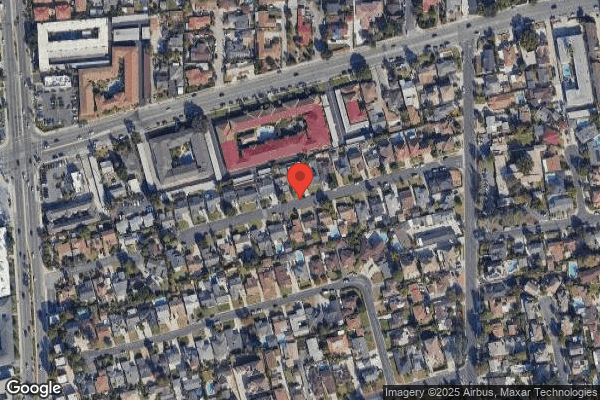

6812 N. OAK AVENUE, SAN GABRIEL, CA 91775 (626) 446-5263
For profit - Corporation 59 Beds Independent Data: November 2025
Trust Grade
75/100
#453 of 1155 in CA
Last Inspection: November 2024

Within standard 12-15 month inspection cycle. Federal law requires annual inspections.

Overview

San Marino Healthcare Center has a Trust Grade of B, which means it is considered a good choice for care, indicating quality services that are above average but not necessarily top-tier. In California, it ranks #453 out of 1,155 facilities, placing it in the top half, and it is #67 out of 369 in Los Angeles County, suggesting there are only slightly better options nearby. The facility shows an improving trend, with issues decreasing from 16 in 2024 to just 6 in 2025, demonstrating a commitment to enhancing care. Staffing is rated average with a 3 out of 5 stars and a low turnover rate of 21%, indicating that staff tend to remain at the facility longer, which is beneficial for resident care. However, there is a concerning lack of RN coverage compared to 97% of other California facilities, which could impact the quality of oversight in care. While there have been no fines, which is a positive sign, recent inspections revealed some significant concerns. For example, there was a failure to ensure food was stored and prepared in sanitary conditions, including not discarding expired food and not properly using sanitizing test strips. Additionally, there were issues with gastrostomy tube feedings not being capped correctly, which posed potential infection risks. Overall, while there are strengths in staffing stability and a good trust grade, families should carefully consider the areas needing improvement, especially regarding food safety and infection control practices.

Trust Score
B
75/100
In California
#453/1155
Top 39%
Safety Record
Low Risk
No red flags
Inspections
Getting Better
16 → 6 violations
Staff Stability
✓ Good
21% annual turnover. Excellent stability, 27 points below California's 48% average. Staff who stay learn residents' needs.
Penalties
✓ Good
No fines on record. Clean compliance history, better than most California facilities.
Skilled Nurses
⚠ Watch
Each resident gets only 12 minutes of Registered Nurse (RN) attention daily — below average for California. Fewer RN minutes means fewer trained eyes watching for problems.
Violations
⚠ Watch
43 deficiencies on record. Higher than average. Multiple issues found across inspections.
★★★★☆
4.0
Overall Rating
★★★☆☆
3.0
Staff Levels
★★★★★
5.0
Care Quality
★★★☆☆
3.0
Inspection Score
Stable
2024: 16 issues
2025: 6 issues

The Good

  • 5-Star Quality Measures · Strong clinical quality outcomes
  • Low Staff Turnover (21%) · Staff stability means consistent care
  • Full Sprinkler Coverage · Fire safety systems throughout facility
  • No fines on record
  • Staff turnover is low (21%)

    27 points below California average of 48%

Facility shows strength in quality measures, staff retention, fire safety.

The Bad

No Significant Concerns Identified

This facility shows no red flags. Among California's 100 nursing homes, only 1% achieve this.

The Ugly 43 deficiencies on record

Jul 2025 1 deficiency
CONCERN (D) 📢 Someone Reported This

A family member, employee, or ombudsman was alarmed enough to file a formal complaint

Potential for Harm - no one hurt, but risky conditions existed

Free from Abuse/Neglect (Tag F0600)

Could have caused harm · This affected 1 resident

**NOTE- TERMS IN BRACKETS HAVE BEEN EDITED TO PROTECT CONFIDENTIALITY** Based on observation, interview, and record review, the facility failed to protect one of two residents (Resident 1) from physic...

Read full inspector narrative →
**NOTE- TERMS IN BRACKETS HAVE BEEN EDITED TO PROTECT CONFIDENTIALITY** Based on observation, interview, and record review, the facility failed to protect one of two residents (Resident 1) from physical abuse (intentional bodily injury such as pinching, slapping and hitting) when Resident 2 hit, slapped, and scratched Resident 1 on 7/1/2025 in accordance with the facility's policy and procedure (P&P) titled, Abuse Prevention Program,. This deficient practice resulted in, abrasions (wound where skin rubs off due to friction) on Resident 1's left face, left upper cheek and left side of the forehead; abrasion on the middle left outer forearm; bruising on the distal (location on the body farther away from the center of the body) left outer wrist; and an abrasion on the right Achilles (back of the lower leg connecting the calf muscles to the heel bone) and placed the resident at risk for psychosocial (combined influence of psychological factors and the surrounding social environment on physical, emotional, and/or mental wellness) harm. Findings: 1. During a review of Resident 1's admission Record, the admission Record indicated Resident 1 was admitted to the facility on [DATE], with the diagnoses including but not limited to metabolic encephalopathy (abnormalities of water, electrolytes, vitamins, and other chemicals that adversely affect the brain function), dementia (progressive brain disorder that slowly destroys memory and thinking skills), and difficulty in walking. During a record review of Resident 1's Minimum Data Set (MDS, a resident assessment tool), dated 6/9/2025, the MDS indicated the resident's cognitive (mental action or process of acquiring knowledge and understanding) skills for daily decision making were severely impaired. The MDS indicated Resident 1 was dependent (helper does all of the effort, resident [NAME] none of the effort to complete the activity) for sitting to lying, lying to sitting on side of bed, sitting to standing, and chair-bed-to-chair transferring. During a record review of Resident 1's SBAR (an acronym for Situation-Background-Assessment-Recommendation is a technique used to provide a framework for communication between members of the health care team), dated 7/1/2025, the SBAR indicated Resident 1 was involved in an altercation with her roommate. The SBAR indicated at approximately 4 AM, after staff reported the altercation, noted Resident 1 sitting on the floor and Resident 2 attempting to hit Resident 1. Residents 1 and 2 were separated and noted scratches on Resident 1's left upper cheek, left side of the forehead, left forearm, and anterior aspect of the right heel. During a record review of Resident 1's Nursing Note, dated 7/1/2025, the note indicated Resident 1 had four new wounds acquired in-house as follows: - Skin issue #1: left face, left upper cheek and left side of the forehead abrasions.- Skin issue #2: Middle left outer forearm abrasion.- Skin issue #3: Distal left outer wrist bruising.- Skin issue #4: Right Achilles abrasion. During a record review of Resident 1's care plan, dated 7/1/2025, the care plan indicated physical altercation with resident's roommate (Resident 2), Resident 1 is the victim, and Resident 1 sustained scratch marks on the left arm, left cheek, left side of the forehead and right anterior aspect of the ankle and right anterior aspect of the ankle. During a record review of Resident 1's Interdisciplinary Team (IDT, group of healthcare professionals from diverse fields who work in a coordinated manner toward a common goal for the resident) Conference Record, dated 7/2/2025, the IDT record indicated Resident 1 was seen by staff being attacked by the resident's roommate (Resident 2). The IDT also indicated when charge nurse arrived both residents (Resident 1 and 2) were on the floor and Resident 2 was attempting to continue to hit/scratch/slap Resident 1. The IDT also indicated upon assessment Resident 1 was noted with scratch marks on the left arm, left cheek, left side of the forehead, and right anterior aspect of the ankle. During a record review of Resident 1's Physician Order Summary Report, dated 7/3/2025, the orders indicated as follows:- Cleanse left cheek scratch with normal saline (NS, mixture of salt and water used to replenish fluid and electrolyte), pat dry, apply triple antibiotic (used to reduce the risk of infections following minor skin injuries) and leave open to air every day shift for 30 days.- Cleanse left forearm scratch with normal saline, pat dry, apply triple antibiotic and leave open to air every day shift for 30 days.- Cleanse right heel abrasion with normal saline, pat dry, apply triple antibiotic and leave open to air every day shift for 30 days. 2. During a record review of Resident 2's admission Record, the admission Record indicated Resident 2 was admitted to the facility on [DATE], with the diagnoses including but not limited to metabolic encephalopathy, schizophrenia (a chronic and severe mental disorder that affects how a person thinks, feels, and behaves), and personal history of other mental and behavioral disorders. During a record review of Resident 2's Physician Order Summary Report, dated 3/3/2025, the order indicated Risperidone (an antipsychotic [drugs that work by altering brain chemistry to help reduce psychotic symptoms like hallucinations, delusions, and disordered thinking] medication that alters the effects of chemicals in the brain) 0.5 milligrams (mg, unit of measurement): Give one tablet by mouth one time a day for Schizophrenia manifested by rapid mood cycling as evidence by sudden shifts in mood from pleasant to extreme anger as evidenced by yelling/screaming at others. During a record review of Resident 2's MDS, dated [DATE], the MDS indicated the resident's cognitive skills for daily decision making were moderately impaired. The MDS indicated Resident 2 required partial/moderate assistance (helper does less than half the effort, helper lifts or holds trunk or limbs but provides less than half the effort) for sitting to lying, sitting to standing, and walking ten feet. The MDS also indicated Resident 2 had daily verbal behavioral symptoms (e.g., threatening others, screaming at others, cursing at others) directed toward others. During a record review of Resident 2's SBAR, dated 7/1/2025, the SBAR indicated Resident 2 had behavioral symptoms. The SBAR indicated at approximately at 4 AM staff reported Resident 2 was hitting Resident 1. The SBAR indicated LVN 1 arrived in Residents 1 and 2' room with both residents sitting on the floor and Resident 2 was attempting to hit/slap/scratch Resident 1. During a record review of Resident 2's care plan, dated 7/1/2025, the care plan indicated Resident 2 had a physical altercation with roommate Resident 1, at risk for injury to self or others, and at risk for repeat altercation with other residents. During a record review of the facility's final investigation report, dated 7/3/2025, the report indicated at approximately 4 AM (date not indicated), Resident 1 was seen by staff attacking Resident 2 in their room. During an observation on 7/16/2025 at 11:10 AM with Resident 1, Resident 1 was sitting in her wheelchair with scratch marks noted on the left arm. During an interview on 7/16/2025 at 11:24 AM with the Administrator (ADM), ADM stated there was a physical altercation between Resident 1 and Resident 2. ADM stated Resident 1 had scratches from the physical altercation and Resident 2 was the aggressor. During an interview on 7/16/2025 at 12:30 PM with Certified Nursing Assistant 2 (CNA 2), CNA 2 stated on 7/1/2025 from 3:30 AM to 4 AM Room A's (Resident 1 and 2's room) lights were on, the door was closed, and CNA 2 heard a big thump. CNA 2 stated she went to Room A and saw Resident 1 was on the while Resident 2 was in front of, on top of, and hitting Resident 1. CNA 2 stated Resident 2 was hitting Resident 1 while Resident 1 was putting her hands up and trying to protect herself. CNA 2 stated Resident 1 had scratches on one of her arms from Resident 2. During an interview and record review on 7/16/2025 at 2:10 PM with LVN 2, LVN 2 stated Resident 2's mood changes. LVN 2 stated Resident 2 would scream, yell and if close by Resident 2 she could grab you when she was in a bad mood. LVN 2 stated Resident 1 did not have behavior problems. During a concurrent record review and interview on 7/16/2025 at 2:24 PM with LVN 2 the facility's policy & procedure (P&P) titled, Abuse Prevention Program, revised December 2016 was reviewed. The policy indicated the facility's residents have the right to be free from abuse which includes physical abuse. LVN 2 stated the facility's resident has the right to be free from abuse. LVN 2 stated when a resident hits another resident that is not being free from abuse. LVN 2 stated Resident 1 was physically abused by Resident 2.
Apr 2025 2 deficiencies
CONCERN (D) 📢 Someone Reported This

A family member, employee, or ombudsman was alarmed enough to file a formal complaint

Potential for Harm - no one hurt, but risky conditions existed

Free from Abuse/Neglect (Tag F0600)

Could have caused harm · This affected 1 resident

**NOTE- TERMS IN BRACKETS HAVE BEEN EDITED TO PROTECT CONFIDENTIALITY** Based on interview and record review, the facility failed to prevent a sexual abuse (when someone touches another person in a se...

Read full inspector narrative →
**NOTE- TERMS IN BRACKETS HAVE BEEN EDITED TO PROTECT CONFIDENTIALITY** Based on interview and record review, the facility failed to prevent a sexual abuse (when someone touches another person in a sexual manner, unwanted touching of a sexual nature, or makes that person take part in sexual activity with them without consent) for one of two sampled residents (Resident 1) when Resident 2 touched Resident 1's buttocks and exposed Resident 2's private parts in front of Resident 1 on 4/12/2025 at around 6:50 AM. This deficient practice violated Resident 1's rights to befree from abuse and has the potential to have negative psychosocial (the combined influence of thoughts, feelings, behaviors, relationships and environment on a person's wellbeing and how they function) outcomes to the resident. Findings: During a review of Resident 1's admission Record indicated the resident was admitted to the facility on [DATE], with diagnoses that included injury of unspecified body region (means that there is an injury, but the exact area of the body affected is not identified ) open wound right knee, sequela (resulting from prior injury), anxiety disorder (a type of mental health condition that can cause excessive worry, restlessness, difficulty concentrating, sleep disturbances, and muscle tension), effusion right ankle (the result of excess fluids gathering in the soft tissues surrounding the joint). During a review of Resident 1's History and Physical (H&P) dated 4/13/2025 indicated Resident 1 has the capacity to understand and make decisions. During a review of the Resident 1's Progress Note dated 4/12/2025 at 12:01 PM, indicated, that around 8:25 AM the Director of Nursing (DON) called asking about the sexual abuse by Resident 2 to Resident 1 that happened on 4/12/2025 at 6:50 AM. The progress notes indicated according to the Case Manager (CM), Resident 1 emailed CM (did not specify when) and claimed that Resident 2 touched Resident 1 inappropriately on the buttocks and showed Resident 2's private parts in front of Resident 1. The progress notes indicated the night shift Charge Nurse (CN) stated resident was in station 1 waiting for Resident 1's morning medication when male resident (Resident 1) passed by and touched Resident 1 inappropriately and showed his private parts to Resident 1. The progress notes indicated Certified Assistant Nurse (CNA1) was present at the time of the sexual abuse incident and told Resident 2 that what Resident 2 did was not allowed. The progress notes also indicated, Resident 2 then turned around while in his wheelchair and pulled-down Resident 1's pants and underwear to show Resident 2's private part to Resident 1 and CNA 1. The progress notes indicated, on 4/12/2025 at around 9:15 AM RN Sup 1 left a voicemail at the local PD, at 9:17 AM called SSA left message and at 9:19 AM called Ombudsman left message. During a review of Resident 1's written statement undated, indicated on 4/12/2025 at 6:50 AM, Resident 1 was standing waiting for pain medication at the nursing station at around 6:50 AM, Resident 2 passed by while Resident 1 while sitting in the resident's wheelchair and slapped her (Resident 1) buttocks twice quickly. The written statement indicated at around 6:53 AM, Resident 2 taunted Resident 1 making a facial gesture of no regrets and CNA1 was present and witnessed the incident. The written statement also indicated, Resident 2 turned around while Resident 2 was in his wheelchair and pulled down his pants and underwear showing/ exposing Resident 2's penis. During a review of the facility Investigation Statement for Certified Nursing Assistant (CNA1) dated 4/13/2025, the investigation statement indicated CNA1 stated that on 4/12/2025 at around 6:50 AM, Resident 1 was standing at the hallway near the Nursing Station and Resident 2 passed by and touched Resident 1 on Resident 1's buttocks. The investigative statement indicated CNA1 reported it to the Charge Nurse (CN) and it did not indicate if it was reported to SSA, Ombudsman and/ or local PD. During a review of Resident 2's admission Record indicated Resident 2 was admitted to the facility on [DATE] with a diagnosis of dysphagia (difficulty swallowing), oral phase (problems with using the mouth, lips and tongue to control food or liquid), schizophrenia (a mental disorder with a range of symptoms that affect thoughts, behaviors, and perceptions of reality), acquired absence of left leg above the knee, and anxiety disorder. During a review of Resident 2's History and Physical (H&P) dated 8/09/2025 indicated Resident 2 has the mental capacity to understand and make medical decisions. During a review of Resident 2's Minimum Data Set (MDS- a resident assessment tool), dated 2/12/2025, the MDS indicated Resident 2 needed supervision (helper provides verbal cues and resident completes activity) assistance from staff for toileting hygiene, showers and lower body dressing and setup or clean-up assistance (helper sets up or cleans up; resident completes activity) for oral and personal hygiene and putting on/taking off footwear. During an interview with the Director of Nursing (DON) on 4/15/2025 at 7:37 AM, the DON stated CM called her on 4/12/2025 regarding an incident that happened on 4/12/2025 at around 6:50 AM, between Resident 1 and Resident 2. The DON stated that CM told the DON that according to Resident 1, Resident 1 was standing in the hallway near the nurse's station when Resident 2 passed by and touched Reisdent 1's buttocks and exposed Resident 2's private area to Resident 1 and CNA1. During a concurrent interview with Registered Nurse Supervisor (RN Sup 1) on 4/15/2025 8:33 AM, RN Sup 1 stated that Resident 1 told RN Sup 1 that on 4/12/2025 at around 6:50 AM, Resident 2 pulled Resident 2's pants down while in the wheelchair and showed Resident 2's private part to Resident 1. RN Sup 1 stated, Resident 1 told RN Sup 1 that CNA1 saw the sexual abuse by Resident 2 to Resident 1. RN Sup 1 stated Resident 2 showing his private area to Resident 1 was considered a sexual abuse and can cause Resident 1 psychosocial harm. During an interview with CM on 4/15/2025 at 10:49 AM, CM stated she received an email from Resident 1 on 4/12/2025 in the morning indicating Resident 2 touched Resident 1 inappropriately and then exposed Resident 2's private area to Resident 1 and CNA1. During an interview with CN on 4/15/2025 at 12:17 AM, CN stated, It is not acceptable for a resident to touch another resident's buttocks, it is inappropriate, and it is a type of abuse, especially if there was no consent. It is considered sexual abuse. During an interview with CNA1 on 4/17/2025 at 9:02 AM, CNA1 stated the incident between Resident 1 and 2 happened right before change of shift on date?? at around 6:50 AM. CNA1 stated she witnessed Resident 2 passing by the hallway near the nurse's station and touched Resident 1's buttocks. CNA1 stated she approached Resident 2 and told him it was inappropriate to touch another resident's buttocks and then Resident 2 then proceeded to pull down Resident 2's pants and exposed his penis to both Resident 1 and CNA1. During a review of the facility's policy revised 8/2006, titled Abuse Prevention Program indicated, Our residents have the right to be free from abuse. The policy indicated the facility is committed to protecting the residents from abuse by anyone including, but not necessarily limited to: facility staff, other residents .or any other individual.
CONCERN (D) 📢 Someone Reported This

A family member, employee, or ombudsman was alarmed enough to file a formal complaint

Potential for Harm - no one hurt, but risky conditions existed

Report Alleged Abuse (Tag F0609)

Could have caused harm · This affected 1 resident

**NOTE- TERMS IN BRACKETS HAVE BEEN EDITED TO PROTECT CONFIDENTIALITY** Based on observations, interview and record review, the facility failed to report a sexual abuse (when someone touches another p...

Read full inspector narrative →
**NOTE- TERMS IN BRACKETS HAVE BEEN EDITED TO PROTECT CONFIDENTIALITY** Based on observations, interview and record review, the facility failed to report a sexual abuse (when someone touches another person in a sexual manner, unwanted touching of a sexual nature, or makes that person take part in sexual activity with them without consent)for one of two sampled residents (Resident 1) to the State Survey Agency (SSA), the Ombudsman (advocates for residents of nursing homes, board and care homes and assisted living facilities), and local law enforcement (Local PD) within two (2) hours from when Certified Nurse Assistant (CNA) 1 witnessed Reisdent 2 inappropriately touched Resident 1 buttocks and when Resident 2 exposed his private area in front of Resident 1 and CNA 1 on 4/12/2025 at 6:50 AM. This deficient practice had the potential to place Resident 1 and other residents for further abuse. Findings: During a review of Resident 1's admission Record indicated the resident was admitted to the facility on [DATE], with diagnoses that included injury of unspecified body region (means that there's an injury, but the exact area of the body affected is not identified ) open wound right knee, sequela (resulting from prior injury), anxiety disorder (a type of mental health condition that can cause excessive worry, restlessness, difficulty concentrating, sleep disturbances, and muscle tension), effusion right ankle (the result of excess fluids gathering in the soft tissues surrounding the joint). During a review of Resident 1's History and Physical (H&P) dated 4/13/2025 indicated Resident 1 has the capacity to understand and make decisions. During a review of the Resident 1's Progress Note dated 4/12/2025 at 12:01 PM, indicated, that around 8:25 AM the Director of Nursing (DON) called asking about the sexual abuse by Resident 2 to Resident 1 that happened on 4/12/2025 at 6:50 AM. The progress notes indicated according to the Case Manager (CM), Resident 1 emailed CM (did not specify when) and claimed that Resident 2 touched Resident 1 inappropriately on the buttocks and showed Resident 2's private parts in front of Resident 1. The progress notes indicated the night shift Charge Nurse (CN) stated resident was in station 1 waiting for Resident 1's morning medication when male resident (Resident 1) passed by and touched Resident 1 inappropriately and showed his private parts to Resident 1. The progress notes indicated Certified Assistant Nurse (CNA1) was present at the time of the sexual abuse incident and told Resident 2 that what Resident 2 did was not allowed. The progress notes also indicated, Resident 2 then turned around while in his wheelchair and pulled-down Resident 1's pants and underwear to show Resident 2's private part to Resident 1 and CNA 1. The progress notes indicated, on 4/12/2025 at around 9:15 AM RN Sup 1 left a voicemail at the local PD, at 9:17 AM called SSA left message and at 9:19 AM called Ombudsman left message. During a review of Resident 1's written statement undated, indicated on 4/12/2025 at 6:50 AM, Resident 1 was standing waiting for pain medication at the nursing station at around 6:50 AM, Resident 2 passed by while Resident 1 while sitting in the resident's wheelchair and slapped her (Resident 1) buttocks twice quickly. The written statement indicated at around 6:53 AM, Resident 2 taunted Resident 1 making a facial gesture of no regrets and CNA1 was present and witnessed the incident. The written statement also indicated, Resident 2 turned around while Resident 2 was in his wheelchair and pulled down his pants and underwear showing/ exposing Resident 2's penis. During a review of the facility Investigation Statement for Certified Nursing Assistant (CNA1) dated 4/13/2025, the investigation statement indicated CNA1 stated that on 4/12/2025 at around 6:50 AM, Resident 1 was standing at the hallway near the Nursing Station and Resident 2 passed by and touched Resident 1 on Resident 1's buttocks. The investigative statement indicated CNA1 reported it to the Charge Nurse (CN) and it did not indicate if it was reported to SSA, Ombudsman and/ or local PD. During a review of Resident 2's admission Record indicated Resident 2 was admitted to the facility on [DATE] with a diagnosis of dysphagia (difficulty swallowing), oral phase (problems with using the mouth, lips and tongue to control food or liquid), schizophrenia (a mental disorder with a range of symptoms that affect thoughts, behaviors, and perceptions of reality), acquired absence of left leg above the knee, and anxiety disorder. During a review of Resident 2's History and Physical (H&P) dated 8/09/2025 indicated Resident 2 has the mental capacity to understand and make medical decisions. During a review of Resident 2's Minimum Data Set (MDS- a resident assessment tool), dated 2/12/2025, the MDS indicated Resident 2 needed supervision (helper provides verbal cues and resident completes activity) assistance from staff for toileting hygiene, showers and lower body dressing and setup or clean-up assistance (helper sets up or cleans up; resident completes activity) for oral and personal hygiene and putting on/taking off footwear. During an interview with the Director of Nursing (DON) on 4/15/2025 at 7:37 AM, the DON stated CM called her on 4/12/2025 regarding an incident that happened that same day (4/12/2025) at around 6:50 AM, between Resident 1 and Resident 2. The DON stated that CM told the DON that according to Resident 1, the resident was standing in the hallway near the nurse's station when Resident 2 passed by and touched Reisdent 1's buttocks and exposed Resident 2's private area in front of Resident 1 and CNA1. During an interview with Registered Nurse Supervisor (RN Sup 1) on 4/15/2025 at 8:10 AM, RN Sup 1 stated, when I interviewed the night shift nurses (that worked on 4/12/2025), they said the incident (Resident 2 inappropriately touching Resident 1's buttocks) happened at 6:50 AM, close to change of shift at 7 AM. RN Sup 1 stated the time frame to call and report an abuse to SSA, Ombudsman and local PD is within 2 hours from the allegation was made or when the abuse was witnessed which was on 4/12/2025 at 6:50 AM. RN Sup 1 stated, RN Sup 1 reported the abuse by Resident 2 to Resident 1 to SSA, Ombudsman and local PD on 4/12/2025 between 9:15 AM to 9:30 AM and it was passed the two-hour window to report. During a concurrent interview with RN Sup 1 on 4/15/2025 8:33 AM, RN Sup stated the abuse by Resident 2 to Resident 1 should have been reported to SSA within 2 hours from when it happened and if the facility did not report it, Resident 2 can do the inappropriate sexual behavior again to Resident 1 or other resident in the facility. RN Sup 1 stated, this can cause Resident 1 psychosocial harm (harm to a person's mental or emotional well-being, often caused by factors in their work or social environment). During an interview with the admin on 4/15/2025 at 11:18 AM, Admin stated he received a phone call from DON on Saturday (4/12/2025) morning around 8:30 AM to 9:30 AM. Admin stated, I am the abuse coordinator. Admin stated, the facility has to report but for a serious allegation such as abuse to SSA, Ombudsman and local PD within 2 hours from the incident of abuse or allegation. Admin stated the charge nurse during the abuse incident happened was the one responsible to start the process of the investigation and make the report to SSA, Ombudsman and local PD from when the CNA 1 witnessed the sexual abuse by Resident 2 to Resident 1. Admin stated, it is not acceptable that the abuse incident by Resident 2 to Resident 1 was not reported within 2 hours to the appropriate agencies to ensure the safety of all the residents regardless of any allegation. Admin stated, the sexual abuse by Resident 2 to Resident 1 happened on 4/12/2025 at around 6:50 AM and it was not reported to the appropriate agencies not until 9:15 AM (2 hours and 30 minutes) which was more than the 2 hours- time frame. During a concurrent interview with CN on 4/15/2025 at 12:17 AM, CN stated, When there is abuse reported, I must investigate and report to DON, Admin, local PD and Ombudsman within 2 hours. I did not endorse to RN Sup during change of shift. It's not acceptable for a resident to touch another resident's butt, it's inappropriate and it's a type of abuse, especially if there's no consent. It's considered sexual abuse. During an interview with CNA1 on 4/17/2025 at 9:02 AM, CNA1 stated the incident between Resident 1 and 2 happened right before change of shift on 4/12/2025 at around 6:50 AM. CNA1 stated CNA1 witnessed Resident 2 passing by in the hallway near the nurse's station and touching Resident 1's buttocks. CNA1 stated she approached Resident 2 and told him it was inappropriate to touch another resident's buttocks and Resident 2 then proceeded to pull down his pants and exposed Resident 2's penis to both Resident 1 and CNA1. CNA1 stated she let CN know about the incident with Resident 1 and 2. CNA1 stated, CNA1 was not aware the incident between Resident 1 and 2 was not reported by the CN to Admin, SSA, local PD and to ombudsman within 2 hours. During a review of the facility's policy revised on 9/2022, titled, Abuse, Neglect (failure to provide care), Exploitation (treating someone unfairly) or Misappropriation or Misappropriation (unauthorized use of someone else's belongings)-Reporting and Investigation, indicated, All reports of resident abuse (including injuries of unknow origin), neglect, exploitation, or theft/misappropriation of resident property are reported to local, state and federal agencies (as required by current regulations) and thoroughly investigated by facility management. Findings of all investigations are documented and reported. 1. If resident abuse, neglect, exploitation is suspected, the suspicion must be reported immediately to the administrator and to tother officials according to state law. 2. The administrator or the individual making the allegation immediately reports his or her suspicion to the following persons or agencies: a. The state licensing/certification agency responsible for surveying/licensing the facility (SSA) b. The local/state ombudsman e. Law enforcement 3. Immediately is defined as: a. Within two hours of an allegation involving abuse 4. Verbal/written notices to agencies are submitted via special carrier, facsimile (fax), electronic mail (email), or by telephone.
Mar 2025 1 deficiency
CONCERN (D) 📢 Someone Reported This

A family member, employee, or ombudsman was alarmed enough to file a formal complaint

Potential for Harm - no one hurt, but risky conditions existed

Resident Rights (Tag F0550)

Could have caused harm · This affected 1 resident

**NOTE- TERMS IN BRACKETS HAVE BEEN EDITED TO PROTECT CONFIDENTIALITY** Based on observation, interview and record review, the facility failed to ensure one (1) of two (2) sampled residents (Resident ...

Read full inspector narrative →
**NOTE- TERMS IN BRACKETS HAVE BEEN EDITED TO PROTECT CONFIDENTIALITY** Based on observation, interview and record review, the facility failed to ensure one (1) of two (2) sampled residents (Resident 1) privacy was protected while Resident 1 was using the restroom/bathroom on 2/28/2025 in accordance with the facility's policy titled, Resident Rights. This deficient practice violated Resident 1's rights to privacy and has the potential to have negative psychosocial (the combined influence of thoughts, feelings, behaviors, relationships and environment on a person's wellbeing and how they function) outcomes to the resident. Findings: During a review of Resident 1's admission Record, the admission Record indicated the resident was admitted to the facility on [DATE] with diagnoses of schizoaffective disorder (a mental illness that can affect thoughts, mood, and behavior) bipolar type (mood swings that range from the lows of depression to elevated periods of emotional highs). During a review of Resident 1's Minimum Data Set (MDS- a resident assessment tool), dated 2/10/2025, the MDS indicated Resident 1 had moderate cognitive (mental action or process of acquiring knowledge and understanding) skills for daily decision making. The MDS also indicated Resident 1 required substantial/ maximal assistance (helper does more than half the effort) with oral, toileting, and personal hygiene, shower, upper and lower body dressing and putting on/taking off footwear. The MDS further indicated Resident 1 required supervision (helper provides cues) with eating. During a review of Resident 1's progress notes dated 2/28/2025 at 2:42 PM, the progress notes indicated the Social Worker (SW) was informed by Resident 1 that Resident 2 went into the restroom and asked Resident 1 to get out because Resident 2 is going to take a shower. During a review of Resident 2's admission Record, the admission Record indicated the resident was initially admitted to the facility on [DATE] and readmitted on [DATE] with diagnoses of paranoid schizophrenia (a mental illness that is characterized by disturbances in thought) and major depressive disorder (a mood disorder that causes a persistent feeling of sadness and loss of interest). During a review of Resident 2's MDS, dated [DATE], the MDS indicated Resident 2 had moderate cognitive skills for daily decision making. The MDS also indicated Resident 2 required setup assistance (helper sets up or cleans up; resident completes activity) with toileting and personal hygiene, shower, and lower body dressing and was independent (resident completes the activity by himself with no assistance from a helper) with eating, oral hygiene, upper body dressing and putting on/taking off footwear. During a concurrent observation and interview on 3/14/2025 at 12:08 PM, the facility had a common restroom/bathroom (used for male and female) next to Resident 1's room. The restroom/ bathroom's doorknob did not have a lock/unlock feature and did not have a signage to indicate the restroom/bathroom was in use. Resident 1 stated the way the bathroom was set up there was no way an individual would know that someone was inside using it. Resident 1 also stated she felt her privacy was violated on 2/28/2025 when Resident 2 entered the restroom asking her to get out. During an interview on 3/14/2025 at 12:58 PM, Certified Nursing Assistant 1 (CNA 1) stated residents had the right to have privacy and dignity whether they are alert or not. CNA 1 also stated the sense of dignity is important for these residents and they would not want to be seen while using the restroom. CNA 1 further stated Resident 1 wanted privacy and dignity and should be respected. During an interview on 3/14/2025 at 1:30 PM, Licensed Vocational Nurse 1 (LVN 1) stated Resident 1 had the right to have privacy and dignity. LVN 1 also stated Resident 1's privacy was violated when Resident 2 entered the restroom while Resident 1 was using the restroom on 2/28/2025. LVN 1 further stated the facility had to ensure there are signages outside the bathrooms that indicated it is being used in that way other resident would know whether they can use the restroom/ bathroom or not. During an interview on 3/14/2025 at 2:53 PM, the Director of Nursing (DON) stated the facility should always protect their residents' rights for dignity and privacy. During a review of the facility's policy and procedure titled, Quality of Life - Dignity, revised, February 2020, indicated, each resident shall be cared for in a manner that promotes and enhances his or her sense of well-being, level of satisfaction with life, feeling of self-worth and self-esteem. The policy also indicated that the staff shall promote, maintain and protect resident privacy, including bodily privacy during assistance with personal care . During a review of the facility's policy and procedure titled, Resident Rights, revised, February 2021, indicated that Federal and state laws guarantee certain basic rights to all residents of the facility. The policy also indicated that these rights include the residents' rights to privacy.
Feb 2025 1 deficiency
CONCERN (D) 📢 Someone Reported This

A family member, employee, or ombudsman was alarmed enough to file a formal complaint

Potential for Harm - no one hurt, but risky conditions existed

Medication Errors (Tag F0758)

Could have caused harm · This affected 1 resident

**NOTE- TERMS IN BRACKETS HAVE BEEN EDITED TO PROTECT CONFIDENTIALITY** Based on observation, interview, and record review, the facility failed to ensure one (1) of two (2) sampled residents (Resident...

Read full inspector narrative →
**NOTE- TERMS IN BRACKETS HAVE BEEN EDITED TO PROTECT CONFIDENTIALITY** Based on observation, interview, and record review, the facility failed to ensure one (1) of two (2) sampled residents (Resident 1) was free from an unnecessary psychotropic drug (any medication capable of affecting the mind, emotions, and behavior) in accordance with the facility policy and procedure (P&P) titled Psychotropic Medication Use, by failing to ensure: A. Resident 1 have indication for a specific target behavior such as sudden striking or hitting another resident in the physician's order dated 2/17/2025 for the use of Risperdal (medication to treat certain mental/mood disorders). B. Resident 1 have an order to monitor and / or record occurrence of target behavior such as sudden striking for the use of Risperdal. C. Resident 1 have an order to monitor and document/report any adverse (harmful) reactions to Risperdal. These deficient practices had the potential to place Resident 1 at risk for significant adverse (harmful) consequences from the use of unnecessary psychotropic drug, which could result to impairment or decline in the residents' mental, physical condition, functional, and psychosocial (pertaining to the influence of social factors on an individual's mind or behavior) status. Findings: During a review of Resident 1's admission Record, indicated Resident 1 was admitted to the facility on [DATE] with diagnoses that included schizophrenia (a mental illness that is characterized by disturbances in thought), major depressive disorder (a mood disorder that causes a persistent feeling of sadness and loss of interest), and anxiety disorder (a type of mental health condition). During a review of Resident 1's Minimum Data Set (MDS, a resident assessment tool), dated 11/8/2024, the MDS indicated Resident 1's cognitive (ability to think and reason) skills for daily decision making was moderately impaired (decisions poor; cues/supervision required). The MDS indicated presence of mood symptoms such as little interest or pleasure in doing things, feeling down, depressed, or hopeless, feeling tired or having little energy, and poor appetite or overeating. The MDS indicated Resident 1 required setup or clean-up assistance (helper sets up or cleans up) with eating. The MDS also indicated Resident 1 required partial/moderate assistance (helper does less than half the effort) with oral hygiene, toileting hygiene, shower/bath, upper body dressing, lower body dressing, putting on/taking off footwear and personal hygiene. The MDS indicated Resident 1 received antipsychotic medication (any drug that affects brain activities associated with mental processes and behavior) on a routine basis. During a review of Resident 1's Order Summary Report dated 2/19/2025, timed 3:23 PM, indicated an order of Risperdal oral tablet 1 milligram, give 1 tablet by mouth two times a day for schizophrenia, with order date of 2/17/2025, and start date of 2/18/2025. During an observation on 2/19/2025 at 12:48 PM with Resident 1, in the activity room, Resident 1 is sitting in a chair, Resident 1 is staring at the floor, Resident faced the wall when approached, and Resident 1 refused to be interviewed. During an interview on 2/19/2025 at 12:50 PM with Certified Nurse Assistant (CNA) 1, CNA 1 stated she witnessed Resident 1 punched another resident for the first time on 2/5/2025. During an interview on 2/19/2025 at 3:06 PM with CNA 2, CNA 2 stated Resident 1 sometimes has a different mood wherein Resident 1 is hard to approach and Resident 1 just want to be left alone. During a concurrent record review and interview on 2/19/2025 at 3:12 PM with Licensed Vocational Nurse (LVN) 1, Resident 1's active orders as of 2/19/2025 were reviewed. LVN 1 stated Risperdal for schizophrenia that was ordered on 2/17/2025 is incomplete because there is no specific targeted behavior indicated in the physician's order such as sudden striking or hitting another resident. LVN 1 stated including specific target behavior for the use of Risperdal is important to know what behaviors to monitor and to know what the medication is for. LVN 1 stated Resident 1 has no order for monitoring of specific behavior for the use of Risperdal and no order to monitor adverse reaction of Risperdal. During a concurrent record review and interview on 2/19/2025 at 3:38 PM with Registered Nurse (RN) 1, Resident 1's active orders as of 2/19/2025 were reviewed. RN 1 stated Resident 1's Risperdal order on 2/17/2025 did not and should have a specific behavior such as sudden striking or hitting another resident to be monitored for its use. RN 1 stated it was important to include the specific target behavior so the licensed nurses would know what the Risperdal is for. RN 1 stated Resident 1 did not have and should have an order to monitor adverse reaction to Risperdal. RN 1 stated that antipsychotic medication needs monitoring of specific target behavior so the facility would know if the medication was effective to manage the behavior or not. RN 1 stated specific behavior manifestation such as hitting another resident or physically aggressive behavior should have been in Resident 1's order for Risperdal, and an order of behavior monitoring that to be documented and tallied by the end of the month should be active to have validation for the effectiveness or the need of medication adjustment. During a concurrent record review and interview on 2/19/2025 at 4 PM with Interim Director of Nursing (DON), Resident 1's active orders as of 2/19/2025 were reviewed. The Interim DON verified Resident 1's has an order of Risperdal for schizophrenia, she added it was an incomplete order since there is no specific target behavior for the use of Risperdal. The Interim DON also stated monitoring of specific behavior for the use of Risperdal and monitoring of adverse reaction was not ordered for Resident 1. The Interim DON stated Risperdal order with a specific target behavior was necessary, so the staff know what the medication is for. The Interim DON stated that psychotropic drugs need monitoring of specific target behavior so the facility would know if the behavioral management was effective or not. The Interim DON stated Resident 1 has a behavior of being physically aggressive to another resident. The Interim DON verified that this behavior was not indicated in Resident 1's Risperdal order. During a review of the Facility's Policy and Procedure (P&P) titled Psychotropic Medication Use, dated July 2022, indicated Residents will not receive medications that are not clinically indicated to treat a specific condition. It also indicated consideration of the use of any psychotropic medication is based on comprehensive review of the resident. This includes evaluation of the resident's signs and symptoms in order to identify underlying causes. Residents receiving psychotropic medications are monitored for adverse consequences (negative outcomes or effects).
Jan 2025 1 deficiency
CONCERN (D) 📢 Someone Reported This

A family member, employee, or ombudsman was alarmed enough to file a formal complaint

Potential for Harm - no one hurt, but risky conditions existed

Quality of Care (Tag F0684)

Could have caused harm · This affected 1 resident

**NOTE- TERMS IN BRACKETS HAVE BEEN EDITED TO PROTECT CONFIDENTIALITY** Based on observation, interview and record review, the facility failed to ensure one of three sampled residents (Resident 1), wo...

Read full inspector narrative →
**NOTE- TERMS IN BRACKETS HAVE BEEN EDITED TO PROTECT CONFIDENTIALITY** Based on observation, interview and record review, the facility failed to ensure one of three sampled residents (Resident 1), wore the [NAME] brace (a brace used to stabilize and treat broken bones in the upper arm) as ordered by the physician and indicated in Resident 1 ' s care plan. This failure placed Resident 1 at risk for delayed healing and/or worsening of the right humerus fracture (a break in the upper arm bone on the right side of the body) and a decline in right arm range of motion (ROM, the full movement potential of a joint, usually its range of flexion and extension). Findings: During a review of Resident 1 ' s admission Record, the admission indicated Resident 1 was admitted to the facility on [DATE] with diagnoses that included a displaced fracture (two or more portions of broken bone come out of proper alignment) of shaft of humerus (upper arm bone) on the right arm, pathological fracture (a break in an area of bone that has been weakened by an underlying disease) of the right humerus and dementia (decline in mental ability severe enough to interfere with daily functioning/life). During a review of Resident 1 ' s Minimum Data Set (MDS- a resident assessment tool), dated 1/24/2025, the MDS indicated Resident 1 with severely impaired cognitive skills (ability to understand and make decisions). The MDS indicated Resident 1 was dependent (helper does all effort needed to complete activity) with eating, bathing, dressing, toileting and oral hygiene. During a review of Resident 1 ' s History & Physical (H&P), dated 1/22/2025, the H&P indicated Resident 1 was unable to communicate/make decisions for self. During a review of Resident 1 ' s Order Summary Report, dated 1/30/2025, the Order Summary Report indicated Resident 1 would wear [NAME] brace to the right upper extremity at all times until cleared by MD and may be removed during sponge bathing while maintaining fracture and non-weight bearing precaution to right upper extremity (RUE) every shift. During a review of Resident 1 ' s Fracture to the Right Humerus care plan (a document that outlines the facility ' s plan to provide personalized care to a resident that includes measurable objectives and timeframes to meet a resident's medical, nursing, and mental and psychosocial needs), revised 1/15/2025, the care plan indicated [NAME] brace to Resident 1 ' s right upper extremity at all times until cleared by the medical doctor (MD). During an observation on 1/30/2025 at 7:46AM, Resident 1 was observed lying in bed without a [NAME] brace on the right arm. The [NAME] brace was observed on top of the nightstand next to Resident 1. During a concurrent observation and interview on 1/30/2025 at 7:57AM with Restorative Nurse Assistant 1 (RNA 1), RNA 1 was observed applying the [NAME] brace to Resident 1 ' s right arm. RNA 1 stated he does not know when or why Resident 1 ' s [NAME] brace was removed. RNA 1 stated the brace prevents dislocation of Resident 1 ' s fracture and should always be on. During an interview on 1/30/2025 at 8:09AM with Licensed Vocational Nurse 1 (LVN 1), LVN 1 stated Resident 1 should be wearing the [NAME] brace for the right humerus fracture at all times according to the physician ' s order. LVN 1 stated during the morning rounds around 7:10AM, Resident 1 was not wearing the right arm brace. LVN 1 stated she attempted to reapply the [NAME] brace, but stopped because she was scared and did not want to move Resident 1 ' s fractured right arm. During an interview on 1/30/2025 at 8:25AM with Registered Nurse Supervisor 1 (RNS 1), RNS 1 stated Resident 1 was supposed to wear the [NAME] brace all the time, except during a sponge bath but should be reapplied after. RNS 1 stated physical therapists (PT) were responsible in reapplying the brace when necessary, and if removed when PT are not in the facility, staff would wait for PT to arrive to reapply the brace. During an interview on 1/30/2025 at 1:44PM with LVN 1, LVN 1 stated it was important to ensure Resident 1 was wearing the [NAME] brace as ordered and indicated in the care plan because it was necessary to allow healing and prevent a second dislocation in Resident 1 ' s right arm. During an interview on 1/30/2025 at 1:48PM with Occupational Therapist (OT 1), OT 1 stated Resident 1 had a [NAME] brace that was worn at all times to help immobilize (prevent movement) and heal the right arm fracture. OT 1 stated this brace was important because Resident 1 was unable to have surgery to fix the fracture, so this was the primary treatment. OT 1 stated the brace can be removed for sponge baths but needed to be reapplied directly after by therapy staff, licensed nurses and/or certified nurse assistants. During an interview on 1/30/2024 at 2:05PM with the Director of Nursing (DON), the DON stated Resident 1 should have the [NAME] brace all times unless removed for baths per the MD order and must be reapplied after by licensed staff. DON stated it was important to ensure Resident 1 wore the brace at all times for continuity of care and to prevent further injury to the right arm fracture. During a review of the facility ' s Policy & Procedure (P&P) titled, Splinting, revised 12/1/2003, the P&P indicated splinting (the use of a supportive device that involves immobilizing an injured or diseased body part) is used to protect joints and surrounding tissue with a goal to maintain range of motion. During a review of the facility ' s P&P titled, Assistive Devices and Equipment, revised 1/2020, the P&P indicated the facility maintains and supervises the use of assistive devices and equipment for residents ' mobility, safety and independence.
Nov 2024 11 deficiencies
CONCERN (D)

Potential for Harm - no one hurt, but risky conditions existed

Resident Rights (Tag F0550)

Could have caused harm · This affected 1 resident

**NOTE- TERMS IN BRACKETS HAVE BEEN EDITED TO PROTECT CONFIDENTIALITY** Based on observation, interview, and record review, the facility failed to provide care in a manner that maintained or enhanced ...

Read full inspector narrative →
**NOTE- TERMS IN BRACKETS HAVE BEEN EDITED TO PROTECT CONFIDENTIALITY** Based on observation, interview, and record review, the facility failed to provide care in a manner that maintained or enhanced a resident's dignity and respect for two (2) of 15 sampled residents (Resident 37 and 42) by failing to ensure facility staff did not stand over and above resident's eye level while assisting the resident during meal. This deficient practice had the potential to affect Resident 37 and 42's self-esteem and self-worth. Findings: 1. During a review of Resident 37's admission Record, the admission Record indicated the resident was admitted to the facility on [DATE] with diagnoses that included generalized muscle weakness and polyneuropathy (conditions affecting nerve function in various parts of the body, leading to symptoms such as weakness, numbness, and burning pain). During a review of Resident 37's Minimum Data Set (MDS, a federally mandated assessment tool), dated 10/7/2024, the MDS indicated Resident 37 had moderate impairment in cognitive (mental action or process of acquiring knowledge and understanding) skills for daily decision making. The MDS also indicated Resident 37 was dependent (helper does all the effort) with toileting hygiene, shower, upper and lower body dressing, and putting on/taking off footwear. The MDS further indicated Resident 35 required substantial assistance (helper does more than half the effort) with oral and personal hygiene and partial assistance (helper does less than half the effort) with eating. During a meal observation on 11/12/2024 at 12:22 PM in Resident 37's room, Resident 37 was observed seated on a wheelchair while being assisted with eating by Certified Nursing Assistant 1 (CNA 1) placed a towel on top of the resident's chest area to protect clothes. CNA 1 was observed standing over Resident 37 and was not within eye level of the resident. CNA1 was heard stating, Yummy, yummy to Resident 37. 2. During a review of Resident 42's admission Record, the admission Record indicated the resident was initially admitted to the facility on [DATE] and was readmitted on [DATE] with diagnoses that included major depressive disorder (a mood disorder that causes a persistent feeling of sadness and loss of interest) and dementia (loss of cognitive functioning such as thinking, remembering, and reasoning to such an extent that it interferes with a person's daily life and activities). During a review of Resident 42's MDS dated [DATE], the MDS indicated Resident 42 had severe impairment in cognitive skills for daily decision making. The MDS also indicated Resident 42 was dependent with toileting hygiene, shower, lower body dressing, and putting on/taking off footwear and required substantial assistance with oral and personal hygiene, and upper body dressing. The MDS further indicated Resident 42 required partial assistance with eating. During a concurrent observation and interview on 11/12/2024 12:33 PM in Resident 42's room, Resident 42 was observed seated at the side of the bed while CNA 1 was standing over feeding the resident. CNA 1 stated it was easier for her to feed the residents while standing up. During an interview on 11/12/2024 at 3:22 PM, Licensed Vocational Nurse 2 (LVN 2) stated staff should be seated so can be within eye level when feeding the resident for dignity and respect. During an interview on 11/13/2024 at 4:35 PM, the Director of Nursing (DON) stated the staff should be seated so can be within eye level when feeding the resident so staff can observe the resident in case of choking. The DON stated this will also ensure comfort and dignity of the residents. During a review of the facility's Policy and Procedure (P&P) titled, Assistance with Meals, revised July 2017, P&P indicated that residents who cannot feed themselves will be fed with attention to safety, comfort, and dignity such as not standing over the residents while assisting them with meals and avoiding use of bibs or clothing protectors instead of napkins, unless requested by the resident.
CONCERN (D)

Potential for Harm - no one hurt, but risky conditions existed

Deficiency F0552 (Tag F0552)

Could have caused harm · This affected 1 resident

**NOTE- TERMS IN BRACKETS HAVE BEEN EDITED TO PROTECT CONFIDENTIALITY** Based on observation, interview, and record review, the facility licensed staff failed to obtain an informed consent (a process ...

Read full inspector narrative →
**NOTE- TERMS IN BRACKETS HAVE BEEN EDITED TO PROTECT CONFIDENTIALITY** Based on observation, interview, and record review, the facility licensed staff failed to obtain an informed consent (a process in which a resident and his/her medical provider communicate about medical procedure or treatment, including its possible risks and benefits, and the resident agrees to it) from the resident's responsible party before administering Quetiapine Fumarate (an antipsychotic medication, a drug used to treat serious mental health conditions), for one (1) of 15 sampled residents (Resident 19) in accordance with the facility policy. This deficient practice violated the resident's right to be fully informed and consent to receive psychoactive medications. Findings: During a review of Resident 19's admission Record, the admission Record indicated the facility admitted Resident 19 on 9/18/2024 and was readmitted on [DATE] with diagnoses which included schizophrenia (a serious mental health condition that affects how people think, feel, and behave), anxiety (a feeling of fear, dread, and uneasiness), dementia (a term for several diseases that affect memory, thinking, and the ability to perform daily activities). During a review of Resident 19's MDS, a federally mandated resident assessment tool), dated 10/29/2024, the MDS indicated Resident 19 was severely impaired (never/rarely made decisions) with cognitive (mental action or process of acquiring knowledge and understanding) skills for daily decision making. The MDS also indicated Resident 19 needs supervision or touching assistance (helper provides verbal cues and touching steadying as resident complete activity) on eating, oral hygiene. Partial moderate assistance (helper does less than half the effort, helper lift, holds or supports trunk or limb but provides less than half the effort) on upper and lower body dressing, personal hygiene. During a review of Resident 19's Order Summary Report, dated 11/13/2024, the Order summary report indicated an order date of 11/5/2024 for Quetiapine Fumarate oral tablet 25 milligrams (mg, unit of measurement) two times a day for schizophrenia manifested by disorganized thoughts as evidenced by talking and mumbling. During a concurrent interview and record review of Resident 19's chart on 11/13/2024 at 11:56 AM with Licensed Vocational Nurse 3 (LVN 3), LVN 3 stated there was no informed consent for Resident 19's use of Quetiapine Fumarate. LVN 3 also stated if there was no consent that means the resident or responsible party did not give authorization to take the medication. LVN 3 added, the informed consent should be available at the chart all the time. During a concurrent review of Resident 19's Medication Administration Record (MAR) for the month of 11/2024 and interview on 11/13/2024 at 12:28 PM with Registered Nurse 1 (RN 1), RN1 stated Resident 19 has been taking Quetiapine Fumarate 25mg for nine (9) days, from 11/5/2024 to 11/13/2024, without a consent. During a concurrent review of the facility's Policy and Procedure (P&P) titled, Informing Residents of Health, Medical Condition and Treatment Options, date revised 12/2016, and interview with the Director of Nursing (DON) on 11/13/2024 at 4:07 PM, the DON stated the P&P indicated, The residents will be informed of their health, medical condition and options for treatment and /or care. During the same concurrent review of the facility's P&P titled, Resident Rights, revised date 2/2021, and interview on 11/13/2024 at 4:07PM with the DON indicated, Federal and state laws guarantee certain basic rights to all residents of this facility. These rights include the resident's right to: o. be informed of his or her medical condition and of any change in his or her condition. p. be informed of and participate in, his or her care planning and treatment. During a concurrent review of Resident 19's MAR for the month of 11/2024 and interview with the DON on 11/13/2024 at 4:10 PM the DON stated Resident 19 received Quetiapine Fumarate 25mg without an no informed consent from 11/5/2024 to 11/13/2024. The DON also stated an informed consent should be obtained prior to giving any medication or treatment.
CONCERN (D)

Potential for Harm - no one hurt, but risky conditions existed

Deficiency F0558 (Tag F0558)

Could have caused harm · This affected 1 resident

**NOTE- TERMS IN BRACKETS HAVE BEEN EDITED TO PROTECT CONFIDENTIALITY** Based on observation, interview, and record review, the facility failed to provide reasonable accommodation to meet the resident...

Read full inspector narrative →
**NOTE- TERMS IN BRACKETS HAVE BEEN EDITED TO PROTECT CONFIDENTIALITY** Based on observation, interview, and record review, the facility failed to provide reasonable accommodation to meet the resident's needs for three (3) of 15 sampled residents (Residents 37, 45, and 208) in accordance with the facility policy when: 1. Resident 37 with limited range of motion (ROM, extent of movement of a joint) of bilateral hands was not provided with an appropriate call device (a device used by residents to call staff). 2. and 3. Resident 45 and 208's call lights was observed not within arm's reach. These failures had the potential to result in a delay in or in an inability for Residents 37, 45, and 208 to obtain necessary care and services especially during an emergency, which could result in injury and harm. Findings: 1. During a review of Resident 37's admission Record, the admission Record indicated the resident was admitted to the facility on [DATE] with diagnoses that included generalized muscle weakness and polyneuropathy (conditions affecting nerve function in various parts of the body, leading to symptoms such as weakness, numbness, and burning pain). During a review of Resident 37's Minimum Data Set (MDS, a federally mandated assessment tool), dated 10/7/2024, the MDS indicated Resident 37 had moderate impairment in cognitive (mental action or process of acquiring knowledge and understanding) skills for daily decision making. The MDS also indicated Resident 37 was dependent (helper does all the effort) with toileting hygiene, shower, upper and lower body dressing, and putting on/taking off footwear. The MDS further indicated Resident 35 required substantial assistance (helper does more than half the effort) with oral and personal hygiene and partial assistance (helper does less than half the effort) with eating. During an observation on 11/11/2024 at 10:43 AM, Resident 37 was observed lying in bed with limited range of motion of both hands. Resident 37's call light cord was observed on top of the resident's bed. During a concurrent observation and interview on 11/12/2024 at 8:39 AM, Resident 37 tried to pull the call light cord with his hands but struggled. Resident 37 stated it was frustrating for him not to be able to pull the call light cord. Resident 37 also stated he usually just yell for help when he needs the staff's assistance. During an interview on 11/14/2024 at 9:12 AM, Registered Nurse 1 (RN 1) stated Resident 37 would not be able to pull the cord of the call light with the resident's hands being contracted (abnormal shortening of muscle tissue). RN 1 also stated Resident 37 should have a type of call light where he could just touch it when he needed help or assistance. 2. During a review of Resident 45's admission Record, the admission Record indicated the resident was admitted to the facility on [DATE] with diagnoses that included muscle wasting and atrophy (loss of muscle tissue) and metabolic encephalopathy (metabolic encephalopathy (a chemical imbalance of the blood in the brain). During a review of Resident 45's MDS, dated [DATE], the MDS indicated Resident 45 had moderate impairment in cognitive skills for daily decision making. The MDS also indicated Resident 45 required partial assistance with oral, toileting, and personal hygiene, shower, upper and lower body dressing, and putting on/taking off footwear. The MDS further indicated Resident 45 required setup assistance (helper sets up; resident completes activity) with eating. During an observation on 11/11/2024 at 9:49 AM, Resident 45 was lying in bed. The base of the call light of Resident 45 was observed mounted to the wall. The cord of the call light was wrapped around the base which was about seven (7) feet from the resident. The call light was not within Resident 45's reach. During an interview on 11/14/2024 at 9:16 AM, RN 1 stated Resident 45 would not be able to reach the call light to call for help or assistance if the call light was out of reach. 3. During a review of Resident 208's admission Record, the admission Record indicated the resident was admitted to the facility on [DATE] with diagnoses that included muscle wasting and atrophy and lack of coordination (poor muscle control and clumsy movements which can affect a person's ability to walk). During a review of Resident 208's MDS dated [DATE], the MDS indicated Resident 208 had moderate impairment in cognitive skills for daily decision making. The MDS also indicated Resident 208 required substantial assistance (helper does more than half the effort) with toileting, shower, upper and lower body dressing, and putting on/taking off footwear. The MDS further indicated Resident 208 required partial assistance with personal hygiene and supervision (helper provides verbal cues) with eating and oral hygiene. During a concurrent observation in Resident 208's room and interview on 11/11/2024 at 10:58 AM, Resident 208 was observed awake and was sitting on his bed. Resident 208's call light was observed attached to the wall which was approximately seven (7) feet from the resident. The call light was observed to only have a short metal string attached to it which was approximately 3 to four (4) inches in length. Resident 208 stated, There was no way I could reach the call light so I can request for help. During an interview on 11/14/2024 at 9:16 AM, RN 1 stated Resident 208 would not be able for reach the call light to ask for help if there was no string/ cord attached to it. During a review of the facility's Policy and Procedure (P&P) titled, Call System, Resident, dated September 2022, the P&P indicated that residents are provided with a means to call staff for assistance through a communication system that directly calls a staff member or a centralized workstation. The policy also indicated that if the resident has a disability that prevents him/her from making use of the call system, an alternate means of communication that is usable for the resident is provided and documented in the care plan.
CONCERN (D)

Potential for Harm - no one hurt, but risky conditions existed

Deficiency F0578 (Tag F0578)

Could have caused harm · This affected 1 resident

**NOTE- TERMS IN BRACKETS HAVE BEEN EDITED TO PROTECT CONFIDENTIALITY** Based on interview and record review, the facility failed to follow its Advance Directive (a written instruction, such as a livi...

Read full inspector narrative →
**NOTE- TERMS IN BRACKETS HAVE BEEN EDITED TO PROTECT CONFIDENTIALITY** Based on interview and record review, the facility failed to follow its Advance Directive (a written instruction, such as a living will or durable power of attorney for health care, recognized under State law relating to the provision of health care when the resident is incapacitated [clinical state in which a resident is unable to participate in a meaningful way in medical decisions]) policy for one (1) of four (4) sampled residents (Resident 208) by failing to inform and provide the resident a written information on the option to formulate an advance directive. This deficient practice had the potential for Residents 208 to not be informed of his right to formulate an advance directive and for the staff not to carry out the resident's wishes regarding health care decisions during an emergency. Findings: During a review of Resident 208's admission Record, the admission Record indicated the resident was admitted to the facility on [DATE] and was with diagnoses that included muscle wasting and atrophy (loss of muscle tissue) and lack of coordination (poor muscle control and clumsy movements which can affect a person's ability to walk). During a review of Resident 208's Minimum Data Set (MDS, a federally mandated assessment tool), dated 11/4/2024, the MDS indicated Resident 208 had moderate cognitive (mental action or process of acquiring knowledge and understanding) skills for daily decision making. The MDS also indicated Resident 208 required substantial assistance (helper does more than half the effort) with toileting, shower, upper and lower body dressing, and putting on/taking off footwear. The MDS further indicated Resident 208 required partial assistance (helper does less than half the effort) with personal hygiene and supervision (helper provides verbal cues) with eating and oral hygiene. During a review of the Advance Directive Acknowledgement Form, the advance directive acknowledgement form indicated to initial and acknowledge one of the following statements: 1. I have been given written materials and informed about my right to accept or refuse medical treatment. 2. I have been informed of my rights to formulate an advance directive. 3. I understand that I am not required to have an advance directive in order to receive medical treatment at this healthcare facility. 4. I understand that the terms of any advance directive that I executed will be followed by the health care facility and my care givers to the extent permitted by law. The Advance Directive Acknowledgement Form further indicated to check one of the following statements: 1. I have executed an advance directive. 2. I have not executed an advance directive. a. I decline to execute an advance directive. b. I wish to execute an advance directive. During a concurrent interview and review on 11/11/2024 at 2:48 PM, Licensed Vocational Nurse 1 (LVN 1) confirmed Resident 208 did not have an advance directive. LVN 1 stated Resident 208's Advance Directives Acknowledgement form in the resident's chart was blank. LVN 1 stated the Advanced Directives Acknowledgement form should be filled out. During an interview on 11/13/2024 at 9:30 AM, the Social Services Director (SSD) stated the facility fills out the Advance Directives Acknowledgement form upon admission and as soon as possible. SSD also stated the Advance Directives Acknowledgement form should be completed so the residents will know that they have the right to formulate an advance directive. SSD stated the advance directive will assist the staff in carrying out the resident's wishes in case of emergency.
CONCERN (D)

Potential for Harm - no one hurt, but risky conditions existed

Safe Environment (Tag F0584)

Could have caused harm · This affected 1 resident

**NOTE- TERMS IN BRACKETS HAVE BEEN EDITED TO PROTECT CONFIDENTIALITY** Based on observation, interview, and record review, the facility failed to provide a safe, clean, and homelike environment for t...

Read full inspector narrative →
**NOTE- TERMS IN BRACKETS HAVE BEEN EDITED TO PROTECT CONFIDENTIALITY** Based on observation, interview, and record review, the facility failed to provide a safe, clean, and homelike environment for two (2) of six (6) sampled residents (Residents 45 and 208) as indicated on the facility's policy when: 1. Residents 45's overhead lights in the resident's room did not have a bulb. 2. Resident 208's wheelchair had multiple holes and ripped edges on its seat. Resident 208's overhead lights in Residnet 28's room did not have a cord to turn the lights on and off. These deficient practices have the potential to negatively affect Resident 45 and 208's safety and quality of life. Findings: 1. During a review of Resident 45's admission Record, the admission Record indicated the resident was admitted to the facility on [DATE] with diagnoses that included muscle wasting and atrophy (loss of muscle tissue) and metabolic encephalopathy (metabolic encephalopathy (a chemical imbalance of the blood in the brain). During a review of Resident 45's Minimum Data Set (MDS, a federally mandated assessment tool), dated 11/4/2024, the MDS indicated Resident 45 had moderate impairment in cognitive (mental action or process of acquiring knowledge and understanding) skills for daily decision making. The MDS also indicated Resident 45 required partial assistance (helper does less than half the effort) with lying to sitting on side of bed, sit to stand, chair/bed to chair transfer, oral, toileting, and personal hygiene, shower, upper and lower body dressing, and putting on/taking off footwear. The MDS further indicated Resident 45 required setup assistance (helper sets up; resident completes activity) with eating. During an observation in Resident 45's room on 11/11/2024 at 9:49 AM, Resident 45 was awake and lying in bed. Resident 45's overhead light which was attached to the wall on top of the head part of the bed did not have a bulb. During an interview on 11/13/2024 at 4:48 PM, the Director of Nursing (DON) stated Resident 45 would be at risk for fall and injury if there was no overhead light in the resident's room in case resident gets up and the room is dark. 2. During a review of Resident 208's admission Record, the admission Record indicated the resident was admitted to the facility on [DATE] with diagnoses that included muscle wasting and atrophy and lack of coordination (poor muscle control and clumsy movements which can affect a person's ability to walk). During a review of Resident 208's MDS dated [DATE], the MDS indicated Resident 208 had moderate impairment in cognitive skills for daily decision making. The MDS also indicated Resident 208 required substantial assistance (helper does more than half the effort) with toileting, shower, upper and lower body dressing, and putting on/taking off footwear. The MDS further indicated Resident 208 required partial assistance with personal hygiene and supervision (helper provides verbal cues) with eating and oral hygiene. The MDS indicated Resident 208 normally use wheelchair in the last seven (7) days. During a concurrent observation in Resident 208's room and interview on 11/11/2024 at 10:58 AM, Resident 208's wheelchair was observed with multiple holes and ripped edges on the wheelchair seats. Resident 208 stated, The wheelchair is disgusting and not fit for anyone to use. During a concurrent observation in Resident 208's room and interview on 11/11/2024 at 11 AM, Resident 208 was awake and sitting on the bed, Resident 208's overhead light was observed to be approximately seven (7) feet away from the resident. The overhead light had a short metal string which was approximately three (3) to four (4) inches in length. Resident 208 stated he was not able to reach the overhead light to turn it on. During an interview on 11/13/2024 at 4:48 PM, the DON stated the holes and ripped edges of the wheelchair that Resident 208 was using could potentially cause injury to the resident's skin. The DON also stated Resident 208's wheelchair should have been replaced. The DON stated Resident 208 was at risk for fall and injury at night if he could not reach the light to turn it on. During an interview on 11/14/2024 at 9:16 AM, Registered Nurse 1 (RN 1) stated holes and ripped edges on Resident 208's wheelchair seats would not be comfortable to sit on and could scratch the resident's skin. RN 1 also stated Residents 45 and 208's rooms would be dark on their respective side at night and the residents could potentially trip and fall. During a review of the facility's Policy and Procedure (P&P) titled, Quality of Life-Homelike Environment, revised May 2017, the P&P indicated that Residents are provided with a safe, clean, comfortable, and homelike environment. The policy also indicated that the Staff shall provide person-centered care that emphasizes the residents' comfort, independence and personal needs and preferences. The policy further indicated that comfortable lighting and adequate lighting is provided in all areas of the facility to promote safe, comfortable, and homelike environment which included emphasis on night lighting to promote safety and independence. During a review of the facility's P&P titled, Maintenance Service, revised December 2009, the P&P indicated that maintenance service shall be provided to all areas of the building, grounds, and equipment. The policy also indicated that maintenance personnel shall follow established safety regulations to ensure the safety and well-being of the concerned. During a review of the facility's P&P titled, Therapy Rooms, Equipment, and Supplies, revised December 2009, the P&P indicated that therapeutic equipment, supplies, and space are available to meet the therapeutic needs of the residents. The policy also indicated that therapists are responsible for maintaining assigned equipment in a safe, clean, and usable manner.
CONCERN (D)

Potential for Harm - no one hurt, but risky conditions existed

ADL Care (Tag F0677)

Could have caused harm · This affected 1 resident

**NOTE- TERMS IN BRACKETS HAVE BEEN EDITED TO PROTECT CONFIDENTIALITY** Based on observation, interview and record review, the facility failed to ensure a resident who is unable to carry out activitie...

Read full inspector narrative →
**NOTE- TERMS IN BRACKETS HAVE BEEN EDITED TO PROTECT CONFIDENTIALITY** Based on observation, interview and record review, the facility failed to ensure a resident who is unable to carry out activities of daily living (ADL) receives services to maintain good hygiene/ grooming for one (1) of two (2) sampled residents (Resident 8) by failing to clip Resident 8's long and dirty fingernails. This deficient practice resulted in Resident 8 not receiving fingernail care and had the potential to negatively impact Resident 8's self-esteem. Findings: During a review of Resident 8's admission Record, the admission Record indicated the facility admitted Resident 8 on 6/23/2014 with diagnoses which included depressive disorder (a common mental disorder. It involves a depressed mood or loss of pleasure or interest in activities for long periods of time), presbyopia (the gradual loss of your eyes' ability to focus on nearby objects), anxiety (a feeling of fear, dread, and uneasiness). During a review of Resident 8's H&P, dated 6/27/2024, the H&P indicated Resident 8 have the capacity to understand and make decisions. During a review of Resident 8's MDS, dated [DATE], the MDS indicated Resident 8's cognition (processes of thinking and reasoning) was intact. The MDS indicated independent on eating, substantial maximal assistance on toileting hygiene, personal hygiene. During a concurrent observation and interview on 11/11/2024 at 9:56 AM in Resident 8's room, Resident 8's fingernails on both hands were long and the fingernails on the right hand were dirty (with soil like- brownish to blackish in color debris under the nails). Resident 8 stated her fingernails were dirty, and nobody comes to cut them. Resident 8 also stated her nails are filthy, and she has been asking facility staff for clippers for a long time (unable to recall since when). During a concurrent observation, interview and record review on 11/12/2024 at 12:32 PM with License Vocational Nurse (LVN 3), LVN 3 stated Resident 8's fingernails were dirty, it has black, brown, and yellowish substance on and under the fingernails on the right hand. LVN 3 stated resident's fingernails on both hands needs to be kept trimmed and clean all the time. LVN 3 stated, it was important to keep the resident's fingernails short and clean, so the resident do not harm themselves by accidentally scratching themselves, and it was a potential to harbor bacteria (very small organisms that are found everywhere and are the cause of many diseases). LVN 3 also stated there was no care plan on Resident 8's chart indicating resident was refusing fingernails trimming. During a concurrent observation in Resident 8's room and interview on 11/12/2024 at 2:02 PM with LVN 4, LVN 4 stated Resident 8's fingernails are long, and there is thick discoloration with blackish brown and yellowish substance under the resident's fingernails. LVN 4 also stated the resident's fingernails are not supposed to be long, it might scratch the resident's skin, possible harbor bacteria that can cause sickness like diarrhea or stomachache. During the same interview and record review on 11/12/2024 at 2:02 PM with LVN 4, Resident 8's care plan titled ADL Self-Care Deficit dated 3/4/2024 was reviewed. The care plan indicated the goal for resident will be clean, dry, and well-groomed daily. The care plan also indicated to assist resident with grooming and trimming of fingernails. During interview on 11/13/2024 at 4:22 PM with the Director of Nursing (DON), the DON stated all residents should have good hygiene, to prevent infection specially when eating. The DON stated fingernails should be trimmed to prevent the resident from scratching self. During a record review of facility's Policies and Procedures (P&P) titled Activities of Daily Living (ADL), Supporting date revised 3/2018 indicated, residents will be provided with care, treatment, and services as appropriate to maintain or improve their ability to carry out activities of daily living (ADL's). The P&P indicated, residents who are unable to carryout ADL's independently will receive the services necessary to maintain good nutrition, grooming and personal and oral hygiene with the consent of the resident and in accordance with the plan of care, including appropriate support and assistance with hygiene (bathing, dressing, grooming and oral care.
CONCERN (D)

Potential for Harm - no one hurt, but risky conditions existed

Accident Prevention (Tag F0689)

Could have caused harm · This affected 1 resident

Based on observation, interview, and record review, the facility did not maintain an accident-free environment for one of 15 sampled resident (Resident 8) by failing to ensure there were no open A&D o...

Read full inspector narrative →
Based on observation, interview, and record review, the facility did not maintain an accident-free environment for one of 15 sampled resident (Resident 8) by failing to ensure there were no open A&D ointment (medication used as a moisturizer to treat or prevent dry, rough, scaly, itchy skin and minor skin irritations ,such as diaper rash, skin burns from radiation therapy) at Resident 8's bed side table. This failure had the potential to cause injury and harm in the event the medication was ingested by residemts here in La Union. Findings: During a review of Resident 8's admission Record, the admission Record indicated the facility admitted Resident 8 on 6/23/2014 with diagnoses which included depressive disorder (a common mental disorder. It involves a depressed mood or loss of pleasure or interest in activities for long periods of time), Presbyopia (the gradual loss of your eyes' ability to focus on nearby objects), anxiety (a feeling of fear, dread, and uneasiness). During a review of Resident 8's History and Physical Examination (H&P), dated 6/27/2024, the H&P indicated Resident 8 does have capacity to understand and make decisions. During a review of Resident 8's Minimum Data Set (MDS, a federally mandated resident assessment tool), dated 9/3/2024, the MDS indicated Resident 8's cognitive (processes of thinking and reasoning) skills for daily decision making was intact. The MDS indicated Resident 8 was independent with eating, and required substantial maximal assistance ( helper does more than half the effort) with toileting hygiene, personal hygiene. During an observation in Resident 8's room on 11/11/2024 at 9:56 AM, Resident 8 was in bed awake. There was an unattended opened A&D ointment was seen on Resident 8's bedside table. During a concurrent observation in Resident 8's room and interview on 11/11/2024 at 10:02 AM with Certified Nursing Assistant 1 (CNA1), CNA 1 stated that an unattended opened A&D ointment was left on Resident 8's bed side table. During a concurrent review of Resident 8's chart and interview with Licensed Vocational Nurse 3 (LVN 3) on 11/12/2024 at 2:12 PM, LVN 3 stated the facility staff should not leave an A&D ointment by Resident 8's bedside table because if ingested accidentally, it can cause harm for those residents that are wandering. LVN 3 stated no order on Resident 8's chart indicating Resident 8 can self-administer medication. During interview on 11/13/2024 at 4:24 PM with the Director of Nursing (DON), the DON stated open medication left at bedside was not acceptable. The DON stated the residents might consume or eat the medication, especially if have psych patients people with serious mental illness are living in nursing. During a review of facility's Policy and Procedure (P&P) titled, Safety and Supervision of Residents date revised 7/2017, indicated Our facility strives to make the environment as free from accident hazards as possible. Resident safety and supervision and assistance to prevent accident are facility- wide priorities. During a review of facility's P&P, titled Homelike Environment, date revised 2/2021 indicated The residents are provided with safe, clean comfortable and homelike environment.
CONCERN (D)

Potential for Harm - no one hurt, but risky conditions existed

Deficiency F0887 (Tag F0887)

Could have caused harm · This affected 1 resident

Based on interview and record review, the facility failed to maintain facility staff documentation of the current Coronavirus disease 2019 (COVID-19, a disease caused by a virus named SARS-CoV-2 which...

Read full inspector narrative →
Based on interview and record review, the facility failed to maintain facility staff documentation of the current Coronavirus disease 2019 (COVID-19, a disease caused by a virus named SARS-CoV-2 which stands for severe acute respiratory syndrome coronavirus 2) vaccination status for four (4) of 73 facility staff as indicated in the facility's policy. This deficient practice had the potential to not accurately reflect which facility staff were at risk from contracting the COVID-19 disease which could potentially spread to other staff and the residents. Findings: During a concurrent interview and record review on 11/13/2024 at 3:50PM, the Infection Prevention Nurse (IPN) confirmed the Employee COVID-19 Vaccination log was not updated to reflect the 4 staff vaccinated with the current COVID-19 vaccine. The IPN stated the 4 staff vaccinated with the current COVID vaccine included herself, the Director of Staff Development (DSD), the Dietician and one of the Activity Assistant. The IPN also stated the Employee COVID-19 Vaccination log did not have an accurate list of staff that received the current COVID-19 vaccine. During an interview on 11/13/2024 at 4:13 PM, the IPN stated the Employee COVID-19 Vaccination log should be updated so that the facility would know who among the staff are at risk of contracting COVID-19 disease. During an interview on 11/13/2024 at 4:50 PM, the Director of Nursing (DON) stated the facility should have a current list of staff with COVID-19 Vaccine to identify who are high risk of getting the COVID-19 disease and who among the staff had any co-morbidities that pose a much higher risk for contracting COVID-19 disease. The DON also stated that Employee COVID-19 Vaccination log must be up to date for accurate reporting to National Healthcare Safety Network (NHSN, is a national healthcare -associated infection [HAI] reporting system developed and maintained by Centers of Disease Control and Prevention) and California Immunization Registry (CAIR, a secure, confidential, and computerized system that tracks immunization records for California residents). The DON further stated the residents could catch the COVID-19 disease from unprotected staff who could be asymptomatic (no symptoms). During a review of the facility's undated Policy and Procedure titled, Coronavirus Disease (COVID-19) - Vaccination of Staff, indicated that the IP maintains a tracking worksheet of staff members and their vaccination status. The policy also indicated that the tracking worksheet provides the most current vaccination status of all staff who provide any care, treatment, or other services for the facility and/or its residents.
CONCERN (E)

Potential for Harm - no one hurt, but risky conditions existed

Deficiency F0676 (Tag F0676)

Could have caused harm · This affected multiple residents

**NOTE- TERMS IN BRACKETS HAVE BEEN EDITED TO PROTECT CONFIDENTIALITY** 2. During a review of Resident 28's admission Record, the admission Record indicated Resident 28 was initially admitted to the f...

Read full inspector narrative →
**NOTE- TERMS IN BRACKETS HAVE BEEN EDITED TO PROTECT CONFIDENTIALITY** 2. During a review of Resident 28's admission Record, the admission Record indicated Resident 28 was initially admitted to the facility on [DATE] and re admitted on [DATE] with a diagnosis that included but not limited to polyneuropathies (can affect multiple movements in different parts of the body like weakness in the arms or legs), COPD, type 2 diabetes (a chronic disease caused by high levels of sugar in the blood), schizophrenia (a serious mental illness that affects how a person thinks, feels, and behaves), bipolar (a mental illness that causes extreme shifts in mood, energy, and activity levels) and primary language is English. During a review of the MDS, dated [DATE], the MDS indicated Resident 28's preferred language is Language 1 and requested an interpreter to communicate with a doctor or health care staff. Resident 28 was severely impaired in cognitive skills (ability to think, learn, remember, solve problems, and make decisions) for daily decision making and needed substantial assistance (helper does more than half the effort) from the staff for the activities of daily living such as toileting hygiene, shower, upper and lower body dressing and putting on/taking off footwear. The MDS also indicated, Resident 28 requires partial/moderate assistance (helper does less than half the effort) for toilet transfers, chair/bed to chair transfers, lying to sitting on side of bed and sit to stand. During a review of Resident 28's care plan initiated on 10/18/2024, the care plan indicated resident was found in the hallway in lying prone position because Resident 28 fell while ambulating and the outcome of the fall was a laceration (skin tear) on the right jawline. The care plan indicated interventions for Resident 28 is for staff to encourage Resident 28 to use verbal calling when assistance is needed at all times. During an observation at the facility hallway and interview on 11/11/2024 at 9:35 AM, Resident 28 seen walking in the hallway, using mobile telephone as interpreting device Resident 28 stated in Language 1 that resident speaks very little English. Surveyor and Resident 28 went in Resident 28's room ad there was no communication board (a sheet of symbols, pictures, or photos that a someone will learn to point to, to communicate with those around them) or communication aid at bedside. Observed Resident 28 using hand gestures to try to communicate with CNA 3 who was standing outside the room in the hallway. CNA 3 stated Resident 28 was asking for a pull up (a type of disposable training pant that are designed to look and feel like underwear) with hand gestures and confirmed he really did not know for sure what Resident 28 was saying and that he did not understand the language Resident 28 was speaking. During a concurrent observation and interview on 11/11/2024 at 9:42 AM, Resident 28 was still trying to communicate with CNA 3 using Language 1. Observed CNA 3 shaking his head and stated, he was not understanding, Resident 28. CNA3 stated he communicated with the resident by hand gestures only. CNA 3 confirmed there were no communication boards or communication aids at resident's bedside, and he did not have a way to communicate clearly with Resident 28 to know what the resident wanted or needed. Observed Resident 28 to start pacing back and forth in the hallway and waving arms up and down getting agitated because he could not communicate or be understood by CNA 3. During a concurrent interview with Resident 28 on 11/11/2024 at 9:43 AM using translating phone as communication device, surveyor asked Resident 28 to say what he needed. Resident 28 stated in Language 1 that he was hungry and wanted a snack. During an observation and interview on 11/11/24 at 9:45 AM, CNA 3 came back with AD who went inside Resident 28's room and began to speak to Resident 28 in Language 1. AD stated Resident 28 did not need anything in particular but was only asking for snack time. AD stated, When I am here I can communicate with him (Resident 28), when I am not, the staff can do hand gestures to try to communicate with him (Resident 28). We also have pictures for them to see so they can tell us what they need. We have them in Director of Staffing (DSD) office or in the medication room. AD also stated the pictures to aid residents to communicate with facility staff if their primary language is not English should also be available at the resident's bedside so they can communicate with staff and staff can communicate with the resident and understand what the resident needs. AD stated in case of an emergency, it would be hard for the staff to understand what the resident is saying. During an observation of the DSD office and in both medication rooms on 11/11/2024 at 10:00 AM, there was no communication board or translating aid available. During an interview with Minimum Data Set Staff (MDSS) on 11/14/2024 at 8:12 AM, MDSS confirmed Resident 28's admission record should have Language 1 as residents language and stated she did not know how the language of English was added to the residents admission record. During an observation of the Social Service Director (SSD) office on 11/14/2024 at 8:20 AM, there was no communication board or translating aid available in the SSD's office. During an interview with the Director of Nursing (DON) on 11/14/2024 at 8:30 AM, the DON stated it was important to provide interpreter services (a verbal form of translation that help people who speak different languages communicate with each other) and tools such as communication board for residents that spoke a different language that is not English. Per DON there was a staff that could speak in Language 1 that could translate for Resident 28 but that the staff was not in the facility all the time. The DON further stated the staff had not been in serviced on communication board and translation services and there would be potential harm to the residents in case of an emergency if the staff could not communicate with them in their own language. During an interview with Administrator on 11/14/2024 at 9:00 AM, Administrator stated there were communication boards at resident's bedside, however, the residents would sometimes walk away with them and lose them. Administrator also stated regardless, there should be other options and communication/translation devices for all staff to use to properly communicate with the residents. During a review of the facility's policy and procedure (P&P) titled, Translation and/or interpretation of Facility Services, revised 11/2020, the P&P indicated, This facility's language access program will ensure that individuals with limited English proficiency (LEP) shall have meaningful access to information and services provided by the facility. It is understood that in order to provide meaningful access to services provided by the facility, translation and/or interpretation must be provided in a way that is culturally relevant and appropriate to the LEP individual. Staff shall be trained upon hire and at least annually on how to provide language access services to LEP residents. During a review of the facility's P&P titled, Accommodation of Needs, revised 1/2020, the P&P indicated, Our facility's environment and staff behaviors are directed toward assisting the resident in maintaining and/or achieving safe independent functioning, dignity, and well-being. The P&P also indicated staff will interact with the residents in a way that accommodates the physical or sensory limitations of the residents, promotes communication, and maintains dignity. Based on observation, interview, and record review, the facility failed to ensure resident with Language barrier was provided a communication board (pre-printed board that has pictures, numbers, and user defined images that allows a resident to point or indicate on the board what he/she wants communicated) with the language that the resident was able to understand for two of three sample residents (Resident 24 and 28) in accordance with the facility policy and procedure. This deficient practice prevented the residents from communicating with the staff and had a potential to delay receiving appropriate care/treatment the residents needed. Findings: 1. During a review of Resident 24's admission Record, the admission Record indicated the resident was initially admitted to the facility on [DATE] and was readmitted on [DATE] with diagnoses that included chronic obstructive pulmonary disease (COPD-a condition caused by damage to the airways or other parts of the lung that blocks airflow and makes it harder to breath) and dementia (loss of cognitive functioning such as thinking, remembering, and reasoning to such an extent that it interferes with a person's daily life and activities). During a review of Resident 24's Care Plan which, re-evaluated on 12/2024, the Care Plan indicated a concern/problem related to language barrier (Languauge #2) with an approach/plan for translator /communication devices as indicated. During a review of Resident 24's Minimum Data Set (MDS, a federally mandated assessment tool), dated 9/18/2024, the MDS indicated Resident 24 had severe impairment in cognitive (mental action or process of acquiring knowledge and understanding) skills for daily decision making. The MDS also indicated Resident 24 required supervision (helper provides verbal cues) with shower, upper and lower body dressing, and putting on/taking off footwear and personal hygiene. The MDS further indicated Resident 24 required setup assistance (helper sets up; resident completes activity) with oral and toileting hygiene and was independent with eating. The MDS indicated Resident 24's preferred languages were Language 2 and Language 3. The MDS also indicated Resident 24 needed or wanted an interpreter to communicate with a doctor or health care staff. During a concurrent observation in Resident 24's room and interview on 11/11/2024 at 9:23 AM, Resident 24 was seen sitting on the side of the bed and did not have a communication board at bedside. During a concurrent observation in Resident 24's room and interview on 11/12/2024 at 9:18 AM, Certified Nursing Assistant 1 (CNA 1) was unable to communicate with Resident 24. Resident 24 did not reply to CNA 1 when she tried to communicate with her in English. During an interview on 11/13/24 at 4:32 PM, the Director of Nursing (DON) stated there should be a communication board at Resident 24's bedside for the staff to understand what the resident's needs are with regards to her care. During an interview on 11/14/2024 at 9:09 AM, Registered Nurse 1 (RN 1) stated Resident 24 should have a communication board so the resident would understand and know how to communicate with the staff. RN 1 also stated their communication board are usually located in the nurse's station. During a concurrent observation and interview on 11/14/24 at 11:30 AM, RN 1 was unable to find the communication board in both Nurses Station 1 and 2.
CONCERN (E)

Potential for Harm - no one hurt, but risky conditions existed

Food Safety (Tag F0812)

Could have caused harm · This affected multiple residents

Based on observation, interview, and record review, the facility failed to ensure the storage, preparation and distribution of food was done under sanitary conditions (clean and healthy) in accordance...

Read full inspector narrative →
Based on observation, interview, and record review, the facility failed to ensure the storage, preparation and distribution of food was done under sanitary conditions (clean and healthy) in accordance with the facility policy by failing to ensure : 1. Food items inside kitchen produce refrigerator and dry storage (a method of conserving temperature and humidity without the need for refrigeration) were labeled with a received date and/ or expiration date, and expired food items were discarded and not mixed with other non-expired foods. 2. Chlorine Test Paper strips (to measure the concentration of free available chlorine in sanitizing solutions [diluted mixture of chemical agent, most commonly a bleach solution, used to kill bacteria on surfaces like countertops, cutting boards, utensils after they have been cleaned, effectively reducing the number of germs to a safe level]) were not expired to make sure the dishwasher was sanitized (made clean, hygienic, disinfected) properly. These deficient practices had the potential to result in pathogen (germ) exposure to 57 of 57 residents and placed residents at risk for developing foodborne illness (food poisoning) with symptoms including upset stomach, stomach cramps, nausea, vomiting, diarrhea, and fever and can lead hospitalization. Findings: 1. During a concurrent initial observation of the kitchen produce refrigerator and dry storage area and interview with the Dietary [NAME] on 11/11/2024 at 7:46 AM, [NAME] confirmed some of the food items inside the kitchen produce refrigerator were not labeled and did not have date opened or expiration date. [NAME] further stated today's date was 11/11/2024 and some of the food had passed the use by date and was expired. [NAME] stated the following food observed in the produce refrigerator and dry storage area were as follows: a. Parmesan cheese with best by (use by) date of 3/09/2024. b. Ground pork with a date of 10/16/2024 written on the package. The date did not indicate if this was a best buy or received date c. Cups filled with red liquid placed on a tray with no serve by date. d. Cups filled with milk placed on a tray with a label indicating milk - juice for breakfast 1-9-10 no serve by date. During the same interview with [NAME] on 11/11/2024 at 7:53 AM, [NAME] stated it was important to label the food as soon as food container is opened or first used, to prevent confusion. [NAME] stated, this places the residents with the risk of eating expired food that can cause sickness like stomachache, diarrhea. 2. During a concurrent observation and interview with the Dietary Staff Supervisor (DSS) on 11/11/2024 at 8:13 AM at the dish washing station, DSS stated the staff wash the dishes by hand first then run them through the dishwasher to sanitize them. During a concurrent observation and interview with the Dishwashing Staff on 11/11/2024 at 8:17 AM, Dishwashing staff stated she uses a chlorine test paper to make sure the dishwasher machine is properly sanitized. Observed chlorine test paper strip bottle to be empty and with expiration date of 4/2024. Dishwasher staff stated she used the last strip inside the bottle today. Observed [NAME] who brought in a different bottle of test strips. The other chlorine test paper bottle had an expiration date of 2/2023. Dishwashing staff and cook confirmed both bottles of test strips were expired. Dishwashing staff stated if she was using the expired test strips then the information and test results were not correct, and she was not doing the job correctly. I do use the strips inside the bottle, I didn't check the expiration date. It is important to check for expiration date because if I use the strips and they are expired, then the results are wrong, and it can cause the residents harm by serving their food on plates that have not been sanitized and cleaned properly. During concurrent observation at the dishwashing station and interview with the DSS on 11/11/2024 at 8:25 AM, DSS confirmed both bottles of test paper strips were expired. DSS stated, the bottles of the chlorine test paper strips that were expired were the testing strips the staff had been using. DSS further stated the importance for the dishwasher machine to be properly sanitized was to prevent cross contamination (occurs when microorganisms [bacteria, parasites, viruses] are transferred from a food where they occur naturally to one where they do not naturally occur such as a cutting board or utensils). DSS stated, if the test strips are expired, I would not trust the results and it should not have been used. DSS also stated that it might not show if the machine is sanitized the and the facility might not get the right readings. During a review of the facility's undated Policies and Procedures (P&P) titled, Storage of Food and Supplies, the P&P not dated, indicated, 8. Labels should be visible All food will be dated-month, day, year. No food will be kept longer than the expiration date on the product. 11. Liquid foods which have been opened will be labeled and dated. During a review of the facility's undated P&P titled, Dishwashing, not dated, indicated, All dishes will be properly sanitized through the dishwasher. The dishwasher will be kept clean and in good working order. 4. The dish machine is to be serviced on a regular basis by a technician to ensure accurate measurements of sanitizing agents.
MINOR (B)

Minor Issue - procedural, no safety impact

Staffing Information (Tag F0732)

Minor procedural issue · This affected multiple residents

Based on observation, interview, and record review, the facility failed to ensure the Daily Staffing Report (Nurse Staffing Information) posted was accurate and complete in accordance with the facilit...

Read full inspector narrative →
Based on observation, interview, and record review, the facility failed to ensure the Daily Staffing Report (Nurse Staffing Information) posted was accurate and complete in accordance with the facility's policy and procedure by failing to: 1. Ensure the Daily Staffing Report on 11/11/2024 was posted. 2. Reflect the correct total number and actual hours of certified nursing assistants directly responsible for resident care for 11/8/2024, 11/11/2024, 11/12/2024, and 11/13/2024. These deficient practices had the potential for residents and visitors not being informed of the census and staffing for the facility. Findings: 1. During an observation on 11/11/2024 at 7:42 AM, the Daily Staffing Report located at the front lobby area was dated 11/8/2024. During an interview on 11/13/2024 at 12:50 PM, the Director of Staff Development (DSD) stated posted Daily Staffing Report had to be accurate so the nurses, visitors and family members would know the facility had enough staff coverage for the 24-hour period. During an interview on 11/13/2024 at 4:55 PM, the Director of Nursing (DON) stated the posted Daily Staffing Report should be accurate and updated to make sure the facility was not short staffed and are following Nursing Hours Per Patient Day (NHPPD - a tool that measures the number of hours of direct patient care provided by the nurses and other staff per patient day) staffing regulation. The DON also stated the DSD was responsible in posting the Daily Staffing Report from Monday to Friday and the Registered Nurse (RN) supervisors would post the Daily Staffing Report on weekends. 2. During a review of the Daily Staffing Report, the Daily Staffing Report posted for 11/8/2024 indicated a census of 57 and a total number of seven (7) Certified Nursing Assistants (CNAs) for day shift. During a concurrent review of the Daily Staffing Report, Facility Staffing Assignment, and Sign-In Sheet on 11/14/2024 at 9:44 AM, the following were reviewed and verified by the DSD: a. On 11/8/2024, the Daily Staffing Report indicated a census of 57 and a total number of 7 CNAs for day shift. Facility Nurse Staffing Assignment and Sign-In indicated the facility had a total of eight (8) CNAs (as opposed to 7 CNAs listed on the Daily Staffing Report) for day shift. b. On 11/11/2024, the Daily Staffing Report indicated a census of 56 and a total number of 7 CNAs for day shift. The Facility Staffing Assignment and Sign-In Sheet, indicated the facility had a total of six (6) CNAs (as opposed to 7 CNAs listed on the Daily Staffing Report) for day shift. c. On 11/12/24, the Daily Staffing Report posted indicated a census of 57 and a total number of 8 CNAs for evening shift. The Facility Staffing Assignment and Sign-In Sheet indicated the facility had a total of 7 CNAs (as opposed to 8 CNAs listed on the Daily Staffing Report) for evening shift. d. On 11/13/2024, the Daily Staffing Report posted indicated a census of 56 and a total number of five (5) CNAs for night shift. The Facility Staffing Assignment and Sign-In Sheet indicated the facility had a total of four (4) CNAs (as opposed to 5 CNAs listed on the Daily Staffing Report) for night shift. During an interview on 11/14/2024 at 10:08 AM, the DSD stated that Posted Daily Staffing Report should be accurate. The DSD also stated inaccurate Posted Daily Staffing Report could affect the quality of care provided to the residents if the facility had less CNA's so the facility should maintain the right ratio for CNAs. During a review of the facility's Policy and Procedure (P&P) titled, Posting Direct Care Daily Staffing Numbers, revised August 2022, the P&P indicated that the facility will post on a daily basis for each shift nurse staffing data, including the numbers of Nursing personnel responsible for providing direct care to the residents. The policy also indicated that within two (2) hours of the beginning of each shift, the number of licensed (RNs and LVNs) and the number of unlicensed nursing personnel (CNAs) directly responsible for residents' care is posted in a prominent location (accessible to residents and visitors) and in a clear and readable format.
Nov 2024 1 deficiency
CONCERN (D) 📢 Someone Reported This

A family member, employee, or ombudsman was alarmed enough to file a formal complaint

Potential for Harm - no one hurt, but risky conditions existed

Comprehensive Care Plan (Tag F0656)

Could have caused harm · This affected 1 resident

**NOTE- TERMS IN BRACKETS HAVE BEEN EDITED TO PROTECT CONFIDENTIALITY** Based on interview and record review, the facility failed to ensure the fall care plan (a document that outlines the facility ' ...

Read full inspector narrative →
**NOTE- TERMS IN BRACKETS HAVE BEEN EDITED TO PROTECT CONFIDENTIALITY** Based on interview and record review, the facility failed to ensure the fall care plan (a document that outlines the facility ' s plan to provide personalized care to a resident that includes measurable objectives and timeframes to meet a resident's medical, nursing, and mental and psychosocial needs) for one (1) of three (3) sampled residents (Resident 1), included resident-centered interventions (programs or activities that are designed to address the specific needs of the resident to ensure their well-being) per facility policy. This deficient practice resulted in Resident 1 not having resident-centered fall prevention interventions, with the risk for potential falls with injury. Findings: During a review of Resident 1 ' s admission Record, the admission Record indicated Resident 1 was admitted to the facility on [DATE] with diagnoses that included lack of coordination, muscle wasting (weakening, shrinking, and loss of muscle) and atrophy (deterioration of a part of the body), generalized muscle weakness (lack of muscle strength requiring extra effort to move) and dementia (a progressive state of decline in mental abilities). During a review of Resident 1 ' s Minimum Data Set (MDS- a federally mandated assessment tool), dated 9/23/2024, the MDS indicated Resident 1 with severely impaired cognitive skills (ability to understand and make decisions). The MDS indicated Resident 1 substantial/maximal assistance (helper does more than half the effort needed to complete the activity) with walking 10 feet, toileting, bathing lower body dressing and putting/taking off footwear and partial/moderate assistance (helper does less than half the effort needed to complete the activity) with oral and personal hygiene. During a review of Resident 1 ' s History and Physical (H&P), dated 9/19/2024, the H&P indicated Resident 1 had fluctuating capacity to understand and make decisions. During a review of Resident 1 ' s Fall Risk Evaluation, dated 9/18/2024, the Fall Risk evaluation indicated Resident 1 with a fall risk score of 20, with the following fall risk factors: 1. Disorientation (a mental state where a person is confused about their identity, location, and/or time) to 3 at all times 2. Incontinent (lacking control of bowel and/or bladder) 3. Systolic blood pressure (the pressure in your arteries when your heart beats and pumps blood out) drop less than 20 millimeters of mercury (mmHg- unit of measurement used to measure blood pressure) between lying and standing 4. 1-2 present predisposing diseases (chronic conditions that can increase the risk of falling) 5. Taking 3–4 medications (or medication classes) 6. Balance problem with walking 7. Decreased muscular coordination The Fall Risk Evaluation also indicated if the fall risk score is 10 or greater, the resident should be considered high risk for potential falls and [fall] prevention protocol initiated immediately and documented in the care plan. During an interview of 11/5/2024 at 2:29 PM with the Director of Rehab (DOR), DOR stated Resident 1 is a fall risk and should have supervision with walking due to her impaired cognitive skills and impaired ability to determine unsafe situations when ambulating, including environmental factors (examples lighting, flooring, obstacles in footpath). During an interview on 11/5/2024 at 3:30 PM with Minimum Data Set Nurse (MDSN), MDSN stated Resident 1 is confused, receiving physical therapy and needs supervision assistance when walking because of her unsteady gait (a person ' s manner of walking). MDS also stated Resident 1 should not be walking alone. During an interview on 11/5/2024 at 3:53 PM with Licensed Vocational Nurse 4 (LVN 4), LVN 4 stated Resident 1 had unsteadiness when walking and holds the wall side rails for support. LVN 4 stated Resident 1 needs verbal and/or physical prompting with direction because she does not have full cognition in determining where she needs to go. LVN 4 also stated she needs supervision when transferring (how resident moves to and from bed, chair, wheelchair, standing position). During a concurrent interview and record review on 11/5/2024 at 4:46 PM with Director of Nursing (DON), Resident 1 ' s Risk for Falls care plan, dated 9/19/2024, was reviewed. DON stated the care plan did not address any fall prevention interventions specific to Resident 1 ' s identified fall risk factors including Resident 1 ' s cognition impairment, confusion, balance problem and unsteady gait and should have per the facility policy. DON stated Resident 1 ' s current fall risk care plan mainly addresses when a fall occurs and is missing a lot. DON stated it is important for Resident 1 to have a resident-centered care plan for falls to ensure there are specific interventions in place to direct staff and to prevent falls and/or major injuries from a fall. During a review of the facility ' s Policy and Procedure (P&P) titled, Falls and Fall Risk, Managing, revised 3/2018, the P&P indicated staff will identify interventions related to the resident ' s specific risks and causes to try to prevent the resident from falling and to try to minimize complications from falling. The P&P indicated fall risk factors included cognitive impairment, lower extremity weakness, medication side effects, orthostatic hypotension (a sudden drop in blood pressure that occurs when standing up from a sitting or lying position), functional impairments, incontinence balance and gait disorders. The P&P also indicated staff will implement a resident-centered fall prevention plan to reduce the specific risk factor(s) of falls for each resident at risk or with a history of falls. During a review of the facility ' s P&P titled, Care Plans, Comprehensive Person-Centered, revised 3/2022, the care plan indicated: 1. A comprehensive, person-centered care plan that includes measurable objectives and timetables to meet the resident's physical, psychosocial and functional needs is developed and implemented for each resident. 2. The care plan interventions are derived from a thorough analysis of the information gathered as part of the comprehensive assessment. 3. The comprehensive, person-centered care plan includes measurable objectives and timeframes and describes the services that are to be furnished to attain or maintain the resident's highest practicable physical, mental, and psychosocial well-being, 4. Care plan interventions are chosen only after data gathering, proper sequencing of events, careful consideration of the relationship between the resident's problem areas and their causes, and relevant clinical decision making. 5. When possible, interventions address the underlying source(s) of the problem area(s), not just symptoms or triggers.
Sept 2024 2 deficiencies
CONCERN (D) 📢 Someone Reported This

A family member, employee, or ombudsman was alarmed enough to file a formal complaint

Potential for Harm - no one hurt, but risky conditions existed

Report Alleged Abuse (Tag F0609)

Could have caused harm · This affected 1 resident

**NOTE- TERMS IN BRACKETS HAVE BEEN EDITED TO PROTECT CONFIDENTIALITY** Cross reference with F610 Based on interview and record review the facility failed to report to the state agency (CDPH, Californ...

Read full inspector narrative →
**NOTE- TERMS IN BRACKETS HAVE BEEN EDITED TO PROTECT CONFIDENTIALITY** Cross reference with F610 Based on interview and record review the facility failed to report to the state agency (CDPH, California Department of Public Health), the state ombudsman (advocates for residents of nursing homes, board and care homes and assisted living facilities), and local law enforcement of an allegation of physical abuse (intentional bodily injury) for one of two sampled residents (Resident 1). This failure had the potential to place Resident 1 and other residents at risk for physical abuse, which could result to harm/injury. Findings: During a review of Resident 1's admission Record, the admission Record indicated the resident was initially admitted to the facility on [DATE] with diagnoses of encephalopathy (any disease, damage, or disorder that affects the brain structure or function) and Alzheimer's disease (a brain disorder that slowly destroys memory and thinking skills, and eventually the ability to carry out daily tasks). During a review of Resident 1's History and Physical Examination (H&P), dated 8/23/24, the H&P indicated the resident has fluctuating capacity to understand and make decisions. During a review of Resident 1's Minimum Data Set (MDS, a standardized resident assessment care screening tool), dated 8/5/24, the MDS indicated the resident was severely impaired (difficulty with or unable to make decisions, learn, remember things) with cognitive (ability to think, remember, and reason) skills for daily decision making. Resident 1 needed substantial/maximal assistance (helper does more than half the effort) with walking 10 feet, transfers (how resident moves to and from bed, chair, wheelchair, standing position), personal hygiene and lower body dressing (the ability to dress and undress below the waist, including fasteners). Resident 1 needed partial/moderate assistance (helper does less than half the effort) with upper body dressing (the ability to dress and undress above the waist, including fasteners) and eating. During a concurrent interview and record review on 9/5/24 at 2:57 PM with the Director of Nursing (DON), a facility form titled, Investigation Statement, dated 8/22/24, indicated according to Licensed Vocational Nurse 1 (LVN 1) Resident 1's family representative (FR) had stated that Resident 1 informed her that he was hit by a male nurse. The DON stated that the physical abuse allegation was not and should have been reported to CDPH, the state ombudsman or local law enforcement as indicated on the facility's policy. During an interview on 9/5/24 at 3:09 PM with LVN 1, LVN 1 stated that on 8/22/24 Resident 1's FR brought it to their attention that Resident 1 stated that he was hit by a male nurse. LVN 1 also stated that the incident was then reported to the DON but was not sure whether it was reported to CDPH, the state ombudsman or local law enforcement. During an interview on 9/5/24 at 3:29 PM with the DON, the DON stated that Resident 1 stated that someone hit him on a Thursday but could not recall who and could not give a specific time or date. The DON also stated that when the facility receives any allegation of abuse, the abuse coordinator would conduct an investigation, report the allegation to CDPH, the state ombudsman and the police immediately within 2 hours, and conduct an abuse in-service for staff. During an interview on 9/5/24 at 3:53 PM with LVN 2, LVN 2 stated that any allegation of abuse needs to be reported to CDPH, the state ombudsman and the police within 2 hours. During an interview on 9/5/24 at 3:57 PM with Certified Nursing Assistant 1 (CNA 1), CNA 1 stated that on 8/22/24 Resident 1 told his FR that a male nurse hit him and that she reported the allegation to LVN 1. CNA 1 also stated that all allegations of abuse must be reported to the police, the state ombudsman & CDPH. During an interview on 9/5/24 at 4:10 PM with the DON, the DON stated that the facility's nursing staff should have reported it to the Administrator who is the facility's abuse coordinator, start the SOC 341 (a California Department of Social Services [CDSS] form that is used to report suspected abuse or neglect of an elder or dependent adult) and report it to the state ombudsman, the police and CDPH. The DON further stated that all allegations of abuse need to be reported regardless of the resident's cognitive status and stated that the allegation of Resident 1 stating a male nurse hit him should have been reported. During a review of the facility's policy and procedure (P&P) titled, Abuse Investigation and Reporting, revised July 2017, the P&P indicated, All reports of resident abuse, neglect, exploitation, misappropriation of resident property, mistreatment and/or injuries of unknown source (abuse) shall be promptly reported to local, state and federal agencies (as defined by current regulations) and thoroughly investigated by facility management. Findings of abuse investigations will also be reported. The P&P further indicated under Reporting: 1. All alleged violations involving abuse, neglect, exploitation, or mistreatment including injuries of an unknown source and misappropriation of property will be reported by the facility Administrator, or his/her designee, to the following persons or agencies: a. The State licensing/certification agency responsible for surveying/licensing the facility; b. The local/State Ombudsman. c. The Resident's Representative (Sponsor) of Record; d. Adult Protective Services (where state law provides jurisdiction in long term care); e. Law enforcement officials; f. The resident's Attending Physician; and g. The facility Medical Director 2. An alleged violation of abuse, neglect, exploitation or mistreatment (including injuries of unknown source and misappropriation of resident property) will be reported immediately, but no later than: a. Two (2) hours if the alleged violation involves abuse OR has resulted in serious bodily injury; or b. Twenty-four (24) hours if the alleged violation does not involve abuse AND has not resulted in serious bodily injury.
CONCERN (D) 📢 Someone Reported This

A family member, employee, or ombudsman was alarmed enough to file a formal complaint

Potential for Harm - no one hurt, but risky conditions existed

Investigate Abuse (Tag F0610)

Could have caused harm · This affected 1 resident

**NOTE- TERMS IN BRACKETS HAVE BEEN EDITED TO PROTECT CONFIDENTIALITY** Based on interview and record review, the facility failed to implement its policy for abuse (willful infliction of injury, unrea...

Read full inspector narrative →
**NOTE- TERMS IN BRACKETS HAVE BEEN EDITED TO PROTECT CONFIDENTIALITY** Based on interview and record review, the facility failed to implement its policy for abuse (willful infliction of injury, unreasonable confinement, intimidation, or punishment with resulting physical harm, pain, or mental anguish) for one (1) of two (2) sampled residents (Resident 1) by failing to: 1. Conduct a thorough investigation of an allegation of physical abuse (intentional bodily injury) reported by Resident 1's family representative (FR) on 8/22/24. 2. Provide a written report to the State Survey Agency of the findings of the physical abuse allegation investigation within five (5) working days of the incident. This failure had the potential to place Resident 1 and other residents at risk for physical abuse, which could result to harm/injury. Findings: During a review of Resident 1's admission Record, the admission Record indicated the resident was initially admitted to the facility on [DATE] with diagnoses of encephalopathy (any disease, damage, or disorder that affects the brain structure or function) and Alzheimer's disease (a brain disorder that slowly destroys memory and thinking skills, and eventually the ability to carry out daily tasks). During a review of Resident 1's History and Physical Examination (H&P), dated 8/23/24, the H&P indicated the resident has fluctuating capacity to understand and make decisions. During a review of Resident 1's Minimum Data Set (MDS, a standardized resident assessment care screening tool), dated 8/5/24, the MDS indicated the resident was severely impaired (difficulty with or unable to make decisions, learn, remember things) with cognitive (ability to think, remember, and reason) skills for daily decision making. Resident 1 needed substantial/maximal assistance (helper does more than half the effort) with walking 10 feet, transfers (how resident moves to and from bed, chair, wheelchair, standing position), personal hygiene and lower body dressing (the ability to dress and undress below the waist, including fasteners). Resident 1 needed partial/moderate assistance (helper does less than half the effort) with upper body dressing (the ability to dress and undress above the waist, including fasteners) and eating. During a concurrent interview and record review on 9/5/24 at 2:57 PM with the Director of Nursing (DON), a facility form titled, Investigation Statement, dated 8/22/24, indicated according to Licensed Vocational Nurse 1 (LVN 1) Resident 1's FR had stated that Resident 1 informed her that he was hit by a male nurse. During an interview on 9/5/24 at 3:09 PM with LVN 1, LVN 1 stated that on 8/22/24 Resident 1's FR brought it to their attention that Resident 1 stated that he was hit by a male nurse. LVN 1 stated that when she asked Resident 1 what happened, he had said that a male nurse had hit him but could not remember the specific time or date. During an interview on 9/5/24 at 3:29 PM with DON, DON stated that Resident 1 stated that someone hit him on a Thursday but could not recall who and could not give the specific time or date. During an interview on 9/5/24 at 3:57 PM with CNA 1, CNA 1 stated that on 8/22/24 Resident 1 told his FR that a male nurse hit him and that she reported the allegation to LVN 1. During an interview on 9/5/24 at 4:10 PM with the DON, the DON stated that there was no interdisciplinary team (IDT, a group of professionals with various areas of expertise who work together towards the goal of their clients) meeting done for the alleged physical abuse incident with Resident 1. The DON further stated that an IDT meeting should have been done. During an interview on 9/5/24 at 5:06 PM with the Administrator (ADM), the ADM stated that an investigative report was not and should have been done for Resident 1's allegation of abuse. The ADM also stated there should have been a documentation indicating that the facility had looked into any possible male staff members in relation to Resident 1's physical abuse allegation. During an interview on 9/5/24 at 5:51 PM with the DON, the DON stated that there was no documentation that the male staff working on 8/22/24 was investigated regarding Resident 1's physical abuse allegation. The DON stated that it should have been documented and followed up. During a review of the facility's policy and procedure (P&P) titled, Abuse Investigation and Reporting, revised July 2017, the P&P indicated, All reports of resident abuse, neglect, exploitation, misappropriation of resident property, mistreatment and/or injuries of unknown source (abuse) shall be promptly reported to local, state and federal agencies (as defined by current regulations) and thoroughly investigated by facility management. Findings of abuse investigations will also be reported. The P&P also indicated: Role of the Administrator o If an incident or suspected incident of resident abuse, mistreatment, neglect or injury of unknown source is reported, the Administrator will assign the investigation to an appropriate individual. Role of the Investigator o Upon conclusion of the investigation, the investigator will record the results of the investigation on approved documentation forms and provide the completed documentation to the Administrator. Reporting o The administrator or his/her designee will provide the appropriate agencies or individuals listed above with a written report of the findings of the investigation within five (5) working days of the occurrence of the incident. During a review of the facility's P&P titled, Abuse Prevention Program, revised August 2006, the P&P indicated: Comprehensive policies and procedures have been developed to aid our facility in preventing abuse, neglect, or mistreatment of our residents. Our abuse prevention program provides policies and procedures that govern , as a minimum: o Timely and thorough investigations of all reports and allegations of abuse. o The reporting and filing of accurate documents relative to incidents of abuse.
Jul 2024 1 deficiency
CONCERN (D) 📢 Someone Reported This

A family member, employee, or ombudsman was alarmed enough to file a formal complaint

Potential for Harm - no one hurt, but risky conditions existed

Accident Prevention (Tag F0689)

Could have caused harm · This affected 1 resident

**NOTE- TERMS IN BRACKETS HAVE BEEN EDITED TO PROTECT CONFIDENTIALITY** Based on observation, interview, and record review the facility failed to supervise and ensure the safety of one (1) of two (2) ...

Read full inspector narrative →
**NOTE- TERMS IN BRACKETS HAVE BEEN EDITED TO PROTECT CONFIDENTIALITY** Based on observation, interview, and record review the facility failed to supervise and ensure the safety of one (1) of two (2) sampled residents (Resident 1) in accordance with the facility's policy and procedure when Resident 1 left the facility through his window. This failure resulted in Resident 1 eloping (leaving the facility without the staff's knowledge and/or supervision) on 7/23/24 and is not found as of 7/31/24. Findings: 1. During a review of Resident 1's admission Record, admission Record indicated the resident was initially admitted to the facility on [DATE] with diagnoses of encephalopathy (any damage, disease, or disorder that affects the structure or function of the brain) and schizoaffective disorder (mental illness that occurs when someone experiences both schizophrenia and a mood disorder [a mental health condition that affects a person's emotional state or mood] at the same time), bipolar type (a serious mental illness that causes unusual shifts in mood ranging from extreme highs [mania] to lows [depression]). During a review of Resident 1's History and Physical Examination (H&P), dated 6/20/2024, H&P indicated the resident has fluctuating capacity to understand and make decision due to being conserved (when a judge appoints another person to act or make decisions for the person who needs help). During a review of Resident 1's Elopement Risk assessment dated [DATE], the Elopement Risk Assessment indicated Resident 1 was a high risk for elopement with potential interventions including to do frequent monitoring such a checking every hour. During a review of Resident 1's risk for elopement care plan dated 6/20/2024, the risk for elopement care plan indicated Resident 1 was a high risk for elopement. The care plan indicated staff interventions included head count every hour and frequent visual checks. During a review of Resident 1's interdisciplinary team (IDT, group of healthcare professionals from diverse fields who work in a coordinated manner toward a common goal for the resident) conference record dated 6/21/2024, the IDT conference record indicated, Resident 1 is at risk for elopement related to history (hx) of elopement from home and other facility. During a review of Resident 1's Minimum Data Set (MDS - a standardized resident assessment care screening tool), dated 6/27/2024, MDS indicated the resident was moderately impaired with cognitive (ability to think, remember, and reason) skills for daily decision making. Resident 1 was independent (resident completes activity by themselves with no assistance from a helper) with walking 150 feet, transfers (how resident moves to and from bed, chair, wheelchair, standing position), dressing (how resident puts on, fastens and takes off all items of clothing), personal hygiene and eating. During an interview on 7/24/2024 at 8:20 AM with Certified Nursing Assistant 1 (CNA 1), CNA 1 stated the last time she saw Resident 1 was on 7/23/2024 around 11:00 AM in his room sitting on his bed. CNA 1 stated she then went on her lunch break and when she came back to pass the lunch trays, she noticed the resident was gone and the window in the resident's room was broken around 12:10 PM. During an observation on 7/24/2024 at 8:25 AM in Resident 1's room, Resident 1's bedside window was observed to be missing a window pane and was covered with a large plastic panel that was bolted to the part of the intact window pane and nailed to the window frame. During an observation on 7/24/2024 at 8:27 AM in the back area of the station 2 building (station 2 back), Resident 1's window as observed to be missing a window pane and covered with a large plastic panel. Directly across from the resident's window is a private residence and facing the resident's window and to the left was an open area that is not able to be accessed by other residents that stops at a brick wall with a metal fence on top that leads to the street. During an interview on 7/24/2024 at 8:35 AM with Licensed Vocational Nurse 1 (LVN 1), LVN 1 stated the last time she saw Resident 1 was at 11:30 AM on 7/23/24 in the resident's room. LVN 1 then stated at approximately 12:15 PM, CNA 1 reported to her that while she was passing lunch trays, LVN 1 went to Resident 1's room and found the resident missing. LVN 1 stated Resident 1's window pane was missing and that all staff attempted to look for the resident in the facility and even drove around the area, but the resident was not found. During a concurrent observation and interview on 7/24/2024 at 8:50 AM with Maintenance Supervisor (MS) in Station 2 back, Resident 1's window was observed to be missing a window pane and covered with hard plastic with a gap at the top between the end of top of the plastic panel and the top of the window. MS stated the window as unable to be fixed on 7/23/2024 because the store was closed by the time they got around to trying to fix the window. During an interview on 7/24/2024 at 9:10 AM with the Director of Nursing (DON), the DON stated that CNA 1 was passing lunch trays on 7/23/24 around 12:00 PM when she notified LVN 1 that Resident 1 was missing. The DON stated all room in the facility were searched, and a code yellow (code to alert staff that a resident is missing) was called and that some facility staff went out on foot and drove around the facility within a 5- mile radius and the resident was nowhere to be found. The DON also stated that a head count for all residents is done every hour. During a concurrent observation and interview on 7/24/2024 at 10:20 AM with the DON in Resident 1's room, Resident 1's window was observed to be missing a window pane and covered. The DON stated Resident 1's window is covered with a hard laminate panel that is secured with screws with an approximate five (5) inch gap at the top that is open. The DON stated the window needed to be replaced immediately and that they would have staff monitor the window 1:1 until it is fixed. During an interview on 7/24/2024 at 12:05 PM with SSD, SSD stated Resident 1 was evaluated to be a high risk for elopement since Resident 1's family representative had informed the facility that Resident 1 had previous eloped from another facility. During a concurrent interview and record review on 7/24/2024 at 12:15 PM with CNA 1 and CNA 2, the San [NAME] Manor Head Count and Call Light Check form dated 7/23/2024 was reviewed. The 7/23/2024 San [NAME] Manor Head Count and Call Light Check form indicated the last time Resident 1 was seen was at 11:00 AM. CNA 1 and CNA 2 both stated that head counts are done every hour on shift by the CNAs and they make sure to have eyes on the residents and their location. During a concurrent interview and record review on 7/24/2024 at 1:00 PM with the DON, Resident 1's risk for elopement care plan dated 6/20/2024 was reviewed. The risk for elopement care plan indicated Resident 1 was a high risk for elopement. Staff interventions included head count every hour and frequent visual checks. The DON stated since their facility standard is an hourly head count for all residents, the timing for Resident 1's head count should have been at least every 30 minutes and should have been more specific for the resident since he was a high risk for elopement. During an interview on 8/2/2024 at 10:31 AM with Administrator (ADM), ADM stated as of today, 8/2/2024, Resident 1 has still not been found. During a review of the facility's P&P titled Emergency Procedure - Missing Resident revised August 2018, indicated Residents at risk for wandering and/or elopement will be monitored, and staff will take necessary precautions to ensure their safety. During a review of the facility's policy and procedure (P&P) titled Wandering and Elopements revised March 2019, indicated, The facility with identify residents who are at risk of unsafe wandering and strive to prevent harm while maintaining the least restrictive environment for residents, and If identified as at risk for wandering, elopement, or other safety issues, the resident's care plan will include strategies and interventions to maintain the resident's safety. During a review of the facility's P&P titled Care Plans, Comprehensive Person-Centered revised March 2022, indicated: A comprehensive, person-centered care plan that includes measurable, objectives and timetables to meet the resident's physical, psychosocial ad functional needs is developed and implemented for each resident. The care plan interventions are derived from a thorough analysis of the information gathered as part of the comprehensive assessment. The comprehensive, person-centered care plan: describes the services that are to be furnished to attain or maintain the resident's highest practicable physical, mental, and psychosocial well-being.
Apr 2024 1 deficiency
CONCERN (D) 📢 Someone Reported This

A family member, employee, or ombudsman was alarmed enough to file a formal complaint

Potential for Harm - no one hurt, but risky conditions existed

Accident Prevention (Tag F0689)

Could have caused harm · This affected 1 resident

**NOTE- TERMS IN BRACKETS HAVE BEEN EDITED TO PROTECT CONFIDENTIALITY** Based on observation, interview, and record review, the facility failed to provide a safe environment to prevent accidents for o...

Read full inspector narrative →
**NOTE- TERMS IN BRACKETS HAVE BEEN EDITED TO PROTECT CONFIDENTIALITY** Based on observation, interview, and record review, the facility failed to provide a safe environment to prevent accidents for one of two sampled residents (Resident 1) by: 1. Facility failed to provide supervision to Resident 1 who was identified by the facility as a low risk for elopement (to leave a secured institution without notice or permission) when the facility exit doors were not supervised and the gate was left open on 4/26/2024. This deficient practice resulted to Resident 1 eloped on 4/26/2024 at 1:48 PM which can result to serious injury, harm, and/ or death. 2. Facility failed to ensure one of four staff (Certified Nursing Assistant 3 - CNA 3) had the competency necessary to care for residents when fire alarm is on. This deficient practice placed Resident 1 and other residents in the facility at risk for elopement. 3. Findings: 1. A review of Resident 1's admission Record indicated Resident 1 was initially admitted to the facility on [DATE] and readmitted on [DATE], with diagnoses of dementia (progressive brain disorder that slowly destroys memory and thinking skills), schizoaffective disorder (a mental illness that causes loss of contact with reality), and epilepsy (a brain disorder that causes unprovoked, recurrent seizures). A review of Resident 1's History and Physical (H&P, the initial clinical evaluation and examination of the resident), dated 1/8/2024, indicated Resident 1 did not have the capacity to understand and make decisions. A review of Resident 1's Minimum Data Set (MDS, a standardized assessment and care planning tool), dated 2/14/2024, indicated Resident 1's cognitive skills for daily decision making were severely impaired. A review of Resident 1's Elopement Risk Assessment, dated 2/15/2024, indicated Resident 1 was at low risk for elopement. A review of the Head Count and Call Light Check (log to indicate resident's whereabouts and call light check), dated 4/26/2024, indicated a slash sign (punctuation mark) at 2 PM, and the form did not indicate under legend that the slash sign corresponds to a specific location in the facility. A review of Resident 1's Situation-Background-Assessment-Recommendation (SBAR, a technique used to provide a framework for communication between members of the health care team), date 4/26/2024, indicated at 3:15 PM Charge Nurse was not able to locate Resident 1 in his room. The SBAR indicated code yellow (emergency alert regarding missing resident) was paged and staff checked all rooms, restrooms, patios, and outside of the facility, but was unable to locate the resident. A review of Resident 1's General Acute Care Hospital (GACH) Emergency Department (ED) Record, dated 4/26/2024, indicated at 7:10 PM, Resident 1 was brought in by Emergency Medical Services after Resident 1 was found wandering on a private residence and found to be confused and disoriented (to feel lost). The GACH ED Record indicated Resident 1 could not recall why he was walking about, nor where he came from. During an interview on 4/29/2024 at 3:51 PM with the Quality Assurance Nurse (QAN), QAN stated she last saw Resident 1 on 4/26/2024 walking in the hallway after the fire alarm was pulled (pulled by another resident) and fire alarm turned on (not able to recall specific time) in the station where Resident 1's room is. QAN stated when the fire alarm was pulled the exit doors become unlocked since it was a magnetic lock and when the fire alarm was turned off, the exit doors are locked again. QAN stated, after the fire alarm was turned off, Certified Nurse Assistant (CNA ) 1 and CNA 2 informed QAN on 4/26/2024 that all residents were accounted for in the station where Resident 1' is located. QAN stated at 3:15 PM QAN and Infection Prevention Nurse (IPN) conducted rounds for the residents and noticed Resident 1 was not in the room or anywhere in the facility. During an interview on 4/29/2024 at 4:37 PM with IPN, IPN stated Resident 1's usual routine was to walk all around the building while carrying a bag. IPN stated she noticed Resident 1 was not in his room when she came on shift (3 PM to 11 PM) on 4/26/2024. IPN stated on 4/24/2024, she did a head count (unable to recall time) with QAN and discovered Resident 1 was missing. IPN stated she asked CNA 1 about Resident 1's whereabout and CNA 1 responded that CNA 1 last saw Resident 1 around 1:30 PM in the activity room. IPN stated she had reviewed the surveillance camera footage, (located in the station where Resident 1's room is) recorded on 4/26/2024 after 1 PM, and the fire alarm was on for about ten minutes. IPN stated during this time, the Maintenance Supervisor (MS) was running in and out of the nursing station trying to turn off the fire alarm with different keys. IPN stated the MS then went to his car to get his copy of the alarm key and when MS came back, the MS left the gate open. IPN also stated according to the surveillance camera footage Resident 1 had left the facility around 1:48 PM through the back door and out through the gate. During an interview on 4/29/2024 at 5:05 PM with the MS, the MS stated Resident 3 had pulled the fire alarm and he needed to reset the fire alarm with the fire alarm key. The MS stated they could not find the alarm key in the station where Resident 1's room is located to turn off the alarm. The MS stated he remembered he had a spare alarm key in his car and went to his care to get it. The MS stated he forgot to lock the gate when he came back inside the facility. The MS stated the alarm rang for about five minutes or more and Resident 1 exited the door at 1:48 PM according to the surveillance camera footage. During a concurrent review of the surveillance camera footage recorded on 4/26/2024 after 1 PM, with the MS, the MS stated Resident 1 opened the exit door, walked to the gate, and went out towards the parking lot. The MS stated the lock pad for the gate must be closed and always locked to prevent residents from eloping. During an interview on 4/29/2024 at 6:35 PM with CNA 4, CNA 4 stated Resident 1 liked to walk all around the facility and stayed in the activities room and the resident liked to push the doors with his arm and body all the time. CNA 4 also stated Resident 1 had always tried to open doors since he was admitted to the facility. CNA 4 stated when the fire alarm goes on, each CNA goes to an exit door since the facility had many doors. and when the fire alarm stops, the staff should immediately count the residents. During a concurrent interview on 4/29/2024 at 7:34 PM with the Director of Nursing (DON) and record review of the facility's Head Count and Call Light Check dated 4/26/2024, the DON stated head count was done every hour since the facility is a psychiatry facility (facility specializing in the treatment of severe mental disorders) to ensure there were no missing residents in the facility. The DON stated the head count on 4/26/2024 indicated Resident 1 was missing at 2 PM. The DON stated CNA 1 needed to report to the Charge Nurse that Resident 1 was not accounted for at 2 PM. The DON stated staff members should check the exit doors for residents when the fire alarm was pulled. The DON stated when she reviewed the camera footage, she did not see any staff members present in the hallway or by the door when Resident 1 exited the facility. The DON stated the MS should check the gate locks frequently to ensure they were locked and were in good functioning order. The DON stated when the gates were not locked, this placed the residents at risk for eloping. During the same interview on 4/29/2024 at 7:34 PM with the DON, the DON stated the policy for routine resident checks should include resident checks done every hour within the eight-hour check. The DON stated resident checks done every hour was to ensure all residents were accounted for. During an interview on 4/30/2024 at 10:58 AM with CNA 1, CNA 1 stated he saw Resident 1 in the activity room around 1:30 PM. CNA 1 stated when Resident 3 pulled the fire alarm (unable to recall exact time), he took Resident 3 to her room and remained with the resident for the remainder of his shift (7 AM to 3 PM). CNA 1 stated he did not know how to explain how his other seven residents were accounted for after the fire alarm was pulled. A review of the facility's Policy and Procedure titled, Routine Resident Checks, revised 7/2013, indicated to ensure the safety and well-being of our residents, nursing staff shall make a routine resident check on each unit at least once per each eight hours shift. Routine resident checks involve entering the resident's rooms and/or identifying the resident elsewhere on the unit. The person conducting the routine check shall report promptly to the Nurse Supervisor/Charge Nurse any changes in the resident's condition and medical needs. A review of the facility's Policy and Procedure titled, Exits or Means of Egress, revised 1/2019, indicated exit doors will remain locked at all times. 2. A review of the Lesson Plan F689 (federal tag, areas of compliance assessed during a Centers for Medicare and Medicaid Services during survey that is pertaining to identifying and providing services to avoid accident) Elopement, dated 4/26/2024, 4/27/2024, and 4/29/2024 indicated participants will be able to verbalize interventions for residents who are identified as risk for elopement. The Lesson Plan also indicated to do visual check of residents during shift and resident care. A review of the in services provided by the Director of Nursing (DON) indicated CNA 3 attended in services as follows: - On 4/26/2024 Elopement Prevention and Safety and Supervision of Residents. - On 4/27/2024 Elopement Prevention. - On 4/27/2024 Safety and Supervision of Residents. During an interview on 4/29/2024 at 6:51 PM with CNA 3, CNA 3 stated she received in services for elopement and safety and supervision of residents. CNA 3 stated all staff should go to the pulled fire alarm when alarming. CNA 3 stated she would inform the Charge Nurse the fire alarm was pulled and stay at the location of the fire alarm. CNA 3 stated she would stay at the fire alarm while it was alarming and was not sure how long she needed to remain at the fire alarm. During an interview on 4/29/2024 at 7:34 PM with the DON, the DON stated she provided in services after Resident 1 eloped on 4/26/2024. The DON stated she informed facility staff they needed to watch all the exit doors, confirm head counts were done for all the residents, and ensure frequent visual checks for residents. The DON stated staff members should check the exit doors for residents when the fire alarm was pulled and not to remain at the fire alarm. A review of CNA 3's Preventing Elopement Acknowledgement, dated 7/31/2023, indicated CNA's responsibility was to protect all residents by preventing elopement and know what to do when a resident leaves the nursing home. A review of CNA 3's Certified Nursing Assistant Job Description, dated 7/31/2023, indicated to participate in fire/disaster drill and safety in service and complies with facility safety program.
Dec 2023 7 deficiencies
CONCERN (D)

Potential for Harm - no one hurt, but risky conditions existed

Comprehensive Care Plan (Tag F0656)

Could have caused harm · This affected 1 resident

**NOTE- TERMS IN BRACKETS HAVE BEEN EDITED TO PROTECT CONFIDENTIALITY** Based on observation, interview and record review, the facility failed to develop a resident centered care plan (document that o...

Read full inspector narrative →
**NOTE- TERMS IN BRACKETS HAVE BEEN EDITED TO PROTECT CONFIDENTIALITY** Based on observation, interview and record review, the facility failed to develop a resident centered care plan (document that outlines the facility's plan to provide personalized care to a resident based on the resident's needs) for one of 14 sampled residents (Resident 8), when a sore (an injury that involves a break in the skin) developed on Resident 8's bottom lip. This failure had the potential for Resident 8 not to receive individualized care plan interventions, which could result in a lack or delay of treatment and worsening of Resident 8's bottom lip sore. Findings During a review of Resident 8's Face Sheet, the face sheet indicated Resident 8 was readmitted to the facility on [DATE] with current diagnoses including chronic obstructive pulmonary disease (COPD- a lung disease characterized by long-term poor airflow), dementia (a condition characterized by progressive or persistent loss of intellectual functioning), cerebrovascular disease (a group of conditions that affect blood flow and blood vessels in the brain), convulsions (a sudden surge of electrical activity in the brain when a person experiences abnormal behavior, symptoms, and sensations, sometimes including loss of consciousness) and hemiplegia (paralysis of one side of the body). During a review of the Resident 8's Minimum Data Set (MDS - a standardized resident assessment care screening tool), dated 11/15/2023, indicated Resident 8 was severely impaired with cognitive skills for daily decision making. Resident 8 cannot express her ideas and wants or understand others. During a review of Resident 8's History and Physical Exam (H&P), dated 11/28/2023, the H&P indicated Resident 8 to be in a vegetative state (a state of brain dysfunction in which a person shows no signs of awareness), with no capacity to understand and make decisions. During an observation at Resident 8's bedside on 12/11/2023 at 9:50 AM, Resident 8's bottom lip had an area of dried dark red fluid with scabbing (a dry, rough protective crust that forms over a cut or wound). During an interview on 12/11/2023 at 10:20 AM with restorative nursing assistant (RNA), RNA stated he was the assigned nursing assistant to Resident 8 and he does not know what happened with Resident 8's lip, but Licensed Vocation Nurse (LVN) 3 has been made aware of Resident 8's lip sore since the previous week. During an interview on 12/11/2023 at 3:03 PM, LVN 3 stated she noticed the sore on Resident 8's lip for the first time today and it could have resulted from Resident 8 having her mouth open constantly, causing the skin to become dry. A review of Resident 8's Nursing Notes, dated 12/12/2023, indicated LVN 3 notified and obtained a new treatment order from the Medical Doctor. A review of Resident 8's Treatment Order Record, dated 12/12/2023, indicated a treatment order of A&D ointment (a moisturizer used to treat dry skin and minor skin irritations) to moisturize lips daily and as needed. During an interview on 12/13/2023 at 11:17 AM, LVN 3 stated she has not and should have initiated a care plan for Resident 8's lip sore. LVN 3 stated care plans are to be developed when a change is noted. During a review of the facility's policy and procedure (P&P) titled, Care Plans, Comprehensive Person- Centered, with a revision date of March 2022, indicated that assessments of residents are ongoing and care plans are to be revised as the resident's information and condition change. The policy also stated care plans are developed and implemented to meet a resident's physical, psychosocial and functional needs.
CONCERN (D)

Potential for Harm - no one hurt, but risky conditions existed

Accident Prevention (Tag F0689)

Could have caused harm · This affected 1 resident

**NOTE- TERMS IN BRACKETS HAVE BEEN EDITED TO PROTECT CONFIDENTIALITY** Based on observation, interview, and record review, the facility failed to ensure the wheelchair, occupied by a resident, was in...

Read full inspector narrative →
**NOTE- TERMS IN BRACKETS HAVE BEEN EDITED TO PROTECT CONFIDENTIALITY** Based on observation, interview, and record review, the facility failed to ensure the wheelchair, occupied by a resident, was in the locked position for one of three residents (Resident 21) as indicated on the facility policy. This failure has the potential to result in Resident 21 falling and being injured. Findings: During a review of Resident 21's Face Sheet, the face sheet indicated resident was readmitted to the facility on [DATE] with diagnoses including epilepsy (a chronic disorder of the brain with recurrent brief episodes of involuntary movement that may involve a part of the body or the entire body, sometimes accompanied by loss of consciousness), dementia (a condition characterized by progressive or persistent loss of intellectual functioning), lack of coordination, ataxic gait (a loss of the ability to coordinate movements required for normal walking), and generalized muscle weakness (lack of muscle strength requiring extra effort to move) and senile degeneration (a decline that decrease in the ability to think, concentrate, or remember) of brain. During a review of the Resident 21's Minimum Data Set (MDS - a standardized resident assessment care screening tool), dated 11/10/2023, indicated Resident 21 was severely impaired with cognitive skills for daily decision making. The MDS also indicated Resident 21 was dependent (resident does none of the effort to complete the activity) with wheelchair use. During a review of Resident 21's Fall Risk Care Plan, dated 11/10/2023, the care plan indicated Resident 21 has unsteady gait and balance problems when walking, turning around, and facing the opposite direction while walking, moving from a seated to standing position and moving on and off the toilet. The care plan indicated for all staff to keep the environment free from safety hazards. During an observation on 12/12/2023 at 8:56 AM in Resident 21's room, Resident 21 was observed alone, sitting in the wheelchair with the wheels unlocked. During an interview on 12/13/2023 at 9:57 AM, Certified Nurse Assistant (CNA) 3 stated when a resident is in a wheelchair, the most important thing is to ensure the wheels are locked. CNA 3 stated the risks of not locking the wheels include the resident falling. During an interview on 12/13/2023 at 11:17 AM , Licensed Vocational Nurse 3 stated the wheels are to be locked when a resident is sitting in a wheelchair. LVN 3 stated if the wheels are not locked while a resident is sitting in it, the resident can slide and fall. During a review of the facility's policy and procedure (P&P) titled, Safety and Supervision of Residents, with a revision date of July 2017, indicated the facility is to make the environment free from accident hazards where possible and that resident safety and accident prevention are priority.
CONCERN (D)

Potential for Harm - no one hurt, but risky conditions existed

Respiratory Care (Tag F0695)

Could have caused harm · This affected 1 resident

**NOTE- TERMS IN BRACKETS HAVE BEEN EDITED TO PROTECT CONFIDENTIALITY** Based on observation, interview, and record review, the facility failed to provide oxygen therapy (treatment that provides suppl...

Read full inspector narrative →
**NOTE- TERMS IN BRACKETS HAVE BEEN EDITED TO PROTECT CONFIDENTIALITY** Based on observation, interview, and record review, the facility failed to provide oxygen therapy (treatment that provides supplemental, or extra oxygen) and necessary respiratory care services for one (1) of 1 sampled resident (Resident 27) in accordance with the facility's policy and care plan when Resident 27 did not have a physician's order to receive oxygen at five (5) liters per minute (lpm, unit of measurement) via nasal cannula (device used to deliver supplemental oxygen placed directly on a resident's nostrils). This deficient practice had the potential to result in respiratory distress and/or other complications for Resident 27. Findings: A review of Resident 27's Face Sheet indicated the resident was admitted to the facility on [DATE] and re-admitted [DATE] with diagnoses which included chronic obstructive pulmonary disease (COPD, a chronic inflammatory lung disease that causes obstructed airflow from the lungs), hypoxia (lack of oxygen in the body tissues), and asthma (a condition in which your airways narrow and swell and may produce extra mucus.) A review of Resident 27's Minimum Data Set (MDS, a standardized assessment and care-screening tool), dated 11/20/2023, indicated Resident 27 has intact cognitive skills (mental action or process of acquiring knowledge and understanding) for daily decision making. The MDS indicated, Resident 27 needed partial/moderate assistance (helper does less than half the effort. Helper lifts, holds, or supports trunk or limbs, but provides [NAME] than half the effort) in toilet hygiene, shower/bathe self, lower body dressing, putting on/ taking off footwear, walk 50 feet with two turns and walk 150 feet.) A review of Resident 27's Care Plan (CP) for Respiratory System, dated 9/14/2023, indicated Resident 27 has a potential for breathing pattern alteration related to diagnosis for COPD. The staff intervention included was to administer oxygen at 2 lpm via nasal cannula continuously for shortness of breath. A review of Resident 27's Physician's Order, dated 9/14/2023, indicated oxygen at 2 lpm per nasal cannula continuously for shortness of breath. May titrate to keep oxygen saturation more than 92%. During a concurrent observation in Resident 27's room and interview with Resident 27 on 12/11/2023 at 9:28 AM, Resident 27 was observed on oxygen at 5 lpm via nasal cannula. Resident 27 stated, I have always been on continuous oxygen because I have COPD for 4 years now. During a concurrent interview with the Infection Preventionist Nurse (IPN) and record review on 12/12/2023 at 9:43 AM, Resident 27's Physician's Order, dated 9/14/2023, indicated oxygen at 2 lpm nasal cannula continuously for SOB and may titrate to keep it at 92%. IPN stated, You can go at least 10 lpm on that machine. May titrate up as long as we keep oxygen saturation at 92%. During a concurrent interview with the Director of Nursing (DON) and record review of the physician's order on 12/12/2023 at 9:46 PM, Physician's order dated 9/14/2023 indicated, oxygen at 2 lpm via nasal cannula continuously for SOB. The DON stated, There was an order for oxygen at 2 lpm for Resident 27. It was not okay to give the resident oxygen at 5 lpm because the physician's order indicated oxygen at 2 lpm. During an interview with the DON on 12/12/2023 at 9:49 AM, the DON stated, It is important to administer the oxygen at 2 lpm because the lungs might have too much oxygen and might negatively affect Resident 27. A review of facility's policy and procedure (P&P) titled, Oxygen Administration, dated 10/2010, indicated, the purpose of the procedure was to provide guidelines for safe oxygen administration. P&P indicated To verify that there is a physician's order for this procedure, adjust the oxygen delivery device so that it is comfortable for the resident and the proper flow of oxygen is being administered.
CONCERN (D)

Potential for Harm - no one hurt, but risky conditions existed

Safe Environment (Tag F0921)

Could have caused harm · This affected 1 resident

Based on observation, interview, and record review, the facility failed to maintain safe and functional sink in one (1) of three (3) residents shower rooms (Shower Room A) when Shower Room A's sink wa...

Read full inspector narrative →
Based on observation, interview, and record review, the facility failed to maintain safe and functional sink in one (1) of three (3) residents shower rooms (Shower Room A) when Shower Room A's sink was observed to have sharp wood edges and metal screws sticking out. This deficient practice had the potential for residents to be placed at risk for injury. Findings: During a concurrent observation in the resident's shower room (Shower Room A) and interview with the Certified Nursing Assistant 2 (CNA 2) on 12/11/2023 at 9:45 AM, CNA 2 verified Shower Room A's sink was observed to have sharp wood edges and metal screws sticking out. CNA 2 also stated the sticking sharp wood edges and metal screw can cause injury like abrasion, cuts or splinter to residents. During concurrent observation and interview with the Maintenance Supervisor (MTS) on 12/12/2023 at 10:19 AM, MTS stated the Shower Room A's sink was broken since last weekend, 12/9/23. MTS further stated, The sink's sharp edges in Shower Room A were dangerous because these can cause accident. MTS stated Shower Room A was not safe for residents. During interview with CNA 2 on 12/11/2023 at 9:50 AM, CNA 2 stated the all residents used the Shower room A, some are independent, some needs assistance. During a review of the facility's policy and procedure (P&P) titled, Maintenance Services, revised 12/2009, indicated, Policy Statement: Maintenance service shall be provided to all areas. Policy Interpretation and Implementation: 1. The maintenance department is responsible for maintaining the building grounds, and equipment in a safe and operable manner at all times. During a review of the facility's policy and procedure (P&P) titled, Home like Environment, revised 2/2021, indicated Policy statement: Residents are provided with safe clean, comfortable and homelike environment and encouraged to use their personal belongings to the extent possible.
CONCERN (E)

Potential for Harm - no one hurt, but risky conditions existed

Tube Feeding (Tag F0693)

Could have caused harm · This affected multiple residents

**NOTE- TERMS IN BRACKETS HAVE BEEN EDITED TO PROTECT CONFIDENTIALITY** Amended: Based on observation, interview, and record review, the facility failed to ensure the gastrostomy tube (GT, small plas...

Read full inspector narrative →
**NOTE- TERMS IN BRACKETS HAVE BEEN EDITED TO PROTECT CONFIDENTIALITY** Amended: Based on observation, interview, and record review, the facility failed to ensure the gastrostomy tube (GT, small plastic tube inserted through the skin into the stomach to bring nutrition directly to stomach) feeding tube for two (2) of three (3) sampled residents (Residents 36 and 24) was capped with a protective covering when it was disconnected from the resident, as indicated in the facility policy. This deficient practice had the potential to place Residents 36 and 24 at risk for infection control, which could result to resident harm. Findings: 1. A review of Resident 36's Face Sheet indicated Resident 36 was admitted on [DATE] with diagnosis that included chronic viral hepatitis C (a liver disease that you get from someone else's infected body fluids, such as blood or semen), human immunodeficiency virus disease (HIV disease that destroys certain white blood cells, which can greatly weaken the immune system), and dysphagia (trouble swallowing) following cerebral infarction (Interruption of blood flow through a blood vessel in the brain.). A review of Resident 36's History and Physical, dated 9/12/2023, indicated Resident 36 had fluctuating capacity to understand and make decisions. A review of Resident 36's Minimum Data Set (MDS, comprehensive assessment and screening tool) dated 12/07/2023. indicated that resident was rarely able to make needs known and had unclear speech. The MDS indicated Resident 36 was severely impaired with cognitive skills (basic mental abilities that are essential for learning, understanding, and problem-solving) for daily decision making. Resident 36 was completely dependent on the staff for all functional abilities. During observation on 12/12/2023 at 10 AM, Resident 36 was sitting up in wheelchair inside her room. Resident 36's gastrostomy tube was seen disconnected and not having a cap on tip of tubing connected to stomach. The feeding tube in Resident 36's room was observed attached to the feeding tube line in Resident 36's room and not capped with a protective covering. A review of Resident 36's Care Plan titled, GT site, dated 9/2/2022, indicated Resident 36 was at risk for infection for GT and the goal was to keep free from infection. 2. During a review of Resident 24's Face Sheet indicated the facility admitted Resident 24 on 9/14/2018 with diagnoses which included anemia (a problem of not having enough healthy red blood cells or hemoglobin to carry oxygen to the body's tissues), dysphagia (difficulty swallowing), and Alzheimer's disease (a progressive disease beginning with mild memory loss and possibly leading to loss of the ability to carry on a conversation and respond to the environment). A review of Resident 24's Minimum Data Set (MDS, standardized care and screening tool), dated 9/6/2023, indicated Resident 24 rarely or never understood. The MDS also indicated Resident 24 was severely impaired with cognitive (mental action or process of acquiring knowledge and understanding) skills for daily decision making. The MDS indicated Resident 24 was totally dependent (full staff performance every time during entire seven [7]-day period) on bed mobility, dressing, eating, toilet use and personal hygiene. The MDS indicated feeding tube ( a flexible tube is inserted through the nose or belly area to provide nutrients by delivering liquid nutrition directly into the stomach or small intestine) as one of the nutritional approaches that were performed during the last 7 days while Resident 24 was at the facility. During concurrent observation and interview on 12/11/2023 at 10:07 a.m., at the Resident 24's room with CNA 1, CNA 1 stated Resident 24's gastrostomy tube was not capped and it was leaking. During concurrent observation and interview on 12/11/2023 at 10:10 a.m., LVN 3 stated Resident 24's G-tube [NAME] Valve (Y-port adapter allows for irrigation or delivery of medications without removing feeding set connector from feeding tube) was not capped (put a lid or cover on). LVN 3 further stated [NAME] valve was supposed to be capped when not connected to feeding to prevent leakage and for infection control. A review of the facility's policy and procedures (P&P) revised 11/2018 titled, Enteral Feedings- Safety Precautions, indicated, 1. Maintain strict aseptic (preventing infection) technique at all times when working with enteral nutrition systems and formulas. d. Use closed enteral nutrition systems when possible.
CONCERN (E)

Potential for Harm - no one hurt, but risky conditions existed

Deficiency F0805 (Tag F0805)

Could have caused harm · This affected multiple residents

Based on observation, interview, and record review, the facility failed to use the correct measuring scooper (a food serving utensil used to measure even portions) for the servings of pureed fruit giv...

Read full inspector narrative →
Based on observation, interview, and record review, the facility failed to use the correct measuring scooper (a food serving utensil used to measure even portions) for the servings of pureed fruit given to nine (9) of 9 sampled residents (Residents 1, 12, 13, 20, 21, 25, 29, 36 and 42) in accordance with the facility's Measurement Chart. This failure had the potential to result in Residents 1, 12, 13, 20, 21, 25, 29, 36 and 42, not meeting their daily nutritional dietary needs. Findings: During an observation on 12/12/2023 at 6:53 AM in the kitchen, the Dietary Aide (DA) used the #8 measuring scooper (a cooking utensil that measures one half of a cup portions) to serve pureed fruit into bowls and then placed bowls onto the trays of Residents 1, 12, 13, 20, 21, 24, 25, 29, 36 and 42. During a concurrent interview and record review on 12/12/2023 at 8:05 AM with the DA, the Winter Menus, dated 12/12/23 were reviewed. The DA stated the menu indicated for the use of a #12 scooper for pureed fruit cup servings. The DA stated she should have used a #12 scooper instead of the #8 scooper for the pureed fruit servings. During a review of the undated Measurement Chart, the measurement chart indicated the #12 scooper measures (a cooking utensil that measures one third of a cup portions) and the #8 scooper measures one half of a cup (a cooking measure of volume). During a concurrent interview and record review on 12/14/23 at 10:07 AM with the Dietary Supervisor (DS), the Winter Menus, dated 12/12/23, and undated Measurement Chart, were reviewed. The DS confirmed the menu indicated to use #12 scooper for pureed fruit cup servings and the measurement chart indicated a #12 scooper measures one third of a cup and a #8 scooper measures half of a cup. The DS stated the importance of using the correct scooper is to ensure the proper portions are given to residents, so they receive a balanced diet. During a review of the facility's undated policy and procedure titled, Food and Nutrition Services, indicated that each resident is to be provided with a nourishing, well balanced diet that meets their daily nutritional and special dietary needs. The policy also indicated that food and nutrition services staff will inspect food trays to ensure the correct meal is being provided to each resident.
CONCERN (E) 📢 Someone Reported This

A family member, employee, or ombudsman was alarmed enough to file a formal complaint

Potential for Harm - no one hurt, but risky conditions existed

Food Safety (Tag F0812)

Could have caused harm · This affected multiple residents

6. During an observation on 12/11/2023 at 8:20 AM, in the dry storage room, an opened, unsealed box of dry lasagna pasta, dated 9/13/2023, was on the bottom shelf. During a concurrent observation and...

Read full inspector narrative →
6. During an observation on 12/11/2023 at 8:20 AM, in the dry storage room, an opened, unsealed box of dry lasagna pasta, dated 9/13/2023, was on the bottom shelf. During a concurrent observation and interview on 12/11/2023 at 8:45 AM, with the Dietary Supervisor (DS) in the dry storage room, the unsealed box of lasagna pasta was observed on the bottom shelf. The DS confirmed the lasagna is in the box, not enclosed or sealed and the box itself is only folded closed. The DS stated lasagna should be in a sealed bag and the current storage of the lasagna is an infection control issue with a risk of infestation (the invasion of insects or animals in a place). 7. During an observation on 12/11/2023 at 8:20 AM, in Refrigerator 2, the following prepared food items or holding trays had no dates or labels: 1. One tray of 12 individual cups of red jello. 2. One tray of 14 individual cups of chocolate pudding. During a concurrent observation and interview on 12/11/2023 at 8:45 AM with Dietary Services (DS) in Refrigerator 2, the DS confirmed that neither tray nor cups of prepared jello and pudding had labeling or dates. The DS stated items should be labeled and dated so the facility staff know when food were prepared and to ensure items are not expired. The DS stated residents can get sick from eating expired foods. 8. During a continuous observation on 12/12/2023 at 7:45 AM to 7:52 AM, in the kitchen, Dietary Aide (DA) 1 was observed rinsing and loading dirty dishes into the dishwasher, then removing clean dishes from the tray after dishwashing and sanitizing was completed without washing their hands in between the handling the dirty and clean dishes. During an interview on 12/12/2023 at 7:55 AM with DA 1, DA 1 stated she cannot go from handling on the dirty side to handling on the clean side without washing her hands because this can cause cross contamination (the process by which bacteria or other microorganisms are unintentionally transferred from one substance or object to another, with harmful effect). During an interview on 12/12/2023 at 8:10 AM with Dietary Supervisor (DS), DS stated dirty dishes are put into the dishwasher, next handwashing is done and then staff use cleaned hands to remove and put away clean dishes. DS stated the importance of hand washing from dirty to clean is to prevent cross contamination. 9. During an observation on 12/14/2023 at 8:40 AM, in the kitchen, Dietary Aide (DA) 2 loaded tray of dishes into the dishwasher, ran dishwasher with the hottest temperature reaching 110 degrees F (indicated by dishwasher thermometer during cycle). DA 2 stated the cycle was completed, the dishes are clean and unloaded the dishwasher and moved the dishes to the clean side of the counter to air dry. During an interview on 12/14/2023 at 8:45 AM with the Dietary Supervisor (DS), the DS stated the dishwasher was a low temperature dishwasher (dishwashers that clean and sanitize dishes at lower temperatures) and must be at a temperature of 120 degrees F when washing dishes. During a review of the facility's policy titled Preventing Foodborne Illness-Food Handling, revised 7/2014, indicated food will be stored, prepared, handled and served so the risk of foodborne illness is minimized. The policy further indicated All food service equipment and utensils will be sanitized according to current guidelines. During a review of the facility's policy and procedure (P&P) titled, Sanitization, dated 10/2008, indicated, Policy Statement: The food service area shall be maintained in a clean and sanitary manner. Policy Interpretation and implementation: 1. All kitchen areas and dining areas shall be kept clean, free form litter and rubbish and protected from rodents, roaches, flies and other insects. 2. All utensils, counter, shelves and equipment shall be kept clean, maintained in good repair and shall be free from breaks, corrosions open seams, cracked and chipped areas that may affect their use or proper cleaning. Seal, hinges and fastener will be kept in good repair. The policy indicated low temperature dishwashers must have a wash temperature of 120 degrees F. During a review of the facility's policy and procedure (P&P) titled, Labeling and Dating of Food, dated 2023, indicated, Policy: All food items in the storeroom, refrigerator and freezer needs to be labeled and dated. During a review of the facility's policy and procedure (P&P) titled, Storage of Food and Supplies, dated 2023, indicated, Policy: Food and supplies will be stored properly and in safe manner. The policy also indicated the procedure for dry storage: 9. Dry food items which have been opened, such as pudding, gelatin, biscuit mix, pancake mix, dry cereal, spices, coffee, noodles, etc., will be tightly closed labeled and dated in storage. These items are to be used per times specified in the dry storage guidelines. 10. Open, non-food items are to be tightly closed to prevent exposure to pest. The policy indicated dry bulk food items should be stored in seamless metal or plastic containers with tight covers or stored in food grade plastic bags. During a review of the facility's policy and procedure (P&P) titled, Handwashing /Hand Hygiene, dated 8/2019, indicated, Policy Statement: This facility considers hand hygiene the primary means to prevent spread of infection. Policy Interpretation and Implementation: 1. All personnel shall be trained and regularly in- serviced on the importance of hand hygiene in preventing the transmission of healthcare-associated infection. 2. All personnel shall follow the handwashing/ hand hygiene procedures to help prevent the spread of infections to other personnel, residents, and visitors. During a review of the facility's policy titled, Dishwashing Machine Use, revised 3/2010, indicated food service staff are to wash hands before and after running the dishwashing machine as well as often during the dishwashing process. During a review of the facility's policy titled Refrigerated Storage Guide, dated 2023, the policy indicated max refrigeration time of three days for puddings and five days for gelatin. Based on observation, interview, and record review, the facility failed to ensure proper sanitation and food handling practices were followed, in accordance with the facility's policies and procedures for 55 of 55 residents in the facility by ensuring: 1. The can opener and blender base was kept clean. The can opener was observed with sticky gunk (material that is dirty, sticky, or greasy) and food residue. The blender base was observed with dirt build ups and blender metal part was falling off. 2. The kitchen knives were maintained in good repair and kept clean. The kitchen knives were observed with the handles worn out and with blackish gray discoloration. 3. The parsley flakes and italian seasoning containers were properly sealed, and flour container was covered. 4. The package of Muse Enhanced Tea was properly labeled. 5. Hand washing was performed by facility staff during an observation of the facility's tray line (a system of food preparation, used in hospitals/ facility, in which trays move along an assembly line) on 12/12/23. 6. The lasagna pasta was stored and sealed according to facility policy. 7. To label and date prepared trays and/or cups of jello and pudding stored in the facility's refrigerator. 8. To maintain infection control with hand hygiene while handling dirty and clean dishes. 9. The dishwasher washed dishes with a temperature of 120 degrees Fahrenheit (F) for each wash. These deficient practices had the potential to result in pathogen (germ) exposure to residents and placed residents at risk for developing foodborne illness (food poisoning) with symptoms including upset stomach, stomach cramps, nausea, vomiting, diarrhea, and fever that could lead to other serious medical complications and hospitalization. Findings: 1. On 12/11/2023 at 8:29 a.m., during a concurrent observation and interview with the Dietary Aide (Dietary Aide 3) in the facility's kitchen, Dietary Aide 3 stated the can opener had sticky gunk and food residue. During another concurrent observation and interview with the Dietary Supervisor (DS) on 12/14/2023 at 8:25 a.m., the DS stated the can opener had sticky gunk and food residue. The DS wiped the can opener with clean white paper towel. During the observation, and after the DS wiped the can opener, the can opener was observed with black color residue on it. The DS stated she would have to clean the can opener again. During a concurrent observation and interview with the DS on 12/11/2023 at 8:36 a.m., the DS stated the metal covering on the blender was unattached from the blender and the metal part was falling off. The DS stated the blender had multiple scratches and dry food build ups. Also stated the blender base had dry dirt build ups. The DS stated she will have maintenance fix the blender. 2. During a concurrent observation and interview with the DS on 12/14/2023 at 8:20 a.m., in the facility's kitchen, the DS stated the handles of the knives was worn out. The white handles of the knives had blackish gray discoloration and multiple scratches. The metal knife holder had multiple whitish brown and black build ups. 3. During a concurrent observation and interview with the DS on 12/11/2023 at 8:42 a.m., the DS stated the Parsley flakes was not properly sealed. The DS stated the cover of the parsley flakes does not snap. The DS further stated it was important for the containers to be sealed properly to prevent cross contamination, and to prevent insects from entering. During a concurrent observation and interview with the DS on 12/12/2023 at 6:42 a.m., the DS stated the Italian seasoning container was open and not properly sealed. The DS also stated the flour container was open. The DS further stated sometimes kitchen staff forgets to close the containers. The DS stated it was important to close all the containers properly to prevent cross contamination and prevent infestation, possible cause sickness to residents. 4. During a concurrent observation and interview with the DS on 12/12/2023 at 6:30 a.m., the DS stated the package of Muse Enhanced Tea had no label. The DS stated the food on the resident's refrigerator were supposed to be labeled with the resident's name and room number to know who the food or drinks belongs to. 5. During a concurrent observation and interview with the License Vocational Nurse (LVN 4) on 12/12/2023 at 7:30 a.m., during the tray line (a system of food preparation, used in hospitals/ facility, in which trays move along an assembly line), LVN 4 was observed not performing hand washing prior checking a tray of food. LVN 4 stated it was important to perform handwashing before handling food to prevent food contamination. During an interview with the DS on 12/12/2023 at 8 a.m., the RD stated washing hands before handling food was important to prevent food borne illness, cross contamination and it was for infection control. During an interview with the Director of Nursing (DON) on 12/14/2023 at 8:30 a.m., the DON stated the blender needs to be changed right away for safety issues, and same with the knives because it was worn out and needed to be changed.
Oct 2023 1 deficiency
CONCERN (D) 📢 Someone Reported This

A family member, employee, or ombudsman was alarmed enough to file a formal complaint

Potential for Harm - no one hurt, but risky conditions existed

Comprehensive Care Plan (Tag F0656)

Could have caused harm · This affected 1 resident

**NOTE- TERMS IN BRACKETS HAVE BEEN EDITED TO PROTECT CONFIDENTIALITY** Based on interview and record review, the facility failed to follow their policy to develop a plan of care for one of six sample...

Read full inspector narrative →
**NOTE- TERMS IN BRACKETS HAVE BEEN EDITED TO PROTECT CONFIDENTIALITY** Based on interview and record review, the facility failed to follow their policy to develop a plan of care for one of six sampled residents (Resident 1) to address resident's behavior of wandering (traveling aimlessly from place to place) into other residents' room. This deficient practice had the potential to result in Resident 1 being abused by another resident or having another resident- to- resident altercations. Findings: A review of Resident 1 Facesheet (admission Record) indicated the resident was admitted on [DATE] and was readmitted on [DATE] with the following diagnosis of schizoaffective disorder (mental illness that can affect your thoughts, mood, and behavior) and depression (a group of conditions associated with the elevation or lowering of a person's mood, such as depression or bipolar disorder). A review of Resident 1 History and Physical (H&P), dated 8/19/2023, indicated the resident has the capacity to understand and make decisions. A review of Resident 1 Minimum Data Set (MDS, a comprehensive assessment and care screening tool), dated 9/22/2023, indicated resident is cognitively (ability to understand and make decision) moderately impaired for daily decision making. The MDS also indicated Resident 1 required set up and supervision (oversight, encouragement or cueing) with bed mobility, transfer, walk in room or corridor and locomotion (resident moves to and from) on or off unit. The MDS also indicated Resident 1 required one-person limited assistance (resident highly involved in activity; staff provide guided maneuvering of limbs or other non-weight bearing assistance) with dressing, toilet use and personal hygiene. A review of Resident 1 undated Care plan titled Cognitive Loss/ Communication indicated Resident 1 has short-term memory problems and long-term memory problems. A review of Resident 2's Facesheet indicated the resident was admitted on [DATE] with the following diagnosis of schizoaffective disorder and depression. A review of Resident 2's H&P, dated 8/17/2023 indicated, the resident does not have the capacity to understand and make decisions. The H&P also indicated resident has anxiety (a feeling of dread, fear, and uneasiness)/ psychosis (a collection of symptoms that affect the mind, where there has been some loss of contact with reality). A review of Resident 2's MDS, dated [DATE], indicated the resident is moderately cognitively impaired for daily decision making. The MDS also indicated Resident 2 required set up supervision with bed mobility, walk in room or corridor, locomotion on and off unit, and eating. The MDS indicated Resident 2 also required one-person limited assistance with transfer, dressing, toilet use and personal hygiene. The MDS indicated Resident 2 experienced hallucinations (perceptual experiences in the absence of real external sensory stimuli). During an interview on 10/10/2023 at 12 PM, Resident 1 stated when he was in Resident 2's room Resident 2 punched him recently but cannot recall the date, and he has fought with him a couple of times. During an interview on 10/10/2023 at 2:18 PM, Licensed Vocational Nurse (LVN) 2 stated Resident 1 has episodes of walking in the hallway, getting lost, and going into other resident's room. LVN 2 also stated Resident 1 often needs to be redirected. During an interview on 10/10/23 at 2:55 PM, Certified Nursing Assistant (CNA) 3 stated Resident 1 is confused and would wander in the hallways and into other resident's room. CNA 3 also stated that she would need to redirect Resident 2 of which room to go to. During an interview with the Director of Nursing (DON) and record review on 10/11/2023 at 3:14 PM, Resident 1's care plan was reviewed, the DON stated Resident 1 is at risk for wandering and did not have a care plan for wandering. The DON also stated Resident 1 needs a care plan for wandering for the safety of the resident and to prevent him from going into other residents' rooms which can cause resident to resident altercations. The DON stated there was no wandering risk assessment for Resident 1 and the licensed nurses and CNAs should have reported to the DON or registered nurse supervisor when they noted Resident 1's behavior of wandering into another resident's room, so they could have initiated a care plan to address resident's behavior of wandering. The DON stated a care plan is important for the continuation of care, for the nurses to follow the interventions and for the safety of Resident 1 and other residents in the facility. A review of the facility's policy and procedure titled Care Plans, Comprehensive Person-Centered, dated 12/2016, indicated the comprehensive, person-centered care plan will incorporate risk factors associated with identified problems. Policy also indicated identified problem areas and their causes, and developing interventions that are targets and meaningful to the resident. A review of the facility's policy and procedure titled Wandering and Elopements, revised 3/2019, indicated if identified as at risk for wandering, elopement, or other safety issues, the resident's care plan will include strategies and interventions to maintain the resident's safety.
Mar 2023 1 deficiency
CONCERN (D) 📢 Someone Reported This

A family member, employee, or ombudsman was alarmed enough to file a formal complaint

Potential for Harm - no one hurt, but risky conditions existed

Accident Prevention (Tag F0689)

Could have caused harm · This affected 1 resident

**NOTE- TERMS IN BRACKETS HAVE BEEN EDITED TO PROTECT CONFIDENTIALITY** Based on observation, interview, and record review, the facility failed to ensure two of four sampled residents (Residents 3 and...

Read full inspector narrative →
**NOTE- TERMS IN BRACKETS HAVE BEEN EDITED TO PROTECT CONFIDENTIALITY** Based on observation, interview, and record review, the facility failed to ensure two of four sampled residents (Residents 3 and 4), assessed as requiring supervision while smoking, follow the smoking policy and care plan by failing to ensure: 1. A cigarette lighter was not in Resident 3's possession and a safety apron was worn during smoking. Facility also failed to ensure Resident 3 did not light his and Resident 4's cigarette using a cigarette lighter in his possession on 2/1/2023. Facility also failed to supervise Resident 3 from smoking in the rest room, which was a non-designated smoking area, which resulted to a small fire contained in the trashcan on 1/30/2023. 2. A safety apron was worn by Resident 4 during smoking. This deficient practice placed Residents 3 and 4 and the other residents at risk for injury and harm. Findings: 1. A review of the admission Record indicated Resident 3 was initially admitted on [DATE] with diagnoses of schizoaffective disorder (extreme mood swings that include emotional highs (mania or hypomania), muscle weakness and anxiety disorder (fear characterized by behavioral disturbances). A review of Resident 3's Minimum Data Set (MDS, care screening tool), dated 1/03/2023, indicated Resident 3 was moderately impaired cognition (mental action or process of acquiring knowledge and understanding). Resident 3 required supervision (oversight, encouragement or cueing) with bed mobility, walking, locomotion on unit and personal hygiene. Resident 3 required limited assistance (resident highly involved in activity; staff provided guided maneuvering of limbs or other non-weight bearing assistance) with dressing (puts on, fastens and takes off all items of clothing), toilet use, and transfer. A review of Interdisciplinary Team Meeting (IDT, an integrated multi-disciplinary team of social care professionals, nurses, and discharge trackers who triage patients and provide them with information on accessing services aiming to support their discharge from hospital), dated 1/12/2023, indicated IDT determined Resident 3 was safe to smoke with supervision and will be monitored for safety use of cigarettes. A review of Resident 3's Safe Smoking Assessment, dated 1/13/2023, indicated resident was not able to smoke independently and required supervision with smoking. It also indicated Resident 3 required a smoking apron as a safety measure. A review of Resident 3's Care Plan, dated 1/13/2023, indicated resident was at risk for injury related to smoking. The CP indicated Resident 3 may smoke cigarette with staff supervision in designated areas and in accordance with facility smoking policy. Interventions included were to provide frequent monitoring, activities to provide safe keeping patient's cigarette, and Resident to wear smoking apron. A review of the IDT Meeting, dated 1/30/2023, indicated IDT met to review Resident 3's involvement in recent unusual occurrence suspectedly smoking in the restroom causing a small fire in a trash can. A review of the Social Service Department Notes, dated 1/31/2023 at 12:38 PM, indicated Resident 3 went to the Social Service 's office and confessed that he will never smoke in the restroom again. The Departmental notes indicated Social Service explained to Resident 3 that it was the facility policy to smoke in the designated area , which was outside, in the patio. Resident 3 was also made aware of the danger it could have caused for him and the other Residents. Resident 3 apologized. On 2/1/2023 at 3:31 pm, during tour and observation of facility's outdoor patio, Residents 3 and 4 were observed smoking at the back patio area and were not wearing safety aprons. Resident 3 was observed holding a cigarette lighter and lighted his and Resident 4's cigarette. On 2/1/2023 at 3:32 pm, during interview, Activities Director (AD) stated Resident 3 should not have a cigarette lighter in his possession and should not be lighting his own or the other resident's cigarette. AD stated only staff should light the residents' cigarettes because all residents in the facility require supervision during smoking sessions. AD stated she does not know how Resident 3 obtained the lighter because only independent smokers were allowed to keep their cigarettes and a disposable safety lighter. AD stated Resident 3 was not an independent smoker and required supervision during smoking sessions, therefore, should not have a lighter in his possession. AD stated it was the responsibility of the resident's nurse to check on the resident and his room to make sure he does not have a lighter in his possession. AD stated it was important for Resident 3 not to have a lighter in his possession because he may cause a fire and injure himself and/or others. On 2/1/2023 at 3:45 pm, during interview, Resident 3 stated he has been in the facility for a few months and stated he smoked at the facility every day since admission. Resident 3 stated he has had his lighter with him in his room since he was admitted to the facility. Resident 3 stated during smoking session, he was allowed to light his own cigarette and was also allowed to keep his lighter. On 2/1/2023 at 4:06 pm, during interview, Certified Nursing Assistant 1 (CNA 1) who was assigned to Resident 3, stated Resident 3 was a smoker since admission. CNA 1 stated Resident 3 required supervision for smoking and was not permitted to keep his cigarette lighter and cigarette. CNA 1 stated was not sure how Resident 3 obtained the lighter. CNA 1 stated Resident 3 should not have a lighter because he may cause a fire and hurt himself or other residents. On 2/1/2023 at 4:19 pm, during interview, the Director of Nursing (DON) stated per policy, Resident 3 was not an independent smoker, therefore, he was not allowed to smoke without supervision or keep his own cigarette lighter or cigarettes. The DON stated Resident 3 was not supposed to keep any smoking articles with him or should be lighting his own cigarette or that of another resident because he could cause a fire and injure himself and others. The DON stated per facility policy, residents who require supervision for smoking should not keep their own lighter or cigarette. 2. A review of the admission Record indicated Resident 4 was initially admitted on [DATE] and re-admitted on [DATE] with diagnoses of anxiety disorder and chronic obstructive pulmonary disease (COPD, a lung disease characterized by long term poor airflow). A review of Resident 4's Safe Smoking Assessment, dated 1/20/2023, indicated resident was not able to smoke independently and required supervision with smoking. It also indicated Resident 4 required a smoking apron as a safety measure. A review of Resident 4's MDS, dated [DATE], indicated Resident 4 was moderately impaired with cognitive skills for daily decision making. Resident 4 required supervision with transfer, walking locomotion, personal hygiene, dressing, and toilet use. A review of Resident 4's Care Plan, initially dated 10/22/2022 and reevaluated 1/2023, indicated resident was at risk for injury related to smoking. The CP indicated Resident 4 may smoke cigarette with staff supervision in designated areas and in accordance with facility smoking policy. Interventions included were to assess resident's mental /physical capability of safely smoking, monitoring, activities to provide safe keeping patient's cigarette, and Resident to wear smoking apron. On 2/1/2023 at 3:57 pm, during interview, Resident 4 stated she has been at the facility for about five months and has been a regular smoker in the facility. Resident 4 stated Resident 3 lit her cigarette during the 3 pm smoking session at the outdoor patio today. Resident 4 stated Resident 3 lit her cigarette a few other times too when she was with him in the patio. A review of the facility's policy titled, Smoking Policy, revised on 7/2017, indicated the facility shall establish and maintain safe resident smoking practices by implementing the following: · The facility may impose smoking restrictions on a resident at any time if it is determined that the resident cannot smoke safely with the available levels of support and supervision. · Residents who have independent smoking privileges are permitted to keep cigarettes, e-cigarettes, pipes, tobacco, and other smoking articles in their possession. Only disposable safety lighters are permitted. All other forms lighters, including matches, are prohibited. · Residents are not permitted to give smoking articles to other residents. · Residents without independent smoking privileges may not have or keep any smoking articles, including cigarettes, tobacco, except when they are under direct supervision.
Dec 2021 12 deficiencies
CONCERN (D)

Potential for Harm - no one hurt, but risky conditions existed

Deficiency F0558 (Tag F0558)

Could have caused harm · This affected 1 resident

**NOTE- TERMS IN BRACKETS HAVE BEEN EDITED TO PROTECT CONFIDENTIALITY** Based on observation, interview and record review, the facility failed to ensure the call light was within reach for one of one ...

Read full inspector narrative →
**NOTE- TERMS IN BRACKETS HAVE BEEN EDITED TO PROTECT CONFIDENTIALITY** Based on observation, interview and record review, the facility failed to ensure the call light was within reach for one of one resident (Resident 39). This deficient practice had the potential for Resident 39 not be able to use the call light to call for assistance when he needed it. Findings: A review of Resident 39's admission Record indicated the resident was initially admitted on [DATE] and readmitted on [DATE], with diagnoses that included toxic liver disease, contractures of the muscle on multiple sites. A review of Resident 39's Minimum Data Set (MDS - a standardized assessment and screening tool) dated 11/10/21, indicated the resident usually able to understand and able to express ideas and wants. The MDS indicated the resident was totally dependent with bed mobility, dressing, eating, toilet use and personal hygiene and extensive assistance (staff provide weight bearing support) with transfers. A review of Resident 39's undated History and Physical (H&P) indicated the resident has capacity to understand and make decisions. During an observation on 12/7/21 at 3:03 pm, Resident 39 stated he needed juice. Resident 39's bilateral arms were contracted and he was unable to reach the call light cord which was approximately more than 1 foot above his head. During a concurrent observation and interview on 12/7/21 at 3:05 pm, the Director of Nursing (DON) stated Resident 39's call light was out of his reach. During an observation on 12/08/21 at 11:43 am, Resident 39 was overheard screaming, upon entering Resident 39's room, he stated he needed juice or water. During a concurrent observation and interview on 12/8/21 at 12:01 pm, Licensed Vocational Nurse 1 (LVN 1) stated Resident 39 could not reach the call light. Resident 39's arms were limited and he was not ambulatory. LVN 1 stated the call light needed to be placed within his reach so he can call for assistance with his needs such as repositioning, medications and for emergencies especially because the resident was not ambulatory. A review of the facility's Policy and Procedure titled Quality of Life - Accommodation of Needs, dated August 2009, indicated that in order to accommodate individual needs and preferences, adaptations may be made to the physical environment, including the resident's bedroom and bathroom, as well as the common areas in the facility. Examples of such adaptations may include installing longer cords. Staff shall arrange toiletries and personal items so that they are in easy reach of the resident.
CONCERN (D)

Potential for Harm - no one hurt, but risky conditions existed

Free from Abuse/Neglect (Tag F0600)

Could have caused harm · This affected 1 resident

**NOTE- TERMS IN BRACKETS HAVE BEEN EDITED TO PROTECT CONFIDENTIALITY** Based on observation, interview, and record review, the facility failed to prevent further verbal abuse for one of three residen...

Read full inspector narrative →
**NOTE- TERMS IN BRACKETS HAVE BEEN EDITED TO PROTECT CONFIDENTIALITY** Based on observation, interview, and record review, the facility failed to prevent further verbal abuse for one of three residents (Resident 39). Resident 35 verbally abused Resident 39. This deficient practice had the potential to affect Resident 39's psychosocial wellbeing. Findings: A review of Resident 35's admission Record indicated the resident was admitted [DATE] with diagnoses that included schizoaffective disorder, bipolar type (a mental health disorder marked by hallucinations or delusions, and mood disorder such as depression (lows) or mania (highs). A review of Resident 35's Minimum Data Set (MDS - a care planning and assessment tool), dated 8/2/21, indicated the resident usually understands and able to express ideas and wants. The MDS indicated the resident required limited assistance (staff provide guided maneuvering) with transfers, walking, dressing and eating and extensive assistance (staff provide weight-bearing support) with toilet use and personal hygiene. During a review of Resident 35's Medication Administration Record (MAR) in November 2021, indicated to monitor for episodes of auditory hallucinations as evidenced by hearing voices resulting in striking out and there were 23 episodes recorded the whole month of November. The MAR indicated to monitor behavior for episodes of bipolar disorder manifested by extreme mood swings that includes emotional highs (mania) and emotional lows (depressed mood, low energy, reduced activity participation), there were 24 episodes of bipolar disorder. During a review of Resident 35's MAR in December 2021, indicated to monitor for episodes of auditory hallucinations as evidenced by hearing voices resulting in striking out, there were 21 episodes from 12/1/21 to 12/9/21. The MAR indicated to monitor behavior for episodes of bipolar disorder manifested by extreme mood swings that includes emotional highs (mania) and emotional lows (depressed mood, low energy, reduced activity participation), there were 11 episodes from 12/1/21 to 12/9/21. A review of Resident 39's admission Record indicated the resident was initially admitted on [DATE] and readmitted on [DATE], with diagnoses that included toxic liver disease, contractures of the muscle on multiple sites. A review of Resident 39's Minimum Data Set (MDS - a standardized assessment and screening tool) dated 11/10/21, indicated the resident usually able to understand and able to express ideas and wants. The MDS indicated the resident was totally dependent with bed mobility, dressing, eating, toilet use and personal hygiene and extensive assistance (staff provide weight bearing support) with transfers. A review of Resident 39's undated History and Physical (H&P) indicated the resident has capacity to understand and make decisions. During an observation on 12/7/21 at 3:03 pm, Resident 35 and Resident 39 were roommates. Resident 35 was heard talking about Resident 39. Resident 35 said He pretends to be handicapped, he gets raped all the time and he likes it. During an interview with Certified Nursing Assistant 1 (CNA 1) on 12/7/21 at 3:07 pm, CNA 1 stated Resident 35 had been talking bad about to Resident 39 but nothing sexual until today. During an interview on 12/07/21 at 3:59 pm, CNA 3 stated she had not heard Resident 35 say sexual words to Resident 39. CNA 3 stated she heard Resident 35 said shut up and keep quiet to Resident 39 and started to yell at Resident 39. CNA 3 stated these incidents started a week ago. During an interview on 12/7/21 at 4:36 pm, the Director of Nursing stated when Resident 3 was verbally aggressive towards Resident 39, staff needed to separate the residents for safety. During multiple observations on 12/8/21 from 9:33 am to 9:39 am, Resident 35 was yelling in a loud voice incoherently (without sense). During an interview on 12/8/21 at 9:39 am, CNA 4 stated Resident 35 started to scream a lot and talked loud without sense around the 3rd week of November. During an interview on 12/9/21 at 1:36 pm, CNA 5 stated she heard Resident 35 and Resident 39 arguing last week,on 12/3/21. CNA 5 stated that Resident 39 reported to her that Resident 35 was disrespecting and making fun of him. CNA 5 stated she did not hear the actual conversation but she overheard Resident 35 screaming and reported the incident to LVN 1 that Resident 35 and Resident 39 were arguing. During an interview on 12/9/21 at 3:33 pm, Social Services Director (SSD) stated she was informed that Resident 35 screamed at Resident 39. The SSD stated Resident 39 probably feel scared because he could not defend himself. During an observation on 12/9/21 at 4:07 pm, two CNA's provided incontinent care to Resident 39, there was redness observed on the left hip and no other redness nor bruises observed on resident's arms, legs, chest, abdomen, back, groin, thigh, and buttocks area. During an interview on 12/10/21 at 3:29 pm, Resident 39 stated Resident 35 said he's going to rape my ass and he had been saying that for half a month. Resident 39 stated he felt afraid and he reported it to CNA 5. Resident 39 denied being physically touched or hurt by Resident 35. A review of the facility's Policy and Procedure titled Altercations, dated September 2018, indicated the facility acts promptly and conscientiously to prevent and address altercations. Response to an altercation included the following; to separate the residents, review the events with the Charge Nurse and Director of Nursing Services, including intervention staff could have taken to prevent additional incidents.
CONCERN (D)

Potential for Harm - no one hurt, but risky conditions existed

Report Alleged Abuse (Tag F0609)

Could have caused harm · This affected 1 resident

**NOTE- TERMS IN BRACKETS HAVE BEEN EDITED TO PROTECT CONFIDENTIALITY** Based on observation, interview, and record review, the facility failed to report an allegation of abuse to the Administrator fo...

Read full inspector narrative →
**NOTE- TERMS IN BRACKETS HAVE BEEN EDITED TO PROTECT CONFIDENTIALITY** Based on observation, interview, and record review, the facility failed to report an allegation of abuse to the Administrator for one of three residents (Resident 5) when Resident 5 alleged that Resident 8 wanted to rape her. This deficient practice violated Resident 5's right and had the potential for abuse go unnoticed in the facility. Findings: A review of Resident 5's admission Record indicated the resident was admitted on [DATE], with diagnoses that included schizophrenia (a mental illness that prevents separation of what's real and what's not real, this affects the way a person moves in extreme ways), bipolar disorder (a mental health illness that causes extreme mood swings that include emotional highs (mania) and lows (depression). A review of Resident 5's Minimum Data Set (MDS - a standardized assessment and care planning tool) dated 8/19/21, indicated the resident was usually able to understand and able to express ideas and wants and had no cognitive impairment. The MDS indicated the resident required supervision with bed mobility, transfers, walking in room and corridor, dressing, eating, and toilet use. A review of Resident 8's admission Record indicated the resident was readmitted on [DATE] with diagnoses that included bipolar disorder (a mental disorder that causes unusual shifts in mood, energy, activity levels, concentration, and the ability to carry out day-to-day tasks), major depressive disorder (a mood disorder that causes a persistent feeling of sadness and loss of interest.) A review of Resident 8's MDS dated [DATE], indicated the resident usually understands and able to express ideas and wants. The MDS indicated the resident required limited assistance (staff provide non-weight-bearing assistance) with transfers, walking, eating, toilet use and extensive assistance (staff provide weight bearing support) with dressing and personal hygiene. During an interview on 12/8/21 at 10:46 am, Resident 5 stated she talked to the Administrator in October this year about Resident 8 who tried to rape her. Resident 5 stated Resident 8 woke her up then started taking his pants off. Resident 5 stated she screamed at the top of her lungs and he left her alone for awhile. Resident 5 stated the last time Resident 8 approached her was two days prior when he was standing outside her door. Resident 5 stated Resident 8 stood outside her door often because his room was close to her room. During an interview on 12/10/21 at 10:40 am, Resident 5 stated she reported Resident 8 to the Administrator in October this year because Resident 8 stated to block her door when she come out of her room. The Administrator informed her she would look into doing something about it. A review of Resident 5's care plan on Behavioral Symptoms dated 3/14/21, indicated Resident 5 had paranoia as evidenced by making statements that others want to rape her. A review of Resident 8's Nurse's Notes dated 2/16/21, indicated the resident was on monitoring for aggressive behavior towards staff and residents. Resident 8 was redirected when observed entering other residents' room. Resident 8 had increased confusion and disorientation with episodes of lethargy. During an interview on 12/10/21 at 12:27 pm, the Quality Assurance Nurse (QA Nurse) stated she wrote Resident 5's care plan based on medication the resident was taking on admission for schizophrenia manifested by paranoia as evidenced by making statements that others want to rape her because of her chest and buttocks. During an interview on 12/10/21 at 1:00 pm, the Administrator stated the QA nurse who wrote the care plan regarding Resident 5's statement that others want to rape the resident and the DON should notify her of any suspected abuse and any statement indicating sexual abuse. A review of the facility's Policy and Procedure titled Abuse Reporting and Investigation, dated September 2018, indicated allegations of abuse, neglect, mistreatment, or exploitation are to be reported to the Abuse Prevention Coordinator (APC) immediately.
CONCERN (D)

Potential for Harm - no one hurt, but risky conditions existed

Transfer Notice (Tag F0623)

Could have caused harm · This affected 1 resident

**NOTE- TERMS IN BRACKETS HAVE BEEN EDITED TO PROTECT CONFIDENTIALITY** Based on interview and record review, the facility failed to notify the State Long-Term Care (LTC) Ombudsman of a discharge for ...

Read full inspector narrative →
**NOTE- TERMS IN BRACKETS HAVE BEEN EDITED TO PROTECT CONFIDENTIALITY** Based on interview and record review, the facility failed to notify the State Long-Term Care (LTC) Ombudsman of a discharge for one of one resident (Resident 27) This deficient practice violated Resident 27's right and had the potential for inappropriate transfer/discharge. Findings: A review of Resident 27's Face Sheet indicated the resident was readmitted on [DATE] with diagnoses that included paranoid schizophrenia (characterized by a person's strong conviction that someone or something is planning to harm him), respiratory disorders (disorders that can result in difficulty moving air into the lungs or interferes with gas exchange in the lungs). The Face Sheet indicated the resident was discharged on 10/22/21. During a concurrent review of Resident 27's transfer record and interview on 12/10/21 at 4:24 pm, the Minimum Data Set Nurse (MDS Nurse) stated Resident 27 was transferred to the hospital due to low oxygen and altered level of consciousness. During an interview on 12/10/21 at 4:32 pm, the MDS Nurse stated the nurses were responsible for sending Ombudsman notification when a resident was transferred to the hospital. During a concurrent record review and interview on 12/10/21 at 4:34 pm, the Medical Records Director stated there was no documentation that the State LTC Ombudsman was notified of Resident 27's discharge to the general acute hospital. A review of the facility's Policy and Procedure titled Transfer of Discharge Documentation, dated December 2016, did not indicate procedures for Ombudsman notification on transfers and discharge. A review of the facility's admission packet titled California Standard admission Agreement for Skilled Nursing Facilities and Intermediate Care Facilities, indicated the facility's written notice of transfer to another facility or discharge against your wishes will be provided 30 days in advance. In the written notice, the facility will advise the resident of the right to appeal the transfer or discharge to the California Department of Health Care Services and we will also provide the name, address, and telephone number of the State Long -Term Care Ombudsman.
CONCERN (D)

Potential for Harm - no one hurt, but risky conditions existed

Deficiency F0625 (Tag F0625)

Could have caused harm · This affected 1 resident

**NOTE- TERMS IN BRACKETS HAVE BEEN EDITED TO PROTECT CONFIDENTIALITY** Based on interview and record review, the facility failed to provide bedhold notice to the resident/resident representative for ...

Read full inspector narrative →
**NOTE- TERMS IN BRACKETS HAVE BEEN EDITED TO PROTECT CONFIDENTIALITY** Based on interview and record review, the facility failed to provide bedhold notice to the resident/resident representative for one of one resident (Resident 27). This deficient practice violated Resident 27's right and had the potential for Resident 27 unable to return to the facility due to unavailable bed. Findings: A review of Resident 27's Face Sheet indicated the resident was readmitted on [DATE] with diagnoses that included paranoid schizophrenia (characterized by a person's strong conviction that someone or something is planning to harm him), respiratory disorders (disorders that can result in difficulty moving air into the lungs or interferes with gas exchange in the lungs.) The Face Sheet indicated the resident was discharged on 10/22/21. During a concurrent record review and interview on 12/10/21 at 4:24 pm, the Minimum Data Set Nurse (MDS Nurse) stated Resident 27 was transferred due to low oxygen and altered level of consciousness. During an interview on 12/10/21 at 4:32 pm, the MDS Nurse stated the nurses were responsible for sending Ombudsman notification when a resident was transferred to the hospital. During an interview on 12/10/21 at 4:32 pm, the Minimum Data Set Nurse (MDS Nurse) stated staff nurses were responsible for completing a bed-hold notification to the resident and resident representative. During a concurrent record review and interview on 12/10/21 at 4:36 pm, the Medical Records Director stated there was no documentation that a notice of bed-hold was provided to Resident 27 or the resident's representative. A review of the facility's Policy and Procedure titled Holding a Bed Space, dated December 2006, indicated the facility shall inform residents upon admission and prior to a transfer for hospitalization or therapeutic leave of our bed-hold policy.
CONCERN (D)

Potential for Harm - no one hurt, but risky conditions existed

Deficiency F0657 (Tag F0657)

Could have caused harm · This affected 1 resident

**NOTE- TERMS IN BRACKETS HAVE BEEN EDITED TO PROTECT CONFIDENTIALITY** Based on interview and record review the facility failed to conduct an Interdisciplinary Team (IDT - a group of experts from sev...

Read full inspector narrative →
**NOTE- TERMS IN BRACKETS HAVE BEEN EDITED TO PROTECT CONFIDENTIALITY** Based on interview and record review the facility failed to conduct an Interdisciplinary Team (IDT - a group of experts from several different fields) meeting to review and update the resident's care plan quarterly for one of three residents (Resident 9). This deficient practice resulted in Resident 9's responsible party not being able to participate and make decisions for the plan of care for Resident 9. Findings: A review of Resident 9's admission record indicated the resident was admitted to the facility on [DATE] with a diagnoses including dementia (impaired ability to remember, think, or make decisions that interferes with doing everyday activities). A review of Resident 9's History and Physical, dated 3/3/21, indicated the resident does not have the capacity to understand and make decisions and the surrogate decision maker is the resident's responsible party. During a telephone interview on 12/9/21 at 8:56 a.m., Resident 9's responsible party stated the facility has not called her for a year to participate in planning for Resident 9's care. During a concurrent interview and record review on 12/9/21 at 9:22 a.m., the facility's Social Worker (SW) stated the IDT Care Plan meeting for Resident 9 was done in August 2021. SW stated she was unable to find the IDT Care Plan meeting notes for Resident 9 in the chart and stated she just started working at the facility in November 2021. During a concurrent interview and record review on 12/9/21 at 11:12 a.m., the Minimum Data Set (MDS) nurse stated the IDT's last resident care planning was on 3/17/21 with Resident 9's responsible party. MDS stated resident care planning should be done on admission, then done quarterly and as needed. During an interview on 12/9/21 at 11:16 a.m., the Director of Nursing (DON) stated the IDT does care plan meetings every three months. The DON stated the IDT members consists of the MDS coordinator, Activities Director, Social Worker, Nurse, and family member or resident. The DON stated care plan meeting was important to update the family regarding resident's care, medications, skin issues, participation with activities, and fall risks. The DON stated the family member would be able to ask questions to the nurse giving care to the resident during the IDT meeting. A review of Resident 9's medical record indicated the last care conference meeting was on 3/17/21. A review of the facility's Policy and Procedure titled Comprehensive Person-Centered Care Plans, revised 2016, indicated the IDT in conjunction with the resident and his/her family or legal representative, develops and implements a comprehensive, person-centered care plan for each resident to be done quarterly.
CONCERN (D)

Potential for Harm - no one hurt, but risky conditions existed

Quality of Care (Tag F0684)

Could have caused harm · This affected 1 resident

**NOTE- TERMS IN BRACKETS HAVE BEEN EDITED TO PROTECT CONFIDENTIALITY** Based on observation, interview and record review, the facility failed to ensure the resident received treatment and care in acc...

Read full inspector narrative →
**NOTE- TERMS IN BRACKETS HAVE BEEN EDITED TO PROTECT CONFIDENTIALITY** Based on observation, interview and record review, the facility failed to ensure the resident received treatment and care in accordance to the comprehensive person-centered plan of care for one of one sampled resident (Resident 23). Resident 23 had a change of medical condition on 12/8/21, and the plan of care to monitor the resident for 72 hours was not followed. This deficient practice placed Resident 23 at risk for delayed treatment and care. Findings: A review of Resident 23's admission Record (Face Sheet) indicated the resident was admitted on [DATE], with diagnoses including epilepsy (a disorder in which nerve cell activity in the brain is disturbed, causing seizures) and heart failure (a chronic condition in which the heart doesn't pump blood as well as it should). A review of Resident 23's Minimum Data Set ([MDS] a standardized assessment and care planning tool) dated 10/7/21, indicated the resident was assessed with good short and long- term memory recall ability. Resident 23 required limited assistance (staff provide guided maneuvering of limbs or other non-weight bearing assistance) in most levels of activities of daily living with one-person physical assist. During an observation on 12/7/21 at 3:58 p.m., Resident 23 was observed ambulatory in his room. The resident stated smoking was not good for his health and he tried to cut back on his smoking. During a review of Resident 23's SBAR (situation background assessment and recommendation) communication form dated 12/8/21, indicated the resident was assessed with a change of condition due to complaint of cold and headache on 12/8/21 at 2 p.m. There was no documented evidence Resident 23's change of condition was continuously monitored on the evening shift (3 pm-11pm) and night shift (11 pm-7 am) of 12/8/21. A review of Resident 23's plan of care dated 12/8/21, indicated the resident was assessed at risk for shortness of breath secondary to cold and cough. The nursing interventions included monitoring of Resident 23 for symptoms of cough and cold every shift for 72 hours, assess for signs and symptoms of infection and assess for effectiveness of treatment and medications. During an interview and concurrent record review on 12/9/21 at 4:01 p.m., the Licensed Vocational Nurse (LVN2) stated he was assigned to Resident 23 on the evening shift of 12/8/21. LVN 2 stated the morning shift (7 am-3 pm) charge nurse did not notify him during the change of shift endorsement that Resident 23 was to be monitored for 72 hours due to a change of condition. LVN 2 stated it was important to continuously monitor Resident 23 for 72 hours to ensure prompt notification of the physician if the resident's condition had worsened.
CONCERN (D)

Potential for Harm - no one hurt, but risky conditions existed

Unnecessary Medications (Tag F0759)

Could have caused harm · This affected 1 resident

**NOTE- TERMS IN BRACKETS HAVE BEEN EDITED TO PROTECT CONFIDENTIALITY** Based on observation, interview and record review, the facility failed to ensure it was free of medication error rate of five pe...

Read full inspector narrative →
**NOTE- TERMS IN BRACKETS HAVE BEEN EDITED TO PROTECT CONFIDENTIALITY** Based on observation, interview and record review, the facility failed to ensure it was free of medication error rate of five percent (5%) or greater during a medication pass observation. The facility had a cumulative medication error rate of 6.9% consisting of 2 errors in a total of 29 opportunities for error. For Resident 13, Licensed Vocational Nurse 3 (LVN 3) did not flush in between medications, as indicated in the facility's policy and procedure on administering medications through gastrostomy tube (G Tube- creation of an artificial external opening into the stomach for medication or nutritional support) . This deficient practice placed Resident 13 at risk for adverse effects if medications were not administered correctly. Findings: During a medication pass observation on 12/8/21 at 9:00 am, LVN 3 flushed Resident 13's G tube with ten cubic centimeters (cc-unit of measurement) of water. LVN 3 proceeded to pour crushed and dissolved Ativan (medication for anxiety) 0.5 milligram (mg- unit of measurement) into the G tube. LVN 3 attempted to pour the second medication of Finasteride 5 mg into the G tube without flushing in between medications. Surveyor stopped LVN 3 from pouring the second medication into the G tube. During an interview with LVN 3 on 12/8/21 at 9:35 am, she stated she gives three medications at a time through the G tube and then flush at the end. A review of Resident 13's admission Record (Face Sheet) indicated the resident was readmitted on [DATE], with diagnoses including benign prostatic hyperplasia ([BPH] age associated prostate gland enlargement that can cause urination difficulty) and Alzheimer's disease (a progressive disease that destroys memory and other important mental functions). A review of Resident 13's Minimum Data Set ([MDS] a standardized assessment and care planning tool) dated 12/8/21, indicated the resident was assessed with short- and long-term memory problems. Resident 13 required total dependence (full staff performance every time during entire 7-day period) in all levels of activities of daily living with one -person physical assist. A review of facility's Policy and Procedure titled Administering Medications through an Enteral Tube dated November 2018, indicated medications are administered separately and flush between each medication.
CONCERN (D)

Potential for Harm - no one hurt, but risky conditions existed

Deficiency F0761 (Tag F0761)

Could have caused harm · This affected 1 resident

**NOTE- TERMS IN BRACKETS HAVE BEEN EDITED TO PROTECT CONFIDENTIALITY** Based on observation, interview, and record review, the facility failed to provide safe and secure storage of medication for one...

Read full inspector narrative →
**NOTE- TERMS IN BRACKETS HAVE BEEN EDITED TO PROTECT CONFIDENTIALITY** Based on observation, interview, and record review, the facility failed to provide safe and secure storage of medication for one of two medication carts. Licensed Vocational Nurse 3 (LVN 3) left the medication cart open and unattended during medication pass on Resident 13. This deficient practice had the potential to result in loss or diversion of medication (when prescription medicines are obtained or used illegally). Findings: During a medication pass observation of Resident 13 on 12/8/21 at 9:00 am, LVN 3 left the medication cart open and unattended. Throughout the medication pass observation, LVN 3 continued to leave the medication cart open, even after it was pointed out to her by the surveyor three times that her medication cart was open. LVN 3 stated, I forgot to close it. A review of Resident 13's admission Record (Face Sheet) indicated the resident was readmitted on [DATE], with diagnoses including benign prostatic hyperplasia ([BPH] age associated prostate gland enlargement that can cause urination difficulty) and Alzheimer's disease (a progressive disease that destroys memory and other important mental functions). A review of Resident 13's Minimum Data Set ([MDS] a standardized assessment and care planning tool) dated 12/8/21, indicated the resident was assessed with short- and long-term memory problems. Resident 13 required total dependence (full staff performance every time during entire 7-day period) in all levels of activities of daily living with one -person physical assist. A review of facility's policy and procedure titled Storage of Medications indicated that compartments (including, but not limited to drawers, cabinets, rooms, refrigerators, carts, and boxes.) containing drugs and biologicals shall be locked when not in use, and trays or carts used to transport such items shall not be left unattended if open or otherwise potentially available to others.
CONCERN (D)

Potential for Harm - no one hurt, but risky conditions existed

Deficiency F0912 (Tag F0912)

Could have caused harm · This affected 1 resident

**NOTE- TERMS IN BRACKETS HAVE BEEN EDITED TO PROTECT CONFIDENTIALITY** Based on observation, interview, and record review, the facility failed to ensure resident bedrooms measure at least 80 square f...

Read full inspector narrative →
**NOTE- TERMS IN BRACKETS HAVE BEEN EDITED TO PROTECT CONFIDENTIALITY** Based on observation, interview, and record review, the facility failed to ensure resident bedrooms measure at least 80 square feet (sq.ft.) per resident for nine of 30 resident rooms (Rooms 1, 2, 3, 4, 5, 6, 7, 14, and 26) in multiple resident rooms. These nine rooms, with insufficient square footage, had the potential to provide inadequate nursing care. Findings: On 12/7/21 at 2:09 pm, during an entrance conference, the Administrator (ADM) stated the facility had nine resident rooms that did not meet the minimum requirement of 80 sq. ft. per resident in multiple resident rooms. The ADM stated a room wavier would be submitted for these nine resident rooms. During a Resident Council Meeting conducted on 5/26/21 from 10:00 am to 11:00 am, the residents did not voice any concerns regarding room size. A review of the facility's Room Waiver Request, dated 10/10/21, indicated there was enough space to accommodate wheelchairs and other medical equipment, as well as space for mobility and movement of ambulatory residents. These rooms were in accordance with the special needs of the residents and would not have an adverse effect on the residents' health and safety or impedes the ability of any resident in the rooms to attain his or her highest practicable well-being. The room waiver showed the following: Room. # Beds Sq. Ft. 1 2 148 2 2 149 3 2 153 4 2 148 5 2 154 6 3 209 7 2 147.5 14 2 157 26 3 233 The minimum square footage requirement for multiple beds in a room should be at least 80 square feet per resident. The minimum square footage for a 2-bedroom is 160 sq. ft. and a 3-bedroom is 240 sq. ft. These resident rooms were below the minimum requirement, ranging from 12 to 32 square feet. During the recertification survey from 12/7/21 to 12/10/21 there were nine of 30 resident rooms (Rooms 1, 2, 3, 4, 5, 6, 7, 14, and 26) that did not meet the minimum requirement of 80 sq. ft. per resident in multiple resident rooms. Some of the residents in these rooms were able to ambulate freely, there was one resident in room [ROOM NUMBER] who was bed-bound. The nursing staff had space to provide care and there was sufficient space for the resident's beds, side tables, dressers and any medical equipment in Rooms 2, 3, 4, 5, 6, and room [ROOM NUMBER]. During an observation from 12/7/21 to 12/10/21, rooms [ROOM NUMBERS] had one resident inside the room and room [ROOM NUMBER] was unoccupied. The Department does not recommend approval for a room waiver for Rooms 1, 7 and 14.
CONCERN (E)

Potential for Harm - no one hurt, but risky conditions existed

Deficiency F0700 (Tag F0700)

Could have caused harm · This affected multiple residents

**NOTE- TERMS IN BRACKETS HAVE BEEN EDITED TO PROTECT CONFIDENTIALITY** Based on observation, interview and record review, the facility failed to attempt the use of appropriate alternatives, assess th...

Read full inspector narrative →
**NOTE- TERMS IN BRACKETS HAVE BEEN EDITED TO PROTECT CONFIDENTIALITY** Based on observation, interview and record review, the facility failed to attempt the use of appropriate alternatives, assess the resident for risk of entrapment and obtain a physician's order for bed rails before its installation for two of two sampled residents (Residents 13 and 20). This deficient practice placed Residents 13 and 20 at risk for entrapment and injury from the use of bed rails. Findings: a. A review of Resident 13's admission Record (Face Sheet) indicated the resident was readmitted on [DATE], with diagnoses including benign prostatic hyperplasia ([BPH] age associated prostate gland enlargement that can cause urination difficulty) and Alzheimer's disease (a progressive disease that destroys memory and other important mental functions). A review of Resident 13's Minimum Data Set ([MDS] a standardized assessment and care planning tool) dated 12/8/21, indicated the resident was assessed with short- and long-term memory problems. Resident 13 required total dependence (full staff performance every time during entire 7-day period) in all levels of activities of daily living with one -person physical assist. During an observation on 12/7/21 at 3:45 p.m., Resident 13 was lying in bed with bilateral quarter length bed rails up. The resident had an ongoing gastrostomy tube feeding (an opening into the stomach from the abdominal wall, made surgically for the introduction of food) of Jevity 1.2 at 60 milliliter (ml) per hour through an enteral feeding machine (an electronic medical device that controls the timing and amount of nutrition delivered to a patient). Resident 13 was non-communicative. During an interview and concurrent record review on 12/9/21 at 12:28 p.m., the Director of Nursing (DON ) stated bed rails should be applied after appropriate use of alternatives have failed, assessment for risk of entrapment from bed rails was completed and the physician's order for the use of bed rails was obtained. The DON stated the licensed nurse was responsible to ensure that use of bed rails for the resident was appropriate and safe. The DON stated the use of bed rails could possibly cause serious injury and/or death from entrapment of limbs and other body parts. There was no documented evidence of physician's order, assessment for risk of entrapment from bed rails and appropriate alternatives were attempted before the installation of bed rails for Resident 13. b. A review of Resident 20's admission Record indicated the resident was admitted on [DATE], with diagnoses including major depressive disorder (persistent feeling of sadness and loss of interest) and gastroesophageal reflux disease ([GERD] occurs when stomach acid frequently flows back into the tube connecting your mouth and stomach). A review of Resident 20's MDS dated [DATE], indicated the resident was assessed with good short- and long-term memory recall ability. Resident 20 required extensive assistance (staff provide weight-bearing support) in most levels of activities of daily living with one-person physical assist. During an observation on 12/7/21 at 3 p.m., Resident 20 was lying in bed with bilateral quarter length bed rails up. The resident was alert and coherent. Resident 20 stated the staff applied the bed rails on the day she was admitted to the facility. The resident stated her bed rails were up at all times and she did know why it was installed. During an interview and concurrent record review on 12/9/21 at 1:37 p.m., the DON stated the physician's order dated 4/12/21, indicated bilateral bed rails were to be applied as an enabler for repositioning when Resident 20 was in bed. The DON stated Resident 20 was alert and had left sided weakness and would benefit from the use of overhead trapeze for repositioning as an alternative to bed rails. There was no documented evidence of assessment for risk of entrapment from bed rails and appropriate alternatives were attempted before the bed rails were installed for Resident 20. A review of the facility's undated Policy and Procedures titled, Bed Safety indicated bed rails may be used after consultation with the attending physician and no other reasonable alternatives can be identified.
CONCERN (E)

Potential for Harm - no one hurt, but risky conditions existed

Food Safety (Tag F0812)

Could have caused harm · This affected multiple residents

Based on observation, interview and record review, the facility failed to store food in accordance with professional standards of food service safety, by failing to: a. label food stored in the freez...

Read full inspector narrative →
Based on observation, interview and record review, the facility failed to store food in accordance with professional standards of food service safety, by failing to: a. label food stored in the freezer. b. ensure expired food in the refrigerator and dry storage area were discarded. These deficient food handling practices had the potential to result in food borne illnesses for the residents. Findings: During an observation of the kitchen and concurrent interview with the Director of Dietary Services (DDS) and Dietary Aid (DA) on 12/7/21 at 2:06 p.m., two opened boxes of turkey beef links, two bags of frozen potatoes, and two opened bags of baby carrots were observed in the freezer without label of received and opened dates. DA stated I oversee new orders, label and date them. DA stated The days that I am off, other kitchen staff will receive and label the new merchandise, these boxes were not received by me. During a concurrent interview with DA and observation of the walk-in refrigerator on 12/7/2021 at 2:46 p.m., one jar of peeled shallots with received date of 10/13/2021 was opened and green colored substance was observed on the shallots. Upon further observation, one bag of bell peppers was not dated and black substance was observed on 3 out of 7 bell peppers in the bag. The DA stated the bell peppers should have been discarded. During a concurrent interview with DDS and DA and observation in the dry storage area on 12/7/21 at 3:30 p.m., one jar of cayenne pepper had an expiration date of 5/15/21, one jar of tarragon leaves had an expiration date of 12/1/21, one box of baking soda had an expiration date of 11/21/21 and one container of barley grains had an expiration date of 12/2/21. The DDS stated the expired food items should be discarded. A review of the facility's policy and procedure titled Regulations/Surveyor Guidance, dated 01/01/2017, indicated exception that require a Seven Day-Date mark rule: Commercially processed foods that are not pH adjusted, must be dated when opened and are good for seven days, or until the expiration date (such as milk, cottage cheese and soft cheese). NOTE: the use by date or expiration date on the label is only valid if it comes before the seventh day. A review of facility's policy and procedure titled, Regulations/Surveyor Guidance dated 01/01/2017, indicated practices to maintain safe refrigerated storage include, labeling, dating, and monitoring refrigerated foods, including but not limited to leftovers, so it is used by its use-by date, or frozen (where applicable) or discarded.
Understanding Severity Codes (click to expand)
Life-Threatening (Immediate Jeopardy)
J - Isolated K - Pattern L - Widespread
Actual Harm
G - Isolated H - Pattern I - Widespread
Potential for Harm
D - Isolated E - Pattern F - Widespread
No Harm (Minor)
A - Isolated B - Pattern C - Widespread

Questions to Ask on Your Visit

  • "Can I speak with families of current residents?"
  • "What's your RN coverage like on weekends and overnight?"

Our Honest Assessment

Strengths
  • • No major safety red flags. No abuse findings, life-threatening violations, or SFF status.
  • • No fines on record. Clean compliance history, better than most California facilities.
  • • 21% annual turnover. Excellent stability, 27 points below California's 48% average. Staff who stay learn residents' needs.
Concerns
  • • 43 deficiencies on record. Higher than average. Multiple issues found across inspections.
Bottom line: Generally positive indicators. Standard due diligence and a personal visit recommended.

About This Facility

What is San Marino Healthcare Center's CMS Rating?

CMS assigns SAN MARINO HEALTHCARE CENTER an overall rating of 4 out of 5 stars, which is considered above average nationally. Within California, this rating places the facility higher than 99% of the state's 100 nursing homes. This rating reflects solid performance across the metrics CMS uses to evaluate nursing home quality.

How is San Marino Healthcare Center Staffed?

CMS rates SAN MARINO HEALTHCARE CENTER's staffing level at 3 out of 5 stars, which is average compared to other nursing homes. Staff turnover is 21%, compared to the California average of 46%. This relatively stable workforce can support continuity of care.

What Have Inspectors Found at San Marino Healthcare Center?

State health inspectors documented 43 deficiencies at SAN MARINO HEALTHCARE CENTER during 2021 to 2025. These included: 42 with potential for harm and 1 minor or isolated issues.

Who Owns and Operates San Marino Healthcare Center?

SAN MARINO HEALTHCARE CENTER is owned by a for-profit company. For-profit facilities operate as businesses with obligations to shareholders or private owners. The facility operates independently rather than as part of a larger chain. With 59 certified beds and approximately 54 residents (about 92% occupancy), it is a smaller facility located in SAN GABRIEL, California.

How Does San Marino Healthcare Center Compare to Other California Nursing Homes?

Compared to the 100 nursing homes in California, SAN MARINO HEALTHCARE CENTER's overall rating (4 stars) is above the state average of 3.2, staff turnover (21%) is significantly lower than the state average of 46%, and health inspection rating (3 stars) is at the national benchmark.

What Should Families Ask When Visiting San Marino Healthcare Center?

Based on this facility's data, families visiting should ask: "Can I visit during a mealtime to observe dining assistance and food quality?" "How do you handle medical emergencies, and what is your hospital transfer rate?" "Can I speak with family members of current residents about their experience?"

Is San Marino Healthcare Center Safe?

Based on CMS inspection data, SAN MARINO HEALTHCARE CENTER has a clean safety record: no substantiated abuse findings (meaning no confirmed cases of resident harm), no Immediate Jeopardy citations (the most serious violation level indicating risk of serious injury or death), and is not on the Special Focus Facility watch list (a federal program monitoring the lowest-performing 1% of nursing homes). The facility has a 4-star overall rating and ranks #1 of 100 nursing homes in California. While no facility is perfect, families should still ask about staff-to-resident ratios and recent inspection results during their visit.

Do Nurses at San Marino Healthcare Center Stick Around?

Staff at SAN MARINO HEALTHCARE CENTER tend to stick around. With a turnover rate of 21%, the facility is 25 percentage points below the California average of 46%. Low turnover is a positive sign. It means caregivers have time to learn each resident's needs, medications, and personal preferences. Consistent staff also notice subtle changes in a resident's condition more quickly.

Was San Marino Healthcare Center Ever Fined?

SAN MARINO HEALTHCARE CENTER has no federal fines on record. CMS issues fines when nursing homes fail to meet care standards or don't correct problems found during inspections. The absence of fines suggests the facility has either maintained compliance or corrected any issues before penalties were assessed. This is a positive indicator, though families should still review recent inspection reports for the full picture.

Is San Marino Healthcare Center on Any Federal Watch List?

SAN MARINO HEALTHCARE CENTER is not on any federal watch list. The most significant is the Special Focus Facility (SFF) program, which identifies the bottom 1% of nursing homes nationally based on persistent, serious quality problems. Not being on this list means the facility has avoided the pattern of deficiencies that triggers enhanced federal oversight. This is a positive indicator, though families should still review the facility's inspection history directly.