SAN LEANDRO HEALTHCARE CENTER
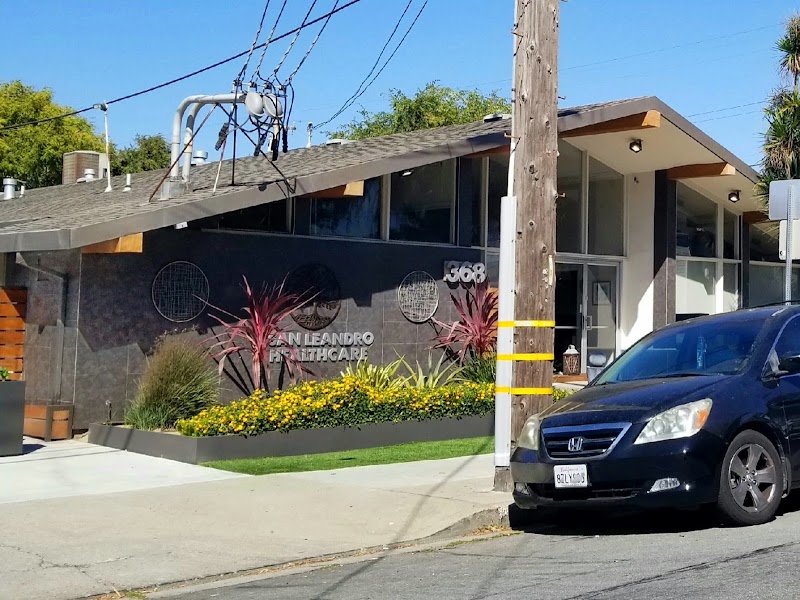
368 JUANA AVENUE, SAN LEANDRO, CA 94577 (510) 357-4015
For profit - Corporation 62 Beds Independent Data: November 2025
Trust Grade
70/100
#452 of 1155 in CA
Last Inspection: November 2024

Within standard 12-15 month inspection cycle. Federal law requires annual inspections.

Overview

San Leandro Healthcare Center has a Trust Grade of B, indicating it is a good option for families, though not the top tier. It ranks #452 out of 1,155 facilities in California, placing it in the top half, and #42 out of 69 in Alameda County, meaning there is only one local facility that performs better. The facility's trend is worsening, with issues increasing from 2 in 2023 to 10 in 2024. Staffing is rated at 4 out of 5 stars, which is a strength, but the turnover rate of 48% is average and could be improved. Notably, the facility has no fines on record, which is a positive sign, and it has more RN coverage than the average California facility, ensuring better oversight of resident care. However, recent inspections revealed concerning incidents, such as failing to provide adequate protein in meals for 37 residents, which could lead to malnutrition, and issues with arbitration agreements that may not adequately protect residents' rights. Overall, while there are strengths in staffing and no fines, the increasing number of issues and specific care deficiencies indicate a need for families to carefully consider their options.

Trust Score
B
70/100
In California
#452/1155
Top 39%
Safety Record
Low Risk
No red flags
Inspections
Getting Worse
2 → 10 violations
Staff Stability
⚠ Watch
48% turnover. Above average. Higher turnover means staff may not know residents' routines.
Penalties
✓ Good
No fines on record. Clean compliance history, better than most California facilities.
Skilled Nurses
⚠ Watch
Each resident gets only 26 minutes of Registered Nurse (RN) attention daily — below average for California. Fewer RN minutes means fewer trained eyes watching for problems.
Violations
⚠ Watch
26 deficiencies on record. Higher than average. Multiple issues found across inspections.
★★★★☆
4.0
Overall Rating
★★★★☆
4.0
Staff Levels
★★★★☆
4.0
Care Quality
★★★★☆
4.0
Inspection Score
Stable
2023: 2 issues
2024: 10 issues

The Good

  • 4-Star Staffing Rating · Above-average nurse staffing levels
  • 4-Star Quality Measures · Strong clinical quality outcomes
  • Full Sprinkler Coverage · Fire safety systems throughout facility
  • No fines on record

Facility shows strength in staffing levels, quality measures, fire safety.

The Bad

Staff Turnover: 48%

Near California avg (46%)

Higher turnover may affect care consistency

The Ugly 26 deficiencies on record

Nov 2024 10 deficiencies
CONCERN (D)

Potential for Harm - no one hurt, but risky conditions existed

Safe Environment (Tag F0584)

Could have caused harm · This affected 1 resident

**NOTE- TERMS IN BRACKETS HAVE BEEN EDITED TO PROTECT CONFIDENTIALITY** Based on observation and interview, the facility failed to provide clean and comfortable home like environment for 4 residents r...

Read full inspector narrative →
**NOTE- TERMS IN BRACKETS HAVE BEEN EDITED TO PROTECT CONFIDENTIALITY** Based on observation and interview, the facility failed to provide clean and comfortable home like environment for 4 residents residing in two of 25 rooms in the facility when the shared bathroom in these 2 rooms had a towel on the floor and the toilet seat was dirty with brown particles on the toilet seat. This failure placed all 4 residents residing in these rooms at increased risk for healthcare-associated infections (HAIs), which could result in longer recovery times, additional medical treatments, and even hospitalizations and negatively impact the residents' overall well-being and quality of life. Findings: During a concurrent observation and interview on 11/4/24 at 10:14 a.m. with the Social Worker (SW), the shared bathroom between room [ROOM NUMBER] and 21 was observed. A towel was on the floor and the toilet seat was dirty with brown particles on the toilet seat. SW confirmed the toilet seat was not clean, with brown particles and towel on the floor, and stated the bathroom should always kept clean to prevent of risk of infection. During a review of the facility's policy and procedure (P and P) titled, Homelike Environment, revised on February 2021, the P & P indicated, . The facility staff and management maximizes, to the extent possible, the characteristics of the facility that reflect a personalized, home like setting. These characteristics include a. clean, sanitary, and orderly environment .).
CONCERN (D)

Potential for Harm - no one hurt, but risky conditions existed

MDS Data Transmission (Tag F0640)

Could have caused harm · This affected 1 resident

Based on interview and record review, the facility failed to complete and transmit Discharge Minimum Data Set (MDS, an assessment tool to guide patient care) for one of one sampled resident (Resident ...

Read full inspector narrative →
Based on interview and record review, the facility failed to complete and transmit Discharge Minimum Data Set (MDS, an assessment tool to guide patient care) for one of one sampled resident (Resident 11) to Centers of Medicare and Medicaid Services (CMS) for over 120 days. This failure resulted in reflecting Resident 11 as an active resident while he was already discharged from the facility. Findings: During a review of Resident 11's admission Record (a record with residents' basic information) printed on 11/6/24, the record indicated Resident 11 was admitted to the facility in June 2024. During a concurrent interview and record review on 11/6/24 at 12:53 p.m. with the MDS Coordinator (MDSC), Resident 11's progress notes dated 7/12/24 was reviewed. The MDSC stated Resident 11 was discharged from the facility on 7/12/24. MDSC stated facility was required to complete a Discharge MDS Assessment upon residents' discharge from the facility. The MDSC stated, Resident 11's discharge MDS was not completed and/or transmitted to CMS till date. A review of the CMS guide,Resident Assessment Instrument (RAI) Version 3.0 User Manual 10/2023, showed the discharge MDS required completion within 14 calendar days of discharge, and transmission date within 14 days following completion date.
CONCERN (D)

Potential for Harm - no one hurt, but risky conditions existed

Assessment Accuracy (Tag F0641)

Could have caused harm · This affected 1 resident

**NOTE- TERMS IN BRACKETS HAVE BEEN EDITED TO PROTECT CONFIDENTIALITY** Based on observation, interview and record review, the facility failed to accurately assess and code active diagnosis for one of...

Read full inspector narrative →
**NOTE- TERMS IN BRACKETS HAVE BEEN EDITED TO PROTECT CONFIDENTIALITY** Based on observation, interview and record review, the facility failed to accurately assess and code active diagnosis for one of 21 sampled residents (Resident 31) in the admission Minimum Data Set (MDS, a resident assessment instrument used to identify resident care problems to be addressed in an individualized care plan) assessment when Resident 31's admission MDS assessment was inaccurately coded with a Yes for diagnoses of Pneumonia (an infection of one or both lungs caused by bacteria, viruses or fungi causing difficulty in breathing, cough, fever, and chills) and Septicemia (a life-threatening blood infection) during the look back period). During this period, Resident 31 did not have active Pneumonia and Septicemia. This failure resulted in an outdated and inaccurate reflection of Resident 31's medical/clinical status. Findings: During a review of Resident 31's admission Record (a record with residents' basic information) printed on 11/6/24, the record indicated Resident 31 was admitted to the facility in October 2024. During a record review of Resident 31's admission MDS assessment dated [DATE], the assessment indicated Resident 31 had active diagnoses of Pneumonia and Septicemia. The assessment indicated Resident 31's Brief Interview for Mental Status (BIMS, an assessment tool used to screen and identify memory, orientation, and judgement status of the resident) score was 15 out of 15, indicating Resident 31 has little to no cognitive impairment. During a concurrent observation and interview with Resident 31 on 11/4/24 at 10:58 a.m., Resident 31 was lying in bed, with the head of the bed slightly elevated, awake, and able to communicate needs. Resident 31 showed no signs and symptoms of respiratory distress and was breathing comfortably. Resident 31 stated she had no current infections and was not taking any antibiotics to treat any infection. During an interview with Certified Nursing Assistant (CNA) 4 on 11/4/24 at 11:10 a.m., CNA 4 stated she was the assigned nursing assistant for Resident 31 and did not observe any signs of infections, such as fever, shortness of breath or coughing. CNA 4 also stated she did not receive any report from the Charge Nurse if Resident 31 had an infection. During a concurrent interview and record review on 11/5/24 at 8:19 a.m. with the Licensed Vocation Nurse (LVN) 2, Resident 31's Electronic Health Record (EHR) for physician's orders and progress notes was reviewed. LVN 2 stated she was a regular charge nurse for Resident 31 and did not observe any signs and symptoms of infections related to Pneumonia and Septicemia since Resident 31's admission to the facility in October 2024. LVN 2 stated Resident 31's vital signs were normal and had no difficulty breathing since admission. LVN 2 also stated there were no progress notes and records of any antibiotic ordered by a physician to treat such infections. During a concurrent interview and record review on 11/6/24 at 11:46 a.m. with the MDS Coordinator (MDSC), Resident 31's EHR for clinical record was reviewed. MDSC stated she could not locate any documentation indicating Resident 31 had active diagnosis of Pneumonia and Septicemia in the History and Physical, Progress Notes, Medication Administration Record, Xray and Lab results within the look back period (a time period over which the resident's condition or status is captured in the MDS assessment and ends at 11:59 p.m. on the day of the Assessment Reference Date (ARD), from 10/15/24 through 10/21/24. MDSC stated the MDS was important assessment tool as it provided an overview of a resident's health condition for developing care plans, and incorrect coding could impact the care provided to the resident. During a record review of the facility's Policy and Procedure (P&P) dated 10/2020, titled, Resident Assessments, the P&P indicated, Information in the MDS assessment will consistently reflect information in the progress notes, plans of care and resident observations/interviews.
CONCERN (D)

Potential for Harm - no one hurt, but risky conditions existed

Comprehensive Care Plan (Tag F0656)

Could have caused harm · This affected 1 resident

**NOTE- TERMS IN BRACKETS HAVE BEEN EDITED TO PROTECT CONFIDENTIALITY** Based on interview and record review, for one of five sampled residents (Resident 17) reviewed for activities of daily living (A...

Read full inspector narrative →
**NOTE- TERMS IN BRACKETS HAVE BEEN EDITED TO PROTECT CONFIDENTIALITY** Based on interview and record review, for one of five sampled residents (Resident 17) reviewed for activities of daily living (ADL) care, the facility failed to implement a comprehensive-centered ADL plan of care. This failure had the potential to result in delayed provision of care. Findings: During a review of Resident 17's admission Record, the admission Record indicated, Resident 17 was admitted to the facility in February 2024 with diagnoses that included morbid obesity, acute and chronic respiratory failure (acute or chronic impairment of gas exchange between the lungs and the blood), chronic pain syndrome, paraplegia (the loss of muscle function in the lower part of the body including both legs), and pain in left knee. During a review of Resident 17's Minimum Data Set (MDS, an assessment tool used to direct resident care) assessment dated [DATE] indicated Resident 17 had impairment on both lower extremities and totally dependent on staff for toileting hygiene (ability to maintain perineal hygiene, adjust clothes before and after voiding or having a bowel movement), and lower body dressing. The MDS also indicated a Brief Interview for Mental Status (BIMS, a scoring system used to determine the resident's cognitive status in regard to attention, orientation, and ability to register and recall information) score of 15 (A BIMS score of 13-15 is an indication of intact cognitive status). During an interview on 11/4/24 at 10:15 a.m. with Resident 17, Resident 17 stated the staff had said there was no assigned CNA for the night shift on 10/21/24. Resident 17 stated only after calling the cops to the facility he got get the help for personal hygiene. During an interview on 11/5/24 at 1:08 p.m. with Director of Nursing (DON), DON stated, on 10/21/24, Certified Nursing Assistant (CNA) 7 was assigned to Resident 17 but CNA 7 had refused to enter Resident 17's room. DON stated being aware of a prior incident when CNA 7 became uncomfortable after Resident 17 hurled curses and racial insults at CNA 7. DON stated also being aware of several incidents of being rude and racist toward staff especially CNAs. DON stated, although the staff assignment indicated CNA 7 was assigned to Resident 17, CNA 7 routinely switched assignment with another CNA to avoid having to go to Resident 17's room, an arrangement that the facility management was not aware of. During a telephone interview on 11/6/24 at 10:44 a.m. with Licensed Vocational Nurse (LVN) 3, LVN 3 stated CNA 7 was assigned to Resident 17, but CNA 7 refused to go to Resident 17's room to help with ADLs. LVN 3 stated the other two CNAs from the other station also refused to go to Resident 17's room. During a review of Resident 17's ADL care plan dated 4/22/24, the care plan indicated Resident 17 required staff assistance to turn and reposition in bed, with dressing and personal hygiene and oral care. During a review of Resident 17's care plan to address verbal aggression to staff during ADLs revised on 9/2/24, the care plan indicated for staff to always go Resident 17's room in pairs. During an interview on 11/7/24 at 12:06 p.m. with Patient Care Coordinator (PCC) 3, PCC 3 stated was making the staffing schedule but was not aware CNA 7 could not be assigned to Resident 17. During a review of the facility's policy and procedure (P&P) titled Activities of Daily Living (ADLs), Supporting last revised March 2018, the P&P indicated appropriate care and services will be provided for residents who are unable to carry out ADLs independently, in accordance with the plan of care, including appropriate support and assistance with, hygiene, mobility, elimination, dining, and communication. During a review of another P&P titled Abuse, Neglect, Exploitation and Misappropriation Prevention Program last revised April 2021, the P&P indicated to ensure adequate staffing and oversight/support to prevent burn out and stressful working situations, adequately prepare staff for caregiving responsibilities, Provide staff with opportunities to express challenges related to their job and work environment .help staff understand how cultural, religious and ethnic differences can lead to misunderstanding and conflicts.
CONCERN (D)

Potential for Harm - no one hurt, but risky conditions existed

ADL Care (Tag F0677)

Could have caused harm · This affected 1 resident

Based on observation and record review the facility failed to provide Activities of Daily Living (ADL) for one of 17 sample selected residents (Resident 157), when Resident 157 was observed with long,...

Read full inspector narrative →
Based on observation and record review the facility failed to provide Activities of Daily Living (ADL) for one of 17 sample selected residents (Resident 157), when Resident 157 was observed with long, broken finger nails and black particles under nails. This failure placed Resident 157 at risk for skin damage and infection and also affect his comfort and dignity, contributing to a lower quality of life and possible emotional distress. Findings: A review of Resident 157's admission Record indicated, Resident 157 was admitted to the facility with multiple disease including Cerebral Palsy (a group of neurological disorders that affect a person's ability to move, balance, and maintain posture). During an observation on 11/4/24 at 12:00 p.m. inside Resident 157's room, Resident 157 was observed with long finger nails, with broken and black particles under the nails. During an interview on 11/4/24 at 2:30 p.m. with Certified Nurse Assistant (CNA) 2, CNA 2 confirmed the long , broken and black particles under Resident 157's finger nails and stated the licensed nurses did not ask him to cut the nails. During an interview on 11/04/24 at 02:35 p.m., with Licensed Vocational Nurse (LVN) 1, LVN 1 stated that he did not know Resident 157 had long nails and its important to keep the nails short and clean because of infection prevention and risk for skin injury. A review of the facility's policy and procedure (P&P) titled, Fingernails/Toenails, Care of Revised February 2018, the P &P indicated . Nail care includes daily cleaning and regular trimming .
CONCERN (D)

Potential for Harm - no one hurt, but risky conditions existed

Accident Prevention (Tag F0689)

Could have caused harm · This affected 1 resident

Based on the observation, interview and record review, the facility failed to safely administer and provide adequate supervision to one of 21 sampled residents (Resident 18) while using a hot water ba...

Read full inspector narrative →
Based on the observation, interview and record review, the facility failed to safely administer and provide adequate supervision to one of 21 sampled residents (Resident 18) while using a hot water bag (a rubber container designed to hold hot water to apply warmth to specific areas of the body) on her body to keep herself warm for over 24 hours. This failure placed Resident 18 at risk for skin burns. Findings: During a review of Resident 18's admission Record (a record with residents' basic information) printed on 11/4/24, the record indicated Resident 18 was admitted to the facility in Septembet 2024. During a record review of Resident 18's Minimum Data Set (MDS, an assessment used to guide care) dated 9/30/24, the assessment indicated Resident 18 had an active diagnosis of Hemiplegia (total paralysis of the arm, leg, and trunk on the same side of the body). The assessment indicated Resident 18's Brief Interview for Mental Status (BIMS, an assessment tool used to screen and identify memory, orientation, and judgement status of the resident) score was 15 out of 15, indicating Resident 18's mental status was intact. During a concurrent observation and interview on 11/4/24 at 9:58 a.m. with Resident 18, Resident 18 was lying in bed, awake, with hot water bottle filled with hot water on her right side of the chest. Resident 18 stated one of the Certified Nursing Assistant (CNA 1) helped to fill it up with hot water that morning. Resident 18 stated her room was cold, so she needed the hot water bottle in addition to the blanket, to keep herself warm. Resident 18 stated she used it frequently since she purchased it online about three days ago. Resident 18 stated her nursing assistants were aware, they helped to fill up the water bottle with hot water. During an interview on 11/4/24 at 10:15 a.m. with Certified Nursing Assistant (CNA) 1, CNA 1 stated he filled up the hot water bag and gave it to Resident 18 during the start of his shift (usual start time for morning shift is 7:00 am). CNA 1 stated he was not the assigned nursing assistant for Resident 18, neither he told Resident 18's nurse, nor supervised Resident 18 while she used hot water bag. CNA 1 stated the hot water bag could cause skin burns if Resident 18 remained unsupervised. During an interview on 11/4/24 at 1:03 p.m. with Certified Nursing Assistant (CNA) 3, CNA 3 stated she was the assigned nursing assistant for Resident 18 on 11/3/24 morning shift (7am to 3:30pm). CNA 3 stated she saw Resident 18 using a hot water bag but did not communicate with Resident 18's charge nurse about it. CNA 3 stated she filled up Resident 18' hot water bag with hot water on 11/3/24, but was unsure if the water temperature was appropriate. CNA 3 stated she used her own skin to test the water temperature. During a phone interview on 11/6/24 at 4:14 p.m. with Certified Nursing Assistant (CNA) 6, CNA 6 stated she was the assigned nursing assistant for Resident 18 during the 11/3/24 afternoon shift (3pm-11:30pm). CNA 6 stated she saw Resident 18 using the hot water bag on her body. CNA 6 stated she also filled up with hot water from the janitor closet on 11/3/24 but was not sure if the water temperature was appropriate. CNA 6 stated she had not received any training regarding the use of hot water bags. During an interview and record review on 11/4/24 at 2:22 p.m. with Licensed Vocation Nurse (LVN) 2 , Resident 18's physician orders and progress notes dated November 2024 were reviewed. LVN 2 stated she noticed Resident 18 using the hot water bag that day only. LVN 2 stated there were no written physician orders and progress notes pertaining to the use of the hot water bag. LVN 2 stated Resident 18 could suffer skin burns if unsupervised. During an interview on 11/6/24 at 12:32 p.m. with the Director of Nursing (DON), the DON stated a hot water bag could not be used in the facility as it increased the risk for burn injuries and other skin issues. The DON stated communication among staff, from licensed nurses to nurse managers and including herself was essential. During a record review of the facility's Policy and Procedure (P&P) revised 7/2017, titled, Safety and Supervision of Residents, the P&P indicated, Our facility strives to make the environment as free from accident hazards as possible. Resident safety and supervision and assistance to prevent accidents are facility-wide priorities.
CONCERN (D)

Potential for Harm - no one hurt, but risky conditions existed

Pharmacy Services (Tag F0755)

Could have caused harm · This affected 1 resident

Based on observation, interview and record review, the facility failed to establish a system of disposition of controlled drugs for accurate reconciliation when blister packs (also called a bubble pac...

Read full inspector narrative →
Based on observation, interview and record review, the facility failed to establish a system of disposition of controlled drugs for accurate reconciliation when blister packs (also called a bubble pack, blister pack, a card that packages doses of medication within small, clear, or light-resistant, amber-colored plastic bubbles [or blisters] and each pack is secured by a strong, paper-backed foil that protects the pills until dispensed) of controlled medications with popped and taped shut blisters were stored. This failure had the potential to result in inaccurate reconciliation of controlled medications. Findings: 1. During an observation and concurrent interview and review on 11/4/24 between 1:41 p.m. and 2:19 p.m. with Licensed Vocational Nurse (LVN) 2, Station 1 medication cart was observed. Inside the medication cart narcotic (controlled) box was a blister pack of oxycodone hydrochloride (controlled pain medication/narcotic) 5 milligrams (mg) had two blisters, individual blister #7 count and # 8, that were popped and taped shut with a paper tape. The blister pack was inside Station 1 medication cart where medications ready for administration were stored. The Controlled Drug Record-Individual Patient's Narcotic Record (CDR-IPNR) for oxycodone 5 mg, the CDR-IPNR indicated #7 did not have any signature, while #8 indicated, a date and time that was crossed out with a single horizontal line and indicated one signature. Inside the two individual plastic blisters were half of a white round tablet. LVN 2 stated, the popped (punctured) medications were supposed to be signed by two licensed nurses but were not. 2. During an observation and concurrent interview on 11/4/24 at 2:20 p.m. with Director of Nursing (DON), contents of the narcotic file cabinet were observed. There was a blister pack of MS Contin (controlled/narcotic pain medication) that had one individual blister popped and taped shut. DON stated the medication was for a resident who has been discharged from the facility. DON also stated the blister pack that was taped shut should have been destroyed and signed by two licensed nurses, and not replaced in the blister pack because one would not know if it was the same medication as the one that was removed/popped. During a review of the CDR-IPNR for MS Contin, the CDR-IPNR indicated individual blister # 25 was popped and taped shut with a white paper tape. There was a date and time written that was crossed out with a single horizontal line and one signature. During a review of the facility's policy and procedure (P&P) titled Discarding and Destroying Medications last revised November 2022, the P&P indicated, Disposal of controlled and non-controlled substances must take place immediately (no longer than three days) after discontinuation of use by the resident. A controlled medication policy and procedure that addressed popped blister packs was requested and was not provided during the entire survey.
CONCERN (E)

Potential for Harm - no one hurt, but risky conditions existed

Deficiency F0847 (Tag F0847)

Could have caused harm · This affected multiple residents

**NOTE- TERMS IN BRACKETS HAVE BEEN EDITED TO PROTECT CONFIDENTIALITY** Based on observation, interview, and record review, the facility failed to verify that residents understood binding arbitration ...

Read full inspector narrative →
**NOTE- TERMS IN BRACKETS HAVE BEEN EDITED TO PROTECT CONFIDENTIALITY** Based on observation, interview, and record review, the facility failed to verify that residents understood binding arbitration agreements (a formal method of dispute resolution where a third party makes a decision instead of the dispute going to court) and/or that they were aware they could rescind the agreement within 30 days for 3 of 3 sampled residents (Resident 18, Resident 13, and Resident 49). This failure had the potential for residents to enter into an agreement without understanding their rights. Findings: During a review of the arbitration agreement made between the facility and three randomly selected residents (Resident 18, Resident 13, and Resident 49), the arbitration agreements included three boxes stating prior to signing this agreement the resident reviewed the voluntary arbitration program guide, the resident received a copy of this agreement after it's execution, and the resident is aware that he/she may rescind the agreement in writing at any time within thirty (30) days of the date of its execution. The boxes to indicate that these steps were completed were blank for all three residents. During a review of resident 13's admission record, Resident 13 was initially admitted to the facility in August 2024 with multiple diagnoses, including End Stage Renal Disease (ESRD, the final stage of long-term kidney disease when the kidneys are no longer sufficiently able to remove waste products and excess water to support the body's needs.), Myocardial Infarction (heart attack), and Difficulty in Walking. During a review of Resident 13's Brief Interview for Mental Status (BIMS, is a scoring system used to determine the resident's cognitive status regarding attention, orientation, and ability to register and recall information.), dated 8/8/24, Resident 13 had a BIMS of 15, indicating intact cognitive status. During a concurrent interview and record review on 11/6/24 at 11:38 a.m. with Resident 13, Resident 13's binding arbitration agreement, dated 8/7/24, was reviewed. Resident 13 stated he remembers being given paperwork on admission and signing the documents. Resident 13 stated he does not remember having the arbitration agreement explained to him. During a review of Resident 49's admission record, Resident 49 was initially admitted to the facility in August 20204 with multiple diagnoses, including Hypertension (high blood pressure) and Difficulty in Walking. During a review of Resident 49's BIMS score, dated 8/28/24, Resident 49 had a BIMS score of 15, indicating intact cognitive status. During a concurrent interview and record review on 11/6/24 at 11:46 a.m. with Resident 49, Resident 49's arbitration agreement, dated 9/28/24, was reviewed. Resident 49 stated he signed a lot of papers during the admission process and doesn't remember anyone explaining that it was voluntary and/or if anyone checked if he understood the agreement. During a review of Resident 18's admission record, Resident 18 was initially admitted to the facility in [DATE] with multiple diagnoses, including Hypertension and Surgical Aftercare (care while recovering from surgery). During a review of Resident 18's BIMS score, dated 9/25/24, Resident 18 had a BIMS score of 15, indicating intact cognitive status. During a concurrent interview and record review on 11/6/24 at 11:17 a.m. with Resident 18, Resident 18's arbitration agreement, dated 9/24/24, was reviewed. Resident 18 stated she does not remember anyone explaining the document to her. Resident 18 stated she was under stress when she got to the facility and signed all the papers she was given. During a concurrent interview and record review on 11/5/24 at 2:32 p.m. with Patient Care Coordinator1 (PCC1), Resident 49's arbitration agreement, dated 9/28/24, was reviewed. PCC1 stated she co-signed the arbitration agreement with Resident 49. PCC1 stated that she is not very familiar with the arbitration agreement and if the resident has questions, she would get another staff member. PCC1 stated she is not certain if residents can rescind the agreement after signing. During an interview on 11/6/24 at 12:29 p.m. with PCC3, PCC3 stated there are three boxes on the arbitration agreement and the process is to check the boxes on the arbitration agreement to verify that the information was reviewed with the residents. During a concurrent interview and record review on 11/6/24 at 1:55 p.m. with Administrator (ADM), Resident 49's arbitration agreement, dated 9/28/24, Resident 18's arbitration agreement, dated 9/24/24, and Resident 13's arbitration agreement, dated 8/7/24, were reviewed. ADM stated the documents have boxes that should be checked to verify that the resident reviewed the Voluntary Arbitration Program Guide, the resident received a copy of the agreement, and the resident is aware that the resident may rescind the agreement within thirty days. ADM stated the box yes was not checked on any of the documents and should have been. ADM stated the boxes should be checked to verify that the resident received and reviewed the document and if they are not checked, there is a chance that the information could not have been reviewed, resulting in the residents not understanding their rights.
CONCERN (E)

Potential for Harm - no one hurt, but risky conditions existed

Deficiency F0848 (Tag F0848)

Could have caused harm · This affected multiple residents

Based on observation, interview, and record review, the facility failed to provide a binding arbitration agreement (a formal method of dispute resolution where a third party makes a decision instead o...

Read full inspector narrative →
Based on observation, interview, and record review, the facility failed to provide a binding arbitration agreement (a formal method of dispute resolution where a third party makes a decision instead of the dispute going to court) that met the regulations. This failure had the potential for residents to enter into an agreement that did not protect their rights. Findings: During a review of the arbitration agreement made between the facility and three randomly selected residents (Resident 18, Resident 13, and Resident 49), the arbitration agreement for all three residents did not provide for the selection of a neutral arbitrator agreed upon by both parties and/or provide for the selection of a venue that is convenient to both parties. During a concurrent interview and record review on 11/6/24 at 1:55 p.m. with Administrator (ADM), Resident 49's arbitration agreement, dated 9/28/24, Resident 18's arbitration agreement, dated 9/24/24, and Resident 13's arbitration agreement, dated 8/7/24, were reviewed. ADM stated the documents do not have a section that provides for the selection of a venue that is convenient to both the resident and the facility. ADM stated the arbitration agreement does not provide for the selection of a neutral arbitrator agreed upon by both parties. ADM stated there is a risk that residents could not understand their rights.
MINOR (B)

Minor Issue - procedural, no safety impact

Deficiency F0912 (Tag F0912)

Minor procedural issue · This affected multiple residents

**NOTE- TERMS IN BRACKETS HAVE BEEN EDITED TO PROTECT CONFIDENTIALITY** Based on observation and interview, the facility had 18 rooms (Rooms 7, 8, 9, 10, 11, 12, 14, 15, 16, 17, 18, 19, 20, 21, 22, 23...

Read full inspector narrative →
**NOTE- TERMS IN BRACKETS HAVE BEEN EDITED TO PROTECT CONFIDENTIALITY** Based on observation and interview, the facility had 18 rooms (Rooms 7, 8, 9, 10, 11, 12, 14, 15, 16, 17, 18, 19, 20, 21, 22, 23, 24, and 25) with multiple beds that provided less than 80 square feet (sq. ft.) per resident who occupied these rooms. This deficient practice had the potential to result in inadequate space for the delivery of care to each of the residents in each room, or for storage of the residents' belongings. After observation and interview, there was adequate space for residents and staff to move about without obstruction. Recommend granting waiver. Findings: During an interview with the Administrator (ADM) on 11/06/24 at 12:50 p.m., the following rooms and corresponding square footage per bed were identified: Room Activity Room Size Floor Area 7 Bedroom [ROOM NUMBER] sq ft 71 sq.ft/bed 8 Bedroom [ROOM NUMBER] sq ft 70 sq.ft/bed 9 Bedroom [ROOM NUMBER] sq ft 70 sq.ft/bed 10 Bedroom [ROOM NUMBER] sq ft 70 sq.ft/bed 11 Bedroom [ROOM NUMBER] sq ft 72 sq.ft/bed 12 Bedroom [ROOM NUMBER] sq ft 73 sq.ft/bed 14 Bedroom [ROOM NUMBER] sq ft 73 sq.ft/bed 15 Bedroom [ROOM NUMBER] sq ft 73 sq.ft/bed 16 Bedroom [ROOM NUMBER] sq ft 73 sq.ft/bed 17 Bedroom [ROOM NUMBER] sq ft 73 sq.ft/bed 18 Bedroom [ROOM NUMBER] sq ft 73 sq.ft/bed 19 Bedroom [ROOM NUMBER] sq ft 72 sq.ft/bed 20 Bedroom [ROOM NUMBER] sq ft 71 sq.ft/bed 21 Bedroom [ROOM NUMBER] sq ft 71 sq.ft/bed 22 Bedroom [ROOM NUMBER] sq ft 71 sq.ft/bed 23 Bedroom [ROOM NUMBER] sq ft 71 sq.ft/bed 24 Bedroom [ROOM NUMBER] sq ft 71 sq.ft/bed 25 Bedroom [ROOM NUMBER] sq ft 71 sq.ft/bed During random observations of care and services from 11/4/24 through 11/7/24, there was sufficient space for the provision of care for the residents in all 18 rooms. Each resident had adequate personal space and privacy. Resident 49 was observed being able to ambulate in the room without difficulty. There were no complaints from the residents regarding insufficient space for their belongings. There were no negative consequences attributed to the decreased space and/or safety concerns in the 18 rooms.
Sept 2023 1 deficiency
CONCERN (D) 📢 Someone Reported This

A family member, employee, or ombudsman was alarmed enough to file a formal complaint

Potential for Harm - no one hurt, but risky conditions existed

Deficiency F0624 (Tag F0624)

Could have caused harm · This affected 1 resident

**NOTE- TERMS IN BRACKETS HAVE BEEN EDITED TO PROTECT CONFIDENTIALITY** Based on interview and record review, the facility failed to ensure one of three discharged residents (Resident 1) had a safe an...

Read full inspector narrative →
**NOTE- TERMS IN BRACKETS HAVE BEEN EDITED TO PROTECT CONFIDENTIALITY** Based on interview and record review, the facility failed to ensure one of three discharged residents (Resident 1) had a safe and appropriate discharge location based on his medical needs when Resident 1 who was legally blind was discharged to an independent living facility where resident sustained falls. This failure placed Resident 1 at risk for adverse health outcomes that had the potential to cause serious complications and psychosocial harm. Findings: During a review of Resident 1's admission record, printed on 9/12/23, the admission record indicated Resident 1 was originally admitted to the facility on [DATE] and has a medical diagnosis including history of cerebral infarction (a condition which occurs when the blood supply to part of the brain is interrupted or reduced, preventing brain tissue from getting oxygen and nutrients) without residual deficits, generalized muscle weakness and need for assistance with personal care. During a record review of Resident 1's Minimum Data Set (MDS, a resident assessment tool used to guide care) dated 12/27/22, the MDS assessment section B indicated Resident 1's vision was severely impaired. MDS section G also indicated that Resident 1 needed staff assistance for toilet use, transfers, personal hygiene, dressing and bathing. The MDS assessment section C indicated Resident 1's Brief Interview of Mental Status (BIMS- an assessment for mental status) score was 14 out of 15 which indicated intact mental status. During a review of Resident 1's Care Plan, printed on 9/12/23, the care plan indicated Resident 1 has self-care performance deficit related to impaired balance, limited mobility and being legally blind. The care plan interventions included assistance from staff for showering, dressing, mobility, personal hygiene, toileting, and transfers. During an interview on 9/11/23 at 1:30 pm., with Resident representative (RP), RP stated, when she visited the facility with her father prior to discharge, she was not aware that the facility was an independent living facility and thought it was assisted living facility. RP also stated they only found out that the facility was independent living facility after the discharge. RP stated after the discharge Resident 1 fell a couple of times at the independent living facility and they had to call 911 for help. During a concurrent interview and record review on 9/12/23 at 11:24 a.m., Resident 1's Interdisciplinary discharge summary was reviewed. The Interdisciplinary discharge summary section G1 indicated that Resident 1 was discharged to an assisted living facility. Social Worker (SW) stated Resident 1 was discharged to a Board and Care facility and not assisted living facility. SW stated resident 1 and resident representative visited the facility prior to discharge to confirm to discharge the resident. SW stated the facility was referred from a placement agency and no one from the facility visited or verified if it was a board and care facility other than verbal confirmation from the owner of the facility. During an interview on 9/12/23 at 12:18 pm., with owner of the independent living facility, the owner stated the facility is a licensed independent living facility in which residents needed to provide for their own care. Owner also stated they accepted Resident 1 because they were provided information that the resident was independent with most of his ADL and care and only needed some assistance with care. Owner also stated they can help with medications and food but Resident 1 needed constant supervision and assistance with ADL all the time which they could not provide, and the facility was not a right fit for the resident's needs. During an interview on 9/12/23 at 12:38 p.m. with SW, SW stated it was the facilities responsibility to ensure Resident 1 was discharged to a safe place. SW also stated they did not know that Resident 1 was discharged to an independent living facility. SW also stated it was important to make sure it was the right place for Resident 1 to ensure if the residents medical care needs and accessibility would be met.
Feb 2023 1 deficiency
CONCERN (D) 📢 Someone Reported This

A family member, employee, or ombudsman was alarmed enough to file a formal complaint

Potential for Harm - no one hurt, but risky conditions existed

Medical Records (Tag F0842)

Could have caused harm · This affected 1 resident

**NOTE- TERMS IN BRACKETS HAVE BEEN EDITED TO PROTECT CONFIDENTIALITY** Based on interview and record review the facility failed to ensure one of three sampled residents (Resident 1)'s medical records...

Read full inspector narrative →
**NOTE- TERMS IN BRACKETS HAVE BEEN EDITED TO PROTECT CONFIDENTIALITY** Based on interview and record review the facility failed to ensure one of three sampled residents (Resident 1)'s medical records are in accordance with accepted professional standards and practices, when Resident 1's ADL (Activities of Daily Living)'s documents (nutrition and fluid) were not completed by the facility's staff. This failure resulted in Resident 1 not having accurate documents in his medical file. Findings: A review of Resident 1's face sheet indicated; Resident 1 was admitted to the facility with multiple diagnosis including urinary tract infection. A review of Resident 1's ADLs (Documentation Survey Report v2, Sep-22 and Aug-22) are missing staff initial/signature on the following dates: Nutrition-Amount Eaten section: on 9/4/22 all shifts (Hours 0700, 1200 and 1700), and on 8/16/22, 8/23/22 and 8/28/22 all shifts (Hours 0700, 1200 and 1700) Nutrition-Fluid: 9/4/22 and 9/10/22 all shifts (Hours 0700-1500, 1500-2300, 2300-0700) and on 8/16/22, 8/23/22 and 8/28/22 all shifts (Hours 0700-1500, 1500-2300, 2300-0700). During an interview on 2/8/23 at 10:00 a.m., with the Complainant, Complainant stated Resident 1 was at the facility for a few weeks. He was hospitalized , and the facility did not notify the family about him not eating and drinking while he was resided at the facility. During an interview and record review on 2/8/23 at 12:53 p.m., with the Director of Nursing Assistant ([NAME]), [NAME] reviewed the ADLs documents and confirmed the missing documentations and stated the Certified Nurse Assistant (CNA) was supposed to document the amount of the food and fluid that residents eat and drink and if residents were refusing CNAs must document and report to the charge nurses. [NAME] stated if CNAs did not document it means they did not do the tasks. During an interview on 2/8/23 at 1:05 p.m., with CNA 1, CNA 1 stated all the CNAs must document the percentage of and fluid that residents are eating and drinking for the nurses to know if residents were losing weight and if residents were refusing CNAs must document and report to the charge nurses. CNA 1 stated if CNAs don't document on ADLs sheet it means they did not do those tasks. During an interview on 2/16/23 at 10:44 p.m., with CNA 2, CNA 2 stated he did not remember Resident 1, but he always must report to the nurses if residents were not eating or drinking and, chart on ADL sheets. A review of the facility's policy and procedure Charting and Documentation , revised April 2008, indicated . All services provided to the resident, or any changes in the resident's medical condition shall be documented in the resident's medical record .
Nov 2022 10 deficiencies
CONCERN (D)

Potential for Harm - no one hurt, but risky conditions existed

Deficiency F0583 (Tag F0583)

Could have caused harm · This affected 1 resident

**NOTE- TERMS IN BRACKETS HAVE BEEN EDITED TO PROTECT CONFIDENTIALITY** Based on observation, interview and record review, the facility failed to maintain the privacy for one (Resident 34) of 14 sampl...

Read full inspector narrative →
**NOTE- TERMS IN BRACKETS HAVE BEEN EDITED TO PROTECT CONFIDENTIALITY** Based on observation, interview and record review, the facility failed to maintain the privacy for one (Resident 34) of 14 sampled residents when staff did not pull the privacy curtain when giving Resident 34 a bed bath. This deficient practice resulted in Resident 34 feeling his privacy was not honored. Findings: A review of Resident 34's admission Record dated 11/17/22 indicated Resident 34 was admitted to the facility on [DATE] with a diagnosis of hemiplegia (a symptom that involves one-sided paralysis). A review of Resident 34's Minimum Data Set (MDS, a resident assessment and care screening tool) dated 9/9/22 indicated Resident 34 was cognitively intact and required total dependence on one staff to bathe. During a concurrent observation and interview on 11/15/22 at 11:34 a.m. in Resident 34's shared room, Resident 34 was receiving a bed bath from Certified Nursing Assistant (CNA) 1. The privacy curtain was not pulled around to provide privacy and Resident 34 was fully exposed. Resident 34 can be seen by his roommate. CNA 1 stated he was providing a bed bath to Resident 34 and stated he forgot to provide privacy to Resident 34 by not pulling the privacy curtain. CNA 1 stated the privacy curtain should have been pulled all around to provide Resident 34 privacy during a bed bath. During an interview on 11/15/22 at 11:45 a.m. with Resident 34, Resident 34 stated he did not notice the privacy curtain was not pulled when he was receiving a bed bath because he was turned the other way, but stated he would hope that his privacy was honored. A review of the facility document titled, Quality of Life- Dignity, revised August 2009, indicated 10. Staff shall promote, maintain and protect resident privacy, including bodily privacy during assistance with personal care and during treatment procedures.
CONCERN (D)

Potential for Harm - no one hurt, but risky conditions existed

Transfer Notice (Tag F0623)

Could have caused harm · This affected 1 resident

**NOTE- TERMS IN BRACKETS HAVE BEEN EDITED TO PROTECT CONFIDENTIALITY** Based on interview and record review, the facility failed to ensure to inform the ombudsman (an official appointed to investigat...

Read full inspector narrative →
**NOTE- TERMS IN BRACKETS HAVE BEEN EDITED TO PROTECT CONFIDENTIALITY** Based on interview and record review, the facility failed to ensure to inform the ombudsman (an official appointed to investigate individuals' complaints against maladministration, especially that of public authorities) for one of three sample selected discharged residents (Resident 54) when, Resident 54 left the facility unplanned after signing an AMA (leaving Against Medical Advice). This failure practice had the potential for Resident 54 to be in an unsafe environment and not have access to medical intervention. Findings: A review of Resident 54's admission Record indicated Resident 54 was admitted to the facility on [DATE] with diagnosis of congestive heart failure (heart muscle does not pump blood as well as it should). During an interview on 11/17/22 at 10:02 a.m., with the Director of Nursing (DON), DON stated Resident 54 left the faciity on 9/20/22 unplanned when Resident 54's friend picked him up. DON stated Resident 54 signed the AMA form. DON further stated when residents leave the facility AMA, the facility does not give them their medications. During a telephone interview on 11/17/22 at 10:55 a.m., with Social Worker (SW) 2, SW 2 stated Resident 54 left the facility AMA and SW 2 did not know she had to notify the ombudsman. SW 2 further stated she thinks it is important to notify the ombudsman to follow up with the residents and make sure they are safe. A review of Resident 54's Statement of leaving without medical advise indicated Resident 54 left the faciity on 9/20/22 and signed the AMA form. A review of the facility's policy and procedure Transfer or Discharge Notice revised December 2016 indicated .4. A copy of the notice will be sent to the office of the State Long-Term Care Ombudsman .
CONCERN (D)

Potential for Harm - no one hurt, but risky conditions existed

Accident Prevention (Tag F0689)

Could have caused harm · This affected 1 resident

**NOTE- TERMS IN BRACKETS HAVE BEEN EDITED TO PROTECT CONFIDENTIALITY** Based on observation, interview and record review, the facility failed to provide an environment that was free from accidents fo...

Read full inspector narrative →
**NOTE- TERMS IN BRACKETS HAVE BEEN EDITED TO PROTECT CONFIDENTIALITY** Based on observation, interview and record review, the facility failed to provide an environment that was free from accidents for one (Resident 39) of one sample resident when the facility did not implement interventions to reduce the risk for falls for Resident 39 who had a history of frequent falls. This deficient practice had the potential for Resident 39 to experience a fall. Findings: A review of Resident 39's admission Record dated 11/17/22 indicated Resident 39 was admitted to the facility on [DATE] with a diagnosis of acute respiratory failure with hypoxia (impairment of gas exchange between the lungs and the blood causing low levels of oxygen in your body tissues). A review of Resident 39's Minimum Data Set (MDS, a tool to guide resident care) dated 4/30/22, indicated Resident 39 had one fall with no injury, one fall with injury and one major fall since admission. A review of Resident 39's Morse Fall Scale (a method of assessing a patient's likelihood of falling) indicated Resident 39 was at high risk to have a fall. A review of Resident 39's Care Plan (formal process that correctly identifies existing needs and recognizes potential needs or risks of a patient) indicated Resident 39 had frequent falls. The Care Plan also indicated an intervention to apply a sensor pad alarm in Resident 39's bed to alert staff of Resident 39's need of assistance. During a concurrent observation and interview on 11/16/22 at 2:06 p.m. with Licensed Vocational Nurse (LVN) 2, Resident 39 was asleep in bed with no sensor pad alarm. LVN 2 confirmed there was no sensor pad alarm in place. During an interview on 11/16/22 at 2:20 p.m. with Director of Nursing (DON), DON stated Resident 39 had frequent falls. DON stated Resident 39's Care Plan was updated recently to include the application of a sensor pad alarm in bed to alert staff of Resident 39's needs. DON stated the facility should be following Resident 39's Care Plan interventions to prevent falls for Resident 39.
CONCERN (E)

Potential for Harm - no one hurt, but risky conditions existed

Deficiency F0558 (Tag F0558)

Could have caused harm · This affected multiple residents

Based on observation, interview and record review, the facility failed to ensure two of two sample selected non-English speaking residents (Resident 108 and 110) had an appropriate communication syste...

Read full inspector narrative →
Based on observation, interview and record review, the facility failed to ensure two of two sample selected non-English speaking residents (Resident 108 and 110) had an appropriate communication system in place when Residents 108 and 110 did not have a written translation of vital information (communication board) at the bed side. This failed practice resulted in Residents 108 and 110 not being able to communicate effectively with staff and to express their needs. Findings: A review of Resident 108's admission Record indicated Resident 108 was admitted to the facility with diagnosis of Hepatic encephalopathy (syndrome of impaired brain function occurring in patients with advanced liver diseases). During an observation and interview on 11/14/22 at 2:00 p.m., at Resident 108's room with Certified Nurse Assistant (CNA) 2, Resident 108 was observed not able to talk in English with the surveyor. CNA 2 confirmed Resident 108 was Spanish speaking and staff used sign language to communicate with Resident 108. CNA 2 was not able to find a communication board at Resident 108's bedside and did not know if the facility had a translation system in place or not. A review of Resident 110's admission Record indicated Resident 110 was admitted to the facility with diagnosis of heart failure (heart muscle does not pump blood as well as it should). During a concurrent observation and interview on 11/14/22 at 11:43 a.m., in Resident 110's room with CNA 3, Resident 110 was observed trying to talk to CNA 3, but CNA 3 was not able to understand. CNA 3 used sign language with Resident 110. CNA 3 stated she used sign language to communicate with non-English speaking residents and had no idea what other way is available to staff. CNA 3 further stated it is important to be able to communicate with residents to know about their needs. During an interview on 11/14/22 at 02:05 p.m., with Social Worker (SW) 1, SW 1 confirmed Residents 108 and 110 did not have a communication board in their own language at bedside. SW 1 was not able to communicate with Resident 110 and 108. SW 1 further stated it was important for the residents to be able to communicate with staff for their needs using their own language. A review of the facility's policy and procedure, Translation and/or Interpretation of Facility Services, revised May 2017, indicated, . 6. This facility shall provide Written translation of vital information pertaining to health services . 17. Staff shall be trained upon hire and at least annually on how to provide language access services to LEP (limited English proficiency) residents .
CONCERN (E)

Potential for Harm - no one hurt, but risky conditions existed

Respiratory Care (Tag F0695)

Could have caused harm · This affected multiple residents

**NOTE- TERMS IN BRACKETS HAVE BEEN EDITED TO PROTECT CONFIDENTIALITY** During a concurrent initial tour and interview with Maintenance Supervisor (MS) on 11/14/22 at 12:40 p.m., at Resident 5's bedsi...

Read full inspector narrative →
**NOTE- TERMS IN BRACKETS HAVE BEEN EDITED TO PROTECT CONFIDENTIALITY** During a concurrent initial tour and interview with Maintenance Supervisor (MS) on 11/14/22 at 12:40 p.m., at Resident 5's bedside Resident 5 was observed using an oxygen concentrator. The concentrator had a filter on its side which was covered with a thick layer of gray, fluffy matter. MS stated Resident 5's concentrator filter was covered with a thick layer of dust, and it should be washed regularly. During a concurrent observation and interview with LVN 1 on 11/15/22 at 10:15 a.m., Resident 39 was observed using a concentrator. Resident 39's concentrator filter was covered with a thick layer of gray, fluffy matter. LVN 1 stated the filter was filthy, and there should be a schedule for cleaning the filters. During an observation on 11/15/22 at 11:25 a.m., at Resident 20's bedside, Resident 20 was observed using an oxygen concentrator. The concentrator had a filter which was covered with a thick layer of gray, fluffy matter. During an interview with Assistant Administrator (AA) 1 on 11/15/22 at 11:50 a.m., AA 1 stated there should be a written cleaning schedule for the concentrators, including the filters. Review of the oxygen concentrator's Operator's Manual recommended cleaning the air filter every 7 days with mild dish soap (2 tablespoons) and warm water. Based on observation, interview and record review, the facility failed to follow its policies and procedures for oxygen administration and ensure oxygen supplies were maintained according to the operator's manual for three (Resident 39, 5, and 20) of four sampled residents receiving oxygen therapy, when staff did not document oxygen flow and rationale of Resident 39's oxygen therapy and Resident 39, 5, and 20's oxygen concentrator (an electronically operated device that separates oxygen from room air and provides high concentration of oxygen directly through a nasal cannula, a lightweight tube with one end split into two prongs which are placed in the nostrils and from which a mixture of air and oxygen flows) filter was covered with a thick layer of gray, fluffy matter. This deficient practice had the potential for Resident 39, 5 and 20 to receive ineffective and inadequate oxygen therapy. Findings: A review of Resident 39's admission Record dated 11/17/22 indicated Resident 39 was admitted to the facility on [DATE] with a diagnosis of acute respiratory failure with hypoxia (impairment of gas exchange between the lungs and the blood causing low levels of oxygen in your body tissues). A review of Resident 39's Minimum Data Set (MDS, a tool to guide resident care) indicated Resident 39 was cognitively intact and received oxygen while a resident. A review of Resident 39's doctor's orders indicated an order on 12/24/21 for oxygen at 3 liters per minute via nasal cannula as needed for shortness of breath and/or to maintain oxygen saturation (amount of oxygen in the blood) greater than or equal to 92%. During a concurrent observation and interview with Licensed Vocational Nurse (LVN) 2 on 11/17/22 at 8:35 a.m., Resident 39 received oxygen at 5 liters per minute. LVN 2 confirmed Resident 39 received oxygen at 5 liters per minute (LPM). LVN 2 stated Resident 39's oxygen should be at 3 LPM. LVN 2 stated he does not know when Resident 39's oxygen was increased to 5 LPM because there was no documentation. During a concurrent record review and interview on 11/17/22 at 9:00 a.m., Resident 39's November 2022 Medication Administration Record (MAR) was reviewed with Director of Nursing (DON). Resident 39's November 2022 MAR did not indicate how many LPM of oxygen Resident 39 was receiving. DON confirmed there was no documentation from the staff to indicate how much LPM of oxygen Resident 39 was receiving. The facility document titled, Oxygen Administration, revised October 2022, indicated After completing the oxygen setup or adjustment, the following information should be recorded in the resident's medical record: . 3. The rate of oxygen flow, route, and rationale.
CONCERN (E)

Potential for Harm - no one hurt, but risky conditions existed

Pharmacy Services (Tag F0755)

Could have caused harm · This affected multiple residents

Based on observation, interview and record review, the facility failed to ensure pharmacy medication cart storage were clean and orderly, when various items were found in the narcotic box of Medicatio...

Read full inspector narrative →
Based on observation, interview and record review, the facility failed to ensure pharmacy medication cart storage were clean and orderly, when various items were found in the narcotic box of Medication Cart (Med Cart) 1 and 2, and loose pills were found in Med Cart 1. This deficiency had the potential to result in medication diversion. Findings: During an inspection of Med Cart 2 on 11/16/22 at 11:20 a.m., the narcotic box had a plastic container which had a dirty wallet labeled with a resident's name, several loose coins, keys in a key ring, dollar bills, a cell phone, hearing aids and batteries, two wrist watches and a bag with 22 empty small medicine bottles. During an interview on 11/16/22 at 11:35 a.m., with Licensed Vocational Nurse (LVN) 2, LVN 2 stated only narcotic medications were supposed to be in the narcotic box. During a concurrent inspection of Med Cart 1 on 11/16/22 at 12:50 p.m. and interview with LVN 3, the narcotic box had a plastic container with three pairs of hearing aids, a ring, a necklace, coins, and several letter envelopes which contained dollar bills. LVN 3 stated the narcotic box should be clean and not be used to secure personal items of residents. During an inspection of Med Cart 1 at 1:20 p.m. on 11/16/22, with LVN 3, 17 loose pills were found at the bottom of the left third drawer. LVN 3 state Med Cart 1 drawers had to have a cleaning schedule with a designated staff. During an interview with the Director of Nursing (DON) on 11/16/22 at 2:05 p.m., DON stated a cleaning schedule had to be set up for the medication carts, and no personal resident items should be kept in any area of the medication carts. The facility's policy and procedure titled, Preparation for Medication Administration, dated 2007 indicated, The nurse or authorized staff member on duty ensures equipment and supplies relating to medication storage and use are clean and orderly.
CONCERN (E)

Potential for Harm - no one hurt, but risky conditions existed

Deficiency F0838 (Tag F0838)

Could have caused harm · This affected multiple residents

**NOTE- TERMS IN BRACKETS HAVE BEEN EDITED TO PROTECT CONFIDENTIALITY** Based on observation, interview and record review, the facility failed to obtain contracts, memorandum of understanding, or othe...

Read full inspector narrative →
**NOTE- TERMS IN BRACKETS HAVE BEEN EDITED TO PROTECT CONFIDENTIALITY** Based on observation, interview and record review, the facility failed to obtain contracts, memorandum of understanding, or other agreements with third parties to provide dialysis services for three of four sampled residents (Resident 4, 43, 28) who were receiving dialysis treatments (the process of removing excess water, impurities from the blood of people whose kidneys could no longer perform these functions normally). This failure had the potential for Resident 4, 43, and 28 to receive inadequate or inappropriate dialysis care. Findings: A review of Resident 4's admission record dated 11/15/22 indicated Resident 4 was admitted to the facility on [DATE] with end stage renal disease (a medical condition in which a person's kidneys stop functioning on a permanent basis, leading to the need for dialysis or a kidney transplant), and dependence on renal dialysis. A review of Resident 4's order summary report dated 11/16/22 indicated Resident 4 was scheduled for dialysis at Dialysis Center 1 on Monday, Wednesday, and Friday from 9:30 a.m. to 1:30 p.m. A review of Resident 43's admission record dated 11/15/22 indicated Resident 43 was admitted to the facility on [DATE] with end stage renal disease, and dependence on renal dialysis. A review of Resident 43's order summary report dated 11/26/22 indicated Resident 43 was scheduled for dialysis at Dialysis Center 2 from 7:30 a.m. to 11:00 a.m. every Monday, Wednesday, and Friday. A review of Resident 28's admission record dated 11/15/20 indicated Resident 28 was admitted to the facility on [DATE] with end stage renal disease, and dependence on renal dialysis. A review of Resident 28's order summary report dated 11/16/22 indicated Resident 28 was scheduled for dialysis at Dialysis Center 3 from 12:30 p.m. to 4:00 p.m. every Tuesday, Thursday, and Saturday. During an interview with Assistant Administrator (AA) 2 on 11/16/22, at 8:45 a.m., AA 2 stated the facility did not have any agreements with Dialysis Center 1, 2, and 3 because it was not the facility's practice to enter into agreements with dialysis centers.
CONCERN (E)

Potential for Harm - no one hurt, but risky conditions existed

Infection Control (Tag F0880)

Could have caused harm · This affected multiple residents

**NOTE- TERMS IN BRACKETS HAVE BEEN EDITED TO PROTECT CONFIDENTIALITY** Based on observation, interview and record review, the facility failed to ensure infection control policies and procedures were ...

Read full inspector narrative →
**NOTE- TERMS IN BRACKETS HAVE BEEN EDITED TO PROTECT CONFIDENTIALITY** Based on observation, interview and record review, the facility failed to ensure infection control policies and procedures were followed for one (Resident 39) of three sampled residents when: 1. Certified Nursing Assistant 1 (CNA 1) did not wear a gown while providing care for Resident 39 and CNA 1 did not perform hand hygiene after removing soiled incontinent briefs and applying clean briefs to Resident 39; 2. Resident 39's foley catheter (a thin, flexible tube placed in the bladder to drain urine) tubing was touching the floor; and 3. Resident 39's room did not have a dedicated PPE trash bin. These deficient practices had the potential to transmit infectious microorganisms and increase the risk of infection for residents and staff. Findings: 1. During a review of Resident 39's admission record, printed 11/17/22, the admission record indicated Resident 39 was originally admitted to the facility on [DATE] with VRE Infection (Vancomycin- Resistant Enterococci - can cause infections of the urinary tract, the bloodstream, wounds associated with catheters or surgical procedures, or other body sites.) During an observation on 11/15/22, at 11:37 a.m., the sign on the wall next to Resident 39's room number indicated, contact precautions (contact precautions prevent the spread of bacteria, parasites, and viruses from one person to another which can occur when touching an infected person and their dirty items, such as clothing, and surfaces) to be observed while entering the room. The sign indicated to wear gown and gloves before entering the room. During a concurrent observation and interview on 11/15/22, at 10:09 a.m., CNA 1 was observed providing bed bath to Resident 39 without wearing a gown. CNA 1 did not change his gloves and wash his hands after removing Resident 39's soiled incontinence briefs. CNA 1 proceeded to apply clean linens and briefs to Resident 39 with the same pair of gloves. CNA 1 stated he did not know he was supposed to don (put on) personal protective equipment (PPE) while caring for Resident 39. During an interview on 11/15/22 at 11:53 a.m., with Licensed Vocational Nurse (LVN) 1, LVN 1 stated it is important to wear PPE as it is a part of infection control, and they must confine the infection and prevent it from spreading. LVN 1 stated the risk of not wearing PPE in a contact precaution room is the staff can get infected and spread the infection to other residents. During an interview on 11/16/22 at 11:35 a.m., with Director of Nursing (DON), DON stated it is unacceptable for staff to work with residents under contact precautions without wearing proper PPE and following infection control guidelines. DON stated it can lead to spread of infection. During a review of the facility's Policy and Procedure (P&P) titled, Infection Control guidelines for all Nursing procedures, revised on 04/2013, the P&P indicated, General guidelines . 2. Transmission- Based Precautions will be used whenever measures more stringent than Standard Precautions are needed to prevent the spread of infection .3. Employees must wash their hands for ten (10) to fifteen (15) seconds using antimicrobial or non- antimicrobial soap and wash under the following conditions .d, after handling items potentially contaminated with blood, body fluids, or secretions; . 5. Wear personal protective equipment as necessary to prevent exposure to spills or splashes of blood or body fluids or other potentially infectious materials. 2. A review of Resident 39's admission Record dated 11/17/22 indicated Resident 39 was admitted to the facility on [DATE] with a diagnosis of acute respiratory failure with hypoxia (impairment of gas exchange between the lungs and the blood causing low levels of oxygen in your body tissues) and urinary tract infection (UTI). A review of Resident 39's doctor's orders indicated an order on 12/24/21 to not allow Resident 39's catheter tubing and drainage bag to touch the floor. During a concurrent observation and interview on 11/15/22 at 11:41 a.m., in Resident 39's room, Resident 39's Foley catheter (a thin, flexible tube placed in the bladder to drain urine) tubing was touching the floor. LVN 2 confirmed Resident 39's Foley catheter tubing was touching the floor. LVN 2 stated Resident 39's Foley catheter should not be touching the floor to prevent infection. A review of the facility policy and procedure titled, Catheter Care, Urinary, revised October 2010, indicated Infection Control 2 b. Be sure the catheter tubing and drainage bag are kept off the floor. 3. During a concurrent observation and interview on 11/14/11 at 10:14 a.m., a Contact Precautions Sign was posted outside of Resident 39's room. The Contact Precautions Sign stated to put on gloves and a gown before room entry and to discard the gloves and gown before room exit. There was no dedicated trash bin to place the used PPE in. DON confirmed there was no dedicated trash bin to place used PPE in. DON stated there should be a dedicated trash bin to place all used PPE in for infection control. A review of the facility policy and procedure titled, Personal Protective Equipment- Using Gowns, Revised October 2010, indicated 1. Use gowns only once and then discard into an appropriate receptacle inside the exam or treatment room . 8. After completing the treatment or procedure, gowns must be discarded in the appropriate container located in the room.
CONCERN (F)

Potential for Harm - no one hurt, but risky conditions existed

Deficiency F0800 (Tag F0800)

Could have caused harm · This affected most or all residents

Based on observation, interview and record review, the facility failed to ensure 37 out of 37 residents with regular diet received enough protein on a regular basis. This practice failure had a potent...

Read full inspector narrative →
Based on observation, interview and record review, the facility failed to ensure 37 out of 37 residents with regular diet received enough protein on a regular basis. This practice failure had a potential of malnutrition and protein deficiency for 37 residents on regular diet who were residing at the facility. Findings: During a concurrent observation and interview on 11/15/22 at 11:30 a.m., in the kitchen with Dietary Manager (DM), staff prepared dishes to serve residents with regular diet, fish was measured by the facility's scale and the weight of the fish was 2.1 oz (ounce, measurement) instead of 3 oz for regular diet. DM stated it was important to follow the protein measurements in the recipes because residents could have malnutrition or lose weight. DM stated she had no idea she had to follow the recipe for cooking size. DM confirmed 37 residents were on a regular diet at that time. During an interview and record review on 11/16/22 at 9:30 a.m., with Dietitian (D), D reviewed the recipe and stated kitchen staff had to use 4 oz fish for cooking and serving size should be 3 oz. D stated if residents do not receive enough protein, they could end up with malnutrition and other complications related to it. A review of Fall Menus dated 11/15/22 indicated the fish fillet was supposed to be serve in size of 3 oz for regular diet. A review of Recipe: fish fillet with garlic sauce indicated . Fish fillet 2 lb (pounds) for serving 8 (4 oz per person) . A review of the facility's policy and procedure Menu Planning dated 2020, indicated . One serving is three ounces of cooked meat, fish, or poultry without bone or fat . A review of the facility's policy and procedure Food Preparation dated 2018, indicated . To be sure portions served equal portion size listed on the menu .
MINOR (B)

Minor Issue - procedural, no safety impact

Deficiency F0912 (Tag F0912)

Minor procedural issue · This affected multiple residents

**NOTE- TERMS IN BRACKETS HAVE BEEN EDITED TO PROTECT CONFIDENTIALITY** Based on observation and interview, the facility had 18 rooms (Rooms 7, 8, 9, 10, 11, 12, 14, 15, 16, 17, 18, 19, 20, 21, 22, 23...

Read full inspector narrative →
**NOTE- TERMS IN BRACKETS HAVE BEEN EDITED TO PROTECT CONFIDENTIALITY** Based on observation and interview, the facility had 18 rooms (Rooms 7, 8, 9, 10, 11, 12, 14, 15, 16, 17, 18, 19, 20, 21, 22, 23, 24, and 25) with multiple beds that provided less than 80 square feet (sq. ft.) per resident who occupied these rooms. This deficient practice had the potential to result in inadequate space for the delivery of care to each of the residents in each room, or for storage of the residents' belongings. After observation and interview, there was adequate space for residents and staff to move about without obstruction. Recommend granting waiver. Findings: During an interview with the Assistant Administrator (AA) 1 on 11/14/22 at 1:00 p.m., the following rooms and corresponding square footage per bed were identified: Room Activity Room Size Floor Area 7 Bedroom [ROOM NUMBER] sq ft 71 sq.ft/bed 8 Bedroom [ROOM NUMBER] sq ft 70 sq.ft/bed 9 Bedroom [ROOM NUMBER] sq ft 70 sq.ft/bed 10 Bedroom [ROOM NUMBER] sq ft 70 sq.ft/bed 11 Bedroom [ROOM NUMBER] sq ft 72 sq.ft/bed 12 Bedroom [ROOM NUMBER] sq ft 73 sq.ft/bed 14 Bedroom [ROOM NUMBER] sq ft 73 sq.ft/bed 15 Bedroom [ROOM NUMBER] sq ft 73 sq.ft/bed 16 Bedroom [ROOM NUMBER] sq ft 73 sq.ft/bed 17 Bedroom [ROOM NUMBER] sq ft 73 sq.ft/bed 18 Bedroom [ROOM NUMBER] sq ft 73 sq.ft/bed 19 Bedroom [ROOM NUMBER] sq ft 72 sq.ft/bed 20 Bedroom [ROOM NUMBER] sq ft 71 sq.ft/bed 21 Bedroom [ROOM NUMBER] sq ft 71 sq.ft/bed 22 Bedroom [ROOM NUMBER] sq ft 71 sq.ft/bed 23 Bedroom [ROOM NUMBER] sq ft 71 sq.ft/bed 24 Bedroom [ROOM NUMBER] sq ft 71 sq.ft/bed 25 Bedroom [ROOM NUMBER] sq ft 71 sq.ft/bed During random observations of care and services from 11/14/22 through 11/17/22, there was sufficient space for the provision of care for the residents in all rooms. There was no heavy equipment kept in the rooms that might interfere with resident's care and each resident had adequate personal space and privacy. There were no complaints from the residents regarding insufficient space for their belongings. There were no negative consequences attributed to the decreased space and/or safety concerns in the 18 rooms.
Mar 2019 4 deficiencies
CONCERN (D)

Potential for Harm - no one hurt, but risky conditions existed

Deficiency F0583 (Tag F0583)

Could have caused harm · This affected 1 resident

**NOTE- TERMS IN BRACKETS HAVE BEEN EDITED TO PROTECT CONFIDENTIALITY** 2. According to Resident 20's admission Record, printed 3/1/19, Resident 20 was admitted to the facility on [DATE]. During an o...

Read full inspector narrative →
**NOTE- TERMS IN BRACKETS HAVE BEEN EDITED TO PROTECT CONFIDENTIALITY** 2. According to Resident 20's admission Record, printed 3/1/19, Resident 20 was admitted to the facility on [DATE]. During an observation and concurrent interview on 3/26/19, at 9:14 a.m., there was a sign posted on the wall over the head of Resident 20's bed that indicated her full name and care instructions of no BP (blood pressure), no blood draw, no injections, to right and left arms. Resident 20 stated she did not know the reason for the sign posted above her head, but the staff took her blood pressure on her legs. During an interview with Licensed Vocational Nurse (LVN) 1 on 3/26/19, at 9:18 a.m., LVN 1 stated the uncovered sign above Resident 20's bed was up there since Resident 20's admission (on 2/19/19). Review of the facility's policy and procedure titled Quality of Life - Dignity, revised 8/15, indicated .9. Staff shall maintain an environment in which clinical information is protected Based on observation, interview, and record review, for two (Resident 20 and 28) of 17 sampled residents the facility failed to maintain the privacy of personal care information when signs indicating personal care instructions for Residents 20 and 28 were posted in locations visible to other residents and visitors. This failure had the potential to result in Resident 20's and Resident 28's personal care information to be viewed by other residents and visitors. Findings: 1. Review of Resident 28's admission Record, printed 3/15/19, indicated Resident 28 was admitted to the facility on [DATE]. During an observation on 3/26/19 at 8 a.m., there was a sign that indicated swallowing guidelines and speech therapy instructions for Resident 20 which was posted above her bed and was viewable from the hallway. During an interview with Licensed Vocational Nurse (LVN) 1 on 3/27/19, at 7:57 a.m., LVN 1 stated Resident 28's care instructions that were posted above her bed needed to be covered to maintain Resident 20's privacy. During an interview on 3/27/19 at 8 a.m., Nurse Manager (NM) stated Resident 28's care instructions needed to be covered. Review of the facility's policy and procedure titled Quality of Life - Dignity, revised 8/15, indicated .9. Staff shall maintain an environment in which clinical information is protected
CONCERN (E)

Potential for Harm - no one hurt, but risky conditions existed

Food Safety (Tag F0812)

Could have caused harm · This affected multiple residents

Based on observation, interview, and record review, the facility failed to follow proper food handling practices when a dietary staff member during trayline (a system of food preparation in which tray...

Read full inspector narrative →
Based on observation, interview, and record review, the facility failed to follow proper food handling practices when a dietary staff member during trayline (a system of food preparation in which trays move along an assembly line) did not change gloves and wash her hands after she opened two cabinet drawers while wearing gloves and then returned to trayline. This deficient practice had the potential to result foodbourne illness. Findings: During an observation of trayline on 3/27/19, at 11:54 a.m., [NAME] (CK) 1 stopped doing trayline, opened two cabinet drawers and removed clean utensils from the drawers. CK 1 then returned to trayline, and continued to handle clean plates, serving utensils and food. CK 1 did not remove her gloves and wash her hands between opening the cabinet drawers and returning to trayline. During an interview with CK 1 on 3/27/19, at 11:57 a.m., CK 1 stated she should have removed gloves and washed hands after touching cabinet drawers and before returning to trayline. During an interview with the Dietary Supervisor (DS) on 3/27/19, at 11:59 a.m., DS stated gloves should have been removed and hands washed once CK 1 touched the drawers. Review of the facility's policy and procedure titled, Glove Use Policy, dated 2018, indicated .Disposable gloves are a single use item and should be discarded after each use, and especially before handling clean food items .When gloves need to be changed .2. Before beginning a different task
CONCERN (E)

Potential for Harm - no one hurt, but risky conditions existed

Infection Control (Tag F0880)

Could have caused harm · This affected multiple residents

Based on observation, interview and record review, for two of 17 sampled residents (Resident 188 and 3) the facility failed to ensure food was served under sanitary conditions when Rehabilitation Nurs...

Read full inspector narrative →
Based on observation, interview and record review, for two of 17 sampled residents (Resident 188 and 3) the facility failed to ensure food was served under sanitary conditions when Rehabilitation Nurse Assistant (RNA) 1 did not perform hand hygiene (wash hands with soap and water or use an alcohol based hand rub) while serving meals to Residents 188 and 3 and [NAME] (CK) 2 attempted to store a tray of food that was previously placed on Resident 3's overbed table. For Resident 188 and Resident 3, this deficient practice had the potential to result foodborne illness. Findings: During an observation on 3/26/19, at 11:58 a.m., RNA 1 passed trays to residents without having first performed hand hygiene. RNA 1 spilled salad dressing on her hand, dumped the salad dressing from her hand onto Resident 188's salad, and then continued to serve food to other residents. RNA 1 then left the dining area without performing hand hygiene and assisted other staff with delivering trays of food to residents in their room. In a joint interview on 3/28/19, at 9:17 a.m., the Director of Staff Development (DSD) and Nurse Manager (NM) both stated the hand hygiene expectation was that it was to be done before and after resident care, or after eating. Review of the facility's policy and procedure, titled Handwashing/Hand Hygiene, revised 8/12, indicated 2. All personnel shall follow the handwashing/hand hygiene procedures to help prevent the spread of infection to other personnel, residents, and visitors .5. Employees must wash their hands for at least 15 seconds using antimicrobial or non-antimicrobial soap and water under the following conditions: f. Before and after eating or handling food (hand washing with soap and water); g. before and after assisting resident with meals Review of the facility's policy and procedure, titled Preventing Foodborne Illness-Food Handling, revised 11/10, indicated Food will be .handled and served so that the risk of foodborne illness is minimized .1. The facility recognizes that the critical factors implicated in foodborne illness are: a. Poor personal hygiene of food service employees During an observation on 3/26/19, at 12:37 p.m., without performing hand hygiene, RNA 1 removed Resident 3's food tray from the food cart, entered Resident 3's room, and placed the tray of food on Resident 3's over the bed table. RNA 1 then removed Resident 3's tray of food from her room and handed it to Certified Nursing Assistant (CNA) 2 to be held in the kitchen for Resident 3. CNA 2 then carried Resident 3's tray of food down to the kitchen. During an observation and concurrent interview with [NAME] 2 (CK) 2 on 3/26/19, at 12:45 p.m., CK2 pointed out that Resident 3's tray was sitting on the kitchen counter. CK 2 stated a tray of food held for a resident was to be placed in the walk-in refrigerator to be given to the resident later when the resident was ready to eat. CK 2 picked up Resident 3's tray of food, walked to walk-in refrigerator, and opened refrigerator door to place Resident 3's tray of food inside, and was stopped by the state surveyor before CK 2 entered the refrigerator. During an interview with Registered Dietician (RD) on 3/26/19, at 12:47 p.m., RD stated held resident food trays were not to be stored in the walk-in refrigerator if it has been brought into the resident's room.
MINOR (B)

Minor Issue - procedural, no safety impact

Deficiency F0912 (Tag F0912)

Minor procedural issue · This affected multiple residents

**NOTE- TERMS IN BRACKETS HAVE BEEN EDITED TO PROTECT CONFIDENTIALITY** Based on observation and record review, the facility had 18 resident (Rt) rooms (7, 8, 9, 10, 11, 12, 14, 15, 16, 17, 18, 19, 20...

Read full inspector narrative →
**NOTE- TERMS IN BRACKETS HAVE BEEN EDITED TO PROTECT CONFIDENTIALITY** Based on observation and record review, the facility had 18 resident (Rt) rooms (7, 8, 9, 10, 11, 12, 14, 15, 16, 17, 18, 19, 20, 21, 22, 23, 24, 25) with multiple beds that provided less than 80 square feet (sq.ft) per resident who occupied these rooms. This failure had the potential to result in inadequate space for the delivery of care to each of the resident in each room, or for storage of the residents' belongings. Findings: During an observation on 3/26/19 at 8 a.m., the following sq.ft. were identified: Room Activity Room Size Floor Area 7 Rt room [ROOM NUMBER].68 sq.ft 71.42 sq.ft/bed 8 Rt room [ROOM NUMBER].03 sq.ft 70.25 sq.ft/bed 9 Rt room [ROOM NUMBER].03 sq.ft 70.25 sq.ft/bed 10 Rt room [ROOM NUMBER].56 sq.ft 70.14 sq.ft/bed 11 Rt room [ROOM NUMBER].31 sq.ft 72.15 sq.ft/bed 12 Rt room [ROOM NUMBER].60 sq.ft 72.94 sq.ft/bed 14 Rt room [ROOM NUMBER].60 sq.ft 72.94 sq.ft/bed 15 Rt room [ROOM NUMBER].39 sq.ft 73.19 sq.ft/bed 16 Rt room [ROOM NUMBER].39 sq.ft 73.19 sq.ft/bed 17 Rt room [ROOM NUMBER].39 sq.ft 73.19 sq.ft/bed 18 Rt room [ROOM NUMBER].41 sq.ft 72.70 sq.ft/bed 19 Rt room [ROOM NUMBER].89 sq.ft 72.44 sq.ft/bed 20 Rt room [ROOM NUMBER].70 sq.ft 70.90 sq.ft/bed 21 Rt room [ROOM NUMBER].48 sq.ft 70.82 sq.ft/bed 22 Rt room [ROOM NUMBER].48 sq.ft 70.82 sq.ft/bed 23 Rt room [ROOM NUMBER].48 sq.ft 70.82 sq.ft/bed 24 Rt room [ROOM NUMBER].99 sq.ft 71.32 sq.ft/bed 25 Rt room [ROOM NUMBER].48 sq.ft 70.82 sq.ft/bed During random observations of care and services from 3/26/19 to 3/28/19, there was sufficient space for the provision of care for the residents in all rooms. There was no heavy equipment kept in the rooms that might interview with resident care and each resident had adequate personal space and privacy. There were no complaints from residents regarding insufficient space for their belongings. There were no negative consequences attributed to the decreased space and/or safety concerns in the 18 RT rooms identified. Granting of room size waiver recommended.
Understanding Severity Codes (click to expand)
Life-Threatening (Immediate Jeopardy)
J - Isolated K - Pattern L - Widespread
Actual Harm
G - Isolated H - Pattern I - Widespread
Potential for Harm
D - Isolated E - Pattern F - Widespread
No Harm (Minor)
A - Isolated B - Pattern C - Widespread

Questions to Ask on Your Visit

  • "Can I speak with families of current residents?"
  • "What's your RN coverage like on weekends and overnight?"

Our Honest Assessment

Strengths
  • • No major safety red flags. No abuse findings, life-threatening violations, or SFF status.
  • • No fines on record. Clean compliance history, better than most California facilities.
Concerns
  • • 26 deficiencies on record. Higher than average. Multiple issues found across inspections.
Bottom line: Mixed indicators with Trust Score of 70/100. Visit in person and ask pointed questions.

About This Facility

What is San Leandro Healthcare Center's CMS Rating?

CMS assigns SAN LEANDRO HEALTHCARE CENTER an overall rating of 4 out of 5 stars, which is considered above average nationally. Within California, this rating places the facility higher than 99% of the state's 100 nursing homes. This rating reflects solid performance across the metrics CMS uses to evaluate nursing home quality.
How is San Leandro Healthcare Center Staffed?

CMS rates SAN LEANDRO HEALTHCARE CENTER's staffing level at 4 out of 5 stars, which is above average compared to other nursing homes. Staff turnover is 48%, compared to the California average of 46%.

What Have Inspectors Found at San Leandro Healthcare Center?

State health inspectors documented 26 deficiencies at SAN LEANDRO HEALTHCARE CENTER during 2019 to 2024. These included: 23 with potential for harm and 3 minor or isolated issues.
Who Owns and Operates San Leandro Healthcare Center?

SAN LEANDRO HEALTHCARE CENTER is owned by a for-profit company. For-profit facilities operate as businesses with obligations to shareholders or private owners. The facility operates independently rather than as part of a larger chain. With 62 certified beds and approximately 52 residents (about 84% occupancy), it is a smaller facility located in SAN LEANDRO, California.
How Does San Leandro Healthcare Center Compare to Other California Nursing Homes?

Compared to the 100 nursing homes in California, SAN LEANDRO HEALTHCARE CENTER's overall rating (4 stars) is above the state average of 3.2, staff turnover (48%) is near the state average of 46%, and health inspection rating (4 stars) is above the national benchmark.

What Should Families Ask When Visiting San Leandro Healthcare Center?

Based on this facility's data, families visiting should ask: "Can I visit during a mealtime to observe dining assistance and food quality?" "How do you handle medical emergencies, and what is your hospital transfer rate?" "Can I speak with family members of current residents about their experience?"

Is San Leandro Healthcare Center Safe?

Based on CMS inspection data, SAN LEANDRO HEALTHCARE CENTER has a clean safety record: no substantiated abuse findings (meaning no confirmed cases of resident harm), no Immediate Jeopardy citations (the most serious violation level indicating risk of serious injury or death), and is not on the Special Focus Facility watch list (a federal program monitoring the lowest-performing 1% of nursing homes). The facility has a 4-star overall rating and ranks #1 of 100 nursing homes in California. While no facility is perfect, families should still ask about staff-to-resident ratios and recent inspection results during their visit.

Do Nurses at San Leandro Healthcare Center Stick Around?

SAN LEANDRO HEALTHCARE CENTER has a staff turnover rate of 48%, which is about average for California nursing homes (state average: 46%). Moderate turnover is common in nursing homes, but families should still ask about staff tenure and how the facility maintains care continuity when employees leave.

Was San Leandro Healthcare Center Ever Fined?

SAN LEANDRO HEALTHCARE CENTER has no federal fines on record. CMS issues fines when nursing homes fail to meet care standards or don't correct problems found during inspections. The absence of fines suggests the facility has either maintained compliance or corrected any issues before penalties were assessed. This is a positive indicator, though families should still review recent inspection reports for the full picture.

Is San Leandro Healthcare Center on Any Federal Watch List?

SAN LEANDRO HEALTHCARE CENTER is not on any federal watch list. The most significant is the Special Focus Facility (SFF) program, which identifies the bottom 1% of nursing homes nationally based on persistent, serious quality problems. Not being on this list means the facility has avoided the pattern of deficiencies that triggers enhanced federal oversight. This is a positive indicator, though families should still review the facility's inspection history directly.