DRIFTWOOD HEALTHCARE CENTER - SANTA CRUZ

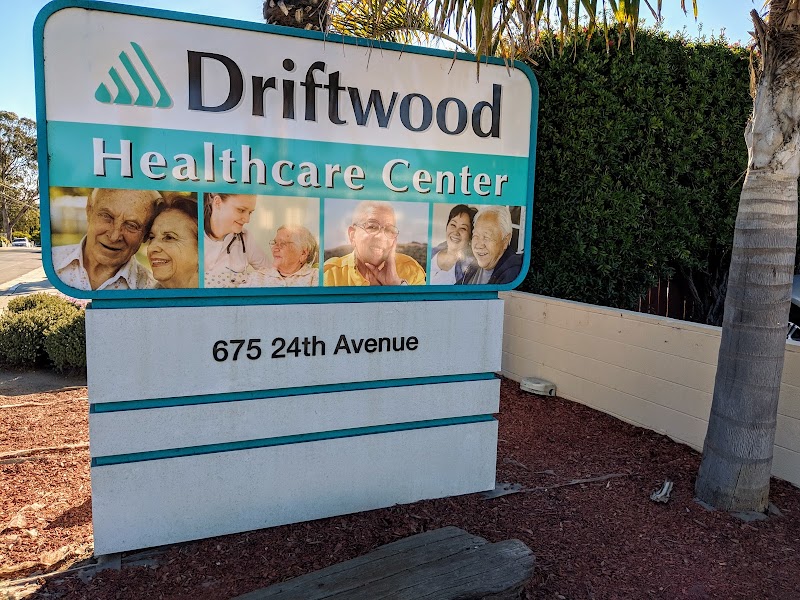
675 24TH AVENUE, SANTA CRUZ, CA 95062 (831) 475-6323
For profit - Partnership 92 Beds MARINER HEALTH CARE Data: November 2025
Trust Grade
25/100
#1015 of 1155 in CA
Last Inspection: June 2024

Within standard 12-15 month inspection cycle. Federal law requires annual inspections.

Overview

Driftwood Healthcare Center in Santa Cruz has a Trust Grade of F, indicating significant concerns about the quality of care provided. It ranks #1015 out of 1155 facilities in California, placing it in the bottom half statewide, and is the lowest-ranked facility in Santa Cruz County. While the facility is showing improvement, going from 29 issues in 2024 to only 1 in 2025, it still reported 58 total issues, including three serious concerns related to medication management and supervision, which could potentially harm residents. Staffing is rated at 4 out of 5 stars, suggesting a good level of care, but the turnover rate is average at 48%. Notably, the facility has no fines on record, which is a positive sign, but the serious incidents reported raise red flags for families considering this option.

Trust Score
F
25/100
In California
#1015/1155
Bottom 13%
Safety Record
High Risk
Review needed
Inspections
Getting Better
29 → 1 violations
Staff Stability
⚠ Watch
48% turnover. Above average. Higher turnover means staff may not know residents' routines.
Penalties
✓ Good
No fines on record. Clean compliance history, better than most California facilities.
Skilled Nurses
○ Average
Each resident gets 33 minutes of Registered Nurse (RN) attention daily — about average for California. RNs are the most trained staff who monitor for health changes.
Violations
⚠ Watch
58 deficiencies on record. Higher than average. Multiple issues found across inspections.
★☆☆☆☆
1.0
Overall Rating
★★★★☆
4.0
Staff Levels
★★★★☆
4.0
Care Quality
★☆☆☆☆
1.0
Inspection Score
Stable
2024: 29 issues
2025: 1 issues

The Good

  • 4-Star Staffing Rating · Above-average nurse staffing levels
  • 4-Star Quality Measures · Strong clinical quality outcomes
  • Full Sprinkler Coverage · Fire safety systems throughout facility
  • No fines on record

Facility shows strength in staffing levels, quality measures, fire safety.

The Bad

1-Star Overall Rating

Below California average (3.1)

Significant quality concerns identified by CMS

Staff Turnover: 48%

Near California avg (46%)

Higher turnover may affect care consistency

Chain: MARINER HEALTH CARE

Part of a multi-facility chain

Ask about local staffing decisions and management

The Ugly 58 deficiencies on record

3 actual harm
Aug 2025 1 deficiency
CONCERN (D) 📢 Someone Reported This

A family member, employee, or ombudsman was alarmed enough to file a formal complaint

Potential for Harm - no one hurt, but risky conditions existed

Report Alleged Abuse (Tag F0609)

Could have caused harm · This affected 1 resident

**NOTE- TERMS IN BRACKETS HAVE BEEN EDITED TO PROTECT CONFIDENTIALITY** Based on observation, interviews, and record review, the facility failed to implement their abuse policy and procedures for one ...

Read full inspector narrative →
**NOTE- TERMS IN BRACKETS HAVE BEEN EDITED TO PROTECT CONFIDENTIALITY** Based on observation, interviews, and record review, the facility failed to implement their abuse policy and procedures for one of three sampled residents (Resident 1) when the facility did not report Resident 1's allegation of abuse. This failure resulted in Resident 1's allegation of abuse not reported to required agencies California Department of Public Health [CDPH], law enforcement agency, and Long-Term Care Ombudsman). This failure had the potential to compromise the safety of the residents in the facility.During an interview on 5/15/25 at 1:11 p.m., with Resident 1. Resident 1 stated she has a concern about a gentleman that comes in her door, she stated she is afraid for other residents what the gentleman can do to them. Resident 1 stated the gentleman's room was two doors next to hers. Resident 1 stated she filed a grievance for that, and social services knows. During a review on 5/15/2025 of Resident 1's Face sheet (FS, document that summarizes a person's information such as medical history), the FS indicated Resident 1 was initially admitted on [DATE] to the facility with diagnoses including urinary tract infection, anxiety disorder unspecified (a mental health condition characterized by excessive and persistent worry, fear, and nervousness that can interfere with daily life), and major depressive disorder (a serious mood disorder characterized by persistent feelings of sadness, loss of interest or pleasure, and other symptoms that impair daily functioning).Review of Resident 1's admission minimum data set (MDS, a resident assessment tool) dated 4/8/2025, indicated Resident 1's brief interview for mental status (BIMS, a tool used to assess cognition level) score was 15 (a score of 0 to 7 indicates severe cognitive impairment, 8-12 moderate impairment, 13-15 patient is cognitively intact). During an interview on 5/15/25 at 3:31 p.m., with the Social Service Director (SSD), the SSD stated she met with Resident 1. The SSD stated Resident one invited Resident 2 to her room, and they talked about spouses then Resident 1 asked Resident 2 to leave the room because it made her uncomfortable.During a review of Facility's Grievance (a standardized document that an individual, typically an employee, uses to formally report a complaint or concern about unfair treatment, a policy violation, or a breach of their employment contract or collective bargaining agreement) Form dated 4/28/25, it indicated, Resident states she invited resident [room AA] into her room-Started talking about his wife and children. He came towards me and feeling my leg. At- Which point I quickly escorted him out of the Room.During a concurrent interview and record review on 5/16/25 at 3:22 p.m. of Resident 1's grievance form dated 4/28/25., with the SSD, the SSD stated Resident 1 came to her office and she helped Resident 1 fill up the grievance form. The SSD further stated those are Resident 1 words she just helped her write it. During the follow-up interview on 5/16/25 at 2:43 p.m., with Resident 1, she stated she was sitting in her bed, then Resident 2 came forward to her, and started talking about his family. He [Resident 2] started stroking her right leg, she pushed him away and yelled at him, he back away and started making mouth gestures. Resident 1 stated she reported it to the night nurse and the night social worker on Friday. Resident 1 stated she was told this gentleman will leave on Tuesday. Resident 1 stated she felt like she was violated, and she didn't give him consent to touch her. During an interview on 5/16/25 at 3:44 p.m., with the Director of Nursing (DON), the DON stated it's not reported, from her understanding she [Resident 1] invited him [Resident 2] to her room so it's consensual, the DON further stated she only talked to Resident 2, and he denied it on 5/1/25.During an interview on 5/16/25 at 3:55 p.m., with the Administrator (ADM), The ADM stated there was no further concern from Resident 1. ADM stated Resident 1 was okay that Resident 2 will be discharged the following day. The ADM stated they thought it was not abuse, and she (Resident 1) just wanted to let them know.During an observation on 5/15/2025 at 12:50 p.m., noted Resident 2 was still in the facility. During another observation on 8/22/2025 at 11:25 a.m., Resident 2 was observed still in the facility but has been moved to another room further away from Resident 1. During a review of Resident 2's clinical records on 8/22/2025, Resident 2's clinical records indicated he was admitted on [DATE] with diagnoses including cerebral infarction unspecified (a medical term that refers to a stroke where the specific cause of the blockage in a brain artery is unknown) and type 2 diabetes mellitus (a condition which affects the way the body processes blood sugar) without complications and he was never discharged from the facility as of 8/22/2025. A Review of Facility's Five Day summary dated 5/20/2025 indicated Based on initial and further investigation beginning on 4/28/25 that included interviews with staff and residents, the facility was unable to substantiate the allegation of abuse.During a concurrent interview and record review on 8/22/25 at 12:18 p.m., with the Nurse Supervisor (NS), the NS reviewed Resident 1's progress notes from 4/21/25 to 4/30/25, she confirmed that there was no documentation the allegation was reported to CDPH, Ombudsman, and Law enforcement. The NS further stated she did the SBAR and progress notes about this allegation of abuse between Resident 1 and Resident 2 only on 5/15/2025 and reported it to CDPH, Law enforcement and Ombudsman only on 5/15/25. During a review of the facility's policy and procedure titled, Abuse Investigation & reporting, undated, indicated, All allegations of resident abuse, neglect, exploitation, misappreciation of resident property, mistreatment and/or injuries of unknown source( abuse) shall be promptly reported to the appropriate local, state and/or federal agencies (as defined by current regulations) and thoroughly investigated by Company management. Findings of abuse investigations will also be reported to local law enforcement and the Office of Ombudsman .2. An alleged violation of abuse, neglect, exploitation or mistreatment (including injuries of unknown source and misappropriation of resident property) will be reported immediately but no later than: a) Two (2) hours if the alleged violation involves abuse or has resulted in serious bodily injury; or b) Twenty-four (24) hours if the alleged violation does not involve abuse and has not resulted in serious bodily injury.
Oct 2024 1 deficiency
CONCERN (D) 📢 Someone Reported This

A family member, employee, or ombudsman was alarmed enough to file a formal complaint

Potential for Harm - no one hurt, but risky conditions existed

Accident Prevention (Tag F0689)

Could have caused harm · This affected 1 resident

Based on observation, interview and record review, the facility failed to provide adequate supervision for one of three sampled residents (Resident 1) when Resident 1 got out of the facility without s...

Read full inspector narrative →
Based on observation, interview and record review, the facility failed to provide adequate supervision for one of three sampled residents (Resident 1) when Resident 1 got out of the facility without supervision. This failure put Resident 1 at risk for accidents. Findings: During an observation on 9/23/24 at 4 p.m., Resident 1 walked towards her room using a walker unassisted and was able to sit on the bed unassisted. Resident 1 stated she walked out of the facility on 9/20/24. During a concurrent observation and interview on 9/23/24 at 4:05 p.m. with Resident 1 and Resident 1's relative (RR), the RR stated she was called by the facility on 9/20/24 at night and informed that Resident 1 went out of the facility. When Resident 1 was asked how she got out of the facility, Resident 1 led the surveyor to her room's sliding door that opened to a patio. Resident 1 pointed at the right side of the patio where a closed wooden door was sighted. Resident 1 stated she opened the wooden door on 9/20/24 to get out of the facility. The RR pushed the wooden door and it opened to the street in front of the facility. During a concurrent observation and interview on 9/23/24 at 4:15 p.m. with the Registered Nurse (RN), the RN confirmed the wooden door had no lock and had no alarm. The RN stated it should be locked or must have an alarm. During a concurrent observation and interview on 9/23/24 at 4:27 p.m. with the RN, the RN confirmed the glass door near room AA was ajar (slightly open). The RN closed the door to check if door alarm was on, the RN opened the glass door and no alarm was triggered. The RN stated the door should be closed at all times and the alarm must be on. During an interview on 9/23/24 at 4:29 p.m. with the Director of Nursing (DON), the DON stated that an unlocked door put residents at risk for accidents. The DON stated door alarms must be on at all times. During a concurrent interview and record review on 10/2/24 at 2:15 p.m. with the Regional Director for Maintenance (RDM) and the Supervisor of Maintenance (SM), the SM stated doors were checked daily, every morning, afternoon and before leaving the facility. The SM stated doors were ensured locked from the outside and alarms were functioning. The RDM stated that the wooden door was not part of the monitoring prior to Resident 1 getting out of the facility. The SM confirmed the Exit Door monitoring log for September 2024 started on 9/23/24. The SM confirmed there was no logs prior to 9/23/24. A review of facility's policy and procedure (P&P) titled Wander/Elopement Alarm System Testing with an approval effective date of 10/9/23, the P&P indicated, Door Monitor Test 1. Inspect and test each door monitor daily . Policies on accident hazards were requested but were not provided.
Jun 2024 25 deficiencies
CONCERN (D)

Potential for Harm - no one hurt, but risky conditions existed

Deficiency F0578 (Tag F0578)

Could have caused harm · This affected 1 resident

**NOTE- TERMS IN BRACKETS HAVE BEEN EDITED TO PROTECT CONFIDENTIALITY** Based on interviews, record review, and policy review, the facility failed to ensure two of eight residents (Residents 6 and 284...

Read full inspector narrative →
**NOTE- TERMS IN BRACKETS HAVE BEEN EDITED TO PROTECT CONFIDENTIALITY** Based on interviews, record review, and policy review, the facility failed to ensure two of eight residents (Residents 6 and 284) had been informed about having an advance directive (AD, legal form directing their wishes about their healthcare, whether from them or a named individual on their behalf), when no documentation was found about AD and the Physician Orders for Life -Sustaining Treatment (POLST, a legal document stating the kinds of medical treatment patients want toward the end of their lives) was not completed and readily available in the event of a medical emergency. This failure had the potential to result in inability to make medical decisions and could lead to the delivery of unnecessary or inappropriate medical services. Findings: 1. Review of Resident 6's face sheet (summary page of a patient's important information) indicated, Resident 6 was admitted to the facility on [DATE] with diagnoses including cerebral infarction (also known as stroke), unspecified lack of expected normal physiological development in childhood-developmental delay, unspecified dementia (a group of symptoms affecting thinking and social abilities interfering with daily functioning), unspecified severity, with other behavioral disturbance and parkinsonism (a disease that include symptoms of slowness of movements, muscle rigidity, involuntary tremors/shaking and impaired balance and posture). During a concurrent interview with director of nursing (DON) and record review on 6/20/2024 at 10:50 a.m., DON reviewed Resident 6's chart and confirmed the POLST was incomplete. DON stated the sections B (about Medical Interventions: If patient is found with a pulse, and /or breathing: Full treatment, selective treatment, and comfort-focused treatment), C (about Artificially Administered Nutrition: Offer food by mouth if feasible and desired. Can have long term artificial nutrition, including feeding tubes, trial period of artificial nutrition, including feeding tubes, no artificial means of nutrition, including feeding tubes), and D (Information and signatures: with Advance Directive, Advance Directive not available and no Advance Directive) were not marked completely. DON further stated nurses should have followed up and social services should have followed up during care conference. During a concurrent interview with social service director (SSD) and record review on 6/21/2024 at 10:07 a.m., SSD reviewed Resident 6's POLST. SSD confirmed Resident 6 POLST was not completed. SSD stated she should have reviewed Resident 6's POLST during their initial care conference with Resident 6's responsible party (RP, a person empowered to make decisions for the resident/ person legally responsible and liable for a decision or an action). During a follow up interview with SSD on 6/21/2024 at 10:36 a.m., SSD confirmed Resident 6 did not have an advance directive. 2. Review of Resident 284's face sheet indicated, Resident 284 was admitted to the facility on [DATE] with diagnoses including sepsis (blood poisoning due to an infection, causing the organs to work poorly), open wound to right and left lower legs, depression (a mood disorder that causes a persistent feeling of sadness and loss of interest), and type 2 diabetes mellitus with other circulatory complications (occurs when the body is unable to regulate glucose [sugar] in the blood, with damage to the blood vessels). During a concurrent interview with DON and record review on 6/20/2024 at 10:50 a.m., DON reviewed Resident 284's chart. DON confirmed Resident 284's POLST was not in the chart. DON also reviewed Resident 284's electronic health record (EHR). DON confirmed Resident 284 did not have a POLST. During an interview with SSD on 6/21/2024 at 10:13 a.m., SSD confirmed Resident 284 did not have a POLST and did not have an advance directive. SSD stated POLST should have been completed in a timely manner. During a review of the facility's undated job description titled, SOCIAL SERVICES - SALARIED, indicated, ESSENTIAL DUTIES AND RESPONSIBILITIES include the following. Other duties may be assigned .Facilitates advanced directive decision-making process. During a review of the facility's undated policy and procedure titled, Advance Directive, indicated, The Resident has a right to accept or refuse medical or surgical treatment and to formulate an Advance Directive in accordance with state and federal law . Prior to or upon admission of a resident, the Admissions Coordinator or designee inquires of the Resident, his/her family members and/or his or her legal representative, about the existence of any written Advance Directive .If the Resident Does not have an Advance Directive .c. The Social Worker will follow up with the Resident or representative upon admission about the availability of the Advance Directive. If there is no Advance Directive, will offer assistance by providing information on how to initiate an Advance directive and will document in the Social Services notes if Resident or representative accept or decline assistance .If the Resident Has an Advance Directive .The assigned Licensed Nurse is requires to inform emergency medical personnel of a Resident's Advance Directive regarding treatment options and provide such personnel with a copy of the Advance Directive and/or POLST when transfer from the facility via ambulance or other means is made.
CONCERN (D)

Potential for Harm - no one hurt, but risky conditions existed

Deficiency F0583 (Tag F0583)

Could have caused harm · This affected 1 resident

**NOTE- TERMS IN BRACKETS HAVE BEEN EDITED TO PROTECT CONFIDENTIALITY** Based on observation, interview, and policy review, the facility failed to protect a resident's rights to confidentiality of pro...

Read full inspector narrative →
**NOTE- TERMS IN BRACKETS HAVE BEEN EDITED TO PROTECT CONFIDENTIALITY** Based on observation, interview, and policy review, the facility failed to protect a resident's rights to confidentiality of protected health information (PHI, any information in the medical record that can be used to identify an individual and that was created, used, or disclosed in the course of providing a health care service such as diagnosis or treatment) when the licensed nurse left the computer screen open and unattended on top of the treatment cart for two of eight residents (Residents 31 and 64). This deficient practice had the potential to compromise the resident's privacy and confidentiality. Findings: 1. During an observation on 6/24/2024 at 9:28 a.m., registered nurse K (RN K) left the computer screen open on Resident 31's physician's treatment orders at the hallway facing Resident 31's bedroom door. The physician's orders indicated Resident 31's wound treatments. The computer screen was left on while RN K was with Resident 31 providing incontinent care and wound treatment. During an interview with RN K on 6/24/2024 at 10:06 a.m., RN K confirmed she left the computer screen on when she entered Resident 31's room. During an interview with director of nursing (DON) on 6/24/2024 at 12:02 p.m., DON stated nurses should sign out from the computer prior to entering the resident's room, even though the computer was facing the room. DON further stated the hallway was busy with passersby like housekeepers, visitors, and other staff. During a review of the undated policy and procedure titled, Confidentiality, indicated, All resident, personnel, and financial information are considered confidential .To protect the privacy rights of residents .Special care must be given to retrieving records where the computer screen can be observed by unauthorized persons. When a computer is left unattended, the last person accessing information should exit the application. 2. Review of Resident 64's admission Record indicated he was admitted to the facility on [DATE]. Review of Resident 64's 6/2024 Treatment Administration Record (TAR) indicated he had wounds on his left and right gluteal folds (the horizontal skin crease that forms below the buttocks, separating the upper thigh from the buttocks). During an observation on the treatment for Resident 64's wounds with registered nurse K (RN K) on 6/20/24, at 11:12 a.m., RN K turned on the computer on her treatment cart to review Resident 64's wound treatment orders. RN K prepared the supplies for the treatment, then provided the treatment for Resident 64's wounds in his room and left her computer with Resident 64's wound treatment information opened on the treatment cart and in the hallway. Review of the facility's undated policy, Confidentiality, indicated Our residents have a right to privacy of their protected health information . Employees must keep residents' medical, financial, and social information confidential .
CONCERN (D)

Potential for Harm - no one hurt, but risky conditions existed

Comprehensive Care Plan (Tag F0656)

Could have caused harm · This affected 1 resident

Based on interview and record review, the facility failed to develop and implement a comprehensive care plan for one out of 18 residents (Resident 59) when they did not include a care plan to include ...

Read full inspector narrative →
Based on interview and record review, the facility failed to develop and implement a comprehensive care plan for one out of 18 residents (Resident 59) when they did not include a care plan to include goals, approaches, interventions, and the monitoring for the signs of symptoms of bleeding related to an anti-coagulant medication: Findings: Review of Resident 59's medical record indicated he was admitted to the facility with diagnoses including unspecified mood disorder and history of a traumatic brain injury. Review of Resident 59's physician order, dated 4/4/24, indicated Eliquis [an anticoagulant to prevent blood clots] 5 mg 1 tablet twice a day at 9:00 AM and 5:00 PM for DVT [deep vein thrombosis, a blood clot in a deep vein, usually in the legs] Prevention. A review of Resident 59's medical record indicated there was no comprehensive care plan developed for the use of Eliquis. During an interview and concurrent record review with the director of nursing (DON) on 6/20/24 at 1:02 PM, the DON stated There should be a care plan for Eliquis. Review of facility's policy and procedure, unknown date, titled Comprehensive Plan of Care indicated, a Comprehensive Care Plan is completed within 7 days after completion of the comprehensive assessment, and The comprehensive plan of care must: Include interventions to prevent avoidable decline in function or functional level; Include interventions to attempt to manage risk factors.
CONCERN (D)

Potential for Harm - no one hurt, but risky conditions existed

Quality of Care (Tag F0684)

Could have caused harm · This affected 1 resident

**NOTE- TERMS IN BRACKETS HAVE BEEN EDITED TO PROTECT CONFIDENTIALITY** Based on observation, interview, and record review, the facility failed to ensure the residents received the necessary care and ...

Read full inspector narrative →
**NOTE- TERMS IN BRACKETS HAVE BEEN EDITED TO PROTECT CONFIDENTIALITY** Based on observation, interview, and record review, the facility failed to ensure the residents received the necessary care and services for two of 18 residents (10 and 184) when: 1. Resident 10 had five open skin areas on her face, but there was no treatment order for them; and 2. Resident 184 did not have floor mat at his bed side as ordered by the physician, recommended by the interdisciplinary team (IDT, a team comprises professionals from various disciplines who work in collaboration to address residents' needs), and indicated as one of the interventions in Resident 184's fall care plan. These failures had the potential to affect the residents' care and could jeopardize their health and well-being. Findings: 1. Review of Resident 10's admission Record indicated she was admitted to the facility on [DATE]. During an observation on 6/17/24, at 11:51 a.m., Resident 10 had five open skin areas on her face, but there was no treatment order for them. During the observations on 6/18/24, at 1:09 p.m., and on 6/20/24, at 10:30 a.m., Resident 10 still had five open skin areas on her face, and she still had no treatment order for them. During an observation and interview with licensed vocational nurse C (LVN C) on 6/20/24, at 10:35 a.m., she confirmed Resident 10 had five open skin areas on her face, but there was no treatment order for them. LVN C stated she would initiate a change of condition and obtain a treatment order for Resident 10's open skin areas. Review of the facility's undated policy, Pressure Ulcer and Skin Care Management, indicated Licensed nurse checks the resident's body for the presence of pressure ulcers, wounds, and other skin conditions. 2. Review of Resident 184's admission Record indicated he was admitted to the facility on [DATE] with dementia (loss of memory, language, problem-solving and other thinking abilities that are severe enough to interfere with daily life) diagnosis. Review of Resident 184's Fall Risk Assessments on 2/12/24, 2/26/24, and 6/13/24, indicated he was at high risk for fall. Review of Resident 184's Unwitnessed Fall Report, dated 2/25/24, indicated Resident 184 was found on the floor in his room. Review of Resident 184's Risk Meeting Notes, dated 2/26/24, indicated the IDT recommended floor mat at bed side for Resident 184. Review of Resident 184's physician order, dated 2/26/24, indicated he had an order for floor mat at bedside, and the placement of the floor mat should be monitored every shift. Review of Resident 184's fall care plan indicated floor mat at bed side was one of the interventions for Resident 184's fall, started on 2/26/24. During the observations on 6/17/24, at 10:22 a.m., and on 6/20/24 at 10:28 a.m., Resident 184 was in bed, and there was no floor mat at his bed side. During an observation and interview with licensed vocational nurse C (LVN C) on 6/24/24, at 10:05 a.m., Resident 184 was in bed, and there was no floor mat at his bed side. LVN C reviewed Resident 184's physician order and fall care plan and confirmed that Resident 184 should have a floor mat at his bed side, and she would provide a floor mat to Resident 184's bed side. Review of the facility's undated policy, Fall Management, indicated . staff will identify and implement relevant interventions to try to minimize serious consequences of falling.
CONCERN (D)

Potential for Harm - no one hurt, but risky conditions existed

Incontinence Care (Tag F0690)

Could have caused harm · This affected 1 resident

Based on observation, interview, and record review, the facility failed to provide appropriate care and services for indwelling catheter for one of three residents (Resident 31) when Resident 31's ind...

Read full inspector narrative →
Based on observation, interview, and record review, the facility failed to provide appropriate care and services for indwelling catheter for one of three residents (Resident 31) when Resident 31's indwelling catheter (a catheter which is inserted into the bladder [a sac-shaped muscular organ that stores the urine secreted by the kidneys],via the urethra [the tube through which urine leaves the body] and remains in place to drain urine) was not properly secured and the urinary tube connected to a urine drainage bag was filled with thick yellow sediments(caused by the precipitation of calcium, phosphorus, and magnesium minerals in the urine). This failure had the potential for the resident to develop urinary tract infection (UTI, an infection cause by a bacteria (germs) that get into the bladder or kidneys (a pair of organs that are on either side of the spine, just below the rib cage of a person's back). Findings: Review of Resident 31's Physician Order Report dated 5/21/2024-6/21/2024, indicated an order of indwelling foley catheter for diagnosis of obstructive uropathy (a disorder of the urinary tract that occurs due to obstructed urinary flow and can be either structural or functional). Review of Resident 31's clinical records did not reveal a documentation of when Resident 31's indwelling catheter, urine bag and the catheter stabilization device (an adhesive catheter foam anchor pad) were changed. During a wound treatment observation on 6/24/2024 at 9:44 a.m., inside Resident 31's room, Resident 31 was lying in bed with indwelling catheter connected to a urine bag. Registered Nurse K (RN K) removed Resident 31's cover and revealed the following: Resident 31's catheter stabilization device placed in the left thigh had some surgical tape to keep it in placed, a small amount of dried blood was observed on Resident 31's left thigh and the urinary tube connected to the urine drainage bag was filled with thick yellow sediments. During an interview with RN K on 6/24/2024 at 10:06 a.m., RN K confirmed above observations. RN K stated, the urine bag should have been changed at least monthly or as needed. RN K further stated, the catheter stabilization device should have been changed weekly to prevent skin irritation. During an interview with director of nursing (DON) on 6/24/2024 at 12:02 p.m., DON stated the urinary bag should be changed weekly and as needed, for blockage, leakage or if with noticeable sediment build up. DON further stated, the catheter stabilization device should be changed at the same time with the urine bag, weekly and as needed. During a review of the facility's undated policy and procedure titled, Indwelling Catheter Care, indicated, Routine catheter care helps prevent infections and other complications, and is usually performed daily .Inspect catheter for any problems. Check urine drainage characteristics .Provide enough slack before securing catheter to prevent tension on tubing. During a review of the facility's undated policy and procedure titled, Urinary Catheter, indicated, Change them only when they leak, malfunction, or are becoming obstructed. When the system needs to be cleaned: change the entire system at once - catheter and drainage bag .Indwelling catheters should be properly secured to prevent movement and urethral traction.
CONCERN (D)

Potential for Harm - no one hurt, but risky conditions existed

Drug Regimen Review (Tag F0756)

Could have caused harm · This affected 1 resident

Based on interview and record review, the facility failed to ensure the Consultant Pharmacist (CP) identified and reported drug irregularities during the monthly medication regimen review (MRR); and t...

Read full inspector narrative →
Based on interview and record review, the facility failed to ensure the Consultant Pharmacist (CP) identified and reported drug irregularities during the monthly medication regimen review (MRR); and that there was documented clinical rationale when the physician disagreed with the CP's recommendation, for two of 18 sampled residents (Resident 2 and 29). The failure resulted in Resident 29 receiving concomitant use of two medications in the same therapeutic class, the loop diuretics (a type of medication that exerts its action on certain part of the kidneys; used in the management and treatment of fluid overload conditions such as heart failure and high blood pressure), for over a year; and Resident 2 receiving five psychotropic medications (drugs that affects brain activities associated with mental processes and behavior) without the documented clinical rationale to support continued use. Findings: 1. A review of Resident 29's medical record indicated he was admitted to the facility with diagnoses including congestive heart failure (long-term condition that happens when your heart can not pump blood well enough to give your body a normal supply) and hypertension (high blood pressure). A review of Resident 29's physicians orders included the following orders: - Furosemide (a loop diuretic) 40 milligrams (mg, unit of measurement) twice daily for hypertension, dated 5/23/2023 - Torsemide (a loop diuretic) 40 mg once daily for hypertension, dated 6/7/2023 There was no documented risk/benefit assessment or clinical rationale indicating why Resident 29 was receiving two loop diuretics at the same time since 6/7/23, more than a year ago. During a concurrent interview and record review with the director of nursing (DON) on 6/19/24 at 4:03 PM, she stated she could not find the clinical rationale why Resident 29 was receiving two loop diuretics at the same time. During an interview with the CP on 6/20/24 at 9:54 AM, the CP stated Resident 29 was on furosemide for short term for edema [fluid retention], and when the resident had another episode, they put her back on it. She stated there are no current standards of practice to use double loop diuretics at the same time for treatment of the same or different medical conditions. The CP stated she did not identify this duplicate therapy as an irregularity during her monthly MRR for Resident 29, and confirmed she should have. A review of the facility's policy and procedure titled Medication Monitoring Medication Regimen Review and Reporting, dated 9/2018, indicated the CP reviews the medication regimen of each resident to prevent, identify, report, and resolve medication-related problems or other irregularities. 2. A review of Resident 2's medical record indicated she was admitted to the facility with diagnoses including bipolar disorder (a disorder associated with episodes of mood swings ranging from depressive lows to manic highs) and brief psychotic disorder (sudden onset of psychotic behavior that lasts less than one month followed by complete remission with possible future relapses). A review of Resident 2's physicians orders indicated the following psychotropic medications: a. Clonazepam (a medication to treat agitation and anxiety) 0.5 milligrams (mg, unit of measure) at bedtime for anxiety manifested by (m/b) inability to relax such as repetitive calling out since 8/18/22 (almost 2 years ago); b. Fanapt (iloperidone, an antipsychotic medication) 2 mg twice daily for schizoaffective disorder (a mental illness that can affect your thoughts, mood and behavior) manifested by (m/b) thinking that someone is after her, since 8/18/2022; c. Divaproex (Depakote, medication to treat mood disorder) 500 mg twice a day for bipolar disorder m/b (manifested by) mood swings since 8/18/23 (almost a year ago); d. Lamictal (lamotrigine, a medication for mood disorder) 100 mg, 1 tablet twice daily for Mood stabalization since 8/18/2023; e. Zoloft (sertraline, an antidepressant) 150 mg once daily for depression m/b sad facial expressions, dated 05/19/2023. A review of the monthly psychotropic medication evaluations, dated 1/31/24, 4/3/24, 5/3/24, and 6/2/24, indicated Resident 2 had zero (0) behaviors for the previous months. In other words, during a 6-month period from December 2023 to May 2024, the Resident 2 had not exhibited any behaviors for which the above medications were indicated. During the survey, Resident 2 was observed on 6/20/24 at 10:15 AM and 06/20/24 at 11:52 AM during which she was very pleasant, quiet, and without any agitation or distress. During an interview with Certified Nursing Assistant (CNA) F on 6/20/24 at 11:39 AM, she stated Resident 2 was often confused but had no mood changes, calling out, or anxiety/inability to relax. During an interview with Licensed Vocational Nurse (LVN) C on 6/20/24 at 11:47 AM, she stated Resident mumbles when she talks . makes noises and asks for help when she doesn't need help but had no mood changes or anxiety/inability to relax. In an interview with CNA G on 6/6/20/24 at 12:06 PM, she stated she had never observed Resident 2 with mood changes or anxiety, or any delusion thinking that someone is after her. During an interview with CNA H on 6/20/24 at 12:47 PM, she stated Resident 2 sometimes cries but not often. She stated she never witnessed Resident 2 exhibiting mood changes or thinking someone is after her. Despite the lack of behaviors, there were no documented evidence in the medical record the facility attempted the GDR (GDR, gradual dose reduction, a tapering of a dose to determine if symptoms, conditions, or risks can be managed by a lower dose or if the dose or medication can be discontinued) for any of the medications since their respective ordered dates. A review of the physician's progress notes, written by Resident 2's physician (MD), indicated the following statements on the following dates: - 12/07/2023, The patient was seen for psychotropic meeting. The patient is on clonazepam, valproic, Fanapt, lamotrigine, sertraline. GDR is contraindicated. We will continue at this point. - 3/27/2024, The patient was seen for the psychotropic gradual drug reduction. GDR was contraindicated, clonazepam, valproic, Vimpat [an anticonvulsant which is also used for mood disorder], lamotrigine and sertraline. - 5/22/2024, The patient was seen for psychotropic meeting. GDR is contraindicated. A review of the CP's MRR, dated 2/12/24, indicated the CP asking the MD for an evaluation and consideration of a dose reduction of five medications above. In response, the MD checked the box DISAGREE and signed the document without offering a clinical rationale for the disagreement. During a concurrent interview and record review with the director of nursing (DON) and the nursing supervisor (NS) on 6/20/24 at 4:06 PM, they confirmed the MD did not provide a clinical rationale of why she disagreed with the CP's recommendations. A review of the facility's policy and procedure titled Medication Monitoring Medication Regimen Review and Reporting, dated 9/2018, indicated in part, Resident-specific MRR recommendations and findings are documented and acted upon by the nursing center and/or physician . For those issues that require physician intervention, the attending physician either accepts . or rejects all or some of the report and should document his or her rationale of why the recommendation is rejected in the resident's medical record.
CONCERN (D)

Potential for Harm - no one hurt, but risky conditions existed

Deficiency F0757 (Tag F0757)

Could have caused harm · This affected 1 resident

**NOTE- TERMS IN BRACKETS HAVE BEEN EDITED TO PROTECT CONFIDENTIALITY** Based on interview and record review, the facility failed to ensure that one out of 18 sampled residents (Resident 29) was not r...

Read full inspector narrative →
**NOTE- TERMS IN BRACKETS HAVE BEEN EDITED TO PROTECT CONFIDENTIALITY** Based on interview and record review, the facility failed to ensure that one out of 18 sampled residents (Resident 29) was not receiving two medications of the same therapeutic class for over one year. This deficient practice had the potential for Resident 29 to receive unnecessary medication from duplicate therapy and increased risk of adverse effects from the medications. Findings: A review of Resident 29's clinical record indicated he was admitted on [DATE] with diagnoses including paroxysmal atrial fibrilliation (an irregular heart rhythm), type 2 diabetes mellitus (poor control of blood sugar levels) and chronic congestive heart failure (failure of the heart caused by enlargement). A review of Resident 29's physician orders indicated Resident 29 had an order, dated 5/23/2023, for furosemide 40 mg 1 tablet twice a day at 9:00 AM and 5:00 PM. Review also indicated Resident 29 had an order, dated 6/7/2024, for torsemide 20 mg 2 tablets once a day at 9:00 AM. Both medications are considered loop diuretics, medications which act on the filtration loops in the kidneys. During a phone interview with the consulting pharmacist (CP) on 6/19/24 at 4:15 PM, CP stated she was not sure why the resident was on both furosemide and torsemide, and that she would follow up on that question. During an in-person interview with the CP on 6/20/24 at 9:55 AM, the CP stated Resident 29 was on furosemide for short term for edema [fluid retention], and when the resident had another episode, they put her back on it. She also stated there are no current standards of practice to use double loop diuretics at the same time for treatment of the same or different medical conditions. A review of the facility's policy titled Pharmaceutical Services, dated 1/9/24, indicated, Medications shall be administered in a safe . manner. Each resident's medication regimen shall include only those medications necessary to treat existing conditions and address significant risks.
CONCERN (D)

Potential for Harm - no one hurt, but risky conditions existed

Unnecessary Medications (Tag F0759)

Could have caused harm · This affected 1 resident

Based on observation, interview and record review, the facility had a medication error rate of 7.41% when two medication errors occurred out of 27 opportunities during medication administration for on...

Read full inspector narrative →
Based on observation, interview and record review, the facility had a medication error rate of 7.41% when two medication errors occurred out of 27 opportunities during medication administration for one out of six residents (Resident 8). This failure resulted in medication not given in accordance with the prescriber's order and facility policy and procedure (P&P), which resulted in resident not receiving the full therapeutic effects of the medications. Findings: 1. During a medication pass observation on 6/17/24 at 9:47 AM with Licensed Vocational Nurse (LVN) A, LVN A stated she did not have Lamictal (a medication used to treat conditions such as bipolar disorder and seizure disorders) 200 milligrams (mg, unit of measure) on hand to give to Resident 8. During the administration, LVN A administered two 25 mg tablets (50 mg total) to Resident 8 but did not administer a 200 mg tablet. During a concurrent interview and inspection of the medication cart with LVN A on 6/17/24 at 10:01 AM, LVN A stated the Lamictal 200 mg dosage was not in stock, and that she reordered the medication from pharmacy the previous day. LVN A also stated, Only one dose of the medication was missed, which was today's dose. A review of Resident 8's physician orders, dated 06/15/2023, indicated Resident 8 was to receive Lamictal, one 200 mg tablet plus 50 mg (total of 250 mg) once a day at 9:00 AM for bipolar disorder (a disorder associated with episodes of mood swings ranging from depressive lows to manic highs). During a follow-up interview and cart inspection with LVN E on 6/18/24 at 10:01 AM, LVN E stated Lamictal 200 mg was still not available yet, and that pharmacy will send the refill today, I'm holding them to it. LVN E also stated, It's important to not skip administration of this medication because it can cause a rebound effect. A review of the facility's P&P titled Medication Administration General Guidelines, dated 1/2021, indicated, Medications are administered in accordance with written orders of the prescriber. 2. During a medication pass observation on 6/17/24 at 9:47 AM with LVN A, LVN A administered olopatadine 0.1% (an eye drop medication used to treat irritation and swelling in the eyes), one eye drop in each eye by directly dropping it in the eye without putting in the conjunctival sac (a pouch in the lower eye lid of an eye). LVN A also did not have the resident slowly close their eyes after administering one drop in each eye, or compress the inner corner of each eye for one minute. During an interview with LVN A at 10:01 AM, LVN A stated Resident 8 doesn't like her eyes getting pulled when asked administering the eye drops to Resident 8. When asked about closing the eyes and holding the tear ducts closed, LVN A stated I did not know it had to be done that way. During an interview with the director of nursing (DON) on 6/17/24 at 3:54 PM, the DON stated eye drops have to be applied to the conjunctiva sac, and she expects the nursing staff to apply pressure to the lacrimal gland after administering eye drops. A review of Resident 8's physician order, dated 4/16/2023, indicated Resident 8 was to receive olopatadine 0.1% eye drops, one eye drop in both eyes, once a day at 9:00 AM, for left eye swelling. Review of facility's policy titled Medication Administration-Eye Drops, last revised in May 2016, indicated, With a gloved finger, gently pull down lower eyelid to form pouch while instructing resident to look up . and Instruct resident to close eyes slowly to allow for even distribution over the surface of the eye, and While the eye is closed, use one finger to compress the tear duct in the inner corner (inner canthus) of the eye for 1-2 minutes. This reduces systemic absorption of the medication.
CONCERN (D)

Potential for Harm - no one hurt, but risky conditions existed

Deficiency F0761 (Tag F0761)

Could have caused harm · This affected 1 resident

**NOTE- TERMS IN BRACKETS HAVE BEEN EDITED TO PROTECT CONFIDENTIALITY** Based on observation, interview and record review, the facility failed to ensure medications and biologicals were stored appropr...

Read full inspector narrative →
**NOTE- TERMS IN BRACKETS HAVE BEEN EDITED TO PROTECT CONFIDENTIALITY** Based on observation, interview and record review, the facility failed to ensure medications and biologicals were stored appropriately when: 1. An emergency medication kit (e-kit, a kit/box containing medications for immediate use during a medical emergency) contained an expired medication in it. This had the potential for residents to be given expired medications in an emergency, which would be ineffective for their treatment. 2. A treatment cart with wound care supplies was left unlocked, and the cart's drawer was left opened. This had the potential for access to medications and supplies by unauthorized persons such as residents and visitors Findings: 1. During a concurrent medication storage inspection and interview with Licensed Vocational Nurse (LVN) C on 6/17/24 at 10:05 AM, one e-kit containing 8 tablets of lorazepam (medication to treat agitation or anxiety) 0.5 milligrams (unit of measurement) was observed with the expiration date of 04/2024. LVN C confirmed the expiration date of the lorazepam and stated, It should have been replaced. A review of the facility's policy titled Medication Storage, dated 1/2024, indicated in part, Outdated .medications .are immediately removed from stock .and reordered from the pharmacy. 2. Review of Resident 64's admission Record indicated he was admitted to the facility on [DATE]. Review of Resident 64's 6/2024 Treatment Administration Record (TAR) indicated he had wounds on his left and right gluteal folds (the horizontal skin crease that forms below the buttocks, separating the upper thigh from the buttocks). During an observation on the treatment for Resident 64's wounds with registered nurse K (RN K) on 6/20/24, at 11:12 a.m., while providing the treatment for Resident 64's wounds, RN K realized that she forgot to bring the skin protectant packet with her. RN K went back to the treatment cart, opened the treatment cart and the drawer to get the skin protectant packet, came back into Resident 64's room, continued the treatment, and left the treatment cart unlocked and the drawer opened in the hallway. During an observation on the treatment cart and interview with RN K on 6/20/24 at 11:24 a.m., RN K confirmed her treatment cart was unlocked and the drawer was opened. RN K stated the treatment cart, and the drawer should be locked. Review of the facility's 2007 policy, Medication Storage - Storage of Medication, indicated . 3. medication supplies should remain locked when not in use or attended to by persons with authorized access.
CONCERN (D)

Potential for Harm - no one hurt, but risky conditions existed

Deficiency F0806 (Tag F0806)

Could have caused harm · This affected 1 resident

Based on observation, interview, and record review, the facility failed to ensure resident food preferences were honored when Resident 46 disliked the planned lunch entrée. This failure had the...

Read full inspector narrative →
Based on observation, interview, and record review, the facility failed to ensure resident food preferences were honored when Resident 46 disliked the planned lunch entrée. This failure had the potential to result in decreased food intake and potential weight loss. Findings: A review of Resident 46's tray card indicated she had a pureed diet ordered. The tray card indicated that she disliked fish. A review of the facility's lunch menu for 6/18/24 indicated the entrée to be served was breaded fish and baked potato wedges. During a tray line observation in the kitchen on 6/18/24 at 12:35 p.m., [NAME] J was observed plating Resident 46's lunch meal. [NAME] J placed one scoop of pureed fish onto the plate in addition to the other menu items. The kitchen aide covered the plate and placed the entire tray in the food delivery cart. When the cart was ready to be taken out of the kitchen for delivery to the dining room, the registered dietician (RD) was asked to view Resident 46's meal tray and compare it to the diet card of Resident 46. The RD confirmed Resident 46's tray card indicated she disliked fish and confirmed the presence of purred fish on Resident 46's lunch tray. The RD stated the fish should not be served if a resident dislikes fish and confirmed Resident 46 should have an alternate entrée item served instead of the fish. A review of the facility's policy, Nutrition Care-Resident Food Preferences dated 2023, indicated the resident food preference should be placed on the profile card and identified on the tray card. The policy further indicated all residents must be offered a substitute food item when an item they dislike is on the menu. Substitutes must be foods of similar nutrient value.
CONCERN (D)

Potential for Harm - no one hurt, but risky conditions existed

Deficiency F0809 (Tag F0809)

Could have caused harm · This affected 1 resident

**NOTE- TERMS IN BRACKETS HAVE BEEN EDITED TO PROTECT CONFIDENTIALITY** Based on observation, interview, and record review, the facility failed to ensure snacks was in accordance with resident's needs...

Read full inspector narrative →
**NOTE- TERMS IN BRACKETS HAVE BEEN EDITED TO PROTECT CONFIDENTIALITY** Based on observation, interview, and record review, the facility failed to ensure snacks was in accordance with resident's needs, preferences, and requests for one (Resident 288) of seven sampled residents (residents who attended the resident council's meeting). This failure resulted in Resident 288's needs and preferences not being met. This failure had the potential for other residents not to have snacks in their requested times. Findings: During an interview in the resident council meeting on 6/19/2024 at 11:01 a.m., Resident 288 stated he was on antibiotics (a drug used to treat infections caused by bacteria and other microorganisms) which made his stomach upset. Resident 288 further stated the staff at night did not have crackers when he requested and so he stopped taking his antibiotics. Review of Resident 288's face sheet (summary page of a patient's important information) indicated, Resident 288 was admitted to the facility on [DATE] with diagnoses including acute on chronic systolic heart failure (damage in the heart, which may have developed over time), hypertension (high blood pressure), and gastro-esophageal reflux disease (GERD, a condition in which stomach acid repeatedly flows back up into the tube connecting the mouth and stomach, called the esophagus). Review of Resident 288's admission/5-day scheduled minimum data set (MDS, an assessment tool) assessment dated [DATE], indicated Resident 288's brief interview for mental status (BIMS, a tool used to assess cognition [knowing, learning, and understanding things]) score was 14 (a score of 0 to 7 indicates severe cognitive impairment, 8-12 moderate impairment, 13-15 patient is cognitively intact). Review of Resident 288's physician order report dated 5/21/2024-6/21/2024, indicated Resident 288 was on cephalexin (an antibiotic medication) 500 milligrams (mg, unit of measurement), one capsule by mouth every eight hours for urinary tract infection (UTI, an infection in any part of the urinary system). Further review of the physician order report, it indicated the cephalexin was started on 6/14/2024 and ended on 6/19/2024. Review of Resident 288's medication administration record (MAR) dated 6/1/2024-6/21/2024, indicated, Resident 288 refused the cephalexin on 6/18/2024, 2:00 p.m. dose, 6/19/2024, 6:00 a.m. and 2:00 p.m. doses. During a concurrent observation and interview with registered nurse P (RN P) on 6/21/2024 at 1:20 p.m., inside the medication room in Station AA, the refrigerator did not have any snacks except a nutritional supplement and apple sauce were observed. There were no dried snacks stored in Station AA. RN P confirmed the observation. RN P stated they have a scheduled snacks provided by the kitchen at 10 a.m., 2 p.m. and at bedtime. During an interview with the nursing supervisor (NS) on 6/21/2024 at 1:26 p.m., NS stated they did not store crackers or any dried snacks at the nurse stations or medication rooms. NS further stated, kitchen staff would leave a tray of sandwiches, fruits, yogurt, pudding, and crackers for evening snacks and will discard them in the morning. During an interview with Resident 288 on 6/21/2024 at 2:52 p.m., Resident 288 stated he often had upset stomach and he needed to have some food to relieve his upset stomach. Resident 288 further stated nobody followed up with his food preferences since he got admitted at the facility. Resident 288 confirmed he never had snacks, and nobody offered him to have snacks since admission. Resident 288 stated, he had to ride a cab one day and went to a store to get some snacks (this statement was confirmed in record review on Resident 288's nurse progress note dated 6/19/2024). During an interview with director of nursing (DON) on 6/21/2024 at 3:05 p.m., DON confirmed they did not store snacks. DON stated they asked the kitchen staff for snacks if needed. Nobody had a key to the kitchen if they ran out of the kitchen provided evening snacks. DON further stated dietary supervisor (DS) should have done the assessment upon admission to determine residents' food preferences. During a concurrent interview with registered dietitian (RD) and record review on 6/21/2024 at 3:30 p.m., RD reviewed Resident 288's assessment record. RD confirmed there were no documentation that the DS did his assessment about Resident 288's food preferences and RD did not do Resident 288's nutrition assessment. During a review of the facility's undated policy and procedure titled, Food Alternates, indicated, If planned alternates are refused, additional items may be designated to be available at all times, e.g. (stands for exempli gratia, meaning for example), peanut butter, cottage cheese, crackers, sandwiches, cold cereal, juice, ice cream. During a review of the facility's undated policy and procedure titled, Nutritional Assessment, indicated, Food History: complete the Diet History/Food Preference List Form to obtain food preferences and nutrition history information within 48 hours of admission.
CONCERN (D)

Potential for Harm - no one hurt, but risky conditions existed

Deficiency F0909 (Tag F0909)

Could have caused harm · This affected 1 resident

Based on observation, interview, and document review, the facility failed to provide a safe, and comfortable environment for one of six residents (Resident 81) when Resident 81's headboard and footboa...

Read full inspector narrative →
Based on observation, interview, and document review, the facility failed to provide a safe, and comfortable environment for one of six residents (Resident 81) when Resident 81's headboard and footboard of bed were loose and wobbly. This failure had a potential to compromise residents' safety, well-being, and health. Findings: During a concurrent observation and interview with director of nursing (DON) and Resident 81 on 6/20/2024 at 10:05 a.m., inside Resident 81's room, Resident 81 was seated on a wheelchair. The following were observed: the wooden headboard of Resident 81's bed tilted to the left side and one screw on the right side was about to come off, and the footboard of Resident 81's bed was leaning forward and wobbly when touched. DON and Resident 81 confirmed above observations. During an interview with licensed vocational nurse A (LVN A) on 6/20/2024 at 3:58 p.m., LVN A stated staff should write any faulty equipment like bed not working, broken call light, or toilet not flushing to the maintenance log located at the nurse station. LVN A further stated staff should follow up with maintenance staff it the work order was not completed. During an interview with director of operations (DO) on 6/24/2024 at 1:14 p.m., DO stated faulty equipment inside residents' room should be recorded in the maintenance binder. DO further stated the maintenance binder should be checked by maintenance staff daily. Review of the maintenance log located at nurse station AA, revealed there was no work order regarding Resident 81's bed and there was no work order entered for the month of June 2024.
CONCERN (E)

Potential for Harm - no one hurt, but risky conditions existed

Deficiency F0552 (Tag F0552)

Could have caused harm · This affected multiple residents

**NOTE- TERMS IN BRACKETS HAVE BEEN EDITED TO PROTECT CONFIDENTIALITY** Based on interview and record review, the facility failed to ensure three of four residents (39, 48, and 64) had informed consen...

Read full inspector narrative →
**NOTE- TERMS IN BRACKETS HAVE BEEN EDITED TO PROTECT CONFIDENTIALITY** Based on interview and record review, the facility failed to ensure three of four residents (39, 48, and 64) had informed consents (written permission before implementing a healthcare intervention) prior to initiating psychotropic medication (medication capable of affecting the mind, emotions, and behavior). These failures resulted in the residents receiving psychotropic medications without being informed about their risks and side effects. Findings: Review of Resident 39's admission Record indicated he was admitted to the facility on [DATE] with diagnoses including psychosis (a mental disorder characterized by a disconnection from reality) and depression (a persistent feeling of sadness and loss of interest). Review of Resident 39's physician orders indicated he had orders, started on 3/18/24, for olanzapine (used to treat several mental health conditions) 2.5 milligrams (mg, a metric unit of mass) every day and 5 mg at bedtime for psychotic disorder and trazodone (used to treat depression) 50 mg at bedtime for depression. However, there were no informed consents for these medications found in Resident 39's clinical record. Review of Resident 48's admission Record indicated he was admitted to the facility on [DATE] with diagnoses including psychosis and mood disorder (a mental health condition that causes intense shifts in mood, energy levels, thinking patterns and behavior). Review of Resident 48's physician orders indicated he had orders, started on 3/8/24, for Depakote (used to treat certain psychiatric conditions) 500 mg twice a day for mood disorder and olanzapine 5 mg three time a day for psychosis. However, there were no informed consents for these medications found in Resident 48's clinical record. Review of Resident 64's admission Record indicated he was admitted to the facility on [DATE] with psychotic disorder. Review of Resident 64's physician order indicated he had an order, started on 6/1/24, for valproic acid (used to treat certain psychiatric conditions) 250 mg three time a day for schizophrenia (a mental illness that affects how a person thinks, feels, and behaves). However, there was no informed consent for this medication found in Resident 64's clinical record. During an interview with the director of nursing (DON) on 6/24/24, at 1:35 p.m., she reviewed Resident 39's, Resident 48's, and Resident 64's clinical records and was unable to locate the informed consents for Resident 39's olanzapine and trazodone, Resident 48's olanzapine and Depakote, and Resident 64's valproic acid. The DON stated that she would check with medical records. During an interview with the DON on 6/24/24, at 4 p.m., the DON was unable to provide the informed consents for Resident 39's olanzapine and trazodone, Resident 48's olanzapine and Depakote, and Resident 64's valproic acid. Review of the facility's policy, Health Information/Record Manual, dated 9/2021, indicated The Licensed Nurse carrying out the Physician's order for use of a psychotropic will verify with the Physician to make certain that an informed consent has been obtained by the Physician with the resident or resident representative. The Licensed Nurse will document such information and in the Informed Consent form.
CONCERN (E)

Potential for Harm - no one hurt, but risky conditions existed

Deficiency F0657 (Tag F0657)

Could have caused harm · This affected multiple residents

**NOTE- TERMS IN BRACKETS HAVE BEEN EDITED TO PROTECT CONFIDENTIALITY** Based on interview and record review, the facility failed to ensure care plans related to alleged abuse were reviewed and update...

Read full inspector narrative →
**NOTE- TERMS IN BRACKETS HAVE BEEN EDITED TO PROTECT CONFIDENTIALITY** Based on interview and record review, the facility failed to ensure care plans related to alleged abuse were reviewed and updated by the interdisciplinary team (IDT, a group of health care professionals from diverse fields who work in a coordinated fashion toward a common goal for the resident) for three of six residents (Residents 61, 63, and 75). This deficient practice had the potential to place the residents at risk of psychosocial and emotional distress. Findings: 1. Review of Resident 61's face sheet (summary page of a patient's important information) indicated, Resident 61 was admitted to the facility with diagnoses including chronic obstructive pulmonary disease (COPD, a disease that affects airflow in the lungs and makes it difficult to breathe), unspecified asthma (inflammatory disease of the airway that often causes wheezing, coughing, and shortness of breath), and pain in right shoulder. Review of Resident 61's admission minimum data set (MDS, an assessment tool) dated 4/21/2024, indicated Resident 61's brief interview for mental status (BIMS, a tool used to assess cognition [knowing, learning, and understanding things]) score was 12 (a score of 0 to 7 indicates severe cognitive impairment, 8-12 moderate impairment, 13-15 patient is cognitively intact). Review of Resident 61's SBAR-GENERAL [Situation, Background, Assessment, and Recommendation - an assessment tool used to facilitate prompt and appropriate communication of a problem] dated 6/10/2024, indicated Resident 61 was angry and stated someone stole his money from his wallet. Review of the IDT note for Resident 61's missing money, dated 6/11/2024, indicated, the IDT discussed Resident 61's missing money. Further review indicated, IDT will continue to monitor and follow up with plan of care as needed. Review of Resident 61's care plan titled, Missing Money, dated 6/11/2024, the goal indicated, Resident will have minimal complications related to missing money. Further review of the care plan's approach indicated, Md (physician), SOC 341 [a form uses to report a suspected elder abuse] complete, SBAR, COC [change of condition], Ombudsman notified, sheriff and CDPH (California Department of Public Health) notified. No other approach added to address how to meet their goal. During an interview with Resident 61 on 6/17/2024 at 3:50 p.m., Resident 61 reported someone stole his money worth $260. Resident 61 stated, I don't want to know who took it. During a concurrent interview with director of nursing (DON) and record review on 6/19/2024 at 11:19 a.m., DON reviewed Resident 61's care plan related to missing money. DON confirmed the care plan should have been updated based on their IDT meeting to reflect interventions to prevent any complications related to missing money. 2. Review of Resident 63's face sheet indicated, Resident 63 was admitted to the facility with diagnoses including sepsis (blood poisoning due to an infection, causing the organs to work poorly), candidiasis (an infection caused by an overgrowth of yeast [Candida]), major depressive disorder (a mood disorder that causes a persistent feeling of sadness and loss of interest), and multiple sclerosis (a disabling disease of the brain and spinal cord). Review of Resident 63's admission MDS dated [DATE], indicated Resident 63's BIMS score was 15 (a score of 0 to 7 indicates severe cognitive impairment, 8-12 moderate impairment, 13-15 patient is cognitively intact). Review of Resident 63's SBAR-GENERAL dated 6/19/2024, indicated, Resident alleged roommate verbally abused her. Review of the IDT note for Resident 63's allegation of abuse by roommate dated 6/19/2024, indicated, IDT recommends and SOC 41 filed, notification to sheriff, ombudsman and CDPH, SBAR, COC, alert charting for emotional distress x (for ) 72 hours, SSD (social services director) to follow up with residents, psych [psychological or psychiatric] eval [evaluation], and on monitoring for emotional distress, resident was offered a room change but declined. Review of Resident 63's care plan titled, Alleged Verbal Abuse by roommate, dated 6/19/2024, indicated, Goal: Resident will have minimal emotional distress related to alleged related to alleged verbal abuse by roommate. Further review of the care plan reflected, Approach: MD aware, SBAR, COC, ALERT CHARTING, CDPH, OMBUDSMAN AND SHERIFF AWARE, REFUSED ROOM CHANGE. No other approach added to address how to meet their goal. During an interview with nursing supervisor (NS) on 6/21/2024 at 11:46 a.m., NS confirmed Resident 63's care plan related to an alleged abuse by her roommate should have been updated after their IDT meeting to reflect the plan of care. 3a. Review of Resident 75's face sheet indicated, Resident 75 was admitted to the facility with diagnoses including fracture (broken bone) of left femur (thighbone), complete traumatic amputation (the loss of a body part, usually a finger, toe, arm, or leg, that occurs as a result of an accident or injury) of two or more left lesser toes, person injured in unspecified motor-vehicle accident, traffic, nontraumatic subarachnoid hemorrhage (bleeding in the space that surrounds the brain) and nontraumatic subdural hemorrhage (a type of bleeding in which a collection of blood gathers between the inner layer of the meninges [the three thin layers that cover and protect the brain and spinal cord] surrounding the brain). Review of Resident 75's admission MDS dated [DATE], indicated Resident 75's BIMS score was 13 (a score of 0 to 7 indicates severe cognitive impairment, 8-12 moderate impairment, 13-15 patient is cognitively intact). Review of Resident 75's SBAR-GENERAL dated 6/13/2024, indicated, Allegation of Physical Abuse. Further review of the SBAR indicated, Resident 75 reported to staff a certified nursing assistant (CNA), threw her in the wheelchair and that he verbally abused her telling her she is loud and an old lady that talks to much. The SBAR indicated, the incident happened on 6/5/2024. Review of the IDT notes related to alleged physical and verbal abuse, dated 6/13/2024, indicated some recommendations, will continue and intervene accordingly .Updated plan of care and reviewed with direct care staff. Review of Resident 75's care plan titled, Allegation of physical and verbal abuse, dated 6/13/2024, did not indicate interventions on how to minimize signs and symptoms of emotional distress. 3b. Review of Resident 75's SBAR-GENERAL dated 6/14/2024, indicated, Alleged financial abuse. Per resident she had $1000 in her purse in a wallet and last seen it at 1100 am, she went to take money out of her wallet at 1700 and money was missing . Review of Resident 75's care plan titled, Alleged financial abuse, dated 6/14/2024, did not reflect interventions to minimize signs and symptoms of emotional distress. 3c. Review of Resident 75's SBAR-GENERAL dated 6/19/2024, indicated, Resident 75 was accused of being verbally abusive and went through her roommate's belongings. Review of the IDT notes related to Resident 75's being accused of verbally abusive to roommate, dated 6/19/2024, indicated, SSD to follow up with residents, psych eval. Review of Resident 75's care plan titled, Resident was accused of being verbally abusive to roommate. The care plan's approach only had one intervention and did not reflect the planned recommendation by the IDT. It indicated, MD aware, SBAR, COC, ALERT CHARTING, CDPH, OMBUDSMAN AND SHERIFF AWARE. During a concurrent interview with NS and record review on 6/21/2024 at 12:04 p.m., NS reviewed Resident 75's three care plans related to the incidents mentioned above. NS confirmed all three care plans were not updated to reflect the plan of care as indicated in the IDT notes. During a review of the facility's undated policy and procedure titled, Comprehensive Plan of Care, indicated, Re-evaluate and modify care plans: as necessary to reflect changes in care, service and treatment. During a review of the facility's undated policy and procedure titled, Care Plan Essential (CPE), indicated, During the morning meeting and any types of care conferences with the company's Interdisciplinary Team (IDT), the resident's CPE will be reviewed and updated accordingly.
CONCERN (E)

Potential for Harm - no one hurt, but risky conditions existed

Deficiency F0700 (Tag F0700)

Could have caused harm · This affected multiple residents

Based on observation, interview, and record review, the facility failed to ensure the proper use of side or bed rails (adjustable rigid bars attached to the side of a bed) for five (Residents 81, 285,...

Read full inspector narrative →
Based on observation, interview, and record review, the facility failed to ensure the proper use of side or bed rails (adjustable rigid bars attached to the side of a bed) for five (Residents 81, 285, 22, 26, and 28) of 14 residents (residents who used bed or side rails) when: 1. Residents 81 and 285 had side or bed rails even when their siderail evaluation revealed both residents did not require the use of siderails; 2. Residents 22 and 28 had side or bed rails even when their siderail evaluation revealed both residents did not require the use of siderails; and Residents 22 and 26 did not have a documented physician's order for the use of siderails. These failures had the potential to place the residents at risk of entrapment and serious injury. Findings: 1a. During an observation on 6/17/2024 at 10:18 a.m., inside Resident 81's room, Resident 81 was seated on a wheelchair and her bed was observed with right bed rail in upright position while the left bed rail was not raised up. During a concurrent observation and interview with director of nursing (DON) on 6/20/2024 at 10:05 a.m., inside Resident 81's room, Resident 81's right bed rail was in upright position while the left bed rail was not raised up. DON confirmed the observation. During a concurrent interview with DON and record review on 6/20/2024 at 10:13 a.m., DON reviewed Resident 81's siderail evaluation dated 5/28/2024. DON confirmed Resident 81's siderail evaluation revealed Resident 81 did not require the use of siderails. DON further confirmed there were no documentations indicated alternatives were offered, no physician order and consent were obtained and care plan for side rail used was not developed prior to Resident 81's used of side rail. 1b. During an observation on 6/17/2024 at 10:29 a.m., inside Resident 285's room, Resident 285 was lying in bed and her bed had two upper bed rails in upright position. During a concurrent observation and interview with DON on 6/20/2024 at 10:11 a.m., Resident 285 was lying in bed and her bed had two upper bed rails in upright position. DON confirmed the observation. During a concurrent interview with DON and record review on 6/20/2024 at 10:23 a.m., DON reviewed Resident 285's siderail evaluation dated 6/14/2024. DON confirmed Resident 285's siderail evaluation revealed Resident 285 did not require the use of siderails. DON further confirmed there were no documentations indicated alternatives were offered, no physician order and consent were obtained and care plan for side rail used was not developed prior to Resident 285's used of side rail. DON stated there should be no bed rails installed upon residents' admission. During a review of the facility's policy and procedure titled, Side Rails, indicated, Requirements are the same as for other physical restraints, whether or not the side rails enable mobility: Nursing completes Side Rail Evaluation form, with input from IDT [interdisciplinary team, a group of health care professionals from diverse fields who work toward a common goal for residents] as indicated. Complete Informed Consent, reviewing risks and benefits with responsible party, including risk for entrapment (restraint or not a restraint). Obtain MD [medical doctor] order, including diagnosis/medical necessity for use of restraint .Care plan. 2. During an observation on 6/18/24, at 9:08 a.m., Resident 22, Resident 26, and Resident 28 had bilateral bed side rails. Review of Resident 22's clinical record indicated she had no physician order for bed side rails, and her Siderail Evaluation, dated 4/9/24, indicated she did not require the use of side rails and the siderail evaluation did not proceed. Review of Resident 26's clinical record indicated he had no physician order for bed side rails. Review of Resident 28's Siderail Evaluation, dated 5/6/24, indicated she did not require the use of side rails and the siderail evaluation did not proceed. During an observation on Resident 22's, Resident 26's, and Resident 28's beds and interview with the director of nursing (DON) on 6/24/24, at 11:30 a.m., she confirmed that Resident 22, Resident 26, and Resident 28 had bilateral bed side rails. The DON reviewed Resident 22's, Resident 26's, and Resident 28's clinical records and confirmed that Resident 22 did not have physician order for bed side rails, and her 4/9/24 Siderail Evaluation indicated that she did not require the use of side rails and the siderail evaluation did not proceed; Resident 26 did not have physician order for bed side rails; and Resident 28's 5/6/24 Siderail Evaluation indicated that she did not require the use of side rails and the siderail evaluation did not proceed. The DON stated the resident should have physician order and Siderail Evaluation done for the use of bed side rails.
CONCERN (E)

Potential for Harm - no one hurt, but risky conditions existed

Deficiency F0741 (Tag F0741)

Could have caused harm · This affected multiple residents

**NOTE- TERMS IN BRACKETS HAVE BEEN EDITED TO PROTECT CONFIDENTIALITY** Based on observation, interview, and record review, the facility failed to monitor, evaluate and managed residents' behavior for...

Read full inspector narrative →
**NOTE- TERMS IN BRACKETS HAVE BEEN EDITED TO PROTECT CONFIDENTIALITY** Based on observation, interview, and record review, the facility failed to monitor, evaluate and managed residents' behavior for one of two sampled residents (Resident 285) when Resident 285 had episodes of screaming which sounded like a baby crying. The failure had the potential for Resident 285, not attaining her highest practicable physical, mental, and psychosocial well-being and caused discomforts to other residents in the same hallway (Residents19 and 61). Findings: During an observation on 6/17/2024 at 10:29 a.m., inside Resident 285's room, Resident 285 was lying in bed and her bed had two upper bed rails in upright position. Resident 285 was awake and quiet. During a concurrent observation and interview on 6/17/2024 at 12:44 p.m., inside Resident 19's room, Resident 19 was sitting at the edge of her bed. Resident 19 complained about the screamer, pointing towards Resident 285's room. Resident 19 stated, it was hard for her to sleep at night because of the screamer. During a concurrent observation and interview on 6/17/2024 at 3:50 p.m., inside Resident 61's room, Resident 61 was seated on his four wheeled walker and heard Resident 285 screamed. Resident 61 sounded irritated from the sound of Resident 285's scream, shook his head and stated, Can you please make that person stop? During an observation on 6/18/2024 at 9:40 a.m., in Station AA's hallway, Resident 285 could be heard screaming and sounded like a baby crying. Resident 285 was screaming continuously. None of the nurses or certified nursing assistant stopped to checked Resident 285. Review of Resident 285's face sheet ((summary page of a patient's important information), indicated, Resident 285 was admitted on [DATE] with diagnoses including sepsis (blood poisoning due to an infection), anemia (a condition in which the body does not have enough healthy red blood cells), type 2 diabetes mellitus with diabetic polyneuropathy (occurs when the body is unable to regulate glucose [sugar] in the blood, with nerve damage), unspecified dementia (a group of symptoms affecting thinking and social abilities interfering with daily functioning), dysphagia (difficulty swallowing), and gastrostomy status (G-tube or GT, a tube inserted through the abdomen that delivers nutrition and medications directly to the stomach). Review of Resident 285's admission minimum data set (MDS, an assessment tool) dated 6/18/2024, indicated Resident 285 was usually understood (difficulty communicating some words or finishing thoughts but is able if prompted or given time) and usually understands (misses some part/intent of message but comprehends most conversation). Further review of Resident 285's MDS indicated, Resident 285's brief interview for mental status (BIMS, a tool used to assess cognition [knowing, learning, and understanding things]) score was 6 (a score of 0 to 7 indicates severe cognitive impairment, 8-12 moderate impairment, 13-15 patient is cognitively intact). During a concurrent observation and interview with licensed vocational nurse D (LVN D) on 6/19/2024, in Station AA's hallway, Resident 285 could be heard screaming intermittently. LVN D confirmed Resident 285 had periods of screaming. LVN D stated, Resident D screamed mostly when she wanted to eat. LVN D confirmed Resident 285 had GT and her next feeding would be at 12:00 p.m. During a concurrent interview with director of nursing (DON) and record review on 6/20/2024 at 10:26 a.m., DON reviewed Resident 285's clinical records. DON confirmed the following: Resident 285 did not have an admission care conference, the behavior was not addressed, care plan regarding the behavior was not developed, and a risk meeting was done by the interdisciplinary team (IDT, a group of health care professionals from diverse fields who work toward a common goal for residents), but they did not address the behavior. DON stated Resident 285's behavior should have been monitored and managed with a plan of care. During an interview with the social services director (SSD) on 6/21/2024 at 10:50 a.m., SSD confirmed Resident 285's behavior of screaming should be addressed. SSD further confirmed the IDT did not discuss their plan of care about Resident 285's behavior. During a review of the facility's undated policy and procedure titled, Behavior Assessment, Intervention and Monitoring, indicated, Behavioral symptoms will be identified using facility-approved behavioral screening tools and the comprehensive assessment. As part of the comprehensive assessment, staff will evaluate, based on input from the resident, family and caregivers, review of medical record and general observations .The nursing staff will identify, document, and inform the physician about the specific details regarding changes in an individual's mental status, behavior, and cognition .The interdisciplinary team will evaluate behavioral symptoms in residents to determine the degree of severity, distress, and potential safety risk to the resident, and develop a plan of care accordingly. Safety strategies will be implemented immediately if necessary to protect the resident and others from harm. The care plan will incorporate findings from the comprehensive assessment .The resident and family or representative will be involved in the development and implementation of the care plan.
CONCERN (E)

Potential for Harm - no one hurt, but risky conditions existed

Deficiency F0745 (Tag F0745)

Could have caused harm · This affected multiple residents

**NOTE- TERMS IN BRACKETS HAVE BEEN EDITED TO PROTECT CONFIDENTIALITY** Based on observation, interview, and record review, the facility failed to provide an appropriate social services (SS) support f...

Read full inspector narrative →
**NOTE- TERMS IN BRACKETS HAVE BEEN EDITED TO PROTECT CONFIDENTIALITY** Based on observation, interview, and record review, the facility failed to provide an appropriate social services (SS) support for four of six residents (Residents 61, 63, 75 and 285) when: 1. There was no documentation of timely SS support following Resident 61's complaint of missing money; 2. There was no SS support following an alleged abuse to Resident 63 and no documentation on SS follow up to address Resident 63's psychosocial needs; 3. There was no SS support following an alleged abuse to Resident 75 and no documentation on SS follow up to address Resident 75's psychosocial needs; and 4. There was no SS follow up to address Resident 285's behavior. These failures resulted in a lack of timely social services interventions and had the potential not to address Residents 61, 63, 75, and 285's psychosocial needs. Findings: 1. Review of Resident 61's face sheet (summary page of a patient's important information) indicated, Resident 61 was admitted to the facility with diagnoses including chronic obstructive pulmonary disease (COPD, a disease that affects airflow in the lungs and makes it difficult to breathe), unspecified asthma (inflammatory disease of the airway that often causes wheezing, coughing, and shortness of breath), and pain in right shoulder. Review of Resident 61's admission minimum data set (MDS, an assessment tool) dated 4/21/2024, indicated Resident 61's brief interview for mental status (BIMS, a tool used to assess cognition [knowing, learning, and understanding things]) score was 12 (a score of 0 to 7 indicates severe cognitive impairment, 8-12 moderate impairment, 13-15 patient is cognitively intact). Review of Resident 61's SBAR-GENERAL [Situation, Background, Assessment, and Recommendation - an assessment tool used to facilitate prompt and appropriate communication of a problem] dated 6/10/2024, indicated Resident 61 was angry and stated someone stole his money from his wallet. Review of the IDT note for Resident 61's missing money, dated 6/11/2024, indicated, the IDT discussed Resident 61's missing money. Further review indicated, IDT will continue to monitor and follow up with plan of care as needed. During an interview with Resident 61 on 6/17/2024 at 3:50 p.m., Resident 61 reported someone stole his money worth $260. Resident 61 stated, I don't want to know who took it. During an interview with social services director (SSD) on 6/19/2024 at 10:10 a.m., SSD stated she received a report about Resident 61's missing money on 6/10/2024. SSD confirmed she was not able to monitor and follow up Resident 61 to address possible psychosocial effects of the missing money. During a concurrent interview with director of nursing (DON) and record review on 6/19/2024 at 11:19 a.m., DON reviewed SSD's progress notes. DON confirmed SSD's follow up documentations about Resident 61's missing money was just dated 6/19/2024 for both 6/10 and 6/11/2024 follow up. This surveyor started the investigation of Resident 61's missing money on 6/17/2024. 2. Review of Resident 63's face sheet indicated, Resident 63 was admitted to the facility with diagnoses including sepsis (blood poisoning due to an infection, causing the organs to work poorly), candidiasis (an infection caused by an overgrowth of yeast [Candida]), major depressive disorder (a mood disorder that causes a persistent feeling of sadness and loss of interest), and multiple sclerosis (a disabling disease of the brain and spinal cord). Review of Resident 63's admission MDS dated [DATE], indicated Resident 63's BIMS score was 15 (a score of 0 to 7 indicates severe cognitive impairment, 8-12 moderate impairment, 13-15 patient is cognitively intact). Review of Resident 63's SBAR-GENERAL dated 6/19/2024, indicated, Resident alleged roommate verbally abused her. Review of the IDT note for Resident 63's allegation of abuse by roommate dated 6/19/2024, indicated, IDT recommends and SOC 41 filed, notification to sheriff, ombudsman and CDPH, SBAR, COC, alert charting for emotional distress x (for ) 72 hours, SSD (social services director) to follow up with residents, psych [psychological or psychiatric] eval [evaluation], and on monitoring for emotional distress, resident was offered a room change but declined. During a concurrent observation and interview on 6/20/2024 at 1:27 p.m., inside Resident 63's room, Resident 63 was in bed, eating lunch. Resident 63 confirmed her roommate (Resident 75) called her very bad words. Resident 63 stated, she's (Resident 75) just very aggressive, verbally but not physically. During an interview with SSD on 6/21/2024 at 9:58 a.m., SSD stated her role as the SSD of the facility was to look after the psychosocial wellbeing of the residents. SSD further stated, her other role was to put out fire, and did some problem solving. During a concurrent interview with SSD and record review on 6/21/2024 at 10:41 a.m., SSD reviewed the IDT note on Resident 63's allegation of abuse by roommate dated 6/19/2024. SSD confirmed she did not implement the plan of care which was to follow up with Resident 63 for psych eval and on monitoring for emotional distress. SSD stated she should have followed up with Resident 63 as soon as she received the report on alleged abuse. 3a. Review of Resident 75's face sheet indicated, Resident 75 was admitted to the facility with diagnoses including fracture (broken bone) of left femur (thighbone), complete traumatic amputation (the loss of a body part, usually a finger, toe, arm, or leg, that occurs as a result of an accident or injury) of two or more left lesser toes, person injured in unspecified motor-vehicle accident, traffic, nontraumatic subarachnoid hemorrhage (bleeding in the space that surrounds the brain) and nontraumatic subdural hemorrhage (a type of bleeding in which a collection of blood gathers between the inner layer of the meninges [the three thin layers that cover and protect the brain and spinal cord] surrounding the brain). Review of Resident 75's admission MDS dated [DATE], indicated Resident 75's BIMS score was 13 (a score of 0 to 7 indicates severe cognitive impairment, 8-12 moderate impairment, 13-15 patient is cognitively intact). Review of Resident 75's SBAR-GENERAL dated 6/13/2024, indicated, Allegation of Physical Abuse. Further review of the SBAR indicated, Resident 75 reported to staff a certified nursing assistant (CNA), threw her in her wheelchair and that he verbally abused her telling her she is loud and an old lady that talks to much. The SBAR indicated, the incident happened on 6/5/2024. Review of the IDT notes related to alleged physical and verbal abuse, dated 6/13/2024, indicated some recommendations, will continue and intervene accordingly . During a concurrent interview with SSD and record review on 6/19/2024 at 9:51 a.m., SSD reviewed her documentations related to the incident. SSD confirmed there was no documentation of SS three day follow up with Resident 75. During a concurrent interview with DON and record review on 6/19/2024 at 11:15 a.m. DON reviewed Resident 75's clinical records. DON confirmed there was no SS follow up with Resident 75's alleged abuse. DON stated, there should be SS follow up to check if Resident 75 was having emotional distress. 3b. Review of Resident 75's SBAR-GENERAL dated 6/14/2024, indicated, Alleged financial abuse. Per resident she had $1000 in her purse in a wallet and last seen it at 1100 am, she went to take money out of her wallet at 1700 and money was missing . During a concurrent observation and interview with Resident 75 on 6/18/2024 at 8:59 a.m., in the patio outside Resident 75's room, Resident 75 was having breakfast. Resident 75 had anger outburst (a sudden violent expression of strong feeling) to this surveyor, and stated they robbed me, they're incompetent . Review of Resident 75's clinical records, it did not indicate any SS follow up regarding the alleged financial abuse. 3c. Review of Resident 75's SBAR-GENERAL dated 6/19/2024, indicated, Resident 75 was accused of being verbally abusive and went through her roommate's belongings. Review of the IDT notes related to Resident 75's being accused of verbally abusive to roommate, dated 6/19/2024, indicated, SSD to follow up with residents, psych eval. During a concurrent observation and interview with Resident 75 on 6/18/2024 at 8:59 a.m., in the patio outside Resident 75's room, Resident 75 was having breakfast. Resident 75 had anger outburst (a sudden violent expression of strong feeling) to this surveyor, and stated they robbed me, they're incompetent . During an interview with SSD on 6/21/2024 at 10:44 a.m., SSD confirmed she did not follow up with Resident 75 about the accusation of being verbally abusive to her roommate (Resident 63). 4. During an observation on 6/17/2024 at 10:29 a.m., inside Resident 285's room, Resident 285 was lying in bed and her bed had two upper bed rails in upright position. Resident 285 was awake and quiet at this time. During a concurrent observation and interview on 6/17/2024 at 12:44 p.m., inside Resident 19's room, Resident 19 was sitting at the edge of her bed. Resident 19 complained about the screamer, pointing towards Resident 285's room. Resident 19 stated, it was hard for her to sleep at night because of the screamer. During a concurrent observation and interview on 6/17/2024 at 3:50 p.m., inside Resident 61's room, Resident 61 was seated on his four wheeled walker and heard Resident 285 screamed. Resident 61 sounded irritated from the sound of Resident 285's scream and stated, Can you please make that person stop? During an observation on 6/18/2024 at 9:40 a.m., in Station AA's hallway, Resident 285 could be heard screaming and sounded like a baby crying. Resident 285 was screaming continuously. Review of Resident 285's face sheet ((summary page of a patient's important information), indicated, Resident 285 was admitted on [DATE] with diagnoses including sepsis (blood poisoning due to an infection), anemia (a condition in which the body does not have enough healthy red blood cells), type 2 diabetes mellitus with diabetic polyneuropathy (occurs when the body is unable to regulate glucose [sugar] in the blood, with nerve damage), unspecified dementia (a group of symptoms affecting thinking and social abilities interfering with daily functioning), dysphagia (difficulty swallowing), and gastrostomy status (G-tube or GT, a tube inserted through the abdomen that delivers nutrition and medications directly to the stomach). Review of Resident 285's admission minimum data set (MDS, an assessment tool) dated 6/18/2024, indicated Resident 285 was usually understood (difficulty communicating some words or finishing thoughts but is able if prompted or given time) and usually understands (misses some part/intent of message but comprehends most conversation). Further review of Resident 285's MDS indicated, Resident 285's brief interview for mental status (BIMS, a tool used to assess cognition [knowing, learning, and understanding things]) score was 6 (a score of 0 to 7 indicates severe cognitive impairment, 8-12 moderate impairment, 13-15 patient is cognitively intact). During a concurrent observation and interview with licensed vocational nurse D (LVN D) on 6/19/2024, in Station AA's hallway, Resident 285 could be heard screaming intermittently. LVN D confirmed Resident 285 had periods of screaming. LVN D stated, Resident D screamed mostly when she wanted to eat. LVN D confirmed Resident 285 had GT and her next feeding would be at 12:00 p.m. During a concurrent interview with director of nursing (DON) and record review on 6/20/2024 at 10:26 a.m., DON reviewed Resident 285's clinical records. DON confirmed the following: Resident 285 did not have an admission care conference, the behavior was not addressed, care plan regarding the behavior was not developed, and a risk meeting was done by the interdisciplinary team (IDT, a group of health care professionals from diverse fields who work toward a common goal for residents), but they did not address the behavior. DON stated Resident 285's behavior should have been monitored and managed with a plan of care. During an interview with the social services director (SSD) on 6/21/2024 at 10:50 a.m., SSD confirmed Resident 285's behavior of screaming should be addressed. SSD further confirmed the IDT did not discuss their plan of care about Resident 285's behavior. SSD stated she did not address Resident 285's behavior issue. SSD further stated the only assessment and conversation she did for Resident 285 was related to possible long term stay at the facility. During a review of the facility's undated job description titled, SOCIAL SERVICES - SALARIED, indicated, Has administrative authority and accountability for the provision of psychosocial needs of the residents and patients. Acts as a Resident Advocate. ESSENTIAL DUTIES AND RESPONSIBILITIES include the following. Other duties may be assigned .Collects and assesses data relevant to patients' psychosocial needs, risk factors for psychosocial deterioration and responses to interventions. Implements social service interventions that achieve treatment goals, address resident needs, link social supports, physical care and physical environment to enhance quality of life.
CONCERN (E)

Potential for Harm - no one hurt, but risky conditions existed

Pharmacy Services (Tag F0755)

Could have caused harm · This affected multiple residents

Based on observation, interview, and record review, the facility failed to provide appropriate pharmacy pharmaceutical services when: 1. A medication, Lamictal (a medication used to treat conditions ...

Read full inspector narrative →
Based on observation, interview, and record review, the facility failed to provide appropriate pharmacy pharmaceutical services when: 1. A medication, Lamictal (a medication used to treat conditions such as bipolar disorder and seizure disorders) 200 milligrams (mg, unit of measure), was not available for one out of six residents (Resident 8), 2. There were discrepancies between the controlled drug (those with high potential for abuse and addiction) record (CDR, an inventory/accountability sheet) and the medication administration record (MAR) for four out of four residents (Residents 3, 22, 40, and 51), 3. A controlled substance medication was wasted without a witness for Resident 41, 4. The controlled substances medication destruction records did not have a registered nurse (RN) signature for three out of three residents (Residents 82, 335, and 336), and, 5. There was no CDR started for two controlled substances for Resident 47. These failures had the potential for Resident 8 to suffer from withdrawal symptoms; and resulted in the facility not having accurate accountability of controlled medications, which had the potential for misuse or diversion. Findings: 1. During a medication pass observation on 6/17/24 at 9:47 AM with Licensed Vocational Nurse (LVN) A, LVN A stated she did not have Lamictal 200 mg on hand to give to Resident 8. During the administration, LVN A administered two 25 mg tablets (50 mg total) to Resident 8 but did not administer a 200 mg tablet. During a concurrent interview and inspection of the medication cart with LVN A on 6/17/24 at 10:01 AM, LVN A stated the Lamictal 200 mg dosage was not in stock, and that she reordered the medication from pharmacy the previous day. LVN A also stated only one dose of the medication was missed, which was today's dose. A review of Resident 8's physician orders, dated 06/15/2023, indicated Resident 8 was to receive Lamictal, one 200 mg tablet plus 50 mg (total of 250 mg) once a day at 9:00 AM for bipolar disorder (a disorder associated with episodes of mood swings ranging from depressive lows to manic highs). During a follow-up interview and cart inspection with LVN E on 6/18/24 at 10:01 AM, LVN E stated Lamictal 200 mg was still not available yet, and that pharmacy will send the refill today, I'm holding them to it. A review of Resident 8's June 2024 MAR indicated the resident did not receive Lamictal 200 mg dose at 9 AM on 6/17/24 and 6/18/24. A review of the facility's policy titled Pharmaceutical Services, dated 1/9/24, indicated: Medications shall be administered in a safe and timely manner, and as prescribed. 2. During the survey, four random CDRs for four residents (Residents 3, 22, 40 and 51) were requested for review. On 6/18/24 at 10:19 AM, a review of the residents' physician orders, the CDRs and MARs indicated the following: a. Resident 3 had a physician order, dated 3/25/24 for hydrocodone-acetominophen (Norco, a potent narcotic for pain) 5 mg-325 mg 1 tablet every 6 hours PRN (as needed). Resident 3 had six instances which were recorded in the CDR but not documented as given in the MAR: on 4/7/24 at 12:00 AM, 4/14 at 8:21 AM, 4/26 at 10:30 AM, 5/31 at 12:00 PM, 6/11/24 at 1:00 AM and 11:00 PM. b. Resident 22 had a physician order, dated 6/17/24, for oxycodone (a potent narcotic for pain) 10 mg ½ tablet every 8 hours PRN. Resident 22 had three instances which were recorded in the CDR but not documented as given in the MAR: on 5/31/24 at 11:00 AM, 6/5/24 at 11:08 AM, and 6/12/24 at 5:00 AM. c. Resident 40 had a physician order, dated 3/14/24, for oxycodone 5 mg 1 tablet every 12 hours PRN. Resident 40 had six instances which were recorded in the CDR but not documented as given in the MAR in the MAR: 5/19/24 at 6:00 AM, 5/25/24 at 5:45 AM, 5/29/24 at 1:05 PM, 6/5/24 at 9:00 AM, 6/11/24 at 6:30 PM and 6/15/24 at 9:00 AM. d. Resident 51 had a physician order, dated 3/14/24, for hydrocodone-acetaminophen (Norco) 5 mg-325 mg 1 tablet every 8 hours PRN. Resident 51 had six instances which were recorded in the CDR but not documented as given in the MAR: 5/19/24 at 1:00 AM, 5/21/24 at 12:30 AM, 6/1/24 at 10:00 AM, 6/5/24 at 2:30 PM, 6/14/24 at 9:15 AM, and 6/15/24 at 7:30 AM. During a concurrent interview and record review with the director of nursing (DON) on 6/18/24 at 10:53 AM, the DON reviewed the residents' respective CDRs and MARs and verified the above findings, and stated she expected the nurses to sign out a medication in the CDR and record administration of the medication in the MAR. The DON also stated, It is important to document in both places because you don't want to be questioned by anyone about a mismatch, and to do it right. During an interview with Licensed Vocational Nurse (LVN A) on 6/19/24 at 10:50 AM, LVN A stated four out of six signatures on the CDR were hers for Resident 51, Resident 40, and Resident 3, and two out of three signatures were hers for Resident 22. LVN A also stated We have to be doing both, documenting controlled substance medication on the count sheet and the MAR. During an interview with LVN D on 6/19/24 at 11:02 AM, LVN D stated one out of three signatures on the CDR were hers for Resident 22, and one out of six signatures were hers for Resident 51 and Resident 40. LVN D also stated I was in a hurry. I can't really excuse not recording it in the MAR. I am usually pretty careful with that. Review of facility policy titled Medication Administration-Controlled Substances, dated November 2017 indicated 4. When a controlled medication is administered, the licensed nurse administering the medication immediately enters the following information on the accountability record when removing dose from controlled storage: a. Date and time of administration b. Amount administered c. Signature of the nurse administering the dose. 5. Administer the controlled medication and document dose administration on the MAR. 3. During an interview on 6/18/24 at 10:53 AM, the DON stated two licensed nurses must sign off that a controlled substance medication was wasted, and both nurses must destroy the medication before disposing. During a concurrent interview and record review on 6/18/24 at 3:51 PM with the DON, the DON stated Resident 41 had a blister pack of Norco 5mg/325 mg for 10 doses. One dose was wasted on 5/18/24 at 5:00 PM, with the signature of only one registered nurse (RN). The DON verified that there should have been two nurses' signatures when a controlled medication is wasted Review of facility policy titled Medication Administration-Controlled Substances, dated November 2017, indicated When a dose of a controlled medication is removed from the container for administration but refused by the resident or not given for any reason, it is not placed back in the container. It must be destroyed according to policy and the disposal documented on the accountability record on the line representing that dose. 4. A review of three randomly chosen controlled drug record (CDR) papers for Residents 82, 335, and 336 indicated their respective controlled medications were destroyed on 5/14/24 but there were no signatures from a registered nurse (RN) There were only signatures from the consulting pharmacist (CP). During an interview with the DON on 6/19/24 at 10:38 AM, the DON verified that the CDR did not contain a RN signature for Residents 82, 335 and 336. The DON also stated either she can sign the Disposition of Remaining Doses with the CP or the NS can sign it. Review of Resident 82's physician orders dated from 4/1/24 to 4/8/24 indicated oxycodone 5 mg 2 tablets every 4 hours PRN (as needed). Review of Resident 335's physician orders dated from 4/25/24 to 5/1/24 indicated lorazepam 0.5 mg 1 tablet every 8 hours PRN. Review of Resident 336's physician orders indicated no active order. Review of the CDR indicated a past order for Oxycontin ER 10 mg 1 tablet twice daily. A review of facility policy last revised in January 2024 titled Disposal of Medications, Syringes and Needles-Disposal of Medications indicated .these controlled substances shall be disposed of by the nursing care center in the presence of appropriately titled professsionals .Licensed nurse employed by the nursing care center and a pharmacist . 5. During a concurrent medication cart inspection and interview with LVN C on 6/17/24 at 10:05 AM, a vial containing 10 tablets of lorazepam (a controlled medication for anxiety) 0.5 mg and a 30-mL bottle containing morphine 20 mg/milliliter (mL) were identified in the locked compartment of the medication cart. LVN C reviewed the binder containing the CDRs for controlled medications and stated they did not have the CDRs for Resident 47's lorazepam and morphine. LVN C stated a CDR sheet should have been put in the log to keep count of the medications. During an interview with the DON on 6/18/24 at 10:53, the DON stated controlled medications must be signed out in the CDR and administration must be recorded in the MAR. Review of Resident 47's physician orders indicated lorazepam 0.5 mg 1 tablet every six hours PRN and morphine concentrate 100 mg/5 mL 0.25 mL every three hours PRN. Review of facility policy, dated November 2017 titled Medication Administration-Controlled Substances indicated, When a controlled medication is administered, the licensed nurse administering the medication immediately enters the following information on the accountability record when removing dose from controlled storage .a. Date and time of administration. b. Amount administered. c. Signature of the nurse administering the dose .
CONCERN (E)

Potential for Harm - no one hurt, but risky conditions existed

Medication Errors (Tag F0758)

Could have caused harm · This affected multiple residents

**NOTE- TERMS IN BRACKETS HAVE BEEN EDITED TO PROTECT CONFIDENTIALITY** 2. Review of Resident 41's clinical document titled Resident Face Sheet indicated Resident 41 was admitted on [DATE] with diagno...

Read full inspector narrative →
**NOTE- TERMS IN BRACKETS HAVE BEEN EDITED TO PROTECT CONFIDENTIALITY** 2. Review of Resident 41's clinical document titled Resident Face Sheet indicated Resident 41 was admitted on [DATE] with diagnoses including periprosthetic fracture (broken bone) around internal left hip joint, unspecified dementia (a disease that negatively affects brain function), and hypothyroidism (diseased caused by low thyroid hormone). Review of Resident 41's physician order dated 6/14/24 indicated quetiapine 25 mg 1 tablet at 7:00 PM. The indication given was Psychotic Disorder. According to the National Library of Medicine, psychotic disorders are severe mental disorders that cause abnormal thinking and perceptions. People with psychoses lose touch with reality. They include mental illnesses such as schizophrenia, schizoaffective disorder, bipolar disorder, etc. (https://medlineplus.gov/psychoticdisorders.html; accessed 6/26/24) Review of Resident 41's medical record indicated there was no AIMS measurement documented anywhere in the electronic chart. During a concurrent interview with the DON on 6/19/24 at 1:39 PM, the DON stated the diagnosis of psychotic disorder is not specific indication as it could mean any serious mental illness. She also stated the AIMS is done on initiation and then every 6 months after that. The DON also stated that she could not find a documented AIMS in Resident 41's medical record. Review of facility undated policy titled Antipsychotic Medication Use indicated Residents who have not used psychotropic drugs are not given these drugs unless the medication is necessary to treat specific condition as diagnosed and documented in the clinical record . Diagnosis of a specific condition for which antipsychotic medications are necessary to treat will be based on a comprehensive assessment of the resident. 3. A review of Resident 59's clinical document titled Resident Face Sheet indicated Resident 59 was admitted on [DATE] with diagnoses including history of traumatic brain injury, unspecified mood disorder and type 2 diabetes (disorder in regulation of blood sugar levels). Review of Resident 59's physician order, dated 1/16/24, indicated for quetiapine 50 mg 1 tablet at 9:00 AM; and another order, dated 3/27/24, for quetiapine 200 mg 1 tablet at 9:00 PM for psychosis. Review of the medical director (MD)'s progress note dated 5/22/24 indicated The patient was seen for psychotropic meeting. On Seroquel 50 mg q.a.m. and 200 mg q.h.s. [at bedtime]. GDR is contraindicated. During an interview with the DON on 6/20/24 at 1:02 PM, the DON stated there needs to be a given reason for why a gradual dose reduction (GDR) is contraindicated. The DON also stated, I argued with [MD] about the contraindication for gradual dose reduction, about how she should write why it is contraindicated. Because how can I explain to the family? Review of facility undated policy titled Antipsychotic Medication Use indicated The physician shall respond appropriately by changing or stopping problematic doses or medications, or clearly documenting (based on assessing the situation) why the benefits of the medication outweighs the risks or suspected or confirmed adverse consequences. Based on observation, interviews and record review, the facility failed to ensure 3 of 18 sampled residents (Residents 2, 41, and 59) were free from unnecessary psychotropic medications (drugs that affect brain activities associated with mental processes and behaviors) when: 1. Resident 2 received five psychotropic medications without a gradual dose reduction (GDR, a tapering of a dose to determine if symptoms, conditions, or risks can be managed by a lower dose or if the dose or medication can be discontinued) and without documented clinical rationale why the GDR was contraindicated (advised against in specified cases or under specified conditions); 2. Resident 41 received Seroquel (generic name: quetiapine, an antipsychotic medication) without specific and documented indication, and without an initial AIMS (abnormal involuntary movement scale, a rating scale designed to measure involuntary movements known as tardive dyskinesia, a disorder that sometimes develops as a side effect of long-term treatment with antipsychotic medications) assessment; and 3. For Resident 59, the GDR assessment for the use of Seroquel did not have a physician-documented clinical rationale why the GDR was contraindicated. The failures resulted in unnecessary medications for the residents, which had the potential for increased risks associated with psychotropic medication use that include but not limited to sedation, respiratory depression, falls, constipation, anxiety, agitation, abnormal involuntary movements, and memory loss. Findings: 1. A review of Resident 2's medical record indicated she was admitted to the facility with diagnoses including bipolar disorder (a disorder associated with episodes of mood swings ranging from depressive lows to manic highs) and brief psychotic disorder (sudden onset of psychotic behavior that lasts less than one month followed by complete remission with possible future relapses). A review of Resident 2's physicians orders indicated the following psychotropic medications: a. Clonazepam (a medication to treat agitation and anxiety) 0.5 milligrams (mg, unit of measure) at bedtime for anxiety manifested by inability to relax such as repetitive calling out since 8/18/22 (almost 2 years ago); b. Fanapt (iloperidone, an antipsychotic medication) 2 mg twice daily for schizoaffective disorder (a mental illness that can affect your thoughts, mood and behavior) manifested by (m/b) thinking that someone is after her, since 8/18/2022; c. Divaproex (Depakote, medication to treat mood disorder) 500 mg twice a day for bipolar disorder m/b mood swings since 8/18/23 (almost a year ago); d. Lamictal (lamotrigine, a medication for mood disorder) 100 mg, 1 tablet twice daily for Mood stabalization since 8/18/2023; e. Zoloft (sertraline, an antidepressant) 150 mg once daily for depression m/b sad facial expressions, dated 05/19/2023. A review of the monthly psychotropic medication evaluations, dated 1/31/24, 4/3/24, 5/3/24, and 6/2/24, indicated Resident 2 had zero (0) behaviors for the previous months. In other words, during a 6-month period from December 2023 to May 2024, the Resident 2 had not exhibited any behaviors for which the above medications were indicated. During the survey, Resident 2 was observed on 6/20/24 at 10:15 AM and 06/20/24 at 11:52 AM during which she was very pleasant, quiet, and without any agitation or distress. During an interview with Certified Nursing Assistant (CNA) F on 6/20/24 at 11:39 AM, she stated Resident 2 was often confused but had no mood changes, calling out, or anxiety/inability to relax. During an interview with Licensed Vocational Nurse (LVN) C on 6/20/24 at 11:47 AM, she stated Resident mumbles when she talks . makes noises and asks for help when she doesn't need help but had no mood changes or anxiety/inability to relax. In an interview with CNA G on 6/6/20/24 at 12:06 PM, she stated she had never observed Resident 2 with mood changes or anxiety, or any delusion thinking that someone is after her. During an interview with CNA H on 6/20/24 at 12:47 PM, she stated Resident 2 sometimes cries but not often. She stated she never witnessed Resident 2 exhibiting mood changes or thinking someone is after her. Despite the lack of behaviors, there were no documented evidence in the medical record the facility attempted the GDR for any of the medications since their respective ordered dates. A review of the physician's progress notes, written by Resident 2's physician (MD), indicated the following statements on the following dates: - 12/07/2023, The patient was seen for psychotropic meeting. The patient is on clonazepam, valproic, Fanapt, lamotrigine, sertraline. GDR is contraindicated. We will continue at this point. - 3/27/2024, The patient was seen for the psychotropic gradual drug reduction. GDR was contraindicated, clonazepam, valproic, Vimpat [an anticonvulsant which is also used for mood disorder], lamotrigine and sertraline. - 5/22/2024, The patient was seen for psychotropic meeting. GDR is contraindicated. During a concurrent interview and record review with the director of nursing (DON) and the nursing supervisor (NS) on 6/20/24 at 4:06 PM, they confirmed there had been no GDR attempts for the above medications since their respective ordered dates. They also confirmed there were no documented risk versus benefit assessment why the resident did not benefit from a GDR, nor was there a clinically pertinent explanation for why the GDR is contraindicated. A review of the facility's undated policy and procedure titled Psychotropic Medication Assessment and Monitoring indicated: Dosage reduction or re-evaluations are provided (follow regulations) - Reductions or re-evaluations are not necessary if, within the last reduction time frame, the resident has had a gradual dose reduction and the dose has been reduced to the lowest possible dose to control the symptoms, and the physician documents this information. In the facility-provided undated document titled Gradual Dose Reduction: Implication for Prescribers, it indicated the GDR for psychotropic medications may be contraindicated if the continued use is in accordance with relevant current standards of practice AND the physician has documented the clinical rationale for why any additional attempted dose reduction at that time would likely impair the resident's function or cause psychiatric instability by exacerbating an underlying medical or psychiatric disorder.
CONCERN (E)

Potential for Harm - no one hurt, but risky conditions existed

Deficiency F0804 (Tag F0804)

Could have caused harm · This affected multiple residents

Based on observation and interview the facility failed to ensure food served was palatable and attractive. This failure had the potential to affect the amount of food residents consume, which could de...

Read full inspector narrative →
Based on observation and interview the facility failed to ensure food served was palatable and attractive. This failure had the potential to affect the amount of food residents consume, which could decrease their food intake and lead to poor nutrition and health outcomes. Findings: As a result of multiple resident complaints about the food, in particular complaints about the meats served being hard and dry, a test tray evaluation was conducted during the lunch service on 6/18/24 at 1:35 p.m. The consultant dietary manager (CDM) was in attendance when the test tray contents were sampled by four surveyors. One meat item served on the test tray was a breaded chicken fillet. The fillet was thin and covered in a breading crust. The breaded chicken fillet was very hard and difficult to cut. The breading was dark brown and appeared to be overcooked. The meat inside was dry. All 4 of the surveyors who tasted the chicken concurred that the meat was hard, dry, and overcooked. The CDM stated the chicken tasted fine. A review of the facility document titled, Job Description: Cook, revised 4/30/17, indicated the cook prepares palatable, nourishing, well-balanced meals to meet the daily nutritional and special dietary needs for each resident. A review of the facility document titled, Job Description: Registered Dietician, undated, indicated the essential duties and responsibilities may include supervising food preparation using techniques that conserve nutritional value, flavor, and appearance.
CONCERN (E)

Potential for Harm - no one hurt, but risky conditions existed

Food Safety (Tag F0812)

Could have caused harm · This affected multiple residents

Based on observation, interview and record review, the facility failed to ensure food was stored, prepared, distributed, and served in accordance with professional standards for food safety when: 1. P...

Read full inspector narrative →
Based on observation, interview and record review, the facility failed to ensure food was stored, prepared, distributed, and served in accordance with professional standards for food safety when: 1. Pans and a bowls used for food preparation and food service were stacked and stored wet; 2. A cup was left inside the sugar container; 3. Unpasteurized eggs were used during a breakfast meal service. These failures had the potential to cause food contamination and food-borne illness to 79 of 79 residents who received their food from the kitchen. Findings: 1. During an observation on 6/17/24 at 9:16 a.m., there were 4 metal pans of various sizes observed to be stacked on a metal wire rack. The pans were stacked upside down inside of one another and were wet inside and outside of the pan's surfaces. There were 2 large metal bowls stacked upside down on top of each other and were wet on the inside and outside of the bowls. The consultant dietary manager (CDM) confirmed the pans and bowls were wet and she stated they should have been air dried before being stacked and stored. Review of the facility's undated policy titled Machine Dishwashing Raking Procedure indicated to Air dry dishes. Do not wipe with a dish towel. Stack when dry. 2. During an observation on 6/17/24 at 9:32 a.m., there was a large plastic bin containing sugar with a Styrofoam cup inside the bin. The cup was touching the sugar. The dietary supervisor (DS) confirmed the cup was inside the bin of sugar and stated staff should not leave any scoops or cups inside the bin. The DS further stated scoops should be brought to the bin for each use and should not be stored inside the bin. 3. During an observation in the walk-in refrigerator, on 6/17/24 at 10:00 a.m., a metal pan containing 7 eggs, one cardboard flat of 25 eggs, and an open box containing multiple flats of eggs were observed on the metal shelves of the refrigerator. All of the eggs were white with no outer markings on the shell to indicate if they were pasteurized. The cardboard box was labeled 15 dozen eggs but had no indication if they were pasteurized eggs. During a concurrent interview with the CDM she stated the facility should be using pasteurized eggs. She confirmed there was no indication the loose eggs or the box of eggs could be identified as pasteurized. She stated the eggs need to be labeled or identified as pasteurized. During an interview with the [NAME] J (Cook J) on 6/17/24 at 10:11 a. m. he was asked if the eggs in the walk-in refrigerator were pasteurized. He stated he did not know and did not know how to tell if they were pasteurized or unpasteurized. When asked if he served residents eggs out of the shell during the morning's breakfast service, the [NAME] J stated he had served about 20 eggs, fried and over easy, this morning at breakfast. The facility's breakfast tray cards for 6/17/24, provided by the RD, were reviewed for 79 residents. There were preferences identified as fried eggs and over easy eggs for 10 residents. Further review of the diet tray cards indicated Resident 15 and Resident 42 preference was for 2 fried eggs. Over easy eggs were identified as a preference for Residents 4, 7, 34, 48, 53, 54, 61, and 75. During an interview with the registered dietician (RD) on 6/17/24 at 2:25 p.m., he stated the eggs in the refrigerator are not pasteurized. The RD stated the facility usually orders pasteurized eggs and confirmed shell eggs should not be prepared for residents unless pasteurized eggs are used. The RD stated the facility will order a supply of pasteurized eggs. A review of the facility's undated policy titled Egg Cooking indicated It is best to use pasteurized egg products when feeding the elderly due to increased susceptibility to foodborne illnesses.
CONCERN (E)

Potential for Harm - no one hurt, but risky conditions existed

Garbage Disposal (Tag F0814)

Could have caused harm · This affected multiple residents

Based on observation, interview, and document review, the facility failed to ensure the dumpster lid was kept closed. This failure had the potential to attract pests in the facility. Findings: During...

Read full inspector narrative →
Based on observation, interview, and document review, the facility failed to ensure the dumpster lid was kept closed. This failure had the potential to attract pests in the facility. Findings: During an observation on 6/19/2024 at 11:15 a.m., inside the director of nursing's (DON's) office, the facility's dumpster could be observed through a window. The dumpbster was located at the back of the facility. One staff opened the dumpster's lid and threw a garbage. The staff left the dumpster lid open. During a follow up observation on 6/19/2024 at 11:29 a.m., through the DON's office window, the same dumpster lid was still left open. During a concurrent observation and interview with dietary supervisor (DS) on 6/20/2024 at 10:53 a.m., at the back of the facility, the blue dumpster was overflowing with cartons of boxes which kept the lid open. DS confirmed the observation. DS stated all the dumpsters' lids should be kept closed to prevent from attracting some pests. During a review of the facility's undated policy and procedure titled, Food Handling Practices, indicated, 12. Follow proper food waste disposal practices .Keep lids/doors to dumpsters closed when not dumping garbage.
CONCERN (E)

Potential for Harm - no one hurt, but risky conditions existed

Deficiency F0919 (Tag F0919)

Could have caused harm · This affected multiple residents

**NOTE- TERMS IN BRACKETS HAVE BEEN EDITED TO PROTECT CONFIDENTIALITY** Based on observation, interview, and record review, the facility failed to ensure call buttons (a red button used by residents t...

Read full inspector narrative →
**NOTE- TERMS IN BRACKETS HAVE BEEN EDITED TO PROTECT CONFIDENTIALITY** Based on observation, interview, and record review, the facility failed to ensure call buttons (a red button used by residents to request assistance) were easily accessible for use for seven of 18 sampled residents (Residents 285, 286, 6, 80, 40, 13, and 49). This failure had the potential to cause delays in attending to Residents 285, 286, 6, 80, 40, 13, and 49's needs which could affect their physical and psychosocial well-being. Findings: 1. Review of Resident 285's face sheet (summary page of a patient's important information), indicated, Resident 285 was admitted on [DATE] with diagnoses including sepsis (blood poisoning due to an infection), anemia (a condition in which the body does not have enough healthy red blood cells), type 2 diabetes mellitus with diabetic polyneuropathy (DM, occurs when the body is unable to regulate glucose [sugar] in the blood, with nerve damage), unspecified dementia (a group of symptoms affecting thinking and social abilities interfering with daily functioning), dysphagia (difficulty swallowing), and gastrostomy status (G-tube or GT, a tube inserted through the abdomen that delivers nutrition and medications directly to the stomach). Review of Resident 285's admission minimum data set (MDS, an assessment tool) dated 6/18/2024, indicated Resident 285 was usually understood (difficulty communicating some words or finishing thoughts but is able if prompted or given time) and usually understands (misses some part/intent of message but comprehends most conversation). Further review of Resident 285's MDS indicated, Resident 285's brief interview for mental status (BIMS, a tool used to assess cognition [knowing, learning, and understanding things]) score was 6 (a score of 0 to 7 indicates severe cognitive impairment, 8-12 moderate impairment, 13-15 patient is cognitively intact). During an observation inside Resident 285's room on 6/17/2024 at 10:29 a.m., Resident 285 was lying in bed. The call button cord was at the right upper head of bed, caught in between the mattress and the right bed rail which caused the call button to faced down the floor. Resident 285 tried to reach for the call button with the used of her right hand, when asked by this surveyor, but she had a hard time reaching for it. During a concurrent observation and interview with certified nursing assistant O (CNA O) on 6/17/2024 at 12:19 p.m., inside Resident 285's room, CNA O confirmed above observation. CNA O stated call button should be within resident's reach for use. 2. Review of Resident 286's face sheet indicated, Resident 286 was admitted to the facility with diagnoses including alcohol abuse, and bipolar disorder (mental disorder characterized by periods of elevated mood and depression, often with poor decision-making). Review of Resident 286's admission/5-day MDS assessment, dated 6/9/2024, indicated Resident 286 was usually understood (difficulty communicating some words or finishing thoughts but is able if prompted or given time) and usually understands (misses some part/intent of message but comprehends most conversation). Further review of Resident 286's MDS indicated her BIMS score was 5 (a score of 0 to 7 indicates severe cognitive impairment, 8-12 moderate impairment, 13-15 patient is cognitively intact). During an observation on 6/17/2024 at 10:33 a.m., inside Resident 286's bed, Resident 286 was lying in bed and her call button was placed on top of the left bed side drawer. The call button was covered by some towels, and non-skid socks. During a concurrent observation and interview with CNA O on 6/17/2024 at 12:19 p.m., inside Resident 286's room, CNA O confirmed above observation. 3. Review of Resident 6's face sheet indicated, Resident 6 was admitted to the facility with diagnoses including cerebral infarction (also known as stroke), unspecified lack of expected normal physiological development in childhood-developmental delay, unspecified dementia (a group of symptoms affecting thinking and social abilities interfering with daily functioning), unspecified severity, with other behavioral disturbance and parkinsonism (a disease that include symptoms of slowness of movements, muscle rigidity, involuntary tremors/shaking and impaired balance and posture). Review of Resident 6's admission/5-day MDS assessment, dated 5/20/2024, indicated Resident 6 had the ability to express ideas and wants (both verbally and non-verbal expressions) and she had the ability to understand others. Further review of the MDS indicated Resident 6's BIMS score was 1 (a score of 0 to 7 indicates severe cognitive impairment, 8-12 moderate impairment, 13-15 patient is cognitively intact). During concurrent observation and interview with Resident 6's caregiver (CG), on 6/17/2024 at 10:57 a.m., inside Resident 6's room, Resident 6 was seated on her wheelchair positioned at the end of the bed. Resident 6's call button was positioned top of her pillow which was located at the head of bed. CG confirmed the call button was too far from Resident 6. CG stated, the call button was already clipped on Resident 6's pillow when she got there at 9:00 a.m. CG further stated, Resident 6 would use the call button when she needed help. During a concurrent observation and interview with CNA O on 6/17/2024 at 12:28 p.m., inside Resident 6's room, CNA O confirmed Resident 6's call light was far from Resident 6 to use. 4. Review of Resident 80's face sheet indicated, Resident 80 was admitted to the facility with diagnoses including type 2 diabetes mellitus, alcohol dependence, and other cerebral infarction. Review of Resident 80's admission MDS assessment, dated 5/29/2024, indicated, Resident 80 had the ability to express ideas and wants (both verbally and non-verbal expressions) and she had the ability to understand others. Further review of Resident 80's MDS indicated, Resident 80's BIMS score was 5 (a score of 0 to 7 indicates severe cognitive impairment, 8-12 moderate impairment, 13-15 patient is cognitively intact). During an observation on 6/17/2024 at 11:05 a.m., inside Resident 80's room, Resident 80 was seated on his wheelchair, located at the right side of the bed, near the door. Resident 80's call light was observed located at the left side of the bed faced down to the floor. Resident 80 tried to reach for his call button but to no success. During a concurrent observation and interview with CNA O on 6/17/2024 at 12:26 p.m., Resident 80 was lying in bed, and his call button was hanged to the left side of the bed, already touching the floor. CNA O confirmed the observation. CNA O stated the call button was not within Resident 80's reach for use. 5. Review of Resident 40's face sheet, indicated, Resident 40 was admitted to the facility with diagnoses including paroxysmal (sudden increase or recurrence of symptoms) atrial fibrillation (a type of irregular heartbeat), hyperlipidemia (high cholesterol), and hypertension (high blood pressure). Review of Resident 40's quarterly MDS assessment, dated 3/28/2024, indicated, Resident 40 had the ability to express ideas and wants (both verbally and non-verbal expressions) and she had the ability to understand others. Further review of Resident 40's MDS indicated, Resident 40's BIMS score was 10 (a score of 0 to 7 indicates severe cognitive impairment, 8-12 moderate impairment, 13-15 patient is cognitively intact). During an observation on 6/17/2024 at 3:39 p.m., inside Resident 40's room, Resident 40 was lying in bed, her call button cord was hanging at the right side of her bed, while the call button was on the floor. During a concurrent observation and interview with registered nurse R (RN R) on 6/17/2024 at 3:44 p.m., inside Resident 40's room, resident 40's call button was still in the same position. RN A confirmed Resident 40's call button was not within Resident 40's reach for use. RN R stated the location of the call button would be impossible for Resident 40 to reach. 6. Review of Resident 13's face sheet, indicated, Resident 13 was admitted to the facility with diagnoses including degenerative disease of nervous system (occur when nerve cells in the brain or peripheral nervous system [a network of nerves that runs throughout the head, neck, and body] lose function over time), dysphagia following cerebral infarction and dementia. Review of Resident 13's annual MDS assessment dated [DATE], indicated, indicated, Resident 13 had the ability to express ideas and wants (both verbally and non-verbal expressions) and she had the ability to understand others. Further review of Resident 13's MDS indicated, Resident 13's BIMS score was 3 (a score of 0 to 7 indicates severe cognitive impairment, 8-12 moderate impairment, 13-15 patient is cognitively intact). During an observation on 6/17/2024 at 3:40 p.m., inside Resident 13's room, Resident 13 was seated on a wheelchair and positioned at the foot part of the bed. Resident 13's call button was located at the head part of the bed. During a concurrent observation and interview with RN R on 6/17/2024 at 3:48 p.m., RN R confirmed above observation. RN R stated Resident 13's call button was too far from her. RN R further stated residents' call button should always be within residents' reach for use. During an interview with director of nursing (DON) on 6/20/2024 at 10:36 a.m., DON stated all call buttons should always be within residents' reach for use. During a review of the facility's undated policy and procedure titled, Call Lights-Answering Of, indicated, Facility staff will provide an environment that helps meet the Resident's needs . When leaving the room, ensure that the call light is placed within the Resident's reach. 7. Review of Resident 49's clinical record indicated she was admitted to the facility on [DATE] with diagnoses including osteoarthritis of left knee (a degenerative joint disease in which the tissues in the joint break down over time causing pain and stiffness)), and contractures (shortening and hardening of muscles, tendons, and other tissues leading to deformity and rigidity of joints) of the right and left lower leg. Review of Resident 49's minimum data set (MDS, an assessment tool) dated 3/21/24, indicated she needed maximal assistance from staff for toileting, dressing, bathing, and personal hygiene. During an observation in Resident 49's room on 6/17/24 at 2:02 p.m., Resident 49 was lying in bed and her call light was on the floor behind the bedside dresser, out of reach of Resident 49. During a concurrent observation and interview with certified nursing assistant I (CNA I) on 6/17/24 at 2:08 p.m., he confirmed the above observation and stated Resident 49 cannot reach the call light that was on the floor. CNA I further stated residents should always have their call lights within their reach.
CONCERN (E)

Potential for Harm - no one hurt, but risky conditions existed

Safe Environment (Tag F0921)

Could have caused harm · This affected multiple residents

Based on observation, interview, and record review, the facility failed to provide a safe, functional, sanitary, and comfortable environment for the residents when: 1. Resident 59's room had bent wind...

Read full inspector narrative →
Based on observation, interview, and record review, the facility failed to provide a safe, functional, sanitary, and comfortable environment for the residents when: 1. Resident 59's room had bent window screens, a big hole on the wall, and the pipe at the toilet in his restroom was leaking every time the toilet was flushed; and 2. The walls at the heads of the beds of Resident 29 and Resident 72 were peeled off and the dry wall was exposed. These failures had the potential to adversely affect the health and safety and to create a poor quality of life for the residents. Findings: 1. During an observation and interview with Resident 59 in his room, on 6/17/24, at 10:39 a.m. the two window screens were bent; the wall next to the restroom door had a big hole; and the pipe at the toilet in the restroom which was shared by four residents was leaking every time the toilet was flushed. Resident 59 stated the bent window screens created spaces, and the bugs came in the room all the times. Resident 59 also stated the toilet pipe leaked and wet the floor, so he had to ask staff for the towels and place them on the wet floor. He told staff about all of these, but they were not fixed. 2. During an observation on 6/17/24 at 11:28 a.m., the wall above Resident 29's head of bed and the wall on the right side of Resident 72's head of bed had big areas with peeled off wall and the dry wall was exposed. During an observation and interview with the regional maintenance director (RMD) on 6/19/24, at 4:36 p.m., the RMD stated the bent window screens, the big hole on the wall, the leaking pipe in Resident 59's room, and the peeled off wall in Resident 29 and 72's room should have been fixed, and he would fix them right away.
CONCERN (F)

Potential for Harm - no one hurt, but risky conditions existed

Infection Control (Tag F0880)

Could have caused harm · This affected most or all residents

**NOTE- TERMS IN BRACKETS HAVE BEEN EDITED TO PROTECT CONFIDENTIALITY** 6. During lunch observation on 6/18/2024 at 1:02 p.m., inside the big dining room, RNA was observed seated between Resident 2 an...

Read full inspector narrative →
**NOTE- TERMS IN BRACKETS HAVE BEEN EDITED TO PROTECT CONFIDENTIALITY** 6. During lunch observation on 6/18/2024 at 1:02 p.m., inside the big dining room, RNA was observed seated between Resident 2 and Resident 4. RNA touched Resident 2's adaptive utensils, which was already used by Resident 2, and handed them to Resident 2's hands. RNA turned to her right-side assisted Resident 4 in opening his drinks without performing hand hygiene. During an interview with RNA on 6/18/2024 at 1:24 p.m., RNA confirmed above observations. RNA stated she should have performed hand hygiene in between meal assistance with two residents. During an interview with DON on 6/24/2024 at 12:02 p.m., DON stated staff should perform hand hygiene in between residents' meal assistance. During review of the facility's undated policy and procedure titled, Assisting the Resident to Eat, indicated, Wash your hands if you will be assisting the resident to eat. Review of the Centers for Disease Control and Prevention's (CDC) guidelines, titled, Clinical Safety: Hand Hygiene for Healthcare Workers, dated 2/24/2024, indicated, All healthcare personnel should understand how to care for and clean their hands .Know when to clean your hands .After touching patient or patient's surroundings . 7. During a concurrent observation and interview with CNA Q on 6/18/2024 at 1:15 p.m., inside Resident 41's room, CNA Q was observed assisting Resident 41 with meals without wearing a face mask. When Resident 41 was finished with lunch, CNA Q went out of Resident 41's room, without a face mask, walked towards the empty lunch cart which was passed nurse Station AA and went back to Resident 41's room. CNA Q confirmed above observation and stated she should have worn a face mask upon entry to the facility because they were having some COVID-19 cases. During an interview with receptionist (RECP) on 6/18/2024 at 1:19 p.m., RECP stated staff should grab a mask before entering the facility. RECP further stated all staff should wear a face mask because their facility had COVID-19 outbreak. During an interview with DON on 6/20/2024 at 10:36 a.m., DON stated, staff should wear surgical mask or N95 (a mask or device worn over the mouth and nose to protect the respiratory system by filtering out dangerous substances [such as dusts, fumes, or bacteria] from inhaled air) since we have COVID-19. During a review of the facility's undated policy and procedure titled, COVID-19 Using Personal Protective Equipment (PPE), indicated, One of the following is worn for source control while in the facility and for protection during resident care encounters: (1) An N95 respirator .(3) A well-fitting facemask . 8a. During an observation on 6/24/2024 at 9:31 a.m., inside Resident 31's room, Resident 31 was positioned on his left side lying facing CNA O. CNA O opened Resident 31's disposable brief and noticed Resident 31 had a bowel movement. RN K started cleaning Resident 31 with CNA O's assistance. RN K asked CNA O to get clean washcloths because the disposable wipes were not enough to remove the sticky stool from Resident 31's skin. CNA O grabbed the bathroom doorknob with dirty gloves to open it, then removed her dirty gloves inside the bathroom. 8b. During a follow up incontinent care observation on 6/24/2024 at 9:37 a.m., inside Resident 31's room, CNA O went back inside Resident 31's room with clean washcloths. CNA O placed the clean washcloths on top of the shared residents' sink, beside the faucet and turned on the faucet. The contaminated washcloths were used to clean Resident 31. 8c. During the same observation on 6/24/2024 at 9:40 a.m., CNA O tried to use the wet washcloth to remove some dried stool from Resident 31's scrotal area. CNA O was observed rolling and folding the same washcloth to remove more dried stool on Resident 31's scrotal area. After cleaning Resident 31, CNA O put on a new disposable brief on Resident 31 with the same dirty gloves. During an interview with CNA O on 6/24/2024 at 10:20 a.m., CNA O confirmed above observations. CNA O stated she preferred to use disposable wipes during incontinent care. During an interview with DON on 6/24/2024 at 12:02 p.m., DON stated clean wash cloth should not be placed on top of the sink. DON confirmed staff should not touch anything with dirty gloves. DON stated staff should remove their dirty gloves, wash their hands before touching any resident surface or belongings. DON mentioned staff should change used wet wash cloth and they should not fold the used washcloth and used it again. During a review of the facility's undated policy and procedure titled, Standard Precautions, indicated, All employees are expected to practice standard precautions to reduce both the risk of transmitting infections .Wash hands after touching or coming in contact with blood, body fluids, secretions, excretions and contaminated items, whether or not gloves are worn. Wash hands immediately after gloves are removed, before and after resident contacts, and when otherwise indicated to avoid transfer of microorganisms to other residents or environments .Handle resident care equipment that is soiled with .excretions in a manner that prevent skin and mucous membrane exposure .transfer of microorganisms to other residents and environment. Based on observation, interview, and record review, the facility failed to implement infection control practices when: 1. The registered dietician (RD) walked in the hallway to the big dining room with gloves on; 2. The rehab director (RHD) checked the residents' lunch tickets on the lunch trays, passed lunch trays to certified nursing assistant N (CNA N) and certified nursing assistant O (CNA O) to bring to the residents in their rooms without sanitizing her hands; CNA N and CNA O carried lunch trays to the residents without sanitizing their hands; licensed vocational nurse A (LVN A) checked the residents' lunch tickets on the lunch trays and opened the lids of the lunch trays to check on the food without sanitizing her hands; and the infection preventionist (IP) checked the residents' lunch tickets on the lunch trays, opened the lids of the lunch trays to check on the food, and passed the lunch trays to CNAs to bring them to the residents in their rooms without sanitizing her hands; 3. The activity director (AD) and certified nursing assistant L (CNA L) went into the isolation room for Coronavirus disease (COVID-19, an infectious disease caused by the SARS-CoV-2 virus which can spread from an infected person's mouth or nose in small liquid particles when they cough, sneeze, speak, sing or breathe) wearing surgical mask, and certified nursing assistant M (CNA M) went in the isolation room for COVID-19 not wearing a gown; 4. Resident 38's oxygen tubing was undated, and Resident 38's and Resident 72's filters of oxygen concentrators were dusty; 5. Registered nurse K (RN K) picked up sterile Alginate dressing (highly absorbent dressing) and clean gauzes with her contaminated gloved hands when doing the treatment for Resident 64's wounds; 6. Restorative nurse assistant (RNA) did not perform hand hygiene in between Resident 2 and Resident 4's meal assistance; 7. Certified nursing assistant Q (CNA Q) did not wear a face mask when she entered the facility with COVID-19 outbreak; and 8. CNA O touched the shared bathroom doorknob with dirty gloves, in Resident 31's room, placed the clean washcloth in the sink, used the same washcloth during incontinent care with Resident 31 and used dirty gloves to place a clean disposable brief on Resident 31. These failures had the potential to spread infection in the facility. Findings: 1. During an observation on 6/17/24, at 12:37 p.m., the registered dietician (RD) was walking in the hallway to the big dining room with gloves on. During a concurrent interview, the RD stated he just came out of the kitchen and forgot to remove the gloves. The RD acknowledged that he should remove gloves before walking out in the hallway. During an interview with the director of nursing (DON) on 6/24/24, at 1:45 p.m., she stated the RD talked to her about that, and she told him that he should remove gloves before walking out in the hallway. Review of the facility's undated policy, Standard Precautions, indicated Remove gloves promptly after use, and wash hands immediately . 2. During an observation on 6/17/24, at 12:45 p.m., the rehab director (RHD) came to lunch cart 1, checked the residents' lunch tickets on the lunch trays, passed lunch trays to certified nursing assistant N (CNA N) and certified nursing assistant O (CNA O) to bring to the residents in their rooms without sanitizing her hands, and CNA N and CNA O carried lunch trays to the residents without sanitizing their hands. During an interview with the RHD, CNA N, and CNA O on 6/17/24, at 1:06 p.m., the RHD acknowledged that she should sanitize her hands before checking the tickets on the lunch trays and passing the lunch trays to CNAs to bring to the residents; CNA N and CNA O stated they should sanitize their hands before carrying the lunch trays to the residents. During an observation on 6/17/24, at 1 p.m., licensed vocational nurse A (LVN A) came to lunch cart 1, checked a resident' lunch ticket on the lunch tray and opened the lid of the lunch plate to check on the food without sanitizing her hands. During an interview with LVN A on 6/17/24, at 1:14 p.m., she acknowledged that she should sanitize her hands before checking the lunch ticket on the lunch tray and opening the lid of the lunch plate to check on the food. During an observation on 6/17/24, at 1:35 p.m., the infection preventionist (IP) pushed the lunch cart 2 over, opened the lunch cart 2, checked residents' lunch tickets on the lunch trays, opened the lids of the lunch plates to check on the food, and passed the lunch trays to the CNAs to bring to the residents in their rooms without sanitizing her hands. During an interview with the IP on 6/17/24, at 1:44 p.m., the IP stated she should sanitize her hands before checking residents' lunch tickets on the lunch trays, opening the lids of the lunch plates to check on the food, and passing the lunch trays to the CNAs to bring to the residents. During an interview with the director of nursing (DON) on 6/24/24, at 1:45 p.m., the DON stated staff should sanitize their hands before checking the meal ticket on the meal tray, opening the lid of the meal plate to check on the food, passing the meal tray to the CNA, and carrying the meal tray to the resident. 3. During an observation on 6/17/24, at 10:15 a.m., the activity director (AD) went in Resident 33's room which was a COVID-19 isolation room to answer his call light wearing a surgical mask. During a concurrent interview, the AD stated she should wear a N95 mask (a respiratory protective device designed to achieve a very close facial fit and very efficient filtration of airborne particles) instead of a surgical mask when entering a COVID-19 isolation room. During an observation on 6/17/24, at 11:12 a.m., certified nursing assistant M (CNA M) went in Resident 58's room which was a COVID-19 isolation room to give him ice water without wearing a gown (a personal protective equipment used to provide broad barrier protection). During a concurrent interview, CNA M acknowledged she should put on a gown before entering Resident 58's room. During an observation on 6/17/24, at 11:40 a.m., CNA L went in Resident 54's room which was a COVID-19 isolation room wearing a surgical mask. During a concurrent interview, CNA L stated she should wear a N95 mask instead of a surgical mask when entering Resident 54's room. During an interview with the infection preventionist (IP) on 6/17/24, at 10:15 a.m., she stated staff should wear N95 when entering COVID-19 isolation room, and on 6/18/24, at 10:10 a.m., the IP stated staff should put on a gown before entering COVID-19 isolation room. Review of the facility's undated policy, COVID-19 Using Personal Protective Equipment (PPE), indicated . 3. a. Personnel who enter the room of a resident with suspected or confirmed SARS-CoV-2 infection adhere to enhanced transmission-based precautions and use a N95 or equivalent or higher-level respirator, gown, gloves, and eye protection. 4. Review of Resident 38's admission Record indicated she was admitted to the facility on [DATE] with dependence on supplemental oxygen diagnosis. Review of Resident 38's physician order indicated she had an order, started on 1/5/24, for continuous oxygen at 3 liters (L, a metric unit of volume) per minute. During an observation and interview with the infection preventionist (IP) on 6/17/24, at 1:25 p.m., Resident 38 was on supplemental oxygen. Her oxygen tubing was undated, and the filter of her oxygen concentrator was dusty. The IP stated the oxygen tubing should be dated and changed every week, and the filter of the oxygen concentrator should be kept clean. Review of Resident 72's admission Record indicated he was admitted to the facility on [DATE] with chronic obstructive pulmonary disease (COPD, lung diseases that block airflow and make it difficult to breathe) diagnosis. Review of Resident 72's physician order indicated he had an order, started on 3/21/24, for continuous oxygen at 3 L per minute. During an observation and interview with the infection preventionist (IP) on 6/17/24, at 1:30 p.m., Resident 72 was on supplemental oxygen, and the filter of his oxygen concentrator was dusty. The IP stated the filter of the oxygen concentrator should be kept clean. During an interview with the IP on 6/17/24, at 4:40 p.m., she stated the filter of oxygen concentrator should be cleansed every week. Review of the facility's undated policy, Cleaning Respiratory Equipment, indicated Supplies: 1. Replace masks and/or cannulas used by an individual resident within 7 days, . Oxygen Tanks, Connectors, and Concentrators: . 2. Clean oxygen concentrator filters weekly. 5. Review of Resident 64's admission Record indicated he was admitted to the facility on [DATE]. Review of Resident 64's 6/2024 Treatment Administration Record (TAR) indicated he had wounds on his left and right gluteal folds (the horizontal skin crease that forms below the buttocks, separating the upper thigh from the buttocks). During an observation on the treatment for Resident 64's wounds with registered nurse K (RN K) on 6/20/24, at 11:12 a.m., RN K prepared the supplies for the treatment. RN K washed her hands, put on gloves, opened the treatment cart, opened the drawers looking for supplies, got the treatment creams to the medication cups, then opened the Alginate dressing packet and picked up the sterile Alginate dressing and picked up the clean gauzes with the same gloved hands that she opened the treatment cart, opened the drawers looking for supplies, and got the treatment creams to the medication cups. During an interview with RN K on 6/20/24, at 11:45 a.m., she acknowledged that she should not picked up the sterile Alginate dressing and clean gauzes with her contaminated gloved hands. Review of the facility's undated policy, Standard Precautions, indicated . 4. Gloves: . Remove gloves promptly after use, and wash hands immediately before touching non-contaminated items .
Mar 2024 1 deficiency 1 Harm
SERIOUS (G) 📢 Someone Reported This

A family member, employee, or ombudsman was alarmed enough to file a formal complaint

Actual Harm - a resident was hurt due to facility failures

Accident Prevention (Tag F0689)

A resident was harmed · This affected 1 resident

**NOTE- TERMS IN BRACKETS HAVE BEEN EDITED TO PROTECT CONFIDENTIALITY** Based on interview and record review, the facility failed to provide adequate supervision to prevent unauthorized drug use for o...

Read full inspector narrative →
**NOTE- TERMS IN BRACKETS HAVE BEEN EDITED TO PROTECT CONFIDENTIALITY** Based on interview and record review, the facility failed to provide adequate supervision to prevent unauthorized drug use for one of two sampled residents (Resident 1) when: 1. The interdisciplinary team (IDT, a group of health care professionals from diverse fields who work toward a common goal for residents) did not conduct an IDT meeting to discuss Resident 1's concerns regarding unauthorized drug use of fentanyl (an opioid drug to treat pain); 2. The care plan for unauthorized drug use was not updated; 3. The care plan for alcohol abuse (overuse of alcohol), opioid abuse (overuse of a broad range of drugs used to reduce pain, including illegal drugs), and/or non-compliance behavior of unauthorized drug use was not developed; 4. The elopement risk assessment was not accurate about medical history and did not develop a care plan for elopement risk; and 5. Resident 1's physician's order for Narcan (a medication for opioid overdose treatment) from the emergency room (ER) dated 2/15/23 was not clarified with his attending physician and transcribed for use if needed. These failures resulted in Resident 1's continued use of unauthorized drugs that required acute hospital transfer on 2/07/2023 and 2/15/2023 due to a change in Resident 1's level of consciousness when he was found by staff unresponsive on 2/15/23, 2/20/2023, and 3/10/2023. Findings: Review of Resident 1's clinical record indicated he was admitted on [DATE] and had diagnoses including major depressive disorder (a mood disorder that causes persistent feelings of sadness and loss of interest), alcohol abuse with alcohol-induced mood disorder, and opioid abuse. Review of Resident 1's Minimum Data Set (MDS, an assessment tool), dated 2/08/2023, indicated he had a brief interview for mental status (BIMS, a structured cognitive [relating to the mental process involved in knowing, learning, and understanding things] test) score of 15 (cognitively intact). The MDS indicated Resident 1's active diagnoses included alcohol abuse with alcohol-induced mood disorder, and opioid abuse. Review of Resident 1's assessment of self-administration of medication dated 2/04/2023, indicated that Section 1 asked if the resident has expressed a desire to take his/her own medication(s) and was marked No (if No, do not proceed). 1. Review of Resident 1's Physician's admission Notes, dated 2/08/2023 indicated the resident had a past history of alcohol disorder, substance abuse (fentanyl), and opioid dependence. The note also indicated that the resident admitted having half a gallon of vodka daily, his last drink was a day before admission, along with fentanyl. Review of Resident 1's Nurse's progress notes dated 2/07/2023 at 3:12 p.m. indicated Resident took off around 11 a.m. without letting the nurse know or signing out, apparently picked up by his brother. Resident came back around 2 p.m. Reminded him that he has no pass to go out. Review of Resident 1's Nurse's progress notes dated 2/07/2023 at 5:06 p.m. indicated Patient came back to the facility after signing AMA (against medical advice) form and wants to be readmitted . Patient sent to ER for evaluation for safe return. Review of Resident 1's ER discharge instructions dated 2/07/2023, indicated that the reason for the visit was a medical screening exam, and the discharge diagnosis was chronic pain, substance abuse, and fentanyl dependence. The instructions included that it was the facility's policy that if someone leaves, they need to be evaluated in the emergency department (ED) prior to returning, and the resident has admitted to the fentanyl abuse. Review of Resident 1's Nurse's progress notes, dated 2/15/2023 indicated the resident was found unresponsive in the bathroom, had a lighter on his hand and a piece of foil, paramedics arrived and administered Narcan, and was sent to the ER. Review of Resident 1's ER Discharge instructions dated 2/15/2023, indicated that the discharge diagnoses were accidental fentanyl overdose and opioid overdose. The ER discharge instructions included the physician's order for Narcan 4 milligrams (mg, a measurement unit dose)/0.1 milliliters (ml, a measurement unit dose) 1 spray as directed, may repeat every 2 to 3 minutes until the patient responds. During an interview on 1/31/2024 at 2:27 p.m. with Licensed Vocational Nurse A (LVN A), LVN A stated that one staff (could not remember exactly the identity) reported to her that Resident 1 was found sitting on his bathroom floor on 2/15/2023. LVN A stated she went to check Resident 1 and found him unresponsive and holding a lighter and a piece of foil in his hand. Review of Resident 1's Nurse's progress notes, dated 2/20/2023, indicated, the resident was found by a Certified Nursing Assistant (CNA) to be sedated in bed with foil in one hand and possible drug paraphernalia (equipment) in the other, the resident was having whole body tremors and was verbally nonresponsive, fire and paramedics came to the facility, the resident became less sedated and was verbally responsive and refused multiple times to go to the ER, the resident admitted to using drugs. Review of Resident 1's Nurse's progress notes, dated 2/25/2023, indicated the resident was found by a CNA inside the toilet with foil in one hand, possibly drug paraphernalia. Review of Resident 1's Nurse's progress notes, dated 3/10/2023, indicated the resident was found again by a CNA inside his room with foil and a lighter in his hands, seemed he was doping, and he was sedated, and he refused to call paramedics. During an interview on 1/31/2024 at 3:42 p.m. with LVN B, he stated that he was the charge nurse for Resident 1 on 2/25/2023 and 3/10/2023. LVN B stated Resident 1 was drowsy and holding a foil in his hand when he found him sitting on the bathroom toilet, almost falling to the floor, on 2/25/2023. LVN B stated Resident 1 was drowsy and holding a lighter and foil in his hand when he found him on his bed on 3/10/2023. LVN B further stated he was aware of Resident 1's drug overdose history, but there was no adequate supervision provided to the resident. During an interview and record review on 10/20/2023 at 11:50 a.m. with the Director of Nursing (DON), the DON confirmed she did not find any documentation regarding an IDT completed to address Resident 1's drug use overdose. The DON also stated an IDT care conference for unauthorized drug use should have been conducted and documented. The DON further stated that the facility provided 1:1 supervision for 3 days of his stay and needed to start 1:1 supervision earlier to prevent the repeated drug use. During an interview on 3/19/2024 at 11:55 a.m. with the unit manager (UM), the UM stated Resident 1 should have received 1:1 supervision since the facility was aware that he had this behavior of unauthorized drug use to prevent his unauthorized drug use. 2. Review of Resident 1's care plan for behavioral symptoms, created on 3/13/2023, indicated Resident was suspected use of drugs in the facility, and the problem start date was 2/10/2023. The interventions in the care plan included an IDT care conference were done, and risk versus (vs, against) benefits were discussed. The care plan was not updated with the repeated unauthorized drug use to prevent further unauthorized drug use. During an interview and record review on 9/07/2023 at 1:30 p.m. with the UM, she confirmed that Resident 1's care plan for the suspected drug use was not updated to include new interventions when Resident 1 had repeated episodes of drug use on 2/15/23, 2/20/23, 2/25/23 and 3/10/23. 3. Review of Resident 1's care plans indicated there was no care plan for alcohol abuse, opioid abuse, or non-compliance behavior of unauthorized drug use. During an interview and concurrent record review with the UM on 9/07/2023 at 1:30 p.m., the UM reviewed Resident 1's medical record and did not find any care plan for the non-compliance behavior on unauthorized drug use. The UM also stated the non-compliance behavior care plan should have been developed. During a follow up interview and concurrent record review with the UM on 11/03/2023 at 12:50 p.m., the UM confirmed the care plan for alcohol abuse, opioid abuse or non-compliance behavior of unauthorized drug use was not developed for Resident 1. The UM acknowledged that a care plan for alcohol abuse, opioid abuse and non-compliance behavior of unauthorized drug useshould have been developed. 4. Review of Resident 1's elopement risk assessment dated [DATE] indicated Resident 1 had no substance abuse/psych (involving mental illness) history and was considered not at risk. During an interview and concurrent record review on 10/20/2023 at 11:50 a.m. with the DON, she confirmed that Resident 1's elopement risk assessment dated [DATE] was not accurate because Resident 1 had diagnoses including major depressive disorder, alcohol abuse with alcohol-induced mood disorder, and opioid abuse. During an interview and concurrent record review with the UM on 11/03/2023 at 11:40 a.m., the UM confirmed Resident 1 eloped from the facility on 2/07/2023 and came back the same day. The UM confirmed there was no care plan developed regarding Resident 1's elopement episode that happened on 2/07/23. The UM acknowledged that a care plan for elopement should have been developed. 5. Review of Resident 1's ER Discharge instructions dated 2/15/2023, included the physician's order for Narcan 4 milligrams (mg, a measurement unit dose)/0.1 milliliters (ml, a measurement unit dose) 1 spray as directed, may repeat every 2 to 3 minutes until the patient responds. During an interview and concurrent record review with the UM on 11/03/2023 at 12:00 p.m., the UM confirmed Resident 1 had a physician's order of Narcan spray when he came back from the ER on [DATE]. The Narcan order was not carried out in the facility. The UM acknowledged that the order should have been carried out. During a follow-up interview with the UM on 3/7/2024 at 2:05 p.m., the UM stated, the physician's order for Narcan spray dated 2/15/23 from the ER was not clarified with Resident 1's attending physician and was not transcribed for Resident 1's use if needed. During a review of the facility's policy and procedure (P&P) titled Care Planning-Interdisciplinary Team, approved 12/2020, the P&P indicated, Our facility's care planning/interdisciplinary team is responsible for the development of an individualized comprehensive care plan for each resident. During a review of the facility's undated policy and procedure (P&P) titled Risk Meeting, the P&P indicated, The risk meeting is designed to bring current resident issues to the interdisciplinary team for discussion, potential alterations to the care plan, notification to all disciplines regarding current status of residents, and to develop proactive approaches designed to prevent acute episodes from occurring. During a review of the facility's undated policy and procedure (P&P) titled Behavior Assessment, Intervention and Monitoring, the P&P indicated, Assessment: as part of the initial assessment, the nursing staff and attending physician will identify individuals with a history of impaired cognition, altered behavior, substance use disorder, or mental disorder. During a review of the facility's undated policy and procedure (P&P) titled Resident Elopement, the P&P indicated, The facility will provide a safe environment and preventive measures for elopement with the aim to monitor and document patients at risk for elopement. Upon return of the resident, the Director of Nursing or charge nurse will update the resident's care plan with preventive interventions for elopement. During a review of the facility's undated policy and procedure (P&P) titled Comprehensive Plan of Care, the P&P indicated, Each resident will have a comprehensive care plan developed that includes goals, measurable objectives, and timetables to meet their medical, nursing, mental, and psychosocial (involving both psychological and social factors) needs identified during the comprehensive assessment. The comprehensive plan of care must address the resident's individual needs, strengths, and preferences; be periodically reviewed and revised by the interdisciplinary team as changes in the resident's needs. Develop goals and approaches for each problem and/or condition. Re-evaluate and modify care plans as necessary to reflect changes in care, service and treatment.
Mar 2024 1 deficiency 1 Harm
SERIOUS (G) 📢 Someone Reported This

A family member, employee, or ombudsman was alarmed enough to file a formal complaint

Actual Harm - a resident was hurt due to facility failures

Accident Prevention (Tag F0689)

A resident was harmed · This affected 1 resident

**NOTE- TERMS IN BRACKETS HAVE BEEN EDITED TO PROTECT CONFIDENTIALITY** Based on interview and record review, the facility failed to assign the recommended one-on-one staff to one of 2 sampled residen...

Read full inspector narrative →
**NOTE- TERMS IN BRACKETS HAVE BEEN EDITED TO PROTECT CONFIDENTIALITY** Based on interview and record review, the facility failed to assign the recommended one-on-one staff to one of 2 sampled residents (Resident 1) for adequate monitoring, as was indicated in the plan of action of the Interdisciplinary Team (IDT, a group of health care professionals with various areas of expertise who work together toward the goals of their clients), following an incident on 6/9/23 where Resident 1 was found to have consumed an un-prescribed (not prescribed by a medical practitioner) Diazepam [Valium; a controlled medication to treat anxiety, alcohol withdrawal, and seizures (convulsions)]. [A controlled medication is a drug or substance that is tightly controlled by the government because of their abuse potential or risk, these medications are primarily active in the central nervous system (brain and spinal cord) and can cause physical and mental dependence leading to addiction, they can also have significant harmful health consequences at high doses]. This failure resulted in a subsequent incident where Resident 1 was found to have overdosed on un-prescribed Diazepam and was sent to the hospital on 6/12/23 via emergency medical services (EMS, a system that provides emergency medical care). Findings: Review of Resident 1's face sheet (summary page of a patients' important information) indicated, Resident 1 was admitted on [DATE] with diagnoses included idiopathic progressive neuropathy (nerve damage that interferes with the functioning of the peripheral nervous system); emphysema (a lung condition that causes shortness of breath); spinal stenosis, cervical region (is when the neck area of your spine is narrow); spinal stenosis, lumbar region [lower back] without neurogenic claudication (the narrowing of the spinal canal in the lumbar region but is not causing the typical leg symptoms while walking or standing); generalized anxiety disorder (persistent and excessive worry that interferes with daily activities); major depressive disorder, recurrent (persistently depressed mood or loss of interest in activities, causing significant impairment in daily life). Review of Resident 1's Minimum Data Set (MDS, an assessment tool), dated 3/23/2023, indicated Resident 1's Brief Interview for Mental Status (BIMS, a cognitive assessment) score was 15 (a score of 15 indicates resident has intact cognition). Review of Resident 1's Nurses Progress Notes, dated 6/9/2023 at 6:16 a.m., indicated, Charge nurse went into residents' room to check vital signs (an objective measurement of the body's most basic functions) and resident noted to have a bubble pack of Diazepam 10 milligrams (mg, unit of measure) on side of his pillow. There is 11 pills missing out of a pack of 20. Resident noted sedated. Vitals stable and WNL (within normal limits). Resident noted arrousdable (typo arousable). Md (Medical doctor) was contacted, message was left awaiting further orders. Review of Resident 1's Observation Detail List Report: Risk Meeting Notes Initial Week One, dated 6/9/23, .Resident consumed medication that was not prescribed . On 6/9/23 at 0600 the Charge nurse went into residents' room to check vital signs and resident noted to have a bubble pack of diazepam 10 mg on side of his pillow. The nurse immediately confiscated the pills and secured them in a locked narcotics drawer (drawer to keep controlled drugs). The resident was assessed. All Vitals stable and WNL (within normal limits). The Doctor was notified .IDT Plan of action: 1) Monitor resident for the next 72 hours for any s/sx (signs and symptoms) of being under the influence of illicit drug use. 2) Staff do thorough sweeps (search) of the room q (every) shift for any non-prescribed drugs. 3)recover and confiscate any drugs if found. Monitor resident q (every) shift for any signs or symptoms of illicit drug use. 4) monitor resident for any attempts to receive non prescribed drugs from any source .7) One on one to monitor resident . Review of Resident 1's Nurses Progress Notes, dated 6/12/2023 at 1:31 p.m., indicated, RESIDENT NOTED TO BE SEDATED AND SLURRING HIS WORDS. CHARGE NURSE WENT TO ASSESS RESIDENT FURTHER AND RESIDENT NOTED WITH A PACKET OF DIAZEPAM AT BEDSIDE PACK OF 20 WITH 3 LEFT IN PACKAGE. AS CHARGE NURSE WALKED IN RESIDENT 2 IN ROOM A WAS IN RESIDENT 1 ROOM AND RESIDENT 2 HANDED RESIDENT 1 A PILL AND RESIDENT 1 SWALLOWED IT AS NURSE ASKED FOR IT. MD (medical doctor) WAS CONTACTED AND ORDER TO SEND TO ER (emergency room) FOR FURTHER EVAL (evaluation) WAS GIVEN. Review of Resident 1's Nurses Progress Notes, dated 6/12/2023 at 3:16 PM, indicated, Staff contacted 911 for this resident due to overdose of medication labeled as Diazepam. This resident has a documented DX (diagnosis) of depression and a history of suicidal ideation (thoughts and preoccupation with death and dying). The resident's VS (vital signs, an objective measurement of the body's most basic functions) were low per his baseline; BP 95/57 (blood pressure, the measurement of the pressure or force of blood inside your arteries, between 90/60 and 120/80 mmHg (millimeters of mercury) is considered ideal), RR 16 (respiratory rate, rate of breathing, normal rate is 12-18 breaths per minute for adults at rest) and O2 Sat 90% (oxygen saturation,indicates the percentage of oxygen in the blood and provides information about the functioning of the lungs, normal rate is 95% or higher) on rm (room) air (air we breathe which has 21% of oxygen). Staff assessed and determined the resident to be altered, drowsy but rousable. Resident stated he felt awful and dizzy. Staff was unable to determine with absolute certainty exactly what and how much drugs this resident consumed. The EMT's (Emergency medical technicians, provide life-saving care to patients at the scene of an emergency and during transportation in an ambulance during transport to a hospital) assessed the resident and transferred him out as a 5150 (allows an adult who is experiencing a mental health crisis to be involuntarily detained for a 72- hour psychiatric hospitalization when evaluated to be a danger to others, or to himself or herself, or gravely disabled) for further monitoring and evaluation . Review of Resident 1's ED (Emergency Department) Physician Notes, dated 6/12/23, indicated: Arrival mode: Ambulance History of Present Illness: The patient presents with benzodiazepine (medication that produce sedation and hypnosis, relieve anxiety, and muscle spasms, and reduce seizures) overdose. This is a [age]-year-old male BIBA (brought in by ambulance) from [SNF name] to the ED (emergency department) on a 5150 hold .after a suspected 17mg ingestion of Valium around 1400 today. Per EMS (Emergency Medical Services), patient was seen by staff with the Valium bottle that originally contained 20 tablets and only 3 were left when they looked. Staff is not sure if the 20 tablets was the original amount of Valium. Patient is not prescribed the Valium . Patient states he did not take the Valium. Per staff, patient is normally more alert and oriented, but is more lethargic (drowsy & lack of energy and mental alertness, a decrease in consciousness) Resp Rate (Monitor) rate 10 Breaths/Min (minute) (respiration; breathing, how the air moves into and out of lungs. A normal respiration rate is 16 to 20 breaths per minute). During an interview with licensed vocational nurse A (LVN A) on 8/31/23, at 2:55 p.m., the LVN A stated she was the charge nurse when Resident 1 had an episode of medication overdose on 6/12/23. The LVN A stated Resident 1 had a small box of Diazepam found on his bedside table. The LVN stated it's not the same bubble pack (type of medication package) from the facility, and Resident 1 looked sedated that time. During a phone interview and concurrent record review with the staffing coordinator (SC) 12/5/23, at 2:05 p.m., the SC stated she assigns the one-on-one staff as communicated by the director of nursing (DON). The SC reviewed the Nursing Staffing Assignment and Sign-in sheet dated 6/9/23, 6/10/23, 6/11/23, and 6/12/23. The SC confirmed there was no one-on-one staff assigned to Resident 1 on these days. The SC stated that she did not assign a one-on-one staff for Resident 1 because she was not instructed to assign a one-on-one staff for Resident 1. The SC stated it is the DON who communicates with the SC (her) which residents need a one-on-one. During an interview and concurrent record review with the Director of Nursing (DON) on 12/8/23, at 12:00 p.m., the DON reviewed the Risk Meeting IDT notes dated 6/9/23. The DON confirmed the IDT's plan of action after Resident 1's suspected medication overdose on 6/9/23, included one-on one monitoring for Resident 1 and that there was no one-on-one staff assigned to Resident 1 following the suspected overdose episode on 6/9/23 until 6/12/23 when Resident 1 was transferred to the hospital for evaluation. The DON stated Resident 1's first episode of medication overdose occurred on 6/9/23 on a Friday. The DON stated the one-on-one monitoring IDT recommendation was not assigned timely. The DON stated it should be implemented because another medication overdose incident happened so quickly. The DON instructed the nursing staff (CNAs, charge nurses) to check Resident 1's room for medications and instructed CNAs to monitor the resident for anything suspicious. The DON stated the monitoring that was provided by the CNAs was on and off, in between their patient care duties. The DON stated it might not provide the same level of monitoring and supervision provided by the one-on-one staff who stay with and watch the resident all the time. The DON also stated Resident 1 was already being monitored for falls, sleep, pain, behavior, which the DON felt was already enough at that time. Upon review of the Alert charting notes and Nurse's progress notes, the DON confirmed there was no proof of documentation that the 72-hour monitoring was done by the nursing staff, after Resident 1's overdose episode on 6/9/23. The DON also stated that Resident 1 can be very sneaky and manipulative, and that Resident 1 was capable of hiding medications in his pocket or taking medications while in the bathroom. The surveyor inquired about implementing the one-on-one staff to Resident 1 due to his manipulative and sneaky behavior. The DON stated that providing one-on-one staff might help. The surveyor inquired if the reason the IDT recommended the one-on- one staff to monitor Resident 1 was to prevent the recurrence of the overdose incident from 6/9/23, the DON agreed. Review of Review of Resident 1's Care Plan, dated 6/12/2023, indicated that Resident 1 had Medication overdose. The interventions included health teaching on medication administration effect and benefits of medication including adverse effects, physiological referral .Resident is taking medication that is not prescribed to him. The interventions included, consulted with MD for alternatives to evaluate if current regimen is effective. Offered resident drug rehab. Review of Resident 1's Physician's Order, dated 6/14/2023, indicated, Monitor the resident for s/sx (signs and symptoms) of altered mentation due to overdose and or consumption of non-prescribed medication. Special instructions: For resident monitoring illicit drug use every shift .Routine room checks/sweeps for drugs and or medications not prescribed. Special instructions: For prevention of illicit drug use. Every shift . Review of Resident 1's Observation Detail List Report: Risk Meeting Notes Initial Week One, dated 6/12/23, indicated, .on 6/12/23 Staff contacted 911 for this resident due to overdose of medication labeled Diazepam (10 mg) .Plan of Action: 1) The resident admitted to the hospital for self administered non prescribed medication overdose. 2) One on one for this resident upon return to the facility for monitoring and prevention of another incident of illicit drug use. 3) Out on pass (temporary permission for resident to leave the facility) revoked. Resident requires a facility designed chaperone to accompany him to all necessary appointments outside of the facility . 6) Q-shift (every shift) monitoring for s/sx of being under the influence. 7) Q shift room sweep for narcotics. Q-shift monitoring for s/sx of emotional distress. 8) Q- shift monitoring for drug seeking behavior . Review of facility's policy and procedure, titled, Risk Meeting, dated 12/8/23, The Risk Meeting is designed to bring current resident/patient issues to the interdisciplinary team for discussion, potential alterations to the care plan, notification to all disciplines regarding current status of residents/patients, and to develop proactive approaches designed to prevent acute episodes from occurring. Review of facility's policy and procedure, titled, Safety Supervision of Residents, dated 9/24/23, indicated, Individualized, Resident -Centered Approach to Safety .2.The interdisciplinary care team shall analyze information obtained from assessmentsand observations to identify any specific accident hazards or risks for individual residents. 3. The care team shall target interventions to reduce individual risks related to hazards in the environment, including adquate supervision and assistive devices. 4. Implementing interventions to reduce accident risks and hazards shall include the following: a. Communicating specific interventions to all relevant staff; b. Assigning responsibility for carrying out interventions; c. Providing training, as necessary; d. Ensuring that interventions are implemented; and e. Documenting interventions. 5. Monitoring the effectiveness of intervetions shall include the following: a. Ensuring that interventions are implemented correctly and consistently .
Jan 2024 1 deficiency 1 Harm
SERIOUS (G) 📢 Someone Reported This

A family member, employee, or ombudsman was alarmed enough to file a formal complaint

Actual Harm - a resident was hurt due to facility failures

Pharmacy Services (Tag F0755)

A resident was harmed · This affected 1 resident

**NOTE- TERMS IN BRACKETS HAVE BEEN EDITED TO PROTECT CONFIDENTIALITY** Based on interview and record review, the facility failed to follow their policy and procedure (P&P) and manufacturer's instruct...

Read full inspector narrative →
**NOTE- TERMS IN BRACKETS HAVE BEEN EDITED TO PROTECT CONFIDENTIALITY** Based on interview and record review, the facility failed to follow their policy and procedure (P&P) and manufacturer's instructions for medication administration to ensure safe medication dosage administration for one of two residents (Resident 1) when it was discovered Resident 1 had an excess of buprenorphine patches (adhesive patch with opioid [opium-like; opium is a natural substance found in the poppy plant that works in the brain to relieve pain sensation, among a variety of other effects] medication on it for pain relief when applied to the skin) simultaneously applied to his skin. This failure in medication administration resulted in Resident 1 with multiple buprenorphine patches simultaneously applied to his skin that exceeded the physician's ordered dosage for a given time interval, which may have caused and/or contributed to his symptoms of feeling fuzzy, as documented in his emergency department (ED) medical record. Findings: Review of Resident 1's face sheet (a summary of a resident's important information) indicated the resident was admitted to the facility on [DATE] with diagnoses of malignant (tending to produce deterioration) neoplasm (cancerous growth of tissue) of bladder, malignant neoplasm of renal pelvis (enlarged upper end of the ureter, the tube through which urine flows from the kidney to the urinary bladder), and fusion of lumbar (five bones of the lower back) spine. Review of Resident 1's Minimum Data Set (MDS, a clinical assessment tool), dated 9/14/23, indicated a BIMS score of 7 (Brief Interview for Mental Status, is a tool used to screen and identify the resident's cognitive condition. A score of 0-7 suggests severe impairment). Review of Resident 1's physician's orders, dated 7/7/23, indicated, buprenorphine patch weekly; 15mcg (microgram, a unit of measure)/hour; amt: 1 patch; transdermal (a route of administration of a medicine or drug through the skin, typically by using an adhesive patch) for chronic pain. Review of Resident 1's ED documentation, dated 9/20/23, indicated, Patient is a [AGE] year-old male brought to the emergency room for further evaluation of possible stroke from his PCP [primary care physician] office. The history is obtained from the patient as well as from the wife and they note that the wife brings the patient from their PCP office. The patient has been feeling fuzzy for the past day. He has a appointment already scheduled with his primary doctor and while at the appointment he became concerned that patient may have had a stroke and for that reason he was sent to the emergency room. [ .] While in the emergency room I have discussed the patient's pain medications with the wife and she states that he is supposed to be on one buprenorphine 10 mcg/h [microgram/hour, the patch delivers 10 mcg of buprenorphine per hour continuously] patch. On examination the patient he was found to have one 10 mcg patch on his back and he also had three 5 mcg patches on his chest for a total of 25 mcg. [ .] This in addition to the urine infection is likely what is causing the patient's fuzziness as he does not have signs of a stroke at this time. During a concurrent interview and record review with Licensed Vocational Nurse (LVN) A on 9/29/23 at 9:44 a.m., Resident 1's Medication Administration Record (MAR), dated 9/2023, was reviewed with LVN A. LVN A stated when applying a transdermal patch, the nurse should make sure to remove the old patches, apply the new patches that the administering nurse labels with the date and her/his initials, and document the new patch's location in the clinical record. LVN A confirmed Resident 1's MAR lacked a designated area to document placement locations of transdermal patches. During an interview with LVN B on 9/29/23 at 10:25 a.m., she stated when discarding residents' used transdermal patches (after removing them from the resident), nurses usually cut them or fold them in half prior to disposing them in the medication disposal bin of the medication cart. She stated the disposal of transdermal patches required two nurses. She confirmed neither the Controlled Drug Record (CDR, an inventory and dispensing record for narcotics) or MAR had a place to document removal and disposal of residents' used transdermal patches. During a concurrent interview and record review with the Director of Nursing (DON) on 9/29/23 at 11:20 a.m., Resident 1's CDR and MAR, dated 9/2023, were reviewed with the DON. She confirmed both the CDR and MAR indicated he last received buprenorphine 15 mcg/hr patch on 9/15/23, but there was no documented evidence to indicate old patches were disposed of that day. She confirmed 9/15/23 was the last time Resident 1 received buprenorphine prior to his ED visit. She stated nurses would remove an old patch by cutting it up and disposing it in the medication disposal bin of the medication cart. She stated two nurses should sign off upon the removal and disposal of transdermal patches; however, there was no place for nurses to document the removal and disposal of the old patch. During an interview with Resident 1 and his wife on 9/29/23 at 1:00 p.m., Resident 1 stated he went to his appointment with his primary doctor in the community with his wife on 9/20/23. He stated, during the appointment, he felt weird; so, he was sent to the ED. The ED doctor at the hospital saw several patches on him of the same medication with different strengths. Resident 1 stated he could not remember whether the nurse removed any old patches on 9/15/23. Resident 1's wife confirmed her husband's statement was accurate. Review of the United States Drug Enforcement Administration (DEA) Drug Fact Sheet, dated 5/2022, indicated Buprenorphine . produces . sedation. However, acute, high doses of buprenorphine have been shown to have a blunting effect on both physiological (of the body) and psychological (of the mind) effects due to its partial opioid activity. Review of the facility's P&P, Transdermal Medication Disk (patch), dated 8/18/2021, indicated, Procedure 6. Remove any previously applied medication disk by gently lifting and peeling away from the skin [ .] Documentation 1. On the medication sheet, record: type of medication, date, time, and site of application, and dose. [ .] 3. Document in the electronic health records system. If the electronic health records system is not available, the documentation can be accomplished in paper form. Review of the facility's Prescribing Information (PI, detailed description of a drug's uses, dosage range, side effects, drug-drug interactions, and contraindications that is available to clinicians) for buprenorphine transdermal patch, dated 6/2022, indicated, Each BTS patch is intended to be worn for 7 days . The old patch should be removed before applying the new one . the maximum BTS dose is 20 mcg/hour . Do not exceed a dose of on 20 mcg/hour . Dose adjustments may be made in 5 mcg/hour, 7.5 mcg/hour, or 10 mcg/hour increments by using no more than two patches of the 5 mcg/hour . or 10 mcg/hour system(s). The total dose from both patches should not exceed 20 mcg/hour. Because extended-release products deliver the opioid over an extended period of time, there is a greater risk for overdose and death, due to the larger amount of buprenorphine present.
Oct 2023 1 deficiency
CONCERN (D) 📢 Someone Reported This

A family member, employee, or ombudsman was alarmed enough to file a formal complaint

Potential for Harm - no one hurt, but risky conditions existed

Comprehensive Care Plan (Tag F0656)

Could have caused harm · This affected 1 resident

**NOTE- TERMS IN BRACKETS HAVE BEEN EDITED TO PROTECT CONFIDENTIALITY** Based on observation, interview, and record review, the facility failed to ensure one of three sampled residents (1)'s plan of c...

Read full inspector narrative →
**NOTE- TERMS IN BRACKETS HAVE BEEN EDITED TO PROTECT CONFIDENTIALITY** Based on observation, interview, and record review, the facility failed to ensure one of three sampled residents (1)'s plan of care for fall prevention was implemented during her readmission on [DATE]. This failure had resulted in Resident 1 falling out of bed with injury as bleeding from her nose and a lump on her forehead. Findings: Review of Resident 1's facesheet indicated readmission on [DATE] . During this readmission, Resident 1 was confused and agitated, and during the care coordination betweent the facility staff and hospice (special kind of care that focuses on the quality of life for people who are experiencing an advanced, life-limiting illness) staff, she had a fall. Review of Resident 1's Situation-Background-Assessment-Recommendation (SBAR)-Fall, dated 9/9/23, indicated, Resident 1 was found face down on the floor. She had bleeding from her nose and a lump on her right forehead. She complained pain to her face and was asked to call 911 for sending out to an acute hospital for further evaluation and management. Review of Resident 1's SBAR-Fall indicated she had two incidents of falls on 8/17/23 and 8/24/23 prior to readmission on [DATE]. The Post-fall risk assessment on 8/17/23 score was 14 and incident of fall and on 8/24/23 the score was 18, both indicating Resident 1 was high risk of falling. Review of Resident 1's plan of care for high risk of falls, dated 8/17/23, indicated fall interventions included tab alarm in bed or wheelchair, adjusting height of bed, floor mats on both sides, fall risk assessment and to keep environment free of hazards During a telephone interview on 9/12/23, at 2:51 p.m., with licensed vocational nurse A (LVN A), LVN A stated, when she received Resident 1 upon readmission on [DATE] , she was not aware of Resident 1 being high risk of fall at that time as she was just readmitted . The floor mats and tab alarm were not implemented during Resident 1's readmission. During two phone interviews on 9/12/23 at 3:52 p.m. and 9/13/23 at 1:55 p.m., with the certified nursing assistant B (CNA B) and CNA C, both staff confirmed Resident 1's floor mats were not placed on the floor and the tab alarm in bed was not attached during readmission on [DATE] because facility was still focused on readmitting Resident 1 such as putting her to bed, orienting to room, etc. Both staff indicated, the kept the bed in lowest position to help with fall prevention. During an interview on 10/9/23, at around 10:40 a.m., with the director of nursing (DON), she stated, the fall incident happened due to coordination issue betweent the hospice and facility staff. The facility and hospice staff should have coordinated better in implementing the fall interventions during the admission. Review of the facility's undated policy and procedure titled, Fall Management, indicated a scope of fourteen (14) or above is considered a high fall risk. A fall prevention plan will be implemented.
Oct 2023 1 deficiency
CONCERN (D) 📢 Someone Reported This

A family member, employee, or ombudsman was alarmed enough to file a formal complaint

Potential for Harm - no one hurt, but risky conditions existed

Accident Prevention (Tag F0689)

Could have caused harm · This affected 1 resident

**NOTE- TERMS IN BRACKETS HAVE BEEN EDITED TO PROTECT CONFIDENTIALITY** Based on observation, interview, and record review, the facility failed to prevent accidents for one of two sampled residents (R...

Read full inspector narrative →
**NOTE- TERMS IN BRACKETS HAVE BEEN EDITED TO PROTECT CONFIDENTIALITY** Based on observation, interview, and record review, the facility failed to prevent accidents for one of two sampled residents (Resident 1) when: 1. Staff did not provide supervision or the required assistance, 2. Staff did not develop a care plan for Activities of Daily Living (ADL), and 3. Staff did not implement resident-centered interventions for falls. These failures resulted in Resident 1's fall in the facility with a fracture (broken) of the second cervical vertebra (vertebra of the neck). Findings: 1. Review of Resident 1's clinical record indicated she was admitted on [DATE] and had the diagnoses of Leigh's disease (a neurometabolic disorder that affects the central nervous system), restlessness and agitation, dementia (a disorder of the mental processes caused by brain disease or injury and marked by memory disorders, personality changes, and impaired reasoning), major depressive disorder (a mood disorder that causes persistent feelings of sadness and loss of interest), hypertension (high blood pressure), diabetes mellitus (high blood sugar), osteoporosis (weak bone), and displace fracture of the second cervical vertebra. During a review of Resident 1's Minimum Data Set (MDS, an assessment tool), dated 7/08/23, the MDS indicated she had a brief interview for mental status (BIMS) score of 6 (a severe cognitive impairment) and required limited assistance (staff provide guided maneuvering of limbs or non-weight-bearing assistance) with one-person physical assist for transfers and walking. The MDS also indicated Resident 1 was not steady and was only able to stabilize with staff assistance for walking and turning around. The MDS further indicated that ADL functional/rehabilitation potential was triggered as a care area (for each triggered care area, indicate whether a new care plan, care plan revision, or continuation of current care plan is necessary to address the problem identified in the assessment of the care area). During a review of Resident 1's Fall Risk Data Collection (FRDC) dated 7/04/23, the FRDC indicated a fall risk score of 18 (a score of 14 or higher represents high risk). During a review of Resident 1's fall risk care plan, dated 7/07/23, the fall care plan indicated she was at high risk for falls due to balance problems, muscle weakness, wandering, use of psychotropic medication (medications capable of affecting the mind, emotions, and behavior), and cognitive deficits. The interventions in the care plan included establish resident ' s physical function and capabilities and provide measures/approaches to assist resident. During a review of Resident 1's care plans, the care plans indicated there was no care plan for ADL functional/rehabilitation potential. During a review of Resident 1's situation, background, assessment, recommendation (SBAR) Fall, dated 7/27/23, the SBAR indicated she was found in another resident ' s room on the ground at 1:10 a.m. and was noted with a laceration on the left side of her eyebrow. During a review of Resident 1's Risk Meeting Notes Initial Week One, dated 7/27/23, the risk meeting notes indicated Resident 1 had an unwitnessed fall and fracture. The risk meeting notes indicated Resident 1 was disoriented/confused, independent with walking, walked into another resident ' s room, and staff found her sitting on the floor. The risk meeting notes further indicated that she was sent to the acute hospital for further evaluation and treatment. During a review of a Transfer Record from the acute hospital, dated 7/27/23, the record indicated Resident 1 had a cervical fracture, facial laceration, and urinary tract infection. The record further indicated that Ambulation okay with cervical collar on. During an observation on 7/27/23, Resident 1 was lying in her bed and wearing a cervical collar. During an interview and record review with Registered Nurse A (RN A) on 8/11/23 at 1:10 p.m., RN A confirmed that Resident 1 required limited assistance with one-person physical assist for transfers and walking. RN A explained that one-person physical assistance meant staff should be with the resident and provide supervision/assistance. RN A stated Resident 1 should have received limited assist with transfer and walking, even during the night. RN A added that all residents should be checked frequently for their needs. During a follow-up interview with Registered Nurse A (RN A) on 8/11/23 at 1:40 p.m., RN A confirmed that there was no care plan for ADL care and acknowledged that an ADL care plan should have been developed. RN A also acknowledged that Resident 1's fall care plan interventions were not resident-centered and were not tailored to Resident 1's needs. During an interview with Licensed Vocational Nurse A (LVN B) on 9/07/23 at 10:56 a.m., LVN B stated the last time she saw Resident 1 prior to the fall was at her first round after shift report, and a Certified Nurse Assistant (CNA) reported the resident's fall in another resident's room around 1 a.m. LVN B further stated that staff should have checked on the resident frequently and provided the required assistance. During an interview with CNA C on 9/07/23 at 11:18 a.m., he stated the last time he saw Resident 1 prior to the fall was at his first round, when she was on her bed. The next round, she was not on her bed, and his co-CNA found her in another resident ' s room on the floor. CNA C further stated that Resident 1 needed assistance with walking. During a review of Resident 1's Occupational Therapy recertification and updated plan of treatment, started on 7/11/23, the document indicated, Resident will perform functional mobility during ADLs with Front Wheel [NAME] (FWW) .7/11/23: Minimum Assistant. The report included verbal cues for safety awareness. During an interview and record review with the Director of Rehabilitation (DOR) on 9/07/23 at 10:40 a.m., the DOR confirmed that Resident 1 required FWW gait with minimum assistance (resident did 75 percent of activity and staff provided 25 percent assistance) and verbal cues for safety. The DOR stated that Resident 1 was forgetful and impulsive. The DOR further stated that when staff reminded Resident 1 to use FWW, she would follow the direction but not remember to do so. During an interview with LVN D on 9/07/23 at 1 p.m., she stated Resident 1 was in room [ROOM NUMBER] and found in room [ROOM NUMBER]. LVN D stated staff didn't know Resident 1 got up and walked to another resident ' s room on her own until they found her in room [ROOM NUMBER] on the floor. LVN D stated that all residents should be checked frequently for their needs. During a review of the facility's policy and procedure (P&P) titled Quality of Care, revised 11/2018, the P&P indicated the facility must ensure that residents receive treatment and care in accordance with professional standards of practice, the comprehensive person-centered care plan. The facility identifies and provides needed care and services that are resident centered, in accordance with the resident's physical, mental, and psychosocial needs. During a review of the facility's undated P&P titled Fall Management, the P&P indicated Resident-Centered Approaches to Managing Falls and Fall Risk: The staff, with the input of the attending physician, will implement a resident-centered fall prevention plan to reduce the specific risk factor(s) of falls for each resident at risk or with a history of falls.
Jan 2023 1 deficiency
CONCERN (D) 📢 Someone Reported This

A family member, employee, or ombudsman was alarmed enough to file a formal complaint

Potential for Harm - no one hurt, but risky conditions existed

Resident Rights (Tag F0550)

Could have caused harm · This affected 1 resident

**NOTE- TERMS IN BRACKETS HAVE BEEN EDITED TO PROTECT CONFIDENTIALITY** Based on interview and record review, the facility failed to ensure the resident's right to be treated with dignity when the fac...

Read full inspector narrative →
**NOTE- TERMS IN BRACKETS HAVE BEEN EDITED TO PROTECT CONFIDENTIALITY** Based on interview and record review, the facility failed to ensure the resident's right to be treated with dignity when the facility failed to protect Resident 1 from inappropriate verbal language from Licensed Vocational Nurse A (LVN A). This deficient practice resulted in Resident 1 feeling fearful, ashamed, and had the potential to affect the resident's dignity. Findings: Review of Resident 1 ' s face sheet indicated Resident 1 was a [AGE] year-old male with a history of legal blindness, heart failure, and anxiety disorder. Record review of the facility ' s change of condition (COC) for Resident 1, dated 8/11/2022, indicated there was a conversation between LVN A and Resident 1 in which Resident 1 was being accused of harassing his new roommate and that LVN A reminded resident this is not the first time it happened. Record review of LVN A ' s progress notes for Resident 1 by, dated 8/11/2022, indicated he met with Resident A and told Resident 1 .how this constant behavior is unacceptable and .that it ' s not the first time. Record review of the facility ' s investigative report, dated 8/14/2022, indicated Resident 1 was upset because he did not like his new roommate. LVN A followed up with Resident 1 and explained to Resident 1 how this constant behavior is unacceptable. During interview with Resident 1, on 12/28/2022 at 10:00 a.m., he indicated he felt afraid of LVN A. He stated .LVN A told me he would kick me out. He indicated he felt ashamed and embarrassed. He stated he was having an argument with his roommate when LVN A came into his room and indicated .you are the problem here. During phone interview with LVN A, on 12/28/22 at 4:00 p.m., he indicated .I was reprimanding Resident 1 due to .ongoing issues and conflict with him and peers. He further indicated .I explained he was a problem in our facility and if he continued, he would need to be removed. During phone interview with the Administrator (ADM), on 12/29/2022 at 9:00 a.m., the ADM confirmed that he is the Abuse Coordinator for the facility and ensures the facility is following regulations and policy regarding abuse and neglect. The ADM indicated what LVN A said to Resident 1 met the criteria for abuse and retaliation. He stated it was not right to say that sort of thing to any resident. He confirmed it was verbal abuse. Record review of the facility ' s policy Resident Rights, dated 12/18/2002, indicated each resident has the right to freedom of choice to the maximum extent possible, a dignified existence, and the facility will not retaliate against a resident for exercising those rights.
Nov 2022 1 deficiency
CONCERN (D) 📢 Someone Reported This

A family member, employee, or ombudsman was alarmed enough to file a formal complaint

Potential for Harm - no one hurt, but risky conditions existed

Safe Environment (Tag F0584)

Could have caused harm · This affected 1 resident

Based on interview, and record review, the facility failed to follow the facility's policy on Residents Personal Property for one of three sampled residents (Resident 1) when the inventory of personal...

Read full inspector narrative →
Based on interview, and record review, the facility failed to follow the facility's policy on Residents Personal Property for one of three sampled residents (Resident 1) when the inventory of personal effects for Resident 1's personal belonging was not signed. Findings: Resident 1 was admitted with hypertension (persistent elevation of blood pressure), dementia (gradual decline in motor and cognitive function) on 3/20/2019 and was discharged on 8/5/22. During concurrent interview and record review with the Social Worker (SW), on 11/29/22, at 10:12 a.m., the SW stated that family or resident representative should signed the resident inventory of personal effects. The SW stated there was no documentation of the family or resident representative signed the Resident 1's inventory of personal effects. During an interview with the Administrator, on 11/29/22, at 9:52 a.m., he stated that it was the SW's responsibility to ensure the resident inventory of personal effects sheet was signed within 30 days of discharge. During a review of the facility's policy and procedure (P&P) titled, Residents Personal Property dated 4/15/2001, it indicated Individuals receiving the resident's personal effect will be required to sign a release for such items.
Aug 2022 13 deficiencies
CONCERN (D)

Potential for Harm - no one hurt, but risky conditions existed

Deficiency F0561 (Tag F0561)

Could have caused harm · This affected 1 resident

Based on observation, interview, and record review, the facility failed to honor the choices of one of 13 residents (Resident 16) when her preference for taking her medication was not followed. This f...

Read full inspector narrative →
Based on observation, interview, and record review, the facility failed to honor the choices of one of 13 residents (Resident 16) when her preference for taking her medication was not followed. This failure had the potential of negatively affecting her psychosocial well-being. Findings: During an observation and concurrent interview on 8/16/22 at 9:29 a.m. with the infection preventionist (IP) and Resident 16, the IP entered Resident 16's room with Resident 16's medications. The medications were in a small medicine cup covered with apple sauce. Resident 16 stated to the IP, that she likes them out of the apple sauce. Resident 16 stated, she prefers her medication in a larger clear cup, so she can see each pill, and apple sauce in a separate cup. Resident 16 further stated LVN D was aware on how she likes her medication. Resident 16 stated the medication started to melt in the apple sauce, and it tasted terrible. Resident 16 made a face of the medication tasted terrible, and she wanted her cranberry juice to get rid of the flavor in her mouth. During an interview on 8/17/22 at 1:37 p.m. with the IP, she stated, LVN D had let her know how Resident 16 liked her medication. Review of the facility's policy, Medication Monitoring-Medication Management indicated, The facility's medication management supports and promotes: Involvement of the resident .
CONCERN (D)

Potential for Harm - no one hurt, but risky conditions existed

Safe Environment (Tag F0584)

Could have caused harm · This affected 1 resident

Based on observation and interview, the facility failed to ensure a safe and home like environment for two of three sampled rooms (Rooms AA and BB) when the sliding screen door and sliding cabinet doo...

Read full inspector narrative →
Based on observation and interview, the facility failed to ensure a safe and home like environment for two of three sampled rooms (Rooms AA and BB) when the sliding screen door and sliding cabinet door were off track. This failure had the potential to cause injury to residents and at risk for insects, rodents to enter the resident's room. Findings: During a concurrent observation and interview with registered nurse G (RN G) on 8/15/22 at 11:54 a.m. in room BB, the sliding screen door was observed off track. RN G stated the sliding screen door should be fixed to keep the residents safe and keep the room free from insects and rodents. During a concurrent observation and interview with certified nursing assistant H (CNA H) on 8/17/22 at 3:00 p.m. in room AA, the sliding door cabinet was observed off track. CNA H stated the sliding door cabinet that was off track could injure the residents using it. During an environmental tour with the department director (DD) on 8/18/22 at 12:16 p.m., he confirmed the above observations and further stated the issues should be fixed for residents' safety and there were no reports in the maintenance logbook in station CC. A review of the facility's policy, Maintaining Resident Rooms dated 4/15/2001, indicated 2. Check the condition of all doors (room, closet, and bath) to assure they close easily, and that the hardware is damage free and works properly.
CONCERN (D)

Potential for Harm - no one hurt, but risky conditions existed

Deficiency F0658 (Tag F0658)

Could have caused harm · This affected 1 resident

Based on observation, interview, and record review, the facility failed to provide care and service in accordance with professional standards of practice for one of 13 residents (Resident 21) when Res...

Read full inspector narrative →
Based on observation, interview, and record review, the facility failed to provide care and service in accordance with professional standards of practice for one of 13 residents (Resident 21) when Resident 21's physician order for ketoconazole 2% shampoo was not administered as ordered. This failure had the potential to compromise the residents' health and could affect his well-being. Findings: During an observation on 8/16/22 at 7:37 a.m., Resident 21 had several red spots on his head and on his face. Review of Resident 21's physician order dated 6/24/22 indicated ketoconazole 2% shampoo (used to treat skin condition) one application topical once a day. Apply daily with showers for 14 days. The order was discontinued on 6/27/22. Review of Resident 21's physician order dated 6/27/22 indicated ketoconazole 2% shampoo one application topical once a day on Tuesday and Friday. Apply daily with showers for 14 days. The order had an end date of 7/8/22. The treatment administration record (TAR) further indicated the ketozonazole 2% shampoo was initialed seven times from 6/27/22 to 7/8/22. During an interview and concurrent record review with the treatment nurse (TN) on 8/18/22 at 3:24 p.m., the TN stated she was aware of Resident 21's red spots on his face and head. The TN reviewed Resident 21's clinical record and stated the above treatment was not administered for 14 days as ordered. The TN further stated the treatment should have been re-evaluated. During an interview with the interim director of nursing (IDON) on 8/18/22 at 4:41 p.m., the IDON reviewed the TAR and confirmed the physician order was not followed. Review of the facility's policy, Physician Orders dated 12/18/2002 indicated Physician orders are obtained to provide a clear direction in the care of the resident.
CONCERN (D)

Potential for Harm - no one hurt, but risky conditions existed

Pharmacy Services (Tag F0755)

Could have caused harm · This affected 1 resident

Based on observation interview and record review, the facility failed to ensure the availability of medications to two of six residents (Resident 46 and Resident 54) when: an inhaler (a portable devic...

Read full inspector narrative →
Based on observation interview and record review, the facility failed to ensure the availability of medications to two of six residents (Resident 46 and Resident 54) when: an inhaler (a portable device for administering a drug used to be breathed in) and vitamin D2 (a nutritional supplement) were not readily available for residents. This failure had the potential for residents to miss the doses for treatment of shortness of breath and receive a supplement. Findings: 1. During a medication pass observation on 8/16/22 at 8:57 a.m., with registered nurse F (RN F), he did not administer Resident 46's Breo Ellipta (brand name for fluticasone-vilanterol, combination medication for the treatment of lung conditions that cause breathing difficulties or shortness of breath) for Resident 46. During a review of Resident 46's physician order dated 10/18/21, indicated to give Breo Ellipta blister; (type of sealed product packaging) with device; 100-25 micrograms (mcg, unit of measurement) per dose, one puff; inhalation, once a day at 9:00 a.m. During an interview with RN F on 8/16/22 at 2:03 p.m., he stated he did not give the Breo Ellipta as it was not available. RN F acknowledged residents should have received the ordered medications. 2. During a medication pass observation on 8/16/22 at 8:54 a.m., with RN F, he did not prepare and administer Resident 54's Vitamin D2. During a review of Resident 54's physician order dated 4/29/21 indicated Vitamin D2 oral, 2000 units (u, unit of measurement) one capsule: oral, once a day at 9:00 a.m During an interview with RN F on 8/16/22 at 2:03 p.m. he stated he did not give the Vitamin D2 as it was not available. During an interview with the interim director of nursing (IDON) on 8/18/22 at 8:37 a.m., she stated all medications ordered for a resident should be available and should be given to residents as ordered. During an interview with the pharmacy consultant (PC) on 8/18/22 at 3:52 p.m., she stated medications should be available to residents for administration. A review of the facility's policy, Medication Administration General Guidelines dated 1/21, indicated Medications are available to be administered with written orders of the prescriber. Review of the facility's policy, Medication Ordering and Receiving From Pharmacy Provider- House Supplied (Floor Stock) Medication dated 05/16 indicated. The nursing care center may maintain a commonly used over-the- counter (OTC) medications .
CONCERN (D)

Potential for Harm - no one hurt, but risky conditions existed

Drug Regimen Review (Tag F0756)

Could have caused harm · This affected 1 resident

3. Review of Resident 6's MRR dated 5/8/22 indicated This resident is receiving medications which need routine lab work the MRR further indicated lab work recommendation includes lipid panel, hemoglob...

Read full inspector narrative →
3. Review of Resident 6's MRR dated 5/8/22 indicated This resident is receiving medications which need routine lab work the MRR further indicated lab work recommendation includes lipid panel, hemoglobin A1C (a test that measures the amount of blood sugar attached to hemoglobin, protein in red blood cells that carries oxygen) and thyroid stimulating hormone (TSH, blood test to measure tsh levels) Review of Resident 6's laboratory results indicated the last TSH and hemoglobin A1C was done on 5/3/21. During a concurrent interview and record review with the IDON on 8/19/22 at 11:32 a.m., the IDON reviewed Resident 6's clinical record and confirmed Resident 6 was on psychotropic medication and atorvastatin. The IDON acknowledged the last lab works were done on 5/3/21 but could not tell if the MRR was acted upon. During an interview with the IDON 08/19/22 at 1:52 p.m., the IDON confirmed there was no lipid panel done for Resident 6. Review of the facility's policy, Medication Regimen Review and Reporting dated 9/18 indicated, Medication Regimen Review (MRR) or Drug Regimen Review is a thorough evaluation of the medication regimen of a resident, with the goal of promoting positive outcomes and minimizing adverse consequences and potential risks associated with medication . #6. Resident specific MRR recommendations and findings are documented and acted upon by the nursing care center and/ or physician. Based on interview, and record review, the facility failed to ensure the pharmacy consultant's (PC) medication regimen review (MRR, the process of reviewing medications) recommendations for three out of 13 residents (Resident 11, 21 and 6) was followed-up and acted upon. This failure had the potential for the residents to suffer unnecessary adverse side effects that could negatively impact his/her physical, mental, and psychosocial wellbeing. Findings: 1. Review of Resident 11's MRR dated 7/6/22 indicated Resident has one or more orders for anti-hypertensive with hold parameters. Blood pressure results are not charted with each dose . During a concurrent interview and record review with the interim director of nursing (IDON) on 8/19/22 at 11:25 a.m., the IDON reviewed Resident 11's MRR and medication administration record (MAR) and confirmed Resident 11's blood pressure was not recorded with each dose. The IDON acknowledged the MRR should have been followed-up. 2. Review of Resident 21's MRR dated 1/5/22 indicated add separate monitoring for bleeding and bruising, current way does not allow documentation of whether monitoring occurred. During an interview with the IDON on 8/18/22 at 4:18 p.m., the IDON confirmed there was no evidence the MRR was acted upon. Review of Resident 21's MRR dated 4/3/22 indicated donepezil (medication used to improve mental function) is best administered at bedtime for maximum effectiveness. Review of Resident 21's MRR dated 6/8/22 indicated donepezil and atorvastatin (medication used to treat high cholesterol) are best administered at bedtime for maximum effectiveness. Review of Resident 21's physician order dated 3/6/22 indicated donepezil 10 milligrams (mg, unit of measurement) one tablet once a day scheduled at 9:00 a.m. Review of Resident 21's physician order dated 3/7 22 indicated atorvastatin 10 mg one tablet once a day, scheduled at 9:00 a.m. During an interview with the IDON on 8/18/22 at 4:01 p.m., the IDON stated she was responsible in following up the PC's recommendation. During an interview with the IDON on 8/19/22 at 1:50 p.m., the IDON confirmed there were no evidence the above recommendations were followed-up.
CONCERN (D)

Potential for Harm - no one hurt, but risky conditions existed

Medication Errors (Tag F0758)

Could have caused harm · This affected 1 resident

**NOTE- TERMS IN BRACKETS HAVE BEEN EDITED TO PROTECT CONFIDENTIALITY** 2. Review of Resident 21's clinical record indicated he was re-admitted to the facility on [DATE] with diagnoses including schiz...

Read full inspector narrative →
**NOTE- TERMS IN BRACKETS HAVE BEEN EDITED TO PROTECT CONFIDENTIALITY** 2. Review of Resident 21's clinical record indicated he was re-admitted to the facility on [DATE] with diagnoses including schizoaffective disorder (mental disorder including schizophrenia [serious mental disorder in which people cannot distinguish reality] and mood disorder) and psychosis (severe mental disorder in which thought and emotions are so impaired that contact is lost with external reality). Review of Resident 21's physician order dated 7/28/22 indicated Seroquel 25 milligrams (mg, unit of measurement) twice a day for schizoaffective disorder manifested by hallucinations. During an interview with certified nursing assistant I (CNA I) on 8/17/22 at 3:00 p.m., CNA I , stated she did not know if Resident 21 was exhibiting any behavior. During an interview with the interim director of nursing (IDON) on 8/17/22 at 3:18 p.m., the IDON stated Resident 21 only behavior was verbalizing I need help, hello, hello. The IDON futher stated Resident 21 was not manifesting auditory hallucinations. Further review of Resident 21's physician order dated 8/10/22 indicated to monitor side effects and behavior manifested by visual hallucinations for Seroquel every shift. Resident 21's medication administration record (MAR) for August 2022 indicated monitor side effects and behavior manifested by visual hallucinations for Seroquel every shift During a concurrent interview and record review with the IDON on 8/17/22 at 3:18 p.m., the IDON reviewed both Resident 21's MAR and physician order and confirmed the behavior manifestation should be clarified. Review of the facility's policy, Medication Monitoring-Medication Management dated 1/22 indicated, the clinical record should reflect an adequate indication for the use of the medication. Based on observation, interview, and record review the facility failed to ensure two of 13 sampled residents (Residents 49 and 21) were free from unnecessary psychotropic medications (medication capable of affecting the mind, emotions and behavior) when: 1. For Resident 49, the facility failed to ensure there was a specific duration of use for a PRN (PRN as needed) psychotropic medication that exceeded 14 days for the use of Lorazepam (a medication for anxiety [persistent feelings of worry and fears]) and, 2. For Resident 21, failed to identify the specific target behavior for the use of Seroquel. These failures could result in lack of adequate monitoring and had the potential for the residents to receive unnecessary medications. Findings: 1. Review of Resident 49's physician order dated 10/18/21 indicated Lorazepam 0.5 milligrams (mg, unit of dose measurement) every 12 hours PRN as needed for agitation. The physician Order Report indicated Lorazepam was discontinued on 3/28/22. During an interview with the interim director of Nursing (IDON) on 8/18/22 at 9:32 a.m., she stated psychotropic medications, like Lorazepam, should have a PRN order for 14 days after which the the physician should be contacted to see if the order should be renewed. The IDON stated PRN order for psychotropic medications need to have a stop date. During a concurrent record review of Resident 49's physician orders with the IDON, she confirmed the PRN order for Lorazepam was ordered on 10/18/21 and Resident 49 continued to receive Lorazepam PRN for five months without a stop date until it was discontinued on 3/28/22. Review of Resident 49's physician order dated 5/10/22 indicated Lorazepam 0.5 milligrams every 12 hours PRN as needed for agitation. The Physician Order Report indicated Lorazepam was discontinued on 8/17/22. During an interview with licensed vocational nurse D (LVN D) on 8/17/22 at 2:00 p.m., she stated PRN psychotropic medications should be limited to 14 days unless the physician provides a rationale to extend the PRN use beyond the 14 days. During a concurrent record review of Resident 49's physician orders with LVN D, she confirmed Resident 49's Lorazepam order dated 5/10/22 was open ended and had no stop date. LVN D acknowledged that Resident 49 was receiving PRN Lorazepam for more than 3 months since it was ordered by the physician on 5/10/22 and she confirmed there was no specific duration identified for the use of the PRN Lorazepam. During an interview with the facility's pharmacy consultant (PC) on 8/19/22 at 8:33 a.m., she stated PRN psychotropic medications need a 14-day stop date. She further stated the physician will need to re-evaluate and provide a rationale for a duration longer than 14 days. The PC stated PRN orders for Lorazepam cannot be open ended and must have a specific duration for the PRN medication. The PC stated she provided recommendations to the facility Director of Nursing and Medical Director during her monthly medication regime review (MMR) regarding Resident 49's PRN use of Lorazepam. The PC stated she made recommendations during her MMR on 11/5/21, 12/3/21, 1/6/22, 3/7/22, 6/9/22, and 8/1/22. The recommendation read PRN psychotropic orders need a 14 day stop date. At that time physician will need to re-evaluate need for the following: Lorazepam. Duration greater than 14 days will need physician rationale. Review of the facility's policy, Medication Monitoring - Medication Management, dated 2007, indicated PRN orders for psychotropic medications are limited to 14 days. Order may be extended beyond 14 days if the prescribing practitioner documents the rationale for the extended time period in the medical record and indicates a specific duration for the PRN order.
CONCERN (D)

Potential for Harm - no one hurt, but risky conditions existed

Unnecessary Medications (Tag F0759)

Could have caused harm · This affected 1 resident

Based on observation, interview and record review, the facility had a medication error rate of 18.18% when six medication errors occurred out of 33 opportunities during medication administration for t...

Read full inspector narrative →
Based on observation, interview and record review, the facility had a medication error rate of 18.18% when six medication errors occurred out of 33 opportunities during medication administration for three out of six residents (Residents 46, 54, 5). This failure resulted in medications not given in accordance with the prescriber's orders which resulted in residents not receiving the full therapeutic effects of the medication. Findings: 1. During the medication pass observation on 8/16/22 at 7:37 a.m., with registered nurse F (RN F), he did not administer Resident 46's Breo Ellipta (combination medication for the treatment of lung conditions that cause breathing difficulties or shortness of breath). RN F administered one tablet of Amlodipine (medication to treat high blood pressure) when the medication bubble pack (sealed compartments for medications) indicated to 'give two tablets.' A review of Resident 46's physician order indicated to give Breo Ellipta blister; (type of sealed product packaging) with device; 100-25 micrograms (mcg, unit measurement) per dose, one puff; inhalation, once a day at 9:00 a.m. Amlodipine 5 mg (milligrams, unit of measurement); 2 tablets = 10 mg oral, once a day at 9:00 a.m. During a concurrent interview and inspection with RN F on 8/16/22 at 2:03 p.m., RN F stated Breo Ellipta was not available from the medication cart, and he acknowledged he should have given two tablets of Amlodipine. 2. During the medication pass observation on 8/16/22 at 8:54 a.m. with RN F, he administered Lisinopril (medication to treat high blood pressure) 2.5 milligrams (mg, unit of measurement) one tablet to Resident 54 when the bubble pack indicated Give 2 tablets orally. RN F also did not administer Vitamin D2 (nutritional supplement). Review of Resident 54's physician order indicated Lisinopril 2.5 mg, two tablets = 5 mg once a day at 9:00 a.m. and Vitamin D2 oral, 2000 units (u, unit of measurement) one cap oral; once a day at 9:00 a.m. During a concurrent interview and inspection with RN F on 8/16/22 at 2:03 p.m., he acknowledged he should have given two Lisinopril tablets as ordered. He validated Vitamin D2 was not available in the medication cart. 3. During the med pass observation with RN F on 8/16/22 at 9:14 a.m., RN F did not prepare and offer Resident 5's Fluticasone propion-salmeterol (medication used to treat difficulty of breathing) and Polyethylene glycol (medication to treat constipation). A review of Resident 5's physician order indicated fluticasone propion-salmeterol blister with device: 250-50 mcg/dose one puff inhalation twice a day at 9:00 a.m. and 5:00 p.m. Polyethylene glycol 3350 powder; 17 gram/dose, oral, once a day. During an interview with RN F on 8/16/22 at 2:08 p.m., RN F stated he did not prepare the medications fluticasone and polyethylene glycol because Resident 5 refused them before surveyor's medication pass observation. RN F further stated, he knew Resident 5 always refused the above medications. During an interview with interim director of nursing (IDON) on 8/18/22 at 8:37 a.m., IDON stated medications ordered should be available and offered to residents. During an interview with pharmacy consultant (PC) on 8/18/22 at 3:52 p.m., she stated all oral medications, inhalers, vitamins ordered should be available and be offered to residents. During a follow up interview with RN F on 8/19/22 at 10:54 a.m., he acknowledged all orders should be prepared and offered to residents. A review of the facility's policy, Medication Administration General Guidelines dated 1/21 indicated Prior to administration, review and confirm medication orders for each individual resident on the Medication Administration Record (MAR). Compare the medication and dosage schedule on the MAR with the medication label.
CONCERN (D)

Potential for Harm - no one hurt, but risky conditions existed

Deficiency F0806 (Tag F0806)

Could have caused harm · This affected 1 resident

Based on observation, interview, and record review, the facility failed to provide an alternative entrée of equal nutritive value when Resident 33 disliked the planned entrée. This failu...

Read full inspector narrative →
Based on observation, interview, and record review, the facility failed to provide an alternative entrée of equal nutritive value when Resident 33 disliked the planned entrée. This failure had a potential to lead to unmet nutritional needs and weight loss for one of three sampled residents receiving foods from the kitchen at the facility. Findings: A review of Resident 33's lunch menu on 8/15/2022, indicated Resident 33 dislikes chicken, fish, carrots, cauliflower, liquid eggs, pork, spinach and strawberries and her preferences were cheese quesadilla, fruits, salad with dressing, milk (3/4 cup), and orange on her tray card. During a tray line observation in the kitchen and concurrent interview with the registered dietitian nutritionist (RDN) on 8/15/2022 at 12:03 p.m., Resident 33's lunch tray had mashed potato, gravy, broccoli, bread, apple crisp, milk, and cranberry juice. There was no chicken and no substitute for the chicken entrée. The RDN confirmed the observation and confirmed there was no substitute for the chicken entrée. The RDN further stated Resident 33 should have an equivalent alternate entree in replacement of the chicken. During an interview on 8/15/2022 with the dietary lead (DL) at 12:30 p.m., he stated Resident 33 did not like chicken which was on the menu for lunch, the [NAME] usually give beef or other protein substitute, but they did not have any beef or the protein substitute because the delivery had not come yet that day. He confirmed resident 33 had no entrée and got broccoli and mashed potato on the plate for lunch that day. During an observation and interview with Resident 33 on 8/15/2022 at 12:43 p.m., in Resident 33's room, she was observed lying on her bed eating a bag of chips. Her lunch tray was on the tray table, broccoli remained untouched and mashed potato with gravy on her plate. There was no chicken, no protein substitute noted. Resident 33 confirmed there was no chicken and no protein substitute that day. Resident 33 confirmed she hated chicken and fish, she did not like the broccoli that was served. Resident 33 further stated she would eat roast beef if it was available. A review of the facility's policy, Nutrition Care-Resident/Patient Food Preferences dated 2018, item #5 indicated all residents/patients must be offered a substitute food item when an item they dislike is on the menu. Substitutes must be foods of similar nutrient value.
CONCERN (E)

Potential for Harm - no one hurt, but risky conditions existed

Infection Control (Tag F0880)

Could have caused harm · This affected multiple residents

2. During an observation on 8/16/22 at 1:37 p.m., the MA was in the shower room near the the director of nursing (DON) office and was observed not wearing his N95 while talking to another staff. Durin...

Read full inspector narrative →
2. During an observation on 8/16/22 at 1:37 p.m., the MA was in the shower room near the the director of nursing (DON) office and was observed not wearing his N95 while talking to another staff. During concurrent interview with the MA, he confirmed the above observation and stated he should wear his N95. 3. During an observation on 8/18/22 at 9:20 a.m., housekeeper C (HSK C) was observed in the hallway wearing gloves and proceeded to a resident room without removing or changing gloves. HSK C left residents room without performing hand hygiene in between task. During an interview with HSK C translated by HSK E on 8/18/22 at 9:28 a.m., HSK C confirmed the above observation. 4. During an observation on 8/18/22 at 9:40 a.m., laboratory staff (LS) was wearing gloves while in the hallway. During a concurrent interview with the LS, she confirmed the observation and stated sorry then removed her gloves. According to the Centers for Disease Control and Prevention (CDC) website https://www.cdc.gov/niosh/npptl/pdfs/PPE-Sequence-508.pdf indicated USE SAFE WORK PRACTICES TO PROTECT YOURSELF AND LIMIT THE SPREAD OF CONTAMINATION. Based on observation, interview, and record review, the facility failed to ensure infection control practices were implemented when: 1. Staff did not wear N95 masks properly; 2. Maintenance assistant (MA) did not wear his N95 (a high filtering face mask) while talking to another staff; 3. Housekeeper C (HKS C) did not remove gloves and did not perform hand hygiene in between task; 4. Laboratory staff (LS) was wearing gloves in the hallway. These failures had the potential to result in transmission of infection in the facility. Findings: 1. During an observation on 8/15/22 at 9:05 a.m., housekeeper A (HSK A) was observed wearing an N95 mask (N95, filtering facepiece device designed to achieve a very close facial fit that filters at least 95% of airborne particles) incorrectly. There were two straps of the N95 mask observed behind each ear of HSK A. There were no straps visible on the crown (topmost part of the skull or head) or behind the neck of HSK A. During a concurrent interview, HSK A confirmed there was no strap placed at the crown of her head or behind her neck and she confirmed she was not wearing the N95 correctly. During an observation on 8/15/22 at 10:45 a.m., certified nursing assistant B (CNA B) was observed wearing an N95 mask incorrectly. There were two straps of the N95 mask observed behind each ear of CNA B. There were no straps visible on the crown or behind the neck of CNA B. During a concurrent interview with CNA B he confirmed there was no strap placed at the crown of his head or behind his neck and he confirmed he was not wearing the N95 correctly. During an interview with the infection preventionist (IP, professional who ensures healthcare workers and residents are practicing infection prevention) on 8/18/22 at 10:34 a.m., she stated that currently everyone entering the facility was required to wear an N95 while they were inside the facility. The IP stated all staff were educated on the proper way to wear an N95 mask, and she confirmed N95 masks should not be worn with ear loops. According to the CDC's website (https://www.cdc.gov/niosh/docs/2010-133/pdfs/2010-133.pdf How to Properly Put on and Take Off a Disposable Respirator indicated the top strap goes over and rests at the top back of your head. The bottom strap is positioned around your neck and below the ears.
CONCERN (F)

Potential for Harm - no one hurt, but risky conditions existed

Deficiency F0801 (Tag F0801)

Could have caused harm · This affected most or all residents

Based of observation, interview, and facility document review, the facility failed to ensure there was effective oversight for the Food and Nutrition Department as evidenced by: 1. Lapses in the deliv...

Read full inspector narrative →
Based of observation, interview, and facility document review, the facility failed to ensure there was effective oversight for the Food and Nutrition Department as evidenced by: 1. Lapses in the delivery of services associated with staff competency (Cross-reference F802), accommodating resident food preferences (Cross-reference F806), food safety and sanitation (Cross-reference F812), and equipment maintenance (cross-reference F908); and 2. A lack of an effective system to determine portion sizes for therapeutic diets ordered in the facility. This failure to ensure dietetic services systems are accurately and effectively delivered may result in food borne illness for a highly susceptible population and/or not meeting the nutritional needs of the 50 residents who received food from the kitchen out of a facility census of 50. Findings: Review of the job description titled Dietary Lead, revised 5/30/2019 and signed by Dietary Lead (DL) 11/4/21, showed this position was responsible for coordinating the total operations of the dietary department and manages food service operations and assists the Registered Dietitian under their direction to coordinate nutritional services for residents and patients. An example of areas DL was responsible for according to the job description included recruits, hires, provides orientation/training, and retains a sufficient number of qualified staff to carry out the responsibilities of the facility's kitchen; ensures employee performance meets or exceeds expectations, supervises preparation and service of planned menus, nourishments, and supplements; and ensures food is received, stored, prepared, held and served per company policies and procedures and state and federal guidelines. Review of the job description titled Registered Dietitian undated and unsigned, showed the Registered Dietitian plans, organizes, coordinates, and evaluates (the) nutritional component of food services for the facility. An example of areas listed under essential duties and responsibilities included: plans menus and diets for special nutritional requirements; plans menus that meet the nutritional needs of Residents in accordance with recommended dietary allowance and state and federal regulations; may supervise food preparation using techniques that conserve nutritional value, flavor, and appearance; and ensures quality assurance processes are followed in preparation of food. Review of the Consultant Agreement (Dietary), dated July 1, 2020, indicated the list of consultant's services (Appendix A) shall be attached. Appendix A indicated the consultant agrees to the following: Review and approve, by signature, all regular and therapeutic menus and diet manual provided with the Facility's menus for Facility's residents and make recommendations to Facility as appropriate. Plan the extensions of any therapeutic diets ordered that are not on the current menus as needed; Evaluate sanitation, safety, and food handling practices and meal service regulations in the food service department. Complete Sanitation Checklist at least twice quarterly and Meal Service checklist monthly; Provide in-service education for dietary personnel and participate in in-service programs for the entire facility. During the initial tour of the kitchen on 8/15/22 starting at 8:48 am, Registered Dietitian Nutritionist (RDN) stated she had been here one month and is full time because DL is not qualified. During an interview on 8/15/22 at 10:55 am, DL stated he has been here since October 2021, and he is the kitchen supervisor but he does everything including dishwashing and cooking. He further stated he is full time and works 6-7 days per week. 1. During the Federal Re-certification survey conducted from 8/15/22 to 8/19/22, multiple issues were identified with: a) Staff competency when the staff responsible for the dish machine did not know the proper temperature or sanitizer strength, and another staff did not follow the recipe when preparing puree food (Cross-reference F802); b) Staff not serving an equal nutritive value substitute when one resident disliked the planned entrée (Cross-reference F-806); c) Maintenance of equipment when known issues with a walk-in refrigerator were not addressed a month after being identified, and manufacturer's instructions were not followed for the cleaning and sanitizing of the two ice machines (Cross- reference F908); and d) Storing and preparing food and a safe and sanitary environment including time temperature for safety foods (TCS =food that requires time/temperature control for safety to limit the growth of pathogens (i.e., bacterial or viral organisms capable of causing a disease or toxin formation) were stored above 41 degrees Fahrenheit (°F) for over four hours, a can opener blade had flaking metal, a juice dispensing device was stored close to the handwashing sink, and garbage cans were not covered while not in use (Cross-reference F812). Registered dietitian sanitation audits were requested for the past nine months; one audit was received dated 7/22/22. Review of document titled Sanitation dated 7/22/22 completed by RDN, indicated RDN had identified some similar issues as found during the survey: the refrigerator door not closing properly, refrigerator temperature log not being completed, thermometer in the refrigerator reading 42°F, and no lid on garbage in kitchen. 2) During a review of the menu spreadsheet (facility menu extension used by cooks to determine portion sizes for each prescribed therapeutic diets) titled Spring/Summer 2022 Week 4 Day 22 indicated the following six diets with serving sizes listed: Regular, Renal, Vegetarian, 1200, 1500, 1800. During a review of traycards (papers that are on each residents' meal tray that have residents' diet orders, allergies, preferences, and dislikes which kitchen staff use to determine what foods to plate for meals) from lunch Monday (8/15/22), indicated the following diets and/or textures were served at the facility: Regular, Puree Level 1 (texture modified diets for people with chewing or swallowing difficulties), Finely Chopped (texture modified diets for people with chewing or swallowing difficulties), Soft bite sized, Cardiac, NAS (No added salt), RCS (reduced concentrated sweets), CCHO (Controlled Carbohydrate), LFLC (low fat low cholesterol), Double portions, large portions, small portions, 1800, 2000, High Protein, Vegan. During an interview and concurrent record review of facility menu spreadsheet titled Spring/Summer 2022 Week 4 Day 22 on 8/15/22 at 11:51 am, RDN acknowledged that not all the diets served at the facility were listed and stated she was not sure how staff determine portions sizes for the prescribed diets not listed on the menu. She further stated she would check for a menu spreadsheet with more information. No other menu spreadsheet was provided during the survey. During a concurrent observation and interview on 8/15/22 at 11:52 am, [NAME] stated he was portioning out puree and finely chopped apple crisp for lunch today; he was using a green scoop. When asked how he determines portion sizes for puree and finely chopped diets, he looked at the menu spreadsheet under the regular diet and stated they should all get #8 scoop (1/2 cup). When surveyor pointed out that the green scoop was a #12 (1/3 cup), (#12 was etched on the handle - confirmed by Cook), he then stated that portions are different for fruit and that he normally always uses the green scoop for all fruit for all puree and finely chopped diets. Further review of the menu spreadsheet (facility menu used by cooks to determine portion sizes for each prescribed therapeutic diets) titled Spring/Summer 2022 Week 4 Day 22 indicated Portion sizes for the Regular diet were Chicken Dumpling 8 ounces, Seasoned broccoli florets ½ cup, wheat bread 1 slice; apple crisp #8 (1/2 cup) scoop; Portion sizes for the Renal diets were Baked Chicken 3 ounces, Spiral Pasta ½ cup, Seasoned Broccoli florets ½ cup, white bread 1 slice, apple crisp #8 scoop; and Portion sizes for the 1200 diets were Chicken dumpling 6 ounces, seasoned broccoli florets ½ cup, wheat bread 1 slice, canned apple slices ½ cup. During an observation of meal service on 8/15/22 starting at 12:02 pm, DL was portioning chicken, broccoli, and bread onto plates for residents. DL stated the food supply order had not come in yet today so he substituted baked chicken for chicken and dumplings. During an interview on 8/15/22 starting at 12:30 pm after the meal service ended, DL explained how he determines portion sizes for RCS (reduced concentrated sweets) diets since it is not on the menu. While looking at the recipes for the evening meal he explained he would leave the sugar out for the beans and coleslaw and then use the serving size from the recipes for the RCS diets. He further explained how he determines portions sizes for puree and finely chopped diets is he uses the Renal diet portion sizes from the menu spreadsheet for finely chopped and the 1200 diet portion sizes for the purees. He confirmed at lunch today he used the following portion sizes for all the finely chopped diets: #12 (1/3 cup) chopped chicken, #8 (1/2 cup) chopped broccoli, and #20 (3 1/3 Tablespoon) chopped bread; and for all the puree diets he used: #10 (3/8 cup) puree chicken, #12 puree broccoli, and #20 puree bread. During an interview on 8/16/22 at 10:32 am, RDN stated she is not sure how staff know what servings sizes are for the diets not on the menu spreadsheet and agreed it doesn't make sense. During a concurrent interview at that time, [NAME] in presence of RDN stated serving sizes for purees are ½ cup (#8) for everything, and finely chopped diets get four ounces for fish, a green scoop (#12 1/3 cup) for broccoli and all vegetables, and always use the blue scoop for bread, but since they do not currently have a blue scoop, they use the yellow scoop (#20). He was unable to tell what size the blue scoop was. During an interview on 8/16/22 at 10:38 am, in presence of RDN, DL confirmed the serving sizes are confusing on the menu spreadsheet. DL then clarified his description from yesterday on how he determines serving sizes for puree and finely chopped since they are not on the menu spreadsheet. He said he uses portion sizes for Regular for Regular purees, portion sizes for Vegetarian for Vegetarian puree etc; and uses portions for Regular if is a regular diet finely chopped, or vegetarian portions if it is a vegetarian finely chopped. He was unable to describe how he would determine what to serve for a Cardiac diet since it was not on the menu. RDN was present while DL described how he determines portions sizes and confirmed that is the correct way to determine portion sizes. During an interview on 8/17/22 at 8:55 am, DL stated his job duties included training staff together with RDN, ordering foods, scheduling staff, disciplining staff, performance appraisals of staff. He further stated he works with RDN to discuss what issues are in the kitchen and what to work on. During an interview on 8/17/22 starting at 2:02 pm in presence of Administrator (ADM), RDN stated the serving sizes on the menu spreadsheet determine the nutrient analysis for each diet, so if staff serve different serving sizes then the nutrient analysis would change. She further confirmed that there is confusion in the kitchen over what the proper serving sizes are for the diets not listed on the menu spreadsheet. RDN stated she has observed trayline and she goes by the regular diet portion sizes to determine serving sizes for any diets not on the menu spreadsheet. RDN further confirmed that typically puree portion sizes, for example, are different than regular portion sizes because things are added in when the foods are pureed so puree portions are generally larger than regular portions. During a follow-up phone interview on 8/18/22 at 11:49 am, RDN confirmed there is not a full time qualified kitchen supervisor at this time and RDN is responsible for all aspects of food and nutrition services including training of staff and sanitation in the kitchen. During a review of facility policy Food Preparation Portion Control, undated, the policy indicated portion control assures the correct quantities are served to resident/patients to meet the nutritional specifications as determined by the menu, portions served are those listed on the menu for each food item, and the director of Food and Nutrition Services should routinely check portion control of all foods/beverages.
CONCERN (F)

Potential for Harm - no one hurt, but risky conditions existed

Deficiency F0802 (Tag F0802)

Could have caused harm · This affected most or all residents

Based on observation, interview and record review, the facility failed to employ sufficient staff with the appropriate competencies and skills sets to carry out the functions of the food and nutrition...

Read full inspector narrative →
Based on observation, interview and record review, the facility failed to employ sufficient staff with the appropriate competencies and skills sets to carry out the functions of the food and nutrition service when: 1. Staff did not follow the pureed (foods that has been ground, pressed, blended, or sieved to the consistency of a creamy paste or liquid for people with chewing or swallowing difficulties) recipe. 2. Staff did not demonstrate the proper procedures for testing the strength of chlorine and did not know the standard temperature of the chemical low temperature dishmachine. These failures had the potential to decrease meal attractiveness, flavor, and nutrients, may result in not meeting the residents' nutritional needs, and improper dish machine use may lead to food-borne illness (illness resulting from contaminated food) for 50 out of 50 residents who received food from the kitchen. Findings: 1. During an observation and interview with the [NAME] on 8/16/2022 at 11:08 a.m., in kitchen, the [NAME] stated he was preparing puree green beans. The [NAME] added seven scoops of cooked green beans, and add three cups of hot water, then added three tablespoons of thickener and kept adding thickener up to five tablespoons to make the green bean puree. During a concurrent interview and record review with the Cook, he confirmed the above observations. The [NAME] reviewed the green bean puree and acknowledged he did not follow the recipe in making the puree green beans. During an interview with the registered dietitian nutritionist (RDN) on 8/17/2022 at 2 p.m., the RDN confirmed staff should follow the recipe to prepare the puree foods. A review of the facility's policy, Food Preparation dated 2018, indicated standardized recipes will be used to ensure meals are attractive, palatable and provide necessary nutritive value. 2. During an observation and interview with the department assistant (DA), on 8/15/2022 at 9:25 a.m., in the kitchen, the DA was washing dishes using the dish machine. She stated if the water temperature was above 100 °F (degrees Fahrenheit), the dish machine was working properly. The DA confirmed checking the water temperature in the dish-machine was sufficient to ensure it was working properly. During an observation and concurrent interview with the DA on 8/15/2022 at 9:30 a.m., in the kitchen, she dipped a chlorine testing strip in the dish-machine tank, moving back and forth for five seconds, comparing to the 10-ppm (parts per million - a way to measure the strength of sanitizing solution) area on the test strip bottle, and stated the chlorine strip reading was 100 ppm. During an interview with the RDN on 8/15/22 at 9:41 a.m., the RDN stated dietary staff should check the dish machine's water temperature and the sanitizer chlorine level to ensure the dishmachine was working properly. The dishmachine data plate (a label affixed to a dishmachine which indicated the manufacturer's requirements) was shown to the RDN and she confirmed the water temperature should be 120 F. A review of the facility's policy, Sanitation and Infection Control-Dishwashing Procedures (Dish machine) dated 2018, item #3 indicated chemical low temperature dish-machines must maintain a water temperature of 120 °F -140 °F. Use a chemical sanitizing rinse to achieve and maintain 50-100 ppm of chlorine at the dish surface or according to manufacturer's specifications.
CONCERN (F)

Potential for Harm - no one hurt, but risky conditions existed

Food Safety (Tag F0812)

Could have caused harm · This affected most or all residents

Based on observation, interview, and record review, the facility failed to ensure food was stored, prepared, distributed, and served in accordance with professional standards for food safety when: 1. ...

Read full inspector narrative →
Based on observation, interview, and record review, the facility failed to ensure food was stored, prepared, distributed, and served in accordance with professional standards for food safety when: 1. Temperatures for Time/Temperature Control for Safety Foods (TCS=food requires time/temperature control for safety) to limit the growth of pathogens (i.e., bacterial, or viral organisms capable of causing a disease or toxin formation) were above 41°F (°F, degrees Fahrenheit a temperature scale) in the kitchen walk-in refrigerator; 2. The metal part of the can opener blade was chipped off; 3. Staff did not perform hand hygiene when changing gloves; 4. Juice gun was placed nearby handwashing sink without splash guards and, 5. Garbage cans were not covered when not in use. These failures had the potential to cause cross contamination of food (cross contamination occurs when unclean surfaces or utensils spread germs to food and could potentially cause foodborne illness), the growth of microorganisms, and foodborne illness for 50 of 50 residents receiving food from the kitchen at the facility. Findings: 1. During a concurrent observation and interview with the Registered Dietitian Nutritionist (RDN) on 8/15/2022 at 9:11 a.m. in the walk-in refrigerator, the temperature of a thermometer on the second shelf was 44°F, the temperature of a thermometer on top the shelf was 43°F. The temperature of a half pint low fat milk was 44.4°F. The temperature of one gallon heavy duty mayonnaise was 43.3°F. The RDN stated the temperature of the walk-in refrigerator, mayonnaise and the low fat milk were too warm and confirmed the temperature should be under 41°F. During a follow-up observation and interview with the RDN on 8/15/2022 at 11:15 a.m., in the kitchen, the walk-in refrigerator temperature was 42°F. The temperature of the half pint low fat milk was 42.8°F; the temperature of the one gallon heavy duty mayonnaise was 43.3°F and the temperature of the one gallon thousand island dressing was 43.3°F. The RDN stated the food temperature was above 41°F, and food safety was a concern when temperatures were high in the refrigerator. During an observation and interview on 8/15/2022 at 1:29 p.m., in the kitchen, the RDN demonstrated calibrating thermometers with ice water (a process to determine that a thermometer is reading temperatures accurately) and confirmed surveyor's and facility's thermometers were correctly calibrated and read 32°F. During a follow-up observation and interview with the RDN on 8/15/2022 at 1:30 p.m., in the walk-in refrigerator, the walk-in refrigerator temperature was 43°F. The temperature off the half pint low fat milk was 42.8°F, and 42°F showing on the facility's thermometer; the temperature of the one gallon heavy duty mayonnaise was 43.5°F and 42°F showing on the facility's thermometer; the temperature of the one gallon thousand island dressing was 43.3°F and 44°F showing on facility's thermometer. The RDN confirmed the temperatures were still high and food temperature should be below 41°F. The RDN further stated, she was not sure how the refrigerator temperatures were monitored. The RDN acknowledged the walk-in refrigerator's door, which was causing the high temperature, needed to be fixed. During a concurrent observation and interview with the Administrator (ADM) on 8/15/2022 at 4:49 p.m. in the kitchen, observed the ADM took away the milks, mayonnaise, and sausages from the walk-in refrigerator. At 5:23 p.m., the ADM removed the strawberry shakes away from the dinner serving cart. The ADM stated she would check the temperatures of everything inside the walk-in refrigerator, and she would throw away everything with temperature above 40°F. During a follow-up observation and interview with the Department Aide (DA) on 8/16/2022 at 6:33 a.m., in the walk-in refrigerator, the walk-in refrigerator's temperature was 48°F. The DA confirmed the observation. During a follow-up observation in the walk-in refrigerator with the ADM on 8/16/2022 at 7:00 a.m., the temperature of the following food were taken: - orange shake drink was 42.8°F, - cheddar cheese was 42.8°F; - american cheese was 42.8°F; - pasteurized process cheese was 42.6°F; - chopped garlic in water was 42.8°F; - relish was 42.6°F; - opened lemon juice was 43.2°F; - half watermelon wrapped in a plastic wrap was 42.8°F; - jelly in a plastic container was 42.4°F; - mushroom slices in a plastic container was 42.6°F. During a concurrent interview with the ADM, she confirmed the above observation and stated she thought she threw everything out that was perishable from the walk-in refrigerator. A review of the facility's policy, Sanitation and Infection Control-Refrigerated Storage dated 2018, indicated perishable foods should be stored less than or equal to 41°F. 2. During a concurrent observation and interview with the RDN on 8/15/2022 at 9:00 a.m., in the kitchen, the tip of the metal part of the can opener blade was chipped off. The RDN stated the can opener bladed should be shiny. The RDN acknowledged it needed to be replaced. According to the 2017 FDA (Food and Drug Administration) Food Code, under section 4-501.11 Equipment Good Repair and Proper Adjustment: (C) Cutting or piercing parts of Can openers shall be kept sharp to minimize the creation of metal fragments that can contaminate food when the container is opened, and the 2017 FDA Food Code Annex further explains: (a) failure to properly maintain equipment could lead to violations of the associated requirements of the Code that place the health of the consumer at risk. (b) The cutting or piercing parts of Can openers may accumulate metal fragments that could lead to food containing foreign objects and, possibly, result in consumer injury . 3. During an observation and interview with the [NAME] on 8/16/2022 at 11:14 a.m., in the kitchen, the [NAME] demonstrated how to make puree foods. The [NAME] took off his pair of gloves and immediately put a new pair of gloves. The [NAME] confirmed the observation and stated he should wash his hands every time when changing gloves. During an interview with the RDN on 8/16/2022, at 11:15 a.m., the RDN confirmed staff should wash their hands before putting on new gloves. A review of the facility's policy Food Preparation dated 2018, indicated hands must be washed prior to putting on gloves and any gloves changes. 4. During an observation on 8/15/2022 at 10:50 a.m., in the kitchen, the juice gun (a device used to dispense multiple juices) was about six inches away from the hand washing sink without splash guards. During an observation on 8/16/2022 at 6:24 a.m., in the kitchen, the juice gun was about four inches away from the handwashing sink without splash guards. During an interview with the RDN on 8/17/2022 at 2:00 p.m., she confirmed the juice gun was too close to the handwashing sink and stated it should be away from the handwashing sink. According to the 2017 FDA Food Code, under section 4-903.11 Equipment, Utensils, Linens, and Single-Service and Single-Use Articles. (A) Except as specified in (D) of this section, cleaned EQUIPMENT and UTENSILS, laundered LINENS, and SINGLE-SERVICE and SINGLE USE ARTICLES shall be stored: (1) In a clean, dry location. (2) Where they are not exposed to splash, dust, or other contamination. 5.During an observation on 8/15/2022 at 10:50 a.m., in the kitchen, the garbage can with kitchen waste inside was not covered when not in use. During an observation on 8/16/2022 at 10:15 a.m., in the kitchen, the garbage can with kitchen waste inside was not covered when not in use. During an interview on 8/16/22 at 11:10 a.m., in the kitchen, the RDN confirmed garbage can should be covered when not in use because it might attract insects if not covered. During an interview with the ADM and the RDN on 8/17/2022 at 2:00 p.m., both the ADM and the RDN confirmed the garbage cans in the kitchen should be covered when not in use. A review of the facility's policy Sanitation and Infection Control-Waste Control and Disposal dated 2018, indicated kitchen waste that cannot be disposed by mechanical means will be kept in a clean, leak proof, nonabsorbent, tightly closed metal, or plastic container with a plastic liner.
CONCERN (F)

Potential for Harm - no one hurt, but risky conditions existed

Room Equipment (Tag F0908)

Could have caused harm · This affected most or all residents

Based on observation, interview, and record review, the facility failed to maintain the walk-in refrigerator and ice machines in safe operating and sanitary conditions when: 1. The walk-in refrigerato...

Read full inspector narrative →
Based on observation, interview, and record review, the facility failed to maintain the walk-in refrigerator and ice machines in safe operating and sanitary conditions when: 1. The walk-in refrigerator did not maintain food at safe temperatures, and 2. Staff did not follow manufacturer's guidelines for cleaning and sanitizing the ice machines. These failures may lead to food-borne illness (illness resulting from contaminated food) and infectious disease (disorders caused by organisms such as bacteria, viruses, fungi or parasites) for 50 out of 50 residents who were receiving food from the kitchen and using ice from ice machines at the facility. Findings: 1. During multiple observations on 8/15/2022 and 8/16/22 in the walk-in refrigerator, refrigerator temperatures were above 41°F (degrees Fahrenheit) and multiple Time/Temperature Control for Safety foods (TCS=food requires time/temperature control for safety) were above 41°F. (Cross-reference F812). During multiple observations on 8/15/2022 and 8/16/2022, in the Kitchen, the kitchen staff left the walk-in refrigerator door wide open. During an interview with Dietary Lead (DL) on 8/15/2022 at 11:20 a.m., the DL stated, the kitchen comes last when it comes to fixing things, and hopefully they will fix the broken refrigerator door today. During an interview with [NAME] on 8/15/2022 at 1:20 p.m. in the kitchen, he stated the walk-in refrigerator door no longer closes by itself and needed a new self-closing hinge. During an interview with the Registered Dietitian Nutritionist (RDN) on 8/15/22 at 1:46 p.m., the RDN stated she checks the thermometer inside the refrigerator monthly and if the temperature was high, she would tell DL and the Administrator (ADM) so they could get maintenance to fix it. RDN confirmed that she reported to the ADM about the refrigerator temperatures was being high and the plan was to get maintenance to fix the door, which was causing the high temperature. During an interview with department director (DD) on 8/16/2022 at 8:56 a.m., he stated the walk-in refrigerator door issue had been ongoing for a long time, the bottom of refrigerator door split and was fixed by sister company last week and they were ordering a new hinge to replace the old one. He further stated he becomes aware of things that needs to be fixed in the kitchen by word of mouth or thru a log for kitchen maintenance issues at the nursing station. During an interview with DD on 8/17/22 at 10:57 a.m., DD stated he was not sure if the hinge had been ordered yet, if it had not been ordered yet he would order it that day. During an interview with RDN on 08/17/22 at 2:02 p.m., RDN confirmed the walk-in door issue was already on maintenance log in the kitchen, reported on July 18, and maintenance was aware on 7/29. It was still under repair, parts were ordered and waiting to come in. RDN confirmed the walk-in refrigerator had not been fixed that day. During an interview with ADM on 8/17/2022 2:50 p.m., she brought a copy of hinge ordering sheet and confirmed that they ordered a new hinge that day. A record review of the facility's FOOD& Nutrition: work order maintenance log received from RDN on 8/15/2022, indicated the walk-in refrigerator door issue was reported on 7/18/2022 by DL, the maintenance staff received the notification on 7/29/2022, and the work completion date was not filled out on that day. According to the 2017 FDA (Food and Drug Administration) Food Code, under Equipment 4-501.11 Good Repair and Proper Adjustment. Proper maintenance of equipment to manufacturer specifications helps ensure that it will continue to operate as designed. Failure to properly maintain equipment could lead to violations of the associated requirements of the Code that place the health of the consumer at risk. For example, refrigeration units in disrepair may no longer be capable of properly cooling or holding time/temperature control for safety foods at safe temperatures. A review of the facility's Policy and Procedure (P&P) titled Sanitation and Infection Control-Refrigerated Storage dated 2018, indicated perishable foods should be stored less than or equal to 41°F. 2. During an interview with DD on 8/16/2022 at 8:56 a.m., he stated the Brand A ice machine outside the kitchen was for residents and that he deep cleans the machine once a month. He stated to clean the ice machine, he uses one part of bleach (solid or liquid chemical used to whiten or remove the natural color of fibers, yarns, other textiles, and paper) to five parts of water and runs clean cycle twice. First time he cleaned with bleach water mixture and second time he cleaned with water. He confirmed he did not use any other chemical besides bleach and water. A review of Brand A's manufacturer's instructions caution section, indicated use only Brand A approved cleaners, bleach was not listed. During an interview with DD on 8/16/2022 at 9:15 a.m., in the kitchen while looking at the Brand B ice machine, he stated he cleans the ice machine monthly by pouring a solution of bleach to water, mixed to a ratio of 1:5, into the water reservoir. He stated first time he cleans with bleach and water mixture and cleans again with plain water. He confirmed he did not use descaler/cleaner and sanitizer but used only bleach/water 1:5 mixture. A review of Brand B's manufacturer's instructions of section 4 maintenance indicated Brand B Ice machine cleaner and sanitizer are the only products approved for use in Brand B ice machine and further indicated ice machine cleaner is used to remove lime scale and mineral deposits. Ice machine sanitizer disinfects and removed algae and slime. During an interview with DD on 8/17/2022 at 10:56 a.m., he stated he followed the sister company's old policy and procedure to clean the ice machine. He confirmed that he should follow the manufacturer cleaning and sanitizing instructions. During an interview on 8/17/2022 at 2:00 p.m., the ADM stated maintenance staff should follow manufacturer's instructions for cleaning the ice machine. When using the manufacturer chemicals, the machine would last longer. A review of the facility's undated Policy and Procedure (P&P) titled Cleaning & Maintaining Ice Machines, indicated under Fundamental Information: Follow manufacturer's guidelines for cleaning.
Dec 2019 11 deficiencies
CONCERN (D)

Potential for Harm - no one hurt, but risky conditions existed

Assessment Accuracy (Tag F0641)

Could have caused harm · This affected 1 resident

**NOTE- TERMS IN BRACKETS HAVE BEEN EDITED TO PROTECT CONFIDENTIALITY** Based on observation, interview, and record review, the facility failed to accurately code the Minimum Data Set (MDS, an assessm...

Read full inspector narrative →
**NOTE- TERMS IN BRACKETS HAVE BEEN EDITED TO PROTECT CONFIDENTIALITY** Based on observation, interview, and record review, the facility failed to accurately code the Minimum Data Set (MDS, an assessment tool) for two of 18 residents (Residents 34 and 81). This failure had the potential to result in inappropriate care planning and interventions. Findings: Review of Resident 34's Quarterly MDS assessment dated [DATE] indicated in Section M, Resident 34 had an unhealed pressure ulcer and in Section O, Resident 34 was not receiving hospice care services. During an interview and concurrent record review with MDSC on 12/4/19 at 10:39 a.m., she stated Resident 34 was currently receiving hospice care since admission to the facility on 6/11/19. The MDSC reviewed Resident 34's most current MDS dated [DATE] and stated the MDS did not reflect Resident 34 was receiving hospice services. During a skin assessment observation on Resident 34 on 12/3/19 at 2:26 p.m., Resident 34 was observed with intact skin. During an interview with registered nurse N (RN N) on 12/3/19 at 9:46 a.m., she indicated Resident 34 did not have a stage 2 pressure ulcer while in the facility. During an interview with the MDSC on 12/4/19 at 11:49 a.m., she stated the MDS Section M assessment dated [DATE], for Resident 34 was not coded correctly. It has to be corrected and resubmitted. 2. Review of Resident 81's medical record indicated he was conserved (under a legal guardian) with diagnoses of paranoid schizophrenia (a chronic and severe mental disorder in which people interpret reality abnormally that may result to extremely disordered thinking and behavior that impairs daily functioning, and can be disabling); and with no capacity to make decisions. During the interview and concurrent record review on 12/4/19 at 10:31 a.m. with the MDSC, the Resident 81's quarterly MDS dated [DATE], indicated Section C1000 coding of zero (0 or independent in making decisions regarding tasks of daily life). The MDSC stated the coding was incorrect because someone made some decisions for him. The MDSC modified and coded section C1000 as one (1 or modified independence -some difficulty making decisions in new situations only). Review of the facility's policy on the MDS accuracy dated 11/10, indicated the accuracy of the MDS is checked to assure that each resident receives an accurate assessment by staff that are qualified to assess relevant care areas and are knowledgeable of the resident's status, needs, strenghts, and areas of potential or actual decline.
CONCERN (D)

Potential for Harm - no one hurt, but risky conditions existed

Comprehensive Care Plan (Tag F0656)

Could have caused harm · This affected 1 resident

**NOTE- TERMS IN BRACKETS HAVE BEEN EDITED TO PROTECT CONFIDENTIALITY** Based on observation, interview, and record review, the facility failed to develop and implement comprehensive care plan for two...

Read full inspector narrative →
**NOTE- TERMS IN BRACKETS HAVE BEEN EDITED TO PROTECT CONFIDENTIALITY** Based on observation, interview, and record review, the facility failed to develop and implement comprehensive care plan for two of 18 residents (Residents 1 and 59) when: 1. Resident 1's wound care plan did not reflect the current status of the resident; 2. Resident 59's fall care plan's intervention to keep her in supervised area when having breakfast was not followed. These failures had the potential to result in the inability to identify the residents' individualized care issues and implement person-centered care. Findings: 1. Review of Resident 1's clinical record indicated he was admitted to the facility on [DATE] with diagnosis including osteomylelitis (infection of the bone), left ankle and foot status post left transmetatarsal amputation (removal of part of the foot). During an observation on 12/2/19 at 10:46 a.m., Resident 1 was in a wheelchair, his left foot was covered with an orange bandage with a tube connected to a wound vacuum (wound vac, a type of therapy use to heal wounds). Review of Resident 1's physician's order dated 11/25/19 indicated wound vac to left lateral (side) plantar (sole of the foot) cleanse with wound wash and pack with black foam and drape secure suction. During an interview and concurrent record review on 12/4/19 at 3:32 p.m. with registered nurse N (RN N), RN N reviewed Resident 1's wound care plan and stated the care plan was not updated. During an interview and concurrent record review with the minimum data set coordinator (MDSC) on 12/4/19 at 3:33 p.m., the MDSC reviewed Resident 1's care plan and confirmed the wound care plan was not person centered because the wound care plan was from last March of 2019 and Resident 1 was re-admitted on [DATE]. The MDSC further stated, the wound vac was not reflected in the care plan. 2. During a review of Resident 59's medical record, the progress notes indicated multiple witnessed and unwitnessed fall incidents. Her care plan dated 7/20/19 indicated she should be out of bed before breakfast and placed in supervised area for breakfast. During an observation on 12/02/19 at 7:56 a.m. and 8:05 a.m., while inside Resident 59's room, she was seated in her wheelchair eating breakfast. She stood up and attempted to take few steps to walk. Certified nursing assistant B (CNA B) was called for assistance and she helped sat back resident to her wheelchair. CNA B stated, Resident 59 was at risk for fall and needed assistance with ambulation. Staff should have brought her to the activities room for supervision. During an interview and concurrent record review on 12/05/19 at 11:30 a.m., with licensed vocational nurse A (LVN A), LVN A stated Resident 59 should be in supervised area (i.e dining room, nurses station) when up in wheelchair as indicated in her fall care plan. LVN A also stated, not to leave resident alone in her room without staff supervision because she could get up from a chair and fall because resident was unsteady. Review of the facility's policy, dated 11/15/2001, Comprehensive Plan of Care, indicated the resident's care plan should describe the services that are being provided.
CONCERN (D)

Potential for Harm - no one hurt, but risky conditions existed

Deficiency F0658 (Tag F0658)

Could have caused harm · This affected 1 resident

**NOTE- TERMS IN BRACKETS HAVE BEEN EDITED TO PROTECT CONFIDENTIALITY** Review of Resident 38's clinical record indicated she was admitted to the facility with diagnoses including muscle weakness and ...

Read full inspector narrative →
**NOTE- TERMS IN BRACKETS HAVE BEEN EDITED TO PROTECT CONFIDENTIALITY** Review of Resident 38's clinical record indicated she was admitted to the facility with diagnoses including muscle weakness and below the knee amputation of the left leg. Review of Resident 38's physician's order and progress notes dated 11/12/19, indicated sit and stand exercises as well as riding the bike on a daily basis. During an interview with Resident 38 on 12/2/19 at 8:30 a.m., Resident 38 stated her physician ordered to increase her exercises to daily or five times a day, but it has not been done. During an interview with a nursing unit manager/licensed vocational nurse A (LVN A) on 12/4/19 at 4:44 p.m., she confirmed the above physician's order for Resident 38. During an interview with restorative nursing assistant C (RNA C) on 12/4/19 at 5:06 p.m., he stated Resident 38's order was for active range of motion (AROM, exercise to move the joint without any assistance to the muscles surrounding the joint) twice a week and not daily. During an interview with the director of nursing (DON) on 12/4/19 at 5:14 p.m., she stated Resident 38 was on RNA program excercises twice a week, Resident 38 was not exercised on the bike daily. Review of the facility's policy, Nursing Restorative Care Program, indicated restorative care includes nursing interventions that assist or promote the resident's ability to attain his or her maximum functional potential and these activities are carried out or supervised by member of the nursing staff. Review of Resident 42's clinical record indicated he was admitted on [DATE] with diagnoses including type II diabetes mellitus (blood sugar level higher than normal). Review of Resident 42's physician order dated 10/12/19, indicated insulin lispro (a medication used to help blood sugar level from getting high) 100 unit/milliliter (unit of measurement) per sliding scale before meals. The physician order further indicated a special instructions to call the physician if glucose is greater than 180 milligrams per deciliter (mg/dl, unit of measurement) for two consecutive times or for single result greater than 200 mg/dl call physician for evaluation. Review of Resident 42's October and November 2019 medication administration history (MAH), indicated his blood sugar result were greater than 180 mg/dl and greater than 200 mg/dl in multiple occasions. During an interview and concurrent record review with registered nurse H (RN H) on 12/4/19 at 8:59 a.m., she reviewed Resident 42's clinical record and confirmed the physician was not notified regarding the above blood sugar results. Review of the facility's policy, dated 12/18/02, Physician Orders, indicated Physician orders are obtained to provide a clear direction in the care of the resident. Based on observation, interview, and resident review, the facility failed to provide services to meet professional standards of practice for three of 19 residents (Residents 82, 42, and 38) when: 1. For Resident 82, a staff did not check for blood return of a peripherally inserted central catheter (PICC line, a thin, soft, long catheter (tube) that is inserted into a vein in the arm, leg or neck. The tip of the catheter is positioned in a large vein that carries blood into the heart and is used for long-term intravenous (IV) antibiotics, nutrition or medications, and for blood draws) during medication observation 2. Physician was not notified regarding Resident 42's blood sugar level; 3. Resident 38's physician's order of daily exercises were not followed. These failures had the potential to affect residents' health and well-being. Findings: 1. During a medication observation with registered nurse G (RN G) on 12/3/19 at 1:17 p.m., RN G prepared Resident 82's cefazolin (a type of antibiotic medication) 2 gram (unit of measurement) and to be given via Resident 82's PICC line located on his right upper arm. RN G was observed to attach the syringe to the connector and flushed the PICC line with a normal saline 10 ml solution. RN G did not check for a blood return prior to flushing the PICC line. During a follow-up interview with RN G, she stated she forgot to check for a blood return prior to flushing the PICC line. During an interview with the director of nursing (DON) on 12/4/19 at 7:49 a.m., the DON stated RN G should check for a blood return prior to giving medications. A review of the facility's Skills Checklist 1: Medication Administration, dated 2016, indicated attach flush syringe to the needless connector. Aspirate the catheter to obtain positive blood return to verify vascular access patency. Flushed with prescribed flushing agent.
CONCERN (D)

Potential for Harm - no one hurt, but risky conditions existed

Pharmacy Services (Tag F0755)

Could have caused harm · This affected 1 resident

Based on observation, interview, and record review, the facility failed to provide pharmaceutical services when: 1. Two emergency kits (e-kits, medication needed for immediate administration) containi...

Read full inspector narrative →
Based on observation, interview, and record review, the facility failed to provide pharmaceutical services when: 1. Two emergency kits (e-kits, medication needed for immediate administration) containing injectables in the medication refrigerator were not sealed and replaced in a timely manner. One e-kit had an insulin (medication used for treatment of diabetes) vial that had a loose cover and the other e-kit had two insulins vials that were used. 2. Failed to document administration of controlled medications (medications controlled by the government because they may be abused or cause addiction) on the controlled drug record for one of one sampled resident (Resident 32) during controlled medications count observation. These failures had the potential to result in medications not being available during emergency situations and compromised the facility's ability to ensure accurate administration of medications. Findings: 1. During a medication room observation and concurrent interview with registered nurse H (RN H) on 12/2/19 at 8:40 a.m., unit one and two medication refrigerator e-kits were not sealed. Unit two had a Lantus (a type of insulin) vial orange cover that was loose. RN H stated she was not sure why the e-kit was not sealed by a green seal or red seal. RN H also stated the lantus vial was not used but when the cover was not intact, the e-kit should have been replaced. During a medication room observation and concurrent interview with licensed vocational nurse/unit manager A (LVN A) and RN J on 12/2/19 at 3:21 p.m., unit one e-kit had a Lantus and Novolin (a type of insulin) vial that had no cover and was not labeled. According to RN J, she used the two vials and returned both vials to the e-kit because both vials were reusable for other residents. RN J stated she was not sure why the e-kit was not sealed. LVN A stated the e-kit medications should not be returned and reused for other residents. Once used, the e-kit should have been replaced within 72 hours. LVN A confirmed both e-kits were not sealed and should have been replaced. Review of the Controlled Substance Withdrawal Log indicated Lantus vial was used on 11/12/19 and the Novolin on 11/30/19. During an interview with the pharmacist consultant (PC) on 12/2/19 at 3:21p.m., the PC confirmed the e-kit should have been replaced within 72 hours once used, and e-kit medications were not reusable for other residents. 2. During a controlled medications count observation and concurrent interview with RN I on 12/2/19 at 11:05 a.m., Resident 32's methadone medication in a bubble pack had 10 tablets. The controlled drug record indicated 13 tablets remained. RN I confirmed Resident 32 received methadone three tablets on 12/2/19 at 10:15 a.m., but she forgot to sign the controlled drug record. RN I stated she should sign after giving the methadone. During an interview with the director of nursing (DON) on 12/4/19 at 7:49 a.m., the DON stated RN I should sign the narcotic after giving the methadone. Review of the facility's policy, dated 1/3/17, Emergency Medication Supplies, indicated the emergency kit was sealed and stored in a secured area multidose vials of medication removed from the emergency medication supply should only be used for the specific resident for which the order was written and should not be shared among residents the emergency medication supply should be maintained either by a mechanism of replacement or exchange, as mutually agreed upon by the facility and pharmacy and in compliance with Applicable Law. Review of the facility's policy, dated 1/1/13, General Dose Preparation and Medication Administration, indicated during the medication administration, the facility staff should document the administration of controlled substances in accordance with the applicable law.
CONCERN (D)

Potential for Harm - no one hurt, but risky conditions existed

Drug Regimen Review (Tag F0756)

Could have caused harm · This affected 1 resident

Based on interview and record review, the facility failed to ensure the physician provided resident-specific clinical rationale when declining the recommendation from the consultant pharmacist (CP) fo...

Read full inspector narrative →
Based on interview and record review, the facility failed to ensure the physician provided resident-specific clinical rationale when declining the recommendation from the consultant pharmacist (CP) for one of 5 residents (Resident 35). The failure resulted in Resident 35 being administered Seroquel (an antipsychotic medication) without documented clinical rationale to justify the benefit for continued use, and increased the potential for drug interactions and adverse reactions associated with antipsychotic medication, including but not limited to sedation, respiratory depression, abnormal movement, constipation, anxiety, and memory loss. Findings: Review of Resident 35's clinical record indicated she was admitted to the facility with diagnoses including cerebral infarction (damage to the brain from interruption of its blood supply), diabetes mellitus (chronic condition that affects the way the body process blood sugar) and dementia (group of symptoms affecting memory, thinking and social abilities severely enough to interfere with your daily life) with behavioral disturbances. Review of Resident 35's physician's order dated 6/13/19 indicated, quetiapine (generic name for Seroquel, an antipsychotic medication) 25 mg (mg, milligrams, a unit of measurement) twice a day for brief psychotic disorder manifested by pacing back and forth. Review of PC's consultation report dated 9/26/19 regarding Resident 35's GDR for Seroquel 25 mg twice a day indicated Resident 35's physician declined the GDR and documented reason indicated benefits outweigh risks. The consultation report indicated Please provide CMS REQUIRED patient-specific rationale describing why a GDR attempt is likely to impair function or cause psychiatric instability in this individual: There was no documentation regarding risk and benefits assessment specific to Resident 35 for the continuation of the current dose of Seroquel. During an interview with the PC on 12/3/19 at 1:14 p.m., he stated Resident 35's physician declined his recommendation for a GDR for resident's Seroquel and indicated rationale of benefits outweigh risks. He further stated the rationale was enough reason to decline the GDR. During an interview with the director of nursing (DON) on 12/5/19 at 9:24 a.m., she confirmed the record review above and stated the physician's rationale was specific to Resident 35. The DON and the unit manager/licensed vocational nurse A (LVN A) was unable to find documentation from Resident 35's clinical notes by the physician regarding patient-specific rationale to decline the GDR. Review of the facility's policy, Gradual Dose Reduction: Implication for Prescribers, dated 10/17, indicated the GDR may be considered contraindicated, if the continued use is in accordance with relevant current standards of practice AND the physician has documented the clinical rationale for why any attempted dose reduction would be likely to impair the resident's function or cause psychiatric instability by exacerbating an underlying psychiatric disorder The Code of Federal Regulations (CFR) 42 CFR, §483.45(c)(4) (iii) stipulates, The attending physician must document in the resident's medical record that the identified irregularity has been reviewed and what, if any, action has been taken to address it. If there is to be no change in the medication, the attending physician should document his or her rationale in the resident's medical record.
CONCERN (D)

Potential for Harm - no one hurt, but risky conditions existed

Medication Errors (Tag F0758)

Could have caused harm · This affected 1 resident

3. Review of clinical record indicated Resident 35's was admitted to the facility with diagnoses including cerebral infarction (damage to the brain from interruption of its blood supply), diabetes mel...

Read full inspector narrative →
3. Review of clinical record indicated Resident 35's was admitted to the facility with diagnoses including cerebral infarction (damage to the brain from interruption of its blood supply), diabetes mellitus (chronic condition that affects the way the body process blood sugar) and dementia (group of symptoms affecting memory, thinking and social abilities severely enough to interfere with your daily life) with behavioral disturbances. Review of Resident 35's clinical record indicated a physician's order of quetiapine (an antipsychotic medication) 25 mg twice a day for brief psychotic disorder manifested by pacing back and forth. During an interview with unit manager/LVN A on 12/4/19 at 2:52 p.m., she stated residents need to be monitored of the side effects from the anti-psychotic medication they are taking. She also stated Resident 35 was not monitored for orthostatic blood pressure. According to lexicomp online (a widely used website for clinical practice and drug information resources), quetiapine's warnings and precautions included orthostatic hypotension: use with caution in patients at risk of this effect or in those who would not tolerate transient hypotensive episodes. 4. Review of Resident 38's clinical record indicated physician's orders of olanzapine (anti-psychotic medication) 2.5 mg at 9:00 a.m. and 10 mg at 9 p.m. for psychotic disorder manifested by wheeling herself back and forth in the hallway until exhaustion and controlling behavior such as asking medications at specific times and activities of daily living (ADL) care needs to be done right away; and Seroquel extended release (an anti-psychotic medication) 150 mg once a day for bipolar disorder (a mental condition) manifested by hearing voices. During an interview with unit manager/LVN A on 12/4/19 at 3:39 p.m., she stated Resident 38 was being monitored for the side effects of the anti-psychotic medications she is taking but was not being monitored for orthostatic blood pressure. She further stated Abnormal Involuntary Movement Scale (AIMS, assessment tool) assessment are done upon admission and quarterly for residents who take antipsychotic medications; Resident 38's AIMS was last done on 8/13/19 and the next AIMS assessment should be done in November 2019, LVN A was unable to find any documentation of the AIMS done in November 2019. According to Lexicomp online (a widely used website for clinical practice and drug information resources), quetiapine's and olanzapine's warnings and precautions included orthostatic hypotension: use with caution in patients at risk of this effect or in those who would not tolerate transient hypotensive episodes. Based on interview and record review, the facility failed to ensure four of 6 residents (Residents 24, 68, 35 and 38) were free from unnecessary medications when: 1. Resident 24's Risperidone (Risperdal-antipsychotic) use did not include orthostatic blood pressure (BP) (comparing BP between lying and standing or lying and sitting if unable to stand) monitoring, annual lipid panel check, and physician's progress notes indicating the clinical rationale for Risperidone's GDR decline. The gradual dose reduction (GDR) due for Clonazepam (Klonopin- anti-anxiety) was not done. 2. Resident 68's Quetiapine (Seroquel-antipsychotic) use did not include orthostatic BP monitoring. The physician's progress notes, new onset behaviors monitoring, and provision of non-pharmacological interventions prior to Quetiapine's (antipsychotic) and Citalopram (Celexa-antidepressant) dose increase were missing. 3. Resident 35's quetiapine use did not include orthostatic BP monitoring; 4. Resident 38's olanzapine (zyprexa - anti-psychotic medication) use did not include orthostatic BP monitoring. These failures had the potential to result the unnecessary use of psychotropic medications. Findings: 1. A review of Resident 24's medical record indicated physician's orders of Risperidone 1 milligram (mg., unit of measurement) daily for traumatic brain injury (TBI) manifested by angry outburst such as yelling, and Clonazepam 0.5 mg. 1 tablet daily for anxiety as manifested by inability to relax. The pharmacy's recommended GDR was declined without any MD progress notes justifying the clinical rationale for Risperdal's continued use. No orthostic BP were recorded since Resident 24's was on Risperdal. The last lipid panel was last done on 10/9/18. During an interview and concurrent record review on 12/4/19 at 10:56 a.m. with the director of nursing (DON), the DON stated doctors do not usually write progress notes in resident's medical record but put check marks on the pharmacy consultation report indicating physician's response to the recommendation/s. The DON found no evidence that GDR for Klonopin and the annual lipid panel due in October 2019 were done. During a telephone interview on 12/4/19 at 1:10 p.m. with the pharmacy consultant (PC), the PC stated annual lipid panel was required for residents on antipsychotics. 2. A review of Resident 68's medical record indicated active physician's orders of Quetiapine (Seroquel) 50 mg at 9:00 a.m., 75 mg at 2 p.m. and 100 mg at 9:00 p.m. daily for brief pyschotic disorder manifested by seeing things; Citalopram (Celexa) 10 mg 2 tabs (20 mg) for manic depression manifested by sad facial expression. The behavior episodes monitored every shift from 6/1/19 to 12/4/19, indicated two episodes of seeing things. The last GDR for Seroquel was done 7/3/19, dose was decreased to 75 mg at 9:00 p.m., same dose for 2:00 p.m. and 5:00 p.m. The GDR for Celexa was done 10/17/19, dose decreased to 15 mg daily. During a record review and concurrent interview on 12/5/19 at 9:38 a.m. with licensed vocational nurse A (LVN A), LVN A stated the Celexa was increased to 20 mg daily because of Resident 68's new behavior episode of loud grawling. The Seroquel was increased to 100 mg daily at 9:00 p.m. for a new behavior episode of screaming and yelling. LVN A confirmed these new behaviors were not the previously indicated and monitored behaviors for Seroquel and Celexa. A review of the Situation, Background, Assessment, Recommendation (SBAR) dated 9/11/19 and 11/7/19, indicated non-pharmacological interventions should have been tried prior to medication dose increase, and further monitoring of the new behaviors identified should have been done after the two medications were increased and after completion of the 72-hour change of condition (COC) charting. During an interview on 12/4/19 at 9:02 a.m. with the DON, she confirmed orthostatic blood pressure were not being done by staff. During a review of the facility's policy and procedure, Antipsychotic Survey Tool, dated 7/11/12, indicated potential antipsychotic advserse effects includes . increase in total cholesterol and triglycerides, falls, orthostatic hypotension. Atypical antipsychotic drugs have been associated with metabolic changes that may increase cardiovascular/cerebrovascular risk like dyslipidemia----Antipsychotic GDR for treatment of a psychiatric disorder the physician has documented the clinical rationale for why any attempted dose reduction would likely impair the resident's function or cause psychiatric instability by exacerbating an underlying psychiatric disorder. The facility's policy and procedure, Managing Resident Behavior with Non-Pharmaceutical and Pharmaceutical Management, indicated the facility's IDT will initiate non-pharmacologic treatment of underlying medical conditions as a first treatment strategy which will be implemented to all residents with agitation/distress. The facility's policy and procedure, dated 11/17, Psychotropic Medication Assessment and Monitoring, indicated the behavior of residents receiving antipsychotic mediction will be monitored by the RN/LVN ----- when a new antipsychotic medication is started, or dosage change.
CONCERN (D)

Potential for Harm - no one hurt, but risky conditions existed

Unnecessary Medications (Tag F0759)

Could have caused harm · This affected 1 resident

**NOTE- TERMS IN BRACKETS HAVE BEEN EDITED TO PROTECT CONFIDENTIALITY** Based on observation, interview, and record review, the facility had an 6.9 % error rate when two medication errors out of 29 op...

Read full inspector narrative →
**NOTE- TERMS IN BRACKETS HAVE BEEN EDITED TO PROTECT CONFIDENTIALITY** Based on observation, interview, and record review, the facility had an 6.9 % error rate when two medication errors out of 29 opportunities were observed during a medication pass for two residents (Residents 15 and 53). This failure had the potential to compromise the residents' medical health. Findings: During a medication pass observation on [DATE] at 8:27 a.m., licensed vocational nurse A (LVN A) prepared multiple medications to Resident 15 including aspirin 82 milligram (mg, a unit measurement) enteric coated one tablet. Review of Resident 15's Physician Order Report dated [DATE], indicated aspirin 81 mg chewable. During an interview on [DATE] at 11:02 a.m., LVN A confirmed Resident 15 had an order for aspirin chewable and she gave aspirin enteric coated instead. Review of Resident 53's Physician Order Report [DATE] indicated bromfenac drops 0.09% one drop to left eye twice a day. During a medication pass observation on [DATE] at 4:30 p.m., registered nurse D (RN D) prepared multiple medications to Resident 53. RN D did not administer bromfenac 0.09% (anti-inflammatory, used for swelling and pain in the eye after a certain type of eye surgery) to Resident 53. During a concurrent interview with RN D, she stated Resident 53's bromfenac 0.09% eye drops was not available since [DATE]. RN D stated there was an issue with Resident 53's insurance, and the director of nursing should have been notified. RN D also stated she was not sure if the DON was notified. During an interview with the DON on [DATE] at 7:49 a.m., the DON stated she learned about Resident 53's bromfenac 0.09% eye drops was not available on [DATE]. The DON stated nurses should communicate with her right away if there was an issue with the insurance. During an interview with LVN F on [DATE] at 9:17 a.m., LVN F stated Resident 15's bromfenac 0.09% eye drop was expired on [DATE]. LVN F also stated it should had been ordered two to three days before the expiration date. Review of the facility's policy, dated 3/00, Medication Pass Guidelines, indicated to verify label against the medication sheet for accuracy of drug frequency, duration, strength, and route. A review of the facility's policy, dated [DATE], Reordering, Changing, and Discontinuing Orders, indicated the policy sets forth procedures with respect to facility's communication of any medication reorders, changes, or discontinuations to Pharmacy.
CONCERN (D)

Potential for Harm - no one hurt, but risky conditions existed

Deficiency F0761 (Tag F0761)

Could have caused harm · This affected 1 resident

Based on observation, interview, and record review, the facility failed to ensure medications and biologicals were stored appropriately when: 1. An open box of tuberculin (use for skin test to determ...

Read full inspector narrative →
Based on observation, interview, and record review, the facility failed to ensure medications and biologicals were stored appropriately when: 1. An open box of tuberculin (use for skin test to determine exposure to tuberculosis) vial and an acidophilus (a type of supplement) bottle found in the medication refrigerator and did not have an open date 2. Medication carts with an eye drop and and inhaler that did not have an open date, an insulin (used for treatment of diabetes) pen was sealed and left in the medication cart and discontinued medications 3. Two expiration dates were indicated in an insulin pen and two insulin vials had open and expiration date that were illegible to read. These failures could potentially compromise Residents' health and safety. Findings : 1. During a medication room observation with registered nurse H (RN H) on 12/2/19 at 8:40 a.m., an open box of tuberculin vial and an acidophilus bottle found in the medication refrigerator and did not have an open date. RN H confirmed the observation and stated tuberculin vial and an acidophilus bottle was used and should have an open date. During an interview with the pharmacist consultant (PC) on 12/2/19 at 3:53 p.m., the PC confirmed the tuberculin vial should have an open date. 2. During the medication cart observation with RN G on 12/2/19 at 10:21 a.m., the following was identified: a. a systane eye drops and an albuterol inhalation was used and did not have an open date b. a basaglar pen (a type of insulin) was sealed and kept in the cart c. a ketorolac 0.5% and prednisolone 1% ophthalmic solutions were discontinued. During an concurrent interview with RN G, she confirmed the above observations. RN G stated the systane eye drops and albuterol inhalation should have an open date, the basaglar insulin pen should be kept in the refrigerator, and the ophthalmic solutions were discontinued on 8/19/19 and should not be kept in the cart. During a medication cart observation and concurrent interview with RN O on 12/2/19 at 11:19 a.m., a sealed cefixime (a type of antibiotic use to treat a number of bacterial infections) 400 milligram (mg, a unit measurement) medication was found in a plastic bag. RN O confirmed the medication was discontinued and should not be kept in the cart. 3. During a medication cart observation and concurrent interview with RN O on 12/2/19 at 11:19 a.m., a Lispro (a type of insulin) pen had a orange sticker indicating an expiration date of 11/28/19, and another expiration date of 12/23/19 written on the pen. RN O stated she was not sure if the Lispro came from home. RN O also stated the Lispro pen should have been discarded on 11/28/19. Another observation with RN O, had two insulin vials with open and expiration date that were illegible to read. During an interview with the PC on 12/2/19 at 3:53 p.m., the PC stated two expiration dates were not allowed. The PC confirmed upon checking the two insulin vials that both should have a legible dates written. Review of the facility's policy, dated 1/1/13, General Dose Preparation and Medication Administration, indicated the facility staff should enter the date opened on the label of the medications with shortened expiration date (e.g. insulins, irrigation solutions, etc.). Review of the facility's policy, dated 3/00, Med Pass with Medication Cart, indicated to remove discontinued medications.
CONCERN (D)

Potential for Harm - no one hurt, but risky conditions existed

Infection Control (Tag F0880)

Could have caused harm · This affected 1 resident

5. During a wound treatment observation with registered nurse N (RN N) on 12/4/19 at 10:08 a.m., RN N cleanse Resident 1 wound on left lateral plantar, RN N prepared to put the wound vac. RN N did not...

Read full inspector narrative →
5. During a wound treatment observation with registered nurse N (RN N) on 12/4/19 at 10:08 a.m., RN N cleanse Resident 1 wound on left lateral plantar, RN N prepared to put the wound vac. RN N did not perform hand hygiene when she removed her gloves and before putting a new one, she proceeded to get the foam to apply to Resident 1's wound. During an interview with RN N on 12/4/19 at 11:31 a.m., she confirmed above observation and stated hand hygiene should be done in between gloving's. Review of the facility's policy, Infection Control, dated 11/18, indicated hand hygiene should be performed after removing PPE (personal protective equipment). Based on observation, interview and record review, the facility failed to ensure infection prevention practices were followed for six of 87 residents (Residents 12, 56, 15, 29, 53, and 1) when: 1. For Resident 12, a staff did not perform hand hygiene after taking the blood pressure (the measurement of the pressure or force of blood against the blood vessels) reading and did not clean the BP apparatus (a set of equipment) as per facility's guidelines. 2. For Residents 56 and 15, staff did not clean the blood pressure apparatus during medication pass observation 3. For Resident 29, staff did not clean the glucometer machine according to the manufacturer guidelines 4. For Resident 53, staff did not perform hand hygiene during a medication pass observation 5. For Resident 1, staff did not perform hand hygiene during a wound treatment procedure. These failures had the potential to spread infection in the facility. Findings : 1. During a medication pass observation with licensed vocational nurse E (LVN E) on 12/2/19 at 4:09 p.m., LVN E took Resident 12's blood pressure, LVN E did not have gloves on. After taking the blood pressure, LVN E went to the medication cart, opened the computer and prepared Resident 12's medication. LVN E cleaned the BP apparatus with an alcohol pad. During a concurrent interview with LVN E, she confirmed she should wash her hands after taking Resident 12's blood pressure. LVN E stated she should clean the BP apparatus with a Sani-Cloth (a type anti-disinfectant wipes). 2. During a medication pass observation with LVN F on 12/3/19 at 8:00 a.m., LVN F took Resident 56's blood pressure. After taking the blood pressure, LVN F put the BP apparatus inside the medication cart drawer. During a concurrent interview with LVN F, he confirmed he would clean the BP apparatus with the Clorox Bleach wipes (anti disinfectant) but he forgot. During a medication pass observation with LVN A on 12/3/19 at 8:27 a.m., LVN A took Resident 56' blood pressure. After taking the blood pressure, LVN A put the BP apparatus inside the medication cart drawer. During a concurrent interview with LVN A, she stated she should clean the BP apparatus after used. 3. During an observation with LVN E on 12/3/19 at 4:10 p.m., LVN E used the glucometer machine to take Resident 29's blood sugar. LVN E cleaned the glucometer machine with a Sani-Cloth wipes. 4. During a medication pass observation with RN D on 12/3/19 at 4:30 p.m., RN D prepared multiple medications to Resident 53 including a combigan 0.2% (a type of an eye drop), xiidra opthalmic (relating to the eye), acetaminophen (a type of pain medication) 325 milligrams (mg, a unit measurement) two tablets. RN D was wearing gloves, gave the xiidra opthalmic, and with the same gloves proceeded to give the acetaminophen by picking the medication from the medication cup, and then administered the combigan eye drop. During a follow-up interview with RN D, she acknowledged she forgot to change her gloves. During an interview with the director of staff development (DSD) who was also the Infection Preventionist on 12/4/19 at 9:53 a.m., the DSD confirmed staff should clean the BP apparatus before and after used. The DSD stated the facility's practice was to use the Clorox Bleach germicidal wipes in cleaning the BP apparatus and the glucometer machine. The DSD also stated staffs should change gloves in between eye drops application, and perform hand hygiene after contact with resident. Review of the facility's policy, dated 1/1/13,General Dose Preparation and Medication Administration, indicated to clean any reusable equipment or supplies. Review of the facility's glucometer machine manufacturer guidelines, indicated Clorox Healthcare Bleach Germicidal and Disinfectant Wipes was validated for disinfecting the machine.
CONCERN (F)

Potential for Harm - no one hurt, but risky conditions existed

Food Safety (Tag F0812)

Could have caused harm · This affected most or all residents

Based on observation, interview, and record review, the facility failed to ensure food was stored, prepared, and served under sanitary conditions when: 1. Food was not label and dated to show when it ...

Read full inspector narrative →
Based on observation, interview, and record review, the facility failed to ensure food was stored, prepared, and served under sanitary conditions when: 1. Food was not label and dated to show when it was to be discarded or used in the walk-in refrigerator and dry storage. 2. Food in the walk-in freezer had crystal ice build-up 3. Staff did not follow the pureed (cooked food, usually vegetables, fruits that has been ground, pressed, blended or sieved to the consistency of a creamy paste or liquid) recipe 4. Staff did not demonstrate the proper procedures for testing the strength of sanitizer used for sanitizing food contact surfaces. These failures had the potential to cause food borne illness to a highly susceptible population of 87 residents who received food from the kitchen. Findings: 1. During a kitchen tour with the cook aide (CA) on 12/2/19 at 7:43 a.m., the walk-in refrigerator had cartoons of milkshakes mixed with juices in the pan. The pan had a label indicating juices with the used by date of 12/2/19. In the dry storage, a bin of confectioner sugar did not have a used by date and lentils did not have a label. During a concurrent interview with the CA, he stated he was not sure when the milkshakes should be dated and the box for the milkshakes was thrown away. During an interview with the registered dietician (RD) on 12/2/19 at 9:54 a.m., the RD confirmed the milkshakes should be dated once taken out from the box. Food taken out from original container should have a label. 2. During an observation with the regional field support to the kitchen (RFS) on 12/3/19 at 7:54 a.m., the walk-in freezer had a plastic bag of meatballs with crystal ice build-up. During a follow-up interview with the RFS on 12/3/19 at 2:48 p.m., he confirmed the meatballs should not have crystal ice build-up and was thrown away. 3. During an observation and concurrent interview with the dietary supervisor (DS) and the CA on 12/3/19 at 10:27 a.m., the CA prepared the beef stew for puree. The CA poured to the blender seven scoops of the beef stew. The CA stated there were six residents on pureed diet and he would use the ten servings on the recipe. Review of the Quantified Recipe dated 9/11/19, indicated ten servings to ten cup. During a concurrent interview with the DS, he confirmed the CA did not use a cup. The DS stated the CA should prepare twenty scoops that would be equivalent to 10 cups. The DS confirmed the recipe was not followed. 4. During an observation with the RFS and dietary aide L (DA L) on 12/2/19 at 12:15 p.m., DA L demonstrated how to prepare test the strength of quaternary ammonium solution (QUAT, used to sanitize food contact surface areas). When DA L was asked to demonstrate the procedures for preparing the sanitizer solution for use, she dipped the QUAT test strips in the solution for 5 seconds. During a concurrent interview with the RFS, he stated DA L should have dipped the test strip for 10 seconds. During an observation with the DS and DA M on 12/3/19 at 2:42 p.m., DA M filled a red bucket with a QUAT sanitizer solution and was asked to demonstrate the procedures for preparing the sanitizer solution for use. DA M dipped the QUAT test strips in the solution for 3 seconds. During a concurrent interview with the DS, he stated DA M should have dipped the test strip for 10 seconds. A review of the facility's policy, dated 4/15/01, Food Storage Principles, indicated label each package, box, can, etc. with the expiration date, date of receipt, or when the item was stored after preparation. A review of the facility's policy, dated 4/15/01, Cold Food Storage Areas, indicated to safely and sanitarily store cold food refrigerators and freezers were designed to keep food cold enough to prevent or slow the growth of bacteria as well as preserve the freshness and quality of food. A review of the facility's policy, dated 2018, Sanitation and Infection Control, indicated allow the test strip to sit in the solution for 10 seconds.
CONCERN (F)

Potential for Harm - no one hurt, but risky conditions existed

Room Equipment (Tag F0908)

Could have caused harm · This affected most or all residents

Based on observation, interview, and record review, the facility failed to maintain the walk-in freezer and the medication refrigerator in good and safe operating condition when the walk-in freezer an...

Read full inspector narrative →
Based on observation, interview, and record review, the facility failed to maintain the walk-in freezer and the medication refrigerator in good and safe operating condition when the walk-in freezer and the medication refrigerator had ice build-up. These failures had the potential to cause the walk-in freezer to be ineffective for keeping food frozen and may lead to food spoilage and food-borne illness (illness resulting from contaminated food) for 87residents who received food from the kitchen out of 87 residents and the medication refrigerator had the potential to freeze the medications in the refrigerator. Findings: 1. During the kitchen initial tour with the cook aide (CA) on 12/2/19 at 7:43 a.m., the walk-in freezer had significant ice build-up and icicles hung on the two shelves and floor. The CA confirmed the above observation. During an interview with the maintenance supervisor (MS) on 12/3/19 at 3:40 p.m., he stated the walk-in freezer should be maintained. 2. During a medication storage observation with the director of nursing (DON) on 12/2/19 at 8:20 a.m., the refrigerator's freezer had an approximately ½ inch ice build up and water dipped to a box of vaccine. The DON confirmed the boxes of the vaccines were moist. During an interview with the MS on 12/3/19 at 3:38 p.m., he stated he was not aware of the ice build-up in the medication refrigerator. The MS further added, the medication refrigerator should be defrosted. 2017 Food Code Section 4-501.11 states that equipment must be maintained in a state of repair and condition that meets the requirements specified by the food code. A review of the facility's policy, dated 4/15/01, Cold Food Storage Areas, indicated to safely and sanitarily store cold food refrigerators and freezers were designed to keep food cold enough to prevent or slow the growth of bacteria as well as preserve the freshness and quality of food.
Understanding Severity Codes (click to expand)
Life-Threatening (Immediate Jeopardy)
J - Isolated K - Pattern L - Widespread
Actual Harm
G - Isolated H - Pattern I - Widespread
Potential for Harm
D - Isolated E - Pattern F - Widespread
No Harm (Minor)
A - Isolated B - Pattern C - Widespread

Questions to Ask on Your Visit

  • "Can I speak with families of current residents?"
  • "What's your RN coverage like on weekends and overnight?"

Our Honest Assessment

Strengths
  • • No fines on record. Clean compliance history, better than most California facilities.
Concerns
  • • Multiple safety concerns identified: 3 harm violation(s). Review inspection reports carefully.
  • • 58 deficiencies on record, including 3 serious (caused harm) violations. Ask about corrective actions taken.
  • • Grade F (25/100). Below average facility with significant concerns.
Bottom line: Trust Score of 25/100 indicates significant concerns. Thoroughly evaluate alternatives.

About This Facility

What is Driftwood Healthcare Center - Santa Cruz's CMS Rating?

CMS assigns DRIFTWOOD HEALTHCARE CENTER - SANTA CRUZ an overall rating of 1 out of 5 stars, which is considered much below average nationally. Within California, this rating places the facility higher than 0% of the state's 100 nursing homes. A rating at this level reflects concerns identified through health inspections, staffing assessments, or quality measures that families should carefully consider.
How is Driftwood Healthcare Center - Santa Cruz Staffed?

CMS rates DRIFTWOOD HEALTHCARE CENTER - SANTA CRUZ's staffing level at 4 out of 5 stars, which is above average compared to other nursing homes. Staff turnover is 48%, compared to the California average of 46%.

What Have Inspectors Found at Driftwood Healthcare Center - Santa Cruz?

State health inspectors documented 58 deficiencies at DRIFTWOOD HEALTHCARE CENTER - SANTA CRUZ during 2019 to 2025. These included: 3 that caused actual resident harm and 55 with potential for harm. Deficiencies causing actual harm indicate documented cases where residents experienced negative health consequences.

Who Owns and Operates Driftwood Healthcare Center - Santa Cruz?

DRIFTWOOD HEALTHCARE CENTER - SANTA CRUZ is owned by a for-profit company. For-profit facilities operate as businesses with obligations to shareholders or private owners. The facility is operated by MARINER HEALTH CARE, a chain that manages multiple nursing homes. With 92 certified beds and approximately 90 residents (about 98% occupancy), it is a smaller facility located in SANTA CRUZ, California.
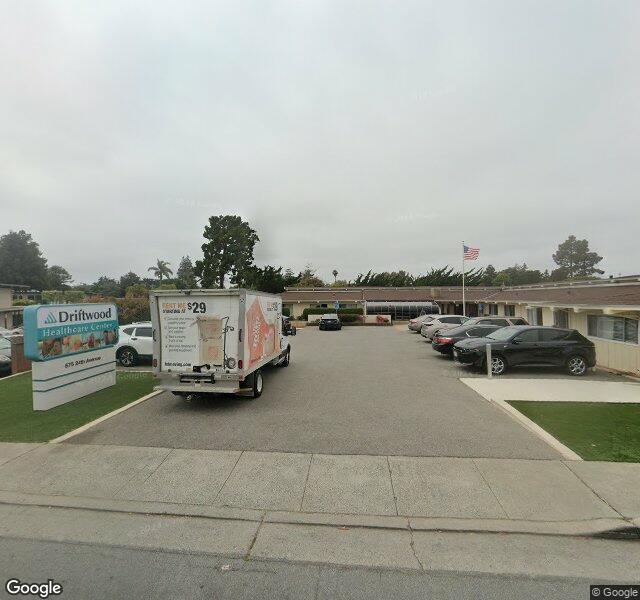
How Does Driftwood Healthcare Center - Santa Cruz Compare to Other California Nursing Homes?

Compared to the 100 nursing homes in California, DRIFTWOOD HEALTHCARE CENTER - SANTA CRUZ's overall rating (1 stars) is below the state average of 3.1, staff turnover (48%) is near the state average of 46%, and health inspection rating (1 stars) is much below the national benchmark.

What Should Families Ask When Visiting Driftwood Healthcare Center - Santa Cruz?

Based on this facility's data, families visiting should ask: "Can I visit during a mealtime to observe dining assistance and food quality?" "How do you handle medical emergencies, and what is your hospital transfer rate?" "Can I speak with family members of current residents about their experience?"

Is Driftwood Healthcare Center - Santa Cruz Safe?

Based on CMS inspection data, DRIFTWOOD HEALTHCARE CENTER - SANTA CRUZ has a clean safety record: no substantiated abuse findings (meaning no confirmed cases of resident harm), no Immediate Jeopardy citations (the most serious violation level indicating risk of serious injury or death), and is not on the Special Focus Facility watch list (a federal program monitoring the lowest-performing 1% of nursing homes). The facility has a 1-star overall rating and ranks #100 of 100 nursing homes in California. While no facility is perfect, families should still ask about staff-to-resident ratios and recent inspection results during their visit.

Do Nurses at Driftwood Healthcare Center - Santa Cruz Stick Around?

DRIFTWOOD HEALTHCARE CENTER - SANTA CRUZ has a staff turnover rate of 48%, which is about average for California nursing homes (state average: 46%). Moderate turnover is common in nursing homes, but families should still ask about staff tenure and how the facility maintains care continuity when employees leave.

Was Driftwood Healthcare Center - Santa Cruz Ever Fined?

DRIFTWOOD HEALTHCARE CENTER - SANTA CRUZ has no federal fines on record. CMS issues fines when nursing homes fail to meet care standards or don't correct problems found during inspections. The absence of fines suggests the facility has either maintained compliance or corrected any issues before penalties were assessed. This is a positive indicator, though families should still review recent inspection reports for the full picture.

Is Driftwood Healthcare Center - Santa Cruz on Any Federal Watch List?

DRIFTWOOD HEALTHCARE CENTER - SANTA CRUZ is not on any federal watch list. The most significant is the Special Focus Facility (SFF) program, which identifies the bottom 1% of nursing homes nationally based on persistent, serious quality problems. Not being on this list means the facility has avoided the pattern of deficiencies that triggers enhanced federal oversight. This is a positive indicator, though families should still review the facility's inspection history directly.