BEACHWOOD POST-ACUTE & REHAB


1340 15TH STREET, SANTA MONICA, CA 90404 (310) 451-9706
For profit - Limited Liability company 227 Beds PACS GROUP Data: November 2025
Trust Grade
0/100
#983 of 1155 in CA
Last Inspection: June 2025

Inspected within the last 6 months. Data reflects current conditions.

Overview

Beachwood Post-Acute & Rehab has received a Trust Grade of F, indicating significant concerns about the quality of care provided, which is considered poor. It ranks #983 out of 1155 facilities in California, placing it in the bottom half overall, and #275 out of 369 in Los Angeles County, meaning there are only a few local options that perform better. While the facility is trending towards improvement, reducing issues from 49 in 2024 to 34 in 2025, it still has serious weaknesses, including $92,070 in fines, which raises concerns about compliance with regulations. Staffing is rated average with a turnover rate of 32%, which is better than the state average, but incidents have been reported, such as a resident being left unattended, resulting in a fall that caused a nasal fracture, and another resident not having vital signs monitored as required, leading to potential health risks. Overall, while there are some strengths, like average staffing levels, the facility's serious issues and high fines make it a concerning option for families seeking care.

Trust Score
F
0/100
In California
#983/1155
Bottom 15%
Safety Record
High Risk
Review needed
Inspections
Getting Better
49 → 34 violations
Staff Stability
○ Average
32% turnover. Near California's 48% average. Typical for the industry.
Penalties
✓ Good
$92,070 in fines. Lower than most California facilities. Relatively clean record.
Skilled Nurses
⚠ Watch
Each resident gets only 28 minutes of Registered Nurse (RN) attention daily — below average for California. Fewer RN minutes means fewer trained eyes watching for problems.
Violations
⚠ Watch
134 deficiencies on record. Higher than average. Multiple issues found across inspections.
★☆☆☆☆
1.0
Overall Rating
★★★☆☆
3.0
Staff Levels
★★★★☆
4.0
Care Quality
★☆☆☆☆
1.0
Inspection Score
Stable
2024: 49 issues
2025: 34 issues

The Good

  • 4-Star Quality Measures · Strong clinical quality outcomes
  • Full Sprinkler Coverage · Fire safety systems throughout facility
  • No fines on record
  • Staff turnover below average (32%)

    16 points below California average of 48%

Facility shows strength in quality measures, fire safety.

The Bad

1-Star Overall Rating

Below California average (3.1)

Significant quality concerns identified by CMS

Staff Turnover: 32%

14pts below California avg (46%)

Typical for the industry

Federal Fines: $92,070

Well above median ($33,413)

Moderate penalties - review what triggered them

Chain: PACS GROUP

Part of a multi-facility chain

Ask about local staffing decisions and management

The Ugly 134 deficiencies on record

6 actual harm
Sept 2025 1 deficiency
CONCERN (E) 📢 Someone Reported This

A family member, employee, or ombudsman was alarmed enough to file a formal complaint

Potential for Harm - no one hurt, but risky conditions existed

Pharmacy Services (Tag F0755)

Could have caused harm · This affected multiple residents

**NOTE- TERMS IN BRACKETS HAVE BEEN EDITED TO PROTECT CONFIDENTIALITY** Based on observation, interview, and record review, facility failed to: 1. Ensure one of four sampled residents (Resident 1)'s m...

Read full inspector narrative →
**NOTE- TERMS IN BRACKETS HAVE BEEN EDITED TO PROTECT CONFIDENTIALITY** Based on observation, interview, and record review, facility failed to: 1. Ensure one of four sampled residents (Resident 1)'s medications were not left at bedside after administering them according to facility's policy and procedures (P&P) titled, Administering Medications. 2. Ensure that one of four sampled residents (Resident 1 and Resident 2)'s medications were administered in accordance with the physician's orders, including any required time frame according to facility's P&P, titled, Administering MedicationsThis deficient practice increased the risk for accidents, unintended complications from receiving more or less than the required medications dose and jeopardized resident's health and safety by failing to administer necessary medications in accordance with the physician order.Findings:1. During a review of the admission Record, Resident 1 was originally admitted to the facility on [DATE] and readmitted on [DATE] with diagnosis including type II Diabetes Mellitus (DM-a disorder characterized by difficulty in blood sugar control and poor wound healing), respiratory failure (condition in which your blood does not get enough oxygen or has too much carbon dioxide) and chronic kidney disease (CKD-a longstanding disease of the kidneys leading to renal failure).During a review of the Minimum Data Set (MDS - resident assessment tool) dated 8/1/2025 indicated Resident 1's cognitive (mental action or process of acquiring knowledge and understanding) skills for daily decisions were intact. The MDS indicated Resident 1 required maximal assistant to total dependent from staff for activities of daily living (ADLs- routine tasks/activities such as bathing, dressing and toileting a person performs daily to care for themselves).During a review of Resident 1's Medical Record, the facility did not do a Self-Administration of Medication Observation Assessment on Resident 1 upon readmission on [DATE].During a review of Resident 1's Order Summary Report (OSR), the OSR indicated the following medications:i. Sevelamer Carbonate (a medication that prevents increases in phosphates among people who are on dialysis due to chronic kidney disease) tablet 800 milligram (mg - unit of measurement) - give three tablets by mouth three times a day ii. Combigan opthlmalmic solution (a prescription eye drop medication that helps lower pressure inside the eye) 0.2-0.5 percent (% - unit of measurement) - Instill one drop in both eyes two times a day for glaucoma (a group of eye diseases that damage the optic nerve, which carries visual information from the eye to the brain)During a review of Resident 1's Medication Administration Audit Record (MAAR) on 9/5/2025, the MAAR indicated that the sevelamer carbonate tablets were scheduled to be administered at 9 a.m., but the record indicated, the medications were administered on 10:33 a.m. The MAAR also indicated that on 9/4/2025, the combigan eyedrops were scheduled to be administered at 9 a.m., but the record indicated, the combigan were administered at 3:38 p.m.During a concurrent observation and interview with Resident 1 on 9/5/2025 at 11:29 a.m., observed Resident 1 with a medication cup filled with three white tablets at her bedside table. Resident 1 stated she did not take the medications after they were given to her because she wanted to take them before eating lunch. Resident 1 stated that the nurse gave her the medication, and they don't observe when she takes the medication. Resident 1 further stated, sometimes, her medications were being administered late and they don't follow the physician's order for the time frame the medications were due.During a concurrent observation and interview with Licensed Vocational Nurse 1 (LVN 1) on 9/5/2025 at 11:39 a.m., LVN 1 stated, he administered Resident 1's medications this morning but he left Resident 1's room without observing her taking the medications. LVN 1 stated, he was called and was in a hurry and did not watch Resident 1 taking the medication after giving it to her. LVN 1 stated, he also documented the medications as administered in the electronic medical record. LVN 1 compared the three white tablets with the medications in the bubble pack and stated, the three white tablets on Resident 1's medication cup were sevelamer carbonate.During an interview with the Director of Nursing (DON) on 9/5/2025 at 3:02 p.m., DON stated, medications should not be left at bedside, and nurses must witness residents taking the medications. DON stated, if a resident refuses to take the medication at the time when it was scheduled, nurses need to explain the risk and benefits of not taking the medication timely and document the refusal and notify the physician. DON stated that not giving the medication on time was a delay of patient's care that may interfere with residents' recovery process and plan of care. 2. During a review of the admission Record, Resident 2 was originally admitted to the facility on [DATE] and readmitted on [DATE] with diagnosis including hemiplegia (total paralysis of the arm, leg, and trunk on the same side of the body) affecting left non-dominant side, acute respiratory failure (condition in which your blood does not get enough oxygen or has too much carbon dioxide) and DM. During a review of the MDS dated [DATE], Resident 2's cognitive skills for daily decisions were intact. The MDS indicated Resident 1 required maximal assistant to total dependent from staff for ADLs.During a review of Resident 2's OSR, the OSR indicated the following medications were scheduled to be administered at 9 a.m.:i. Thiamine (a B-vitamin that helps your body turn food into energy and is essential for a healthy nervous system and heart) oral tablet 100 mg - give one tablet by mouth one time a day for supplementii. Lactobacillus (a probiotic supplement containing good or friendly bacteria that help restore a healthy balance of microbes in your body) capsule - give one tablet by mouth one time a dayiii. Modafinil (a prescription drug that promotes wakefulness) oral tablet 100 mg - give 100 mg by mouth one time a dayiv. Sertraline (a prescription antidepressant that works by adjusting your brain's chemistry to improve mood and reduce anxiety) oral tablet 25 mg - give 50 mg by mouth one time a dayv. Furosemide (a water pill that works by making your kidneys remove extra water and salt from your body) oral tablet 20 mg - give 20mg by mouth one time a dayvi. Midodrine (a medication used to treat very low blood pressure) oral tablet 5 mg - give 5 mg by mouth three times a dayvii. Multivitamin-minerals (contains a mix of different vitamins and minerals, which are essential nutrients your body needs to function properly) oral tablet - give one tablet by mouth one time a dayviii. Senna (a laxative that helps relieve occasional constipation by making your intestines more active) oral tablet 8.6 mg - give 8.6 mg by mouth two times a dayix. Ascorbic acid (a supplement form of Vitamin C, a nutrient your body needs to stay healthy) oral tablet 500 mg - give 500 mg tablet by mouth two times a dayx. Folic acid (a B-vitamin that helps your body create new, healthy cells) oral tablet 1 mg - give 1 mg by mouthy one time a day During a review of Resident 2's MAAR, dated 9/4/2025, the MAAR indicated that the medications that were scheduled to be administered at 9 a.m., were recorded as administered at 11:34 a.m.During a concurrent interview and record review with DON on 9/5/2025 at 3:10 p.m., DON reviewed Resident 2's MAAR and confirmed, Resident 2's medications were administered late. DON stated, medications must be administered timely per physician's order. DON further stated that not giving the medication on time was a delay of patient's care that may interfere with residents' recovery process and plan of care.During a review of the facility's policy and procedures (P&P) titled, Administering Medications, reviewed on 1/2025, the P&P indicated, Medications must be administered in accordance with the orders, including any required time frame. Residents may self-administer their own medications only if the Attending Physician, in conjunction with the Interdisciplinary Care Planning Team, has determined that they have the decision-making capacity to do so safely.
Aug 2025 1 deficiency
CONCERN (D) 📢 Someone Reported This

A family member, employee, or ombudsman was alarmed enough to file a formal complaint

Potential for Harm - no one hurt, but risky conditions existed

Deficiency F0657 (Tag F0657)

Could have caused harm · This affected 1 resident

**NOTE- TERMS IN BRACKETS HAVE BEEN EDITED TO PROTECT CONFIDENTIALITY** Based on interview and record review, the facility failed to initiate and review a resident specific discharge planning during a...

Read full inspector narrative →
**NOTE- TERMS IN BRACKETS HAVE BEEN EDITED TO PROTECT CONFIDENTIALITY** Based on interview and record review, the facility failed to initiate and review a resident specific discharge planning during admissions and quarterly reviews for one of three sample residents (Resident 3). This deficient practice resulted in a lack of individualized discharge planning to ensure Resident 3 receive appropriate and timely planning during a transition of care. Findings: A review of Resident 3's admission record indicated Resident 3 was initially admitted to the facility on [DATE] and readmitted on [DATE] with a diagnosis of acute pulmonary edema (a condition where fluid builds up in the lungs, making it hard to breathe), muscle weakness (a lack of strength in the muscles), anxiety disorder (a person is often worried or anxious about many things and finds it hard to control), type 2 diabetes mellitus without complications (A long-term condition in which the body has trouble controlling blood sugar and using it for energy), bilateral primary osteoarthritis of knee (a degenerative joint disease where cartilages cushioning the bones wears down, leading to pain, stiffness, and limited mobility in both knees). During a review of Resident 3's Minimum Data Set (MDS, a resident assessment tool) dated 3/26/2025 indicated partial/moderate assistance (helper does less than half the effort, lifts, holds, or supports trunk or limb) for toilet transfer, chair/bed-to-chair transfer. No active discharge planning already occurring for the resident to return to the community. During a review of Resident 3's MDS dated [DATE] indicated, set up or clean-up assistance for eating. Supervision or touching assistance (helper provides verbal cues and/or touching/steadying and/or contact guard to complete activity) to sit and stand, toilet transfer (the ability to get in and out of a toilet or commode). No active discharge planning already occurring for the resident to return to the community.During a review of Resident 3's admissions care plan initiated on 3/20/2025, discharge care plans were not documented. During a review of Resident 3's quarterly care plan revised on 6/23/2025, discharge care plans were not documented. During an interview on 8/16/2025 at 9:25 AM with Resident 3, Resident 3 stated, the facility staff has been discussing discharge planning but did not provide a specific discharge date . Resident 3 stated, Two weeks ago, if no longer they told me I am ready to discharge because I was asking for it.During an interview on 8/16/2025 at 10:07 AM, Licensed Vocational Nurse (LVN) 1 stated, Resident 3 has been wanting to go home, I don't believe she can maintain her activities of daily living (ADL) fully by herself. Resident 3 will need assistance to ambulate to the toilet, bathroom, and for cleaning. During a concurrent interview and record review on 8/18/2025 at 10:40 AM, with LVN 1, Resident 3's care plans during admissions and quarterly review were reviewed. The care plan for discharge planning was not documented. LVN stated, care plan is implemented by MDS coordinator and Social Services (SS) worker. Care plan for discharges can benefit Resident 3 with proper planning and accommodation after discharge. During an interview on 8/18/2025 at 11:01 AM with Social [NAME] assistant (SS), SS stated, discharge planning is initiated by admitting licensed person and social services during resident admissions. Resident 3's discharge care plan was not documented during admissions and quarterly review. SS stated, discharge planning has been discussed with Resident 3 at different occasions, but care plan is not documented. During a concurrent interview and record review on 8/18/2025 at 11:34 AM with MDS coordinator, Resident 3's MDS and care plans during admissions on 3/20/2025 and quarterly review on 6/23/2025 were reviewed. MDS stated, care plans are implemented based on MDS assessments and resident's individual care needs. Discharge care planning should be initiated during admissions regardless of a resident's status. MDS stated, It is a deficiency not to document required care plans because it potentially affects the resident's care delivery. During an interview with the Director of Nursing (DON), on 8/18/2025 at 12:34 PM, the DON stated, I am not sure if Resident 3 was supposed to have a discharge care plan during admission. Discharges are determined by residents' desire, physician's decision and care team evaluations. A review of the facility's Policy and Procedures (P&P) titled, Care Plans -Comprehensive revised January 2025, the P&P indicated, The resident's comprehensive care plan is developed within seven (7) days of the completion of the resident's comprehensive assessment (MDS). Assessments of residents are ongoing, and care plans are revised as information about the resident and the resident's condition change. The care planning/Interdisciplinary Team is responsible for the review and updating of care plans: when the resident has been readmitted to the facility from a hospital stay; and at least quarterly.
Jul 2025 3 deficiencies
CONCERN (D) 📢 Someone Reported This

A family member, employee, or ombudsman was alarmed enough to file a formal complaint

Potential for Harm - no one hurt, but risky conditions existed

Resident Rights (Tag F0550)

Could have caused harm · This affected 1 resident

**NOTE- TERMS IN BRACKETS HAVE BEEN EDITED TO PROTECT CONFIDENTIALITY** Based on interview and record review, the facility failed to honor one of the three sampled residents (Resident 2) rights by fai...

Read full inspector narrative →
**NOTE- TERMS IN BRACKETS HAVE BEEN EDITED TO PROTECT CONFIDENTIALITY** Based on interview and record review, the facility failed to honor one of the three sampled residents (Resident 2) rights by failing to administer her ordered topical medication Triamcinolone Acetonide External Cream 0.1 % (belongs to the class of medications that are synthetic steroids used to reduce inflammation and itching of the skin. It works by reducing swelling, redness, and itching associated with various skin conditions) to her right elbow.This deficient practice resulted in Resident 2 not being able to make her own decisions regarding her own medications.During a review of the admission record for Resident 3 indicated Resident 3 was admitted to the facility on [DATE] with diagnoses including Acute and Chronic Respiratory Failure (ACRF-when the lungs can't adequately provide enough oxygen to the body or remove enough carbon dioxide, and this condition happens suddenly but also persists over an extended period), hypertension (HTN-high blood pressure), and Hyperlipidemia (HLD- a condition in which there are abnormally high levels of lipids [fats] in the blood)During a review of Resident 2's late entry nursing note dated 5/20/2025 at 10:41 am indicated, Seen by dermatologist during tx (treatment) rounds concerning the current right arm with non-descript. erythematous papules (small, raised, red bumps on the skin). Skin scrapping (a diagnostic procedure where a healthcare provider scrapes a small sample of skin cells from a lesion or affected area using a scalpel or similar blade. It is immensely useful in skin infections such as fungus, bacteria, or even scabies mite infections) result is negative (5/15/25). She recommends topical Clobetasol oint (ointment) but Rp (representative) refused to be applied. Respect the refusal. Will continue to monitor.During a review of Resident 2's physician notes with an effective date range of 7/7/2025 indicated, Resident 2 was alert and oriented x 4 (alert and oriented to person, place, time and event are evaluated and understood who they are, where they are, approximate date or part of the day, and what is happening).During a review of a physician's order dated 6/14/2025 indicated, Triamcinolone Acetonide External Cream 0.1 % (Triamcinolone Acetonide (Topical) Apply to Affected areas topically one time only for topical redness and itching for 1 Day right posterior elbow, LUA (left upper arm), anterior upper leg.During an observation and interview with Resident 2 on 7/22/2025 at 11:17 am, Resident 2 was observed to have approximately 1.5-inch circular cluster of a raised scaly rash which was light brown is color located just above her elbow. Resident 2 was unable to vocalize due to the tracheostomy (often referred to as a trach, is a surgically created opening in the windpipe (trachea) through the neck) but was able to move her lips for lip reading as well as nodding yes and no. Resident 2 stated that she did get itchy but got relief with the application of the ointment. During an interview with Treatment Nurse (TN) 2 on 7/22/2025 at 1:23 pm, TN 2 stated that Resident 2's rash was recurring (occurring often or repeatedly) in the same area. TN 2 stated that Resident 2 was seen by a dermatologist who diagnosed it as fungal dermatitis (a skin condition caused by fungi, often appearing as a red, itchy, and scaly rash) and was ordered Triamcinolone Acetonide External Cream 0.1 %. TN 2 stated that the facility staff did not regularly apply the ordered ointment because Resident 2's RP was refusing the treatment. TN stated that Resident 2 was alert, oriented, and able to understand and make her own decisions. TN2 stated that she as well as the other facility staff did not ask the Resident if she wanted the treatment but accepted and respected the decision of Resident 2's RP even though they are not the resident's decision maker. TN2 admitted that by not allowing Resident 2 to decide if she wanted to have the ointment administered or not was noy allowing her to exercise her rights.During an interview with the Assistant Director of Nursing (ADON) on 7/22/2025 at 2:51 pm, the ADON stated that residents who are able to make their own decisions must be involved in their planning and administration of their own medications because that is their right.During a review of the Policy and Procedure (P&P) titled Resident Rights, revised 1/2025, the P&P indicated: Federal and state laws guarantee certain basic rights to all residents of this facility. Theserights include the resident's right to:- Be informed about what rights and responsibilities he or she has.- Choose a physician and treatment and participate in decisions and care planning.- Privacy and confidentiality.- Self-administer medication, if the interdisciplinary care planning team determines it is safe; and Refuse a transfer from a distinct pa rt within the institution.
CONCERN (D) 📢 Someone Reported This

A family member, employee, or ombudsman was alarmed enough to file a formal complaint

Potential for Harm - no one hurt, but risky conditions existed

Comprehensive Care Plan (Tag F0656)

Could have caused harm · This affected 1 resident

**NOTE- TERMS IN BRACKETS HAVE BEEN EDITED TO PROTECT CONFIDENTIALITY** Based on observation, interview, and record review, the facility failed to create an individualized care for one of three sample...

Read full inspector narrative →
**NOTE- TERMS IN BRACKETS HAVE BEEN EDITED TO PROTECT CONFIDENTIALITY** Based on observation, interview, and record review, the facility failed to create an individualized care for one of three sampled residents (Resident 3) with specific goals and interventions for Resident 3's right upper arm and right groin rash. This deficient practice had the potential to result in worsening of Resident 3's rashDuring a review of the admission record for Resident 3 indicated Resident 3 was admitted to the facility on [DATE] and readmitted on [DATE] with diagnoses including diabetes mellitus (DM-a disorder characterized by difficulty in blood sugar control and poor wound healing), Chronic Respiratory Failure (CRF-when the lungs can't adequately provide enough oxygen to the body or remove enough carbon dioxide, and this condition persists over an extended period), and Hyperlipidemia (HLD- a condition in which there are abnormally high levels of lipids [fats] in the blood) During a review of history and physical (H&P- is a thorough assessment a doctor does to understand a patient's health. It involves asking about the patient's past and current health problems [the history] and then examining the patient's body to look for signs of illness [the physical examination], dated 6/13/2025 at 2 pm, indicated Resident 3 did not have capacity (he ability to understand information, make decisions, and communicate those decisions). During a review of Resident 3's SBAR (situation, background, assessment, recommendation-a communication tool used by healthcare workers when there is a change of condition among the residents) dated 7/3/2025 at 2:52 pm, indicated, Noted rashes RT arm and RT upper leg scattered rashes Informed DR (Resident 3's physician}. During a review of Resident 3 ' s Minimum Data Set (MDS - a resident assessment tool) dated 7/10/2025, indicated Resident 3 had severe cognitive impairment (a person has great difficulty with thinking, learning, remembering, and making decisions, to the point where they can't live independently). The same MDS indicated Resident 3 was dependent on staff for his Activities of Daily Living such as: (ADLs­ routine tasks/activities such as eating, oral hygiene, toileting hygiene, shower/bathe self, personal hygiene, lower/upper body dressing, putting on/taking off footwear). During a review of a physician's order dated 7/10/2025 indicated, skin scraping (a diagnostic procedure where a healthcare provider scrapes a small sample of skin cells from a lesion or affected area using a scalpel or similar blade. It is immensely useful in skin infections such as fungus, bacteria, or even scabies mite infections) one time only for one day During a review of Resident 3's SBAR dated 7/11/2025 at 8:28 pm, indicated, A new skin finding was noted by CNA (Certified Nursing Assistant) staff during daily skin check. Patient's (Resident 3) skin was examined by Tx (treatment) staff noting discoloration of the left outer forearm, skin intact with no sign of infection. MD (medical doctor) ordered monitor for skin breakdown, infection, or increase in size. During a review of Resident 3's care plan initiated 7/3/2025 indicated a focus of Skin: Resident has a body rash located (RT UPPER ARM and is at risk for pain or discomfort, skin breakdown, spreading and worsening of the rash, the interventions/tasks included:-Administer anti-pruritic medication as ordered.-Administer treatments as ordered and monitor for effectiveness.-Avoid the use of harsh detergents, soaps, fragrances, or other irritating substances.-Encourage to avoid scratching. During a concurrent observation of Resident 3 and interview with CNA 1 on 7/22/2025 at 12:24 pm, Resident 3 was observed to have a scattered papule appearing rashes to his right upper arm that were red brownish in color. The resident was also noted to have a few rashes to the right side of his groin which was also scattered, papule appearing, red brownish in color. CNA stated that she noticed the rash about two weeks prior. During a concurrent interview with Treatment Nurse (TN) 1 and record review of Resident 3's medical records on 7/22/2025 at 12:40 pm, TN 1 confirmed that Resident 3's rashes (right upper arm and right groin area) was first observed on 7/3/2025 and that a skin scrape test was completed on 7/10/2025. During a review of the care plan initiated on 7/3/2025, TN 1 confirmed that the interventions which included administer anti-pruritic medications and treatments as ordered were not individualized and specific. TN 1 admitted that medications must be listed by name and ensure that the interventions are specific to each Resident. TN 1 stated that the potential of not individualizing an care plan could result in miscommunication or misinterpretation amongst Resident 3's healthcare providers and may impact care. during a review of the Policy and Procedure (P&P) titled Care Plans - Comprehensive, revised 1/2025, indicated the following policy statement, An individualized comprehensive care plan that includes measurable objectives and timetables to meet the resident's medical, nursing, mental and psychological needs is developed for each resident. The same P&P policy interpretation and implementations included:Each resident's comprehensive care plan is designed to:a. Incorporate identified problem areas.b. Incorporate risk factors associated with identified problems.c. Build on the resident's strengths.d. Reflect the resident's expressed wishes regarding care and treatment goals.e. Reflect treatment goals, timetables and objectives in measurable outcomes.f. Identify the professional services that are responsible for each element of care.g. Aid in preventing or reducing declines in the resident's functional status and/or functional levels.h. Enhance the optimal functioning of the resident by focusing on a rehabilitative program; [NAME]. Reflect currently recognized standards of practice for problem areas and conditions.
CONCERN (D) 📢 Someone Reported This

A family member, employee, or ombudsman was alarmed enough to file a formal complaint

Potential for Harm - no one hurt, but risky conditions existed

Infection Control (Tag F0880)

Could have caused harm · This affected 1 resident

**NOTE- TERMS IN BRACKETS HAVE BEEN EDITED TO PROTECT CONFIDENTIALITY** Based on observation, interview, and record review, the facility failed to implement infection control policies and procedures (...

Read full inspector narrative →
**NOTE- TERMS IN BRACKETS HAVE BEEN EDITED TO PROTECT CONFIDENTIALITY** Based on observation, interview, and record review, the facility failed to implement infection control policies and procedures (P&P) for one out of three residents (Resident 3) by failing to ensure Resident 3 who had a rash and was ordered a scrape test on 7/10/2025 was placed on contact isolation ( a set of precautions used in health care to prevent the spread of infections that are transmitted through direct or indirect contact with a patient or their environment).This deficient practice potentially increased the risk of infection to other residents and facility staff.During a review of the admission record for Resident 3 indicated Resident 3 was admitted to the facility on [DATE] and readmitted on [DATE] with diagnoses including diabetes mellitus (DM-a disorder characterized by difficulty in blood sugar control and poor wound healing), Chronic Respiratory Failure (CRF-when the lungs can't adequately provide enough oxygen to the body or remove enough carbon dioxide, and this condition persists over an extended period), and Hyperlipidemia (HLD- a condition in which there are abnormally high levels of lipids [fats] in the blood) During a review of history and physical (H&P- is a thorough assessment a doctor does to understand a patient's health. It involves asking about the patient's past and current health problems [the history] and then examining the patient's body to look for signs of illness [the physical examination], dated 6/13/2025 at 2 pm, indicated Resident 3 did not have capacity (he ability to understand information, make decisions, and communicate those decisions). During a review of Resident 3's SBAR (situation, background, assessment, recommendation-a communication tool used by healthcare workers when there is a change of condition among the residents) dated 7/3/2025 at 2:52 pm, indicated, Noted rashes RT arm and RT upper leg scattered rashes Informed DR (Resident 3's physician}. During a review of Resident 3 ' s Minimum Data Set (MDS - a resident assessment tool) dated 7/10/2025, indicated Resident 3 had severe cognitive impairment (a person has great difficulty with thinking, learning, remembering, and making decisions, to the point where they can't live independently). The same MDS indicated Resident 3 was dependent on staff for his Activities of Daily Living such as: (ADLs­ routine tasks/activities such as eating, oral hygiene, toileting hygiene, shower/bathe self, personal hygiene, lower/upper body dressing, putting on/taking off footwear). During a review of a physician's order dated 7/10/2025 indicated, skin scraping (a diagnostic procedure where a healthcare provider scrapes a small sample of skin cells from a lesion or affected area using a scalpel or similar blade. It is immensely useful in skin infections such as fungus, bacteria, or even scabies mite infections) one time only for one day During a review of Resident 3's SBAR dated 7/11/2025 at 8:28 pm, indicated, A new skin finding was noted by CNA (Certified Nursing Assistant) staff during daily skin check. Patient's (Resident 3) skin was examined by Tx (treatment) staff noting discoloration of the left outer forearm, skin intact with no sign of infection. MD (medical doctor) ordered monitor for skin breakdown, infection, or increase in size. During a concurrent observation of Resident 3 and interview with CNA 1 on 7/22/2025 at 12:24 pm, Resident 3's room entrance was observed to have a sign for Enhance Based Precautions (EBP- implemented in nursing homes to reduce the spread of multidrug-resistant organisms [MDROs]. Staff are required to use gowns and gloves during high contact activities with residents). Resident 3 was observed to have a scattered papule appearing rashes to his right upper arm that were red brownish in color. The resident was also noted to have a few rashes to the right side of his groin which was also scattered, papule appearing, red brownish in color. CNA stated that she noticed the rash about two weeks prior. During a concurrent interview with Treatment Nurse (TN) 1 and record review of Resident 3's medical records on 7/22/2025 at 12:40 pm, TN 1 confirmed that Resident 3's rashes (right upper arm and right groin area) was first observed on 7/3/2025 and that a skin scrape test was completed on 7/10/2025. TN 1 confirmed that a skin scrape test was ordered to rule out scabies. TN 2 confirmed that scabies are contagious and must be on contact precautions. TN 1 admitted that EBP precautions may not be enough tp prevent the spread of infection. During a concurrent interview and record review of Resident 3's records with the Assistant Director of Nursing (ADON) on 7/22/2025 at 2:51 pm, the ADON confirmed that a scrape skin test was completed for Resident 3 on 7/10/2025. ADON confirmed that Resident was in EBP even after the scare test was ordered and completed. The ADON was not aware about the procedures of placing residents on contact isolation when a scrape test was ordered, stating that the resident was already on EBP. The ADON confirmed that when a resident is on EPB the PPE (Personal Protective Equipment-gown, gloves) are donned during personal high contact activities, while in contact isolation the PPE is donned before entering the room. The ADON confirmed that the facility also follows CDC (Centers for Disease Control and Prevention) guidelines. During a review of the Policy and Procedure (P&P) titled Infection Control, effective date 4/1/2025, indicated, it is the policy of this facility to prevent the spread of infection. Standard Precautions will be used when caring for residents at all times regardless of their suspected or confirmed infection status. Transmission-Based Precautions shall be used when caring for residents who are documented or suspected to have communicable diseases or infections that can be transmitted to others.
Jul 2025 2 deficiencies
CONCERN (D) 📢 Someone Reported This

A family member, employee, or ombudsman was alarmed enough to file a formal complaint

Potential for Harm - no one hurt, but risky conditions existed

Deficiency F0573 (Tag F0573)

Could have caused harm · This affected 1 resident

**NOTE- TERMS IN BRACKETS HAVE BEEN EDITED TO PROTECT CONFIDENTIALITY** Based on interview and record review, the facility failed to provide a copy of the records upon request for one of four sampled ...

Read full inspector narrative →
**NOTE- TERMS IN BRACKETS HAVE BEEN EDITED TO PROTECT CONFIDENTIALITY** Based on interview and record review, the facility failed to provide a copy of the records upon request for one of four sampled residents (Resident 1).This deficient practice violated the rights of Resident 1's legal representative to obtain a copy of the medical records.Findings:During a review of the admission Record indicated Resident 1 was admitted to the facility on [DATE] with diagnosis including hemiplegia and hemiparesis (loss of the ability to move in one side of the body) following cerebral infarction (lack of blood flow resulting in severe damage to some of the brain tissue) affecting left non-dominant side, and major depressive disorder (a mood disorder that causes a persistent feeling of sadness and loss of interest). During a review of Resident 1's History and Physical dated 7/30/2022 indicated, Resident 1 can make needs known but cannot make medical decisions. During a review of the Minimum Data Set (MDS - a federally mandated resident assessment tool) dated 11/1/2023, indicated Resident 1's cognitive (mental action or process of acquiring knowledge and understanding) skills for daily decisions were severely impaired. The MDS indicated Resident 1 required maximal assistance to dependent from staffs for activities of daily living (ADLs- routine tasks/activities such as bathing, dressing and toileting a person performs daily to care for themselves). During a review of Resident 1's Limited Durable Power of Attorney (POA - authorizes someone else to handle certain matters, such as finances or health care, on someone's behalf. If the power of attorney is durable, it remains in effect if the person becomes incapacitated for any reason, including illness and accidents) for healthcare indicated, Resident 1's family member 1 (FM 1) was Resident's 1 appointed POA, signed and dated on 4/29/2025. During a review of Resident 1's Attestation Regarding a Requested Use of Disclosure of Protected Health Information Potentially Related to Reproductive Health Care (a signed document where someone requesting health information), dated 5/2/2025, indicated that a request for release of medical records form was faxed to the facility on 5/2/2025 and a follow-up request was sent to the facility via mail on 2/6/2025. During an interview with Family Member 1 Legal Representative (FMLR 1) on 7/14/2025 at 11:08 a.m., FM 1 stated, he requested Resident 1's medical record on behalf of Resident 1's Family Member back in May 2025 but had not received any medical records from the facility up to this date, 7/14/2025. During an interview with the Medical Record Director (MRD) on 7/14/2025 at 12:39 p.m., the MRD stated, a request for release of medical records was sent via email to the facility for Resident 1. MRD stated they have not sent these medical records as she is waiting for approval. The MRD further stated that the release of medical records must be sent timely within 5-7 business days. During a review of facility's policy and procedure (P&P) titled, Release of Information, revised on 1/2025, the P&P indicated, The resident may initiate a request to release such information contained in his/her records and charts to anyone he/she wishes. Such requests will be honored only upon receipt of a written, signed, and dated request from the resident or representative (sponsor). A resident may have access to his or her records within five days (excluding weekend or holidays) of the resident's written or oral request.
CONCERN (D) 📢 Someone Reported This

A family member, employee, or ombudsman was alarmed enough to file a formal complaint

Potential for Harm - no one hurt, but risky conditions existed

Tube Feeding (Tag F0693)

Could have caused harm · This affected 1 resident

**NOTE- TERMS IN BRACKETS HAVE BEEN EDITED TO PROTECT CONFIDENTIALITY** Based on observation, interview, and record review, the facility failed to ensure two of three sampled residents (Resident 3 and...

Read full inspector narrative →
**NOTE- TERMS IN BRACKETS HAVE BEEN EDITED TO PROTECT CONFIDENTIALITY** Based on observation, interview, and record review, the facility failed to ensure two of three sampled residents (Resident 3 and Resident 4) who are fed by enteral received appropriate treatment and services by failing to elevate the head of the bed while receiving formula through the gastrostomy tube (GT - a tube inserted through the abdomen that delivers nutrition directly to the stomach).This deficient practice had the potential to cause aspiration (inhalation of foreign materials) and can lead to pneumonia (a lung infection) for Resident 3 and Resident 4.Findings:1. During a review of the admission Record indicated Resident 3 was originally admitted to the facility on [DATE] and readmitted on [DATE] with diagnosis including respiratory failure (condition in which your blood does not get enough oxygen or has too much carbon dioxide), dysphagia (difficulty swallowing) and shortness of breath (an intense tightening in the chest, air hunger, difficulty breathing, breathlessness or a feeling of suffocation). During a review of the Minimum Data Set (MDS - a federally mandated resident assessment tool) dated 6/20/2025, indicated Resident 3's cognitive (mental action or process of acquiring knowledge and understanding) skills for daily decisions were severely impaired. The MDS indicated Resident 3 required total dependence from staff for activities of daily living (ADLs- routine tasks/activities such as bathing, dressing and toileting a person performs daily to care for themselves). During a review of Resident 3's Order Summary Report (OSR), dated 4/10/2025, indicated physician ordered, Enteral Feed Order every shift Enteral - elevate head of head (HOB) 30 - 40 degrees (unit of measurement) at all times during feedings and for 30 minutes post-administration of feedings. During a review of Resident 3's Care Plan, date initiated on 3/29/2024, indicated an intervention of, The resident needs the HOB elevated 45 degrees during and thirty minutes after tube feed. During an observation of Resident 3 on 7/14/2025 at 11:19 a.m., Resident 3 was in bed, receiving feeding via GT with a HOB at about 15 degrees up. During a concurrent observation and interview with Registered Nurse 1 (RN 1) on 7/14/2025 at 11:31 a.m., RN 1 observed Resident 3's HOB and stated and confirmed, Resident 3's HOB needs to be elevated as the HOB is very low. RN 1 stated, the HOB needs to be elevated at least 30-40 degrees while receiving TF. 2. 2. During a review of the admission Record indicated Resident 4 was originally admitted to the facility on [DATE] and readmitted on [DATE] with diagnosis including Parkinson's disease (a chronic brain disorder that causes movement problems, and can also affect mental health, sleep, and pain), respiratory failure, and dysphagia. During a review of the MDS dated [DATE], Resident 4's cognitive skills for daily decisions were severely impaired. The MDS indicated Resident 3 required total dependence from staff for ADLs. During a review of Resident 4's OSR, dated 7/4/2025, indicated physician ordered, Enteral Feed Order every shift, Enteral - elevate HOB 30 - 40 degrees at all times during feedings and for 30 minutes post-administration of feedings. During an observation of Resident 4 on 7/14/2025 at 11:26 a.m., Resident 4 was in bed lying on his left sideways, receiving feeding via GT with a HOB at less than 30 degrees, the HOB was almost in a flat position. During a concurrent observation and interview with RN 1 on 7/14/2025 at 11:36 a.m., RN 1 observed Resident 4's HOB and stated and confirmed, Resident 4's HOB is at about 20 degrees up and definitely needs to be higher. RN 1 stated, the HOB needs to be elevated at least 30-40 degrees while receiving TF as this put residents at risk of aspiration, choking, and emesis, among other complications. During an interview with Director of Nursing (DON) on 7/15/2025 at 12:30 p.m., DON stated, residents' HOB must be elevated to semi-Fowlers position (when a person is lying on their back with their upper body slightly raised. The head of the bed is lifted to an angle between 30 and 45 degrees) while receiving TF to prevent risk of aspiration. During a review of the facility's policy and procedures (P&P) titled, Enteral Feedings - Safety Precautions, revised on 1/2025, the P&P indicated, Elevate the head of bed (HOB) at least 30 degrees during tube feedings and at least one hours after feeding.
Jun 2025 15 deficiencies
CONCERN (D)

Potential for Harm - no one hurt, but risky conditions existed

Deficiency F0554 (Tag F0554)

Could have caused harm · This affected 1 resident

**NOTE- TERMS IN BRACKETS HAVE BEEN EDITED TO PROTECT CONFIDENTIALITY** Based on observation, interview and record review, the facility's staff failed to ensure for One of one sampled resident (Reside...

Read full inspector narrative →
**NOTE- TERMS IN BRACKETS HAVE BEEN EDITED TO PROTECT CONFIDENTIALITY** Based on observation, interview and record review, the facility's staff failed to ensure for One of one sampled resident (Resident 10): 1. Had a physician's order to self-administer a medical nutritional supplement/tube feeding formula via bolus feeding (a method of enteral tube feeding where a large dose of formula is administered into the stomach or small intestine over a short period of time, typically 15-20 minutes, several times a day) 2. Was assessed, educated and determined to have cognitive and physically demonstrated capability to safely self-administer a bolus feeding. These deficient practice had the potential to result in negative outcomes from food inhalation which could lead to adverse reactions, unnecessary hospitalization and possible poor outcomes for Resident 10. Cross reference F693 Findings: During a review of Resident 10's admission record indicated Resident 10 was originally admitted to the facility on [DATE] and re-admitted on [DATE], with diagnoses that include malignant neoplasm of larynx (a cancerous tumor that develops in the larynx (voice box)), Malignant neoplasm of the esophagus (a cancerous tumor that develops in the esophagus, the tube connecting the throat to the stomach), gastrostomy status (presence of a gastrostomy tube surgically placed into the stomach for feeding or medication administration), pneumonitis (inflammation of the lung tissue, often triggered by inhaled irritants) due to inhalation of food and vomit, lack of coordination (lack of voluntary muscle coordination) and, chronic respiratory failure (when the lungs are unable to adequately exchange gases) During a review of Resident 10's Minimum Data Set (MDS - a resident assessment tool) dated 05/27/2025 indicated the resident 10's cognition (The mental ability to make decisions of daily living) was intact, Resident 10's could not ingest food orally, and required supervision, or touching assistance with oral hygiene. During a facility tour on 6/25/2025 at 8:34 AM, Resident 10's bedside drawer was observed to have an open water pitcher (a container designed for serving water to patients) that had brown/tan liquid inside and a piston syringe (a medical device used for injecting fluids into or withdrawing fluids from the body) inside the water pitcher. During an interview on 6/25/2025, at 8:43 AM, Licensed Vocational Nurse (LVN) 14 was unable to state the name of the liquid inside the open water pitcher at Resident's 10's bedside. LVN 14 stated I don't know what that is. During an interview on 6/25/2025, at 8:57 AM, Resident 10 stated the tan/brown liquid in the water open water pitcher was Jevity (a medical product, specifically a tube feeding formula used for nutritional support in individuals who cannot eat or have difficulty eating), During an interview on 6/25/2025, at 9:00 AM Registered Nurse (RN) 6 stated Resident 10 self-boluses the feeding and has a physician's orders and has been care-planned to self-administer the Jevity independently. During a review of Resident 10's physician order summary dated 6/27/2025 indicated Resident 10 had an order for Jevity 1.5 viat gravity (Bolus) 237 ml, 5 times per day (1185ml/1778kcal) give water 50ml before and after each bolus feeding. During a review of Resident 10's physician order summary dated 6/27/2025 indicated there was not order for Resident 10 to self-administer/bolus his g-tube feeding. During an interview on 6/27/2025 at 5:02 PM Acting Director of Nursing (DON) stated Residents are only allowed to self-administer g-tube feeding at bedside if they have been assessed to have cognitive and physically demonstrated they can safely able to do so and have a physician approval, DON stated self-administering without a physicians order and/or assessment and education can lead to negative outcomes from food inhalation which could lead to an adverse reactions, unnecessary hospitalization and possible poor outcomes, During a review of the facility policy and procedures (P&P) titled, Self-Administering of Drugs dated 01/2025, the P&P indicated: 1. As part of their overall evaluation, the staff and practitioner will assess each resident's mental and physical abilities, to determine whether a resident is capable of self-administering medications. 2. In addition to the general evaluation of decision-making capacity, the staff and practitioner will perform a more specific skill assessment, including (but not limited to) the resident's: a. Ability to read and understand medication labels. b. Comprehension of the purpose and proper dosage and administration time for his or her medications. c. Ability to remove medications from a container and to ingest and swallow (or otherwise administer) them; and d. Ability to recognize risks and major adverse consequences of his or her medications.
CONCERN (D) 📢 Someone Reported This

A family member, employee, or ombudsman was alarmed enough to file a formal complaint

Potential for Harm - no one hurt, but risky conditions existed

Deficiency F0582 (Tag F0582)

Could have caused harm · This affected 1 resident

Based on observation, interview, and record review, the facility failed to ensure to provide a Notice of Medicare Non-Coverage (NOMNC, is a document used in Medicare [a Federal health insurance progra...

Read full inspector narrative →
Based on observation, interview, and record review, the facility failed to ensure to provide a Notice of Medicare Non-Coverage (NOMNC, is a document used in Medicare [a Federal health insurance program] to inform beneficiaries when their Medicare-covered services are ending, and to explain their appeal rights) to one of three sampled resident ' s (Resident 254), representative (responsible party). This failure had the potential to result in Resident 254's representative not being able to exercise their right to file an appeal. Findings: During a review of Resident 254's admission Record, the admission Record indicated the facility admitted Resident 254 on 6/9/2025, with diagnoses including unspecified heart failure heart does not pump as well as it should), unspecified dementia(a progressive state of decline in mental abilities), unspecified edema (swelling caused by an abnormal accumulation of fluids in the body ' s tissues), hypertension(high blood pressure), dysphagia(difficulty swallowing), generalized muscle weakness, unsteadiness on feet, malaise(overall weakness or discomfort), and unspecified disorientation(a state of being confused). During a review of Resident 254's History and Physical (H&P) dated 6/9/2025, the H&P indicated the resident had limited decision-making capacity. During a review of Resident 254's Minimum Data Set (MDS- a resident assessment tool) dated 6/19/2025, the MDS indicated Resident 254 was dependent (helper does all of the effort) from the staff for toileting, and tub/shower transfer, required substantial/maximal assistance (helper does more than half the effort) from the staff with bathing/shower self, had frequent urinary incontinence(involuntary leakage of urine) and always incontinent of bowel(losing control of bowel movements). During a concurrent interview and record review on 6/25/2025 at 3:12p.m., with the Infection Preventionist/Case Management (IPC, nurse who helps prevent and identify the spread of infectious agents like bacteria and viruses in a healthcare environment), Resident 254's Case Management Notes, dated 6/17/2025 were reviewed. The IPC stated Resident 254 was discharged home with family. The Case Management Notes indicated, informed Resident 254's Family Member (FM)1 of the discharge for 6/19/2025, and the financial responsibility beginning on 6/20/2025, should the resident remain in facility. The Case Management Notes indicated FM1 stated Resident 254 was unable to return home in Resident 254's current condition. During a concurrent interview and record review on 6/26/2025 at 2:25p.m., with Registered Nurse (RN)2, Resident 254's NOMNC form dated 6/16/2025 was reviewed. The NOMNC indicated a voicemail was left on 6/16/2025 at 11:24a.m. The NOMNC indicated information on how the responsible party could file an appeal and notification by certified mailed to representative and return receipt requested if direct phone contact could not be made. RN 2 stated she (RN2) did not speak with FAM1. RN2 stated she (RN2) only left a message once and did not attempt another phone call. RN2 stated she (RN2) did not send the NOMNC notice by certified mail according to the form's instructions. During a concurrent interview and record review on 6/27/2025 at 9:49a.m. with the Interim Director of Nursing (IDON), Resident 254's NOMNC form was reviewed. The IDON stated the NOMNOC form was incomplete, it was not completed according to the instructions. The IDON stated the importance of the beneficiary notification was to be completed so the resident or the resident's family or representative had enough time to make an informed decision about their care and have enough time to plan their care and aware of their resources or even appeal if they choose to. During a review of the document provided by the facility titled Notice of Medicare Non-Coverage (NOMNC), the document indicated, How to contact your Beneficiary and Family Centered Care Quality Improvement Organization to ask for a fast appeal . How to appeal if the resident or representative believes the services are ending too soon. During a review of the facility's job description titled Case Manager, undated, the job description indicated, Coordinate care with resident, care providers, facilities financial services . During a review of the facility's policy and procedure(P&P) titled, Resident ' s Rights, dated January 2025, the P&P indicated, Federal and state laws guarantee certain basic rights to all residents in this facility. These rights include the resident ' s right to be informed what rights . he or she has .
CONCERN (D)

Potential for Harm - no one hurt, but risky conditions existed

Deficiency F0604 (Tag F0604)

Could have caused harm · This affected 1 resident

Based on observation, interview, and record review, the facility failed to ensure that one out of one sampled resident (Resident 404) was free from physical restraint by failing to ensure that the phy...

Read full inspector narrative →
Based on observation, interview, and record review, the facility failed to ensure that one out of one sampled resident (Resident 404) was free from physical restraint by failing to ensure that the physicians order for hand mittens indicated a reason for the use of the mittens in accordance with the facility's policy and policy (P&P) titled Physician Orders with a revised date of 1/2025. This deficient practice had the potential to result in unnecessary restraints and placed the residents at risk of physical harm from impeding the circulation of resident 404's arms. Findings: During a review of Resident 404's admission Record, the admission record indicated the facility admitted Resident 404 on 4/8/2025 with diagnoses including encephalopathy (a disease or damage that affects the brain, leading to a change in how it functions), hypertension (HTN-high blood pressure), and diabetes (DM-a disorder characterized by difficulty in blood sugar control and poor wound healing). During a review of Resident 404's Minimum Data Set (MDS - a resident assessment tool) dated 4/9/2025, the MDS indicated Resident 404 was cognitively impaired (ability to think, read, learn, remember, reason, express thoughts, and make decisions). The MDS indicated Resident 404 was dependent on staff for assistance with activities of daily living (ADLs- routine tasks/activities such as bathing, dressing and toileting a person performs daily to care for themselves). During a review of Resident 404's physician's order dated 5/29/2025, the physician's order indicated Ok for patient to have bilateral hand mittens. Check every 2 hours while in place for skin integrity and circulation every shift. During a concurrent interview and record review, on 6/26/2025, at 3:16 P.M., with the Registered Nurse Supervisor (RNS 1), RNS 1 reviewed Resident 404's physician's order dated 5/29/2025 and stated the physicians order for bilateral hand mittens was missing the indication (reason for use) for the mittens. RNS 1 stated the indication for the order was required to ensure facility staff knew what the order was for and so that facility staff would be able to monitor the resident's behavior. RNS 1 stated the missing indication for the order could lead to inadequate communication between the facility, the provider (doctor) and the resident's family. RNS 1 stated the missing indication for the order could also lead to facility staff not being able to monitor the resident for the restricted movement caused by the hand mittens. During a concurrent interview and record review on 6/27/2025, at 5:35 P.M., with the Interim (temporary) Director of Nursing (IDON) reviewed physician's order dated 5/29/2025 and stated the physician's order was incomplete. The IDON stated Resident 404's hand mitten order was missing an indication for the order. The IDON stated the indication for the physician's order allowed the facility staff and the resident/family to know why the resident had the order for hand mittens. The IDON stated the indication for the use of hand mittens needed to be consistent with the resident's plan of care. The IDON stated not having the indication for the use of hand mittens could prevent staff from knowing what behavior the resident was being monitored for and would help to determine if there was a need for the order. During a review of the facility policy and procedures (P&P), titled, Physician Orders revised 1/2025, indicated, 6. Orders for medications must include: e. Reason or problem for which given.
CONCERN (D)

Potential for Harm - no one hurt, but risky conditions existed

PASARR Coordination (Tag F0644)

Could have caused harm · This affected 1 resident

Based on observation, interview, and record review, the facility failed to follow through with the Preadmission Screening and Resident Review (PASARR- a federally required screening to help identify i...

Read full inspector narrative →
Based on observation, interview, and record review, the facility failed to follow through with the Preadmission Screening and Resident Review (PASARR- a federally required screening to help identify individuals with possible serious mental illnesses requiring a specialized follow up evaluation) recommendation to obtain a PASRR level II (assessment that determines if resident's mental condition could be met in the nursing facility or if the individual requires specialized services) evaluation for one of two sampled residents (Resident 150). This deficient practice had the potential to result in inappropriate placement and unidentified specialized services for Resident 150. Findings: During a review of Resident 150's admission Record, the admission record indicated the facility admitted Resident 150 on 12/5/2023 and readmitted the resident to the facility on 1/25/2025 with diagnoses including schizophrenia (a mental illness that is characterized by disturbances in thought), major depressive disorder (a mood disorder that causes a persistent feeling of sadness and loss of interest), and diabetes (DM-a disorder characterized by difficulty in blood sugar control and poor wound healing). During a review of Resident 150's Minimum Data Set (MDS - a standard assessment and care screening tool) dated 5/23/2025, the MDS indicated Resident 150 was cognitively intact (ability to think, read, learn, remember, reason, express thoughts, and make decisions). The MDS indicated Resident 150 required supervision to set up and/or clean up assistance from staff for activities of daily living (ADL -routine tasks/activities such as bathing, dressing and toileting a person performs daily to care for themselves). During a review of resident 150's PASARR level I dated 7/24/2024, the PASARR level 1 indicated the assessment was positive for a serious mental illness (SMI - a mental health condition that significantly disrupts a person's ability to function in daily life, impacting their thoughts, feelings, and behaviors) and that level II mental health evaluation was required. During a review of resident 150's notice of attempted evaluation dated 7/24/2024, the evaluation notice indicated the PASARR level II evaluation for serious mental illness (SMI) was not able to be completed. During a concurrent interview and record review, on 6/27/2025, at 5:24 P.M., the Director of Nursing (DON) reviewed Resident 150's PASARR level I, and the notice of attempted evaluation. The DON stated the DON was responsible for ensuring that PASARR level II's were completed. The DON confirmed by stating Resident 150's PASARR level II was not completed because facility staff were unresponsive to two or more separate attempts of communication within 48 hours of the PASARR I screening (7/24/25). The DON stated the facility did not follow up to complete PASARR level II and the facility should have. The DON stated PASARR level II needed to be completed to gather information to help with the care of the residents, to ensure that the resident was right for the facility and to ensure there was no lapse in care. During a review of the facility's Policy and Procedure (P&P) titled, PASRR, dated 1/2025, indicated, All new admissions and readmissions are screened for mental disorders (MD), intellectual disabilities (ID) or related disorders (RD) per the Medicaid Pre-Admissions Screening and Resident Review (PASARR) process. e. The interdisciplinary team determines whether the facility is capable of meeting the needs and services of the potential residents that are outlines in the evaluation.
CONCERN (D)

Potential for Harm - no one hurt, but risky conditions existed

Deficiency F0687 (Tag F0687)

Could have caused harm · This affected 1 resident

**NOTE- TERMS IN BRACKETS HAVE BEEN EDITED TO PROTECT CONFIDENTIALITY** Based on observation, interview, and record review, the facility failed to refer and provide podiatry service to one of two samp...

Read full inspector narrative →
**NOTE- TERMS IN BRACKETS HAVE BEEN EDITED TO PROTECT CONFIDENTIALITY** Based on observation, interview, and record review, the facility failed to refer and provide podiatry service to one of two sampled residents (Resident 62). Resident 62 has not seen a podiatrist since the resident's admission on [DATE] (1 year and 4 months ago). This deficient practice placed Resident 62 at risk for pain or discomfort. Findings: During a review of Resident 62's admission Record indicated the facility was originally admitted Resident 62 on 2/26/2024 and readmitted on [DATE] with diagnoses including chronic obstructive pulmonary disease (COPD-a chronic lung disease causing difficulty in breathing), heart failure (a heart disorder which causes the heart to not pump the blood efficiently) and Diabetes Mellitus (DM-a disorder characterized by difficulty in blood sugar control and poor wound healing). During a review of Resident 62's risk for skin breakdown care plan, initiated 2/26/2024, indicated the resident was at risk for skin breakdown due to prolonged periods of time sitting on electric wheelchair, COPD and DM. A review of the care plan also indicated the interventions included to check skin during daily care provisions, notify the physician of abnormal findings, minimize exposure of skin to moisture from incontinence, wound drainage, or perspiration and to refer the resident to podiatry. During a review of the Social Services Note, dated 7/9/2024, indicated Resident 62 was referred to podiatry services. The Social Services Note further indicated the resident was to see the podiatrist on the next visit, however the visit was not scheduled at that time. During a review of the Resident 62's History and Physical, dated 8/24/2024, indicated the resident had the capacity for medical decision making. During areview of Resident 62's Minimum Data Set (MDS-a resident assessment tool), dated 5/13/2025, indicated Resident 62's cognition was moderately impaired. The MDS also indicated Resident 62 was dependent on staff for toileting hygiene, showering/bathing, and personal hygiene. During a review of Resident 62's At Risk for Skin Breakdown care plan, initiated 2/26/2024, indicated was at risk for skin breakdown due to prolonged periods of time sitting on electric wheelchair, COPD and DM. A review of the care plan also indicated the interventions included to check skin during daily care provisions. Notify physician of abnormal findings, minimize exposure of skin to moisture from incontinence, wound drainage, or perspiration and to refer to podiatry. During an interview on 6/25/2025 at 9 AM, Resident 62 stated he has resided at the facility for one and a half years and has not seen a podiatrist. Resident 62 stated social services never scheduled a podiatrist to visit the resident. Resident 62 stated the growth of the toenails causes him pain. During a concurrent interview and record review on 6/26/2025 at 11:50 AM, the Social Service Director (SSD) reviewed Resident 62's electronic health record. SSD stated the podiatrist visits the facility every two months. The SSD Resident 62 was referred to podiatry in July 2024, however the resident was never seen by the podiatrist. SSD stated there are no documentation that a podiatry visit was requested or attempted. During an interview on 6/27/2025 at 5:01 PM, the Interim Director of Nursing (IDON) stated social services schedules podiatry visits. The IDON also stated it was the expectation a resident would be seen within two weeks to a month once a referral was made. The IDON further stated a possible outcome could of not having a podiatry visit would be discomfort from toenails or overgrown toenails. During a review of the facility undated policy and procedure (P&P) titled, Ancillary Services (Dental, Podiatry, Hearing, Vision, Psychiatry Psychology), revised 1/2025, indicated each resident shall undergo a review of ancillary services needs prior to or within 90 days of admission. The P&P also indicated: 1. Residents shall be offered ancillary services as needed. 2. Examinations will be made by the resident's personal doctor or by the facility's Consultant providers. 3. Records of ancillary services and care providers shall be made a part of the residence medical record. 4. Upon conducting an ancillary examination, a resident needing ancillary services shall be referred to a personal doctor or facility's consulting provider.
CONCERN (D)

Potential for Harm - no one hurt, but risky conditions existed

Incontinence Care (Tag F0690)

Could have caused harm · This affected 1 resident

Based on observation, interview and record review, the facility failed to ensure one of three sampled resident's (Resident 162) urinary catheter (a hollow tube inserted into the bladder to drain or co...

Read full inspector narrative →
Based on observation, interview and record review, the facility failed to ensure one of three sampled resident's (Resident 162) urinary catheter (a hollow tube inserted into the bladder to drain or collect urine) was securely anchored (secured to the resident) per the resident's per the resident's physician order. This deficient practice had the potential for the resident to endure pain from potential pulling tractions and dislodgement of the catheter that may result in urethral (a muscular structure that helps keep urine in the bladder until voiding can occur) trauma. Findings: During a review of Resident 162's admission record indicated the facility admitted Resident 162 on 5/20/2024 with diagnoses that included neuromuscular bladder dysfunction (condition in which the nerves and muscles controlling the bladder do not work together properly), heart failure (a heart disorder which causes the heart to not pump the blood efficiently) and dementia (a progressive state of decline in mental abilities) During a review of Resident 162's Minimum Data Set (MDS - a resident assessment tool), dated 5/12/2025, indicated the resident had severe cognitive (ability to acquire and understand knowledge) impairment. The MDS also indicated the resident had an indwelling urinary catheter and was not part of a toileting program. The MDS further indicated and required partial/moderate assistance with toileting hygiene, bathing and dressing. During a review of the physician orders, dated 6/10/2025, indicated Resident 162 was to receive the following care: 1. Staff were to secure indwelling urinary catheter with stabilization device (goal reduce pulling and friction) change every Wednesday and as needed if soiled/peeling. 2. Foley Catheter size 16 French (fr - measurement of the catheter's outer diameter) with 10 milliliter (ml) bulb. Monitor for placement and function as needed. 3. Irrigate indwelling urinary catheter with 60 milliliters of normal saline as needed for clogging During a review of Resident 162's Has Indwelling Catheter care plan, initiated 5/20/2024, indicated Resident 162 had a urinary catheter related to neuromuscular bladder dysfunction. The care plan indicated a goal was for the resident will not have catheter related trauma (injury that can occur during the insertion, use, or removal of a urinary catheter. These injuries can range from minor discomfort to severe damage to the urethra [tube that connects urinary bladder to the body exit], bladder or surrounding tissues). The interventions included to monitor for signs/symptoms of discomfort on urination and to use Foley catheter strap to secure the catheter. During an observation on 06/25/25 at 9:04 AM, Resident 162's was observed lying in bed with an indwelling catheter draining yellow urine. During a concurrent observation and interview and record review on 06/26/25 at 8:55 AM with Licensed Vocational Nurse (LVN) 4 inside Resident 162's room, Resident 162's urinary catheter care was observed. LVN 4 stated Resident 162's catheter was not anchored to the resident's leg or to the bed. LVN 4 then reviewed the physician orders and stated there was a physician order for a stabilization device and LVN 4 would apply one. During an interview on 6/27/25 at 5:00 PM, the Interim Director of Nursing (IDON) stated staff are to secure resident's catheter to maintain the catheter's placement and prevent moving. The IDON also stated the catheter tubing is secured so that the foley catheter will not be dislodged. During a review of the facility policy and procedures P&P) titled, Catheter Care, Urinary, revised 1/2025, the P&P indicated, staff were to ensure that the [urinary] catheter remains secured with a leg strap to reduce friction and movement at the insertion site. (Note: Catheter tubing should be strapped to the resident's inner thigh). The P&P further indicated staff were to report unsecured catheters to the supervisor. Be observant of skin irritation.
CONCERN (D)

Potential for Harm - no one hurt, but risky conditions existed

Unnecessary Medications (Tag F0759)

Could have caused harm · This affected 1 resident

**NOTE- TERMS IN BRACKETS HAVE BEEN EDITED TO PROTECT CONFIDENTIALITY** Based on observation, interview, and record review, the facility failed to ensure a medication error rate of 5 percent (%-unit o...

Read full inspector narrative →
**NOTE- TERMS IN BRACKETS HAVE BEEN EDITED TO PROTECT CONFIDENTIALITY** Based on observation, interview, and record review, the facility failed to ensure a medication error rate of 5 percent (%-unit of measurement) or less with 25 opportunities, for two of two sampled residents (Residents 9 and 157) during the medication administration, when: 1. Licensed nurses did not identify discrepancy (difference) between the medication on hand and what the medical doctor (MD) ordered for Resident 9. 2. Three of three sampled Licensed Vocational Nurses (LVNs- 9, 11, and 13) were not able to correctly identify basic nursing dosage calculation conversions including the conversions from one ounce (oz - standard unit of weight) to milliliters (ml - a unit of volume) and from a tablespoon (tbsp - a common prescription used to dose liquid medications) to milliliters. 3. One of nine licensed nurses did not use proper dosing measurement tools to accurately measure the medication for Resident 157 as ordered by the MD. This deficient practice resulted in 8% medication error rate and had the potential to cause physical and psychological harm to Residents 9 and 157. Cross Reference F726 & F760 Findings: During a review of Resident 9's admission Record (face sheet - a document containing demographic and diagnostic information), the admission Record indicated Resident 9 was admitted on [DATE] and was readmitted on [DATE] with the diagnoses that included neuromuscular dysfunction of the bladder (neuromuscular dysfunction of the bladder), peptic ulcer (a condition that causes ulcers [open sores] to develop in the lining of your digestive tract), gastroesophageal reflux (GERD - digestive disorder where stomach acid flows back into the esophagus), tracheostomy (a surgical procedure that creates an opening in the neck, directly into the windpipe, to assist breathing), contracture (a permanent tightening of the muscles, tendons, skin, and nearby tissues that causes the joints to shorten and become very stiff), dependence on supplemental (extra) oxygen, gastrointestinal hemorrhage (a type of bleeding in the gut), and persistent vegetative state (a severe neurological condition characterized by a lack of awareness of oneself and the environment, despite the presence of sleep-wake cycles and basic reflexes). During a review of Resident 9's History and Physical (H&P - a physician's complete patient examination) dated 1/04/2025, the H&P indicated Resident 9 did not have the capacity to understand and make medical decisions. During a review of Resident 157's admission Record, the admission Record indicated Resident 157 was admitted to the facility on [DATE] and was readmitted on [DATE] with the diagnoses that included atherosclerotic heart disease (damage or disease in the heart's major blood vessels), idiopathic hypotension (low blood pressure that develops without a known, identifiable cause), benign prostatic hyperplasia with lower urinary tract symptoms (frequent urination, a sudden urge to urinate, waking up at night to urinate), resistance (the act or power of resisting, opposing, or withstanding to multiple antibiotics), and history of other infectious and parasitic diseases (previously experienced infections or parasitic infestations that are not specified elsewhere in their medical history). During a review of Resident 157's H&P, dated 5/27/2025, the H&P indicated Resident 157 did not have the capacity to make medical decisions. During a review of Resident 157's Minimum Data Set (MDS - a federally mandated resident assessment tool) dated 5/27/2025, the MDS indicated Resident 157 had severely impaired cognition (the mental ability to make decisions of daily living). The MDS indicated Resident 157 was completely dependent on staff for all self-care (the act of attending to one's physical or mental health) needs. During a review of Resident 9's Medication Administration Record (MAR - a daily documentation record used by a licensed nurse to document medications and treatments given to a resident) for June 2025, the MAR indicated that an MD ordered to give Resident 9 Polyethylene Glycol (a medication that is used in the management and treatment of constipation)1450 powder 17 milligrams (mg - unit of measure) with 8 oz of water and stir with disposable spoon via gastrostomy tube (G-Tube - a tube that is placed directly into the stomach through an abdominal wall incision for administration of food, fluids, and meds) two times a day for constipation. During a review of Resident 157's MAR for June 2025, the MAR indicated that an MD ordered to give Resident 157 Psyllium Husk Powder (psyllium husk bulk - a dietary fiber supplement in a powder form helps with constipation) to give 1 tablespoon (tbsp) via gastrostomy tube (G-Tube - a tube that is placed directly into the stomach through an abdominal wall incision for administration of food, fluids, and meds) one time a day for bowel management, hold if loose stool, add 8 oz of fluid, stir well . During a review of Resident 157's MD Progress Notes (a doctor's written record that documents a patient's health status, treatment, and care plan) dated 6/24/2025, the Progress Notes indicated Resident 157 did not have capacity to make medical decisions. During a review of Resident 9's MDS dated [DATE], the MDS indicated Resident 9 had severely impaired cognition. The MDS indicated Resident 9 was completely dependent on staff for all self-care (the act of attending to one's physical or mental health) needs. During a concurrent observation and interview on 6/25/2025 at 8:27 AM with LVN 11, LVN 11 was observed using a white plastic spoon to scoop out fiber powder (psyllium husk) medication from the medication container then placed the fiber powder in a 30 milliliter (ml - a unit of volume) measuring cup. LVN 11 was then observed transferring the fiber powder into a 9 ounce (oz - standard unit of weight) clear cup then added water without using any measuring tools to accurately measure 1 tbsp of fiber powder and 8 oz of water as ordered by the MD. Just before LVN 11 was about to enter resident's room to gown up then pass the medications to Resident 157, the writer asked LVN 11 to demonstrate how LVN 11 measured 1 tbsp of fiber powder. LVN 11 was observed taking a white plastic spoon from the medication cart, placing the spoon about 6 inches in front of LVN 11's face. When asked if the spoon is what LVN 11 uses to measure 1 tbsp of fiber powder, LVN 11 stated, Ahhh .yeah, this is a tablespoon. When asked that LVN 11 did not use any measuring tools to measure 1 tbsp of fiber powder and 8 oz of water as ordered by the MD, LVN 11 did not provide any answers. When asked for a basic nursing dosage calculation of how much mL is in a tbsp measurement (correct answer 15 mL), LVN stated I don't know. When asked how much mL equals an ounce (correct answer 30 mL), LVN 11 did not provide an answer. When asked about the importance to follow MD's order by measuring 1 tbsp of fiber powder and 8 oz of water prior to administering the medication to Resident 157, LVN 11 stated for accuracy. During a concurrent observation and interview on 6/25/2025 at 8:27 AM, with LVN 11 and LVN 13, Resident 9's MAR for 6/2025 was reviewed and a bottle of Polyethylene Glycol 3350 was inspected. LVN 11 did not read and compare the bottle of Polyethylene Glycol 3350 on hand with the MD's orders. When asked what the medication on hand indicated, LVN 11 stated Polyethylene Glycol 1450, and when asked what MD order indicated on the MAR, LVN 11 stated Polyethylene Glycol 3350. When asked if the medication LVN 11 prepared for Resident 9 was the correct medication ordered by the MD, LVN 11 did not provide any answers but asked LVN 13 to check the medication room for Polyethylene Glycol 1450. LVN 13 returned and stated, we don't have that in stock, our house stock is always 3350 .we never had [1450]. During an interview on 6/25/2025 at 11:35 AM with LVN 13, when asked for a basic nursing dosage calculation of how much mL was in a tbsp, LVN 13 answered 16 mL (correct answer 15 mL). When asked for a basic nursing dosage calculation of how much mL was in an oz, LVN 13 was not able to provide any answers (correct answer 30 mL). During an interview on 6/25/2025 at 12 PM with LVN 9, when asked for a basic nursing dosage calculation of how much mL was in a tbsp, LVN 9 answered 2.5 mL (correct answer 15 mL). During an interview on 6/25/2025 at 2:58 PM with Interim Director of Nursing (IDON), the IDON stated licensed nurses who administer medications to residents were expected to follow MD orders as written and to use their resources they have to measure properly. During an interview on 6/25/2025 at 3:42 PM with IDON, the IDON stated if the nurse staff notices the MAR is different from what they have on hand, then they need to reach out to the MD for clarification. The IDON also stated IDON expected the licensed nurses should reach out to MD to clarify and state what we have on hand and what we have as an order and to clarify with the MD how [MD] would like us to proceed. During a review of the facility's policy and procedures (P&P) titled Administering Medications with a revision date of January 2025, the P&P indicated, medications shall be administered .as prescribed and medications must be administered in accordance with the orders.
CONCERN (D)

Potential for Harm - no one hurt, but risky conditions existed

Deficiency F0761 (Tag F0761)

Could have caused harm · This affected 1 resident

Based on observation, interview, and record review, the facility failed to ensure unopened insulin (a hormone that removes excess sugar from the blood, can be produced by the body or given artificiall...

Read full inspector narrative →
Based on observation, interview, and record review, the facility failed to ensure unopened insulin (a hormone that removes excess sugar from the blood, can be produced by the body or given artificially via medication) vials requiring refrigeration were stored in a refrigerator according to the manufacturer's requirements in one of five inspected medication carts (3rd Floor East Medication Cart). This deficient practice of failing to store medication per the manufacturer's requirements had the potential to lead the medication to reduced potency, making the medication less effective or even causing adverse reactions. Findings: During a concurrent observation and interview on 06/27/2025 at 07:56 AM, of (3rd Floor East Medication Cart), with Licensed Vocational Nurse (LVN) 7, one vial of insulin Lispro (a medication used to control blood sugar) for Resident 39 and another one for Resident 17 were observed unopened and stored in the medication cart. LVN 7 confirmed the observation and stated the medications should be stored in the refrigerator. LVN 7 stated it is important to follow manufacturer's instructions because the medication may become ineffective. LVN 7 also stated nurses are to store unopened vials of insulin in the refrigerator and they will place the insulin inside the medication refrigerator. LVN 7 further stated staff are to follow manufacturers' guidelines to maintain the effectiveness of the medication. During an interview on 06/27/2025 at 5:03 PM, the Interim Director of Nursing (IDON) stated unopened insulin vials are stored in the refrigerator until they are opened. The IDON stated not adhering to the manufacturer's recommendations might affect the medication's effectiveness. During a review of the facility's policy and procedures (P&P) titled, Storage of Medications, revised 1/2025, the P&P indicated medications requiring refrigeration must be stored in a refrigerator located in the drug room at the nurses' station or other secured location. Medications must be stored separately from food and must be labeled accordingly.
CONCERN (E)

Potential for Harm - no one hurt, but risky conditions existed

Resident Rights (Tag F0550)

Could have caused harm · This affected multiple residents

**NOTE- TERMS IN BRACKETS HAVE BEEN EDITED TO PROTECT CONFIDENTIALITY** Based on observation, interview, and record review the facility failed to ensure that the facility staff did not refer to reside...

Read full inspector narrative →
**NOTE- TERMS IN BRACKETS HAVE BEEN EDITED TO PROTECT CONFIDENTIALITY** Based on observation, interview, and record review the facility failed to ensure that the facility staff did not refer to residents needing assistnace [NAME] feeding as Feeders for seven of seven sampled residents (37, 97, 94, 95, 165, 188, and 454). This deficient had the potential to result in lowered self esteem for the residents needing assistnace with feeding. Findings: During a record review, Resident 37's admission record, indicated Resident 37 was admitted to the facility (skilled nursing facility [SNF]) on 3/31/25, with diagnoses that included, muscle weakness (a lack of physical or muscle strength, throughout the body), diabetes Type 2 (a condition that happens because of a problem in the way the body regulates and uses sugar as a fuel). During a record review, Resident 37's Minimum Data Set (MDS - a resident assessment tool), dated 4/24/25, indicated Resident 37's cognition (the mental ability to make decisions of daily living) was moderately impaired. Resident 37 required substantial/maximal assistance with all activities of daily living (ADL- bed mobility, transfer, eating, toilet use and personal hygiene). During a record review, Resident 94's admission record, indicated Resident 94 was admitted to the facility on [DATE], with diagnoses that included, chronic obstructive pulmonary disease (COPD - a lung disease that damages the lungs and makes breathing difficult), and muscle weakness (a lack of physical or muscle strength, throughout the body). During a record review, Resident 94's MDS dated [DATE], indicated Resident 94's cognition was severely impaired. Resident 94 required substantial/maximal assistance with all ADL. During a record review of Resident 95's admission record, indicated Resident 95 was admitted to the facility on [DATE], with diagnoses that included, hypertension (Also known as high or raised blood pressure, a condition in which the blood vessels have persistently raised pressure causing a high blood pressure reading), and muscle weakness. During a record review, Resident 95's MDS dated [DATE], indicated Resident 95's cognition was severely impaired. Resident 95 required substantial/maximal assistance with all ADL. During a record review, Resident 97's admission record, indicated Resident 97 was admitted to the facility on [DATE], with diagnoses that included, muscle weakness, and anxiety disorder (restlessness, worried, tense, or afraid of what may happen in the future). During a record review, Resident 97's MDS dated [DATE], indicated Resident 97's cognition was severely impaired. Resident 97 required substantial/maximal assistance with all ADL. During a record review, Resident 165's admission record, indicated Resident 165 was admitted to the facility on [DATE], with diagnoses that included, pressure ulcer (also known as bedsore or pressure sore, is damage to the skin and underlying tissue caused by prolonged pressure, due to lying or sitting in one position for too long), of sacral region (the area between the lower back and the tailbone), and diabetes Type 2. During a record review, Resident 165's MDS dated [DATE], indicated Resident 165's cognition was moderately impaired. Resident 165 required substantial/maximal assistance with all ADL. During a record review, Resident 188's admission record, indicated Resident 188 was admitted to the facility on [DATE], with diagnoses that included, depression, (a constant feeling of sadness and loss of interest), and diabetes Type 2. During a record review, Resident 188's MDS dated [DATE], indicated Resident 188's cognition was moderately impaired. Resident 188 required substantial/maximal assistance with all ADL. During a record review, Resident 454's admission record, indicated Resident 454 was admitted to the facility on [DATE], with diagnoses that included, hypertension, muscle weakness, and diabetes Type 2. During a record review, Resident 454's MDS dated [DATE], indicated Resident 454's cognition was intact. Resident required substantial/maximal assistance with all ADLs. During an interview and concurrent record review on 6/24/25 at 1:10 PM with Certified Nursing Assistant (CNA) 6, the facility document titled Feeders was reviewed. CNA 6 stated staff have a list of feeders ssigned to Restorative Nurse Assistants (RNAs - CNAs with specialized training in restorative care, focusing on helping patients regain or maintain their physical function and independence) and CNAs. CNA 6 stated while pointing on the document, that Resident 165, and all the people (Residents 37, 97, 94, 95, 165, 188, and 454) on the list are feeders. During an interview on 6/24/25 at 2:38 PM the Director of Staff Developement (DSD) stated the residents who need assistance with feeding have a specific staff (RNAs and CNAS) assigned to feeds them (residents). The DSD stated that residents that are fed or need assistance with feeding are called the feeders. During an interview on 6/24/25 at 2:48 PM, the Interim Director of Nursing (IDON) stated, it is a matter of respect and dignity that the residents are addressed by their name, even if they do not understand what you are saying to them. During a record record review, the facility policy and procedures (P&P) titled Assistance with Meals revised 1/2025, indicated Policy Statement Residents shall receive assistance with meals in a manner that meets the individual needs of each resident. Policy Interpretation and Implementation. 1. Facility Staff will serve resident trays and will help residents who require assistance with eating. 2. Residents who cannot feed themselves will be fed with attention to safety, comfort and dignity, for example: A. Not standing over residents while assisting them with meals. B. Keeping interactions with other staff to a minimum while assisting residents with meals; C. Avoiding the use of labels when referring to residents (e.g., feeders).
CONCERN (E)

Potential for Harm - no one hurt, but risky conditions existed

Deficiency F0726 (Tag F0726)

Could have caused harm · This affected multiple residents

**NOTE- TERMS IN BRACKETS HAVE BEEN EDITED TO PROTECT CONFIDENTIALITY** Based observation, interview, and record review, the facility failed to: 1. Complete annual performances evaluations and annual ...

Read full inspector narrative →
**NOTE- TERMS IN BRACKETS HAVE BEEN EDITED TO PROTECT CONFIDENTIALITY** Based observation, interview, and record review, the facility failed to: 1. Complete annual performances evaluations and annual skills competencies for eight of eight employees. This deficeint practice had the potential to cause harm to the residents. 2. Licensed nurses did not identify discrepancy (difference) between the medication on hand and what the medical doctor (MD) ordered for Resident 9. 3. Three of Three sampled Licensed Vocational Nurses (LVNs- 9, 11, and 13) were not able to correctly identify basic nursing dosage calculation conversions including the conversions from one ounce (oz - standard unit of weight) to milliliters (ml - a unit of volume) and from a tablespoon (tbsp - a common prescription used to dose liquid medications) to milliliters. 4. One of nine licensed nurses did not use proper dosing measurement tools to accurately measure the medication for Resident 157 as ordered by the MD. These deficient practices of failing to identify the discrepancy between the medication on hand and what the MD ordered, basic nursing dosage calculation conversions, and accurately measuring medications using proper dosing tools had the potential to cause physical and psychological harm to Residents 9 and 157. Cross Reference F759 and F760 Findings: During an interview and concurrent record review on 6/24/2025 from 2:45 PM, eight of eight employee files were reviewed with Director of Staff Development (DSD) and the following were noted: 1. House Keeping Supervisor-no annual tuberculosis (TB, is caused by bacteria that are spread through the air from person to person) skin test, last background check was 2017, last sexual harassment prevention completion was 3/7/2017, there was no annual physical and competencies. 2. LVN 9-TB Skin Test Report 1st step dated 4/2 (no year indicated), no date of skin test reading. The employee health examination was incomplete, Personal protective equipment (PPE, is equipment worn to minimize exposure to hazards that cause serious workplace injuries and illnesses) competency was incomplete, the room cleaning check list incomplete, and the terminal room cleaning check list incomplete. 3.LVN 10 with hire date of 9/3/2020 there was no current TB skin test, no current elder abuse screening, last annual employee health questionnaire/physical 9/3/2020, there were no annual skills competencies. 4. RN 3 with date of hire of 5/7/2023, the last elder abuse training was completed on 5/7/2023, and the last background check 6/12/2023. 5. LVN 16 with hire date of 4/29/2016, the last annual physical was dated 12/28/2018, last TB skin test was dated 2/2/2018, BLS/CPR (BLS [Basic Life Support] and CPR [Cardiopulmonary Resuscitation] are medical procedures used to save lives in emergency situations) card with expiration date of 5/2025, and a background check dated 12/22/2015. 6. Respiratory Therapist (RT - ) is a healthcare professional specializing in the diagnosis, treatment, and the last competency 10/13/2021, 7. RT 2 with hire date of hire 5/31/2018, there was no current abuse training, annual skills, current physical, and no TB skin test, 8. RT Lead with hire date of 9/20/2022, the last background check was completed on 5/15/2025, there was no annual skills competency, no TB skin test, no background check, no abuse training, and no annual physical. During the same interview and concurrent record review with the DSD, the DSD stated sexual harassment training is renewed every two years. The DSD stated that the staff physicals and TB skin test are supposed to be completed yearly, the fire safety and CPR cards are supposed to be renewed every two years. The DSD further stated that the abuse training was supposed to be completed quarterly and as needed. The DSD stated performance evaluations annual skills competencies are to be completed by the DSD. The DSD stated if annual skills competencies are not completed annually, the staff can forget how to care for the residents competently in which it could cause harm to the residents. The DSD further stated all employee documents should be kept in the employee files and readily accessible. During a review of the facility's policy and procedures (P&P) titled Competency of nursing Staff with a revised date of 1/2025, the P&P indicated, Policy Interpretation and implementation: 3. The facility assessment includes an evaluation of the staff competencies annually that are necessary to provide the level and types of care specific to the resident population. 2. During a review of Resident 9's admission Record (face sheet - a document containing demographic and diagnostic information) indicated Resident 9 was admitted on [DATE] and was readmitted on [DATE] with the following diagnoses: neuromuscular dysfunction of the bladder (neuromuscular dysfunction of the bladder), peptic ulcer (a condition that causes ulcers (open sores) to develop in the lining of your digestive tract), gastroesophageal reflux (GERD - digestive disorder where stomach acid flows back into the esophagus), tracheostomy (a surgical procedure that creates an opening in the neck, directly into the windpipe, to assist breathing), contracture (a permanent tightening of the muscles, tendons, skin, and nearby tissues that causes the joints to shorten and become very stiff), dependence on supplemental (extra) oxygen, gastrointestinal hemorrhage (a type of bleeding in the gut), and persistent vegetative state (a severe neurological condition characterized by a lack of awareness of oneself and the environment, despite the presence of sleep-wake cycles and basic reflexes). During a review of Resident 9's History and Physical (H&P - a physician's complete patient examination) dated 1/04/2025 indicated, Resident 9 did not have capacity to understand and make medical decisions. During a review of Resident 9's MDS dated [DATE], indicated, Resident 9 had severely impaired cognition (when a person has trouble remembering, learning new things, concentrating, or making decisions that affect their everyday life). The MDS indicated Resident 157 was completely dependent on staff for all self-care (the act of attending to one's physical or mental health) needs. During a review of Resident 9's Medication Administration Record (MAR - a daily documentation record used by a licensed nurse to document medications and treatments given to a resident) for June 2025 indicated, an MD ordered to give Resident 9 Polyethylene Glycol 1450 powder 17 milligram (mg - unit of measure) with 8 oz of water and stir with disposable spoon via gastrostomy tube (G-Tube - a tube that is placed directly into the stomach through an abdominal wall incision for administration of food, fluids, and meds) two times a day for constipation. During a review of Resident 157's admission Record indicated Resident 157 was admitted to the facility on [DATE] and was readmitted on [DATE] with the following diagnoses: atherosclerotic heart disease (damage or disease in the heart's major blood vessels), idiopathic hypotension (low blood pressure that develops without a known, identifiable cause), benign prostatic hyperplasia with lower urinary tract symptoms (frequent urination, a sudden urge to urinate, waking up at night to urinate), resistance (the act or power of resisting, opposing, or withstanding to multiple antibiotics), and history of other infectious and parasitic diseases (previously experienced infections or parasitic infestations that are not specified elsewhere in their medical history). During a review of Resident 157's H&P dated 5/27/2025 indicated, Resident 157 did not have capacity to make medical decisions. During review of Resident 157's Minimum Data Set (MDS - a resident assessment tool) dated 5/27/2025, indicated that Resident 157 had severely impaired cognition (when a person has trouble remembering, learning new things, concentrating, or making decisions that affect their everyday life). The MDS indicated Resident 157 was completely dependent on staff for all self-care (the act of attending to one's physical or mental health) needs. During review of Resident 157's MAR for June 2025 indicated, an MD ordered to give Resident 157 Psyllium Husk Powder (psyllium husk bulk - a dietary fiber supplement in a powder form helps with constipation) to give 1 tablespoon (tbsp) via gastrostomy tube (G-Tube - a tube that is placed directly into the stomach through an abdominal wall incision for administration of food, fluids, and meds) one time a day for bowel management, hold if loose stool, add 8 oz of fluid, stir well . During a review of Resident 157's MD Progress Notes (a doctor's written record that documents a patient's health status, treatment, and care plan) dated 6/24/2025, indicated Resident 157 did not have capacity to make medical decisions. 3. During a concurrent medication pass observation and interview on 6/25/2025 at 8:27 AM with Licensed Vocational Nurse (LVN) 11, LVN 11 was observed using a white plastic spoon to scoop out fiber powder (psyllium husk) medication from the medication container then placed the fiber powder in a 30 mL measuring cup. LVN 11 was then observed transferring the fiber powder into a 9 oz clear cup then added water without measuring 1 tbsp of fiber powder and 8 oz water as ordered by the MD. Just before LVN 11 was about to enter resident's room to gown up then pass the medications to Resident 157, the writer asked LVN 11 to demonstrate how LVN 11 measured 1 tbsp of fiber powder. LVN 11 observed take a white plastic spoon from the medication cart, placed the spoon about 6 inches Infront of LVN 11's face while frowning. When asked if the spoon is what LVN 11 uses to measure 1 tbsp of fiber powder, LVN 11 stated, Ahhh .yeah, this is a tablespoon while rolling her eyes. When LVN 11 was asked why LVN 11 did not use any measuring tools to measure 1 tbsp of fiber powder and 8 oz of water as ordered by the MD, LVN 11 was very quiet and did not answer. the writer. When asked how many mL was in a tbsp (correct answer 15 mL), LVN 11 she was very quiet .then shook her head, stated I don't know. When asked how many mL was in an ounce (correct answer 30 mL), LVN 11 stated, I don't know. LVN 11 it is important to follow MD's order by measuring 1 tbsp of fiber powder and 8 oz of water prior to administering the medication to Resident 157 for accuracy because too much fiber can cause Resident 157 to have diarrhea (loose stools), dehydration, tiredness, and stomach pain. During a concurrent observation, interview, and record review on 6/25/2025 at 8:27 AM with LVN 11 and LVN 13, Resident 9's MAR for 6/2025 was reviewed and a bottle of Polyethylene Glycol 3350 was inspected. LVN 11 did not read the bottle of Polyethylene Glycol 3350 on hand to compare with the MD's orders. LVN 11 stated the MAR indicated Polyethylene Glycol 1450 while the bottle indicated Polyethylene Glycol 3350. When asked LVN 11 if LVN 11 prepared the correct dose of Polyethylene Glycol for Resident 9, LVN 11 did not answer and remained quiet. LVN 11 then asked LVN 13 to check the medication room for Polyethylene Glycol 1450. LVN 13 returned and stated, we don't have that on stock, our house stock is always the 3350 (Polyethylene Glycol) . We never had (Polyethylene Glycol) 1450. During an interview on 6/25/2025 at 11:35 AM with LVN 13, LVN 13 was asked for a basic nursing dosage calculation of how much mL was in a tbsp, LVN 13 answered 16 mL (correct answer 15 mL). LVN 13 was asked for a basic nursing dosage calculation of how much mL was in an oz, LVN 13 was not able to provide any answers (correct answer 30 mL). During an interview with LVN 9, on 6/25/2025 at 12 PM, LVN 9 was asked for a basic nursing dosage calculation of how much mL was in a tbsp, LVN 9 answered 2.5 mL (correct answer 15 mL). During an interview with the Interim Director of Nursing (IDON), on 6/25/2025 at 2:58 PM, the IDON stated licensed nurses who administer medications to residents were expected to follow MD orders as written and to use their resources they have to measure properly. During an interview with the IDON, on 6/25/2025 at 3:42 PM, the IDON stated, if the nurse staff notices the MAR is different from what they have on hand, then they need to reach out to the MD for clarification. IDON also stated IDON expected the licensed nurses should reach out to MD to clarify and state what we have on hand and what we have as an order and to clarify with the MD how [MD] would like us to proceed. During a review of the facility's P&P titled Administering Medications with a revision date of January 2025, indicated, medications shall be administered .as prescribed and medications must be administered in accordance with the orders.
CONCERN (E)

Potential for Harm - no one hurt, but risky conditions existed

Deficiency F0760 (Tag F0760)

Could have caused harm · This affected multiple residents

**NOTE- TERMS IN BRACKETS HAVE BEEN EDITED TO PROTECT CONFIDENTIALITY** Based on interview and record review, the facility failed to ensure three of nine sampled residents (Residents 9, 37, and 157) w...

Read full inspector narrative →
**NOTE- TERMS IN BRACKETS HAVE BEEN EDITED TO PROTECT CONFIDENTIALITY** Based on interview and record review, the facility failed to ensure three of nine sampled residents (Residents 9, 37, and 157) were free from significant medication errors (an error in medication preparation or administration that can cause the resident discomfort or jeopardizes his or her health and safety) according to professional standards of practice by failing to: 1. Ensure Resident 37's Insulin Lispro (man-made version of human insulin used to manage blood sugar levels in people with diabetes [DM: a chronic condition where the body does not produce or use insulin properly, leading to high blood sugar levels]) Injection Solution 100 Unit/mL (milliliters) Inject 18 units subcutaneously (beneath the skin) before meals for DM 2 Rotate site. Hold for blood sugar (BS) less than (<) 100 and notify medical doctor (MD) if BS<80 or greater than (>) 400 was administered before dinner on 6/23/2025. 2. Ensure Licensed Vocational Nurse (LVN) 11 identified the discrepancy (differences) between the medication on hand and what the medical doctor (MD) ordered for Resident 9. 3. Ensure LVN 11 used the correct dosing tools to accurately measure Psyllium Husk Powder (psyllium husk bulk - a dietary fiber supplement in a powder form that helps with constipation) for Resident 157. 4. Three of three sampled Licensed Vocational Nurses (LVNs- 9, 11, and 13) were not able to correctly identify basic nursing dosage calculation conversions including the conversions from one ounce (oz - standard unit of weight) to milliliters (ml - a unit of volume) and from a tablespoon (tbsp - a common prescription used to dose liquid medications) to milliliters. 5. One of nine licensed nurses did not use proper dosing measurement tools to accurately measure the medication for Resident 157 as ordered by the MD. These deficient practices had the potential to result in: 1. Resident 37 suffering from complications caused by uncontrolled blood sugar, organ failure, and death. 2. The facility residents being underdosed or overdosed with medications, which could result in serious injury, harm, or death. 3. Resident 157 experiencing stomach issues, electrolyte loss, dehydration, organ failure, and death. Cross Reference: F726, F759 Findings: 1. During a review of Resident 37's admission record, the admission record indicated the facility admitted the resident on 3/31/2025, with diagnoses that included DM, muscle weakness (a lack of physical or muscle strength, throughout the body), and Alzheimer's disease (progressive mental decline due to generalized breakdown of the brain). During a review of Resident 37's Minimum Data Set (MDS - a standardized assessment and care screening tool), dated 4/24/2025, the MDS indicated Resident 37's cognition (the mental ability to make decisions of daily living) was moderately impaired. The MDS indicated Resident 37 required substantial/maximal assistance with all activities of daily living (ADL's: activities related to personal care. They include bathing or showering, dressing, getting in and out of bed or a chair, walking, using the toilet, and eating), bed mobility, transfer, eating, toilet use and personal hygiene. During a review of Resident 37's physician's order dated from 3/31/2025 to 4/1/2025, the orders indicated an active order of Insulin Lispro Injection Solution 100 Unit/ML Inject 18 unit subcutaneously before meals for DM 2 Rotate site. Hold for BS<100 and notify MD if BS< (less than) 80 or > (greater than) 400. During an interview on 06/24/2025 at 11:27 AM, Resident 37 stated she did not get her insulin before dinner time on 6/23/2025 when the Resident's blood sugar was 140. Resident 37 stated the nurse just left after checking the blood sugar and did not come back to administer the insulin shot before dinner that evening. During a concurrent interview and record review on 6/24/2025 at 11:31 AM, LVN 1 reviewed Resident 37's record for diabetic medication administration record dated 6/23/2025 at 5:45 PM and stated LVN 2 did not administer Resident 37's Insulin Lispro Injection before dinner on 6/23/2025 when the resident's blood sugar was 141 grams per deciliter (g/dl). During a concurrent interview and record review on 06/26/25 at 02:40 PM, the Interim Director of Nursing (IDON) reviewed Resident 37's diabetic medication administration record and stated that nursing staff were required to follow doctor's orders regarding Resident care. The IDON stated LVN 2 did not administer Resident 37's Insulin Lispro Injection before dinner time on 6/23/2025. During a review of the facility's policies and procedures (P&P) titled Insulin Administration revised 1/2025, the P&P indicated the purpose of the policy was to provide guidelines for the safe administration of insulin to residents with diabetes. Steps in the Procedure (Insulin Injections via Syringe) 2. Check blood glucose per physician order or facility protocol. 7. Check and re-check that the type of insulin on the vial matches the type of insulin ordered. 8. Check the order for the amount of insulin. 11. Double check the order for the amount of insulin. 14. Re-check that the amount of insulin drawn into the syringe matches the amount of insulin order. 2. During a review of Resident 9's admission Record, the admission record indicated the facility admitted the resident on 3/03/2014 and readmitted the resident on 1/03/2025 with diagnoses that included neuromuscular dysfunction of the bladder (the nerves controlling the bladder are not working properly), peptic ulcer (a condition that causes ulcers (open sores) to develop in the lining of your digestive tract), gastroesophageal reflux (GERD - digestive disorder where stomach acid flows back into the esophagus), tracheostomy (a surgical procedure that creates an opening in the neck, directly into the windpipe, to assist breathing), contracture (a permanent tightening of the muscles, tendons, skin, and nearby tissues that causes the joints to shorten and become very stiff), dependence on supplemental (extra) oxygen, gastrointestinal hemorrhage (a type of bleeding in the gut), and persistent vegetative state (a severe neurological condition characterized by a lack of awareness of oneself and the environment, despite the presence of sleep-wake cycles and basic reflexes). During a review of Resident 9's History and Physical (H&P - a physician's complete examination) dated 1/04/2025, the H&P indicated Resident 9 did not have capacity to understand or make medical decisions. During a review of Resident 9's MDS dated [DATE], the MDS indicated Resident 9 had severely impaired cognition. The MDS indicated Resident 157 was completely dependent on facility staff for all self-care (the act of attending to one's physical or mental health) needs. During a review of Resident 9's Medication Administration Record (MAR - a daily documentation record used by a licensed nurse to document medications and treatments given to a resident) for June 2025, the MAR indicated an MD ordered to give Resident 9 Polyethylene Glycol 1450 (laxative) powder 17 milligram (mg - unit of measure) with 8 oz of water and stir with disposable spoon via gastrostomy tube (G-Tube - a tube that is placed directly into the stomach through an abdominal wall incision for administration of food, fluids, and meds) two times a day for constipation. 3. During a review of Resident 157's admission Record, the admission record indicated Resident 157 was admitted to the facility on [DATE] and was readmitted on [DATE] with diagnosis that included atherosclerotic heart disease (damage or disease in the heart's major blood vessels), idiopathic hypotension (low blood pressure that develops without a known, identifiable cause), benign prostatic hyperplasia with lower urinary tract symptoms (frequent urination, a sudden urge to urinate, waking up at night to urinate), resistance (the act or power of resisting, opposing, or withstanding to multiple antibiotics), and history of other infectious and parasitic diseases (previously experienced infections or parasitic infestations that are not specified elsewhere in their medical history). During a review of Resident 157's H&P dated 5/27/2025, the H&P indicated Resident 157 did not have the capacity to make medical decisions. During a review of Resident 157's MDS dated [DATE], the MDS indicated Resident 157 had severely impaired cognition. The MDS indicated Resident 157 was completely dependent on staff for all self-care needs. During a review of Resident 157's MAR for June 2025, the MAR indicated an MD ordered to give Resident 157 Psyllium Husk Powder to give 1 tablespoon (tbsp) via gastrostomy tube one time a day for bowel management, hold if loose stool, add 8 oz of fluid, and stir well. During a review of Resident 157's MD Progress Notes dated 6/24/2025, the notes indicated Resident 157 did not have the capacity to make medical decisions. During a concurrent medication preparation observation and interview on 6/25/2025 at 8:27 AM with LVN 11, LVN 11 was observed using a white plastic spoon to scoop out fiber powder (psyllium husk) medication from the medication container then placed the fiber powder in a 30 mL measuring cup. LVN 11 was then observed transferring the fiber powder into a 9 oz clear cup then added water without using any measuring tools to accurately measure 1 tbsp of fiber powder and 8 oz of water as ordered by the MD. When LVN 11 was asked why LVN 11 did not use any measuring tools to measure 1 tbsp of fiber powder and 8 oz of water as ordered by the MD, LVN 11 was quiet and did not provide any answers. When LVN 11 was asked how much mL was in a tbsp (correct answer 15 mL), LVN stated I don't know. When LVN 11 was asked how many mL was in an ounce (correct answer 30 mL), LVN 11 continued to be quiet. LVN 11 never provided the surveyor with any answers. LVN 11 was asked why it was important to follow MD's order by measuring 1 tbsp of fiber powder and 8 oz of water prior to administering the medication to Resident 157, LVN 11 stated for accuracy. During a concurrent observation and interview on 6/25/2025 at 8:27 AM with LVN 11 and LVN 13, LVN 11 was observed not comparing the medication on hand to what the MD ordered for Resident 9, which was as written on the MAR. LVN 11 was asked what the medication on hand indicated, LVN 11 stated Polyethylene Glycol 1450 and what MD order indicated on the MAR, LVN stated Polyethylene Glycol 3350. The surveyor asked LVN 11 if the medication LVN 11 prepared for Resident 9 was the correct medication, LVN 11 remained quiet. LVN 13 stated the went to check if the facility had Polyethylene Glycol 1450 in stock and returned and stated we don't have that in stock, our house stock is always the 3350 . we never had [1450]. During an interview on 6/25/2025 at 11:35 AM with LVN 13, LVN 13 was asked how many mL was in a tbsp, LVN 13 answered 16 mL (correct answer 15 mL). LVN 13 was asked how much mL was in an oz, LVN 13 was not able to provide any answers (correct answer 30 mL). During an interview on 6/25/2025 at 12 PM with LVN 9, LVN 9 was asked for a how much mL was in a tbsp, LVN 9 answered 2.5 mL (correct answer 15 mL). During an interview on 6/25/2025 at 2:58 PM with Interim (temporary) Director of Nursing (IDON), the IDON stated licensed nurses who administered medications to residents were expected to follow MD orders as written and to use their resources they have to measure properly. During a follow up interview on 6/25/2025 at 3:42 PM with the IDON, the IDON stated if the nurse staff notices the MAR is different from what they have on hand, then they need to reach out to the MD for clarification. The IDON stated licensed nurses should reach out to MD to clarify and state what we have on hand and what we have as an order and to clarify with the MD how [MD] would like us to proceed. During a review of the facility policy and procedure (P&P - policy explains the rules and presents them in a logical framework while procedures outline the step-by-step implementation of various tasks) titled Administering Medications with a revision date of January 2025, indicated, medications shall be administered .as prescribed and medications must be administered in accordance with the orders.
CONCERN (E)

Potential for Harm - no one hurt, but risky conditions existed

Food Safety (Tag F0812)

Could have caused harm · This affected multiple residents

**NOTE- TERMS IN BRACKETS HAVE BEEN EDITED TO PROTECT CONFIDENTIALITY** Based on observation, interview, and record review, the facility facility failed to ensure the kitchen staff stored food in a sa...

Read full inspector narrative →
**NOTE- TERMS IN BRACKETS HAVE BEEN EDITED TO PROTECT CONFIDENTIALITY** Based on observation, interview, and record review, the facility facility failed to ensure the kitchen staff stored food in a sanitary manner to prevent growth of microorganisms that could cause food borne illness (food poisoning: any illness resulting from the food spoilage of contaminated food, pathogenic bacteria, viruses, or parasites that contaminate food), as well as toxins when: 1. a. Food was not appropraitely stored b. Food was not labeled c. Prepared leftover tuna was not stored in the refrigerator d. Dietary staff did not follow cool down method e. Multiple food items were not labeled with expiration dates f. The ice machine and the kitchen stove were dirty with old, dried food, and debris. g. Clean water pitchers for the residents were stored on a cart with dirty dishes stored on the bottom of the cart. h. Employee water bottle sitting next to the clean cups on the counter top. 2. The walk in freezer floor in the kitchen had brown/blackish stains 3. The dish washing sink had a leaking pipe and green corrosion. 4. Four of Four residents outside food storage refrigerators had multiple food items not labeled properly, had no thermometer in the refrigerator freezers, and with expired dates. 5. A container of strawberry yogurt & granola parfait (written keep refrigerated observed at bedside) for one of one residents (Resident 73). These deficient practices had the potential to result to expose Resident 73 and all residents at increased risk for developing foodborne illness (food poisoning) with symptoms including upset stomach, stomach cramps, nausea, vomiting, diarrhea, and fever and can lead to other serious medical complications and unnecessary hospitalization. Findings: During an observation on 24/25 at 8:31 a.m., of the refrigerator in the kitchen with Dietary Supervisor (DS), there was no label: On the brown box or the bag containing corn tortillas On broccoli covered with a plastic wrap on a tray On pieces of bread in a tray On meat in a pan; and On cold cooked sliced cut turkey. During an interview on 6/24/25 at 8:49 a.m., DS stated that food must be labeled with the food item, delivery date, best by or expiration date to make sure that the food being used is not expired. DS stated not labeling food can place the resident's health in danger by vomiting, indigestion, possibly food poisoning. During an observation and concurrent interview with License Vocational Nurse (LVN) 10 on 6/24/2025 at 9:03 a.m., the residents refrigerator for outside food storage on the 5th floor, the following were observed: -A clear food storage container with cooked food in it without a name received date, or expiration date or used by date -A brown paper container with no resident name or used by date -A plastic container with open cheese without a used by date or resident name -A container of whole milk without a residents name or expiration date -A bag of assorted candies without a residents name or expiration date -A bottle of grape juice without a residents name -A bottle open bottle of health aide kombucha without a residents name or expiration date -2 containers of activia yogurt without a residents name on the container. LVN 10 stated it is the license nurse's responsibility to label and store the resident's food in the residents outside food storage refrigerator. LVN 10 stated the housekeeper is responsible to discard food that have expired, are not labeled, or have been in the refrigerator no longer than 3 days. LVN 10 stated if the residents consume expired foods, they can become very sick and can become septic (is a life-threatening medical emergency where the body's response to an infection spirals out of control, damaging its own tissues and organs). During an observation and concurrent interview with Registered Nurse Supervisor (RNS) 3 on 6/24/2025 at 9:33 a.m., the residents refrigerator for outside food storage on the 4th floor, the following were observed: - No thermometer in the freezer. - Vanilla ice cream without a name or expiration date - A container of sour cream container with no open date or resident name - A container of sour cream with expiration date of 5/14/2025. RNS 3 stated it is the license nurse's responsibility to properly store, date, and label all the resident's food that is brought in from the outside. RNS 3 stated if any of the residents consume expired foods, they can acquire food borne illness, have vomiting, stomach aches, and become very ill. RNS 3 stated it is the duty of the housekeeper to clean and discard old foods from the residents outside food storage refrigerators. During an observation and concurrent interview with LVN 16 on 6/24/2025 at 10:13 a.m., the residents refrigerator for outside food storage on the 3rd floor, observed three clear containers not labeled or dated. LVN 16 stated that it is the license nurse's responsibility to store, date, and label all foods brought in from the outside and stored in the resident refrigerator. LVN 16 stated if the residents consume expired foods, they can become very ill. During an observation and concurrent interview with Maintenance Supervisor on 6/24/2025 at 12:26 p.m., the residents refrigerator for outside food storage on the 2nd floor, the following were observed: -A container of caviar with no residents name and date -CMAK drink with no resident's name or open date -ABC/[NAME] drink without resident's name or open date. Maintenance Supervisor stated if the residents consume expired foods the residents could get food poisoning, severe stomachache, and vomiting. During a followup observation of the kitchen with the DS on 6/25/2025 at 8:04 a.m., a large amount of water in the dish washing area was observed on the floor. A pipe under the kitchen sink was covered in a green substance/corrosion and was also leaking water. The DS stated it is the responsibility of the Maintenance Supervisor to monitor and repair the leaking pipes in the kitchen. DS stated the maintenance Supervisor is aware of the leaking pipe in the kitchen. During an observation and concurrent interview on 6/25/2025 at 8:24 a.m., Dietary [NAME] was noted preparing raw fish and cooking bacon, onions, chicken broth using the same gloves. Dietary [NAME] stated he is not supposed to use the same gloves to cook food and prepare raw fish. Dietary [NAME] stated it is important to change gloves and wash my hands after preparing raw fish. The Dietary cook stated he caused cross contamination by not changing gloves and not washing hands after preparing raw fish and it could make the residents very sick and the residents could get an infection. During an observation and concurrent interview on 6/25/2025 at 8:55 a.m., with the Dietary Supervisor state the cooks are not supposed to use the same golves to prepare raw foods and cook hot foods because the practice will cause cross contamination and can make the residents very sick. During an observation of the kitchen stove noted to be dirty, old, dried food and debris. An employee personal water bottle was also observed located next to the juice machine and clean cups. The Dietary Supervisor stated staff are not supposed to have their personal water bottles in the kitchen or in the work area due to infection control. The Dietary Supervisor stated employee personal water bottles should be kept in the employee lounge. During an observation and concurrent interview on 6/25/25 at 9:46 a.m., with the Maintenance Supervisor, a large amount of water was observed on the kitchen floor. Also observed was water leaking from the pipe under the kitchen sink for washing dishes, and a large orange industrial fan in the kitchen that was blowing air on high speed. Maintenance Supervisor stated he fixed the leaking pipe one year ago and that he had sanded the green corrosion from the pipe under the sink in the kitchen. Maintenace Supervisor stated none of the kitchen staff notified him that the pipe was leaking water. During a record review, the facility policy and procedures (P&P) titled Outside food Storage and Refrigerator Policy with a revised date of 1/2025, indicated: Purpose: To provide a safe and sanitary process for the storage, labeling, and monitoring of outside food items brought into the facility by family, friends, or residents themselves, in accordance with federal (42 CFR §483.60) and California Title 22 requirements for food safety in Skilled Nursing Facilities. Policy Statement: Beachwood Post-Acute & Rehab supports residents' rights to receive and consume food from outside sources. However, for the health, safety, and infection control of all residents, any outside food stored in the facility must be handled, labeled, and stored appropriately in designated food-safe conditions. 2. Labeling Requirements: All outside food must be clearly labeled with Residents full name, Date received, and Use-by date. Unlabeled or improperly stored food will be discarded. 3. Refrigeration and storage Guidelines: Perishable food must be refrigerated within 2 hours of arrival. Items stored in the resident refrigerator must be: -Kept in sealed leak proof containers -Labeled as described above -Discarded after 3 days, unless otherwise specified by nursing or dietary. During a record review, the facility P&P titled Ice Machines and Ice Storage Chest revised on 1/2025, indicated: Policy Statement: Ice machines and ice storage/distribution containers will be used and maintained to assure a safe and sanitary supply of ice. During a record review, the facility P&P titled Maintenance Service revised on 1/2025 indicated: Policy Statement: Maintenance services shall be provided to all areas of the building, grounds, and equipment. b. During a record review, Resident 73's admission record indicated Resident 73 was initially admitted to the facility on [DATE], and readmitted on [DATE], with diagnoses that included heart failure (a condition in which the heart muscle can't pump enough blood to meet the body's needs for blood and oxygen), pneumonia (an infection that affects one or both lungs), dysphagia (difficulty swallowing), tracheostomy status (a surgical procedure to create an opening through the neck into the trachea (windpipe) to help with breathing), lack of coordination (muscle control problem that causes an inability to coordinate movements ), type 2 diabetes mellitus (a disease in which your blood glucose, or blood sugar, levels are too high) and morbid obesity (chronic disease in which you have a body mass index [BMI-ratio of your height to your weight] of 40 or higher). During a record review, Resident 73's Minimum Data Set (MDS - a resident assessment tool) dated 3/24/2025, indicated Resident 73's cognition (the mental action or process of acquiring knowledge and understanding through thought, experience, and the senses) was moderately impaired. The MDS indicated Resident 73's ability to eat was not attempted and Resident 73 did not perform this activity prior to the current illness, exacerbation, or injury, Resident 73 required partial to moderate assistance with oral hygiene. During a record review of Resident 73's Order Summary dated 6/27/2025, indicated Resident 73 was on a regular diet, dysphagia mechanical soft texture, thin liquid consistency. During a tour observation of Resident 73's room on 6/25/25 at 10:18 AM, Resident 73 was observed asleep in bed. A container of strawberry yogurt & granola parfait (written keep refrigerated) was also observed at the resident's bedside table. During an interview on 06/25/25 at 10:22 AM Respiratory Therapist (RT) 2 stated Yogurt is not supposed to be at bedside, it should be kept refrigerated. During an interview with Director of Nursing (DON), DON stated Yogurt should not be left at bedside because yogurt is a dairy product and is at high risk for spoilage and/or contamination from pathogens that cause food borne illnesses such as stomach infection, which if consumed can lead to food borne illness, leading to unnecessary hospitalization, poor outcomes and even death. During a record review, the facility policy and procedures titled Food Receiving and Storage dated 01/2025, indicated, Foods shall be received and stored in a manner that complies with safe food handling practices, Refrigerated foods must be stored below 41 degrees Fahrenheit unless otherwise specified by law, Food items and snacks kept on the nursing units must be maintained as indicated below, All food items to be kept below 41 degrees Fahrenheit must be placed in the refrigerator located at the nurses' station and labeled with a use by date.
CONCERN (E)

Potential for Harm - no one hurt, but risky conditions existed

Infection Control (Tag F0880)

Could have caused harm · This affected multiple residents

**NOTE- TERMS IN BRACKETS HAVE BEEN EDITED TO PROTECT CONFIDENTIALITY** Based on observation, interview and record review, the facility failed to maintain an infection prevention and control program d...

Read full inspector narrative →
**NOTE- TERMS IN BRACKETS HAVE BEEN EDITED TO PROTECT CONFIDENTIALITY** Based on observation, interview and record review, the facility failed to maintain an infection prevention and control program designed to provide a safe, sanitary, and comfortable environment by failing to implement standard precautions (a set of infection control practices used to prevent the transmission of diseases) in the provision of care for two of two sampled residents (Residents 10 and 131). This deficient practice placed residents at a higher risk of acquiring and transmitting infections to other residents, staff and visitors in the facility. Findings: During a review of Resident 131's admission Record, the admission Record indicated Resident 131 was originally admitted to the facility on [DATE] and re-admitted on [DATE], with diagnoses that included asthma (a chronic [long-term] condition that affects the airways in the lungs), epilepsy (a condition that affects your brain and causes seizures [abnormal electrical activity in your brain that temporarily affects your consciousness, muscle control and behavior]), pneumonia (an infection/inflammation in the lungs) chronic pulmonary obstructive disease (COPD-a chronic lung disease causing difficulty in breathing). During a review of Resident 10's admission Record, the admission Record indicated Resident 10 was originally admitted to the facility on [DATE] and re-admitted on [DATE], with diagnoses that included malignant neoplasm of larynx (a cancerous tumor that develops in the larynx [voice box]), Malignant neoplasm of the esophagus (a cancerous tumor that develops in the esophagus, the tube connecting the throat to the stomach), gastrostomy status (presence of a gastrostomy tube surgically placed into the stomach for feeding or medication administration), pneumonitis (inflammation of the lung tissue, often triggered by inhaled irritants) due to inhalation of food and vomit, lack of coordination (lack of voluntary muscle coordination) and chronic respiratory failure (when the lungs are unable to adequately exchange gases). During a review of Resident 131's Minimum Data Set (MDS - a federally mandated resident assessment tool) dated 05/27/2025, the MDS indicated Resident 131's cognition (the mental ability to make decisions of daily living) was intact. Resident 131's could not ingest food orally and required supervision or touching assistance with oral hygiene. During a review of Resident 131's history and physical (H&P) dated, 6/11/2025, the H&P indicated Resident 131 had the capacity to understand and make decisions. During a review of Resident 10's MDS dated [DATE], the MDS indicated Resident 10's cognition was intact. Resident 10's could not ingest food orally and required supervision, or touching assistance with oral hygiene. During a facility tour on 6/24/2025 at 10:10 AM, a partially used sterile saline solution for nebulizer (a device that turns the liquid medicine into a mist) inhalation vial was observed at Resident 131's bedside. During an interview on 06/24/25 10:16 AM, Respiratory Therapist (RT1) stated the partially used saline inhalation vial was not supposed to be at bedside. RT1 stated that once the saline solution is open and used, any unused residual saline solution left in the vial must be discarded to prevent re-use and respiratory infections. During a facility tour on 6/25/2025 at 8:34 AM, the following items were observed in Resident 10's bedside drawer: a. an open water pitcher with Jevity (a medical product, specifically a tube feeding formula used for nutritional support in individuals who cannot eat or have difficulty eating). b. piston syringe (a medical device used for injecting fluids into or withdrawing fluids from the body) inside the water pitcher. c. urinal (a portable container used for urination, typically by individuals who have difficulty accessing traditional toilet facilities) with urine (the yellowish liquid waste that is released from the body when you urinate). e. an open can of soft drink. f. drinking cup with soft drink. g. and a bottle of sterile water. During an interview on 6/25/2025 at 8:43 AM, Licensed Vocational Nurse (LVN 14) stated the Jevity bolus in an open water pitcher cup, the carbonated soft drink and saline bottle should not be placed next to a urinal with urine. LVN 14 further stated there is a risk of contamination from bodily fluid that could cause infection. During an interview on 06/27/25 04:15 PM, Respiratory Therapist (RT 2) Lead stated once a saline inhalation vial is open and used, residual saline liquids must be discarded; residual saline inhalation vials with liquids should not be left at bedside because it is considered contaminated and must be discarded; leaving a saline inhalation vial with residual saline at bedside places resident at risk of infection if residual saline is used on a resident. During an interview on 6/27/2025 at 5:02 PM, Acting Director of Nursing (ADON) stated Residents are only allowed to self-administer g-tube feeding at bedside if they have been assessed to have cognition and [residents] physically demonstrated they can safely be able to do so and have a physician approval. The ADON stated self-administering without a physician's order and/or assessment and education can lead to negative outcomes from food inhalation leading to adverse reactions, unnecessary hospitalization and possible poor outcomes. During a review of facility policy and procedures (P&P) titled, Infection Control, dated 05/2025 indicated, it is the policy of this facility to prevent the spread of infection. Standard Precautions will be used when always caring for residents regardless of their suspected or confirmed infection status. During a review of facility policy and procedure (P&P) titled, Food Receiving and Storage, dated 01/2025, the P&P indicated, foods shall be received and stored in a manner that complies with safe food handling practices. Food items kept on the nursing units must be maintained as indicated below: All food belonging to residents must be labeled with the resident's name, the item and the Use by date. Beverages must be dated when opened . Other opened containers must be dated and sealed or covered during storage.
CONCERN (E)

Potential for Harm - no one hurt, but risky conditions existed

Room Equipment (Tag F0908)

Could have caused harm · This affected multiple residents

Based on observation, interview, and record review, the facility failed to maintain the shared shower room on the 5th floor east in a safe and operating condition This deficient practice had the pote...

Read full inspector narrative →
Based on observation, interview, and record review, the facility failed to maintain the shared shower room on the 5th floor east in a safe and operating condition This deficient practice had the potential to result in resident injury and/or fall due to pieces of broken safety handles on the left side of the shower wall and a loose safety handle on the right side of the shower wall. Findings: During an observation on 6/24/2025 at 10:05 AM, of the East side shower room on the 5th floor in the facility, the safety hand railing on the left side in the shower was broken and the handrail to the right side of the same shower was loose. During a concurrent interview and observation on 06/24/25 10:19 AM, certified nursing assistant (CNA 1) stated the left side handrail was problematic because residents complained about it being in the way when they took showers. Residents primarily use the handrail to the right and in front, not the one to the left. CNA 1 also stated the handrail to the left had been broken for about two months. CNA 1 stated she was not sure how long the handrail on the right of the shower had been loose. During an interview on 6/24/2025 at 11:20 AM, Maintenance supervisor (MS) stated he was not aware of the broken handrail on the left, or the loose handrail on the right in shower room East. The MS stated now that he is aware of the problem which needs to be fixed right away. The MS stated he will have someone remove the remaining pieces of what the handrail was to the left. In addition, he will have someone tighten the siderail to the right. During an interview on 6/24/2025 at 12:22 PM, the Administrator (ADM) stated he has been made aware that the shower room on the fifth floor was fixed. The ADM stated maintenance staff keep a log of items and places in the facility that need to be repaired, and the staff prioritize repairs as they are made aware or as they are discovered upon inspection. The ADM further stated the handrails are very important for resident safety, and they (the handrails) have been fixed promptly. During a review of the facility's Policy and Procedure (P&P) titled Maintenance Service dated revised January 2025, the P&P indicated Policy Statement: Maintenance service shall be provided to all areas of the building, grounds, and equipment. Policy Interpretation and Implementation 1. The maintenance department is responsible for maintaining the buildings, grounds, and equipment in a safe and operable manner at all times. 2. Functions of maintenance personnel include, but are not limited to: a. maintaining the building in compliance with current federal, state, and local laws, regulations, and guidelines. b. maintaining the building in good repair and free from hazards . f. Establishing priorities in providing repair service. 3. The maintenance director is responsible for developing and maintaining a schedule of maintenance service to assure that the buildings, grounds, and equipment are maintained in a safe and operable manner.
CONCERN (E)

Potential for Harm - no one hurt, but risky conditions existed

Deficiency F0919 (Tag F0919)

Could have caused harm · This affected multiple residents

**NOTE- TERMS IN BRACKETS HAVE BEEN EDITED TO PROTECT CONFIDENTIALITY** Based on observation, interview, and record review, the facility failed to ensure the call light was answered in a timely manner...

Read full inspector narrative →
**NOTE- TERMS IN BRACKETS HAVE BEEN EDITED TO PROTECT CONFIDENTIALITY** Based on observation, interview, and record review, the facility failed to ensure the call light was answered in a timely manner for three of three residents (Residents 23, 62, and 92) when the residents needed assistance with care including personal hygiene. This failure resulted in the residents becoming very upset, angry, and embarrassed. This deficient practice also had the potential for falls, injuries, and accidents. Findings: During a record review, Resident 62's admission record indicated Resident 62 was re-admitted to the facility on [DATE] and re-admitted on [DATE] with a diagnoses of Heart Failure, and lack of coordination. During a record review, Resident 62's Minimum Data Set (MDS- a resident assessment tool) dated 5/13/2025, indicated Resident 62's cognitive skills [the core skills your brain uses to think, read, learn, remember, reason, and pay attention] for daily decision making was intact. The MDS further indicated Resident 62 needed minimal assistance with Activity of Dailly Living (ADL- fundamental skills required to independently care for oneself, such as eating, bathing, and mobility). During a record review, Resident 62's care plan revised on 6/3/2025, indicated; Focus: 8/22/24 (Resident 62) readmitted with a diagnosis of generalized weakness. During a record review of Resident 92's admission record indicated Resident 92 was admitted to the facility on [DATE] and re-admitted on [DATE] with a diagnoses of muscle weakness, and Hemiplegia (paralysis that affects only one side of your body) and hemiparesis (is a mild or partial weakness on one side of the body). During a record review, Resident 92's History and Physical dated 2/17/2025, indicated Resident 92 has the capacity to make medical decision. During a record review Resident 92's MDS dated [DATE], indicated Resident 92's cognitive skills for daily decision making is intact. The MDS further indicated Resident 92 needed maximal assistance with ADL (toileting, personal hygiene, bathing, and mobility). During a record review of Resident 92's care plan revised on 6/3/2025, indicated; Focus: Resident 92 has an ADL self-care performance deficit r/t (related to) limited mobility. During a record review, Resident 23's admission record indicated Resident 23 was admitted to the facility on [DATE] and re-admitted on [DATE] muscle weakness, and colostomy status. During a record review, Resident 23's History and Physical dated 5/29/2025, indicated Resident 23 has the capacity to make medical decision. During a record review Resident 23's MDS dated [DATE], indicated Resident 23's cognitive skills for daily decision making is intact. The MDS further indicated Resident 23 needed maximal assistance with ADL such as toileting, personal hygiene, bathing, and mobility. During a record review, Resident 23's care plan revised on 6/1/25, indicated; Focus: Resident 23 has an ADL self-care performance deficit. During the Resident Council Meeting an interview on 6/25/25 at 11:03 a.m., Resident 23 stated on multiple occasions there was a delay of more than 30 minutes to 1 hour with the nurses answering the call light on the 11PM to 7AM shift. Resident 23 stated at times his call light was on so long that he fell asleep and never received colostomy (a surgical procedure that creates an opening [stoma] in the abdominal wall, connecting the colon [large intestine] to the outside of the body) care from the nurse. Resident 23 stated he would have to get out of bed into his wheelchair and go to the nurses station to get assistance from the nurses. Resident 23 stated this made him very angry and embarrassed because sometimes the colostomy bag would leak due to a delay in changing it. During the Residents Council Meeting on 6/25/25 at 11:28 a.m., Resident 62 stated during the 11PM to 7AM shift, the facility staff delay for more than 1 hour to answer his call light. Resident 62 stated he needed the nurses to empty his full urinal (a receptacle used for collecting urine, typically for patients who are unable to use a regular toilet) and almost urinated (passed urine) on himself due to the nurses not emptying his urinal. Resident 62 stated not answering the call lights makes him very upset to have to try to hold his urine until the nurse empties his urinal. During the Residents Couincil Meeting on 6/25/2025 at 12:03 p.m., Resident 92 stated on multiple occasions there is a delay in answering his call light on the 3PM to 11PM and 11PM to 7 AM shift. Resident 92 stated he experienced anger with the nurses due to being left soiled for more than 4 hours at times. Resident 92 stated he has reported the delay in answering the calls and to the Charge Nurses, but nothing is being done about it. During an interview on 6/25/25 at 2:36 p.m., the Director of Nursing (DON) stated the residents' call lights should be answered immediately to prevent the residents from falling, prevention of pressure ulcers from being left soiled. The DON stated the DON reminds staff daily of the importance of answering the residents call lights in a timely manner. During an interview on 6/25/25 at 3:03 p.m., License Vocational Nurse (LVN) 1 stated the residents call lights should be answered within 3 minutes or immediately to prevent falls, change in condition, pressure injuries, and for dignity. During a record review, the facility's policy and procedures titled Answering the Call Light with a date of 1/2025, indicated: Purpose: The purpose of this procedure is to respond to the resident's request and needs. General Guidelines: 7. Answer the resident's call as soon as possible.
May 2025 2 deficiencies 1 Harm
SERIOUS (G) 📢 Someone Reported This

A family member, employee, or ombudsman was alarmed enough to file a formal complaint

Actual Harm - a resident was hurt due to facility failures

Quality of Care (Tag F0684)

A resident was harmed · This affected 1 resident

**NOTE- TERMS IN BRACKETS HAVE BEEN EDITED TO PROTECT CONFIDENTIALITY** Based on interview and record review, for one of three sampled residents (Resident 1), the facility failed to: 1. Ensure LVN 3 n...

Read full inspector narrative →
**NOTE- TERMS IN BRACKETS HAVE BEEN EDITED TO PROTECT CONFIDENTIALITY** Based on interview and record review, for one of three sampled residents (Resident 1), the facility failed to: 1. Ensure LVN 3 notified a physician and handed over to a licensed nurse that Resident 1 did not pass urine and urine was not collected for urinalysis (UA- is a medical test that analyzes a urine sample. It involves examining the appearance, chemical composition, and microscopic components of the urine to detect potential health issue) on [DATE] from 7 a.m. to 3 p.m. 2. Ensure Resident 1's vital signs (VS- Temperature [Temp], blood pressure [BP], pulse rate [PR-heart rate], respirations [RR], and oxygen saturation [O2sat- a measurement of how much oxygen the blood is carrying as a percentage] were monitored and recorded every four hours according to a physician's order dated [DATE] when Resident 1 experienced a change in condition (COC- a deterioration in health, mental, or psychosocial status in either life-threatening circumstances or clinical complications). 3. Ensure Registered Nurse (RN) and or the Assistant Director of Nursing (ADON) assessed Resident 1 when Resident 1 developed difficulty in breathing twice on [DATE] between 8 p.m. and 8.30 p.m. and again on [DATE] at 9 p.m. 4. LVN 2 immediately called 911 (a phone number used to contact the emergency services) and transfer Resident 1 to a GACH when Resident 1 developed difficulty in breathing on [DATE] between 8 p.m. and 8.30 p.m. and again on [DATE] at 9 p.m. These deficient practices resulted in Resident 1 was found 1 not breathing well On [DATE] at 10.08 p.m., the paramedics (persons trained to give emergency medical care to people who are injured or ill, typically in a setting outside of a hospital) arrived at Resident 1's bedside and attempted to resuscitate (to revive a person from a state of apparent death or unconsciousness, often due to a cardiac or respiratory arrest) Resident 1. The paramedics pronounced Resident 1 dead in the facility on [DATE] at 10.35 p.m. Cross Reference F760 Findings: During a record review, Resident 1's admission record indicated the facility originally admitted Resident 1 on [DATE] and most recently on [DATE] with diagnoses including, acute respiratory failure with hypoxia (condition where the lungs are unable to deliver enough oxygen to the blood), severe sepsis with septic shock (a life-threatening blood infection), pneumonia (an infection/inflammation in the lungs) due to methicillin resistant staphylococcus aureus (MRSA - a bacteria that does not respond to antibiotics), urinary tract infection (UTI- an infection in the bladder/urinary tract), type 2 diabetes mellitus (DM-a disorder characterized by difficulty in blood sugar control and poor wound healing), dysarthria and anarthria (difficulty and lost ability to speak), and pleural effusion (an abnormal buildup of fluid in the space between the thin layers of the lungs and the wall of the chest cavity). During a record review, Resident 1's Admission/re-admission Summary Note dated [DATE] at 5:12 p.m., indicated Resident 1 was a Full Code (refers to a patient's status indicating they want all possible measures taken to resuscitate them if they stop breathing or their heart stops beating). During a record review, Resident 1's Care Plan (CP) on Respiratory . At Risk for Complications . initiated [DATE], indicated the CP goal included Resident 1 will have unlabored respirations . Will not exhibit respiratory distress such as wheezing . and report abnormal findings to physician promptly. The CP interventions indicated that Resident 1 will be assessed for hypoxia (a deficiency of oxygen reaching the tissues of the body), altered level of consciousness, irritability, restlessness, and cyanosis (a bluish or purplish discoloration of the skin and mucous membranes, primarily due to a decrease in oxygen saturation in the blood). The CP interventions also included to monitor Resident 1 for shortness of breath, irregular respirations, . decreased energy, rapid breathing, . and inform physician promptly. During a record review, the facility In-service Lesson Plan on Change of Condition dated [DATE], indicated the topic of In-service for nursing included: 1. Assessment of patient (resident). 2. Obtaining vital signs, reporting vital signs and change of condition (COC) to medical doctor (MD). 3. Worsening/deterioration of residents condition; following emergency procedures. 4. Transferring of residents via paramedics. During a record review, the facility In-service Staff Attendance on Change of Condition dated [DATE], indicated Topic . Charge nurse will continue to monitor resident. If condition deteriorates and resident has no restrictions to transfer out, charge nurse/nurse sup (supervisor) will transfer patient (pt-resident) via paramedics, after transfer, charge nurse will notify MD and family/responsible party.' During a record review, Resident 1's Minimum Data Set (MDS- a resident assessment tool) dated [DATE] indicated Resident1's cognition (mental ability to make decisions for daily living) was not intact. The MDS indicated Resident 1 was dependent (helper does all the effort) for dressing, bathing, and toileting) The MDS indicated Resident 1 transfers (moving between surfaces) from bed to chair were not attempted due to medical condition or safety concerns. The MDS indicated Resident 1 was not on oxygen. During a record review, Resident 1's Nurse's Note dated [DATE] at 11:15 a.m., indicated that on [DATE] at around 9:30 a.m., the charge nurse (unidentified) noted Resident 1's BP 119/54 millimeters of mercury (mmHg- unit of measurement), PR (pulse rate-71 per minute), RR 20, O2 sat 95% on room air (RA- Normal O2 sat range is between 90%-100%), and elevated temp of 100.2 degrees F with yellow emesis (vomit). Resident 1 was provided with cold packs and administered PRN (as necessary) Acetaminophen to reduce the fever. The Nurse's Note indicated MD was notified of Resident 1's condition who ordered to transfer Resident 1 to non-emergent to GACH 1 related to (r/t) elevated temp and emesis, notified Resident 1's responsible party (RP) and family (unspecified). The Nurse's Note indicated that family (unspecified) requested to transfer Resident 1 to GACH 2 and that family was notified of MD's order to transfer Resident 1 to GACH 1. The Nurse's Note indicated family (unspecified) requested not to transfer Resident 1 to GACH and keep the resident in the facility. The Nurse's Note indicated MD ordered the following for Resident 1: -VS every (Q) 4 hours (Hrs) for 72 Hrs -Stat (now) CBC and CMP -Start Augmentin 875 mg PO BID x 10 days - UA with culture. During a record review, Resident 1's History and Physical (H&P- the attending physician assessment and plan of care) dated [DATE], indicated nursing concerns about Resident 1 having increased shortness of breath today and a mild fever of 100.2 F. The H&P plan indicated to continue Augmentin every 12 hours (started today), monitor vital signs closely, obtain CBC (complete blood count-measures the numbers and types of cells in the blood), CMP (comprehensive metabolic panel-14 blood tests that provide information about the functions of the liver, kidneys, blood sugar levels, electrolyte [mineral] and fluid balance), UA with culture (a laboratory procedure used to identify microorganisms/bacteria etc) and assess the need for respiratory support. During a record review, Resident 1's Physician Order dated [DATE] at 11.14 a.m., indicated Resident 1 to receive Amoxicillin-Pot Clavulanate (Augmentin) tablet 875-125 mg, give 1 tablet by mouth every 12 hours for possible UTI for 10 days. During a record review, Resident 1's Physician Order dated [DATE] at 11.14 a.m., indicated to check vital signs every 4 hours x 72 hours for 3 days. During a record review, Resident 1's Weight and Vital Summary record effective [DATE] - [DATE], indicated the following: O2 sats Summary. [DATE] at 9.34 a.m. - 95% (Room Air) [DATE] at 1.32 p.m. - 97% (Room Air) Pulse Summary. [DATE] at 9.34 a.m. - 71 beats per minute (bpm) (Regular) [DATE] at 1.32 p.m. - 100 beats bpm (Regular). Respiration Summary. [DATE] at 9.34 a.m. - 20 breaths per minute (/min) [DATE] at 1.32 p.m. - 19 bpm Temperature Summary. [DATE] at 9.34 a.m. - 97.8 degrees F (Forehead non-contact). [DATE] at 9.49 a.m. - 100.2 degrees F (Forehead noon-contact). [DATE] at 1.32 p.m. - 98.6 degrees f (Forehead non-contact). The same Weight and Vital Summary record indicated no vital signs were entered/recorded after 1.32 p.m. on [DATE]. During a record review, Resident 1's Change in Condition Evaluation form dated [DATE] timed 11:21 a.m. indicated Resident 1 was noted with a fever of 100.2 F (checked on the forehead) and had color yellow emesis. The COC indicated a medical doctor (MD) was notified who ordered to monitor vital signs every 4 hours, stat (now) CBC and CMP, UA with culture and to start Augmentin twice a day. The COC Evaluation form indicated the order was carried out and the family/RP notified. The COC Evaluation form indicated that on [DATE] at 9:34 a.m., Resident 1's BP was 119/54 mm/Hg, PR 71 beats per minute, RR 20 per minute, and O2 sat was 95% on RA. During a record review, the facility undated document titled Inventory Item (E-KIT), indicated Amoxicillin 500 mg-potassium clavulanate 125 mg tablet (Amox TR-K 500-125 mg TA) is amongst medications included in the E-Kit. During a record review, the facility pharmacy document E-Rx New Prescription for Resident 1, indicated Amoxicillin-Pot Clavulanate tablet 875-125 mg was received by the pharmacy on [DATE] at 1:47 p.m. During a record review, Resident 1's Medication Administration Record (MAR) for the month of 4/2025, indicated effective [DATE] at 6:50 p.m., Acetaminophen (Tylenol- medication for pain and raised temperature) tablet 325 mg, give 2 tablets . every 6 hours as needed for elevated temperature (degree of temperature not indicated) and pain, and do not exceed 4 grams (G-unit of measurement) in 24 hours (hrs). The same MAR did not indicate Resident 1 was administered Acetaminophen on [DATE]. During a record review, Resident 1's Change in Condition Evaluation form dated [DATE] timed 10:50 p.m. LVN 2 documented that while making rounds, certified nursing assistant (CNA) asked LVN 2 to check on Resident 1. LVN 2 documented that Resident 1's O2 sat was low at 78% at room air (RA-without extra oxygen) and Resident 1 was placed on oxygen and saturation improved (the amount of oxygen administered, and saturation not indicated). LVN 2 documented that while monitoring Resident 1, the resident desaturated gain (level not indicated) and that the paramedics were called. LVN 2 documented that the paramedics were unsuccessful at resuscitation attempts and that Resident 1 expired (date and time not indicated). During a record review, the Paramedic Run Sheet (a printable EMS (Emergency Medical Service) run report is a document that contains important information about a medical response or transport provided by EMS personnel) dated [DATE], indicated the paramedics arrived on [DATE] at 10:08 p.m. and found Resident 1 in supine (on the back) position . with a chief complaint of cardiac arrest for unknown amount of time. Staff called for a low O2 sat. Upon assessment, [Resident 1] was found to be in cardiac arrest (no heartbeat). Resuscitation was immediately started. Initial rhythm (heart rate pattern) was asystole (no heartbeat). The Paramedic -resident remained in asystole throughout resuscitation efforts. The paramedic run sheet indicated Resident 1 received epinephrine (a stimulant medication administered during cardiac arrest to stimulate the heart and help restore the heartbeat) on [DATE] at I mg at 10:10 p.m., 10:15 p.m., and 10:20 p.m. The paramedic run sheet indicated the time on scene to pronouncement (dead) was 27 minutes. During a record review, Resident 1's Late Entry Communication note dated [DATE] at 1:30 p.m., indicated the facility conducted a conference call Resident 1's family member (FM), MD, and the ADON. The communication note indicated that on [DATE] at around 11 p.m., the nurses were completing their rounds and noted that Resident 1 with a decrease in oxygen saturation. After the RT interventions proved ineffective (duration not specified), 911 was called. 911 arrived and implemented their (911) interventions which eventually led them to call the time of death. During an interview and concurrent record review on [DATE] at 12:26 p.m. with Licensed Vocational Nurse (LVN) 1. Resident 1's COC form dated [DATE] and physician's order for Augmentin dated [DATE] were reviewed. LVN 1 stated that while LVN1 was rounding on [DATE] at 7 a.m., LVN 1 touched Resident 1 and the resident felt warm to touch, checked Resident 1's temperature, and the resident's temperature was elevated at 100.2 Degrees F. LVN 1 stated Resident 1 vomited yellow fluid and informed MD (time not specified nor stated) who gave an order to transfer Resident 1 to GACH 1. LVN 1 stated LVN 1 then notified Resident 1's FM and the FM requested to transfer Resident 1 to GACH 2. LVN 1 stated LVN 1 then informed the MD of the FM request. LVN 1 stated the MD cancelled the transfer to GACH altogether and decided to treat/manage the resident in the facility. LVN 1 stated I remember her (MD) saying something like he (Resident 1) wasn't stable enough but I am not sure for what but I don't remember exactly LVN 1 stated LVN 1 was not sure why the MD cancelled the transfer to GACH and was not comfortable with the decision to not transfer Resident 1 to GACH and treat the resident in the facility. LVN 1 stated LVN 1 checked the facility Ekit for the Augmentin but there was no Augmentin in the Ekit and so LVN 1 ordered the Augmentin from pharmacy. LVN 1 stated that on [DATE] before 3 p.m., LVN 1 rechecked Resident 1's Temp and the Temp came down (LVN 1 unable recall the exact temperature recording). LVN 1 stated, I gave him (Resident 1) Tylenol thru the g tube and placed ice packs. The Augmentin did not arrive during my shift, so I endorsed it to the next shift at 3 p.m. LVN 1 stated LVN 3 tried to get the UA via straight catheter multiple times with no success. During a telephone interview on [DATE] at 12:58 p.m., LVN 3 stated that on [DATE], Resident 1 had an order for UA. LVN 3 stated Resident 1 had a urinary indwelling catheter and there was no urine output it was dry so initially I thought it was plugged so I irrigated it and it was not plugged, then after that I changed the indwelling catheter bag and checked for leaking and there was no leaking. It was dry and still no output. LVN 3 stated that after about 1 (one) and half hours later LVN 3 came back and still had no output in the dwelling catheter bag and informed LVN 1. LVN 3 stated, we need endorse to the next shift. LVN 3 stated, I did not inform the doctor there was no urine output because I thought someone else would report that. There was no urine when I left at 3pm so it was endorsed to the next shift. During a concurrent interview and record review on [DATE] at 2 p.m. with LVN 2, Resident 1's MAR for 4/2025 was reviewed. The MAR indicated that on [DATE], Resident 1's MAR indicated number 10 (patient [Resident 1] unavailable) next to the Augmentin dose. LVN 2 stated LVN 2 did not recall what happened to the Augmentin and could not explain why the number 10 was documented on the MAR. LVN 2 stated LVN 2 did not recall administering any medication including Augmentin to Resident 1. LVN 2 stated LVN 2 worked on [DATE] from 3 p.m. to 11 p.m. LVN 2 stated that on [DATE] (time not specified), LVN 2 called RT to come and assist and the RT put Resident 1 on 15 liters of oxygen to increase the resident's 02 sat. LVN 2 stated LVN 2 then called 911 because the resident's O2 sat was not increasing. LVN 2 stated 911 came, stayed with [Resident 1] for about 30 minutes and started CPR. LVN 2 stated, I was not in the room when that happened. LVN 2 stated LVN 2 called 911 because Resident 1 desaturated below 90% and checked the vital sign machine and Resident 1 had a pulse. LVN 2 stated LVN 2 did not recall getting any endorsement for Resident 1 during report about monitoring the resident's vital signs every four hours. LVN 2 stated LVN 2 could not remember what happened with the order to administer Augmentin to Resident 1 and LVN 2 was very quiet on the phone. LVN 2 stated LVN 2 could not remember administering Augmentin to Resident 1 on [DATE]. During an interview on [DATE] at 2:30 p.m., CNA stated that CNA worked on [DATE] on the 3 p.m. to 11p.m. shift and was assigned Resident 1. CNA stated that on [DATE] during CNA's rounds at 3 pm Resident 1 was okay. CNA stated that on [DATE] at around 8 p.m. and 8.30 p.m., Resident 1 was not breathing well so I let the charge nurse (LVN 2) know to come and check on him. CNA stated LVN 2 went to Resident 1's, and I went to take care of my other patients (residents). CNA stated Resident 1 was wearing an oxygen cannula at the time LVN 2 called respiratory therapist (RT - a healthcare professional who specializes in diagnosing, treating, and managing breathing problems and disorders of the cardiopulmonary system) and the supervisor and the resident seemed to get better a few minutes later. CNA stated that on [DATE] at about 9 p.m. something, I passed back by the room to see [Resident 1] and [Resident 1] was not breathing well again, CNA called LVN 2 who then called 911. CNA stated that LVN 2 checked Resident 1's VS but could not remember the VS numbers. CNA stated CNA did not take Resident 1's VS on [DATE]. During an interview on [DATE] at 2 p.m. LVN 2 stated, I did not know [Resident 1] had a change in condition earlier that day ([DATE]) and was on vital sign monitoring every four hours. During an interview on [DATE] at 2:30 p.m. with the certified nursing assistant (CNA). The CNA stated, I worked from 3 p.m. to 11 p.m. on [DATE] and was assigned to [Resident 1]. Sometimes we do the vital signs and sometimes the nurses will do the vital signs. That day ([DATE]), I did not take any vital signs for [Resident 1] and I did not know about him having a fever earlier in the day. During a concurrent interview and record review on [DATE] at 11 a.m. with the Assistant Director of Nursing (ADON), Resident 1's vital sign summary document dated [DATE] was reviewed. Resident 1's vital sign summary indicated vital sign entries at 9:34 a.m. and at 1:32 p.m. and no other vital sign entries were made. The ADON stated Resident 1 was noted with a temperature of 102 degrees F and emesis, MD was notified who ordered to monitor Resident 1's vital sign every 4 hours and to start Resident 1 on Augmentin BID (twice a day). The ADON stated, I would start the Augmentin as soon as it is available. Normally we would have it in the Ekit. Resident 1's COC dated [DATE] at 10:50 p.m. was also reviewed. The ADON stated to assess a resident every four hours means to see if there is any change from the initial COC and continue to monitor and comment on what is observed and measured for four hours. The ADON stated a CNA was rounding and noticed that it looked like Resident 1 was having trouble breathing. The CNA called the charge nurse to assess Resident 1 and the charge nurse called RT to assist. Resident 1's O2 sat was 78%, was placed oxygen (O2) and the O2 sats went up, and then resident started to desaturate (desat- occurs when the amount of oxygen in the blood falls below the normal level) again and called 911 who came and were unsuccessful in resuscitating Resident 1. The ADON stated, It's hard to say if [Resident 1's] vital signs were monitored every four hours because there are no vital signs [documented]. We should see the vital signs documented every four hours after they are ordered. The Augmentin should have been given as [to Resident 1] soon as it was available. ADON stated, I don't see any notes from RT. On [DATE] a 12 p.m., the writer contacted MD and no answer. A voicemail was left for MD to call back the writer. During a record review, the facility Policy and Procedures (P&P) titled, Vital Signs revised 12/2024, indicated, Vital signs shall be monitored according to the following guidelines: Upon admission - All residents shall have baseline vital signs recorded upon admission to the facility. Routine Monitoring- Vital signs shall be taken as ordered by the physician or per the resident's care plan. Change in Condition - Vital signs shall be taken immediately when a resident exhibits signs of distress, deterioration, or any significant change in condition. Post-Procedure/Medication Administration- Vital signs shall be monitored as required after certain medical procedures or medication administration, especially for high-risk drugs (e.g., antihypertensives [medications to treat/control] high blood pressure), opioids [controlled prescription medications used to treat pain]). As Needed (PRN) - Vital signs shall be taken when requested by a physician, resident, or per nursing judgment. During a record review, the facility P&P titled Acute Condition Changes -Clinical Protocols revised 1/2025, indicated: Assessment and Recognition: 1. As part of the initial assessment, the licensed nurses will help identify individuals with significant risk for having acute changes of condition during their stay; for example, an individual with an indwelling urinary catheter who has recurrent urinary tract infections . 2. The nurse shall assess and document/report the following . a. Vital signs g. Onset, duration severity . 5. The nursing staff will contact the physician based on the urgency of the situation. Monitoring and Follow-Up: 1. The staff will monitor and document the resident's progress and responses to treatment, and the Physician will adjust treatment accordingly. During a record review, the facility Policy and Procedures (P&P) titled Administering Medications revised 1/2025, indicated, Policy Statement: Medication shall be administered in a safe and timely manner and as prescribed. 3. Medication must be administered in accordance with the orders, including any required time frame. During a record review, the facility P&P titled Identifying and Managing Medication Errors and Adverse Consequences revised 1/2025, indicated, Policy Statement: The Staff and practitioner shall try to prevent medication errors . and shall strive to identify and manage them appropriately when they occur.
CONCERN (D) 📢 Someone Reported This

A family member, employee, or ombudsman was alarmed enough to file a formal complaint

Potential for Harm - no one hurt, but risky conditions existed

Deficiency F0760 (Tag F0760)

Could have caused harm · This affected 1 resident

Based on interview and record review, for one of three sampled residents (Resident 1), the facility failed to: 1. Ensure Augmentin (Amoxicillin-Pot Clavulanate - antibiotic - medication to treat infec...

Read full inspector narrative →
Based on interview and record review, for one of three sampled residents (Resident 1), the facility failed to: 1. Ensure Augmentin (Amoxicillin-Pot Clavulanate - antibiotic - medication to treat infection) tablet 875-125 mg-unit of measurement) was readily available in the Emergency Kit (Ekit - a kit consisting of drugs, including controlled substances, needed to effectively manage a critical care incident or need of a patient). 2. Ensure Resident 1 received Amoxicillin-Pot Clavulanate tablet 875-125 mg 1 tablet by mouth BID (twice a day) for possible urinary tract infection (UTI- an infection in the bladder/urinary tract) for 10 days according to the physician's order dated 4/2/2025 at 11.14 a.m. 3. Ensure a physician was notified that Resident 1 was not administered Amoxicillin-Pot Clavulanate 875-125 mg according to physician's order dated 4/2/2025 at 11.14 a.m. As a result, Resident 1 never received Amoxicillin-Pot Clavulanate tablet 875-125 mg on 4/2/2025 (a total of 11 hours 16 minutes). Cross Reference F684 Findings: During a record review, Resident 1's admission record indicated the facility originally admitted Resident 1 on 8/29/2024 and most recently on 3/21/2025 with diagnoses including, acute respiratory failure with hypoxia (condition where the lungs are unable to deliver enough oxygen to the blood), severe sepsis with septic shock (a life-threatening blood infection), pneumonia (an infection/inflammation in the lungs) due to methicillin resistant staphylococcus aureus (MRSA - a bacteria that does not respond to antibiotics), urinary tract infection (UTI), and pleural effusion (an abnormal buildup of fluid in the space between the thin layers of the lungs and the wall of the chest cavity). During a record review, Resident 1's Minimum Data Set (MDS- a resident assessment tool) dated 3/27/2025 indicated Resident1's cognition (mental ability to make decisions for daily living) was not intact. The MDS indicated Resident 1 was dependent (helper does all the effort) for dressing, bathing, and toileting) The MDS indicated Resident 1 transfers (moving between surfaces) from bed to chair were not attempted due to medical condition or safety concerns. The MDS indicated Resident 1 was not on oxygen. During a record review, Resident 1's Nurse's Note dated 4/2/205 at 11:15 a.m., indicated that on 4/2/2025 at around 9:30 a.m., the charge nurse (unidentified) noted Resident 1's BP 119/54 millimeters of mercury (mmHg- unit of measurement), PR (pulse rate-71 per minute), RR 20, O2 sat 95% on room air (RA- Normal O2 sat range is between 90%-100%), and elevated temp of 100.2 F (Normal range is 97.7F and 99.5F) with yellow emesis (vomit). Resident 1 was provided with cold packs and administered PRN (as necessary) Acetaminophen to reduce the fever. The Nurse's Note indicated MD was notified of Resident 1's condition who ordered to transfer Resident 1 to non-emergent to GACH 1 related to (r/t) elevated temp and emesis, notified Resident 1's responsible party (RP) and family (unspecified).The Nurse's Note indicated MD gave an order to start resident 1 on Augmentin 875 mg PO BID x 10 days. During a record review, Resident 1's History and Physical (H&P- the attending physician assessment and plan of care) dated 4/2/2025, indicated nursing concerns about Resident 1 having an increased shortness of breath today and a mild fever of 100.2 degrees Fahrenheit (F). The H&P plan indicated to continue Augmentin every 12 hours (started today), monitor vital signs closely, obtain CBC (complete blood count-measures the numbers and types of cells in the blood), CMP (comprehensive metabolic panel-14 blood tests that provide information about the functions of the liver, kidneys, blood sugar levels, electrolyte [mineral] and fluid balance), urinalysis (UA-urine test for presence of infection) with culture (a laboratory procedure used to identify microorganisms/bacteria etc) and assess the need for respiratory support. During a record review, Resident 1's Physician Order dated 4/2/2025 at 11.14 a.m., indicated Resident 1 to receive Amoxicillin-Pot Clavulanate (Augmentin) tablet 875-125 mg, give 1 tablet by mouth every 12 hours for possible UTI for 10 days. During a record review, Resident 1's Physician Order dated 4/2/2025 at 1.47 p.m., indicated order clarification, Resident 1 to receive Amoxicillin-Pot Clavulanate (Augmentin) tablet 875-125 mg, give 1 tablet by mouth every 12 hours for possible UTI for 7 days. During a record review, Resident 1's Change in Condition Evaluation form dated 4/2/2025 timed 11:21 a.m. indicated Resident 1 was noted with a fever of 100.2 F (checked on the forehead) and had yellow emesis. The CIC indicated a medical doctor (MD) was notified who ordered to monitor vital signs every 4 hours, stat (now) CBC and CMP, UA with culture and to start Augmentin twice a day. The CIC Evaluation form indicated the order was carried out and family/RP notified. During a record review, the facility undated document titled Inventory Item (E-KIT), indicated Amoxicillin 500 mg-potassium clavulanate 125 mg tablet (Amox TR-K 500-125 mg TA) is amongst medications included in the E-Kit. During a record review, the facility pharmacy document E-Rx New Prescription for Resident 1, indicated Amoxicillin-Pot Clavulanate tablet 875-125 mg was received by the pharmacy on 4/2/2025 at 1:47 p.m. During a record review, the facility packing slip proof of delivery dated 4/2/2025 at 6:43 p.m. indicated LVN 2 received and signed for Augmentin 14 tablets for Resident 1. During a record review, Resident 1's MAR for the month of 4/2025, indicated Resident 1 to received Amoxicillin-Pot Clavulanate Tablet 875-125 mg give b1 tablet by mouth every 12 hours for possible UTI for 7 days. However, the same MAR was marked with letter X on 4/2/2025 at 9 a.m. and had 10- 00TK typed in on 4/2/2025 at 9 p.m. The MAR legend indicates that 00-TK are the initials for LVN 2 and that 10 indicates Resident Unavailable. During an interview on 5/1/2025 at 12:26 p.m. with Licensed Vocational Nurse (LVN) 1, LVN 1 stated that while LVN1 was rounding on 4/2/2025 at 7 a.m., LVN 1 touched Resident 1 and the resident felt warm to touch, checked Resident 1's temperature, and the resident's temperature was elevated at 100.2 F. LVN 1 stated Resident 1 vomited yellow fluid. LVN 1 stated LVN 1 checked the facility Ekit for Augmentin but there was no Augmentin in the Ekit and therefore LVN 1 ordered the Augmentin from a pharmacy on 4/2/2025 at 11.14 am. LVN 1 stated, the Augmentin did not arrive during my shift, so I endorsed it to the next shift at 3 p.m. During a concurrent interview and record review on 5/1/2025 at 2 p.m. with LVN 2, Resident 1's MAR for 4/2025 was reviewed regarding Augmentin. LVN 2 stated that on 4/2/2025 at 9 p.m., LVN 2 documented 10 which means Resident is unavailable. LVN 2 stated LVN 2 did not recall what happened to the Augmentin for Resident 1 and could not explain why LVN 2 documented 10 on the MAR. LVN 2 stated LVN 2 did not recall administering any medication to Resident 1. During an interview on 5/1/2025 at 2 p.m. LVN 2 stated, I did not know [Resident 1] had a change in condition earlier that day (4/2/2025) and was on vital sign monitoring every four hours. During an interview on 5/1/2025 at 2:30 p.m. with the certified nursing assistant (CNA). The CNA stated, I worked from 3 p.m. to 11 p.m. on 4/2/2025 and was assigned to [Resident 1]. Sometimes we do the vital signs and sometimes the nurses will do the vital signs. That day (4/2/2025), I did not take any vital signs for [Resident 1] and I did not know about him having a fever earlier in the day. During an interview on 5/5/2025 at 11 a.m., the Assistant Director of Nursing (ADON) stated Resident 1 was noted with a temperature of 102F and emesis, the MD was notified who ordered to start Resident 1 on Augmentin BID. The ADON stated, I would start the Augmentin as soon as it is available. Normally we would have it in the Ekit. The ADON stated Augmentin should have been given as [to Resident 1] soon as it was available. During a record review, the facility Policy and Procedures (P&P) titled Administering Medications revised 1/2025, indicated, Policy Statement: Medication shall be administered in a safe and timely manner and as prescribed. 3. Medication must be administered in accordance with the orders, including any required time frame. During a record review, the facility P&P titled Identifying and Managing Medication Errors and Adverse Consequences revised 1/2025, indicated, Policy Statement: The Staff and practitioner shall try to prevent medication errors . and shall strive to identify and manage them appropriately when they occur. During a record review, the facility document titled Core Elements of a SNF (Skilled Nursing Facility) Stewardship Program revised 1/2025, indicated, Antibiotics have transformed the practice off medicine, making once lethal infections readily treatable and making other medical advances . The prompt initiation of antibiotics to treat infections that has been proven to reduce morbidity and save lives .
Apr 2025 2 deficiencies
CONCERN (D) 📢 Someone Reported This

A family member, employee, or ombudsman was alarmed enough to file a formal complaint

Potential for Harm - no one hurt, but risky conditions existed

Deficiency F0625 (Tag F0625)

Could have caused harm · This affected 1 resident

**NOTE- TERMS IN BRACKETS HAVE BEEN EDITED TO PROTECT CONFIDENTIALITY** Based on interview and record review, the facility failed to complete a notice of bed-hold policy and return form when the resid...

Read full inspector narrative →
**NOTE- TERMS IN BRACKETS HAVE BEEN EDITED TO PROTECT CONFIDENTIALITY** Based on interview and record review, the facility failed to complete a notice of bed-hold policy and return form when the resident was transferred to General Acute Care Hospital 1 (GACH 1) for one of two sampled residents (Resident 1). This deficient practice had a potential to result in the resident's responsible party being unaware of the bed hold policy and can lead to a transfer of the resident to another skilled nursing facility not of the resident's or responsible party's preference. Findings: During a review of the Resident 1 ' s admission Record, it indicated Resident 1 was admitted to the facility on [DATE] with diagnosis including multiple sclerosis (MS- a chronic, progressive disease involving damage to the nerve cells in the brain and spinal cord), ESRD (End Stage Renal Disease-irreversible kidney failure) and heart failure (a condition in which the heart does not pump blood as well as it should). The admission Record indicated, Resident 1 was discharged on 2/28/2025. During a review of the Minimum Data Set (MDS - resident assessment tool) dated 2/20/2025, indicated Resident 1 ' s cognitive (mental action or process of acquiring knowledge and understanding) skills for daily decisions were intact. The MDS indicated Resident 1 required maximal assistance to total dependent from staff for activities of daily living (ADLs- routine tasks/activities such as bathing, dressing and toileting a person performs daily to care for themselves). During a review of Resident 1 ' s History and Physical (H&P) dated 2/21/2025, the H&P indicated, Resident 1 has the capacity to understand and make decisions. During a review of Resident 1 ' s SBAR (situation, background, assessment, recommendation-a communication tool used by healthcare workers when there is a change of condition among the residents), dated 2/27/2025, the SBAR indicated the physician ' s recommendation to send Resident 1 to GACH 1 due to nausea and vomiting of coffee ground emesis (the forceful ejection of some or all of the contents of the stomach through the mouth). During a review of Resident 1 ' s Physician Order Summary and electronic and paper medical chart as of 4/1/2025, it indicated that there was no order for Bed-hold and no Bed-hold notice completed after Resident 1 was hospitalized on [DATE]. During an interview with the Assistant Director of Nursing (ADON) on 4/1/2025 at 2:11 p.m., ADON stated, there was no physician order for Resident 1 ' s bed hold and there was no Bed hold notice completed after Resident 1 ' s hospitalization. ADON stated, he was unsure of the facility ' s policy and procedure (P&P) on bed hold but there should be a notification of Bed-hold and documentation if bed-hold was offered to Resident 1 and/or Resident 1 ' s responsible party. During an interview with Administrator (ADM) on 4/1/2025 at 3:29 p.m., Resident 1 did not have a Medi-cal (California's Medicaid program) insurance, and they don ' t put residents on bed hold if they don ' t have Medi-cal insurance. ADM stated, bed-hold notice, and bed hold information was not offered to Resident 1. During a review of the facility ' s policy and procedure (P&P) titled, Bed Hold (Medi-Cal), revised on 1/2025, the P&P indicated, If the patient must be transferred to an acute hospital for seven days or less, our team will notify the patient or their representative that we are willing to hold the patient's bed. The patient or their representative have 24 hours after receiving this notice to let us know whether they want us to hold the bed for the patient . The benefit of the bed hold is that during the bed hold period, it provides the patient with an opportunity to return to their bed in the same facility after their hospital stay . Individuals who do not have Medi-Cal have the option to pay to hold the bed until the patient can return. Based on interview and record review, the facility failed to complete a notice of bed-hold policy and return form when the resident was transferred to General Acute Care Hospital 1 (GACH 1) for one of two sampled residents (Resident 1). This deficient practice had a potential to result in the resident's responsible party being unaware of the bed hold policy and can lead to a transfer of the resident to another skilled nursing facility not of the resident's or responsible party's preference. Findings: During a review of the Resident 1's admission Record, it indicated Resident 1 was admitted to the facility on [DATE] with diagnosis including multiple sclerosis (MS- a chronic, progressive disease involving damage to the nerve cells in the brain and spinal cord), ESRD (End Stage Renal Disease-irreversible kidney failure) and heart failure (a condition in which the heart does not pump blood as well as it should). The admission Record indicated, Resident 1 was discharged on 2/28/2025. During a review of the Minimum Data Set (MDS – resident assessment tool) dated 2/20/2025, indicated Resident 1's cognitive (mental action or process of acquiring knowledge and understanding) skills for daily decisions were intact. The MDS indicated Resident 1 required maximal assistance to total dependent from staff for activities of daily living (ADLs- routine tasks/activities such as bathing, dressing and toileting a person performs daily to care for themselves). During a review of Resident 1's History and Physical (H&P) dated 2/21/2025, the H&P indicated, Resident 1 has the capacity to understand and make decisions. During a review of Resident 1's SBAR (situation, background, assessment, recommendation-a communication tool used by healthcare workers when there is a change of condition among the residents), dated 2/27/2025, the SBAR indicated the physician's recommendation to send Resident 1 to GACH 1 due to nausea and vomiting of coffee ground emesis (the forceful ejection of some or all of the contents of the stomach through the mouth). During a review of Resident 1's Physician Order Summary and electronic and paper medical chart as of 4/1/2025, it indicated that there was no order for Bed-hold and no Bed-hold notice completed after Resident 1 was hospitalized on [DATE]. During an interview with the Assistant Director of Nursing (ADON) on 4/1/2025 at 2:11 p.m., ADON stated, there was no physician order for Resident 1's bed hold and there was no Bed hold notice completed after Resident 1's hospitalization. ADON stated, he was unsure of the facility's policy and procedure (P&P) on bed hold but there should be a notification of Bed-hold and documentation if bed-hold was offered to Resident 1 and/or Resident 1's responsible party. During an interview with Administrator (ADM) on 4/1/2025 at 3:29 p.m., Resident 1 did not have a Medi-cal (California's Medicaid program) insurance, and they don't put residents on bed hold if they don't have Medi-cal insurance. ADM stated, bed-hold notice, and bed hold information was not offered to Resident 1. During a review of the facility's policy and procedure (P&P) titled, Bed Hold (Medi-Cal) , revised on 1/2025, the P&P indicated, If the patient must be transferred to an acute hospital for seven days or less, our team will notify the patient or their representative that we are willing to hold the patient's bed. The patient or their representative have 24 hours after receiving this notice to let us know whether they want us to hold the bed for the patient . The benefit of the bed hold is that during the bed hold period, it provides the patient with an opportunity to return to their bed in the same facility after their hospital stay . Individuals who do not have Medi-Cal have the option to pay to hold the bed until the patient can return.
CONCERN (D) 📢 Someone Reported This

A family member, employee, or ombudsman was alarmed enough to file a formal complaint

Potential for Harm - no one hurt, but risky conditions existed

Quality of Care (Tag F0684)

Could have caused harm · This affected 1 resident

**NOTE- TERMS IN BRACKETS HAVE BEEN EDITED TO PROTECT CONFIDENTIALITY** Based on interview and record review the facility failed to ensure Resident 1 received quality of care and treatment in accordan...

Read full inspector narrative →
**NOTE- TERMS IN BRACKETS HAVE BEEN EDITED TO PROTECT CONFIDENTIALITY** Based on interview and record review the facility failed to ensure Resident 1 received quality of care and treatment in accordance with facility ' s policy and procedure titled, Acute Changes, to monitor Resident 1 after she had a change of condition (COC) on 2/23/2025. This deficiency had the potential to result in poor quality of care and delayed response to resident needs after a COC. Findings: During a review of the Resident 1 ' s admission Record, it indicated Resident 1 was admitted to the facility on [DATE] with diagnosis including multiple sclerosis (MS- a chronic, progressive disease involving damage to the nerve cells in the brain and spinal cord), ESRD (End Stage Renal Disease-irreversible kidney failure) and heart failure (a condition in which the heart does not pump blood as well as it should). During a review of the Minimum Data Set (MDS - resident assessment tool) dated 2/20/2025, indicated Resident 1 ' s cognitive (mental action or process of acquiring knowledge and understanding) skills for daily decisions were intact. The MDS indicated Resident 1 required maximal assistance to total dependent from staff for activities of daily living (ADLs- routine tasks/activities such as bathing, dressing and toileting a person performs daily to care for themselves). During a review of Resident 1 ' s History and Physical (H&P) dated 2/21/2025, the H&P indicated, Resident 1 has the capacity to understand and make decisions. A review of Resident 1 ' s SBAR (situation, background, assessment, recommendation-a communication tool used by healthcare workers when there is a change of condition among the residents), dated 2/23/2025 at 8:50 p.m., the SBAR indicated, Resident 1 complained of nausea and vomiting, Resident 1 vomited times (x) 3 during this shift . Resident 1 stated, she ' s still feeling nauseous. During a review of Resident 1 ' s Progress Notes on 2/24/2025 during morning (a.m.: 7:00 a.m. - 3:30 p.m.) shift and 2/25/2025, a.m. shift, there was no monitoring documented on Resident 1 ' s status after a COC. During a review of Resident 1 ' s SBAR (situation, background, assessment, recommendation-a communication tool used by healthcare workers when there is a change of condition among the residents), dated 2/27/2025, the SBAR indicated the physician ' s recommendation to send Resident 1 to GACH 1 due to nausea and vomiting of coffee ground emesis (the forceful ejection of some or all of the contents of the stomach through the mouth). During an interview with Licensed Vocational Nurse (LVN 1) on 4/1/2025 at 11:00 a.m., LVN 1 stated, Resident 1 had a COC for nausea and vomiting. LVN 1 stated, she was assigned to Resident 1 during a.m. shift after Resident 1 had a COC but she does not remember Resident 1 ' s status and if she documented the monitoring assessment after Resident 1 had a COC. During a concurrent interview with Assistant Director of Nursing (ADON) and record review of Resident 1 ' s Progress Notes, ADON stated, Resident 1 had a COC on 2/23/2025 and again on 2/27/2025 for nausea and vomiting. ADON stated, residents with a COC must be monitored for 72-hour by charge nurses by all shifts and document a completed assessment. ADON stated, according to Resident 1 ' s progress notes, there was no monitoring done on 2/24/2025, a.m., and 2/25/2025 a.m. shift. During a review of the facility ' s policy and procedure (P&P) titled, Acute Condition Changes - Clinical Protocol, revised on 1/2025, the P&P indicated, The staff will monitor and document the resident's progress and responses to treatment, and the Physician will adjust treatment accordingly. The staff will notify responsible party for change of condition. During a review of the facility ' s P&P titled, Charting and Documentation, revised on 1/2025, the P&P indicated, All services provided to the resident, or any changes in the resident's medical or mental condition, shall be documented in the resident's medical record . All incidents, accidents, or changes in the resident's condition must be recorded and include follow up documentation entries if necessary. Based on interview and record review the facility failed to ensure Resident 1 received quality of care and treatment in accordance with facility's policy and procedure titled, Acute Changes , to monitor Resident 1 after she had a change of condition (COC) on 2/23/2025. This deficiency had the potential to result in poor quality of care and delayed response to resident needs after a COC. Findings: During a review of the Resident 1's admission Record, it indicated Resident 1 was admitted to the facility on [DATE] with diagnosis including multiple sclerosis (MS- a chronic, progressive disease involving damage to the nerve cells in the brain and spinal cord), ESRD (End Stage Renal Disease-irreversible kidney failure) and heart failure (a condition in which the heart does not pump blood as well as it should). During a review of the Minimum Data Set (MDS – resident assessment tool) dated 2/20/2025, indicated Resident 1's cognitive (mental action or process of acquiring knowledge and understanding) skills for daily decisions were intact. The MDS indicated Resident 1 required maximal assistance to total dependent from staff for activities of daily living (ADLs- routine tasks/activities such as bathing, dressing and toileting a person performs daily to care for themselves). During a review of Resident 1's History and Physical (H&P) dated 2/21/2025, the H&P indicated, Resident 1 has the capacity to understand and make decisions. A review of Resident 1's SBAR (situation, background, assessment, recommendation-a communication tool used by healthcare workers when there is a change of condition among the residents), dated 2/23/2025 at 8:50 p.m., the SBAR indicated, Resident 1 complained of nausea and vomiting, Resident 1 vomited times (x) 3 during this shift . Resident 1 stated, she's still feeling nauseous. During a review of Resident 1's Progress Notes on 2/24/2025 during morning (a.m.: 7:00 a.m. – 3:30 p.m.) shift and 2/25/2025, a.m. shift, there was no monitoring documented on Resident 1's status after a COC. During a review of Resident 1's SBAR (situation, background, assessment, recommendation-a communication tool used by healthcare workers when there is a change of condition among the residents), dated 2/27/2025, the SBAR indicated the physician's recommendation to send Resident 1 to GACH 1 due to nausea and vomiting of coffee ground emesis (the forceful ejection of some or all of the contents of the stomach through the mouth). During an interview with Licensed Vocational Nurse (LVN 1) on 4/1/2025 at 11:00 a.m., LVN 1 stated, Resident 1 had a COC for nausea and vomiting. LVN 1 stated, she was assigned to Resident 1 during a.m. shift after Resident 1 had a COC but she does not remember Resident 1's status and if she documented the monitoring assessment after Resident 1 had a COC. During a concurrent interview with Assistant Director of Nursing (ADON) and record review of Resident 1's Progress Notes, ADON stated, Resident 1 had a COC on 2/23/2025 and again on 2/27/2025 for nausea and vomiting. ADON stated, residents with a COC must be monitored for 72-hour by charge nurses by all shifts and document a completed assessment. ADON stated, according to Resident 1's progress notes, there was no monitoring done on 2/24/2025, a.m., and 2/25/2025 a.m. shift. During a review of the facility's policy and procedure (P&P) titled, Acute Condition Changes - Clinical Protocol, revised on 1/2025, the P&P indicated, The staff will monitor and document the resident's progress and responses to treatment, and the Physician will adjust treatment accordingly. The staff will notify responsible party for change of condition. During a review of the facility's P&P titled, Charting and Documentation , revised on 1/2025, the P&P indicated, All services provided to the resident, or any changes in the resident's medical or mental condition, shall be documented in the resident's medical record . All incidents, accidents, or changes in the resident's condition must be recorded and include follow up documentation entries if necessary.
Feb 2025 1 deficiency
CONCERN (D) 📢 Someone Reported This

A family member, employee, or ombudsman was alarmed enough to file a formal complaint

Potential for Harm - no one hurt, but risky conditions existed

Deficiency F0624 (Tag F0624)

Could have caused harm · This affected 1 resident

Based on interview and record review for one of three sampled residents, Resident 1. The facility failed to provide and review discharge care instructions with the resident representative (RR) at the ...

Read full inspector narrative →
Based on interview and record review for one of three sampled residents, Resident 1. The facility failed to provide and review discharge care instructions with the resident representative (RR) at the time of discharge. This deficient practice caused the RR to be unsure of the follow up instructions for Resident 1 ' s stage II pressure ulcer (Partial-thickness loss of skin, presenting as a shallow open sore or wound) on the sacrum (lower back) after discharge. Findings: During a record review, Resident 1 ' s admission Record indicated the facility originally admitted Resident 1 on 12/3/2024 and most recently on 1/7/2025 with diagnoses including, central cord syndrome at the cervical spine (injury of the spinal cord causing weakness in arms and legs), fracture of the second vertebrae (broken neck), Alzheimer ' s disease (a disease characterized by a progressive decline in mental abilities), essential hypertension (high blood pressure), end stage renal disease (End Stage Renal Disease-irreversible kidney failure) with attention to dialysis (a treatment to cleanse the blood of wastes and extra fluids artificially through a machine when the kidney(s) have failed), type 2 diabetes mellitus (DM-a disorder characterized by difficulty in blood sugar control and poor wound healing), dementia (a progressive state of decline in mental abilities), hyperlipidemia (high fat in the blood), gout (arthritis in the joint) and stage II pressure injury on the sacrum. During a record review, Resident 1 ' s Physician Order dated 1/8/2025 indicated Santyl (medication used to remove dead skin from wounds) ointment 250 units/gm apply to sacrum topically every day shift for stage II pressure injury on sacrum. During a record review, Resident 1 ' s Minimum Data Set (MDS-a resident assessment) dated 1/13/2025 indicated Resident 1 ' s cognition (mental ability to make decisions for daily living) was not intact. The MDS indicated Resident 1 was dependent (helper does all the effort. Resident does none of the effort to complete the activity. Or the assistance of 2 or more helpers is required for the resident to complete the activity) with toileting, personal hygiene, and transfers (moving between surfaces) from bed to chair. The MDS also indicated Resident 1 had one unhealed pressure ulcer. During a record review, Resident 1 ' s physician order dated 1/17/2025 indicated discharge order: last covered day for skilled service on 1/16/2025 may discharge with home health and physical therapy on 1/17/2025. On 2/26/2025 The California Department of Public Health (CDPH) received a complaint alleging the facility discharged Resident 1 to dialysis on 1/17/2025 and failed to send discharge instructions with resident or provide any discharge instructions for wound care. During an interview on 2/27/2025 at 3:40 p.m. the RR stated, I was told he would be sent home with the discharge instructions however on Friday, 1/17/2025 [Resident 1] came home via ambulance from dialysis at about 5 p.m. with no discharge instructions. My niece had to go to the facility on Sunday 1/19/2025 and get the instructions. We did not know what to do for the wound because there were no instructions. During a concurrent interview and record review on 2/28/2025 at 11:55 a.m. with the Registered Nurse (RN), Resident 1 ' s nursing progress note dated 1/19/2025 indicated resident 1 went to dialysis on 1/17/2025 and discharged home from dialysis. Note further indicated 1/19 timed 5:30 p.m. the niece of Resident 1 came to collect Resident 1 ' s belongings and inquired about the discharge documents. The nursing progress note indicated the niece collected the discharge documents and was educated on discharge summary, verbalized understanding, signed documents and left facility. The RN stated, I was not aware resident 1 was to be discharged home after dialysis until resident 1 had already left for dialysis. The RN stated, It is typically the charge nurse that would review the discharge instructions including the medications and any follow up appointments with the resident and or family at the time of discharge. The RN stated, I did not send resident 1 to dialysis so I am not sure what happened. During an interview on 2/28/2025 at 12:48 p.m. with the Case Manager (CM), the CM stated, All residents discharge instructions are placed in a blue folder and contains their specific appointments and medications as well as generic information on different available resources. I usually go over the resources and the RN will review the medications and future appointments. On 1/17/2025 I came to the floor and put the blue folder in Resident 1 ' s bag when [Resident 1] left for dialysis and informed the [RR] the folder would be in [Resident 1 ' s] bag. I am not sure if the RN reviewed the medications, appointments or wound care information. I did not speak to the [RR] regarding any wound care instructions. During a record review, the facility policy and procedures titled, Discharging the Resident revised 1/2024 indicated, If the resident is being discharged home. Ensure that resident and/or responsible party will have discharge instructions.
Feb 2025 3 deficiencies
CONCERN (D) 📢 Someone Reported This

A family member, employee, or ombudsman was alarmed enough to file a formal complaint

Potential for Harm - no one hurt, but risky conditions existed

Deficiency F0569 (Tag F0569)

Could have caused harm · This affected 1 resident

**NOTE- TERMS IN BRACKETS HAVE BEEN EDITED TO PROTECT CONFIDENTIALITY** Based on interview and record reviews, facility failed to ensure one of four sampled residents, (Resident 2) was notified and in...

Read full inspector narrative →
**NOTE- TERMS IN BRACKETS HAVE BEEN EDITED TO PROTECT CONFIDENTIALITY** Based on interview and record reviews, facility failed to ensure one of four sampled residents, (Resident 2) was notified and informed by failing to: 1. Provide monthly statements for costs and charges of the services that facility provided for Resident 2. 2. Provide information how to dispute and/or appeal Resident 2 ' s share of cost as indicated in the facility ' s policy and procedure (P&P) titled, Medi-Cal Share of Cost. These deficient practices violated resident ' s right to be informed of the services that the facility charged and resident ' s wish to appeal. Findings. During a record review of the admission Record indicated Resident 2, was admitted to the facility on [DATE] and readmitted on [DATE] with diagnoses including metabolic encephalopathy (a chemical imbalance in the blood affecting the brain), paraplegia (an injury that occurs lower down the spinal cord may only affect a person's lower body and legs) and urinary tract infection (UTI- an infection in the bladder/urinary tract). During a record review of the Minimum Data Set (MDS - resident assessment tool) dated 1/15/2025, indicated Resident 2 ' s cognitive (mental action or process of acquiring knowledge and understanding) skills for daily decisions were intact. The MDS indicated Resident 2 required total dependent from staff for activities of daily living (ADLs- routine tasks/activities such as bathing, dressing and toileting a person performs daily to care for themselves). During a record review of Resident 2 ' s Skilled Nursing Facility Advance Beneficiary Notice (SNF ABN - notice used by skilled nursing facilities [SNFs] to inform Medicare beneficiaries of potential financial liability for services that Medicare may not cover, allowing the patient to make an informed decision about receiving care), dated 6/22/2024, indicated, Resident 2 ' s skilled nursing services has been exhausted, beginning 6/23/2024 which Resident 2 ' s opted to choose, Option 3: I don ' t want the care listed above. I understand that I ' m not responsible for paying. During a record review of Resident 2 ' s Statement, dated 1/7/2025 indicated, Resident 2 ' s total balance was $62,139.00 with a monthly share of cost of $2.959.00, starting 5/1/2023. During a record review of Resident 2 ' s General Notes Report from Business Office Department (BOD), indicated on: i. On 5/24/2023, Resident (2) does not have a secondary insurance . called Resident 2 ' s family member 1 (FM 1) for any discharge plan, no answer, left message. ii. On 5/25/2023, FM 1 is applying for medical and medical application was submitted on 5/25/2023. iii. On 7/17/2023, FM 1 wants facility to bill another insurance. Resident 1 ' s medical was approved with $2959.00 share of cost. During an interview with Resident 2 on 2/25/2025 at 11:49 a.m., Resident 2 stated, she was given a statement that she owed the facility about $20,000, she was confused so she called her insurance to verify. Resident 2 stated, her insurance notified her that they are not being billed so she let the facility know and asked for statement with a detailed billing receipt. Resident 2 stated, then she was given another statement, and it increased to about $40,000, she then notified facility to call her insurance because she was told that they were billing the insurance incorrectly. Resident 2 then stated, until just recently, she was given another statement that indicated her balance increased to $68,000 and she was very confused. Resident 2 then asked the facility to give her some time to investigate because it doesn ' t seem right. Resident 2 stated, she was not being billed and given statement every month and the last time the staff talked to her, they gave her a notice from a lawyer that if she does not pay the balance, she must leave the facility. During an interview with Business Office Assistant (BOA) 1 on 2/25/2025 at 12:28 p.m., BOA 1 stated, Resident 2 has a remaining balance of $21,000 as th resident gave a check of $42,000 on 2/3/2025. BOA 1 stated, they (facility) stopped giving monthly statement to Resident 2 because of non-payment. BOA1 stated, there is no information that Resident 2 was given information on how to appeal the denial of payment from secondary insurance or information how to pay her share of cost. During an interview with Social Services Assistant (SSA) 1 on 2/25/2025 at 1:49 p.m., SSA 1 stated, Resident 2 ' s share of cost with Medi-Cal started in May 2023. SSA 1 was asked for any documentation if Resident 2 was provided a notice in advance when Medicare will no longer pay for SNF ' s services, and the cost of the share of cost, SSA 1 was unable to provide supporting documentations. During a record review of facility ' s P&P titled, Medi-Cal Share of Cost, undated, the P&P indicated, Individuals may be able to dispute the share of cost (SOC) applied b y Medi-Cal to lower or possibly eliminate the SOC. Individuals who appeal the SOC to Medi-Cal do not have to pay the SOC until a decision on the appeal has been determined. During a record review of facility ' s P&P titled, Resident Rights, revised on 1/2024, the P&P indicated, Federal and state laws guarantee certain basic rights to all residents of this facility. These rights include the resident ' s right to: Be informed about what rights and responsibilities he or she has . Residents are entitled to exercise their rights and privileges to the fullest extent possible.
CONCERN (D) 📢 Someone Reported This

A family member, employee, or ombudsman was alarmed enough to file a formal complaint

Potential for Harm - no one hurt, but risky conditions existed

Accident Prevention (Tag F0689)

Could have caused harm · This affected 1 resident

**NOTE- TERMS IN BRACKETS HAVE BEEN EDITED TO PROTECT CONFIDENTIALITY** Based on interview and record review, the facility failed to: 1. Ensure one of three sampled residents, (Resident 1) was thoroug...

Read full inspector narrative →
**NOTE- TERMS IN BRACKETS HAVE BEEN EDITED TO PROTECT CONFIDENTIALITY** Based on interview and record review, the facility failed to: 1. Ensure one of three sampled residents, (Resident 1) was thoroughly assessed and monitored after Resident 1 was found lying on the floor beside the bed and had an alleged fall which resulted in increased pain and bump on the occipital area (refers to the back of the head, specifically the area covered by the occipital bone). 2. Ensure Resident 1 was monitored and staff immediately documented the interventions to prevent falls after Resident 1 was found lying on the floor such as necessary laboratory test and/or radiology test to ensure resident was stable without any delayed complications. These deficient practices had a potential for Resident 1 ' s fall not properly assessed and investigated and placing resident at risk for further falls or accidents. Findings: During a review of the admission Record indicated Resident 1, was admitted to the facility on [DATE] and readmitted on [DATE] with diagnoses including hemiplegia (total paralysis of the arm, leg, and trunk on the same side of the body) and hemiparesis following non-traumatic intracranial hemorrhage (bleeding within the skull, or brain, cavity) affecting left non-dominant side, respiratory failure (condition in which your blood does not get enough oxygen or has too much carbon dioxide) and atrial fibrillation (afib- an irregular and very rapid heart rhythm that and can lead blood clots in the heart). During a review of the Minimum Data Set (MDS - a resident assessment tool) dated 2/10/2025, indicated Resident 2 ' s cognitive (mental action or process of acquiring knowledge and understanding) skills for daily decisions were intact. The MDS indicated Resident 1 required total dependent from staff for activities of daily living (ADLs- routine tasks/activities such as bathing, dressing and toileting a person performs daily to care for themselves). During a review of Resident 1 ' s Order Summary Report (OSR), dated 1/14/2025 indicated, Eliquis (an anticoagulant [blood thinner] medication used to treat and prevent blood clots and to prevent stroke) oral tablet 5 milligram (mg - unit of measurement) - give 1 tablet by mouth two times a day for afib. During a review of Resident 1 ' s fall risk assessment, dated 1/14/2025, indicated resident was at moderate risk for fall. No other re-assessment was done during the fall incident dated 2/3/2022. During a review of Resident 1 ' s SBAR (situation, background, assessment, recommendation-a communication tool used by healthcare workers when there is a change of condition among the residents), effective date 2/8/2025 and signed on 2/9/2025, the SBAR indicated, Patient (Resident 1) was found lying on the floor. The skin status evaluation, pain status evaluation and neurological status evaluation on the SBAR form indicated, not clinically applicable to the change in condition being reported. The pain assessment questionnaire on the SBAR form was blank with no assessment completed if Resident 1 was assessed if she had any pain after she was found lying on the floor. For anticoagulant assessment on the SBAR form indicated, No (Resident 1 is not on any anticoagulant medication). During an interview with Registered Nurse (RN ) 1 on 2/25/2025 at 1:31 p.m., RN 1 stated, she worked the night shift (11 p.m. - 7 a.m.) on 2/8/2025 and they received a call from Resident 1 ' s Family Member 1 (FM) 1 at about 11:30 p.m., where FM 1 asked about Resident 1 ' s status after she was found on the floor. RN 1 was confused because she was not made aware that Resident 1 fell during the evening shift. RN 1 then asked Registered Nurse 2 (RN 2) who worked during the evening shift (3 pm - 11:30 p.m.) and RN 2 verified, Resident 1 was found on the floor. RN 1 stated, she did not receive any report from RN 2, so she went ahead and assessed Resident 1. During assessment of Resident 1, Resident 1 reported she had pain on her left leg. Resident 1 was also observed with a redness and a bump on her occipital area and redness on her left leg. RN 1 stated, she then called the physician (MD) to notify of the bump on the head and MD ordered Resident 1 to be transferred to General Acute Care Hospital (GACH) 1 for a computed tomography scan (CT scan, also known as a CAT scan - uses X-rays and computer technology to create detailed images of the inside of the body, showing bones, muscles, organs, and blood vessels, and is more detailed than standard X-rays). RN 1 stated, it is also very important to do further test on residents when they have an injury after a fall if they are on anticoagulant medication because they are more prone to internal bleeding. During an interview with RN 2 on 2/25/2025 at 1:45 p.m., RN 2 stated, Resident 1 was found lying on the floor on 2/8/2025 at around 7 p.m., RN 2 stated, she assessed Resident 1 after she was found on the floor, and she did not complain of any pain, RN 2 stated, she did not complete the SBAR form and she was not aware that Resident 2 was on any anticoagulant medication. RN 2 stated, she was very busy that day. RN 2 stated, if a resident is on any anticoagulant medication and was found on the floor, they need to call MD and need to do further test to rule out any injury and internal bleeding. During an interview with Quality Assurance Nurse (QAN) on 2/25/2025 at 3:15 p.m., QAN stated, if resident is found on the floor, they need to do x-ray test or any test to rule out any fracture and injury. QAN stated, they should have document any interventions completed after resident was found on the floor. During a review of facility ' s policy and procedures (P&P) titled Falls - Clinical Protocol, revised on 1/2024, the P&P indicated, The staff, with the physician ' s guidance, will follow up on any fall with associated injury until the resident is stable and delated complications such as late fracture (a break in a bone that can be partial or complete) or subdural hematoma (a pool of blood between the brain and its outermost covering) have been rules our or resolved. Delayed complications such as late fractures and major bruising may occur hours or several days after a fall, while signs of subdural hematomas or other intracranial bleeding (bleeding within the skull, affecting the brain) could occur up to several weeks after a fall.
CONCERN (D) 📢 Someone Reported This

A family member, employee, or ombudsman was alarmed enough to file a formal complaint

Potential for Harm - no one hurt, but risky conditions existed

Incontinence Care (Tag F0690)

Could have caused harm · This affected 1 resident

**NOTE- TERMS IN BRACKETS HAVE BEEN EDITED TO PROTECT CONFIDENTIALITY** Based on observation, interview, and record review, the facility staff failed to ensure resident received appropriate treatment ...

Read full inspector narrative →
**NOTE- TERMS IN BRACKETS HAVE BEEN EDITED TO PROTECT CONFIDENTIALITY** Based on observation, interview, and record review, the facility staff failed to ensure resident received appropriate treatment and services to prevent urinary tract infection (UTI- an infection in the bladder/urinary tract) for one of three sampled residents (Resident 2) by failing to change and monitor Resident 2 ' s incontinent brief promptly when soiled. This deficient practice had the potential to result or resulted in urinary tract infections for the resident. Findings: During a review of the admission Record indicated Resident 2, was admitted to the facility on [DATE] and readmitted on [DATE] with diagnoses including metabolic encephalopathy (a chemical imbalance in the blood affecting the brain), paraplegia (an injury that occurs lower down the spinal cord may only affect a person's lower body and legs) and UTI. During a review of the Minimum Data Set (MDS – a resident assessment tool) dated 1/15/2025, indicated Resident 2 ' s cognitive (mental action or process of acquiring knowledge and understanding) skills for daily decisions were intact. The MDS indicated Resident 2 required total dependent from staff for activities of daily living (ADLs- routine tasks/activities such as bathing, dressing and toileting a person performs daily to care for themselves). The MDS also indicated, Resident 2 was always incontinent with bowel and bladder. During a review of Resident 2 ' s Care Plan initiated on 8/4/2023 and revised on 1/15/2025 indicated, (Resident 2) is incontinent of bowel and bladder with a goal of, (Resident 2) will be clean, dry and odor free and interventions including to monitor for signs and symptoms (s/sx) of infection. During an interview with Resident 2 on 2/25/2025 at 11:49 a.m., Resident 2 stated, often, her incontinent brief was not being changed frequently, and today, the last time she was changed was at 5:30 a.m. Resident 2 stated, she is unable to feel and tell if she had a bowel movement. During an observation of Resident 2 on 2/25/2025 at 11:57 a.m., Resident 2 ' s incontinent brief was being changed by Certified Nursing Assistant (CNA 1). Resident 2 was observed with a soiled incontinent brief and Resident 2 had a bowel movement that was sticking to the resident's rectum. During an interview with Certified Nursing Assistant (CNA) 1 on 2/25/2025 at 12:22 p.m., CNA 1 stated, she had not changed Resident 2 ' s incontinent briefs today but she should have checked and asked her to be changed after breakfast. CNA 1 stated, she has many residents assigned to her and she was unable to change Resident 2 ' s incontinent brief on time. CNA 1 further stated, this may cause Resident 2 to have UTI. During an interview with Quality Assurance Nurse (QAN) on 2/25/2025 at 3:29 p.m., QAN stated, residents who are incontinent must be changed at least twice per shift, once after breakfast and again after lunch and as needed. QAN stated, if residents ' incontinent briefs are not changed and checked frequently, this puts residents at risk of acquiring infection like UTI. During a review of the facility ' s policy and procedures (P&P) titled, Urinary Incontinence – Clinical Protocol, revised January 2024, the P&P indicated, As appropriate, based on assessment of the category and causes of incontinence, the staff will provide scheduled toileting, prompted voiding, or other interventions to try to improve the individual ' s continence status.
Feb 2025 1 deficiency
CONCERN (D) 📢 Someone Reported This

A family member, employee, or ombudsman was alarmed enough to file a formal complaint

Potential for Harm - no one hurt, but risky conditions existed

Quality of Care (Tag F0684)

Could have caused harm · This affected 1 resident

**NOTE- TERMS IN BRACKETS HAVE BEEN EDITED TO PROTECT CONFIDENTIALITY** Based on interview and record review, the facility failed to ensure that one of five sampled residents, (Resident 1) received tr...

Read full inspector narrative →
**NOTE- TERMS IN BRACKETS HAVE BEEN EDITED TO PROTECT CONFIDENTIALITY** Based on interview and record review, the facility failed to ensure that one of five sampled residents, (Resident 1) received treatment and care accordance with professional standards of practice to meet the resident's physical, mental, and psychosocial needs by failing to ensure the physician ' s order was carried out when physician ordered to check Resident 1 ' s vital signs (VS - measurements of the body's basic functions, including breathing, heart rate, blood pressure, and temperature) every shift for the whole month of January, 2025. This deficient practice resulted to failure in the delivery of necessary care and services for Resident 1. Findings: During a review of Resident 1's admission Record indicated the facility originally admitted this [AGE] year-old female on 10/21/2021 and most recently on 12/20/2024 with diagnoses including vascular Parkinsonism (a progressive disease of the nervous system marked by tremor, muscular rigidity, and slow, imprecise movements), Hemiplegia (total paralysis of the arm, leg, and trunk on the same side of the body) affecting the right side, Osteoporosis (weak and brittle bones due to lack of calcium and Vitamin D), and major depressive disorder (persistent low mood). During a review of Resident 1's Minimum Data Set (MDS-a resident assessment tool) dated 12/23/2024, indicated Resident 1's cognition (mental ability to make decisions for daily living) was intact. The MDS indicated Resident 1 was dependent (helper does all the effort. Resident does none of the effort to complete the activity. Or the assistance of 2 or more helpers is required for the resident to complete the activity) with toileting, personal hygiene, and transfers (moving between surfaces) from bed to chair. During a review of Resident 1 ' s Order Summary Report dated 4/2/2024 indicated, physician ordered, Monitor vital signs every shift for medical management. During a review of Resident 1 ' s Medication Administration Record (MAR) for the month of January 2025, the MAR indicated, no VS were taken during night shift (11:00 p.m. – 7:00 a.m.) from 1/1/2025 to 1/28/2025. During a concurrent interview and record review of Resident 1 ' s MAR with Quality Assurance Nurse (QAN) on 2/11/2025 at 12:35 p.m., QAN reviewed MAR with the surveyor and stated and confirmed, no VS were taken for Resident 1 during the night shift for the whole month of January. QAN stated, facility did not do a complete assessment and did not follow physician ' s order to check Resident 1 ' s VS throughout the night. During a review of the facility ' s policy and procedures (P&P) titled, Comprehensive Assessments and the Care Delivery Process, revised on 1/2024, the P&P indicated, Comprehensive assessments, care planning and the care delivery process involve collecting and analyzing information, choosing and initiating interventions, and then monitoring results and adjusting interventions. Assessment and information collection includes (WHAT, WHERE and WHEN?). The objective of the information collection (assessment) phase is to obtain, organize, and subsequently analyze information about a patient. During a review of the facility ' s P&P titled, admission Assessment and Follow-Up: Role of the Nurse, revised on 1/2024, the P&P indicated, The purpose of this procedure is to gather information about the resident ' s physical, emotional, cognitive, and psychosocial condition upon admission for the purposes of managing the resident . Conduct a physical assessment and supplemental assessments.
Jan 2025 1 deficiency
CONCERN (D) 📢 Someone Reported This

A family member, employee, or ombudsman was alarmed enough to file a formal complaint

Potential for Harm - no one hurt, but risky conditions existed

Deficiency F0698 (Tag F0698)

Could have caused harm · This affected 1 resident

**NOTE- TERMS IN BRACKETS HAVE BEEN EDITED TO PROTECT CONFIDENTIALITY** Based on interview and record review, the facility failed to assure that residents receive care and services for the provision o...

Read full inspector narrative →
**NOTE- TERMS IN BRACKETS HAVE BEEN EDITED TO PROTECT CONFIDENTIALITY** Based on interview and record review, the facility failed to assure that residents receive care and services for the provision of hemodialysis (HD-filtering the blood of a person whose kidneys are not working normally) consisted with professional standard of practice by failing to ensure ongoing assessment of the resident's condition and monitoring for complications after hemodialysis treatment was received for two of four sampled residents (Resident 1, Resident 2). This deficient practice had the potential to negatively impact the delivery of care and services provided to Resident 1 and Resident 2. Findings: i. During record review, the admission Record indicated Resident 1 was admitted to the facility on [DATE] with diagnoses including ESRD (End Stage Renal Disease-irreversible kidney failure), respiratory failure (condition in which your blood does not get enough oxygen or has too much carbon dioxide) and type II diabetes mellitus (DM-a disorder characterized by difficulty in blood sugar control and poor wound healing). During record review, the Minimum Data Set (MDS - resident assessment tool) dated 1/3/2025, indicated Resident 1's cognitive (mental action or process of acquiring knowledge and understanding) skills for daily decisions were severely impaired. The MDS indicated Resident 1 was totally dependent from staff for activities of daily living (ADLs- routine tasks/activities such as bathing, dressing and toileting a person performs daily to care for themselves). During record review, Resident 1's order summary report (OSR), dated 10/29/2024, indicated dialysis scheduled time every Tuesday, Thursday and Saturday for Resident 1. During record review, Resident 1's Care Plan (CP) for hemodialysis initiated on 4/6/2024 and revised on 11/1/2024, indicated a goal that (Resident 1) will have immediate intervention should any signs and symptoms (s/sx) of complications from dialysis occur. The CP indicated interventions included to monitor/document/report as needed (PRN) for s/sx of renal insufficiency (a condition where the kidneys are not functioning properly). During record review, Resident 1's Post (after) Dialysis Evaluation Form (PODE), dated 1/25/2025 and 1/28/2025, indicated the PODE form was blank and no information and no documentation if Resident 1 was assessed and monitored post dialysis. ii. During record review, the admission Record indicated Resident 2 was originally admitted to the facility on [DATE] and was readmitted on [DATE] with diagnoses including ESRD, respiratory failure and DM. During record review, the MDS dated [DATE], indicated Resident 2's cognitive skills for daily decisions was severely impaired. The MDS indicated Resident 2 required total dependent from staff for ADLs. During record review, Resident 2's OSR, dated 1/29/2025, indicated dialysis scheduled time every Tuesday, Thursday and Saturday for Resident 2. During record review, Resident 2s' CP for risk for complications with renal/urinary system related to dependence on renal dialysis, revised on 10/12/2024 indicated a goal that (Resident 2) will be free of from further complications of renal/urinary system disease. The CP interventions included to observe for signs and symptoms of urinary retention and notify physician as needed. During record review, Resident 2's Dialysis Assessment (DA - communication form that staff from dialysis noted while on dialysis) form, dated 1/7/2025, indicated, cloudy urine on 1/14/2025. The DA form indicated, please clean patient (Resident 2) before sending (to dialysis). During record review, Resident 2's Progress Notes on 1/7/2025 and 1/14/2025, there was no documentation noted regarding follow-up interventions from dialysis nurse's notification and communication to the facility regarding Resident 2's cloudy urine and to clean resident before sending to the dialysis. During an interview with Registered Nurse (RN) 1 on 1/30/2025 at 12:27 p.m., RN 1 stated, after dialysis, residents must be assessed and monitor for any signs of complication after dialysis such as bleeding. RN 1 reviewed Resident 1 and Resident 2's PDE form and confirmed, there were no PDE completed for Resident 1 and no information if any follow-up was done when the staff from the dialysis facility communicated that Resident 2 had a cloudy urine. During an interview with Director of Nursing (DON) on 1/30/2025 at 1:59 p.m., DON stated, post dialysis form should be completed as that is their documentation that the assessment and monitoring was done after dialysis. DON further stated any communication from the dialysis clinic must be followed-up and documented if there was any intervention done regarding resident's dialysis. During record review, the facility's policy and procedures (P&P) titled, Dialysis Services, revised 1/2024, the P&P indicated, It is the policy of the facility that each resident receives care and services for the provision or hemodialysis consistent with professional standards of practice including the: ongoing assessment or the resident s condition and monitoring for complications before and after dialysis treatments received at a certified dialysis facility . ongoing communication and collaboration with the physician and dialysis facility regarding dialysis care and services.
Jan 2025 1 deficiency
CONCERN (D) 📢 Someone Reported This

A family member, employee, or ombudsman was alarmed enough to file a formal complaint

Potential for Harm - no one hurt, but risky conditions existed

Deficiency F0551 (Tag F0551)

Could have caused harm · This affected 1 resident

**NOTE- TERMS IN BRACKETS HAVE BEEN EDITED TO PROTECT CONFIDENTIALITY** Based on interview and record review the facility failed to inform the Resident Representative (RR) of Residents return from the...

Read full inspector narrative →
**NOTE- TERMS IN BRACKETS HAVE BEEN EDITED TO PROTECT CONFIDENTIALITY** Based on interview and record review the facility failed to inform the Resident Representative (RR) of Residents return from the general acute care hospital (GACH) for one of four sampled residents (Resident 1). This deficient practice caused the resident Representative to not be informed of the resident's care. Findings: A review of Resident 1's admission Record indicated the facility originally admitted this [AGE] year-old female on 10/21/2021 and most recently on 12/20/2024 with diagnoses including vascular Parkinsonism (a progressive disease of the nervous system marked by tremor, muscular rigidity, and slow, imprecise movements), Hemiplegia (total paralysis of the arm, leg, and trunk on the same side of the body) affecting the right side, Osteoporosis (weak and brittle bones due to lack of calcium and Vitamin D), Osteoarthritis (a progressive disorder of the joints, caused by a gradual loss of cartilage), Primary Hypertension (high blood pressure), Hyperlipidemia (high cholesterol in the blood), Gastro-Esophageal Reflux disease (indigestion), Dysphagia (difficulty swallowing) and major depressive disorder (persistent low mood). A review of Resident 1's Minimum Data Set (MDS-a resident assessment tool) dated 12/23/2024, indicated Resident 1's cognition (mental ability to make decisions for daily living) was intact. The MDS indicated Resident 1 was dependent (helper does all the effort. Resident does none of the effort to complete the activity. Or the assistance of 2 or more helpers is required for the resident to complete the activity) with toileting, personal hygiene, and transfers (moving between surfaces) from bed to chair. A review of Resident 1's Change in Condition form dated 12/19/2024 indicated a call from the laboratory was received and reported a critically low Hemoglobin level (Hgb-protein on red blood cells that carry oxygen to the tissues) of 5.6g/dl (normal range between 12 and 18 grams per deciliter). The attending physician was notified and ordered to transfer Resident 1 to the GACH. Lastly the note indicated Resident 1's family was notified. A review of Resident 1's Nursing Progress Note dated 12/20/2024 indicated Resident 1 returned from GACH and the RR was made aware. On 1/13/2025 the California Department of Public Health received a complaint alleging the facility did not inform the Resident representative of Resident 1's return from the GACH. During an interview on 1/14/2025 at 11:19 a.m. the Director of Nursing (DON) stated the RR calls the facility nonstop and sometimes the nurses tell the DON they don't want to talk to the RR because the RR calls so much throughout the day. The DON further stated the RR does have the right to be informed of Resident 1's condition. During an interview on 1/14/2025 at 4:03 p.m., the RR stated she called the facility multiple times for 10 days to get an update on Resident 1 after Resident 1 was transferred to GACH on 12/19/2024. The RR stated the Assistant Director of Nursing (ADON) finally answered the call approximately 10 days later and updated the RR on Resident 1's return and condition. During a review of the facility's policy and procedures (P&P) titled, Resident Rights , revised 1/2024, the P&P indicated, Policy Interpretation and Implementation 1. Federal and state laws guarantee certain basic rights to all residents of this facility. These rights include the resident's right to: a. Be informed about what rights and responsibilities he or she has: 2. Residents are entitled to exercise their rights and privileges to the fullest extent possible. 3. Our facility will make every effort to assist each resident in exercising his/her rights to assure that the resident is always treated with respect, kindness, and dignity.
Jan 2025 1 deficiency 1 Harm
SERIOUS (G) 📢 Someone Reported This

A family member, employee, or ombudsman was alarmed enough to file a formal complaint

Actual Harm - a resident was hurt due to facility failures

Accident Prevention (Tag F0689)

A resident was harmed · This affected 1 resident

**NOTE- TERMS IN BRACKETS HAVE BEEN EDITED TO PROTECT CONFIDENTIALITY** Based on interview, and record review, facility failed to provide one of three residents (Resident 1) supervision, by failing to...

Read full inspector narrative →
**NOTE- TERMS IN BRACKETS HAVE BEEN EDITED TO PROTECT CONFIDENTIALITY** Based on interview, and record review, facility failed to provide one of three residents (Resident 1) supervision, by failing to ensure that Resident 1 who is a high fall risk was not left unattended in the common area near the nursing station. on 12/18/2024 at 3:30 PM. This deficient practice resulted in Resident 1 had an unwitnessed fall from the wheelchair on 12/18/2024 and sustaining a nasal (nose) fracture. Findings: A review of Resident 1's admission record indicated Resident 1 was originally admitted to the facility on [DATE] with diagnoses that included dementia (loss of cognitive functioning, thinking, remembering, and reasoning), osteoarthritis (a degenerative joint disease, in which the tissues in the joint break down over time), diabetes mellitus type II (lifelong (chronic) disease in which there is a high level of sugar (glucose) in the blood), spinal stenosis (a condition in which the spinal canal is too small for the spinal cord and nerve roots.), abnormalities of the gait (balance), and difficulty walking. A review of Resident 1s Minimum Data Set (MDS-a standardized assessment and care screening tool) dated 10/21/2024, indicated Resident 1's cognition (the mental ability to understand and make decisions of daily living) was severely impaired and the resident required partial/moderate (helper does less than half the effort) assistance from staff with eating, substantial maximum assistance (helper does more than half the effort) with oral hygiene, upper body dressing and personal hygiene, was totally dependent on facility staff for toileting hygiene, shower/bathing, lower body dressing and putting on/taking off footwear. The MDS indicated Resident 1 was non-ambulatory (unable to walk). A review of Resident 1's history and physical dated 12/28/2024, indicated Resident 1 did not have the capacity to understand and make decisions. A review of Resident 1's Nursing - Fall Risk Observation/Assessment dated 10/21/2024, indicated Resident 1 was at high risk for falls. A review of Resident 1's care plan (a plan of care that summarizes a resident's health conditions, specific care needs, and current treatments) for At Risk for Falls dated 5/26/2022, indicated interventions (specific care and services facility staff need to provide a resident to promote healing and prevent a worsening of a condition) to prevent falls included bed in low position, call light within reach, keep call light within reach, explain all procedures and purpose prior to starting, and close observation. The care plan indicated a revised date of 12/19/2024, however the interventions all were dated 5/26/2022. A review of Resident 1's Change in condition evaluation note dated 12/18/2024 at 4:14 PM, indicated the resident had a fall that was associated with no or minor injury. The note indicated the resident's physician was notified and the resident was to be sent to the local hospital for evaluation. A review of Resident 1's acute care emergency service report dated 12/18/2024, indicated Resident 1 arrived in the emergency room at 5:44PM on 12/18/2024 from facility where he (Resident 1) reportedly had an unwitnessed fall from the wheelchair, and resident was found lying face down next to the wheelchair. A review of Resident 1's computerized tomography scan (CT: a type of imaging that uses X-ray techniques to create detailed images) of the face dated 12/18/2024 at 11:11pm, indicated an impression of comminuted (shattered) and displaced (out of place) nasal fractures. During an interview on 1/6/2025 at 11:13 am Resident 3 (roommate of Resident 1) stated Resident 1 was alert but could be confused at times. Resident 3 stated Resident 1 understood little English. Resident 3 stated he (Resident 3) had tried to get out of bed several times in the past (unable to recall dates and times During an interview on 1/7/2025 at 11:30AM, Licensed Vocational Nurse 1 (LVN1) stated Resident 1 was difficult to understand because he (Resident 1) spoke and understood minimal English. LVN 1 stated Resident 1 was not alert and oriented and was to never be left in a wheelchair unattended because the resident was non-ambulatory and had been assessed to be at high fall risk for falls. During an interview on 1/7/2024 at 11:50AM, the Director of Staff Development (DSD) stated Resident 1's family hired a companion (CP1) who spoke Resident 1's native language. The DSD stated the companion had been going to the facility for a long time (unable to state how long). The DSD stated the Resident's companion would at times wheel Resident 1 to and from his (Resident 1's) room on the 3rd floor to the 2nd floor open air patio for fresh air, to the Rehabilitation room for physical, and occupational therapy services. During an interview on 1/7/2025 at 12:50PM, the Director of Nursing (DON) stated on 12/18/2024 at 3:45 PM, Resident 1 was found on the floor by 3rd floor nursing station in prone position (lying face down on one's stomach). The DON stated upon assessment Resident 1's nose was noted slightly deviated (shifted out of place) to the right with a small cut on the bridge with scant amount of blood. The DON stated Resident 1 was assessed and deemed to be stable, and first aid was immediately rendered. The DON stated Resident 1 was transferred to the hospital for evaluation and higher level of care. The DON stated prior to Resident 1's fall, the resident was with CP1, whose job was to provide social stimulation to the Resident 1 in the resident's native language. The DON stated the Resident 1's companion (CP1) had been spending time with Resident 1 and would wheel the resident to the common dining and activity area to watch movies, outdoor patio on the 2nd floor and to the 6th floor for rehab services. The DON stated on 12/28/2024 at 1 PM, LVN2 observed CP1 wheeling Resident 1 to the open-air patio on the 2nd floor, and the resident was seated calmly in his wheelchair. The DON stated around 12/28/2024 at 3:30 PM, CP 1 left the Resident in the common area near the nursing station and did not notify the staff that she was leaving. A review of the facility's policy and procedures (P&P) titled Safety and Supervision of Resident dated 1/2024 indicated, facility strives to make the environment as free from accident hazards as possible. Resident safety and supervision and assistance to prevent accidents are facility-wide priorities. The type and frequency of resident supervision is determined by the individual resident's assessed needs and identified hazards in the environment. A review of the facility's P&P titled Safety and Supervision of Residents with a revision date of January 2024, indicated systems approach to safety included 1. The facility-oriented and resident-oriented approaches to safety are used together to implement a systems approach to safety, which considers the hazards identified in the environment and individual resident risk factors. and then adjusts interventions accordingly. 2. Resident supervision is a core component of the systems approach to safety. The type and frequency of resident supervision is determined by the individual resident's assessed needs and identified hazards in the environment.
Dec 2024 2 deficiencies
CONCERN (D) 📢 Someone Reported This

A family member, employee, or ombudsman was alarmed enough to file a formal complaint

Potential for Harm - no one hurt, but risky conditions existed

Pressure Ulcer Prevention (Tag F0686)

Could have caused harm · This affected 1 resident

Based on interviews and record reviews the facility failed to provide skin and pressure ulcer (injuries to the skin and underlying tissue, primarily caused by prolonged pressure on the skin) preventio...

Read full inspector narrative →
Based on interviews and record reviews the facility failed to provide skin and pressure ulcer (injuries to the skin and underlying tissue, primarily caused by prolonged pressure on the skin) prevention care per the care plan for one out of four sampled residents (Resident 2) by failing to reposition Resident 2 every 2 hours per the resident ' s care plan. This deficiency had the potential to result in Residents 2 ' s left gluteal (buttocks) pressure ulcer/injury stage 2 (Partial-thickness loss of skin, presenting as a shallow open sore or wound) to worsen. Findings: During a review of Resident 2 ' s admission Record (Face Sheet), dated 12/20/2024 the face sheet indicated the facility admitted Resident 2 on 7/9/2024 with diagnoses including a left tibial fracture (a broken shinbone), pressure ulcer of the left buttocks stage 2, other malaise (a feeling of general discomfort, weakness, or lack of health), lack of coordination (the ability to use multiple body parts at the same time to perform a task smoothly and accurately), peripheral vascular disease (a chronic condition that occurs when blood vessels outside of the heart and brain narrow or become blocked, reducing blood flow to the affected area), dementia (,(a progressive state of decline in mental abilities) and severe protein-calorie malnutrition (a condition that occurs when the body doesn't receive enough protein and calories over a prolonged period). During a record review of Resident 2 ' s care plan, dated 7/9/2024, the care plan indicated Resident 2 was to be on a turning/repositioning program. The care plan was initiated 7/9/2024 and last revised on 7/13/2024. During a record review of Resident 2 ' s history and physical (H&P), dated 7/11/2024, indicated Resident 2 had a stage 2 ulcer on her left gluteus and frequent turning was needed per protocol. The H&P indicated Resident 2 lacked the capacity to make and understand decisions. During a concurrent interview and closed record review on 12/20/2024 at 12:30 pm with the Director of Nursing (DON), the medication administration record (MAR) dated 12/20/2024 for Resident 2 was reviewed. The MAR indicated; the facility did not turn Resident 2 every 2 hours for the month of August 2024. The DON stated there was a lack of documentation regarding repositioning in the MAR. The DON stated if the staff did not document, it was not done. The DON stated the facility should have followed their policy regarding pressure ulcers. The DON stated not repositioning Resident 2 would increase the risk for the pressure ulcer to worsen. During a concurrent interview and record review on 12/20/2024 at 12:30 pm with the DON, the facility ' s policy and procedure (P&P), titled Prevention of Pressure Ulcers (Bedsores, areas of damaged skin and tissue caused by sustained pressure), dated January 2024, was reviewed. The Prevention of Pressure Ulcers \ indicated, a change in position at least every two hours or as needed. The DON stated Resident 2 should have been turned every 2 hours.
CONCERN (D) 📢 Someone Reported This

A family member, employee, or ombudsman was alarmed enough to file a formal complaint

Potential for Harm - no one hurt, but risky conditions existed

Pharmacy Services (Tag F0755)

Could have caused harm · This affected 1 resident

Based on observation, interview and record review, the facility staff failed to ensure one of one sampled residents (Resident 2) received appropriate treatment and services for spontaneous peritonitis...

Read full inspector narrative →
Based on observation, interview and record review, the facility staff failed to ensure one of one sampled residents (Resident 2) received appropriate treatment and services for spontaneous peritonitis (a serious infection of the fluid in the abdomen that occurs when the lining of the abdomen, becomes infected without an obvious cause) by failing to clarify the correct use of Ciprofloxacin 250 milligrams (mg- metric unit of measurement, used for medication dosage and/or amount), one tablet orally daily given after hemodialysis on hemodialysis days, for one out of four sampled residents, Resident 3. This deficiency resulted in a medication error and for Resident 3 to receive the Ciprofloxacin for the correct diagnosis. Findings: During a review of Resident 3 ' s admission Record (Face Sheet), dated 12/20/2024 the face sheet indicated the facility admitted Resident 3 on 7/12/2024 with diagnoses including enterococcus (bacteria) as the cause of diseases classified elsewhere, sepsis, and spontaneous bacterial peritonitis (a serious infection of fluid that builds up in the abdomen without a clear cause). During a concurrent interview and record review on 12/20/2024 at 1:40 pm with Licensed Vocational Nurse (LVN) 1, Resident 3 ' s face sheet dated 12/12/2024, history and physical (H&P) dated 12/16/2024 and orders dated 12/18/2024 were reviewed. The order indicated Ciprofloxacin (an antibiotic) 250 milligrams (mg- metric unit of measurement, used for medication dosage and/or amount) orally daily for urinary tract infection (UTI- an infection in the bladder/urinary tract) on dialysis (a treatment to cleanse the blood of wastes and extra fluids artificially through a machine when the kidney(s) have failed) days (give after dialysis). The H&P indicated enterococcus (a species of bacteria that is naturally found in the intestines) UTI with plan to ensure proper antibiotic therapy. The face sheet did not indicate a diagnosis of UTI and there was no order for urine culture. LVN1 stated, she could not explain the lack of a urine culture. LVN stated, she could not identify why the H&P indicated a UTI on 12/16/2024 and why it took until 12/19/2024 to start Ciprofloxacin. During a concurrent interview and record review on 12/20/2024 at 1:52 pm with the Director of Nursing (DON), Resident 3 ' s medication list, dated 12/17/2024 was reviewed. Resident 3 ' s medication list indicated Ciprofloxacin 250 mg by mouth daily only after dialysis 7 days a week. The resident only has dialysis 3 days a week. The DON stated the Ciprofloxacin was not for a UTI but was being used prophylactically (prophylaxis, measures designed to preserve health and prevent the spread of disease) for paracentesis (a medical procedure where a doctor uses a needle to drain excess fluid that has built up in your abdomen) to prevent spontaneous peritonitis. The DON stated that she had difficulty finding the order. The DON stated that the ward clerk transcribed (write down, record) the orders in the system and a licensed nurse reviewed the orders the Ciprofloxacin was for a UTI. The DON stated that she could not identify the licensed nurse who verified the order because it was handwritten in Resident 3 ' s medication list. During a concurrent interview and record review on 12/20/2024 at 2:00 pm with the Director of Nursing (DON), Resident 3 ' s order for Ciprofloxacin, dated 12/17/2024 was located by the DON and reviewed. The order indicated, Ciprofloxacin 250 mg by mouth daily to be given after dialysis to be used for spontaneous peritonitis. The DON stated the order had not been uploaded into the facility ' s electronic medical record (EMR). The DON stated that a licensed person should have verified and transcribed the correct order. The DON stated that medication errors could be made by her staff if the order is not verified and transcribed correctly. The DON stated she would give her staff an in-service (designating or of training, as in special courses, workshops, etc., given to employees in connection with their work to help them develop skills) for transcribing and verifying orders. During a review of the facility ' s policy, titled Core Elements of a SNF Antibiotic Stewardship Program, dated 1/2024, the Core Elements of a SNF Antibiotic policy indicated nurses review medications as part of their routine duties. The policy also indicated the patient is the patient should be on the right antibiotic and how long they are to receive it. During a review of the facility ' s policy, titled Administering Medications, dated 1/2024, the Administering Medications policy indicated medications are to be administer in accordance with orders. During a review of the facility ' s policy, titled Physician Orders, dated 1/2024, the Physician Orders policy indicated, indicated orders for medication must include the reason for which it is given.
Dec 2024 1 deficiency 1 Harm
SERIOUS (G) 📢 Someone Reported This

A family member, employee, or ombudsman was alarmed enough to file a formal complaint

Actual Harm - a resident was hurt due to facility failures

Accident Prevention (Tag F0689)

A resident was harmed · This affected 1 resident

**NOTE- TERMS IN BRACKETS HAVE BEEN EDITED TO PROTECT CONFIDENTIALITY** Based on interview and record review the facility failed to implement fall precautions to prevent falls for one of three sampled...

Read full inspector narrative →
**NOTE- TERMS IN BRACKETS HAVE BEEN EDITED TO PROTECT CONFIDENTIALITY** Based on interview and record review the facility failed to implement fall precautions to prevent falls for one of three sampled residents (Resident 1) by failing to: 1. Provide two-person assist when turning and repositioning for Resident 1 who was identified as high risk for fall. 2. Implement the risk for fall care plan for Resident 1 to provide fall mats (a floor pad designed to help prevent injury should a person fall). As a result, on 11/4/2024 at 6:40 a.m., Resident 1 fell from the bed and hit head on the floor when Certified Nursing Assistant (CNA) 1 was providing care to the resident. Resident 1 was transferred to a general acute care hospital (GACH) and diagnosed with a 1 centimeter (cm-unit of measurement) thick right parietal subdural hematoma (SDH-a collection of blood outside of a blood vessel caused by a broken blood vessel between the brain and the skull). Resident 1 was subsequently admitted to the GACH intensive care unit (ICU - a department in a hospital where critically ill patients who are cared for constantly observed) for further care and management. Findings: A review of Resident 1's admission Record indicated Resident 1 was originally admitted to the facility on [DATE] and was readmitted on [DATE] with diagnoses including cerebral vascular accident (CVA-stroke, loss of blood flow to a part of the brain), multiple fractures of left ribs, cerebral edema (swelling in the brain), respiratory failure, essential hypertension (high blood pressure), tracheostomy(surgical opening in the neck for breathing) and long term mechanical ventilator (a medical device to help support or replace breathing) dependence. A review of Resident 1's Nursing-Admission/readmission Evaluation/assessment dated [DATE] at 6:40 p.m., indicated the following: Resident 1 had limited range of movement (ROM- a joint or body part cannot move through its normal range of motion); required assistance with transfer; and required assistance with eating, bathing, dressing, grooming, toileting, and bed mobility. A review of Resident 1's Fall Risk assessment dated [DATE] indicated the following: Resident 1 had 1-2 falls in the last 90 days; The fall risk score was 26 (a score of 16 to 42 is considered a high risk for fall); Resident 1's vision was moderately impaired (limited vision but can identify objects). Resident 1 was non-ambulatory (unable to walk). A review of Resident 1's care plan titled, Resident 1 is at risk for falls, dated 9/7/2024, indicated the goal included to minimize complications related to falls risks for falls and the resident will not have any major injuries related to falls. The care plan interventions included to keep bed in low position, side rails up (1/4 bed mobility bars) while in bed to aid in mobility and repositioning, and place safety devices as ordered fall mats (a floor pad designed to help prevent injury should a person fall). A review of Resident 1's Minimum Data Set (MDS- resident assessment tool) dated 9/9/2024, indicated Resident 1's cognition (mental ability to make decisions for daily living) was not intact. The MDS indicated Resident 1 had impairment to both upper extremities (shoulder, elbow, wrists, hand) and both lower extremities (hip, knee, ankle, foot). The MDS indicated Resident 1 was dependent (helper does all the effort. Resident does none of the effort to complete the activity. Or the assistance of 2 or more helpers is required for the resident to complete the activity) with rolling left to right, toileting, personal hygiene, and transfers (moving between surfaces) from bed to chair. A review of the Facility In-service lesson plan titled, Taking care of total dependent residents, dated 10/14/2024 and 10/15/2024 indicated use two-person assist when turning and repositioning. A review of Resident 1's Progress Notes date range of 11/1/2024 to 11/4/2024, indicated, CNA reported that while changing patient, patient rolled over to the opposite side of the bed and had a witness fall . Notified MD, awaiting further orders at this time. A review of Resident 1's Change in Condition Evaluation form dated 11/4/2024 timed at 7:09 a.m., Licensed Vocational Nurse (LVN) 1 documented that Resident 1 had a fall and that Certified Nursing Assistant (CNA) 1 reported that while CNA 1 was changing (providing care) Resident 1, Resident 1 rolled over to the opposite side of the bed and fell on the floor; No obvious injury was noted; Resident 1 was placed back into bed and the attending physician was notified, awaiting further orders. A review of Resident 1's Nurse's Note dated 11/4/2024 at 7:15 a.m., RN 2 documented that on 11/4/2024 at 6:40 a.m., CNA (CNA 1) reported to writer (RN 2) and Charge Nurse (LVN 1) regarding a witnessed fall involving the patient (Resident 1). Per CNA, the patient fell from the bed during patient care and that the bed was above the knee level. The writer and additional Nurses assisted in assessing the patient, finding no visible injuries at the time of assessment. The patient was safely placed back in bed . A review of Resident 1's note titled Communication with Family dated 11/4/2024 at 9:25 a.m., Registered Nurse (RN) documented that on 11/4/2024 at 6:40 a.m., CNA (unidentified) reported to Registered Nurse Supervisor (RNS) and Charge Nurse (LVN) of a witnessed fall involving the patient (Resident 1). Per the CNA, the patient fell from the bed during patient care. A full head to toe assessment completed, finding no visible injuries and the patient was safely placed in bed. Vital signs were as follows: Blood Pressure (BP) 152/73 milliliters of mercury (mmHg-Unit of measurement), Heart Rate (HR-Pulse) 87 (beats per minute, Temperature (T) 98.9, RR (Respirations) 18, SpO2 (amount of oxygen in the blood) 99 percent (%-normal range is 96% to 99%). The Communication with Family note indicated Medical Doctor (MD) 1 and MD 1's Nurse Practitioner (NP) were informed that Resident 1 fell. RN supervisor recommended to transfer the resident to general acute care hospital (GACH) for further evaluation. The NP approved and ordered a transfer Resident 1 to GACH for further evaluation via ambulance. LVN 1 and CNA 1 were not assigned to care for the resident in the future. A review of CNA 1's statement dated 11/4/2024 indicated while changing Resident 1, CNA 1 turned Resident 1 on the side and before turning back Resident 1, Resident 1 rolled over the other side and fell. The bed was above knee level and slightly below the waist. Licensed Vocational Nurse (LVN) 1 was immediately made aware of the resident's fall. A review of Resident 1's Nursing Progress Note dated 11/4/2024 timed 11:12 a.m. indicated Resident 1 was transferred to the GACH for evaluation post (after) the fall. A review of Resident 1's GACH Neurocritical Care Note dated 11/4/2024 indicated Resident 1 had a computed tomography (cat- is a diagnostic imaging procedure that uses a combination of X-rays and computer technology to produce images of the inside of the body) scan of the head that indicated a 1cm thick acute right parieto-occipital SDH. Resident 1 was admitted to neuro ICU for blood pressure monitor and repeat cat scan to monitor the size of the SDH. A review of Resident 1's Interdisciplinary Team (IDT - a group of professional and direct care staff that have primary responsibility for the development of a Service Plan for an individual receiving services) dated 11/5/2024 indicated that CNA reported to RN supervisor and charge nurse of a witnessed fall involving Resident 1 from bed during care. Per CNA the resident fell to the floor from bed as she (CNA) was adjusting the pad and the sheets under the resident . A review of Resident 1's Nursing-Admission/readmission Evaluation/assessment dated [DATE] at 7:43 p.m., indicated the following: Resident 1 was in coma/vegetative state; confused; had short-term and long-term memory loss; was on oxygen; had a tracheostomy; and was on a ventilator/respirator. Resident 1 had left side craniotomy stiches/scar. During an interview on 12/16/2024 at 1:58 p.m. LVN 1 stated that on 11/4/2024 CNA 1 informed LVN 1 that Resident 1 fell on the floor during morning care. LVN 1 stated upon entering the room Resident 1 was observed lying on the floor, next to the bed in supine position (on the back) looking up at the ceiling. LVN 1 stated, I am not sure what fall precautions were in place prior to the fall but I did not see any fall mats on the floor underneath Resident 1. LVN 1 stated that it took four staff members to pick up and place Resident 1 back into the bed. During an interview on 12/16/2024 at 2:24 p.m. the Director of Nursing (DON) stated Resident 1 was identified as high risk for fall upon admission. DON stated, On 11/4/2024, I was here that morning but when I went to the room Resident 1 was already back in the bed. I don't recall seeing the fall mats on the floor. On that floor (where Resident 1 was located) we train everyone to provide two-person assist because all the residents are totally dependent and CNA 1 did not ask for help and that is why Resident 1 fell, it is our fault. We fired CNA 1 after the incident. A review of the facility policy and procedures titled, Falls and Fall Risk Managing revised 1/2024 indicated: 1. The licensed staff will identify appropriate interventions to reduce the risk of falls. If a systematic evaluation of a resident's fall risk identifies several possible interventions, the staff may choose to prioritize interventions (i.e., to try one or a few at a time, rather than many at once). 2. Examples of initial approaches might include exercise and balance training or a rearrangement of room furniture. If a medication is suspected as a possible cause of a resident's falling, the initial intervention might be to ta per or stop that medication. 3. In conjunction with the Consultant Pharmacist and nursing staff, the Attending Physician will identify and adjust medications that may be associated with an increased risk of falling or indicate why those medications could not be tapered or stopped, even for a trial period. 4. If falling recurs despite initial interventions, staff will implement additional or different interventions, or indicate why the current approach remains relevant. 5. If underlying causes cannot be readily identified or corrected, staff will try various interventions, based on assessment of the nature or category of falling, until falling is reduced or stopped, or until the reason for the continuation of the falling is identified as unavoidable. 6. In conjunction with the Attending Physician, staff will identify and implement relevant interventions (e.g., hip padding or treatment of osteoporosis, as applicable) to try to minimize serious consequences of falling.
Nov 2024 2 deficiencies
CONCERN (D) 📢 Someone Reported This

A family member, employee, or ombudsman was alarmed enough to file a formal complaint

Potential for Harm - no one hurt, but risky conditions existed

Deficiency F0760 (Tag F0760)

Could have caused harm · This affected 1 resident

**NOTE- TERMS IN BRACKETS HAVE BEEN EDITED TO PROTECT CONFIDENTIALITY** Based on interview and record review, the facility failed to ensure one of three sampled residents (Resident 1) was free from si...

Read full inspector narrative →
**NOTE- TERMS IN BRACKETS HAVE BEEN EDITED TO PROTECT CONFIDENTIALITY** Based on interview and record review, the facility failed to ensure one of three sampled residents (Resident 1) was free from significant medication errors (causes the resident discomfort or jeopardizes his or her health and safety) according to professional standards of practice by failing to ensure Licensed Vocational Nurse (LVN1) administered Heparin Sodium Injection (medication to thin the blood) 5000 unit/ml (Heparin Sodium) Inject 0.5ml (ml=milliliters) subcutaneously (fatty tissue layer just beneath the skin) two times a day for DVT (Deep Vein Thrombosis-blood clot) prophylaxis (prevention) as per physician ' s order. As a result, on 11/2/2024 LVN 1 gave Resident 1 a double dose of Heparin. This deficient practice placed Resident 1 at risk for bleeding. Findings: A review of Resident 1 ' s admission Record the facility originally admitted this [AGE] year-old male on 11/30/2023 and most recently on 9/26/2024 with diagnoses including non-traumatic intracerebral hemorrhage (bleeding in the brain), epilepsy (seizures), respiratory failure, malignant neoplasm of Meninges (brain cancer), Diabetes Mellitus (DM-a disorder characterized by difficulty in blood sugar control and poor wound healing), essential hypertension (high blood pressure), Hyperlipidemia (high cholesterol in the blood), attention to tracheostomy(surgical opening in the windpipe for breathing) and encephalopathy (brain disorder). A review of Resident 1 ' s Minimum Data Set (MDS- a federally mandated resident assessment tool) dated 10/22/2024 indicated Resident 1 ' s cognition (the mental ability to make decisions of daily living) was severely impaired. The MDS indicated Resident 1 was totally dependent (helper does all the effort) on facility staff for bathing, dressing and toileting. The MDS indicated Resident 1 was unable to walk. A review of Resident 1 ' s physician order dated 10/16/2024 indicated Heparin Sodium Injection 5000 unit/ml Inject 0.5ml subcutaneously two times a day for DVT prophylaxis, rotate sites and monitor for signs and symptoms of bleeding. A review of Resident 1 ' s Medication Administration Record (MAR) dated 11/2/2024 at 5:00 PM, indicated the resident was adminsitered Heparin 0.5mL subcutaneously. During an interview on 11/13/2024 at 1:41 p.m. the Resident Representative (RR) stated on 11/2/2024 at approximately 6:30 p.m. LVN 1 entered Resident 1 ' s room with a syringe and a bottle of Heparin. LVN 1 then filled the syringe to the 1ml line with the Heparin and injected it into Resident 1 ' s skin. After which, the RR said to the LVN, Isn ' t the dose supposed to be 0.5ml and not 1ml?. The RR said the LVN 1 looked confused, then the RR asked LVN 1 to check the order. LVN 1 then checked the order and confirmed the dose should have been 0.5ml and seemed confused. The RR witnessed previous nurses administer 0.5ml to Resident 1 and LVN 1 was not the regular medication nurse. The RR also stated the RR had access to Resident 1 ' s orders and showed LVN 1 the Heparin order indicating 0.5ml twice a day. The RR then informed the charge nurse right after and informed the Director of Nursing (DON) and the Administrator (Adm) of the incident on 11/4/2024. During an interview on 11/13/2024 at 11:47 a.m. LVN 1 stated, I gave Resident 1 1ml of Heparin because most of the time that is what you give for DVT prevention. LVN 1 stated after the dose was given, the RR asked how much was given and LVN 1 told the RR 1ml was given then the RR showed LVN 1 the order on the RR ' s phone and that is when LVN 1 realized the dose was supposed to be 0.5ml. LVN 1 stated, I did check the order before I gave it but I did not recognize the 0.5ml as the dose because I usually give 1ml. LVN 1 stated That was my first time giving Resident 1 any medications. LVN 1 stated after leaving the room the charge nurse reminded her to ensure to check the rights of medication administration. During an interview on 11/13/2024 at 1:30 p.m. the DON stated before giving any medications LVN 1 should have ensured it was the right patient, right medication, right dose, right time, right frequency, and the right route. The DON stated the right dose is determined by comparing the dose on the medication package to the order before giving the medication. During an interview on 11/13/2024 at 2:30 p.m. the Registered Nurse Supervisor (RNS) stated on 11/2/2024 the RR informed the RNS that LVN 1 gave Resident 1 1ml of Heparin as opposed to giving 0.5ml. The RNS then went to LVN 1 and asked LVN 1 to demonstrate how she gave the medication and LVN 1 then looked at the order and drew up 1ml of Heparin. The RNS instructed LVN 1 to always check the physician order before giving all medications. A review of the facility policy and procedures titled, Administering Medications revised 1/2024 indicated . 5. The individual administering medications must verify the resident's identity before giving the resident his/her medications. Methods of identifying the resident include: a. Checking identification band; b. Checking photograph attached to medical record; c. Calling resident by name; and d. If necessa1y, verifying resident identification with other facility personnel. 6. The individual administering the medication must check the label THREE (3) times to verify the right medication, right dosage, right time and right method of administration before giving the medication. 7. Check the expiration date on the medication label. When opening a multi-dose container, place the date on the container. 8. Medications may not be prepared in advance and must be administered within one (I) hour of their prescribed time, unless otherwise specified (for example, before and after meal orders).
CONCERN (D) 📢 Someone Reported This

A family member, employee, or ombudsman was alarmed enough to file a formal complaint

Potential for Harm - no one hurt, but risky conditions existed

Deficiency F0773 (Tag F0773)

Could have caused harm · This affected 1 resident

**NOTE- TERMS IN BRACKETS HAVE BEEN EDITED TO PROTECT CONFIDENTIALITY** Based on interview and record review the facility failed to obtain a physician ' s order for a urine culture and sensitivity (C&...

Read full inspector narrative →
**NOTE- TERMS IN BRACKETS HAVE BEEN EDITED TO PROTECT CONFIDENTIALITY** Based on interview and record review the facility failed to obtain a physician ' s order for a urine culture and sensitivity (C&S=a lab test that checks for bacteria in the urine and which medications will work) prior to obtaining a urine sample with a straight catheter (a thin flexible hollow tube used to drain urine from the bladder) for one of three sampled residents (Resident 1), who was suspected of having a (UTI, an infection in any part of the urinary system including the kidneys [organs in the body that filter waste materials out of the blood and pass them out of the body as urine, regulates blood pressure and the levels of water, salts, and minerals], and ureters [Tube/s that carry urine from the kidneys to the bladder and urethra]). This deficient practiced resulted in a urine specimen expiring, resulting in Resident 1 having to endure a straight catheter procedure twice in one week (10/30/2024 and 11/02/2024). Findings: A review of Resident 1 ' s admission Record the facility originally admitted this [AGE] year-old male on 11/30/2023 and most recently on 9/26/2024 with diagnoses including non-traumatic intracerebral hemorrhage (bleeding in the brain), epilepsy (seizures), respiratory failure, malignant neoplasm of Meninges (brain cancer), Diabetes Mellitus (DM-a disorder characterized by difficulty in blood sugar control and poor wound healing), essential hypertension (high blood pressure), Hyperlipidemia (high cholesterol in the blood), attention to tracheostomy(surgical opening in the windpipe for breathing) and encephalopathy (brain disorder). A review of Resident 1 ' s Minimum Data Set (MDS- a federally mandated resident assessment tool) dated 10/22/2024 indicated Resident 1 ' s cognition (the mental ability to make decisions of daily living) was severely impaired. The MDS indicated Resident 1 was totally dependent (helper does all the effort) on facility staff for bathing, dressing and toileting. The MDS indicated Resident 1 was unable to walk. A review of Resident 1 ' s physician order dated 11/2/2024 indicated Urinalysis with Culture and Sensitivity. A review of Resident 1 ' s Nursing Progress Note dated 11/3/2024 indicated critical lab result received, Resident 1 was positive for UTI and the attending physician was made aware. A review of Resident 1 ' s physician order dated 11/3/2024 indicated Cefpodoxime Proxetil (antibiotic)100mg tablet by mouth twice a day for 7 days for UTI. During an interview on 11/13/2024 at 1:41 p.m. the Resident Representative (RR) stated on 10/30/2024 an unnamed staff member collected a urine sample from Resident 1 with a straight catheter to check for a possible UTI after Resident 1 had not urinated for more than 8 hours. The RR stated on 11/2/2024, the RR followed up with the Registered Nurse Supervisor (RNS) to ask about the results and the RNS was not aware of any orders for urine C&S. The RNS then checked the specimen refrigerator and found the urine sample inside of the refrigerator. During a concurrent interview and record review on 11/13/2024 at 2:30 p.m. the RNS stated on 11/2/2024 Resident 1 ' s Nursing Progress note dated 11/2/2024 timed at 8:46 p.m. indicated Resident 1 ' s straight catheter urine sample was in the specimen refrigerator awaiting pickup, order was placed in EMR please follow up. The RNS stated the RR approached and asked about Resident 1 ' s urine C&S results. The RNS was not aware and was not endorsed from the previous shift to follow up on any urine C&S results for Resident 1. The RNS then checked the EMR (electronic medical records) and did not see any orders for urine C&S. The RNS checked the specimen refrigerator and found the specimen. The RNS could not remember the date on the specimen at the time but knew it was not good because the RR stated it was collected approximately four days prior and decided not to send that specimen. The RNS then notified the attending physician, put in the order for a urine C&S, obtained the sample with a straight catheter and sent it to the lab and wrote the note reviewed on 11/2/2024. The RNS stated the facility protocol was to enter the order, obtain the urine sample and then send it to the lab within 24 hours. A review of the facility policy and procedure tiled, Culture Tests revised 1/2024 indicated, Culture tests will only be performed when ordered by a physician. 1. Should the attending physician order cultures, they shall be obtained and completed as soon as practical. All test results shall be reported to the physician as soon as the results are obtained. 2. Cultures of purulent exudate at a break in the skin may be obtained by the charge nurse. An order from the physician must be obtained before the specimen is sent to the laboratory. 3. Urine cultures may be obtained by the charge nurse if a resident develops cloudy urine or other signs of urinary tract infection. An order from the physician must be obtained before the specimen is sent to the laboratory. 4. Cultures necessary for the investigation of known or suspected Methicillin Resistant Staphylococcus aureus (MRSA) and following eradication protocols may be ordered by the infection preventionist under the direction of the medical director. 5. Following acute diarrheal illness in employees, stool cultures may be obtained by the infection preventionist under the direction of the medical director. 6.Salmonella and Shigella follow-up stool cultures may be obtained by the infection preventionist, under the direction of the medical director, forty-eight (48) hours after the discontinuance of antimicrobials. 7. In emergency situations, the medical director shall have the administrative authority, accountability, and responsibility to: a. request and order screening, surveillance, and follow-up cultures as necessary. b. report laboratory findings to the health department, as appropriate. 8. Completed culture reports shall be reviewed by the infection preventionist and the infection control committee and filed in accordance with established recordkeeping requirements.
Oct 2024 1 deficiency
CONCERN (D) 📢 Someone Reported This

A family member, employee, or ombudsman was alarmed enough to file a formal complaint

Potential for Harm - no one hurt, but risky conditions existed

Report Alleged Abuse (Tag F0609)

Could have caused harm · This affected 1 resident

Based on interview and record review, the facility failed to report an allegation of physical abuse to the state survey agency within 2 hours for one of three sampled residents (Resident 1) in accorda...

Read full inspector narrative →
Based on interview and record review, the facility failed to report an allegation of physical abuse to the state survey agency within 2 hours for one of three sampled residents (Resident 1) in accordance with the facility's policy and procedures (P&P) titled, Abuse Investigation and Reporting, revised 1/24. This deficient practice had the potential to result in a delay of an onsite inspection by the California Department of Public Health (CDPH) to ensure Resident 1's allegation was investigated timely. This deficient practice also had the potential to place Resident 1 at further risk for abuse. Findings: A review of Resident 1's admission Record indicated the facility originally admitted Resident 1 on 11/20/20 and re-admitted the resident on 6/2/21 with diagnoses of spinal stenosis (a condition in which the spaces in the spine narrow, placing pressure on the spinal cord and nerves which can lead to pain, numbness, tingling or cramping), post laminectomy syndrome (condition in which a person experiences pain after a surgery that removes part of a vertebra to relieve pressure on the spinal cord) and chronic pain (pain that lasts longer than three months). A review of Resident 1's activities of daily living (ADL - eating, dressing, getting into or out of a bed or chair, taking a bath or shower, and using the toilet) care plan, initiated 6/7/22, indicated Resident 1 required total assistance with dressing, toilet use and personal hygiene. The ADL interventions included to explain procedures to the resident prior to providing care or treatment, assist or provide shower or bed bath as scheduled. A review of Resident 1's Quarterly Minimum Data Set (MDS - a federally mandated resident assessment tool), dated 8/5/24, indicated Resident 1's cognition (ability to think, understand, and reason) was intact. The MDS also indicated Resident 1 was always incontinent and was dependent upon staff for toileting hygiene. A review of Resident 1's Change in Condition (COC- significant worsening of an employee's physical health or a change in circumstances), dated 10/21/24 timed at 10:11 AM, indicated Resident 1 verbalized that other assigned certified nursing assistant (CNA) allegedly rough handled Resident 1 when getting the resident up from bed. Charge nurse, intervene and separated the resident and CNA. The COC indicated, the charge nurse continued to help the resident up in bed and get the resident ready for morning routine. The COC indicated, abuse protocol was implemented by separating Resident 1 and CNA 1, and that the administrator, CDPH, . were notified as mandated for suspected elderly abuse. During an interview on 10/28/24 at 9:10 AM, Resident 1 stated two CNAs (Resident 1 did not know the names of their names) were providing incontinence (inability to voluntarily control passage of urine and or stool) care to Resident 1. Resident 1 stated one of the two CNAs, placed a knee on Resident 1's back and also hurt Resident 1's leg. Resident 1 stated one of the CNAs, was scrubbing me like she was burning a car. Resident 1 also stated Licensed Vocational Nurse 1 (LVN 1) was also in the room and Resident 1 asked LVN 1 how could LVN 1 allow CNA 1 to continue to abuse the resident. During an interview on 10/28/24 at 12:55 PM, LVN 1 stated on 10/21/24 at around 8 AM or 9 AM, LVN 1 went into Resident 1's room while CNA 1and CNA 2 were providing morning care to Resident 1. LVN 1 stated Resident 1 was crying, and Resident 1 reported that CNA 1 was rough with Resident 1's care and that the resident was not being treated like a human. LVN 1 stated CNA 1 was removed from Resident 1. LVN 1 stated LVN 1 and CNA 2 finished giving care to Resident 1 and used a Hoyer lift (mechanical device used to assist in transfer/move a person), to transfer Resident 1 from the bed o a wheelchair. LVN 1 further stated Resident 1 repeatedly stated CNA 1 treated Resident 1 roughly. LVN 1 stated the facility's abuse protocol was initiated in which staff are to report the abuse allegation to the Director of Nursing and Administrator within 2 hours. During an interview on 10/28/24 at 1:23 PM, the Social Services Director (SSD) stated the SSD reported Resident 1's abuse allegation to Licensing & Certification, law enforcement and the ombudsman on 10/21/24. The SSD stated Resident 1 made the abuse allegation on 10/21/24 at 10:21 AM. SSD stated the abuse allegation was first reported by fax on 10/21/24 at 12:59 PM more than 2 hours after the abuse allegation was made. The SSD stated abuse allegation is reported within 2 hours. The SSD further stated, the facility staff always report within 2 hours because if there is some kind of abuse we want to report it right away. During an interview on 10/28/24 at 1:50 PM, the Director of Staff Development (DSD) stated the facility suspended CNA 1 and CNA 2 after Resident 1's abuse allegation until the facility's investigation was completed. The DSD further stated the reporting time for abuse is 2 hours. The DSD further stated abuse must be reported within 2 hours to the ombudsman, licensing and Certification and law enforcement. The DSD further stated there is a 2-hour time frame to report abuse because the facility needs to ensure the resident is not injured and for the facility to begin the investigation and verify if abuse occurred. During an interview on 10/28/24 at 2:57 PM, the Director of Nursing (DON) stated Resident 1 made an allegation of abuse on 10/21/24 at 10:11 AM. The DON stated the abuse allegation was not reported within 2 hours because there was a lot going on as Resident 1 had several changes of conditions that morning. A review of the facility's policy and procedures (P&P) titled, Abuse Investigation and Reporting, revised 1/24, indicated all alleged violations involving abuse, neglect, exploitation, or mistreatment, including injuries of an unknown source and misappropriation of property will be reported by the facility Administrator, or his/her designee, to the following persons or agencies: a. The State licensing/certification agency responsible for surveying/licensing the facility. b. The local/State Ombudsman. c, The Resident's Representative (Sponsor) of Record. d. Adult Protective Services (where state law provides jurisdiction in long-term care). e. Law enforcement officials. f. The resident's Attending Physician; and g. The facility Medical Director. 2. Suspected abuse, neglect, exploitation, or mistreatment (including injuries of unknown source and misappropriation of resident property) will be reported within two hours.
Jul 2024 1 deficiency
CONCERN (D) 📢 Someone Reported This

A family member, employee, or ombudsman was alarmed enough to file a formal complaint

Potential for Harm - no one hurt, but risky conditions existed

Deficiency F0635 (Tag F0635)

Could have caused harm · This affected 1 resident

**NOTE- TERMS IN BRACKETS HAVE BEEN EDITED TO PROTECT CONFIDENTIALITY** Based on observation, interview record review, the facility failed to ensure one out of 3 sampled Residents (Resident 1) receive...

Read full inspector narrative →
**NOTE- TERMS IN BRACKETS HAVE BEEN EDITED TO PROTECT CONFIDENTIALITY** Based on observation, interview record review, the facility failed to ensure one out of 3 sampled Residents (Resident 1) received treatment and care in accordance with professional standards of practice to meet the resident's physical, mental, and psychosocial needs by: Failing to timely administer bowel medication timely per doctors on order. This failure caused Resident 1 to experience unnecessary pain and placed the Resident 1 at risk for bowel impaction, bowel perforation, unnecessary hospitalization and even death. Findings: On 7/22/2024 at 8:45am an unannounced visit was made to the facility to investigate a complaint regarding neglect and quality of care. A review of Resident 1 ' s admission Record, indicated, Resident 1 was originally admitted to the facility on [DATE] with diagnoses that included osteomyelitis (an infection in a bone), neuromuscular bladder dysfunction (lack of bladder control due to a brain, spinal cord or nerve injury), anxiety disorder (persistent and excessive worry that interferes with daily activities), lumbar injury to spinal cord (Injuries resulting in having little or no voluntary control of their bowel or bladder, but can manage on their own with special equipment). post-traumatic stress disorder (PTSD- disorder that develops when a person experiences a shocking, scary, or dangerous event.), and hypertension (high blood pressure). A review of Resident 1 ' s the Minimum Date Set (MDS-a standardized assessment care screening tool) dated 7/4/2024 indicated Resident 1 ' s cognition (the mental action or process of acquiring knowledge and understanding through thought, experience, and the senses) was intact, required supervision or touching assistance with toileting and personal hygiene, upper and lower body dressing and ambulation up to 10 feet. A review of Resident 1 ' s History and Physical (H&P) titled Progress Notes *NEW* dated effective 6/29/2024 indicated Resident 1 had the capacity to understand and make decisions. During an interview a telephone interview on 7/22/2024 11:09 AM Resident 1 stated he suffers from chronic (ongoing) constipation due to a spinal cord injury sustained while serving in the military. Resident 1 stated he notified Licensed Vocational Nurse 2 (LVN 2) that he felt severely constipated and needed Golytely (a medication solution that stimulates bowel movement) a medication he takes weekly to clear his bowels. Resident 1 stated it took the facility three days to get him the Golytely, Resident 1 stated he suffered a great deal of pain and almost passed out. During a follow-up in person interview on 7/22/2024 at 1:40 pm, Resident 1 stated his chronic constipation was exacerbated by narcotics he was taking for the treatment of a bone infection. Resident 1 states he was administered Golytely medication on 7/9/2024 at 3:15am and was able to move his bowels shortly thereafter. A review of Resident 1 ' s titled Progress Notes dated 7/22/2024 titled Nurses Note effective 7/6/2024 at 10:54 pm indicated a doctor ' s order for Golytely one time only. A review of Resident 1 ' s titled Progress Notes dated 7/22/2024 titled Nurses Note effective 7/7/2024 at 9:06 pm indicated, waiting for Golytely Oral Solution to arrive from staff pharmacy. Estimated time of arrival (eta) is after midnight . Patient is uncomfortably and irritable . A review of Resident 1's Electronic Medication Administration Record (eMAR) dated 7/22/2024, indicated Resident 1 was administered Golytely on 7/8/2024 at 3:19 am. During an interview on 7/23/2024 at 12:15pm with Licensed Vocational Nurse 2 (LVN2), LVN2 stated that on 7/7/2024 in the morning, Resident 1 complained of constipation and that the resident needed to take Golytely, because the resident did not have peristalsis (series of wave-like muscle contractions that move food through the digestive tract) due to a spinal cord injury. LVN2 stated Resident 1 ' s told to LVN2 that Resident 1 was uncomfortable, irritable and was in pain. LVN 2 stated Resident 1 ' s doctor was notified who an order for Golytely entered and pharmacy was notified of the medication order request. LVN2 stated LVN 2 endorsed the order to the incoming shift charge nurse (licensed nurse). During an interview on 7/23/2024 at 1:56pm with the Director of Nursing (DON), the DON stated pharmacy medication delivery times were 7pm, 4pm, 9pm, and 12am daily. The DON stated Golytely medication was not available in the pharmacy and that the DON did not have control of the pharmacy delivery times. The DON stated bowel assessment is part of the nurse ' s daily assessment, the assessment is done to know the condition of a patient [resident] and determine patient's needs and concerns. The DON stated a delay in administering severe constipation medication as ordered by the physician placed Resident1 at risk for nausea, vomiting, pain, bowel perforation, bleeding poor outcomes and unnecessary hospitalization. A review of the facility's Policy and Procedures (P&P), title Administering Medication dated 01/2024 indicated, Medications shall be administered n a safe and timely manner and as prescribed. The DON will supervise and direct all nursing personnel who administer medications and/or have related concerns. A review of the facility's P&P titled Bowel Management Protocol indicated, the facility will ensure that residents are free from complications secondary to constipation. This will be accomplished through adequate assessment, tracking and treatment as indicated . The nurse will provide medication as ordered by the physician .
Jul 2024 2 deficiencies
CONCERN (D) 📢 Someone Reported This

A family member, employee, or ombudsman was alarmed enough to file a formal complaint

Potential for Harm - no one hurt, but risky conditions existed

Report Alleged Abuse (Tag F0609)

Could have caused harm · This affected 1 resident

**NOTE- TERMS IN BRACKETS HAVE BEEN EDITED TO PROTECT CONFIDENTIALITY** Based on interview and record review, the facility failed to investigate and report allegations physical abuse (willful inflicti...

Read full inspector narrative →
**NOTE- TERMS IN BRACKETS HAVE BEEN EDITED TO PROTECT CONFIDENTIALITY** Based on interview and record review, the facility failed to investigate and report allegations physical abuse (willful infliction of injury, unreasonable confinement, intimidation, or punishment with resulting physical harm, pain, or mental anguish) for one out of three sampled residents (Resident 1) to the Department of Public Health, Ombudsman (an official appointed to investigate individuals' complaints against maladministration), and to the local law enforcement in accordance with the facility's policy and procedures (P&P) titled Abuse investigation and Reporting revised 1/2024, by failing to report a resident-to-employee altercation to the State Survey Agency (SSA) within 2 hours after the allegation occurred on 7/16/2024. This deficient practice resulted in delayed onsite investigation by the SSA had the potential to place Resident 1 at increased risk for abuse. Findings: A review of Resident 1's admission Record indicated the resident was admitted to the facility on [DATE] and was readmitted on [DATE] with medical diagnoses including cervical spinal stenosis (space inside the bone is too small in the long column of bones in the neck area), generalized muscle weakness (a decrease in muscle strength), and hypertension (HTN - High blood pressure). A review of Resident 1's Minimum Data Set (MDS - a standardized assessment and care-screening tool) dated 5/7/2024, indicated Resident 1 had intact cognition (when a person has trouble remembering, learning new things, concentrating, or making decisions that affect their everyday life), dependent on staff with activities of daily living. A review of Resident 1's Neuropsychiatric (a field of medicine that deals with the diagnosis, evaluation, and management of mental disorders) note dated 7/15/2024, indicated the resident had a 28/28 score for the mini mental state exam (MMSE -a set of questions used to check for cognitive impairment -a score of 25 or higher is said to be normal) A review of the change of condition (COC) dated 7/16/2024 at 10:14 A.M., indicated the incident regarding Resident 1, started on 7/16/2024 at in the morning., New or worsened, abrupt onset of .visual hallucination (seeing images when there is nothing in the environment to account for it. During an interview on 7/22/2024, at 8:40 A.M., with Resident 1, Resident 1 stated on Tuesday (7/26/2024) morning at around 9A.M., Physical Therapy Assistant (PTA) came on the patio. I was leaning forward on my chair and needed to be repositioned. He pulled me from my sling for the Hoyer lift, did not get me comfortable and left. I went into the building to speak with another staff about what had happened. During an interview on 7/22/2024, at 12:42 P.M., with the Director of Staff Development (DSD), DSD stated on 7/16/2024 around mid-morning 9:30 A.M., to 10 A.M., I went into respiratory therapy room to get some water from the water fountain in there, I saw (Resident 1) coming into the room from the patio on a motorized wheelchair. (Resident 1) stated that the (PTA) pushed her. The DSD stated that Resident 1 kept saying while pointing ahead that PTA was right in front of the resident. The DSD stated that PTA had pushed the resident but PTA was not in the room with us (DSD and Resident 1). The DSD stated, There was no one there where (Resident 1) was pointing at. During an interview on 7/22/2024, at 12:49 P.M., with the Social Services Director (SSD), the SSD stated . On 7/16/2024 at round 9 A.M., (Resident 1) called me over and told me what had happened . Resident 1 told me that she was seating out on the patio as she usually does when the (PTA) came out to the patio and was aggressive in the way (PTA) was repositioning her. During a concurrent interview and record review, on 7/22/2024, at 3:37 P.M., with the Administrator (ADM), the screen shot for the fax regarding the incident where Resident 1alleged that a staff member pushed the resident dated Home Tuesday Live (no date) were reviewed. The fax cover report was sent successfully to: The SSA on Home Tuesday Live at 11:20 P.M. The Ombudsman's office Home Tuesday Live at 11:21 P.M. During the same interview, the ADM stated, I heard about the incident on 7/16/2024 at around 9 A.M., from the DSD. The ADM stated that DSD told ADM that Resident 1 was coming back from the patio in a motorized wheelchair, bumped into the side table with her motorized wheelchair in the respiratory therapy (RT) room, and claimed that a staff member (that was not there [RT room]) had pushed Resident 1 into the table. The ADM stated the alleged incident should have been reported within 2 hours of the incident to the SSA. The ADM further stated, this is for the safety and protection of the resident involved. A review of the facility's policy and procedures titled, Abuse Investigation and Reporting revised 1/2024, indicated All reports of resident abuse . shall be promptly reported to local, state and federal agencies . alleged abuse . will be reported within two hours.
CONCERN (D) 📢 Someone Reported This

A family member, employee, or ombudsman was alarmed enough to file a formal complaint

Potential for Harm - no one hurt, but risky conditions existed

Accident Prevention (Tag F0689)

Could have caused harm · This affected 1 resident

**NOTE- TERMS IN BRACKETS HAVE BEEN EDITED TO PROTECT CONFIDENTIALITY** Based on interview and record review, the facility failed to: 1. Obtain a physician's order for Out on Pass (OOP) for one of thr...

Read full inspector narrative →
**NOTE- TERMS IN BRACKETS HAVE BEEN EDITED TO PROTECT CONFIDENTIALITY** Based on interview and record review, the facility failed to: 1. Obtain a physician's order for Out on Pass (OOP) for one of three sampled residents (Resident 1). 2. Ensure staff monitored/supervised Resident 1 while the resident was on unauthorized OOP. 3. Ensure Resident 1 signed out and back in on the OOP log. Facility was aware Resident 1 went on unauthorized OOP three times a week. These deficient practices placed Resident 1 at increased risk for falls, injuries, accidents, hospitalizations, and/or death. Findings: A review of Resident 1's admission Record indicated the resident was admitted to the facility on [DATE] and was readmitted on [DATE] with medical diagnoses including cervical spinal stenosis (space inside the bone is too small in the long column of bones in the neck area), generalized muscle weakness (a decrease in muscle strength), lack of coordination (Impaired balance that can be due to damage to brain, nerves, or muscles), and hypertension (HTN - High blood pressure). A review of Resident 1's Minimum Data Set (MDS - a standardized assessment and care-screening tool) dated 5/7/2024, indicated Resident 1 had intact cognition (when a person has trouble remembering, learning new things, concentrating, or making decisions that affect their everyday life), dependent on staff with activities of daily living. The MDS indicated Resident 1 did not walk or sit to stand. A review of Resident 1's General Acute Care Hospital (GACH) History and Physical (H&P- physician's examination of a resident, in which the physician obtains a thorough medical history from the resident or resident representative, performs a physical examination, and then documents the findings) dated 6/16/2024, indicated Resident 1 was admitted to the GACH for severe trauma (injury) S/P (status post [after]) auto-ped (an accident that happens when a motor vehicle hits a person who is not in a motor vehicle) requiring C-spine (cervical spine [neck bone]) surgery . A review of Resident 1's H&P note dated 6/16/2024, indicated Resident 1 Goes to Target and buy staff. A review of Resident 1's Order Summary Report dated 7/22/2024 at 9:03 A.M., indicated no physician order received/documented to go out on pass (OOB) for Resident 1. During an interview on 7/22/2024, at 1:37 P.M., with Licensed Vocational Nurse 1 (LVN 1), LVN 1 stated, Resident 1 is not in her room right now, she may be seating outside in front of the building or may have gone to Target (store). During an interview on 7/23/2024, at 7:55 A.M., with Resident 1, Resident 1 confirmed and stated that she went to Target yesterday (7/22/2024), I bought this shirt and these pants I am wearing from Target yesterday. I went by myself. During an interview on 7/23/2024, at 11 A.M., with Certified Nursing Assistant 1 (CNA 1), CNA 1 stated Resident 1, goes to Target by herself at least three times a week to get some stuff for herself. CNA 1 was not sure how long Resident 1 had been going OOB for. During a concurrent interview and record review, on 7/23/2024, at 12:10 P.M., with Licensed Vocational Nurse 1 (LVN 1), Resident 1's physician orders were reviewed. LVN 1 stated Resident 1 did not have an order for out on pass. An out on pass order means the doctor has cleared the resident medically to be able to leave the facility. LVN 1 stated Resident 1 leaving the facility without an order for out on pass, there is concerns for safety, complications such as lightheadedness, fall may happen while outside. During an interview on 7/23/2024, at 2:22 P.M., with the Medical Doctor (MD), the MD stated, Yes, she (Resident 1) goes to Target and around the neighborhood. She does not have an order for out on pass. The MD stated potential adverse outcomes for Resident to be outside the facility without an out on pass is that the resident may get hit by a car, fall, anything can happen. They can leave and not come back or get hit by someone else. During an interview on 7/23/2024, at 2:40 P.M., with the Director of Nursing (DON), the DON stated, In order for the residents to leave the facility, they should have an order for out on pass by a physician. [Resident 1] does not have an order for out on pass. She had one (OOP) one year ago when she went out for a funeral, but she does not have one now. The DON stated potential adverse outcome for Resident 1 to leave the facility is accidents, motor vehicle accident, fall or intoxication. A review of the facility's P&P titled, Physicians Orders revised 1/2024, the policy statement indicated Physicians orders shall be administered only upon the written order. A review of the facility's P&P titled Signing Residents Out revised 1/2024, indicated, All residents leaving the premises must be signed out. 2. Registers must indicate the resident's expected time of return . 6. Staff observing a resident leaving the premises and having doubts about the resident being properly signed out, should notify their supervisor at once . 10. Inquiries concerning the signing out of residents should be referred to the Director of Nursing Services or to the Administrator.
Jun 2024 13 deficiencies 1 Harm
SERIOUS (G) 📢 Someone Reported This

A family member, employee, or ombudsman was alarmed enough to file a formal complaint

Actual Harm - a resident was hurt due to facility failures

Accident Prevention (Tag F0689)

A resident was harmed · This affected 1 resident

**NOTE- TERMS IN BRACKETS HAVE BEEN EDITED TO PROTECT CONFIDENTIALITY** B. A review of Resident 428's face sheet indicated Resident 428 was admitted to the facility, on 6/11/24, with diagnoses includi...

Read full inspector narrative →
**NOTE- TERMS IN BRACKETS HAVE BEEN EDITED TO PROTECT CONFIDENTIALITY** B. A review of Resident 428's face sheet indicated Resident 428 was admitted to the facility, on 6/11/24, with diagnoses including tracheostomy (a surgically created hole in your windpipe that provides an alternative airway for breathing), transient cerebral ischemic attack (a temporary blockage of blood flow to the brain) and cardiomyopathy (a condition that makes it hard for the heart to deliver blood to the body). A review of Resident 428's History and Physical (H&P) dated 6/13/24, indicated Resident 428 did not have the capacity to understand and make decisions. A review of Resident 428's MDS dated [DATE], indicated Resident 428 did not have intact cognition and was dependent on staff for oral hygiene, toileting, showering, dressing and personal hygiene. A review of Resident 428's Care Plan (CP) dated 6/23/24, indicated Resident 428 had impaired skin integrity as evidenced by a skin tear to his forehead. The CP interventions (specific care and services facility staff need to provide a resident to promote healing and prevent a worsening of a condition) indicated that facility staff to identify potential causative factors of the skin tear and eliminate when possible, educate resident on avoiding skin injuries, and administer treatments as ordered. A review of Resident 428's CP dated 6/23/24, indicated Resident 428 was at risk for falls related to cognitive impairment and impaired mobility (refers to conditions that limit a person's coordination or ability to move). The CP interventions indicated that staff anticipate and meet the needs for Resident 428, educate the resident to call for assistance, keep the call light within reach, monitor for changes in condition and notify doctor, and safety devices as ordered. A review of Resident 428's Progress Notes dated 6/23/24 at 7:50 AM, indicated, a clip board accidentally fell on Resident 428's head resulting in a small cut to the resident's forehead with minimal bleeding. The MD was notified who recommended to continue monitoring Resident 428's skin breakdown and mental status. A review of Resident 428's Progress Notes dated 6/23/24 at 8:15 AM, indicated, open blister on forehead was cleaned and antibiotic (unspecified) applied. A review of Resident 428's Treatment Administration Record (TAR) dated 6/1/24 to 6/30/24, indicated, cleanse skin tear on the forehead with normal saline, pat dry and cover with dry dressing daily for 14 days every shift. Start date: 6/25/24. There is no order for antibiotic. A review of Resident 428's Progress Notes dated 6/23/24 at 1:05 PM, indicated, Resident 428's family member 1 (FM 1) noticed that Resident 428's nose looked deviated towards the left. A review of the facility's Inservice Lesson Plan dated 6/24/24, indicated, Program Outline: 2) Make rounds, remove possible hazardous items which may fall on patients 3) Report accidents to MD/family accurately, describe facts to MD/family. During an interview on 6/28/24 at 11:18 AM with Resident 428's FM 2, FM 2 stated, the nurse that took care of [Resident 428] overnight told me the cut on Resident 428's head was a water blister that it had had burst. [Resident 428's] nose looked bent. It looked like someone punched [Resident 428] in the face. The charge nurse told me that the cut was from a clipboard that fell on [Resident 428's] head. During an interview on 6/26/24 at 5:38 PM with the Director of Nursing (DON), the DON stated, the overnight nurse told [Resident 428's] family that the cut on [Resident 428's] head was a burst water blister. I don't know why she [nurse] didn't tell the family the truth but she [nurse] was suspended. A review of the facility's P&P titled, Accidents and Incidents: Investigating and Reporting dated 1/24, indicated, All accidents or incidents involving residents occurring on our premises shall be investigated and reported to the Administrator. A review of the facility's P&P titled, Safety and Supervision of Residents dated 1/24, indicated, Our facility strives to make the environment as free from accident hazards as possible. When accident hazards are identified, the Safety Committee shall evaluate and analyze the cause of the hazards and develop strategies to mitigate or remove the hazards to the extent possible. C.1. A review of Resident 137's admission record indicated, Resident 137 was admitted to the facility on [DATE] with diagnoses including quadriplegia (paralysis [complete or partial loss of muscle strength] that affects all four limbs and body from the neck down), type 2 diabetes mellitus (a long-lasting condition when the pancreas does not produce enough insulin or when body cannot effectively use the insulin it produces causing blood glucose [sugar] to go high), abnormal posture (rigid body movements and chronic abnormal positions of the body), and muscle weakness (when muscles are weak causing difficulty performing normal activities that require strength). A review of Resident 137's MDS dated [DATE], indicated, Resident 137 was cognitively intact. A review of Resident 137's CP did not include Resident 137 brought her own electric fan to the facility for personal use. The CP did not include Resident 137's risk and environmental hazards to minimize the likelihood of accidents. During an interview on 6/25/2024 at 9:59 AM with Resident 137, Resident 137 stated she owns the oscillating pedestal electric fan found in her room. Resident 137 stated she liked where the electric fan was placed exactly where it is because the fan provided her with the cooling relief she needed. During an interview on 6/27/2024 at 3:56 PM with LVN 7, LVN 7 stated it was not safe to have the fan in the middle of the walkway because someone may trip on the cord causing an accident. During an interview on 6/27/2024 at 5:57 PM with DON, DON stated, the staff can accidentally trip on the cord when the pedestal electric fan was left standing in the middle of high-traffic walkway. A review of the facility's P&P titled Falls - Clinical Protocol revised on 1/2024, indicated, facility staff will document risk factors for falling which included musculoskeletal abnormalities, gait and balance disorders, cognitive impairment, weakness, environmental hazards, and illnesses affecting the central nervous system. C.2. A review of Resident 103's admission record indicated, Resident 103 was admitted to the facility on [DATE] with the following diagnoses: chronic respiratory failure with hypoxia (the respiratory system cannot adequately provide oxygen to the body leading to insufficient amount of oxygen at the tissue level), chronic multifocal osteomyelitis of the right ankle and foot (a disease that causes pain and damage in the right ankle and foot bones due to inflammation [a normal part of the body's response to injuries and invaders like germs]), paralytic syndrome following other cerebrovascular disease, bilateral (paralysis affecting both sides of the body), acquired absence of left leg below knee (below the knee amputation), unspecified dementia (a condition in which a person loses the ability to think, remember, learn, make decisions, and solve problems), and muscle weakness (when muscles are weak causing difficulty performing normal activities that require strength). A review of Resident 103's care plan with an initiated date of 3/25/2024, revised on 4/16/2024, and a target date of 7/25/2024 indicated, Resident 103 was at risk for falls with or without injury related to impaired mobility and left below the knee amputation (BKA). A review of Resident 103's H&P dated 3/27/2024, indicated, Resident 103 was able to make needs known but cannot make medical decisions. The H&P indicated Resident 103 was a high risk for fall. A record review of Resident 103's MDS dated [DATE] indicated, Resident 103's cognitive skills for daily decision making was severely impaired. During an observation and interview with CNA 2 on 6/26/2024 at 9:05 AM, CNA 2 was observed walking away from Resident 103 who was sitting in an unlocked wheelchair unattended. CNA 2 later returned to Resident 103 accompanied by CNA 3. CNA 2 stated, Yes when asked if CNA 2 had locked the wheelchair before walking away from Resident 103. The surveyor and CNA 2 inspected the wheelchair and observed that the wheelchair wheels were unlocked. CNA 2 stated it is important to always lock the wheelchair heelsfor Resident 103's safety. During an interview on 6/27/2024 at 4:15 PM with LVN 7, LVN 7 stated wheelchairs must be in a locked position when resident is in sitting in one because the resident may fall and get hurt. A review of the facility's policy and procedures (P&P) titled Falls - Clinical Protocol with a revision date of 1/2024, indicated, facility staff will document risk factors for falling which included musculoskeletal abnormalities, gait and balance disorders, cognitive impairment, weakness, environmental hazards, and illnesses affecting the central nervous system (made up of the brain and spinal cord that controls how we think, learn, move, and feel). Based on observation, interview, and record review, the facility failed to: A. 1. Ensure the staff did not leave a hot cup of coffee at Resident 108's bedside table. 2. Ensure Certified Nursing Assistant 7 (CNA7) did not prepare hot liquid in an electric water kettle on the resident's bedside table, serve, and leave a cup of hot coffee unattended and within the resident's reach. 3. Ensure a licensed nurse assessed and measured Resident 108's skin immediately after the resident was burnt with the hot coffee. As a result, on 4/2/2024, Resident 108 reached, grabbed, and spilled the hot cup of coffee onto the resident's right upper lateral (side) hip resulting in a 2nd degree burn (involving the two layers of the skin) injury and pain, and treatment with Lidocaine (medication for pain) and Silvadene 1% (medication used to treat and prevent wound infections in people with severe burns) on the resident's right upper lateral hip. B. Implement accident prevention protocols and interventions for one of 13 sampled residents (Resident 428). As a result, Resident 428 suffered a skin tear to the forehead and a deviated (a departure from the normal) nose. C.1 Ensure an oscillating pedestal electric fan was not placed and left standing in the middle of a high-traffic walkway in one of 13 residents room (Resident 137). C.2 Ensure CNA 2 locked the wheels of a wheelchair when one of 13 residents (Resident 103) was sitting in the wheelchair. These failures had the potential for physical harm related to fall for Resident 137 and Resident 103. Findings A. A review of Resident 108's admission record indicated Resident 108 was originally admitted to the facility on [DATE] and readmitted on [DATE] with diagnoses that included diabetes mellitus type II (DM- high blood sugar), chronic (on-going) obstructive pulmonary disease (COPD- a lung disease causing restricted airflow and breathing problems), congestive heart failure (CHF- a weak heart), peripheral vascular disease (the narrowing of blood vessels) cervical spinal stenosis (narrowing of the spinal canal), abnormalities of the gait and mobility and generalized muscle weakness. A review of Resident 108's medical record titled, Change in Condition (CIC- a deterioration in health, mental, or psychosocial status in either life-threatening circumstances or clinical complication), dated 4/2/2024, indicated, Resident's care provider (Medical Doctor -MD) was notified of coffee burn on 4/2/2024 at 7:30am. The MD ordered to apply Lidocaine (dose not indicated) for pain not on the blister and Silvadene 1% to Resident 108's right hip 2nd degree burn. A review of Resident 108's Minimum Data Set (MDS-a standardized assessment and care screening tool), dated 5/29/2024, indicated Resident 108's cognition (the mental ability to understand and make decisions of daily living) was intact, required partial/moderate assistance with eating and upper body dressing. The MDS indicated Resident 108 was dependent on staff for dressing. The MDS indicated Resident 108 was non-ambulatory. A review of Resident 108's medical record on 6/27/2024 with MDS coordinator medical record titled, Progress Note dated 4/27/2024-6/27/2024 were reviewed. The progress notes dated 4/2/2024, indicated the facility did not take the initial/progress pictures of the burn injury, did not conduct/complete burn injury evaluation assessment, did not perform/complete burn injury measurement and/or did not document the degree level of the burn injury. During initial tour observation and concurrent interview with Resident 108 on 6/25/24 at 9:50 AM, Resident 108 was observed in bed with both hands covered with a towel. Resident 108 did not move either hands. Resident 108 stated that on 4/2/2024 during early hours of the morning on the 11PM-7 AM shift, Resident 108 requested CNA7 to heat up some hot water using Resident 108's electric hot water kettle on the resident's bedside table and make a cup of coffee for the resident. Resident 108 stated CNA7 heated water in an electric hot water kettle owned by the resident and made a cup of coffee for the resident. Resident 108 stated CNA7 placed the cup with hot coffee on the resident's bedside table and told Resident 108 to wait a few minutes because the coffee was still hot. Resident 108 stated Resident 108 waited for few minutes (unable to recall the wait time) then grabbed the coffee cup from the resident's bedside table, tried to bring the cup of hot coffee close to the resident's mouth, and the resident spilled the coffee on herself. The resident states she has hand tremors (shaking or trembling movements). Resident 108 stated she sustained burns to the right hip as a result. During an interview with the Director of nursing (DON) on 6/25/2024 at 3:19 PM, the DON stated the DON could not recall the exact date Resident 108 sustained the 2nd degree burn. The DON stated the DON did not investigate how Resident 108 sustained the 2nd degree burn to the right upper lateral hip. A review of Resident 108's Summary Report with active orders from 6/27/2024, indicated the change the treatment orders for Resident 108 as follows: 1. Right Hip fragile (delicate) scar: Cleanse (wash) with Normal Saline (NS- Solution for wound care), pat dry, apply triple antibiotic (medication to prevent/treat infection) and cover with dry dressing (DD) daily (QD) and as necessary (PRN) x 14 days . 2. Right hip reddened area/peeled area: Cleanse with NS, pat dry, apply xeroform (non-stick wound care material) and cover with foam dressing (a bandage that cushions a wound) QD and PRN x 14 days . During an observation of treatment and measurement of Resident 108's right hip burn injury by Treatment Nurse 1 (TX1) on 6/27/2024 from 11:13 AM, Resident 108's right hip burn injury was measured by the TX1. The burn injury measured 13 centimeters (cm- unit of measurement) x 12cm, pink in color with some bleeding observed. TX1 cleansed the burn injury with NS, patted the wound dry, applied triple antibiotic then applied xeroform dressing and covered the wound with foam dressing. During a concurrent interview and record review, TX1 stated that on 4/2/2024 at 7:00AM change of condition evaluation regarding Resident 108's burn was documented, Resident 108's care provider (MD) was notified at 7:30AM, a treatment order for Lidocaine for pain, not on the blisters and Silvadene 1 % was given and carried out. Resident TX1 stated she did not assess, measure and document Resident 108's 2nd degree burn injury because the burn injury was red and blistered (a fluid filled sac). TX1 stated Resident 108 sustained the burn injury from hot coffee prepared and provided by CNA7. TX1 stated CNA7 boiled water and made the coffee for Resident 108 using Resident 108's personal hot water kettle. During an interview with CNA7 on 6/27/2024 at 4:11 PM, CNA7 stated that on 4/2/2024 at about 7 AM, CNA7 used Resident 108's personal electric hot water kettle to boil water and made coffee for the resident. CNA7 stated the electric hot water kettle was on top of Resident 108's bedside table. CNA7 stated CNA7 left the cup of hot coffee at Resident 108's bedside and instructed the resident not to touch the coffee, and to let the coffee cool down because the coffee was hot. CNA7 stated that on 4/2/2024 during 11 PM - 7 AM shift, CNA7 found out that Resident 108 had accidentally spilled the very hot coffee on herself [Resident 108], sustained a burn on the right hip, and a bandage/dressing was applied. A review of the facility's policy and procedures (P&P) titled Safety and Supervision of Resident, revised 1/2024 indicated, Resident safety and supervision and assistance to prevent accidents are facility-wide priorities. The type and frequency of resident supervision is determined by the individual resident's assessed needs and identified hazards in the environment. The risk factors and environmental hazards include Electrical safety and water temperatures. A review of facility's P&P titled, Assistance with Meals, dated 1/2024, indicated, Residents shall receive assistance with meals in a manner that meets the individual needs of each Resident. Facility will serve .and will help residents who require assistance with eating.
CONCERN (D)

Potential for Harm - no one hurt, but risky conditions existed

Resident Rights (Tag F0550)

Could have caused harm · This affected 1 resident

Based on observation, interview, and record review, the facility failed to protect residents of one of three residents (Resident 143) to a dignified existence and self- determination by failing to pro...

Read full inspector narrative →
Based on observation, interview, and record review, the facility failed to protect residents of one of three residents (Resident 143) to a dignified existence and self- determination by failing to properly dispose a soiled wash towel, cleaning and placing resident's toothbrush clean and secure environment after activities of daily living (ADL) care. This deficient practice had the potential to affect Resident 143's sense of self-worth and self-esteem. Findings: During a facility tour observation of Resident 143's bathroom on 6/25/2024 at 9:05 AM, a wash basin with a soiled washcloth and toothbrush was observed on top of the toilet lid of Resident 143's bathroom. During an interview with Licensed Vocational Nurse 9 (LVN 9) on 6/25/2024 at 9:10 AM, LVN 9 stated the wash basin with soiled wash cloth and toothbrush should not be placed on top of a toilet lid. LVN 9 stated placing the wash basin with soiled wash cloth and toothbrush on the to the toilet lid places increased the risk for contamination with disease causing baceria that could cause infection and demeans (lower) Resident 143's dignity and self-worth. During an interview with the Director of Nursing (DON) on 6/28/2024 at 4:44 PM, the DON stated, leaving a soiled towel and toothbrush inside a resident's wash basin and placing ithe wash basin on top of a toilet seat cover was demeaning to the resident's quality of life dignity, respect, and individuality. A review of facility's policy and procedures, titled, Quality of Life-Dignity dated 10/2023, indicated, Residents shall always be treated with dignity and respect. Treat with Dignity means the resident will be assisted in maintaining and enhancing his or her self-esteem and self-worth. Demeaning practices, and standards of care that compromise dignity is prohibited.
CONCERN (D)

Potential for Harm - no one hurt, but risky conditions existed

Safe Environment (Tag F0584)

Could have caused harm · This affected 1 resident

**NOTE- TERMS IN BRACKETS HAVE BEEN EDITED TO PROTECT CONFIDENTIALITY** Based on observation, and interview, the facility failed to ensure a safe, comfortable, sanitary, and clean homelike environment...

Read full inspector narrative →
**NOTE- TERMS IN BRACKETS HAVE BEEN EDITED TO PROTECT CONFIDENTIALITY** Based on observation, and interview, the facility failed to ensure a safe, comfortable, sanitary, and clean homelike environment for three of seven residents (Residents 13, 71, and 328) by failing to: 1. Ensure Resident 328's room temperature was maintained between set at 74 or 75 Farenhiet (F- Unit of measurement). This failure resulted in Resident 328's room temperature was 68 degrees F, and the resident complained of feeling very cold and had the potential for the resident to develop hypothermia (a significant and dangerous drop in the body temperature). 2. Multiple dark spots on the floor in Resident 71 room were removed. 3. Soiled wash towel and toothbrush not left on top of a toilet lid in the bathroom for Residents 143 and 278. These dificient practices resulted in an unsanitary and unhomelike environemnt for Residents 71, 143 and 278. Findings: A. A review of Resident 328's admission Record indicated Resident 328 was admitted to the facility on [DATE], with medical diagnoses that included anxiety (restlessness, intense worry), major depressive disorder (a common and serious medical illness that negatively affects how one feels, thinks and act), and muscle weakness. A review of Resident 328's Minimum Data Set (MDS - a standardized assessment and care screening tool), dated 6/18/2024, indicated Resident 328's cognition (the mental ability to make decisions of daily living) was moderately impaired, Resident 328 can make decisions regarding his daily care. The MDS indicated Resident 328 required some assistance from staff for toileting, hygiene, bathing, lower body dressing, and personal hygiene). During observation on 6/25/2024 at 9:55 AM, Resident 328 was lying in bed shivering and pulling the blankets up to the resident's chin. The air condition (AC) thermostat in Resident 328's room, was set at 68 degrees Farenheit (F- Unit of measurement). The AC was blowing cool air very hard and continuously. During an interview with Residennt 328 on 6/25/2024 at 10 AM, Resident 328 asked for help, because the resident was feeling very cold, and certified nursing assistant 1 (CNA 1) would not help the resident. Resident 328 stated he has been cold for a long time (unable to state for how long), and no one will help me. During an interview with CNA 1 on 6/25/2024 at 9:57 AM, CNA 1 stated Resident 328, is always complaining that he is cold. CNA 1 stated when he complains, I just get him a blanket. CNA 1 entered and checked on Resident 328 and stated the room and stated that Resident 328 was covered with multiple blankets on the bed and that the resident was not cold. CNA 1 then left Resident 328's room without ensuring the resident was warm. During an observation and interview with LVN 6 on 6/25/2024 at 9:57 AM, LVN 6 stated that LVN 6 has been aware that Resident 328 has complaining of feeling cold. LVN 6 entered Resident 328's room and stated, it is freezing cold in this room. LVN 6 checked the AC thermostat in Resident 328's room and the thermostat temperature reading was at 68 degrees F. LVN 6 then turned the AC thermostat up to 74 degrees from 68 degrees. LVN 6 stated that the regular temperature in the residents' rooms is 74 degrees unless the residents agree to turn AC down or up. During an interview with the Maintenance Supervisor (MS) on 6/26/2024 at 4:27 PM., the MS stated the regular temperature is set at 74 degrees in the facility and also in the residents rooms unless the resident requests a lower or higher temperature. The MS stated, resident rooms and the facility temperature is normally set at 74 or 75 F degrees on a continual basis. During an interview with the Director of Nursing (DON) on 6/27/2024 at 2:22 PM, the DON stated If a resident has a roommate that does not agree with the temperature that is in the room. Or in other words if a roommate wants the room temperature to be low, and the other roommate wants the temperature to be high, then the roommates are incompatible, and one roommate must be relocated. The DON stated the DON stated was not aware that Resident 328 has complaining of being cold for the past several days. B. A review of Resident 71's admission Record indicated Resident 71 was admitted to the facility on [DATE], with medical diagnoses that included anxiety, major depressive disorder, muscle weakness. A review of Resident 71's MDS dated [DATE], indicated Resident 71's cognition was severely impaired. The MDS indicated Resident 71 required maximum assistance from staff for toileting, bathing, lower body dressing, and personal hygiene. During observation on 6/25/2024 at 8:37 AM, Resident 71 was lying in bed, next to the resident's bed was multiple dark spots that covered a large area of the floor in what looked like black marks made from tires of a wheelchair or bicycle. During an interview on 6/25/2024 at 8:41 AM, Resident 71 stated that she has asked a staff if the multiple dark spots on the floor could be removed; however, the staff member told Resident 71 that the marks were permanent. During an interview on 6/27/2024 at 4:24 PM, the MS stated that the dark spots could be removed easily. During an interview on 06/28/24 at 2:24 PM, the Administrator (ADM) stated Resident 71's room will be deep cleaned at a time convenient for Resident 71 to completely remove the dark spots on the floor and disinfect the resident's living area. A review of the facility's policy and procedures titled, Quality of Life - Homelike Environment dated 2001, indicated, Policy Statement Residents are provided with a safe, clean, comfortable and homelike environment and encouraged to use their personal belongings to the extent possible . Policy Interpretation and Implementation 2. The facility staff and management shall maximize, to the extent possible, the characteristics of the facility that reflect a personalized, homelike setting. These characteristics include: a. Cleanliness and order . g. Comfortable temperatures . C. During initial tour on 6/25/2024 at 9:05 AM. a wash basin with a soiled wash towel and toothbrush was observed on top of the toilet lid in of room [ROOM NUMBER] bathroom. During an interview with LVN 9 on 6/25/2024 at 9:10 AM, LVN 9 stated the wash basin with soiled wash cloth and toothbrush should not be placed on top of a toilet lid in room [ROOM NUMBER]. LVN 9 further stated placing the wash basin with soiled wash cloth and toothbrush on the to the toilet lid places Residents toothbrush at risk of contamination with disease causing pathogens micro-organisms that can cause infection and does not reflect good hygiene of a safe, clean, sanitary homelike environment. During an interview on 6/28/2024 at 4:44PM, DON stated, leaving a Residents soiled towel and toothbrush inside a wash basin and placing it on top of a toilet seat cover demeans the Resident's quality of life dignity, respect, and individuality. A review of the facility's policy and procedures title Quality of life-Homelike Environment dated 1/2024 indicated, Residents are provided with a safe, clean homelike environment. The facility staff and management shall maximize, to the extent possible, the characteristics of the facility that reflect a personalized, homelike setting. These characteristics include cleanliness and order .
CONCERN (D)

Potential for Harm - no one hurt, but risky conditions existed

ADL Care (Tag F0677)

Could have caused harm · This affected 1 resident

**NOTE- TERMS IN BRACKETS HAVE BEEN EDITED TO PROTECT CONFIDENTIALITY** Based on observations, interviews, and record reviews, the facility failed to provide oral (mouth) care for one of ten residents...

Read full inspector narrative →
**NOTE- TERMS IN BRACKETS HAVE BEEN EDITED TO PROTECT CONFIDENTIALITY** Based on observations, interviews, and record reviews, the facility failed to provide oral (mouth) care for one of ten residents (Resident 4). This deficient practice resulted in Resident 4 developing a very dry tongue and lips with the potential for infection. Findings: A review of Resident 4's Face Sheet indicated Resident 4 was admitted to the facility on [DATE], with diagnoses that included chronic (ongoing) respiratory failure (when the lungs cannot get enough oxygen into the blood or eliminate enough carbon dioxide from the body), cerebral palsy (group of disorders that affect a person's ability to move and maintain balance and posture), dementia (loss of memory, language, problem-solving and other thinking abilities that are severe enough to interfere with daily life), and candidiasis (infection caused by an overgrowth of a type of yeast). A review of Resident 4s History and Physical dated 10/20/23, indicated, Resident 4 did not have the capacity to understand and make decisions. During a review of Resident 4's Minimum Data Set (MDS- a standardized assessment and care screening tool) dated 3/29/24, indicated Resident 4 did not have intact cognition (capable of remembering, learning new things, concentrating, or making decisions that affect everyday life) and was dependent on staff for eating, hygiene (oral and physical), and toileting. A review of Resident 4's untitled Care Plan (CP), dated 10/18/23, indicated Resident 4 was at risk for dehydration (excessive loss of water in the body). The CP interventions (specific care and services facility staff need to provide a resident to promote healing and prevent a worsening of a condition) included to observe, document, and notify the medical doctor (MD) when Resident 4 developed symptoms (something that a person feels or experiences that may indicate a condition or disease) of dehydration including dry mucous membranes (the moist, inner lining of some organs and body cavities such as the nose, mouth, lungs, and stomach). The CP goals indicated the resident would not have any symptoms of dehydration. A review of Resident 4's Order Summary Report, dated 10/18/23, indicated, tracheostomy (a surgically created hole in your windpipe that provides an alternative airway for breathing) care every shift. A review of Resident 4's Order Summary Report, dated 11/23/23, indicated, the facility staff to assess and suction (any secretions) every 2 hours for retained or increased secretions as needed for Resident 4. During a review of Resident 4's Medication Administration Record (MAR) dated 6/27/24 indicated, to apply Biotene Dry Mouth Gel (a gel that moisturizes a resident's mouth) to Resident 4's mouth. During an observation of Resident 4's mouth on 6/25/24 at 11:36 AM, Resident 4's tongue was very dry and coated with a thick layer of white looking unidentifiable substance and chapped (dry and cracked) lips. During a concurrent observation and interview on 6/27/24 11:06 AM with Licensed Vocational Nurse 4 (LVN 4), Resident 4's mouth was observed. LVN 4 stated, [Resident 4's] tongue looks very dry. The respiratory therapist [RT; therapist that helps patients who are having trouble breathing] performs oral care for residents on this floor [the subacute floor]. The RT would put a moisturizer [unspecified] on the resident's mouth. During a concurrent observation and interview on 06/27/24 11:23 AM with Respiratory Therapist 1 (RT 1), a picture of Resident 4's mouth (taken on 6/25/24) was observed. RT 1 stated, [Resident 4's] tongue looks very dry. It looks like [Resident 4] has not received oral care for a while. During an interview on 6/28/24 at 2:18 PM with the Director of Nursing (DON), the DON stated, oral care is done twice a day with chlorhexidine (a mouth wash that kills bacteria) for tracheostomy residents. Infection is the consequence of a resident not getting oral care. A review of the facility's policy and procedures titled, Oral Care for a Resident with a Tracheostomy undated, indicated, Purpose: to prevent infections with residents with tracheostomy tubes. Proper oral care helps reduce the risk of pathogens [any organism that causes disease] entering the respiratory system which can cause infections.
CONCERN (D)

Potential for Harm - no one hurt, but risky conditions existed

Pressure Ulcer Prevention (Tag F0686)

Could have caused harm · This affected 1 resident

**NOTE- TERMS IN BRACKETS HAVE BEEN EDITED TO PROTECT CONFIDENTIALITY** Based on observation, interview, and record review, the facility failed to turn and reposition five of five residents (Residents...

Read full inspector narrative →
**NOTE- TERMS IN BRACKETS HAVE BEEN EDITED TO PROTECT CONFIDENTIALITY** Based on observation, interview, and record review, the facility failed to turn and reposition five of five residents (Residents 30, 99, 103, and 105) every 2 hours as per physician's order and inaccordance with the facility's policy and procedures titled Prevention of Pressure Ulcers, Prevention of Pressure Ulcers/Injuries, and Repositioning. This failure placed Residents 30, 99, 103, and at increased risk to develop new pressure ulcers and or worsening of existing pressure ulcers. Findings: A. A review of Resident 30's admission record (background information; a document containing demographic and diagnostic information) indicated Resident 30 was admitted to the facility on [DATE] with the following diagnoses of cerebral infarction (stroke), dysphagia (difficulty swallowing), hemiplegia (paralysis that affects one side of the body) and hemiparesis (weakness or the inability to move on one side of the body), left hand contracture (curl or pull in towards the palm), and pressure ulcer (damaged to an area of the skin caused by constant pressure on the area for a long time) of sacral region (the part between the lower back and tailbone), Stage IV (pressure ulcer involving the muscle, bone, or joints). A review of Resident 30's untitled Care Plan (CP- a guideline for nurses to help them create and achieve a solid plan of action in the treatment of a patient) initiated on 1/2/2024, and revised on 5/06/2024, indicated, Resident 30 was at risk for skin breakdown related to existing multiple pressure ulcer, muscle weakness, and functional quadriplegia. The care plan indicated, Resident 30 had self-care performance deficit related to immobility, and pressure ulcer. A review of Resident 30's history and physical (H&P - a physician's complete patient examination) dated 6/16/2024, indicated, Resident 30 had no decision-making capacity. The H&P indicated Resident 30 had Stage IV decubitus ulcer (pressure ulcer) to the sacral region. A review of Resident 30's Minimum Data Set (MDS - a standardized assessment and care screening tool) dated 6/20/2024, indicated, Resident 30's cognitive skills for daily decision making was severely impaired. MDS indicated Resident 30 was at risk for developing pressure ulcers. The MDS indicated Resident 30 had one Stage IV pressure ulcer. A review of Resident 30's Physician Order Summary Report dated 6/25/2024, indicated, Resident 30 was not capable of understanding her rights, responsibilities, and give informed consent. The Physician Order Summary Report indicated, licensed nurse to verify Resident 30 was being turned and or repositioned every two hours for wound management. During an observation of Resident 30 on 6/26/2024 at 10:22 AM, 11:43 AM, and 2:14 PM., Resident 30 was found in bed supine (lying on the back) with head turned to the left side, pillow on the left side of her During an interview with Certified Nursing Assistant 6 (CNA 6) on 6/26/2024 at 2:56 PM, CNA 6 stated CNA 6 last turned Resident 30 on 6/26/2024 at 2 PM. The Surveyor and CNA 6 entered Resident 30's room, and observed Resident 30 in the same position since 10:22 AM. CNA 6 stated Resident 30 must be turned every two hours to prevent worsening pressure ulcers or develop new ulcers. During an interview with Licensed Vocational Nurse 8 (LVN 8) on 6/26/2024 at 4:46 PM, LVN 8 stated Resident 30 must be turned every two hours to prevent pressure ulcers or make the current ulcers worse. A review of the facility's policy and procedures (P&P) titled, Repositioning revised on 1/2024, indicated, repositioning is an effective intervention for preventing skin breakdown, promoting circulation, and providing pressure relief. Rrepositioning is critical for a resident who is immobile or dependent upon staff for repositioning. A review of the facility's P&P titled Prevention of Pressure Ulcers revised on 1/2024, indicated, residents who are in bed, their positioned must be changed at least every two hours or more frequently if needed. A review of the facility's P&P titled Prevention of Pressure Ulcers/Injuries revised on 1/2024, indicated, residents who are reclining and dependent on staff for repositioning should be repositioned at least every two hours. Residents who were impaired/decreased mobility and had decreased functional ability were at higher risks for pressure ulcers. B. A review of Resident 103's admission record indicated, Resident 103 was admitted to the facility on [DATE] with the following diagnoses: chronic respiratory failure with hypoxia (low oxygen in the body), osteomyelitis of the right ankle and foot (a disease that causes pain and damage in the right ankle and foot bones due to inflammation), paralytic syndrome (paralysis affecting both sides of the body) following other cerebrovascular disease (diseases of the blood vessels), bilateral (both) acquired absence of left leg below knee (below the knee amputation), unspecified dementia (a condition in which a person loses the ability to think, remember, learn, make decisions, and solve problems), and muscle weakness. A review of Resident 103's CP with an initiated date of 3/25/2024, revised on 4/16/2024, indicated, Resident 103 was at risk for skin breakdown related to impaired immobility. A review of Resident 103's Physician Order Summary Report dated 3/26/2024, indicated, licensed nurse to verify Resident 103 was being turned and or repositioned every two hours as tolerated. A review of Resident 103's H&P dated 3/27/2024, indicated, Resident 103 was at high risk for pressure sores. The H&P indicated Resident 103 was able to make her needs known but could not make medical decisions. A record review of Resident 103's MDS dated [DATE], indicated, Resident 103's cognitive skills for daily decision making was severely impaired. A review of Resident 103's physician progress notes dated 6/13/2024 indicated, Resident 103 must be frequently turned by staff. A review of Resident 103's Wound assessment dated [DATE] indicated, Resident 103's nursing care should include diligent offloading. During an observation and concurrent interview with CNA 2 on 6/26/2024, Resident 103 was found in bed supine on 6/26/2024 at 10:17 AM, 11:42 AM, 2:02 PM, and 3:12 PM. CNA 2 stated Resident 103 was placed on the supine position when Resident 103 arrived from dialysis, was turned at around 12 noon or 1 PM with placing a pillow under Resident 103's back. CNA 2 stated Resident 103 remained in the supine position from 10:17 AM to 3:12 PM. CNA 2 and another staff member then reposition Resident 103 by lifting and repositioning the pillows around Resident 103. CNA 2 left Resident 103 in supine position. CNA 2 stated Resident 103 should be turned every two hours to prevent getting new pressure ulcers. A review of the facility's P&P titled, Repositioning revised on 1/2024, indicated, repositioning is an effective intervention for preventing skin breakdown, promoting circulation, and providing pressure relief. Rrepositioning is critical for a resident who is immobile or dependent upon staff for repositioning. A review of the facility's P&P titled Prevention of Pressure Ulcers revised on 1/2024, indicated, residents who are in bed, their positioned must be changed at least every two hours or more frequently if needed. A review of the facility's P&P titled Prevention of Pressure Ulcers/Injuries revised on 1/2024, indicated, residents who are reclining and dependent on staff for repositioning should be repositioned at least every two hours. Residents who were impaired/decreased mobility and had decreased functional ability were at higher risks for pressure ulcers. C. A review of Resident 177's admission record indicated Resident 177 was admitted to the facility on [DATE] with the following diagnoses: hemiplegia (paralysis that affects one side of the body) and hemiparesis (weakness or the inability to move on one side of the body, making it hard to perform everyday activities like eating or dressing) following cerebral infarction, type 2 DM, unspecified osteoarthritis (a progressive joint disease), lack of coordination, muscle weakness, and cognitive communication deficit (trouble participating in conversations). A review of Resident 177's Physician Order Summary Report dated 7/30/2023 indicated, licensed nurse to verify Resident 177 was being turned and or repositioned every two hours as tolerated. A review of Resident 177's MDS dated [DATE], indicated, Resident 177's cognitive skills for daily decision making was severely impaired. The MDS indicated Resident 177 had a pressure ulcer and was at risk for developing new pressure ulcers. A review of Resident 177's Physician Progress Notes dated 6/05/2024 indicated, Resident 177 had limited communication. A review of Resident 177's untitled CP initiated on 6/28/2023 and revised on 5/13/2024, indicated, Resident 177 had a self-care deficit as evidenced by Resident 177 requiring total assistance with her activities of daily living. A review of Resident 177's CP initiated on 6/28/2023, and revised on 5/13/2024, indicated, Resident 177 was at risk for skin breakdown related to decreased mobility, and existing pressure ulcer. A review of Resident 177's Weekly Summary Notes dated 6/22/2024 at 3:24 PM indicated, Resident 177 was dependent on bed mobility. During an interview on 6/26/2024 at 3:54 PM with LVN 8, LVN 8 stated Resident 177 must be turned every two hours to prevent additional or new pressure ulcers or make the current ulcers worse. During an observation of Resident 177 and concurrent interview with CNA 4 on 6/26/2024, Resident 177 was found in supine position on 6/26/2024 at 9:57 AM, 11:41 AM, 2:01 PM and 2:46 PM. CNA 4 stated Resident 177 was turned several times (unable to state how many times the resident was turned). CNA 4 stated if Resident 177 was not turned the resident could develop new wounds or make the current wounds worse. A review of the facility's P&P titled, Repositioning revised on 1/2024, indicated, repositioning is an effective intervention for preventing skin breakdown, promoting circulation, and providing pressure relief. Rrepositioning is critical for a resident who is immobile or dependent upon staff for repositioning. A review of the facility's P&P titled Prevention of Pressure Ulcers revised on 1/2024, indicated, residents who are in bed, their positioned must be changed at least every two hours or more frequently if needed. A review of the facility's P&P titled Prevention of Pressure Ulcers/Injuries revised on 1/2024, indicated, residents who are reclining and dependent on staff for repositioning should be repositioned at least every two hours. Residents who were impaired/decreased mobility and had decreased functional ability were at higher risks for pressure ulcers. c. A review of Resident 105's admission record indicated Resident 105 was admitted on [DATE] with the following diagnoses: metabolic encephalopathy (a general term that describes a brain disease), type 2 DM, unspecified joint contracture (a permanent tightening of the muscles), muscle weakness, and lack of coordination. A review of Resident 105's Physician Order Summary Report dated 12/29/2023 indicated, licensed nurse to verify Resident 105 was being turned and or repositioned every two hours as tolerated. A review of Resident 105's CP initiated date of 12/07/2023, and revised on 5/13/2024, indicated, Resident 105 wa at risk for skin breakdown related to generalized weakness. A review of Resident 105's CP initiated on 1/13/2024, and revision on 5/13/2024, indicated, Resident 105 was at risk for further skin breakdown and/or slow, delayed healing related to advanced aging process with decreased mobility and impaired circulation. A review of Resident 105's CP initiated on 2/2/2024, and revised on 5/13/2024, indicated, Resident 105 was at risk for skin breakdown related to red spot on her right ear. A review of Resident 105's MDS dated [DATE] indicated, Resident 105 was at risk for developing pressure ulcers. The MDS indicated Resident 105 had one Stage I (observable, pressure-related alteration of intact skin with redness of a specific area over a bony prominence) pressure ulcer, and one Stage IV pressure ulcer. A review of Resident 105's physician progress notes dated 5/16/2024 indicated, Resident 105 did not have the capacity for medical decision making due to dementia. The physician progress notes indicated Resident 105 had lower extremity contractures and had a pressure ulcer to the sacrum (a triangular bone in the lower back between the two hipbones of the pelvis). A review of IDT (Interdisciplinary Team - a group of different healthcare professionals working together towards a common goal for a resident) Notes dated 6/20/2024 at 8:56 AM indicated, Resident 105 had Stage IV pressure ulcer to the sacral region. IDT Notes indicated, Resident 105's nursing care must include off-loading of the Stage IV pressure ulcer site with the use of pillows. A review of Resident 105's Weekly Summary Notes dated 6/25/2024 at 11:23 PM indicated, Resident 105 was dependent on bed mobility. During an observation on 6/26/2024 at 9:51 AM, 1:59 PM, and at 2:33 PM, Resident 105 was found in bed on her left side with the head turned to the left side with pillows near the right shoulder. During an observation on 6/26/2024 at 11:40 AM, Resident 105 in supine position. CNA 5 stated Resident 105 should be turned every two hours because her body can easily develop wounds or pressure ulcers and if she was not turned, Resident 105 may develop new pressure ulcers. During a concurrent interview with CNA 5, CNA 5 stated Resident 105 was initially turned at around 9:30 AM' and that the last time Resident 105 was turned was at 2:30 PM on 6/26/2024. The Surveyor and CNA observed Resident 105 in supine position. CNA 5 stated Resident 105 should be turned every two hours because her body can easily develop wounds or pressure ulcers and if she was not turned, Resident 105 may develop new pressure ulcers. During an interview on 6/27/2024 at 4:24 PM with LVN 7, LVN 7 stated residents must be turned every two hours to prevent new pressure ulcers and from getting their pressure ulcers worse. A review of the facility's P&P titled, Repositioning revised on 1/2024, indicated, repositioning is an effective intervention for preventing skin breakdown, promoting circulation, and providing pressure relief. Rrepositioning is critical for a resident who is immobile or dependent upon staff for repositioning. A review of the facility's P&P titled Prevention of Pressure Ulcers revised on 1/2024, indicated, residents who are in bed, their positioned must be changed at least every two hours or more frequently if needed. A review of the facility's P&P titled Prevention of Pressure Ulcers/Injuries revised on 1/2024, indicated, residents who are reclining and dependent on staff for repositioning should be repositioned at least every two hours. Residents who were impaired/decreased mobility and had decreased functional ability were at higher risks for pressure ulcers.
CONCERN (D)

Potential for Harm - no one hurt, but risky conditions existed

Incontinence Care (Tag F0690)

Could have caused harm · This affected 1 resident

**NOTE- TERMS IN BRACKETS HAVE BEEN EDITED TO PROTECT CONFIDENTIALITY** Based on observation, interview, and record review, for one of ten residents (Resident 202) the facility failed to: 1. Monitor R...

Read full inspector narrative →
**NOTE- TERMS IN BRACKETS HAVE BEEN EDITED TO PROTECT CONFIDENTIALITY** Based on observation, interview, and record review, for one of ten residents (Resident 202) the facility failed to: 1. Monitor Resident 202's urine for signs and symptoms (S/S- something an individual experiences.) of urinary tract infection (UTI- an infection involving any part of the urinary system). Resident 202 had an indwelling catheter (a flexible tube to drain urine). 2. Notify a medical doctor (MD) that Resident 202's urine had sediments in the indwelling catheter. These deficient practices had the potential for Resident 202 to develop UTI. Findings: A review of Resident 202's Face Sheet indicated Resident 202 was admitted to the facility on [DATE], with diagnoses that included traumatic brain injury (a brain injury that is caused by an outside force), altered mental status (a disruption in how the brain works that causes a change in behavior) and multiple fractures (broken bones) of pelvis (area below the abdomen that includes the hip bones). A review of Resident 202's History and Physical dated 4/21/24, indicated, Resident 202 did not have the capacity to understand and make decisions. A review of Resident 202's Minimum Data Set (MDS- a standardized assessment and care screening tool) dated 4/11/24, indicated Resident 202 did not have intact cognition (capable of remembering, learning new things, concentrating, or making decisions that affect everyday life) and was dependent on staff for eating, hygiene (oral (related to mouth) and physical), and toileting. A review of Resident 202's untitled Care Plan (CP) dated 4/8/24, indicated Resident 202 has an indwelling catheter). The CP interventions (specific care and services facility staff need to provide a resident to promote healing and prevent a worsening of a condition) indicated staff to monitor and report signs of UTI such as cloudiness to a MD. The CP goals indicated Resident 202 would show no S/S of urinary infection. A review of Resident 202s Order Summary Report, dated 6/11/24 indicated, order for indwelling catheter care every shift. During an observation on 6/25/24 at 9:31 AM, Resident 202's indwelling catheter tubing was observed with sediments (solid material that settles to the bottom of liquid). During a concurrent observation and interview on 6/25/24 at 9:50 AM with Licensed Vocational Nurse 5 (LVN 5), Resident 202's indwelling catheter was observed. LVN 5 stated, there is sediment in the foley catheter. The doctor is notified if there is sediment and a urinalysis [UA- a urine test to check for UTIs] would be ordered. The consequences of sediment in urine are UTI. LVN 5 stated MD was not notified about the sediments in the indwelling catheter. A record review of Resident 202's Progress Notes on 6/26/24 at 11:03 AM, indicated no documented evidence that a doctor was notified of sediments in Resident 202's indwelling catheter. During a concurrent interview and record review on 6/28/24 at 12:23 PM with the Director of Nursing (DON), Resident 202's Progress Notes were reviewed. The DON stated, there is no doctor notification or change in condition (CIC -a significant change in a resident's health or functional status) found on 6/25/24 [the day sediment was noted in Resident 202's foley catheter]. During an interview with the DON on 6/28/24 at 2:17 PM, The DON stated, if a resident's urine looks unusual such as strange color, smell, and or has sediments, it indicates infection. The DON stated, The doctor needs to be notified, UA ordered. That is the protocol. The DON stated, Infection is the consequence of not reporting it to the MD. A review of the facility's policy and procedures titled, Catheter Care, Urinary dated 1/24, indicated, The purpose of this procedure is to prevent infection of the resident's urinary tract. Check the urine for unusual appearance. Observe the resident for signs and symptoms of UTI. Report the findings to the supervisor immediately.
CONCERN (D)

Potential for Harm - no one hurt, but risky conditions existed

Tube Feeding (Tag F0693)

Could have caused harm · This affected 1 resident

**NOTE- TERMS IN BRACKETS HAVE BEEN EDITED TO PROTECT CONFIDENTIALITY** Based on observation, interview, and record review, the facility failed to ensure the hourly water flush volume was administrate...

Read full inspector narrative →
**NOTE- TERMS IN BRACKETS HAVE BEEN EDITED TO PROTECT CONFIDENTIALITY** Based on observation, interview, and record review, the facility failed to ensure the hourly water flush volume was administrated as ordered through a percutaneous endoscopic gastrostomy (PEG - surgically placed that allows a person to receive nutrition through the stomach) tube while on enteral feeding (delivery of nutrients through a feeding tube directly into the stomach) for one of two sampled residents (Resident 30). This deficient practice had the potential for Resident 30 to experience dehydration and tube blockage when the hourly water flush through the PEG tube ran less than the calculated amount as prescribed. Findings: A review of Resident 30's admission Record (background information; a document containing demographic and diagnostic information) indicated Resident 30 was admitted to the facility on [DATE] with the following diagnoses: unspecified sequelae of cerebral infarction (a loss of blood flow to part of the brain, which damages brain tissues), dysphagia (difficulty swallowing) following cerebral infarction (damage to the tissues in the brain due to loss of oxygen to the area), hemiplegia (paralysis that affects one side of the body) and hemiparesis (weakness or the inability to move on one side of the body, making it hard to perform everyday activities like eating or dressing), gastrostomy (a tube that is placed directly into the stomach through an abdominal wall incision for administration of food, fluids, and meds), and left hand contracture (curl or pull in towards the palm). A review of Resident 30's care plan (CP- a guideline for nurses to help them create and achieve a solid plan of action in the treatment of a patient) with an initiated date of 10/19/2022, revision date of 4/29/2023, and target date of 9/18/2024 indicated, Resident 30 was at risk for dehydration related to enteral feeding. A review of Resident 30's CP initiated on 10/19/2022, and revised on 6/20/2024, with a target date of 9/18/2024 indicated, Resident 30 was at risk for clogged tubing. A review of Resident 30's CP initiated on 3/28/2024, and revised on 3/28/2024, with a target date of 9/18/2024 indicated, Resident 30 was at nutritional risk due to the potential for altered nutrition and/or hydration status related to enteral nutrition (aka enteral feeding). A review of Resident 30's history and physical (H&P - a physician's complete patient examination) dated 6/16/2024, indicated, Resident 30 was receiving nutritional feeding through a PEG tube. A review of Resident 30's Minimum Data Set (MDS - a standardized care screening and assessment tool) dated 6/20/2024 indicated, Resident 30's cognitive (relating to thought process such as such as thinking, reasoning, or remembering) skills for daily decision making were severely impaired. A review of Resident 30's Physician Order Summary Report (a list of all types of physician orders) dated 6/25/2024 indicated, Resident 30 was incapable of understanding rights, responsibilities, and informed consent. The Physician Order Summary Report also indicated Resident 30's water flush through her PEG tube to run at 45 milliliters (mL - a unit of measure in fluid volume; 1 mL = 0.001 liter) per hour (45mL/hr.). During a concurrent observation and interview on 6/27/2024 at 3:54 PM with licensed vocational nurse 7 (LVN 7), Resident 30's water flush was running at 40mL/hr, which was confirmed by LVN 7. When asked what would happen to Resident 30 when the water flush ran at less than what the physician prescribed, LVN 7 stated the resident's tubing may become clogged. During an interview on 6/27/2024 at 4:28 PM with director of nursing (DON), the DON stated if the rate of water flush is running less than what the physician prescribed, Resident 30 may become dehydrated, and her PEG tubing may get clogged causing delay in providing her nutrition and adequate water flush. A review of the facility's policy and procedures (P&P - policy explains the rules and presents them in a logical framework while procedures outline the step-by-step implementation of various tasks) titled Enteral Nutrition with a revision date of 01/2024 indicated, enteral feeding orders are written to ensure consistent volume infusion.
CONCERN (D)

Potential for Harm - no one hurt, but risky conditions existed

Respiratory Care (Tag F0695)

Could have caused harm · This affected 1 resident

**NOTE- TERMS IN BRACKETS HAVE BEEN EDITED TO PROTECT CONFIDENTIALITY** Based on observation, interview, and record review, the facility staff failed to ensure one of ten sampled residents (Resident 6...

Read full inspector narrative →
**NOTE- TERMS IN BRACKETS HAVE BEEN EDITED TO PROTECT CONFIDENTIALITY** Based on observation, interview, and record review, the facility staff failed to ensure one of ten sampled residents (Resident 64) received tracheostomy (trach- a surgically created hole in your windpipe that provides an alternative airway for breathing) care by leaving his trach unsecured and not applying a dressing around the trach. This deficient practice placed Resident 64 at risk increased for the trach to become dislodged (move out of place) and the potential for respiratory distress and death. Findings: A review of Resident 64's Face Sheet indicated the resident was admitted to the facility on [DATE], with diagnoses including chronic (long term) respiratory failure (when the lungs cannot get enough oxygen into the blood), trach, dependence on ventilator (machine that assists in breathing) and schizophrenia (a serious mental health disorder characterized by disruptions in thought processes, perceptions, emotional responsiveness, and social interactions). A review of Resident 64's History and Physical dated 2/5/24, indicated, Resident 64 did not have the capacity to understand and make decisions. A review of Resident 64's Minimum Data Set (MDS; a standardized assessment and care screening tool) dated 5/6/24, indicated Resident 64 did not have intact cognition (capable of remembering, learning new things, concentrating, or making decisions that affect everyday life) and was dependent on staff for eating, hygiene (oral and physical), and toileting. A review of Resident 64's Order Summary Report, dated 1/16/23, indicated, change and date trach ties as needed one time a day. A review of Resident 64's untitled Care Plan (CP) dated 1/15/23, indicated Resident 64 has potential for complications related to trach. The CP interventions (specific care and services facility staff need to provide a resident to promote healing and prevent a worsening of a condition) indicated to provide trach care every shift and monitor and report signs of hypoxia (low oxygen). During an observation at Resident 64's bedside on 6/25/24 at 11:09 AM, Resident 64's trach was not secured in place with trach ties and had no dressing. During an interview with Respiratory Therapist 1 (RT 1; therapist that helps patients who are having trouble breathing) on 6/25/24 at 11:29 AM RT stated, I check the trach every 2 hours. I check cleanliness, if the trach is secured with trach ties, any attention that is needed. We do dressing changes every shift. If the resident does not have the trach secured there could be: decannulation [removal of trach], trach getting out of place, trach being dislodged [coming out]. The RT 1 stated Resident 64, is confused and pulls on things. [Resident 64] could easily pull it [trach] out. It would be harmful to the resident if he [Resident 64] pulls out his trach. During an interview with the Director of Nursing (DON) on 6/28/24 at 2:19 PM, the DON stated, If a trach is not secured the resident can pull out the trach, get respiratory distress and can die. A review of the facility's policy and procedures titled, Tracheostomy Care dated 10/23, indicated, Tracheostomy care should be provided as often as needed. Replacing neck ties: If the resident's condition is unstable apply new ties before removing old ones.
CONCERN (D)

Potential for Harm - no one hurt, but risky conditions existed

Deficiency F0760 (Tag F0760)

Could have caused harm · This affected 1 resident

**NOTE- TERMS IN BRACKETS HAVE BEEN EDITED TO PROTECT CONFIDENTIALITY** Based on interview and record review, the facility failed to ensure one of 13 sample residents (Resident 9) was free from signif...

Read full inspector narrative →
**NOTE- TERMS IN BRACKETS HAVE BEEN EDITED TO PROTECT CONFIDENTIALITY** Based on interview and record review, the facility failed to ensure one of 13 sample residents (Resident 9) was free from significant medication errors. By failing to: 1. Obtain and document a physician's order to keep pain relieving medications (1). Salonpas Lidocaine 4% patch (patch used to reduce itching and relieve pain from certain skin conditions), and (2) Diclofenac Sodium topical gel 1% (medication used to relieve pain and reduce inflammation) at bedside. 2. Allow Resident 9's responisble party (RP) to administer Diclofenac Sodium topical gel 1% and a box with 7 Salonpas Lidocaine 4% patches to Resident 9 without supervision or assessment of competency to administer medications. This deficient practice had the potential to cause complications of redness, swelling, blisters, or changes in the skin color at the site of application and serious allergic reactions including itching/swelling of the face/tongue/throat) severe dizziness and trouble breathing. Cross-reference F658 and F759 Findings: A review of Resident 9's admission record indicated Resident 9 was admitted originally admitted to the facility on [DATE] and readmitted on [DATE] with diagnoses that included Hypotension (lower than normal blood pressure) bradycardia (lower than normal heart rate), shortness of breath, rheumatoid arthritis (a chronic autoimmune disease that affects the joints), and muscle weakness. A review of the Minimum Data Set (MDS- a standardized assessment and care screening tool) dated 5/27/2024, indicated Resident 9's cognition ((the mental ability to understand and make decisions of daily living) was severely impaired and the resident required supervision or touching assistance with eating, partial to moderate assistance with oral hygiene and upper body dressing, was dependent for toileting hygiene, lower body dressing and putting on/taking off footwear. During an initial tour on 6/25/2024 at 10:20 AM Resident 9's bedside table was observed to have 2 tubes of Diclofenac Sodium topical gel 1% and a box with 7 Salonpas Lidocaine 4% patches on Resident 9's bedside drawer in a visible open unsecured area as she (Resident 9) lay asleep in bed. During a concurrent interview and record review on 6/25/2024 at 10:34 AM licensed vocational nurse 9 (LVN9) stated Resident 9's family brought the medications and they (family) applied the Diclofenac Sodium topical gel 1% and a box with 7 Salonpas Lidocaine 4% patches on the resident. A review of Resident 9's electronic medical administration (emar) record indicated Resident 9 did not have a physician's order for the Diclofenac Sodium topical gel 1% and a box with 7 Salonpas Lidocaine 4% patches. LVN9 stated the risks of having medication without a physician's order in a visible unsecured open area at bedside included: poisoning if ingested by a wandering confused resident, overdose, drug interactions, and allergic reactions that could lead to unnecessary hospitalization and even death. A review of Resident 9's emar on 6/27/2024 at 12:46 PM indicated Resident 9 had a physician's order for and was receiving: 1. Orencia solution 125mg/ml, 1ml subcutaneously every Monday for rheumatoid arthritis pain. 2. Tramadol 50mg x2 tablets every 8 hours for severe pain. 3. Tylenol extended release 650mg every 12 hours for mild pain as needed. During an interview on 6/27/2024 at 2:51 PM Resident 9's daughter/responsible party (RP), stated she applied the Diclofenac Sodium topical gel 1% on Resident 9 on Resident 9 foot and joint during RP's visit every other day. The RP stated she placed the Salonpas Lidocaine 4% patch on Resident 9's back when Resident 9 did not have the patch on the back. During an interview on 6/28/2024 at 9:55 AM, Resident 9's doctor indicated he received a text message from the facility 7-10 days prior from staff regarding the use of Diclofenac Sodium topical gel 1% and Salonpas Lidocaine 4% patch and he approved it. The doctor stated the facility staff licensed staff was supposed to apply the medication on the Resident and not the Family. During an interview on 6/28/2024 at 4:30PM, the director of nursing (DON) stated Resident 9 and/or the pesponsible party did not have an order for self-administration and/or to administer medication to the Resident. The DON was unable to provide text from staff to and from doctor indicating an order for approval of the use of both medications on Resident 9. The DON stated leaving Diclofenac Sodium topical gel 1% and a box with 7 Salonpas Lidocaine 4% patches at bedside and using the Diclofenac Sodium topical gel 1% and a box with 7 Salonpas Lidocaine 4% patches on Resident 9 without a physician's order placed the Resident at risk for overdosing, dependency, and possible poisoning if ingested by a wandering confused patient. A review of facility policy titled Identifying and Managing Medication Errors and Adverse Consequences dated 1/2024 indicated, the staff and practitioner shall strive to minimize adverse consequences by: a) Following relevant clinical guidelines and manufacturer's specifications for use, dose, administration, duration and monitoring of the medication b) Defining appropriate indications for use; and c) Determining that the resident: 1. Has no known allergies to a medication. 2. Is not taking other medications, nutritional supplements including herbal products or good that would be incompatible with the medication and 3. Has no condition, history, or sensitivities that would preclude use of that medication.
CONCERN (D)

Potential for Harm - no one hurt, but risky conditions existed

Deficiency F0919 (Tag F0919)

Could have caused harm · This affected 1 resident

**NOTE- TERMS IN BRACKETS HAVE BEEN EDITED TO PROTECT CONFIDENTIALITY** Based on observation, interview, and record review, the facility failed to ensure call lights (device with a button or touch pad...

Read full inspector narrative →
**NOTE- TERMS IN BRACKETS HAVE BEEN EDITED TO PROTECT CONFIDENTIALITY** Based on observation, interview, and record review, the facility failed to ensure call lights (device with a button or touch pad a resident uses to set off an alarm that flashes/rings to alert the facility staff the resident needs assistance) were within reach for one of seven sampled residents (Resident 165). This deficient practice had the potential to result in a delay in meeting Resident 165's needs for hydration, toileting, and activities of daily living. Findings: A review of Resident 165's admission Record indicated Resident 165 was admitted to the facility on [DATE], with medical diagnoses that included: Paraplegia (a chronic condition that causes the loss of muscle function and feeling in the lower half of the body, including both legs), major depressive disorder (a common and serious medical illness that negatively affects how you feel, the way you think and how you act), and muscle weakness (a lack of physical or muscle strength, throughout the body). A review of Resident 165's Minimum Data Set (MDS - a standardized assessment and care screening tool) indicated Resident 165's cognition (the mental ability to make decisions of daily living) was intact.The MDS indicated the resident required maximum assistance from staff for toileting, hygiene, bathing, lower body dressing, and personal hygiene. During observation in Resident 165's room on 6/25/2024 at 8:54 a.m., Resident 165 was observed lying in bed with the call light hanging off the bed and out of reach of Resident 165. During an interview on 6/25/2024 at 9:04 a.m., Resident 165 asked if someone could get the call light from under the bed because Resident 165 could not reach the call light. During an interview on 6/25/2024 at 9:09 a.m., Certified Nurse Assistant (CNA1) stated Resident 165 did not have the call light within reach; however, it was okay because CNA1 was always checking on CNA1's assigned residents. CNA1 stated not having the call light within reach could result in the resident needing help and not being able to call for help because the call light was not within reach. During an interview on 6/27/2024 at 2:22 p.m., the Director of Nursing (DON) stated call lights were to remain within reach of the residents. The DON stated staff were to perform room checks periodically to ensure resident safety was maintained and call lights were within reach of each resident. A review of the facility's policy and procedures titled, Answering the Call Light dated 2001, indicated, The purpose of this procedure is to respond to the resident's requests and needs. General Guidelines 4. When the resident is in bed or confined to a chair be sure the call light is within easy reach of the resident.
CONCERN (E)

Potential for Harm - no one hurt, but risky conditions existed

Pharmacy Services (Tag F0755)

Could have caused harm · This affected multiple residents

Based on observation, interview, and record review, the facility failed to ensure missing narcotics (the controlled medications used to treat moderate to severe pain) were documented and reported per ...

Read full inspector narrative →
Based on observation, interview, and record review, the facility failed to ensure missing narcotics (the controlled medications used to treat moderate to severe pain) were documented and reported per the facility's policy. This deficient practice had the potential for medication loss and diversion, placing the resident at risk not receiving pain medication when needed. Findings: During a concurrent observation and interview with licensed vocational nurse 2 (LVN 2) for a narcotic counting on 6/27/24 at 2:37 PM, there were two (2) tablets of hydrocodone (type of pain medication) 5-325 milligrams were missing and not signed out by any of the nurses on the medication cart on the station. LVN 2 confirmed and stated she received the medication cart with two tablets of Hydrocodone 5-325 milligrams missing from the 11pm-7am shift nurse but had not reported to the director of nursing (DON) or registered nurse (RN) supervisor of two tablets of hydrocodone 5-325 milligrams being missing. When asked what could happen if missing narcotics were not reported, LVN 2 stated the residents could be in pain if they did not have the medication on hand. During an interview with the DON on 06/27/24 3:50 PM, the DON stated she was not aware of two narcotic tablets were missing from the medication cart. The DON stated she is going to complete an investigation of the inaccuracy of the narcotic count of 2 tablets of Hydrocodone 5-325 mgs. The DON also stated the nurses are supposed to report to the RN supervisors or DON right away if narcotics are missing. When asked what could happen if a resident's pain medication was missing, the DON stated the resident could be left in pain. During an interview with RN 1 on 06/28/24 9:38 AM, RN 1 stated if the nurses have a discrepancy in any medication during the narcotic count, they are supposed to report it right away to the RN Supervisors if the DON is not in the building. A review of the facility's policy titled Controlled Substances with a revised date of 1/24, indicated, nursing staff must count controlled medications at the end of each shift. The nurse coming on duty and the nurse going off duty must make the count together. They must document and report any discrepancies to the DON.
CONCERN (E)

Potential for Harm - no one hurt, but risky conditions existed

Deficiency F0761 (Tag F0761)

Could have caused harm · This affected multiple residents

Based on observation, interview, and record review the facility failed ensure medications were discarded as per facility policy and procedure titled, Discarding and Destroying Medications dated 2001. ...

Read full inspector narrative →
Based on observation, interview, and record review the facility failed ensure medications were discarded as per facility policy and procedure titled, Discarding and Destroying Medications dated 2001. By failing to: 1. Check the expiration date, remove, and discard from use, one box of BD Vacutainer Safety-Lok Blood Collection Set (tubing and needle used to collect blood specimens). 2. Remove one box of expired Bisacodyl (laxative- medication that prevents/treats constipation) 10 milligrams. These deficient practices had the potential to cause a mechanical failure of the expired blood collection set during an attempt to collect blood from a resident and affect medication efficacy (the power to produce the desired effect) and reduce the therapeutic (intended to treat diseases or disorders) effects of medications administered. Finding: During observation of the 4th floor medication storage area at the nursing station on 06/27/24 at 3:42 p.m., a half-used box of Safety-Lok Vacutainers were observed on the counter in the medication room open and ready for use and available for staff to use by staff to draw blood from residents. The half-used box of Safety-Lok Vacutainers was observed to have an expiration date of 4-30-2023. During an interview on 6/27/24 at 3:45 p.m., Registered Nurse Supervisor 1 (RNS 1) worked at the facility for 10 years and stated she was not aware the expired Safety-Lok Vacutainers were in the medication room. RNS 1 was not aware if anyone that had recently used the expired vacutainer; RNS1stated that she would dispose of the expired Safety-Lok Vacutainers immediately. RNS 1 stated expired equipment should not be used due to the possibility of potential contamination, or mechanical failure due to the expiration date being 4-30-23. During an interview on 06/27/24 at 4:05 p.m., Director of Nursing (DON) stated no expired medications or equipment were to be kept in the medication storage area. The DON stated expired medication or equipment kept in the medication storage area could have been by mistake. The DON stated medication areas were inspected and checked for expired medication and equipment every month by staff. During medication storage and labeling observation on 06/27/24 at 2:37 p.m., licensed vocational nurse 2 (LVN 2) observed and noted 1 box of house supply Bisacodyl 10 milligrams with an expiration date of 4-24. LVN 2 stated if residents received expired medication the residents could get sick. LVN 2 stated she did not administer any Bisacodyl to any resident on the date of observation (6/27/2024). During an interview on 6/27/24 at 3:50 pm, the DON Stated the licensed nurses were supposed to check medication carts daily to ensure there were no expired medications in the medication carts. The DON stated the residents could get sick if expired medications were consumed. A review of the facility policy and procedures titled, Discarding and Destroying Medications dated 2001 indicated, Policy Statement Medications will be disposed of in accordance with federal, state and local regulations governing management of non-hazardous pharmaceuticals, and hazardous waste.
CONCERN (E)

Potential for Harm - no one hurt, but risky conditions existed

Food Safety (Tag F0812)

Could have caused harm · This affected multiple residents

REVIEWED Based on oservation, interview, and record review, the facility failed to ensure safe and sanitary food storage, food labeling practices in accordance with professional standards and facility...

Read full inspector narrative →
REVIEWED Based on oservation, interview, and record review, the facility failed to ensure safe and sanitary food storage, food labeling practices in accordance with professional standards and facility policy to ensure food service safety and ensure routine maintenance of kitchen pipes was performed. These failures had the potential to result in harmful bacteria growth and cross contamination (a transfer of harmful bacteria from one place to another or one object to another) that could lead to foodborne illness (illness caused by food contaminated with bacteria, viruses and other toxins) and corrosion to the pipes, safety hazards in 211 of 211 medically compromised residents who received food and have food prepared from the kitchen, staff getting injured due to large puddles of water on the floor, and large industrial fan blowing in kitchen while food is being prepared. Findings: During an initial tour and observation of the facility kitchen with the Dietary Supervisor (DS) on 6/25/2024 at 7:50 AM. Two blocks of yellow sliced cheese were observed labeled with an expiration date of 2/23/24, one large plastic container with food in it was observed without a label indicating the contents, open date, or expiration date, one loaf of whited bread was observed with an expiration date of 3/18/24, one large container of ranch dressing was observed with an expiration date of 2/7/24, one large plastic container was observed labeled jelly with an expiration date of 6/20/24 . A large amount of water was observed on the floor underneath the sink and near the sink where the dishes were washed. A pipe under the sink where dishes were washed was observed to have a greenish color on the pipes and a large amount of dust was observed under the sink where the dishes were washed. During an observation of resident food storage refrigerator on the facility's 5th floor with licensed vocational nurse 1 (LVN 1) on 6/25/2024 at 8:40 AM, 15 food items in plastic containers (unable to identify food items) were not labeled with expiration dates. During an observation of food storage refrigerator on 4th floor with LVN 1 on 06/25/24 08:43 AM, 11 food items in plastic containers (unable to identify food items) were observed without expiration dates on them. During an observation of food storage refrigerator on 3rd floor with LVN 1 on 06/25/24 09:03 AM, 2 food items in plastic containers (unable to identify food items) and 4 drinks (labeled Beautiful) were not labeled with expiration dates. During an observation of food storage refrigerator on 2nd floor with LVN 1 on 06/25/24 09:08 AM, 2 food items in plastic containers (unable to identify food items) were not labeled with expiration dates. During a follow up observation of the facility kitchen on 06/27/24 07:18 AM, three puddles of water we observed on the floor. A large orange industrial fan was blowing in the kitchen and a pipe under the sink was observed leaking water into the green bucket. During an interview on 06/25/24 at 8:18 AM, the DS stated the staff did not clean underneath the sink where the dishes were washed. The DS stated the residents could get sick if the kitchen was not cleaned regularly. The DS stated she reported the leaking pipe underneath the kitchen sink a week prior to the date of observation to the maintenance supervisor (MS). During an interview on 06/25/24 10:40 AM, the MS stated the plumbing/pipes were last serviced approximately one year prior. During a follow up interview on 6/25/24 11:20 AM, the MS stated he did not have any invoices on hand for the last time the leaking pipe in the kitchen was repaired or serviced. The MS stated the leaking pipe could lead to corrosion of the pipes and someone could slip and fall and get injured. During an interview on 06/27/24 07:18 AM, SA asked the MS/HS how long the pipe has been leaking and he said he did not know. SA asked MS/HS what could happen to the staff with puddles of water on the floor, MS/HS stated the staff could slip and fall and hurt themselves. A review of the facility policy and procedures (P&P) titled Maintenance Service with a revised date of January 2024, indicated 1. Maintenance department is responsible for maintaining the building, grounds, and equipment in a safe and operable manner at all times. F. establish priorities in providing repair services. I. providing routinely scheduled maintenance services to all areas. 8. The maintenance Director is responsible for maintaining the following records/reports. L. Work order request. M. Maintenance schedules records shall be maintained in the Maintenance Director's office. A review of the facility P&P titled Food Receiving and Storage with a revised dated of January 2024, indicated 8. All food stored in the refrigerator or freezer will be covered, labeled, and dated. 14. Food items and snacks kept on the nursing units must be maintained as indicated: b. All foods belonging to residents must be labeled with the resident's name, the item, and the use by date. d. beverages must be dated when opened and discarded after twenty-four hours. f. Partially eaten food may not be kept in the refrigerator. A review of the facility P&P titled Food for Residents from Outside Sources (undated), indicated 2. The dietary department is not responsible for keeping food for residents. a. Such food must be eaten within one (1) hour of receiving. b. Any food not eaten must be taken home or disposed of that day. A review of the facility P&P titled Food brought by Family/Visitors with a revised date of January 2024, indicated 6. Perishable foods must be stored in re-sealable containers with tightly fitting lids in the refrigerator. Containers will be labeled with the resident's name, the item, and the use by date. 7. The nursing staff is responsible for discarding perishable foods on or before the use by date.
May 2024 1 deficiency
CONCERN (D) 📢 Someone Reported This

A family member, employee, or ombudsman was alarmed enough to file a formal complaint

Potential for Harm - no one hurt, but risky conditions existed

Deficiency F0837 (Tag F0837)

Could have caused harm · This affected 1 resident

Based on interview, and record review the facility failed to ensure a licensed administrator was appointed by the governing body to run the facility. This failure had the potential to affect resident ...

Read full inspector narrative →
Based on interview, and record review the facility failed to ensure a licensed administrator was appointed by the governing body to run the facility. This failure had the potential to affect resident care and management of the facility. Findings: During an interview with the front desk staff (FDS) on 5/8/24 at 10:00 am, the FDS identified the current Administrator (ADM 1) as being the facility's ex-Administrator (XADM). The FDS further stated XADM is at the facility Mondays, Wednesdays and sometimes Fridays. During an interview on 5/8/24 at 10:25 am, Licensed Vocational Nurse 1(LVN 1) identified XADM as the current Administrator and further stated that ADM 1 works under the XADM. During an interview on 5/8/24 at 10:27 am, Registered Nurse Supervisor 1 (RNS 1) identified the XADM as the current Administrator and stated he (XADM) is here at the facility full time. The RNS further stated the ADM 1 is working under the XADM. During an interview on 5/8/24 at 10:34 am, Certified Nursing Assistant 1 (CNA 1), identified the XADM as the current Administrator. CNA 1 further stated ADM 1 works under XADM. During an interview on 5/8/24 at 10:40 am with Resident 1, Resident 1 stated XADM is the Administrator of the facility, and she doesn't know ADM 1. During an interview on 5/8/24 at 10:44 am with Resident 2, Resident 2 stated XADM is the Administrator of the facility and Resident 2 was unsure who ADM 1 is. During an interview on 5/9/24 at 12:57 pm with ADM 1, ADM 1 verified there was no letter from the Governing Body appointing him as the Administrator. A review of the facility's Job Description: Administrator , dated 1/24, indicated The primary purpose of your job position is to direct the day-to-day functions of the facility in accordance with current federal, state, and local standards, guidelines, and regulations . Oversee Quality of care and analyses the entire operations of the nursing facility. A review of the facility's policy and procedures titled Administrative Management (Governing Board) , revised 10/23, indicated, The governing board shall be responsible for the management and operations of the facility . responsible for . oversight of the facility . Delineation of the power and duties of the officers and committees . Establishment of the qualifications of members, officers and committee chairpersons.
Apr 2024 1 deficiency
CONCERN (D) 📢 Someone Reported This

A family member, employee, or ombudsman was alarmed enough to file a formal complaint

Potential for Harm - no one hurt, but risky conditions existed

Accident Prevention (Tag F0689)

Could have caused harm · This affected 1 resident

**NOTE- TERMS IN BRACKETS HAVE BEEN EDITED TO PROTECT CONFIDENTIALITY** Based on observation, interview, and record review, the facility failed to ensure Resident 1 was free from injury while being re...

Read full inspector narrative →
**NOTE- TERMS IN BRACKETS HAVE BEEN EDITED TO PROTECT CONFIDENTIALITY** Based on observation, interview, and record review, the facility failed to ensure Resident 1 was free from injury while being repositioned in bed for one of two sampled residents (Resident 1) by failing to: 1. Ensure Certified Nurse Assistant 1 (CNA 1) had a second staff member present to assist with repositioning Resident 1 as per Physical Therapy (is a healthcare profession, as well as the care provided by physical therapists who promote, maintain, or restore health through patient education, physical intervention, disease prevention, and health promotion) Discharge Summary report. 2. Obtain a Physician's Order to use a low air loss mattress (LALM - is a mattress designed to prevent and treat pressure wounds) for Resident 1. 3. Develop and implement a plan of care with appropriate interventions for the LALM for Resident 1. 4. Ensure CNA 1 locked the bed brakes before repositioning Resident 1 in bed. Resident 1 was dependent on staff and had a right and a left leg below knee amputation (a surgical procedure performed to remove the lower limb below the knee when that limb has been severely damaged or is diseased). As a result, on 3/28/2024, Resident 1 fell on the floor from the LALM, sustaining acute (sudden onset) humeral neck (upper arm bone) fracture (a break in a bone caused by a fall) with lateral soft tissue swelling, and experienced severe pain of nine out of 10 (9/10- numerical pain assessment tool whereby zero is no pain and 10 is severe pain). Resident 1 was transferred to a general acute care hospital (GACH) for further evaluation by ortho (orthopedic - relating to the branch of medicine dealing with the correction of deformities of bones or muscles) for right shoulder pain. Findings: A review of Resident 1's admission Record, indicated the resident was admitted to the facility on [DATE] and readmitted on [DATE], with diagnoses including end stage renal disease (a condition in which the kidneys lose the ability to remove waste and balance fluids), dependence on renal dialysis (a treatment to clean the blood when the kidneys are not able to), peripheral vascular disease (a circulatory condition in which narrowed blood vessels reduce blood flow to the limbs), muscle weakness, absence of right leg below knee, absence of left leg above knee, lack of coordination (inability to move different parts of the body together well or easily), and capsulitis (a condition involving stiffness and pain in the shoulder joint) of right shoulder. A review of Resident 1's MDS (Minimum Data Set - a standardized assessment and care screening tool) dated 1/11/2024, indicated, Resident 1's short- and long-term cognitive skills for daily decision-making were intact. The MDS indicated the resident was dependent on staff for oral hygiene, toileting hygiene, personal hygiene, and rolling left and right. The MDS also indicated Resident 1 had an impairment on one side upper extremity (shoulder, elbow, wrist, and hand). A review of Resident 1's History and Physical dated 2/19/204, indicated the resident had capacity to make decisions. A review of Resident 1's Physical Therapy Discharge summary dated [DATE] at 5:22:43 PM, indicated, [Resident 1] was seen for eight days during the 11/11/2023 to 12/11/2023 progress period. Discontinue on 12/11/2023, Resident will be able to roll right and left with use of bedrail with 2-person max assistance. Functional outcomes included 2-person maximum (max) assistance, transfers with 2-person max assistance. A review of Resident 1's Plan of Care for Activities of Daily Living dated 10/13/2023, indicated, Resident 1 had self-care performance deficit related to limited mobility, end stage renal disease with hemodialysis, left above knee amputation, and right below knee amputation. The Plan of Care for Activities of Daily Living interventions indicated Resident 1 was totally dependent on one staff for repositioning and turning in bed and as necessary. Physical Therapy and Occupational evaluation and treatment as per Medical Doctor orders. A review of Resident 1's Plan of Care dated 10/13/2023, and revised on 10/17/2023, indicated Resident 1 was at risk for falls with or without injury related to medications, hypertension (elevated blood pressure), anemia (low red blood cells), congestive heart failure (a chronic condition in which the heart does not pump blood as well as it should), left above knee amputation (loss or removal of a body part), right below knee amputation, muscle weakness and malaise (a general feeling of discomfort). The Plan of Care goal indicated Resident 1, will be compliant with fall interventions, and minimize complications related to falls to the extent possible. Interventions included to anticipate and meet needs, educate the resident to call for assistance with all transfers, keep bed in low position with brakes locked. A review of Resident 1's Change of Condition (COC) Evaluation dated 3/28/2024 at 6:15 PM, indicated that on 3/28/2024, no time, Resident 1 was found on the floor and CNA 1 was in Resident 1's room. Resident 1 stated Resident 1 slipped off the bed. Resident 1 was turned to the front and lifted in a Hoyer lift (an electric lift designed to lift and transfer residents from one place to another) and was put back in bed. Resident 1 complained of severe pain to the right hip and right shoulder and the resident's blood pressure was 177/85 milligrams of mercury (mmHg - normal blood pressure is less than 120/80 mmHg). Medical Doctor notified on 3/28/2024 at 6:30 PM, administered two Tylenol (pain medication) one gram (g- unit o measurement), and ordered stat x-rays (a type of radiation imaging to create pictures of the inside of the body) to right hip and right shoulder. Resident 1's fall was associated with any suspected injury (e.g., fracture) any hip pain or more than minor pain elsewhere. Change Percocet (controlled strong pain medication) to Oxycodone (controlled strong pain medication) 5 mg for pain if needed (PRN). Resident 1 complained of pain to the right hip and right shoulder. A review of Resident 1's Medication Administration Record (MAR) for the month of 3/2024, indicated that on 3/28/2024, no time, Resident 1 had 9/10 pain level. The MAR indicated to transfer Resident 1 to GACH for further evaluation by ortho (orthopedic) for right shoulder pain. The MAR did not indicate if Resident received pain any pain medication for the right shoulder pain. A review of Resident 1's Radiology Results Report dated 3/28/2024 at 10:50 PM, indicated, Resident 1's right shoulder with acute humeral neck fracture (a break in a bone caused by a fall) with lateral (on the side) soft tissue swelling . There is a subacromial (below the shoulder blade) effusion (abnormal collection of fluid in hollow spaces or between tissues of the body) A review of Resident 1's Physician orders dated 3/29/2023, indicated to transfer Resident 1 to the GACH for evaluation of right shoulder pain. A review of Resident 1's GACH Orthopedic Evaluation dated 4/3/2024, indicated Resident 1 had right shoulder pain following an injury after Resident 1 fell and was seen in the emergency department. Resident 1 had a right shoulder proximal humerus fracture with comminution (is where broken bones fracture into more than three separate pieces) in acceptable alignment. Discussed surgical treatment with open reduction and internal fixation (ORIF - puts pieces of a broken bone into place using surgery. Screws, plates, sutures, or rods are used to hold the broken bone together) versus hemiarthroplasty (a half of a joint replacement) or closed treatment in sling times four weeks post-injury. Discussed the possibility of surgery down the road if continued symptoms despite closed treatment. During an observation and interview with Resident 1 on 4/10/2024 at 1 PM., Resident 1 noted lying on a LALM. Resident 1 stated, that on 3/28/2024, Resident 1 asked to be repositioned in bed after returning from dialysis treatment. Resident 1 stated CNA 1 repositioned in bed by adding another pillow to Resident 1's back. Resident 1 stated, all i remember is flying off the bed and falling on the floor, landing on her right shoulder and right hip. Resident 1 stated the bed was not locked and the bed moved. Resident 1 stated, Resident 1 complained of severe pain to her right arm. Resident 1 stated, only one nurse repositions Resident 1 in bed. CAN 1 did not state if bed side rails were used/pulled up when repositioning Resident 1. During an interview with CNA 1 on 4/10/2024 at 1:20 PM, CNA 1 stated CNA 1 was new hired in the facility about a month ago (3/2024). CNA 1 stated, that on 3/28/2024, Resident 1 requested to be repositioned in bed after dinner. CNA 1 stated, CNA 1 readjusted Resident 1's pillows because Resident 1 was uncomfortable. CNA 1 stated, Resident 1 asked for another pillow to be placed under Resident 1's back. CNA 1 stated, CNA 1 was standing behind Resident 1, placed a pillow behind the resident, and repositioned Resident 1 by herself without any help because the Resident 1, is able to move to the right by herself by using the bedside rail. CNA 1 stated, after readjusting the pillows, Resident 1 asked CNA 1 for a soda to drink. CNA 1 stated CNA 1 was standing behind Resident 1 and turned around to get the soda from Resident 1's night table. CNA 1 stated CNA 1 then heard Resident 1 yell. CNA 1 turned around and saw Resident 1 falling off the bed. CAN 1 stated CNA 1 left Resident 1 on the floor to call LVN 1. During an interview with Licensed Vocational Nurse 1 (LVN 1) on 4/10/2024 at 1:30 PM, LVN 1 stated, that on 3/28/2024, LVN 1 was passing medications after dinner (unable to recall the exact time), when LVN 1 heard someone screaming and went inside Resident 1's room. LVN 1 stated, LVN 1 found Resident 1 on the floor on the right side of the bed facing up. LVN 1 stated, Resident 1 told LVN 1 that Resident 1 slipped off the bed. LVN 1 stated, LVN 1 assessed Resident 1 for any injures and they assisted Resident 1 back to bed using a Hoyer lift (lifting machine). LVN 1 stated, Resident 1 complained of severe pain to right shoulder. LVN 1 stated, LVN 1 administered Tylenol (medication for pain) for pain to Resident 1. LVN 1 stated LVN 1 contacted the medical doctor (MD), and the MD ordered x-ray of the right arm and right hip. During a concurrent interview and record review with MDS Registered Nurse (MDS-RN) on 4/12/2024 at 12 PM., Resident 1's physician orders and care plans were reviewed. MDS-RN stated Resident 1 did not have any physician's order for the LALM and a care plan for the LALM. MDS-RN stated, Resident 1's MDS dated [DATE], indicated Resident 1 was dependent on staff for rolling/turning from left to right as well as lying to sitting. MDS-RN stated dependent means Resident 1 required more than fifty percent assistance or required two-person assistance when turning and repositioning in bed. MDS-RN stated, based on the assessment for bruising and or injuries, Resident 1 required two-person assistance for rolling/turning/repositioning in bed. During a concurrent interview and record review with Physical Therapist (PT- a health professional trained to evaluate and treat people who have conditions or injuries that limit their ability to move and do physical activities) on 4/12/2024 at 1 PM., PT stated, Resident 1 was discharged from physical therapy on 12/11/2023 to reside in the long-term care facility with the Restorative Nurse Program (RNA - nursing interventions that promote the resident's ability to adapt and adjust to living as independently and safely as possible). PT stated, Resident 1 required two-person max assist for bed mobility and transfers. During an interview with Registered Nurse 1 (RN 1) on 4/12/2024 at 1:30 PM., RN 1 stated, Resident 1's care plan needed to be updated to reflect the physical therapy discharge summary recommendations of two-person max assist for bed mobility and transfers. RN 1 stated, a physician's order was required for the LALM and initiate a care plan for LALM to make sure the resident receives appropriate care and treatment. During an interview with the Director of Nurses (DON) on 4/12/2024 at 3:15 PM., DON stated, DON has been telling the nurses that Resident 1 requires two-person assistance when repositioning the resident in bed. DON stated, DON asked CNA 1 to reposition Resident 1 by herself without help. DON stated CNA 1 was readjusting her pillows. DON stated, Resident 1's care plan needed to be updated to reflect two-person max assistance. DON stated, we need to obtain an order for the low air loss mattress to make sure the resident is receiving adequate treatment and is safe. A review of the facility's policy and procedures titled, Falls and Fall Risk, Managing dated 1/2024, indicated, based on previous evaluations and current data, the staff will identify interventions related to the resident specific risks and causes to try to prevent the resident form falling and try to minimize complications from falling. Based on observation, interview, and record review, the facility failed to ensure Resident 1 was free from injury while being repositioned in bed for one of two sampled residents (Resident 1) by failing to: 1. Ensure Certified Nurse Assistant 1 (CNA 1) had a second staff member present to assist with repositioning Resident 1 as per Physical Therapy (is a healthcare profession, as well as the care provided by physical therapists who promote, maintain, or restore health through patient education, physical intervention, disease prevention, and health promotion) Discharge Summary report. 2. Obtain a Physician's Order to use a low air loss mattress (LALM - is a mattress designed to prevent and treat pressure wounds) for Resident 1. 3. Ensure CNA 1 locked the bed by applying brakes to prevent the bed from moving before repositioning Resident 1 in bed. Resident 1 was dependent on staff and had a right and a left leg below knee amputation (a surgical procedure performed to remove the lower limb below the knee when that limb has been severely damaged or is diseased). As a result, on 3/28/2024, Resident 1 fell on the floor from the LALM, sustaining acute (sudden onset) humeral neck (upper arm bone) fracture (a break in a bone caused by a fall) with lateral soft tissue swelling, and experienced severe pain of nine out of 10 (9/10- numerical pain assessment tool whereby zero is no pain and 10 is severe pain) on the right shoulder and on the right hip. Resident 1 was transferred to a general acute care hospital (GACH) for further evaluation by ortho (orthopedic - relating to the branch of medicine dealing with the correction of deformities of bones or muscles) for right shoulder pain. Findings: A review of Resident 1's admission Record, indicated the resident was admitted to the facility on [DATE] and readmitted on [DATE], with diagnoses including end stage renal disease (a condition in which the kidneys lose the ability to remove waste and balance fluids), dependence on renal dialysis (a treatment to clean the blood when the kidneys are not able to), peripheral vascular disease (a circulatory condition in which narrowed blood vessels reduce blood flow to the limbs), muscle weakness, absence of right leg below knee, absence of left leg above knee, lack of coordination (inability to move different parts of the body together well or easily), and capsulitis (a condition involving stiffness and pain in the shoulder joint) of right shoulder. A review of Resident 1's MDS (Minimum Data Set - a standardized assessment and care screening tool) dated 1/11/2024, indicated, Resident 1's short- and long-term cognitive skills for daily decision-making were intact. The MDS indicated the resident was dependent on staff for oral hygiene, toileting hygiene, personal hygiene, and rolling left and right. The MDS also indicated Resident 1 had an impairment on one side upper extremity (shoulder, elbow, wrist, and hand). A review of Resident 1's History and Physical dated 2/19/204, indicated the resident had capacity to make decisions. A review of Resident 1's Physical Therapy Discharge summary dated [DATE] at 5:22:43 PM, indicated, [Resident 1] was seen for eight days during the 11/11/2023 to 12/11/2023 progress period. Discontinue on 12/11/2023, Resident will be able to roll right and left with use of bedrail with 2-person max assistance. Functional outcomes included 2-person maximum (max) assistance, transfers with 2-person max assistance. A review of Resident 1's Plan of Care for Activities of Daily Living dated 10/13/2023, indicated, Resident 1 had self-care performance deficit related to limited mobility, end stage renal disease with dialysis, left above knee amputation, and right below knee amputation. The Plan of Care for Activities of Daily Living interventions indicated Resident 1 was totally dependent on one staff for repositioning and turning in bed and as necessary. Physical Therapy and Occupational evaluation and treatment as per Medical Doctor orders. A review of Resident 1's Plan of Care dated 10/13/2023, and revised on 10/17/2023, indicated Resident 1 was at risk for falls with or without injury related to medications, hypertension (elevated blood pressure), anemia (low red blood cells), congestive heart failure (a chronic condition in which the heart does not pump blood as well as it should), left above knee amputation (loss or removal of a body part), right below knee amputation, muscle weakness and malaise (a general feeling of discomfort). The Plan of Care goal indicated Resident 1, will be compliant with fall interventions, and minimize complications related to falls to the extent possible. Interventions included to anticipate and meet needs, educate the resident to call for assistance with all transfers, keep bed in low position with brakes locked. A review of Resident 1's Change of Condition (COC) Evaluation dated 3/28/2024 at 6:15 PM, indicated that on 3/28/2024, no time, Resident 1 was found on the floor and CNA 1 was in Resident 1's room. Resident 1 stated Resident 1 slipped off the bed. Resident 1 was put back to bed using a Hoyer lift (an electric lift designed to lift and transfer residents from one place to another). Resident 1 complained of severe pain to the right hip and right shoulder and Resident 1's blood pressure was 177/85 milligrams of mercury (mmHg - unit of measurement. Normal blood pressure is less than 120/80 mmHg). Medical Doctor notified on 3/28/2024 at 6:30 PM, administered two Tylenol (pain medication) one gram (g- unit o measurement), and ordered stat x-rays (a type of radiation imaging to create pictures of the inside of the body) to right hip and right shoulder. Resident 1's fall was associated with suspected injury (e.g., fracture) and hip pain. Change Percocet (controlled strong pain medication) to Oxycodone (controlled strong pain medication) 5 mg for pain if needed (PRN). A review of Resident 1's Medication Administration Record (MAR) for the month of 3/2024, indicated that on 3/28/2024, untimed, Resident 1 had 9/10 pain level. The MAR indicated to transfer Resident 1 to GACH for further evaluation by ortho (orthopedic) for right shoulder pain. The MAR did not indicate if Resident received pain any pain medication for the right shoulder pain. A review of Resident 1's Radiology Results Report dated 3/28/2024 at 10:50 PM, indicated, Resident 1's, right shoulder with acute humeral neck fracture (a break in a bone caused by a fall) with lateral (on the side) soft tissue swelling . There is a subacromial (below the shoulder blade) effusion (abnormal collection of fluid in hollow spaces or between tissues of the body). A review of Resident 1's Physician orders dated 3/29/2023, indicated to transfer Resident 1 to the GACH for evaluation of right shoulder pain. A review of Resident 1's GACH Orthopedic Evaluation dated 4/3/2024, indicated Resident 1 had right shoulder pain following an injury after Resident 1 fell and was seen in the emergency department. Resident 1 had a right shoulder proximal humerus fracture with comminution (is where broken bones fracture into more than three separate pieces). The GACH Orthopedic Evaluation indicated, Discussed surgical treatment with open reduction and internal fixation (ORIF - puts pieces of a broken bone into place using surgery. Screws, plates, sutures, or rods are used to hold the broken bone together) versus hemiarthroplasty (a half of a joint replacement) or closed treatment in sling times four weeks post-injury. Discussed the possibility of surgery down the road if continued symptoms despite closed treatment. During an observation in Resident 1's room and interview with Resident 1 on 4/10/2024 at 1 PM., Resident 1 was on a LALM. Resident 1 stated, that on 3/28/2024, Resident 1 asked to be repositioned in bed after returning from dialysis treatment. Resident 1 stated CNA 1 repositioned in bed by adding another pillow to Resident 1's back. Resident 1 stated, all i remember is flying off the bed and falling on the floor, landing on her right shoulder and right hip. Resident 1 stated CNA 1 did not lock the bed and the bed moved. Resident 1 stated, Resident 1 complained of severe pain to her right arm. Resident 1 stated, only one nurse repositions Resident 1 in bed. CNA 1 did not state if bed side rails were used/pulled up when repositioning Resident 1. During an interview with CNA 1 on 4/10/2024 at 1:20 PM, CNA 1 stated CNA 1 was new hired in the facility about a month ago (3/2024). CNA 1 stated, that on 3/28/2024, Resident 1 requested to be repositioned in bed after dinner. CNA 1 stated, CNA 1 readjusted Resident 1's pillows because Resident 1 was uncomfortable. CNA 1 stated, Resident 1 asked for another pillow to be placed under Resident 1's back. CNA 1 stated, CNA 1 was standing behind Resident 1, placed a pillow behind the resident, and repositioned Resident 1 by herself without any help because the Resident 1, is able to move to the right by herself by using the bedside rail. CNA 1 stated, after readjusting the pillows, Resident 1 asked CNA 1 for a soda to drink. CNA 1 stated CNA 1 was standing behind Resident 1 and turned around to get the soda from Resident 1's night table. CNA 1 stated CNA 1 then heard Resident 1 yell. CNA 1 turned around and saw Resident 1 falling off the bed. CNA 1 stated CNA 1 left Resident 1 on the floor to call LVN 1. During an interview with Licensed Vocational Nurse 1 (LVN 1) on 4/10/2024 at 1:30 PM, LVN 1 stated, that on 3/28/2024, LVN 1 was passing medications after dinner (unable to recall the exact time), when LVN 1 heard someone screaming and went inside Resident 1's room. LVN 1 stated, LVN 1 found Resident 1 on the floor on the right side of the bed facing up. LVN 1 stated, Resident 1 told LVN 1 that Resident 1 slipped off the bed. LVN 1 stated, LVN 1 assessed Resident 1 for any injures and they assisted Resident 1 back to bed using a Hoyer lift (lifting machine). LVN 1 stated, Resident 1 complained of severe pain to right shoulder. LVN 1 stated, LVN 1 administered Tylenol (medication for pain) for pain to Resident 1. LVN 1 stated LVN 1 contacted the medical doctor (MD), and the MD ordered x-ray of the right arm and right hip. During a concurrent interview and record review with MDS Registered Nurse (MDS-RN) on 4/12/2024 at 12 PM., Resident 1's physician orders and care plans were reviewed. MDS-RN stated Resident 1 did not have any physician's order for the LALM and a care plan for the LALM. MDS-RN stated, Resident 1's MDS dated [DATE], indicated Resident 1 was dependent on staff for rolling/turning from left to right as well as lying to sitting. MDS-RN stated dependent means Resident 1 required more than fifty percent assistance or required two-person assistance when turning and repositioning in bed. MDS-RN stated, based on the assessment for bruising and or injuries, Resident 1 required two-person assistance for rolling/turning/repositioning in bed. During a concurrent interview and record review with Physical Therapist (PT- a health professional trained to evaluate and treat people who have conditions or injuries that limit their ability to move and do physical activities) on 4/12/2024 at 1 PM., PT stated, Resident 1 was discharged from physical therapy on 12/11/2023 to reside in the long-term care facility with the Restorative Nurse Program (RNA - nursing interventions that promote the resident's ability to adapt and adjust to living as independently and safely as possible). PT stated, Resident 1 required two-person max assist for bed mobility and transfers. During an interview with Registered Nurse 1 (RN 1) on 4/12/2024 at 1:30 PM., RN 1 stated, Resident 1's care plan needed to be updated to reflect the physical therapy discharge summary recommendations of two-person max assist for bed mobility and transfers. RN 1 stated, a physician's order was required for the LALM and initiate a care plan for LALM to make sure the resident receives appropriate care and treatment. During an interview with the Director of Nurses (DON) on 4/12/2024 at 3:15 PM., DON stated, DON has been telling the nurses that Resident 1 requires two-person assistance when repositioning the resident in bed. DON stated, DON asked CNA 1 to reposition Resident 1 by herself without help. DON stated CNA 1 was readjusting her pillows. DON stated, Resident 1's care plan needed to be updated to reflect two-person max assistance. DON stated, we need to obtain an order for the low air loss mattress to make sure the resident is receiving adequate treatment and is safe. A review of the facility's policy and procedures titled, Falls and Fall Risk, Managing dated 1/2024, indicated, based on previous evaluations and current data, the staff will identify interventions related to the resident specific risks and causes to try to prevent the resident form falling and try to minimize complications from falling.
Apr 2024 5 deficiencies
CONCERN (D) 📢 Someone Reported This

A family member, employee, or ombudsman was alarmed enough to file a formal complaint

Potential for Harm - no one hurt, but risky conditions existed

Report Alleged Abuse (Tag F0609)

Could have caused harm · This affected 1 resident

**NOTE- TERMS IN BRACKETS HAVE BEEN EDITED TO PROTECT CONFIDENTIALITY** Based on interview and record review, the facility failed to implement their policy regarding reporting of an injury of unknown ...

Read full inspector narrative →
**NOTE- TERMS IN BRACKETS HAVE BEEN EDITED TO PROTECT CONFIDENTIALITY** Based on interview and record review, the facility failed to implement their policy regarding reporting of an injury of unknown source and to submit a conclusion report of investigation within five days or in accordance with state or federal law for one of three sampled resident (Resident 1). This deficeint practice resulted in a delay of an onsite inspection by the Department to ensure the safety of the residents and had the potential to place residents at further risk for injuries. Cross Reference F610. Findings: A review of Resident 1 ' s admission Record indicated the resident was admitted on [DATE] with diagnoses including atrial fibrillation (afib- an irregular and very rapid heart rhythm that and can lead blood clots in the heart), restless legs syndrome (RLS - is a condition in which one has feelings of pulling, [NAME], drawing, tingling, bubbling, or crawling beneath the skin, usually in the calf area), dysphagia (difficulty swallowing food or liquid) and abnormalities of gait and mobility. A review of Resident 1 ' s History and Physical (H&P) dated 3/11/2024 indicated, Resident (1) has not decision-making capacity and has limited rehabilitation potential. A review of Resident 1 ' s Situation Background Assessment Recommendation (SBAR - a written or verbal communication tool used to provide essential and concise information, usually during crucial situations), dated 3/10/2024, indicated, upon making rounds, patient had a unwitnessed fall, found lower extremity side of the bed, patient with signs and symptoms of pain in the left arm, swelling, discoloration, in patient report physical examination stated, does not move left arm, Registered Nurse notified and Medical Doctor (MD) notified, ordered x-ray (a form of electromagnetic radiation, similar to visible light). During a concurrent interview and record review with Assistant Director of Nursing (ADON) on 4/9/2024 at 12:48 p.m., a review of Resident 1 ' s Progress Notes dated 3/10/2024, indicated that Resident 1 was found on the floor and with complained of pain and inability to move left arm. ADON stated, Resident might have fallen but it was unwitnessed, and Resident 1 was unable to explained how he ended up on the floor. ADON stated, since the incident was unwitnessed, they don ' t know what the cause of the injury and this was not investigated by the facility and was not reported to the State Agency, Police and Ombudsman. A review of the facility's policy and procedures (P&P) titled, Reporting Injury of Unknown Origin to Facility Management, revised 1/2024 indicated, it is the responsibility of our employees, facility consultants, attending physicians, family members, visitors, etc., to promptly report any incident or suspected incident of neglect or resident abuse, including injuries of unknown source to the facility management . when an alleged or suspected case of mistreatment, neglect, injuries of unknown source, or abuse is reported, the facility Administrator, or his/her designess, will immediate (within twenty-four hours of the alleged incident) notify the following persons or agencies of such incident: a. The state licensing/recertification agency responsible for surveying/licensing the facility; b. The resident ' s attending physician; and c. The facility Medical Director. d. Local Ombudsman . Notices to the above agencies/individuals may be submitted via special carrier, fax, e-mail, or by telephone. Such notices will include, as appropriate: a. The name of the resident; b. The number of the room in which the resident resides; c. The type of abuse that was allegedly committed (i.e., verbal, physical, sexual, neglect, etc.); d. The date and time the incident occurred; e. The name(s) of all persons involved in the incident; and f. What immediate action was taken by the facility. (1) The source of the injury was not observed by any person or the source of the injury could not be explained by the resident; and (2) The injury is suspicious because of: . the extent of the injury; or ·the location of the injury (e.g., the injury is located in an area not generally vulnerable to trauma); or ·the number of injuries observed at one particular point in time; or · the incidence of injuries over time . When an incident of resident abuse is suspected or confirmed, the incident must be immediately reported to facility management regardless of the time lapse since the incident occurred. Reporting procedures should be followed as outlined in this policy. A review of the facility ' s P&P titled, Accidents and Incidents - Investigating and Reporting, reviewed on 1/2024 indicated, All accidents or incidents involving residents, employees, visitors, vendors, etc., occurring on our premises shall be investigated and reported to the Administrator.
CONCERN (D) 📢 Someone Reported This

A family member, employee, or ombudsman was alarmed enough to file a formal complaint

Potential for Harm - no one hurt, but risky conditions existed

Investigate Abuse (Tag F0610)

Could have caused harm · This affected 1 resident

**NOTE- TERMS IN BRACKETS HAVE BEEN EDITED TO PROTECT CONFIDENTIALITY** Based on interview and record review, the facility failed to implement their policy regarding reporting of an injury of unknown ...

Read full inspector narrative →
**NOTE- TERMS IN BRACKETS HAVE BEEN EDITED TO PROTECT CONFIDENTIALITY** Based on interview and record review, the facility failed to implement their policy regarding reporting of an injury of unknown source and to submit a conclusion report of investigation within five days or in accordance with state or federal law for one of three sampled resident (Resident 1). This deficeint practice resulted in a delay of an onsite inspection by the Department to ensure the safety of the residents and had the potential to place residents at further risk for injuries. Cross Reference F609. Findings: A review of Resident 1 ' s admission Record indicated the resident was admitted on [DATE] with diagnoses including atrial fibrillation (afib- an irregular and very rapid heart rhythm that and can lead blood clots in the heart), restless legs syndrome (RLS - is a condition in which one has feelings of pulling, [NAME], drawing, tingling, bubbling, or crawling beneath the skin, usually in the calf area), dysphagia (difficulty swallowing food or liquid) and abnormalities of gait and mobility. A review of Resident 1's History and Physical (H&P) dated 3/11/2024 indicated, Resident (1) has not decision-making capacity and has limited rehabilitation potential. A review of Resident 1's Situation Background Assessment Recommendation (SBAR - a written or verbal communication tool used to provide essential and concise information, usually during crucial situations), dated 3/10/2024, indicated, upon making rounds, patient had a unwitnessed fall, found lower extremity side of the bed, patient with signs and symptoms of pain in the left arm, swelling, discoloration, in patient report physical examination stated, does not move left arm, Registered Nurse notified and Medical Doctor (MD) notified, ordered x-ray (a form of electromagnetic radiation, similar to visible light). During a concurrent interview and record review with Assistant Director of Nursing (ADON) on 4/9/2024 at 12:48 p.m., a review of Resident 1 ' s Progress Notes dated 3/10/2024, indicated that Resident 1 was found on the floor and with complained of pain and inability to move left arm. ADON stated, Resident might have fallen but it was unwitnessed, and Resident 1 was unable to explained how he ended up on the floor. ADON stated, since the incident was unwitnessed, they don ' t know what the cause of the injury and this was not investigated by the facility and was not reported to the State Agency, Police and Ombudsman. A review of the facility's policy and procedures (P&P) titled, Reporting Injury of Unknown Origin to Facility Management, revised 1/2024 indicated, it is the responsibility of our employees, facility consultants, attending physicians, family members, visitors, etc., to promptly report any incident or suspected incident of neglect or resident abuse, including injuries of unknown source to the facility management . when an alleged or suspected case of mistreatment, neglect, injuries of unknown source, or abuse is reported, the facility Administrator, or his/her designess, will immediate (within twenty-four hours of the alleged incident) notify the following persons or agencies of such incident: a. The state licensing/recertification agency responsible for surveying/licensing the facility; b. The resident ' s attending physician; and c. The facility Medical Director. d. Local Ombudsman . Notices to the above agencies/individuals may be submitted via special carrier, fax, e-mail, or by telephone. Such notices will include, as appropriate: a. The name of the resident; b. The number of the room in which the resident resides; c. The type of abuse that was allegedly committed (i.e., verbal, physical, sexual, neglect, etc.); d. The date and time the incident occurred; e. The name(s) of all persons involved in the incident; and f. What immediate action was taken by the facility. (1) The source of the injury was not observed by any person or the source of the injury could not be explained by the resident; and (2) The injury is suspicious because of: · the extent of the injury; or · the location of the injury (e.g., the injury is located in an area not generally vulnerable to trauma); or · the number of injuries observed at one particular point in time; or · the incidence of injuries over time . When an incident of resident abuse is suspected or confirmed, the incident must be immediately reported to facility management regardless of the time lapse since the incident occurred. Reporting procedures should be followed as outlined in this policy. A review of the facility 's P&P titled, Accidents and Incidents - Investigating and Reporting, reviewed on 1/2024 indicated, All accidents or incidents involving residents, employees, visitors, vendors, etc., occurring on our premises shall be investigated and reported to the Administrator.
CONCERN (D) 📢 Someone Reported This

A family member, employee, or ombudsman was alarmed enough to file a formal complaint

Potential for Harm - no one hurt, but risky conditions existed

Comprehensive Care Plan (Tag F0656)

Could have caused harm · This affected 1 resident

**NOTE- TERMS IN BRACKETS HAVE BEEN EDITED TO PROTECT CONFIDENTIALITY** Based on interview and record review, the facility failed to develop and implement a comprehensive care plan that met the care/s...

Read full inspector narrative →
**NOTE- TERMS IN BRACKETS HAVE BEEN EDITED TO PROTECT CONFIDENTIALITY** Based on interview and record review, the facility failed to develop and implement a comprehensive care plan that met the care/services based on the resident's individual assessed needs for one of three sampled residents (Resident 2) by failing to develop a comprehensive care plan for physician ' s order of Cefazolin (antibiotic medication used to treat infection) medications. This deficient practice had the potential to result negative impact on residents ' health and safety, as well as the quality of care and services received. Cross Reference F760. Findings: A review of Resident 2's admission Record indicated the resident was admitted to the facility on [DATE] with diagnosis including sepsis (a life-threatening condition that arises when the body ' s response to infection causes injury to its own tissues and organs), chronic hepatitis C (an infection caused by a virus that attacks the liver and leads to inflammation) and community acquired pneumonia (lung infection that inflames air sacs with fluid or pus). A review of Resident 2's Physician ' s History and Physical dated 3/23/2024 indicated, Resident 4 has a decision-making capacity. A review of Resident 4 ' s Order Summary Report dated 4/4/2024 indicated, Cefazolin sodium solution one (1) gram (gm) – use 1 gm intravenously (medications being given through a vein) three times a day for infection. A review of Resident 2 ' s Care Plan as of 4/8/2024 indicated, there was no care plan developed for the antibiotic treatment for infection. During a concurrent interview and record review with Assistant Director of Nursing (ADON), on 4/9/2024 at 2:37 p.m., ADON stated, there was no care plan developed for the cefazolin antibiotic treatment. During an interview with Director of Nursing (DON) on 4/9/2024 at 4:56 p.m., DON and ADM stated, a comprehensive care plan should be developed and implemented for antibiotic therapy. A review of the facility ' s policy and procedures (P&P) titled, Care Plans – Comprehensive, revised on 1/2024 indicated, An individualized comprehensive care plan that includes measurable objectives and timetables to meet the residents medical, nursing, mental and psychological needs is developed for each resident.
CONCERN (D) 📢 Someone Reported This

A family member, employee, or ombudsman was alarmed enough to file a formal complaint

Potential for Harm - no one hurt, but risky conditions existed

Incontinence Care (Tag F0690)

Could have caused harm · This affected 1 resident

**NOTE- TERMS IN BRACKETS HAVE BEEN EDITED TO PROTECT CONFIDENTIALITY** Based on observation, interview, and record review, the facility failed to ensure a resident who is incontinent of bowel and bla...

Read full inspector narrative →
**NOTE- TERMS IN BRACKETS HAVE BEEN EDITED TO PROTECT CONFIDENTIALITY** Based on observation, interview, and record review, the facility failed to ensure a resident who is incontinent of bowel and bladder receives appropriate treatment and services to prevent occurrence of urinary tract infection (UTI - an infection that can occur in any area of the urinary tract, including the ureters, bladder, kidneys, or urethra) for one of five sampled residents (Resident 4) by failing to ensure Resident 4 ' s skin remain clean, dry and free of irritation. This deficient practice had the potential to negatively affect the resident's physical comfort and psychosocial well-being and had the potential for formation of pressure sores (injury to skin and underlying tissue resulting from prolonged pressure on the skin) to the resident. Findings: A review of admission Record indicated Resident 4 was admitted to the facility on [DATE] with diagnoses including left knee prosthetic fracture (fractures around joint replacement prostheses), muscle weakness and difficulty in waking. A review of the Minimum Data Set (MDS - a comprehensive assessment and care screening tool) dated 4/1/2024, indicated Resident 4 ' s cognitive (mental action or process of acquiring knowledge and understanding) skills for daily decisions was intact. The MDS indicated Resident 4 required moderate to total dependence from staffs for activities of daily living (ADLs – lying to sitting, sit to lying position, sit to stand, chair/bed to chair transfer). A review of Resident 4 ' s Care Plan for ADL self-care performance deficit initiated on 3/24/2024 and revised on 3/29/2024 indicated an intervention: toilet use: the resident (1) is totally dependent on one staff for toilet use. During an interview with Resident 4 on 4/8/2024 at 11:27 a.m., Resident 4 stated, it almost noon and no one had come in and checked her incontinent brief and she needed to be changed and cleaned. Resident 4 stated, she is unable to get up on her own and she needs assistance. Resident 4 stated, her incontinent brief is wet, and she doesn ' t feel comfortable. Resident 4 further stated, she had called, and a staff told her they will be back, but they have not come back since after breakfast. During an interview with Certified Nursing Assistant 3 (CNA 3) on 4/9/2024 at 10:52 a.m., CNA 3 stated, yesterday (4/8/2024), he changed Resident 4 ' s incontinent brief and did her daily care such as linen changed, bed bath, etc., at almost 12:00 p.m. CNA 3 stated, there was a mixed-up with the scheduling assignment and he did not know that he was assigned to Resident 4 until almost 12:00 p.m. CNA 3 stated, Resident 4 ' s incontinent brief was already wet when he changed it. CNA 3 further stated, this may put her at risk of UTI. During a concurrent interview and record review with Assistant Director of Nursing (ADON) on 4/9/2024 at 4:13 p.m., ADON stated, residents who are incontinent and needs assistance with ADLs must be checked in the morning and after lunch time. ADON stated, if residents ' incontinent briefs are not checked and changed on time, this may put them at risk of developing skin sore, infection especially if they have open wounds, and a UTI and they may feel uncomfortable. A review of the facility ' s policy and procedures (P&P) titled, Activities of Daily Living (ADLs), Supporting, revised on 01/2024 indicated, Appropriate care and services will be provided for residents who are unable to carry out ADLs independently, with the consent of the resident and in accordance with the plan of care, including appropriate support and assistance with: . elimination (toileting); A review of the facility ' s P&P titled, Urinary Continence and Incontinence – Assessment and Management, revised 1/2024 indicated, The physician and staff will provide appropriate services and treatment to help residents restore or improve bladder function and prevent urinary tract infections to the extent possible.
CONCERN (D) 📢 Someone Reported This

A family member, employee, or ombudsman was alarmed enough to file a formal complaint

Potential for Harm - no one hurt, but risky conditions existed

Deficiency F0760 (Tag F0760)

Could have caused harm · This affected 1 resident

**NOTE- TERMS IN BRACKETS HAVE BEEN EDITED TO PROTECT CONFIDENTIALITY** Based on observation, interview, and record review, facility failed to ensure one of three sampled residents (Resident 2) was fr...

Read full inspector narrative →
**NOTE- TERMS IN BRACKETS HAVE BEEN EDITED TO PROTECT CONFIDENTIALITY** Based on observation, interview, and record review, facility failed to ensure one of three sampled residents (Resident 2) was free from significant medication error by failing to ensure the Cefazolin (antibiotic medication used to treat infection) medications were given on time as ordered by the physician. This deficient practice has the potential to result in Resident 2 in unintended complications related to the management of infection. Cross Reference: F656. Findings: A. A review of Resident 2's admission Record indicated the resident was admitted to the facility on [DATE] with diagnosis including sepsis (a life-threatening condition that arises when the body ' s response to infection causes injury to its own tissues and organs), chronic hepatitis C (an infection caused by a virus that attacks the liver and leads to inflammation) and community acquired pneumonia (lung infection that inflames air sacs with fluid or pus). A review of Resident 2's Physician ' s History and Physical dated 3/23/2024 indicated, Resident 4 has a decision-making capacity. A review of Resident 4 ' s Order Summary Report dated 4/4/2024 indicated, Cefazolin sodium solution one (1) gram (gm) – use 1 gm intravenously (medications being given through a vein) three times a day for infection. A review of Resident 2 ' s Care Plan as of 4/8/2024 indicated, there was no care plan developed for the antibiotic treatment for infection. A review of Resident 2 ' s Medication Administration Record (MAR) for cefazolin medications indicated the following: i. on 4/5/2024, cefazolin schedule time due at 2:00 a.m. was administered at 4:20 a.m. ii. on 4/6/2024, cefazolin scheduled time due at 2:00 a.m. was administered at 4:35 a.m. iii. on 4/6/2024, cefazolin scheduled time due at 6:00 p.m. was administered at 9:10 p.m. During a concurrent interview and record review with Assistant Director of Nursing (ADON), on 4/9/2024 at 2:37 p.m., Resident 4 ' s MAR for cefazolin was reviewed and ADON stated and confirmed, the IV medications were not given on time as scheduled and ordered by the physician. ADON further stated, there was no care plan developed for the cefazolin antibiotic treatment. During an interview with Director of Nursing (DON), on 4/9/2024 at 4:56 p.m., DON and ADM stated, medications should be administered on time and antibiotic should be given as scheduled per physician. A review of the facility ' s policy and procedures (P&P) titled, Administering Medications, revised on 1/2024 indicated, Medications shall be administered in a safe and timely manner, and as prescribed . If a drug is withheld, refused, or given at a time other than the scheduled time, the individual administering the medication shall initial and circle the MAR space provided for the drug and dose.
Mar 2024 1 deficiency 1 Harm
SERIOUS (G) 📢 Someone Reported This

A family member, employee, or ombudsman was alarmed enough to file a formal complaint

Actual Harm - a resident was hurt due to facility failures

Accident Prevention (Tag F0689)

A resident was harmed · This affected 1 resident

Based on interview, and record review the facility failed to implement measures to prevent falls and injuries for one of three sampled residents (Resident 1). For Resident 1, who was confused, was a h...

Read full inspector narrative →
Based on interview, and record review the facility failed to implement measures to prevent falls and injuries for one of three sampled residents (Resident 1). For Resident 1, who was confused, was a high fall risk, and attempted to get up without assistance, the facility failed to prevent repeated falls by not: 1. Supervising and monitoring Resident 1. 2. Identify interventions related to Resident 1's specific risks and contributing factors to prevent repeated falls and minimize complications from falling. 3. Ensure Resident 1's care plan interventions were effective and appropriate to the resident's safety needs. 4. Implement its policies and procedures (P&P) on Safety and Supervision of Residents and Falls-Clinical Protocol The staff will monitor and document the individual's response to interventions intended to reduce falling As a result, Resident 1 suffered four falls within one month since initially admitted to the facility and on the 4th fall, on 9/26/2023, Resident 1 required transfer to a General Acute Care Hospital (GACH) and he underwent on 9/29/2023 a total hip replacement (the hip joint is replaced by a prosthetic implant [replace missing body parts]) to correct a dislocated (occurs when there is an abnormal separation in the joint) of the right hip hemiarthroplasty (the prosthetic hip implant joint was moved out of the socket by a traumatic force). Findings: A review of Resident 1's admission Record indicated the facility initially admitted Resident 1 on 9/2/2023 from a GACH with diagnoses including Parkinson's disease (a brain disorder that causes unintended or uncontrollable movements, such as shaking, stiffness, and difficulty with balance and coordination), dementia (a group of thinking and social symptoms that interferes with daily functioning), difficulty walking, and age-related osteoporosis (bone disease causing brittle bones). A review of Resident 1' GACH Discharge Summary Report, dated 9/2/2023, indicated Resident 1 had three falls before admission with the last fall resulting in a right femoral (thigh bone) neck (upper part of the thigh bone) fracture (break in a bone). The Discharge Summary Report indicated that on 8/29/2023, Resident 1 underwent a right hip hemiarthroplasty (replacement to the ball portion of the hip joint, not the socket portion). A review of Resident 1's Fall Risk Observation/Assessment for, dated 9/2/2023, indicated Resident 1 had one to two falls prior to admission, was unable to walk, required wheelchair for mobility, was incontinent (little or no control over urge to urinate and have bowel movements), and was taking one to two medications that could cause dizziness. The Fall Risk Observation/Assessment form indicated Resident 1 scored 18 which was a high fall risk (above 16 was high risk for falls). A review of Resident 1's Minimum Data Set (MDS - a standardized assessment and care-screening tool), dated 9/8/2023, indicated Resident 1 had impaired cognition (ability to comprehend, think, solve problem, process information, and make decisions). Resident 1 was dependent (full staff performance) on staff for activities of daily living (ADLs, such as bed mobility, dressing, toilet use, personal hygiene, and dressing. Resident 1 required two-person assist for surface transfers (from or to bed or chair). The MDS also indicated Resident 1 was not steady and was only able to stabilize with staff assistance during balance transitions and walking. Resident 1 used a wheelchair for mobility. A review of Resident 1's Nursing Progress Notes, dated 9/9/2023 timed at 4:49 a.m., indicated that Family Member 1 (FM 1) informed Licensed Vocational Nurse 1 (LVN 1) that Resident 1 rolled out of bed and fell on the floor (1st fall). LVN 1 observed Resident 1 lying on the back with no injuries found. A review of Resident 1's Change in Condition (COC, a sudden clinically important deviation from a patient's baseline in physical, cognitive, behavioral, or functional domains) Evaluation form, dated 9/9/2023 timed at 6:30 a.m. indicated Resident 1 fell on 9/9/2023 at 4:49 a.m. A review of Resident 1's Nursing Progress Notes, dated 9/9/2023 timed at 6:50 a.m., indicated a message was left for the physician and was endorsed to morning shift for follow up. A review of Resident 1's Care Plan developed om 9/9/2023 for Resident 1's unwitnessed fall, included in interventions anticipating Resident 1's needs, educating to call for assistance, encouraging activities as tolerated, evaluating medications, keeping Resident 1's bed low, the call light within reach, obtaining physical therapy (PT, the treatment of disease, injury, or deformity by physical methods such as massage, heat treatment, and exercise) consult, and monitoring for complications for Resident 1. A review of Resident 1's Nursing Progress Notes, dated 9/9/2023 timed at 3:26 p.m., indicated FM 1 informed LVN 6 of Resident 1's unwitnessed fall earlier in the morning and was waiting for someone to check on Resident 1. The Nursing Progress Note indicated the morning Charge Nurse informed the doctor who ordered transfer to a hospital. The Nursing Progress Note indicated bilateral (by both side of the bed) floor mats (to cushion falls when rolling out of bed) were placed after the fall. Resident 1 was transferred to a GACH for further evaluation. A review of Resident 1's Nursing Progress Notes, dated 9/11/2023 timed at 3:20 p.m., indicated Resident 1 returned to the facility. Resident 1 did not have injuries (from the fall). A review of Resident 1's Nursing Progress Notes, dated 9/12/2023 and timed at 11:27 a.m., indicated Resident 1 had an unwitnessed fall from bed (2nd fall) and the care plan was updated to include bilateral mats on both sides of the bed. Resident 1 did not sustain injuries from the fall. A review of Resident 1's Nursing Progress Notes, dated 9/25/2023 timed at 3:12 p.m., indicated Resident 1 fell out of a wheelchair while sitting at the Nursing Station (3rd fall). Resident 1 was helped back into the wheelchair and then back into bed. Resident 1 noted with redness on the right side of head. Resident 1 was confused, denied pain, and refused ice packs when offered. Resident 1 was sent to a GACH. A review of Resident 1's Care Plan developed on 9/25/2023 for Resident 1's unwitnessed fall, included in the interventions anticipating Resident 1's needs, educating the resident to call for assistance, encouraging activity as tolerated, evaluating medications, keeping the bed low with call light within reach, obtaining PT consult, and monitoring Resident 1 for complications related to the fall (injury, loss of range of motion, pain). A review of Resident 1's Nursing Progress Notes, dated 9/25/2023 and timed at 3:53 p.m., indicated Resident 1 returned from the GACH with order for oral antibiotic (medication to treat infection). A review of Resident 1's Nursing Progress Notes, date 9/26/2023 timed at 3:10 p.m., indicated, Resident 1 was found on floor lying on floor mat (at bedside) close to the door (4th fall). Resident 1 sustained an abrasion (superficial scrape of the skin) on the forehead and the top of the right eyebrow. Resident 1's physician was notified, and order was moved to a room close to the Nursing Station to avoid more falls. A review of Resident 1's Nursing Progress Notes, dated 9/27/2023 timed at 3:48 a.m., indicated that results of X-rays showed right hip dislocation from the fall the prior day. Resident1 's physician ordered transfer to a GACH. A review of Resident 1's GACH Orthopedic (medical specialty that focuses on treating injuries and diseases of the muscles and bones) H&P, dated 9/27/2023, indicated Resident 1 arrived after a fall the day before, on 9/26/2023. The H&P indicated Resident 1 had had multiple falls since SNF admission, along with multiple emergency department (ED) visits. The H&P indicated Resident 1 had prominence (body part that is visibly larger or more pronounced than usual) on the right hip with leg shortened and internally rotated. The H&P recommended closed reduction of dislocated right hip in the operating room. A review of Resident 1's GACH right hip X-rays result, dated 9/27/2023, indicated a closed right hip hemiarthroplasty dislocation. A review of Resident 1's GACH Orthopedic Consult note dated 9/29/2023, indicated Resident 1's family member agreed to the surgical option and that Resident 1 was taken to the operating room for a right hip hemiarthroplasty revision to a total hip replacement. Resident 1 tolerated the surgery well with no complications. On 3/26/2024 at 2:30 p.m., during a concurrent interview and record review with LVN 3, Resident 1's COC form dated 9/25/2023 timed at 3:12 p.m., was reviewed. The COC form indicated Resident 1 fell in the morning on 9/25/2023, no change in mental status, no bruising was noted, Resident 1 moved all extremities, and the doctor was informed. The COC form did not include a narrative description about Resident 1's fall. LVN 3 stated been informed by a staff (unable to recall who) that Resident 1 was found on the floor. LVN 3 stated Resident 1 fell at change of shift and that she had just clocked in and was about to start rounding to check on residents. On 3/26/2024 at 3:02 p.m., during an interview LVN 2 stated Resident 1 was very confused, always wanted to get out of bed, throwing the covers off like he was going to get up. On 3/26/2024 at 3:30 p.m., during an interview, LVN 5 stated FM 1 was always at Resident 1's bedside. LVN 5 also stated Resident 1 was very confused. On 3/27/2024 at 10:54 a.m., a concurrent interview and review of the PT notes for 9/27/2024 with the Director of Nursing (DON) was conducted. The DON stated that Resident 1 was a high fall risk and whoever was around, was responsible to watch Resident 1. The DON stated the ward clerk (WC) knew Resident 1 needed to be watched and distract residents with an activity or by talking to them. The DON stated she got an order for X-rays after PT evaluated and documented that Resident 1 demonstrated significant pain upon palpation (touching) and when attempting range of motion (movement of the joint) of the right hip. The DON stated PT documented the right hip was significantly rotated internally (inwards) and adducted (movement of a limb toward the midline of the body) and when attempted to correct position of the leg to neutral and Resident 1 verbalized pain. The DON stated the X-rays confirmed Resident 1's right hip joint was dislocated, and the facility transferred Resident 1 GACH on 9/27/2024. The DON further stated the licensed nurses should have assessed Resident 1's mobility on all the extremities (arms/legs) after the fall on 9/26/2024. On 3/27/2024 at 12:37 p.m., during a concurrent interview with the DON and review of Resident 1's care plans for fall risk, the DON could not explain why supervision of Resident 1 was not included in any of the care plans for fall prevention. The DON was unable to provide evidence the interdisciplinary team (IDT, group of health care professionals from different disciplines who work together for the care of the resident) attempted to identify effective interventions related to Resident1's specific risks, safety needs, and contributing factors, to prevent repeated falls and minimize complications from falling. The DON could not provide evidence of a thorough assessment of Resident 1 after each fall to identify causal factors and prevent further falls and injuries. During an interview with DON on 3/27/2023 at 4:25 p.m., the DON stated residents are placed at the Nursing Station for close monitoring if the residents are at risk for fall. The DON stated the resident should be within arm's reach of the person watching/monitoring. The DON stated, I do think the fall from the wheelchair could have been avoided if we assigned a specific person for direct supervision. A review of the facility P&P titled, Safety and Supervision of Residents, revised 1/2024, indicated: Facility-Oriented Approach to Safety 1. Our facility-oriented approach to safety addresses risks for groups of residents. 2. Safety risks and environmental hazards are identified on an ongoing basis through a combination of employee training, employee monitoring, and reporting processes; QA&A reviews of safety and incident/accident reports; and a facility-wide commitment to safety at all levels of the organization. 3. The IDT and staff shall monitor interventions to mitigate accident hazards in the facility and modify as necessary. Resident-Oriented Approach to Safety 1. Our resident-oriented approach to safety addresses safety and accident hazards for individual residents. 2. Staff shall use various sources to identify risk factors for residents, including the information obtained from the medical history, physical exam, observation of the resident, and the MDS. 3. The interdisciplinary care team shall analyze information obtained from assessments and observations to identify any specific accident hazards or risks for that resident. The care team shall target interventions to reduce the potential for accidents. 4. Implementing interventions to reduce accident risks and hazards shall include the following: a. communicating specific interventions to all relevant staff. b. assigning responsibility for carrying out interventions. c. ensuring that interventions are implemented; and d. documenting interventions. 5. Monitoring the effectiveness of interventions shall include the following: a. ensuring that interventions are implemented correctly and consistently. b. modifying or replacing interventions as needed; and c. evaluating the effectiveness of new or revised interventions. Systems Approach to Safety 1. The facility-oriented and resident-oriented approaches to safety are used together to implement a systems approach to safety, which considers the hazards identified in the environment and individual resident risk factors, and then adjusts interventions accordingly. 2. The type and frequency of resident supervision may vary among residents and over time for the same resident. Resident Risks and Environmental hazards: 1. Due to their complexity and scope, certain resident risk factors and environmental hazards are addressed in dedicated policies and procedures. These risk factors and environmental hazards include: a. Bed Safety b. Safe Lifting and Movement of Residents c. Falls d. Smoking e. Unsafe Wandering f. Poison Control g. Electrical Safety h. Water Temperatures 2. Other topics related to resident risk and environmental hazards may be addressed within related policies and procedures (for example, adequate lighting is addressed under the topic of falls). A review of the facility P&P titled, Falls-Clinical Protocol revised 5/2023 indicated: Monitoring and follow up: 1. The staff with the physician's guidance will follow up on any fall with associated injury until the resident is stable and delayed complications such as late fracture or subdural hematoma have been ruled out or resolved. a. Delayed complications such as late fractures and major bruising may occur hours or several days after a fall, while signs of subdural hematomas or other intracranial bleeding could occur up to several weeks after a fall. 2. The staff will monitor and document the individual's response to interventions intended to reduce falling or the consequences of falling. a. frail elderly individuals are often at greater risk for serious adverse consequences of falls. b. Risks of serious consequences can sometimes be minimized even if falls cannot be prevented. 3. If interventions have been successful in preventing falling, the staff will continue with current approaches or reconsider whether these measures are still needed if the problem that required the intervention (for example: dizziness, or musculoskeletal pain) has resolved. 4. If the individual continues to fall, the staff and physician will re-evaluate the situation and consider other possible reasons for the resident's falling (besides those that have already been identified) and will re-evaluate the continued relevance of current interventions. 5. As needed, the physician will document the presence of uncorrectable risk factors including reasons why any additional search for causes is unlikely to be helpful.
Feb 2024 3 deficiencies
CONCERN (D) 📢 Someone Reported This

A family member, employee, or ombudsman was alarmed enough to file a formal complaint

Potential for Harm - no one hurt, but risky conditions existed

Grievances (Tag F0585)

Could have caused harm · This affected 1 resident

**NOTE- TERMS IN BRACKETS HAVE BEEN EDITED TO PROTECT CONFIDENTIALITY** Based on interview and record review, the facility failed to ensure prompt attempt was made to resolve grievances for one of two...

Read full inspector narrative →
**NOTE- TERMS IN BRACKETS HAVE BEEN EDITED TO PROTECT CONFIDENTIALITY** Based on interview and record review, the facility failed to ensure prompt attempt was made to resolve grievances for one of two sampled resident (Resident 1). This deficient practice violated Resident 1's responsible party (R1 RP ' s) right to have grievance addressed. Findings: A review of Resident 1's admission Record indicated Resident 1 was admitted to the facility on [DATE], with diagnoses including chronic respiratory failure (condition in which your blood does not get enough oxygen or has too much carbon dioxide), tracheostomy (an opening surgically created through the neck into the trachea [windpipe] to allow direct access to the breathing tube) and gastrostomy tube (GT- a flexible tube surgically inserted through the abdomen into the stomach for feeding, fluid, and medication administration). A review of the Minimum Data Set (MDS - a comprehensive assessment and care screening tool), dated 2/1/2024, indicated Resident 1 ' s cognitive (mental action or process of acquiring knowledge and understanding) skills for daily decision-making was severely impaired and required total dependence from staff for activities of daily living (ADLs- bed mobility, transfer, dressing, and toilet use). During an interview with Resident 1's RP on 2/13/2024 at 9:02 a.m., Resident 1 ' s RP stated reporting issues to the facility staff regarding the care Resident 1 has been receiving. Resident 1 ' s RP stated not knowing if any of those issues were investigated. Resident 1 ' s RP also stated that she (Resident 1 ' s RP) had requested for the grievance form from the Social Worker Director (SWD) and SWD was supposed to send it via email. During an interview with the SWD on 2/13/2024 at 11:42 a.m., SWD stated that Resident 1 ' s RP had notified her (SWD) regarding some issues and also had emailed Resident 1 ' s RP the grievance form. During a concurrent interview and record review with the Medical Record Director (MRD) on 2/13/2024 at 3:41 p.m., MRD validated that per record review of SWD ' s email, there was no email of the grievance form sent by the SWD to Resident 1's RP. During an interview with the Facility Administrator (FA), on 2/13/2024 at 4:30 p.m., FA stated that residents and family/representatives should be made aware regarding the grievance process. FA also stated that residents, family and representatives should be given the grievance form to be able to timely investigate the issue and find the solution. FA also stated that the documented result of the investigation should be discussed to them as well. A review of the facility 's policy and procedures (P&P), titled, Filing Grievances/Complaints, reviewed on 4/2023, indicated that any resident, his or her representative, family member, or appointed advocate may file a grievance or complaint. P&P indicated that upon receipt of a grievance and/or complaint via orally or writing, SWD or designee will investigate and submit a written report of such findings to the administrator within five working days or receiving the grievance and /or complaint. P&P indicated that the administrator will review findings and determine what corrective actions, if any, need to be taken and the resident or person filing the grievance and/or complaint will be informed of the findings of the investigation and the actions that will be taken to correct any identified issues. P&P also indicated that a written summary of the investigation will also be provided to the resident, and a copy will be filed.
CONCERN (D) 📢 Someone Reported This

A family member, employee, or ombudsman was alarmed enough to file a formal complaint

Potential for Harm - no one hurt, but risky conditions existed

Pressure Ulcer Prevention (Tag F0686)

Could have caused harm · This affected 1 resident

**NOTE- TERMS IN BRACKETS HAVE BEEN EDITED TO PROTECT CONFIDENTIALITY** Based on observation, interview and record review, the facility failed to provide the necessary treatment and service to one of ...

Read full inspector narrative →
**NOTE- TERMS IN BRACKETS HAVE BEEN EDITED TO PROTECT CONFIDENTIALITY** Based on observation, interview and record review, the facility failed to provide the necessary treatment and service to one of three sampled residents (Resident 1) consistent with the resident ' s needs and professional standard of care by failing to ensure Resident 1 ' s low air loss mattress (LAL-a mattress designed to prevent and treat pressure wounds) was in appropriate setting per facility's policy. This deficient practice can place Resident 1 at risk of poor wound healing of the current pressure ulcer (injury to skin and underlying tissue resulting from prolonged pressure on the skin) and possibly development of a new pressure injury. Findings: A review of Resident 1 ' s admission Record indicated Resident 1 was admitted to the facility on [DATE], with diagnoses including chronic respiratory failure (condition in which your blood does not get enough oxygen or has too much carbon dioxide), tracheostomy (an opening surgically created through the neck into the trachea [windpipe] to allow direct access to the breathing tube) and gastrostomy tube (GT- a flexible tube surgically inserted through the abdomen into the stomach for feeding, fluid, and medication administration). A review of the Minimum Data Set (MDS - a comprehensive assessment and care screening tool), dated 2/1/2024, indicated Resident 1 ' s cognitive (mental action or process of acquiring knowledge and understanding) skills for daily decision-making was severely impaired and required total dependence from staff for activities of daily living (ADLs- bed mobility, transfer, dressing, and toilet use). MDS also indicated that Resident 1 was at risk for developing pressure ulcers or injuries with intervention for pressure reducing device for bed. A review of Resident 1 ' s physician order, dated 11/23/2023, indicated an order for LAL mattress to set to Resident ' s weight and to ensure proper placement and function. Resident 1 ' s physician order also indicated to have it set at number (#) 2. A review of Resident 1 ' s medical chart, dated 2/2/2024, indicated Resident 1 weighed 105 pounds (lbs., unit of measurement). During a concurrent observation and interview with the Treatment Nurse 1 (TX1) on 2/12/2024 at 11:34 a.m., Resident 1 ' s LAL mattress was observed at setting #6 (450 lbs.). TX1 stated that since she (TX1) was not the regular treatment nurse, she did not remember Resident 1 ' s LAL mattress setting. TX1 validated that LAL setting should be set according to the resident ' s weight. TX1 also stated that Resident 1 was not 450 lbs. During an interview with the Registered Nurse 1 (RN1) on 2/12/2024 at 11:41 a.m., RN1 stated that Resident 1 should have the LAL mattress setting at #2 per physician order. During an interview with the Assistant Director of Nursing (ADON) on 2/12/2024 at 4:07 p.m., ADON stated that LAL mattress should be based on resident ' s weight. A review of the facility ' s policy and procedures (P&P), titled, Prevention of Pressure Ulcers/Injuries, reviewed on 1/2023. P&P indicated that under support surfaces and pressure redistribution to select appropriate support surfaces based on resident ' s mobility, continence, skin moisture and perfusion, body size, weight, and overall risk factors. It also farther indicated to utilize pressure relieving devices as per manufacturer ' s guidelines and in accordance with physician orders.
CONCERN (D) 📢 Someone Reported This

A family member, employee, or ombudsman was alarmed enough to file a formal complaint

Potential for Harm - no one hurt, but risky conditions existed

Antibiotic Stewardship (Tag F0881)

Could have caused harm · This affected 1 resident

**NOTE- TERMS IN BRACKETS HAVE BEEN EDITED TO PROTECT CONFIDENTIALITY** Based on interview and record review, the facility failed to implement their protocol for Antibiotic (medication that fight bact...

Read full inspector narrative →
**NOTE- TERMS IN BRACKETS HAVE BEEN EDITED TO PROTECT CONFIDENTIALITY** Based on interview and record review, the facility failed to implement their protocol for Antibiotic (medication that fight bacterial infection) Stewardship by ensuring a process on tracking/monitoring, reporting, and documenting antibiotic use for two of four sampled residents (Residents 1 and 6). This deficient practice had the potential for Resident 1 and 6 to develop antibiotic resistance (not effective to treat infection) from unnecessary or inappropriate antibiotic use. Findings: 1. A review of Resident 1 ' s admission Record indicated Resident 1 was admitted to the facility on [DATE], with diagnoses including chronic respiratory failure (condition in which your blood does not get enough oxygen or has too much carbon dioxide), tracheostomy (an opening surgically created through the neck into the trachea [windpipe] to allow direct access to the breathing tube) and gastrostomy tube (GT- a flexible tube surgically inserted through the abdomen into the stomach for feeding, fluid, and medication administration). A review of the Minimum Data Set (MDS - a comprehensive assessment and care screening tool), dated 2/1/2024, indicated Resident 1 ' s cognitive (mental action or process of acquiring knowledge and understanding) skills for daily decision-making was severely impaired and required total dependence from staff for activities of daily living (ADLs- bed mobility, transfer, dressing, and toilet use). A review of Resident 1 ' s Physician order dated 12/29/2023, indicated Resident 1 had an order for cephalexin (antibiotic) 250 milligram (mg) tablet via GT four times a day for seven days for infection related to abscess (collection of pus [white/yellowish fluid] that has built up within the tissue of the body). Resident 1 ' s physician order dated, 1/15/2024, indicated an order for cefepime (antibiotic) 1 gram (gm, unit of measurement) per 50 milliliters (ml, unit of measurement) intravenously (IV-administering fluid medication through a needle or tube inserted into a vein) two times a day for wound infection. A review of Resident 1 ' s medical chart, indicated missing monitoring/tracking and documentation if cephalexin and cefepime usages were appropriate for Resident 1. 2. A review of Resident 6 ' s admission Record indicated Resident 6 was admitted to the facility on [DATE], with diagnoses including chronic respiratory failure, congestive heart failure (CHF-a chronic condition in which the heart does not pump blood as well as it should), tracheostomy and hypertension (HTN - elevated blood pressure). A review of Resident 6's MDS, dated [DATE], indicated Resident 1 has severely impaired cognition for daily decision-making and dependent from staff for ADLs. A review of Resident 6 ' s Physician order dated 1/7/2024, indicated Resident 6 had an order for piperacillin Sodium-Tazobactam solution (zosyn-antibiotic) 3.375 gm via IV every 6 hours for infection for five days. A review of Resident 6 ' s medical chart, indicated missing monitoring/tracking and documentation if zosyn usage was appropriate for Resident 6. During a concurrent interview and record review with the Infection Preventionist Nurse (IPN), on 2/12/2024 at 3:01 p.m., Resident 1 and 6 ' s antibiotic therapies were reviewed. IPN validated missing documentations in Residents 1 and 6 ' s medical charts indicating antibiotic therapies were necessary or appropriate. IPN stated that antibiotic therapy was supposed to be tracked/monitored and documented. During an interview with the Assistant Director of Nursing (ADON), on 2/13/2024, ADON stated that facility should be monitoring all antibiotics ' criteria for appropriate use and importance of documentation. A review of the facility ' s policy and procedures (P&P), titled, Core Elements of a Skilled Nursing Facility Antibiotic Stewardship Program, undated, indicated that facility ' s core elements was for: · Tracking: Monitoring antibiotic prescribing and resistance patterns · Reporting: Regular reporting information on antibiotic use and resistance to doctors The same P&P also indicated that for interventions that provide feedback to clinicians, it is important to document interventions and track responses to feedback.
Feb 2024 3 deficiencies
CONCERN (D) 📢 Someone Reported This

A family member, employee, or ombudsman was alarmed enough to file a formal complaint

Potential for Harm - no one hurt, but risky conditions existed

Resident Rights (Tag F0550)

Could have caused harm · This affected 1 resident

**NOTE- TERMS IN BRACKETS HAVE BEEN EDITED TO PROTECT CONFIDENTIALITY** Based on observation, interview and record review, the facility failed to ensure Certified Nursing Assistant 2 (CNA2) was not st...

Read full inspector narrative →
**NOTE- TERMS IN BRACKETS HAVE BEEN EDITED TO PROTECT CONFIDENTIALITY** Based on observation, interview and record review, the facility failed to ensure Certified Nursing Assistant 2 (CNA2) was not standing while feeding one of four sampled residents (Resident 5). This deficient practice violated the right to be treated with dignity and respect for Resident 5. Findings: A review of Resident 5 ' s admission Record indicated that Resident 5 was admitted to the facility on [DATE], with diagnoses including cerebral infraction (lack of blood flow resulting in severe damage to some of the brain tissue), emphysema (lung condition that causes shortness of breath), and lack of coordination. A review of Resident 5's Minimum Data Set (MDS - a comprehensive standardized assessment and care-screening tool), dated 1/17/2024, indicated Resident 5 had severely impaired cognition (mental action or process of acquiring knowledge and understanding) for daily decision-making and requiring extensive assistance from staff for activities of daily living (ADL-bed mobility, surface transfer, eating, walk in room, dressing, toileting, and personal hygiene). A review of Resident 5 ' s Order Summary Report (OSR) dated 1/27/2024, OSR indicated for a restorative nursing assistant (RNA) to assist patient with dining/ self-feeding three times per week to facilitate patient ' s ability to self-feed with improved independence and proper positioning. During a concurrent observation and interview with CNA2, on 1/29/2024 at 12:08 p.m., CNA2 was observed feeding Resident 5 while CNA2 was standing up. CNA2 stated that she was supposed to be sitting down while feeding Resident 5. During an interview with the Director of Nursing (DON) on 1/29/2024 at 12:11 p.m., DON stated that staff should be sitting down while feeding the resident. A review of facility ' s policy and procedures (P&P), titled, Quality of Life-Dignity, revised on 10/2023, indicated, Each resident shall be cared for in a manner that promotes and enhances quality of life, dignity, respect and individuality.
CONCERN (D) 📢 Someone Reported This

A family member, employee, or ombudsman was alarmed enough to file a formal complaint

Potential for Harm - no one hurt, but risky conditions existed

ADL Care (Tag F0677)

Could have caused harm · This affected 1 resident

**NOTE- TERMS IN BRACKETS HAVE BEEN EDITED TO PROTECT CONFIDENTIALITY** Based on interview and record review, the facility failed to provide professional standards of care and practice to one of eight...

Read full inspector narrative →
**NOTE- TERMS IN BRACKETS HAVE BEEN EDITED TO PROTECT CONFIDENTIALITY** Based on interview and record review, the facility failed to provide professional standards of care and practice to one of eight sampled residents (Resident 2) by failing to ensure proper documentation of refusals of showers, appropriate education and care planning was provided to Resident 2. This deficient practice had the potential to negatively impact the delivery of care service provided to Resident 2. Findings: A review of Resident 2 ' s admission Record indicated Resident 2 was admitted to the facility on [DATE], with diagnoses including cervical spinal cord (a long tube-like band of tissue connecting the brain and the lower back) injury, quadriplegia (paralysis of all four limbs [arms/legs]) and depression (a mood disorder that causes persistent feeling of sadness and loss of interest). admission Record also indicated that Resident 2 stayed in the facility for total of 13 days. A review of the Resident 2 ' s Minimum Data Set (MDS - a comprehensive assessment and care screening tool), dated 10/10/2022, indicated Resident 2 ' s cognitive (mental action or process of acquiring knowledge and understanding) skills for daily decision-making was intact and requiring total dependence from staff for activities of daily living (ADLs- bed mobility, transfer, dressing, and toilet use). A review of Resident 2 ' s medical record, titled, Documentation Survey Report, indicated Resident 2 only showered twice out of four times of scheduled shower days, and the rest was either bathing or no care was provided. A review of Resident 2 ' s medical record, indicated no documentation of any refusals of care by Resident 2. A review of Resident 2 ' s care plan, indicated no care plan for refusals of care by Resident 2. During an interview with the Licensed Vocational Nurse 1 (LVN 1) on 1/30/2024 at 1:38 p.m., LVN 1 stated Resident 2 had constant episodes of refusing showers and/or bathing. LVN 1 also stated that they (facility) had to offer and educate including care planning to Resident 2 During an interview with the Director of Nursing (DON) on 1/30/2024 at 3:14 p.m., DON stated that all refusals of care or treatment by a resident, must be documented, and care planned with proper education to be provided to the resident. A review of facility ' s policy and procedures (P&P), titled, Refusal of Treatment, revised on 1/2023, indicated, If resident refuse to accept treatment, detailed information relating to the refusal must be entered into the resident ' s medical record. A review of facility ' s P&P, titled, ADLs, Supporting, revised on 3/2023, indicated, Residents will be provided with care, treatment and services as appropriate to maintain or improve their ability to carry out ADLs.
CONCERN (D) 📢 Someone Reported This

A family member, employee, or ombudsman was alarmed enough to file a formal complaint

Potential for Harm - no one hurt, but risky conditions existed

Medical Records (Tag F0842)

Could have caused harm · This affected 1 resident

**NOTE- TERMS IN BRACKETS HAVE BEEN EDITED TO PROTECT CONFIDENTIALITY** Based on interview, and record review, the facility failed to maintain complete and accurate medical record in accordance with a...

Read full inspector narrative →
**NOTE- TERMS IN BRACKETS HAVE BEEN EDITED TO PROTECT CONFIDENTIALITY** Based on interview, and record review, the facility failed to maintain complete and accurate medical record in accordance with accepted professional standards and practices for one of eight sampled residents (Resident 5) by failing to ensure proper documentation of activities of daily living (ADLs) for Resident 5. This deficient practice had the potential for a delay in communication between facility staff which can negatively impact the delivery of service given to Resident 5. Findings: A review of Resident 5 ' s admission Record indicated Resident 5 was admitted to the facility on [DATE], with diagnoses including cerebral infraction (lack of blood flow resulting in severe damage to some of the brain tissue), emphysema (lung condition that causes shortness of breath), and lack of coordination. A review of Resident 5's Minimum Data Set (MDS - a comprehensive standardized assessment and care-screening tool), dated 1/17/2024, indicated Resident 5 had severely impaired cognition (mental action or process of acquiring knowledge and understanding) for daily decision-making and requiring extensive assistance from staff for ADL (bed mobility, surface transfer, eating, walk in room, dressing, toileting, and personal hygiene). A review of Resident 5 ' s Certified Nursing Assistant (CNA) Documentation Survey Report (DSR), dated 1/29/2024, indicted blank signature on CNAs assistance with bathing, bed mobility, bladder continence, bowel continence, dressing, hygiene, snacks, transfer, turn/reposition, walking, wheelchair, amount eaten during breakfast and lunch, and one on one visits. During a concurrent interview and record review with Certified Nursing Assistant 2 (CNA2) on 1/30/2024 at 1:01 p.m., Resident 5 ' s CNA DSR dated 1/29/2024 was reviewed. CNA2 stated and validated that documentation in Resident 5 ' s CNA DSR dated 1/29/2024 was missing. CNA2 stated that she (CNA2) must have forgotten to sign due to being pre-occupied with work. A review of facility ' s policy and procedures (P&P), titled, Charting and Documentation revised on 1/2023, indicated, All services to the residents, or any changes in the resident ' s medical or mental condition, shall be documented in the resident ' s medical record.
Jan 2024 4 deficiencies
CONCERN (D) 📢 Someone Reported This

A family member, employee, or ombudsman was alarmed enough to file a formal complaint

Potential for Harm - no one hurt, but risky conditions existed

Deficiency F0655 (Tag F0655)

Could have caused harm · This affected 1 resident

**NOTE- TERMS IN BRACKETS HAVE BEEN EDITED TO PROTECT CONFIDENTIALITY** Based on interview and record review, the facility failed to ensure to develop a baseline care plan addressing one of four sampl...

Read full inspector narrative →
**NOTE- TERMS IN BRACKETS HAVE BEEN EDITED TO PROTECT CONFIDENTIALITY** Based on interview and record review, the facility failed to ensure to develop a baseline care plan addressing one of four sampled residents (Resident 2) by failing to ensure care plan for refusals of care was completed for Resident 2. This deficient practice had the potential to negatively affect the provision of care and services provided to Resident 2. Findings: A review of Resident 2 ' s admission Record indicated Resident 2 was originally admitted to the facility on [DATE] and was re-admitted on [DATE] with diagnoses including acute respiratory failure (condition in which your blood does not get enough oxygen or has too much carbon dioxide), tracheostomy (an opening surgically created through the neck into the trachea [windpipe] to allow direct access to the breathing tube), and aphasia (loss of ability to understand or express speech, caused by brain damage). A review of Resident 2's Minimum Data Set (MDS - a comprehensive standardized assessment and care-screening tool), dated 12/5/2023, indicated Resident 2 has severely impaired cognition (mental action or process of acquiring knowledge and understanding) for daily decision-making and dependent from staff for activities of daily living (ADLs-bed mobility, surface transfer, eating, walk in room, dressing, toileting, and personal hygiene). During a concurrent interview and record review with the Director of Nursing (DON) on 1/17/2024 at 2:34 p.m., Resident 2 ' s chart was reviewed and indicated missing care plan for refusal of care. DON stated that Resident 2 has refusals of care with ADLs. DON stated that a care plan should be done specific for ADLs refusals for proper care planning. A review of the facility ' s policy and procedures (P&P), titled, Care Plans-Comprehensive, revised 1/2023, P&P indicated that an individualized care plan includes measurable objectives and timetables to meet the resident ' s medical, nursing, mental and psychological needs to be developed for each resident. P&P also indicated that assessments of residents are ongoing and care plans are revised as information about the resident and the resident ' s condition change. A review of facility ' s P&P, titled, Refusal of Treatment, revised 1/2023, P&P indicated that facility will assess the resident ' s needs and offer alternatives while continuing to provide services outlined in the care plan. A review of facility ' s P&P, titles, Supporting ADLs, revised 1/2023, P&P indicated that the resident ' s response to interventions will be monitored, evaluated and revised as appropriate.
CONCERN (D) 📢 Someone Reported This

A family member, employee, or ombudsman was alarmed enough to file a formal complaint

Potential for Harm - no one hurt, but risky conditions existed

Comprehensive Care Plan (Tag F0656)

Could have caused harm · This affected 1 resident

**NOTE- TERMS IN BRACKETS HAVE BEEN EDITED TO PROTECT CONFIDENTIALITY** Based on interview and record review, the facility failed to implement, a comprehensive person-centered care plan for one of fou...

Read full inspector narrative →
**NOTE- TERMS IN BRACKETS HAVE BEEN EDITED TO PROTECT CONFIDENTIALITY** Based on interview and record review, the facility failed to implement, a comprehensive person-centered care plan for one of four sampled residents (Resident 2) when Resident 2 ' s left arm was not properly elevated per plan of care. This deficient practice had the potential to negatively affect the provision of care and services provided to Resident 2. Findings: A review of Resident 2 ' s admission Record indicated Resident 2 was originally admitted to the facility on [DATE] and was re-admitted on [DATE] with diagnoses including acute respiratory failure (condition in which your blood does not get enough oxygen or has too much carbon dioxide), tracheostomy (an opening surgically created through the neck into the trachea [windpipe] to allow direct access to the breathing tube), and aphasia (loss of ability to understand or express speech, caused by brain damage). A review of Resident 2's Minimum Data Set (MDS - a comprehensive standardized assessment and care-screening tool), dated 12/5/2023, indicated Resident 2 has severely impaired cognition (mental action or process of acquiring knowledge and understanding) for daily decision-making and dependent from staff for activities of daily living (ADLs-bed mobility, surface transfer, eating, walk in room, dressing, toileting, and personal hygiene). During a concurrent observation and interview with the treatment nurse 1 (TX1), on 1/17/2024 at 12:21 p.m., Resident 2 ' s left arm was observed with a single pillow and not elevated. TX1 stated and verified that left arm was not properly elevated since left arm should be higher than the chest/heart area for it to be properly elevated. During a concurrent interview and record review with the Director of Nursing (DON), on 1/17/2024 at 2:34 p.m., Resident 2 ' s chart was reviewed and indicated left arm swelling care plan with intervention to keep left arm elevated. DON stated that implementation of the care plan should be completed. A review of the facility ' s policy and procedures (P&P), titled, Care Plans-Comprehensive, revised 1/2023, P&P indicated that an individualized care plan includes measurable objectives and timetables to meet the resident ' s medical, nursing, mental and psychological needs to be developed for each resident. P&P also indicated that each resident ' s care plan is designed to incorporate identified problem areas and reflect treatment goals, timetables and objectives in measurable outcomes.
CONCERN (E) 📢 Someone Reported This

A family member, employee, or ombudsman was alarmed enough to file a formal complaint

Potential for Harm - no one hurt, but risky conditions existed

Deficiency F0657 (Tag F0657)

Could have caused harm · This affected multiple residents

**NOTE- TERMS IN BRACKETS HAVE BEEN EDITED TO PROTECT CONFIDENTIALITY** Based on interview and record review, the facility failed to: 1. Ensure an interdisciplinary team (IDT-a coordinated group of ex...

Read full inspector narrative →
**NOTE- TERMS IN BRACKETS HAVE BEEN EDITED TO PROTECT CONFIDENTIALITY** Based on interview and record review, the facility failed to: 1. Ensure an interdisciplinary team (IDT-a coordinated group of experts from several healthcare fields that actively coordinate treatment goals for the patient) meeting was done in coordination with two of four sampled residents (Resident 1 and Resident 2 ' s) family or representative per facility policy. 2. Ensure revision of comprehensive care plan for one of four sampled residents (Resident 1) when Resident 1 had multiple episodes of fall. These deficient practices had the potential for Resident 1 and Resident 2 ' s not receiving appropriate care treatment and/or services by the facility. Findings: 1a. A review of Resident 1 ' s admission Record indicated Resident 1 was admitted to the facility on [DATE], with diagnoses including chronic respiratory failure (condition in which your blood does not get enough oxygen or has too much carbon dioxide), congestive heart failure (CHF-a chronic condition in which the heart does not pump blood as well as it should), tracheostomy (an opening surgically created through the neck into the trachea [windpipe] to allow direct access to the breathing tube) and hypertension (HTN - elevated blood pressure). A review of Resident 1's Minimum Data Set (MDS - a comprehensive standardized assessment and care-screening tool), dated 12/18/2023, indicated Resident 1 has severely impaired cognition (mental action or process of acquiring knowledge and understanding) for daily decision-making and dependent from staff for activities of daily living (ADLs-bed mobility, surface transfer, eating, walk in room, dressing, toileting, and personal hygiene). A review of Resident 1 ' s Change in Condition (CIC), CIC indicated that Resident 1 had episodes of fall on 10/21/2023, 12/27/2023 and 12/31/2023. A review of Resident 1 ' s care plan for actual falls, indicated same interventions to be provided to Resident 1 on 10/21/2023, 12/27/2023 and 12/31/2023. A review of Resident 1 ' s IDT for the actual falls, indicated same IDT recommendations and missing involvement of Resident 1 ' s family or representatives. During a concurrent interview and record review with the Assistant Director of Nursing (ADON) on 1/18/2024 at 10:41 a.m., ADON stated that IDT meeting was completed after each fall and no need to have Resident 1 ' s family or representatives during those meetings. ADON also stated and verified that all care plans and IDT recommendations between each fall were all the same with no changes with the plan of care. During a concurrent interview and record review with the Director of Nursing (DON) on 1/18/2024 at 11:37 a.m., DON stated that it was important that IDT should have a meeting with Resident 1 ' s family or representative and discuss the plan of care personalized for Resident 1. DON also stated that care plan and IDT recommendations should be somewhat different from the previous approach since Resident 1 had multiple falls. 1b. A review of Resident 2 ' s admission Record indicated Resident 2 was originally admitted to the facility on [DATE] and was re-admitted on [DATE] with diagnoses including acute respiratory failure, tracheostomy, and aphasia (loss of ability to understand or express speech, caused by brain damage). A review of Resident 2's MDS, dated [DATE], indicated Resident 2 has severely impaired cognition for daily decision-making and dependent from staff for ADLs. A review of Resident 2 ' s most recent IDT, indicated missing coordination with Resident 2 ' s family or representatives. During a concurrent interview and record review with the DON on 1/17/2024 at 2:34 p.m., DON stated that it was important that IDT should involve Resident 2 ' s family or representative during the IDT meetings to discuss the plan of care personalized for Resident 2. A review of the facility ' s policy and procedurea (P&P), titled, Care Plans-Comprehensive, revised 1/2023, P&P indicated that facility ' s care planning/IDT, in coordination with the resident and his/her family or representatives, develops and maintains a comprehensive care plan for each resident that identifies the highest level of functioning the resident may be expected to attain. 2. A review of Resident 1 ' s admission Record indicated Resident 1 was admitted to the facility on [DATE], with diagnoses including chronic respiratory failure, CHF, tracheostomy and hypertension. A review of Resident 1's MDS, dated [DATE], indicated Resident 1 has severely impaired cognition for daily decision-making and dependent from staff for ADLs. A review of Resident 1 ' s Change in Condition (CIC), CIC indicated that Resident 1 had episodes of fall on 10/21/2023, 12/27/2023 and 12/31/2023. A review of Resident 1 ' s care plan for actual falls, indicated same interventions to be provided to Resident 1 on 10/21/2023, 12/27/2023 and 12/31/2023. During a concurrent interview and record review with the ADON on 1/18/2024 at 10:41 a.m., ADON stated and verified that all care plans and IDT recommendations between each fall were all the same with no changes with the plan of care. During a concurrent interview and record review with the DON on 1/18/2024 at 11:37 a.m., DON stated that care plan and IDT recommendations should be somewhat different from the previous approach since Resident 1 had multiple falls. A review of the facility ' s P&P, titled, Care Plans-Comprehensive, revised 1/2023, P&P indicated that assessments of residents are ongoing and care plans are revised as information about the resident and the resident ' s condition change. A review of facility ' s P&P, titled, Falls and Fall Risk, Managing, revised 1/2023, P&P indicated that facility will identify interventions based on previous evaluations and current data to try to prevent the resident from falling. P&P also indicated that if falling recurs despite initial interventions, staff will implement additional or different interventions, or indicate why the current approach remains relevant.
CONCERN (E) 📢 Someone Reported This

A family member, employee, or ombudsman was alarmed enough to file a formal complaint

Potential for Harm - no one hurt, but risky conditions existed

Accident Prevention (Tag F0689)

Could have caused harm · This affected multiple residents

**NOTE- TERMS IN BRACKETS HAVE BEEN EDITED TO PROTECT CONFIDENTIALITY** Based on interview and record review, the facility failed to monitor and supervise one of four sampled residents (Resident 1) by...

Read full inspector narrative →
**NOTE- TERMS IN BRACKETS HAVE BEEN EDITED TO PROTECT CONFIDENTIALITY** Based on interview and record review, the facility failed to monitor and supervise one of four sampled residents (Resident 1) by failing to ensure Resident 1 did not have any further episodes of falling. Resident 1 had episodes of falling on 10/21/2023, 12/27/2023 and 12/31/2023. This deficient practice had a potential for further episodes of Resident 1 ' s falling and possibly life-threatening conditions such as major injuries and even death. Findings: A review of Resident 1 ' s admission Record indicated Resident 1 was admitted to the facility on [DATE], with diagnoses including chronic respiratory failure (condition in which your blood does not get enough oxygen or has too much carbon dioxide), congestive heart failure (CHF-a chronic condition in which the heart does not pump blood as well as it should), tracheostomy (an opening surgically created through the neck into the trachea [windpipe] to allow direct access to the breathing tube) and hypertension (HTN - elevated blood pressure). A review of Resident 1's Minimum Data Set (MDS - a comprehensive standardized assessment and care-screening tool), dated 12/18/2023, indicated Resident 1 has severely impaired cognition (mental action or process of acquiring knowledge and understanding) for daily decision-making and dependent from staff for activities of daily living (ADLs-bed mobility, surface transfer, eating, walk in room, dressing, toileting, and personal hygiene). A review of Resident 1 ' s Fall Risk Assessment (FRA), dated 9/22/2023, FRA indicated Resident 1 was high risk for falls. A review of Resident 1 ' s Change in Condition (CIC), CIC indicated that Resident 1 had episodes of fall on 10/21/2023, 12/27/2023 and 12/31/2023. A review of Resident 1 ' s care plan for actual fall, indicated same interventions to be provided to Resident 1 on 10/21/2023, 12/27/2023 and 12/31/2023. During a concurrent interview and record review with the Director of Nursing (DON) on 1/18/2024 at 11:37 a.m., DON stated and verified that Resident 1 had multiple falls in the facility and was high risk for fall. DON also stated that interventions in the care plan after the fall should have been re-assessed and change as needed. A review of the facility ' s policy and procedures (P&P), titled, Falls and Fall Risk, Managing, revised 1/2023, P&P indicated that facility will identify interventions based on previous evaluations and current data to try to prevent the resident from falling. P&P also indicated that if falling recurs despite initial interventions, staff will implement additional or different interventions, or indicate why the current approach remains relevant. A review of the facility ' s P&P, titled, Falls-Clinical Protocol, revised on 5/2023, P&P indicated that under treatment and management, based on preceding assessment, both the staff and the physician will identify interventions to try to prevent subsequent falls and to address risks of serious consequences of falling.
Jan 2024 3 deficiencies
CONCERN (D) 📢 Someone Reported This

A family member, employee, or ombudsman was alarmed enough to file a formal complaint

Potential for Harm - no one hurt, but risky conditions existed

Deficiency F0578 (Tag F0578)

Could have caused harm · This affected 1 resident

**NOTE- TERMS IN BRACKETS HAVE BEEN EDITED TO PROTECT CONFIDENTIALITY** Based on interview and record review, the facility failed to ensure one of three sampled residents (Resident 1) was informed of/...

Read full inspector narrative →
**NOTE- TERMS IN BRACKETS HAVE BEEN EDITED TO PROTECT CONFIDENTIALITY** Based on interview and record review, the facility failed to ensure one of three sampled residents (Resident 1) was informed of/or offered an advance directive (a written instruction, such as a living will or durable power of attorney for health care, recognized under State law, relating to the provision of health care when the individual is incapacitated [describes a state where a patient is unable to participate in a meaningful way in medical decisions]). This deficient practice violated resident ' s and/or the representative's right to be fully informed of the option to formulate advanced directives and had the potential to cause conflict with health care wishes for Resident 1. Findings: A review of Resident 1 ' s admission Record indicated Resident 1 was admitted to the facility on [DATE], with diagnoses including encephalopathy (a disease in which the functioning of the brain is affected by some agent or condition-such as viral infection or toxins in the blood), atrial fibrillation (AF-an irregular rapid heart rate that commonly causes poor blood flow) and anemia (disorder in which red blood cells [cells that carry oxygen to all parts of body] are destroyed faster than they can be made). A review of the Minimum Data Set (MDS - a comprehensive assessment and care screening tool), dated 1/19/2023, indicated Resident 1 ' s cognitive (mental action or process of acquiring knowledge and understanding) skills for daily decision-making was moderately impaired and required total dependence from staff for activities of daily living (ADLs- bed mobility, transfer, dressing, and toilet use). A review of Resident 1 ' s Advance Directive Acknowledgement form (ADA form), undated indicated, blank form, missing information or signatures of Resident 1 and/or Resident 1 ' s family representative. During a concurrent interview and record review with the Director of Nursing (DON), on 1/8/2024 at 4:58 p.m., DON stated that Resident 1 ' s ADA form was not completed. DON also stated that facility staff need to complete the ADA form upon admission and follow it up as needed. A review of the facility ' s policy and procedures (P&P), titled, Advance Directives, Revised 1/2023, indicated upon admission of a resident to the facility, the social services director or designee will provide written information to the resident concerning his/her right to make decisions concerning medical care. P&P also indicated that the information about whether or not the resident has executed an advance directive shall be displayed prominently in the medical record and DON or designee will notify the attending physician of advance directives so that the appropriate orders can be documented in the resident ' s medical record and plan of care.
CONCERN (D) 📢 Someone Reported This

A family member, employee, or ombudsman was alarmed enough to file a formal complaint

Potential for Harm - no one hurt, but risky conditions existed

Deficiency F0658 (Tag F0658)

Could have caused harm · This affected 1 resident

**NOTE- TERMS IN BRACKETS HAVE BEEN EDITED TO PROTECT CONFIDENTIALITY** Based on interview and record review, the facility failed to meet professional standards of care and practice for one of three s...

Read full inspector narrative →
**NOTE- TERMS IN BRACKETS HAVE BEEN EDITED TO PROTECT CONFIDENTIALITY** Based on interview and record review, the facility failed to meet professional standards of care and practice for one of three sampled residents (Resident 1) by failing to ensure vital signs were checked and documented at least once every shift and as needed for any change in condition (COC- a change in resident ' s condition nursing documentation). This deficient practice had the potential to negatively impact the delivery of care service provided to Resident 1. Findings: A review of Resident 1 ' s admission Record indicated Resident 1 was admitted to the facility on [DATE], with diagnoses including encephalopathy (a disease in which the functioning of the brain is affected by some agent or condition-such as viral infection or toxins in the blood), atrial fibrillation (AF-an irregular rapid heart rate that commonly causes poor blood flow) and anemia (disorder in which red blood cells [cells that carry oxygen to all parts of body] are destroyed faster than they can be made). A review of the Minimum Data Set (MDS - a comprehensive assessment and care screening tool), dated 1/19/2023, indicated Resident 1 ' s cognitive (mental action or process of acquiring knowledge and understanding) skills for daily decision-making was moderately impaired and required total dependence from staff for activities of daily living (ADLs- bed mobility, transfer, dressing, and toilet use). A review of Resident 1 ' s medical chart, titled, eINTERACT Change in Condition Evaluation, dated 1/23/2023, indicated a COC was documented for Resident 1 due to abnormal vital signs, seems different than usual and tired, weak, confused or drowsy. A review of Resident 1 ' s medical chart, titled, Weights and Vitals Summary, dated from 1/23/2023 to 1/25/2023, indicated documentation of vital signs only on the following date and time: 1/23/2023 at 11:16 a.m. 1/24/2023 at 11:25 a.m. 1/25/2023 at 9:34 a.m. During a concurrent interview and record review with the Director of Nursing (DON), on 1/8/2024 at 4:58 p.m., DON stated and verified missing documentation of the vital signs in Resident 1. DON stated that it was important that residents with any COC should have vital signs at least once a shift for proper monitoring and should be documented as well. A review of the facility ' s policy and procedures (P&P), titled, Acute Condition Changes-Clinical Protocol, revised on 1/2023, P&P indicated that the staff will monitor and document the resident ' s progress and responses to the treatment and the physician will adjust treatment accordingly.
CONCERN (D) 📢 Someone Reported This

A family member, employee, or ombudsman was alarmed enough to file a formal complaint

Potential for Harm - no one hurt, but risky conditions existed

Deficiency F0678 (Tag F0678)

Could have caused harm · This affected 1 resident

**NOTE- TERMS IN BRACKETS HAVE BEEN EDITED TO PROTECT CONFIDENTIALITY** Based on interview and record review, the facility failed to meet professional standard of care and practice for one of three sa...

Read full inspector narrative →
**NOTE- TERMS IN BRACKETS HAVE BEEN EDITED TO PROTECT CONFIDENTIALITY** Based on interview and record review, the facility failed to meet professional standard of care and practice for one of three sampled residents (Resident 1) by failing to ensure facility did not provide emergency basic life support such as CPR (cardiopulmonary resuscitation-refers to any medical intervention used to restore circulatory and/or respiratory function that has ceased) to Resident 1 who had a physician order of Do Not Resuscitate (DNR-refers to a medical order issued by a physician or other authorized non-physician practitioner that directs healthcare providers not to administer CPR in the event of cardiac or respiratory arrest). This deficient practice had the potential to negatively impact the delivery of care service provided to Resident 1. Findings: A review of Resident 1 ' s admission Record indicated Resident 1 was admitted to the facility on [DATE], with diagnoses including encephalopathy (a disease in which the functioning of the brain is affected by some agent or condition-such as viral infection or toxins in the blood), atrial fibrillation (AF-an irregular rapid heart rate that commonly causes poor blood flow) and anemia (disorder in which red blood cells [cells that carry oxygen to all parts of body] are destroyed faster than they can be made). A review of the Minimum Data Set (MDS - a comprehensive assessment and care screening tool), dated [DATE], indicated Resident 1 ' s cognitive (mental action or process of acquiring knowledge and understanding) skills for daily decision-making was moderately impaired and required total dependence from staff for activities of daily living (ADLs- bed mobility, transfer, dressing, and toilet use). A review of Resident 1 ' s Physician Order (PO) dated [DATE], PO indicated a DNR order for Resident 1. A review of Resident 1 ' s Progress Notes (PN) dated [DATE], PN indicated Resident 1 was unresponsive with shortness of breath and cyanosis (bluish or grayish color of the skin), unable to get vital signs. PN also indicated CPR was started. During a concurrent interview and record review with the Director of Nursing (DON), on [DATE] at 4:58 p.m., DON stated and verified CPR was provided to Resident 1 with a DNR order. DON stated that staff should not do CPR on a DNR resident. During a concurrent interview and record review with the Licensed Vocational Nurse 1 (LVN1), on [DATE] at 1:30 p.m., LVN1 stated and verified CPR was provided to Resident 1 with a DNR order. During an interview with Resident 1 ' s physician (MD), on [DATE] at 3:40 p.m., MD stated that facility should not do CPR to Residents with a DNR order. A review of the facility ' s policy and procedures (P&P), titled, Do Not Resuscitate Order, revised on 1/2023, P&P indicated that facility will not use CPR and related emergency measures to maintain life functions on a resident when there is a Do Not Resuscitate Order in effect.
Jan 2024 6 deficiencies
CONCERN (D) 📢 Someone Reported This

A family member, employee, or ombudsman was alarmed enough to file a formal complaint

Potential for Harm - no one hurt, but risky conditions existed

Report Alleged Abuse (Tag F0609)

Could have caused harm · This affected 1 resident

**NOTE- TERMS IN BRACKETS HAVE BEEN EDITED TO PROTECT CONFIDENTIALITY** Based on interview and record review, the facility failed to implement their policy regarding reporting of residents' allegation...

Read full inspector narrative →
**NOTE- TERMS IN BRACKETS HAVE BEEN EDITED TO PROTECT CONFIDENTIALITY** Based on interview and record review, the facility failed to implement their policy regarding reporting of residents' allegation of abuse and to submit a conclusion report of investigation within five days or in accordance with state or federal law for one of five sampled residents, Resident 2. This resulted in a delay of an onsite inspection by the Department of Public Health to ensure the residents' allegation of abuse was investigated which can also lead to a delay in prevention of further abuse for Resident 2. Findings: A review of admission Record indicated Resident 2 was originally admitted to the facility on [DATE]and readmitted on [DATE], with diagnoses including spinal stenosis (narrowing of the spaces within the spine, which can put pressure on the nerves that travel through the spine), type II diabetes mellitus (DM-a chronic condition that affects the way the body processes blood sugar [glucose]), and major depressive disorder (a mental disorder that have a persistent feeling of loss of pleasure or interest in life). A review of the Minimum Data Set (MDS - a comprehensive assessment and care screening tool) dated 11/14/2023, indicated Resident 2's cognitive (mental action or process of acquiring knowledge and understanding) skills for daily decisions was intact. The MDS indicated Resident 2 required maximal assistance to total dependence from staffs for activities of daily living (ADLs - toileting hygiene, shower/bathe, lower body dressing, and personal hygiene). During an interview with Resident 2 on 12/20/2023 at 11:30 a.m., Resident 2 stated, she reported a sexual abuse from a staff in the facility she is currently residing to the Case Manager at the clinic. Resident 2 stated, the Social Services Department had talk to her about it. During an interview with Social Services Assistant 1 (SSA 1) on 12/22/2023 at 12:06 p.m., SSA 1 stated, Resident 2 have previous report about a staff being rough on her and they did an investigation on her allegation back in March 2023. SSA 1 stated, they did not do any investigations or reporting of Resident 2's current allegation of abuse. SSA 1 stated, all allegations of abuse should be investigated and reported to the State Agency. During an interview with Administrator (ADM) on 12/22/2023 at 3:40 p.m., ADM stated, he is unsure if an allegation of abuse by residents should be reported each time they report an abuse concerns. ADM stated, Resident 3 had a previous allegation of abuse regarding a staff and the current allegation of abuse was not investigated and/or reported to the State Agency. ADM further stated, there was no five day summary sent to the State Agency as well. A review of the facility's policy and procedures (P&P) titled, Abuse Prevention Program revised January 2011 indicated, Our residents have the right to be free from abuse, neglect, misappropriation of resident property, corporal punishment and involuntary seclusion . A review of the facility's P&P titled, Abuse Investigation and Reporting, dated November 2017 indicated, All reports of resident abuse, neglect, exploitation, misappropriation of resident property, mistreatment and/or injuries of unknown source (Abuse) shall be promptly reported to local, state and federal agencies (as defined by current regulation) and thoroughly investigated by facility management. Findings of abuse investigations will also be reported . Suspected abuse, neglect, exploitation or mistreatment will be reported within two hours . The Administrator, or his/her designee, will provide the appropriate agencies or individuals listed above with a written report of the findings of the investigation within five working days of the occurrence of the incident.
CONCERN (D) 📢 Someone Reported This

A family member, employee, or ombudsman was alarmed enough to file a formal complaint

Potential for Harm - no one hurt, but risky conditions existed

Investigate Abuse (Tag F0610)

Could have caused harm · This affected 1 resident

**NOTE- TERMS IN BRACKETS HAVE BEEN EDITED TO PROTECT CONFIDENTIALITY** Based on interview and record review, the facility failed to implement its abuse prevention policy by failing to report an alleg...

Read full inspector narrative →
**NOTE- TERMS IN BRACKETS HAVE BEEN EDITED TO PROTECT CONFIDENTIALITY** Based on interview and record review, the facility failed to implement its abuse prevention policy by failing to report an allegation of abuse within 2 hours or in accordance with state or federal law for one of five sampled residents (Resident 2). This resulted in a delay of an onsite inspection by the Department of Public Health to ensure the residents' allegation of abuse was investigated which can also lead to a delay in prevention of further abuse for Resident 2. Cross Reference F609. Findings: A review of admission Record indicated Resident 2 was originally admitted to the facility on [DATE] and readmitted on [DATE], with diagnoses including spinal stenosis (narrowing of the spaces within the spine, which can put pressure on the nerves that travel through the spine), type II diabetes mellitus (DM-a chronic condition that affects the way the body processes blood sugar [glucose]), and major depressive disorder (a mental disorder that have a persistent feeling of loss of pleasure or interest in life). A review of the Minimum Data Set (MDS - a comprehensive assessment and care screening tool) dated 11/14/2023, indicated Resident 2's cognitive (mental action or process of acquiring knowledge and understanding) skills for daily decisions was intact. The MDS indicated Resident 2 required maximal assistance to total dependence from staffs for activities of daily living (ADLs - toileting hygiene, shower/bathe, lower body dressing, and personal hygiene). During an interview with Resident 2 on 12/20/2023 at 11:30 a.m., Resident 2 stated, she reported a sexual abuse from a staff in the facility she is currently residing to the Case Manager at the clinic. Resident 2 stated, the Social Services Department had talk to her about it. During an interview with Social Services Assistant 1 (SSA 1) on 12/22/2023 at 12:06 p.m., SSA 1 stated, Resident 2 have previous report about a staff being rough on her and they did an investigation on her allegation back in March 2023. SSA 1 stated, they did not do any investigations or reporting of Resident 2's current allegation of abuse. SSA 1 stated, all allegations of abuse should be investigated and reported to the State Agency. During an interview with Administrator (ADM) on 12/22/2023 at 3:40 p.m., ADM stated, he is unsure if an allegation of abuse by residents should be reported each time, they report an abuse concerns. ADM stated, Resident 3 had a previous allegation of abuse regarding a staff and the current allegation of abuse was not investigated and/or reported to the State Agency. A review of the facility's policy and procedures (P&P) titled, Abuse Prevention Program revised January 2011 indicated, Our residents have the right to be free from abuse, neglect, misappropriation of resident property, corporal punishment and involuntary seclusion . A review of the facility's P&P titled, Abuse Investigation and Reporting, dated November 2017 indicated, All reports of resident abuse, neglect, exploitation, misappropriation of resident property, mistreatment and/or injuries of unknown source (Abuse) shall be promptly reported to local, state and federal agencies (as defined by current regulation) and thoroughly investigated by facility management. Findings of abuse investigations will also be reported . Suspected abuse, neglect, exploitation or mistreatment will be reported within two hours.
CONCERN (D) 📢 Someone Reported This

A family member, employee, or ombudsman was alarmed enough to file a formal complaint

Potential for Harm - no one hurt, but risky conditions existed

Deficiency F0658 (Tag F0658)

Could have caused harm · This affected 1 resident

**NOTE- TERMS IN BRACKETS HAVE BEEN EDITED TO PROTECT CONFIDENTIALITY** Based on observation, interview, and record review, the facility failed to meet professional standards of quality of care for on...

Read full inspector narrative →
**NOTE- TERMS IN BRACKETS HAVE BEEN EDITED TO PROTECT CONFIDENTIALITY** Based on observation, interview, and record review, the facility failed to meet professional standards of quality of care for one out of five sampled residents, Resident 1 by failing to ensure medications were given on time as ordered by the physician. These deficient practices jeopardized Resident 1,'s health and safety by failing to administer necessary medications in accordance with the physician order. Findings: A review of admission Record indicated Resident 1 was originally admitted to the facility on [DATE] and readmitted on [DATE], with diagnoses including sepsis (a life-threatening condition that arises when the body's response to infection causes injury to its own tissues and organs), end stage renal disease (ESRD-a medical condition in which a person's kidney [organ in the body that lifters waste and excess fluid from the blood] function stop functioning on a permanent basis), idiopathic gout (a painful form of arthritis) and major depressive disorder (a mental disorder that have a persistent feeling of loss of pleasure or interest in life). A review of the Minimum Data Set (MDS - a comprehensive assessment and care screening tool) dated 11/9/2023, indicated Resident 1's cognitive (mental action or process of acquiring knowledge and understanding) skills for daily decisions was intact. The MDS indicated Resident 1 required maximal assistance to total dependence from staffs for activities of daily living (ADLs - toileting hygiene, shower/bathe, lower body dressing, and personal hygiene). A record review of Resident 1's Medication Administration Record (MAR) dated 9/9/2023, ordered to be administered in the morning at 9:00 a.m., indicated medications were administered at 1:22 p.m. instead for the following medications: i. docusate sodium (prevents and treats occasional constipation) 100 milligram (mg) - 1 capsule by mouth two times a day for constipation ii. protonix (used to treat certain stomach and esophagus problems (such as acid reflux)) oral tablet 40 mg - 1 tablet by mouth one time a day iii. Depakote (used to treat seizure disorders, certain psychiatric conditions) 500 mg - give 1 tablet by mouth two times a day iv. Coreg (can treat high blood pressure and heart failure) tablet 25 mg - give 1 tablet by mouth two times a day v. Bupropion (can treat depression and help people quit smoking) oral tablet 75 mg - give 2 tablet by mouth two times a day vi. Amlodipine (can treat high blood pressure and chest pain) - give 1 tablet by mouth one time a day vii. Fluticasone inhalation (treats allergy symptoms like sneezing, itching and a runny or stuffy nose) - 1 puff inhale orally one time a day viii. Nephronex (a combination of B vitamins used to treat or prevent vitamin deficiency due to poor diet, certain illnesses, alcoholism, or during pregnancy) oral tablet - give 1 tablet by mouth one time a day (administered at 4:32 p.m.) During an interview with Resident 1 on 12/20/2023 at 10:08 a.m., Resident 1 stated, there are some days when her medications were not being given on time. Resident 1 stated, this caused her blood pressure to go up and caused her pain because she did not received her blood pressure medications and pain medications on time. During an interview with Director of Staff and Development (DSD) on 21/22/2023 at 1:54 p.m., DSD stated, medications should be administered per physician's order and schedule. DSD stated, if medications were not administered as scheduled, it can affect resident's well-being, for example, their blood pressure. A review of the facility's policy and procedures (P&P) titled, Administering Medications, revised April 2023 indicated, Medications shall be administered in a safe and timely manner, and as prescribed . Medications must be administered in accordance with the orders, including any required time frame . If a drug is withheld, refused, or given at a time other than the scheduled time, the individual administering the medication shall initial and circle the MAR space provided for that drug and dose .
CONCERN (D) 📢 Someone Reported This

A family member, employee, or ombudsman was alarmed enough to file a formal complaint

Potential for Harm - no one hurt, but risky conditions existed

Deficiency F0697 (Tag F0697)

Could have caused harm · This affected 1 resident

**NOTE- TERMS IN BRACKETS HAVE BEEN EDITED TO PROTECT CONFIDENTIALITY** Based on observation, interview and record review, the facility failed to effectively manage a resident's pain by not following ...

Read full inspector narrative →
**NOTE- TERMS IN BRACKETS HAVE BEEN EDITED TO PROTECT CONFIDENTIALITY** Based on observation, interview and record review, the facility failed to effectively manage a resident's pain by not following physician's medication order for one of five sampled residents (Resident 1). This deficient practice resulted in Resident 1 experienced unnecessary pain. Findings: A review of admission Record indicated Resident 1 was originally admitted to the facility on [DATE] and readmitted on [DATE], with diagnoses including sepsis (a life-threatening condition that arises when the body's response to infection causes injury to its own tissues and organs), end stage renal disease (ESRD-a medical condition in which a person's kidney [organ in the body that lifters waste and excess fluid from the blood] function stop functioning on a permanent basis), idiopathic gout (a painful form of arthritis) and major depressive disorder (a mental disorder that have a persistent feeling of loss of pleasure or interest in life). A review of the Minimum Data Set (MDS - a comprehensive assessment and care screening tool) dated 11/9/2023, indicated Resident 1's cognitive (mental action or process of acquiring knowledge and understanding) skills for daily decisions was intact. The MDS indicated Resident 1 required maximal assistance to total dependence from staffs for activities of daily living (ADLs - toileting hygiene, shower/bathe, lower body dressing, and personal hygiene). A review of Resident 1's Physician order Summary Report dated 8/31/2023, indicated resident had an order for norco (used to relieve pain severe enough to require opioid treatment and when other pain medicines did not work well) oral tablet 5 milligram (mg-unit of measurement) - give one tablet by mouth every six hours as needed for moderate pain (4-6). A review of Resident 1's Care plan for at risk for pain or discomfort, initiated on 11/3/2023 had a goal of pain will be relieved to a tolerable level as indicated by resident, using verbal or non-verbal communication to the extent possible, with an intervention including, to administer medication as ordered. A review of Resident 1's Medication Administration Record (MAR) for the month of September indicated norco oral tablet - give 1 tablet by mouth every six hours as needed for moderate pain (4-6), documented given on: i. 9/1/2023 at 2:12 p.m. - Resident 1's pain level of 7 out of 10 (7/10 - numerical pain assessment where zero is no pain and 10 is severe pain). ii. 9/2/2023 at 10:31 a.m. - pain level of 7/10 iii. 9/10/2023 at 6:00 p.m. - pain level of 3/10 iv. 9/16/2023 at 11:23 p.m. - pain level of 3/10 v. 9/25/2023 at 8:53 p.m. - pain level of 3/10 During an interview with Resident 1 on 12/20/2023 at 10:08 a.m., Resident 1 stated she was experiencing severe pain and would request pain medication per physician's order. Resident 1 stated her pain was not being managed properly as she would experience pain constantly. Resident 1 further stated her pain medications were not being administered timely per her request. During an interview with Director of Staff and Development (DSD) on 12/22/2023 at 1:54 p.m., pain medications should be administered per physician's order. DSD stated, Resident 1's level of pain does not match the physician's order of Norco as needed for moderate pain (4-6). DSD stated, physician should have been called to clarify the order of pain medications. A review of the facility's policy and procedure (P&P) titled, Pain Assessment and Management, revised January 2023 indicated, Pain management is defined as the process of alleviating the resident's pain to a level that is acceptable to the resident and is based on on his or her clinical condition and established treatment goals . Assess pain using a consistent approach and a standardized pain assessment instrument appropriate to the resident's cognitive level . Document the resident's reported level of pain with adequate detail as necessary and in accordance with the pain management program.
CONCERN (D) 📢 Someone Reported This

A family member, employee, or ombudsman was alarmed enough to file a formal complaint

Potential for Harm - no one hurt, but risky conditions existed

Infection Control (Tag F0880)

Could have caused harm · This affected 1 resident

**NOTE- TERMS IN BRACKETS HAVE BEEN EDITED TO PROTECT CONFIDENTIALITY** Based on observation, interview and record review, the facility failed to maintain an infection control measure and prevention b...

Read full inspector narrative →
**NOTE- TERMS IN BRACKETS HAVE BEEN EDITED TO PROTECT CONFIDENTIALITY** Based on observation, interview and record review, the facility failed to maintain an infection control measure and prevention by failing to: A. Ensure the staff wear full personal protective equipment (PPE-mask, gown, eye protection, gloves) before entering one of one sampled resident, Resident 3 ' s room who tested positive for COVID-19 [a deadly respiratory disease transmitted from person to person] infection) per facility policy. B. Ensure that a current physician order for transmission-based precaution for Resident 3 was in placed. These deficient practices had the potential to result in the spread of disease and infection to residents and staff. Findings: A review of Resident 3's admission Record indicated resident was originally admitted to the facility on [DATE] and readmitted on [DATE] with diagnoses including chronic kidney disease (CKD-a longstanding disease of the kidneys leading to renal failure), type II diabetes mellitus (DM-a chronic condition that affects the way the body processes blood sugar [glucose]), and acute respiratory failure (condition in which your blood does not get enough oxygen or has too much carbon dioxide). A review of the Minimum Data Set (MDS - a comprehensive assessment and care screening tool), dated 12/5/2023, indicated Resident 3's cognitive (mental action or process of acquiring knowledge and understanding) skills for daily decision-making were severely impaired and required maximal assistance to total dependent from staff for activities of daily livings (ADLs- eating, toileting hygiene, shower/bathing, upper and lower body dressing). A review of Resident 3 ' s Order Summary Report as of 12/22/2023, there are no physician ' s order to place resident in a transmission-based precaution isolation room. A review of Resident 3 ' s Change of Condition, dated 12/20/2023 at 1:30 a.m., indicated, Resident (3) was transferred to the hospital with elevated temperature and was readmitted with COVID-19 positive . A review of Resident 3 ' s Care Plan for COVID-19, initiated on 12/20/2023, indicated, Resident (3) has tested positive for COVID-19 and is at risk for acute decline, with interventions including, maintain transmission-based precautions following infection control protocols. During an observation of Resident 3 ' s room on 12/20/2023 at 10:51 a.m., observed Resident 3 ' s room with no transmission-based precautions signages outside the room. During an interview with Certified Nursing Assistant 1 (CNA 1) on 12/20/2023 at 11:16 a.m., CNA 1 stated, on the morning of 12/20/2023 at about 8:10 a.m., he provided morning ADL care for Resident 3. CNA 1 further stated, he (CNA 1) did not wear the full PPE required for residents who are COVID-19 positive because he wasn ' t aware that Resident 3 tested positive for COVID-19. CNA 1 stated, if he knew, he would have worn the full PPE required which is gown, gloves, N95 respirator (a respiratory protective device designed to achieve a very close facial fit and very efficient filtration of airborne particles) and face shield. During an interview with Infection Preventionist Nurse (IPN) on 12/22/2023 at 12:49 p.m., IPN stated, residents who tested positive for COVID-19 must be placed on an isolation transmission-based room and signages should be placed outside the room. IPN stated, if a staff did not wear the full PPE requirements, it placed other at risk of transmitting the infection. A review of the facility ' s policy and procedures (P&P) titled, Coronavirus Disease (COVID-19) updated Policy on Surveillance, Testing, Reporting and Staffing Guidance, updated October 2022 indicated, Residents with suspected or confirmed COVID-19 are medically managed by their attending physician or designee . Staff caring for residents with suspected or confirmed COVID-19 must strictly adhere to infection prevention and control practices outlines in Coronavirus Disease (COVID-19) – Infection Prevention and Control Measures . Residents who test positive will be isolated (regardless of their vaccination status) . residents identified with confirmed COVID-19 are promptly isolated in a designated COVID-19 isolation area. A review of the facility ' s P&P titled, Infection Control, effective date 4/1/2021 indicated, It is the policy of this facility to prevent the spread of infection . Place the appropriate color coded sign at the resident ' s doorway . (Color coded signs will be used to alert the staff, while protecting the privacy of resident: . Red: COVID). PPE will be placed outside of the resident ' s room . Always wear gown and gloves PPE.
CONCERN (E) 📢 Someone Reported This

A family member, employee, or ombudsman was alarmed enough to file a formal complaint

Potential for Harm - no one hurt, but risky conditions existed

Pharmacy Services (Tag F0755)

Could have caused harm · This affected multiple residents

**NOTE- TERMS IN BRACKETS HAVE BEEN EDITED TO PROTECT CONFIDENTIALITY** Based on interview and record review, the facility failed to ensure the Controlled Drug Record (CDR- accountability record of me...

Read full inspector narrative →
**NOTE- TERMS IN BRACKETS HAVE BEEN EDITED TO PROTECT CONFIDENTIALITY** Based on interview and record review, the facility failed to ensure the Controlled Drug Record (CDR- accountability record of medications that are considered to have a strong potential for abuse) coincided with the Medication Administration Records (MAR) for one of five sampled residents (Resident 1). This deficient practice had the potential to result in medication error and/or drug diversion (illegal distribution or abuse of prescription drug). Findings: A review of admission Record indicated Resident 1 was originally admitted to the facility on [DATE] and readmitted on [DATE], with diagnoses including sepsis (a life-threatening condition that arises when the body ' s response to infection causes injury to its own tissues and organs), end stage renal disease (ESRD-a medical condition in which a person ' s kidney [organ in the body that lifters waste and excess fluid from the blood] function stop functioning on a permanent basis), idiopathic gout (a painful form of arthritis) and major depressive disorder (a mental disorder that have a persistent feeling of loss of pleasure or interest in life). A review of the Minimum Data Set (MDS - a comprehensive assessment and care screening tool) dated 11/9/2023, indicated Resident 1 ' s cognitive (mental action or process of acquiring knowledge and understanding) skills for daily decisions was intact. The MDS indicated Resident 1 required maximal assistance to total dependence from staffs for activities of daily living (ADLs – toileting hygiene, shower/bathe, lower body dressing, and personal hygiene). A review of Resident 1 ' s Physician order Summary Report dated 8/31/2023, indicated resident had an order for norco (used to relieve pain severe enough to require opioid treatment and when other pain medicines did not work well) oral tablet 5 milligram (mg-unit of measurement) - give one tablet by mouth every six hours as needed for moderate pain (4-6). A review of Resident 1 ' s September CDR for Norco 5 mg, give one tablet by mouth every six hours, indicated the following medications were removed from the narcotic storage: i. 9/5/2023 at 2:00 a.m. ii. 9/5/2023 at 6:30 p.m. iii. 9/6/2023 at 12:30 a.m. iv. 9/6/2023 at 11:00 a.m. v. 9/6/2023 at 10:30 p.m. vi. 9/7/2023 at 5:30 p.m. vii. 9/8/2023 at 4:30 a.m. viii. 9/9/2023 at 1:30 p.m. ix. 9/9/2023 at 7:30 p.m. x. 9/10/2023 at 2:00 a.m. xi. 9/10/2023 at 12:00 p.m. A review of Resident 1 ' s December CDR for Norco 5 mg, give one tablet by mouth every six hours, indicated the following medications were removed from the narcotic storage: xii. 12/5/2023 at 5:45 p.m. xiii. 12/6/2023 at 5:00 a.m. xiv. 12/7/2023 at 5:00 a.m. xv. 12/8/2023 at 12:50 a.m. xvi. 12/10/2023 at 10:00 a.m. xvii. 12/10/2023 at 8:30 p.m. xviii. 12/11/2023 at 6:00 p.m. xix. 12/12/2023 at 1:30 p.m. xx. 12/13/2023 at 10:00 a.m. xxi. 12/14/2023 at 6:35 a.m. xxii. 12/14/2023 at 9:00 p.m. xxiii. 12/15/2023 at 4:55 a.m. During a concurrent interview and record review with Director of Staff and Development (DSD) on 12/22/2023 at 1:54 p.m., Resident 1 ' s CDR for Norco and MAR for the month of September and December 2023 were reviewed. DSD stated, there was no record of Norco 5 mg were administered on the following date and time for the month of September 2023: i. 9/5/2023 at 2:00 a.m. ii. 9/5/2023 at 6:30 p.m. iii. 9/6/2023 at 12:30 a.m. iv. 9/6/2023 at 11:00 a.m. v. 9/6/2023 at 10:30 p.m. vi. 9/7/2023 at 5:30 p.m. vii. 9/8/2023 at 4:30 a.m. viii. 9/9/2023 at 1:30 p.m. ix. 9/9/2023 at 7:30 p.m. x. 9/10/2023 at 2:00 a.m. xi. 9/10/2023 at 12:00 p.m. Furthermore, there was no record of Norco 5 mg were administered on the following date and time for the month of December 2023: xii. 12/5/2023 at 5:45 p.m. xiii. 12/6/2023 at 5:00 a.m. xiv. 12/7/2023 at 5:00 a.m. xv. 12/8/2023 at 12:50 a.m. xvi. 12/10/2023 at 10:00 a.m. xvii. 12/10/2023 at 8:30 p.m. xviii. 12/11/2023 at 6:00 p.m. xix. 12/12/2023 at 1:30 p.m. xx. 12/13/2023 at 10:00 a.m. xxi. 12/14/2023 at 6:35 a.m. xxii. 12/14/2023 at 9:00 p.m. xxiii. 12/15/2023 at 4:55 a.m. DSD stated that CDR and the MAR should matched. DSD stated that the purpose of the CDR was to document that the controlled drug medication such as norco was removed from the locked narcotic storage and that the MAR was the proof that the medication was administered to the residents. DSD stated that if there is a discrepancy between CDR and resident ' s MAR, there is a risk for medication error and possible risk of drug diversion. A review of the facility ' s policy and procedure titled Controlled Substances reviewed on 1/2023, indicated that, The facility shall comply with all laws, regulations, and other requirements related to handling, storage, disposal, and documentation of Schedule II and other controlled substances . An individual resident-controlled substance record must be made for each resident who will be receiving a controlled substance . This record must contain: name of the resident; time of administration; method of administration; signature of nurse administering medication. A review of the facility ' s policy and procedures titled Administering Medications reviewed on 4/2023, indicated, Medications are administered in a safe and timely manner and as prescribed . as required or indicated for a medication, the individual administering the medication records in the residents medical record: a. The date and time the medication was administered .
Dec 2023 1 deficiency
CONCERN (D) 📢 Someone Reported This

A family member, employee, or ombudsman was alarmed enough to file a formal complaint

Potential for Harm - no one hurt, but risky conditions existed

Respiratory Care (Tag F0695)

Could have caused harm · This affected 1 resident

**NOTE- TERMS IN BRACKETS HAVE BEEN EDITED TO PROTECT CONFIDENTIALITY** Based on observation, interview and record review, the facility failed to implement it's policy titled Laryngectomy [a surgery t...

Read full inspector narrative →
**NOTE- TERMS IN BRACKETS HAVE BEEN EDITED TO PROTECT CONFIDENTIALITY** Based on observation, interview and record review, the facility failed to implement it's policy titled Laryngectomy [a surgery to remove part or all your larynx [voice box] done to treat laryngeal cancer or severe larynx damage] Site Care, by failing to ensure that one of three sampled resident's stoma was not noted with thick greenish mucous when Resident 1's Familiy Member (FM 1) visited him. This deficiency practice resulted in Resident 1 contracting pneumonia (Infection that inflames air sacs in one or both lungs, which may fill with fluid) Findings: A review of resident 1's admission Record (FS) was admitted to the facility on [DATE] with diagnoses which included malignant neoplasm (cancerous tumor) of oropharynx (the middle section of your throat), essential hypertension (high blood pressure that is not due to another medical condition), and acute respiratory failure (occurs when the lungs can't release enough oxygen into your blood) with hypoxia (low levels of oxygen in your body tissues, causing confusion, bluish skin, and changes in breathing and heart rate). A review of Resident 1's Minimum Date Set (MDS-a standardized assessment care screening tool), dated 10/31/2023, indicated Resident 1 was cognitively intact (a participant who has sufficient judgment, planning, organization, self-control, and the persistence needed to manage the normal demands of the participant's environment) and required set up assistance for oral hygiene, partial/moderate assistance for putting on/taking off footwear and personal hygiene. The MDS indicated Resident 1 substantial/maximal assistance for shower/bathe self and upper body dressing. Resident 1 was dependent for toilet hygiene and lower body dressing. A review of the physician 's order dated 11/13/2023 indicated, assess, and suction every (Q) 2 hours for retained or Increased secretions, and as needed (PRN). During an interview with FM 1 on 12/11/23 11:56 a.m., FM 1 that she had gone in to visit Resident 1 on 12/6/2023 and found that Resident 1's stoma (opening on the laryngectomy) was covered in thick green mucous. FM 1 stated that this was not the first time that Resident 1 had his neck covered in mucous, but the fourth time. FM 1 stated that she had taken photos all four times and had sent/shown them to the administration. FM 1 stated that she felt that the staff did not suction and clean him on the days that the family went to visit unless they called the staff 's attention. During a concurrent interview and record review of Resident 1's chart with the Respiratory Therapy Supervisor (RTS) on 12/9/23 12:11 p.m., RTS admitted seeing the photos and stated that the stoma was ordered to be assessed and cleaned as needed every 2 hours. RTS admitted that in one of the photos seemed to have had the mucous collect for at least a few days based on the color and consistency. RTS stated that not cleaning the mucous could be an infection issue which may result in skin infections (around the stoma) and pneumonia. A review of the laboratory results of Resident 1 sputum test (a type of mucus secreted by cells in the lower airways of the respiratory tract) dated 12/9/2023 at 11:13 a.m. indicated, a growth of gram-positive rods-(bacteria shaped like rods) pseudomonas aeruginosa (a type of germ that can cause infections in humans, mostly in hospital patients). A review of a chest x-ray (CXR- an imaging test that uses X-rays to look at the structures and organs in your chest) report dated 12/7/2023 at 14:06 p.m., indicated, moderate infiltrates (a substance denser than air, such as pus, blood, or protein, which lingers within the parenchyma [thin-walled air sacs forming the lunch wall] of the lungs) in the bilateral (both) lower lobes (both sections). A review of the facility's policy and procedures titled Laryngectomy Site Care, revised 1/4/2023 indicated, the purpose To prevent loss of skin integrity and prevent infection at the laryngectomy site. it also indicated that laryngectomy site care will be performed every shift, and as needed.
Nov 2023 1 deficiency
CONCERN (D) 📢 Someone Reported This

A family member, employee, or ombudsman was alarmed enough to file a formal complaint

Potential for Harm - no one hurt, but risky conditions existed

Accident Prevention (Tag F0689)

Could have caused harm · This affected 1 resident

Based on observation, interview, and record review the facility failed to provide pertinent intervention to prevent fall for one of three sampled residents (Resident 1) who was identified as a high fa...

Read full inspector narrative →
Based on observation, interview, and record review the facility failed to provide pertinent intervention to prevent fall for one of three sampled residents (Resident 1) who was identified as a high fall risk by failing to ensure there was no clutter in Resident 1's room. As a result, Resident 1 had a fall on 11/6/2023 and suffered a 1-inch laceration (a deep cut or tear in skin or flesh) above the left eye and was sent to General Acute Care Hospital (GACH) where she received sutures (also known as stitches, are sterile surgical threads used to repair cuts) to the injury. Findings: A review of Resident 1's admission Record (Face sheet), indicated the facility originally admitted Resident 1 on 11/7/20222 with diagnoses including, unsteadiness on feet (Unsteady gait is a symptom of instability while walking. Problems with walking can be due to disease or injury to the legs, feet, spine, or brain), encephalopathy (a group of conditions that cause brain dysfunction. Brain dysfunction can appear as confusion, memory loss, personality changes and/or coma in the most severe form) difficulty in walking (happens when your full effort doesn't produce a normal muscle contraction or movement). A review of Resident 1's Minimum Date Set (MDS-a standardized assessment care screening tool), dated 11/22/2023, indicated Resident 1 was cognitively intact (a participant who has sufficient judgment, planning, organization, self-control, and the persistence needed to manage the normal demands of the participant's environment) and required setup or clean-up assistance for eating, oral hygiene, toileting, personal hygiene, upper and lower body dressing. Resident 1 required supervision or touching assistance for shower/bathe self and putting on/taking off footwear. During a concurrent interview and record review of Resident 1's chart with Licensed Vocational Nurse (LVN) 1 on 11/27/2023 at 12:13 p.m., LVN stated that Resident 1 had clutter in her (Resident 1) but admitted that there was no care plan in place. LVN 1 stated that the potential outcome of not removing the clutter could result in falls and injuries. LVN 1 confirmed that Resident 1 had a fall earlier this month which required a GACH visit. A review Change of Condition (a sudden clinically important deviation from a patient's baseline in physical, cognitive, behavioral, or functional domains. Without intervention, the deviation could lead to clinically significant complications up to and including death) form dated 11/6/2023 at 6:33 a.m., indicated, Resident 1 was noted to be on the floor, bleeding with a 1-inch gash on the left side of her forehead. A review of the care plan initiated 11/7/2022 with a focus of at risk for fall injury included interventions such as keeping the environment free from hazards and Physical Therapy evaluation if indicated. A review of the fall risk observation/observation dated 11/7/2022 indicated Resident 1 was scored a 26 (low risk:0-8, moderate risk: 9-15, high risk: 16-42) which was a high risk for falls. A review of the GACH Emergency Department (a specific area in a hospital that is organized to provide a high standard or quality of emergency care to people) dated 11/6/2023 indicated, Resident 1 was treated for a small flap like laceration 2 x 2 cm with 5 sutures. During an interview with the Director of Nursing (DON) on 11/29/23 at 12:58 p.m., the DON confirmed that Resident 1 was a high fall risk and that having clutter around the bed would increase the chances of falling. The DON confirmed that a care plan to address the clutter should have been developed. The DON admitted that fall should have been reported to outside entities such as the Department of Public Health and the Ombudsman's (an official appointed to investigate individuals' complaints against maladministration, especially that of public authorities) office. A review of the facility's policy and procedures (P&P) titled Falls-Clinical Protocol, reviewed on 5/2023 indicated, that falls should be categorized as a) those that occur while trying to rise from a sitting or lying to an upright position, b) those that occur while upright and attempting ambulate, and c) other circumstances such as sliding out of a chair or rolling from a low bed to the floor. The same policy indicated, based on the preceding assessment, the staff and physician will identify pertinent interventions to try to prevent subsequent falls and to address risks of serious consequences of falling.
Nov 2023 3 deficiencies
CONCERN (D) 📢 Someone Reported This

A family member, employee, or ombudsman was alarmed enough to file a formal complaint

Potential for Harm - no one hurt, but risky conditions existed

Pressure Ulcer Prevention (Tag F0686)

Could have caused harm · This affected 1 resident

**NOTE- TERMS IN BRACKETS HAVE BEEN EDITED TO PROTECT CONFIDENTIALITY** Based on observation, interview and record review, the facility failed to ensure that one of three sampled residents (Resident 8...

Read full inspector narrative →
**NOTE- TERMS IN BRACKETS HAVE BEEN EDITED TO PROTECT CONFIDENTIALITY** Based on observation, interview and record review, the facility failed to ensure that one of three sampled residents (Resident 8), who was admitted to the facility with pressure ulcer / injury (also called bedsores or pressure sores, are injuries to the skin and underlying tissue, primarily caused by prolonged pressure on the skin; usually affect people confined to bed or who sit in a chair or wheelchair for long periods of time) was provided a Low Air Loss Mattress (LALM, an air mattress designed to relieve pressure) as ordered by the physician. This deficient practice placed Resident 8 at risk for poor wound healing and deterioration of his current wounds. Findings: A review of Resident 8 ' s admission Record (Face Sheet) indicated Resident 8 was admitted to the facility on [DATE] with diagnoses that included squamous cell carcinoma of the skin (skin cancer) and anemia (a condition where the body does not get enough oxygen-rich blood). A review of the Physician Order, dated 10/26/2023, indicated an order for Low Air Loss Mattress that was set to the resident ' s weight and checked every shift to ensure proper placement and function. A review of Resident 8 ' s Care Plan titled Skin: Resident has a DTI (also called an unstageable or undetermined stage because the ulcer is covered with slough [type of tissue yellow, tan, green or brown in color and may be moist, loose and stringy in appearance] to sacrum and is at risk for further skin breakdown, initiated on 10/26/2023, indicated Resident 8 had a DTI and was at risk for further skin breakdown and/or slow delayed healing wound related to decreased mobility, impaired circulation, impaired nutrition and malnutrition. One of the goals of the care plan was to prevent or delay deterioration to the extent possible of Resident 8 ' s wounds. One of the interventions included in the care plan was for Resident 8 to have an air mattress. A review of Resident 8 ' s care plan titled Skin: Resident has a pressure ulcer to mid lower back and is at risk for further skin breakdown and/or slow delayed healing, initiated on 10/26/2023, indicated Resident 8 was at risk for skin break down secondary to decreased mobility, impaired circulation, impaired nutrition, incontinence of bladder and malnutrition. One of the goals of the care plan was to prevent or delay deterioration of the wound to the extent possible. Some of the interventions included in the care plan was to administer treatment as ordered and provide an air mattress. A review of the Minimum Data Set (MDS, a comprehensive screening tool), dated 10/31/2023, indicated Resident had an intact cognition (thought process). The MDS indicated Resident 8 needed partial assistance (staff does less than half of the effort) in personal hygiene and was fully dependent on staff (staff does all the effort) on toileting hygiene and lower body dressing. The MDS indicated that Resident 8 needed partial assistance (staff does less than half of the effort) in rolling left and right, transitioning form sitting to lying position, transitioning from lying to sitting on the side of the bed position, from sitting to standing position and from chair to bed and bed to chair transfers. The MDS also indicated that Resident 8 had two unstageable pressure inures that were present upon admission. During an observation on 11/15/2023 at 9:52 am, Resident 8 was on a regular mattress and not a low air loss mattress. During an interview on 11/15/2023 at 10:30 am, Licensed Vocational Nurse 5 (LVN 5) stated and confirmed Resident 8 had an order for low air loss mattress from 10/26/2023; however, Resident 8 was on a regular mattress and not on a low air loss mattress. LVN 5 stated she does not know why the order was not followed. During a follow up interview on 11/15/2023 at 2:45 pm, LVN 5 stated the reason Resident 8 was not on a low air loss mattress because there was no available low air loss mattress in the facility. A review of the facility ' s policy and procedures titled Prevention of Pressure Ulcers / Injuries, revised 7/2023, indicated that in order to prevent pressure ulcers and injuries, the facility should utilize (use) pressure relieving devices including pressure reducing mattresses and low air loss mattresses as per manufacturer ' s guidelines and in accordance with physician orders.
CONCERN (D) 📢 Someone Reported This

A family member, employee, or ombudsman was alarmed enough to file a formal complaint

Potential for Harm - no one hurt, but risky conditions existed

Infection Control (Tag F0880)

Could have caused harm · This affected 1 resident

**NOTE- TERMS IN BRACKETS HAVE BEEN EDITED TO PROTECT CONFIDENTIALITY** Based on observation, interview and record review, the facility failed to ensure standard infection control practices (Standard ...

Read full inspector narrative →
**NOTE- TERMS IN BRACKETS HAVE BEEN EDITED TO PROTECT CONFIDENTIALITY** Based on observation, interview and record review, the facility failed to ensure standard infection control practices (Standard Precautions) were followed for one of three sampled residents (Resident 8) by failing to ensure Licensed Vocational Nurse 5 performed hand hygiene and changed gloves during wound care treatment. This deficient practice placed Resident 8 at risk for infection. Findings: A review of Resident 8 ' s admission Record (Face Sheet) indicated Resident 8 was admitted to the facility on [DATE] with diagnoses that included squamous cell carcinoma of the skin (skin cancer) and anemia (a condition where the body does not get enough oxygen-rich blood). A review of the Physician Order, dated 10/25/2023, indicated an order to cleanse GT site (G-tube or Gastric Tube - a flexible plastic tube placed into the stomach to deliver nutrition to those that cannot obtain nutrition though the mouth or cannot swallow safely) with normal saline and cover with T- drain dressing (a dressing with a pre-cut T-slit that provides a snug fit around tubes) every day shift. A review of the Physician Order, dated 10/26/2023, indicated an order to apply zinc oxide cream 6% (a medicated cream, ointment or paste used in wound treatment) to the mid lower back topically (over the skin) every day shift for stage one wound (a pressure injury characterized by a superficial reddening of the skin that when pressed does not turn white [non-blanchable erythema]). The order indicated to clean the wound with normal saline, pad dry, apply zinc oxide and cover with dry dressing every day. A review of the Physician order, dated 10/26/2023, indicated an order to apply zinc oxide cream 6% to the sacrum topically every day shift for DTI. The order indicated to clean the wound with normal saline, pad dry, apply zinc oxide, and cover with dry dressing. A review of Resident 8 ' s Care Plan titled Skin: Resident has a DTI (also called an unstageable or undetermined stage because the ulcer is covered with slough [type of tissue yellow, tan, green or brown in color and may be moist, loose and stringy in appearance] to sacrum and is at risk for further skin breakdown, initiated on 10/26/2023, indicated Resident 8 had a DTI and was at risk for further skin breakdown and/or slow delayed healing wound related to decreased mobility, impaired circulation, impaired nutrition and malnutrition. One of the goals of the care plan was to prevent or delay deterioration to the extent possible of Resident 8 ' s wounds. One of the interventions included in the care plan was to administer treatment as ordered. A review of Resident 8 ' s care plan titled Skin: Resident has a pressure ulcer to mid lower back and is at risk for further skin breakdown and/or slow delayed healing, initiated on 10/26/2023, indicated Resident 8 was at risk for skin break down secondary to decreased mobility, impaired circulation, impaired nutrition, incontinence of bladder and malnutrition. One of the goals of the care plan was to prevent or delay deterioration of the wound to the extent possible. Some of the interventions included in the care plan was to administer treatment as ordered. A review of the Minimum Data Set (MDS, a comprehensive screening tool), dated 10/31/2023, indicated Resident 8 had intact cognition (thought process). The MDS indicated Resident 8 needed partial assistance (staff does less than half of the effort) in personal hygiene and was fully dependent on staff (staff does all the effort) on toileting hygiene and lower body dressing. The MDS indicated that Resident 8 needed partial assistance (staff does less than half of the effort) in rolling left and right, transitioning form sitting to lying position, transitioning from lying to sitting on the side of the bed position, from sitting to standing position and from chair to bed and bed to chair transfers. The MDS also indicated that Resident 8 had two unstageable pressure inures that were present upon admission. During an observation on 11/15/2023 at 9:52 am, Licensed Vocational Nurse 5 (LVN 5) hand sanitized and wore a clean pair of gloves before she removed Resident 8 ' s old GT site dressing. After removing the old GT site dressing, LVN 5 grabbed a clean gauze soaked with normal saline and cleaned Resident 8 ' s GT site. LVN proceeded to pad the area dry and cover the GT site with gauze. After treating Resident 8 ' s GT site, LVN 5 touched and re-arranged the bed remote and tube feeding line before asking Resident 8 to turn to the left. After Resident 8 turned, LVN 5 removed the old dressing on Resident 8 ' s sacrum. LVN 5 proceeded to remove her gloves and don a new pair of gloves. LVN 5 did not perform hand hygiene before donning the new pair of gloves. With her new pair of gloves, LVN 5 proceeded to cleanse Resident 8 ' s sacral wound with gauze soaked in normal saline, pad dry with gauze, applied zinc and covered it with dry dressing. After treating Resident 8 ' s sacral wound, LVN 5 proceeded to remove the old dressing from Resident 8 ' s lower back. With the same pair of gloves, she cleansed Resident 8's lower back with gauze soaked in normal saline and pad it dry. With the same pair of gloves, she touched a piece of paper which had the list of Resident 8 ' s treatment on Resident 8 ' s bedside table, read the treatment and proceed to apply zinc to Resident 8 ' s lower back, touched the paper again, and cover Resident 8 ' s lower back with dressing. After adjusting Resident 8 ' s blanket and head of bed, LVN 5 removed her gloves and hand sanitized. During an interview on 11/15/2023 at 10:30 am, LVN 5 stated and confirmed she failed to perform hand hygiene before donning and after doffing of gloves during treatment. LVN 5 also stated she should have changed gloves from handling used and dirty dressing to clean dressing. LVN 5 stated it is important to perform hand hygiene and change gloves during wound treatment for infection control. A review of the facility ' s policy and procedures titled Handwashing / Hand Hygiene, revised on 8/2023, indicated facility staff should use an alcohol-based hand rub containing at least 62% alcohol; or , alternatively, soap and water for the situations that included before and after direct contact with residents, before performing any non-surgical invasive procedures, before handling clean or soiled dressings and gauzed pads, before moving from a contaminated body site to ac lean body site during resident care, after handling used dressings and contaminated equipment, after contact with objects and after removing globes. The policy also indicated that hand hygiene is the final step after removing and disposing of personal protective equipment and that the use of gloves does not replace hand washing / hand hygiene.
CONCERN (E) 📢 Someone Reported This

A family member, employee, or ombudsman was alarmed enough to file a formal complaint

Potential for Harm - no one hurt, but risky conditions existed

Tube Feeding (Tag F0693)

Could have caused harm · This affected multiple residents

**NOTE- TERMS IN BRACKETS HAVE BEEN EDITED TO PROTECT CONFIDENTIALITY** Based on observation, interview and record review the facility failed to follow the physician order and its policy on Enteral Tu...

Read full inspector narrative →
**NOTE- TERMS IN BRACKETS HAVE BEEN EDITED TO PROTECT CONFIDENTIALITY** Based on observation, interview and record review the facility failed to follow the physician order and its policy on Enteral Tube Feeding via Continuous Pump (Enteral Tube is also known as gastric tube or g-tube - a flexible plastic tube placed into the stomach to deliver nutrition to those that cannot obtain nutrition though the mouth or cannot swallow safely) for two of four sampled residents (Resident 3 and Resident 6) by failing to ensure: 1. Resident 3's feeding pump (machine used to deliver g-tube feeding formula) was set to the rate ordered by Resident 3's physician. 2. Resident 3 ' s g-tube feeding formula packaging was filled out with the time the feeding was prepared and the rate the feeding was infusing. 3. Resident 6 had the correct g-tube feeding formula and water volume infusing as ordered by Resident 6's physician. These deficient practices resulted in Resident 3 ' s g-tube feeding pump being set to the incorrect rate and Resident 6 receiving the incorrect feeding formula. Findings: 1-2. A review of Resident 3 ' s admission Record, dated 11/15/23, indicated, Resident 3 was admitted to the facility on [DATE] with diagnoses that included hydrocephalus (a buildup of fluid in the brain), encephalopathy (brain disease that alters brain function or structure), dysphagia (difficulty swallowing foods or liquids), and gastrostomy (G-tube). A review of Resident 3 ' s Minimum Data Set (MDS, a comprehensive assessment and care screening tool), dated 9/27/2023, indicated the resident had short- and long-term memory problems. The MDS further indicated Resident 3 to be totally dependent with bed mobility, dressing, eating, toilet use and personal hygiene. A review of Resident 3 ' s physicians orders, dated 11/15/23, indicated an order for enteral feeding (also known as tube feeding –nutrition that is delivered directly to the stomach or small intestine) of Novasource Renal at 40 ml (milliliters, measure of volume)/hr (hour) for 20 hours for a total of 900 ml or until dose is met. During a concurrent observation and interview on 11/15/2023 at 10:05 am in Resident 3 ' s room, with Licensed Vocational Nurse 2 (LVN) stated and confirmed Resident 3 ' s G-tube feeding formula bag label did not have a time or rate written on the label. LVN 2 stated it was hung by the night shift LVN and the information should have been written on the label. During a concurrent observation and interview on 11/15/2023 at 3:55 pm, both the Administrator and LVN 2 verified that the rate on the tube feeding pump was 45 ml/hr; however, the administrator stated and confirmed the physician's order was for the feeding to infuse at 40 ml/hr and not 45 ml/hr. 3. A review of Resident 6 ' s admission Record (Face Sheet) indicated Resident 6 was admitted to the facility on [DATE] with diagnoses that included traumatic brain injury and altered mental status. A review of Resident 6 ' s Minimum Data Set, dated [DATE], indicated Resident 6 had impaired cognition (thought process). The MDS also indicated that Resident 6 was fully dependent on staff assistance (staff does all of the effort) on oral hygiene, toileting, bathing, upper body dressing and lower body dressing. The MDS indicated Resident 6 had a feeding tube. A review of the Physician Orders, dated 11/14/2023, indicated an order for enteral feeding of Peptamen 1.5 at 45 ml /hr (hour) x 20 hours via pump to provide 700 ml / 1350 kcal (kilocalories) or till total volume is infused. A review of the Physician Orders, dated 11/14/2023, indicated an order to flush the g-tube with water with a minimum amount of 35 ml/hr x 20 hours for a total of 700 ml alongside the tube feeding. During an observation on 11/15/2023 at 8:32 am, Resident 6 was observed with the tube feeding of Nutren 1.5 infusing at 35 ml/hr that was labeled as hanged on 11/14/2023 at 3:30 pm. The water flush was at 30 ml every 1 hour. During an interview on 11/15/2023 at 5:10 pm, the Administrator stated and confirmed that tube feedings should be changed when the physician orders changes. A review of the facility ' s policy and procedures titled Enteral Tube Feeding via Continuous Pump revised November 2022, indicated, Check enteral nutrition label against the order before administration. Check the following information: Resident name .Date and time formula was prepared . Rate of administration (ml/hr).
Sept 2023 1 deficiency
CONCERN (D) 📢 Someone Reported This

A family member, employee, or ombudsman was alarmed enough to file a formal complaint

Potential for Harm - no one hurt, but risky conditions existed

Comprehensive Care Plan (Tag F0656)

Could have caused harm · This affected 1 resident

**NOTE- TERMS IN BRACKETS HAVE BEEN EDITED TO PROTECT CONFIDENTIALITY** Based on interview and record review, the facility failed to develop and implement a comprehensive person-centered plan of care ...

Read full inspector narrative →
**NOTE- TERMS IN BRACKETS HAVE BEEN EDITED TO PROTECT CONFIDENTIALITY** Based on interview and record review, the facility failed to develop and implement a comprehensive person-centered plan of care with measurable goals and individualized interventions for one of four sampled residents, Resident 1 who was refusing his medications. This deficient practice had the potential to result in a delay in delivery of care and services. Findings: A review of Resident 1 ' s admission Record indicated that Resident 1 was originally admitted to the facility on [DATE] with diagnoses including cerebral infarction (lack of blood flow resulting in severe damage to some of the brain tissue), hemiplegia and hemiparesis (loss of the ability to move in one side of the body) and dysphagia (dysphagia (difficulty swallowing food or liquid). A review of Resident 1's Minimum Data Set (MDS - a comprehensive standardized assessment and care-screening tool), dated 7/28/2023, indicated Resident 1 has intact cognition (mental action or process of acquiring knowledge and understanding) for daily decision-making and required extensive (resident involved in activity, staff provide weight-bearing support) assistance from staff for activities of daily living (ADLs-bed mobility, surface transfer, eating, dressing, toileting, and personal hygiene). A review of Resident 1 ' s Order Summary Report, dated 6/12/2023 indicated, gabapentin (can treat seizures and pain) 300 milligram (mg) – 1 capsule enterally (in a way that involves putting food substances or medicine into someone's digestive system [the organs in the body where food is digested]), three times a day for neuropathy (when nerve damage leads to pain, weakness, numbness or tingling in one or more parts of your body). During an interview with Licensed Vocational Nursing 1 (LVN 1) on 9/21/2023 at 12:22 p.m., LVN 1 stated, Resident 1 had been refusing her gabapentin medications because she (Resident 1) doesn ' t like to take it. A review of Resident 1 ' s Change of Condition, effective date 9/17/2023 indicated, upon rounds, Resident 1 refused medication administrations . explained risk and benefits three times . A review of Resident 1 ' s Care Plan as or 9/21/2023 indicated, there are no comprehensive care plan initiated for Resident 1 ' s refusal of medications. During an interview with Registered Nurse 1 (RN 1) on 9/21/2023 at 12:40 p.m., RN 1 stated and confirmed, Resident 1 has been refusing her medications and they did a change of condition and notified the physician and family member, but there was no comprehensive care plan was initiated. During an interview with Assistant of Director of Nursing (ADON) on 9/21/2023 at 2:32 p.m., ADON stated, a comprehensive care plan should have been initiated for residents refusing medication so that they can monitor residents. ADON further stated, if there is no comprehensive care plan initiated, they would not be able to know what the outcome of the refusal of the medications and residents will be at risk of pain. A review of the facility ' s policy and procedures (P&P) titled Care Plans – Comprehensive, revised on 01/2023 indicated, an individualized comprehensive care plan that includes measurable objectives and timetables to meet the resident ' s medical, nursing, mental and psychological needs is developed for each resident.
Sept 2023 1 deficiency
CONCERN (D) 📢 Someone Reported This

A family member, employee, or ombudsman was alarmed enough to file a formal complaint

Potential for Harm - no one hurt, but risky conditions existed

Deficiency F0697 (Tag F0697)

Could have caused harm · This affected 1 resident

Based on interview, and record review, the facility failed to ensure that pain management was provided consistent with professional standards of practice to one of eight sampled residents (Resident 3)...

Read full inspector narrative →
Based on interview, and record review, the facility failed to ensure that pain management was provided consistent with professional standards of practice to one of eight sampled residents (Resident 3). The facility failed to provide pain medication as ordered by the physician (MD) when Resident 3 complained of 7/10 pain on the pain scale (Pain Scale -0=no pain, 1-3=mild pain, 4-6=moderate pain, 7-9=severe pain, 10=worst pain). This deficient practice had the potential to negatively affect Resident 3 ' s physical comfort and psychosocial well-being and had the potential to increase the pain level and result in an unmanageable pain level. Findings: During a review of Resident 3 ' s admission Record, indicated the facility admitted Resident 3 on 8/31/2023, with diagnoses including sepsis (a life-threatening condition that arises when the body ' s response to infection causes injury to its own tissues and organs), urinary tract infection (UTI-infection in the urinary system [kidneys, bladder, or urethra]) and congenital (disease or physical abnormalities present from birth)malfunctions (fail to function) of spine (back bone). During a review of Resident 3 ' s Order Review Report (ORR), dated 8/31/2023, the ORR indicated an order for hydromorphone hydrochloride (Dilaudid-pain medication) six milligram (mg) by mouth every four hours as needed for severe pain. During a review of Resident 3 ' s Minimum Data Set (MDS-a standardized assessment and care-screening tool), dated 9/3/2023, indicated Resident 3 required one-person physical assist from staff for activities of daily living (ADLs-bed mobility, transfers, locomotion on and off the unit, dressing, eating, toilet use, and personal hygiene). During a review of Resident 3 ' s At Risk for Pain or Discomfort Care Plan, undated, indicated that Resident 3 ' s pain would be relieved to a tolerable pain level as indicated with interventions to administer medication as ordered, offer non-pharmacological (non-medication approach) interventions to relieve discomfort or pain. During a review of Resident 3 ' s Pain Observation Assessment on 8/31/2023, upon admission, indicated Resident 3 complained of pain with PS 7/10. During a review of Resident 3 ' s Medication Administration Record (MAR) from 8/1/2023 to 8/31/2023, no pain intervention was provided to Resident 3. Resident 3 ' s MAR indicated no pain medication given on 8/31/2023. During an interview with the Director of Nursing (DON) on 9/7/2023 at 4:39 p.m., the DON stated and validated that Resident 3 ' s Dilaudid medication was available and at the facility on 8/31/2023 and not administered to Resident 3. During an interview with the Assistant Director of Nursing (ADON) on 9/8/2023 at 9:37 a.m., the ADON stated that when a resident complains of pain, as needed ordered medications and non-pharmacological approach should have been provided to the resident. The ADON also stated importance of documenting the care provided to the resident. The ADON confirmed Resident 3 was not given pain medication on 08/31/223 after the resident complained of pain. During a review of the facility ' s policy and procedure (P&P) titled, Pain Assessment and Management, reviewed on 1/2023, P&P indicated, staff will identify pain in the resident, and to develop interventions that are consistent with the resident ' s goals and needs. During a review of the facility ' s P&P, titled, Administering Medication, reviewed on 1/2023, P&P indicated, medication shall be administered in a safe and timely manner, and as prescribed.
Aug 2023 1 deficiency
CONCERN (D) 📢 Someone Reported This

A family member, employee, or ombudsman was alarmed enough to file a formal complaint

Potential for Harm - no one hurt, but risky conditions existed

Quality of Care (Tag F0684)

Could have caused harm · This affected 1 resident

**NOTE- TERMS IN BRACKETS HAVE BEEN EDITED TO PROTECT CONFIDENTIALITY** Based on interview and record review, the facility failed to ensure regular insulin (medication used to control blood sugar) and...

Read full inspector narrative →
**NOTE- TERMS IN BRACKETS HAVE BEEN EDITED TO PROTECT CONFIDENTIALITY** Based on interview and record review, the facility failed to ensure regular insulin (medication used to control blood sugar) and blood sugar checks (a quick bedside procedure to determine blood sugar levels) were ordered upon return from General Acute Care Hospital (GACH) for one of three sample residents (Resident 3). This failure resulted in Resident 3 not receiving previously ordered regular insulin and having blood sugar checks which had the potential of complications related to uncontrolled blood sugars. Findings: During a review of Resident 3's admission Record, dated 8/18/23, the admission record indicated, the resident was readmitted to the facility on [DATE] with diagnoses including diabetes mellitus type two (a condition in which the body has difficulty processing blood sugar leading to high blood sugar levels in the blood), hypertensive (high blood pressure) heart disease with heart failure (chronic disease affecting the way the heart pumps blood to the rest of the body). During a review of Resident 3 ' s Minimum Data Set (MDS, a standardized assessment and screening tool), dated 6/7/23, the MDS indicated, Resident 3 had mild memory problems, and required extensive assistance with one-person physical assist for bed mobility, transfer, dressing, toilet use and personal hygiene. During a concurrent telephone interview and record review, on 8/29/23 at 12:55 pm with Director of Nursing (DON), Resident 3 ' s, Order Summary Report was reviewed. The DON stated and verified there was no order for regular insulin on the report. During a concurrent telephone interview and record review, on 8/29/23 at 12:55 pm with Director of Nursing (DON), Resident 3 ' s Medication Administration Record (MAR) dated August 2023 was reviewed. The MAR indicated Resident 3 to have regular insulin with blood sugar checks documented until 8/2/23. The DON stated Resident 3 was sent out to GACH for a procedure and returned on 8/3/23. Further review of the same record indicated no regular insulin or blood sugar checks were documented on return from GACH on 8/3/23. The DON verified and stated no regular insulin or blood sugar checks documented on the MAR from 8/3/23 through 8/29/23. DON further stated it is important to have blood sugar checks because of diabetes. During a telephone interview on 9/1/23 at 10:49 am with Medical Doctor 1 (MD 1), MD 1 stated there was no regular Insulin or blood sugar checks ordered when Resident 3 returned from the GACH on 8/3/23. MD 1 further stated the omission of the orders for regular Insulin and blood sugar checks may have happened when Resident 3 returned from GACH without the proper discharge paperwork indicating the order for regular insulin and blood sugar checks to be continued. This issue has now been addressed and Resident 3 now has an order for regular insulin and blood sugar checks. During a review of the facility ' s policy and procedure (P&P) titled, Diabetes - Clinical Protocol revised January 2023, the P&P indicated Monitoring and Follow-up . 2. As indicated the Physician will order appropriate lab tests . (2) For the resident receiving insulin who is well controlled: monitor blood glucose (sugar) levels twice a day if on insulin (for example, before breakfast and lunch and as necessary); monitor 3 to 4 times a day if on intensive insulin therapy or sliding-scale insulin: monitor as indicated.
Aug 2023 3 deficiencies
CONCERN (D) 📢 Someone Reported This

A family member, employee, or ombudsman was alarmed enough to file a formal complaint

Potential for Harm - no one hurt, but risky conditions existed

Deficiency F0602 (Tag F0602)

Could have caused harm · This affected 1 resident

**NOTE- TERMS IN BRACKETS HAVE BEEN EDITED TO PROTECT CONFIDENTIALITY** Based on observation, interview and record review the facility failed to protect one of six sampled residents (Resident 3) from ...

Read full inspector narrative →
**NOTE- TERMS IN BRACKETS HAVE BEEN EDITED TO PROTECT CONFIDENTIALITY** Based on observation, interview and record review the facility failed to protect one of six sampled residents (Resident 3) from misappropriation (the unauthorized, improper, or unlawful use of funds or other property for purposes other than that for which intended) of property and personal belongings by: 1. failing to immediately report and investigate after Resident 1 reported that there was unauthorized credit card purchase after her purse went missing while in the facility. 2. failing to implement policies and procedures for reporting the possible crime to law enforcement. These deficient practices had the potential to result in unidentified abuse in the facility and failure to protect residents from abuse. Findings: A review of Resident 3's admission Record indicated the resident was admitted to the facility on [DATE] with diagnosis including chronic respiratory failure (condition in which your blood does not get enough oxygen or has too much carbon dioxide), type II diabetes mellitus (DM-a chronic condition that affects the way the body processes blood sugar [glucose]), and major depressive disorder (a mental disorder that have a persistent feeling of loss of pleasure or interest in life). A review of the Minimum Data Set (MDS - a comprehensive assessment and care screening tool), dated 7/10/2023, indicated Resident 3's cognitive (mental action or process of acquiring knowledge and understanding) skills for daily decision-making were moderately intact and required total dependence from staffs for activities of daily livings (ADLs- transfer, dressing, dressing, toilet use and personal hygiene). During an interview with Resident 3 on 8/22/2023 at 10:53 a.m., Resident 3 stated, her purse was missing after she got admitted in the facility as it was taken from her by one of the staff. Resident 3 stated, the staff took a photocopy of her identification cards and credit cards but did not explain to her why and where they put the copy of her record, as well as where they stored her purse. Resident 3 stated, after it went missing, she received a call from her credit card company that there was an unauthorized charge on her credit card. She (Resident 1) then reported it to the staff and talked to the Social Services Director (SSD). Resident 1 further stated, she was informed that they will follow up on it but had not heard any updates from the facility staffs. Resident stated, she was worried that someone might have gotten her information for money and identity theft. During a review of Resident 3 ' s Care Plan for risk for decreased psychosocial well-being . emotional distress . feeling down, depressed, or hopeless, undated, indicated a goal of: will exhibit a decrease in altered mood indicators, will have no decline in mood or behavior. During an interview with SSD on 8/22/2023 at 11: 49 a.m., SSD stated, she was aware of Resident 3 ' s report of unauthorized credit card charges. SSD stated, during the admission, there was a mixed up on where Resident 3 ' s purse was stored as there was a miscommunication between the staffs. SSD further stated, she did not report or do any investigations on Resident 3 ' s allegation as she did not think the charges happened while Resident 3 was in the facility. SSD stated, she did not have a statement from the credit card company to confirm that it did not happen while Resident 3 is in the facility. During an interview with Director of Nursing (DON) on 8/22/2023 at 2:00 p.m., DON stated, they are now following up on Resident 3 ' s claim of unauthorized credit card charges that was reported from them more than a month ago. A review of the facility ' s policy and procedure (P&P) titled, Personal Property, revised in October 2009 indicated, the facility will promptly investigate any complaints or misappropriation or mistreatment of resident property. A review of the facility ' s P&P titled, Reporting Abuse to Facility Management, revised in December 2013 indicated, it is the responsibility of our employees, facility consultants, attending physicians, family members, visitors, etc., to promptly report any incident or suspected incident of neglect or resident abuse, including injuries of unknown source, and theft or misappropriation of resident property to facility management. A review of the facility ' s P&P titled, Abuse Prevention Program, revised on August 2006 indicated, our residents have the right to be free from abuse, neglect, misappropriation of resident property . comprehensive policies and procedures have been developed to aid out facility in preventing abuse, neglect, or mistreatment of our residents . the development of investigative protocols governing resident abuse, theft/misappropriation of resident property, . timely and thoroughly investigations of all reports and allegations of abuse .
CONCERN (D) 📢 Someone Reported This

A family member, employee, or ombudsman was alarmed enough to file a formal complaint

Potential for Harm - no one hurt, but risky conditions existed

Report Alleged Abuse (Tag F0609)

Could have caused harm · This affected 1 resident

**NOTE- TERMS IN BRACKETS HAVE BEEN EDITED TO PROTECT CONFIDENTIALITY** Based on interview and record review, the facility failed to implement its abuse prevention program policy by failing to submit ...

Read full inspector narrative →
**NOTE- TERMS IN BRACKETS HAVE BEEN EDITED TO PROTECT CONFIDENTIALITY** Based on interview and record review, the facility failed to implement its abuse prevention program policy by failing to submit a conclusion report of investigation within five days or in accordance with state or federal law for one of six sampled residents (Resident 3). This deficient practice had the potential to result in placing the residents at risk for undetected elder abuse and misappropriation of property. Cross reference: F610 Findings: A review of Resident 3's admission Record indicated the resident was admitted to the facility on [DATE] with diagnosis including chronic respiratory failure (condition in which your blood does not get enough oxygen or has too much carbon dioxide), type II diabetes mellitus (DM-a chronic condition that affects the way the body processes blood sugar [glucose]), and major depressive disorder (a mental disorder that have a persistent feeling of loss of pleasure or interest in life). A review of the Minimum Data Set (MDS - a comprehensive assessment and care screening tool), dated 7/10/2023, indicated Resident 3's cognitive (mental action or process of acquiring knowledge and understanding) skills for daily decision-making were moderately intact and required total dependence from staffs for activities of daily livings (ADLs- transfer, dressing, dressing, toilet use and personal hygiene). During an interview with Resident 3 on 8/22/2023 at 10:53 a.m., Resident 3 stated, her purse was missing after she got admitted in the facility as it was taken from her by one of the staff. Resident 3 stated, the staff took a photocopy of her identification cards and credit cards but did not explain to her why and where they put the copy of her record, as well as where they stored her purse. Resident 3 stated, after it went missing, she received a call from her credit card company that there was an unauthorized charge on her credit card. She (Resident 1) then reported it to the staff and talked to the Social Services Director (SSD). Resident 1 further stated, she was informed that they will follow up on it but had not heard any updates from the facility staffs. Resident stated, she was worried that someone might have gotten her information for money and identity theft. During an interview with SSD on 8/22/2023 at 11: 49 a.m., SSD stated, she was aware of Resident 3 ' s report of unauthorized credit card charges. SSD stated, during the admission, there was a mixed up on where Resident 3 ' s purse was stored as there was a miscommunication between the staffs. SSD further stated, she did not report or do any investigations on Resident 3 ' s allegation as she did not think the credit charges happened while Resident 3 was in the facility. SSD stated, she did not have a statement from the credit card company to confirm that it did not happen while Resident 3 is in the facility. During an interview with Director of Nursing (DON) on 8/22/2023 at 2:00 p.m., DON stated, they are now following up on Resident 3 ' s claim of unauthorized credit card charges that was reported more than a month ago. During a review of the facility ' s policy and procedure (P&P) titled, Personal Property, revised in October 2009 indicated, the facility will promptly investigate any complaints or misappropriation or mistreatment of resident property. During a review of the facility ' s P&P titled, Reporting Abuse to Facility Management, revised in December 2013 indicated, it is the responsibility of our employees, facility consultants, attending physicians, family members, visitors, etc., to promptly report any incident or suspected incident of neglect or resident abuse, including injuries of unknown source, and theft or misappropriation of resident property to facility management. A review of the facility ' s P&P titled, Abuse Investigation and Reporting, revised in November 2017 indicated, all reports of resident abuse, neglect, exploitation, misappropriation of resident property, mistreatment, and/or injuries of unknown source shall be promptly reported to local, state and federal agencies and thoroughly investigated by facility management . the administrator, or his/her designee will provide the appropriate agencies or individuals listed above with a written report of the findings of the investigation within five (5) working days of the occurrence of the incident. A review of the facility ' s P&P titled, Abuse Prevention Program, revised on August 2006 indicated, our residents have the right to be free from abuse, neglect, misappropriation of resident property . comprehensive policies and procedures have been developed to aid out facility in preventing abuse, neglect, or mistreatment of our residents . the development of investigative protocols governing resident abuse, theft/misappropriation of resident property . timely and thoroughly investigations of all reports and allegations of abuse .
CONCERN (D) 📢 Someone Reported This

A family member, employee, or ombudsman was alarmed enough to file a formal complaint

Potential for Harm - no one hurt, but risky conditions existed

Investigate Abuse (Tag F0610)

Could have caused harm · This affected 1 resident

**NOTE- TERMS IN BRACKETS HAVE BEEN EDITED TO PROTECT CONFIDENTIALITY** Based on interview and record review, the facility failed to implement its' policy regarding investigating and reporting of misa...

Read full inspector narrative →
**NOTE- TERMS IN BRACKETS HAVE BEEN EDITED TO PROTECT CONFIDENTIALITY** Based on interview and record review, the facility failed to implement its' policy regarding investigating and reporting of misappropriation of personal property to the state agency (Department of Public Health), Ombudsman (an official appointed to investigate individuals' complaints against the facility) and Law enforcement officials for one of six sampled residents (Resident 3) after Resident 3 reported an allegation of misappropriation of property. This resulted in a delay of an onsite inspection by the Department of Public Health to ensure the residents' misappropriation of property allegation was investigated which can also lead to a delay in prevention of abuse for Resident 3. Cross Reference- F609 Findings: A review of Resident 3's admission Record indicated the resident was admitted to the facility on [DATE] with diagnosis including chronic respiratory failure (condition in which your blood does not get enough oxygen or has too much carbon dioxide), type II diabetes mellitus (DM-a chronic condition that affects the way the body processes blood sugar [glucose]), and major depressive disorder (a mental disorder that have a persistent feeling of loss of pleasure or interest in life). A review of the Minimum Data Set (MDS - a comprehensive assessment and care screening tool), dated 7/10/2023, indicated Resident 3's cognitive (mental action or process of acquiring knowledge and understanding) skills for daily decision-making were moderately intact and required total dependence from staffs for activities of daily livings (ADLs- transfer, dressing, dressing, toilet use and personal hygiene). During an interview with Resident 3 on 8/22/2023 at 10:53 a.m., Resident 3 stated, her purse was missing after she got admitted in the facility as it was taken from her by one of the staff. Resident 3 stated, the staff took a photocopy of her identification cards and credit cards but did not explain to her why and where they put the copy of her record, as well as where they stored her purse. Resident 3 stated, after it went missing, she received a call from her credit card company that there was an unauthorized charge on her credit card. She (Resident 1) then reported it to the staff and talked to the Social Services Director (SSD). Resident 1 further stated, she was informed that they will follow up on it but had not heard any updates from the facility staffs. During an interview with SSD on 8/22/2023 at 11: 49 a.m., SSD stated, she was aware of Resident 3 ' s report of unauthorized credit card charges. SSD stated, during the admission, there was a mixed up on where Resident 3 ' s purse was stored as there was a miscommunication between the staffs. SSD further stated, she did not report or do any investigations on Resident 3 ' s allegation as she did not think the credit charges happened while Resident 3 was in the facility. SSD stated, she did not have a statement from the credit card company to confirm that it did not happen while Resident 3 is in the facility. During an interview with Director of Nursing (DON) on 8/22/2023 at 2:00 p.m., DON stated, they are now following up on Resident 3 ' s claim of unauthorized credit card charges that was reported more than a month ago. A review of the facility ' s policy and procedure (P&P) titled, Personal Property, revised in October 2009 indicated, the facility will promptly investigate any complaints or misappropriation or mistreatment of resident property. A review of the facility ' s P&P titled, Reporting Abuse to Facility Management, revised in December 2013 indicated, it is the responsibility of our employees, facility consultants, attending physicians, family members, visitors, etc., to promptly report any incident or suspected incident of neglect or resident abuse, including injuries of unknown source, and theft or misappropriation of resident property to facility management. A review of the facility ' s P&P titled, Abuse Investigation and Reporting, revised in November 2017 indicated, all reports of resident abuse, neglect, exploitation, misappropriation of resident property, mistreatment, and/or injuries of unknown source shall be promptly reported to local, state and federal agencies and thoroughly investigated by facility management. A review of the facility ' s P&P titled, Abuse Prevention Program, revised on August 2006 indicated, our residents have the right to be free from abuse, neglect, misappropriation of resident property . comprehensive policies and procedures have been developed to aid out facility in preventing abuse, neglect, or mistreatment of our residents . the development of investigative protocols governing resident abuse, theft/misappropriation of resident property, . timely and thoroughly investigations of all reports and allegations of abuse .
Jul 2023 3 deficiencies
CONCERN (D) 📢 Someone Reported This

A family member, employee, or ombudsman was alarmed enough to file a formal complaint

Potential for Harm - no one hurt, but risky conditions existed

Comprehensive Care Plan (Tag F0656)

Could have caused harm · This affected 1 resident

Based on interview and record review, the facility failed to develop and implement a comprehensive care plan that met the care/services based on the resident ' s individual assessed needs for one of f...

Read full inspector narrative →
Based on interview and record review, the facility failed to develop and implement a comprehensive care plan that met the care/services based on the resident ' s individual assessed needs for one of four sampled residents (Resident 1) by failing to: 1. Develop and implement a care plan for Resident 1 who had multiple episodes of pulling gastrostomy tube (GT- a flexible tube surgically inserted through the abdomen into the stomach for feeding, fluid, and medication administration). 2. Develop and implement a care plan for Resident 1 who was on an intravenous (IV-administering fluid/ medication through a needle or tube inserted into a vein) therapy for hydration (the process of causing something to absorb water). These deficient practices had the potential to negatively impact Resident 1 ' s health, safety, and the quality of care and services Resident 1 received. Findings: A review of Resident 1's admission Record indicated the facility originally admitted Resident 1 on 7/3/2023 and re-admitted the resident on 7/9/2023, with diagnoses including dysphagia (difficulty swallowing food or liquid), unsteadiness (liable to fall/shaky) on feet, and generalized muscle weakness. A review of the Resident 1 ' s Minimum Data Set (MDS - a standardized assessment and care screening tool), dated 7/12/2023, indicated Resident 1's cognitive (mental ability to understand and make decisions) skill for daily decision-making was severely impaired. Resident 1 required extensive staff assist for activities of daily livings (ADLs- bed mobility, dressing, toilet use, and personal hygiene). The MDS also indicated Resident 1 was receiving IV treatment and on an enteral (a way of delivering nutrition directly to the stomach or small intestine) feeding tube. A review of Resident 1 ' s Physician Order dated 7/3/2023, indicated Resident 1 to receive Diabetisource (type of enteral feeding) via GT at 55 milliliters per hour (ml/hr- unit of measurement) for 20 hours. A review of Resident 1 ' s Physician order dated 7/10/2023, indicated Resident 1 to receive Dextrose-Sodium Chloride (NaCl) IV solution (D5 ½) at 65 ml/hr a total of two liters. The IV therapy was re-ordered to continue until 7/13/2023. A review of Resident 1 ' s document, titled, eINTERACT Change in Condition Evaluation (ECOC - a document used for any resident ' s changes of condition), dated 7/5/2023, indicated Resident 1 was found with the GT pulled out. A review of Resident 1 ' s ECOC dated 7/6/2023, indicated Resident 1 had a low blood sugar of 40 milligrams (mg) per deciliter (dL). A review of Resident 1 ' s ECOC dated 7/10/2023, Resident 1 had another episode of pulling out the GT and inability to use the site for enteral feeding. During an interview and concurrent record review with the Director of Nursing (DON) on 7/18/2023 at 2:43 p.m., Resident 1 ' s medical chart was reviewed. The DON verified and stated care plans for repeated pulling out the GT and for IV fluid were missing for Resident 1. The DON further stated that care plan(s) should be individualized and should be initiated upon a resident ' s admission. The DON stated any new issues or concerns identified on a resident, must be added or change as needed in the care plan(s). A review of facility ' s policy and procedures (P&P), titled, Care Plans-Comprehensive, revised 1/2021, indicated, assessments of residents are ongoing and care plans are revised as information about the resident and the resident ' s condition change. P&P also indicated that the facility is responsible for the review and updating care plans: a. When there has been a significant change in the resident ' s condition; b. When the desired outcome is not met; c. When the resident has been readmitted to the facility from a hospital stay and d. At least quarterly.
CONCERN (D) 📢 Someone Reported This

A family member, employee, or ombudsman was alarmed enough to file a formal complaint

Potential for Harm - no one hurt, but risky conditions existed

Tube Feeding (Tag F0693)

Could have caused harm · This affected 1 resident

Based on interview and record review, for one of four sampled residents (Resident 1), the facility failed to ensure Licensed Vocational Nurse 3 (LVN 3) did not document that Resident 1 enteral feeding...

Read full inspector narrative →
Based on interview and record review, for one of four sampled residents (Resident 1), the facility failed to ensure Licensed Vocational Nurse 3 (LVN 3) did not document that Resident 1 enteral feeding (a method of delivering nutrition directly to the stomach or small intestine) on 7/6/2023, 7/7/2023, 7/8/2023, 7/11/2023, and 7/12/2023. Resident 1's gastrostomy tube (GT- a flexible tube surgically inserted through the abdomen into the stomach used to administer food, fluid, and medication) was dislodged/pulled out on 7/6/2023, 7/7/2023, 7/8/2023, 7/11/2023, and 7/12/2023. This deficient practice had the potential to result negative impact on Resident 1's health and risk factors related to enteral feeding. Findings: A review of Resident 1's admission Record indicated the facility originally admitted Resident 1 on 7/3/2023 and re-admitted the resident on 7/9/2023, with diagnoses including dysphagia (difficulty swallowing food or liquid), unsteadiness (liable to fall/shaky) on feet, and generalized muscle weakness. A review of the Resident 1's Minimum Data Set (MDS - a standardized assessment and care screening tool), dated 7/12/2023, indicated Resident 1's cognitive (mental ability to understand and make decisions) skill for daily decision-making was severely impaired. Resident 1 required extensive staff assist for activities of daily livings (ADLs- bed mobility, dressing, toilet use, and personal hygiene). The MDS also indicated Resident 1 was receiving IV treatment and on an enteral (a way of delivering nutrition directly to the stomach or small intestine) feeding tube. A review of Resident 1's Physician Order dated 7/3/2023, indicated Resident 1 to receive Diabetisource (type of enteral feeding) via GT at 55 milliliters per hour (ml/hr- unit of measurement) for 20 hours. A review of Resident 1's document, titled, eINTERACT Change in Condition Evaluation (ECOC - a document used for any resident's changes of condition), dated 7/5/2023, indicated Resident 1 was found with the GT pulled out. A review of Resident 1's ECOC dated 7/6/2023, indicated Resident 1 had a low blood sugar of 40 milligrams (mg) per deciliter (dL). A review of Resident 1's ECOC dated 7/10/2023, Resident 1 had another episode of pulling out the GT and inability to use the site for enteral feeding. A review of Resident 1's MAR, indicated Resident 1 received enteral feeding on the following dates/shifts: 7/6/2023 on the morning (7 .am. to 3 p.m.), evening (3 p.m. to 11.m.) and night (11 p.m. to 7 a.m.) shifts 7/7/2023 during morning and evening shifts 7/8/2023 during morning shift 7/11/2023 during evening shift 7/12/2023 during evening shift During a concurrent interview and record review of Resident 1's MAR for 7/2023, with the Director of Nursing (DON) and the Assistant Director of Nursing (ADON) on 7/18/2023 at 1:36 p.m., the DON and ADON stated that nurses should document not administered or on hold with the reason in the MAR. A review of facility's policy and procedures (P&P), titled, Enteral Nutrition, revised on 12/2021, indicated that adequate nutritional support through enteral feeding will be provided to residents as ordered. A review of facility's P&P, titled, Administering Medications through an Enteral Tube, revised 2017, indicated, documenting administration in the electronic medical record and follow documentation guidelines policy. A review of facility's P&P, titled, Administering Medications, revised 1/2023, indicated, under charting withholding/refusal of medication on the MAR that if a drug is withheld, refused or given at a time other than the scheduled time, the individual shall initial and circle the MAR indicating that it was not administered.
CONCERN (D) 📢 Someone Reported This

A family member, employee, or ombudsman was alarmed enough to file a formal complaint

Potential for Harm - no one hurt, but risky conditions existed

Deficiency F0694 (Tag F0694)

Could have caused harm · This affected 1 resident

**NOTE- TERMS IN BRACKETS HAVE BEEN EDITED TO PROTECT CONFIDENTIALITY** Based on interview, and record review, the facility failed to ensure care and services were provided consistent with professiona...

Read full inspector narrative →
**NOTE- TERMS IN BRACKETS HAVE BEEN EDITED TO PROTECT CONFIDENTIALITY** Based on interview, and record review, the facility failed to ensure care and services were provided consistent with professional standards of practice for one of two sampled residents (Resident 1) by failing to assess, monitor and document Resident 1 ' s intravenous (IV-administering fluid medication through a needle or tube inserted into a vein) site every shift per facility ' s policy and procedures. This deficient practice had the potential to result in complications related to IV site access for Resident 1. Findings: A review of Resident 1's admission Record indicated Resident 1 was originally admitted to the facility on [DATE] and was re-admitted on [DATE], with diagnoses including dysphagia (difficulty swallowing food or liquid), unsteadiness on feet, and generalized muscle weakness. A review of the Resident 1 ' s Minimum Data Set (MDS - a standardized assessment and care screening tool), dated 7/12/2023, indicated Resident 1's cognitive (mental ability to understand and make decisions) skill for daily decision-making was severely impaired. Resident 1 required extensive staff assist for activities of daily livings (ADLs- bed mobility, dressing, toilet use, and personal hygiene). The MDS also indicated Resident 1 was receiving IV treatment. A review of Resident 1 ' s Physician Order dated 7/8/2023, indicated Resident 1 to receive Zosyn (antibiotic medication) 3.375 gram via IV every six hours for 5 (five) days. A review of Resident 1 ' s Physician Order dated 7/10/2023, indicated Resident 1 to receive Dextrose-Sodium Chloride (NaCl) IV solution (D5 ½) at 65 ml/hr for a total of 2 (two) liters and was re-ordered to continue until 7/13/2023. A review of Resident 1 ' s medical chart, did not indicate the facility documented, monitored and assessed Resident 1 ' s IV site on every shift. During a concurrent interview and record review of Resident 1 ' s medical chart with the Assistant Director of Nursing (ADON) on 7/18/2023 at 2:03 p.m., ADON verified missing IV site monitoring and stated IV sites should be assessed, monitored and documented every shift and as needed when IV therapy was ordered. A review of facility ' s policy and procedures (P&P), titled, Peripheral IV Catheter Insertion, revised on 1/2022, indicated, under documentation that the condition of the IV site should be recorded in the resident ' s medical record. A review of facility ' s P&P, titled, Administering Medications by IV, revised on 1/2022, under assessment indicated, to inspect IV site for signs of complications at scheduled intervals, upon routine site care and during administration set changes. P&P also indicated under documentation that the condition of the catheter site should be documented in the resident ' s medical record.
Jul 2023 3 deficiencies
CONCERN (D) 📢 Someone Reported This

A family member, employee, or ombudsman was alarmed enough to file a formal complaint

Potential for Harm - no one hurt, but risky conditions existed

Report Alleged Abuse (Tag F0609)

Could have caused harm · This affected 1 resident

**NOTE- TERMS IN BRACKETS HAVE BEEN EDITED TO PROTECT CONFIDENTIALITY** Based on interview, and record review, the facility failed to follow the facility's policy and procedures on reporting and promp...

Read full inspector narrative →
**NOTE- TERMS IN BRACKETS HAVE BEEN EDITED TO PROTECT CONFIDENTIALITY** Based on interview, and record review, the facility failed to follow the facility's policy and procedures on reporting and promptly investigating verbal abuse for one of five sampled residents, (Resident 3), who alleged that she was a victim of racially charged verbal abuse from her roommate (Resident 4). This deficient practice resulted in a delay of an onsite inspection by the Department to prevent further verbal abuse for Resident 3 and to ensure Resident 3's mental health was preserved. Findings: A review of Resident 3's admission Record indicated the facility admitted Resident 3 on 6/2/2021 with diagnoses including spinal stenosis of the cervical region (occurs when the vertebrae located in the neck narrows significantly enough to compress the nerve roots of the spinal cord or the cord itself) diabetes type II (a condition that happens because of a problem in the way the body regulates and uses sugar as a fuel), and secondary hypertension (high blood pressure that's caused by another medical condition). A review of Resident 3's Minimum Data Set (MDS - a comprehensive assessment used as a care-planning tool), dated 5/23/2023 indicated the resident's cognition (ability to think, understand and reason) was cognitively intact (has sufficient judgment, planning, organization, self-control, and the persistence needed to manage the normal demands of the participant's environment). The same MDS indicated Resident 3 required one-person physical assistance for Activities of Daily Living (ADLs) such as bed mobility, locomotion on the unit, dressing, eating, toilet use and personal hygiene. The same MDS further indicated that Resident 3 required 2-plus person's physical assistance for transfers. A review of Resident 4's admission record indicated the facility admitted Resident 4 on 6/2/2021 with diagnoses including 11/24/2022 with diagnoses including toxic encephalopathy (brain dysfunction caused by toxic exposure), diabetes type II and secondary hypertension. A review of Resident 4's MDS, dated [DATE] indicated the resident's cognition was cognitively intact. The same MDS indicated Resident 4 required one-person physical assistance for ADLs such as bed mobility, transfer, dressing, eating, toilet use and personal hygiene. During an interview with Resident 3 on 7/10/23 at 11:15 pm, Resident 3 stated during the time she had been placed in isolation due to being covid positive, she had asked to have the privacy curtain open because she was claustrophobic only to have her roommate (Resident 4) say to her, That is exactly what I say about you, niggas! she stated that she was stunned to hear those words and excused herself only to be subjected to more racial slurs. Resident 3 stated that the roommate (Resident 4) continued to call her a ghetto nigga and a black monkey. Resident 3 further stated that she called the nurse as well as the administrator and was immediately moved to another room but felt that nothing more was done after that. During an interview with Certified Nursing Assistant 1 (CNA 1), on 7/10/23 at 3:12 pm, CNA 1 Stated that she had worked with the Resident 4. CNA 1 stated that Resident 4 was very rude and does not like black staff and refuses their help when they are assigned to work with her. CNA 1 further stated Resident 4 calls the black staff black monkeys, and had also witnessed her call other residents' niggas and ghetto niggas. CNA 1 further stated Supervision as well as the administration had tried to speak with her, but she (Resident 4) does not listen to them. During an interview with Licensed Vocational Nurse 3 (LVN 3) on 7/10/23 at 3:12 pm, LVN 3 stated that when she was admitted to the facility, she witnessed Resident 4 yelling at two black staff continuously called the N word and black monkeys, when she tried to intervene, Resident 4 stated quiet! You Mexican!' Resident 4 also shifted her attention to her roommate at the time who is confused, and none verbal the N word and a black monkey. During an interview with the Administrator (ADMN), on 7/11/23 at 11:34 am, the ADMN confirmed the findings and stated that it should have been investigated and reported to the Department of Public Health to determine if it was abuse or not. A review of the facility's policy and procedures (P & P) titled Reporting Abuse to Facility Management, revised November 2013 indicated It is the responsibility of our employees, facility consultants, Attending Physicians, family members, visitors, etc., to promptly report any incident or suspected incident of neglect or resident abuse, including injuries of unknown source, and theft or misappropriation of resident property to facility management. A review of the facility's P & P titled Abuse Investigation and Reporting, revised November 2017 indicated All reports of resident abuse, neglect, exploitation, misappropriation of resident prope11y, mistreatment and/or injuries of unknown source (abuse) shall be promptly reported to local, state, and federal agencies (as defined by current regulations) and thoroughly investigated by facility management. Findings of abuse investigations will also be reported. It further indicated 1. AJJ alleged violations mvolvrng abuse, neglect, exploitation, or mistreatment, including injuries of an unknown source and misappropriation of property will be reported by the facility Administrator, or his/her designee, to the following persons or agencies: a. The State licensing/certification agency responsible for surveying/licensing the facility; b. The local/State Ombudsman; c. The Resident's Representative (Sponsor) of Record; d. Adult Protective Services (where state law provides jurisdiction in long-term care); e. Law enforcement officials; f. The resident's Attending Physician; and g. The facility Medical Director.
CONCERN (D) 📢 Someone Reported This

A family member, employee, or ombudsman was alarmed enough to file a formal complaint

Potential for Harm - no one hurt, but risky conditions existed

Deficiency F0725 (Tag F0725)

Could have caused harm · This affected 1 resident

**NOTE- TERMS IN BRACKETS HAVE BEEN EDITED TO PROTECT CONFIDENTIALITY** Based on observation, interview, and records review the facility failed to provide sufficient staffing to accommodate resident n...

Read full inspector narrative →
**NOTE- TERMS IN BRACKETS HAVE BEEN EDITED TO PROTECT CONFIDENTIALITY** Based on observation, interview, and records review the facility failed to provide sufficient staffing to accommodate resident needs by failing to provide a treatment nurse to provide wound care treatments on 6/24/2023 for two of two sampled residents (Residents 2 and 5). This deficient practice resulted in residents not receiving the ordered wound care treatments. Findings: A review of Resident 2's admission record indicated Resident 2 was admitted to the facility on [DATE] with diagnoses including systemic lupus erythematosus (an autoimmune disease in which the immune system attacks its own tissues, causing widespread inflammation and tissue damage in the affected organs), end stage renal disease (when kidneys stop functioning to meet the body ' s needs), and heart failure (when the heart is no longer able to pump enough blood to meet the body ' s demands). A review of the Minimum Data Set (MDS- a comprehensive assessment and care screening tool), dated 4/14/2023, indicated Resident 2 is cognitively intact and able to make decisions. The same MDS further indicated that she required one person with all her Activities of Daily Living (ADLs- bed mobility, transfer, walk in room/corridor, locomotion on & off the unit, eating, dressing, toilet use, and personal hygiene). A review of Resident 5's admission record indicated Resident 5 was admitted to the facility on [DATE] with diagnoses Type 2 Diabetes Mellitus (A group of diseases that result in too much sugar in the blood (high blood glucose), Hypertension (A condition in which the force of the blood against the artery walls is too high.), and muscle weakness. A review of Resident 5's MDS dated [DATE], indicated Resident 2 had some moderate cognitive impairments. The same MDS further indicated that she required one person with the following: ADLs- dressing, toilet use, and personal hygiene and required 2+ persons physical assist for bed mobility. During an interview with Resident 2, on 7/10/23 at 10:28 am, Resident 2 Stated that on June 24th and 25th, there was no treatment nurse assigned and resident had to do her own wound care dressing. During an interview with Resident 5 on 7/11/23 at 10:56 am, Resident 5 Stated that she did remember a time about 2 weeks ago when there was no treatment nurse available to change her wounds. She stated that she was shocked to hear that the tx had left for the day, but even more so that none of the Registered Nurses (RNs) or Licensed Vocational Nurse (LVNs) chose not to do the dressing changes as ordered by her physician. A review of the nursing assignment dated 6/24/2023 indicated that there was no treatment nurse assigned for both the 7 am-3 pm and 3-11 pm shifts. A review of the Treatment Administration Record (TAR- report that serves as a legal record of the treatments administered/performed to a patient at a facility by a health care professional). Indicated the following treatments for Resident 5 for June 24th were not completed: -Cleanse (R} heel ulcer with Normal saline (NS- a fluid and electrolyte replenisher used as a source of water and electrolytes), pat dry, apply Hydrogel dressing (a water absorbent dressing), cover with dry gauze, wrap with bandage roll everyday (QD) and as needed (PRN) x 14 days then re-evaluate every day shift - Cleanse (R} lateral calf Arterial ulcer with NS, pat dry, apply Hydrogel, cover with dry dressing QD and PRN x 14 days then re-evaluate. - Cleanse (R} thigh medial pressure injury with NS, pat dry, apply Hydrogel, covet with dry dressing OD and PRN x 14 days then re-evaluate every day shift. - Cleanse (R} thigh medial pressure injury with NS, pat dry, apply Hydrogel, covet with dry dressing QD and PRN x 14 days then re-eval. every day shift. - Cleanse (R} thigh rear pressure injury with NS, pat dry, apply Hydrogel, cover with dry dressing QD and PRN x 14 days then re-eval. every day shift. - Nystatin Cream (treats fungal or yeast infections in your skin) 100000 UNIT/GM Apply to abdominal folds topically everyday shift for Moisture-associated skin damage (MASD) treatment cleanse with NS, pat dry then apply nystatin cream. A review of the Treatment Administration Record (TAR- report that serves as a legal record of the treatments administered/performed to a patient at a facility by a health care professional). Indicated the following treatments for Resident 2 for June 24th were not completed: -Apply Santyl ointment (prescription medicine that removes dead tissue from wounds so they can start to heal) 250 units/gram. Apply to (L) shin topically QD to open lesion with NS, pat dry, and apply santly ointment for 14 days then re-eval -Apply to (L) thigh (med1aQ topically everyday shin to open wound Cleanse thigh (medial) 4.3 an x 1.4 cm with NS. pat dry. apply Mupirocin ointment. apply [NAME]! ointment, cover with dry gauze. wrap with bandage roll OD and PRN x 14 days then re-eval. - apply Santyl to (L}upper anterior thigh topically every day to Open wound Cleanse with NS, pat dry. apply [NAME] ointment then cover with Tetra. Wrap with bandage roll QD and PRN x 14 days then re-eval. During an interview with the Administrator (ADMN), on 7/11/23 at 11:34 am, the ADMN admitted that there was no treatment nurse assigned for 6/24/2023. He stated that the potential of not having a treatment nurse assigned was that residents would miss their ordered treatments. A review of the facility's policy and procedures titled Charting and Documentation, revised April 2021, indicated All services provided to the resident, or any changes in the resident's medical or mental condition, shall be documented in the resident's medical record.
CONCERN (D) 📢 Someone Reported This

A family member, employee, or ombudsman was alarmed enough to file a formal complaint

Potential for Harm - no one hurt, but risky conditions existed

Deficiency F0760 (Tag F0760)

Could have caused harm · This affected 1 resident

**NOTE- TERMS IN BRACKETS HAVE BEEN EDITED TO PROTECT CONFIDENTIALITY** Based on observation, interview, and record review, the facility failed to: 1.Ensure medications were not left on the bedside ta...

Read full inspector narrative →
**NOTE- TERMS IN BRACKETS HAVE BEEN EDITED TO PROTECT CONFIDENTIALITY** Based on observation, interview, and record review, the facility failed to: 1.Ensure medications were not left on the bedside table for for one of five sampled residents (Resident 2) and 2. Ensure medications were administered as prescripted by the physician for one of five sampled residents (Resident 2). The deficient practice resulted in Resident 2 missing her medications as scheduled that could led to other health complications and the potential for other residents to consume medications not meant for them. Findings: A review of Resident 2's admission record indicated Resident 2 was admitted to the facility on [DATE] with diagnoses including systemic lupus erythematosus (an autoimmune disease in which the immune system attacks its own tissues, causing widespread inflammation and tissue damage in the affected organs), end stage renal disease (when kidneys stop functioning to meet the body ' s needs), and heart failure (when the heart is no longer able to pump enough blood to meet the body ' s demands). A review of Resident 2's Minimum Data Set (MDS- a comprehensive assessment and care screening tool), dated 4/14/2023, indicated Resident 2 is cognitively intact and able to make decisions. The same MDS further indicated Resident 2 required one person with all her Activities of Daily Living (ADLs- bed mobility, transfer, walk in room/corridor, locomotion on & off the unit, eating, dressing, toilet use, and personal hygiene). During a concurrent observation and interview on 7/10/23 at 10:28 am with Resident 2, Resident 2 was observed to have 2 clear medication cups on her bedside table stacked together. The one on the bottom contained 3 white capsules and the one on the top had an orange liquid. The resident seemed a little surprised when she was asked about the meds of which she consumed right away. Resident took the meds at 10:55 am. During an interview with Licensed Vocational Nurse 2 (LVN 2), on 7/10/23 at 12:50 pm, LVN 2 confirmed and stated that she had left medications at bedside (Liquid potassium and Gabapentin (a medicine used to treat partial seizures, nerve pain from shingles and restless leg syndrome) 100 milligrams (MG, unit of measurement), caps a total of 3 caps). She stated that the importance of making sure that the resident takes their prescribed medications at their ordered times is that, so the resident doesn ' t abuse them and that they are taking them. LVN 2 further stated the potential effect is that another resident may take them, and they may have untoward side effects. A review of the medical administration record (MAR) indicated (report that serves as a legal record of the drugs administered to a patient at a facility by a health care professional): Potassium Chloride Oral Solution (a mineral supplement that is used to prevent or treat low levels of potassium caused by disease, certain medications) Give 20 milliequivalent per liter (mEq/L) by mouth one time a day for hypokalemia (low potassium), administer with or after meals with a full glass (4-8oz) at 2 pm. Gabapentin Capsule 300mg give 900 mg by mouth with meals for Neuropathy at 9 am, 1 pm, and 5pm. During and interview with the administrator (ADMN), on 7/11/23 at 11:34 am, the ADMN stated that it was not ok to leave meds at the bedside. The potential effect is that a patient that is not alert can take that medication. A review of the facility's policy and procedures titled Administering Medications, revised January 2022, indicated medications shall be administered in a safe and timely manner, and as prescribed. It also indicated medications may not be prepared in advance and must be administered within one (1) hour of their prescribed time, unless otherwise specified (for example, before and after meal orders. It further indicated the individual administering the medication must initial the resident ' s MAR on the appropriate line after giving each medication and before administering the next ones.
Jul 2023 1 deficiency
CONCERN (D) 📢 Someone Reported This

A family member, employee, or ombudsman was alarmed enough to file a formal complaint

Potential for Harm - no one hurt, but risky conditions existed

Quality of Care (Tag F0684)

Could have caused harm · This affected 1 resident

**NOTE- TERMS IN BRACKETS HAVE BEEN EDITED TO PROTECT CONFIDENTIALITY** Based on observation, interview, and record review, the facility failed to implement the resident's care plan for falls (swellin...

Read full inspector narrative →
**NOTE- TERMS IN BRACKETS HAVE BEEN EDITED TO PROTECT CONFIDENTIALITY** Based on observation, interview, and record review, the facility failed to implement the resident's care plan for falls (swelling caused by fluid in your body's tissues) to keep call lights within reach and answered promptly for six of six sampled residents (Residents 1, 2, 3, 4, 5, and 6). This deficient practice had the potential to result in a delay in medical care and treatment as well as an increase chance of falls and injuries. Findings: A review of Resident 1's admission Record indicated the resident was originally admitted to the facility on [DATE], and was readmitted on [DATE] with medical history including, but not limited to, sepsis (a life threatening complication of an infection), pneumonia (lung infection), chronic respiratory failure (inability for lungs to get enough oxygen), pulmonary hypertension (a type of high blood pressure that affects arteries in the lungs and in the heart), type 2 diabetes (a chronic condition that affects the way the body processes blood sugar), atherosclerosis (buildup of fats on the artery walls), severe protein-calorie malnutrition (not consuming enough protein), acute kidney failure (a condition in which the kidneys suddenly cannot filter waste from the blood), heart failure (a chronic condition in which the heart does not pump blood as well as I should), cellulitis (a bacterial infection involving the inner layers of the skin), and muscle weakness. A review of Resident 1's Minimum Data Set (MDS- a standardized assessment and screening tool) dated 6/28/2023, indicated the resident is cognitively intact, able to make self-understood, and able to understand others. The MDS indicated the resident required extensive one-person physical assistance with dressing, toilet use, and personal hygiene. A review of Resident 1's Care plan dated 7/7/2023 indicated Resident 1 is at risk for falls or injury due to decreased mobility and medication. intervention include to have call light within reach and answered promptly. During an observation and a concurrent interview with Resident 1 on 7/8/2023 at 8:00 AM, Resident 1 was observed in bed awake, alert and verbally responsive. Resident 1 stated she does not know where her call light is located. Resident 1 stated she cannot find the call light often, and she often had to yell out for help. Resident 1 stated, she had to wait several hours to get help from a nurse. Resident 1 stated this is concerning if she were to have an emergency. A review of Resident 2 ' s admission Record indicated the resident was admitted on [DATE] with medical history including, heart failure (a chronic condition in which the heart does not pump blood as well as i should), atherosclerosis (buildup of fats on the artery walls), coronary artery disease (damage or disease in the heart's major blood vessels), atrial fibrillation (an irregular often rapid heart rate), pulmonary hypertension (elevated blood pressure), hyperlipidemia (elevated cholesterol), chronic headaches, right total knee arthroplasty (knee replacement), left knee arthroplasty, (knee replacement ), osteoarthritis (the wearing down of protective tissues at the ends of bones), and urinary tract infections (bladder infection). A review of Resident 2's MDS dated [DATE], indicated the resident is cognitively intact, able to make self-understood, and able to understand others. The MDS indicated the resident required extensive one-person physical assistance with bed mobility, transfers, dressing, toilet use, and personal hygiene. A review of Resident 2's care plan undated indicated Resident 2 is at risk for fall or injury due to decreased mobility and medication. intervention include to have the call light within reach and answered promptly. During an observation and interview with Resident 2 on 7/8/2023 at 8:20 AM, Resident 2 noted in bed with the call light on the floor. Resident stated she did not know where her call light was located. During an interview with Certified Nurse Assistant (CNA1) on 7/8/2023 at 8:30 AM, CNA 1 stated, Resident 1 and Resident 2 ' s call lights should not be on the floor and should always be within reach. CNA 1 stated it is important for the residents to have the call lights within reach to prevent falls and potential injuries. A review of Resident 3 ' s admission Record indicated the resident was originally admitted on [DATE] and readmitted on [DATE] with medical history including chronic respiratory failure (a condition that occurs when the lungs cannot get enough oxygen into the blood), malignant neoplasm of supraglottis (a disease in which abnormal cells divide uncontrollably and destroy body tissue), bronchitis (inflammation of the lining of bronchial tubes), type 2 diabetes ( a chronic condition that affects the way the body processes blood sugar), hypertension (elevated blood pressure ), hyperlipidemia (elevated cholesterol ), chronic kidney disease (long standing disease of the kidneys leading to renal failure ), pulmonary embolism (a condition in which one or more arteries in the lungs become blocked by a blood clot), and muscle weakness. A review of Resident 3's MDS dated [DATE], indicated the resident is cognitively intact, able to make self-understood, and able to understand others. The MDS indicated the resident required total dependence on staff for dressing, eating, and toilet use. A review of Resident 3's care plan undated indicated Resident 3 is at risk for fall or injury due to decreased mobility and medication. intervention include to have the call light within reach and answered promptly. During an observation and interview with Resident 3 on 7/8/2023 at 8:40 AM, Resident 3 noted in bed awake, alert, and verbally responsive. Resident 3 stated, sometimes she is unable to find the call light and if she does press the call light it, it often takes over an hour to get assistance from the staff. Resident 3 stated she should not have to wait over an hour to get help. A review of Resident 4 ' s admission Record indicated the resident was admitted on [DATE], and readmitted on [DATE] with medical history including, acute and chronic respiratory failure (a condition that occurs when the lungs cannot get enough oxygen into the blood), anemia (low red blood cells), hereditary hemolytic anemia (a defect in the red blood cells caused by a genetic defect), polycystic ovarian syndrome (a hormonal disorder causing enlarged ovaries), systemic lupus (an inflammatory disease caused when the immune system attacks its own tissues), tracheostomy (an opening surgically created through the neck into the windpipe to allow air to fill the lungs), paralysis of vocal cords and larynx (inability to control the muscles that move one or both vocal cords) pulmonary hypertension (elevated blood pressure), obstructive sleep apnea (intermittent airflow blockage during sleep), congestive heart failure (a chronic condition in which the heart does not pump blood as well as it should), chronic kidney disease (longstanding disease of the kidneys leading to renal failure ) type 2 diabetes (a chronic condition that affects the way the body processes blood sugar), fibromyalgia (a condition defined by the presence of chronic widespread pain), hemiplegia (paralysis of one side of the body). A review of Resident 4's MDS dated [DATE], indicated the resident is cognitively intact, able to make self-understood, and able to understand others. The MDS indicated the resident required extensive assistance with bed mobility, dressing, eating, and personal hygiene. A review of Resident 4's care plan dated 7/3/2023 indicated Resident 4 is at risk for fall or injury due to decreased mobility and medication. intervention include to have the call light within reach and answered promptly. During an observation and interview with Resident 4 on 7/8/2023 at 8:50 AM, Resident 4 noted in bed awake, alert, and verbally responsive. Resident 4 stated that her call light is not working. Resident 4 pressed the call light, and the light did not turn on. Resident 4 stated, she does not know how long her call light has not been working. Resident 4 stated, sometimes she has to call her mother because she is not able to get help from the staff. Resident 4 stated, couple days ago she was choking and had to bang on the table to get help. Resident 4 stated she is very concerned that is not able to get help within a reasonable amount of time. Resident 4 stated she should not have to wait over an hour. A review of Resident 5 ' s admission Record indicated the resident was admitted on [DATE], and readmitted on [DATE] with medical history including, chronic respiratory failure (a condition that occurs when the lungs cannot get enough oxygen into the blood), tracheostomy (an opening surgically created through the neck into the windpipe to allow air to fill the lungs), colostomy (a surgical operation in which a piece of the colonis diverted to an artificial opening in the abdominal wall), quadriplegia (inability to control or move musles ), neuromuscular dysfunction of bladder (when the nerves and muscles in the bladder do not function properly), hypertension (elevated blood pressure), idiopathic hypotension (low blood pressure), muscle spasm (involuntary contractions of a muscle), and urinary tract infections (bladder infection). A review of Resident 5's MDS dated [DATE], indicated the resident is cognitively intact, able to make self-understood, and able to understand others. The MDS indicated the resident required total dependence on staff with dressing, eating, toilet use, and personal hygiene. A review of Resident 5's care plan dated 7/31/2022 indicated Resident 5 is at risk for fall or injury due to decreased mobility related to quadriplegia and medication. Intervention includes to have the call light within reach and answered promptly. During an observation and interview with Resident 5 on 7/8/2023 at 9:00 AM, Resident 5 noted in bed awake, alert, and verbally responsive. Resident 5 stated he is not able to move his extremities, and he uses a stick with his mouth to call the nurse ' s station. Resident 5 stated he calls the nurses station, and they tell him that they notified the nurse, but the nurse never come in to help him. Resident 5 stated he has to wait one to two hours for a Licensed Nurse to come see him Resident 5 stated he has a condition where his blood pressure drops so he needs medical assistance right away. Resident 5 stated the wait time to get a nurse is concerning because he might pass out and no one will ever know. A review of Resident 6 ' s admission Record indicated the resident was admitted on [DATE], and readmitted on [DATE] with medical history including, chronic respiratory failure (a condition that occurs when the lungs cannot get enough oxygen into the blood), dependence on supplemental oxygen, abscess of abdominal wall (an infected cyst), degenerative disease of nervous system ( a nerve disease that affects the body's activities such as balance, talking breathing, and heart function), cerebrovascular vasospasm (when a brain blood vessel narrows blocking blood flow) and vasoconstriction(when blood vessels constrict ), intracranial injury (brain dysfunction caused by an outside force), pneumonia (lung infection), and hypertension (elevated blood pressure). A review of Resident 6's MDS dated [DATE], indicated the resident is cognitively impaired. The MDS indicated the resident required total dependence on staff for bed mobility, dressing, eating, toilet use and personal hygiene. A review of Resident 6's care plan dated 6/7/2022 indicated Resident 6 is at risk for fall or injury due to decreased mobility and medication. intervention included to have the call light within reach and answered promptly. During an observation with Resident 6 on 7/8/2023 at 9:15 AM, Resident 6 noted in bed, unable to find Resident 6 ' s call light. During an interview with Treatment Nurse (TN) on 7/8/2023 at 9:17 AM, TN stated, she cannot find Resident 6 ' s call light and she will call the Maintenance Department. Maintenance Department arrived at Resident 6 ' s room and stated Resident 6 ' s call light was tangled in the back of the bed. TN stated the call lights should not be on the floor and should always be within the resident ' s reach. TN stated it is important for the call lights to be within reach to prevent falls and injuries. TN stated, not having the call lights within reach can make the resident ' s experience feelings of helplessness and frustration. During an interview with Registered Nurse (RN 1) on 7/8/2023 at 9:30 AM, RN 1 stated, resident ' call lights should always be within reach because this is the only way that the residents can communicate with the staff. RN 1 stated the residents should not have to wait for an hour to get assistance from staff. RN stated not having a call light within reach has a potential for a resident to fall and/or experience injuries. A review of the facility ' s policy and procedures titled, Answering the Call light, undated, indicated the purpose of this procedure is to respond to the resident ' s requests and needs. General guidelines include to explain the call light to the new resident, demonstrate the use of the call light, be sure that the call light is always plugged in, when the resident is in bed or confined to a chair be sure the call light is within easy reach of the resident. Some residents may not be able to use their call light. Be sure to check the residents frequently, answer the call lights as soon as possible. Based on observation, interview, and record review, the facility failed to implement the resident's care plan for falls (swelling caused by fluid in your body's tissues) to keep call lights within reach and answered promptly for six of six sampled residents (Residents 1, 2, 3, 4, 5, and 6). This deficient practice had the potential to result in a delay in medical care and treatment as well as an increase chance of falls and injuries. Findings: A review of Resident 1's admission Record indicated the resident was originally admitted to the facility on [DATE], and was readmitted on [DATE] with medical history including, but not limited to, sepsis (a life threatening complication of an infection), pneumonia (lung infection), chronic respiratory failure (inability for lungs to get enough oxygen), pulmonary hypertension (a type of high blood pressure that affects arteries in the lungs and in the heart), type 2 diabetes (a chronic condition that affects the way the body processes blood sugar), atherosclerosis (buildup of fats on the artery walls), severe protein-calorie malnutrition (not consuming enough protein), acute kidney failure (a condition in which the kidneys suddenly cannot filter waste from the blood), heart failure (a chronic condition in which the heart does not pump blood as well as I should), cellulitis (a bacterial infection involving the inner layers of the skin), and muscle weakness. A review of Resident 1's Minimum Data Set (MDS- a standardized assessment and screening tool) dated 6/28/2023, indicated the resident is cognitively intact, able to make self-understood, and able to understand others. The MDS indicated the resident required extensive one-person physical assistance with dressing, toilet use, and personal hygiene. A review of Resident 1's Care plan dated 7/7/2023 indicated Resident 1 is at risk for falls or injury due to decreased mobility and medication. intervention include to have call light within reach and answered promptly. During an observation and a concurrent interview with Resident 1 on 7/8/2023 at 8:00 AM, Resident 1 was observed in bed awake, alert and verbally responsive. Resident 1 stated she does not know where her call light is located. Resident 1 stated she cannot find the call light often, and she often had to yell out for help. Resident 1 stated, she had to wait several hours to get help from a nurse. Resident 1 stated this is concerning if she were to have an emergency. A review of Resident 2's admission Record indicated the resident was admitted on [DATE] with medical history including, heart failure (a chronic condition in which the heart does not pump blood as well as i should), atherosclerosis (buildup of fats on the artery walls), coronary artery disease (damage or disease in the heart's major blood vessels), atrial fibrillation (an irregular often rapid heart rate), pulmonary hypertension (elevated blood pressure), hyperlipidemia (elevated cholesterol), chronic headaches, right total knee arthroplasty (knee replacement), left knee arthroplasty, (knee replacement ), osteoarthritis (the wearing down of protective tissues at the ends of bones), and urinary tract infections (bladder infection). A review of Resident 2's MDS dated [DATE], indicated the resident is cognitively intact, able to make self-understood, and able to understand others. The MDS indicated the resident required extensive one-person physical assistance with bed mobility, transfers, dressing, toilet use, and personal hygiene. A review of Resident 2's care plan undated indicated Resident 2 is at risk for fall or injury due to decreased mobility and medication. intervention include to have the call light within reach and answered promptly. During an observation and interview with Resident 2 on 7/8/2023 at 8:20 AM, Resident 2 noted in bed with the call light on the floor. Resident stated she did not know where her call light was located. During an interview with Certified Nurse Assistant (CNA1) on 7/8/2023 at 8:30 AM, CNA 1 stated, Resident 1 and Resident 2's call lights should not be on the floor and should always be within reach. CNA 1 stated it is important for the residents to have the call lights within reach to prevent falls and potential injuries. A review of Resident 3's admission Record indicated the resident was originally admitted on [DATE] and readmitted on [DATE] with medical history including chronic respiratory failure (a condition that occurs when the lungs cannot get enough oxygen into the blood), malignant neoplasm of supraglottis (a disease in which abnormal cells divide uncontrollably and destroy body tissue), bronchitis (inflammation of the lining of bronchial tubes), type 2 diabetes ( a chronic condition that affects the way the body processes blood sugar), hypertension (elevated blood pressure ), hyperlipidemia (elevated cholesterol ), chronic kidney disease (long standing disease of the kidneys leading to renal failure ), pulmonary embolism (a condition in which one or more arteries in the lungs become blocked by a blood clot), and muscle weakness. A review of Resident 3's MDS dated [DATE], indicated the resident is cognitively intact, able to make self-understood, and able to understand others. The MDS indicated the resident required total dependence on staff for dressing, eating, and toilet use. A review of Resident 3's care plan undated indicated Resident 3 is at risk for fall or injury due to decreased mobility and medication. intervention include to have the call light within reach and answered promptly. During an observation and interview with Resident 3 on 7/8/2023 at 8:40 AM, Resident 3 noted in bed awake, alert, and verbally responsive. Resident 3 stated, sometimes she is unable to find the call light and if she does press the call light it, it often takes over an hour to get assistance from the staff. Resident 3 stated she should not have to wait over an hour to get help. A review of Resident 4's admission Record indicated the resident was admitted on [DATE], and readmitted on [DATE] with medical history including, acute and chronic respiratory failure (a condition that occurs when the lungs cannot get enough oxygen into the blood), anemia (low red blood cells), hereditary hemolytic anemia (a defect in the red blood cells caused by a genetic defect), polycystic ovarian syndrome (a hormonal disorder causing enlarged ovaries), systemic lupus (an inflammatory disease caused when the immune system attacks its own tissues), tracheostomy (an opening surgically created through the neck into the windpipe to allow air to fill the lungs), paralysis of vocal cords and larynx (inability to control the muscles that move one or both vocal cords) pulmonary hypertension (elevated blood pressure), obstructive sleep apnea (intermittent airflow blockage during sleep), congestive heart failure (a chronic condition in which the heart does not pump blood as well as it should), chronic kidney disease (longstanding disease of the kidneys leading to renal failure ) type 2 diabetes (a chronic condition that affects the way the body processes blood sugar), fibromyalgia (a condition defined by the presence of chronic widespread pain), hemiplegia (paralysis of one side of the body). A review of Resident 4's MDS dated [DATE], indicated the resident is cognitively intact, able to make self-understood, and able to understand others. The MDS indicated the resident required extensive assistance with bed mobility, dressing, eating, and personal hygiene. A review of Resident 4's care plan dated 7/3/2023 indicated Resident 4 is at risk for fall or injury due to decreased mobility and medication. intervention include to have the call light within reach and answered promptly. During an observation and interview with Resident 4 on 7/8/2023 at 8:50 AM, Resident 4 noted in bed awake, alert, and verbally responsive. Resident 4 stated that her call light is not working. Resident 4 pressed the call light, and the light did not turn on. Resident 4 stated, she does not know how long her call light has not been working. Resident 4 stated, sometimes she has to call her mother because she is not able to get help from the staff. Resident 4 stated, couple days ago she was choking and had to bang on the table to get help. Resident 4 stated she is very concerned that is not able to get help within a reasonable amount of time. Resident 4 stated she should not have to wait over an hour. A review of Resident 5's admission Record indicated the resident was admitted on [DATE], and readmitted on [DATE] with medical history including, chronic respiratory failure (a condition that occurs when the lungs cannot get enough oxygen into the blood), tracheostomy (an opening surgically created through the neck into the windpipe to allow air to fill the lungs), colostomy (a surgical operation in which a piece of the colonis diverted to an artificial opening in the abdominal wall), quadriplegia (inability to control or move musles ), neuromuscular dysfunction of bladder (when the nerves and muscles in the bladder do not function properly), hypertension (elevated blood pressure), idiopathic hypotension (low blood pressure), muscle spasm (involuntary contractions of a muscle), and urinary tract infections (bladder infection). A review of Resident 5's MDS dated [DATE], indicated the resident is cognitively intact, able to make self-understood, and able to understand others. The MDS indicated the resident required total dependence on staff with dressing, eating, toilet use, and personal hygiene. A review of Resident 5's care plan dated 7/31/2022 indicated Resident 5 is at risk for fall or injury due to decreased mobility related to quadriplegia and medication. Intervention includes to have the call light within reach and answered promptly. During an observation and interview with Resident 5 on 7/8/2023 at 9:00 AM, Resident 5 noted in bed awake, alert, and verbally responsive. Resident 5 stated he is not able to move his extremities, and he uses a stick with his mouth to call the nurse's station. Resident 5 stated he calls the nurses station, and they tell him that they notified the nurse, but the nurse never come in to help him. Resident 5 stated he has to wait one to two hours for a Licensed Nurse to come see him Resident 5 stated he has a condition where his blood pressure drops so he needs medical assistance right away. Resident 5 stated the wait time to get a nurse is concerning because he might pass out and no one will ever know. A review of Resident 6's admission Record indicated the resident was admitted on [DATE], and readmitted on [DATE] with medical history including, chronic respiratory failure (a condition that occurs when the lungs cannot get enough oxygen into the blood), dependence on supplemental oxygen, abscess of abdominal wall (an infected cyst), degenerative disease of nervous system ( a nerve disease that affects the body's activities such as balance, talking breathing, and heart function), cerebrovascular vasospasm (when a brain blood vessel narrows blocking blood flow) and vasoconstriction(when blood vessels constrict ), intracranial injury (brain dysfunction caused by an outside force), pneumonia (lung infection), and hypertension (elevated blood pressure). A review of Resident 6's MDS dated [DATE], indicated the resident is cognitively impaired. The MDS indicated the resident required total dependence on staff for bed mobility, dressing, eating, toilet use and personal hygiene. A review of Resident 6's care plan dated 6/7/2022 indicated Resident 6 is at risk for fall or injury due to decreased mobility and medication. intervention included to have the call light within reach and answered promptly. During an observation with Resident 6 on 7/8/2023 at 9:15 AM, Resident 6 noted in bed, unable to find Resident 6's call light. During an interview with Treatment Nurse (TN) on 7/8/2023 at 9:17 AM, TN stated, she cannot find Resident 6's call light and she will call the Maintenance Department. Maintenance Department arrived at Resident 6's room and stated Resident 6's call light was tangled in the back of the bed. TN stated the call lights should not be on the floor and should always be within the resident's reach. TN stated it is important for the call lights to be within reach to prevent falls and injuries. TN stated, not having the call lights within reach can make the resident's experience feelings of helplessness and frustration. During an interview with Registered Nurse (RN 1) on 7/8/2023 at 9:30 AM, RN 1 stated, resident' call lights should always be within reach because this is the only way that the residents can communicate with the staff. RN 1 stated the residents should not have to wait for an hour to get assistance from staff. RN stated not having a call light within reach has a potential for a resident to fall and/or experience injuries. A review of the facility's policy and procedures titled, Answering the Call light, undated, indicated the purpose of this procedure is to respond to the resident's requests and needs. General guidelines include to explain the call light to the new resident, demonstrate the use of the call light, be sure that the call light is always plugged in, when the resident is in bed or confined to a chair be sure the call light is within easy reach of the resident. Some residents may not be able to use their call light. Be sure to check the residents frequently, answer the call lights as soon as possible.
Jun 2023 1 deficiency
CONCERN (D) 📢 Someone Reported This

A family member, employee, or ombudsman was alarmed enough to file a formal complaint

Potential for Harm - no one hurt, but risky conditions existed

Report Alleged Abuse (Tag F0609)

Could have caused harm · This affected 1 resident

**NOTE- TERMS IN BRACKETS HAVE BEEN EDITED TO PROTECT CONFIDENTIALITY** Based on interview and record review, the facility failed to submit a post-investigation summary report within 5 working days of...

Read full inspector narrative →
**NOTE- TERMS IN BRACKETS HAVE BEEN EDITED TO PROTECT CONFIDENTIALITY** Based on interview and record review, the facility failed to submit a post-investigation summary report within 5 working days of an allegation (claim) of abuse to the regulatory agencies for one of three sampled residents (Resident 2). This deficeint practice had the potential for the facility not to have the root cause of an incident and prevent a future occurence and also resulted in facility not complying with the regulation or following its policy on abuse investigation reporting. Findings: A review of Resident 2's admission Record , dated 6/12/2023, the admission Record indicated, Resident 2 was admitted to the facility on [DATE] with diagnoses including pressure ulcer (skin injury caused by pressure to the skin), Alzheimer's disease (a progressive condition that causes memory loss making it difficult to perform simple tasks), muscle weakness and hypertension (high blood pressure). A review of Resident 2's Minimum Data Set (MDS a standardized resident assessment and care screening tool), dated 5/29/2023, indicated Resident 2 had severe memory problems. The same MDS indicated Resident 2 was completely dependent on one-person physical assist for bed mobility, dressing, eating, toilet use and personal hygiene. During a concurrent interview and record review on 6/12/2023, at 4:20 pm, with the Administrator (ADM), Resident 2's Summary Investigation Report , dated 6/5/2023, was reviewed. The summary investigation report indicated a date of 6/5/2023 for the report and date and time of incident of 5/30/2023 at 6:15 p.m. The ADM confirmed and stated the report was not submitted to the State Agency and therefore was not timely. A review of the facility's policy and procedures titled Abuse Investigation and Reporting , revised 11/2017, the P&P indicated The Administrator, or his/her designee, will provide the appropriate agencies or individuals listed above with written report of findings of the investigation within five (5) working days of the occurrence of the incident.
May 2023 1 deficiency
CONCERN (D) 📢 Someone Reported This

A family member, employee, or ombudsman was alarmed enough to file a formal complaint

Potential for Harm - no one hurt, but risky conditions existed

Infection Control (Tag F0880)

Could have caused harm · This affected 1 resident

**NOTE- TERMS IN BRACKETS HAVE BEEN EDITED TO PROTECT CONFIDENTIALITY** Based on observation, interview and record review, the facility failed ensure staff followed infection prevention policies and p...

Read full inspector narrative →
**NOTE- TERMS IN BRACKETS HAVE BEEN EDITED TO PROTECT CONFIDENTIALITY** Based on observation, interview and record review, the facility failed ensure staff followed infection prevention policies and procedures for Enhanced Contact Precautions (use of personal protective equipment, PPE [gloves, gown, mask and goggles or face shield] when caring for patients diagnosed with multidrug-resistant organisms MDROs), for one of 11 sample residents (Resident 10). This failure had the potential to result in exposure of other residents and/or staff to Candida Auris (a MDRO fungal infection) infection. Findings: A review of Resident 10's admission Record , dated 5/26/2023, the admission record indicated, the resident was admitted to the facility on [DATE] with diagnoses including respiratory failure (a condition in which not enough oxygen passes from your lungs into your blood) with hypoxia (a condition where there is not enough oxygen in the tissues to sustain bodily function), anemia (a condition where the body does not have enough healthy red blood cells), and encephalopathy (a condition where the brain has been damaged). A review of Resident 10's Minimum Data Set (MDS, a standardized assessment and screening tool), dated 4/24/2023, the MDS indicated, Resident 10 was unable to communicate with staff, the same MDS [NAME] indicated Resident 10 was totally dependent on staff for bed mobility, transfers, dressing, eating, toilet use, and personal hygiene. A review of Resident 1's Order Summary Report , dated 5/26/2023, the physician's orders indicated, an order for Isolation precautions: contact isolation for Candida (C)-Auris infection every shift for isolation entered on 4/24/2022. During an observation on 5/26/2023, at 12:18 pm, outside Resident 10's room, LVN 1 was observed at the resident's bedside providing care. LVN 1 was not wearing the required PPE -- a gown. During a concurrent interview and record review, on 5/26/2023, at 12:18 pm, with LVN 1, the facility's Contact Precautions signage posted outside Resident 10's room titled, Enhanced Contact Precaution , (undated), was reviewed. The signage indicated, Put on gown before room entry. Discard gown before room exit. LVN 1 stated, she should have worn a gown but she was rushing. LVN 1 further stated it is important to wear a gown for infection control. A review of the facility's policy and procedures titled, Infection Control , dated 4/1/2021, indicated, Transmission-Based Precautions (precautions used to prevent infections) shall be used when caring for residents who are documented or suspected to have communicable (illness that spread from one person to another or from a surface or food) diseases or infections that can be transmitted to others .
May 2023 2 deficiencies
CONCERN (D) 📢 Someone Reported This

A family member, employee, or ombudsman was alarmed enough to file a formal complaint

Potential for Harm - no one hurt, but risky conditions existed

Medical Records (Tag F0842)

Could have caused harm · This affected 1 resident

**NOTE- TERMS IN BRACKETS HAVE BEEN EDITED TO PROTECT CONFIDENTIALITY** Based on interview, and record review, the facility failed to maintain complete and accurate medical record in accordance with a...

Read full inspector narrative →
**NOTE- TERMS IN BRACKETS HAVE BEEN EDITED TO PROTECT CONFIDENTIALITY** Based on interview, and record review, the facility failed to maintain complete and accurate medical record in accordance with accepted professional standards and practices for one of one sampled resident (Resident 1) by failing to ensure accurate documentation when Resident 2 was assessed by the Director of Dietary Services (DDS). This deficient practice had the potential to negatively impact the delivery of dietary services given to Resident 1. Findings: A review of Resident 1's admission Record indicated Resident 2 was admitted to the facility on [DATE], with diagnoses including cerebral infarction (lack of blood flow resulting in severe damage to some of the brain tissue), displaced trimalleolar fracture of the left lower leg (a break, crack or crush injury of the leg/foot bone) with status post-surgery. A review of Resident 1's Minimum Data Set (MDS - a comprehensive assessment and care screening tool), dated 5/2/2023, indicated Resident 1's cognitive skills for daily decision-making was intact and requiring one person assistance from staff for activities of daily livings (ADLs- bed mobility, dressing, toilet use, and personal hygiene). A review of Resident 1's Dietary Interview/Pres-screen, dated 5/8/2023, indicated that DDS interviewed and assessed Resident 1. During a concurrent interview and record review with the DDS on 5/25/2023 at 10:25 a.m., DDS verified and stated that DDS was not able to assess and interview Resident 1. DDS also stated that it was unacceptable to document assessment and interview without seeing or assessing the resident. A review of facility's policy and procedures (P&P), titled, Charting and Documentation Accuracy, dated, 12/2022, indicated that documentation in the medical record should be objective and accurate. P&P also indicated that the documentation of procedures and treatments should include care-specific details, including items such as: a. The date and time the procedure/treatment was provided; b. The name and title of the individual(s) who provided the care; c. The assessment data and/or any unusual findings obtained during the procedure/treatment, if applicable. d. Whether the resident refused the procedure/treatment; e. Notification of family, physician or other staff, if indicated; and f. The signature and title of the individual documenting.
CONCERN (D) 📢 Someone Reported This

A family member, employee, or ombudsman was alarmed enough to file a formal complaint

Potential for Harm - no one hurt, but risky conditions existed

Room Equipment (Tag F0908)

Could have caused harm · This affected 1 resident

Based on observation, interview and record review, the facility failed to ensure patient care equipment such as telephone lines are maintained in a safe operating condition for three of three sampled ...

Read full inspector narrative →
Based on observation, interview and record review, the facility failed to ensure patient care equipment such as telephone lines are maintained in a safe operating condition for three of three sampled phone calls on 5/25/2023. This deficient practice had the potential to negatively affect the provision of care and services provided to all the residents currently in the facility. All residents in the facility have a possibility to be unreachable to the family and/or responsible party. Findings: During a concurrent observation and telephone interview with the receptionist (RC) on 5/25/2023 at 1:57 p.m., RC answered then transferred the phone call to the third (3rd) floor nurses' station. RC overhead page the 3rd floor nurses and telephone call was disconnected. During a concurrent telephone interview with RC on 5/25/2023 at 1:59 p.m., RC answered and transferred the phone call to the 3rdfloor nurse station for the second time. 2nd attempt was also disconnected, unable to get ahold of the 3rd floor nurses. During a concurrent telephone interview on 5/25/2023 at 2:01 pm., RC answered and transferred the phone call to the 3rd floor nurse station for the third time. 3rd attempt was also disconnected, still unable to get ahold of the 3rd floor nurses. During an interview with the Licensed Vocational Nurse 2 (LVN2) on 5/25/2023 at 2:10 p.m., LVN2 stated that it was unacceptable to be disconnected several times when being transferred to another floor. LVN2 also stated that facility should check and monitor telephones, making sure all telephone lines will be in a working condition in case Residents' family and representatives tried calling. A review of facility's policy and procedures titled, Supervision, Maintenance Services, revised 5/2008, indicated that all equipment needs to be in working order (ex, air conditioning units, phones, computers, wheelchair .).
May 2023 1 deficiency
CONCERN (D) 📢 Someone Reported This

A family member, employee, or ombudsman was alarmed enough to file a formal complaint

Potential for Harm - no one hurt, but risky conditions existed

Deficiency F0658 (Tag F0658)

Could have caused harm · This affected 1 resident

**NOTE- TERMS IN BRACKETS HAVE BEEN EDITED TO PROTECT CONFIDENTIALITY** Based on observation, interview, and record review, the facility failed to meet professional standards of practice by failing to...

Read full inspector narrative →
**NOTE- TERMS IN BRACKETS HAVE BEEN EDITED TO PROTECT CONFIDENTIALITY** Based on observation, interview, and record review, the facility failed to meet professional standards of practice by failing to ensure oxygen order was ordered by the physician prior to administration for one of nine sampled residents (Resident 1). This deficient practice had the potential to negatively impact the delivery of care service provided to Resident 1. Findings: A review of Resident 1's admission Record indicated Resident 1 was originally admitted to the facility on [DATE] and was re-admitted on [DATE], with diagnoses including cerebral infarction (lack of blood flow resulting in severe damage to some of the brain tissue), heart failure (CHF-a chronic condition in which the heart does not pump blood as well as it should)and acute respiratory failure (condition in which your blood does not get enough oxygen or has too much carbon dioxide). A review of Resident 1's Minimum Data Set (MDS - a comprehensive assessment and care screening tool), dated 1/31/2023, indicated Resident 1's cognitive (mental action or process of acquiring knowledge and understanding) skills for daily decision-making was severely impaired and required two-person assistance from staff for activities of daily livings (ADLs- bed mobility, dressing, toilet use, and personal hygiene). A review of Resident 1's Weights and Vitals Summary indicated the following: 4/21/2023 98% oxygen level (SPO2) on oxygen via nasal cannula 4/22/2023 96% SPO2 on oxygen via nasal cannula 4/23/2023 98% SPO2 on oxygen via nasal cannula. A review of Resident 1's physician order dated 4/24/2023, indicated an order to administer oxygen via non-rebreather mask and titrate oxygen up to 15 liters per minute to keep oxygen level above 92% as needed. No other oxygen order indicated in Resident 1's chart. During an interview with the Director of Nursing (DON), on 4/27/2023 at 2:10 p.m., DON stated that Resident 1 did not have an order of oxygen until 4/24/2023. DON stated that it is important to have a doctor ' s order prior to administering oxygen. A review of facility's policy and procedures titled, Oxygen Administration, revised 1/2021, indicated that facility will provide guidelines for safe oxygen administration and will verify that there is a physician ' s order for oxygen administration.
Mar 2023 1 deficiency
CONCERN (D) 📢 Someone Reported This

A family member, employee, or ombudsman was alarmed enough to file a formal complaint

Potential for Harm - no one hurt, but risky conditions existed

Pharmacy Services (Tag F0755)

Could have caused harm · This affected 1 resident

**NOTE- TERMS IN BRACKETS HAVE BEEN EDITED TO PROTECT CONFIDENTIALITY** Based on interview and record review the facility failed to ensure for one of two sampled residents (Resident 1): 1. Medication ...

Read full inspector narrative →
**NOTE- TERMS IN BRACKETS HAVE BEEN EDITED TO PROTECT CONFIDENTIALITY** Based on interview and record review the facility failed to ensure for one of two sampled residents (Resident 1): 1. Medication was administered as ordered, and 2. To notify Resident 1's physician that Envarsus XR (Extended release, a medicine to help prevent organ rejection in people who have had a kidney transplant) 4 milligram (mg, unit of measurement) was not available as indicated in the facility's policy regarding medication administration. This deficient practice resulted in Resident 1 not receiving the medications as prescribed for two days and the potential for missed medication to adversely affect the Resident 1's condition. Findings: A review of Resident 1's admission Record indicated Resident 1 was admitted to the facility on [DATE] with diagnoses including end stage renal disease (kidneys no longer work as they should to meet the body's needs), kidney transplant status, generalized weakness. A review of Resident 1's Minimum Data Set (MDS - a comprehensive assessment and care screening tool), dated 1/16/2023, indicated Resident 1's cognitive (mental action or process of acquiring knowledge and understanding) skills for daily decision-making was intact. A review of Resident 1's physician order with start date of 1/24/2023, indicated, Envarsus XR tablet, Extended release 24 hours 4mg: Give 2 tablets by mouth in the morning for prophylaxis of organ rejection). During a concurrent record review and interview with Licensed Vocational Nurse 3 (LVN 3) on 2/15/23 at 3:27 p.m., LVN 3 verified and stated that Envarsus was not given on 2/2/23 because it was not available. LVN 3 further stated, there was no documentation that the doctor was informed. During an interview with Registered Nurse Supervisor (RNS), on 2/15/23 at 3:41p.m., RNS stated that she was not aware that Resident 1 had missed dose of Envarsus. RNS further stated that per the facility's policy if a medication dose was missed it would have been documented and communicated to other nurses and the doctor. During a phone interview and a concurrent record review of Resident 1's medical record with Director of Nursing (DON), on 3/1/23 at 4:56 p.m., the DON confirmed and stated that the medication Envarsus was not given for two days. DON acknowledged and stated that there had been a break in communication. A review of the facility's policy and procedures titled Administering Medications, revised on 1/2022 indicated Medications must be administered in accordance with the orders, including any required time frame. If the medication is not available from the pharmacy notify the physician.
Jan 2023 4 deficiencies 1 Harm
SERIOUS (G) 📢 Someone Reported This

A family member, employee, or ombudsman was alarmed enough to file a formal complaint

Actual Harm - a resident was hurt due to facility failures

Accident Prevention (Tag F0689)

A resident was harmed · This affected 1 resident

**NOTE- TERMS IN BRACKETS HAVE BEEN EDITED TO PROTECT CONFIDENTIALITY** Based on interview, and record review, the facility failed to ensure one of four sampled residents (Resident 1), who had a histo...

Read full inspector narrative →
**NOTE- TERMS IN BRACKETS HAVE BEEN EDITED TO PROTECT CONFIDENTIALITY** Based on interview, and record review, the facility failed to ensure one of four sampled residents (Resident 1), who had a history of falls, and was assessed as a high risk for falls, received care and services to prevent falls and injuries. The facility failed to: 1. Implement the facility's policy and procedure to promptly initiate and document investigation of the unwitnessed falls on 11/11/2022 and 11/20/2022. 2. Ensure to revise the Fall Risk care plan after the unwitnessed fall on 11/11/2022. 3. Identify hazards and risks of Resident 1 unwitnessed falls on 11/11/2022 and 11/20/2022. 4. Identify and develop new interventions related to the resident's specific risks and causes to try to prevent further falls after each unwitnessed falls on 11/11/2022 and 11/20/2022 5. Implement the facility's policy and procedure titled, Falls - Clinical Protocol to evaluate for possible injuries (after Resident 1's fall on 11/20/2022), the staff, with the physician's guidance, will follow up on any fall with associated injury until the resident is stable and delayed complications such as late fracture (a break in the bone) have been ruled out (to eliminate or exclude something from consideration). These deficient practices resulted in Resident 1's on 11/25/2022 sustained a distal (situated away from the point of attachment or origin) left femoral (thigh bone just above the knee) fracture (broken bone) requiring transfer to General Acute Care Hospital 1 (GACH 1) on 11/26/2022 and on 12/1/2022, Resident 1 underwent open reduction and internal fixation (ORIF - a type of surgery used to stabilize and heal a broken bone) surgery of the left knee. Findings: A review of Resident 1's admission Record indicated Resident 1 was initially admitted to the facility on [DATE] and readmitted on [DATE] with diagnoses including severe sepsis (a life-threatening condition that arises when the body's response to infection causes injury to its own tissues and organs), encephalopathy (a disease in which the functioning of the brain is affected by some agent or condition-such as viral infection or toxins in the blood), type II diabetes (a chronic condition that affects the way the body processes blood sugar), chronic respiratory failure (condition in which your blood does not get enough oxygen or has too much carbon dioxide) and dependent on tracheostomy and ventilator (the reliance of an individual on either of the preceding devices to support body function). A review of Resident 1's Minimum Data Set (MDS - a comprehensive assessment and screening tool), dated 9/19/2022, indicated Resident 1's cognitive skill (mental action or process of acquiring knowledge and understanding) for daily decision-making were severely impaired and required total dependence from staff with two person-assists for activities of daily living (ADL-bed mobility, dressing, toilet use, eating and personal hygiene). A review of Resident 1's Fall Risk Observation/Assessment, dated 10/25/2022, indicated Resident 1 was non-ambulatory (Not able to walk around), highly or severely impaired with vision and dependent on staffs with mobility. The same fall risk assessment further indicated Resident 1 scored 22 (16 or higher was considered high risk for potential falls) for fall risk. A review of Resident 1's Risk of Fall Care Plan developed upon admission on [DATE], had a goal to be free from fall or injury. The interventions included to keep environment free of hazards, side rails up and notify medical doctor (MD) and Responsible party (RP) promptly for all fall incidents. A review of Resident 1's Nursing Notes late entry dated 11/11/2022, indicated Resident 1 was found on the floor at bedside with a bump on the left side of the head and a skin tear on the back of the right hand on 11/11/2022 at around 11 pm. Head to toe assessment was done. During an interview with Certified Nursing Assistant 1 (CNA 1), on 12/12/2022 at 1:23 p.m., CNA 1 stated, Resident 1 was non-verbal and dependent on staff with mobility. CNA 1 stated, Resident 1's fall on 11/11/2022 at around 11pm was an unusual occurrence for Resident 1 to fall from the bed since she can barely move and needed at least two-persons assist for bed mobility and ADLs. During a concurrent interview with Registered Nurse 2 (RN 2) and Resident 1's Medical Records review, on 12/12/2022 at 2:15 p.m., RN 2 stated Resident 1 was non-verbal and bedridden. RN 2 stated, she did not know how Resident would have fallen from the bed on 11/11/2022. RN 2 further stated Resident 1 was totally dependency on staff with ADLs. RN 2 further stated, it was an unusual occurrence for Resident 1 to fall out from the bed. RN 2 further stated, if a resident was found on the floor with a bump on the head and a skin tear, she would recommend a test like an X-ray (use of invisible electromagnetic energy beams to produce images of internal tissues, bones, and organs on film or digital media) to rule out injury. RN 2 stated, no X-ray was done after the fall on 11/11/2022 found in Resident 1's Medical Records. RN 2 further stated, she was not sure why there was no X-ray done after Resident 1 had a fall incident on 11/11/2022. RN 2 stated, when X-rays are not performed after a resident fall could put the resident at risk for undiagnosed fracture or any other further injury. During the same concurrent interview with RN 2 and Resident 1's Medical Records review on 12/12/2022 at 2:15 p.m., RN 2 stated there are no revised fall risk care plan or fall care plan found in Resident 1's Medical Records. RN 2 stated the care plan for Resident 1 should have been revised or develop a fall care plan after the unwitnessed fall incident on 11/11/2022. RN 2 further stated without the revised fall risk care plan puts Resident 1 at risk of further fall and injury. During an interview and a concurrent record review with the Administrator (ADM), on 12/28/2022 at 5:09 p.m., Resident 1's Situation Background Assessment Recommendation (SBAR - a written or verbal communication tool used to provide essential and concise information, usually during crucial situations) Form, dated 11/12/2022 was reviewed. Resident 1's SBAR indicated a change of condition (COC) was reported due to fall, with recommendations to do an X-ray upon fall. Upon review of Resident 1's documentation with ADM, the ADM stated there was no X-ray done after incident of fall on 11/11/2022. The ADM further stated he's not sure why X-ray was not done and why MD did not order x-ray. A review of Resident 1's Physician Progress Notes, with date of visit of 11/14/2022, indicated, there was no summary noted regarding Resident 1's incident of fall on 11/11/2022 and no follow-up or changes made to his order to rule out Resident 1's injury of the bump of the head and skin tear sustained after the fall incident. A review of Resident 1's Nursing Notes dated 11/20/2022, indicated Resident 1 was found lying on the floor on her left side on 11/20/2022 at 9:45 pm. The same nursing notes indicated Resident 1 was transferred on the bed from the floor with a three-person assistance. Visual assessment done and no visual injury noted. A review of Resident 1's Nursing Notes dated 11/25/2022, indicated, Resident 1 have a discoloration, edema, redness, and warmth on left knee. Physician ordered for left knee X-ray. A review of Resident 1's Left Knee X-ray Result dated 11/26/2022 at 1 am indicated on a single image there is a fracture with separation and angulation (the presence of angular deformity to a fractured bone) of the distal femoral diaphysis (central part of the long bone) . A review of Resident 1's Nursing Notes dated 11/26/2022 at 7 am indicated Resident 1's Physician order to transfer Resident 1 to GACH 1. A review of Resident 1's Nursing Notes dated 11/26/2022 at 4:22 pm indicated Resident 1 was transferred to GACH 1. During an interview with the ADM on 12/28/2022 at 5:15 p.m., the ADM stated, he was not sure what happened or what Resident 1's physician ordered for Resident 1 after the fall incident on 11/11/2022. The ADM further stated the fall on 11/11/2022 should have been investigated by the RN why the resident fell and identify the possible cause of fall. ADM further stated investigation should be conducted to rule out the injury sustained since she was found with a bump on the head and skin tear. The ADM further stated a revised fall risk care plan should have been completed to prevent future fall incidents. During an interview with Resident 1's Physician (MD), on 12/29/2022 at 11:15 p.m., the MD stated Resident 1 was nonverbal, dependent on tracheostomy and ventilator and comatose (of or in a state of deep unconsciousness for a prolonged or indefinite period, especially because of severe injury or illness). The MD further stated, he was surprised as to how Resident 1 could have fallen which caused him to order the transfer of Resident 1 to GACH on 11/26/2022 due to the result of the x-ray. The MD stated when he visited Resident 1 on 11/14/2022, he does not remember why he did not document anything about Resident 1's fall incident on 11/11/2022. The MD further stated, he should have ordered an X-ray to rule out the injury Resident 1 sustained on 11/11/2022 since she was found on the floor with a bump on the head and a skin tear. A review of Resident 1's Medical Records from the GACH 1 indicated the following: a. The X-ray of Resident 1's left knee, femur (thigh long bone), pelvis, and ankle taken on 11/26/2022 at 6:24 p.m. showed displaced (bones are out of alignment) and angulated (the presence of angular deformity to a fractured bone) left distal femur fracture which looks to extend through the skin surface along the distal anterior thigh. b. On 11/28/2022, Resident 1's hemoglobin (red blood cell) level was 6.5 (grams per deciliter-gm/dl, normal reference range is 12 gm/dl to 15.5 gm/dl.) and received one unit of red blood cells. c. On 12/1/2022, Resident 1 underwent surgery of the left knee. d. During ORIF surgery, Resident 1 had an acute blood loss and was transferred to Intensive Care Unit (ICU) for monitoring after surgery due to blood loss, new vasopressors (is a drug that healthcare providers use to make blood vessels constrict or become narrow in people with low blood pressure) requirement and acidotic (blood has too much acid) on venous blood gas analysis (VBG - a laboratory and point-of-care test routinely used to assess acid-base status along with adequacy of ventilation and oxygenation). e. On 12/4/2022 after ORIF surgery, Resident 1's hemoglobin level dropped to 6.6 gm/dl and received another one unit of red blood cells. A review of the facility's policy and procedures (P&P) titled, Falls and Fall Risk, Managing , with revised date of December 2021, indicated, the staff will identify interventions related to the resident's specific risks and causes to try to prevent the resident from falling and to try to minimize complications from falling. The same P&P indicated, if falling recurs despite initial interventions, staff will implement additional or different interventions, or indicate why the current approach remains relevant . The staff will monitor and document each resident's response to interventions intended to reduce falling of the risks of falling . If the resident continues to fall, staff will re-evaluate the situation and whether it is appropriate to continue or change current interventions. As needed, the Attending Physician will help the staff reconsider possible causes that may not previously have been identified. A review of the facility's P&P titled, Falls - Clinical Protocol , with revised date of May 2022, indicated, for the individual who has fallen, staff will attempt to define possible causes within 24 hours of the fall; causes refer to factors that are associated with or that directly result in a fall . After more than one fall, the physician should review the resident's gait, balance, and current medications that may be associate with dizziness or falling . the staff, with the physician's guidance, will follow up on any fall with associated injury until the resident is stable and delayed complications such as late fracture has been ruled out or resolved, delayed complications such as late fractures and major bruising may occur several hours or several days after a fall. A review of the facility's P&P titled, Accidents and Incidents - Investigating and Reporting , with revised date of December 2021, indicated, all accidents or incidents involving a resident, employees, visitors, vendors, etc. occurring on our premises shall be investigated and reported to the Administrator . the nurse supervisor/charge nurse and/or department director or supervisor shall promptly initiate and document investigation of the accident or incident.
CONCERN (D) 📢 Someone Reported This

A family member, employee, or ombudsman was alarmed enough to file a formal complaint

Potential for Harm - no one hurt, but risky conditions existed

Report Alleged Abuse (Tag F0609)

Could have caused harm · This affected 1 resident

**NOTE- TERMS IN BRACKETS HAVE BEEN EDITED TO PROTECT CONFIDENTIALITY** Based on interview and record review, the facility failed to implement their policy regarding investigating and reporting of acc...

Read full inspector narrative →
**NOTE- TERMS IN BRACKETS HAVE BEEN EDITED TO PROTECT CONFIDENTIALITY** Based on interview and record review, the facility failed to implement their policy regarding investigating and reporting of accidents to the state agency (Department of Public Health) due to the unwitnessed falls that resulted in a fracture and surgery for one of four sampled residents (Resident 1). This resulted in a delay of an onsite inspection by the Department of Public Health to ensure the residents' fall circumstances were investigated and can lead to a delay in prevention of further falls for Resident 1. Findings: A closed record review of the admission record indicated Resident 1 was initially admitted on [DATE] and readmitted on [DATE] with diagnoses including severe sepsis (a life-threatening condition that arises when the body's response to infection causes injury to its own tissues and organs), encephalopathy (a disease in which the functioning of the brain is affected by some agent or condition-such as viral infection or toxins in the blood), type II diabetes (a chronic condition that affects the way the body processes blood sugar [glucose]), and chronic respiratory failure (condition in which your blood does not get enough oxygen or has too much carbon dioxide) and dependent on tracheostomy and ventilator (the reliance of an individual on either of the preceding devices to support body function). A record review of the Minimum Data Set (MDS - a comprehensive assessment and screening tool), dated 9/19/2022, indicated Resident 1's cognitive skill (mental action or process of acquiring knowledge and understanding) for daily decision-making were severely impaired and required total dependence from staff with 2 person-assists for activities of daily living (ADL-bed mobility, dressing, toilet use, eating and personal hygiene). A record review of a fall risk observation/assessment, dated 10/25/2022, indicated Resident 1 was non-ambulatory, highly or severely impaired with vision and dependent from staffs with mobility. The fall risk assessment indicated Resident 1 scored 22 (16 or higher was considered high risk for potential falls) for fall risk. A record review of Resident 1's care plan developed on admission on [DATE] for the resident's risk of fall, had a goal to be free from fall or injury. The interventions included to keep environment free of hazards, side rails up and notify medical doctor (MD) and Responsible party (RP) promptly for all fall incidents. The interventions did not include to closely monitor resident. A closed record review of Resident 1's nursing notes dated 11/11/2022, indicated Resident 1 was found on the floor at bedside with a bump on the left side of the head and a skin tear on the back of the right hand. During an interview with Certified Nursing Assistant 1 (CNA 1) on 12/12/2022 at 1:23 p.m., CNA 1 stated, Resident 1 is non-verbal and dependent on staff with mobility. CNA 1 stated, it is an unusual occurrence for Resident 1 to fall from the bed since she can barely move and needs at least 2-persons assist for bed mobility and ADLs. During an interview with Registered Nurse 2 (RN 2) on 12/12/2022 at 2:15 p.m., RN 2 stated Resident 1 is non-verbal and bedridden. RN 2 stated, she did not know how Resident would have fallen from the bed as she required total dependency from staff with ADLs and it is an unusual occurrence for Resident 1 to fall out from the bed. RN 2 stated, if a resident was found on the floor with a bump on the head and a skin tear, she would recommend a test like an x-ray to rule out injury. RN 1 stated, she was not sure why there was no x-ray done after the first fall incident on 11/11/2022 but this puts Resident 1 with undiagnosed fracture or any other further injury. A concurrent interview and closed record review with Administrator (ADM) on 12/28/2022 at 5:09 p.m., indicated Resident 1's Situation Background Assessment Recommendation (SBAR - a written or verbal communication tool used to provide essential and concise information, usually during crucial situations) Form, dated 11/12/2022, indicated a change of condition (COC) was reported due fall, with recommendations to do an X-ray (use of invisible electromagnetic energy beams to produce images of internal tissues, bones, and organs on film or digital media) upon fall. Upon review of Resident 1's documentation with ADM, there was no X-ray done after incident of fall on 11/11/2022. A closed record review of Resident 1's nursing notes dated 11/20/2022, indicated Resident 1 was again, found lying on the floor on patient's left side. The nursing notes indicated Resident 1 was transferred on the bed from the floor with a 3-person assistance. On 11/25/2022, Resident 1's nursing notes indicated, Resident 1 had discoloration to left knee, edema, redness, and warmth. An x-ray was conducted which resulted on 11/26/2022, indicated on a single image there is a fracture with separation and angulation (the presence of angular deformity to a fractured bone) of the distal femoral diaphysis and Resident 1 was transferred to GACH the same day. A review of Resident 1's medical records from the GACH indicated the following: a. The x-ray of Resident 1's left knee, femur, pelvis and ankle taken on 11/26/2022 at 6:24 p.m. showed displaced (bones are out of alignment) and angulated (the presence of angular deformity to a fractured bone) left distal femur fracture which looks to extend through the skin surface along the distal anterior thigh. b. On 11/28/2022, Resident 1's hemoglobin (red blood cell) level was 6.5 (grams per deciliter-gm/dl, normal reference range is 12.0 gm/dl to 15.5 gm/dl.) and received one unit of red blood cells. c. On 12/1/2022, Resident 1 underwent Open reduction and internal fixation (ORIF - a type of surgery used to stabilize and heal a broken bone) surgery of the left knee. d. During ORIF surgery, Resident 1 had an acute blood loss and was transferred to Intensive Care Unit (ICU) for monitoring after surgery due to blood loss, new vasopressors (is a drug that healthcare providers use to make blood vessels constrict or become narrow in people with low blood pressure) requirement and acidotic (blood has too much acid) on venous blood gas analysis (VBG - a laboratory and point-of-care test routinely used to assess acid-base status along with adequacy of ventilation and oxygenation). e. On 12/4/2022 after ORIF surgery, Resident 1's hemoglobin level dropped to 6.6 gm/dl and received another one unit of red blood cells. A review of Facility Reported Incidents reported to the Department of Public Health for the timeframe of 11/11/2022 to 12/24/2022, included no documented evidence Resident 1's fall sustained on 11/11/2022, and subsequent general acute care hospital stay was reported. During an interview with ADM on 12/28/2022 at 5:15 p.m., ADM stated, Resident 1 had a fall accident on 11/11/2022 and 11/20/2022. ADM stated and confirmed, there was no documents if this incident was reported to the state agency. ADM stated he did not report Resident 1's fall incident on 11/11/2022 and 11/20/2022, but it should have been investigated and reported within 24 hours of the accident to rule out the injury sustained and to proper investigate the incident. A review of the facility's policy and procedure (P&P) titled, Accidents and Incidents - Investigating and Reporting , revised December 2021, indicated, all accidents or incidents involving a resident, employees, visitors, vendors, etc. occurring on our premises shall be investigated and reported to the Administrator . the nurse supervisor/charge nurse and/or department director or supervisor shall promptly initiate and document investigation of the accident or incident. A review of the facility P&P titled, Reporting Injury of Unknown Origin to Facility Management , revised October 2009 indicated, it is the responsibility of our employees, facility consultants, attending physicians, family members, visitors, etc., to promptly report any incident or suspected incident of neglect or resident abuse, including injuries of unknown source to the facility management . when an alleged or suspected case of mistreatment, neglect, injuries of unknown source, or abuse is reported, the facility Administrator, or his/her designess, will immediate (within twenty-four hours of the alleged incident) notify the following persons or agencies of such incident: a. The state licensing/recertification agency responsible for surveying/licensing the facility; b. The resident's attending physician; and c. The facility Medical Director. d. Local Ombudsman The facility failed to: 1.Implement their policy regarding accidents and incidents investigation and reporting. The facility failed to report an injury of unknown cause for Resident 1. 2. Conduct a thorough investigation for an injury of unknown cause for Resident 1. As a result, Resident 1 was an unbiased investigation into the cause of the injury of unknow origin and had the potential Resident 1 to continue to experience injuries and further fall accident. The above violation had a direct relationship to the health, safety, and security of Resident 1.
CONCERN (D) 📢 Someone Reported This

A family member, employee, or ombudsman was alarmed enough to file a formal complaint

Potential for Harm - no one hurt, but risky conditions existed

Deficiency F0657 (Tag F0657)

Could have caused harm · This affected 1 resident

**NOTE- TERMS IN BRACKETS HAVE BEEN EDITED TO PROTECT CONFIDENTIALITY** Based on observation, interview, and record review, the nursing staff failed to ensure the care plan for fall risk was revised f...

Read full inspector narrative →
**NOTE- TERMS IN BRACKETS HAVE BEEN EDITED TO PROTECT CONFIDENTIALITY** Based on observation, interview, and record review, the nursing staff failed to ensure the care plan for fall risk was revised for one of four sampled residents (Resident 1), who sustained a fall and injury after she was found on the floor. This deficient practice had the potential to place Resident 1 at risk for recurrent falls and injuries. Cross Reference to F689 Findings: A review of Resident 1' admission Record indicated Resident 1 was initially admitted to the facility on [DATE] and readmitted on [DATE] with diagnoses including severe sepsis (a life-threatening condition that arises when the body's response to infection causes injury to its own tissues and organs), encephalopathy (a disease in which the functioning of the brain is affected by some agent or condition-such as viral infection or toxins in the blood), type II diabetes (a chronic condition that affects the way the body processes blood sugar [glucose]), and chronic respiratory failure (condition in which your blood does not get enough oxygen or has too much carbon dioxide) and dependent on tracheostomy and ventilator (the reliance of an individual on either of the preceding devices to support body function). A review of Resident 1's Minimum Data Set (MDS - a comprehensive assessment and screening tool), dated 9/19/2022, indicated Resident 1's cognitive skill (mental action or process of acquiring knowledge and understanding) for daily decision-making were severely impaired and required total dependence from staff with 2 person-assists for activities of daily living (ADL-bed mobility, dressing, toilet use, eating and personal hygiene). A review of Resident 1's fall risk observation/assessment, dated 10/25/2022, indicated Resident 1 was non-ambulatory, highly or severely impaired with vision and dependent from staffs with mobility. The fall risk assessment indicated Resident 1 scored 22 (16 or higher was considered high risk for potential falls) for fall risk. A review of Resident 1's care plan developed on admission on [DATE] for the resident's risk of fall, had a goal to be free from fall or injury. The interventions included to keep environment free of hazards, side rails up and notify medical doctor (MD) and Responsible party (RP) promptly for all fall incidents. The interventions did not include to closely monitor resident. A review of Resident 1's nursing notes dated 11/11/2022, indicated Resident 1 was found on the floor at bedside with a bump on the left side of the head and a skin tear on the back of the right hand. A review of Resident 1's care plan, there was no revision of care plan implemented after Resident 1 sustained an injury and fall accident on 11/11/2022. During an interview with Registered Nurse 2 (RN 2), on 12/12/2022 at 2:15 p.m., RN 2 stated Resident 1 was non-verbal and bedridden. RN 2 stated the care plan for Resident 1 should have been revised after the fall incident on 11/11/2022. RN 2 stated and confirmed, there are no revised fall risk care plan which puts Resident 1 at risk of further fall and injury. During an interview and a concurrent record review with Administrator (ADM), on 12/28/2022 at 5:09 p.m., Resident 1's Situation Background Assessment Recommendation (SBAR - a written or verbal communication tool used to provide essential and concise information, usually during crucial situations) Form, dated 11/12/2022 was reviewed. The SBAR indicated a change of condition (COC) was reported due fall. Upon review of Resident 1's documentation with ADM, there was no revision of the actual fall care plan after the fall accident on 11/11/2022. A review of the facility's policy and procedure (P&P) titled, Falls and Fall Risk, Managing, revised December 2021, indicated, the staff will identify interventions related to the resident's specific risks and causes to try to prevent the resident from falling and to try to minimize complications from falling. The same P&P indicated, if falling recurs despite initial interventions, staff will implement additional or different interventions, or indicate why the current approach remains relevant .The staff will monitor and document each resident's response to interventions intended to reduce falling of the risks of falling . If the resident continues to fall, staff will re-evaluate the situation and whether it is appropriate to continue or change current interventions. As needed, the Attending Physician will help the staff reconsider possible causes that may not previously have been identified.
CONCERN (D) 📢 Someone Reported This

A family member, employee, or ombudsman was alarmed enough to file a formal complaint

Potential for Harm - no one hurt, but risky conditions existed

Deficiency F0710 (Tag F0710)

Could have caused harm · This affected 1 resident

**NOTE- TERMS IN BRACKETS HAVE BEEN EDITED TO PROTECT CONFIDENTIALITY** Based on interview and record review, the facility failed to ensure one of four sampled residents (Resident 1), who had a histor...

Read full inspector narrative →
**NOTE- TERMS IN BRACKETS HAVE BEEN EDITED TO PROTECT CONFIDENTIALITY** Based on interview and record review, the facility failed to ensure one of four sampled residents (Resident 1), who had a history of falls, and was assessed as a high risk for falls, received physician services by failing to ensure the: 1. Physician followed up with Resident 1 after she sustained an injury after the fall on 11/11/2022. 2. Facility follow-up with the physician regarding the absence of radiology exam orders after Resident 1 sustained an injury after the fall on 11/11/2022. The deficient practice had the potential for Resident 1 not to received the necessary physician services which could eventuall result in delayed medical crae and treament for Resident 1. Cross Reference F689. Findings: A review of Resident 1's admission Record indicated Resident 1 was initially admitted on [DATE] and readmitted on [DATE] to the facility with diagnoses including severe sepsis (a life-threatening condition that arises when the body's response to infection causes injury to its own tissues and organs), encephalopathy (a disease in which the functioning of the brain is affected by some agent or condition-such as viral infection or toxins in the blood), type II diabetes (a chronic condition that affects the way the body processes blood sugar [glucose]), and chronic respiratory failure (condition in which your blood does not get enough oxygen or has too much carbon dioxide) and dependent on tracheostomy and ventilator (the reliance of an individual on either of the preceding devices to support body function). A review of Resident 1's Minimum Data Set (MDS - a comprehensive assessment and screening tool), dated 9/19/2022, indicated Resident 1's cognitive skill (mental action or process of acquiring knowledge and understanding) for daily decision-making were severely impaired and required total dependence from staff with 2 person-assists for activities of daily living (ADL-bed mobility, dressing, toilet use, eating and personal hygiene). A review of Resident 1's fall risk observation/assessment, dated 10/25/2022, indicated Resident 1 was non-ambulatory (not able to walk around), highly or severely impaired with vision and dependent from staffs with mobility. The fall risk assessment indicated Resident 1 scored 22 (16 or higher was considered high risk for potential falls) for fall risk. A review of Resident 1's nursing notes dated 11/11/2022, indicated Resident 1 was found on the floor at bedside with a bump on the left side of the head and a skin tear on the back of the right hand. During an interview with Registered Nurse 2 (RN 2) on 12/12/2022 at 2:15 p.m., RN 2 stated she had taken care of Resident 1 in the past and Resident 1 is non-verbal and bedridden. RN 2 stated, if a resident was found on the floor with a bump on the head and a skin tear, she would recommend a test like an x-ray (creates pictures of the inside of the body) to rule out (attempt to discount a particular diagnosis from the list of possible or probable conditions the patient may have) injury. RN 2 stated, according to the notes, the MD was notified of the fall incident on 11/11/2022 but no notes if there was follow up done since there was no order from MD to rule-out the injury sustained after Resident 1 fell. RN 2 stated this puts Resident 1 with undiagnosed fracture or any other further injury. During an interview and a concurrent record review with the Administrator (ADM), on 12/28/2022 at 5:09 p.m., Resident 1's Situation Background Assessment Recommendation (SBAR - a written or verbal communication tool used to provide essential and concise information, usually during crucial situations) Form, dated 11/12/2022 was reviewed. Resident 1's SBAR indicated a change of condition (COC) was reported due to fall, with recommendations to do an X-ray upon fall. Upon review of Resident 1's documentation with ADM, the ADM stated there was no X-ray done after incident of fall on 11/11/2022. The ADM further stated he's not sure why X-ray was not done and why MD did not order x-ray and if there was a follow-up done to the MD by the staffs. A review of Resident 1's Physician Progress Notes, with date of visit of 11/14/2022, indicated, there was no summary noted regarding Resident 1's incident of fall on 11/11/2022 and no follow-up or changes made to his order to rule out Resident 1's injury of the bump of the head and skin tear sustained after the fall incident. During an interview with Resident 1's Physician (MD), on 12/29/2022 at 11:15 p.m., the MD stated Resident 1 was nonverbal, dependent on tracheostomy and ventilator and comatose (of or in a state of deep unconsciousness for a prolonged or indefinite period, especially because of severe injury or illness). The MD stated when he visited Resident 1 on 11/14/2022, he does not remember why he did not document anything about Resident 1's fall incident on 11/11/2022. The MD further stated, he should have ordered an X-ray to rule out the injury Resident 1 sustained on 11/11/2022 since she was found on the floor with a bump on the head and a skin tear. A review of the facility's policy and procedures (P&P) titled, Physician Services , revised on April 2022 indicated, The physician will perform pertinent, timely medical assessments; prescribe an appropriate medical regimen; provide adequate, timely information about the resident's condition and medical needs . physician orders and progress notes shall be maintained in accordance with current OBRA (Omnibus Budget Reconciliation Act of 1987 - creates a set of national minimum set of standards of care and rights for people living in certified nursing facilities) regulations and facility policy. A review of the facility's P&P titled, Falls and Fall Risk, Managing , with revised date of December 2021, indicated, As needed, the Attending Physician will help the staff reconsider possible causes that may not previously have been identified .
Jan 2023 1 deficiency
CONCERN (D) 📢 Someone Reported This

A family member, employee, or ombudsman was alarmed enough to file a formal complaint

Potential for Harm - no one hurt, but risky conditions existed

Deficiency F0658 (Tag F0658)

Could have caused harm · This affected 1 resident

**NOTE- TERMS IN BRACKETS HAVE BEEN EDITED TO PROTECT CONFIDENTIALITY** Based on observation, interview, and record review, the facility failed to meet professional standards of quality for one of fiv...

Read full inspector narrative →
**NOTE- TERMS IN BRACKETS HAVE BEEN EDITED TO PROTECT CONFIDENTIALITY** Based on observation, interview, and record review, the facility failed to meet professional standards of quality for one of five sampled residents (Resident 1) by failing to: 1. Implement the facility ' s policy and procedures (P & P) titled, Self-Administration of Drugs, to assess Resident 1's mental and physical abilities, to determine whether Resident 1 was capable of self-administering medications. 2. Clarity with Resident 1's physician for orders of Magnesium hydroxide (Milk of Magnesia - an over-the-counter medication used to treat occasional constipation, heartburn, and sour (upset) stomach) medication left at bedside of Resident 1. 3. Ensure a timely assessment for self-administration of Magnesium hydroxide medication for Resident 1. These deficient practices increased the risk for accidents, unintended complications from receiving more or less than the required medications dose for Resident 1. Findings: A review of Resident 1 ' s admission Record indicated resident was admitted to the facility on [DATE], with diagnoses including sepsis (a life-threatening condition that arises when the body ' s response to infection causes injury to its own tissues and organs), chronic kidney disease (CKD-a longstanding disease of the kidneys leading to renal failure), cellulitis of right lower limb (bacterial skin infection). A review of Residnet 1's Minimum Data Set (MDS - a comprehensive assessment and care screening tool), dated 12/19/2022, indicated Resident 1's cognitive (mental action or process of acquiring knowledge and understanding) skills for daily decision-making were intact. During an observation and a concurrent interview with Resident 1 on 12/28/2022 at 3:58 p.m., observed a Milk of Magnesia medication bottle at bedside with no label of name, date, dose, and direction. Resident 1 stated, her son brought the medication from home for her constipation which she had already taken the medication herself yesterday and today. During an interview with Licensed Vocational Nurse 1 (LVN 1), on 12/28/2022 at 4:24 p.m., LVN 1 stated Resident 1 was alert and oriented and was having occasional constipation. LVN 1 observed Resident 1 ' s Milk of Magnesia at bedside, stated and confirmed that there was no physician ' s order that she may self-medicate. LVN 1 further stated, resident ' s own medication must be locked up according to their policy. During an interview with Director of Nursing (DON), on 12/28/2022 at 4:35 p.m., DON stated, residents who wants to bring their own medication needs to be assessed for self-administration and the medication needs to be locked up with a key. DON stated, if Resident 1 was not assessed and evaluated for self-administration of drugs, this puts Resident 1 at risk of safety. A review of facility ' s P&P titled, Self-Administration of Drugs, revised on January 2021, indicated, The staff and practitioner will assess each resident ' s mental and physical abilities, to determine whether a resident is capable of self-administering medications. In addition to general evaluation of decision-making capacity, the staff practitioner will perform a more specific skill assessment, including the resident ' s: ability to read and understand medication labels; comprehension of the purpose and proper dosage and administration time for his or her medications; ability to remove medication from a container and to ingest and swallow them; and ability to recognize risks and major adverse consequences of his or her medications. The same P&P also indicated, self-administered medications must be stored in a safe and secure place, which is not accessible by other residents.
Dec 2022 1 deficiency
CONCERN (D) 📢 Someone Reported This

A family member, employee, or ombudsman was alarmed enough to file a formal complaint

Potential for Harm - no one hurt, but risky conditions existed

Deficiency F0658 (Tag F0658)

Could have caused harm · This affected 1 resident

**NOTE- TERMS IN BRACKETS HAVE BEEN EDITED TO PROTECT CONFIDENTIALITY** Based on interview, and record review, the facility failed to meet professional standards of quality for one of five sampled res...

Read full inspector narrative →
**NOTE- TERMS IN BRACKETS HAVE BEEN EDITED TO PROTECT CONFIDENTIALITY** Based on interview, and record review, the facility failed to meet professional standards of quality for one of five sampled residents (Resident 1) by failing to properly document the required medication administration on the Medication Administration Record (MAR) according to facility ' s policy. This deficient practice had the potential to negatively affect the delivery of necessary care and services for Resident 1 and resulted in Resident 1 not receiving her medications as ordered by the physician. Findings: A review of Resident 1's admission Records indicated Resident 1 was admitted to the facility on [DATE], with diagnoses including, Diabetes Mellitus (DM - a chronic condition that affects the way the body processes blood sugar [glucose]), sepsis (a life-threatening condition that arises when the body ' s response to infection causes injury to its own tissues and organs), and anxiety disorder (a mental health disorder characterized by feelings of worry, anxiety or fear that are strong enough to interfere with one ' s daily activities). A review of Resident 1's Minimum Data Set (MDS - a comprehensive assessment and care screening tool), dated 11/29/2022, indicated Resident 1's cognitive (mental action or process of acquiring knowledge and understanding) skills for daily decision-making were intact and required extensive assistance to total dependence from staff for activities of daily living (ADL-bed mobility, dressing, toilet use, eating and personal hygiene). A record review of the Facility ' s Reported Incident (FRI) on 11/27/2022, facility reported that Resident 1 complained that on 11/26/2022, the staff did not address her needs in a timely manner, particularly mentioning her medications. A record review of Resident 1 ' s Physician ' s order start date 11/24/2022, indicated: a. Ascorbic acid (used to prevent or treat low levels of vitamin C) tablet 500 milligram (mg, unit of measurement) – give 1 tablet by mouth one time a day for supplements b. Cranberry capsule (rich in antioxidants that may help to reduce the frequency of urinary tract infections) – give 1 capsule by mouth one time a day for supplement c. Glipizide (used to treat high blood sugar levels) tablet 10 mg – give 1 tablet by mouth one time a day for DM d. Mirtazapine (used primarily to treat depression) tablet 7.5 mg – give 1 tablet by mouth at bedtime for depression e. Aspirin (blood thinner) capsule 81 mg – give 81 mg by mouth two times a day for cerebral vascular accident (CVA) prophylaxis f. Docusate (stool softener) sodium capsule 100 mg – give 1 capsule by mouth two times a day for bowel management g. Ferrous sulfate (iron supplement used to treat or prevent low blood levels of iron) tablet 325 mg – give 1 tablet by mouth two times a day h. Insulin glargine (long-acting insulin that helps control high blood sugar levels) solution 100 unit/millimeter (unit/ml)- inject 25 unit subcutaneously (under the skin) two times a day for DM, hold for blood sugar (BS) less than 100 i. Metformin (used to treat high blood sugar levels) tablet 500 mg – give 1 tablet by mouth two times a day for DM j. Metoprolol (treat high blood pressure (hypertension- HTN)) tartrate tablet 25 mg - give 1 tablet by mouth two times a day for HTN, hold for systolic blood pressure (measures the pressure in your arteries when your heart beats) less than 110 or heart rate less than 60. k. Saccharomyces boulardi (probiotic dietary supplement) capsule 250 mg – give 1 capsule by mouth two times a day l. Betanechol chloride (used to relieve difficulties in urinating) tablet 10 mg – give 1 tablet by mouth three times a day for urinary retention m. Gabapentin (used to relieve nerve pain) capsule 100 mg – give 2 capsules by mouth three times a day. A record review of Resident 1 ' s Medication admission Record (MAR) on 11/26/2022, all medications during the morning shift was blank. Furthermore, there was no documentation or notes whether Resident 1 refused medications or the reason why it was not administered. During a concurrent interview and record review with Assistant Director of Nursing (ADON) on 12/21/2022 at 1:59 p.m., ADON stated, there was a change in Resident 1 ' s room on 11/26/2022 which caused nursing staff to not document the MAR during the morning shift. ADON stated, if MAR was blank, it means it was not done. ADON stated, medication administration process includes documenting and signing the MAR upon each medication administration. During an interview with Licensed Vocational Nurse (LVN 2) on 12/21/2022 at 2:52 p.m., LVN 2 stated, Resident 1 was moved to [NAME] side to East side nursing station before beginning of her shift on 11/26/2022 but it still showed the previous room number in the [NAME] side and she wasn ' t able to update the new room and document any charting for Resident 1. LVN 2 stated, if MAR is not completed, it looks like it was not done, and medications were not administered. During an interview with Administrator (ADM) on 12/21/2022 at 3:21 p.m., ADM stated, licensed nurses are able to update the electronic system if there are changes in the room assignment. ADM stated he will do an in-service to the staffs regarding electronic charting. ADM stated, if MAR is blank, it was not done and will do an in-services to make sure that documentations are completed upon administering medications. A review of the facility's policy and procedures, titled Administering Medications, revised April 2021, indicated, The individual administering the medication must initial the resident ' s MAR on the appropriate line after giving each medication and before administering the next ones. As required or indicated for a medication, the individual administering the medication will record in the resident ' s medical record: the date and time the medication was administered, the dosage, the route of administration, the injection site (if applicable); any complaints or symptoms for which the drugs was administered, any results achieved and when those results were observed, and the signature and title of the person administering the drugs.
Nov 2022 3 deficiencies
CONCERN (D) 📢 Someone Reported This

A family member, employee, or ombudsman was alarmed enough to file a formal complaint

Potential for Harm - no one hurt, but risky conditions existed

Deficiency F0658 (Tag F0658)

Could have caused harm · This affected 1 resident

**NOTE- TERMS IN BRACKETS HAVE BEEN EDITED TO PROTECT CONFIDENTIALITY** Based on observation, interview, and record review, the facility failed to ensure the call light (a device used by a resident to...

Read full inspector narrative →
**NOTE- TERMS IN BRACKETS HAVE BEEN EDITED TO PROTECT CONFIDENTIALITY** Based on observation, interview, and record review, the facility failed to ensure the call light (a device used by a resident to call for help) is within reach for one of four sampled residents (Resident 1) who was indicated as at risk for fall in the care plan. This deficient practice had the potential to place Resident 1 at risk for fall, injury, and discomfort. Findings: A review of Resident 1's admission Record indicated Resident 1 was admitted to the facility on [DATE] with diagnoses that included chronic obstructive pulmonary disease (COPD, group of lung disease that block airflow and make it difficult to breathe), schizophrenia (a serious mental disorder in which people interpret reality abnormally), type 2 diabetes mellitus (abnormal sugar regulation), pressure ulcer of sacral region (damaged skin caused by staying in one position for too long), unsteadiness on feet, lack of coordination and generalized muscle weakness. A review of Resident 1's Minimum Data Set (MDS – a comprehensive assessment and screening tool), dated 10/3/2022, indicated Resident 1 was totally dependent on staff for bed mobility, transfer, dressing, eating, toilet use, personal hygiene, and bathing. A record review of Resident 1's care plan titled Falls, initiated on 9/28/22, indicated Resident 1 is at risk for fall or injury due to but not limited to decreased mobility, medication side effect and altered mental cognition. One of the interventions included in the care plan is to keep call light within reach and answered promptly. During an observation on 10/26/2022 at 12:31 pm, Resident 1 ' s bed is in the lowest position and have bilateral floor mats on each side. Resident 1 ' s call light was hanging on the cabinet and was not within Resident 1 ' s reach. During a concurrent observation and interview on 10/26/2022 at 12:35 pm, Licensed Vocational Nurse 1 (LVN 1) stated and confirmed Resident 1 ' s call light was hanging on the cabinet and was not within Resident 1 ' s reach. LVN 1 stated it is important to keep the call light close to Resident 1 in case she (Resident 1) needs it to call for emergency. During a concurrent observation and interview on 11/14/2022 at 1:58 pm, the Director of Nursing (DON) confirmed Resident 1 ' s call light is on the floor. DON re-positioned call light closer to Resident 1. A record review of the facility ' s policy and procedures titled Answering the Call Light, no date, indicated When the resident is in bed or confined to a chair be sure the call light is within easy reach of the resident.
CONCERN (D) 📢 Someone Reported This

A family member, employee, or ombudsman was alarmed enough to file a formal complaint

Potential for Harm - no one hurt, but risky conditions existed

ADL Care (Tag F0677)

Could have caused harm · This affected 1 resident

**NOTE- TERMS IN BRACKETS HAVE BEEN EDITED TO PROTECT CONFIDENTIALITY** Based on observation, interview, and record review, the facility failed to ensure fingernails for one of four sampled residents ...

Read full inspector narrative →
**NOTE- TERMS IN BRACKETS HAVE BEEN EDITED TO PROTECT CONFIDENTIALITY** Based on observation, interview, and record review, the facility failed to ensure fingernails for one of four sampled residents (Resident 1) kept clean and trimmed. As a result, Resident 1 ' s fingernails were observed with black build up underneath and the potential to lead to unkept personal hygiene and infection. Findings: A review of Resident 1's admission Record indicated Resident 1 was admitted to the facility on [DATE] with diagnoses included chronic obstructive pulmonary disease (COPD, group of lung disease that block airflow and make it difficult to breathe), schizophrenia (a serious mental disorder in which people interpret reality abnormally), type 2 diabetes mellitus (abnormal sugar regulation), pressure ulcer of sacral region (damaged skin caused by staying in one position for too long), unsteadiness on feet, lack of coordination and generalized muscle weakness. A review of Resident 1's Minimum Data Set (MDS – a comprehensive assessment and screening tool), dated 10/3/2022, indicated Resident 1 was totally dependent on staff for bed mobility, transfer, dressing, eating, toilet use, personal hygiene, and bathing. A record review of Resident 1's care plan titled ADL (Activities of Daily Living), initiated on 9/28/2022, indicated Resident 1 had self-care deficit as evidenced by requiring assistance with ADLs including bed mobility, transfers, walking in room, walking in corridor, locomotion (movement) on unit, locomotion off unit, dressing, eating, toilet use, personal hygiene, and bathing. The goal of the care plan is for Resident 1 to be well groomed and free of odor. During an observation on 10/26/2022 at 12:32 pm, Resident 1 ' s left fingernails have black build up underneath all nails. During a concurrent observation and interview on 10/26/2022 at 12:40 pm, Licensed Vocational Nurse (LVN 1) stated and confirmed Resident 1 ' s fingernails appear unclean on both right and left hands. LVN 1 stated Resident 1 ' s nails are not being cleaned because Resident 1 is diabetic, and he learned through nursing school that podiatrists are the only ones that can clean a resident ' s nails. LVN 1 stated and confirmed he was aware Resident 1 ' s nails were dirty since 5-6 days ago. LVN 1 stated he informed the Restorative Nursing Assistant (RNA) to clean the nails, but he doesn ' t think it was done because the RNA went on vacation. LVN 1 stated he is not sure of the facility ' s policy on nail care. During an interview on 10/26/2022 at 3:46 pm, the Facility Administrator (FA) stated Resident 1 has the tendency to dig her own stool which can cause for stool to get underneath the nails. The FA state and confirmed that for diabetes residents, the facility is allowed to clean and trim fingernails. A review of the facility ' s policy and procedures titled Activities of Daily Living (ADLs), Supporting, revised 3/2018, indicated that that resident who are unable to carry out activities of daily living independently will receive the services necessary maintain good nutrition, grooming and personal and oral hygiene. A review of the facility ' s policy and procedures titled Fingernails / Toenails, Care of, revised 2/2018, indicated the purpose of this procedure (fingernails / toenails, care of) are to clean the nail bed, to keep nails trimmed, and to prevent infection. The policy also indicated nail care includes daily cleaning and regular trimming.
CONCERN (D) 📢 Someone Reported This

A family member, employee, or ombudsman was alarmed enough to file a formal complaint

Potential for Harm - no one hurt, but risky conditions existed

Pressure Ulcer Prevention (Tag F0686)

Could have caused harm · This affected 1 resident

**NOTE- TERMS IN BRACKETS HAVE BEEN EDITED TO PROTECT CONFIDENTIALITY** Based on interview and record review, the facility failed to ensure that one of two sampled residents (Resident 1) who was admit...

Read full inspector narrative →
**NOTE- TERMS IN BRACKETS HAVE BEEN EDITED TO PROTECT CONFIDENTIALITY** Based on interview and record review, the facility failed to ensure that one of two sampled residents (Resident 1) who was admitted in the facility with pressure ulcer / injury (damaged skin caused by staying in one position for too long) was provided the necessary treatment to promote healing of pressure ulcer by failing to adjust Resident 1 ' s low air loss (LAL) mattress (a matress designed to prevent and treat pressure wounds) to a setting appropriate for Resident 1 ' s weight as ordered. This deficient practice placed Resident 1 at risk for poor wound healing and deterioration of current wound. Findings: A review of the admission Record indicated Resident 1 was admitted to the facility on [DATE] with diagnoses included chronic obstructive pulmonary disease (COPD, group of lung disease that block airflow and make it difficult to breathe), schizophrenia (a serious mental disorder in which people interpret reality abnormally), type 2 diabetes mellitus (abnormal sugar regulation), pressure ulcer of sacral region (damaged skin caused by staying in one position for too long), unsteadiness on feet, lack of coordination and generalized muscle weakness. A review of Resident 1's Minimum Data Set (MDS – a comprehensive assessment and screening tool), dated 10/3/2022, indicated Resident 1 was totally dependent on staff for bed mobility, transfer, dressing, eating, toilet use, personal hygiene, and bathing. The MDS also indicated Resident 1 has a pressure injury. A review of Resident 1's Weights and Vitals Summary, dated 10/20/2022, indicated Resident 1 ' s weight is 121 lbs. (pounds, unit of measurement). A review of Resident 1's Physician orders, dated 9/28/2022, indicated an order for Treatment: LAL (Low Air Loss) Mattress with bolsters – set mode at alternating, and setting to weight of resident (maintain skin integrity) Setting #2. A review of Resident 1's care plan tiled Wound Management Wound: LAL mattress, initiated on 9/28/2022, indicated an intervention of confirm LAL mattress is set to patient ' s weight and working properly per manufacturer ' s guidelines. A review of Resident 1's Weekly Wound Log, dated 10/20/2022, indicated Resident 1 has a stage 4 pressure injury in the sacrococcyx area that measures 4.0 centimeters (length) x 2.0 centimeters (width) x 0.4 cm (depth). During a concurrent observation and interview on 10/26/2022 at 12:45 pm, Licensed Vocational Nurse 1 (LVN 1) stated and confirmed Resident 1 ' s low air loss mattress ' setting is at 3. LVN 1 stated he does not know what the setting of 3 means. LVN 1 stated the treatment nurse is the one who knows about LAL. During a concurrent interview and record review on 10/26/2022 at 3:46 pm, the Facility Administrator (FA) stated and confirmed Resident 1 ' s weight is about 120 lbs. (pounds, unit of measurement). The FA stated and confirmed the order for Resident 1 ' s LAL is to be at a setting of 2 but he was informed it was at setting of 3. The FA stated it is important for the LAL to be at the correct setting to ensure proper functionality of the mattress. During a concurrent observation and interview on 11/14/2022 at 1:58 pm, Resident 1 ' s LAL is set at 3 again. The Director of Nursing (DON) changed the setting to 2. A review of the facility ' s policy and procedures titled Prevention of Pressure Ulcer/Injuries, revised 7/2021, Select appropriate support surfaces based the resident ' s mobility, continence, skin moisture and perfusion, body size, weight, and overall risk factors. Utilize pressure relieving devices (i.e.: pressure reducing mattresses, pressure reducing cushions, low air loss mattresses, Clinitron beds) as per manufacturer ' s guidelines and in accordance with physician orders.
Nov 2022 1 deficiency
CONCERN (D) 📢 Someone Reported This

A family member, employee, or ombudsman was alarmed enough to file a formal complaint

Potential for Harm - no one hurt, but risky conditions existed

Medical Records (Tag F0842)

Could have caused harm · This affected 1 resident

**NOTE- TERMS IN BRACKETS HAVE BEEN EDITED TO PROTECT CONFIDENTIALITY** Based on interview and record review, the facility failed to follow its policy and procedures for accurate and complete document...

Read full inspector narrative →
**NOTE- TERMS IN BRACKETS HAVE BEEN EDITED TO PROTECT CONFIDENTIALITY** Based on interview and record review, the facility failed to follow its policy and procedures for accurate and complete documentation in the Medication Administration Record (MAR) for two of two sampled residents (Residents 1 and 2). This deficient practice resulted in an inaccurate and incomplete medical record for medication administration. Findings: A review of Resident 1 ' s admission Record dated 8/18/2022, indicated Resident 1 was admitted to the facility on [DATE], with diagnoses including type two diabetes (DM,chronic condition that affects the way the body processes blood sugar) and hypertension (HTN, elevated blood pressure) with heart failure (a condition where the heart muscle does not pump as well as it should). A review of Resident 1 ' s MAR for the month of May 2022, indicated the following missing documentation: -Carvedilol (medication for high blood pressure) 3.125 milligram (mg, unit for measurement), Give 3.125 mg by mouth tow times a day for HTN. Hold for SBP <110 or HR < 60. Documentation missing for 5/8/2022 at 9:00 am and 5:00 pm, 5/9/2022 at 9:00 am, 5/15/2022 at 5:00 pm, 5/17/2022 at 5:00 pm, 5/18/2022 at 5:00 pm, and 5/20/2022 at 9:00 am. -Docusate Sodium (medication for bowel management) 100 mg. Give 100 mg by mouth two times a day for bowel management. Hold for loose stools. Documentation missing for 5/8/2022 at 9:00 am and 5:00 pm, 5/9/2022 at 9:00 am, 5/15/2022 at 5:00 pm, 5/17/2022 at 5:00 pm, 5/18/2022 at 5:00 pm, and 5/20/2022 at 9:00 am. -Doxycycline Monohydrate (medication for stopping infectious bacteria) Give 100 mg by mouth every 12 hours for Vancomycin-resistant Enterococci (VRE, can cause infections of the urinary tract, the bloodstream, wounds associated with catheters or surgical procedures, or other body sites) until 5/10/2022 start 5/5/20222 at 9:00 pm. Documentation missing for 5/5/2022 at 9:00 pm, 5/8/2022 at 9:00 am and 9:00 pm, and 5/9/2022 at 9:00 am. Insulin Lispro Solution (medication for DM) 100 units/milliliter (ml, unit for measurement of fluid) Inject as per sliding scale . subcutaneously (beneath the skin) every morning and at bedtime for DM Documentation missing for 5/8/2022 at 9:00 am and 9:00 pm, 5/9/2022 at 9:00 am, 5/15/2022 at 9:00 pm, 5/17/2022 at 9:00 pm, 5/18/2022 at 9:00 pm, and 5/20/2022 at 9:00 am. -Nifedipine (medication used to treat severe chest pain or high HTN) ER (Extended Release)tablet 24-hour 60 mg. Give 60 mg by mouth two times a day for HTN. Hold for Systolic Blood Pressure (SBP) <90 or Diastolic Blood Pressure (DBP) <60. Documentation missing for 5/8/2022 at 9:00 am and 5:00 pm, 5/9/2022 at 9:00 am, 5/15/2022 at 5:00 pm, 5/17/2022 at 5:00 pm, 5/18/2022 at 5:00 pm, and 5/20/2022 at 9:00 am. -Hydralazine (medication used to treat HTN) HCL (Hydrochloride) Tablet 10 mg. Give 10 mg by mouth three times a day for HTN. Hold for SBP <110. Documentation missing for 5/8/2022 at 9:00 am, 1:00 pm and 5:00 pm, 5/9/2022 at 9:00 am and 1:00 pm, 5/15/2022 at 5:00 pm, 5/17/2022 at 5:00 pm, 5/18/2022 at 5:00 pm, and 5/20/2022 at 9:00 am and 1:00 pm. -Insulin Aspart solution (medication for DM) 100 units/ ml. Inject 4 units subcutaneously three times a day for DM. Documentation missing for 5/10/2022 at 1:00 pm, 5/15/2022 at 5:00 pm, 5/17/2022 at 5:00 pm, 5/20/2022 at 9:00 am and 1:00 pm. -Hyoscyamine Sulfate Tablet (medication used to treat stomach or intestinal problems) Disintegrating. Give 0.125 mg by mouth four times a day for muscle spasms. Place 1 tablet under tongue. Documentation missing for 5/5/2022 at 9:00 pm and 5/20/2022 at 9:00 am and 1:00 pm. -Nystatin Suspension (medication used to treat fungal infections of the mouth) 100,000 units/ml. Give 10 ml by mouth every 6 hours for Oral Thrush (fungal infection of the mouth). Documentation missing for 5/5/2022 at 6:00 pm. A review of Resident 2 ' s admission Record dated 11/10/2022, indicated Resident 2 was admitted to the facility on [DATE] with diagnoses including diagnoses including type two diabetes (chronic condition that affects the way the body processes blood sugar) and hypertension (elevated blood pressure) and chronic respiratory failure (a condition that occurs when the lungs cannot get enough oxygen into the blood or eliminate enough carbon dioxide from the body). A review of Resident 2 ' s MAR for the month of October 2022, indicated the following missing documentation: -Lantus solution (medication used to treat DM) 100 units/ml (insulin Glargine) Inject 18 units subcutaneously every 12 hours for DM. Rotate site of injection. Documentation missing for 10/4/2022 at 9:00 am and 9:00 pm, 10/9/2022 9:00 pm, 10/11/2022 9:00 am and 9:00 pm, 10/16/2022 at 9:00 am and 10/31/2022 at 9:00 pm. -Novolog solution (medication used to treat DM) 100 units/ml (insulin Aspart) Inject as per sliding scale: . subcutaneously every 6 hours related to type 2 diabetes mellitus without complications. Documentation missing for 10/4/2022 at 12:00 pm and 6:00 pm, 10/11/2022 12:00 pm and 6:00 pm, and 10/16/2022 at 12:00 pm. -Hydralazine hydrochloride (HCL) (medication for HTN)Tablet 50 mg. Give 50 mg via Gtube three times a day for HTN. Documentation missing 10/1/2022 at 2:00 pm, 10/12/2022 at 2:00 pm, and 10/23/2022 at 10:00 pm. During an interview with LVN 2 on 11/2/2022 at 12:35 pm, LVN 2 stated all medications and treatments should be documented in the MAR once given or held, so the record is accurate. During an interview with concurrent record review of Resident 1 ' s MAR for the month of May 2022 the Administrator verified there were gaps in the documentation for that month. A review of the facility's policy and procedures titled Administering Medications revised April 2021 indicated the individual administering the medications must initial the resident ' s MAR on the appropriate line after giving each medication and before administering the next ones. A review of the facility's policy and procedures titled Charting and Documentation revised April 2021 indicated All observations, medications administered, services performed, etc., must be documented in the resident ' s clinical records.
Apr 2022 17 deficiencies
CONCERN (D)

Potential for Harm - no one hurt, but risky conditions existed

Deficiency F0552 (Tag F0552)

Could have caused harm · This affected 1 resident

**NOTE- TERMS IN BRACKETS HAVE BEEN EDITED TO PROTECT CONFIDENTIALITY** Based on observation, interview, and record review, the facility failed to implement its' Psychotropic Medication Management pol...

Read full inspector narrative →
**NOTE- TERMS IN BRACKETS HAVE BEEN EDITED TO PROTECT CONFIDENTIALITY** Based on observation, interview, and record review, the facility failed to implement its' Psychotropic Medication Management policy and procedures to ensure the residents and/or responsible party (RP) were informed in advance, of the risks and benefits of psychoactive medication (a drug that changes brain function and results in alterations in perception, mood, consciousness, or behavior) for two of two sampled resident (Residents 192 and 509). This deficient practice violated the residents' right to make informed decision regarding the use of psychoactive medications for Residesst 192 and 509. Findings: 1. A review of Resident 192's admission Record indicated the facility originally admitted Resident 192 on 2/25/2020 and readmitted on [DATE], with diagnosis that included sepsis (a life-threatening condition that arises when the body's response to infection causes injury to its own tissues and organs), cerebral infarction (lack of blood flow resulting in severe damage to some of the brain tissue) and respiratory failure (condition in which your blood does not get enough oxygen or has too much carbon dioxide). A review of Resident 192's Minimum Data Set (a standardized screening and assessment tool for all residents of long-term care facilities), dated 4/8/2022, did not indicate Resident 192's cognition status for daily decision-making. In addition, the MDS indicated Resident 192 was dependent on staff for dressing, eating, toilet use and personal hygiene. A review of Resident 192's Physician's Order dated 4/3/2022, indicated to give Resident 192 the following medications: a. Trazadone (a medication to help treat persistent feeling of) 50 milligrams (mg- unit of measure) tablet for depression manifested by inability to sleep. b. Escitalopram oxalate (a medication to help treat persistent feeling of sadness) 20 mg tablet once a day for depression manifested by sad facial expression. A review of Resident 192's informed consent dated 4/3/2022, indicated the Physician obtained informed consent (a legal form that indicates the resident and/or the representative were explained all the risk and benefits of the medication or treatment being proposed) for trazadone and escitalopram oxalate for Resident 192's representative (RP- resident representative). In addition, the informed consent indicated the Assistant Director of Nursing's (ADON) signed as a witness to verify that Resident 192 and/or RP were fully informed about the two medications. On 4/28/2022 at 11:34 a.m., during an interview, Resident 192's RP stated she was not aware Resident 192 was taking trazadone and escitalopram oxalate. The RP stated that she was not informed of all the risk and benefits for both medications. The RP stated she did not recall signing or giving consent for Resident 192 to take these medications. On 4/28/2022 at 11:50 a.m., during a concurrent interview and record review, the ADON reviewed Resident 192's informed consent for trazadone and escitalopram oxalate. The ADON confirmed his signatures were on the consent forms for both medications. The ADON stated he had spoken to the RP and asked permission to resume all medications without going in detail what that statement fully entailed. The ADON stated the RP was not fully informed of all the risk and benefits for both psychotropic medications although he had signed the Informed Consent indicating that the RP was fully informed. The ADON stated if a nurse signs an Informed Consent, it meant the resident and or the RP were informed of all the risk and benefits of the medications or treatments being presented to them. The ADON stated failure to fully inform the resident and or the RP on both psychotropic medications could be described as a chemical restraint (the intention use of any medications to restrict freedom of movement of a patient) and violated the Resident's Rights. A review of the undated facility policy and procedures (P&P) titled, Psychotropic Medication Management indicated, Informed Consent for the use of a psychoactive medication must be contained in the clinical record. This can be located in the body of the order (following verbal verification from the physician), a statement from the physician documented in the progress notes or on the physician's orders, or a signed consent form from the resident, family, or legal representative. 2. A review of Resident 509's Face Sheet indicated the facility admitted Resident 509 on 4/11/2022 with diagnoses that included chronic respiratory failure, Type II diabetes (a chronic condition that affects the way the body processes blood sugar [glucose]) and anemia (a condition which the blood does not have enough health red blood cells). A review of Resident 509's MDS dated [DATE], indicated Resident 509 had moderately impaired cognitive skills for daily decision-making and required total dependence from staff for activities of daily living (ADL-surface transfer, dressing, toilet use and personal hygiene). A review of Resident 509's Physician's Order from 4/12/2022 to 4/27/2022 indicated to give Resident 509: a. Buspirone (used to treat anxiety disorders or in the short-term treatment of symptoms of anxiety) tablet 5 mg twice daily for anxiety manifested by irritability and trouble sleeping During a review of Resident 509's chart, there are no consent documented regarding using of psychotropic medication, Buspirone. On 4/28/2022 at 11:50 a.m., during a concurrent interview and record review with the ADON, Resident 509's medical chart was reviewed. The ADON stated there was no documentation that indicated Informed consent was obtained regarding usage of Buspirone medication for Resident 509. The ADON stated if there are no consent, it means the facility did not inform the resident, and or the RP of all the risks and benefits of the medications and or treatments presented to Resident 509. The ADON stated not fully informing the resident and or the RP for use of psychotropic medications could be described as a chemical restraint (the intention use of any medications to restrict freedom of movement of a patient) and violated the Resident's Rights. A review of the undated facility P&P titled, Psychotropic Medication Management indicated, Informed Consent for the use of a psychoactive medication must be contained in the clinical record. This can be located in the body of the order (following verbal verification from the physician), a statement from the physician documented in the progress notes or on the physician's orders, or a signed consent form from the resident, family, or legal representative.
CONCERN (D)

Potential for Harm - no one hurt, but risky conditions existed

Deficiency F0558 (Tag F0558)

Could have caused harm · This affected 1 resident

Based on observation, interview, and record review, the facility failed to implement its' Activities of Daily Living (ADLs), Supporting policy and procedures (P&P) to ensure the breakfast tray remaine...

Read full inspector narrative →
Based on observation, interview, and record review, the facility failed to implement its' Activities of Daily Living (ADLs), Supporting policy and procedures (P&P) to ensure the breakfast tray remained inside the food cart and not left at the bedside table for one of one sampled resident (Resident 112). Resident 112 required extensive staff assist with eating food. This deficient practice resulted in Resident 112 waiting for 31 minutes to eat breakfast and had potential for the breakfast to get cold and decrease the resident's appetite and or food intake. Findings: A review of Resident 112's Face Sheet, indicated the facility admitted Resident 112 on 8/31/2021, with diagnoses that included Parkinson's disease (damage to nerve cells in the brain that cause problems with movement and balance) seizures (abnormal brain activity), secondary hypertension (high blood pressure), mild cognitive impairment (impaired thought process that includes problems with memory, language, thinking, and judgement), and dysphagia oropharyngeal phase (difficulty in swallowing in the mouth or throat). A review of Resident 112's Minimum Data Set (MDS - a standardized assessment and care screening tool), dated 3/7/2022, indicated Resident 112 had severe cognitive impairment skills for daily decision making. The MDS indicated, Resident 112 needed extensive staff assist to eat and was totally dependent on staff for bed mobility, dressing, toilet use, and personal hygiene. During an observation on 04/26/22 between 8:29 a.m. to 9:02 a.m., Resident 112's breakfast tray was observed on the resident's bedside table. Resident 112 was not able to eat independently. During an observation on 4/26/22 at 9:02 a.m., Certified Nursing Assistant 1 (CNA 1) entered Resident112's room and fed Resident 112 breakfast. During an interview on 4/26/22 9:03 a.m., Registered Nurse 1 (RN 1) stated, a half hour is too long for a meal tray to be sitting at a patient's bedside. During an interview on 4/26/22 at 9:30 a.m., CNA 1 stated, she had three residents she had to feed breakfast, and Resident 112 was the last resident she fed. CNA 1 stated It was her usual routine to deliver the meal trays and then feed the residents. During an interview on 04/26/22 9:45 a.m., the Director of Nursing (DON) stated, a resident's meal tray should not be at the bedside if the resident is not ready to eat. The DON stated the meal tray should be kept inside the meal cart or it will get cold. If a resident is a feeder, the CNA should leave the meal tray on the cart until the CNA is ready to feed the resident. A review of the facility's P&P titled, Activities of Daily Living (ADLs), Supporting, revised in March 2018, indicated, 2. Appropriate care and services will be provided for residents who are unable to carry out ADL's independently, with the consent of the resident and in accordance with the plan of care, including appropriate support and assistance with: .e. Dining (meals and snacks); and .
CONCERN (D)

Potential for Harm - no one hurt, but risky conditions existed

Deficiency F0583 (Tag F0583)

Could have caused harm · This affected 1 resident

**NOTE- TERMS IN BRACKETS HAVE BEEN EDITED TO PROTECT CONFIDENTIALITY** Based on observation, interview, and record review, the facility failed to ensure residents identifiable information on discarde...

Read full inspector narrative →
**NOTE- TERMS IN BRACKETS HAVE BEEN EDITED TO PROTECT CONFIDENTIALITY** Based on observation, interview, and record review, the facility failed to ensure residents identifiable information on discarded tube feeding (TF-the means of providing nutrition via a feeding tube inserted into the gastrointestinal tract) was appropriately destroyed according to facility's Resident Rights policy and procedures (P&P) for one of one sampled resident (Resident 192). This deficient practice violated the resident's right for privacy and had the potential to release/disclose Resident 192's personal information to unauthorized person(s). Findings: 1. During a concurrent observation and interview on 4/25/2022, at 10:55 a.m., in Resident 192's room with Licensed Vocational Nurse 2 (LVN 2), a TF formula bottle was observed inside a trash bin. Resident 192's name, room number, date, time, and run time were observed written on the TF bottle. LVN 2 stated a resident's identifiable information must be protected and removed prior to disposing TF bottle(s) in a trash bin. LVN 2 stated this violated the facility's policy and patient privacy. During an interview on 4/28/2022, at 8:50 a.m., the Director of Nursing (DON) stated staff must remove residents' information from TF bottles before they are discarded in the garbage bin because of Health Insurance Portability and Accountability Act (HIPAA- a federal law that protects sensitive patient health information from being disclosed without the patient's consent or knowledge). The DON stated TFs that are thrown in the trash exposing patient information violates patient privacy. A review of Resident 192's admission Record indicated the resident was originally admitted to the facility on [DATE] and readmitted on [DATE], with diagnosis that included sepsis (a life-threatening condition that arises when the body's response to infection causes injury to its own tissues and organs), cerebral infarction (lack of blood flow resulting in severe damage to some of the brain tissue) and respiratory failure. A review of Resident 192's Minimum Data Set (standardized screening and assessment tool for all residents of long-term care facilities), dated 4/8/2022 did not indicate Resident 192's cognition for daily decision-making. In addition, it indicated Resident 192 required total dependence from staff with dressing, eating, toilet use and personal hygiene. A review of Resident 192's Physician Orders, dated on 4/3/2022, indicated order of Enteral Feeding: Fibersource High-Nitrogen (tube feeding for patients with elevated protein requirements) via gtube (gastrostomy tube- tube inserted through the belly to bring nutrition directly to the stomach) at a rate of 40 cc/hr (cubic centimeter per hour) for 20 hours for a total of 800 cc/960 kcals (kilocalories) or until dose is met. A review of facility's policy and procedure (P&P), titled, Resident Rights, revised on 10/1/2009, indicated Employees shall treat all residents with kindness, respect, and dignity. Federal and state laws guarantee certain basic rights to all residents of this facility. These rights include the resident's right to privacy and confidentiality. The unauthorized release, access, or disclosure of resident information is prohibited. All release, access, or disclosure of resident information must be in accordance with current laws governing privacy of information issues. All inquiries concerning the release of resident information should be directed to the HIPAA Compliance Officer (a designated person who monitor compliance with the privacy program).
CONCERN (D)

Potential for Harm - no one hurt, but risky conditions existed

Comprehensive Care Plan (Tag F0656)

Could have caused harm · This affected 1 resident

**NOTE- TERMS IN BRACKETS HAVE BEEN EDITED TO PROTECT CONFIDENTIALITY** 3. A review of Resident 72's Face Sheet indicated the facility admitted Resident 72 on 1/28/2021, with the diagnosis that includ...

Read full inspector narrative →
**NOTE- TERMS IN BRACKETS HAVE BEEN EDITED TO PROTECT CONFIDENTIALITY** 3. A review of Resident 72's Face Sheet indicated the facility admitted Resident 72 on 1/28/2021, with the diagnosis that included hyperlipidemia, hypertension, and rheumatoid arthritis. A review of Resident 72's MDS dated [DATE], indicated Resident 72 had moderate cognitive impairment and required extensive staff assist with bed mobility, dressing, toilet use and personal hygiene. During a concurrent observation with Certified Nursing Assistant 2 (CNA 2), in Resident 72's room and interview on 4/26/2022, at 3:05 p.m., two identification wrist bands for Resident 72 were on top of a bedside table, away from the resident. CNA 2 stated Resident 72 did not like to wear the identifier wrist band. During an interview with the DON on 4/28/2022, at 8:10 a.m., the DON stated the facility could use the resident's picture located on the electronic chart to identify the residents for residents who do not want to wear their identifier wrist bands. The DON stated residents have the right to refuse to wear identifier wrist bands, however, a care plan must be created for the non-compliance behavior. The DON stated resident 72 did not have a care Plan for non-compliance to wear resident identifier wrist band. A review of Resident 72's Care Plan indicated the facility created a care plan to address Resident 72's non-compliance by exhibiting behavioral issues manifested by declining to wear identification band for purpose of identification on 4/28/2022. A review of facility's policy and procedures (P&P), titled Care Plans Comprehensive, revised on 1/1/2011, indicated Identifying problem areas and their causes, and developing interventions that are targeted and meaningful to the resident are interdisciplinary processes that require careful data gathering, proper sequencing of events and complex clinical decision making. The resident has the right to refuse to participate in the development of his/her care plan and medical and nursing treatments. When such refusals are made, appropriate documentation will be entered into the resident's clinical records in accordance with established policies. Based on observation, interview and record review, the facility failed to develop and implement a resident centered comprehensive care plans (documents a resident's needs and interventions to meet those needs) for three of three residents (Residents 72, 93, and 109) by failing to develop and implement: 1) Non-compliance care plan for refusing (RNA- rehabilitation care to help people regain or improve their physical, mental, and emotional health) Restorative Nursing Assistant services for 23 days for Resident 93. 2) Non-compliance care plan for refusing to wear identification wrist band for Resident 72 and Resident 109. These deficient practices had the potential to result in inability to: 1. Meet the physical mobility, psychosocial needs, and increase the risk to develop contractures (permanent tightening of the muscles, tendons, skin, and nearby tissues that causes the joints to shorten and become very stiff) for Resident 93. 2. Identify Residents 72, and 109. Findings: 1) A review of Resident 93's Face Sheet, indicated the facility admitted Resident 93 on 6/24/2020 with diagnoses that included unspecified sequelae of cerebral infarction (stroke - disruption in blood supply to the brain), acute respiratory failure with hypoxia (difficulty getting enough oxygen to the lungs and problem releasing carbon dioxide (CO2 - colorless, odorless gas produced by breathing), and cerebral aneurysm, non-ruptured (ballooning of a blood vessel in the brain that has not burst). A review of Resident 93's Minimum Data Set (MDS - a standardized assessment and care screening tool), dated 1/10/2022, indicated Resident 93 had moderate cognitive (mental ability) impairment skills for daily decision making. The MDS indicated Resident 93 was dependent on staff for ADL (activities of daily living) mobility, dressing, eating, toilet use and needed extensive assistance with personal hygiene. During an interview on 4/27/2022 at 11:19 a.m., Restorative Nursing Assistant 2 (RNA 2) stated, Resident 93 was dependent on staff for ADL, was alert patient, but does not speak. RNA 2 stated Resident 93 refuses passive restorative nursing services (performed with assistance) and active (performed without assistance) exercises to preserve a person's optimal level of functioning). RNA 2 stated I reported everyday the resident refusing restorative services to the charge nurse and to rehabilitation department. During a concurrent record review with RNA 2, Resident 93's RNA Flowsheet dated 3/1/2022 through 3/31/2022, indicated Resident 93 refused or did not receive services on March 4, 6, 7, 11, 12,13,14, 15,16,17,18, 20, 21, 22, 23, 24, 25, 26, 27, 28, 29, 30, and 31. During an interview on 4/27/2022 at 11:45 a.m., Licensed Vocational Nurse 1 (LVN 1) stated, she was aware that Resident 93 refuses RNA services. LVN 1 further stated that the rehabilitation department was also aware that Resident 93 refuses RNA services. During an interview on 4/27/2022 at 12:15 p.m., the Director of Rehabilitation Services (DOR) stated, he was notified about Resident 93 refusing RNA services about two weeks ago. The DOR stated, we talked about implementing a non-compliance care plan and to continue to reassess the resident. I told the RNA to continue to work with Resident 93. The DOR stated the facility should have implemented a refusal care plan when the resident started refusing RNA services. The DOR stated, typically after the third or fourth day of refusing services, the refusal should be documented on the resident's care plan. A review of Resident 93's Non-Compliance Care Plan for refusing RNA services created 4/27/2022, indicated the care plan was created to address Resident 93's behavioral issues manifested by: refusing RNA treatment. During an interview on 4/28/2022 at 10:27 a.m., the Director of Nursing (DON) stated, Resident 93's Non-compliance Care Plan for refusing RNA services should have been implemented before 4/27/2022 to meet the resident's needs. A review of facility's policy and procedures (P&P) titled Care Plans Comprehensive, revised on 1/1/2011, indicated Identifying problem areas and their causes, and developing interventions that are targeted and meaningful to the resident are interdisciplinary processes that require careful data gathering, proper sequencing of events and complex clinical decision making. The resident has the right to refuse to participate in the development of his/her care plan and medical and nursing treatments. When such refusals are made, appropriate documentation will be entered into the resident's clinical records in accordance with established policies. A review of the facility's P&P titled, Care Plans - Comprehensive, revised January 2011, indicated, An individualized comprehensive care plan that includes measurable objectives and timetables to meet the resident's medical, nursing, mental and psychological needs is developed for each resident. 2a) A review of Resident 109's Face Sheet indicated the facility admitted Resident 109 on 8/28/2020, with diagnoses that included hemiplegia (loss of muscles function on one side of the body) and hemiparesis (weakness on one side of the body) following cerebral infarction affecting right dominant side, tachycardia (a heart rate over 100 beats a minute), essential hypertension (high blood pressure), and schizophrenia (mental health disorder that affects a person's ability to think, feel, and behave clearly). A review of Resident 109's Minimum Data Set, dated [DATE], indicated Resident 109 had severe cognitive impairment. The MDS indicated Resident 109 needed extensive staff assist with bed mobility, transfer, dressing, and personal hygiene, and was totally dependent of toilet use. 2b) A review of Resident 109's Face Sheet indicated the facility admitted Resident 109 on 1/28/2021, with the diagnosis that included hyperlipidemia (abnormally high levels of fats in the blood), hypertension, and rheumatoid arthritis (a disorder affecting joints of the hands and feet). During an observation with LVN 1 on 4/27/2022 at 7:36 a.m., Resident 109 was observed without a wrist band to help identify Resident 109. LVN 1 was observed to open and obtain a wrist band with Resident 109's name inside a drawer next to the resident's bed. During an interview on 4/27/2022 at 7:45 a.m., LVN 1 stated Resident 109's wrist band should be on Resident 109's wrist. LVN 1 stated that Resident 109 gets irritable and pulls the wrist band off. LVN 1 stated the resident should always wear a visible name wrist band and that the negative outcome for not wearing a name wrist band included inability to identify the resident. During an interview on 4/27/2022 at 3:52 pm., the Director of Nursing (DON) stated, Resident 109 should have a non-compliance care plan for not wanting to wear the wrist band, so staff will know how to identify the resident. A review of Resident 109's Non-Compliance Care Plan created 4/27/2022, indicated the care plan was created to address behavioral issues manifested by declining to wear arm band on wrist . A review of the facility's P&P titled, Care Plans - Comprehensive revised January 2011, indicated, An individualized comprehensive care plan that includes measurable objectives and timetables to meet the resident's medical, nursing, mental and psychological needs is developed for each resident.
CONCERN (D)

Potential for Harm - no one hurt, but risky conditions existed

Deficiency F0658 (Tag F0658)

Could have caused harm · This affected 1 resident

Based on observation, interview, and record review, facility failed to meet professional standards of quality by not obtaining a physician's order regarding inserting a peripheral intravenous (IV-a sm...

Read full inspector narrative →
Based on observation, interview, and record review, facility failed to meet professional standards of quality by not obtaining a physician's order regarding inserting a peripheral intravenous (IV-a small, flexible tube placed into a small vein for intravenous therapy such as medication fluids) on the lower extremities (legs) for one of three sampled residents, Resident 62. This deficient practice has the potential to result in Resident 62's IV site to develop complication such as infection. Findings: A review of Resident 62's Face Sheet indicated the facility admitted Resident 62 on 2/1/2021 with diagnoses that included acute respiratory failure (condition in which your blood does not get enough oxygen or has too much carbon dioxide), Type II diabetes (a chronic condition that affects the way the body processes blood sugar [glucose]) and anemia (a condition which the blood does not have enough health red blood cells). A review of the Minimum Data Set (MDS - a standardized assessment and care screening tool), dated 2/4/2022, indicated Resident 62 had severe cognitive (mental action or process of acquiring knowledge and understanding) impairment skills for daily decision-making and the resident required extensive staff assist for activities of daily living (ADL-mobility, dressing, toilet use and personal hygiene). During an observation of Resident 62 on 4/26/2022 at 9:39 a.m., Resident 62 had an IV access on her left foot, with a transparent dressing dated and labeled, 4/26/2022. A review of Resident 62's Physician Order Report dated 4/1/2022 to 4/27/2022 indicated Resident 62 to receive Zosyn (a prescription medicine used to treat the symptoms of many different infections caused by bacteria) piggyback ,3.375 gram (g-unit of measurement) intravenous every 8 (eight) hours. A review of Resident 62's medical chart did not indicate the facility notified any physician and or received a physician's order for Resident 62 to an IV access in the lower extremities. During an interview with Registered Nurse 4 (RN 4) on 4/28/2022 on 11:39 a.m., RN 4 stated she administered a Normal Saline Flush (sterile solution administered into the IV catheter to prevent it from blocking and to flush any medication left at the IV catheter site) on 4/26/2022. RN 4 stated she did not check if Resident 62 had an active physician's order to administer IV medications through the IV access on the resident's lower extremities. During an interview with the Director of Nursing (DON) on 4/26/2022 on 11:35 a.m., the DON stated Resident 62 should have an active physician's order to access IV access on the resident's lower extremities. The DON stated IV access in the lower extremities increased the residents at risk for infection and or injury. A review of VBRescue Emergency Medical Services published 10/22/2015, indicated it is highly unusual to start an IV in the patient's foot and should be avoided due to a high infection rate, potentially increased venous pressures (blood pressures), and the fact that a peripheral IV in the foot is much farther from the central circulation than an IV in the upper extremity (https://www.vbems.com/can-we-start-ivs-in-the-foot/).
CONCERN (D)

Potential for Harm - no one hurt, but risky conditions existed

ADL Care (Tag F0677)

Could have caused harm · This affected 1 resident

Based on observation, interview and record review, the facility failed to ensure Resident 93 received oral care. This deficient practice could place the resident at risk for discomfort and possible i...

Read full inspector narrative →
Based on observation, interview and record review, the facility failed to ensure Resident 93 received oral care. This deficient practice could place the resident at risk for discomfort and possible infection due to lack of oral hygiene care. Findings: A review of Resident 93's admission Record indicated the facility admitted Resident 93 on 6/24/2020 with diagnoses including, but not limited to, unspecified sequelae of cerebral infarction (stroke - disruption in blood supply to the brain), acute respiratory failure with hypoxia (difficulty getting enough oxygen to the lungs and problem releasing carbon dioxide (CO2 - colorless, odorless gas produced by breathing), and cerebral aneurysm, non-ruptured (ballooning of a blood vessel in the brain that has not burst). A review of Resident 93's Minimum Data Set (MDS - a standardized assessment and care screening tool), dated 1/10/2022, indicated moderately impaired cognitive skills for daily decision making. The same MDS indicated Resident 93 was totally dependent of mobility, dressing, eating, toilet use and needed extensive assistance with personal hygiene. During an observation on 4/27/2022 at 12:22 p.m., Resident 93's lips were observed having flaking skin and being dry. During an interview on 4/27/2022 12:24 p.m., Registered Nurse 2 (RN 2) stated, a resident should receive oral care during the morning shift. RN 2 stated Resident 93 needed to have oral care performed. RN 2 further stated that it is important to perform oral care on a tube feeding patient because they are at risk for having a dry mouth and lips, and it is not comfortable. A review of Resident 93's Physician Order Report, dated 4/1/2022 - 04/27/2022, indicated an active order: Enteral - License Nurse to Ensure: Oral Care Every shift, every Shift: NOC (night), AM, PM A review of the facility's policy and procedure titled Activities of Daily Living (ADLs), Supporting(P&P) , dated March 2018, indicated, Policy Statement - Residents will provided with care, treatment and services as appropriate to maintain or improve their ability to carry out activities of daily living (ADLs). Residents who are unable to carry out activities of daily living independently will receive the services necessary to maintain good nutrition, grooming and personal and oral hygiene. A review of the facility's policy and procedure (P&P) titled, Quality of Life - Dignity, revised October 2021, indicated, Each resident shall be cared for in a manner that promotes and enhances quality of life, dignity, respect, and individuality.
CONCERN (D)

Potential for Harm - no one hurt, but risky conditions existed

Accident Prevention (Tag F0689)

Could have caused harm · This affected 1 resident

Based on observation, interview and record review, the facility failed to ensure an environment free of accidents and hazards for one of five sampled residents (Resident 37). This deficient practice ...

Read full inspector narrative →
Based on observation, interview and record review, the facility failed to ensure an environment free of accidents and hazards for one of five sampled residents (Resident 37). This deficient practice had the potential to result in an accident or injury to Resident 37. Findings: A review of Resident 37's Face Sheet, indicated the facility admitted Resident 37 on 5/11/2017 with diagnoses including, hemiplegia (loss of muscles function on one side of the body) and hemiparesis (weakness on one side of the body) following cerebral infarction (stroke - disruption in blood supply to the brain) affecting right dominant side, dysphagia (difficulty swallowing) following cerebral infarction, and essential hypertension (high blood pressure not a result of a medical condition). A review of Resident 37's Minimum Data Set (MDS - a standardized assessment and care screening tool), dated 2/1/2022, indicated cognitive skills for daily decision making were severely impaired. The same MDS indicated, Resident 37 was totally dependent of bed mobility, dressing, eating, toilet use, and personal hygiene. During an observation on 4/28/2022 at 9:33 a.m., Certified Nursing Assistant 7 (CNA 7) entered the shower room with Resident 37. CNA 7 exited the shower room to obtain isolation gloves, and Resident 37 was left unattended in the shower room. During an interview on 4/28/2022 at 10:01 a.m. CNA 7 stated, no, I should not have left Resident in the shower room alone. A negative outcome of a resident being left unattended in the shower room was an accident. During an interview on 4/28/2022 at 10:09 a.m., Director of Staff Development (DSD) stated, a resident should not be left in the shower room by themselves due to safety reasons. The DSD further stated, there was a risk of the resident slipping out of the shower chair and falling. A review of the facility's policy and procedures titled, Safety and Supervision of Residents, revised January 2022, indicated, Our facility strives to make the environment as free from accident hazards as possible. Resident safety and supervision and assistance to prevent accidents are facility-wide priorities .Systems Approach to Safety .2. Resident supervision is a core component of the systems approach to safety .
CONCERN (D)

Potential for Harm - no one hurt, but risky conditions existed

Tube Feeding (Tag F0693)

Could have caused harm · This affected 1 resident

**NOTE- TERMS IN BRACKETS HAVE BEEN EDITED TO PROTECT CONFIDENTIALITY** Based on observation, interview, and record review, the facility failed to ensure one of three sampled residents (Resident 62), ...

Read full inspector narrative →
**NOTE- TERMS IN BRACKETS HAVE BEEN EDITED TO PROTECT CONFIDENTIALITY** Based on observation, interview, and record review, the facility failed to ensure one of three sampled residents (Resident 62), who are fed by enteral means received appropriate treatment and services by ensuring the gastrostomy tube (GT - a tube inserted through the abdomen that delivers nutrition directly to the stomach) was kept clean and dry. This deficient practice has the potential to result in Resident 62's' enteral nutrition therapy to develop an infection. Findings: A review of Resident 62's Face Sheet indicated Resident 62 was admitted to the facility on [DATE] with diagnoses that included acute respiratory failure (condition in which your blood does not get enough oxygen or has too much carbon dioxide), Type II diabetes (a chronic condition that affects the way the body processes blood sugar [glucose]) and anemia (a condition which the blood does not have enough health red blood cells). A review of the Minimum Data Set (MDS - a comprehensive assessment and care screening tool), dated 2/4/2022, indicated Resident 62's cognitive (mental action or process of acquiring knowledge and understanding) skills for daily decision-making was severely impaired and required extensive assistance from staff for activities of daily living (ADL-mobility, dressing, toilet use and personal hygiene). During an initial tour of the facility on 4/25/2022 at 9:28 a.m., observed Resident 62 on a GT feeding. Resident 62 appears to be in distress and coughing with mucous coming from her mouth. During a concurrent observation and interview with Licensed Vocational Nurse 9 (LVN 9) on 4/25/2022 at 9:33 a.m., observed Resident 62's NGT dressing wet and soiled with bile (greenish-yellow fluid (consisting of waste products, cholesterol, and bile salts) that is secreted by the liver cells) looking liquid, and the skin around the stoma appears red and inflamed. LVN 9 stated and confirmed, Resident 62's GT dressing site is soiled and wet and the skin around the stoma is red and inflamed. LVN 9 stated Resident 62's GT dressing has not been changed and unaware if it was changed last night. A review of Resident 62's Physician Order Report from 4/1/2022 to 4/27/2022 indicated: a. Enteral Treatment: Cleanse tube stoma site with Normal Saline (used to clean wounds, remove and store contact lenses, and help with dry eyes) - cover with dry clean dressing in the morning and as needed. b. Monitor GT site for erythema (skin redness), swelling, and pain every shift A review of Resident 62's Event Report dated, 4/26/2022, indicated Resident 62 had a [NAME] Blood Count (WBC - measures the number of white cells in your blood which fights infection) critical laboratory value of 40.10 (signs and symptoms of infection or inflammation in the body). During an interview with Treatment Nurse 1 (TX 1) on 4/26/2022 at 9:39 a.m., stated Resident 62's GT dressing was indeed soiled and leaking with a bile looking liquid yesterday (4/25/2022). TX 1 stated residents' GT dressing should be changed daily and as needed by any licensed nurses according to physician's order. TX 1 further stated, if dressing is left wet and soiled, it puts resident at risk for infection. A review of the facility's policy and procedures titled, Gastrostomy/Jejunostomy Site Care, revised January 2022 indicated, the purposes of the procedure are to promote cleanliness and to protect the gastrostomy or jejunostomy site from irritation, breakdown and infection with daily dressing changes.
CONCERN (D)

Potential for Harm - no one hurt, but risky conditions existed

Pharmacy Services (Tag F0755)

Could have caused harm · This affected 1 resident

Based on observation, interview and record review, the facility failed to ensure proper disposition of returning and/or destroying unused medications. This deficient practice had the potential to res...

Read full inspector narrative →
Based on observation, interview and record review, the facility failed to ensure proper disposition of returning and/or destroying unused medications. This deficient practice had the potential to result in medication error when the discontinued medication was not returned or destroyed. Findings: On 4/27/2022 at 11:45 a.m., during a concurrent observation and interview with the Licensed Vocational Nurse 5 (LVN 5), a bottle of Lactulose (a synthetic sugar used to treat constipation) was found in the medication cart. LVN 5 stated that the bottle of Lactulose belonged to a resident who had been discharged and was no longer in the facility. A review of the resident's electronic medical record indicated the resident was discharged from the facility on 04/13/2022. On 04/28/2022 10:00 a.m., during an interview with the Director of Nursing (DON), when asked about what happens to a resident's medication once the resident is no longer receiving care in the facility, the DON stated the medications for all residents not receiving care in the facility should be immediately discontinued, removed from the medication cart, and placed in a different area to be picked up by pharmacy for discarding. A review of the facility storage of medication policy, revised April 2007 states, the facility shall not use discontinued, outdated, or deteriorated drugs or biologicals. All such drugs shall be returned to the dispensing pharmacy or destroyed.
CONCERN (D)

Potential for Harm - no one hurt, but risky conditions existed

Infection Control (Tag F0880)

Could have caused harm · This affected 1 resident

**NOTE- TERMS IN BRACKETS HAVE BEEN EDITED TO PROTECT CONFIDENTIALITY** Based on observation, interview, and record review, the facility failed to observe infection control measures by failing to: 1. ...

Read full inspector narrative →
**NOTE- TERMS IN BRACKETS HAVE BEEN EDITED TO PROTECT CONFIDENTIALITY** Based on observation, interview, and record review, the facility failed to observe infection control measures by failing to: 1. Ensure Certified Nursing Assistant (CNA 4) was using proper Personal Protective Equipment (PPE-such as gloves, gowns, masks and eye protections) while providing care to Resident 35. 2. Cleaning and sanitizing a common resident shower room between resident showers. These deficient practices had the potential to result in the spread of diseases and infection to residents, staffs, and visitors. Findings: 1. A review of Resident 35's admission Record indicated the resident was originally admitted to the facility on [DATE] and readmitted on [DATE]. Resident 35's diagnoses included chronic respiratory failure (condition in which your blood does not get enough oxygen or has too much carbon dioxide) and anxiety disorder (a mental health disorder characterized by feelings of worry, anxiety or fear that are strong enough to interfere with one's daily activities). A review of the Minimum Data Set (MDS - a comprehensive assessment and care screening tool), dated 4/21/2022, indicated Resident 35's cognitive (relating to mental action or process of acquiring knowledge and understanding) skills for daily decision-making were moderately impaired. Resident 35 required total dependence from staff for activities of daily living (ADL-surface transfer, dressing, toilet use and personal hygiene). During an observation on 4/26/2022 at 9:08 a.m., CNA 4 wore only surgical mask and gloves as PPE while performing daily care to Resident 35. During an interview with CNA 4 on 4/26/2022 at 9:14 a.m., she verbally confirmed she was only wearing surgical mask and gloves while giving care to Resident 35 and was not wearing any eye protection or face shield. CNA 4 further stated there were no signages on the door to indicate if she needed to wear eye protection during the resident's care. During an interview on 4/28/2022 at 11:18 a.m., the IP stated all staff should be wearing PPE, which was to wear surgical mask in the [NAME] zone (Cohort area free from COVID-19) with eye protection or face shield when providing care and/or within 6 feet of resident. The IP further stated, if staff are not wearing proper PPE, they put residents and staff at risk of spreading infection throughout the facility. 2. During an observation on 4/28/2022 at 9:32 a.m., CNA 5 and CNA 6 exited the shower room on the fourth floor with a resident and CNA 7 immediately entered the same shower room with another resident. During an interview on 4/28/2022 at 9:34 a.m., CNA 5 stated she helped CNA 6 take the resident out of the shower room. CNA 5 also stated she didn't clean the shower room before or after exiting. During an interview on 4/28/2022 at 9:52 am., CNA 6 stated she did not clean the shower room. CNA 6 further stated the shower room should be cleaned between resident showers. During an observation on 4/28/2022 at 9:55 a.m., CNA 7 exited the shower room with Resident 37 and CNA 8 entered the same shower room immediately with another resident. During an interview on 4/28/2022 at 10:01 a.m., CNA 7 stated the shower room was not cleaned after Resident 37's shower. During an interview on 4/28/2022 at 10:13 a.m., CNA 8 stated they did not clean the shower room before taking the resident to the shower room. CNA 8 stated housekeepers clean the shower room between resident showers. During an interview on 04/28/2022 10:17 a.m., Housekeeping Supervisor (HKS) stated they (housekeeping staff) clean the shower room after each resident's shower but nursing staff are supposed to let them know when the shower room needs to be cleaned. A review of the facility's policy and procedure titled, Bathrooms/Showers, revised February 2020, indicated, 2. Bathrooms, including showers, sinks, commodes, etc, are cleaned and disinfected daily in accordance with our established procedures.
CONCERN (E)

Potential for Harm - no one hurt, but risky conditions existed

Deficiency F0578 (Tag F0578)

Could have caused harm · This affected multiple residents

**NOTE- TERMS IN BRACKETS HAVE BEEN EDITED TO PROTECT CONFIDENTIALITY** 12. A review of Resident 95's Face Sheet indicated the facility originally admitted Resident 95 on 2/09/2021 and was readmitted ...

Read full inspector narrative →
**NOTE- TERMS IN BRACKETS HAVE BEEN EDITED TO PROTECT CONFIDENTIALITY** 12. A review of Resident 95's Face Sheet indicated the facility originally admitted Resident 95 on 2/09/2021 and was readmitted on [DATE] with a diagnosis that included often rapid heart rate that commonly causes poor blood flow). A review of the Resident 95's MDS dated [DATE], indicated Resident 95 had some cognition difficulties for daily decision making. The MDS indicated Resident 95 required was dependent on staff for dressing, eating, toilet use and personal hygiene. A review of Resident 95's POLST, dated, 2/17/2021, indicated Resident 95 did not have an advance directive. 31. A Review of Resident 204's Face Sheet indicated the resident was originally admitted to the facility on [DATE] with a readmitted on [DATE] with a diagnosis of metabolic encephalopathy, severe sepsis with septic shock (an extreme reaction to an infection that causes drastic changes in the body and can be dangerous and life threatening) and tachycardia (a rapid heartbeat that may be regular or irregular but is out of proportion to age and level of exertion or activity). A review of Resident 204's MDS dated [DATE], indicated Resident 204 had moderate cognitive impairment and was dependent on staff for dressing, eating, toilet use and personal hygiene. A review of Resident 204's POLST, dated, 2/25/2022, indicated Resident 204 did not have an advance directive. 32. A review of Resident 358's Face Sheet, indicated the facility admitted Resident 358 on 4/14/2022, with diagnoses that included encounter for orthopedic aftercare following surgical amputation (surgical removal of all or part of a limb or extremity such as an arm, leg, foot, hand, toe or finger), sepsis, and muscle weakness. A review of Resident 358's history and physical dated 4/15/2022, indicated Resident 358 had the capacity to understand and make decisions. A review of Resident 358's POLST dated 4/15/2022, indicated Resident 358 did not have advance directive. During an interview with ADON on 4/27/2022 at 2:53 p.m., the ADON stated the facility provides the residents and the resident representatives a POLST form. The ADON stated the POLST is a medical written order from a physician, nurse practitioner or physician assistant that helps give people with serious illnesses more control over their own care by specifying the types of medical treatment they want to receive during serious illness. A review of the facility's Advance Directive Policy and Procedures revised January 2022, indicated that prior to or upon admission of a resident, the Social services Director or designee will inquire of the resident, and/or his/her family members, about the existence of any written advance directive. The social services Director or designee will also provide written information to the resident concerning, his/her right to make decision concerning and right to formulate advance directive. Furthermore, information about whether the resident has executed an advance directive shall be displayed prominently in the medical record. 2. A review of Resident 2's face sheet indicated the facility originally admitted Resident 2 on 10/01/2019, and was readmitted on [DATE], with diagnosis that included respiratory failure, Alzheimer's disease (a progressing brain disorder that destroys memory and other important mental function) and dementia (loss of cognitive functioning-thinking, remembering, and reasoning). A review of Resident 2's MDS, dated [DATE], did not indicate Resident 2's cognition for daily decision-making. In addition, the MDS indicated Resident 2 was dependent on staff for ADLs (not limited to bed mobility, locomotion, personal hygiene, eating, and grooming). 10. A review of Resident 86's face sheet indicated the facility originally admitted Resident 86 on 8/14/2025, and was readmitted to the facility on [DATE], with diagnosis that included DM, chronic embolism (recurring blocking of an artery or vein [blood vessels that deliver oxygen-rich blood from the heart to the tissues of the body] and glaucoma (eye condition that can cause blindness). A review of Resident 86's MDS, dated [DATE], indicated Resident 86 had moderate cognitive impairment and required extensive staff assist with ADLs. 19. A review of Resident 149's face sheet indicated the facility originally admitted Resident 149 was on 9/23/2021, and was readmitted on [DATE], with diagnosis that included respiratory failure, anoxic brain damage (ABD- harm to the brain due to the lack of oxygen) and DM. A review of Resident 149's MDS, dated [DATE] did not indicate Resident 149's cognition for daily decision-making. In addition, the MDS indicated Resident 149 was dependent on staff for dressing, eating, toilet use and personal hygiene. 21. A review of Resident 154's face sheet indicated the facility originally admitted Resident 154 on 12/8/2020, and was readmitted on [DATE], with diagnosis that included chronic respiratory failure, extended spectrum beta lactamase (ESBL- a type of enzyme or chemical produced by bacteria that can cause resistance to some antibiotics when treating bacterial infections) and encephalopathy. A review of Resident 154's MDS, dated [DATE] did not indicate Resident 154's cognition for daily decision-making. In addition, the MDS indicated Resident 154 was dependent on staff for ADLs. 23. A review of Resident 164's face sheet indicated the facility originally admitted Resident 164 on 8/9/2014, and was readmitted on [DATE], with diagnosis that included Huntington's disease (an inherited condition in which nerve cells in the brain break down over time), epilepsy (a disorder in which nerve cell activity in the brain is disturbed, causing seizures), dysphagia (difficulty swallowing food or liquid). A review of Resident 164's MDS, dated [DATE] did not indicate Resident 164's cognition for daily decision-making. In addition, the MDS indicated Resident 164 was dependent on staff for dressing, eating, toilet use and personal hygiene. 27. A review of Resident 192's face sheet indicated the facility originally admitted Resident 192 on 2/25/2020, and was readmitted on [DATE], with diagnosis that included sepsis (a life-threatening condition that arises when the body's response to infection causes injury to its own tissues and organs), and cerebral infarction (stroke). A review of Resident 192's MDS, dated [DATE] did not indicate Resident 192's cognition for daily decision-making. In addition, the MDS indicated Resident 192 was dependent on staff for dressing, eating, toilet use and personal hygiene. During a record review on 4/25/2022 at 3:08 p.m., Residents 2, 86, 149, 154, 164 and 192 did not have advance directive nor an advance directive acknowledgment found in the residents' medical chart. During an interview on 4/28/22, at 8:10 a.m., with the Director of Nursing (DON), the DON stated not all residents in the facility have advance directive nor advance directive acknowledgement form. The DON stated the facility's practice was to obtain a Physician Orders for Life Sustaining Treatment form (POLST-a medical order from a physician that aids people with serious illnesses more control over their own care by stating the type of treatment they want to receive) over an advance directive. The DON stated, there will be an upcoming Quality Assurance and Quality Improvement meeting addressing the need for obtaining Advance Directive for all residents. In addition, the DON stated the facility needed to have an in-service to discuss the significance and the differences between an Advance Directive and a POLST. A review of the facility's P&P titled, Advance Directives revised January 2022, indicated Upon admission of a resident to our facility, the Social Services Director or designee will provide written information to the resident concerning his/her right to make decisions concerning medical care, including the right to accept or refuse medical or surgical treatment, and the right to formulate advance directives. Each Resident will also be informed that our facility's policies do not condition the provision of care or discriminate against an individual based on whether or not the individual has executed an advance directive. Information about whether or not the resident has executed an advance directive shall be displayed prominently in the medical record. The Director of Nursing Services or designee will notify the Attending Physician of advance directives so that appropriate orders can be documented in the resident's medical record and plan of care. 6. A review of Resident 40's Face Sheet, indicated the facility admitted Resident 40 on 4/20/20, with diagnoses that included subarachnoid hemorrhage (bleeding in the space that surrounds the brain), heart failure (a chronic condition in which the heart doesn't pump blood as well as it should), quadriplegia (paralysis from the neck down, including the trunk, legs, and arms), and muscle weakness. A review of Resident 40's MDS, indicated Resident 40 had mild short term memory problems. The MDS further indicated Resident 40 did not have advance directive. 9. A review of Resident 64's Face Sheet, indicated the facility admitted Resident 64 on 11/6/19, with diagnoses that included Parkinson's disease, Alzheimer's disease, respiratory failure with hypoxia, and muscle weakness. A review of Resident 64's MDS, indicated Resident 64 was rarely/never understood. The MDS further indicated Resident 64 did not have advance directive. 20. A review of Resident 151's Face Sheet, indicated the facility admitted Resident 151 on 6/1/21, with diagnoses that included DM, quadriplegia, and respiratory failure with hypoxia. A review of Resident 151's MDS indicated Resident 151 was rarely/never understood. The MDS further indicated Resident 151 did not have advance directive. 22. A review of Resident 163's Face Sheet, indicated the facility admitted Resident 163 on 9/9/21, with diagnoses that included respiratory failure with hypoxia, subarachnoid hemorrhage, and hemiparesis of the left non-dominant side (muscle weakness or partial paralysis on one side of the body that can affect the arms, legs, and facial muscles). A review of Resident 163's MDS indicated Resident 163 was rarely/never understood. The MDS further indicated Resident 163 did not have advance directive. 28. A review of Resident 194's Face Sheet, indicated the facility admitted Resident 194 on 1/18/22, with diagnoses that included respiratory failure, DM, schizophrenia (a set of symptoms characterized by a loss of touch with reality due to a disruption in the way that the brain processes information), and muscle weakness. A review of Resident 194's MDS indicated Resident 194 was rarely/never understood. The MDS further indicated Resident 194 did not have advance directive. 30. A review of Resident 202's Face Sheet, indicated the facility admitted Resident 202 on 3/23/22, with diagnoses that included fracture (break in a bone) of the left femur (thigh bone), heart failure, angina pectoris (a type of chest pain caused by reduced blood flow to the heart). A review of Resident 202's MDS indicated Resident 202 had mild short-term memory problems. The MDS further indicated Resident 202 did not have advance directive. A review of the facility's P&P titled, Advance Directives revised January 2022, indicated Upon admission of a resident to our facility, the Social Services Director or designee will provide written information to the resident concerning his/her right to make decisions concerning medical care, including the right to accept or refuse medical or surgical treatment, and the right to formulate advance directives. Each Resident will also be informed that our facility's policies do not condition the provision of care or discriminate against an individual based on whether or not the individual has executed an advance directive. Information about whether or not the resident has executed an advance directive shall be displayed prominently in the medical record. The Director of Nursing Services or designee will notify the Attending Physician of advance directives so that appropriate orders can be documented in the resident's medical record and plan of care. 8. A review of Resident 62's Face Sheet indicated the facility admitted Resident 62 on 2/1/2021 with diagnoses that included acute respiratory failure (condition in which the blood does not get enough oxygen or has too much carbon dioxide), DM, and anemia. A review of the MDS, dated [DATE], indicated Resident 62 had severe cognitive impairment for daily decision-making and required extensive staff assist for activities of daily living (ADL-mobility, dressing, toilet use and personal hygiene). A review of Resident 62's POLST, dated 2/1/2021, indicated Resident 62 did not have Advance Directive and no written information regarding formulating an advance directive. 15. A review of Resident 123's Face Sheet indicated the facility admitted Resident 123 on 3/6/2022 and was readmitted on [DATE] with diagnoses that included chronic respiratory failure, schizophrenia and anemia. A review of Resident 123's MDS dated [DATE], indicated Resident 123 had moderate cognitive skills impairment for daily decision-making. A record review of Resident 123's POLST dated 3/19/2022, indicated Resident 123 did not have Advance Directive on file and no written information regarding formulating advance directive. 29. A review of Resident 201's Face Sheet indicated the facility admitted Resident 201 on 12/14/2021, and was readmitted on [DATE], with diagnoses that included respiratory failure, sepsis, and encephalopathy. A review of the MDS dated [DATE], indicated Resident 201 had severe cognitive impairment skills for daily decision-making and required extensive staff assist for ADLs. A record review of Resident 201's POLST dated 3/22/2022, indicated Resident 201 did not have Advance Directive on file and no written information regarding formulating advance directive. 33. A review of Resident 509's Face Sheet indicated resident was admitted to the facility 4/11/2022 with diagnoses that included chronic respiratory failure, Type II diabetes and anemia. A review of the MDS dated [DATE], indicated Resident 509 had moderate cognitive impairment skills for daily decision-making and was dependent on staff for ADLs. A record review of Resident 509's POLST dated 4/11/2022, indicated Resident 201 did not have Advance Directive on file and no written information regarding formulating advance directive. 34. A review of Resident 511's Face Sheet indicated the facility admitted Resident 511 was admitted on [DATE] with diagnoses that included chronic respiratory failure and Type II diabetes. A review of the MDS dated [DATE], indicated Resident 509 had intact cognitive skills for daily decision-making and required extensive staff assist for ADLs. A record review of Resident 511's POLST dated 4/11/2022, indicated Resident 509 did not have Advance Directive on file and no written information regarding formulating advance directive. During an interview with the Administrator (Admin) on 4/11/2022 at 12:08 p.m., the Adim stated residents have the right to be informed about formulating an advance directive if there was none on file. The Admin further stated these (advance directives) will be implemented on the facility's next Quality Assurance/Performance Improvement (QAPI - a process used to ensure services are meeting quality standards and assuring care reaches a certain level) meeting. A review of facility's P&P titled, Advance Directive revised January 2022, indicated, upon admission of a resident, the Social Services Director or designee will provide written information to the resident concerning his/her right to make decisions concerning medical care, including the right to accept or refuse medical or surgical treatment, and the right to formulate advance directives. Based on interview and record review, the facility failed to implement its' Advance Directive policy and procedures (P&P) to ensure residents' medical records were updated to indicate advance directives (written statement of a person's wishes regarding medical treatment made to ensure those wishes are carried out should the person be unable to communicate them to a doctor) were discussed and written information provided to the residents and/or responsible parties for 34 of 34 sampled residents (Residents 1, 2, 9, 15, 30, 40, 54, 62, 64, 86, 93, 95, 97, 121, 123, 133, 136, 139, 149, 151, 154, 163, 164, 167, 171, 187, 192, 194, 201, 202, 204, 358, 509 and 511). This deficient practice violated the residents' and/or the representatives' right to be fully informed of the option to formulate advanced directives and had the potential to cause conflict with health care wishes for Residents 1, 2, 9, 15, 30, 40, 54, 62, 64, 86, 93, 95, 97, 121, 123, 133, 136, 139, 149, 151, 154, 163, 164, 167, 171, 187, 192, 194, 201, 202, 204, 358, 509 and 511. Findings: 1. A review of Resident 1's face sheet indicated the facility originally admitted Resident 1 on 12/3/2020, and was re-admitted on [DATE], with diagnoses that included status post esophagogastroduodenoscopy (EGD- endoscopic procedure that allows doctor to examine the gastrointestinal [GI] tract), diabetes mellitus (DM-a chronic condition that affects the way the body processes blood sugar [glucose]), anemia (low levels healthy red blood cells to carry adequate oxygen to the body's tissue) and peripheral vascular disease (PVD- circulatory condition in which narrowed blood vessels [a tubular structure that carries blood through the tissues and organs] reduce blood flow to the limbs) A review of Resident 1's Minimum Data Set (MDS-a standardized assessment and care screening tool), dated 3/29/2022, indicated Resident 1 had severe cognitive skills (thought process) impairment for daily decision making and was totally dependent on staff for activities of daily living (ADLs-bed mobility, transfers, locomotion on and off the unit, dressing, eating, toilet use, and personal hygiene). The MDS also indicated Resident 1 did not have an advance directive. A review of Resident 1's Physician Orders for Life-Sustaining Treatment (POLST), dated, 12/3/2022, indicated Resident 1 did not have an advance directive. During an interview and concurrent record review of Resident 1's medical records with the Director of Nursing (DON) on 4/26/2022 at 11:31 a.m., the DON stated the facility did not document nor provide Resident 1 and or the family member with written information on the right to formulate an advance directive. During an interview with the Administrator (Admin) on 4/26/2022 at 12:08 p.m., the Admin stated that facility does not provide advance directive acknowledgement to the resident or family but will be addressed during the facility's next QAPI (Quality Assurance and Performance Improvement) meeting. 3. A review of Resident 9's face sheet indicated the facility originally admitted Resident 9 on 10/13/2021, and was re-admitted on [DATE], with diagnoses that included chronic respiratory failure (a condition that results in the inability to effectively exchange carbon dioxide and oxygen), fracture (broken bone) of neck and mandible (jaw area), and DM. A review of Resident 9's MDS, dated [DATE], indicated Resident 9 had severe cognitive skills impairment for daily decision making and was totally dependent on staff for ADLs. The MDS also indicated Resident 9 did not have advance directive. A review of Resident 9's POLST, dated, 4/23/2022, indicated Resident 9 did not have an advance directive. During an interview and concurrent record review of Resident 9's medical records with the DON on 4/26/2022 at 11:31 a.m., the DON stated the facility did not document nor provide Resident 9 or the family member with written information on the right to formulate an advance directive. During an interview with the Admin on 4/26/2022 at 12:08 p.m., the Admin stated that facility does not provide an advance directive acknowledgement to the resident or family but will be addressed during the facility's next QAPI meeting. 4. A review of Resident 15's face sheet indicated the facility originally admitted Resident 15 on 7/21/2021, and was re-admitted on [DATE], with diagnoses that included chronic respiratory failure, candidiasis (a fungal infection typically on the skin or mucous membranes), cardiac pacemaker (medical device that generates electrical impulses delivered by electrodes [a device that carries electricity from an instrument to a patient for treatment or surgery] to cause the heart muscle chambers to contract and pump blood to the body) and status post tracheostomy (an opening surgically created through the neck into the trachea [windpipe] to allow direct access to the breathing tube). A review of Resident 15's MDS, dated [DATE], indicated Resident 15 had severe cognitive impairment skills for daily decision making and was totally dependent on staff for ADLs. The MDS also indicated Resident 15 did not have advance directive. A review of Resident 15's POLST, dated, 3/7/2022, indicated Resident 15 did not have an advance directive. During an interview and concurrent record review of Resident 15's medical records with the DON on 4/26/2022 at 11:31 a.m., the DON stated the facility did not document nor provide Resident 15 or the family member with written information on the right to formulate an advance directive. During an interview with the Admin on 4/26/2022 at 12:08 p.m., the Admin stated that facility does not provide an advance directive acknowledgement to the resident or family but will be addressed during the facility's next QAPI meeting. 16. A review of Resident 133's face sheet indicated the facility originally admitted Resident 133 on 3/18/2022, and was re-admitted on [DATE], with diagnoses that included chronic respiratory failure, abscess (swollen area within a body tissue, containing an accumulation of pus) of abdominal wall and encephalopathy (a disease in which the functioning of the brain is affected by some agent or condition-such as viral infection or toxins in the blood). A review of Resident 133's MDS, dated [DATE], indicated the resident 133 was severely impaired in cognitive skills for daily decision making and was totally dependent on staff for ADLs. The MDS also indicated Resident 133 did not have advance directive. A review of Resident 133's POLST, dated, 3/18/2022, indicated that Resident 133 did not have an advance directive. During an interview and concurrent record review of Resident 133's medical records with the DON on 4/26/2022 at 11:31 a.m., the DON stated the facility did not document nor provide Resident 133 or the family member with written information on the right to formulate an advance directive. During an interview with the Admin on 4/26/2022 at 12:08 p.m., the Admin stated that facility does not provide an advance directive acknowledgement to the resident or family but will be addressed during the facility's next QAPI meeting. 18. A review of Resident 139's face sheet indicated the facility originally admitted Resident 139 on 6/30/2021, and was re-admitted on [DATE], with diagnoses that included chronic respiratory failure, status post tracheostomy, DM and candidiasis. A review of Resident 139's MDS, dated [DATE], indicated the resident 139 had severe cognitive skills impairment for daily decision making and was totally dependent on staff for ADLs. The MDS also indicated Resident 139 did not have an advance directive. A review of Resident 139's POLST, dated, 1/21/2022, indicated that Resident 139 did not have advance directive. During an interview and concurrent record review of Resident 139's medical records with the DON on 4/26/2022 at 11:31 a.m., the DON stated the facility did not document nor provided Resident 139 or the family member with written information on the right to formulate an advance directive. During an interview with the Admin on 4/26/2022 at 12:08 p.m., the Admin stated that facility does not provide an advance directive acknowledgement to the resident or family but will be addressed during the facility's next QAPI meeting. A review of the facility's P&P titled, Advance Directives revised January 2022, indicated Upon admission of a resident to our facility, the Social Services Director or designee will provide written information to the resident concerning his/her right to make decisions concerning medical care, including the right to accept or refuse medical or surgical treatment, and the right to formulate advance directives. Each Resident will also be informed that our facility's policies do not condition the provision of care or discriminate against an individual based on whether or not the individual has executed an advance directive. Information about whether or not the resident has executed an advance directive shall be displayed prominently in the medical record. The Director of Nursing Services or designee will notify the Attending Physician of advance directives so that appropriate orders can be documented in the resident's medical record and plan of care. 5. A review of Resident 30's Face Sheet, indicated the facility admitted Resident 30 on 10/16/2020, with diagnoses that included chronic respiratory failure, candidiasis, chronic kidney disease (kidneys are damaged and can't filter blood the way they should), and anxiety disorder (symptoms of intense anxiety or panic that are directly caused by a physical health problem). A review of Resident 30's MDS, dated [DATE], indicated Resident 30 was dependent on staff for bed mobility, dressing, eating, toilet use, and personal hygiene. 7. A review of Resident 54's Face Sheet indicated the facility admitted Resident 54 on 8/4/2019, with diagnoses that included DM, essential hypertension (high blood pressure) and anemia. A review of Resident 54's MDS, dated [DATE], indicated Resident 54 had intact cognition. The MDS indicated Resident 54 needed extensive staff assist with bed mobility and dressing and was totally dependent of transfer, toilet use, and personal hygiene. 11. A review of Resident 93's Face Sheet, indicated the facility admitted Resident 93 on 6/24/2020, with diagnoses that included, unspecified sequelae of cerebral infarction (stroke - disruption in blood supply to the brain), acute respiratory failure with hypoxia (difficulty getting enough oxygen to the lungs and problem releasing carbon dioxide (CO2 - colorless, odorless gas produced by breathing), and cerebral aneurysm, non-ruptured (ballooning of a blood vessel in the brain that has not burst). A review of Resident 93's MDS, dated [DATE], indicated Resident 93 had moderate cognitive impairment for daily decision making. The MDS indicated Resident 93 was dependent on staff for mobility, dressing, eating, toilet use and needed extensive assistance with personal hygiene. 13. A review of Resident 97's Face Sheet indicated the facility admitted Resident 97 on 3/7/2017, with diagnoses that included, but not limited to, secondary hypertension (high blood pressure as a result of a medical condition), Type 2 diabetes mellitus, hyperlipidemia (high levels of fat in the blood), and anemia. A review of Resident 97's MDS, dated [DATE], indicated Resident 97 had intact cognition. The MDS indicated Resident 97 required limited staff assist with walking, locomotion and eating, and extensive assistance with bed mobility, dressing and toilet use. 14. A review of Resident 121's Face Sheet, indicated the facility admitted Resident 121 on 8/14/2021, with diagnoses that included secondary hypertension, mild persistent asthma, uncomplicated (airways narrow and swell, causing it to be difficult to breathe, symptoms occur more than twice a week, but less than once a day), dysphagia, oropharyngeal phase (swallowing problems occurring in the mouth and/or the throat), and major depressive disorder (mental health disorder characterized by persistently depressed mood or loss of interest in activities, causing significant impairment in daily life). A review of Resident 121's MDS, dated [DATE], indicated Resident 121 had intact cognition. The MDS indicated Resident 121 was dependent on staff for bed mobility and toilet use, and needed extensive staff assist with dressing and personal hygiene. 17. A review of Resident 136's Face Sheet indicated the facility admitted Resident 137 on 11/2/2020 with diagnoses that included, unspecified dementia without behavioral disturbance (mental disorder in which a person loses the ability to think, remember, learn, make decisions, and solve problems), malignant neoplasm of prostate (uncontrolled growth of cells in the prostate gland), anemia and hyperlipidemia (high levels of fat in the blood). A review of Resident 136's MDS, dated [DATE], indicated Resident 136 had intact cognition. The MDS indicated Resident 136 needed limited staff assist with eating, extensive assistance with mobility, dressing, and personal hygiene and was totally dependent of toilet use. 25. A review of Resident 171's Face Sheet, indicated the facility admitted Resident 171 on 8/3/2020, with diagnoses that included, but not limited to, 2019-NCoV acute respiratory disease (severe respiratory illness caused by a virus and spread from person-to-person), anemia, hypothyroidism (thyroid doesn't create enough thyroid hormone, making the metabolism slow down, causing weight gain, tiredness, and unable to tolerate cold temperatures), and secondary hypertension. A review of Resident 171's MDS, dated [DATE], indicated severely impaired cognition. The MDS indicated Resident 171 was dependent on staff for bed mobility, transfer, and toilet use, and required extensive staff assist with dressing, eating, and personal hygiene. 26. A review of Resident 187's Face Sheet, indicated the facility admitted Resident 187 on 6/18/2021, with diagnoses that included chronic obstructive pulmonary disease with (COPD) acute exacerbation (sudden worsening in airway function and respiratory symptoms), anemia, Parkinson's disease, and essential hypertension. A review of Resident 187's MDS, dated [DATE], indicated Resident 187 had intact cognition. The MDS indicated Resident 187 needed limited staff assist with bed mobility, transfer, dressing, toilet use, and personal hygiene. A review of the facility's P&P titled, Advance Directives revised January 2022, indicated Upon admission of a resident to our facility, the Social Services Director or designee will provide written information to the resident concerning his/her right to make decisions concerning medical care, including the right to accept or refuse medical or surgical treatment, and the right to formulate advance directives. Each Resident will also be informed that our facility's policies do not condition the provision of care or discriminate against an individual based on whether or not the individual has executed an advance directive. Information about whether or not the resident has executed an advance directive shall be displayed prominently in the medical record. The Director of Nursing Services or designee will notify the Attending Physician of advance directives so that appropriate orders can be documented in the resident's medical record and plan of care.
CONCERN (E)

Potential for Harm - no one hurt, but risky conditions existed

Deficiency F0694 (Tag F0694)

Could have caused harm · This affected multiple residents

**NOTE- TERMS IN BRACKETS HAVE BEEN EDITED TO PROTECT CONFIDENTIALITY** 1b. A review of Resident 511's admission Record indicated the resident was admitted to the facility on [DATE] with diagnoses tha...

Read full inspector narrative →
**NOTE- TERMS IN BRACKETS HAVE BEEN EDITED TO PROTECT CONFIDENTIALITY** 1b. A review of Resident 511's admission Record indicated the resident was admitted to the facility on [DATE] with diagnoses that included chronic respiratory failure (condition in which your blood does not get enough oxygen or has too much carbon dioxide) and systemic lupus erythematosus ((SLE) - an autoimmune disease in which the immune system attacks its own tissues, causing widespread inflammation and tissue damage in the affected organs). A review of Resident 511's MDS, dated [DATE], indicated Resident 511's cognitive skills for daily decision-making was intact and required extensive assistance from staff for activities of daily living (ADL-surface transfer, dressing, toilet use and personal hygiene). During an initial tour on 4/25/2022 at 10:10 a.m., Resident 511's was observed with a Central Venous Catheter (CVC- longer IV, with a larger tube, and is placed in a large [central] vein in the neck, upper chest or groin) on her right upper chest where the site was soiled. The transparent dressing was labeled and dated 4/21/2022. Resident 511 stated she was admitted on [DATE] and her IV site dressing had not been changed since she got admitted . During a concurrent interview and record review of Resident's 511 Physician's Order Report with Director of Nursing (DON) on 4/27/2022 at 11:05 a.m., the DON confirmed there were no order regarding IV monitoring for signs and symptoms of infection, and there were no indications in progress notes when the IV line was inserted. The DON stated there should be an order for IV-line and IV site monitoring for residents with IV access. During an interview with Administrator (ADM) on 4/28/2022 at 11:39 p.m., the ADM stated IV access should have an active Physician's order and be documented appropriately. The ADM stated he will do an in-service and education to the staff to make sure that staffs are monitoring IV access site. A review of facility's policy and procedure (P&P), titled, Central Venous Catheter Dressing Changes, dated April 2009, indicated that the purpose of the procedure is to prevent catheter-related infections associated with contaminated, loosened, or wet dressings . Change transparent semi-permeable membrane dressing at least every 7 days and as needed (when wet, soiled, or not intact). 2a. A review of Resident 1's admission Record indicated Resident 1 was originally admitted on [DATE] and re-admitted on [DATE], with diagnoses including status post esophagogastroduodenoscopy (EGD- endoscopic procedure that allows doctor to examine the gastrointestinal [GI] tract), diabetes mellitus (DM-a chronic condition that affects the way the body processes blood sugar [glucose]), anemia (disorder in which red blood cells [cells that carry oxygen to all parts of body] are destroyed faster than they can be made) and peripheral vascular disease (PVD- circulatory condition in which narrowed blood vessels [a tubular structure that carries blood through the tissues and organs] reduce blood flow to the limbs). A review of Resident 1's MDS dated [DATE], indicated the resident was severely impaired in cognitive skills (thought processes) for daily decision making and was totally dependent on staff for the ADLs. A review of Resident 1's Physician Order Report dated 4/1/2022 to 4/28/2022, indicated that Resident 1 had an order started on 4/4/2022 and discontinued on 4/25/2022 as the following: 1.IV- Change IV tubing daily and as needed (PRN) 2.IV- Flush 5 milliliters (ml) of normal saline before and after medication administration every shift. 3.IV- Flush 5 milliliters (ml) of normal saline every 24 hours for patency (if not in use) 4.IV- Monitor IV site every shift for signs and symptoms of infection (redness, warmth, swelling) every shift It also indicated that from 4/12/2022 to 4/16/2022, Resident 1 had an order of Ferrlecit (medication that treats anemia) 125 milligrams (mg) solution to be administered via IV. A review of Resident 1's Care Plan for IV therapy started 3/2/2022, indicated that the goal was that IV site would be free from infection or reduced complications. The care plan further indicated that staff would change IV site as ordered, check IV site per protocol, flush IV site access per orders and dressings should be dry and intact. During an initial tour on 4/25/2022 at 11:06 a.m., Resident 1's IV site dressing on the left hand was labeled 4/8/2022. During a concurrent observation and interview with RN 3 on 4/25/2022 at 11:16 a.m., RN 3 stated that IV site dressings should be changed at least 3-5 days, RN 3 also stated and validated that Resident 1's IV site dressings should be changed to reduce possible risk of infection, and RN 3 added that IV access should have been removed due to the discontinued IV medication. During an interview with Director of Nursing (DON) on 4/28/2022 at 9:55 a.m., the DON stated that IV site dressings should be changed every 3-5 days and as needed for infection control. A review of facility's policy and procedure (P&P), titled, Peripheral IV Dressing Changes, revised 4/2016, indicated that the purpose of the procedure is to prevent catheter-related infections associated with contaminated, loosened, or soiled catheter site dressing. It further indicated that facility would change the dressing if it became damp, loosened, or visibly soiled and at least 5 to 7 days. 2b. A review of Resident 509's admission Record indicated resident was admitted to the facility 4/11/2022 with diagnoses that included chronic respiratory failure, DM and anemia. A review of Resident 509's MDS, dated [DATE], indicated Resident 509's cognitive skills for daily decision-making was moderately impaired and the resident required total dependence from staff for ADLs. During an initial tour on 4/25/2022 at 10:28 a.m., Resident 509's was observed with an IV access and the transparent dressing, labeled and dated 4/7/2022. Resident 509 stated he was admitted last week and that his IV site dressing had not been changed since he got admitted . During a concurrent interview and record review of Resident 509's Physician's Order Report with RN 3, RN 3 stated and confirmed, there were no active orders to monitor Resident 509's IV site for signs and symptoms of infection. RN 3 stated that the IV site dressing had not been changed since the resident was admitted because Resident 509 refused to have it changed. RN 3 stated and confirmed there were no documentation or care plan indicating resident refused to have the IV access dressing changed, and the dressing should have been changed every 5-7 days. RN stated this puts resident at risk for infection. A review of facility's policy and procedure (P&P), titled, Central Venous Catheter Dressing Changes, dated April 2009, indicated that the purpose of the procedure is to prevent catheter-related infections associated with contaminated, loosened, or wet dressings . Change transparent semi-permeable membrane dressing at least every 7 days and as needed (when wet, soiled, or not intact). 3. A review of Resident 1's admission Record indicated Resident 1 was originally admitted on [DATE] but re-admitted on [DATE], with diagnoses including status post EGD, DM, anemia and PVD. A review of Resident 1's MDS, dated [DATE], indicated the resident was severely impaired in cognitive skills for daily decision making and was totally dependent on staff for the ADLs. A review of Resident 1's Physician Order Report dated 4/1/2022 to 4/28/2022, indicated that Resident 1 had an order started on 4/4/2022 and discontinued on 4/25/2022 as the following: 1. IV- Change IV tubing daily and PRN 2. IV- Flush 5ml of normal saline before and after medication administration every shift. 3. IV- Flush 5ml of normal saline every 24 hours for patency (if not in use) 4. IV- Monitor IV site every shift for signs and symptoms of infection (redness, warmth, swelling) every shift A review of Resident 1's Physician Order Report dated 4/1/2022 to 4/28/2022 also indicated that the last IV medication given was from 4/12/2022 to 4/16/2022, and Resident 1 had an order of Ferrlecit 125 mg solution to be administered via IV. A review of Resident 1's IV administration history, indicated Ferrlecit was last administered on 4/16/2022. A review of Resident 1's Care Plan for IV therapy started 3/2/2022, indicated that the goal was that IV site would be free from infection or complications. The care plan further indicated that staff would change IV site as ordered, check IV site per protocol, flush IV site access per orders and dressings should be dry and intact. During an initial tour on 4/25/2022 at 11:06 a.m., Resident 1 had an IV site on the left hand, labeled 4/8/2022. During a concurrent observation and interview with RN 3 on 4/25/2022 at 11:16 a.m., RN 3 stated that Resident 1's IV site should be removed due to the discontinued IV medication and validated per policy that once an IV medication was discontinued, staff should remove the IV access per facility P&P. During an observation on 4/28/2022 at 11:40 a.m., Resident 1's no longer had IV site on left hand. A review of Resident 1's medical records indicated no documentation on the removal of the IV site. During a concurrent record review and interview with the DON and the Medical Records Director (MRD) on 4/28/2022 at 12:08 p.m., both stated and validated there were no documentation on the removal of the IV site for Resident 1. The DON stated that it is important that IV site insertion and removal will be documented by the nurses to be able to monitor the site properly. The DON also stated that once an IV medication was removed, the nurse would discontinue the IV site per facility protocol. A review of facility's P&P, titled, Removal of a Peripheral IV Catheter, revised on 9/2011, indicated that facility will replace IV catheter no more frequently than every 72 hours to 96 hours unless there is suspected contamination or complication. It also indicated that the peripheral IV catheter should be removed when therapy is discontinued. It further indicated that under documentation, the date, time of removal and resident tolerance, location of the catheter removed, reason for removal and any complications should be documented in the resident's medical record. Based on observation, interview and record review, the facility failed to ensure four of four sampled residents (Resident 1, 93, 509 and 511) received care and services when providing parenteral fluids consistent with professional standards of practice by failing to 1. Ensure intravenous (IV - canula being placed inside a vein) site was being monitored for any signs and symptoms of infection for Resident 93, 509 and 511. 2. Ensure IV dressing was changed, with labels and date per facility policy for Resident 1 and 509. 3. Ensure IV site for Resident 1 was removed when IV therapy was discontinued and documented upon removal per facility policy. These deficient practices had the potential to result in Resident 1, 93, 509 and 511's IV sites to develop complication such as infection. Findings: 1a. A review of Resident 93's admission Record indicated the facility admitted the resident on 6/24/2020 with diagnoses including, but not limited to, unspecified sequelae of cerebral infarction (stroke - disruption in blood supply to the brain), acute respiratory failure with hypoxia (difficulty getting enough oxygen to the lungs and problem releasing carbon dioxide (CO2 - colorless, odorless gas produced by breathing), and cerebral aneurysm, non-ruptured (ballooning of a blood vessel in the brain that has not burst). A review of Resident 93's Minimum Data Set (MDS - a standardized assessment and care screening tool), dated 1/10/2022, indicated moderately impaired cognitive skills for daily decision making. The same MDS indicated Resident 93 was totally dependent of mobility, dressing, eating, toilet use and required extensive assistance with personal hygiene. During an observation on 4/27/2022 at 11:53 a.m., Resident 93 had intravenous (IV - canula placed inside a vein) access placed in the left hand. During an interview on 4/27/2022 at 12:15 p.m., Registered nurse (RN 2) stated, the IV access had to be monitored for signs/symptoms of infection, redness, infiltration every shift. RN 2 also stated there should be an order for monitoring and the monitoring should be documented. During a concurrent record review, RN 2 confirmed and stated, according to the documentation, Resident 93's IV access had not been monitored for sign/symptoms of infection, redness, or infiltration. RN 2 also confirmed there was no order for the IV access. RN 2 stated a negative outcome of not monitoring the IV access is infection at the access site. A review of Resident 93's Progress Note, dated 4/15/2022, indicated the IV access was placed on 4/15/2022. A review of the facility's policy and procedures (P&P) titled, Administering Medications by IV, revised January 2022, indicated, Assessment - 1. Inspect intravenous catheter site for signs of complications at scheduled intervals, upon routine site care and during administration set changes.
CONCERN (E)

Potential for Harm - no one hurt, but risky conditions existed

Deficiency F0761 (Tag F0761)

Could have caused harm · This affected multiple residents

4. a. During an observation on 04/25/22 at 09:51 a.m. and 04/28/2022 at 1:04 p.m. A bottle of Normal Saline solution with indication for moistening of wound dressings, wound debridement, and device ir...

Read full inspector narrative →
4. a. During an observation on 04/25/22 at 09:51 a.m. and 04/28/2022 at 1:04 p.m. A bottle of Normal Saline solution with indication for moistening of wound dressings, wound debridement, and device irrigation was observed on top of Resident 358's bedside drawers with no open for use date. During an interview on 4/28/2022 at 1:07p.m., with LVN 5, LVN 5 stated the bottle of normal saline was for resident 358's wound care. During an interview on 04/28/2022 at 1:10 p.m., the ADON stated the normal saline at resident 358's bedside was used for wound care. The ADON further stated once the Saline medication bottle is open, an open date should be noted on the bottle and the bottle should be discarded per manufacturer's instructions. A review of Resident 358's physician order, dated 04/18/2022, indicated, Use normal saline to cleanse a right wrist rash and apply triple antibiotic daily for 14 days. During an interview on 4/28/2022 at 10:06 a.m., the DON stated no residents' medications are supposed to be at bedside. A review of the Facilities P&P titled Medication Storage revised April 2007, indicated Antiseptic, disinfectant, and germicides used in any aspect of resident care must have legible, distinctive labels that identify the content and the direction for use . b. During an observation and record review of medication storage and labeling on 4/27/2022 at 11:45 a.m., on the 5th Floor, a bottle of multi-dose vitamin B-6, 25 mg tablets with an expiration date 12/21 and an opened of 2/23/2022 was found in the medication cart. During an interview on 04/27/2022 at 12:15 p.m., when asked about the vitamin B-6 with an expiration date of 12/21 was in the medication cart, the ADON stated the expired medication is not supposed to be in the medication cart. During an interview on 04/28/2022 10:00 a.m., the DON stated, opened medications should be replaced and discarded within 30-90 days or depending on the medication guidelines and/ or manufacturer's policy. A review of the facility P&P title storage of medication revised April 2007 states, the facility shall not use discontinued, outdated, or deteriorated drugs or biologicals. All such drugs shall be returned to the dispensing pharmacy or destroyed. Based on observation, interview and record review, the facility failed to: 1. Ensure proper disposal of expired medications for Resident 55 and Resident 408. 2. Ensure medication cart was locked when unattended. 3. Ensure Levalbuterol Nebulizer (Xopenex-medication being given via inhalation [inhaling medication in the form of gas or vapor] used to treat or prevent bronchospasm (when muscles that line the airways in the lungs becomes tighten) was properly used when opened within two weeks or disposed after the timeframe per manufacturer's policy. 4. Ensure safe and secure storage of medication. These deficient practices had the potential to compromise the safety and effectiveness of medications, resulting in medication errors and risk for unauthorized medication access which could lead to possible medication theft and unapproved medication use. Findings: 1. During an observation on 4/26/2022 11:26 a.m., of Floor 3 Medication Room with Licensed Vocational Nurse 3 (LVN 3), the following medications were found expired: a. Albuterol Sulfate (medication used to treat breathing problems) inhalation solution 1.25 milligrams (mg- unit of measure) expired 2/16/2022 for Resident 55. b. Ipratropium Bromide and Albuterol Sulfate (a medication used to treat lung diseases) 3 mg/ 3 millimeters (ml- unit of measure) expired 10/25/2021 for Resident 408. During a concurrent interview during the observation on 4/26/2022 11:26 a.m., LVN 3 stated expired medications should be disposed in the white bin located in Medication Rooms and the two expired medications found should have been disposed of as soon as they expired. LVN 3 stated expired medications should not be stored with other medications to prevent staff from using the medications. On 4/26/2022 at 3:15 p.m., during an interview, the Assistant of Director of Nursing (ADON) stated expired medications need to be stored away from current medications. The ADON stated using expired medications may have the potential to cause resident harm. On 4/28/2022 at 8:50 a.m., during an interview, the Director of Nursing (DON) stated expired medications are not to be stored in the Medication Rooms. In addition, the DON stated using expired medications on residents can cause adverse effects (an unexpected medical problems that occurs during treatment with a drug) and it is also considered a medication error. A review of facility's policy and procedures (P&P), titled, Storage of Medications, revised on 11/1/2020, indicated Discontinued, outdated, or deteriorated drugs or biologicals are returned to the dispensing pharmacy or destroyed. 3. During a concurrent observation and interview with LVN 9 on 4/27/2022 at 3:13 p.m., an opened foil pouch of Xopenex, dated 4/7/2022 was observed in the drawer of the medication cart. LVN 9 stated the medication should be discarded within 30 days upon opening and should be used during that timeframe. During a concurrent observation and interview with Administrator (Admin) on 4/27/2022 at 3:22 p.m., the Admin verified via manufacturer's policy, that Xopenex vials should be used within two weeks once the foil pouch was opened; and stated that the observed opened foil pouch of Xopenex, dated 4/7/2022 was more than the two weeks' timeframe and should be discarded per manufacturer's policy. During an interview on 4/28/2022 at 10:06 a.m., the DON stated that opened medications should be replaced and discarded within 30-90 days or depending on the medication guidelines and/ or manufacturer's policy. The DON stated that the facility was not aware of the Xopenex manufacturer's policy but verified that it should be followed for possibility of compromising the effectiveness of the medication. A review of manufacturer's product labeling of Xopenex, undated, indicated that once the foil pouch is opened, the vials should be used within 2 weeks and once removed from the foil pouch, the individual vials should be used within 1 week. A review of the facility's P&P, titled Medication Storage in the Facility, undated, indicated that medications and biologicals are stored safely, securely, and properly, following the manufacturer's recommendations or those of the supplier. A review of the facility's P&P, titled Storage of Medications, revised on 4/2021, indicated that the facility shall not use discontinued, outdated, or deteriorated drugs or biologicals. A review of the facility's Job Description, titled, Charge Nurse (CN), revised on 3/1/2014, indicated that the CN will administer medications, treatments and provide direct care to residents on unit according to physician orders and in the compliance with the facility P&P. A review of the facility's Job Description, titled Registered Nurse (RN), revised on 3/1/2014, indicated that RN will insure proper storage of drugs and biologicals in compliance with the facility P&P. 2. During an observation on 04/26/2022 at 2:51 p.m., a medication cart in the fourth floor common hallway was observed unlocked. There were staff and residents near the medication cart. During an interview on 04/26/2022 at 2:51 p.m., LVN 11 stated the medication cart was unlocked, and it should be locked. LVN 11 also stated anyone can access the medication cart when the cart is not locked. A review of the facility's P&P titled, Storage of Medications, revised November 2020, indicted, The facility stores all drugs and biologicals in a safe, secure, and orderly manner. 1. Drugs and biologicals used in the facility are stored in locked compartments .
CONCERN (E)

Potential for Harm - no one hurt, but risky conditions existed

Deficiency F0802 (Tag F0802)

Could have caused harm · This affected multiple residents

Based on observation, interviews and record review, the facility failed to employ sufficient staff with the appropriate competencies and skills sets to carry out the functions of the food and nutritio...

Read full inspector narrative →
Based on observation, interviews and record review, the facility failed to employ sufficient staff with the appropriate competencies and skills sets to carry out the functions of the food and nutrition services when: 1) Dietary Aide 2 (DA 2) did not know the required sanitizing contact time (how long a disinfectant needs to stay wet on a surface in order to be effective) while manually washing dishes; and 2) Dietary Aide 3 (DA 3) who oversaw food delivery and labeling did not know when to discard supplement shakes. This failure had the potential to result in unsafe and unsanitary food preparation and production, and a potential for food-borne illness affecting the residents who consumed the food prepared by the facility kitchen. Findings: 1) During a concurrent observation and interview on 4/26/2022, at 10:25 a.m., with DA 2 and Dietary Supervisor (DS), DA 2 demonstrated the manual dishwashing process and stated that he should immerse washed and rinsed kitchenware in the sanitizing solution for 10-20 seconds as the sanitizing process. A review of the facility's document titled, Dishwashing, undated, indicated that sanitizing using chemical sanitizers should take 45 seconds. 2) During a concurrent observation and interview on 4/26/2022, at 10:06 a.m., with the DS, in walk-in refrigerator #2, a box of unopened supplement shakes was labeled with delivered date and best by date only. The DS stated DA 3 labeled the supplement shake box. During a telephone interview on 4/26/2022, at 10:45 a.m., with DA 3, he stated that he simply added 14 days to the delivered date to calculate the best by date for the supplement shakes. DA 3 was unable to remember when the unopened supplement shake box was transferred from the freezer to the walk-in refrigerator #2. A review of the document titled, Lyons, Product Specification, Ready care - Vanilla Shake, undated, indicated to use within 14 days after thawing.
CONCERN (E)

Potential for Harm - no one hurt, but risky conditions existed

Menu Adequacy (Tag F0803)

Could have caused harm · This affected multiple residents

Based on observation, interview and record review, the facility failed to follow portion size as written on the menu for residents on pureed diet when 23 residents on pureed diet received inaccurate p...

Read full inspector narrative →
Based on observation, interview and record review, the facility failed to follow portion size as written on the menu for residents on pureed diet when 23 residents on pureed diet received inaccurate portion for their food. This deficient practice had the potential for the residents to receive wrong protein and caloric intake, which could result in undernutrition or overnutrition and compromise their health and well-being. Findings: A review of the facility's document titled, Cooks Spreadsheet Spring Cycle Menus, dated 3/29/22, 4/26/22, and 5/24/22, indicated that a regular portion of pureed roast turkey should be served with the #8 scoop serving a 1/2 cup. During a concurrent observation and interview on 4/26/2022, at 11:40 a.m., with Dietary Supervisor (DS) and Dietary Aide 2 (DA 2), DA 2 was using the #16 scoop serving a 1/4 cup for pureed roast turkey. DA 2 stated he chose the #16 scoop per the Cooks Spreadsheet. After reviewing the Cooks Spreadsheet again, DA 2 stated that he made a mistake. The DS stated that DA 2 should choose accurate scoops according to the Cooks Spreadsheet.
CONCERN (E)

Potential for Harm - no one hurt, but risky conditions existed

Food Safety (Tag F0812)

Could have caused harm · This affected multiple residents

Based on observation, interview and record review, the facility failed to store, prepare, distribute, and serve food in accordance with professional standards for food service safety when: 1) Multipl...

Read full inspector narrative →
Based on observation, interview and record review, the facility failed to store, prepare, distribute, and serve food in accordance with professional standards for food service safety when: 1) Multiple condiments and a juice box were not labeled properly; 2) Multiple resident foods were not kept per the facility's policy; 3) The concentrations of sanitizing chemical in two sanitizer buckets were measured below 100 parts per million (ppm - Usually describes the concentration of something in water or soil); 4) Interior surfaces of the popcorn machine placed in the dry food storage were rusty; and 5) Multiple environmental defects were observed in Kitchen. These deficient practices had the potential to result in food-borne illness (any illness resulting from the spoilage of contaminated food, bacteria-germs, viruses, or parasites that contaminate food, as well as toxins (poisons)) and pest entrance or harborage for 155 of 218 residents who consumed the food prepared by the facility kitchen. Findings: 1) During a concurrent observation and interview on 4/25/22, at 9:45 a.m., with Dietary Supervisor (DS), a small box of sugar, simply thick easy mix food and drink thickener, Italian seasoning, dark chili powder, organic ground turmeric, cooking wine, and teriyaki sauce were found without a label with open date. The DS stated the opened spices and condiments should be labeled and dated, so they know when to throw them out. During a concurrent observation and interview on 4/25/22, at 10:24 a.m., with the DS, a concentrate of orange juice bag was observed to be out of its packaging and was not labeled or dated. The DS stated she did not know where the box went, and this item should be labeled and dated as well. A review of the facility's policy and procedure (P&P) titled, Food Receiving and Storage, revised January 2022, indicated open containers must be dated and sealed or covered during storage. 2) During an observation on 4/26/2022, at 1:41 p.m., with Director of Nursing (DON) and Dietary Supervisor (DS), at the Nurse's Station on the 5th floor, the following items were observed in the resident food refrigerator on the 5th floor: a) Three (3) pre-packaged yogurts without the resident name and the date the food was brought in. b) A bag of leftover meal without the room number and the date the food was brought in. c) A bag of leftover meal without the resident name and the date the food was brought in. During a concurrent interview on 4/26/2022, at 1:41 p.m., the DON stated that resident foods kept in the designated resident food refrigerators should be labeled with resident name, room number, and the date the food was brought in. The DON further stated that the foods should not be kept more than three days. A review of the facility's policy and procedure titled, Interim Policy: Food from Home and Delivered Food from Restaurants for Patient Personal Use for COVID19 Pandemic, dated 10/14/2020, indicated that perishable food must be stored in re-sealable containers in the refrigerator; containers will be marked with the resident's name and a 'use-by' date. 3) During an interview on 4/26/2022, at 9:10 a.m., with Dietary Supervisor (DS), the DS stated that the kitchen used quaternary ammonia (sanitizing chemical) as sanitizer and its acceptable concentration would range from 200 to 400 ppm. The DS further stated that a sanitizer dispenser was installed to use for sanitizer buckets and dishwashing. During a concurrent observation and interview on 4/26/2022, at 9:15 a.m., with the DS, at the Cook's area in the kitchen, the DS measured the concentration of a sanitizer bucket with the test strip designed to measure quaternary ammonium compound. The test strip indicated that the concentration of the bucket was measured below 100 ppm. A review of the facility's document titled, Working Tables Sanitation Logs [NAME] Position AM, dated April 2022, indicated that ammonium reading should be at least 200 ppm and the sanitation log was not completed for the entire morning shift on 4/25/2022 and 5:00 a.m. and 7:00 a.m. on 4/26/2022. During a concurrent observation and interview on 4/26/2022, at 9:35 a.m., with the DS, at the salad preparation station in the kitchen, the DS measured the concentration of a sanitizer bucket with the test strip designed to measure quaternary ammonium compound. The test strip indicated that the concentration of the bucket was measured below 100 ppm. A review of the facility's policy and procedure titled, Sanitization, dated 2018, indicated that the concentration will be tested at least every shift or when the solution is cloudy. The solution will be replaced when the reading is below 200 ppm. The replacement solution will be tested prior to usage. 4) During a concurrent observation and interview on 4/26/2022, at 9:57 a.m., with the DS, at the dry food storage in the kitchen, a popcorn machine was observed with rusty interior surfaces. The DS stated the facility should either clean or replace it. A review of the facility's policy and procedure titled, Food Preparation and Service, dated April 2021, indicated that cleaning and sanitizing work surfaces (including cutting boards) and food-contact equipment between uses, following food code guidelines should be done to prevent cross contamination. 5) During a concurrent observation and interview on 4/26/2022, from 9:53 a.m. to 10:41 a.m., with the DS, the following environmental defects were observed in the kitchen, and the DS stated that she would correct them: a) Exposed wires from one of the light fixtures under the exhaust hood. b) Openings (1x1) in the wall around two conduits below the food preparation table next to the vegetable sink. c) Missing base coves throughout the janitor's closet in the kitchen. d) A leaky pipe below the left compartment of the 3-compartment sink at the dishwashing area. e) An opening (5 x 8) in the wall around the pipe below the left compartment of the 3-compartment sink at the dishwashing area. f) A loose wall covering below the spray sink at the dishwashing area. g) A leaky pipe below the spray sink at the dishwashing area. A review of the facility's policy and procedure titled, Maintenance Service, dated January 2022, indicated that maintenance personnel's functions include maintaining the building in compliance with current federal, state, and local laws, regulations, and guidelines and maintaining the building in good repair and free from hazard.
CONCERN (E)

Potential for Harm - no one hurt, but risky conditions existed

Deficiency F0925 (Tag F0925)

Could have caused harm · This affected multiple residents

Based on observation, interview and record review, the facility failed to ensure overripe onions were disposed of in a timely manner to prevent fruit flies. This deficient practice had the potential ...

Read full inspector narrative →
Based on observation, interview and record review, the facility failed to ensure overripe onions were disposed of in a timely manner to prevent fruit flies. This deficient practice had the potential to result in food-borne illness (any illness resulting from the spoilage of contaminated food, bacteria-germs, viruses, or parasites that contaminate food, as well as toxins [poisons]) and pest entrance or harborage in the facility kitchen. Cross Referenced with F812 Findings: During a concurrent observation and interview on 4/25/22, at 9:40 a.m., with Dietary Supervisor (DS) in the facility kitchen, fruit flies were observed on two separate open bins of overripe onions under a food prep area. The DS stated, those should not be there because they could compromise food safety. During a review of the facility's policy and procedure (P&P) titled, Pest Control, version 1.1 (undated), the P&P indicated, the facility maintains an on-going pest control program to ensure that the building is kept free of insects and rodents. During a review of the facility's policy and procedure titled, Food Receiving and Storage, revised January 2022, the P&P indicated non-refrigerated foods . will be stored in a designated 'dry storage' unit which is temperature and humidity controlled, free of insects and rodents and kept clean.
Understanding Severity Codes (click to expand)
Life-Threatening (Immediate Jeopardy)
J - Isolated K - Pattern L - Widespread
Actual Harm
G - Isolated H - Pattern I - Widespread
Potential for Harm
D - Isolated E - Pattern F - Widespread
No Harm (Minor)
A - Isolated B - Pattern C - Widespread

Questions to Ask on Your Visit

  • "Can I speak with families of current residents?"
  • "What's your RN coverage like on weekends and overnight?"

Our Honest Assessment

Strengths
  • • 32% turnover. Below California's 48% average. Good staff retention means consistent care.
Concerns
  • • Multiple safety concerns identified: 6 harm violation(s), $92,070 in fines. Review inspection reports carefully.
  • • 134 deficiencies on record, including 6 serious (caused harm) violations. Ask about corrective actions taken.
  • • $92,070 in fines. Extremely high, among the most fined facilities in California. Major compliance failures.
  • • Grade F (0/100). Below average facility with significant concerns.
Bottom line: Trust Score of 0/100 indicates significant concerns. Thoroughly evaluate alternatives.

About This Facility

What is Beachwood Post-Acute & Rehab's CMS Rating?

CMS assigns BEACHWOOD POST-ACUTE & REHAB an overall rating of 1 out of 5 stars, which is considered much below average nationally. Within California, this rating places the facility higher than 0% of the state's 100 nursing homes. A rating at this level reflects concerns identified through health inspections, staffing assessments, or quality measures that families should carefully consider.

How is Beachwood Post-Acute & Rehab Staffed?

CMS rates BEACHWOOD POST-ACUTE & REHAB's staffing level at 3 out of 5 stars, which is average compared to other nursing homes. Staff turnover is 32%, compared to the California average of 46%. This relatively stable workforce can support continuity of care.

What Have Inspectors Found at Beachwood Post-Acute & Rehab?

State health inspectors documented 134 deficiencies at BEACHWOOD POST-ACUTE & REHAB during 2022 to 2025. These included: 6 that caused actual resident harm and 128 with potential for harm. Deficiencies causing actual harm indicate documented cases where residents experienced negative health consequences.
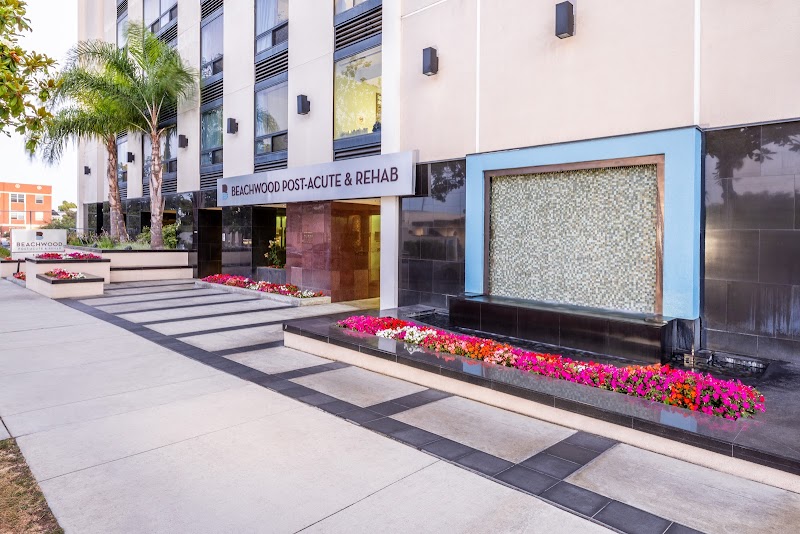
Who Owns and Operates Beachwood Post-Acute & Rehab?

BEACHWOOD POST-ACUTE & REHAB is owned by a for-profit company. For-profit facilities operate as businesses with obligations to shareholders or private owners. The facility is operated by PACS GROUP, a chain that manages multiple nursing homes. With 227 certified beds and approximately 214 residents (about 94% occupancy), it is a large facility located in SANTA MONICA, California.
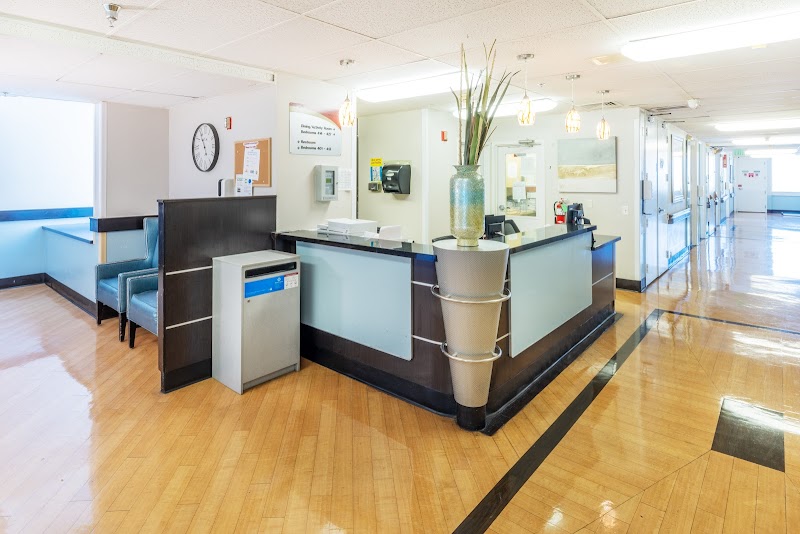
How Does Beachwood Post-Acute & Rehab Compare to Other California Nursing Homes?

Compared to the 100 nursing homes in California, BEACHWOOD POST-ACUTE & REHAB's overall rating (1 stars) is below the state average of 3.1, staff turnover (32%) is significantly lower than the state average of 46%, and health inspection rating (1 stars) is much below the national benchmark.

What Should Families Ask When Visiting Beachwood Post-Acute & Rehab?

Based on this facility's data, families visiting should ask: "Can I visit during a mealtime to observe dining assistance and food quality?" "How do you handle medical emergencies, and what is your hospital transfer rate?" "Can I speak with family members of current residents about their experience?"

Is Beachwood Post-Acute & Rehab Safe?

Based on CMS inspection data, BEACHWOOD POST-ACUTE & REHAB has a clean safety record: no substantiated abuse findings (meaning no confirmed cases of resident harm), no Immediate Jeopardy citations (the most serious violation level indicating risk of serious injury or death), and is not on the Special Focus Facility watch list (a federal program monitoring the lowest-performing 1% of nursing homes). The facility has a 1-star overall rating and ranks #100 of 100 nursing homes in California. While no facility is perfect, families should still ask about staff-to-resident ratios and recent inspection results during their visit.

Do Nurses at Beachwood Post-Acute & Rehab Stick Around?

BEACHWOOD POST-ACUTE & REHAB has a staff turnover rate of 32%, which is about average for California nursing homes (state average: 46%). Moderate turnover is common in nursing homes, but families should still ask about staff tenure and how the facility maintains care continuity when employees leave.

Was Beachwood Post-Acute & Rehab Ever Fined?

BEACHWOOD POST-ACUTE & REHAB has been fined $92,070 across 1 penalty action. This is above the California average of $34,000. Fines in this range indicate compliance issues significant enough for CMS to impose meaningful financial consequences. Common causes include delayed correction of deficiencies, repeat violations, or care failures affecting resident safety. Families should ask facility leadership what changes have been made since these penalties.

Is Beachwood Post-Acute & Rehab on Any Federal Watch List?

BEACHWOOD POST-ACUTE & REHAB is not on any federal watch list. The most significant is the Special Focus Facility (SFF) program, which identifies the bottom 1% of nursing homes nationally based on persistent, serious quality problems. Not being on this list means the facility has avoided the pattern of deficiencies that triggers enhanced federal oversight. This is a positive indicator, though families should still review the facility's inspection history directly.