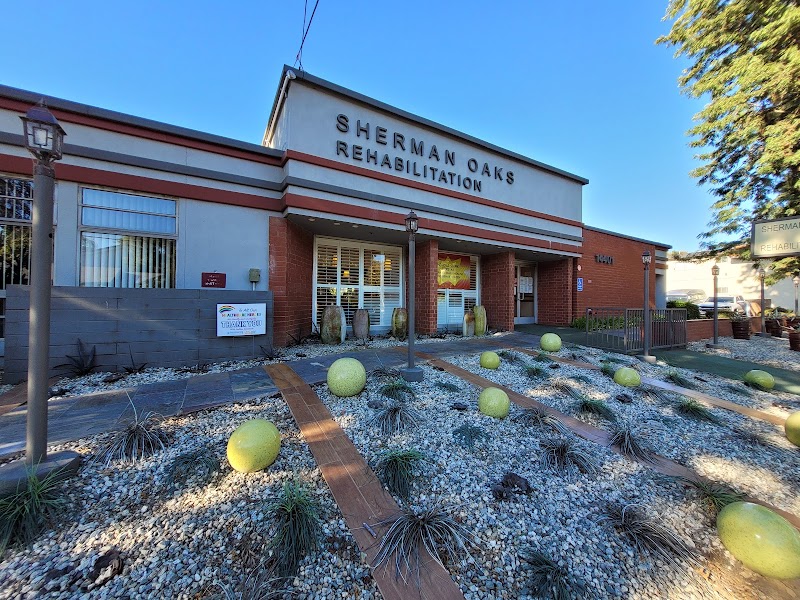
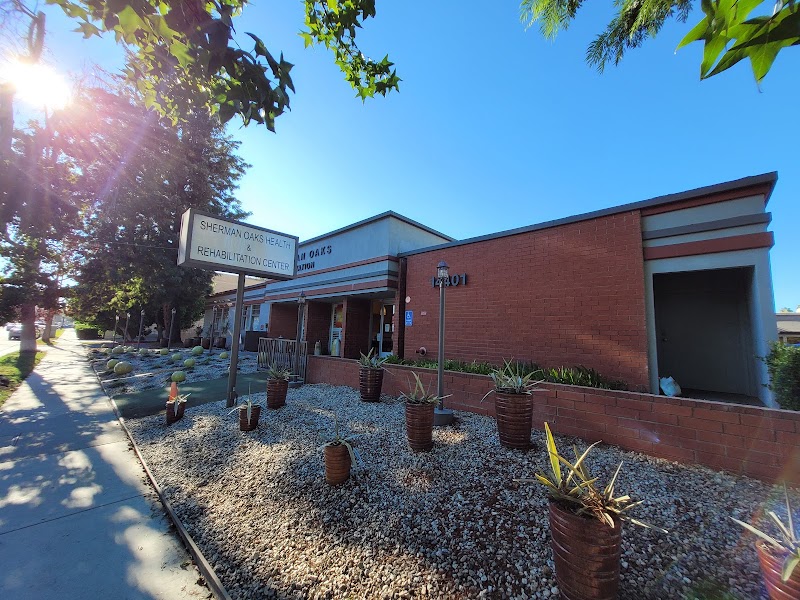
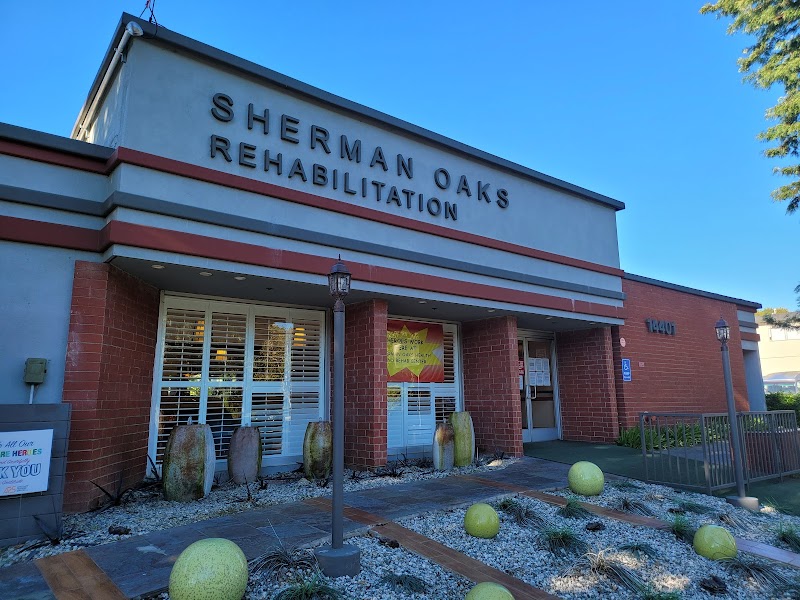
SHERMAN OAKS HEALTH & REHAB

14401 HUSTON ST., SHERMAN OAKS, CA 91423 (818) 986-7242
For profit - Corporation 120 Beds LONGWOOD MANAGEMENT CORPORATION Data: November 2025
Trust Grade
35/100
#1113 of 1155 in CA
Last Inspection: March 2025

Within standard 12-15 month inspection cycle. Federal law requires annual inspections.

Overview

Sherman Oaks Health & Rehab has received a Trust Grade of F, indicating significant concerns and overall poor performance. With a state ranking of #1113 out of 1155 facilities in California, they are in the bottom half, and locally, they rank #343 out of 369 in Los Angeles County, suggesting very few nearby options are worse. The facility is worsening, with issues increasing from 31 in 2024 to 43 in 2025, which is alarming for potential residents and their families. Staffing is average with a 3/5 rating and a turnover rate of 40%, which is similar to the state average, indicating some stability. While there have been no fines recorded, there have been serious deficiencies, including a failure to ensure safe transfers for a resident, which could lead to falls, and issues with maintaining accurate medical records, potentially delaying necessary care.

Trust Score
F
35/100
In California
#1113/1155
Bottom 4%
Safety Record
Moderate
Needs review
Inspections
Getting Worse
31 → 43 violations
Staff Stability
○ Average
40% turnover. Near California's 48% average. Typical for the industry.
Penalties
✓ Good
No fines on record. Clean compliance history, better than most California facilities.
Skilled Nurses
⚠ Watch
Each resident gets only 27 minutes of Registered Nurse (RN) attention daily — below average for California. Fewer RN minutes means fewer trained eyes watching for problems.
Violations
⚠ Watch
94 deficiencies on record. Higher than average. Multiple issues found across inspections.
★☆☆☆☆
1.0
Overall Rating
★★★☆☆
3.0
Staff Levels
★★★☆☆
3.0
Care Quality
★☆☆☆☆
1.0
Inspection Score
Stable
2024: 31 issues
2025: 43 issues

The Good

  • Full Sprinkler Coverage · Fire safety systems throughout facility
  • No fines on record
  • Staff turnover below average (40%)

    8 points below California average of 48%

Facility shows strength in fire safety.

The Bad

1-Star Overall Rating

Below California average (3.1)

Significant quality concerns identified by CMS

Staff Turnover: 40%

Near California avg (46%)

Typical for the industry

Chain: LONGWOOD MANAGEMENT CORPORATION

Part of a multi-facility chain

Ask about local staffing decisions and management

The Ugly 94 deficiencies on record

1 actual harm
May 2025 1 deficiency
CONCERN (D) 📢 Someone Reported This

A family member, employee, or ombudsman was alarmed enough to file a formal complaint

Potential for Harm - no one hurt, but risky conditions existed

Report Alleged Abuse (Tag F0609)

Could have caused harm · This affected 1 resident

Based on interview and record review, the facility failed to report allegation of visitor-to-resident verbal abuse (the act of harassing, labeling, insulting, scolding, rebuking, or excessive yelling ...

Read full inspector narrative →
Based on interview and record review, the facility failed to report allegation of visitor-to-resident verbal abuse (the act of harassing, labeling, insulting, scolding, rebuking, or excessive yelling towards an individual) within two hours to the State Survey Agency (the agency that inspects long-term care facilities for the purposes of survey and certification), the ombudsman (an advocate for residents of nursing homes, board and care centers, and assisted living facilities), and to local law enforcement (LLE - police) as per its policies on abuse for one of three sampled residents (Resident 1). This failure resulted in a delay in the investigation and had the potential to place Resident 1 at risk for abuse. Findings: During a review of Resident 1's admission Record, the admission Record indicated the facility admitted Resident 1 on 4/16/2025, with diagnoses including syncope (fainting or a brief loss of consciousness due to temporary reduced blood flow to the brain, often caused by a drop in blood pressure), collapse (a broader term referring to a sudden falling or weakening due to various factors, not necessarily involving a loss of consciousness), generalized muscle weakness and unspecified (unconfirmed) epilepsy (seizures that can cause them to stare into space, shake uncontrollably, or fall down). During a review of Resident 1's History and Physical (H&P - a medical examination that involves a doctor taking a resident's medical history, performing a physical exam, and documenting their findings), dated 4/18/2025, the H&P indicated Resident 1 had the capacity to understand and make decisions. During a review of Resident 1's Minimum Data Set (MDS - a resident assessment tool), dated 4/22/2025, the MDS indicated resident's cognitive (mental action or process of acquiring knowledge and understanding) skills for daily decisions were intact. During a review of Resident 1's Interdisciplinary Team (IDT - a coordinated group of experts from several different fields who work together) Narrative, dated 5/19/2025, the IDT Narrative indicated on 5/18/2025, Resident 1 claimed Resident 2's Visitor 1 used inappropriate language towards Resident 1. The IDT indicated Social Service spoke to Visitor 1 and informed Visitor 1 that inappropriate language directed towards residents was unacceptable and can negatively affect the community environment. During an interview on 5/20/2025 at 9:08 a.m. with Resident 1, Resident 1 stated on Sunday, 5/18/2025, at around 8:30 p.m., Visitor 1 used inappropriate language towards Resident 1. Resident 1 stated she (Resident 1) reported the incident to Social Service Assistant (SSA) 1 on the morning of 5/19/2025. During an interview on 5/20/2025 at 9:24 a.m. with SSA 1, SSA 1 stated yesterday 5/19/2025, Resident 1 went to SSA 1's office and reported that on Sunday, 5/18/2025, night, Visitor 1 called Resident 1 inappropriate names because Resident 1's television was loud. SSA 1 stated she (SSA 1) notified the Administrator (ADM) on 5/19/2025, and the ADM advised her (SSA 1) to call Visitor 1. SSA 1 stated using inappropriate language is a form of verbal abuse. SSA 1 stated verbal abuse are unwanted comments against a person. SSA 1 stated verbal abuse was the reason why she (SSA 1) reported to the ADM. SSA 1 stated any allegation of abuse should also be reported to the police, the ombudsman, and State Survey Agency. During an interview on 5/20/2025 at 9:58 a.m. with SSA 1, SSA 1 stated Resident 1 reported the allegation of verbal abuse on 5/19/2025, between 11 a.m. to 11:15 a.m. During an interview on 5/20/2025 at 10 a.m. with Licensed Vocational Nurse (LVN) 1, LVN 1 stated on 5/19/2025, between 9 a.m. to 10 a.m., Resident 1 reported that Visitor 1 called Resident 1 an inappropriate name and Visitor 1 intentionally messed up her (Resident 1) television to annoy her (Resident 1). LVN 1 stated it was a verbal abuse, and she (LVN 1) reported to Registered Nurse (RN) 1 and RN 1 advised her (LVN 1) to report to Social Services. During an interview on 5/20/2025 at 10:09 a.m. with RN 1, RN 1 stated LVN 1 reported allegation of verbal abuse on 5/19/2025, at around 10 a.m. RN 1 stated she (RN 1) notified LVN 1 to report to Social Service right away. RN 1 stated allegation of abuse should be reported right away to the State Survey Agency, the ombudsman, and the police so investigation could be done for resident safety. During a concurrent interview and record review on 5/20/2025, at 10:17 a.m., with the ADM, the facility's policy and procedure (P&P) titled, Abuse, Neglect, Exploitation or Misappropriation-Reporting and Investigating, dated 3/2023 and last reviewed on 9/27/2024, was reviewed and the P&P indicated, All reports of resident abuse (including injuries of unknown origin), neglect, exploitation, or theft/misappropriation of resident property are reported to local, state and federal agencies (as required by current regulations) are thoroughly investigated by facility management. Findings of all investigations are documented and reported. Reporting Allegations to the Administrator and Authorities: 1. If resident abuse, neglect, exploitation, misappropriation of resident property or injury of unknown source is suspected, the suspicion must be reported immediately to the administrator and to other officials according to state law. 2. The administrator or the individual making the allegation immediately reports his or her suspicion to the following persons or agencies: a. The state licensing/certification agency responsible for surveying/licensing the facility; b. The local/state ombudsman; c. The resident's representative; d. Law enforcement officials; e. The resident's attending physician; and f. The facility medical director. 3. Immediately is defined as: a. within two hours of an allegation involving abuse or result in serious bodily injury; or within 24 hours of an allegation that does not involve abuse or result in serious bodily injury. 4. Verbal/written notices to agencies are submitted via special carrier, fax, e-mail, or by telephone. Investigating Allegations: 1. All allegations are thoroughly investigated. The administrator initiates investigations. The ADM stated he (ADM) did not receive any report of allegation of abuse involving Resident 1. The ADM stated calling Resident 1 with inappropriate names is verbal abuse and should be reported to State Survey Agency, ombudsman, and police. The ADM stated staff should have informed him (ADM) of the verbal allegation of abuse on 5/19/2025. The ADM stated if he (ADM) was informed he (ADM) would have initiated the report to the State Survey Agency and ombudsman, reported the incident to the police,and start the investigation. The ADM stated their P&P indicated to report allegation of abuse within two hours. During an interview on 5/20/2025 at 10:26 a.m. with SSA 1 and the ADM, SSA 1 stated she (SSA 1) informed the ADM about the verbal abuse allegation between Visitor 1 and Resident 1 while informing the ADM about a noise complaint from Visitor 1. The ADM stated he (ADM) did not hear the part about the verbal abuse allegation and was only aware of the noise complaint from Visitor 1. SSA 1 stated there was miscommunication between her (SSA 1) and the ADM. The ADM stated when informed, he (ADM) would have initiated the Report of Suspected Dependent Adult/Elder Abuse form, separated Resident 1 and Visitor 1, report to LLE, the ombudsman, and the State Survey Agency, and start an investigation. During a review of facility's P&P titled, Abuse, Neglect, Exploitation and Misappropriation Prevention Program, dated 4/2021 and last reviewed on 9/27/2024, the P&P indicated, 8. Identify and investigate all possible incidents of abuse, neglect, mistreatment, or misappropriation of resident property. 9. Investigate and report any allegations within timeframes required by federal requirements.
Apr 2025 3 deficiencies
CONCERN (D) 📢 Someone Reported This

A family member, employee, or ombudsman was alarmed enough to file a formal complaint

Potential for Harm - no one hurt, but risky conditions existed

Deficiency F0583 (Tag F0583)

Could have caused harm · This affected 1 resident

Based on observation, interview, and record review, facility failed to maintain privacy of confidential information when staff left electronic health record (EHR- a digital version of a patient's pape...

Read full inspector narrative →
Based on observation, interview, and record review, facility failed to maintain privacy of confidential information when staff left electronic health record (EHR- a digital version of a patient's paper chart) opened and unattended for one of four sampled residents (Resident 4). This deficient practice violated Resident 4's right to privacy and confidentiality of medical records. Findings: During a review of Resident 4's admission Record, the admission Record indicated the facility admitted Resident 4 on 1/5/2024 with diagnoses including essential (primary) hypertension (HTN-high blood pressure), type 2 diabetes mellitus (DM-a disorder characterized by difficulty in blood sugar control and poor wound healing), and history of falling. During a review of Resident 4's Minimum Data Set (MDS – a resident assessment tool), dated 1/17/2025, the MDS indicated Resident 4 had the ability to understand and be understood. The MDS indicated Resident 1 was dependent (helper does all the effort) with toileting, showering, lower body dressing, and putting on and taking off footwear, and required substantial assistance (helper does more than half the effort) assistance with upper body dressing, and personal hygiene. During a concurrent observation and interview on 4/21/2025 at 4:41 p.m., in Nurses' Station 2 with the Director of Nursing (DON), the DON observed Resident 4's EHR was open and unattended. The DON stated there was no staff in sight attending to Resident 4's EHR. The DON stated when staff are not in front of the computers EHRs should be locked because it is a risk for Health Insurance Portability and Accountability Act (HIPPA- establishes federal standards protecting sensitive health information from disclosure without patient's consent) violation. The DON stated there is a potential for someone to access Resident 4's information who may not have the authorization. During a review of the facility's Policy and Procedure (P&P) titled, Computer Terminals/Workstations, last reviewed on 9/27/2024, the P&P indicated computer terminals and workstation will be positioned/shielded to ensure that protected health information (PHI) and facility information is protected from public view or unauthorized access. 1. In sofar as practical/feasible, computer terminals/workstations will be positioned or shielded so that screens are not visible to the public or to unauthorized staff. 3. A user may not leave his/her workstation or terminal unattended unless the terminal screen is cleared, and the user is logged off. Ensure user must log off at the end of his/her work shift.
CONCERN (D) 📢 Someone Reported This

A family member, employee, or ombudsman was alarmed enough to file a formal complaint

Potential for Harm - no one hurt, but risky conditions existed

Accident Prevention (Tag F0689)

Could have caused harm · This affected 1 resident

Based on interview and record review, the facility failed to ensure an assistive device was used to prevent accidents for one of four sampled residents (Resident 1) when Resident 1, a resident who was...

Read full inspector narrative →
Based on interview and record review, the facility failed to ensure an assistive device was used to prevent accidents for one of four sampled residents (Resident 1) when Resident 1, a resident who was dependent (helper does all the effort) on facility staff for surface-to-surface transfers, was transferred without the use of a mechanical lift (also known as a Hoyer lift, a mechanical device used to lift and/or transfer a person). This deficient practice resulted in Resident 1's transfer to the General Acute Care Hospital (GACH), on 3/31/2025, at 1 p.m., where Resident 1 was diagnosed with a left knee fracture (a break or crack in a bone) of the anterior tibial tuberosity (a bony bump located on the front of your shinbone [tibia], just below the kneecap). Findings: During a review of Resident 1's admission Record, the admission Record indicated the facility admitted the resident on 6/14/2023 and readmitted the resident on 4/4/2025 with diagnoses including hemiplegia (total paralysis of the arm, leg, and trunk on the same side of the body) affecting right dominant side, cerebral infarction (a stroke, specifically the kind caused by a blockage of blood flow to the brain, leading to brain tissue death), and end stage renal disease (ESRD - irreversible kidney failure). During a review of Resident 1's Minimum Data Set (MDS - a resident assessment tool), dated 3/27/2025, the MDS indicated Resident 1 usually understood and was usually understood. The MDS indicated Resident 1 used a wheelchair for mobility and was dependent on facility staff for oral care, toileting, showering, upper and lower body dressing, putting on and taking off footwear, and personal hygiene and required substantial assistance (helper does more than half the effort) with eating. The MDS indicated Resident 1's prior device used included a manual wheelchair and mechanical lift. During a review of Resident 1's Fall Risk Assessment, dated 3/21/2025, the Fall Risk Assessment indicated Resident 1 had a fall risk score of 20 (a score of 18 or more is high risk for fall), with no history of falls or history of fall more than 12 months. During a review of a facility provided record with no title, dated 3/27/2025, the record indicated Resident 1 was a two-person assist using a Hoyer lift. During a review of Resident 1's Physician's Orders, dated 3/30/2025, the Physician's Orders indicated venous doppler ultrasound (a procedure that uses sound waves to visualize and assess blood flow in the veins, especially to check for blood clots or other problems) of left lower extremity related to pain and swelling one (1) time only for 1 day. During a review of Resident 1's Change in Condition (COC)/Interact Assessment Form (SBAR - Situation-Background-Assessment-Recommendation, a structured communication tool used in healthcare to improve information sharing and resident safety, especially during critical situations), dated 3/30/2025, the assessment form indicated at 11:30 a.m., Resident 1 complained to Licensed Vocational Nurse (LVN) 2 of pain when she moved the leg. The assessment form indicated LVN 2 assessed Resident 1 and noted swelling on Resident 1's left leg. The assessment form indicated Resident 1 informed LVN 2 the swelling is new. The assessment form indicated at 11:45 a.m., Medical Doctor (MD) 1was notified and ordered a venous doppler ultrasound. The assessment form indicated on the 3/31/2025 7 a.m. to 3 p.m. shift recap, Resident 1 complained of pain to LVN 2 and upon assessment, the resident's left leg was very swollen, warm to touch, and significant bruising noted around the left knee surrounding the area. The assessment form indicated at the time, Resident 1 was in a lot of pain upon touching affected area, pain medication administered, ice pack applied to assist with swelling. The assessment form indicated MD 1 was notified and ordered to transfer Resident 1 to GACH 1 for x-ray (a type of radiation that allows doctors to take pictures of the inside of your body, specifically your bones and organs). The assessment form indicated Resident 1 rested in bed with eyes closed, however, when awake, claimed she was in pain. During a review of Resident 1's Discharge Summary Report, dated 3/31/2025 at 2 p.m., the Discharge Summary Report indicated Resident 1 was discharged on 3/31/2025 at 1 p.m. to the GACH due to Resident 1's complaint of pain, swelling and bruising noted to the left leg. During a review of Resident 1's GACH record, dated 3/31/2025, the GACH records indicated Resident 1 was in the emergency room and the x-ray of left knee showed Patella Alta (a condition where the kneecap is positioned abnormally high in relation to the thigh bone and the trochlear groove [a groove in the thigh bone where the kneecap sits]) noted secondary to avulsion fracture (occurs when a ligament or tendon pulls a piece of bone away from the rest of the bone) at the anterior tibial tuberosity involving the patellar tendon (a strong band of tissue, or tendon, that connects the kneecap to the top of the shinbone). Severe swelling through out the left knee. Moderate suprapatellar effusion (another name for knee effusion, which happens when fluid builds up in the tissues surrounding the joint). The GACH records indicated Resident 1 reported moderate left lower extremity pain and limited range of motion at this time, and swelling was noted. During an interview on 4/21/2025 at 11:15 a.m. with Certified Nursing Assistant (CNA) 1, CNA 1 stated on 3/30/2025 Resident 1 complained of leg pain. CNA 1 stated Resident 1 stated she was transferred by a male staff without a Hoyer lift. CNA 1 stated Resident 1 is a two-person Hoyer lift transfer. CNA 1 stated when he looked at Resident 1's leg it was pushed in around the knee area, was warm, no bruising at that moment, and the leg did not look right compared to her other leg. CNA 1 stated he reported to LVN 2 who then reported to Registered Nurse (RN) 1. CNA 1 stated Resident 1 transferred to the hospital and believed Resident 1 had a fracture. During an interview on 4/21/2025 at 1:40 p.m. with LVN 2, LVN 2 stated she worked on 3/30/2025 with Resident 1. LVN 2 stated on 3/30/2025 in the morning prior to lunch time Resident 1 was complaining of left knee pain. LVN 2 stated Resident 1's left knee pain was a new pain, and noted the left knee was swollen, no redness, tender to touch which she (LVN 2) reported to RN 1. LVN 2 stated she administered pain medication to Resident 1 while RN 1 called MD 1 who ordered for an ultrasound. LVN 2 stated she worked the following day (3/31/2025) and Resident 1's swelling was worse; hence, Resident 1 was sent out to the GACH. LVN 2 stated she did ask Resident 1 what had caused the new pain and Resident 1 said she (Resident 1) was transferred to her wheelchair by one staff and without the use of the Hoyer lift. LVN 2 stated Resident 1 being transferred without a Hoyer lift is not the proper way to transfer Resident 1 because Resident 1 is a two-person transfer with the use of a Hoyer lift. LVN 2 stated Resident 1 ended up having a fracture. LVN 2 stated the improper transfer was what caused Resident 1's fracture. During an interview on 4/21/2025 at 3:56 p.m. with RN 1, RN 1 stated Resident 1 required a two-person assist and the use of a Hoyer Lift for transfers. RN 1 stated on 3/30/2025 LVN 2 called RN 1 prior to lunch and told RN 1 that Resident 1 was complaining of left leg pain. RN 1 stated assessed Resident 1's left leg which was swollen and painful. RN 1 stated the left knee pain was something new for Resident 1. During an interview on 4/21/2025 at 4:54 p.m. with the Administrator (Adm), the Adm stated he was made aware of Resident 1's new pain when he came into work on 3/31/2025. The Adm stated he did not speak to Resident 1, but the nurse spoke to Resident 1 and Resident 1 stated the pain was caused during the transfer by CNA 2. The Adm stated Resident 1 did have a fracture and it was concluded that it was during the transfer that the fracture occurred. During a review of the facility's P&P titled, Lifting Machine, Using a Mechanical, last reviewed on 9/27/2024, the P&P indicated at least two (2) nurses or qualified trained staff are needed to safely move a resident with a mechanical lift. During a review of the facility's P&P titled, Safety and Supervision of Residents, last reviewed on 9/27/2024, the P&P indicated our facility strives to make the environment as free from accident hazards as possible. Resident safety and supervision and assistance to prevent accidents are facility-wide priorities. 4. Employees shall be trained on potential accident hazards and demonstrate competency on how to identify and report accident hazards and try to prevent avoidable accidents.
CONCERN (D) 📢 Someone Reported This

A family member, employee, or ombudsman was alarmed enough to file a formal complaint

Potential for Harm - no one hurt, but risky conditions existed

Deficiency F0761 (Tag F0761)

Could have caused harm · This affected 1 resident

Based on observation, interview, and record review, the facility failed to ensure medication carts were locked when staff were out of view for two of two medication carts (Medication Cart 1 and Medica...

Read full inspector narrative →
Based on observation, interview, and record review, the facility failed to ensure medication carts were locked when staff were out of view for two of two medication carts (Medication Cart 1 and Medication Cart 2). This deficient practice had the potential for residents and/or unauthorized personnel to have access to the medications in the medication carts. Findings: During a concurrent observation and interview, on 4/21/2025, at 4:41 p.m., in Nurses' Station 2, with the Director of Nursing (DON), Medication Cart 1 and Medication Cart 2 were open. The DON stated both Medication Cart 1 and Medication Cart 2 were open and all medication carts should be locked when staff are out of sight. The DON stated medication carts should be locked because this is for the safety of the residents. The DON stated if carts are left unlocked,someone can get into the medication carts and get the medication. During a review of the facility's Policy and Procedures (P&P) titled, Security of Medication Carts, last reviewed on 9/27/2024, the P&P indicated medication carts must be securely locked at all times when out of the nurse's view.Based on observation, interview, and record review, the facility failed to ensure medication carts were locked when staff were out of view for two of two medication carts (Medication Cart 1 and Medication Cart 2). This deficient practice had the potential for residents and/or unauthorized personnel to have access to the medications in the medication carts. Findings: During a concurrent observation and interview on 4/21/2025 at 4:41 p.m. in Nurses' Station 2 with the Director of Nursing (DON), the DON observed Medication Cart 1 and Medication Cart 2 were open. The DON stated both Medication Cart 1 and Medication Cart 2 are open and all medication carts should be locked when staff are out of sight. The DON stated medication carts should be locked because this is for the safety of the residents. The DON stated if carts are left unlocked someone can get into the medication carts and get the medications. During a review of the facility's Policy and Procedures (P&P) titled, Security of Medication Carts, last reviewed on 9/27/2024, the P&P indicated medication carts must be securely locked at all times when out of the nurse's view.
Apr 2025 2 deficiencies
CONCERN (D) 📢 Someone Reported This

A family member, employee, or ombudsman was alarmed enough to file a formal complaint

Potential for Harm - no one hurt, but risky conditions existed

Pressure Ulcer Prevention (Tag F0686)

Could have caused harm · This affected 1 resident

Based on observation, interview, and record review, the facility failed to ensure one of four sampled residents (Resident 1) received care consistent with professional standards of practice to prevent...

Read full inspector narrative →
Based on observation, interview, and record review, the facility failed to ensure one of four sampled residents (Resident 1) received care consistent with professional standards of practice to prevent pressure ulcers (PU, a localized injury to the skin and/or underlying tissue usually over a bony prominence as a result of pressure, or pressure in combination with shear) by failing to ensure Resident 1's low air-loss mattress (LALM - a mattress composed of inflatable air cushions that is used to relieve pressure on body parts) was set to appropriate setting per manufacturer's guidelines. This deficient practice had placed Resident 1 at risk for the development of pressure ulcers. Findings: During a record review of Resident 1's admission Record, the admission Record indicated the facility admitted the resident on 10/6/2022 with diagnoses including pneumonia (inflamed or swollen lung tissue caused by infection with a germ), osteoarthritis (condition that causes the joints to become very painful and stiff) of the left and right knee, and dementia (impaired ability to remember, think, or make decisions that interferes with doing everyday activities). During a record review of Resident 1's Physician Orders, dated 1/20/2025, the Physician Orders indicated LALM for skin management. During a record review of Resident 1's Minimum Data Set (MDS – a resident assessment tool), dated 1/24/2025, the MDS indicated Resident 1's cognitive (conscious mental activities including thinking, reasoning, understanding, learning, and remembering) skills for daily decision making were severely impaired. The MDS indicated Resident 1 required maximal assistance (helper lifts or holds trunk or limbs and provides more than half the effort) on rolling left and right, sit to lying, and lying to sitting. During a record review of Resident 1's Braden Scale for Predicting Pressure Sore Risk, dated 2/10/2025, the Braden Scale for Predicting Pressure Sore Risk indicated the resident had a score of 14. A score of 13 to 14 indicated moderate risk for the development or worsening of pressure ulcers. During a concurrent observation and interview on 4/18/2025 at 10:58 a.m. with Certified Nursing Assistant (CNA) 1, observed Resident 1's LALM setting was on 160 pounds (lbs. – unit of measurement). CNA 1 stated Resident 1's weight was less than 160 lbs. During a concurrent observation, interview, and record review on 4/18/2025 at 11:51 a.m., Resident 1's Weight Summary, dated 4/1/2025, was reviewed with Licensed Vocational Nurse (LVN) 2, LVN 2 stated Resident 1's weight was 115 lbs. Observed Resident 1's LALM setting was on 160 lbs. LVN 2 stated Resident 1's LALM setting should be on 120 lbs. LVN 2 changed Resident 1's LALM setting to 120 lbs. During an interview on 4/18/2025 at 11:55 a.m. with LVN 3, LVN 3 stated Resident 1's LALM setting should be at 120 lbs. LVN 3 stated LALM were used for Resident 1's skin management to prevent PU. LVN 3 stated charge nurses and treatment nurses should check the residents' LALM to ensure the settings were correct. LVN 3 stated incorrect LALM setting would not be effective and beneficial for Resident 1. LVN 3 stated Resident 1 had the potential to develop PU. During an interview on 4/18/2025 at 2:13 p.m. with the Director of Nursing (DON), the DON stated LALM settings were based on the resident's weight. The DON stated LALM purpose was to maintain the resident's skin integrity and to promote wound healing. The DON stated Resident 1's LALM was not effective in preventing PU due to the incorrect LALM setting. The DON stated the facility failed to ensure Resident 1's LALM setting was based on the resident's weight. During a record review of the facility's policy and procedure (PnP) titled, Support Surface Guidelines, last reviewed on 9/27/2024, the PnP indicated the purpose to provide guidelines for the assessment of appropriate pressure reducing and relieving devices for residents at risk of skin breakdown. During a record review of the undated facility-provided LALM Operation Manual, the Operation Manual indicated to adjust air mattress to a desired firmness according to patient's weight or the suggestion from a health care professional.
CONCERN (E) 📢 Someone Reported This

A family member, employee, or ombudsman was alarmed enough to file a formal complaint

Potential for Harm - no one hurt, but risky conditions existed

Medical Records (Tag F0842)

Could have caused harm · This affected multiple residents

**NOTE- TERMS IN BRACKETS HAVE BEEN EDITED TO PROTECT CONFIDENTIALITY** Based on interview and record review, the facility failed to ensure the medical records of three of four sampled residents (Resi...

Read full inspector narrative →
**NOTE- TERMS IN BRACKETS HAVE BEEN EDITED TO PROTECT CONFIDENTIALITY** Based on interview and record review, the facility failed to ensure the medical records of three of four sampled residents (Resident 1, Resident 2, and Resident 3) were maintained in accordance with accepted professional standards and practice, complete, and accurately documented by failing to ensure Certified Nursing Assistants (CNAs) documented Residents 1, 2, and 3's percentage (% - per one hundred) of food eaten on the correct time. These deficient practices resulted in inaccurate information on Residents 1, 2, and 3's medical records and had the potential for delayed and inaccurate medical interventions. Findings: 1. During a record review of Resident 1's admission Record, the admission Record indicated the facility admitted the resident on 10/6/2022 with diagnoses including pneumonia (inflamed or swollen lung tissue caused by infection with a germ), osteoarthritis (condition that causes the joints to become very painful and stiff) of the left and right knee, and dementia (impaired ability to remember, think, or make decisions that interferes with doing everyday activities). During a record review of Resident 1's Minimum Data Set (MDS – a resident assessment tool), dated 1/24/2025, the MDS indicated Resident 1's cognitive (conscious mental activities including thinking, reasoning, understanding, learning, and remembering) skills for daily decision making were severely impaired. The MDS indicated Resident 1 required supervision on eating. During a record review of Resident 1's Physician Orders, dated 4/18/2025, the Physician Orders indicated the resident had a no added salt diet. During an interview on 4/18/2025 at 1:42 p.m. and a concurrent record review of Resident 1's Nutritional Task, dated 3/20/2025 to 4/18/2025, reviewed with CNA 1, the Nutritional Task section indicated the meal (breakfast, lunch, and dinner) intake amount the resident had eaten in percentage. Resident 1's Nutritional Task indicated the following: a. On 3/23/2025 and 4/13/2025, Resident 1 did not have a documented dinner meal intake. b. On 3/24/2025, 3/25/2025, 4/6/2025, and 4/16/2025, Resident 1 did not have a documented breakfast and lunch meal intake. c. On 3/30/2025, Resident 1's documented breakfast meal intake was 40% at 1:49 p.m. and lunch meal intake was 50 % at 1:50 p.m. d. On 3/31/2025, Resident 1's documented breakfast meal intake was 100% at 2:43 p.m. and lunch meal intake was 100 % at 2:44 p.m. e. On 4/3/2025, Resident 1's documented breakfast meal intake was 50% at 8:52 p.m. and lunch meal intake was 100%, both at 8:55 p.m. f. On 4/4/2025, Resident 1's documented breakfast and lunch meal intake were 50%, both at 1:56 p.m. g. On 4/8/2025, Resident 1's documented breakfast meal intake was 40% at 2:03 p.m. and lunch meal intake was 80 % at 2:04 p.m. h. On 4/11/2025, Resident 1's documented breakfast meal intake was 50% at 2:44 p.m. and lunch meal intake was 30 % at 2:45 p.m. i. On 4/12/2025, Resident 1's documented breakfast and lunch meal intake were 70%, both at 2:10 p.m. j. On 4/17/2025, Resident 1's documented breakfast meal intake was 50% at 2:12 p.m. and lunch meal intake was 50 % at 2:13 p.m. k. On 4/18/2025, Resident 1's documented breakfast meal intake was 65% and lunch meal intake was 40%, both at 1:17 p.m. CNA 1 stated the documented time of Resident 1's percentage of meal intake were incomplete and inaccurate. CNA 1 stated Resident 1's meal intake should be documented after the meal had been consumed. During an interview on 4/18/2025 at 1:56 p.m. and concurrent record review of Resident 1's Nutritional Task, dated 3/20/2025 to 4/18/2025, reviewed with the Director of Staff Development (DSD), the DSD stated Resident 1's documented Nutritional Task were incomplete and inaccurate. The DSD stated Resident 1's documented percentage of meal intake should be indicated for each respective meal. The DSD stated inaccurate and incomplete documentation of Resident 1's Nutritional Task had the potential for unidentified cause of weight gain or weight loss. 2. During a record review of Resident 2's admission Record, the admission Record indicated the facility admitted the resident on 6/16/2024 with diagnoses including chronic kidney disease (a condition in which the kidneys are damaged and cannot filter blood as well as they should), hemiplegia (inability to move one side of the body) and hemiparesis (weakness on one side of the body) following cerebral infarction (damage to tissues in the brain due to a loss of oxygen to the area) affecting the right dominant side, and dementia. During a record review of Resident 2's Physician Orders, dated 3/5/2025, the Physician Orders indicated the residents had a no added salt diet. During a record review of Resident 2's MDS, dated [DATE], the MDS indicated Resident 2's cognitive skills for daily decision making were severely impaired. The MDS indicated Resident 2 required supervision on eating. During a record review of Resident 2's Nutritional Task, dated 3/20/2025 to 4/18/2025, the Nutritional Task section indicated the meal (breakfast, lunch, and dinner) intake amount the resident had eaten in percentage. Resident 2's Nutritional Task indicated the following: a. On 3/22/2025, Resident 2's documented breakfast meal intake was 60% and lunch meal intake was 50%, both documented at 2:44 p.m. b. On 3/24/2025, Resident 2's documented breakfast and lunch meal intake were 60%, both at 2:29 p.m. c. On 3/25/2025, Resident 2's documented breakfast meal intake was 80% and lunch meal intake was 50%, both documented at 12:58 p.m. d. On 3/26/2025, 4/2/2025, 4/7/2025, 4/8/2025, 4/12/2025, 4/13/2025, 4/14/2025, and 4/15/2025, Resident 2 did not have a documented breakfast and lunch meal intakes. e. On 3/27/2025, Resident 2's documented breakfast meal intake was 70% and lunch meal intake was 90%, both documented at 2:56 p.m. f. On 3/28/2025, Resident 2's documented breakfast meal intake was 30% and lunch meal intake was 50%, both documented at 2:46 p.m. g. On 3/28/2025, 3/29/2025 and 4/5/2025, Resident 2 did not have a documented dinner meal intake. h. On 3/29/2025, Resident 2's documented breakfast and lunch meal intake were 50%, both at 2:34 p.m. i. On 4/1/2025, Resident 2's documented breakfast and lunch meal intake were 25%, both at 2:14 p.m. j. On 4/3/2025, Resident 2's documented breakfast meal intake was 40% and lunch meal intake was 75%, both documented at 2:33 p.m. k. On 4/5/2025, Resident 2's documented breakfast meal intake was 100% and lunch meal intake was 60%, both documented at 1:26 p.m. l. On 4/9/2025, Resident 2's documented breakfast and lunch meal intake were 60%, both at 12:13 p.m. m. On 4/10/2025, Resident 2's documented breakfast meal intake was 70% at 2:34 p.m. and lunch meal intake was 60% documented at 2:35 p.m. n. On 4/16/2025, Resident 2's documented breakfast meal intake was 70% and lunch meal intake was 60%, both documented at 2:50 p.m. o. On 4/18/2025, Resident 2's documented breakfast meal intake was 40% and lunch meal intake was 20%, both documented at 1:44 p.m. 3. During a record review of Resident 3's admission Record, the admission Record indicated the facility admitted the resident on 6/16/2024 with diagnoses including encephalopathy (a disturbance of brain function), osteoarthritis, and dementia. During a record review of Resident 3's Physician Orders, dated 2/26/2025, the Physician Orders indicated the residents had a no added salt diet. During a record review of Resident 2's MDS, dated [DATE], the MDS indicated Resident 3's cognitive skills for daily decision making were severely impaired. The MDS indicated Resident 3 required supervision on eating. During a record review of Resident 3's Nutritional Task, dated 3/20/2025 to 4/18/2025, the Nutritional Task section indicated the meal (breakfast, lunch, and dinner) intake amount the resident had eaten in percentage. Resident 3's Nutritional Task indicated the following: a. On 3/21/2025, Resident 3's documented breakfast and lunch meal intake were 100%, both at 1:17 p.m. b. On 3/27/2025, Resident 3 did not have a documented breakfast and lunch meal intakes. c. On 3/28/2025, 3/29/2025, 3/30/2025, 4/4/2025, 4/6/2025, 4/11/2025, and 4/13/2025, Resident 3 did not have a documented dinner meal intake. d. On 4/8/2025, Resident 3's documented breakfast and lunch meal intake were 100%, both at 2:13 p.m. e. On 4/9/2025, Resident 3's documented breakfast and lunch meal intake were 80%, both at 1:08 p.m. f. On 4/12/2025, Resident 3's documented breakfast meal intake was 100% and lunch meal intake was 65%, both documented at 1:58 p.m. g. On 4/14/2025, Resident 3's documented breakfast meal intake was 80% at 1:45 p.m. and lunch meal intake was 50% documented at 1:46 p.m. h. On 4/17/2025, Resident 3's documented breakfast meal intake was 50% at 12:51 p.m. and lunch meal intake was 60% documented at 12:52 p.m. During an interview on 4/18/2025 at 2:13 p.m. with the Director of Nursing (DON), the DON stated CNAs should document the residents' (Residents 1, 2, and 3) amount of meal intake after the residents (Residents 1, 2, and 3) consumed their meals (breakfast, lunch, or dinner). The DON stated the residents' (Residents 1, 2, and 3) nutritional task documentation should not be left blank. The DON stated inaccurate and incomplete documentation had the potential for inaccurate assessment that may lead to unidentified weight changes. The DON stated the facility failed to ensure the residents' (Residents 1, 2, and 3) medical records were complete and accurate. During a record review of the facility's policy and procedure (PnP) titled, Charting and Documentation, last reviewed on 9/27/2024, the PnP indicated all services provided to the resident, progress toward the care plan goals, or any changes in the resident's medical, physical, functional, or psychological condition shall be documented in the resident's medical record. The PnP indicated the medical record should facilitate communication between the interdisciplinary team (IDT, a team of healthcare professionals from different professional disciplines who work together to manage the physical, psychological and spiritual needs of the patient) regarding the resident's condition and response to care. The PnP indicated documentation in the medical record will be objective, complete, and accurate.
Mar 2025 37 deficiencies
CONCERN (D)

Potential for Harm - no one hurt, but risky conditions existed

Resident Rights (Tag F0550)

Could have caused harm · This affected 1 resident

**NOTE- TERMS IN BRACKETS HAVE BEEN EDITED TO PROTECT CONFIDENTIALITY** Based on interview and record review, the facility failed to provide care in a manner that promoted dignity and respect for one ...

Read full inspector narrative →
**NOTE- TERMS IN BRACKETS HAVE BEEN EDITED TO PROTECT CONFIDENTIALITY** Based on interview and record review, the facility failed to provide care in a manner that promoted dignity and respect for one of one sampled resident (Resident 115) when facility staff failed to follow the Do Not Resuscitate (DNR- a written document signed by the patient or their legal representative and the patient's physician, and it is placed in the patient's medical records indicating the resident's wishes of withholding resuscitation efforts) physician order for Resident 115 reviewed under Death care area. This deficient practice violated the rights of the resident to be treated with dignity and respect. Cross-reference: F678 Findings: During a review of Resident 115's admission Record, the admission Record indicated the facility originally admitted the resident on 11/26/2024 and readmitted on [DATE] with diagnoses including metabolic encephalopathy (a condition where the brain does not work normally because of problems with the body's metabolism [how the body manages food, energy, or chemicals]), and sepsis (a life-threatening blood infection), and dementia (a progressive state of decline in mental abilities). During a review of Resident 115's Preferred Intensity of Care (PIC) Authorization/Decisions, dated 11/27/2024, the PIC Authorization/Decisions indicated the resident's representative authorized no CPR and that the resident was not capable of making preferred intensity decisions and requested that the withholding of the above-described medical care was consistent with the views of the resident. During a review of Resident 115's History and Physical (H&P- a comprehensive assessment that involves a thorough medical history and a physical examination, forming the foundation for resident care and guiding diagnostic and treatment decisions), dated 12/17/2024, the H&P indicated the resident did not have the capacity to understand and make decisions. The H&P indicated the resident did not want cardiopulmonary resuscitation (CPR-emergency procedure used to restart a person's heartbeat and breathing after one or both have stopped). During a review of Resident 115's Minimum Data Set (MDS-a resident assessment tool), dated 12/20/2024, the MDS indicated the resident had clear speech, moderately impaired vision, and was rarely/never makes self understood and rarely/never had the ability to understand others. The MDS indicated the resident had severely impaired cognitive skills (mental action or process of acquiring knowledge and understanding) for daily decision making. During a review of Resident 115's Change in Condition (COC-a major decline in the resident's status) Assessment Form, dated 12/20/2024, the COC Assessment Form indicated the COC Assessment Form on 12/20/2024 at 7:20 p.m., Resident 115 was found unresponsive and no vital signs (measurements of the body's most basic functions such as body temperature, heart [pulse] rate, respiration rate [rate of breathing], and blood pressure [pressure of circulating blood against the walls of blood vessels]) appreciated (no signs of life, such as a heartbeat, breathing, or movement, were detected or observed). The COC Assessment Form indicated chest compression was started, and code blue (a standardized alert system used to indicate a medical emergency, typically a person's heartbeat and breathing after one or both have stopped, requiring immediate resuscitation efforts) was announced. The COC Assessment Form indicated 911 (emergency telephone number) was called and paramedics arrived at the facility, relieved the licensed nurses, and continued to provide CPR to Resident 115 for another 25 minutes. The COC Assessment Form indicated at 7:50 p.m. CPR was stopped, and Resident 115 was pronounced expired. The COC Assessment Form indicated at 8 p.m. the resident's representative was notified. During a concurrent interview and record review on 3/14/2025 at 9:46 a.m. with MDS Nurse (MDSN) 1, Resident 115's PIC Authorization/Decisions, dated 11/27/2024 and physician orders were reviewed. MDSN 1 stated there was code/CPR status entered on the physician order in the resident's electronic health record. MDSN 1 stated the resident's PIC Authorization/Decisions form should have been reviewed by the social services with the resident's representative if they wanted any changes. MDSN 1 stated this should have been filed in the resident's current closed chart when he was readmitted on [DATE]. MDSN 1 stated it was filed in the resident's old chart with discharge date [DATE]. MDSN 1 stated this allows facility staff to know what the resident's preferred treatment is. MDSN 1 stated if this was not filed in the resident's current chart the resident could be considered full code status. During a concurrent interview and record review on 3/14/2025 at 2:28 p.m. with the Social Services Director (SSD), Resident 115's PIC Authorization/Decisions, dated 11/27/2024 and Social Service Note, dated 12/16/2024, were reviewed. The SSD stated she documented that she informed the resident's representative that the resident will remain full code status until a Physician's Orders Life Sustaining Treatment (POLST- portable medical orders that communicate patient wishes for end-of-life intervention to health care facilities and providers, including emergency medical services) or an Advance Directive (AD-a written statement of a person's wishes regarding medical treatment, often including a living will, made to ensure those wishes are carried out should the person be unable to communicate them to a physician). The SSD stated both POLST and AD are optional, and residents are not obligated to have unless they prefer to. The SSD stated when Resident 115 was readmitted to the facility on [DATE] and on 12/16/2024 she did not see the PIC Authorization/Decisions form on the resident's chart, so she reached out to the resident's representative. The SSD stated she should have asked medical records to check on the resident's previous PIC Authorization/Decisions form. The SSD stated their facility's DNR policy and procedures (P&P) is to follow the DNR order unless the resident or resident's representative request to end the DNR order. The SSD stated when the resident's signed PIC Authorization/Decisions form was not filed on the resident's chart the resident will not receive their preferred care and their resident's rights of preferred treatment would not be followed and respected. The SSD stated POLST and AD acknowledgement form are done upon admission or the following day and Monday if the resident was admitted over the weekend. The SSD stated Resident 115 had a COC on 12/20/2024 where the resident was found unresponsive with no vital signs were appreciated and CPR was administered. The SSD stated she missed it and the resident received CPR who had a DNR order. During an interview on 3/14/2025 at 3:07 p.m. with the Director of Nursing (DON), the DON stated the resident's/resident's representatives are not required to complete the POLST or an advance directive are optional. The DON stated what the residents or resident's representative fills out is the advance directive acknowledgement form (document provided by the facility that indicates whether a resident has an advance directive, would like information regarding creation of an advance directive, or refusal to create an advance directive) which would indicate the resident's preferred intensity of care. The DON stated it is very important to follow upon the resident's admission and ask the medical record staff to bring up the resident's preferred intensity of treatment in the new chart because it reflects the resident's wishes. The DON stated if the resident/resident's representative does not have one they can offer and make a new preferred intensity of care. The DON stated this should have been done as soon as possible if the resident was admitted on the weekend either the next day or go by the code status order from the hospital record. During a review of the facility's P&P titled, Resident Rights, last reviewed 9/27/2024, the P&P indicated employees shall treat all residents with kindness, respect, and dignity. The P&P indicated These rights include the resident's right to: a. dignified existence; b. be treated with respect, kindness, and dignity; During a review of the facility's P&P titled, Do Not Resuscitate Order, last reviewed 9/27/2024, the P&P indicated the facility will not use cardiopulmonary resuscitation and related emergency measures to maintain life functions on a resident when there is a Do Not Resuscitate Order in effect. The P&P indicated Do Not Resuscitate orders must be signed by the resident's attending physician on the physician's order sheet maintained in the resident's medical record. The P&P indicated DNR orders will remain in effect until the resident (or legal surrogate) provides the facility with a signed and dated request to end the DNR order. During a review of the facility's P&P titled, POLST, last reviewed 9/27/2024, the P&P indicated Just because POLST is offered does not mean the resident or legal representative must complete one. No one is required to complete a POLST form as it is 100% voluntary.
CONCERN (D)

Potential for Harm - no one hurt, but risky conditions existed

Deficiency F0558 (Tag F0558)

Could have caused harm · This affected 1 resident

**NOTE- TERMS IN BRACKETS HAVE BEEN EDITED TO PROTECT CONFIDENTIALITY** Based on observation, interview, and record review the facility failed to provide reasonable accommodation of resident needs and...

Read full inspector narrative →
**NOTE- TERMS IN BRACKETS HAVE BEEN EDITED TO PROTECT CONFIDENTIALITY** Based on observation, interview, and record review the facility failed to provide reasonable accommodation of resident needs and preferences by failing to ensure the call light (CL, an alerting device for nurses or other nursing personnel to assist a patient when in need) was within reach for two of six sampled residents (Residents 46 and 107) reviewed under the Environment task. This deficient practice had the potential to result in the delay of care and services and possible injury to residents when they are unable to summon health care workers. Findings: a. During a review of Resident 46's admission Record, the admission Record indicated the facility admitted the resident on 3/25/2022 and readmitted the resident on 6/12/2023 with diagnoses that included dysphagia (difficulty swallowing) unspecified cerebrovascular disease (conditions that affects blood vessels and blood supply of the brain), sequelae (a condition which is the consequence of a previous disease or injury) of nontraumatic subarachnoid hemorrhage (a type of stroke caused by bleeding in the brain), dementia (a general term for loss of memory, language, problem-solving and other thinking abilities that interfere with daily life), and history of falling. During a review of Resident 46's Minimum Data Set (MDS - resident assessment tool), dated 12/18/2024, the MDS indicated the resident rarely/never was able to understand others and rarely/never was able to make himself understood. The MDS further indicated Resident 46 had impairment on both sides of the lower extremities, was dependent on staff for toileting, bathing, personal and oral hygiene, dressing, and mobility. During a review of Resident 46's History and Physical (H&P), dated 7/2/2024, the H&P indicated the resident did not have the capacity to understand and make decisions. During a review of Resident 46's Order Summary Report, the report indicated the following orders: -Place the resident on the falling star program (interventions to reduce the occurrence of falls) related to high-risk score on the fall risk assessment, dated 1/8/2025. -Low bed with bilateral (both sides) upper (located at the chest and shoulders) siderails (adjustable rigid plastic bars attached to the bed that may be positioned in various locations) up when in bed to decrease the potential injury due to unpredictable movement related to dementia, dated 11/21/2024. During a review of Resident 46's Care Plan (CP) titled, Resident is at risk for falls related to: history of fall prior to admission, aging process, limited mobility, unsteady balance, poor safety awareness, cognitive and communication impairment, vision impairment ., initiated 6/13/2023 and last revised 1/10/2025, the CP indicated to keep the call light within easy reach and encourage the resident to use it to get assistance. During an observation on 3/11/2025 at 9:30 a.m., Resident 46 was lying in bed. Resident 46 did not respond to the surveyor. Observed the CL device and cord were hanging from a hook on the wall. Observed the CL was not within reach of Resident 46 lying in bed and no staff were present in the room. During a concurrent observation and interview on 3/11/2025 at 9:32 a.m., with the Infection Preventionist (IP), the IP entered Resident 46's room and stated the CL should be within Resident 46's reach for dignity reasons and for Resident 46 to call for staff when there is a need. The IP stated Resident 46's CL was hanging on the wall, but it should have been within reach of the resident and was not. The IP stated about twenty minutes prior, the IP assisted with providing care to Resident 46 and it was an oversight that the CL was not placed back within reach of the resident prior to exiting the room. The IP stated Resident 46 does not move, but the CL should always be within reach because Resident 46 may be able to use the CL at some point, and the CL should be within reach. During a concurrent interview and record review on 3/14/2025 at 9:35 a.m., with the Director of Nursing (DON), the DON reviewed the facility's policy and procedures regarding CLs. The DON stated it was important for residents to have a CL to be able to call for staff to immediately attend to residents when help is needed. The DON stated the CL should be within reach of all residents, including the residents that are not able to move. The DON stated a resident may have a change of condition and be able to use the CL. The DON stated the facility policy was not followed when Resident 46's CL was not within reach. The DON stated when the CL was not within reach, there was a potential that staff may not be aware of a change of condition in the resident resulting in a delay in care. During a review of the facility's policy and procedure (P&P) titled, Answering the Call Lights, last reviewed 9/27/2024, the P&P indicated the purpose of the policy was to ensure timely responses to the resident's requests and needs. Ensure the CL is accessible to the resident when in bed. During a review of the facility P&P titled, Resident Rights, last reviewed 9/27/2045, the P&P indicated employees shall treat all residents with kindness, respect, and dignity. Federal and state laws guarantee certain basic rights to all residents of the facility. These rights include the residents right to communication with and access to people and services, both inside and outside the facility. b. During a review of Resident 107's admission Record, the admission Record indicated the facility admitted the resident on 2/17/2025, with diagnoses including lack of coordination, difficulty in walking, and presence of automatic cardiac defibrillator (a portable device that can be used to treat a person whose heart has suddenly stopped working). During a review of Resident 107's H&P, dated 2/19/2025, the H&P indicated the resident was alert and oriented to person, place, and time. The H&P indicated the resident had the capacity to understand and make decisions. During a review of Resident 107's MDS dated [DATE], the MDS indicated the resident had the ability to make self-understood and understand others, and had intact cognition (a participant who has sufficient judgment, planning, organization, self-control, and the persistence needed to manage the normal demands of the participant's environment). The MDS indicated the resident required partial to supervision assistance on mobility and activities of daily living (ADLs - activities such as bathing, dressing and toileting a person performs daily). During a concurrent observation and interview on 3/11/2025 at 9:55 a.m., with the Assistant Director of Staff Development (ADSD), inside Resident 107's room, observed the call light was resting on the floor at the right side of the resident's bed. The ADSD stated the call light should always be within the reach of the resident so they can call for help when needed. During an interview on 3/13/2025, at 10:31 a.m., with Registered Nurse (RN) 1, RN 1 stated the call light of Resident 107 should always be within reach so that the resident can call for help when needed. RN 1 stated if the call light keeps on falling off the bed, the staff can clip them on the bed sheet to keep them off the floor. RN 1 stated as soon as the staff sees the call light is on the floor, the staff should disinfect them before placing them within the residents reach to prevent infection. RN 1 stated there is a potential for residents to fall reaching for the call light on the floor, and it can be a trip hazard for the residents and staff too. During an interview on 3/14/2025, at 11:37 a.m., with the Director of Nursing (DON), the DON stated Resident 107's call light should always be within reach so that if there is an emergency on the part of the resident, they can call right away. The DON stated there is a potential for Resident 107 to fall while reaching for the call light on the floor. The DON added it is the responsibility of all staff in the facility to ensure resident's call lights are withing reach. During a review of the facility's recent P&P titled Answering the Call Light, last reviewed on 9/27/2024, the P&P indicated the purpose of this procedure is to ensure timely responses to the resident's requests and needs. Ensure that the call light is accessible to the resident when in bed, from the toilet, from the shower or bathing facility and from the floor. During a review of the facility's recent P&P titled Accommodation of Needs, last reviewed on 9/27/2024, the P&P indicated our facility's environment and staff behaviors are directed toward assisting the resident in maintaining and/or achieving safe independent functioning, dignity and well-being. e. installing longer cords or providing remote controlled overhead or task lighting so that they are easily accessible.
CONCERN (D)

Potential for Harm - no one hurt, but risky conditions existed

Deficiency F0578 (Tag F0578)

Could have caused harm · This affected 1 resident

**NOTE- TERMS IN BRACKETS HAVE BEEN EDITED TO PROTECT CONFIDENTIALITY** Based on interview and record review, the facility failed to offer the resident or their resident representative assistance with...

Read full inspector narrative →
**NOTE- TERMS IN BRACKETS HAVE BEEN EDITED TO PROTECT CONFIDENTIALITY** Based on interview and record review, the facility failed to offer the resident or their resident representative assistance with formulating an Advance Directive (AD - a legal document indicating resident preference on end-of-life treatment decisions) upon admission for two of two sampled residents (Residents 79 and 97) reviewed for advance directive. This deficient practice violated the residents and/or their representatives the right to be fully informed of the option to formulate an AD and had the potential to delay emergency treatment or the potential to force emergency, life-sustaining procedures against the residents' personal preferences. Findings: a. During a review of Resident 79's admission Record, the admission Record indicated the facility originally admitted the resident on 1/29/2024 and readmitted in the facility on 9/17/2024 with diagnoses including dementia (a progressive state of decline in mental abilities), and hemiplegia (total paralysis of the arm, leg, and trunk on the same side of the body) and hemiparesis (weakness of the arm, leg, and trunk on the same side of the body) following cerebral infarction (also known as stroke, loss of blood flow to a part of the brain) affecting left non-dominant side. During a review of Resident 79's History and Physical (H&P), dated 9/18/2024, the H&P indicated Resident 79 did not have the capacity to understand and make decisions. During a review of Resident 79's Minimum Data Set (MDS, a resident screening tool), dated 2/5/2025, the MDS indicated Resident 79 had severely impaired cognition (mental action or process of acquiring knowledge and understanding) and required substantial/maximal assistance to total assistance from staff with all activities of daily living (ADLs - basic tasks that must be accomplished every day for an individual to thrive). During a review of Resident 79's Preferred Intensity of Care Surrogate Decision Maker Form, dated 9/18/2024, the Preferred Intensity of Care Surrogate Decision Maker Form did not indicate the resident was asked for a presence of an AD and/or was offered assistance in the formulation of an AD. The form indicated Resident 79 is not capable of making preferred intensity of care decisions at this time. During a review of Resident 79's Interdisciplinary Team (IDT - a group of health care professionals with various areas of expertise who work together toward the goals of their patients) Madwords Form, dated 9/25/2024, the IDT Madwords Form did not indicate Resident 79's representative was asked if the resident had an AD. During a concurrent interview and record review on 3/12/2025 at 9:16 a.m., reviewed Resident 79's Preferred Intensity of Care Surrogate Decision Maker Form and IDT Madwords with the Social Services Director (SSD). The SSD stated Resident 79's Preferred Intensity of Care Surrogate Decision Maker Form did not indicate Resident 79's representative was asked if the resident had an AD and/or was offered assistance in the formulation of an AD. The SSD stated the IDT discussed during the care conference with Resident 79's representative the AD but the IDT Madwords Form did not indicate if Resident 79's representative was asked for the presence and/or assistance was provided in the formulation of an AD. The SSD stated the IDT should have asked Resident 79's representative if the resident had a written AD or provide assistance in the formulation of an AD. The SSD stated it was important for the AD to be in Resident 79's medical record to ensure there is no delay in the care and services the resident needed in the event of an emergency and to ensure the facility is respecting Resident 79's wishes in case of an emergency. During a concurrent interview and record review on 3/13/2025 at 10:30 a.m., reviewed Resident 79's Preferred Intensity of Care Surrogate Decision Maker Form with Registered Nurse (RN) 1. RN 1 stated Resident 79's Preferred Intensity of Care Surrogate Decision Maker Form did not indicate Resident 79's representative was asked if the resident had an AD and/or was offered assistance in the formulation of an AD. RN 1 stated the SSD is responsible in asking the residents and/or their representative if the resident had executed an AD and will be offered assistance to formulate an AD if needed and documented in the medical record. RN 1 stated the SSD should have asked Resident 79's representative for the presence of an AD and/or offer assistance in the formulation if needed. RN 1 stated it was important for the AD information to be in Resident 79's medical record to ensure there is no delay in the provision of necessary care and services in the event of an emergency and to ensure the facility is honoring Resident 79's wishes in case of an emergency. b. During a review of Resident 97's admission Record, the admission Record indicated the facility admitted the resident on 6/26/2024 with diagnoses including Alzheimer's Disease (a disease characterized by a progressive decline in mental abilities), major depressive disorder (a mood disorder that causes a persistent feeling of sadness and loss of interest), and anxiety disorder (a mental health condition characterized by persistent and intense feelings of worry, fear, and apprehension). During a review of Resident 97's H&P, dated 7/2/2025, the H&P indicated Resident 97 did not have the capacity to understand and make decisions. During a review of Resident 97's MDS, dated [DATE], the MDS indicated Resident 97 had severely impaired cognition and required substantial/maximal assistance to total assistance from staff with all ADLs. During a review of Resident 97's Preferred Intensity of Care Surrogate Decision Maker Form dated 7/18/2024, the Preferred Intensity of Care Surrogate Decision Maker Form did not indicate the resident was asked for a presence of an AD and/or was offered assistance in the formulation of an AD. The form indicated Resident 97 is not capable of making preferred intensity of care decisions at this time. During a review of Resident 97's Interdisciplinary Team (IDT - a group of health care professionals with various areas of expertise who work together toward the goals of their patients) Madwords Form dated 7/25/2024, the IDT Madwords Form did not indicate Resident 97's representative was asked if the resident had an AD. During a concurrent interview and record review on 3/12/2025 at 8:35 a.m., reviewed Resident 97's Preferred Intensity of Care Surrogate Decision Maker Form and IDT Madwords with the Social Services Director (SSD). The SSD stated Resident 97's Preferred Intensity of Care Surrogate Decision Maker Form did not indicate Resident 97's representative was asked if the resident had an AD and/or was offered assistance in the formulation of an AD. The SSD stated the IDT discussed during the care conference with Resident 97's representative the AD but the IDT Madwords Form did not indicate if Resident 97's representative was asked for the presence of and/or assistance was provided in the formulation of an AD. The SSD stated she should have asked Resident 97's representative if the resident had a written AD or provide assistance in the formulation of an AD. The SSD it was important for the AD to be in Resident 97's medical record to ensure there is no delay in providing the care and services the resident needed in the event of an emergency and to ensure the facility is respecting Resident 97's wishes in case of an emergency. During a concurrent interview and record review on 3/13/2025 at 10:30 a.m., reviewed Resident 97's Preferred Intensity of Care Surrogate Decision Maker Form with Registered Nurse (RN) 1. RN 1 stated Resident 97's Preferred Intensity of Care Surrogate Decision Maker Form did not indicate Resident 97's representative was asked if the resident had an AD and/or was offered assistance in the formulation of an AD. RN 1 stated the SSD is responsible in asking the residents and/or their representative if the resident had executed an AD and will be offered assistance to formulate an AD if needed and documented in the medical record. RN 1 stated the SSD should have asked Resident 97's representative for the presence of an AD and/or offer assistance in the formulation if needed. RN 1 stated it was important for the AD information to be in Resident 97's medical record to ensure there is no delay in the provision of necessary care and services in the event of an emergency and to ensure the facility is honoring Resident 97's wishes in case of an emergency. During a review of the facility's recent policy and procedure (P&P) titled, Advanced Directives, last reviewed 9/27/2024, the P&P indicated the following: - The resident has the right to formulate an advance directive, including the right to accept or refuse medical or surgical treatment. - Advance directives are honored in accordance with state law and facility policy. Prior to or upon admission of a resident, the social services director or designee inquires of the resident, his/her family members and/or his or her legal representative, about the existence of any written advance directives. - The resident or representative is given the option to accept or decline assistance, and care will not be contingent on either decision. - Information about whether or not the resident has executed an advance directive is displayed prominently in the medical record in a section of the record that is retrievable by any staff.
CONCERN (D)

Potential for Harm - no one hurt, but risky conditions existed

Safe Environment (Tag F0584)

Could have caused harm · This affected 1 resident

**NOTE- TERMS IN BRACKETS HAVE BEEN EDITED TO PROTECT CONFIDENTIALITY** Based on observation, interview, and record review, the facility failed to provide a safe, comfortable, and homelike environment...

Read full inspector narrative →
**NOTE- TERMS IN BRACKETS HAVE BEEN EDITED TO PROTECT CONFIDENTIALITY** Based on observation, interview, and record review, the facility failed to provide a safe, comfortable, and homelike environment for two (2) of six (6) sampled residents (Residents 79 and 70) reviewed under the environment task by failing to: 1. Ensure Resident 79's floor mat (a cushioned floor pad designed to help prevent injury should a person fall) was free from tears and patched with black tape. 2. Ensure windowsills and baseboards were in good repair and walls were free from red stenciled letters F-L-A-I for one of six sampled residents (Resident 70) reviewed under the Environment task. These deficient practices had the potential to negatively affect the resident's psychosocial wellbeing and make the residents feel uncomfortable in their living space. Findings: a. During a review of Resident 79's admission Record, the admission Record indicated the facility originally admitted the resident on 1/29/2024, and readmitted the resident into the facility on 9/17/2024 with diagnoses including dementia (a progressive state of decline in mental abilities), and hemiplegia (total paralysis of the arm, leg, and trunk on the same side of the body) and hemiparesis (weakness of the arm, leg, and trunk on the same side of the body) following cerebral infarction (also known as stroke, loss of blood flow to a part of the brain) affecting left non-dominant side. During a review of Resident 79's History and Physical (H&P) dated 9/18/2024, the H&P indicated Resident 79 did not have the capacity to make understand and make decisions. During a review of Resident 79's Order Summary Report, the Order Summary Report indicated a physician's order dated 9/18/2024 for bilateral floor mats to decrease the potential for injury every shift. During a review of Resident 79's Minimum Data Set (MDS, a resident screening tool), dated 2/5/2025, the MDS indicated Resident 79 had severely impaired cognition (mental action or process of acquiring knowledge and understanding) and required substantial/maximal assistance to total assistance from staff with all activities of daily living (ADLs - basic tasks that must be accomplished every day for an individual to thrive). During a review of Resident 79's fall risk assessments dated 11/8/2024 and 2/7/2025, the fall risk assessments indicated the resident was assessed as a high risk for falls. During a review of Resident 79's care plan (CP) titled Falling Star Program, initiated on 9/18/2024 and last revised on 3/11/2025, the CP indicated bilateral floor mats to decrease potential injury as one of the interventions to reduce the risk of falls and/or injury. During an observation on 3/11/2025 at 10 a.m. while inside Resident 79's room, Resident 79's floor mat on the right side had tears in two spots covered with black tape and one tear that was not covered. During a concurrent observation and interview on 3/11/2025 at 10:10 a.m. while inside Resident 79's room with Certified Nursing Assistant (CNA) 10, CNA 10 stated Resident 79's right floor mat had tears in two spots covered with black tape and one tear that was not covered. CNA 10 stated if staff observed any equipment in the room that is in disrepair, the maintenance department should be notified to replace the equipment such as floor mats. CNA 10 stated staff should have notified the maintenance department replace the floor mat. During a concurrent interview and record review on 3/13/2025 at 10 a.m., a photograph of Resident 79's floor mat was observed with Registered Nurse (RN) 1. RN 1 stated Resident 79's floor mat had tears in 2 spots covered with black tape and one tear that was not covered. RN 1 stated the staff should notify the maintenance department to replace the damaged floor mat if they observed the floor mat in disrepair condition inside a resident's room. RN 1 stated the staff should have notified the maintenance department to replace Resident 79's right floor mat as the facility was not providing the resident a homelike environment. RN 1 stated not providing a clean and homelike environment can potentially affect Resident 79's quality of life as the facility is their temporary home while they recover. During a review of the facility's policy and procedure (P&P) titled, Homelike Environment, last reviewed on 12/3/2024, the P&P indicated: - Residents are provided with a safe, clean, comfortable environment. - The facility staff and management minimizes the characteristics of the facility that reflects an institutionalized setting which includes provision of a clean, sanitary, and orderly environment. b. During a review of Resident 70's admission Record, the admission Record indicated the facility admitted the resident on 10/13/2020 and re-admitted the resident on 2/14/2025 with diagnoses that included metabolic encephalopathy (a change in the brain function due to injury or disease), lack of coordination, and dementia (a progressive state of decline in mental abilities). During a review of Resident 70's H&P, dated 2/17/2025, the H&P indicated the resident did not have the capacity to understand and make decisions. During a review of Resident 70's MDS, dated [DATE], the MDS indicated the resident was rarely/never able to understand others and was rarely/never able to make herself understood. The MDS indicated the resident was dependent on assistance from staff for toileting, dressing, personal and oral hygiene, bathing, and mobility. During an observation on 3/11/2025 at 12 p.m., Resident 70 lay in bed awake. Resident 70 did not respond to the surveyor. A large window extending down to the floor was observed on the left of the resident's bed. Under the window, there was a baseboard removed from the wall with a large metal nail extending approximately one inch out of the board outward toward the room and next to Resident 70's wheelchair. The windowsill was broken with jagged, splintering wood. Under the windowsill and next to the broken baseboard, there was dirt and numerous pieces of broken concrete. Certified Nursing Assistant (CNA) 2 entered Resident 70's room, assessed the resident's window and stated the windowsill and baseboard were broken with pieces of concrete and a nail. CNA 2 stated CNA 2 was not assigned to care for Resident 70 and was not aware of the broken baseboard and windowsill and CNA 2 exited Resident 70's room. During a concurrent interview and observation on 3/11/2025 at 12:15 p.m. with CNA 3, CNA 3 entered Resident 70's room and assessed the baseboard and windowsill. CNA 3 stated she was assigned to care for Resident 70 and CNA 3 was not previously aware of the broken baseboard and pieces of concrete. CNA 3 assessed Resident 70's wall and stated there were the red letters F-L-A-I on the wall above the resident's head. CNA 3 stated she did not know why the red letters were on the wall. CNA 3 exited Resident 70's room. During a concurrent interview and observation on 3/12/2025 at 7:56 a.m., with the Assistant Director of Staff Development (ADSD), the ADSD entered Resident 70's room and assessed the baseboard and windowsill. The ADSD stated the window baseboard was broken with two nails sticking out and there was broken concrete pieces behind the baseboard. The ADSD stated the broken baseboard and windowsill did not look safe and should not be like that. The ADSD stated the nails could be a danger to any resident passing by. During a concurrent observation and interview on 3/12/2025 at 8 a.m., with the Maintenance Director (MD), the MD entered Resident 70's room and stated a week prior to 3/12/2025 the MD was replacing the baseboards in Resident 70's room and discovered the concrete needed to be repaired. The MD stated he left the broken board with two nails sticking out, broken windowsill, and pieces of concrete in the resident's room for about one week while waiting to do the repairs. The MD stated the MD did not think the environment was unsafe for the resident. During a concurrent observation and interview on 3/12/2025 at 8:05 a.m., with the Director of Nursing (DON), the DON reviewed the facility policy regarding homelike environment and resident supervision. The DON stated a homelike environment should be safe and homelike with pictures on the wall that the resident would like. The DON observed Resident 70's room and stated the DON was not aware of the broken baseboard with nails, broken windowsill, and pieces of broken concrete at the resident's bedside. The DON stated the resident's room had hazards and was not homelike. The DON stated there was a potential that Resident 70 could get an abrasion from the nail on the board while transferring to the wheelchair. The DON observed the red letters F-L-A-I on the wall above the resident's head and stated the letters had nothing to do with Resident 70 and should not be there. The DON stated the red letters created an environment that was not homelike. The DON stated the letters on the wall and window should have been reported and corrected immediately and they were not. The DON stated it was important to provide a homelike environment for the resident's spirit and to stimulate the resident. The DON stated the facility policy was not followed and could have potentially resulted in affecting Resident 70's psychosocial and emotional wellbeing. During a review of the facility P&P titled, Homelike Environment, last reviewed 7/25/2024, the P&P indicated residents are provided with a safe, clean, comfortable, and homelike environment. The facility staff and management maximize, to the extent possible, the characteristics of the facility that reflect a personalized, homelike setting. These characteristics include clean and sanitary environment and inviting colors and décor.
CONCERN (D)

Potential for Harm - no one hurt, but risky conditions existed

Deficiency F0625 (Tag F0625)

Could have caused harm · This affected 1 resident

Based on interview and record review, the facility failed to complete and provide a notice of bed-hold policy and return form (reserving a resident's bed while the resident is absent from the facility...

Read full inspector narrative →
Based on interview and record review, the facility failed to complete and provide a notice of bed-hold policy and return form (reserving a resident's bed while the resident is absent from the facility) when the resident was transferred to general acute care hospital (GACH) 1 for one of three sampled residents (Resident 33) selected for closed record review. This deficient practice had a potential to result in the resident's responsible party being unaware of the bed hold policy and can lead to a transfer of the resident to another skilled nursing facility not of the resident's or responsible party's preference. Findings: During a review of Resident 33's admission Record, the admission Record indicated the facility admitted the resident on 3/29/2019, and readmitted the resident on 1/31/2025, with diagnoses including metabolic encephalopathy (a change in how your brain works due to an underlying condition), sepsis (a life-threatening blood infection), and pneumonitis (swelling and irritation, also called inflammation, of lung tissue). During a review of Resident 33's History and Physical (H&P), dated 2/1/2025, the H&P indicated the resident did not have the capacity to understand and make decisions. During a review of Resident 33's Minimum Data Set (MDS, a resident assessment tool), dated 2/6/2025, the MDS indicated the resident usually had the ability to make self-understood and understand others and had severely impaired cognition (they have trouble with things like memory or paying attention). During a review of Resident 33's Order Summary Report, dated 3/6/2025, the Order Summary Report indicated to transfer Resident 33 to GACH 1 related to (r/t) coffee ground emesis (vomit that looks like coffee grounds), hypotension (low blood pressure), and tachycardia (when the heart beats too fast, at a rate of more than 100 beats per minute, when at rest), seven-day (7-day) bed hold. During a review of Resident 33's Notice of Proposed Transfer/Discharge, dated 3/6/2025, the Notice of Proposed Transfer/Discharge indicated the legal representative was notified and the reason for transfer to GACH 1 was coffee ground emesis, hypotension, and tachycardia. During a concurrent interview and record review on 3/13/2025, at 10:11 a.m., with Registered Nurse (RN) 1, reviewed the discharge medical records of Resident 33. RN 1 stated a written Notification of Bed Hold form was not provided to the resident or representative. RN 1 stated there was an old Notification of Bed Hold done on the chart dated 4/5/2024 but not for the current transfer dated 3/6/2025. RN 1 stated it was important to provide the written Notification of Bed Hold to the resident or representative to ensure they were aware that the resident can come back to the facility within the time frame provided. During an interview on 3/14/2025, at 11:37 a.m., with the Director of Nursing (DON), the DON stated the staff should have provided the 7-day bed hold notification form to Resident 33 or representative. The DON stated the licensed nurses were responsible for making sure the 7-day bed hold notification form was provided to residents being transferred to general acute care hospitals. The DON stated it was important to provide the 7-day bed hold notification form so that the family or resident knows the resident can come back to the facility if they wish. During a review of the facility's recent policy and procedure (P&P) titled Bed-Holds and Returns, last reviewed on 9/27/2024, the P&P indicated residents and/or representatives are informed (in writing) of the facility and state (if applicable) bed-hold policies. All residents/representatives are provided written information regarding the facility bed-hold policies, which address holding or reserving a resident's bed during periods of absence (hospitalization or therapeutic leave). Residents are provided written information about these policies at least twice: a. well in advance of any transfer (e.g., in the admission packet); and b. at the time of transfer (or, if the transfer was an emergency, within 24 hours). The written information regarding bed-holds provided to the residents/representatives explains in detail: a. the duration of the state bed-hold policy, if any, during which the resident is permitted to return and resume residence in the facility; b. the reserve bed payment policy as indicated by the state plan (for Medicaid residents); c. the facility policies regarding bed-hold periods; d. the facility per diem rate required to hold a bed (for non-Medicaid residents), or to hold a bed beyond the state bed-hold period (for Medicare residents); and e. the return policy.
CONCERN (D)

Potential for Harm - no one hurt, but risky conditions existed

Deficiency F0637 (Tag F0637)

Could have caused harm · This affected 1 resident

Deficiency Text Not Available

Read full inspector narrative →
Deficiency Text Not Available
CONCERN (D)

Potential for Harm - no one hurt, but risky conditions existed

Deficiency F0678 (Tag F0678)

Could have caused harm · This affected 1 resident

**NOTE- TERMS IN BRACKETS HAVE BEEN EDITED TO PROTECT CONFIDENTIALITY** Based on interview and record review, the facility failed to follow the Do Not Resuscitate (DNR- a written document signed by th...

Read full inspector narrative →
**NOTE- TERMS IN BRACKETS HAVE BEEN EDITED TO PROTECT CONFIDENTIALITY** Based on interview and record review, the facility failed to follow the Do Not Resuscitate (DNR- a written document signed by the patient or their legal representative and the patient's physician, and it is placed in the patient's medical records indicating the resident's wishes of withholding resuscitation efforts) physician order for one of one sampled resident (Resident 115) when cardiopulmonary resuscitation (CPR-emergency procedure used to restart a person's heartbeat and breathing after one or both have stopped) was administered to Resident 115. This deficient practice violated the resident's preferred treatment wishes. Cross-reference: F550 Findings: During a review of Resident 115's admission Record, the admission Record indicated the facility originally admitted the resident on 11/26/2024 and readmitted on [DATE] with diagnoses including metabolic encephalopathy (a condition where the brain does not work normally because of problems with the body's metabolism [how the body manages food, energy, or chemicals]), sepsis (a life-threatening blood infection), and dementia (a progressive state of decline in mental abilities). During a review of Resident 115's Preferred Intensity of Care (PIC) Authorization/Decisions, dated 11/27/2024, the PIC Authorization/Decisions indicated the resident's representative authorized no CPR and that the resident was not capable of making preferred intensity decisions and requested that the withholding of the above-described medical care was consistent with the views of the resident. During a review of Resident 115's History and Physical (H&P- a comprehensive assessment that involves a thorough medical history and a physical examination, forming the foundation for resident care and guiding diagnostic and treatment decisions), dated 12/17/2024, the H&P indicated the resident did not have the capacity to understand and make decisions. The H&P indicated the resident did not want CPR. During a review of Resident 115's Minimum Data Set (MDS-a resident assessment tool), dated 12/20/2024, the MDS indicated the resident had clear speech, moderately impaired vision, and was rarely/never makes self understood and rarely/never had the ability to understand others. The MDS indicated the resident had severely impaired cognitive skills (mental action or process of acquiring knowledge and understanding) for daily decision making. During a review of Resident 115's Change in Condition (COC-a major decline in the resident's status) Assessment Form, dated 12/20/2024, indicated the COC Assessment Form on 12/20/2024 at 7:20 p.m., Resident 115 was found unresponsive and no vital signs (measurements of the body's most basic functions such as body temperature, heart [pulse] rate, respiration rate [rate of breathing], and blood pressure [pressure of circulating blood against the walls of blood vessels]) appreciated (no signs of life, such as a heartbeat, breathing, or movement, were detected or observed). The COC Assessment Form indicated chest compression was started, and code blue (a standardized alert system used to indicate a medical emergency, typically a person's heartbeat and breathing after one or both have stopped, requiring immediate resuscitation efforts) was announced. The COC Assessment Form indicated 911 (emergency telephone number) was called and paramedics arrived at the facility, relieved the licensed nurses, and continued to provide CPR to Resident 115 for another 25 minutes. The COC Assessment Form indicated at 7:50 p.m. CPR was stopped, and Resident 115 was pronounced expired. The COC Assessment Form indicated at 8 p.m. the resident's representative was notified. During a concurrent interview and record review on 3/14/2025 at 9:46 a.m. with MDS Nurse (MDSN) 1, Resident 115's PIC Authorization/Decisions, dated 11/27/2024 and physician orders were reviewed. MDSN 1 stated there was code/CPR status entered on the physician order in the resident's electronic health record. MDSN 1 stated the resident's PIC Authorization/Decisions form should have been reviewed by the social services with the resident's representative if they wanted any changes. MDSN 1 stated this should have been filed in the resident's current closed chart when he was readmitted on [DATE]. MDSN 1 stated it was filed in the resident's old chart with discharge date [DATE]. MDSN 1 stated this allows facility staff to know what the resident's preferred treatment is. MDSN 1 stated if this was not filed in the resident's current chart the resident could be considered full code status. During a concurrent interview and record review on 3/14/2025 at 2:28 p.m. with the Social Services Director (SSD), Resident 115's PIC Authorization/Decisions, dated 11/27/2024, Social Service Note, dated 12/16/2024, and COC Assessment Form, dated 12/20/2024 were reviewed. The SSD stated she documented that she informed the resident's representative that the resident will remain full code status until a Physician's Orders Life Sustaining Treatment (POLST- portable medical orders that communicate patient wishes for end-of-life intervention to health care facilities and providers, including emergency medical services) or an Advance Directive (AD-a written statement of a person's wishes regarding medical treatment, often including a living will, made to ensure those wishes are carried out should the person be unable to communicate them to a physician). The SSD stated both POLST and AD are optional, and residents are not obligated to have unless they prefer to. The SSD stated when Resident 115 was readmitted to the facility on [DATE] and on 12/16/2024 she did not see the PIC Authorization/Decisions form on the resident's chart, so she reached out to the resident's representative. The SSD stated she should have asked medical records to check on the resident's previous PIC Authorization/Decisions form. The SSD stated their facility's DNR policy and procedure (P&P) is to follow the DNR order unless the resident or resident's representative request to end the DNR order. The SSD stated when the resident's signed PIC Authorization/Decisions form was not filed on the resident's chart the resident will not receive their preferred care and their resident's rights of preferred treatment would not be followed and respected. The SSD stated POLST and AD acknowledgement form are done upon admission or the following day and Monday if the resident was admitted over the weekend. The SSD stated Resident 115 had a COC on 12/20/2024 where the resident was found unresponsive with no vital signs were appreciated and CPR was administered. The SSD stated she missed it and the resident received CPR who had a DNR order. During an interview on 3/14/2025 at 3:07 p.m. with the Director of Nursing (DON), the DON stated the resident's/resident's representatives are not required to complete the POLST or an advance directive are optional. The DON stated what the residents or resident's representative fills out is the advance directive acknowledgement form (document provided by the facility that indicates whether a resident has an advance directive, would like information regarding creation of an advance directive, or refusal to create an advance directive) which would indicate the resident's preferred intensity of care. The DON stated it is very important to follow upon the resident's admission and ask the medical record staff to bring up the resident's preferred intensity of treatment in the new chart because it reflects the resident's wishes. The DON stated if the resident/resident's representative does not have one they can offer and make a new preferred intensity of care. The DON stated this should have been done as soon as possible if the resident was admitted on the weekend either the next day or go by the code status order from the hospital record. During a review of the facility's P&P titled, Resident Rights, last reviewed 9/27/2024, the P&P indicated employees shall treat all residents with kindness, respect, and dignity. The P&P indicated These rights include the resident's right to: a. Dignified existence. b. Be treated with respect, kindness, and dignity; During a review of the facility's P&P titled, Do Not Resuscitate Order, last reviewed 9/27/2024, the P&P indicated the facility will not use cardiopulmonary resuscitation and related emergency measures to maintain life functions on a resident when there is a Do Not Resuscitate Order in effect. The P&P indicated Do Not Resuscitate orders must be signed by the resident's attending physician on the physician's order sheet maintained in the resident's medical record. The P&P indicated DNR orders will remain in effect until the resident (or legal surrogate) provides the facility with a signed and dated request to end the DNR order. During a review of the facility's P&P titled, POLST, last reviewed 9/27/2024, the P&P indicated Just because POLST is offered does not mean the resident or legal representative must complete one. No one is required to complete a POLST form as it is 100% voluntary.
CONCERN (D)

Potential for Harm - no one hurt, but risky conditions existed

Quality of Care (Tag F0684)

Could have caused harm · This affected 1 resident

Based on interview and record review, the facility failed to ensure residents who experienced a significant change of status is comprehensively assessed for one of one sampled resident (Resident 3) re...

Read full inspector narrative →
Based on interview and record review, the facility failed to ensure residents who experienced a significant change of status is comprehensively assessed for one of one sampled resident (Resident 3) reviewed under change of condition by failing to perform a change of condition assessment on 8/25/2024, when the resident was discharged to General Acute Care Hospital (GACH) 2 for abnormal laboratory and elevated white blood cells (WBC, a part of the immune system that protects your body from infection) and blood urea nitrogen (BUN, measures the amount of a waste product called urea nitrogen in your blood, which is a byproduct of protein breakdown, and helps doctors assess kidney function). This deficient practice had the potential to negatively affect the provision of necessary care and services. Findings: During a review of Resident 3's admission Record, the admission Record indicated the facility admitted the resident on 3/24/2007, and readmitted the resident on 9/4/2024, with diagnoses including metabolic encephalopathy (a change in how your brain works due to an underlying condition), acute and chronic respiratory failure (is a sudden, life-threatening inability of the lungs to exchange enough oxygen and carbon dioxide, requiring immediate medical attention. Chronic respiratory failure is a long-term, gradual problem where the lungs struggle to do the same, often needing ongoing treatment), and presence of vascular implants (the integration of a fabricated vasculature into the host circulation to support tissue health and function) and grafts (tissue transplanted or implanted in a part of the body to repair a defect). During a review of Resident 3's History and Physical (H&P), dated 9/6/2024, the H&P indicated the resident was alert and oriented to person and the resident had the capacity to understand and make decisions. During a review of Resident 3's Minimum Data Set (MDS, a resident assessment tool), dated 12/15/2024, the MDS indicated the resident usually make self-understood and understand others and the resident had moderate cognitive impairment (a person experiences noticeable difficulties with thinking, learning, remembering, and making decisions, but they are still able to manage their daily activities, though with some challenges). During a review of Resident 3's Progress Notes, dated 8/25/2024, the Progress Notes by Licensed Vocational Nurse (LVN) 2, at 6:27 a.m., indicated the resident was sent out to the hospital. During a review of Resident 3's Discharge Summary Report, dated 8/25/2024, the Discharge Summary Report indicated the resident was transferred to acute care hospital for elevated WBC to be evaluated for acute renal failure (when the kidneys suddenly cannot filter waste products from the blood) and infection. During a concurrent interview and record review on 3/13/2025, at 11:10 a.m., with Registered Nurse (RN) 1, reviewed Resident 3's Change of Condition Reports, Discharge Summary Report, and Notice of Proposed Transfer/Discharge. RN 1 stated she cannot find any Change of Condition Report done by licensed nurses on 8/25/2024. RN 1 stated the licensed nurse who discharged the resident to the acute care hospital should have done a change of condition report to document the incident to communicate the event to other healthcare providers to ensure appropriate care was provided to the resident. During an interview on 3/14/2025, at 11:37 a.m., with the Director of Nursing (DON), inside the facility's conference room, the DON stated the licensed staff should have created a change of condition report for Resident 3, who went to the hospital on 8/25/2024 due to elevated WBC to document the events that happened, and the interventions provided to the resident prior to transfer to communicate to all healthcare team and the family. During a review of the facility's recent policy and procedure (P&P) titled Acute Condition Changes- Clinical Protocol, last reviewed on 9/27/2024, the P&P indicated the physician will help identify individuals with a significant risk for having acute changes of condition during their stay; for example, an individual with an indwelling urinary catheter who has had recurrent symptomatic urinary tract infections, or someone with unstable vital signs or recurrent pneumonia. In addition, the nurse shall assess and document/report the following baseline information: a. Vital signs; b. Neurological status; c. Current level of pain, and any recent changes in pain level; d. Level of consciousness; e. Cognitive and emotional status; f. Resident's age and sex; g. Onset, duration, severity; h. Recent labs; i. History of psychiatric disturbances, mental illness, depression, etc.; j. All active diagnoses; and k. All current medications. Before contacting a physician about someone with an acute change of condition, the nursing staff will collect pertinent details to report to the physician; for example; the history of present illness and previous and recent test results for comparison. a. Phone calls to attending or on-call physicians should be made by an adequately prepared nurse who has collected and organized pertinent information, including the resident/patient's current symptoms and status.
CONCERN (D)

Potential for Harm - no one hurt, but risky conditions existed

Incontinence Care (Tag F0690)

Could have caused harm · This affected 1 resident

Based on observation, interview, and record review, the facility failed to ensure residents with a urinary catheter (a hollow tube inserted into the bladder to drain or collect urine) received appropr...

Read full inspector narrative →
Based on observation, interview, and record review, the facility failed to ensure residents with a urinary catheter (a hollow tube inserted into the bladder to drain or collect urine) received appropriate care and services to prevent urinary tract infections (UTI, an infection in the bladder/urinary tract) for two of two sampled residents (Residents 272 and 371) reviewed for urinary catheter or UTI by failing to ensure Residents 272's and 371's urinary catheter tubing did not have a loop while hanging on the side the bed. This deficient practice had the potential for the resident's urine not to flow freely which may lead to development of UTI. Findings: a. During a review of Resident 272's admission Record, the admission Record indicated the facility admitted the resident on 3/3/2025 with diagnoses including obstructive and reflux uropathy (a condition where urine flow is blocked in the urinary tract causing the urine to back up and damage the kidneys), difficulty in walking, and generalized muscle weakness. During a review of Resident 272's Order Summary Report, the Order Summary Report indicated the following physician's orders dated 3/4/2025: - Secure suprapubic catheter (a thin, flexible tube inserted directly into the bladder through a small incision in the lower abdomen, used to drain urine) tubing with anchor everyday shift to minimize dislodging of catheter. - Change suprapubic catheter as needed when clogged, soiled, or pulled out. - Suprapubic catheter care everyday shift. - Suprapubic catheter French (Fr - a unit of measurement) 22 per ten (10) milliliters (ml - a unit of measurement) attached to bedside drainage bag due to obstructive uropathy. During a review of Resident 272's History and Physical (H&P) dated 3/5/2025, the H&P indicated the resident had the capacity to understand and make decisions. During a review of Resident 272's Minimum Data Set (MDS, a resident assessment tool), dated 3/10/2025, the MDS indicated the resident had moderately impaired cognition (mental action or process of acquiring knowledge and understanding) and substantial/maximal assistance to total assistance from staff with all activities of daily living (ADLs - basic tasks that must be accomplished every day for an individual to thrive). The MDS indicated Resident 272 had history of falls in the last six months. During a review of Resident 272's care plan (CP) on alteration in urinary elimination and risk for UTI initiated on 3/9/2025, the CP indicated to maintain proper alignment of the resident's indwelling (Foley) catheter to promote proper drainage as one of the interventions to reduce the risk of infection daily. During an observation on 3/11/2025 at 9:37 a.m., while inside Resident 272's room, Resident 272 was observed lying in bed asleep with a urinary catheter draining to a drainage bag with the tubing coiled at the lower end part of the tubing and urine in the tubing. During a concurrent observation and interview on 3/11/2025 at 11:37 a.m., while inside Resident 272's room with the IP, the IP stated Resident 272's urinary catheter tubing had a loop towards the lower end of the tubing with urine inside the tubing. The IP stated urinary catheters should be placed in a position that the urine will drain freely such as no kinks or loops and can cause the urine to backflow which may lead to a UTI. The IP stated Resident 272's urinary catheter tubing should have no loop or kinks so the urine can flow freely and prevent development of urine infection. During an interview on 3/13/2025 at 11:20 a.m. with Registered Nurse (RN) 1, RN 1 stated urinary catheters are required to be placed in a position that the urine will drain freely. RN 1 stated the tubing should have no kinks or loops while hanging on the side of the bed as it can cause the urine to backflow into the bladder which may lead to development of urine infection. RN 1 stated Resident 272's urinary catheter tubing should have no loops or kinks so the urine can flow freely and prevent development of a urine infection. During a review of the facility's recent policy and procedure (P&P) titled Catheter Care, Urinary, last reviewed on 9/27/2024, the P&P indicated the purpose of this procedure is to prevent urinary catheter-associated complications, including urinary tract infections. The P&P further indicated: - Check the resident frequently to be sure he or she is not lying on the catheter and to keep the catheter and tubing free of kinks. - Check drainage tubing and bag to ensure that the catheter is draining properly. b. During a review of Resident 371's admission Record, the admission Record indicated the facility admitted the resident on 3/11/2025, with diagnoses of benign prostatic hyperplasia (a common condition in men where the prostate gland grows larger than normal, but not due to cancer, potentially causing urinary problems) and obstructive and reflux uropathy ( a condition in which the flow of urine is blocked). During a review of Resident 371's H&P, dated 2/28/2025, the H&P indicated the resident was awake, responsive, in no acute distress and the resident's mood (sustained, underlying emotional state, like the general climate of feelings) and affect (is the outward expression of those emotions, like the weather a person display) were intact. During a review of Resident 371's Order Summary Report, dated 3/12/2025, the Order Summary Report indicated an order for foley catheter (a medical device that helps drain urine from your bladder) care every day shift and foley catheter French (Fr) (18)/(10) milliliters (ml, a unit of volume) attached to bedside drainage bag due to obstructive uropathy every shift. During a review of Resident 371's Care Plan (CP) titled Alteration in urinary elimination and at risk for UTI secondary to use of foley catheter, last revised on 3/13/2025, the CP indicated an intervention to maintain proper alignment of foley catheter to promote proper drainage. During a concurrent observation and interview on 3/12/2025, at 8:35 a.m., with Certified Nursing Assistant (CNA) 1, inside Resident 371's room, observed Resident 371's urinary catheter tubing coiled not promoting proper drainage. CNA 1 stated Resident 371's urinary catheter tubing should not be coiled to prevent backflow of urine to the bladder causing infection. During an interview on 3/13/2025, at 11:20 a.m., with RN 1, RN 1 stated there should be no loops on Resident 371's urinary catheter tubing to prevent backflow of urine that can cause UTI. During an interview on 3/14/2025, at 11:37 a.m., with the Director of Nursing (DON), inside the facility's conference room, the DON stated Resident 371's urinary catheter tubing should not have loops on them because it can cause urine reflux or backflow to the bladder causing UTI. During a review of the facility's recent P&P titled Catheter Care, Urinary, last reviewed on 9/27/2024, the P&P indicated the purpose of this procedure is to prevent urinary catheter-associated complications, including urinary tract infections. Check the resident frequently to be sure he or she is not lying on the catheter and to keep the catheter and tubing free of kinks. Check drainage tubing and bag to ensure that the catheter is draining properly.
CONCERN (D)

Potential for Harm - no one hurt, but risky conditions existed

Deficiency F0692 (Tag F0692)

Could have caused harm · This affected 1 resident

Based on observation, interview, and record review, the facility failed to implement interventions consistent with the resident's assessed needs and goals to maintain acceptable parameters of nutritio...

Read full inspector narrative →
Based on observation, interview, and record review, the facility failed to implement interventions consistent with the resident's assessed needs and goals to maintain acceptable parameters of nutritional for one of four sampled residents (Resident 42) by failing to provide Ensure (a nutritional supplement) to Resident 42 as ordered. This deficient practice had the potential to place Resident 42 at further risk of weight loss. Findings: During a review of Resident 42's admission Record, the admission Record indicated the facility originally admitted the resident on 6/30/2019 and readmitted the resident on 4/20/2024 with diagnoses including chronic obstructive pulmonary disease (COPD-a chronic lung disease causing difficulty in breathing), chronic pain syndrome (pain that lasts longer than three months), Parkinson's disease (a progressive disease of the nervous system marked by tremor, muscular rigidity, and slow, imprecise movements) without dyskinesia (involuntary, erratic, writhing movements of the face, arms, legs or trunk). During a review of Resident 42's physician order, dated 8/9/2024, the physician order indicated to give Ensure two times a day. During a review of Resident 42's History and Physical (H&P), dated 12/10/2024, the H&P indicated the resident had the capacity to understand and make decisions. During a review of Resident 42's Minimum Data Set (MDS-a resident assessment tool), dated 1/26/2025, indicated the resident had the ability to make self understood and understand others. The MDS indicated the resident had more than five (5) percent (%-a unit of measurement) or more in the last month or loss of 10% in last six (6) months and not on physician-prescribed weight-loss regimen. During an observation and interview on 3/11/2025 at 11:10 a.m. with Resident 42, while inside Resident 42's room, there was no Ensure was observed. Resident 42 stated he used to be 195 pounds (lbs-a unit of measurement) when he first came to the facility and now, he is down to 144 lbs. Resident 42 stated he eats large portion meals and the Ensure drink. Resident 42 stated he does not see his Ensure on his table. Resident 42 stated someone usually brings it to him in the morning after breakfast but before his lunch. During an interview on 3/11/2025 at 11:30 a.m. with Licensed Vocational Nurse (LVN) 1, LVN 1 stated she has not given Resident 42 his Ensure drink and she will go to the kitchen to get it. LVN 1 stated usually restorative nursing assistants would pass the snacks, but the resident's Ensure was not included. During an interview on 3/11/2025 at 2:45 p.m. with LVN 1, LVN 1 stated Resident 42 has an order for Ensure to be given twice a day scheduled at 10 a.m. and 2 p.m. LVN 1 stated the resident receives Ensure drink because resident was losing weight and if it's not given the resident could potentially lose more weight. LVN 1 stated she missed giving it to the resident on 3/11/2025 and she corrected it and gave the Ensure to the resident right after. During an interview on 3/14/2025 at 2:43 p.m. with the Director of Nursing (DON), the DON stated the Ensure requires a doctor's order and should be given to the resident as ordered. During a review of the facility's policy and procedure (P&P) titled, Physician Orders and Telephone Orders, last reviewed on 9/27/2024, the P&P indicated physician's orders are in effect for 45 days from the date of the physician's signature unless otherwise specified. The P&P indicated all orders must be specific and complete with all necessary details to carry out the prescribed order without any questions. During a review of the facility's P&P titled, Snacks (Between Meal and Bedtime), Serving, last reviewed on 9/27/2024, the P&P indicated the purpose of this procedure is to provide the resident with adequate nutrition. The P&P indicated the person performing this procedure should record the following information in the resident's medical record including the date and time the snack was served, the name and title of the person who served the snack, the amount of snack eaten by the resident, if the resident refused the snack, the reason(s) why and the intervention taken, and the signature and title of the person recording the data.
CONCERN (D)

Potential for Harm - no one hurt, but risky conditions existed

Deficiency F0694 (Tag F0694)

Could have caused harm · This affected 1 resident

Based on observation, interview, and record review, the facility failed to ensure parenteral fluids (are liquids that are administered intravenously or by injection to bypass the digestive system) wer...

Read full inspector narrative →
Based on observation, interview, and record review, the facility failed to ensure parenteral fluids (are liquids that are administered intravenously or by injection to bypass the digestive system) were administered consistent with professional standards of practice for two (2) of 2 sampled residents (Residents 269 and 15) reviewed during a random observation by: 1. Failing to change the loose and soiled dressing on Resident 269 right upper arm (RUA) peripherally inserted central line catheter (PICC line - a long, thin tube inserted through a vein in the arm and passed through to the larger veins near the heart used for long-term intravenous access) as observed on 3/11/2025 at 9:10 a.m. 2. Failing to place a sterile injection cap over the injection port of Resident 15's peripheral intravenous line (PIV - a soft, flexible tube placed inside a vein, usually in the hand or arm to give a person medicine or fluids). These deficient practices had the potential to place Residents 269 and 15 at risk for developing complications such as inflammation of the vein and infection. Findings: a. During a review of Resident 269' admission Record, the admission Record indicated the facility admitted the resident on 3/1/2025 with diagnoses including osteomyelitis of lumbar region (a bone infection in the lower back spine, often caused by bacteria, that can lead to pain, fever, and potentially serious complications if left untreated), anxiety disorder (a mental health condition characterized by persistent and intense feelings of worry, fear, and apprehension), and difficulty in walking. During a review of Resident 269's Minimum Data Set (MDS, a resident assessment tool), dated 3/7/2025, the MDS indicated the resident had an intact cognition (mental action or process of acquiring knowledge and understanding) and required substantial/maxial assistance from staff with lower body dressing, supervision/touching assistance with eating and oral hygiene; partial/moderate assistance with all other activities of daily living (ADLs - basic tasks that must be accomplished every day for an individual to thrive). The MDS indicated Resident 269 received IV antibiotic (a type of medicines that fight bacterial infections) medications. During a review of Resident 269's Order Summary Report, the Order Summary Report indicated the following physician's orders: - 3/1/2025: PICC line care: every day shift every seven (7) day) for site care, change all transparent dressings per sterile technique (upon admission if not dated or site not visible for assessment) as needed for wet, loose or soiled dressing. - 3/1/2025: PICC line care: as needed for wet, loose or soiled dressings. During a review of Resident 269's care plan (CP) on potential for infection and /or complications related to central venous catheter initiated on 3/3/2025 and last revised 3/11/2025, the CP indicated to change all dressing every 7 days and as needed when wet, loose or soiled dressing as of the interventions to maintain the central venous catheter free from infections. During an observation on 3/11/2025 at 9:10 a.m. inside Resident 269's room, observed Resident 269 lying in bed awake, alert, and responds appropriately with an IV access on the RUA and the transparent dressing was loose and soiled. Resident 269 stated he had a shower the day before and the dressing became loose. During a concurrent observation and interview on 3/11/2025 at 9:27 a.m., inside Resident 269's room with Registered Nurse (RN) 1, RN 1 stated Resident 269's had a PICC line and that the transparent dressing was loose and soiled. RN 1 stated PICC line dressing changes are supposed to be done by the RN every 7 days and as needed if soiled, loose, or leaking. RN 1 stated RNs are supposed to assess the site every shift for signs and symptoms of infection, swelling, leakage, soiled, and loose dressing. RN 1 stated Resident 269's PICC line dressing should have been changed when the night shift RN hang the new bag of IV antibiotic at 7 a.m. as it placed Resident 269 at risk for development of infection on the insertion site which may lead to more complications such as hospitalization. During an interview 3/14/2025 at 2:30 p.m., with the Director of Nursing (DON), the DON stated PICC line dressing changes are supposed to be done by the RN every 7 days and as needed if soiled, loose, or leakage. The DON stated RNs are supposed to assess the site every shift for signs and symptoms of infection, swelling, leakage, soiled, and loose dressing. the DON stated Resident 269's PICC line dressing should have been changed when they observed the dressing was loose and soiled during assessment as it placed Resident 269 at risk for development of infection on the insertion site which can lead to hospitalization. During a review of the facility's policy and procedure titled, Peripheral and Midline IV Dressing Changes, last reviewed on 9/27/2024, the P&P indicated a purpose to prevent complications associated with intravenous therapy, including catheter-related infections associated with contaminated. Loosened or soiled catheter-site dressings. The P&P further indicated: - Perform site care and dressing change at established intervals or immediately of the integrity of the dressing is compromised (such as damp, loosened, or visibly soiled). - Change the dressing if it becomes damp, loosed, or visibly soiled and: a. At least every 7 days for transparent dressing. b. Immediately if the dressing or sit appears compromised. b. During a review of Resident 15' admission Record, the admission Record indicated the facility originally admitted the resident on 10/11/2023 and readmitted in the facility on 12/11/2024 with pneumonia (an infection/inflammation in the lungs), Alzheimer's Disease (a disease characterized by a progressive decline in mental abilities), and major depressive disorder (a mood disorder that causes a persistent feeling of sadness and loss of interest). During a review of Resident 15's History and Physical (H&P) dated 12/14/2024, the H&P indicated Resident 15 had the capacity to understand and make decisions. During a review of Resident 15's Minimum Data Set (MDS, a resident assessment tool), dated 12/19/2024, the MDS indicated the resident had moderately impaired cognition (mental action or process of acquiring knowledge and understanding) and required setup or clean-up assistance with eating; partial/moderate assistance with oral hygiene and upper body dressing; substantial/maximal assistance with toileting hygiene and lower body dressing; total assistance with bathing; refused to participate with all other activities of daily living (ADLs - basic tasks that must be accomplished every day for an individual to thrive). During a review of Resident 15's Order Summary Report, the Order Summary Report indicated the following physician's orders dated 3/6/2025: - PIV flush order: flush with then (10) milliliter (ml - a unit of measurement) normal saline (NS) before and after IV medications. Maintenance: Flush with 10 ml NS 2 times a day. - Peripheral Site Care as needed for complications may extend IV site for poor venous access if no complications are present. Change dressing with site change and as needed. During concurrent interview and record review on 3/11/2025 at 11:30 a.m. inside Resident 15's room with RN 1, RN 1 stated Resident 15 had a PIV access on the left hand wrapped with gauze and the needleless injection port did not have a sterile injection cap over it. RN 1 stated any IV access with needleless injection ports should be covered with a sterile injection cap after each use. RN 1 state Resident 15's PIV needleless injection port should haven been covered with the sterile injection cap after it was used to prevent infection of the PIV site which may lead to more complications such as hospitalization. During an interview on 3/14/2025 at 2:47 p.m. with the DON, the DON stated RNs are responsible to make sure that the needleless injection port for any IV access should have a sterile injection cap placed after every use. The DON stated the RNs should have place a sterile injection cap over Resident 15's needleless injection port after use to prevent development of infection from the contaminated injection port which can cause more complications such as extension of the course of antibiotic. During a review of the facility provided manufacturer's guideline for Disinfecting Cap Strip (DCS), dated 2016, the manufacturer's guideline indicated the DCS is: - Intended for use on needleless connectors as a disinfecting cleaner prior to IV access and to act as a cover between line accesses. - The cap will disinfect the needleless connector one (1) minute after application and protect from contamination between accesses for up to 7 days if not remove. - New cap should be placed on needleless connector after each use.
CONCERN (D)

Potential for Harm - no one hurt, but risky conditions existed

Deficiency F0700 (Tag F0700)

Could have caused harm · This affected 1 resident

Based on observation, interview, and record review, the facility failed to assess the risk of entrapment (an event in which a resident is caught, trapped, or entangled in spaces in or about the bed ra...

Read full inspector narrative →
Based on observation, interview, and record review, the facility failed to assess the risk of entrapment (an event in which a resident is caught, trapped, or entangled in spaces in or about the bed rail, mattress, or hospital bed frame) from bed rails (a safety device that's installed along one or both sides of a bed to prevent falls) prior to its continued use to one of 2 sampled residents (Resident 88) reviewed for restraints (are any action or procedure that prevents a person's free body movement to a position of choice and/or normal access to the body by the use of any method, attached or adjacent to a person's body that the person cannot control or remove easily) use by failing to assess the resident for risk of entrapment from bed rails quarterly. The deficient practices predisposed residents to bed entrapment and unnecessary restraints. Findings: During a review of Resident 88's admission Record, the admission Record indicated the facility admitted the resident on 2/19/2023, with diagnoses including dementia (a progressive state of decline in mental abilities), age-related physical debility (a state where older adults experience a decline in physical function and become more vulnerable to illness or injury due to weakened muscles, bones, and overall reduced reserve capacity), and history of falling. During a review of Resident 88's History and Physical (H&P), dated 3/5/2025, the H&P indicated the resident was on fall precaution (measures taken to reduce the risk of someone falling and getting hurt) and the resident did not have the capacity to make medical decisions. During a review of Resident 88's Minimum Data Set (MDS, a resident assessment tool), dated 2/23/2025, the MDS indicated the resident usually had the ability to make self-understood and understand others and had impaired cognition (problems with a person's ability to think, learn, remember, use judgement, and make decisions). The MDS indicated the resident required substantial to supervision assistance on mobility and activities of daily living (ADLs, activities such as bathing, dressing and toileting a person performs daily). The MDS indicated the resident had a history of fall with no injury. During a review of Resident 88's Order Summary Report, dated 1/7/2025, the Order Summary Report indicated an order for [RESTRAINT] low bed (a bed frame or mattress set that sits closer to the floor than a standard bed, often with a minimalist and modern design, and typically doesn't require a box spring) with bilateral upper siderails/bedrails up with bilateral floor mats (designed to cushion and protect individuals, especially the elderly or those at risk of falls, from injury in the event of a fall or roll out of bed) to decrease potential injury due to unpredictable movement related to dementia. Every shift. During a review of Resident 88's Fall Risk Assessment, dated 2/22/2025, the Fall Risk Assessment indicated the resident was high risk for falls. During a review of Resident 88's Side Rail Safety/Entrapment Assessment, the Side Rail Safety/Entrapment Assessment was last done on 2/21/2023. During a review of Resident 88's Care Plan (CP) titled Low bed with bilateral upper side rails up with bilateral floor mats to decrease potential injury due to unpredictable movement related to dementia, last revised on 3/16/2023, the CP indicated an intervention of quarterly assessment and follow up by interdisciplinary team (a group of healthcare professionals [like nurses, therapists, social workers, etc.] who work together to provide comprehensive care, focusing on the individual needs of each resident and using their combined expertise to create a holistic plan of care) to ensure appropriateness of restraint. During a concurrent observation, interview, and record review on 3/13/2025, at 10:54 a.m., with Registered Nurse (RN) 1, inside Resident 88's room, observed Resident 88 had bilateral upper side rails up, on a low bed with bilateral floor mats. Reviewed Resident 88's Order Summary Report, Side Rail Safety/Entrapment Assessment, and Care Plans. RN 1 stated the last Side Rail Safety/Entrapment Assessment for Resident 88 was done on 2/21/2023. RN 1 stated Side Rail Safety/Entrapment Assessment should be done quarterly for Resident 88 to evaluate its appropriateness and safe use, and to decrease restraint use. RN 1 stated the failure of the licensed staff to perform Side Rail Safety/Entrapment Assessment can result to Resident 88 agitation, contracture (a permanent tightening of the muscles, tendons, skin, and nearby tissues that causes the joints to shorten and become very stiff), and further decline in mobility. During an interview on 3/14/2025, at 11:37 a.m., with the Director of Nursing (DON), inside the facility's conference room, the DON stated the licensed staff should have done a Side Rail Safety/Entrapment Assessment quarterly on Resident 88 to ensure its appropriate use and to prevent accidents such as entrapment. The DON stated before they place a resident on a restraint side rail, they need a physician's order, assessment for safety/entrapment, informed consent (voluntary agreement to accept treatment and/or procedures after receiving education regarding the risks, benefits, and alternatives offered) from the resident or representative, and a care plan to ensure its safe use. During a review of the facility's recent policy and procedure (P&P) titled Resident Assessments, last reviewed on 9/27/2024, the P&P indicated a comprehensive assessment of every resident's need is made at intervals designated by OBRA and PPS requirements. The resident assessment coordinator is responsible for ensuring that the interdisciplinary team conducts timely and appropriate resident assessments and reviews according to the following requirements: (1) admission Assessment (Comprehensive); (2) Quarterly Assessment; (3) Annual Assessment (Comprehensive); (4) Significant Change in Status Assessment (SCSA) (Comprehensive). During a review of the facility's recent P&P titled Bed Safety and Bed Rails, last reviewed on 9/27/2024, the P&P indicated bed rails are adjustable metal or rigid plastic bars that attach to the bed. They are available in a variety of types, shapes, and sizes ranging from full to one-half, one-quarter, or one-eight lengths. Some bed rails are not designed as part of the bed by the manufacturing and may be installed on or used along the side of a bed. For purpose of this policy bed rails include: a. side rails; b. safety rails; and c. grab/assist bars. The resident assessment to determine risk of entrapment includes but not limited to: a. medical diagnosis, condition, symptoms, and/or behavioral symptoms; b size and weight; c. sleep habits; d. medication(s) e. acute medical or surgical interventions; f. underlying medical conditions; g. existence of delirium; h. ability to toilet self safely; i. cognition; j. communication; k. mobility (in and out of bed); and l. risk of falling.
CONCERN (D)

Potential for Harm - no one hurt, but risky conditions existed

Deficiency F0761 (Tag F0761)

Could have caused harm · This affected 1 resident

Based on observation, interview, and record review, the facility failed to ensure drugs were labeled in accordance with currently accepted professional principles to facilitate consideration of precau...

Read full inspector narrative →
Based on observation, interview, and record review, the facility failed to ensure drugs were labeled in accordance with currently accepted professional principles to facilitate consideration of precautions and safe administration of medications by failing to ensure intravenous (administered within a vein) meropenem (medication used to treat a wide range of bacterial infections) was labeled with the resident's name for one of two sampled residents (Resident 109) reviewed under the Antibiotic care area. This deficient practice had the potential to result in medication administration to the wrong resident resulting in adverse effects (an undesired and harmful result of a treatment or intervention, such as a medication or surgery) of medication. Findings: During a review of Resident 109's admission Record (AR), the AR indicated the facility admitted the resident on 12/6/2024 and readmitted the resident on 3/10/2025, with diagnoses that included malignant neoplasm (cancer) of prostrate (small gland in the male reproductive system, located below the bladder), and urinary tract infection (UTI- an infection in the bladder/urinary tract), During a review of Resident 109's History and Physical (H&P), dated 3/11/2025, the H&P indicated the resident did not have the capacity to make medical decisions. During a review of Resident 109's Minimum Data Set (MDS, resident assessment tool), dated 12/17/2024, the MDS indicated the resident had the ability to understand others and had the ability to make himself understood. During a review of Resident 109's Order Summary Report, the Order Summary Report indicated a physician order dated 3/11/2025 for meropenem intravenous solution reconstituted one gram (gm, a unit of measurement), use one gm intravenously every 12 hours for UTI until 3/17/2025. During a concurrent observation and interview on 3/11/2025 at 10 a.m., observed Resident 109 lying on bed while being administered meropenem intravenously. Observed the medication solution bag was labeled with a handwritten label indicating meropenem, 1 gm intravenously at 9 a.m., 3/11/2025, and the nurse's initials. Observed the label did not indicate the resident's name. Resident 109 stated Resident 109 had just returned from the hospital on 3/10/2025. During a concurrent observation and interview on 3/11/2025 at 10:05 a.m., with Registered Nurse (RN) 1, RN 1 entered Resident 109's room and stated the resident had just returned from the hospital and required meropenem every twelve hours. RN 1 stated the pharmacy had not yet delivered Resident 109's meropenem, so a dose was removed from the emergency medication kit (e-kit - emergency drug supplies). RN 1 stated the nurse labels the medication from the e-kit prior to administration with the medication name, route, date and time, dose, and resident name. RN 1 stated all medication should be labeled so the administering nurse can check the medication label against the resident wrist band to ensure the right resident gets the right medication at the right time. RN 1 assessed Resident 109's meropenem and stated the label did not indicate the resident's name and it was an oversite. RN 1 stated when Resident 109's meropenem was not labeled with the resident's name it could potentially result in the wrong resident receiving medication not intended for them leading to adverse effects like allergic reactions. During a concurrent interview and record review on 3/14/2025 at 9:35 a.m., with the Director of Nursing (DON), the DON reviewed the facility policy and procedures (P&P) regarding medication labeling. The DON stated there is usually a label to complete and attach to the IV medication from the E-kit, but that was not done for Resident 109's meropenem. The DON stated it was important to label the IV medication from the E-kit with the resident's name because the administering nurse needs to do triple checks when administering medication to make sure the right medication is administered to the right resident. The DON stated the facility P&P was not followed when Resident 109's meropenem was not labeled with the resident's name and it could potentially result in the medication being administered to the wrong resident leading to an adverse allergic reaction or unnecessary medication administration. During a review of the facility P&P titled, Labeling of Medication Containers, last reviewed 9/27/2024, the P&P indicated all medications maintained in the facility are properly labeled in accordance with current state and federal guidelines and regulations. Medication labels must be legible at all times. Labels for individual resident medications include all necessary information, such as the resident's name. Labels for each single unit dose package include all necessary information, such as the name of the resident. The names of the resident and physician do not have to be on each unit dose package, but they must be identified with the package in such a manner as to ensure that the drug is administered to the right resident. During a review of the facility P&P titled, Administering Medications, last reviewed 9/27/2024, the P&P indicated medications are administered in a safe and timely manner. The individual administering the medication checks the label three times to verify the right resident, right medication, right dosage, right time and right method (route) of administration before giving the medication.
CONCERN (D)

Potential for Harm - no one hurt, but risky conditions existed

Deficiency F0773 (Tag F0773)

Could have caused harm · This affected 1 resident

Based on interview and record review, the facility failed to follow-up with the endocrinologist when Resident 77's hemoglobin A1C (HbA1c-a test that indicates the average level of blood sugar control ...

Read full inspector narrative →
Based on interview and record review, the facility failed to follow-up with the endocrinologist when Resident 77's hemoglobin A1C (HbA1c-a test that indicates the average level of blood sugar control over the last couple of months, a high number is a sign of poor blood sugar control) test result was reported to the facility for one of five sampled residents (Resident 77) reviewed under Unnecessary Meds, Psychotropic (medications capable of affecting the mind, emotions, and behavior) Meds, and Med Regimen Review Care Area. This deficient practice placed Resident 77 at risk for uncontrolled Hb1A1c levels which could lead to hyperglycemia (high blood sugar), kidney damage, and make the resident susceptible to infections and poor wound healing. Findings: During a review of Resident 77's admission Record, the admission Record indicated the facility admitted the resident on 11/5/2022 with diagnoses including diabetes mellitus (DM-a disorder characterized by difficulty in blood sugar control and poor wound healing) with diabetic neuropathy (a complication of diabetes that damages the nerves throughout the body), congestive heart failure (CHF-a heart disorder which causes the heart to not pump the blood efficiently, sometimes resulting in leg swelling), and chronic kidney disease (a condition in which the kidneys are damaged and cannot filter blood as well as they should). During a review of Resident 77's Lab Results Report, dated 11/8/2024, the Lab Results Report indicated Resident 77's HbA1c test result measured nine percent (%-a unit of measurement, normal range 4.0 - 6.0 %). During a review of Resident 77's Care Plan (CP) Report titled diabetes mellitus (DM) focus, dated 11/22/2024, the CP Report included interventions for labs as ordered and assessing baseline. During a review of Resident 77's Minimum Data Set (MDS-a resident assessment tool), dated 2/9/2025, the MDS indicated the resident had intact cognitive skills (mental action or process of acquiring knowledge and understanding) and was taking hypoglycemic (lowers blood sugar) medication including insulin (a hormone that removes excess sugar from the blood, can be produced by the body or given artificially via medication) medication. During a review of Resident 77's History and Physical (H&P), dated 2/28/2025, the H&P indicated the resident has the capacity to understand and make decisions. During a concurrent interview and record review on 3/14/2025 at 10:36 a.m. with MDS Nurse (MDSN) 1, Resident 77's Progress Notes from 11/6/2024 to 11/14/2024 were reviewed. MDSN 1 stated the Progress Notes, dated 11/8/2024 at 1:26 p.m., indicated the resident's attending was notified and to relay the lab results to the resident's endocrinologist. MDSN 1 stated the Progress Notes indicated they were waiting for orders. MDSN 1 stated there was no follow-up documentation the next day, 11/9/2024. MDSN 1 stated there should have been a follow-up to the resident's endocrinologist on 11/9/2024. MDSN 1 stated the follow-up is done to see if any medication adjustments would be needed in the management of the resident's diabetes management. MDSN 1 stated the resident potentially can have hyperglycemia, uncontrolled blood sugar levels, symptoms would include polyuria (excessive urination), polyphagia which is excessive/uncontrollable eating and excessive drinking can affect the resident's kidneys. MDSN 1 stated with hyperglycemia the resident is also at risk for urinary tract infection (UTI- an infection in the bladder/urinary tract) and poor wound healing. During a review of the facility's policy and procedures (P&P) titled, Test Results, last reviewed 9/27/2024, the P&P indicated the resident's attending physician will be notified of the results of the diagnostic tests. The P&P indicated Should the test results be provided to the facility; the attending physician shall be promptly notified of the results. The director of nursing services, or charge nurse receiving the test results, shall be responsible for notifying the physician of such test results. Signed and dated reports of all diagnostic services shall be made a part of the resident's medical record.
CONCERN (D)

Potential for Harm - no one hurt, but risky conditions existed

Food Safety (Tag F0812)

Could have caused harm · This affected 1 resident

Based on observation, interview, and record review, the facility failed to ensure proper sanitation and food handling practices by failing to ensure a pitcher of cranberry juice stored in the refriger...

Read full inspector narrative →
Based on observation, interview, and record review, the facility failed to ensure proper sanitation and food handling practices by failing to ensure a pitcher of cranberry juice stored in the refrigerator in the kitchen was labeled with the date it was poured on the container. These deficient practices had the potential to cause food-borne illnesses (also known as food poisoning, a sickness from eating or drinking contaminated food or beverages, often causing symptoms like nausea, vomiting, and diarrhea). Findings: During a kitchen observation tour and interview on 3/11/2025, at 10:35 a.m., with the Dietary Manager (DM), inside the facility's kitchen, observed a pitcher of cranberry juice stored in the kitchen refrigerator without the date it was poured on the pitcher. The DM stated the staff should have dated the pitcher of cranberry juice once poured to ensure the cranberry juice was fresh and not passed it best use by date to prevent food-borne illness to residents due to ingestion of potentially expired drinks. During an interview on 3/14/2025, at 11:37 a.m., with the Director of Nursing (DON), inside the facility's conference room, the DON stated the dietary staff should have labeled the pitcher of cranberry juice with the date it was poured on the pitcher to know how old the cranberry juice is. The DON stated there is a potential for residents to experience stomach problems such as nausea, vomiting, and diarrhea when they consume the old cranberry juice inside the pitcher. During a review of the facility's recent policy and procedure (P&P) titled Food Receiving and Storage, last reviewed on 9/27/2024, the P&P indicated foods shall be received and stored in a manner that complies with safe food handling practices. All foods stored in the refrigerator or freezer are covered , labeled and dated (use by date).
CONCERN (D)

Potential for Harm - no one hurt, but risky conditions existed

Medical Records (Tag F0842)

Could have caused harm · This affected 1 resident

Based on interview and record review, the facility failed to maintain medical records within accepted professional standards for one of eight sampled residents (Resident 17) reviewed for accidents by ...

Read full inspector narrative →
Based on interview and record review, the facility failed to maintain medical records within accepted professional standards for one of eight sampled residents (Resident 17) reviewed for accidents by failing to complete the elopement risk assessment accurately. This deficient practice had the potential to result in inaccurate documentation in the medical record regarding Resident 17's elopement risk status. Findings: During a review of Resident 17's admission Record, the admission Record indicated the facility originally admitted the resident on 11/2/2021 and readmitted the resident on 9/22/2024 with diagnoses including cerebral infarction (also known as stroke, loss of blood flow to a part of the brain) and dementia (a progressive state of decline in mental abilities). During a review of Resident 17's History and Physical (H&P) dated 9/25/2024, the H&P indicated Resident 17 did not have the capacity to understand and make decisions. During a review of Resident 17's Minimum Data Set (MDS, a resident assessment tool) tool), dated 1/25/2025, the MDS indicated Resident 17 had moderately impaired cognition (mental action or process of acquiring knowledge and understanding) and required substantial/maximal assistance to total assistance from staff with all activities of daily living (ADLs - basic tasks that must be accomplished every day for an individual to thrive). During a review of Resident 17's Elopement Risk Assessments dated 10/25/2024 and 1/24/2025, the Elopement Risk Assessments indicated Resident 17 was a t risk for elopement or wandering with a score of 10 and the summary of review indicated resident was not a risk for elopement or wandering. During a concurrent interview and record review on 3/13/2025 at 1:56 p.m., reviewed Resident 17's Elopement Risk Assessments dated 10/25/2024 and 1/25/2025 with MDS Nurse (MDSN) 2. MDSN 2 stated the Elopement Risk Assessments she completed indicated Resident 17 had a score of ten, the resident was at risk for elopement or wandering, and the summary of review indicated Resident 17 was not a risk for elopement or wandering. MDSN 2 stated the Elopement Risk Assessments indicated a score of 10 and above meant the resident was at risk for elopement or wandering. MDSN 2 stated scores are calculated automatically by the electronic health record system based on the resident's condition at the time of assessment. MDSN 2 stated she should have documented in the summary of review that Resident 17 was a risk for elopement based on the calculated score of 10. MDSN 2 stated it was a documentation error and it had the potential for inaccurate documentation in Resident 17's medical record which may lead to confusion regarding the resident's current status. During an interview on 3/13/2025 at 3 p.m. with MDSN 1, MDSN 1 stated the Elopement Risk Assessments are completed during admission, quarterly, and as needed. MDSN 1 stated Resident 17's Elopement Risk Assessments dated 10/25/2024 and 1/25/2025 should have been completed accurately to reflect at the summary of review that the resident was at risk for elopement to avoid confusion with the resident's current status when the staff reviewed Resident 17's Elopement Risk Assessments. MDSN 1 stated it was a documentation error. During a review of the facility's policy and procedures (P&P) titled Charting and Documentation, last reviewed on 9/27/2024, the P&P indicated: - The following is to be documented in the resident medical record: objective observations, and events, incidents or accidents involving the resident. - Documentation in the medical record will be objective, complete, and accurate.
CONCERN (D)

Potential for Harm - no one hurt, but risky conditions existed

Deficiency F0848 (Tag F0848)

Could have caused harm · This affected 1 resident

Based on interview and record review, the facility failed to ensure fairness and integrity of the binding arbitration process (method of resolving disputes outside of court) when one of three sampled ...

Read full inspector narrative →
Based on interview and record review, the facility failed to ensure fairness and integrity of the binding arbitration process (method of resolving disputes outside of court) when one of three sampled residents (Resident 3) reviewed under the Arbitration Agreement (AA - legal document agreeing to arbitration) task, was offered and entered into an AA that failed to provide for the selection of a neutral arbitrator (impartial, or unbiased third-party decision maker) agreed upon by both parties and for the selection of a venue that was convenient to both parties. This deficient practice had the potential to cause psychosocial harm to residents during the binding arbitration process. Findings: During a review of Resident 3's admission Record (AR), the AR indicated the facility admitted the resident on 3/24/2007 and readmitted the resident on 9/4/2024, with diagnoses that included metabolic encephalopathy a (general term that describes brain disease, damage, or malfunction usually related to inflammation within the body), acute on chronic respiratory failure (a serious condition that occurs when the lungs cannot get enough oxygen), and chronic obstructive pulmonary disease (COPD-a chronic lung disease causing difficulty in breathing). During a review of Resident 3's History and Physical (H&P), dated 9/6/2024, the H&P indicated the resident has expressive aphasia (difficulty verbalizing) and had the capacity to understand and make decisions. During a review of Resident 3's Minimum Data Set (MDS, resident assessment tool), dated 10/15/2024, the MDS indicated the resident usually had the ability to understand others and usually had the ability to make herself understood. The MDS further indicated the resident had moderately impaired cognition (the mental action or process of acquiring knowledge and understanding through thought, experience, and the senses). During a review of Resident 3's Resident - Facility AA (R-FAA) revised 3/2007, dated and signed on 11/14/2023 by the resident's representative (RR), the R-FAA indicated an agreement to have all monetary disputes decided by arbitration. The R-FAA further indicated the resident was giving up all their rights to a jury or court trial. The R-FAA did not provide for the selection of a neutral arbitrator agreed upon by both parties or provide for the selection of a venue that was convenient to both parties. During a concurrent interview and record review on 3/14/2025 at 8:49 a.m. with the Admission's Coordinator (AC), the AC reviewed Resident 3's R-FAA revised 3/2007 and dated 11/14/2023, and a blank sample of the R-FAA revised 11/2019. The AC stated the R-FAA was important because a resident was giving up their constitutional right to a jury or court trial. The AC stated upon admission the AC discusses the R-FAA and the resident or resident representative signs the agreement. The AC reviewed the blank R-FAA revised 11/2019 and noted the R-FAA specifically indicated the selection of a neutral arbitrator and to provide for the selection of a venue that was convenient to both parties. The AC reviewed Resident 3's R-FAA revised 3/2007 and noted the agreement did not specifically indicate the selection of a neutral arbitrator or the selection of a venue that was convenient to both parties. The AC stated he did not know why Resident 3's RR signed the old version of the R-FAA because the AC did not work for the facility in 2023. The AC stated the facilities previous AC should have used the R-FAA revised in 2019 for Resident 3, but they did not. During a concurrent interview and record review on 3/14/2025 at 10:20 a.m. with the Administrator (ADM), the ADM reviewed Resident 3's R-FAA revised 3/2007 and dated 11/14/2023, and a blank sample of the R-FAA revised 11/2019. The ADM stated the R-FAA is an alternative means to solve a problem and the R-FAA must comply with certain regulations. The ADM stated a key element of the R-FAA is to specifically indicate the selection of a neutral arbitrator and the selection of a venue that is convenient to both parties. The ADM stated the facility R-FAA was updated in 2019 to reflect these key elements. The ADM stated Resident 3's signed R-FAA did not include those key elements. The ADM stated when Resident 3's R-FAA did not specify a neutral party and convenient location, it could potentially result in placing the resident in a less favorable position than the facility during the arbitration process. During a follow-up concurrent interview and record review on 3/14/2025 at 1:19 p.m. with the ADM, the ADM reviewed the R-FAA revised 11/2019 and Information Regarding the Resident-Facility AA Form (AA Info. Form), undated. The ADM stated the facility does not have a policy regarding AAs. The ADM stated the facility uses the R-FAA revised 11/2019 and AA Info. Form to guide the arbitration agreement process. The ADM stated the facility process was not followed when Resident 3 entered into an R-FAA that did not provide for the selection of a neutral arbitrator agreed upon by both parties and for the selection of a venue that was convenient to both parties. During a review of the facility-provided AA Info. Form, undated, the AA Info. Form indicated a neutral arbitrator is a professional who is experienced in presiding over arbitration hearings. If the parties agree to arbitration, then the case will not be tried in court and there will be no jury. During a review of the facility-provided Resident - Facility AA, last revised 11/2019, the R-FAA indicated, . it is understood that any dispute as to medical malpractice, that is as to whether any medical services rendered under this contract were unnecessary or unauthorized or were improperly, negligently or incompetently rendered, will be determined by submission to arbitration. Both parties to this contract, by entering into it, are giving up their constitutional right to have any such dispute decided in a court of law before a jury, and instead are accepting the use of arbitration . Accordingly, this Agreement is to be governed by the Federal Arbitration Act and the procedural rules set forth in the Federal Arbitration Act (9 U.S.C. Sections 1-16) shall govern any petition to compel arbitration and the selection of an arbitrator, should the parties be unable to mutually agree upon the appoint of a single neutral arbitrator. The arbitration shall be venued in a location convenient for all parties .
CONCERN (D)

Potential for Harm - no one hurt, but risky conditions existed

Deficiency F0849 (Tag F0849)

Could have caused harm · This affected 1 resident

Based on interview and record review, the facility failed to ensure necessary care was provided consistently for a resident who was receiving hospice service (a program designed to provide a caring en...

Read full inspector narrative →
Based on interview and record review, the facility failed to ensure necessary care was provided consistently for a resident who was receiving hospice service (a program designed to provide a caring environment for meeting the physical and emotional needs of the terminally ill) for one of two sampled residents (Resident 95) reviewed under Hospice Care Area by, failing to: 1. Ensure the hospice doctor signed Resident 95's initial Certification of Terminal Illness (CTI-a document in which the physician certifies the patient is terminally ill with a prognosis of six (6) months or less). 2. Ensure Hospice Provider (HP) 1 provided Resident 95's hospice plan of care to the facility upon completion of the recertification of the resident's CTI. These deficient practices had the potential to negatively affect Resident 95's physical comfort, psychosocial well-being, and had the potential to result in a delay or a lack of necessary care and services. Findings: During a review of Resident 95's admission Record, the admission Record indicated the facility admitted the resident on 9/4/2024 with diagnoses including dementia (a progressive state of decline in mental abilities), generalized anxiety disorder (a mental health disorder that produces fear, worry, and a constant feeling of being overwhelmed), and major depressive disorder (a mood disorder that causes a persistent feeling of sadness and loss of interest). During a review of Resident 95's physician orders, dated 9/4/2024, the physician order indicated admit to the facility under services of HP 1 on routine level of care. During a review of Resident 95's History and Physical (H&P), dated 9/8/2024, the H&P indicated, the resident does not have the capacity to understand and make decisions. During a review of Resident 95's Minimum Data Set (MDS-a resident assessment tool), dated 12/17/2024, the MDS indicated the resident sometimes had the ability to understand others and make self understood. During a concurrent interview and record review on 3/14/2025 at 9:57 a.m. with MDS Nurse (MDSN) 1, Resident 95's HP 1's plan of care and CTI from 9/4/2025 to 3/14/2025 were reviewed. MDSN 1 stated Resident 95's CTI, dated 2/28/2025, indicated a certification period from 3/3/2025 to 5/1/2025 did not have the resident's updated hospice plan of care that reflects the updated treatment. MDSN 1 stated the updated hospice plan of care should have been provided and filed on the resident's chart on 3/3/2025. MDSN 1 stated the initial CTI for period 9/4/2024 to 11/2/22024 did not have electronic signature and no wet signature. MDSN 1 stated it should have been signed by the hospice doctor when the resident was certified for terminal illness. MDSN 1 stated the reason for the hospice plan of care and the hospice combined is to keep the patient comfortable which has all the disciplines, has the diet, medications, and code status so they have a plan including pain management which should be in the plan of care. MDSN 1 stated not providing the updated hospice plan of care has the potential to result in a communication barrier between hospice and the facility. MDSN 1 stated they would not know what the updated treatment is, including how often, and which disciplines would see the resident the hospice is providing to the resident. During an interview on 3/14/2025 at 2:57 p.m. with the Director of Nursing (DON), the DON stated the hospice doctor should sign the CTI after they admitted the resident and the resident/representative had agreed to hospice care. The DON stated the CTI is to prove if the resident really needs to be on hospice and is terminally ill. The DON stated the hospice doctor signature is proof that he saw and assessed the resident and certified that the resident is terminally ill. The DON stated the hospice plan of care should be provided so they know how to take care of the resident and what they do with the resident. The DON stated the hospice plan of care will include the management of the resident's pain and discomfort. The DON stated the hospice plan of care should be provided immediately. During a review of the facility's policy and procedure (P&P) titled, Hospice Program, last reviewed 9/27/2024, the P&P indicated In order for a resident to qualify for the hospice benefit under Medicare, he or she must be . certified as being terminally ill . hospice providers who contract with this facility . are held responsible for meeting the same professional standards and timeliness of service as any contracted individual or agency associated with the facility . It is the responsibility of the hospice to manage the resident's care as it relates to the terminal illness and related conditions, including the following: a. Determining the appropriate hospice plan of care.
CONCERN (E)

Potential for Harm - no one hurt, but risky conditions existed

Deficiency F0552 (Tag F0552)

Could have caused harm · This affected multiple residents

**NOTE- TERMS IN BRACKETS HAVE BEEN EDITED TO PROTECT CONFIDENTIALITY** Based on interview and record review, the licensed nursing staff failed to ensure the residents and/or responsible party (RP) w...

Read full inspector narrative →
**NOTE- TERMS IN BRACKETS HAVE BEEN EDITED TO PROTECT CONFIDENTIALITY** Based on interview and record review, the licensed nursing staff failed to ensure the residents and/or responsible party (RP) were informed in advance, of the risks and benefits of psychoactive medication (psychotropic medication, psychotherapeutic medication - a drug that changes brain function and results in alterations in perception, mood, consciousness or behavior) for four of five sampled residents (Residents 96, 89, 48, and 8) reviewed for informed consent (voluntary agreement to accept treatment and/or procedures after receiving education regarding the risks, benefits, and alternatives offered) by failing to ensure: 1. Resident 96's sertraline (treat the symptoms of depression [persistent feelings of sadness and loss of interest that can interfere with daily living]) or other mental health problems) and alprazolam (drug used to treat anxiety disorders [a feeling of worry, nervousness, or fear, often about things that might happen, and it can involve physical symptoms like a racing heart or sweating] and panic attacks) informed consents: a. Indicated if the resident consented to its use; b. Indicated the prescribing physician obtained informed consent from the resident or representative and explained the risk and benefits of its use; c. Indicated the licensed nurse confirmed and verified with the resident or representative if they consented to the use of the psychoactive medication by indicating in the informed consent who consented for its use. 2. Resident 89's quetiapine (treats schizophrenia [symptoms that included a blunting of emotions and a lack of motivation] and bipolar disorder [a mental health condition that causes extreme mood swings]) had an informed consent prior to its use. 3. a. Resident 48 and/or the legal representative was/were provided informed consent for the use of trazodone hydrochloride (a medication used to treat depression and temazepam (a medication used to treat trouble with sleeping). b. The prescribing physician signed the consent. 4. Resident 8's use of sertraline (a psychotropic medication used to treat depression and divalproex sodium (a psychotropic medication used to treat severe mood swings) had an informed consent. These deficient practices had the potential to result in the use of unnecessary psychotropic drugs and adverse effects (an undesired and harmful result of a treatment or intervention, such as a medication or surgery) of the medication. Findings: 1. During a review of Resident 96's admission Record, the admission Record indicated the facility admitted the resident on 3/6/2024, and readmitted the resident on 2/3/2025, with diagnoses including anxiety disorder, major depressive disorder (a mood disorder that causes a persistent feeling of sadness and loss of interest), and psychosis (a severe mental condition in which thought, and emotions are so affected that contact is lost with reality). During a review of Resident 96's History and Physical (H&P), dated 2/5/2025, the H&P indicated the resident was alert and oriented to person, place, time, and situation. During a review of Resident 96's Minimum Data Set (MDS, a resident assessment tool), dated 2/10/2025, the MDS indicated the resident had the ability to make self-understood and understand others and had intact cognition (someone's thinking, memory, and other mental processes are functioning normally, without any significant impairments or problems). The MDS indicated the resident was on an antianxiety (drugs used to reduce feelings of worry, fear, and nervousness, helping people manage anxiety symptoms or disorders) and antidepressant medications (a type of medicine used to treat clinical depression). During a review of Resident 96's Order Summary Report, dated 2/3/2025, the Order Summary Report indicated physician orders for: - Alprazolam oral tablet 0.5 milligrams (mg, a unit of weight). Give 1 tablet by mouth at bedtime for anxiety monitor for behavior (MB) panicky feelings causing stress. - Sertraline hydrochloride (hcl) oral tablet 50 mg (sertraline hcl). Give 1 tablet by mouth one time a day for major depressive disorder MB persistent feelings of hopelessness/helplessness. During a review of Resident 96's Informed Consent on the use of sertraline 50 mg, dated 2/3/2025, the Informed Consent did not indicate who the prescriber spoke with to explain the risk and benefits of taking the medication and if the resident or representative consented to its use. The licensed nurse who was tasked to double check if the resident was educated on the risk and benefits of taking the medication did not complete the missing information on the Informed Consent Form. During a review of Resident 96's Informed Consent on the use of alprazolam 0.5 mg, dated 2/3/2025, the Informed Consent did not indicate who the prescriber spoke with to explain the risk and benefits of taking the medication and if the resident or representative consented to its use. The licensed nurse who was tasked to double check if the resident was educated on the risk and benefits of taking the medication did not complete the missing information on the Informed Consent Form. The Informed Consent also indicated the medication was used if needed (PRN) at night (HS) while the prescriber's order indicated to give 1 tablet by mouth one time a day for major depressive disorder MB persistent feelings of hopelessness/helplessness. During a concurrent interview and record review on 3/12/2025, at 8:35 a.m., with Registered Nurse (RN) 1, reviewed the Informed Consents of Resident 96. RN 1 stated the Informed Consents for alprazolam and sertraline were incomplete, there was no signature of the doctor, no signature of the resident or resident representative if they consented to its use and the physician has not confirmed that he has given the information to the resident about the risk and benefits of taking the medication. The licensed nurse signed but unclear if she spoke to the resident or representative as it is not indicated on the form. RN 1 stated they should complete the Informed Consent forms for resident using psychoactive medications to ensure the resident or representative were educated on the risk and benefits of using the psychoactive drugs and honor the resident's right to agree or disagree with the proposed treatment. During an interview on 3/14/2025, at 11:37 a.m., with the Director of Nursing (DON), the DON stated Resident 96's Informed Consents on the use of alprazolam and sertraline should have been accurately completed by the prescribing doctor and licensed nurses to ensure the resident consented to its use. The prescribing doctor explains the risk and benefits of taking the psychoactive medications and the licensed nurses will follow up if the resident or resident representative consented to its use. The DON stated every time there is an increase in the dosage of psychoactive medication prescribed to the resident, a new Informed Consent should be obtained. The DON stated the failure of the staff to accurately complete the form denied the residents of their rights to informed care. During a review of the facility's recent policy and procedure (P&P) titled Informed Consent, last reviewed on 9/27/2024, the P&P indicated prior to prescribing a psychotherapeutic medication, the licensed practitioner shall examine the resident and obtain informed consent either from the resident (if able) or the resident's representative. The Licensed nurse shall verify informed consent specifying the disclosure of material information for proper informed consent which includes: i. Possible non-pharmacological approaches that could address the resident's needs ii. Whether the drug has current black box warning label along with summary of, and information about how to find, the contraindications, warning, and precautions required by the US Food and Drug Administration (FDA) iii. Whether the proposed medication has or has not been approved by the US FDA. iv. Possible interactions with other drugs the resident is/are receiving. v. How the facility and the prescriber will monitor and respond to any adverse side effects and inform of side effects (if any). Licensed nurse shall verify from the resident and/or legal representative whether the consent had been obtained for the use of prescribed restraint(s) and/or psychotherapeutic medication and will sign the form and document the name of the person who gave consent and the date when the consent was verified. The licensed prescriber, resident or representative may sign the informed consent using remote technology, if possible and as soon as practicable. The facility shall renew the written informed consent for the prescribed psychotropic/psychotherapeutic drug regimen every six months and as needed when there is an increase on medication dosage. During a review of the facility's recent P&P titled Psychotropic Medication Use, last reviewed on 9/27/2024, the P&P indicated residents (and/or representatives) have the right to decline treatment with psychotropic medications. a. The staff and physician will review with the resident/representative the risks related to not taking the medication as well as appropriate alternatives. 2. During a review of Resident 89's admission Record, the admission Record indicated the facility admitted the resident on 2/17/2023, with diagnoses including major depressive disorder, mood disorder (a mental health condition that primarily affects your emotional state), and dementia (a progressive state of decline in mental abilities). During a review of Resident 89's H&P, dated 2/28/2025, the H&P indicated the resident was alert and oriented to person only and does not have the capacity to understand and make decisions. During a review of Resident 89's MDS, dated [DATE], the MDS indicated the resident usually had the ability to make self-understood and understand others and had moderate cognitive impairment (problems with a person's ability to think, learn, remember, use judgement, and make decisions). The MDS indicated the resident was on a high-risk drug class antipsychotic (drugs that mainly treat psychosis-related conditions and symptoms) and antidepressant medications. During a review of Resident 89's Order Summary Report, dated 12/9/2023, the Order Summary Report indicated an order of quetiapine fumarate oral tablet 50 mg. Give 50 mg by mouth at bedtime for psychosis MB inability to process external stimuli anger. During a concurrent interview and record review on 3/12/2025, at 9:02 a.m., with RN 1, reviewed the Informed Consents of Resident 89. RN 1 stated there was no Informed Consent for quetiapine fumarate oral tablet 50 mg. During a concurrent interview and record review on 3/13/2025, at 11:24 a.m., with RN 1, reviewed the Informed Consent of Resident 89 for seroquel 25 mg orally (PO) every night (q HS). RN 1 stated the medication was increased to 50 mg, but the licensed staff did not obtain a consent for the increase in dosage. RN 1 stated they should have obtained a new consent for the increase in the seroquel's dosage to ensure the resident still agrees to its use and to make sure the resident understands the risk and benefits of taking the medication. During an interview on 3/14/2025, at 11:37 a.m., with the DON, the DON stated the licensed nurses should have obtained a new Informed Consent on the use of quetiapine fumarate oral tablet 50 mg. The DON stated every time there is an increase in the dosage of psychoactive medication prescribed to the resident, a new Informed Consent should be obtained. The DON stated the failure of the staff to accurately complete the form denied the residents of their rights to informed care. During a review of the facility's recent P&P titled Informed Consent, last reviewed on 9/27/2024, the P&P indicated prior to prescribing a psychotherapeutic medication, the licensed practitioner shall examine the resident and obtain informed consent either from the resident (if able) or the resident's representative. The licensed nurse shall verify informed consent specifying the disclosure of material information for proper informed consent which includes: i. Possible non-pharmacological approaches that could address the resident's needs ii. Whether the drug has current black box warning label along with summary of, and information about how to find, the contraindications, warning, and precautions required by the US Food and Drug Administration (FDA) iii. Whether the proposed medication has or has not been approved by the US FDA. iv. Possible interactions with other drugs the resident is/are receiving. v. How the facility and the prescriber will monitor and respond to any adverse side effects and inform of side effects (if any). Licensed nurse shall verify from the resident and/or legal representative whether the consent had been obtained for the use of prescribed restraint(s) and/or psychotherapeutic medication and will sign the form and document the name of the person who gave consent and the date when the consent was verified. The Licensed prescriber, Resident or representative may sign the informed consent using remote technology, if possible and as soon as practicable. The facility shall renew the written informed consent for the prescribed psychotropic/psychotherapeutic drug regimen every six months and as needed when there is an increase on medication dosage. During a review of the facility's recent P&P titled Psychotropic Medication Use, last reviewed on 9/27/2024, the P&P indicated residents (and/or representatives) have the right to decline treatment with psychotropic medications. b. The staff and physician will review with the resident/representative the risks related to not taking the medication as well as appropriate alternatives. 4. During a review of Resident 8's admission Record (AR), the AR indicated the facility admitted the resident on 9/9/2024 and readmitted the resident on 2/14/2025, with diagnoses that included unspecified mood disorder (a mental health condition that primarily affects one's emotional state), dementia with other behavioral disturbances, generalized anxiety disorder, and other symptoms and signs involving cognitive (relating to the mental process involved in knowing, learning, and understanding things) functions and awareness. During a review of Resident 8's H&P, dated 2/17/2025, the H&P indicated the resident did not have the capacity to understand and make decisions. During a review of Resident 8's MDS, dated [DATE], the MDS indicated the resident had the ability to understand others and sometimes had the ability to make herself understood. During a review of Resident 8's Order Summary Report, the Order Summary Report indicated orders for the following: 1. Divalproex Sodium oral tablet delayed release 125 mg give one tablet by mouth three times a day for psychosis manifested by uncontrollable mood swings causing anger, dated 2/7/2025. 2. Sertraline hcl oral tablet 25 mg, give one tablet by mouth one time a day for depression manifested by inability to cope with daily activities causing anger, dated 2/14/2025. During a review of Resident 8's Informed Consent form for divalproex sodium, dated 2/14/2025, the Informed Consent form indicated the document was to be completed before treatment is initiated with psychotherapeutic drugs. The form was blank in the space provided for the resident/resident representative's signature. The form was blank in the space provided for the physician/prescriber's signature. During a review of Resident 8's Informed Consent form for sertraline, dated 2/14/2025, the Informed Consent form indicated the document was to be completed before treatment is initiated with psychotherapeutic drugs. The form was blank in the space provided for the resident/resident representative's signature. The form was blank in the space provided for the physician/prescriber's signature. During a concurrent interview and record review on 3/13/2025 at 11:21 a.m. with Minimum Data Set Nurse (MDSN) 1, MDSN 1 reviewed Resident 8's physician orders, Informed Consent form for sertraline dated 2/14/2025, and Informed Consent form for divalproex sodium dated 2/14/2025. MDSN 1 stated psychotropic medications are used to treat behavioral issues and have a risk of side effects like dizziness. MDSN 1 stated it was important to obtain informed consent to ensure residents and family members are aware of the risks of taking the medications. MDSN 1 state the process when a resident takes a psychotropic medication is the physician obtains informed consent from the resident/resident representative and consent is documented on the Informed Consent form before the medication is administered. MDSN 1 stated Resident 8 was administered sertraline three times a day and divalproex sodium daily for anger and there was no documented evidence that the physician had obtained informed consent from Resident 8's representative. MDSN 1 stated when consent was not obtained it could have potentially resulted in psychotropic medication administered without the family's consent resulting in side effects of unnecessary medications that may lead to injury from falls. During a concurrent interview and record review on 3/13/2025 at 1:11 p.m. with the DON the DON reviewed Resident 8's physician orders, Informed Consent form for sertraline dated 2/14/2025, and Informed Consent form for divalproex sodium dated 2/14/2025. The DON stated it is important that the physician explains the side effects of psychotropic medication so the resident and representatives may consider the risks verse the benefits of psychotropic medication in order to make an informed decision. The DON stated there was no documented evidence that the physician obtained informed consent regarding Resident 8's sertraline or divalproex sodium. The DON stated if it was not documented then it was not done. The DON stated when the physician did not obtain consent from Resident 8's representative it could have potentially resulted in Resident 8's representative not being able to exercise their right to refuse or accept medications and Resident 8 being administered psychotropic medications against the family's wishes. The DON stated the facility policy was not followed. During a review of the facility's P&P titled, Informed Consent, last reviewed 9/27/2024, the P&P indicated it was the policy of the facility to involve residents in their care decisions by facilitating information and obtaining consent for the use of psychotropic drugs. Psychotropic drugs are any drug that affects brain activities associated with mental processes and behavior. These drugs include but are not limited to drugs in the following categories: antipsychotic, anti-depressants, anti-anxiety, and hypnotic. The licensed provider will obtain an informed consent for the use of psychotropic drugs from the resident or legal representative. When a new order for the use of psychotherapeutic medication is made, the licensed nurse shall verify whether informed consent was obtained and document the verification process in the resident's clinical record on the Informed Consent form. Licensed nurse shall verify from the Resident and/or legal representative whether the consent has been obtained for the use of prescribed psychotherapeutic medication and will sign the form and document the name of the person who gave consent and the date when the consent was verified. During a review of the facility's P&P titled, Psychotropic Medication Use, last reviewed 9/27/2024, the P&P indicated residents (and/or representatives) have the right to decline treatment with psychotropic medications. 3. During a review of Resident 48's admission Record, the admission Record indicated the facility originally admitted the resident on 4/27/2024 and readmitted in the facility on 1/29/2025 with diagnoses including major depressive disorder, congestive heart failure (CHF - a heart disorder which causes the heart to not pump the blood efficiently, sometimes resulting in leg swelling), and generalized weakness. During a review of Resident 48's H&P dated 1/30/2025, the H&P indicated Resident 48 had the capacity to understand and make decisions. During a review of Resident 48's MDS, dated [DATE], the MDS indicated Resident 48 had an intact cognition and required supervision or touching assistance with eating and oral hygiene, partial/moderate assistance with upper body dressing, and substantial/maximal assistance from staff with all other activities of daily living (ADLs - basic tasks that must be accomplished every day for an individual to thrive). The MDS further indicated Resident 48 antidepressant and hypnotic (a class of psychoactive medicines [medications that affect the brain and can change how you think, feel, perceive, and behave, and are often used to treat mental health conditions] to induce sleep). During a review of Resident 48's Order Summary Report, the Order Summary Report indicated the following physician's orders dated 1/29/2025: - trazodone hydrochloride oral tablet 50 mg give 1 tablet by mouth at bedtime for depression manifested by expression of sadness. - temazepam oral capsule 15 mg give 1 capsule by mouth as needed at bedtime for insomnia manifested by inability to sleep or sleeplessness for 14 days document non-pharmacological interventions (NPI):1 for rest/reposition, 2 for cues/prompt/reassure, 3 for redirection/diversion/re-orientation, or 4 for other. Document result or effectiveness of NPI: E if effective, or N for non-effective. During a review of Resident 48's care plans (CP), the CPs indicated the following: 1. Antidepressant - Resident 48 has episodes of depression manifested by expression of sadness initiated on 1/12/2026 and last revised on 3/8/2025, the CP indicated to administer medication as ordered and observe for side effects and document occurrence of side effects as a few of the interventions to minimize risk of adverse side effects of medication use and behavior episodes daily. 2. Sedative/hypnotic - Alteration in sleep patterns initiated on 1/12/2025 and last revised on 1/30/2025, the CP indicated to administer medications as ordered and observe for side effects and document occurrence of side effects as a few of the interventions to minimize risk of adverse side effects of medication use and behavior episodes daily. During a review of Resident 48's Informed Consent form for the use of trazodone hydrochloride and temazepam dated 1/30/2025, the Informed Consent did not indicate Resident 48's signature and/or the resident's representative giving consent for the use of trazodone hydrochloride and temazepam and the physician's signature. During a concurrent interview and record review on 3/14/2025 at 9 a.m., reviewed Resident 48's Informed Consent and physician's order with Registered Nurse (RN) 1. RN 1 stated Resident 48 had a physician's order for trazodone hydrochloride and temazepam. RN 1 stated the informed consents were not complete and did not indicate Resident 48's signature and/or the resident's representative consenting to the use of trazodone hydrochloride and temazepam. RN 1 stated the form did not indicate the signature of the physician who obtained the consent. RN 1 stated consents are obtained by the physician from the resident and/or their representative upon admission or when the medication was ordered to explain the risks and benefits and give them the option to refuse or accept the treatment. RN 1 stated licensed nurses are then supposed to confirm with the physician prior to obtaining the signature from the resident and/or representative. RN 1 stated Resident 48's Informed Consent should have been signed by the physician and the resident and/or their representative should have signed the informed consents as the medications have side effects and needs to be consented prior to starting the medications. RN 1 stated the deficient practice placed Resident 48 and/or the representative for not being aware of the risks and benefits of the antidepressant and hypnotic and an opportunity to decline or accept the proposed treatment. During an interview on 3/14/2025 at 11:37 am with the DON, the DON stated it was important to ensure the consent was accurately and completely filled out by the licensed staff to ensure the family or the resident was agreeable with the use of the medications. The DON stated the physician needs to explain the risks and benefit to the resident and/or representative and why the medication is needed. The DON stated the doctor is supposed to get the consent and explain the risks and benefits of the medication and the RN will follow up and confirm if the doctor has spoken to the resident and/or their representative. The DON stated the physician should have signed Resident 48's informed consent form for the use of trazodone hydrochloride and temazepam to ensure Resident 48 and/or her representative were aware of the risks and benefits of the medication and give them the opportunity to refuse or accept the treatment. During a review of the facility's recent P&P titled Informed Consent, last reviewed on 9/27/2024, the P&P indicated: - Prior to prescribing a psychotherapeutic medication, the licensed practitioner shall examine the resident and obtain informed consent either from the resident (if able) or the resident's representative. - The licensed nurse shall verify informed consent specifying the disclosure of material information for proper informed consent which includes: i. Possible non-pharmacological approaches that could address the resident's needs. ii. Whether the drug has current black box warning label along with summary of, and information about how to find, the contraindications, warning, and precautions required by the US Food and Drug Administration (FDA). iii. Whether the proposed medication has or has not been approved by the US FDA. iv. Possible interactions with other drugs the resident is/are receiving. v. How the facility and the prescriber will monitor and respond to any adverse side effects and inform of side effects (if any). - Licensed nurse shall verify from the resident and/or legal representative whether the consent had been obtained for the use of prescribed restraint(s) and/or psychotherapeutic medication and will sign the form and document the name of the person who gave consent and the date when the consent was verified. - The Licensed prescriber, Resident or representative may sign the informed consent using remote technology, if possible and as soon as practicable. The facility shall renew the written informed consent for the prescribed psychotropic/psychotherapeutic drug regimen every six months and as needed when there is an increase on medication dosage. During a review of the facility's recent P&P titled Psychotropic Medication Use, last reviewed on 9/27/2024, the P&P indicated residents (and/or representatives) have the right to decline treatment with psychotropic medications. a. The staff and physician will review with the resident/representative the risks related to not taking the medication as well as appropriate alternatives.
CONCERN (E)

Potential for Harm - no one hurt, but risky conditions existed

Deficiency F0577 (Tag F0577)

Could have caused harm · This affected multiple residents

Based on observation, interview, and record review, the facility failed to promote the resident rights to examine the results of the most recent survey (a survey to determine compliance with state and...

Read full inspector narrative →
Based on observation, interview, and record review, the facility failed to promote the resident rights to examine the results of the most recent survey (a survey to determine compliance with state and federal regulations) of the facility by failing to post the most recent survey results in places that are prominent and accessible (a place where individuals wishing to examine survey results do not have to ask to see them) to residents, family members, and legal representatives of residents. This deficient practice resulted in the residents' and their representative not having access to examine the most recent survey results. Findings: During an interview on 3/12/2025 at 10:03 a.m., inside the dining room, seven (7) of 7 resident council group attendees stated they do not know where to examine the most recent survey results. The attendees pointed at the black metal rack outside the Activity Director's (AD) office where they can locate the binder for the most recent survey results. During a concurrent observation, upon inspection of the black metal rack, there was no survey binder available. During a concurrent observation and interview on 3/12/2025 at 10:43 a.m., in the lobby with the AD. The AD stated the survey binder is placed on the table outside the social services and admissions office. The AD stated the binder was placed flat and located underneath the tabletop's surface and did not have a visible sign posted. The AD stated the survey binder was previously placed on top of the counter and corded because some residents take it and at night and write on the papers. Upon inspection, the survey did not have the most recent recertification survey results from 2024. During a concurrent observation and interview on 3/12/2024 at 10:46 a.m. in the lobby with the Administrator (Adm), the Adm stated the State inspection results should be available for all residents and/or their representatives, so residents/resident representatives know what the facility is working on. The Adm stated the survey result should be readily accessible. During a review of the facility's policy and procedure (P&P) titled, Resident Rights, last reviewed on 9/27/2024, the P&P indicated the resident rights include the resident's right to examine survey results. The P&P further indicated a copy of the most recent standard survey is maintained in a three-ring binder located in an area frequented by most residents, such as the main lobby or resident activity room.
CONCERN (E)

Potential for Harm - no one hurt, but risky conditions existed

Deficiency F0604 (Tag F0604)

Could have caused harm · This affected multiple residents

**NOTE- TERMS IN BRACKETS HAVE BEEN EDITED TO PROTECT CONFIDENTIALITY** Based on observation, interview, and record review, the facility failed to ensure residents were treated with respect and dignit...

Read full inspector narrative →
**NOTE- TERMS IN BRACKETS HAVE BEEN EDITED TO PROTECT CONFIDENTIALITY** Based on observation, interview, and record review, the facility failed to ensure residents were treated with respect and dignity including the right to be free from physical restraints (any manual method, physical or mechanical device, equipment, or material that is attached or adjacent to the resident's body, cannot be removed easily by the resident, and restricts the resident's freedom of movement or normal access to his/her body) for two of two sampled residents (Residents 49 and 267) reviewed for restraints by: 1. Failing to complete a restraint assessment, obtain a physician's order, obtain informed consent, and development and implement a care plan prior to application of the bed alarm while in bed for Resident 49. 2. Failing to ensure Resident 267 did not have pillows tucked under the fitted sheet on both sides as observed on 3/13/2025 at 10:11 a.m. These deficient practices had the potential to result in the restriction of residents' freedom of movement, a decline in physical functioning, psychosocial harm, physical harm from entrapment (a state in which a person is trapped by the bed rail in a position that they cannot move from), and death of residents. Findings: a. During a review of Resident 267's admission Record, the admission Record indicated the facility originally admitted the resident on 4/9/2017 and readmitted the resident in the facility on 1/18/2025 with diagnoses including dementia (a progressive state of decline in mental abilities), major depressive disorder (a mood disorder that causes a persistent feeling of sadness and loss of interest), and history of falling. During a review of Resident 267's History and Physical (H&P), dated 1/27/2025, the H&P indicated the resident did not have the capacity to understand and make decisions. During a review of Resident 267's Minimum Data Set (MDS, a resident assessment tool), dated 1/24/2025, the MDS indicated the resident had severely impaired cognition (mental action or process of acquiring knowledge and understanding) and required total assistance from staff with all activities of daily living (ADLs - basic tasks that must be accomplished every day for an individual to thrive). The MDS did not indicate Resident 267 had a restraint. During a review of Resident 267's care plan (CP) on risk for falls or injury initiated on 2/1/2025 and last revised on 3/7/2025, the CP indicated interventions that included to visibly observe resident frequently and provide the resident with a safe and clutter-free environment daily to reduce risk of falls and injury. During a review of Resident 267's fall risk assessment, dated 1/18/2025, the fall risk assessment indicated the resident was a high risk for falls. During an observation on 3/13/2025 at 10:11 a.m. inside Resident 267's room, observed resident lying in bed, alert, and answers with mumbling sounds. Observed pillows tucked under Resident 267's fitted sheet on both sides of the bed and the resident appeared sunk in the bed. During a concurrent observation and interview on 3/13/2025 at 10:19 a.m., inside Resident 267's room with Certified Nursing Assistant (CNA) 11, CNA 11 stated Resident 267 had pillows tucked under the fitted sheet on both sides of the bed for safety as the resident had multiple attempts of dangling his legs on the side of the bed. CNA 11 stated Resident 267 already had the pillows tucked under the fitted sheet when he started his shifts. CNA 11 stated he asked a licensed nurse (LN) if it was okay to continue the use of the pillows tucked under the fitted the sheet as he knows it was a form of restraint. CNA 11 stated placing the pillows under the fitted sheets restricts Resident 267's movement such as dangling his legs. During a concurrent interview and review on 3/13/2025 at 10:29 a.m., reviewed Resident 267's fall risk assessment, restraint assessment, physician's order, informed consent, and care plan with Registered Nurse (RN) 1. RN 1 stated Resident 267 was a high risk for fall as he had previous history of falls. RN 1 stated there was no restraint assessment, physician's order, informed consent, and care plan reflecting the use of pillows tucked under Resident 269's fitted sheet. RN 1 stated placing pillows tucked under the fitted sheet on both sides of the bed is not acceptable and is a form of restraint and restricts the resident's movement which may lead to a decline in the resident's functioning. RN 1 stated the pillows tucked under the fitted should not have been placed on Resident 267 as the pillows restrict the resident's freedom of movement and is considered a restraint. During an interview on 3/14/2025 at 2:47 p.m. with the Director of Nursing (DON), the DON stated pillows tucked under the fitted sheet is not an acceptable practice in the facility to prevent the residents from falling. The DON stated if the pillows under the fitted sheet is a family preference, the licensed nurse (LN) was supposed to obtain an order from the physician, obtain informed consent so the family would be aware of the risks and consequences of placing the pillows under the fitted sheet, complete a restraint assessment to ensure the use of restraint is appropriate, and develop and implement a care plan so the staff would be aware of the proper interventions to care for the resident. The DON stated the pillows tucked under the fitted should not have been placed on Resident 267 as the pillows restrict the resident's freedom of movement and is considered a restraint. b. During a review of Resident 49's admission Record, the admission Record indicated Resident 49 was originally admitted in the facility on 8/19/2024 and readmitted in the facility on 2/4/2025 with diagnoses including moderate protein-calorie malnutrition (a condition when a person was not getting enough calories and protein leading to a moderate loss of weight and muscle mass), difficulty in walking, and lack of coordination. During a review of Resident 49's H&P, dated 2/122/2025, the H&P indicated Resident 49 had the capacity to understand and make decisions. During a review of Resident 49's MDS, dated [DATE], the MDS indicated the resident had an intact cognition and required supervision or touching assistance with eating; partial/moderate assistance with oral hygiene and personal hygiene; total assistance with lower body dressing; substantial/maximal assistance with all other ADLs. The MDS did not indicate Resident 49 used any type of alarm. During a review of Resident 49's fall risk assessments, dated 1/26/2025 and 2/5/2025, the fall risk assessments indicated Resident 49 was a high risk for falls. During a concurrent observation and interview on 3/11/2025 at 10:04 a.m., inside Resident 49's room with Certified Nursing Assistant (CNA) 10, CNA 10 stated Resident 49 had a bed alarm hanging on the right upper siderail of the bed as he was a high risk for falls as indicated by a yellow start on the wall at the head of the bed. CNA 10 stated the bed alarm was to remind Resident 49 not to get out of bed unassisted. During a concurrent interview and record review on 3/13/2025 at 1:13 p.m., reviewed Resident 49's fall risk assessments dated 1/26/2025 and 2/5/2025, physician's order, restraint assessments, informed consents, and care plan (CP) with Minimum Data Set Nurse (MDSN) 1. MDSN 1 stated Resident 49 was a high risk for falls. MDSN 1 stated Resident 49 did not have a physician's order for the use of bed alarm, hence, no informed consent was obtained from Resident 49 and/or his representative, no restraint assessment, and no care plan developed and implemented reflecting the use of a bed alarm. MDSN 1 stated the bed alarm should not have been used on Resident 49 as there was no physician's order, no informed consent, no restraint assessments, and no care plan was developed and implemented. MDSN 1 stated if all least restrictive interventions to address Resident 49's fall risk have been exhausted, a restraint assessment should have been completed to ensure appropriateness of the restraint use, obtain a physician's order, obtain informed consent from the residents and/or representative to be made aware of the risks and benefits and give them a chance to accept or decline the proposed treatment , and develop and implement a care plan so the other members of the team involved in the resident's care would be aware of the proper intervention needed to keep Resident 49 safe. MDSN 1 stated failing to complete a restraint assessment, obtain a physician's order, obtain informed consent, and develop and implement a care plan for the use of bed alarm, placed Resident 49 at risk for restriction of his movement which may lead to decline in physical function. During an interview on 3/14/2025 at 2:47 p.m. with the DON, the DON stated the licensed nurses (LNs) are responsible to complete a restraint assessment prior to application of restraint for appropriateness of use of a restraint. The DON stated after completion of restraint assessment, the LNs are supposed to obtain an order from the physician who will explain the risks and benefits to the resident and/or representative, the LNs will then obtain an informed, and develop and implement a care plan. The DON stated LNs should have completed the restraint assessment, obtained a physician's order, obtained informed consent, and develop and implement a care plan prior to use of bed alarm on Resident 49 as the facility was restricting Resident 49's freedom of movement which can lead to a decline in function. During a review of the facility's policy and procedure (P&P) titled, Use of Restraints, last reviewed on 9/27/2024, the P&P indicated: - Restraints shall only be used for the safety and well-being of the resident and only after other alternatives have been tried unsuccessfully. - Physical Restraints are defined as any manual method or physical or mechanical device, material or equipment attached or adjacent to the resident's body that the individual cannot remove easily, which restricts freedom of movement or restricts normal access to one's body. - Restraints may only be used if/when the resident has a specific medical symptom that cannot be addressed by another less restrictive intervention. - Prior to placing a resident in restraints, there shall be an assessment and review to determine the need for restraints. - Restraints shall only be used upon the written order of a physician and after obtaining consent from the resident and/or representative. - Residents and/or surrogate/sponsor shall be informed about the potential risks and benefits of all options under consideration, including the use of restraints, not using restrains, and the alternatives to restraint use. - Care plans for residents in restraints will reflect the interventions that address not only the medical symptom(s), but the underlying problems that may be causing the symptom(s). - Care plans shall also include the measures taken to reduce or eliminate the need for restraint use.
CONCERN (E)

Potential for Harm - no one hurt, but risky conditions existed

Comprehensive Care Plan (Tag F0656)

Could have caused harm · This affected multiple residents

**NOTE- TERMS IN BRACKETS HAVE BEEN EDITED TO PROTECT CONFIDENTIALITY** Based on interview and record review, the facility failed to ensure residents received person-centered care by failing to implem...

Read full inspector narrative →
**NOTE- TERMS IN BRACKETS HAVE BEEN EDITED TO PROTECT CONFIDENTIALITY** Based on interview and record review, the facility failed to ensure residents received person-centered care by failing to implement the Care Plan (a document outlining a detailed approach to care customized to an individual resident's need) for two (2) of three (3) sampled residents (Resident 42 and 79) reviewed for unnecessary medications (any drug in excess) by failing to: 1a. Monitor the side effects (also known as adverse consequences - unwanted, uncomfortable, or dangerous effects that a drug may have) of clopidogrel (a medication used for paroxysmal atrial fibrillation [irregular and fast heartbeat] that thins the blood) and Eliquis (a medication used for atrial fibrillation that thins the blood) for Resident 42. As a result, Resident 42 did not have monitoring for sign and symptoms of bleeding for the use of clopidogrel and Eliquis between 3/1/2025 and 3/13/2025. 1b. Monitor the side effects of gabapentin (a medication used for epilepsy [seizure - bursts of uncontrolled electrical activity between brain cells that causes temporary abnormalities in muscle movements, behaviors, sensations or states of awareness]) for Resident 42. As a result, Resident 42 did not have monitoring for signs and symptoms of drug toxicity (accumulation of an excessive amount of any medication in the bloodstream) with the use of gabapentin between 3/1/2025 and 3/13/2025. 2. Monitor Resident 79's lipid panel (blood test that measures levels of fats [lipids], including cholesterol and triglycerides, to assess risk of heart disease) with the use of atorvastatin (a medication used for hyperlipidemia [having high lipid levels in the blood]) since 9/17/2024. These deficient practices had the potential to cause Resident 42 and 79 to receive suboptimal (less than the highest standard or quality) care leading to the use of unnecessary medications causing potential side effects and negatively impacting their physical, mental, and psychosocial well-being. Cross-reference F756 and F757. Findings: A. During a review of Resident 42's admission Record (a document containing demographic and diagnostic information), dated 3/13/2025, the admission Record indicated Resident 42 was originally admitted to the facility on [DATE] and re-admitted on [DATE] with a diagnosis including epilepsy and paroxysmal atrial fibrillation. During a review of Resident 42's Order Summary Report, dated 3/13/2025, the Order Summary Report indicated Resident 42 was prescribed the following: 1. Eliquis 5 mg to give one (1) tablet by mouth once a day for atrial fibrillation, starting 4/25/2024 2. Clopidogrel 75 mg to give one (1) tablet by mouth once a day for paroxysmal atrial fibrillation, starting 8/2/2024 3. Gabapentin 600 mg to give one (1) tablet by mouth three (3) times a day for epilepsy, starting 4/29/2024 During a review of Resident 42's Care Plan, initiated 4/20/2024, the Care Plan indicated Resident 42 was: 1. At risk for bleeding and bruising due to anticoagulant (blood thinner) therapy Eliquis. Risk factors: Abnormal bleeding. Easy skin bruising or discolorations. Goal: no unrecognized sign and symptoms of bleeding .daily. Assess for signs and symptoms of bleeding. Assess for other possible causes of bruising. 2. At risk for injury, ineffective breathing pattern, confusion, and disorientation because of seizure activity. [Resident 42 is] at risk for potential drug toxicity related to [the resident's] use of gabapentin. [The resident's] risk of complications and injury will be minimized through appropriate interventions. Observe for signs and symptoms of drug toxicity such as nausea, vomiting, dizziness, severe drowsiness, blurred visions, double vision, altered level of consciousness, chest pain and shortness of breath and notify medical doctor. Staff will assess for febrile reactions (these may precipitate seizures.) Staff will assess for potential side effects of medication and will notify [the] physician as needed. During a review of Resident 42's Medication Administration Record (MAR - a record of medication administrations and medication related monitoring), dated March 2025, the MAR indicated Resident 42 was prescribed the following: 1. Eliquis 5 mg one (1) tablet by mouth once a day for atrial fibrillation to be given at 9 a.m. 2. clopidogrel 75 mg one (1) tablet by mouth twice a day for paroxysmal atrial fibrillation to be given at 9 a.m. and 5 p.m. 3. gabapentin 600 mg one (1) tablet by mouth three (3) times a day for epilepsy to be given at 9 a.m., 1 p.m. and 5 p.m. The MAR did not contain documentation for monitoring for signs and symptoms of bleeding and bruising with the use of clopidogrel and Eliquis, and did not contain monitoring for signs and symptoms of drug toxicity with the use of gabapentin. B. During a review of Resident 79's admission Record dated 3/14/2025, the admission Record indicated Resident 79 was originally admitted to the facility on [DATE]and re-admitted on [DATE] with a diagnosis including hyperlipidemia. During a review of Resident 79's Order Summary Report, dated 3/12/2025, the report indicated Resident 79 was prescribed atorvastatin 20 mg give one (1) tablet by mouth at bedtime for hyperlipidemia, starting 9/17/2024. During a review of Resident 79's MAR, dated March 2025, the MAR indicated Resident 79 was prescribed atorvastatin 20 mg one (1) tablet by mouth at bedtime for hyperlipidemia, to be given at 9 p.m. During a review of Resident 79's Care Plan, initiated 9/18/2024, the Care Plan indicated Resident 79: Is at risk for cardiac distress related to . hyperlipidemia (HLD). Goal - will have no unrecognized signs and symptoms of cardiac distress daily until the next assessment. Monitor effect of medication. Inform medical doctor if ineffective. Laboratory work as ordered. Inform Medical doctor of result promptly. During a review of Resident 79's clinical chart, on 3/12/2025, at 1:48 p.m., the clinical chart did not contain an order to obtain a lipid panel since admission, and the record did not contain any lipid laboratory results prior to admission. During a concurrent record review and interview, on 3/13/2025, at 10:41 a.m., with the Director of Nursing (DON), Resident 42's Care Plan, dated 4/20/2024, and MAR, dated March 2025, were reviewed. The DON stated Resident 42's Care Plan indicated Resident 42 was at risk of bleeding and bruising and to assess for signs and symptoms of bleeding and bruising related to blood thinner use, and was at risk for potential drug toxicity and to observe for signs and symptoms of drug toxicity related to gabapentin use. The DON stated monitoring for bleeding and bruising and signs and symptoms of drug toxicity would be documented on the MAR. The DON stated she was unable to locate documentation for monitoring for bleeding and bruising related to use of clopidogrel and Eliquis and signs and symptoms of drug toxicity related to use of gabapentin on Resident 42's MAR. The DON stated monitoring for bleeding and bruising with clopidogrel and Eliquis use was important to ensure Resident 42 does not have bleeding that was unnoticed, which may harm the resident leading to hospitalization and death. The DON stated monitoring for drug toxicity with gabapentin use was important to minimize the side effects of gabapentin and prevent harm such as chest pain and shortness of breath to Resident 42. The DON stated the facility failed to implement the Care Plan to accurately reflect the needs of Resident 42 and ensure to maintain the highest level of functionality and quality of life, with adequate (acceptable) side effect monitoring with the use of clopidogrel, Eliquis and gabapentin. The DON stated that monitoring signs and symptoms of side effects related to Eliquis, clopidogrel and gabapentin will be immediately implemented for Resident 42. The DON stated monitoring for bleeding with blood thinner use was considered standard of practice. During a concurrent interview and record review with the DON, on 3/13/2025, at 10:41 a.m., Resident 79's clinical chart, Care Plan, dated 9/18/2024, and MAR, dated March 2025, were reviewed. The DON stated Resident 79's Care Plan indicated Resident 79 was at risk for cardiac distress related to hyperlipidemia and to monitor effect of medication and laboratory work. The DON stated the DON was unable to locate any laboratory results for lipid panel prior to and since admission to the facility. The DON stated it was important to check for lipid levels for residents using atorvastatin to know if the medications was effective, and not causing more harm than benefit. The DON stated the facility failed to implement the Care Plan to accurately reflect the needs of Resident 79 and ensure to maintain the highest level of functionality and quality of life, with adequate monitoring for lipid levels with the use of atorvastatin. The DON stated lipid panel monitoring was considered a standard of practice. During an interview, on 3/18/2025, at 1:48 p.m., with the Consultant Pharmacist (CP), the CP stated Resident 42 should be monitored for the side effects of bleeding and bruising with the use of clopidogrel and Eliquis. The CP stated the concern with lack of monitoring for the side effects of clopidogrel and Eliquis may result in harming Resident 42 by causing bleeding that may go unnoticed. The CP stated Resident 79 should be monitored for lipid levels at least once at admission and possibly once a year to ensure the atorvastatin was effective in lowering the lipid levels and if any changes to the dose or the medication was necessary. The CP stated the CP reviewed and completed Resident 42's and 79's drug regimen review for December 2025, January 2025, and February 2025 and failed to identify lack of monitoring for bleeding and bruising for clopidogrel and Eliquis, and lack of monitoring for side effects of gabapentin for Resident 42 and failed to identify lack of lipid panel monitoring for Resident 79 in the monthly written reports to the facility. The CP stated monitoring was considered standard of practice and without adequate monitoring these medications have the potential to be used unnecessarily causing more harm than benefit to Resident 42 and 79. During a review of the facility's Policy & Procedures (P&P) titled, Care Plan Comprehensive, last reviewed 9/27/2024, the P&P indicated A comprehensive, person-centered care plan that includes measurable objectives and timetables to meet the resident's medical, physical, mental and psychosocial needs is developed and implemented for each resident. 7. The comprehensive person-centered care plan: b. Describes the services that are to be furnished to attain or maintain the residents highest practicable physical, mental, and psychosocial well-being. e. reflects currently recognized standards of practice for problem areas and conditions. During a review of facility P&P titled, Anticoagulation - Clinical Protocol, last reviewed 9/27/2024, the P&P indicated: 1. As part of the initial assessment, the physician and staff will identify individuals who are currently anticoagulated: for example, those with recent history of .atrial fibrillation. a. Assess for any signs or symptoms related to adverse drug reactions due to the medication alone or in combination with other medications. 5. The staff and physician will monitor for possible complications in individuals who are being anticoagulated . During a review of facility P&P titled, Medication Regimen Review, last reviewed 9/27/2024, the P&P indicated The CP performs a comprehensive medication regimen review at least monthly. The Medication Regimen Review includes evaluating the resident's response to medication therapy to determine that the resident maintains the highest practicable level of functioning and prevents or minimizes adverse consequences related to medication therapy. During a review of the facility's P&P, titled Adverse consequences and Medication Errors, last reviewed 9/27/2024, the P&P indicated: 1. Residents receiving any medication that has a potential for an adverse consequence will be monitored to ensure that any such consequences are promptly identified and reported. 2. An 'adverse consequence' is defined as an unpleasant symptom or event that is due to or associated with a medication, such as an impairment or decline in an individual's mental or physical condition or functional or psychosocial status. An adverse consequence may include: a. Adverse drug/medication reaction b. Side effect 4. The staff and practitioner shall strive to minimize adverse consequences by: a. Following relevant clinical guidelines and manufacturer's specifications for use, dose, administration, duration, and monitoring of the medication.
CONCERN (E)

Potential for Harm - no one hurt, but risky conditions existed

Deficiency F0658 (Tag F0658)

Could have caused harm · This affected multiple residents

**NOTE- TERMS IN BRACKETS HAVE BEEN EDITED TO PROTECT CONFIDENTIALITY** Based on interview and record review, the facility's licensed nursing staff failed to provide care in accordance with profession...

Read full inspector narrative →
**NOTE- TERMS IN BRACKETS HAVE BEEN EDITED TO PROTECT CONFIDENTIALITY** Based on interview and record review, the facility's licensed nursing staff failed to provide care in accordance with professional standards to three (3) of four sampled residents (Residents 107, 17, and 48) reviewed for insulin (a hormone that removes excess sugar from the blood, can be produced by the body or given artificially via medication) by failing to rotate (a method to ensure repeated injections are not administered in the same area) subcutaneous (beneath the skin) insulin administration sites. This deficient practice had the potential for adverse effect (unwanted, unintended result) of same site subcutaneous administration of insulin such as excessive bruising, lipodystrophy (abnormal distribution of fat) and cutaneous amyloidosis (is a condition in which clumps of abnormal proteins called amyloids build up in the skin). Cross reference F760. Findings: 1. During a review of Resident 107's admission Record, the admission Record indicated the facility admitted the resident on 2/17/2025, with diagnoses including type two (2) diabetes mellitus (DM - a disorder characterized by difficulty in blood sugar control and poor wound healing), lack of coordination, and chronic kidney disease stage 3 (when the kidneys have mild to moderate damage and are less able to filter waste and fluid out of the blood). During a review of Resident 107's History and Physical (H&P), dated 2/19/2025, the H&P indicated the resident was alert and oriented to person, place, and time. The H&P indicated the resident had the capacity to understand and make decisions. During a review of Resident 107's Minimum Data Set (MDS - a resident assessment tool), dated 2/23/2025, the MDS indicated the resident had the ability to make self-understood and understand others and had intact cognition (a participant who has sufficient judgment, planning, organization, self-control, and the persistence needed to manage the normal demands of the participant's environment). The MDS indicated the resident was on a high-risk drug class hypoglycemic medication (a group of drugs used to help reduce the amount of sugar present in the blood). During a review of Resident 107's Order Summary Report, the Order Summary Report indicated an order for: On 2/17/2025, Insulin Aspart Solution 100 unit per milliliters (unit/ml, a milliliter is a unit of fluid volume equal to one-thousandth of a liter). Inject 6 unit subcutaneously before meals for diabetes mellitus type 2 (DM2). Administer before breakfast. On 2/20/2025, Insulin Glargine Solution 100 unit/ml. Inject 15 unit subcutaneously every 12 hours for DM2. During a review of Resident 107's Location of Administration Report of Insulin for 2/2025 to 3/2025, the Location of Administration Report indicated Insulin Glargine Solution 100 unit/ml was administered subcutaneously on: 2/22/2025 at 9:40 a.m. at the Abdomen - Left Lower Quadrant (LLQ) 2/22/2025 at 9 p.m. at the Abdomen - LLQ 2/22/2025 at 10:41 a.m. at the Abdomen - Left Upper Quadrant (LUQ) 2/22/2025 at 4:30 p.m. at the Abdomen - LUQ 2/24/2025 at 4:19 p.m. at the Abdomen - LLQ 2/25/2025 at 7:16 a.m. at the Abdomen - LLQ 2/27/2025 at 5:27 p.m. at the Abdomen - LUQ 2/28/2025 at 7:09 a.m. at the Abdomen - LUQ During a concurrent interview and record review, on 3/13/2025, at 10:33 a.m., with Registered Nurse (RN) 1, Resident 107's Order Summary Report and Location of Administration Report of Insulin, dated 2/2025 to 3/2025, was reviewed. RN 1 stated there were multiple times where the insulin administration sites were not rotated from 2/2025 to 3/2025 for Resident 107. RN 1 stated the licensed nurses should rotate insulin administration sites to prevent phlebitis (an inflammation that causes a blood clot to form in a vein, usually in the leg), hematoma (a collection of blood outside of a blood vessel caused by a broken blood vessel), pain, and lipodystrophy on residents. During an interview, on 3/14/2025, at 11:37 a.m., with the Director of Nursing (DON), inside the facility's conference room, the DON stated the licensed nurses should have rotated the insulin administration sites of Resident 107 to prevent bleeding, thinning of the skin, injury to the site, and lipodystrophy on the resident. During a review of the facility's recent policy and procedure (P&P) titled, Insulin Administration, last reviewed on 9/27/2024, the P&P indicated to provide guidelines for the safe administration of insulin to residents with diabetes. Select an injection site. a. Insulin may be injected into the subcutaneous tissue of the upper arm, and the anterior or lateral areas of the thighs and abdomen. Avoid the area approximately 2 inches around the navel. b. Injection sites should be rotated, preferably within the same general area (abdomen, thigh, upper arm). During a review of the facility-provided Highlights of Prescribing Information on the use of Lantus (insulin glargine injection) for subcutaneous injection, with initial U.S. approval in 2000, the Highlights of Prescribing Information indicated to rotate injections sites to reduce the risk of lipodystrophy. 2. During a review of Resident 17's admission Record, the admission Record indicated the facility originally admitted the resident on 11/2/2021 and readmitted in the facility on 9/22/2024 with diagnoses including type 2 diabetes mellitus (DM 2 - a disorder characterized by difficulty in blood sugar control and poor wound healing), long term use of insulin, and dementia (a progressive state of decline in mental abilities). During a review of Resident 17's H&P, dated 9/25/2024, the H&P indicated Resident 17 did not have the capacity to understand and make decisions. During a review of Resident 17's MDS, dated [DATE], the MDS indicated Resident 17 had moderately impaired cognition and required substantial/maximal assistance to total assistance from staff with all activities of daily living (ADLs - basic tasks that must be accomplished every day for an individual to thrive). The MDS further indicated Resident 17 received insulin. During a review of Resident 17's Order Summary Report, the Order Summary Report indicated the following physician's orders dated 9/22/2024: - Humalog injection solution (insulin lispro - a short acting insulin) 100 unit/ml. Inject subcutaneously before meals and at bedtime for DM 2, give insulin five (5) to 10 minutes before meals, rotate injection site. Inject as per sliding scale (increasing administration of the pre?meal insulin dose based on the blood sugar level before the meal): if 60 - 150 = 0; 151 - 200 = 1; 201 - 250 = 2; 251 - 300 = 3; 301 - 350 = 4; 351 - 400 = 5; 401+ = 6. Call physician (MD) if blood sugar is greater than 400 milligram per deciliter (mg/dl - a unit of measurement) or less than 70 mg/dl. During a concurrent interview and record review, on 3/13/2025, at 10:38 a.m., with RN 1, Resident 17's physician's orders, Medication Administration Record (MAR - a daily documentation records used by a licensed nurse to document medications and treatments given to a resident) Location of Administration Report dated 1/2025 to 3/2025 was reviewed. RN 1 stated Resident 17 had a physician's order for insulin lispro and were administered as follows: - Humalog injection solution 100 unit/ml (Insulin Lispro): 1/03/25 9:26 p.m. subcutaneously abdomen - LUQ 1/04/25 4:14 p.m. subcutaneously abdomen - LUQ 1/24/25 11:18 a.m. subcutaneously abdomen - LUQ 1/24/25 3:42 p.m. subcutaneously abdomen - LUQ 1/24/25 9:00 p.m. subcutaneously abdomen - LUQ 1/27/25 9:53 p.m. subcutaneously abdomen - right lower quadrant (RLQ) 1/28/25 11:53 a.m. subcutaneously abdomen - RLQ RN 1 stated insulin administration sites should be rotated per standards of practice, manufacturer's guidelines, and according to physician's orders. RN 1 stated Resident 17's MAR indicated the insulin administration sites were not rotated and there was a physician's order to rotate injection sites. RN 1 stated Resident 17's insulin administration sites should have been rotated per standards of practice to prevent pain, redness, irritation, bruising, and pits on the resident's skin. During an interview, on 3/14/2025, at 2:45 p.m., with the DON, the DON stated the Licensed Nurses (LN) should have rotated Resident 17's insulin injection site to prevent bleeding, thinning of the skin, injury to the site, and development of lipodystrophy. The DON stated the LN should have followed the manufacturer's guideline and physician's order to rotate injection sites. During a review of the facility provided manufacturer's guideline for insulin lispro, undated, the manufacturer's guideline indicated: - Change (rotate) your injection sites within the area you choose for each dose to reduce your risk of getting lipodystrophy (pits in skin or thickened skin) and localized cutaneous amyloidosis (skin with lumps) at the injection sites. - Do not inject where the skin has pits, is thickened, or has lumps. - Do not inject where the skin is tender, bruised, scaly or hard, or into scars or damaged skin. - Choose your injection site: insulin lispro is injected under the skin of your stomach area, buttocks, upper legs or upper arms. During a review of the facility's recent P&P titled, Insulin Administration, last reviewed on 9/27/2024, the P&P indicated a purpose to provide guideline for the safe administration of insulin to residents with diabetes. The P&P further indicated: - Select an injection site: a. Insulin may be injected into the subcutaneous tissue of the upper arm and the anterior or lateral areas of the thighs and abdomen. Avoid the area approximately 2 inches around the navel. b. Injection sites should be rotated, preferably within the same general area (abdomen, thigh, upper arm). 3. During a review of Resident 48's admission Record, the admission Record indicated the facility originally admitted the resident on 4/27/2024 and readmitted in the facility on 1/29/2025 with diagnoses including DM 2, congestive heart failure (CHF - a heart disorder which causes the heart to not pump the blood efficiently, sometimes resulting in leg swelling), and generalized weakness. During a review of Resident 48's H&P, dated 1/30/2025, the H&P indicated Resident 48 had the capacity to understand and make decisions. During a review of Resident 48's MDS, dated [DATE], the MDS indicated Resident 48 had an intact cognition and required supervision or touching assistance with eating and oral hygiene, partial/moderate assistance with upper body dressing, and substantial/maximal assistance from staff with all other ADLs. The MDS further indicated Resident 48 received insulin. During a review of Resident 48's Order Summary Report, the Order Summary Report indicated the following physician's orders dated 1/29/2025: - Insulin glargine (a long-acting insulin) subcutaneous solution pen-injector 100 unit/ml inject eight (8) unit subcutaneously in the morning for DM 2. Administer before breakfast (rotate injection sites) hold for fingerstick blood sugar (FSBS) less than (<) 100. - Insulin Lispro (1 unit Dial) subcutaneous solution pen-injector 100 unit/ml Inject subcutaneously before meals and at bedtime for DM 2 for FSBS more than 400 give 12 units and call MD. Notify MD if blood sugar is above 400 or below 60; give insulin 5 - 10minutes before mealtime, may give orange juice eight (8) ounces (oz) or glucose gel by mouth if blood sugar below 60. Inject as per sliding scale: if 60 - 150 = 0 unit; 151 - 200 = 2 units; 201 - 250 = 4 Units; 251 - 300 = 6 Units; 301 - 350 = 8 Units; 351 - 400 = 10 Units. During a concurrent interview and record review, on 3/13/2025, at 10:45 a.m., with RN 1, Resident 48's physician's orders, MAR, Location of Administration Report, dated 1/2025 to 3/2025, was reviewed. RN 1 stated Resident 48 had a physician's order for insulin lispro and insulin glargine and were administered as follows: - Insulin glargine subcutaneous solution pen-injector 100 unit/ml: 2/03/25 6:15 a.m. subcutaneously abdomen -LLQ 2/04/25 7:18 a.m. subcutaneously abdomen - LLQ 2/13/25 7:11a.m. subcutaneously abdomen - LLQ 2/14/25 7:19 a.m. subcutaneously abdomen - LLQ 2/19/25 7:05 a.m. subcutaneously abdomen - LUQ 2/20/25 6:52 a.m. subcutaneously abdomen - LUQ - Insulin lispro subcutaneous solution pen-injector 100 unit/ml: 2/02/25 9:17 p.m. subcutaneously abdomen - RLQ 2/03/25 9:38 p.m. subcutaneously abdomen - RLQ 2/10/25 9:56 p.m. subcutaneously abdomen - right upper quadrant (RUQ) 2/12/25 8:57 p.m. subcutaneously abdomen - RUQ RN 1 stated insulin administration sites should be rotated per standards of practice, manufacturer's guidelines, and according to physician's orders. RN 1 stated Resident 48's MAR indicated the insulin administration sites were not rotated and there was a physician's order to rotate injection sites. RN 1 stated Resident 48's insulin administration sites should have been rotated per standards of practice to prevent pain, redness, irritation, bruising, and pits on the resident's skin. During an interview, on 3/14/2025, at 2:45 p.m., with the DON, the DON stated the LN should have rotated Resident 48's insulin injection site to prevent bleeding, thinning of the skin, and injury to the site. The DON further stated to prevent development of lipodystrophy. The DON the LN should have followed the manufacturer's guideline and physician's order to rotate injection sites. During a review of the facility provided manufacturer's guideline for insulin lispro, undated, the manufacturer's guideline indicated: - Change (rotate) your injection sites within the area you choose for each dose to reduce your risk of getting lipodystrophy (pits in skin or thickened skin) and localized cutaneous amyloidosis (skin with lumps) at the injection sites. - Do not inject where the skin has pits, is thickened, or has lumps. - Do not inject where the skin is tender, bruised, scaly or hard, or into scars or damaged skin. - Choose your injection site: insulin lispro is injected under the skin of your stomach area, buttocks, upper legs or upper arms. During a review of the facility's recent P&P titled, Insulin Administration, last reviewed on 9/27/2024, the P&P indicated a purpose to provide guideline for the safe administration of insulin to residents with diabetes. The P&P further indicated: - Select an injection site: a. Insulin may be injected into the subcutaneous tissue of the upper arm and the anterior or lateral areas of the thighs and abdomen. Avoid the area approximately 2 inches around the navel. b. Injection sites should be rotated, preferably within the same general area (abdomen, thigh, upper arm).
CONCERN (E)

Potential for Harm - no one hurt, but risky conditions existed

Accident Prevention (Tag F0689)

Could have caused harm · This affected multiple residents

**NOTE- TERMS IN BRACKETS HAVE BEEN EDITED TO PROTECT CONFIDENTIALITY** 4. During a review of Resident 4's admission Record, the admission Record indicated the facility originally admitted the residen...

Read full inspector narrative →
**NOTE- TERMS IN BRACKETS HAVE BEEN EDITED TO PROTECT CONFIDENTIALITY** 4. During a review of Resident 4's admission Record, the admission Record indicated the facility originally admitted the resident on 1/13/2017 and readmitted on [DATE] with diagnoses including dementia (a progressive state of decline in mental abilities), hypertension (HTN-high blood pressure), and type II diabetes mellitus (DM-a disorder characterized by difficulty in blood sugar control and poor wound healing). During a review of Resident 4's Fall Risk Assessment, dated 2/27/2025, the Fall Risk Assessment indicated the resident as high risk for falls and care plan will be developed to reduce falls and injuries. During a review of Resident 4's physician order, dated 2/28/2025, the physician order indicated low bed with bilateral upper siderails up with bilateral floor mats to decrease potential injury due to unpredictable related to dementia. During a review of Resident 4's Care Plan (CP) Report focus on falling star program, dated 3/3/2025, the CP Report indicated interventions including floor mats. During a review of Resident 4's MDS, dated [DATE], the MDS indicated the resident was rarely/never makes self-understood, rarely/never had the ability to understand others, and had severely impaired cognitive skills (mental action or process of acquiring knowledge and understanding) for daily decision making. The MDS indicated the resident was totally dependent on staff with all ADLs and functional mobility including rolling left and right, sitting to lying, and lying to sitting on side of bed. During a review of Resident 4's H&P, dated 3/5/2025, the H&P indicated the resident did not have the capacity to make medical decision at this time. During an observation on 3/11/2025 at 8:39 a.m., while inside Resident 4's room, Resident 4 lying in bed, asleep. A wheelchair was observed on top of Resident 4's right side floor mat. The overbed table was on top of the resident's left side floor mat. During an observation on 3/12/2025 at 4:33 p.m., while inside Resident 4's room, Resident 4 was lying in bed, asleep. A wheelchair was observed on top of the resident's right side floor mat and the resident's overbed table on top of the resident's left side floor mat. During a concurrent observation and interview on 3/13/2025 at 7:58 a.m. with Certified Nursing Assistant (CNA) 4, while inside Resident 4's room, Resident 4 was observed lying in bed. CNA 4 stated the wheelchair was on top of the resident's right side floor mat and overbed table and the laundry hamper had soiled clothes on top of the resident's left side floor mat. CNA 4 stated she had not touched the wheelchair it has been there since she clocked in. CNA 4 stated she does not know if it's okay to have items/equipment on top of the resident's floor mats, but she knows the purpose of the floor mats was to prevent the resident from falling directly on the floor because the resident is a fall risk. CNA 4 stated the resident is dependent in turning while in bed and transferring in and out of bed. During an interview on 3/14/2025 at 10:44 a.m. with MDS Nurse (MDSN) 1, MDSN 1 stated Resident 4 is totally dependent on functional mobility and on transfers and repositioning. MDSN 1 stated the floor mat is one of the interventions implemented for residents who are high risk for falls. MDSN 1 stated the facility's floor mat is cushioned, and it helps prevent injury to the resident when they fall from bed to the floor, which is a hard surface . During an interview on 3/14/2025 at 7:38 a.m. with Licensed Vocational Nurse (LVN) 1, LVN 1 stated the resident's floor mats are to minimize the impact on the floor when resident falls. LVN 1 stated the fall mat should not have anything on top of it because it defeats the purpose of preventing injury to the resident. LVN 1 stated the resident could fall and hit themselves on the wheelchair. During an interview on 3/14/2025 at 2:53 p.m. with the DON, the DON stated they assess for resident's who really need it and for them to prevent severe injury when they roll out from the bed. The DON stated the floor mats are placed at the resident's bedside and ensure the overbed table is within the resident's reach. The DON stated Resident 4 is totally dependent on staff with ADLs and mobility so they would need to reassess if floor mats are still needed . During a review of the facility's P&P, titled Safety and Supervision of Residents, last reviewed on 9/27/2024, the P&P indicated the facility strives to make the environment as free from accident hazards as possible. The P&P indicated resident safety and supervision and assistance to prevent accidents are facility-wide priorities. The P&P indicated implementing interventions to reduce accident risks and hazards include ensuring that interventions are implemented and documenting interventions. During a review of the facility's P&P titled, Falls and Fall Risk Managing, last reviewed on 9/27/2024, the P&P indicated based on previous evaluations and current data, the staff will identify interventions related to the resident's specific risks and causes to try to prevent the resident from falling and to try to minimize complications from falling; Environmental factors that contribute to the risk of falls include obstacles in the footpath. 2&3. During a review of Resident 272's admission Record, the admission Record indicated the facility admitted the resident on 3/3/2025 with diagnoses that included a fall, difficulty in walking, and generalized muscle weakness. During a review of Resident 272' Order Summary Report, the Order Summary Report indicated the following physician's orders dated 3/4/2025: - Low bed with bilateral upper siderails up with bilateral floor mats to decrease potential injury due to unpredictable movement/behavior every shift. - Tab alarm on when in bed and wheelchair to remind resident to call for assistance due to history of frequent falls. During a review of Resident 272's fall risk assessment dated [DATE], the fall risk assessments indicated the resident was a high risk for falls. During a review of Resident 272's H&P, dated 3/5/2025, the H&P indicated the resident had the capacity to understand and make decisions. During a review of Resident 272's care plan (CP) titled, Expected Behavior related to Movement to Floor Mat, initiated on 3/9/2025, the CP included interventions to continue with a low bed with a floor mat, tab alarm to remind resident to stop and ask for assistance, and a bed or chair alarm to minimize risk of injury. During a review of Resident 272's MDS, dated [DATE], the MDS indicated the resident had moderately impaired cognition (mental action or process of acquiring knowledge and understanding) and required substantial/maximal assistance to total assistance from staff with all activities of daily living (ADLs - basic tasks that must be accomplished every day for an individual to thrive). The MDS indicated Resident 272 had a history of falls in the last six months. During an observation on 3/11/2025 at 9:37 a.m. while inside Resident 272's room, Resident 272 was observed with an overbed table placed on top of the left floor mat, the right floor mat was placed halfway underneath the bed with the right wheel at the foot of the bed placed on top of it, and there was no bed alarm placed. During a concurrent observation and interview on 3/11/2025 at 11:37 a.m. while inside Resident 272's room with the Infection Preventionist (IP), the IP stated the left floor mat had the overbed table placed on top of it, the right floor mat was placed halfway underneath the bed with the right wheel at the foot of the bed placed on top of it, and there was no bed alarm placed. The IP stated any type of equipment should not be placed on top of the floor mat and the floor mat should be placed appropriately on the side of the bed not under the bed. The IP stated any heavy equipment placed on top of the floor mat and not placed appropriately can affect the integrity of the floor mat which defeats the purpose of providing safety for the resident during falls. The IP stated tab alarms are provided to residents who are high risk and had a history of recent falls to alert the residents to ask for help. The IP stated Resident 272's tab alarm should have been applied as ordered by the physician. The floor mats should be placed appropriately, and no heavy equipment should be on top of them for Resident 272's safety in the event of falls which may cause injury. During an interview on 03/13/25 at 10:48 a.m. with RN 1, RN 1 stated residents are assessed for fall risk upon admission, quarterly, and as needed and interventions are implemented as needed. RN 1 stated if a resident is a high risk during the assessment, the facility will place the resident on the falling star program and implement appropriate interventions such as floor mats and tab alarm when in bed to reduce risk of falls which can cause injury. RN 1 stated there should be no heavy equipment on top of the floor mat such as the wheels of the bed frame and overbed table as the equipment can affect the integrity of the floor mat. RN 1 stated the presence of hazards or clutter in the room injure a resident in the event of a fall when they hit the equipment next to the bed. RN 1 stated Resident 272's overbed table should not have been placed on the left floor mat and the right floor mat should have been placed on the side of the bed away from the wheel for Resident 272's safety to prevent injury when the resident falls out of bed and hit the table or the floor. During a review of the facility's P&P titled Safety and Supervision of Residents, last reviewed on 9/27/2024, the P&P indicated: - The facility strives to make the environment as free from accident hazards as possible. - Resident safety and supervision and assistance to prevent accidents are facility-wide priorities. - Implementing interventions to reduce accident risks and hazards include ensuring that interventions are implemented and documenting interventions. During a review of the facility's P&P titled, Falls and Fall Risk Managing, last reviewed on 9/27/2024, the P&P indicated: - Based on previous evaluations and current data, the staff will identify interventions related to the resident's specific risks and causes to try to prevent the resident from falling and to try to minimize complications from falling. - Environmental factors that contribute to the risk of falls include obstacles in the footpath. - Position change alarms will not be used as the primary or sole interventions to prevent falls, but rather will be used to assist the staff in identifying patterns and routines to the resident. The use of alarms will be monitored for efficacy and staff will respond to alarms in a timely manner. 5. During a review of Resident 70's admission Record, the admission Record indicated the facility admitted the resident on 10/13/2020 and re-admitted the resident on 2/14/2025 with diagnoses that included metabolic encephalopathy (a change in the brain function due to injury or disease), lack of coordination, and dementia (a progressive state of decline in mental abilities). During a review of Resident 70's H&P, dated 2/17/2025, the H&P indicated the resident did not have the capacity to understand and make decisions. During a review of Resident 70's MDS, dated [DATE], the MDS indicated the resident was rarely/never able to understand others and was rarely/never able to make herself understood. The MDS indicated the resident was dependent on assistance from staff for toileting, dressing, personal and oral hygiene, bathing, and mobility. During an observation on 3/11/2025 at 12 p.m., Resident 70 lay in bed awake. Resident 70 did not respond to the surveyor. To the left of the resident's bed, there was a large window extending down to the floor. Under the window, a baseboard was removed from the wall with a large metal nail extending approximately one inch out of the board outward toward the room and next to Resident 70's wheelchair. The windowsill was broken with jagged, splintering wood. Under the windowsill and next to the broken baseboard, there was dirt and numerous pieces of broken concrete. CNA 2 entered Resident 70's room, assessed the resident's window and stated the windowsill and baseboard were broken with pieces of concrete and a nail. CNA 2 stated CNA 2 was not assigned to care for Resident 70 and was not aware of the broken baseboard and windowsill. CNA 2 was observed to exit Resident 70's room. During a concurrent interview and observation on 3/11/2025 at 12:15 p.m. with CNA 3, CNA 3 entered Resident 70's room and assessed the baseboard and windowsill. CNA 3 stated she was assigned to care for Resident 70 and CNA 3 was not previously aware of the broken baseboard and pieces of concrete. CNA 3 exited Resident 70's room. During a concurrent interview and observation on 3/12/2025 at 7:56 a.m., with the Assistant Director of Staff Development (ADSD), the ADSD entered Resident 70's room and assessed the baseboard and windowsill. The ADSD stated the window baseboard was broken with two nails sticking out and there was broken concrete pieces behind the baseboard. The ADSD stated the broken baseboard and windowsill did not look safe and should not be like that. The ADSD stated the nails could be a danger to any resident passing by. During a concurrent observation and interview on 3/12/2025 at 8 a.m., with the Maintenance Director (MD), the MD entered Resident 70's room and stated a week prior to 3/12/2025 the MD was replacing the baseboards in Resident 70's room and discovered the concrete needed to be repaired. The MD stated he left the broken board with two nails sticking out, broken windowsill, and pieces of concrete in the resident's room for about one week while waiting to do the repairs. The MD stated the MD did not think the environment was unsafe for the resident. During a concurrent observation and interview on 3/12/2025 at 8:05 a.m., with the DON, the DON reviewed the facility policy regarding resident supervision. The DON observed Resident 70's room and stated the DON was not aware of the broken baseboard with nails, broken windowsill, and pieces of broken concrete at the resident's bedside. The DON stated the resident's room had hazards and should have been reported and corrected immediately, but it was not. The DON stated there was a potential that Resident 70 could get an abrasion from the nail on the board while transferring to the wheelchair. The DON stated the facility policy was not followed. During a review of the facility P&P titled, Safety and Supervision of Residents, last reviewed 9/27/2024, the policy indicated the facility strives to make the environment as free from accident hazards as possible. Resident safety and supervision and assistance to prevent accidents are facility-wide priorities. Safety risks and environmental hazards are identified on an ongoing basis through a combination of employee training, employee monitoring, and reporting processes. Employees shall be trained on potential accident hazards and demonstrate competency on how to identify and report accident hazards and try to prevent avoidable accidents. [Cross reference F584] 6. During a review of Resident 13's admission Record, the admission Record indicated the facility admitted the resident on 6/26/2016 and re-admitted the resident on 9/5/2019 with diagnoses that included dementia, muscle weakness, pressure induced deep tissue damage of the sacral region (region at the bottom of the spine lying and tailbone), and history of falling. During a review of Resident 13's CP titled, Resident is at risk for falls/injury ., initiated 9/27/2024, the CP indicated to provide the resident with a safe environment. During a review of Resident 13's H&P, dated 12/9/2024, the H&P indicated the resident did not have the capacity to understand and make decisions. During a review of Resident 13's MDS dated [DATE], the MDS indicated the resident was rarely/never able to understand others and was sometimes able to make herself understood. The MDS indicated the resident was dependent on assistance from staff for toileting, dressing, personal and oral hygiene, bathing, and rolling from left to right side. During a review of Resident 13's CP titled, Falling Star Program ., initiated 1/7/2025, the CP indicated an intervention for a low bed with floor mats to decrease the potential for injury due to unpredictable movement related to dementia. During a review of Resident 13's Order Summary Report, the Order Summary Report indicated the following orders: -Low bed with bilateral (both sides) upper (located at the chest and shoulders) half siderails (adjustable rigid plastic bars attached to the bed that may be positioned in various locations) up with floor mat to decrease the potential injury due to unpredictable movement related to dementia, dated 2/17/2024. - Medi honey wound dressing external gel (topical wound and burn medication made from honey), apply to Sacro coccyx topically everyday shift for pressure injury for 30 days. Cleanse with normal saline (NS, a mixture of water and salt), pat to dry, and cover with foam dressing, dated 3/3/2025. - Vitamins A&D external ointment (topical medication for the skin), apply to left heel topically every day shift for skin maintenance cleanse with NS, pat dry, and leave open to air, dated 11/11/2024. - Diclofenac arthritis pain external gel (topical medication for pain), apply to bilateral shoulders topically every day and evening shift for pain management apply 2 grams (GM, a unit of measurement), dated 10/30/2024. During a wound care observation on 3/13/2025 at 9:36 a.m., Treatment Nurse (TN) 1 provide wound care for Resident 13. TN 1 closed Resident 13's privacy curtains and adjusted the bed to the highest elevated position. TN 1 assisted the resident to lay on the left side with the resident holding the left upper half side rail. The resident was able to move her legs. TN 1 removed Resident 13's soiled dressing on the sacral region. TN 1 removed his dirty gloves and walked to the restroom to wash his hands. TN 1 left Resident 13 unattended and not visible with the bed in the high elevated position. TN 1 returned and performed the wound care to the sacral region. TN 1 walked to the bathroom to wash TN 1 hands while leaving Resident 13 unattended and not visible with the bed in the high elevated position at the following times: - after cleansing Resident 13's sacral wound with NS. - after applying Resident 13's sacral dressing. - after cleansing Resident 13's left heel with NS. - after applying A&D ointment to Resident 13's left heal. During a follow up interview immediately upon exiting Resident 13's room on 3/13/2025 at 10:05 a.m., with TN 1, TN 1 stated Resident 13 is able to move a bit, and the resident was compliant with the treatment but confused. TN 1 stated the facility policy is to wash his hands between every dirty and clean procedure during wound care. TN 1 stated he placed Resident 13's bed in the high position and closed the privacy curtain. TN 1 stated he went to the restroom multiple times during Resident 13's wound care treatment and was not able to see the resident because the curtain was closed. TN 1 stated it was not okay to leave Resident 13 unattended with the bed in the high position because the resident may move and fall off the bed causing an injury. TN 1 stated TN 1 usually brings a CNA to assist with wound care, but all the CNAs were busy. During an interview on 3/14/2025 at 9:35 a.m., with the DON, the DON reviewed the facility policy regarding resident supervision. The DON stated during wound care treatment the TN should have a CNA assisting to ensure safety with turning the resident. The DON stated Resident 13 is able to wiggle and the resident is unpredictable. The DON stated Resident 13 should not be left unattended with the bed in the high position because the resident could roll off the bed resulting in injury. The DON stated TN 1 could have taken a CNA into the room, placed the bed in the low position when washing his hands, or taken antibacterial hand rub to bedside while providing wound care; but he did not. The DON stated the facility policy was not followed when TN 1 left Resident 13's bed in the high position while he left the resident to wash his hands. During a review of the facility P&P titled, Safety and Supervision of Residents, last reviewed 9/27/2024, the policy indicated the facility strives to make the environment as free from accident hazards as possible. Resident safety and supervision and assistance to prevent accidents are facility-wide priorities. Safety risks and environmental hazards are identified on an ongoing basis through a combination of employee training, employee monitoring, and reporting processes. Employees shall be trained on potential accident hazards and demonstrate competency on how to identify and report accident hazards and try to prevent avoidable accidents. During a review of the facility P&P titled, Fall and Fall Risk, Managing, last reviewed 9/27/2024, the policy indicated staff will identify interventions related to the resident's specific risks and causes to try to prevent the resident from falling and to try to minimize complications from falling. Environmental factors that contribute to the risk of falls include incorrect bed height. Resident conditions that may contribute to the risk of falls include cognitive impairment and functional impairments. Based on interview, and record review, the facility failed to ensure the resident environment was free of accident hazards for two of five sampled residents (Resident 272 and 4) reviewed for accident care area by failing to: 1. Ensure Resident 88's bilateral fall mat (a cushioned mat that reduces the risk of injury from a fall) did not have a furniture or equipment on top of them. 2. Ensure Resident 272's floor mats did not have equipment placed on top of them and were placed appropriately. 3. Ensure Resident 272's bed tab alarm (a device that triggers an audible alarm when a patient attempts to rise off the pad) was placed as ordered by the physician. 4. Ensure Resident 4 did not have a wheelchair and overbed table on top of the resident's bilateral floor mats. These deficient practices placed Residents 88, 272, and Resident 4 at risk for increased chances of incurring injury such as falls with fracture (bone that is broken in at least two places) and even death. 5. Ensure windowsills and baseboards were in good repair and free from sharp nails and jagged, splintering wood for one of six sampled residents (Resident 70) reviewed under the Environment task. This deficient practice had the potential to result in resident injuries like lacerations. 6. Ensure residents were not left unattended by staff with the bed in the high position for one of two sampled residents (Resident 13) reviewed under the Pressure Ulcer (localized, pressure-related damage to the skin and/or underlying tissue usually over a bony prominence) care area. These deficient practices had the potential to result in resident falls resulting in injuries like fractures and lacerations. 1. During a review of Resident 88's admission Record, the admission Record indicated the facility admitted the resident on 2/19/2023, with diagnoses of history of falling, age-related physical debility ( decline in physical function and strength that makes older adults more vulnerable to illness, falls, and other problems), and history of traumatic fracture (a broken bone caused by a sudden, forceful impact or injury, like a fall, car accident, or sports injury, rather than from a disease or weakness in the bone itself). During a review of Resident 88's History and Physical (H&P), dated 3/5/2025, the H&P indicated the resident was on fall precaution (taking steps to prevent someone from falling or minimize the risk of injury if a fall does occur). The H&P indicated the resident did not have the capacity to make medical decisions. During a review of Resident 88's Minimum Data Set (MDS, a resident assessment tool), dated 2/23/2025, the MDS indicated the resident usually had the ability to make self-understood and understand others and had severely impaired cognition (they have trouble with things like memory or paying attention). The MDS indicated the resident required substantial to supervision assistance on mobility and activities of daily living (ADLs, activities such as bathing, dressing and toileting a person performs daily). During a review of Resident 88's Order Summary Report, the Order Summary Report indicated an order for: 1/8/2025 [FALLING STAR] Resident placed on falling star program related to high-risk score on fall risk assessment. 1/7/2025 [RESTRAINT] Low bed (a bed frame or mattress set that sits closer to the floor than a standard bed, often with a minimalist and modern design, and typically doesn't require a box spring) with bilateral upper siderails up (horizontal bars attached to the sides of a bed), with bilateral floor mats to decrease potential injury due to unpredictable movement related to dementia (a progressive state of decline in mental abilities) every shift. During a review of Resident 88's Fall Risk Assessment, dated 2/22/2025, the Fall Risk Assessment indicated the resident was high risk for falls. During a review of Resident 88's Care Plan (CP) titled Resident is at risk for falls/injury related to aging process, limited mobility, unsteady balance etc., last revised on 12/4/2024, the CP indicated an intervention to promote safe environment, low bed, side rails as enabler, and floor mats. The CP also indicated an intervention to provide the resident with a safe and clutter-free environment. During a concurrent observation and interview on 3/12/2025, at 9:55 a.m., with the Assistant Director of Staff Development (ADSD), inside Resident 88's room, observed Resident 88 had bilateral fall mats on, the right fall mat had a wheelchair and a side table on top of them, while at the left fall mat had a visitor chair on top of them. The ADSD stated there should be no furniture or medical equipment on top of Resident 88's fall mats because the resident can fall on them and cause injury to the resident. During an interview on 3/13/2025, at 10:48 a.m., with Registered Nurse (RN) 1, RN 1 stated there should be no furniture or medical equipment on top of Resident 88's fall mats because the resident can fall on them and cause injuries such as head bumps, fracture (broken bone), skin lacerations (a tear or cut in the skin, often with jagged or irregular edges, caused by a sharp object or blunt force) and cuts. RN 1 also stated leaving heavy medical equipment on top of the fall mats can cause tears and creates a permanent dent on the fall mat decreasing the ability of the mat to lessen the impact of the fall. During an interview on 3/14/2025, at 11:37 a.m., with the Director of Nursing (DON), inside the facility's conference room, the DON stated there should be no furniture or equipment on top of Resident 88's bilateral fall mat for patient safety. The DON stated placing furniture and medical equipment on top of the fall mat could trip the patient when the resident gets out of the bed that can cause injuries such as fractures and lacerations. The DON added they will figure out in the facility where to store extra items to declutter the resident's environment. During a review of the facility's recent policy and procedure (P&P) titled Falls and Fall Risk, Managing, last reviewed on 9/27/2024, the P&P indicated based on previous evaluations and current data, the staff will identify interventions related to the resident's specific risks and causes to try to prevent the resident from failing and to try to minimize complications from falling. Environmental factors that can contribute to the risk of falls include: d. obstacles in the footpath. During a review of the facility's recent P&P titled Homelike Environment, last reviewed on 9/27/2024, the P&P indicated residents are provided with a safe, clean, comfortable and home like environment and encouraged to use their personal belongings to the extent possible. During a review of the facility's recent P&P titled Safety and Supervision of Residents, last reviewed on 9/27/2024, the P&P indicated our facility strives to make the environment as free from accident hazards as possible. Resident safety and supervision and assistance to prevent accidents are facility-wide priorities. During a review of the facility-provided National Falls Toolkit titled Floor Mat Resource and Implementation Guide, undated, the National Falls Toolkit indicated furniture near the head of the bed should be placed with care and sharp edges should be padded for persons likely to fall from bed.
CONCERN (E)

Potential for Harm - no one hurt, but risky conditions existed

Respiratory Care (Tag F0695)

Could have caused harm · This affected multiple residents

**NOTE- TERMS IN BRACKETS HAVE BEEN EDITED TO PROTECT CONFIDENTIALITY** 3. During a review of Resident 96's admission Record, the admission Record indicated the facility admitted the resident on 3/6/2...

Read full inspector narrative →
**NOTE- TERMS IN BRACKETS HAVE BEEN EDITED TO PROTECT CONFIDENTIALITY** 3. During a review of Resident 96's admission Record, the admission Record indicated the facility admitted the resident on 3/6/2024, and readmitted the resident on 2/3/2025, with diagnoses including acute respiratory failure (the lungs are suddenly unable to get enough oxygen into the blood or are struggling to remove carbon dioxide), novel influenza A virus (a new type of flu virus that can infect humans), and pleural effusion (an abnormal buildup of fluid between the lungs and the chest wall, which can make it harder to breathe). During a review of Resident 96's H&P, dated 2/5/2025, the H&P indicated the resident was alert and oriented to person, place, time, and situation. During a review of Resident 96's MDS, dated [DATE], the MDS indicated the resident had the ability to make self-understood and understand others and had an intact cognition (a person's mental abilities, like thinking, learning, remembering, and understanding, are functioning normally and effectively). The MDS indicated the resident was on oxygen therapy (treatment that provides you with supplemental, or extra, oxygen). During a review of Resident 96's Order Summary Report, dated 3/13/2025, the Order Summary Report indicated an order for: - Administer oxygen (O2) at (2) liters per minute (L/min, the volume of oxygen a patient receives in one minute, measured in liters, and is prescribed by a doctor to meet their individual oxygen needs) via nasal cannula (NC, a device that gives you additional oxygen [supplemental oxygen or oxygen therapy] through your nose). May titrate (adjust) up to (5) L/min for O2 saturation less than (90) %. as needed for Shortness of breath. -Change O2 tubing as needed. During a concurrent observation and interview on 3/12/2025, at 9:55 a.m., with the Assistant Director of Staff Development (ADSD), observed Resident 96's oxygen tubing was touching the floor. The ADSD stated the oxygen tubing should not be touching the floor. The ADSD stated using a contaminated oxygen tubing that has touched the floor can cause respiratory infection to Resident 96. During an interview on 3/13/2025, at 10:09 a.m., with RN 1, RN 1 stated the oxygen tubing of Resident 96 should not be touching the floor. RN 1 stated every time the staff sees an oxygen tubing touching the floor, they should immediately replace them with a new one to prevent respiratory infections on residents. During an interview on 3/14/2025, at 11:37 a.m., with the DON, the DON stated Resident 96's oxygen tubing should not be touching the floor, as soon as the staff sees an oxygen tubing touching the floor they should immediately change them to prevent respiratory infections on residents. The DON stated the staff should use the respiratory receptacle plastic bags to house excess oxygen tubing to prevent them from touching the floor. During a review of the facility's recent P&P titled Infection-Clinical Protocol, last reviewed on 9/27/2024, the P&P indicated the physician or provider, and staff will identify infection transmission risks and (in conjunction with the Infection Preventions) will implement relevant precautions. Based on observation, interview, and record review, the facility failed to ensure residents who need respiratory care are provided care consistent with professional standards of practice for three of three sampled residents (Resident 74 and 70) reviewed under the Respiratory care area by failing to: 1. Ensure oxygen (O2) was administered per the physician orders, documented when administered, and monitored while in use for Resident 74. 2. Ensure O2 was administered per the physician orders, documented when administered, and monitored while in use for Resident 70. These deficient practices had the potential to place residents at risk for respiratory distress with a delay in necessary care and treatment. 3. Ensure the oxygen tubing was not touching the floor for Resident 96. The deficient practice had a potential for residents to develop complications such as respiratory infections of using a contaminated oxygen tubing Findings: 1. During a review of Resident 74's admission Record (AR), the AR indicated the facility admitted the resident on 10/3/2024 and readmitted the resident on 11/25/2024, with diagnoses that included Alzheimer's Disease (a disease characterized by a progressive decline in mental abilities), metabolic encephalopathy (an alteration in consciousness due to brain dysfunction), anemia (a condition where the body does not have enough healthy red blood cells), and urinary tract infection (UTI- an infection in the bladder/urinary tract). During a review of Resident 74's History and Physical (H&P), dated 11/26/2024, the H&P indicated the resident did not have the capacity to understand and make decisions. During a review of Resident 74's Minimum Data Set (MDS - resident assessment tool), dated 1/9/2025, the MDS indicated the resident rarely/never had the ability to understand others and rarely/never had the ability to make herself understood. The MDS further indicated the resident did not experience shortness of breath and did not receive oxygen therapy while a resident in the facility. During a review of Resident 74's Physician Orders, the Physician Orders indicated the following order: - Oxygen, administer O2 at two liters per minute (LPM, a unit of measurement) via nasal cannula (NC, a thin, flexible tube with two prongs that delivers supplemental O2 to a resident's nose). May titrate (adjust) between up to five LMP for O2 saturation (O2 sat- a measurement in percentage [%]) less than 90%, as needed (PRN) for shortness of breath, dated 11/25/2024. During an observation on 3/11/2025 at 11:40 a.m., Resident 74 was observed lying in bed with oxygen infusing at 2 LPM via NC. Resident 74 did not respond to the surveyor. During a concurrent observation and interview on 3/12/2025 at 12:30 p.m., Certified Nursing Assistant (CNA) 5 entered Resident 74's room and stated the resident was being administered O2 at two LPM. CNA 5 stated she often cares for Resident 74 and the resident is always on O2 via NC. CNA 5 stated the licensed nurse knows more about the resident's use of O2. During an interview on 3/12/2025 at 2:23 p.m., with Registered Nurse (RN) 1, RN 1 stated the facility procedure for administering O2 PRN, is to check the resident's O2 saturation and administer O2 as needed. RN 1 stated when a resident requires PRN O2, it is considered a change of condition, and the physician should be notified with the reason why the resident requires the O2. RN 1 stated O2 PRN is documented in the Medication Administration Record (MAR - a record of all medications taken by a resident on a day-to-day basis). During a concurrent interview and record review on 3/12/2025 at 12:30 p.m., with Licensed Vocational Nurse (LVN) 2, LVN 2 reviewed Resident 74's Physician Orders, Weights and Vitals Summary from 2/2025 to 3/2025, and MAR from 2/2025 to 3/2025. LVN 2 stated she cared for Resident 74 and most days the resident was on O2 via NC. LVN 2 stated Resident 74 had a physician order for O2 PRN because the resident has low O2 saturation and the family requests the O2 for comfort. LVN 2 stated Resident 74 did not have an order for continuous O2 use. LVN 2 stated O2 is considered a medication, and medication should be documented in the MAR. LVN 2 stated she does not document Resident 74's O2 PRN use in the MAR. LVN 2 stated it is important to document PRN O2 administration in the MAR because it is important to document the amount of O2 the resident receives, monitor for the effectiveness of the PRN O2, and document when the O2 was removed after the resident no longer had a need for it. LVN 2 reviewed Resident 74's Weights and Vitals Summary and MAR and noted she administered oxygen to Resident 74, but there was no documented evidence in the MAR indicating the amount of LPM administered, duration of administration, or monitoring for the effectiveness of the PRN administration of oxygen on the following dates and times: - On 2/18/2025 at 11:25 a.m., Resident 74's O2 Sat was 97.0% on Oxygen via NC - On 2/23/2025 at 10:32 a.m., Resident 74's O2 Sat was 96.0% on Oxygen via NC - On 2/26/2025 at 11:27 a.m., Resident 74's O2 Sat was 96.0% on Oxygen via NC - On 3/6/2025 at 11:36 a.m., Resident 74's O2 Sat was 96.0% on Oxygen via NC LVN 2 further stated she did not know why she did not document Resident 74's O2 PRN in the MAR, but she should have. During a concurrent interview and record review on 3/12/2025 at 2:58 p.m., with RN 1, RN 1 reviewed Resident 74's Physician Orders, Weights and Vitals Summary from 1/2025 to 3/2025, and MAR from 1/2025 to 3/2025. RN 1 stated it is expected that nurse's document the administration of PRN O2 in the MAR to communicate the resident's need for O2. RN 1 stated if O2 PRN is not documented in the MAR it could potentially result in the resident being administered more oxygen than is needed and could potentially result in the resident not being treated for the underlying cause for the resident's need of the supplemental oxygen. RN 1 reviewed Resident 74's Weights and Vitals Summary and MAR and noted oxygen was documented as administered in the Weights and Vitals Summary, but there was no documented evidence in the MAR indicating the amount of LPM administered, duration of administration, or monitoring for the effectiveness of the PRN administration on the following dates and times: On 1/19/2025 at 8:26 p.m., Resident 74's 02 Sat was 94.0% on Oxygen via NC On 1/20/2025 at 12:03 a.m., Resident 74's O2 Sat was 96.0% on Oxygen via NC On 1/20/2025 at 10:47 p.m., Resident 74's O2 Sat was 96.0% on Oxygen via NC On 1/21/2025 at 1:25 a.m., Resident 74's O2 Sat was 97.0% on Oxygen via NC On 1/21/2025 at 10:18 p.m., Resident 74's O2 Sat was 96.0% on Oxygen via NC On 1/22/202 at 5 1:01 a.m., Resident 74's O2 Sat was 97.0% on Oxygen via NC On 1/23/2025 at 11:10 a.m., Resident 74's O2 Sat was 96.0% on Oxygen via NC On 1/24/2025 at 7:38 p.m., Resident 74's O2 Sat was 95.0% on Oxygen via NC On 1/25/2025 at 8:05 p.m., Resident 74's O2 Sat was 96.0% on Oxygen via NC On 1/28/2025 at 7:50 p.m., Resident 74's O2 Sat was 97.0% on Oxygen via NC On 1/29/2025 at 8:19 p.m., Resident 74's O2 Sat was 96.0% on Oxygen via NC On 1/30/2025 at 11:19 p.m., Resident 74's O2 Sat was 96.0% on Oxygen via NC On 1/31/2025 at 7:40 p.m., Resident 74's O2 Sat was 97.0% on Oxygen via NC On 2/1/2025 at 7:25 p.m., Resident 74's O2 Sat was 95.0% on Oxygen via NC On 2/3/2025 at 8:20 p.m., Resident 74's O2 Sat was 96.0% on Oxygen via NC On 2/4/2025 at 9:43 p.m., Resident 74's O2 Sat was 95.0% on Oxygen via NC On 2/5/2025 at 8:22 p.m., Resident 74's O2 Sat was 96.0% on Oxygen via NC On 2/10/2025 at 10:41 p.m., Resident 74's O2 Sat was 96.0% on Oxygen via NC On 2/11/2025 at 11:13 p.m., Resident 74's O2 Sat was 97.0% on Oxygen via NC On 2/12/2025 at 8:18 p.m., Resident 74's O2 Sat was 96.0% on Oxygen via NC On 2/16/2025 at 12:33 a.m., Resident 74's O2 Sat was 98.0% on Oxygen via NC On 2/16/2025 at 8:02 p.m., Resident 74's 02 Sat was 97.0% on Oxygen via NC On 2/17/2025 at 8:46 p.m., Resident 74's 02 Sat was 96.0% on Oxygen via NC On 2/18/2025 at 11:25 a.m., Resident 74's 02 Sat was 97.0% on Oxygen via NC On 2/18/2025 at 8:01 p.m., Resident 74's 02 Sat was 96.0% on Oxygen via NC On 2/19/2025 at 8:16 p.m., Resident 74's 02 Sat was 96.0% on Oxygen via NC On 2/23/2025 at 12:19 a.m., Resident 74's 02 Sat was 96.0% on Oxygen via NC On 2/23/2025 at 10:32 a.m., Resident 74's 02 Sat was 96.0% on Oxygen via NC On 2/26/2025 at 2:41 a.m., Resident 74's 02 Sat was 98.0% on Oxygen via NC On 2/26/2025 at 11:27 a.m., Resident 74's O2 Sat was 96.0% on Oxygen via NC On 2/27/2025 at 8:53 p.m., Resident 74's O2 Sat was 97.0% on Oxygen via NC On 3/2/2025 at 9:54 p.m., Resident 74's O2 Sat was 96.0% on Oxygen via NC On 3/3/2025 at 8:08 p.m., Resident 74's O2 Sat was 97.0% on Oxygen via NC On 3/4/2025 at 12:30 a.m., Resident 74's O2 Sat was 98.0% on Oxygen via NC On 3/4/2025 at 8:24 p.m., Resident 74's O2 Sat was 97.0% on Oxygen via NC On 3/5/2025 at 8:34 p.m., Resident 74's O2 Sat was 97.0% on Oxygen via NC On 3/6/2025 at 11:36 a.m., Resident 74's O2 Sat was 96.0% on Oxygen via NC On 3/7/2025 at 2:50 p.m., Resident 74's O2 Sat was 95.0% on Oxygen via NC On 3/10/2025 at 8:14 p.m., Resident 74's O2 Sat was 97.0% on Oxygen via NC On 3/11/2025 at 12:01 a.m., Resident 74's O2 Sat was 98.0% on Oxygen via NC RN 1 further stated when Resident 74's O2 need and use was not monitored, it could have potentially resulted in an undetected decline in the resident leading to respiratory distress. During a concurrent interview and record review on 3/14/2025 at 9:35 a.m., with the Director of Nursing (DON), the DON reviewed the facility's policy and procedures regarding oxygen administration. The DON stated PRN oxygen is a medication intended for temporary use and is documented in the MAR. The DON stated when a resident has a need for PRN O2, the staff should move the oxygen concentrator (device that delivers supplemental oxygen) from storage to the resident's room, administer the O2 per the PRN order, re-evaluate the resident's temporary need of supplemental O2, and then notify the physician to request to change the order if the resident continues to require the O2 or call 911 if the resident does not recover. The DON stated oxygen should not be administered just because a family requests for it. The DON stated administering unnecessary O2 could potentially result in too much O2 affecting the resident's brain. The DON stated the facility policy was not followed for Resident 74's PRN use of oxygen when oxygen was not administered per the physician's order and was not monitored and documented while in use. During a review of the facility policy and procedures (P&P) titled, Administering Medications, last reviewed 9/27/2024, the P&P indicated medications are administered in a safe and timely manner. The individual administering the medication initials the resident's MAR on the appropriate line after giving each medication and before administering the next ones. As required or indicated for a medication, the individual administering the medication records in the resident's medical record: a. The date and time the medication was administered. b. The dosage. c. The route of administration: d. The injection site (if applicable). e. Any complaints or symptoms for which the drug was administered. f. Any results achieved and when those results were observed; and g. The signature and title of the person administering the drug. If a resident uses PRN medications frequently, the attending physician and interdisciplinary care team, with support from the consultant pharmacist as needed, shall reevaluate the situation, examine the individual as needed, determine if there is a clinical reason for the frequent PRN use, and consider whether a standing dose of medication is clinically indicated. 2. During a review of Resident 70's admission Record, the admission Record indicated the facility originally admitted the resident on 10/13/2020 and readmitted on [DATE] with diagnoses including metabolic encephalopathy (a condition where the brain does not work normally because of problems with the body's metabolism [how the body manages food, energy, or chemicals]), and sepsis (a life-threatening blood infection), and dementia (a progressive state of decline in mental abilities). During a review of Resident 70's Order Summary Report (OSR), dated 2/14/2025, the OSR indicated Administer O2 at two liters per minute (LPM- a unit of measurement) via nasal cannula. May titrate up to five (5) LPM for O2 saturation less than 90 percent (%- a unit of measurement) as needed for shortness of breath. During a review of Resident 70's H&P, dated 2/17/2025, the H&P indicated the resident did not have the capacity to understand and make decisions. During a review of Resident 70's MDS, dated [DATE], the MDS indicated the resident had unclear speech, rarely/never makes self-understood, rarely/never had the ability to understand others, and had severely impaired cognitive skills (mental action or process of acquiring knowledge and understanding) for daily decision making. During an observation on 3/11/2025 at 9:23 a.m., while inside Resident 70's room, Resident 70 was on oxygen therapy using a nasal cannula. During an observation on 3/12/2025 at 12:04 p.m., while inside Resident 70's room, Resident 70 was on oxygen therapy at 2 LPM via nasal cannula. During a concurrent observation and interview on 3/12/2025 at 2:22 p.m. with CNA 6, while inside Resident 70's room at bedside, CNA 6 stated Resident 70 was on oxygen at 2 LPM using a nasal cannula. CNA 6 stated Resident 70 has been on oxygen all day and she does not touch the oxygen machine. During an interview on 3/12/2025 at 2:24 p.m. with RN 1, RN 1 stated before the licensed nurse administers the oxygen, they have to check the resident's oxygen saturation and if below 92% oxygen saturation, then they would administer the as needed (PRN) oxygen. RN 1 stated the licensed nurse would also consider the resident's diagnosis and not set the oxygen too high and if the resident continues to need the oxygen or have shortness of breath then they would need to complete a change in condition. RN 1 stated licensed nurses are expected to document on the medication administration record (MAR) when they administer a PRN oxygen. During an interview on 3/12/2025 at 2:28 p.m. with LVN 2, LVN 2 stated the process for administering PRN oxygen is that she would check the resident's oxygen saturation and if it's below the parameters she would administer the oxygen. LVN 2 stated she would document it on the monitoring form for the vitals. LVN 2 stated oxygen is considered a medication, and she would document it on the MAR. LVN 2 stated every time the resident is being administered oxygen, it should be documented on the MAR. LVN 2 stated if she does not document it, she would not know the resident's trend and miss identifying any changes in the resident's condition such as difficulty in breathing. LVN 2 stated LVN 3 was the assigned LVN part of the morning, and she had to assist and took over LVN 3's assignment including Resident 70. LVN 2 stated it should have been documented on the MAR and she missed it and documented on the vitals, and she meant to document on oxygen. LVN 2 stated it is important that Resident 70 receives oxygen as ordered and make sure proper documentation was completed to monitor the resident. LVN 2 stated after she documents the oxygen administration, she would follow-up 30 minutes (a unit of measurement) to one hour (a unit of measurement) how the resident is tolerating the oxygen documented on the progress notes and why the resident needed it. During an interview on 3/12/2025 at 2:58 p.m. with RN 1, RN 1 stated oxygen is a life-sustaining tool and has to have an order because they are giving something to the resident, and it is considered a treatment. RN 1 stated PRN oxygen is documented on the MAR, if the resident is having SOB. There will be an order to administer the oxygen, and medical staff are to know about the oxygen order. RN 1 stated they would do a change in condition, call the doctor and a family member. RN 1 stated when the licensed nurse does not document and administers the oxygen, they can be given oxygen when it's not really needed. RN 1 stated if they needed and required a change in condition may result not getting treated for the shortness of breath for the actual cause. RN 1 stated it needs to be addressed right away and giving continuous when it's needed. (Please clarify this interview. The sentences are not too clear). During an interview on 3/12/2025 at 2:58 p.m. with RN 1, RN 1 stated oxygen is a life-sustaining tool and has to have an order because they are providing treatment to the resident. RN 1 stated when PRN oxygen is administered the licensed nurse documents it on the MAR. RN 1 stated for Resident 70 the PRN oxygen order parameters is to give oxygen when the resident's oxygen saturation is below 92%. RN 1 stated below 92% oxygen saturation, and the resident is having shortness of breath the licensed nurse should complete a change in condition including calling the doctor and notifying the family. RN 1 stated when the licensed nurses administer the oxygen therapy and does not document in the MAR, the resident could be given oxygen unnecessarily. RN 1 stated when the licensed nurse continues to administer the oxygen therapy to Resident 70 without the required change in condition assessment for shortness of breath then Resident 70 could potentially not get the proper and timely treatment . During a concurrent interview and record review on 3/12/2025 at 3:09 p.m. with RN 1, Resident 70's MAR for 2/2025, 3/2025, and Weights and Vitals Summary from 2/1/2025 to 3/12/2025 were reviewed. RN 1 stated there was no documentation on the MAR that oxygen was administered. RN 1 stated if they documented on the MAR, it means it was administered. RN 1 stated The Weights and Vitals Summary documented the licensed nurse administered the oxygen and indicated the following: On 3/7/2025 at 2:10 a.m., Resident 70's O2 sat 98% oxygen via NC On 3/7/2025 at 2:27 p.m., Resident 70's O2 sat 98% oxygen via NC On 3/8/2025 at 12:36 a.m., Resident 70's O2 sat 96% oxygen via NC On 3/8/2025 at 8:30 p.m., Resident 70's O2 sat 97% oxygen via NC On 3/9/2025 at 1:52 a.m., Resident 70's O2 sat 96% oxygen via NC On 3/9/2025 at 12:34 a.m., Resident 70's O2 sat 97% oxygen via NC On 3/10/2025 at 1:06 a.m., Resident 70's O2 sat 96% oxygen via NC On 3/10/2025 at 12:06 p.m., Resident 70's O2 sat 98% oxygen via NC On 3/11/2025 at 12:12 a.m., Resident 70's O2 sat 96% oxygen via NC On 3/11/2025 at 8:54 p.m., Resident 70's O2 sat 97% oxygen via NC On 3/12/2025 at 12:21 a.m., Resident 70's O2 sat 96% oxygen via NC On 3/12/2025 at 11:43 a.m., Resident 70's O2 sat 96% oxygen via NC During an interview on 3/13/2025 at 8:02 a.m. with RN 1, RN 1 stated oxygen is considered medication because it requires a doctor's prescription. During an interview on 3/14/2025 at 2:45 p.m. with the DON, the DON stated PRN oxygen is given when the resident really needs it and if the resident does not need it, they place it in storage. The DON stated if they administer oxygen, they should document it on the MAR. During a review of the facility's P&P titled, Oxygen Administration, last reviewed 9/27/2024, the P&P indicated the purpose of the procedure is to provide guidelines for safe oxygen administration. Verify that there is a physician's order for this procedure. Review the physician's orders. Review the resident's care plan to assess for any special needs of the resident. Before administering oxygen, and while the resident is receiving oxygen therapy. assess for the following: 1. Signs or symptoms of cyanosis (i.e., blue tone to the skin and mucous membranes) 2. Signs or symptoms of hypoxia (i.e., rapid breathing, rapid pulse rate, restlessness, confusion) 3. Signs or symptoms of oxygen toxicity (i.e., tracheal irritation, difficulty breathing, or slow, shallow rate of breathing). 4. Vital signs 5. Lung sounds After completing the oxygen setup or adjustment, the following information should be recorded in the resident's medical record: 1. The date and time that the procedure was performed. 2. The name and title of the individual who performed the procedure. 3. The rate of oxygen flow, route, and rationale. 4. The frequency and duration of the treatment. 5. The reason for PRN administration. 6. All assessment data obtained before, during, and after the procedure. 7. How the resident tolerated the procedure.
CONCERN (E)

Potential for Harm - no one hurt, but risky conditions existed

Deficiency F0698 (Tag F0698)

Could have caused harm · This affected multiple residents

Based on interview and record review, the facility failed to ensure residents who received hemodialysis (HD, process of removing waste products and excess fluid from the body) received treatment consi...

Read full inspector narrative →
Based on interview and record review, the facility failed to ensure residents who received hemodialysis (HD, process of removing waste products and excess fluid from the body) received treatment consistent with professional standards of practice for one of one sampled resident (Resident 5) reviewed under the Dialysis care area by failing to ensure licensed nurses performed and documented assessments after Resident 5's hemodialysis sessions. This deficient practice placed the resident at risk for a delay in care and services and a delay in detecting complications resulting from HD. Findings: During a review of Resident 5's admission Record, the admission Record indicated the facility admitted the resident on 6/14/2023 and readmitted the resident on 7/25/2024 with diagnoses that included end stage renal disease (the kidneys cease functioning on a permanent basis), dependence on renal dialysis, and hypertension (high blood pressure [the force of the blood pushing on the blood vessel walls is too high]). During a review of Resident 5's Minimum Data Set (MDS - resident assessment tool) dated 12/22/2024, the MDS indicated the resident was able to understand others and was able to make herself understood. The MDS indicated the resident was dependent on HD. During a review of Resident 5's Order Summary Report, the Order Summary Report indicated a physician's order dated 1/6/2025 for HD at (Dialysis Center [HDC] 1 Address), on Monday/Wednesday/Friday at 12:30 p.m. During a review of Resident 5's Care Plan (CP) regarding hemodialysis, initiated 6/2/2024, the CP indicated to document date, time, and condition of resident post HD. During a review of Resident 5's CP regarding the resident's risk for fluid volume deficit/excess secondary to HD, initiated 6/2/2024, the CP indicated a goal to reduce the risk of complication from fluid volume imbalances. During a review of Resident 5's CP regarding the resident's risk for bleeding from the arteriovenous shunt (surgical connection between the arteries and veins used for HD) site secondary to HD, initiated 6/2/2024, the CP indicated a goal to reduce the risk of bleeding. During a concurrent interview and record review on 3/13/2025 at 11:52 a.m. with Minimum Data Set Nurse (MDSN) 1, MDSN 1 reviewed Resident 5's Dialysis Communication Record forms for 2/2025 to 3/2025. MDSN 1 stated Resident 5 has hemodialysis sessions three times a week at HDC 1. MDSN 1 stated when Resident 5 returns from HD, the licensed nurse immediately completes a post HD assessment of the resident to ensure the resident does not have a change of condition like a change in the level of consciousness, bleeding from the AV shunt, or a change in the vital signs. MDSN 1 stated it was important to catch any change of condition quickly and report to the physician because there could be concern that too much fluid was lost during HD. MDSN 1 stated the Dialysis Communication Record form documents that the licensed nurse completed pre and post HD assessments of the resident. MDSN 1 reviewed Resident 5's Dialysis Communication Record form and noted the following: -On 2/5/2025 at 5:15 p.m., there was no documented evidence of a post HD assessment completed for access site location bleeding, breathing patterns/breath sounds, or cognitive status. -on 2/12/2025 at 5:15 p.m., there was no documented evidence of a post HD assessment completed for access site location bleeding. - on 2/19/2025 at 5 p.m., there was no documented evidence a of a post HD assessment completed for access site location bleeding or breathing patterns/breath sounds. - on 2/24/2025 at 5 p.m., there was no documented evidence of a post HD assessment completed for cognitive status. - on 2/26/2025 at 4:50 p.m., there was no documented evidence of a post HD assessment completed for bruit and thrill (sounds heard and vibrations felt to indicate proper functioning of the AV shunt) of the access site. - on 3/3/2025 at 5 p.m., there was no documented evidence of a post HD assessment completed for bruit and thrill of the access site. - on 3/5/2025 at 6:30 p.m., there was no documented evidence of a post HD assessment completed for cognitive status. - on 3/9/2025 at 4:20 p.m., there was no documented evidence of a post HD assessment completed for cognitive status. During an interview on 3/14/2025 at 9:35 a.m. with the Director of Nursing (DON), the DON reviewed the facility policy and procedures (P&P) regarding HD. The DON stated upon return from HD the licensed nurse should assess the residents to ensure the resident is stable. The DON stated it is important that an immediate and complete assessment be done right when the resident returns from HD to catch any changes of condition in a timely way to treat the resident and prevent a further decline. The DON stated staff have in-services every month regarding completing the Dialysis Communication Record, but if an assessment is not documented then it was not done. The DON stated the facility policy was not followed when Resident 5's Dialysis Communication Record forms did not document complete assessments. During a review of the facility-provided (P&P) titled, End-Stage Renal Disease, Care of Resident with, last reviewed 9/27/2024, the (P&P) indicated residents with end-stage renal disease (ESRD) will be cared for according to currently recognized standards of care. Staff caring for residents with ESRD, including residents receiving dialysis care outside the facility, shall be trained in the care and special needs of these residents. During a review of the facility-provided P&P titled, Care of Resident Receiving Renal Dialysis, last reviewed 9/27/2024, the (P&P) indicated the objective of the policy was to ensure that nursing staff are aware of special needs of residents receiving renal dialysis and provide care accordingly. Complete Dialysis Communication Record during dialysis days and send the form with the resident to be completed by the dialysis nurse. Completed Dialysis Communication Record will be sent back with resident and facility nurse will complete post dialysis. a) Complete pre-dialysis assessment: i. Cognitive status ii. Vital signs iii. Access site (central line, shunt, graft site) iv. Document presence or absence of bruit and/or thrill v. Bleeding at _site_ vi. Breathing patterns / breathing sounds b) Complete post-dialysis assessment on return from treatment. c) Complete additional comments for any significant information. d) Follow up on any dialysis center recommendations. e) Notify MD of any significant change in condition upon return from dialysis center.
CONCERN (E)

Potential for Harm - no one hurt, but risky conditions existed

Pharmacy Services (Tag F0755)

Could have caused harm · This affected multiple residents

**NOTE- TERMS IN BRACKETS HAVE BEEN EDITED TO PROTECT CONFIDENTIALITY** Based on observation, interview, and record review, the facility failed to account for three (3) doses of Controlled Medication ...

Read full inspector narrative →
**NOTE- TERMS IN BRACKETS HAVE BEEN EDITED TO PROTECT CONFIDENTIALITY** Based on observation, interview, and record review, the facility failed to account for three (3) doses of Controlled Medication (also known as Controlled Drug and Controlled Substance [CM, CD, CS]- medications which have a potential for abuse and may also lead to physical or psychological dependence) for Residents 5, 97 and 272 in one (1) of four (4) inspected medication carts (Medication Cart Middle Station Morning.) As a result, control and accountability of CMs and availability of medications did not follow state and federal regulations and facility policy and procedures (P&P). These deficient practices increased the opportunity for CM diversion (the transfer of a controlled medication or other medication from a lawful to an unlawful channel of distribution or use) and the risk that Residents 5, 97 and 272 could have accidental exposure to harmful medications possibly leading to physical and psychosocial harm and hospitalization. Findings: During a concurrent observation and interview on 3/12/2025 at 11:45 a.m., with Licensed Vocational Nurse (LVN) 3, of Medication Cart Middle Station Morning, there was a discrepancy in the count between the Antibiotic or Controlled Drug Record accountability log and the amount of medication remaining in the medication cart or medication bubble pack (medication packaging system that contains individual doses of medication per bubble) for the following residents: 1. One dose of Belbuca (a CM used to relieve pain) 150 milligram ([mg] - a unit of measure of mass) film (type of medication delivery system) was missing from the medication cart compared to the count indicated on the Antibiotic or Controlled Drug Record accountability log for Resident 5. The Antibiotic or Controlled Drug Record accountability log for Belbuca indicated the medication cart should have contained a total of 30 Belbuca 150 mg films, after the last administration of Belbuca 150 mg film documented/signed-off on 3/11/2025 at 8 p.m.; however, the medication cart contained 29 Belbuca 150 mg tablets and no other documentation of subsequent administrations. 2. One dose of hydrocodone with acetaminophen (a CM used to relieve pain) 5-325 mg tablet was missing from the medication bubble pack compared to the count indicated on the Antibiotic or Controlled Drug Record accountability log for Resident 97. The Antibiotic or Controlled Drug Record accountability log for hydrocodone with acetaminophen indicated the medication bubble pack should have contained a total of 9 hydrocodone with acetaminophen 5-325 mg tablets, after the last administration of hydrocodone with acetaminophen 5-325 mg tablet documented/signed-off on 3/11/2025 at 9 a.m., however the medication bubble pack contained 8 hydrocodone with acetaminophen 5-325 mg tablets and no other documentation of subsequent administrations. 3. One dose of pregabalin (a CM used for neuropathy [nerve damage that can cause pain, numbness, tingling, or weakness]) 75 mg capsule was missing from the medication bubble pack compared to the count indicated on the Antibiotic or Controlled Drug Record accountability log for Resident 272. The Antibiotic or Controlled Drug Record accountability log for pregabalin indicated the medication bubble pack should have contained a total of 26 pregabalin 75 mg capsules, after the last administration of pregabalin 75 mg tablet documented/signed-off on 3/11/2025 at 9 a.m.; however, the medication bubble pack contained 25 pregabalin 75 mg capsules and no other documentation of subsequent administrations. LVN 3 stated she administered Belbuca 150 mg film to Resident 5, hydrocodone with acetaminophen 5-325 mg tablet to Resident 97, and pregabalin 75 mg capsule to Resident 272 that morning (3/12/2025) and forgot to sign the Antibiotic or Controlled Drug Record accountability logs. LVN 3 stated she failed to follow the facility's P&P of signing each CM dose on the Antibiotic or Controlled Drug Record accountability log after preparing the dose for the residents. LVN 3 stated she understood it was important to sign each dose once administered to ensure accountability, prevention of CM diversion, and accidental exposures of harmful substances to residents. LVN 3 stated if documentation was not accurate then it can lead to medication error if overdosed (administering more than the prescribed dose) leading to stoppage of breathing, hospitalization, and possibly death for Residents 5, 97, and 272. During an interview on 3/13/2025 at 10:41 a.m., with the Director of Nursing (DON,) the DON stated LVN 3 failed to follow facility P&P of documenting the preparation of CM immediately on the Antibiotic or Controlled Drug Record accountability log for Residents 5, 97 and 272. The DON stated not documenting the Antibiotic or Controlled Drug Record timely can lead to accountability failures, CM diversion, inaccurate clinical records, and accidental use and overdose of harmful substances for residents. During a review of Resident 5's admission Record (a document containing demographic and diagnostic information,) dated 3/12/2025, the admission Record indicated Resident 5 was originally admitted to the facility on [DATE] and re-admitted the resident on 7/25/2024 with diagnoses including chronic pain. During a review of Resident 5's Order Summary Report, dated 3/12/2025, the Order Summary Report indicated Resident 5 was prescribed Belbuca 150 mg film to place and dissolve one (1) strip (film) buccally (in the cheek) three (3) times a day for chronic pain, starting 8/24/2024. During a review of Resident 5's Medication Administration Record ([MAR] - a record of mediations administered to residents), for 3/2025, the MAR indicated Resident 5 was prescribed Belbuca 150 mg film to place and dissolve one (1) strip buccally three (3) times a day for chronic pain, to be given at 10 a.m. 2 p.m., and 8 p.m., and was administered a dose on 3/12/2025 at 10 a.m. During a review of Resident 97's admission Record dated 3/12/2025, the admission Record indicated Resident 97 was originally admitted to the facility on [DATE] with a diagnosis including pressure ulcers stage 4 (wound that penetrates all 3 layers of the skin) and intravertebral disc degeneration lumbar region with discogenic back pain (breakdown of the spinal discs, causing pain and discomfort.) During a review of Resident 97's Order Summary Report, dated 3/12/2025, the Order Summary Report indicated Resident 97 was prescribed hydrocodone with acetaminophen 5-325 mg tablet to give one (1) tablet by mouth once a day 30 to 60 minutes prior to wound care, starting 8/30/2024. During a review of Resident 97's MAR for 3/2025, the MAR indicated Resident 97 was prescribed hydrocodone with acetaminophen 5-325 mg tablet to give one (1) tablet by mouth once a day 30 to 60 minutes prior to wound care at 9 a.m., and was administered a dose on 3/12/2025 at 9 a.m. During a review of Resident 272's admission Record dated 3/12/2025, the admission Record indicated Resident 272 was originally admitted to the facility on [DATE] with diagnoses including neuropathy. During a review of Resident 272's Order Summary Report dated 2/25/2025, the Order Summary Report indicated Resident 272 was prescribed pregabalin 75 mg capsule to give by mouth twice a day for neuropathy, starting 3/4/2025. During a review of Resident 272's MAR for 3/2025, the MAR indicated Resident 272 was prescribed pregabalin 75 mg twice a day for neuropathy to be given at 9 a.m. and 5 p.m., and was administered a dose on 3/12/2025 at 9 a.m. During a review of the P&P titled Controlled Medication Storage, last reviewed 1/15/2025, the P&P indicated that At each shift change, a physical inventory of all Schedule II ., is conducted by two licensed nurses .and is documented on the CS accountability record During a review of the P&P titled Controlled Medications, last reviewed 9/27/2024, the P&P indicated: Medications included in the Drug Enforcement Administration classification as CS are subject to special handling, storage, disposal, and recordkeeping at the facility, in accordance with federal and state laws and regulations. A. The DON and the Consultant Pharmacist maintain the facility's compliance with federal and state laws and regulations in the handling of CMs. C. When a CM is administered, the licensed nurse administering the medication immediately enters the following information on the accountability record and the MAR: 1. Date and time of administration 2. Amount administered 3. Signature of the nurse administering the dose on the accountability record at the time the medication is removed from the supply.
CONCERN (E)

Potential for Harm - no one hurt, but risky conditions existed

Drug Regimen Review (Tag F0756)

Could have caused harm · This affected multiple residents

**NOTE- TERMS IN BRACKETS HAVE BEEN EDITED TO PROTECT CONFIDENTIALITY** Based on interview and record review, the Consultant Pharmacist (CP) failed to report any irregularities in the monthly drug reg...

Read full inspector narrative →
**NOTE- TERMS IN BRACKETS HAVE BEEN EDITED TO PROTECT CONFIDENTIALITY** Based on interview and record review, the Consultant Pharmacist (CP) failed to report any irregularities in the monthly drug regimen review to the attending physician and director of nursing to two (2) of three (3) sampled residents (Resident 42 and 79) reviewed for unnecessary medication (Resident 42 and 79) use by failing to: 1. Ensure Resident 42 had monitoring for signs and symptoms of bleeding with the use of clopidogrel (a medication used for paroxysmal atrial fibrillation [irregular and fast heartbeat] that thins the blood) and Eliquis (a medication used for atrial fibrillation that thins the blood) 2. Ensure Resident 42 had monitoring for signs and symptoms of drug toxicity (accumulation of an excessive amount of any medication in the bloodstream) with the use of gabapentin (a medication used for epilepsy [seizure - bursts of uncontrolled electrical activity between brain cells that causes temporary abnormalities in muscle movements, behaviors, sensations or states of awareness]) 3. Ensure Resident 79 had monitoring for lipid panel (blood test that measures levels of fats [lipids], including cholesterol and triglycerides, to assess risk of heart disease) with the use of atorvastatin (a medication used for hyperlipidemia (having high lipid levels in the blood.) These deficient practices had the potential to cause adverse consequences (also known as side effects - undesired, unwanted, unwanted, or dangerous effects that a drug may have, such as bleeding, bruising, blurred visions, nausea, vomiting, chest pain, shortness of breath) to Residents 42 and 79 from the continued use of these medications. Cross Reference F656, F757 Findings: a. During a review of Resident 42's admission Record (a document containing demographic and diagnostic information,) dated 3/13/2025, the admission Record indicated the facility originally admitted Resident 42 to the facility on 6/30/2019 and re-admitted the resident on 4/20/2024 with a diagnoses including epilepsy and paroxysmal atrial fibrillation. During a review of Resident 42's Order Summary Report, dated 3/13/2025, the Order Summary Report indicated Resident 42 was prescribed the following: 1. Eliquis 5 mg to give one (1) tablet by mouth once a day for atrial fibrillation, starting 4/25/2024 2. Clopidogrel 75 mg to give one (1) tablet by mouth once a day for paroxysmal atrial fibrillation, starting 8/2/2024 3. Gabapentin 600 mg to give one (1) tablet by mouth three (3) times a day for epilepsy, starting 4/29/2024 During a review of Resident 42's Care Plan (a document outlining a detailed approach to care customized to an individual resident's need), initiated 4/20/2024, the Care Plan indicated resident: 1. At risk for bleeding and bruising due to anticoagulant (blood thinner) therapy Eliquis. Risk factors: Abnormal bleeding. Easy skin bruising or discolorations. Goal: no unrecognized sign and symptoms of bleeding .daily. Assess for signs and symptoms of bleeding. Assess for other possible causes of bruising. 2. Am at risk for injury, ineffective breathing pattern, confusion, and disorientation because of seizure activity. I am at risk for potential drug toxicity related to my use of gabapentin. My risk of complications and injury will be minimized through appropriate interventions. Observe for signs and symptoms of drug toxicity such as nausea, vomiting, dizziness, severe drowsiness, blurred visions, double vision, altered level of consciousness, chest pain and shortness of breath and notify medical doctor. Staff will assess for febrile reactions (these may precipitate seizures.) Staff will assess for potential side effects of medication and will notify my physician as needed. During a review of Resident 42's (Medication Administration Record ([MAR] - a record of medication administrations and medication related monitoring), for 3/2025, the MAR indicated Resident 42 was prescribed the following: 1. Eliquis 5 mg one (1) tablet by mouth once a day for atrial fibrillation to be given at 9 a.m. 2. Clopidogrel 75 mg one (1) tablet by mouth twice a day for paroxysmal atrial fibrillation to be given at 9 a.m. and 5 p.m. 3. Gabapentin 600 mg one (1) tablet by mouth three (3) times a day for epilepsy to be given at 9 a.m., 1 p.m. and 5 p.m. The MAR did not contain documentation for monitoring for signs and symptoms of bleeding and bruising with the use of clopidogrel and Eliquis, and did not contain monitoring for signs and symptoms of drug toxicity with the use of gabapentin. b. During a review of Resident 79's admission Record dated 3/14/2025, the admission Record indicated the facility originally admitted Resident 79 to the facility on [DATE] and re-admitted the resident on 09/17/2024 with a diagnosis including hyperlipidemia. During a review of Resident 79's Order Summary Report, dated 3/12/2025, the Order Summary Report indicated Resident 79 was prescribed atorvastatin 20 mg give one (1) tablet by mouth at bedtime for hyperlipidemia, starting 9/17/2024. During a review of Resident 79's MAR for 3/2025, the MAR indicated Resident 79 was prescribed atorvastatin 20 mg one (1) tablet by mouth at bedtime for hyperlipidemia, to be given at 9 p.m. During a review of Resident 79's Care Plan initiated 9/18/2024, the Care Plan indicated resident: Is at risk for cardiac distress related to . hyperlipidemia (HLD). Goal - will have no unrecognized signs and symptoms of cardiac distress daily until the next assessment. Monitor effect of medication. Inform medical doctor if ineffective. Laboratory work as ordered. Inform Medical doctor of result promptly. During a review of Resident 79's clinical chart on 3/12/2025 at 1:48 p.m., the clinical chart did not contain an order to obtain a lipid panel since admission, and the clinical chart did not contain any lipid laboratory results prior to admission. During a concurrent record review and interview on 3/13/2025 at 10:41 a.m., with the Director of Nursing (DON,) the DON reviewed Resident 42's Care Plan dated 4/20/2024 and MAR for 3/2025. The DON stated Resident 42's Care Plan dated 4/20/2024 indicated Resident 42 was at risk of bleeding and bruising and to assess for signs and symptoms of bleeding and bruising related to blood thinner use and was at risk for potential drug toxicity and to observe for signs and symptoms of drug toxicity related to gabapentin use. The DON stated monitoring for bleeding and bruising and signs and symptoms of drug toxicity would be documented on the MAR, and that the DON was unable to locate documentation for monitoring for bleeding and bruising related to use of clopidogrel and Eliquis and sign and symptoms of drug toxicity related to use of gabapentin for Resident 42 on the 3/2025 MAR. The DON stated that monitoring for bleeding and bruising with clopidogrel and Eliquis use was important to ensure Resident 42 does not have bleeding that was unnoticed, which may harm the resident leading to hospitalization and death, and monitoring for drug toxicity with gabapentin use was important to minimize the side effects of gabapentin and prevent harm such as chest pain and shortness of breath to Resident 42. The DON stated the facility failed to implement the Care Plan to accurately reflect the needs of Resident 42 and ensure to maintain the highest level of functionality and quality of life, with adequate (acceptable) side effect monitoring with the use of clopidogrel, Eliquis and gabapentin. The DON stated that monitoring signs and symptoms of side effects related to Eliquis, clopidogrel, and gabapentin will be immediately implemented for Resident 42. The DON stated monitoring for bleeding with blood thinner use was considered standard of practice. During the same concurrent record review and interview on 3/13/2025 at 10:41 a.m., with the DON, the DON reviewed Resident 79's clinical chart, Care Plan dated 9/18/2024 and MAR for 3/2025. The DON stated Resident 79's Care Plan dated 9/18/2024 indicated Resident 79 was at risk of Is at risk for cardiac distress related to hyperlipidemia, to monitor effect of medication and laboratory work. The DON stated the DON was unable to locate any laboratory results for lipid panel prior to and since admission to the facility. The DON stated it was important to check for lipid levels for residents using atorvastatin to know if the medications was effective, and not causing more harm than benefit. The DON stated the facility failed to implement the Care Plan to accurately reflect the needs of Resident 79 and ensure to maintain the highest level of functionality and quality of life, with adequate monitoring for lipid levels with the use of atorvastatin. The DON stated that lipid panel will be immediately ordered for Resident 79. The DON stated lipid panel monitoring was considered standard of practice. During a phone interview on 3/18/2025 at 1:48 p.m., with the CP, the CP stated Resident 42 should be monitored for the side effects of bleeding and bruising with the use of clopidogrel and Eliquis. The CP stated the concern with lack of monitoring for the side effects of clopidogrel and Eliquis may result in harming Resident 42 by causing bleeding that may go unnoticed. The CP stated Resident 79 should be monitored for lipid levels at least once at admission and possibly once a year to ensure the atorvastatin was effective in lowering the lipid levels and if any changes to the dose or the medication was necessary. The CP stated the CP reviewed and completed Resident 42's and 79's drug regimen review for December 2025, January 2025 and February 2025 and failed to identify lack of monitoring for bleeding and bruising for clopidogrel and Eliquis, and lack of monitoring for side effects of gabapentin for Resident 42, and failed to identify lack of lipid panel monitoring for Resident 79 in the monthly written reports to the facility. The CP stated these monitoring was considered standard of practice and without adequate monitoring these medications have the potential to be used unnecessarily causing more harm than benefit to Resident 42 and 79. During a review of facility policy & procedures (P&P) titled Anticoagulation - Clinical Protocol, last reviewed 9/27/2024, the policy indicated: 1. As part of the initial assessment, the physician and staff will identify individuals who are currently anticoagulated: for example, those with recent history of .atrial fibrillation. a. Assess for any signs or symptoms related to adverse drug reactions due to the medication alone or in combination with other medications. 5. The staff and physician will monitor for possible complications in individuals who are being anticoagulated . During a review of facility P&P titled Medication Regimen Review, last reviewed 9/27/2024, the P&P indicated The CP performs a comprehensive medication regimen review at least monthly. The Medication Regimen Review includes evaluating the resident's response to medication therapy to determine that the resident maintains the highest practicable level of functioning and prevents or minimizes adverse consequences related to medication therapy. Findings and recommendations are reported to the DON and the attending physician, and if appropriate, the medical director and/or the administrator. D. Resident-specific irregularities and/or clinically significant risks resulting from or associated with medications are documented and reported to the DON, and/or prescriber as appropriate. During a review of the facility's P&P, titled Adverse consequences and Medication Errors, last reviewed 9/27/2024, the P&P indicated: 1. Residents receiving any medication that has a potential for an adverse consequence will be monitored to ensure that any such consequences are promptly identified and reported. 2. An 'adverse consequence' is defined as an unpleasant symptom or event that is due to or associated with a medication, such as an impairment or decline in an individual's mental or physical condition or functional or psychosocial status. An adverse consequence may include: a. Adverse drug/medication reaction b. Side effect 4. The staff and practitioner shall strive to minimize adverse consequences by: a. Following relevant clinical guidelines and manufacturer's specifications for use, dose, administration, duration, and monitoring of the medication. During a review of facility P&P titled Lab and Diagnostic Test Results - Clinical Protocol, last reviewed 9/27/2024, the policy indicated: 1. The physician will identify, and order diagnostic and lab testing based on the resident's diagnostic and monitoring needs.
CONCERN (E)

Potential for Harm - no one hurt, but risky conditions existed

Deficiency F0757 (Tag F0757)

Could have caused harm · This affected multiple residents

**NOTE- TERMS IN BRACKETS HAVE BEEN EDITED TO PROTECT CONFIDENTIALITY** Based on interview and record review, the facility failed to ensure that resident's drug regimen was free from unnecessary drugs...

Read full inspector narrative →
**NOTE- TERMS IN BRACKETS HAVE BEEN EDITED TO PROTECT CONFIDENTIALITY** Based on interview and record review, the facility failed to ensure that resident's drug regimen was free from unnecessary drugs (any drug in excess) for three (3) of three (3) sampled residents (Resident 42, 79, and 40) for unnecessary medication review by failing to: 1. Monitor the side effects (also known as adverse consequences - unwanted, uncomfortable, or dangerous effects that a drug may have) of clopidogrel (a medication used for paroxysmal atrial fibrillation [irregular and fast heartbeat] that thins the blood) and Eliquis (a medication used for atrial fibrillation that thins the blood) for Resident 42. As a result, Resident 42 did not have monitoring for sign and symptoms of bleeding for the use of clopidogrel and Eliquis between 3/1/2025 and 3/13/2025. 2. Monitor the side effects of gabapentin (a medication used for epilepsy [seizure - bursts of uncontrolled electrical activity between brain cells that causes temporary abnormalities in muscle movements, behaviors, sensations or states of awareness]) for Resident 42. As a result, Resident 42 did not have monitoring for signs and symptoms of drug toxicity (accumulation of an excessive amount of any medication in the bloodstream) with the use of gabapentin between 3/1/2025 and 3/13/2025. 3. Monitor a lipid panel (blood test that measures levels of fats [lipids], including cholesterol and triglycerides, to assess risk of heart disease) for Resident 79 with the use of atorvastatin (a medication used for hyperlipidemia (having high lipid levels in the blood) since 9/17/2024. 4. Monitor the side effects (an often harmful and unwanted effect) of apixaban (a blood thinner that treats and helps prevent blood clots that are related to certain conditions involving the heart and blood vessels) for Resident 40. These deficient practices had the potential to cause Residents 42, 79, and 40 to receive suboptimal (less than the highest standard or quality) care leading to the use of unnecessary medications causing potential side effects and negatively impacting their physical, mental, and psychosocial well-being. Cross reference with F656, F756 Findings: 1&2. During a review of Resident 42's admission Record (a document containing demographic and diagnostic information,) dated 3/13/2025, the admission Record indicated the facility originally admitted Resident 42 to the facility on 6/30/2019 and re-admitted the resident on 4/20/2024 with diagnoses including epilepsy and paroxysmal atrial fibrillation. During a review of Resident 42's Order Summary Report, dated 3/13/2025, the Order Summary Report indicated Resident 42 was prescribed the following: 1. Eliquis 5 mg to give one (1) tablet by mouth once a day for atrial fibrillation, starting 4/25/2024 2. clopidogrel 75 mg to give one (1) tablet by mouth once a day for paroxysmal atrial fibrillation, starting 8/2/2024 3. gabapentin 600 mg to give one (1) tablet by mouth three (3) times a day for epilepsy, starting 4/29/2024 During a review of Resident 42's Care Plan (a document outlining a detailed approach to care customized to an individual resident's need), initiated 4/20/2024, the Care Plan indicated resident: 1. At risk for bleeding and bruising due to anticoagulant (blood thinner) therapy Eliquis. Risk factors: Abnormal bleeding. Easy skin bruising or discolorations. Goal: no unrecognized sign and symptoms of bleeding .daily. Assess for signs and symptoms of bleeding. Assess for other possible causes of bruising. 2. Am at risk for injury, ineffective breathing pattern, confusion, and disorientation because of seizure activity. I am at risk for potential drug toxicity related to my use of gabapentin. My risk of complications and injury will be minimized through appropriate interventions. Observe for signs and symptoms of drug toxicity such as nausea, vomiting, dizziness, severe drowsiness, blurred visions, double vision, altered level of consciousness, chest pain and shortness of breath and notify medical doctor. Staff will assess for febrile reactions (these may precipitate seizures.) Staff will assess for potential side effects of medication and will notify my physician as needed. During a review of Resident 42's (Medication Administration Record ([MAR] - a record of medication administrations and medication related monitoring), for 3/2025, the MAR indicated Resident 42 was prescribed the following: 1. Eliquis 5 mg one (1) tablet by mouth once a day for atrial fibrillation to be given at 9 a.m. 2. clopidogrel 75 mg one (1) tablet by mouth twice a day for paroxysmal atrial fibrillation to be given at 9 a.m. and 5 p.m. 3. gabapentin 600 mg one (1) tablet by mouth three (3) times a day for epilepsy to be given at 9 a.m., 1 p.m. and 5 p.m. The MAR did not contain documentation for monitoring for signs and symptoms of bleeding and bruising with the use of clopidogrel and Eliquis, and did not contain monitoring for signs and symptoms of drug toxicity with the use of gabapentin. 3. During a review of Resident 79's admission Record dated 3/14/2025, the admission Record indicated the facility originally admitted Resident 79 to the facility on [DATE] and readmitted the resident on 09/17/2024 with diagnoses including hyperlipidemia. During a review of Resident 79's Order Summary Report, dated 3/12/2025, the Order Summary Report indicated Resident 79 was prescribed atorvastatin 20 mg give one (1) tablet by mouth at bedtime for hyperlipidemia, starting 9/17/2024. During a review of Resident 79's MAR for 3/2025, the MAR indicated Resident 79 was prescribed atorvastatin 20 mg one (1) tablet by mouth at bedtime for hyperlipidemia, to be given at 9 p.m. During a review of Resident 79's Care Plan initiated 9/18/2024, the Care Plan indicated resident: Is at risk for cardiac distress related to . hyperlipidemia (HLD). Goal - will have no unrecognized signs and symptoms of cardiac distress daily until the next assessment. Monitor effect of medication. Inform medical doctor if ineffective. Laboratory work as ordered. Inform Medical doctor of result promptly. During a review of Resident 79's clinical chart on 3/12/2025 at 1:48 p.m., the clinical chart did not contain an order to obtain a lipid panel since admission, and the clinical chart did not contain any lipid laboratory results prior to admission. During an interview on 3/12/2025 at 2:40 p.m. with Licensed Vocational Nurse (1,) LVN 1 stated Resident 79 should be monitored for lipid levels at least once to ensure the atorvastatin was effective in lowering the lipid levels and if any changes to the dose or the medication was necessary. During a concurrent record review and interview on 3/13/2025 at 10:41 a.m., with the Director of Nursing (DON,) the DON reviewed Resident 42's Care Plan dated 4/20/2024 and March 2025 MAR. The DON stated Resident 42's Care Plan dated 4/20/2024 indicated Resident 42 was at risk of bleeding and bruising and to assess for signs and symptoms of bleeding and bruising related to blood thinner use, and was at risk for potential drug toxicity and to observe for signs and symptoms of drug toxicity related to gabapentin use. The DON stated monitoring for bleeding and bruising and signs and symptoms of drug toxicity would be documented on the MAR, and that the DON was unable to locate documentation for monitoring for bleeding and bruising related to use of clopidogrel and Eliquis and sign and symptoms of drug toxicity related to use of gabapentin for Resident 42 on the March 2025 MAR. The DON stated that monitoring for bleeding and bruising with clopidogrel and Eliquis use was important to ensure Resident 42 does not have bleeding that was unnoticed, which may harm the resident leading to hospitalization and death, and monitoring for drug toxicity with gabapentin use was important to minimize the side effects of gabapentin and prevent harm such as chest pain and shortness of breath to Resident 42. The DON stated the facility failed to implement the Care Plan to accurately reflect the needs of Resident 42 and ensure to maintain the highest level of functionality and quality of life, with adequate (acceptable) side effect monitoring with the use of clopidogrel, Eliquis and gabapentin. The DON stated that monitoring signs and symptoms of side effects related to Eliquis, clopidogrel and gabapentin will be immediately implemented for Resident 42. The DON stated monitoring for bleeding with blood thinner use was considered standard of practice. During the same concurrent record review and interview on 3/13/2025 at 10:41 a.m., with the DON, the DON reviewed Resident 79's clinical chart, Care Plan dated 9/18/2024 and MAR for 3/2025. The DON stated Resident 79's Care Plan dated 9/18/2024 indicated Resident 79 was at risk of for cardiac distress related to hyperlipidemia, and to monitor effect of medication and laboratory work. The DON stated she was unable to locate any laboratory results for lipid panel prior to and since admission to the facility. The DON stated it was important to check for lipid levels for residents using atorvastatin to know if the medications was effective, and not causing more harm than benefit. The DON stated the facility failed to implement the Care Plan to accurately reflect the needs of Resident 79 and ensure to maintain the highest level of functionality and quality of life, with adequate monitoring for lipid levels with the use of atorvastatin. The DON stated that lipid panel will be immediately ordered for Resident 79. The DON stated lipid panel monitoring was considered standard of practice. During a phone interview on 3/18/2025 at 1:48 p.m., with the Consultant Pharmacist (CP,) the CP stated Resident 42 should be monitored for the side effects of bleeding and bruising with the use of clopidogrel and Eliquis. The CP stated the concern with lack of monitoring for the side effects of clopidogrel and Eliquis may result in harming Resident 42 by causing bleeding that may go unnoticed. The CP stated Resident 79 should be monitored for lipid levels at least once at admission and possibly once a year to ensure the atorvastatin was effective in lowering the lipid levels and if any changes to the dose or the medication was necessary. The CP stated the CP reviewed and completed Resident 42's and 79's drug regimen review for December 2025, January 2025 and February 2025 and failed to identify lack of monitoring for bleeding and bruising for clopidogrel and Eliquis, and lack of monitoring for side effects of gabapentin for Resident 42, and failed to identify lack of lipid panel monitoring for Resident 79 in the monthly written reports to the facility. The CP stated these monitoring was considered standard of practice and without adequate monitoring these medications have the potential to be used unnecessarily causing more harm than benefit to Resident 42 and 79. During a review of the facility's policy & procedures (P&P) titled Care Plan Comprehensive, last reviewed 9/27/2024, the P&P indicated that A comprehensive, person-centered care plan that includes measurable objectives and timetables to meet the resident's medical, physical, mental and psychosocial needs is developed and implemented for each resident. 7. The comprehensive person-centered care plan: b. Describes the services that are to be furnished to attain or maintain the residents highest practicable physical, mental, and psychosocial well-being. e. reflects currently recognized standards of practice for problem areas and conditions. During a review of the facility's P&P titled Anticoagulation - Clinical Protocol, last reviewed 9/27/2024, the policy indicated: 1. As part of the initial assessment, the physician and staff will identify individuals who are currently anticoagulated: for example, those with recent history of .atrial fibrillation. a. Assess for any signs or symptoms related to adverse drug reactions due to the medication alone or in combination with other medications. 5. The staff and physician will monitor for possible complications in individuals who are being anticoagulated . During a review of the facility's P&P titled Medication Regimen Review, last reviewed 9/27/2024, the policy indicated The CP performs a comprehensive medication regimen review at least monthly. The Medication Regimen Review includes evaluating the resident's response to medication therapy to determine that the resident maintains the highest practicable level of functioning and prevents or minimizes adverse consequences related to medication therapy. During a review of the facility's P&P, titled Adverse consequences and Medication Errors, last reviewed 9/27/2024, the P&P indicated: 1. Residents receiving any medication that has a potential for an adverse consequence will be monitored to ensure that any such consequences are promptly identified and reported. 2. An 'adverse consequence' is defined as an unpleasant symptom or event that is due to or associated with a medication, such as an impairment or decline in an individual's mental or physical condition or functional or psychosocial status. An adverse consequence may include: a. Adverse drug/medication reaction b. Side effect 4. The staff and practitioner shall strive to minimize adverse consequences by: a. Following relevant clinical guidelines and manufacturer's specifications for use, dose, administration, duration, and monitoring of the medication. During a review of facility P&P titled Lab and Diagnostic Test Results - Clinical Protocol, last reviewed 9/27/2024, the policy indicated: 5. The physician will identify, and order diagnostic and lab testing based on the resident's diagnostic and monitoring needs. 4. During a review of Resident 40's admission Record, the admission Record indicated the facility admitted the resident on 6/28/2017, and readmitted the resident on 2/11/2024, with diagnoses including history of venous thrombosis (when the blood clot blocks a vein) and embolism (a blockage in a blood vessel caused by something traveling through the bloodstream and getting stuck, like a clot or air bubble), long-term use of anticoagulants, and atherosclerotic heart disease (the buildup of fats, cholesterol and other substances in and on the artery walls). During a review of Resident 40's History and Physical (H&P), dated 2/24/2025, the H&P indicated the resident did not have a capacity to make medical decision. During a review of Resident 40's Minimum Data Set (MDS, a resident assessment tool), dated 1/6/2025, the MDS indicated the resident sometimes had the ability to make self-understood and understand others and had impaired cognition (problems with a person's ability to think, learn, remember, use judgement, and make decisions). The MDS indicated the resident was on a high-risk drug class anticoagulant. During a review of Resident 40's Order Summary Report, printed on 3/14/2025, the Order Summary Report indicated a physician's order for apixaban oral tablet 5 milligrams (mg, a unit of weight). Give 1 tablet by mouth two times a day for deep vein thrombosis prophylaxis (DVT PPX, taking steps to prevent blood clots from forming in the deep veins of the legs) on 2/14/2024; however, there was no order for monitoring for its adverse effects (unwanted or harmful outcomes that can happen as a result of treatment, such as medication or surgery, ranging from mild to severe). During a review of Resident 40's Care Plan (CP) titled Apixaban. At risk for adverse effect from black box medication (the Food and Drug Administration's [FDA, a US government agency that makes sure our food, medicines, medical devices, and other products are safe and effective] strongest warning, indicating a serious risk of side effects, potentially life-threatening, that healthcare providers and patients should be aware of, initiated on 2/25/2024, the CP indicated an intervention to monitor for potential risk, effects and alert MD when indicated. During a concurrent interview and record review on 3/13/2025, at 11:06 a.m., with Registered Nurse (RN) 1, reviewed Resident 40's Order Summary Report, Medication Administration Report, and Care Plans. RN 1 stated there was no order for monitoring for adverse effect on the use of Apixaban on Resident 40. RN 1 stated the medication was ordered since 2/14/2024, and for one year there was no monitoring for adverse effect of its use. RN 1 stated it was important to monitor for adverse effect of taking Apixaban to monitor from bleeding to report to the physician to prevent further complications. During an interview on 3/14/2025, at 11:37 a.m., with the Director of Nursing (DON), the DON stated the staff should have monitored for the adverse effect of Resident 40's use of Apixaban. The DON stated the staff should have obtained an order to monitor for its adverse effect from the physician as soon as they noticed it was lacking. The DON stated it was important to monitor for the adverse effect on the use of apixaban on Resident 40 to ensure the resident was not bleeding and for safety. During a review of the facility's recent P&P titled Anticoagulation- Clinical Protocol, last reviewed on 9/27/2024, the P&P indicated to assess for signs and symptoms related to adverse drug reactions due to the medication alone or in combination with other medications. Assess for evidence of effects related to subtherapeutic or greater than therapeutic drug level related to that particular drug (for example, a resident with an above therapeutic level of an anticoagulation medication should be assessed for bleeding).
CONCERN (E)

Potential for Harm - no one hurt, but risky conditions existed

Medication Errors (Tag F0758)

Could have caused harm · This affected multiple residents

**NOTE- TERMS IN BRACKETS HAVE BEEN EDITED TO PROTECT CONFIDENTIALITY** 5. During a review of Resident 95's admission Record, the admission Record indicated the facility admitted the resident on 9/4/2...

Read full inspector narrative →
**NOTE- TERMS IN BRACKETS HAVE BEEN EDITED TO PROTECT CONFIDENTIALITY** 5. During a review of Resident 95's admission Record, the admission Record indicated the facility admitted the resident on 9/4/2024 with diagnoses including dementia (a progressive state of decline in mental abilities), generalized anxiety disorder (a mental health disorder that produces fear, worry, and a constant feeling of being overwhelmed), and major depressive disorder (a mood disorder that causes a persistent feeling of sadness and loss of interest). During a review of Resident 95's History and Physical (H&P), dated 9/8/2024, the H&P indicated, the resident does not have the capacity to understand and make decisions. During a review of Resident 95's Minimum Data Set (MDS-a resident assessment tool), dated 12/17/2024, the MDS indicated the resident sometimes had the ability to understand others and make self understood. The MDS indicated the resident was taking a high-risk anti-anxiety drug class medication. During a review of Resident 95's physician orders, dated 2/5/2025, the physician orders indicated to administer lorazepam 0.5 milligrams (mg-a unit of measurement) one tablet by mouth every four hours as needed for restlessness or shortness of breath. During a concurrent interview and record review on 3/14/2025 at 10:15 a.m. with MDS Nurse (MDSN) 1, Resident 95's physician progress notes, nursing progress notes, and physician orders from 2/4/2025 to 3/14/2025 were reviewed. MDSN 1 stated the lorazepam order for 30 days was handwritten in the physician order by Hospice Provider (HP) 1 and it was not transcribed in the electronic health record. MDSN 1 stated there should have been an end date for the PRN lorazepam. MDSN 1 stated it should have been transcribed accurately by the receiving licensed nurse and captured during the monthly recapitulation (a process of summarizing the resident's physician orders) of the resident's medication. MDSN 1 stated it should not have extended beyond 30 days without getting the proper order from the doctor. MDSN 1 stated the resident could be given unnecessary medication because there was no order. The Initial Psychiatric Evaluation indicated, on 3/11/2025, there was no documented rationale for the continued use of Resident 95's PRN lorazepam order. MDSN 1 stated the Initial Psychiatric Evaluation dated 3/11/2025 indicated no medication changes and to continue to monitor. During a concurrent interview and record review on 3/14/2025 at 10:29 a.m. with MDSN 1, Resident 95's Medication Administration Record 2/2025 and 3/2025 were reviewed. MDSN 1 stated four doses of lorazepam PRN were given to the resident after 3/6/2025, the 30th day from 2/5/2025. During an interview on 3/14/2025 at 3:02 p.m. with the Director of Nursing (DON), the DON stated, the purpose of indicating the duration on Resident 95's PRN lorazepam medication is to reevaluate the resident's need for it. The DON stated Resident 95 should have been evaluated by the hospice nurse and their hospice doctor then it should have been communicated to their facility if the resident still needed it. The DON stated lorazepam PRN ordered on 2/5/2025 would have ended on 3/6/2025 as 30th day and doses given after this date would have been unnecessary medications. During a review of the facility's policy and procedure (P&P) titled, Psychotropic Medication Use, last reviewed 9/27/2024, the P&P indicated psychotropic medication management includes duration. The P&P indicated Psychotropic medications are not prescribed or given on a PRN basis unless that medication is necessary to treat a diagnosed specific condition that is documented in the clinical record. a. PRN orders for psychotropic medications are limited to 14 days. (1) For Psychotropic medications that are NOT antipsychotics: If the prescriber or attending physician believes it is appropriate to extend the PRN order beyond 14 days, he or she will document the rationale for extending the use and include the duration for the PRN order. Based on interview and record review, the facility failed to ensure five of five sampled residents' (Residents 79, 89, 8, 63, and 95) drug regimens were free from unnecessary (any medication in excessive dose, excessive duration, without adequate monitoring) psychotropic (a medication that affects brain activity associated with mental processes, emotions and behavior) medications by failing to: 1) Ensure Resident 79 had a specific, measurable target behavior related to the use of divalproex (a psychotropic medication used to decrease mood swings and aggressive outbursts. It may also be used as anticonvulsant [prevent seizures]) 2) Ensure Resident 79 had a detailed clinical rationale for continuing mirtazapine (an antidepressant [against depression] psychotropic medication used for increasing appetite) 3) Ensure Resident 89 had a specific, measurable target behavior related to the use of fluoxetine (an antidepressant psychotropic medication used for depression) These deficient practices had the potential to place Resident 79 and Resident 89 at risk for significant adverse effects (also known as side effects - unwanted, unintended result of medications) from the use of unnecessary antipsychotic drugs, which could result in impairment or decline in the resident's mental, physical condition, functional, and psychosocial status. 4) Obtain informed consent (voluntary agreement to accept treatment and/or procedures after receiving education regarding the risks, benefits, and alternatives offered) for Resident 8's use of sertraline (a psychotropic medication used to treat depression [persistent feelings of sadness and loss of interest that can interfere with daily living]) and divalproex sodium (a psychotropic medication used to treat severe mood swings). 5) Ensure Resident 8's sertraline and divalproex sodium were ordered, administered, and monitored for specific measurable targeted behaviors. 6) Ensure Resident 63's alprazolam (a psychotropic medication used to treat feelings of anxiousness) was ordered with a stop date and a documented clinical rationale. These deficient practices had the potential to result in the use of unnecessary psychotropic drugs and adverse effects (an undesired and harmful result of a treatment or intervention, such as a medication or surgery) of the medications to Residents 8 and 63. 7) Indicate the duration and evaluate the use of Resident 95's lorazepam medication used to manage anxiety [extreme fear or worry]) as needed (PRN) order. These deficient practices placed Resident 95 at risk of receiving an unnecessary psychotropic medication that could potentially result in the resident to experience harmful side effects. Findings: 1&2 During a review of Resident 79's admission Record, the admission Record indicated Resident 79 was originally admitted to the facility on [DATE] and re-admitted on [DATE] with a diagnosis including major depressive disorder (having persistent sadness, loss of interest in activities, and other symptoms significantly affecting daily functioning) and persistent mood disorder (having persistently low mood, with low energy and difficulty in concentrating). During a review of Resident 79's Order Summary Report, dated 3/12/2025, the report indicated Resident 79 was prescribed: 1. Mirtazapine 7.5 mg give one (1) tablet by mouth at bedtime for depressive disorder manifested by loss of appetite, starting 9/17/2024 2. Divalproex 125 milligram ([mg] - a unit of measure of mass) give one (1) capsule by mouth twice a day for mood disorder manifested by extreme mood fluctuation, starting 9/18/2024 During a review of Resident 79's Minimum Data Set (MDS - a comprehensive resident assessment tool), dated 11/9/2024 and 2/8/2025, the MDS indicated Resident 79 had severely impaired cognitive (mental action or process of acquiring knowledge and understanding) skills for daily decision making. The MDS indicated Resident 79 had no mood or behavior symptoms, no symptoms of having little interest or pleasure in doing things, feeling down, depressed or hopeless. The MDS indicated Resident 79 received antidepressants on a routine basis, and the MDS dated [DATE] indicated Resident 79 also received anticonvulsants (Medication that help treat and prevent seizures. They can treat other conditions as well) on a routine basis. During a review of Resident 79's Mood Assessment report, dated 11/14/2024, the report indicated zero (0) behaviors for loss of interest, little interest or pleasure in doing things, zero (0) behaviors for sadness, feeling of appearing down, depressed or hopelessness, zero (0) behaviors irritability/agitation, being short-tempered, easily annoyed, zero (0) behaviors for change in appetite, poor appetite or overeating. During a review of Resident 79's Progress Notes, dated 12/27/2024, the report indicated Resident 79 had good appetite and was taking mirtazapine 7.5 mg at bedtime. During a review of Resident 79's Mood Assessment report, dated 2/4/2025, the report indicated zero (0) behaviors for loss of interest, little interest or pleasure in doing things, zero (0) behaviors for sadness, feeling of appearing down, depressed or hopelessness, zero (0) behaviors irritability/agitation, being short-tempered, easily annoyed, zero (0) behaviors for change in appetite, poor appetite or overeating. During a review of Resident 79's Progress Notes, dated 2/28/2025, the report indicated Resident 79 had a good appetite and was taking mirtazapine 7.5 mg at bedtime. During a review of Resident 79's Medication Administration Record ([MAR] - a record of mediations administered to residents) for February 2025, the MAR indicated Resident 79 had zero (0) behaviors of depression manifested by loss of appetite between 2/1/2025 and 2/28/2025. During a review of Resident 79's MAR for March 2025, the MAR indicated Resident 79 had zero (0) behaviors of depression manifested by loss of appetite between 3/1/2025 and 3/13/2025. During a review of Resident 89's admission Record, (a document containing demographic and diagnostic information), the admission Record indicated Resident 89 was originally admitted to the facility on [DATE] and re-admitted on [DATE] with a diagnosis including major depressive disorder. During a review of Resident 89's Order Summary Report, dated 3/12/2025, the report indicated Resident 89 was prescribed: 1. Fluoxetine 10 mg one (1) tablet by mouth twice a day for depression manifested by persistent feelings of hopelessness/helplessness, starting 12/8/2023. During a review of Resident 89's MAR for March 2025, the MAR indicated Resident 89 was prescribed: 1. Fluoxetine 10 mg one (1) tablet by mouth twice a day for depression manifested by persistent feelings of hopelessness/helplessness, to be given at 9 a.m. During a review of Resident 89's Minimum Data Set (MDS - a comprehensive resident assessment tool), dated 2/8/2025, the MDS's indicated Resident 89 was cognitively intact. The MDS indicated Resident 89 had no mood or behavior symptoms, no symptoms of having little interest or pleasure in doing things, feeling down, depressed or hopeless. The MDS indicated Resident 89 received antidepressant on a routine basis. During an interview on 3/12/2025 at 2:40 p.m., with Licensed Vocational Nurse (LVN) 1, LVN 1 stated Resident 79's divalproex order did not indicate a specific type of mood fluctuation behavior. LVN 1 stated there were many different type of mood fluctuations, such as going from sad to happy, angry to happy, angry to sad or happy to sad. LVN 1 stated without having a specific type of mood fluctuation to monitor, the behavior monitoring would vary between different licensed nurses and the physician will not be able to make an accurate assessment whether the divalproex was effective in reducing the specific behavior. LVN 1 stated as a result, divalproex maybe used unnecessarily causing harm by negatively affecting the physical and psychosocial well-being of Resident 79. During the same interview, LVN 1 stated Resident 89's fluoxetine order did not indicate the specific type of feelings of hopelessness/helplessness. LVN 1 stated that feeling was not a behavior but rather an emotion. LVN 1 stated there were many different types of hopelessness/helplessness, such verbalizing hopelessness or showing physical signs of not being able to do a task like getting out of bed, opening a book, turning on the television. LVN 1 stated without having a specific type of behavior monitor, the monitoring would vary between different licensed nurses and the physician will not be able to make an accurate assessment whether the fluoxetine was effective in reducing the specific behavior. LVN 1 stated as a result, fluoxetine maybe used unnecessarily causing harm by negatively affecting the physical and psychosocial well-being of Resident 89. During a concurrent record review and interview on 3/13/2025 at 10:41 a.m., with the Director of Nursing (DON,) the DON reviewed Resident 79's MDS, MAR, progress note and mood assessment reports. The DON stated Resident 79's order of divalproex for mood fluctuations was not targeting a specific behavior. The DON stated mood fluctuations was too general, unclear and open to interpretation by different licensed nurses. The DON stated not having specific behavior and condition monitoring could result in inaccurate assessment by the physician for the effectiveness of Resident 79's divalproex therapy. The DON stated that the facility failed to have individualized, person-centered care by monitoring a non-specific behavior for the use of divalproex for Resident 79, potentially resulting in the use of unnecessary psychotropic medication. During the same interview, the DON stated the MDS dated [DATE] and 2/8/2025, and Mood Assessment reports dated 11/14/2024 and 2/4/2025 indicated Resident 79 was not depressed and did not have poor appetite. The DON stated the February and March 2025 MARs indicated there were zero (0) documented behaviors for poor appetite. The DON stated the physician progress notes, dated 12/27/2024 and 2/28/2025, indicated Resident 79 had good appetite. The DON stated based on Resident 79 not exhibiting behaviors of poor appetite since November 2024 there should have been an attempt for a Gradual Dose Reduction (GDR) and/or documentation in the resident's chart indicating a clinical rationale for continuing mirtazapine at the originally prescribed dose or what clinical contraindications were present for not considering a GDR during that time. The DON stated the DON was unable to find a clinical rationale to continue the mirtazapine 7.5 mg at bedtime for Resident 79. The DON stated it was important to properly assess the absence of behaviors and consider GDR to ensure Resident 79 was receiving treatment that was optimal for Resident 79's condition and to maintain their highest level of well-being. The DON stated as a result, Resident 79 was placed at risk of continuing unnecessary psychotropic medications that could result in adverse consequences and side effects, negatively impacting the resident's well-being. The DON stated the facility and physician failed to document a clinical rationale for continuing the mirtazapine as originally prescribed for depression manifested by poor appetite on 9/17/2024, for Resident 79. During the same interview, the DON reviewed Resident 89's MDS dated [DATE] and March 2025 MAR. The DON stated Resident 89's order of fluoxetine for feelings of hopelessness/helplessness was not targeting a specific behavior. The DON stated feelings was not a specific behavior, and hopelessness/helplessness could either be verbalized or be shown by physical gestures. The DON stated not having specific behavior and condition monitoring could result in inaccurate assessment by the physician for the effectiveness of Resident 89's fluoxetine therapy. The DON stated that the facility failed to have individualized, person-centered care by monitoring a non-specific behavior for the use of fluoxetine for Resident 89, potentially resulting in the use of unnecessary psychotropic medication. During an interview on 3/18/2025 at 1:48 p.m., with the Consultant Pharmacist (CP,) the CP stated Resident 79's divalproex order needed to be monitored for a specific mood fluctuation, and Resident 89's fluoxetine order needed to be monitored for a specific behavior not a feeling. The CP stated not having a specific behavior to monitor, will lead to inaccurate monitoring and inability to measure efficacy of the medication therapy for Resident 79 and 89, resulting in the use of unnecessary psychotropic medications potentially leading to more harm than benefit. During a review of facility's policy and rocedures (P&P,) titled Psychotropic Medication Use, last reviewed 9/27/2024, the P&P indicated: Residents will not receive medications that are not clinically indicated to treat a specific condition. 1. A psychotropic medication is any medication that affects brain activity associated with mental processes and behavior. 2. Drugs in the following categories are considered psychotropic medications and are subject to prescribing, monitoring, and review requirements specific to psychotropic medications: b. Anti-depressants 3. Residents who have not used psychotropic medications are not prescribed or given these medications unless is determined to be necessary to treat a specific condition that is diagnosed and documented in the clinical record. 11.Residents on psychotropic medications receive gradual dose reductions .unless clinically contraindicated in an effort to discontinue these medications. 12.When determining whether to initiate, modify, or discontinue medication therapy, the IDT conducts an evaluation of the resident. The evaluation will attempt to clarify whether: A. Signs and symptoms are clinically significant enough to warrant medication therapy B. A particular medication is clinically indicated to manage the symptoms or conditions. Review of the facility's P&P titled Behavior Assessment, Interventions and Monitoring, last reviewed 9/27/2024, the P&P indicated: 10. When medications are prescribed for behavioral symptoms, documentation will include: e. specific target behaviors and expected outcomes 4. IDT will monitor their indication and implement gradual dose reduction, or document why this cannot or should not be done. 3. a. During a review of Resident 8's admission Record (AR), the AR indicated the facility admitted the resident on 9/9/2024 and readmitted the resident on 2/14/2025, with diagnoses that included unspecified mood disorder (a mental health condition that primarily affects one's emotional state), dementia (a general term for loss of memory, language, problem-solving and other thinking abilities that interfere with daily life) with other behavioral disturbances, generalized anxiety disorder (a mental health condition that may result in restlessness, irritability, feelings of nervousness, panic, and fear), and other symptoms and signs involving cognitive (relating to the mental process involved in knowing, learning, and understanding things) functions and awareness. During a review of Resident 8's History and Physical (H&P), dated 2/17/2025, the H&P indicated the resident did not have the capacity to understand and make decisions. During a review of Resident 8's Minimum Data Set (MDS, resident assessment tool), dated 3/3/2025, the MDS indicated the resident had the ability to understand others and usually had the ability to make herself understood. During a review of Resident 8's Order Summary Report, the report indicated orders for the following: 1. Divalproex Sodium oral tablet delayed release 125 milligrams (mg, a unit of measure), give one tablet by mouth three times a day for psychosis (a mental state characterized by a loss of touch with reality and may involve hallucinations [seeing or hearing things that are not actually present] and delusions [beliefs not based on reality]) manifested by uncontrollable mood swings causing anger, dated 2/7/2025. 2. Sertraline HCL oral tablet 25 mg, give one tablet by mouth one time a day for depression manifested by inability to cope with daily activities causing anger, dated 2/14/2025. During a review of Resident 8's Informed Consent form for divalproex sodium, dated 2/14/2025, the Informed Consent form indicated the document was to be completed before treatment is initiated with psychotherapeutic drugs. The form was blank in the space provided for the resident/resident representative's signature. The form was blank in the space provided for the physician/prescriber's signature. During a review of Resident 8's Informed Consent form for sertraline, dated 2/14/2025, the Informed Consent form indicated the document was to be completed before treatment is initiated with psychotherapeutic drugs. The form was blank in the space provided for the resident/resident representative's signature. The form was blank in the space provided for the physician/prescriber's signature. During a concurrent interview and record review on 3/13/2025 at 11:21 a.m. with Minimum Data Set Nurse (MDSN) 1, MDSN 1 reviewed Resident 8's physician orders, Informed Consent form for sertraline dated 2/14/2025, and Informed Consent form for divalproex sodium dated 2/14/2025. MDSN 1 stated psychotropic medications are used to treat behavioral issues and have a risk of side effects like dizziness. MDSN 1 stated it was important to obtain informed consent to ensure residents and family members are aware of the risks of taking the medications. MDSN 1 state the process when a resident takes a psychotropic medication is the physician obtains informed consent from the resident/resident representative and consent is documented on the Informed Consent form before the medication is administered. MDSN 1 stated Resident 8 was administered sertraline three times a day and divalproex sodium daily for anger and there was no documented evidence that the physician had obtained informed consent from Resident 8's representative. MDSN 1 stated when consent was not obtained it could have potentially resulted in psychotropic medication administered without the family's consent resulting in side effects of unnecessary medications that may lead to injury from falls. During a concurrent interview and record review on 3/13/2025 at 1:11 p.m. with the Director of Nursing (DON), the DON reviewed Resident 8's physician orders, Informed Consent form for sertraline dated 2/14/2025, and Informed Consent form for divalproex sodium dated 2/14/2025. The DON stated it is important that the physician explains the side effects of psychotropic medication so the resident and representatives may consider the risks verse the benefits of psychotropics in order to make an informed decision regarding the use of the medication. The DON stated there was no documented evidence that the physician obtained informed consent regarding Resident 8's sertraline or divalproex sodium. The DON stated if it was not documented then it was not done. The DON stated when the physician did not obtain consent from Resident 8's representative it could have potentially resulted in Resident 8's representative not being able to exercise their right to refuse or accept medications and Resident 8 being administered psychotropic medications against the family's wishes. The DON stated the facility policy was not followed. During a review of the facility policy and procedure (P&P) titled, Informed Consent, last reviewed 9/27/2024, the P&P indicated it was the policy of the facility to involve residents in their care decisions by facilitating information and obtaining consent for the use of psychotropic drugs. Psychotropic drugs are any drug that affects brain activities associated with mental processes and behavior. These drugs include but are not limited to drugs in the following categories: antipsychotic, anti-depressants, anti-anxiety, and hypnotic. The licensed provider will obtain an informed consent for the use of psychotropic drugs from the resident or legal representative. When a new order for the use of psychotherapeutic medication is made, the licensed nurse shall verify whether informed consent was obtained and document the verification process in the resident's clinical record on the Informed Consent form. Licensed nurse shall verify from the Resident and/or legal representative whether the consent has been obtained for the use of prescribed psychotherapeutic medication and will sign the form and document the name of the person who gave consent and the date when the consent was verified. During a review of the facility P&P titled, Psychotropic Medication Use, last reviewed 9/27/2024, the P&P indicated residents (and/or representatives) have the right to decline treatment with psychotropic medications. 3.b. During a review of Resident 8's Care Plan (CP) regarding sertraline, initiated 2/17/2025, the CP indicated to monitor and record episodes of behavior per psychotropic policy. During a review of Resident 8's CP) regarding divalproex sodium, initiated 2/17/2025, the CP indicated to monitor and record episodes per policy. During a concurrent interview and record review on 3/13/2025 at 11:21 a.m. with MDSN 1, MDSN 1 reviewed Resident 8's physician orders. MDSN 1 stated psychotropic medications have side effects like dizziness leading to falls and the goal is to have a gradual dose reduction (GDR) to reduce the amount of psychotropics administered to residents. MDSN 1 stated psychotropic medications are ordered with specific behaviors in order for staff to monitor for the effectiveness of the medication to determine if a GDR is possible. MDSN 1 stated Resident 8's sertraline order indicating inability to cope with daily activities causing anger was not a specific behavior to monitor. MDSN 1 stated Resident 8's divalproex sodium order indicating uncontrollable mood swings causing anger was not a specific behavior to monitor. MDSN 1 stated anger may be a behavior like yelling or hitting. MDSN 1 stated Resident 8 yells when she is angry. MDSN 1 stated Resident 8's psychotropic medication orders should have indicated the behavior of yelling in anger, but the orders did not. During a concurrent interview and record review on 3/13/2025 at 1:11 p.m. with the DON, the DON reviewed Resident 8's physician orders. The DON stated psychotropic medication are ordered and monitored for specific behavioral indications. The DON stated a behavioral indication of anger is not specific because anger may manifest differently in residents and may also be interpreted differently by the monitoring staff. The DON stated when a specific behavior was not included with the psychotropic orders it could potentially lead to inaccurate monitoring of Resident 8's behavior. The DON stated when behaviors are not accurately monitored it may lead to psychotropic medication being unnecessarily administered leading to cognitive issues with increased confusion resulting in falls with fractures. During a review of the facility P&P titled, Psychotropic Medication Use, last reviewed 9/27/2024, the P&P indicated it residents will not receive medications that are not clinically indicated to treat a specific condition. A psychotropic medication is any medication that affects brain activity associated with mental processes and behavior. Psychotropic medication management includes adequate monitoring for efficacy. Residents on psychotropic medications receive gradual dose reductions (coupled with non-pharmacological interventions), unless clinically contraindicated, in an effort to discontinue these medications. When determining whether to initiate, modify, or discontinue medication therapy, the interdisciplinary team (IDT) conducts an evaluation of the resident. The evaluation will attempt to clarify whether: signs and symptoms are clinically significant enough to warrant medication therapy, and a particular medication is clinically indicated to manage the symptoms or condition. 4. During a review of Resident 63's AR, the AR indicated the facility admitted the resident on 5/8/2021, with diagnoses that included cerebral palsy (condition that affects movement and posture that occurs from damage to the brain during development), profound intellectual disabilities (significant challenges with understanding, learning, and adapting to everyday life, requiring constant support and supervision for basic needs), and major depressive disorder (a mood disorder that causes a persistent feeling of sadness and loss of interest and can interfere with one's daily functioning). During a review of Resident 63's H&P, dated 5/3/2024, the H&P indicated the resident did not have the capacity to understand and make decisions. During a review of Resident 63's MDS, dated [DATE], the MDS indicated the resident sometimes had the ability to understand others and sometimes had the ability to make himself understood. During a review of Resident 63's Order Summary Report, the Order Summary Report indicated an order for alprazolam oral tablet 1 mg, give one tablet by mouth as needed (PRN) for anxiety before any dental procedure, dated 2/19/2025. During a concurrent interview and record review on 3/13/2025 at 9:15 a.m. with Registered Nurse (RN) 1, RN 1 reviewed Resident 63's physician orders. RN 1 stated all psychotropic medication ordered to be administered PRN must have a stop date of 14 days. RN 1 stated PRN psychotropic medications have a lot of side effects and must be re-evaluated every 14 days to ensure there is an ongoing need for the medication. RN 1 stated Resident 63 has anxiety during dental procedures and the dentist requested that the facility obtain an order for the anti-anxiety medication alprazolam to be given prior to the next dental appointment. RN 1 stated the facility obtained an order for alprazolam PRN on 2/19/2025, but Resident 63 did not yet have a dental appointment scheduled. RN 1 stated Resident 63's order for alprazolam was entered incorrectly as a PRN order with no stop date. RN 1 stated Resident 63 did not have an ongoing need for alprazolam and when it was ordered PRN without a stop date, there was the potential the medication may be administered for other reasons when it is not appropriate leading to side effects like drowsiness, lethargy, and dizziness which may lead to resident injury from falls. During a concurrent interview and record review on 3/14/2025 at 9:35 a.m. with the DON, the DON reviewed Resident 63's physician orders and the facility policy and procedure regarding psychotropic medications. The DON stated the facility policy indicates PRN psychotropic medication must have a stop date when a re-evaluation of the PRN medication is to be completed. The DON stated Resident 63 does not have an ongoing documented psychiatric issue that requires the use of PRN alprazolam, and the resident should not have been prescribed PRN alprazolam, but he was. The DON stated the facility process is to obtain a onetime order for alprazolam to be administered prior to the dental procedure, not a PRN order for alprazolam. The DON stated when Resident 63 had an order for PRN alprazolam without a stop date, it could have potentially led to the resident being administered unnecessary psychotropic medication with side effects like low blood pressure resulting in injury from falls. The DON stated the facility policy was not followed. During a review of the facility P&P titled, Psychotropic Medication Use, last reviewed 9/27/2024, the P&P indicated residents will not receive medications that are not clinically indicated to treat a specific condition. A psychotropic medication is any medication that affects brain activity associated with mental processes and behavior. Psychotropic medication management includes adequate monitoring for effi[TRUNCATED]
CONCERN (E)

Potential for Harm - no one hurt, but risky conditions existed

Unnecessary Medications (Tag F0759)

Could have caused harm · This affected multiple residents

**NOTE- TERMS IN BRACKETS HAVE BEEN EDITED TO PROTECT CONFIDENTIALITY** Based on observation, interview, and record review, the facility failed to ensure that its medication error rate was less than f...

Read full inspector narrative →
**NOTE- TERMS IN BRACKETS HAVE BEEN EDITED TO PROTECT CONFIDENTIALITY** Based on observation, interview, and record review, the facility failed to ensure that its medication error rate was less than five (5) percent (%). Four (4) medication errors out of 32 total opportunities contributed to an overall medication error rate of 12.5% affecting two (2) of three (3) residents observed for medication administration (Resident 21 and 77.) The medication errors were as follows: 1. Resident 21: a. Received carvedilol (a medication used to for hypertension [HTN - a condition in which the blood vessels have persistently raised pressure]) at a different time than ordered by Resident 21's physician. b. Received a form of multivitamin (a medication used as a dietary supplement to provide essential vitamins, minerals, and other nutritional elements) that was different than the one ordered by Resident 21's physician c. Did not receive PEG (a medication used to prevent cerebrovascular accidents [CVA] - an interruption in the flow of blood to cells in the brain] by thinning the blood) as ordered by Resident 21's physician 2. Resident 77 received carvedilol at a different time than ordered by Resident 77's physician. These failures had the potential to result in Resident 21 and 77 to experience medication adverse effects (unwanted, uncomfortable, or dangerous effects that a medication may have) and the potential to result in Residents 21's and 77's health and well-being to be negatively impacted. Findings: During an observation on 3/11/2025 at 9:15 a.m. by Medication Cart East, Licensed Vocational Nurse (LVN) 1 was observed administering carvedilol 3.125 milligram ([mg]-a unit of measure of mass) tablet to Resident 77. Resident 77 was observed swallowing the carvedilol tablet with a glass of water. During an observation on 3/11/2025 at 9:27 a.m. by Medication Cart Middle, LVN 3 was observed administering carvedilol 25 mg tablet and multivitamin tablet orally, and not administering polyethylene glycol 3350 powder (a medication used for constipation) to Resident 21. Resident 21 was observed swallowing the carvedilol and multivitamin tablet with applesauce followed by glass of juice. During an interview on 3/11/2025 at 12:30 p.m., with LVN 3, LVN 3 stated she failed to prepare and administer polyethylene glycol 3350 powder and administered multivitamin to Resident 21, during the morning medication administration at 9:27 a.m. LVN 3 stated she failed to administer the correct multivitamin, polyethylene glycol 3350 powder, as prescribed by the physician. LVN 3 stated that not receiving multivitamin with minerals can harm Resident 21 by not getting the benefits from the minerals needed to maintain healthy kidneys. LVN 3 stated not administering polyethylene glycol could potentially harm Resident 21 by increasing the risk of having constipation. LVN 3 administered carvedilol at 9:27 a.m. instead of 7:15 a.m. that morning to Resident 21 because LVN 3 was busy with another resident. LVN 3 stated carvedilol needed to be administered with food to prevent stomach discomfort and increase the absorption of the medication. LVN 3 stated she failed to administer carvedilol as prescribed by Resident 21's physician placing Resident 21 at risk of having stomach irritation. LVN 3 stated these are all considered medication errors. LVN 3 stated that she will notify the physician for not administering polyethylene glycol and administering incorrect multivitamin and delaying carvedilol to Resident 21 and obtain additional orders as necessary. During an interview on 3/11/2025 at 12:50 p.m., with LVN 1, LVN 1 stated LVN 1 was busy with other residents and administered Resident 77's carvedilol at 9:15 a.m. that morning (3/11/2025). LVN 1 stated it was not possible to administer medications between 7 and 7:30 a.m. because LVNs were busy with hand off from previous shift and making resident rounds. LVN 1 acknowledged the physician's order specified to administer carvedilol at 7:15 a.m. with breakfast. LVN 1 stated breakfast is usually delivered around 7:30 a.m. LVN 1 stated, per facility policy, there was a 60-minute window for medication administration and LVN 1 administered carvedilol later than that timeframe. LVN 1 stated the carvedilol was scheduled to be administered at 7:15 a.m. with breakfast to prevent stomach discomfort and increase the absorption of the medication. LVN 1 stated LVN 1 failed to administer carvedilol as prescribed by Resident 77's physician and that a delay in medication administration was considered a medication error. During an interview 3/13/2025 at 10:41 a.m., with the Director of Nursing (DON), the DON stated LVN 1 failed to administer carvedilol 3.125 mg tablet to Resident 77 according to physician orders at 7:15 a.m. with breakfast, on 3/11/2025. The DON stated LVN 3 failed to administer carvedilol 25 mg tablet at 7:15 a.m. with breakfast, multivitamin with minerals and polyethylene glycol to Resident 21, according to physician orders on 3/11/2025. The DON stated these were considered medication errors. The DON stated Resident 21 and 77 may be at risk for developing stomach irritation from receiving carvedilol after 9 a.m. without a meal. The DON stated Resident 21 may possibly experience constipation by not receiving polyethylene glycol and be at risk of having mineral deficiency (lack of) by not receiving multivitamin with mineral. The DON stated licensed nurses should follow facility medication administration guidelines to ensure physician orders are followed and the right medications are administered at the right time to residents. During a review of Resident 21's admission Record (a document containing demographic and diagnostic information), the admission Record indicated the facility originally admitted Resident 21 to the facility on 2/23/2021 and re-admitted the resident on 1/25/2024 with diagnoses including HTN. During a review of Resident 21's Order Summary Report, dated 3/11/2025, the Order Summary Report indicated Resident 21 was prescribed: 1. Carvedilol 25 mg to give one (1) tablet by mouth twice a day for HTN administer with breakfast and dinner, starting 5/23/2024 2. Multivitamin with mineral to give one (1) tablet by mouth once a day for supplement, starting 1/26/2024 3. Polyethylene glycol 3350 powder to give 17 grams by mouth once a day for constipation, starting 1/26/2024 During a review of Resident 21's Medication Administration Record ([MAR] - a record of mediations administered to residents), for 3/2025, the MAR indicated Resident 21 was prescribed: 1. Carvedilol 25 mg (1) tablet by mouth twice a day for HTN administer with breakfast and dinner, to give at 7:15 a.m. and 5:15 p.m. 2. Multivitamin with mineral one (1) tablet by mouth once a day for supplement, to give at 9 a.m. 3. Polyethylene glycol 3350 powder 17 grams by mouth once a day for constipation, to give at 9 a.m. During a review of Resident 21's Medication Admin Audit Report, dated 3/12/2025, the Medication Admin Audit Report indicated Resident 21 received carvedilol 25 mg tablet on 3/11/2025 at 9:27 a.m. by LVN 3. During a review of Resident 77's admission Record dated 3/11/2025, indicated Resident 77 was originally admitted to the facility on [DATE] and re-admitted on [DATE] with a diagnosis including HTN. During a review of Resident 77's Order Summary Report, dated 3/11/2025, the Order Summary Report indicated Resident 77 was prescribed carvedilol 3.125 mg to give (1) tablet by mouth twice a day for HTN administer with breakfast and dinner, starting 1/3/2024. During a review of Resident 77's MAR for 3/2025, the MAR indicated Resident 77 was prescribed carvedilol 3.125 mg (1) tablet by mouth twice a day for HTN administer with breakfast and dinner, to give at 7:15 a.m. and 5:15 p.m. During a review of Resident 77's Medication Admin Audit Report, dated 3/12/2025, the Medication Admin Audit Report indicated Resident 77 received carvedilol 3.125 mg tablet on 3/11/2025 at 9:15 a.m. by LVN 1. During a review of the facility's policy and procedures (P&P), titled Administering Medications, last reviewed 9/27/2024, the P&P indicated Medications shall be administered in a safe and timely manner, and as prescribed. 3. Staffing schedules are arranged to ensure that medications are administered without unnecessary interruptions. 4. Medications must be administered in accordance with the orders, including any required time frame. 7. Medications are administered within one (1) hour of their prescribed time, unless otherwise specified (for example, before and after meal orders). 19. If a drug is withheld, refused, or given at a time other than the scheduled time, the individual administering the medication shall initial and document the reason. 20. The individual administering the medication must check the label THREE (3) times to verify the right resident, right medication, right dosage, right time and right method (route) of administration before giving the medication. During a review of the facility's P&P titled Medication Administration-General Guidelines, last reviewed 9/27/2024, the P&P indicated that Medications are administered as prescribed in accordance with good nursing principles and practices . Preparation 3. Prior to administration, the medication and dosage schedule on the resident's MAR is compared with the medication label. Administration 2. Medications are administered in accordance with written orders of the attending physician. 10. Medications are administered within 60 minutes of scheduled time (1 hour before and 1 hour after), except before or after meals, which are administered based on mealtimes. During a review of the facility's P&P, titled Adverse consequences and Medication Errors, last reviewed 9/27/2024, the P&P indicated: 1. Residents receiving any mediation that has a potential for an adverse consequence will be monitored to ensure that any such consequences are promptly identified and reported. 2. An 'adverse consequence' is defined as an unpleasant symptom or event that is due to or associated with a medication, such as an impairment or decline in an individual's mental or physical condition or functional or psychosocial status. An adverse consequence may include: a. Adverse drug/medication reaction b. Side effect 4. The staff and practitioner shall strive to minimize adverse consequences by: a. Following relevant clinical guidelines and manufacturer's specifications for use, dose, administration, duration, and monitoring of the medication; 5. A medication error is defined as the preparation or administration of drugs or biological which is not in accordance with physician's orders, manufacturer specifications, or accepted professional standards and principles of the professional(s) providing services. 6. Examples of medication error include: a. Omission - a drug is ordered but not administered; f. Wrong drug g. Wrong time h. Failure to follow manufacturer instructions and/or accepted professional standards. During a review of the facility's document, titled Meal Time and Locations and Menus, [undated], the document indicated: Meal Times: Breakfast - 7:15 am Lunch - 12:15 pm Dinner - 5:15 pm
CONCERN (E)

Potential for Harm - no one hurt, but risky conditions existed

Deficiency F0760 (Tag F0760)

Could have caused harm · This affected multiple residents

2. During a review of Resident 17's admission Record, the admission Record indicated the facility originally admitted the resident on 11/2/2021 and readmitted in the facility on 9/22/2024 with diagnos...

Read full inspector narrative →
2. During a review of Resident 17's admission Record, the admission Record indicated the facility originally admitted the resident on 11/2/2021 and readmitted in the facility on 9/22/2024 with diagnoses including type two (2) diabetes mellitus (DM 2 - a disorder characterized by difficulty in blood sugar control and poor wound healing), long term use of insulin, and dementia (a progressive state of decline in mental abilities). During a review of Resident 17's History and Physical (H&P) dated 9/25/2024, the H&P indicated Resident 17 did not have the capacity to understand and make decisions. During a review of Resident 17's Minimum Data Set (MDS, a resident assessment tool) tool), dated 1/25/2025, the MDS indicated Resident 17 had moderately impaired cognition (mental action or process of acquiring knowledge and understanding) and required substantial/maximal assistance to total assistance from staff with all activities of daily living (ADLs - basic tasks that must be accomplished every day for an individual to thrive). The MDS further indicated Resident 17 received insulin. During a review of Resident 17's Order Summary Report, the Order Summary Report indicated the following physician's orders dated 9/22/2024: - Humalog injection solution 100 unit per milliliter (unit/ml - a unit of measurement) (insulin lispro - a short acting insulin). Inject subcutaneously before meals and at bedtime for DM 2, give insulin five (5) to ten (10) minutes before meals, rotate injection site. Inject as per sliding scale (increasing administration of the pre?meal insulin dose based on the blood sugar level before the meal): if 60 - 150 = 0; 151 - 200 = 1; 201 - 250 = 2; 251 - 300 = 3; 301 - 350 = 4; 351 - 400 = 5; 401+ = 6. Call physician (MD) if blood sugar is greater than 400 milligram per deciliter (mg/dl - a unit of measurement) or less than 70 mg/dl. During a concurrent interview and record review on 3/13/2025 at 10:38 a.m., reviewed Resident 17's physician's orders, Medication Administration Record (MAR - a daily documentation records used by a licensed nurse to document medications and treatments given to a resident) Location of Administration Report from 1/2025 to 3/2025, and the facility's policy and procedure (P&P) titled Adverse Consequences and Medication Error, with Registered Nurse (RN) 1. RN 1 stated Resident 17 had a physician's order for insulin lispro and were administered as follows: - Humalog injection solution 100 unit/ml (Insulin Lispro): 1/03/25 9:26 p.m. subcutaneously abdomen - left upper quadrant (LUQ) 1/04/25 4:14 p.m. subcutaneously abdomen - LUQ 1/24/25 11:18 a.m. subcutaneously abdomen - LUQ 1/24/25 3:42 p.m. subcutaneously abdomen - LUQ 1/24/25 9:00 p.m. subcutaneously abdomen - LUQ 1/27/25 9:53 p.m. subcutaneously abdomen - right lower quadrant (RLQ) 1/28/25 11:53 a.m. subcutaneously abdomen - RLQ RN 1 stated insulin administration sites should be rotated per standards of practice, manufacturer's guidelines, and according to physician's orders. RN 1 stated Resident 17's MAR indicated the insulin administration sites were not rotated and there was a physician's order to rotate injection sites. RN 1 stated Resident 17's insulin administration sites should have been rotated per standards of practice to prevent pain, redness, irritation, bruising, and pits on the resident's skin. RN 1 stated not following physician's orders, manufacturer's guideline, and standards of practice to rotate insulin administration sites can be considered a medication error as indicated in the facility P&P. During an interview on 3/14/2025 at 2:45 p.m. with the Director of Nursing (DON), the DON stated the Licensed Nurses (LN) should have rotated Resident 17's insulin injection site to prevent bleeding, thinning of the skin, and injury to the site. The DON further stated to prevent development of lipodystrophy. The DON the LN should have followed the manufacturer's guideline and physician's order to rotate injection sites. The DON stated not following physician's orders, manufacturer's guideline, and standards of practice regarding rotation of insulin administration sites was considered a medication error. During a review of the facility provided manufacturer's guideline for insulin lispro, undated, the manufacturer's guideline indicated: - Change (rotate) your injection sites within the area you choose for each dose to reduce your risk of getting lipodystrophy (pits in skin or thickened skin) and localized cutaneous amyloidosis (skin with lumps) at the injection sites. - Do not inject where the skin has pits, is thickened, or has lumps. - Do not inject where the skin is tender, bruised, scaly or hard, or into scars or damaged skin. - Choose your injection site: insulin lispro is injected under the skin of your stomach area, buttocks, upper legs or upper arms. During a review of the facility's recent P&P titled Insulin Administration, last reviewed on 9/27/2024, the P&P indicated a purpose to provide guideline for the safe administration of insulin to residents with diabetes. The P&P further indicated: - Select an injection site: a. Insulin may be injected into the subcutaneous tissue of the upper arm and the anterior or lateral areas of the thighs and abdomen. Avoid the area approximately 2 inches around the navel. b. Injection sites should be rotated, preferably within the same general area (abdomen, thigh, upper arm). During a review of the facility's recent P&P titled, Adverse Consequences and Medication Errors, last reviewed 9/27/2024, the P&P indicated a medication error is defined as the preparation or administration of drugs or biological which is not in accordance with physician's orders, manufacturer specifications, or accepted professional standards and principles of the professional(s) providing services. 3. During a review of Resident 48's admission Record, the admission Record indicated the facility originally admitted the resident on 4/27/2024 and readmitted in the facility on 1/29/2025 with diagnoses including type two (2) diabetes mellitus (DM 2 - a disorder characterized by difficulty in blood sugar control and poor wound healing), congestive heart failure (CHF - a heart disorder which causes the heart to not pump the blood efficiently, sometimes resulting in leg swelling), and generalized weakness. During a review of Resident 48's History and Physical (H&P) dated 1/30/2025, the H&P indicated Resident 48 had the capacity to understand and make decisions. During a review of Resident 48's Minimum Data Set (MDS, a resident assessment tool) tool), dated 2/5/2025, the MDS indicated Resident 48 had an intact cognition (mental action or process of acquiring knowledge and understanding) and required supervision or touching assistance with eating and oral hygiene, partial/moderate assistance with upper body dressing, and substantial/maximal assistance from staff with all other activities of daily living (ADLs - basic tasks that must be accomplished every day for an individual to thrive). The MDS further indicated Resident 48 received insulin. During a review of Resident 48's Order Summary Report, the Order Summary Report indicated the following physician's orders dated 1/29/2025: - Insulin glargine (a long-acting insulin) subcutaneous solution pen-injector 100 unit/ml inject eight (8) unit subcutaneously in the morning for DM 2. Administer before breakfast (rotate injection sites) hold for fingerstick blood sugar (FSBS) less than (<) 100. - Insulin Lispro (1 unit Dial) subcutaneous solution pen-injector 100 unit/ml Inject subcutaneously before meals and at bedtime for DM 2 for FSBS more than 400 give 12 units and call MD. Notify MD if blood sugar is above 400 or below 60; give insulin 5 - 10minutes before mealtime, may give orange juice eight (8) ounces (oz) or glucose gel by mouth if blood sugar below 60. Inject as per sliding scale: if 60 - 150 = 0 unit; 151 - 200 = 2 units; 201 - 250 = 4 Units; 251 - 300 = 6 Units; 301 - 350 = 8 Units; 351 - 400 = 10 Units. During a concurrent interview and record review on 3/13/2025 at 10:45 a.m., reviewed Resident 48's physician's orders, Medication Administration Record (MAR - a daily documentation records used by a licensed nurse to document medications and treatments given to a resident) Location of Administration Report from 1/2025 to 3/2025 with Registered Nurse (RN) 1. RN 1 stated Resident 48 had a physician's order for insulin lispro and insulin glargine and were administered as follows: - Insulin glargine subcutaneous solution pen-injector 100 unit/ml: 2/03/25 6:15 a.m. subcutaneously abdomen - left lower quadrant (LLQ) 2/04/25 7:18 a.m. subcutaneously abdomen - LLQ 2/13/25 7:11a.m. subcutaneously abdomen - LLQ 2/14/25 7:19 a.m. subcutaneously abdomen - LLQ 2/19/25 7:05 a.m. subcutaneously abdomen - left upper quadrant (LUQ) 2/20/25 6:52 a.m. subcutaneously abdomen - LUQ - Insulin lispro subcutaneous solution pen-injector 100 unit/ml: 2/02/25 9:17 p.m. subcutaneously abdomen - right lower quadrant (RLQ) 2/03/25 9:38 p.m. subcutaneously abdomen - RLQ 2/10/25 9:56 p.m. subcutaneously abdomen - right upper quadrant (RUQ) 2/12/25 8:57 p.m. subcutaneously abdomen - RUQ RN 1 stated insulin administration sites should be rotated per standards of practice, manufacturer's guidelines, and according to physician's orders. RN 1 stated Resident 17's MAR indicated the insulin administration sites were not rotated and there was a physician's order to rotate injection sites. RN 1 stated Resident 17's insulin administration sites should have been rotated per standards of practice to prevent pain, redness, irritation, bruising, and pits on the resident's skin. RN 1 stated not following physician's orders, manufacturer's guideline, and standards of practice to rotate insulin administration sites can be considered a medication error as indicated in the facility P&P. During an interview on 3/14/2025 at 2:45 p.m. with the Director of Nursing (DON), the DON stated the Licensed Nurses (LN) should have rotated Resident 17's insulin injection site to prevent bleeding, thinning of the skin, and injury to the site. The DON further stated to prevent development of lipodystrophy. The DON the LN should have followed the manufacturer's guideline and physician's order to rotate injection sites. The DON stated not following physician's orders, manufacturer's guideline, and standards of practice regarding rotation of insulin administration sites was considered a medication error. During a review of the facility provided manufacturer's guideline for insulin lispro, undated, the manufacturer's guideline indicated: - Change (rotate) your injection sites within the area you choose for each dose to reduce your risk of getting lipodystrophy (pits in skin or thickened skin) and localized cutaneous amyloidosis (skin with lumps) at the injection sites. - Do not inject where the skin has pits, is thickened, or has lumps. - Do not inject where the skin is tender, bruised, scaly or hard, or into scars or damaged skin. - Choose your injection site: insulin lispro is injected under the skin of your stomach area, buttocks, upper legs or upper arms. During a review of the facility's recent policy and procedure(P&P) titled Insulin Administration, last reviewed on 9/27/2024, the P&P indicated a purpose to provide guideline for the safe administration of insulin to residents with diabetes. The P&P further indicated: - Select an injection site: a. Insulin may be injected into the subcutaneous tissue of the upper arm and the anterior or lateral areas of the thighs and abdomen. Avoid the area approximately 2 inches around the navel. b. Injection sites should be rotated, preferably within the same general area (abdomen, thigh, upper arm). During a review of the facility's recent P&P titled, Adverse Consequences and Medication Errors, last reviewed 9/27/2024, the P&P indicated a medication error is defined as the preparation or administration of drugs or biological which is not in accordance with physician's orders, manufacturer specifications, or accepted professional standards and principles of the professional(s) providing services. Based on interview and record review, the facility failed to ensure residents were free of any significant medication errors (means the observed or identified preparation or administration of medications or biologicals which is not in accordance with the prescriber's order, manufacturer's specifications, and accepted professional standards) to three of 4 sampled residents (Residents 107, 17, and 48) reviewed for insulin (a hormone that lowers the level of glucose [a type of sugar] in the blood) by failing to rotate (a method to ensure repeated injections are not administered in the same area) subcutaneous (beneath the skin) insulin administration sites. The deficient practices had the potential for adverse effect (unwanted, unintended result) of same site subcutaneous administration of insulin such as excessive bruising, lipodystrophy (abnormal distribution of fat) and cutaneous amyloidosis (is a condition in which clumps of abnormal proteins called amyloids build up in the skin). Cross Reference F658 Findings: 1. During a review of Resident 107's admission Record, the admission Record indicated the facility admitted the resident on 2/17/2025, with diagnoses including type 2 diabetes mellitus (DM, a disorder characterized by difficulty in blood sugar control and poor wound healing), lack of coordination, and chronic kidney disease stage 3 (when the kidneys have mild to moderate damage and are less able to filter waste and fluid out of the blood). During a review of Resident 107's History and Physical (H&P), dated 2/19/2025, the H&P indicated the resident was alert and oriented to person, place, and time. The H&P indicated the resident had the capacity to understand and make decisions. During a review of Resident 107's Minimum Data Set (MDS, a resident assessment tool), dated 2/23/2025, the MDS indicated the resident had the ability to make self-understood and understand others and had intact cognition (a participant who has sufficient judgment, planning, organization, self-control, and the persistence needed to manage the normal demands of the participant's environment). The MDS indicated the resident was on a high-risk drug class hypoglycemic medication (a group of drugs used to help reduce the amount of sugar present in the blood). During a review of Resident 107's Order Summary Report, the Order Summary Report indicated an order for: 2/17/2025 Insulin Aspart Solution 100 unit per milliliters (unit/ml, a milliliter is a unit of fluid volume equal to one-thousandth of a liter). Inject 6 unit subcutaneously before meals for diabetes mellitus type 2 (DM2). Administer before breakfast. 2/20/2025 Insulin Glargine Solution 100 unit/ml. Inject 15 unit subcutaneously every 12 hours for DM2. During a review of Resident 107's Location of Administration Report of Insulin for 2/2025 to 3/2025, the Location of Administration Report indicated Insulin Glargine Solution 100 unit/ml was administered subcutaneously on: 2/22/2025 at 9:40 a.m. at the Abdomen - Left Lower Quadrant (LLQ) 2/22/2025 at 9 p.m. at the Abdomen - LLQ 2/22/2025 at 10:41 a.m. at the Abdomen - Left Upper Quadrant (LUQ) 2/22/2025 at 4:30 p.m. at the Abdomen - LUQ 2/24/2025 at 4:19 p.m. at the Abdomen - LLQ 2/25/2025 at 7:16 a.m. at the Abdomen - LLQ 2/27/2025 at 5:27 p.m. at the Abdomen - LUQ 2/28/2025 at 7:09 a.m. at the Abdomen - LUQ During a concurrent interview and record review on 3/13/2025, at 10:33 a.m., with Registered Nurse (RN) 1, reviewed Resident 107's Order Summary Report and Location of Administration Report of Insulin for 2/2025 to 3/2025. RN 1 stated there were multiple times where the insulin administration sites were not rotated from 2/2025 to 3/2025 for Resident 107. RN 1 stated the licensed nurses should rotate insulin administration sites to prevent phlebitis (an inflammation that causes a blood clot to form in a vein, usually in the leg), hematoma (a pool of mostly clotted blood that forms in an organ, tissue, or body space), pain, and lipodystrophy on residents. RN 1 stated not rotating insulin administration site is a medication error. During an interview on 3/14/2025, at 11:37 a.m., with the Director of Nursing (DON), inside the facility's conference room, the DON stated the licensed nurses should have rotated the insulin administration sites of Resident 107 to prevent bleeding, thinning of the skin, injury to the site, and lipodystrophy on the resident. The DON stated not rotating insulin administration site is a medication error. During a review of the facility's recent policy and procedure (P&P) titled Adverse Consequences and Medication Errors, last reviewed on 9/27/2024, the P&P indicated a medication error is defined as the preparation or administration of drugs or biologicals which is not in accordance with physician's orders, manufacturer specifications, or accepted professional standards and principles of the professional(s) providing services. During a review of the facility's recent P&P titled Insulin Administration, last reviewed on 9/27/2024, the P&P indicated to provide guidelines for the safe administration of insulin to residents with diabetes. Select an injection site. a. Insulin may be injected into the subcutaneous tissue of the upper arm, and the anterior or lateral areas of the thighs and abdomen. Avoid the area approximately 2 inches around the navel. b. Injection sites should be rotated, preferably within the same general area (abdomen, thigh, upper arm). During a review of the facility-provided Highlights of Prescribing Information on the use of Lantus (insulin glargine injection) for subcutaneous injection, with initial U.S. approval in 2000, the Highlights of Prescribing Information indicated to rotate injections sites to reduce the risk of lipodystrophy.
CONCERN (E)

Potential for Harm - no one hurt, but risky conditions existed

Deficiency F0838 (Tag F0838)

Could have caused harm · This affected multiple residents

Based on interview and record review, the facility failed to revise and provide a current staffing plan in the Facility's Assessment (evaluates the resident population and determines what resources ar...

Read full inspector narrative →
Based on interview and record review, the facility failed to revise and provide a current staffing plan in the Facility's Assessment (evaluates the resident population and determines what resources are necessary to care for residents competently during both day-to-day operations [including nights and weekends] and emergencies) to meet resident's needs. This deficient practice placed the residents at risk for lack or delay of care and treatment services and resulted in Resident 21 and 77 receiving medications at later time than scheduled. Cross reference F759 Findings: During an interview on 3/11/2025 at 12:30 p.m., with Licensed Vocational Nurse (LVN) 3, LVN 3 stated she administered carvedilol at 9:27 a.m. instead of 7:15 a.m. that morning to Resident 21 because LVN 3 was busy with another resident. LVN 3 stated carvedilol needed to be administered with food to prevent stomach discomfort and increase the absorption of the medication. LVN 3 stated she failed to administer carvedilol as prescribed by Resident 21's physician and that a delay in medication administration was considered a medication error. During an interview on 3/11/2025 at 12:50 p.m., with LVN 1, LVN 1 stated LVN 1 was busy with other residents and administered Resident 77's carvedilol at 9:15 a.m. that morning (3/11/2025). LVN 1 stated it was not possible to administer medications between 7 and 7:30 a.m. because LVNs were busy with hand off from previous shift and making resident rounds. LVN 1 acknowledged the physician's order specified to administer carvedilol at 7:15 a.m. with breakfast. LVN 1 stated breakfast is usually delivered around 7:30 a.m. LVN 1 stated, per facility policy, there was a 60-minute window for medication administration and LVN 1 administered carvedilol later than that timeframe. LVN 1 stated the carvedilol was scheduled to be administered at 7:15 a.m. with breakfast to prevent stomach discomfort and increase the absorption of the medication. LVN 1 stated LVN 1 failed to administer carvedilol as prescribed by Resident 77's physician and that a delay in medication administration was considered a medication error. During an interview on 3/12/2025 at 11:30 a.m., LVN 1 stated LVN 1 did not administer carvedilol at 7:15 a.m. to Resident 21 that morning (3/12/2025) as the resident was sleeping but failed to document as such because LVN 1 was busy that morning with a lot of residents assigned to LVN 1. LVN 1 stated LVN 1 was assigned over 40 residents that day. LVN 1 stated LVN 1's shift started at 7 a.m. and it takes about 30 minutes to take blood pressure measurements from the residents, an additional 20 to 30 minutes for hand off information from previous shift nurse, medication cart checks, and rounding on 40 residents, resulting in LVN 1 failing to administer medications timely specially those scheduled prior to 8 a.m. LVN 1 stated to provide good care to residents there should be less number of residents assigned per LVN. During an interview on 3/13/2025 at 8:10 a.m., with LVN 4, LVN 4 stated she did not administer carvedilol at 7:15 a.m. to Resident 21 that morning as LVN 4 was busy with another resident. LVN 4 stated it was impossible to administer medications scheduled at 7:15 a.m. timely, as LVN 4s shift starts at 7 a.m. and usually takes at least 30 minutes to for hand off information, rounding on residents and medication cart checks. LVN 4 stated with the number of residents assigned it takes LVN 4 until 11 a.m. to complete medication administrations. During an interview on 3/13/2025 at 8:40 a.m., with the Administrator (ADM) and in the presence of the Director of Nursing (DON,) the ADM stated the Facility Assessment, dated 12/1/2024, indicated a ratio of 1 LVN to 24 residents (1:24). The ADM stated a new assessment was needed when the facility acuity (a measure of severity of illness of residents) changed. The ADM stated there was no new assessment done since 12/1/2024, and the facility failed to follow the Facility Assessment by maintaining a ratio of 1 LVN to 24 residents (1:24). During an interview on 3/13/2025 at 8:51 a.m., with the Administrator (ADM), the ADM stated 2 additional LVNs were just called in to assist with medication administration that day (3/13/2025.) During a concurrent observation and interview on 3/13/2025 at 10:05 a.m., LVN 4 was still passing 9 a.m. medications. LVN 4 stated she was still passing 9 a.m. medications and that per facility policy there was a one (1) hour window before and after 9 a.m. to administer medications. LVN 4 stated it was 10 a.m. and that LVN 4 still needed to administer medications to Resident 15, 16, 113, 271 and 273. LVN 4 stated with the number of residents assigned to LVN 4 there was not enough time to complete medication administration by 10 a.m. LVN 4 stated more LVNs are needed to administer medications timely and be compliant with Medication Administration policy. During a review of Facility Assessment, dated 12/1/2024, the Facility Assessment indicated a staffing need of 1 LVN per 24 residents during the day shift. During a review of Staffing Assignment between 3/11/2025 and 3/13/2025, the assignment indicated: 3/11/2025 Day Shift 7 a.m. to 3 p.m. LVN 2 - ratio 1:36 3/11/2025 Day Shift 7 a.m. to 3 p.m. LVN 1 - ratio 1:40 3/11/2025 Day Shift 7 a.m. to 3 p.m. LVN 3 - ratio 1:45 3/12/2025 Day Shift 7 a.m. to 3 p.m. LVN 5 - ratio 1:36 3/12/2025 Day Shift 7 a.m. to 3 p.m. LVN 1 - ratio 1:40 3/12/2025 Day Shift 7 a.m. to 3 p.m. LVN 3 - ratio 1:45 3/13/2025 Day Shift 7 a.m. to 3 p.m. LVN 1 - ratio 1:40 3/13/2025 Day Shift 7 a.m. to 3 p.m. LVN 2 - ratio 1:36 3/13/2025 Day Shift 7 a.m. to 3 p.m. LVN 3 - ratio 1:45 During a review of the facility's policy and procedure (P&P,) titled Facility Assessment, last reviewed on 9/27/2024, the P&P indicated: A facility assessment is conducted annually to determine and update our capacity to meet the needs of and competently care for our residents during day-to-day operations. Determining our capacity to meet the needs of and care for our residents during emergencies is included in this assessment. 1. Once a year, and as needed a designated team conducts a facility-wide assessment to ensure that the resources are available to meet the specific needs of our residents. 6. The facility assessment is intended to help our facility plan for and respond to changes in the needs of our resident population and helps to determine budget, staffing, training, equipment, and supplies needed. It is separate from the Quality Assurance and Performance Improvement evaluation. 9. The facility assessment is reviewed and updated annually, and as needed. Facility or resident changes or modifications that may prompt a reassessment sooner include: c. a significant change in the resident census and/or overall acuity of our residents.
CONCERN (E)

Potential for Harm - no one hurt, but risky conditions existed

Infection Control (Tag F0880)

Could have caused harm · This affected multiple residents

Based on observation, interview, and record review, the facility failed to maintain an infection prevention and control program designed to provide a safe, sanitary, and comfortable environment and to...

Read full inspector narrative →
Based on observation, interview, and record review, the facility failed to maintain an infection prevention and control program designed to provide a safe, sanitary, and comfortable environment and to help prevent the development and transmission of communicable diseases and infections by failing to ensure clean linens were protected from environmental contaminants when 17 of 17 clean linen cart covers were covered with a permeable (can be passed through, especially by liquids or gases)/loosely woven material to cover the linens. This deficient practice had the potential to spread infections and illnesses among residents and staff. Findings: During a concurrent observation and interview on 3/13/2025 at 9:01 a.m. with Certified Nursing Assistant (CNA) 7, CNA 7 stated each CNA has a clean linen cart and the blue cover is made of nesh and netted. CNA 7 stated the laundry staff disinfects the linen carts. During a concurrent interview and record review on 3/13/2025 at 1:36 p.m. with CNA 8, CNA 8 stated the clean linen cart covers have tiny holes. During a concurrent observation and interview on 3/14/2025 at 7:21 a.m. with Laundry Staff (LS) 1, while inside the laundry room, LS 1 stated they have a total of 17 clean linen carts. LS counted 16 clean linen carts inside the laundry room and the other cart inside the linen closet in nursing station 2. LS 1 stated she does not clean the linen carts it's the second shift, but they use the bleach wipes which they wipe it down and then dry. LS 1 stated once a week they hose it down. During a concurrent observation and interview on 3/14/2025 at 8:41 a.m. with the Infection Preventionist (IP) and the Housekeeping Supervisor (HSKS), while in the laundry room, the HKS stated the linen carts are disinfected at the end of every shift and every Thursday they do a pressure wash. The HKS stated the cover used in their linen carts are made of porous materials where air and water could pass through. The HKS stated dust particles could pass through their linen cart covers. The HKS stated they are in the process of changing the linen cart covers to a non-porous material which they order from an outside vendor. During an interview on 3/14/2025 at 8:51 a.m., the IP stated the clean linen carts should be covered with non-porous material. The IP stated there is a potential for contamination with dust and liquid, and this would affect the cleanliness of the linens. During an interview on 3/14/2025 at 3:04 p.m. with the Director of Nursing (DON), the DON stated they are ordering new linen cart covers. The DON stated they had used the same one since the last recertification survey visit 3/2024 and since she has been here at this facility. The DON stated it is important to make sure the clean linen cart covers do not have openings to make sure not to give dirty linens to residents and is part of their infection control. During a review of the Linen Cart Cover 1's Manufacturer's Guidelines, dated 1/12/2017, the Manufacturer's Guidelines indicated the product day-to-day maintenance to follow: 1. Blot liquid spills with a clean, dry cloth. For oil-based spills, apply an absorbent such as corn starch, then remove with a straight edge. 2. Spray on a mild cleaning solution of soap and water. 3. Rinse the fabric thoroughly to remove all soap residue. 4. Air dry. The Manufacturer's Guidelines indicated to follow all safety and environmental precautions according to the bleach label and always rinse thoroughly with tepid water before allowing to air dry. During a review of the facility's Bleach Wipes 1's Safety Data Sheet (SDS), dated 11/22/2022, the SDS indicated recommended for use on hard, non-porous (not porous [material having pores or openings]) surfaces. During a review of the facility's policy and procedure (P&P) titled, Cleaning and Disinfection of Resident-Care Items and Equipment, last reviewed 9/27/2024, the P&P indicated the resident-care equipment, including reusable items and durable medical equipment will be cleaned and disinfected according to current Centers of Disease Control (CDC-a national public health agency in the United States) recommendations for disinfection and the Occupational Safety and Health Administration (OSHA-assures safe and healthful working conditions by setting and enforcing standards, and by providing training, outreach, education and assistance) Bloodborne Pathogens Standard. The P&P indicated semi-critical items consist of items that may come in contact with mucous membranes or non-intact skin such devices should be free from all microorganisms, although small numbers of bacterial spores are permissible. The P&P indicated reusable items are cleaned and disinfected or sterilized between residents according to manufacturer's instructions.
CONCERN (F)

Potential for Harm - no one hurt, but risky conditions existed

Administration (Tag F0835)

Could have caused harm · This affected most or all residents

Deficiency Text Not Available

Read full inspector narrative →
Deficiency Text Not Available
MINOR (B)

Minor Issue - procedural, no safety impact

MDS Data Transmission (Tag F0640)

Minor procedural issue · This affected multiple residents

**NOTE- TERMS IN BRACKETS HAVE BEEN EDITED TO PROTECT CONFIDENTIALITY** Based on interview and record review, the facility failed to timely complete the Minimum Data Set (MDS-a resident assessment too...

Read full inspector narrative →
**NOTE- TERMS IN BRACKETS HAVE BEEN EDITED TO PROTECT CONFIDENTIALITY** Based on interview and record review, the facility failed to timely complete the Minimum Data Set (MDS-a resident assessment tool) Assessment for one of two sampled residents (Resident 16) reviewed under Resident Assessments facility task by, failing to complete Resident 126's MDS Quarterly Assessment timely. This deficient practice had the potential to negatively affect the provision of necessary care and services needed by the resident. Findings: During a review of Resident 16's admission Record, the admission Record indicated the facility admitted the resident on 9/20/2024 with diagnoses including type II diabetes mellitus (DM-a disorder characterized by difficulty in blood sugar control and poor wound healing), major depressive disorder (a mood disorder that causes a persistent feeling of sadness and loss of interest), and hypertension (HTN-high blood pressure). During a review of Resident 16's History and Physical (H&P), dated 10/1/2024, the H&P indicated the resident had the capacity to understand and make decisions. During a review of Resident 16's MDS, dated [DATE], the MDS indicated in section Z0500B, dated 1/13/2025, the registered nurse (RN) assessment coordinator signed the assessment as complete. During a concurrent interview and record review on 3/12/2025 at 1:56 p.m. with MDS Nurse (MDSN) 1, the Final Validation Report (facility's documentation of successful MDS file submission), dated 1/15/2025 was reviewed. The Final Validation Report indicated Resident 16's MDS assessment was completed late. MDSN 1 stated the Final Validation Report indicated the assessment completion date was more than 14 days after the assessment reference date of 12/27/2024. MDSN 1 stated this was Resident 16's MDS Quarterly Assessment which should have been completed on 1/10/2025 and if after this date is considered late. During an interview on 3/14/2025 at 2:49 p.m. with the Director of Nursing (DON), the DON stated the MDS Assessments should be completed timely and should reflect the patient's health status at that time. The DON stated when the MDS Assessments are not completed timely there could be a delay in reporting of the resident's health status and reporting of the quality measures. During a review of the facility's policy and procedure (P&P) titled, MDS Completion and Submission Timeframes, last reviewed 9/27/2024, the P&P indicated Timeframes for completion and submission of assessments is based on the current requirements published in the Resident Assessment Instrument Manual. During a review of the Centers for Medicare &Medicaid Services (CMS, a federal agency that administers major healthcare programs) Long-Term Care Facility Resident Assessment Instrument 3.0 User's Manual, dated 10/2024, the RAI manual indicated the MDS Completion Date (Item Z0500B) no later than assessment reference date (ARD) + 14 calendar days.
MINOR (B)

Minor Issue - procedural, no safety impact

Assessment Accuracy (Tag F0641)

Minor procedural issue · This affected multiple residents

**NOTE- TERMS IN BRACKETS HAVE BEEN EDITED TO PROTECT CONFIDENTIALITY** Based on interview and record review, the facility failed to ensure residents received an accurate assessment, reflective of the...

Read full inspector narrative →
**NOTE- TERMS IN BRACKETS HAVE BEEN EDITED TO PROTECT CONFIDENTIALITY** Based on interview and record review, the facility failed to ensure residents received an accurate assessment, reflective of the resident's status at the time of the assessment by failing to: 1. Accurately code Resident 2's MDS assessment to reflect the resident's admission date to the facility for one of two sampled residents (Resident 2) reviewed under Resident Assessment facility task. 2. Accurately code Resident 49's MDS assessment to reflect the resident was discharged with return not anticipated on 1/8/2025. This deficient practice had the potential to affect Resident 2 and Resident 49's plan of care and delivery of necessary care and services. Findings: 1. During a review of Resident 2's admission Record, the admission Record indicated the resident was admitted on [DATE] with diagnoses including type II diabetes mellitus (DM-a disorder characterized by difficulty in blood sugar control and poor wound healing), schizophrenia (a mental illness that is characterized by disturbances in thought), and hypertension (HTN-high blood pressure). During a review of Resident 2's physician order, dated 10/3/2024, the physician order indicated to admit the resident under Medicare A (health insurance program that helps pay a portion of the costs for covered services) for the following services: rehabilitation services and skilled nursing services. During a review of Resident 2's History and Physical (H&P), dated 10/8/2024, the H&P indicated the resident had the capacity to understand and make decisions. During a concurrent interview and record review on 3/12/2025 at 2:06 p.m. with MDS Nurse (MDSN) 1, Resident 2's MDS Entry assessment dated [DATE] was reviewed. The MDS Entry Assessment Section A1900 admission Date was also noted as 10/4/2024. MDSN 1 stated Resident 2 was admitted on [DATE] and she filled this out incorrectly. MDSN 1 stated she will do a modified version to correct the resident's entry date. During an interview on 2/28/2025 at 9:01 a.m. with the Director of Nursing (DON), the DON stated the MDS assessments should be completed accurately. This is to ensure accuracy of the entry and ensure it is the correct resident and to avoid duplication. The DON stated this is an inaccurate health status of the resident and would affect the billing During a review of the facility's policy and procedure (P&P) titled Certifying Accuracy of the Resident Assessment, last reviewed on 9/27/2024, the P&P indicated the any person completing a portion of the MDS must sign and certify the accuracy of that portion of the assessment. 2. During a review of Resident 49's admission Record, the admission Record indicated Resident 49 was originally admitted into the facility on 8/19/2024 and was readmitted on [DATE] with diagnoses including moderate protein-calorie malnutrition (a condition when a person was not getting enough calories and protein leading to a moderate loss of weight and muscle mass), difficulty in walking, and lack of coordination. During a review of Resident 49's progress note, dated 1/8/2025 at 5:36 p.m., the progress note indicated Resident 49 left the facility against the physician's medical advice. During a review of Resident 49's H&P, dated 2/12/2025, the H&P indicated Resident 49 had the capacity to understand and make decisions. During a concurrent interview and record review on 3/12/2025 at 2:22 p.m., Resident 49's MDS, Section A0310 Type of Assessment, Section A2000 discharge date , and Section A2105 dated 1/8/2025 was reviewed with MDSN 1. MDSN 1 stated the MDS Assessment Section A0310 indicated the type of assessment was a 5-day scheduled assessment for Medicare Part A stay and the assessment was not an entry/discharge type of assessment. MDSN 1 stated Section A2000 did not indicate Resident 49's discharge date from the facility, and Section A2105 did not indicate location of discharge status. MDSN 1 stated Resident 49's MDS assessment Sections A2000 and A2105 should have indicated Resident 49's discharge date from the facility and discharge return not anticipated. MDSN 1 stated Resident 49's MDS assessment was not coded accurately, and it can potentially cause confusion with regards to Resident 49's status in the facility which could lead to a delay in the care and services the resident needed. During an interview on 3/14/2025 at 2:47 p.m. with the DON, the DON the stated the MDS assessment are signed by the MDSN 1 as complete and accurate prior to submission to reflect the resident's current status for billing purposes and quality to prevent delay in the delivery of care and services the residents need. The DON stated Resident 49's MDS assessment should have indicated the resident was discharged with return as not anticipated to prevent confusion with Resident 49's current status if still in the facility or not which may lead to delay in providing the care and services Resident 49 needed. During a review of the facility's P&P titled, Certifying Accuracy of the Resident Assessment, dated 9/27/2024, the P&P indicated: - Any person completing a portion of the MDS must sign and certify the accuracy of that portion of the assessment. - The information captured on the assessment reflects the status of the resident during the observation period for that assessment. During a review of the facility's P&P titled, Resident Assessment, last reviewed on 9/27/2024, the P&P indicated: 1. The resident assessment coordinator is responsible for ensuring that the interdisciplinary team conducts timely and appropriate resident assessments and reviews according to the following requirements: a. OBRA required assessment - conducted for all residents in the facility: (7) Discharge Assessment (return anticipated and return not anticipated). 8. All persons who have completed any portion of the MDS resident assessment form must sign the document attesting to the accuracy of such information.
Mar 2024 2 deficiencies
CONCERN (D) 📢 Someone Reported This

A family member, employee, or ombudsman was alarmed enough to file a formal complaint

Potential for Harm - no one hurt, but risky conditions existed

Incontinence Care (Tag F0690)

Could have caused harm · This affected 1 resident

Based on observation, interview, and record review, the facility failed to ensure the urinary catheters of two of five sampled residents (Resident 2 and Resident 5) were positioned properly to allow u...

Read full inspector narrative →
Based on observation, interview, and record review, the facility failed to ensure the urinary catheters of two of five sampled residents (Resident 2 and Resident 5) were positioned properly to allow unobstructed flow of urine. This deficient practice had the potential to result in Resident 2 and Resident 5 ' s increased risk for infection, injury, and pain. Findings: a. A review of Resident 2 ' s admission Record indicated the facility admitted the resident on 1/4/2023 with diagnoses including cerebral palsy (abnormal brain development or damage to the developing brain that affects a person ' s ability to control their muscles), type 2 diabetes mellitus (a disease that occurs when the blood sugar is too high), and obstructive and reflux uropathy (a condition in which the flow of urine is blocked). A review of Resident 2 ' s History and Physical Examination, dated 2/14/2024, indicated the resident did not have the capacity to understand and make decisions. A review of Resident 2 ' s Minimum Data Set (MDS – a standardized assessment and care-screening tool), dated 2/16/2024, indicated the resident ' s cognition (conscious mental activities including thinking, reasoning, understanding, learning, and remembering) was severely impaired. Resident 2 was dependent (helper does all the effort to complete the activity) on facility staff on toileting hygiene. A review of Resident 2 ' s Care Plan on alteration in urinary elimination, initiated on 3/3/2024, indicated the resident was at risk for urinary tract infection (UTI - infection in any part of the urinary system). Resident 2 ' s care plan interventions included catheter care every shift or as ordered, keep Resident 2 clean and dry, reposition for comfort, monitor skin for alteration, and maintain proper alignment of the urinary catheter to promote proper drainage. A review of Resident 2 ' s physician orders, dated 3/11/2024, indicated to secure the urinary catheter tubing with an anchor on day shift to minimize dislodging of the catheter. A review of Resident 2 ' s Catheter Assessment and Care Plan, dated 3/12/2024, indicated the resident had a urinary catheter for urinary retention (inability to empty all the urine from the bladder). The Approach section indicated to maintain proper alignment of the catheter to promote proper drainage and catheter care daily or as ordered. A review of the facility provided list of residents on ESP, dated 3/28/2024, indicated Resident 2 was on ESP because of the resident ' s urinary catheter. On 3/28/2024 at 2:23 p.m., during a concurrent observation and interview, observed Resident 2 ' s urinary catheter was coming out from the waist level of the resident ' s disposable brief. Resident 2 ' s urinary catheter was connected to the drainage bag. Resident 2 did not have a urinary catheter leg strap to hold the catheter tubing in place. The Infection Preventionist Nurse (IPN) stated that Resident 2 ' s urinary catheter should be attached to a leg strap positioned down towards the leg. On 3/28/2024 at 2:26 p.m., during a concurrent observation and interview, observed Resident 2 ' s urinary catheter was coming out from the waist level of the resident ' s disposable brief. Resident 2 ' s urinary catheter was connected to the drainage bag. Resident 2 did not have a urinary catheter leg strap to hold the catheter tubing in place. Licensed Vocational Nurse 1 (LVN 1) stated that Resident 2 ' s urinary catheter was attached to a leg strap in the morning and was likely removed when the resident was cleaned. LVN 1 stated that Resident 2 ' s urinary catheter should be attached to a leg strap to prevent the catheter from getting pulled. LVN 1 stated that Resident 2 ' s urine had the potential to flow back to the bladder (a hollow, stretchy organ that stores urine) and cause the resident pain and infection. On 3/28/2024 at 3:15 p.m., during an interview, the Assistant Director of Staff Development (ADSD) stated that facility staff should make sure the residents ' urinary catheter was positioned and draining properly. The ADSD stated that improperly positioned urinary catheters had the potential for residents to develop infection and pain. On 3/28/2024 at 4:36 p.m., during an interview, the Director of Nursing (DON) stated that CNAs and licensed nursing staff were responsible for checking the urinary catheter placement to ensure that it is patent and draining well. The DON stated that urinary catheters that were not positioned properly could get accidentally pulled out and potentially cause pain to the resident. The DON stated that improperly positioned urinary catheters had the potential for residents ' increased risk of urinary tract infection (an infection in any part of the urinary system). A review of the facility ' s policy and procedure titled, Urinary Catheter Care, dated 9/29/2023, indicated the purpose to prevent urinary catheter- associated complications, including urinary tract infections. The policy indicated to ensure that the catheter remains secured with a securement device to reduce friction and movement at the insertion site. The Maintaining Unobstructed Urine Flow section, indicated to check the resident frequently to be sure the resident was not lying on the catheter and to keep the catheter and tubing free of kinks. b. A review of Resident 5 ' s admission Record indicated the facility admitted the resident on 10/19/2023 with diagnoses including chronic kidney disease (a condition in which the kidneys were damaged and cannot filter blood as well as they should), dementia (impaired ability to remember, think, or make decisions that interferes with doing everyday activities), and essential hypertension (an abnormally high blood pressure that was not a result of a medical condition). A review of Resident 5 ' s Minimum Data Set (MDS – a standardized assessment and care-screening tool), dated 1/25/2024, indicated the resident ' s cognition (conscious mental activities including thinking, reasoning, understanding, learning, and remembering) was severely impaired. Resident 5 was dependent (helper does all the effort to complete the activity) on facility staff on toileting and personal hygiene. The Bowel (a long, tube-shaped organ in the abdomen that completes the process of digestion) and Bladder (a hollow, stretchy organ that stores urine) section indicated that Resident 5 had an indwelling catheter. A review of Resident 5 ' s physician orders, dated 3/1/2024, indicated to secure the urinary catheter tubing with an anchor on day shift to minimize dislodging of the catheter. A review of Resident 5 ' s Catheter Assessment and Care Plan, dated 3/1/2024, indicated the resident had a urinary catheter for urinary retention (inability to empty all the urine from the bladder). The Approach section indicated to maintain proper alignment of the catheter to promote proper drainage and catheter care daily or as ordered. A review of Resident 5 ' s Care Plan on alteration in urinary elimination, initiated on 3/1/2024, indicated the resident was at risk for urinary tract infection (UTI - infection in any part of the urinary system). The care plan interventions included catheter care every shift or as ordered, keep Resident 5 clean and dry, reposition for comfort, monitor skin for alteration, and maintain proper alignment of the urinary catheter to promote proper drainage. A review of Resident 5 ' s History and Physical Examination, dated 3/2/2024, indicated the resident did not have the capacity to understand and make decisions. A review of the facility provided list of residents on ESP, dated 3/28/2024, indicated Resident 5 was on ESP because of the resident ' s urinary catheter. On 3/28/2024 at 2:41 p.m., during a concurrent observation and interview, Resident 5 allowed Licensed Vocational Nurse 1 (LVN 1) to check the resident ' s urinary catheter placement. Resident 5 ' s urinary catheter was observed attached to the urinary catheter leg anchor around the resident ' s right thigh. Resident 5 ' s urinary catheter tubing and port was under the resident ' s thighs, attached to the drainage bag hanging on the left side of the resident ' s bed. LVN 1 stated that the urinary catheter tubing should not be under Resident 5 ' s thighs and the drainage bag should be on the resident ' s right side. LVN 1 stated that Resident 5 ' s urinary catheter could kink and impede the flow of urine. LVN 1 stated that Resident 5 had the potential to develop infections because the resident ' s urinary catheter was not properly positioned. On 3/28/2024 at 3:02 p.m., during an interview, Certified Nursing Assistant 3 (CNA 3) stated that he should check Resident 5 ' s urinary catheter placement after providing resident care to ensure proper placement. CNA 3 stated that if Resident 5 ' s urinary catheter was not properly positioned, the resident ' s urine would not flow properly and had the potential to increase Resident 5 ' s risk for infection. On 3/28/2024 at 3:15 p.m., during an interview, the Assistant Director of Staff Development (ADSD) stated that facility staff should make sure the residents ' urinary catheter was positioned and draining properly. The ADSD stated that improperly positioned urinary catheters had the potential for residents to develop infection and pain. On 3/28/2024 at 4:36 p.m., during an interview, the Director of Nursing (DON) stated that CNAs and licensed nursing staff were responsible for checking the urinary catheter placement to ensure that it is patent and draining well. The DON stated that urinary catheters that were not positioned properly could get accidentally pulled out and potentially cause pain to the resident. The DON stated that improperly positioned urinary catheters had the potential for residents ' increased risk of urinary tract infection (an infection in any part of the urinary system). A review of the facility ' s policy and procedure titled, Urinary Catheter Care, dated 9/29/2023, indicated the purpose to prevent urinary catheter- associated complications, including urinary tract infections. The policy indicated to ensure that the catheter remains secured with a securement device to reduce friction and movement at the insertion site. The Maintaining Unobstructed Urine Flow section, indicated to check the resident frequently to be sure the resident was not lying on the catheter and to keep the catheter and tubing free of kinks.
CONCERN (D) 📢 Someone Reported This

A family member, employee, or ombudsman was alarmed enough to file a formal complaint

Potential for Harm - no one hurt, but risky conditions existed

Infection Control (Tag F0880)

Could have caused harm · This affected 1 resident

Based on observation, interview, and record review, the facility failed to follow infection control procedures for one of five sampled residents (Resident 5) when Licensed Vocational Nurse 1 (LVN 1) f...

Read full inspector narrative →
Based on observation, interview, and record review, the facility failed to follow infection control procedures for one of five sampled residents (Resident 5) when Licensed Vocational Nurse 1 (LVN 1) failed to wear a disposable isolation gown (protective apparel used to protect healthcare workers and patients from the transfer of microorganisms and body fluids) while repositioning Resident 5 ' s urinary catheter (a flexible tube inserted into the bladder [a hollow, stretchy organ that stores urine] to empty urine). Resident 5 was on Enhanced Standard Precaution (ESP – a resident-centered approach and activity-based approach for preventing multiple drug resistant organisms [MDRO] transmission in skilled nursing facilities [SNF]). This deficient practice had the potential to spread infection to other residents. Findings: A review of Resident 5 ' s admission Record indicated the facility admitted the resident on 10/19/2023 with diagnoses including chronic kidney disease (a condition in which the kidneys were damaged and cannot filter blood as well as they should), dementia (impaired ability to remember, think, or make decisions that interferes with doing everyday activities), and essential hypertension (an abnormally high blood pressure that was not a result of a medical condition). A review of Resident 5 ' s Minimum Data Set (MDS – a standardized assessment and care-screening tool), dated 1/25/2024, indicated the resident ' s cognition (conscious mental activities including thinking, reasoning, understanding, learning, and remembering) was severely impaired. Resident 5 was dependent (helper does all the effort to complete the activity) on facility staff on toileting and personal hygiene. The Bowel and Bladder section indicated that Resident 5 had an indwelling catheter. A review of Resident 5 ' s physician orders, dated 3/1/2024, indicated to secure the urinary catheter tubing with an anchor on day shift to minimize dislodging of the catheter. A review of Resident 5 ' s Catheter Assessment and Care Plan, dated 3/1/2024, indicated the resident had a urinary catheter for urinary retention (inability to empty all the urine from the bladder). The Approach section indicated to maintain proper alignment of the catheter to promote proper drainage. A review of Resident 5 ' s Care Plan on alteration in urinary elimination, initiated on 3/1/2024, indicated the resident was at risk for urinary tract infection (UTI – infection in any part of the urinary system). The care plan interventions included catheter care every shift or as ordered, keep Resident 5 clean and dry, reposition for comfort, monitor skin for alteration, and maintain proper alignment of the urinary catheter to promote proper drainage. A review of Resident 5 ' s History and Physical Examination, dated 3/2/2024, indicated the resident did not have the capacity to understand and make decisions. A review of the facility provided list of residents on ESP, dated 3/28/2024, indicated Resident 5 was on ESP because of the resident ' s urinary catheter. On 3/28/2024 at 2:15 p.m., during an observation, Resident 5 ' s room had an ESP signage posted above the resident ' s room number. The ESP signage indicated that providers and staff had to wear gloves and a gown for the high-contact resident care activities. The signage indicated that ESP were performed when caring for resident devices and giving medical treatments. On 3/28/2024 at 2:41 p.m., during a concurrent observation and interview, Licensed Vocational Nurse 1 (LVN 1) was observed entering Resident 5 ' s room after putting on a pair of disposable gloves. LVN 1 repositioned the resident ' s urinary catheter, touching the catheter port, catheter tubing, and catheter bag. LVN 1 was not wearing a disposable isolation gown. LVN 1 stated that he should wear a disposable isolation gown before touching Resident 5 ' s urinary catheter to protect the resident from infection. LVN 1 stated that not following the infection control protocols had the potential to contaminate Resident 5 ' s urinary catheter and increase the resident ' s risk for infection. On 3/28/2024 at 4:36 p.m., during a concurrent interview and record review, the facility provided list of residents on ESP were reviewed with the Director of Nursing (DON). The DON stated that Resident 5 was on the ESP list. The DON stated the facility staff should wear a disposable gown and gloves before providing care to the residents that were on ESP. The DON stated the facility failed to follow the infection prevention protocols and had the potential to spread infections to the residents. A review of the facility ' s policy and procedure titled, Infection Control, dated 9/29/2023, indicated the infection control and prevention program ensures that recommended practices for the prevention of healthcare-associated infections were implemented and followed by healthcare personnel, making the healthcare setting safe from infection for residents. A review of the facility ' s policy and procedure titled, Enhanced Standard Precaution, dated 9/29/2024, indicated that ESP were utilized to prevent the spread of MRDOs to residents. The policy indicated that gloves and gown were applied prior to performing the high contact resident care activities. The policy indicated examples of high-contact resident care activities that required the use of gown and gloves for ESP included but not limited to device care or use such as urinary catheter.
Mar 2024 29 deficiencies
CONCERN (D)

Potential for Harm - no one hurt, but risky conditions existed

Resident Rights (Tag F0550)

Could have caused harm · This affected 1 resident

**NOTE- TERMS IN BRACKETS HAVE BEEN EDITED TO PROTECT CONFIDENTIALITY** Based on observation, interview and record review, the facility failed to provide care in a manner that maintained or enhanced a...

Read full inspector narrative →
**NOTE- TERMS IN BRACKETS HAVE BEEN EDITED TO PROTECT CONFIDENTIALITY** Based on observation, interview and record review, the facility failed to provide care in a manner that maintained or enhanced a resident's dignity and respect in full recognition of their individuality by: 1. Failing to ensure Certified Nursing Assistant 2 was not standing over one of one sampled resident (Resident 38) while assisting the resident during a meal during review of dignity care area. 2. Failing to ensure CNA 4 was not standing over one of seven sampled residents (Resident 64) while assisting the resident during a meal during review of dining observation task. This deficient practice had the potential to affect Resident 38 and 64's self-esteem, self-worth, and the residents' sense of independence. Findings: 1. A review of Resident 38's admission Record indicated the facility admitted the resident on 6/28/2017, and readmitted the resident on 2/11/2024, with diagnoses including muscle wasting (loss of muscle tissue) and atrophy (a decrease in the size of a body part, cell, organ, or other tissue), dementia (loss of memory, language, problem-solving and other thinking abilities that are severe enough to interfere with daily life), and major depressive disorder (a mental health condition that causes a persistently low or depressed mood and a loss of interest in activities that once brought joy). A review of Resident 38's History and Physical (H&P), dated 2/14/2024, indicated the resident did not have the capacity to understand and make decisions. A review of Resident 38's Minimum Data Set (MDS, a standardized assessment and care screening tool), dated 2/17/2024, indicated the resident sometimes had the ability to make self-understood and understand others. The MDS indicated the resident had moderately impaired cognition (problems remembering things and solving problems). The MDS also indicated the resident required substantial to maximal assistance on eating. During an observation and interview on 3/2/2024, at 8:07 a.m., with Certified Nursing Assistant 2 (CNA 2), observed CNA 2 standing with CNA 2's right knee propped on a stool at the left side of Resident 38 while feeding Resident 38. Resident 38 was facing her right side with the head of the bed elevated at 40 degrees. CNA 2 stated she should be sitting down and facing the resident when assisting the resident with eating. CNA 2 stated it is important to feed the resident within eye level to prevent choking and to see if the resident was swallowing the food without pocketing them on the resident's cheeks. During an interview on 3/22/2024, at 12:23 p.m., with the Director of Nursing (DON), the DON stated staff should feed residents at eye level to observe for swallowing difficulties. The DON stated if staff were not sitting on eye level, they will miss what was going on while feeding the resident. The DON stated the CNA should have sat down to show respect and provide dignity to the resident. The DON also stated CNA 2 should sit in front of the resident and lower the bed to be at eye level with the resident. A review of the facility's recent policy and procedure titled, Feeding Residents, last reviewed on 9/29/2023, indicated staff should be eye level of resident. A review of the facility's recent policy and procedure titled, Resident Rights, last reviewed on 9/29/2023, indicated employees shall treat all residents with kindness, respect, and dignity. A review of the facility's recent policy and procedure titled, Dignity, last reviewed on 9/29/2023, indicated each resident shall be cared for in a manner that promotes and enhances his or her sense of well-being, level of satisfaction with life, and feelings of self-worth and self-esteem. Residents are treated with dignity and respect at all times. 2. A review of Resident 64's admission Record indicated the facility originally admitted the resident on 2/8/2023 and readmitted on [DATE] with diagnoses including dementia (impaired ability to remember, think, or make decisions that interferes with doing everyday activities) with anxiety (feeling of worry, nervousness, or restlessness [uneasiness]) and cachexia (a condition that leads to extreme weight loss and muscle wastage). A review of Resident 64's History and Physical, dated 11/22/2023 indicated the resident does not have the capacity to understand and make decisions. A review of Resident 64's Care Plan addressing alteration in nutritional status, revised on 11/8/2023, indicated goals of minimizing any unplanned weight changes with interventions including to set up meal tray, assist with feeding, give verbal cues, and allow enough time to eat. During an observation on 3/19/2024 at 12:38 p.m., in Resident 64's room, CNA 4 was standing over Resident 64 while assisting the resident with lunch. During an interview on 3/19/2024 at 12:40 p.m., CNA 4 stated when she is assisting Resident 64 with her meals, she prefers to stand next to the resident to make sure the resident is eating. CNA 4 stated she should have sat down to allow the residents the time to eat and watch the resident for safety. During an interview on 3/22/2024 at 12:21 p.m., the DON stated the nursing staff are expected to assist residents with their meals at eye level of the residents. The DON stated this is done for the residents' safety because if the resident has swallowing problem the staff could intervene right away. The DON stated the nursing staff should not be looking down on the resident when assisting residents during meals to show respect and maintain the resident's dignity. A review of the facility's policy and procedure (P&P) titled, Feeding Residents, reviewed by the facility's Patient Care Policy Committee on 9/29/2023, indicated that staff should be within eye level of resident. A review of the facility's policy and procedure titled, Resident Rights, reviewed by the facility's Patient Care Policy Committee on 9/29/2023, indicated it is the facility's policy that employees treat all residents with kindness, respect, and dignity.
CONCERN (D)

Potential for Harm - no one hurt, but risky conditions existed

Deficiency F0558 (Tag F0558)

Could have caused harm · This affected 1 resident

Based on observation, interview, and record review, the facility failed to keep the call light (device used to alert nurses and other facility staff to assist a resident in need) within reach of the r...

Read full inspector narrative →
Based on observation, interview, and record review, the facility failed to keep the call light (device used to alert nurses and other facility staff to assist a resident in need) within reach of the resident for one of three sampled residents investigated under the environment facility task (Resident 204) when Resident 204's call light was observed on the floor next to the resident's bed. This deficient practice had the potential to result in the resident not being able to call the facility staff for assistance and delay provision of care and services. Findings: A review of Resident 204 admission Record indicated the facility admitted Resident 204 on 3/8/2024 with diagnoses including, but not limited to, generalized muscle weakness, difficulty in walking, and dysphagia (difficulty swallowing). A review of Resident 204's Minimum Data Set (MDS - a standardized assessment and care screening tool), dated 3/13/2024, indicated Resident 204 was able to make herself understood and understand others and had moderately impaired cognition (the mental action or process of acquiring knowledge and understanding through thought, experience, and the senses). The MDS further indicated Resident 204 needed supervision or touching assistance with eating, partial assistance with oral hygiene, toileting hygiene, showering or bathing, upper body dressing, personal hygiene, rolling left and right, sitting to lying in bed, lying to sitting on the side of the bed, sitting to standing, chair or bed-to-chair transfer, and toilet transfers, and required maximal assistance with lower body dressing and putting on or taking off footwear. A review of Resident 204's History and Physical (H&P), dated 3/13/2024, indicated Resident 204 was awake and alert. A review of Resident 204's Licensed Nurses Note, dated 3/19/2024, indicated Resident 204 was dependent on staff, with one person assistance, for picking up objects on the floor from a standing position. A review of Resident 204's Care Plan, dated 3/8/2024, indicated Resident 204 was at risk for falls related to decreased strength and or endurance, unsteady gait (manner of walking) and history of falls. Resident 204's care plan further indicated approaches (or interventions) included attach call light to bed within access of the resident. During a concurrent observation and interview with Resident 204, on 3/19/2024, at 8:44 a.m., inside Resident 204's room, Resident 204 was observed in bed with her call light on the floor to the right of the resident's bed. Resident 204 stated she did not know how to call for help from the facility staff, did not know what a call light was, and did not know where her call light was located. During a concurrent observation and interview with Registered Nurse (RN) 3, on 3/21/2024, at 9:44 a.m., inside Resident 204's room, Resident 204 was observed lying down in bed with a call light on the floor to the right of the resident's bed. RN 3 confirmed Resident 204's call light was on the floor and stated the resident's call light should be within reach of the resident. RN 3 stated Resident 204 has periods of confusion and would not be able to get the call light on her own. RN 3 further stated it is important to have the call light within reach to prevent the resident from reaching for her call light and falling and to address the needs of the resident when they call. During an interview with the Director of Nursing (DON), on 3/22/2024, at 2:17 p.m., the DON stated residents' call light should be within reach so that the facility staff will be able to reach the resident's faster when calling for help. A review of the facility's policy and procedure (P&P) titled, Accommodation of Needs, last reviewed 9/29/2023, indicated the facility's environment and staff behaviors are directed toward assisting the resident in maintain and/or achieving safe independent functioning, dignity, and well-being. The P&P further indicated in order to accommodate individual needs and preferences, staff attitudes and behaviors are directed towards assisting the resident in maintaining independence, dignity, and well-being to the extent possible and in accordance with residents' wishes for example arranging toiletries and personal items so that they are in easy reach of the resident and maintaining hearing aids, glasses, and other adaptive devices for residents. A review of the facility's P&P titled, Call System, Resident, last reviewed 9/29/2023, indicated each resident is provided with a means to call staff directly for assistance from his or her bed, from toileting or bathing facilities and from the floor.
CONCERN (D)

Potential for Harm - no one hurt, but risky conditions existed

Deficiency F0604 (Tag F0604)

Could have caused harm · This affected 1 resident

**NOTE- TERMS IN BRACKETS HAVE BEEN EDITED TO PROTECT CONFIDENTIALITY** Based on observation, interview, and record review, the facility failed to provide an environment that is restraint-free as indi...

Read full inspector narrative →
**NOTE- TERMS IN BRACKETS HAVE BEEN EDITED TO PROTECT CONFIDENTIALITY** Based on observation, interview, and record review, the facility failed to provide an environment that is restraint-free as indicated in the facility's policy for one resident (Resident 60) out of one sampled resident investigated during review of physical restraints care area by: 1. Failing to ensure an order was obtained from the physician prior to use of bed pad alarm. 2. Failing to ensure the informed consent was obtained from Resident 60 or responsible party (RP) prior to use of bed pad alarm. 3. Failing to ensure a restraint assessment was completed prior to use of bed pad alarm. These deficient practices placed Resident 60 at risk for unnecessary prolonged use of restraints which can lead to a decline in functioning. Findings: A review of Resident 60's admission Record indicated the facility originally admitted the resident on 4/17/2019 and readmitted the resident on 3/13/2024 with diagnoses including metabolic encephalopathy (a condition in which brain function is disturbed either temporarily or permanently due to different diseases or toxins in the body), dementia (a general term for the impaired ability to remember, think, or make decisions that interferes with doing everyday activities), generalized muscle weakness, and history of falling. A review of resident 60's History and Physical dated 3/15/2024, indicated the resident did not have the capacity to understand and make decisions. A review of Resident 60's Minimum Data Set (MDS-a standardized assessment and screening tool) dated 3/18/2024, indicated the resident had severely impaired cognition (mental action or process of acquiring knowledge and understanding) and required supervision/touching assistance with eating and oral hygiene; substantial/maximal assistance with lower body dressing, putting on/taking off socks, and sit to stand; partial/moderate assistance with all other activities of daily living (ADLs - basic tasks that must be accomplished every day for an individual to thrive). A review of Resident 60's Fall Risk Assessment forms indicated the following: - On 5/5/2023, Resident 60 was determined to be a high risk for fall with a score of 26. - On 8/4/23, Resident 60 was determined to be a high risk for fall with a score is 26. - On 11/3/23, Resident 60 was determined to be a high risk for fall with a score of 22. - On 2/2/2024, Resident 60 was determined to be a high risk for fall with a score of 22. - On 3/13/2024, Resident 60 was determined to be a high risk for fall with a score of 26. A review of Resident 60's Order Summary Report did not indicate a physician's order for the use of an alarm device in the bed. During a concurrent observation and interview on 3/19/2024 at 9:35 a.m. in Resident 60's room, Certified Nursing Assistant 7 (CNA 7) verified the presence of a bed pad alarm attached on the right lower part of the bed. CNA 7 stated Resident 60 has been using the bed pad alarm prior to the resident's recent transfer to the hospital and the resident continued using the bed pad alarm when the resident was readmitted due to frequent fall incidents. CNA 7 stated Resident 60 was able to get up with minimal assistance and required assistance in ambulation to the restroom. During a concurrent observation, interview, and record review on 3/21/2024 at 10:04 a.m., with Registered Nurse 3 (RN 3), reviewed Resident 60's electronic health record (EHR) including Order Summary Report, restraint assessment, and informed consent. RN 3 verified the presence of bed pad alarm attached on the right lower side of Resident 60's bed. RN 3 stated Resident 60 was a high risk for falls due to frequent fall incidents. RN 3 verified there was no physician's order, no restraint assessment, and no informed consent in place prior to use of bed pad alarm when the resident was readmitted on [DATE]. RN 3 stated the restraint assessment should have been completed, the physician order should have been obtained, and the informed consent should have been obtained from the resident's responsible party. RN 3 stated the bed pad alarm will emit a loud sound when the resident tries to get up and is considered a restraint because it restricts the resident's movement. RN 3 stated the use of bed pad alarm should have been clarified with the physician prior to use. During a concurrent interview and record review on 3/21/2024 at 11:34 a.m., with the Minimum Data Set Coordinator (MDSC), reviewed Resident 60's HER including Order Summary Report, restraint assessment, and informed consent. The MDSC verified Resident 60 was determined to be high risk for falls based on the Fall Risk Assessment forms dated 5/5/2023, 8/4/2023, 11/3/2023, and 3/13/2024. The MDSC verified the only restraint assessment completed upon readmission on [DATE] was for the bilateral upper siderails with bilateral floor mats. The MDSC verified there was no restraint assessment, no physician's order, and no informed consent was obtained from the resident or RP prior to use of bed pad alarm upon readmission. The MDSC stated a restraint assessment should have been completed to ensure appropriateness of the use of the alarm device for safety as there could be changes in Resident 60's condition from the previous admission. The MDSC stated there should have been a physician's order and an informed consent obtained from the resident or RP to ensure everyone including the physician and RP is aware of what treatment or services Resident 60 is receiving to minimize another fall incident or injury. A review of the facility's policy and procedure titled, Informed Consent, last reviewed 9/29/2023, indicated the following: - The resident or RP have the right to receive in advance all information that is material to a decision to accept or refuse treatment. - Consent to or refuse any treatment or procedure, and - Physician's orders shall not be initiated until an informed consent is obtained. - Disclosure of information and obtaining informed consent is the responsibility of the physician, however, can be coordinated with other health professionals. - The information include the reason for the treatment and the nature and seriousness of the resident's illness, nature of the procedure to be used including the probable frequency and duration, probability of the significant risks, and the alternative treatments and risks, and why the health professional is recommending the treatment. - Facility staff shall verify the resident or RP has given informed consent to the proposed treatment or procedure prior to initiation of prolonged use of device that may lead to inability to regain use of normal bodily function. A review of the facility's policy and procedure titled, Use of Restraints, last reviewed 9/29/2023, indicated restraints shall only be sued for the safety and well-being of the resident(s) and only after other alternatives have been tried successfully. The policy indicated the following: - Restraints are defined ad any manual method or physical or mechanical devices, material, or equipment adjacent to the resident's body which restricts freedom of movement. - The definition of a restraint is based on the functional status of the resident and not the device. If the device restricts his/her typical ability to change position or place, that device is considered a restraint. - There shall be a pre-restraining assessment prior to placing a restraint and review to determine the need for restraints. - Restraints shall only be used upon the written order of the physician and after obtaining consent form the resident and/or representative and shall include the specific reason, how the restraint will be used to benefit the resident's medical symptom, and the type of restraint, and period of time for the use of the restraints.
CONCERN (D)

Potential for Harm - no one hurt, but risky conditions existed

Deficiency F0625 (Tag F0625)

Could have caused harm · This affected 1 resident

Based on interview and record review the facility failed to complete and provide the resident or resident representative the bed hold notification form on 11/22/2023, when the resident was transferred...

Read full inspector narrative →
Based on interview and record review the facility failed to complete and provide the resident or resident representative the bed hold notification form on 11/22/2023, when the resident was transferred to general acute care hospital 1 (GACH 1), for one out of three sampled residents (Resident 101) selected for closed record review. This deficient practice had a potential to result in the resident's responsible party being unaware of the bed hold policy and can lead to a transfer of the resident to another skilled nursing facility/acute care hospital not of the resident's or responsible party's preference. Findings: A review of Resident 101's admission Record indicated the facility admitted the resident on 10/16/2023, and readmitted the resident on 11/23/2023, with diagnoses including fracture of lower end of left femur (a beak of a bone in the thighbone that occur just above the knee joint), sepsis (the body's extreme response to an infection), mild protein-calorie malnutrition (a nutritional status in which reduced availability of nutrients leads to changes in body composition and function). A review of Resident 101's History and Physical (H&P), dated 11/17/2023, indicated the resident had the capacity to understand and make decisions. A review of Resident 101's Minimum Data Set (MDS, a standardized assessment and care screening tool), dated 10/22/2023, indicated the resident had the ability to make self-understood and understand others. A review of Resident 101's Change of Condition (COC)/Interact Assessment Form, dated 11/22/2023, indicated the resident had abscess (an enclosed collection of pus in tissues, organs, or confined spaces in the body) around the surgical site. The COC/Interact Assessment Form indicated post op surgical site noted with abscess and cleansed with normal saline (NS, a mixture of salt and water) and new dressing was applied by treatment nurse. Medical Doctor 1 (MD 1) called general acute care hospital 1 (GACH 1) to arrange for the transfer. Physician and Responsible Party notified. A review of Resident 101's Physician Order, dated 11/22/2023, indicated an order to transfer to GACH 1 related to abscess around surgical site, with 7-day bed hold. A review of Resident 101's Notice of Proposed Transfer/Discharge, dated 11/22/2023, indicated the resident was transferred to GACH 1 for abscess on surgical site. A review of Resident 101's Notification of Bed Hold, dated 10/16/2023, indicated no information on the effective date of transfer, name of resident, and transfer location. The bed hold start date and stop date was not indicated on the form. During an interview on 3/20/2024, at 4:29 p.m., with Medical Record Staff (MR), the MR stated the staff should have filled out the lower portion of the bed hold notification policy to be given to the resident or resident representative to inform them on the date and destination of transfer of the resident and to let them know of when they will be losing the bed. During an interview on 3/22/2024, at 1:12 p.m., with the Director of Nursing (DON), the DON stated they place a physician order of 7 days bed hold when they transfer residents to the acute care hospital. The DON stated that it is important to provide the bed hold notification agreement to inform the resident of the location of where they are discharged to and to inform them of how long the facility will hold their bed for them. A review of the facility's recent policy and procedure titled, Transfer/Discharge, last reviewed on 9/29/2023, indicated complete the lower portion of bed hold notification and send a copy of the notice with papers that accompany resident to the hospital. A review of the facility's recent policy and procedure titled, Bed-Holds and Returns, last reviewed on 9/29/2023, indicated all residents/representatives are provided written information regarding the facility bed-hold policies, which address holding or reserving a resident's bed during periods of absence (hospitalization or therapeutic leave). Residents are provided written information about these policies at least twice; a. well in advance of any transfer (e.g., in the admission packet); and b. at the time of transfer (or, if the transfer was emergency, within 24 hours).
CONCERN (D)

Potential for Harm - no one hurt, but risky conditions existed

Deficiency F0655 (Tag F0655)

Could have caused harm · This affected 1 resident

Based on interview and record review the facility failed to develop a baseline care plan (initial written guide that organizes information about the resident's care) addressing the use of bed pad alar...

Read full inspector narrative →
Based on interview and record review the facility failed to develop a baseline care plan (initial written guide that organizes information about the resident's care) addressing the use of bed pad alarm for one (1) out of 1 sampled resident (Resident 60) reviewed for use of physical restraints. This deficient practice had the potential for Resident 60 not to receive the appropriate care and treatment specific to her needs. Cross Reference F604 Findings: A review of Resident 60's admission Record indicated the facility originally admitted the resident on 4/17/2019 and readmitted the resident on 3/13/2024 with diagnoses including metabolic encephalopathy (a condition in which brain function is disturbed either temporarily or permanently due to different diseases or toxins in the body), dementia (a general term for the impaired ability to remember, think, or make decisions that interferes with doing everyday activities), generalized muscle weakness, and history of falling. A review of resident 60's History and Physical dated 3/15/2024, indicated the resident did not have the capacity to understand and make decisions. A review of Resident 60's Minimum Data Set (MDS-a standardized assessment and screening tool) dated 3/18/2024, indicated the resident had severely impaired cognition (mental action or process of acquiring knowledge and understanding) and required supervision/touching assistance with eating and oral hygiene; substantial/maximal assistance with lower body dressing, putting on/taking off socks, and sit to stand; partial/moderate assistance with all other activities of daily living (ADLs - basic tasks that must be accomplished every day for an individual to thrive). A review of Resident 60's Order Summary Report did not indicate a physician's order for the use of an alarm device on the bed. A review of Resident 60's Fall Risk Assessment forms indicated the following: - On 5/5/2023, Resident 60 was determined to be a high risk for fall with a score of 26. - On 8/4/23, Resident 60 was determined to be a high risk for fall with a score is 26. - On 11/3/23, Resident 60 was determined to be a high risk for fall with a score of 22. - On 2/2/2024, Resident 60 was determined to be a high risk for fall with a score of 22. - On 3/13/2024, Resident 60 was determined to be a high risk for fall with a score of 26. A review of Resident 60's baseline care plans did not indicate there was a baseline care plan initiated addressing the use of bed pad alarm. During a concurrent observation and interview on 3/19/2024 at 9:35 a.m. in Resident 60's room, Certified Nursing Assistant 7 (CNA 7) verified the presence of a bed pad alarm attached on the right lower part of the bed. CNA 7 stated Resident 60 had been using the bed pad alarm prior to the resident's recent transfer to the hospital and the resident continued using the bed pad alarm when the resident was readmitted due to frequent fall incidents. CNA 7 stated Resident 60 was able to get up with minimal assistance and required assistance in ambulation to the restroom. During a concurrent observation, interview, and record review on 3/21/2024 at 10:04 a.m., with Registered Nurse 3 (RN 3), reviewed Resident 60's baseline care plans. RN 3 verified the presence of bed pad alarm attached on the right lower side of Resident 60's bed. RN 3 stated Resident 60 was a high risk for falls due to frequent fall incidents. RN 3 verified there was no documented evidence the baseline care plan was created addressing the use of bed pad alarm. RN 3 stated the baseline care plan should have been initiated within 48 hours of the resident's admission to ensure staff are aware of the resident's status and needs. During a concurrent interview and record review on 3/21/2024 at 11:34 a.m., with the Minimum Data Set Coordinator (MDSC), reviewed Resident 60's baseline care plans.The MDSC verified Resident 60 did not have a baseline care plan initiated within 48 hours of admission addressing the use of bed pad alarm. The MDSC stated it is important to initiate baseline care plans to address the resident's needs immediately and prevent delay in providing care and services. A review of the facility's policy and procedure titled, Use of Restraints, last reviewed 9/29/2023, indicated restraints shall only be sued for the safety and well-being of the resident(s) and only after other alternatives have been tried successfully. The policy indicated care plans for residents in restraints will reflect interventions that address not only the immediate medical symptom(s), but the underlying problems that may causing the symptom(s). A review of the facility's policy and procedure titled, Care Plans - Baseline, last reviewed 9/29/2024, indicated a baseline plan of care to meet the resident's immediate health and safety needs is developed for each resident within 48 hours of admission. The policy indicated the baseline care plan is updated as needed to meet the resident's needs until the comprehensive care plan is developed.
CONCERN (D)

Potential for Harm - no one hurt, but risky conditions existed

Comprehensive Care Plan (Tag F0656)

Could have caused harm · This affected 1 resident

**NOTE- TERMS IN BRACKETS HAVE BEEN EDITED TO PROTECT CONFIDENTIALITY** 2. A review of Resident 50's admission Record indicated the facility originally admitted the resident on 12/2/2023 and readmitte...

Read full inspector narrative →
**NOTE- TERMS IN BRACKETS HAVE BEEN EDITED TO PROTECT CONFIDENTIALITY** 2. A review of Resident 50's admission Record indicated the facility originally admitted the resident on 12/2/2023 and readmitted the resident on 2/5/2024 with diagnoses including chronic obstructive pulmonary disease (COPD - a condition caused by damage to the airways or other parts of the lung that blocks airflow and makes it hard to breathe), acute respiratory failure with hypoxia (a condition that occurs when there is not enough oxygen in the blood making it difficult to breathe), and generalized muscle weakness. A review of Resident 50's History and Physical dated 2/14/2024, indicted the resident had the capacity to understand and make decisions. A review of Resident 50's MDS, dated [DATE], indicated the resident had an intact cognition (mental action or process of acquiring knowledge and understanding) and required supervision/touching assistance with eating; partial/moderate assistance with upper body dressing, and personal hygiene; dependent on staff with tub/shower transfers; substantial/maximal assistance with all other activities of daily living (ADLs - basic tasks that must be accomplished every day for an individual to thrive). A review of Resident 50's Order Summary Report indicated a physician's order to administer oxygen at two (2) liters per minute (LPM - a unit of measurement) via nasal cannula (a medical device used to deliver oxygen directly into the nostrils) may titrate up to 5 LPM for oxygen saturation less than 90 percent (% - a unit of measurement) dated 2/5/2024. The Order Summary Report did not indicate a physician's order for a BiPAP machine to be used by the resident. A review of Resident 50's care plans: risk for respiratory distress due to current respiratory condition and diagnosis of COPD initiated 2/6/2024 and last revised on 2/17/2024 and oxygen therapy initiated on 2/6/2024, with target date 5/13/2024, did not indicate the use of BiPAP as one of the interventions nor was there a care plan developed addressing the use of BiPAP machine at the resident's bedside. During a concurrent interview and record review on 3/21/2024 at 1:30 p.m., with Registered Nurse 3 (RN 3), reviewed Resident 50's care plans. RN 3 verified Resident 50 has a BiPAP machine at the bedside that was brought in from home by the resident's family. RN 3 stated Resident 50 turns on the machine and places the mask over her nose and mouth by herself. RN 3 verified there was no documented evidence that a care plan was developed addressing the use of BiPAP machine. RN 3 stated a care plan should have been developed so everyone would be aware of Resident 50's current condition and would be able address the needs of the resident promptly. During a concurrent interview and record review on 3/21/2024 at 2:46 p.m., with the Minimum Data Set Coordinator (MDSC), reviewed Resident 50's care plans and physician orders. The MDSC verified there was no documented evidence that a physician's order was obtained prior to the use of BiPAP machine including orders obtained for the correct setting, monitoring of the BiPAP setting, and maintenance of the machine every shift. The MDSC stated there was no documented evidence that a care plan was developed for Resident 50's use of BiPAP machine. The MDSC stated comprehensive care plans are developed no more than 21 days after admission. The MDSC stated the care plan should have been developed and implemented so that staff are aware of the resident status and the interventions needed in providing care to the resident. A review of the facility's P&P titled, Care Plans, Comprehensive Person-Centered, last reviewed 9/29/2024, indicated a comprehensive, person-centered care plan that includes measurable objectives and timetables to meet the resident's physical, psychosocial and functional needs is developed and implemented for each resident. The policy indicated the comprehensive person-centered care plan describes the services to be furnished to attain or maintain the resident's highest practicable physical, mental, and psychosocial well-being. Based on observation, interview, and record review the facility failed to develop and implement a comprehensive person-centered care plan for: 1. One of two sampled residents investigated under the communication-sensory care area (Resident 9) when the facility failed to develop interventions in Resident 9's care plan to include the use of a communication board (an assistive visual aid with pictures and words translated into various languages used to facilitate communication between residents and staff). This deficient practice had the potential for the delay of Resident 9's care and communication with staff and visitors. 2. One of one sampled resident investigated under the respiratory care area (Resident 50) when a care plan for Resident 50's use of personal Bilevel positive airway pressure (BiPAP - a machine that delivers pressurized air into the lungs to facilitate breathing via a mask which is worn over the nose and mouth improving the level of oxygen in the blood) was not developed. The inconsistent implementation of the care plan that may lead to a delay in or lack of delivery of care and services for Resident 50. Cross-reference F676 and F695 Findings: 1. A review of Resident 9's admission Record indicated the facility originally admitted Resident 9 on 6/26/2019 and readmitted the resident on 9/5/2019 with diagnoses including, but not limited to, major depressive disorder (a mental health disorder characterized by persistently depressed mood or loss of interest in activities, causing significant impairment in daily life). The admission record further indicated Resident 9's primary language was Arabic. A review of Resident 9's Minimum Data Set (MDS - a standardized assessment and care screening tool), dated 12/15/2023, indicated Resident 9 had moderate difficulty with hearing (speaker has to increase volume and speak distinctly), had moderately impaired vision (limited vision; not able to see newspaper headlines but can identify objects), was sometimes understood and sometimes understood others and had short-term and long-term memory problems. The MDS indicated Resident 9's preferred language was Arabic. The MDS further indicated Resident 9 required supervision or touching assistance with eating and was dependent on staff with activities of daily living such as dressing, hygiene, and surface-to-surface transfers. A review of Resident 9''s Social Services Progress Notes, dated 3/15/2024, indicated Resident 9 was oriented to person and communicates in Arabic and English. During a concurrent observation and interview with Resident 9, on 3/19/2024, at 10:33 a.m., inside Resident 9's room, Resident 9 was observed in bed awake. An attempt to interview Resident 9 was conducted and Resident 9's responses were incomprehensible. Certified Nursing Assistant (CNA) 3 was assisting Resident 9's roommate and overheard the interview between the State Agency and Resident 9 and stated Resident 9 does not speak English well and is disoriented. Further observation indicated there was no communication board present at the bedside. During a concurrent observation and interview with CNA 3, on 3/19/2024, at 10:40 a.m., inside Resident 3's room, CNA 3 confirmed Resident 3 did not have a communication board at the bedside. CNA 3 stated Resident 9 does not speak English and CNA 3 stated he has not seen a communication board inside the resident's room. During an interview with Licensed Vocational Nurse (LVN) 4, on 3/20/2024, at 12:21 p.m., LVN 4 stated Resident 9 usually communicates in a different language and is able to understand simple commands. LVN 4 stated she did not know if the facility has a communication board for residents who do not speak English. LVN 4 further stated it is important to provide residents with a communication board to make sure residents' needs are met and it would be difficult to communicate with the resident if there was a language barrier. During a concurrent interview and record review with the Social Services Assistant (SSA), on 3/20/2024, at 2:27 p.m., Resident 9's Care Plans for cognitive and or communication deficits, revised 9/15/2023, indicated Resident 9 has confusion and forgetfulness, moderate difficulty in hearing, and speaks English and Arabic. The SSA confirmed Resident 9's care plan did not indicate interventions to provide Resident 9 a communication board or use of translation services and stated it is important to implement those interventions so that residents can communicate with staff and can get what they need from the staff. The SSA stated Resident 9 speaks Arabic and he used a translation service to speak with the resident. The SSA stated interventions for residents who do not speak English include providing a communication board at the bedside. The SSA further stated if a resident is not able to communicate with the staff, residents' needs will not have their needs met. During an interview with the Director of Nursing (DON), on 3/22/2024, at 2:17 p.m., the DON stated communication boards make it easier to communicate between staff and residents. The DON stated if a communication board was not provided to the resident, residents would not be able to communicate their needs and their condition might worsen. The DON stated it is important to develop a plan of care for communication that the staff will know how to take care of the resident and know what language needs to be interpreted to the resident. The DON further stated if the care plan was not developed there would be no communication between the staff and residents and the facility would not be able to provide good care to the residents. A review of the facility's policy and procedure (P&P) titled, Accommodation of Needs Related to Communication Deficits, last reviewed 9/29/2023, indicated communication needs will be identified and appropriate interventions, including care planning, will be developed in order to accommodate the needs of the resident. A review of the facility's P&P titled, Care Plans, Comprehensive Person-Centered, last reviewed 9/29/2023, indicated comprehensive, person-centered care plan that includes measurable objectives and timetables to meet the resident's physical, psychosocial and functional needs are developed and implemented for each resident. The P&P further indicated the comprehensive, person-centered care plan describes the services that are to be furnished to attain or maintain the resident's highest practicable physical, mental, and psychosocial well-being.
CONCERN (D)

Potential for Harm - no one hurt, but risky conditions existed

Deficiency F0657 (Tag F0657)

Could have caused harm · This affected 1 resident

Based on interview and record review the facility failed to review and revise the resident's care plan to reflect the accurate status of the resident for one out of four sampled residents (Resident 38...

Read full inspector narrative →
Based on interview and record review the facility failed to review and revise the resident's care plan to reflect the accurate status of the resident for one out of four sampled residents (Resident 38) investigated during review of pressure ulcers/injuries (damage to an area of the skin caused by constant pressure on the area for a long time) by failing to resolve the care plan for actual pressure injury when the resident's pressure injury was resolved on 2/26/2024. The deficient practice had the potential to result in the failure to address a resident's changing needs. Findings: A review of Resident 38's admission Record indicated the facility admitted the resident on 6/28/2017, and readmitted the resident on 2/11/2024, with diagnoses including mild protein calorie malnutrition (a nutritional status in which reduced availability of nutrients leads to changes in body composition and function), pressure induced deep tissue damage of sacral region (occur when a bony prominence, such as the sacrum [tailbone], is subjected to prolonged pressure and can result in soft tissue injury), and muscle weakness. A review of Resident 38's History and Physical (H&P), dated 2/14/2024, indicated the resident did not have the capacity to understand and make decisions. A review of Resident 38's Minimum Data Set (MDS, a standardized assessment and care screening tool), dated 2/17/2024, indicated the resident sometimes had the ability to make self-understood and understand others. The MDS indicated the resident was dependent on rolling from left and right on bed, sitting on side of bed to lying flat on bed, and vice versa. A review of Resident 38's Care Plan titled, Actual Pressure Sore. Resident was noted with sacro-coccyx deep tissue injury (DTI, persistent non-blanchable deep red, purple or maroon areas of intact skin, non-intact skin or blood-filled blisters caused by damage to the underlying soft tissues), secondary to ., last reviewed on 2/25/2024, indicated the care plan was still on the active list of care plan being implemented. During an interview on 3/21/2024, with Treatment Nurse 1 (TX 1), TX 1 stated the DTI was resolved on 2/26/2024, and was communicated to the Minimum Data Set Coordinator (MDSC). TX 1 stated the MDSC should have resolved the actual pressure injury care plan since the resident does not have a pressure injury anymore. TX 1 stated it is important to revise and update the care plan of the resident to reflect the actual status of the resident. During an interview on 3/21/2024, at 3:06 p.m., with the MDSC, the MDSC stated she was aware that the pressure injury was resolved, and she should have resolved the actual pressure injury care plan the day she was informed. The MDSC stated it was important to update the care plan on an ongoing basis to show residents status accurately. During an interview on 3/22/2024, at 1:08 p.m., with the Director of Nursing (DON), the DON stated the MDSC should have resolved the care plan as soon as the pressure injury was resolved. The DON state it was important to review and revise the care plan to ensure the accurate information of the resident and the appropriate plan is in effect. A review of the facility's recent policy and procedure titled, Care Plans, Comprehensive Person-Centered, last reviewed on 9/29/2023, indicated assessments of residents are ongoing and care plans are revised as information about the residents and the residents' condition change. The interdisciplinary team reviews and updates the care plan: a. when there has been significant change in the resident's condition; b. when the desired outcome is not met; c. when the resident has been readmitted to the facility from a hospital stay; and d. at least quarterly, in conjunction with the required quarterly MDS assessment. A review of the facility's recent policy and procedure titled, The Resident Care Plan, last reviewed on 9/29/2023, indicated reassessment, and change as needed to reflect current status.
CONCERN (D)

Potential for Harm - no one hurt, but risky conditions existed

Deficiency F0676 (Tag F0676)

Could have caused harm · This affected 1 resident

Based on observation, interview, and record review, the facility failed to ensure residents were provided a communication device to allow communication between staff and residents for one of two sampl...

Read full inspector narrative →
Based on observation, interview, and record review, the facility failed to ensure residents were provided a communication device to allow communication between staff and residents for one of two sampled residents investigated under the communication-sensory care area (Resident 9), when Resident 9 was not provided a communication board (an assistive visual aid with pictures and words translated into various languages used to facilitate communication between residents and staff) to communicate with staff and visitors. This deficient practice had the potential to delay Resident 9's care and communication with staff and visitors. Findings: A review of Resident 9's admission Record indicated the facility originally admitted Resident 9 on 6/26/2019 and readmitted the resident on 9/5/2019 with diagnoses including, but not limited to, major depressive disorder (a mental health disorder characterized by persistently depressed mood or loss of interest in activities, causing significant impairment in daily life). The admission record further indicated Resident 9's primary language was Arabic. A review of Resident 9's Minimum Data Set (MDS - a standardized assessment and care screening tool), dated 12/15/2023, indicated Resident 9 had moderate difficulty with hearing (speaker has to increase volume and speak distinctly), had moderately impaired vision (limited vision; not able to see newspaper headlines but can identify objects), was sometimes understood and sometimes understood others and had short-term and long-term memory problems. The MDS indicated Resident 9's preferred language was Arabic. The MDS further indicated Resident 9 required supervision or touching assistance with eating and was dependent on staff with activities of daily living such as dressing, hygiene, and surface-to-surface transfers. A review of Resident 9''s Social Services Progress Notes, dated 3/15/2024, indicated Resident 9 was oriented to person and communicates in Arabic and English. During a concurrent observation and interview with Resident 9, on 3/19/2024, at 10:33 a.m., inside Resident 9's room, Resident 9 was observed in bed awake. An attempt to interview Resident 9 was conducted and Resident 9's responses were incomprehensible. Certified Nursing Assistant (CNA) 3 was assisting Resident 9's roommate and overheard the interview between the surveyor and Resident 9 and stated Resident 9 does not speak English well and is disoriented. Further observation indicated there was no communication board present at the bedside. During a concurrent observation and interview with CNA 3, on 3/19/2024, at 10:40 a.m., inside Resident 3's room, CNA 3 confirmed Resident 3 did not have a communication board at the bedside. CNA 3 stated Resident 9 does not speak English and CNA 3 stated he has not seen a communication board inside the resident's room. During an interview with Licensed Vocational Nurse (LVN) 4, on 3/20/2024, at 12:21 p.m., LVN 4 stated Resident 9 usually communicates in a different language and is able to understand simple commands. LVN 4 stated she did not know if the facility has a communication board for residents who do not speak English. LVN 4 further stated it is important to provide residents with a communication board to make sure residents' needs are met and it would be difficult to communicate with the resident if there was a language barrier. During a concurrent interview and record review with the Social Services Assistant (SSA), on 3/20/2024, at 2:27 p.m., Resident 9's Care Plans for cognitive and or communication deficits, revised 9/15/2023, indicated Resident 9 has confusion and forgetfulness, moderate difficulty in hearing, and speaks English and Arabic. The SSA confirmed Resident 9's care plan did not indicate interventions to provide Resident 9 a communication board or use of translation services and stated it is important to implement those interventions so that residents can communicate with staff and can get what they need from the staff. The SSA stated Resident 9 speaks Arabic and he used a translation service to speak with the resident. The SSA stated interventions for residents who do not speak English include providing a communication board at the bedside. The SSA further stated if a resident is not able to communicate with the staff, residents' needs will not have their needs met. During an interview with the Director of Nursing (DON), on 3/22/2024, at 2:17 p.m., the DON stated communication boards make it easier to communicate between staff and residents. The DON further stated if a communication board was not provided to the resident, residents would not be able to communicate their needs and their condition might worsen. A review of the facility's policy and procedure titled, Accommodation of Needs Related to Communication Deficits, last reviewed 9/29/2023, indicated communication needs will be identified and appropriate interventions, including care planning, will be developed in order to accommodate the needs of the resident.
CONCERN (D)

Potential for Harm - no one hurt, but risky conditions existed

Deficiency F0685 (Tag F0685)

Could have caused harm · This affected 1 resident

Based on observation, interview and record review, the facility failed to ensure residents receive proper assistive devices to maintain vision and hearing abilities by failing to notify the resident's...

Read full inspector narrative →
Based on observation, interview and record review, the facility failed to ensure residents receive proper assistive devices to maintain vision and hearing abilities by failing to notify the resident's physician of a missed ophthalmology (the branch of medical science dealing with the anatomy, functions and diseases of the eye) appointment and by failing to follow the Ear, Nose, and Throat (ENT) doctor's recommendation for one of three sampled residents (Resident 29) investigated during review of communication and sensory care area. This deficient practice had the potential to result in worsening of the resident's condition and could negatively affect their daily activities and overall well-being. Findings: A review of Resident 29's admission Record indicated the facility originally admitted the resident on 5/2/2022 and readmitted the resident on 3/18/2024 with diagnoses including chronic obstructive pulmonary disease with acute exacerbation (COPD, a lung disease characterized by long term poor airflow), unspecified hearing loss, and history of falling. A review of Resident 29's Minimum Data Set (MDS, a standardized assessment and care screening tool) dated 1/14/2024 indicated the resident's hearing as highly impaired (absence of useful hearing), used hearing aids, made self-understood and understood others. A review of Resident 29's ENT visit notes, dated 11/28/2023, indicated an audiogram was recommended for observation of abnormal hearing and the resident complaining of hearing problems. The ENT visit notes indicated an audiogram has been ordered. A review of Resident 29's Ophthalmologist Evaluation and Management Report, dated 1/23/2024, indicated a follow-up with the optometrist (professional who examines, diagnoses, and treats patients' eyes) for new glasses and a follow-up treatment in six to 12 months. A review of Resident 29's physician orders indicated a follow-up appointment with the resident's ophthalmologist on 3/15/2024 at 12 p.m. During a concurrent observation and interview on 3/20/2024 at 2:00 p.m., at Resident 29's bed side, Resident 29 stated he has hearing issues that seems to be getting worse and his left ear would sometimes hurt. Resident 29 stated he uses an amplifier on his right ear. Observed corded headphone on the resident's right ear connected to an amplifier the resident was holding on his right hand. Resident 29 stated he was supposed to see his ophthalmologist but missed the appointment because he was at the hospital. The resident stated he wanted to see his eye doctor and get his ears checked before his hearing and vision gets worse. The resident further stated he is scared to lose his vision and hearing. During a concurrent interview and record review on 3/21/2024 at 8:49 a.m., with Registered Nurse 1 (RN 1), reviewed Resident 29's physician orders. Registered Nurse 1 stated Resident 29 had an appointment with the ophthalmologist on 3/15/2024 but the resident was sent out to the hospital and came back on 3/18/2024. RN 1 stated the resident's appointment should have been rescheduled. RN 1 stated there was no order placed for the ENT doctor's recommendation on 11/28/2023 for an audiogram. RN 1 stated the recommendation should have been followed-up with the resident's attending physician and with the social services department. During an interview on 3/22/2024 at 12:40 p.m., with the Director of Nursing (DON), the DON stated Resident 29's ophthalmology appointment and ENT doctor recommendation should have been followed up to ensure resident safety. The DON stated the RNs should have coordinated the resident's need for ancillary services with the social services staff the next day so that the resident's appointments were arranged. A review of the facility's policy and procedure (P&P) titled, Consultation Reports, reviewed by the facility's Patient Care Policy Committee on 9/29/2023, indicated the consultation for professional service, such as ophthalmology (define), etc., shall be provided to the resident with an order from the attending physician and the order must include a supporting diagnosis or condition to warrant the service. The P&P indicated the attending physician is to be notified of the consultant's recommendation(s) and shall be carried out until the attending physician approves.
CONCERN (D)

Potential for Harm - no one hurt, but risky conditions existed

Incontinence Care (Tag F0690)

Could have caused harm · This affected 1 resident

Based on observation, interview, and record review the facility failed to ensure a resident who was incontinent of bladder received appropriate treatment and services to prevent urinary tract infectio...

Read full inspector narrative →
Based on observation, interview, and record review the facility failed to ensure a resident who was incontinent of bladder received appropriate treatment and services to prevent urinary tract infections (UTI, common infections that happen when bacteria infect the urinary tract) for one (Resident 98) out of one sampled resident during a random observation by: 1. Failing to ensure the urinary catheter (a tube that is inserted into the bladder, allowing urine to drain freely) tubing was not touching the floor. 2. Failing to ensure the urinary drainage bag (a bag designed to collect urine from the bladder via a catheter) was not placed on top of the bed. These deficient practices had the potential for Resident 98's urine not to flow freely which may lead to urinary tract infection. Findings: A review of Resident 98's admission Record indicated the facility admitted the resident on 2/14/2024 with diagnoses including obstructive and reflux uropathy (a condition in which the flow of urine is blocked causing the urine to back up and injure one or both kidneys), generalized muscle weakness, and difficulty in walking. A review of resident 98's History and Physical dated 2/15/2024, indicated the resident had the capacity to understand and make decisions. A review of Resident 98's Minimum Data Set (MDS-a standardized assessment and screening tool) dated 2/20/2024, indicated the resident had an intact cognition (mental action or process of acquiring knowledge and understanding) and required supervision/set up assistance with eating, partial/moderate assistance with oral hygiene and upper body dressing, dependent on staff with lower body dressing and putting on/off socks, and substantial/maximal assistance with all other activities of daily living (ADLs - basic tasks that must be accomplished every day for an individual to thrive). A review of Resident 98's Order Summary Report indicated a physician's order for Foley catheter (also known as indwelling catheter ([a tube that is inserted into the bladder, allowing urine to drain freely]) due to obstructive uropathy every shift. A review of Resident 98's care plan on at risk for complications from catheter use due to obstructive uropathy was initiated on 2/14/2024 with target date 5/22 2024 indicated the following interventions: - Staff to maintain proper alignment of the Foley catheter to promote proper drainage. - Staff to provide Foley catheter care every shift and as needed as ordered. - Staff will assess for signs and symptoms of urinary tract infection (UTI - a condition in which bacteria invade and grow in the urinary tract) such as difficulty urinating, fever, urgency, blood in the urine, change in level of consciousness and notify the physician as needed. - Staff will monitor for signs and symptoms of bladder discomfort and notify the physician as needed. During a concurrent observation and interview on 3/19/2024 at 9:55 a.m. in Resident 98's room, Certified Nursing Assistant 7 (CNA 7) stated Resident 98' urinary catheter tubing was touching the floor. CNA 7 stated that the tubing should not be touching for infection control. During a concurrent observation and interview on 3/21/2024 at 10:36 a.m. in Resident 98's room, Certified Nursing Assistant 8 (CNA 8) stated the resident's urinary drainage bag was placed on top of the bed. CNA 8 stated she should not have placed the urinary drainage bag on top of the bed as the urine can go back up and cause urine infection. CNA 8 stated the bag should be placed on the side of the bed below the resident. During a concurrent observation and interview on 3/21/2024 at 10:51 a.m., in Resident 98's room, the Director of Nursing (DON) verified the resident's urinary drainage bag was on top of the bed. The DON placed the drainage bag on the side of the bed and stated urinary drainage bags should be placed below the bladder to prevent urine from backing up which may lead to urinary tract infection. A review of the facility's policy and procedure titled, Catheter Care, Urinary, last reviewed 9/29/2023, indicated a purpose to prevent urinary catheter associated complications, including urinary tract infections. The policy indicated the following: 1. Be sure the catheter tubing and drainage bag are kept off the floor. 2. Position the drainage bag lower than the bladder at all times to prevent the urine from flowing back into the urinary bladder.
CONCERN (D)

Potential for Harm - no one hurt, but risky conditions existed

Respiratory Care (Tag F0695)

Could have caused harm · This affected 1 resident

Based on observation, interview, and record review, the facility failed to provide residents with necessary respiratory care and services that is in accordance with professional standards of practice ...

Read full inspector narrative →
Based on observation, interview, and record review, the facility failed to provide residents with necessary respiratory care and services that is in accordance with professional standards of practice to one (1) out of two sampled residents (Resident 50) investigated during review of respiratory care area by: 1. Failing to obtain an order from the physician regarding the use of personal Bilevel positive airway pressure (BiPAP - a machine that delivers pressurized air into the lungs to facilitate breathing via a mask which is worn over the nose and mouth improving the level of oxygen in the blood) from home prior to use. 2. Failing to obtain an order from the physician regarding monitoring of setting and maintenance for the use of BiPAP. 3. Failing to complete an assessment prior to use the BiPAP machine. These deficient practices could place the resident at risk for respiratory problems related to the use of the BiPAP machine without monitoring and without a physician's order. Cross Reference to F656 Findings: A review of Resident 50's admission Record indicated the facility originally admitted the resident on 12/2/2023 and readmitted the resident on 2/5/2024 with diagnoses including chronic obstructive pulmonary disease (COPD - a condition caused by damage to the airways or other parts of the lung that blocks airflow and makes it hard to breathe), acute respiratory failure with hypoxia (a condition that occurs when there is not enough oxygen in the blood making it difficult to breathe), and generalized muscle weakness. A review of Resident 50's History and Physical dated 2/14/2024, indicted the resident had the capacity to understand and make decisions. A review of Resident 50's Minimum Data Set (MDS-a standardized assessment and screening tool) dated 2/11/2024, indicated the resident had an intact cognition (mental action or process of acquiring knowledge and understanding) and required supervision/touching assistance with eating; partial/moderate assistance with upper body dressing, and personal hygiene; dependent on staff with tub/shower transfers; substantial/maximal assistance with all other activities of daily living (ADLs - basic tasks that must be accomplished every day for an individual to thrive). A review of Resident 50's Order Summary Report indicated a physician's order for to administer oxygen at two (2) liters per minute (LPM - a unit of measurement) via nasal cannula (NC - a medical device used to deliver oxygen directly into the nostrils) may titrate up to 5 LPM for oxygen saturation less than 90 percent (% - a unit of measurement) dated 2/5/2024. The Order Summary Report did not indicate a physician's order for a BiPAP machine to be used by the resident. During an observation on 3/19/2024 at 1:12 p.m., observed Resident 50 sitting on the bed with oxygen ongoing at 3 LPM via NC. Observed a machine at the bedside. Resident 50 stated it is a rental BiPAP machine that her family brought from home. Resident 50 stated she has been using the machine at home and in the facility while sleeping due to COPD and stated she is capable of operating the machine by herself. During a concurrent interview and record review on 3/21/2024 at 1:30 p.m., with Registered Nurse 3 (RN 3) reviewed Resident 50's EHR including physician orders and resident assessments. RN 3 verified Resident 50 has a BiPAP machine at the bedside that was brought in from home by the resident's family. RN 3 stated Resident 50 turns on the machine and places the mask over her nose and mouth by herself. RN 3 verified there is no physician orders for the use and monitoring of settings of the BiPAP machine nor was there an assessment conducted prior to the resident's use of the machine to ensure resident safety. During a concurrent interview and record review on 3/21/2024 at 2:46 p.m., with the Minimum Data Set Coordinator (MDSC), reviewed Resident 50's EHR. The MDSC verified there was no documented evidence that a physician's order was obtained prior to the use of BiPAP machine including orders obtained for the correct setting, monitoring of the BiPAP setting, and maintenance of the machine every shift. The MDSC stated there should be a physician's order prior to the use of BiPAP machine to ensure Resident 50 was receiving the necessary amount of oxygen and pressure required while asleep to prevent complications such as hypercapnia (a condition of abnormally elevated carbon dioxide levels in the blood resulting in rapid shallow breathing) and respiratory distress. The MDSC stated an assessment should have been completed prior to allowing Resident 50 to operate the device to ensure safety and to prevent medical complications. A review of the facility's policy and procedure titled, CPAP/BIPAP Support, last reviewed 9/29/2023, indicated the following purposes: - To improve oxygenation in residents with respiratory insufficiency, obstructive sleep apnea, or restrictive/obstructive lung disease. - To promote resident comfort and safety. The policy indicated the following preparation steps: - Review the physician's order to determine the oxygen concentration and flow, and the PEEP pressure (CPAP, IPAP and EPAP) for the machine. - Review and follow manufacturer's instructions for machine set up and oxygen delivery. The policy indicated specific cleaning instructions are obtained from the manufacturer/supplier of the device. The policy indicated the following required documentation in the resident's medical record: - General assessment including vital signs, oxygen saturation, respiratory, circulatory, and gastrointestinal status prior to procedure. - Time device was started and duration of the therapy. - Mode and settings for the CPAP/IPAP/EPAP. - Oxygen concentration and flow, if used. - How the resident tolerated the procedure, and - Oxygen saturation during therapy.
CONCERN (D)

Potential for Harm - no one hurt, but risky conditions existed

Pharmacy Services (Tag F0755)

Could have caused harm · This affected 1 resident

Based on interview and record review the facility failed to provide pharmaceutical services accurately and safely to one out of one sampled resident (Resident 48) investigated during review of pharmac...

Read full inspector narrative →
Based on interview and record review the facility failed to provide pharmaceutical services accurately and safely to one out of one sampled resident (Resident 48) investigated during review of pharmacy services by failing to clarify an order of prednisone (a drug used to reduce inflammation and lower the body's immune system) prior to administration of the medication to Resident 48. The deficient practice had resulted to administering an incorrect dose of prednisone for two days, placing the resident at risk for medical complications. Cross refereance to F658 and F760. Findings: A review of Resident 48's admission Record indicated the facility admitted the resident on 1/9/2024, with diagnoses including acute respiratory failure with hypoxia (a condition where the body does not have enough oxygen in the tissues and have too much carbon dioxide in the blood), merkell cell carcinoma (a very rare disease in which malignant cells form in the skin), and malignant neoplasm (another term for a cancerous tumor) of prostate. A review of Resident 48's History and Physical (H&P), dated 1/10/2024, indicated the resident had the capacity to understand and make decisions. A review of Resident 48's Minimum Data Set (MDS, a standardized assessment and care screening tool), dated 1/15/2024, indicated the resident had the ability to make self-understood and understand others. A review of Resident 48's Physician and Telephone Order, dated 3/6/2024, indicated an order of prednisone 20ms PO daily. A review of Resident 48's Order Summary Report, dated 3/8/2024, indicated an order of prednisone oral tablet 20 milligrams (mg, a unit of mass or weight) (Prednisone). Give 1 tablet by mouth one time a day take with breakfast. A review of Resident 48's Medication Administration Record for 3/2024, indicated 2 mg of prednisone was given by mouth one time a day for merkell cell carcinoma on 3/7/2024 and 3/8/2024. During an interview on 3/19/2024, at 10:04 a.m., with Resident 48, in the resident's room, Resident 48 stated he was not happy with the facility administration and the doctors in the facility. Resident 48 stated the doctor in the facility stated that he does not need the prednisone 20 mg medication. The resident further stated he showed the facility doctor the email from the General Acute Care Hospital 2 (GACH 2) doctor indicating to continue taking prednisone 20 mg daily. During an interview and record review on 3/21/2024, at 9:17 a.m., with Registered Nurse 1 (RN 1), reviewed Resident 48's Medication Administration Record (MAR) and physician orders. RN 1 stated Registered Nurse 2 (RN 2) received the prednisone order on 3/6/2024 from the Nurse Practitioner (NP) and RN 2 entered the order as prednisone 2 mg one time a day. RN 1 stated the telephone order was not clarified as it contained unapproved abbreviation of milligrams and the dosage was unclear. RN 2 stated she spoke with the NP on 3/8/2024 and verified the order. RN 2 stated the order was written as 20 ms but the NP clarified the order as 20 mg. RN 1 stated she corrected the dosage as soon as she clarified the order with the NP. RN 1 stated the MAR indicated prednisone 2 mg was given on 3/7/2024 and 3/8/2024. RN 1 stated not clarifying a medication order had the potential to result in medication underdosing or overdosing. During an interview on 3/21/2024, at 9:40 a.m., with the Director of Nursing (DON), the DON stated the staff should have clarified the order with the NP or Physician to prevent medication overdosing or under dosing. During an interview on 3/22/2024, at 9:50 a.m., with the PC, the PC stated the staff should have faxed the Telephone Order to the pharmacy because the nurse might have read the order incorrectly. The PC stated the facility could either enter the order electronically or fax the written order. The PC stated it would be safer to fax the written orders because the pharmacist would be able to detect irregularities in medication orders. A review of the facility's recent policy and procedure titled, Medication Orders, last reviewed on 9/29/2023, indicated medications are administered only upon the clear, complete, and signed order of a person lawfully authorized to prescribe. The prescriber is contacted to verify or clarify an order (e.g., when the resident has allergies to the medication, there were contraindications to the medication, the directions are confusing). Transmit the appropriate copy to the pharmacy for dispensing.
CONCERN (D)

Potential for Harm - no one hurt, but risky conditions existed

Drug Regimen Review (Tag F0756)

Could have caused harm · This affected 1 resident

Based on interview and record review, the facility failed to act upon the recommendations of the consultant pharmacist and review a resident's medical record for one of one sampled residents investiga...

Read full inspector narrative →
Based on interview and record review, the facility failed to act upon the recommendations of the consultant pharmacist and review a resident's medical record for one of one sampled residents investigated under the antibiotic (medication that inhibits the growth or destroys microorganisms) use care area (Resident 80) when the facility failed to obtain a stop date from the physician for Resident 80's erythromycin (a type of antibiotic) ophthalmic (relating to the eye and its diseases) ointment and review the medication during the February 2024 medication regimen review (a thorough evaluation of the medication regimen of a resident, with the goal of promoting positive outcomes and minimizing adverse consequences and potential risks associated with medication). These deficient practices had the potential for Resident 80 to develop antibiotic resistance (when germs like bacteria and fungi develop the ability to defeat the drugs designed to kill them) and decrease the efficacy (the ability to produce a desired or intended result) of antibiotics prescribed in the future. Cross-reference F757 and F881 Findings: A review of Resident 80's admission Record indicated the facility admitted the resident to the facility on 1/29/2024 with diagnoses including, but not limited to, dry eye syndrome (a group of symptoms which consistent occur together) of unspecified lacrimal gland (gland that secretes tears). A review of Resident 80's Minimum Data Set (MDS - a standardized assessment and care screening tool), dated 2/8/2024, indicated Resident 80 had moderately impaired vision, was rarely or never understood, and was dependent on staff for activities of daily living, such as repositioning, transferring between surfaces, eating, and hygiene. A review of Resident 80's Order Summary Report, dated 1/29/2024, indicated Resident 80 was ordered erythromycin ophthalmic ointment five milligrams (mg - a unit of measure) per gram (gm - a unit of measure) and instill 0.5 inch for both eyes four times a day for eye infection. The order summary report further indicated the end date was indefinite. A review of Resident 80's Drug Regimen Review, dated 1/29/2024, indicated the pharmacy consultant reviewed Resident 80's erythromycin eye ointment and recommended to provide a stop date for the medication. Further review did not indicate whether the recommendation was acted upon. A review of Resident 80's Antibiotic Time Out, dated 1/31/2024, indicated an order for erythromycin ophthalmic ointment five mg per gm, 0.5 inch in both eyes, four times a day. The antibiotic time out indicated under the section current antibiotic order reviewed with provider (name, dose, route, length) and provider determination indicated no and continue with current antibiotic therapy. Further review indicated under the section to verify the total length of antibiotic treatment, including doses already given, was marked other with no further notes. A review of Resident 80's Care Plan, dated 1/31/2024, indicated Resident 80 was on erythromycin ophthalmic ointment five mg per gm for the treatment of eye infection with interventions including providing treatment as ordered. A review of Resident 80's Consultant Pharmacist's Medication Regimen Review, dated 2/28/2024, indicated the consultant pharmacist reviewed Resident 80's medications. Further review did not indicate recommendations for Resident 80's erythromycin ophthalmic ointment order. A review of Resident 80's Medication Administration Record (MAR), dated 1/1/2024 to 1/31/2024, indicated the facility administered erythromycin ophthalmic ointment five mg per gm and instill 0.5 inch for both eyes four times a day for eye infection to the resident between 1/29/2024 to 1/31/2024. A review of Resident 80's MAR, dated 2/1/2024 to 2/29/2024, indicated the facility administered erythromycin ophthalmic ointment five mg per gm and instill 0.5 inch for both eyes four times a day for eye infection to the resident between 2/1/2024 to 2/29/2024. A review of Resident 80's MAR, dated 3/1/2024 to 3/31/2024, indicated the facility administered erythromycin ophthalmic ointment five mg per gm and instill 0.5 inch for both eyes four times a day for eye infection to the resident between 3/1/2024 to 3/21/2024. During an interview with the Pharmacy Consultant (PC), on 3/22/2024, at 9:33 a.m., the PC stated the physician ordered Resident 80 erythromycin ophthalmic ointment five mg per gm and instill 0.5 inch for both eyes four times a day for eye infection on 1/29/2024 and the order did not have a stop date. The PC stated the order was still active. The PC stated the typical indication for use of erythromycin is between five to seven days, depending on the situation and the resident should not be on the medication anymore. The PC stated the medication was given excessively and Resident 80 could potentially become resistant to the antibiotic, which could make it more difficult to treat other infections. The PC further stated she did not know why she missed the medication on review. During an interview with the Director of Nursing (DON), on 3/22/2024, at 2:17 p.m., the DON stated it is important to follow the recommendations of the PC for antibiotic use to prevent residents from developing resistance against antibiotics. The DON further stated if residents develop antibiotic resistance, antibiotics would not be as effective in treating infections. A review of the facility's policy and procedure (P&P) titled, Medication Regimen Review (Monthly Report), last reviewed 9/29/2023, indicated recommendations are acted upon and documented by the facility staff and or the prescriber.
CONCERN (D)

Potential for Harm - no one hurt, but risky conditions existed

Deficiency F0757 (Tag F0757)

Could have caused harm · This affected 1 resident

Based on interview and record review, the facility failed to ensure a resident was free from unnecessary drugs for one of one sampled resident (Resident 80) investigated under the antibiotic (medicati...

Read full inspector narrative →
Based on interview and record review, the facility failed to ensure a resident was free from unnecessary drugs for one of one sampled resident (Resident 80) investigated under the antibiotic (medication that inhibits the growth or destroys microorganisms) use care area when Resident 80 was administered erythromycin (a type of antibiotic) ophthalmic (relating to the eye and its diseases) ointment without a stop date. This deficient practice had the potential for Resident 80 to develop antibiotic resistance (when germs like bacteria and fungi develop the ability to defeat the drugs designed to kill them) and decrease the efficacy (the ability to produce a desired or intended result) of antibiotics prescribed in the future. Cross-reference F756 and F881 Findings: A review of Resident 80's admission Record indicated the facility admitted the resident to the facility on 1/29/2024 with diagnoses including dry eye syndrome (a group of symptoms which consistent occur together) of unspecified lacrimal gland (gland that secretes tears). A review of Resident 80's Minimum Data Set (MDS - a standardized assessment and care screening tool), dated 2/8/2024, indicated Resident 80 had moderately impaired vision, was rarely or never understood, and was dependent on staff for activities of daily living, such as repositioning, transferring between surfaces, eating, and hygiene. A review of Resident 80's Order Summary Report, dated 1/29/2024, indicated a physician's order for erythromycin ophthalmic ointment five milligrams (mg - a unit of measure) per gram (gm - a unit of measure) and instill 0.5 inch for both eyes four times a day for eye infection. The order summary report further indicated the end date was indefinite. A review of Resident 80's Drug Regimen Review, dated 1/29/2024, indicated the pharmacy consultant reviewed Resident 80's erythromycin eye ointment and recommended to provide a stop date for the medication. A review of Resident 80's Antibiotic Time Out, dated 1/31/2024, indicated Resident 80 was ordered erythromycin ophthalmic ointment. The Antibiotic Time Out indicated under the section current antibiotic order reviewed with provider (name, dose, route, length) and provider determination indicated no and continue with current antibiotic therapy. Further review indicated under the section to verify the total length of antibiotic treatment, including doses already given, was marked other with no further notes. A review of Resident 80's Medication Administration Record (MAR), dated 1/1/2024 to 1/31/2024, indicated the facility administered erythromycin ophthalmic ointment five mg per gm and instill 0.5 inch for both eyes four times a day for eye infection to the resident between 1/29/2024 to 1/31/2024. A review of Resident 80's MAR, dated 2/1/2024 to 2/29/2024, indicated the facility administered erythromycin ophthalmic ointment five mg per gm and instill 0.5 inch for both eyes four times a day for eye infection to the resident between 2/1/2024 to 2/29/2024. A review of Resident 80's MAR, dated 3/1/2024 to 3/31/2024, indicated the facility administered erythromycin ophthalmic ointment five mg per gm and instill 0.5 inch for both eyes four times a day for eye infection to the resident between 3/1/2024 to 3/21/2024. During an interview with the Pharmacy Consultant (PC), on 3/22/2024, at 9:33 a.m., the PC stated Resident 80 was ordered erythromycin ophthalmic ointment on 1/29/2024 and the order did not have a stop date. The PC stated the order was still active. The PC stated the typical indication for use of erythromycin is between five to seven days, depending on the situation and the resident should not be on the medication anymore. The PC stated the medication was given excessively and Resident 80 could potentially become resistant to the antibiotic, which could make it more difficult to treat other infections. During an interview with the Director of Nursing (DON), on 3/22/2024, at 2:17 p.m., the DON stated it is important to follow the recommendations of the PC for antibiotic use to prevent residents from developing resistance against antibiotics. The DON further stated if residents develop antibiotic resistance, antibiotics would not be as effective in treating infections. A review of the facility's policy and procedure (P&P) titled, Consultant Pharmacist Services Provider Requirements, last reviewed 9/29/2023, indicated a resident's drug regimen review must be free of unnecessary drugs. The P&P further indicated an unnecessary drug is any drug when used in excessive duration.
CONCERN (D)

Potential for Harm - no one hurt, but risky conditions existed

Menu Adequacy (Tag F0803)

Could have caused harm · This affected 1 resident

**NOTE- TERMS IN BRACKETS HAVE BEEN EDITED TO PROTECT CONFIDENTIALITY** Based on interview and record review, the facility failed to incorporate resident's food preferences for one of three sampled re...

Read full inspector narrative →
**NOTE- TERMS IN BRACKETS HAVE BEEN EDITED TO PROTECT CONFIDENTIALITY** Based on interview and record review, the facility failed to incorporate resident's food preferences for one of three sampled residents (Resident 57) being investigated under food preferences by failing to serve prune juice on his breakfast tray on 3/19/2024. This deficient practice denied Resident 57 of his right for food preferences. Findings: A review of Resident 57's admission Record indicated the facility admitted the resident on 12/13/2022, and readmitted on [DATE], with diagnoses including moderate protein-calorie malnutrition (a nutritional status in which reduced availability of nutrients leads to changes in body composition and function), dysphagia (swallowing difficulties), and type 2 diabetes mellitus (is a disease that occurs when the blood glucose, also blood sugar, is too high). A review of Resident 57's History and Physical (H&P), dated 1/26/2024, indicated the resident did not have the capacity to understand and make decisions. A review of Resident 57's Minimum Data Set (MDS, a standardized assessment and care screening tool), dated 12/19/2023, indicated the resident usually makes self understood and understand others. The MDS indicated Resident 57 required supervision or touching assistance on eating. A review of Resident 57's Resident Detail, dated 12/20/2023, indicated prune juice 4 fluid ounces (fl oz, a unit of measuring liquid volume or capacity) during breakfast Monday, Tuesday, Wednesday, Thursday, Friday, Saturday, and Sunday under preferences. A review of Resident 57's Order Summary Report, dated 11/10/2023, indicated an order of constant carbohydrate (CCHO, consistent, constant, or controlled carbohydrate diet), no added salt (NAS) diet, mechanical soft texture (a texture-modified diet that restricts foods that are difficult to chew or swallow), thin consistency (no additive, includes all liquids and is non-restrictive), and large portion. A review of Resident 57's Care Plan titled, Resident has alteration in nutritional status., last revised on 10/26/2023, indicated an intervention to adhere to food preferences. During an interview on 3/19/2024, at 10:15 a.m., Resident 57 stated his frustration regarding the dietary department. Resident 57 stated that he has been asking for prune juice every breakfast every day but the dietary keeps forgetting to send the prune juice to him. Resident 57 stated that this morning (3/19/2024) there was no prune juice on his tray. During an interview on 3/19/2024, at 10:26 a.m., Certified Nursing Assistant 5 (CNA 5) stated he was the one who served the breakfast tray to Resident 57 and there was no prune juice on Resident 57's tray this morning. CNA 5 stated that it was indicated on the diet ticket that prune juice was his preference. A review of Resident 57's Diet Meal Ticket, dated 3/20/2024, indicated on the notes that Resident 57 preferred prune juice. During an interview on 3/21/2023, at 11:29 a.m., the Dietary Supervisor (DS) stated there was lack of prune juice on the weekends. The DS stated he does not work on weekends and there was no other way to get the resident prune juice when it runs out during weekends. The DS stated the next delivery of prune juice was Monday (3/19/2024) but it was not delivered. The DS stated it was important to honor food preferences because it was their right. The DS also stated honoring resident's food preferences will make the residents feel satisfied with their food and they will eat more. During an interview on 3/22/2024, at 1:13 p.m., with the Director of Nursing (DON), the DON stated it was important to honor resident's preferences because it was their right and to encourage them to eat more. The DON stated the DS should make sure the prune juice was available every day. A review of the facility's recent policy and procedure titled, Resident Food Preferences, last reviewed on 9/29/2023, indicated individual food preferences will be assessed upon admission and communicated to the interdisciplinary team. Modifications to diet will only be ordered with the resident's or representative's consent. The admission Nutritional Assessment Form is to be initiated by the Dietary Service Supervisor on each new resident within 3 days of admission.
CONCERN (D)

Potential for Harm - no one hurt, but risky conditions existed

Infection Control (Tag F0880)

Could have caused harm · This affected 1 resident

Based on observation, interview, and record review, the facility failed to maintain an infection prevention and control program designed to provide a safe, sanitary, and comfortable environment and to...

Read full inspector narrative →
Based on observation, interview, and record review, the facility failed to maintain an infection prevention and control program designed to provide a safe, sanitary, and comfortable environment and to help prevent the development and transmission of communicable diseases and infections for one of seven sampled residents (Resident 12) investigated under the infection control care area when Housekeeper (HK) 1 was observed cleaning Resident 12's bathroom without wearing the appropriate personal protective equipment (PPE - protective clothing used to protect the wearer's body from infection), when Resident 12 was placed under enhanced standard precautions (ESP - a resident-centered and activity-based approach for preventing multi drug resistant organism transmission in skilled nursing facilities). This deficient practice had the potential for transmission of infection to staff and other residents. Findings: A review of Resident 12's admission Record indicated the facility originally admitted Resident 12 on 10/11/2023 and readmitted the resident on 2/24/2024 with diagnoses including gastrostomy status (a surgical opening into the stomach that may be used for feeding). A review of Resident 12's Minimum Data Set (MDS - a standardized assessment and care screening tool), dated 12/20/2023, indicated Resident 12 had moderately impaired cognition (the mental action or process of acquiring knowledge and understanding through thought, experience, and the senses), required moderate assistance with oral hygiene, upper body dressing, and personal hygiene, required maximal assistance with lower body dressing, putting on or taking off footwear, rolling left and right in bed, sitting to lying, lying to sitting on the side of the bed, and sitting to standing, and was dependent on staff for toileting hygiene, shower or bathing self, and chair or bed-to-chair transfers. The MDS further indicated Resident 12 received 51% or more of calories (a unit of energy used to express the nutritional value of food) and 501 milliliters (ml - a unit of measure) or more fluids through tube feeding. A review of Resident 12's History and Physical (H&P), dated 12/17/2023, indicated Resident 12 did not have the capacity to understand and make decisions, and received gastrostomy tube feeding. A review of Resident 12's Order Summary Report, dated 2/22/2024, indicated Resident 12 was ordered a full liquid diet, full liquid texture, thin consistency, on top of gastrostomy tube (tube inserted through a surgical opening into the stomach) feeding as tolerated. During an observation, on 3/19/2024, at 9:17 a.m., inside Resident 12's room, HK 1 was observed wearing a surgical mask and gloves while cleaning the resident's bathroom. HK 1 was observed not wearing an isolation gown while cleaning the bathroom. Outside the room, next to the doorway to Resident 12's room, signage indicating ESP was posted. The ESP signage indicated everyone must clean hands on room entry and when exiting and providers and staff must also wear gloves and a gown for the high contact resident care activities, including cleaning the environment. During an interview with HK 1, on 3/19/2024, at 9:20 a.m., HK 1 stated she was cleaning Resident 12's bathroom. HK 1 stated she was not wearing an isolation gown while cleaning the bathroom. HK 1 further stated she did not need to wear anything while cleaning inside the room. During an interview with the Infection Preventionist (IP), on 3/21/2024, at 3:36 p.m., the IP stated Resident 12 is on ESP because of her gastrostomy tube. The IP stated residents are placed on ESP if the residents have any medical devices, such as a gastrostomy tube, are on antibiotics (medication that inhibits the growth or destroys microorganisms), or if they have a history of multi drug resistant organisms. The IP stated the PPE required for ESP rooms include gowns and gloves. The IP stated housekeeping needs to wear an isolation gown and gloves while cleaning the environment. The IP stated it is important for housekeeping to wear PPE while cleaning to limit transmission between the environment and themselves. The IP further stated if housekeeping staff do not wear the appropriate PPE while cleaning, they can transmit organisms on themselves and to others. During an interview with the Director of Nursing (DON), on 3/22/2024, at 2:17 p.m., the DON stated the PPE required in an ESP room are gown and gloves. The DON stated PPE is required during resident contact and when cleaning the environment. The DON further stated it is important to wear the correct PPE to protect themselves and not transmit any infections to staff, residents, and or roommates. A review of the facility's policy and procedure (P&P) titled, Enhanced Standard Precautions, last reviewed 9/29/2023, indicated ESPs are used as an infection prevention and control intervention to reduce the spread of multi-drug resistant organisms acquisition (e.g. Residents with wounds or indwelling medical devices). A review of the ESP signage provided by the facility, dated 9/8/2021, indicated everyone must clean hands on room entry and when exiting and providers and staff must also wear gloves and gown for high contact resident care activities including activities of daily living, toileting & changing incontinence briefs, caring for devices & giving medical treatments, wound care, mobility assistance & preparing to leave the room, and cleaning the environment.
CONCERN (D)

Potential for Harm - no one hurt, but risky conditions existed

Antibiotic Stewardship (Tag F0881)

Could have caused harm · This affected 1 resident

**NOTE- TERMS IN BRACKETS HAVE BEEN EDITED TO PROTECT CONFIDENTIALITY** Based on interview and record review, the facility failed to follow its Antibiotic Stewardship Program ([ASP]-a set of commitmen...

Read full inspector narrative →
**NOTE- TERMS IN BRACKETS HAVE BEEN EDITED TO PROTECT CONFIDENTIALITY** Based on interview and record review, the facility failed to follow its Antibiotic Stewardship Program ([ASP]-a set of commitments and actions designed to improve the use of antibiotics [a medication used to treat bacterial infections]) for one of three sampled residents investigated under the medication administration care area (Resident 54) and for one of seven sampled residents investigated under the infection control care area (Resident 80) when the facility failed to follow its Antibiotic Stewardship policy and procedure (P&P) for Resident 54's Bactrim (an antibiotic used for urinary tract infection [UTI - an infection in the system of organs that makes urine]) order and Resident 80's erythromycin (a type of antibiotic) order. These deficient practices had the potential for inappropriate antibiotic therapy, of increasing the risk of adverse effects (unwanted, uncomfortable, or dangerous effects that a drug may have) and leading to antibiotic resistance (the ability of bacteria or other microbes to resist the effects of an antibiotic) for Resident 57 and Resident 80. Cross-reference F756 and F757 Findings: 1. During a review of Resident 57's admission Record, dated 3/20/2024, indicated the facility originally admitted Resident 57 on 12/13/2022 and readmitted on [DATE] with diagnoses including UTI. During a review of Resident 57's urine culture (a laboratory test to check for bacteria in the urine) result performed on 10/23/2023 at GACH 4 indicated an infection in the urine with Methicillin Resistant Staph Aureus ([MRSA] - a type of bacteria that is resistant [has ability to defeat the drugs designed to kill them] to multiple drugs also referred to as Multidrug-resistant organism ([MDRO]) that was susceptible (sensitive) to Bactrim. During a review of Resident 57's Medication Administration record ([MAR] - a record of medications administered to residents) for November 2023, indicated Resident 57's physician prescribed Bactrim Double Strength (DS) 800-160 milligram ([mg] - a unit of measure of mass) to give one tablet by mouth every morning for UTI prophylaxis (treatment given with the intention of preventing infection) starting 11/15/2023 at 9:00 AM. The physician order did not indicate a stop date (a date of completion) or days of therapy for the Bactrim DS order. During a review of Resident 57's MAR for 3/2024, the MAR indicated Bactrim DS Double Strength 800-160 mg to give one tablet by mouth every morning for recurrent UTI continued to be administered since 11/15/2023. During a review of Resident 57's Complete Blood Count ([CBC] - a laboratory test to check for [NAME] Blood Counts [WBC] that indicate infection) results on 11/28/2023, 2/8/2024, 2/9/2024 and 3/19/2024, the results indicated WBC of 5,080 per microliter ([ul] - unit of measure of volume), 5,010 per ul, 5,260 per ul and 5,360 per ul respectively. According to the laboratory reported reference range, the normal WBC range falls between 4,000 and 11,000 per ul. During a review of Resident 57's Infection Risk and Standard Precautions Risk Assessment document, dated 1/14/2024 at 7 pm, the document indicated that Resident 57 did not have a current active infection. During a review of Resident 57's clinical record, the clinical record did not include documentation for the days of therapy or stop date for Bactrim DS that started on 11/15/2023 and did not include documentation of antibiotic surveillance tracking (a form used to track the use of antibiotic for residents in the facility,) or any additional urine cultures. During an interview on 3/19/2024 at 2:38 p.m., with Licensed Vocational Nurse (LVN) 1, LVN 1 stated the Bactrim DS order for Resident 57 does not indicate a stop date or days of therapy. LVN 1 stated for UTI prophylaxis, Bactrim is usually ordered for 7 days. During an interview on 03/20/2024 at 11:21 a.m., with Infection Preventionist (IP), the IP stated the Bactrim DS order for Resident 57 prescribed on 11/15/2023 does not indicate a stop date or days of therapy and that antibiotics ordered for prophylaxis should not be continued for long. The IP stated as part of the ASP program the IP initiates an Antibiotic surveillance tracking form to assess the appropriateness of the antibiotic and if it meets Mcgeers (set of criteria used to determine true infection) criteria. The IP stated that the IP overlooked to monitor Resident 57's Bactrim DS order from 11/15/2023 to ensure it had a stop date or duration of therapy and failed to initiate the Antibiotic Surveillance tracking form. The IP stated the only urine culture for Resident 57 was from GACH 4 laboratory results from 10/23/2023 indicating MRSA in the urine and that no subsequent cultures have been ordered since. The IP stated the CBC results from 11/28/2023, 2/8/2024, 2/9/2024 and 3/19/2024 indicate that WBC counts are normal and the Infection Risk and Standard Precautions Risk Assessment on 1/14/2024 indicate Resident 57 does not have an active infection. The IP stated according to the WBC counts, Infection Risk and Standard Precautions Risk Assessment, and Resident 57 being afebrile (free from fever) with normal vital signs (clinical measurements that include heart rate, temperature etc), there was no reason to continue the Bactrim DS order until now. The IP stated administering Bactrim DS without a need for a long duration can lead to MDRO and cause harm to Resident 57's kidneys (pair of organs found below the rib cage in the back that filter waste materials out of the blood and pass them out of body as urine.) During an interview on 3/20/2024 at 4 p.m., with the Director of Nursing (DON), the DON stated that the goal of ASP is to reduce and prevent MDRO, and that giving antibiotics to residents without valid indication is leading to an increase in MDRO's. The DON stated that all antibiotic orders should have a stop date or days of therapy, especially for prophylactic antibiotics. The DON stated it is inappropriate to continue antibiotics without a clinical need, without cultures or laboratory results indicating an infection. The DON stated that the IP failed to follow the ASP policy and program for Resident 57's Bactrim DS order and failed to follow-up to identify days of therapy or continued need of the antibiotic. The DON stated using antibiotics without a need for an extended time can harm Resident 57 by negatively affecting the kidneys and leading to MDRO's. During an interview on 03/21/2024 at 4:32 p.m., with the Pharmacy Consultant (PC), the PC stated that the Bactrim DS order for Resident 57 should have a stop date or days of therapy and Resident 57 should have laboratory test results indicating the need for continuation of the Bactrim DS until now. The PC stated Resident 57 did not have additional urine cultures after 10/23/2023 or any urinalysis (laboratory examination of urine) to monitor the need for the continuation of the Bactrim DS order, and several CBC results indicate normal WBC counts. The CP stated the IP was responsible for reviewing Resident 57's Bactrim DS order on 11/15/2023, completing the Antibiotic surveillance tracking form to identify if the Bactrim DS order meet McGeers criteria, and communicating with the physician for days of therapy. The PC stated that the PC had reviewed Resident 57's Bactrim DS order back in November 2023 but had not done any follow-ups for the continued need or days of therapy since then. The PC stated the PC will recommend to the physician today to indicate a stop date or duration of therapy for the Bactrim DS order and to monitor for the need for the continuation of the Bactrim DS. The PC stated administering prophylactic antibiotics for too long without any reason will damage Resident 57's kidneys, as well as build antibiotic resistance. Review of facility's P&P titled, Antibiotic Stewardship, dated 4/2023, the P&P indicated that Antibiotics will be prescribed and administered to residents under the guidance of the facility's antibiotic stewardship program. 1. The purpose of our Antibiotic Stewardship Program is to monitor the use of antibiotics in our residents. 2. Orientation, training, and education of staff will emphasize the importance of antibiotic stewardship and will include how inappropriate use of antibiotics affects the residents and the overall community. 3. Training and education will include emphasis on the relationship between antibiotic use and: d. the evolution of drug-resistant pathogens. 4. If an antibiotic is indicated, prescribers will provide complete antibiotic orders including the following elements: d. Duration of treatment (1) Start and stop date; or (2) Number of days of therapy 11. When a culture and sensitivity (C&S) is ordered lab results and the current clinical situation will be communicated to the prescriber as soon as available to determine if antibiotic therapy should be started, continued, modified, or discontinued. Review of facility's P&P titled, Antibiotic Stewardship - Review and Surveillance of Antibiotic Use and Outcomes, dated 4/2023, the P&P indicated that Antibiotic usage and outcome data will be collected and documented using a facility-approved antibiotic surveillance tracking form. The data will be used to guide decisions for improvement of individual resident antibiotic prescribing practices and facility-wide antibiotic stewardship. 1. As part of the facility antibiotic stewardship program, all clinical infections treated with antibiotics will undergo review by the infection preventionist, or designee. 4. All resident antibiotic regimens will be documented on the facility-approved antibiotic surveillance tracking form. The information gathered will include: i. Stop date J. total days of therapy. Review of facility's P&P titled, Stop Orders, dated 4/2008, the P&P indicated: A. The following classes of medications ordered for routine use, are stopped automatically after the indicated number of days, unless the prescriber specifies a different number of doses or duration of therapy to be given. 1) Anti-infective for acute conditions: 7 days. D. All medication orders that do not specify duration or number of doses are automatically discontinued in accordance with the Stop Order Policy. Review of facility's P&P titled, Consultant Pharmacist Services Provider Requirements, dated 10/2017, the P&P indicated: E. Activities that the consultant pharmacist or off-site pharmacist performs includes, but it not limited to: 1. Reviewing the medication regimen of each resident at least monthly, or more frequently .incorporating .applicable professional standards. The review will be documented in the resident medical record. a. A resident's drug regimen must be free of unnecessary drugs. An unnecessary drug is any drug when used in: ii. Excessive duration iii. Without adequate monitoring. Review of facility's P&P titled, Medication Regimen Review (Monthly Report), dated 4/2008, the P&P indicated that The consultant pharmacist performs comprehensive medication regimen review (MRR) at least monthly. The MRR includes evaluating the resident's response to medication therapy to determine that the resident maintains the highest practicable level of functioning and prevents or minimizes adverse consequences related to medication therapy. D. Resident-specific irregularities and/or clinically significant risks resulting from or associated with medications are documented and reported to the Director of Nursing, and/or prescriber as appropriate. 2. A review of Resident 80's admission Record indicated the facility admitted the resident on 1/29/2024 with diagnoses including dry eye syndrome (a group of symptoms which consistent occur together) of unspecified lacrimal gland (gland that secretes tears). A review of Resident 80's Minimum Data Set (MDS - a standardized assessment and care screening tool), dated 2/8/2024, indicated Resident 80 had moderately impaired vision, was rarely or never understood, and was dependent on staff for activities of daily living, such as repositioning, transferring between surfaces, eating, and hygiene. A review of Resident 80's Order Summary Report, dated 1/29/2024, indicated Resident 80 was ordered erythromycin ophthalmic ointment five mg per gram (gm - a unit of measure for mass) and instill 0.5 inch for both eyes four times a day for eye infection. The order summary report further indicated the end date was indefinite. A review of Resident 80's Drug Regimen Review, dated 1/29/2024, indicated the pharmacy consultant reviewed Resident 80's erythromycin eye ointment and recommended to provide a stop date for the medication. Further review did not indicate whether the recommendation was acted upon. A review of Resident 80's Antibiotic Time Out, dated 1/31/2024, indicated Resident 80 was ordered erythromycin ophthalmic ointment five mg per gm, 0.5 inch in both eyes, four times a day. The antibiotic time out indicated under the section current antibiotic order reviewed with provider (name, dose, route, length) and provider determination indicated no and continue with current antibiotic therapy. Further review indicated under the section to verify the total length of antibiotic treatment, including doses already given, was marked other with no further notes. A review of Resident 80's Care Plan, dated 1/31/2024, indicated Resident 80 was on erythromycin ophthalmic ointment five mg per gm for the treatment of eye infection with interventions including providing treatment as ordered. A review of Resident 80's Consultant Pharmacist's Medication Regimen Review, dated 2/28/2024, indicated the consultant pharmacist reviewed Resident 80's medications. Further review did not indicate recommendations for Resident 80's erythromycin ophthalmic ointment order. A review of Resident 80's MAR, dated 1/1/2024 to 1/31/2024, indicated the facility administered erythromycin ophthalmic ointment five mg per gm and instill 0.5 inch for both eyes four times a day for eye infection to the resident between 1/29/2024 to 1/31/2024. A review of Resident 80's MAR, dated 2/1/2024 to 2/29/2024, indicated the facility administered erythromycin ophthalmic ointment five mg per gm and instill 0.5 inch for both eyes four times a day for eye infection to the resident between 2/1/2024 to 2/29/2024. A review of Resident 80's MAR, dated 3/1/2024 to 3/31/2024, indicated the facility administered erythromycin ophthalmic ointment five mg per gm and instill 0.5 inch for both eyes four times a day for eye infection to the resident between 3/1/2024 to 3/21/2024. During an interview with the PC, on 3/22/2024, at 9:33 a.m., the PC stated Resident 80 was ordered erythromycin ophthalmic ointment five mg per gm and instill 0.5 inch for both eyes four times a day for eye infection on 1/29/2024 and the order did not have a stop date. The PC stated the order was still active. The PC stated the typical indication for use of erythromycin is between five to seven days, depending on the situation and the resident should not be on the medication anymore. The PC stated the medication was given excessively and Resident 80 could potentially become resistant to the antibiotic, which could make it more difficult to treat other infections. The PC further stated she did not know why she missed the medication on review. During an interview with the DON, on 3/22/2024, at 2:17 p.m., the DON stated it is important to follow the recommendations of the PC for antibiotic use to prevent residents from developing resistance against antibiotics. The DON further stated if residents develop antibiotic resistance, antibiotics would not be as effective in treating infections. A review of the facility's P&P titled, Antibiotic Stewardship, last reviewed 9/29/2023, indicated if an antibiotic is indicated, prescribers will provide complete antibiotic orders including the following elements: a. drug name b. dose c. frequency of administration d. duration of treatment: 1. start and stop date; or 2. Number of days of therapy e. route of administration f. indications for use
CONCERN (E)

Potential for Harm - no one hurt, but risky conditions existed

Deficiency F0565 (Tag F0565)

Could have caused harm · This affected multiple residents

Based on interview and record review the facility failed to provide prompt efforts to resolve request and grievances on outings voiced by the residents to the facility through the Resident Council Mee...

Read full inspector narrative →
Based on interview and record review the facility failed to provide prompt efforts to resolve request and grievances on outings voiced by the residents to the facility through the Resident Council Meetings (resident's representative group) for seven of seven resident council group interview attendees during review of resident council facility task. This deficient practice had the potential to result in the residents' grievances to remain unresolved and could lead to increased frustration affecting the residents' overall satisfaction and well-being in the facility. Findings: During a resident council interview on 3/19/2024 at 11:04 a.m., in the physical therapy room, seven of seven resident council group attendees stated the facility does not act promptly on the resident's grievances and recommendations for outings. The resident council group attendees stated this was brought up few months ago during their resident council meetings, and there has been no resolution yet. During an interview on 3/19/2024 at 4:17 p.m., with the Activity Director (AD), the AD stated the facility used to have outings for the residents when they had a working transportation van before the coronavirus disease-2019 (COVID-19 - a highly contagious respiratory illness capable of producing severe symptoms) pandemic (global outbreak) in 2020. The AD stated when the COVID-19 pandemic started, the facility was not taking residents for outings. The AD stated when the COVID-19 pandemic ended the residents had been asking for outings and she is working with the Administrator (ADM) to get a van. During an interview on 3/21/2024 at 8:20 a.m., with the ADM, the ADM stated they have to figure out the logistics on how many staff can go with the resident during an outing. During a concurrent interview and record review on 3/21/2024 at 11:23 a.m., with the AD, reviewed Resident Council Minutes dated 9/26/2023. The AD stated the minutes in September indicated the residents brought up request for the outings and for the transportation van to be setup. The AD stated it was not brought up again because during the Resident Council meetings the residents did not ask for it. During an interview on 3/22/2024 at 12:27 p.m., the Director of Nursing (DON) stated they have to address the residents request because it will make their residents happier and have better psychosocial outcomes. A review of the facility's policy and procedure (P&P) titled, Grievances/Complaints, Recording, and Investigating, reviewed by the facility's Patient Care Policy Committee on 9/29/2023, indicated that all grievances and complaints filed with the facility will be investigated and corrective actions will be taken to resolve the grievance. A review of the facility's policy and procedure (P&P) titled, Resident Council, reviewed by the facility's Patient Care Policy Committee on 9/29/2023, indicated the purpose of the resident council is to provide a forum for residents to have input in the operation of the facility and discussion of concerns and suggestions for improvement. The P&P indicated a Resident Council Response Form will be utilized to track issues and their resolution. The facility department related to any issues will be responsible for addressing the item(s) of concern.
CONCERN (E)

Potential for Harm - no one hurt, but risky conditions existed

Deficiency F0576 (Tag F0576)

Could have caused harm · This affected multiple residents

Based on interview and record review, the facility failed to ensure residents rights to forms of communication with privacy by failing to ensure mail was delivered on Saturdays for seven of seven resi...

Read full inspector narrative →
Based on interview and record review, the facility failed to ensure residents rights to forms of communication with privacy by failing to ensure mail was delivered on Saturdays for seven of seven residents interviewed during the resident council task. This deficient practice violated the residents' right to receive mail on Saturdays and had the potential to negatively affect the resident's psychosocial well-being. Findings: During a resident council interview on 3/19/2024 at 11:04 a.m., in the physical therapy room, seven of seven resident council group attendees stated the facility does not deliver their mails on Saturdays and they would wait until Monday to receive it. During an interview on 3/19/2024 at 4:25 p.m., with the Activities Director (AD), the AD stated after the activity staff sort out the mail, they would take it with them during their room visits and give to the residents. The AD stated they do not distribute mail on the weekends because the front lobby is closed, and the receptionist is off on Saturdays and Sundays. During an interview on 3/19/2024 at 4:30 p.m., with the Business Office Assistant (BOA), the BOA stated she was the previous receptionist and currently the receptionist position is vacant. The BOA stated when she was the receptionist, she would give the mail to the activities department and business office to sort and deliver the residents' mail. The BOA stated this was done daily but not on the weekends. The BOA stated she worked Monday through Friday and mails delivered on Saturdays would be sorted when on Mondays. During an interview on 3/22/2024 at 12:32 p.m., with the Director of Nursing (DON), the DON stated the residents' mail be taken to them right away. The DON stated it is one their resident rights. A review of the facility's policy and procedure titled, Resident Rights, reviewed by the facility's Patient Care Policy Committee on 9/29/2023, indicated it is the facility's policy that employees treat all residents with kindness, respect, and dignity. The P&P indicated the resident rights include the resident's right to access to mail.
CONCERN (E)

Potential for Harm - no one hurt, but risky conditions existed

Deficiency F0577 (Tag F0577)

Could have caused harm · This affected multiple residents

Based on observation, interview, and record review, the facility failed to promote the resident rights to examine the results of the most recent survey (a survey to determine compliance with state and...

Read full inspector narrative →
Based on observation, interview, and record review, the facility failed to promote the resident rights to examine the results of the most recent survey (a survey to determine compliance with state and federal regulations) of the facility by failing to post the most recent survey results in a place that is prominent and accessible (a place where individuals wishing to examine survey results do not have to ask to see them) to residents, family members, and legal representatives of residents. This deficient practice resulted in the residents' and their representative not having access to examine the most recent survey results. Findings: During a resident council interview on 3/19/2024 at 11:04 a.m., in the physical therapy room, seven of seven resident council group attendees stated they do not know where to examine the most recent survey results. During a concurrent observation and interview on 3/19/2024 at 11:57 a.m., in the lobby with the Activity Director (AD), the AD stated the survey binder is placed on top of the counter and cordoned off because residents take it and at night, they put the binder containing the survey results away. The AD stated the residents would need to request for the survey results from facility staff and they will provide it. During an interview on 3/22/2024 at 12:33 p.m., with the Director of Nursing (DON), the DON stated the State inspection results should be readily accessible to the residents, so residents know what the facility is working on. A review of the facility's policy and procedure titled, Resident Rights, reviewed by the facility's Patient Care Policy Committee on 9/29/2023, indicated it is the facility's policy that employees treat all residents with kindness, respect, and dignity. The P&P indicated the resident rights include the resident's right to examine survey results. A review of the facility's policy and procedure titled, Resident Rights, reviewed by the facility's Patient Care Policy Committee on 9/29/2023, indicated a copy of the most recent standard survey is maintained in a 3-ring binder located in an area frequented by most residents, such as the main lobby or resident activity room.
CONCERN (E)

Potential for Harm - no one hurt, but risky conditions existed

Deficiency F0583 (Tag F0583)

Could have caused harm · This affected multiple residents

**NOTE- TERMS IN BRACKETS HAVE BEEN EDITED TO PROTECT CONFIDENTIALITY** Based on observation, interview and record review facility failed to maintain privacy of confidential information when a display...

Read full inspector narrative →
**NOTE- TERMS IN BRACKETS HAVE BEEN EDITED TO PROTECT CONFIDENTIALITY** Based on observation, interview and record review facility failed to maintain privacy of confidential information when a display of multiple appointments along with the resident's date of birth and type of appointment were posted on the wall of the resident's room for one of one random observation (Resident 46). This deficient practice had the potential result in unauthorized exposure of resident's confidential information. Findings: A review of Resident 46's admission Record indicated the facility originally admitted the resident on 1/4/2023 and readmitted on [DATE] with diagnoses including cerebral palsy (a group of conditions that affect movement and posture), dementia (impaired ability to remember, think, or make decisions that interferes with doing everyday activities), and psychosis (severe mental disorder in which thought, and emotions are so impaired that contact is lost with external reality). A review of Resident 46's History and Physical, dated 2/14/2024, indicated the resident does not have the capacity to understand and make decisions. A review of Resident 46's Minimum Data Set (MDS, a standardized assessment and care screening tool) dated 2/16/2024, indicated the resident had limited ability in making concrete requests and responds to adequately to simple, direct communication only. During an observation and interview on 3/19/2024 at 8:52 a.m., at Resident 46's bed side, Resident 46 stated he does not know what was posted on his wall and did not respond when asked further. Observed Resident 46's physician orders for appointments posted at the resident's head of bed, the following: - 12/2/2023 indicated the type of appointment scheduled and the resident's date of birth (DOB). - 1/12/2024 indicated the type of procedure appointment scheduled and the resident's DOB. - 2/2/2024 indicated the type of appointment scheduled and the resident's DOB. - 3/6/2024 indicated the type of appointment scheduled and the resident's DOB. During a concurrent observation and interview on 3/21/2024 at 10:27 a.m., at Resident 46's bedside with the Licensed Vocational Nurse 2 (LVN 2), LVN 2 stated there are four appointments posted at the resident's head of bed, dated 12/2/2023, 1/12/2024, 2/2/2024, and 3/6/2024. LVN 2 stated the RN supervisors are the ones who entered the orders and posted the MD orders at the resident's wall. LVN 2 stated this has been an ongoing process. LVN 2 stated the MD orders posted shows the resident's date of birth and the type of appointment ordered for the resident. LVN 2 stated the resident's personal information should not be posted. During a concurrent interview and record review on 3/21/2024 at 10:33 a.m., with the Registered Nurse 1 (RN 1), RN 1 stated RN supervisors schedule the appointments and if the residents are alert (awake, aware, and responsive to their surroundings) she would provide them a copy of their appointment and she would also post it on the resident's board. RN 1 stated they should have removed the resident's DOB prior to posting. RN 1 stated it is important to safeguard the personal information of residents because it may be used for inappropriate purposes. During an interview on 3/22/2024 at 12:54 p.m., with the Director of Nursing (DON), the DON stated the resident's personal information should not be posted because the access to resident personal and medical records should be limited to authorized staff who provides direct care to the resident. The DON stated it is important to safeguard resident's confidential and personal information to maintain confidentiality of information and protecting patient dignity and respecting their right to control who has access to their personal information. A review of the facility's policy and procedure (P&P) titled, Confidentiality of Information and Personal Privacy, reviewed by the facility's Patient Care Policy Committee on 9/29/2023, indicated it is the facility's policy to protect and safeguard resident's confidentiality and personal privacy. The P&P indicated that access to resident personal and medical records will be limited to authorized staff and business associates.
CONCERN (E)

Potential for Harm - no one hurt, but risky conditions existed

Deficiency F0658 (Tag F0658)

Could have caused harm · This affected multiple residents

Based on interview and record review, the facility staff failed to provide care in accordance with professional standards to two out of five sampled residents (Resident 48 and 91) investigated during ...

Read full inspector narrative →
Based on interview and record review, the facility staff failed to provide care in accordance with professional standards to two out of five sampled residents (Resident 48 and 91) investigated during review of unnecessary medications by failing to: 1. Ensure licensed nurses rotate (a method to ensure repeated injections are not administered in the same area) subcutaneous (beneath the skin) administration sites of insulin (a hormone that lowers the level of sugar in the blood) to Resident 48 and Resident 91. The deficient practice had the potential for adverse effect (unwanted, unintended result) of same site subcutaneous administration of insulin such as lipodystrophy (abnormal distribution of fat) and cutaneous amyloidosis (a rare disease that occurs when a protein called amyloid builds up in organs). 2. Ensure licensed nurses clarified the order for prednisone for Resident 48 dated 3/6/2024 from the Nurse Practitioner (NP) before administering the medication to the resident. The deficient practice resulted in a medication error due to licensed nurse administered the wrong dosage of prednisone to Resident 48 for two days. Cross reference F755 and F760. Findings: 1. A review of Resident 48's admission Record indicated the facility admitted the resident on 1/9/2024, with diagnoses including prediabetes (a serious health condition where the blood sugar levels are higher than normal, but not high enough yet to be diagnosed as type 2 diabetes [ a disease that occurs when the blood sugar is too high]), abnormal glucose (also called blood sugar), and merkell cell carcinoma (a very rare disease in which malignant cells form in the skin). A review of Resident 48's History and Physical (H&P), dated 1/10/2024, indicated the resident had the capacity to understand and make decisions. A review of Resident 48's Minimum Data Set (MDS, a standardized assessment and care screening tool), dated 1/15/2024, indicated the resident had the ability to make self-understood and understand others. The MDS indicated the resident was on insulin injection. A review of Resident 48's Order Summary Report indicated the following orders: - 1/10/2024 Insulin Lispro (1 Unit Dial) Subcutaneous Solution Pen-injector 100 unit per milliliter (unit/ml, a unit of fluid volume equal to one-thousandth of a liter) (Insulin Lispro). Inject as per sliding scale (the increasing administration of the pre-meal insulin dose based on the blood sugar level before the meal): if 60 - 150 = 0 unit (the standard amount required for a precise measured of activity); 151 - 200 = 2 unit; 201 - 250 = 4 units; 251 - 300 = 6 units; 301 - 350 = 8 units; 351 - 400 = 10 units, subcutaneously before meals and at bedtime for type 2 diabetes Mellitus (DM). For finger stick blood sugar (FSBS, is a simple, common, safe blood test that can diagnose prediabetes and diabetes) greater than (>) 400 give 12 units; Notify MD if Blood Sugar 400 or below 60; Give Insulin 5-10 min before mealtime, may give orange juice 8 ounces (oz, a unit of weight that is equal to one-sixteenth of a pound) or glucose gel orally (PO) if Blood Sugar below 60. 30 Day Supply Safety Needles. - 1/10/2024 Insulin Lispro (1 Unit Dial) Subcutaneous Solution Pen-injector 100 unit/ml (Insulin Lispro). Inject as per sliding scale: if 60 - 150 = 0 unit; 151 - 200 = 2 unit; 201 - 250 = 4 units; 251 - 300 = 6 units; 301 - 350 = 8 units; 351 - 400 = 10 units, subcutaneously before meals and at bedtime for type 2 DM. For FSBS >400 give 12 units; Notify MD if Blood Sugar 400 or below 60; Give Insulin 5-10 min Before mealtime, may give orange juice (8 oz) or glucose gel PO if blood sugar below 60. 30 Day Supply Safety Needles. A review of Resident 48's Care Plan titled, Resident is at risk for hypoglycemia (low blood sugar) and hyperglycemia (high blood sugar) related to diabetes mellitus, last revised on 1/21/2024, indicated an intervention to administer medications as ordered. A review of Resident 48's Location of Administration Record for 1/2024 to 3/2024 indicated insulin was administered on the following dates and sites: -Insulin Lispro (1 Unit Dial) Subcutaneous Solution Pen-injector 100 unit/ml 01/16/24 at 5:18 p.m. on the Abdomen- Left Upper Quadrant (Abdomen - LUQ) 01/16/24 at 9:07 p.m. on the Abdomen - LUQ 01/18/24 at 3:42 p.m. on the Abdomen- Left Lower Quadrant (Abdomen - LLQ) 01/19/24 at 4:27 p.m. on the Abdomen - LLQ 01/21/24 at 5:20 p.m. on the Abdomen - LLQ 01/22/24 at 12:24 p.m. on the Abdomen - LLQ 01/23/24 at 9:36 p.m. on the Abdomen - LLQ 01/24/24 at 5:24 p.m. on the Abdomen - LLQ 02/05/24 at 4:59 p.m. on the Abdomen - LLQ 02/07/24 at 4:47 p.m. on the Abdomen - LLQ 02/08/24 at 12:39 p.m. on the Abdomen - LLQ 02/11/24 at 5:19 p.m. on the Abdomen - LLQ 02/12/24 at 4 p.m. on the Abdomen - LLQ 02/14/24 at 9:42 p.m. on the Abdomen - LLQ 02/15/24 at 5:32 p.m. on the Abdomen - LLQ 02/16/24 at 4:44 p.m. on the Abdomen - LLQ 02/18/24 at 9:10 p.m. on the Abdomen - LLQ 02/19/24 at 4:50 p.m. on the Abdomen - LLQ 02/26/24 at 5:24 p.m. on the Abdomen - LLQ 02/27/24 at 4:51 p.m. on the Abdomen - LLQ 03/04/24 at 5:27 p.m. on the Abdomen - LLQ 03/05/24 at 4:34 p.m. on the Abdomen - LLQ 03/17/24 at 10:13 p.m. on the Abdomen - LLQ 03/18/24 at 5:09 p.m. on the Abdomen - LLQ -Insulin Glargine Solostar Subcutaneous Solution Pen-injector 100 unit/ml 03/16/24 at 9:57 a.m. on the Abdomen - LLQ 03/17/24 at 9:47 a.m. on the Abdomen - LLQ During an interview and record review on 3/21/2024, at 10:10 a.m., with RN 1, reviewed Resident 48's Location of Administration of insulin administration. RN 1 stated there were multiple repeated insulin administration on the same sites to Resident 48 between 1/2024 to 3/2024. RN 1 stated the site of insulin administration should be rotated to prevent lipodystrophy (the term describing the localized loss of fat tissue). During an interview on 3/21/2024, at 1:46 p.m., with the Physician Consultant (PC), the PC stated the staff should rotate insulin administration site to prevent lipodystrophy, bumps on the skin, scar on the skin that interferes with insulin absorption (taking in or reception). During an interview on 3/22/2024, at 12:54 p.m., with the DON, the DON stated they recommend rotating the site of insulin administration to prevent skin bruising and pain. A review of the facility's recent policy and procedure titled, Insulin Administration, last reviewed on 9/29/2023, indicated select an injection site. a. Insulin may be injected into the subcutaneous tissue of the upper arm, and the anterior or lateral areas of the thighs and abdomen. Avoid the area approximately 2 inches around the navel. b. Injection sites should be rotated, preferably within the same general area (abdomen, thigh, upper arm). A review of the facility's insulin glargine instruction leaflet provided by the facility, indicated to use injection method as instructed by your healthcare professional. A review of the facility's insulin lispro injection patient information provided by the facility, indicated inject humalog under your skin (subcutaneously) in your upper arm, abdomen (stomach area), thigh (upper leg), or buttocks. Never inject it into a vein or muscle. Change (rotate) your injection site with each dose. A review of Resident 48's Physician and Telephone Order, dated 3/6/2024, indicated an order of prednisone 20 ms po daily. Follow up (telehealth MD 2 (Derm) at General Acute Care Hospital 3 (GACH 3). A review of Resident 48's Medication Administration Record (MAR) for 3/2024, indicated an order for: - prednisone oral tablet 1 milligram (mg, a unit of mass or weight) (prednisone). Give 2 tablets by mouth one time a day for merkell cell carcinoma. Administer with breakfast. With order date of 3/7/2024; discontinued on 3/8/2024. -The MAR indicated the medication was given on 3/7/2024 and 3/8/2024. During an interview and record review on 3/21/2024, at 9:17 a.m., with Registered Nurse 1 (RN 1), reviewed Resident 48's Medication Administration Record (MAR) and physician orders. RN 1 stated Registered Nurse 2 (RN 2) received the prednisone order from the Nurse Practitioner (NP) on 3/6/2024 and RN 2 entered the order as prednisone 2 mg one time a day. RN 1 stated she spoke with the NP on 3/8/2024 and verified the order. RN 1 stated the order was written as 20 ms but the NP clarified the order as 20 mg. RN 1 stated she corrected the dosage as soon as she clarified the order with the NP. RN 1 stated the MAR indicated prednisone 2 mg was given on 3/7/2024 and 3/8/2024. During an interview on 3/21/2024, at 9:40 a.m., with the Director of Nursing (DON), the DON stated the staff should have clarified the order with the NP or Physician to prevent medication overdosing or under dosing. During an interview on 3/22/2024, at 9:50 a.m., with the PC, the PC stated the staff should have faxed the Telephone Order to the pharmacy because the nurse might have read the order incorrectly. The PC stated the facility could either enter the order electronically or fax the written order. The PC stated it would be safer to fax the written orders because the pharmacist would be able to detect irregularities in medication orders. A review of the facility's recent policy and procedure titled, Medication Orders, last reviewed on 9/29/2023, indicated medications are administered only upon the clear, complete, and signed order of a person lawfully authorized to prescribe. The prescriber is contacted to verify or clarify an order (e.g., when the resident has allergies to the medication, there are contraindications to them medication, the directions are confusing). Transmit the appropriate copy to the pharmacy for dispensing. During an interview on 3/22/2024, at 12:54 p.m., with the DON, the DON stated when they receive orders from the MD and the NP, the nurse will place the orders electronically. The DON stated the medication ordered will be sent within 4 hours to the facility. The DON stated they do not fax orders to the pharmacy. The DON stated the nurse should have called the MD or NP if the nurse needed clarification of the order for the safety of the resident. 2. A review of Resident 91's admission Record indicated the facility admitted the resident on 2/14/2024 with diagnoses including type 2 diabetes mellitus (DM 2 - also known as high blood sugar, a condition that happens because of a problem in the way the body regulates and uses sugar as a fuel), long term use of insulin, and overactive bladder. A review of resident 91's History and Physical dated 12/8/2023, indicated the resident did not have the capacity to understand and make decisions. A review of Resident 91's Minimum Data Set (MDS-a standardized assessment and screening tool) dated 2/8/2024, indicated the resident had moderately impaired cognition (mental action or process of acquiring knowledge and understanding) and required supervision/set up assistance with eating; partial/moderate assistance with oral hygiene; substantial/maximal assistance with upper body dressing, and personal hygiene; dependent on staff with all other activities of daily living (ADLs - basic tasks that must be accomplished every day for an individual to thrive). The MDS indicated DM as an active diagnosis and received insulin during the last seven days. A review of Resident 91's Order Summary Report indicated a physician's order for the following: - 12/7/2023: insulin glargine subcutaneous solution pen-injector 100 units per milliliters (unit/ml, the number of units of insulin in one milliliter) (insulin glargine-yfgn). Inject six units subcutaneously one time a day for type 2 DM hold for blood sugar less than 90. - 12/7/2023: insulin lispro (one unit dial) subcutaneous solution pen-injector 100 units per milliliters (unit/ml, the number of units of insulin in one milliliter) (insulin lispro). Inject as per sliding scale (the increasing administration of the pre-meal insulin dose based on the blood sugar level before meals): if 60-150 = 0; 151 - 200 = 2 units; 201 - 250 = 4 units; 251 - 300 = 6 units; 301 - 350 = 8 units; 351 - 400 = 10 units, subcutaneously before meals and at bedtime for type 2 DM. notify MD if blood sugar is above 400 or below 60. Give insulin 5-10 minutes before mealtime, may give orange juice 8 ounces (oz - a unit of measurement for liquids) or glucose gel by mouth (an over-the-counter medication, consisting primarily of dextrose and water used to treat low blood sugar) if blood sugar below 60. A review of Resident 91's care plan on risk for hypoglycemia and hyperglycemia related to DM insulin controlled initiated on 12/10/2023 target date5/8/2024, indicated to administer medications as ordered. A review of Resident 91's Location of Administration Report for insulin for 11/2023 to 2/2024 indicated insulin was administered on the following dates and sites: - insulin glargine subcutaneous solution 100 UNIT/ML was given on: 12/18/23 at 9:03 a.m. subcutaneously on the abdomen - right lower quadrant (RLQ) 12/19/23 at 9:33 a.m. subcutaneously on the abdomen - RLQ - insulin lispro subcutaneous solution 100 UNIT/ML was given on: 12/8/23 at 5:48 a.m. subcutaneously on the abdomen - left lower quadrant (LLQ) 12/8/23 at 11:42 a.m. subcutaneously on the abdomen - LLQ 12/11/23 at 4:58 p.m. subcutaneously on the abdomen - LLQ 12/11/23 at 8:08 p.m. subcutaneously on the abdomen - LLQ 12/12/23 at 6:39 a.m. subcutaneously on the abdomen - LLQ 12/15/23 at 9:47 p.m. subcutaneously on the abdomen - right upper quadrant (RUQ) 12/16/23 at 9:57 a.m. subcutaneously on the abdomen - RUQ 1/12/24 at 11:57 a.m. subcutaneously on the abdomen - LLQ 1/13/24 at 12:24 p.m. subcutaneously on the abdomen LLQ 1/16/24 at 4:52 p.m. subcutaneously on the abdomen - left upper quadrant (LUQ) 1/17/24 at 5:09 p.m. subcutaneously on the abdomen - LUQ 2/11/24 at 11:28 a.m. subcutaneously on the abdomen - LUQ 2/12/24 at 5:04 p.m. subcutaneously on the abdomen - LUQ 2/27/24 5:26 p.m. subcutaneously on the abdomen - LLQ 2/28/24 at 9:40 a.m. subcutaneously on the abdomen - LLQ During a concurrent interview and record review on 3/22/2024 at 1:25 p.m., with RN 1, Resident 91's Location of Administration sites for insulin glargine and insulin lispro from 11/2023 to 2/2/2024 was reviewed. RN 1 verified there were repeated administration of insulin on the same sites. RN 1 stated insulin administration sites should be rotated as indicated in the physician's order to prevent skin complications and lipodystrophy. During an interview on 3/21/2024 at 1:46 p.m., the Pharmacy Consultant (PC) stated that insulin sites should be rotated to prevent lipodystrophy. The PC stated not rotating the insulin administration sites may cause bumps in the skin and development of scar tissue which may interfere with insulin absorption. During an interview on 3/22/24 at 12:54 p.m. the Director of Nursing (DON) stated the licensed nurses should follow the physician's order and facility policy regarding rotation of insulin site administration. The DON stated insulin administration site should be rotated as residents may experience bruising and pain. A review of the facility's policy and procedure titled, Insulin Administration, last reviewed on 9/29/2023, indicated to select an injection site. - Insulin may be injected into the subcutaneous tissue of the upper arm, and the anterior or lateral areas of the thighs and abdomen. Avoid the area approximately 2 inches around the navel. - Injection sites should be rotated, preferably within the same general area (abdomen, thigh, upper arm). A review of the facility provided manufacturer's recommendation titled, Lantus Solostar insulin glargine instruction leaflet, indicated to use injection method as instructed by your healthcare professional. A review of the facility provided insulin lispro injection patient information, indicated the following: - Inject insulin under the skin (subcutaneously) in the upper arm, abdomen (stomach area), thigh (upper leg), or buttocks. - Never inject it into a vein or muscle. Change (rotate) the injection site with each dose.
CONCERN (E)

Potential for Harm - no one hurt, but risky conditions existed

Pressure Ulcer Prevention (Tag F0686)

Could have caused harm · This affected multiple residents

**NOTE- TERMS IN BRACKETS HAVE BEEN EDITED TO PROTECT CONFIDENTIALITY** c. A review of Resident 38's admission Record indicated the facility admitted the resident on 6/28/2017, and readmitted the resi...

Read full inspector narrative →
**NOTE- TERMS IN BRACKETS HAVE BEEN EDITED TO PROTECT CONFIDENTIALITY** c. A review of Resident 38's admission Record indicated the facility admitted the resident on 6/28/2017, and readmitted the resident on 2/11/2024, with diagnoses including pressure-induced deep tissue damage of sacral region (purple or maroon localized area of discolored skin or blood-filled blister due to damage to underlying soft tissue in the tail bone), muscle weakness, and protein-calorie malnutrition (a nutritional status in which reduced availability of nutrients leads to changes in body composition and function). A review of Resident 38's History and Physical (H&P), dated 2/14/2024, indicated the resident did not have the capacity to understand and make decisions. A review of Resident 38's Minimum Data Set (MDS, a standardized assessment and care screening tool), dated 2/17/2024, indicated the resident sometimes had the ability to make self-understood and understand others. The MDS indicated the resident had a deep tissue injury (DTI) and was at risk for developing pressure ulcers/injuries. Furthermore, the resident was on pressure reducing device on the chair and bed. A review of Resident 38's Order Summary Report, dated 2/12/2024, indicated an order for low air loss mattress for wound care and management every day shift. A review of Resident 38's Weights and Vitals Summary, dated 3/17/2024, indicated the resident's weight was 154 pounds (lbs., a unit for measuring weight). A review of Resident 38's Care Plan titled, Actual Pressure Sore. Resident is noted with sacro-coccyx DTI, secondary to aging process, limited mobility ., last revised on 2/25/2024, indicated to use LALM device as ordered. During a concurrent observation and interview on 3/19/2024, at 10:39 a.m., with Certified Nursing Assistant 6 (CNA 6), observed Resident 38's low air loss mattress set at 240 lbs. CNA 6 stated the low air loss mattress was not set according to the resident's weight. d. A review of Resident 7's admission Record indicated the facility admitted the resident on 10/6/2022, with diagnoses including protein-calorie malnutrition, difficulty walking, and age-related physical debility. A review of Resident 7's H&P, dated 2/23/2024, indicated the resident did not have the capacity to understand and make decisions. A review of Resident 7's MDS, dated [DATE], indicated the resident usually had the ability to make self-understood and understand others. The MDS indicated the resident was at risk for developing pressure ulcer/injuries and was on pressure reducing device for chair and bed. A review of Resident 7's Wound Risk Assessment, dated 1/18/2024, indicated the resident was high wound risk (prone to developing pressure ulcer/injury). A review of Resident 7's Order Summary Report, dated 10/6/2022, indicated an order for low air loss mattress for wound care and management. A review of Resident 7's Weights and Vitals Summary, dated 3/1/2024, indicated the resident's latest weight of 122 lbs. A review of Resident 7's Care Plan titled, Risk for developing pressure sore, and other types of skin breakdown related to ., last reviewed on 1/26/2024, indicated an intervention to use LALM and seat cushion as ordered. During a concurrent observation and interview on 3/19/2024, at 9:47 a.m., with Certified Nursing Assistant 3 (CNA 3), observed Resident 7's LALM set at 240. CNA 3 stated the LALM should have been set according to resident's weight. e. A review of Resident 57's admission Record indicated the facility admitted the resident on 12/13/2022, and readmitted the resident on 9/20/2023, with diagnoses including pressure ulcer of left hip stage 4 (the sores extend below the subcutaneous fat into the deep tissues, including the muscle, tendons, and ligaments), protein-calorie malnutrition, and contracture (a permanent tightening of the muscles, tendons, skin, and nearby tissues that causes the joints to shorten and become very stiff) of right and left knee. A review of Resident 57's H&P, dated 1/26/2024, indicated the resident did not have the capacity to understand and make decisions. A review of Resident 57's MDS, dated [DATE], indicated the resident usually had the ability to make self-understood and understand others. The MDS indicated the resident had an actual pressure injury stage 4 and was on pressure reducing device for chair and bed. A review of Resident 57's Wound Risk Assessment, dated 3/21/2024, indicated the resident was high wound risk (prone to developing pressure ulcer/injury). A review of Resident 57's Care Plan titled, Actual pressure sore. Resident is noted with left trochanter stage 4 secondary to ., last revised on 10/26/2023, indicated an intervention to use LALM and seat cushion as ordered. A review of Resident 57's Order Summary Report, dated 10/26/2023, indicated an order of low air loss mattress for wound care and management. A review of Resident 57's Weights and Vitals Summary, dated 3/1/2024, indicated the resident's latest weight was 204 lbs. During an observation on 3/19/2024, at 9:45 a.m., observed Resident 57's LALM set at 240. During an interview on 3/19/2024, at 10:58 a.m., with Treatment Nurse 1 (TX 1), TX 1 stated the LALM should be set according to the resident's weight. The TX 1 stated overinflated mattress could potentially cause skin issues. During an interview on 3/22/2024, at 1:10 p.m., with the Director of Nursing (DON), the DON stated they set the LALM based on the weight of the resident. The DON stated it should be care planned if they want the mattress firmer or softer. The DON added it is important to set the LALM according to the resident's weight for comfort and to prevent pressure ulcers. A review of the facility's recent policy and procedure titled, Support Surfaces Guidelines, last reviewed on 9/29/2023, indicated the purpose of this procedure is to provide guidelines for the assessment of appropriate pressure reducing and relieving devices at risk of skin breakdown. Any individual at risk for developing pressure ulcers should be placed on a redistribution support surface, such as foam, gel, static air, alternating air, or air-loss or gel when lying in bed. A review of the Operating Manual for the LALM, provided by the facility, undated, indicated users can adjust air mattress to a desired firmness according to patient's weight or the suggestion from a health care professional. A review of the facility's recent policy and procedure titled, Prevention of Pressure Injuries, last reviewed on 9/29/2023, indicated the purpose of this procedure is to provide information regarding identification of pressure injury risk factors and interventions for specific risk factors. Assess the resident on admission for existing pressure injury risk factors. Repeat the risk assessment weekly and upon any changes in condition. Conduct a comprehensive skin assessment upon (or sooner after) admission, with each risk assessment, as indicated according to the resident's risk factors, and prior to discharge. Based on observation, interview, and record review the facility failed to provide care consistent with professional standards of practice to prevent pressure ulcer/injury (breakdown of skin integrity due to pressure) for five (5) out of 5 sampled residents (Resident 51, 303, 38, 7, and 57) investigated during review of pressure ulcers care area by failing to set the low air loss mattress (LALM, designed to distribute the resident's weight over a broad surface area and help prevent skin breakdown) according to the resident's weight. This deficient practice had the potential for the development and worsening of pressure ulcers/injuries. Findings: a. A review of Resident 51's admission Record indicated the facility admitted the resident on 1/19/2024 with diagnoses including same level fall incident, left femur fracture (a break in the thigh bone), generalized muscle weakness, and difficulty in walking. A review of resident 51's History and Physical dated 1/21/2024, indicated the resident had the capacity to understand and make decisions. A review of Resident 51's Minimum Data Set (MDS-a standardized assessment and screening tool) dated 1/25/2024, indicated the resident had severely impaired cognition (mental action or process of acquiring knowledge and understanding) and required supervision/set up assistance with eating; partial/moderate assistance with oral hygiene and upper body dressing; dependent on staff with lower body dressing, putting on/off socks, toileting, and bathing; substantial/maximal assistance with all other activities of daily living (ADLs - basic tasks that must be accomplished every day for an individual to thrive). A review of Resident 51's physician's order dated 1/29/2024, indicated an order for low air loss mattress for skin management. A review of Resident 51's electronic health record (EHR) indicated the resident's current dated 3/15/2022 was 106 pounds (lbs, unit of measurement) A review of Resident 51's care plan on risk for developing pressure sore, and other types of skin breakdown related to aging process, limited mobility, and left femur fracture initiated on 2/4/2024 with target date 4/26/2024, indicated an intervention for pressure relieving devices as needed. A review of Resident 51's weekly Wound Risk assessment dated [DATE], 1/26/2024, 2/2/2024, and 2/9/2024 indicated the resident was a moderate risk for skin breakdown. During a concurrent observation and interview on 3/19/2024 at 10:48 a.m. in Resident 51's room with Certified Nursing Assistant 1 (CNA 1), CNA 1 verified the resident's LALM setting was at 240 lbs. CNA 1 stated the setting should be lower as the resident does not weigh 240 lbs. CNA 1 stated not having the correct setting for the LALM placed Resident 51 at risk for skin breakdown. During a concurrent observation and interview on 3/19/2023 at 10:50 a.m., in Resident 51's room, the Director of Nursing (DON) verified Resident 51's LALM setting was at 240 lbs. The DON stated LALM settings are based on comfort and the resident's weight. The DON stated the setting should be at a lower setting to keep Resident 51 comfortable and to prevent skin breakdown. A review of the facility's policy and procedure titled, Support Surface Guidelines, last reviewed 9/29/2023, indicated a purpose to provide guidelines for the assessment of appropriate pressure reducing and relieving devices for residents at risk of skin breakdown. A review of the operations manual for the LALM, undated, indicated the following: - Press up or down buttons on the pump unit to select the correct patient weight. - Weight range/pressure level is set at 80 kilograms (kg - a unit of measurement for weight) initially. Press the up/down buttons on panel to adjust the weight/pressure level to the patient's specific requirements. - Users can adjust air mattress to a desired firmness according to the patient's weight of the suggestion from a health care professional. b. A review of Resident 303's admission Record indicated the facility originally admitted the resident on 2/21/2024 and readmitted the resident on 3/8/2024 with diagnoses including hemiplegia and hemiparesis (weakness and complete loss of strength of one side of the body) following cerebrovascular disease (stroke - a group of disorders that affect the blood vessels and blood supply to the brain) affecting left dominant side, pressure-induced deep tissue damage (purple or maroon localized area of discolored intact skin or blood filled blister due to damage of underlying soft tissue from pressure and/or shear) of sacral region (bottom of the spine and tailbone). A review of resident 303's History and Physical dated 3/10/2024, indicated the resident had the capacity to understand and make decisions. A review of Resident 303's Minimum Data Set (MDS-a standardized assessment and screening tool) dated 3/14/2024, indicated the resident had moderately impaired cognition (mental action or process of acquiring knowledge and understanding) and dependent on staff with all activities of daily living (ADLs - basic tasks that must be accomplished every day for an individual to thrive). A review of Resident 303's physician's order dated 3/9/2024, indicated an order for low air loss mattress for wound care and management. A review of Resident 303's electronic health record (EHR) dated 3/15/2024 and 3/22/2024 indicated the resident's weight was 95 lbs. A review of Resident 303's care plan indicated the following: 1. Risk for developing pressure sore, bruising, and other types of skin breakdown related to reduced mobility, incontinence of bowel and bladder, and multiple co morbidities initiated on 3/8/2024 target date 4/26/2024, indicated an intervention for pressure relieving devices as needed. 2. Impaired skin integrity manifested by pressure sore on the sacrococcyx area initiated on 3/8/2024 indicated an intervention for pressure relieving devices as needed. During an observation on 3/19/2024 at 9:29 a.m. in Resident 303's room, observed Resident 303's LALM setting at 160 lbs. TX 1 stated the LALM should have been set according to the resident's weight. TX 1 stated overinflated mattress could potentially cause further skin breakdown. During an interview on 3/19/2024 at 11:05 a.m., Treatment Nurse 1 (TX 1) verified Resident 303's LALM setting at 160 lbs. TX 1 stated the LALM setting should have been set according to patient weight. TX 1 stated overinflated mattress could potentially cause further skin breakdown. During an interview on 3/22/24 1:10 pm, the Director of Nursing (DON), the DON stated the LALM should have been set based on the resident's weight. The DON stated if residents prefer their LALM to be firmer or softer, it should be addressed in the care plan. The DON stated it is important to set the LALM according to the weight of the resident for comfort and to prevent further skin breakdown. A review of the facility's policy and procedure titled, Support Surface Guidelines, last reviewed 9/29/2023, indicated a purpose to provide guidelines for the assessment of appropriate pressure reducing and relieving devices for residents at risk of skin breakdown. A review of the operations manual for the LALM, undated, indicated the following: - Press up or down buttons on the pump unit to select the correct patient weight. - Weight range/pressure level is set at 80 kilograms (kg - a unit of measurement for weight) initially. Press the up/down buttons on panel to adjust the weight/pressure level to the patient's specific requirements. - Users can adjust air mattress to a s desired firmness according to the patient's weight of the suggestion from a health care professional.
CONCERN (E)

Potential for Harm - no one hurt, but risky conditions existed

Deficiency F0760 (Tag F0760)

Could have caused harm · This affected multiple residents

Based on interview and record review, the facility failed to ensure two out of five sampled residents (Resident 48 and Resident 91) were free from significant medication errors by failing to: 1. Ensur...

Read full inspector narrative →
Based on interview and record review, the facility failed to ensure two out of five sampled residents (Resident 48 and Resident 91) were free from significant medication errors by failing to: 1. Ensure licensed nurses rotate (a method to ensure repeated injections are not administered in the same area) subcutaneous (beneath the skin) administration sites of insulin (a hormone that lowers the level of sugar in the blood) to Resident 48 and Resident 91. The deficient practice had the potential for adverse effect (unwanted, unintended result) of same site subcutaneous administration of insulin such as lipodystrophy (abnormal distribution of fat) and cutaneous amyloidosis (a rare disease that occurs when a protein called amyloid builds up in organs). 2. Ensure licensed nurses clarified the order for prednisone for Resident 48 dated 3/6/2024 from the Nurse Practitioner (NP) before administration of medication to Resident 48. The deficient practice resulted in a medication error due to licensed nurse administered the wrong dosage of prednisone to Resident 48 for two days. Cross reference to F658 and F755 Findings: 1. A review of Resident 48's admission Record indicated the facility admitted the resident on 1/9/2024, with diagnoses including prediabetes (a serious health condition where the blood sugar levels are higher than normal, but not high enough yet to be diagnosed as type 2 diabetes [ a disease that occurs when the blood sugar is too high]), abnormal glucose (also called blood sugar), and merkell cell carcinoma (a very rare disease in which malignant cells form in the skin). A review of Resident 48's History and Physical (H&P), dated 1/10/2024, indicated the resident had the capacity to understand and make decisions. A review of Resident 48's Minimum Data Set (MDS, a standardized assessment and care screening tool), dated 1/15/2024, indicated the resident had the ability to make self-understood and understand others. The MDS indicated the resident was on insulin injection. A review of Resident 48's Order Summary Report indicated the following orders: - 1/10/2024 Insulin Lispro (1 Unit Dial) Subcutaneous Solution Pen-injector 100 unit per milliliter (unit/ml, a unit of fluid volume equal to one-thousandth of a liter) (Insulin Lispro). Inject as per sliding scale (the increasing administration of the pre-meal insulin dose based on the blood sugar level before the meal): if 60 - 150 = 0 unit (the standard amount required for a precise measured of activity); 151 - 200 = 2 unit; 201 - 250 = 4 units; 251 - 300 = 6 units; 301 - 350 = 8 units; 351 - 400 = 10 units, subcutaneously before meals and at bedtime for type 2 diabetes Mellitus (DM). For finger stick blood sugar (FSBS, is a simple, common, safe blood test that can diagnose prediabetes and diabetes) greater than (>) 400 give 12 units; Notify MD if Blood Sugar 400 or below 60; Give Insulin 5-10 min before mealtime, may give orange juice 8 ounces (oz, a unit of weight that is equal to one-sixteenth of a pound) or glucose gel orally (PO) if Blood Sugar below 60. 30 Day Supply Safety Needles. - 1/10/2024 Insulin Lispro (1 Unit Dial) Subcutaneous Solution Pen-injector 100 unit/ml (Insulin Lispro). Inject as per sliding scale: if 60 - 150 = 0 unit; 151 - 200 = 2 unit; 201 - 250 = 4 units; 251 - 300 = 6 units; 301 - 350 = 8 units; 351 - 400 = 10 units, subcutaneously before meals and at bedtime for type 2 DM. For FSBS >400 give 12 units; Notify MD if Blood Sugar 400 or below 60; Give Insulin 5-10 min Before mealtime, may give orange juice (8 oz) or glucose gel PO if blood sugar below 60. 30 Day Supply Safety Needles. A review of Resident 48's Care Plan titled, Resident is at risk for hypoglycemia (low blood sugar) and hyperglycemia (high blood sugar) related to diabetes mellitus, last revised on 1/21/2024, indicated an intervention to administer medications as ordered. A review of Resident 48's Location of Administration Record for 1/2024 to 3/2024 indicated insulin was administered on the following dates and sites: -Insulin Lispro (1 Unit Dial) Subcutaneous Solution Pen-injector 100 unit/ml 01/16/24 at 5:18 p.m. on the Abdomen- Left Upper Quadrant (Abdomen - LUQ) 01/16/24 at 9:07 p.m. on the Abdomen - LUQ 01/18/24 at 3:42 p.m. on the Abdomen- Left Lower Quadrant (Abdomen - LLQ) 01/19/24 at 4:27 p.m. on the Abdomen - LLQ 01/21/24 at 5:20 p.m. on the Abdomen - LLQ 01/22/24 at 12:24 p.m. on the Abdomen - LLQ 01/23/24 at 9:36 p.m. on the Abdomen - LLQ 01/24/24 at 5:24 p.m. on the Abdomen - LLQ 02/05/24 at 4:59 p.m. on the Abdomen - LLQ 02/07/24 at 4:47 p.m. on the Abdomen - LLQ 02/08/24 at 12:39 p.m. on the Abdomen - LLQ 02/11/24 at 5:19 p.m. on the Abdomen - LLQ 02/12/24 at 4 p.m. on the Abdomen - LLQ 02/14/24 at 9:42 p.m. on the Abdomen - LLQ 02/15/24 at 5:32 p.m. on the Abdomen - LLQ 02/16/24 at 4:44 p.m. on the Abdomen - LLQ 02/18/24 at 9:10 p.m. on the Abdomen - LLQ 02/19/24 at 4:50 p.m. on the Abdomen - LLQ 02/26/24 at 5:24 p.m. on the Abdomen - LLQ 02/27/24 at 4:51 p.m. on the Abdomen - LLQ 03/04/24 at 5:27 p.m. on the Abdomen - LLQ 03/05/24 at 4:34 p.m. on the Abdomen - LLQ 03/17/24 at 10:13 p.m. on the Abdomen - LLQ 03/18/24 at 5:09 p.m. on the Abdomen - LLQ -Insulin Glargine Solostar Subcutaneous Solution Pen-injector 100 unit/ml 03/16/24 at 9:57 a.m. on the Abdomen - LLQ 03/17/24 at 9:47 a.m. on the Abdomen - LLQ During an interview and record review on 3/21/2024, at 10:10 a.m., with RN 1, reviewed Resident 48's Location of Administration of insulin administration. RN 1 stated there were multiple repeated insulin administration on the same sites to Resident 48 between 1/2024 to 3/2024. RN 1 stated the site of insulin administration should be rotated to prevent lipodystrophy (the term describing the localized loss of fat tissue). During an interview on 3/21/2024, at 1:46 p.m., with the Physician Consultant (PC), the PC stated the staff should rotate insulin administration site to prevent lipodystrophy, bumps on the skin, scar on the skin that interferes with insulin absorption (taking in or reception). During an interview on 3/22/2024, at 12:54 p.m., with the DON, the DON stated they recommend rotating the site of insulin administration to prevent skin bruising and pain. A review of the facility's recent policy and procedure titled, Insulin Administration, last reviewed on 9/29/2023, indicated select an injection site. a. Insulin may be injected into the subcutaneous tissue of the upper arm, and the anterior or lateral areas of the thighs and abdomen. Avoid the area approximately 2 inches around the navel. b. Injection sites should be rotated, preferably within the same general area (abdomen, thigh, upper arm). A review of the facility's insulin glargine instruction leaflet provided by the facility, indicated to use injection method as instructed by your healthcare professional. A review of the facility's insulin lispro injection patient information provided by the facility, indicated inject humalog under your skin (subcutaneously) in your upper arm, abdomen (stomach area), thigh (upper leg), or buttocks. Never inject it into a vein or muscle. Change (rotate) your injection site with each dose. A review of Resident 48's Physician and Telephone Order, dated 3/6/2024, indicated an order of prednisone 20 ms po daily. Follow up (telehealth MD 2 (Derm) at General Acute Care Hospital 3 (GACH 3). A review of Resident 48's Medication Administration Record (MAR) for 3/2024, indicated an order for: - prednisone oral tablet 1 milligram (mg, a unit of mass or weight) (prednisone). Give 2 tablets by mouth one time a day for merkell cell carcinoma. Administer with breakfast. With order date of 3/7/2024; discontinued on 3/8/2024. -The MAR indicated the medication was given on 3/7/2024 and 3/8/2024. During an interview and record review on 3/21/2024, at 9:17 a.m., with Registered Nurse 1 (RN 1), reviewed Resident 48's Medication Administration Record (MAR) and physician orders. RN 1 stated Registered Nurse 2 (RN 2) received the prednisone order from the Nurse Practitioner (NP) on 3/6/2024 and RN 2 entered the order as prednisone 2 mg one time a day. RN 1 stated she spoke with the NP on 3/8/2024 and verified the order. RN 1 stated the order was written as 20 ms but the NP clarified the order as 20 mg. RN 1 stated she corrected the dosage as soon as she clarified the order with the NP. RN 1 stated the MAR indicated prednisone 2 mg was given on 3/7/2024 and 3/8/2024. During an interview on 3/21/2024, at 9:40 a.m., with the Director of Nursing (DON), the DON stated the staff should have clarified the order with the NP or Physician to prevent medication overdosing or under dosing. During an interview on 3/22/2024, at 9:50 a.m., with the PC, the PC stated the staff should have faxed the Telephone Order to the pharmacy because the nurse might have read the order incorrectly. The PC stated the facility could either enter the order electronically or fax the written order. The PC stated it would be safer to fax the written orders because the pharmacist would be able to detect irregularities in medication orders. A review of the facility's recent policy and procedure titled, Medication Orders, last reviewed on 9/29/2023, indicated medications are administered only upon the clear, complete, and signed order of a person lawfully authorized to prescribe. The prescriber is contacted to verify or clarify an order (e.g., when the resident has allergies to the medication, there are contraindications to them medication, the directions are confusing). Transmit the appropriate copy to the pharmacy for dispensing. During an interview on 3/22/2024, at 12:54 p.m., with the DON, the DON stated when they receive orders from the MD and the NP, the nurse will place the orders electronically. The DON stated the medication ordered will be sent within 4 hours to the facility. The DON stated they do not fax orders to the pharmacy. The DON stated the nurse should have called the MD or NP if the nurse needed clarification of the order for the safety of the resident. 2. A review of Resident 91's admission Record indicated the facility admitted the resident on 2/14/2024 with diagnoses including type 2 diabetes mellitus (DM 2 - also known as high blood sugar, a condition that happens because of a problem in the way the body regulates and uses sugar as a fuel), long term use of insulin, and overactive bladder. A review of resident 91's History and Physical dated 12/8/2023, indicated the resident did not have the capacity to understand and make decisions. A review of Resident 91's Minimum Data Set (MDS-a standardized assessment and screening tool) dated 2/8/2024, indicated the resident had moderately impaired cognition (mental action or process of acquiring knowledge and understanding) and required supervision/set up assistance with eating; partial/moderate assistance with oral hygiene; substantial/maximal assistance with upper body dressing, and personal hygiene; dependent on staff with all other activities of daily living (ADLs - basic tasks that must be accomplished every day for an individual to thrive). The MDS indicated DM as an active diagnosis and received insulin during the last seven days. A review of Resident 91's Order Summary Report indicated a physician's order for the following: - 12/7/2023: insulin glargine subcutaneous solution pen-injector 100 units per milliliters (unit/ml, the number of units of insulin in one milliliter) (insulin glargine-yfgn). Inject six units subcutaneously one time a day for type 2 DM hold for blood sugar less than 90. - 12/7/2023: insulin lispro (one unit dial) subcutaneous solution pen-injector 100 units per milliliters (unit/ml, the number of units of insulin in one milliliter) (insulin lispro). Inject as per sliding scale (the increasing administration of the pre-meal insulin dose based on the blood sugar level before meals): if 60-150 = 0; 151 - 200 = 2 units; 201 - 250 = 4 units; 251 - 300 = 6 units; 301 - 350 = 8 units; 351 - 400 = 10 units, subcutaneously before meals and at bedtime for type 2 DM. notify MD if blood sugar is above 400 or below 60. Give insulin 5-10 minutes before mealtime, may give orange juice 8 ounces (oz - a unit of measurement for liquids) or glucose gel by mouth (an over-the-counter medication, consisting primarily of dextrose and water used to treat low blood sugar) if blood sugar below 60. A review of Resident 91's care plan on risk for hypoglycemia and hyperglycemia related to DM insulin controlled initiated on 12/10/2023 target date5/8/2024, indicated to administer medications as ordered. A review of Resident 91's Location of Administration Report for insulin for 11/2023 to 2/2024 indicated insulin was administered on the following dates and sites: - insulin glargine subcutaneous solution 100 UNIT/ML was given on: 12/18/23 at 9:03 a.m. subcutaneously on the abdomen - right lower quadrant (RLQ) 12/19/23 at 9:33 a.m. subcutaneously on the abdomen - RLQ - insulin lispro subcutaneous solution 100 UNIT/ML was given on: 12/8/23 at 5:48 a.m. subcutaneously on the abdomen - left lower quadrant (LLQ) 12/8/23 at 11:42 a.m. subcutaneously on the abdomen - LLQ 12/11/23 at 4:58 p.m. subcutaneously on the abdomen - LLQ 12/11/23 at 8:08 p.m. subcutaneously on the abdomen - LLQ 12/12/23 at 6:39 a.m. subcutaneously on the abdomen - LLQ 12/15/23 at 9:47 p.m. subcutaneously on the abdomen - right upper quadrant (RUQ) 12/16/23 at 9:57 a.m. subcutaneously on the abdomen - RUQ 1/12/24 at 11:57 a.m. subcutaneously on the abdomen - LLQ 1/13/24 at 12:24 p.m. subcutaneously on the abdomen LLQ 1/16/24 at 4:52 p.m. subcutaneously on the abdomen - left upper quadrant (LUQ) 1/17/24 at 5:09 p.m. subcutaneously on the abdomen - LUQ 2/11/24 at 11:28 a.m. subcutaneously on the abdomen - LUQ 2/12/24 at 5:04 p.m. subcutaneously on the abdomen - LUQ 2/27/24 5:26 p.m. subcutaneously on the abdomen - LLQ 2/28/24 at 9:40 a.m. subcutaneously on the abdomen - LLQ During a concurrent interview and record review on 3/22/2024 at 1:25 p.m., with RN 1, Resident 91's Location of Administration sites for insulin glargine and insulin lispro from 11/2023 to 2/2/2024 was reviewed. RN 1 verified there were repeated administration of insulin on the same sites. RN 1 stated insulin administration sites should be rotated as indicated in the physician's order to prevent skin complications and lipodystrophy. During an interview on 3/21/2024 at 1:46 p.m., the Pharmacy Consultant (PC) stated that insulin sites should be rotated to prevent lipodystrophy. The PC stated not rotating the insulin administration sites may cause bumps in the skin and development of scar tissue which may interfere with insulin absorption. During an interview on 3/22/24 at 12:54 p.m. the Director of Nursing (DON) stated the licensed nurses should follow the physician's order and facility policy regarding rotation of insulin site administration. The DON stated insulin administration site should be rotated as residents may experience bruising and pain. A review of the facility's policy and procedure titled, Insulin Administration, last reviewed on 9/29/2023, indicated to select an injection site. - Insulin may be injected into the subcutaneous tissue of the upper arm, and the anterior or lateral areas of the thighs and abdomen. Avoid the area approximately 2 inches around the navel. - Injection sites should be rotated, preferably within the same general area (abdomen, thigh, upper arm). A review of the facility provided manufacturer's recommendation titled, Lantus Solostar insulin glargine instruction leaflet, indicated to use injection method as instructed by your healthcare professional. A review of the facility provided insulin lispro injection patient information, indicated the following: - Inject insulin under the skin (subcutaneously) in the upper arm, abdomen (stomach area), thigh (upper leg), or buttocks. - Never inject it into a vein or muscle. Change (rotate) the injection site with each dose.
CONCERN (E)

Potential for Harm - no one hurt, but risky conditions existed

Deficiency F0761 (Tag F0761)

Could have caused harm · This affected multiple residents

Based on observation, interview, and record review the facility failed to: 1. Store and label one inhalation treatment with an open date for Residents 2, in accordance with facility and manufacturer's...

Read full inspector narrative →
Based on observation, interview, and record review the facility failed to: 1. Store and label one inhalation treatment with an open date for Residents 2, in accordance with facility and manufacturer's requirements in one of three inspected medication carts (Medication Cart West.) 2. Store one insulin (a medication used to treat high blood sugar) Novolin R (fast-acting insulin) Flexpen (type of insulin injection device) for Resident 17 and one insulin Lispro (short-acting insulin) Kwikpen (type of insulin injection device) for Resident 46, in accordance with manufacturer's requirements in one of three inspected medication carts (Medication Cart Middle.) 3. Store one lorazepam (a medication used to treat anxiety and restlessness) oral concentrate (a solution with increased strength) bottle in the refrigerator for Resident 27 in accordance with the manufacturer's requirements in one of three inspected medication carts (Medication Cart West.) 4. Label one inhalation treatment with an open date for Residents 28, in accordance with facility requirements and manufacturer's requirements in one of three inspected medication carts (Medication Cart West.) 5. Remove and discard two expired medications for Resident 42, in accordance with manufacturer's requirements in one of one inspected medication rooms (Medication Room.) 6. Store one inhalation treatment for Residents 60, in accordance with manufacturer's requirements in one of three inspected medication carts (Medication Cart West.) 7. Remove and discard one expired medication from facility stock, in accordance with manufacturer's requirements in one of one inspected medication rooms (Medication Room.) These practices increased the risk for Residents 2, 17, 27, 28, 42, 46, 60, and others to receive medications that had become ineffective or toxic due to improper storage or labeling, possibly leading to health complications resulting in hospitalization or death. Findings: During an observation on 3/19/2024 at 12:46 pm, in Medication Cart West, in the presence of Licensed Vocational Nurse (LVN) 3, the following medications were found either stored in a manner contrary to their respective manufacturer's requirements, not labeled with an open date as required by their respective manufacturer's specifications, or stored and labeled contrary to facility policies: 1. One open albuterol (a medication used to help with shortness of breath [SOB]) inhalation solution foil pouch for Resident 2 was found stored at room temperature with 4 inhalation vials stored outside the foil pouch and not labeled with a date on which the vials were stored outside the foil pouch. According to the manufacturer's product storage and labeling, the foil pouch should be stored at room temperature between 36 to 77 degrees Fahrenheit (a scale for measuring temperature) and the vials stored in the protective foil pouch at all times, once the vials are removed from the foil pouch to be used within 2 weeks. 2. One unopened Lorazepam oral concentrate bottle for Resident 27 was found stored at room temperature with a yellow label affixed to the bottle indicated to keep medicine in refrigerator. According to the manufacturer's product storage and labeling, lorazepam oral concentrate bottles should be stored in the refrigerator between 36 and 46 degrees Fahrenheit and to discard opened bottles after 90 days. 3. One open levalbuterol (a medication used to help with wheezing [breathing with a whistling or rattling sound in the chest]) inhalation solution foil pouch for Resident 28 was found stored at room temperature and not labeled with a date on which foil pouch was opened. The foil pouch included a marking on the top indicating to label the date the foil pouch was opened. According to the manufacturer's product storage and labeling, the foil pouch should be stored at room temperature between 36 to 77 degrees Fahrenheit and once foil pouch is opened to be used within 2 weeks. 4. One open ipratropium (a medication used to treat Chronic Obstructive Pulmonary Disease [COPD]- a disease that blocks air flow and makes breathing difficult) inhalation solution foil pouch for Resident 60 was found stored at room temperature with 5 inhalation vials stored outside the foil pouch and the ipratropium medication box labeled with an open date of 3/15/2024. According to the manufacturer's product storage and labeling, the foil pouch of ipratropium inhalation solutions should be stored at room temperature between 59 and 86 degrees Fahrenheit, protected from light and unused vials stored in the foil pouch. During a concurrent interview, LVN 3 stated the Lorazepam oral concentrate bottle for Resident 27 was not open and stored at room temperature. LVN 3 stated according to the label on the Lorazepam bottle, the bottle should be stored in the refrigerator to maintain potency (effectiveness.) LVN 3 stated this bottle is now considered expired and should not be used due to storage conditions against the manufacturer recommendations. LVN 3 stated if the Lorazepam is used in error, it will be ineffective and will not treat Resident 27's anxiety and agitation and can further escalate the resident's anxiety and agitation. LVN 3 stated the Albuterol vials for Resident 2 was stored outside of the foil pouch and not labeled with a date when storage outside the pouch began, the Levalbuterol foil pouch for Resident 28 was open and not labeled with a date indicating when the pouch was opened, the Ipratropium vials for Resident 60 was stored outside of the foil pouch. LVN 3 stated not knowing when the inhalation vials were opened, used, or stored outside the foil pouch, the expiration dates are unknown which can lead to the administration of expired and ineffective medication in error to Residents 2, 28, and 60, and can cause harm by not treating the shortness of breath, wheezing and COPD, causing breathing difficulty, stoppage of breathing, and may require hospitalization. LVN 3 stated per facility policy and procedures multi-dose (used for more than one dose) medications like the inhalation solutions should be labeled with the date when first opened and used to know when they expire. LVN 3 stated the lorazepam bottle, Albuterol, Ipratropium and Levalbuterol vials need to be discarded and replaced with new ones from pharmacy. During an observation on 3/19/2024 at 2:04 pm in the Medication Room, in the presence of LVN 3, the following medications were found expired and not discarded, and stored contrary to facility policies: 1. Two unopened Amikcain (an antibiotic used to treat bacterial infections) ophthalmic (used for the eye) bottles for Resident 42 was found stored in the refrigerator and labeled with an expiration date of 3/3/2024. According to the pharmacy label affixed to bottles and the bag the bottles were stored in, the Amikacin ophthalmic bottles should be used and discarded after 3/3/2024. 2. One opened vial of Afluria (an influenza [also known as flu] vaccine [a substance that provides immunity to an infectious disease] used to provide protection against the flu vaccine for the 2023 -2024 flu season) for facility stock was found stored in the refrigerator and labeled with a date indicating that use of the vial began on 12/28/2023. According to the manufacturer storage and labeling, once the Afluria multi-use vial is used it should be discarded within 28 days. During a concurrent interview, LVN 3 stated that the Amikacin ophthalmic bottles for Resident 41 expired on 3/3/2024 and the Afluria vial expired on 1/25/2024 and both need to be removed from facility and placed in the expired medication bin to be disposed of to not accidentally be used for residents. LVN 3 also stated both medications have short expiration dates because they are sterile (free from bacteria or viruses) medications and should be used within the expiration time to prevent additional infections because of decreased sterility. LVN 3 stated that expired medications remaining in the facility are a concern as they can be accidentally used and not be effective in treating Resident 42's eye infection, and not provide protection to the flu virus for all the residents receiving the flu vaccine in the facility. During an interview on 3/19/2024 at 2:43 pm, the DON stated per facility policy, multi-dose medications, such as inhalation solutions need to be labeled with the date when opened, and the vials to remain in the foil pouch to protect from light and maintain potency. The DON stated without an open date label it is unknown until when the medication can be used for. The DON stated inhalation solutions are usually discarded within 2 weeks of opening the foil pouch. The DON stated using medications beyond the expiration date will not be effective in treating residents' SOB, wheezing, COPD due to the diminished (decreased) potency, and can harm Residents 2, 28, and 60 by causing difficulty in breathing potentially leading to hospitalization. The DON stated these medications are considered expired, should not be used, removed from the medication carts, and replaced immediately with new ones from pharmacy. The DON stated several LVNs failed to label multi-dose medications with the date opened and store the unused vials in the foil pouch, which can potentially lead to the accidental use of expired medications and harm residents. The DON stated the Lorazepam oral concentrate for Resident 27 was not stored in the refrigerator as indicated on the bottle. The DON stated that inappropriate storage can cause the medication to lose its potency and be ineffective, causing Resident 27 to experience anxiety and agitation. The DON also stated both Amikacin ophthalmic bottles for Resident 42 and the open Afluria flu vaccine vial were expired and needed to be removed from the medication room and be discarded in the waste container not to be used accidentally in error. The DON stated administering expired Amikacin to Resident 42 will not only be ineffective in treating the eye infection but can also cause additive infection as expired ophthalmic medications are no longer sterile. The DON stated administering expired Afluria vaccine to residents will not provide any protection from the flu. The DON stated several LVNs failed to store Lorazepam in the refrigerator and failed to remove expired medications from the refrigerator which can potentially lead to the accidental use of expired medications and harm residents. During an observation on 3/20/2024 at 10:47 pm, in Medication Cart Middle, in the presence of LVN 4, the following medications were found either stored in a manner contrary to their respective manufacturer's requirements, not labeled with an open date as required by their respective manufacturer's specifications, or stored and labeled contrary to facility policies: 1. One unopen insulin Novolin R Flexpen for Resident 17 was found stored at room temperature and not labeled with a date on which use at room temperature began, and an additional label from pharmacy indicating to refrigerate until used. According to the manufacturer's product labeling, opened Novolin R Flexpen should be stored at room temperature below 86 degrees Fahrenheit and used or discarded within 28 days of opening or once storage at room temperature began. 2. One unopen insulin Lispro Kwikpen for Resident 46 was found stored at room temperature, and not labeled with a date on which use at room temperature began, and an additional label from pharmacy indicating to refrigerate until used. According to the manufacturer's product labeling, opened Lispro Kwikpen should be stored at room temperature below 86 degrees Fahrenheit and used or discarded within 28 days of opening or once storage at room temperature began. During a concurrent interview, LVN 4 stated the Novolin R Flexpen for Resident 17, and the Lispro Kwikpen for Resident 46 were not labeled with the date when storage at room temperature began. LVN 4 stated all multi-dose medications like insulin pens need to be labeled with a date when first used or brought to room temperature or should be stored in the fridge until used. LVN 4 stated these insulin pens are considered expired as LVN 4 is unaware when the pens were stored at room temperature and when they expire. LVN 4 stated insulins at room temperature are good for 28 days and can be used in error after that date if not labeled with the date when stored at room temperature began. LVN 4 stated administering expired insulin is not effective in treating residents blood sugar levels and can harm Resident 17 and 46 causing high blood sugar levels leading to coma (a life-threatening complication that can result from very high blood sugar or very low blood sugar levels) and hospitalization. During an interview on 3/20/24 12:03 PM, the DON stated that the unopened insulin Novolin R Flexpen for Resident 17 and Lispro Kwikpen for Resident 46 should be stored in the refrigerator or labeled with a date when they came to storage at room temperate and discarded within 28 days. The DON stated insulins without a label indicating the date of use or storage at room temperate are considered expired, should not be used, and removed from medication carts. The DON stated several LVNs failed to store unopen insulin pens in the refrigerator or label with a date indicating when storage at room temperature began, which can potentially lead to the administration of expired insulin to residents leading to medication errors. The DON stated administering expired insulin to residents will not be effective in controlling the blood sugar levels and can harm residents by causing high blood sugar levels, leading to confusion, shock, and hospitalization. The DON stated these insulin pens need to be replaced with new ones from pharmacy because of improper storage. A review of the facility's Policy and Procedures (P&P) titled, Procedures for All Medications, dated 4/2008, the P&P indicated: E. Check expiration date on package/container. When opening multi-dose container, place the date on the container. A review of facility's P&P titled, Vials and Ampules of Injectable Medications, dated 4/2008, the P&P indicated that Vials and ampules of injectable medications are used in accordance with the manufacturer's recommendations or the provider pharmacy's directions for storage, use, and disposal. B. The date opened and the initials of the first person to use the vial are recorded on multi-dose vials (on the vial label or accessory label affixed for that purpose.) A review of facility's P&P titled, Storage of Medications, dated 4/2008, indicated that Medications and biologicals ae stored safely, and properly, following manufacturer's recommendations or those of the supplier. K. Medications requiring refrigeration or temperatures between 36 and 46 degrees Fahrenheit are kept in the refrigerator with the thermometer to allow temperature monitoring. M. Outdated, contaminated, or deteriorated medications .are immediately removed from stock, disposed of according to procedures for medication disposal, and reordered from the pharmacy if a current order exists. A review of facility's P&P titled, Discontinued Medications, dated 4/2008, the P&P indicated: B. Medications awaiting disposal or return are stored in a locked secure area designated for that purpose until destroyed or picked up by pharmacy. A review of facility's P&P titled, Influenza Vaccine, dated 4/2023, the P&P indicated that All residents and employees who have no medical contraindications to the vaccine will be offered the influenza vaccine annually to encourage and promote the benefits associated with vaccinations against influenza. 1. Between October 1st and March 31st each year, the influenza vaccine shall be offered to residents and employees, unless the vaccine is medically contraindicated, or the resident or employee has already been immunized.
CONCERN (E)

Potential for Harm - no one hurt, but risky conditions existed

Food Safety (Tag F0812)

Could have caused harm · This affected multiple residents

Based on observation, interview, and record review, the facility failed to ensure safe and sanitary food storage and food preparation practices in the kitchen by: 1. Failing to ensure 13 clear plastic...

Read full inspector narrative →
Based on observation, interview, and record review, the facility failed to ensure safe and sanitary food storage and food preparation practices in the kitchen by: 1. Failing to ensure 13 clear plastic containers of blueberries and one container of strawberries with white patches were discarded timely. 2. Failing to ensure three bottles of spices were labeled when they were opened. These deficient practices had the potential to result in harmful bacteria growth and cross-contamination (the physical movement of transfer of harmful bacteria from one person, object, or place to another) that could lead to foodborne illness (any illness of a toxic or infectious nature contracted through consumption of contaminated water or food) in 92 out of 95 medically compromised residents who receive food from the kitchen. Findings: During a concurrent observation and interview accompanied by the Dietary Supervisor (DS), observed during a kitchen tour are the following: - 13 clear plastic containers of blueberries and 1 container of strawberries with white gray patches. - 3 bottles of spices did not indicate the label of when they were opened. The DS stated the white gray patches on the fruits were molds (a type of fungi that cause food spoilage). The DS stated the fruits had signs of spoilage and should have been discarded for food safety and follow food protocol which placed the residents at risk for food borne illness. The DS stated the bottles of spices should have been labeled when they were opened. The DS stated the label should have been reapplied if they came off the bottle and can be used up to one year from date opened. The DS stated it was important for food items to be labeled with the date they were opened for staff to know when to discard and to ensure that they were using non-expired food condiments and seasonings. During an interview on 3/22/2024 at 2:40 p.m., the Director of Nursing (DON) stated food items in the kitchen should have been checked according to their schedule to ensure no signs of spoilage with the fruits and/or vegetables and other food items to avoid giving vulnerable residents food items that are not good anymore which may lead to the residents getting sick. The DON stated the bottle of spices should have a label to indicate when they were opened to ensure that they were using non-expired food condiments and seasonings. A review of the facility's policy and procedure titled, Storage of cans and Dry Goods, last reviewed 9/29/2024, indicated food and supplies will be stored properly and in a safe manner. The policy indicated the following: 1. All food will be dated according to month, day, and year. 2. Food items will be dated and labeled when placed in the containers. 3. No food item that is expired or beyond the best by date are in stock. A review of the facility's policy and procedure titled, Refrigerator/Freezer Storage, last reviewed 9/29/2023, indicated all items should be properly covered, dated, and labeled, no food item that is expired or beyond the best by date are in stock.
CONCERN (E)

Potential for Harm - no one hurt, but risky conditions existed

Medical Records (Tag F0842)

Could have caused harm · This affected multiple residents

**NOTE- TERMS IN BRACKETS HAVE BEEN EDITED TO PROTECT CONFIDENTIALITY** Based on interview and record review, the facility failed to maintain medical records that are complete and accurately documente...

Read full inspector narrative →
**NOTE- TERMS IN BRACKETS HAVE BEEN EDITED TO PROTECT CONFIDENTIALITY** Based on interview and record review, the facility failed to maintain medical records that are complete and accurately documented for one of three (Resident 90) sampled residents investigated during medication regimen review by failing to maintain accurate documentation of Resident 90's Klonopin (a prescription drug used to treat anxiety [persistent and excessive worry that interferes with daily activities]) ordered on 3/1/2024 and 3/4/2024. This deficient practice had the potential to result in the resident's medical record containing inaccurate documentation. Findings: A review of Resident 90's admission Record indicated the facility originally admitted the resident on 1/3/2024 and readmitted the resident on 2/5/2024 with diagnoses including anxiety disorder and unspecified mood (affective) disorder (mental health condition marked by disruptions in emotions [severe lows or highs]). A review of Resident 90's History and Physical, dated 2/6/2024, indicated the resident has the capacity to understand and make decisions. A review of Resident 90's Minimum Data Set (MDS, a standardized assessment and care screening tool), dated 2/11/2024, indicated the resident understood others and made self-understood. A review of Resident 90's physician orders indicated the following: - Klonopin oral tablet 0.5 milligrams (mg, a unit of measurement), give 0.5 mg by mouth two times a day for anxiety manifested by constant screaming and yelling, order dated 3/4/2024. - Klonopin oral tablet 0.5 mg, give one tablet by mouth at bedtime for anxiety manifested by constant screaming and yelling, order dated 3/4/2024. A review of Consolidated Delivery Sheets: Controlled Substances, dated 3/7/2024, indicated a delivery was made for Resident 90's clonazepam (generic name for Klonopin) 0.5 mg tablet, 14 tablets on 3/7/2024. During an interview on 3/22/2024 at 10:00 a.m., the Medical Records Director stated the consolidated delivery sheets dated 3/7/2024 was the only delivery made for Resident 90's Klonopin for the orders placed on 3/1/2024 and 3/4/2024. During a concurrent interview and record review on 3/22/2024 at 10:23 a.m., reviewed Resident 90's physician orders, nursing progress notes, and [DATE]/2024 with Licensed Vocational Nurse 1 (LVN 1). LVN 1 stated the check symbol on the MAR means the medication was administered. LVN 1 stated the purpose of ensuring accurate documentation is ensure medications were given as ordered. LVN 1 stated if the resident's medications were not available but was documented as given there is a potential for the resident's behavior to get worse and for Resident 90 would exhibit more screaming behaviors. LVN 1 stated from 3/1/2024 to 3/6/2024 there were a total of five opportunities that should have not been signed as given because Klonopin was not available at that time and there was no physician order to obtain the dose from the emergency kit. During an interview on 3/22/2024 at 12:38 p.m., the Director of Nursing (DON) stated the licensed nurses should not sign the medication as given when it is not available. The DON stated licensed nurses administering medications are expected to document accurately and follow the standard of practice. The DON stated when licensed nurses document the medication as given but was not available the resident may exhibit increased behavior of yelling or screaming. A review of the facility's policy and procedure (P&P) titled, Medication and Treatment Administration Record, reviewed by the facility's Patient Care Policy Committee on 9/29/2023, indicated medications and treatments shall be administered as prescribed by the physician and shall be recorded by the responsible licensed nurse as the medication is provided. The P&P indicated the attending physician shall be notified in the event an order cannot be administered or prescribed.
CONCERN (E)

Potential for Harm - no one hurt, but risky conditions existed

Deficiency F0943 (Tag F0943)

Could have caused harm · This affected multiple residents

Based on interview and record review, the facility failed to implement the facility's in-service training program by failing to monitor the mandatory in-service (training) attendance, including abuse-...

Read full inspector narrative →
Based on interview and record review, the facility failed to implement the facility's in-service training program by failing to monitor the mandatory in-service (training) attendance, including abuse-related and dementia (a collection of symptoms that affect the mind, where there has been some loss of contact with reality) training, of four of four Certified Nursing Assistants (CNA 1, CNA 2, CNA 3, and CNA 4) investigated under sufficient and competent staffing. This deficient practice had the potential to result in an increased risk of failing to recognize and properly handle instances of abuse or neglect towards residents. Findings: During a concurrent interview and record review on 3/22/2024 at 9 a.m., reviewed the following in-services and the Director of Staff Development (DSD) stated: - 1/12/2023 - Elder abuse prevention Policy and Procedure (P&P), CNA 1 did not attend. - 4/13/2023 - Elder abuse prevention P&P, CNA 1 and CNA 4 did not attend. - 11/4/2023 - Prevention of abuse and mistreatment, CNA 1, CNA 2, CNA 3, and CNA 4 did not attend. - 12/2/2023 - Dementia Abuse Prevention, CNA 1, CNA 2, and CNA 3 did not attend. - 1/11/2024 - Dementia in Long-Term Care, CNA 2 and CNA 3 did not attend. - 1/16/2024 - Elder abuse, CNA 3 and CNA 4 did not attend. During an interview on 3/22/2024 at 9:08 a.m., the DSD stated their in-service program policy indicated that it is the CNA's responsibility to attend the required in-services. The DSD stated she keeps track who attended the required in-services. The DSD stated the DSD Assistant (DSDA) has a log of who attended the required in-services. The DSD stated they have makeup days that CNAs could attend, and she verbally informs the staff who missed the scheduled in-service. During a concurrent interview and record review on 3/22/2024 at 11 a.m., reviewed CNA 1, CNA 2, CNA 3, CNA 4's employee files with the DSD. The DSD stated the 1:1 in-service for the missed in-service sessions were not on their file. The DSD stated it should have been filed. During an interview on 3/22/2024 at 11:03 a.m., the DSDA stated she checks the in-service attendance sign-in sheet and informs the staff who missed to attend the makeup in-service and she would file it in the in-service binder together with the initial scheduled session and the lesson plan. The DSDA stated it should be filed in the in-service binder. During an interview on 3/22/2024 at 11:05 a.m., the DSDA stated the makeup sessions were not in the in-service binder. During an interview on 3/22/2024 at 11:09 a.m., the DSD stated CNAs need to attend the required in-services including abuse-related trainings, so they know when to report, what to look for, what to do, and who the abuse coordinator is. The DSD stated when CNAs missed the in-services, they may not report an abuse because they won't know what and when to report. During an interview on 3/22/2024 at 12:42 p.m., the Director of Nursing (DON) stated CNAs must attend the required in-service, including the abuse-related and dementia trainings. The DON stated the in-services helps refresh and reinforce what they learned such as abuse prevention and reporting any unusual occurrences. The DON stated they will make sure staff, including CNAs, will attend the required in-services. A review of the Facility Assessment, dated 3/2023, indicated the facility's staff qualifications for patient care includes abuse in-service trainings and general in-service trainings for all staff. A review of the facility's policy and procedure (P&P) titled, Abuse & Mistreatment of Residents, undated, indicated the purpose of this policy was to uphold a resident's right to be free from verbal, sexual, mental abuse, corporal punishment, and involuntary seclusion. The P&P indicated that records of in-services including but not limited to lesson plans, and attendance records shall be filed separately in a binder and be made available upon request of local, state, and federal enforcement agencies. The P&P indicated the DSD shall be responsible for upkeep and safe keeping of such records. A review of the facility's policy and procedure titled, In-service Training Program, undated, indicated the facility will monitor compliance of in-service attendance if any in-service scheduled.
MINOR (B)

Minor Issue - procedural, no safety impact

Staffing Information (Tag F0732)

Minor procedural issue · This affected multiple residents

Based on observation, interview and record review, the facility failed to post daily staffing information that included the total number of Certified Nursing Assistants (CNA) and their actual hours wo...

Read full inspector narrative →
Based on observation, interview and record review, the facility failed to post daily staffing information that included the total number of Certified Nursing Assistants (CNA) and their actual hours worked for three of three sampled dates (3/18/2024, 3/19/2024, and 3/20/2024) during review of sufficient and competent staff facility task. This deficient practice resulted in residents, visitors, and facility staff not knowing how many staff were available to provide care to the residents. Findings: During a concurrent observation and interview on 3/20/2024 at 11:00 a.m., with the Director of Staff (DSD), the DSD stated the lobby is the only place where they post the nurse staffing information. The DSD stated the posting does not show how many staff are working but it shows the projected hours and the actual hours. The DSD stated the nursing staffing information posted dated 3/18/2024, should have been updated. The DSD stated the posting of nurse staffing data is done by the Business Office Assistant. During an interview on 3/22/2024 at 12:34 p.m., with the Director of Nursing (DON), the DON stated the nursing staffing information should be posted daily so the residents will know they are following the regulations and meeting the per patient daily staffing requirement. The DON stated the residents would complain if they do not have enough staff working per shift. A review of the facility's policy and procedure titled, Posting Direct Care Daily Staffing Numbers, reviewed by the facility's Patient Care Policy Committee on 9/29/2023, indicated that the facility will post daily for each shift nurse staffing data, including the number of nursing personnel responsible for providing direct care to residents. The P&P indicated within two hours of the beginning of each shift, the number of licensed nurses (Registered Nurses, Licensed Practical Nurses, and Licensed Vocational Nurses) and the number of unlicensed nursing personnel (Certified Nursing Assistants and Nursing Assistants) directly responsible for resident care is posted in a prominent location (accessible to residents and visitors) and in a clear and readable format. The P&P indicated the information recorded on the form shall include the following: - The shift for which the information is posted; - Type (RN, LPN, LVN, or CNA) and category (licensed or non-licensed) of nursing staff working during that shift who are paid by the facility (including contract staff); - The actual time worked during that shift for that category and type of nursing staff; and - The total number of licensed and non-licensed nursing staff working for the posted shift.
Dec 2023 3 deficiencies 1 Harm
SERIOUS (G) 📢 Someone Reported This

A family member, employee, or ombudsman was alarmed enough to file a formal complaint

Actual Harm - a resident was hurt due to facility failures

Accident Prevention (Tag F0689)

A resident was harmed · This affected 1 resident

Based on interview and record review, the facility failed to ensure one of three sampled residents (Resident 2), who was dependent on staff for transfers and was a fall risk, was provided a safe envir...

Read full inspector narrative →
Based on interview and record review, the facility failed to ensure one of three sampled residents (Resident 2), who was dependent on staff for transfers and was a fall risk, was provided a safe environment and assistance to prevent accidents and injury. On 11/21/2023 at around 9:45 a.m., Certified Nursing Assistant 2 (CNA 2) and CNA 3 manually transferred Resident 2 instead of using the assessed Hoyer lift (brand name of an assistive medical device used to transfer residents by applying specially designed slings and pads under the resident to safely lift the resident from a bed to a chair or wheelchair and back) in accordance with Resident 2 ' s care plan and the facility ' s policies and procedures (P&P) on Resident Lifting / Assisting Transfer, Mechanical Lifts (devices used to assist with transfers and movement of individuals who require support for mobility), and Accident/ Incident Prevention. As a result, upon CNAs 2 and 3 standing Resident 2 up prior to seating her in the shower chair (a sturdy seat designed for individuals who need support while bathing), Resident 2 cried out loud complaining of pain on the right knee area. The same day, 11/21/2023, x-rays (invisible electromagnetic energy beams to produce images of internal tissues, bones, and organs) showed Resident 2 had mildly comminuted fracture (bone that is broken in at least two places) of the distal (bottom of the bone, by the knee) femoral (thigh bone) shaft (top part of the knee joint). On the same day, 11/21/2023, Resident 2 was transferred to General Acute Care Hospital 1 (GACH 1) and the following day, 11/22/2023, Resident 2 underwent open reduction and internal fixation (ORIF, surgical procedure that involves putting pieces of bone into place using screws or rods to hold the broken bone together) of the right femur (thigh bone) fracture. Findings: A review of Resident 2 ' s admission Record indicated the facility admitted the resident on 1/28/2023 with diagnoses including diastolic congestive heart failure (the left side of the heart become stiffer than normal causing the heart not pumping enough blood to the body), chronic kidney disease (a condition in which the kidneys are damaged and cannot filter blood as well as they should), and hypertension (a condition in which the force of the blood against the artery walls is too high). A review of Resident 2 ' s History and Physical exam, dated 1/30/2023, indicated the resident had the capacity to understand and make decisions. A review of Resident 2 ' s Minimum Data Set (MDS - a standardized assessment and care-screening tool), dated 11/3/2023, indicated Resident 2 had moderately impaired cognition (mental action or process of acquiring knowledge and understanding), was dependent to staff for toileting hygiene, shower, and transfer to and from a bed to a chair (or wheelchair). A review of Resident 2 ' s Occupational Therapist (healthcare provider who helps you improve the ability to perform daily) Evaluation and Plan of Treatment dated 1/30/2023 to 2/26/2023 indicated resident was dependent on staff for transfers and needed a Hoyer lift as transfer assistive device. A review of Resident 2 ' s Care Plan developed on 3/16/2023 and revised on 11/10/2023, indicated interventions including the need of two-person assistance using the lift machine for safety. A review of Resident 2 ' s Change of Condition (COC) Interact Assessment Form, dated 11/21/2023 and timed at 10 a.m., indicated that CNAs 2 and CNA 3 were going to transfer Resident 2 to the shower chair, when Resident 2 complained of pain. CNAs 2 and 3 put Resident 2 back to bed. The COC form indicated Registered Nurse 1 (RN 1) heard Resident 2 crying in pain and upon assessment noted the right thigh swollen and pain with movement of the leg. RN 1 notified the physician who ordered stat (urgent) x-rays. The COC form indicated Physical Therapist 1 (PT 1, healthcare provider who helps a person improve how the body performs physical movements) applied a long brace immobilizer (a plastic shell that wraps around the knee and is often attached to a leg strap to prevent movement) on Resident 2 ' s right leg. The COC form indicated that at 12:56 p.m., the x-rays result showed a right femur fracture (a break, crack, or crush injury of a bone). The COC form indicated that at 12:58 p.m., the physician ordered to transfer Resident 2 to GACH 1. Resident 2 was picked up at 2 p.m. by ambulance. A review of Resident 2 ' s Patient Report (right knee x-rays results), dated 11/21/2023, indicated an acute (recent onset) or subacute (it has begun to heal) fracture of the distal femoral shaft. During an interview on 11/22/2023 at 9:46 a.m., CNA 2 stated on 11/21/2023 at 7 a.m., she saw Resident 2 asleep on low-position bed. CNA 2 stated between 9:30 a.m. to 10 a.m., she called CNA 3, who was passing by the hallway, and asked her assistance to help her transfer Resident 2 from the bed to the shower chair. CNA 2 stated they both assisted Resident 2 to sit at the edge of the bed and CNA 3 applied the gait belt (an assistive device which can be used to help safely transfer a person from a bed to a wheelchair, assist with sitting and standing) and on Resident 2 ' s waist. CNA 2 stated she stood on Resident 2 ' s left side and CNA 3 stood on the right side. CNA 2 stated they both placed their arm under Resident 2 ' s armpits while holding on the gait belt from Resident 2 ' s back. CNA 2 stated when they stood Resident 2 up that was when the resident cried out. They put Resident 2 down to the bed on a sitting position and called for help. CNA 2 stated Resident 2 had been in the facility for almost a year and was always transferred with two-person assist without using a lift machine. CNA 2 stated she was not informed to use a Hoyer lift when transferring Resident 2. During an interview on 11/22/2023 at 10:01 a.m., CNA 3 stated on 11/21/2023 CNA 2 called her when she was walking in the hallway passing by Resident 2 ' s room at around 9:45 a.m. CNA 3 confirmed CNA 2 ' s statement on the procedure used in transferring Resident 2. CNA 3 stated Resident 2 was not in pain before moving her. CNA 3 stated they were able to stand Resident 2 and when they were about to pivot her to sit on the shower chair Resident 2 screamed in pain. Registered Nurse 1 (RN 1) came right away inside the room. During an interview on 11/22/2023 at 10:08 a.m., RN 1 stated she was in the nurse ' s station when she heard Resident 2 crying out. RN 1 stated when she got inside Resident 2 ' s room, she (RN 1) saw Resident 2 lying in bed holding her right upper thigh with CNA 2 and CNA 3 standing by Resident 2 bedside. RN 1 stated upon assessment she noticed swelling on residents right upper thigh. RN 1 stated she applied ice pack, called the doctor and PT 1 came to apply lidocaine (a medication used to numb a specific area of tissue) ointment and right leg immobilizer (consist of a plastic shell that wraps around the knee worn to stabilize and restrict the movement of an area). During an interview on 11/22/2023 at 10:25 a.m., the Director of Rehabilitation (DOR) stated on 1/2023 upon initial screening, Resident 2 was very weak, and she recommended the use of Hoyer lift. During a concurrent interview and record review on 11/22/2023 at 10:38 a.m., with PT 1, Resident 2 ' s Care Plan on at risk for fall, dated 3/16/2023 and revised on 11/10/2023, was reviewed. The Care Plan indicated an intervention for two-person assist using a Hoyer lift transfer for safety. PT 1 stated nursing staff should follow the care plan and use the Hoyer lift for safe transfer according to the care plan. PT 1 stated Hoyer lift is used to transfer residents and prevent injury to residents and staff. PT 1 stated if CNA 2 and CNA 3 had used the Hoyer lift the fracture could have been avoided. During a concurrent interview and record review on 11/22/2023 at 10:56 a.m., with the Director of Nursing (DON), Resident 2 ' s Care Plan on at risk for fall, dated 3/16/2023 and revised on 11/10/2023, was reviewed. The DON stated the care plan indicated the use of two person and a Hoyer lift for transfer. The DON stated CNAs 2 and 3 should have followed the care plan on the use of Hoyer lift to prevent fall and injury. A review of Resident 2 ' s GACH 1 Skilled Nursing Facility Transfers Orders form, dated 11/23/2023, indicated resident had an ORIF of the right femur fracture on 11/22/2023. A review of facility ' s P&P titled, Resident Lifting, Assisting Transfer Policy, reviewed on 9/29/2023, indicated, No resident lift or assisted transfers will be attempted without using either a Vander-Lift (brand name of a battery-operated lift that helps transfer residents with minimal effort), an Invacare lift (brand name of a lift that makes handling transfer situations safer and more affordable) or a Hoyer lift except as detailed below: Use of mechanical lift requires at least two persons. The Charge Nurse is responsible for identifying those residents that require the use of a lift that will be identified on the care plan and the activities of daily living (ADL) sheet. A review of facility ' s P&P titled, Mechanical Lifts, reviewed on 9/29/2023, indicated, This facility is a non-lift facility, so mechanical lifts will be used for transferring resident who cannot assists the transfers. A two-person assist is required when using a lift. A review of facility ' s P&P titled, Accident/ Incident Prevention, undated but reviewed on 9/29/2023, indicated, In order to provide an environment that is free of accident hazards, the facility will: 10. Provide care planning with implementation plans.
CONCERN (D) 📢 Someone Reported This

A family member, employee, or ombudsman was alarmed enough to file a formal complaint

Potential for Harm - no one hurt, but risky conditions existed

Medical Records (Tag F0842)

Could have caused harm · This affected 1 resident

Based on interview and record review, the facility failed to maintain complete and accurate medical records in accordance with accepted professional standards for one of three sampled residents (Resid...

Read full inspector narrative →
Based on interview and record review, the facility failed to maintain complete and accurate medical records in accordance with accepted professional standards for one of three sampled residents (Resident 1). On 9/24/2023 and 9/29/2023, nurses did not document indication of oxygen use as per physician ' s order. This deficient practice had the potential to result in confusion in the care and services rendered to Resident 1 and resulted in inaccurate information entered into Resident 1 ' s medical records. Findings: A review of Resident 1 ' s admission Record indicated the facility admitted the resident on 9/22/2023 with diagnoses that included encephalopathy (any disturbance of the brain's functioning that leads to problems like confusion and memory loss), Coronavirus Disease 2019 (COVID-19, highly contagious respiratory disease is thought to spread from person to person through droplets released when an infected person coughs, sneezes or talks), pneumonia (lung infection that causes your air sacs to fill up with fluid or pus [white-yellow, yellow, or yellow-brown, formed at the site of inflammation during infection]), and acetonuria (the presence of ketones [when fats are broken down for energy, chemicals called ketones appear in the blood and urine] in the urine). A review of Resident 1 ' s History and Physical (H&P), dated 9/26/2023, indicated the resident had the capacity to understand and make decisions. The H&P also indicated Resident 1 was on room air with 97 percent (% - unit of measurement) oxygen saturation (the amount of oxygen you have circulating in your blood). A review of Resident 1 ' s Minimum Data Set (MDS - a standardized assessment and care screening tool), dated 9/28/2023, indicated resident ' s cognitive (mental action or process of acquiring knowledge and understanding) skills for daily decisions were severely impaired. The MDS indicated Resident 1 required extensive assistance from staff for activities of daily living (ADL- bed mobility, transfers, dressing, and personal hygiene). The MDS also indicated Resident 1 was not on oxygen therapy. A review of Resident 1 ' s Physician ' s Order, dated 9/22/2023, indicated an order to administer oxygen at two liters per minute via nasal cannula (a flexible tube with two protruding tips that sit inside the nostrils to deliver oxygen) and may titrate (slowly increasing the dose of a medicine or the oxygen by very small amounts to find the right dose that is effective for you) up to five liters for oxygen saturation less than 92% as needed for shortness of breath. A review of Resident 1 ' s Medication Administration Record (MAR- record of medications received by the resident), dated 9/24/2023, indicated oxygen tubing was changed. A review of Resident 1 ' s MAR, dated 9/2023, indicated the resident ' s oxygen saturation were as follows: 1. 9/24/2023- day shift (7 a.m.- 3 p.m.) - 95% 2. 9/24/2023- evening shift (3 p.m. – 11 p.m.) - 97% 3. 9/24/2023- night shift (11 p.m. to 7 a.m.) - 97% 4. 9/29/2023- day shift (7 a.m.- 3 p.m.) - 95% 5. 9/29/2023- evening shift (3 p.m. – 11 p.m.) - 97% 6. 9/29/2023- night shift (11 p.m. to 7 a.m.) - 97% A review of Resident 1 ' s MAR, dated 9/24/2023 and 9/29/2023, indicated the resident was monitored for signs and symptoms of Coronavirus Disease 2019 (COVID-19, highly contagious respiratory disease is thought to spread from person to person through droplets released when an infected person coughs, sneezes or talks) and Resident 1 had no episode of shortness of breath. A review of Resident 1 ' s Weights and Vitals Summary, dated 9/29/2023, indicated the following: 1. 8:37 a.m. - 95% on oxygen via nasal cannula 2. 4 p.m. - 96% on oxygen via nasal cannula 3. 11:42 p.m. - 97% on oxygen via nasal cannula A review of Resident 1 ' s Care Plan on COVID-19, dated 9/22/2023, indicated the following interventions: - to apply oxygen as needed or ordered and inform medical doctor promptly. - to monitor and document vital signs including oxygen saturation every four hours and notify medical doctor of any abnormal results. During a concurrent interview and record review on 11/22/2023 at 10:56 a.m., with the Director of Nursing, Resident 1 ' s Physician Order dated 9/22/2023, MAR dated 9/2023, Progress Note dated 9/24/2023 and 9/29/2023, and Weights and Vital Summary dated 9/29/2023 were reviewed. The Physician ' s order, dated 9/22/2023, indicated an order to administer oxygen at two liters per minute via nasal cannula and may titrate up to five liters for oxygen saturation less than 92% as needed for shortness of breath. The MAR, dated 9/24/2023, indicated Resident 1 ' s oxygen tubing was changed. The DON stated Resident 1 was not on continuous oxygen and the physician order was to administer the oxygen if oxygen saturation is below 92%. The DON stated the Weights and Vital Summary, dated 9/29/20223, indicated Resident 1 had oxygen via nasal cannula with no documentation of how much oxygen was given. The DON stated nurses should have documented in the MAR or the Progress Note why they placed the resident on oxygen, fill out the change of condition form, call and notify the doctor. The DON stated Resident 1 ' s medical record was incomplete and inaccurate because the reason why the oxygen was administered was not documented. A review of facility ' s policy and procedure titled, Charting and Documentation, dated 7/2017 and reviewed on 9/29/2023, indicated, All services provided to the resident, progress toward the care plan goals, or any changes in the residents medical, physical, functional, or psychological condition, shall be documented in the residents ' medical record. 2. The following information is to be documented in the resident ' s medical record: a. objective observation. b. medications administered. c. treatments ort services performed. d. changes in the resident ' s condition. 3. Documentation in the medical record will be objective (not opinionated or speculative), complete and accurate.
CONCERN (E) 📢 Someone Reported This

A family member, employee, or ombudsman was alarmed enough to file a formal complaint

Potential for Harm - no one hurt, but risky conditions existed

Deficiency F0604 (Tag F0604)

Could have caused harm · This affected multiple residents

Based on observation, interview and record review, the facility failed to ensure one of three sampled residents (Resident 3) was free from unnecessary physical restraint (a strap or other thing that h...

Read full inspector narrative →
Based on observation, interview and record review, the facility failed to ensure one of three sampled residents (Resident 3) was free from unnecessary physical restraint (a strap or other thing that holds a person in place) by: 1. Failing to obtain a physician order for the use of four side rails. 2. Failing to obtain an informed consent (the process in which a health care provider educates a patient about the risks, benefits, and alternatives of a given procedure or intervention) on the use of four side rails. 3. Failing to monitor Resident 3 on the use of four side rails. 4. Failing to create a care plan to address the use of four side rails. These deficient practices resulted to unnecessary restraint and placed Resident 3 at risk of entrapment and injury. Findings: A review of Resident 3 ' s admission Record indicated the facility admitted the resident on 12/29/2021 with diagnoses that included displaced (the bone snaps into two or more) bimalleolar fracture (means that two of the three parts of the ankle are fractured) of right lower leg, asthma (a chronic disease of the airways that makes breathing difficult), hypertension (uncontrolled elevated blood pressure), and muscle weakness. A review of Resident 3 ' s Minimum Data Set (MDS - a standardized assessment and care screening tool), dated 10/10/2023, indicated resident ' s cognitive (mental action or process of acquiring knowledge and understanding) skills for daily decisions were moderately impaired. The MDS indicated Resident 3 was dependent to staff for transfer and bed mobility. The MDS indicated Resident 3 was not on restraints. A review of Resident 3 ' s Physician Order, dated 6/28/2023, indicated an order for facility to use less restricting measures prior to initiating resident with physical or chemical restraints (a strap or other thing that holds a person in place). A review of Resident 3 ' s Physician Order, dated 6/30/2023, indicated an order for bilateral upper half side rails up as non-restraint to increase independence with self-positioning. A review of Resident 3 ' s Informed Consent, dated 6/28/2023, indicated the resident gave consent on the use of bilateral upper half side rails. During a concurrent observation and interview on 11/22/2023 at 8:20 a.m., with Resident 3 at her bedside, Resident 3 was observed in bed with four side rails up. Resident 3 stated she felt trapped in bed with all side rails up. During a concurrent observation and interview on 11/22/2023 at 8:22 a.m., with Certified Nursing Assistant 1 (CNA 1) inside Resident 3 ' s room, Resident was observed with four bedside rails up. CNA 1 stated resident prefers all side rails up. During a concurrent interview and record review on 11/22/2023 at 10:56 a.m., with the Director of Nursing (DON), Resident 3 ' s medical record was reviewed. The DON stated Resident 3 do not have physicians order, consent, monitoring and care plan for the use of four side rails only for bilateral half side rails ordered on 6/30/2023. The DON stated the facility is a restraint-free facility. The DON stated if the resident preferred to have all four side rails up, we should have done an Interdisciplinary Team (IDT - a coordinated group of experts from several different fields who work together) meeting, get an informed consent from the resident, get a physician ' s order, monitor the resident, and develop a care plan. A review of facility ' s policy and procedure titled, Physical Restraint, undated and reviewed on 9/29/2023 indicated, Physical restraint are any manual method, or physical or mechanical device, material or equipment attached or adjacent to the resident ' s body that the individual cannot remove easily, and which restrict the freedom of movement or normal access to the use of one ' s body. The license nurse shall be responsible for obtaining an order from the attending physician which include: a. specific type of restraint. b. purpose of restraint. c. time and place of application. d. approaches to prevent decreased functioning when applicable. e. informed consent obtained from resident or from surrogate decision maker. A review of facility ' s policy and procedure titled, Comprehensive Person-Centered Care Plans, dated 3/2022 and reviewed on 9/29/2023, indicated The comprehensive, person-centered care plan: a. includes measurable objectives and timeframes. b. describes the services that are to be furnished to attain or maintain the residents highest practicable physical, mental, and psychological wellbeing.
Dec 2023 1 deficiency
CONCERN (D) 📢 Someone Reported This

A family member, employee, or ombudsman was alarmed enough to file a formal complaint

Potential for Harm - no one hurt, but risky conditions existed

Comprehensive Care Plan (Tag F0656)

Could have caused harm · This affected 1 resident

**NOTE- TERMS IN BRACKETS HAVE BEEN EDITED TO PROTECT CONFIDENTIALITY** Based on observation, interview, and record review, the facility failed to provide a floor mat near the bed to prevent injuries ...

Read full inspector narrative →
**NOTE- TERMS IN BRACKETS HAVE BEEN EDITED TO PROTECT CONFIDENTIALITY** Based on observation, interview, and record review, the facility failed to provide a floor mat near the bed to prevent injuries from a potential fall as indicated in the care plan for one of three sampled residents (Resident 1) who has a history of multiple falls including the recent fall on 11/23/23 at the facility. This deficient practice had the potential to have an injury from fall from Resident 1's bed. Findings: A review of Resident 1's admission Record indicated the facility originally admitted Resident 1 on 11/6/23 and readmitted on [DATE] to the facility with diagnoses including unspecified intracapsular fracture (a broken bone located within the joint capsule) of left femur, subsequent encounter for closed fracture, multiple falls, and muscle weakness. A review of History and Physical (H & P - the most formal and complete assessment of the patient and the problem), dated 6/08/23, indicated his cognition (relating to conscious intellectual activity such as thinking, reasoning, or remembering) and memory continued to decline. A review of Resident 1's Minimum Data Set (MDS- a standardized assessment and care screening tool), dated, 12/03/23, indicated, Resident 1 could make himself understood and able to understand others. The MDS indicated his cognition (relating to conscious intellectual activity such as thinking, reasoning, or remembering) was severely impaired. Resident 1 required substantial/maximal assistance with roll left and right, sit to lying, sit to stand, and lying to sitting on side of bed. On 12/07/23, at 10:55 am, during a concurrent observation and interview with Certified Nursing Attendant (CNA) 1, a floor mat on Resident 1 ' s right-hand side was placed right next to Resident 1 ' s bed, however, a floor mat on the left side was placed about 1.5 foot away from the Resident 1 ' s bed. Asked CNA 1 whose floor mat this is for. She stated she is not sure, and it appears it is being used for both residents, bed A and bed B, because it is placed in between beds A and B. But she wanted to make sure by asking Registered Nurse Supervisor (RN 1). There was no floor mat on bed B ' s left side. On 12/07/23 at 11:41 am, during a concurrent observation and interview, RN 1 stated that the floor mat on Resident 1 ' s left side belonged to Resident 1. When asked why one of the mats is far from Resident 1 ' s bed, RN 1 stated it should have been placed right next to his bed to prevent any injuries from a potential fall. When R 1 fell in the dining room, she was at the nursing station, and she heard Help, from the dining room, so she ran to the dining room. Resident 1 landed on the floor on his left side near the dining room entrance, he was holding his left thigh. A review of Resident 1 ' s care plan, dated 11/7/2023, indicated Resident 1 has a history of falls/at high risk for falls with intervention that included low bed and a floor mat with expected episodes of behavior that includes movement from bed, wheelchair, etc. to floor mat. The interventions included: 3. Continue with low bed with floor mat. A review of Resident 1's Fall Risk Assessment, dated 11/7/23 indicated the Risk Assessment will be completed on admission, quarterly and as needed after falls. The Total Score will reflect potential for falls and a score of 18 or more is High Risk and Care Plan will be developed to reduce falls and injuries. Resident 1's score was 28. Resident 1 was unable to stand without assistance, with unsteady gait, and poor sitting or standing balance. A review of the Interdisciplinary Team (IDT) notes, dated 11/07/23, indicated Resident 1 was incontinent and had poor safety awareness/judgment. To prevent falls, the facility staff will provide frequent supervision, floor mat, low bed, and side rails as enabler. A review of facility policy and procedure undated and titled, Promoting Safety, Reducing Falls, indicated, Be alert to residents who have a history of falls and risks conscious effort to eyeball them [NAME] frequently. Another policy undated and titled, Super Star Program-For Severely High-Risk Residents at Risk for Falls & Injuries, indicated the super star program is for residents who are severely high risk for falls and injuries. The procedure included 1. Low bed with mat, and padding. 2. Thin floor mats at key location for instance bathroom, around bed as appropriate. 3. Non-skid foot ware as indicated, especially at night 4. Location of room close to nursing station for closer observation
Dec 2023 2 deficiencies
CONCERN (D) 📢 Someone Reported This

A family member, employee, or ombudsman was alarmed enough to file a formal complaint

Potential for Harm - no one hurt, but risky conditions existed

Pharmacy Services (Tag F0755)

Could have caused harm · This affected 1 resident

Based on interview and record review, the facility failed to hold (suspend the medication administration under specific conditions) the administration of nifedipine, metoprolol, and hydralazine (these...

Read full inspector narrative →
Based on interview and record review, the facility failed to hold (suspend the medication administration under specific conditions) the administration of nifedipine, metoprolol, and hydralazine (these medications are used to treat high blood pressure [BP - pressure circulating blood against the wall of the blood vessels]) as per physician ' s orders when the resident ' s systolic blood pressure (SBP - pressure in the arteries when the heart beats) was below 110 for one of three sampled residents (Resident 4). This deficient practice had the potential to result in further drop in Resident 4 ' s blood pressure. Findings: A review of Resident 4 ' s admission Record (face sheet) indicated the facility admitted the resident on 10/26/2023 with diagnoses that included metabolic encephalopathy (chemical imbalance in the blood that can lead to personality changes), muscle weakness, hypertension (uncontrolled elevated blood pressure) and pneumonitis (inflammation in the lung tissues without an infection). A review of Resident 4 ' s History and Physical (H&P), dated 10/28/2023, indicated the resident does not have the capacity to understand and make decisions. A review of Resident 4 ' s Minimum Data Set (MDS - a standardized assessment and care screening tool), dated 10/31/2023, indicated the resident ' s cognitive (mental action or process of acquiring knowledge and understanding) skills for daily decisions were severely impaired. A review of Resident 4 ' s Physician Orders, dated 10/26/2023, indicated the following orders: 1. Nifedipine (medication used to treat high blood pressure) extended release (ER-designed to make the medication last longer in the body) tablet 24-hour, 30 milligrams (mg-unit of measurement), give one tablet by mouth one time a day for hypertension, hold (do not administer) for systolic blood pressure (SBP-pressure in the arteries when the heart beats) less than 110 or heart rate less than 60. 2. Metoprolol tartrate (medication used to treat high blood pressure) oral tablet 50 mg, give one tablet by mouth two times a day for essential hypertension. Hold for SBP less than 110 or heart rate less than 60. 3. Hydralazine hydrochloride (medication used to treat high blood pressure) oral tablet 25 mg, give two tablets by mouth three times a day for essential hypertension. Hold for SBP less than 110 or heart rate less than 60. A review of Resident 4 ' s Medication Administration Record (MAR), dated 11/2023, indicated that on 11/21/2023, the following medications were given at 9 a.m., with blood pressure and heart rate readings as follows: 1. Nifedipine given with BP 108/50 (SBP was 108). 2. Metoprolol given with BP 101/51 (SBP was 101). 3. Hydralazine given with BP 101/51 (SBP was 101). During a concurrent interview and record review, on 12/1/2023 at 1:44 p.m., with Infection Preventionist (IP), reviewed Resident 4 ' s Physician Orders dated 10/26/2023 and the resident ' s MAR dated 11/21/2023. The IP stated nifedipine, metoprolol, and hydralazine were all blood pressure medications that were given on 11/21/2023 at 9 a.m. During a concurrent interview and record review, on 12/1/2023 at 2:54 p.m., with Registered Nurse 1 (RN 1), reviewed Resident 4 ' s Physician Orders dated 10/26/2023 and the resident ' s MAR dated 11/21/2023. Registered Nurse 1 (RN 1) stated nurses should have held (not administered) the nifedipine, metoprolol and hydralazine on 11/21/2023 at 9 a.m. because Resident 4 ' s SBP was below the parameter (limit or boundary) as per physician ' s orders. RN 1 stated Resident 4 ' s BP can further decrease because of the three blood pressure medications administered. A review of facility ' s policy and procedure titled, Administering Medications, dated 4/2019 and reviewed on 9/29/2023, indicated, Medications are administered in a safe and timely manner, and as prescribed. Medications are administered in accordance with prescriber orders, including any required time frame.
CONCERN (E) 📢 Someone Reported This

A family member, employee, or ombudsman was alarmed enough to file a formal complaint

Potential for Harm - no one hurt, but risky conditions existed

Infection Control (Tag F0880)

Could have caused harm · This affected multiple residents

Based on observation, interview, and record review, the facility failed to maintain infection prevention and control program for two out of three sampled residents (Resident 4 and Resident 5) by: 1. F...

Read full inspector narrative →
Based on observation, interview, and record review, the facility failed to maintain infection prevention and control program for two out of three sampled residents (Resident 4 and Resident 5) by: 1. Failing to ensure Licensed Vocational Nurse 1 (LVN 1) wore fit-tested (a test protocol conducted to verify that a respirator is both comfortable and provides the wearer with the expected protection) N95 respirator (a respiratory protective device/mask designed to achieve a very close facial fit) while assisting Resident 4. 2. Failing to ensure Certified Nursing Assistant 5 (CNA 5) wore N95 respirator covering both her nose and mouth while assisting Resident 4. 3. Failing to ensure Family Member 1 (FM 1) was provided education when she was seated beside Resident 5 who was on isolation for Coronavirus Diseasse-2019 (COVID-19- highly contagious respiratory disease that is spread from person to person through droplets released when an infected person coughs, sneezes, or talks) with no face shield or goggles and her protective gown was untied with opening at the front. These deficient practices had the potential to result in the spread of COVID-19 to all residents and staff. Findings: a. A review of Resident 4's admission Record (face sheet) indicated the facility admitted the resident on 10/26/2023 with diagnoses that included metabolic encephalopathy (chemical imbalance in the blood that can lead to personality changes), muscle weakness, and pneumonitis (inflammation in the lung tissues without an infection). A review of Resident 4's History and Physical (H&P), dated 10/28/2023, indicated the resident does not have the capacity to understand and make decisions. A review of Resident 4's Minimum Data Set (MDS - a standardized assessment and care screening tool), dated 10/31/2023, indicated resident's cognitive (mental action or process of acquiring knowledge and understanding) skills for daily decisions were severely impaired. A review of Resident 4's Care Plan on potential exposure to COVID-19, dated 10/29/2023, indicated an intervention for donning (putting on) and doffing (removing) of required personal protective equipment (PPE- wearable equipment that is intended to protect healthcare personnel and the public from exposure to or contact with infectious agents). During an observation, on 12/1/2023 at 1:01 p.m., observed Licensed Vocational Nurse 1 (LVN 1) wheel Resident 4, who was seated in the wheelchair, from the front of the nurse's station to the resident's room. Observed LVN 1 wearing both a yellow surgical mask and a green N95 respirator at the same time. During a concurrent observation and interview, on 12/1/2023 at 1:02 p.m., with Registered Nurse 1 (RN 1) in front of Resident 4's room, observed LVN 1 coming out of Resident 4's room wearing two masks, a yellow surgical mask at the bottom and a green N95 respirator on top. RN 1 stated LVN 1 was wearing two masks on top of each other. During an interview, on 12/1/2023 at 1:03 p.m., LVN 1 stated she was fit tested for the green N95, but she thinks she lost weight which was why the N95 respirator tends to slip down her face when she wears it by itself. LVN 1 stated she should wear a properly fit-tested N95 respirator to protect her and other resident from the spread of respiratory virus. During an interview, on 12/1/2023 at 2:43 p.m., the Director of Staff Development (DSD) stated wearing two masks is not allowed because it is not effective and not secure enough to prevent the spread of COVID-19. During an interview, on 12/1/2023 at 3:00 p.m., the IP stated LVN 1 was fit-tested for N95 respirator in 10/2023. The IP stated LVN 1 should wear the white N95 respirator which was fit-tested to her instead of using another kind of N95 respirator. The IP stated they had the supply; LVN 1 just did not ask for it. The IP also stated double masking is not allowed and not effective because it does not provide a close fit. b. During an observation, on 12/1/2023 at 1:05 p.m., observed Certified Nursing Assistant 5 (CNA 5) standing beside Resident 4 helping the resident with the lunch tray in the hallway. Observed CNA 5 wearing a white N95 respirator that was not covering her nose. During a concurrent observation and interview, on 12/1/2023 at 1:06 pm., with CNA 6 in the hallway, CNA 6 stated CNA 5's N95 respirator was not covering CNA 5's nose. During an interview, on 12/1/2023 at 1:07 p.m., CNA 5 stated her N95 respirator was loose that was why it falls off. During an interview on 12/1/2023 at 2:43 p.m., the Director of Staff Development (DSD) stated the proper way of wearing N95 respirator is to cover both nose and mouth. c. A review of Resident 5's admission Record indicated the facility admitted the resident on 11/29/2023 with diagnoses that included acute respiratory failure (condition in which not enough oxygen passes from the lungs into the blood) with hypoxia (low oxygen level in the blood) and COVID-19. A review of Resident 5's H&P, dated 12/1/2023, indicated the resident had the capacity to understand and make decisions. A review of Resident 5's Care plan on positive COVID-19, dated 11/30/2023, indicated the following interventions. 1. Donning and doffing PPE. 2. Observe isolation precautions (measures intended to minimize spread of infection associated with health care). 3. Educate resident and family through Interdisciplinary Team (IDT-a coordinated group of experts from several different fields who work together) regarding precautions. During an observation, on 12/1/2023 at 1:08 p.m., outside Resident 5's room, observed Family Member 1 (FM 1) seated on the chair by the right side of the resident's bed wearing N95 respirator, gloves, and gown untied with opening in the front; FM 1 was no wearing eye goggles or face shield. During a concurrent observation and interview, on 12/1/2023 at 1:09 p.m., outside of Resident 5's room, CNA 7 stated she had offered face shield and instructed FM 1 on how to wear the gown properly, but FM 1 refused. CNA 7 stated she did not report to the charge nurse of FM 1's refusal to wear PPE properly while inside the COVID positive room. During an interview, on 12/1/2023 at 1:10 p.m., FM 1 confirmed she was offered face shield and informed by CNA 7 on how to wear the gown properly, but she prefers to use it her way. During an interview on 12/1/2023 at 2:43 p.m., the Director of Staff Development (DSD) stated visitors should be wearing the full PPE including face shield, gown tied at the back, gloves and N95 respirator when going inside a COVID-19 positive room. The DSD stated if visitors refused, staff should notify the DSD or the Infection Preventionist (IP) so education can be provided to visitors. A review of the facility's policy and procedures titled, Personal Protective Equipment-Using Gowns, dated 4/2023, indicated, Putting the gown: 4. Unfold the gown so that the opening is at the back, 7. Secure at the neck, 8. Overlap the gown at the back. Be sure clothing is completely covered. 9. Secure at the waist. A review of the facility's policy and procedures titled, Personal Protective Equipment-Using Face Mask, dated 9/2010 and reviewed on 9/29/2023, indicated, Be sure the face mask covers the nose and mouth while performing treatment or services for the patient. A review of the facility's policy and procedures titled, Coronavirus Disease (COVID-19) Using PPE, dated 9/2023, indicated Eye protection (goggles or a face shield that covers the front and sides of the face) should be worn during all patient care encounters.
Aug 2023 1 deficiency
CONCERN (D) 📢 Someone Reported This

A family member, employee, or ombudsman was alarmed enough to file a formal complaint

Potential for Harm - no one hurt, but risky conditions existed

Abuse Prevention Policies (Tag F0607)

Could have caused harm · This affected 1 resident

Based on interview and record review, the facility failed to update its written policies on abuse prohibition by not including reporting abuse to the State Survey Agency (SSA) within two hours from an...

Read full inspector narrative →
Based on interview and record review, the facility failed to update its written policies on abuse prohibition by not including reporting abuse to the State Survey Agency (SSA) within two hours from an abuse allegation being made. This deficient practice had the potential to place residents at risk for further abuse. Findings: A review of the facility ' s policy and procedure titled, Abuse Allegation Reporting, dated 9/30/2022, indicated that all allegations involving mistreatment, neglect, or abuse, including injuries of unknown source and misappropriation of resident property will be reported immediately to the Administrator (ADM) and abuse coordinator. The policy also indicated that an employee who identifies suspected abuse committed against an individual who was a resident must report the incident to local law enforcement entity by phone within 24 hours and provide a written report to the local Ombudsman (a residents' advocate group), the SSA and local law enforcement within 24 hours for non-serious bodily injury. A review of the facility ' s policy and procedure titled, Abuse and Mistreatment of Residents, dated 9/30/2022, indicated the purpose to uphold the resident ' s right to be free from verbal, sexual, and mental abuse, corporal punishment, and involuntary seclusion. The facility guidance for reporting section of the policy indicated that the facility shall report the incident by notifying the SSA within 24 hours of the knowledge of such incident, followed be a letter explaining the circumstances surrounding the incident. On 8/3/2023 at 12:18 p.m., during a concurrent interview and record review, the Administrator (ADM) stated that abuse and allegations of abuse should be reported to the SSA, Ombudsman and law enforcement if needed within two hours. The facility ' s policy and procedures on abuse reporting were reviewed with the ADM and confirmed that the policy was not updated to reflect the two-hour reporting of abuse or allegations of abuse.
May 2023 1 deficiency
CONCERN (D) 📢 Someone Reported This

A family member, employee, or ombudsman was alarmed enough to file a formal complaint

Potential for Harm - no one hurt, but risky conditions existed

Deficiency F0776 (Tag F0776)

Could have caused harm · This affected 1 resident

Based on interview and record review, the facility failed to ensure one out of four residents (Resident 1) received immediate (stat) x-rays (diagnostic test that takes pictures of the inside of the bo...

Read full inspector narrative →
Based on interview and record review, the facility failed to ensure one out of four residents (Resident 1) received immediate (stat) x-rays (diagnostic test that takes pictures of the inside of the body) in a timely manner. This deficient practice delayed the care and treatment for Resident 1. Findings: A review of Resident 1 ' s admission Record (face sheet) indicated the facility admitted the resident on 7/20/2017 and readmitted the resident on 4/13/2023 with diagnoses including Alzheimer ' s disease (a brain disorder that slowly destroys memory and thinking skills and, eventually, the ability to carry out the simplest tasks), history of falling, and primary osteoarthritis (a degenerative joint disease, in which the tissues in the joint break down over time). A review of Resident 1 ' s Minimum Data Set (MDS – a standardized assessment and care screening tool), dated 4/19/2023 indicated Resident 1 had moderately impaired cognition. The MDS also indicated the resident can sometimes understand others and can sometimes make self-understood. The MDS indicated Resident 1 was totally dependent on bed mobility, transferring, dressing, locomotion on and off unit, and toilet use. A review of Resident 1 ' s Change of Condition (COC) dated 4/8/2023 indicated Resident 1 was found on the floor mat by Certified Nursing Assistant 2 (CNA 2). During assessment, the resident was in pain 6/10 (moderate pain) on the right hip area. The COC further indicated the facility notified Medical Doctor 1 (MD 1) on 4/8/2023 at 9:30 p.m. with physician ' s orders that included stat x-rays for back, left hip, and right hip. A review of Resident 1 ' s Order Summary Report indicated a physician ' s order dated 4/8/2023 for stat x-rays for back, left hip, and right hip for pain related to fall. A review of Resident 1 ' s Radiology Results Report dated 4/10/2023 indicated the examination date (date x-rays were done) was 4/9/2023 at 11:42 a.m. and the report date (date when x-ray results were released) was 4/10/2023 at 4:29 a.m. with conclusion that included, due to the limited study, fracture (broken bone) was not excluded and a repeat study with diagnostic views were recommended. During an interview on 5/10/2023 at 2:10 p.m., Registered Nurse Supervisor 1 (RNS 1) stated CNA 2 reported to her on 4/8/2023 that Resident 1 was on the floor. RNS 1 stated that upon arriving to Resident 1 ' s room, RNS 1 observed that the resident ' s bed wasat the lowest position and Resident 1 was sitting on the floor mat. RNS 1 stated that Resident 1 was complaining of 6 out of 10 pain when repositioned. RNS 1 stated she called MD 1 and obtained orders for stat x-rays, but the Diagnostic Center (entity called by the facility to do the x-rays) did not show up on her shift. RNS 1 stated she should have followed-up with the Diagnostic Center to see when they would be coming out to do the x-rays. RNS 1 stated not calling the Diagnostic Center delayed the care for Resident 1 and could have potentially placed Resident 1 in pain due to a fracture if not caught in a timely manner. RNS 1 stated she worked with Resident 1 the following day (4/9/2023) and she waited for results. RNS 1 stated, normally stat orders are done within a couple of hours but it had not come in for Resident 1. During an interview on 5/10/2023 at 2:34 p.m., the Administrator (Adm) stated Resident 1 ' s incident occurred at night (4/8/2023) and x-ray personnel came the next morning (4/9/2023) and the results were available the following day (4/10/2023). The Adm stated the facility is was having issues with the Diagnostic Center. The Adm stated there was no note of staff documenting calling the Diagnostic Center to follow-up on the results. The Adm stated the facility usually gets results within 4 hours of a stat order. During an interview on 5/10/2023 at 2:55 p.m., the Adm stated stat orders should be completed within 4 hours while results should be reported within 2 hours. The Adm stated the facility did not have a policy on stat orders. The Adm stated for Resident 1 ' s situation, the facility should have transferred Resident 1 out to the hospital if the Diagnostic Center was not able to complete the x-rays. The Adm also stated the facility should have notified the doctor of the delay so he could have given new orders or give order to transfer Resident 1 out to the hospital; the Adm stated that did not happen. The Adm further stated concern if it was a fracture, it would be an issue with quality of care, and there would be a risk for Resident 1 to be in additional pain with the delay in care. A review of Resident 1 ' s physician ' s order dated 4/10/2023 and timed 5:58 p.m. indicated totransfer the resident to general acute care hospital (GACH) for evaluation related to pain on the right hip and right lower extremity (unwitnessed fall). A review of Resident 1 ' s x-ray results from GACH dated 4/11/2023 indicated closed fracture of clivus (a bone at the base of the skull, near the spine) of occipital bone (trapezoidal-shaped bone forming the base of the skull). A review of the facility contract with the Diagnostic Center, effective 1/1/2022, indicated if requested by customer and where available, provider shall be available 24 hours a day, 7 day a week for STAT (emergency) request. A STAT service is provided for critical situations requiring rapid results, and STAT orders shall be honored by provider only when requested by the physician or non-physician practitioner.
Mar 2022 12 deficiencies
CONCERN (D)

Potential for Harm - no one hurt, but risky conditions existed

Abuse Prevention Policies (Tag F0607)

Could have caused harm · This affected 1 resident

Based on interview and record review, the facility failed to implement the facility's abuse prevention policy to ensure a background check was completed prior to hiring one of five sampled employees (...

Read full inspector narrative →
Based on interview and record review, the facility failed to implement the facility's abuse prevention policy to ensure a background check was completed prior to hiring one of five sampled employees (Registered Nurse 1 [RN 1]). This deficient practice has the potential to result in elder abuse. Findings: During a concurrent interview and record review of RN 1's Employee File, on 03/25/2022 at 1:59 p.m., the Director of Staff Development (DSD) confirmed RN 1's date of hire was on 11/05/2021. The DSD stated RN 1's background check was completed on 11/23/2021 (approximately 17 days later). During a concurrent interview and record review, on 03/25/2022 at 2:20 p.m., of the 11-7 CNA Daily Assignments, dated 11/06/2022, DSD stated RN 1's background check had to be cleared first before working on the floor. DSD confirmed RN 1 first worked on the floor on 11/06/2021. During an interview, on 03/25/2022 at 2:57 p.m., the Administrator stated RN 1 should have a background check done before orientation to protect the residents and for their safety. A review of the facility's policy titled Abuse Allegation Reporting, reviewed and approved on 09/24/2021, indicated facilities must be thorough in their investigations of the past histories of individuals they are considering hiring. A review of the facility's policy titled Hiring Process, reviewed and approved on 09/24/2021, indicated it is the facility's policy to ensure this facility will have qualified applicants who meet all facility and regulatory requirements. Prior to hiring of any employee, facility shall ensure provisions covering employment screening for potential history of abuse, neglect, or mistreatment of residents. a. Any facility representative, e.g., Administrator, department supervisors, Personnel, etc., tasked with hiring facility staff and employees shall, prior to selection of new hires, ask or obtain from potential employee, an authorization to secure information from previous and/or current employers regarding work history and background check. Once authorization to secure information has been obtained, it is the responsibility of the facility staff, e.g., Administrator, department supervisors, etc., to call at least one of the previous employers and current employers and inform them of the potential histing of the employee. A background check will be done.
CONCERN (D)

Potential for Harm - no one hurt, but risky conditions existed

Deficiency F0645 (Tag F0645)

Could have caused harm · This affected 1 resident

**NOTE- TERMS IN BRACKETS HAVE BEEN EDITED TO PROTECT CONFIDENTIALITY** Based on interview and record review, the facility failed to ensure the Preadmission Screening and Resident Review (PASARR-progr...

Read full inspector narrative →
**NOTE- TERMS IN BRACKETS HAVE BEEN EDITED TO PROTECT CONFIDENTIALITY** Based on interview and record review, the facility failed to ensure the Preadmission Screening and Resident Review (PASARR-program to prevent individuals with mental illnesses from being inappropriately placed) Form was completed accurately, for one of one sampled resident (Resident 116). This deficient practice has the potential to result in delay in determining whether the nursing facility was appropriate and whether the resident needed specialized services. Findings: A review of the admission record indicated Resident 116 was admitted to the facility, on 03/18/2022, with diagnoses that included major depressive disorder (a mood disorder that causes a persistent feeling of sadness and loss of interest) and anxiety disorder. A review of Resident 116's History and Physical, dated 03/20/2022, indicated the resident had the capacity to understand and make decisions. A review of the Hospital's Discharge summary, dated [DATE], indicated Resident 116 had a diagnosis of depression and anxiety and unchanged medications which included psychoactive medications such as: Clonazepam (anti-anxiety) 2 milligrams (mg) tablet and Fluoxetine (antidepressant) 20 mg capsule. A review of Resident 116's PASARR, dated 03/18/2022, indicated it was completed on 03/18/2022 and indicated No for mental illness diagnosis and No for psychoactive medications. During a concurrent interview and record review of Resident 116's PASARR and admission Record, on 03/24/2022 at 12:52 p.m., the Director of Nursing (DON) confirmed the diagnosis indicated as No on the form was not up-to-date. DON stated if the PASARR was coded accurately it would be result in a positive level II screening. DON stated Resident 116's PASARR was not accurately coded. DON stated the purpose of completing the PASARR was to determine whether this facility was the appropriate care for the resident and whether the resident could have access to supplementary resources that they may need as determined by the level II/secondary evaluation. A review of the facility's policy and procedure titled Preadmission Screening and Resident Review, reviewed, and approved on 09/24/2021, indicated the PASARR shall be completed for all resident initially admitted to this facility to determine if the resident is Mentally Ill (MI) or Mentally Retarded (MR). For the residents found to be MI or MR, this screening is used to determine whether the nursing facility is appropriate and whether the resident needs specialized services.
CONCERN (D)

Potential for Harm - no one hurt, but risky conditions existed

Accident Prevention (Tag F0689)

Could have caused harm · This affected 1 resident

**NOTE- TERMS IN BRACKETS HAVE BEEN EDITED TO PROTECT CONFIDENTIALITY** Based on observation, interview, and record review, the facility failed to ensure one of one sampled resident (Resident 8) had a...

Read full inspector narrative →
**NOTE- TERMS IN BRACKETS HAVE BEEN EDITED TO PROTECT CONFIDENTIALITY** Based on observation, interview, and record review, the facility failed to ensure one of one sampled resident (Resident 8) had a signage for oxygen in use while oxygen was in use. This deficient practice had the potential to place Resident 8 at increased risk for accidents including risk for fire hazard. Findings: A review of the admission record indicated Resident 8 was admitted to the facility, on 7/29/2019 and readmitted on [DATE], with diagnoses that included anemia (condition that occurs when there is a lack of healthy red blood cells to carry adequate oxygen to the body's tissues), and dementia (group of symptoms affecting memory, language, problem-solving, and other thinking abilities) without behavioral disturbance. A review of the Minimum Data Set (MDS, a standardized assessment and care screening tool), dated 2/25/2022, indicated Resident 8 had to ability to usually make self understood and the ability to usually understand others. The MDS further indicated Resident 8 required one-person extensive assist with bed mobility and dressing and was totally dependent on staff for transfers, toilet use, and personal hygiene. A review of Resident 8's physician's orders, dated 7/27/2020, indicated the following orders: -Administer oxygen (O2) at 2 liters/minute (L/min) via nasal cannula (NC - thin, flexible tube containing two open prongs used to deliver oxygen). May titrate up to 5 L/min for O2 saturation less than 90% as needed for shortness of breath (SOB). During an observation, on 3/22/2022 at 10:21 a.m., Resident 8 was lying in bed on 4.5 L/min of oxygen via nasal cannula. There was no signage observed indicating oxygen was in use outside of Resident 8's room. During a concurrent observation and interview, on 3/22/2022 at 1:55 p.m., Licensed Vocational Nurse 1 (LVN 1) verified Resident 8 was currently on oxygen therapy receiving 4.5 L/min of oxygen. LVN 1 stated signages indicating oxygen in use and no smoking are posted by the doorway of the resident's room for residents actively receiving oxygen treatment. LVN 1 observed and confirmed that there was no oxygen in use sign posted outside of Resident 8's room. LVN 1 stated a sign should have been posted to prevent accidents related to oxygen use. During an interview and record review, on 3/24/2022 at 12:13 p.m., the Director of Nursing (DON) confirmed some oxygen in use sign should have been posted for Resident 8 since he was actively receiving oxygen therapy. The DON explained licensed nurses notified central supply upon verification that the physician's order for oxygen or any time there was a room change. The DON stated that central supply was then responsible for posting the oxygen in use sign outside of the resident's room. The DON stated the purpose of the sign was to alert staff that oxygen was being used in the room and to caution staff of potential for accidental fire hazard. A review of the facility's policy titled, Policy: Oxygen Administration, last reviewed and updated on 9/24/2021, indicated for sign to be placed outside the room to alert regarding no smoking status where oxygen is used or stored.
CONCERN (D)

Potential for Harm - no one hurt, but risky conditions existed

Deficiency F0698 (Tag F0698)

Could have caused harm · This affected 1 resident

**NOTE- TERMS IN BRACKETS HAVE BEEN EDITED TO PROTECT CONFIDENTIALITY** Based on interview and record review, the facility failed to complete a post-dialysis assessment (evaluation done after the proc...

Read full inspector narrative →
**NOTE- TERMS IN BRACKETS HAVE BEEN EDITED TO PROTECT CONFIDENTIALITY** Based on interview and record review, the facility failed to complete a post-dialysis assessment (evaluation done after the process of removing waste products and excess fluid from the body) for one of two sampled residents (Resident 8) upon returning to the facility from a dialysis session. This deficient practice had the potential for unidentified complications after dialysis treatment such as redness, swelling, pain, and bleeding at the access site and changes in vital signs. Findings: A review of Resident 8's admission Record indicated the resident was admitted into the facility on 7/29/2019, and was most recently readmitted on [DATE], with diagnoses that included, but not limited to, end stage renal disease (condition in which a person's kidneys cease functioning on a permanent basis), dependence on renal dialysis, and essential hypertension (elevated blood pressure that is not due to a medical condition). A review of Resident 8's Minimum Data Set (MDS, a standardized assessment and care screening tool), dated 2/25/2022, indicated the resident had to ability to make self usually understood and had the ability to usually understand others. The MDS further indicated Resident 8 required one-person extensive assistance with bed mobility and dressing and was totally dependent on staff for transfers, toilet use, and personal hygiene. A review of Resident 8's care plan, revised on 3/12/2022, indicated a goal to minimize the risks and complications from dialysis treatment and included interventions to monitor the dialysis access site for signs and symptoms of infection, bleeding, pain clotting, swelling, drainage, and discoloration and to notify the physician if it occurs. During a concurrent interview and record review, on 3/24/2022 at 10:08 a.m., Licensed Vocational Nurse 2 (LVN 2) stated the dialysis communication record is completed every time Resident 8 goes out for dialysis. LVN 2 stated a pre-dialysis assessment, which includes taking vital signs and monitoring for complications such as bleeding at the access site, is completed by the licensed nurse before Resident 8 leaves the facility for dialysis and documented on the dialysis communication record form. LVN 2 stated the form is sent with Resident 8 to the dialysis center and explained that when the resident returns to the facility, the licensed nurse checks the resident's vital signs and monitors the access site again and documents the post dialysis assessment on the dialysis communication record. LVN 2 reviewed dialysis communication records from Resident 8's chart and verified the form was missing for 3/18/2022. LVN 2 confirmed that Resident 8 went to dialysis on 3/18/2022 and therefore the dialysis communication form should have been completed. During a concurrent interview and record review, on 3/24/2022 at 12:20 p.m., the Director of Nursing (DON) reviewed Resident 8's chart and verified there was no dialysis communication record on file from 3/18/2022. The DON stated the dialysis communication record that includes the pre and post dialysis assessments is completed by the licensed nurse every time residents go out for dialysis. The DON stated she followed up with the dialysis center and learned that the form was not returned with the resident to the facility. The DON explained the licensed nurses should have verified that the resident returned to the facility with the dialysis communication record form and contacted the dialysis center to fax the form upon realizing it was missing. The DON reviewed Resident 8's medical records and confirmed there was no documented evidence that a post-dialysis assessment was completed, including assessment of Resident 8's cognitive status, dialysis access site, and breathing patterns after the resident had returned to the facility from dialysis. The DON stated the licensed nurse should have completed a post-dialysis assessment and documented the assessment on Resident 8's chart since the dialysis communication record was not available at the time. The DON further stated it is important for nurses to assess residents after returning from dialysis to identify if there is a change in condition that needs to be promptly reported to the physician. During a concurrent interview and record review, on 3/24/2022 at 1:30 p.m., the DON provided a copy of Resident 8's dialysis communication record dated 3/18/2022 that was faxed over from the dialysis center. The DON reviewed and verified the post-dialysis assessment section of the form was not completed. A review of the facility's policy and procedure titled, Care of Resident Receiving Renal Dialysis, last reviewed and updated on 9/24/2021, indicated the following: Complete dialysis communication record during dialysis days and send the form with the resident to be completed by the dialysis nurse. Completed dialysis communication record will be sent back with resident and facility nurse will complete post dialysis. a. Complete pre-dialysis assessment: i. Cognitive status ii. Vital signs iii. Access site (central line, shunt, graft site) iv. Document presence or absence of bruit and/or thrill v. Bleeding at site vi. Breathing patterns/breathing sounds b. Complete post-dialysis assessment on return from treatment. c. Complete additional comments on any significant information d. Follow up on any dialysis center recommendations. e. Notify MD of any significant change in condition upon return from dialysis center. Monitor for 72 hours.
CONCERN (D)

Potential for Harm - no one hurt, but risky conditions existed

Deficiency F0761 (Tag F0761)

Could have caused harm · This affected 1 resident

**NOTE- TERMS IN BRACKETS HAVE BEEN EDITED TO PROTECT CONFIDENTIALITY** Based on observation, interview, and record review, the facility failed to discard a discontinued bubble pack (a package that co...

Read full inspector narrative →
**NOTE- TERMS IN BRACKETS HAVE BEEN EDITED TO PROTECT CONFIDENTIALITY** Based on observation, interview, and record review, the facility failed to discard a discontinued bubble pack (a package that contains multiple sealed compartments with medication) of Xanax (medication used to treat anxiety [intense, excessive, and persistent worry and fear about everyday situations]) for one of seven sampled residents (Resident 61) investigated during the facility task Medication Storage and Labeling. This deficient practice had the potential to place the facility at potential for inability to readily identify loss and drug diversion (illegal distribution of abuse of prescription drugs or their use for unintended purposes) of controlled medications. Findings: A review of Resident 61's admission Record indicated the resident was admitted to the facility on [DATE] with a readmission date of 12/29/2021 with diagnoses that included anxiety disorder, major depressive disorder (mood disorder that causes a persistent feeling of sadness and loss of interest), and bipolar disorder (mental disorder that causes unusual shifts in mood, energy, activity levels, concentration, and the ability to carry out day-to-day tasks). A review of Resident 61's Minimum Data Set (MDS - an assessment and care screening tool) dated 01/10/2022 indicated the resident had the ability to make self-understood and had the ability to understand others. A review of Resident 61's physician's orders indicated an order for Xanax 0.25 milligrams (mg-unit of measurement) give one tablet by mouth every 12 hours as needed for anxiety related to anxiety disorder for 90 days manifested by inability to cope with activities of daily living causing anger, ordered on 09/28/2021. During a medication cart observation (inspection) of Medication Cart #4 for Station 2 on 03/23/2022 at 10:11 a.m., with Licensed Vocational Nurse 3 (LVN 3), observed Resident 61's Xanax bubble packs stored in the medication cart. LVN 3 verified one bubble pack had a fill date of 09/13/2021 and the other bubble pack had a fill date of 09/28/2021. LVN 3 verified Resident 61 did not have an active order for the use of Xanax and verified the last dose given was on 11/10/2021. LVN 3 stated the discontinued bubble packs should have been taken out of the medication cart and been given to the DON. During an interview on 03/23/2022 at 10:49 a.m., with the Director of Nursing (DON), the DON stated discontinued controlled medications should be taken out of the medication cart and given to her. The DON stated if the medication is discontinued over the weekend, the license nurse should give it to her on the next business day, Monday. The DON verified Resident 61 does not have an active order for the use of Xanax and stated the last order would have been discontinued on 12/28/2021 since it was for 90 days. A review of the facility's policy and procedure titled, Discontinued Medications, last reviewed and updated on 09/24/2021, indicated, If a prescriber discontinues a medication, the discontinued drug container shall be marked or otherwise identified or shall be stored in a separate location designed solely for this purpose. Medications awaiting disposal or return are stored in a locked secure area designated for that purpose until destroyed or picked up by pharmacy. Medications are removed from the medication cart immediately upon receipt of an order to discontinue. A review of the facility's policy and procedure titled, Controlled Medication Disposal, last reviewed and updated on 09/24/2021, indicated, Medications included in the Drug Enforcement Administration (DEA) classification as controlled substances are subject to special handling, storage, disposal, and recordkeeping in the facility in accordance with federal and state law regulations .Schedule II-V controlled substances remaining in the facility after a resident has been discharged , or the order discontinued, are disposed of in the facility by the director of nursing or designated facility registered nurse in conjunction with the pharmacist. Controlled substances shall not be returned to the provider pharmacy.
CONCERN (D)

Potential for Harm - no one hurt, but risky conditions existed

Infection Control (Tag F0880)

Could have caused harm · This affected 1 resident

**NOTE- TERMS IN BRACKETS HAVE BEEN EDITED TO PROTECT CONFIDENTIALITY** Based on observation, interview, and record review, the facility failed to implement infection control policy and procedures by ...

Read full inspector narrative →
**NOTE- TERMS IN BRACKETS HAVE BEEN EDITED TO PROTECT CONFIDENTIALITY** Based on observation, interview, and record review, the facility failed to implement infection control policy and procedures by failing to ensure visitors in the yellow zone (cohort of the facility consisting of mixed quarantine and symptomatic coronavirus disease 2019 [COVID-19 - a highly contagious respiratory illness capable of producing severe symptoms] residents) for two of two sampled residents (Residents 116 and 117) wore the appropriate personal protective equipments (PPE - equipment worn to minimize exposure to hazards that cause serious workplace injuries and illnesses). These deficient practices had the potential to transmit infectious microorganisms and placed the residents, visitors, and staff at increased risk for infection. Findings: a. A review of Resident 116's admission Record indicated the resident was admitted on [DATE] with diagnoses including major depressive disorder (a mood disorder that causes a persistent feeling of sadness and loss of interest) and anxiety disorder (state of excessive worry or fear). A review of Resident 116's History and Physical dated 03/20/2022, indicated the resident had the capacity to understand and make decisions. A review of Resident 116's Physician Order indicated an order for Contact/Droplet Isolation precautions (measures aimed to prevent spread of germs after touching a person or an object the person has touched [contact precaution]; measures aimed to prevent spread of germs that are passed through respiratory secretions [droplet precaution]) as a Person Under Investigation (PUI) related to possible exposure of COVID-19 in the hospital, ordered date 03/18/2022. During an observation on 03/22/2022 at 12:13 p.m., observed Visitor 1 inside Resident 116's room visiting the resident. Visitor 1 was not wearing eye protection. During a concurrent observation and interview on 03/22/2022 at 12:15 p.m., Registered Nurse 2 (RN 2) confirmed Visitor 1 inside Resident 116's room was not wearing eye protection. Observed RN 2 offered a face shield to Visitor 1 who stated she will wear it. During an interview on 03/23/2022 at 3:31 p.m., the Director of Nursing (DON) stated the residents in yellow zone can receive visitors inside their room and outdoors. The DON stated visitors are expected to follow appropriate PPEs: mask, gown, eye protection for isolation precautions to prevent the spread of infections in the facility. The DON stated if visitors do not wear the proper PPEs including eye protection, the facility staff provide education and explain the risk of exposure for not wearing the complete PPEs. A review of the facility's policy and procedure titled COVID-19, reviewed and approved on 09/24/2021, indicated eye protection, which can be googles or face shields, should be worn when staff are providing resident care, within 6 feet of residents, or while in resident rooms in all cohorts. b. A review of Resident 117's admission Record indicated the resident was admitted on [DATE] with diagnoses including acute kidney failure (occurs when your kidneys suddenly become unable to filter waste products from your blood) and hypertension (high blood pressure). A review of Resident 117's Physician Order indicated an order for Contact/Droplet Isolation for PUI for COVID-19 related to possible exposure from hospital, ordered date 03/09/2022. During a concurrent observation and interview on 03/22/2022 at 12:44 p.m., the Admissions Coordinator (AD) confirmed Visitor 2, who was inside Resident 117's room, was not wearing eye protection. During an interview on 03/23/2022 at 3:31 p.m., the Director of Nursing (DON) stated the residents in yellow zone can receive visitors inside their room and outdoors. The DON stated visitors are expected to follow appropriate PPEs: mask, gown, eye protection for isolation precautions to prevent the spread of infections in the facility. The DON stated if visitors do not wear the proper PPEs including eye protection, the facility staff provide education and explain the risk of exposure for not wearing the complete PPEs. A review of the facility's policy and procedure titled COVID-19, reviewed and approved on 09/24/2021, indicated eye protection, which can be googles or face shields, should be worn when staff are providing resident care, within 6 feet of residents, or while in resident rooms in all cohorts.
CONCERN (E)

Potential for Harm - no one hurt, but risky conditions existed

Deficiency F0658 (Tag F0658)

Could have caused harm · This affected multiple residents

**NOTE- TERMS IN BRACKETS HAVE BEEN EDITED TO PROTECT CONFIDENTIALITY** Based on interview and record review, the facility failed to meet professional standards of quality care by documentation of unc...

Read full inspector narrative →
**NOTE- TERMS IN BRACKETS HAVE BEEN EDITED TO PROTECT CONFIDENTIALITY** Based on interview and record review, the facility failed to meet professional standards of quality care by documentation of unchanged orthostatic blood pressure (a form of low blood pressure that happens when you stand up from sitting or lying down) for both lying and sitting positions in the Medication Administration Record (MAR) for four of four sampled residents (Residents 3, 40, 50, and 17). This deficient practice had the potential for staff not to identify orthostatic hypotension in residents. Findings: a. A review of the admission record indicated Resident 3 was admitted to the facility, on 6/3/2019 and readmitted on [DATE], with diagnoses that included major depressive disorder (mood disorder that causes a persistent feeling of sadness and loss of interest) and essential hypertension (elevated blood pressure that is not due to a medical condition). A review of the Minimum Data Set (MDS, a standardized assessment and care screening tool), dated 3/8/2022, indicated Resident 3 had the ability to make self usually understood and to understand others. The MDS further indicated Resident 3 required one-person extensive assistance with bed mobility and eating and was totally dependent on staff for transfer, dressing, toilet use, and personal hygiene. A review of Resident 3's physician's orders indicated to call MD if there was a 20 millimeters of mercury (mm Hg) drop in systolic blood pressure (SBP - the top number, measures the force your heart exerts on the walls of your arteries each time it beats) or a drop of 10 mm Hg in diastolic blood pressure (DBP - the bottom number, measures the pressure in your arteries when your heart rests between beats) between the two readings, every Wednesday (sitting position) and every Wednesday (lying position), ordered 12/21/2021. A review of Resident 3's Care Plan, revised on 6/22/2021, indicated a goal to minimize risk of adverse side effects of medication use daily and included interventions to monitor for potential adverse side effects of medication use that included orthostatic hypotension. A review of the Resident 3's MAR, dated 01/2022 until 03/2022 indicated the following blood pressure readings: On 1/5/22, Resident 3's blood pressure while lying was 122/60. Resident 3's blood pressure while sitting was 122/70. On 1/12/22, Resident 3's blood pressure while lying was 120/70 and while sitting 120/70. On 1/26/22, Resident 3's blood pressure while lying was 122/76 and while sitting was 122/76. On 2/2/2022, Resident 3's blood pressure while lying was 128/74 and while sitting was 128/74. On 2/9/2022, Resident 3's blood pressure while lying was 107/55 and while sitting was 107/55. On 2/16/2022, Resident 3's blood pressure while lying was 122/70 and while sitting was 122/70. On 3/2/2022, Resident 3's blood pressure while lying was 122/70 and while sitting was 122/70. During a concurrent interview and record review, on 3/24/2022 at 2:10 p.m., Licensed Vocational Nurse 2 (LVN 2) stated orthostatic blood pressure was taken once a week on Wednesdays for residents with orders for monitoring orthostatic hypotension. LVN 2 explained he first checked the blood pressure while the resident was lying in bed. LVN 2 stated he would then wait one or two minutes before taking the blood pressure again with the resident in a sitting position. LVN 2 further stated he would notify the physician if there was a 20 mm Hg drop in SBP or a drop of 10 mm Hg in DBP. LVN 2 stated if the blood pressure was taken separately, once while the resident was laying down and again while the resident was sitting, the readings would differ and could not be exactly the same. LVN 2 further stated even a slight movement could change the blood pressure. During an interview, on 3/25/2022 at 9:18 a.m., LVN 3 stated she took orthostatic blood pressure while the resident was lying down followed by taking the blood pressure while the resident was in a sitting position. LVN 3 stated that it was sometimes difficult to get the resident up to a sitting position if the resident was refusing and she would use the same blood pressure reading that was obtained while the resident was laying down for the sitting position when documenting on the MAR. LVN 3 stated she should have documented on the MAR that the resident refused if the resident did not want to sit up to have their blood pressure taken instead of using the same blood pressure value for both lying and sitting positions. LVN 3 further stated blood pressures taken separately while resident was lying and sitting would not always be the same. During a concurrent interview and record review, on 3/25/2022 at 9:54 a.m., RN 1 stated that when residents were admitted into the facility with orders for psychotropic (mind altering) medications, their blood pressure was checked daily for 14 days and weekly thereafter. RN 1 stated the process for taking orthostatic blood pressures was for licensed nurse to take the blood pressure twice, once while the resident was laying down and a second time while the resident was sitting or standing. RN 1 explained that the blood pressure would change and not be the same when repositioning a resident from lying to sitting position. RN 1 reviewed Resident 3's MAR and stated it was a possibility that the blood pressure reading documented for the sitting position was checked when the resident was laying down as the systolic and diastolic numbers were the same values. RN 1 stated the purpose of checking orthostatic blood pressure was to check if the resident's blood pressure was going to drop since they were taking medications that could cause orthostatic hypotension as an adverse side effect. During a concurrent interview and record review, on 3/25/2022 at 11:28 a.m., the Director of Nursing (DON) reviewed Resident 3's MAR from 01/2022 through 03/2022 and verified the blood pressure readings for lying position was the same as the sitting position for the following dates: 1/5/2022, 1/12/2022, 1/26/2022, 2/2/2022, 2/9/2022, 2/16/2022, and 3/2/2022. The DON also reviewed Resident 3's orders and verified order to notify the physician if there was a drop in 20 mm Hg in SBP or 10 mm Hg drop in DBP between the blood readings taken for sitting and lying positions. The DON confirmed that two blood pressure readings taken at different time in sitting and lying positions would not always have identical systolic and diastolic values. The DON stated if the resident refused or did not want to sit up, the nurse should ask why they were refusing and explain the reason for checking the blood pressure in both lying and sitting positions. If the resident continued to refuse, the refusal should be documented under other in the MAR why it was not done. The DON further stated it was a strong possibility that the blood pressure was taken only once and the same value was documented for both lying and sitting positions. The DON stated it was important to follow physician's orders to properly assess and identify drop in blood pressure from change in position, so the nurses are able to monitor for adverse side effects of medications and report to the physician. A review of the facility's policy titled, Policy: Blood Pressure - Prior to Administration of Medications, indicated the following: 1. Follow procedure for taking blood pressure in Nursing Procedure Manual. 2. Check the physician orders for parameters, if ordered, and administer and/or hold medication as per parameters as ordered. 3. Record blood pressure on MAR, and document if medication held and notification of physician if indicated. b. A review of the admission record indicated Resident 50 was admitted to the facility, on 11/2/2012 and readmitted on [DATE], with diagnoses that included schizophrenia (serious mental disorder in which people interpret reality abnormally), bipolar disorder (a mental health condition that causes extreme mood swings that include emotional highs and lows), and essential hypertension. A review of Resident 50's MDS, dated [DATE], indicated the resident had to ability to make self usually understood and the ability to understand others. The MDS further indicated Resident 50 required one-person extensive assistance with bed mobility, dressing, and personal hygiene and is totally dependent on staff for transfer and toilet use. A review of Resident 50's physician's orders indicated for staff to monitor for orthostatic hypotension (day shift). Call MD if there is a 20 mm Hg drop or a drop of 10 mm Hg in DBP between the two readings, every Wednesday (sitting position) and every Wednesday (lying position), ordered 8/23/2021. A review of Resident 50's Care Plan, initiated on 11/22/2021, indicated a goal to minimize risk of adverse side effects of Seroquel use daily and included an intervention to observe for and document occurrence of side effects per policy that included orthostatic hypotension. A review of the Resident 50's MAR from 01/2022 until 03/2022 indicated the following blood pressure readings: On 1/5/22, Resident 50's blood pressure while lying was 128/70 and while sitting was 128/72. On 1/12/22, Resident 50's blood pressure while lying was 128/78 and while sitting was 128/78. On 1/19/22, Resident 50's blood pressure while lying was 122/68 and while sitting was 122/68. On 1/26/22, Resident 50's blood pressure while lying was 124/76 and while sitting was 124/76. On 2/2/2022, Resident 50's blood pressure while lying was 124/68 and while sitting was 124/68. On 2/16/2022, Resident 50's blood pressure while lying was 106/60 and while sitting was 106/60. On 3/2/2022, Resident 50's blood pressure while lying was 112/65 and while sitting was 112/65. On 3/9/2022, Resident 50's blood pressure while lying was 126/70 and while sitting was 126/70. On 3/16/2022, Resident 50's blood pressure while lying was 130/66 and while sitting was 130/66. During a concurrent interview and record review, on 3/24/2022 at 2:10 p.m., LVN 2 stated orthostatic blood pressure was taken once a week on Wednesdays for residents with orders for monitoring orthostatic hypotension. LVN 2 explained he first checked the blood pressure while the resident was lying in bed. LVN 2 stated he would then wait one or two minutes before taking the blood pressure again with the resident in a sitting position. LVN 2 further stated he would notify the physician if there was a 20 mm Hg drop in SBP or a drop of 10 mm Hg in DBP. LVN 2 stated if the blood pressure was taken separately, once while the resident was lying down and again while the resident was sitting, the readings would differ and could not be exactly the same. LVN 2 further stated even a slight movement could change the blood pressure. During an interview, on 3/25/2022 at 9:18 a.m., LVN 3 stated she took orthostatic blood pressure by taking the blood pressure while the resident was lying down, followed by taking the blood pressure while the resident was in a sitting position. LVN 3 stated that it was sometimes difficult to get the resident up to a sitting position if the resident was refusing and she would use the same blood pressure reading that was obtained while the resident was laying down for the sitting position when documenting on the MAR. LVN 3 stated she should have documented in the MAR that the resident refused if the resident did not want to sit up to have their blood pressure taken instead of using the same blood pressure value for both lying and sitting positions. LVN 3 further stated blood pressures taken separately while resident was lying and sitting would not always be the same. During a concurrent interview and record review, on 3/25/2022 at 9:54 a.m., RN 1 stated when residents were admitted into the facility with orders for psychotropic medications, their blood pressure was checked daily for 14 days and weekly thereafter. RN 1 stated the process for taking orthostatic blood pressures was for licensed nurse to take the blood pressure twice, once while the resident was laying down and a second time while the resident was sitting or standing. RN 1 explained that the blood pressure would change and not be the same when repositioning a resident from lying to sitting position. RN 1 reviewed Resident 50's MAR and stated it was a possibility that the blood pressure reading documented for the sitting position was checked when the resident was laying down as the systolic and diastolic numbers were the same values. RN 1 stated the purpose of checking orthostatic blood pressure was to check if the resident's blood pressure was going to drop since they were taking medications that could cause orthostatic hypotension as an adverse side effect. During a concurrent interview and record review, on 3/25/2022 at 11:28 a.m., the DON reviewed Resident 50's MAR from 01/2022 through 03/2022 and verified the blood pressure readings for lying position was the same as the sitting position for the following dates: 1/5/2022, 1/12/2022, 1/19/2022, 1/26/2022, 2/2/2022, 2/16/2022, 3/2/2022, 3/9/2022, and 3/16/2022. The DON also reviewed Resident 50's orders and verified order to notify the physician if there was a drop in 20 mm Hg in SBP or 10 mm Hg drop in DBP between the blood readings taken for sitting and lying positions. The DON confirmed that two blood pressure readings taken at different time in sitting and lying positions would not always have identical systolic and diastolic values. The DON stated if the resident refused or did not want to sit up, the nurse should ask why they were refusing and explain the reason for checking the blood pressure in both lying and sitting positions. If the resident continued to refuse, the refusal should be documented under other in the MAR because it was not done. The DON further stated it was a strong possibility that the blood pressure was taken only once, and the same value was documented for both lying and sitting positions. The DON stated it was important to follow physician's orders to properly assess and identify drop in blood pressure from change in position so the nurses were able to monitor for adverse side effects of medications and report to the physician. A review of the facility's policy titled, Policy: Blood Pressure - Prior to Administration of Medications, indicated the following: 1. Follow procedure for taking blood pressure in Nursing Procedure Manual. 2. Check the physician orders for parameters, if ordered, and administer and/or hold medication as per parameters as ordered. 3. Record blood pressure on MAR, and document if medication held and notification of physician if indicated. c. A review of the admission record indicated Resident 40 was admitted to the facility, on 1/12/2022 with diagnoses that included psychosis (a condition that affects the way your brain processes information and causes one to lose touch with reality) not due to a substance or known physiological condition, and essential hypertension. A review of the MDS, dated [DATE], indicated Resident 40 had to ability to make self sometimes understood and the ability to understand others. The MDS further indicated Resident 40 required extensive assistance with bed mobility, transfer, dressing, eating, and personal hygiene and is totally dependent on staff for toilet use. A review of Resident 40's physician's order indicated for staff to monitor for orthostatic hypotension (day shift). Call MD if there was a 20 mm Hg drop in SBP or a drop of 10 mm Hg in DBP between the two readings, every Wednesday (sitting position) and every Wednesday (lying position), ordered 1/12/2022. A review of Resident 40's Care Plan, initiated on 3/13/2022, indicated a goal to minimize risk of adverse side effects of Seroquel use daily and included an intervention to observe for and document occurrence of side effects per policy that included orthostatic hypotension. A review of the Resident 40's MAR from 01/2022 until 03/2022 indicated the following blood pressure readings: On 1/19/2022, Resident 40's blood pressure while lying was 130/76 and while sitting was 130/76. On 1/26/2022, Resident 40's blood pressure while lying was 126/70 and while sitting was 126/70. On 2/2/2022, Resident 40's blood pressure while lying was 122/68 and while sitting was 122/68. On 2/9/2022, Resident 40's blood pressure while lying was 127/77 and while sitting was 127/77. On 2/16/2022, Resident 40's blood pressure while lying was 132/78 and while sitting was 132/78. On 3/2/2022, Resident 40's blood pressure while lying was 122/86 and while sitting was 122/86. On 3/9/2022, Resident 40's blood pressure while lying was 132/74 and while sitting was 132/74. On 3/16/2022, Resident 40's blood pressure while lying was 132/78 and while sitting was 132/78. On 3/23/2022, Resident 40's blood pressure while lying was 120/70 and while sitting was 120/70. During a concurrent interview and record review, on 3/24/2022 at 2:10 p.m., LVN 2 stated orthostatic blood pressure was taken once a week on Wednesdays for residents with orders for monitoring orthostatic hypotension. LVN 2 explained he first checked the blood pressure while the resident was lying in bed. LVN 2 stated he would then wait one or two minutes before the blood pressure was taken again with the resident in a sitting position. LVN 2 further stated he would notify the physician if there was a 20 mm Hg drop in SBP or a drop of 10 mm Hg in DBP. LVN 2 stated if the blood pressure was taken separately, once while the resident was laying down and again while the resident was sitting, the readings would differ and could not always be exactly the same. LVN 2 further stated even a slight movement could change the blood pressure. During an interview, on 3/25/2022 at 9:18 a.m., LVN 3 stated she took orthostatic blood pressure by taking the blood pressure while the resident was laying down, followed by taking the blood pressure while the resident was in a sitting position. LVN 3 stated that it was sometimes difficult to get the resident up to a sitting position if the resident was refusing and she would use the same blood pressure reading that was obtained while the resident was laying down for the sitting position when documenting on the MAR. LVN 3 reviewed Resident 40's MAR from 01/2022 and confirmed that blood pressure that she had taken and documented for sitting and lying on 1/19/22 was the same value of 130/76. LVN 3 further confirmed that she remembered the blood pressure was taken while Resident 40 was laying down and that she had used the same value to document for the sitting position. LVN 3 stated she should have documented in the MAR that the resident refused if the resident did not want to sit up to have their blood pressure taken instead of using the same blood pressure value for both lying and sitting positions. LVN 3 further stated blood pressures taken separately while resident was lying and sitting would not always be the same. During a concurrent interview and record review, on 3/25/2022 at 9:54 a.m., RN 1 stated that when residents were admitted into the facility with orders for psychotropic medications, their blood pressure was checked daily for 14 days and weekly thereafter. RN 1 stated the process for taking orthostatic blood pressures was for licensed nurse to take the blood pressure twice, once while the resident was laying down and a second time while the resident was sitting or standing. RN 1 explained that the blood pressure would change and not be the same when repositioning a resident from lying to sitting position. RN 1 reviewed Resident 40's MAR and stated it is a possibility that the blood pressure reading documented for the sitting position was checked when the resident was laying down as the systolic and diastolic numbers were the same values. RN 1 stated the purpose of checking orthostatic blood pressure is to check if the resident's blood pressure is going to drop since they are taking medications that can cause orthostatic hypotension as an adverse side effect. During a concurrent interview and record review, on 3/25/2022 at 11:28 a.m., the Director of Nursing reviewed Resident 40's MAR from January 2022 through March 2022 and verified the blood pressure readings for lying position was the same as the sitting position for the following dates: 1/19/2022, 1/26/2022, 2/2/2022, 2/9/2022, 2/16/2022, 3/2/2022, 3/9/2022, 3/16/2022, and 3/23/2022. The DON also reviewed Resident 40's orders and verified order to notify the physician if there is a drop in 20 mm Hg in SBP or 10 mm Hg drop in DBP between the blood readings taken for sitting and lying positions. The DON confirmed that two blood pressure readings taken at different time in sitting and lying positions would not always have identical systolic and diastolic values. The DON stated if the resident refuses or does not want to sit up, the nurse should ask why they are refusing and explain the reason for checking the blood pressure in both lying and sitting positions. If the resident continues to refuse, the refusal should be documented under other in the MAR because it was not done. The DON further stated it was a strong possibility that the blood pressure was taken only once and the same value was documented for both lying and sitting positions. The DON stated it was important to follow physician's orders to properly assess and identify drop in blood pressure from change in position so the nurses were able to monitor for adverse side effects of medications and report to the physician. A review of the facility's policy titled, Policy: Blood Pressure - Prior to Administration of Medications, indicated the following: 1. Follow procedure for taking blood pressure in Nursing Procedure Manual. 2. Check the physician orders for parameters, if ordered, and administer and/or hold medication as per parameters as ordered. 3. Record blood pressure on MAR, and document if medication held and notification of physician if indicated. d. A review of the admission record indicated Resident 1 was admitted to the facility, on 5/15/2021 and re-admitted on [DATE], with diagnoses that included psychosis and orthostatic hypotension. A review of the MDS, dated [DATE], indicated Resident 17 was severely impaired in cognition (the process of acquiring knowledge and understanding through thought, experience, and the senses) in skills required for daily decision making. The MDS indicated Resident 17 required one-person extensive assistance (resident involved in activity, staff provide weight-bearing support) with bed mobility, transfer, dressing, and toilet use. A review of Resident 17's Physician's Orders indicated for staff to monitor for orthostatic hypotension in seated and lying positions - call the doctor if there is a 20 mm/Hg drop in SBP or a drop of 10 mmHg in DBP once a week, ordered 3/03/2022. A review of the MAR, for the month of 12/2021 indicated, on 12/01/2021, Resident 17 had a sitting and lying blood pressure of 126/80. A review of Resident 17's MAR for the month of 03/2022, indicated, on the following dates the exact same blood pressures for sitting and lying positions: 3/04/2022 - 120/76 3/08/2022 - 122/80 3/09/2022 - 122/76 3/10/2022 - 122/80 3/11/2022 - 118/80 3/15/2022 - 118/78 3/16/2022 - 112/76 3/17/2022 - 122/80 A review of Resident 17's Care Plan for Psychosis, initiated 9/14/2021, indicated a goal that the adverse side effects of the medication, Abilify will be reduced. One of the interventions indicated was to observe and document side effects of orthostatic hypotension. A review of Resident 17's Care Plan for Cardiac Distress, due to coronary artery disease (damage in the heart's major blood vessels due to the buildup of plaque which blocks blood flow) indicated a goal that Resident 17 would have no unrecognized signs or symptoms of cardiac distress. One of the interventions indicated was to assess for signs and symptoms of hypotension. During an interview, on 3/24/2022 at 2:46 pm., LVN 3 stated for the orthostatic blood pressure reading, she documented the same value for both the lying and sitting blood pressure readings on 12/01/2021, 3/09/2022, and 3/16/2022. LVN 3 stated she probably took the lying down position blood pressure and documented that value for both the lying and sitting positions. A review of the facility's policy titled, Policy: Blood Pressure - Prior to Administration of Medications, indicated the following: 1. Follow procedure for taking blood pressure in Nursing Procedure Manual. 2. Check the physician orders for parameters, if ordered, and administer and/or hold medication as per parameters as ordered. 3. Record blood pressure on MAR, and document if medication held and notification of physician if indicated.
CONCERN (E)

Potential for Harm - no one hurt, but risky conditions existed

Deficiency F0685 (Tag F0685)

Could have caused harm · This affected multiple residents

**NOTE- TERMS IN BRACKETS HAVE BEEN EDITED TO PROTECT CONFIDENTIALITY** Based on observation, interview, and record review, the facility failed to ensure that two of three sampled residents received p...

Read full inspector narrative →
**NOTE- TERMS IN BRACKETS HAVE BEEN EDITED TO PROTECT CONFIDENTIALITY** Based on observation, interview, and record review, the facility failed to ensure that two of three sampled residents received proper treatment to maintain vision by failing to: 1. Ensure Resident 66 was referred to a glaucoma (disorder of the eye) specialist per the consulting doctor's treatment plan/recommendations. 2. Ensure Resident 43 was referred to an ophthalmologist (eye doctor) per the resident's optometrist (doctor for eyes) treatment plan/recommendations. These deficient practices had the potential to cause a decline in vision leading to accidents. Findings: a. A review of the admission record indicated Resident 66 was admitted to the facility, on 04/17/2019 and readmitted on [DATE], with diagnoses that included glaucoma (a group of eye conditions that damage the optic nerve and can lead to blindness), unspecified cataract (a cloudy area in the lens of the eye that leads to a decrease in vision), and unspecified macular degeneration (a disease that affects a person's central vision). A review of the History and Physical, dated 07/2/2021, indicated Resident 66 had the capacity to understand and make decisions. A review of the Minimum Data Set (MDS - a care assessment and care-screening tool), dated 01/25/2022 and 02/22/2022, indicated Resident 66 was understood and usually understands others and had vision that was moderately impaired. A review of Care Plan, dated 03/7/2022, indicated Resident 66 had impaired vision because of glaucoma, cataracts, dementia (brain disease causing memory problems), mood disorder and used visual appliances (eyeglasses - prefers not to wear it) and plan to receive optometry/ ophthalmologist consult as needed. A review of for Eye Consult Evaluation and Management Report, dated 11/23/2021, indicated an assessment that Resident 66 had cataracts in both eyes with lens implant/clear capsule, uncontrolled glaucoma. The record indicated a plan to continue two eye drops, start a third eye drop (Alphagan-used to treat open-angle glaucoma or high fluid pressure in the eye), refer to a glaucoma specialist at (acute care hospital name), and follow up in two to four months. A review of Optometry Consultation, dated on 08/10/2021, indicated an assessment of glaucoma, presbyopia (the gradual loss of the eyes' ability to focus on nearby objects, a natural part of aging), macular degeneration, pseudophakia (lens implants) and a plan to follow up in in 6-9 months. A review of the Progress Notes, dated 11/23/2021, indicated Resident 66 was seen by a doctor and had a new order for Alphagan eye drops, noted and carried out. There was no documented evidence of a referral made for the glaucoma specialist. During an observation and interview, on 03/23/2022 at 1:35 p.m., Resident 66 stated she did not have any glasses and her left eye was going bad. Resident 66 showed 3 pairs of glasses that she stated did not help her anymore. Resident 66 also had a small whiteboard for others to write on so she could read and understand. Resident 66 stated she wanted magnifying glasses to see things larger. During concurrent interview and record review, on 03/23/2022 at 9:32 a.m., Registered Nurse (RN 1) stated usually with recommendations and orders, nurses would follow up but she did not see the order to refer to a specialist, and only had an order for eye drops. RN 1 stated she would follow up because it should have been done and usually social services would remind the nurses when the doctor wrote the order and the nurses would carry it out. During concurrent interview and record review, on 03/25/2022 at 11:30 a.m., the Director of Nursing (DON) stated the importance of following up on consultant recommendations and to make sure patients have an appropriate plan of care and treatment plan. DON stated doctors would come into the facility and leave a telephone order sheet and flagged it out in chart for nurse to see consults at the nurse's station. DON stated the nurses then should carry out the orders and would give copy of consult form to social services office to follow up on referrals since consulting doctors could not order referrals until the attending doctor reviewed them. A review of Communication Note, dated 03/23/2022, indicated the ophthalmology doctor was called and a referral was made to the glaucoma specialist. A review of the facility's policy titled Consultation Reports, dated 1/04 and reviewed and approved on 9/24/21, indicated consultation for professional service, such as podiatry, psychology, or psychiatry, ophthalmology, dental, etc. shall be provided to the resident with an order from the attending physician. The attending physician is to provide an order for the specific service or consultation. If the physicians order is for an evaluation only, the attending physician is to be notified of the consultant recommendation(s). the consultant's recommendation(s) shall not be carried out until the attending physician approves . the licensed nurse shall notify the attending physician of consultant's prescribed treatment. b. A review of the admission record indicated Resident 43 was readmitted to the facility, on 08/09/2021, with diagnoses that included hypertension (high blood pressure), hyperlipidemia (high levels of fat in the blood), and dementia (memory loss that gets worse over time) without behavioral disturbance. A review of the History and Physical, dated 08/11/2021, indicated Resident 43 did not have the capacity to understand and make decisions. A review of Resident 43's physician's order indicated an order of eye health and vision consult with follow up treatment as indicated, dated 08/09/2021. A review of Resident 43's MDS, dated [DATE], indicated the resident used corrective lenses and is cognitively intact. During an interview, on 03/22/2022 at 8:54 a.m., Resident 43 stated his eyes hurt after 5 minutes watching television or looking at electronic screens. Resident 43 stated this was new. Resident 43 stated he went to see an optometrist a few months ago that referred him to see another eye doctor to get checked but has not heard back from any of the facility staff when he was going to be seen. During a concurrent interview and record review of the Optometry Consultation, dated 12/01/2021 on 03/22/2022 at 9:08 a.m., RN 1 confirmed Resident 43 was seen by the optometrist on 12/01/2021 with plan for ophthalmology referral for a change in visual acuity (the clarity or sharpness of vision). During a concurrent interview and record review, on 03/23/2022 at 4:14 p.m., the MDS Assistant Nurse (MDSAN) confirmed there were no follow-up appointments scheduled. MDSAN confirmed the nursing progress notes, dated 12/01/2021, indicated Resident 43 was seen and examined by the optometrist with order for ophthalmology referral for decreased visual acuity and would inform resident's doctor about the order and recommendation. During an interview, on 03/24/2022 at 12:47 p.m., the DON stated the licensed nurses would schedule the residents' appointments and routine visits and called for interim consultations such as ear, nose, throat (ENT) doctors. DON stated the consult notes would have referral and the receiving nurse arranged the follow-up visit and would be endorsed to the next shift. DON stated the potential of not arranging the Resident 43's referral to another Ophthalmologist may not be addressing most suited needs at that particular time. A review of the facility's policy titled Consultation Reports, reviewed and approved on 09/24/2021, indicated consultation for professional service, such as podiatry, psychology, or psychiatry, ophthalmology, dental, etc. shall be provided to the resident with an order from the attending physician. The attending physician is to provide an order for the specific service or consultation. If the physicians order is for an evaluation only, the attending physician is to be notified of the consultant recommendation(s). the consultant's recommendation(s) shall not be carried out until the attending physician approves . the licensed nurse shall notify the attending physician of consultant's prescribed treatment.
CONCERN (E)

Potential for Harm - no one hurt, but risky conditions existed

Deficiency F0692 (Tag F0692)

Could have caused harm · This affected multiple residents

Based on interview and record review, the facility failed to ensure one of one sampled Resident (Resident 9) received an order to continue and increase House Protein Nourishment (HPN) as indicated in ...

Read full inspector narrative →
Based on interview and record review, the facility failed to ensure one of one sampled Resident (Resident 9) received an order to continue and increase House Protein Nourishment (HPN) as indicated in the plan of care. This deficient practice placed Resident 9 at risk for continued weight loss. Findings: A review of the admission record indicated Resident 9 was admitted to the facility, on 11/25/2021, with diagnoses that included Parkinson's disease (a progressive nervous system disorder that affects movement) and dementia (a chronic or persistent disorder of the mental processes caused by brain disease or injury and marked by memory disorders, personality changes, and impaired reasoning). A review of the Minimum Data Set (MDS- a standardized assessment and screening tool), dated 03/17/2022, indicated Resident 9 could sometimes understand and sometimes understood others. The MDS indicated Resident 9's cognition was severely impacted. A review of physician's order, dated 02/21/2022, indicated Resident 9 was to receive a regular diet mechanical soft texture with thin consistency. A review of Interdisciplinary Team (IDT - healthcare team used to facilitate communication) weight management care plan, dated 01/05/2022, indicated Resident noted with 7 lbs (pounds) and 5.14% weight loss in 1 month from 136-129 lbs. Primary Care Doctor (PMD) gave new order for HPN and ice cream twice daily. Noted and carried out. Will continue with weekly weights. Informed (family member). A review of IDT weight management care plan, dated 02/02/2022, indicated notified doctor regarding resident weight loss of 6 lbs. in 1 month from 129-123 lbs. and total of 15 lbs. (10.9%) in 3 months. PMD ordered to increase HPN to TID and ice cream twice daily. A review of Progress note: Nutrition/Dietary note, dated 03/03/2022, indicated the current diet order was mechanical, vegetarian, (4 oz (ounces) HPN three times daily at 10 a.m., 2 p.m. and bedtime has been discontinued due to time frame, the order was placed for one month. No new order received. Ice cream at lunch and dinner. During an interview, on 03/24/2022 at 4:31 p.m., the Dietary (DSS) stated Resident 9 was getting ice cream two times a day and was getting 4 oz. HPN but the order ended on 02/14/2022. During a concurrent interview and record review, on 03/25/2022 at 8:05 a.m., Registered Nurse (RN 1) reviewed IDT weight management care plan, dated 02/02/2022. RN 1 stated she did not see an order that was mentioned in IDT weight management care plan and would look in the resident's physical chart. RN 1 stated she did not find anything in the chart. RN 1 stated she might have forgotten to write the order, RN 1 stated HPN was a supplement for the resident that provided higher calories. During an interview, on 03/25/2022 at 08:51 a.m., the Director of Nursing (DON) stated she was not aware of Resident's 9 order not being inputted to continue and increase HPN. DON stated the negative outcome for resident would be for the resident not to receive recommended caloric intake that the doctor ordered with the potential for increase in weight loss. DON stated the RN 1 was responsible for the IDT weight management care plans. DON stated the IDT weight management care plan was used to have an overall picture of the current condition of the resident and what the plan of care was to be followed. A review of facility's document titled Physician Orders and Telephone Orders, revised on 09/24/2021, indicated all orders must include the date and time received and must be noted by the professional staff taking the order. Telephone orders shall be noted promptly.
CONCERN (E)

Potential for Harm - no one hurt, but risky conditions existed

Deficiency F0697 (Tag F0697)

Could have caused harm · This affected multiple residents

**NOTE- TERMS IN BRACKETS HAVE BEEN EDITED TO PROTECT CONFIDENTIALITY** b. A review of Resident 77's admission Record indicated the resident was admitted to the facility on [DATE] with diagnoses that ...

Read full inspector narrative →
**NOTE- TERMS IN BRACKETS HAVE BEEN EDITED TO PROTECT CONFIDENTIALITY** b. A review of Resident 77's admission Record indicated the resident was admitted to the facility on [DATE] with diagnoses that included fracture of nasal bones (broken nose), contusion (bruise) of other part of head, cervical disc degeneration (wear-and-tear changes to the neck region). A review of Resident 77's Minimum Data Set (MDS - an assessment and care screening tool) dated 02/21/2022 indicated the resident usually made self-understood and usually understood others. A review of Resident 77's physician's orders indicated an order for tramadol (a controlled strong pain medication) 50 milligrams (mg-unit of measurement) give one tablet by mouth every six hours as needed for moderate pain, ordered on 02/21/2022. During a concurrent interview and record review on 03/22/2022 at 10:21 a.m., reviewed Resident 77's Controlled Drug Record (CDR- accountability record of medications that are considered to have a strong potential for abuse) and Medication Administration Record (MAR) with Licensed Vocational Nurse 1 (LVN 1). LVN 1 verified one dose of tramadol 50 mg documented on the CDR for 03/11/2022 was not documented on the MAR and pre and post pain assessment was not done. LVN 1 stated the procedure when giving controlled as needed (PRN) pain medications is to first start with non-pharmacological interventions. LVN 1 stated if that doesn't work then she will give the resident pain medications according to pain scale. LVN 1 stated after giving the medication, she will sign on the MAR and document the pain level. LVN 1 stated after 30 minutes to an hour, she will reassess the resident's pain level. During a concurrent interview and record review on 03/23/2022 at 10:59 a.m., reviewed Resident 77's CDR and MAR with the Director of Nursing (DON). The DON verified there was no pain assessment completed for the missing entry of tramadol 50 mg on the MAR. The DON stated after giving the resident pain medication, the license nurse should sign on the MAR and document the resident's pain level. The DON stated after 30 minutes to an hour after giving pain medication, the licensed nurse should reassess the resident's pain. During a follow-up interview on 03/23/2022 at 3:44 p.m., with the DON, the DON stated the computer system will alert the license nurse to complete the post-pain evaluation. The DON stated possibility that post-pain evaluation could be missed since it is not documented on the MAR. A review of Resident 77's Care Plan titled, Resident 77 has potential for alteration in comfort/pain related to: fracture . initiated on 02/22/2022, indicated interventions to assess characteristics of pain: location, duration, quality, aggravating/alleviating factors, radiation, intensity, and document and monitor effect of medication. A review of the facility's policy and procedure titled, Pain Management, last reviewed and updated on 09/24/2021 indicated, A resident's willingness and ability to communicate the level of pain and the effectiveness of interventions is also important to establishing and maintaining effective pain control .Any reassessment of pain shall utilize the appropriate pain assessment tools: Pain Assessment Flowsheet for ongoing evaluation, documentation of interventions, and determining efficacy of pain control. c. A review of Resident 47's admission Record indicated the resident was admitted to the facility on [DATE] with a readmission date of 02/16/2022 with diagnoses that included malignant neoplasm of endometrium (cancer [uncontrolled growth of abnormal cells] of the lining of the uterus), malignant neoplasm of colon (colon cancer), and osteoarthritis (degenerative joint disease, in which the tissues in the joint break down over time). A review of Resident 47's MDS dated [DATE] indicated the resident had the ability to make self-understood and had the ability to understand others. A review of Resident 47's physician's orders indicated the following: - Acetaminophen-codeine (a controlled strong pain medication) tablet 300-30 mg give one tablet by mouth every four hours as needed for mild pain 1-4/10 (numerical scale used to measure pain with 0 being no pain and 10 being the worst pain). - Norco (a controlled strong pain medication) tablet 10-325 mg give one tablet by mouth every four hours as needed for moderate-severe pain 5-10/10. During a concurrent interview and record review on 03/22/2022 at 11:23 a.m., reviewed Resident 47's CDR and MAR with Licensed Vocational Nurse 4 (LVN 4). LVN 4 verified one dose of acetaminophen-codeine 300-30 mg documented on the CDR for 03/03/2022 was not documented on the MAR and pre and post pain assessment was not done. LVN 4 stated she would assess the resident's pain and would try non-pharmacological interventions first and if that doesn't work, she will give PRN pain medications according to the resident's pain level. LVN 4 stated she would give the medication to the resident and then sign on the MAR and document the resident's pain level. LVN 4 stated if it is not documented on the MAR, the computer system won't prompt a reminder to reassess for pain and there's a chance it could be missed. During a concurrent interview and record review on 03/22/2022 at 2:10 p.m., reviewed Resident 47's CDR and MAR with LVN 4. LVN 4 verified one dose of Norco 10-325 mg documented on the CDR for 03/01/2022 was not documented on the MAR and pre and post pain assessment was not done. LVN 4 stated pain assessments should have been completed. During a concurrent interview and record review on 03/23/2022 at 10:59 a.m., reviewed Resident 47's CDR and MAR with the Director of Nursing (DON). The DON verified there was no pain assessment completed for the missing entry of acetaminophen-codeine 300-30 mg and the missing entry of Norco 10-325 mg on the MAR. The DON stated after giving the resident pain medication, the licensed nurse should sign on the MAR and document the resident's pain level. The DON stated after 30 minutes to an hour after giving pain medication, the licensed nurse should reassess the resident's pain. During a follow-up interview on 03/23/2022 at 3:44 p.m., with the DON, the DON stated the computer system will alert the license nurse to complete the post-pain evaluation. The DON stated possibility that post-pain evaluation could be missed since it is not documented on the MAR. A review of Resident 47's Care Plan titled, Pain, initiated on 07/13/2021, indicated an intervention to assess characteristics of pain: location, duration, quality, aggravating/alleviating factors, radiation, intensity, and notify physician as needed. A review of the facility's policy and procedure titled, Pain Management, last reviewed and updated on 09/24/2021 indicated, A resident's willingness and ability to communicate the level of pain and the effectiveness of interventions is also important to establishing and maintaining effective pain control .Any reassessment of pain shall utilize the appropriate pain assessment tools: Pain Assessment Flowsheet for ongoing evaluation, documentation of interventions, and determining efficacy of pain control. Based on observation, interview and record review, the facility failed to ensure residents' pain were managed as indicated in the facility's Pain Management policy for three of three sampled residents (Resident 217, 77, and 47), by failing to: 1. Ensure Resident 217's pain medication, oxycodone (medication to manage moderate to severe pain) scheduled every four hours, was administered according to the physician order. This had the potential to result in unnecessary pain experienced during daily activities and can lead to a decline in the quality of the resident's life. 2. Document pre and post pain assessments for two of three sampled residents (Residents 47 and 77). This deficient practice had the potential to result in confusion on the delivery of care and services rendered and may lead to inaccurate assessment and inadequate management of residents' pain. Findings: a. A review of Resident 217's admission Record indicated resident was admitted on [DATE] with diagnoses including malignant neoplasm (cancer, a disease in which some of the body's cells grow uncontrollably and spread to other parts of the body) of the lung, skin, and thyroid gland; and leukemia (a cancer of white blood cells and bone marrow). A review of Resident 217's History and Physical dated 03/07/2022, indicated the resident had the capacity to understand and make decisions. A review of Resident 217's Licensed Nursing Note dated 03/16/2022 at 6:08 p.m., indicated resident's oxycodone order was changed to routine every four hours from twice a day and resident was thankful that the medication will be administered routinely to her. A review of Resident 217's Care Plan titled Alteration in Comfort with initiated date 03/06/2022, indicated the goals of reducing episodes of pain or discomfort through appropriate interventions daily. The care plan included interventions to administer medication as ordered. A review of Resident 217's Physician Order indicated the following orders: 1. Oxycodone hydrochloride (HCl) tablet 5 milligrams (mg-unit of measurement), give one tablet by mouth two times a day for chronic pain syndrome, ordered date 03/14/2022, discontinued date 03/15/2022. 2. Oxycodone HCl tablet 5 mg, give one tablet by mouth two times a day for chronic pain syndrome, hold if respiration rate (RR) is less than 12, ordered date 03/15/2022, discontinued date 03/15/2022. 3. Oxycodone HCl tablet 5 mg, give one tablet by mouth every four hours for chronic pain syndrome, hold if RR is less than 12, ordered date 03/17/2022. A review of Resident 217's Initial Pain Risk Assessment effective date 03/04/2022, indicated the resident with high risk for pain. During an interview on 03/22/2022 at 10:05 a.m., Resident 217 stated there were a few times she had to wait for pain medication about 12-14 hours and she was suffering in pain. Resident 217 stated nothing helped with her pain and eventually was tired. Resident 217 stated she has not had slept for two days and was finally able to sleep. Resident 217 stated she now has pain medications every four hours around the clock, but she does not get it on time around the clock. Resident 217 stated a few days ago she had to wait more than four hours for her pain medication. Resident 217 stated she has cancer and is receiving chemotherapy treatments. Resident 217 stated she is always in pain and going through a lot and thinking about when her medications are due should not be one of them. Resident 217 stated when she does not get her pain medications on time, her pain gets worse, and it takes longer for her pain to lower, and she suffers longer. During a concurrent interview and record review of Resident 217's Medication Administration Record for the month of March 2022 on 03/23/2022 at 3:58 p.m., Minimum Data Set Assistant Nurse 1 (MDSAN 1 - nurse responsible in completing the assessment and care screening tool [MDS]) confirmed Resident 217's oxycodone, ordered every four hours routinely, was administered on 03/16/2022 at 5 p.m. and the next dose was administered on 03/17/2022 at 12 a.m. MDSAN 1 confirmed oxycodone was not administered every four hours where there is a gap of seven hours. During an interview on 03/24/2022 at 12:58 p.m., the Director of Nursing (DON) stated the purpose of having the resident in a pain management regimen is to manage the resident's pain and comfort. The DON confirmed the oxycodone ordered and initiated on 03/16/2022. The DON stated when the resident's pain medication is not administered according to the physician order, the resident's pain may not be relieved. A review of the facility's policy and procedure titled Pain Management, reviewed and approved on 09/24/2021, indicated it is the facility's policy to provide guidelines for the consistent assessment, management, and documentation of pain of resident, in order to provide maximum comfort and quality of life. The policy indicated that residents and/or family shall be informed of effective pain control, clear documentation of pain assessment, and a Plan of Care are to be completed and maintained by nursing staff. A review of the facility's policy and procedure titled Medication and Treatment Administration Record, reviewed and approved on 09/24/2021, indicated medications and treatments shall be administered as prescribed by the physician and shall be recorded by the responsible licensed nurse as the medication and/or treatment is provided.
CONCERN (E)

Potential for Harm - no one hurt, but risky conditions existed

Pharmacy Services (Tag F0755)

Could have caused harm · This affected multiple residents

**NOTE- TERMS IN BRACKETS HAVE BEEN EDITED TO PROTECT CONFIDENTIALITY** d. A review of Resident 40's admission Record indicated the resident was admitted into the facility on 1/12/2022 with diagnoses ...

Read full inspector narrative →
**NOTE- TERMS IN BRACKETS HAVE BEEN EDITED TO PROTECT CONFIDENTIALITY** d. A review of Resident 40's admission Record indicated the resident was admitted into the facility on 1/12/2022 with diagnoses that included, but not limited to, essential hypertension (elevated blood pressure that is not due to a medical condition) and history of falling. A review of Resident 40's Minimum Data Set (MDS, a standardized assessment and care screening tool), dated 1/19/2022, indicated the resident had to ability to sometimes make self understood and had the ability to sometimes understand others. The MDS further indicated Resident 40 required one-person extensive assistance with bed mobility, transfer, dressing, eating, and personal hygiene; and was totally dependent on staff for toilet use. A review of Resident 40's physician's order, ordered on 1/12/2022, indicated the following: Losartan potassium (medication used to treat high blood pressure) tablet. Give 12.5 milligrams (mg) by mouth one time a day related to essential (primary) hypertension. Hold (do not administer) for systolic blood pressure (SBP - the top number, measures the force your heart exerts on the walls of your arteries each time it beats) less than 110 or heart rate (HR) less than 60. During a concurrent interview and record review, on 3/24/2022 at 1:17 p.m., Licensed Vocational Nurse 2 (LVN 2) stated licensed nurses are required to verify the physician's orders and check the blood pressure and heart rate of the resident prior to administering antihypertensive medications. LVN 2 reviewed Resident 40's physician orders and verified there is an ordered parameter to hold the medication if SBP is less than 110 or heart rate is less than 60. LVN 2 then reviewed the Medication Administration Record (MAR) for November 2021 and confirmed that Losartan was given on 3/10/2022 at 9 a.m. for blood pressure of 106/72. LVN 2 verified that a check mark on the MAR indicates the medication was administered. LVN 2 stated that the medication should have been held since there is an order from the physician with specific parameters to hold if SBP was below 110. LVN 2 further stated administering blood pressure medications when it should have been held has the potential to further drop blood pressure and possibly cause altered level of consciousness. During a concurrent interview and record review, on 3/24/2022 at 4:57 p.m., the Director of Nursing (DON) reviewed the MAR for March 2022 and confirmed that losartan was administered on 3/10/2022 at 9 a.m. for blood pressure of 106/72 as indicated by the check mark. The DON stated the losartan should have been held since the SBP was below the ordered parameter of 110 and confirmed that the directions specified in the physician's order was not followed. The DON further stated there is potential to cause hypotensive (lowering blood pressure) episodes and dizziness from the drop in blood pressure. A review of the facility's policy and procedure titled, Policy: Blood Pressure - Prior to Administration of Medications, last reviewed and updated on 9/24/2021, indicated to check physician orders for parameters, if ordered, and administer and/or hold medication as per parameters as ordered. Based on interview and record review, the facility failed to: 1. Ensure the Controlled Drug Record (CDR- accountability record of medications that are considered to have a strong potential for abuse) coincided with the Medication Administration Record (MAR) for three of three sampled residents (Resident 47, 77, and 58). This deficient practice resulted in inaccurate reconciliation of the controlled medication and placed the facility at potential for inability to readily identify loss and drug diversion (illegal distribution of abuse of prescription drugs or their use for unintended purposes) of controlled medications. 2. Meet professional standards of quality for one of five sampled residents (Resident 40) by failing to administer blood pressure medications according to parameters (limit or boundary) set by the physician. This deficient practice had the potential to result in unintended complications related to the management of blood pressure such as hypotension (abnormally low blood pressure) for Resident 40 that can lead to falls. Findings: a. A review of Resident 77's admission Record indicated the resident was admitted to the facility on [DATE] with diagnoses that included fracture of nasal bones (broken nose), contusion (bruise) of other part of head, cervical disc degeneration (wear-and-tear changes to the neck region). A review of Resident 77's Minimum Data Set (MDS - an assessment and care screening tool) dated 02/21/2022 indicated the resident usually made self-understood and usually understood others. A review of Resident 77's physician's orders indicated an order for tramadol (a controlled strong pain medication) 50 milligrams (mg-unit of measurement) give one tablet by mouth every six hours as needed for moderate pain, ordered on 02/21/2022. During a concurrent interview and record review on 03/22/2022 at 10:21 a.m., reviewed Resident 77's CDR and MAR with Licensed Vocational Nurse 1 (LVN 1). LVN 1 verified one dose of tramadol 50 mg documented on the CDR for 03/11/2022 was not documented on the MAR. LVN 1 stated the procedure when giving controlled as needed (PRN) pain medications was to take the medication out of the bubble pack (a package that contains multiple sealed compartments with medication), give medication to the resident, and then sign the MAR. LVN 1 stated the entry from the CDR should be documented on the MAR. During a concurrent interview and record review on 03/23/2022 at 10:59 a.m., reviewed Resident 77's CDR and MAR with the Director of Nursing (DON). The DON verified missing entry of tramadol 50 mg on the MAR. The DON stated the procedure is for the license nurse to take the medication out of the bubble pack, sign the CDR, give the medication to the resident, and sign on the MAR. The DON stated entries on CDR should be documented on the MAR. A review of the facility's policy and procedure titled, Med Pass, last reviewed and updated on 09/24/2021 indicated the following: - Basic procedure: o Pour-Pass-Chart Prepare the med correctly, administer the med correctly, and chart the med pass correctly. Make sure that during the course of med pass: a. The resident is identified by ID band, photo, or by verification with another staff member, residents should NEVER just be called out by name, or asked for name. b. The med level is compared against the med book. c. Accountable meds are signed out when removed from stock. d. Before going to net resident, and after current resident takes med, med on med sheet is signed out. b. A review of Resident 47's admission Record indicated the resident was admitted to the facility on [DATE] with a readmission date of 02/16/2022 with diagnoses that included malignant neoplasm of endometrium (cancer [uncontrolled growth of abnormal cells] of the lining of the uterus), malignant neoplasm of colon (colon cancer), and osteoarthritis (degenerative joint disease, in which the tissues in the joint break down over time). A review of Resident 47's MDS dated [DATE] indicated the resident had the ability to make self-understood and had the ability to understand others. A review of Resident 47's physician's orders indicated the following: - Acetaminophen-codeine (a controlled strong pain medication) tablet 300-30 mg give one tablet by mouth every four hours as needed for mild pain 1-4/10 (numerical scale used to measure pain with 0 being no pain and 10 being the worst pain). - Norco (a controlled strong pain medication) tablet 10-325 mg give one tablet by mouth every four hours as needed for moderate-severe pain 5-10/10. During a concurrent interview and record review on 03/22/2022 at 11:23 a.m., reviewed Resident 47's CDR and MAR with Licensed Vocational Nurse 4 (LVN 4). LVN 4 verified one dose of acetaminophen-codeine 300-30 mg documented on the CDR for 03/03/2022 was not documented on the MAR. LVN 4 stated she would take medication out of bubble pack, sign the CDR, give the medication to the resident, and then sign on the MAR. LVN 4 stated entry from CDR should match MAR. During a concurrent interview and record review on 03/22/2022 at 2:10 p.m., reviewed Resident 47's CDR and MAR with LVN 4. LVN 4 verified one dose of Norco 10-325 mg documented on the CDR for 03/01/2022 was not documented on the MAR. LVN 4 stated it should have been documented on the MAR. During a concurrent interview and record review on 03/23/2022 at 10:59 a.m., reviewed Resident 47's CDR and MARwith the Director of Nursing (DON). The DON verified missing entry of acetaminophen-codeine 300-30 mg and Norco 10-325 mg on the MAR. The DON stated the procedure is for the licensed nurse to take the medication out of the bubble pack, sign the CDR, give the medication to the resident, and sign on the MAR. The DON stated entries on CDR should be documented on the MAR. A review of the facility's policy and procedure titled, Med Pass, last reviewed and updated on 09/24/2021 indicated the following: - Basic procedure: o Pour-Pass-Chart Prepare the med correctly, administer the med correctly, and chart the med pass correctly. Make sure that during the course of med pass: e. The resident is identified by ID band, photo, or by verification with another staff member, residents should NEVER just be called out by name, or asked for name. f. The med level is compared against the med book. g. Accountable meds are signed out when removed from stock. h. Before going to net resident, and after current resident takes med, med on med sheet is signed out. c. A review of Resident 58's admission Record indicated the resident was admitted to the facility on [DATE] with diagnoses that included anxiety disorder (intense, excessive, and persistent worry and fear about everyday situations), major depressive disorder (mood disorder that causes a persistent feeling of sadness and loss of interest), and hypertension (elevated blood pressure). A review of Resident 58's MDS dated [DATE] indicated the resident had the ability to make self-understood and had the ability to understand others. A review of Resident 58's physician's orders indicated an order for Ativan (medication used for anxiety) tablet 0.5 mg give one tablet by mouth every 12 hours as needed manifested by panicky feelings causing panic attack for 30 days, ordered on 02/23/2022. During an interview on 03/22/2022 at 11:23 a.m., with Licensed Vocational Nurse 4 (LVN 4), LVN 4 stated she would take medication out of bubble pack, sign the CDR, give the medication to the resident, and then sign on the MAR. LVN 4 stated entry from CDR should match MAR. During a concurrent interview and record review on 03/22/2022 at 2:10 p.m., with LVN 4, Resident 58's CDR and MAR were reviewed. LVN 4 verified one dose of Ativan 0.5mg documented on the CDR for 03/04/2022 was not documented on the MAR. LVN 4 stated it should have been documented on the MAR. During a concurrent interview and record review on 03/23/2022 at 10:59 a.m., reviewed Resident 58's CDR and MAR with the DON. The DON verified missing entry of Ativan 0.5 mg on the MAR. The DON stated the procedure is for the licensed nurse to take the medication out of the bubble pack, sign the CDR, give the medication to the resident, and sign on the MAR. The DON stated entries on CDR should be documented on the MAR. A review of the facility's policy and procedure titled, Med Pass, last reviewed and updated on 09/24/2021 indicated the following: - Basic procedure: o Pour-Pass-Chart Prepare the med correctly, administer the med correctly, and chart the med pass correctly. Make sure that during the course of med pass: i. The resident is identified by ID band, photo, or by verification with another staff member, residents should NEVER just be called out by name, or asked for name. j. The med level is compared against the med book. k. Accountable meds are signed out when removed from stock. l. Before going to net resident, and after current resident takes med, med on med sheet is signed out.
MINOR (C)

Minor Issue - procedural, no safety impact

Deficiency F0838 (Tag F0838)

Minor procedural issue · This affected most or all residents

Based on interview and record review, the facility failed to ensure there was a Facility Assessment (determines the resources necessary to care for residents competently during the day-to-day operatio...

Read full inspector narrative →
Based on interview and record review, the facility failed to ensure there was a Facility Assessment (determines the resources necessary to care for residents competently during the day-to-day operations and emergencies in order to properly care for the 102 residents of the facility) that included the following: 1. The types of diseases and resident population the facility is providing care for 2. The indication of how vision care is provided 3. Details of which competencies are needed for new staff hires This deficient practice had the potential to affect residents' functional, physical, mental, and psychosocial needs to not be met. Findings: A review of the Facility's Assessment, dated 02/2022, indicated the facility provides complex medical and pulmonary care but did not specify the specific diseases, conditions, or cognitive disabilities being treated. The Facility Assessment indicated the facility treats physical, occupational, speech, and pharmaceutical therapies but did not include provision for vision and hearing referrals. During the recertification survey, Residents 43 and 66 did not receive any follow-up care to their vision referrals which resulted in a delay of vision care. The Facility Assessment indicated nursing staff competencies (a measurable pattern of knowledge, skills, abilities, behaviors that an individual needs to perform work roles successfully) needed by staff but did not indicate what competencies were required for new staff. During an interview and record review on 3/25/2022 at 2:47 p.m., reviewed the facility's Facility Assessment with the Administrator (Adm). When asked why the section titled, Level of Care Necessary, only indicated the Nursing Hours Per Patient Day (NHPPD, the total number of nursing hours of care available divided by the number of patients, in a 24-hour period) numbers, the Adm stated there should be an evaluation of the overall number of facility staff needed to ensure there was a sufficient number of qualified staff available to meet each resident's needs and how the staffing would relate to the facility census. When asked why there is no indication on the Facility Assessment for the types of diseases, conditions, physical and cognitive disabilities and overall acuity, the Adm stated those items should be in the Facility Assessment under the section titled, The Care Required by the Resident Population. When asked why there was not details listed explaining the competency requirements under the section titled, 'Staff Qualifications for Patient Care, the ADM stated there should be more detail such as new hire requirements and competencies required for those new staff. The ADM stated the importance of including these requirements for new hires is for patient safety, ensuring the nursing staff are capable of providing safe care for the residents. During an interview with the Director of Nursing (DON) on 3/25/2022 at 3:28 pm., she stated the facility does not have a facility assessment policy.
Understanding Severity Codes (click to expand)
Life-Threatening (Immediate Jeopardy)
J - Isolated K - Pattern L - Widespread
Actual Harm
G - Isolated H - Pattern I - Widespread
Potential for Harm
D - Isolated E - Pattern F - Widespread
No Harm (Minor)
A - Isolated B - Pattern C - Widespread

Questions to Ask on Your Visit

  • "Can I speak with families of current residents?"
  • "What's your RN coverage like on weekends and overnight?"

Our Honest Assessment

Strengths
  • • No fines on record. Clean compliance history, better than most California facilities.
  • • 40% turnover. Below California's 48% average. Good staff retention means consistent care.
Concerns
  • • 94 deficiencies on record, including 1 serious (caused harm) violation. Ask about corrective actions taken.
  • • Grade F (35/100). Below average facility with significant concerns.
Bottom line: Trust Score of 35/100 indicates significant concerns. Thoroughly evaluate alternatives.

About This Facility

What is Sherman Oaks Health & Rehab's CMS Rating?

CMS assigns SHERMAN OAKS HEALTH & REHAB an overall rating of 1 out of 5 stars, which is considered much below average nationally. Within California, this rating places the facility higher than 0% of the state's 100 nursing homes. A rating at this level reflects concerns identified through health inspections, staffing assessments, or quality measures that families should carefully consider.

How is Sherman Oaks Health & Rehab Staffed?

CMS rates SHERMAN OAKS HEALTH & REHAB's staffing level at 3 out of 5 stars, which is average compared to other nursing homes. Staff turnover is 40%, compared to the California average of 46%. This relatively stable workforce can support continuity of care.

What Have Inspectors Found at Sherman Oaks Health & Rehab?

State health inspectors documented 94 deficiencies at SHERMAN OAKS HEALTH & REHAB during 2022 to 2025. These included: 1 that caused actual resident harm, 89 with potential for harm, and 4 minor or isolated issues. Deficiencies causing actual harm indicate documented cases where residents experienced negative health consequences.

Who Owns and Operates Sherman Oaks Health & Rehab?

SHERMAN OAKS HEALTH & REHAB is owned by a for-profit company. For-profit facilities operate as businesses with obligations to shareholders or private owners. The facility is operated by LONGWOOD MANAGEMENT CORPORATION, a chain that manages multiple nursing homes. With 120 certified beds and approximately 107 residents (about 89% occupancy), it is a mid-sized facility located in SHERMAN OAKS, California.

How Does Sherman Oaks Health & Rehab Compare to Other California Nursing Homes?

Compared to the 100 nursing homes in California, SHERMAN OAKS HEALTH & REHAB's overall rating (1 stars) is below the state average of 3.1, staff turnover (40%) is near the state average of 46%, and health inspection rating (1 stars) is much below the national benchmark.

What Should Families Ask When Visiting Sherman Oaks Health & Rehab?

Based on this facility's data, families visiting should ask: "Can I visit during a mealtime to observe dining assistance and food quality?" "How do you handle medical emergencies, and what is your hospital transfer rate?" "Can I speak with family members of current residents about their experience?"

Is Sherman Oaks Health & Rehab Safe?

Based on CMS inspection data, SHERMAN OAKS HEALTH & REHAB has a clean safety record: no substantiated abuse findings (meaning no confirmed cases of resident harm), no Immediate Jeopardy citations (the most serious violation level indicating risk of serious injury or death), and is not on the Special Focus Facility watch list (a federal program monitoring the lowest-performing 1% of nursing homes). The facility has a 1-star overall rating and ranks #100 of 100 nursing homes in California. While no facility is perfect, families should still ask about staff-to-resident ratios and recent inspection results during their visit.

Do Nurses at Sherman Oaks Health & Rehab Stick Around?

SHERMAN OAKS HEALTH & REHAB has a staff turnover rate of 40%, which is about average for California nursing homes (state average: 46%). Moderate turnover is common in nursing homes, but families should still ask about staff tenure and how the facility maintains care continuity when employees leave.

Was Sherman Oaks Health & Rehab Ever Fined?

SHERMAN OAKS HEALTH & REHAB has no federal fines on record. CMS issues fines when nursing homes fail to meet care standards or don't correct problems found during inspections. The absence of fines suggests the facility has either maintained compliance or corrected any issues before penalties were assessed. This is a positive indicator, though families should still review recent inspection reports for the full picture.

Is Sherman Oaks Health & Rehab on Any Federal Watch List?

SHERMAN OAKS HEALTH & REHAB is not on any federal watch list. The most significant is the Special Focus Facility (SFF) program, which identifies the bottom 1% of nursing homes nationally based on persistent, serious quality problems. Not being on this list means the facility has avoided the pattern of deficiencies that triggers enhanced federal oversight. This is a positive indicator, though families should still review the facility's inspection history directly.