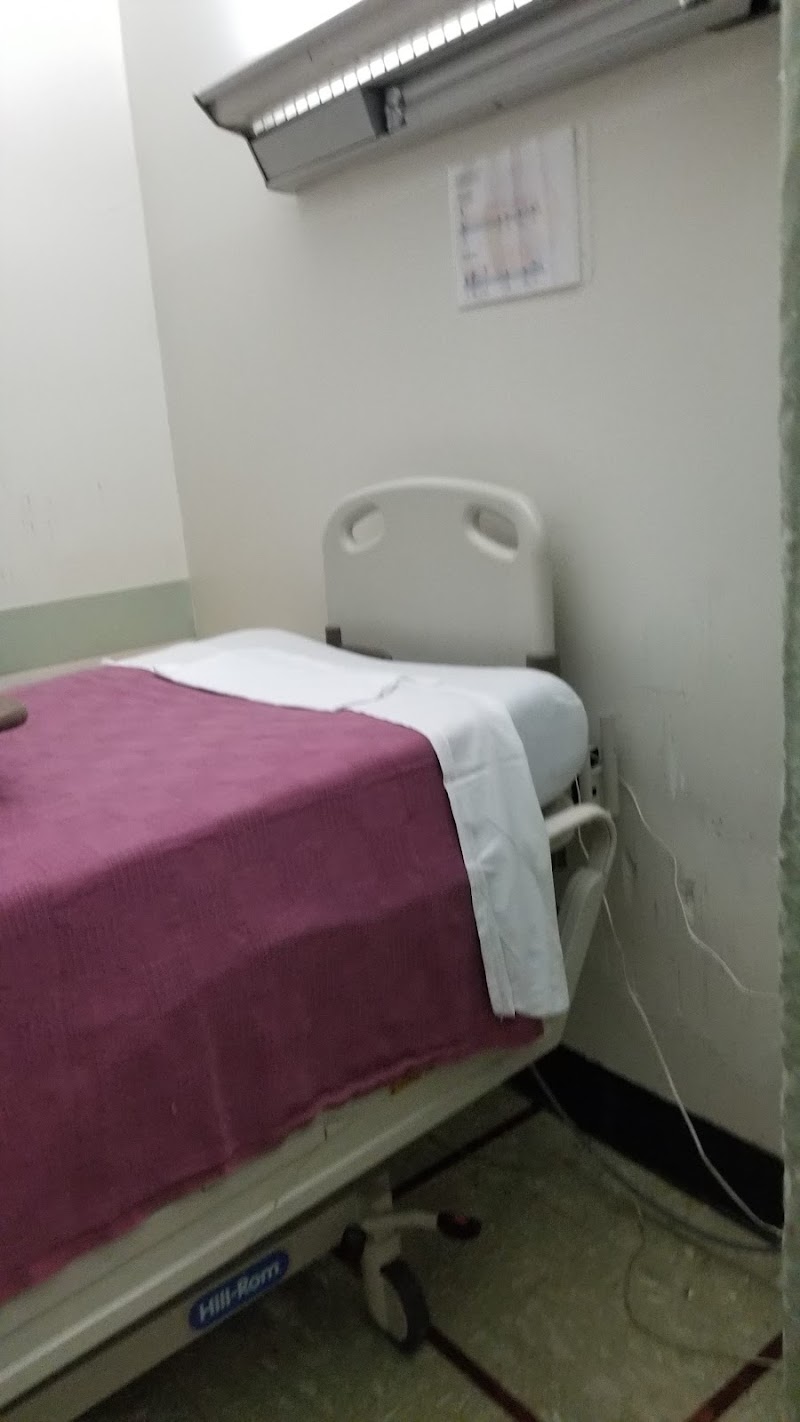
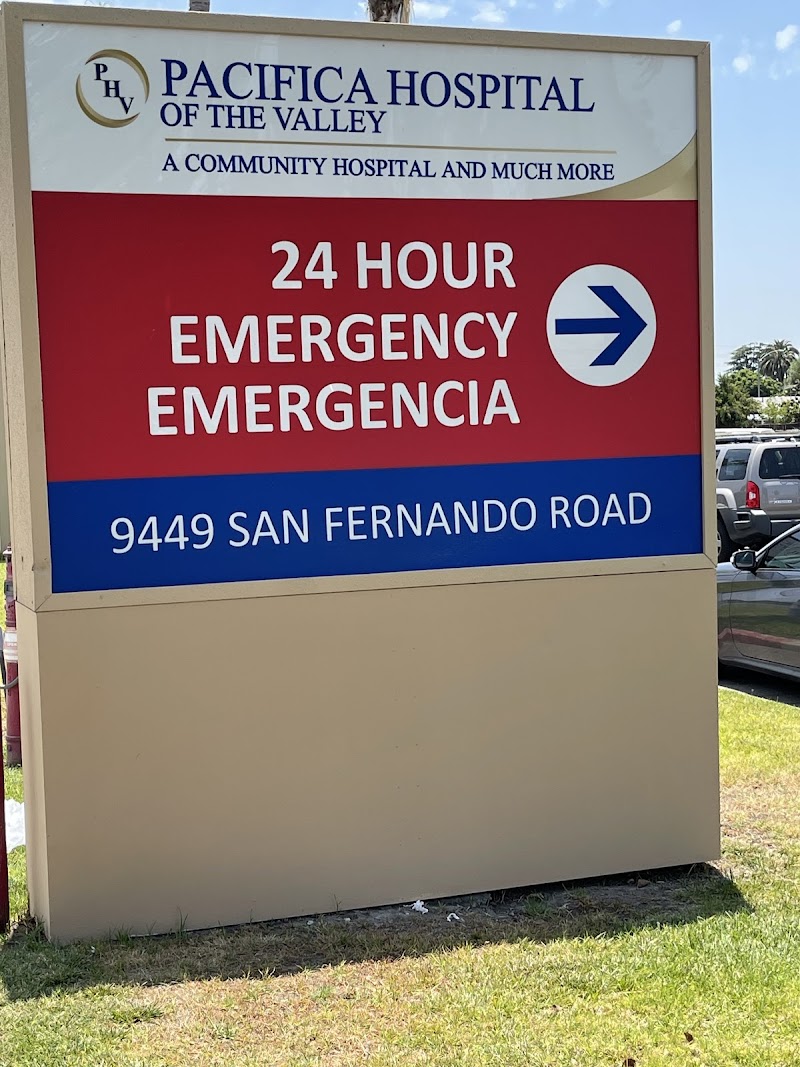
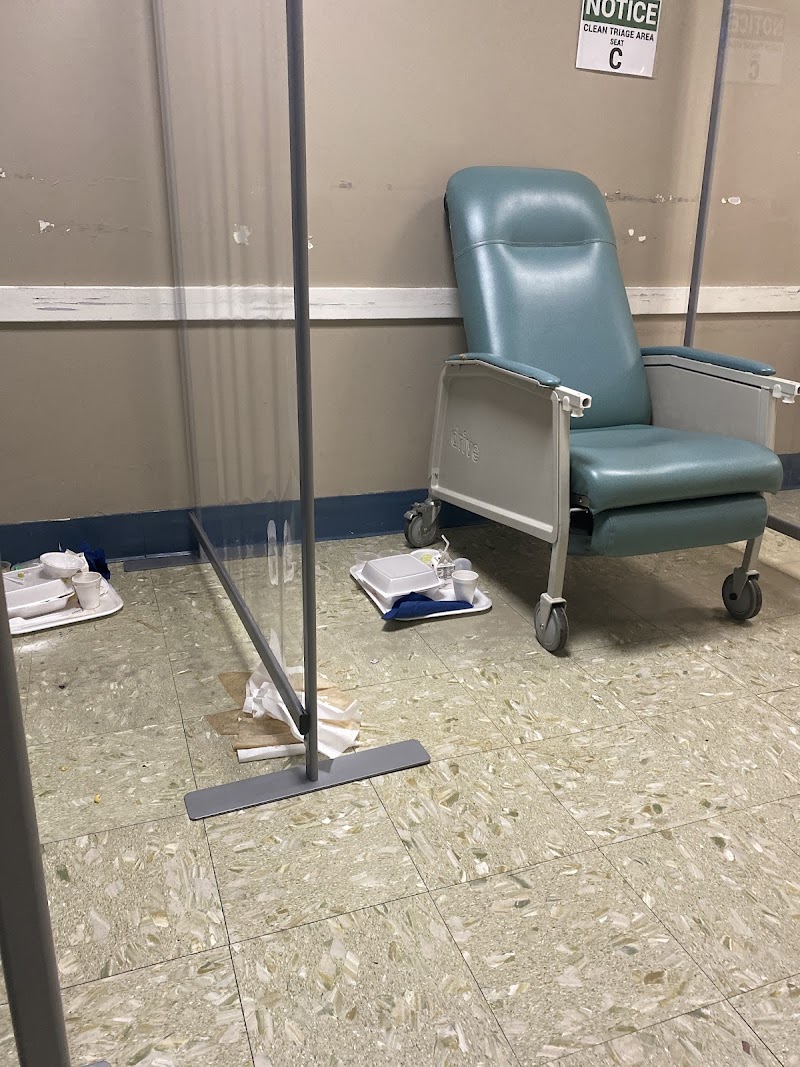
PACIFICA HOSPITAL OF THE VALLEY DP SNF

9449 SAN FERNANDO ROAD, SUN VALLEY, CA 91352 (818) 767-3310
For profit - Individual 98 Beds Independent Data: November 2025 1 Immediate Jeopardy citation
Trust Grade
18/100
#1084 of 1155 in CA
Last Inspection: January 2025

Within standard 12-15 month inspection cycle. Federal law requires annual inspections.

Overview

Families considering Pacifica Hospital of the Valley DP SNF in Sun Valley, California should be aware that it has received an F grade for trust, indicating significant concerns about the facility's quality of care. It ranks #1084 out of 1155 nursing homes in California, placing it in the bottom half, and #332 out of 369 in Los Angeles County, suggesting limited better options nearby. Unfortunately, the facility's performance is worsening, with the number of identified issues increasing from 11 in 2024 to 20 in 2025. Staffing is a relative strength, with a turnover rate of 0%, which is well below the state average, but the overall staffing rating is only 1 out of 5 stars. However, the facility has faced serious fines totaling $65,373, which is concerning and indicates repeated compliance issues. Notably, there was a critical finding regarding the failure to maintain acceptable room temperatures for all residents, which poses a risk of dehydration or heat stroke. Additionally, staff members did not receive required training for dementia care, putting vulnerable residents at risk. While there are some strengths, such as low staff turnover, the numerous deficiencies raise significant concerns for families looking for a safe and caring environment for their loved ones.

Trust Score
F
18/100
In California
#1084/1155
Bottom 7%
Safety Record
High Risk
Review needed
Inspections
Getting Worse
11 → 20 violations
Staff Stability
○ Average
Turnover data not reported for this facility.
Penalties
○ Average
$65,373 in fines. Higher than 65% of California facilities. Some compliance issues.
Skilled Nurses
○ Average
RN staffing data not reported for this facility.
Violations
⚠ Watch
57 deficiencies on record. Higher than average. Multiple issues found across inspections.
★☆☆☆☆
1.0
Overall Rating
★☆☆☆☆
1.0
Staff Levels
★★★★☆
4.0
Care Quality
★★☆☆☆
2.0
Inspection Score
Stable
2024: 11 issues
2025: 20 issues

The Good

  • 4-Star Quality Measures · Strong clinical quality outcomes
  • Full Sprinkler Coverage · Fire safety systems throughout facility
  • No fines on record

Facility shows strength in quality measures, fire safety.

The Bad

1-Star Overall Rating

Below California average (3.1)

Significant quality concerns identified by CMS

Federal Fines: $65,373

Above median ($33,413)

Moderate penalties - review what triggered them

The Ugly 57 deficiencies on record

1 life-threatening
Jul 2025 1 deficiency
CONCERN (D) 📢 Someone Reported This

A family member, employee, or ombudsman was alarmed enough to file a formal complaint

Potential for Harm - no one hurt, but risky conditions existed

Resident Rights (Tag F0550)

Could have caused harm · This affected 1 resident

**NOTE- TERMS IN BRACKETS HAVE BEEN EDITED TO PROTECT CONFIDENTIALITY** Based on interview and record review, the facility failed to ensure Resident 1's conservator was included in the decision to can...

Read full inspector narrative →
**NOTE- TERMS IN BRACKETS HAVE BEEN EDITED TO PROTECT CONFIDENTIALITY** Based on interview and record review, the facility failed to ensure Resident 1's conservator was included in the decision to cancel a long-awaited medical appointment.This failure had the potential to result in Resident 1 to have a delay in his medical care due to the unplanned rescheduling. During a review of Resident 1's History and Physical (H&P), dated 6/8/2022, the H&P indicated Resident 1 admitted to the facility on [DATE] for long term care and management related head trauma (bodily injury) resulting in cerebral (relating to the brain) swelling (abnormal enlargement of a part of the body, typically as a result of an accumulation of fluid) and right temporal (portion of brain) contusion (bruising).During a review of Resident 1's Surgical Consult, dated 6/17/2025, the consult indicated the reason for consultation was for a skin lesion (type of wound) on his back related to dermatitis (skin inflammation).During a review of Sub Acute Appointment June 2025 calendar, dated June 2025, the calendar indicated, Resident 1 was scheduled for a dermatology appointment on 6/23/2025 at 3:00 PM.During a review of Resident 1's Letter of Conservatorship, dated 2/14/2023, the document indicated, Resident 1's conservator is his appointed conservator with exclusive authority to give consent for and to require the conservatee to receive medical treatment that the conservator in good faith based on medical advised determines to be necessary. During an interview on 7/1/2025 at 3:20 PM with the social worker (SW), the SW stated Resident 1 had a dermatology appointment scheduled for 6/23/2025 but she was instructed to cancel the appointment and transportation due to a lack of staff available to accompany Resident 1 to his appointment. The SW stated there was no communication with Resident 1's conservator prior to the decision to cancel his dermatology appointment; only notification of the need for rescheduling the appointment was sent to his conservator. During an interview on 7/1/2025 at 4:06 PM with the Director of Staff Development (DSD), the DSD stated, prior to cancelling Resident 1's dermatology appointment, the facility should have called Resident 1's conservator to notify them of the situation regarding low staffing and to present the available options to inquire on how they would like to proceed regarding Resident 1's care.During a concurrent interview and record review on 7/1/2025 at 4:10 PM with the DSD, Resident 1's California Standard admission Agreement For Skilled Nursing Facilities and Intermediate Care Facilities, dated 6/13/2025 was reviewed. The document indicated, Resident 1, including his conservator, have resident rights that include the right to:- effective communication and to participate in the development and implementation of your plan of care .- make decisions regarding medical care, and received as much information about any proposed treatment or procedure as you may need in order to give informed consent or to refuse a course of treatment .- reasonable continuity of care and to know in advance the time and location of appointments as well as the identity of the persons providing the care.The DSD stated the facility cancelling Resident 1's appointment prior to speaking to his conservator displayed the facility's lack of communication, which was a violation of Resident 1's resident rights. The DSD stated the importance of clear communication is to ensure the resident's needs are being met and that the conservator is included in the resident's plan of care.
Feb 2025 1 deficiency
CONCERN (D) 📢 Someone Reported This

A family member, employee, or ombudsman was alarmed enough to file a formal complaint

Potential for Harm - no one hurt, but risky conditions existed

Deficiency F0553 (Tag F0553)

Could have caused harm · This affected 1 resident

**NOTE- TERMS IN BRACKETS HAVE BEEN EDITED TO PROTECT CONFIDENTIALITY** Based on observation, interview and record review the facility failed to inform the family of Patient 1 ' s plan of care and cha...

Read full inspector narrative →
**NOTE- TERMS IN BRACKETS HAVE BEEN EDITED TO PROTECT CONFIDENTIALITY** Based on observation, interview and record review the facility failed to inform the family of Patient 1 ' s plan of care and change of condition. This deficient practice led to anxiety while the family had no input into Patient 1 ' s treatment for an extended period of time. Findings: During an observation on 2/20/205 in Patient 1 ' s room at 11:49 AM, Patient 1 was seen to have a tracheostomy (an incision on the front of the neck to open a direct airway to the trachea and lungs) and was able to speak in short sentences. A staff member had just returned Patient 1 to his room from the activity room and placed Patient 1 on the end of the bed. During an interview on 2/20/2025 at 11:49 AM, Patient 1 stated he did not have any problems with the medical care at this facility but could not recall the last time a medical physical came to visit him. Patient 1 said his mother visits him every day; the only plan his mother had mentioned to him was to recover and go back to work. Finally, Patient 1 stated his mother has talked to doctors about surgery but does not know about the outcome of that discussion. During an interview on 2/20/2025 at 12:00 PM, the Cheif Nursing Officer (CNO) stated he has not had any direction conversations with Patient 1 ' s mother but has been a candidate for transfer to a lower level of care for some time since Patient 1 was decannulated (removing a tracheostomy tube, also known as a trach, from the trachea or windpipe. This procedure is typically performed when a patient no longer needs the tube to breathe). The CNO subsequently said there has been a problem with the patient ' s placement to another facility. During an interview on 2/20/2025 at 12:07 PM, the CAO stated, after looking through Patient 1 ' s medical record, she could not locate any record of social service communicating with the mother of Patient 1 regarding Patient 1 ' s current medical condition. During an interview on 2/20/2025 at 12:22 PM, the Social Worker stated the facility had attempted to get a neurosurgery (surgical specialty that focuses on the diagnosis and treatment of injuries affecting the nervous system, including the brain, spinal cord) consultation; there is a delay getting this appointment due to Patient 1 ' s insurance not consenting to this consultation. The Social Worker then stated family members of Patient 1 will be included in the next IDT (Inter-Disciplinary Team, all staff members involved in treatment of a patient) meeting this week; Up until this time the family had not been invited to these meetings. During a review of the form ' Patient Information ' , this document indicated Patient 1 had been admitted to the facility on [DATE]; the reason for admission was listed as respiratory failure (condition where the lungs adequately intake oxygen and expel carbon dioxide) while being ventilator dependent (process where a machine, ventilator, assists or takes over the work of breathing) after trauma (physical injury or a psychological response to an event). During a review of the document ' IDT Quarterly ' dated 3/25/2024, this document indicated the meeting team members present were: Social Services, Recreation Therapy, Speech Therapy, Respiratory Therapy, Dietary. Patient 1 diagnosis was listed as Traumatic SDH (subdural hemorrhage, condition where blood pools beneath a layer of tissue under the skull). Patient 1 medical history included: traumatic SDH right craniectomy (procedure in which a portion of the skull is removed to relive pressure on the brain) performed May in 2022, chronic respiratory failure. The 3/25/2024 ' IDT Quarterly ' indicated Patient 1 had been decannulated and needed to be transferred to a facility that provides a lower level of care (place where less assistance is required than currently located) but Patient 1 ' s mother is unable to care at home. During a review of the document ' IDT Quarterly ' dated 1/27/2025, this document indicated the meeting team members present were: Nursing, Social Services, Recreation Therapy, Respiratory Therapy, Dietary. The 1/27/2025 ' IDT Monthly ' report indicated Patient 1 had been decannulated and needed to be transferred to a facility that provides a lower level of care (place where less assistance is required than currently located) but Patient 1 ' s mother is unable to care at home. During a review of the ' H&P Note ' dated 7/1/2024, this document indicated Patient 1 was admitted to this facility 5/17/2022 after sustaining a head injury. Radiology examination of Patient 1 ' s head showed massive SDH; Patient underwent emergent Hemicraniectomy for SDH. This document indicated the plan of care for head trauma included (not all inclusive), monitoring neurological status (testing patient for strength and sensation) and neurosurgery consultation for cranioplasty (repairing or replacing a defect in the skull) evaluation. During a review of the ' H&P Note dated 2/14/2025, this document indicated Patient 1 was admitted to this facility 5/17/2022 after sustaining a head injury. Radiology examination of Patient 1 ' s head showed massive SDH; Patient underwent emergent Hemicraniectomy for SDH. This document indicated the plan of care for head trauma included (not all inclusive), monitoring neurological status (testing patient for strength and sensation) and neurosurgery consultation for cranioplasty (repairing or replacing a defect in the skull) evaluation. During a review of the ' Job Description ' for ' Social Worker ' , revised January 2025, this document indicated the social worker provides direct social work services and counseling to residents, families and/or groups to enhance psychosocial functioning, financial, grief support, cultural, family and health needs, in order to formulate a written assessment with 24 hours of admission to the unit; the social worker conducts regular room visits to residents and maintains weekly contact with family or collateral contact by phone whenever possible (or) reasonable. This job description indicated one standard of social worker performance is to conduct open, timely and professional communication and relationships with residents/family, team members, and others to facilitate team work, to assure resident self-determination, and to update any significant changes or concerns.
Jan 2025 18 deficiencies
CONCERN (D)

Potential for Harm - no one hurt, but risky conditions existed

Deficiency F0558 (Tag F0558)

Could have caused harm · This affected 1 resident

Based on observation, interview, and record review the facility failed to keep the call light (an alerting device for nurses or other nursing personnel to assist a patient when in need) within reach o...

Read full inspector narrative →
Based on observation, interview, and record review the facility failed to keep the call light (an alerting device for nurses or other nursing personnel to assist a patient when in need) within reach of the resident for one out of one sampled resident (Resident 11). This deficient practice had the potential to result in the resident not being able to call for facility staff assistance and delay in the provision of necessary care and services that can negatively affect resident's comfort and well-being Findings: During a review of Resident 11's Inpatient Registration Form, the Inpatient Registration Form indicated the facility admitted Resident 11 on 5/4/2015 and readmitted Resident 11 on 5/9/2017. During a review of Resident 11's History and Physical (H&P), dated 7/1/2024, the H&P indicated Resident 11 was admitted with diagnosis included Guillain-Barre (GBS- a rare autoimmune disease that occurs when the body's immune system attacks the peripheral nervous system), diabetes mellitus type 2 (a long-term medical condition in which the body does not use insulin [a hormone that lowers the level of sugar in the blood] properly), and hypertension(a condition in which blood pressure is higher than normal) . The H&P indicated Resident 11 had the capacity to understand and make decisions. During a review of Resident 11's Minimum Data Set (MDS- a federally mandated resident assessment tool), dated 11/11/2024, the MDS indicated the Resident 11 had intact cognition (undamaged mental abilities, including remembering things, making decisions, concentrating, or learning). The MDS further indicated that Resident 11 was totally dependent on staff or required maximal assistance with all activities of daily living (ADLs - basic tasks that must be accomplished every day for an individual to thrive). During a review of Resident 11's self-care deficit care plan initiated on 01/28/2024, the care plan indicated an intervention to place the call light within easy reach of resident's bedside. During a concurrent observation and interview on 10/27/2024, at 12:45 p.m., in Resident 11's room, observed the resident in bed, covered with blanked with the adaptive call light (a specially designed call button or call light system that can be used by individuals with physical disabilities or limited mobility to easily signal for assistance) on the left side of Resident 11' s head of the bed. The resident stated that he is able to move only his head, and he could not reach the adaptive call light because it is not close to his head. During an interview on 1/27/2025 at 12:46 p.m., with Registered Nurse 3 (RN 3), RN 3 confirmed that the adaptive call light was not within reach of Resident 11. RN 3 stated the call light should have been close enough that Resident 11 can use it by turning his head. RN 3 stated the deficient practice had the potential for the resident not able to ask for help when needed and could result in the resident falling. During an interview on 1/28/2025 at 4:13 p.m. with the Director of Staff Development (DSD), the DSD stated that when making rounds, staff should ensure the residents' call light should always be reachable by clipping the call light on the pillow. The DSD stated that when the call light is not within reach of the resident, the resident may be unable to ask for assistance and could risk falling when attempting to reach for the call light. During a review of the facility's recent policy and procedure (P&P) titled Call System last reviewed on 1/2025, the P&P indicated: It is the policy of this facility to provide each resident with call system to enable them to request assistance .Make sure call cords are placed within the resident's reach at all times.
CONCERN (D)

Potential for Harm - no one hurt, but risky conditions existed

Deficiency F0578 (Tag F0578)

Could have caused harm · This affected 1 resident

Based on interview, and record review, the facility failed to follow the facility`s policy and procedure titled Advanced Directives, for two of five sampled resident (Resident 46 and Resident 35) by f...

Read full inspector narrative →
Based on interview, and record review, the facility failed to follow the facility`s policy and procedure titled Advanced Directives, for two of five sampled resident (Resident 46 and Resident 35) by failing to: 1. Ensure that Resident 46 was provided written information concerning the right to refuse or accept medical or surgical treatments and formulate an Advanced Directive (AD-a written instruction, recognized under State law, relating to the provision of health care when the individual is unable to make decisions for themself) upon admission. 2. Maintain a current copy of Resident 35`s advance directives in the resident's clinical record. These deficient practices had the potential for the facility to not honor the resident's medical decisions regarding end-of-life treatment and had the potential to cause conflict with Resident 35 and 46's wishes regarding health care. Findings: 1. During a review of Resident 46's History and Physical (H&P) dated 9/19/2024, the H&P indicated that the facility admitted the resident on 9/19/2024, with diagnoses including stroke (a loss of blood flow to part of the brain, which damages brain tissue), tracheostomy (an opening surgically created through the neck into the windpipe to allow air to fill the lungs), gastrostomy (a surgical opening fitted with a device to allow feedings to be administered directly to the stomach common for people with swallowing problems), and seizure disorder (a sudden, uncontrolled electrical disturbance in the brain which can cause uncontrolled jerking, blank stares, and loss of consciousness). During a review of Resident 46's Minimum Data Set (MDS - a resident assessment tool) dated 12/20/2024, the MDS indicated that the resident`s cognitive skills (brain's ability to think, read, learn, remember, reason, express thoughts, and make decisions) for daily decision making was intact (decisions consistent/reasonable). The MDS indicated that Resident 46 was dependent to staff (helper does all of the effort) for oral hygiene, toileting hygiene, upper and lower body dressing, putting on/talking off footwear, and personal hygiene. During a concurrent interview and record review on 1/29/2025 at 11:07 a.m., with Registered Nurse 1 (RN1), Resident 46's medical chart was reviewed. RN 1 stated that the social service department is in charge of completing Advance Directive Acknowledgment forms (ADA-a document provided by the facility that indicates whether a resident has an Advance Directive, would like information regarding creation of an advance directive, or refusal to create an advance directive) for residents upon their admission to the facility. RN 1 stated that the ADA form for Resident 46 was not completed upon her admission to the facility on 9/19/2024. RN 1 stated that if no information is provided to the resident regarding AD, then it is a violation of their right to be informed of the option to formulate an AD. During a concurrent interview and record review on 1/29/2025 at 1:30 p.m., with Social Worker 1 (SW 1), Resident 46`s medical records were reviewed. SW 1 stated that the ADA form should be completed upon admission. SW1 stated that the ADA form contains information regarding the resident`s right to be informed and to receive information on how to formulate an AD. SW 1 stated that she (SW1) did not complete an ADA form for Resident 46 upon her admission to the facility on 9/19/2024. SW1 stated if the resident was not provided information regarding AD, there is a risk that the resident's wishes may not be honored. During a review of the facility's Policy and Procedure (P&P) titled, Advance Directives, last reviewed on 7/2024, the P&P indicated that upon admission the resident will be provided with written information concerning the right to refuse or accept medical or surgical treatment and formulate an advanced directive if he or she chooses to do so. Information about whether or not the resident has executed an AD shall be displayed prominently in the medical record. If the resident indicates that he or she has not established an AD, the facility staff will offer assistance in establishing an AD. 2. During a review of Resident 35's Inpatient Information Form, the Inpatient Information Form indicated that the facility admitted Resident 35 on 11/20/2024 and readmitted the resident on 12/3/2024. During a review of Resident 35's History and Physical (H&P), dated 7/10/2024, the H&P indicated the facility admitted the resident with diagnoses including chronic respiratory failure (a condition in which the lungs are unable to adequately exchange oxygen [odorless and tasteless gas that is essential for life] and carbon dioxide [ a colorless, odorless gas that's naturally produced when we breath] over a prolong time), type 2 diabetes (a long-term medical condition in which the body does not use insulin [a hormone that lowers the level of sugar in the blood] properly), and chronic encephalopathy (the group of condition that cause brain dysfunction[can appear as confusion, memory loss and personality change). During a review of Resident 35's Minimum Data Set (MDS - a federally mandated resident assessment tool), dated 6/3/2024, the MDS indicated that the resident had severely impaired cognition (severely damaged mental abilities, including remembering things, making decisions, concentrating, or learning). The MDS further indicated that Resident 35 was totally dependent on staff or required maximal assistance with all activities of daily living (ADLs - basic tasks that must be accomplished every day for an individual to thrive). During a concurrent interview and record review with Social Worker 1 (SW 1), on 1/28/2025 at 9:43 a.m., Resident 35's clinical records including the Advance Directive acknowledgement form were reviewed. SW1 stated that the resident's Advance Directive acknowledgement form indicated that Resident 35 had an advance directive. SW1 stated that the advance directive was not in the chart. SW1 stated that a copy of Resident 35's advance directive should have been kept in the resident's chart to provide guidance to the facility staff about the resident's wishes. During an interview with the Director of Staff Development (DSD) on 1/28/2025 at 4:13 p.m., the DSD stated that a copy of Resident 35's advance directive should have been kept in the resident's chart to ensure the resident's wishes would be carried out, and to provide guidance to the facility staff about the resident's wishes. During a review of the facility's policies and procedures titled Advance Directives, revised 7/2024, indicated that it is the policy of the facility to comply with state law regarding the development and implementation of a resident's advance directives. Information about whether or not the resident has executed an advance directive shall be displayed prominently in the medical record.
CONCERN (D)

Potential for Harm - no one hurt, but risky conditions existed

Deficiency F0660 (Tag F0660)

Could have caused harm · This affected 1 resident

**NOTE- TERMS IN BRACKETS HAVE BEEN EDITED TO PROTECT CONFIDENTIALITY** Based on interview, and record review the facility failed to follow the facility's Policy and Procedure (P&P) titled Discharge P...

Read full inspector narrative →
**NOTE- TERMS IN BRACKETS HAVE BEEN EDITED TO PROTECT CONFIDENTIALITY** Based on interview, and record review the facility failed to follow the facility's Policy and Procedure (P&P) titled Discharge Planning, for one of two sampled residents (Resident 60) investigated under closed record review by failing to: 1. Develop a care plan (a document outlining a detailed approach to care customized to an individual resident's need) addressing Resident 60`s discharge plan. 2. Initiate a discharge planning assessment prior to Resident 60`s discharge. These deficient practices placed Resident 60 at risk for not receiving the necessary care and services related to the resident's discharge goals and needs. Findings: During a review of Resident 60's Patient Information Form (face sheet), the patient information form indicated that the facility admitted the resident on 11/9/2023, with diagnoses including tracheostomy (an opening surgically created through the neck into the windpipe to allow air to fill the lungs), gastrostomy (a surgical opening fitted with a device to allow feedings to be administered directly to the stomach common for people with swallowing problems), and seizure disorder (a sudden, uncontrolled electrical disturbance in the brain which can cause uncontrolled jerking, blank stares, and loss of consciousness). During a review of Resident 60's Minimum Data Set (MDS - a resident assessment tool) dated 11/14/2024, the MDS indicated that the resident`s cognitive skills (brain's ability to think, read, learn, remember, reason, express thoughts, and make decisions) for daily decision making was severely impaired (never/rarely made decisions). The MDS indicated that Resident 60 was dependent to staff (helper does all of the effort) for oral hygiene, toileting hygiene, upper and lower body dressing, putting on/talking off footwear, and personal hygiene. During a review of Resident 60`s Intradisciplinary Team (IDT- a group of healthcare workers from different health care disciplines to help people receive the care they need) Conference notes dated 10/28/2024, the IDT notes indicated no entries or documentations for psychosocial and discharge planning sections. During a review of Resident 60`s assessments, there was no discharge planning assessment conducted for the resident prior to his discharge on [DATE]. During a review of Resident 60's Order Summary Report (physician order) dated 12/22/2024, the order indicated to discharge the resident home with his medications on 12/22/2024. During a review of Resident 60`s Nursing Progress Notes dated 12/22/2024 at 3:57 p.m., the progress notes indicated that Resident 60 was discharged home with Family Member 1 (FM1) and the discharge instructions were provided to FM 1. During a concurrent interview and record review on 1/30/2025 at 8:51 a.m., with Social Worker 1 (SW 1), Resident 60`s social service notes, assessments, IDT notes, and care plans were reviewed. SW 1 stated the last IDT conference held for Resident 60 was on 10/28/2024. However, there is no documentations regarding Resident 60`s discharge planning. SW1 stated that she (SW 1) was on medical leave at that time and unable to attend the meeting. SW 1 stated that there was no IDT meeting held addressing Resident 60`s discharge and discharge planning after 10/28/2024. SW 1 stated social service department is involved with the residents` discharge and any coordination required prior to their discharge from the facility. SW 1 stated she was involved with Resident 60`s discharge process. However, she did not document any notes regarding the resident`s discharge planning and all coordination completed prior to the resident`s discharge home. SW 1 stated she did not develop a care plan addressing Resident 60`s discharge plan. SW 1 stated there should be a care plan developed for the resident`s discharge upon admission and the care plan should be updated as needed. SW 1 stated it the facility policy for social workers to initiate a discharge planning assessment when the resident has a planned discharge. However, she (SW 1) did not initiate a discharge planning assessment for Resident 60. SW 1 stated it is important to comply with the facility`s discharge policy and procedure by documenting all the necessary discharge information and conducting required assessments prior to the resident`s discharge for a safe and effective discharge. During an interview on 1/30/2025 at 2:30 p.m., with the Director of Nursing (DON), the DON stated staff are required to follow the facility`s discharge planning policy and procedure. The DON stated Resident 60`s discharge planning was incomplete. The DON stated staff did not develop a care plan addressing Resident 60`s discharge needs. The DON stated there was no IDT conference held by the facility staff prior to the resident`s discharge home to discuss the resident`s discharge needs. The DON further stated that staff did not initiate and complete a discharge planning assessment prior to Resident 60`s discharge. The DON stated the potential outcome of an incomplete discharge planning is the lack of provision of the necessary discharge care and services to the resident. During a review of facility`s Policy and Procedure (P&P) titled Discharge Planning, last reviewed 7/2024, the P&P indicated that The IDT and discharge planner (social worker) are actively involved in planning for the residents who are about to be discharged . The social worker will document in the resident care plan section for discharge planning the level of care required for the resident. The level of care shall be documented within seven days of admit and updated as needed, quarterly and upon change of condition. The social worker shall initiate the discharge planning assessment when it is known that a resident anticipates being discharged . This may be on admission or any time a discharge to home, another facility, lower level of care, nursing facilities indicated. This form should be completed within seven days notice of the discharge. Once the need for discharge planning has been determined, the social worker is responsible for coordination with the resident/responsible party and appropriate disciplines/services the team`s development and completion of the post discharge plan of care summary. Upon discharge the completed discharge forms will be maintained in the medical record.
CONCERN (D)

Potential for Harm - no one hurt, but risky conditions existed

Quality of Care (Tag F0684)

Could have caused harm · This affected 1 resident

**NOTE- TERMS IN BRACKETS HAVE BEEN EDITED TO PROTECT CONFIDENTIALITY** Based on interview and record review the facility failed to follow the physician's order by failing to check a resident's orthos...

Read full inspector narrative →
**NOTE- TERMS IN BRACKETS HAVE BEEN EDITED TO PROTECT CONFIDENTIALITY** Based on interview and record review the facility failed to follow the physician's order by failing to check a resident's orthostatic hypotension (a condition where blood pressure drops significantly upon standing or sitting up from a lying position) on 10/23/2024 and 11/27/2024 for one of one (Resident 33) sampled resident. This deficient practice had the potential for Resident 33 to experience dizziness, lightheadedness, or even fainting when standing up, which can lead to falls and injury. Findings: During a review of Resident 33's Patient Information, the Patient Information indicated that the facility admitted the resident on 8/17/2021. During a review of Resident 33`s History and Physical (H&P- the most formal and complete assessment of the patient and the problem) dated 1/20/2024, the H&P indicated that the resident had the following diagnoses, including: a. Dysphagia (difficulty swallowing) b. bipolar disorder (a mental health condition where you have extreme mood changes) c. Schizophrenia (a disorder that affects a person's ability to think, feel, and behave clearly). During a review of Resident 33's Minimum Data Set (MDS, a standardized assessment and care screening tool), dated 11/25/2024, the MDS indicated that the resident`s cognitive (the mental action or process of acquiring knowledge and understanding through thought, experience, and the senses) skills for daily decision making was intact. The MDS indicated that the resident required supervision during shower, upper body and lower body dressing, putting on/taking off footwear and dependent on staff for toileting hygiene. During a review of Resident 33`s Fall Risk assessment dated [DATE], the Fall Risk Assessment indicated that the resident is high risk for fall. During a review of Resident 33`s Physician`s Order (PO) dated 2/3/2023, the Physician's Order indicated that the resident will be monitored for side effects of Zoloft every shift and monitor for orthostatic hypotension on 7:00 a.m. to 7:00 p.m. shift for 14 days then weekly. During a review of Resident 33`s Physician`s Order dated 1/3/2025, the Physician's Order indicated a renewed order for Zoloft Oral Tablet 50 milligram (mg) one tablet by mouth in the morning for depression manifested by verbalization of sad feelings. During a review of Resident 33`s Medication Administration Records (MAR- used to document medications taken by each individual) for the month of October 2024 and November 2024, the MAR indicated that a section/column that indicated 2/2/23 Monitor for orthostatic hypotension from 7a-7p sitting/lying position weekly on Wednesday. The MAR for the month October 2024 was blank on the week of 10/21/2024 (Monday) to 10/27/2024 (Sunday) and November 2024 week of 11/25/2024 (Monday) to 11/30/2024 (Sunday). During a concurrent interview and record review on 1/29/2025 at 10:34 a.m., with Registered Nurse 1 (RN 1), reviewed Resident 33`s physician`s order for Zoloft, the order to monitor for orthostatic hypotension and the MAR for October 2024 and November 2024. RN 1 stated monitoring for orthostatic hypotension is done for residents on certain medications, including Zoloft. RN 1 stated that monitoring for orthostatic hypotension is important to prevent a fall incident, potentially resulting in injuries if the resident`s blood pressure drops, or the resident becomes hypotensive (low blood pressure) due to the medication. RN 1 stated that licensed nurses should have checked the resident for orthostatic hypotension and document in the MAR on 10/23/2024 and 11/27/2024 to ensure Resident 33's blood pressure was not low. During a review of the facility`s policy and procedure, titled Pharmaceutical Services Policy and Procedure Manual, last reviewed on 7/2024, the policy indicated that residents who receives antidepressant, hypnotic, antianxiety, or antipsychotic medications shall be monitored to evaluate the effectiveness of the medication. Every effort is made to ensure that residents receiving these medications obtain the maximum benefit with minimum untoward effects . physician, nurse, or other health professional documentation that the resident is being monitored for adverse consequences of therapy .
CONCERN (D)

Potential for Harm - no one hurt, but risky conditions existed

Deficiency F0697 (Tag F0697)

Could have caused harm · This affected 1 resident

**NOTE- TERMS IN BRACKETS HAVE BEEN EDITED TO PROTECT CONFIDENTIALITY** Based on interview and record review, the facility failed to ensure residents' pain was assessed before and after administration...

Read full inspector narrative →
**NOTE- TERMS IN BRACKETS HAVE BEEN EDITED TO PROTECT CONFIDENTIALITY** Based on interview and record review, the facility failed to ensure residents' pain was assessed before and after administration of pain medication for two of two sampled residents (Resident 6 and Resident 42). This deficient practice resulted in Resident 6 and Resident 42's pain not being assessed and placed the residents at risk for having unmanaged pain that may diminish the residents' quality of life. Cross reference F755 Findings: a. During a review of Resident 6's Patient Information Form (a page with information indicated for a resident such as facility admission date and pertinent diagnoses), the document indicated the resident was admitted to the facility on [DATE] with diagnoses that included respiratory failure (condition when the lungs cannot get enough oxygen into the blood). During a review of Resident 6' s Minimum Data Set (MDS, a federally mandated resident assessment tool), dated 1/09/2025, the MDS indicated Resident 6 was severely impaired in cognition (the process of acquiring knowledge and understanding through thought, experience, and the senses) with skills required for daily decision making. The MDS indicated Resident 6 was dependent on staff for oral hygiene, toileting, dressing, and personal hygiene. During a review of Resident 6's Physician's Orders, the documents indicated the following orders: - Hydrocodone acetaminophen tablet (brand name is Norco, a narcotic pain medication) 10-325 milligrams (mg, a unit of measure), give one tablet by gastrostomy tube (G-Tube, a plastic tube inserted into the stomach to give medications for those with difficulty swallowing) every four hours as needed (PRN, or pro re nata, Latin for as needed) for severe pain 7-10, (numeric pain scale in which a resident's pain is indicated with zero being no pain and 10 for the worst pain imaginable), dated 7/24/2024. During a review of Resident 6's CDR, the document indicated the medication Norco was removed from the blister pack (or called bubble pack, a card that packages doses of medication within small, clear, plastic bubbles [or blisters] that is punched out to administer to a resident) on the following dates: 1/28/2025 at 4:20 a.m. 1/26/2025 at 6 a.m. 1/24/2025 at 6 a.m. 1/23/2025 at 11 p.m. During a review of Resident 6's MAR for the month of 1/2025, the MAR did not indicate Resident 6 was given Norco on the above dates. The MAR did not indicate any documentation that Resident 6's pain was assessed for these dates. b. During a review of Resident 42's Patient Information Form, the document indicated the resident was admitted to the facility on [DATE] with diagnoses that included acute respiratory failure with hypoxia (a serious condition that occurs when the lungs are unable to exchange oxygen and carbon dioxide [a by-product of respiration] efficiently with the blood). During a review of Resident 42's MDS, dated [DATE], the MDS indicated Resident 42 was cognitively intact with skills required for daily decision making. The MDS indicated Resident 42 required setup or clean-up assistance (helper sets up or cleans up) with eating and oral hygiene. The MDS indicated Resident 42 had a diagnosis of pain. During a review of Resident 42's Physician's Orders, the documents indicated the following orders: -Norco 5-325 mg, give one tablet by mouth every eight hours as needed for severe pain 7-10, dated 5/19/2023. During a review of Resident 42's CDR, the CDR indicated the medication Norco was removed from the blister pack on 1/24/2025 at 9 p.m. The MAR did not indicate any documentation that Resident 6's pain was assessed for these dates. During a review of Resident 42's MAR for the month of 1/2025, the MAR did not indicate Resident 42 was given Norco on 1/24/2025 at 9 p.m. The MAR did not indicate any documentation that Resident 6's pain was assessed for these dates. During a medication cart observation and concurrent record review with Registered Nurse 1 (RN 1) on 1/28/2025 at 9:08 a.m., observed the contents of Subacute 2 Medication cart 3. Reviewed Resident 6's CDR for Norco which indicated Norco was signed out to be given to Resident 6 on 1/28/2025 at 4:20 a.m., 1/26/2025 at 6 a.m., 1/24/2025 at 6 a.m., and 1/23/2025 at 11 p.m. However, there was no corresponding entry in Resident 6's 1/2025 MAR. RN 1 stated the process is that when a controlled drug is removed from the bubble pack, the licensed nurse is to sign the controlled drug record, give the medication to the resident, and then sign the MAR. RN 1 stated the licensed nurse should have signed the MAR after giving the medication. RN 1 stated this process is important so that a resident's physician knows how much medication is being given and will indicate whether a resident's pain relief is achieved. Also in Subacute 2 Medication Cart 3, reviewed Resident 42's CDR for Norco which indicated Norco was signed out to be given to Resident 42 on 1/24/2025 at 9 p.m. However, there was no corresponding entry in Resident 42's 1/2025 MAR. During an interview with the Director of Staff Development (DSD) on 1/29/2025 2:45 p.m., they stated the licensed nurse who signed the CDR but not the MAR for Resident 6 and Resident 42 worked the 7 p.m. to 7 a.m. shift. Asked for name and contact information for the licensed nurse but did not receive during the recertification survey. During an interview with the DSD on 1/30/2025 at 12:20 p.m., they stated the process is that when a controlled drug is removed from the bubble pack, the licensed nurse is to sign the controlled drug record, give the medication to the resident, and then sign the MAR. The DSD stated this was important to know if the pain medication was effective, and if not affective to notify the doctor to receive an order to modify the dosage. During an interview and concurrent record review with the Director of Nurses (DON) on 1/30/2025 at 2:14 p.m., they stated the process is that when a controlled drug is removed from the bubble pack, the licensed nurse is to sign the controlled drug record, give the medication to the resident, and then sign the MAR. The DON stated they thought the pain medications removed for Resident 6 and Resident 42 and were documented on the CDRs were given to them. The DON stated they did not think there was an issue of drug diversion. The DON stated it is important to sign the MAR because for pain medication there is a pain level documented and if not signed in the MAR, then no assessment or reassessment of the effectiveness of the pain medication. The DON stated this had the potential to result in a resident's pain will not be relieved. The DON stated if there was no documentation on the MAR, then the pain was not assessed for those times. During a review of the facility's policy and procedure titled, Controlled Drug Management on Patient Care Units, last reviewed 7/2024, the policy and procedure indicated when a medication is removed from stock, the narcotic drug record sheet is completed to indicated date, time, patient's name, room number, the quantity removed and the signature of a nurse administering the medication. During a review of the facility's policy and procedure titled, Controlled Medications, last reviewed 7/2024, the policy and procedure indicated the following: When a controlled medication is administered, the licensed nurse administering the medication shall immediately enter the following information on the accountability record: 1) Date and time of administration 2) Amount administered 3) Signature of the nurse administering the dose, completed after the medication is actually administered Note: Entering information on the accountability record does not replace recording medication administration on the MAR. During a review of the facility's policy and procedure titled, Medication Administration, reviewed 7/2024, the policy and procedure indicated the following: The individual who administers the medication dose shall record the administration of the resident's MAR directly after the medication is given. When PRN medications are administered, the following documentation shall be provided: 1) Date and time of administration, dose, route of administration (if other than oral). 2) Complaints or symptoms for which the medication was given. 3) Results achieved from giving the dose and the time results were noted. 4) Signature of initials of person recording administration and signature or initials of person recording effects, if different from the person administering the medication.
CONCERN (D)

Potential for Harm - no one hurt, but risky conditions existed

Drug Regimen Review (Tag F0756)

Could have caused harm · This affected 1 resident

**NOTE- TERMS IN BRACKETS HAVE BEEN EDITED TO PROTECT CONFIDENTIALITY** Based on interview and record review, the facility failed to ensure the Medication Regimen Review (MRR - review of a resident's ...

Read full inspector narrative →
**NOTE- TERMS IN BRACKETS HAVE BEEN EDITED TO PROTECT CONFIDENTIALITY** Based on interview and record review, the facility failed to ensure the Medication Regimen Review (MRR - review of a resident's drug therapy to assure appropriateness of medication usage completed each month by the consultant pharmacist) was acted upon for two of five sampled residents (Resident 17 and 35) by: 1. Failing to act upon the facility consultant pharmacist's recommendation to assess the need for the medication, FeroSul (also known as ferrous sulfate, medication given for those with an iron [a mineral that the body needs for growth, development, and transporting oxygen] deficiency) for Resident 17. 2. Failing to act upon the facility consultant pharmacist's recommendation to order blood testing for the medication, levetiracetam solution (Keppra [brand name], medication that treats seizures) for Resident 35. These deficient practices placed the residents at an increased risk of experiencing adverse side effects (unwanted undesirable effects that are possibly related to a drug). Findings: a. During a review of Resident 17's Patient Information Form, the Patient Information Form indicated the facility admitted the resident on 4/3/2021, with diagnoses that included respiratory failure (condition when the lungs cannot get enough oxygen into the blood). During a review of Resident 17's Minimum Data Set (MDS, a resident assessment tool), dated 11/7/2024, the MDS indicated Resident 17 was cognitively (the process of acquiring knowledge and understanding through thought, experience, and the senses) intact with skills required for daily decision making. The MDS indicated Resident 17 was dependent on staff for oral hygiene, toileting, dressing, and personal hygiene. During a review of Resident 17's physician's orders, the physician's orders indicated an order for Ferosul give 325 milligrams (mg, a unit of measurement) by mouth two times a day for supplement, dated 4/3/2021. During a review of Resident 17's MRR, dated 10/13/2024, the MRR indicated the following: Resident 17 has been receiving Ferosul tablet since 4/2021. Please consider reassessing the need for this therapy currently. There was no indication Resident 17's physician had addressed the concern on the MRR. During a concurrent interview and record review on 1/29/2025 at 3:44 p.m., with Registered Nurse 1 (RN 1), reviewed Resident 17's MRR dated 10/13/2024. RN 1 was unable to find documentation that the physician had been contacted to see if the physician wanted to continue the medication. During an interview on 1/30/2025 at 12:20 p.m., with the Director of Staff Development (DSD), the DSD stated the process is the consultant pharmacist sends a monthly report, and it is given to the licensed nurses to call a resident's physician. The DSD stated the licensed nurses are calling to see if the physician wants to continue, discontinue, or change a medication's dosage. The DSD stated he did not see documentation that Resident 17's use of Ferosul had been brought to the physician's attention. The DSD stated Resident 17's physician will be contacted to see if the physician wants to continue the medication, Ferosul. The DSD stated there is no policy for the nursing process of addressing the monthly MRR or the time frame required in which to address issues brought up in the report. The DSD stated it is important to address all issues reported in the MRR to ensure there is no endangerment to a resident by continuing an unnecessary medication. During an interview on 1/30/2025 at 2:14 p.m., with the Director of Nursing (DON), the DON stated the importance of addressing concerns brought up in the MRR is to ensure the necessity of a medication. The DON stated he was not sure why Resident 17's Ferosul was not addressed. The DON stated the issue should have been brought to Resident 17's physician's attention. b. During a review of Resident 35's Inpatient Information Form, the Inpatient Information Form indicated that the facility admitted Resident 35 on 7/8/2024 and readmitted the resident on 12/3/2024. During a review of Resident 35's History and Physical (H&P- a formal assessment by a healthcare provider that involves a resident interview, physical exam, and documentation of findings), dated 7/10/2024, the H&P indicated the resident was admitted with diagnoses including chronic respiratory failure, type 2 diabetes (a long-term medical condition in which the body does not use insulin [a hormone that lowers the level of sugar in the blood] properly), and chronic encephalopathy (condition that affects the brain's function). During a review of Resident 35's MDS dated [DATE], the MDS indicated that the resident had severely impaired cognition (mental abilities, including remembering things, making decisions, concentrating, or learning). The MDS further indicated that Resident 35 was totally dependent on staff or required maximal assistance with all activities of daily living (ADLs - activities related to personal care). During a review of Resident 35' care plan (a document that summarizes a resident's needs, goals, and care/treatment) for risk of seizures (a burst of uncontrolled electrical activity between brain cells that caused temporary abnormalities in muscle tone or movements) dated 7/23/2024, the care plan indicated Resident 35 was taking levetiracetam solution. The interventions included were to monitor for toxicity (the extent to which something is poisonous or harmful) and adverse consequences. During a review of Resident 35's physician order dated 7/8/2024, the physician order indicated an order for levetiracetam 1000 mg via gastrostomy (g-tube, a tube inserted through the abdomen to deliver nutrition and medications directly to the stomach) every 12 hours for seizures disorder. During a review of Resident 35's MRR, created between 9/1/2025 and 9/10/2025, the MRR indicated that Resident 35 was on levetiracetam, please consider ordering Keppra panel (measures the amount of levetiracetam in the blood) for clinical monitoring. During a concurrent interview and record review on 1/30/2025 at 3:07 p.m., with Registered Nurse 5 (RN 5), reviewed Resident's 35 lab results from 9/1/2024 to 1/30/2025. RN 5 stated that a Keppra level test was never done for Resident 35. RN 5 stated the facility should follow the consultant pharmacist's recommendation in 30 days after recommendation was made. RN 5 stated that this deficient practice increases risk for medication side effects for Resident 35. During an interview on 1/30/2025 at 4:07 p.m., with the DON, the DON stated that facility has to follow the consultant pharmacist's recommendation about Keppra blood work to monitor Resident 35's Keppra level is in safe range. The DON stated that this deficient practice increases the risk of receiving medication that was not optimal for Resident 35's medical condition and increases the risk of adverse consequences. During a review of the facility's policy and procedure titled, Medication Administration - General Guidelines, last reviewed 7/2024, the policy indicated the following: Medications shall be administered in accordance with written orders of the attending physician. If a dose seems excessive with respect to the resident's age and condition, or a medication order seems to be unrelated to the resident's current diagnosis or condition, the nurse shall call the facility's pharmacy for clarification prior to the administration of the medication. If necessary, the facility's pharmacy shall contact the physician for clarification. This interaction with the pharmacy and the resulting order clarification shall be documented in the nursing notes and elsewhere in the medical records as appropriate. During a review of the facility's policy and procedure titled, Pharmaceutical Services Policy Procedure Manual, reviewed 11/2021, indicated, Medication orders from physician assistants, nurse practitioners, clinical nurse specialists shall be acceptable if they comply with all the requirements listed below, are in accordance the state law, and comply with applicable prescribing protocols that have been approved by the facility.
CONCERN (D)

Potential for Harm - no one hurt, but risky conditions existed

Medication Errors (Tag F0758)

Could have caused harm · This affected 1 resident

Based on interview and record review, the facility failed to monitor a resident for side effects for the use of Cymbalta (medication used for depression [mood disorder that causes a persistent feeling...

Read full inspector narrative →
Based on interview and record review, the facility failed to monitor a resident for side effects for the use of Cymbalta (medication used for depression [mood disorder that causes a persistent feeling of sadness and loss of interest]) for one of five sampled residents (Resident 11) investigated under the care area of unnecessary medications. This deficient practice had the potential to place the resident at increased risk of taking an unnecessary medication and experiencing adverse side effects (undesired harmful effect resulting from a medication or other intervention). Findings: During a review of Resident 11's Inpatient Registration Form, the Inpatient Registration Form indicated the facility admitted Resident 11 on 5/4/2015 and the facility readmitted Resident 11 on 5/9/2017. During a review of Resident 11's History and Physical (H&P- a formal assessment by a healthcare provider that involves a resident interview, physical exam, and documentation of findings) dated 7/1/2024, the H&P indicated Resident 11 was admitted with diagnosis included Guillain-Barre (GBS- a condition in which the immune system attacks the nerves), diabetes mellitus type two (2) (a long-term medical condition in which the body does not use insulin [a hormone that lowers the level of sugar in the blood] properly), and hypertension (high blood pressure [the force of the blood pushing on the blood vessel walls is too high]). The H&P indicated Resident 11 had the capacity to understand and make decisions. During a review of Resident 11's Minimum Data Set (MDS- a federally mandated resident assessment tool), dated 11/11/2024, the document indicated the Resident 11 had an intact cognition (mental abilities, including remembering things, making decisions, concentrating, or learning). The MDS further indicated that Resident 11 was totally dependent on staff or required maximal assistance with all activities of daily living (ADLs - activities related to personal care). During a review of Resident 11's physician's orders dated 11/21/2022, the physician's orders indicated an order for Cymbalta capsule delayed release 60 milligrams (mg- unit of measurement), give one (1) capsule by mouth. During a review of Resident 11's care plan (a document that summarizes a resident's needs, goals, and care/treatment) for Cymbalta initiated on 1/10/2025 , the care plan interventions indicated to monitor for adverse side effects every shift, tally with hashmark, monitor for tardive dyskinesia (involuntary movements of the tongue, jaw, face, mouth), monitor for cognitive impairment, monitor for akathisia (a movement disorder that cause a person to feel restless and have an uncontrollable urge to move), facial expression, drooling, rigidity (stiffness), monitor for orthostatic hypotension (a form of low blood pressure that happens when standing after sitting or lying down which can cause dizziness or lightheadedness and possibly fainting). During a concurrent interview and record review on 1/29/2025 at 10:22 a.m., with Registered Nurse 4 (RN 4), reviewed Resident 11's Medication Administration Record (MAR - a report detailing the drugs administered to a resident by a healthcare professional) dated 1/2025. RN 4 stated Resident 11 received Cymbalta 60 mg by mouth on the following dates and times: 1.1/17/2025 at 9 a.m. 2.1/18/2025 at 9 a.m. 3.1/19/2025 at 9 a.m. 4.1/20/2025 at 9 a.m. 5.1/21/2025 at 9 a.m. 6.1/22/2025 at 9 a.m. 7. 1/23/2025 at 9 a.m. 8. 1/24/2025 at 9 a.m. 9. 1/25/2025 at 9 a.m. 10.1/26/2025 at 9 a.m. 11 1/27/2025 at 9 a.m. When asked to provide documentation that the licensed nurses were monitoring for side effects, RN 4 stated she could not find any documentation indicating that the nurses were monitoring for side effects. During an interview on 1/29/2025 at 12 p.m., with the Director of Staff Development (DSD), the DSD stated nurses needed to monitor for adverse side effects so it could be reported to the physician and necessary changes could be made to the dosage. The DSD stated if the nurses did not monitor for side effects then the resident may possibly be receiving an unnecessary medication. During a review of the facility's policy and procedure titled, Psychoactive Drug Monitoring, last reviewed and revised on 3/2024, the policy indicated physician, nurse, or other health professional documentation that the resident is being monitored for adverse consequences or complications of therapy.
CONCERN (E)

Potential for Harm - no one hurt, but risky conditions existed

Comprehensive Care Plan (Tag F0656)

Could have caused harm · This affected multiple residents

Based on interview, and record review, the facility failed to develop and implement a comprehensive person-centered care plan (a plan of care that summarizes a resident's health conditions, specific c...

Read full inspector narrative →
Based on interview, and record review, the facility failed to develop and implement a comprehensive person-centered care plan (a plan of care that summarizes a resident's health conditions, specific care and services facility staff need to provide a resident to promote healing and prevent a worsening of a condition, and current treatments) to meet the resident`s needs for three of three sampled residents (Resident 46, Resident 55 and Resident 57) by failing to: 1. Develop and implement a comprehensive person-centered care plan addressing Resident 46`s Restorative Nursing Assistant program (RNA-nursing aide program that helps residents to maintain their function and joint mobility). This deficient practice had the potential to result in Resident 46`s inadequate care. 2. Develop and implement a comprehensive person-centered care plan addressing Resident 57 and 55`s antibiotic (drugs that kill bacteria) therapy. This deficient practice had the potential to result in failure to deliver the necessary care and services. Findings: 1. During a review of Resident 46's History and Physical (H&P) dated 9/19/2024, the H&P indicated that the facility admitted the resident on 9/19/2024, with diagnoses including stroke (a loss of blood flow to part of the brain, which damages brain tissue), tracheostomy (an opening surgically created through the neck into the windpipe to allow air to fill the lungs), gastrostomy (a surgical opening fitted with a device to allow feedings to be administered directly to the stomach common for people with swallowing problems), and seizure disorder (a sudden, uncontrolled electrical disturbance in the brain which can cause uncontrolled jerking, blank stares, and loss of consciousness). During a review of Resident 46's Minimum Data Set (MDS - a resident assessment tool) dated 12/20/2024, the MDS indicated that the resident`s cognitive skills (brain's ability to think, read, learn, remember, reason, express thoughts, and make decisions) for daily decision making was intact (decisions consistent/reasonable). The MDS indicated that Resident 46 was dependent to staff (helper does all of the effort) for oral hygiene, toileting hygiene, upper and lower body dressing, putting on/talking off footwear, and personal hygiene. During a review of Resident 46`s Medication Review Report (physician order) dated 12/26/2024, the report indicated an order for Restorative Nursing Assistant program (RNA-nursing aide program that helps residents to maintain their function and joint mobility) to provide Passive Range of Motion (PROM-when an outside force such as a therapist exclusively causes movement of a joint) and Active Assistive Range of Motion (AAROM-use of muscles surrounding the joint to perform the exercise but requires some help from the therapist or equipment) to Resident 46`s Bilateral Upper Extremities (BUE-both arms) and Bilateral Lower Extremities (BLE-both legs) five times a week for 90 days. During a concurrent interview and record review on 1/30/2025 at 9:37 a.m., with Registered Nurse 2 (RN 2), Resident 46`s physician orders and care plans were reviewed. RN 2 stated Resident 46`s physician ordered for an RNA program five times a week for 90 days on 12/26/2024. However, licensed staff did not develop a comprehensive care plan with person-centered interventions for the resident`s RNA program. RN 2 stated Resident 46 had a stroke and has left sided weakness and a care plan with person-centered intervention is required to monitor the resident's range of motion (ROM- full movement potential of a joint) improvement. RN 2 stated the potential outcome of not developing a person-centered care plan with goals and interventions for a resident who has weakness due to stoke is a lack of care and the inability to implement the specific services and monitoring that the resident requires. During a review of the facility's policy and procedure (P&P) titled, Care Planning, last revised on 7/2024, the P&P indicated that the purpose of this policy is to assure a coordinated and comprehensive written plan is developed based on the resident assessment instrument and on the individual needs of the resident. It is the policy of this facility that within 24 hours of admission, a coordinated and comprehensive written plan is developed based on the resident assessment instrument and on the individual needs of the resident. Resident care planning includes participation from all involved health care disciplines at resident care conferences with continual reassessment, and updating at least quarterly, and upon change of condition, until resident's discharge. The long-term goal is stated in relation to the expected outcome of the resident's condition and is determined collectively by the health care team as part of the review of the care plan. Reviews will be recorded by date in number sequence. Objectives/goals are expectations, within the resident's abilities, which can be reached realistically. Each problem should have an objective/goal that is simple, specific and measurable within a specified time frame. 2.a. During a review of Resident 57's Patient Information, the Patient Information indicated that the facility admitted the resident on 1/13/2025. During a review of Resident 57`s History and Physical (H&P- the most formal and complete assessment of the patient and the problem) dated 1/22/2025, the H&P indicated that the resident had multiple diagnoses including chronic renal failure (involves a gradual loss of kidney function) and type 2 diabetes mellitus (a condition that happens because of a problem in the way the body regulates and uses sugar as a fuel). During a review of Resident 57's Minimum Data Set (MDS, a standardized assessment and care screening tool), dated 11/27/2024, the MDS indicated Resident 57`s cognitive (ability to think, understand and reason) skills for daily decision making was severely impaired and was dependent on staff for activities of daily living (ADLs - activities related to personal care). During an interview and record review on 1/29/25 at 8:40 a.m., with Registered Nurse 1 (RN 1) reviewed Resident 57`s physician`s order dated 1/21/2025 for Zosyn (used to treat infections caused by bacteria) 3.375 milligram (mg) intravenously (refers to giving medicines or fluids through a needle or tube inserted into a vein) every 8 hours for pneumonia (an infection that inflames the air sacs in one or both lung). RN 1 stated that Resident 57 had pneumonia which was a change in the resident's condition and an antibiotic (Zosyn) was prescribed on 1/21/2025. RN 1 stated any changes in the resident's condition including antibiotic treatment, would require the development of a short-term care plan. RN 1 stated a care plan for antibiotic therapy would include monitoring for any adverse reactions to the antibiotic such as rashes, nausea and vomiting and swelling of the eyes. RN 1 stated that with a care plan in place, the nurses would be able to identify if the resident is having an adverse reaction to the antibiotic and will be able to intervene timely and evaluate if the treatment is effective or not. RN 1 stated that a care plan also serves as communication tool among nurses to ensure continuity of care. RN 1 stated that Resident 57 could have had an adverse reaction from the antibiotic (Zosyn) such as nausea and vomiting which could lead to dehydration. During a review of the facility`s policy and procedure, titled Care Planning, last reviewed on 7/2024, the policy indicated that a purpose To assure a coordinated and comprehensive written plan is developed based on the resident assessment instrument and on the individual needs of the resident . During a review of the facility`s policy and procedure, titled Change in Resident Condition, last reviewed on 7/2024, the policy indicated that All signs and symptoms of the condition change will be communicated to the physician promptly .document resident change of condition and response in Nursing Progress Notes, on a 24-hour report and update resident care plan as indicated . 2.b. During a review of Resident 55's Patient Information, the Patient Information indicated that the facility admitted the resident on 8/22/2024. During a review of Resident 55`s History and Physical (H&P- the most formal and complete assessment of the patient and the problem) dated 10/28/2024, the H&P indicated that the resident had multiple diagnoses including dysphagia (difficulty swallowing) and hypertension (a condition in which the force of the blood against the artery walls is too high). During a review of Resident 55's Minimum Data Set (MDS, a standardized assessment and care screening tool), dated 11/29/2024, the MDS indicated Resident 55 is in a persistent vegetative state (comatose). The MDS indicated that Resident was totally dependent on staff for activities of daily living (ADLs - activities related to personal care). During an interview and record review on 1/29/25 at 9:13 a.m., with Registered Nurse 1 (RN1) reviewed Resident 55`s physician`s order dated 10/27/2024 for Zosyn (used to treat infections caused by bacteria) 3.375 milligram (mg) intravenously (refers to giving medicines or fluids through a needle or tube inserted into a vein) every 8 hours for urosepsis (a serious infection that occurs when a urinary tract infection [UTI] spreads to the kidneys). RN 1 stated that Resident 55 had a urosepsis which was a change in the resident's condition and an antibiotic was prescribed (Zosyn) on 10/27/2024. RN 1 stated any changes in the resident's condition including antibiotic treatment, would require the development of a short-term care plan. RN 1 stated a care plan for antibiotic therapy would include monitoring for any adverse reactions to the antibiotic such as rashes, nausea and vomiting and swelling of the eyes. RN 1 stated that with a care plan in place, the nurses would be able to identify if the resident is having an adverse reaction to the antibiotic and will be able to intervene timely and evaluate if the treatment is effective or not. RN1 stated that a care plan also serves a communication tool among nurses to ensure continuity of care. RN 1 stated that Resident 55 could have had an adverse reaction from the antibiotic (Zosyn) such as nausea and vomiting which could lead to dehydration. During a review of the facility`s policy and procedure, titled Care Planning, last reviewed on 7/2024, the policy indicated that a purpose To assure a coordinated and comprehensive written plan is developed based on the resident assessment instrument and on the individual needs of the resident . During a review of the facility`s policy and procedure, titled Change in Resident Condition, last reviewed on 7/2024, the policy indicated that All signs and symptoms of the condition change will be communicated to the physician promptly .document resident change of condition and response in Nursing Progress Notes, on a 24-hour report and update resident care plan as indicated .
CONCERN (E)

Potential for Harm - no one hurt, but risky conditions existed

Deficiency F0657 (Tag F0657)

Could have caused harm · This affected multiple residents

2. During a review of Resident 38's History and Physical (H&P) dated 6/25/2024, the H&P indicated that the facility admitted the resident on 5/23/2022, with diagnoses including hemorrhagic stroke (a l...

Read full inspector narrative →
2. During a review of Resident 38's History and Physical (H&P) dated 6/25/2024, the H&P indicated that the facility admitted the resident on 5/23/2022, with diagnoses including hemorrhagic stroke (a life-threatening emergency that happens when a blood vessel in your brain breaks and bleeds), tracheostomy (an opening surgically created through the neck into the windpipe to allow air to fill the lungs), gastrostomy (a surgical opening fitted with a device to allow feedings to be administered directly to the stomach common for people with swallowing problems), and recurrent Urinary Tract Infection (UTI- an infection in the bladder/urinary tract). During a review of Resident 38's Minimum Data Set (MDS - a resident assessment tool) dated 11/26/2024, the MDS indicated that the resident was at persistent vegetative state (a chronic disorder in which an individual with severe brain damage appears to be awake but shows no evidence of awareness of their surroundings). The MDS indicated that Resident 38 was dependent to staff (helper does all of the effort) for oral hygiene, toileting hygiene, showering and bathing, upper and lower body dressing, putting on/talking off footwear, and personal hygiene. The MDS further indicated that Resident 38 had an indwelling catheter. During a review of Resident 38's care plan for risk for UTI related to use of indwelling catheter initiated on 12/10/2024, the care plan indicated a goal that the resident will show no sign and symptoms of infection during every shift through the next review date. The care plan interventions were to change the indwelling catheter and the bag per facility`s policy, evaluate for pain, encourage fluids, and irrigate (washing out an organ by flushing it with a fluid) the indwelling catheter as ordered. During a review of Resident 38's Physician Order Summary dated 1/7/2025, the order summary indicated that the resident`s indwelling catheter order for neurogenetic bladder (lack bladder control due to a brain, spinal cord or nerve problem) was discontinued on 1/7/2025 at 3:53 p.m. During a concurrent interview and record review 1/29/2025 at 10:30 a.m., with MDS Nurse 1 (MDSN 1), Resident 38`s care plans and physician orders were reviewed. MDSN 1 stated Resident 38 `s indwelling catheter order was discontinued on 1/7/2025. However, the care plan for indwelling catheter is still active and was not revise after removal of the indwelling catheter. MDSN 1 stated licensed staff are required to revise a resident`s care plan immediately after removal of the indwelling catheter. MDSN1 stated the potential outcome of not revising the resident's care plan is incorrect medical record and the inability to provide appropriate care and services to the resident. During an interview on 1/30/2025 at 2:05 p.m., with the Director of Nursing (DON), the DON stated licensed staff are required to update/revise a resident`s care plan for indwelling catheter immediately after removal of the catheter. The DON stated the residents` care plans need to reflect the correct condition of the residents with the current services and interventions that are being implemented. The DON stated the potential outcome of not updating/revising a resident`s care plan after removal of an indwelling catheter is the inability to provide appropriate care and services to the resident and incorrect medical records. During a review of the facility's Policy and Procedure (P&P) titled, Care Planning, last revised on 7/2024, the P&P indicated that the purpose of this policy is to assure a coordinated and comprehensive written plan is developed based on the resident assessment instrument and on the individual needs of the resident. It is the policy of this facility that within 24 hours of admission, a coordinated and comprehensive written plan is developed based on the resident assessment instrument and on the individual needs of the resident. Resident care planning includes participation from all involved health care disciplines at resident care conferences with continual reassessment, and updating at least quarterly, and upon change of condition, until resident's discharge. Reviews will be recorded by date in number sequence. Document resolution of the problem. When a problem is resolved the appropriate date will be indicated on the resident care plan. Based on interview and record review, the facility failed to: 1. Ensure the Interdisciplinary Team (IDT-a group of experts from various disciplines working together to treat your ailment, injury, or chronic health condition) invite the resident and /or the resident's representative to participate in the IDT Care Conferences for three out of five (R6, 48 and 55) sampled residents. As a result, the resident and their resident representative were unable to participate in developing the care plan or making decisions about his or her care. 2. Update and revise a resident's care plan (a document outlining a detailed approach to care customized to an individual resident's need) after the resident`s indwelling catheter (a hollow tube inserted into the bladder to drain or collect urine) was removed on 1/7/2025, for one of three (Resident 38) sampled residents reviewed under urinary catheter/ Urinary Tract Infection (UTI- an infection in the bladder/urinary tract) care area. This deficient practice had the potential to result in Resident 38 receiving inadequate care. Findings: 1.a. During a review of Resident 6's Patient Information, the Patient Information indicated that the facility admitted the resident on 12/29/2020. During a review of Resident 6`s History and Physical (H&P- the most formal and complete assessment of the patient and the problem) dated 9/06/2024, the H&P indicated that the resident had multiple diagnoses including chronic traumatic encephalopathy (a brain disorder likely caused by repeated head injuries) and seizure disorder (abnormal electrical activity in your brain). During a review of Resident 6's Minimum Data Set (MDS, a standardized assessment and care screening tool), dated 1/09/2025, the MDS indicated Resident 6 is in a persistent vegetative state (comatose). The MDS indicated that Resident 6 was totally dependent on staff for self-care. During a record review and interview on 1/30/2025 at 8:11 a.m., with Social Worker 1 (SW 1), reviewed the monthly IDT for Resident 6. SW 1 stated that they conduct monthly and quarterly IDTs. SW 1 stated that during the IDT meetings the team will discuss the resident's plan of care, any changes in the resident`s condition and the objective of the IDT is to come up with a resident-centered care plan. SW 1 stated that it is important to have the resident or the resident's representative to be invited in the IDT meeting to get their input, such as food and activity preferences to ensure the care plan is resident centered. SW 1 stated that it has been a long time since she has read the policy on IDT and from what she can remember the policy states that the resident's family or representative should be involved in the meeting. SW1 stated if the resident's representative does not attend the IDT meeting, the care plan developed may not be resident-centered or able to address the resident's needs. SW1 stated the IDT meeting was held on the following dates and no invitation was extended to Resident 6's representative: 1.01/08/2025 2.11/06/2024 3. 9/04/2024 4. 8/07/2024 During a review of the facility`s policy and procedure, titled Interdisciplinary Team, last reviewed on 7/2024, the policy indicated that Each resident will have an Interdisciplinary Team Conference Meeting held monthly for the Sub-Acute program and weekly for the Transitional Care Program .The Interdisciplinary Team is composed of the Physician, Clinical Manager, MDS Coordinator, Charge Nurse and/or Licensed Nurse who provide care for the resident, a representative from Social Services, Activities, Dietary, Physical, Occupational and Speech Therapies, Respiratory Therapy, Pharmacy, Nursing Assistants, Case Manager(s), Chaplin. The participation of the resident, the resident`s family or resident`s representative is encouraged and welcomed whenever possible . 1.b. During a review of Resident 48's Patient Information, the Patient Information indicated that the facility admitted the resident on 2/16/2024. During a review of Resident 48`s History and Physical (H&P- the most formal and complete assessment of the patient and the problem) dated 2/19/2024, the H&P indicated that the resident had multiple diagnoses including dysphagia (difficulty swallowing) and multiple fractures. During a review of Resident 48's Minimum Data Set (MDS, a standardized assessment and care screening tool), dated 11/21/2024, the MDS indicated Resident 48 is in a persistent vegetative state (comatose). The MDS indicated that Resident 48 was totally dependent on staff for self-care. During a concurrent interview and record review on 1/30/2025 at 8:11 a.m., with Social Worker 1 (SW1), reviewed Resident 48's monthly IDT meetings. SW 1 stated that during the IDT meetings the team will discuss the resident's plan of care, any changes in the resident`s condition and the objective of the IDT is to come up with a resident-centered care plan. SW 1 stated that it is important to have the resident`s or the resident's representative to be invited in the IDT meeting to get their input, such as food and activity preferences to ensure the care plan is resident centered. SW 1 stated that it has been a long time since she has read the policy on IDT and from what she can remember the policy states that the resident's family or representative should be involved in the meeting. SW1 stated if the resident's representative does not attend the IDT meeting, the care plan developed may not be resident-centered or able to address the resident's needs. SW1 stated the IDT meeting was held on the following dates and no invitation was extended to Resident 48's representative: 1.01/27/2025 2.10/28/2024 3.08/26/2024 During a review of the facility`s policy and procedure, titled Interdisciplinary Team, last reviewed on 7/2024, the policy indicated that Each resident will have an Interdisciplinary Team Conference Meeting held monthly for the Sub-Acute program and weekly for the Transitional Care Program .The Interdisciplinary Team is composed of the Physician, Clinical Manager, MDS Coordinator, Charge Nurse and/or Licensed Nurse who provide care for the resident, a representative from Social Services, Activities, Dietary, Physical, Occupational and Speech Therapies, Respiratory Therapy, Pharmacy, Nursing Assistants, Case Manager(s), Chaplin. The participation of the resident, the resident`s family or resident`s representative is encouraged and welcomed whenever possible . 1.c. During a review of Resident 55's Patient Information (IP), the Patient Information indicated that the facility admitted the resident on 8/22/2024. During a review of Resident 55`s History and Physical (H&P- the most formal and complete assessment of the patient and the problem) dated 10/28/2024, the H&P indicated that the resident had multiple diagnoses including dysphagia (difficulty swallowing) and hypertension (a condition in which the force of the blood against the artery walls is too high). During a review of Resident 55's Minimum Data Set (MDS, a standardized assessment and care screening tool), dated 11/29/2024, the MDS indicated Resident 55 is in a persistent vegetative state (comatose). The MDS indicated that Resident was totally dependent on staff for self-care. During a concurrent interview and record review on 1/30/2025 at 8:11 a.m., with Social Worker 1 (SW1), reviewed Resident 55's monthly IDT meetings. SW 1 stated that during the IDT meetings the team will discuss the resident's plan of care, any changes in the resident`s condition and the objective of the IDT is to come up with a resident-centered care plan. SW 1 stated that it is important to have the resident`s or the resident's representative to be invited in the IDT meeting to get their input, such as food and activity preferences to ensure the care plan is resident centered. SW 1 stated that it has been a long time since she has read the policy on IDT and from what she can remember the policy states that the resident's family or representative should be involved in the meeting. SW1 stated if the resident's representative does not attend the IDT meeting, the care plan developed may not be resident-centered or able to address the resident's needs. SW1 stated the IDT meeting was held on the following dates and no invitation was extended to Resident 55's representative: 1. 01/27/2025 2. 10/28/2024 3. 08/26/2024 During a review of the facility`s policy and procedure, titled Interdisciplinary Team, last reviewed on 7/2024, the policy indicated that Each resident will have an Interdisciplinary Team Conference Meeting held monthly for the Sub-Acute program and weekly for the Transitional Care Program .The Interdisciplinary Team is composed of the Physician, Clinical Manager, MDS Coordinator, Charge Nurse and/or Licensed Nurse who provide care for the resident, a representative from Social Services, Activities, Dietary, Physical, Occupational and Speech Therapies, Respiratory Therapy, Pharmacy, Nursing Assistants, Case Manager(s), Chaplin. The participation of the resident, the resident`s family or resident`s representative is encouraged and welcomed whenever possible .
CONCERN (E)

Potential for Harm - no one hurt, but risky conditions existed

Accident Prevention (Tag F0689)

Could have caused harm · This affected multiple residents

**NOTE- TERMS IN BRACKETS HAVE BEEN EDITED TO PROTECT CONFIDENTIALITY** Based on observation, interview, and record review, the facility failed to implement accident risk and hazard interventions for ...

Read full inspector narrative →
**NOTE- TERMS IN BRACKETS HAVE BEEN EDITED TO PROTECT CONFIDENTIALITY** Based on observation, interview, and record review, the facility failed to implement accident risk and hazard interventions for three of five sampled residents (Residents 30, Resident 34, and Resident 18) by failing to: 1. Ensure padding was applied to Resident 30 and 34`s bed side rails for seizure precaution (the safety measures taken before an individual experiences a seizure). 2. Repair or replace Resident 18`s broken wheelchair. These deficient practices had the potential to place Residents 30, 34 and 18 at risk for injuries. Findings: 1.a During a review of Resident 30's History and Physical (H&P) dated 7/1/2024, the H&P indicated that the facility admitted the resident on 7/15/2022, with diagnoses including tracheostomy (an opening surgically created through the neck into the windpipe to allow air to fill the lungs), gastrostomy (a surgical opening fitted with a device to allow feedings to be administered directly to the stomach common for people with swallowing problems), and seizure disorder (a sudden, uncontrolled electrical disturbance in the brain which can cause uncontrolled jerking, blank stares, and loss of consciousness). During a review of Resident 30's Minimum Data Set (MDS - a resident assessment tool) dated 1/23/2025, the MDS indicated that the resident`s cognitive skills (brain's ability to think, read, learn, remember, reason, express thoughts, and make decisions) for daily decision making was severely impaired (never/rarely made decisions). The MDS indicated that Resident 30 was dependent to staff (helper does all of the effort) for oral hygiene, toileting hygiene, upper and lower body dressing, Showering/ bathing, and personal hygiene. The MDS indicated that Resident 30 had a diagnosis of seizure disorder. During a review of Resident 30's Medication Review Report (physician order), dated 3/7/2023, the medication review report indicated to apply bilateral (both sides) padding to the resident`s side rails at all times. During a review of Resident 30's care plan (a document outlining a detailed approach to care customized to an individual resident's need) for risk for seizure activity, initiated on 8/24/2023 and last revised on 8/12/2024, the care plan indicated a goal that Resident 30 will not experience any seizure activity. The care plan interventions were to administer medication as ordered, implement seizure precautions per facility guidelines, keep bed side rails up while in bed to prevent from falling, and monitor for sign and symptoms of seizure activity. During an observation on 1/27/2025 at 11:15 a.m., inside Resident 30`s room, Resident 30 was observed lying on his bed. Resident 30's bed side rails did not have any padding as a precaution for seizures. During a concurrent observation and interview on 6/22/2024 at 11:33 a.m., with Licensed Vocational Nurse 2 (LVN 2), observed Resident 30's bed side rails without any padding. LVN 2 stated Resident 30's bed side rails were not padded. LVN 2 stated Resident 30's is supposed to have padded side rails in place because he has a diagnosis of seizure. LVN 2 stated the padded side rails protect the resident from injuries in the event of a seizure. 1.b During a review of Resident 34's physician`s History and Physical (H&P) dated 7/1/2024, the H&P indicated that the facility admitted the resident on 2/3/2022, with diagnoses including tracheostomy, gastrostomy, and seizure disorder. During a review of Resident 34's MDS dated [DATE], the MDS indicated that the resident was at persistent vegetative state (a chronic disorder in which an individual with severe brain damage appears to be awake but shows no evidence of awareness of their surroundings). The MDS indicated that Resident 34 was dependent to staff (helper does all of the effort) for oral hygiene, toileting hygiene, upper and lower body dressing, Showering/ bathing, and personal hygiene. The MDS indicated that Resident 34 had a diagnosis of seizure disorder. During a review of Resident 34's Medication Review Report (physician order), dated 3/7/2023, the medication review report indicated to apply bilateral padding to the resident`s side rails at all times. During a review of Resident 34's care plan for risk for seizure activity, initiated on 7/14/2023, and last revised on 8/9/2024, the care plan indicated a goal that Resident 34 will not experience seizure activity. The care plan interventions were to administer medication as ordered, implement seizure precautions per facility guidelines, keep bed side rails up at all times, monitor the resident for complications such as resident getting hurt by side rails if seizure occurs, and monitor for sign and symptoms of seizure activity. During a concurrent observation and interview on 1/27/2024 at 11:38 a.m., with LVN 2, Resident 34's bed rails were observed. LVN 2 stated Resident 34's bed side rails must be padded as ordered by the physician to prevent the resident from injuries if the resident has a seizure. During an interview on 1/30/2025 at 2:22 p.m., with the Director of Nursing (DON), the DON stated staff are required to follow physician orders for seizure precautions. The DON stated Residents 30 and 34 had orders for padded sided rails and these orders were not implemented by the staff. The DON stated the potential outcome is injuries during seizure activity. 2. During a review of Resident 18's Patient Information Form (face sheet), the information form indicated that the facility admitted the resident on 11/4/2016, with diagnoses including hemiplegia (total paralysis of the arm, leg, and trunk on the same side of the body) and dysphagia (difficulty swallowing). During a review of Resident 18's MDS dated [DATE], the MDS indicated that the resident`s cognitive skills (brain's ability to think, read, learn, remember, reason, express thoughts, and make decisions) for daily decision making was intact (decisions consistent/reasonable). The MDS indicated that Resident 18 required partial/moderate assistance (helper does less than half the effort) for toileting hygiene, chair/bed-to-chair transfer (the ability to transfer to and from a bed to a chair or wheelchair), and sit to stand ( the ability to come to a standing position from sitting in a chair, wheelchair, or on the side of the bed). The MDS indicated that Resident 18 had limitation in Range of Motion (ROM- full movement potential of a joint) on one side of his body. During a review of Resident 18's care plan for risk for injury from falls related to right sided weakness, initiated on 6/26/2023, and last revised on 12/27/2024, the care plan indicated a goal that Resident 18 will free of falls during every shift. The care plan interventions were to ensure the bed is kept in the lowest position, evaluate the resident`s environment to identify factors known to increase risk of falls and educate on the importance of maintaining a safe environment, free of potential fall hazards. During a resident council meeting conducted on 1/28/2025 at 10:36 p.m., Resident 18, present at the meeting, voiced a concern regarding his broken wheelchair hand break. During a concurrent observation and interview on 1/28/2025 at 3:02 p.m., inside Resident 18`s room, Resident 18 was observed lying on his bed and his wheelchair was placed to the left of the bed. Resident 18`s wheelchair had an arm and footrest on the right side but did not have either on the left side. A green rubber band was observed connecting the right-hand break to the right arms rest. Resident 18 stated that his wheelchair hand break has been broken for two (2) weeks. Resident 18 stated that he has placed the green rubber band on his wheelchair to hold the hand break in place. Resident 18 stated that it is difficult for him to use the hand break because it is broken. Resident 18 stated he has voiced his concern regarding the broken hand break to nursing staff. Resident 18 stated that his wheelchair was previously sent to the engineering department for repair. However, even after the repair, the wheelchair hand break fails to function properly. During a concurrent observation and interview on 1/28/2025 at 3:10 p.m., with Registered Nurse 1 (RN1), Resident 18 `s wheelchair was observed. RN 1 stated she (RN) has seen the green rubber band on the resident`s wheelchair and she is aware that the right-hand break is broken. RN 1 attempted to reposition Resident 18`s wheelchair right footrest and it fell down. RN 1 stated the footrest is broken as well. RN 1 stated that about two months ago Resident 18 reported to her regarding the broken hand break on his wheelchair. RN 1 stated that she sent the resident`s wheelchair to engineering for repair. RN 1 stated she did not follow up to see whether or not the hand break on Resident 18`s wheelchair was functioning properly. RN 1 stated that staff is required to monitor a resident`s wheelchair to ensure that it is properly functioning at all times. RN 1 stated that the potential outcome of a resident using a wheelchair without a properly functioning hand break and footrest is a fall, potentially resulting in injuries to the resident. During an interview on 1/30/2025 at 2:35 p.m., with the DON, the DON stated staff are required to monitor a resident`s mobility devices such as cane, and wheelchair to ensure the devices are functioning properly and safe to use. The DON stated Resident 18`s wheelchair hand break and footrest were broken, and staff did not conduct any interventions to repair or replace it immediately. The DON stated Resident 18 was given a new wheelchair on 1/28/2025 after the concern was [NAME] up by the surveyor. The DON stated that the potential outcome of a resident using a wheelchair without a properly functioning hand break and footrest is a fall and possible injuries to the resident. During a review of the facility's Policy and Procedure (P&P) titled, Seizure Precautions, revised 8/2024, the P&P indicated that it is the policy of the facility t provide preventative measures prior to and during seizure activity to prevent resident injury to the extent possible. Identify residents with potentials for seizure activity on the resident`s care plan. Provide safe environment. Pad side rails as indicated. During a review of the facility's Policy and Procedure (P&P) titled, Safety Precautions-Nursing Services, revised 12/2009, the P&P indicated that the following safety precautions have been established for all personnel to follow when providing nursing care/services. Reports unsafe acts or conditions to your supervisor as soon as possible and report all broken or defective equipment to your supervisor.
CONCERN (E)

Potential for Harm - no one hurt, but risky conditions existed

Tube Feeding (Tag F0693)

Could have caused harm · This affected multiple residents

**NOTE- TERMS IN BRACKETS HAVE BEEN EDITED TO PROTECT CONFIDENTIALITY** Based on observation, interview, and record review the facility failed to: 1. Check the gastrostomy tube (G-tube, a tube inserte...

Read full inspector narrative →
**NOTE- TERMS IN BRACKETS HAVE BEEN EDITED TO PROTECT CONFIDENTIALITY** Based on observation, interview, and record review the facility failed to: 1. Check the gastrostomy tube (G-tube, a tube inserted through the abdomen] to deliver nutrition and medications directly to the stomach]) residual volume (the amount of fluid in the stomach after a feeding) before administering a medication to one of five residents (Resident 7) observed during medication administration This deficient practice had the potential to place Resident 7 at increased risk for aspiration pneumonia (a type of lung infection that occurs when food, saliva, or other substances are inhaled into the lungs, which occurs when medication is accidentally delivered into the lungs instead of the stomach because an improperly placed tube could be in the esophagus or trachea, allowing medication to enter the airway). 2. Ensure the G-tube (G-tube - a flexible tube surgically inserted through the abdomen into the stomach for feeding, fluid, and medication administration) feeding bottle was labeled with the date and time the feeding was started for one of 41 residents (Resident 48) prescribed with G-tube feeding. This deficient practice placed Resident 48 at risk for infection from spoiled G-tube feeding formula since it was unknown when the G-tube feeding bottle was changed or started. 3. Failed to label the feeding syringe (a medication device that helps deliver nutrients, medications, or fluid directly into a patient's digestive system through a feeding tube) with the resident's name and the date it was last changed for one of four of four sampled residents (Residents 52) reviewed under tube feeding (feeding delivered through a medical device bypassing oral intake) This deficient practice had the potential to increase the risk of healthcare acquired infection to Resident 52. 4. Implement their enteral tube feeding (a method of supplying nutrition directly into the stomach) policy by failing to ensure that one of three sampled resident's (Resident 19) gastrostomy tube (GT-a surgical opening fitted with a device to allow feedings to be administered directly to the stomach common for people with swallowing problems) feeding formula was labeled with the time, date, and initials of the licensed nurse who initiated the feeding formula. This deficient practice had the potential to result in the feeding formula exceeding its hang-time (the amount of time a prepared tube feeding formula can safely remain at room temperature before it needs to be discarded) and may have the potential to cause adverse reactions (an undesired effect of a treatment) such as upset stomach and/or diarrhea (loose stool). Findings: 1. During a review of Resident 7's Patient Information, the Patient Information indicated the facility originally admitted the resident on 1/21/2024 and readmitted on [DATE], with diagnoses including chronic respiratory failure (a condition in which the lungs are unable to adequately exchange oxygen and carbon dioxide over a prolonged period) and persistent vegetative state (a chronic state of brain dysfunction in which a person shows no signs of awareness). During a review of Resident 7`s Minimum Data Set (MDS - a standardized assessment and care screening tool), dated 12/13/2024, the MDS indicated Resident 7's is in a persistent vegetative state (comatose). The MDS indicated that Resident 7 was totally dependent on staff for self-care. During a review of Resident 7`s Physician`s order dated 2/27/2024, it indicated an order for Tramadol HCL Tablet 50 milligram (mg), give 1 tablet via G-Tube every 6 hours as needed for moderate to severe pain. During a medication observation and concurrent interview on 1/28/25 at 4:18 p.m., observed Licensed Vocational Nurse 1 (LVN1) prepared Tramadol 50 mg for Resident 7. Observed LVN 1 enter the resident`s room, greeted the resident, introduced himself, checked the resident`s ankle band and explained to the resident that he (LVN 1) administer Tramadol 50 mg. LVN 1 washed his hands after he placed the resident in semi-Fowler_position. LVN 1 flushed Resident 7's G-tube with water and gave the medication through the medication syringe attach to the G-Tube port. After giving the resident the medication, LVN 1, stated that he should have verified the G-tube placement by aspirating for gastric contents and withheld the medication if the gastric residual (the volume of fluid remaining in the stomach after a meal or during enteral feeding) exceeded 100 milliliters (ml.-unit of measurement). LVN1 stated that it is important to check for gastric residual to confirm the G-Tube's placement and prevent aspiration pneumonia. During a review of the facility`s policy and procedure titled Medication Administration, last reviewed on 11/2022, the policy indicated in the procedure that for tube administration, check for proper placement of tube by aspirating gastric contents; flush the tube with approximately 30 ml of water; draw the liquefied medications into the feeding syringe or pour into connected feeding syringe by gravity; and allow medications to flow by gravity through the enteral tube . 2. During a review of Resident 48's Patient Information, the Patient Information indicated that the facility admitted the resident on 2/16/2024. During a review of Resident 48`s History and Physical (H&P- the most formal and complete assessment of the patient and the problem) dated 2/19/2024, the H&P indicated that the resident had multiple diagnoses including dysphagia (difficulty swallowing) and multiple fracture. During a review of Resident 48's Minimum Data Set (MDS, a standardized assessment and care screening tool), dated 11/21/2024, the MDS indicated Resident 48 is in a persistent vegetative state (comatose). The MDS indicated that Resident 48 was totally dependent on staff for self-care. During a review of Resident 48`s Physician`s Order (PO) dated 8/26/2024, the PO indicated an order for G-Tube feeding of Glucerna 1.2 at 75 milliliter (ml) per hour via enteral pump (enteral pumps are used when a tube feeding needs to be administered slowly over an extended period of time). During a concurrent observation and interview on 01/27/25 11:34 a.m., with Licensed Vocational Nurse 2 (LVN2), observed Resident 48`s G-Tube feeding formula bottle without date and time it was started. LVN 2 stated the formula should have a label indicating the rate of infusion, room number, and the date and time the feeding formula was hung and started. LVN 2 stated that it is important to label the formula with the date and time because the formula should only be used for 24 hours. LVN 2 stated that if the feeding formula has been hung for more than 24 hours, there is a risk that the resident may receive spoiled formula, potentially causing stomach illnesses to Resident 48. During an interview with Registered Nurse 1(RN 1) on 01/28/25 11:11 a.m., RN 1 stated that if the feeding formula is not labeled with the time it was hung, they will not be able to determine if the feeding formula has been in use for more than 24 hours. RN 1 stated the feeding formula must be discarded after 24 hours for infection control and to prevent foodborne illnesses During a review of the facility`s policy and procedure, titled Enteral Feeding via G-Tube, last reviewed on 11/2024, the policy indicated to Fill and connect bag and tubing. DO NOT fill with more formula than will be administered in four hours. If using closed system, formula may hang for 24 hours. Label bag with date and time hung. 4. During a review of Resident 19's History and Physical (H&P) dated 7/1/2024, the H&P indicated that the facility admitted the resident on 2/18/2022, with diagnoses including tracheostomy (an opening surgically created through the neck into the windpipe to allow air to fill the lungs), gastrostomy (a surgical opening fitted with a device to allow feedings to be administered directly to the stomach common for people with swallowing problems), and seizure disorder (a sudden, uncontrolled electrical disturbance in the brain which can cause uncontrolled jerking, blank stares, and loss of consciousness). During a review of Resident 19's Minimum Data Set (MDS - a resident assessment tool) dated 11/22/2024, the MDS indicated that the resident was at persistent vegetative state (a chronic disorder in which an individual with severe brain damage appears to be awake but shows no evidence of awareness of their surroundings). The MDS indicated that Resident 19 was dependent on staff (helper does all of the effort) for oral hygiene, toileting hygiene, showering and bathing, upper and lower body dressing, and personal hygiene. The MDS further indicated that Resident 19 was receiving nutrition via gastrostomy tube. During a review of Resident 19`s Medication Review Report (physician order) dated 11/25/2024, the medication review report indicated an order for Glucerna 1.2 (type of enteral feeding) at 50 ml (milliliter- unit of measurement)/hr. (hour) for eighteen hours via enteral pump. During a concurrent observation and interview on 1/27/2025 at 9:36 a.m., with Licensed Vocational Nurse 5 (LVN 5), inside Resident 19's room, LVN 5 stated that Resident 19`s GT formula and water bags did not have a label with the date and time the feeding was started nor the initials of the nurse who started the feeding. LVN 5 stated when licensed nurses start a new feeding bag, they are required to label the feeding bag with the date and time the feeding was started and mark their initials on the label. LVN 5 stated this is to ensure that the formula is safe for the resident. During an interview on 1/30/2025 at 2:24 p.m., with the Director of Nursing (DON), the DON stated that all feeding bags and bottles should be labeled with the resident's name, type of feeding, rate, date and time and initial of the licensed nurse who hung the feeding. The DON stated the date and time are important to be labeled because feeding bags and tubing must be changed and discarded every 24 hours per facility`s policy. The DON stated the potential outcome of not properly labeling a tube feeding bag is the inability to know the date and time the feeding was started. During a review of the facility`s Policy and Procedure (P&P) titled Enteral Feeding Via G-Tube) last reviewed 11/2024, the P&P indicated that enteral feeding will be administered by a continuous method via pump as ordered by the physician, and per facility`s standard. Change feeding bag and tubing every 24 hours. 3. During a review of Resident 52's Inpatient Registration Form, the Inpatient Registration Form indicated that the facility admitted Resident 52 on 10/9/2024 and readmitted the resident on 10/15/2024. During a review of Resident 52's History and Physical (H&P), dated 10/16/2024, the H&P indicated the resident was admitted with diagnoses including hypertension (a condition in which blood pressure is higher than normal), chronic respiratory failure status post tracheostomy (a procedure to help air and oxygen reach the lungs by creating an opening into the trachea [windpipe] from outside the neck), and dysphagia (difficulty swallowing). The H&P indicated that Resident 52 did not have a capacity to make decisions. During a review of Resident 52's Minimum Data Set (MDS - a federally mandated resident assessment tool), dated 4/26/2024, the MDS indicated that the resident had severely impaired cognition (severely damaged mental abilities, including remembering things, making decisions, concentrating, or learning). The MDS further indicated that Resident 52 was totally dependent on staff with all activities of daily living (ADLs - basic tasks that must be accomplished every day for an individual to thrive). During the review of Resident 52's Order Summary Report, the Order Summary Report indicated an order dated 10/15/2024 for Jevity 1.2 ( feeding formula) at 50 cc/hours (rate of infusion of feeding formula) for 22 hours to provide 1320 cc/day (number of calories for 24 hours) via G-Tube. During the review of Resident 52's care plan (a document that outlines the actions and interventions needed to address a resident's health and care needs) regarding gastrostomy status revised on 1/28/2025 the care plan indicated that goal of care plan was to minimize risk of infection at G-Tube site. During an observation on 1/27/2025 at 12:15 p.m. in Resident 52's room, observed a feeding syringe in an open package and did not have a label indicating the resident's name and the date it was last changed. During an interview on 1/27/2025 at 12:16 p.m., Registered Nurse 3 (RN 3) confirmed that Resident's 52 feeding syringe was not labeled with a name and the date it was changed. RN 3 stated the feeding syringe should be labeled with the resident's name and the date it was last changed to prevent cross contamination and decrease risk of healthcare acquired infection to Resident 52. During an interview on 1/28/2025 at 4:13 p.m. with the (DSD), the DSD stated that the feeding syringe should be labeled with the resident's name and the date it was last changed to prevent microbial growths and cross contamination. The DSD stated that this deficient practice had the potential for increased risk of infection to Resident 52. During an interview on 1/30/2025 at 7:43 a.m. with the Infection Preventionist (IP), the IP stated that the feeding syringe has to be changed every 24 hours and labeled with the date it was changed and the resident's name to prevent microbial growths and cross contamination. The IP stated that this deficient practice has the potential for increased risk of healthcare acquired infection to Resident 52. During a review of the facility policy named Enteral Feeding via G-tube or G-Tube (continuous) pump, last reviewed on 11/2024, the policy stated: Enteral feeding will be administered by a continues method via pump as ordered by the physician, and per facility standards .Change feeding bag and tubing every 24 hours.
CONCERN (E)

Potential for Harm - no one hurt, but risky conditions existed

Deficiency F0711 (Tag F0711)

Could have caused harm · This affected multiple residents

**NOTE- TERMS IN BRACKETS HAVE BEEN EDITED TO PROTECT CONFIDENTIALITY** Based on interview and record review, the facility failed to ensure the physician sign and date all orders in the physical or el...

Read full inspector narrative →
**NOTE- TERMS IN BRACKETS HAVE BEEN EDITED TO PROTECT CONFIDENTIALITY** Based on interview and record review, the facility failed to ensure the physician sign and date all orders in the physical or electronic record, during visits of three out of 23 sampled residents (Resident 4, Resident 13, and Resident 51). This deficient practice had the potential to cause a delay in a resident's plan of care. Findings: a. During a review of Resident 4's Patient Information Form (a page with information indicated for a resident such as facility admission date and pertinent diagnoses), the document indicated the resident was admitted to the facility on [DATE] with diagnoses that included respiratory failure (condition when the lungs cannot get enough oxygen into the blood). During a review of Resident 4' s Minimum Data Set (MDS, a federally mandated resident assessment tool), dated 12/18/2024, the MDS indicated Resident 4 was severely impaired in cognition (the process of acquiring knowledge and understanding through thought, experience, and the senses) with skills required for daily decision making. The MDS indicated Resident 6 was dependent on staff for oral hygiene, toileting, dressing, and personal hygiene. The MDS indicated Resident 4 had a diagnosis for seizure (a sudden, uncontrolled electrical disturbance in the brain which can cause uncontrolled jerking, blank stares, and loss of consciousness). During a review of Resident 4's paper Physician's Orders, the documents indicated the following telephone orders that were not signed by a physician, nor was there a date or time indicated: - Physical therapy/Occupational evaluation (evaluating use of arms and legs). - Recommend Restorative Nursing Assistant Program (RNA, a nurse who helps in moving a resident's arms and legs to maintain a resident's functioning) for bilateral (both) upper extremity (arms) maintenance. - RNA to perform Passive Range of Motion Exercises (PROM, when a nurse moves a resident's arms and legs for those who cannot move them) exercises to bilateral upper extremities and bilateral lower extremities as tolerated five times a week for 90 days. - RNA/Nursing to apply right elbow splint (a device that holds the elbow in place) per protocol. - RNA/Nursing to apply bilateral ankle foot orthosis (a brace worn to provide support) AFO's per protocol. b. During a review of Resident 13's Patient Information Form, the document indicated Resident 13 was admitted to the facility on [DATE]. No diagnoses were indicated on the Face Sheet. During a review of Resident 13's MDS, dated [DATE], the MDS indicated Resident 13 was cognitively intact with skills required for daily decision making. The MDS indicated Resident 13 was independent (resident completes the activity by themselves with no assistance from a helper) with eating and oral hygiene. The MDS indicated Resident 13 had a diagnoses of diabetes mellitus (DM, a disorder characterized by difficulty in blood sugar control and poor wound healing), and anemia (a condition where the body does not have enough healthy red blood cells) During a review of Resident 13's paper Physician's Orders, the documents indicated the following orders without a date or time on them: - Zepbound (a medication to help one to lose weight) 7.5 milligrams (mg- metric unit of measurement, used for medication dosage and/or amount) once a week for four weeks, followed by Zepbound 10 mg once a week for four weeks followed by Zepbound 12 mg once a week for four weeks followed by Zepbound 15 mg once a week as maintenance dosage (medication required to maintain a desired steady-state drug concentration in the body). - Laboratory values hemoglobin A1C (Hgb A1C, a blood test that measures the average blood sugar [glucose] level over the past 2-3 months) - Loratadine (medication to treat allergy to pollen or dust) 10 mg daily. - Discontinue Flonase (treats allergy symptoms). - Debrox (medication for ear wax removal) 4 drops twice a day for four days, manual ear flushing. - Laboratory values: uric acid, CBC, BMP - Venous ultrasound to rule out deep vein thrombosis (DVT, a blood clot that forms in the deep veins such as the legs that can travel to the lungs and stop breathing) ankle brachial index (ABI, ultrasound device to measure blood pressure in the ankle to see if there is any blood vessel blockage) bilateral lower extremities (both legs). - X-ray left lower leg. c. During a review of Resident 51's Face Sheet, the face sheet indicated Resident 51 was admitted to the facility on [DATE] with a diagnosis of acute respiratory failure (condition when the lungs cannot get enough oxygen into the blood). During a review of Resident 51's MDS, dated [DATE], the MDS indicated Resident 51 was severely impaired in cognition with skills required for daily decision making. The MDS indicated Resident 51 was dependent on staff with oral hygiene, dressing, toileting, and personal hygiene. During a review of Resident 51's paper Physician's Orders, the document indicated an order to draw labs for iron (a mineral that the body needs to produce hemoglobin [a protein in red blood cells that carries oxygen]) and ferritin (a protein in the blood that stores iron) without a date or time on them. During a concurrent interview and record review with the Director of Staff Development (DSD) on 1/30/2025 at 12:20 p.m., reviewed Physician's Orders for Resident 4, Resident 13, and Resident 51. The DSD confirmed that none of the orders were dated or timed. The DSD confirmed that Resident 4's Physician Orders were not signed by the resident's physician. The DSD stated the process is for a resident's physician signs, dates, and times the physical order record or if the order is a telephone order, the nurse dates and times the order and the doctor comes to the nurse's station to sign the physical telephone order. The DSD stated after that, the licensed nurse enters the order into the electronic health record in the computer. The DSD stated this is important to ensure that a resident's orders are current, medications have the correct dosages and helping in tracking orders to see if they are completed. Reviewed Resident 4's Physician's Orders for RNA and the electronic order for RNA. The DSD confirmed, according to the RNA electronic order, the RNA orders were carried out 8/01/2024. Reviewed Resident 51's Laboratory Values for iron and ferritin, dated 12/18/2024. The DSD stated 12/18/2024 was the date the physical order for Resident 51 was written for the order of iron and ferritin. During an interview with the Director of Nurses (DON), on 1/30/2025 at 2:14 p.m., he stated a resident's physical orders need to be dated and timed by the resident's physician. The DON stated this is important, so the licensed nurses know when the order was written. The DON stated if the order is not entered directly into the electronic health record system the day the order was taken, there could be a delay in care for a resident. During a review of the facility's policy and procedure titled, Prescriber Medication Orders, last reviewed 7/2024, the policy and procedure indicated the following: Medications shall be administered only upon the clear, complete, and signed order of a licensed physician lawfully authorized to prescribe medications. Telephone orders are received only by licensed nurses or pharmacists and countersigned by the prescriber within the time prescribed by facility policy but in any even no later than 5 (five) days following generation of the telephone order. Each medication order shall be written in the resident's medical record with the date, time, and signature of the person writing or receiving the order.
CONCERN (E)

Potential for Harm - no one hurt, but risky conditions existed

Deficiency F0745 (Tag F0745)

Could have caused harm · This affected multiple residents

**NOTE- TERMS IN BRACKETS HAVE BEEN EDITED TO PROTECT CONFIDENTIALITY** Based on interview and record review, the facility failed to implement its policy and procedure titled, Patient Care Services-As...

Read full inspector narrative →
**NOTE- TERMS IN BRACKETS HAVE BEEN EDITED TO PROTECT CONFIDENTIALITY** Based on interview and record review, the facility failed to implement its policy and procedure titled, Patient Care Services-Assessment, for one of two sampled residents (Resident 46) by failing to conduct a social service assessment within 48 hours of the resident`s admission to the facility. This deficient practice placed the residents at risk of not receiving sufficient and appropriate social services to meet the resident's needs. Findings: During a review of Resident 46's History and Physical (H&P) dated 9/19/2024, the H&P indicated that the facility admitted the resident on 9/19/2024, with diagnoses including stroke (a loss of blood flow to part of the brain, which damages brain tissue), tracheostomy (an opening surgically created through the neck into the windpipe to allow air to fill the lungs), gastrostomy (a surgical opening fitted with a device to allow feedings to be administered directly to the stomach common for people with swallowing problems), and seizure disorder (a sudden, uncontrolled electrical disturbance in the brain which can cause uncontrolled jerking, blank stares, and loss of consciousness). During a review of Resident 46's Minimum Data Set (MDS - a resident assessment tool) dated 12/20/2024, the MDS indicated that the resident`s cognitive skills (brain's ability to think, read, learn, remember, reason, express thoughts, and make decisions) for daily decision making was intact (decisions consistent/reasonable). The MDS indicated that Resident 46 was dependent on staff (helper does all of the effort) for oral hygiene, toileting hygiene, upper and lower body dressing, putting on/talking off footwear, and personal hygiene. During an interview on 1/29/2025 at 1:00 p.m., inside Resident 46`s room, Resident 46 stated that she was admitted to the facility on [DATE]. However, she (Resident 46) has not seen a social worker in the facility since her admission. Resident 46 stated that she did not have any social services needs to be addressed but she (Resident 46) is aware that the social worker is required to visit her (Resident 46) upon her admission to the facility. During a concurrent interview and record review on 1/29/2025 at 1:35 p.m., with Social Worker 1 (SW 1), Resident 46`s assessments were reviewed. SW 1 stated that Resident 46 was admitted to the facility on [DATE]. However, she (SW 1) did not conduct any social service assessments for the resident since her admission. SW 1 stated the social workers are required to meet with the residents or their families within 24 hours of their admission and gather information necessary to conduct an initial assessment within 48 hours of the resident`s admission. SW1 stated that this assessment includes psychosocial history, physical, cultural and spiritual factors having impact on the resident`s adjustment and wellbeing in the facility, and the determination of anticipated discharge planning. SW 1 stated that the reason she did not conduct a social service assessment for Resident 46 was because she was backed up with assignments for other residents. SW1 stated that the potential outcome of not timely assessing a resident is the delay in addressing their psychosocial issues and assisting the residents with their adjustment period in the facility. During an interview on 1/30/2025 at 2:15 p.m., with the Director of Nursing (DON), the DON stated the social worker should visit the residents within 24 hours of their admission into the facility and shall conduct a social service assessment within 48 hours of the admission. The DON stated SW 1 did not conduct any social service assessments for Resident 46 and the potential outcome is inability to address psychosocial concerns, prevent psychosocial issues, provide safe discharge, and assist residents with their adjustment period in the facility. During review of the facility's Policy and Procedure (P&P) titled, Patient Care Services-Assessments, last reviewed on 7/2024, the P&P indicated that a social service assessment will be conducted within 24 hours of the resident`s admission with written assessment/documentation completed within 48 hours of the admission to the unit. Psychosocial information should be gathered that is pertinent to successful medical treatment, significant personal and social problems, emotional well-being and the resident`s ability for successful utilization of facility services. The purpose of the social service assessment shall be to understand those factors in the resident`s history, family situation and illness that affect the resident and his family in accepting and adjusting to the resident`s current situation and his need for placement on the subacute unit.
CONCERN (E)

Potential for Harm - no one hurt, but risky conditions existed

Pharmacy Services (Tag F0755)

Could have caused harm · This affected multiple residents

**NOTE- TERMS IN BRACKETS HAVE BEEN EDITED TO PROTECT CONFIDENTIALITY** Based on interview and record review, the facility failed to: 1. Ensure the Controlled Drug Record (CDR- accountability record ...

Read full inspector narrative →
**NOTE- TERMS IN BRACKETS HAVE BEEN EDITED TO PROTECT CONFIDENTIALITY** Based on interview and record review, the facility failed to: 1. Ensure the Controlled Drug Record (CDR- accountability record of medications that are considered to have a strong potential for abuse) coincided with the Medication Administration Records (MAR) affecting Resident 6 and Resident 42 in one of three inspected medication carts (subacute unit two medication cart 3). This deficient practice had the potential to result in medication error and/or drug diversion (illegal distribution or abuse of prescription drug). 2. Ensure that the refrigerator emergency kit (e-Kit, a collection of medications that can help people survive or respond to an emergency) in two of two medication storage rooms investigated (subacute unit two and subacute unit three medication rooms), were replaced within 72 hours after removing three residents' medications (Resident 4, Resident 27, Resident 14) This deficient practice had the potential to delay the necessary pharmaceutical services to the residents in the subacute unit two and subacute unit three. Findings: 1 a. During a review of Resident 6's Patient Information Form (a page with information indicated for a resident such as facility admission date and pertinent diagnoses), the document indicated the resident was admitted to the facility on [DATE] with diagnoses that included respiratory failure (condition when the lungs cannot get enough oxygen into the blood). During a review of Resident 6' s Minimum Data Set (MDS, a federally mandated resident assessment tool), dated 1/09/2025, the MDS indicated Resident 6 was severely impaired in cognition (the process of acquiring knowledge and understanding through thought, experience, and the senses) with skills required for daily decision making. The MDS indicated Resident 6 was dependent on staff for oral hygiene, toileting, dressing, and personal hygiene. During a review of Resident 6's Physician's Orders, the documents indicated the following orders: - Hydrocodone acetaminophen tablet (brand name is Norco, a narcotic pain medication) 10-325 milligrams (mg, a unit of measure), give one tablet by gastrostomy tube (G-Tube, a plastic tube inserted into the stomach to give medications for those with difficulty swallowing) every four hours as needed (PRN, or pro re nata, Latin for as needed) for severe pain 7-10, (numeric pain scale in which a resident's pain is indicated with zero being no pain and 10 for the worst pain imaginable), dated 7/24/2024. -Lorazepam (brand name Ativan, a medication given to treat anxiety [feelings of uneasiness]) 0.5 mg, give 0.25 mg via G-Tube every eight hours as needed for anxiety, manifested by pulling out tubes and crying, dated 1/01/2025. During a review of Resident 6's CDR, the document indicated the medication Norco was removed from the blister pack (or called bubble pack, a card that packages doses of medication within small, clear, plastic bubbles [or blisters] that is punched out to administer to a resident) on the following dates: 1/28/2025 at 4:20 a.m. 1/26/2025 at 6 a.m. 1/24/2025 at 6 a.m. 1/23/2025 at 11 p.m. During a review of Resident 6's CDR, the document indicated the medication lorazepam was removed from the blister pack on the following dates: 1/24/2025 at 3 a.m. 1/23/2025 at 9 p.m. During a review of Resident 6's Medication Administration Record (MAR, a daily documentation record used by a licensed nurse to document medications and treatments given to a resident) for the month of 1/2025, the MAR did not indicate Resident 6 was given Norco or lorazepam on the above dates. 1 b. During a review of Resident 42's Patient Information Form, the document indicated the resident was admitted to the facility on [DATE] with diagnoses that included acute respiratory failure with hypoxia (a serious condition that occurs when the lungs are unable to exchange oxygen and carbon dioxide [a by-product of respiration] efficiently with the blood). During a review of Resident 42's MDS, dated [DATE], the MDS indicated Resident 42 was cognitively intact with skills required for daily decision making. The MDS indicated Resident 42 required setup or clean-up assistance (helper sets up or cleans up) with eating and oral hygiene. The MDS indicated Resident 42 had a diagnosis of pain. During a review of Resident 42's Physician's Orders, the documents indicated the following orders: - Norco 5-325 mg, give one tablet by mouth every eight hours as needed for severe pain 7-10, dated 5/19/2023. During a review of Resident 42's CDR, the CDR indicated the medication Norco was removed from the blister pack on 1/24/2025 at 9 p.m.During a review of Resident 42's MAR for the month of 1/2025, the MAR did not indicate Resident 42 was given Norco on 1/24/2025 at 9 p.m. During a medication cart observation and concurrent record review with Registered Nurse 1 (RN 1) on 1/28/2025 at 9:08 a.m., observed the contents of Subacute 2 Medication cart 3. Reviewed Resident 6's CDR for Norco which indicated Norco was signed out to be given to Resident 6 on 1/28/2025 at 4:20 a.m., 1/26/2025 at 6 a.m., 1/24/2025 at 6 a.m., and 1/23/2025 at 11 p.m. However, there was no corresponding entry in Resident 6's 1/2025 MAR. RN 1 stated the process is that when a controlled drug is removed from the bubble pack, the licensed nurse is to sign the controlled drug record, give the medication to the resident, and then sign the MAR. RN 1 stated the licensed nurse should have signed the MAR after giving the medication. RN 1 stated this process is important so that a resident's physician knows how much medication is being given and will indicate whether a resident's pain relief is achieved. Reviewed Resident 6's CDR for Ativan which indicated Ativan was signed out to be given to Resident 6 on 1/24/2025 at 3 a.m. and 1/23/2025 at 9 p.m. However, there was no corresponding entry in Resident 6's 1/2025 MAR. Reviewed Resident 42's CDR for Norco which indicated Norco was signed out to be given to Resident 42 on 1/24/2025 at 9 p.m. However, there was no corresponding entry in Resident 42's 1/2025 MAR. During an interview with the Director of Staff Development (DSD) on 1/29/2025 2:45 p.m., the DSD stated the licensed nurse who signed the CDR but not the MAR for Resident 6 and Resident 42 worked the 7 p.m. to 7 a.m. shift. Asked for name and contact information for the licensed nurse but did not receive during the recertification survey. During an interview with the DSD on 1/30/2025 at 12:20 p.m., the DSD stated the process is that when a controlled drug is removed from the bubble pack, the licensed nurse is to sign the controlled drug record, give the medication to the resident, and then sign the MAR. The DSD stated this was important to know if the pain medication was effective, and if not affective to notify the doctor to receive an order to modify the dosage. During an interview and concurrent record review with the Director of Nursing (DON) on 1/30/2025 at 2:14 p.m., the DON stated that when a controlled drug is removed from the bubble pack, the licensed nurse is to sign the controlled drug record, give the medication to the resident, and then sign the MAR. The DON stated if there was no documentation on the MAR, then the pain was not assessed for those times. The DON stated she (DON) did not think there was an issue of drug diversion. The DON stated it is important to sign the MAR because for pain medication there is a pain level documented and if not signed on the MAR, then no assessment or reassessment of the effectiveness of the pain medication and a resident's pain relief will not be relieved. During a review of the facility's policy and procedure titled, Controlled Drug Management on Patient Care Units, reviewed 7/2024, the policy and procedure indicated when a medication is removed from stock, the narcotic drug record sheet is completed to indicated date, time, patient's name, room number, the quantity removed and the signature of a nurse administering the medication. During a review of the facility's policy and procedure titled, Controlled Medications, last reviewed 7/2024, the policy and procedure indicated the following: When a controlled medication is administered, the licensed nurse administering the medication shall immediately enter the following information on the accountability record: 1) Date and time of administration 2) Amount administered 3) Signature of the nurse administering the dose, completed after the medication is actually administered Note: Entering information on the accountability record does not replace recording medication administration on the MAR. During a review of the facility's policy and procedure titled, Medication Administration, reviewed 7/2024, the policy and procedure indicated the following: The individual who administers the medication dose shall record the administration of the resident's MAR directly after the medication is given. When PRN medications are administered, the following documentation shall be provided: 1) Date and time of administration, dose, route of administration (if other than oral). 2) Complaints or symptoms for which the medication was given. 3) Results achieved from giving the dose and the time results were noted. 4) Signature of initials of person recording administration and signature or initials of person recording effects, if different from the person administering the medication. 2 a. During a review of Resident 4's Patient Information Form (a page with information indicated for a resident such as facility admission date and pertinent diagnoses), the document indicated the resident was admitted to the facility on [DATE] with diagnoses that included respiratory failure (condition when the lungs cannot get enough oxygen into the blood). During a review of Resident 4' s Minimum Data Set (MDS, a federally mandated resident assessment tool), dated 12/18/2024, the MDS indicated Resident 4 was severely impaired in cognition (the process of acquiring knowledge and understanding through thought, experience, and the senses) with skills required for daily decision making. The MDS indicated Resident 6 was dependent on staff for oral hygiene, toileting, dressing, and personal hygiene. The MDS indicated Resident 4 had a diagnosis for seizure (a sudden, uncontrolled electrical disturbance in the brain which can cause uncontrolled jerking, blank stares, and loss of consciousness). During a review of Resident 4's Physician's Orders, the documents indicated an order for Ativan injection solution (a medication given to treat seizures) 2 milligrams/milliliter (mg/ml, metric unit of measurement, used for medication dosage and/or amount), inject 1 ml intramuscularly (administered into the muscle through a needle) every six hours as needed for seizures, dated 1/14/2025. During a review of Resident 4's Nursing Progress Notes, dated 1/14/2025, indicated Ativan 1 mg was given for a seizure episode. During a review of Resident 4's Medication Administration Record (MAR, a daily documentation record used by a licensed nurse to document medications and treatments given to a resident) for 1/2025 indicated Resident 4 received Ativan 1 mg intramuscularly for one dose on 1/14/2025. 2 b. During a review of Resident 27's Patient Information Form, the document indicated the resident was admitted to the facility on [DATE] with diagnoses that included acute respiratory failure (condition when the lungs cannot get enough oxygen into the blood). During a review of Resident 27' s Minimum Data Set (MDS, a federally mandated resident assessment tool), dated 1/16/2024, the MDS indicated Resident 27 was severely impaired in cognition with skills required for daily decision making. The MDS indicated Resident 27 was dependent on staff for oral hygiene, toileting, dressing, and personal hygiene. The MDS indicated Resident 4 had a diagnosis for seizure. During a review of Resident 27's Physician's Orders, the documents indicated an order for Ativan injection solution 1 mg, give intramuscularly for one dose for seizures, dated 12/24/2025. During a review of Resident 27's Nursing Progress Notes, dated 12/24/2024, indicated Ativan 1 mg was given for a seizure episode. During a review of Resident 27's MAR for 12/2024 indicated Resident 27 received Ativan 1 mg intramuscularly for one dose on 12/24/2024. During a concurrent record review and medication storage observation for the Subacute 2 Medication Room, with Registered Nurse 1 (RN 1) observed the e-Kit stored in the refrigerator, that contained one vial (a small container, typically cylindrical and made of glass, used for holding liquid medicine) of Ativan. Observed two emergency drug [NAME] Forms, one for Resident 4, dated 1/14/2025 and another for Resident 27, dated 12/24/2024. RN 1 stated these forms were filled out when medication was removed from the e-kit. Reviewed the e-Kit Content List indicated the e-Kit was originally stocked with three Ativan 2mg/ml vials. RN 1 stated the e-Kit was opened on 12/24/2024 and 1/14/2025 and that a vial of Ativan was removed each time. When asked when the pharmacy should be notified so that the e-Kit can be replaced, RN 1 stated that is to be conducted immediately right after removing the medication from the e-Kit. RN 1 stated this was important to ensure medications are replaced so there will be available for other residents who need the medications. RN 1 stated Licensed Vocational Nurse 3 (LVN 3) was the licensed nurse who removed both vials of Ativan on 12/24/2024 and 1/14/2025. During an interview with RN 1 on 1/29/2025 at 10 a.m., RN 1 stated the licensed nurse peels off a sticker when removing the medication from the e-Kit and faxes and then calls the pharmacy to come replace the e-Kit. During an interview with the Director of Staff Development (DSD) on 1/30/25 at 12:20 p.m., the DSD stated the importance of replacing the e-Kit within 72 hours is to ensure a medication is available in case of emergency. The DSD stated the process to follow is once a medication is removed from the e-Kit, the licensed nurse is to call the pharmacy to replace the e-Kit and fax the sticker to the pharmacy. After that, the pharmacy has the responsibility to replace the e-Kit. The DSD stated they were not sure what part of the process was not followed. During an interview with the Director of Nurse (DON) on 1/30/25 at 2:14 p.m. the DON stated it is important to replace an e-Kit within 72 hours, is to ensure needed medications will be available to residents that need them. During a review of the facility's policy and procedure titled, Emergency Pharmacy Services/Emergency Kits, last reviewed 7/2024, indicated the following: When an emergency or starter dose (first dose) of a medication is needed, the nurse shall break the container seal and remove the required medication. As soon as possible, the nurse records the medication use on the medication order form and calls the pharmacy for replacement of the kit. When the replacement kit arrives, the receiving nurse gives the used kit to the pharmacy personnel for return to the pharmacy. All kits must be replaced within 72 hours of opening. 2 c. During a review of Resident 14's Inpatient Information Form, the Inpatient Information Form indicated that the facility admitted Resident 14 on 4/20/2024 and readmitted the resident on 1/15/2025. During a review of Resident 14's care plan dated 12/11/2025, the care plan indicated the resident was admitted with diagnoses including seizures disorder (a burst of uncontrolled electrical activity between brain cells that caused temporary abnormalities in muscle tone or movements) and cerebral anoxia (a condition that affects muscle coordination and can cause clumsy movements). The care plan indicated that Resident 14 was Ativan (medication to treat seizure disorder) PRN (as needed). During a review of Resident 14 physician order dated 4/30/2024, the physician order indicated an order for Ativan 2 mg intramuscularly every 6 hours as needed for seizures. During a review of Resident 14's MDS, dated [DATE], the MDS indicated that the resident had severely impaired cognition. The MDS further indicated that Resident 14 was totally dependent on staff or required maximal assistance with all activities of daily living (ADLs - basic tasks that must be accomplished every day for an individual to thrive). During a concurrent observation and interview on 1/28/2025 at 03:53 p.m., the surveyor observed the contents of third floor medication refrigerator with Registered Nurse 2 (RN 2). The refrigerator e-Kit was open and was missing one vial of Ativan 2 mg /ml. RN 2 confirmed that emergency kit was open and missing medication. RN 2 stated that by facility policy the nurse who used medication in emergency kit has to immediately call the pharmacy and request a new emergency medication kit. RN 2 called the pharmacy and ordered the new emergency kit. RN 2 was unable to find the log for usage of emergency medication and was not sure what date it was used and for which resident. During a concurrent interview and record review on 1/29/2025 at 12p.m. with Director of Staff Development (DSD), the DSD reviewed emergency drug billing form dated 1/10/2025 and stated that Ativan 2 mg /ml was used on 1/10/2025 for Resident 14 for seizure activities. The DSD stated that that emergency kit should be replaced with 72 hours of opening. The DSD stated it is the charge nurse responsibility before reporting of duty, the charge nurse should indicate the open status of the emergency kit at the shift change if the supply has not yet been replaced by the pharmacy. The potential of this deficient practice can delay pharmaceutical services to the residents. During a review of facility policy called Emergency pharmacy services /emergency kit, last reviewed 7/2024, the policy indicated:' An emergency supply of medications, including emergency drugs, antibiotics, controlled substances, and infusion products shall be supplied by Alliance Pharmacy, Inc in limited quantities in portable, sealed containers, in compliance with all applicable state regulations .All kits must be replaced within 72 hours of opening.
CONCERN (E)

Potential for Harm - no one hurt, but risky conditions existed

Deficiency F0761 (Tag F0761)

Could have caused harm · This affected multiple residents

**NOTE- TERMS IN BRACKETS HAVE BEEN EDITED TO PROTECT CONFIDENTIALITY** Based on observation, interview, and record review, the facility failed to ensure safe provision of pharmaceutical services in a...

Read full inspector narrative →
**NOTE- TERMS IN BRACKETS HAVE BEEN EDITED TO PROTECT CONFIDENTIALITY** Based on observation, interview, and record review, the facility failed to ensure safe provision of pharmaceutical services in accordance with professional standards by failing to: 1. Ensure an open (in-use) potassium chloride (supplement used for treatment of hypokalemia [lower than normal potassium level]) solution was labeled with an open date to readily identify the beyond use date for one of one sampled resident (Resident 44). 2. Discard an open and discontinued chlorhexidine 0.12% (antiseptic [slows or stops growth of microorganisms] used to treat skin infection), solution stored in the medication cart for one of one sampled resident (Resident 54). 3. Ensure a container of Vitamin A and Vitamin D (a medication used as a moisturizer to treat or prevent dry, rough, scaly, itchy skin and minor skin irritations, known simply as A & D Ointment) Skin Ointment was labeled upon opening for one of four medication carts (Medication Cart B) investigated for medication storage. These deficient practices had the potential for the unintentional administration of possibly expired or discontinued medications. Findings: 1. During a review of Resident 44's Inpatient Registration Form, the Inpatient Registration Form indicated that the facility admitted Resident 44 on [DATE] and readmitted the resident on [DATE]. During a review of Resident 44's History and Physical (H&P- a formal assessment by a healthcare provider that involves a resident interview, physical exam, and documentation of findings) dated [DATE], the H&P indicated the resident was admitted with diagnoses including intraparenchymal hematoma of brain (bleeding within the brain tissue) and dysphagia (difficulty swallowing). During a review of Resident 44's Minimum Data Set (MDS, a resident assessment tool), dated [DATE], the MDS indicated Resident 44 had severely impaired cognition (mental abilities, including remembering things, making decisions, concentrating, or learning). The MDS further indicated that Resident 44 was totally dependent on staff with all activities of daily living (ADLs - activities related to personal care). During a review of Resident 44's physician's orders, the physician's orders indicated an order for potassium chloride oral solution 10% (unit of measurement of concentration) give 15 milliliters (ml- unit of measurement) via gastrostomy (g-tube, a tube inserted through the abdomen to deliver nutrition and medications directly to the stomach) in the morning for supplement dilute with 20 ml of water, dated [DATE]. During a concurrent observation and interview on [DATE] at 3:53 p.m., with Registered Nurse 2 (RN 2), observed the contents of Medication Cart A. Observed an opened potassium chloride oral solution 10% with no open date and no beyond used date. RN 2 confirmed by stating that the potassium chloride oral solution 10% did not have the date when it was opened. RN 2 stated that the potassium chloride oral solution 10% should have the date when it was opened to readily identify its beyond use date. 2. During a review of Resident 54's Inpatient Registration Form, the Inpatient Registration Form indicated that the facility admitted Resident 54 on [DATE] and readmitted the resident on [DATE]. During a review of Resident 54's H&P dated [DATE], the H&P indicated the resident was admitted with diagnoses including chronic respiratory failure (condition in which not enough oxygen passes from your lungs into your blood), atrial fibrillation (a heart condition that causes an irregular and often abnormally fast heart rate), and dysphagia. During a review of Resident 54's MDS dated [DATE], the MDS indicated Resident 4 had severely impaired cognition. The MDS further indicated that Resident 44 was totally dependent on staff with all ADLS. During a review of Resident 54's physician's orders, the physician's orders indicated there was no order for chlorohexidine oral solution 0.12%. During a review of Resident 54's Medication Administration Record (MAR - a report detailing the drugs administered to a resident by a healthcare professional), dated 1/2025, the MAR indicated that Resident 54 did not receive chlorohexidine oral solution. During a concurrent observation and interview on [DATE] at 3:53 p.m., with RN 2, observed the contents of Medication Cart A. Observed an open chlorohexidine oral solution 0.12% with no open date and no beyond used date for Resident 54. RN 2 confirmed by stating that chlorohexidine oral solution 0.12% did not have the date when it was opened. RN 2 stated that the chlorohexidine oral solution 0.12% should be discarded because there was no physician order for this medication for 1/2025 and Resident 54 was not taking it. During an interview on [DATE] at 4:13 p.m., with the Director of Staff Development (DSD), the DSD stated medications with no order should be removed from the medication cart. The DSD stated the staff are to call the pharmacy to come and take the medication from the medication cart. The DSD stated this should be done the day the medication was discontinued or by the next day if the pharmacy is not available the day of the order discontinuation. The DSD stated this was important to avoid possible medication error such as a resident accidentally receiving the unordered medication. The DSD stated it is important for medications to be labeled with open date because there was a potential for a resident to receive an ineffective medication. During a review of the facility's policy and procedure titled, Storage of Medication last reviewed and revised on 11/2021, the policy and procedure indicated, Medications and biologicals shall be stored safely, securely, and properly, following manufacturer's recommendations or those of the supplier .Outdated, contaminated, or deteriorated medications and those in containers that are cracked, soiled, or without secure closures shall be immediately removed from stock, disposed of according to procedures for medication disposal. 3. During a concurrent observation and interview on [DATE] at 9:50 a.m. with Registered Nurse 1 (RN 1), observed Medication Cart B. Observed an open, undated Vitamin A and Vitamin D Skin Ointment in the bottom drawer. RN 1 stated all medications that are opened must have an open date on it so that the licensed nurses will know how long it has been opened to not keep the medication for too long of a time. During an interview on [DATE] at 12:20 p.m., with the DSD, the DSD stated medications in the medication carts need to be dated with the date it was first opened. The DSD stated A & D Ointment is considered a medication and was unsure of the shelf life (the length of time for which an item remains usable) after opening of the container. During a review of the facility's policy and procedure titled, House-Supplied Floor Stock (bulk medications placed in the drug room or medication cart of the nursing unit enabling licensed nurses to access the medicines faster without going through an in-patient pharmacy) Medications, last reviewed 7/2024, the policy indicated the following: Floor stock may not be maintained on the nursing unit beyond the manufacturer's expiration date. Once the medication has expired or has been opened for more than 180 days, it must be removed and sequestered from all other floor stock until it can be destroyed).
CONCERN (E)

Potential for Harm - no one hurt, but risky conditions existed

Food Safety (Tag F0812)

Could have caused harm · This affected multiple residents

Based on observation, interview, and record review, the facility failed to ensure proper food storage practices by failing to ensure food stored in the facility's freezers were labeled with the date t...

Read full inspector narrative →
Based on observation, interview, and record review, the facility failed to ensure proper food storage practices by failing to ensure food stored in the facility's freezers were labeled with the date they were placed in the freezer. This deficient practice had the potential to place 17 out of 58 residents who receive food from the facility's kitchen at risk for foodborne illnesses (refers to illness caused by the ingestion of contaminated food or beverages). Findings: During a concurrent observation and interview on 1/27/2025 at 8:10 a.m., in the facility's kitchen with Registered Dietician 1 (RD 1), observed an unlabeled plastic bag containing five individually sealed frozen pork chops in Freezer 1. RD 1 stated all food items in the freezer are required to be labeled with the date they were placed in the freezer. During a concurrent observation and interview on 1/27/2025 at 8:13 a.m., in the facility's kitchen with RD 1, observed an unlabeled bag of frozen fish sticks in Freezer 2. RD 1 stated all food items in the freezer are required to be labeled with the date they were placed in the freezer. During an interview on 1/27/2025 at 2:45 p.m., with the Dietary Supervisor (DS), the DS stated all food in the freezer needs to be labeled with the date they were placed in the freezer. During a review of the facility's policy and procedure (P&P) titled, Food and Nutrition Services, last reviewed 3/2021, the P&P indicated that frozen foods will be wrapped or containerized in a manner that prevents oxidation (freezer-burn). Single or separate food items taken out of the original container will be labeled with the name of the item and date of delivery for easy identification.
CONCERN (E)

Potential for Harm - no one hurt, but risky conditions existed

Infection Control (Tag F0880)

Could have caused harm · This affected multiple residents

**NOTE- TERMS IN BRACKETS HAVE BEEN EDITED TO PROTECT CONFIDENTIALITY** 3. During a review of Resident 8's Inpatient Information Form, the Inpatient Information Form indicated that the facility admitt...

Read full inspector narrative →
**NOTE- TERMS IN BRACKETS HAVE BEEN EDITED TO PROTECT CONFIDENTIALITY** 3. During a review of Resident 8's Inpatient Information Form, the Inpatient Information Form indicated that the facility admitted Resident 8 on 1/25/2013. During a review of Resident 8's H&P dated 3/15/2024, the H&P indicated the resident was admitted with diagnoses including chronic respiratory failure, gastroparesis (a condition that affects the stomach muscles and prevents proper stomach emptying), and hemiplegia and hemiparesis (weakness or paralysis of one side of the body). During a review of Resident 8's MDS dated [DATE], the MDS indicated that the resident had moderately impaired cognition (thought processes). The MDS further indicated that Resident 8 was totally dependent on staff or required maximal assistance with all activities of daily living (ADLs - activities related to personal care). During a review of Resident 8's Order Summary Report, the Order Summary Report indicated an order dated 4/21/2020 for enteral feed every four (4) hours of bolus (administration of a discrete amount of medication, drug, or other compound within a specific time) of Jevity 1.2 calories (feeding formula) of six (6) cans a day. During a review of Resident 8's care plan (a document that summarizes a resident's needs, goals, and care/treatment), dated 1/29/2025 regarding EBP, an intervention included for staff to wear gloves and gown during high-contact care activities. During a medication administration observation on 1/29/2025 at 8:12 a.m. in Resident 8's room, observed Resident 8's wall had signage which indicated that the resident was on EBP, which required to don a gown and gloves when performing high contact activity and use of feeding tube. Observed LVN 6 administering enteral feeding bolus of two (2) cans of Jevity 1.2 calories and medications via g-tube without wearing a gown. During an interview on 1/29/2025 at 8:25 a.m., with LVN 6, LVN 6 stated that she (LVN 6) did not wear a gown during Resident 8's enteral feeding administration of Jevity 1.2 calories. LVN 6 stated that she was not aware that she has to wear a gown when using a g-tube to administer bolus feeding or medication to Resident 8 to prevent possible infection spread. During an interview on 1/29/2025 at 12 p.m., with the Director of Staff Development (DSD), the DSD stated that residents placed on EBP include residents at increased risk of developing an infection because they have a g-tube. The DSD stated when a resident is on EBP, all staff are required to don gowns and gloves when performing high contact resident care activities (activities that have been demonstrated to result in the transfer of MDROs to hands or clothing of healthcare personnel, even if blood and body fluid exposure is not anticipated) such as administering bolus feeding and medication via g-tube. During an interview on 1/30/2025 at 7:43 a.m., with the Infection Preventionist (IP), the IP stated that according to the facility's policies regarding EBP, LVN 6 should have donned a gown prior to administering bolus feeding and medication via g-Tube to Resident 8. During a review of the facility's P&P titled, Isolation Precautions, last reviewed on 11/2023, the P&P indicated in the implementation of Enhanced Standard Precaution to perform hand hygiene and don PPE, gloves to protect hands, gown to protect body and clothes . Based on observation, interview, and record review, the facility failed to maintain infection control practices by failing to: 1. Ensure Housekeeping 1 (HK 1) donned (to wear) a gown before entering a room under contact isolation (used when a resident has an infectious disease that may be spread by touching either the resident or other objects the resident has handled) and performed hand hygiene after exiting the resident's room for one of one sampled resident (Resident 38). 2. Ensure Licensed Vocational Nurse 1 (LVN 1) donned a protective gown while administering medication via gastrostomy tube (G- Tube, a tube inserted through the belly that brings nutrition and medication directly to the stomach) to a resident on enhanced barrier precautions (EBP - a set of infection control practices that use personal protective equipment [PPE - equipment worn to reduce exposure to hazards in the workplace] to reduce the spread of multidrug-resistant organisms [MDROs - microorganisms that are resistant to multiple classes of antibiotics and antifungals] in nursing homes) for one of five sampled residents (Resident 7). 3. Ensure Licensed Vocational Nurse 6 (LVN 6) donned a gown during bolus feeding (a method of administering liquid nutrition) and medication administration via g-tube to a resident on EBP for one of five sampled residents (Resident 8). This deficient practice had the potential to result in the spread and development of infection through possible cross-contamination (the physical movement or transfer of harmful bacteria from one person, object, or place to another). Findings: 1. During a review of Resident 38's History and Physical (H&P- a formal assessment by a healthcare provider that involves a resident interview, physical exam, and documentation of findings) dated 6/25/2024, the H&P indicated that the facility originally admitted the resident on 5/23/2022 and readmitted the resident on 6/25/2024, with diagnoses including hemorrhagic stroke (a life-threatening emergency that happens when a blood vessel in your brain breaks and bleeds), tracheostomy (an opening surgically created through the neck into the windpipe to allow air to fill the lungs), gastrostomy (a surgical opening fitted with a device to allow feedings to be administered directly to the stomach common for people with swallowing problems), and recurrent urinary tract infection (UTI- an infection in the bladder/urinary tract). During a review of Resident 38's Minimum Data Set (MDS - a resident assessment tool) dated 11/26/2024, the MDS indicated that the resident was at persistent vegetative state (a chronic disorder in which an individual with severe brain damage appears to be awake but shows no evidence of awareness of their surroundings). The MDS indicated that Resident 2 was dependent to staff (helper does all of the effort) for oral hygiene, toileting hygiene, showering and bathing, upper and lower body dressing, putting on/talking off footwear, and personal hygiene. The MDS further indicated that Resident 38 had an indwelling catheter (a hollow tube inserted into the bladder to drain or collect urine). During a review of Resident 38's Medication Review Report (physician order) dated 12/23/2024, the Medication Review Report indicated to place the resident on contact isolation for Carbapenem-resistant Enterobacterales (CRE-a type of bacteria that can cause serious infections and can be hard to treat)/Extended-Spectrum Beta-Lactamases (ESBL- enzymes [proteins that help speed up metabolism] produced by some bacteria that may make them resistant to some antibiotics) of urine. During a concurrent observation and interview on 1/27/2025 at 9:42 a.m., with Licensed Vocational Nurse 4 (LVN 4), Housekeeper 1 (HK 1) was observed entering Resident 38's room, which had a contact isolation sign posted on the door, without wearing a gown. HK 1 collected the trash, exited Resident 38's room, took off his (HK 1) gloves, and placed the trash bag inside the trash bin and left without performing hand hygiene. LVN 4 stated all staff entering Resident 38's room are required to wear gloves and gown, because Resident 38 is on contact isolation. LVN 4 stated HK 1 could potentially spread the infection when entering other residents' rooms. LVN 4 stated HK 1 exited Resident 38's room and removed his gloves without performing hand hygiene. LVN 4 stated staff are required to wash their hands or use alcohol-based hand sanitizer (ABHS) after exiting each resident's rooms. LVN 4 stated the potential outcome of not performing hand hygiene after exiting a resident room and in between residents is spreading infection to other residents and staff members. During an interview on 1/28/2025 at 8:41 a.m., with the Housekeeping Lead (HKL), the HKL stated the facility's Infection Preventionist (IP) gives in-services regarding infection control to all housekeeping staff. The HKL stated staff are required to wear a gown when entering a resident's room that has a contact precaution sign posted. The HKL stated staff are required to perform hand hygiene after exiting each resident's room, especially a resident under contact precaution. The HKL stated the potential outcome of not donning a gown when entering a resident's room with contact isolation and not performing hang hygiene after exiting, is the spread of infection to other residents and facility staff. During a review of the facility's policy and procedure (P&P) titled, Isolation Precautions-Contact Precautions, last reviewed 11/2023, the P&P indicated in addition to wearing gloves as outlined under standard precautions, wear a gown when entering the room if you anticipate that your clothing with have substantial contact with the patient, environment surfaces, or items in the patient's room. After gown removal ensure that clothing does not contact potentially contaminated environment surfaces to avoid transfer of microorganisms to other patients or the environment. During a review of the facility's P&P titled Isolation Precautions-Standard Precautions, last reviewed 11/2023, the P&P indicated to wash hands after touching blood, body fluids, secretions, excretions and contaminated items, whether or not gloves are worn. Wash hands immediately after gloves are removed, between patient contacts and when otherwise indicated to avoid transfer of microorganisms to other patients or the environment. 2. During a review of Resident 7's Patient Information, the Patient Information indicated the facility originally admitted the resident on 1/21/2024 and readmitted the resident on 1/29/2024, with diagnoses including chronic respiratory failure (condition in which not enough oxygen passes from your lungs into your blood) and persistent vegetative state. During a review of Resident 7's MDS dated [DATE], the MDS indicated Resident 7 is in a persistent vegetative state. The MDS indicated that Resident 7 was totally dependent on staff for self-care. During a review of the facility's posted signage in Resident 7's room, the signage indicated the following, Enhance Barrier Precautions: Everyone must, clean their hands, including before entering and leaving the room. Provider and Staff must also: Wear gloves and gown for the following High-Contact Resident Care Activities .Device care or use: central line (long, thin, flexible tube that's inserted into a large vein near the heart), urinary catheter, feeding tube, tracheostomy (an opening created at the front of the neck so a tube can be inserted into the windpipe [trachea] to help you breathe) . During a concurrent medication observation and interview on 1/28/2025 at 4:18 p.m., observed Licensed Vocational Nurse 1 (LVN 1) administer tramadol (medication used for moderate to severe pain) 50 milligrams (mg- unit of measurement) to Resident 7 via g-tube. During the entire process of administering the medication, LVN 1 was not wearing a protective gown. After the medication administration, LVN 1 stated that he should have worn a protective gown when administering medication to a resident on enhance barrier precaution for infection control. LVN 1 stated that wearing a protective gown can prevent Resident 7 from acquiring infection due to cross contamination, as staff's clothing can be contaminated when taking care of multiple residents which can result to Resident 7 becoming ill. During a review of the facility's P&P titled, Isolation Precautions, last reviewed on 11/2023, the P&P indicated in the implementation of Enhanced Standard Precaution to perform hand hygiene and don PPE, gloves to protect hands, gown to protect body and clothes .
CONCERN (F)

Potential for Harm - no one hurt, but risky conditions existed

Staffing Data (Tag F0851)

Could have caused harm · This affected most or all residents

Based on interview and record review, the facility failed to electronically submit staffing information based on payroll data on a quarterly schedule to the Centers of Medicare and Medicaid Services [...

Read full inspector narrative →
Based on interview and record review, the facility failed to electronically submit staffing information based on payroll data on a quarterly schedule to the Centers of Medicare and Medicaid Services [CMS, a federal government agency that manages the Medicare and Medicaid programs, which provide health coverage to millions of Americans]) for two of four fiscal quarters (3rd quarter [April 1 to June 30, 2024] and 4th quarter of 2024 [July1- September 30, 2024]. The deficient practice prevented the provision of complete and accurate direct care staffing information to the public. Findings: During a concurrent interview and record review on 1/30/2025 at 11:25 a.m., with the Director of Staff Development (DSD), reviewed the Payroll-Based Journal Staffing Data Report (PBJ-SDR) for 3rd and 4th quarter of 2024. The DSD stated that the person in-charge now of submitting the PBJ-SDR is on medical leave and he has no idea if she had submitted the data for these particular reporting period on or before the due date. The DSD also stated that the previous facility Administrator and the Director of Nursing (DON) were the ones who have access to the PBJ-SDR reporting portal and are no longer employed by the facility and that could be the reason that there was no submission for the reporting periods for the 3rd and 4th quarter of 2024. During a review of the facility-provided policy titled, PBJ Data Submission Specifications, dated 4/16/2020, the policy indicated that staffing and census information will be reported electronically to CMS through the Payroll-Based Journal system in compliance with 6106 of the Affordable Care Act. Staffing information is collected daily and for each fiscal quarter no later than 45 days after the end of the reporting quarter. Dates are as follows: Fiscal Quarter 1: October 1- December 31. Submission deadline: February 14 Fiscal Quarter 2: January 1-March 31. Submission deadline: May 15 Fiscal Quarter 3: April 1- June 30. Submission deadline: August 14 Fiscal Quarter 4: July 1- September 30. Submission deadline: November 14
Jun 2024 1 deficiency 1 IJ (1 facility-wide)
CRITICAL (L) 📢 Someone Reported This

A family member, employee, or ombudsman was alarmed enough to file a formal complaint

Immediate Jeopardy (IJ) - the most serious Medicare violation

Safe Environment (Tag F0584)

Someone could have died · This affected most or all residents

⚠️ Facility-wide issue

Based on observation, interview, and record review, the facility failed to: 1. Maintain acceptable room temperature ranging from 71 to 81 degrees Fahrenheit (°F, unit of temperature) for 51 of 51 ...

Read full inspector narrative →
Based on observation, interview, and record review, the facility failed to: 1. Maintain acceptable room temperature ranging from 71 to 81 degrees Fahrenheit (°F, unit of temperature) for 51 of 51 residents (Resident 1 to Resident 51) in the Sub-Acute (a medical facility that provides medical care to chronically ill patients who are medically stable) Unit. 2. Maintain the chiller (a cooling water circulation device that is connected to the air conditioning [A/C] system) for two of two chillers in working condition. 3. Monitor and record room temperatures in accordance with facility's policy and procedures, titled Daily Maintenance Log and Out of Range Temperatures, and Temperature Monitoring of Patient Room. 4. Ensure the rental chillers, which were used temporarily to replace the broken chillers of the air conditioner, were working properly. These deficient practices placed the 51 residents on the Sub-Acute Unit at risk for dehydration (excessive loss of body water) and/or heat stroke (internal body heat with complications involving the central nervous system that occur after exposure to high temperatures). On 6/15/2024 at 7:25 p.m., the Department called an Immediate Jeopardy (IJ, a situation in which the facility's non-compliance with one or more requirements of participation has caused, or is likely to cause serious injury, harm, impairment, or death of a resident) situation for the facility's failure to provide a safe environment to the residents by failing to maintain an acceptable residents' rooms temperature range of 71 to 81 degrees Fahrenheit in the presence of the Chief Nursing Officer (CNO) 1. On 6/16/2024 at 2:16 p.m. and 3:45 p.m., the facility submitted an IJ Removal Plan (immediate action that includes all actions the entity has taken or will take to immediately address the noncompliance that resulted in or made serious injury, serious harm, serious impairment, or death likely), which was not accepted. On 6/16/2024 at 4:12 p.m., the survey team conducted an exit conference with CNO 1 and exited the facility, with the IJ situation not removed. 6/18/2024 at 2:46 p.m., the facility submitted an IJ Removal Plan, which was not accepted. Findings: During an interview on 6/15/2024, at 2:11 p.m., with CNO 1, CNO 1 stated the chillers for the hospital went out yesterday on 6/14/2024 with no time identified. The hospital had vendors come and installed 2 rental chillers to use. The staff engineer checked the rental chillers after installation and the staff engineer stated everything was to be ok. The staff engineer did not check the temperature of the residents' rooms to confirm the temperature range was safe for patient care. During an interview on 6/15/2024, at 2:30 p.m., with House Supervisor (HS) 1, HS 1 stated, It feels very hot in the hospital. The engineer staff have been working on it today. During an interview on 6/15/2024, at 2:39 p.m., with Engineer Staff (ES) 1, ES 1 stated he was on duty today and the vendors were checking on the two rental chillers. The two rental chillers were running fine when ES 1 left the hospital at 1:15 pm today. ES 1 stated he told staff if they had issues with the temperature to call the on-call engineer staff. ES 1 stated 68 to 74 degrees Fahrenheit was a normal comfortable temperature range for the Sub Acute Unit. ES 1 did not know at this time if the two rental chillers were down. ES 1 stated it is important to keep the residents' rooms in running cool temperature. ES 1 stated he did not do a temperature log for today. ES 1 stated he did not have time to do the temperature log. During an interview on 6/15/2024, at 2:39 p.m., with Director of Operations (DO) 1, DO 1 stated the following: two rental chillers were installed at 4 am this morning and at 9 am, both rental chillers were running fine. DO 1 stated the engineer staff should be checking the chillers and temperature of the Sub Acute Unit daily. DO 1 stated the engineer staff should be checking and monitoring the temperature of the Sub Acute Unit after installation of the rental chillers. During an observation on 6/15/2024, at 3:34 p.m., on Sub Acute Unit on the 3rd Floor, rooms 340 to 344 were noted to have a hot temperature. During an interview on 6/15/2024, at 3:36 p.m., with Registered Nurse (RN) 2, RN 2 stated, Yesterday, called engineering department because temperature was hot, and they came. Today I called engineering department for the temperature, and they did not come. It has been hot today on the Sub Acute Unit. Did not provide cooling measures to the residents today. Not safe for residents to be in high temperature condition, they can have serious complications. During an observation on 6/15/2024, at 4:03 p.m., with Engineer Staff (ES) 1 on Sub Acute Unit on the 3rd Floor, ES 1 used a handheld thermometer (a non-contact thermometer temperature-sensing instrument) to obtain the temperature of rooms 340 to 344. The rooms had a temperature range of 77 to 82 degree per reading on the handheld thermometer. During an observation on 6/15/2024, at 4:46 p.m., with Engineer Staff (ES) 1 on the Sub Acute Unit 2nd Floor, ES 1 used a handheld thermometer to obtain temperature of rooms 340 to 344. The rooms had a temperature range of 77 to 82 degree per reading on the handheld thermometer. During an observation on 6/15/2024, at 5:50 p.m., with Engineer Staff (ES) 1 on Sub Acute Unit on 3rd Floor, ES 1 used a handheld thermometer to obtain temperature of rooms 340 to 344. The rooms had a temperature range of 77 to 82 degree per reading on the handheld thermometer. During an interview on 6/15/2024, at 5:57 p.m., with Licensed Vocational Nurse (LVN) 1, LVN 1 stated, Today at 11 a.m., it started to be hot. The temperature feels hot. It is important for the temperature to be cool for residents, they can have problems if the rooms are very hot. During an interview on 6/15/2024, at 6:01 p.m., with Licensed Vocational Nurse (LVN) 2, LVN 2 stated, Nursing station temperature is really bad and felt really hot the whole start of my shift. The hospital air conditioning has always been a problem, we alerted the engineering department about the AC problem, but I think there are limited staff to get it done. Today is obvious hot on this Sub Acute Unit floor. It is not safe for residents to be in this hot air condition, they can have problems. During an interview on 6/15/2024, at 6:19 p.m., with CNO 1 and Engineer Staff (ES) 1, CNO 1 and ES 1 stated, The reason why the facility had problems with the two rental chillers because the vendor installed it incorrectly. Informed by the current vendor onsite who does not want to touch the work of another vendor. The water hoses of the rental chillers (was) installed incorrectly by the vendor. There is no estimated time for the vendor, who installed the chillers incorrectly, will be here. They are on their way as soon as possible to fix the issue. During a review of the facility's census dated 6/15/2024, the census indicated that there were 51 sub-acute residents in the facility. During a review of the facility's policy and procedure (P&P) titled, Contingency Plan for Failure of Air Conditioning System, revised on 2/2024, the P&P indicated, The Engineering Department shall have a contingency plan in place in the event of failure of the air-conditioning system. During a review of the facility's P&P titled, HVAC System, revised on 2/2024, the P&P indicated, Engineering Department personnel shall be trained in the preventative maintenance, location and safe operation of the HVAC system. During a review of the facility's P&P titled, Daily Maintenance Log and Out of Range Temperatures, revised on 2/2024, the P&P indicated, Engineering Department personnel will conduct daily rounds and monitor patient room temperatures that drop below or exceed above normal comfortable room temperature ranges. The facility was unable to provide records of residents' rooms temperature monitoring for the sub-acute. During a review of the facility's P&P titled, Temperature Monitoring of Patient Room, dated 10/2023, the P&P indicated, Purpose: This policy is to provide instructions on how to monitor and document temperatures that are required for assuring optimal conditions for patient rooms. Frequency: Temperatures of room air are monitored and documented each day manually by the Engineering Department. Acceptable Temperature Room Ranges 71 to 81 degrees
Feb 2024 10 deficiencies
CONCERN (D)

Potential for Harm - no one hurt, but risky conditions existed

Comprehensive Care Plan (Tag F0656)

Could have caused harm · This affected 1 resident

Based on interview and record review, the facility failed to develop a person-centered comprehensive care plan (a written document that summarizes a patient's needs, goals, and care) for a resident's ...

Read full inspector narrative →
Based on interview and record review, the facility failed to develop a person-centered comprehensive care plan (a written document that summarizes a patient's needs, goals, and care) for a resident's use of lorazepam (Ativan [brand name]- medication used to treat anxiety [(intense, excessive, and persistent worry and fear about everyday situations]) by failing to include non-pharmacological interventions (therapies that do not involve drugs or medicine) in the care plan for one of five sampled residents (Resident 22) investigated for unnecessary medications. This deficient practice had the potential to result in failure to deliver necessary care and services. Findings: A review of Resident 22's admission Record indicated the facility admitted the resident on 5/15/2017 with diagnoses including chronic respiratory failure (condition in which not enough oxygen passes from your lungs into your blood). A review of Resident 22's Minimum Data Set (MDS - a standardized assessment and care screening tool), dated 1/6/2024, indicated the resident had moderately impaired cognition (the mental process of acquiring knowledge and understanding through thought, experience, and the senses) and required supervision from staff for bed mobility and transfers. During a concurrent interview and record review on 2/7/2024 at 4:22 p.m., with Minimum Data Set Nurse 1 (MDS Nurse 1), reviewed Resident 22's physician's orders and care plan for Ativan. MDS Nurse 1 stated Resident 22 had an order for lorazepam 0.5 milligrams (mg - unit of measurement) by mouth every 24 hours as needed for restlessness leading to shortness of breath, ordered on 1/17/2024 with an end date of 2/15/2024. Upon review of Resident 22's care plan for Ativan, MDS Nurse 1 stated there were no non-pharmacological interventions included in the care plan. During an interview on 2/8/2024 at 9:56 a.m., with the Director of Nursing (DON), the DON stated that non-pharmacological interventions were important because the resident can either become dependent on the medication or experience side effects or an adverse reaction (undesired harmful effect resulting from a medication or other intervention) to the medication. The DON stated Resident 22's care plan for Ativan should have included non-pharmacological interventions so that nurses were on the same page about what non-pharmacological interventions were effective for the resident. The DON stated if no non-pharmacological interventions were included in the care plan, then the nurses will just tend to administer the Ativan without attempting non-pharmacological interventions first. A review of the facility's policy and procedure titled, Psychotropic Medication (medications capable of affecting the mind, emotions, and behavior) for Residents with a Diagnosis of Dementia (decline in memory or other thinking skills severe enough to reduce a person's ability to perform everyday activities), last reviewed on 11/16/2023, indicated the purpose of the policy was to ensure that residents of the facility receive and are provided the necessary care and services to attain or maintain the highest practicable physical, mental, and psychosocial well-being, in accordance with the comprehensive assessment and plan of care. The Charge Nurse will initiate a behavior sheet with the specific behavior(s) for which the antipsychotic medication (medication used to treat psychosis [severe mental disorder in which thought and emotions are so impaired that contact is lost with external reality]) was prescribed, in accordance with the physicians' wishes when he/she reviews the medication orders. The behavior sheet will include resident specific non-pharmacological interventions for the resident. During an interview on 2/8/2024 at 4:39 p.m., with the DON, the DON stated the only policies the facility had were for the use of antipsychotic and psychotropic for dementia residents but no policy for psychotropic use for non-dementia residents.
CONCERN (D)

Potential for Harm - no one hurt, but risky conditions existed

Deficiency F0657 (Tag F0657)

Could have caused harm · This affected 1 resident

Based on interview and record review, the facility failed to renew and revised the resident's comprehensive Care Plan (a care plan is a form where you can summarize a person's health conditions, speci...

Read full inspector narrative →
Based on interview and record review, the facility failed to renew and revised the resident's comprehensive Care Plan (a care plan is a form where you can summarize a person's health conditions, specific care needs, and current treatments) for Range of Motion (the extent or limit to which a part of the body can be moved around a joint or a fixed point) for one of three sampled residents (Resident 44) investigated under Care Planning. This deficient practice resulted to the resident not being evaluated if the desired outcome or care plan goals have been met or if the plan of care needs to be updated with new interventions to prevent further decline in range of motion. Findings: A review of Resident 44's admission Record indicated the facility admitted the resident on 10/24/2023 with diagnoses that included respiratory failure (a serious condition that makes it difficult to breathe on your own) and seizure disorder (sudden, uncontrolled body movements and changes in behavior that occur because of abnormal electrical activity in the brain). A review of Resident 44's Minimum Data Set (MDS - a standardized assessment and care screening tool), dated 12/1/2023, indicated that the resident's cognitive (relating to the mental process involved in knowing, learning, and understanding things) skills for daily decision making was impaired. The MDS indicated Resident 44 required extensive assistance from staff for dressing, toilet use, bathing; and limited assistance from staff for eating and personal hygiene. During a concurrent interview and record review on 2/8/2024 at 10:19 a.m., with the Director of Staff Development (DSD), reviewed Resident 44's Care Plan for Range of Motion dated 10/20/2023. The DSD stated that care plans are evaluated quarterly (four times a year, at intervals of three months) and as needed to ensure that each resident's current plan is pertinent to the current health concerns, to determine if the care plan goals have been met, and to determine if any care plan interventions are no longer needed for the resident's current health status. The DSD stated it is important to revise Resident 44's care plan so that staff may monitor the resident's progress on specific issues such as limited range of motion. The DSD stated that Resident 44's Care Plan for Range of Motion should have been reviewed and revised for evaluation on 1/30/2023. The DSD stated that as of 2/8/2024, Resident 44's Care Plan for Range of Motion had not been revised since 10/30/2023. The DSD stated that a review and revision for the care plan is past due. A review of the facility's policy and procedures titled, Care Planning, last reviewed on 11/16/2023, indicated, Evaluating and reassessing the plan of care for the resident, the following shall be considered: Are the resident's problem still current? Are there new problems?; Are the actions and approaches appropriate and effective?; Are objectives being met within the designated time frames .
CONCERN (D)

Potential for Harm - no one hurt, but risky conditions existed

Pressure Ulcer Prevention (Tag F0686)

Could have caused harm · This affected 1 resident

Based on observation, interview, and record review, the facility failed to ensure that the low air loss mattress (LAL - a medical-grade mattress designed to prevent and treat skin breakdown) for a res...

Read full inspector narrative →
Based on observation, interview, and record review, the facility failed to ensure that the low air loss mattress (LAL - a medical-grade mattress designed to prevent and treat skin breakdown) for a resident at high risk for developing a pressure ulcer (a wound that develops when skin is damaged by constant pressure or fiction) was set correctly according to the resident's weight for one of five sampled residents (Resident 43) investigated for pressure ulcer/injury. This deficient practice placed the resident at risk of discomfort and development of new pressure ulcers. Findings: A review of Resident 43's admission Record indicated the facility admitted the resident on 4/14/2022 with diagnoses including respiratory failure (a serious condition that makes it difficult to breathe on your own). A review of Resident 43's History and Physical (H&P - a formal assessment of a patient and their problem), dated 4/15/2023, indicated the resident was unable to make decisions. A review of Resident 43's Minimum Data Set (MDS - a standardized assessment and care screening tool), dated 1/19/2024, indicated the resident was dependent on staff for dressing, personal hygiene, and bed mobility. During an observation on 2/6/2024 at 10:07 a.m., observed Resident 43 awake in bed with their LAL mattress on and set to 260 pounds (lbs. - unit of measurement). During a concurrent observation and interview on 2/6/2024 at 10:16 a.m., with Licensed Vocational 3 (LVN 3), LVN 3 verified by observing and stating that Resident 43's LAL mattress was set to 260 lbs. During a concurrent interview and record review on 2/7/2024 at 2:31 p.m., with Minimum Data Set Nurse 1 (MDS Nurse 1), reviewed Resident 43's Braden Scale Assessment (a standardized assessment tool used to identify patients at risk of developing pressure sores), dated 10/13/2023 and Weights and Vitals Summary. MDS Nurse 1 stated that Resident 43 was at high risk of developing a pressure ulcer. Upon review of Resident 43's Weights and Vitals Summary, MDS Nurse 1 stated that Resident 43's current weight was 160 lbs. MDS Nurse 1 stated that the LAL mattress should have been set according to Resident 43's weight. During an interview on 2/8/2024 at 9:49 a.m., with the Director of Nursing (DON), the DON stated that the LAL mattress should be set according to the resident's weight. The DON stated that, if not set correctly, then the resident's existing wound can worsen, or the resident can develop a new wound. A review of the Drive DeVilbiss Healthcare Simple Air Mattress (LAL mattress brand) User Manual, undated, indicated that the mattress is intended to reduce the incidence of pressure ulcers while optimizing patient comfort. The manual indicated that eight comfort levels are available for a variety of patient weights. Use these buttons to adjust weight settings accordingly. A review of the facility's policy and procedure titled, Pressure Sore Treatment Protocol, last reviewed on 11/16/2023, indicated it was the facility's policy to reduce the stages of pressure sores of residents being treated at the facility. The policy indicated to use preventive equipment, such as a pressure relief device.
CONCERN (D)

Potential for Harm - no one hurt, but risky conditions existed

Food Safety (Tag F0812)

Could have caused harm · This affected 1 resident

Based on observation, interview, and record review, the facility failed to follow proper food handling practices by failing to ensure two transparent plastic bins containing poultry meat (chicken) in ...

Read full inspector narrative →
Based on observation, interview, and record review, the facility failed to follow proper food handling practices by failing to ensure two transparent plastic bins containing poultry meat (chicken) in one of two facility refrigerators (Refrigerator 1) were labeled and dated while being thawed. This deficient practice had the potential to place 14 of 59 residents living in the facility at risk for foodborne illnesses (refers to illness caused by the ingestion of contaminated food or beverages). Findings: During an observation of the facility's kitchen and concurrent interview on 2/6/2024 at 8:26 a.m., with Catering Manager 1 (CM 1), observed two transparent plastic container bins containing cut up chicken legs and thighs. Upon closer inspection, the container bins did not have a date as to when the chicken legs and thighs were placed in Refrigerator 1 for thawing. CM 1 stated that he thinks the poultry meat were thawed two days ago and the person in charge called in sick, which is why it was not labeled and dated. During an interview on 2/8/2024 at 3:04 p.m., with the Director of Food Service (DFS), the DFS stated that upon receipt of frozen meat, the meat is placed in the freezer, or the refrigerator if it will be used within three days. The DFS stated any meat placed in the refrigerator for thawing are dated with a cut off date, which is the last day wherein the meat can still be used. The DFS stated that dating is important to provide the staff information on when food should be used. According to the DFS, if any meat are used after the cut off date, it increases the risk of foodborne illnesses to the residents if the meat were consumed. The DFS stated that if there is no date indicated for a meat that is being thawed, it should be discarded because they cannot determine if it is still safe for consumption. A review of the facility's policy and procedure titled, Food and Nutrition Services, last reviewed on 11/16/23, indicated, All frozen items taken out of the freezer which are placed in the walk-in refrigerator for thawing process shall be labeled with the current date removed from the freezer and given a three day used by date by designated Food Delivery Staff Member .thawing and freezing damages food quality and is more likely to have been exposed to conditions that support bacterial growth .
CONCERN (D)

Potential for Harm - no one hurt, but risky conditions existed

Infection Control (Tag F0880)

Could have caused harm · This affected 1 resident

**NOTE- TERMS IN BRACKETS HAVE BEEN EDITED TO PROTECT CONFIDENTIALITY** Based on observation, interview, and record review, the facility failed to: 1. Ensure staff labeled a wash basin found on the si...

Read full inspector narrative →
**NOTE- TERMS IN BRACKETS HAVE BEEN EDITED TO PROTECT CONFIDENTIALITY** Based on observation, interview, and record review, the facility failed to: 1. Ensure staff labeled a wash basin found on the sink countertop of a shared resident bathroom with a resident identifier for three of eight sampled residents (Residents 25, 54, and 15) investigated for infection control. 2. Ensure soiled linens, soiled blankets, and soiled towels were placed in the soiled linen hamper and not on top of the red biohazard waste container bin (used for the disposal of waste that may be contaminated with pathogens [any organism or agent that can produce disease] that present a danger to people and the environment) for one of four contact isolation (used when a patient has an infectious disease that may be spread by touching either the patient or other objects the patient has handled) rooms (Room A). These deficient practices had the potential to result in contamination of the resident's environment and risk of transmission of bacteria that can lead to infection. Findings: 1. A review of Resident 54's admission Record indicated the facility admitted the resident on 11/1/2023 with diagnoses including chronic respiratory failure with hypoxia (condition in which not enough oxygen passes from your lungs into your blood and reaching the body's tissues). A review of Resident 54's Minimum Data Set (MDS - a standardized assessment and care screening tool), dated 11/8/2023, indicated the resident had intact cognition (the mental process of acquiring knowledge and understanding through thought, experience, and the senses) and was dependent on staff for personal hygiene and dressing. A review of Resident 25's admission Record indicated the facility admitted the resident on 7/18/2017 with diagnoses including chronic respiratory failure with hypoxemia (abnormally low concentration of oxygen in the blood). A review of Resident 25's History and Physical (H&P - a medical examination that involves a physician gathering a patient's medical history, performing a physical exam, and documenting their findings), dated 1/20/2023, indicated the resident was unable to make decisions. A review of Resident 15's admission Record indicated the facility admitted the resident on 8/9/2023 with diagnoses including chronic respiratory failure. A review of Resident 15's MDS, dated [DATE], indicated the resident had severely impaired cognition and was dependent on staff for personal hygiene, dressing, and bed mobility. During a concurrent observation and interview on 2/6/2024 at 10:44 a.m., with Licensed Vocational Nurse 1 (LVN 1), observed an unlabeled wash basin on top of the sink countertop in the residents' shared bathroom. LVN 1 stated that the wash basin should have been labeled with the name of the resident to whom it belonged. LVN 1 stated she did not know to whom it belonged. During an interview on 2/8/2024 at 9:43 a.m., with the Director of Nursing (DON), the DON stated that resident wash basins should be labeled with the resident's last name for infection control purposes. The DON stated there was a potential for infection to be transmitted among residents if the wash basin is not labeled because staff might use it for the wrong resident. A review of the facility's policy and procedure titled, Labeling and Storing Patient Care Equipment, last reviewed on 11/16/2024, indicated the facility was dedicated to minimizing the risk of healthcare associated infections (HAI- infections people get while they are receiving health care for another condition). Individual urinal, bedpan, and/or plastic basin is labeled with a permanent marker with the patient's name. 2. During a concurrent observation and interview on 2/6/2024 at 11:23 a.m., with the Infection Preventionist (IP), observed in Room A, rolled-up bed linen, a blanket, and a towel placed on top of a red biohazard container bin. The IP stated that the used linens, blankets, and towels must not be placed on top of a red biohazard container bin and should not be left open to air because it can contaminate the resident's environment and can potentially spread infection to visitors and staff. The IP stated that the used linens, blankets, and towels must be placed in the designated hamper for laundry. A review of the facility's policy and procedure titled, Linen Handling, last reviewed on 11/16/2023, indicated, It is the policy of the facility to provide procedures for the proper handling of clean and soiled linens and to ensure procedures are followed .to protect against the transmission of organisms from one location to another through the use of proper linen handling techniques . soiled linens shall be placed immediately into a soiled linen hamper .
CONCERN (E)

Potential for Harm - no one hurt, but risky conditions existed

Deficiency F0558 (Tag F0558)

Could have caused harm · This affected multiple residents

**NOTE- TERMS IN BRACKETS HAVE BEEN EDITED TO PROTECT CONFIDENTIALITY** Based on observation, interview, and record review, the facility failed to ensure three residents' call lights (a device used by...

Read full inspector narrative →
**NOTE- TERMS IN BRACKETS HAVE BEEN EDITED TO PROTECT CONFIDENTIALITY** Based on observation, interview, and record review, the facility failed to ensure three residents' call lights (a device used by patients in hospitals, nursing homes, and other healthcare facilities to request assistance from staff) were within reach while the residents were in bed for three of three sampled residents (Residents 54, 25, and 15) investigated for accommodation of needs. This deficient practice had the potential to cause a delay in resident care and for the residents' needs to remain unmet. Findings: a. A review of Resident 54's admission Record indicated the facility admitted the resident on 11/1/2023 with diagnoses including chronic respiratory failure with hypoxia (condition in which not enough oxygen passes from your lungs into your blood and reaching the body's tissues). A review of Resident 54's Minimum Data Set (MDS - a standardized assessment and care screening tool), dated 11/8/2023, indicated the resident had intact cognition (the mental process of acquiring knowledge and understanding through thought, experience, and the senses) and was dependent on staff for personal hygiene and dressing. A review of Resident 54's care plan (a written document that summarizes a patient's needs, goals, and care) for risk for falls, initiated on 11/2/2023, indicated to ensure the resident's call light was within reach and encourage the resident to use it for assistance as needed. The care plan indicated Resident 54 needs prompt response to all requests for assistance. During an observation on 2/6/2024 at 10:36 a.m., observed Resident 54 in bed with their call light on the floor. During a concurrent observation and interview on 2/6/2024 at 10:44 a.m., with Licensed Vocational Nurse 1 (LVN 1), observed Resident 54's call light on the floor and not within reach. LVN 1 stated the Resident 54's call light should have been within reach. During an interview on 2/8/2024 at 9:43 a.m., with the Director of Nursing (DON), the DON stated she provided in-services (designating or of training, as in special courses, workshops, etc., given to employees in connection with their work to help them develop skills, etc.) regarding call lights. The DON stated she teaches her staff to respond to call lights promptly and make sure call lights are within residents' reach. The DON stated it was important to make sure that call lights were within residents' reach so that, if they needed anything, they could call staff for assistance. The DON stated that residents can potentially experience an injury or even death if they are unable to call for help due to their call light not being within reach. A review of the facility's policy and procedure titled, Call System, last reviewed on 11/16/2023, indicated that it is the policy of the facility to provide each resident with a call system to enable them to request assistance. Make sure that call cords are placed within the resident's reach at all times. b. A review of Resident 25's admission Record indicated the facility admitted the resident on 7/18/2017 with diagnoses including chronic respiratory failure with hypoxemia (abnormally low concentration of oxygen in the blood). A review of Resident 25's History and Physical (H&P - a medical examination that involves a physician gathering a patient's medical history, performing a physical exam, and documenting their findings), dated 1/20/2023, indicated the resident was unable to make decisions. A review of Resident 25's MDS, dated [DATE], indicated the resident was dependent on staff for dressing, personal hygiene, and chair/bed-to-chair transfer. A review of Resident 25's care plan for impaired communication, initiated on 10/14/2023, indicated a goal that the resident's needs will be met and anticipated by staff every shift. An intervention included was to ensure/provide a safe environment - have call light within reach. A review of Resident 25's care plan for alteration in musculoskeletal status, initiated on 1/3/2024, indicated a goal that the resident will remain free of injuries or complications related to muscle spasm. An intervention included was to ensure call light is within reach and respond promptly to all requests for assistance. During an observation on 2/6/2024 at 10:36 a.m., observed Resident 25's call light not within reach and on the resident's overhead lamp. During a concurrent observation and interview on 2/6/2024 at 10:44 a.m., with LVN 1, observed Resident 25's call light not within reach. LVN 1 stated Resident 25's call light should have been within reach. In addition, LVN 1 stated Resident 25 could not press his call light and needed a pad call light he could turn on by pressing his head against it. During an interview on 2/8/2024 at 9:43 a.m., with the DON, the DON stated she provided in-services regarding call lights. The DON stated she teaches her staff to respond to call lights promptly and make sure call lights are within residents' reach. The DON stated it was important to make sure that call lights were within residents' reach so that, if they needed anything, they could call staff for assistance. The DON stated that residents can potentially experience an injury or even death if they are unable to call for help due to their call light not being within reach. The DON stated it was also important to give residents a call light that they were able to use. The DON stated, for instance, if a resident was only able to use his/her head, then they would provide him/her with a touch pad call light, instead of the call button. The DON stated it was important to provide them with the correct type of call light because, if they were given one they could not use, then they would not be able to call for help when needed to. A review of the facility's policy and procedure titled, Call System, last reviewed on 11/16/2023, indicated that it is the policy of the facility to provide each resident with a call system to enable them to request assistance. Make sure that call cords are placed within the resident's reach at all times. c. A review of Resident 15's admission Record indicated the facility admitted the resident on 8/9/2023 with diagnoses including chronic respiratory failure. A review of Resident 15's MDS, dated [DATE], indicated the resident had severely impaired cognition and was dependent on staff for personal hygiene, dressing, and bed mobility. A review of Resident 15's care plan for impaired communication, initiated on 7/24/2023, indicated a goal that the resident's needs will be met and anticipated by staff every shift. An intervention included was to ensure/provide a safe environment - keep call light within reach. A review of Resident 15's care plan for risk for falls, initiated on 7/25/2023, indicated a goal that the resident will be free of falls every shift. An intervention included was to ensure the call light was available to the resident. A review of Resident 15's care plan for alteration in musculoskeletal status, initiated on 11/20/2023, indicated a goal that the resident will remain free of injuries or complications related to muscle spasm. An intervention included was to ensure the call light was within reach and respond promptly to all requests for assistance. During an observation on 2/6/2024 at 10:36 a.m., observed Resident 15 awake in bed. Observed that Resident 15 was able to nod or shake his head in response to questions. Observed Resident 15's call light not within reach but on top of his overhead lamp. During a concurrent observation and interview on 2/6/2024 at 10:44 a.m., with LVN 1, observed Resident 15's call light not within reach. LVN 1 stated Resident 15's call light should have been within reach. In addition, LVN 1 stated Resident 15 could not press his call light and needed a pad call light he could turn on by pressing his head against it. During an interview on 2/8/2024 at 9:43 a.m., with the DON, the DON stated she provided in-services regarding call lights. The DON stated she teaches her staff to respond to call lights promptly and make sure call lights are within residents' reach. The DON stated it was important to make sure that call lights were within residents' reach so that, if they needed anything, they could call staff for assistance. The DON stated that residents can potentially experience an injury or even death if they are unable to call for help due to their call light not being within reach. The DON stated it was also important to give residents a call light that they were able to use. The DON stated, for instance, if a resident was only able to use his/her head, then they would provide him/her with a touch pad call light, instead of the call button. The DON stated it was important to provide them with the correct type of call light because, if they were given one they could not use, then they would not be able to call for help when needed to. A review of the facility's policy and procedure titled, Call System, last reviewed on 11/16/2023, indicated that it is the policy of the facility to provide each resident with a call system to enable them to request assistance. Make sure that call cords are placed within the resident's reach at all times.
CONCERN (E)

Potential for Harm - no one hurt, but risky conditions existed

Deficiency F0658 (Tag F0658)

Could have caused harm · This affected multiple residents

**NOTE- TERMS IN BRACKETS HAVE BEEN EDITED TO PROTECT CONFIDENTIALITY** Based on observation, interview, and record review the facility failed to meet professional standards of practice by failing to ...

Read full inspector narrative →
**NOTE- TERMS IN BRACKETS HAVE BEEN EDITED TO PROTECT CONFIDENTIALITY** Based on observation, interview, and record review the facility failed to meet professional standards of practice by failing to label the gastrostomy tubes (G-tube -a plastic tube inserted into a resident's stomach to administer nutrition and medications for one who has swallowing problems) feeding bottle for three (3) of 15 residents sampled residents (Resident 9, Resident 39, Resident 41). This deficient practice had the potential to result in nosocomial infections (infections that develop while a person is receiving medical attention) for Resident 9, Resident 39, and Resident 41. Findings: a. A review of Resident 9's Face Sheet indicated the resident was admitted to the facility on [DATE] with diagnoses that included pneumonia (lung infection). A review of Resident 9' s Minimum Data Set (MDS, a standardized assessment and care screening tool), dated 1/17/2024 indicated Resident 9 was severely impaired in cognition (the process of acquiring knowledge and understanding through thought, experience, and the senses) with skills required for daily decision making. The MDS indicated Resident 9 was dependent on staff for oral hygiene, toileting, dressing, and personal hygiene. The MDS indicated Resident 9 required G-Tube feeding for nutrition. A review of Resident 9's Physician's Orders indicated an order for enteral (tube) feed every shift for Glucerna 1.2 formula (a type of tube feeding formula) to be given at 60 milliliters per hour (ml/hr., ml being a unit of measure for liquids and hr. indicating time measured) for 18 hours a day, dated 9/28/2023. During a concurrent observation and interview on 2/06/2024 at 11:35 a.m. Resident 9 was observed to be on tube feeding formula with Registered Nurse 1 (RN 1). RN 1 stated that there was no start date (the date the feeding formula was first used) and no start time (the time the feeding formula was first put into use) written on Resident 9's tube feeding formula bottle. RN 1 stated that all tube feeding formula bottles should have a start date and time documented by the licensed nurse to ensure the tube feeding formula bottle is not used for more than 24 hours. RN 1 stated that by using the same tube feeding formula bottle for greater than 24 hours, it please the resident at increased risk for infection. b. A review of Resident 39's Face Sheet indicated the resident was admitted to the facility on [DATE] with diagnoses that included acute respiratory failure (a condition when the respiratory system fails to deliver oxygen to the rest of the body). A review of Resident 39's MDS dated [DATE], indicated Resident 39 was severely impaired in cognition with skills required for daily decision making. The MDS indicated Resident 39 was dependent on staff for oral hygiene, toileting, dressing, and personal hygiene. The MDS indicated Resident 39 required G-Tube feeding for nutrition. A review of Resident 39's Physician's Orders indicated an order for enteral feed every shift with Glucerna 1.5 formula (a type of feeding formula) to be given at 55 ml/hr for 18 hours a day, dated 9/28/2023. During a concurrent observation and interview on 2/06/2024 at 11:35 a.m. Resident 39 was observed to be on tube feeding formula with RN 1. RN 1 stated that there was no start date and no start time written on Resident 39's tube feeding formula bottle. RN 1 stated that all tube feeding formula bottles should have a start date and time documented by the licensed nurse to ensure the tube feeding formula bottle is not used for more than 24 hours. RN 1 stated that by using the same tube feeding formula bottle for greater than 24 hours, it please the resident at increased risk for infection. c. A review of Resident 41's Face Sheet indicated the resident was admitted to the facility on [DATE] with diagnoses that included acute respiratory failure. A review of Resident 41' s MDS, dated [DATE], indicated Resident 41 was severely impaired in cognition with skills required for daily decision making. The MDS indicated Resident 41 was dependent on staff for oral hygiene, toileting, dressing, and personal hygiene. The MDS indicated Resident 41 required G-Tube feeding for nutrition. During a concurrent observation and interview on 2/06/2024 at 11:35 a.m. Resident 41 was observed to be on tube feeding formula with RN 1. RN 1 stated that there was no start date and no start time written on Resident 41's tube feeding formula bottle. RN 1 stated that all tube feeding formula bottles should have a start date and time documented by the licensed nurse to ensure the tube feeding formula bottle is not used for more than 24 hours. RN 1 stated that by using the same tube feeding formula bottle for greater than 24 hours, it please the resident at increased risk for infection. During an interview with the Director of Nurses (DON) on 2/06/2024 at 2:14 p.m., DON stated that it is the practice of the facility that a G-tube formula feeding bottle is to be discarded 24 hours after it was first opened for use. The DON stated that if licensed nurses do not write the start date (the date the feeding formula was first used) and time (the time the feeding formula was first put into use) on the bottle, there would not be a way for facility staff to know when the feeding formula needed to be discarded. The DON stated that by not documenting a start time and date on a tube feeding formula bottle, it places the residents at risk for infection. A review of the facility's policy and procedure titled, Enteral Feeding via G-Tube, reviewed 11/16/2023, indicated a feeding bag and tubing should be changed every 24 hours.
CONCERN (E)

Potential for Harm - no one hurt, but risky conditions existed

Deficiency F0688 (Tag F0688)

Could have caused harm · This affected multiple residents

**NOTE- TERMS IN BRACKETS HAVE BEEN EDITED TO PROTECT CONFIDENTIALITY** Based on interview and record review, the facility failed to: 1. Provide range of motion (ROM - exercises that improve the move...

Read full inspector narrative →
**NOTE- TERMS IN BRACKETS HAVE BEEN EDITED TO PROTECT CONFIDENTIALITY** Based on interview and record review, the facility failed to: 1. Provide range of motion (ROM - exercises that improve the movement of a joint) exercises as prescribed by the physician for two of seven sampled residents (Residents 1 and 34) investigated for position and mobility. 2. Ensure one of seven sampled residents (Resident 42) received their prescribed Restorative Nursing Assistant (RNA, a program designed to ensure each resident maintains their physical and functional abilities) order for bilateral (both sides) hand rolls (used to prevent contractures [permanently shortened muscles that resist stretching] of the fingers) as ordered by the physician. These deficient practices had the potential to decrease the residents' range of motion and mobility which could affect their overall function. Findings: 1.a. A review of Resident 1's admission Record indicated the facility admitted the resident on 6/7/2022 with diagnoses including cardiovascular respiratory distress (a term related to breathing problems). A review of Resident 1's History and Physical (H&P - a formal assessment of a patient and their problem) dated 6/5/2023, indicated the resident is in a chronic vegetive state (a chronic condition with absence of responsiveness and awareness due to overwhelming dysfunction of the brain). A review of Resident 1's Minimum Data Set (MDS - a standardized assessment and care screening tool), dated 12/15/2023, indicated the resident was dependent on staff for personal hygiene and bed mobility. During a concurrent interview and record review on 2/7/2024 at 3:10 p.m., with Minimum Data Set Nurse 1 (MDS Nurse 1), reviewed Resident 1's physician's orders and Treatment Records for 1/2024 and 2/2024. MDS Nurse 1 stated Resident 1 had a physician's order for RNA/Nursing program for passive range of motion (PROM - ROM that is achieved when an outside force exclusively causes movement of a joint) exercises to bilateral (both sides) lower extremities (BLE), order revised on 9/22/2023. MDS Nurse 1 stated that Resident 1's Treatment Records indicated there was no documentation on 1/26/2024, 1/30/2024, and 2/2/2024, and PROM exercises were not done on those days. MDS Nurse 1 stated she also could not find documentation anywhere else in the resident's medical record to indicate that the PROM exercises were provided. MDS Nurse 1 stated it was important for the resident to receive RNA exercises, as prescribed, in order to prevent a decrease in mobility and to ensure that the resident is at his highest functional level. MDS Nurse 1 stated the resident could have a potential decline in mobility if he missed RNA exercises. During an interview on 2/8/2024 at 9:53 a.m., with the Director of Nursing (DON), the DON stated it was important for residents to receive their prescribed RNA exercises because, if they didn't, then their range of motion could potentially deteriorate. The DON stated if the RNA did not sign on the Treatment Record, it meant that the service was not provided. A review of the facility's policy and procedure titled, Nursing Care, Restorative and Supportive, last reviewed on 11/16/2023, indicated it was the facility's policy that each resident will be provided with an individualized restorative and supportive plan of care to allow the resident the highest degree of independence possible within their physical and mental capabilities and to provide early detection and intervention when independence declines in order to prevent complications and maintain the resident at their highest level of functioning. Restorative and supportive care shall include providing range of motion to maintain joint mobility, prevent contractures or prevent further deterioration and complications of limited range of motion. Restorative and supportive nursing care services when provided to the resident will be documented on the treatment flowsheets. 1.b. A review of Resident 34's admission Record indicated the facility admitted the resident on 12/31/2021 with diagnoses that included respiratory failure (a serious condition that makes it difficult to breathe on your own). A review of Resident 34's History and Physical (H&P - a formal assessment of a patient and their problem), dated 6/9/2023, indicated the resident was unable to make decisions. A review of Resident 34's MDS, dated [DATE], indicated the resident was dependent on staff for toileting hygiene, personal hygiene, and bed mobility. During a concurrent interview and record review on 2/7/2024 at 4:03 p.m., with MDS Nurse 1, reviewed Resident 34's physician's orders and Treatment Records for 1/2024 and 2/2024. MDS Nurse 1 stated Resident 34 had a physician's order for RNA/Nursing program for PROM exercises to all extremities five times a week for 90 days, order revised on 6/19/2023. MDS Nurse 1 stated that Resident 34's Treatment Records indicated there was no documentation on 1/31/2024, 2/1/2024, and 2/2/2024, and PROM exercises were not done on those days. MDS Nurse 1 stated she also could not find documentation anywhere else in the resident's medical record to indicate that the exercises were provided. MDS Nurse 1 stated it was important for the resident to receive RNA exercises, as prescribed, in order to prevent a decrease in mobility and to ensure that the resident is at his highest functional level. MDS Nurse 1 stated the resident could have a potential decline in mobility if he missed RNA exercises. During an interview on 2/8/2024 at 9:53 a.m., with the DON, the DON stated it was important for residents to receive their prescribed RNA exercises because, if they didn't, then their range of motion could potentially deteriorate. The DON stated if the RNA did not sign on the Treatment Record, it meant that the service was not provided. A review of the facility's policy and procedure titled, Nursing Care, Restorative and Supportive, last reviewed on 11/16/2023, indicated it was the facility's policy that each resident will be provided with an individualized restorative and supportive plan of care to allow the resident the highest degree of independence possible within their physical and mental capabilities and to provide early detection and intervention when independence declines in order to prevent complications and maintain the resident at their highest level of functioning. Restorative and supportive care shall include providing range of motion to maintain joint mobility, prevent contractures or prevent further deterioration and complications of limited range of motion. Restorative and supportive nursing care services when provided to the resident will be documented on the treatment flowsheets. 2. A review of Resident 42's admission Record indicated the facility originally admitted the resident on 7/14/2022 and readmitted the resident on 6/24/2023 with diagnoses that included gastro-esophageal reflux disease (GERD-when stomach acid repeatedly flows back into the tube connecting your mouth and stomach) and chronic respiratory failure (when the respiratory system cannot adequately provide oxygen to the body). A review of Resident 42's MDS dated [DATE], indicated that Resident 42 was in a persistent vegetative state (a chronic state of brain dysfunction in which a person shows no signs of awareness). The MDS further indicated that Resident 42 was totally dependent on staff for activities of daily living. The MDS also indicated that Resident 42's upper extremities (arms) were impaired on both sides. A review of Resident 42's physician's orders dated 1/25/2024 included an order for RNA for application of bilateral hand rolls as tolerated. During an interview and record review on 2/7/24 at 7:44 a.m., with the Director of Staff Development (DSD), reviewed Resident 42's Treatment Record from 2/1/2024 to 2/6/2024. The DSD stated that there was no documented evidence that Resident 42 was provided with bilateral hand rolls from 2/1/2024 to 2/6/2024. The DSD stated that the application of bilateral hand rolls to Resident 42 is for the management of contractures. The DSD stated that if Resident 42 was not applied bilateral handrolls, the resident would be at increased risk for contractures. A review of the facility's policy and procedure titled, Nursing Care, Restorative and Supportive, last reviewed on 11/16/2023, indicated, Each resident will be provided with an individualized restorative and supportive plan of care to allow the resident the highest degree of independence possible within their physical and mental capabilities and to provide early detection and intervention when independence declines in order to prevent complications and maintain the resident at their highest level of functioning . prevent contractures or prevent further deterioration and complications of limited range of motion .
CONCERN (E)

Potential for Harm - no one hurt, but risky conditions existed

Pharmacy Services (Tag F0755)

Could have caused harm · This affected multiple residents

**NOTE- TERMS IN BRACKETS HAVE BEEN EDITED TO PROTECT CONFIDENTIALITY** 3. A review of Resident 7's admission Record indicated the facility admitted the resident on 1/25/2013 with diagnoses including ...

Read full inspector narrative →
**NOTE- TERMS IN BRACKETS HAVE BEEN EDITED TO PROTECT CONFIDENTIALITY** 3. A review of Resident 7's admission Record indicated the facility admitted the resident on 1/25/2013 with diagnoses including intracranial hemorrhage (bleeding inside the skull) and respiratory failure. A review of Resident 7'sMDS dated [DATE], indicated the resident had moderately impaired cognition and was dependent on staff for eating, dressing, and toileting hygiene. A review of Resident 7's physician's order summary indicated the following: Loratadine (medication that helps with the symptoms of allergies) 10 milligrams (mg - unit of measurement), ordered 1/31/2024. Doxycycline (medication used to treat infections) 100 mg ordered 1/31/2024. Baclofen (medication that treats muscle spasms [cramps]) 10 mg, ordered 3/17/2021. Levetiracetam (medication used to treat seizures [a sudden, uncontrolled burst of electrical activity in the brain]) 100 mg per milliliter (ml-unit of measurement), ordered 1/24/2020. Multivitamin (supplement of vitamin, minerals, and other nutritional elements) five (5) ml ordered 6/12/2023. Senna (medication to treat constipation [inability to have a bowel movement]) 8.6 mg two tablets, ordered 2/1/2020. On 2/7/2024 at 8:19 a.m., during a concurrent medication administration observation and interview with Licensed Vocational Nurse 2 (LVN 2), observed LVN 2 prepare the following medications for Resident 7: Loratadine 10 mg Doxycycline 100 mg Baclofen 10 mg Levetiracetam 100 mg per ml Multivitamin 5 ml Senna 8.6 mg two tablets Observed LVN 2 leave the medications unattended and out of eyesight at Resident 7's bedside while she washed her hands at the sink. Observed LVN 2 once again leave the medications unattended and out of eyesight at Resident 7's bedside when LVN 2 left Resident 7's room. At the conclusion of the medication administration observation, during an interview, LVN 2 stated that she left Resident 7's medications unattended at the resident's bedside. LVN 2 stated she should not leave medications unattended. On 2/8/2024 at 9:50 a.m., during an interview, the Director of Nursing (DON) stated that medications should never be left unattended at a resident's bedside and out of eyesight because then anyone walking by can take the medications. The DON stated that another resident could possibly take the unattended medications, which could then potentially cause other residents to have an adverse health reaction to medications not intended for them. A review of the facility's policy and procedure titled, Medication Administration, last reviewed on 11/16/2023, indicated that the nurse shall maintain the security of the medications during the preparation of doses and while medications are being administered. Based on interview and record review, the facility failed to: 1. Ensuring the Controlled Drug Record (CDR- accountability record of medications that are considered to have a strong potential for abuse) coincided with the Medication Administration Records (MAR, a record of all medications taken by a resident on a day-to-day basis) for four of six sampled residents (Resident 2, Resident 15, Resident 26, and Resident 209). This deficient practice had the potential to result in medication error and/or drug diversion (illegal distribution or abuse of prescription drug). 2. Ensure midodrine (medication to treat low blood pressure [the force of the blood pushing on the blood vessel walls is too low]) was administered in accordance with the physician's order to hold (do not give) for a systolic blood pressure (SBP, measures the pressure in your arteries [pathway that carries blood away from the heart]) greater than (>) 120 millimeters of mercury (mmHg, a unit of measure for blood pressure) for one of 11 sampled residents (Resident 6). This deficient practice had the potential to cause complications such as high blood pressure. 3. Failing to ensure Licensed Vocational Nurse 2 (LVN 2) did not leave medications unattended and out of eyesight at a resident's bedside for one of five (5) sampled residents (Resident 7). This deficient practice had the potential to increase the risk of other residents having access to the medications. Findings: 1.a. A review of Resident 2's admission Record indicated the facility admitted the resident on 2/8/2021 with diagnoses that included chronic hypoxemic respiratory failure (happens when you don't have enough oxygen in your blood). A review of Resident 2's Minimum Data Set (MDS, a standardized assessment and care screening tool), dated 12/7/2023 indicated Resident 2 was severely impaired in cognition (the process of acquiring knowledge and understanding through thought, experience, and the senses) with skills required for daily decision making. The MDS indicated Resident 2 was dependent on staff for oral hygiene, toileting, dressing, and personal hygiene. A review of Resident 2's physician's orders indicated an order for hydrocodone-acetaminophen tablet (Norco [brand name], medication used for moderate to severe pain) 5-325 milligrams (mg, a unit of measure), give one tablet by gastrostomy tube (G-tube- a tube placed directly into the stomach to give direct access for supplemental feeding, hydration, or medicine) every six hours as needed for severe pain 7-10 (numerical scale used to measure pain with 0 being no pain and 10 being the worst pain), dated 11/4/2021. A review of Resident 2's CDR indicated Norco 5-325 mg was removed from the bubble pack (a package that contains multiple sealed compartments with medication/s) on 2/2/2024 and 2/3/2024. A review of Resident 2's MAR for the month of 2/2024 indicated Resident 2 was not administered Norco 5-325 mg on 2/2/2024 and 2/3/2024. During a concurrent interview and record review on 2/8/20024 at 10:15 a.m., with Registered Nurse 1 (RN 1), reviewed Resident 2's CDR for Norco 5-325 mg. RN 1 stated Norco 5-325 mg was removed from Resident 2's Norco 5-325 mg bubble pack on 2/2/2024 and 2/3/2024 but was not documented on Resident 2's 2/2024 MAR. RN 1 stated the process is that when a controlled drug is removed from the bubble pack, the licensed nurse is to document on the CDR, give the medication to the resident, and then document on the MAR. RN 1 stated the licensed nurse should have documented on the MAR on 2/2/2024 and 2/3/2024. During a concurrent interview and record review on 2/8/2024 at 1:04 p.m., with the Director of Nursing (DON), reviewed Resident 2's CDR for Norco 5-325 mg and Resident 2's 2/2024 MAR. The DON verified by stating there was a discrepancy between the CDR and MAR because the entries made on the CDR on 2/2/2024 and 2/3/2024 were not documented on the MAR. The DON stated the process is that when a controlled drug is removed from the bubble pack, the licensed nurse is to document on the CDR, give the medication to the resident, and then document on the MAR. The DON stated it is important to do this so the resident will not receive the medication twice due to a second nurse not seeing that it was given since it was not documented on the MAR. 1.b. A review of Resident 15's admission Record indicated the facility admitted the resident on 8/9/2023 with diagnoses that included hypertensive heart and renal disease (when the blood flow is less to the kidneys due to high blood pressure which impairs kidney function). A review of Resident 15's MDS dated [DATE], indicated Resident 15 was severely impaired in cognition with skills required for daily decision making. The MDS indicated Resident 15 was dependent on staff for oral hygiene, toileting, dressing, and personal hygiene. A review of Resident 15's physician's orders indicated an order for Norco 5-325 mg, give one tablet by G-tube every six hours as needed for pain management, dated 8/27/2023. A review of Resident 15's Care Plan for Pain, initiated 7/24/2023, indicated a goal that the resident will display a decrease in behaviors of inadequate pain control. The care plan indicated an intervention to administer pain medication as ordered. A review of Resident 15's CDR indicated Norco 5-325 mg was removed from the bubble pack on 2/1/2024, 2/2/2024, and 2/3/2024. A review of Resident 15's MAR for the month of 2/2024 indicated Norco 5-325 mg was not administered on 2/1/2024, 2/2/2024, and 2/3/2024. During a concurrent interview and record review on 2/8/20024 at 10:45 a.m., with RN 1, reviewed Resident 15's CDR for Norco 5-325 mg. RN 1 stated Norco 5-325 mg was removed from Resident 15's Norco 5-325 mg bubble pack on 2/1/2024, 2/2/2024, and 2/3/2024 but was not documented on Resident 15's 2/2024 MAR. RN 1 stated the licensed nurse should have documented on the MAR on 2/1/2024, 2/2/2024, and 2/3/2024. During a concurrent interview and record review on 2/8/2024 at 11:10 a.m., with Licensed Vocational Nurse 4 (LVN 4), reviewed Resident 15's CDR for Norco 5-325 mg and 2/2024 MAR. LVN 4 stated she gave Resident 15 Norco 5-325 mg at 9:30 a.m. earlier on 2/8/2024 but did not document on the CDR or the MAR. LVN 4 stated she should have documented on both the CDR and the MAR. LVN 4 stated it was important so that licensed nurses would know that Norco was given and to not give the medication twice. During a concurrent interview and record review on 2/8/2024 at 1:04 p.m., with the DON, reviewed Resident 15's 2/2024 MAR and CDR for Norco 5-325 mg. The DON verified by stating that there was a discrepancy between the CDR and MAR because the entries made on the CDR on 2/1/2024, 2/2/2024, and 2/3/2024 were not documented on the MAR. The DON stated the process is that when a controlled drug is removed from the bubble pack, the licensed nurse is to sign the CDR, give the medication to the resident, and then sign the MAR. The DON stated it is important to do this so the resident will not receive the medication twice due to a second nurse not seeing that it was given since it was not documented on the MAR. 1.c. A review of Resident 209's admission Record indicated the facility admitted the resident on 1/23/2024 with diagnoses that included chronic hypoxemic respiratory failure. A review of Resident 209's MDS dated [DATE], indicated Resident 209 was cognitively intact with skills required for daily decision making. The MDS indicated Resident 209 was dependent on staff for oral hygiene, toileting, dressing, and personal hygiene. A review of Resident 209's physician's orders indicated an order for oxycodone with acetaminophen (Percocet [brand name], medication used for moderate to severe pain) 5-325 mg, give one tablet by G-tube every six hours as needed for severe pain 7-10, dated 1/23/2024. A review of Resident 209's Care Plan for Pain, initiated 1/25/2024 indicated a goal that the resident will report satisfactory pain control every shift for 90 days. The care plan indicated an order to administer pain medications per order. A review of Resident 209's CDR indicated Percocet 5-325 mg was removed from the bubble pack on 1/27/2024. A review of Resident 209's MAR for the month of 1/2024 indicated Percocet 5-325 mg was not administered on 1/27/2024. During a concurrent interview and record review on 2/8/20024 at 10:50 a.m., with RN 1, reviewed Resident 209's CDR for Percocet 5-325 mg and 1/2024 MAR. RN 1 stated Percocet 5-325 mg was removed Resident 209's Percocet 5-325 mg bubble pack on 1/27/2024 but was not documented on Resident 209's 1/2024 MAR. RN 1 stated the licensed nurse should have signed the MAR on 1/27/2024. During a concurrent interview and record review on 2/8/2024 at 1:04 p.m., with the DON, reviewed Resident 209's 1/2024 MAR and Resident 209's CDR for Percocet 5-325 mg. The DON verified by stating that there was a discrepancy between the CDR and MAR because the entry made on the CDR on 1/27/2024 was not documented on the MAR. The DON stated the process is that when a controlled drug is removed from the bubble pack, the licensed nurse is to sign the CDR, give the medication to the resident, and then sign the MAR. The DON stated it is important to do this so the resident will not receive the medication twice due to a second nurse not seeing that it was given since it was not documented on the MAR. 1.d. A review of Resident 26's admission Record indicated the facility admitted the resident on 12/05/2023 with diagnoses that included chronic respiratory failure (condition in which not enough oxygen passes from your lungs into your blood). A review of Resident 26's MDS dated [DATE], indicated Resident 26 was severely impaired in cognition with skills required for daily decision making. The MDS indicated Resident 26 was dependent on staff for oral hygiene, toileting, dressing, and personal hygiene. A review of Resident 26's physician's orders indicated an order for lorazepam (Ativan [brand name], medication used to treat anxiety [intense, excessive, and persistent worry and fear about everyday situations]) 0.5 mg tablet, give one tablet by G-tube every six hours as needed for seizures (sudden, uncontrolled body movements and changes in behavior that occur because of abnormal electrical activity in the brain), dated 1/19/2024. A review of Resident 26's CDR indicated Ativan 0.5 mg was removed from the bubble pack on 2/7/2024 at 10 a.m. A review of Resident 26's MAR for the month of 2/2024 indicated Ativan 0.5 mg was not administered on 2/7/2024. During a concurrent interview and record review on 2/8/20024 at 11:28 a.m., with LVN 5, reviewed Resident 26's CDR for Ativan 0.5 mg and 2/2024 MAR. LVN 5 stated Ativan 0.5 mg was removed from Resident 26's Ativan 0.5 mg bubble pack on 2/7/2024 but was not documented on Resident 26's 2/2024 MAR. LVN 5 stated the licensed nurse should have signed the MAR on 2/7/2024. During a concurrent interview and record review on 2/8/2024 at 1:04 p.m., with the DON, reviewed Resident 26's 2/2024 MAR and CDR for Ativan 0.5 mg. The DON verified by stating that there was a discrepancy between the CDR and MAR because the entry made on the CDR on 2/7/2024 was not documented on the MAR. The DON stated the process is that when a controlled drug is removed from the bubble pack, the licensed nurse is to sign the CDR, give the medication to the resident, and then sign the MAR. The DON stated it is important to do this so the resident will not receive the medication twice due to a second nurse not seeing that it was given since it was not documented on the MAR. A review of the facility's policy and procedure titled, Controlled Drug Management on Patient Care Units, reviewed 11/16/2023, indicated when a medication is removed from stock, the narcotic drug record sheet is completed to indicated date, time, patient's name, room number, the quantity removed and the signature of a nurse administering the medication. A review of the facility's policy and procedure titled, Medication Administration, reviewed 11/16/2023, indicated medications shall be charted immediately after being administered. 2. A review of Resident 6's admission Record indicated the facility admitted the resident on 12/29/2020 with diagnoses that included respiratory failure (serious condition that makes it difficult to breathe on your own). A review of Resident 6's Minimum Data Set (MDS, a standardized assessment and care screening tool) dated 1/9/2024, indicated Resident 6 was severely impaired in cognition (the process of acquiring knowledge and understanding through thought, experience, and the senses) with skills required for daily decision making. The MDS indicated Resident 6 was dependent on staff for oral hygiene, toileting, dressing, and personal hygiene. A review of Resident 6's physician's orders indicated an order for midodrine tablet five milligrams (mg, a unit of measurement), give five mg via gastrostomy tube (G-tube- a tube placed directly into the stomach to give direct access for supplemental feeding, hydration, or medicine) three times a day for hypotension (low blood pressure), hold if SBP is > 120 mmHg, dated 12/29/2020. A review of Resident 6's Medication Administration Record (MAR, a report detailing the drugs administered to a resident by a licensed nurse) for the month of 10/2023 indicated on 10/24/2023 at 6 a.m., Resident 6 was given midodrine when their SBP was 127. During a concurrent interview and record review on 2/8/2024 at 8:44 a.m., with Registered Nurse 1 (RN 1), reviewed Resident 6's 10/2023 MAR. RN 1 stated midodrine was given to Resident 6 on 10/24/2023 at 6 a.m. even though the resident's SBP was above 120. RN 1 stated the licensed nurse should have held the medication. RN 1 stated Resident 6 could have been at risk for increased blood pressure as a result. During a concurrent interview and record review on 2/8/2024 at 4:26 p.m., with the Director of Nursing (DON), reviewed Resident 6's 10/2023 MAR. The DON verified by stating midodrine was given on 10/24/2023 at 6 a.m. even though the resident's SBP was above 120. The DON stated the licensed nurse should have held the medication since Resident 6's blood pressure was outside of the medication's parameters (limit or range). The DON stated Resident 6 could have been at risk for increased blood pressure as a result. A review of the facility's policy and procedure titled, Medication Administration, reviewed 11/16/2023, indicated these policies and procedures are established to assure the most complete and accurate implementation of physicians' medication orders and to optimize drug therapy for each resident by providing for administration of drugs in an accurate, safe, timely, and sanitary manner.
CONCERN (E)

Potential for Harm - no one hurt, but risky conditions existed

Medication Errors (Tag F0758)

Could have caused harm · This affected multiple residents

b. A review of Resident 22's admission Record indicated the facility admitted the resident on 5/15/2017 with diagnoses including chronic respiratory failure. A review of Resident 22's Minimum Data Se...

Read full inspector narrative →
b. A review of Resident 22's admission Record indicated the facility admitted the resident on 5/15/2017 with diagnoses including chronic respiratory failure. A review of Resident 22's Minimum Data Set (MDS - a standardized assessment and care screening tool), dated 1/6/2024, indicated the resident had moderately impaired cognition (the mental process of acquiring knowledge and understanding through thought, experience, and the senses) and required supervision from staff for bed mobility and transfers. During a concurrent interview and record review on 2/7/2024 at 4:22 p.m., with Minimum Data Set Nurse 1 (MDS Nurse 1), reviewed Resident 22's physician's orders and 2/2024 Medication Administration Record (MAR - a report detailing the drugs administered to a patient by a healthcare professional). MDS Nurse 1 stated Resident 22 had an order for lorazepam 0.5 milligrams (mg - unit of measurement) by mouth every 24 hours as needed for restlessness leading to shortness of breath, ordered on 1/17/2024 with an end date of 2/15/2024. Upon review of Resident 22's 2/2024 MAR, MDS Nurse 1 stated Resident 22 received lorazepam daily from 2/1/2024 to 2/6/2024. MDS Nurse 1 stated she could not find anywhere in Resident 22's progress notes dated 2/1/2024 to 2/6/2024 that indicated the nurses provided non-pharmacological interventions to the resident prior to administering lorazepam. During an interview on 2/8/2024 at 9:56 a.m., with the DON, the DON stated that non-pharmacological interventions were important because the resident can either become dependent on the medication or experience side effects or an adverse reaction to the medication. The DON stated the resident could potentially become dependent on the medication, or the medication can depress (to lessen the activity or strength of) the resident's breathing, especially since their respiratory status was already compromised. A review of the facility's policy and procedure titled, Psychotropic Medication for Residents with a Diagnosis of Dementia, last reviewed on 11/16/2023, indicated the purpose of the policy was to ensure that residents of the facility receive and are provided the necessary care and services to attain or maintain the highest practicable physical, mental, and psychosocial well-being, in accordance with the comprehensive assessment and plan of care. The Charge Nurse will initiate a behavior sheet with the specific behavior(s) for which the antipsychotic medication was prescribed, in accordance with the physicians' wishes when he/she reviews the medication orders. The behavior sheet will include resident specific non-pharmacological interventions for the resident. During an interview on 2/8/2024 at 4:39 p.m., with the Director of Nursing (DON), the DON stated the only policies the facility had were for the use of antipsychotic and psychotropic for dementia residents but there was no policy for psychotropic use for non-dementia residents. Based on interview and record review, the facility failed to ensure two of five residents (Resident 19 and 22), who were reviewed for psychotropic medication (medications that affect mental processes, resulting in temporary changes in perception, mood, consciousness, and behavior) use, were free from unnecessary medications by failing to: 1. Ensure Resident 19's physician order for Ativan (medication used to treat anxiety [intense, excessive, and persistent worry and fear about everyday situations]) as needed had a duration and documented evidence that the physician indicated the clinical rationale why the medication is being used longer than 14 days. 2. Provide Resident 22 with non-pharmacological interventions (any type of healthcare intervention which is not primarily based on medication) prior to administering lorazepam (Ativan [brand name]) as needed. These deficient practices had the potential to result in adverse reaction (undesired harmful effect resulting from a medication or other intervention) or impairment in the residents' mental or physical condition. Findings: a. A review of Resident 19's admission Record indicated the facility admitted the resident on 4/22/2022, with diagnoses that included congestive heart failure (a serious condition in which the heart doesn't pump blood as efficiently as it should) and chronic respiratory failure (condition in which not enough oxygen passes from your lungs into your blood). A review of Resident 19's History and Physical (H&P - a formal assessment of a patient and their problem) dated 1/31/2024, indicated that the resident is in a vegetative state (a chronic state of brain dysfunction in which a person shows no signs of awareness). A review of Resident 19's physician's orders dated 4/21/2023 included an order for Ativan 0.5 milligram (mg- a unit of measurement) one (1) tablet by mouth every six hours as needed for anxiety manifested by restlessness and hyperventilation (rapid or deep breathing) leading to shortness of breath. During a concurrent interview and record review on 2/8/2024 at 3:30 p.m., with the Director of Staff Development (DSD), reviewed Resident 19's physician's progress notes dated from 4/21/2023 to 2/8/2024. The DSD stated that there was no documented evidence that the physician had evaluated and documented the rationale of extending the use of Ativan beyond 14 days. The DSD stated that a review of the resident's use of psychotropic medication is necessary to determine if the resident would benefit from the use of the medication because a resident should not be receiving a medication that they do not need, otherwise it may lead to drug dependence (occurs when you need one or more drugs to function). A review of the facility's policy and procedure titled, Psychotropic Medication for Residents with a Diagnosis of Dementia (decline in memory or other thinking skills severe enough to reduce a person's ability to perform everyday activities), last reviewed on 11/16/2023, indicated the purpose of the policy was to ensure that residents of the facility receive and are provided the necessary care and services to attain or maintain the highest practicable physical, mental, and psychosocial well-being, in accordance with the comprehensive assessment and plan of care. During an interview on 2/8/2024 at 4:39 p.m., with the Director of Nursing (DON), the DON stated the only policies the facility had were for the use of antipsychotic and psychotropic for dementia residents but there was no policy for psychotropic use for non-dementia residents.
May 2023 1 deficiency
CONCERN (D) 📢 Someone Reported This

A family member, employee, or ombudsman was alarmed enough to file a formal complaint

Potential for Harm - no one hurt, but risky conditions existed

Report Alleged Abuse (Tag F0609)

Could have caused harm · This affected 1 resident

Based on observation, interview, and record review, the facility staff failed to follow facility reporting guidelines for allegation of abuse for 1 (one) of 1 (one) sampled resident (Resident 1). This...

Read full inspector narrative →
Based on observation, interview, and record review, the facility staff failed to follow facility reporting guidelines for allegation of abuse for 1 (one) of 1 (one) sampled resident (Resident 1). This deficient practice had the potential for delay in investigation and delay in intervention after notification of the allegation of abuse. Findings: During an interview on 11/18/2021, at 1:50 p.m., with the Sub Acute Administrator (SAA), SAA stated, the facility failed to follow abuse reporting policy for Resident 1 and Resident 2 alteration on 11/13/2021. SAA stated, on 11/13/2021, Resident 2 kicked Resident 1 at his right leg when both were in the activity room. SAA stated, the charge nurse who knew about the incident failed to fill out the abuse report form because she could not find it. SAA stated, incident was not reported to the health services until the following Monday (11/15/2021) meeting and that's when the social worker reported it. SAA stated, there should have been a phone call within 2 hours once the charge nurse found out about it. During an interview on 11/18/2021, at 2:30 p.m., with Charge Nurse (CN), CN stated she overheard about the incident regarding Resident 1 and Resident 2. CN stated, stated for any situation regarding physical abuse, it must be reported immediately depending on the situation it could be within 2 hours or 24 hours. CN stated, reporting requirements was not followed for this incident. During an interview on 11/18/2021, at 2:39 p.m., with Resident 1, Resident 1 stated and nodded yes he was kicked on his right leg by Resident 2 and would like pain medication for it. During an observation on 11/18/2021, at 2:42 p.m., observed Resident 1 point and rubbed his right leg where he was kicked by Resident 2. A review of the Progress Notes of Resident 1 on 11/13/2021 10:00am, indicated Resident 2 hit Resident 1 on his right leg and knee. A review of the facility policy titled: Abuse, Elder and Dependent Adult, Revised 02/2020, indicated: [facility] is also required to report all incidents of alleged abuse or suspected abuse to the Department of Health Services within 24 hours. This includes all unexplained skin alterations and any skin alterations and injuries of unknown sources.
Apr 2023 1 deficiency
CONCERN (E) 📢 Someone Reported This

A family member, employee, or ombudsman was alarmed enough to file a formal complaint

Potential for Harm - no one hurt, but risky conditions existed

Safe Environment (Tag F0921)

Could have caused harm · This affected multiple residents

Based on interview, observation, and record review, the facility failed to provide a a safe, sanitary, and comfortable environment for residents, staff and the public by having water intrusion into Re...

Read full inspector narrative →
Based on interview, observation, and record review, the facility failed to provide a a safe, sanitary, and comfortable environment for residents, staff and the public by having water intrusion into Resident rooms, and not providing documented evidence of all correction completed, and that the Department of Healthcare Access and Information (HCAI) was contacted. Findings: On 04/20/2023, at 2:47 p.m., a complaint visit was conducted at the hospital sub-acute unit NS2 (2S) regarding an allegation of water intrusion into Resident Rooms. The hospital census was 23. On 4/20/2023, during an interview the Administrator of Subacute indicated that the water intrusion did occur in the sub-acute unit N2S, and that 22 Residents were removed. On 4/20/2023, during an interview, the Director of Facilities stated that there was rain coming in the Resident Rooms from the window panes and sills, and slight water penetration in the wall and that six rooms (200-2006) were affected. The Director of Facilities also stated that the area was cleaned with bleach by environmental services to ensure no mildew and a painting company also cleaned the area, and that there was minor patching around the window sills. On 4/20/2023, during an interview, the Administrative Director of Operation stated that there was rain coming into the Resident Rooms from the window pains and sills. The Administrative Director of Operation also stated that the windows were removed and new window seals installed by a construction vendor. At this time, the evaluator requested documented evidence of work orders, contracts, invoices, and reports of water intrusion repairs, including the removing of windows and placement of new window seals. On 4/20/2023, at 3:20 p.m., the evaluator toured twelve N2S unit Resident Rooms (rooms 200, 201, 202, 203, 204, 205, 206, 208, 209, 210, 211, and 212) that face the exterior of the building. The evaluator found N2S unit was unpopulated. There were missing ceiling tiles but no visible evidence of water intrusion damage. During a concurrent interview, the Chief Operating Officer stated the unit remained unpopulated and there were missing ceiling tiles because the unit was going through seismic retrofit. On 04/27/2023, the evaluator received an e-mail from the Administrative Director of Operation that included and invoice form from a construction vendor dated 03/13/2023 for the sub-acute second story emergency water mitigation. The itemized invoice included; 1. Wipe down remaining equipment with disinfectant and move to off-site location 2. Remove balance of rainwater from windowsills, VCT flooring, etc. 3. Remove 6 rubber base from walls 4. Remove all loose plaster, damp drywall, and rusted corner bead 5. Re-plaster affected areas, patch drywall, prime, and paint affected areas 6. Purchase and install new rubber base 7. Wipe all walls and floor down with disinfectant 8. Purchase and install stainless steel receptacle covers The invoice from the construction vendor did not include the removing of windows and placement of new seals as indicated by the Administrative Director of Operation during an interview on 04/20/2023. On 04/27/2023 the evaluator again requested documented evidence of the removing of windows and placement of new seals, as well as any Department of Healthcare Access and Information (HCAI) documentation for the repairs. As of 05/02/2023, the evaluator has not received documented evidence of the removing of windows and placement of new seals, or any HCAI documentation for the repairs.
Jan 2023 24 deficiencies
CONCERN (D)

Potential for Harm - no one hurt, but risky conditions existed

Safe Environment (Tag F0584)

Could have caused harm · This affected 1 resident

Based on observation, interview, and record review, the facility failed to maintain the resident's room temperature level between 71-81 degrees Fahrenheit (F, a unit of measure for temperature) per fa...

Read full inspector narrative →
Based on observation, interview, and record review, the facility failed to maintain the resident's room temperature level between 71-81 degrees Fahrenheit (F, a unit of measure for temperature) per facility's policy for one of one sampled resident (Resident 8). This deficient practice resulted in the resident's increased level of discomfort and had the potential to negatively impact the resident's quality of life. Findings: A review of Resident 8's Patient Information Form, indicated the facility admitted the resident on 1/25/2013 with diagnoses including intracranial (within the skull) hemorrhage (bleeding) and respiratory failure (inability of the lungs to maintain normal respiratory function). A review of Resident 8's Minimum Data Set (MDS, a standardized assessment and care screening tool), dated 12/5/2022, indicated the resident understood others and usually made self understood. The MDS indicated the resident required total dependence (full staff performance every time) with bed mobility, dressing, eating, toilet use, and personal hygiene from one-person physical assistance. During a concurrent observation and interview on 1/18/2023 at 8:38 a.m., observed Resident 8 currently with two blankets. Resident 8 stated the temperature in his room was very cold, especially last night. Resident 8 stated it has been going on for a while. Resident 8 stated he told his nurse last night, but nothing was done. During a concurrent observation and interview at Resident 8's bedside, on 1/19/2023 at 7:28 a.m., Licensed Vocational Nurse 2 (LVN 2) confirmed that the room was cold. LVN 2 confirmed Resident 8 has five layers of blankets on. LVN 2 stated the resident has a preference to have five layers of blankets, but it should not be this cold. During a concurrent observation and interview in Resident 8's room on 1/19/2023 at 7:37 a.m., Engineering Staff 1 (ES 1) checked the room temperature of the air-conditioning vent (a generic term used to cover all supply and return air sources connected to a central air-conditioning system) using his thermometer temperature device and confirmed the temperature was 65.5 F. ES 1 confirmed the thermostat reading was set at 40 F. ES 1 stated the room temperature setting can be adjusted by any staff, but it should not be set this low because it is too cold in this room. ES 1 stated Resident 8 has a preferred room temperature and likes to set it at that range. ES 1 stated the nursing staff should be able to tell me more. ES 1 stated the room temperature should be between a temperature range from 71 F to 81 F. During a concurrent interview and record review of Resident 8's Care Plans on 1/20/2023 at 10:07 a.m., Registered Nurse 2 (RN 2) stated she was not made aware of Resident 8's room temperature preference. RN 2 confirmed Resident 8 does not have a care plan developed for room temperature preference. RN 2 stated if the resident had a room temperature preference it would be care planned to address the problem and the goal. RN 2 stated if the resident was wearing five blankets, that would mean the resident was cold. RN 2 stated there could be a potential for the resident to experience respiratory illness if the resident was cold and engineering confirmed the room temperature to be lower than the acceptable room temperature range. RN 2 stated interventions would include checking and monitoring the room temperature and checking the resident's body temperature. During an interview on 1/20/2023 at 2:49 p.m., the Director of Nursing (DON) stated if a resident had a room temperature preference that was below the acceptable room temperature range and there was another resident in the room, they would accommodate with a room change. The DON stated when a room has a low temperature, it could potentially affect the resident to experience hypothermia and may lead to pneumonia (an infection of the air sacs in one or both the lungs) and sickness. A review of the facility's policy and procedure titled, Temperature Monitoring of Patient Rooms, revised 10/2021, indicated that the acceptable room temperature range is from 71 F to 81 F. The procedure indicated if equipment temperature out of acceptable range, check if the unit is running and check settings on thermostat and if problem cannot immediately be resolved, nursing is to be notified immediately The policy also indicated if the room temperature out of acceptable range was discovered by nursing, call facilities to correct environmental temperature and if problem cannot immediately be resolved, nursing may decide to relocate patients to another room.
CONCERN (D)

Potential for Harm - no one hurt, but risky conditions existed

Deficiency F0604 (Tag F0604)

Could have caused harm · This affected 1 resident

**NOTE- TERMS IN BRACKETS HAVE BEEN EDITED TO PROTECT CONFIDENTIALITY** Based on observation, interview, and record review, the facility failed to provide an environment that was restraint-free, unles...

Read full inspector narrative →
**NOTE- TERMS IN BRACKETS HAVE BEEN EDITED TO PROTECT CONFIDENTIALITY** Based on observation, interview, and record review, the facility failed to provide an environment that was restraint-free, unless a restraint was necessary to treat a medical symptom in which case the least restrictive measures shall be used as indicated in the facility's policy for one (Resident 27) of one sampled resident reviewed for restraints by failing to ensure that there was a physician's order prior to the application of hand mitten. This deficient practice had the potential to violate the resident's right to be free from any restraints that were imposed for reasons other than the treatment of the resident's medical symptoms. Findings: A review of Resident 27's Patient Information Sheet indicated the facility admitted the resident, on 5/24/2022 and readmitted on [DATE], with diagnoses that included chronic respiratory failure (a condition in which not enough oxygen passes from your lungs into your blood), tracheostomy status (a tube inserted through a cut in the neck below the vocal cords to allow air to enter the lungs), gastrostomy (a surgical procedure to insert a tube through the abdomen and into the stomach used for feeding, usually via a feeding tube), and subarachnoid hemorrhage (a bleeding in the space that surrounds the brain). A review of Resident 27's Minimum Data Set (MDS- a standardized assessment and screening tool), dated 12/23/2022, indicated the facility admitted the resident on 11/25/2020. The MDS indicated the resident had severely impaired cognition (mental action or process of acquiring knowledge and understanding) and required two-person total assistance with transfers and two-person total assistance with all other activities of daily living (ADLs - basic tasks that must be accomplished every day for an individual to thrive). The MDS indicated the resident had a legally recognized decision maker. A review of Resident 27's History and Physical, dated 6/17/2022, indicated the resident had impaired mental status and unable to follow commands. During an observation, on 1/17/2023 at 12:50 p.m., observed Resident 27 waving the left hand with mitten with slurred speech and unable to make their needs known. During a concurrent observation and interview, on 1/17/2023 at 12:51 p.m., Licensed Vocational Nurse 6 (LVN 6) verified that Resident 27 had left hand mittens. LVN 6 stated resident had history of pulling out tubes including tracheostomy ties. LVN 6 stated licensed nurses attempted to redirect resident, approach calmly, and explain procedures prior to performing but were not effective. LVN 6 stated she was not sure if there was an order for the restraint. During a record review of Resident 25's medical record, on 1/17/2023 at 2:25 p.m., there was no documented evidence for the use of restraint, physician's order, consent, and care plan. During an interview on 1/17/2023 at 2:33 p.m., LVN 6 confirmed there was no order for the left hand mitten and Registered Nurse 6 (RN 6) was made aware. LVN 6 stated that there should have been a physician's order, consent from the family, and care plan prior to application of the restraint to ensure proper monitoring for the use of restraint was implemented. LVN 6 stated monitoring the use of restraint was important to ensure resident would be free from skin breakdown and prevent potential decline in movement of the affected hand. During a concurrent interview and record review, on 1/17/2023 at 2:37 p.m., Resident 27's medical record was reviewed with Registered Nurse 4 (RN 4). RN 4 verified there was no documented evidence for restraint assessment, physician's order, consent, and care plan for the use of left hand mitten. RN 4 stated there should have been an assessment, physician's order, consent from the family prior to application of left hand mitten to ensure staff were all on the same page and aware of the resident's plan of care. During an interview on 1/17/2023 at 4:30 p.m., Registered Nurse 6 stated there should have been an assessment for the use of restraint, physician's order, consent, and care plan prior to application of left hand mitten on Resident 27 and discussed with the Interdisciplinary Team Members (a group of professional and direct care staff that have primary responsibility for the development of plan of care for an individual requiring or receiving services) to evaluate continued need for the restraint use. RN 6 stated the resident or resident representative should be informed of the risks and benefits of restraint use. During an interview, on 1/20/2023 at 11:28 a.m., the Director of Nursing (DON) stated there should have an order from the physician, obtain consent from the family, and care plan prior to application of consent on Resident 27 to ensure there was a need for restraint use. The DON stated there should have been monitoring to ensure there was no skin breakdown and loss or decline in movement of the affected hand. The DON stated the importance of obtaining a physician's order and consent was to explain to the resident or their representative the risk and benefits of restraint use. The DON stated application of restraint without physician's order and consent is a violation of resident rights to be free from any form of restraint. A review of the facility's policy and procedure titled, Restraint, Physical Assessment, last reviewed 8/31/2017, indicated to assess resident for appropriate use of physical restraint and to involve the resident and/or family in the decision making to ensure their understanding of the risk for injury. The policy also indicated all restraints require a physician order and will be reflected in the plan of care. The policy indicated that the physician will document on the consent form that informed consent was obtained including the name of the person giving consent.
CONCERN (D)

Potential for Harm - no one hurt, but risky conditions existed

Deficiency F0658 (Tag F0658)

Could have caused harm · This affected 1 resident

**NOTE- TERMS IN BRACKETS HAVE BEEN EDITED TO PROTECT CONFIDENTIALITY** Based on interview and record review, the facility's licensed nursing staff failed to provide professional standards of care by ...

Read full inspector narrative →
**NOTE- TERMS IN BRACKETS HAVE BEEN EDITED TO PROTECT CONFIDENTIALITY** Based on interview and record review, the facility's licensed nursing staff failed to provide professional standards of care by failing to rotate (a method to ensure repeated injections are not administered in the same area) subcutaneous (beneath the skin) insulin (a hormone that lowers the level of sugar in the blood) administration sites for two out of two sampled residents (Residents 9 and 14). This deficient practice had the potential to cause unnecessary tissue trauma and hardening of the area where frequent subcutaneous administration occurred that could lead to impaired absorption (a condition in which the body takes in another substance) of insulin. Findings: a. A review of Resident 9's Patient Information Sheet indicated that the facility admitted the resident, on 11/1/2022, with a diagnosis that included diabetes mellitus (DM, a chronic condition that affects the way the body processes blood sugar [glucose]). A review of Resident 9's History and Physical (H&P), dated 5/4/2022, indicated the resident had DM, on blood sugar monitoring, and on insulin sliding scale (varies the dose of insulin based on blood glucose level) with long-acting insulin. A review of Resident 9's Minimum Data Set (MDS - a standardized assessment and care screening tool), dated 11/19/2022, indicated the resident had the ability to make self-understood and understand others. The MDS also indicated that the resident had been receiving insulin injections. A review of Resident 9's Care Plan, dated 1/20/2023, indicated the resident was at risk for unstable blood glucose level related to diabetes mellitus. The care plan indicated a potential for discomfort and side effects related to the use of insulin. A review of the Order Summary Report (current and active physician's orders for residents), indicated: -Resident 9 was to receive Insulin NPH (neutral protamin [NAME] -medication to lower blood sugar) 100 unit per milliliter (unit/ml, a unit of fluid volume equal to one-thousandth of a liter) (an intermediate-acting insulin) inject 45 units subcutaneously three times a day for DM (hold for blood sugar (BS) less than110), with order date of 12/1/2022. -Resident 9 was to receive Insulin Regular Human Solution (a short-acting human insulin -medication to lower blood sugar), inject per sliding scale: If BS (blood sugar) was 71 to 50, give zero (0) coverage. If BS was151 to 200, give 2 units regular insulin. If BS was 201 to 250, give 4 units regular insulin. If BS was 251 to 300, give 6 units regular insulin. If BS was 301 to 350, give 8 units regular insulin. If BS was 351 to 400, give 10 units regular insulin. IF BS was 401 to 451+, give 12 units of regular insulin and call provider, subcutaneously every 12 hours for DM, with order date of 1/17/2022. A review of Resident 9's Medication Administration Record (MAR) administration of NPH insulin 45 units subcutaneously three times a day for DM (hold for BS less than 110), dated 12/2022 to 1/2023, indicated the insulin was injected in the following sites: Resident 9 received insulin site to left and above level of umbilicus (site #18) on 12/1/2022 at 2 p.m. and 9 p.m., on 12/2/2022 at 9 a.m. and 2 p.m., on 12/3/2022 at 9 a.m., on 12/10/2022 at 9 a.m., on 12/11/2022 at 9 a.m. and 2 p.m., on 12/23/2022 at 9 p.m., on 12/24/2022 at 9 p.m., on 1/2/2023 at 9 a.m. and 2 p.m., and on 1/4/2023 at 2 p.m. and 9 p.m. Resident 9 received insulin to left and below level of umbilicus (site #20) on 1/3/2023 at 9 a.m., and 1/3/2023 at 2 p.m. Resident 9 received insulin right and below level of umbilicus (site #19) on 1/16/2023 at 9 p.m. and 1/17/2023 at 9 p.m. A review of Resident 9's MAR administration of Insulin Regular Human Solution, inject per sliding scale, dated 11/2022 until 1/2023, indicated the insulin was injected in the following sites: Resident 9 received insulin to site #18 on 11/2/2022 at 6 p.m., 11/3/2022 at 6 p.m., 11/26/2022 at 6 a.m. and 6 p.m., 11/28/2022 at 6 a.m., 11/29/2022 at 6 p.m., 12/11/2022 at 6 p.m., 12/12/2022 at 6 a.m., 12/24/2022 at 6 p.m., 12/25/2022 at 6 a.m., 12/292022 at 6 a.m. and 6 p.m., 1/12/2023 at 6 a.m., 1/13/2023 at 6 p.m. and 1/14/2023 at 6 p.m. Resident 9 received insulin to site #20 on 12/1/2022 at 6 a.m. and 6 p.m. and on 12/26/2022 at 6 a.m. and 6 p.m. During an interview and record review, on 1/17/2023 at 2:16 p.m., Registered Nurse 3 (RN 3) stated there were multiple times the insulin injection site was not rotated on Resident 9's MAR. RN 3 stated that repeated administration of insulin on the same site would cause bruising and lipodystrophy (a rare syndrome that cause a person to lose fat on some parts of the body and gaining on another). b. A review of Resident 14's Patient Information Sheet indicated that the facility admitted the resident, on 4/22/2022, with a diagnosis of DM. A review of Resident 14's H&P, dated 4/4/2022, indicated under the assessment and plan of care of the primary physician the resident had DM and was on blood sugar monitoring and on insulin sliding scale with long-acting insulin. A review of Resident 14's MDS, dated [DATE], indicated the resident did not have the ability to make self-understood and understand others. The MDS also indicated that the resident had been receiving insulin injections. A review of Resident 14's Care Plan, dated 1/20/2023, indicated the resident was at risk for unstable blood glucose level related to diabetes mellitus. The care plan indicated a potential for discomfort and side effects related to the use of insulin. A review of Resident 14's Order Summary Report indicated: Resident 14 was to receive Insulin Regular Human Solution, inject per sliding scale: If BS 71 to 50, give zero (0) coverage. If BS was 151 to 200, give 4 units regular insulin. If BS was 201 to 250, give 6 units regular insulin. If BS was 251 to 300, give 8 units regular insulin. If BS was 301 to 350, give 10 units regular insulin. If BS was 351 to 400, give 12 units regular insulin. If BS was 401+, give 14 units of regular insulin and call medical doctor (MD), subcutaneously every 6 hours for DM, with order date of 4/25/2022. A review of Resident 9's MAR indicated an administration of Insulin Regular Human Solution, inject per sliding scale subcutaneously every 6 hours for DM, dated 11/2022 to 1/2023 indicated the following insulin injections were administered to the following sites: Resident 14 received insulin to site #20 on 11/1/2022 at 6 a.m. and 12 a.m. Resident 14 received insulin to site #18 on 11/20/2022 at 6 p.m., 11/21/2022 at 6 a.m., on 11/22/20233 at 6 p.m., on 11/23/2022 at 6 a.m., on 11/26/2022 at 12 a.m., 11/27/2022 at 12 a.m., 11/28/2022 at 6 a.m., 11/29/2022 at 12 a.m., 11/30/2022 at 6 a.m., 12/5/2022 at 6 a.m. and 12 a.m., 12/6/2022 at 6 p.m. and 12 a.m., 12/7/2022 at 12 a.m., 12/9/2022 at 12 a.m., and 12/10/2022 at 6 a.m., 12/19/2022 qt 12 p.m., 12/19/2022 at 12 a.m., 12/21/2022 at 12 a.m., 12/22/2022 at 6 a.m., 12 p.m., and 6 p.m., 12/23/2022 at 12 a.m., 12/24/2022 at 6 a.m., 12/25/2022 at 12 a.m., 12/27/2022 at 12 a.m., 12/28/2022 at 6 a.m. and 12 p.m., 12/29/2022 at 6 p.m., 1/2/2023 at 6 p.m. and 12 a.m., 1/4/2023 at 12 p.m., 1/5/2023 at 6 p.m., 1/10/2023 at 6 a.m., 12 p.m. and 6 p.m., 1/11/2023 at 12 a.m., 1/15/2023 at 12 p.m. and 5 p.m. and 1/16/2023 at 6 a.m. Resident 14 received insulin to site #19 on 12/15/2022 at 6 a.m. and 12/16/2022 at 12 p.m. Resident 14 received insulin to site #20 on 12/16/2022 at 6 p.m., 12/17/2022 at 12 p.m. and 12 a.m. and 12/18/2022 at 6 a.m. During an interview and record review, on 1/17/2023 at 2:30 p.m., RN 3 stated there were multiple times the insulin injection site was not rotated on Resident 14's MAR. RN 3 stated that repeated administration of insulin on the same site would cause bruising and lipodystrophy. During an interview, on 1/20/2023 at 12:21 p.m., the DON stated the site of insulin administration should be rotated to avoid bruising, and other complications that may arise due to insulin injection. A review of the facility's recent policy and procedure titled Medication Administration, reviewed 3/2016, indicated on Insulin Injection Site Locator. Changing sites daily on a good plan lessens pain and damage to your body from injections. A review of the Manufacturer's Guideline (are paper handouts that come with many prescription medicines that addresses the issues that are specific to a particular drug and drug classes and contain Food and Drug Administration [FDA, responsible for protecting the public health by ensuring safety, efficacy, and security of human and veterinary drugs, biological products, and medical devices] -approved information that can help residents avoid serious adverse events) for Novolin R (Regular, Human Insulin [rDNA origin] USP) solution for subcutaneous or intravenous use, initial U.S. Approval: 1991, indicated that injection sites should be rotated within the same region to reduce the risk of lipodystrophy. A review of the Manufacturer's Guideline (are paper handouts that come with many prescription medicines that addresses the issues that are specific to a particular drug and drug classes and contain Food and Drug Administration [FDA, responsible for protecting the public health by ensuring safety, efficacy, and security of human and veterinary drugs, biological products, and medical devices] -approved information that can help residents avoid serious adverse events) for Novolin N (insulin isophane human) injectable suspension for subcutaneous use, initial U.S. Approval: 1991, indicated to rotate the injection site within the same region from one injection to the next to reduce the risk of lipodystrophy an localized cutaneous amyloidosis.
CONCERN (D)

Potential for Harm - no one hurt, but risky conditions existed

Deficiency F0660 (Tag F0660)

Could have caused harm · This affected 1 resident

Based on interview and record review, the facility failed to ensure the Interdisciplinary Team (IDT- healthcare team members working collaboratively to set goals and make decisions) followed up on Res...

Read full inspector narrative →
Based on interview and record review, the facility failed to ensure the Interdisciplinary Team (IDT- healthcare team members working collaboratively to set goals and make decisions) followed up on Resident 36's request to be transferred to another facility closer to home as part of the resident's discharge plan (reflects the resident's discharge needs, goals, and treatment preferences) for one of one sampled resident (Resident 36). This deficient practice had the potential for ineffective discharge planning and could lead to a delay in the necessary care and services for the resident. Findings: A review of Resident 36's Patient Information Form indicated the facility admitted the resident on 9/8/2021. A review of Resident 36's Minimum Data Set (MDS, a standardized assessment and care screening tool), dated 12/16/2022, indicated the resident with diagnoses that included hypertension (high blood pressure) and chronic (persistent for a long-time) pulmonary embolism (a sudden blockage of blood vessel in the lung). The MDS indicated the resident's cognition (ability to think, understand, and reason) was cognitively intact. A review of Resident 36's Physician Order indicated the following orders: - Discharge planning home or lower level of care, dated 2/23/2022. - Transfer to lower level or care: Skilled Nursing Facility (SNF, a level of care that requires the daily involvement of skilled nursing or rehabilitation staff), dated 12/29/2022. During an interview, on 1/17/2023 at 10:06 a.m., Resident 36 stated she wanted to find out if she could live close to her family. Resident 36 stated the Social Worker (SW) was assisting her with finding facilities she could move to closer to her family, but it had been months since she last heard about the referral requests. Resident 36 stated she just wanted to be close to her family. During a concurrent interview and record review of Resident 36's clinical record, on 1/19/2023 at 1:40 p.m., the SW confirmed the last facility referral was sent out on 8/17/2022 and last IDT was on 12/2022. The SW stated as of today, 1/19/23, she did not have documentation for following-up the facilities she referred the resident to. The SW stated it was important to follow-up the referrals right away to check if there were available beds and to initiate the transfer as soon as possible because they may lose the bed if they did not act right away. The SW stated five months was too long to not follow-up. The SW stated she could not explain why it was not followed up within that time period, but it should be sooner than five months. During an interview on 1/20/2023 at 3:03 p.m., the Director of Nursing (DON) stated the SW should have acted on the follow up right away to check if the receiving skilled nursing facility had beds available and ensure that the receiving facility could accommodate the resident. The DON stated the SW should be actively looking and not wait that long to follow-up. A review of the facility's policy and procedure titled, Discharge Planning, reviewed/revised 1/2017, indicated that the discharge planning provides establishment of discharge plans and post discharge care prior to discharge to enhance continuity of care.
CONCERN (D)

Potential for Harm - no one hurt, but risky conditions existed

Pressure Ulcer Prevention (Tag F0686)

Could have caused harm · This affected 1 resident

Based on observation, interview, and record review, the facility failed to ensure one of four sampled residents (Resident 24) had heel protectors on as ordered by the physician investigated under the ...

Read full inspector narrative →
Based on observation, interview, and record review, the facility failed to ensure one of four sampled residents (Resident 24) had heel protectors on as ordered by the physician investigated under the care area of pressure ulcer (injury to an area of the skin caused by constant pressure on the area for a long time). This deficient practice placed the resident at risk for skin breakdown or further skin breakdown and development of pressure ulcers. Findings: A review of Resident 24's Patient Information form indicated the facility admitted the resident on 10/5/2021 with diagnoses that included respiratory failure (condition that makes it difficult to breathe on your own) and vent dependent (use of any type of mechanical ventilation [a type of therapy that helps a person breathe if unable to breathe on your own to sustain daily respiration]). A review of Resident 24's Minimum Data Set (MDS - an assessment and care screening tool) dated 12/7/2022 indicated the resident was in a persistent vegetative state (chronic state of brain dysfunction in which a person shows no signs of awareness). A review of Resident 24's physician orders indicated an order to apply bilateral heel protector, ordered on 1/15/2023. A review of Resident 24's Care Plan regarding impaired skin integrity for left and right heel blister (painful swelling on the skin, often filled with a watery liquid caused by repeated friction or rubbing), dated 1/14/2023, indicated an intervention to provide measures to decrease pressure or irritation to skin. During a concurrent, observation, interview, and record review on 1/17/2023 at 1:09 p.m., with Registered Nurse 6 (RN 6), reviewed Resident 24's physician orders. RN 6 verified Resident 24 has a current active order for heel protectors. Observed and verified with RN 6, Resident 24 lying in bed with no heel protectors on. RN 6 stated Resident 24 should have their heel protectors on, and it is important to have it on to prevent development of pressure ulcers. During an interview on 1/19/2023 at 4:42 p.m., with the Director of Nursing (DON), the DON stated the importance of heel protectors is to prevent the area from pressure and is used to relieve pressure and prevent development of pressure ulcers. The DON stated Resident 24 should have heel protectors on if ordered. A review of the facility's policy and procedure titled, Pressure Sore Management, last reviewed on 8/13/2017, indicated, Purpose: to have a system of evaluation, assessment and monitoring of residents for pressure sore management and/or prevention .preventative equipment used- list the equipment used to help prevent further pressure sore breakdown (i.e., special mattresses, heal/elbow protectors, foot cradles, rest on etc.).
CONCERN (D)

Potential for Harm - no one hurt, but risky conditions existed

Accident Prevention (Tag F0689)

Could have caused harm · This affected 1 resident

**NOTE- TERMS IN BRACKETS HAVE BEEN EDITED TO PROTECT CONFIDENTIALITY** Based on observation, interview, and record review, the facility failed to ensure a two-person assist was used for a mechanical ...

Read full inspector narrative →
**NOTE- TERMS IN BRACKETS HAVE BEEN EDITED TO PROTECT CONFIDENTIALITY** Based on observation, interview, and record review, the facility failed to ensure a two-person assist was used for a mechanical lift (often referred to as Hoyer Lift, is a device used to assist with transfers and movement of individuals who require support for mobility) transfer for one of one sampled resident (Resident 35) investigated under the accidents care area. This deficient practice had the potential to cause a fall resulting in harm or injury to the resident. Findings: A review of 35's Patient Information form indicated the facility admitted the resident on 8/17/2021 with diagnoses that included acute respiratory failure (condition that makes it difficult to breathe on your own) and status post tracheostomy (a tube inserted through a cut in the neck below the vocal cords to allow air to enter the lungs). A review of Resident 35's Minimum Data Set (MDS - an assessment and care screening tool) dated 11/28/2022 indicated the resident had the ability to make self-understood and had the ability to understand others. The MDS also indicated a two-person physical assist is needed for transfers. A review of Resident 35's physician orders indicated an order to be up on wheelchair by nursing via Hoyer lift as tolerated. During a concurrent observation and interview on 1/17/2023 at 10:36 p.m., observed Restorative Nursing Aide 4 (RNA 4) transferring Resident 35 to her wheelchair using a mechanical lift by herself. RNA 4 stated mechanical lift transfers should be done with two staff members. RNA 4 stated the other restorative nursing aide who helps is on the other side of the hallway. RNA 4 stated Resident 35 is alert and able to assist her. RNA 4 stated a potential for using one-person assist with mechanical lift could be an injury to the resident. During a concurrent interview and record review on 1/17/2023 at 4:43 p.m., with Registered Nurse 8 (RN 8), reviewed Resident 35's quarterly MDS dated [DATE]. RN 8 verified Resident 35's quarterly MDS indicated the resident needs a two-person assist for transfers. RN 8 stated Resident 35 should be transferred using a two-person assist for safety reasons. During an interview on 1/17/2023 at 4:52 p.m., with the Director of Nursing (DON), the DON stated mechanical lift transfers should be a two-person assist. The DON stated there is a potential the resident can fall and cause injury and harm to the resident. During an interview on 1/19/2023 at 4:36 p.m., with the Director of Staff Development (DSD), the DSD stated mechanical lift transfers has to be done with two staff members at all times. The DSD stated a two-person assist during mechanical lift transfers is important for safety and would not want the residents and staff to get injured. A review of the facility's policy and procedure titled, Mechanical Lift, last reviewed on 8/31/2017, indicated, Assistance of two personnel will be used with mechanical lift.
CONCERN (D)

Potential for Harm - no one hurt, but risky conditions existed

Pharmacy Services (Tag F0755)

Could have caused harm · This affected 1 resident

**NOTE- TERMS IN BRACKETS HAVE BEEN EDITED TO PROTECT CONFIDENTIALITY** Based on observation, interview, and record review, the facility failed to provide pharmaceutical services to meet the needs of ...

Read full inspector narrative →
**NOTE- TERMS IN BRACKETS HAVE BEEN EDITED TO PROTECT CONFIDENTIALITY** Based on observation, interview, and record review, the facility failed to provide pharmaceutical services to meet the needs of residents by failing to: 1.Ensure that three (3) bisacodyl suppositories (a medication used to relieve constipation) were not left at the bedside for one (Resident 48) out of four residents investigated under pharmacy services. This deficient practice had to potential to cause possible harm and adverse reaction such as nausea (a feeling of sickness in the stomach that may lead to vomiting), diarrhea (loose or watery stool), stomach pain or cramps if administered without a physician's order to the resident. 2. Ensure the Zosyn antibiotic (a medicine that inhibits the growth of or destroys microorganisms) was fully administered for one (Resident 25) out of four residents investigated under pharmacy services. These deficient practices had the potential to receive incorrect doses to the residents. Findings: a. A review of Resident 48's Patient Information Sheet indicated the facility admitted the resident, on 8/18/2022, with diagnoses that included chronic respiratory failure (a condition in which not enough oxygen passes from your lungs into your blood), tracheostomy status (a tube inserted through a cut in the neck below the vocal cords to allow air to enter the lungs), and gastrostomy (a surgical procedure to insert a tube through the abdomen and into the stomach used for feeding, usually via a feeding tube). A review of Resident 48's Minimum Data Set (MDS- a standardized assessment and screening tool), dated 12/1/2022, indicated the resident was in a persistent vegetative state (a condition in which a person shows no signs of awareness) and required one-person total assistance with activities of daily living (ADLs - basic tasks that must be accomplished every day for an individual to thrive). The MDS indicated the resident had a legally recognized decision maker. A review of Resident 48's physician's orders did not indicate a physician's order to administer bisacodyl suppository to the resident. During an observation, on 1/17/2023 at 10:25 a.m., three suppositories without a label were observed inside a box of gauze pads at the bedside. During a concurrent observation and interview on 1/17/2023 at 10:30 a.m., Registered Nurse 4 (RN 4) confirmed the suppositories left at the bedside were bisacodyl suppositories. RN 4 stated the bisacodyl suppository was a house supply (over the counter supplies or medications available in the facility and did not require a prescription). RN 4 stated the suppositories should not have been left at the bedside as it may be administered to Resident 48 by accident and cause side effects such as nausea, and diarrhea. During a concurrent interview and record review, on 1/19/2023at 11:00 a.m., Resident 48's physician's orders was reviewed with Registered Nurse 7 (RN 7). RN 7 verified that there was no physician's order to administer bisacodyl suppository to resident. RN 7 stated the medication should not have been left at the bedside to prevent administration of the medication without a physician's order and could cause side effects such as nausea and diarrhea. During an interview, on 1/20/2023 at 11:42 a.m., the Director of Nursing (DON) stated that nurses were not supposed to leave medications at the bedside for resident safety. The DON stated that the suppository left at Resident 48's bedside was a house supply and was still a medication. The DON stated that medications should have an order prior to administration. The DON stated leaving the suppository at the bedside had the potential for Resident 48 to receive the medication without a physician's order and may cause nausea and diarrhea. A review of the facility's policy and procedure titled, Medication Administration, last reviewed on 8/31/2017, indicated medications and treatments shall be administered only upon written order of a person lawfully authorized to prescribe for and treat human illnesses. The policy also indicated the medication label shall be verified against the medication sheet for accuracy of resident, drug and dose, and for strength of medication, route, frequency and duration of therapy. b. A review of Resident 25's Patient Information Sheet indicated the facility admitted the resident, on 7/5/2022 and readmitted on [DATE], with diagnoses that included chronic respiratory failure, tracheostomy, gastrostomy, and heart failure (heart is not pumping as well as it should be). A review of Resident 25's MDS, dated [DATE], indicated the facility admitted the resident on 6/2/2022. The MDS indicated the resident was in a persistent vegetative state (a condition in which a person shows no signs of awareness) and required one-person total assistance with activities of daily living (ADLs - basic tasks that must be accomplished every day for an individual to thrive). The MDS indicated the resident had a legally recognized decision maker. A review of Resident 25's physician's order, dated 1/13/2023, indicated Zosyn (antibiotic to treat infections) intravenous (IV- administered thru the vein) solution reconstituted 3.375 grams (GM - unit of measurement) intravenously every six (6) hours for left lower leg wound infection for seven (7) days. A review of Resident 25's IV Medication Administration Record (MAR - a legal record of the drugs administered to a patient) indicated the medication was last administered on 1/17/2023 at 6 a.m. During an observation, on 1/17/2023 at 10:40 a.m., observed a 100 ml bag of normal saline (NS - a mixture of sodium chloride [also known as salt] and water) with half of its contents remaining and a vial of Zosyn, attached to the NS bag, filled with solution. Observed the NS bag with labeled instruction to add drug prior to infusion, dated 1/17/2023 at 6:51 a.m. During a concurrent observation and interview, on 1/17/2023 at 10:45 a.m., RN 4 verified Resident 25's Zosyn IV medication vial was full of medication and IV normal saline infusion bag was half full. RN 4 verified that the date and time indicated on the label was the date and time the medication was started and was not sure if the medication was infused. RN 4 stated the medication should have been mixed with the NS to dissolve then transfer it back to the bag. During an interview, on 1/20/2023 at 11:55 a.m., the DON stated that the RNs were trained and expected to ensure full administration of IV antibiotics to follow the pharmacy's instructions in mixing medications and administration as ordered by the physician. The DON stated Resident 25's IV Zosyn medication order came in with a 500 ml of NS and the whole 500 ml should be administered. The DON stated if the IV medication vial was full and IV NS infusion bag was half full, it means it was not administered. A review of the facility's policy and procedure titled, Administration of IV Fluids and Medications, last reviewed on 8/31/2017, indicated IV medication supplied in powdered form must be reconstituted prior to adding to the IV bag. The policy stated the RN reconstituting a medication must be aware of drug stability issues and administer the dose within the appropriate tome frame.
CONCERN (D)

Potential for Harm - no one hurt, but risky conditions existed

Medication Errors (Tag F0758)

Could have caused harm · This affected 1 resident

Based on interview and record review, the facility failed to ensure one of two sampled residents (Resident 47) reviewed for unnecessary medications was free from unnecessary psychotropic medications (...

Read full inspector narrative →
Based on interview and record review, the facility failed to ensure one of two sampled residents (Resident 47) reviewed for unnecessary medications was free from unnecessary psychotropic medications (medications capable of affecting the mind, emotions, and behavior) by failing to monitor specific targeted behavior on the use of multiple medications in the physician's order (a document used to authorize what was ordered by a resident's treating/prescribing physician). This deficient practice had the potential to result in unnecessary medications and could lead to adverse effects such as headache, dizziness, and tremors (involuntary shaking or movement). Findings: A review of Resident 47's Patient Information Sheet indicated the facility admitted the resident, on 6/20/2022, with diagnoses that included bipolar disorder (a mental health condition that causes extreme mood swings) and anxiety disorder (a condition in which a person has excessive worry and feelings of fear, dread, and uneasiness). A review of Resident 47's History and Physical (H&P), dated 6/22/2022, indicated the resident had persistent delirium (a mental state in which a person is confused and has reduced awareness of surroundings) and history of drug abuse. A review of Resident 47's Minimum Data Set (MDS - a standardized assessment and care screening tool), dated 12/28/2022, indicated the resident sometimes had the ability to make self-understood and understand others. The MDs indicated the resident had been taking antipsychotic (a type of drug used to treat symptoms of psychosis), antianxiety (a drug used to treat symptoms of anxiety) and antidepressant (a type of medicine used to treat clinical depression) medications. A review of the Order Summary Report, indicated the following: -Resident 47 was to receive Depakote tablet delayed release give 375 milligrams (mg, a measure of weight) via gastrostomy tube (g-tube, a tube inserted through the wall of the abdomen directly into the stomach) three times a day for bipolar disorder, to monitor for behavior of mood swing, dated 12/30/2022. -Resident 47 was to receive Klonopin tablet 0.5 mg (clonazepam -mild altering medication), give 1 tablet via g-tube two times a day for anxiety, to monitor for behavior of thrashing in bed, dated 12/20/2022. -Resident 47 was to receive Seroquel tablet 200 mg (quetiapine fumarate -mind altering medication), give 200 mg via g-tube three times a day for bipolar disorder, to monitor for behavior of mood swings/poor impulse control, dated 12/13/2022. -Resident 47 was to receive Trazadone Hcl (mind altering medication) tablet 50 mg, give 50mg via g-tube at bedtime for depression, to monitor for behavior of verbalization of sadness, dated 12/22/2022. -Resident 47 was to receive Trileptal tablet 150 mg (oxcarbazepine - mind altering medication), give 450 mg via g-tube three times a day for bipolar disorder, to monitor for behavior of severe mood swings, dated 12/31/2022. A review of Resident 47's Care Plan indicated psychotropic use of Seroquel, dated 9/28/2022, Trazadone use, dated 12/22/2022, Klonopin use, dated 2/2022, Trileptal use, dated 1/3/2023, and Depakote use, dated 12/23/2022. The care plans' interventions indicated monitoring for effectiveness, behavior every shift, and the side effects of the psychotropic medications. A review of Resident 47's Medication Administration Record (MAR), dated 1/2023, indicated the following missing documentation of behaviors: 1. For Seroquel, there were missing documentation of monitoring for episodes of mood swings and poor impulse control on 1/01/2023 from 7 p.m. to 7 a.m. and 1/18/2023 from 7 p.m. until 7 a.m. shifts. 2. For Seroquel, there were missing documentation of monitoring for tardive dyskinesia (involuntary movements of the tongue, jaw, face, and mouth) every shift on 1/3/2023 from 7 p.m. to 7 a.m. shifts. 3. For Seroquel, there were missing documentation of monitoring for cognitive impairment on 1/2/2023 from 7 a.m. until 7 p.m. 4. For Seroquel, there were missing documentation of monitoring for akathisia (restlessness) on 1/2/2023 from 7 a.m. until 7 p.m. 5. For Seroquel, there were missing documentation of monitoring for parkinsonism syndrome (unchanging facial expression, drooling, and rigidity) on 1/2/2023, from 7 a.m. to 7 p.m. 6. For Klonopin, there were missing documentation of monitoring for episodes of thrashing in bed on 1/2/2023 from 7 a.m. until 7 p.m. 7. For Klonopin, there were missing documentation of monitoring for tardive dyskinesia (involuntary movements of the tongue, jaw, face, and mouth) on 1/2/2023, from 7 a.m. to 7 p.m. 8. For Klonopin, there were missing documentation for monitoring for cognitive impairment on 1/2/2023, from 7 a.m. to 7 p.m. 9. For Klonopin, there were missing documentation for monitoring for akathisia on 1/2/2023, from 7 a.m. to 7 p.m. 10. For Klonopin, there were missing documentation for monitoring for parkinsonism syndrome on 1/2/2023, from 7 a.m. to 7 p.m. 11. For Trileptal, there were missing documentation for monitoring for episodes of thrashing in bed on 1/2/2023, from 7 a.m. to 7 p.m. 12. For Trileptal, there were missing documentation for monitoring for tardive dyskinesia on 1/2/2023, from 7 a.m. to 7 p.m. 13. For Trileptal, there were missing documentation for monitoring for cognitive impairment on 1/2/2023, from 7 a.m. to 7 p.m. 14. For Trileptal, there were missing documentation for monitoring for akathisia on 1/2/2023, from 7 a.m. to 7 p.m. 15. For Trileptal, there were missing documentation for monitoring for parkinsonism syndrome on 1/2/2023, from 7 a.m. to 7 p.m. 16. For Trazadone, there were missing documentation for monitoring for episodes of thrashing in bed on 1/2/2023, from 7 a.m. to 7 p.m. 17. For Trazadone, there were missing documentation for monitoring for tardive dyskinesia on 1/2/2023, from 7 a.m. to 7 p.m. 18. For Trazadone, there were missing documentation for monitoring for cognitive impairment on 1/2/2023, from 7 a.m. to 7 p.m. 19. For Trazadone, there were missing documentation for monitoring for akathisia on 1/2/2023, from 7 a.m. to 7 p.m. 20. For Trazadone, there were missing documentation for monitoring for parkinsonism syndrome on 1/2/2023, from 7 a.m. to 7 p.m. 21. For Depakote, there were missing documentation for monitoring log for mood swings. During an interview and record review, on 1/20/2023 at 2:50 p.m., the Registered Nurse 2 (RN 2) stated the staff should have monitored for behavior indication and the side effects of the psychotropic medications to check for the effectiveness and to determine if there was a need to decrease or increase the dose. RN 2 further stated there was no behavior indication monitoring for Depakote done. RN 2 also stated that in nursing if it was not documented it was not done. During an interview, on 1/20/2023 at 12:23 p.m., the Director of Nursing (DON) stated that behavior monitoring was done to ensure the psychotropic medications were effective and if there was a need to taper down or even discontinue the medication. The DON further stated that if it was not documented it was not done. A review of the facility's recent policy and procedure titled Psychoactive Drug Monitoring, dated 3/2022, indicated that residents receive antipsychotic medication only for behaviors that are quantitatively and objectively documented through the use of behavioral monitoring charts or a similar mechanism. Residents who are receiving antipsychotic drug therapy are adequately monitored for significant side effects of such therapy, through the use of the AIMS (Appendix 18), or DISCUS (Appendix 19) and other appropriate tests.
CONCERN (D)

Potential for Harm - no one hurt, but risky conditions existed

Deficiency F0883 (Tag F0883)

Could have caused harm · This affected 1 resident

**NOTE- TERMS IN BRACKETS HAVE BEEN EDITED TO PROTECT CONFIDENTIALITY** Based on interview and record review, the facility failed to ensure pneumococcal vaccination (protection against pneumonia [a lu...

Read full inspector narrative →
**NOTE- TERMS IN BRACKETS HAVE BEEN EDITED TO PROTECT CONFIDENTIALITY** Based on interview and record review, the facility failed to ensure pneumococcal vaccination (protection against pneumonia [a lung infection]) was offered to four of five sampled residents (Resident 14, Resident 31, Resident 33, and Resident 36) as per facility's policies and procedure. This deficient practice placed Resident 14, Resident 31, Resident 33, and Resident 36 at a higher risk of acquiring and transmitting pneumonia to other residents in the facility. Findings: a. A review of Resident 14's Patient Information Sheet indicated the facility admitted the resident on 4/22/2022 with diagnoses including respiratory failure (condition that makes it difficult to breathe on your own) with hypoxia (low levels of oxygen in your body tissues), and ventilator dependent (use of any type of mechanical ventilation [a type of therapy that helps a person breathe if unable to breathe on your own to sustain daily respiration]). A review of Resident 14's Minimum Data Set (MDS- a standardized assessment and screening tool) dated 12/9/2022, indicated the resident's Pneumococcal Vaccination is not up to date and did not indicate if the vaccine was offered, declined, or not eligible. b. A review of Resident 31's Patient Information Sheet indicated the facility admitted the resident on 8/9/2021 and readmitted on [DATE] with diagnoses including acute respiratory failure, tracheostomy (a tube inserted through a cut in the neck below the vocal cords to allow air to enter the lungs), and ventilator dependent. A review of Resident 31's MDS dated [DATE], indicated the resident's Pneumococcal Vaccination is not up to date and was not offered. c. A review of Resident 33's Patient Information Sheet indicated the facility admitted the resident on 11/19/2021 and readmitted on [DATE] with diagnoses including acute respiratory failure, tracheostomy, pneumonia (an infection of one or both of the lungs), and ventilator dependent. A review of Resident 33's MDS dated [DATE], indicated the resident's Pneumococcal Vaccination is not up to date and did not indicate if the vaccine was offered, declined, or not eligible. d. A review of Resident 36's Patient Information Sheet indicated the facility admitted the resident on 9/8/2021 and readmitted on [DATE] with diagnoses including acute respiratory failure, and tracheostomy. A review of Resident 36's MDS dated [DATE], indicated the resident's Pneumococcal Vaccination is not up to date and did not indicate if vaccine was offered, declined, or not eligible. During a concurrent interview and record review of the residents' clinical record for Influenza and Pneumococcal Immunization on 1/20/2023 at 3:00 p.m. with the Intake Coordinator (IC), the IC stated the pneumococcal vaccine is offered to new residents year-round. The licensed nurses ask the residents or their family members upon admission regarding their pneumococcal vaccination status. If the vaccination status is unknown, the licensed nurse will offer the vaccine, obtain consent, administer the vaccine, and document in the electronic health record under the immunization tab. The IC verified the following: 1. Resident 14 did not have documented evidence that pneumonia vaccine was assessed and offered. 2. Resident 31 did not have documented evidence that pneumonia vaccine was assessed and offered. 3. Resident 33 did not have documented evidence that pneumonia vaccine was assessed and offered. 4. Resident 36 did not have documented evidence that pneumonia vaccine was assessed and offered. During an interview on 1/20/2023 at 3:30 p.m., Registered Nurse 7 (RN 7) stated pneumococcal vaccine is offered for new residents. The licensed nurse review records from another facility or hospital and will ask the family members regarding resident vaccination status. If the immunization status is unknown, the facility will offer the vaccine to the resident representative, obtain consent, and administer the vaccine. The vaccination information will be documented in the electronic health record under the immunization section. During an interview on 1/20/2023 at 4:00 p.m., the Director of Nursing (DON) stated the resident's vaccination status should be obtained upon admission and documented on the resident's clinical record. A review of the facility's policy and procedure titled, Pneumococcal and Influenza (infection of the nose, throat and lungs) Vaccines, Standardized Procedure for, last revised 6/2018, indicated the nurses may vaccinate adults who meet the criteria established by the Center for Disease Control and Prevention's Advisory Committee on Immunization Practices to reduce morbidity (refers to an illness or disease) and mortality (refers to death) from pneumococcal and influenza disease.
CONCERN (D)

Potential for Harm - no one hurt, but risky conditions existed

Deficiency F0943 (Tag F0943)

Could have caused harm · This affected 1 resident

Based on observation, interview, and record review, the facility failed to implement its elder and dependent adult abuse policy and procedures, by failing to: 1. Maintain documented evidence of abuse ...

Read full inspector narrative →
Based on observation, interview, and record review, the facility failed to implement its elder and dependent adult abuse policy and procedures, by failing to: 1. Maintain documented evidence of abuse related in-services (a professional training or staff development effort) were provided to all facility staff twice per year. These deficient practices had the potential to place the residents at risk for elder abuse. Findings: During a concurrent interview and record review of the facility's Inservice Calendars, on 1/20/2023 at 4:48 p.m., the Director of Staff Development (DSD) confirmed that the abuse in-services was provided to staff, but he could not produce the rest of the documents to show the rest of the facility staff who attended on 10/21/2022. The DSD confirmed the one-page sign-in sheets was the attendance record for 10/21/2022. The DSD stated the other time would be during the skills fair and filed in each of the employee's files. The DSD confirmed this was the only document he had for the second abuse in-service provided on 10/21/2022, the document indicated 20 facility staff in attendance which was incomplete. During an interview, on 1/20/2023 at 5:02 p.m., the Registered Nurse 6 (RN 6) stated she received abuse in-service once per year and it was last month or two months ago, during the skills fair. During an interview on 1/20/23 at 6:45 p.m., the DSD stated the importance of providing abuse in-service per policy was to prevent any types of abuse among residents for all facility staff to immediately identify, intervene, investigate, and report accordingly to different agencies timely for the safety of the residents. During an interview on 1/20/2023 at 7:47 p.m., the ADM stated that she and the DON would review the policies to ensure they were current and reflective of the requirements. The ADM stated the purpose of having policy and procedures (P&P) in place was to ensure that there were clear and consistent governing rules which supports and provided guidance on the staff on the appropriate ways to facilitate and complete the tasks. The ADM stated the P&Ps were a reflection that the facility was performing correctly. A review of the facility's policy and procedure titled, Abuse, Elder and Dependent Adult, reviewed/revised 1/2021, indicated that all facility staff will be provided education (in-service) at least twice a year on abuse recognition, the policies and procedures regarding abuse violations and reporting requirements. These in-services will also include appropriate interventions to deal with an aggressive reactions of residents and staff, catastrophic reactions of residents, and caregiver stress and burnout (i.e. staff, family); how staff should report their knowledge related to allegations without fear of reprisal. A review of the facility's document titled, Facility Assessment, updated 11/2/2022, indicated that staff training/education (minimum training opportunities provided to all nursing staff and ancillary staff as required and assessed as appropriate) including abuse, neglect, and exploitation-training that at a minimum educates staff members on (1) Activities that constitute abuse, neglect, exploitation, or the misappropriation of resident property; (2) Procedures for reporting incidents of abuse . and (3) Care/management for persons with dementia (a loss of mental ability severe enough to interfere with normal activities of daily living) and resident abuse prevention.
CONCERN (D)

Potential for Harm - no one hurt, but risky conditions existed

Deficiency F0945 (Tag F0945)

Could have caused harm · This affected 1 resident

Based on interview and record review, the facility failed to implement their infection control employee education policy, by failing to: 1. Ensure issues involving infection control are frequently add...

Read full inspector narrative →
Based on interview and record review, the facility failed to implement their infection control employee education policy, by failing to: 1. Ensure issues involving infection control are frequently addressed through specific in-services (a professional training or staff development effort) or classes. 2. Maintain records of all infection prevention education activities that are maintained by the Education Department. These deficient practices had the potential to affect the facility's ability to maintain a safe environment and to prevent and manage transmission of diseases and infections that could lead to lack of infection control in the facility. Findings: During an interview on 1/19/2023 at 10:05 a.m., the Director of Staff Development (DSD) confirmed their facility only has one Infection Preventionist (IP). The DSD stated he does not have certification to be an IP. During an interview on 1/20/2023 at 11:55 a.m., the IP stated he works as a part-time IP in the facility. The IP stated his responsibilities included tracking and trending infections, surveillance, analyzing occurrences, to prevent future infections. Further interview on 1/20/2023 at 12:00 p.m., the IP stated he does not conduct specific in-services or classes related to infection control. The IP stated he provides education when issues are identified during rounds (when the medical team visits each resident to review the resident's status and care plan), he alerts the facility staff to what was observed. The IP stated he does not keep documented records of infection control educations or in-services provided. During an interview on 1/20/2023 at 1:49 p.m., the DSD stated he provides infection control in-services to licensed nurses and certified nurses. During a concurrent interview and record review of the In-service Calendar (monthly schedule of education classes) on 1/20/2023 at 2:02 p.m., the DSD confirmed antibiotic stewardship program (a coordinated program that promotes the appropriate use of drugs used to treat infections, including antibiotics [a medicine that inhibits the growth of or destroys microorganisms]), Coronavirus Disease 2019 (COVID-19, a highly contagious disease spread from person to person through droplets released when an infected person coughs, sneezes, or talks) updates, hand washing, isolation precautions (measures used to reduce transmission of microorganisms in healthcare settings) related in-services were not provided in 2022. The DSD stated the only in-service he provided in 2022 was related to donning (putting on) and doffing (removing) of personal protective equipment (PPE, equipment designed to protect the wearer's body from injury or infection). The DSD confirmed they do not have a full-time IP staff. The DSD stated the current IP works only part-time. During an interview on 1/20/2023 at 3:20 p.m., the Director of Nursing (DON) stated her role includes staff education and ensuring staff are practicing infection control practices especially when caring for residents. The DON further stated it is important to provide all facility staff, infection control related in-services to prevent transmission of infections and future infections. However, the DON stated she has not provided any in-services related to infection control and antibiotic stewardship to facility staff because the DSD usually provides the in-services to all facility staff. A review of the facility's policy and procedure titled, Orientation, Annual Update, and Employee Education, reviewed/revised 6/2018, indicated that all employees must complete an annual infection prevention review: this review may consist of a formal class . maybe a take home review and test, topics reviewed correspond to the initial orientation subject matter . issues involving infection control are frequently addressed through specific in services or classes. Records of all infection prevention education activities are maintained in the education department. A review of the facility's document titled, Facility Assessment, updated 11/2/2022, indicated that staff training/education (minimum training opportunities provided to all nursing staff and ancillary staff as required and assessed as appropriate) including infection control-a facility must include as part of its infection prevention and control program mandatory (required by law or rules) training that includes the written standards, policies, and procedures for the program. The document indicated that infections are tracked and reviewed each month by the DSD who evaluates if the infection prevention and control program include effective systems for preventing, identifying, reporting, investigating, and controlling infections and communicable diseases for all residents, staff members, volunteers, visitors, and other individuals providing services under a contractual arrangement, that follow accepted national standards.
CONCERN (E)

Potential for Harm - no one hurt, but risky conditions existed

Deficiency F0578 (Tag F0578)

Could have caused harm · This affected multiple residents

**NOTE- TERMS IN BRACKETS HAVE BEEN EDITED TO PROTECT CONFIDENTIALITY** Based on interview and record review, the facility failed to ensure the residents' advance directives (AD- written statement of ...

Read full inspector narrative →
**NOTE- TERMS IN BRACKETS HAVE BEEN EDITED TO PROTECT CONFIDENTIALITY** Based on interview and record review, the facility failed to ensure the residents' advance directives (AD- written statement of a person's wishes regarding medical treatment made to ensure those wishes are carried out should the person be unable to communicate them to a doctor) were discussed with residents' legally responsible decision makers for ten of 10 sampled residents (Resident 25, 27, 42, 48, 204, 24, 152, 153, 36, 49) investigated under the care area advance directives. This deficient practice had the potential to violate the residents' right to be fully informed of the option to formulate an AD and to result in a missed opportunity for the resident to opt for changes in provision of health care. Findings: a.1 A review of Resident 25's Patient Information Sheet indicated the facility admitted the resident, on 7/05/2022 and readmitted on [DATE], with diagnoses that included chronic respiratory failure (a condition in which not enough oxygen passes from your lungs into your blood), tracheostomy status (a tube inserted through a cut in the neck below the vocal cords to allow air to enter the lungs), gastrostomy (a surgical procedure to insert a tube through the abdomen and into the stomach used for feeding, usually via a feeding tube), and heart failure (heart is not pumping as well as it should be). A review of Resident 25's Minimum Data Set (MDS- a standardized assessment and screening tool), dated 12/9/2022, indicated the facility admitted the resident on 6/02/2022. The MDS indicated the resident was in a persistent vegetative state (a condition in which a person shows no signs of awareness) and required one-person total assistance with activities of daily living (ADLs - basic tasks that must be accomplished every day for an individual to thrive). The MDS indicated the resident had a legally recognized decision maker. a.2 A review of Resident 27's Patient Information Sheet indicated the facility admitted the resident, on 5/24/2022 and readmitted on [DATE], with diagnoses that included chronic respiratory failure, tracheostomy status (a tube inserted through a cut in the neck below the vocal cords to allow air to enter the lungs), gastrostomy, and subarachnoid hemorrhage (a bleeding in the space that surrounds the brain). A review of Resident 27's MDS, dated [DATE], indicated the facility admitted the resident, on 11/25/2020. The MDS indicated the resident had severely impaired cognition (mental action or process of acquiring knowledge and understanding) and required two-person total assistance with transfers, and two-person total assistance with all other activities of daily living (ADLs - basic tasks that must be accomplished every day for an individual to thrive). The MDS indicated the resident had a legally recognized decision maker. a.3 A review of Resident 42's Patient Information Sheet indicated the facility admitted the resident, on 5/23/2022 and readmitted on [DATE], with diagnoses that included chronic respiratory failure, tracheostomy status, gastrostomy, and epilepsy (a disorder in which the brain activity becomes abnormal, causing seizures [a sudden, uncontrolled electrical disturbance in the brain]). A review of Resident 42's MDS, dated [DATE], indicated the resident had severely impaired cognition and required one-person total assistance with ADLs. The MDS indicated the resident had a legally recognized decision maker. a.4 A review of Resident 48's Patient Information Sheet indicated the facility admitted the resident, on 8/18/2022, with diagnoses that included chronic respiratory failure, tracheostomy status, and gastrostomy. A review of Resident 48's MDS, dated [DATE], indicated the resident was in a persistent vegetative state and required one-person total assistance with ADLs. The MDS indicated the resident had a legally recognized decision maker. a.5 A review of Resident 204's Patient Information Sheet indicated the facility admitted the resident, on 8/18/2022, with diagnoses that included chronic respiratory failure, tracheostomy status, gastrostomy, and epilepsy. During a concurrent interview and record review, on 1/18/2023 at 10:30 a.m., Registered Nurse 6 (RN 6) stated there was no documented evidence that the AD was discussed with the residents or their representatives. RN 6 did not remember seeing the AD acknowledgement form with the admission papers. RN 6 stated the admitting nurse discussed code status (the type of treatment a person would or would not receive if their heart or breathing were to stop) with the resident or resident representative upon admission then the social worker would follow up. During a concurrent interview and record review, on 1/18/2023 at 10:38 a.m., the Social Worker (SW) stated there was no documented evidence that the AD was discussed with the residents or their representatives. The SW stated that the facility would follow up with the resident or resident representatives regarding the AD during completion of admission papers and document it if assistance was provided. The SW verified that the AD acknowledgment form dated 6/2/2022, indicated the residents were unable to sign due to medical condition and was not followed up and offered upon admission and quarterly. The SW verified the AD was not discussed during the Interdisciplinary Team (IDT - a group of dedicated healthcare professionals who work together to provide residents with the care they need when they need it) Meetings upon admission and quarterly. The SW stated that assistance should have been offered and followed up with the residents or their representatives to fulfill the residents' wishes. During a concurrent interview and record review, on 1/18/2023 at 11:18 a.m., the Admitting Clerk (AC) stated that during the admission process, admitting staff asked the resident or their representatives regarding completion of AD and would be provided an information packet for the SW to follow up. The AC stated completion of the AD form should have been followed up to fulfill the residents' wishes. During an interview, on 1/18/2023 at 1:43 p.m., the Director of Nursing (DON) verified that the AD was not discussed during the IDT Meetings. DON stated the AD should have been discussed and followed up with the residents or their representatives to ensure that their wishes were honored. A review of the facility's policy and procedure titled, Advance Directive, last revised on 01/2017, indicated that patients are encouraged and assisted to participate in the decision-making process regarding their care through education, inquiry and assistance as requested. The purpose indicated provision of respect and dignity related to medical decision making and ensure that a patient's ability and right to participate in the self-determination of care is maximized and respected. b.1. A review of Resident 24's Patient Information form indicated the facility admitted the resident, on 10/05/2021, with diagnoses that included respiratory failure and vent dependent (dependent upon mechanical life support because of inability to breathe effectively). A review of Resident 24's MDS, dated [DATE], indicated the resident was in a persistent vegetative state. A review of Resident 24's Advance Health Care Directive Acknowledgement (AHCDA) form, dated 5/10/2021 and 9/25/2021, indicated, due to the patient's condition, acknowledgment form not completed. b.2. A review of Resident 152's Patient Information form indicated the facility admitted the resident, on 6/22/2022, with diagnoses that included chronic respiratory failure and vent dependent. A review of Resident 152's MDS, dated [DATE], indicated the resident was in a persistent vegetative state. b.3. A review of 153's Patient Information form indicated the facility admitted the resident, on 7/30/2014, with diagnoses that included diabetes mellitus (DM, a condition that affects how the body uses blood sugar), hypertension (elevated blood pressure), and atrial fibrillation (irregular rapid heart rate). A review of Resident 153's MDS, dated [DATE], indicated the resident had the ability to make self-understood and had the ability to understand others. A review of Resident 153's undated AHCDA form indicated it was only signed by the resident and did not indicate if the resident had an advance directive or if they would like any more information regarding advance directives. During an interview, on 1/19/2023 at 11:55 a.m., the Social Worker (SW) stated during the admission process she would ask the resident or resident representative if they had an advance directive and if not she would help them formulate a Physician Orders for Life-Sustaining Treatment (POLST- a portable medical order form that records patients' [resident's] treatment wishes so that emergency personnel know what treatments the resident wants in the event of a medical emergency). The SW stated the AHCDA form was done on admission and not by her. The SW stated she would contact the ombudsman if the resident or resident representative would like to formulate an advance directive. The SW stated she did not review the AHCDA form. The SW stated she reviewed the POLST quarterly and during the Interdisciplinary Team (IDT) meetings. The SW stated she did not follow up regarding advance directives unless the resident or resident representative brought it up. The SW stated the importance of an advance directive was for staff to know what the resident's wishes were and if they had assigned someone as their decision maker. During a concurrent interview and record review, on 1/19/2023 at 12:15 p.m., the Admitting Clerk (AC) reviewed Resident 24, 152, and 153's AHCDA form. The AC verified the AHCDA form was not complete for all residents. The AC verified Resident 24's AHCDA form indicated that due to the residents' condition, the acknowledgement form was not completed and that resident was medically unable to sign. The AC verified she was unable to find the AHCDA form provided to the resident and resident representative. The AC also verified Resident 153's AHCDA form only had the resident's signature, was not dated, and did not indicate if the resident had an advance directive or if they would like any more information regarding advance directives. The AC stated if a resident was a direct admit to the unit, she did not get the signatures on the form and the social worker would follow up. The AC stated she provided the AHCDA form if the resident was admitted through the emergency room and would provide a brochure regarding advance directives. The AC stated she did not follow up if the resident was unable to sign and the social worker would be the one to follow up. During a concurrent interview and record review, on 1/19/2023 at 4:47 p.m., the DON reviewed Resident 24, 152, and 153's medical chart. The DON verified Resident 24, 152, and 153's most recent IDT meetings did not indicate advance directives were discussed. The DON stated the purpose of an advance directives was to ensure resident's wishes were honored in case of an emergency. The DON stated advance directives should be offered on admission and also during the IDT meetings if there were any changes. A review of the facility's policy and procedure titled, Advance Directive, last reviewed on 8/31/2017, indicated, An inquiry shall be made by the Admitting Department during the admissions process of the patient, or if the patient is incapacitated, to the patient's significant other, as to whether or not the patient has completed an advance directive .Admitting Department staff shall document electronically in the medical record whether the patient has completed an advance directive and that information concerning advance directives has been given to the patient/significant other during the admission process .In the event that the patient bypasses the routine admissions process due to nature and severity of illness, and is admitted directly to the patient care units, the responsibility to inquire about advance directives and provide necessary information as outlined above, shall rest with the nursing staff. The Admitting Department shall notify the nursing staff of the need for advance directive follow-up. c.1 A review of Resident 36's Patient Registration Form, indicated the facility admitted the resident on 9/8/2021. A review of Resident 36's MDS, dated [DATE], indicated the resident with diagnoses that included hypertension and chronic pulmonary embolism (a sudden blockage of blood vessel in the lung). A review of Resident 36's Advance Health Care Directive Acknowledgement Form, dated 9/8/2021, indicated the resident did not have an advance directive. c.2 A review of Resident 49 Patient Registration Form, indicated the facility admitted the resident on 10/24/2022. A review of Resident 49's MDS, dated [DATE], indicated the resident with diagnoses that included hypertension and chronic respiratory failure with hypoxia (a condition in which the body or a region of the body is deprived of adequate oxygen supply at the tissue level). A review of Resident 8's Physician Orders for Life-Sustaining Treatment, dated 9/12/2022, indicated the resident did not have an advance directive. During a concurrent interview and record review, on 1/20/2023 at 1:27 p.m., the SW confirmed that for Residents 8, 36, and 49, they did not have advance directives and there was no documentation to indicate that it was offered to the residents. The SW stated during admission there was an acknowledgement form that was completed by the admitting staff. The SW stated she did not review the acknowledgement form but reviewed the POLST form for the resident's code status during admission and quarterly interdisciplinary team (multidiscipline) meetings. The SW stated she only reviewed the advance directive if the resident or resident representative brought it up. The SW stated if the resident had an advance directive, then during IDT it would be reviewed again if those were still the current wishes of the resident or resident representative. The SW stated the importance of offering assistance in formulating an advance directive and reviewing it with the resident and resident representatives to be able to fulfill the resident's wishes in case of an emergency. During an interview on 1/20/2023 at 2:59 p.m., the DON stated advance directives were initially offered on admission by the admitting charge nurse and every three months when reviewing IDT and when there were any changes in the resident's wishes or health status. The DON stated the purpose of offering to formulate the advance directive was to honor the resident or the resident's representatives wishes in case of emergency. A review of the facility's policy and procedure titled, Advance Directive, reviewed/revised 1/2017, indicated that the facility shall respect and encourage patient self-determination and patients shall be encouraged and assisted to be active participants in the decision-making process regarding their care through education, inquiry and assistance as requested.
CONCERN (E)

Potential for Harm - no one hurt, but risky conditions existed

Comprehensive Care Plan (Tag F0656)

Could have caused harm · This affected multiple residents

**NOTE- TERMS IN BRACKETS HAVE BEEN EDITED TO PROTECT CONFIDENTIALITY** Based on interview and record review, the facility failed to develop and implement a comprehensive person-centered care plan wit...

Read full inspector narrative →
**NOTE- TERMS IN BRACKETS HAVE BEEN EDITED TO PROTECT CONFIDENTIALITY** Based on interview and record review, the facility failed to develop and implement a comprehensive person-centered care plan with measurable goals and objectives including person-centered interventions for three of three sampled residents (Resident 2, 27, and 49), by failing to: 1. Develop a care plan for Resident 2, addressing the use of a peripherally inserted central catheter (PICC - a long, flexible catheter [thin tube] that is put into a vein in your upper arm and passed through to the larger veins near the heart) line on the right upper arm. 2. Develop a care plan for Resident 27, addressing the use of a hand mitten (a padded bulky mitten applied to the hand to prevent grabbing or pulling out tubes or medical devices). These deficient practices had the potential to result in inconsistent implementation of the care plan that may lead to a delay in or lack of delivery of care and services. 3. Develop a care plan for Resident 49, who was receiving antibiotic (a medicine that inhibits the growth of or destroys microorganisms) medications. This deficient practice had the potential to place resident at risk of taking unnecessary medications and licensed nurses to overlook the adverse (unwanted) side effects of antibiotics. Findings: a. A review of Resident 2's Patient Information Sheet indicated the facility admitted the resident on 8/28/2021 and readmitted on [DATE] with diagnoses including chronic respiratory failure (a condition in which not enough oxygen passes from your lungs into your blood), tracheostomy status (a tube inserted through a cut in the neck below the vocal cords to allow air to enter the lungs), gastrostomy (a surgical procedure to insert a tube through the abdomen and into the stomach used for feeding, usually via a feeding tube), and epilepsy (a common condition that affects the brain and causes frequent seizures [an episode of abnormal electrical activity in the brain]). A review of Resident 2's Minimum Data Set (MDS- a standardized assessment and screening tool) dated 12/5/2022, indicated the resident had severely impaired cognition (mental action or process of acquiring knowledge and understanding) and required one-person total assistance with activities of daily living (ADLs - basic tasks that must be accomplished every day for an individual to thrive). During an observation on 1/17/2023 at 1:29 p.m., Resident 2 was observed with a three lumen (the cavity or channel within a tube) PICC line on the right upper arm. During a concurrent interview and record review on 1/20/2023 at 8:15 a.m., with Registered Nurse 7 (RN 7), reviewed Resident 2's care plans. RN 7 stated the PICC line was inserted on 1/5/2023 and verified there was no care plan for the use of the PICC line. RN 7 stated that licensed nurses initiate a person-centered care plan with measurable goals specifically addressing the problem as soon as identified to prevent a delay in delivery of necessary services the resident needs. RN 7 stated the care plan for the PICC line should have been initiated on the day it was inserted to prevent a potential delay in Resident 2's care. During an interview on 1/20/2023 at 11:40 a.m., the Director of Nursing (DON) stated licensed nurses are supposed to initiate a person-centered care plan for any problem identified regarding the resident's care. The DON stated the care plan should have been initiated when the PICC line was inserted to prevent a potential delay in the delivery of care the resident needs. b. A review of Resident 27's Patient Information Sheet indicated the facility admitted the resident on 5/24/2022 and readmitted on [DATE] with diagnoses including chronic respiratory failure, tracheostomy status, gastrostomy, and subarachnoid hemorrhage (a bleeding in the space that surrounds the brain). A review of Resident 27's Minimum Data Set (MDS- a standardized assessment and screening tool) dated 12/23/2022, indicated the resident had severely impaired cognition and required two-person total assistance with transfers and with all other ADLs. A review of Resident 27's History and Physical dated 6/17/2022, indicated the resident had impaired mental status and unable to follow commands. During an observation on 1/17/2023 at 12:50 p.m., observed Resident 27 waving their left hand while wearing a mitten. Resident 27 was observed with slurred speech and unable to make their needs well known. During a concurrent observation and interview on 1/17/2023 at 12:51 p.m., Licensed Vocational Nurse 6 (LVN 6) verified Resident 27 had left-hand mittens. LVN 6 stated resident had a history of pulling out tubes including tracheostomy ties. LVN 6 stated licensed nurses attempted to redirect resident, approach calmly, and explain procedures prior to performing but were not effective. LVN 6 stated they were not sure if there was a care plan for the use of the left-hand mitten. A review of Resident 27's medical record indicated there was no documented care plan for the use of the left-hand mitten. During an interview on 1/17/2023 at 2:33 p.m., LVN 6 confirmed there was no care plan for the use of restraint was implemented. LVN 6 stated there should be a care plan for any identified concerns regarding resident's care to ensure the necessary care is provided. During a concurrent interview and record review on 1/17/2023 at 2:37 p.m., with Registered Nurse 4 (RN 4), reviewed Resident 27's medical record. RN 4 verified there was no documented evidence for a care plan regarding the use of the left-hand mitten. RN 4 stated a care plan for the use of the left-hand mitten should have been initiated to ensure staff were all on the same page and aware of Resident 27's plan of care. During an interview on 1/17/2023 at 4:30 p.m., RN 6 stated there should have been a care plan for the use of the left-hand mitten to ensure staff were all aware of Resident 27's plan of care. During an interview on 1/20/2023 at 11:40 a.m., the Director of Nursing (DON) stated that licensed nurses are supposed to initiate a person-centered care plan for any problem identified regarding the resident's care. The DON stated the care plan should have been initiated regarding the use of the left-hand mitten to ensure all staff involved in Resident 27's care will be aware of the plan of care and to prevent a potential delay in the delivery of care. A review of the facility's policy and procedure titled, Care Planning, last reviewed on 8/31/2017, indicated a coordinated and comprehensive care plan is developed based on the individual needs of the resident and should include the problem identified, date recorded, special treatment, a goal that is simple, specific and measurable within a specified time frame, approaches that are clearly stated and be specific as to how, and the responsible discipline. c. A review of Resident 49 Patient Registration Form indicated the facility admitted the resident on 10/24/2022. A review of Resident 49's Minimum Data Set (MDS, a standardized assessment and care screening tool), dated 11/22/2022, indicated diagnoses that included hypertension (a condition in which the blood vessels have persistently raised pressure) and chronic (persisting for a long-time) respiratory failure (inability of the lungs to maintain normal respiratory function) with hypoxia (a condition in which the body or a region of the body is deprived of adequate oxygen supply at the tissue level). A review of Resident 49's physician order indicated Merrem (an antibiotic) intravenously (IV, through the vein) solution one gram, every eight hours for infection for ten days, dated 1/12/2023 until 1/22/2023. During an interview on 1/20/2023 at 9:30 a.m., Registered Nurse 2 (RN 2) stated a care plan should be developed for the use of the antibiotic. During a concurrent interview and record review on 1/20/2023 at 9:32 a.m., RN 2 confirmed there was no care plan developed for Resident 49's antibiotic use. RN 2 stated a care plan would include the specific problem such as the infection and symptoms and would also include interventions such as monitoring of symptom improvement or worsening, monitoring of antibiotic side effects and adverse reactions, and to administer the medication as ordered by the physician. During an interview on 1/20/2023 at 4:17 p.m., the Director of Nursing (DON) stated the purpose of care planning is to ensure the steps they are supposed to do for antibiotic monitoring such as monitoring for side effects. A review of the facility's policy and procedure titled, Care Planning, reviewed/revised 10/2015, indicated that it is the facility's policy that a coordinated and comprehensive written plan is developed based on the individual needs of the resident.
CONCERN (E)

Potential for Harm - no one hurt, but risky conditions existed

Deficiency F0688 (Tag F0688)

Could have caused harm · This affected multiple residents

**NOTE- TERMS IN BRACKETS HAVE BEEN EDITED TO PROTECT CONFIDENTIALITY** Based on interview, and record review, the facility failed to: a. Provide Restorative Nursing Assistance (RNA, a program design...

Read full inspector narrative →
**NOTE- TERMS IN BRACKETS HAVE BEEN EDITED TO PROTECT CONFIDENTIALITY** Based on interview, and record review, the facility failed to: a. Provide Restorative Nursing Assistance (RNA, a program designed to ensure each resident maintains their physical and functional abilities) services for ten of fifteen sampled residents (Residents 1,7,9,13,18,29,30,38,253, and 254). b. Properly treat residents' contractures (muscles or tendons that have remained too tight for too long, thus becoming shorter) by not applying hand rolls as ordered for one of eight sampled residents (Resident 24). These deficient practices had the potential to result in a decline in mobility and range of motion for residents including potentially worsening of contractures (condition of shortening and hardening of muscles, tendons, or other tissue, often leading to deformity and rigidity of joints). Findings: a. A review of Resident 1's Patient Information Sheet indicated that the facility admitted the resident on 6/7/2022 with a diagnosis of cardiovascular respiratory distress (a life-threatening lung condition that prevents enough oxygen from getting to the lungs and into the blood). A review of Resident 1's History and Physical (H&P), dated 6/10/2022, indicated that the resident was in a comatose (prolonged loss of consciousness) state secondary to anoxic encephalopathy (cessation of cerebral [relating to the brain] blood flow to brain tissue). The H&P indicated that the resident was maintained on a ventilator (a machine used to help breathe) support through tracheostomy (a surgically created hole on your windpipe that provides an alternative airway for breathing). A review of Resident 1's Minimum Data Set (MDS - a standardized assessment and care screening tool), dated 10/13/2022, indicated that the resident required extensive assistance on bed mobility, transfer, dressing, eating, toilet use, and personal hygiene. A review of Resident 1's Physical Therapy (PT) Evaluation & Plan of Treatment, dated 6/8/2022, indicated that the resident was not a candidate for skilled PT evaluation. The PT Evaluation & Plan of Treatment indicated a referral to Restorative Nursing Assistance program for continuation of care. A review of Resident 1's Order Summary Report, indicated an order for: -RNA for: 1. Passive Range of Motion bilateral lower extremities (both legs) five (5) times per week, daily, as tolerated, with order date of 6/9/2022. -RNA program for: 1. Bilateral ankle foot orthosis (AFO, a specialized support designed to provide corrective foot and ankle positioning and support) two (2) to four (4) hours per day, five (5) times per week daily as tolerated, with order date of 8/5/2022. -RNA/nursing program orders: daily (QD) five (5) times per week for - (1) PROM exercises of both (B) upper extremity (UE- both arms) (2) (B) wrist-hand splint (give protection and support for painful swollen or weak joints) application for two (2) to four (4) hours as tolerated (2) After removal of splints, (B) hand roll (an inflatable roll that can easily slide through contracted hands) application at all times, to be taken off during nursing care, with order date of 7/11/2022. -RNA/nursing program orders: QD five (5) times per week for (B) elbow splint (static [not moving or changing] splint which does not allow the elbow to move) application for two (2) to four (4) hours or as tolerated, with order date of 12/14/2022. A review of Resident 1's Care Plan, dated 1/9/2023, indicated a plan for contractures (a permanent tightening of the muscles and tendons that causes the joints to shorten and become very stiff) related to persistent vegetative (awake but is showing no signs of awareness) state, immobility. The care plan indicated an intervention of PROM to all extremities as per medical doctor (MD) order and splinting (to support and immobilize with a splint) of upper extremities. A review of Resident 1's Treatment Record for 1/2023, indicated: -RNA for PROM bilateral lower extremities (BLE) five (5) times per week (five (5) times per wk.), daily or as tolerated, with missing documentations on 1/3/2023 and 1/17/2023. -RNA/NSG daily five (5) times per week for PROM bilateral upper extremities (BUE) & bilateral Hand Wrist Splint Application for two (2) to four (4) hours as tolerated, with missing documentations on 1/3/2023 and 1/17/2023 -Bilateral hand roll application at all times, to be taken off for nursing care, with missing documentations on 1/3/2023 and 1/17/2023. -RNA/Nursing program daily five (5) times per week for bilateral elbow splint application for two (2) to four (4) hours as tolerated, with missing documentations on 1/3/2023 and 1/17/2023. A review of Resident 7's Patient Information Sheet indicated that the facility admitted the resident on 4/16/2021 with diagnoses including respiratory failure (a condition in which the blood does not have enough oxygen), status post tracheostomy, and ventilator dependent (dependent upon mechanical life support). A review of Resident 7's H&P, dated 11/15/2022, indicated that the resident had generalized spasticity (increased muscle tone and stiffness) and to continue supportive therapy. A review of Resident 7's MDS, dated [DATE], indicated that the resident required extensive assistance on bed mobility, transfer, dressing, eating, toilet use, and personal hygiene. A review of Resident 7's Order Summary Report, indicated an order for: -Nursing/RNA for passive ROM to BLE, out of bed (OOB) transfer to geriatric chair (gerichair -a large, padded chair designed to help elderlies with limited mobility) as tolerated, with order date of 3/4/2022. -RNA/Nursing to apply bilateral upper extremities elbow splints per splinting protocol, each day shift (Monday, Tuesday, Wednesday, Thursday, Friday), with order date of 12/18/2022. -RNA/Nursing to apply left upper extremity resting splint (a device to be worn at night or when resting) per protocol, each day shift (Monday, Tuesday, Wednesday, Thursday, Friday), with order date of 12/28/2022. A review of Resident 7's Care Plan, dated 1/20/2023, indicated a plan for contractures related to chronic encephalopathy (a disease of the brain that alters brain function or structure). The care plan indicated an intervention of PROM to all extremities as per MD order and splinting of upper extremities. A review of Resident 7's Treatment Record for 1/2023, indicated: -Apply left (L) upper extremity resting splint per protocol daily on Monday/Tuesday/Wednesday/Thursday/Friday, with missing documentations on 1/10/2023, 1/19/2023. -RNA/Nursing to apply BUE elbow splints per splinting protocol daily on Monday/Tuesday/Wednesday/Thursday/Friday, with missing documentations on 1/6/2023, 1/10/2023, and 1/19/2023. -Nursing/RNA for PROM exercises to all BLE daily on Monday/Tuesday/Wednesday/Thursday/Friday, with missing documentations on 1/10/2023 and 1/19/2023. -Nursing/RNA for OOB to gerichair as tolerated, missing documentations on 1/9/2023, 1/17/2023, and 1/19/2023. A review of Resident 9's Patient Information Sheet indicated that the facility admitted the resident on 5/9/2017 with diagnoses including respiratory failure, status post tracheostomy, and dysphagia (difficulty swallowing). A review of Resident 9's H&P, dated 5/4/2022, indicated that the resident was bedbound and had Guillain Barre syndrome (the body's immune system attacks the nerves located outside of the brain and spinal cord). The H&P indicated that the resident follows simple commands, can understand, and make decisions. A review of Resident 9's MDS, dated [DATE], indicated that the resident required extensive assistance on bed mobility, transfer, dressing, eating, toilet use, and personal hygiene. A review of Resident 9's Order Summary Report, dated 12/11/2019, indicated an order for RNA/Nursing program for OOB transfer to gerichair as tolerated/appropriate each day shift (Monday, Tuesday, Wednesday, Thursday, Friday). A review of Resident 9's Care Plan, dated 1/20/2023, indicated a plan for at risk for contractures related to Guillain Barre and immobility. The care plan indicated an order to assist resident in/out of bed/chair as safely tolerated. A review of Resident 9's Treatment Record for 1/2023, indicated: -RNA nursing program for PROM exercises to all extremities each day shift Monday/Tuesday/Wednesday/Thursday/Friday, with missing documentations on 1/10/2023 and 1/19/2023. -RNA/Nursing Prog for OOB therapy to gerichair as tolerated/appropriate each day shift Monday/Tuesday/Wednesday/Thursday/Friday, with missing documentation on 1/5/2023, 1/10/2023, 1/17/2023, and 1/19/2023. A review of Resident 13's Patient Information Sheet indicated that the facility admitted the resident on 4/5/2018 with a diagnosis of respiratory failure. A review of Resident 13's H&P, dated 2/2/2022, indicated that the resident had a cerebrovascular accident (CVA, a loss of blood flow to the brain which damages the brain tissue) with right hemiplegia (one sided paralysis), on a tracheal collar (a soft plastic mask that fits over the tracheostomy). A review of Resident 13's MDS, dated [DATE], indicated that the resident does not have the ability to make self-understood and understand others. The MDS indicated that the resident required extensive assistance on bed mobility, transfer, dressing, eating, toilet use, and personal hygiene. A review of Resident 13's Order Summary Report, dated 12/11/2019, indicated an order for: -RNA/Nursing for prom exercise of right upper extremity and active assisted ROM exercise of left upper extremity each day shift (Monday, Tuesday, Wednesday, Thursday, Friday). -RNA/Nursing program for passive range of motion to bilateral lower extremities every day shift (Monday, Tuesday, Wednesday, Thursday, Friday). -RNA/Nursing program for out of bed transfer to wheelchair as tolerated/appropriate as schedule each day shift (Monday, Tuesday, Wednesday, Thursday, Friday). A review of Resident 13's Care Plan, dated 6/8/2022, indicated a plan for impaired physical mobility potential for development of contracture or foot drop (difficulty in lifting the front part of the foot). The care plan indicated interventions such as passive ROM exercises as per MD order. A review of Resident 13's Treatment Record for 1/2023, indicated: -Apply right upper extremity (RUE) resting splint per splinting protocol each day shift Monday/Tuesday/Wednesday/Thursday/Friday, with missing documentations on 1/10/2023 and 1/19/2023. -App of Bilat AFO's to BLE per splinting protocol every day shift M/T/W/TH/F, missing documentations on 1/10/2023 and 1/19/2023. -RNA/Nursing Program for out of bed transfers to wheelchair as tolerated/appropriate, missing documentations on 1/9/2023 to 1/13/2023, and 1/19/2023. -RNA/Nursing for PROM exercise of RUE & active ROM exercises of LUE every day shift M/T/W/TH/F, missing documentations on 1/10/2023 and 1/19/2023. A review of Resident 18's Patient Information Sheet indicated that the facility admitted the resident on 4/11/2021, with diagnoses including severe traumatic brain injury (TBI, injury to the brain caused by an external force) subdural hematoma/ subarachnoid hemorrhage (SDH/SAH, bleeding in the space between the brain and the surrounding membrane), motor vehicle accident facial fracture (break in bone). A review of Resident 18's H&P, dated 1/20/2023, indicated that the resident was on vegetative state (chronic state of brain dysfunction in which a person shows no signs of awareness), unable to make own decision. A review of Resident 18's MDS, dated [DATE], indicated that the resident required extensive assistance on bed mobility, transfer, dressing, eating, toilet use, and personal hygiene. A review of Resident 18's Order Summary Report indicated an order for: -RNA/Nursing program for out of bed to gerichair as tolerated every day shift, with order date of 12/11/2019. -RNA/Nursing program orders: QD five (50 times per five (5) times per week for- (1) PROM exercises of BUE (2) Right elbow splint application for four (4) hours or as tolerated (3) Bilateral hand roll application at all times, to be taken off during nursing care, with order date of 8/17/2021. -RNA/Nursing program passive range of motion to all extremities except for left knee each day shift (Monday, Tuesday, Wednesday, Thursday, Friday), with order date of 12/11/2019. A review of Resident 18's Care Plan, dated 1/6/2023, indicated a plan for impaired physical mobility with potential for development of further contracture or foot drop related to impaired functional mobility. The care plan indicated interventions such as passive rom exercises as per MD order and splinting. A review of Resident 18's Treatment Record for 1/2023, indicated: -RNA for application of bilateral AFO's per splinting protocol each day shift Monday/Tuesday/Wednesday/Thursday/Friday, with missing documentations on 1/3/2023 and 1/17/2023. -RNA/Nursing prog for OOB therapy to gerichair as tolerated, missing documentations on 1/3/2023 and 1/17/2023. -RNA/Nursing PROM to all extremities except for left knee each day shift Monday/Tuesday/Wednesday/Thursday/Friday, with missing documentations on 1/3/2023, 1/6/2023, and 1/17/2023. -RNA/Nursing Prog for PROM exercises of BUE and right elbow splint for four (4) hours or as tolerated daily 5 times per week, with missing documentations on 1/3/2023, 1/6/2023, and 1/17/2023. -RNA/Nursing program bilateral hand roll application at all times to be taken off during nursing care, missing documentations on 1/3/2023, 1/6/2023, and 1/17/2023. A review of Resident 29's Patient Information Sheet indicated that the facility admitted the resident on 12/31/2021 with diagnoses including hypotension (abnormally low blood pressure), hematuria (blood in the urine), and respiratory failure. A review of Resident 29's H&P, dated 6/9/2022, indicated that the resident had impaired mental status, and was unable to make decisions. A review of Resident 29's MDS, dated [DATE], indicated that the resident required extensive assistance on bed mobility, transfer, dressing, eating, toilet use, and personal hygiene. A review of Resident 29's Order Summary Report, dated 8/16/2022, indicated an order for RNA/nursing program orders: QD five (5) times per week for passive ROM exercises of BUE, elbow splint application for two (2) to four (4) hours or as tolerated, bilateral hand roll application at all times, to be removed during nursing care. A review of Resident 29's Care Plan, dated 1/20/2023, indicated a plan for impaired physical mobility with potential for further development of contracture or foot drop related to acute respiratory failure, hypoxemia (low level of oxygen in the blood). The care plan indicated interventions for RNA/Nursing program for PROM exercise and application of splints. A review of Resident 29's Treatment Record for 1/2023, indicated: -RNA/Nursing daily five 950 times per week PROM exercises of BUE, with missing documentations on 1/6/2023, 1/10/2023, 1/16/2023, and 1/19/2023. -RNA/Nursing five (5) times per week daily for bilateral elbow splint application to be removed during nursing care, with missing documentations on 1/6/2023, 1/10/2023, and 1/19/2023. -RNA/Nursing for bilateral hand roll app at all times to be removed during nursing care, missing documentations on 1/6/2023, 1/10/2023, and 1/19/2023. A review of Resident 30's Patient Information Sheet indicated that the facility admitted the resident on 9/1/2021 with a diagnosis of acute hypoxic respiratory failure (a condition in which the blood does not have enough oxygen or has too much carbon dioxide). A review of Resident 30's H&P, dated 4/26/2022, indicated that the resident was awake, oriented, and able to follow simple commands. A review of Resident 30's MDS, dated [DATE], indicated that the resident had the ability to make self-understood and understand others. A review of Resident 30's Order Summary Report, dated 12/1/2021, indicated an order for RNA/Nursing program for ambulation with front wheel walker (FWW, a walking aid that has four points of contact with the ground) five (5) times per week, daily or as tolerated each day shift (Monday, Tuesday, Wednesday, Thursday, Friday). A review of Resident 30's Care Plan, dated 1/19/2023, indicated a plan for impaired physical mobility potential for development of contracture and foot drop. The care plan indicated a program for ambulation with FWW. A review of Resident 30's Treatment Record for 1/2023, indicated RNA/Nursing prog for ambulation with FWW five (5) times per week daily or as tolerated every day on Monday/Tuesday/Wednesday/Thursday/Friday, with missing documentations on 1/5/2023, 1/10/2023, 1/14/2023 to 1/16/2023, and 1/19/2023. A review of Resident 38's Patient Information Sheet indicated that the facility admitted the resident on 8/28/2022, with diagnoses including vomiting, dehydration (loss of too much fluid from the body), and respiratory failure. A review of Resident 38's H&P, dated 9/2/2022, indicated that the resident was unable to make decisions. A review of Resident 38's MDS, dated [DATE], indicated that the resident did not have the ability to make self-understood or understand others. The MDS indicated that the resident required extensive assistance on bed mobility, dressing, eating, toilet use, and personal hygiene. A review of Resident 38's Order Summary Report indicated an order for: -RNA to apply left elbow splint daily per splinting protocol, with order date of 7/27/2022. -RNA/Nursing for passive ROM to BLE, with order date of 7/22/2022. -RNA/Nursing program orders: QD five (5) times per week for PROM exercises of BUE, with order date of 9/2/2022. A review of Resident 38's Care Plan, dated 1/20/2023, indicated a plan for contractures related to chronic respiratory failure with hypoxia. The care plan indicated interventions such as passive PROM as per MD order and splinting. A review of Resident 38's Treatment Record for 1/2023, indicated: -RNA/Nursing PROM for BLE/BUE, hand roll at all times and remove during nursing care daily Monday/Tuesday/Wednesday/Thursday/Friday, with missing documentations on 1/10/2023, 1/16/2023, 1/17/2023, and 1/19/2023. -RNA/Nursing daily five times per week for PROM of BLE and BUE, with missing documentations on 1/10/2023 and 1/19/2023. -RNA to apply left elbow splint daily per splinting protocol, with missing documentations on 1/10/2023, 1/17/2023, and 1/19/2023. A review of Resident 253's Patient Information Sheet indicated that the facility admitted the resident on 1/14/2022, with diagnoses including chronic respiratory failure, ventilator dependent, status post tracheostomy. A review of Resident 253's H&P, dated 1/15/2022, indicated that the resident had impaired mentals status. A review of Resident 253's MDS, dated [DATE], indicated that the resident did not have the ability to make self-understood or understand others. The MDS indicated that the resident required extensive assistance on bed mobility, dressing, eating, toilet use, and personal hygiene. A review of Resident 253's Order Summary Report, indicated an order for: -RNA/Nursing program for PROM of bilateral lower extremities each day shift (Monday, Tuesday, Wednesday, Thursday, Friday), with order date of 1/18/2022. -RNA/nursing program orders: QD five (5) times per week for o PROM exercises of BUE o bilateral wrist-hand splint application for 4 hours or as tolerated after removal of splints, bilateral hand roll application at all times to be removed during nursing care, with order date of 1/20/2022 -RNA/nursing program orders: QD five (5) times per week for o (PROM exercises of BUE o Bilateral wrist-hand splint application for 4 hours or as tolerated o after removal of splints, bilateral hand roll application at all times, to be removed during nursing care, with order date of 3/17/2022. A review of Resident 253's Care Plan, dated 1/14/2022, indicated a plan for impaired physical mobility with potential for development of contracture or foot drop. The care plan indicated interventions such as passive PROM as per MD order and splinting. A review of Resident 253's Treatment Record for 1/2023, indicated: -RNA/Nursing for PROM BUE & BLE each day shift (Monday/Tuesday/Wednesday/Thursday/Friday), with missing documentations on 1/3/2023, 1/6/2023, and 1/17/2023. -RNA/Nursing bilat wrist hand splint app for four (4) hours or as tolerated after removal of splint, bilateral, with missing documentations on 1/3/2023, 1/6/2023, and 1/17/2023. -Bilateral hand roll application at all times to be removed during nursing care, with missing documentations on 1/3/2023, 1/6/2023, and 1/17/2023. A review of Resident 254's Patient Information Sheet indicated that the facility admitted the resident on 1/5/2022 with diagnoses including chronic respiratory failure with hypoxia, ventilator dependent. A review of Resident 254's H&P, dated 1/7/2022, indicated that the resident was non-responsive, nonverbal, does not track, nor follow commands. The H&P indicated that the resident was with a tracheostomy on a ventilator. A review of Resident 254's MDS, dated [DATE], indicated that the resident required extensive assistance on bed mobility, dressing, eating, toilet use, and personal hygiene. A review of Resident 254's Order Summary Report, dated 1/20/2022, indicated an order for RNA/nursing program orders: QD five (5) times per week for passive ROM exercises of BUE, bilateral wrist-hand splint application for four (4) hours or as tolerated. A review of Resident 254's Care Plan, dated 1/16/2023, indicated a plan for contractures present related to persistent vegetative state. The care plan indicated interventions such as passive PROM as per MD order and splinting. A review of Resident 254's Treatment Record for 1/2023 indicated: -RNA/nursing program for bilateral wrist hand splint application for four (4) hours or as tolerated, with missing documentations on 1/3/2023, 1/6/2023, 1/17/2023. -RNA/nursing program for PROM exercises of BUE and BLE daily five (5) times per week, with missing documentations on 1/3/2023, 1/6/2023, 1/17/2023. -RNA/Nursing for OOB transfer to gerichair as tolerated, with missing documentations on 1/3/2023, 1/6/2023, 1/17/2023. -RN/Nursing for application of bilateral knee immobilizers (a type of brace used to provide support and limit movement of the knee) per splinting protocol, with missing documentations on 1/3/2023, 1/6/2023, 1/17/2023. During a concurrent interview and record review on 1/19/2023, at 10:15 a.m., with Registered Nurse 2 (RN 2), Residents 1, 9, 13, 29, 30, and 38 RNA treatment records dated (INSERT DATE) was reviewed. RN 2 stated that there were missing RNA initials in the treatment record for Residents 1, 9, 13, 29, 30, and 38. RN 2 stated that RNAs are to initial the RNA Treatment Record each and every time they provided therapy to the residents. RN 2 stated that if the resident refused the treatment, RNAs are to initial and then encircle the date of the refusal in the record, and then document the refusal. RN 2 also stated that they do not have enough RNA to render the therapy. During a concurrent interview and record review on 1/19/2023, at 10:25 a.m., with Restorative Nursing Aide 1 (RNA 1), reviewed with RNA 1 the RNA Treatment Logs for Residents 7, 9, 13, 29, 30, 38 and confirmed that there were multiple days with no initials documented indicated that the therapy was provided. RNA 1 stated that it was due to the facility not having enough RNAs to perform therapy or the RNA was pulled to do one to one (1:1, sitting with the residents who were at risk for accidents, elopement, and wandering) with other residents. RNA 1 stated that the inconsistencies with RNA therapy have the potential for residents to have a decline with their range of motion. During a concurrent interview and record review on 1/18/2023, at 9:42 a.m., with Registered Nurse 6 (RN 6), reviewed and confirmed with RN 6 the missing documentations on Residents 1, 18, 253, 254 in the RNA treatment logs. RN 6 stated that normally there should be 2 RNAs per shift however, most of the time they were short of RNAs or the RNAs were pulled to do 1:1. RN 6 stated that RNA therapy should be done regularly to residents who need them to prevent contractures. During an interview and record review on 1/19/2023, at 11:56 a.m., with Restorative Nursing Aide 3 (RNA 3), reviewed with RNA 3 the Treatment Logs for Residents 1, 18, 253, 254. RNA 3 stated that there were multiple entries of missing initials for the resident indicated that the ordered therapy was provided. RNA 3 stated that often times there are not enough RNAs to perform the ordered therapy for all residents During an interview on 1/20/2023, at 12:18 p.m., with the Director of Nursing (DON), the DON acknowledged that they have shortage of RNAs. The DON stated that failure to follow the RNA therapy per doctor's order has the potential for the resident to potentially develop worsening of contractures and or stiffness. During an interview on 1/20/2023, at 6:05 p.m., with the Administrator (ADM), the ADM stated that they do not have a policy and procedure for RNA Program. A review of the facility's policy and procedure titled Range of Motion, reviewed 10/2015, indicated that all residents will receive active and/or passive range of motion (ROM) once daily. The policy indicated to document on the CNA flow sheet. b. A review of Resident 24's Patient Information form indicated the facility admitted the resident on 10/5/2021 with diagnoses that included respiratory failure and that the resident was ventilator dependent. A review of Resident 24's Minimum Data Set (MDS - an assessment and care screening tool) dated 12/7/2022 indicated the resident was in a persistent vegetative state. A review of Resident 24's physician orders indicated an order for bilateral hand roll at all times to be removed only during nursing care, ordered on 10/21/2021. A review of Resident 24's Care Plan regarding risk for contractures, dated 1/5/2023, indicated an intervention for bilateral hand rolls if ordered. During a concurrent observation, interview, and record review on 1/17/2023 at 1:09 p.m., with Registered Nurse 6 (RN 6), reviewed Resident 24's physician orders. RN 6 stated and confirmed that Resident 24 had a current active order for bilateral hand rolls to be on at all times. During an observation with RN 6, Resident 24 was observed with a hand roll on to left hand, but no hand roll was observed on to right hand. RN 6 stated the there was no hand roll next to the resident's side and none observed on the bed or on the floor fo. RN 6 stated Resident 24 should have both hand rolls on and it is important to have it on to prevent further contractures. During an interview on 1/19/2023 at 4:41 p.m., with the DON, the DON stated that hand rolls are important to prevent further decline of contractures for a resident that already has contractures. The DON stated that residents with contractures do not have control to keep their hands open and their nails can embed on their palms and hands causing injury. DON stated that hand rolls are used to prevent that injury. A review of the facility's policy and procedure titled, Hand Rolls, last reviewed on 8/31/2017, indicated it is the policy of the facility to provide for the use of hand rolls for those residents assessed as needing them. The policy also indicated to position hand roll within affected hand/hands.
CONCERN (E)

Potential for Harm - no one hurt, but risky conditions existed

Respiratory Care (Tag F0695)

Could have caused harm · This affected multiple residents

**NOTE- TERMS IN BRACKETS HAVE BEEN EDITED TO PROTECT CONFIDENTIALITY** 2. A review of Resident 27's Patient Registration Form, indicated the facility admitted the resident on 5/24/2022 and readmitted...

Read full inspector narrative →
**NOTE- TERMS IN BRACKETS HAVE BEEN EDITED TO PROTECT CONFIDENTIALITY** 2. A review of Resident 27's Patient Registration Form, indicated the facility admitted the resident on 5/24/2022 and readmitted on [DATE] with diagnoses including chronic respiratory failure, tracheostomy status (a tube inserted through a cut in the neck below the vocal cords to allow air to enter the lungs), gastrostomy (a surgical procedure to insert a tube through the abdomen and into the stomach used for feeding, usually via a feeding tube), and subarachnoid hemorrhage (a bleeding in the space that surrounds the brain). A review of Resident 27's MDS, dated [DATE], indicated the resident had severely impaired cognition (mental action or process of acquiring knowledge and understanding) and required two-person total assistance with transfers, and two-person total assistance with all other activities of daily living (ADLs, basic tasks that must be accomplished every day for an individual to thrive). During a concurrent observation and interview, on 1/17/2023 at 1:00 p.m., observed Resident 27 receiving oxygen (O2) therapy at 3 liters (L, a unit of measurement) per minute via nasal cannula (NC - a device designed for easy administration of oxygen into the patient nose through two small prongs placed in the nostrils). A review of Resident 27's physician orders indicated an order for humidified (moist) oxygen via T-Bar or T-Mask at 3 L/min as tolerated titrate fraction of inspired oxygen (FIO2 - concentration of oxygen that a person inhales) to keep O2 saturation (the amount of oxygen in the blood) more than 97%, ordered on 9/16/2022. A review of Resident 27's physician orders did not indicate an order for oxygen therapy via nasal cannula. During a concurrent interview and record review, on 1/20/2023 at 10:29 a.m., with Respiratory Therapist 2 (RT 2), reviewed Resident 27's physician orders and Respiratory Treatment Record (RTR). RT 2 confirmed Resident 27's RTR indicated the resident was on O2 at 3 L/min via NC and confirmed there was no physician order to administer oxygen via NC. RT 2 stated Resident 27's O2 therapy was based on the order for humidified oxygen via T-Bar or T-Mask at 3 L/min as tolerated. RT 2 stated there should have been an order for the O2 therapy with the correct mode and setting so all staff would know the therapy Resident 27 is receiving to avoid delay in services. During a concurrent interview and record review, on 1/20/2023 at 10:50 a.m., the Respiratory Therapy Director (RTD) confirmed Resident 27 did not have a physician order for the O2 therapy via NC and the resident had a current order for humidified oxygen via T-Bar or T-Mask at 3 L/min as tolerated titrate FIO2 to keep O2 saturation more than 97%. The RTD stated there should have been an order prior to administration of oxygen therapy to ensure the resident receives the correct oxygen setting and mode of administration. A review of the facility's policy and procedure titled, Oxygen Therapy, reviewed/revised 12/2019, indicated that oxygen therapy is administered as ordered by the physician to deliver supplemental oxygen to aid the relief of hypoxia (low levels of oxygen in the body tissues) or hypoxemia (low levels of oxygen in the blood). The policy indicated to read physician's orders, obtain liter flow or oxygen percentage and mode of administering oxygen. A review of the facility's policy and procedure titled, Oxygen Administration Per Nasal Cannula, last reviewed 8/31/2017, indicated a physician's order shall be required for administering oxygen and verify the order in the resident's medical record. Based on observation, interview, and record review, the facility failed to implement their oxygen policy for three of three sampled residents (Resident 49, 22, and 27), by failing to: 1. Post Oxygen in Use signs at the door entrance for two of two sampled residents (Resident 49 and 22) who were receiving oxygen therapy. This deficient practice had the potential to place the residents at risk for accidents, such as catastrophic fires or explosions. 2. Obtain a physician order for oxygen therapy for one of two sampled residents (Resident 27), who was receiving oxygen therapy. This deficient practice had the potential to lead to adverse effects due to unnecessary oxygen administration or higher than necessary rate of oxygen administration, leading to a negative impact on the resident's overall health. Findings: 1.a. A review of Resident 49's Patient Registration Form, indicated the facility admitted the resident on 10/24/2022. A review of Resident 49's Minimum Data Set (MDS, a standardized assessment and care screening tool), dated 11/22/2022, indicated diagnoses including hypertension (a condition in which the blood vessels have persistently raised pressure) and chronic (persisting for a long-time) respiratory failure (inability of the lungs to maintain normal respiratory function) with hypoxia (a condition in which the body or a region of the body is deprived of adequate oxygen supply at the tissue level). A review of Resident 49's Progress Notes, dated 1/20/2022 at 5:26 a.m., indicated the resident was tolerating vent settings as prescribed. 1.b. A review of Resident 22's Patient Registration Form, indicated the facility admitted the resident on 3/4/2022 with diagnoses including respiratory failure and anoxic (happens when the body or brain completely loses its oxygen supply). A review of Resident 22's physician order indicated T-bar/Tmask (used to deliver oxygen therapy to an intubated patient [patient with a tube down their throat and into windpipe to aid with breathing] who does not require mechanical ventilation [machine assisted breaths] with bubble humidifier [adds moisture to the oxygen as it passes through cold humidification to deliver humidified gas to the patient] every shift, dated 11/9/2022. During a concurrent observation and interview on 1/18/2023 at 10:11 a.m., Registered Nurse 1 (RN 1) confirmed Resident 49 was on mechanical ventilation and Resident 22 was receiving oxygen therapy and did not have Oxygen in Use signage outside of their doors. During a concurrent observation and interview on 1/19/2023 at 11:18 a.m., the Director of Staff Development (DSD) confirmed Resident 22 and 49's door should have an Oxygen in Use signage. The DSD stated the respiratory therapist mainly post the signs, but the nurses can also post the sign. The DSD stated this is for the safety of the residents and serves as a reminder to everyone not to smoke in or around residents who are receiving oxygen therapy. During an interview on 1/20/2023 at 3:10 p.m., the Director of Nursing (DON) stated if a resident is receiving oxygen there should be a sign that indicates oxygen in use for every room. The DON stated if there is no sign there is a potential someone could spark a light and a disaster could potentially happen. A review of the facility's policy and procedure titled, Oxygen Therapy, reviewed/revised on 12/2019, indicated that it is the facility's policy that oxygen therapy is administered as ordered by the physician. The procedure indicated placing Oxygen in Use sign on door.
CONCERN (E)

Potential for Harm - no one hurt, but risky conditions existed

Drug Regimen Review (Tag F0756)

Could have caused harm · This affected multiple residents

**NOTE- TERMS IN BRACKETS HAVE BEEN EDITED TO PROTECT CONFIDENTIALITY** Based on interview and record review, the facility failed to ensure the Medication Regimen Review (MRR) was acted upon for seven...

Read full inspector narrative →
**NOTE- TERMS IN BRACKETS HAVE BEEN EDITED TO PROTECT CONFIDENTIALITY** Based on interview and record review, the facility failed to ensure the Medication Regimen Review (MRR) was acted upon for seven of seven sampled residents (Resident 13, 14, 29, 252, 153, 45, and 36) investigated under the care area of unnecessary medications by: 1. Failing to act upon the facility's pharmacy consultant's recommendation for Resident 13's and 29's order for the corticosteroid (used to treat inflammation) inhaler budesonide (Pulmicort) (used to prevent difficulty breathing, chest tightness, wheezing, and cough caused by asthma) to consider adding to the order rinse mouth after each use, to avoid oral thrush (fungal infection of the mouth). 2. Failing to act upon the facility's pharmacy consultant's recommendation for Resident 14's order for Lantus (a drug used to control the amount of sugar in the blood) to clarify hold parameters (i.e., hold for blood glucose ([BG, sugar found in your blood] less than 100). 3. Failing to act upon the facility's pharmacy consultant's recommendation for Resident 252's Voltaren gel (medication to treat joint pain) to provide dosage and location of where to apply the medication. 4. Failing to act upon the facility's consultant pharmacist's recommendation for Resident 153's Novolog insulin (hormone that lowers the level of glucose [sugar] in the blood]) order. 5. Failing to act upon the facility's consultant pharmacist's recommendations for Resident 45 who was prescribed Norco (medication for pain), a narcotic medication. These deficient practices had the potential to cause adverse side effects from the continued use of these medications. Findings: 1. A review of Resident 13's Patient Information Sheet indicated that the facility admitted the resident on 4/15/2018 with a diagnosis of chronic respiratory failure (a condition that occurs when the lungs cannot get enough oxygen into the blood). A review of Resident 13's History & Physical (H&P), dated 2/2/2022, indicated that the resident was on a trach collar (a soft plastic mask that fits over the tracheostomy [an opening surgically created through the neck into the windpipe to allow direct access to breathing]). A review of Resident 13's Minimum Data Set (MDS - a standardized assessment and care screening tool), dated 12/4/2022, indicated that the resident did not have the ability to make self-understood and understand others. A review of Resident 13's Consultant Pharmacist's Medication Regimen Review, for 12/1/2022 and 12/10/2022, indicated, This resident is receiving the corticosteroid inhaler budesonide (Pulmicort). Please consider adding to the order rinse mouth after each use to avoid oral thrush from developing in resident. A review of Resident 13's Order Summary Report, dated 10/19/2022, indicated an order for Pulmicort Suspension 0.5 milligram/2 milliliter (mg/ml, a measurement of a solution's concentration) (budesonide) via tracheostomy two times a day for wheezing (high-pitched whistling sound made while breathing). A review of Resident 13's Medication Administration Record (MAR) for 1/2023, indicated budesonide 0.5 mg/2 ml inhale 1 dose via handheld nebulization (hhn, a small machine that turns liquid medicine into a mist) every 12 hours for wheezing by respiratory therapist (RT). During an interview and record review on 1/20/2023, at 10:50 a.m., with Registered Nurse 6 (RN 6), RN 6 stated that they should have acted upon the recommendation of the facility's pharmacy consultant regarding Pulmicort to prevent the resident from having oral thrush. RN 6 further stated that the process that they follow was that the pharmacist reviews the medications of residents every month, the pharmacist gives the recommendations to the Director of Nursing (DON), the DON gives the report to the Registered Nurse Supervisors (RN Sup) and the RN Sup carries out the recommendations including calling the doctor. A review of Resident 29's Patient Information Sheet indicated that the facility admitted the resident on 12/31/2021, with a diagnosis of respiratory failure. A review of Resident 29's H&P, dated 6/9/2022, indicated that the resident was non-verbal and in vegetative state (awake but is showing no signs of awareness). The H&P indicated that the resident was on tracheostomy to ventilator (machine that act as bellows to move air in and out of your lungs) on AC (a volume-cycled mode of ventilation) mode. A review of Resident 29's Consultant Pharmacist's Medication Regimen Review, for 12/1/2022 and 12/10/2022, indicated, This resident is receiving the corticosteroid inhaler budesonide (Pulmicort). Please consider adding to the order rinse mouth after each use to avoid oral thrush from developing in resident. A review of Resident 29's Order Summary Report, dated 2/26/2022, indicated an order for Pulmicort Suspension 0.25 mg/ 2 ml (budesonide) 0.25 mg via tracheostomy every 12 hours for shortness of breath (SOB). A review of Resident 29's MAR for 1/2023, indicated budesonide 0.25 mg/2 ml inhale 1 dose via tracheostomy every 12 hours for SOB by RT. During an interview and record review on 1/20/2023, at 10 a.m., with Registered Nurse 2 (RN 2), RN 2 stated that they should have carried out the recommendation of the pharmacy consultant for Pulmicort to prevent the resident from developing oral thrush. 2. A review of Resident 14's Patient Information Sheet indicated that the facility admitted the resident on 4/22/2022, with diagnoses including respiratory failure with hypoxia (lack of sufficient oxygen in the blood), ventilator dependent (dependent upon mechanical life support) and diabetes mellitus (high blood sugar). A review of Resident 14's H&P, dated 4/24/2022, indicated on the assessment and plan of care of the physician regarding chronic respiratory hypoxemia failure (serious condition that happens when the lungs cannot get enough oxygen into the blood or remove enough carbon dioxide) with status post tracheostomy to provide pulmonary hygiene (exercises and procedures that help to clear airways of secretions), metered dose inhaler (MDI, a device that delivers a measures amount of medication as a mist to inhale) as ordered. A review of Resident 14's MDS, dated [DATE], indicated that the resident did not have the capacity to make self-understood or understand others. A review Resident 14's Care Plan, dated 5/4/2022, indicated that the resident was at risk for unstable blood glucose due to diabetes mellitus (DM, a disease that occurs when blood glucose [blood sugar] is too high). The care plan indicated to administer medication as ordered. A review of Resident 14's Order Summary Report, dated 1/16/2023, indicated an order for Lantus Solution 100 units per milliliter (u/ml, -unit of measure) to inject 17 units (U-unit of measure) subcutaneously (sq- under the layer of skin) two times a day for DM hold for blood sugar (BS) less than 110. A review of Resident 14's Consultant Pharmacist's Medication Regimen Review, for 12/1/2022 and 12/10/2022, indicated, Medications used to treat diabetes that can cause hypoglycemia (low blood sugar) should include a blood glucose hold parameter as part of the order. Please clarify hold parameters (i.e., hold for BG (less than [<]100) for the resident. A review of Resident 14's MAR for 1/2023, indicated Lantus 100 units/ml, inject 17 units sq twice a day, hold for BS less than 110. During an interview and record review of Resident 14's Order Summary Report and MAR, on 1/20/22, at 10:22 a.m., with Registered Nurse 2 (RN 2), RN 2 stated that they did not clarify the hold parameter order for Lantus. 3. A review of Resident 252's Patient Information Sheet indicated that the facility admitted the resident on 9/6/2022 with a diagnosis of chronic respiratory failure. A review of Resident 252's H&P, dated 9/7/2022, indicated on the assessment and plan of care of the physician that the resident had chronic pain. A review of Resident 252's MDS, dated [DATE], indicated that the resident had the ability to make self-understood and understand others. The MDS also indicated that the resident had muscle spasms (painful contractions and tightening of your muscles) and was taking opioids (a class of drug used to reduce moderate to severe pain). A review of Resident 252's Order Summary Report, dated 11/9/2022, indicated an order for Voltaren (medication for muscle spasms) gel one (1) percent (%,-unit of measure), apply to affected area topically (surface of the body) three times a day for muscle spasm. A review of Resident 252's Consultant Pharmacist's MRR for 12/1/2022 and 12/10/2022, indicated, Please provide the dosage of Voltaren gel 1% in order summary, for example two (2) gram (gm-unit of measure) or 4 gm. For the order of Voltaren gel please provide specific location to apply. A review of Resident 252's MAR for 1/2023, indicated diclofenac sodium 1% gel, apply to affected area three times daily for muscle spasm During an interview and record review on 1/20/2023, at 10:50 a.m., with Registered Nurse 6 (RN 6), RN 6 stated that they did not act on the recommendation of the consultant pharmacy to indicate the dosage of the Voltaren gel, and the site where the gel should be applied. RN 6 further stated that they should have followed up the recommendation to provide adequate treatment to resident. During an interview on 1/20/2023, at 12:39 p.m., with the Director of Nursing (DON), the DON stated that the staff should have followed up the recommendation of the consultant pharmacist to ensure medications are administered safely. 4. A review of Resident153's Patient Information form indicated the facility admitted the resident on 7/30/2014 with diagnoses that included diabetes mellitus (DM, a condition that affects how the body uses blood sugar), hypertension (elevated blood pressure), and atrial fibrillation (irregular rapid heart rate). A review of Resident 153's MDS dated [DATE] indicated the resident had the ability to make self-understood and had the ability to understand others. A review of Resident 153's physician orders indicated an order for Novolog solution (insulin aspart- generic name [type of rapid-acting insulin]) inject four (4) units SQ before meals for DM, ordered on 5/27/2021. A review of Resident 153's MRR for the month of 12/2022 indicated, medications used to treat diabetes that can cause hypoglycemia (condition in which your blood sugar level is lower than the standard range) should include a blood glucose hold parameter as part of the order. The MRR further indicated to Please clarify hold parameters (i.e., hold for blood glucose [BG] less than 70 milligrams per deciliter [mg/dL]) for the resident's following order: Novolog 4 units three times a day with meals. A review of Resident 153's MRR for the month of 1/2023 indicated, medications used to treat diabetes that can cause hypoglycemia should include a blood glucose hold parameter as part of the order. The MRR further indicated to Please clarify hold parameters for the resident's following order: Novolog 4 units three times a day with meals. During a concurrent interview and record review on 1/19/2023 at 3:57 p.m., with the Director of Nursing (DON), reviewed Resident 153's MRR for the month of 12/2022 and 1/2023 and physician orders. The DON stated that the pharmacist's recommendations were not followed-up for Resident 153 and should have been. The DON stated the importance of following-up with that recommendation is to avoid the resident's blood sugar from dropping to low causing hypoglycemia. 5. A review of Resident 45's Patient Information Form indicated the facility admitted the resident on 6/11/2022. A review of Resident 45's History and Physical, dated 6/13/2022, indicated the resident with diagnoses of hypertension (high blood pressure) and quadriplegia (a symptom of paralysis [inability to move] that affects all a person's limbs [arms and legs] and body from the neck down). A review of Resident 45's Physician Order indicated the following: - Norco Tablet 5-325 milligrams (mg, a unit of measure) give one tablet via gastrostomy tube (g-tube, a flexible tube inserted through the abdominal wall that directly delivers nutrition to the stomach) every six hours as needed for moderate to severe pain level, with order date of 6/14/2022. - Norco Tablet 5-325 mg, give one tablet via g-tube, one time a day for pain management: to be given 30 minutes before wound treatment. Not to exceed 3 g acetaminophen in 24 hrs., dated 1/20/2023. A review of the Pharmacist's MRR dated 1/1/2023 to 1/17/2023 indicated a recommendation to include not to exceed three (3) grams of acetaminophen (pain reliever) from all sources in 24 hours (hrs.) in all Norco orders for Resident 45. During an interview on 1/20/2023 at 3:13 p.m., the Director of Nursing (DON) stated that the MRR recommendations should be acted upon to ensure that a resident's prescribed medication regimen is appropriate. The DON stated there should have been parameters to not exceed three (3) grams of acetaminophen for Norco 5-325 mg 1 tablet via gtube every six hours as needed for moderate to severe pain. The DON stated there is a potential to result in excessive dosage that may lead to liver toxicity if not monitored. A review of the facility's policy and procedure titled, Monthly Drug Regimen Review, effective date 3/2022, indicated that resident-specific drug regimen review recommendations and findings shall be documented and acted upon by the facility and/or physician.
CONCERN (E)

Potential for Harm - no one hurt, but risky conditions existed

Deficiency F0761 (Tag F0761)

Could have caused harm · This affected multiple residents

**NOTE- TERMS IN BRACKETS HAVE BEEN EDITED TO PROTECT CONFIDENTIALITY** 3. A review of Resident 9's Patient Information Sheet indicated the facility admitted the resident on [DATE] and readmitted on [...

Read full inspector narrative →
**NOTE- TERMS IN BRACKETS HAVE BEEN EDITED TO PROTECT CONFIDENTIALITY** 3. A review of Resident 9's Patient Information Sheet indicated the facility admitted the resident on [DATE] and readmitted on [DATE] with diagnoses including chronic respiratory failure (a condition in which not enough oxygen passes from your lungs into your blood), tracheostomy (a tube inserted through a cut in the neck below the vocal cords to allow air to enter the lungs), and gastrostomy (G-Tube - a surgical procedure to insert a tube through the abdomen and into the stomach used for feeding, usually via a feeding tube). A review of Resident 9's MDS dated [DATE], indicated the resident had the ability to understand others and make himself understood. The MDS further indicated that Resident 9 had intact cognition (mental action or process of acquiring knowledge and understanding) and required one-person total assistance with activities of daily living (ADLs - basic tasks that must be accomplished every day for an individual to thrive). A review of Resident 9's Physician Order dated [DATE], indicated an order for gabapentin solution 250 mg per five (5) ml give 36 ml via G-Tube three times a day (TID) for neuropathy (weakness, numbness, and pain from nerve damage, usually in the hands and feet), dose 36 ml equals 1800 mg. During a concurrent observation and interview on [DATE] at 12:05 p.m. with Licensed Vocational Nurse 9 (LVN 9), Unit 2 Medication Cart 4 was observed. Observed was Resident 9's unopened bottle of gabapentin oral solution with fill date of [DATE]. LVN 9 stated that the unopened bottle of gabapentin should have been stored in a refrigerator. LVN 9 stated that the bottle indicated to store the medication between 36 to 46 degrees Fahrenheit (F-a unit of measurement for temperature). LVN 9 stated that medications would not be effective if stored below or above the recommended temperature. During an interview on [DATE] at 12:44 p.m., Registered Nurse 2 (RN 2) stated that Resident 9's bottle of gabapentin should have been refrigerated as indicated in the bottle. RN 2 stated that the medication would lose efficacy if not stored under the proper temperature. A review of the facilities policy and procedure titled, Medication Management-Storage, last reviewed 4/2018, indicated all medications will be stored according to manufacturer's recommendations to ensure potency and integrity of the medications before dispensed to patients. Based on observation, interview, and record review, the facility failed to: 1. Discard an expired insulin (hormone that lowers the level of glucose [sugar] in the blood) vial and store an unopened insulin vial of Levemir (insulin detemir- generic name [type of long-acting insulin]) and Novolog solution (insulin aspart- generic name [type of rapid-acting insulin]) in the refrigerator for one of five sampled residents (Resident 153) that was observed in Unit 1 Medication Cart 3. 2. Discard a discontinued bubble pack (a package that contains multiple sealed compartments with medication/s) of lorazepam (medication used to treat anxiety [intense, excessive, and persistent worry and fear about everyday situations]) for one of five sampled residents (Resident 53) that was observed in Unit 1 Medication Cart 3. 3. Ensure that one of one sampled resident's (Resident 9) gabapentin solution (a medication used to control and prevent seizures [a medical condition of temporary, unstoppable surge of electrical activity in the brain]) 250 milligrams (mg - unit of measurement) per five (5) milliliters (ml - unit of measurement) was stored in the refrigerator as per manufacturer's recommendation. The medication was found in Unit 2 Medication Cart 4. These deficient practices had the potential for residents to receive medications that could have become ineffective due to improper storage and placed residents at risk for medication errors. This deficient practice placed the facility at risk for drug diversion (illegal distribution of abuse of prescription drugs or their use for unintended purposes) of controlled medications (A drug or other substance that is tightly controlled by the government because it may be abused or cause addiction). Findings: 1. A review of 153's Patient Information form indicated the facility admitted the resident on [DATE] with diagnoses that included diabetes mellitus (DM, a condition that affects how the body uses blood sugar), hypertension (elevated blood pressure), and atrial fibrillation (irregular rapid heart rate). A review of Resident 153's Minimum Data Set (MDS - an assessment and care screening tool) dated [DATE] indicated the resident had the ability to make self understood and had the ability to understand others. A review of Resident 153's physician orders indicated the following orders: Levemir solution inject 20 units (U-unit of measure) subcutaneously (SQ - administering medication where a short needle is used to inject a medication into the tissue layer between the skin and the muscle) at bedtime for DM, hold if blood sugar is below 100 milligrams per deciliter (mg/dL), ordered on [DATE]. Novolog solution inject four (4) units SQ before meals for DM, ordered on [DATE]. During a concurrent observation and interview on [DATE] at 1:20 p.m., with Registered Nurse 6 (RN 6), observed and reviewed Unit 1 Medication Cart 3. Observed with RN 6, the following: - Resident 153's Novolog vial with an open date of [DATE]. - Resident 153's Levemir vial not opened and stored in the medication cart. - Resident 153's Novolog vial not opened and stored in the medication cart. RN 6 stated insulin is can be storage in the medication cart once opened for 28 days. RN 6 stated that after the 28th day, the medication becomes less effective. RN 6 stated that Resident 153's Novolog vial with an open date of [DATE] should have been discarded. RN 6 stated that unopened insulin vials should be stored in the refrigerator until the nursing staff has opened the vial for use. RN 6 stated that one an insulin vial is opened, then it can be stored in a medication cart. RN 6 stated if unopened vials of insulin are stored in medication carts, , it can affect the efficacy of the medication. During an interview on [DATE] at 4:44 p.m., with the Director of Nursing (DON), the DON stated that insulin can be stored and kept in the medication cart once opened for 28 days. The DON stated that after 28 days, insulin is less effective. The DON stated that unopened insulin vials should be stored in the refrigerator. The DON stated it is important to store unopened insulin vials in the refrigerator to preserve the effectiveness and potency of the medication. A review of the facility's policy and procedure titled, Pharmaceutical Services Policy and Procedure Manual, effective date 3/2022, indicated the following: - Unopened refrigerated items such as multi-dose insulin vials may be stored in the refrigerator. - Once a refrigerated item such as multi-dose insulin vials are opened, the nurses will write down the open date and it must be discarded according to the storage table 1 below from the date open. Storage Table 1: - Novolog: good for 28 days after opening or removing from refrigerator. 2. A review of Resident 53's Patient Information form indicated the facility admitted the resident on [DATE] with diagnoses that included respiratory failure (condition in which not enough oxygen passes from your lungs into your blood), ventilator dependent (dependent upon mechanical life support because of inability to breathe effectively), and status post tracheostomy (a tube inserted through a cut in the neck below the vocal cords to allow air to enter the lungs). A review of Resident 53's MDS dated [DATE] indicated the resident rarely/never able to make self understood, and rarely/never able to understand others. A review of Resident 53's physician orders indicated an order for Ativan one (1) mg, discontinued on [DATE]. During a concurrent observation and interview on [DATE] at 1:20 p.m., with RN 6, observed and reviewed Unit 1 Medication Cart 3. Observed with RN 6, Resident 53's lorazepam medication bubble pack stored inside the medication cart. During a concurrent interview and record review on [DATE] at 10:51 a.m., with RN 6, reviewed Resident 53's physician orders. RN 6 stated after reviewing the resident's physician orders that there was no active order for lorazepam , and that the medication had been discontinued on [DATE]. RN 6 stated that discontinued medications should have been removed from the medication cart. RN 6 stated the procedure for when a controlled medication is discontinued is to take the bubble pack out of the medication cart and give it to the Director of Nursing (DON). RN 6 further stated that the DON and the pharmacist will destroy it. RN 6 stated it is important to give discontinued controlled medication to the DON right away in order to prevent a medication error. During an interview on [DATE] at 11:28 a.m., with the DON, the DON stated it is the facility's procedure that when a controlled medication is discontinued, the licensed nurse will take the medication out of the medication cart and give it to the DON. The DON stated she will store the medication in her office, where it is locked, and will wait for the pharmacist to come to the facility so that they will both destroy it. The DON stated there is a possibility and potential that a discontinued medication could be used if the medication is still stored in the medication cart. The DON stated the licensed nurse should give her the discontinued medication right away. A review of the facility's policy and procedure titled, Disposition of Unusable Drugs, last revised on 4/2018, indicated, Purpose: to ensure patient safety by removing unusable medications from the patient care units. Unusable medications shall be removed from patient care areas and disposed of properly. A review of the facility's policy and procedure titled, Discontinued Medications-Disposal, effective date 4/2021, indicated, Medications shall be removed from the medication cart immediately upon receipt of an order to discontinue in order to avoid inadvertent administration. Medications shall then be sequestered in a secure place within the facility, mutually acceptable to the director of nursing. A review of the facility's policy and procedure titled, Destruction of Non-Returnable Medications, effective date 4/2021, indicated, Controlled substances shall be retained in a securely locked area with restricted access until destroyed by the Director of Nursing and consultant pharmacist.
CONCERN (E)

Potential for Harm - no one hurt, but risky conditions existed

Food Safety (Tag F0812)

Could have caused harm · This affected multiple residents

**NOTE- TERMS IN BRACKETS HAVE BEEN EDITED TO PROTECT CONFIDENTIALITY** Based on observation, interview, and record review the facility failed to ensure proper food handling practices by failing to: 1...

Read full inspector narrative →
**NOTE- TERMS IN BRACKETS HAVE BEEN EDITED TO PROTECT CONFIDENTIALITY** Based on observation, interview, and record review the facility failed to ensure proper food handling practices by failing to: 1. Label bottled spices and other food products with discard dates. 2. Discard individual packets of expired condiments and snacks. 3. Record food temperature log for dishwasher. 4. Record temperature log for refrigerator. 5. Ensure the ice scoop was placed on a container with closed lid. 6. Ensure the dry goods scoop was not left inside the rice bin. These deficient practices had the potential to result in foodborne (caused by consuming contaminated food or beverages) illnesses for 64 out of 64 residents who receive and consume food prepared from the facility kitchen. Findings: 1. During an initial tour of the kitchen, on 1/17/2023 at 8:21 a.m., the Catering Supervisor 1 (CS 1) observed opened bottle of spices (whole basil, garlic pepper seasoning, ground turmeric, ground cumin seeds, italian seasoning, ground all spice, curry powder, Lawry's seasoned salt with unreadable expiration date, restaurant black pepper, parsley flakes, extra virgin olive oil, and soy sauce). The CS 1 stated the facility had a resource sheet that they used to refer to on when to discard the spices. The CS 1 could not locate the reference sheet. During an observation and interview, on 1/17/2023 at 8:40 a.m., the CS 1 observed unlabeled Boston style clam chowder frozen soup, split pea with ham soup, pasta with meat balls out of their boxes, and tater tots on a zip lock without expiration or discard dates inside the refrigerator. CS 1 stated they should have placed a discard date on the food products to determine when to discard them. The CS 1 stated the deficient practice could have the potential for serving expired food products. 2. During an observation and interview, on 1/17/2023 at 9 a.m., the CS 1 observed individual packets of condiments placed on a bin drawer with expired dates. The following condiments/dressings/individually wrapped snacks were found on the bins: a. Mustard- expiration date of 10/14/2022 b. Ketchup - expiration date of 10/14/2022 c. Mayonnaise- expiration date of 10/14/2022 d. Sweet relish- expiration date of 10/14/2022 e. Diet syrup- missing expiration date f. [NAME] syrup- missing expiration date g. Diet ranch dressing- expiration date of 9/18/2022 h. Diet Italian dressing- expiration date of 9/18/2022 i. Regular ranch dressing- expiration date of 10/23/2022 j. Regular Italian dressing- expiration date of 9/18/2023 k. [NAME] crackers- expiration date of 11/18/2022 l. Regular crackers- expiration date of 11/18/2022 m. Salt free crackers- expiration date of 11/18/2022 n. Peanut butter- expiration date of 11/18/2022 o. Grape jelly- expiration date of 7/25/2022 p. Black berry- missing expiration date CS 1 stated the condiments, dressings, individually wrapped snacks was not expired and the kitchen failed to label the bins with the correct discard dates. When asked to check the expiration dates of each packet, the CS 1 could not locate the box where the expiration dates were placed because it was discarded already. During an observation and interview, on 1/17/2023 at 9:15 a.m., the CS 1 observed bags of bread products (bagels, wheat bread, white bread, biscuit, hot dog bun, and raisin bread) without discard dates. The CS stated they should have labeled them with the discard date to prevent serving stale bread. A review of the facility's recent policy and procedure titled Food Storage and Shelf Life for Safety and Quality, reviewed 3/2021, indicated that to reduce the risk of foodborne illness, a set guideline for food storage by food item shelf life will be followed. Set the expiration date on labels to the number of days indicated on the charts from the date the product is opened. For single serving packets with the expiration date marked on the shipping case, label the transfer recipient of the product with such expiration date, as it denotes the safety margin for each single serving portion at adequate storage conditions. 3. During an interview and record review, on 1/19/2023 at 9:30 a.m., with the Director of Food Service (DFS) in the dish washing area, observed a missing temperature log for dinner on 1/18/2023 on the dish washer. The DFS stated the staff should have logged the temperature during that time to ensure that the required temperature was applied to the kitchen dishes and utensils to destroy bacteria. The DFS stated that the deficient practice had the potential for foodborne illnesses. A review of the facility's recent policy and procedure titled Temperature Control and Inspections, reviewed 9/2019, indicated that to provide guidelines for food handling to ensure that food items are processed in a safe manner to prevent bacterial growth and food infections. Temperature checks will be conducted on both equipment and food daily and documented on logs. The dish machine temperatures are to be monitored every cycle by the Dish Room staff. The AM (morning) and PM (afternoon) Diet Clerks must check and record temperatures for the dish machine on a log at breakfast, lunch, and dinner meal services. 4. During an interview and record review on 1/19/2023, at, with the DFS, in the kitchen, observed the facility's Temperature Log for Food Production Area for the month of 12/2022 with missing entry on 12/17/2022. The DFS stated that the temperature for the food production area such as the refrigerators should be checked and logged to ensure that foods are kept in the proper temperature to prevent foodborne illnesses. 5. During an observation and interview on 1/17/2022, at 8:21 a.m., with the Catering Supervisor 1 (CS 1), observed an ice scooper left in a container with open lid near the ice machine. The CS 1 stated that the lid should be closed to prevent contaminants to get in contact with the ice scooper. During an interview on 1/19/2023, at 11:45 a.m., with the Director of Food Service (DFS), the DFS stated that the ice scooper should be stored in a closed container to prevent contaminants from coming into contact with the scoop. A review of the facility's recent policy and procedure titled Ice Dispensers and Scoops, Care and Processing of, reviewed 6/2018, indicated to store scoop in a plastic package on top of the ice machine. 6. During an observation and interview on 1/17/2022, at 8:25 a.m., CS 1 observed the dry goods scoop left inside the rice bin. The CS 1 stated that it should not be left inside the bin and the staff should have placed them on the holder beside the bin or in a container to prevent infection. During an interview on 1/19/2023, at 11:50 a.m., the DFS stated that the dry goods scoop should not be left inside the rice bin to prevent contamination. A review of the facility's recent policy and procedure titled Dry Staple Dispensing, Storage, and Maintenance, reviewed 3/2021, indicated that a dry scoop will be used to dispense staples for cooking or preparation and will be kept in a covered container attached to the outside of the container bins.
CONCERN (E)

Potential for Harm - no one hurt, but risky conditions existed

Staffing Data (Tag F0851)

Could have caused harm · This affected multiple residents

Based on interview and record review, the facility failed to electronically submit staffing information based on payroll data on a quarterly schedule to the Centers for Medicare & Medicaid Services (C...

Read full inspector narrative →
Based on interview and record review, the facility failed to electronically submit staffing information based on payroll data on a quarterly schedule to the Centers for Medicare & Medicaid Services (CMS) in 2022. The deficient practice prevented the provision of complete and accurate direct care staffing information to the public. Findings: During a concurrent interview and record review of the Payroll-Based Journal (PBJ) Staffing Report for quarter 2 (1/1/2022 to 3/31/2022), quarter 3 (4/1/2022 to 6/30/2022), and quarter 4 (7/1/2022 to 9/30/2022), on 1/20/2023 at 4:08 p.m., with the Administrator (ADM), the ADM verified the reports indicated all three quarters were triggered because the facility failed to submit the direct care staffing information data for the quarters. The ADM stated she is in the process of getting the next quarter 10/1/2022 to 12/31/2022 completed. The ADM stated it is due by 2/14/2023. The ADM stated the employee who oversaw the submission of data to CMS left. During an interview on 1/20/2023 at 6:06 p.m., with the Director of Nursing (DON), the DON verified with the ADM that they do not have a policy regarding submission of PBJ staffing data. A review of CMS' Electronic Staffing Data Submission Payroll-Based Journal: Long-Term Care Facility Policy Manual, Version 2.6., dated June 2022, indicated, (5) Submission schedule. The facility must submit direct care staffing information on the schedule specified by CMS, but no less frequently than quarterly. Direct care staffing and census data will be collected quarterly, and it was required to be timely and accurate. Deadline: Submissions must be received by the end of the 45th calendar day (11:59 PM Eastern Time) after the last day in each fiscal quarter in order to be considered timely
CONCERN (E)

Potential for Harm - no one hurt, but risky conditions existed

Infection Control (Tag F0880)

Could have caused harm · This affected multiple residents

**NOTE- TERMS IN BRACKETS HAVE BEEN EDITED TO PROTECT CONFIDENTIALITY** 3. During an observation and concurrent interview on 1/17/2023, at 10:18 a.m., Resident 12 had a contact isolation sign outside ...

Read full inspector narrative →
**NOTE- TERMS IN BRACKETS HAVE BEEN EDITED TO PROTECT CONFIDENTIALITY** 3. During an observation and concurrent interview on 1/17/2023, at 10:18 a.m., Resident 12 had a contact isolation sign outside his room. Registered Nurse 3 (RN 3) stated that Resident 12 is on contact isolation for shingles (also known as herpes zoster, a contagious virus related to chicken pox, effecting the skin and nerves with a rash) a few days ago. During an observation and concurrent interview on 1/18/2023, at 11:51 a.m., outside of Resident 12's room, Unit Clerk (CL) walked into Resident 12's room without donning (putting on) a disposable gown. She reached over Resident 12's bed and grabbed his call light, with her clothing coming into physical contact with the bed. CL stated she has been working at the facility since 11/22/2022, and that she did not know she had to wear a gown when entering contact isolation rooms. CL stated she has not received training regarding isolation rooms. During an interview on 1/19/2023, at 10:30 a.m., with the Director of Staff Development (DSD), and acting Infection Preventionist (while newly hired IP is training in orientation) stated that all staff are trained on infection control immediately upon hire, and before they go onto the floor with residents. The DSD further stated the initial employee training includes but is not limited to donning and doffing (taking off) gowns when entering contact isolation rooms. The DSD stated that the risk of going into an isolation room without using the proper and appropriate personal protective equipment (PPE - refers to protective clothing or gowns, helmets, gloves, face shields, goggles, facemasks and/or respirators [mask worn over the mouth and nose]) is a huge risk because you are spreading the bug everywhere and can have an outbreak. During a review on 1/20/2023, at 8:34 a.m., of CL's orientation quiz titled DONNING AND DOFFING PPE QUIZ, dated 11/22/2022, noted that three out of seven questions were answered correctly, 42 percent (%) was answered correctly, four out of seven questions were answered incorrectly, or 58% of questions was answered incorrectly. During a review on 1/20/2023, at 8:45 a.m., of a competency checklist for CL titled Personal Protective Equipment (PPE) Competency Validation COVID-19 there is no date noted. During a review on 1/20/2023, at 9:00 a.m., of New Hire Employee Orientation Packet, on page 5, indicated Contact Precautions are used .for patients suspected to be infected with organisms that can be transmitted by contact with patient or surfaces which the patient has touched .Wear a gown if you anticipate contact with a patient or any surface within the room. During a review on 1/20/2023, at 9:15 a.m., of Resident 12's electronic medical record, under orders, there is an active order initiated on 1/14/2023, for Resident 12 to be placed on contact isolation for shingles. During a review of the facility's policy and procedure (P&P) titled, Infection Control / Employee Health, formulated on 2/1994 (reviewed/revised last on 6/2018), indicated All employees of Pacifica Hospital of the Valley shall be provided with initial and annual education on infection prevention . As part of their surveillance, prevention, and control of infections procedures include that all employees must attend an initial hospital orientation which includes but is not limited to Transmission Based Precautions (protocols used to help stop the spread of germs from one person to another) and healthcare associated infections (infections that can develop either as a direct result of healthcare interventions such as medical or surgical treatment, or from being in contact with a healthcare setting). Herpes zoster (shingles) is included under infections requiring contact transmission-based precautions, which includes wearing a gown before entry into resident's room when anticipating coming into contact with environmental surfaces. Based on observation, interview, and record review, the facility failed to implement infection control policy and procedures by failing to: 1. Ensure the [NAME] (protected suction tube inside a sterile plastic sleeve) attached to the tracheostomy (a curved metal or plastic tube placed in a surgically created opening in the windpipe to keep it open) of Resident 7 was labeled with a date. 2. Ensure the linen cart was covered not exposed to environmental contaminants. 3. Ensure the facility staff failed to wear a protective gown when entering a contact isolation room (a room where there is a risk of coming into physical contact with a contagious infection that could spread) for one of two sampled residents (Resident 15). 4. Ensure that the peripherally inserted central catheter (PICC - a long, flexible catheter (thin tube) inserted into a vein in your upper arm and passed through to the larger veins near the heart) line dressing was changed per facility policy for one of three residents (Resident 2) investigated under infection control. 5. Ensure that the irrigation syringes (used to irrigate enteral tube [way of delivering nutrition directly to the stomach through tube feeding] for feeding) were cleaned after use for two of three sampled residents (Resident 2 and Resident 42) investigated under infection control. 6. Ensure that the oxygen nasal cannula (NC - a device designed for easy administration of oxygen into the patient nose through two small prongs placed in the nostrils) was labeled when it was last changed for one of three sampled residents (Resident 27) investigated under infection control. These deficient practices placed the residents at risk for infection and had the potential for contamination of resident's equipment. 7. The Restorative Nursing Aide 1 (RNA 1) failed to wear N95 (a respiratory protective device designed to achieve a very close facial fit and very efficient filtration of airborne particles) mask while providing care to Resident 33. This deficient practice had the potential to transmit infection such as Coronavirus disease 2019 (COVID-19, a highly infectious disease that is spread from person to person through droplets released when an infected person coughs, sneezes, or talks) to the residents and to the staff. Findings: 1. A review of Resident 7's Patient Information Sheet indicated that the facility admitted the resident on 4/16/2021 with diagnoses including respiratory failure (a condition that makes it difficult to breathe on your own) status post tracheostomy (a tube inserted through a cut in the neck below the vocal cords to allow air to enter the lungs) and ventilator dependent (use of any type of mechanical ventilation [a type of therapy that helps a person breathe if unable to breathe on your own to sustain daily respiration]). A review of Resident 7's History & Physical (H&P), dated 11/15/2022, indicated that the resident remained totally noncognitive (not able to acquire knowledge through senses), showed no response to verbal and painful stimuli. The H&P further indicated that the resident had history of bacterial pneumonia (an infection of one or both lungs cause by bacteria) with a plan of tracheostomy care and pulmonary hygiene (exercises and procedures that help to clear airways of secretions). A review of Resident 7's Minimum Data Set (MDS - a standardized assessment and care screening tool), dated 10/15/2022, indicated that the resident was dependent on personal hygiene. A review of Resident 7's Care Plan, dated 6/22/2022, indicated that the resident had ineffective airway clearance potential for respiratory distress related to respiratory failure and tracheostomy. The care plan indicated to change tracheostomy tube as ordered using sterile (free from germs) tubing/kit. During an observation and interview on 1/17/2023, at 10:20 a.m., with Respiratory Therapist 1 (RT 1), RT 1 stated that it is the facility's practice to label the [NAME] tubing by indicating the date it was changed to keep track on when to change them next. However, there was no date observed on Resident 7's [NAME]. RT 1 stated that the [NAME] of Resident 7 was erased, and she cannot tell when it was last changed. RT 1 stated that the [NAME] was supposed to be changed every 72 hours to prevent bacteria from growing on the tubing. During an interview on 1/20/2023, at 12:37 p.m., with the Director of Nursing (DON), the DON stated that the [NAME] should be dated to determine when to change them next. The DON also stated that it should be changed every 72 hours and as needed. The DON stated that it was a potential infection issue. A review of the facility's recent policy and procedure titled Changing the [NAME], dated 5/2021, indicated that all ballards will be changed 72 hours (per posted equipment change schedule). [NAME] (or component parts) will be changed when visibly soiled. 2. During an observation and interview on 1/18/2023, at 11:05 a.m., with Licensed Vocational Nurse 9 (LVN 9), observed an opened linen cart in the hallway of the Unit 2. LVN 9 verified that the linen cart was opened. LVN 9 stated that the linen carts should always be covered to prevent contamination from the environment. During an interview on 1/20/2023, at 12:13 p.m., with the Infection Preventionist (IP), the IP stated that the linen must be covered inside the carts to prevent linens from being contaminated and for infection control. During an interview on 1/20/2023, at 12:25 p.m., with the DON, the DON stated that the linen carts should always be covered when not in use to prevent contamination and infection. A review of the facility's policy and procedure titled Linen Handling, reviewed 10/2015, indicated that it is the policy of the facility to provide procedures for the proper handling of clean and soiled linens and to ensure procedures are followed. 4. A review of Resident 2's Patient Information Sheet indicated the facility admitted the resident on 8/28/2021 and readmitted on [DATE] with diagnoses including chronic respiratory failure, tracheostomy status, gastrostomy (a surgical procedure to insert a tube through the abdomen and into the stomach used for feeding, usually via a feeding tube), and epilepsy (a common condition that affects the brain and causes frequent seizures [an episode of abnormal electrical activity in the brain]). A review of Resident 2's MDS dated [DATE], indicated the resident had severely impaired cognition (mental action or process of acquiring knowledge and understanding) and required total assistance from staff with all other activities of daily living (ADLs - basic tasks that must be accomplished every day for an individual to thrive). During a concurrent observation and interview on 1/17/2023 at 1:29 p.m., Resident 2 was observed with a three lumen (the cavity of a tube) PICC line on the right upper arm. Registered Nurse 4 (RN 4) stated that the date on the dressing was 1/9/2023 which was the date when it was last changed. RN 4 stated PICC line dressings were to be changed every 7 days and as needed per policy by the registered nurse (RN). RN 4 stated the PICC line dressing should have been changed on 1/16/2023 to prevent development of infection at the insertion site. During a concurrent interview and record review on 1/17/2023 at 1:50 p.m., the Peripheral and Central Line Treatment Record was reviewed with Registered Nurse 6 (RN 6). The treatment record indicated central line dressing change every seven (7) days and as needed. The treatment record indicated the dressing was last changed 1/6/2023. However, there was no documentation that it was changed on 1/9/2023. RN 6 stated central line dressings are to be changed every 7 days and as needed per policy by the RN. During an interview on 1/19/2023 at 4:00 p.m., the Director of Nursing (DON) stated that PICC line dressings should be changed every 7 days and as needed when soiled. The DON stated it is the responsibility of the RN to change the dressing per policy to prevent infection at the insertion site. A review of the facility's policy and procedure titled, Midline Dressing Changes, last reviewed on 4/2016, indicated to change the catheter dressing every five (5) to 7 days or if it wet, dirty, not intact, or compromised in any way to prevent catheter-related infections. 5. A review of Resident 2's Patient Information Sheet indicated the facility admitted the resident on 8/28/2021 and readmitted on [DATE] with diagnoses including chronic respiratory failure, tracheostomy status, gastrostomy, and epilepsy. A review of Resident 2's MDS dated [DATE], indicated the resident had severely impaired cognition and required total assistance from staff with all other activities of daily living. A review of Resident 42's Patient Information Sheet indicated the facility admitted the resident on 5/23/2022 and readmitted on [DATE] with diagnoses including chronic respiratory failure, tracheostomy status, gastrostomy, and epilepsy. A review of Resident 42's MDS dated [DATE], indicated the resident had severely impaired cognition and required total assistance from staff with activities of daily living. During an observation on 1/17/2023 at 11:56 a.m., observed the irrigation syringe on top of the bedside table of Resident 2 and Resident 42 inside a plastic storage bag dated 1/17/2023. The syringes were observed with significant amount of white powdered material remaining on the syringe and not rinsed well. During an interview on 1/17/2023 at 12:03 p.m., Licensed Vocational Nurse 7 (LVN 7) stated she was not the nurse assigned to Resident 2 and Resident 42. LVN 7 verified there was a significant amount of white powdered material remaining on the syringes and not rinsed well. LVN 7 stated the white powdered material on the syringes could be medications. LVN 7 stated the irrigation syringes should have been flushed well to ensure full administration of medication. LVN 7 stated the syringes should have been rinsed well after use to prevent infection. During an interview on 1/17/2023 at 12:05 p.m., Licensed Vocational Nurse 3 (LVN 3) stated she was the nurse assigned to Resident 2 and Resident 42 and verified there was a significant amount of white powdered material remaining on the syringes and they were not rinsed well. LVN 3 stated the white powdered material on the syringe were medications. LVN 3 stated she should have ensured the irrigation syringes have been flushed well to ensure full administration of medications. LVN 3 stated the syringes should have been rinsed well after use for infection control. During an interview on 1/20/2023 at 11:40 a.m., the Director of Nursing stated that the irrigation syringe should have been flushed well to ensure full administration of medication and should have been rinsed well after use to prevent infection. A review of the facility's policy and procedure titled, Medication Administration, last revised on 3/2016, indicated the syringe should be cleaned according to facility policy and dispose of supplies appropriately. 6. A review of Resident 27's Patient Information Sheet indicated the facility admitted the resident on 5/24/2022 and readmitted on [DATE] with diagnoses including chronic respiratory failure, tracheostomy status, gastrostomy, and subarachnoid hemorrhage (a bleeding in the space that surrounds the brain). A review of Resident 27's MDS dated [DATE], indicated the resident had severely impaired cognition and required two-person total assistance with transfers, and with all other activities of daily living. During a concurrent observation and interview on 1/17/2023 at 1:00 p.m., Resident 27 was observed with oxygen therapy at 3 liters (L - a unit of measurement) per minute via NC and did not indicate the date when it was last changed. Registered Nurse 4 (RN 4) confirmed there was no date indicated on the NC tubing. RN 4 stated NC tubings are changed together with humidifier (a device to keep the oxygen delivery moist). RN 4 stated the NC should indicate the date it was last changed. During an interview on 1/19/2023 at 1:02 p.m., the Respiratory Therapist Director (RTD) confirmed the NC tubing did not indicate the date it was last changed. The RTD stated oxygen tubings are changed every seven (7) days and humidifiers are changed every 72 hours. RTD stated the NC tubing should have been dated for infection control. A review of the facility's policy and procedure titled, Oxygen Administration Per Nasal Cannula, indicated the NC should be changed every week and dated when changed. 7. A review of Resident 33's Patient Registration Form, indicated the facility admitted the resident on 8/9/2021. Further review of Resident 33's MDS, dated [DATE], indicated the resident with diagnoses including hypertension (abnormally high blood pressure) and chronic (persisting for a long-time) respiratory failure (a condition that makes it difficult to breathe on your own) with hypoxia (low levels of oxygen in your body tissues). During an observation on 1/17/2023 at 10:42 a.m., observed RNA 1 wearing N95 mask that is not well-fitted to her face while providing care to Resident 33. During a concurrent observation and interview on 1/17/2023 at 10:47 a.m., RNA 1 confirmed her N95 was not properly placed. RNA 1 stated she did not realize the metal bridge of the N95 mask was sitting under her nose. RNA 1 stated it should be well-fitted on her face and the metal bridge of the mask should be on top of her nose bridge to create a seal. During a concurrent interview and record review on 1/20/2023 at 6:33 p.m., the Director of Staff Development (DSD) confirmed that RNA 1 was fit-tested for BYD (a brand of N95) and that RNA 1 must always ensure proper seal to prevent transmission of infections. A review of the Centers for Disease Control and Prevention titled, Types of Masks and Respirators, updated 9/8/2022, indicated when choosing a respirator to look at how well it fits and to read the manufacturer instructions. These instructions should include information on how to wear, store, and clean or properly dispose of the respirator. The CDC document indicated that is important to wear the respirator properly, so it forms a seal to the face. Gaps can let air with respiratory droplets leak in and out around the edges of the respirator. A review of the facility's policy and procedure titled, Isolation Precautions, reviewed/revised 11/2022, indicated that wearing of mask to protect mucous membranes of the nose, during procedures and patient care activities that are likely to generate splashes or sprays of blood, body fluids, secretions, and excretions.
CONCERN (F)

Potential for Harm - no one hurt, but risky conditions existed

Deficiency F0947 (Tag F0947)

Could have caused harm · This affected most or all residents

Based on interview and record review, the facility failed to provide dementia (impaired ability to remember, think, or make decisions that interferes with doing everyday activities) care training upon...

Read full inspector narrative →
Based on interview and record review, the facility failed to provide dementia (impaired ability to remember, think, or make decisions that interferes with doing everyday activities) care training upon hire and yearly for five of five sampled staff members [Restorative Nursing Aide 1 (RNA 1), RNA 4, Licensed Vocational Nurse 10 (LVN 10), LVN 11, and Registered Nurse 8 (RN 8)]. This deficient practice had the potential to place elderly residents with dementia at risk for harm due to lack of sufficient staff training. Findings: During a concurrent interview and record review on 1/20/2023 at 2:11 p.m., with the Human Resources (HR), reviewed RNA 1, RNA 4, LVN 10, LVN 11, and RN 8's employee files. The HR verified RNA 1, RNA 4, LVN 10, LVN 11, and RN 8 did not have dementia training upon hire. During a concurrent interview and record review on 1/20/2023 at 2:52 p.m., with the Director of Staff Development (DSD), the DSD verified dementia training was not being done upon hire. The DSD stated the importance of dementia training is to understand the behavior of residents who have dementia and how to help and assist them better. The DSD verified he does not have the calendar of in-services conducted before 8/2022. The DSD verified since 8/2022, dementia training has not been done. The DSD stated it is something he will start to work on. During an interview on 1/20/2023 at 4:05 p.m., with the Director of Nursing (DON), the DON stated dementia training is important, so staff are aware of what to look for in regards to signs and symptoms of dementia and how to take care of those residents. The DON stated training should be done yearly. A review of the Facility Assessment Tool, updated on 11/2/2022, indicated the following: Staff training/education (the following are the minimum training opportunities provided to all nursing staff and ancillary staff as required and assessed as appropriate): - Abuse, neglect, and exploitation- training that at a minimum educates staff members on .Care/management for persons with dementia and resident abuse prevention. - Required in-service training for nurse aides. In-service training must: include dementia management training.
MINOR (B)

Minor Issue - procedural, no safety impact

Comprehensive Assessments (Tag F0636)

Minor procedural issue · This affected multiple residents

**NOTE- TERMS IN BRACKETS HAVE BEEN EDITED TO PROTECT CONFIDENTIALITY** Based on interview and record review, the facility failed to ensure the comprehensive Minimum Data Set (MDS - a comprehensive st...

Read full inspector narrative →
**NOTE- TERMS IN BRACKETS HAVE BEEN EDITED TO PROTECT CONFIDENTIALITY** Based on interview and record review, the facility failed to ensure the comprehensive Minimum Data Set (MDS - a comprehensive standardized assessment and screening tool) was completed within the required time frame for three (3) of 23 sampled residents (Resident 252, 204, and 2) investigated addressing resident assessments. This deficient practice had the potential to negatively affect the provision of necessary care and services needed by the residents. Findings: a. A review of Resident 252's Patient Information Sheet indicated that the facility admitted the resident on 9/6/2022. A review of the facility's MDS tracking log on Point Click Care (PCC, a cloud-based, integrated electronic healthcare record), indicated the admission MDS dated [DATE] was still in progress. During an interview on 1/20/2023, at 4:54 p.m., with the MDS Coordinator (MDS-C), the MDS-C stated that she has not submitted Resident 252's admission MDS because she was by herself, and she did not know that she was supposed to complete the MDS for all the residents in the facility. The MDS-C stated that it was important to submit the admission MDS on time to know what was going on with the resident. The MDS-C stated the delay of submission could potentially affect the resident's provision of care. During an interview on 1/20/2023, at 7:48 p.m., with the Administrator (ADM), the ADM stated that that she was aware of the backlog of admission and quarterly MDS assessments that were not submitted to Centers for Medicare & Medicaid Services (CMS, is a federal agency that administers the nation's major healthcare programs). The ADM stated there was a per diem MDS coordinator that was hired to help with the backlog, however, the per diem MDS coordinator had attendance issues and her productivity was poor. The ADM stated they terminated the per diem MDS coordinator and reposted the position to help with the backlog. A review of the facility's policy and procedure titled MDS Diagnosis Coding on MDS Assessment ., last reviewed on 8/31/2017, indicated the MDS Coordinator will complete and transmit the MDS Assessment to the Medicare Data Network (MCDN) for each resident in accordance with their primary funding for admission: Medicare, Medicare Health Maintenance Organizations (HMO), and Medicare as Secondary Payor (MSP)- completed according to Medicare's schedule for 5 day, 14 days, 30, day, 60 day, 90 day, Other Medicare Required Assessment (OMRA) and Significant Change in Condition Assessment, quarterly, and annually. b.1. A review of Resident 204's Patient Information Sheet indicated the facility admitted the resident on 7/15/2022 with diagnoses including chronic respiratory failure (a condition in which not enough oxygen passes from your lungs into your blood), tracheostomy status (a tube inserted through a cut in the neck below the vocal cords to allow air to enter the lungs), gastrostomy (a surgical procedure to insert a tube through the abdomen and into the stomach used for feeding, usually via a feeding tube), and epilepsy (a common condition that affects the brain and causes frequent seizures [an episode of abnormal electrical activity in the brain]). A review of the MDS tracking log in the electronic health record indicated Resident 204's admission MDS dated [DATE] remained in progress. A review of the Centers for Medicare and Medicaid Services (CMS) Final Submission Report for 7/2023 did not indicate Resident 204's admission MDS was completed and submitted. b.2. A review of Resident 2's Patient Information Sheet indicated the facility admitted the resident on 8/28/2021 and readmitted on [DATE] with diagnoses including chronic respiratory failure, tracheostomy status, gastrostomy, and epilepsy. A review of Resident 2's MDS dated [DATE], indicated the resident had severely impaired cognition (mental action or process of acquiring knowledge and understanding) and required one-person total assistance with all other activities of daily living (ADLs - basic tasks that must be accomplished every day for an individual to thrive). A review of the MDS tracking log in the electronic health record indicated Resident 2's Annual comprehensive MDS dated [DATE] remained in progress. A review of the Centers for Medicare and Medicaid Services (CMS) Final Submission Report for 9/2023 did not indicate that Resident 204's Annual comprehensive MDS was completed and submitted. During a concurrent interview and record review on 1/20/2023 at 4:54 p.m., with the Minimum Data Set Coordinator (MDS-C), reviewed the MDS tracking log. The MDS-C confirmed the following: - Resident 204's admission MDS dated [DATE] was not completed. - Resident 2's Annual MDS dated [DATE] was not completed. The MDS-C stated this had a potential for a delay in the delivery of care and services for the residents. A review of the facility's policy and procedure titled MDS Diagnosis Coding on MDS Assessment ., last reviewed on 8/31/2017, indicated the MDS Coordinator will complete and transmit the MDS Assessment to the Medicare Data Network (MCDN) for each resident in accordance with their primary funding for admission: Medicare, Medicare Health Maintenance Organizations (HMO), and Medicare as Secondary Payor (MSP)- completed according to Medicare's schedule for 5 day, 14 days, 30, day, 60 day, 90 day, Other Medicare Required Assessment (OMRA) and Significant Change in Condition Assessment, quarterly, and annually.
MINOR (B)

Minor Issue - procedural, no safety impact

Deficiency F0638 (Tag F0638)

Minor procedural issue · This affected multiple residents

**NOTE- TERMS IN BRACKETS HAVE BEEN EDITED TO PROTECT CONFIDENTIALITY** b.1. A review of Resident 1's Patient Information Sheet indicated that the facility admitted the resident on 6/7/2022. A review ...

Read full inspector narrative →
**NOTE- TERMS IN BRACKETS HAVE BEEN EDITED TO PROTECT CONFIDENTIALITY** b.1. A review of Resident 1's Patient Information Sheet indicated that the facility admitted the resident on 6/7/2022. A review of the facility's MDS tracking log on Point Click Care (PCC, a cloud-based, integrated electronic healthcare record) indicated on 9/14/2022 a quarterly MDS was still in progress. b.2. A review of Resident 252's Patient Information Sheet indicated the facility admitted the resident on 9/6/2022. A review of the facility's MDS tracking log on PCC, indicated on 11/21/2022 a quarterly MDS was still in progress. b.3. A review of Resident 253's Patient Information Sheet indicated the facility admitted the resident on 1/14/2022. A review of facility's MDS tracking log on PCC, indicated on 7/24/2022 a quarterly MDS was still in progress. During an interview, on 1/20/2023 at 4:54 p.m., the MDS-C stated she had not submitted the quarterly MDS for Residents 1, 252, and 253 because she was by herself, and she did not know that she was supposed to do all the residents in the facility. The MDSC stated it was important to submit the quarterly MDS on time. The MDS-C stated the delay of submission could potentially affect the provision of care to the residents in the facility. During an interview, on 1/20/2023 at 7:48 p.m., the Administrator (ADM) stated she was aware of the backlog of quarterly MDS assessments that were not submitted to Centers for Medicare & Medicaid Services (CMS, is a federal agency that administers the nation's major healthcare programs). The ADM stated that there was a per diem MDS Coordinator that was hired to help with the backlog however, the per diem MDS Coordinator had attendance issues and her productivity was poor. A review of the facility's recent policy and procedure titled MDS Diagnosis Coding on MDS Assessment and UB92 Claim Form, reviewed 10/2015, indicated that the MDS Coordinator will complete and transmit the MDS Assessment to the MCDN (Medicare Data Network) for each resident in accordance with their primary funding for admission: Medicare, Medicare HMOs, and MSP (Medicare as Secondary Payor)- completed according to Medicare's schedule for 5 days, 14 days, 30 days, 60 days, 90 days, OMRA (Other Medicare Required Assessment) and Significant Change in Condition Assessment, quarterly, and annually. c.1. A review of Resident 25's Patient Information Sheet indicated the facility admitted the resident, on 7/5/2022 and readmitted on [DATE], with diagnoses that included chronic respiratory failure, tracheostomy status, gastrostomy (a surgical procedure to insert a tube through the abdomen and into the stomach used for feeding, usually via a feeding tube), and heart failure (heart is not pumping as well as it should be). A review of Resident 25's MDS, dated [DATE], indicated the facility admitted the resident on 6/2/2022. The MDS indicated the resident was in a persistent vegetative state and required one-person total assistance with activities of daily living (ADLs - basic tasks that must be accomplished every day for an individual to thrive). The MDS indicated the resident had a legally recognized decision maker. A review of the MDS tracking log in the electronic health record indicated the quarterly MDS, dated [DATE], was still in progress. A review of the Centers for Medicare and Medicaid Services (CMS) Final Submission Report for 9/2023 did not indicate that Resident 25's quarterly MDS was completed and submitted. c.2. A review of Resident 42's Patient Information Sheet indicated the facility admitted the resident, on 5/23/2022 and readmitted on [DATE], with diagnoses that included chronic respiratory failure, tracheostomy status, gastrostomy, and epilepsy (a disorder in which the brain activity becomes abnormal, causing seizures [a sudden, uncontrolled electrical disturbance in the brain]). A review of Resident 42's MDS, dated [DATE], indicated the resident had severely impaired cognition (mental action or process of acquiring knowledge and understanding) and required one-person total assistance with ADLs. The MDS indicated the resident had a legally recognized decision maker. A review of the MDS tracking log in the electronic health record indicated the quarterly MDS dated [DATE] remained in progress. A review of the CMS Final Submission Report for 9/2023 did not indicate that Resident 42's quarterly MDS was completed and submitted. During a concurrent interview and record review, on 1/20/2023 at 4:54 p.m., the MDS tracking log was reviewed with the MDS-C. The MDS-C verified that the quarterly MDS assessment for Residents 25 and 42 were not done and had the potential for a delay in the delivery of care and services the residents need. A review of the facility's recent policy and procedure titled MDS Diagnosis Coding on MDS Assessment and UB92 Claim Form, reviewed 10/2015, indicated that the MDS Coordinator will complete and transmit the MDS Assessment to the MCDN (Medicare Data Network) for each resident in accordance with their primary funding for admission: Medicare, Medicare HMOs, and MSP (Medicare as Secondary Payor)- completed according to Medicare's schedule for 5 day, 14 days, 30, day, 60 day, 90 day, OMRA (Other Medicare Required Assessment) and Significant Change in Condition Assessment, quarterly, and annually. Based on interview and record review, the facility failed to ensure the quarterly Minimum Data Set (MDS - a comprehensive standardized assessment and screening tool) was completed within the required time frame for nine out of 38 sampled residents (Resident 41, 53, 152, 153, 1, 252, 253, 25, and 42) investigated addressing resident assessments. This deficient practice had the potential to negatively affect the provision of necessary care and services for the residents. Findings: a.1. A review of Resident 41's Patient Information form indicated the facility admitted the resident, on 8/22/2022, with diagnoses that included sepsis (infection in the blood), chronic respiratory (condition in which not enough oxygen passes from your lungs into your blood), and vent dependent (dependent upon mechanical life support because of inability to breathe effectively). A review of Resident 41's MDS, dated [DATE], indicated the resident was in a persistent vegetative state (chronic state of brain dysfunction in which a person shows no signs of awareness). a.2. A review of Resident 53's Patient Information form indicated the facility admitted the resident, on 4/14/2022, with diagnoses that included respiratory failure (condition in which not enough oxygen passes from your lungs into your blood), vent dependent, and status post tracheostomy (a tube inserted through a cut in the neck below the vocal cords to allow air to enter the lungs). A review of Resident 53's MDS, dated [DATE], indicated the resident rarely/never made self understood and rarely/never understood others. a.3. A review of Resident 152's Patient Information form indicated the facility admitted the resident, on 6/22/2022, with diagnoses that included chronic respiratory failure and vent dependent. A review of Resident 152's MDS, dated [DATE], indicated the resident was in a persistent vegetative state. a.4. A review of 153's Patient Information form indicated the facility admitted the resident, on 7/30/2014, with diagnoses that included diabetes mellitus (DM, a condition that affects how the body uses blood sugar), hypertension (elevated blood pressure), and atrial fibrillation (irregular rapid heart rate). A review of Resident 153's MDS, dated [DATE], indicated the resident had the ability to make self understood and had the ability to understand others. During a concurrent interview and record review, on 1/20/2023 at 10:40 a.m., the MDS Coordinator (MDS-C) reviewed Resident 41, 53, 152, and 153's MDS. The MDS-C verified the following: - Resident 41's admission MDS was dated 4/21/2022 and the last MDS completed was the quarterly MDS, dated [DATE]. The MDS-C verified there were no other MDS completed after that date. - Resident 53's admission MDS was dated 4/21/2022 and the quarterly MDS, dated [DATE], was indicated in progress. The MDS-C verified there were no other quarterly MDS completed after that date. - Resident 152's admission MDS was dated 6/29/2022 and the quarterly MDS, dated [DATE], was indicated in progress. The MDS-C stated it was completed but had not been submitted. The MDS-C verified there was a six-month gap between both MDS records. - Resident 153's Annual MDS was dated 11/6/2021 and the last MDS completed was the quarterly MDS, dated [DATE]. The MDS-C verified there were no other quarterly MDS completed after that date. The MDS-C stated MDS was completed 14 days after admission and every three months for a quarterly MDS and when a resident had a significant change. The MDS-C stated she was the only staff member completing MDS. The MDS-C stated they had a second MDS nurse but she resigned in June of last year and recently had a per diem (as needed) MDS nurse to help but she only came for a few hours. The MDS-C stated to help with her workload they took away having to do care plans and to focus on MDS. The MDS-C stated care plans were being done by a Registered Nurse. The MDS-C stated the purpose of the MDS was to collect information to make a plan of care for the residents. The MDS-C stated that not completing a MDS could potentially affect the residents' care. A review of Resident 152's MDS, dated [DATE], indicated the MDS was completed on 1/20/2023. A review of the facility policy and procedure titled, MDS Diagnosis Coding on MDS Assessment, last reviewed on 8/31/2017, indicated, The MDS Coordinator will complete, and transmit the MDS Assessment to the Medicare Data Network (MCDN) for each resident in accordance with their primary funding for admission: Medicare, Medicare HMOs, and Medicare as Secondary Payor (MSP)- completed according to Medicare's schedule for 5 day, 14 days, 30 day, 60 day, 90 day, Other Medicare Required Assessment (OMRA), and Significant Change in Condition Assessment, quarterly, and annually.
MINOR (B)

Minor Issue - procedural, no safety impact

Assessment Accuracy (Tag F0641)

Minor procedural issue · This affected multiple residents

**NOTE- TERMS IN BRACKETS HAVE BEEN EDITED TO PROTECT CONFIDENTIALITY** c. A review of Resident 24's Patient Information form indicated the facility admitted the resident, on 10/5/2021, with diagnoses...

Read full inspector narrative →
**NOTE- TERMS IN BRACKETS HAVE BEEN EDITED TO PROTECT CONFIDENTIALITY** c. A review of Resident 24's Patient Information form indicated the facility admitted the resident, on 10/5/2021, with diagnoses that included respiratory failure (condition in which not enough oxygen passes from your lungs into your blood) and vent dependent (dependent upon mechanical life support because of inability to breathe effectively). A review of Resident 24's Quarterly MDS, dated [DATE], indicated the resident was in a persistent vegetative state (chronic state of brain dysfunction in which a person shows no signs of awareness). The MDS also indicated Resident 24 was on dialysis while being a resident. During a concurrent interview and record review, on 1/20/2023 at 11:08 a.m., with the MDS Coordinator (MDS-C), reviewed Resident 24's physician orders and quarterly MDS, dated [DATE]. The MDS-C verified Resident 24 was not on dialysis and stated she made a mistake in coding. A review of the facility-provided Centers for Medicare and Medicaid Services (CMS) Resident Assessment Instrument (RAI) Manual Version 3.0, dated 10/2019, indicated, Dialysis: code peritoneal (relating to, by means of, or enclosed by the peritoneum [the membrane lining the abdominal cavity]) or renal dialysis which occurs at the nursing home or at another facility .in this item. Based on interview and record review, the facility failed to accurately code (method of recording into a set of categories) the Minimum Data Set (MDS, a standardized assessment and care screening tool) for three of three sampled residents (Resident 45, 49, and 24): 1. For Residents 45 and 49, who were coded with unstageable (stage [range from least severe to most severe] was not clear) pressure ulcer (any lesion caused by unrelieved pressure that results in damage to underlying tissue/s) instead of their actual pressure ulcer stage from the seven-day look back period (counts back from and includes the Assessment Reference Date [ARD, serves as the reference point for determining the care and services captured on the MDS assessment]). 2. For Resident 24, facility failed to accurately assess the MDS by inaccurately coding Resident 24 was on dialysis (process of removing waste products and excess fluid from the body). These deficient practices had the potential to negatively affect the residents' plan of care and delivery of necessary care and services. Findings: a. A review of Resident 45's Patient Information Form, indicated the facility admitted the resident on 6/11/2022. A review of Resident 45's History and Physical, dated 6/13/2022, indicated the resident had diagnoses that included hypertension (a condition in which the blood vessels have persistently raised pressure) and quadriplegia (a symptom of paralysis that affects all a person's limbs and body from the neck down). A review of Resident 45's Skin Only Evaluation document, dated 12/13/2022, indicated that the resident had sacro (a large, flat triangular shaped bone nested between the hip bones) coccyx (tailbone) pressure wound (ulcer) stage 3 (developed into the soft tissue underneath the skin may extend into the fatty tissues). During a concurrent interview and record review of Resident 45's Provider Communication Log for Daily Rounds, dated 12/13/2022, on 1/20/2023 at 4:49 p.m., the Minimum Data Set Coordinator (MDS-C) confirmed that the resident had a sacrococcyx pressure ulcer, stage 3. The MDS-C stated she coded Resident 45's MDS, dated [DATE], inaccurately and should have been coded as pressure ulcer, stage 3. The MDS-C stated the purpose of coding the resident's MDS accurately was to plan the resident's care and evaluate what was working and to help the resident's to get better. During a concurrent interview and record review of Resident 45's MDS, dated [DATE], the MDS-C confirmed that she coded the resident's pressure ulcer as unstageable instead of stage 3. b. A review of Resident 49 Patient Information Form, indicated the facility admitted the resident on 10/24/2022. A review of Resident 49's MDS, dated [DATE], indicated the resident had diagnoses that included hypertension and chronic (persisting for a long-time) respiratory failure (inability of the lungs to maintain normal respiratory function) with hypoxia (a condition in which the body or a region of the body is deprived of adequate oxygen supply at the tissue level). During a concurrent interview and record review of Resident 45's clinical records, on 1/20/2023 at 4:52 p.m., the MDS-C confirmed she inaccurately coded Resident 49's MDS, dated [DATE], pressure ulcer section. The MDS-C stated she entered unstageable when it should have been sacrococcyx pressure ulcer, stage 4 (a deep wound reaching the muscles, ligaments, or bones). The MDS-C confirmed the record Provider Communication Log for Daily Rounds, dated 11/8/2022 and 11/22/2022, both indicated sacrococcyx pressure ulcer stage 4. The MDS-C stated the purpose of coding the resident's MDS accurately was to plan the resident's care and evaluate what was working and what was not to help the resident's get better. A review of the Resident Assessment Instrument (RAI) Version 3.0 Manual, dated 10/2019, indicated instructions to enter the number of pressure ulcers that are currently present and whose deepest anatomical stage is Stage 3. The RAI Manual indicated that the importance of accurately completing and submitting the MDS cannot be over-emphasized. The MDS is the basis for the development of an individualized care plan . the quality measures used for public reporting . research and policy development.
Understanding Severity Codes (click to expand)
Life-Threatening (Immediate Jeopardy)
J - Isolated K - Pattern L - Widespread
Actual Harm
G - Isolated H - Pattern I - Widespread
Potential for Harm
D - Isolated E - Pattern F - Widespread
No Harm (Minor)
A - Isolated B - Pattern C - Widespread

Questions to Ask on Your Visit

  • "What changes have you made since the serious inspection findings?"
  • "Can I speak with families of current residents?"
  • "What's your RN coverage like on weekends and overnight?"

Our Honest Assessment

Strengths
  • • Licensed and certified facility. Meets minimum state requirements.
Concerns
  • • Multiple safety concerns identified: 1 life-threatening violation(s), $65,373 in fines. Review inspection reports carefully.
  • • 57 deficiencies on record, including 1 critical (life-threatening) violation. These warrant careful review before choosing this facility.
  • • $65,373 in fines. Extremely high, among the most fined facilities in California. Major compliance failures.
  • • Grade F (18/100). Below average facility with significant concerns.
Bottom line: Trust Score of 18/100 indicates significant concerns. Thoroughly evaluate alternatives.

About This Facility

What is Pacifica Hospital Of The Valley Dp Snf's CMS Rating?

CMS assigns PACIFICA HOSPITAL OF THE VALLEY DP SNF an overall rating of 1 out of 5 stars, which is considered much below average nationally. Within California, this rating places the facility higher than 0% of the state's 100 nursing homes. A rating at this level reflects concerns identified through health inspections, staffing assessments, or quality measures that families should carefully consider.

How is Pacifica Hospital Of The Valley Dp Snf Staffed?

CMS rates PACIFICA HOSPITAL OF THE VALLEY DP SNF's staffing level at 1 out of 5 stars, which is much below average compared to other nursing homes.

What Have Inspectors Found at Pacifica Hospital Of The Valley Dp Snf?

State health inspectors documented 57 deficiencies at PACIFICA HOSPITAL OF THE VALLEY DP SNF during 2023 to 2025. These included: 1 Immediate Jeopardy (the most serious level, indicating potential for serious harm or death), 53 with potential for harm, and 3 minor or isolated issues. Immediate Jeopardy findings are rare and represent the most serious regulatory concerns. They require immediate corrective action.

Who Owns and Operates Pacifica Hospital Of The Valley Dp Snf?

PACIFICA HOSPITAL OF THE VALLEY DP SNF is owned by a for-profit company. For-profit facilities operate as businesses with obligations to shareholders or private owners. The facility operates independently rather than as part of a larger chain. With 98 certified beds and approximately 62 residents (about 63% occupancy), it is a smaller facility located in SUN VALLEY, California.

How Does Pacifica Hospital Of The Valley Dp Snf Compare to Other California Nursing Homes?

Compared to the 100 nursing homes in California, PACIFICA HOSPITAL OF THE VALLEY DP SNF's overall rating (1 stars) is below the state average of 3.1 and health inspection rating (2 stars) is below the national benchmark.

What Should Families Ask When Visiting Pacifica Hospital Of The Valley Dp Snf?

Based on this facility's data, families visiting should ask: "What changes have been made since the serious inspection findings, and how are you preventing similar issues?" "Can you walk me through typical staffing levels on day, evening, and night shifts?" "Can I visit during a mealtime to observe dining assistance and food quality?" "How do you handle medical emergencies, and what is your hospital transfer rate?" These questions are particularly relevant given the facility's Immediate Jeopardy citations and the below-average staffing rating.

Is Pacifica Hospital Of The Valley Dp Snf Safe?

Based on CMS inspection data, PACIFICA HOSPITAL OF THE VALLEY DP SNF has documented safety concerns. Inspectors have issued 1 Immediate Jeopardy citation (the most serious violation level indicating risk of serious injury or death). The facility has a 1-star overall rating and ranks #100 of 100 nursing homes in California. Families considering this facility should ask detailed questions about what corrective actions have been taken since these incidents.

Do Nurses at Pacifica Hospital Of The Valley Dp Snf Stick Around?

PACIFICA HOSPITAL OF THE VALLEY DP SNF has not reported staff turnover data to CMS. Staff turnover matters because consistent caregivers learn residents' individual needs, medications, and preferences. When staff frequently change, this institutional knowledge is lost. Families should ask the facility directly about their staff retention rates and average employee tenure.

Was Pacifica Hospital Of The Valley Dp Snf Ever Fined?

PACIFICA HOSPITAL OF THE VALLEY DP SNF has been fined $65,373 across 2 penalty actions. This is above the California average of $33,733. Fines in this range indicate compliance issues significant enough for CMS to impose meaningful financial consequences. Common causes include delayed correction of deficiencies, repeat violations, or care failures affecting resident safety. Families should ask facility leadership what changes have been made since these penalties.

Is Pacifica Hospital Of The Valley Dp Snf on Any Federal Watch List?

PACIFICA HOSPITAL OF THE VALLEY DP SNF is not on any federal watch list. The most significant is the Special Focus Facility (SFF) program, which identifies the bottom 1% of nursing homes nationally based on persistent, serious quality problems. Not being on this list means the facility has avoided the pattern of deficiencies that triggers enhanced federal oversight. This is a positive indicator, though families should still review the facility's inspection history directly.