TOTALLY KIDS SPECIALTY HEALTHCARE - SUN VALLEY
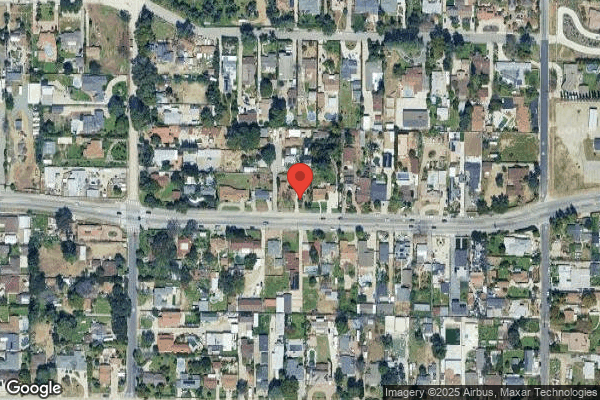

10716 LA TUNA CANYON ROAD, SUN VALLEY, CA 91352 (818) 252-5863
For profit - Corporation 45 Beds Independent Data: November 2025
Trust Grade
70/100
#484 of 1155 in CA
Last Inspection: December 2024

Within standard 12-15 month inspection cycle. Federal law requires annual inspections.

Overview

Totally Kids Specialty Healthcare in Sun Valley has a Trust Grade of B, which means it is a good choice but not without issues. It ranks #484 out of 1,155 facilities in California, placing it in the top half, and #77 out of 369 in Los Angeles County, indicating limited local competition. The facility's performance has been stable over the past couple of years, with 12 issues noted in both 2023 and 2024. While staffing is a strength with a 0% turnover rate and more RN coverage than 75% of California facilities, the staffing rating is below average at 2 out of 5 stars. Notably, there have been no fines reported, which is a positive sign. However, there are concerns regarding compliance, including failure to submit staffing data electronically for multiple quarters, which can impact transparency about resident care. Additionally, there were incidents involving incomplete documentation for a resident with complex needs, indicating gaps in record-keeping that could affect care quality. Overall, while the facility has strong staffing and no fines, families should be aware of these compliance issues and the implications they may have for their loved ones' care.

Trust Score
B
70/100
In California
#484/1155
Top 41%
Safety Record
Low Risk
No red flags
Inspections
Holding Steady
12 → 12 violations
Staff Stability
○ Average
Turnover data not reported for this facility.
Penalties
✓ Good
No fines on record. Clean compliance history, better than most California facilities.
Skilled Nurses
✓ Good
Each resident gets 96 minutes of Registered Nurse (RN) attention daily — more than 97% of California nursing homes. RNs are the most trained staff who catch health problems before they become serious.
Violations
⚠ Watch
28 deficiencies on record. Higher than average. Multiple issues found across inspections.
★★★★☆
4.0
Overall Rating
★★☆☆☆
2.0
Staff Levels
★★★★★
5.0
Care Quality
★★★☆☆
3.0
Inspection Score
Stable
2023: 12 issues
2024: 12 issues

The Good

  • 5-Star Quality Measures · Strong clinical quality outcomes
  • Full Sprinkler Coverage · Fire safety systems throughout facility
  • No fines on record

Facility shows strength in quality measures, fire safety.

The Bad

No Significant Concerns Identified

This facility shows no red flags. Among California's 100 nursing homes, only 0% achieve this.

The Ugly 28 deficiencies on record

Dec 2024 12 deficiencies
CONCERN (D)

Potential for Harm - no one hurt, but risky conditions existed

Deficiency F0688 (Tag F0688)

Could have caused harm · This affected 1 resident

**NOTE- TERMS IN BRACKETS HAVE BEEN EDITED TO PROTECT CONFIDENTIALITY** Based on interview, and record review, the facility failed to ensure one of one sampled resident (Resident 16) with limited rang...

Read full inspector narrative →
**NOTE- TERMS IN BRACKETS HAVE BEEN EDITED TO PROTECT CONFIDENTIALITY** Based on interview, and record review, the facility failed to ensure one of one sampled resident (Resident 16) with limited range of motion (ROM- full movement potential of a joint) received appropriate treatment and services to prevent further decrease in range of motion by failing to: 1. Provide Passive Range of Motion (PROM-when an outside force such as a therapist exclusively causes movement of a joint) exercises as ordered by the physician. 2. Develop and implement a person-centered care plan (a plan of care that summarizes a resident's health conditions, specific care and services facility staff need to provide a resident to promote healing and prevent a worsening of a condition, and current treatments) for Resident 16`s contracture. These deficient practices had the potential to put the resident in further decline of his range of motion and developing increased contractures (condition of shortening and hardening of muscles, tendons, or other tissue, often leading to deformity and rigidity of joints). Findings: During a review of Resident 16's admission Record, the admission Record indicated that the facility originally admitted the resident on 10/31/2022, and readmitted on [DATE], with diagnoses including cerebral palsy (a condition that affect movement and posture, caused by damage that occurs to the developing brain, most often before birth), contracture (a stiffening/shortening at any joint, that reduces the joint's range of motion) of elbow and wrist, and encounter for attention to tracheostomy (an opening surgically created through the neck into the windpipe to allow air to fill the lungs). During a review of Resident 16's Minimum Data Set (MDS - a resident assessment tool) dated 8/7/2023, the MDS indicated that the resident`s cognitive skills (brain's ability to think, read, learn, remember, reason, express thoughts, and make decisions) for daily decision making was severely impaired (never/rarely made decisions). The MDS indicated that Resident 16 had functional limitation in ROM in his upper and lower extremities. The MDS further indicated that Resident 16 was dependent on the staff (helper does all of the effort) for bed mobility, dressing, toilet use, personal hygiene, and transfer. During a review of Resident 16's physician order dated 4/2/2024, the order indicated for the nursing staff to perform PROM to the bilateral lower extremities (BLE-both legs) twice a day seven times a week as tolerated. During review of Resident 16's physician order dated 7/3/2024, the order indicated for the nursing staff to perform PROM to the bilateral upper extremities (BUE-both arms) twice a day seven times a week as tolerated for contracture management. During a review of Resident 16's Restorative Treatment Record (program that help residents to maintain their function and joint mobility) for BUE and BLE from 12/1/2024 to 12/28/2024, the record indicated no entries for treatment to the BLE and the BUE on 12/2/2024, 12/3/2024, and 12/7/2024 during the day and night shifts. The record indicated no entries for treatment to the BLE and the BUE on 12/6/2024, 12/20/2024, 12/25/2024, 12/26/2024, and 12/27/2024 during the day shift. The record further indicated no entries for treatment to the BLE and the BUE on 12/8/2024-12/9/2024, 12/13/2024-12/15/2024 during the night shift. During an observation on 12/28/2024 at 12:22 p.m., inside Resident 16`s room, Resident 16 was observed laying on his back in the bed. Resident 16 was able to move his right arm and hand, his left wrist was bent towards his body and his both knees were in bent position. During a concurrent interview and record review on 12/29/2024 at 12:49 p.m., with Licensed Vocational Nurse 1 (LVN 1) Resident 16`s Restorative Treatment Record for 12/2024 was reviewed. LVN 1 stated based on Resident 16`s physician order, the nursing staff is required to provide PROM exercises to the BLE and the BUE twice daily, once per shift. The LVN 1 stated that there is no documentation available to show that the ordered treatment was provided to Resident 16 on 12/2/2024, 12/3/2024, and 12/7/2024 during the day and night shifts, on 12/6/2024, 12/20/2024, 12/25/2024, 12/26/2024, and 12/27/2024 during the day shift and on 12/8/2024-12/9/2024, 12/13/2024-12/15/2024 during the night shift. The LVN 1 stated sometimes the staff forget to document that they (staff) had provided the treatment. LVN 1 stated if it is not documented it is considered not done. LVN 1 stated staff are required to document every time they provide PROM to the residents. LVN 1 stated the potential outcome of not providing PROM exercises as ordered by the physician to a resident who has contracture is worsening of the resident's contracture. During a concurrent interview and record review on 12/29/2024 at 1:20 p.m., with the Director of Nursing (DON), Resident 16`s Restorative Treatment Record for 12/2024 and care plans were reviewed. The DON stated Resident 16`s physician ordered to provide PROM exercised to the BLE and the BUE twice daily as tolerated. However, based on the resident`s Restorative Treatment Record for December 2024, there were some days that the treatment was not documented. The DON stated it is either the staff performed the treatment, and they did not document, or the treatment was not provided to the resident. The DON stated Resident 16 was admitted to the facility with both leg and arm contracture and providing the resident PROM is very important to prevent the resident's contractures from worsening. from developing from increased contractures. The DON stated if the PROM treatment was not documented it would be considered not provided. The DON stated the potential outcome of not providing PROM exercises to a resident with contracture is the worsening of contracture, decrease in ROM and harm to the resident. The DON stated licensed staff are required to develop a person-centered care plan based on the residents` needs and identified problems. The DON stated licensed staff did not develop a care plan with goal and interventions for Resident 16`s contracture and PROM exercises. The DON stated that the potential outcome of not developing a care plan for Resident 16`s contracture and PROM exercises is the inability to monitor to see if there are any decline/improvement in the resident`s condition and consequently providing inadequate care to the resident. During review of the facility's Policy and Procedure (P&P) titled, Range of Motion Exercises and Application of Orthotic Devices, reviewed 12/3/2024, the P&P indicated that ROM exercises and application of orthotic devices will be performed by the nursing staff under the direction of the Director of Nursing in collaboration with the Rehabilitation Team. After obtaining appropriate physician orders based on the rehabilitation recommendations, the nursing staff will carry over ROM exercises and orthotic application as recommended by the rehabilitation staff. Licensed staff will document on Restorative Charting Record immediately following all nursing assigned ROM exercises that are performed and splint/orthotic device applications. If ROM exercises are not performed or splint/orthotic devices are not applied, the appropriate space will be circled, and reason will be documented on the backside of the treatment record. Two gaps in the treatment record are not acceptable documentation. During review of the facility's Policy and Procedure (P&P) titled, Resident Care Planning, reviewed 12/3/2024, the P&P indicated a comprehensive plan of care will be developed to meet each resident`s medical, developmental, and psychosocial needs. This care plan will include the problems/needs identified in the Resident Assessment Instrument as well as other problems/needs as identified by the facility staff. Care plans will be reviewed within 14 days of admission, monthly for the first quarter, quarterly thereafter and with any significant change in diagnosis or condition of the RAI or a significant change.
CONCERN (D)

Potential for Harm - no one hurt, but risky conditions existed

Accident Prevention (Tag F0689)

Could have caused harm · This affected 1 resident

Based on observation, interview, and record review the facility failed to ensure a resident with a physician's order to wear a soft helmet when out of the crib was wearing the soft helmet when the res...

Read full inspector narrative →
Based on observation, interview, and record review the facility failed to ensure a resident with a physician's order to wear a soft helmet when out of the crib was wearing the soft helmet when the resident was out of the crib for one of three sampled residents (Resident 13) This deficient practice placed Resident 13 at risk for injury if a fall incident occurred. Findings: During a review of Resident 13`s admission Record, the admission Record indicated the facility admitted the resident on 2/1/2018, with diagnoses including other specified congenital (present from birth) malformations, congenital malformation of brain, and encounter for attention to tracheostomy (a procedure to help air and oxygen reach the lungs by creating an opening into the trachea (windpipe) from outside the neck). During a review of Resident 13's Minimum Data Set (MDS - an assessment and care screening tool), dated 2/1/2024, the MDS indicated the resident's cognitive skills (cognition refers to conscious mental activities, and include thinking, reasoning, understanding, learning, and remembering) for daily decision-making was severely impaired. The MDS further indicated Resident 13 required supervision or touching assistance with staff with eating, required partial/moderate assistance with oral hygiene, and substantial/maximal assistance with toileting hygiene, shower, and personal hygiene. During s review of Resident 13's order summary report, the report indicated an order dated 5/26/2020 to place a soft helmet on head when out of crib except when in stroller. During a review of Resident 13's care plan for at risk for injury/falls related to impaired safety awareness revised on, 11/8/202, the care plan indicated under interventions: Helmet. During an observation in the activities room on 12/28/2024 at 12:07 p.m., observed Resident 13 ambulating independently from a table to a sink, observed Resident 13 wash her hands, then observed Resident 13 walk back to the table in the activity room without the helmet on. During an interview with Registered Nurse 2 (RN 2) on 12/28/2024 at 3:36 p.m., RN 2 stated that Resident 13 should be wearing her helmet while not in bed so that Resident 13 will not hit her head. RN 2 stated that it is the responsibility of all staff to ensure Resident 13's helmet is on for the safety of the resident. During a review of the facility's policy and procedure titled Physicians Orders, dated 2/5/2023, the policy and procedure indicated all orders will be carried out completely and noted in a timely manner.
CONCERN (D)

Potential for Harm - no one hurt, but risky conditions existed

Incontinence Care (Tag F0690)

Could have caused harm · This affected 1 resident

Based on interview and record review, the facility failed to ensure one of two sampled residents (Resident 26) received the appropriate treatment and services for bladder incontinence (the loss of bla...

Read full inspector narrative →
Based on interview and record review, the facility failed to ensure one of two sampled residents (Resident 26) received the appropriate treatment and services for bladder incontinence (the loss of bladder control) by failing to apply warm compress and bladder massage prior to the in and out catheterization and failing to perform in and out catheterization (when the catheter is inserted and left in only long enough to empty the bladder and then is removed) as ordered by the physician. This deficient practice had the potential to result in the inadequate care and monitoring of Resident 26 and placed him at an increased risk of infection. Findings: During a review of Resident 26's admission Record, the admission Record indicated that the facility admitted the resident on 9/15/2022, with diagnoses including anoxic brain damage (brain damage from a lack of oxygen to the brain), epilepsy (a sudden, uncontrolled electrical disturbance in the brain which can cause uncontrolled jerking, blank stares, and loss of consciousness), personal history of urinary infections (UTI- an infection in the bladder/urinary tract), and persistent vegetative state (patients that are unaware of themselves or their environment for a long time). During a review of Resident 26's Minimum Data Set (MDS -a resident assessment tool) dated 9/18/2024, the MDS indicated the resident was in a persistently vegetative state. The MDS indicated that Resident 26 was dependent on staff (helper does all of the effort) for oral hygiene, toileting hygiene, showering/bathing, personal hygiene, and upper and lower body dressing. The MDS further indicated that Resident 26 was always incontinent (no episodes of continent voiding) and required intermittent (not happening regularly or continuously) catheterization (a hollow tube inserted into the bladder to drain or collect urine). During a review of Resident 26`s Physician order dated 2/8/2024, the order indicated to perform bladder scan (a safe, painless, reliable procedure using a scanner that allows you to assess the volume of urine retained within the bladder) four times a day for neurogenic bladder (when a person lacks bladder control due to brain, spinal cord, or nerve problems). In the event that the scan presents 300 milliliter (ml-a unit of measurement) or more of urine, staff is required to perform in and out catheterization. The order indicated to notify charge nurse and the physician if an in and out catheterization is needed. During a review of Resident 26`s Physician order dated 4/2/2024, the order indicated that prior to performing an in and out catheterization, a warm compress should be applied along with a five-minute bladder massage. If these measures prove ineffective after 30 minutes and the bladder scan revealed 300 ml of urine, proceed with the in and out catheterization and notify the charge nurse or the physician. During a review of Resident 26's Care Plan (CP-a document that outlines how a patient`s health care needs will be met) for at risk for UTI related to neurogenic bladder initiated on 6/13/2023, the care plan indicated a goal that the resident will be free from urinary tract infections through review date. The care plan indicated an intervention to perform bladder scan, if 300 ml or more urine is present to perform in and out catheterization and notify the charge nurse and the physician whenever in and out catheterization is needed. During a review of Resident 26`s Treatment Administration Record (TAR-) dated 11/1/2024-11/24/2024, the record indicated that the resident`s bladder scan results were 493 ml on 11/17/2024 at 9 a.m., and 450 ml on 11/19/2024 at 3 a.m. The TAR did not indicate warm compress and a five-minute bladder massage, and in and out catheterizations were performed for Resident 26 on 11/17/2024 and 11/19/2024 as ordered by the physician. During a review of Resident 26`s Treatment Administration Record (TAR- a daily documentation record used by a licensed nurse to document treatments given to a resident) dated 12/1/2024-12/29/2024, the record indicated that the resident`s bladder scan results were 320 ml on 12/5/2024, and 480 ml on 12/26/2024 at 3 a.m. The TAR did not indicate warm compress and a five-minute bladder massage, and in and out catheterizations were performed on 12/5/2024 and 12/26/2024. During a concurrent interview and record review on 12/29/2024 at 12:20 p.m., with Licensed Vocational Nurse 1 (LVN 1), Resident 26`s TAR for 12/2024 and nursing progress notes were reviewed. LVN 1 stated there is a physician order to perform bladder scan for Resident 26 four times a day. The LVN 1 stated also there is a physician order to apply a warm compress and to conduct a bladder massage prior to the in and out catheterization in order to assist Resident 26 to void on his own. LVN 1 stated she normally document interventions applied prior to Resident 26`s catheterization in the nursing progress notes. The LVN 1 stated based on Resident 26`s TAR for 12/2024, on 12/5/2024, Resident 26`s bladder scan was 320 ml, and on 12/26/2024 it was 480 ml at 3 a.m. LVN 1 stated that there is no documentation in Resident 26`s TAR or nursing progress notes indicating whether or not the assigned licensed nurse applied warm compress and bladder massage prior to the in and out catheterization or if the assigned nurse performed in and out catheterization for Resident 26. LVN 1 stated licensed staff did not follow Resident 26`s physician orders to apply warm compress and massage the bladder and to perform in and out catheterization after implementing the required steps for Resident 26 on 12/5/2024 and 12/26/2024. The potential outcome of not following the physician orders is urinary retention (when you are unable to empty all the urine from your bladder) and the resident experiencing discomfort. During a concurrent interview and record review on 12/29/2024 at 2:10 p.m., with the Director of Nursing (DON), Resident 26 `s TARs for 11/2024 and 12/2024, nursing progress notes, and physician orders were reviewed. The DON stated Resident 26`s physician ordered a bladder scan four times a day. The DON stated the physician order also indicated that if the bladder scan shows 300 ml or more of urine, an in and out catheterization should be performed. However, prior to the catheterization the licensed staff are required to perform less invasive interventions (intervention that does not require inserting an instrument through the skin or into a body opening) such as applying a warm compress and bladder massage to assist the resident with urinating. The DON stated licensed staff are required to document whether or not they applied the warm compress and conducted a bladder massage to the resident prior to in and out catheterization and also to document whether or not the in and out catheterization was performed per the physician orders. The DON stated licensed staff did not document in Resident 26`s TAR or nursing progress notes that they (licensed staff) performed in and out catheterization after a warm compress and a bladder massage was provided to Resident 26 on 11/17/2024, 11/19/2024, 12/5/2024 and 12/26/2024. The DON stated the potential outcome of not following the physician`s order regarding in and out catheterization is placing Resident 26 at increased risk for UTI. During a review of the facility`s Policy and Procedure (P&P) titled Urinary Catheterization, last reviewed 12/3/2024, the P&P indicated to document the time catheterization is completed, resident`s tolerance, amount, color, odor of urine and if specimen was sent to lab. During a review of the facility`s Policy and Procedure (P&P) titled Physician Orders, last reviewed 12/3/2024, the P&P indicated that the physician would give orders for medications, lab work, treatment, diet changes, admission, and consultation. Orders will be taken verbally, written, or via telephone. All orders will be carried out completely and noted in a timely manner. During a review of the facility`s Policy and Procedure (P&P) titled Documentation-Licensed Nursing Staff, last reviewed 2/5/2023, the P&P indicated that record of medication and treatments must be documented on the Medication administration Records (MAR) or Treatment Sheet at the time they are administered or performed. PRN (as needed) treatments or medication administered are to include the date, time, reason for administration and the effectiveness including the time of results. PRN treatments are to be administered according to the frequency prescribed.
CONCERN (D)

Potential for Harm - no one hurt, but risky conditions existed

Deficiency F0692 (Tag F0692)

Could have caused harm · This affected 1 resident

**NOTE- TERMS IN BRACKETS HAVE BEEN EDITED TO PROTECT CONFIDENTIALITY** Based on interview and record review, the facility failed to implement their policy on intake and output by failing to ensure li...

Read full inspector narrative →
**NOTE- TERMS IN BRACKETS HAVE BEEN EDITED TO PROTECT CONFIDENTIALITY** Based on interview and record review, the facility failed to implement their policy on intake and output by failing to ensure licensed nurses documented the residents output every shift for two of two sampled residents (Resident 18 and 8). This deficient practice had the potential to place Resident 18 and Resident 8 at risk for dehydration (deficit of total body water, with an accompanying disruption of body processes). Findings: a. During a review of Resident 18`s admission Record, the admission Record indicated the facility admitted the resident on 10/8/2012, with diagnoses including spastic diplegic cerebral palsy (characterized by jerky movements, muscle tightness, and joint stiffness), encounter for attention to tracheostomy (a procedure to help air and oxygen reach the lungs by creating an opening into the trachea (windpipe) from outside the neck), dependence on respirator (ventilator) status, encounter for attention to gastrostomy (a surgical opening fitted with a device to allow feedings to be administered directly to the stomach common for people with swallowing problems), and constipation (a condition in which there is difficulty in emptying the bowels, usually associated with hardened feces). During a review of Resident 18's Minimum Data Set (MDS - an assessment and care screening tool), dated 10/2/2024, the MDS indicated the resident is in a persistent vegetative state/no discernible consciousness. The MDS further indicated Resident 18 was dependent on staff with oral hygiene, toileting hygiene, shower, and personal hygiene. During a review of Resident 18's order summary report, the report indicated the following order: - Enteral Feed Order: five times a day Jevity 1.2 135 mL (milliliters- unit of measurement)/hr (hour) set pump rate to 90mL. Start date: 7/12/2024. During a review of Resident 18's care plan for potential for impaired fluid balance related to dependence on enteral tube revised on 10/15/2024, the care plan indicated an intervention to monitor and document intake and output as per facility policy. During an interview and concurrent record review with the Director of Nursing (DON) on 12/29/2024 at 4:21 p.m., the DON stated that residents' intake and output information is documented on the resident's Treatment Administration Record (TAR). The DON reviewed Resident 18's TAR for the month of December 2024 and stated that there is no documented evidence of Resident 18's total output every shift. The DON stated that the total output of a resident is important to monitor and document to ensure residents do not become at risk for dehydration. The DON stated the facility needs to make sure that Resident 18 is well hydrated to help with Resident 18's constipation. b. During a review of Resident 8`s admission Record, the admission Record indicated the facility admitted the resident on 10/4/2011, with diagnoses including spastic quadriplegic cerebral palsy (a permanent neuromuscular [relating to nerves and muscles] disorder causing limitation on all four limbs following a lesion on the developing brain), encounter for attention to tracheostomy, encounter for attention to gastrostomy . During a review of Resident 8's MDS, dated [DATE], the MDS indicated the resident cognitive skills for daily decision-making was severely impaired. The MDS further indicated Resident 8 was dependent on staff with oral hygiene, toileting hygiene, shower, and personal hygiene. During s review of Resident 8's order summary report, the report indicated the following order: -Enteral Feed Order: five times a day Compleat 1.0 at 165mL/hr via pump. Start date: 10/11/2024. During a concurrent interview and record review with the Director of Nursing (DON) on 12/29/2024 at 5:39 p.m., the DON stated that residents' intake and output information is documented on the resident's Treatment Administration Record (TAR). The DON reviewed Resident 8's TAR for the month of December 2024 and stated that there is no documented evidence of Resident 8's total output every shift. The DON stated the output will help determine if residents are in fluid overload. The DON stated that the total output of a resident is important to document so staff can monitor Resident 8's output and hydration status. During a review of the facility's policy and procedure (P&P) titled Intake and Output, reviewed 8/25/2023, the P&P indicated the Charge nurse will ensure that each resident is evaluated each shift for adequate hydration. Record intake and output at the end of each shift. Evaluate the intake and output to determine adequate or excessive. Daily intake and output will be documented in the resident's record.
CONCERN (D)

Potential for Harm - no one hurt, but risky conditions existed

Tube Feeding (Tag F0693)

Could have caused harm · This affected 1 resident

Based on observation, interview, and record review, the facility failed to implement their enteral tube feeding (gastrostomy tube - GT, a surgical opening fitted with a device to allow feedings to be ...

Read full inspector narrative →
Based on observation, interview, and record review, the facility failed to implement their enteral tube feeding (gastrostomy tube - GT, a surgical opening fitted with a device to allow feedings to be administered directly to the stomach common for people with swallowing problems) policy and procedure (P&P) for one of four sampled residents (Resident 4) investigated for gastrostomy tube care by failing to label Resident 4`s y-connector (a silicone tube used for patient with gastrostomy to deliver nutrition and medications directly to the stomach) with the date it was last changed. This deficient practice had the potential to place Resident 4 at an increased risk of infection and may cause adverse reactions (an undesired effect of a treatment) such as upset stomach and/or diarrhea (loose, watery stool more frequently than normal). Findings: During a review of Resident 4's admission Record, the admission Record indicated that the facility initially admitted Resident 4 on 1/15/2018, with diagnoses including encephalopathy (brain disease, damage, or malfunction of brain), acute and chronic respiratory failure with hypoxia (a serious condition that occurs when the air sacs of the lungs cannot release enough oxygen into the blood), and cerebral palsy (central nervous system [CNS] motor disorders which are characterized by impairment of voluntary muscle movement). During a review of Resident 4's Minimum Data Set (MDS - a resident assessment tool), dated 1/15/2024, the MDS indicated that the resident had severely impaired cognition (severely damaged mental abilities, including remembering things, making decisions, concentrating, or learning). The MDS further indicated that Resident 4 was totally dependent on staff with all activities of daily living (ADLs - basic tasks that must be accomplished every day for an individual to thrive). During the review of Resident 4's History and Physical, dated 1/15/2024, the History and Physical indicated that Resident 4 had a GT in place. During the review of Resident 4's Order Summary Report, the Order Summary Report indicated an order dated 12/25/2022 for a GT y-connector change every night shift every Sunday. During a medication administration observation on 12/29/2024 at 8:30 a.m. inside Resident 4's room, observed Licensed Vocational Nurse 3 (LVN 3) administer one (1) tablespoon of Nutri source (a fiber powder to help support digestive health and normal bowel function) diluted in 60 ml (ml- unit of measurement) of water via the y-connector of the GT to the resident. Observed the GT y-connector label undated. LVN 3 confirmed that there was no date indicated on the label of the y-connector. During an interview on 12/29/2024 at 8:40 a.m., with LVN 3, LVN 3 stated that the y- connector should be changed every Sunday and labeled with the date it was last changed so nursing staff will be aware when the next y-connector change is due. LVN 3 stated it is important to change Resident 4's y-connector timely to prevent microbial growth and risk of acquiring infection. During an interview on 12/29/2024 at 4:34 p.m. with the Director of Nursing (DON), the DON stated that the GT y-connector should be changed every Sunday and labeled with the date it was last changed to prevent microbial growths and prevent the risk of Resident 4 acquiring infection. During a review of the facility policy and procedure titled Medication Administration, last reviewed on 10/24/2018, the policy stated facility to administer oral medication via enteral feeding tube in an organized, clean, and safe manner . If the enteral tube , or tube extension becomes contaminated, it must be discarded and replaced.
CONCERN (D)

Potential for Harm - no one hurt, but risky conditions existed

Respiratory Care (Tag F0695)

Could have caused harm · This affected 1 resident

Based on interview and record review the facility failed to ensure residents who needed respiratory care (the health care discipline that specializes in the promotion of optimum cardiopulmonary functi...

Read full inspector narrative →
Based on interview and record review the facility failed to ensure residents who needed respiratory care (the health care discipline that specializes in the promotion of optimum cardiopulmonary function and health and wellness) was provided such care, consistent with professional standards of practice by failing to change the aerosol/ventilator (a machine that helps a person breathe by moving air in and out of their lungs) humidifier water bottle (equipment to produce and dispense water vapor, adding moisture to oxygen and restoring healthy level of humidity [the amount of water vapor in the air]) every three (3) days for one of three sampled resident (Resident 22) investigated for respiratory care. This deficient practice had the potential for Resident 14 to develop a respiratory infection. Findings: During a review of Resident 22's admission Record, the admission Record indicated the facility originally admitted the resident on 1/6/2020 with diagnoses including cerebral palsy (central nervous system [CNS] motor disorders which are characterized by impairment of voluntary muscle movement), anoxic brain damage (condition when the brain is completely deprived of oxygen, causing damage to brain cells due to a lack of necessary oxygen supply), and convulsion (sudden, uncontrolled shaking of the body muscles , often associated with seizures). During a review of History and Physical, dated 1/7/2024, the History and Physical indicated that Resident 22 needs mechanical ventilation (a life support technique that uses a machine to help a person breath). During a review of Resident 22's Minimum Data Set (MDS - a federally mandated resident assessment tool), dated 1/8/2024, the MDS indicated that the resident had severely impaired cognition (severely damaged mental abilities, including remembering things, making decisions, concentrating, or learning). The MDS further indicated that Resident 22 was totally dependent on staff with all activities of daily living (ADLs - basic tasks that must be accomplished every day for an individual to thrive). During a review of Resident 22's care plan (a document that outlines the actions and interventions needed to address a resident's health and care needs), initiated on 4/5/2023 and revised on 11/20/24, the care plan indicated that Resident 22 was ventilator dependent. The goal in the care plan indicated that Resident 22 would remain free of complications related to ventilator dependence, including upper respiratory infection. During a review of Resident 22's Physician Order, dated 11/7/2024, there was a physician order for: FIO2 21% on cool aerosol (aerosol delivery device for respiratory therapy), may titrate up to 28% to maintain SPO2 (the percentage of oxygen your blood is carrying) above 94%. During an observation on 12/27/2024, at 9:27 AM, observed Resident 22 in his room on a ventilator with an aerosol /ventilator humidifier water bottle connected to Resident 22. During a concurrent observation and interview on 12/27/2024 at 9:30 AM in Resident 22's room with Respiratory Care Practitioner 1 (RCP 1), RCP 1 observed and stated that the humidifier water bottle was not labeled with the date it was changed. RCP 1 stated that the ventilator humidifier water bottle should be changed every 3 days and PRN (as needed) according to the facility policy. RCP 1 stated that not changing the ventilator humidifier water bottle every three (3) days may lead to Resident 22 developing a respiratory infection. During an interview on 12/28/2024 at 4:11 p.m. with the Respiratory Department Supervisor (RDS), the RDS stated according to the facility policy Nursing Respiratory the humidifier water bottle should be changed every 3 day and is supposed to have a label indicating when it was last changed. The RDS stated not labeling the humidifier water bottle with the date when it was last changed has the potential to cause increased risk of healthcare acquired infection to Resident 22. During a review of the facility policy and procedure titled Nursing Respiratory, last reviewed on 6/30/2018, the policy indicated: All equipment is dedicated exclusively for the use of each resident. The following equipment to be maintained as outlined in table below and PRN. Equipment to be labeled with date of use .Aerosol/Ventilator humidifier water bottle to be changed every 3 days and PRN.
CONCERN (D)

Potential for Harm - no one hurt, but risky conditions existed

Deficiency F0757 (Tag F0757)

Could have caused harm · This affected 1 resident

Based on interview and record review, the facility failed to maintain complete and accurate medical records in accordance with accepted professional standards for one of three sampled residents (Resid...

Read full inspector narrative →
Based on interview and record review, the facility failed to maintain complete and accurate medical records in accordance with accepted professional standards for one of three sampled residents (Resident 2) by failing to ensure a specific indication was written for an order of Augmentin (antibiotic- medication that fights bacterial infections). This deficient practice placed the resident at risk of not receiving appropriate care due to inaccurate resident medical care information and the potential to result in confusion in the care and services for Resident 2. Findings: During a review of Resident 2's admission Record, the admission Record indicated the facility originally admitted the resident on 7/21/2005 and readmitted the resident on 12/21/2023 with diagnoses that included congenital (present at birth) malformation of ear, unspecified visual loss, lack of expected normal physiological development in childhood. During a review of Resident 2's Minimum Data Set (MDS- a resident assessment tool) dated 9/23/2024, the MDS indicated Resident 2's cognition (the mental action or process of acquiring knowledge and understanding through thought, experience, and the senses) was intact. The MDS also indicated Resident 5 was independent oral hygiene, toileting hygiene, and personal hygiene. During a review of Resident 2's Order Summary Report, the Order Summary Report indicated an order for Augmentin ES-600 oral suspension reconstituted 600-42.3 milligrams (mg- unit of measurement)/5 milliliter (ml- unit of measurement). Give 6.5 ml via gastrostomy tube (g-tube, a tube inserted through the belly that brings nutrition directly to the stomach) two times a day for infection for seven days. During a concurrent interview and record review on 12/29/2024 at 10:46 a.m., with the Infection preventionist (IP), reviewed Resident 2's physician orders. The IP stated that Resident 2's physician order for Augmentin is missing the specific infection that the medication is targeting. The IP stated that the physician's order is not complete. The IP stated that it is important for all antibiotic medication orders to have a specific diagnosis with the order so staff will know what the antibiotic is targeting. During an interview on 12/29/2024 at 4:45 p.m., with the Director of Nursing (DON), the DON stated that all antibiotic orders should have a specific reason that the antibiotic is ordered for. During a review of the facility's policy and procedure titled, Medication Administration, reviewed 10/24/2018, the policy indicated physician ordered medication to be administered by licensed medical/nursing personnel. Check order on medication record with label on prescribed medication for proper resident name, medication, dosage, time, route, and rationale.
CONCERN (D)

Potential for Harm - no one hurt, but risky conditions existed

Deficiency F0848 (Tag F0848)

Could have caused harm · This affected 1 resident

Based on interview and record review, the facility failed to provide an Arbitration Agreement (a legal contract that requires parties to resolve disputes through arbitration [a formal method of disput...

Read full inspector narrative →
Based on interview and record review, the facility failed to provide an Arbitration Agreement (a legal contract that requires parties to resolve disputes through arbitration [a formal method of dispute resolution involving a third party who makes the binding decision] instead of going to court) that included the selection of venue (a location in which to carry out arbitration proceeding) which should be convenient to both parties (resident and facility) to ensure a fair arbitration process to the facility's residents. This deficient practice had a potential to not provide a neutral and fair arbitration process to the facility's residents. Findings: During a review of facility's Arbitration Agreement, the Arbitration Agreement did not include the selection of a venue that is suitable in meeting the needs of both the resident or his or her representative, and the facility. During a concurrent interview and Arbitration Agreement review on 12/29/2024 at 10:12 AM with the Social Service Director (SSD), the SSD reviewed the Arbitration Agreement and confirmed that the Arbitration Agreement did not include the selection of a neutral venue which is suitable in meeting the needs of both the resident or his or her representative and the facility. During an interview on 12/29/2024 at 1:00 PM with the Administrator in Training (AIT), the AIT stated that she was not aware that the Arbitration Agreement must have the selection of venue that is suitable in meeting the needs of both the resident or his or her representative, and the facility.
CONCERN (D)

Potential for Harm - no one hurt, but risky conditions existed

Infection Control (Tag F0880)

Could have caused harm · This affected 1 resident

Based on observation, interview, and record review, the facility failed to implement its policy titled, Sterile Tracheal Suction (a means of clearing the airway of secretions or mucus through the appl...

Read full inspector narrative →
Based on observation, interview, and record review, the facility failed to implement its policy titled, Sterile Tracheal Suction (a means of clearing the airway of secretions or mucus through the application of negative pressure via suction catheter) by failing to ensure that Respiratory Care Practitioner 2 (RCP 2) doffed (removing gloves in a way that avoids self-contamination [the act of contaminating oneself with potentially pathogenic organism]) nonsterile gloves before the donning (putting on personal protective equipment [PPE] to achieve the intended protection and minimize the risk of exposure) of sterile ( free of gems or living organisms, especially microorganisms) gloves when performing a sterile tracheal suction to one (Resident 4) out of five residents investigated during review of the infection control task. This deficient practice had the potential to increase the risk of healthcare acquired infection to Resident 4. Findings: During a review of Resident 4's admission Record, the admission Record indicated that the facility initially admitted Resident 4 on 1/15/2018 with diagnoses including encephalopathy (brain disease, damage, or malfunction of brain), acute and chronic respiratory failure with hypoxia (a serious condition that occurs when the air sacs of the lungs cannot release enough oxygen into the blood). During a review of Resident 4's Minimum Data Set (MDS - a federally mandated resident assessment tool), dated 1/15/2024, the MDS indicated that the resident had severely impaired cognition (severely damaged mental abilities, including remembering things, making decisions, concentrating, or learning). The MDS further indicated that Resident 4 was totally dependent on staff with all activities of daily living (ADLs - basic tasks that must be accomplished every day for an individual to thrive). During the review of Resident 4's History and Physical, dated 1/15/2024, the History and Physical indicated that Resident 4 has a tracheostomy (an opening in the neck with inserted tube into the windpipe to help a person breath) in place. During the review of Resident 4's care plan (a document that outlines the actions and interventions needed to address a resident's health and care needs), dated 01/18/2023 and updated 12/06/2024, the care plan indicated that Resident 4 has a tracheostomy related to chronic lung disease (a group of long -lasting conditions that affect the lungs and respiratory system). The care plan interventions indicated to assess the resident every two (2) hours for excessive secretions and suction as necessary. During a tracheal suction observation on 12/28/2024 at 3:48 p.m. in Resident 4's room, observed Respiratory Care practitioner 2 (RCP 2) suction Resident 4's tracheostomy. RCP 2 performed hand hygiene (washed hands with soap and water ) and applied non-sterile gloves, positioned Resident 4 in semi-Fowlers position (a patient positioning where a person lies on their back with the head of the bed raised 30-45 degrees), listened to Resident 4 lungs, checked oxygen saturation (percentage of oxygen-saturated hemoglobin in the blood), opened the sterile suction kit (included sterile gloves and sterile catheter) and donned sterile gloves over the non-sterile gloves and performed tracheal suction on the Resident 4. During an interview on 12/28/2024 at 3:50 p.m., RCP 2 stated that she (RCP 2) did not know that she had to remove nonsterile gloves before donning the sterile gloves. During an interview on 12/28/2024 at 4:11 p.m. with the Respiratory Department Supervisor (RDS), the RDS stated that according to the facility policy Sterile Tracheal Suction the RCP should have removed non-sterile gloves before applying sterile gloves and providing tracheal suction. The RDS stated not removing nonsterile gloves has the potential to cause increased risk of healthcare acquired infection and pneumonia to Resident 4. During a review of the facility policy named Sterile Tracheal Suction last reviewed on 1/21/2024, the policy stated: Traditional open system sterile suction for non-ventilator residents: 1.1 Perform hand hygiene. 1.2 [NAME] nonsterile gloves. 1.3 Identify residents and explain procedure. 1.4 Position resident in semi-Fowlers. 1.5 Doff nonsterile gloves. 1.6 Open sterile suction kit and DON sterile gloves. 1.7 Maintain sterile field: wrap suction catheter around dominant hand . During a review of the facility policy named Hand washing/Hand hygiene, last reviewed on 12/3/2014, the policy stated: This facility will promote appropriate hand hygiene practice to reduce the risk of healthcare acquired infection .''.
CONCERN (E)

Potential for Harm - no one hurt, but risky conditions existed

Comprehensive Care Plan (Tag F0656)

Could have caused harm · This affected multiple residents

**NOTE- TERMS IN BRACKETS HAVE BEEN EDITED TO PROTECT CONFIDENTIALITY** 3.a. During a review of Resident 22's admission Record, the admission Record indicated the facility originally admitted the resi...

Read full inspector narrative →
**NOTE- TERMS IN BRACKETS HAVE BEEN EDITED TO PROTECT CONFIDENTIALITY** 3.a. During a review of Resident 22's admission Record, the admission Record indicated the facility originally admitted the resident on 1/6/2020 with diagnoses including cerebral palsy (central nervous system [CNS] motor disorders which are characterized by impairment of voluntary muscle movement), anoxic brain damage (condition when the brain is completely deprived of oxygen, causing damage to brain cells due to a lack of necessary oxygen supply), and convulsion (sudden , uncontrolled shaking of the body muscles, often associated with seizures). During a review of History and Physical, dated 1/7/2024, the History and Physical indicated that Resident 22 had seizures. During a review of Resident 22's Minimum Data Set (MDS - a federally mandated resident assessment tool), dated 1/8/2024, the MDS indicated that the resident had severely impaired cognition (severely damaged mental abilities, including remembering things, making decisions, concentrating, or learning). The MDS further indicated that Resident 4 was totally dependent on staff with all activities of daily living (ADLs - basic tasks that must be accomplished every day for an individual to thrive). During a review of Resident 22 Order Summary Report dated December 2024, the Order Summary Report indicated that Resident 22 had an order for: -Lorazepam (medication used to treat a seizure disorders) .5 milligram (mg - unit of measurement) give 1 tab via G- Tube (a tube inserted through the abdomen to deliver nutrition and medications directly to the stomach) three times a day for seizures (sudden burst of uncontrolled electrical activity in the brain) dated 01/11/2023. During a review of Resident 22 Medication Administration Record (MAR) for 12/2024, the MAR indicated that Resident 22 received Lorazepam .5 mg from 12/1/2024 through 12/28/2024, three times a day every day. During a concurrent interview and record review on 12/29/2024 at 4:04 p.m., with the Minimum Data Set Nurse (MDSN), the MDSN reviewed Resident 22's care plans (a document that outlines a patient's health information, conditions, treatments, care services, and goals). The MDS was asked if Resident 22 had a care plan addressing that Resident 22 is receiving antiseizure medication. The MDS stated she could not find any, but she knows that there is requirement to develop care plan if a resident is on high risk antiseizure medications. 3.b. During a review of Resident 24's admission Record, the admission Record indicated the facility originally admitted the resident on 5/2/2024 with diagnoses including injury of cervical spinal cord (a damage to the to the nerves that send and receives signals brain), severe intellectual disabilities (someone has significant limitation in their ability to learn, understand, and communicate), and convulsion (sudden, uncontrolled shaking of the body muscles, often associated with seizures). During a review of Resident 24's MDS dated [DATE], the MDS indicated that the resident had severely impaired cognition (severely damaged mental abilities, including remembering things, making decisions, concentrating, or learning). The MDS further indicated that Resident 4 was totally dependent on staff with all activities of daily living (ADLs - basic tasks that must be accomplished every day for an individual to thrive). During a review of Resident 24 Order Summary Report dated December 2024, the Order Summary Report indicated that Resident 24 had an order for: -Keppra (medication used to treat a seizure disorders) 500 milligram (mg - unit of measurement) give 1 tab via G- Tube (a tube inserted through the abdomen to deliver nutrition and medications directly to the stomach) two times a day for seizures dated 01/11/2023. During a review of Resident 24 Medication Administration Record (MAR) for 12/2024, the MAR indicated that Resident 24 received Keppra 500 mg from 12/1/2024 through 12/28/2024, two times a day every day. During a concurrent interview and record review on 12/29/2024 at 4:04 p.m., with the Minimum Data Set Nurse (MDS), the MDSN reviewed Resident 24's care plans. The MDS was asked if Resident 22 had a care plan addressing that Resident 24 is receiving antiseizure medication. The MDS stated she could not find any, but she knows that there is requirement to develop care plan if a resident is on high risk antiseizures medications. During an interview and concurrent record review with the Director of Nursing (DON) on 12/29/2024 at 4:34 p.m., the DON reviewed Resident 22's and Resident 24's medical record and stated that the facility missed initiating a care plan for Resident 22 and Resident 24's use of antiseizure medication. The DON stated that there should have been a care plan on the residents' use of anti-seizure medications because the care plan will provide specific interventions regarding these medications. Based on interview, and record review, the facility failed to develop and implement comprehensive person-centered care plans (a plan of care that summarizes a resident's health conditions, specific care and services facility staff need to provide a resident to promote healing and prevent a worsening of a condition, and current treatments) to meet the residents` needs for six of six sampled residents (Resident 16, Resident 27, Resident 22, Resident 24, Resident 13 and Resident 39) by failing to: 1. Develop and implement a comprehensive person-centered care plan addressing Resident 16`s risk for development of pressure injury (localized damage to the skin and/or underlying tissue usually over a bony prominence). 2. Develop and implement a comprehensive person-centered care plan addressing Resident 27`s bladder incontinence (the loss of bladder control). 3. Develop and implement a comprehensive person-centered care plan addressing Resident 22 and Resident 24's use of anticonvulsant medications (medication used to control seizures [a burst of uncontrolled electrical activity between brain cells that caused temporary abnormalities in muscle tone or movements]) 4. Develop and implement a comprehensive person-centered care plan addressing Resident 13's bowel and bladder toileting. 5. Develop and implement a comprehensive person-centered care plan addressing Resident 39's high fall risk. These deficient practices had the potential to lead to the inadequate care of Resident 16, 27, 22, 24, 13 and 39). Findings: 1. During a review of Resident 16's admission Record, the admission Record indicated that the facility originally admitted the resident on 10/31/2022, and readmitted on [DATE], with diagnoses including cerebral palsy (a condition that affect movement and posture, caused by damage that occurs to the developing brain, most often before birth), contracture (a stiffening/shortening at any joint, that reduces the joint's range of motion) of elbow and wrist, and encounter for attention to tracheostomy (an opening surgically created through the neck into the windpipe to allow air to fill the lungs). During a review of Resident 16's Minimum Data Set (MDS - a resident assessment tool) dated 11/6/2024, the MDS indicated that the resident`s cognitive skills (brain's ability to think, read, learn, remember, reason, express thoughts, and make decisions) for daily decision making was severely impaired (never/rarely made decisions). The MDS indicated that Resident 16 was dependent on the staff (helper does all of the effort) for oral hygiene, toileting hygiene, showering/bathing, upper and lower body dressing, and personal hygiene. The MDS further indicated that Resident 16 was at risk for developing pressure ulcers/injuries and had one stage one pressure injury (intact skin with a localized area of redness and/or changes in sensation, temperature, or firmness). During a review of Resident 16`s Braden Q Assessment forms (a tool used to assess the risk for pressure ulcers in pediatric patients) dated 8/8/2024 and 11/6/2024, the forms indicated a score of 14 (score of 13-14 is considered moderate risk for pressure injury development). The forms indicated that Resident 16 was completely immobile ( does not make even slight changes in body or extremity position without assistance), had very limited sensory perception (the ability to understand and interact with the environment using senses of sight, smell, hearing, taste, touch) and very moist skin (skin is often, but not always moist) and his spasticity (having stiff or rigid muscles) and contracture (a stiffening/shortening at any joint, that reduces the joint's range of motion) led to almost constant thrashing (moving from side to side in an uncontrolled way) and friction (occurs when skin moves against support surface). During a review of Resident 16's physician order dated 10/21/2024, the physician order indicated to clean left buttock stage one pressure injury with discoloration with normal saline (NS-a solution of salt and water), pat dry and apply optifoam (an advanced wound care dressing) to the site during every shift for 14 days. During a review of Resident 16`s care plans, there was no care plan developed and initiated to address Resident 16's risk for development of pressure injury. During a concurrent interview and record review on 12/28/2024 at 2:56 p.m., with MDS Nurse (MDS), Resident 16`s care plans were reviewed. The MDS stated that she (MDS) is in charge of developing and updating residents 'care plans in the facility. The MDS stated that there is no long-term care plan developed for Resident 16`s risk for pressure injury development. The MDS stated long term care plans are those care plans that are ongoing and risk for developing a pressure injury is one of the problems requiring a long-term care plan. The MDS stated the potential outcome of not developing a person-centered care plan for a resident at risk for developing pressure injuries is the inability to address the appropriate care and treatment that the resident needs and an increased risk for development of new pressure injuries. During an interview on 12/29/2024 at 2:46 p.m., with the facility`s Director of Nursing (DON), the DON stated licensed staff are required to develop a care plan with appropriate goal and interventions based on the residents` problems and identified needs. The DON stated Resident 16 is bedridden and at risk to develop pressure injuries. The DON stated licensed staff did not develop a care plan for Resident 16`s risk to develop a pressure injury. The DON stated the potential outcome is lack of care, monitoring, and the inability to deliver necessary interventions to prevent skin injuries. 2. During a review of Resident 27's admission Record, the admission Record indicated that the facility admitted the resident on 6/25/2024, with diagnoses including quadriplegia (paralysis from the neck down, including legs, and arms, usually due to a spinal cord injury), neuromuscular dysfunction of the bladder (a problem in which a person lacks bladder control due to a brain, spinal cord, or nerve condition), and encounter for attention to tracheostomy (an incision in the windpipe made to help air and oxygen reach the lungs). During a review of Resident 27's Minimum Data Set (MDS - a resident assessment tool) dated 10/5/2024, the MDS indicated that the resident`s cognitive skills (brain's ability to think, read, learn, remember, reason, express thoughts, and make decisions) for daily decision making was intact (decisions consistent/reliable). The MDS indicated that Resident 27 was dependent on the staff (helper does all of the effort) for oral hygiene, toileting hygiene, showering/bathing, upper and lower body dressing, and personal hygiene. The MDS further indicated that Resident 27 was always incontinent (no episodes of continent voiding) and required intermittent (not happening regularly or continuously) catheterization (a hollow tube inserted into the bladder to drain or collect urine). During a review of Resident 27`s Physician order dated 6/27/2024, the order indicated to perform in and out catheterization every four hours during the day shift and every six hours during the night shift for neurogenic bladder (when a person lacks bladder control due to brain, spinal cord, or nerve problems). The order further indicated to perform bladder scan (a safe, painless, reliable procedure using a scanner that allows you to assess the volume of urine retained within the bladder) prior to the in and out catheterization. In the event that the urine volume is greater than 150 milliliters (ml-a unit of measurement) continue with catheterization. The order indicated to notify charge nurse and the physician if an in and out catheterization is needed. During a review of Resident 27`s care plans, there was no care plan developed and implemented to address Resident 27's bladder incontinence. During a concurrent interview and record review on 12/29/2024 at 3:52 p.m., with the facility`s Director of Nursing (DON), Resident 27`s care plans were reviewed. The DON stated Resident 27 was admitted to the facility on [DATE]. However, licensed staff did not develop a comprehensive care plan with person-centered interventions addressing the resident's bladder incontinence. The DON stated Resident 27 is incontinent of bladder and licensed staff are performing in and out catheterization for the resident as ordered by the physician. The DON stated the potential outcome of not developing a person-centered care plan with goals and interventions for a resident who is incontinent of urine is the lack of care and the inability to implement the specific services that the resident requires. During review of the facility's Policy and Procedure (P&P) titled, Resident Care Planning, reviewed 12/3/2024, the P&P indicated a comprehensive plan of care will be developed to meet each resident`s medical, developmental, and psychosocial needs. This care plan will include the problems/needs identified in the Resident Assessment Instrument as well as other problems/needs as identified by the facility staff. The care plan is composed of the initial care plan, the long-term care plan, and the short-term care plan. Long-term care plans are those care plans that are ongoing and are reviewed at each care plan meeting. Each care plan will be person-centered and include problem statement, goals (stated in measurable/observable terms), approaches to meet the goal, discipline/staff responsible for the approach and reassessments and changes as needed. 4. During a review of Resident 13`s admission Record, the admission Record indicated the facility admitted the resident on 2/1/2018, with diagnoses including other specified congenital (present from birth) malformations, congenital malformation of brain, and encounter for attention to tracheostomy (a procedure to help air and oxygen reach the lungs by creating an opening into the trachea (windpipe) from outside the neck). During a review of Resident 13's MDS dated [DATE], the MDS indicated the resident cognitive skills (cognition refers to conscious mental activities, and include thinking, reasoning, understanding, learning, and remembering) for daily decision-making was severely impaired. The MDS further indicated Resident 13 required supervision or touching assistance with staff with eating, required partial/moderate assistance with oral hygiene, and substantial/maximal assistance with toileting hygiene, shower, and personal hygiene. During a review of Resident 13's Bowel Evaluation dated 10/31/2024, the evaluation indicated Resident 13 is on an ongoing toileting program. During a review of Resident 13's Bladder Evaluation dated 10/31/2024, the evaluation indicated Resident 13 is on an ongoing toileting program. During an interview and concurrent record review with Registered Nurse 2 (RN 2) on 12/28/2024 at 3:09 p.m., RN 2 stated that Resident 13 is currently on a bowel and bladder toileting program. RN 2 stated that staff offer and have Resident 13 sit on the toilet to assist in toileting. RN 2 reviewed Resident 13's care plans from 10/31/2024-12/28/2024 and was unable to find a care plan for bowel and bladder toileting program. During an interview and concurrent record review with the Director of Nursing (DON) on 12/28/2024 at 3:49 p.m., the DON reviewed Resident 13's care plans from 10/31/2024-12/28/2024 and stated that the facility missed developing a care plan for Resident 13's bowel and bladder toileting. The DON stated that Resident 13's care plan on bowel and bladder toilet training is important because the care plan should provide specific interventions regarding bowel and bladder toileting. 5. During a review of Resident 39`s admission Record, the admission Record indicated the facility admitted the resident on 9/26/2024, with diagnoses including other specified congenital malformations, congenital malformation of brain, encounter for attention to tracheostomy, and dependence of respirator (ventilator- a machine or device used medically to support or replace the breathing of a person) status During a review of Resident 39's MDS, dated [DATE], the MDS indicated the resident cognitive skills for daily decision-making was severely impaired. The MDS further indicated Resident 39 was dependent with oral hygiene, toileting hygiene, shower, and personal hygiene. During an interview and concurrent record review with the Minimum Data Set Nurse (MDSN) on 12/28/2024 at 5:28 p.m., the MDSN reviewed Resident 39 Fall Risk assessment dated [DATE]. The MDS stated that Resident 39 is a high risk for fall. The MDS reviewed Resident 39's care plan from 9/26/2024-12/28/2024 and stated that there was no documented evidence of a care plan for high fall risk for Resident 39. The MDS stated that Resident 39 should have a care plan for high risk for fall so that facility staff will know specific interventions that will prevent a fall incident. During a review of the facility's policy and procedure (P&P) titled Resident Care Planning, reviewed 10/11/2023, the P&P indicated a comprehensive plan of care will be developed to meet each resident's medical, developmental and psychosocial needs. This care plan will include the problem/needs identified in the Resident Assessment Instrument as well as other problems/needs as identified by the facility staff. Each care plan will include, as appropriate: 1.1 Problem statement; 1.2 Goals (stated in measurable/observable terms); 1.3 Approaches to meet the goals; 1.4 Discipline/Staff responsible for the approach; 1.5 Reassessments and changes needed.
CONCERN (E)

Potential for Harm - no one hurt, but risky conditions existed

Deficiency F0761 (Tag F0761)

Could have caused harm · This affected multiple residents

2. During a review of Resident 24's admission Record, the admission Record indicated the facility originally admitted the resident on 5/2/2024 with diagnoses including injury of cervical spinal cord (...

Read full inspector narrative →
2. During a review of Resident 24's admission Record, the admission Record indicated the facility originally admitted the resident on 5/2/2024 with diagnoses including injury of cervical spinal cord (damage to the to the nerves that send and receives signals brain), severe intellectual disabilities (when someone has significant limitations in their ability to learn, understand, and communicate), and convulsion (sudden, uncontrolled shaking of the body muscles). During a review of Resident 24's Minimum Data Set (MDS - a resident assessment tool), dated 5/10/2024, the MDS indicated that the resident had severely impaired cognition (severely damaged mental abilities, including remembering things, making decisions, concentrating, or learning). The MDS further indicated that Resident 24 was totally dependent on staff with all activities of daily living (ADLs- activities related to personal care). During a review of Resident 24's Order Summary Report dated 12/2024, the Order Summary Report indicated that Resident 24 had an order for olopatadine HCl solution 0.1% (measurement of concentration) one drop in both eyes two times a day. During a review of Resident 24's Medication Administration Record (MAR- a daily documentation record used by a licensed nurse to document medications and treatments given to a resident) for 12/2024, the MAR indicated that Resident 24 received olopatadine HCl solution from December 1, 2024, through December 28, 2024, two times a day every day. During a concurrent observation and interview on 12/27/2024 at 9:58 p.m., with Licensed Vocational Nurse 4 (LVN 4), observed the contents of Medication Cart C. Observed one opened olopatadine HCl solution with an open date of 10/25/2024 and no beyond use date and one opened olopatadine HCl solution with an open date of 10/01/2024 and no beyond use date. LVN 4 confirmed by stating that the olopatadine HCl solutions should have been discarded 30 days after opening and should not have been in the medication cart. During an interview on 12/29/2024 at 4:34 p.m., with the DON, the DON stated it was important for medications not to be kept in the medication cart or used beyond their expiration date because the medication may be ineffective. The DON stated that if a medication was ineffective, then the resident's health condition may get worse or remain untreated. During a review of the facility's policy and procedure titled, Medication Storage, last reviewed and revised on 1/2023, the policy and procedure indicated that drugs shall not be kept in stock after the expiration date on the label. No unusable drugs shall be stored, distributed, or administered. Outdated, contaminated, discontinued, or deteriorated medication are immediately removed from stock, disposed of according to procedure for medication disposal. 3. During a review of Resident 11's admission Record, the admission Record indicated the facility admitted the resident on 7/10/2015 with diagnoses including epilepsy (a brain disorder that causes recurring abnormal electrical activity in the brain that temporarily affects your consciousness, muscle control and behavior), spastic quadriplegic cerebral palsy (a permanent neuromuscular disorder causing limitation on all four limbs following a lesion on the developing brain), and encounter for attention to gastrostomy (GT-a surgical opening fitted with a device to allow feedings to be administered directly to the stomach common for people with swallowing problems). During a review of Resident 11's MDS, the MDS indicated that the resident's cognitive skills (brain's ability to think, read, learn, remember, reason, express thoughts, and make decisions) for daily decision making was severely impaired (never/rarely made decisions). The MDS indicated that Resident 11 was dependent on the staff (helper does all of the effort) for oral hygiene, toileting hygiene, showering/bathing, upper and lower body dressing, and personal hygiene. The MDS further indicated that Resident 11 was taking antibiotic. During a review of Resident 11's physician order dated 7/3/2023, the order indicated to administer five milliliters (ml-a unit of measurement) of nitrofurantoin oral suspension, 25 milligrams (mg- a metric unit of measurement for medications) in five ml, via GT at bedtime for UTI. During a review of Resident 11's MAR for 12/2024, the MAR indicated that the last date Resident 11 received nitrofurantoin was 12/28/2024. During a concurrent observation and interview on 12/29/2024 at 4:50 p.m., with Licensed Vocational Nurse 2 (LVN 2), observed Medication Cart D. Observed a bottle of nitrofurantoin with an expiration date of 12/25/2024 inside Medication Cart D. The LVN 2 stated Resident 11's nitrofurantoin was expired on 12/25/2024, however the night shift staff did not remove this medication from the medication cart. LVN 2 stated she (LVN 2) does not know why this bottle is still present inside Medication Cart D because this antibiotic is being administered at nighttime. LVN 2 stated Resident 11's nitrofurantoin should have been discarded from the medication cart before it was expired and so that the medication would not be accidentally given to Resident 11. LVN 2 stated the potential outcome of administering expired antibiotic to a resident is administering a less effective antibiotic and the inability to treat infection. During an interview on 12/29/2024 at 5:10 p.m., with the DON, the DON stated licensed nurses are required to check the medication cards during every shift and remove and replace the expired medications from the medication cart before the medication expiration date. The DON stated this is important to avoid a medication error of the expired medication accidentally being given to a resident. The DON stated the potential outcome of not disposing an expired antibiotic from medication card is the administration of a less effective antibiotic which would not treat the infection. During a review of the facility's policy and procedure (P&P) titled, Storage of Medication, dated 1/2023, the P&P indicated outdated, contaminated, discontinued, or deteriorated medications and those in containers that are cracked, soiled, or without secure closure are immediately removed from stock, disposed of according to procedures for medication disposal and reordered from the pharmacy. Based on observation, interview, and record review, the facility failed to ensure drugs and biologicals were stored in accordance with accepted professional principals by failing to: 1. Ensure staff did not leave two of two medication carts (Medication Cart A and B) unlocked and unattended and leave medications unattended. This deficient practice had the potential for unsafe facility practices, unauthorized entry to the medication cart, and contamination of the prepared medications. 2. Ensure two opened (in-use) olopatadine hydrochloride (HCL) solution (type of eye drops used to treat eye itching) 0.1% (measurement of concentration) vials were discarded after 30 days after opening for one of one sampled resident (Resident 24). 3. Ensure an expired antibiotic (a drug used to treat infections), nitrofurantoin (antibiotic used to treat urinary tract infections [UTI- an infection in the bladder/urinary tract]) was removed from the medication card and disposed of for one of one sampled resident (Resident 11). These deficient practices had the potential for the residents to receive expired medications. Findings: 1.a. During an observation on 12/27/2024 at 6:35 p.m., observed Medication Cart A inside a resident's room unlocked and unattended. During a concurrent observation and interview on 12/27/2024 at 6:36 p.m., with Respiratory Therapist 1 (RT 1), RT 1 stated RTs and licensed nurses have keys to the medication carts. RT 1 observed Medication Cart A and stated that the medication cart was left unlocked. RT 1 stated that RT 1 left Medication Cart A unattended for just a few seconds while she stepped into another room. RT 1 stated that she should not have left the medication cart unattended for safety. 1.b. During an observation on 12/29/2024 at 8:21 a.m., observed Medication Cart B inside a resident's room unlocked with prepared medications in syringes on top of Medication Cart B unattended. During a concurrent observation and interview on 12/29/2024 at 8:23 a.m., with Licensed Vocational Nurse 7 (LVN 7), observed Medication Cart B. LVN 7 stated that LVN 7 did leave Medication Cart B with prepared medication in syringes on top of the medication cart unattended while she went inside the restroom located in the resident's room. LVN 7 stated that she should not have left the medication cart with prepared medication in syringes on top of the medication cart unattended because anyone can get access to the medications, and it is not safe for the residents. During an interview on 12/29/2024 at 4:46 p.m., with the Director of Nursing (DON), the DON stated RTs and licensed nurses have access to the medications. The DON stated that it is important to make sure all medication carts are locked, and medication are not left unattended before stepping away from the medication cart to ensure unauthorized individuals do not have access to medications and for safety. During a review of the facility's policy and procedure titled, Storage of Medication, reviewed 01/2023, the policy indicated in order to limit access to prescription medication, only licensed nurses, pharmacy staff, and those lawfully authorized to administer medications are allowed access to medication carts. Medication rooms, cabinets and medication supplies should remain locked when not in use or attended by persons with authorized access.
CONCERN (F)

Potential for Harm - no one hurt, but risky conditions existed

Staffing Data (Tag F0851)

Could have caused harm · This affected most or all residents

Based on interview and record review, the facility failed to electronically submit direct care staffing information daily, based on payroll data in the first quarter of 2024. This deficient practice h...

Read full inspector narrative →
Based on interview and record review, the facility failed to electronically submit direct care staffing information daily, based on payroll data in the first quarter of 2024. This deficient practice had the potential to not provide the required staffing to ensure residents' care and safety. Findings: During a review of the Certification and Survey Provider Enhanced Report (CASPER) payroll-based Journal (PBJ) Staffing Report, dated 1/1/2024 through 3/31/2024, the CASPER Report indicated that the facility failed to submit data for the first Quarter of 2024. During an interview on 12/29/202024 at 12:51 PM with the Financial Coordinator (FC), the FC stated that she submitted the Staffing Data report [NAME] Report every quarter for the year of 2024. The FC stated that she did not keep the copies of the PBJ Reports. The FC further stated she was receiving electronic confirmation of data submission after the submission of Quarterly Reports. The FC was not able to provide any documentation that indicated the staffing report was submitted for the dates of January 1, 2024, through March 31, 2024. During an interview on 12/29/202024 at 1:11 PM with the Administrator in Training (AIT), the AIT stated that the FC was responsible for submitting the CASPER payroll-based Journal (PBJ) Staffing Report to the Center for Medicare and Medicaid Services (CMS). The AIT was not able to provide to the surveyor a proof of Staffing Reports submitted in 2024 to CMS.
Dec 2023 11 deficiencies
CONCERN (D)

Potential for Harm - no one hurt, but risky conditions existed

Transfer Notice (Tag F0623)

Could have caused harm · This affected 1 resident

**NOTE- TERMS IN BRACKETS HAVE BEEN EDITED TO PROTECT CONFIDENTIALITY** Based on interview and record review, the facility failed to notify the State Long-Term Care (LTC) Ombudsman (advocates for resi...

Read full inspector narrative →
**NOTE- TERMS IN BRACKETS HAVE BEEN EDITED TO PROTECT CONFIDENTIALITY** Based on interview and record review, the facility failed to notify the State Long-Term Care (LTC) Ombudsman (advocates for residents of nursing homes, board and care homes, and assisted living facilities) of transfers to the General Acute Care Hospital (GACH) from the facility for two of four sampled residents (Resident 13 and 15) investigated under the care area of hospitalizations. These deficient practices had the potential to deny residents protection from being inappropriately transferred or discharged . Findings: a. A review of Resident 13's admission Record indicated the facility originally admitted the resident on 1/10/2018 and readmitted on [DATE] with diagnoses including chronic respiratory failure (condition in which not enough oxygen passes from your lungs into your blood) and gastroparesis (paralysis of the stomach). A review of Resident 13's Minimum Data Set (MDS-standardized assessment and screening tool) dated 10/11/2023, indicated the resident's cognitive (the mental action or process of acquiring knowledge and understanding through thought, experience, and the senses) skills for daily decision making was severely impaired. A review of Resident 13's physician's orders dated 10/2/2023, indicated an order to be transferred to GACH after the resident was experiencing respiratory distress (signs and symptoms of breathing problems) manifested by increased heart rate of more than 150 beats per minute (normal heart rate range for children seven to nine years old: 70 to 110 beats per minute). During an interview on 12/17/2023 at 11:08 a.m., with the Director of Education (DOE), reviewed Resident 13's medical record in regards to notices of transfers to the Ombudsman. The DOE confirmed by stating that the Office of the Ombudsman was not provided with a copy of the Notice of Transfer and Discharge. The DOE stated that as far as transfers to the hospital, the facility does not notify or send a copy of the Notice of Transfer and Discharge to the Ombudsman and is not aware about this requirement. The DOE stated that from hereon they will make sure the Office of the Ombudsman is notified of any transfer and discharge. A review of the facility's undated Notice of Transfer/Discharge form indicated the address and contact number of the LTC Ombudsman with instructions that if the resident believes that the proposed transfer/discharge is inappropriate and involuntary, they have the right to appeal. b. A review of Resident 15's admission Record indicated the facility originally admitted the resident on 2/1/2018 and readmitted on [DATE] with diagnoses including chronic respiratory failure and gastroesophageal reflux disease (stomach contents flow backward, up into the esophagus, the tube that carries food from your throat into stomach). A review of Resident 15's MDS dated [DATE], indicated the resident's cognitive skills for daily decision making was severely impaired. A review of Resident 15's physician's orders dated 7/20/2023, indicated an order to be transferred to acute hospital after the resident was experiencing increased heart rate of more than 130 to 140 beats per minute. During an interview on 12/17/2023 at 10:11 a.m., with the DOE, reviewed Resident 15's medical record in regards to notices of transfers to the Ombudsman. The DOE confirmed by stating that the Office of the Ombudsman was not provided with a copy of the Notice of Transfer and Discharge. The DOE stated that as far as transfers to the hospital, the facility does not notify or send a copy of the Notice of Transfer and Discharge to the Ombudsman and is not aware about this requirement. The DOE stated that from hereon they will make sure the Office of the Ombudsman is notified of any transfer and discharge. A review of the facility's undated Notice of Transfer/Discharge form indicated the address and contact number of the LTC Ombudsman with instructions that if the resident believes that the proposed transfer/discharge is inappropriate and involuntary, they have the right to appeal. During an interview on 12/17/2023 at 6:30 p.m., with the Administrator In-Training (AIT), the AIT stated the facility does not have a policy regarding notices of transfer and discharges to the Ombudsman.
CONCERN (D)

Potential for Harm - no one hurt, but risky conditions existed

Comprehensive Care Plan (Tag F0656)

Could have caused harm · This affected 1 resident

**NOTE- TERMS IN BRACKETS HAVE BEEN EDITED TO PROTECT CONFIDENTIALITY** b. A review of Resident 5's admission Record indicated the facility admitted the resident on 1/27/2010 with diagnoses that inclu...

Read full inspector narrative →
**NOTE- TERMS IN BRACKETS HAVE BEEN EDITED TO PROTECT CONFIDENTIALITY** b. A review of Resident 5's admission Record indicated the facility admitted the resident on 1/27/2010 with diagnoses that included spastic quadriplegic cerebral palsy (a form of cerebral palsy [a condition marked by impaired muscle coordination and/or other disabilities, typically caused by damage to the brain before or at birth] that affects both arms and legs and often the torso and face), chronic respiratory failure, and encounter for attention to tracheostomy (an opening surgically created through the neck into the trachea (windpipe) to allow air to fill the lungs). A review of Resident 5's MDS dated [DATE], indicated that Resident 5 had no speech, rarely/never made self-understood, and rarely/never had the ability to understand others. The MDS indicated Resident 5 was dependent on personal hygiene. A review of Resident 5's Order Summary Report indicated soft mittens restraints bilaterally to prevent skin breakdown due to chronic hand sucking, ordered on 11/22/2023. During a concurrent interview and record review on 12/17/2023 at 9:53 a.m., with the Infection Preventionist (IP), reviewed Resident 5's care plans dated from 11/22/2023 to 12/17/2023. The IP was unable to find documented evidence of a care plan specifically for Resident 5's hand mitten restraints. The IP stated that the development of a care plan is important because the care plan will give guidance in terms of interventions related to the specific problem. The IP stated that care plans are also important to ensure that interventions are appropriate and helpful, if not interventions are modified to be able to meet the resident's goal. A review of the facility's policy and procedure titled, Resident Care Planning, review date 12/3/2023, indicated a comprehensive plan of care will be developed to meet each resident's medical, developmental and psychosocial needs. This care plan will include problems/needs identified in the Resident Assessment Instrument as well as other problems/needs as identified by the facility staff. Based on interview and record review, the facility failed to develop and implement a person-centered care plan (a document designed to facilitate communication among members of the care team that summarizes a resident's health conditions, specific care needs, and current treatments) for two of seven sampled residents (Resident 13 and 5) by failing to: 1. Develop a comprehensive care plan for Resident 13's antibiotic (medicines that fight bacterial infections) therapy after they were readmitted to the facility with ongoing treatment for pneumonia (infection that affects one or both lungs). 2. Develop a comprehensive care plan for Resident 5 who had a physician order for hand mittens. These deficient practices had the potential for residents' needs not being provided and placed the residents at risk not to attain or maintain the residents' highest practicable level of physical, mental, and psychosocial well-being. Findings: a. A review of Resident 13's admission Record indicated the facility originally admitted the resident on 1/10/2018 and readmitted on [DATE] with diagnoses including chronic respiratory failure (condition in which not enough oxygen passes from your lungs into your blood) and gastroparesis (paralysis of the stomach). A review of Resident 13's Minimum Data Set (MDS-standardized assessment and screening tool) dated 10/11/2023, indicated the resident's cognitive (the mental action or process of acquiring knowledge and understanding through thought, experience, and the senses) skills for daily decision making was severely impaired. A review of Resident 13's physician's orders dated 10/5/2023, indicated an order for amoxicillin (antibiotic) oral suspension reconstituted 400 milligrams (mg- a unit of measurement)/5 milliliter (ml- a unit of measurement), give 43.2 ml via gastrostomy tube (also called a G-tube- a tube inserted through the belly that brings nutrition and medicine directly to the stomach) two times a day for pneumonia until 10/10/2023. During a concurrent interview and record on 12/17/2023 at 11:08 a.m., with the Director of Education (DOE), reviewed Resident 13's admission orders which indicated to continue amoxicillin oral suspension twice a day for five days. The DOE stated that the facility should have initiated a short-term care plan indicating the risks of the antibiotic therapy and what the goals and objectives of the therapy are to minimize the risks. The DOE stated that interventions must be put in place to achieve the goals and objectives of the antibiotic therapy. The DOE stated that one complication of the antibiotic therapy is gastrointestinal (relating to the stomach and intestines) upset such as diarrhea. The DOE stated that without the care plan, the nurses would not be able to identify problems caused by the antibiotic therapy and resident could not receive the necessary care and services. A review of the facility's policy and procedure titled, Resident Care Planning, last reviewed on 12/3/2023, indicated that a comprehensive plan of care will be developed to meet each resident's medical, developmental and psychosocial needs. This care plan will include the problems/needs identified in the Resident Assessment Instrument as well as other problems/needs as identified by the facility staff. The plan is composed of the initial care plan, the long-term care plan and the short-term care plans.
CONCERN (D)

Potential for Harm - no one hurt, but risky conditions existed

ADL Care (Tag F0677)

Could have caused harm · This affected 1 resident

Based on observation, interview, and record review, the facility failed to ensure the facility provided care and services to maintain good grooming and personal hygiene for one of three sampled reside...

Read full inspector narrative →
Based on observation, interview, and record review, the facility failed to ensure the facility provided care and services to maintain good grooming and personal hygiene for one of three sampled residents (Resident 5). This deficient practice resulted in Resident 5 having long fingernails that had the potential to result in a negative impact on the residents' self-esteem and self-worth. Findings: A review of Resident 5's admission Record indicated the facility admitted the resident on 1/27/2010 with diagnoses that included spastic quadriplegic cerebral palsy (a form of cerebral palsy [a condition marked by impaired muscle coordination and/or other disabilities, typically caused by damage to the brain before or at birth] that affects both arms and legs and often the torso and face), chronic respiratory failure (condition in which not enough oxygen passes from your lungs into your blood), and encounter for attention to tracheostomy (an opening surgically created through the neck into the trachea (windpipe) to allow air to fill the lungs). A review of Resident 5's Minimum Data Set (MDS-standardized assessment and screening tool) dated 11/2/2023, indicated that Resident 5 had no speech, rarely/never made self-understood, and rarely/never had the ability to understand others. The MDS indicated Resident 5 was dependent on personal hygiene. A review of Resident 5's Care Plan titled, Self Care Deficit as evidenced by: Total dependence on staff for care contributing actors ., indicated an intervention to file/trim fingernails weekly or prn (as needed). Nails may be trimmed by designated personnel per policy. During an observation on 12/17/2023 at 8:12 a.m., observed Resident 5 with long untrimmed fingernails. During a concurrent observation and interview on 12/17/2023 at 10:38 a.m., with the Infection Preventionist (IP), observed Resident 5's fingernails. The IP stated that Resident 5's fingernails are long and not trimmed. The IP stated that Resident 5's fingernails should be kept short so that Resident 5 does not scratch himself. The IP further stated that nail trimming is part of activities of daily living (ADLs- activities related to personal care) and should have been done by certified nursing assistants (CNAs) who care for him. A review of the facility's policy and procedure titled, Nail Care, reviewed date 12/3/2023, indicated nail care for residents to be performed weekly and/or as needed by daily/nightly assigned Licensed Nursing Staff (LNS)/Certified Nursing Assistants (CNA). Fingernails of residents are to be cut as needed. The designated staff to document time, date, how procedure was tolerated, and condition of hands, feet, and nails.
CONCERN (D)

Potential for Harm - no one hurt, but risky conditions existed

Tube Feeding (Tag F0693)

Could have caused harm · This affected 1 resident

Based on observation, interview, and record review, the facility failed to implement their enteral tube feeding (method of feeding that uses the gastrointestinal tract [relating to the stomach and int...

Read full inspector narrative →
Based on observation, interview, and record review, the facility failed to implement their enteral tube feeding (method of feeding that uses the gastrointestinal tract [relating to the stomach and intestines] to deliver nutrition and calories) policy by failing to ensure the gastrostomy tube (GT-an opening to the stomach from the abdominal wall made surgically for the introduction of food and medication) feeding formula was labeled with the time, date, and initial of the licensed nurse that first administered the feeding formula for one of three sampled residents (Resident 18). This deficient practice had the potential to result in the feeding formula to remain for more than the allotted time which could potentially cause an upset stomach and/or diarrhea. Findings: A review of Resident 18's admission Record indicated the facility readmitted the resident on 4/27/2023 with diagnoses that included Lennox-Gastaut Syndrome (a severe condition characterized by repeated seizures [a burst of uncontrolled electrical activity between brain cells] that begin early in life), feeding difficulties, and encounter for attention to gastrostomy. A review of Resident 18's Minimum Data Set (MDS- a standardized assessment and care screening tool) dated 7/29/2018, indicated the resident was severely impaired with cognitive (the mental action or process of acquiring knowledge and understanding through thought, experience, and the senses) patterns for daily decision making and was dependent from staff for activities of daily living. A review of Resident 18's Order Summary Report indicated to provide Fibersource HN (tube feeding formula) 50 milliliter (mL- unit of measurement)/Hour (hr) x18 hrs via GT, on at 4:00 a.m. and off at 10:00 p.m., ordered on 11/10/2023. During a concurrent observation and interview on 12/15/2023 at 8:28 p.m., with Licensed Vocational Nurse 2 (LVN 2), observed Resident 18's enteral tube feeding. LVN 2 stated that the Fibersource HN feeding formula that was being administered, did not have the date and time that the feeding was started. LVN 2 stated that when licensed nurses start a new feeding bag, licensed nurses would label the feeding bag with the date, time started, and initial the bag. LVN 2 stated this is to ensure that the bag is safe for the resident. During an interview on 12/17/2023 at 2:09 p.m., with the Infection Preventionist (IP), the IP stated that all feeding bags and bottles should be labeled with the resident's name, type of feeding, rate, duration of feeding and dated, timed and initialed by the licensed nurse who first administered the feeding. The IP stated the date and time are important to be labeled because feeding bags, bottles, and feeding tubes are only good for 24-48 hours. The IP stated after that time, feeding bags, bottles, and feeding tubes need to be discarded and replaced because of infection control and resident safety. A review of the facility's policy and procedure titled, Enteral Tube Feedings: Gastrostomy Tube/Gastrotomy-Jejunostomy (plastic tube placed through the abdomen into the midsection of the small intestine) Tube/Nasogastric (temporary feeding tube place through the nose) Tube, review date 12/3/2023, indicated label feeding bag with resident's name, date, time, contents, and initials of nurse hanging the feeding. Label separate spike tubing with date and time. Closed system feeding bags will hang for a maximum of 48 hours each.
CONCERN (D)

Potential for Harm - no one hurt, but risky conditions existed

Deficiency F0697 (Tag F0697)

Could have caused harm · This affected 1 resident

**NOTE- TERMS IN BRACKETS HAVE BEEN EDITED TO PROTECT CONFIDENTIALITY** Based on interview and record review, the facility failed to ensure residents' admission pain risk assessment was accurately com...

Read full inspector narrative →
**NOTE- TERMS IN BRACKETS HAVE BEEN EDITED TO PROTECT CONFIDENTIALITY** Based on interview and record review, the facility failed to ensure residents' admission pain risk assessment was accurately completed for two of three sampled residents (Resident 189 and Resident 33) This deficient practice had the potential to result in Resident 189 and Resident 33 not maintaining the highest possible level of comfort. Findings: a. A review of Resident 189's admission Record indicated the facility admitted the resident on 11/21/2023 with diagnoses that included paraplegia (loss of muscle function in the lower half of the body, including both legs), chronic respiratory failure (condition in which your blood doesn't have enough oxygen), and encounter for attention to tracheostomy (an opening surgically created through the neck into the trachea [windpipe] to allow air to fill the lungs). A review of Resident 189's Minimum Data Set (MDS- a standardized assessment and screening tool) dated 11/28/2023, indicated Resident 189 had unclear speech, usually made self-understood, and usually had the ability to understand others. The MDS indicated Resident 189 required substantial/maximal assistance with eating and oral hygiene and was dependent with personal hygiene. During a concurrent interview and record review on 12/17/2023 at 5:19 p.m., with the Infection Preventionist (IP), reviewed Resident 189's admission Pain assessment dated , 11/21/2023. The IP stated that a pain assessment is conducted during admission, quarterly, and when the resident is assessed for a new onset of pain. The IP stated that Resident 189's admission Pain Assessment was not done accurately because the pain assessment instructions indicated if the resident had any of the following in the last 5 days: non-verbal sounds, vocal complaints of pain, facial expressions, or protective body movements or postures. The IP stated that if Resident 189 was admitted on [DATE], the pain assessment should have been completed 5 days later on 11/26/2023, to give staff time to assess the resident. b. A review of Resident 33's admission Record indicated the facility admitted the resident on 4/4/2023 with diagnoses that included acute disseminated demyelination (disorder characterized by brief but widespread attacks of swelling in the brain and spinal cord that damages myelin [insulating layer that forms around nerves)] and cranial nerve disorder (these disorders can cause pain, tingling, numbness, weakness, or paralysis of the face including the eyes). A review of Resident 33's MDS dated [DATE], indicated Resident 33 had no speech, rarely made self-understood, and sometimes had the ability to understand others. The MDS indicated Resident 33 was totally dependent with bed mobility, transfer, dressing, eating, toilet use, and personal hygiene. During a concurrent interview and record review on 12/18/2023 at 5:39 p.m., with the Infection Preventionist (IP), reviewed Resident 33's admission Pain assessment dated , 4/4/2023. The IP stated that the pain assessment was not done accurately because the pain assessment instructions indicated if the resident had any of the following in the last 5 days: non-verbal sounds, vocal complaints of pain, facial expressions, or protective body movements or postures. The IP stated that if Resident 33 was admitted on [DATE], the pain assessment should have been completed 5 days later on 4/9/2023, to give staff time to assess the resident. A review of the facility's policy and procedure titled, Pain Assessment, review date 12/3/2023, indicated the purpose of the policy is to ensure the resident's comfort and enhance the quality of life .The Pain Assessment form will be completed.
CONCERN (E)

Potential for Harm - no one hurt, but risky conditions existed

Pharmacy Services (Tag F0755)

Could have caused harm · This affected multiple residents

Based on interview and record review, the facility failed to ensure the facility's Shift Change Narcotic (a drug that in moderate doses dulls the senses, relieves pain, and induces profound sleep) Che...

Read full inspector narrative →
Based on interview and record review, the facility failed to ensure the facility's Shift Change Narcotic (a drug that in moderate doses dulls the senses, relieves pain, and induces profound sleep) Check document was signed by the facility's licensed nurses for three of 30 shift opportunities. This deficient practice had the potential to place the facility at an increased risk for the potential loss or diversion (illegal distribution of abuse of prescription drugs or their use for unintended purposes) controlled substances. Findings: During a concurrent interview and record review on 12/15/2023 at 6:15 p.m., with Registered Nurse 1 (RN 1) reviewed the facility's document titled Shift Change Narcotic Check for the month of 12/2023, located in the nurse's station's medication room. RN 1 stated that at the beginning and end of each shift licensed nurses, both oncoming licensed nurse and out-going licensed nurse, will count narcotic medications to ensure the narcotic medication count is accurate. RN 1 stated both licensed nurses who performed the count will then sign the Shift Change Narcotic Check document. RN 1 stated signing the document is to ensure accountability that the narcotic medication counts are correct. RN 1 stated that there were no signatures by licensed nurses on the following days: - 12/1/2023 7:00 a.m.- Off-going Noc (night) nurse did not sign. - 12/13/2023 7:00 p.m.- On-coming Noc nurse and off-going AM nurse did not sign. - 12/14/2023 7:00 a.m.- Off going Noc nurse did not sign. A review of the facility's Shift Change Narcotic Check document indicated each Licensed Nursing Staff (LNS) is responsible to sign-off all medications and treatments before going off shift. A review of the facility's policy and procedure titled, Controlled Medication Storage, reviewed 12/3/2023, indicated at each shift change or when keys are surrendered, a physical inventory of all Scheduled II controlled medications (drugs with a high potential for abuse) is conducted by two licensed nurses and is documented on the controlled substances accountability record or verification of controlled substance report.
CONCERN (E)

Potential for Harm - no one hurt, but risky conditions existed

Deficiency F0761 (Tag F0761)

Could have caused harm · This affected multiple residents

Based on observation, interview, and record review, the facility failed to document temperatures for three of three refrigerators and one of one freezer located in the facility's medication room as pe...

Read full inspector narrative →
Based on observation, interview, and record review, the facility failed to document temperatures for three of three refrigerators and one of one freezer located in the facility's medication room as per the facility's policy and procedure. This deficient practice had the potential to compromise the therapeutic effectiveness of stored medication. Findings: During a concurrent interview and record review on 12/15/2023 at 6:37 p.m., with Registered Nurse 1 (RN 1), reviewed the medication room refrigerator and freezer temperature logs. RN 1 stated there were no temperatures documented for the Coronavirus disease-2019 [COVID-19, a highly contagious viral infection that can trigger respiratory tract infection] freezer, the COVID-19 refrigerator, the top medication refrigerator, and the bottom medication refrigerator for 12/13/2023 during the 7 p.m.-7 a.m. shift. RN 1 stated that temperature logs should be checked and documented every shift to ensure that the refrigerators and freezers are at the proper temperatures for medication storage. A review of the facility's policy and procedure titled, Medication Storage, review date 12/3/2023, indicated a daily recorded temperature should be documented and signed off. The temperature of any refrigerator that stores vaccines should be monitored and records twice daily. A temperature log or tracking mechanism is maintained to verify that temperatures has remained within accepted limits.
CONCERN (E)

Potential for Harm - no one hurt, but risky conditions existed

Infection Control (Tag F0880)

Could have caused harm · This affected multiple residents

**NOTE- TERMS IN BRACKETS HAVE BEEN EDITED TO PROTECT CONFIDENTIALITY** Based on observation, interview, and record review, the facility failed to implement the infection control practices by: 1. Fail...

Read full inspector narrative →
**NOTE- TERMS IN BRACKETS HAVE BEEN EDITED TO PROTECT CONFIDENTIALITY** Based on observation, interview, and record review, the facility failed to implement the infection control practices by: 1. Failing to ensure one of three sampled staff (Housekeeping Staff [HS]) removed their gloves prior to exiting a resident's room and entering another resident's room. 2. Failing to ensure the facility's Infection Preventionist (IP) was able to articulate the facility's water management process to reduce the risk of Legionnaires' disease (a severe form of pneumonia [lung inflammation usually caused by infection]). The deficient practices had the potential to spread infection and cross contamination (the physical movement or transfer of harmful bacteria [germs] from one person, object, or place to another) among staff and other residents. 3. Failing to ensure gastrostomy feeding tube (GT- a tube inserted through the belly that brings nutrition directly to the stomach) was off the floor for one of one sampled resident (Resident 15). This deficient practice had the potential to result in contamination of the resident's care equipment and risk of transmission of bacteria that can lead to infection. Findings: 1. During an observation on 12/16/2023 at 9:30 a.m., observed HS exit Room A room wearing gloves. Observed HS walk across the hallway with gloves, grabbed a mop, and entered Room B. During an interview on 12/16/2023 at 9:31 a.m., HS stated that she walked out of a resident's room with gloves on. When asked if HS is supposed to wear gloves when she exited the resident's room, HS stated that she is not supposed to wear gloves because it will spread germs. During an interview on 12/17/2023 at 11:10 a.m., with the IP, the IP stated that staff should observe standard precautions (set of infection control practices used to prevent transmission of diseases that can be acquired by contact with blood, body fluids, non-intact skin, and mucous membranes). The IP stated staff should be removing their gloves and disposing them in the resident's room before exiting the room and then perform hand hygiene. The IP stated this is to prevent the spread of infection. A review of the facility's policy titled, Infection Control: Isolation Precautions, review date 12/3/2023, indicated under standard precautions: A group of infection prevention practices that apply to all residents, regardless of suspected or confirmed infection status, in any setting, in which healthcare is delivered. These include hand hygiene; use of gloves, gown, mask, eye protection, or face shield, depending on the anticipated exposure. 2. During an interview on 12/18/2023 at 7:30 p.m., with the IP, the IP was asked to describe the facility's water management program pertaining to Legionnaires' disease. The IP was unable to articulate the facility's water management program. The IP stated that the water management program was the responsibility of the maintenance department. When asked for documented evidence of the implementation of the facility's water management program, the IP was unable to provide documented evidence of an ongoing water management program. During an interview on 12/18/2023 at 7:35 p.m., with the Administrator In-Training (AIT), the ADM stated that the IP should have knowledge of the facility's water management program because of Legionnaires' disease. A review of the facility's policy and procedure titled, Water Management Program to Prevent Legionella Growth, reviewed 12/3/2023, indicated under control measures to be applied: a. water quality will be measured through the system to ensure that changes that may lead to Legionella growth are not occurring. The policy further indicated documentation and communication of all activities of the water management program: to be done regularly to identify strategies for improving the management and efficiency of the water systems at our facility and reduce the risk of Legionnaires' disease. 3. A review of Resident 15's admission Record indicated the facility originally admitted the resident on 2/1/2018 and readmitted on [DATE] with diagnoses including chronic respiratory failure (condition in which not enough oxygen passes from your lungs into your blood) and gastroesophageal reflux disease (stomach contents flow backward, up into the esophagus, the tube that carries food from your throat into stomach). A review of Resident 15's Minimum Data Set (MDS-standardized assessment and screening tool) dated 11/2/2023, indicated the resident's cognitive (the mental action or process of acquiring knowledge and understanding through thought, experience, and the senses) skills for daily decision making was severely impaired. A review of Resident 15's physician's orders dated 8/3/2023, indicated an order for enteral feeding (method of feeding that uses the gastrointestinal tract [relating to the stomach and intestines] to deliver nutrition and calories) five times a day Nutren Jr with Fiber (fiber-containing tube feeding formula) 215 milliliter (ml- unit of measurement) via GT bolus (administration of a discrete amount of medication, drug, or other compound within a specific time) by gravity. During a concurrent observation and interview on 12/16/2023 at 8:52 a.m., with Licensed Vocational Nurse 1 (LVN1), observed Resident 1 lying in bed awake with part of the GT feeding tube laying on the floor. LVN 1 stated that the feeding tube must not be touching the floor for infection control. LVN 1 stated the feeding tube touching the floor poses a potential risk for infection as the feeding tube is already contaminated. During an interview on 12/17/2023 at 10:57 a.m., with the Director of Education (DOE), the DOE stated that the feeding tube should not be touching the floor because microorganisms (organism too small to be viewed by the unaided eye) from the floor can contaminate the tubing and can result in an infection to the resident. A review of the Centers for Disease Control (CDC) source material, Guidelines for Environmental Infection Control in Health-Care Facilities, updated 7/2019, indicated floors can become rapidly contaminated from airborne microorganisms and those transferred from shoes, equipment wheels, and body substances.
CONCERN (E)

Potential for Harm - no one hurt, but risky conditions existed

Antibiotic Stewardship (Tag F0881)

Could have caused harm · This affected multiple residents

Based on interview and record review the facility failed to implement the facility's antibiotic stewardship program (a coordinated program that promotes the appropriate use of drugs used to treat infe...

Read full inspector narrative →
Based on interview and record review the facility failed to implement the facility's antibiotic stewardship program (a coordinated program that promotes the appropriate use of drugs used to treat infections, including antibiotics [a medicine that inhibits the growth of or destroys bacteria or germs]) by failing to provide documented evidence of the facility's monthly surveillance monitoring report for 11 of 11 months reviewed (1/2023- 11/2023). This deficient practice had the potential for residents to develop antibiotic resistance from unnecessary or inappropriate antibiotic use for future infections. Findings: During a concurrent interview and record review on 12/18/2023 at 6:43 p.m., with the Infection Preventionist (IP), the IP stated that antibiotic stewardship program is a program that monitors antibiotic use in the facility. The IP stated the process starts when the facility receives a physician's order for antibiotics for a resident, the licensed nurses will communicate to the IP, the residents are who are on antibiotics and the facility will monitor residents who are on antibiotics. When asked to review the facility's monthly surveillance reports for 2023, the IP was unable to provide documented evidence that monthly surveillance reports were done for 1/2023 through 11/2023. When asked why the monthly surveillance reports were not done, the IP stated that he did do the monthly surveillance reports but did not keep the reports and that he must have thrown them away. A review of the facility's policy and procedure titled, Infection Control: Antibiotic Stewardship Program, review date 12/3/2023, indicated the Antibiotic Stewardship Program (ASP) is in place to promote appropriate use of antibiotics while optimizing the treatment of infections, at the same time reducing the possible adverse events associated with antibiotic use. Under leadership: The team also consists of: Administrator, Director of Nursing, Infection Preventionist (IP), and Pharmacy Consultant and laboratory representative. As a team they will: i. Review data and monitor antibiotic usage on a regular basis; ii. Obtain and review antibiograms for institutional trends and resistance; iii. Monitor antibiotic resistance; iv. Report on number of antibiotics prescribed and the number of residents treated each month; v. Include a separate report for the number of residents on antibiotics that did not meet criteria for active infection .Infection Preventionist will collect and review data a minimum of quarterly and report to Quality Assurance. Under tracking: a. IP will be responsible for infection surveillance and Multidrug-resistant organisms (MDRO- are bacteria that are resistant to three or more classes of antimicrobial drugs) tracking; b. IP to collect and review data such as: 1. Type of antibiotics ordered, route of administration, antibiotic cost; ii. Whether the order was made by phone, if order was given by attending physician or on-call doctor; iii. Whether a culture was obtained before ordering antibiotic; iv. Whether the antibiotic was changed during the course of treatment.
CONCERN (F)

Potential for Harm - no one hurt, but risky conditions existed

Staffing Data (Tag F0851)

Could have caused harm · This affected most or all residents

Based on interview and record review, the facility failed to electronically submit staffing information based on payroll data on a quarterly schedule to the Centers for Medicare & Medicaid Services (C...

Read full inspector narrative →
Based on interview and record review, the facility failed to electronically submit staffing information based on payroll data on a quarterly schedule to the Centers for Medicare & Medicaid Services (CMS) in 2022 for one of one fiscal (relating to a period of 12 months) quarter (Fiscal Quarter 4). The deficient practice prevented the provision of complete and accurate direct care staffing information to the public. Findings: During a concurrent interview and record review on 12/18/2023 at 6:30 p.m., with the Finance Coordinator (FC), reviewed the Payroll-Based Journal Staffing Data Report (PBJ-SDR) for fiscal quarter four (4) of 2022 (7/1/2022 to 9/30/2022). The FC stated that around this time the facility was using another software and has no record and recollection if the PBJ-SDR had been submitted based on the submission timeframe. The FC stated that the current software they are using has no capability to pull up the record beyond the previous 150 days. The FC stated that she cannot verify if the submission was done timely. A review of the facility's policy and procedure titled, Reporting Direct Care Staffing Information: PBJ, dated 1/27/2021, indicated that staffing and census information will be reported electronically to CMS through the Payroll-Based Journal system in compliance with 6106 of the Affordable Care Act. Staffing information is collected daily and for each fiscal quarter no later than 45 days after the end of the reporting quarter. Dates are as follows: - Fiscal Quarter 4: Date Range July 1-September 30. Submission Deadline November 14.
MINOR (B)

Minor Issue - procedural, no safety impact

Comprehensive Assessments (Tag F0636)

Minor procedural issue · This affected multiple residents

**NOTE- TERMS IN BRACKETS HAVE BEEN EDITED TO PROTECT CONFIDENTIALITY** Based on interview and record review, the facility failed to ensure the Annual Minimum Data Set (MDS - a comprehensive standardi...

Read full inspector narrative →
**NOTE- TERMS IN BRACKETS HAVE BEEN EDITED TO PROTECT CONFIDENTIALITY** Based on interview and record review, the facility failed to ensure the Annual Minimum Data Set (MDS - a comprehensive standardized assessment and screening tool) was completed within the required time frame for one of six sampled residents (Resident 27) investigated under Resident Assessment. This deficient practice had the potential to negatively affect the provision of necessary care and services for the residents. Findings: A review of Resident 27's admission Record indicated that the facility admitted the resident on 10/27/2021, with diagnoses including quadriplegia (a symptom of paralysis that affects all a person's limbs and body from the neck down) and dysphasia (impairment in the production of speech resulting from brain disease or damage). A review of Resident 27's MDS dated [DATE], indicated the resident's cognitive (the mental action or process of acquiring knowledge and understanding through thought, experience, and the senses) skills for daily decision making was severely impaired. During a concurrent interview and record review on 12/16/2023 at 6:26 p.m., with MDS Nurse 1 (MDSN 1), reviewed Resident 27's Annual MDS dated [DATE]. MDSN 1 stated that Resident 27's Annual MDS had an Assessment Reference Date (ARD- last day of the observation period) of 11/1/2023 and verified by stating that MDS Completion Date Section Z0500B was completed on 12/12/2023. MDSN 1 stated that the MDS should have been completed within 14 days after the ARD and should have been completed by 11/15/2023. A review of the facility's policy and procedure titled, Minimum Data Set (MDS)- Resident Assessment Instrument (RAI), dated 10/2023, indicated, A Registered Nurse shall be responsible for coordinating the input from the appropriate health disciplines to complete the Minimum Data Set timely. The RN shall sign and certify the completion of the assessment. A review of the document titled, MDS 3.0 Resident Assessment Instrument (RAI) Manual, dated 10/2023 indicated that a resident's Annual MDS Completion Date (Z0500B) should be no later than the ARD plus 14 calendar days.
May 2023 1 deficiency
CONCERN (D) 📢 Someone Reported This

A family member, employee, or ombudsman was alarmed enough to file a formal complaint

Potential for Harm - no one hurt, but risky conditions existed

Accident Prevention (Tag F0689)

Could have caused harm · This affected 1 resident

Based on interview and record review, the facility failed to ensure that one of three sampled residents (Resident 1), who required assistance from two facility staff during provided incontinent care (...

Read full inspector narrative →
Based on interview and record review, the facility failed to ensure that one of three sampled residents (Resident 1), who required assistance from two facility staff during provided incontinent care (any involuntary or accidental leakage of urine or feces) and bed bath, was provided the appropriate number of staff to ensure safety of the resident. This deficient practice resulted in Resident 1 sustaining an assisted fall with a laceration (cut) to the left eyebrows when only one staff provided the resident with incontinent care during a bed bath. Findings: A review of Resident 1`s admission Record indicated the facility admitted the resident on 01/10/2023 with diagnoses that included epilepsy (a brain disorder that causes recurring, unprovoked seizures [involuntary movement]) and dependence on ventilator ( dependent upon mechanical life support because of a resident ' s inability to breathe effectively). A review of Resident 1 ' s Minimum Data Set (MDS, a standardized assessment and care screening tool), dated 1/10/2023, indicated the resident is in a persistent vegetative state (a person in this state is awake but unaware of the world around them and doesn't show any intentional behaviors) and required total assistance from staff with activities of daily living (daily self-care activities including feeding, bathing, grooming, dressing, bowel control, bladder control, toilet use, transfers (bed to chair and back) care 100% of the time. A review of Resident 1`s History and Physical (H&P- a form to indicate the residents previous and current medical related health issues) dated 1/10/2023, indicated a current weight of 41.1 kilogram (kg- unit of measure) or 91 pounds (lbs-unit of measure). A review of the facility`s Incident Report, dated 4/12/2023, indicated that Resident 1 fell on the floor after Certified Nurse Assistant 1 (CNA 1) turned patient towards her resulting in a left eyebrow laceration. On 4/18/2023 at 12:39 p.m., during an interview, Licensed Vocational Nurse 1 (LVN 1) stated that on 4/12/2023 at around 7:30 p.m., LVN 1 entered Resident 1`s room and saw CNA 1 giving Resident 1 a bed bath. LVN 1 stated that after noticing CNA 1 was providing the bed bath alone to Resident 1, LVN 1 asked CNA 1 if assistance was needed. LVN 1 stated she asked CNA 1 where her assigned partner was to help, to which CNA 1 responded that her assigned partner was busy in another resident room. LVN 1 stated that approximately five (five) to 10 minutes later, screaming was heard inside Resident 1 ' s room. LVN 1 stated that upon entering Resident 1 ' s room, she noted Resident 1 on the floor lying on his right side. LVN 1 stated that Resident 1 ' s fall on 4/12/2023 could have been prevented if CNA 1 had waited for her buddy to help in providing bed bath to the resident. On 4/18/23 at 2:00 p.m. m during an interview with Director of Staff Development (DSD), DSD stated that for all residents weighing more than 19 kg, staff is to provide two-person assist with activities of daily living (ADLs- basic self-care tasks like bathing) DSD stated this is part of the facility program known as the Buddy System where in staff are paired to provide help to one another with resident ' s ADLs. On 4/18/2023 at 3:59 p.m., during an interview, Director of Nursing (DON) stated that residents who are totally dependent on staff for ADLs require two staff assistance to complete ADL tasks such as bed bath and incontinence care. DON stated that if CNA 1 had waited for her assigned partner, Resident 1 ' s fall on 4/12/2023 could have been avoided. On 4/21/2023 at 9:00 a.m., during a telephone interview of CNA 1, CNA 1 stated that on 4/12/2023 she noticed Resident 1 with feces in his diaper. CNA 1 stated she decided not to wait for her assigned partner because the assigned partner was busy taking care of another resident, and instead immediately began to clean and bathe Resident 1. CNA 1 stated that while she was cleaning Resident 1, the resident began coughing causing the Resident to slip out of bed. On 5/5/2023 at 8:45 a.m., during an interview, DON stated that for the fall incident of Resident 1 on 4/12/2023 could have been prevented if LVN1 had stopped to help CNA 1 when LVN 1 had noticed CNA 1 alone providing a bed bath. A review of the facility`s policy and procedure dated 12/2/2022, titled Lifting and Transfer, indicated that two-person assistance is required for residents weighing 20 kilograms or more.
Dec 2021 4 deficiencies
CONCERN (D)

Potential for Harm - no one hurt, but risky conditions existed

Quality of Care (Tag F0684)

Could have caused harm · This affected 1 resident

**NOTE- TERMS IN BRACKETS HAVE BEEN EDITED TO PROTECT CONFIDENTIALITY** Based on observation, interview and record review, the facility failed that facility indicate the hang time of the Gastrostomy T...

Read full inspector narrative →
**NOTE- TERMS IN BRACKETS HAVE BEEN EDITED TO PROTECT CONFIDENTIALITY** Based on observation, interview and record review, the facility failed that facility indicate the hang time of the Gastrostomy Tube Feeding (GTF-a feeding tube inserted through the stomach that is used to provide nutrition to people who cannot obtain nutrition by mouth, are unable to swallow safely, or need nutritional supplementation) nutrition formula for one (Resident 19) of 39 residents investigated under the care area Tube Feeding. This deficient practice had the potential to result in inaccurate computation of the total formula infused for a certain number of hours that can lead to resident not meeting the amount or quantity required for their nutritional needs. Findings: A review of Resident 19's Record of admission (face sheet) indicated the resident was admitted on [DATE] with diagnoses including but not limited to, epilepsy (a disorder in which nerve cell activity in the brain is disturbed, causing seizures [uncontrolled body movements]) and chronic respiratory failure (not enough oxygen passes from your lungs to your blood). A review of Resident 19's Minimum Data Set (MDS-a standardized assessment and care screening tool) dated 09/30/2021, indicated the resident's cognition (mental action or process of acquiring knowledge and understanding) is severely impaired. The MDS indicated the resident is totally dependent on staff with activities of daily living (ADLs). A review of Resident 19's Physician's Order dated 10/23/2021 indicated for Jevity 1.2 Kilocalories per milliliter (kcal/ml- unit of measure) at 240 cubic centimeter per hour (cc/hr-unit of measure) via GTF pump five times per day. A review of Jevity 1.2 kcal/ml label indicated that the following information should be written: 1. Patient Name 2. Room number 3. Date 4. Start 5. Rate On 12/20/2021 at 9:45 a.m., during a room observation of Resident 19 and concurrent interview with Registered Nurse 1 (RN 1), observed Resident 19 in bed with GTF pump off. Upon closer inspection, the label on the resident's Jevity 1.2 Kcal/ml formula bottle was noted to be missing the time the bottle was started (start time) and the ordered rate as per the physician. RN 1 confirmed that the label was missing the start time and the ordered rate for the resident. RN 1 stated that the feeding formula bottle should indicate the time it was hung or started because if the information is not on the label, staff will not know if it's already past the required time for the formula bottle to be discarded. RN 1 stated that the feeding formula bottle label must also indicate the rate to determine how much volume were delivered for a specific time period. RN 1 stated that if the rate and start time of the feeding formula bottle is not written on the bottle label then the nurses' will not be able to accurately document the amount given to the resident. On 12/22/21 at 11:00 a.m., during an interview with the Director of Nursing (DON), DON stated that a resident's formula bottle should indicate the rate, date, and time it was hung or started. The DON added that if those information are lacking, staff cannot verify if the amount infused is consistent with the physician's order. According to the DON, the information on the label would also help the nurses see if the infusion pump is running at the correct rate. A review of the facility's policy and procedure, last revised on 8/23/2017, titled Enteral Tube Feedings: Gastrostomy Tube/Gastrostomy-Jejunostomy Tube/ Nasogastric Tube, indicated that feeding pump preparation include labeling bag with resident's name, date, time, contents and initials of nurse hanging the feeding.
CONCERN (D)

Potential for Harm - no one hurt, but risky conditions existed

Infection Control (Tag F0880)

Could have caused harm · This affected 1 resident

Based on observation, interview, and record review the facility failed to implement infection control standards by failing to ensure that staff preformed hand hygiene prior and after administering med...

Read full inspector narrative →
Based on observation, interview, and record review the facility failed to implement infection control standards by failing to ensure that staff preformed hand hygiene prior and after administering medications to one of four sampled residents (Resident 7). This deficient practice had the potential to result in the spread of infections to residents residing in the facility. Findings: On 12/21/21, at 9:20 a.m., during a medication administration observation for Resident 7, Registered Nurse 2 (RN 2) was observed administering medications to Resident 7. RN 2 did not perform hand hygiene before nor after administering medications to Resident 7. During a concurrent interview with RN 2 on 12/21/21, at 9:20 a.m., RN 2 confirmed that she did not wash her hand before and after administering medications to Resident 7. RN 2 stated that she should have washed her hands as it is part of the facility's policy. A review of the facility's policy and procedure titled, Medication Administration dated 10/24/2018, indicated to perform hand hygiene and don (put on) gloves prior to medication administration , and then remove gloves and perform hand hygiene post-administration. A review of the facility's policy and procedure titled, Infection Control: Hand Hygiene, dated 12/03/2014, indicated the facility will promote appropriate hand hygiene practices to reduce the risk of healthcare acquired infections. The policy further indicated that hand hygiene (washing of hands) is the primary method of preventing nosocomial infections (infections acquired during the process of receiving health care that was not present during the time of admission). One of indications for hand hygiene is before and after any procedure involving a resident.
CONCERN (E)

Potential for Harm - no one hurt, but risky conditions existed

Deficiency F0761 (Tag F0761)

Could have caused harm · This affected multiple residents

**NOTE- TERMS IN BRACKETS HAVE BEEN EDITED TO PROTECT CONFIDENTIALITY** Based on observation, interview, and record review the facility failed to ensure that: 1. four expired medications were removed...

Read full inspector narrative →
**NOTE- TERMS IN BRACKETS HAVE BEEN EDITED TO PROTECT CONFIDENTIALITY** Based on observation, interview, and record review the facility failed to ensure that: 1. four expired medications were removed and discarded from one of one medication storage rooms. 2. three opened medications had written open dates on the label inside one of six sampled medication carts (Cart for room [ROOM NUMBER]). These deficient practices had the potential to compromise the effectiveness of medications and residents potentially receiving out-of-date medications that may affect the residents' health conditions of 39 of 39 residents. Findings: 1. On 12/20/2021, at 10:10 a.m., during a medication storage room observation in the presence of the Licensed Vocational Nurse 1 (LVN 1), observed were three medication refrigerators. Inside of one of the refrigerators, one small, opened bottle of Ofloxacin (medication to treat infections) 0.3 percent (%-unit of measure) ophthalmic solution (liquid eye drops) belonging to Resident 10 with an expiration date of 11/02/2021 and no open date documented During a concurrent observation and interview with Licensed Vocational Nurse 1 (LVN 1) on 12/20/2021, at 10:10 a.m., LVN 1 confirmed the observation of Resident 10's ofloxacin in the refrigerator with expiration date of 11/02/2021. LVN 1 stated that the medication should have been discarded. On 12/20/2021, at 10:45 a.m., during a medication storage room observation in the presence of Infection Prevention Nurse (IPN) , observed were the following: a) Two opened vials of Coronavirus Disease 2019 [COVID-19 - a highly contagious respiratory illness in humans capable of producing severe symptoms]) vaccine (medication that is used to stimulate the body's response against a disease) in one of three refrigerators without an open date. b) One vial of Tubersol (medication for tuberculosis infection) five (5) tuberculin units (TU-unit of measure)/0.1 milliliter (ml-unit of measure) with open date of 11/19/2021. c) One vial of Poliovirus (virus that spreads from person to person and can infect a person's spinal cord, causing paralysis [can't move parts of the body]) vaccine with open date of 04/23/2021. During a concurrent interview with Infection Prevention Nurse (IPN) on 12/20/2021, at 10:45 a.m., IPN stated that he opened both vials of the COVID-19 vaccine found on 12/16/2021. IPN further stated that he should have discarded both vials of the COVID-19 vaccine as they are only to be used for 12 hours. IPN then stated that the Tubersol vial with an open date of 11/19/2021 was not discarded because the expiration date indicated the vial was good until 04/22/2023. IPN further stated that poliovirus vaccine vial with open date 04/23/2021 was not discarded because the expiration date indicated the vial was good until 07/25/2022. A review of the manufacturers COVID-19 Vaccine guidelines from the Centers of the Diseases and Prevention Center (CDC), last updated on 10/26/2021, indicated that a punctured vial may be stored between 36-degree Fahrenheit (F-unit of measure) and 77-degree F for up to 12 hours. After a vial is punctured 20 times, it should be discarded even if the 12-hour time limit has not been met. A review of the manufacturer's guideline for Tubersol, undated, indicated a vial of Tubersol which has been entered and in use for 30 days should be discarded. A review of the World Health Organization (WHO)'s Application of WHO Multi-Dose Vial Policy for inactivated Polio Vaccine dated 11/2014, indicated multi-dose vials of inactivated Polio Vaccines are approved for use for up to 28 days after opening. 2. On 12/21/21, at 12:55 p.m., during a medication cart observation in room [ROOM NUMBER] in the presence of Respiratory Therapist 1 (RT 1), observed and confirmed by RT 1 were the following: a) One opened bottle of Ciprofloxacin solution (antibiotics) without an open date. b) Two opened packs of Budesonide (medication used to prevent inflammation of the lungs) 0.5 milligrams (mg- unit of measure) per two milliliters (ml-unit of measure) without an open date. A review of the facility`s Policy and Procedure, dated 10/24/2018, and titled, Medication Administration, indicated that the nurse shall place a 'Date Opened' sticker on the medication if one is not provided by the dispensing pharmacy and enter the date opened.
CONCERN (E)

Potential for Harm - no one hurt, but risky conditions existed

Food Safety (Tag F0812)

Could have caused harm · This affected multiple residents

Based on observation, interview and record review, the facility failed to maintain the kitchen in a clean, safe, and sanitary condition in which food was stored, prepared, and served in accordance wit...

Read full inspector narrative →
Based on observation, interview and record review, the facility failed to maintain the kitchen in a clean, safe, and sanitary condition in which food was stored, prepared, and served in accordance with professional standards of food service safety by: 1. Failing to ensure the Director of Dietary Services (DDS) followed facility's policy for documenting the date food was cooked in advance of food service prior to storage. 2. Failing to ensure the DDS followed facility's policy for documenting the cool down process temperature (the method in which the temperature of cooked food is brought down gradually over a period of time to inhibit bacterial growth) for foods cooked and prepared in advance of food service prior to storage. 3. Failing to ensure the DDS did not store a frozen bag of cooked sausage patty past its best if used by date. These deficient practices had the potential to result in harmful bacteria growth that could lead to food borne illness (illness caused by the ingestion of contaminated food or beverages) in three (Resident 9, 25, and 29) of three residents who received food from the kitchen. Findings: 1. During a concurrent observation and interview with the Maintenance Supervisor (MS) on 12/20/2021 at 8:01 a.m., observed the following inside the refrigerator in the presence of MS: a) A covered plate on a tray with a label indicating Resident 29's breakfast dated 12/20/2021, with the following food on the tray: scrambled eggs, tater tots, sausage, and milk. There was no date indicated on the label of when the food was prepared. b) A covered plate on a tray with a label indicating Resident 29's lunch dated 12/20/2021, with the following food on the tray: turkey burger, green beans, sweet potato fries. There was no date indicated on the label of when the food was prepared. c) A covered plate on a tray with a label indicating only Resident 29's name with the following foods observed on the plate: meatballs, tater tots and broccoli. There was no date indicated on the label of when the food was prepared. d) Two covered containers containing pureed (food texture that has been changed to smooth with no lumps and has a texture like pudding) food with Resident 9's meal card next to the containers. The meal card indicated puree Nectar thick (liquid form thicker than water). One (1) ounce (oz-unit of measure) puree meat three times a day; 1.5 oz puree fruit at breakfast, 1.5 oz puree vegetables at lunch and dinner e) Two covered containers labeled Resident 25's dinner dated 12/20/2021 indicating the following food in the containers: pureed lasagna, green beans, and carrots. There was no date indicated in the label of when the food was prepared. MS stated that he does not know when the food found in the refrigerator was prepared. During an interview on 12/20/2021 at 8:50 a.m., the Director of Nursing (DON) stated that the Administrator in Training (AIT) informed her that the DDS prepared the food found in the refrigerator on 12/19/2021 because DDS took the day off on 12/20/2021. During an interview on 12/21/2021 at 07:12 a.m., the DDS stated that the food that he prepared one day in advance on 12/19/2021 should have been labeled to include the date it was cooked so that staff would know when the food was prepared. The DDS stated leftover food are discarded after 48 hours after preparation. A review of the facility policy and procedure titled, Labeling/Date Marking of Safe Storage of Refrigerated and Frozen Foods, revised on 01/01/2018, indicated that any foods removed from its original container will be properly labeled as follows: a) The name of the food item being stored and the date the food was removed from its original container and stored. A review of the facility policy and procedure titled, Time/Temperature Control Foods-Quality Control Sheet, revised on 01/01/2018, indicated that foods prepared one day in advance of service, leftovers, soups and stocks for later use, homemade macaroni and potato salads, cooked puddings and custard are to be labeled and dated on the container. 2. A review of the facility's temperature log titled Food Service Daily QA (Quality Assurance) Form, dated 12/19/2021, indicated that there were no noted cool down temperatures taken for food prepared a day in advance of food service by the DDS on 12/19/2021. During an interview on 12/21/2021 at 07:12 a.m., the DDS stated that he observed the cooling down process for the food prepared in advance on 12/19/2021 but failed to document the temperatures on the form. DDS stated it is hard to do everything when he is the only one working in the kitchen. The DDS stated proper cooling down process should be followed to ensure the food is safe to be served. The DDS stated he should have documented the temperatures of the food being cooled down so there is a record that the food being served to the residents have been safely prepared. During an interview on 12/22/2021 at 10:09 a.m., with the Registered Dietician (RD), RD stated food temperatures during the cool down process should be documented because if it was not documented no one knows if it was done. The RD stated food not cooled down properly can potentially place the residents at risk for food borne illnesses, infection, and contamination due to toxins from bacteria. The RD further stated food prepared in advance should be dated with date of when it was prepared to ensure nothing is stored past its use by date and to ensure food safety. During an interview on 12/22//2021 at 12:20 p.m. with the Administrator (ADM), ADM stated she and the AIT should have checked the food temperature and cool down log to ensure it was completed by the DDS. The ADM stated food should be handled appropriately to ensure no bacteria grows in the food. The ADM stated foods are to be cooked according to instructions and cooled down as indicated in the policy. During an interview on 12/22/2021 at 01:03 p.m. with the Director of Nursing (DON), DON stated food not cooked and cooled down with the appropriate temperature can potentially result in bacteria growing in the food and food spoilage. DON stated that the temperature log should have been completed because since it was not documented, there is no proof it was done. A review of the facility policy and procedure titled, Time/Temperature Control Foods-Quality Control Sheet, revised on 01/01/2018, indicated it is the facility's policy to ensure that time/temperature control for safety food/potentially hazardous foods (TCS/ PHF) are served at appropriate temperatures, of good quality and that corrective plans are implemented. All TCS foods that are cooked (hot) and then cooled will be safely taken through the temperature danger zone associated with rapid bacterial growth (135 °F to 41 °F) to safe holding; these include foods prepared one day in advance of service; label and date the container; use the Food Temperature Log to record time and temperatures; the cook records the temperatures and the time at the beginning of the cooling process. A review of the facility policy and procedure titled, Hazard Analysis Critical Points (HACCP) Corrective Action Plan, revised on 01/01/2018, indicated it is the facility's policy to monitor critical control points during food preparation and prior to meal service. 3. During a concurrent observation and interview with the DDS on 12/22/2021 at 11:30 a.m., observed in the kitchen, a bag of frozen sausage patties with an open date of 09/15/2021, and a best if used by date of 11/18/2021. The DDS then proceeded to discard the bag of food. The DDS stated he does not remember when the sausage was last served to the residents. The DDS stated foods past their best if used by date should not be served because bacteria could have grown in the food and can potentially make the residents sick. During an interview on 12/22/2021 at 10:09 a.m. with the RD, RD stated that foods that have exceeded their best if used by date should not be stored to ensure food safety. A review of the facility policy and procedure titled, Labeling/Date Marking and Safe Storage of Refrigerated and Frozen Foods, revised on 01/01/2018, indicated, frozen food is to be used within 90 days. A review of the facility policy and procedure titled, Food Storage, revised on 01/01/2018, indicated, all open food items will have an open date and use-by-date per manufacturer's guidelines.
Understanding Severity Codes (click to expand)
Life-Threatening (Immediate Jeopardy)
J - Isolated K - Pattern L - Widespread
Actual Harm
G - Isolated H - Pattern I - Widespread
Potential for Harm
D - Isolated E - Pattern F - Widespread
No Harm (Minor)
A - Isolated B - Pattern C - Widespread

Questions to Ask on Your Visit

  • "Can I speak with families of current residents?"
  • "What's your RN coverage like on weekends and overnight?"

Our Honest Assessment

Strengths
  • • No major safety red flags. No abuse findings, life-threatening violations, or SFF status.
  • • No fines on record. Clean compliance history, better than most California facilities.
Concerns
  • • 28 deficiencies on record. Higher than average. Multiple issues found across inspections.
Bottom line: Mixed indicators with Trust Score of 70/100. Visit in person and ask pointed questions.

About This Facility

What is Totally Kids Specialty Healthcare - Sun Valley's CMS Rating?

CMS assigns TOTALLY KIDS SPECIALTY HEALTHCARE - SUN VALLEY an overall rating of 4 out of 5 stars, which is considered above average nationally. Within California, this rating places the facility higher than 99% of the state's 100 nursing homes. This rating reflects solid performance across the metrics CMS uses to evaluate nursing home quality.

How is Totally Kids Specialty Healthcare - Sun Valley Staffed?

CMS rates TOTALLY KIDS SPECIALTY HEALTHCARE - SUN VALLEY's staffing level at 2 out of 5 stars, which is below average compared to other nursing homes.

What Have Inspectors Found at Totally Kids Specialty Healthcare - Sun Valley?

State health inspectors documented 28 deficiencies at TOTALLY KIDS SPECIALTY HEALTHCARE - SUN VALLEY during 2021 to 2024. These included: 27 with potential for harm and 1 minor or isolated issues.

Who Owns and Operates Totally Kids Specialty Healthcare - Sun Valley?

TOTALLY KIDS SPECIALTY HEALTHCARE - SUN VALLEY is owned by a for-profit company. For-profit facilities operate as businesses with obligations to shareholders or private owners. The facility operates independently rather than as part of a larger chain. With 45 certified beds and approximately 37 residents (about 82% occupancy), it is a smaller facility located in SUN VALLEY, California.

How Does Totally Kids Specialty Healthcare - Sun Valley Compare to Other California Nursing Homes?

Compared to the 100 nursing homes in California, TOTALLY KIDS SPECIALTY HEALTHCARE - SUN VALLEY's overall rating (4 stars) is above the state average of 3.2 and health inspection rating (3 stars) is at the national benchmark.

What Should Families Ask When Visiting Totally Kids Specialty Healthcare - Sun Valley?

Based on this facility's data, families visiting should ask: "Can you walk me through typical staffing levels on day, evening, and night shifts?" "Can I visit during a mealtime to observe dining assistance and food quality?" "How do you handle medical emergencies, and what is your hospital transfer rate?" "Can I speak with family members of current residents about their experience?" These questions are particularly relevant given the below-average staffing rating.

Is Totally Kids Specialty Healthcare - Sun Valley Safe?

Based on CMS inspection data, TOTALLY KIDS SPECIALTY HEALTHCARE - SUN VALLEY has a clean safety record: no substantiated abuse findings (meaning no confirmed cases of resident harm), no Immediate Jeopardy citations (the most serious violation level indicating risk of serious injury or death), and is not on the Special Focus Facility watch list (a federal program monitoring the lowest-performing 1% of nursing homes). The facility has a 4-star overall rating and ranks #1 of 100 nursing homes in California. While no facility is perfect, families should still ask about staff-to-resident ratios and recent inspection results during their visit.

Do Nurses at Totally Kids Specialty Healthcare - Sun Valley Stick Around?

TOTALLY KIDS SPECIALTY HEALTHCARE - SUN VALLEY has not reported staff turnover data to CMS. Staff turnover matters because consistent caregivers learn residents' individual needs, medications, and preferences. When staff frequently change, this institutional knowledge is lost. Families should ask the facility directly about their staff retention rates and average employee tenure.

Was Totally Kids Specialty Healthcare - Sun Valley Ever Fined?

TOTALLY KIDS SPECIALTY HEALTHCARE - SUN VALLEY has no federal fines on record. CMS issues fines when nursing homes fail to meet care standards or don't correct problems found during inspections. The absence of fines suggests the facility has either maintained compliance or corrected any issues before penalties were assessed. This is a positive indicator, though families should still review recent inspection reports for the full picture.

Is Totally Kids Specialty Healthcare - Sun Valley on Any Federal Watch List?

TOTALLY KIDS SPECIALTY HEALTHCARE - SUN VALLEY is not on any federal watch list. The most significant is the Special Focus Facility (SFF) program, which identifies the bottom 1% of nursing homes nationally based on persistent, serious quality problems. Not being on this list means the facility has avoided the pattern of deficiencies that triggers enhanced federal oversight. This is a positive indicator, though families should still review the facility's inspection history directly.