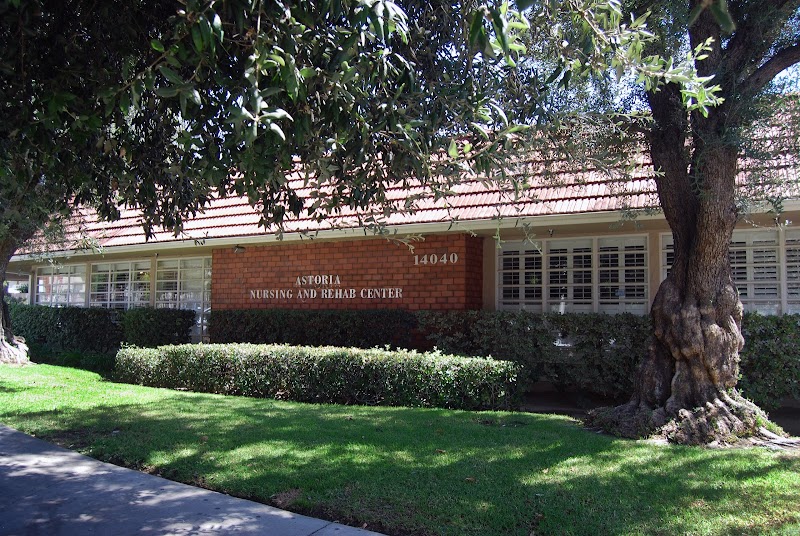
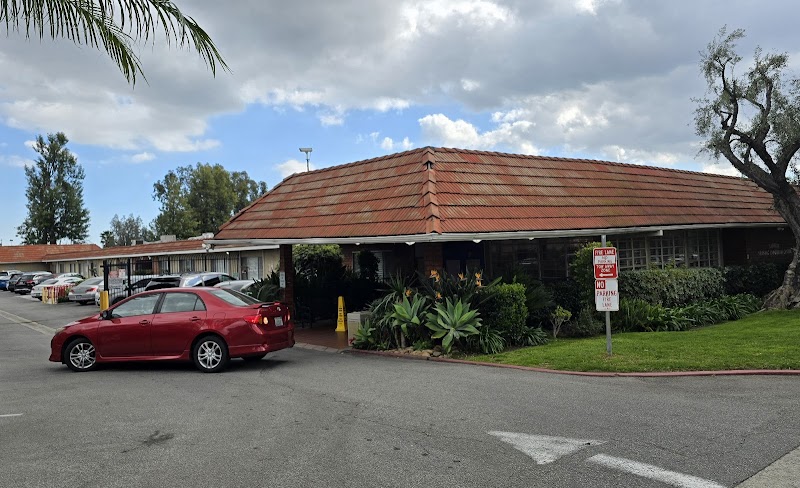
ASTORIA NURSING AND REHAB CENTER

14040 ASTORIA STREET, SYLMAR, CA 91342 (818) 367-5881
For profit - Limited Liability company 218 Beds Independent Data: November 2025
Trust Grade
33/100
#976 of 1155 in CA
Last Inspection: May 2025

Inspected within the last 6 months. Data reflects current conditions.

Overview

Astoria Nursing and Rehab Center has received a Trust Grade of F, indicating significant concerns about the quality of care provided. Ranking #976 out of 1155 facilities in California places it in the bottom half statewide, and at #271 of 369 in Los Angeles County, it is clear that there are many better options available locally. The facility is currently facing a worsening trend, with the number of reported issues increasing from 39 in 2024 to 43 in 2025. While staffing is a relative strength with a 4 out of 5 star rating and a turnover rate of 30%, the facility has been cited for serious incidents, including allowing physical and verbal abuse between residents, which resulted in injuries. Additionally, there are concerns about the environment, such as broken equipment and insufficient safety measures, which could negatively impact residents' well-being.

Trust Score
F
33/100
In California
#976/1155
Bottom 16%
Safety Record
Moderate
Needs review
Inspections
Getting Worse
39 → 43 violations
Staff Stability
○ Average
30% turnover. Near California's 48% average. Typical for the industry.
Penalties
✓ Good
$19,500 in fines. Lower than most California facilities. Relatively clean record.
Skilled Nurses
⚠ Watch
Each resident gets only 22 minutes of Registered Nurse (RN) attention daily — below average for California. Fewer RN minutes means fewer trained eyes watching for problems.
Violations
⚠ Watch
114 deficiencies on record. Higher than average. Multiple issues found across inspections.
★☆☆☆☆
1.0
Overall Rating
★★★★☆
4.0
Staff Levels
★★★★☆
4.0
Care Quality
★☆☆☆☆
1.0
Inspection Score
Stable
2024: 39 issues
2025: 43 issues

The Good

  • 4-Star Staffing Rating · Above-average nurse staffing levels
  • 4-Star Quality Measures · Strong clinical quality outcomes
  • Full Sprinkler Coverage · Fire safety systems throughout facility
  • No fines on record
  • Staff turnover below average (30%)

    18 points below California average of 48%

Facility shows strength in staffing levels, quality measures, fire safety.

The Bad

1-Star Overall Rating

Below California average (3.1)

Significant quality concerns identified by CMS

Staff Turnover: 30%

15pts below California avg (46%)

Typical for the industry

Federal Fines: $19,500

Below median ($33,413)

Minor penalties assessed

The Ugly 114 deficiencies on record

1 actual harm
Aug 2025 1 deficiency
CONCERN (D) 📢 Someone Reported This

A family member, employee, or ombudsman was alarmed enough to file a formal complaint

Potential for Harm - no one hurt, but risky conditions existed

Investigate Abuse (Tag F0610)

Could have caused harm · This affected 1 resident

**NOTE- TERMS IN BRACKETS HAVE BEEN EDITED TO PROTECT CONFIDENTIALITY** Based on interview and record review, the facility failed to ensure a thorough investigation was completed following an allegati...

Read full inspector narrative →
**NOTE- TERMS IN BRACKETS HAVE BEEN EDITED TO PROTECT CONFIDENTIALITY** Based on interview and record review, the facility failed to ensure a thorough investigation was completed following an allegation of financial abuse for one of three sampled residents (Resident 1).This deficient practice had the potential to place Resident 1 at risk for further financial abuse. Findings: During a review of Resident 1's admission Record (AR), the AR indicated the facility admitted Resident 1 on 12/11/2022 and was readmitted on [DATE] with diagnoses including Alzheimer's Disease (a disease characterized by a progressive decline in mental abilities), major depressive disorder (a mood disorder that causes a persistent feeling of sadness and loss of interest), and anxiety (a common mental health condition characterized by excessive worry, fear, and unease). During a review of Resident 1's Minimum Data Set (MDS - a resident assessment tool) dated 7/4/2025, the MDS indicated Resident 1 had the ability to understand and be understood. During a review of Resident 1 Visit and Patient Information dated 9/30/2024, the Visitation and Patient Information indicated Resident 1 can make needs known but cannot make medical decisions. During a review of Resident 1's Change in Condition (COC- when there is a sudden change in a resident's condition) Evaluation, dated 8/5/2025 at 3 p.m., the COC Evaluation indicated monitor Resident 1 for emotional distress and mental anguish related to alleged financial abuse of Resident 1's family. During a review of Resident 1's Social Services (SS) Notes dated 8/5/2024 at 3:04 p.m., the SS Notes indicated the Social Services Director (SSD) attention was called by the nurses and made aware that a male person (FM 2) was in Resident 1's room and asking him (Resident 1) to sign some paper. The SSD approached the guy and found out the guy was FM2. The SSD asked FM2 what was the paper that he (FM2) has for the resident to sign. FM2 stated that he (FM2) just wanted Resident 1 to sign the form Borrower Authorization to check his (Resident 1) bank information. The SSD said to FM2 that since Resident 1 had no capacity to make decisions medically and financially, the facility cannot have Resident 1 sign anything like that. When SSD asked FM2 if SSD could make a copy of the form, FM2 did not allow the SSD not even to hold the paper and was upset. During an interview on 8/18/2025 at 8:22 a.m. with the Director of Nursing (DON), the DON stated is not sure if the SSD did a five (5) day report on the alleged financial abuse for Resident 1. During an interview on 8/18/2025 at 11:17 a.m. with the SSD, the SSD stated was made aware of the alleged financial abuse of Resident 1 on 8/52025 in the afternoon after lunch when staff had paged for SSD and the DON. The SSD stated FM 2 was caught having Resident 1 try to sign a paper. The SSD stated the documents were from Bank Company 1 and it was titled borrower, it was a bank form to give authorization to review and access Resident 1's bank account. The SSD stated reported alleged financial abuse on the same day (8/5/2025) of incident because this was financial abuse. The SSD stated did not do a five (5) day report, the SSD stated was unaware she (SSD) had to do a five (5) day report thought she (SSD) just needed to send the SOC341 (a document used in California to report suspected abuse or neglect of an elder or dependent adult). The SSD stated the potential for not doing a five (5) day report is that the facility will not be able to show that the facility has done the interventions to keep Resident 1 safe and show that the facility has investigated the alleged abuse. During an interview on 8/18/2025 at 2:37 p.m. with the DON, the DON stated on 8/5/2025 the SSD informed the DON about Resident 1. The DON stated Resident 1 did not have the capacity to make decisions and FM2 was holding the borrower's paperwork in order to have Resident 1 sign the document. The DON stated the incident on 8/5/2025 with Resident 1 was an alleged possible abuse of financial abuse. The DON stated the facility must send a five (5) day report within five (5) days, should have been sent on 8/10/2025 but it was not done until today (8/18/2025). The DON stated there is potential for harm and or danger to residents if the facility is not following with the protocol. During a review of the facility's Policies and Procedures (P&P) titled, Abuse Prevention and Prohibition Program, last reviewed on 7/2025, the P&P indicated, each resident has the right to be free from abuse, neglect, mistreatment, and or misappropriation of property. The Administrator will provide the state survey agency, law enforcement and the Ombudsmen with a copy of the investigation report with five (5) days of the incident During a review of the facility's P&P titled, Definitions, last reviewed on 7/2025, the P&P indicated, financial abuse occurs when a person or entity does any of the following:A. Takes, secrets, appropriates, obtains, or retains real or personal property of an elder or dependent adult for a wrongful use or with intent to defraud or both;B. Assist in taking, secreting, appropriating, obtaining, or retaining real or personal property of an elder or dependent adult by undue influence.
Aug 2025 2 deficiencies
CONCERN (D) 📢 Someone Reported This

A family member, employee, or ombudsman was alarmed enough to file a formal complaint

Potential for Harm - no one hurt, but risky conditions existed

Quality of Care (Tag F0684)

Could have caused harm · This affected 1 resident

Based on observation, interview, and record review, the facility failed to ensure one of two sampled residents (Resident 1) received quality of care in accordance with professional standards of practi...

Read full inspector narrative →
Based on observation, interview, and record review, the facility failed to ensure one of two sampled residents (Resident 1) received quality of care in accordance with professional standards of practice to meet Resident 1's physical, mental, and/or psychosocial needs (consists of the emotional and social requirements that individuals have to feel safe, supported, and function effectively in their environment), when an interdisciplinary (IDT) meeting did not timely occur after Resident 1's fall on 8/2/2025 and in compliance with the facility's own policy and procedure. This failure had the potential to result in a delay in investigating and determining the causative factors that resulted in Resident 1's fall on 8/2/2025. Findings: During a review of Resident 1's admission Record, dated 7/6/2025, the admission Record indicated Resident 1's diagnoses included atrial fibrillation (a condition where the heart's upper chambers beat irregularly and too fast, instead of in a coordinated way), congestive heart failure (a condition in which the heart is unable to pump enough blood throughout the body), and diabetes mellitus type 2 (a condition where the body does not properly use insulin, which is a hormone that helps adjust the blood sugar levels in the body). During a review of Resident 1's Minimum Data Set (MDS - a resident assessment tool), dated 5/19/2025, the MDS indicated Resident 1 needs set up or clean up assistance with eating, personal hygiene, and dressing the upper body parts (resident completes the activity and the helper only needs to set up the activity or clean up after it). The MDS indicated Resident 1 needs supervision or touching assistance with toileting hygiene (resident completes the activity and the helper provides assistance throughout the activity or intermittently).During a review of Resident 1's care plan, dated 8/6/2025, the care plan indicated Resident 1 had an actual fall [related] to poor balance, unsteady gait and poor safety awareness. The care plan indicated nursing interventions included having the call light within reach, frequent visual checks, and keeping the bed in the lowest position.During a concurrent observation and interview on 8/5/2025 at 11:46 a.m. with Resident 1 inside her room, Resident 1 stated that approximately a few days ago, Resident 1 was walking out of the bathroom and tried to grab the handle of the wheelchair that was nearby to steady herself. Resident 1 pointed at the wheelchair which was observed to be approximately 2 feet from the bathroom door. Resident 1 stated that she couldn't reach it and then fell. Resident 1 stated she landed on the right side of her face and her right shoulder. Resident 1 stated that her roommate called the staff for help. During an interview on 8/6/2025 at 12:04 p.m. with Resident 2 sitting on her bed, Resident 2 stated she saw Resident 1 on the floor so she went out [of the room] to get help. Resident 2 stated she wanted to make sure someone came to help Resident 1. Resident 2 could not recall and provide any other additional information. During a phone interview on 8/6/2025 at 12:48 p.m. with LVN 1, LVN 1 stated that after Resident 2 informed her that Resident 1 needed help, LVN 1 went to Resident 1's room and saw her lying on the floor on her right side. LVN 1 stated per facility's policy and procedure, a resident who falls must be physically assessed and the findings must be documented. LVN 1 stated an incident report, care plan, and neurology check (an examination of a person's nervous system, consisting of the brain, spinal cord, and nerves, to assess how well they are functioning) must also be completed and documented after a resident fall. LVN 1 stated she think[s] IDT must meet post fall to discuss what happened and why a resident fell. During a concurrent interview and record review on 8/6/2025 at 2:49 p.m. with the Assistant Director of Nursing (ADON), Resident 1's electronic medical record was reviewed. ADON stated an IDT meeting is part of the protocol after a resident has fallen. ADON stated, we have a meeting because we try to find a solution so that it will not happen anymore. When asked if an IDT meeting occurred after Resident 1 fell on 8/2/2025, ADON stated she was unsure. ADON reviewed Resident 1's electronic medical record but could not provide documented evidence that confirmed an IDT meeting occurred after Resident 1 had fallen on 8/2/2025.During an interview on 8/6/2025 at 3:47 p.m. with the Director of Nursing (DON), the DON stated it is a standard of practice to investigate whenever a resident falls. The DON stated it is the facility's policy to have an IDT meeting within 72 hours of the fall incident, in which the interdisciplinary team will discuss and determine the cause of the fall. The DON stated an IDT meeting was not done within 72 hours of Resident 1's fall in accordance with the facility's policy and procedure. The DON stated the consequence of failing to have an IDT meeting post fall is the potential of additional injury to the resident if causative factors are not identified and addressed. During a review of the facility's policy and procedure titled, Fall Management Program, undated, the policy and procedure indicated the IDT-Falls Committee will meet within 72 hours of a fall. The P&P indicated the IDT-Falls Committee will review and document the [s]ummary of event following a fall; [r]oot cause analysis; [r]eferrals, as necessary; and [i]nterventions to prevent future falls.
CONCERN (D) 📢 Someone Reported This

A family member, employee, or ombudsman was alarmed enough to file a formal complaint

Potential for Harm - no one hurt, but risky conditions existed

Medical Records (Tag F0842)

Could have caused harm · This affected 1 resident

Based on observation, interview, and record review, the facility failed to ensure the medical record of one of two sampled residents (Resident 1) was complete and accurately documented when Resident 1...

Read full inspector narrative →
Based on observation, interview, and record review, the facility failed to ensure the medical record of one of two sampled residents (Resident 1) was complete and accurately documented when Resident 1's medical record did not contain a Post-Fall Assessment & Investigation that was required by the facility's own policy and procedure. This failure resulted in an incomplete medical record as the facility's policy and procedure mandates the completion of a Post-Fall Assessment & Investigation after a resident is discovered to have fallen.Findings: During a review of Resident 1's admission Record, dated 7/6/2025, the admission Record indicated Resident 1's diagnoses included atrial fibrillation (a condition where the heart's upper chambers beat irregularly and too fast, instead of in a coordinated way), congestive heart failure (a condition in which the heart is unable to pump enough blood throughout the body), and diabetes mellitus type 2 (a condition where the body does not properly use insulin, which is a hormone that helps adjust the blood sugar levels in the body). During a review of Resident 1's Minimum Data Set (MDS - a resident assessment tool), dated 5/19/2025, the MDS indicated Resident 1 needs set up or clean up assistance with eating, personal hygiene, and dressing the upper body parts (resident completes the activity and the helper only needs to set up the activity or clean up after it). The MDS indicated Resident 1 needs supervision or touching assistance with toileting hygiene (resident completes the activity and the helper provides assistance throughout the activity or intermittently).During a review of Resident 1's care plan, dated 8/6/2025, the care plan indicated Resident had an actual fall [related] to poor balance, unsteady gait and poor safety awareness. The care plan indicated nursing interventions include having the call light within reach, frequent visual checks, and keeping the bed in the lowest position.During a concurrent observation and interview on 8/5/2025 at 11:46 a.m. with Resident 1 inside her room, Resident 1 stated that approximately few days ago, Resident 1 was walking out of the bathroom and tried to grab the handle of the wheelchair that was nearby to steady herself. Resident 1 pointed at the wheelchair which was observed to be approximately 2 feet from the bathroom door. Resident 1 stated that she couldn't reach it and then fell. Resident 1 stated she landed on the right side of her face and her right shoulder. Resident 1 stated that her roommate called the staff for help. During an interview on 8/6/2025 at 12:04 p.m. with Resident 2 sitting on her bed, Resident 2 stated she saw Resident 1 on the floor so she went out [of the room] to get help. Resident 2 stated she wanted to make sure someone came to help Resident 1. Resident 2 could not recall and provide any other additional information.During a phone interview on 8/6/2025 at 12:48 p.m. with LVN 1, LVN 1 stated that after Resident 2 informed her that Resident 1 needed help, LVN 1 went to Resident 1's room and saw her lying on the floor on her right side. LVN 1 stated per facility's policy & procedure, a resident who falls must be physically assessed and the findings must be documented. LVN 1 stated an incident report, care plan, and neurology check (an examination of a person's nervous system, consisting of the brain, spinal cord, and nerves, to assess how well they are functioning) must also be completed and documented after a resident fall. When asked about the Post-Fall Assessment & Investigation, LVN 1 could not recall if she had completed that specific assessment and stated that it used to be done by the Assistant Director of Nursing or the Director of Nursing.During a concurrent interview and record review on 8/6/2025 at 2:49 p.m. with the Assistant Director of Nursing (ADON), Resident 1's electronic medical record was reviewed. The ADON stated the Post-Fall Assessment & Investigation is a facility requirement after a resident fall, and it should be completed by a RN (registered nurse). The ADON stated the Post-Fall Assessment & Investigation template document was created by the Director of Nursing in Resident 1's electronic record, as evidenced by DON's name listed, however the document was incomplete. ADON stated no one filled it out. During an interview on 8/6/2025 at 3:47 p.m. with the Director of Nursing (DON), the DON stated the facility's policy requires the completion of the Post-Fall Assessment & Investigation after a resident has fallen. DON stated the Post-Fall Assessment & Investigation for Resident 1 should have been completed after calling the doctor, but it didn't happen. DON stated the consequence of not completing the Post-Fall Assessment & Investigation is the facility is not able to re-assess Resident 1 because days have already passed since the fall incident. DON stated the Post-Fall Assessment & Investigation needs to be completed near the time of the incident in order to identify accurately why the resident fell. DON stated the importance of identifying causative factors is to avoid additional falls in the future and harm to the resident. During a review of the facility's policy and procedure (P&P) titled, Fall Management Program, undated, the P&P indicated [f]ollowing a resident's fall, the licensed nurse will complete an incident report and a Post-Fall Assessment & Investigation. The P&P stated the Fall Risk Assessments will be maintained in the resident's medical record.
May 2025 33 deficiencies
CONCERN (D)

Potential for Harm - no one hurt, but risky conditions existed

Resident Rights (Tag F0550)

Could have caused harm · This affected 1 resident

Based on observation, interview, and record review, the facility failed to provide care in a manner that maintained a resident's dignity for one (1) of 1 sampled resident (Resident 115) reviewed for d...

Read full inspector narrative →
Based on observation, interview, and record review, the facility failed to provide care in a manner that maintained a resident's dignity for one (1) of 1 sampled resident (Resident 115) reviewed for dignity by failing to ensure Certified Nursing Assistant (CNA) 3 was not standing over the resident while assisting the resident during mealtime. This deficient practice had the potential to negatively affect the residents' psychosocial wellbeing. Findings: During a review of Resident 115's Face Sheet (admission Record), the Face Sheet indicated the facility originally admitted the resident on 10/22/2023 and readmitted in the facility on 4/2/2025, with diagnoses including pneumonia (an infection/inflammation in the lungs), dementia (a progressive state of decline in mental abilities), and major depressive disorder (a mood disorder that causes a persistent feeling of sadness and loss of interest). During a review of Resident 115's History and Physical (H&P), dated 4/9/2025, the H&P indicated the resident did not have the capacity to understand and make decisions. During a review of Resident 115's Minimum Data Set (MDS - a resident assessment tool), dated 11/29/2024, the MDS indicated Resident 115 had severely impaired cognition (mental action or process of acquiring knowledge and understanding). The MDS further indicated Resident 115 required total assistance from staff with all activities of daily living (ADLs- activities such as bathing, dressing and toileting a person performs daily). During a concurrent observation and interview, on 5/7/2025, at 7:20 a.m., inside Resident 115's room, Resident 115 laid in bed with the head of the bed elevated to seat the resident upright. CNA 3 assisted Resident 115 with breakfast while standing over the resident. CNA 3 stated staff should be sitting at eye level while assisting residents with eating to respect the dignity of the residents. CNA 3 stated that she forgot to get a chair and that she should be sitting at eye level while assisting the resident with eating to respect the dignity of Resident 115. During a concurrent observation and interview, on 5/7/2025, at 7:23 a.m., outside Resident 115's room, with Registered Nurse (RN) 1, RN 1 stated CNA 3 was standing over the resident while assisting Resident 115 with eating breakfast. RN 1 stated staff should be sitting at eye level while assisting the residents with eating as it was a dignity issue. RN 1 stated CNA 3 should have grabbed a chair and sat at eye level while feeding Resident 115 to preserve the resident's dignity. During an interview, on 5/8/2025, at 3:41 p.m., with the Director of Nursing (DON), the DON stated the staff should be assisting the residents with eating at eye level and sitting down. The DON stated it was important that the staff be sitting at eye level while assisting the residents with eating to preserve the residents' dignity and to observe if the resident was chewing the food properly and/or if there were signs of choking or aspirations. The DON stated CNA 3 should have grabbed a chair and sat down while assisting Resident 115 with eating for safety and dignity. During a review of the facility's policy and procedure (P&P) titled, Assistance with Meals, last reviewed on 1/16/2025, the P&P indicated: - Residents shall receive assistance with meals in a manner that meets the individual. - Residents who cannot feed themselves will be fed with attention to safety, comfort, and dignity, for example not standing over residents while assisting them with meals. During a review of the facility's P&P titled, Dignity, last reviewed on 1/16/2025, the P&P indicated: - Each resident shall be cared for in a manner that promotes and enhances his or her sense of well-being, level of satisfaction with life, and feelings of self-worth and self-esteem - When assisting with care, residents are supported in exercising their rights, residents are provided with dignified dining experience.
CONCERN (D)

Potential for Harm - no one hurt, but risky conditions existed

Deficiency F0552 (Tag F0552)

Could have caused harm · This affected 1 resident

Based on observation, interview, and record review, the facility failed to ensure the resident and/or responsible party (RP) was informed in advance, of the risks and benefits of psychoactive medicati...

Read full inspector narrative →
Based on observation, interview, and record review, the facility failed to ensure the resident and/or responsible party (RP) was informed in advance, of the risks and benefits of psychoactive medication (a drug that changes brain function and results in alterations in perception, mood, consciousness or behavior ) for one of one sampled resident (Resident 121) reviewed for informed consent (voluntary agreement to accept treatment and/or procedures after receiving education regarding the risks, benefits, and alternatives offered) by failing to ensure Resident 121's Remeron (also known as mirtazapine, a medication used to treat depression [a mood disorder that causes a persistent feeling of sadness and loss of interest]). This deficient practice violated the resident's right to make informed decisions regarding the use of psychoactive medication. Findings: During a review of Resident 121's Face Sheet (admission Record), the Face Sheet indicated the facility admitted the resident on 2/18/2021 with diagnoses including chronic obstructive pulmonary disease (COPD-a chronic lung disease causing difficulty in breathing) with acute (sudden) exacerbation (worsening of the disease), schizophrenia (a mental illness that is characterized by disturbances in thought), and bipolar disorder (sometimes called manic-depressive disorder; mood swings that range from the lows of depression to elevated periods of emotional highs). During a review of Resident 121's Minimum Data Set (MDS-a resident assessment tool), dated 2/25/2025, the MDS indicated the resident had clear speech, makes self-understood, and had the ability to understand others. During a review of Resident 121's Physician Order, dated 5/2/2025, the Physician Order indicated to administer Remeron 15 milligrams (mg-a unit of measurement) by mouth (PO) every hour of sleep (QHS) for depression manifested by a poor appetite. During a review of Resident 121's History and Physical (H&P), dated 5/8/2025, the H&P indicated the resident can make needs known but cannot make medical decisions. During a concurrent interview and record review on 5/9/2025 at 11:04 a.m. with MDS Nurse (MDSN) 1, Resident 121's informed consents were reviewed. MDSN 1 stated there was no informed consent completed for Resident 121's use of Remeron. During a concurrent interview and record review on 5/9/2025 at 11:13 a.m. with Registered Nurse (RN) 2, Resident 121's informed consents and nursing progress notes were reviewed. RN 2 stated she missed completing the consent for the use of Remeron. RN 2 stated she should have had it done when she got the order on 5/2/2025. RN 2 stated she is still getting used to the process and missed them. RN 2 stated it is important to verify the consent because Remeron is a psychotropic medication, and it is the resident's right to be informed. During an interview on 5/9/2025 at 12:35 p.m. with the Director of Nursing (DON), the DON stated the licensed nurse, RN or licensed vocational nurse, are to obtain the informed consent from the resident and/or responsible party before the medication is administered. The DON stated this is to ensure Resident 121 is not being medicated unnecessarily. The DON stated Remeron could potentially cause unnecessary side effects such as nausea, vomiting, hypotension (low blood pressure), and dizziness. During a review of the facility's policy and procedure (P&P) titled, Informed Consent, which had a review and approved date of 1/16/2025, the P&P indicated that it is the facility's policy to facilitate, when necessary, the obtaining of Informed Consent for medical services by verification of the Informed Consent or by the Interdisciplinary Team, comprised at the minimum including the MDS Coordinator, Director of Nursing, Social Services Director, Attending Physician, and any other healthcare members necessary as determined by the resident's need and/or IDT may attend the meeting. The P&P indicated Informed Consent will be verified by the facility with each order.
CONCERN (D)

Potential for Harm - no one hurt, but risky conditions existed

Deficiency F0554 (Tag F0554)

Could have caused harm · This affected 1 resident

Based on observation, interview, and record review, the facility failed to ensure medication self-administration was clinically appropriate and failed to honor the resident's right to self-administer ...

Read full inspector narrative →
Based on observation, interview, and record review, the facility failed to ensure medication self-administration was clinically appropriate and failed to honor the resident's right to self-administer medications for one of three sampled residents (Resident 96) reviewed under the Accidents care area by failing to perform a medication self-administration assessment when staff had knowledge that the resident kept medication at the bedside for self-administration. This deficient practice violated the residents' right to self-administer medications and had potential for the residents to experience adverse effects (an undesired effect of a drug or other type of treatment) of the medication. Cross-reference F689 Findings: During a review of Resident 96's Face Sheet (admission Record), the Face Sheet indicated the facility admitted the resident on 8/1/2020 and most recently admitted the resident on 3/24/2025 with diagnoses including polyneuropathy (a disorder of the peripheral nervous system that may result in pain, discomfort, and mobility issues), essential (primary) hypertension (high blood pressure with an unknown cause) major depressive disorder (persistent feelings of sadness and loss of interest that can interfere with daily living), anxiety disorder (a mental health condition that may result in restlessness, irritability, feelings of nervousness, panic, and fear), binge eating disorder (a mental illness that causes chronic, compulsive overeating), and unspecified intellectual disabilities (a condition that involves limitations on intelligence, learning and everyday abilities necessary to live independently). During a review of Resident 96's Minimum Data Set (MDS - resident assessment tool), dated 4/4/2025, the MDS indicated the resident was able to understand others and was able to make herself understood. The MDS further indicated that the resident was dependent on staff for toileting and bathing, required substantial / maximal assistance for dressing and moving from lying to sitting, and required partial/moderate assistance for personal hygiene and rolling left and right in the bed. During a review of Resident 96's History and Physical (H&P), dated 3/26/2025, the H&P indicated the resident had the capacity to understand and make decisions. During a review of Resident 96's Physician Order Sheet April 2025, dated 3/28/2025, the Physician Order Sheet indicated the following orders: - On 3/25/2025, bupropion HCL XL (a psychotropic medication [any medication capable of affecting the mind, emotions, and behavior] used to treat depression) 300 milligram (mg - a unit of measurement) 24-hour tablet, extended release, give one tablet daily at the a.m. medication (med) pass by mouth, for major depressive disorder manifested by sad facial expressions. - On 3/24/2025, buspirone (a psychotropic medication used to treat anxiety) 10 mg tablet, give one tablet two times a day at the a.m. and dinner med pass by mouth for anxiety disorder manifested by repetitive health complaints. - On 3/24/2025, carvedilol (a medication used to treat high blood pressure) 25 mg tablet, one tablet two times daily at the a.m. and dinner med pass by mouth, for essential hypertension, hold (do not give) for systolic blood pressure (SBP - measures the pressure in your arteries [pathway that carries blood away from the heart] less than 110. - On 3/24/2025, lisdexamfetamine (a psychotropic medication used to treat binge eating disorder) 30 mg capsule, give one capsule daily at the a.m. med pass by mouth, for binge-eating disorder. - On 4/3/2024, Vitamin D3 (a supplement) 25 mcg (microgram, a unit of measurement), three tablets daily at the a.m. med pass for supplement. During a review of Resident 96's Self-Administration of Medication Assessment, dated 3/24/2025, the Self-Administration of Medication Assessment indicated the resident did not want to self-administer medication and the resident was not a candidate for safe self-administration of medication. During a review of Resident 96's Care Plan (CP) regarding activities of daily living, self-care deficit, initiated 3/31/2025, the CP indicated to minimize the resident's risk of decline by providing a safe environment, to allow the resident to be active in the decision-making process, and to respect the resident's rights. During a concurrent observation and interview, on 5/6/2025, at 10:50 a.m., with Resident 96, Resident 96 sat up in bed. The bedside rolling table had a clear plastic medicine cup containing two capsules and three tablets. Resident 96 stated the medication belonged to Resident 96 and the Licensed Vocational Nurse (LVN) left the medication on the table because the resident does not like to take all the medication at the same time. Resident 96 stated the resident forgot to take the medication that was left by the LVN. During a concurrent observation and interview, on 5/6/2025, at 11:04 a.m., with LVN 2, LVN 2 entered Resident 96's room and stated LVN 2 left the medication for Resident 96 to self-administer. LVN 2 stated Resident 96 was alert, and it was ok for Resident 96 to self-administer medication. Resident 96 swallowed the five medications in the cup. LVN 2 exited Resident 96's room and stated Resident 96 usually wants LVN 2 to leave the medication in the room to self-administer one at a time. LVN 2 stated because the resident is alert, LVN 2 often leaves medication in Resident 96's room to self-administer. During a concurrent interview and record review, on 5/6/2025, at 2:35 p.m., Resident 96's physician orders, Medication Administration Record (MAR- a daily documentation record used by a licensed nurse to document medications and treatments given to a resident) for 5/2025, and Nursing Progress Notes for 5/2025 were reviewed. LVN 2 stated the facility medication administration process is to take the resident's medication to bedside, watch the resident take the medication to make sure the resident safely administers all the medication, then document in the MAR the date and time the resident took the medication. LVN 2 stated the facility process for resident medication self-administration is that the resident should be assessed for the ability to safely self-administer medications and there should be a physician's order indicating what medications the resident may self-administer. LVN 2 stated Resident 96 did not have a physician's order or an assessment indicating the resident was capable of self-administering medication. LVN 2 stated LVN 2 did not do an assessment when Resident 96 requested to self-administered medication or notify anyone of Resident 96's preference to self-administer medications, but LVN 2 should have. LVN 2 stated LVN 2 left lisdexamfetamine, bupropion, buspirone, carvedilol, and one tablet of Vitamin D unattended at Resident 96's bedside for the resident to self-administer but the resident was not assessed and did not have a physician's order for medication self-administration. During a concurrent interview and record review, on 5/6/2025, at 3:01 p.m., with Registered Nurse (RN) 1, Resident 96's Self-Administration of Medication Assessment, dated 3/24/2025, was reviewed. RN 1 stated residents have the right to self-administer medication if they are safely able to. RN 1 stated a medication self-administration assessment is done upon admission and as needed if a resident requests to self-administer medication. RN 1 stated Resident 96's Self-Administration of Medication Assessment indicated the resident did not request to self-administer medication. RN 1 stated when Resident 96 requested to leave medications at bedside to self-administer without the nurse present, there should have been a new self-administration assessment completed because the resident was now requesting self-administration of medication. RN 1 stated there was no documented evidence that Resident 96 was re-assessed, but the resident should have been because it is a resident's right. During an interview, on 5/9/2025, at 9 a.m., with the Director of Nursing (DON), the DON stated residents have a right to self-administer medication, but there is a process to follow. The DON stated that when a resident requests to self-administer medication, there must be an assessment to determine if the resident is capable of safely self-administering medication, the physician is then notified, and if the physician agrees they will write an order for self-administration. The DON stated when LVN 2 left medications at bedside after Resident 96 expressed a desire to self-administer medications, the facility policy was not followed because the resident was not assessed for medication self-administration and medications cannot be left at bedside because the resident may not take the medication as ordered and the unattended medications are a risk to other residents. The DON stated every resident has the right to be assessed for the ability to self-administer medication when they request to. The DON stated when LVN 2 did not follow up with Resident 96's request to self-administer medication, there was a potential that the facility would go against the resident's rights and may result in psychosocial issues in Resident 96. During a review of the facility policy and procedure (P&P) titled, Resident Rights, last reviewed 1/16/2025, the P&P indicated federal and state laws guarantee certain basic rights to all residents of the facility. The rights include the resident's right to self-administer medications, if the interdisciplinary care planning team determines it is safe. During a review of the facility P&P titled, Self-Administration of Medications, last reviewed 1/16/2025, the P&P indicated residents have the right to self-administer medications if the interdisciplinary team has determined that it is clinically appropriate and safe for the resident to do so. As part of the evaluation comprehensive assessment the IDT assesses each resident's cognitive and physical abilities to determine whether self-administering medications is safe and clinically appropriate for the resident. The IDT considers the following factors when determining whether self-administration of medications is safe and appropriate for the resident: a. The medication is appropriate for self-administration. b. The resident is able to read and understand medication labels; c. The resident can follow directions and tell time to know when to take the medication. d. The resident comprehends the medication's purpose, proper dosage, timing, signs of side effects and when to report these to the staff; e. The resident has the physical capacity to open medication bottles, remove medications from a container and to ingest and swallow (or otherwise administer) the medication; and f. The resident is able to safely and securely store the medication. If it is deemed safe and appropriate for a resident to self-administer medications, this is documented in the medical record and the care plan. The decision that a resident can safely self-administer medications is reassessed periodically based on changes in the resident's medical and/or decision-making status. If the team determines that a resident cannot safely self-administer medications, the nursing staff administer the resident's medications. The IDT evaluates options which allow residents to safely participate in the medication administration process if they wish to do so. Residents who are identified as being able to self-administer medications arc asked whether they wish to do so. For self-administering residents, the nursing staff determines who is responsible (the resident or the nursing staff) for documenting that medications are taken. Self-administered medications are stored in a safe and secure place which is not accessible by other residents. Any medications found at the bedside that are not authorized for self-administration are turned over to the nurse in charge for return to the family or responsible party.
CONCERN (D)

Potential for Harm - no one hurt, but risky conditions existed

Deficiency F0558 (Tag F0558)

Could have caused harm · This affected 1 resident

Based on observation, interview, and record review, the facility failed to provide reasonable accommodation of resident needs and preferences by failing to ensure the call light (an alerting device fo...

Read full inspector narrative →
Based on observation, interview, and record review, the facility failed to provide reasonable accommodation of resident needs and preferences by failing to ensure the call light (an alerting device for nurses or other nursing personnel to assist a patient when in need) was connected to the wall plug for one (1) of 1 sampled resident (Resident 107) reviewed under the Environment task. This deficient practice had the potential to result in the delay of care and services and possible injury to residents when they are unable to call for assistance. Findings: During a review of Resident 107s Face Sheet (admission Record), the Face Sheet indicated the facility originally admitted the resident on 3/23/2020 and readmitted in the facility on 7/26/2024, with diagnoses including hemiplegia (total paralysis of the arm, leg, and trunk on the same side of the body) following cerebral infarct (stroke, loss of blood flow to a part of the brain) affecting right dominant side, aphasia (a disorder that makes it difficult to speak), and major depressive disorder (a mood disorder that causes a persistent feeling of sadness and loss of interest). During a review of Resident 107's History and Physical (H&P), dated 7/29/2024, the H&P indicated the resident did not have the capacity to understand and make decisions. During a review of Resident 107's Minimum Data Set (MDS - a resident assessment tool), dated 3/26/2025, the MDS indicated Resident 107 had severely impaired cognition (mental action or process of acquiring knowledge and understanding). The MDS further indicated Resident 107 required substantial/maximal assistance to total assistance from staff with all activities of daily living (ADLs - activities such as bathing, dressing and toileting a person performs daily). During a review of Resident 107's fall risk assessments, dated 12/24/2025 and 3/25/2025, the fall risk assessments indicated Resident 107 was a risk for falls. During a review of Resident 107's care plan (CP) on potential for falls, initiated on 8/8/2024, the CP indicated to keep call light and frequently used items within as one of the interventions to reduce or minimize risk of falls or injury. During a concurrent observation and interview, on 5/6/2025, at 11:44 a.m., inside Resident 107's room, with Certified Nursing Assistant (CNA) 5, Resident 107 laid in bed asleep with the call light clipped to the resident's sheet and disconnected from the wall. CNA 5 stated all residents' call lights should be plugged to the wall at all times to ensure the call light was functioning properly so the residents would be able to call for assistance when needed. CNA 5 stated the staff should ensure the call lights are plugged to the wall and functioning properly prior to leaving the residents' rooms. CNA 5 stated Resident 107's call light should have been plugged to the wall to make sure it was functioning properly so Resident 107 would be able to call for assistance when needed. CNA 5 stated not having a functioning call light placed Resident 107 at risk for a delay in meeting the resident's needs. During an interview, on 5/9/2025, at 11:31 a.m., with the Director of Nursing (DON), the DON stated the staff should ensure the residents' call lights are plugged in the wall and functioning properly prior to leaving the room so the residents would be able to call for assistance when needed. The DON stated CNA 5 should have ensured Resident 107's call light was connected to the wall and functioning properly. The DON stated if the call light was not functioning properly placed Resident 107 at risk of a delay in receiving the care the resident needed. During a review of the facility's recent policy and procedure (P&P) titled, Answering the Call Light, last reviewed on 1/16/2025, the P&P indicated to be sure that the call light is plugged in at all times, answer the residents' call as soon as possible, and to respond to the resident's needs and requests.
CONCERN (D)

Potential for Harm - no one hurt, but risky conditions existed

Deficiency F0655 (Tag F0655)

Could have caused harm · This affected 1 resident

**NOTE- TERMS IN BRACKETS HAVE BEEN EDITED TO PROTECT CONFIDENTIALITY** Based on interview and record review, the facility failed to develop and implement a baseline care plan (the instructions needed...

Read full inspector narrative →
**NOTE- TERMS IN BRACKETS HAVE BEEN EDITED TO PROTECT CONFIDENTIALITY** Based on interview and record review, the facility failed to develop and implement a baseline care plan (the instructions needed to provide effective and person-centered care of the resident that meet professional standards of quality care) for: 1. One of four sampled residents (Resident 291) reviewed for respiratory care (helping people breathe easier when they have trouble with their lungs or airways) by failing to develop and implement a baseline care plan on oxygen therapy (a treatment that provides extra oxygen to breathe in). 2. One of one sampled resident (Resident 289) reviewed for anticoagulant (a substance that is used to prevent and treat blood clots in blood vessels and the heart) use by failing to develop and implement a baseline care plan on the use of anticoagulant (Pradaxa). These deficient practices had the potential for delays in the provision of essential healthcare services affecting the resident's well-being. Findings: 1. During a review of Resident 291's Face Sheet (admission Record), the Face Sheet indicated the facility admitted the resident on 5/1/2025, with diagnoses including pneumonia (an infection/inflammation in the lungs), chronic respiratory failure (a condition that occurs when the lungs cannot get enough oxygen into the blood or eliminate enough carbon dioxide from the body), and chronic obstructive pulmonary disease (COPD, a chronic lung disease causing difficulty in breathing). During a review of Resident 291's History and Physical (H&P), dated 5/2/2025, the H&P indicated the resident had the capacity to understand and make decisions. During a review of Resident 291's Minimum Data Set (MDS - a resident assessment tool), dated 3/10/2025, the MDS indicated the resident had the ability to make self-understood and understand others, and had intact cognition (a participant who has sufficient judgment, planning, organization, self-control, and the persistence needed to manage the normal demands of the participant's environment). During a review of Resident 291's Physician Order Sheet, dated 5/1/2025, the Physician Order Sheet indicated an order for oxygen (O2) at two (2) liters per minute (L/min, how much oxygen flows into your lungs each minute) per nasal cannula (a device that gives you additional oxygen [supplemental oxygen or oxygen therapy] through the nose) three times a day. During a concurrent interview and record review, on 5/8/2025, at 10:13 a.m., with Registered Nurse (RN) 4, Resident 291's medical diagnosis, physician order sheet, and baseline care plan were reviewed and RN 4 stated there was no baseline care plan developed and implemented on Resident 291's use of oxygen therapy. RN 4 stated it was important to have a baseline care plan on oxygen therapy on Resident 291 to address the resident's primary medical problem which is respiratory in nature needing supplemental oxygen. During an interview, on 5/9/2025, at 11:10 a.m., with the Director of Nursing (DON), the DON stated the baseline care plan for Resident 291 regarding oxygen therapy should have been developed and implemented within 48 hours on admission. The DON stated it was important to have a baseline care plan on oxygen therapy since the resident came in with multiple respiratory issues. The baseline care plan will serve as a communication tool for all healthcare providers to deliver coordinated care. During a review of the facility's recent policy and procedure (P&P) titled, Care Plans - Baseline, last reviewed on 1/16/2025, the P&P indicated a baseline plan of care to meet the resident's immediate health and safety needs is developed for each resident within forty-eight (48) hours of admission. The baseline care plan includes instructions needed to provide effective, person-centered care of the residents that meet professional standards of quality care and must include the minimum healthcare information necessary to properly care for the residents including, but not limited to the following: a. Initial goals based on admission orders and discussion with the resident/representative; b. Physician orders; c. Dietary orders; d. Therapy services; e. Social services; and f. PASARR recommendation, if applicable. 2. During a review of Resident 289's Face Sheet, the Face Sheet indicated the facility admitted the resident on 4/25/2025, with diagnoses including chronic embolism (an obstruction or blockage in a blood vessel) and thrombosis (the formation of a blood clot [called a thrombus] inside a blood vessel) deep veins of left lower extremities, atrial fibrillation (an irregular and often rapid heart rhythm that originates in the heart's upper chambers [atria]), and atherosclerosis of aorta (the buildup of plaque [fatty deposits] inside the aorta, the main artery carrying blood from the heart to the body). During a review of Resident 289's H&P, dated 4/28/2025, the H&P indicated the resident can make needs known but cannot make medical decisions, poor judgment. During a review of Resident 289's MDS, dated [DATE], the MDS indicated the resident usually had the ability to make self-understood and usually understand others and had severe cognitive impairment (have a very hard time remembering things, making decisions, concentrating, or learning). The MDS indicated the resident was on a high-risk drug class anticoagulant. During a review of Resident 289's Physician Order Sheet, dated 4/25/2025, the Physician Order Sheet indicated an order of Pradaxa 150 milligrams (mg - a unit of weight) capsule (1 Cap) capsule by mouth two times daily. Notes: deep vein thrombosis (DVT). During a concurrent interview and record review, on 5/8/2025, at 9:25 a.m., with RN 4, Resident 289's medical diagnosis, physician orders sheet, and baseline care plan were reviewed and RN 4 stated there was no baseline care plan on the use of anticoagulant (Pradaxa) for Resident 289. RN 4 stated a baseline care plan should have been initiated on admission since the anticoagulant was ordered on admission to the facility. RN 4 stated the baseline care plan for anticoagulant is important to ensure the adverse effects (an undesired effect of a drug or other type of treatment, such as surgery) were monitored and the interventions were identified to combat the adverse effects of the medications. During a review of the facility's recent P&P titled, Care Plans- Baseline, last reviewed on 1/16/2025, the P&P indicated a baseline plan of care to meet the resident's immediate health and safety needs is developed for each resident within forty-eight (48) hours of admission. The baseline care plan includes instructions needed to provide effective, person-centered care of the residents that meet professional standards of quality care and must include the minimum healthcare information necessary to properly care for the residents including, but not limited to the following: a. Initial goals based on admission orders and discussion with the resident/representative; b. Physician orders; c. Dietary orders; d. Therapy services; e. Social services; and f. PASARR recommendation, if applicable
CONCERN (D)

Potential for Harm - no one hurt, but risky conditions existed

Quality of Care (Tag F0684)

Could have caused harm · This affected 1 resident

Based on interview and record review, the facility failed to follow up and schedule the resident's orthopedic (broad based medical and surgical specialty dedicated to the prevention, diagnosis, and tr...

Read full inspector narrative →
Based on interview and record review, the facility failed to follow up and schedule the resident's orthopedic (broad based medical and surgical specialty dedicated to the prevention, diagnosis, and treatment of diseases and injuries of the musculoskeletal system) appointment for Resident 112. This deficient practice had the potential to result in a delay of care and treatment for Resident 112. Findings: During a review of Resident 112's Face Sheet (admission Record), the Face Sheet indicated the facility admitted the resident on 3/22/2025 with diagnoses including disorder of bone, unilateral (affecting only one side of the body) primary osteoarthritis (a joint disease that causes pain, stiffness, and loss of mobility) on the right knee, and generalized muscle weakness. During a review of Resident 112's History and Physical (H&P), dated 3/24/2025, the H&P indicated the computed tomography (CT-a medical imaging procedure that uses X-rays and computer processing to create a detailed cross-sectional images of the body) results of the femur (the long bone located in the thigh, connecting the hip to the knee) noted Resident 112 had possible lytic erosive bone (bone lesions characterized by the destruction and loss of bone tissue) changes and to follow up with an orthopedic referral. The H&P indicated that the resident has the capacity to understand and make decisions but has poor insight (a lack of awareness). During a review of Resident 112's Physician Order, the Physician Order indicated: - Please arrange hematology (a branch of medicine that studies the blood, its components, and the disorders that affect them)/oncology (a branch of medicine that specializes in the diagnosis, treatment, and prevention of cancer [a group of diseases where cells in the body grow uncontrollably and can spread to other parts of the body]) and orthopedic appointment, dated 3/31/2025. - Please arrange an orthopedic appointment for lytic lesion left femur, dated 5/9/2025. During a review of Resident 112's Minimum Data Set (MDS-a resident assessment tool), dated 4/11/2025, the MDS indicated the resident makes self-understood and had the ability to understand others. During a concurrent interview and record review on 5/9/2025 at 10:26 a.m. with Registered Nurse (RN) 2, Resident 112's physician orders were reviewed. RN 2 stated the written order dated 3/31/2025 and today 5/9/2025 noted to make an orthopedic appointment. RN 2 stated there was no order placed for the follow-up appointment placed after 3/31/2025. RN 2 stated, for Resident 112, RNs are responsible for clarifying with the physician if they wanted a specific orthopedic doctor and she would follow-up and document on the progress notes. RN 2 stated a new order would be placed with the appointment date and time. During an interview on 5/9/2025 at 12:43 p.m. with the Director of Nursing (DON), the DON stated the licensed nurses, RN or LVN, who received the order should have called the orthopedic office to schedule the resident's appointment. The DON stated this is done right away so there is no delay in treatment. The DON stated Resident 112 could have worsening conditions if not followed up on time. The DON stated they expect the doctor's order to be completed on time and followed up promptly. The DON stated it should have been endorsed to the next shift, and it should be documented that it was endorsed when the appointment was not scheduled and/or the follow-up was not done. During a review of the facility's policy and procedure (P&P) titled, Ancillary Referrals, reviewed and approved date 1/16/2025, the P&P indicated the facility maintains arrangements with duly licensed medical professionals to provide a range of geriatric care within their specialties. The P&P indicated social services shall coordinate most resident referrals exceptions might include emergency or specialized services that are arranged directly by a physician or the nursing staff. The P&P indicated social services staff and nursing department coordinate appointment schedule and follow-up visits.
CONCERN (D)

Potential for Harm - no one hurt, but risky conditions existed

Pressure Ulcer Prevention (Tag F0686)

Could have caused harm · This affected 1 resident

**NOTE- TERMS IN BRACKETS HAVE BEEN EDITED TO PROTECT CONFIDENTIALITY** Based on observation, interview, and record review, the facility failed to ensure resident received care consistent with profess...

Read full inspector narrative →
**NOTE- TERMS IN BRACKETS HAVE BEEN EDITED TO PROTECT CONFIDENTIALITY** Based on observation, interview, and record review, the facility failed to ensure resident received care consistent with professional standards of practice to prevent pressure ulcers/injury (the breakdown of skin integrity due to pressure) for two of two sampled residents (Residents 153 and 289) reviewed for pressure injury by failing to ensure the low air loss mattress (LALM, a special kind of mattress designed to help prevent and treat skin problems like pressure sores [bedsores]) was set according to the residents' weight. These deficient practices had the potential for development and worsening of pressure ulcers/injuries to residents. Findings: Cross Reference F657 1. During a review of Resident 153's Face Sheet, the Face Sheet indicated the facility admitted the resident on 3/13/2024, with diagnoses including type 2 diabetes mellitus (DM, a disorder characterized by difficulty in blood sugar control and poor wound healing) with diabetic neuropathy (nerve damage that can occur due to diabetes), adult failure to thrive (due to declining physical and mental health, there is lost weight, depleted energy, and the diminished ability of an individual to care for oneself), and palliative care (specialized medical care for people with serious illnesses that focuses on improving their quality of life by managing symptoms and providing support, both physically and emotionally). During a review of Resident 153's History and Physical (H&P), dated 4/11/2025, the H&P indicated the resident can make needs known but cannot make medical decisions. During a review of Resident 153's Minimum Data Set (MDS, a resident assessment tool), dated 3/14/2025, the MDS indicated the resident had the ability to make self-understood and understand others and had moderate cognitive impairment (noticeable deficits that interfere with daily activities, including memory loss, language difficulties, skewed judgment, and reduced problem-solving abilities). The MDS indicated the resident was dependent to requiring supervision on mobility and activities of daily living (ADLs, activities such as bathing, dressing and toileting a person performs daily). The MDS indicated the resident was at risk for developing pressure ulcers/injuries and had pressure reducing device for bed. During a review of Resident 153's Physician Order Sheet, dated 4/15/2025, the Physician Order Sheet indicated an order for low air loss mattress continuous. During a review of Resident 153's Braden Scale for Predicting Pressure Sore Risk, dated 4/28/2025, the Braden Scale for Predicting Pressure Sore Risk indicated the resident was at high risk for developing pressure sore/injuries. During a review of Resident 153's Monthly/Weekly Vital Signs (measurements of the body's most basic functions), dated 5/5/2025, the Monthly/Weekly Vital Signs indicated a current weight of 158 pounds (lbs., a unit of weight) During a review of Resident 153's Care Plan (CP) titled Potential for Skin Integrity Impairment/Pressure Ulcers, dated 3/28/2025, the CP indicated to administer treatment/s per MD orders, keep MD aware of progress/response to the treatment plan. During a concurrent observation and interview on 5/6/2025, at 10:20 a.m., with Certified Nursing Assistant (CNA) 6, inside Resident 153's room, observed Resident 153's LALM set at 130 lbs. The sticker on the LALM machine indicated to keep LALM at 150-180 lbs. CNA 6 stated the LALM should be set according to resident's weight to prevent Resident 153 from developing pressure injuries. During a concurrent observation and interview on 5/6/2025, at 10:31 a.m., with Licensed Vocational Nurse (LVN) 1, inside Resident 153's room, observed Resident 153's LALM set at 130 lbs. The sticker on the LALM machine indicated to keep LALM at 150-180 lbs. LVN 1 stated the LALM should be set according to resident's weight to prevent Resident 153 from developing pressure injuries. During an interview on 5/9/2025, at 11:10 a.m., with the Director of Nursing (DON), the DON stated the LALM of Resident 153 should be set according to the resident's weight. The DON stated the purpose of the LALM is for skin maintenance and pressure sore/injury prevention. The DON stated the charge nurses, treatment nurses, and the CNAs are in charge of making sure the LALM is set according to the resident's weight. The CNAs cannot adjust the settings, but their responsibility is to alert the licensed nurses when the setting is off. The DON stated the failure of the staff to set the bed according to Resident 153's weight predisposed the resident's skin to break down. During a review of the facility's recent policy and procedure (P&P) titled Pressure Ulcers/Skin Breakdown- Clinical Protocol, last reviewed on 1/16/2025, the P&P indicated the physician will authorize pertinent orders related to wound treatments, including pressure reduction surfaces, wound cleansing and debridement approaches, dressings (occlusive, absorptive, etc.), and application of topical agents. During a review of the facility provided Manufacturer's Specification on DynaRest Airfloat 100 Air Mattress with Pump (LALM 1), undated, the Manufacturer's Specification indicated the LALM 1 Mattress is designed for bed sore and wound care therapy treatment and prevention, which may occur during an extended hospital stay and nursing home/long term care environment. Pressure Adjust Knob (adjustable by patient's weight). Turn the Pressure Adjust Knob to set a comfortable pressure level by using the weight scale as a guide. 2. During a review of Resident 289's Face Sheet, the Face Sheet indicated the facility admitted the resident on 4/25/2025, with diagnoses including abnormalities of gait (a manner of walking or moving on foot) and mobility, muscle weakness, and chronic embolism (an obstruction or blockage in a blood vessel) and thrombosis (the formation of a blood clot inside a blood vessel) deep veins of left lower extremity. During a review of Resident 289's H&P, dated 4/28/2025, the H&P indicated the resident can make needs known but cannot make medical decisions, poor judgment. During a review of Resident 289's MDS, dated [DATE], the MDS indicated the resident usually had the ability to make self-understood and usually understand others and had severe cognitive impairment (significant difficulties with thinking, learning, remembering, and making decisions, to the point where daily life is greatly impacted). The MDS indicated the resident was dependent to requiring supervision on mobility and activities of daily living (ADLs). The MDS indicated the resident was at risk for developing pressure injuries and was on a pressure-reducing device for bed. During a review of Resident 289's Physician Order Sheet, dated 4/28/2025, the Physician Order Sheet indicated an order for low air loss mattress three times daily. During a review of Resident 289's Braden Scale for Predicting Pressure Sore Risk, dated 4/25/2025, the Braden Scale for Predicting Pressure Sore Risk indicated the resident was at high risk for developing pressure ulcer/injuries. During a review of Resident 289's Monthly/Weekly Vital Signs, dated 5/1/2025, the Monthly/Weekly Vital Signs indicated the resident's latest weight was 152 lbs. During a concurrent observation and interview on 5/6/2025, at 1:20 p.m., with LVN 3, inside Resident 289's room, observed Resident 289's LALM was set at 270 lbs. The sticker on the LALM machine indicated 120-150 lbs. LVN 3 stated the LALM's setting was incorrect, it should be between 120-150 lbs. LVN 3 stated the incorrect setting of the LALM can cause pressure sore/injuries on Resident 289. During an interview on 5/9/2025, at 11:10 a.m., with the DON, the DON stated the LALM of Resident 289 should be set according to the resident's weight. The DON stated the purpose of the LALM is for skin maintenance and pressure sore/injury prevention, the charge nurses, treatment nurses, and the CNAs are in charge of making sure the LALM is set according to the resident's weight. The CNAs cannot adjust the settings, but their responsibility is to alert the licensed nurses when the setting is off. The DON stated the failure of the staff to set the bed according to Resident 289's weight predisposed the resident's skin to break down. During a review of the facility's recent P&P titled Pressure Ulcers/Skin Breakdown- Clinical Protocol, last reviewed on 1/16/2025, the P&P indicated the physician will authorize pertinent orders related to wound treatments, including pressure reduction surfaces, wound cleansing and debridement approaches, dressings (occlusive, absorptive, etc.), and application of topical agents. During a review of the facility provided Manufacturer's Specification on LALM 1, undated, the Manufacturer's Specification indicated the LALM 1 Mattress is designed for bed sore and wound care therapy treatment and prevention, which may occur during an extended hospital stay and nursing home/long term care environment. Pressure Adjust Knob (adjustable by patient's weight). Turn the Pressure Adjust Knob to set a comfortable pressure level by using the weight scale as a guide.
CONCERN (D)

Potential for Harm - no one hurt, but risky conditions existed

Deficiency F0688 (Tag F0688)

Could have caused harm · This affected 1 resident

**NOTE- TERMS IN BRACKETS HAVE BEEN EDITED TO PROTECT CONFIDENTIALITY** Based on observation, interview, and record review, the facility failed to ensure one of six sampled residents (Resident 121) re...

Read full inspector narrative →
**NOTE- TERMS IN BRACKETS HAVE BEEN EDITED TO PROTECT CONFIDENTIALITY** Based on observation, interview, and record review, the facility failed to ensure one of six sampled residents (Resident 121) received appropriate Restorative Nursing Aide program (RNA, nursing aide program that help residents to maintain their function and joint mobility) services to prevent a decline in range of motion (ROM, full movement potential of a joint) by failing to provide Resident 121 with active assisted range of motion (AAROM, movement at a given joint with a person's own effort and assistance from an external force or another person) exercises to the left upper extremity (UE, shoulder, elbow, wrist, hand) during the 5/7/2025 RNA session, as ordered by a physician and according to Resident 121's care plan. This deficient practice had the potential for a decline in mobility, ROM, and overall functioning in Resident 121. Findings: During a review of Resident 121's Face Sheet (FS), the FS indicated Resident 121 admitted to the facility on [DATE] with diagnoses including but not limited to osteoarthritis (a progressive disorder of the joints, caused by a gradual loss of cartilage) and chronic obstructive pulmonary disease (COPD, a chronic lung disease causing difficulty in breathing) with exacerbation. During a review of Resident 121's physician's History and Physical Examination (H&P), the H&P indicated resident could make needs known but could not make medical decisions. During a review of Resident 121's Minimum Data Set (MDS, resident assessment tool) dated 2/25/2025, the MDS indicated Resident 121 had moderate cognitive (mental processes involved in gaining knowledge and comprehension, includes thinking, knowing, remembering, judging, problem-solving) impairment. The MDS indicated Resident 121 had functional limitation in range of motion on one side of the upper extremity and no limitations on the lower extremity (hip, knee, ankle, foot). The MDS also indicated Resident 121 required set up assistance with eating, moderate assistance with dressing, sit to stand, bed to chair transfers and to walk 50 feet with two turns. During a review of Resident 121's RNA Resident Care Plan (CP) dated 12/7/2024, the CP indicated Resident 121 had decreased ROM of the following joints: both UE shoulder, elbow, wrist, fingers and had the potential for further loss of ROM and decreased functional use. The CP goal indicated Resident 121 will maintain or improve ROM. The CP approach plan indicated RNA will provide gentle joint exercise to upper extremities AAROM once a day seven times a week. During a review of Resident 121's Physician Order Sheet May 2025, the Physician Order Sheet indicated an order dated 2/19/2021 for RNA to do both upper extremity (BUE) AAROM exercises seven times a week as tolerated. During an observation on 5/7/2025 at 10:00 a.m., Resident 121 was sitting up in a wheelchair in the hallway. Restorative Nursing Aide (RNA 1) completed ambulation with Resident 121 and proceeded to bring Resident 121 back to Resident 121's room. RNA 1 performed ROM exercises to Resident 121's right shoulder, elbow, wrist and fingers and RNA 1 put on a wrist/hand splint to the right wrist/hand. RNA 1 did not do any exercises to Resident 121's LUE. RNA 1 stated we are done with RNA and brought Resident 121 to the activities room. During an interview on 5/7/2025 at 12:10 p.m., the Director of Rehabilitation (DOR) stated the RNA program was to help prevent further decline and maintain current mobility and ROM status for each resident. DOR stated the therapists created an order for RNA program for the needs of each resident such as ambulation, AAROM, or PROM. DOR stated it was very important for residents to receive their RNA program for the resident's overall quality of life, circulation, and endurance. During an interview and record review on 5/7/2025 at 2:10 p.m., RNA 1 reviewed the RNA binder with Resident 121's RNA orders and stated Resident 121's RNA orders were to do AAROM to BUE. RNA 1 stated she only did AAROM to the RUE during RNA session today. RNA 1 stated she was supposed to do AAROM to both RUE and LUE, but did not do AAROM to the LUE because Resident 121 could move the LUE himself. During an interview on 5/9/2025 at 10:36 a.m., the Director of Nursing (DON) stated the RNA program was to prevent resident physical decline and to maintain a resident's current functional status. DON stated the RNA staff should follow the RNA orders because it ensured the resident received the RNA exercises that were ordered to prevent the resident's decline. DON stated if Resident 121 did not receive AAROM to the LUE during RNA treatment, then Resident 121 could have a decline in ROM, mobility, and functioning. During a review of the facility's policies and procedures titled, Restorative Nursing Services, the P&P indicated residents will receive restorative nursing care as needed to help promote optimal safety and independence.
CONCERN (D)

Potential for Harm - no one hurt, but risky conditions existed

Tube Feeding (Tag F0693)

Could have caused harm · This affected 1 resident

**NOTE- TERMS IN BRACKETS HAVE BEEN EDITED TO PROTECT CONFIDENTIALITY** 2. During a review of Resident 107's Face Sheet, the Face Sheet indicated the facility originally admitted the resident on 3/23...

Read full inspector narrative →
**NOTE- TERMS IN BRACKETS HAVE BEEN EDITED TO PROTECT CONFIDENTIALITY** 2. During a review of Resident 107's Face Sheet, the Face Sheet indicated the facility originally admitted the resident on 3/23/2020 and readmitted in the facility on 7/26/2024, with diagnoses including hemiplegia (total paralysis of the arm, leg, and trunk on the same side of the body) following cerebral infarct (stroke, loss of blood flow to a part of the brain) affecting right dominant side, aphasia (a disorder that makes it difficult to speak), and gastrostomy status (GT - a surgical opening fitted with a device to allow feedings to be administered directly to the stomach common for people with swallowing problems). During a review of Resident 107's H&P dated 7/29/2024, the H&P indicated the resident did not have the capacity to understand and make decisions. During a review of Resident 107's MDS, dated [DATE], the MDS indicated Resident 107 had severely impaired cognition (mental action or process of acquiring knowledge and understanding). The MDS further indicated Resident 107 required substantial/maximal assistance to total assistance from staff with all activities of daily living (ADLs - basic tasks that must be accomplished every day for an individual to thrive). The MDS indicated Resident 107 received GT feeding. During a review of Resident 107's Physician's Order Sheet, the Physician's Order Sheet indicated the following physician's orders: - 9/8/2024: Flush GT with 300 ml water every six (6) hours. - 10/17/2024: Continuous GT feeding of Glucerna 1.5 Cal at 60 milliliters per hour (ml/hr - a unit of measurement) for 20 hours to provide 1200 ml per 1800 calories (cal - a unit of measurement) per 24 hours via pump. Off at 9 a.m.; on at 1 p.m. During a review of Resident 107's care plan (CP) on GT feeding initiated on 7/26/2024, the CP indicated to flush tube per order as one of the interventions to prevent dehydration. During an observation on 5/6/2025 at 11:44 a.m., inside Resident 107's room, Resident 107's EF water flush bag hanging from the EF pole and the label did not indicate the administration rate and frequency of the water flush. During a concurrent observation and interview on 5/6/2025 at 12:15 p.m., inside Resident 107's room with Licensed Vocational Nurse (LVN) 7, LVN 7 stated the label on Resident 107's water flush bag did not indicate the administration rate and frequency of the water flush. LVN 7 stated when EF bags are changed by the night shift nurses, the water flush bag needs to be changed and indicate in the label the resident's name, room number, date and time started, administration rate, and frequency. LVN 7 stated Resident 107's water flush bag label should have indicated the administration rate and frequency of the water flush so the staff would be aware if Resident 107 was receiving the correct amount of water to prevent dehydration. During a concurrent interview and record review on 5/9/2025 at 11:48 a.m. reviewed a photograph of Resident 107's water flush bag label with the Director of Nursing (DON), the DON the water flush bag label did not indicate the administration rate and frequency for Resident 107's water flush. The DON stated EF bottles, water flush bags, and medication syringes are changed by the night shift nurses or as needed whenever the current bag finishes. The DON stated EF bottles and water flush bags should be labeled with the resident's name, room number, date and time started, administration rate, and frequency. The DON stated Resident 107's water flush bag label should have indicated the administration rate and frequency so the staff would be aware of the correct amount of water flush the resident needed. The DON stated if Resident 107 was not receiving the correct amount of water flushes, it placed the resident at risk for dehydration. During a review of the facility's recent policy and procedure (P&P) titled Enteral Feedings-Safety Precautions, last reviewed on 1/16/2025, the P&P indicated a purpose to ensure the safe administration of enteral nutrition. The P&P further indicated to prevent errors in administration: 1. Check the enteral nutrition label against the order before administration. Check the following information: a. Resident name, ID And room number b. Type of formula c. Date and time formula was prepared d. Route of delivery e. Access site f. Method (pump, gravity, syringe); and g. Rate of administration (mL/hour). Based on observation, interview, and record review, the facility failed to ensure the staff providing care and services to the resident who has a feeding tube (are soft plastic tubes through which liquid nutrition travels through the gastrointestinal tract [the series of organs that food and liquids pass through as they are digested, absorbed, and leave the body as feces]) are aware of, competent in, and utilize facility protocols regarding feeding tube nutrition and care for two of four sampled residents (Residents 53 and 107 ) reviewed for tube feeding by failing to ensure: 1. Resident 53's gastrostomy tube (g-tube, a feeding tube inserted through the abdomen into the stomach) Glucerna 1.2 (brand of formula feeding) was labeled with the time it was hung, and the water flush bag via pump had the time it was hung with its rate of infusion. 2. Resident 53's [NAME] valve (a three-way stopcock used with feeding tubes, specifically to protect healthcare workers from accidental exposure to gastric fluids and other bodily fluids, while also facilitating access to the enteral system without opening the lines) was not disconnected from the g-tube when not in use. 3. Resident 53's [NAME] valve was capped when disconnected and hung in the feeding pump pole. 4. Resident 107's water flush bag indicated in the label the administration rate and frequency for the water flush. These deficient practices had the potential to result in altered nutritional status that can lead to over or under hydration, and gastrointestinal (GI, relating to stomach and intestines) infection to the resident. Findings: 1. During a review of Resident 53's Face Sheet (front page of the chart that contains a summary of basic information about the resident), the Face Sheet indicated the facility admitted the resident on 10/2/2023, with diagnoses of dysphagia (difficulty swallowing), severe protein-calorie malnutrition (a condition characterized by a severe deficiency in both protein and energy, leading to significant physical and mental impairments), and gastrostomy (a surgical opening fitted with a device to allow feedings to be administered directly to the stomach common for people with swallowing problems). During a review of Resident 53's History and Physical (H&P), dated 2/25/2025, the H&P indicated the resident did not have the capacity to understand and make decisions. During a review of Resident 53's Minimum Data Set (MDS, a resident assessment tool), dated 3/19/2025, the MDS indicated the resident sometimes had the ability to make self-understood and understand others and had severe cognitive impairments (significant difficulties with thinking, learning, remembering, and making decisions, to the point where daily life is greatly impacted). The MDS indicated the resident was on a feeding tube, mechanically altered diet (a special diet where food is modified to make it easier to chew and swallow), and therapeutic diet. During a review of Resident 53's Physician Order Sheet, the Physician Order Sheet indicated the following physician's orders: 10/2/2023 Flush tube every four hours. Notes: Flush g-tube with 100 cubic centimeters (cc, a unit of volume) water every (q) 4 hours via kangaroo pump (a simple-to-use, precision enteral [of or relating to or inside the intestines] feeding pump). 6/3/2024 Continuous g-tube feeding of three times daily. Notes: Glucerna 1.2 via kangaroo pump at 65 cc/hour (hr) times (X) 20 hours to infuse 1300 cc/1560 kilocalories (kcal, the amount of energy a food provides to the body) per 24 hours via kangaroo pump. On at 1 p.m., off at 9 a.m. or until total volume met. During a review of Resident 53's Care Plan (CP) titled Enhanced Barrier Precaution, dated 4/2/2025, the CP indicated an intervention of frequent and effective environmental cleaning. During a concurrent observation an interview on 5/6/2025, at 1:20 p.m., with Licensed Vocational Nurse (LVN) 3, inside Resident 53's room, observed Resident 53's water flush bag not labeled with the time it was hung and no rate of infusion, the feeding formula (Glucerna 1.2) was not labeled with the time it was hung, and the [NAME] valve was disconnected from the resident and was left with the feeding set hanging on the feeding pump pole without a cap. LVN 3 stated the water flush bag and the feeding formula should have been labeled with the time they were hung and the water flush bag should have been labeled with the rate of infusion, to ensure accurate administration of the formula and water for hydration. LVN 3 stated labeling the feeding formula and water flush bag with the required labels ensures the nutrition and hydration is delivered accurately to the resident and it also helps during shift changes to ensure the orders were carried over to the next shift. LVN 3 stated the [NAME] valve should not have been disconnected from the g-tube and left hanging without a cap to prevent gastrointestinal infection to Resident 53. During a concurrent interview and record review on 5/8/2025, at 9:51 a.m., with Registered Nurse (RN) 4, reviewed Resident 53's Diagnosis, Physician Order Sheet, and Care Plan. RN 4 stated there was an order for the g-tube feeding (Glucerna 1.2) and water flush on Resident 53. RN 4 stated the licensed staff should label the feeding formula bottle and the water flush bag with the name of the resident, the date and time they were hung, the name of the formula, the rate of infusion, and the initial of the licensed staff who hung the formula. RN 4 stated labeling the feeding formula and water flush bag with all the required information ensures the nutrition and hydration is administered accurately per physician's order and it helps the staff during shift change to verify the order accurately. During an interview on 5/9/2025, at 11:10 a.m., with the Director of Nursing (DON), the DON stated the licensed staff should have labeled the feeding formula bottle and the water flush bag of Resident 53 with the name, date and time of when the formula and the water flush bag was hanged, the name of the formula, the rate of infusion, and the initial of the staff who hung them. The DON stated labeling the feeding bottled and water flush bag with the required information ensures the nutrition and hydration of the resident is per physician's order and it helps staff transfer information to the next shift in an accurate manner to prevent errors of administration. The DON also stated it helps the staff determine if the formula is still good for administration or not. During a review of the facility's recent P&P titled Enteral Feedings- Safety Precautions, last reviewed on 1/16/2025, the P&P indicated to ensure the safe administration of enteral nutrition. Preventing errors in administration 1. Check the enteral nutrition label against the order before administration. Check the following information: a. Resident name, ID, and room number; b. Type of formula; c. Date and time formula was prepared; d. Route of delivery; e. Access site; f. Method (pump, gravity, syringe); and g. Rate of administration (mL/hour). 2. On the formula label document initials, date and time the formula was hung/administered, and initial the label was checked against the order. During a review of the facility-provided Kangaroo Omni Feeding Set With Flush Bag and ENPlus Spike, copyright 2024, indicated due to the risk of bacterial contamination and overall system accuracy, do not use feeding sets for greater than 24 hours.
CONCERN (D)

Potential for Harm - no one hurt, but risky conditions existed

Deficiency F0726 (Tag F0726)

Could have caused harm · This affected 1 resident

Based on interview and record review, the facility failed to ensure staff competency (a combination of knowledge, skills, abilities, and behaviors that enable an individual to perform a task or role s...

Read full inspector narrative →
Based on interview and record review, the facility failed to ensure staff competency (a combination of knowledge, skills, abilities, and behaviors that enable an individual to perform a task or role successfully) were performed annually (yearly) for one of six sampled staff (Certified Nursing Assistant [CNA] 1). This failure had the potential to affect the care necessary to provide nursing care and related services to meet resident needs safely. Findings: During a concurrent interview and record review, on 5/8/2025, at 7:58 a.m., with the Director of Staff Development (DSD), CNA 1's employee file was reviewed. CNA1's employee file indicated CNA 1 was employed by the facility on 11/8/2022. CNA 1's last skills competency was dated 1/2024. The DSD stated the next skills competency for CNA 1 will be on 11/2025 which is the month CNA 1 was hired. During an interview on 5/8/2025, at 8:10 a.m., with the DSD, the DSD stated she (DSD) was assigned to evaluate CNAs for skills competencies. The DSD stated CNA's skills and knowledge competencies were evaluated annually and as needed. During a concurrent interview and record review, on 5/9/2025, at 11:10 a.m., with the Director of Nursing (DON), the facility's policy and procedure (P&P) titled, Performance Evaluations, dated 9/2020 and last reviewed on 1/16/2025, the P&P indicated, The job performance of each employee shall be reviewed and evaluated at least annually. Performance evaluations may be used in determining employee promotions, shift or position transfers, demotions, terminations, wage increase, and to improve the quality of the employee's work performance. The written performance evaluations will contain the directors and or supervisors' remarks and suggestions, any action that should be taken (example given further training) and goals. The DON stated skills competency are done annually. The DON stated the importance of skills competency was to ensure nurses are updated, skilled and knowledgeable of their nursing skills, and to know nurse's competency level. The DON stated CNA 1 should have had a skills competency on 1/2025 a year after the last skills competency. The DON stated the annual skills competency was already late for CNA 1. The DON stated the DSD failed to perform a skills competency check annually. The DON stated the facility does not have a specific policy for skills competency, but the facility follows the policy for Performance Evaluation since skills competency was part of the performance evaluation. During a review of facility's P&P titled, Staffing, Sufficient and Competent Nursing, dated 8/2022 and last reviewed on 1/16/2025, the P&P indicated, Our facility provides sufficient numbers of nursing staff with the appropriate skills and competency necessary to provide nursing and related care and services for all residents in accordance with resident care plans and the facility assessments. Licensed nurses and certified nursing assistants are available 24 hours a day, seven days a week to provide competent resident care service including: a. assuring resident safety. b. attaining or maintaining the highest practicable physician mental, and psychosocial well-being of each resident. c. assessing, evaluating, planning and implementing resident care plans and. d. responding to resident needs.
CONCERN (D)

Potential for Harm - no one hurt, but risky conditions existed

Unnecessary Medications (Tag F0759)

Could have caused harm · This affected 1 resident

**NOTE- TERMS IN BRACKETS HAVE BEEN EDITED TO PROTECT CONFIDENTIALITY** Based on observation, interview, and record review, the facility failed to ensure that its medication error rate was less than f...

Read full inspector narrative →
**NOTE- TERMS IN BRACKETS HAVE BEEN EDITED TO PROTECT CONFIDENTIALITY** Based on observation, interview, and record review, the facility failed to ensure that its medication error rate was less than five percent (% - one per one hundred), two medication errors out of 31 total opportunities contributed to an overall medication error rate of 6.45% affecting two of five sampled residents (Resident's 3 and 62), observed for medication administration by: 1. Failing to ensure Licensed Vocational Nurse (LVN) 1 administered docusate sodium (medication used to treat constipation [bowel movements are infrequent, and the stool is hard and difficult to pass]) 250 milligram (mg - metric unit of measurement, used for medication dosage and/or amount) to Resident 3 as per physician order. LVN 1 administered 100 mg on 5/6/2025. 2. Failing to ensure LVN 2 checked the docusate sodium 250 mg expiration date before medication administration to Resident 62. The docusate sodium bottle had an expiration date of 4/2025. These failures had the potential to result in Resident 3 and 62 experiencing adverse medication effects (unwanted, uncomfortable, or dangerous effects that a medication may have) and medication error. Findings: a. During a review of Resident 3's Face Sheet (admission Record), the Face Sheet indicated the facility admitted Resident 3 on 9/19/2018 with diagnoses including chronic obstructive pulmonary disease (COPD - a chronic lung disease causing difficulty in breathing), history of falling, and fibromyalgia (chronic condition that causes widespread pain, fatigue, and other symptoms like sleep disturbances). During a review of Resident 3's Minimum Data Set (MDS - a resident assessment tool), dated 3/4/2025, the MDS indicated Resident 3's cognitive (mental action or process of acquiring knowledge and understanding) skills for daily decisions were moderately impaired. During a review of Resident 3's History and Physical (H&P - a medical examination that involves a doctor taking a resident's medical history, performing a physical exam, and documenting their findings), dated 9/12/2024, the H&P indicated Resident 3 had decision making capacity. During a review of Resident 3's Physician Order Sheet, dated 10/1/2018, the Physician Order Sheet indicated docusate sodium 250 mg one capsule two times a day for constipation. During a review of Resident 3's Care Plan, dated 12/17/2024, about potential constipation, the Care Plan indicated an intervention to administer medications as ordered. During an observation, on 5/6/2025, at 8:15 a.m., outside of Resident 3's room, LVN 1 prepared one tablet of stool softener (medication used to treat constipation) 100 mg tablet and administered to Resident 3 on 5/6/2025 at 8:27 a.m. During a concurrent interview and record review, on 5/7/2025, at 9:22 a.m., with Registered Nurse (RN) 2, Resident 3's Physician Order, dated 10/1/2018, was reviewed. RN 2 stated Resident 3's Physician Order indicated docusate sodium 250 mg twice a day. RN 2 stated LVN 1 should have given 250 mg as per physician order and not 100 mg. RN 2 stated giving medication less than the order will not be as effective. RN 2 stated LVN 1 did not follow the physician order. During an interview, on 5/7/2025, at 9:51 a.m., with the Director of Staff Development (DSD), the DSD stated LVN 1 should compare the physician order with the medication label. The DSD stated LVN 1 did not follow the physician order. The DSD stated medication will be less effective to treat Resident 3's constipation. During a concurrent interview and record review, on 5/9/2025, at 11:10 am., with the Director of Nursing (DON), the facility's policy and procedure (P&P) titled, Administering Medications, dated 4/2019 and last reviewed on 1/16/2025, was reviewed and the P&P indicated, Medications are administered in accordance with prescriber's orders, including any required time frame. The DON stated LVN 1 should have followed the physician order to give Resident 3 with docusate sodium 250 mg. The DON stated LVN 1 gave 100 mg of docusate sodium which is less than the physician order. The DON stated 100 mg will not be effective in treating Resident 3's constipation. The DON stated Resident 3's constipation could prolong and cause discomfort. b. During a review of Resident 62's Face Sheet, the Face Sheet indicated the facility admitted Resident 62 on 3/16/2025 with diagnoses including unspecified (unconfirmed) dementia (a progressive state of decline in mental abilities), constipation and essential hypertension (a type of high blood pressure where the underlying cause is unknown). During a review of Resident 62's MDS, dated [DATE], the MDS indicated Resident 62's cognitive skills for daily decisions were severely impaired. During a review of Resident 62's H&P, dated 3/17/2025, the H&P indicated Resident 62 can make needs known but cannot make medical decisions. During a review of Resident 62's Physician Order Sheet, dated 3/16/2025, the Physician Order indicated docusate sodium 250 mg, one capsule by mouth daily for bowel management. During a review of Resident 62's Care Plan, dated 4/30/2025, about potential for constipation, the Care Plan indicated an intervention to administer medications as ordered. During a concurrent observation and interview, on 5/6/2025, at 10:26 a.m., with LVN 2, outside of Resident 62's door, LVN 2 obtained one capsule of docusate sodium 250 mg from the docusate sodium bottle with an expiration date of 4/2025. LVN 2 notified Resident 62 that he (LVN 2) would start Resident 62's medication with the docusate sodium. The Surveyor informed LVN 2 to start with the other scheduled medications and docusate sodium last. Resident 62 started taking her (Resident 62)'s medication at 10:43 a.m. When LVN 2 was about to administer Resident 62's docusate sodium, Surveyor caught the attention of LVN 2 and showed the docusate bottle expiration date. LVN 2 stated docusate sodium 250 mg should not be given to Resident 62 because it was an expired medication. LVN 2 stated he did not look and did not notice the expiration date. During an interview, on 5/6/2025, at 10:51 a.m., with the Infection Preventionist (IP), the IP stated expired medication should not be given to Resident 62 for safety issues. The IP stated LVN 2 should have checked the docusate sodium expiration date before medication administration. During an interview, on 5/7/2025, at 9:51 a.m., with the DSD, the DSD stated nurses should check the expiration date all the time before medication administration. The DSD stated giving expired medication will not be as effective to treat Resident 62's constipation and could result in adverse effects. During an interview, on 5/7/2025, at 1:30 p.m., with LVN 2, LVN 2 stated he (LVN 2) did not read the expiration date of docusate sodium. LVN 2 stated he (LVN 2) should have read the medication label including the expiration date. LVN 2 stated Resident 3 could experience adverse effects from receiving expired medication. During an interview, on 5/7/2025, at 4:16 p.m., with the DON, the DON stated LVN 2 should have checked the medication expiration before medication administration to any resident. The DON stated LVN 2 failed to follow their policy for medication administration. The DON stated the facility failed to ensure proper training was provided to LVN 2 for medication administration. During a concurrent interview and record review, on 5/9/2025, at 11:10 a.m., with the DON, the facility's policy and procedure (P&P) titled, Administering Medications, dated 4/2019 and last reviewed on 1/16/2025, was reviewed and the P&P indicated, The expiration/beyond use date on the medication label is checked prior to administering. The DON stated Resident 62 can experience side effects (also known as adverse reactions, are unwanted undesirable effects that are possibly related to a drug) or adverse reaction from taking expired medications.
CONCERN (D)

Potential for Harm - no one hurt, but risky conditions existed

Deficiency F0776 (Tag F0776)

Could have caused harm · This affected 1 resident

**NOTE- TERMS IN BRACKETS HAVE BEEN EDITED TO PROTECT CONFIDENTIALITY** Based on interview and record review, the facility failed to provide a computed tomography scan (CT scan, medical imaging techni...

Read full inspector narrative →
**NOTE- TERMS IN BRACKETS HAVE BEEN EDITED TO PROTECT CONFIDENTIALITY** Based on interview and record review, the facility failed to provide a computed tomography scan (CT scan, medical imaging technique to create detailed cross-sectional images of the body) to one of 38 sampled residents (Resident 128) in a timely manner when a CT scan ordered on 9/9/2024 was not completed until 10/21/2024. This deficient practice had the potential to cause a delay in identification of diseases and delayed follow up orthopedic (medical specialty involving muscles and bones) care for Resident 128. Findings: During a review of Resident 128's Face Sheet (FS), the FS indicated Resident 128 admitted to the facility on [DATE] with diagnoses including, but not limited to, muscle wasting and atrophy (weakening, shrinking, and loss of muscle) and right humeral neck fracture (broken bone of upper arm). During a review of Resident 128's Physician's History and Physical Examination (H&P) dated 8/10/2024, the H&P indicated Resident 128 had the capacity to understand and make decisions. During a review of Resident 128's Minimum Data Set (MDS, resident assessment tool) dated 2/10/2025, the MDS indicated Resident 128 had moderate cognitive impairments (mental processes involved in gaining knowledge and comprehension, includes thinking, knowing, remembering, judging, problem-solving). The MDS indicated Resident 128 had functional limitation impairments in range of motion (ROM, full movement potential of a joint) on one side of the upper extremity (UE, shoulder, elbow, wrist, hand) and no impairments on the lower extremity (LE, hip, knee, ankle, foot). The MDS also indicated Resident 128 required supervision for eating, dependent assistance with dressing, bathing, and maximal assistance with sit to stand and bed to chair transfers. During a review of the Orthopedic Physician's Progress Notes dated 9/9/2024, the progress note indicated for a CT scan of the right shoulder with 3-D reformation (three dimensional views to help see and detect organs/bones in body) and return to orthopedic physician (ortho) in one week with the above ordered CT scan. During a review of Clinical Nursing Notes (CNN) dated 9/9/2024, the (CNN) indicated resident came back from appointment alert, verbally responsive, with new order to return in one week with CT scan of right shoulder with 3-D reformation, copy given to business office for authorization. During a review of CNN dated 9/12/2024, the CNN indicated ortho appointment cancelled due to resident not having a CT scan authorized for medical appointment with orthopedic physician. Once CT scan done and results are on a compact disc (CD) and hard copy, call ortho and schedule appointment. During a review of Resident 128's Authorization Fax Request Form (AFRF), the AFRF indicated the facility requested an authorization for a CT scan of right shoulder with 3D reformation on 10/9/2024. During a review of Resident 128's Insurance Fax dated 10/10/2024, the fax indicated Resident 128 did not require an authorization for a CT scan. During a review of Resident 128's orders, an order dated 10/11/2024 indicated CT scan of right shoulder on 10/17/2024, need CD and copy of the report. During a review of Resident 128's orders, an order dated 10/11/2024 indicated ortho follow up on 10/24/2024 at 12 PM, bring the CD and copy of the CT scan report. During a review of CNN dated 10/21/2024, the CNN indicated resident went to CT scan appointment via transport. During a review of Resident 128's CT scan report dated 10/21/2024, the CT scan report indicated the CT scan procedure date was 10/21/2024. During a review of the Orthopedic Physician's Progress Notes dated 10/24/2024, the Ortho MD indicated resident returned to office 45 days later with poor quality CT scan. During an interview and record review of Resident 128's medical records on 5/8/2025 at 10:28 a.m., Licensed Vocational Nurse (LVN 6) stated the facility made a follow up appointment with ortho after one week, but stated the appointment was cancelled because the facility was waiting for an authorization from the business office in order to schedule the CT scan appointment first. LVN 6 stated Resident 128 had to wait longer to return to the orthopedic physician because the facility was waiting for an authorization. During an interview on 5/8/2025 at 2:52 p.m., the Business Office Manager (BOM) stated the business office was in charge of submitting authorizations for radiology services such as CT scans. During an interview on 5/8/2025 at 3:01 p.m., BOM stated the facility requested an authorization for the CT scan on 10/9/2024 for Resident 128. BOM could not indicate the reason why the authorization was requested on 10/9/2024 when the order for the CT scan was received on 9/9/2024. During an interview on 5/9/2025 at 10:36 a.m., the Director of Nursing (DON) stated radiology orders, including CT scans, should be ordered the same day the order was received. DON stated physicians ordered CT scans to rule out fractures and to see internally so that physicians could diagnose cancers, etc. DON stated Resident 128 should not have received the CT scan more than a month later from the order on 9/9/2024 and that the CT scan was completed very late. DON stated the business office should have submitted the authorization right away, because Resident 128 needed the CT scan to follow up with the fracture. DON stated the delay in receiving the CT scan could cause potential harm to the resident and Resident 128 could have deteriorated. During a review of the facility's policy and procedure, revised 11/2018, titled, Lab and Diagnostic Test Results - Clinical Protocol, indicated, the physician will identify and order diagnostic .testing based on the resident's diagnosis and monitoring needs. The staff will process test requisitions and arrange for tests.
CONCERN (D)

Potential for Harm - no one hurt, but risky conditions existed

Deficiency F0802 (Tag F0802)

Could have caused harm · This affected 1 resident

Based on observation, interview, and record review, the facility failed to ensure kitchen staff were routinely trained and evaluated for competency skills when one of one staff (Cook 1) was unable to ...

Read full inspector narrative →
Based on observation, interview, and record review, the facility failed to ensure kitchen staff were routinely trained and evaluated for competency skills when one of one staff (Cook 1) was unable to verbalize and prepare puree mixed vegetables in a consistency that passed all established testing guidelines including spoon-tilt test (a test used to determine the stickiness of the food and the ability of the food to hold together) for residents on puree diet (foods that are smooth with pudding like consistency)/International Dysphagia Diet Initiative (IDDSI-a framework for categorizing food textures and drink thickness level four (4). These deficient practices resulted in an improper puree consistency which was too thick and did not pass the spoon-tilt test, which had the potential to place the residents at risk for aspiration (when something other than air gets into your airways). Cross-reference F805 Findings: During a review of the facility's menu spreadsheet (a sheet containing kind and amount of food each diet would receive), dated 5/8/2025, Thursday, the spreadsheet indicated residents on dysphagia puree diet would include the following foods in the tray: - Pureed chicken alfredo #6 scoop (holds 2/3 of a cup) - Pureed fettucini noodles #8 scoop (holds four (4) ounces [oz- a unit of measurement] of food) - Pureed mixed vegetables #8 scoop - Pureed garlic bread 1 each During an observation on 5/8/2025 at 11:47 a.m. of the trayline (an area where foods were assembled from the steamtable to resident's plate), observed puree mixed vegetables was too thick when plated on the plate. During an observation on 5/8/2025 at 11:51 a.m., the first meal cart was delivered out in the café dining room. During a concurrent test tray (a process of tasting, temping, and evaluating the quality of food) on 5/8/2025 at 11:52 a.m. of puree diet with [NAME] 1, [NAME] 1 stated the mixed vegetables puree did not fall off the spoon and there are still some left on the spoon. [NAME] 1 stated she checks the puree consistency by mixing clockwise and if she feels it's too thick then she would add more liquid when it's too watery she would add more thickener. [NAME] 1 stated she does not tilt the spoon and check if it falls off. [NAME] 1 stated she only mixes it that was all. [NAME] 1 stated that the puree mixed vegetables consistency was good even though not all the puree mixed vegetables fell off the spoon. During an interview on 5/9/2025 at 2:49 p.m. with the Dietary Director (DD), the DD stated she provides oversight by doing spot checks, monitor evaluation, and looking to see, and does taste testing several times a week. The DD stated she does random days, rotate during breakfast, lunch or dinner. The DD stated she did notice during the trayline the spoon-tilt test was done with [NAME] 1 and that the puree mixed vegetables did not completely fall off the spoon. The DD stated it should have been adjusted by adding more liquid, so it was not too thick. The DD stated she would do a monitoring on the puree consistency test and would make sure their process is set up. The DD stated that when puree foods are too thick the residents are at risk for aspiration and intolerance. During a concurrent interview and record review on 5/9/2025 at 2:55 p.m. with the DD, reviewed the facility's recipe, Mixed Vegetables, last reviewed and approved on 1/16/2025, indicated that all IDDSI texture modifications need to pass their established testing methods at the start and every 15 minutes for the duration of service. The DD stated according to the recipe that it should pass the test and [NAME] 1 should have adjusted the puree mixed vegetables before it was served and every 15 minutes for the duration of the service. During a review of the facility's P&P titled Standardized Recipes, dated 1/16/2025, the P&P indicated a standardized recipe adjusted to appropriate yield is available for each menu item and is used in the preparation of each. During a review of the facility's P&P titled Diet Manual, dated 1/16/2025, the P&P indicated the community designates a current diet manual, which is available for all medical, nursing, and food and nutrition services department staff to use as a reference for normal therapeutic nutrition. The P&P indicated the diet manual contains a description, rationale, and description of dietary deficiencies and the appropriate title for all diets served in the community. During a review of the facility's diet and nutrition care manual titled Dysphagia Puree (Level 4) Diet, dated 1/16/2025, the manual indicated a diet used in the dietary management of dysphasia with the food texture prepared lump dash free, not firm or sticky and holds its shape on a plate. The diet requires no biting or chewing. All puree foods must pass the fork drip test and supplemental tests. Any liquids must not separate from the food and the food can fall off of a spoon intact. The food is more easily swallowed and prevents aspiration. During a review of the IDDSI guideline website titled IDDSI dated 7/2019, the IDSSI website indicated, Level 4 Pureed is usually eaten with spoon, falls off spoon in a single spoonful when tilted and continues to hold shape on the plate, no lumps, not sticky, and liquid must not separate from solid. Food testing method: Spoon tilt test and Fork drip test. (IDDSI, July 2019, The IDDSI Framework section). During a review of the facility's job description (JD) titled Cook dated and signed by [NAME] 1 on 1/30/2025, the document indicated the [NAME] prepares and serves food including texture modified and therapeutic diets according to the facility menu. During a review of the facility's checklist titled Competency Checklist - Cook dated signed by the DD, undated, the checklist indicated knowledge of food practices and there were no topics about puree level 4 testing including spoon-tilt test and fork-lift test. During a review of the facility's JD titled Director of Food and Nutrition Services, undated, the JD indicated the director of food and nutrition services effectively manages the operation of the department of food and nutrition services. This includes planning, organizing, controlling, coordinating, directing and evaluating all aspects of food service, along with data collection for clinical charting, MDS participation, and care planning.
CONCERN (D)

Potential for Harm - no one hurt, but risky conditions existed

Deficiency F0825 (Tag F0825)

Could have caused harm · This affected 1 resident

**NOTE- TERMS IN BRACKETS HAVE BEEN EDITED TO PROTECT CONFIDENTIALITY** Based on interview and record review, the facility failed to provide Occupational Therapy (OT, rehabilitative profession that pr...

Read full inspector narrative →
**NOTE- TERMS IN BRACKETS HAVE BEEN EDITED TO PROTECT CONFIDENTIALITY** Based on interview and record review, the facility failed to provide Occupational Therapy (OT, rehabilitative profession that provides services to increase and/or maintain a person's capability to participate in everyday life activities) treatments five times a week according to resident's OT plan of treatment and care plan for one of six sampled residents (Resident 128). This deficient practice had the potential for Resident 128 to not meet OT treatment goals and have a decline in function. Findings: During a review of Resident 128's Face Sheet (FS), the FS indicated Resident 128 admitted to the facility on [DATE] with diagnoses including, but not limited to, muscle wasting and atrophy (weakening, shrinking, and loss of muscle) and right humeral neck fracture (broken bone of upper arm). During a review of Resident 128's Physician's History and Physical Examination (H&P) dated 8/10/2024, the H&P indicated Resident 128 had the capacity to understand and make decisions. During a review of Resident 128's Minimum Data Set (MDS, resident assessment tool) dated 2/10/2025, the MDS indicated Resident 128 had moderate cognitive impairments (mental processes involved in gaining knowledge and comprehension, includes thinking, knowing, remembering, judging, problem-solving). The MDS indicated Resident 128 had functional limitation impairments in range of motion (ROM, full movement potential of a joint) on one side of the upper extremity (UE, shoulder, elbow, wrist, hand) and no impairments on the lower extremity (LE, hip, knee, ankle, foot). The MDS also indicated Resident 128 required supervision for eating, dependent assistance with dressing, bathing, and maximal assistance with sit to stand and bed to chair transfers. During a review of Resident 128's Mobility CP dated 8/19/2024, the CP indicated Resident 128 had mobility impairment related to pain/discomfort and fracture of right humerus. The CP approach/intervention indicated for OT screen, evaluation, and treatment as indicated. During a review of Resident 128's OT Care Plan (CP) dated 1/22/2025 and revised 3/17/2024, the CP indicated the approach plan included OT five times a week once a day for four weeks. During a review of Resident 128's OT Evaluation and Plan of Treatment dated 1/22/2025, the OT Evaluation and Plan of Treatment indicated OT treatment five times a week daily for four weeks. During a review of Resident 128's OT Treatment Encounter Notes (TEN), the TEN indicated Resident 128 completed the following OT treatments per week: -week of 1/22/2025 - 1/28/2025: 1/22/2025, 1/23/2025, 1/24/2025, 1/25/2025, 1/26/2025 (five times a week) - week of 1/29/2025 - 2/4/2025: 1/29/2025, 1/30/2025, 1/31/2025, 2/3/2025, 2/4/2025 (five times a week) - week of 2/5/2025 - 2/11/2025: 2/5/2025, 2/6/2025, 2/7/2025, 2/8/2025, 2/10/2025 (five times a week) - week of 2/12/2025 - 2/18/2025: 2/13/2025, 2/15/2025, 2/16/2025, 2/17/2025 (four times a week) - week of 2/19/2025 - 2/25/2025: 2/21/2025 (one time a week) - week of 2/26/2025 - 3/4/2025: 3/4/2025 (one time a week) During an interview and record review of Resident 128's OT records on 5/7/2025 at 2:44 p.m., the Director of Rehabilitation (DOR) reviewed Resident 128's OT Evaluation and Plan of Treatment and OT TENs and stated Resident 128 should be seen five times a week for OT because it was the plan of treatment for Resident 128. DOR stated Resident 128 did not receive OT treatment five times a week and the OT TEN did not indicate why Resident 128 did not receive OT treatment. DOR stated it could have been scheduling but could not be sure. DOR stated Resident 128 was at risk of not meeting his OT goals such as strength and ADLs because he was not receiving his OT treatments per the OT plan of treatment. During a review of the facility's policy and procedures (P&P) titled, Staff Occupational Therapist, the P&P indicated, follow relevant physician orders for evaluation and treatment .in consultation with the resident's physician develop and implements treatment plans for residents.
CONCERN (D)

Potential for Harm - no one hurt, but risky conditions existed

Medical Records (Tag F0842)

Could have caused harm · This affected 1 resident

**NOTE- TERMS IN BRACKETS HAVE BEEN EDITED TO PROTECT CONFIDENTIALITY** 2. During a review of Resident 128's Face Sheet (FS), the FS indicated Resident 128 admitted to the facility on [DATE] with diag...

Read full inspector narrative →
**NOTE- TERMS IN BRACKETS HAVE BEEN EDITED TO PROTECT CONFIDENTIALITY** 2. During a review of Resident 128's Face Sheet (FS), the FS indicated Resident 128 admitted to the facility on [DATE] with diagnoses including, but not limited to, muscle wasting and atrophy (weakening, shrinking, and loss of muscle) and right humeral neck fracture (broken bone of upper arm). During a review of Resident 128's Physician's History and Physical Examination (H&P) dated 8/10/2024, the H&P indicated Resident 128 had the capacity to understand and make decisions. During a review of Resident 128's Minimum Data Set (MDS, resident assessment tool) dated 2/10/2025, the MDS indicated Resident 128 had moderate cognitive impairments (mental processes involved in gaining knowledge and comprehension, includes thinking, knowing, remembering, judging, problem-solving). The MDS indicated Resident 128 had functional limitation impairments in range of motion (ROM, full movement potential of a joint) on one side of the upper extremity (UE, shoulder, elbow, wrist, hand) and no impairments on the lower extremity (LE, hip, knee, ankle, foot). The MDS also indicated Resident 128 required supervision for eating, dependent assistance with dressing, bathing, and maximal assistance with sit to stand and bed to chair transfers. During a review of Resident 128's OT Care Plan (CP) dated 1/22/2025, the CP indicated the approach plan included OT five times a week once a day for four weeks. During a review of Resident 128's OT Progress Report dated 2/24/2025, the OT Progress Report indicated it was signed and completed on 3/4/2025. During a review of Resident 128's OT Progress Report dated 3/3/2025, the OT Progress Report indicated it was signed and completed on 3/17/2025. During a review of Resident 128's OT Discharge Summary (DC) dated 3/4/2025, the OT DC indicated it was signed and completed on 3/17/2025. During an interview and record review of Resident 128's OT records on 5/7/2025 at 2:44 p.m., the Director of Rehabilitation (DOR) reviewed Resident 128's OT Progress Notes dated 2/24/2025, 3/3/2025, and OT DC dated 3/4/2025 and stated the OT Progress Notes and OT DC were documented very late. DOR stated the OT documentation should be completed timely and within one to two days after. DOR stated it was important to complete the documentation timely, because the DC summary assisted in transitioning a resident to RNA services after DC from therapy and other disciplines and medical professionals may need to see the documentation to see how the resident did in therapy and get as accurate of a picture as possible. During an interview on 5/9/2025 at 10:36 a.m., the Director of Nursing (DON) stated it was important to document timely to ensure accuracy of the documentation and for all the healthcare providers to see everything the resident received in terms of treatments. DON stated it was important for others to see what was provided to the resident so that healthcare providers could use the information for care. During a review of the facility's policy and procedures (P&P) titled, Clinical Documentation Overview, the P&P indicated, a progress report must be completed .within seven days of the initial evaluation and every seven days as long as the resident is on caseload. Discharge summaries are completed .within seven days from the last day of treatment. During a review of the facility's policy and procedures (P&P) titled, Staff Occupational Therapist, the P&P indicated, complete all documentation in resident's chart including care plans .progress reports and discharge summaries. Based on observation, interview, and record review, the facility failed to maintain accurate clinical records in accordance with accepted professional standards and practices by failing to: 1. Ensure Licensed Vocational Nurse (LVN) 2 accurately documented in the medication administration record (MAR - a daily documentation record used by a licensed nurse to document medications and treatments given to a resident) the time of medication administration on 5/6/2025 for one of fourteen sampled residents (Resident 96) reviewed during the Accidents care area. This resulted in inaccurate documentation in Resident 96's medical chart. 2. Ensure Occupational Therapy (OT, rehabilitative profession that provides services to increase and/or maintain a person's capability to participate in everyday life activities) Progress notes and Discharge Summary were documented timely for one of six sampled residents (Resident 128). This deficient practice had the potential to cause inaccurate documentation and delay continuity of services for Resident 128. Findings: 1. During a review of Resident 96's Face Sheet (admission Record), the Face Sheet indicated the facility admitted the resident on 8/1/2020 and most recently admitted the resident on 3/24/2025 with diagnoses that included polyneuropathy (a disorder of the peripheral nervous system that may result in pain, discomfort, and mobility issues), essential (primary) hypertension (high blood pressure with an unknown cause) major depressive disorder (persistent feelings of sadness and loss of interest that can interfere with daily living), anxiety disorder (a mental health condition that may result in restlessness, irritability, feelings of nervousness, panic, and fear), binge eating disorder (a mental illness that causes chronic, compulsive overeating), and unspecified intellectual disabilities (a condition that involves limitations on intelligence, learning and everyday abilities necessary to live independently). During a review of Resident 96's Minimum Data Set (MDS - resident assessment tool) dated 4/4/2025, the MDS indicated the resident was able to understand others and was able to make herself understood. The MDS further indicated that the resident was dependent on staff for toileting and bathing, required substantial / maximal assistance for dressing and moving from lying to sitting, and required partial/moderate assistance for personal hygiene and rolling left and right in the bed. During a review of Resident 96's History and Physical (H&P), dated 3/26/2025, the H&P indicated the resident had the capacity to understand and make decisions. During a review of Resident 96's Physician Order Sheet, the Physician Order Sheet indicated the following orders: - Bupropion HCL XL (a medication used to treat depression) 300 milligram (mg, a unit of measurement) 24-hour tablet, extended release, give one tablet daily at the a.m. medication (med) pass by mouth, for major depressive disorder manifested by sad facial expressions, dated 3/25/2025. - Buspirone (a medication used to treat anxiety) 10 mg tablet, give one tablet two times a day at the a.m. and dinner med pass by mouth for anxiety disorder manifested by repetitive health complaints, dated 3/24/2025. - Carvedilol (a medication used to treat high blood pressure) 25 mg tablet, one tablet two times daily at the a.m. and dinner med pass by mouth, for essential hypertension, hold (do not give) for systolic blood pressure (SBP, measures the pressure in your arteries [pathway that carries blood away from the heart] less than 110, dated 3/24/2025. - Lisdexamfetamine (a medication used to treat binge eating disorder) 30 mg capsule, give one capsule daily at the a.m. med pass by mouth, for binge-eating disorder, dated 3/24/2025. - Vitamin D3 (a supplement) 25 mcg (microgram, a unit of measurement), three tablets daily at the a.m. med pass for supplement, dated 4/3/2025. During a review of Resident 96's CP regarding the resident has nine or more medications, dated 3/31/2025, the CP indicated there was a potential for adverse drug effects and drug interactions and to give medications as ordered. During a concurrent observation and interview on 5/6/2025 at 10:50 a.m., with Resident 96, observed Resident 96 sitting up in bed. Observed a clear plastic medicine cup containing two capsules and three tablets on the bedside rolling table. Resident 96 stated the medication belonged to Resident 96 and the Licensed Vocational Nurse (LVN) left the medication on the table because the resident does not like to take all the medication at the same time. Resident 96 stated the resident forgot to take all the medication that was left by the LVN. During a concurrent observation and interview on 5/6/2025 at 11:04 a.m., with LVN 2, observed LVN 2 entered Resident 96's room and stated LVN 2 left the medication for Resident 96 to self-administer, but the resident did not administer the medication. Observed Resident 96 swallowed the five medications in the cup. During a follow-up interview and record review on 5/6/2025 at 2:35 p.m., LVN 2 reviewed Resident 96's physician orders, MAR, and Nursing Progress Notes. LVN 2 stated the facility medication administration process is to take the resident's medication to bedside, watch the resident take the medication to make sure the resident safely administers all the medication, then document in the MAR the date and time the resident took the medication. LVN 2 stated the a.m. med pass time is one hour before or one hour after 9 a.m. LVN 2 stated Resident 96's lisdexamfetamine, bupropion, buspirone, carvedilol, and one tablet of Vitamin D were administered at 11 a.m. and not administered during the scheduled a.m. med pass time. LVN 2 stated LVN 2 documented in the MAR before Resident 96 administered the medications. LVN 2 reviewed Resident 96's MAR and noted LVN 2 documented the administration of Resident 96's medications as administered during the a.m. scheduled medication pass time, but the medications were administered late at 11 a.m. LVN 2 stated there was no documented evidence that Resident 96's medications were administered late. LVN 2 stated Resident 96's MAR did not accurately reflect the time the medications were administered. During an interview and record review on 5/6/2025 at 3:01 p.m., with Registered Nurse (RN) 1, RN 1 stated the process for documenting in the MAR is the LVN documents after the administration of the medication to ensure that the resident took the medication, and that the documentation is accurate. During a concurrent interview and record review on 5/9/2025 at 9 a.m., the Director of Nursing (DON) reviewed Resident 96's MAR, A.M. Med Pass 5/6/2025 record of administration times, physician orders, and the facility policy and procedures regarding medication administration. The DON stated the MAR is used by nursing staff and physicians to know what medications are administered, who administered the medications, and when the medications were administered. The DON stated it is important that the MAR is correct because the resident's medical record should be accurate and reflect the actual care provided. The DON stated LVN 2 did not follow the facility P&P when LVN 2 documented in the MAR that Resident 96's medications were administered at 8:31 a.m. on 5/6/2025, but the resident actually took the medications at 11 a.m. The DON stated when Resident 96's MAR was not accurate it could have potentially resulted in miscommunication with other staff regarding when the resident took the medication and an inaccurate medical record. During a review of the facility P&P titled, Documentation of Medication Administration, last reviewed 1/16/2025, the P&P indicated a medication administration record is used to document all medications administered. A nurse or certified medication aide (where applicable) documents all medications administered to each resident on the resident's medication administration record (MAR). The administration of medication is documented immediately after it is given. Documentation of medication administration includes, as a minimum: a) the resident's name; b) name and strength of the drug; c) dosage; d) route of administration; e) date and time of administration; During a review of the facility P&P titled, Charting and Documentation, last reviewed 1/16/2025, the P&P indicated all services provided to the resident, progress toward the care plan goals, or any changes in the resident's medical, physical, functional or psychosocial condition, shall be documented in the resident's medical record. The medical record should facilitate communication between the interdisciplinary team regarding the resident's condition and response to care. Documentation in the medical record will be objective (not opinionated or speculative), complete, and accurate.
CONCERN (D)

Potential for Harm - no one hurt, but risky conditions existed

Antibiotic Stewardship (Tag F0881)

Could have caused harm · This affected 1 resident

Based on interview and record review, the facility failed to implement the policy for antibiotic (medication used to treat infection) stewardship (efforts in doctors' offices, hospitals, long-term car...

Read full inspector narrative →
Based on interview and record review, the facility failed to implement the policy for antibiotic (medication used to treat infection) stewardship (efforts in doctors' offices, hospitals, long-term care facilities, and other health care settings to ensure that antibiotics are used only when necessary and appropriate, means prescribing the right drug at the right dose at the right time for the right duration) for one of three sampled residents (Resident 42) by failing to ensure Resident 42's Antibiotic Log (record that involves the systematic collection, analysis, and interpretation of data related to infections within a healthcare setting) antibiotics use was accurately filled up on 4/2025. This failure had the potential to increase antibiotic resistance (the ability of bacteria and other microorganisms to survive exposure to an antibiotic that would normally kill them) from unnecessary or inappropriate antibiotic use. Findings: During a review of Resident 42's Face Sheet (admission Record), the Face Sheet indicated the facility admitted Resident 42 on 2/12/2025, with diagnoses including other low back pain, history of falling, and essential hypertension (a type of high blood pressure where the underlying cause is unknown). During a review of Resident 42's History and Physical (H&P - a medical examination that involves a doctor taking a patient's medical history, performing a physical exam, and documenting their findings), dated 2/18/2025, the H&P indicated Resident 42 had the capacity to understand and make decisions. During a review of Resident 42's Minimum Data Set (MDS - a resident assessment tool), dated 2/18/2025, the MDS indicated Resident 42's cognitive (mental action or process of acquiring knowledge and understanding) skills for daily decisions were moderately impaired. During a review of Resident 42's Situation Background Assessment Recommendation (SBAR - technique that provides a framework for communication between members of the health care team about a resident 's condition) Communication Form, dated 4/10/2025, the SBAR indicated Resident 42 had urinary tract infection (UTI - an infection in the bladder/urinary tract) and the physician was notified on 4/10/2025, at 11:54 a.m. During a review of Resident 42's Physician Order Sheet, dated 4/2025, the Physician Order Sheet, dated 4/10/2025, indicated ciprofloxacin (medication used to treat infection) 500 milligram (mg - metric unit of measurement, used for medication dosage and/or amount) one tablet by mouth two times a day for seven days for UTI. The Physician Order Sheet dated 4/11/2025, indicated ciprofloxacin was discontinued. During a review of Resident 42's Physician Order Sheet, dated 4/11/2025, the Physician Order Sheet indicated Keflex (medication used to treat infection) 500 mg one capsule by mouth four times a day for seven days for UTI. During a review of the facility's Antibiotic Log, dated 4/2025, the Antibiotic Log indicated Resident 42's ciprofloxacin was started on 4/10/2025 and completed on 4/18/2025. During an interview, on 5/7/2025, at 1:04 p.m., with Registered Nurse (RN) 3, RN 3 stated Resident 42's order for ciprofloxacin was changed to Keflex on 4/11/2025, due to a urine culture and sensitivity ( a laboratory procedure used to diagnose UTI by identifying the bacteria present in a urine sample and determining which antibiotics are effective against them) result that Resident 42 was sensitive (the ability of specific antibiotics to inhibit or kill the bacteria identified in the urine sample) to ciprofloxacin. During an interview, on 5/7/2025, at 1:43 p.m., with the Infection Preventionist (IP), the IP stated Resident 42's urine was tested for urine culture and sensitivity collected on 4/11/2025, that resulted in Resident 42's resistance (when the bacteria changes and resists the effects of the antibiotic and the antibiotic no longer works well against the bacteria causing the infection) to ciprofloxacin. During a concurrent interview and record review, on 5/7/2025, at 2 p.m., with the IP, the facility's Antibiotic Log, dated 4/2025, was reviewed. The IP stated Resident 42's Keflex start date and completion date was not in the Antibiotic Log. The IP stated Resident 42's Keflex should be in the Antibiotic Log. The IP stated facility's Antibiotic log was incomplete. During an interview, on 5/7/2025, at 4:16 p.m., with the Director of Nursing (DON), the DON stated the IP should have updated the facility's Antibiotic Log. The DON stated the importance of Antibiotic Log was to make sure that the right antibiotic was given to Resident 42 following the physician order. During a concurrent interview and record review, on 5/9/2025, at 11:10 a.m., with the DON, the facility's policy and procedures (P&P) titled, Antibiotic Stewardship, dated 12/2016 and last reviewed on 1/16/2025, the P&P indicated, Antibiotics will be prescribed and administered to residents under the guidance of the facility's Antibiotic Stewardship Program. The purpose of the Antibiotic Stewardship Program is to monitor the use of the antibiotics in our residents. The DON stated the IP's Antibiotic Log was incomplete. The DON stated it is the facility's policy to monitor and document use of all antibiotics. During a review of facility's P&P titled, The Role of the Facility Infection Prevention/Control Nurse in General and During the Coronavirus 19 (COVID-19 - a highly contagious respiratory disease is thought to spread from person to person through droplets released when an infected person coughs, sneezes or talks) Pandemic (the worldwide spread of a new disease), dated 11/11/2020 and last reviewed on 1/16/2025, the P&P indicated, The facility's IP nurse collects, records and analyzes data related to both community and facility acquired infection.
CONCERN (E)

Potential for Harm - no one hurt, but risky conditions existed

Deficiency F0578 (Tag F0578)

Could have caused harm · This affected multiple residents

**NOTE- TERMS IN BRACKETS HAVE BEEN EDITED TO PROTECT CONFIDENTIALITY** 3. During a review of Resident 72's Face Sheet, the Face Sheet indicated the facility admitted the resident on 1/21/2025 with d...

Read full inspector narrative →
**NOTE- TERMS IN BRACKETS HAVE BEEN EDITED TO PROTECT CONFIDENTIALITY** 3. During a review of Resident 72's Face Sheet, the Face Sheet indicated the facility admitted the resident on 1/21/2025 with diagnoses including congestive heart failure (CHF-a heart disorder which causes the heart to not pump the blood efficiently, sometimes resulting in leg swelling), retention of urine, and generalized weakness. During a review of Resident 72's H&P, dated 1/22/2025, the H&P indicated Resident 72 had the capacity to make understand and make decisions. During a review of Resident 72's MDS, dated [DATE], the MDS indicated Resident 72 had an intact cognition (mental action or process of acquiring knowledge and understanding) and required setup/touching assistance with eating; substantial/maximal assistance to total assistance from staff with all other activities of daily living (ADLs - activities such as bathing, dressing and toileting a person performs daily). During a review of Resident 72's Advance Directive Acknowledgement Form dated 1/28/2025, the AD Acknowledgment Form indicated Resident 72 did not execute an AD and wanted to proceed in formulating an AD with the Ombudsman. During a concurrent interview and record, on 5/7/2025, at 4:20 p.m., with SS Designee 1, Resident 72's AD Acknowledgment Form, fax transmission report to the Ombudsman, and social services progress notes with SS Designee 1 were reviewed. SS Designee 1 stated upon admission, residents or their representative were asked by the social services department regarding presence of an AD and will be provided information if there is no AD and will be offered assistance in formulating an AD. SS Designee 1 stated if residents verbalized that they needed assistance in formulating an AD, the Ombudsman will be notified by faxing a copy of an Advance Health Care Directive (AHCD) Form indicating the resident's name. SS Designee 1 stated the fax transmission report indicated the form was faxed to the Ombudsman's office on 1/29/2025 at 9:06 a.m. SS Designee 1 stated there were two (2) notes pasted on the fax transmission report without the resident's name dated 3/5/2025 and 3/9/2025. SS Designee 1 stated the note dated 3/5/2025 indicated Resident 72 needed sometime regarding organ donation and the note dated 3/9/2025 indicated the resident would like to proceed with the AD. SS Designee 1 stated the facility did not follow up with the Ombudsman regarding the formulation of AD and just wait for the Ombudsman's availability to assist Resident 72. SS Designee 1 was unable to provide documentation in Resident 72's medical record if the assistance in formulating an AD was followed up with the Ombudsman. SS Designee state it had already been more than three (3) months since Resident 72 had verbalized interest in formulating an AD and that she should have followed up with the Ombudsman to prevent delay in emergency treatment or force emergency, life-sustaining procedures and not honor his wishes. During an interview, on 5/8/2025, at 2:00 p.m., with the Social Services Director (SSD), the SSD stated once a resident verbalizes that they need assistance in formulating an AD, the SS designee will notify the Ombudsman by faxing a copy of the AHCD Form indicating the resident's name in the form. The SSD stated that the Ombudsman comes to the facility at least every 2 months. The SSD stated 3 months is a long time in providing assistance to Resident 72 in formulating an AD. The SSD stated SS Designee 1 should have followed up with the Ombudsman at least quarterly during the interdisciplinary team (IDT - a group of health care professionals with various areas of expertise who work together toward the goals of the patients). The SSD stated SS Designee 1 should have documented in Resident 72's medical record any follow up with the Ombudsman and when the resident mentioned it again regarding the formulation of an AD as it placed Resident 72 at risk for a delay in providing emergency treatment or force emergency, life-sustaining procedures and not honoring Resident 72's wishes. During a review of the facility's P&P titled, Advance Directives, last reviewed on 1/16/2025, the P&P indicated: - The resident has the right to formulate an advance directive. Advance Directives are honored in accordance with state law and facility policy. - If the resident (deemed to have the capacity to make decisions by the Attending Doctor) indicated that he or she has not established an AD, the SSD/Designee will offer assistance in establishing an AD. - The SSD/Designee will document in the medical record the offer to assist and the resident's decision to accept or decline assistance. - The Nursing Department will notify the Attending Physician of AD so that appropriate orders can be documented in the resident's medical record and plan of care. 2. During a review of Resident 17's Face Sheet, the Face Sheet indicated the facility admitted the resident on 1/9/2024 with diagnoses that included acquired absence of the right toe, idiopathic neuropathy (damage to the nerves that control automatic body functions), major depressive disorder (persistent feelings of sadness and loss of interest that can interfere with daily living), and diabetes mellitus (DM - a disorder characterized by difficulty in blood sugar control and poor wound healing). During a review of Resident 17's MDS, dated [DATE], the MDS indicated the resident was able to understand others and was able to make himself understood. The MDS further indicated that the resident was dependent on staff for bathing, required substantial / maximal assistance for dressing, and required partial/moderate assistance for personal hygiene and mobility. During a review of Resident 17's H&P, dated 12/15/2024, the H&P indicated the resident had decision making capacity. During a review of Resident 17's Advanced Directive Acknowledgement Form, signed by the resident on 1/10/2024, the form indicated the resident had executed a Living Will and the terms of the AD would be followed by the health care facility and care givers. During a review of Resident 17's Care Plan (CP) titled, Cognitive Loss / Communication, initiated 1/9/2024, the CP indicated a goal that the resident would be able to maximize their cognitive skills and decision-making capabilities with an intervention to encourage choices of care. During a review of Resident 17's CP titled, Potential for Unavoidable Decline, initiated 1/28/2025, the CP indicated the resident was at risk for further decline in functioning with interventions including appropriate and necessary follow-up by the social services department. During a concurrent interview and record review, on 5/9/2025, at 9:07 a.m., with RN 8, Resident 17's Advanced Directive Acknowledgement Form, dated 1/10/2024, was reviewed. RN 8 stated the form indicated the resident had a living will. RN 8 stated Resident 8's living will was not in the resident's chart and there was no documentation regarding the resident's living will. RN 8 stated when a resident has a living will, the social services department is responsible for obtaining a copy of the living will. During an interview, on 5/9/2025, at 9:22 a.m., with SS Designee 1, SS Designee 1 stated when a resident indicates that they have a living will, it is SS Designee 1's responsibility to follow up and obtain a copy for the resident's chart. SS Designee 1 stated it was important to obtain a copy of the living will, because the living will has information regarding the resident's wishes and would be used by staff when the resident is no longer able to make decisions for himself. SS Designee 1 stated SS Designee 1 was made aware Resident 17's living will was not in the resident's chart. SS Designee 1 stated SS Designee 1 forgot to follow up to obtain a copy of Resident 17's living will. During an interview, on 5/9/2025, at 9:22 a.m., with the DON, the DON stated at the time of admission, SS Designee 1 is responsible for following up to ensure a copy of the resident's living will is obtained and placed in the resident's chart. The DON stated the importance of having the living will in the resident's chart is so the nurses know what care to provide based on the resident's wishes. The DON stated the facility P&P does not specifically indicate the living will should be in the resident's chart, but it is the facility process to have any documents related to a resident's health care wishes in the chart. The DON stated when Resident 17's living will was not followed up on and placed in the resident's chart there was a potential that staff would not follow the resident's wishes when the resident was no longer able to express themself. During a review of the facility's P&P titled, Advance Directives, last reviewed 1/16/2025, the P&P indicated the resident has the right to formulate an Advance Directive. Advance Directives are honored in accordance with state law and facility policy. Upon admission of a resident to the facility, the Social Services Director or Designee will provide written information to the resident concerning his/her right to make decisions concerning medical care, including the right to accept or refuse medical or surgical treatment, and the right to formulate an Advance Directive. Upon the admission of a resident, the Social Services Department will inquire about the existence of any written Advance Directive. Information about whether or not the resident has executed an Advance Directive shall be displayed in the medical record. The Interdisciplinary Team will review annually or as needed with the resident or responsible party his/her Advance Directive to ensure that such directives are still the wishes of the resident. The Nursing Supervisor will be required to inform emergency medical personnel of a resident's Advance Directive regarding treatment options and provide such personnel with a copy of such directive when transfer from the facility via ambulance or other means is made. Based on interview and record review, the facility failed to ensure resident's medical records were updated to show documented evidence that advance directives (a legal document indicating resident preference on end-of-life treatment decisions) were discussed with three of three sampled residents (Residents 94, 17, and 72). These deficient practices violated the resident's rights and/or representative's right to be fully informed of the option to formulate their advanced directives. Findings: 1. During a review of Resident 94's Face Sheet (admission Record), the Face Sheet indicated the facility admitted the resident on 12/6/2024, with diagnoses including acute respiratory failure (the lungs are having a hard time getting enough oxygen into the blood and/or removing carbon dioxide from the blood) with hypoxia (a shortage of oxygen reaching the body's tissues), pneumonia (an infection/inflammation in the lungs), and cerebral infarction (a condition where blood flow to the brain is interrupted, causing brain tissue to die). During a review of Resident 94's History and Physical (H&P), dated 12/7/2024, the H&P indicated the resident had the capacity to understand and make decisions. During a review of Resident 94's Minimum Data Set (MDS - a resident assessment tool), dated 3/31/2025, the MDS indicated the resident had the ability to make self-understood and understand others and had intact cognition (a participant who has sufficient judgment, planning, organization, self-control, and the persistence needed to manage the normal demands of the participant's environment). During a concurrent interview and record review, on 5/8/2025, at 9:16 a.m., with Registered Nurse (RN) 4, Resident 94's Medical Chart and Advance Directive Acknowledgement Form were reviewed. RN 4 stated there was no Advance Directive Acknowledgement Form on Resident 94's Medical Chart. RN 4 stated it was the responsibility of the Social Services Department to offer the resident or representative the information regarding the formulation of Advance Directive and they place a copy of the Advance Directive Acknowledgement Form in the Medical Chart once it is provided. RN 4 stated it was important to offer the formulation of Advance Directive information to the residents to honor their right to formulate an advanced directive and their right to informed consent. During a concurrent interview and record review, on 5/8/2025, at 9:48 a.m., with Social Services (SS) Designee 2, Resident 94's Medical Chart and Advance Directive Acknowledgement Form were reviewed. SS Designee 2 stated she cannot find the Advance Directive Acknowledgement Form on Resident 94's Medical Chart. SS Designee 2 stated the Social Services Department is responsible for providing the formulation of advance directive to residents and representatives and they file them on the Medical Charts. SS Designee 2 stated she knew she spoke to the family member about the formulation of the advance directive but without the Advance Directive Acknowledgement Form she will not be able to prove that it was provided. During an interview, on 5/9/2025, at 11:10 a.m., with the Director of Nursing (DON), the DON stated it was the responsibility of the Social Services Department to offer the information on the formulation of advance directives to residents or representatives. The DON stated the licensed staff should also check for the presence of the Advance Directive Acknowledgement Form in the Medical Chart to ensure it was provided. The DON stated it was important that they provided the information on formulating an advanced directive to Resident 94 to ensure the resident's right to formulate an advanced directive and informed consent was honored. During a review of the facility's recent policy and procedure (P&P) titled, Advance Directives, last reviewed on 1/16/2025, the P&P indicated the resident has the right to formulate an Advance Directive. Advance Directives are honored in accordance with state law and facility policy. Upon admission of a resident to our facility, the Social Services Director or Designee will provide written information to the resident concerning his/her right to make decisions concerning medical care, including the right to accept or refuse medical or surgical treatment, and the right to formulate an Advance Directive. Upon the admission of a resident, the Social Services Department will inquire about the existence of any written Advance Directive. Information about whether or not the resident has executed an Advance Directive shall be displayed in the medical record.
CONCERN (E)

Potential for Harm - no one hurt, but risky conditions existed

Safe Environment (Tag F0584)

Could have caused harm · This affected multiple residents

**NOTE- TERMS IN BRACKETS HAVE BEEN EDITED TO PROTECT CONFIDENTIALITY** Based on observation, interview, and record review, the facility failed to provide a safe, homelike environment for four of six ...

Read full inspector narrative →
**NOTE- TERMS IN BRACKETS HAVE BEEN EDITED TO PROTECT CONFIDENTIALITY** Based on observation, interview, and record review, the facility failed to provide a safe, homelike environment for four of six sampled residents (Residents 537, 17, 14, and 107) reviewed during the Environment facility task, by failing to: 1). Ensure the wall clock was set to show the current time of day for Resident 537. This deficient practice had the potential to result in increased confusion, especially to residents with cognitive impairments (deficits in mental functions like memory, thinking, or problem-solving). 2). Ensure Resident 17's broken vertical blind slats were replaced and not left at the bedside while pieces of cardboard were used to prevent light from entering the resident's room. This deficient practice had the potential to negatively affect the residents' psychosocial wellbeing and make the residents feel uncomfortable in their living space. 3). Ensure Resident 14's fall mat/floor mat (designed to help prevent injuries by providing a soft-landing surface for patients who may accidentally fall out of bed or lose their balance while standing or walking) was not worn out and had no visible tears. These deficient practices violated the resident's rights to a safe, clean, sanitary, and homelike environment. 4). Ensure the wall sockets at the head of Resident 107's bed did not have a crack and were in disrepair. This deficient practice had the potential to negatively affect the residents' psychosocial well-being and make the residents feel uncomfortable in their living space Findings: 1. During a review of Resident 537's Face Sheet (admission Record), the Face Sheet indicated the facility admitted the resident on 2/24/2025 with diagnoses including dementia (a progressive state of decline in mental abilities), major depressive disorder (a mood disorder that causes a persistent feeling of sadness and loss of interest), and schizophrenia (a mental illness that is characterized by disturbances in thought). During a review of Resident 537's History and Physical (H&P), dated 2/25/2025, the H&P indicated the resident does not have the capacity to understand and make decisions. During a review of Resident 537's Minimum Data Set (MDS-a resident assessment tool), dated 3/2/2025, the MDS indicated the resident had adequate hearing, unclear speech and adequate vision. The MDS indicated that the residents sometimes make self-understood and sometimes had the ability to understand others. The MDS indicated the resident was dependent on staff for ADLs. During a review of Resident 537's Activities of Daily Living (ADL-activities such as bathing, dressing and toileting a person performs daily) Self Care Deficit Care Plan, dated 3/5/2025, the ADL Self Care Deficit Care Plan indicated the resident will minimize the risk of decline with interventions including providing a safe environment. During an observation on 5/6/2025 at 2:15 p.m., at Resident 537's bedside, the wall clock displayed 04:50. During a concurrent observation and interview on 5/7/2025 at 8:09 a.m. with Licensed Vocational Nurse (LVN) 4 while at Resident 537's bedside, the wall clock displayed 04:50. LVN 4 stated the wall clock is showing the wrong time. LVN 4 stated it should be 8:09 a.m. the actual time. LVN 4 stated it should reflect the current time because it helps orient Resident 537 to the time of day. During an interview on 5/9/2025 at 12:42 p.m. with the Director of Nursing (DON), the DON stated it is everyone's responsibility to ensure the wall clock is working and to inform the maintenance right away. The DON stated the purpose of ensuring the wall clock is working is for the resident's reality orientation and the need to be oriented daily. The DON stated the resident could potentially experience disorientation or confusion. During a review of the facility's policy and procedure (P&P) titled, Quality of Life - Homelike Environment, with a review and approve date of 1/16/2025, the P&P indicated that residents are to be provided a safe, clean, comfortable and homelike environment and encouraged to use their personal belongings to the extent possible. 4. During a review of Resident 107s Face Sheet (front page of the chart that contains a summary of basic information about the resident), the Face Sheet indicated the facility originally admitted the resident on 3/23/2020 and readmitted in the facility on 7/26/2024, with diagnoses including hemiplegia (total paralysis of the arm, leg, and trunk on the same side of the body) following cerebral infarct (stroke, loss of blood flow to a part of the brain) affecting right dominant side, aphasia (a disorder that makes it difficult to speak), and major depressive disorder (a mood disorder that causes a persistent feeling of sadness and loss of interest). During a review of Resident 107's History and Physical (H&P) dated 7/29/2024, the H&P indicated the resident did not have the capacity to understand and make decisions. During a review of Resident 107's fall risk assessment dated [DATE] and 2/7/2025, the fall risk assessments indicated the resident was at a high risk for falls. During a review of Resident 107's Minimum Data Set (MDS, a resident assessment tool), dated 3/26/2025, the MDS indicated Resident 107 had severely impaired cognition (mental action or process of acquiring knowledge and understanding). The MDS further indicated Resident 107 required substantial/maximal assistance to total assistance from staff with all activities of daily living (ADLs - basic tasks that must be accomplished every day for an individual to thrive). During an observation on 5/6/2025 at 11:44 a.m. while inside Resident 107's room, 4 wall sockets were observed at the head of Resident 107's bed with 1 socket that was missing and another socket that had a crack. During a concurrent observation and interview on 5/6/2025 at 11:50 a.m. while inside Resident 107's room with Certified Nursing Assistant (CNA) 5, CNA 5 stated there was one wall socket that was missing and another 1 that had a crack located at the head of Resident 107's bed. CNA 5 stated the maintenance department is responsible for making sure the wall sockets were not in disrepair. CNA 5 stated when staff observed any equipment in disrepair, the maintenance department is notified as soon as possible. CNA 5 stated the wall sockets at the head of Resident 107's bed should have been repaired and covered immediately as the facility was not providing a homelike environment for Resident 107 as the facility is already his home. During a concurrent observation and interview on 5/6/2025 at 4 p.m. while inside Resident 107's room with the Maintenance Supervisor (MS), the MS stated the wall sockets at the head of Resident 107's bed was missing and cracked. The MS stated the maintenance department staff make rounds monthly to ensure any equipment in the residents' rooms is in good working condition. The MS stated staff are supposed to notify the maintenance department when something in the room or bed is in disrepair for resident safety. The MS stated the maintenance department should have been notified immediately to fix the wall sockets in Resident 107's room to provide a safe, and homelike environment for Resident 107. During a concurrent interview and record review on 5/9/2025 at 11:31 a.m. a photo of Resident 107's wall sockets located at head of the resident's bed with the Director of Nursing (DON) was reviewed. The DON stated Resident 107's wall sockets had 1 wall socket missing and another 1 that was cracked. The DON stated the maintenance department makes rounds to check on the rooms daily and ensure that the residents are provided with a safe, and homelike environment as the facility is already the residents' home. The DON stated CNA 5 should have notified MS immediately to replace the wall sockets. The DON stated if any equipment or furnishing is not in good working condition, the facility did not provide a safe and homelike environment for Resident 107. During a review of the facility's policy and procedure (P&P) titled, Quality of Life - Homelike Environment, last reviewed on 1/16/2025, the P&P indicated residents are provided with a safe, clean, comfortable environment. During a review of the facility's P&P titled, Maintenance Service, last reviewed on 1/16/2025, the P&P indicated: - Maintenance service shall be provided to all areas of the building, ground, and equipment - The maintenance department is responsible for maintaining the buildings, grounds, and equipment in a safe and operable manner at all times. - The following functions are performed by maintenance but are not limited to maintaining the building in good repair and free from hazards. 2. During a review of Resident 17's Face Sheet (admission Record), the Face Sheet indicated the facility admitted the resident on 1/9/2024 with diagnoses that included acquired absence of the right toe, idiopathic neuropathy (damage to the nerves that control automatic body functions), major depressive disorder (persistent feelings of sadness and loss of interest that can interfere with daily living), and diabetes mellitus (DM-a disorder characterized by difficulty in blood sugar control and poor wound healing). During a review of Resident 17's Care Plan (CP) titled, Discharge Care Plan - Remain at the Facility, initiated 1/7/2024, (Please confirm the date. This date is before the Resident's admission date) the CP indicated the resident and care planning team have determined that discharge to the community is not feasible. The CP further indicated an intervention to ask the residents what can be done to make the facility feel like their home. During a review of Resident 17's History and Physical (H&P), dated 12/15/2024, the H&P indicated the resident had decision making capacity. During a review of Resident 17's Minimum Data Set (MDS - resident assessment tool) dated 4/14/2025, the MDS indicated the resident was able to understand others and was able to make himself understood. The MDS further indicated that the resident was dependent on staff for bathing, required substantial/maximal assistance for dressing, and required partial/moderate assistance for personal hygiene and mobility. During a concurrent interview and record review on 5/6/2025 at 10:07 a.m., Resident 17 was observed lying awake in bed. There were missing vertical blinds at the sliding glass door and two slats on the ground on the right side of the resident's bed. Resident 17 stated there is a security light on the patio that turns on at night and the light shines in his eyes through the broken blinds. There were also pieces of cardboard taped to the sliding glass door where there were gaps from the missing blinds. During an observation on 5/7/2025 at 7:49 a.m., Resident 17 was observed asleep in bed and there were two vertical blinds slats which remained on the ground. During a concurrent observation and interview on 5/7/2025 at 3:55 p.m., Certified Nursing Assistant (CNA) 8 stood in Resident 17's doorway. Two vertical blinds were observed on the right side of the resident's bed and were visible from the door. CNA 8 stated she was caring for the resident, and he was asleep. CNA 8 walked down the hall, and the blind slats remained in the resident's room. During a concurrent observation and interview on 5/8/2025 at 7:52 a.m., Resident 17 lay awake in bed. Three vertical blind slats were observed on the ground and cardboard was on the window. Resident 17 stated the night shift nurse put cardboard up on the glass because the security lights come on at night and shine in his eyes through the broken blinds. Resident 17 stated they put up the cardboard because they got tired of waiting for maintenance to fix the blinds. Resident 17 stated he wasn't happy at all about the situation because it has been like this for months. During a concurrent observation and interview on 5/8/2025 at 7:53 a.m., with CNA 11, CNA 11 was observed in Resident 17's room. CNA 11 exited the room and stood in the doorway. CNA 11 stated there were three slats on the right side of the resident's bed because they are always falling. CNA 11 stated CNA 11 had requested for maintenance to fix the blinds in the past, but they keep falling. CNA 11 stated he recently had not requested maintenance to remove and fix the residents' blinds because CNA 11 was busy. CNA 11 stated the blind slats should not be on the ground next to the resident's bed because it was not a homelike environment. During an interview on 5/8/2025 at 8 a.m. with Licensed Vocational Nurse (LVN) 6, LVN 6 stated it was important to create a homelike environment, so the residents feel good about themselves because then they are more likely to participate in activities and their care. LVN 6 stated the process when a blind slat falls, is the CNA should notify the charge nurse to call maintenance to come repair the slat. LVN 6 stated LVN 6 was not aware there were blind slats on the ground next to Resident 17's bed, but they should not be. LVN 6 stated LVN 6 would not want blind slats on the floor at LVN 6's home. LVN 6 stated blind slats should not be on the ground at bedside because it may become an infection control issue, is a safety issue if someone slips, and is not a homelike environment. LVN 6 stated when Resident 17's environment was not homelike there was the potential to disrupt how resident 17 feels about themselves resulting in the resident declining. During a concurrent interview and record review on 5/9/2025 at 9:22 a.m. with the Director of Nursing (DON), the DON reviewed the facility policy and procedure regarding homelike environment. The DON stated the facility blind slats do fall off and maintenance should be notified. The DON stated when the slats fall off it is not a homelike environment, and it creates a privacy issue because there is a gap where one is able to see into the resident. The DON stated Resident 17's blind slats should have been immediately repaired, but they were not. The DON stated that when Resident 17's blind slats were not repaired the facility policy was not followed and it could have potentially resulted in a dignity issue with the residents feeling bad. During a review of the facility P&P titled, Maintenance Service, last reviewed 1/16/2025, the P&P indicated residents are provided with a safe, clean, comfortable and homelike environment. During a review of the facility P&P titled, Quality of Life - Homelike Environment, last reviewed 1/16/2025, the P&P indicated maintenance service shall be provided to all areas of the building, grounds, and equipment. The maintenance department is responsible for maintaining the buildings, grounds, and equipment in a safe and operable manner at all times. The following functions are performed by maintenance but are not limited to: maintaining the building in good repair and free from hazards. Staff shall provide person-centered care that emphasizes the residents' comfort, independence and personal needs and preferences. 2. The facility staff and management shall maximize, to the extent possible, the characteristics of the facility that reflect a personalized, homelike setting. These characteristics include: a. Cleanliness and order; b. Comfortable (minimum glare) yet adequate (suitable to the task) lighting; c. Inviting colors and decor; d. Personalized furniture and room arrangements. The facility staff and management shall minimize, to the extent possible, the characteristics of the facility that reflect a depersonalized, institutional setting. These characteristics include generic, mass-produced bedding, drapes and furniture. Comfortable and adequate lighting is provided in all areas of the facility to promote a safe, comfortable and homelike environment 3. During a review of Resident 14's Face Sheet, the Face Sheet indicated the facility admitted the resident on 5/25/2022, with diagnoses including dementia (a progressive state of decline in mental abilities), acquired absence of right leg above knee, and age-related osteoporosis (a condition where bone density and mass decrease significantly due to the natural aging process, increasing the risk of fractures [a break or crack in a bone]). During a review of Resident 14's Physician Order Sheet, dated 5/25/2022, the Physician Order Sheet indicated an order for floor mattress/low bed three times daily. Note: offer/improved safety for patients at risk of falling out of bed. During a review of Resident 14's Care Plan (CP) titled Fall Risk, dated 5/27/2024, the CP indicated an intervention keep environment hazard free and low bed w/floor mattress. During a review of Resident 14's History and Physical (H&P), dated 1/2/2025, the H&P indicated the resident had the capacity to make medical decisions. During a review of Resident 14's Minimum Data Set (MDS, a resident assessment tool), dated 2/10/2025, the MDS indicated the resident had the ability to make self-understood and understand others and had severe cognitive impairment (having significant difficulty with basic thinking skills like memory, decision-making, and problem-solving, to the point where it impacts daily life and independence). The MDS indicated the residents were dependent, requiring supervision in mobility and activities of daily living (ADLs, activities such as bathing, dressing and toileting a person performs daily). During a review of Resident 14's Fall Risk Assessment, dated 2/12/2025, the Fall Risk Assessment indicated the resident was high risk for falls. During a concurrent observation and interview on 5/6/2025, at 10:19 a.m., with Certified Nurse Assistant (CNA) 6, while inside Resident 14's room, Resident 14's fall mat was observed with the side table on top of the mat with a linear tear of 16 inches (used a tape measure) on the fall mat cover. CNA 6 stated there should be no tears and equipment on top of the fall mat. CNA 6 stated having a torn fall mat does not appear home-like and having a side table on top of them poses a risk to the resident. CNA 6 stated that when the resident rolls over the bed, the resident will hit the hard part of the side table causing injuries to the resident. During an interview on 5/9/2025, at 11:10 a.m., with the Director of Nursing (DON), the DON stated there should be no fall mats that are torn in the resident's bedside as it compromises the function of the fall mat to reduce the fall impact of the resident. The DON stated having a worn out, torn fall mat at the bedside does not constitute a home-like environment. The DON stated Resident 14's fall mat should have been replaced by the staff to promote a home-like environment and to prevent the resident from sustaining injury when they fall. During a review of the facility's recent policy and procedure (P&P) titled Quality of Life- Homelike Environment, last reviewed on 1/16/2025, the P&P indicated the residents are provided with a safe, clean, comfortable and homelike environment and encouraged to use their personal belongings to the extent possible. During a review of the facility-provided undated Manufacturer's Specification titled Floor Mat 1 (FM 1), the Manufacturer's Specifications indicated it is the caregiver's responsibility to ensure the FM 1 is properly positioned beside the bed. When moving equipment such as lifts and wheelchairs across the mat, always make sure wheel locks are not engaged, as locked wheels may damage the mat. Never leave heavy objects on the mat surface for extended periods, as indentations and damage may occur. Keep sharp objects away from the mat or damage may occur.
CONCERN (E)

Potential for Harm - no one hurt, but risky conditions existed

Deficiency F0604 (Tag F0604)

Could have caused harm · This affected multiple residents

**NOTE- TERMS IN BRACKETS HAVE BEEN EDITED TO PROTECT CONFIDENTIALITY** Based on observation, interview, and record review, the facility failed to ensure residents were treated with respect and dignit...

Read full inspector narrative →
**NOTE- TERMS IN BRACKETS HAVE BEEN EDITED TO PROTECT CONFIDENTIALITY** Based on observation, interview, and record review, the facility failed to ensure residents were treated with respect and dignity including the right to be free from physical restraints (any manual method, physical or mechanical device, material or equipment that is attached or adjacent to the resident's body that he or she cannot easily remove that restricts freedom of movement or normal access to one's body) for five (5) of 5 sampled residents (Residents 117, 28, 90, 14, and 102) reviewed for physical restraints care area by: 1. Failing to complete Resident 117's Physical Restraint Assessment form accurately to reflect that the resident was placed on bed pad alarm (a pad with sensors that will alarm when a resident stands up unassisted to help prevent falls by alerting staff) on 3/28/2025. 2. Failing to complete a restraint assessment, physician's order, obtained informed consent, and develop and implement a care plan (CP) for the use of bolstered mattress (a mattress designed with raised edges to help prevent patient from falling out of bed, especially those at risk of falls) for Resident 28. 3. Failing to ensure Residents 90 and 14's restraint bed placed against the wall had a physician's order, informed consent (voluntary agreement to accept treatment and/or procedures after receiving education regarding the risks, benefits, and alternatives offered), restraint assessment for bed entrapment (an event in which a patient is caught, trapped or entangled in the spaces in or about the bed rail, mattress or hospital bed frame), and a CP on its use. 4. Failing to ensure Resident 102's three (3) side rails (bars attached to the sides of a bed to help patients stay safe and secure) up and a side table on the right lower part of the bed without the side rail up had a physician's order, informed consent, restraint assessment for bed entrapment, and a CP on its use. These deficient practices had the potential to result in the restriction of residents' freedom of movement, a decline in physical functioning, psychosocial harm, physical harm from entrapment (a state in which a person is trapped by the bed rail in a position that they cannot move from), and death of residents. Findings: a. During a review of Resident 117's Face Sheet (admission Record), the Face Sheet indicated the facility admitted the resident on 3/28/2025, with diagnoses including history of falling and osteoporosis (weak and brittle bones due to lack of calcium and Vitamin D). During a review of Resident 117's History and Physical (H&P), dated 4/13/2025, the H&P indicated the resident did not have the capacity to understand and make decisions. During a review of Resident 117's Minimum Data Set (MDS - a resident assessment tool), dated 4/1/2025, the MDS indicated Resident 117 had severely impaired cognition (mental action or process of acquiring knowledge and understanding). The MDS further indicated Resident 117 required supervision or touching assistance with eating and oral hygiene; substantial/maximal assistance with upper toileting hygiene, bathing, and lower body dressing; partial/moderate assistance from staff with all other activities of daily living (ADLs- activities such as bathing, dressing and toileting a person performs daily). During a review of Resident 117's Physician's Order Sheet, dated 3/28/2025, the Physician's order sheet indicated an order for bed pad alarm to alert staff to a potential fall when resident attempts to get out of bed. During a review of Resident 117's CP on risk for fall, initiated on 3/28/2925, the CP indicated low bed with bed pad alarm as one of the interventions to reduce the risk for fall and injury related to fall. During a review of Resident 117's fall risk assessment, dated 3/28/2025, the fall risk assessment indicated Resident 117 was at a risk for fall. During a concurrent observation and interview, on 5/6/2025, at 10:40 a.m., inside Resident 117's room with the Assistant Director of Nursing (ADON), the ADON stated Resident 117 had a bed pad alarm as she was at a high risk for falls. During a concurrent interview and record review, on 5/8/2025, at 10:52 a.m., with Registered Nurse (RN) 3, Resident 117's physician's order, CP, and restraint assessment were reviewed and RN 3 stated Resident 117 had a physician's order and CP for the use of bed pad alarm. RN 3 stated the restraint assessment did not indicate the current type of restraint being used and the reason for its use. RN 3 stated the admission nurse completes the initial restraint assessment if there is a need for restraint use after all the least restrictive measures have been attempted. RN 3 stated Resident 117's restraint assessment should have been completed by the admissions nurse to reflect the application of bed pad alarm on the resident to ensure the use of the bed pad alarm was appropriate and the least restrictive measures have been attempted. During a concurrent interview and record review, on 5/9/2025, at 11:59 a.m., with the Director of Nursing (DON), Resident 117's restraint assessment was reviewed and the DON stated Resident 117's restraint assessment was not completed accurately. The DON stated the licensed nurses are supposed to complete the restraint assessments accurately prior to application of a restraint to ensure appropriateness of restraint and that the least restrictive measures have been attempted and were not successful. The DON stated Resident 117's restraint assessment should have been completed accurately to indicate the least restrictive measures tried and the current type of restraint and reason for the use of restraint to ensure that the use of the restraint was appropriate. The DON stated if there was no proper indication for the use of restraint, it placed Resident 117 at risk for restrictions of moving freely. During a review of the facility's policy and procedure (P&P) titled, Use of Restraints, last reviewed 1/16/2025, the P&P indicated: - Restraints shall only be used for the safety and well-being of the resident(s) and only after other alternatives have been tried unsuccessfully. - Physical Restraints are defined as any manual method or physical or mechanical device, material or equipment attached or adjacent to the resident's body that the individual cannot remove easily, which restricts freedom of movement or restricts normal access to one's body. - Practices that inappropriately utilize equipment to prevent resident mobility are considered restraints and are not permitted. - Prior to placing a resident in restraints, there shall be a pre-restraining assessment and review to determine the need for restraints. b. During a review of Resident 28's Face Sheet, the Face Sheet indicated the facility originally admitted the resident on 2/19/2020 and readmitted in the facility on 7/9/2024, with diagnoses including history of falling, dementia (a progressive state of decline in mental abilities), and anxiety disorder (a mental health condition where excessive fear and worry interfere with daily life, causing significant distress). During a review of Resident 28's H&P, dated 10/3/2024, the H&P indicated the resident did not have the capacity to understand and make decisions. During a review of Resident 28's MDS, dated [DATE], the MDS indicated Resident 28 had severely impaired cognition (mental action or process of acquiring knowledge and understanding). The MDS further indicated Resident 28 required supervision or touching assistance with eating and oral hygiene; partial/moderate assistance with roll to left and right; substantial/maximal assistance with oral hygiene, and upper body dressing; total assistance from staff with all other ADLs. During a review of Resident 28's Physician's Order Sheet, dated 5/2025, the Physician's Order Sheet did not indicate a physician's order for the use of a bolstered mattress. During a review of Resident 28's CP on fall risk, initiated on 7/29/2024, the CP did not indicate the use of a bolstered mattress. During a review of Resident 28's fall risk assessments, dated 12/30/2024 and 3/25/2025, the fall risk assessments indicated Resident 28 was at a risk for falls. During an observation, on 5/6/2025, at 10:36 a.m., inside Resident 28's room, Resident 28 laid asleep in bed. Resident 28's bed mattress had raised edges and the resident appeared sunken in the bed. During a concurrent observation and interview, on 5/6/2025, at 11:30 a.m., inside Resident 28's room, with Licensed Vocational Nurse (LVN) 7, LVN 7 confirmed and stated Resident 28 had a bolstered mattress on both sides for safety as the resident moves a lot in the bed and was at a high risk for falls. During a concurrent interview and record review, on 5/6/2025, at 4 p.m., with the Quality Assurance Coordinator (QAC), Resident 28's physician's orders were reviewed and the QAC stated Resident 28 did not have a physician's order for the bolstered mattress. The QAC stated Resident 28 had a physician's order for the bolstered while on hospice care (specialized care that provides physical comfort and emotional, social and spiritual support for people nearing the end of life). When Resident 28 was discharged from hospice care on 6/10/2024, the physician's order for the bolstered mattress was not carried over to the current medical record but the facility continued to implement the use of the bolstered mattress. During a concurrent interview and record review, on 5/9/2025, at 9:58 a.m., with RN 3. Resident 28's fall risk assessments, physician's order, CP, informed consent, and restraint assessment were reviewed and RN 3 stated the physician's order, CP, informed consent, and restraint assessment were obtained on 5/6/2025, after it was identified that the resident had a bolstered mattress without a physician's order. RN 3 stated Resident 28 was identified as at risk for falls. RN 3 stated if there is a need to place residents on restraints, licensed nurses are supposed to complete a restraint assessment, obtain a physician's order, informed consent from the resident representative, and develop a CP to ensure the use of restraint was appropriate and least restrictive measures have been tried. RN 3 stated the licensed nurse should have completed a restraint assessment, obtained a physician's order, informed consent from the resident representative, and developed a CP prior to application of the restraint as the facility was restricting Resident 28 to move freely. During an interview, on 5/9/2025, at 11:54 a.m., with the DON, the DON stated prior to application of a restraint, the nurses are supposed to complete a restraint assessment to ensure appropriateness of the restraint use, then obtain a physician's order, obtain informed consent from the responsible party (RP) so they would be aware of the plan of care, and develop and implement a CP so all the staff would be aware of the interventions needed for the resident's safety. The DON stated when Resident 28 was discharged from hospice care on 6/10/2024, the nurses should have completed a restraint assessment for the continued use of the bilateral bolstered mattress, obtained a physician's order, obtained informed consent from the RP so they would be aware of the plan of care for Resident 28, and develop and implement a CP so all the staff would be aware of the interventions needed for the resident's safety. The DON stated if there was no physician's order and informed consent from the RP, the facility is restraining Resident 28 and preventing the resident from moving freely. During a review of the facility's P&P titled, Use of Restraints, last reviewed 1/16/2025, the P&P indicated: - Restraints shall only be used for the safety and well-being of the resident(s) and only after other alternatives have been tried unsuccessfully. - Physical Restraints are defined as any manual method or physical or mechanical device, material or equipment attached or adjacent to the resident's body that the individual cannot remove easily, which restricts freedom of movement or restricts normal access to one's body. - Practices that inappropriately utilize equipment to prevent resident mobility are considered restraints and are not permitted including tucking sheets so tightly that a bed-bound resident cannot move. - Prior to placing a resident in restraints, there shall be a pre-restraining assessment and review to determine the need for restraints. - Restraints shall only be used upon the written order of a physician and after obtaining consent from the resident and/or representative. the order shall include the following: a. The specific reason for the restraint. b. How the restraint will be used to benefit the resident's medical symptoms c. The type of restraint and period of time for the use of the restraint. - Restrained individuals shall be reviewed regularly (at least quarterly) to determine whether they are candidates for restraint reduction, less restrictive methods of restraints, or total restraint elimination. - CPs will reflect interventions that address not only the immediate medical symptoms(s), but the underlying problems that may be causing the symptoms and shall also include the measures taken to reduce or eliminate the need for restraint use. c. During a review of Resident 90's Face Sheet, the Face Sheet indicated the facility admitted the resident on 8/19/2022, with diagnoses including dementia with behavioral disturbance, history of falling, and disorder of bone density (a measure of the amount of calcium and other minerals in bone) and structure. During a review of Resident 90's H&P, dated 9/2/2024, the H&P indicated the resident did not have the capacity to understand and make decisions. During a review of Resident 90's MDS, dated [DATE], the MDS indicated the resident had the ability to make self-understood and understand others and had intact cognition (a person's mental abilities are functioning well and that there is no significant impairment in areas like thinking, reasoning, memory, and problem-solving). The MDS indicated the resident was dependent to requiring set up or clean-up assistance on mobility and ADLs. During a review of Resident 90's Fall Risk Assessment, dated 4/18/2025, the Fall Risk Assessment indicated the resident was not at risk for falls. During a review of Resident 90's Physician Order Sheet, dated 4/29/2025, the Physician Order Sheet did not indicate an order for restraint bed placed against the wall. During a review of Resident 90's CP titled, Fall Risk, dated 5/1/2025, the CP indicated the resident had balance issues, cognitive impairment (someone has significant difficulty with thinking, remembering, and making decisions, impacting their ability to live independently), history of fractures (a broken bone caused by a disease rather than an injury or force), impaired safety awareness, and was using cardiac medications. The CP indicated an intervention to keep environment free of hazards. During a concurrent observation and interview, on 5/6/2025, at 1:20 p.m., with LVN 3, inside Resident 90's room, Resident 90's bed was against the wall at the right side of the bed. LVN 3 stated placing the bed against the wall is considered as a restraint because it limits the resident from getting out of the bed to one side. LVN 3 stated before applying a restraint, the facility needs to have a physician's order, informed consent, restraint assessment for bed entrapment, and a CP on its use. During a concurrent interview and record review on 5/8/2025, at 9:18 a.m., with RN 4, Resident 90's Physician Order Sheet, Assessments, Consents, and CP were reviewed and RN 4 stated there was no order, no informed consent, no restraint assessment, and CP on the use of bed placed against the wall for Resident 90. RN 4 stated it was important to have a physician's order, restraint assessment, and a CP on the use of bed placed against the wall to ensure its safe use. RN 4 stated the informed consent is required to honor the resident's right to informed consent and to buy resident or representative time to agree or disagree with the proposed treatment. During an interview, on 5/9/2025, at 11:10 a.m., with the DON, the DON stated the licensed staff should have obtained an order, informed consent, assessed the resident for bed entrapment, and developed and implemented a CP on the use of bed placed against the wall on Resident 90 to ensure its safe use. During a review of the facility's recent P&P titled, Use of Restraints, last reviewed on 1/16/2025, the P&P indicated physical restraints are defined as any manual method or physical or mechanical device, material or equipment attached or adjacent to the resident's body that the individual cannot remove easily, which restricts freedom of movement or restricts normal access to one's body. Practices that inappropriately utilize equipment to prevent resident mobility are considered restraints and are not permitted, including: a. using bedrails to keep resident from voluntarily getting out of bed as opposed to enhancing mobility while in bed; d. placing a resident who uses a wheelchair so close to the wall that the wall prevents the resident from rising. Prior to placing a resident in restraints, there shall be a pre-restraining assessment and a review to determine the need for restraints. Treatment restraints may be used for the protection of the resident during treatment and diagnostic procedures if the resident and/or representative has consented to the treatment or procedure and the use of treatment restraints. Restrained individuals shall be reviewed regularly (at least quarterly) to determine whether they are candidates for restraint reduction, less restrictive methods of restraints, or total restraint elimination. CPs for residents in restraints will reflect interventions that address not only the immediate medical symptom(s), but the underlying problems that may be causing the symptom(s). d. During a review of Resident 14's Face Sheet, the Face Sheet indicated the facility admitted the resident on 5/25/2022, with diagnoses including dementia, acquired absence of right leg above knee, and age-related osteoporosis without (w/o) current pathological fracture. During a review of Resident 14's H&P, dated 1/2/2025, the H&P indicated the resident was able to make medical decisions. During a review of Resident 14's MDS, dated [DATE], the MDS indicated the resident had the ability to make self-understood and understand others and had severe cognitive impairment. The MDS indicated that the resident was dependent to needing set up or clean-up assistance on mobility and activities of daily living (ADLs). During a review of Resident 14's Physician Order Sheet, dated 4/29/2025, the Physician Order Sheet did not indicate an order for restraint bed placed against the wall. During a review of Resident 14's Fall Risk Assessment, dated 2/12/2025, the Fall Risk Assessment indicated the resident was at high risk for falls. During a review of Resident 14's CP titled Fall Risk, dated 5/27/2024, the CP indicated the resident had cognitive impairment, physical impairment, and had impaired safety awareness. The CP had an intervention to keep environment hazard free. During a concurrent observation and interview, on 5/6/2025, at 1:20 p.m., with LVN 3, inside Resident 14's room, Resident 14's bed was against the wall on the left side of the bed. LVN 3 stated placing the bed against the wall is considered as a restraint because it limits the resident from getting out of the bed to one side. LVN 3 stated before applying a restraint, the facility needs to have a physician's order, informed consent, restraint assessment for bed entrapment, and a CP on its use. During a concurrent interview and record review, on 5/8/2025, at 9:18 a.m., with RN 4, Resident 14's physician order sheet, assessments, consents, and CPs were reviewed and RN 4 stated there were no orders, no informed consent, no restraint assessment, and CPs on the use of bed placed against the wall on Resident 14. RN 4 stated it was important to have a physician's order, restraint assessment, and a CP on the use of bed placed against the wall to ensure its safe use. RN 4 stated the informed consent is required to honor the resident's right to informed consent and to buy resident or representative time to agree or disagree with the proposed treatment. During an interview, on 5/9/2025, at 11:10 a.m., with the DON, the DON stated the licensed staff should have obtained an order, informed consent, assessed the resident for bed entrapment, and developed and implemented a CP on the use of bed placed against the wall on Resident 14 to ensure its safe use. During a review of the facility's recent P&P titled, Use of Restraints, last reviewed on 1/16/2025, the P&P indicated physical restraints are defined as any manual method or physical or mechanical device, material or equipment attached or adjacent to the resident's body that the individual cannot remove easily, which restricts freedom of movement or restricts normal access to one's body. Practices that inappropriately utilize equipment to prevent resident mobility are considered restraints and are not permitted, including: a. using bedrails to keep resident from voluntarily getting out of bed as opposed to enhancing mobility while in bed; d. placing a resident who uses a wheelchair so close to the wall that the wall prevents the resident from rising. Prior to placing a resident in restraints, there shall be a pre-restraining assessment and a review to determine the need for restraints. Treatment restraints may be used for the protection of the resident during treatment and diagnostic procedures if the resident and/or representative has consented to the treatment or procedure and the use of treatment restraints. Restrained individuals shall be reviewed regularly (at least quarterly) to determine whether they are candidates for restraint reduction, less restrictive methods of restraints, or total restraint elimination. CPs for residents in restraints will reflect interventions that address not only the immediate medical symptom(s), but the underlying problems that may be causing the symptom(s). e. During a review of Resident 102's Face Sheet, the Face Sheet indicated the facility admitted the resident on 2/23/2022, with diagnoses including bilateral aphakia (missing the lenses in both eyes), hearing loss, and macular degeneration (an eye disease that can blur your central vision). During a review of Resident 102's H&P, dated 10/3/2024, the H&P indicated the resident was able to make medical decisions. During a review of Resident 102's MDS, dated [DATE], the MDS indicated the resident had the ability to make self-understood and understand others and had impaired vision. The MDS indicated the resident had intact cognition and the resident was dependent to needing set-up assistance on mobility and ADLs. During a review of Resident 102's Physician Order Sheet, dated 4/29/2025, the Physician Order Sheet did not indicate an order for 3 side rails up and a side table on the left side of the bed without the side rail up. During a review of Resident 102's CP titled Fall Risk, dated 8/30/2024, the CP indicated the resident had balance issues, physical impairment, and ROM functional limitation with an intervention to keep environment hazard free. During a review of Resident 102's Fall Risk Assessment, dated 2/21/2025, the Fall Risk Assessment indicated the resident was not at risk for falls. During a concurrent observation and interview, on 5/6/2025, at 1:20 p.m., with LVN 3, inside Resident 102's room, Resident 102 had 3 side rails up, and a side table on the open side of the bed without the bed railing up. LVN 3 stated placing the 3 side rails up and a side table on the open side of the bed is considered as a restraint because the resident does not have an option to get out the bed safely. LVN 3 stated before applying a restraint, they need to have a physician's order, informed consent, restraint assessment for bed entrapment, and a CP on its use. During a concurrent interview and record review, on 5/8/2025, at 9:18 a.m., with RN 4, Resident 102's physician order sheet, assessments, consents, and CP were reviewed. RN 4 stated there was no order, no informed consent, no restraint assessment, and CP on the use of restraints 3 side rails up and a side table on the open side of bed for Resident 102. RN 4 stated it was important to have a physician's order, restraint assessment, and a CP on the use of restraints 3 side rails up and a side table on the open side of bed without the railing to ensure its safe use. RN 4 stated the informed consent is required to honor the resident's right to informed consent and to buy resident or representative time to agree or disagree with the proposed treatment. During an interview, on 5/9/2025, at 11:10 a.m., with the DON, the DON stated the licensed staff should have obtained an order, informed consent, assessed the resident for bed entrapment, and developed and implemented a CP on the use of restraints 3 side rails up and a side table on the open side of bed on Resident 102 to ensure its safe use. During a review of the facility's recent P&P titled, Use of Restraints, last reviewed on 1/16/2025, the P&P indicated physical restraints are defined as any manual method or physical or mechanical device, material or equipment attached or adjacent to the resident's body that the individual cannot remove easily, which restricts freedom of movement or restricts normal access to one's body. Practices that inappropriately utilize equipment to prevent resident mobility are considered restraints and are not permitted, including: a. using bedrails to keep resident from voluntarily getting out of bed as opposed to enhancing mobility while in bed; d. placing a resident who uses a wheelchair so close to the wall that the wall prevents the resident from rising. Prior to placing a resident in restraints, there shall be a pre-restraining assessment and a review to determine the need for restraints. Treatment restraints may be used for the protection of the resident during treatment and diagnostic procedures if the resident and/or representative has consented to the treatment or procedure and the use of treatment restraints. Restrained individuals shall be reviewed regularly (at least quarterly) to determine whether they are candidates for restraint reduction, less restrictive methods of restraints, or total restraint elimination. CPs for residents in restraints will reflect interventions that address not only the immediate medical symptom(s), but the underlying problems that may be causing the symptom(s).
CONCERN (E)

Potential for Harm - no one hurt, but risky conditions existed

Deficiency F0605 (Tag F0605)

Could have caused harm · This affected multiple residents

**NOTE- TERMS IN BRACKETS HAVE BEEN EDITED TO PROTECT CONFIDENTIALITY** d. During a review of Resident 121's Face Sheet, the Face Sheet indicated the facility admitted the resident on 2/18/2021, with ...

Read full inspector narrative →
**NOTE- TERMS IN BRACKETS HAVE BEEN EDITED TO PROTECT CONFIDENTIALITY** d. During a review of Resident 121's Face Sheet, the Face Sheet indicated the facility admitted the resident on 2/18/2021, with diagnoses including chronic obstructive pulmonary disease (COPD-a chronic lung disease causing difficulty in breathing) with acute (sudden) exacerbation (worsening of the disease), schizophrenia and bipolar disorder. During a review of Resident 121's MDS, dated [DATE], the MDS indicated the resident had clear speech, makes self-understood, and had the ability to understand others. During a review of Resident 121's Physician Order, dated 5/2/2025, the Physician Order indicated Remeron 15 mg by mouth (PO) every hour of sleep (QHS) for depression manifested by poor appetite. During a review of Resident 121's H&P, dated 5/8/2025, the H&P indicated the residents can make needs known but cannot make medical decisions. During a concurrent interview, and record review on 5/9/2025, at 11:09 a.m. with MDS Nurse (MDSN) 1, Resident 121's physician orders were reviewed. MDSN 1 stated there were no orders for behavior monitoring related to poor appetite and no orders for side effects monitoring for the use of Remeron. During a concurrent interview, and record review on 5/9/2025, at 11:13 a.m. with Registered Nurse (RN) 2, Resident 121's physician orders and nursing progress notes were reviewed. RN 2 stated she (RN 2) missed completing the order for poor appetite behavior monitoring and monitoring of the Remeron side effects. RN 2 stated she (RN 2) should have it done when she (RN 2) got the order on 5/2/2025. RN 2 stated she (RN 2) is still getting used to the process and missed them. RN 2 stated the monitoring of behavior for poor appetite and side effects is the responsibility of the charge nurse to check when the resident and how the resident is doing with the medication. During an interview on 5/9/2025, at 12:35 p.m. with the DON, the DON stated the licensed nurse, RN or licensed vocational nurse, should have obtained the order for side effect monitoring and monitoring Resident 121's meal intake when Remeron medication was ordered. The DON stated this is to ensure Resident 121 is not being medicated unnecessarily. The DON stated that when Resident 121 is not monitored for his meal intake they would not know if the medications were effective or not and the licensed nurses would not be aware of the resident's change in condition of the potential side effects related to the use of Remeron if it's not being monitored. During a review of the facility's policy and procedure (P&P) titled, Identifying Involuntary Seclusion and Unauthorized Restraint, reviewed and approved date 1/16/2025, the P&P indicated that if psychotropic medication is used to treat a medical symptom, the use of the medication is supported by a documented rationale for its use, administered at the correct doses and duration, and with adequate monitoring. During a review of the facility's policy and procedure (P&P) titled, Psychotropic Medication Use, reviewed and approved date 1/16/2025, the P&P indicated that residents will not receive medications that are clinically indicated to treat a specific condition. The P&P indicated the residents who have not used psychotropic medications are not prescribed or given these medications unless the medication is determined to be necessary to treat a specific condition that is diagnosed and documented in the medical record. The P&P indicated a psychotropic medication is any medication that affects brain activity associated with mental processes and behavior. The P&P indicated residents receiving psychotropic medications are monitored for adverse consequences (negative outcomes or effects that result from a particular action or event). Based on interview, and record review, the facility failed to ensure two of six sampled residents (Residents 154 and 121) were free from chemical restraint (use of medication to manage a patient's behavior or restrict their freedom of movement, primarily to control agitation [a feeling of irritability, mental distress or severe restlessness] or aggression [any behavior, word, or action that is intended to harm another person, animal, or object]) by failing to: 1. Ensure Resident 154 was free from unnecessary medication (use of medication that is not medically indicated or is being used inappropriately). Resident 154 was on Seroquel (medication used to treat various mental health conditions) with no diagnoses of schizophrenia (a mental illness that is characterized by disturbances in thought), depression (a mental disorder characterized by persistent sadness and loss of interest or pleasure in activities) or bipolar disorder (sometimes called manic-depressive disorder, mood swings that range from the lows of depression to elevated periods of emotional highs). 2. Ensure the pharmacy recommendation dated 4/3/2025 was followed up timely for Resident 154. 3. Ensure the psychiatrist (medical doctor who specializes in the diagnosis, treatment, and prevention of mental, emotional, and behavioral disorders) consultation was initiated as per the physician notes on 4/15/2025 for Resident 154. 4. Ensure Resident 121 was free from unnecessary medication by ordering Remeron (medication used to treat depression) without monitoring specific behaviors related to poor appetite and monitoring potential side effects (unintended or unwanted effects caused by a medication) of the medication. These failures resulted in unnecessary chemical restraint and placed Residents 154 and 121 at risk for decline, isolation and injury. Findings: a. During a review of Resident 154's Face Sheet (admission Record), the Face Sheet indicated the facility admitted Resident 154 on 11/13/2024, with diagnoses that included fibromyalgia (a long-term condition that involves widespread body pain), unspecified (unconfirmed) dementia (a progressive state of decline in mental abilities) and anxiety (human response to feeling threatened or stressed). During a review of Resident 154's Physician Order Sheet May 2025, dated 11/13/2024, the Physician Order indicated to administer Seroquel 25 milligram (mg- metric unit of measurement, used for medication dosage and/or amount) tablet daily for psychosis (a severe mental condition in which thought, and emotions are so affected that contact is lost with reality) manifested by yelling for no reason. During a review of Resident 154's History and Physical Examination (H&P-a medical examination that involves a doctor taking a patient's medical history, performing a physical exam, and documenting their findings), dated 11/30/2024, the H&P indicated Resident 154 did not have the capacity to understand and make decisions. During a review of Resident 154's Care Plan on psychotherapeutic (medication that alters mood, perception, or behavior by influencing brain chemicals) medication use, dated 12/25/2024, the Care Plan indicated Resident 154 had periods of psychosis and anxiety. During a review of Resident 154's Minimum Data Set (MDS-a resident assessment tool), dated 3/18/2025, the MDS indicated Resident 154's cognitive (mental action or process of acquiring knowledge and understanding) skills for daily decisions were severely impaired. The MDS indicated Resident 154 had no hallucination (where you hear, see, smell, taste or feel things that appear to be real but only exist in your mind), delusion (mental state where someone can't differentiate between what's real and what's imagined) or behavioral symptoms. The MDS indicated Resident 154 was dependent on staff for toileting, showering, dressing and personal hygiene. The MDS indicated Resident 154 was always incontinent (unable to control) of bowel and bladder functions. During a review of Resident 154's Preadmission Screening and Resident Review (PASSR-a federal assessment requirement to help ensure that individuals who have a mental disorder or intellectual disabilities are placed in facilities that can provide the appropriate care), dated 3/22/2025, the PASSR indicated Resident 154 had no serious mental illness. During a review of Resident 154's April 2025 Medications (Medication Administration Record [MAR-a daily documentation record used by a licensed nurse to document medications and treatments given to a resident]), dated 4/2025, the MAR indicated Resident 154 received Seroquel daily at bedtime. During a review of Resident 154's Note to Attending Physician/Prescriber (Pharmacy Recommendation), dated 4/3/2025, the Pharmacy Recommendation addressed to the Psychiatrist by the Pharmacists indicated, Resident 154 received Seroquel, currently the only acceptable diagnosis for Seroquel in the elderly is schizophrenia, depression or bipolar disorder. Please discontinue Seroquel and use an alternate medication if warranted. During a review of Resident 154's Care Plan on the use of Seroquel dated 5/8/2025, the Care Plan indicated Seroquel was used for the diagnosis of psychosis. During a concurrent interview and record review on 5/8/2025, at 12:37 p.m., with MDS Nurse 2 (MDSN 2), Resident 154's Face Sheet and Pharmacy Recommendation dated 4/3/2025 were reviewed. MDSN 2 stated the pharmacy recommendation was to use an alternate medication aside from Seroquel because Seroquel was only for schizophrenia, depression or bipolar. MDSN 2 stated Resident 154's Face Sheet did not indicate any diagnoses of schizophrenia, depression or bipolar. During an interview on 5/8/2025, at 12:51 p.m., with the Director of Nursing (DON), the DON stated Resident 154 had no diagnoses of schizophrenia, depression or bipolar. During an interview on 5/8/2025, at 1:45 p.m. with the Medical Records Director (MRD), the MRD stated Resident 154's Seroquel was started in the General Acute Care Hospital (GACH) and was continued in the facility when Resident 154 was readmitted on [DATE]. The MRD stated the order for Seroquel should have been verified with the physician upon readmission on [DATE]. During an interview on 5/8/2025, at 1:46 p.m. with the Quality Assurance Coordinator (QAC), the QAC stated Seroquel was indicated for residents with schizophrenia, depression or bipolar. The QAC stated Resident 154 had no diagnosis of schizophrenia, depression or bipolar. The QAC stated Resident 154 can develop tardive dyskinesia (a movement disorder that can develop after taking certain medications, particularly antipsychotics, for an extended period, characterized by involuntary, repetitive movements of the face, mouth, tongue, and limbs) due to prolonged use and Resident 154 can potentially fall. During a concurrent interview and record review on 5/9/2025, at 11:10 a.m., with the DON, regarding the facility's policy and procedure (P&P) titled, Antipsychotic (medication used to treat symptoms of psychosis) Medication Use, dated 4/2007, and last reviewed on 1/16/2025, the P&P indicated, Residents will only receive antipsychotic medications when necessary to treat specific conditions for which they are indicated and effective. The DON stated Resident 154 should not be on Seroquel. The DON stated Resident 154 was treated unnecessarily. The DON stated the effects of Seroquel were nausea, vomiting, dizziness and hypotension (low blood pressure). During a concurrent interview, and record review on 5/9/2025, at 11:10 a.m., with the DON, facility's P&P, titled, Medication Regimen Review (MRR-a process where a healthcare professional, often a pharmacist, systematically evaluates a patient's medications to ensure they are safe, effective, and appropriate) dated 5/2019 and last reviewed on 1/16/2025, the P&P indicated, The MRR involves a thorough review of the resident's medical record to prevent, identify, report and resolve medication related problems, medication errors and other irregularities for example a. medication ordered in excessive doses or without clinical indication. During a concurrent interview, and record review on 5/9/2025, at 2:10 p.m., with the DON, facility's P&P titled, Identifying Involuntary Seclusion and Unauthorized Restraint, dated 9/2022, and last reviewed on 1/16/2025, the P&P indicated Unauthorized Chemical restraints: 1.Residents are free from the use of any chemical restraints not required to treat their medical condition. 2.Chemical restraint is defined as any drug that is used for discipline, or staff convenience and not required to treat medical symptoms 4. Psychotropic medications are not administered to residents with psychological or behavioral symptoms without documented indication for use and without assessing potential underlying causes for distressed behavior 6. The following examples demonstrate situations where medications are administered for staff convenience or discipline and are therefore unauthorized chemical restraints c. Medication is administered to quiet the residents because the residents continually call out without attempting alternative interventions. 7. The negative physical and psychological impacts of chemical restraint use may include: a. drowsiness, somnolence (a state of drowsiness, sleepiness, or feeling heavy with sleep), excessive sedation (state of calmness, relaxation, or sleepiness caused by certain drug) and hallucination. b. neurologic consequences such as akathisia (a movement disorder characterized by a subjective feeling of inner restlessness and an urge to move, often accompanied by objective signs of restlessness like pacing, rocking, or fidgeting), neuroleptic malignant syndrome (NMS-characterized by a high fever, muscle stiffness, altered mental status, and dysfunction of the autonomic nervous system, which can affect blood pressure, heart rate, and breathing), parkinsonism (refers to brain conditions that cause slowed movements, rigidity and tremors), tardive dyskinesia. c. confusion, agitation, anxiety and nervousness d. social isolation, withdrawal, loss of self esteem e. lack of participation in individualized activities, according to the residents' care plan. The DON stated use of medication unnecessarily is a chemical restraint. The DON stated the facility failed to follow its policy on Identifying Involuntary Seclusion and Unauthorized Restraint. B. During a review of Resident 154's Note to Attending Physician/Prescriber (Pharmacy Recommendation), dated 4/3/2025, the Note to Attending Physician/Prescriber addressed to the Psychiatrist by the Pharmacists indicated Resident 154 received Seroquel, currently the only acceptable diagnosis for Seroquel in the elderly is schizophrenia, depression or bipolar disorder. Please discontinue Seroquel and use an alternate medication if warranted. The Note to the Attending Physician/Prescriber did not indicate if the Physician agreed, disagreed or made other recommendations. The Note to Attending Physician/Prescriber was not signed and dated. During a concurrent interview, and record review on 5/8/2025, at 12:51 p.m., with the DON, Resident 154's Note to the Attending Physician/Prescriber dated 4/3/2025, was reviewed. The DON stated the Pharmacy Recommendation did not indicate any signature that it has been followed up with the physician. The DON stated it has been a month, and it should have been followed up. During an interview on 5/8/2025, at 1:25 p.m., with the Social Service Director (SSD), the SSD stated Resident 154 was not seen by the Psychiatrist on 4/21/2025. The SSD stated nurses receive pharmacy recommendations and the nurses need to notify social service so social service can add Resident 154 to the list to be seen by the Psychiatrist. The SSD stated Resident 154 was last seen by Psychiatrist on 7/20/2024. The SSD stated there should be a new consultation for the Psychiatrist since Resident 154 was discharged on 11/3/2024 and readmitted on [DATE]. The SSD stated there was no initial visit from the Psychiatrist after readmission on [DATE]. During a concurrent interview and record review on 5/9/2025, at 11:10 a.m., with the DON, facility's P&P, titled, Medication Regimen Review dated 5/2019, and last reviewed on 1/16/2025, the P&P indicated, The consultant pharmacist reviews the medication regimen of each resident a least monthly. The MRR involves a thorough review of the resident's medical record to prevent, identify, report and resolve medication related problems, medication errors and other irregularities . Within 24 hours of the MRR, the consultant pharmacist provides a written report to the attending physicians for each resident identified as having a non-life-threatening medication irregularity. The report contains: a. The resident's name. b. The name of the medication. c. The identified irregularity. d. The pharmacist's recommendation. An irregularity refers to the use of medication that is inconsistent with accepted pharmaceutical services standards of practice; is not supported by medical evidence; and/or impedes or interferes with achieving the intended outcomes of pharmaceutical services. It may also include the use of medication without indication, without adequate monitoring, in excessive doses, and or in the presence of adverse consequences. The attending physician documents in the medical record that the irregularity has been reviewed and what (if any) action was taken to address it. The DON stated pharmacy recommendation dated 4/3/2025, was not followed up timely. The DON stated the Psychiatrist should have been informed once the pharmacy recommendation was received to ensure medication was followed through like discontinuing the Seroquel. c. During a review of Resident 154's Subjective, Objective, Assessment, and Plan (SOAP- a structured method for healthcare professionals to document resident interactions) Note (Physician Progress Notes), dated 4/13/2025, the SOAP Note indicated the Nurse Practitioner (NP) visited Resident 154 and documented to follow up with the Psychiatrist consult and continue with antipsychotics as per the Psychiatrist. The SOAP Note indicated to follow up with psychiatry consultation after readmission on [DATE]. During a concurrent interview, and record review on 5/8/2025, at 12:37 p.m., with the MDSN 2, Resident 154's SOAP Note dated 4/13/2025, and Psychiatrist Notes were reviewed. MDSN 2 stated the SOAP Note indicated to follow up with the Psychiatrist and to continue antipsychotic medications as per the Psychiatrist. MDSN 2 stated there were no psychiatrist notes in Resident 154's medical chart. During an interview on 5/8/2025, at 12:51 p.m., with the DON, the DON stated she (DON) was not sure if Resident 154 was seen by the Psychiatrist. During an interview on 5/8/2025, at 1:25 p.m., with the SSD, the SSD stated she (SSD) was not informed that Resident 154 needs to be seen by the Psychiatrist. The SSD stated she (SSD) should have been informed so she (SSD) can add Resident 154 to the list of residents to be seen by the Psychiatrist. The SSD stated the QAC creates the list of residents to be seen by the Psychiatrist. During an interview on 5/8/2025, at 1:46 p.m., with the QAC, the QAC stated the SSD notifies him (QAC) if resident needs to be seen by the psychiatrist. The QAC stated he (QAC) was in charge of creating a list of residents for the psychiatrist visit. The QAC stated Resident 154 was not on the 4/21/2025 list of residents visited by the Psychiatrist. The QAC stated Resident 154 should have been seen on 4/2025. During a concurrent interview and record review on 5/9/2025, at 11:10 a.m., with the DON, facility's P&P, titled, Medication Regimen Reviews dated 5/2019, and last reviewed on 1/16/2025, the P&P indicated, If the physician does not provide a timely or adequate response, or the consultant pharmacist identifies that no action has been taken, he/she contacts the medical director or (if the medical director is the physician of record) the administrator. The attending physician documents in the medical record that the irregularity has been reviewed and what (if any) action was taken to address it. The DON stated the Psychiatrist should have been notified. The DON stated Resident 154 continued to receive the unnecessary medication Seroquel. The DON stated prolong use of Seroquel can result in Resident 154 experiencing adverse effects or side effects. During a review of the facility P&P, titled, Antipsychotic Medication Use, dated 4/2007, and last reviewed on 1/16/2025, the P&P indicated, The Attending Physician will identify, evaluate and document, with input from other disciplines and consultants, as needed, symptoms that may warrant the use of antipsychotic medications. The staff will observe, document, and report to the Attending Physician information regarding the effectiveness of any interventions, including antipsychotic medications. Based on assessing the resident's symptoms and overall situation, the Physician will determine whether to continue, adjust, or stop existing antipsychotic medication. The Physician shall respond appropriately by changing or stopping problematic doses or medications or clearly documenting (based on assessing the situation) why the benefits of the medication outweigh the risks or suspected or confirmed adverse consequences. During a review of facility's undated P&P titled, Ancillary Referrals and last reviewed on 1/16/2025, the P&P indicated, The facility maintains arrangements with duly licensed medical professionals to provide a range of geriatric care within their specialties. Staff, residents, physicians, or family can identify the need for referral to a provider for evaluation or treatment. Social Services is notified, generally by nursing, or the need for services. Social Services staff and nursing department coordinate appointment schedule and follow-up visits.
CONCERN (E)

Potential for Harm - no one hurt, but risky conditions existed

Comprehensive Care Plan (Tag F0656)

Could have caused harm · This affected multiple residents

**NOTE- TERMS IN BRACKETS HAVE BEEN EDITED TO PROTECT CONFIDENTIALITY** b. During a review of Resident 121's Face Sheet (admission Record), the Face Sheet indicated the facility admitted the resident ...

Read full inspector narrative →
**NOTE- TERMS IN BRACKETS HAVE BEEN EDITED TO PROTECT CONFIDENTIALITY** b. During a review of Resident 121's Face Sheet (admission Record), the Face Sheet indicated the facility admitted the resident on 2/18/2021 with diagnoses including chronic obstructive pulmonary disease (COPD-a chronic lung disease causing difficulty in breathing) with acute (sudden) exacerbation (worsening of the disease), schizophrenia (a mental illness that is characterized by disturbances in thought), and bipolar disorder (sometimes called manic-depressive disorder; mood swings that range from the lows of depression to elevated periods of emotional highs). During a review of Resident 121's Minimum Data Set (MDS-a resident assessment tool), dated 2/25/2025, the MDS indicated the resident had clear speech, makes self-understood, and had the ability to understand others. During a review of Resident 121's Physician Order, dated 5/2/2025, the Physician Order indicated to administer Remeron 15 milligrams (mg-a unit of measurement) by mouth (PO) every hour of sleep (QHS) for depression manifested by poor appetite. During a review of Resident 121's History and Physical (H&P), dated 5/8/2025, the H&P indicated the resident can make needs known but cannot make medical decisions. During a concurrent interview and record review on 5/9/2025 at 11:09 a.m. with MDS Nurse (MDSN) 1, Resident 121's care plans were reviewed. MDSN 1 stated there was no care plan developed for the use of Remeron. MDSN 1 stated the care plan should have been developed at the same time that the order was received. During a concurrent interview and record review on 5/9/2025 at 11:13 a.m. with Registered Nurse (RN) 2, Resident 121's informed consents and nursing progress notes were reviewed. RN 2 stated she missed completing the care plan for the use of Remeron. RN 2 stated she should have it done when she got the order on 5/2/2025. RN 2 stated she is still getting used to the process and missed them. RN 2 stated the monitoring of behavior for poor appetite and side effects is for the charge nurse to check when the resident how the resident is doing with the medication. During an interview on 5/9/2025 at 12:35 p.m. with the Director of Nursing (DON), the DON stated the licensed nurse, RN or licensed vocational nurse, should have obtained the order for side effect monitoring and monitoring Resident 121's meal intake when Remeron medication was ordered. The DON stated this is to ensure Resident 121 is not being medicated unnecessarily. The DON stated when Resident 121 is not monitored for his meal intake they would not know if the medication were effective or not and the licensed nurses would not be aware of the resident's change in condition of the potential side effects related to the use of Remeron if it's not being monitored. The DON stated the licensed nurses should have developed a care plan of the care that is being provided to Resident 121. The DON stated it should include the resident's meal intake and the potential side effects. The DON stated that when the care plan is not developed, they would not know what interventions they have implemented to provide to Resident 121. During a review of the facility's policy and procedure (P&P) titled, Care Plans, Comprehensive Person-Centered, reviewed and approved date 1/16/2025, the P&P indicated a comprehensive, person-centered care plan that includes measurable objectives and timetables to meet the resident's physical, psychosocial and functional needs is developed and implemented for each resident. The P&P indicated the comprehensive, personal-centered care plan is developed within seven (7) days of the completion of the required MDS assessment and no more than 21 days after admission. The P&P indicated each resident's comprehensive person-centered care plan includes measurable objectives and timeframes, describes the services that are to be furnished to attain or maintain the resident's highest practicable physical, mental, and psychosocial well-being and reflects current recognized standards of practice for problem areas and conditions. c. During a review of Resident 175's admission Record, the admission Record indicated the facility admitted the resident on 4/14/2025 with diagnoses including acute respiratory failure (a condition where the respiratory system can't effectively exchange oxygen and carbon dioxide, leading to a buildup of carbon dioxide and a deficiency of oxygen in the blood), chronic obstructive pulmonary disease (COPD-a chronic lung disease causing difficulty in breathing), and congestive heart failure (CHF- a heart disorder which causes the heart to not pump the blood efficiently, sometimes resulting in leg swelling). During a review of Resident 175's History and Physical (H&P), dated 4/14/2025, the H&P indicated the resident has the capacity to understand and make decisions. During a review of Resident 175's Physician Order, dated 4/14/2025, the Physician Order indicated BiPAP, apply at hours of sleep (HS), remove in AM (morning). During a review of Resident 175's Minimum Data Set (MDS-a resident assessment tool), dated 4/25/2025, the MDS indicated Resident 175 had clear speech, adequate vision and hearing. The MDS indicated that the resident makes self-understood and had the ability to understand others. During a review of Resident 175's Respiratory Distress Care Plan, dated 4/14/2025, the Respiratory Distress Care Plan indicated the resident's goal to have no signs and symptoms of respiratory distress with interventions that included using BiPAP at night. During a concurrent observation and interview on 5/6/2025 at 9:25 a.m. with Resident 175, while at Resident 175's bedside, the BiPAP mask was observed hanging on the side of the resident's wheelchair brake handle. Resident 175 stated no one had come to turn off his BiPAP machine so he placed it on the side of his wheelchair. Resident 175 stated he does not touch his BiPAP machine. Resident 175 stated one of the nurses comes and turns it on and off and at night they place it on him. Resident 175 stated he only wears the BiPAP at night. It helps him breathe while he sleeps. Resident 175 stated Certified Nursing Assistant (CNA) 12, his assigned CNA, knows all about his BiPAP. Resident 175 stated no one had cleaned his BiPAP machine. The nurse would come in and remove his mask and turn it off and at night they put it on. During a concurrent observation and interview on 5/6/2025 at 9:31 a.m. with CNA 12, while at Resident 175's bedside, CNA 12 stated she does not touch the BiPAP machine, but she will move the BiPAP mask from the wheelchair to the table because she is going to transfer Resident 175 from the bed to the wheelchair to get him ready for activities in the activity room. During a concurrent observation and interview on 5/6/2025 at 9:40 a.m. with Registered Nurse (RN) 1, while at Resident 175's bedside, RN 1 stated the BiPAP mask is still on and blowing air. RN 1 stated the charge nurse removes the mask in the morning and turns off the machine. RN 1 stated it should have been turned off. RN 1 stated they do not clean the BiPAP mask and machine. RN 1 stated the BiPAP mask and nebulizer were placed in the same clear plastic bag with no label of the resident's name and date of when it should be changed. RN 1 stated there should be the resident's name and date on the plastic bag, so they know who it belongs to, and if it's the correct resident and know when the nebulizer tubing and bag need to be changed. RN 1 stated this is for infection control. During a concurrent observation and interview on 5/8/2025 at 3:36 p.m. with Licensed Vocational Nurse (LVN) 4 and LVN 5, while at the nursing station, LVN 4 stated she uses the alcohol sanitizer wipes to sanitize the BiPAP mask. LVN 5 stated she works during the evening shift and places the BiPAP mask on Resident 175. LVN 5 stated she washes the BiPAP mask using an antibacterial soap and water every night at 8 p.m. and puts it on the resident at 9 p.m. During a concurrent interview and record review on 5/8/2025 at 3:40 p.m. with LVN 4, Resident 175's care plans were reviewed. LVN 4 stated the respiratory care plan does not mention how often the BiPAP machine is to be cleaned and the duration of BiPAP treatment. LVN 4 stated the respiratory care plan only indicated BiPAP at night, it is not specific. LVN 4 stated it should be indicated in the care plan, including the cleaning and duration of therapy. LVN 4 stated the resident could potentially be at risk for infection because the air could be dirty. During a concurrent interview and record review on 5/8/2025 at 4:26 p.m. with LVN 5, Resident 175's nursing progress notes and treatment administration record from 4/2025 to 5/2025 were reviewed. LVN 5 stated she did not document when she cleaned the BiPAP mask for Resident 175. LVN 5 stated she documented on 4/20/2025 and 5/2/2025 she administered it, and no other notes documented when it was last cleaned. LVN 5 stated if it is not documented it was not done. LVN 5 stated she does not document when she cleaned the BiPAP mask. LVN 5 stated the standard of practice is to document the care and treatment provided to the residents. During an interview on 5/9/2025 at 12:46 p.m. with the Director of Nursing (DON), the DON stated the order for BiPAP would include the setting, the time should be on and off, and the reason or diagnosis for the use of BiPAP. The DON stated on the administration record it should be documented 9am off and 9pm on. The DON stated BiPAP is a treatment provided for residents with sleep apnea (a sleep disorder characterized by repeated episodes of breathing cessation (apnea) or shallow breathing during sleep). The DON stated with the care and maintenance of the BiPAP machine in addition to their facility's policy they also follow the manufacturer's guidelines. The DON stated the licensed nurses, RN or LVN, should have included the cleaning and care of the BiPAP in the care plan and followed the physician order when providing BiPAP treatment. The DON stated the plastic bag container to store the nebulizer should have a label of the resident's name and date. The DON stated that when the BiPAP mask and machine is not cleaned, the nebulizer is stored in a bag with no label of the resident's name and date could cause bacterial accumulation and potentially cause infection to Resident 175. The DON stated on the administration record the morning shift 7 a.m. to 3 p.m. would initial when they turned off the machine and the night shift, 11 p.m. to 7 a.m. would initial when they turned on the machine and when they cleaned it. The DON stated this is done to ensure the resident is getting therapeutic oxygenation and it is being administered as ordered. The DON stated when this is not done the resident could potentially develop respiratory distress such as shortness of breath and chest congestion. During a review of the facility's policy and procedure (P&P) titled, Administering Medications through a Small Volume (Handheld) Nebulizer, reviewed and approved date 1/16/2025, the P&P indicated the purpose of this procedure is to safely and aseptically administer aerosolized particles of medication into the resident's airway. The P&P indicated when equipment is completely dry, to store in a plastic bag with the resident's name and date on it. The P&P indicated to change equipment and tubing every seven days, or according to facility protocol. During a review of the facility's policy and procedure (P&P) titled, Care Plans, Comprehensive Person-Centered, reviewed and approved on 1/16/2025, the P&P indicated a comprehensive, person-centered care plan that includes measurable objectives and timetables to meet the resident's physical, psychosocial and functional needs is developed and implemented for each resident. The P&P indicated the comprehensive, personal-centered care plan is developed within seven (7) days of the completion of the required MDS assessment and no more than 21 days after admission. The P&P indicated each resident's comprehensive person-centered care plan includes measurable objectives and timeframes, describes the services that are to be furnished to attain or maintain the resident's highest practicable physical, mental, and psychosocial well-being and reflects current recognized standards of practice for problem areas and conditions. Based on observation, interview, and record review, the facility failed to develop and implement a comprehensive care plan (CP, a plan that includes measurable objectives and timetables to meet the resident's physical, psychosocial and functional needs) for one of fourteen sampled residents (Resident 162) reviewed during the Accidents care area, one of six sampled residents (Resident 121) reviewed during the Unnecessary Meds, Chemical Restraints/Psychotropic Meds, and Med Regimen Review care area, for two of four sampled residents (Residents 61 and 153) reviewed for Mood/Behavior care area, for one of four sampled residents (Resident 175) reviewed during Respiratory care area, by failing to: 1. Develop and implement a care plan on smoking for Resident 162. 2. Develop and implement a care plan on the use of Remeron (an antidepressant medication) for Resident 121. This deficient practice had the potential to result in miscommunication among interdisciplinary staff, residents, and resident representatives. 3. Develop and implement a care plan on the use of Bilevel Positive Airway Pressure (BiPAP-a non-invasive ventilation therapy that uses a machine to deliver two different levels of air pressure to the patient during breathing) for Resident 175. This deficient practice had the potential for delays in the delivery of necessary care and services and the potential to promote growth and spread of bacteria on the respiratory tubing causing illness and the potential to experience respiratory problems and distress such as shortness of breath and chest congestion for Resident 175. 4. Failing to develop and implement a care plan on the use of antianxiety (a drug used to treat symptoms of anxiety, such as feelings of fear, dread, uneasiness, and muscle tightness, that may occur as a reaction to stress) (hydroxyzine HCl) for Resident 61 and lorazepam and haloperidol for Resident 153. These deficient practices had the potential to result in delays in the delivery of necessary care and services and adverse effects (an undesired effect of a drug or other type of treatment, such as surgery) to residents. Findings: a. During a record review of Resident 162's Face Sheet (FS, admission Record), the FS indicated Resident 162 was originally admitted to the facility on [DATE] and most recently admitted on [DATE] with diagnoses including urinary tract infection (UTI- an infection in the bladder/urinary tract), lack of coordination, end stage renal disease (ESRD -irreversible kidney failure), and schizophrenia (a mental illness that is characterized by disturbances in thought). During a review of Resident 162's History and Physical (H&P), dated 1/16/2025, the H&P indicated the resident did not have the capacity to understand and make decisions. During a record review of Resident 162's Minimum Data Set (MDS, resident assessment tool) dated 1/24/2025, the MDS indicated the resident was able to understand others and was able to make himself understood. The MDS further indicated the resident required partial assistance from staff for oral and personal hygiene, bathing, dressing, and mobility. During a review of Resident 162's Smoking Schedule form, dated 4/26/2024, the form indicated the resident was informed about smoking policies and procedures of the facility. During an observation on 5/7/2025 at 3:45 p.m., Resident 162 was assisted by the Activities Director (AD) with smoking a cigarette at the outdoor smoking patio. Resident 162 wore a smoking apron, and the AD lit the resident's cigarette. During a concurrent interview and record review on 5/8/2025 at 9:45 a.m. with the Social Services Director (SSD), the SSD reviewed Resident 162's care plans. The SSD stated residents are assessed at admission and readmission for smoking. The SSD stated if a resident indicated they would like to smoke, a smoking assessment is completed, and an acknowledgement of the smoking waiver is completed. The residents are provided with smoking policies and schedule, and a care plan is developed and implemented. The SSD stated the smoking CP is used by all facility staff to communicate the needs of residents while smoking and to ensure a safe smoking environment is maintained. The SSD stated Resident 162 requires supervision and the use of a smoking apron while smoking. The SSD reviewed Resident 162's CPs and stated there was no documented evidence that Resident 162 had a smoking CP developed and implemented. The SSD stated that without a CP, there was the potential that staff would not know what care to provide which could result in fires or harm from burns if the residents smoked unsupervised or without the apron. During a concurrent interview and record review on 5/9/2025 at 9 a.m., with the Director of Nursing (DON), the DON reviewed the facility policy and procedures regarding smoking and care plans. The DON stated CPs are a communication tool developed to ensure the staff are aware of how to provide care to residents with the implementation of appropriate interventions. The DON stated that all residents who smoke need to have a CP. The DON stated the P&P regarding smoking does not indicate to develop a CP, but it is the facility process. The DON stated that without a smoking CP, the staff wouldn't even know the resident was a smoker. The DON stated the DON was not aware Resident 162 was a smoker. The DON stated the facility P&P was not followed when a smoking CP was not developed for Resident 162 potentially resulting in harm to the resident. During a review of the facility P&P titled, Smoking - includes E- Cigarettes, last reviewed 1/16/2025, the P&P indicated the facility will comply with local and state smoking regulations, and will recognize residents' rights to smoke but this right will be in accordance with the interdisciplinary team assessment of a resident's ability to smoke to promote a safe environment. During a review of the facility P&P titled, Care Plans, Comprehensive Person-Centered, last reviewed 1/16/2025, the P&P indicated a comprehensive, person-centered care plan that includes measurable objectives and timetables to meet the resident's physical, psychosocial and functional needs is developed and implemented for each resident. The care plan interventions are derived from a thorough analysis of the information gathered as part of the comprehensive assessment. The comprehensive, person-centered care plan includes measurable objectives and timeframes; describes the services that are to be furnished to attain or maintain the resident's highest practicable physical, mental, and psychosocial well-being, including services that would otherwise be provided for the above, but are not provided due to the resident exercising his or her rights, including the right to refuse treatment; and reflects currently recognized standards of practice for problem areas and conditions. Assessments of residents are ongoing, and care plans are revised as information about the residents and the residents' conditions change. d. During a review of Resident 61's Face Sheet, the Face Sheet indicated the facility admitted the resident on 12/13/2024, with diagnoses including depression (a mood disorder characterized by persistent feelings of sadness, loss of interest, and difficulties with daily life) and dementia (a progressive state of decline in mental abilities). During a review of Resident 61's History & Physical (H&P), dated 12/17/2024, the H&P indicated the resident can make needs known but cannot make medical decisions. During a review of Resident 61's Physician Order Sheet, dated 4/7/2025, the Physician Order Sheet indicated an order of hydroxyzine HCl 50 milligrams (mg, a unit of weight) tablet (2 tabs) Tablet by mouth one time a day/night (HS) Med Pass. Notes: Anxiety monitor for behavior (m/b) verbalization of nervousness. During a review of Resident 61's Minimum Data Set (MDS, a resident assessment tool), dated 4/18/2025, the MDS indicated the resident usually had the ability to make self-understood and had the ability to understand others and had severe cognitive impairment (have a very hard time remembering things, making decisions, concentrating, or learning). During a concurrent interview and record review on 5/8/2025, at 7:37 a.m., with Registered Nurse (RN) 4, Resident 61's Medical Diagnosis, Physician Order Sheet, and Care Plans were reviewed with RN 4. RN 4 stated there was no comprehensive care plan developed and implemented for the use of antianxiety medication hydroxyzine HCl on the resident. RN 4 stated most psychotropic medications (medications that affect the mind, emotions, and behavior) such as hydroxyzine HCl had a black box warning (the most serious safety alert placed on a prescription drug label by the Food and Drug Administration [FDA]). RN 4 stated black box warning means the medication has potentially serious and life-threatening risks associated with the medication. RN 4 stated the comprehensive care plan can outline all the adverse effects of the medication that licensed nurses had to report to the physician for prompt intervention. RN 4 stated comprehensive care plans serve as communication to all healthcare providers to standardize care of treatment for residents. RN 4 stated without a care plan on the use of hydroxyzine HCl there is a potential for residents to be subjected to the medication's adverse effects. During an interview on 5/9/2025, at 11:10 a.m., with the Director of Nursing (DON), the DON stated that antianxiety medication (hydroxyzine HCl) is a significant medication. The DON stated the licensed nurse who received the order from the physician should have developed and implemented a care plan for its use. The DON stated the care plans are created on admission and must be reviewed/revised quarterly. The DON stated that most psychotropic medications such as antianxiety medications have black box warning meaning it has the potential for life-threatening adverse reactions that can affect the residents. The DON stated the absence of the care plan on the use of antianxiety medication (hydroxyzine HCl) predisposed Resident 61 to the adverse effects of the drug. During a review of the facility's recent policy and procedure (P&P) titled Care Plans, Comprehensive Person-Centered, last reviewed on 1/16/2025, the P&P indicated a comprehensive, person-centered care plan that includes measurable objectives and timetables to meet the resident's physical, psychosocial and functional needs is developed and implemented for each resident. The comprehensive, person-centered care plan is developed within seven (7) days of the completion of the required MDS assessment (Admission, Annual or Significant Change in Status), and no more than 21 days after admission. The interdisciplinary team reviews and updates the care plan: a. when there has been a significant change in the residents' condition. b. when the desired outcome is not met. c. when the resident has been readmitted to the facility from a hospital stay; and d. at least quarterly, in conjunction with the required quarterly MDS assessment. e. During a review of Resident 153's Face Sheet, the Face Sheet indicated the facility admitted the resident on 3/13/2024, with diagnoses including spinal stenosis (the spinal canal [the tunnel where the spinal cord and nerves pass through] is narrowing), depression, and palliative care (specialized medical care for people with serious illnesses that focuses on improving their quality of life by managing symptoms and providing support, both physically and emotionally). During a review of Resident 153's MDS, dated [DATE], the MDS indicated the resident had the ability to make self-understood and to understand others and had moderate cognitive impairment (noticeable deficits that interfere with daily activities, including memory loss, language difficulties, skewed judgment, and reduced problem-solving abilities). During a review of Resident 153's H&P, dated 4/11/2025, the H&P indicated the resident can make needs known but cannot make medical decisions. During a review of Resident 153's Physician Order Sheet, dated 4/19/2025, the Physician Order Sheet indicated an order for lorazepam 0.5 mg tablet (1) tablet by mouth as needed every four hours for fourteen days. Notes: anxiety unable to sleep comfort kit, and haloperidol lactate 2 mg/milliliters (ml, a unit of volume) oral concentrate (0.5 ml) concentrate, oral by mouth as needed every four hours for fourteen days. Note: nausea/agitation comfort kit. During a concurrent interview and record review on 5/8/2025, at 9:02 a.m., with RN 4, Resident 153's Medical Diagnosis, Physician Order Sheet, and Care Plans were reviewed with RN 4. RN 4 stated there was no comprehensive care plan developed and implemented for the use of antianxiety medications lorazepam and Haloperidol for Resident 153. RN 4 stated that most psychotropic medications such as lorazepam and Haloperidol had a black box warning. RN 4 stated black box warning means the medication has potentially serious and life-threatening risks associated with the medication. RN 4 stated the comprehensive care plan can outline all the adverse effects of the medication that licensed nurses had to report to the physician for prompt intervention. RN 4 stated comprehensive care plans serve as communication to all healthcare providers to standardize care of treatment for residents. RN 4 stated that without a care plan on the use of lorazepam and Haloperidol there is potential for residents to be subjected to its adverse effects. During an interview on 5/9/2025, at 11:10 a.m., with the DON, the DON stated that antianxiety medications (lorazepam and Haloperidol) are a significant medication. The DON stated the licensed nurse who received the order from the physician should have developed and implemented a care plan for its use. The DON stated the care plans are created on admission and must be reviewed/revised quarterly. The DON stated that most psychotropic medications such as antianxiety medication have black box warning meaning it has the potential for life-threatening adverse reactions that can affect the residents. The DON stated the absence of the care plan on the use of antianxiety medications (lorazepam and Haldol) predisposed Resident 153 to the adverse effects of the drug. During a review of the facility's recent P&P titled Care Plans, Comprehensive Person-Centered, last reviewed on 1/16/2025, the P&P indicated a comprehensive, person-centered care plan that includes measurable objectives and timetables to meet the resident's physical, psychosocial and functional needs is developed and implemented for each resident. The comprehensive, person-centered care plan is developed within seven (7) days of the completion of the required MDS assessment (Admission, Annual or Significant Change in Status), and no more than 21 days after admission. The interdisciplinary team reviews and updates the care plan: a. When there has been a significant change in the residents' condition. b. When the desired outcome is not met. c. When the resident has been readmitted to the facility from a hospital stay. d. At least quarterly, in conjunction with the required quarterly MDS assessment.
CONCERN (E)

Potential for Harm - no one hurt, but risky conditions existed

Deficiency F0657 (Tag F0657)

Could have caused harm · This affected multiple residents

**NOTE- TERMS IN BRACKETS HAVE BEEN EDITED TO PROTECT CONFIDENTIALITY** Based on observation, interview, and record review the facility failed to ensure the comprehensive care plan (CP - a plan that i...

Read full inspector narrative →
**NOTE- TERMS IN BRACKETS HAVE BEEN EDITED TO PROTECT CONFIDENTIALITY** Based on observation, interview, and record review the facility failed to ensure the comprehensive care plan (CP - a plan that includes measurable objectives and timetables to meet the resident's physical, psychosocial, and functional needs) was revised for one of five sampled residents (Resident 26) reviewed during the Infection Control task and two of two sampled residents (Resident 153 and 289) reviewed for pressure ulcer/injury (localized damage to the skin and/or underlying tissue usually over a bony prominence) by failing to: 1. Review and revise the CP for Resident 26's precaution status (levels of infection control practices used in healthcare to minimize the spread of infections). 2. Review and update Resident 153 and 289's CPs on the use of low air loss mattress (LALM - a specialized medical mattress designed to help prevent and treat pressure ulcers) for preservation of skin integrity. These deficient practices had the potential to result in miscommunication among interdisciplinary staff, residents, and resident representatives and a potential for delay of necessary care and services to residents. Cross-reference F686 Findings: a. During a record review of Resident 26's Face Sheet (FS - admission Record), the FS indicated Resident 26 was originally admitted to the facility on [DATE] and most recently admitted [DATE] with diagnoses including pneumonia (an infection/inflammation in the lungs), urinary tract infection (UTI - an infection in the bladder/urinary tract), and resistance to vancomycin (a medication used to treat infections). During a record review of Resident 26's Minimum Data Set (MDS - resident assessment tool), dated 4/1/2025, the MDS indicated the resident was able to understand others and was able to make herself understood. The MDS further indicated the resident was dependent on staff for toileting, bathing, dressing, and mobility. During a review of Resident 26's Physician Orders Sheet, the Physician Order Sheet indicated the following orders: - Dated 3/15/2025 and discontinued on 3/18/2025, contact isolation precaution (an infection control intervention designed to reduce the transmission of infections that includes donning [putting on] gowns and gloves prior to entering a resident's room) for vancomycin-resistant enterococcus (VRE, a type of bacteria called enterococci that have developed resistance to many antibiotics, especially vancomycin) of urine. - Dated 1/12/2025, observe enhanced standard precautions (also referred to as enhanced barrier precautions, EBP - an infection control intervention designed to reduce transmission of multidrug-resistant organisms [MDRO, microorganisms, mainly bacteria, that are resistant to one or more classes of antibiotics] that uses targeted gown and glove use during high contact resident care activities) every shift. During a review of Resident 26's Care Plan (CP) titled, Antibiotic Therapy, initiated 3/15/2025, the CP indicated the resident had an infection related to VRE with an intervention to extend the use of contact isolation. During a concurrent interview and record review, on 5/7/2025, at 4:10 p.m., with Registered Nurse (RN) 6, Resident 26's physician orders and care plans were reviewed and RN 6 stated Resident 26 had a history of VRE in the urine and VRE is an MDRO. RN 6 stated Resident 26 had an order for EBP. RN 6 stated the Infection Preventionist (IP) is responsible for ensuring the correct isolation is implemented for residents. During a concurrent interview and record review, on 5/7/2025, at 4:20 p.m., with the IP, Resident 26's physician's orders, care plans, and the Antibiotic Log, dated 3/2025, were reviewed and the IP stated EBP is a method to prevent the transmission of MDROs for residents with a history of MDROs or other indwelling devices that makes resident's more susceptible to contracting MDROs. The IP stated Resident 26 was previously on contact isolation for VRE of urine, but the contact isolation order was discontinued after the resident completed the treatment. The IP stated Resident 26 had an order for EBP. The IP stated CPs guide the care of the residents. The IP stated when Resident 26's order for contact isolation was discontinued on 3/18/2025, the resident's CPs should have been updated to indicate EBP. The IP reviewed Resident 26's CPs and stated the resident's CPs were not updated to reflect the resident's current precaution status of EBP, but they should have been. During an interview, on 5/9/2025, at 9 a.m., with the Director of Nursing (DON), the DON stated CPs are a communication tool developed to ensure the staff are aware of how to provide care to residents with the implementation of appropriate interventions. The DON stated Resident 26 was on EBP for a history of VRE and the CPs should have been revised to indicate the implementation of EBP, but they were not. The DON stated when Resident 26's CP was not revised the CP indicating to implement contact isolation could create confusion among staff regarding the proper precautionary measures to prevent the spread of MDROs. The DON stated the facility policy was not followed. During a review of the facility P&P titled, Care Plans, Comprehensive Person-Centered, last reviewed 1/16/2025, the P&P indicated a comprehensive, person-centered care plan that includes measurable objectives and timetables to meet the resident's physical, psychosocial and functional needs is developed and implemented for each resident. The care plan interventions are derived from a thorough analysis of the information gathered as part of the comprehensive assessment. The comprehensive, person-centered care plan includes measurable objectives and timeframes; describes the services that are to be furnished to attain or maintain the resident's highest practicable physical, mental, and psychosocial well-being, including: services that would otherwise be provided for the above, but are not provided due to the resident exercising his or her rights, including the right to refuse treatment; and reflects currently recognized standards of practice for problem areas and conditions. Assessments of residents are ongoing and care plans are revised as information about the residents and the residents' conditions change. b. During a review of Resident 153's Face Sheet, the Face Sheet indicated the facility admitted the resident on 3/13/2024, with diagnoses including type 2 diabetes mellitus (DM - a disorder characterized by difficulty in blood sugar control and poor wound healing) with diabetic nephropathy (nerve damage that can occur with diabetes), adult failure to thrive (a condition where someone, especially older adults, experiences a noticeable decline in their health and overall well-being), and palliative care (focused on improving the quality of life for people with serious illnesses, including managing symptoms, providing comfort, and offering emotional and spiritual support). During a review of Resident 153's H&P, dated 4/11/2025, the H&P indicated the resident can make needs known but cannot make medical decisions. During a review of Resident 153's MDS, dated [DATE], the MDS indicated the resident had the ability to make self-understood and understand others and had moderate cognitive impairment (a stage where someone has noticeable difficulties with thinking and memory, impacting their ability to do some daily tasks, but they are still generally independent). The MDS indicated the resident was dependent to requiring supervision on mobility and activities of daily living (ADLs- activities such as bathing, dressing and toileting a person performs daily). The MDS indicated the resident was at risk for developing pressure ulcers/injuries and had pressure reducing device for bed. During a review of Resident 153's Physician Order Sheet, dated 4/15/2025, the Physician Order Sheet indicated an order for low air loss mattress continuous. During a review of Resident 153's Braden Scale for Predicting Pressure Sore Risk, dated 4/28/2025, the Braden Scale for Predicting Pressure Sore Risk indicated the resident was at high risk for developing pressure sore/injuries. During a review of Resident 153's Monthly/Weekly Vital Signs (a group of measurements that provide clues about how well the body is functioning), dated 5/5/2025, the Monthly/Weekly Vital Signs indicated a current weight of 158 pounds (lbs. - a unit of measure for weight). During a concurrent observation and interview, on 5/6/2025, at 10:20 a.m., with Certified Nursing Assistant (CNA) 6, inside Resident 153's room, Resident 153's LALM settings indicated 130 lbs. CNA 6 stated the LALM should be set according to resident's weight to prevent Resident 153 from developing pressure injuries. During a concurrent observation and interview, on 5/6/2025, at 10:31 a.m., with Licensed Vocational Nurse (LVN) 1, inside Resident 153's room, Resident 153's LALM settings indicated 130 lbs. LVN 1 stated the LALM should be set according to resident's weight to prevent Resident 153 from developing pressure injuries. During a concurrent interview and record review, on 5/8/2025, at 9:31 a.m., with RN 4, Resident 153's physician order sheet and CPs were reviewed and RN 4 stated the CP titled, Potential for skin Integrity impairment/pressure ulcer, dated 3/28/2025, was not reviewed and revised to include the LALM as an intervention for pressure ulcer/injury prevention. RN 4 stated care plans should be updated to reflect the current interventions being implemented to the residents to communicate the changes to all healthcare providers to provide standardized care and to prevent miscommunication. During an interview, on 5/9/2025, at 11:10 a.m., with the DON, the DON stated the Resident 153's LALM should be set according to the resident's weight. The DON stated the purpose of the LALM is for skin maintenance and pressure sore/injury prevention. The DON stated the charge nurses, treatment nurses, and the CNAs are in charge of making sure the LALM is set according to the resident's weight. The CNAs cannot adjust the settings, but their responsibility is to alert the licensed nurses when the setting is off. The DON stated the failure of the staff to set the bed according to Resident 153's weight predisposed the resident's skin to break down. During a review of the facility's recent P&P titled, Care Plans, Comprehensive Person-Centered, last reviewed on 1/16/2025, the P&P indicated a comprehensive, person-centered care plan that includes measurable objectives and timetables to meet the resident's physical, psychosocial and functional needs is developed and implemented for each resident. The comprehensive, person-centered care plan is developed within seven (7) days of the completion of the required MDS assessment (Admission, Annual or Significant Change in Status), and no more than 21 days after admission. The interdisciplinary [NAME] reviews and updates the care plan: a. when there has been a significant change in the resident's condition; b. when the desired outcome is not met; c. when the resident has been readmitted to the facility from a hospital stay; and d. at least quarterly, in conjunction with the required quarterly MDS assessment. During a review of the facility provided Manufacturer's Specification on Low Air Loss Mattress 1 (LALM 1), undated, the Manufacturer's Specification indicated the LALM 1 is designed for bed sore and wound care therapy treatment and prevention, which may occur during an extended hospital stay and nursing home/long term care environment. Pressure Adjust Knob (adjustable by patient's weight). Turn the Pressure Adjust Knob to set a comfortable pressure level by using the weight scale as a guide. c. During a review of Resident 289's Face Sheet, the Face Sheet indicated the facility admitted the resident on 4/25/2025, with diagnoses including abnormalities of gait (a manner of walking or moving on foot) and mobility, muscle weakness, and chronic embolism (an obstruction or blockage in a blood vessel) and thrombosis (occurs when blood clots block your blood vessels) deep veins of left lower extremity. During a review of Resident 289's H&P, dated 4/28/2025, the H&P indicated the resident can make needs known but cannot make medical decisions, poor judgment. During a review of Resident 289's MDS, dated [DATE], the MDS indicated the resident usually had the ability to make self-understood and usually understand others and had severe cognitive impairment. The MDS indicated the resident was dependent to requiring supervision on mobility and ADLs. The MDS indicated the resident was at risk for developing pressure injuries and was on a pressure-reducing device for bed. During a review of Resident 289's Braden Scale for Predicting Pressure Sore Risk, dated 4/25/2025, the Braden Scale for Predicting Pressure Sore Risk indicated the resident was at high risk for developing pressure ulcer/injuries. During a review of Resident 289's Resident Care Plan (RCP) titled Impaired Skin Integrity, dated 4/26/2025, the RCP indicated an intervention for LAL mattress for wound management but was not checked as part of the intervention being implemented on the resident. During a review of Resident 289's Physician Order Sheet, dated 4/28/2025, the Physician Order Sheet indicated an order for low air loss mattress three times daily. During a review of Resident 289's Monthly/Weekly Vital Signs, dated 5/1/2025, the Monthly/Weekly Vital Signs indicated the resident's latest weight was 152 lbs. During a concurrent observation and interview, on 5/6/2025, at 1:20 p.m., with LVN 3, inside Resident 289's room, Resident 289's LALM was set at 270 lbs. The sticker on the LALM machine indicated 120-150 lbs. LVN 3 stated the LALM's setting was incorrect, it should be between 120-150lbs. LVN 3 stated the incorrect setting of the LALM can cause pressure sore/injuries on Resident 289. During a concurrent interview and record review on 5/8/2025, at 9:31 a.m., with RN 4, Resident 289's physician order sheet and care plan were reviewed and RN 4 stated the RCP titled Impaired Skin Integrity was not reviewed and revised to include the LALM as an intervention for pressure ulcer/injury prevention. RN 4 stated care plans should be updated to reflect the current interventions being implemented to the residents to communicate the changes to all healthcare providers to provide standardized care and to prevent miscommunication. During an interview, on 5/9/2025, at 11:10 a.m., with the DON, the DON stated the LALM of Resident 289 should be set according to the resident's weight. The DON stated the purpose of the LALM is for skin maintenance and pressure sore/injury prevention. The DON stated the charge nurses, treatment nurses, and the CNAs are in charge of making sure the LALM is set according to the resident's weight. The CNAs cannot adjust the settings, but their responsibility is to alert the licensed nurses when the setting is off. The DON stated the failure of the staff to set the bed according to Resident 289's weight predisposed the resident's skin to break down. The DON stated the RCP of Resident 289 should have been reviewed and revised to include the intervention LALM. The DON stated it was important to review and revise the care plan timely to ensure the care is appropriate for the residents and to communicate to other healthcare providers the treatment being implemented to the residents. During a review of the facility's recent P&P titled Care Plans, Comprehensive Person-Centered, last reviewed on 1/16/2025, the P&P indicated a comprehensive, person-centered care plan that includes measurable objectives and timetables to meet the resident's physical, psychosocial and functional needs is developed and implemented for each resident. The comprehensive, person-centered care plan is developed within seven (7) days of the completion of the required MDS assessment (Admission, Annual or Significant Change in Status), and no more than 21 days after admission. The interdisciplinary [NAME] reviews and updates the care plan: a. when there has been a significant change in the resident's condition; b. when the desired outcome is not met; c. when the resident has been readmitted to the facility from a hospital stay; and d. at least quarterly, in conjunction with the required quarterly MDS assessment. During a review of the facility provided Manufacturer's Specification on Low Air Loss Mattress 1 (LALM 1), undated, the Manufacturer's Specification indicated the LALM 1 is designed for bed sore and wound care therapy treatment and prevention, which may occur during an extended hospital stay and nursing home/long term care environment. Pressure Adjust Knob (adjustable by patient's weight). Turn the Pressure Adjust Knob to set a comfortable pressure level by using the weight scale as a guide.
CONCERN (E)

Potential for Harm - no one hurt, but risky conditions existed

Deficiency F0658 (Tag F0658)

Could have caused harm · This affected multiple residents

**NOTE- TERMS IN BRACKETS HAVE BEEN EDITED TO PROTECT CONFIDENTIALITY** Based on interview and record review, the facility failed to provide care in accordance with professional standards for two (2) ...

Read full inspector narrative →
**NOTE- TERMS IN BRACKETS HAVE BEEN EDITED TO PROTECT CONFIDENTIALITY** Based on interview and record review, the facility failed to provide care in accordance with professional standards for two (2) of 2 sampled residents (Residents 107 and 12) reviewed for insulin (a hormone that lowers the level of glucose [a type of sugar] in the blood) use by failing to rotate (a method to ensure repeated injections are not administered in the same area) subcutaneous (beneath the skin) insulin administration sites. This deficient practice had the potential for adverse effect (unwanted, unintended result) of the same site subcutaneous administration of insulin such as excessive bruising, lipodystrophy (abnormal distribution of fat), and cutaneous amyloidosis (is a condition in which clumps of abnormal proteins called amyloids build up in the skin). Cross Reference F760 Findings: a. During a review of Resident 107s Face Sheet (admission Record), the Face Sheet indicated the facility originally admitted the resident on 3/23/2020 and readmitted in the facility on 7/26/2024, with diagnoses including hemiplegia (total paralysis of the arm, leg, and trunk on the same side of the body) following cerebral infarct (stroke, loss of blood flow to a part of the brain) affecting right dominant side, diabetes mellitus (DM 2 - a disorder characterized by difficulty in blood sugar control and poor wound healing), and gastrostomy status (GT - a surgical opening fitted with a device to allow feedings to be administered directly to the stomach common for people with swallowing problems). During a review of Resident 107's History and Physical (H&P), dated 7/29/2024, the H&P indicated the resident did not have the capacity to understand and make decisions. During a review of Resident 107's Minimum Data Set (MDS - a resident assessment tool), dated 3/26/2025, the MDS indicated Resident 107 had severely impaired cognition (mental action or process of acquiring knowledge and understanding). The MDS further indicated Resident 107 required substantial/maximal assistance to total assistance from staff with all activities of daily living (ADLs- activities such as bathing, dressing and toileting a person performs daily). During a review of Resident 107's care plan (CP) on potential for hypoglycemia (abnormally low level of sugar in the blood) or hyperglycemia (abnormally high level of sugar in the blood), initiated on 8/8/2024, the CP indicated to administer medications as ordered. During a review of Resident 107's Physician's Order Sheet, dated 1/20/2025, the Physician Order Sheet indicated the following physician's order: - Humulin R regular insulin (a short acting insulin) 100 unit per milliliter (unit/ml - a unit of measurement) injection solution four (4) times daily per sliding scale (the increasing administration of the pre?meal insulin dose based on the blood sugar level before the meal): - blood sugar is less than (< )70 or more than (>), 400 notify physician; 121 - 150 = two (2) units; 151 - 200 = 4 units; 201- 250 = six (6) units; 251- 300 = eight (8) units; 301- 350 = 10 units; 351- 400 = 12 units. If blood glucose is <70 give juice via GT then recheck blood glucose, rotate sites. During a concurrent interview and record review, on 5/8/2025, at 3:15 p.m., with Registered Nurse (RN) 3, Resident 107's physician's order, CP, and subcutaneous administration sites for Humulin R from 4/1/2025 to 5/8/2025 was reviewed and RN 3 stated Resident 107 received insulin, had a physician's order for Humulin R and to rotate sites, and were administered as follows: - 4/1/2025 4:30 p.m. - abdomen - right lower quadrant (RLQ) - 4/2/2025 6:30 a.m. - RLQ - 4/6/2025 11:30 a.m. - abdomen - left upper quadrant (LUQ) - 4/7/2025 6:30 a.m. -abdomen - LUQ - 4/9/2025 4:30 p.m. - abdomen - left lower quadrant (LLQ) - 4/9/2025 9 p.m. - abdomen - LLQ - 4/12/2025 4:30 p.m. - abdomen - LUQ - 4/13/2025 6:30 a.m. - abdomen - LUQ - 4/15/2025 4:30 p.m. - abdomen - RLQ - 4/15/2025 9 p.m. - abdomen - RLQ - 4/21/2025 6:30 a.m. - abdomen - LUQ - 4/21/2025 11:30 a.m. - abdomen - LUQ - 4/22/2025 6:30 a.m. - abdomen - LUQ - 4/22/2025 11:30 a.m. - abdomen - LUQ RN 3 stated administration sites for insulin should be rotated according to physician's orders, standards of practice and manufacturer's guidelines to prevent formation of lumps, and abnormal distribution of fats under the skin which can affect the absorption of insulin if given on the same sites. RN 3 stated the location of administration sites for Resident 107's insulin were not rotated. RN 3 stated the nurses did not rotate Resident 107's administration sites. RN 3 stated Resident 107's administration sites should have been rotated to prevent formation of lumps, and abnormal distribution of fats under the skin which can affect the absorption of the insulin. During a concurrent interview and record review, on 5/9/2025, at 11:45 a.m., with the Director of Nursing (DON), Resident 107's location of administration sites for Humulin R, dated between 4/1/2025 to 5/8/2025, was reviewed and the DON stated Resident 107's insulin administration sites were not rotated as indicated in the physician's order. The DON stated licensed nurses are supposed to rotate the insulin administration sites as indicated in the physician's order, manufacturer's guidelines, and according to professional standards of practice. The DON stated Resident 107's insulin administration sites for Humulin R should have been rotated to prevent bruising, pain, abnormal distribution fats or lipodystrophy and affect the absorption of insulin which may lead to hyperglycemia. During a review of the facility's recent policy and procedure (P&P) titled, Insulin Administration, last reviewed on 1/16/2025, the P&P indicated a purpose to provide guidelines for the safe administration of insulin to residents with diabetes. The P&P further indicated: - Select an injection site. a. Insulin may be injected into the subcutaneous tissue of the upper arm, and the anterior or lateral areas of the thighs and abdomen. avoid the area approximately 2 inches around the navel. b. Injection sites should be rotated, preferably within the same general area (abdomen, thigh, upper arm). During a review of the facility provided manufacturer's guideline for Humulin R - insulin human injection solution, undated, the manufacturer's guideline indicated: - Change (rotate) your injection sites within the area you choose with each dose to reduce the risk of getting lipodystrophy (pits in the skin or thickened skin) and localized cutaneous amyloidosis (skin with lumps) at the injection sites. - Do not use the exact same spot for each injection. - Do not inject where the skin has pits, is thickened, or has lumps. - Do not inject where the skin is tender, bruised, scaly or hard, or into scars or damaged skin. b. During a review of Resident 12's Face Sheet, the Face Sheet indicated the facility admitted the resident on 2/12/2020, with diagnoses including diseases of gallbladder (a small organ that stores bile), glaucoma (a group of eye diseases that can damage the optic nerve, the nerve that connects your eye to the brain, leading to vision loss and potential blindness), and DM 2. During a review of Resident 12's H&P, dated 11/24/2024, the H&P indicated the resident was awake, alert, oriented, and responding appropriately; had left hemiplegia, more on the left upper extremity, and unable to test gait (a manner of walking or moving on foot). During a review of Resident 12's MDS, dated [DATE], the MDS indicated the resident had the ability to make self-understood and understand others and had intact cognition (a participant who has sufficient judgment, planning, organization, self-control, and the persistence needed to manage the normal demands of the participant's environment). The MDS indicated the resident was on a high-risk drug class hypoglycemic (a group of drugs used to help reduce the amount of sugar present in the blood). During a review of Resident 12's Physician Order Sheet, dated 12/10/2023, the Physician Order Sheet indicated an order of Humalog U-100 Insulin 100 unit/mL subcutaneous solution (sliding scale) Vial (ml) Subcutaneous four times daily. During a review of Resident 12's Medication Administration Record, dated between 3/2025 to 5/2025, the Medication Administration Record indicated insulin Humalog U-100 Insulin 100 unit/mL subcutaneous solution (sliding scale) Vial (ml) Subcutaneous four times daily was administered on: 3/4/2025 at 9 p.m. on the Abdomen- Right Upper Quadrant (RUQ) 3/5/2025 at 6:30 a.m. on the Abdomen-RUQ 3/7/2025 at 4:30 p.m. on the Abdomen 3/7/2025 at 9 p.m. on the Abdomen 3/8/2025 at 4:30 p.m. on the Abdomen- LUQ 3/8/2025 at 9 p.m. on the Abdomen-LUQ 3/14/2025 at 11:30 a.m. on the Abdomen-LUQ 3/14/2025 at 4:30 p.m. on the Abdomen-LUQ 3/15/2025 at 11:30 a.m. on the Abdomen-RUQ 3/15/2025 at 4:30 p.m. on the Abdomen-RUQ 4/4/2025 at 4:30 p.m. on the Abdomen-LUQ 4/4/2025 at 9 p.m. on the Abdomen-LUQ 4/6/2025 at 11:30 a.m. on the Abdomen-LUQ 4/6/2025 at 4:30 p.m. on the Abdomen-LUQ 4/8/2025 at 4:30 p.m. on the Abdomen-RUQ 4/8/2025 at 9 p.m. on the Abdomen-RUQ 4/10/2025 at 6:30 a.m. on the Abdomen-LUQ 4/10/2025 at 11:30 a.m. on the Abdomen-LUQ 4/10/2025 at 4:30 p.m. on the Abdomen 4/10/2025 at 9 p.m. on the Abdomen 4/11/2025 at 11:30 a.m. on the Abdomen-RLQ 4/11/2025 at 4:30 p.m. on the Abdomen-RLQ 4/12/2025 at 11:30 a.m. on the Abdomen-RLQ 4/12/2025 at 4:30 p.m. on the Abdomen-RLQ 4/23/2025 at 11:30 a.m. on the Abdomen-RLQ 4/23/2025 at 9 p.m. on the Abdomen-RLQ 4/26/2025 at 11:30 a.m. on the Abdomen-RLQ 4/26/2025 at 4:30 p.m. on the Abdomen-RLQ 5/3/2025 at 4:30 p.m. on the Abdomen-RLQ 5/3/2025 at 9 p.m. on the Abdomen-RLQ 5/6/2025 at 9 p.m. on the Arm- Right Upper Posterior Medial (RUPM) 5/7/2025 at 6:30 a.m. on the Arm-RUPM During a concurrent interview and record review, on 5/9/2025, at 8:49 a.m., with RN 3, Resident 12's Medical Diagnosis, Physician Order Sheet, and Medication Administration Record were reviewed and RN 3 stated there was an order for Humalog subcutaneous with sliding scale on the resident. RN 3 stated there were multiple instances that the site of insulin administration was not rotated in the Medication Administration Record from 3/2025 to 5/2025. RN 4 stated the insulin sites of administration should be rotated to prevent lipodystrophy on residents. RN 4 stated injecting insulin on the sites of lipodystrophy could affect the absorption of the insulin that can cause hypo (low)/hyperglycemia (high blood glucose [blood sugar]) to residents. During an interview, on 5/9/2025, at 11:10 a.m., with the DON, the DON stated Resident 12's insulin administration sites should be rotated to prevent lipodystrophy on residents. The DON stated that the absorption of the medication is affected if administered on the sites of lipodystrophy. The DON stated that the resident can experience hypo/hyperglycemic episodes due to poor absorption of the insulin on the sites of lipodystrophy. During a review of the facility's recent P&P titled, Insulin Administration, last reviewed on 1/16/2025, the P&P indicated to provide guidelines for the safe administration of insulin to residents with diabetes. Select an injection site. a. Insulin may be injected into the subcutaneous tissue of the upper arm, and the anterior or lateral areas of the thighs and abdomen. avoid the area approximately 2 inches around the navel. b. Injection sites should be rotated, preferably within the same general area (abdomen, thigh, upper arm). During a review of the facility-provided Highlights of Prescribing Information for Humalog (insulin lispro) injection, for subcutaneous or intravenous use, with initial U.S. approval in 1996, the Highlights of Prescribing Information indicated to rotate injection sites to reduce risk of lipodystrophy and localized cutaneous amyloidosis.
CONCERN (E)

Potential for Harm - no one hurt, but risky conditions existed

Accident Prevention (Tag F0689)

Could have caused harm · This affected multiple residents

**NOTE- TERMS IN BRACKETS HAVE BEEN EDITED TO PROTECT CONFIDENTIALITY** c. During a review of Resident 117's Face Sheet (front page of the chart that contains a summary of basic information about the ...

Read full inspector narrative →
**NOTE- TERMS IN BRACKETS HAVE BEEN EDITED TO PROTECT CONFIDENTIALITY** c. During a review of Resident 117's Face Sheet (front page of the chart that contains a summary of basic information about the resident), the Face Sheet indicated the facility admitted the resident on 3/28/2025, with diagnoses including history of falling and osteoporosis. During a review of Resident 117's MDS, dated [DATE], the MDS indicated Resident 117 had severely impaired cognition (mental action or process of acquiring knowledge and understanding). The MDS further indicated Resident 117 required supervision or touching assistance with eating and oral hygiene; substantial/maximal assistance with upper toileting hygiene, bathing, and lower body dressing; partial/moderate assistance from staff with all other activities of daily living (ADLs - basic tasks that must be accomplished every day for an individual to thrive). During a review of Resident 117's H&P dated 4/13/2025, the H&P indicated the resident did not have the capacity to understand and make decisions. During a review oof Resident 117's Physician Order Sheet dated 4/29/2025, the Physician Order Sheet did not indicate a physician's order for the use of a heating pad. During an observation on 5/6/2025 at 10:26 a.m., while inside Resident 117's room, Resident 117 was observed lying in bed with a heating pad placed behind the resident's upper back area and plugged into a wall socket. During a concurrent observation and interview on 5/6/2025 at 11 a.m. while inside Resident 117's room with the Assistant Director of Nursing (ADON), the ADON stated Resident 117 had a heating pad placed under the resident's upper back area which was plugged into the wall socket and was not in use. The ADON stated she was not sure if there was a physician's order for the use of the heating pad. During a concurrent interview and record review on 5/6/2025 at 11:05 a.m., Resident 117's physician's order with Licensed Vocational Nurse (LVN) 7 was reviewed. LVN 7 stated Resident 117 did not have a physician's order for the use of a heating pad provided by the family. LVN 7 stated he was not aware Resident 117 had a heating pad provided by the family. During a follow up interview with the ADON on 5/6/2025 at 11:15 a.m., the ADON stated she spoke with the resident representative (RP), and the RP stated he notified one of the nurses about the heating pad but was unable to remember the name. The ADON stated the licensed nurses are supposed to call the physician for any treatment on the residents and communicate with the rest of the interdisciplinary team (IDT - a group of health care professionals with various areas of expertise who work together toward the goals of the patients) to ensure their safety and prevent injuries. The ADON stated the licensed nurse who spoke with the son should have obtained a physician's order prior to use of the heating pad as it placed the resident at risk for sustaining injuries such as burn which may lead to hospitalization while using the heating pad without proper supervision or monitoring by the staff. During a review of the facility's recent policy and procedure (P&P) titled Safety and Supervision of Residents, last reviewed on 1/16/2025, the P&P indicated: - The facility strives to make the environment as free from accident hazards as possible. Resident safety and supervision and assistance to prevent accidents are facility-wide priorities. - Employees shall be trained on potential accident hazards and demonstrate competency on how to identify and report accident hazards and try to prevent avoidable accidents. - The facility's individualized, resident-centered approach to safety addresses safety and accident hazards for individual residents. - The care team shall target interventions to reduce individual risks related to hazards in the environment, including adequate supervision and assistive devices. - Implementing interventions to reduce accident risks and hazards include communicating specific interventions to all relevant staff. d. During a review of Resident 39s Face Sheet, the Face Sheet indicated the facility originally admitted the resident on 9/8/2023 and readmitted in the facility on 11/8/2023, with diagnoses including history of falling, major depressive disorder (a mood disorder that causes a persistent feeling of sadness and loss of interest), and osteoarthritis (a progressive disorder of the joints, caused by a gradual loss of cartilage). During a review of Resident 39's fall risk assessments dated 11/9/2024 and 2/3/2025, the fall risk assessments indicated Resident 39 was a risk for falls. During a review of Resident 39's CP on fall risk initiated on 11/16/2024, the CP indicated a low bed with floor mat and to keep the environment hazard free as a few of the interventions to reduce or minimize risk of falls or injury. During a review of Resident 39's MDS, dated [DATE], the MDS indicated Resident 39 was able to understand others and able to make her needs known, and had severely impaired cognition (mental action or process of acquiring knowledge and understanding). The MDS further indicated Resident 39 required supervision/touching assistance with eating; substantial/maximal assistance with upper body dressing and rolling left and right; total assistance from staff with all other activities of daily living (ADLs - basic tasks that must be accomplished every day for an individual to thrive). During a review of Resident 39's H&P dated 2/5/2025, the H&P indicated the resident had the capacity to understand and make decisions. During an observation on 5/6/2025 at 11:04 a.m. while inside Resident 39's room, Resident 39 was observed lying in bed awake and answering appropriately. The right floor mat beside Resident 39's bed was observed to have a visitor chair placed on the top. During a concurrent observation and interview on 5/6/2025 at 11:20 a.m. while inside Resident 39's room with Registered Nurse (RN) 7, RN 7 stated Resident 39's visitor chair was heavy and placed on top on the right floor mat and left an indentation on the mat when the chair was moved. RN 7 stated there should be no equipment or furniture placed on top of the floor mat as the equipment affects the integrity of the floor mat and the residents can hit the equipment when they fall and get injured. RN 7 stated the floor mat protects the residents from injuries in case of a fall incident. RN 7 stated Resident 39's visitor chair should not have been placed on top of the floor mat as it placed Resident 39 at risk of getting injured in case of a fall. During a review of the facility provided undated manufacturer's guideline for Floor Mat (FM) 1, the manufacturer's guideline indicated: - It is the caregiver's responsibility to ensure FM 1 is designed to be placed beside the bed in a parallel position. - When moving equipment such as lifts and wheelchairs across the mat, always make sure wheel locks are not engaged, as locked wheels may damage the surface. Sharp object may cause damage to the mat. - Never leave heavy objects on the mat surface for extended periods as indentation and damage may occur. During a review of the facility's recent policy and procedure (P&P) titled Safety and Supervision of Residents, last reviewed on 1/16/2025, the P&P indicated: - The facility strives to make the environment as free from accident hazards as possible. Resident safety and supervision and assistance to prevent accidents are facility-wide priorities. - Employees shall be trained on potential accident hazards and demonstrate competency on how to identify and report accident hazards and try to prevent avoidable accidents. - Due to their complexity and scope, certain resident risk factors and environmental hazards are addressed in dedicated policies and procedures. These risk factors and environmental hazards include the following: a. Bed safety. c. Falls. g. Electrical Safety. e. During a review of Resident 107s Face Sheet, the Face Sheet indicated the facility originally admitted the resident on 3/23/2020 and readmitted in the facility on 7/26/2024, with diagnoses including hemiplegia (total paralysis of the arm, leg, and trunk on the same side of the body) following cerebral infarct (stroke, loss of blood flow to a part of the brain) affecting right dominant side, aphasia (a disorder that makes it difficult to speak), and major depressive disorder (a mood disorder that causes a persistent feeling of sadness and loss of interest). During a review of Resident 107's H&P dated 7/29/2024, the H&P indicated the resident did not have the capacity to understand and make decisions. During a review of Resident 107's CP on potential for falls initiated on 8/8/2024, the CP indicated a low bed with floor mat as one of the interventions to reduce or minimize risk of falls or injury. During a review of Resident 107's fall risk assessments dated 12/24/2024 and 3/25/2025, the fall risk assessments indicated Resident 107 was a risk for falls. During a review of Resident 107's MDS, dated [DATE], the MDS indicated Resident 107 had severely impaired cognition (mental action or process of acquiring knowledge and understanding). The MDS further indicated Resident 107 required substantial/maximal assistance to total assistance from staff with all activities of daily living (ADLs - basic tasks that must be accomplished every day for an individual to thrive). During a concurrent observation and interview on 5/6/2025 at 11:44 a.m. while inside Resident 107's room with Certified Nursing Assistant (CNA) 5, Resident 107 was observed lying in bed asleep and the overbed table was placed on top of the floor mat. CNA 5 stated the overbed table was placed on top of the left floor mat and left dents from the wheels when the table was removed from the floor mat. CNA 5 stated the purpose of the floor mat was to protect the residents from fall which can result in injury. CNA 5 stated there should be no equipment or furniture placed on top of the floor mats as it affects the integrity of the floor mat and does not protect the residents from falls when the floor mat becomes thinner. CNA 5 stated Resident 107's overbed table should have been repositioned and not placed on top of the floor mat as it placed the resident at risk for injury during a fall incident. During an interview on 5/9/2025 at 12:15 p.m. with the DON, the DON stated there should be no equipment or furniture placed on top of the floor mats as it can affect the integrity of the floor mats. The DON stated floor mats are supposed to protect residents from injury in case of a fall. The DON stated the residents can hit the table in case of a fall and get injured. The DON stated Resident 107's overbed table should not have been placed on top of the floor as it placed the resident at risk for injury during a fall which may lead to hospitalization. During a review of the facility provided manufacturer's guideline for Floor Mat (FM) 1, undated, the manufacturer's guideline indicated: - It is the caregiver's responsibility to ensure FM 1 is designed to be placed beside the bed in a parallel position. - When moving equipment such as lifts and wheelchairs across the mat, always make sure wheel locks are not engaged, as locked wheels may damage the surface. Sharp object may cause damage to the mat. - Never leave heavy objects on the mat surface for extended periods as indentation and damage may occur. During a review of the facility's recent policy and procedure (P&P) titled Safety and Supervision of Residents, last reviewed on 1/16/2025, the P&P indicated: - The facility strives to make the environment as free from accident hazards as possible. Resident safety and supervision and assistance to prevent accidents are facility-wide priorities. - Employees shall be trained on potential accident hazards and demonstrate competency on how to identify and report accident hazards and try to prevent avoidable accidents. - Due to their complexity and scope, certain resident risk factors and environmental hazards are addressed in dedicated policies and procedures. These risk factors and environmental hazards include the following: a. Bed safety. c. Falls. g. Electrical Safety. Based on observation, interview, and record review, the facility failed to ensure residents received adequate supervision to prevent accidents for 12 of 15 sampled residents (Resident 96, 167, 117, 39, 107, 90, 53, 45, 14, 291,102, and 12) reviewed during the Accidents care area by failing to: 1. Ensure medications were not left unattended and readily available in the residents' shared room for Resident 96, 167, 12, and 102 . 2. Ensure an aerosolized can labeled Ant, Roach, and Spider Killer (Bug Spray 1) was not left unattended at the bedside for Resident 96 reviewed during the Accidents care area. These deficient practices had the potential to result in residents not using medications per the physician's orders and residents obtaining medication and hazardous products without staff knowledge resulting in accidental ingestion causing harm to residents. 3. Ensure there was a physician's order for Resident 117's heating pad. 4. Ensure there were no frayed wires on the bed remote control of Resident 45. These deficient practices placed Resident 117 at risk for injury such as accidental burning or electrocution which may lead to hospitalization. 5. Ensure there was no furniture or medical equipment on top of Resident 107, 39, 90, 14, and 53s' floor mats (a cushioned floor pad designed to help prevent injury should a person fall). 6. Ensure Resident 14's fall mat did not have a 16-inch linear tear on its surface. 7. Ensure Residents 291 and 102s' beds were placed in the lowest position. These deficient practices placed the residents at risk for increased chances of incurring injury such as falls with fracture (a break or crack in a bone) and even death. Findings: a.1. During a review of Resident 96's Face Sheet (admission Record), the Face Sheet indicated the facility admitted the resident on 8/1/2020 and most recently admitted the resident on 3/24/2025 with diagnoses that included polyneuropathy (a disorder of the peripheral nervous system that may result in pain, discomfort, and mobility issues), essential (primary) hypertension (high blood pressure with an unknown cause) major depressive disorder (persistent feelings of sadness and loss of interest that can interfere with daily living), anxiety disorder (a mental health condition that may result in restlessness, irritability, feelings of nervousness, panic, and fear), binge eating disorder (a mental illness that causes chronic, compulsive overeating), and unspecified intellectual disabilities (a condition that involves limitations on intelligence, learning and everyday abilities necessary to live independently). During a review of Resident 96's Self-Administration of Medication Assessment, dated 3/24/2025, the Self-Administration of Medication Assessment indicated the resident did not want to self-administer medication and the resident was not a candidate for safe self-administration of medication. During a review of Resident 96's History and Physical (H&P), dated 3/26/2025, the H&P indicated the resident had the capacity to understand and make decisions. During a review of Resident 96's Physician Order Sheet April 2025, dated 3/28/2025, the Physician Order Sheet indicated the following orders - Bupropion HCL XL (a psychotropic medication [any medication capable of affecting the mind, emotions, and behavior] used to treat depression) 300 milligram (mg, a unit of measurement) 24-hour tablet, extended release, give one tablet daily at the a.m. medication (med) pass by mouth, for major depressive disorder manifested by sad facial expressions, dated 3/25/2025. - Buspirone (a psychotropic medication used to treat anxiety) 10 mg tablet, give one tablet two times a day at the a.m. and dinner med pass by mouth for anxiety disorder manifested by repetitive health complaints, dated 3/24/2025. - Carvedilol (a medication used to treat high blood pressure) 25 mg tablet, one tablet two times daily at the a.m. and dinner med pass by mouth, for essential hypertension, hold (do not give) for systolic blood pressure (SBP, measures the pressure in your arteries [pathway that carries blood away from the heart] less than 110, dated 3/24/2025. - Lisdexamfetamine (a psychotropic medication used to treat binge eating disorder) 30 mg capsule, give one capsule daily at the a.m. med pass by mouth, for binge-eating disorder, dated 3/24/2025. - Vitamin D3 (a supplement) 25 mcg (microgram, a unit of measurement), three tablets daily at the a.m. med pass for supplement, dated 4/3/2025. During a review of Resident 96's Care Plan (CP) regarding activities of daily living, self-care deficit, initiated 3/31/2025, the CP indicated to minimize the resident's risk of decline by providing a safe environment. During a review of Resident 96's CP regarding hypertension, initiated 3/31/2025, the CP indicated a goal that the resident would be free from signs and symptoms of cardiac distress with a blood pressure within normal limits and with an intervention to administer medication as ordered. During a review of Resident 96's CP regarding buspirone and bupropion, initiated 3/31/2025, the CP indicated a goal to maximize the resident's functional potential and minimize the risk of potential adverse effects of medication with an intervention to administer medication as ordered. During a review of Resident 96's CP regarding the resident has nine or more medications, initiated 3/31/2025, the CP indicated there was a potential for adverse drug effects and drug interactions and to give medications as ordered. During a review of Resident 96's Minimum Data Set (MDS - resident assessment tool) dated 4/4/2025, the MDS indicated the resident was able to understand others and was able to make herself understood. The MDS further indicated that the resident was dependent on staff for toileting and bathing, required substantial / maximal assistance for dressing and moving from lying to sitting, and required partial/moderate assistance for personal hygiene and rolling left and right in the bed. During a concurrent observation and interview on 5/6/2025 at 10:50 a.m., with Resident 96, Resident 96 was observed sitting up in bed. A clear plastic medicine cup containing two capsules and three tablets were on the bedside rolling table. Resident 96 stated the medication belonged to Resident 96 and the Licensed Vocational Nurse (LVN) left the medication on the table because the resident does not like to take all the medication at the same time. Resident 96 stated the resident forgot to take the medication that was left by the LVN. During a concurrent observation and interview on 5/6/2025 at 11:04 a.m., with LVN 2, LVN 2 entered Resident 96's room and stated LVN 2 left the medication for Resident 96 to self-administer. LVN 2 stated Resident 96 was alert, and it was okay for Resident 96 to self-administer medication. Resident 96 swallowed the five medications in the cup. LVN 2 exited Resident 96's room and stated Resident 96 usually wants LVN 2 to leave the medication in the room to self-administer one at a time. LVN 2 stated because the resident is alert, LVN 2 often leaves medication in Resident 96's room to self-administer. During a follow-up interview and record review on 5/6/2025 at 2:35 p.m., LVN 2 reviewed Resident 96's physician orders, Medication Administration Record (MAR- a daily documentation record used by a licensed nurse to document medications and treatments given to a resident) for 5/2025, and Nursing Progress Notes for 5/2025. LVN 2 stated the facility medication administration process is to take the resident's medication to the bedside, watch the resident take the medication to make sure the resident safely administers all the medication, then document in the MAR the date and time the resident took the medication. LVN 2 stated the facility process for resident medication self-administration is that the resident should be assessed for the ability to safely self-administer medications and there should be a physician's order indicating what medications the resident may self-administer. LVN 2 stated Resident 96 did not have a physician's order or an assessment indicating the resident was capable of self-administering medication. LVN 2 stated LVN 2 left lisdexamfetamine, bupropion, buspirone, carvedilol, and one tablet of Vitamin D unattended at Resident 96's bedside for the resident to self-administer and the resident was not assessed and did not have a physician's order for medication self-administration. LVN 2 stated leaving medication at the bedside is a risk that the resident may not take the medication or take the medication at the wrong time and is a risk to other residents that may pass by and take the medication. During an interview and record review on 5/6/2025 at 3:01 p.m., with Registered Nurse (RN) 1, RN 1 reviewed Resident 96's Self-Administration of Medication Assessment, dated 3/24/2025. RN 1 stated medications are never left at the bedside for a resident to self-administer because the LVN needs to be present to ensure the medications are actually administered at the correct time, to the correct resident, and not just left at the bedside. RN 1 stated when a resident requests to take medication at a later time, the medications are labeled and placed back in the medication cart and the LVN returns later and offers again to administer the medication. RN 1 stated Resident 96 is not safe for self-administration of medication and LVN 2 should not have left medications at bedside unattended. RN 1 stated when LVN 2 left Resident 96's medication at bedside there was a risk that the resident would not take the medication or take the medication too close or too far apart. RN 1 stated for Resident 96, when blood pressure medication was not administered on time, it may result in the resident's blood pressure may be too high or too low leading to a medical emergency. RN 1 stated when the resident's psychotropic medications were not administered at the correct time there may be adverse effects when the medication is not at a therapeutic level, like undesired behaviors. RN 1 stated medications should also never be left at bedside because there are residents that wander, and the residents could take the medication and have an allergic reaction that may be detrimental to the residents' health During a concurrent interview and record review on 5/9/2025 at 9 a.m., the Director of Nursing (DON) reviewed the facility policy and procedures regarding medication administration. The DON Stated the medication process is the LVN administers and observes the resident while taking medications. The DON stated medications cannot be left at the bedside because the resident may not take the medication as ordered and the unattended medications are a risk to other residents. The DON stated LVN 2 did not follow the facility policy when LVN 2 left high-risk medications at Resident 96's bedside for the resident to self-administer. The DON stated when the medications were left at bedside there was a risk that Resident 96 would not take the medication resulting in high blood pressure or unwanted behaviors. The DON stated if Resident 96 took the medication at the wrong time it may result in low blood pressure or over drowsiness. The DON stated if another facility resident took medication not intended for them there was a potential it could result in adverse effects like low blood pressure or allergic reactions in those residents. During a review of the facility P&P titled, Self-Administration of Medications, last reviewed 1/16/2025, the P&P indicated residents have the right to self-administer medications if the interdisciplinary team has determined that it is clinically appropriate and safe for the resident to do so. As part of the evaluation comprehensive assessment, the IDT assesses each resident's cognitive and physical abilities to determine whether self-administering medications are safe and clinically appropriate for the resident. If the team determines that a resident cannot safely self-administer medications, the nursing staff administer the resident's medications. Self-administered medications are stored in a safe and secure place which is not accessible by other residents. During a review of the facility P&P titled, Administering Medications, last reviewed 1/16/2025, the P&P indicated medications are administered in a safe and timely manner, and as prescribed. During a review of the facility policy and procedure titled, Safety Supervision of Residents, last reviewed 1/16/2025, the policy and procedure indicated the facility strives to make the environment as free from accident hazards as possible. Resident safety and supervision and assistance to prevent accidents are facility wide priorities. Safety risks and environmental hazards are identified on an ongoing basis through a combination of employee training, employee monitoring, and reporting process. Employees should be trained and in-serviced in potential accident hazards and how to identify and try to prevent avoidable accidents. a.2. During a concurrent observation and interview on 5/6/2025 at 10:50 a.m., with Resident 96, Resident 96 was observed sitting up in bed. A large aerosol can labeled Ant, Roach, and Spider Killer (Bug Spray 1) placed on top of the dresser next to three soda bottles. Resident 96 stated Resident 96 had used Bug Spray 1 in the past but had not used it in a while. Resident 96 stated Resident 96 kept Bug Spray 1 in the room just in case the spray would be needed in the future. During a concurrent observation and interview on 5/6/2025 at 11:04 a.m., with LVN 2, LVN 2 entered Resident 96's room with Bug Spray 1 visible on the dresser. LVN 2 exited Resident 96's room and did not remove Bug Spray 1. During a concurrent observation and interview on 5/6/2025 at 3:01 p.m. with LVN 2 and Certified Nursing Assistant (CNA) 2, CNA 2 exited Resident 96's room and stood at the doorway with LVN 2. Bug Spray 1 was observed on the resident's dresser. CNA 2 stated Bug Spray 1 which was placed on the resident's dresser was Resident 96's personal property and the resident had a right to keep the spray. LVN 2 stated residents should not have bug spray in the room because it contains ingredients that are used to kill insects and may be harmful to residents. LVN 2 stated LVN 2 was not previously aware that Resident 96 had Bug Spray 1 in the room. During an observation on 5/7/2025 at 8 a.m., Bug Spray 1 was observed on Resident 96's dresser next to three cans of soda. During an interview on 5/7/2025 at 8:19 a.m. with LVN 6, LVN 6 stated residents could not have bug spray in their rooms because bug spray is an aerosolized hazard to residents. LVN 6 stated there are many confused residents that wander in the facility that may get ahold of the spray and spray it on themselves if they think it is something like hairspray. LVN 6 stated LVN 2 and CNA 2 should have removed the bug spray when it was identified, but they did not. During a follow up interview on 7/5/2025 at 10 a.m. with LVN 6, LVN 6 stated LVN 6 removed Bug Spray 1 from Resident 96's room and educated the resident. LVN 6 stated the resident was understanding. During a concurrent interview and record review on 5/9/2025 at 9 a.m., the DON reviewed the facility P&P regarding accident hazard prevention. The DON stated the DON was made aware that Resident 96 had Bug Spray 1 stored in the resident's room near soda cans. The DON stated bug spray is a chemical that becomes aerosolized and must be used with caution. The DON stated chemicals should never be stored next to food items. The DON stated bug spray is a potential hazard to residents who may have an allergic reaction like asthma (a chronic respiratory disease that affects the airways in the lungs, making it difficult to breathe). The DON stated the bug spray was also a potential hazard to other confused residents that may get ahold of the spray and not use it properly. The DON stated the facility policy was not followed when Resident 96 had Bug Spray 1 and CNA 2 or LVN 2 did not remove the spray when they were responsible for ensuring the safety of the resident's environment. During a review of the facility policy and procedure titled, Safety and Supervision of Residents, last reviewed 1/16/2025, the policy and procedure indicated the facility strives to make the environment as free from accident hazards as possible. Resident safety and supervision and assistance to prevent accidents are facility wide priorities. Safety risks and environmental hazards are identified on an ongoing basis through a combination of employee training, employee monitoring, and reporting process. Employees should be trained and in-serviced on potential accident hazards and how to identify and try to prevent avoidable accidents. b. During a review of Resident 167's Face Sheet (admission Record), the Face Sheet indicated the facility admitted the resident on 4/6/2025 with diagnoses that included diabetes mellitus (DM-a disorder characterized by difficulty in blood sugar control and poor wound healing), major depressive disorder, and urinary tract infection (UTI- an infection in the bladder/urinary tract). During a review of Resident 167's History and Physical (H&P), dated 4/7/2025, the H&P indicated the resident had the capacity to understand and make decisions. During a review of Resident 167's MDS dated [DATE], the MDS indicated the resident was able to understand others and was able to make herself understood. The MDS further indicated that the resident required partial/moderate assistance with personal hygiene, dressing, and transferring from the bed to chair. During a concurrent observation and interview on 5/6/2025 at 9:45 a.m., Resident 167 was observed lying in bed, two single-use vitamin A&D ointment (a medication to treat or prevent dry, rough, itchy skin) packets were observed on the resident's bedside table and one packet on the floor. Resident 167 stated Resident 167 did not know what the packets were, and somebody probably left them there. During a concurrent observation and interview on 5/6/2025 at 9:50 a.m., CNA 3 entered Resident 167's room and stated CNA 3 uses the A&D ointment packets on Resident 167's dry feet daily. CNA 3 removed the packet from the floor, exited the room, but did not remove the A&D packets from the bedside table. During an[TRUNCATED]
CONCERN (E)

Potential for Harm - no one hurt, but risky conditions existed

Respiratory Care (Tag F0695)

Could have caused harm · This affected multiple residents

**NOTE- TERMS IN BRACKETS HAVE BEEN EDITED TO PROTECT CONFIDENTIALITY** Based on observation, interview, and record review, the facility failed to ensure each resident receives necessary respiratory c...

Read full inspector narrative →
**NOTE- TERMS IN BRACKETS HAVE BEEN EDITED TO PROTECT CONFIDENTIALITY** Based on observation, interview, and record review, the facility failed to ensure each resident receives necessary respiratory care and services in accordance with professional standards of practice for four of four sampled residents (Resident 175, 61, 94, and 291) reviewed during Respiratory care area, by failing to: 1. Store the Bilevel Positive Airway Pressure (BiPAP-a non-invasive ventilation therapy that uses a machine to deliver two different levels of air pressure to the patient during breathing) mask free in a manner that is free from contamination for Resident 175. 2. Store the nebulizer (a medical device that converts liquid medication into a fine mist that can be inhaled through the lungs) in a clear plastic bag, labeled with the resident's name and the date it was last changed for Resident 175. 3. Ensure the BiPAP was administered and documented according to the physician's order for Resident 175. 4. Ensure the BiPAP was cleaned according to the manufacturer's instructions for Resident 175. These deficient practices had the potential to promote growth and spread of bacteria on the respiratory tubing causing illness and causing the residents to experience respiratory problems and distress, such as shortness of breath and chest congestion to Resident 175. 5. Ensure the oxygen tubing via nasal cannulas (a simple, two-pronged device that delivers extra oxygen to the nose) and the nebulizer (a small machine that turns liquid medicine into a mist that can be easily inhaled) masks and tubing were dated with the date it was last changed for Residents 61, 94, and 291. The deficient practice had potential for residents to develop complications such as shortness of breath and desaturation (low levels of oxygen in the blood) and respiratory infections. Findings: 1. During a review of Resident 175's admission Record, the admission Record indicated the facility admitted the resident on 4/14/2025 with diagnoses including acute respiratory failure (a condition where the respiratory system can't effectively exchange oxygen and carbon dioxide, leading to a buildup of carbon dioxide and a deficiency of oxygen in the blood), chronic obstructive pulmonary disease (COPD-a chronic lung disease causing difficulty in breathing), and congestive heart failure (CHF- a heart disorder which causes the heart to not pump the blood efficiently, sometimes resulting in leg swelling). During a review of Resident 175's History and Physical (H&P), dated 4/14/2025, the H&P indicated the resident has the capacity to understand and make decisions. During a review of Resident 175's Physician Order, dated 4/14/2025, the Physician Order indicated BiPAP, apply at hours of sleep (HS), remove in AM (morning). During a review of Resident 175's Minimum Data Set (MDS-a resident assessment tool), dated 4/25/2025, the MDS indicated the resident had clear speech, adequate vision and hearing. The MDS indicated that the resident makes self-understood and had the ability to understand others. During a review of Resident 175's Respiratory Distress Care Plan, dated 4/14/2025, the Respiratory Distress Care Plan indicated the resident with goals of no signs and symptoms of respiratory distress with interventions including BiPAP at night. During a concurrent observation and interview on 5/6/2025 at 9:25 a.m. with Resident 175, while at Resident 175's bedside, the BiPAP mask was hanging on the side of the resident's wheelchair's brake handle. Resident 175 stated no one had come to turn off his BiPAP machine so he placed it on the side of his wheelchair. Resident 175 stated he does not touch his BiPAP machine. Resident 175 stated one of the nurses comes and turns it on and off and at night they place it on him. Resident 175 stated he only wears the BiPAP at night. It helps him breathe while he sleeps. Resident 175 stated Certified Nursing Assistant (CNA) 12, his assigned CNA, knows all about his BiPAP. Resident 175 stated no one had cleaned his BiPAP machine. The nurse would come in and remove his mask and turn it off and at night they put it on. During a concurrent observation and interview on 5/6/2025 at 9:31 a.m. with CNA 12, while at Resident 175's bedside, CNA 12 stated she does not touch the BiPAP machine, but she will move the BiPAP mask from the wheelchair to the table because she is going to transfer Resident 175 from bed to wheelchair to get him ready for activities in the activity room. During a concurrent observation and interview on 5/6/2025 at 9:40 a.m. with Registered Nurse (RN) 1, while at Resident 175's bedside, RN 1 stated the BiPAP mask is still on and blowing air. RN 1 stated the charge nurse removes the mask in the morning and turns off the machine. RN 1 stated it should have been turned off. RN 1 stated they do not clean the BiPAP mask and machine. RN 1 stated the BiPAP mask and nebulizer was placed on the same clear plastic bag with no label of the resident's name and date of when it will be changed. RN 1 stated there should be the resident's name and date on the plastic bag, so they know who it belongs to, and it's the correct resident and to know when the nebulizer tubing and bag need to be changed. RN 1 stated this is for infection control. During a concurrent observation and interview on 5/8/2025 3:36 p.m. with Licensed Vocational Nurse (LVN) 4 and LVN 5, while at the nursing station, LVN 4 stated she uses the alcohol sanitizer wipes to sanitize the BiPAP mask. LVN 5 stated she works during the evening shift and places the BiPAP mask on Resident 175. LVN 5 stated she washes the BiPAP mask using an antibacterial soap and water every night at 8 p.m. and puts it on the resident at 9 p.m. During a concurrent interview and record review on 5/8/2025 at 3:40 p.m. with LVN 4, Resident 175's care plans were reviewed. LVN 4 stated the respiratory care plan does not mention how often the BiPAP machine is to be cleaned and the duration of BiPAP treatment. LVN 4 stated the respiratory care plan only indicated BiPAP at night, it is not specific. LVN 4 stated it should be indicated in the care plan, including the cleaning and duration of therapy. LVN 4 stated the resident could potentially be at risk for infection because the air could be dirty. During a concurrent interview and record review on 5/8/2025 at 4:26 p.m. with LVN 5, Resident 175's nursing progress notes and treatment administration record from 4/2025 to 5/2025 were reviewed. LVN 5 stated she did not document when she cleaned the BiPAP mask for Resident 175. LVN 5 stated she documented on 4/20/2025 and 5/2/2025 when she administered it, and no other notes were documented when it was last cleaned. LVN 5 stated if it is not documented it was not done. LVN 5 stated she does not document when she cleaned the BiPAP mask. LVN 5 stated the standard of practice is to document the care and treatment provided to the residents. During an interview on 5/9/2025 at 12:46 p.m. with the Director of Nursing (DON), the DON stated the order for BiPAP would include the setting, the time the BiPAP should be on and off, and the reason or diagnosis for the use of BiPAP. The DON stated on the administration record it should be documented 9am off and 9pm on. The DON stated BiPAP is a treatment provided for residents with sleep apnea (a sleep disorder characterized by repeated episodes of breathing cessation (apnea) or shallow breathing during sleep). The DON stated with the care and maintenance of the BiPAP machine in addition to their facility's policy they also follow the manufacturer's guidelines. The DON stated licensed nurses, RN or LVN, should have included the cleaning and care of the BiPAP in the care plan and follow the physician order when providing BiPAP treatment. The DON stated the plastic bag container to store the nebulizer should have a label of the resident's name and date. The DON stated when the BiPAP mask and machine is not cleaned, and the nebulizer stored in a bag with no label of resident's name and date could cause bacterial accumulation and potentially cause infection to Resident 175. The DON stated on the administration record the morning shift 7 a.m. to 3 p.m. would initial when they turned off the machine and the night shift, 11 p.m. to 7 a.m. would initial when they turned on the machine and when they cleaned it. The DON stated this is done to ensure the resident is getting the therapeutic oxygenation and it is being administered as ordered. The DON stated when this is not done the resident could potentially develop respiratory distress such as shortness of breath and chest congestion. During a review of the facility's policy and procedure (P&P) titled, Administering Medications through a Small Volume (Handheld) Nebulizer, reviewed and approved date 1/16/2025, the P&P indicated the purpose of this procedure is to safely and aseptically administer aerosolized particles of medication into the resident's airway. The P&P indicated when equipment is completely dry, to store in a plastic bag with the resident's name and date on it. The P&P indicated to change equipment and tubing every seven days, or according to facility protocol. During a review of the facility's P&P titled, Charting and Documentation, reviewed and approved date 1/16/2025, the P&P indicated all services provided to the resident, progress toward the care plan goals, or any changes in the resident's physical, functional or psychosocial condition, shall be documented in the resident's medical record. The medical record should facilitate communication between the interdisciplinary team regarding the resident's condition and response to care. The P&P indicated the following information is to be documented in the resident medical record including objective observations and treatments or services performed. The P&P indicated Documentation of procedures and treatments will include care-specific details including: a. The date and times the procedure/treatment was provided. b. The name and title of the individual(s) who provided the care. c. The assessment data and/or any unusual findings obtained during the procedure/treatment. d. How the residents tolerated the procedure/treatment. e. Whether the resident refused the procedure/treatment. f. Notification of family, physician or other staff, if indicated; and g. The signature and title of the individual documenting. During a review of the undated Manufacturer's User Guide for BiPAP Machine 1 the Manufacturer's User Guide for BiPAP Machine 1 indicated the device is to be cleaned weekly and included: 1. Wash the humidifier and air tubing in warm water using mild detergent. 2. Rinse the humidifier and air tubing thoroughly and allow to dry out of direct sunlight and/or heat. 3. Wipe the exterior of the device with a dry cloth. The Manufacturer's User Guide indicated to empty the humidifier daily and wipe it thoroughly with a clean, disposable cloth and allow to dry out of direct sunlight and/or heat. During a review of the facility's P&P titled, CPAP/BiPAP Support, reviewed and approved date 1/16/2025, the P&P indicated the purpose of this policy is to provide the spontaneously breathing resident with continuous positive airway pressure with or without supplemental oxygen, improve arterial oxygenation in residents with respiratory insufficiency, obstructive sleep apnea, or restrictive/obstructive lung disease, and to promote resident comfort and safety. The P&P indicated in preparation to review and follow manufacturer's instructions for CPAP machine setup and oxygen delivery. The P&P indicated side effects associated with CPAP may include claustrophobia, sleep disturbances, discomfort upon exhaling, headaches, dry mouth, sore throat, nosebleeds, and/or gastrointestinal distension. The P&P indicated the general guidelines for cleaning: 1. These are general guidelines for cleaning. Specific cleaning instructions are obtained from the manufacturer/supplier of the PAP device . 4. Machine cleaning: Wipe machine with warm, soapy water and rinse at least once a week and as needed. 5. Humidifier (if used): a. Use clean, distilled water only in the humidifier chamber. b. Clean humidifier weekly and air dry. c. To disinfect, place vinegar-water solution (1:3) in clean humidifier. Soak for 30 minutes and rinse thoroughly. 6. Filter cleaning: a. Rinse washable filter under running water once a week to remove dust and debris. Replace this filter at least once a year. b. Replace disposable filters monthly. 7. Masks, nasal pillows and tubing: Clean daily by placing in warm, soapy water and soaking/agitating for five minutes. Mild dish detergent is recommended. Rinse with warm water and allow it to air dry between uses. 8. Headgear (strap): Wash with warm water and mild detergent as needed. Allow to air dry. The P&P indicated documentation includes to document the time CPAP was started and duration of the therapy, and how the resident tolerated the procedure. 2. During a review of Resident 61's Face Sheet, the Face Sheet indicated the facility admitted the resident on 12/13/2024, with diagnoses including acute respiratory failure (an inability to maintain adequate oxygenation for tissues or adequate removal of carbon dioxide from tissues) with hypoxia (low levels of oxygen in your body tissues), diseases of the bronchus (a large airway that leads from the trachea [windpipe] to a lung), and dependence on supplemental oxygen (extra oxygen given to people who cannot get enough oxygen on their own through breathing). During a review of Resident 61's History and Physical (H&P), dated 12/17/2024, the H&P indicated the resident can make needs known but cannot make medical decisions. During a review of Resident 61's Care Plan (CP) titled Respiratory System, dated 12/20/2024, the CP indicated an intervention to observe appropriate infection control precautions as indicated. During a review of Resident 61's Physician Order Sheet, the Physician Order Sheet indicated an order for: 12/14/2024 Ipratropium 0.5 milligram (mg, a unit of weight)-albuterol 3 mg (2.5 mg base)/3ml nebulization (the process of turning liquid medicine into a fine mist or spray so it can be inhaled) solution (3 milliliters [ml, a unit of volume]) for acute respiratory failure with hypoxia four times daily. Notes: Administer for 15 minutes. 12/13/2024 Oxygen (O2) at 3 liters per minute (L/min, the rate at which oxygen is delivered to a person, measured in liters of oxygen flowing per minute) per nasal cannula three times daily. Notes: Monitor oxygen saturation (O2 sat., a measurement of how much oxygen is in the blood) Notify MD if below 90%. During a review of Resident 61's Minimum Data Set (MDS, a resident assessment tool), dated 4/18/2025, the MDS indicated the resident usually had the ability to make self-understood and had the ability to understand others and had severe cognitive impairment (significant difficulties with thinking, learning, remembering, and making decisions, to the point where daily life is greatly impacted). The MDS indicated the resident was on oxygen therapy (a treatment that provides extra oxygen to breathe in). During a concurrent observation and interview on 5/6/2025, at 9:55 a.m., with the Infection Preventionist (IP), while inside Resident 61's room, the oxygen was observed infusing via a nasal cannula without a date on the tubing of the date it was last changed. A nebulizer mask and tubing were observed inside a plastic transparent bag dated 4/7/2025. The IP stated the staff should have labeled the oxygen via nasal cannula on the tubing with the date it was last replaced and the nebulizer mask and tubing inside the plastic transparent bag dated 4/7/2025 should have been discarded to prevent Resident 61 from getting a respiratory infection. The IP stated they replaced the respiratory tubing every week and it should be dated with the date it was last changed to ensure they are not using respiratory tubing for more than the allowable time to prevent respiratory infections on residents. During an interview and record review on 5/8/2025, at 7:54 a.m., with Registered Nurse (RN) 4, Resident 61's Medical Diagnosis, Physician Order Sheet, Medication Administration Record (MAR), and Care Plan were reviewed. RN 4 stated there was an order for oxygen administration and a medication for nebulization. RN 4 stated the oxygen tubing via nasal cannula and the nebulizer mask with tubing should be labeled with the date it was last changed to prevent using the tubing for more than the allowable time to prevent the residents from getting respiratory infections. RN 4 stated oxygen tubing, and the nebulizer mask should be changed every three (3) days. During an interview on 5/9/2025, at 11:10 a.m., with the Director of Nursing (DON), the DON stated that licensed staff receiving orders for oxygen administration and treatment should label the tubing with the date it was started, and the respiratory tubing should be changed every Sunday. The DON stated respiratory tubing should be dated with the date it was last changed to ensure the respiratory tubing was not used for more than the allowable time to prevent Resident 61 from getting a respiratory infection. During a review of the facility's recent policy and procedure (P&P) titled Infection Control Guidelines for All Nursing Procedures, last reviewed on 1/16/2025, the P&P indicated to provide guidelines for general infection control while caring for residents. Prior to having direct care responsibilities for residents, staff must have appropriate in-service training on managing infections in residents, including: a. Types of Healthcare-Associated Infections. b. Methods of preventing their spread. c. How to recognize and report signs and symptoms of infection; and d. Prevention of the transmission of multi-drug-resistant organisms. During a review of the facility's recent P&P titled Policy and Procedures for Oxygen Therapy, last reviewed on 1/16/2025, the P&P indicated 5. Disposable supplies (nasal cannulas, masks, tubing, etc.) A. Rate of Change: 1. Disposable supplies must be changed every 5 to 10 days or sooner if they appear unsanitary. B. Cleanliness: 1. When the patient is not using their cannula or mask, it should be wrapped neatly around the cylinder or placed in a plastic bag. 2. It should not make contact with the floor. 3. During a review of Resident 94's Face Sheet, the Face Sheet indicated the facility admitted the resident on 12/6/2024- yes verified with attached package, with diagnoses including acute respiratory failure with hypoxia, pneumonia (an infection/inflammation in the lungs), and pulmonary hypertension (a condition that affects the blood vessels in the lungs). During a review of Resident 94's Physician Order Sheet, dated 12/6/2024, the Physician Order Sheet indicated to infuse oxygen (O2) at 2 L/min per nasal cannula three times daily. Notes: SOB - Notify MD if oxygen is less than (<)90%. The Physician Order Sheet did not indicate any medications requiring nebulization. During a review of Resident 94's H&P, dated 12/7/2024, the H&P indicated the resident had the capacity to understand and make decisions. During a review of Resident 94's CP titled Respiratory System, dated 12/17/2024, the CP indicated an intervention observe appropriate infection control precautions as indicated. During a review of Resident 94's MDS, dated [DATE], the MDS indicated the resident had the ability to make self-understood and understand others and had intact cognition (a person's mental abilities are functioning well and that there is no significant impairment in areas like thinking, reasoning, memory, and problem-solving). The MDS indicated the resident was on oxygen therapy. During a concurrent observation and interview on 5/6/2025, at 1:20 p.m., with LVN 3, while inside Resident 94's room, Resident 94's oxygen was observed infusing via a nasal cannula. The nebulizer mask and tubing were without a label indicating the date it was last changed. LVN 3 stated the licensed staff should have labeled the respiratory tubing of Resident 94 with the date it was last changed to ensure the tubing is not used for a longer period of time to prevent respiratory infections. During an interview and record review on 5/8/2025, at 9:23 a.m., with RN 4, Resident 94's Medical Diagnosis, Physician Order Sheet, MAR, and Care Plan were reviewed. RN 4 stated there was an order for oxygen administration however, there was no order for any medications requiring nebulization on the resident's medical chart. RN 4 stated the oxygen tubing via nasal cannula and the nebulizer mask with tubing should be labeled with the date it was last changed to prevent using the tubing for more than the allowable time to prevent residents from sustaining respiratory infections. RN 4 stated oxygen tubing, and the nebulizer mask should be changed every three (3) days. During an interview on 5/9/2025, at 11:10 a.m., with the DON, the DON stated licensed staff receiving orders for oxygen administration and treatment should label the tubing with the date it was started, and the respiratory tubing will be changed every Sunday. The DON stated respiratory tubing should be dated with the date it was last changed to ensure the respiratory tubing was not used for more than the allowable time to prevent Resident 94 from sustaining respiratory infections. During a review of the facility's recent P&P titled Infection Control Guidelines for All Nursing Procedures, last reviewed on 1/16/2025, the P&P indicated to provide guidelines for general infection control while caring for residents. Prior to having direct care responsibilities for residents, staff must have appropriate in-service training on managing infections in residents, including: a. Types of Healthcare-Associated Infections. b. Methods of preventing their spread. c. How to recognize and report signs and symptoms of infection; and d. Prevention of the transmission of multi-drug-resistant organisms. During a review of the facility's recent P&P titled Policy and Procedures for Oxygen Therapy, last reviewed on 1/16/2025, the P&P indicated 5. Disposable supplies (nasal cannulas, masks, tubing, etc.) A. Rate of Change: 1. Disposable supplies must be changed every 5 to 10 days or sooner if they appear unsanitary. B. Cleanliness: 1. When the patient is not using their cannula or mask, it should be wrapped neatly around the cylinder or placed in a plastic bag. 2. It should not make contact with the floor. 4. During a review of Resident 291's Face Sheet, the Face Sheet indicated the facility admitted the resident on 5/1/2025, with diagnoses including pneumonia, chronic respiratory failure, and chronic obstructive pulmonary disease (COPD, a common lung disease causing restricted airflow and breathing problems). During a review of Resident 291's MDS, dated [DATE], the MDS indicated the resident had the ability to make self-understood and understand others and had intact cognition. During a review of Resident 291's Physician Order Sheet, dated 5/1/2025, the Physician Order Sheet indicated an order for oxygen (O2) at 2 L/min per nasal cannula three times daily. The Physician Order Sheet did not indicate a medication needing nebulization. During a review of Resident 291's H&P, dated 5/2/2025, the H&P indicated the resident had the capacity to understand and make decisions. During a concurrent observation and interview on 5/6/2025, at 1:20 p.m., with LVN 3, while inside Resident 291's room, Resident 291's oxygen was observed infusing via nasal cannula. The nebulizer tubing and mask were not labeled with the date it was last changed. LVN 3 stated the licensed staff should have labeled the respiratory tubing of Resident 291 with the date it was last changed to ensure the tubing is not used for a longer period of time to prevent respiratory infections. During an interview and record review on 5/8/2025, at 10:13 a.m., with RN 4, Resident 291's Medical Diagnosis, Physician Order Sheet, MAR, and Care Plan were reviewed. RN 4 stated there was an order for oxygen administration however, there was no order for any medications requiring nebulization on the residents medical chart. RN 4 stated the oxygen tubing via nasal cannula and the nebulizer mask with tubing should be labeled with the date it was last changed to prevent using the tubing for more than the allowable time to prevent the residents from sustaining respiratory infections. RN 4 stated oxygen tubing, and the nebulizer mask should be changed every three (3) days. During an interview on 5/9/2025, at 11:10 a.m., with the DON, the DON stated licensed staff receiving orders for oxygen administration and treatment should label the tubing with the date it was started, and the respiratory tubing will be changed every Sunday. The DON stated respiratory tubing should be dated with the date it was last changed to ensure the respiratory tubing was not used for more than allowable time to prevent respiratory infections on Resident 291. During a review of the facility's recent P&P titled Infection Control Guidelines for All Nursing Procedures, last reviewed on 1/16/2025, the P&P indicated to provide guidelines for general infection control while caring for residents. Prior to having direct care responsibilities for residents, staff must have appropriate in-service training on managing infections in residents, including: a. Types of Healthcare-Associated Infections. b. Methods of preventing their spread. c. How to recognize and report signs and symptoms of infection; and d. Prevention of the transmission of multi-drug-resistant organisms. During a review of the facility's recent P&P titled Policy and Procedures for Oxygen Therapy, last reviewed on 1/16/2025, the P&P indicated 5. Disposable supplies (nasal cannulas, masks, tubing, etc.) A. Rate of Change: 1. Disposable supplies must be changed every 5 to 10 days or sooner if they appear unsanitary. B. Cleanliness: 1. When the patient is not using their cannula or mask, it should be wrapped neatly around the cylinder or placed in a plastic bag. 2. It should not make contact with the floor.
CONCERN (E)

Potential for Harm - no one hurt, but risky conditions existed

Pharmacy Services (Tag F0755)

Could have caused harm · This affected multiple residents

**NOTE- TERMS IN BRACKETS HAVE BEEN EDITED TO PROTECT CONFIDENTIALITY** Based on observation, interview, and record review, the facility failed to provide pharmaceutical services (including procedures...

Read full inspector narrative →
**NOTE- TERMS IN BRACKETS HAVE BEEN EDITED TO PROTECT CONFIDENTIALITY** Based on observation, interview, and record review, the facility failed to provide pharmaceutical services (including procedures that assure the accurate acquiring, receiving, dispensing, and administering of all drugs and biologicals) for eight of 24 sampled residents (Residents 3, 62, 291, 95, 130, 440, 19, and 96) by: 1. Failing to ensure medication was administered as per physician order. Licensed Vocational Nurse (LVN) 1 administered 100 milligrams (mg - metric unit of measurement, used for medication dosage and/or amount) of docusate sodium (medication used to treat constipation [bowel movements are infrequent, and the stool is hard and difficult to pass]) to Resident 3 and the physician order was 250 mg. 2. Failing to ensure expired medication was not administered. LVN 2 administered expired docusate, dated 4/2025, to Resident 62 on 5/6/2025. 3. Failing to ensure medication was given one hour before or one hour after the scheduled time. LVN 2 administered eight morning medications, scheduled for administration at 9 a.m., at 10:38 a.m. to Resident 62. 4. Failing to ensure medication was given one hour before or one hour of the scheduled time. LVN 3 administered metformin (medication used to treat diabetes [DM- a disorder characterized by difficulty in blood sugar control and poor wound healing]) at 9:18 a.m., and the order indicated to administer at 7 a.m. to Resident 291. 5. Failing to ensure the Discarded Medication Log was completed. 19 discarded medications documented in the Discarded Medication Log were not dated, signed and witnessed for Residents 95, 130 and 440. 6. Failing to ensure medication was discarded after medication was completed on 4/18/2025. Two meropenem (medication used to treat infection) vials were kept in intravenous (IV - within the vein) cart for Resident 19. 7. Failing to ensure medications were administered one hour before or one hour after the scheduled time for Resident 96. These failures had the potential to result in adverse reactions (unwanted, uncomfortable, or dangerous effects that a drug may have) from the late administration of medication including hypertension (HTN - high blood pressure), hypotension (low blood pressure), and sedation in residents, and possible drug diversion (misuse of prescription medications intended for therapeutic purposes). Findings: a. During a review of Resident 3's Face Sheet (admission Record), the Face Sheet indicated the facility admitted Resident 3 on 9/19/2018, with diagnoses including chronic obstructive pulmonary disease (COPD-a chronic lung disease causing difficulty in breathing), history of falling and fibromyalgia (chronic condition that causes widespread pain, fatigue, and other symptoms like sleep disturbances). During a review of Resident 3's Minimum Data Set (MDS - a resident assessment tool), dated 3/4/2025, the MDS indicated Resident 3's cognitive (mental action or process of acquiring knowledge and understanding) skills for daily decisions were moderately impaired. During a review of Resident 3's History and Physical (H&P - a medical examination that involves a doctor taking a patient's medical history, performing a physical exam, and documenting their findings), dated 9/12/2024, the H&P indicated Resident 3 had decision making capacity. During a review of Resident 3's Physician Order Sheet, dated 10/1/2018, the Physician Order Sheet indicated docusate sodium 250 mg one capsule two times a day for constipation. During an observation, on 5/6/2025, at 8:15 a.m., outside of Resident 3's room, LVN 1 administered one tablet of stool softener (medication used to treat constipation) 100 mg tablet to Resident 3 on 5/6/2025, at 8:27 a.m. During a concurrent interview and record review, on 5/7/2025, at 9:22 a.m., with Registered Nurse (RN) 2, Resident 3's Physician Order Sheet, dated 10/1/2018, was reviewed. RN 2 stated Resident 3's Physician Order indicated docusate sodium 250 mg twice a day. RN 2 stated LVN 1 should have administered 250 mg as per physician order and not 100 mg. RN 2 stated giving medication less than the physician order will not be as effective. RN 2 stated LVN 1 did not follow the physician order. During an interview, on 5/7/2025, at 9:51 a.m., with the Director of Staff Development (DSD), the DSD stated LVN 1 should compare the physician order with the medication label. The DSD stated LVN 1 did not follow the physician order. The DSD stated medication will be less effective to treat Resident 3's constipation. During a concurrent interview and record review, on 5/9/2025, at 11:10 am., with the Director of Nursing (DON), facility's policy and procedure (P&P) titled, Administering Medications, dated 4/2019 and last reviewed on 1/16/2025, the P&P indicated, Medications are administered in accordance with prescriber's orders, including any required time frame. The DON stated LVN 1 should have followed the physician order to administer docusate sodium 250 mg to Resident 3. The DON stated LVN 1 gave 100 mg of docusate sodium which is less than the physician order. The DON stated 100 mg will not be effective in treating Resident 3's constipation. The DON stated Resident 3's constipation could prolong and cause discomfort. b. During a review of Resident 62's Face Sheet, the Face Sheet indicated the facility admitted Resident 62 on 3/16/2025, with diagnoses that included unspecified (unconfirmed) dementia (a progressive state of decline in mental abilities), constipation, and essential HTN. During a review of Resident 62's MDS, dated [DATE], the MDS indicated Resident 62's cognitive skills for daily decisions were severely impaired. During a review of Resident 62's H&P, dated 3/17/2025, the H&P indicated Resident 62 can make needs known but cannot make medical decisions. During a review of Resident 62's Physician Order Sheet, dated 3/16/2025, the Physician Order indicated docusate sodium 250 mg, one capsule by mouth daily for bowel management. During a concurrent observation and interview, on 5/6/2025, at 10:26 a.m., with LVN 2, outside of Resident 62's door, LVN 2 obtained one capsule of docusate sodium 250 mg from the docusate sodium bottle with an expiration date of 4/2025. LVN 2 notified Resident 62 that he (LVN2) would start Resident 62's medication administration with the docusate sodium. The Surveyor informed LVN 2 to start with the other scheduled medications and docusate sodium last. Observed Resident 62 started taking her (Resident 62)'s medication at 10:43 a.m. When LVN 2 was about to administer Resident 62's docusate sodium, Surveyor caught the attention of LVN 2 and showed the docusate bottle expiration date. LVN 2 stated docusate sodium 250 mg should not be given to Resident 62 because it was an expired medication. LVN 2 stated he (LVN2) did not look and did not notice the expiration date. During an interview, on 5/6/2025, at 10:51 a.m., with the Infection Preventionist (IP), the IP stated expired medication should not be given to Resident 62 for safety issues. The IP stated LVN 2 should have checked the docusate sodium expiration date before medication administration. During an interview, on 5/7/2025, at 9:51 a.m., with the DSD, the DSD stated nurses should check the expiration date all the time before medication administration. The DSD stated giving expired medication will not be as effective to treat Resident 62's constipation and could result in adverse effects. During an interview, on 5/7/2025, at 1:30 p.m., with LVN 2, LVN 2 stated he (LVN 2) did not read the expiration date of docusate sodium. LVN 2 stated he (LVN 2) should have read the medication label including the expiration date. LVN 2 stated Resident 62 could experience adverse effects from receiving expired medication. During an interview, on 5/7/2025, at 4:16 p.m., with the DON, the DON stated LVN 2 should have checked the medication expiration before medication administration to any resident. The DON stated LVN 2 failed to follow their policy for medication administration. The DON stated the facility failed to ensure proper training was provided to LVN 2 for medication administration. During a concurrent interview and record review, on 5/9/2025, at 11:10 a.m. with the DON, the facility's P&P titled, Administering Medications, dated 4/2019, and last reviewed on 1/16/2025, the P&P indicated, The expiration/beyond use date on the medication label is checked prior to administering. The DON stated Resident 62 can experience side effects or adverse reaction from taking expired medications. c. During a record review of Resident 62's Physician Order Sheet, dated 3/16/2025, the Physician Order indicated the following orders: 1. Amlodipine (medication used to treat HTN) 10 mg tablet daily by mouth on AM (morning) medication pass. 2. Metoprolol (medication used to treat HTN) 25 mg tablet twice a day by mouth on AM and Dinner Med pass. 3. Sertraline (medication used to treat mood disorders) 25 mg tablet daily by mouth for depression (a common mental health condition characterized by persistent feelings of sadness, hopelessness, and loss of interest or pleasure in activities previously enjoyed) on AM medication pass. 4. Vitamin C (supplement essential for various bodily functions) 250 mg tablet, two tablets daily by mouth on AM medication pass. 5. Multivitamin (supplement with vitamins and minerals to support daily nutritional needs) daily by mouth on AM medication pass. 6. Docusate sodium 250 mg capsule daily by mouth on AM medication pass. 7. Vitamin D (supplement that helps build bones and keep them healthy) 25 mcg tablet, two tablets daily by mouth on AM medication pass. 8. Miralax (medication used to treat constipation) powder 17 grams by mouth on AM medication pass. During an observation, on 5/6/2025, at 10:26 a.m., outside of Resident 62's room, LVN 2 administered the following eight medications on 5/6/2025, at 10:43 a.m.: 1. Amlodipine 10 mg tablet daily. 2. Metoprolol 25 mg tablet twice a day. 3. Sertraline 25 mg tablet daily for depression. 4. Vitamin C 250 mg tablet, two tablets daily. 5. Multivitamin daily. 6. Docusate sodium 250 mg capsule daily. 7. Vitamin D 25 mcg tablet, two tablets daily. 8. Miralax powder 17 grams daily. During an interview, on 5/7/2025, at 9:22 a.m., with RN 2, RN 2 stated AM medication pass is scheduled at 9 a.m. RN 2 stated 10:43 a.m. is already more than 1 hour and 30 minutes late than the scheduled time. RN 2 stated medications administration should be one hour before or one hour after the scheduled time. RN 2 stated metoprolol was scheduled twice a day and if given late, metoprolol will too close to the next scheduled time and can result to bradycardia (low heart rate) and hypotension. During an interview, on 5/7/2025, at 9:51 a.m., with the DSD, the DSD stated the AM medication pass should have been administered between 8 a.m. to 10 a.m. The DSD stated metoprolol was ordered twice a day and if given late can cause HTN. During a concurrent interview and record review, on 5/9/2025, at 11:10 a.m., with the DON, (medication used to treat constipation) the facility's P&P titled, Administering Medications, dated 4/2019 and last reviewed on 1/16/2025, was reviewed and the P&P indicated, Medications are administered within one hour of their prescribed time, unless otherwise specified (for example, before and after meal orders). The DON stated LVN 2 failed to administer medications on time. The DON stated the facility's policy was to administer medication within one hour of schedule time. The DON stated LVN 2 should have administered Resident 62's AM medications between 8 a.m. to 10 a.m. The DON stated Resident 62 can have hypotension if metoprolol was given too close to the next scheduled time. d. During a review of Resident 291's Face Sheet, the Face Sheet indicated the facility admitted Resident 291 on 5/1/2025, with diagnoses including pneumonia (an infection/inflammation in the lungs), urinary tract infection (UTI - an infection in the bladder/urinary tract) and DM. During a review of Resident 291's MDS, dated [DATE], the MDS indicated Resident 291's cognitive skills for daily decision was intact. During a review of Resident 291's H&P, dated 5/2/2025, the H&P indicated Resident 291 had capacity to understand and make decisions. During a review of Resident 291's Physician Order Sheet, dated 5/1/2025, the Physician Order indicated metformin 500 mg tablet, one tablet by mouth give with breakfast and dinner at 7 a.m. and 5 p.m. During a concurrent observation and interview, on 5/6/2025, at 8:50 a.m., outside of Resident 291's room, LVN 3 administered crushed metformin mixed with apple sauce to Resident 291 at 9:18 a.m. During a concurrent interview and record review, on 5/7/2025, at 9:22 a.m., with RN 2, Resident 291's Physician Order Sheet, dated 5/1/2025, was reviewed. RN 2 stated metformin was scheduled at 7 a.m. and 5 p.m. RN 2 stated if metformin was given late at 9:18 a.m., LVN 3 should have documented reason of late medication administration in the Nurses Notes. RN 2 stated there were no documented Nurses Notes on 5/6/2025, for late administration of medication. During an interview on 5/7/2025, at 9:51 a.m., with the DSD, the DSD stated LVN 3 failed to administer metformin on scheduled time. The DSD stated it was late medication administration. The DSD stated Resident 291 could have hyperglycemia (high blood sugar). The DSD stated LVN 3 should have followed the physician order and document in Nurses Notes reason for late administration. During a concurrent interview and record review, on 5/9/2025, at 11:10 a.m., with the DON, the facility's P&P titled, Administering Medications, dated 4/2019 and last reviewed on 1/16/2025, the P&P indicated, Medications are administered within one hour of their prescribed time, unless otherwise specified (for example, before and after meal orders). The DON stated Resident 291 medication absorption and distribution will be affected and could cause high blood sugar due to late medication administration. e. During a review of Resident 95's Face Sheet, the Face Sheet indicated the facility admitted Resident 95 on 3/20/2025, with diagnoses that included aftercare following joint replacement, muscle weakness and DM. During a review of Resident 95's H&P, dated 4/8/2025, the H&P indicated Resident 95 had the capacity to understand and make decisions. During a review of Resident 95's MDS, dated [DATE], the MDS indicated Resident 95's cognitive skills for daily decisions were moderately impaired. During a record review of Resident 95's Physician Order, dated 4/8/2025, the Physician Order indicated Resident 95 was transferred to General Acute Care Hospital (GACH) 1 on 4/8/2025. During a review of Resident 130's Face Sheet, the Face Sheet indicated the facility admitted Resident 130 on 4/16/2025, with diagnoses that included unspecified anemia (a condition where the body does not have enough healthy red blood cells), muscle weakness and DM. During a review of Resident 130's H&P, dated 4/18/2025, the H&P indicated Resident 130 can make needs known but cannot make medical decisions. During a record review of Resident 130's Physician Order, dated 5/5/2025, the Physician Order indicated Resident 130 was transferred to GACH 3 on 5/5/2025. During a review of Resident 440's Face Sheet, the Face Sheet indicated the facility admitted Resident 440 on 4/3/2025, with diagnoses that included UTI, difficulty in walking and muscle weakness. During a review of Resident 440's H&P, dated 4/11/2025, the H&P indicated Resident 440 did not have the capacity to understand and make decisions. During a review of Resident 440's MDS, dated [DATE], the MDS indicated Resident 440's cognitive skills for daily decisions were moderately impaired. During a record review of Resident 440's Physician Order, dated 4/11/2025, the Physician Order indicated Resident 440 was transferred to GACH 2 on 4/11/2025. During a concurrent interview and record review, on 5/6/2025, at 7:48 a.m., with RN 5, the facility's Discarded Medication Log was reviewed. RN 5 stated nurses should date, sign, and witness discarded medication. RN 5 stated the Discarded Medication Log was not complete. RN 5 stated there were 19 medications for three residents (Resident 95, 130 and 440) that were not dated, signed, and witnessed in the Discarded Medication Log including the following: A. Resident 95 1. Benztropine Mesylate (medication used to treat Parkinsons [a progressive disease of the nervous system marked by tremor, muscular rigidity, and slow, imprecise movements]) 0.5mg - five tablets remaining 2. Thiothixene (medication used to treat schizophrenia [a mental illness that is characterized by disturbances in thought]) 10 mg- five tablets remaining 3. Buspirone (medication used to treat anxiety [a feeling of fear, dread, and uneasiness]) 5mg tablet - five tablets remaining 4. Metoprolol succinate - six tablets remaining 5. Lisinopril (medication used to treat HTN) 5mg tablet - six tablets remaining B. Resident 130 1. Tamsulosin (medication used to treat enlarged prostate) 0.4 mg capsule - 31 capsules remaining 2. Montelukast sodium (medication used to prevent difficulty breathing) 10mg - 27 tablets remaining 3. Dabigatran Etexilate (a medication used to prevent blood clots) - 31 tablets remaining 4. Dabigatran - 19 tablets remaining 5. Unknown medication - 16 tablets remaining C. Resident 440 1. Xarelto (medication used to treat blood clots) 20 mg tablet - seven tablets remaining 2. Atorvastatin (medication used to lower cholesterol) 10 mg tablet - nine tablets remaining 3. Furosemide (medication used to treat fluid retention) 40 mg tablet - eight tablets remaining 4. Finasteride (medication used to treat enlarge prostate and male pattern hair loss 5 mg tablet - 16 tablets remaining 5. Dabigatran etexilate 150 mg capsule - 16 capsules remaining 6. Dabigatran etexilate - 18 capsules remaining 7. Diltiazem (medication used to treat HTN) 120 mg - nine tablets remaining D. Unknown resident 1.Metoprolol tartrate 50 mg - 10 tablets remaining 2. Temazepam (medication used to treat insomnia [difficulty falling asleep or staying asleep] 7.5 mg - seven tablets remaining During a concurrent interview and record review, on 5/6/2025, at 3:13 p.m., with RN 5, the facility's Discarded Medication Log was reviewed. RN 5 stated some of the listed medication was not readable due to overlapping of labels. During an interview, on 5/6/2025, at 3:23 p.m., with the DON, the DON stated the Discarded Medication Log was incomplete and almost blank. The DON stated the Discarded Medication Log should have a date of when the medication was discarded, the name of the nurse who discarded, and who witnessed. The DON stated looking into the Discarded Medication Log she (DON) does not know if the medication was really discarded or disposed of and could potentially result drug diversion. During a concurrent interview and record review, on 5/9/2025, at 11:10 a.m., with the DON, the facility's P&P titled, Discarding and Destroying Medications, dated 11/2022 and last reviewed on 1/16/2025, the P&P indicated, Medications that cannot be returned to the dispensing pharmacy (non-unit-dose medications [medications that are not packaged in individual or single-use dose], medications refused by the resident, and or medications left by residents upon discharge) are disposed of in accordance with federal, state, and local regulations governing management of non-hazardous (not dangerous or harmful) pharmaceuticals, hazardous (harmful) waste and controlled substances (drugs whose production, possession, and use are regulated by law). The medication disposition record contains, as a minimum, the following information a. The resident's name. b. The name and strength of the medication. c. The prescription number (if any). d. The name of the dispensing pharmacy. e. Date medication destroyed. f. The quantity destroyed. g. Method of destruction. h. Reason for destruction. i. Signature of witnesses. The DON stated if residents were transferred to GACH and stayed at GACH for more than three days, the remaining medication should be discarded, dated, signed and witnessed in the Medication Discarded Log. f. During a review of Resident 19's Face Sheet, the Face Sheet indicated the facility admitted Resident 19 on 4/16/2025, at 3:50 p.m. with diagnoses that included UTI, muscle weakness and HTN. During a review of Resident 19's Physician Order Sheet, dated 4/16/2025, the Physician Order indicated meropenem one gram IV every eight hours from 4/16/2025, to 4/18/2025. During a review of Resident 19's MAR, dated 4/2025, the MAR indicated meropenem was started on 4/16/2025, at 10 p.m., and completed on 4/18/2025, at 10 p.m., During a review of Resident 19's Proof of Prescription Delivery, dated 4/16/2025, the Proof of Prescription Delivery, timed at 11:24 p.m., indicated the pharmacy delivered nine vials of meropenem. During an observation and interview, on 5/6/2025, at 7:48 a.m., inside the medication room of Station A, with RN 5, the IV cart was checked. Two unlabeled vials of one-gram meropenem were on the fourth drawer of the IV cart. RN 5 stated the two meropenem vials should have been discarded after the dose was completed. During an interview, on 5/6/2025, at 3:13 p.m., with RN 5, RN 5 stated the pharmacy delivered two extra vials and should have been discarded on 4/18/2025 after the dose was completed. During a concurrent interview and record review, on 5/9/2025, at 11:10 a.m., with the DON, facility's P&P, titled Discarding and Destroying Medications, dated 11/2022 and last reviewed on 1/16/2025, the P&P indicated, Medications that cannot be returned to the dispensing pharmacy (example, non-unit-dose medications, medications refused by the resident, and or medications left by residents upon discharge) are disposed of in accordance with federal, state and local regulations governing management of non-hazardous pharmaceuticals, hazardous waste and controlled substances. The DON stated expired and unlabeled medication should be discarded. The DON stated it should not be in the medication cart and should not be in the medication room. The DON stated the facility failed to discard expired medication as per facility policy. During a record review of facility's P&P titled, Storage of Medications, dated 4/2007 and last reviewed on 1/16/2025, the P&P indicated, Drug containers that have missing, incomplete, improper, or incorrect labels shall be returned to the pharmacy for proper labeling before storing. The facility shall not use discontinued, outdated, or deteriorated drugs or biologicals. All such drugs shall be returned to the dispensing pharmacy or destroyed. g. During a review of Resident 96's Face Sheet, the Face Sheet indicated the facility originally admitted the resident on 8/1/2020 and most recently admitted the resident on 3/24/2025 with diagnoses including polyneuropathy (a disorder of the peripheral nervous system that may result in pain, discomfort, and mobility issues), essential HTN, major depressive disorder (persistent feelings of sadness and loss of interest that can interfere with daily living), anxiety disorder (a mental health condition that may result in restlessness, irritability, feelings of nervousness, panic, and fear), binge eating disorder (a mental illness that causes chronic, compulsive overeating), and unspecified intellectual disabilities (a condition that involves limitations on intelligence, learning and everyday abilities necessary to live independently). During a review of Resident 96's MDS, dated [DATE], the MDS indicated the resident was able to understand others and was able to make herself understood. The MDS further indicated that the resident was dependent on staff for toileting and bathing, required substantial / maximal assistance for dressing and moving from lying to sitting, and required partial/moderate assistance for personal hygiene and rolling left and right in the bed. During a review of Resident 96's H&P, dated 3/26/2025, the H&P indicated the resident had the capacity to understand and make decisions. During a review of Resident 96's Physician Order Sheet, dated 3/28/2025, the Physician Order Sheet indicated the following orders: - On 3/25/2025, Bupropion HCL XL (a psychotropic medication [any medication capable of affecting the mind, emotions, and behavior] used to treat depression) 300 mg 24-hour tablet, extended release, give one tablet daily at the a.m. medication (med) pass by mouth, for major depressive disorder manifested by sad facial expressions. - On 3/24/2025, Buspirone (a psychotropic medication used to treat anxiety) 10 mg tablet, give one tablet two times a day in the a.m. and dinner med pass by mouth for anxiety disorder manifested by repetitive health complaints. - On 3/24/2025, Carvedilol (a medication used to treat high blood pressure) 25 mg tablet, one tablet two times daily at the a.m. and dinner med pass by mouth, for essential HTN, hold (do not give) for systolic blood pressure (SBP, measures the pressure in your arteries [pathway that carries blood away from the heart] less than 110. - On 3/24/2025, Lisdexamfetamine (a psychotropic medication used to treat binge eating disorder) 30 mg capsule, give one capsule daily at the a.m. med pass by mouth, for binge-eating disorder. - On 4/3/2025, Vitamin D3 25 micrograms (mcg - a unit of measurement), three tablets daily at the a.m. med pass for supplement. During a review of Resident 96's care plan (CP) regarding HTN, initiated 3/31/2025, the CP indicated a goal that the resident would be free from signs and symptoms of cardiac distress with blood pressure within normal limits and an intervention to administer medication as ordered. During a review of Resident 96's CP regarding buspirone and bupropion, initiated 3/31/2025, the CP indicated a goal to maximize the resident's functional potential and minimize the risk of potential adverse effects of medication with an intervention to administer medication as ordered. During a review of Resident 96's CP regarding the resident has nine or more medications, initiated 3/31/2025, the CP indicated there was a potential for adverse drug effects and drug interactions with an intervention to give medications as ordered. During a review of Resident 96's Self-Administration of Medication Assessment, dated 3/24/2025, the Self-Administration of Medication Assessment indicated the resident did not want to self-administer medication and the resident was not a candidate for safe self-administration of medication. During a concurrent observation and interview, on 5/6/2025, at 10:50 a.m., with Resident 96, Resident 96 sat up in bed. A clear plastic medicine cup contained two capsules and three tablets on the bedside rolling table. Resident 96 stated the medication belonged to Resident 96 and the LVN left the medication on the table because the resident does not like to take all the medication at the same time. Resident 96 stated the resident forgot to take the medication that was left by the LVN. During a concurrent observation and interview, on 5/6/2025, at 11:04 a.m., with LVN 2, LVN 2 entered Resident 96's room and stated LVN 2 left the medication for Resident 96 to self-administer. Resident 96 swallowed the five medications in the cup. During a concurrent interview and record review, on 5/6/2025, at 2:35 p.m., Resident 96's physician orders, MAR for 5/2025, and Nursing Progress Notes for 5/2025 were reviewed. LVN 2 stated the facility medication administration process is to take the resident's medication to bedside, watch the resident take the medication to make sure the resident safely administers all the medication, then document in the MAR the date and time the resident took the medication. LVN 2 stated LVN 2 left lisdexamfetamine, bupropion, buspirone, carvedilol, and one tablet of Vitamin D unattended at Resident 96's bedside for the resident to self-administer. LVN 2 stated Resident 96 did not have a physician's order or an assessment indicating the resident was capable of self-administering medication. LVN 2 stated Resident 96's medications were due during the scheduled a.m. medication (med) pass time. LVN 2 stated the a.m. med pass time is one hour before or one hour after 9 a.m. LVN 2 stated Resident 96's lisdexamfetamine, bupropion, buspirone, carvedilol, and Vitamin D were administered at 11 a.m. and not administered during the scheduled a.m. medication pass time. LVN 2 stated Resident 96 a.m. medications were administered one hour late because LVN 2 left the medication in the resident's room and the resident did not take the medication. LVN 2 stated Resident 96's medications were not administered per the physician's order to be given during the scheduled a.m. med pass time. LVN 2 stated it was important to administer Resident 96's medications per the physician's order because the timing between medication doses is important. LVN 2 stated that when medications are not administered at the correct time then two doses may be given too close or too far apart resulting in too much or too little of the medication in the body. LVN 2 stated LVN 2 did not document or notify the physician that the resident's medications were administered late. During an interview and record review, on 5/6/2025, at 3:01 p.m., with RN 1, Resident 96's MAR for 5/2025, physician's orders, and Nursing Progress Notes for 5/2025 were reviewed. RN 1 stated medications are ordered to be administered at a certain time because medications are time sensitive to ensure the therapeutic level of medication remains in the resident's body. RN 1 stated when the physician's order indicates administer at the scheduled a.m. med pass time, it means medication is due one hour before or one hour after 9 a.m. RN 1 stated medications are never left at bedside for a resident to[TRUNCATED]
CONCERN (E)

Potential for Harm - no one hurt, but risky conditions existed

Deficiency F0760 (Tag F0760)

Could have caused harm · This affected multiple residents

2. During a review of Resident 107's Face Sheet (front page of the chart that contains a summary of basic information about the resident), the Face Sheet indicated the facility originally admitted the...

Read full inspector narrative →
2. During a review of Resident 107's Face Sheet (front page of the chart that contains a summary of basic information about the resident), the Face Sheet indicated the facility originally admitted the resident on 3/23/2020 and readmitted in the facility on 7/26/2024, with diagnoses including hemiplegia (total paralysis of the arm, leg, and trunk on the same side of the body) following cerebral infarct (stroke, loss of blood flow to a part of the brain) affecting right dominant side, diabetes mellitus (DM 2-a disorder characterized by difficulty in blood sugar control and poor wound healing), and gastrostomy status (GT - a surgical opening fitted with a device to allow feedings to be administered directly to the stomach common for people with swallowing problems). During a review of Resident 107's History and Physical (H&P) dated 7/29/2024, the H&P indicated the resident did not have the capacity to understand and make decisions. During a review of Resident 107's Minimum Data Set (MDS, a resident assessment tool), dated 3/26/2025, the MDS indicated Resident 107 had severely impaired cognition (mental action or process of acquiring knowledge and understanding). The MDS further indicated Resident 107 required substantial/maximal assistance to total assistance from staff with all activities of daily living (ADLs - basic tasks that must be accomplished every day for an individual to thrive). During a review of Resident 107's care plan (CP) on potential for hypoglycemia (abnormally low level of sugar in the blood) or hyperglycemia (abnormally high level of sugar in the blood) initiated on 8/8/2024, the CP indicated to administer medications as ordered. During a review of Resident 107's Physician's Order Sheet, the Physician Order Sheet indicated the following physician's order dated 1/20/2025: - Humulin R regular insulin (a short acting insulin) 100 unit per milliliter (unit/ml - a unit of measurement) injection solution four (4) times daily per sliding scale: blood sugar is less than (< )70 or more than (>), 400 notify physician; 121 - 150 = 2 units; 151 - 200 = 4 units; 201- 250 = 6 units; 251- 300 = 8 units; 301- 350 = 10 units; 351- 400 = 12 units. If blood glucose is <70 give juice via GT then recheck blood glucose, rotate sites. During a concurrent interview and record review on 5/8/2025 at 3:15 p.m., reviewed Resident 107's physician's order, CP, and subcutaneous administration sites for Humulin R from 4/1/2025 to 5/8/2025 with Registered Nurse (RN) 3. RN 3 stated Resident 107 received insulin, had a physician's order for Humulin R and to rotate sites, and were administered as follows: - 4/1/2025 4:30 p.m. - abdomen - right lower quadrant (RLQ) - 4/2/2025 6:30 a.m. - RLQ - 4/6/2025 11:30 a.m. - abdomen - left upper quadrant (LUQ) - 4/7/2025 6:30 a.m. -abdomen - LUQ - 4/9/2025 4:30 p.m. - abdomen - left lower quadrant (LLQ) - 4/9/2025 9 p.m. - abdomen - LLQ - 4/12/2025 4:30 p.m. - abdomen - left upper quadrant (LUQ) - 4/13/2025 6:30 a.m. - abdomen - LUQ - 4/15/2025 4:30 p.m. - abdomen - RLQ - 4/15/2025 9 p.m. - abdomen - RLQ - 4/21/2025 6:30 a.m. - abdomen - LUQ - 4/21/2025 11:30 a.m. - abdomen - LUQ - 4/22/2025 6:30 a.m. - abdomen - LUQ - 4/22/2025 11:30 a.m. - abdomen - LUQ RN 3 stated administration sites for insulin should be rotated according to physician's orders, standards of practice and manufacturer's guidelines to prevent formation of lumps, and abnormal distribution of fats under the skin which can affect the absorption of insulin if given on the same sites. RN 3 stated the location of administration sites for Resident 107's insulin were not rotated. RN 3 stated the nurses did not rotate Resident 107's administration sites. RN 3 stated Resident 107's administration sites should have been rotated to prevent formation of lumps, and abnormal distribution of fats under the skin which can affect the absorption of the insulin. RN 3 stated if the nurses are not following the physician's order to rotate the insulin administration sites, manufacturer's guidelines, and professional standards of practice, it can be considered a medication error. During a concurrent interview and review on 5/9/2025 at 11:45 a.m., reviewed Resident 107's location of administration sites for Humulin R from 4/1/2025 to 5/8/2025 with the Director of Nursing (DON). The DON stated Resident 107's insulin administration sites were not rotated as indicated in the physician's order. The DON stated licensed nurses are supposed to rotate the insulin administration sites as indicated in the physician's order, manufacturer's guidelines, and according to professional standards of practice. The DON stated Resident 107's insulin administration sites for Humulin R should have been rotated to prevent bruising, pain, abnormal distribution fats or lipodystrophy and affect the absorption of insulin which may lead to hyperglycemia. The DON stated not following the physician's order to rotate the insulin administration sites, manufacturer's guidelines, and professional standards of practice can be considered a medication error. During a review of the facility provided manufacturer's guideline for Humulin R - insulin human injection solution, undated, the manufacturer's guideline indicated: - Change (rotate) your injection sites within the area you choose with each dose to reduce the risk of getting lipodystrophy (pits in the skin or thickened skin) and localized cutaneous amyloidosis (skin with lumps) at the injection sites. - Do not use the exact same spot for each injection. - Do not inject where the skin has pits, is thickened, or has lumps. - Do not inject where the skin is tender, bruised, scaly or hard, or into scars or damaged skin. During a review of the facility's recent policy and procedure (P&P) titled Insulin Administration, last reviewed on 1/16/2025, the P&P indicated a purpose to provide guidelines for the safe administration of insulin to residents with diabetes. The P&P further indicated: - Select an injection site. a. Insulin may be injected into the subcutaneous tissue of the upper arm, and the anterior or lateral areas of the thighs and abdomen. avoid the area approximately 2 inches around the navel. b. Injection sites should be rotated, preferably within the same general area (abdomen, thigh, upper arm). During a review of the facility's P&P titled, Adverse Consequences and Medication Errors, last reviewed on 1/16/2025, the P&P indicated: - A medication error is defined as the preparation or administration of drugs or biological which is not in accordance with physician's orders, manufacturer specifications, or accepted professional standards and principles of the professional(s) providing services. - Example of medication errors include failure to follow manufacturer's instructions and/or accepted professional standards. Based on interview and record review, the facility failed to ensure residents were free of any significant medication errors (means the observed or identified preparation or administration of medications or biologicals which is not in accordance with the prescriber's order, manufacturer's specifications, and accepted professional standards) to two of two sampled residents (Residents 12 and 107) reviewed for insulin (a hormone that lowers the level of glucose [a type of sugar] in the blood) by failing to rotate (a method to ensure repeated injections are not administered in the same area) subcutaneous (sq, beneath the skin) insulin administration sites. The deficient practices had the potential for adverse effect (unwanted, unintended result) of same site subcutaneous administration of insulin such as excessive bruising, lipodystrophy (abnormal distribution of fat) and cutaneous amyloidosis (is a condition in which clumps of abnormal proteins called amyloids build up in the skin). Findings: Cross reference F658 1. During a review of Resident 12's Face Sheet, the Face Sheet indicated the facility admitted the resident on 2/12/2020, with diagnoses including diseases of gallbladder (a small organ that stores bile), glaucoma (a group of eye diseases that can damage the optic nerve, the nerve that connects your eye to your brain, leading to vision loss and potentially blindness), and type 2 diabetes mellitus (DM, a disorder characterized by difficulty in blood sugar control and poor wound healing). During a review of Resident 12's History and Physical (H&P), dated 11/24/2024, the H&P indicated the resident was awake, alert, oriented, and responding appropriately; had left hemiplegia (paralysis that affects only one side of the body), more on the left upper extremity, and unable to test gait (a manner of walking or moving on foot). During a review of Resident 12's Minimum Data Set (MDS, a resident assessment tool), dated 1/31/2025, the MDS indicated the resident had the ability to make self-understood and understand others and had intact cognition (a participant who has sufficient judgment, planning, organization, self-control, and the persistence needed to manage the normal demands of the participant's environment). The MDS indicated the resident was on a high-risk drug class hypoglycemic (a group of drugs used to help reduce the amount of sugar present in the blood). During a review of Resident 12's Physician Order Sheet, dated 12/10/2023, the Physician Order Sheet indicated an order of Humalog U-100 Insulin 100 units per milliliter (unit/mL, one unit of insulin is equal to 0.01 mL) subcutaneous solution (sliding scale, the increasing administration of the pre meal insulin dose based on the blood sugar level before the meal), Vial (ml, a unit of volume) Subcutaneous four times daily. During a review of Resident 12's Medications from 3/2025 to 5/2025, the Medications indicated insulin Humalog U-100 Insulin 100 unit/mL subcutaneous solution (sliding scale), Vial (ml) Subcutaneous four times daily was administered on: 3/4/2025 at 9 p.m. on the Abdomen- Right Upper Quadrant (RUQ) 3/5/2025 at 6:30 a.m. on the Abdomen-RUQ 3/7/2025 at 4:30 p.m. on the Abdomen 3/7/2025 at 9 p.m. on the Abdomen 3/8/2025 at 4:30 p.m. on the Abdomen- Left Upper Quadrant (LUQ) 3/8/2025 at 9 p.m. on the Abdomen-LUQ 3/14/2025 at 11:30 a.m. on the Abdomen-LUQ 3/14/2025 at 4:30 p.m. on the Abdomen-LUQ 3/15/2025 at 11:30 a.m. on the Abdomen-RUQ 3/15/2025 at 4:30 p.m. on the Abdomen-RUQ 4/4/2025 at 4:30 p.m. on the Abdomen-LUQ 4/4/2025 at 9 p.m. on the Abdomen-LUQ 4/6/2025 at 11:30 a.m. on the Abdomen-LUQ 4/6/2025 at 4:30 p.m. on the Abdomen-LUQ 4/8/2025 at 4:30 p.m. on the Abdomen-RUQ 4/8/2025 at 9 p.m. on the Abdomen-RUQ 4/10/2025 at 6:30 a.m. on the Abdomen-LUQ 4/10/2025 at 11:30 a.m. on the Abdomen-LUQ 4/10/2025 at 4:30 p.m. on the Abdomen 4/10/2025 at 9 p.m. on the Abdomen 4/11/2025 at 11:30 a.m. on the Abdomen-Right Lower Quadrant (RLQ) 4/11/2025 at 4:30 p.m. on the Abdomen-RLQ 4/12/2025 at 11:30 a.m. on the Abdomen-RLQ 4/12/2025 at 4:30 p.m. on the Abdomen-RLQ 4/23/2025 at 11:30 a.m. on the Abdomen-RLQ 4/23/2025 at 9 p.m. on the Abdomen-RLQ 4/26/2025 at 11:30 a.m. on the Abdomen-RLQ 4/26/2025 at 4:30 p.m. on the Abdomen-RLQ 5/3/2025 at 4:30 p.m. on the Abdomen-RLQ 5/3/2025 at 9 p.m. on the Abdomen-RLQ 5/6/2025 at 9 p.m. on the Arm- Right Upper Posterior Medial (RUPM) 5/7/2025 at 6:30 a.m. on the Arm-RUPM During a concurrent interview and record review on 5/9/2025, at 8:49 a.m., with Registered Nurse (RN) 3, reviewed Resident 12's Medical Diagnosis, Physician Order Sheet, and Medications. RN 3 stated there was an order for Humalog sq with sliding scale on the resident. RN 3 stated there were multiple instances that the site of insulin administration was not rotated in the Medications Record from 3/2025 to 5/2025. RN 4 stated the insulin sites of administration should be rotated to prevent lipodystrophy on residents. RN 4 stated injecting insulin on the sites of lipodystrophy could affect the absorption of the insulin that can cause hypo (low)/hyperglycemia (high blood glucose [blood sugar]) to residents. RN 3 stated not rotating insulin administration sites of administration as a medication error. During an interview on 5/9/2025, at 11:10 a.m., with the Director of Nursing (DON), the DON stated Resident 12's insulin administration sites should be rotated to prevent lipodystrophy on residents. The DON stated that the absorption of the medication is affected if administered on the sites of lipodystrophy. The DON stated that the resident can experience hypo/hyperglycemic episodes due to poor absorption of the insulin on the sites of lipodystrophy. The DON stated not rotating insulin administration sites is a medication error. During a review of the facility's recent policy and procedure (P&P) titled Adverse Consequences and Medication Errors, last reviewed on 1/16/2025, the P&P indicated the interdisciplinary team monitors medication usage in order to prevent and detect medication-related problems such as adverse drug reactions (ADRs) and side effects. A medication error is defined as the preparation or administration of drugs and biological which is not in accordance with physician's orders, manufacturer's specifications, or accepted professional standards and principles of the professional(s) providing services. During a review of the facility's recent P&P titled Insulin Administration, last reviewed on 1/16/2025, the P&P indicated to provide guidelines for the safe administration of insulin to residents with diabetes. Select an injection site. a. Insulin may be injected into the subcutaneous tissue of the upper arm, and the anterior or lateral areas of the thighs and abdomen. avoid the area approximately 2 inches around the navel. b. Injection sites should be rotated, preferably within the same general area (abdomen, thigh, upper arm). During a review of the facility-provided Highlights of Prescribing Information for Humalog (insulin lispro) injection, for subcutaneous or intravenous use, with initial U.S. approval in 1996, the Highlights of Prescribing Information indicated to rotate injection sites to reduce risk of lipodystrophy and localized cutaneous amyloidosis.
CONCERN (E)

Potential for Harm - no one hurt, but risky conditions existed

Deficiency F0761 (Tag F0761)

Could have caused harm · This affected multiple residents

**NOTE- TERMS IN BRACKETS HAVE BEEN EDITED TO PROTECT CONFIDENTIALITY** Based on observation, interview and record review, the facility failed to ensure safe provision of pharmaceutical services for t...

Read full inspector narrative →
**NOTE- TERMS IN BRACKETS HAVE BEEN EDITED TO PROTECT CONFIDENTIALITY** Based on observation, interview and record review, the facility failed to ensure safe provision of pharmaceutical services for three of four sampled medication storage (two medication carts in Station B and the medication room in Station A) by: 1. Failing to ensure medications were labeled inside the medication room. Medication room in Station A had two unlabeled meropenem (medication used to treat infection) vials (a small, usually cylindrical container, typically made of glass or plastic, designed to hold medicine), in the Intravenous (IV - within the vein) Cart. 2. Failing to ensure the medication cart does not contain expired medication. Station B medication cart had psyllium (medication used to treat constipation [infrequent or difficult bowel movements]) with an expiration date of 9/2024. 3. Failing to ensure the medication cart does not contain expired medication. Station B medication cart had docusate sodium (medication used to treat constipation) 250 milligram (mg - metric unit of measurement, used for medication dosage and/or amount) with expiration date of 4/2025. These deficient practices had the potential to cause medication errors and adverse effects (undesired effect of a drug or other type of treatment). Findings: a. During a concurrent observation and interview, on [DATE], at 7:48 a.m., inside the medication room of Station A, with Registered Nurse (RN) 5, RN 5 checked the IV cart. Two vials of meropenem one gram (g - unit of measurement for mass) were unlabeled on the fourth drawer of the IV cart. RN 5 stated the two meropenem vials should have been discarded after the dose was completed. RN 5 stated the two meropenem vials were not labeled. During a concurrent interview and record review, on [DATE], at 3:13 p.m., with RN 5, Resident 19's Face Sheet (admission Record), Physician Orders, dated [DATE], Medication Administration Record (MAR - a daily documentation record used by a licensed nurse to document medications and treatments given to a resident), dated 4/2025, and Proof of Prescription Delivery, dated [DATE], were reviewed. The Face Sheet indicated the facility admitted Resident 19 on [DATE], at 3:50 p.m. The Physician Orders, dated [DATE], indicated an order for meropenem one gram IV every eight hours from [DATE] to [DATE]. The Proof of Prescription Delivery, dated [DATE], timed at 11:24 p.m., indicated the pharmacy delivered nine vials of meropenem. The MAR, dated 4/2025, indicated meropenem was started on [DATE], at 10 p.m., and completed on [DATE], 10 p.m., RN 5 stated the pharmacy delivered two extra vials and should have been discarded on [DATE] after the dose was completed. b. During an observation and interview, on [DATE], at 10:53 a.m., in Station B, with the Infection Preventionist (IP), the IP checked the Station B medication cart. One container of Psyllium had an expiration date of 9/2024 on the right third drawer of the medication cart. The IP stated expired medication should be discarded in the incinerator. During an interview, on [DATE], at 9:51 a.m., with the Director of Staff Development (DSD), the DSD stated expired medication should be discarded. The DSD stated Psyllium was a house supply (medication available in the facility) and available at all times. The DSD stated nurses should have checked the medication cart and discarded the expired medication. c. During a concurrent observation and interview, on [DATE], at 10:26 a.m., in front of Resident 62's room, with LVN 2, LVN 2 took one capsule of docusate sodium 250 mg from an expired bottle dated 4/2025. LVN 2 stated he (LVN 2) did not notice that the docusate sodium was expired. LVN 2 stated the medication cart should not contain expired medication to prevent medication error. During an interview, on [DATE], at 8:06 a.m., with LVN 6, LVN 6 stated expired medication should not be in the medication cart. LVN 6 stated nurses need to check the expiration of each medication before medication administration. LVN 6 stated if medication is close to expiration date, it should have been discarded and replaced with a new supply. During an interview, on [DATE], at 9:51 a.m., with the DSD, the DSD stated docusate sodium should have been discarded on the date of expiration, which was on [DATE], to prevent medication error. The DSD stated expired medication could be less effective and could cause possible adverse reaction. During a concurrent interview and record review, on [DATE], at 11:10 a.m., with the DON, the facility's policy and procedure (P&P), titled, Discarding and Destroying Medications, dated 11/2022 and last reviewed on [DATE], was reviewed and the P&P indicated, Medications that cannot be returned to the dispensing pharmacy (example, non-unit-dose medications, medications refused by the resident, and or medications left by residents upon discharge) are disposed of in accordance with federal, state and local regulations governing management of non-hazardous pharmaceuticals, hazardous waste and controlled substances. The DON stated expired and unlabeled medication should be discarded. The DON stated it should not be in the medication cart and should not be in the medication room. The DON stated the facility failed to discard expired medication as per facility policy. The DON stated giving expired medication like Psyllium and docusate sodium would not be as effective and could result in constipation as adverse reaction to Resident 62. During a concurrent interview and record review, on [DATE], at 11:10 a.m., with the DON, the facility's P&P titled, Storage of Medications, dated 4/2007 and last reviewed on [DATE], the P&P indicated, Drug containers that have missing, incomplete, improper, or incorrect labels shall be returned to the pharmacy for proper labeling before storing. The facility shall not use discontinued, outdated, or deteriorated drugs or biologicals. All such drugs shall be returned to the dispensing pharmacy or destroyed.
CONCERN (E)

Potential for Harm - no one hurt, but risky conditions existed

Deficiency F0805 (Tag F0805)

Could have caused harm · This affected multiple residents

Based on observation, interview, and record review, the facility failed to prepare foods in a form designed to meet individual needs when puree mixed vegetables was too sticky and did not pass the spo...

Read full inspector narrative →
Based on observation, interview, and record review, the facility failed to prepare foods in a form designed to meet individual needs when puree mixed vegetables was too sticky and did not pass the spoon tilt test (a test used to determine the stickiness of the food and the ability of the food to hold together) for residents on puree diet (foods that are smooth with pudding like consistency)/International Dysphagia Diet Initiative (IDDSI-a framework for categorizing food textures and drink thickness level four (4). This deficient practice had the potential to result in difficulty in swallowing, chewing, decreased food intake and nutrient intake to 21 of 21 residents on a puree diet, resulting in unintended weight loss and aspiration (when something other than air gets into your airways). Findings: During a review of the facility's menu spreadsheet (a sheet containing the kind and amount of food each diet would receive), dated Thursday, 5/8/2025, the spreadsheet indicated residents on a dysphagia puree diet would include the following foods on the tray: - Pureed chicken alfredo #6 scoop (holds 2/3 of a cup) - Pureed fettucine noodles #8 scoop (holds four (4) ounces [oz- a unit of measurement] of food) - Pureed mixed vegetables #8 scoop - Pureed 1 garlic bread each During an observation on 5/8/2025 at 11:47 a.m. of the trayline (an area where foods were assembled from the steamtable to resident's plate), pureed mixed vegetables were too thick when placed on the plate. During an observation on 5/8/2025 at 11:51 a.m., the first meal cart was delivered to the café dining room. During a concurrent test tray (a process of tasting, temping, and evaluating the quality of food) on 5/8/2025 at 11:52 a.m. of the puree diet with [NAME] 1, [NAME] 1 stated the mixed vegetables puree did not fall off the spoon and there is still some left on the spoon. [NAME] 1 stated she checks the puree consistency by mixing clockwise and if she feels it's too thick then she would add more liquid. When it's too watery she adds more thickener. [NAME] 1 stated she does not tilt the spoon and check if it falls off. [NAME] 1 stated she only mixes it, that is all. [NAME] 1 stated that the puree mixed vegetables consistency was good even though not all the puree mixed vegetables fell off the spoon. During an interview on 5/9/2025 at 2:49 p.m. with the Dietary Director (DD), the DD stated she provides oversight by doing spot checks, monitors, evaluation, and looking to see, and does taste testing several times a week. The DD stated she does random days, rotate during breakfast, lunch or dinner. The DD stated she did notice during the trayline the spoon-tilt test was done with [NAME] 1 and that the puree mixed vegetables did not completely fall off the spoon. The DD stated it should have been adjusted by adding more liquid, so it was not too thick. The DD stated she would do a monitoring on the puree consistency test and would make sure their process is set up. The DD stated that when puree foods are too thick the residents are at risk for aspiration and intolerance. During a concurrent interview and record review on 5/9/2025 at 2:55 p.m. with the DD, reviewed the facility's recipe, Mixed Vegetables, last reviewed and approved on 1/16/2025, indicated that all IDDSI texture modifications need to pass their established testing methods at the start and every 15 minutes for the duration of service. The DD stated according to the recipe that it should pass the test and [NAME] 1 should have adjusted the puree mixed vegetables before it was served and every 15 minutes for the duration of the service. During a review of the facility's P&P titled Standardized Recipes, dated 1/16/2025, the P&P indicated a standardized recipe adjusted to appropriate yield is available for each menu item and is used in the preparation of each. During a review of the facility's P&P titled Diet Manual, dated 1/16/2025, the P&P indicated the community designates a current diet manual, which is available for all medical, nursing, and food and nutrition services department staff to use as a reference for normal therapeutic nutrition. The P&P indicated the diet manual contains a description, rationale, and description of dietary deficiencies and the appropriate title for all diets served in the community. During a review of the facility's diet and nutrition care manual titled Dysphagia Puree (Level 4) Diet, dated 1/16/2025, the manual indicated a diet used in the dietary management of dysphasia with the food texture prepared lump dash free, not firm or sticky and holds its shape on a plate. The diet requires no biting or chewing. All puree foods must pass the fork drip test and supplemental tests. Any liquids must not separate from the food and the food can fall off of a spoon intact. The food is more easily swallowed and prevents aspiration. During a review of the IDDSI guideline website titled IDDSI dated 7/2019, the IDSSI website indicated, Level 4 Pureed is usually eaten with spoon, falls off spoon in a single spoonful when tilted and continues to hold shape on the plate, no lumps, not sticky, and liquid must not separate from solid. Food testing method: Spoon tilt test and Fork drip test. (IDDSI, July 2019, The IDDSI Framework section).
CONCERN (E)

Potential for Harm - no one hurt, but risky conditions existed

Food Safety (Tag F0812)

Could have caused harm · This affected multiple residents

**NOTE- TERMS IN BRACKETS HAVE BEEN EDITED TO PROTECT CONFIDENTIALITY** Based on observation, interview, and record review, the facility failed to ensure safe and sanitary food storage and food prepar...

Read full inspector narrative →
**NOTE- TERMS IN BRACKETS HAVE BEEN EDITED TO PROTECT CONFIDENTIALITY** Based on observation, interview, and record review, the facility failed to ensure safe and sanitary food storage and food preparation practices in the kitchen by failing to: 1. Dispose of tomato soup dated 5/2/2025. 2. Dispose of stewed prunes dated 3/2/2025. 3. Label one box mixed grapes, oranges, apple, and one carrot with an expired date and opened date 4. Label one Tutta [NAME] - Grated Parmesan Style Cheese, five (5) pounds (lbs.- a unit of measurement), received on 4/29/2025 with an opened date. 5. Ensure sliced cheeses were not mixed with avocadoes and grapes in one clear plastic bin. 6. Label one bin of purple cabbage with received date and expired date. 7. Label leafy lettuce with a received date and expired date. 8. Label the expiration date accurately on the unopened frozen pepperoni. 9. Label the opened sliced deli meat, roast beef with an expired date and opened date. 10. Ensure one of three plate warmer machines was clean and did not have dried food debris. 11. Label the thickener placed inside a plastic bag in the dry storage room with the product name, expired date, and opened date. These deficient practices had the potential to result in harmful bacteria growth and cross-contamination (the physical movement of transfer of harmful bacteria from one person, object, or place to another) that could lead to foodborne illness (any illness of a toxic or infectious nature contracted through consumption of contaminated water or food) in 181 out of 187 medically compromised residents who receive food from the kitchen. Findings: During an observation and interview on 5/6/2025 at 7:51 a.m. with Dietary Aide (DA) 1, during the kitchen tour, DA 1 stated while inside the walk-in freezer, there was one container of tomato soup, dated 5/2/2025. DA 1 stated it is good for three (3) days and should have been disposed of yesterday, 5/5/2025. DA 1 stated there was one container of stewed prunes, dated 3/2/2025. DA 1 stated this should have been disposed of as well. DA 1 stated inside one box there was mixed grapes, oranges, apple, and one carrot. DA 1 stated there was no label indicating the expired date and opened date. DA 1 stated there was one Tutta [NAME] - Grated Parmesan Style Cheese, 5 lbs., with an open date of 5/29/2025, with no expired date. DA 1 stated whoever opened it should have labeled it with the expired date. DA 1 stated there was one clear plastic bin with sliced cheeses mixed with avocados and grapes. DA 1stated it should not be mixed due to the risk for contamination. DA 1 stated there was one bin of purple cabbage and one bin of leafy lettuce. Neither have an expired date, nor received date noted. During an observation and interview on 5/6/2025 at 7:55 a.m. with DA 1, the kitchen tour was continued. DA 1 stated while inside the meat freezer, DA 1 stated there was a frozen unopened pepperoni bag labeled with an expired date of 4/6/2025. DA 1 stated she labeled this wrong, and it should have been in four to six months. DA 1 stated there was one container of open sliced deli meat, roast beef, with no label of expired date and no label of opened date. During an observation and interview on 5/6/2025 at 8:09 a.m. with DA 1, the kitchen tour was continued. A hot plate warmer was observed with food debris. DA 1 stated they use three plate warmer machines; this is one of them. DA 1 stated this one has dried up and it should not be dirty and should have been cleaned because it could cause cross-contamination. During an interview on 5/9/2025 at 1:48 p.m. with the Dietary Director (DD), the DD stated the kitchen staff are expected to inspect the food and produce delivered to check for damage, infections, and prevent from using it and to return it. The DD stated once it is taken out of the case, it should be labeled and dated when it was received and labeled with the expired date and opened date once it is opened. The DD stated the produce are placed in their own container to prevent from mixing. The DD stated once a food item is opened it is good for three (3) days and then discarded. The DD stated the thickener powder should not have been stored like that in the dry storage room. The DD stated it should have been left in the box with a label and expired date. The DD stated when the food plate warmers are noted to be dirty it should be cleaned and wiped down. The DD stated these procedures are done for infection control and prevention of cross-contamination of food and to assure the residents are receiving safe food for their health. The DD stated she has not been made aware of the light bulb broken and not working. The DD stated this requires a specialty order and would take time for it to be delivered to them. The DD stated this should be in working order to ensure that the kitchen staff is able to see what is inside and keep the inside of the freezer clean. During a review of the facility's policy and procedure titled, Maintenance of Equipment, reviewed and approved 1/16/2025, the P&P indicated it is the policy of the facility to have equipment that is in optimal working condition; all equipment should be clean inside and outside. During a review of the facility's policy and procedure (P&P) titled, Food Storage, reviewed and approved on 1/16/2025, the P&P indicated after products have been received, they should be immediately taken to proper, secure storage areas. The P&P indicated to store all perishable items immediately in either the refrigerator or freezer; it is recommended that food items are to be dated upon receipt with the month, day and year; Rotate all dry, refrigerated, and frozen items on shelves using the first-in, first-out method; all opened and partially used foods shall be dated, labeled and sealed before being returned to the storage area. During a review of the facility's policy and procedure (P&P) titled, Labeling and Dating Foods, reviewed and approved on 1/16/2025, the P&P indicated food delivered to the facility needs to be marked with a received date. Note that the delivery sticker is dated and it can serve as the delivery date for the product; Newly opened food items will need to be closed and labeled with an open date and used by the date that follows the various storage guidelines; all prepared foods need to be covered, labeled, and dated; Produce is to be dated with received date.
CONCERN (E)

Potential for Harm - no one hurt, but risky conditions existed

Infection Control (Tag F0880)

Could have caused harm · This affected multiple residents

**NOTE- TERMS IN BRACKETS HAVE BEEN EDITED TO PROTECT CONFIDENTIALITY** g. During a review of Resident 175's admission Record, the admission Record indicated the facility admitted the resident on 4/14...

Read full inspector narrative →
**NOTE- TERMS IN BRACKETS HAVE BEEN EDITED TO PROTECT CONFIDENTIALITY** g. During a review of Resident 175's admission Record, the admission Record indicated the facility admitted the resident on 4/14/2025 with diagnoses including acute respiratory failure (a condition where the respiratory system can't effectively exchange oxygen and carbon dioxide, leading to a buildup of carbon dioxide and a deficiency of oxygen in the blood), chronic obstructive pulmonary disease (COPD-a chronic lung disease causing difficulty in breathing), and congestive heart failure (CHF- a heart disorder which causes the heart to not pump the blood efficiently, sometimes resulting in leg swelling). During a review of Resident 175's History and Physical (H&P), dated 4/14/2025, the H&P indicated the resident has the capacity to understand and make decisions. During a review of Resident 175's Physician Order, dated 4/14/2025, the Physician Order indicated BiPAP, apply at hours of sleep (HS), remove in AM (morning). During a review of Resident 175's Minimum Data Set (MDS-a resident assessment tool), dated 4/25/2025, the MDS indicated had clear speech, adequate vision and hearing. The MDS indicated that the resident makes self-understood and had the ability to understand others. During a review of Resident 175's Respiratory Distress Care Plan, dated 4/14/2025, the Respiratory Distress Care Plan indicated the resident with goals of no signs and symptoms of respiratory distress with interventions including BiPAP at night. During a concurrent observation and interview on 5/6/2025 at 9:25 a.m. with Resident 175, while at Resident 175's bedside, the BiPAP mask was hanging on the side of the resident's wheelchair's brake handle. Resident 175 stated no one had come to turn off his BiPAP machine so he placed it on the side of his wheelchair. Resident 175 stated he does not touch his BiPAP machine. Resident 175 stated one of the nurses come and turns it on and off and at night they placed it on him. Resident 175 stated he only wears the BiPAP at night and it helps him breathe while he sleeps. Resident 175 stated Certified Nursing Assistant (CNA) 12, his assigned CNA, knows all about his BiPAP. Resident 175 stated no one had cleaned his BiPAP machine, the nurse would come in and remove his mask and turned it off and at night they put it on. During a concurrent observation and interview on 5/6/2025 at 9:31 a.m. with CNA 12, while at Resident 175's bedside, CNA 12 stated she does not touch the BiPAP machine, but she will move the BiPAP mask from the wheelchair to the table because she is going to transfer Resident 175 from bed to wheelchair to get him ready for activities in the activity room. During a concurrent observation and interview on 5/6/2025 at 9:40 a.m. with Registered Nurse (RN) 1, while at Resident 175's bedside, RN 1 stated the BiPAP mask is still on and blowing air. RN 1 stated the charge nurse removes the mask in the morning and turns off the machine. RN 1 stated it should have been turned off. RN 1 stated they do not clean the BiPAP mask and machine. RN 1 stated the BiPAP mask and nebulizer was placed on the same clear plastic bag with no label of the resident's name and date of when it will be changed. RN 1 stated there should be the resident's name and date on the plastic bag, so they know who it belongs to, and it's the correct resident and know when the nebulizer tubing and bag need to be changed. RN 1 stated this is for infection control. During a concurrent observation and interview on 5/8/2025 3:36 p.m. with Licensed Vocational Nurse (LVN) 4 and LVN 5, at the nursing station, LVN 4 stated she uses the alcohol sanitizer wipes to sanitize the BiPAP mask. LVN 5 stated she works during the evening shift and places the BiPAP mask on Resident 175. LVN 5 stated she washes the BiPAP mask using an antibacterial soap and water every night at 8 p.m. and puts it on the resident at 9 p.m. During a concurrent interview and record review on 5/8/2025 at 3:40 p.m. with LVN 4, Resident 175's care plans, LVN 4 stated the respiratory care plan does not mention how often the BiPAP machine is to be cleaned and the duration of BiPAP treatment. LVN 4 stated the respiratory care plan only indicated BiPAP at night it is not specific. LVN 4 stated it should be indicated in the care plan, including the cleaning and duration of therapy. LVN 4 stated the resident could potentially be at risk for infection because the air could be dirty. During a concurrent interview and record review on 5/8/2025 at 4:26 p.m. with LVN 5, Resident 175's nursing progress notes and treatment administration record, from 4/2025 to 5/2025 were reviewed. LVN 5 stated she did not document when she cleaned the BiPAP mask for Resident 175. LVN 5 stated she documented on 4/20/2025 and 5/2/2025 that she administered it, and no other notes documented when it was last cleaned. LVN 5 stated if it is not documented it was not done. LVN 5 stated she does not document when she cleaned the BiPAP mask. LVN 5 stated the standard of practice is to document the care and treatment provided to the residents. During an interview on 5/9/2025 at 12:46 p.m. with the Director of Nursing (DON), the DON stated the order for BiPAP would include the setting, the time should be on and off, and the reason or diagnosis for the use of BiPAP. The DON stated on the administration record it should be documented 9am off and 9pm on. The DON stated BiPAP is a treatment provided for residents with sleep apnea (a sleep disorder characterized by repeated episodes of breathing cessation (apnea) or shallow breathing during sleep). The DON stated with the care and maintenance of the BiPAP machine in addition to their facility's policy they also follow the manufacturer's guidelines. The DON stated licensed nurses, RN or LVN, should have included the cleaning and care of the BiPAP in the care plan and follow the physician order when providing BiPAP treatment. The DON stated the plastic bag container to store the nebulizer should have a label of the resident's name and date. The DON stated when the BiPAP mask and machine is not cleaned, and the nebulizer stored in a bag with no label of resident's name and date could cause bacterial accumulation and potentially cause infection to Resident 175. The DON stated on the administration record the morning shift 7 a.m. to 3 p.m. would initial when they turned off the machine and the night shift, 11 p.m. to 7 a.m. would initial when they turned on the machine and when they cleaned it. The DON stated this is done to ensure the resident is getting the therapeutic oxygenation and is being administered as ordered. The DON stated when this is not done the resident could potentially develop respiratory distress such as shortness of breath and chest congestion. During a review of the facility's policy and procedure (P&P) titled, Administering Medications through a Small Volume (Handheld) Nebulizer, reviewed and approved date 1/16/2025, the P&P indicated the purpose of this procedure is to safely and aseptically administer aerosolized particles of medication into the resident's airway. The P&P indicated when equipment is completely dry, to store in a plastic bag with the resident's name and date on it. The P&P indicated to change equipment and tubing every seven days, or according to facility protocol. During a review of the facility's P&P titled, Charting and Documentation, reviewed and approved date 1/16/2025, the P&P indicated all services provided to the resident, progress toward the care plan goals, or any changes in the resident's physical, functional or psychosocial condition, shall be documented in the resident's medical record. The medical record should facilitate communication between the interdisciplinary team regarding the resident's condition and response to care. The P&P indicated the following information is to be documented in the resident medical record including objective observations and treatments or services performed. The P&P indicated Documentation of procedures and treatments will include care-specific details including: a. the date and times the procedure/treatment was provided. b. the name and title of the individual(s) who provided the care. c. the assessment data and/or any unusual findings obtained during the procedure/treatment. d. how the resident tolerated the procedure/treatment. e. whether the resident refused the procedure/treatment. f. notification of family, physician or other staff, if indicated; and g. the signature and title of the individual documenting. During a review of the undated Manufacturer's User Guide for BiPAP Machine 1, the Manufacturer's User Guide for BiPAP Machine 1 indicated the device to be cleaned weekly included: 1. Wash the humidifier and air tubing in warm water using mild detergent. 2. Rinse the humidifier and air tubing thoroughly and allow to dry out of direct sunlight and/or heat. 3. Wipe the exterior of the device with a dry cloth. The Manufacturer's User Guide indicated to empty the humidifier daily and wipe it thoroughly with a clean, disposable cloth and allow to dry out of direct sunlight and/or heat. During a review of the facility's P&P titled, CPAP/BiPAP Support, reviewed and approved date 1/16/2025, the P&P indicated the purpose of this policy is to provide the spontaneously breathing resident with continuous positive airway pressure with or without supplemental oxygen, improve arterial oxygenation in residents with respiratory insufficiency, obstructive sleep apnea, or restrictive/obstructive lung disease, and to promote resident comfort and safety. The P&P indicated in preparation to review and follow manufacturer's instructions for CPAP machine setup and oxygen delivery. The P&P indicated side effects associated with CPAP may include claustrophobia, sleep disturbances, discomfort upon exhaling, headaches, dry mouth, sore throat, nosebleeds, and/or gastrointestinal distension. The P&P indicated the general guidelines for cleaning: 1. These are general guidelines for cleaning. Specific cleaning instructions are obtained from the manufacturer/supplier of the PAP device . 4. Machine cleaning: Wipe machine with warm, soapy water and rinse at least once a week and as needed. 5. Humidifier (if used): a. Use clean, distilled water only in the humidifier chamber. b. Clean humidifier weekly and air dry. c. To disinfect, place vinegar-water solution (1:3) in clean humidifier. Soak for 30 minutes and rinse thoroughly. 6. Filter cleaning: a. Rinse washable filter under running water once a week to remove dust and debris. Replace this filter at least once a year. b. Replace disposable filters monthly. 7. Masks, nasal pillows and tubing: Clean daily by placing in warm, soapy water and soaking/agitating for five minutes. Mild dish detergent is recommended. Rinse with warm water and allow it to air dry between uses. 8. Headgear (strap): Wash with warm water and mild detergent as needed. Allow to air dry. The P&P indicated documentation include to document the time CPAP was started and duration of the therapy, how the resident tolerated the procedure. b. During a record review of Resident 82's Face Sheet (FS), the FS indicated Resident 82 was admitted to the facility on [DATE] with diagnoses including, but not limited to dependence on renal dialysis (a treatment to cleanse the blood of wastes and extra fluids artificially through a machine when the kidney(s) have failed), and congestive heart failure (CHF-a heart disorder which causes the heart to not pump the blood efficiently, sometimes resulting in leg swelling). During a record review of Resident 82's Physician Order Sheet May 2025, the Physician Order Sheet indicated an order dated 7/14/2024 to observe enhanced standard precaution (EBP, intervention designed to reduce transmission of infectious organisms) every shift. During a record review of Resident 82's Enhanced Standard Precaution Care Plan dated 7/24/2024, the CP indicated staff will provide frequent and effective environmental cleaning. During a record review of Resident 82's Minimum Data Set (MDS, resident assessment tool) dated 1/17/2025, the MDS indicated Resident 82 had intact cognition (sufficient judgement, planning, organization to manage average demands in one's environment). The MDS indicated Resident 82 had functional limitations in range of motion on one side of the upper extremity and one side of the lower extremity. The MDS indicated Resident 82 required supervision for eating, moderate assistance with bathing, upper body dressing, personal hygiene, sitting to stand, and bed to chair transfers. During an observation on 5/7/2025 at 9:40 a.m. while in the hallway, RNA 1 put a cloth gait belt around Resident 82's waist. RNA 1 proceeded to ambulate with Resident 82 standing to the right of Resident 82 and Restorative Nursing Aide (RNA 2) was following behind with the wheelchair. During an observation and interview on 5/7/2025 at 9:48 a.m., RNA 1 completed her RNA session with Resident 82 and exited Resident 82's room. RNA 1 had a rolled-up cloth gait belt inside the shirt pocket. RNA 1 stated she used the cloth gait belt with Resident 82 during ambulation and showed the cloth gait belt in the right pocket. RNA 1 stated she disinfected the cloth gait belt with the bleach wipes and then used the same gait belt for another resident later. During an interview on 5/7/2025 at 11:11 a.m., the Infection Preventionist (IP) staff should not use cloth gait belts with residents and should be using the vinyl gait belts. IP stated the cloth gait belts were considered porous surfaces and the disinfecting wipes could only be used for non-porous surfaces. IP stated if staff were using cloth gait belts and the gait belts were not properly disinfected between residents, the bacteria could stay on the gait belt and the bacteria could be transmitted to another resident. IP stated staff should properly disinfect all shared equipment before and after each resident use as a part of infection control to avoid spreading viruses and bacteria to another resident. IP stated if a resident was on EBP, then it was especially important to properly disinfect gait belts to prevent multi-drug-resistant organisms (MDRO, organisms that are resistant to multiple antibiotics and are difficult to treat). During an interview on 5/9/2025 at 10:36 a.m., the Director of Nursing (DON) stated staff needed to disinfect shared equipment between resident use to prevent the spread of infection. The DON stated staff have to use the right techniques to clean equipment and disinfecting wipes could not be used to clean a cloth gait belt. The DON stated that because RNA 1 did not properly disinfect the cloth gait belt between resident use, there was a potential to spread infection that Resident 82 might have to other residents. During a review of the facility's policy and procedures titled, Cleaning and Disinfection of Resident-Care Items and Equipment, indicated resident-care equipment, including reusable items and durable medical equipment will be cleaned and disinfected according to current [Center for Disease Control] recommendations for disinfection. Reusable items are cleaned and disinfected or sterilized between residents (e.g. durable medical equipment). Durable medical equipment must be cleaned and disinfected before being reused by another resident. During a review of the facility's policy and procedures titled, Cleaning and Disinfection of Environmental Surfaces, indicated manufacturers' instructions will be followed for proper use of disinfecting products. c. During a concurrent observation, and interview on 5/6/2025, at 8:15 a.m., while outside of Resident 3's room, with LVN 1, LVN 1 poured 30 cubic centimeters (cc-unit of volume) of Prostat to a medication cup. Observed LVN 1 closed the bottle and returned the bottle to the bottom drawer of Medication Cart 1. Observed Prostat bottle with yellow drippings on the side of the bottle. During a concurrent observation, and interview on 5/6/2025, at 11:03 a.m., while in Nurses Station B, with LVN 8, Medication Cart 4 was reviewed. LVN 8 pulled Prostat from the bottom right drawer of Medication Cart 4. The Prostat bottle was sticky to touch with light yellow drippings on the side of the bottle. LVN 8 stated the Prostat bottle should be wiped clean after pouring the medication. During a concurrent observation, and interview on 5/6/2025, at 11:15 a.m., in Nurses Station A, with LVN 7, Medication Cart 3 was reviewed. LVN 7 pulled Prostat from the bottom left drawer of the Medication Cart 3. Prostat bottle sticky to touch with light yellow stains on the side of the bottle. LVN 7 stated Prostat bottle should be cleaned every after use to prevent spread of infection. During an interview on 5/7/2025, at 8:06 a.m., with LVN 6, LVN 6 stated the Prostat bottle should be cleaned before and after use. LVN 6 stated nurses should wipe it clean to prevent germs from sticking on the bottle for infection control. During an interview on 5/7/2025, at 9:51 a.m., with the Director of Staff Development (DSD), the DSD stated nurses should clean the medication bottle every time the nurses use it to prevent spillage and to prevent the medication cart from getting dirty to prevent infection. During a concurrent interview and record review on 5/9/2025, at 11:10 a.m., with the Director of Nursing (DON), the facility's policy and procedure (P&P) titled, Administering Medications, dated 4/2019, and last reviewed on 1/16/2025, the P&P indicated, Staff follows established facility infection control procedures (handwashing, antiseptic technique [a set of procedures designed to prevent infection by minimizing or eliminating contamination from microorganisms], gloves, isolation precautions [measures designed to prevent the transmission of infectious agents in healthcare and residential settings, creating barriers between people and germs]) for the administration of medications, as applicable. The DON stated all liquid bottles should be wiped clean to prevent contamination, spread of infection and to keep the medication bottle clean for sanitary purposes. d. During a review of Resident 290's Face Sheet, the Face Sheet indicated the facility admitted Resident 290 on 4/28/2025, with diagnoses that included encounter for other orthopedic (branch of medicine dealing with the correction of deformities of bones or muscles) aftercare (the nursing and care of people who have been treated in a hospital, and who are now recovering), diabetes mellitus (DM-a disorder characterized by difficulty in blood sugar control and poor wound healing) and essential hypertension (a type of high blood pressure where the underlying cause is unknown). During a review of Resident 290's History and Physical (H&P-a medical examination that involves a doctor taking a patient's medical history, performing a physical exam, and documenting their findings), dated 4/29/2025, the H&P indicated Resident 290 had the capacity to understand and make decisions. During a review of Resident 290's Care Plan on Enhanced Standard Precaution (EBP), dated 4/29/2025, the Care Plan indicated Resident 290 was on ESP/EBP due to unhealed wounds. The Care Plan indicated the following interventions: 1. Wear personal protective equipment (PPE- clothing and equipment that is worn or used to provide protection against hazardous substances and/or environments) as indicated. 2. Post ESP/EBP communication signs. During an observation on 5/6/2025, at 8:15 a.m., while outside of Resident 290's room an EBP signage was posted. During an observation on 5/6/2025, at 8:27 a.m., while in Resident 290's room, CNA 1 was observed at Resident 290's bedside without wearing a gown. During a concurrent observation, and interview on 5/6/2025, at 8:32 a.m., while outside of Resident 290's room, with LVN 1, LVN 1 stated Resident 290 was on EBP. LVN 1 stated CNA 1 did not wear a gown while providing a bed bath to Resident 290. LVN 1 stated CNA 1 should wear a gown. During an interview on 5/7/2025, at 8:06 a.m., with LVN 6, LVN 6 stated residents with wounds, on dialysis (treatment to cleanse the blood of wastes and extra fluids artificially through a machine when the kidneys have failed), had a catheter (a thin, flexible tube used to drain urine from the bladder) and gastrostomy tube (g-tube a surgical opening fitted with a device to allow feedings to be administered directly to the stomach common for people with swallowing problems) are on EBP. LVN 6 stated nurses who will provide care need to wear gloves, gowns and mask. LVN 6 stated CNA 1 who provided a bed bath to Resident 290 should wear a gown to prevent any transmission of infection from residents to staff or staff to residents. During an interview on 5/7/2025, at 9:51 a.m., with the DSD, the DSD stated CNA 1 should use gloves and wear a gown when providing a bed bath to Resident 290, who was on EBP, to prevent infection transmission. During an interview on 5/7/2025, at 4:16 p.m., with the DON, the DON stated, the facility failed to ensure that the staff followed infection control protocol by not wearing a gown while proving care to Resident 290. The DON stated PPE like gowns are used to prevent spread of infection. During a concurrent interview, and record review on 5/9/2025, at 11:10 a.m., with the DON, the facility P&P titled, Enhanced Barrier Precaution, dated 8/2022, and last reviewed on 1/16/2025, the P&P indicated, Enhanced barrier precautions (EBPs) are utilized to prevent the spread of multi-drug-resistant organisms (MDROs) to residents. 2. EBPs employ targeted gown and glove use during high contact resident care activities (tasks that involve close, direct interaction with a resident), when contact precautions (measures taken in healthcare settings to prevent the spread of infectious agents through direct or indirect contact with a patient or their environment) do not otherwise apply. a. Gloves and gowns are applied prior to performing the high contact resident care activity (as opposed to before entering the room). 3. Examples of high-contact resident care activities requiring the use of gowns and gloves for EBPs include: a. Dressing. b. Bathing/showering. c. Transferring. d. Providing hygiene. e. Changing linens. f. Changing briefs or assisting with toileting. g. Device care or use and h. Wound care (any skin opening requiring a dressing). The DON stated staff need to wear a gown to protect residents and staff from cross contamination. During a review of facility's P&P titled, Infection Control Guidelines for All Nursing Procedures, dated 4/2013, and last reviewed on 1/16/2025, the P&P indicated, Wear personal protective equipment as necessary to prevent exposure to spills or splashes of blood or body fluids or other potentially infectious materials. e. During a review of Resident 1's Face Sheet, the Face Sheet indicated the facility admitted Resident 1 on 9/21/2023, with diagnoses that included other idiopathic peripheral neuropathy (nerve damage without a known cause), multiple sclerosis (MS-a chronic, progressive disease involving damage to the nerve cells in the brain and spinal cord) and non-pressure chronic ulcer of left foot (a long-lasting open sore on the foot that is not caused by pressure from external sources). During a review of Resident 1's Care Plan on ESP/EBP dated 10/9/2023, the Care Plan indicated Resident 1 was on ESP due to the presence of an indwelling catheter and unhealed wounds. The Care Plan indicated the following intervention: 1. ESP and PPE as indicated-gloves, gown, face shields (covers the face and sometimes the forehead and chin to protect it from dust, debris, and liquid splash) 2. Post ESP communication signs. During a review of Resident 1's Physician Order Sheet, dated 10/9/2023, the Physician order Sheet indicated an order to observe enhanced standard precaution every shift. During a review of Resident 1's H&P, dated 10/24/2024, the H&P indicated Resident 1 had the capacity to understand and make decisions. During a review of Resident 1's MDS, dated [DATE], the MDS indicated Resident 1's cognitive (mental action or process of acquiring knowledge and understanding) skills were moderately impaired. The MDS indicated Resident 1 was dependent on staff for toileting and showering. The MDS indicated Resident 1 had a catheter. During an observation on 5/6/2025, at 10:06 a.m., while outside of Resident 1's room, EBP signage was posted outside of Resident 1's room. LVN 1 was observed during the medication administration standing on the right side of Resident 1's bed. LVN 1 wore a gown, but it was not secured at the back. During a concurrent observation, and interview on 5/6/2025, at 10:07 a.m., while in Resident 1's door, with Registered Nurse 5 (RN 5), LVN 1 was observed standing beside Resident 1 with the gown wide open at LVN 1's back. RN 5 stated LVN 1 should have tied or closed the gown at the back. RN 5 stated the gown is closed at the back to prevent contamination (something has become dirty) and spread of infection. During an interview on 5/7/2025, at 8:06 a.m., with LVN 6, LVN 6 stated the proper way of wearing a gown was to tie it at the back of the neck and waist to protect residents and staff from infection. During an interview on 5/7/2025, at 9:51 a.m., with the DSD, the DSD stated LVN 1 should have made sure the gown was closed on the back. The DSD stated if the gown reopens at the back, the nurses had to change the gown to prevent staff and resident exposure to infection. During an interview on 5/7/2025, at 4:16 p.m., with the DON, the DON stated, the facility failed to ensure LVN 1 wore the gown correctly. The DON stated LVN 1 should have removed her (LVN 1) gloves and resecured or closed her (LVN 1)'s gown at the back. The DON stated this is done to prevent spread of infection. During a concurrent interview, and record review on 5/9/2025, at 11:10 a.m., with the DON, the facility's P&P titled, Personal Protective Equipment-Using Gowns, dated 9/2010, and last reviewed on 1/16/2025, the P&P indicated, Putting on the gown. 7. Secure at the neck (tie or Velcro [two strips of thin plastic sheet, one covered with tiny loops and the other with tiny flexible hooks, which adhere when pressed together]) 8. Overlap the gown at the back. Be sure clothing is completely covered. 9. Secure at the waste (tie or Velcro). The DON stated the policy for proper PPE use was for the gown to be secured at the back of the neck and waist. f. During an observation on 5/7/2025, at 7:41 a.m., while inside the Laundry Room, two linen carts with blue mesh cover were observed. The Linen cart had a loosely woven mesh cover. During a concurrent observation, and interview on 5/7/2025, at 7:44 a.m., with the Director of Laundry Services (DLS), two linen carts inside the laundry room were observed with a blue mesh loosely woven cover. The DLS stated the facility already changed all the linen cart cover with smaller mesh holes and there were only four linen cart cover left that needed to be changed. The DLS stated the linen cart cover protects the linens from dust and if mesh holes are big, the linen can get dirty and can be contaminated. During an interview on 5/7/2025, at 8:22 a.m., with CNA 9, CNA 9 stated the linen cart with blue mesh cover can easily get dirty as dust can easily go through. During an interview on 5/9/2025, at 11:10 a.m., with the DON, the DON stated the linen cart cover was used for dignity issues. The DON stated the fully covered linen cart can prevent the linen from accumulating dust and dirt. During a review of facility's P&P titled, Departmental (Environmental Services)-Laundry and Linen, dated 4/2013 and last reviewed on 1/16/2025, the P&P indicated, The purpose of this procedure is to provide a process for the safe and aseptic handling, washing, and storage of linen. Based on observation, interview, and record review, the facility failed to implement appropriate infection control practices for four of eight sampled residents (Residents 26, 82, 290, 1) reviewed for Infection Control and one of four sampled residents (Resident 175) reviewed during Respiratory care area, by failing to: 1. Implement Enhanced Barrier Precautions (EBP, sometimes referred to as enhanced standard precautions, an infection control intervention designed to reduce transmission of multidrug-resistant organisms [MDRO, microorganisms, mainly bacteria, that are resistant to one or more classes of antibiotics] that uses targeted gown and glove use during high contact resident care activities) for Resident 26 with a history of vancomycin-resistant enterococcus (VRE, a type of bacteria called enterococci that have developed resistance to many antibiotics, especially vancomycin [an antibiotic]). 2. Ensure Restorative Nursing Aide (RNA 1) properly disinfected a cloth gait belt (safety device worn around the waist that can be used help safely transfer a person from one surface to another) during a treatment session with Resident 82. 3. Ensure a bottle of Prostat (supplement for dietary management of wounds and other conditions requiring increased protein) was kept clean and in sanitary condition before and after use for three of three sampled medication carts. 4. Ensure Certified Nursing Assistant 1 (CNA 1) wore a protective gown when providing a bed bath to Resident 290 who was on EBP. 5. Ensure Licensed Vocational Nurse 1 (LVN 1) wore a protective gown secured at the back of the neck and waist during medication administration to Resident 1 who was on EBP. 6. Ensure four linen carts were fully protected from dust. The Four linen carts were observed with loosely woven mesh cover. These deficient practices had the potential to spread infections and illnesses to residents, visitors, and staff. 7. Store the Bilevel Positive Airway Pressure (BiPAP-a non-invasive ventilation therapy that uses a machine to deliver two different levels of air pressure to the patient during breathing) mask in a manner that is free from contamination for Resident 175. 8. Store the nebulizer (a medical device that converts liquid medication into a fine mist that can be inhaled through the lungs) in a clear plastic bag, labeled with the resident's name and date it was last changed for Resident 175. 9. Ensure the BiPAP was administered and documented according to the physician's order for Resident 175. 10. Ensure BiP[TRUNCATED]
CONCERN (E)

Potential for Harm - no one hurt, but risky conditions existed

Deficiency F0907 (Tag F0907)

Could have caused harm · This affected multiple residents

Based on observation, interview, and record review, the facility failed to provide sufficient space for storage of equipment to provide adequate space for rehabilitative services provided in the Physi...

Read full inspector narrative →
Based on observation, interview, and record review, the facility failed to provide sufficient space for storage of equipment to provide adequate space for rehabilitative services provided in the Physical Therapy (PT, a rehabilitation profession that restores, maintains, and promotes optimal physical function) gym. This deficient practice had the potential to minimize the usable treatment space of the PT gym and create a cluttered, unhomelike environment. Findings: During an observation and interview on 5/7/2025 at 10:43 a.m. in the Physical Therapy gym, there was a therapy mat (wide treatment table) along one wall. On top of the therapy mat were two therapy balls, a broken chair seat, two restorators (a type of arm or leg bicycle for exercising), two sliding boards (board used for transferring from one surface to another without standing), an Occupational Therapy (OT, rehabilitative profession that provides services to increase and/or maintain a person's capability to participate in everyday life activities) finger pinch exerciser set, seat cushion, and a variety of ambulation assistive devices (devices to help with balance while walking such as canes, crutches) stacked on top of each other on the therapy mat. Around the therapy mat were four rollators (ambulation aid with four wheels and a seat), an oxygen tank carrier, a broken office chair, and a standing stepper (exercise device used in standing position). The Director of Rehabilitation (DOR) stated facility staff used the therapy mat to store items that were to be thrown away. DOR stated the items needed to be thrown away and stored away. DOR stated the therapy mat and area around the therapy mat could not be used for residents on therapy, because of all the items stored on top and around the therapy mat. DOR stated there should not be any items stored on top of the therapy mat because the therapy mat was to be used for residents on therapy services. During an interview on 5/9/2025 at 10:36 a.m., the Director of Nursing (DON) stated it was important to keep the therapy room tidy and should not be used for storage of items and broken equipment, because the therapy room should be used for residents on therapy and the therapy room should be homelike and free of hazards. DON stated if the therapy mat and area was used for storage then it could not be used for therapy and would not feel homelike. During a record review of the facility's policy and procedures (P&P) revised 10/2009, titled, Quality of Life - Homelike Environment, the P&P indicated, the facility staff and management shall maximize to the extent possible, the characteristics of the facility that reflect a personalized, homelike setting. These characteristics include: cleanliness and order. During an interview on 5/9/2025 at 10:00 a.m., the Medical Records Director stated the facility did not have a policy regarding maintaining uncluttered therapy areas and to not use the therapy treatment areas for storage of items.
CONCERN (E)

Potential for Harm - no one hurt, but risky conditions existed

Room Equipment (Tag F0908)

Could have caused harm · This affected multiple residents

**NOTE- TERMS IN BRACKETS HAVE BEEN EDITED TO PROTECT CONFIDENTIALITY** Based on observation, interview, and record review, the facility failed to maintain one of three freezers (Freezer that stores m...

Read full inspector narrative →
**NOTE- TERMS IN BRACKETS HAVE BEEN EDITED TO PROTECT CONFIDENTIALITY** Based on observation, interview, and record review, the facility failed to maintain one of three freezers (Freezer that stores milk) reviewed during Kitchen Task and maintain mechanical, electrical, and patient care equipment in safe operating condition for two (2) of 2 sample residents (Residents 65 and 107) reviewed under the Environmental Task, by failing to: 1. Ensure the light bulb was in working order in the freezer that stores milk. This deficient practice had the potential to result in poor visibility and sanitation concerns. 2. Ensure the base of Resident 65's bed controller (device used to change the height and angle of the bed) cord did not have exposed wires. 3. Ensure the wall sockets at the head of Resident 107's bed did not have a crack and were in disrepair. (Cross Reference F584). These deficient practices had the potential to place the residents at risk of incurring injury. Findings: 1. During an observation and interview on 5/6/2025 at 7:55 a.m. with DA 1, during the kitchen tour, DA 1 stated inside the meat freezer that stores milk the light bulb was not working. DA 1 stated the light bulb should be working and she does not know when the light bulb went out. DA 1 stated no one had told her the light bulb was not working. During an interview on 5/9/2025 at 1:48 p.m. with the Dietary Director (DD), the DD stated she has not been made aware that the light bulb was broken and not working. The DD stated this requires a specialty order and would take time for it to be delivered to them. The DD stated this should be in working order to ensure that the kitchen staff is able to see what is inside and keep the inside of the freezer clean. During a review of the facility's policy and procedure titled, Maintenance of Equipment, reviewed and approved 1/16/2025, the P&P indicated it is the policy of the facility to have equipment that is in optimal working condition; all equipment should be clean inside and outside; food and nutrition supervisor shall be notified if equipment needs repairs; or needs to be replaced; maintenance should be notified if equipment is broken or not functioning as it should. 2. During a review of Resident 65's Face Sheet (front page of the chart that contains a summary of basic information about the resident), the Face Sheet indicated the facility originally admitted the resident on 10/3/2015 and readmitted in the facility on 10/24/2022, with diagnoses including dementia (a progressive state of decline in mental abilities), cerebral palsy (a group of permanent movement and posture disorders of the developing fetal or infant brain which limit activity), and major depressive disorder, and dysphagia (difficulty swallowing). During a review of Resident 65's History and Physical (H&P) dated 12/1/2024, the H&P indicated the resident did not have the capacity to understand and make decisions. During a review of Resident 65's fall risk assessments dated 12/30/2024 and 3/31/2025, the fall risk assessments indicated the resident was at a high risk for falls. During a review of Resident 65's Minimum Data Set (MDS, a resident assessment tool), dated 4/2/2025, the MDS indicated Resident 107 had severely impaired cognition (mental action or process of acquiring knowledge and understanding) but was able to sometimes understand others and make his needs known. The MDS further indicated Resident 65 required substantial/maximal assistance with oral hygiene, upper and lower body dressing, and personal hygiene; total assistance from staff toileting, bathing, and transfers; partial/moderate assistance with all other activities of daily living (ADLs - basic tasks that must be accomplished every day for an individual to thrive). During an observation on 5/6/2025 at 9:38 a.m., while inside Resident 65's room, Resident 65 was lying in bed asleep with the bed controller attached to the right upper siderail with the green, white, red, and black wires exposed at the base. During a concurrent observation and interview on 5/6/2025 at 11:57 a.m. while inside Resident 107's room with Certified Nursing Assistant (CNA) 5, CNA 5 stated Resident 65's bed controller had the green, white, red, and black wires exposed at the base. CNA 5 stated the maintenance department is responsible for changing the bed controller if they were in disrepair. CNA 5 stated when staff observed any equipment in disrepair, the maintenance department is notified as soon as possible. CNA 5 stated the maintenance should have been notified that the base of Resident 65's bed controller had the wires exposed so they can change the bed controller. CNA 5 stated it placed Resident 65 at risk for incurring injury due to the exposed wires. CNA 5 stated Resident 65 can get electrocuted which may lead to hospitalization. During a concurrent observation and interview on 5/6/2025 at 4:15 p.m. while inside Resident 65's room with the Maintenance Supervisor (MS), the MS stated the base of Resident 65's bed controller had the green, red, white, and black wires exposed. The MS stated the maintenance department staff makes rounds monthly to ensure any equipment in the residents' rooms are in good working condition. The MS stated staff are supposed to notify the maintenance department when something in the room or bed is in disrepair for resident safety. The MS stated the maintenance department should have been notified immediately to change Resident 65's bed controller to provide a safe, and homelike environment for Resident 65. During a concurrent interview and record review on 5/9/2025 at 11:31 a.m. a photo of Resident 65's bed controller was reviewed with the Director of Nursing (DON). The DON stated Resident 65's had the green, red, white, and black wire exposed. The DON stated the maintenance department makes rounds to check on the rooms daily and ensure that the residents are provided with a safe environment. The DON stated CNA 5 should have notified MS immediately to replace Resident 65's bed controller. The DON stated if any equipment or furnishing is not in good working condition, the facility did not provide a safe and hazard free environment for Resident 65 as it placed the resident at risk for incurring injuries due to fire or electrocution which may lead to hospitalization. During a review of the facility's policy and procedure titled, Maintenance Service, last reviewed on 1/16/2025, the P&P indicated: - Maintenance service shall be provided to all areas of the building, ground, and equipment - The maintenance department is responsible for maintaining the buildings, grounds, and equipment in a safe and operable manner at all times. - The following functions are performed by maintenance but are not limited to maintaining the building in good repair and free from hazards. During a review of the facility's recent policy and procedure (P&P) titled Safety and Supervision of Residents, last reviewed on 1/16/2025, the P&P indicated: - The facility strives to make the environment as free from accident hazards as possible. Resident safety and supervision and assistance to prevent accidents are facility-wide priorities. - Employees shall be trained on potential accident hazards and demonstrate competency on how to identify and report accident hazards and try to prevent avoidable accidents. - Due to their complexity and scope, certain resident risk factors and environmental hazards are addressed in dedicated policies and procedures. These risk factors and environmental hazards include the following: a. Bed safety. g. Electrical Safety. 3. During a review of Resident 107's Face Sheet (front page of the chart that contains a summary of basic information about the resident), the Face Sheet indicated the facility originally admitted the resident on 3/23/2020 and readmitted in the facility on 7/26/2024, with diagnoses including hemiplegia (total paralysis of the arm, leg, and trunk on the same side of the body) following cerebral infarct (stroke, loss of blood flow to a part of the brain) affecting right dominant side, aphasia (a disorder that makes it difficult to speak), and major depressive disorder (a mood disorder that causes a persistent feeling of sadness and loss of interest). During a review of Resident 107's History and Physical (H&P) dated 7/29/2024, the H&P indicated the resident did not have the capacity to understand and make decisions. During a review of Resident 107's Minimum Data Set (MDS, a resident assessment tool), dated 3/26/2025, the MDS indicated Resident 107 had severely impaired cognition (mental action or process of acquiring knowledge and understanding). The MDS further indicated Resident 107 required substantial/maximal assistance to total assistance from staff with all activities of daily living (ADLs - basic tasks that must be accomplished every day for an individual to thrive). During a review of Resident 107's fall risk assessment dated [DATE] and 2/7/2025, the fall risk assessments indicated the resident was at a high risk for falls. During an observation on 5/6/2025 at 11:44 a.m. while inside Resident 107's room, there were four wall sockets at the head of Resident 107's bed with one socket that was missing and another socket that had a crack. During a concurrent observation and interview on 5/6/2025 at 11:50 a.m. while inside Resident 107's room with Certified Nursing Assistant (CNA) 5, CNA 5 stated there was one wall socket that was missing and another one that had a crack located at the head of Resident 107's bed. CNA 5 stated the maintenance department is responsible for making sure the wall sockets were not in disrepair. CNA 5 stated when staff observed any equipment in disrepair, the maintenance department is notified as soon as possible. CNA 5 stated the wall sockets at the head of Resident 107's bed should have been repaired and covered immediately as the facility was not providing a homelike environment for Resident 107 as the facility is already his home. During a concurrent observation and interview on 5/6/2025 at 4 p.m. while inside Resident 107's room with the Maintenance Supervisor (MS), the MS stated the wall sockets at the head of Resident 107's bed was missing and cracked. The MS stated the maintenance department staff make rounds monthly to ensure any equipment in the residents' room is in good working condition. The MS stated staff are supposed to notify the maintenance department when something in the room or bed is in disrepair for resident safety. The MS stated CNA 5 stated the maintenance department should have been notified immediately to fix the wall sockets in Resident 107's room to provide a safe, and homelike environment for Resident 107. During a concurrent interview and record review on 5/9/2025 at 11:31 a.m. a photo of Resident 107's wall sockets located at head of the resident's bed was reviewed with the Director of Nursing (DON). The DON stated Resident 107's wall sockets had one wall socket missing and another one that was cracked. The DON stated the maintenance department makes rounds to check on the rooms daily and ensure that the residents are provided with a safe, and homelike environment as the facility is already the residents' home. The DON stated CNA 5 should have notified MS immediately to replace the wall sockets. The DON stated if any equipment or furnishing is not in good working condition, the facility did not provide a safe and homelike environment for Resident 107. During a review of the facility's policy and procedure (P&P) titled, Quality of Life - Homelike Environment, last reviewed on 1/16/2025, the P&P indicated residents are provided with a safe, clean, comfortable environment. During a review of the facility's P&P titled, Maintenance Service, last reviewed on 1/16/2025, the P&P indicated: - Maintenance service shall be provided to all areas of the building, ground, and equipment - The maintenance department is responsible for maintaining the buildings, grounds, and equipment in a safe and operable manner at all times. - The following functions are performed by maintenance but are not limited to maintaining the building in good repair and free from hazards. During a review of the facility's recent policy and procedure (P&P) titled Safety and Supervision of Residents, last reviewed on 1/16/2025, the P&P indicated: - The facility strives to make the environment as free from accident hazards as possible. Resident safety and supervision and assistance to prevent accidents are facility-wide priorities. - Employees shall be trained on potential accident hazards and demonstrate competency on how to identify and report accident hazards and try to prevent avoidable accidents. - Due to their complexity and scope, certain resident risk factors and environmental hazards are addressed in dedicated policies and procedures. These risk factors and environmental hazards include the following: a. Bed safety. g. Electrical safety.
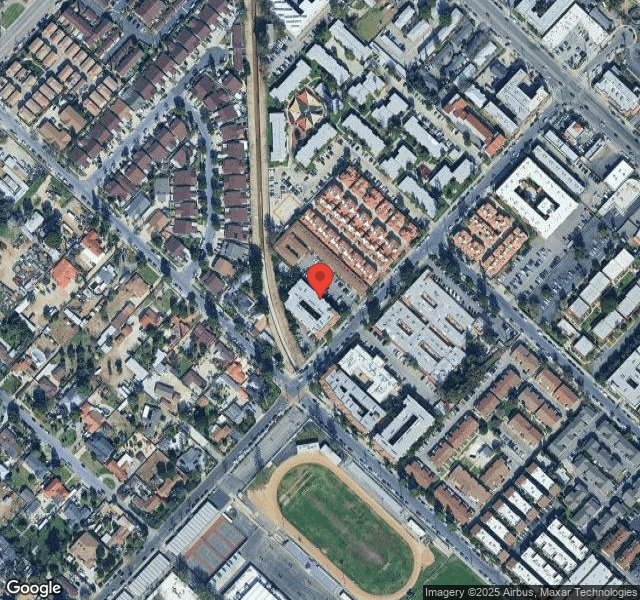
Apr 2025 2 deficiencies
CONCERN (D) 📢 Someone Reported This

A family member, employee, or ombudsman was alarmed enough to file a formal complaint

Potential for Harm - no one hurt, but risky conditions existed

Comprehensive Care Plan (Tag F0656)

Could have caused harm · This affected 1 resident

Based on observation, interview, and record review, the facility failed to implement a person-centered care plan for one of three sampled residents (Resident 1) by failing to ensure Resident 1's bed a...

Read full inspector narrative →
Based on observation, interview, and record review, the facility failed to implement a person-centered care plan for one of three sampled residents (Resident 1) by failing to ensure Resident 1's bed alarm (a pad with sensors that will alarm when a resident stands up unassisted to help prevent falls by alerting staff) was functioning as indicated in Resident 1's Care Plan for fall. This failure had the potential for Resident 1 to fall and placed Resident 1 at risk for injury. Cross reference F689. Findings: During a review of Resident 1's Face Sheet (admission Record), the Face Sheet indicated the facility admitted Resident 1 on 4/22/2025, with diagnoses that included unspecified (unconfirmed) fracture of the ninth and tenth thoracic vertebrae (a break in the bone of the spine, specifically in the middle back), history of fall, and unspecified dementia (a progressive state of decline in mental abilities). During a review of Resident 1's History and Physical (H&P-a medical examination that involves a doctor taking a patient's medical history, performing a physical exam, and documenting their findings) Examination, dated 4/25/2025, the H&P indicated Resident 1 had the capacity to understand and make decisions. During a review of Resident 1's Care Plan, dated 4/23/2025, about status post (after) fall, the Care Plan indicated an intervention initiated on 4/25/2025 for Resident 1 to have a bed alarm while Resident 1 was in bed. During a review of Resident 1's Care Plan Review, dated 4/25/2025, the Care Plan Review indicated an Interdisciplinary Team (IDT-a coordinated group of experts from several different fields who work together) meeting was done with Family member 1 (FM 1) about Resident 1's fall incident on 4/23/2025. The Care Plan Review indicated FM 1 agreed for Resident 1's use of bed alarm. During a concurrent observation, and interview on 4/29/2025, at 8:15 a.m., with Resident 1, at Resident 1's bedside. Observed Resident 1 raised her buttocks and waist from her (Resident 1) bed and heard no sound of an alarm. Resident 1 stated she (Resident 1) had a bed alarm, but it was off today (4/29/2025) and was not working. During an interview on 4/29/2025, at 8:35 a.m., with Licensed Vocational Nurse 1 (LVN 1), LVN 1 stated Resident 1 was not on bed alarm. During an interview on 4/29/2025, at 8:46 a.m., with Certified nursing Assistant 1 (CNA 1), CNA 1 stated Resident 1 had no bed alarm. During a concurrent observation, and interview on 4/29/2025, at 9 a.m., with the Director of Staff Development (DSD), in Resident 1's right side of the bed. Observed a blue machine box hanging on the right side of the bed with no light on. The DSD stated the bed alarm was not turned on. The DSD stated the wire from the sensor pad was not connected to the bed alarm machine. Observed the DSD connected the wire to the bed alarm machine and a small light on the machine turned green and heard a beeping sound. During an interview on 4/29/2025, at 9:33 a.m., with LVN 1, LVN 1 stated he (LVN 1) should have checked and made sure that Resident 1's bed alarm was turned on and functioning. LVN 1 stated the importance of care plan was it guides the nurses on Resident 1's care, how to manage and treat Resident 1 to achieve Resident 1's goal and for Resident 1's safety. During an interview on 4/29/2025, at 9:40 a.m., with the DSD, the DSD stated CNAs, LVNs and nurses are responsible for making sure bed alarm are functioning for Resident 1's to prevent fall. During a concurrent interview, and record review on 4/29/2025, at 10:36 a.m., with the Director of Nursing (DON), facility's policy and procedure (P&P) titled, Comprehensive Care Plan undated and last reviewed on 1/16/2025, the P&P indicated, 5. Care plan interventions are designed after careful consideration of the relationship between the resident's problem areas and their causes. When possible, interventions address the underlying source(s) of the problem area(s), rather than addressing only symptoms or triggers. It is recognized that care planning individual symptoms or Care Area Triggers in isolation may have little, if any, benefit for the resident. 6. Identifying problem areas and their causes and developing interventions that are targeted and meaningful to the resident are interdisciplinary processes that require careful data gathering, proper sequencing of events and complex clinical decision making. No single discipline can manage the task in isolation. The resident's physician (or primary healthcare provider) is integral to this process. The DON stated Resident 1's care plan for use of bed alarm should be followed. The DON stated care plans are guides on how to render necessary care to Resident 1 and bed alarm was one of the intervention to prevent Resident 1's fall.
CONCERN (D) 📢 Someone Reported This

A family member, employee, or ombudsman was alarmed enough to file a formal complaint

Potential for Harm - no one hurt, but risky conditions existed

Accident Prevention (Tag F0689)

Could have caused harm · This affected 1 resident

**NOTE- TERMS IN BRACKETS HAVE BEEN EDITED TO PROTECT CONFIDENTIALITY** Based on observation, interview, and record review, the facility failed to follow its policy on fall prevention for one of three...

Read full inspector narrative →
**NOTE- TERMS IN BRACKETS HAVE BEEN EDITED TO PROTECT CONFIDENTIALITY** Based on observation, interview, and record review, the facility failed to follow its policy on fall prevention for one of three sampled residents (Resident 1) who had a history of fall and had an incident of fall on 4/23/2025 while admitted at the facility by: 1. Failing to ensure Resident 1's bed alarm (a pad with sensors that will alarm when a resident stands up unassisted to help prevent falls by alerting staff) was turned on and functioning. 2. Failing to accurately assess Resident 1's Fall Risk Assessment after incident of fall on 4/23/2025. These failures can potentially place Resident 1 at risk for further injury, fall, and accidents. Cross reference F656. Findings: a. During a review of Resident 1's Face Sheet (admission Record), the Face Sheet indicated the facility admitted Resident 1 on 4/22/2025, with diagnoses that included unspecified (unconfirmed) fracture of the ninth and tenth thoracic vertebrae (a break in the bone of the spine, specifically in the middle back), history of fall, and unspecified dementia (a progressive state of decline in mental abilities). During a review of Resident 1's Situation-Background-Assessment-Recommendation (SBAR) Communication Tool (a technique that provides a framework for communication between members of the health care team about a resident's condition), dated 4/23/2025, the SBAR indicated on 4/23/2025 at 6:45 a.m., Resident 1 was found sitting on her (Resident 1) bedside floor with a pain level of 10 out of 10 (zero-no pain, 10-severe pain) right shoulder and right arm pain. During a review of Resident 1's Patient Report (Radiology Report-a detailed report that describes the results of an imaging test), dated 4/23/2025, the Patient Report indicated Resident 1 had acute mildly displaced fracture (a bone break that occurred recently within the first few days and where the broken pieces of bone are slightly out of alignment) involving the proximal humerus (the upper, shoulder end of the humerus bone, which is the long bone in the upper arm). During a review of Resident 1's Care Plan, dated 4/23/2025, about status post (after) fall, the Care Plan indicated an intervention initiated on 4/25/2025 for Resident 1 to have a bed alarm while Resident 1 was in bed. During a review of Resident 1's History and Physical (H&P-a medical examination that involves a doctor taking a patient's medical history, performing a physical exam, and documenting their findings) Examination, dated 4/25/2025, the H&P indicated Resident 1 had the capacity to understand and make decisions. During a review of Resident 1's Care Plan Review, dated 4/25/2025, the Care Plan Review indicated an Interdisciplinary Team (IDT-a coordinated group of experts from several different fields who work together) meeting was done with Family member 1 (FM 1) about Resident 1's fall incident on 4/23/2025. The Care Plan Review indicated FM 1 agreed for Resident 1's use of bed alarm. During a concurrent observation, and interview on 4/29/2025, at 8:15 a.m., with Resident 1, at Resident 1's bedside. Observed Resident 1 raised her buttocks and waist from her (Resident 1) bed and heard no sound of an alarm. Resident 1 stated she (Resident 1) had a bed alarm, but it was off today (4/29/2025) and was not working. Resident 1 stated she did not remember where she (Resident 1) fell but knows it was on her right side because she (Resident 1) had a broken right shoulder. During an interview on 4/29/2025, at 8:35 a.m., with Licensed Vocational Nurse 1 (LVN 1), LVN 1 stated Resident 1 did not have a bed alarm. During an interview on 4/29/2025, at 8:46 a.m., with Certified nursing Assistant 1 (CNA 1), CNA 1 stated Resident 1 had no bed alarm. During a concurrent observation and interview on 4/29/2025, at 9 a.m., with the Director of Staff Development (DSD), in Resident 1's right side of the bed. Observed a blue machine box hanging on the right side of the bed with no light on. The DSD stated the bed alarm was not turned on. The DSD stated the wire from the sensor pad (pressure-sensitive devices designed to detect weight, that is placed under a mattress or a chair. When pressure is removed or when someone gets up from a bed, the pad sends an alert), was not connected to the bed alarm machine. Observed the DSD connected the sensor pad wire to the bed alarm machine and a small light on the bed alarm machine turned green and made a beeping sound. During an interview on 4/29/2025, at 9:33 a.m., with LVN 1, LVN 1 stated he (LVN 1) should have checked and made sure that Resident 1's bed alarm was turned on and functioning. LVN 1 stated the importance of bed alarm was for Resident 1's safety, to prevent another fall. During an interview on 4/29/2025, at 9:40 a.m., with the DSD, the DSD stated CNAs, LVNs and nurses are responsible for making sure bed alarm are functioning to prevent Resident 1's fall. During an interview on 4/29/2025, at 10:36 a.m., with the Director of nursing (DON), the DON stated bed alarm alerts the staff for any unsupervised attempts of Resident 1 to get up from the bed to prevent fall. The DON stated if bed alarm was not turned on and not working the risk of Resident 1 falling again can happen. The DON stated nurse should check the bed alarm if its working. During a review of facility's policy and procedure (P&P) titled, Using Devices as Nursing Intervention, undated and last reviewed on 1/16/2025, the P&P indicated, It is the policy of this facility to use device(s) to remind resident to call for assistance when needed and not to get up from bed or wheelchair unassisted. Some devices are being used as enabler or intervention to protect resident from sustaining major injury. Devices are defined as a manual method or physical or mechanical device material, or equipment attached or adjacent to the resident 's body that the resident can remove easily by merely asking to avoid restriction of movements. Some devices are placed around resident's bed or wheelchair as a nursing intervention to protect resident for possible injury. b. During a review of Resident 1's Fall Risk assessment dated [DATE], the Fall Risk Assessment indicated Resident 1 had a total score of eight (low risk for fall, 10 represents high risk for fall). The Fall Risk Assessment indicated Resident 1 had one or two of the condition listed was present and scored two points on predisposing diseases (a condition that increases a person's risk of developing another, related disease). The Fall Risk Assessment indicated the following predisposing conditions: 1. hypertension (HTN-high blood pressure), 2. vertigo (a sensation of spinning or movement), 3. cardiovascular accident (CVA- stroke, loss of blood flow to a part of the brain), 4. Parkinson's diseases (progressive disease of the nervous system marked by tremor, muscular rigidity, and slow, imprecise movements), 5. loss of limbs, 6. seizures (a sudden, uncontrolled electrical disturbance in the brain which can cause uncontrolled jerking, blank stares, and loss of consciousness), 7. arthritis (inflammation or swelling of one or more joints) 8. osteoporosis weak and brittle bones due to lack of calcium and Vitamin D) and 9. fractures. During a concurrent interview and review on 4/29/2025 at 9:40 a.m., with the DSD, Resident 1's Fall Risk assessment dated [DATE] was reviewed. The DSD stated Resident 1 was not a high risk for fall because Resident 1's total score was below 10. The DSD stated Resident 1's Fall Risk assessment dated [DATE] should be high risk for fall. During an interview on 4/29/2025, at 10:36 a.m., with the DON, the DON stated Resident 1's Fall Risk Assessment should be high risk for fall because Resident 1 had history of fall, HTN, osteoporosis and fracture. The DON stated Resident 1 had four predisposing condition for fall. The DON stated the Fall Risk Assessment, dated 4/23/2025 was incorrect. The DON stated because of incorrect Fall Risk Assessment, intervention was inaccurate, and the facility will not be able to implement necessary intervention specific to Resident 1. The DON stated safety measure will not be implemented that can jeopardize (place in danger) resident safety. The DON stated the Registered Nurse (RN) should have assess Resident 1 thoroughly and review the H&P and diagnoses of Resident 1 before completing the Fall Risk Assessment. During a review of facility's policy and procedure (P&P) titled, Falls-Clinical Protocol, dated 3/2018, and last reviewed on 1/16/2025, the P&P indicated, Assessment and Recognition: 1. The physician will help identify individuals with a history of falls and risk factors for falling. a. Staff will ask the resident and the caregiver or family about a history of falling. 2. In addition, the nurse shall assess and document/report the following: a. Vital signs (are measurements of basic bodily functions that indicate overall health), b. Recent injury, especially fracture or head injury. c. Musculoskeletal function, observing for change in normal range of motion (ROM-the extent of movement a joint can make in a particular direction), weight bearing, d. Change in cognition or level of consciousness (a person's state of awareness and understanding of their surroundings). e. Neurological status. f. Pain. g. Frequency and number of falls since last physician visit. h. Precipitating factors (events or conditions that trigger or initiate a specific outcome, often a crisis or a significant change in behavior or state), details on how fall occurred. i. All current medications, especially those associated with dizziness or lethargy (sleepiness); and j. All active diagnoses. 3. The staff and practitioner will review each resident's risk factors for falling and document in the medical record. a. Examples of risk factors for falling include lightheadedness or dizziness, multiple medications, musculoskeletal abnormalities, peripheral neuropathy (a condition where the peripheral nerves, those outside the brain and spinal cord, are damaged), gait and balance disorders, cognitive impairment, weakness, environmental hazards, confusion, visual impairment, hypotension (low blood pressure), and medical conditions affecting the central nervous system (brain and spinal cord). 4. The physician will identify medical conditions affecting fall risk (for example, a recent stroke or medications that cause dizziness or hypotension) and the risk for significant complications of falls (for example, increased fracture risk in someone with osteoporosis or increased risk of bleeding in someone taking an anticoagulant [medication used to prevent blood clot]). Treatment/Management I. Based on the preceding assessment. the staff and physician will identify pertinent interventions to try to prevent subsequent falls and to address the risks of clinically significant consequences of falling.
Mar 2025 2 deficiencies
CONCERN (D) 📢 Someone Reported This

A family member, employee, or ombudsman was alarmed enough to file a formal complaint

Potential for Harm - no one hurt, but risky conditions existed

Report Alleged Abuse (Tag F0609)

Could have caused harm · This affected 1 resident

**NOTE- TERMS IN BRACKETS HAVE BEEN EDITED TO PROTECT CONFIDENTIALITY** Based on interview and record review, the facility failed to report injury of unknown origin within 24 hours to the State Survey...

Read full inspector narrative →
**NOTE- TERMS IN BRACKETS HAVE BEEN EDITED TO PROTECT CONFIDENTIALITY** Based on interview and record review, the facility failed to report injury of unknown origin within 24 hours to the State Survey Agency (SSA- the agency that inspects long-term care facilities for the purposes of survey and certification) and the Ombudsman (an advocate for residents of nursing homes, board and care centers, and assisted living facilities), as per its policies and procedures on abuse for one of three sampled residents (Resident 1). This deficient practice had the potential to place Resident 1 at risk for an unidentified abuse while under the care of the facility. Findings: During a review of Resident 1's Face Sheet (admission Record), the Face Sheet indicated Resident 1 was admitted to the facility on [DATE], with diagnoses that included inflammatory polyarthorpathy (a condition characterized by inflammation in multiple joints), other low back pain, and dementia (a progressive state of decline in mental abilities). During a review of Resident 1's History and Physical (H&P- a medical examination that involves a doctor taking a patient's medical history, performing a physical exam, and documenting their findings) dated 2/27/2025, the H&P indicated Resident 1 did not have the capacity to understand and make decisions. During a review of Resident 1's Minimum Data Set (MDS-a resident assessment tool) dated 3/5/2025, the MDS indicated Resident 1's cognitive (mental action or process of acquiring knowledge and understanding) skills for daily decisions were severely impaired. The MDS indicated Resident 1 needed maximum assistance from staff for toileting, dressing, and personal hygiene. During a review of Resident 1's Situation Background Assessment Recommendation (SBAR, technique that provides a framework for communication between members of the health care team about a resident ' s condition) Communication Tool dated 3/5/2025, timed at approximately 5 a.m., the SBAR indicated Certified Nursing Assistant (CNA ) 1 notified Registered Nurse (RN) 1 that Resident 1's right hand was swollen, red, skin was warm to touch and with pain level of three out of ten (numerical scale used to measure pain with 0 being no pain and 10 being the worst pain). The SBAR indicated at 7 a.m. on 3/5/2025, the physician was notified with orders for Xray (a medical imaging technique that uses a special type of radiation to create pictures of the inside of your body, allowing doctors to see bones and other structures) of right hand, right wrist, and left ankle. The SBAR also indicated an order to give acetaminophen (medication used to treat pain) 650 milligrams (mg- metric unit of measurement) one time. During a review of Resident 1's Progress Notes dated 3/5/2025, timed at 10:29 a.m., the Progress Notes indicated orders received from the physician for acetaminophen 650 mg by mouth one time and Xray of right hand, right wrist, and left ankle. During a review of Resident 1's Patient Report (Xray result) dated 3/5/2025, timed at 1:26 p.m., the Patient Report for right hand Xray indicated acute fracture (fresh, newly formed bone breaks that occur as a result of sudden trauma or injury) fifth metacarpal (connecting the pinky finger to the wrist). During a review of Resident 1's Physician Order dated 3/5/2025, timed at 3:30 p.m., the Physician Order indicated to transfer Resident 1 to General Acute Care Hospital (GACH) for evaluation and splinting (application of a device, either rigid or flexible, used to protect, immobilize, or restrict motion of an injured body part, like a bone or joint, to promote healing and prevent further damage) of right fifth metacarpal fracture. During a review of Resident 1's Progress Notes dated 3/5/2025, timed at 4:06 p.m., the Progress notes indicated Resident 1 still had right hand swelling and pain with touch and movement. The Progress Notes indicated Resident 1 normally takes medication one tablet at a time using her (Resident 1) right hand but that day (3/5/2025) was unable to take her medication and Licensed Vocational Nurse (LVN ) 1 had to assists Resident 1. During an interview on 3/19/2025, at 3:34 p.m., with LVN 1, LVN 1 stated she (LVN 1) worked on 3/5/2025 from 7 a.m. to 3 p.m. LVN 1 stated when she (LVN 1) came to work, RN 1 notified her (LVN 1) that Resident 1 had redness and swelling on the right hand. LVN 1 stated she (LVN 1) went to Resident 1's room and observed Resident 1's right hand red and swollen. LVN 1 stated before Resident 1's right hand swelling, Resident 1 liked to take her (Resident 1) own medication one tablet at a time using her (Resident 1) right hand but on 3/5/2025, LVN 1 had to assist Resident 1 with medication administration. During an interview on 3/19/2025, at 4:19 p.m., with CNA 1, CNA 1 stated on 3/5/2025 at 4 a.m., she (CNA1) was doing her (CNA 1) second rounds (process of checking each residents) to check on her residents, when RN 1 notified her (CNA 1) that RN 1 had spilled water on Resident 1 after medication administration. CNA 1 stated she (CNA 1) went inside Resident 1's room and observed Resident 1 unable to move and complained of righthand pain. CNA 1 stated she (CNA 1) notified RN 1 and showed Resident 1's swollen right hand. During an interview on 3/19/2025, at 4:33 p.m., with the Director of Nursing (DON), the DON stated on 3/5/2025 morning, RN 1 notified her (DON) of Resident 1's red and swollen right hand. The DON stated Resident 1 unable to state how the incident happen. The DON stated the incident was an injury of unknown origin. The DON stated the incident was reported to SSA and Ombudsman on 3/6/2025 because they wanted to confirm there was an injury first before reporting to SSA and Ombudsman. The DON stated the report to SSA and Ombudsman was within 24 hours from the time they received the Xray result that Resident 1 had a right fifth metacarpal fracture on 3/5/2025 at 1 p.m. During an interview on 3/19/2025, at 4:47 p.m., with the Administrator (ADM) the ADM stated the facility's policy for abuse reporting was to report injury of unknown origin within 24 hours for any incident that does not result from abuse or with bodily injury. During an interview on 3/20/2025, at 10:24 a.m., with RN 1, RN 1 stated he (RN 1) notified the DON on 3/5/2025 at around 7 a.m., of Resident 1's right hand swelling. During an interview on 3/20/2025, at 3:13 p.m., with the DON, the DON stated RN 1 notified her (DON) of Resident 1's right hand swelling on 3/5/2025 between 7 a.m. to 7:30 a.m. The DON stated the facility fax the report to SSA and Ombudsman on 3/6/2025 at 9:36 a.m. The DON stated the Nurse Practitioner (NP) wanted to transfer Resident 1 to the GACH to make the Xray result was the same as the GACH result. The DON stated sometimes the GACH result for fracture are negative (no fracture). The DON stated the facility should have reported injury of unknown origin within 24 hours from the time the change of condition happen not from the time the Xray result of the fracture was identified. During a concurrent interview and record review on 3/20/2025, at 3:45 p.m., with the ADM, facility's policy and procedure (P&P) titled, Abuse, Neglect, Exploitation or Misappropriation - Reporting and Investigating dated 9/2022 and last reviewed on 1/16/2025, the P&P indicated, Reporting Allegations to the Administrator and Authorities 1. If resident abuse, neglect, exploitation, misappropriation of resident property or injury of unknown source is suspected, the suspicion must be reported immediately to the administrator and to other officials according to state law. 2. The administrator or the individual making the allegation immediately reports his or her suspicion to the following persons or agencies: a. The state licensing/certification agency responsible for surveying/licensing the facility; b. The local/state ombudsman; c. The resident's representative; d. Adult protective services (where state law provides jurisdiction in long-term care); e. Law enforcement officials; f. The resident's attending physician; and g. The facility medical director. 3. Immediately is defined as: a. within two hours of an allegation involving abuse or result in serious bodily injury; or b. within 24 hours of an allegation that does not involve abuse or result in serious bodily injury. 4. Verbal/written notices to agencies are submitted via special carrier, fax, e-mail, or by telephone. The ADM stated the facility should report injury of unknown origin within 24 hours upon knowledge of the swelling or change in condition. The ADM stated the importance of reporting within 24 hours to SSA and Ombudsman was for SSA to assist with the investigation and for Resident 1's safety.
CONCERN (D) 📢 Someone Reported This

A family member, employee, or ombudsman was alarmed enough to file a formal complaint

Potential for Harm - no one hurt, but risky conditions existed

Medical Records (Tag F0842)

Could have caused harm · This affected 1 resident

**NOTE- TERMS IN BRACKETS HAVE BEEN EDITED TO PROTECT CONFIDENTIALITY** Based on interview and record review, the facility failed to maintain accurate and complete medical records for one of three sam...

Read full inspector narrative →
**NOTE- TERMS IN BRACKETS HAVE BEEN EDITED TO PROTECT CONFIDENTIALITY** Based on interview and record review, the facility failed to maintain accurate and complete medical records for one of three sampled residents (Resident 1). This failure had the potential to cause confusion in care and the medical records containing inaccurate documentation Findings: During a review of Resident 1's Face Sheet, the Face Sheet indicated Resident 1 was admitted to the facility on [DATE], with diagnoses that included inflammatory polyarthorpathy (a condition characterized by inflammation in multiple joints), other low back pain, and dementia (a progressive state of decline in mental abilities). During a review of Resident 1's History and Physical (H&P- a medical examination that involves a doctor taking a patient's medical history, performing a physical exam, and documenting their findings) dated 2/27/2025, the H&P indicated Resident 1 did not have the capacity to understand and make decisions. During a review of Resident 1's Minimum Data Set (MDS-a resident assessment tool) dated 3/5/2025, the MDS indicated Resident 1's cognitive (mental action or process of acquiring knowledge and understanding) skills for daily decisions were severely impaired. The MDS indicated Resident 1 needed maximum assistance from staff for toileting, dressing and personal hygiene. During a review of Resident 1's Situation Background Assessment Recommendation (SBAR, technique that provides a framework for communication between members of the health care team about a resident's condition) Communication Tool dated 3/5/2025, timed at approximately 5 a.m., the SBAR indicated Certified Nursing Assistant (CNA ) 1 notified Registered Nurse (RN) 1 that Resident 1's right hand was swollen, red, skin was warm to touch with pain level of three out of ten (numerical scale used to measure pain with 0 being no pain and 10 being the worst pain). The SBAR indicated at 7 a.m. the physician was notified with orders for Xray (a medical imaging technique that uses a special type of radiation to create pictures of the inside of your body, allowing doctors to see bones and other structures) of right hand, right wrist, and left ankle. The SBAR also indicated an order to given acetaminophen (mediation used to treat pain) 650 milligrams (mg- metric unit of measurement) one time. During a review of Resident 1's Physician Order dated 3/5/2025, timed at 7:41 a.m., the Physician Order indicated Tylenol (acetaminophen- medication used to treat pain) 650 mg by mouth one time now. During a concurrent interview and record review on 3/19/2025, at 4:43 p.m., with the Medical Records Director (MRD), Resident 1's Medication Administration Record (MAR- a daily documentation record used by a licensed nurse to document medications and treatments given to a resident) dated 3/5/2025 was reviewed. The MAR indicated acetaminophen 650 mg tablet was given on 3/5/2025 at 5:30 a.m. The MRD stated RN 1 administered acetaminophen 650 mg to Resident 1 on 3/5/2025 at 5:30 a.m. During a concurrent interview and record review on 3/20/2025, at 3:13 p.m., with the Director of Nursing (DON), Resident 1's SBAR dated 3/5/2025 and MAR dated 3/5/2025 were reviewed. The SBAR indicated the physician was notified on 3/5/2025 at 7 a.m. and ordered acetaminophen tablet 650 mg one time dose. The MAR indicated RN 1 administered acetaminophen to Resident 1 on 3/5/2025 at 5:30 a.m. The DON stated RN 1 documented an inaccurate time. The DON stated RN 1 should have documented the exact time medication was given after the physician made the acetaminophen order. The DON stated RN 1 failed to document accurate time acetaminophen was given. During a review of facility's policy and procedure (P&P) titled, Charting and Documentation dated 7/2017 and last reviewed on 1/16/2025, the P&P indicated, All services provided to the resident, progress toward the care plan goals, or any changes in the resident's medical, physical, functional or psychosocial condition, shall be documented in the resident's medical record. The medical record should facilitate communication between the interdisciplinary team regarding the resident's condition and response to care. 2. The following information is to be documented in the resident medical record: a. Objective observations; b. Medications administered; c. Treatments or services performed; d. Changes in the resident's condition; e. Events, incidents or accidents involving the resident; and f. Progress toward or changes in the care plan goals and objectives. 3. Documentation in the medical record will be objective (not opinionated or speculative), complete, and accurate.
Jan 2025 3 deficiencies
CONCERN (D) 📢 Someone Reported This

A family member, employee, or ombudsman was alarmed enough to file a formal complaint

Potential for Harm - no one hurt, but risky conditions existed

Deficiency F0583 (Tag F0583)

Could have caused harm · This affected 1 resident

Based on observation, interview and record review, facility failed to maintain privacy of confidential information when Licensed Vocational Nurse 2 (LVN 2) left electronic health record (EHR- a digita...

Read full inspector narrative →
Based on observation, interview and record review, facility failed to maintain privacy of confidential information when Licensed Vocational Nurse 2 (LVN 2) left electronic health record (EHR- a digital version of a patient's paper chart) opened, unattended and out of view for one of three sampled residents (Resident 1). This deficient practice violated Resident 1 ' s right to privacy and confidentiality of their medical records. Findings: During a review of Resident 1 ' s Face Sheet (a document that summarizes a patient's personal information and health status) indicated the facility admitted Resident 1 on 10/12/2024 and readmitted the resident on 1/13/2025 with diagnoses including liver cell carcinoma (a type of cancer that develops when liver cells grow into a tumor [an abnormal mass of tissue that grows when cells divide too much or do not die when they should]), type 2 diabetes mellitus (DM-a disorder characterized by difficulty in blood sugar control and poor wound healing), peripheral angiopathy (a term that may refer to peripheral artery disease (PAD), which is a blood circulation disorder that occurs when blood vessels narrow or become blocked). During a review of Resident 1 ' s Minimum Data Set (MDS - a resident assessment tool), dated 12/20/2024, indicated Resident 1 had the ability to understand and be understood. The MDS indicated Resident 1 was dependent (helper does all the effort) with toileting, showering, upper body dressing, lower body dressing, and putting on and taking off footwear, and required partial (helper does less than half the effort) assistance with oral hygiene. During a concurrent observation and interview on 1/27/2025 at 11:21 a.m., outside of Resident 1 ' s room observed EHR opened to Resident 1's chart and LVN 2 in Resident 1 ' s room with curtain closed and computer out of sight. LVN 2 stated left the computer and out of sight while administering Resident 1 ' s medications. LVN 2 stated leaving the computer opened and out of sight can be a risk for someone who should not have access to the residents ' records to access the residents ' records, it is a risk for Health Insurance Portability and Accountability Act (HIPPA- establishes federal standards protecting sensitive health information from disclosure without patient's consent). During an interview on 1/27/2025 at 4:41 p.m. with the Assistant Director of Nursing (ADON) stated for LVN 2 should make sure computer is off if she steps away or is out of sight of the computer. The ADON stated someone else can see resident information, which should not be publicly displaced, it is a risk for a HIPPA violation. During a review of the facility ' s Policy and Procedures (P&P) titled, HIPPA Training Program, last reviewed on 1/16/2025, the P&P indicated to ensure the confidentiality of our resident ' s protected health information (PHI) and facility information, a HIPPA and date security training program will be provided for all employees and business associates who have access to protected health and facility information. Based on observation, interview and record review, facility failed to maintain privacy of confidential information when Licensed Vocational Nurse 2 (LVN 2) left electronic health record (EHR- a digital version of a patient's paper chart) opened, unattended and out of view for one of three sampled residents (Resident 1). This deficient practice violated Resident 1's right to privacy and confidentiality of their medical records. Findings: During a review of Resident 1's Face Sheet (a document that summarizes a patient's personal information and health status) indicated the facility admitted Resident 1 on 10/12/2024 and readmitted the resident on 1/13/2025 with diagnoses including liver cell carcinoma (a type of cancer that develops when liver cells grow into a tumor [an abnormal mass of tissue that grows when cells divide too much or do not die when they should]), type 2 diabetes mellitus (DM-a disorder characterized by difficulty in blood sugar control and poor wound healing), peripheral angiopathy (a term that may refer to peripheral artery disease (PAD), which is a blood circulation disorder that occurs when blood vessels narrow or become blocked). During a review of Resident 1's Minimum Data Set (MDS – a resident assessment tool), dated 12/20/2024, indicated Resident 1 had the ability to understand and be understood. The MDS indicated Resident 1 was dependent (helper does all the effort) with toileting, showering, upper body dressing, lower body dressing, and putting on and taking off footwear, and required partial (helper does less than half the effort) assistance with oral hygiene. During a concurrent observation and interview on 1/27/2025 at 11:21 a.m., outside of Resident 1's room observed EHR opened to Resident 1's chart and LVN 2 in Resident 1's room with curtain closed and computer out of sight. LVN 2 stated left the computer and out of sight while administering Resident 1's medications. LVN 2 stated leaving the computer opened and out of sight can be a risk for someone who should not have access to the residents' records to access the residents' records, it is a risk for Health Insurance Portability and Accountability Act (HIPPA- establishes federal standards protecting sensitive health information from disclosure without patient's consent). During an interview on 1/27/2025 at 4:41 p.m. with the Assistant Director of Nursing (ADON) stated for LVN 2 should make sure computer is off if she steps away or is out of sight of the computer. The ADON stated someone else can see resident information, which should not be publicly displaced, it is a risk for a HIPPA violation. During a review of the facility's Policy and Procedures (P&P) titled, HIPPA Training Program, last reviewed on 1/16/2025, the P&P indicated to ensure the confidentiality of our resident's protected health information (PHI) and facility information, a HIPPA and date security training program will be provided for all employees and business associates who have access to protected health and facility information.
CONCERN (D) 📢 Someone Reported This

A family member, employee, or ombudsman was alarmed enough to file a formal complaint

Potential for Harm - no one hurt, but risky conditions existed

Pressure Ulcer Prevention (Tag F0686)

Could have caused harm · This affected 1 resident

Based on observation, interview, and record review, the facility failed to provide the necessary treatment and services for one of three residents (Resident 2) at risk for developing pressure ulcer (a...

Read full inspector narrative →
Based on observation, interview, and record review, the facility failed to provide the necessary treatment and services for one of three residents (Resident 2) at risk for developing pressure ulcer (a localized injury to the skin and/or underlying tissue usually over a bony prominence as a result of pressure, or pressure in combination with shear) received the necessary care and services to prevent pressure ulcers from developing, by failing to follow the manufacturer's guideline for low air loss mattress (LAL- a mattress that uses air to help prevent and treat pressure wounds and maintain a comfortable temperature and moisture level for the patient). This deficient practice had the potential for Resident 2's wounds to worsen. Findings: During a review of Resident 2's Face Sheet (admission Record) indicated the facility admitted Resident 2 on 12/5/2024 with diagnoses including bilateral (having or involving two sides) stage unspecified, contusion (a bruise) of right hip, and acute respiratory failure (ARF- occurs when your lungs can't remove carbon dioxide or release enough oxygen into your blood). During a review of Resident 2's Physician Order Sheet January 2025, dated 12/6/2024 indicated LAL mattress, low air loss mattress monitor setting, placement and functioning per shift daily. During a review of Resident 2's Minimum Data Set (MDS - a resident assessment tool), dated 12/11/2024 indicated Resident 2 ability to understand and be understood. The MDS indicated Resident 2 was dependent (helper does all the effort) with toileting, showering, lower body dressing, putting on and taking off footwear, and personal hygiene, and required substantial (helper does more than half the effort) with upper body dressing. During a review of the facilities Monthly and Weekly vitals indicated on 1/20/2025 Resident 2 weighed 138 pounds (lbs.- a unit of measurement). During a review of Resident 2s Situational, Background, Assessment, and Recommendation (SBAR) Communication tool, dated 1/21/2025, indicated coccyx area with wound. Notes indicated coccyx area 2 centimeters (cm- unit of measurement) by 2 cm in size. During a review of Resident 2's Weekly Progress Report, dated 1/21/2025, indicated coccyx area wound 2 cm by 2 cm. During a review of Resident 2's Physician Order Sheet January 2025, dated 1/24/2025 indicated: - Coccyx (small bone at the bottom of the spine) area with pressure injury: cleanse with normal saline (NS- a sterile, non-toxic solution of salt and water that's used to clean wounds) pat dry apply medihoney (is a medical-grade honey dressing that helps wounds heal by reducing inflammation, removing dead tissue, and keeping the wound moist), gel cover with foam dressing daily for 30 days then re-evaluate. - Right buttocks with boil (painful, pus-filled bump under your skin) cleanse with NS pat dry apply triple antibiotic ointment cover with foam dressing daily for 30 days then re-evaluate. - Right knee with boil, cleanse with NS pat dry apply triple antibiotic ointment cover with dry dressing daily for 30 days then re-evaluate. - Left upper anterior thigh (groin) cleanse with NS pat dry apply triple antibiotic ointment cover with dry dressing daily for 30 days then re-evaluate. During a review of Resident 2's Care Plan, created on 1/24/2025, for Resident 2's coccyx area unstageable with interventions that included administer treatment per doctor's orders, keep physician aware of progress and response to treatment plan and to provide pressure relieving devices as appropriate for size and stage, LAL. During an observation on 1/27/2025 at 10:33 a.m. observed Resident 2 sitting up in bed with a LAL mattress. The LAL mattress has a label indicating 120-150 and LAL mattress set at 190. During a concurrent observation and interview on 1/27/2025 at 10:58 a.m. with Licensed Vocational Nurse 1 (LVN 1), LVN 1 stated Resident 2's LAL mattress is set at 190, but signage indicates it needs to be set between 120 to 150, should be set at 120 to 150. LVN 1 stated LAL mattresses are set according to weight, if it is set incorrectly can be too firm, if it is too firm will not be compatible can result in wounds getting worse. During an interview on 1/27/2025 at 4:41 p.m. with the Assistant Director of Nursing (ADON), the ADON stated LAL set at 190 for Resident 2 was set incorrectly and should be set according to weight. The ADON stated can be a risk for LAL mattress to be too firm, LAL mattress is set for pressure ulcers and if set too firm it defeats the purpose of the LAL, and will not be working the way it was intended. The ADON stated it can affect the healing and be a risk for the resident to have pain and risk for wounds to get worse. During a review of the facility's Policy and Procedures (P&P) titled, Use of Support Surface or Mattress for Pressure Injury Management and Treatment, last reviewed on 1/16/2025, indicated it is the policy to manage, treat, and minimize risks of pressure injuries through the use of proper support surface or specialized mattress. 3. High-risk patients and those existing stage 3 or 4 pressure injuries, unstageable pressure injury or a deep tissue pressure injury will be provided with a mattress that periodically inflate and deflate with air in alternating areas (low air loss mattress). During a review of the facility's Policy and Procedures (P&P) titled, Pressure Ulcers/Skin Breakdown-Clinical Protocol, last reviewed on 1/16/2025, indicated the physician will order pertinent wound treatments, including pressure reduction surface, wound cleansing and debridement approaches, dressing, and application of topical agents. During a review of the Med-Aire Melody Alternating Pressure Low Air Loss Mattress Replacement System Manual, with no date, indicated for the prevention and treatment of any and all stage pressure ulcers when used in conjunction with a comprehensive pressure ulcer management program. Pressure-adjust know is determined by the patient's weight and set the control knob to that weight setting on the control unit. Based on observation, interview, and record review, the facility failed to provide the necessary treatment and services for one of three residents (Resident 2) at risk for developing pressure ulcer (a localized injury to the skin and/or underlying tissue usually over a bony prominence as a result of pressure, or pressure in combination with shear) received the necessary care and services to prevent pressure ulcers from developing, by failing to follow the manufacturer's guideline for low air loss mattress (LAL- a mattress that uses air to help prevent and treat pressure wounds and maintain a comfortable temperature and moisture level for the patient). This deficient practice had the potential for Resident 2's wounds to worsen. Findings: During a review of Resident 2's Face Sheet (admission Record) indicated the facility admitted Resident 2 on 12/5/2024 with diagnoses including bilateral (having or involving two sides) stage unspecified, contusion (a bruise) of right hip, and acute respiratory failure (ARF- occurs when your lungs can't remove carbon dioxide or release enough oxygen into your blood). During a review of Resident 2's Physician Order Sheet January 2025, dated 12/6/2024 indicated LAL mattress, low air loss mattress monitor setting, placement and functioning per shift daily. During a review of Resident 2's Minimum Data Set (MDS – a resident assessment tool), dated 12/11/2024 indicated Resident 2 ability to understand and be understood. The MDS indicated Resident 2 was dependent (helper does all the effort) with toileting, showering, lower body dressing, putting on and taking off footwear, and personal hygiene, and required substantial (helper does more than half the effort) with upper body dressing. During a review of the facilities Monthly and Weekly vitals indicated on 1/20/2025 Resident 2 weighed 138 pounds (lbs.- a unit of measurement). During a review of Resident 2s Situational, Background, Assessment, and Recommendation (SBAR) Communication tool, dated 1/21/2025, indicated coccyx area with wound. Notes indicated coccyx area 2 centimeters (cm- unit of measurement) by 2 cm in size. During a review of Resident 2's Weekly Progress Report, dated 1/21/2025, indicated coccyx area wound 2 cm by 2 cm. During a review of Resident 2's Physician Order Sheet January 2025, dated 1/24/2025 indicated: - Coccyx (small bone at the bottom of the spine) area with pressure injury: cleanse with normal saline (NS- a sterile, non-toxic solution of salt and water that's used to clean wounds) pat dry apply medihoney (is a medical-grade honey dressing that helps wounds heal by reducing inflammation, removing dead tissue, and keeping the wound moist), gel cover with foam dressing daily for 30 days then re-evaluate. - Right buttocks with boil (painful, pus-filled bump under your skin) cleanse with NS pat dry apply triple antibiotic ointment cover with foam dressing daily for 30 days then re-evaluate. - Right knee with boil, cleanse with NS pat dry apply triple antibiotic ointment cover with dry dressing daily for 30 days then re-evaluate. - Left upper anterior thigh (groin) cleanse with NS pat dry apply triple antibiotic ointment cover with dry dressing daily for 30 days then re-evaluate. During a review of Resident 2's Care Plan, created on 1/24/2025, for Resident 2's coccyx area unstageable with interventions that included administer treatment per doctor's orders, keep physician aware of progress and response to treatment plan and to provide pressure relieving devices as appropriate for size and stage, LAL. During an observation on 1/27/2025 at 10:33 a.m. observed Resident 2 sitting up in bed with a LAL mattress. The LAL mattress has a label indicating 120-150 and LAL mattress set at 190. During a concurrent observation and interview on 1/27/2025 at 10:58 a.m. with Licensed Vocational Nurse 1 (LVN 1), LVN 1 stated Resident 2's LAL mattress is set at 190, but signage indicates it needs to be set between 120 to 150, should be set at 120 to 150. LVN 1 stated LAL mattresses are set according to weight, if it is set incorrectly can be too firm, if it is too firm will not be compatible can result in wounds getting worse. During an interview on 1/27/2025 at 4:41 p.m. with the Assistant Director of Nursing (ADON), the ADON stated LAL set at 190 for Resident 2 was set incorrectly and should be set according to weight. The ADON stated can be a risk for LAL mattress to be too firm, LAL mattress is set for pressure ulcers and if set too firm it defeats the purpose of the LAL, and will not be working the way it was intended. The ADON stated it can affect the healing and be a risk for the resident to have pain and risk for wounds to get worse. During a review of the facility's Policy and Procedures (P&P) titled, Use of Support Surface or Mattress for Pressure Injury Management and Treatment, last reviewed on 1/16/2025, indicated it is the policy to manage, treat, and minimize risks of pressure injuries through the use of proper support surface or specialized mattress. 3. High-risk patients and those existing stage 3 or 4 pressure injuries, unstageable pressure injury or a deep tissue pressure injury will be provided with a mattress that periodically inflate and deflate with air in alternating areas (low air loss mattress). During a review of the facility's Policy and Procedures (P&P) titled, Pressure Ulcers/Skin Breakdown-Clinical Protocol, last reviewed on 1/16/2025, indicated the physician will order pertinent wound treatments, including pressure reduction surface, wound cleansing and debridement approaches, dressing, and application of topical agents. During a review of the Med-Aire Melody Alternating Pressure Low Air Loss Mattress Replacement System Manual, with no date, indicated for the prevention and treatment of any and all stage pressure ulcers when used in conjunction with a comprehensive pressure ulcer management program. Pressure-adjust know is determined by the patient's weight and set the control knob to that weight setting on the control unit.
CONCERN (D) 📢 Someone Reported This

A family member, employee, or ombudsman was alarmed enough to file a formal complaint

Potential for Harm - no one hurt, but risky conditions existed

Respiratory Care (Tag F0695)

Could have caused harm · This affected 1 resident

Based on observation, interview, and record review, the facility failed to provide care that was consistent with professional standards of care for one of three residents (Resident 2) when humidifier ...

Read full inspector narrative →
Based on observation, interview, and record review, the facility failed to provide care that was consistent with professional standards of care for one of three residents (Resident 2) when humidifier bottle (a medical device used to humidify oxygen which in turn increases the moisture) was observed with no water. This deficient practice had the potential for Resident 2 to be uncomfortable and a risk for bleeding due to the nasal passage and throat becoming dried out due to the use of pure oxygen. Findings: During a review of Resident 2 ' s Face Sheet (a document that summarizes a patient's personal information and health status) indicated the facility admitted Resident 2 on 12/5/2024 with diagnoses including bilateral (having or involving two sides) stage unspecified, contusion (a bruise) of right hip, and acute respiratory failure (ARF- occurs when your lungs can't remove carbon dioxide or release enough oxygen into your blood). During a review of Resident 2 ' s Physician Order Sheet January 2025, dated 12/5/2024 indicated oxygen (O2) at 2 liters per minute (L/min- a unit of measurement) per nasal cannula (a small plastic tube, which fits into the person ' s nostrils for providing supplemental oxygen). During a review of Resident 2 ' s Minimum Data Set (MDS - a resident assessment tool), dated 12/11/2024 indicated Resident 2 had the ability to understand and be understood. The MDS indicated Resident 2 was dependent (helper does all the effort) with toileting, showering, lower body dressing, putting on and taking off footwear, and personal hygiene, and required substantial (helper does more than half the effort) with upper body dressing. During a review of Resident 2 ' s Care Plan, created on 12/20/2024, for cardiovascular system with interventions that included administer medications as ordered and supplemental oxygen (O2) as ordered. During an observation on 1/27/2025 at 10:33 a.m. of Resident 2 ' s oxygen concentrator observed humidifier bottle with a date of 1/20/2025, the humidifier bottle was empty. During a concurrent observation and interview on 1/27/2025 at 10:58 a.m. with Licensed Vocational Nurse 1 (LVN 1) stated humidifier is empty. LVN 1 stated a humidifier is used to prevent dryness. The LVN 1 stated humidifier should have water because it can cause Resident 2 ' s nasal passageway to become dry and cause Resident 2 to be uncomfortable. During an interview on 1/27/2025 at 4:41 p.m. with the Assistant Director of Nursing (ADON), the ADON stated humidifier should have water in them. The ADON stated oxygen will not function well without the humidifier. The ADON stated the humidifier humidifies the nasal passageway of the resident if there is no water nasal passageway it can become dry, the oxygen distribution will not be effective, and can be a risk for bleeding due to dryness. During a review of the facility ' s Policy and Procedures (P&P) titled, Oxygen Administration, last reviewed on 1/16/2025, the P&P indicated equipment and supplies will be necessary when performing this procedure. 3. humidifier bottle; Based on observation, interview, and record review, the facility failed to provide care that was consistent with professional standards of care for one of three residents (Resident 2) when humidifier bottle (a medical device used to humidify oxygen which in turn increases the moisture) was observed with no water. This deficient practice had the potential for Resident 2 to be uncomfortable and a risk for bleeding due to the nasal passage and throat becoming dried out due to the use of pure oxygen. Findings: During a review of Resident 2's Face Sheet (a document that summarizes a patient's personal information and health status) indicated the facility admitted Resident 2 on 12/5/2024 with diagnoses including bilateral (having or involving two sides) stage unspecified, contusion (a bruise) of right hip, and acute respiratory failure (ARF- occurs when your lungs can't remove carbon dioxide or release enough oxygen into your blood). During a review of Resident 2's Physician Order Sheet January 2025, dated 12/5/2024 indicated oxygen (O2) at 2 liters per minute (L/min- a unit of measurement) per nasal cannula (a small plastic tube, which fits into the person's nostrils for providing supplemental oxygen). During a review of Resident 2's Minimum Data Set (MDS – a resident assessment tool), dated 12/11/2024 indicated Resident 2 had the ability to understand and be understood. The MDS indicated Resident 2 was dependent (helper does all the effort) with toileting, showering, lower body dressing, putting on and taking off footwear, and personal hygiene, and required substantial (helper does more than half the effort) with upper body dressing. During a review of Resident 2's Care Plan, created on 12/20/2024, for cardiovascular system with interventions that included administer medications as ordered and supplemental oxygen (O2) as ordered. During an observation on 1/27/2025 at 10:33 a.m. of Resident 2's oxygen concentrator observed humidifier bottle with a date of 1/20/2025, the humidifier bottle was empty. During a concurrent observation and interview on 1/27/2025 at 10:58 a.m. with Licensed Vocational Nurse 1 (LVN 1) stated humidifier is empty. LVN 1 stated a humidifier is used to prevent dryness. The LVN 1 stated humidifier should have water because it can cause Resident 2's nasal passageway to become dry and cause Resident 2 to be uncomfortable. During an interview on 1/27/2025 at 4:41 p.m. with the Assistant Director of Nursing (ADON), the ADON stated humidifier should have water in them. The ADON stated oxygen will not function well without the humidifier. The ADON stated the humidifier humidifies the nasal passageway of the resident if there is no water nasal passageway it can become dry, the oxygen distribution will not be effective, and can be a risk for bleeding due to dryness. During a review of the facility's Policy and Procedures (P&P) titled, Oxygen Administration, last reviewed on 1/16/2025, the P&P indicated equipment and supplies will be necessary when performing this procedure. 3. humidifier bottle;
May 2024 37 deficiencies
CONCERN (D)

Potential for Harm - no one hurt, but risky conditions existed

Resident Rights (Tag F0550)

Could have caused harm · This affected 1 resident

Based on observation, interview, and record review, the facility failed to provide care in a manner that maintained or enhanced a resident's dignity and respect in full recognition of their individual...

Read full inspector narrative →
Based on observation, interview, and record review, the facility failed to provide care in a manner that maintained or enhanced a resident's dignity and respect in full recognition of their individuality for one of two sampled residents investigated under the dignity care area (Resident 80) when Resident 80's urinary catheter bag (device used to collect urine drained from the bladder via a urinary catheter [a tube inserted into the bladder through the urethra (duct that lets urine leave the bladder and body) to allow urine to drain]) was not covered with a privacy bag (also known as a dignity bag - device used to cover the contents or a urinary catheter bag). This deficient practice had the potential to negatively affect the resident's psychosocial wellbeing and loss of dignity. Findings: A review of Resident 80's Face Sheet (admission Record) indicated the facility admitted Resident 80 on 10/23/2023 with diagnoses including, but not limited to, multiple sclerosis (a disease in which the immune system eats away at the protective covering of nerves) and benign prostatic hyperplasia (BPH - enlarged prostate [male body part that surround the tube that empties the bladder]). A review of Resident 80's Minimum Data Set (MDS - a standardized assessment and care screening tool), dated 3/28/2024, indicated Resident 80 was able to understand and make decisions, required setup or clean-up assistance with eating and oral hygiene, required supervision with personal hygiene, required moderate assistance with upper body dressing and rolling left and right, and was dependent on staff for toileting hygiene, showering or bathing himself, lower body dressing, putting on or taking off footwear, chair or bed-to-chair transfer, toilet transfers, and tub or shower transfers. The MDS further indicated Resident 80 had an indwelling catheter (a tube inserted into the bladder used to drain urine outside of the body). A review of Resident 80's Progress Notes, dated 10/25/2023, indicated Resident 80 had the capacity to make decisions. A review of Resident 80's Physician Order Sheet indicated Resident 80 was ordered the following: - On 10/23/2023, urinary catheter care daily. - On 10/23/2023, keep collection bag below level of bladder at all times every shift. - On 10/23/2023, check tubing frequently for kinking every shift. - On 10/23/2023, keep drainage bag below level of the bladder at all times. - On 10/23/2023, empty the collection bag regularly every shift. During an observation on 5/14/2024, at 12:08 p.m., inside Resident 80's room, Resident 80 was lying down in bed with a urinary catheter bag hanging on the left side of the resident's bed frame. The urinary catheter bag contained yellow liquid and did not have a privacy or dignity cover. During a concurrent observation and interview on 5/14/2024, at 12:20 p.m., inside Resident 80's room, with Certified Nursing Assistant (CNA) 11, CNA 11 confirmed Resident 80 did not have a privacy cover on his urinary catheter bag. CNA 11 stated Resident 80 had just finished showering and the privacy cover needed to be removed. CNA 11 further stated the central supply was closed after his shower and she was not able to get a privacy cover for Resident 80's urinary catheter bag. During an interview with CNA 10, on 5/14/2024, at 12:21 p.m., CNA 10 stated she assisted with Resident 80's shower and confirmed Resident 80 did not have a privacy cover for his urinary catheter bag because they needed to dispose of the old cover. CNA 10 further stated she was going to replace Resident 80's privacy cover, but the central supply was closed, and she was not able to get a replacement privacy cover. During an interview with Treatment Nurse (TN) 2, on 5/17/2024, at 8:47 a.m., TN 2 stated urinary catheters should have privacy covers to maintain the dignity of the resident. TN 2 further stated if the urinary catheter bag is not covered, the resident can possibly feel embarrassed from having his urinary catheter bag exposed. During an interview with the Director of Nursing (DON), on 5/17/2024, at 4:51 p.m., the DON stated every urinary catheter should have a privacy cover for the dignity of the resident. The DON further stated without a privacy cover, residents can possibly have negative psychosocial outcomes, such as embarrassment or depression (a constant feeling of sadness and loss of interest, which stops you doing your normal activities). A review of the facility's policy and procedure (P&P) titled, Quality of Life - Dignity, last reviewed 1/18/2024, indicated demeaning practices and standards of care that compromise dignity are prohibited. The P&P further indicated staff shall promote dignity and assist residents as needed by helping the resident to keep urinary catheter bags covered.
CONCERN (D)

Potential for Harm - no one hurt, but risky conditions existed

Deficiency F0582 (Tag F0582)

Could have caused harm · This affected 1 resident

Based on interview and record review, the facility failed to provide the Skilled Nursing Facility Advance Beneficiary Notice (SNF ABN, a written notification to the resident or responsible party of th...

Read full inspector narrative →
Based on interview and record review, the facility failed to provide the Skilled Nursing Facility Advance Beneficiary Notice (SNF ABN, a written notification to the resident or responsible party of the potential liability charges for services not covered when the resident was discharged from Medicare Part A services with benefit days remaining) in a timely manner for one of three sampled residents (Resident 425) investigated during review of the Beneficiary Notification task. This deficient practice had the potential to result in residents or responsible parties not being able to exercise their rights to make decisions regarding their care and their right to file an appeal. Findings: A review of Resident 425's Face Sheet (admission Record) indicated the facility admitted the resident on 1/22/2024 with diagnoses that included idiopathic peripheral autonomic neuropathy (damage to the nerves that control automatic body functions), pneumonia (infection in the lungs), and abnormalities of gait (manner of walking) and mobility. A review of Resident 425's Minimum Data Set (MDS - an assessment and screening tool) dated 1/26/2024, indicated the resident was able to understand others and was able to make herself understood. A review of Resident 425's History and Physical (H&P), dated 1/23/2024, indicated the resident had the capacity to understand and make decisions. A review of Resident 425's SNF Beneficiary Protection Notification Review Form indicated the facility initiated the discharge from Medicare Part A services when benefit days were not exhausted, and the last covered day of Medicare Part A services was 3/4/2024. A review of Resident 425's SNF ABN, dated 3/1/2024, indicated by signing the form it meant the resident received and understood the notice. The form indicated there was no entry for the resident's signature. The form further indicated Resident 425 signed the CMS 10123 (Notice of Medicare Non-Coverage, a written notice informing the beneficiary of his or her right to an expedited review of services termination from Medicare Part A services) form on 3/1/2024. During a concurrent interview and record review on 5/15/2024 at 11:34 a.m., the Business Office Manager (BOM) reviewed Resident 425's SNF ABN dated 3/1/2024 and progress notes. The BOM stated she spoke with Resident 425 and she had the ability to sign the SNF ABN. The BOM stated she forgot to have Resident 425 sign the SNF ABN. The BOM stated the resident did not sign the SNF ABN, but she should have. The BOM stated it was important to have the resident sign the SNF ABN to ensure the resident acknowledged receipt of the notification. The BOM stated there was no documented evidence that the SNF ABN was discussed with Resident 425. During a concurrent interview on 5/16/2024 at 9:11 a.m., with the Director of Nursing (DON), the DON stated she was aware Resident 425's SNF ABN was not signed by the resident. The DON stated the SNF ABN is a notification, and it has to be signed by the resident in a timely manner. The DON stated the process is for staff to make two attempts to have the resident sign and if the resident refused or was unable to sign the notification then documentation should be made to indicate the reason it was not signed. The DON stated it was important to have the resident sign the SNF ABN to show the facility followed the process to notify the resident in a timely manner. The DON stated if the resident was not notified regarding the share of cost for services not covered in a timely manner, it could affect the resident financially. A review of the facility policy and procedure titled, Charting and Documentation, last reviewed 1/18/2024, indicated all services provided to the resident shall be documented in the resident's medical record. A review of the facility policy and procedure titled, Notice of Covered and Non-Covered Services, last reviewed 1/18/2024, indicated residents are notified of the covered and non-covered items and services provided by the facility. Prior to or upon admission, and periodically throughout the resident's stay, a representative from the Business office provides the resident with a notice of covered and non-covered items and services. Covered items and services are those that are included as part of a covered Medicare/Medicaid stay and for which resident may not be charged. Non-covered items and services are those that are not included as part of the Medicare/Medicaid covered stay or the facility per diem rate, but that the facility offers and for which the resident may be charged. If changes in coverage are made to items and services covered by Medicare or Medicaid, residents are notified in writing as soon as possible.
CONCERN (D)

Potential for Harm - no one hurt, but risky conditions existed

Deficiency F0583 (Tag F0583)

Could have caused harm · This affected 1 resident

Based on observation, interview, and record review the facility failed to ensure privacy for one of four sampled residents (Resident 159). This deficient practice had the potential to cause Resident 1...

Read full inspector narrative →
Based on observation, interview, and record review the facility failed to ensure privacy for one of four sampled residents (Resident 159). This deficient practice had the potential to cause Resident 159 embarrassment and distress due to a lack of privacy. Findings: A review of Resident 159's Face Sheet dated 5/15/2024 indicated the facility originally admitted the resident on 1/10/2024 with diagnoses including but not limited to: hemorrhage (bleeding) of the anus and rectum, chronic cholecystitis (inflammation of the gallbladder), congestive heart failure (a condition where the heart can't pump enough blood to meet the body's needs), and major depressive disorder (a mood disorder that causes feelings of persistent sadness and loss of interest in activities). A review of Resident 159's Minimum Data Set (MDS, a standardized assessment and care screening tool), dated 4/16/2024, indicated he has intact cognition. The MDS also indicated Resident 159 needs substantial to maximal assistance with toileting, bathing, and dressing. He needs supervision with eating and oral hygiene. During a review of Resident 159's care plan titled ADL Self-Care Deficit, dated 3/22/2024, the care plan indicated to maintain the resident's privacy and respect their rights. During a concurrent observation and interview on 5/14/2024 at 2:14 p.m. with the Director of Facilities (DOF) and Resident 159 in Resident 159's room, there were several pieces missing from the vertical blinds covering the sliding glass door next to Resident 159's bed with a view into the courtyard. Resident 159's privacy curtain was not long enough to wrap completely around the bed to provide complete privacy. Resident 159 stated if the curtain is pulled over the area with the sliding glass door, there is a gap at the foot of the bed where someone could see in if they were standing near the bathroom. The DOF stated the courtyard is visible through the missing blinds and the curtain does not wrap fully around the bed. After the DOF left the room, Resident 159 stated he doesn't like that people might be able to see him naked when he is receiving care while not fully blocked by the curtain. During an interview on 5/17/2024 at 5:25 p.m. with the Director of Nursing (DON), the DON stated if blinds are missing the curtain would need to be pulled completely around the resident's bed to provide privacy. She stated privacy is important to preserve dignity and uphold the resident's rights. If a resident does not have privacy, they might get embarrassed or experience depression or anxiety. A review of the facility's policy and procedure titled, Quality of Life - Dignity, revised 10/2009, indicated staff should promote, maintain, and protect resident privacy, including bodily privacy during assistance with personal care. A review of the facility's policy and procedure titled Resident Rights, revised 2/2021, indicated all residents of the facility have a right to privacy and confidentiality.
CONCERN (D)

Potential for Harm - no one hurt, but risky conditions existed

Deficiency F0657 (Tag F0657)

Could have caused harm · This affected 1 resident

Based on observation, interview, and record review, the facility failed to update Resident 28's Restorative Nursing Restorative Nursing Aide program (RNA, nursing aide program that help residents to m...

Read full inspector narrative →
Based on observation, interview, and record review, the facility failed to update Resident 28's Restorative Nursing Restorative Nursing Aide program (RNA, nursing aide program that help residents to maintain their function and joint mobility) Care Plan to reflect the current RNA orders. This deficient practice had the potential for Resident 28 to receive incorrect services and minimize the facility's ability to review the effectiveness of the RNA program. Findings: A review of Resident 28's Face Sheet indicated the facility originally admitted Resident 28 to the facility on 3/11/2021 and readmitted the resident on 11/2/2023 with diagnoses including but not limited to acute and chronic respiratory failure (any condition that affects breathing function and result in lungs not functioning properly), hemiplegia (weakness to one side of the body) following cerebral infarction (blockage of the flow of blood brain, causing or resulting in brain tissue death) affecting left nondominant side, and contracture (condition of shortening and hardening of muscles, tendons, or other tissue, often leading to deformity and rigidity of joints) and muscle, left lower leg. A review of Resident 28's Minimum Data Set (MDS, a standardized assessment and care-screening tool) dated 4/5/2024 indicated Resident 28 had moderate cognitive impairment (mental processes involved in gaining knowledge and comprehension, includes thinking, knowing, remembering, judging, problem-solving), functional limitation in range of motion (ROM, full movement potential of a joint) impairment on one side of the upper extremity (UE, shoulder, elbow, wrist, hand) and impairment on both sides of the lower extremities (LE, hip, knee, ankle, foot). The MDS also indicated Resident 28 required set up assistance with eating, substantial assistance (helper does more than half the effort) with oral hygiene, upper body dressing, and dependent assistance with toileting hygiene, bathing, and lower body dressing. A review of Resident 28's Physician Order Sheet April 2024 indicated an order dated 11/21/2023 for Restorative Nursing for RNA to provide passive range of motion (PROM, movement at a given joint with full assistance from another person) exercises to both lower extremities (BLE) once a day six times a week. It also indicated an order dated 11/21/2023 for RNA to provide active assistive range of motion (AAROM, movement at a given joint with a person's own effort and assistance from an external force or another person) to left upper extremity (LUE) once a day six times a week. It also indicated an order dated 11/21/2023 for RNA to apply left knee extension splint (rigid material or apparatus used to support and immobilize a broken bone or impaired joint) for three to four hours once a day six times a week or as tolerated. A review of Resident 28's RNA Resident Care Plan dated 11/21/2023 and reviewed 2/19/2024 and 4/2024 indicated Resident 28 had potential for decline of functional mobility status, decrease ROM of the LUE, RLE, LLE knee, and had potential for further loss of ROM, development of fixed contractures, skin breakdown, increased pain and disuse, and decreased functional use. The care plan goals indicated resident will demonstrate maintain or improve ROM to the following joints RLE, LLE, and LUE. The care plan approach indicated RNA will provide gentle joint exercises to AAROM (care plan did not indicate what extremities or PROM exercises to be performed) and splint application of left extension splint with wearing schedule of four hours daily skin checks, once a day six times a week. On 5/14/2024 at 12:39 p.m., during an observation and interview in Resident 28's room, Resident 28 was lying in bed on the back. Resident 28's left knee was fully bent, and the left hip was rotated outwards to the left side and the left ankle was flexed forward pointing away from the body. Resident 28 was able to move the left arm up and down a little less than shoulder level and was able to almost fully straighten the left elbow with slow movements. Resident 28 had difficulty straightening the left fingers. Resident 28 was able to move the right arm without restriction and attempted to move the right leg but stopped due to urge for toileting. Resident 28 stated she was supposed to have a splint for the left knee and exercises for the legs and arms. There were no splints observed on Resident 28's left knee during the observation. On 5/16/2024 at 9:50 a.m., during an interview and record review of Resident 28's physician's order and Resident 28's RNA care plan with Physical Therapist (PT 1), PT 1 stated Resident 28's RNA care plan dated 11/21/2023 did not reflect Resident 28's current RNA orders and should have been revised during quarterly reviews of Resident 28's care plans. PT 1 stated the RNA care plan did not indicate RNA to provide PROM exercises to BLEs or to provide AAROM exercises to LUE. PT 1 stated it was important for the RNA care plans to be revised and corrected because every department and licensed nurses referred to the care plans to know what the facility was providing to the resident and used the care plans to assess the interventions for effectiveness. PT 1 stated the RNA care plan should be accurate and reflect what Resident 28 was currently receiving during RNA treatment. On 5/16/2024 at11:24 a.m., during an interview and record review of Resident 28's physician's orders and Resident 28's RNA care plan, with the Quality Assurance Nurse (QAN), the QAN stated Resident 28's RNA care plan dated 11/21/2023 did not reflect Resident 28's current RNA orders. The QAN stated Resident 28's RNA care plan approach did not include RNA exercises for PROM to BLEs and did not indicate to provide AAROM exercises to the LUE. The QAN stated the RNA care plans should indicate what each resident was receiving during RNA treatment and reflect the active and current RNA orders. The QAN stated it was important for care plans to be accurate because if the care plans were not accurate, the facility could not monitor and reassess the services provided to residents. The QAN stated Resident 28's RNA care plan was reviewed and should have been revised to reflect the current RNA orders. A review of the facility's policy and procedure, reviewed 1/18/2024, titled, Care Plans, Comprehensive Person-Centered, indicated the comprehensive, person-centered care plan decreased the services that are to be furnished to attain or maintain the resident's highest practicable physical, mental, and psychosocial well-being. The policy also indicated the interdisciplinary team reviews and updates the care plan at least quarterly. A review of the facility's policy and procedure, reviewed 1/18/2024, titled, Restorative Nursing Services, indicated restorative goals and objectives are individualized and resident-centered, and are outlined in the resident's plan of care.
CONCERN (D) 📢 Someone Reported This

A family member, employee, or ombudsman was alarmed enough to file a formal complaint

Potential for Harm - no one hurt, but risky conditions existed

Deficiency F0675 (Tag F0675)

Could have caused harm · This affected 1 resident

**NOTE- TERMS IN BRACKETS HAVE BEEN EDITED TO PROTECT CONFIDENTIALITY** Based on interview and record review, the facility failed to provide necessary care and services to attain or maintain the highe...

Read full inspector narrative →
**NOTE- TERMS IN BRACKETS HAVE BEEN EDITED TO PROTECT CONFIDENTIALITY** Based on interview and record review, the facility failed to provide necessary care and services to attain or maintain the highest practicable physical, mental, and psychosocial well-being for one of two sampled residents investigated during a complaint (Resident 146), 10 of 10 resident council group attendees investigated under the resident council task, and for one of three sampled residents investigated under the activities of daily living care area (Resident 92) when the facility failed to: a. Temporarily move Resident 146 out of the room after his roommate (Resident 325) expired. b. Offer the resident council group attendees and Resident 92 to eat their meals in the dining room. These deficient practices resulted in or had the potential to: a. Resident 146 experiencing feelings of increased stressed and anxiety. b. Negatively affect residents' psychosocial wellbeing. Cross-reference F745 Findings: a. A review of Resident 146's Face Sheet (admission Record) indicated the facility admitted Resident 146 on [DATE] with diagnoses including, but not limited to, quadriplegia (paralysis of all four limbs), neuromuscular dysfunction of bladder (when a person lacks bladder control due to brain, spinal cord, or nerve problems), and benign prostatic hyperplasia (BPH - enlarged prostate [male body part that surround the tube that empties the bladder]). A review of Resident 146's Prior Stay Information indicated Resident 146 received services from the facility between [DATE] to [DATE]. The prior stay information indicated Resident 146 was in the general acute care hospital (GACH) between [DATE] to [DATE]. The prior stay information further indicated Resident 146 returned to the facility on [DATE]. A review of Resident 146's Minimum Data Set (MDS - a standardized assessment and care screening tool), dated [DATE], indicated Resident 146 was able to understand and make decisions, was dependent on staff for activities of daily living, such as eating, hygiene, toileting, and surface-to-surface transfers, and had an indwelling catheter (a tube inserted into the bladder used to drain urine outside of the body). A review of Resident 146's History and Physical (H&P), dated [DATE], indicated Resident 146 has the capacity to understand and make decisions. A review of Resident 325's Face Sheet indicated the facility admitted Resident 325 on [DATE] and expired in the facility on [DATE]. A review of Resident 325's Discharge summary, dated [DATE], indicated Resident 325 expired on [DATE]. During an interview with Resident 146, on [DATE], at 5:15 p.m., Resident 146 stated a few months ago, Resident 325 was his roommate. Resident 146 stated Resident 325 had labored breathing, would cough frequently, and could be heard from his side of the room. Resident 146 stated when Resident 325 passed away, he was not made aware by the facility staff and figured out on his own that Resident 325 had passed away when he could not hear him breathing and saw multiple staff going in and out of their room. Resident 146 stated when he figured out Resident 325 passed away, he started to feel stressed and anxious from being in the same room as a dead body. Resident 146 stated Resident 325 was not picked up from their room for about three to four hours. Resident 146 further stated he would have preferred that either he be moved to a different room or that Resident 325 was moved to a different room before Resident 325's body was picked up. During an interview with Licensed Vocational Nurse (LVN) 9, on [DATE], at 2:17 p.m., LVN 9 stated when there is a resident death and the expired resident has a roommate, the facility usually moves the resident to another room, if available. LVN 9 stated the acting supervisor will inform the roommate of the expired resident about what is going on, give them the option to move out of the room temporarily or stay in the room, and ask if they need anything. LVN 9 further stated if roommates of expired residents are not informed of what is going on or given the option to temporarily move, it can possibly cause anxiety for the resident. During an interview with Social Services Assistant (SSA) 1, on [DATE], at 2:37 p.m., SSA 1 stated Resident 146 was roommates with Resident 325 when Resident 325 expired. SSA 1 stated when residents expire, the resident's roommate would be moved to a temporary room and would be returned to the room after the body has been moved and the room has been cleaned and disinfected. SSA 1 stated resident's roommates should be moved during post-mortem care and nurses should be aware that they should move the resident during post-mortem care. SSA 1 further stated it is important for resident's roommates to be moved during post-mortem care because residents should not be experiencing traumatic events which can potentially cause anxiety, depression, or post-traumatic stress disorder (PTSD - disorder in which a person has difficulty recovering after experiencing or witnessing a terrifying event). During an interview with LVN 3, on [DATE], at 3:29 p.m., LVN 3 stated during post-mortem care, he would notify the expired resident's roommates of the situation and would give them an option to temporarily move to another room. LVN 3 further stated if residents are not given the option to temporarily move, the resident can possibly become depressed, scared, or withdrawn. During an interview with Registered Nurse (RN) 1, on [DATE], at 6:10 p.m., RN 1 stated she was working the night when Resident 325 expired. RN 1 stated Resident 146 was in the same room as Resident 325 when he expired. RN 1 stated Resident 146 stayed in the room while post-mortem care was provided to Resident 325. RN 1 stated she does not remember if Resident 146 was asked if he would like to be moved out of the room during post-mortem care or how he was feeling. RN 1 further stated if residents are not offered to move or provided with psychological support, residents can potentially become depressed. During an interview with the Director of Nursing (DON), on [DATE], at 4:51 p.m., the DON stated after a resident's roommate expires, the resident should be asked if they would like to be moved to another room or if they feel comfortable staying in the room. The DON further stated if the resident is not offered or asked, the resident can potentially become depressed and or affect their psychosocial well-being. A review of the facility's policy and procedure (P&P) titled, Post Mortem Care, last reviewed [DATE], indicated the purposes of this procedure are to prepare the body for viewing by the family and to prepare the body for transfer to the mortuary. The P&P further indicated, if possible, the resident's roommate should be assisted out of the room and permit the roommate to return upon completion of post-mortem care. b. A review of Resident 92's Face Sheet indicated the facility originally admitted Resident 92 to the facility on [DATE], and readmitted the resident on [DATE], with diagnoses including, but not limited to, generalized weakness, abnormal posture, and obesity. A review of Resident 92's MDS, dated [DATE], indicated Resident 92 had mild cognitive impairment (difficulty understanding and making decisions), had impairment on both lower extremities (hips, knees, ankles, feet), used a wheelchair, and was dependent on staff for sit to stand, chair or bed-to-chair transfers, and tub or shower transfers. A review of Resident 92's H&P, dated [DATE], indicated Resident 92 had the capacity to understand and make decisions. During an observation, on [DATE], at 12:15 p.m., inside the dining room, three to four staff members entered and exited the dining room assisting six to eight residents eat their meals at individual tables. During an interview with Certified Nursing Assistant (CNA) 14, on [DATE], at 12:22 p.m., CNA 14 stated the only residents eating in the dining room are on a restorative nurse assistant (RNA) program and the rest of the residents eat in their rooms. CNA 14 stated she does not know why residents do not eat in the dining room. During an interview with the Assistant Director of Nursing (ADON), on [DATE], at 12:28 p.m., the ADON stated residents can eat in the dining room or in the outside patio area if they do not want to eat in their rooms. During an interview, on [DATE], at 3:15 p.m., 10 out of 10 resident council group attendees (Resident 132, 133, 52, 4, 49, 134, 129, 137, 141, and 67) stated the facility does not ask or has not offered the residents the opportunity to eat their meals in the dining room. The residents stated the only time they can eat in the dining room was during special occasions. The residents further stated they have seen other residents eating their meals in the dining room, but they do not know what the criteria for being selected to eat in the dining room is. During a concurrent observation and interview with Resident 92, on [DATE], at 12:39 p.m., inside Resident 92's room, Resident 92 was lying down in bed. Resident 92 stated he saw some of his friends and neighbors from the other resident rooms outside in the hallway going to lunch in the dining room. Resident 92 raised his voice and appeared upset. Resident 92 stated he was tired of being in his room all the time and wanted to get out of his bed, into his wheelchair, and have a meal outside of his room. Resident 92 further stated he was not offered to go to the dining room for lunch. During an interview with the DON, on [DATE], at 4:51 p.m., the DON stated all residents are welcome to eat in the dining room and the dining room is not reserved for special occasions. The DON stated the dining room should be open to all residents during mealtimes and it is important to know what the residents' preferences for meals are. The DON stated when residents eat their meals in the dining room, it can potentially increase their appetite, provide socialization for the residents, and create a homelike environment for the residents. A review of the facility's P&P titled, Assistance with Meals, last reviewed [DATE], indicated all residents will be encouraged to eat in the dining room. A review of the facility's P&P titled, Quality of Life - Dignity, last reviewed [DATE], indicated residents shall be assisted in attending the activities of their choice.
CONCERN (D)

Potential for Harm - no one hurt, but risky conditions existed

Quality of Care (Tag F0684)

Could have caused harm · This affected 1 resident

**NOTE- TERMS IN BRACKETS HAVE BEEN EDITED TO PROTECT CONFIDENTIALITY** Based on interview and record review the facility failed to ensure residents receive treatment and care in accordance with profe...

Read full inspector narrative →
**NOTE- TERMS IN BRACKETS HAVE BEEN EDITED TO PROTECT CONFIDENTIALITY** Based on interview and record review the facility failed to ensure residents receive treatment and care in accordance with professional standards of practice and the resident's choices to one out of three residents (Resident 172) investigated during review of closed record by failing to: 1. Ensure the admission orders address the resident's code status (refers to the level of medical interventions a resident wish to have started if their heart or breathing stops) Resident 172 had a previous code status of Do Not Resuscitate (DNR, refers to a medical order issued by a physician that directs healthcare providers not to administer CPR in the vent of cardiac or respiratory arrest)/Do Not Intubate (DNI) from General Acute Care Hospital 1 (GACH 1). 2. Complete the Physician Orders for Life Sustaining Treatment (POLST, are medical order forms that tell medical staff what to do if there was a medical emergency and are unable to speak for themselves) Form of the resident. 3. Verify the presence of advance directives or the resident's wishes with regard to CPR upon admission. The deficient practices violated the resident's right to self-determination and undue physical, mental, and emotional stress of undergoing resuscitative efforts of the staff to provide life saving measures. Findings: A review of Resident 172's Face Sheet indicated the facility admitted the resident on 3/26/2024, with diagnoses including pneumonia (an infection that affects one or both lungs), dilated cardiomyopathy (is a disease in which the heart muscle becomes weakened, stretched, or has another structural problem), and presence of automatic cardiac defibrillator (device that provides an electrical charge that stops the heart's abnormal rhythm so the heart can get back to a normal rhythm). A review of Resident 172's Discharge summary, dated [DATE], indicated the resident with overall very poor prognosis, recurrent aspiration pneumonia (occurs when food or liquid is breathed into the airways or lungs, instead of being swallowed), and chronic obstructive pulmonary disease (COPD, a common lung disease causing restricted airflow and breathing problems). A review of Resident 172's admission Records, from general acute care hospital 1 (GACH 1), dated 2/25/2024, indicated an order for code status (describes the type of emergent treatment a person would or would not receive if the heart or breathing stop) of DNR with do not intubate and other selective treatment. A review of Resident 172's MD Progress Notes, dated 3/28/2024, indicated the resident is DNR/DNI. During a review of Resident 172's POLST, dated 3/28/2024, the POLST was left blank, The form indicated any section not completed implies full treatment for that section. During a review of Resident 172's Physician Order Sheet, the Physician's order did not indicate the resident's code status , During a review of Resident 172's Situation, Background, Assessment, and Recommendation (SBAR, a structured communication framework that can help teams share information about the condition of a patient or team member or about another issue your team needs to address), dated 3/31/2024, the SBAR indicated at 9 a.m., charge nurse reported to supervisor that the resident was unresponsive. The SBAR indicated the resident was warm to touch but was unable to assess the pulse, and other vital signs (measurement of the body's most basic functions) unappreciated. The SBAR indicated the staff initiated the CPR and paramedics (a medical professional who specializes in emergency treatment) was called and arrived at 9:15 a.m., took over the care and pronounced resident's time of death at 9:48 a.m. During a concurrent interview and record review on 5/15/2024, at 5:49 p.m., with Registered Nurse 1 (RN 1), RN 1 stated in the event that a staff finds a resident unresponsive in the facility, the staff should check for the code status of the resident before performing life-saving measures. RN 1 stated the POLST serves as their guide for providing life saving measures to a resident. RN 1 stated the Resident 172's POLST was left blank, so they considered the resident as full code. RN 1 stated she was not aware of the two records on the admission record from GACH 1 indicating the resident was a DNR/DNI. RN 1 stated they violated the resident's rights to self-determination by performing CPR on the resident. RN 1 also stated they subjected the resident to undue physical, mental, and emotional stress of performing life-saving measures to the resident. During an interview on 5/17/2024, at 4:36 p.m., with the Director of Nursing (DON), the DON stated the POLST Form should have been completed by the Interdisciplinary Team (IDT, is a group of dedicated healthcare professionals who work together to provide the care needed) within 24 hours on admission. The DON stated the IDT should have contacted the physician and the resident's representative to confirm the resident's code status. The DON stated the failure of the staff to clarify and complete the POLST form had violated the resident's right to self-determination and subjected the resident with unnecessary discomfort of chest compression. A review of the facility's recent policy and procedure titled, Resident Rights, last reviewed on 1/18/2024, employees shall treat all residents with kindness, respect, and dignity. Federal and state laws guarantee certain basic rights to all residents of this facility. These rights include the resident's right to: e. self-determination. h. be supported by the facility in exercising his or her rights. A review of the facility's recent policy and procedure titled, Advanced Directives, last reviewed on 1/18/2024, indicated Physician Orders for Life-Sustaining Treatment (or POLST) paradigm form- a form designed to improve patient care by creating a portable medical order form that records patients treatment wishes so that emergency personnel know what treatment the patient wants in the event of a medical emergency, taking the patients current medical condition into consideration. A POLST paradigm form is not an advance directive. A review of the facility's recent policy and procedure titled, Physician's Orders and Telephone Orders, last reviewed on 1/18/2024, indicated physician's orders shall be obtained prior to the initiation of any medication or treatment from a person lawfully authorized to prescribe for and treat human illness. Computer generated physician's orders shall be reviewed by a licensed nurse prior to the placement of these orders into the resident's health record. The new month's orders are to be compared with the previous month's orders and telephone orders. Complete the following: a. Add/delete orders that are not brought forward on the computer recap, b. Review all orders for accuracy and completeness, c. Correct computer entry errors, d. Sign and date the computer orders to indicate that these have been reviewed and are accurate.
CONCERN (D)

Potential for Harm - no one hurt, but risky conditions existed

Deficiency F0685 (Tag F0685)

Could have caused harm · This affected 1 resident

Based on interview and record review the facility failed to ensure residents receive treatment and services to maintain vision to one out of four sampled resident (Resident 18) investigated during rev...

Read full inspector narrative →
Based on interview and record review the facility failed to ensure residents receive treatment and services to maintain vision to one out of four sampled resident (Resident 18) investigated during review of communication/sensory care area for vision by failing to schedule an optometrist/ophthalmologist (eye care specialist) appointment Resident 18. This deficient practice had the potential to result in worsening of the resident's vision that could negatively affect their daily activities and overall well-being. Findings: A review of Resident 18's Face Sheet indicated the facility admitted the resident on 1/9/2024, with diagnoses including lack of coordination, type 2 diabetes mellitus (a disease that occurs when the blood glucose, also called blood sugar, is too high), and abnormal posture. A review of Resident 18's History and Physical (H&P), dated 1/11/2024, indicated the resident had the capacity to understand and make decisions. A review of Resident 18's Minimum Data Set (MDS, a standardized assessment and care screening tool), dated 4/15/2024, indicated the resident had the ability to make self-understood and understand others. The MDS indicated the resident had moderately impaired cognition (problems with the ability to think, learn, remember, use judgement, and make decisions). A review of Resident 18's Physician Order Sheet, dated 1/9/2024, indicated an order for optometry and ophthalmology consult and follow up. During an interview on 5/14/2024, at 11:59 a.m., in Resident 18's room, Resident 18 stated he has been waiting for his prescription eyeglasses for months now and he was having a hard time with his balance without the eyeglasses. During a concurrent interview and record review on 5/14/2024, at 2:05 p.m., with Social Worker 1 (SW 1), reviewed Resident 18's Physician Order that indicated an order for optometry/ophthalmology consult. SW 1 stated the optometrist comes to the facility every month and the resident should have been seen by the optometrist. During an interview on 5/15/2024, at 5:03 p.m., with Registered Nurse 1 (RN 1), RN 1 stated if the resident needed a referral to outside providers, they would assist the resident in arranging for a referral appointment. RN 1 stated the failure to follow up with the physician ordered consult could result in delay in treatment and could potentially affect residents' quality of life. During an interview on 5/17/2024, at 4:36 p.m., with the Director of Nursing (DON), the DON stated a follow-up should have been made with the ophthalmologist/optometrist on 1/2024 to make sure the resident was evaluated timely. The DON stated the delay in providing the resident consultation placed the resident at risk for falls due to poor vision and balance problems. A review of the facility's recent policy and procedure titled, Ancillary Referrals, last reviewed on 1/18/2024, indicated the facility maintains arrangements with duly licensed medical professionals to provide a range of geriatric care within their specialties. Social Services shall coordinate most resident referrals. Social Services will collaborate with nursing staff or other pertinent disciplines to arrange for services that have been ordered by the physician. A review of the facility's recent policy and procedure titled, Social Services, last reviewed on 1/18/2024, indicated the social services department is responsible for: d. Maintaining regular progress and follow-up notes indicating the resident's response to the plan and adjustment to the institutional setting; i. Making supportive visits to residents and performing needed services (i.e., communication with the family or friends, coordinating resources and services to meet the resident's needs).
CONCERN (D)

Potential for Harm - no one hurt, but risky conditions existed

Incontinence Care (Tag F0690)

Could have caused harm · This affected 1 resident

**NOTE- TERMS IN BRACKETS HAVE BEEN EDITED TO PROTECT CONFIDENTIALITY** Based on observation, interview, and record review the facility failed to ensure residents who were incontinent (lacks voluntary...

Read full inspector narrative →
**NOTE- TERMS IN BRACKETS HAVE BEEN EDITED TO PROTECT CONFIDENTIALITY** Based on observation, interview, and record review the facility failed to ensure residents who were incontinent (lacks voluntary control over urination) of bladder (organ in the pelvis that stores urine) received appropriate treatment and services to prevent urinary tract infections (UTI, common infections that happen when bacteria infect the urinary tract) for two out of four sampled residents (Resident 80 and 146) reviewed under the urinary catheter (a tube that is inserted into the bladder, allowing urine to drain) care area by failing to keep Resident 80 and Resident 146's urinary catheter tubing from coiling and allowing the contents to flow freely into the urinary catheter bag (container that connects to a urinary catheter and collects urine). This deficient practice had the increased potential for residents to obtain a UTI. Findings: a. A review of Resident 80's Face Sheet (admission Record) indicated the facility admitted Resident 80 on 10/23/2023 with diagnoses including, but not limited to, multiple sclerosis (a disease in which the immune system eats away at the protective covering of nerves) and benign prostatic hyperplasia (BPH - enlarged prostate [male body part that surround the tube that empties the bladder]). A review of Resident 80's Minimum Data Set (MDS - a standardized assessment and care screening tool), dated 3/28/2024, indicated Resident 80 was able to understand and make decisions, required setup or clean-up assistance with eating and oral hygiene, required supervision with personal hygiene, required moderate assistance with upper body dressing and rolling left and right, and was dependent on staff for toileting hygiene, showering or bathing himself, lower body dressing, putting on or taking off footwear, chair or bed-to-chair transfer, toilet transfers, and tub or shower transfers. The MDS further indicated Resident 80 had an indwelling catheter (a tube inserted into the bladder used to drain urine outside of the body). A review of Resident 80's Progress Notes, dated 10/25/2023, indicated Resident 80 had the capacity to make decisions. A review of Resident 80's Physician Order Sheet indicated the following orders: following: - On 10/23/2023, urinary catheter care daily. - On 10/23/2023, keep collection bag below level of bladder at all times every shift. - On 10/23/2023, check tubing frequently for kinking every shift. - On 10/23/2023, keep drainage bag below level of the bladder at all times. - On 10/23/2023, empty the collection bag regularly every shift. A review of Resident 80's Care Plan, dated 3/29/2024, indicated Resident 80 has an alteration in urinary elimination secondary to use of indwelling catheter due to urinary retention (a condition in which you are unable to empty all the urine from your bladder), BPH, and obstructive uropathy (a disorder of the urinary tract that occurs due to obstructed urinary flow and can be either structural or functional). The care plan further indicated interventions included, but were not limited to, monitor catheter, and change as ordered, monitor urine for sediment, odor, cloudiness, blood, and amount of output, catheter care every shift or as ordered, maintain proper alignment of catheter to promote proper drainage, keep collection bag below level of the bladder at all times every shift, and check tubing frequently for kinking every shift. During an observation, on 5/14/2024, at 12:08 p.m., inside Resident 80's room, Resident 80 was lying down in bed with a urinary catheter bag hanging on the left side of the resident's bed frame. The urinary catheter tubing hung below the middle-left side of the bed and had loops and coils. The coiled portion of the urinary catheter tubing contained yellow liquid with sediment. During a concurrent observation and interview, on 5/14/2024, at 12:20 p.m., inside Resident 80's room, with Certified Nursing Assistant (CNA) 11, CNA 11 stated Resident 80's urinary catheter tubing was looped and coiled and contained yellow liquid with white sediment. CNA 11 stated the urinary catheter tubing should be straight in order drain the urine into the urinary catheter bag. CNA 11 further stated if the urine is not draining properly, the resident can possibly get an infection because the urine might backflow into his body. b. A review of Resident 146's Face Sheet indicated the facility admitted Resident 146 on 3/4/2024 with diagnoses including, but not limited to, quadriplegia (paralysis of all four limbs), neuromuscular dysfunction of bladder (when a person lacks bladder control due to brain, spinal cord, or nerve problems), and BPH. A review of Resident 146's MDS, dated [DATE], indicated Resident 146 was able to understand and make decisions, was dependent on staff for activities of daily living, such as eating, hygiene, toileting, and surface-to-surface transfers, and had an indwelling catheter. A review of Resident 146's History and Physical, dated 3/6/2024, indicated Resident 146 has the capacity to understand and make decisions. A review of Resident 146's Physician Order Sheet indicated Resident 146 was ordered the following: - On 3/4/2024, urinary catheter care one time daily. - On 3/4/2024, monitor urine every shift for color, odor, sediments, consistency, and call physician if any changes. - On 3/4/2024, check tubing frequently for kinking every shift. A review of the Resident 146's Care Plan, dated 3/4/2024, indicated Resident 146 was admitted with an indwelling catheter for urinary retention and BPH. The care plan further indicated approaches and plans including, but not limited to, catheter care daily and as ordered and monitor urine output for sediments, color, and odor, and report abnormal findings to the physician. A review of Resident 146's Care Plan, dated 4/2/2024, indicated Resident 146 has a urinary catheter and was at risk for due to an indwelling catheter. The care plan indicated goals including Resident 146's bladder will be adequately emptied without complications and no bladder distention, pain, and signs and symptoms of UTI for three months. The care plan further indicated interventions including, but not limited to, monitoring the indwelling catheter and change the catheter or bag when needed. During a concurrent observation and interview, on 5/14/2024, at 9:05 a.m., inside Resident 146's room, with Resident 146, Resident 146 was lying down in bed with a urinary catheter bag hanging below the left-middle part of the bedrail. The urinary catheter tubing connected to the bag was coiled and looped and contained yellow liquid with sediment. Resident 146 stated he has had a urinary catheter for about one week and he has a history of UTIs. During a concurrent observation and interview, on 5/14/2024, at 9:11 a.m., inside Resident 146's room, with Registered Nurse (RN) 5, RN 5 stated Resident 146's urinary catheter tubing was coiled below the bed and contained yellow liquid with sediment. RN 5 stated if a urinary catheter tubing was coiled, the urine would not be able to flow properly. RN 5 further stated if the urinary catheter is not flowing properly, it can possibly lead to a UTI. During an interview with Treatment Nurse (TN) 2, on 5/17/2024, at 8:47 a.m., TN 2 stated urinary catheter tubing should be free flowing and not kinked. During an interview with the Director of Nursing (DON), on 5/17/2024, at 4:51 p.m., the DON stated the flow of urine should not be obstructed in a urinary catheter because it can cause urinary retention. The DON stated the urinary catheter tubing should not be coiled or kinked and below bladder level. The DON stated if the urinary catheter tubing is coiled, it can possibly become kinked. The DON further stated if urinary retention occurs, bladder distension (when the bladder becomes larger from storing excess urine) and can possibly cause a UTI. A review of the facility's policy and procedure (P&P) titled, Catheter Care, Urinary, last reviewed 1/18/2024, indicated to check the resident frequently to be sure he or she is not lying on the catheter and to keep the catheter and tubing free of kinks. The P&P further indicated to position the drainage bag lower than the bladder at all times to prevent urine from flowing back into the urinary bladder.
CONCERN (D)

Potential for Harm - no one hurt, but risky conditions existed

Deficiency F0698 (Tag F0698)

Could have caused harm · This affected 1 resident

Based on interview, and record review, the facility failed to ensure that a resident who was receiving dialysis (clinical purification of blood as a substitute for the normal function of the kidney) t...

Read full inspector narrative →
Based on interview, and record review, the facility failed to ensure that a resident who was receiving dialysis (clinical purification of blood as a substitute for the normal function of the kidney) treatment received services consistent with professional standards of practice for one (1) out 1 sampled resident (Resident 162) investigated during review of dialysis care area by failing to complete the post dialysis assessment on 5/11/2024 per facility policy. This deficient practice placed the resident at risk for developing complications related to renal disease such swelling, high blood pressure and shortness of breath. Findings: A review of Resident 162s admission Record indicated the facility admitted the resident on 5/2/2024 with diagnoses including cerebral infarction (also known as a stroke - refers to damage to tissues in the brain due to a loss of oxygen to the area), hemiplegia (paralysis affecting one side of the body following cerebral infarction), and difficulty walking. A review of Resident 162's History and Physical (H&P) dated 4/23/2024, indicated the resident had the capacity to understand and make decisions. A review of Resident 162's Minimum Data Set (MDS, a standardized assessment and care screening tool), dated 4/26/2024, indicated the resident had moderately impaired cognition (mental action or process of acquiring knowledge and understanding), required set up/clean up assistance with eating and oral hygiene; partial moderate assistance with mobility; substantial/maximal assistance with all other activities of daily living (ADLs - basic tasks that must be accomplished every day for an individual to thrive). The MDS indicated Resident 162 was on dialysis. During a concurrent interview and record review on 5/15/2024 at 1:44 p.m., reviewed Resident 162's Nursing Facility Pre and Post Dialysis Assessment forms with Registered Nurse 5 (RN 5). RN 5 stated the post dialysis assessment part of the form was not completed on 5/11/2024. RN 5 stated the charge nurses are responsible for completing the form upon resident's return from dialysis to ensure the resident does not have signs and symptoms of complications such as abnormal vital signs (a measurement of basic functions of the body), bleeding, and/or altered mental status. During an interview on 5/17/2024 at 4:36 p.m. the Director of Nursing (DON), the DON stated the licensed nurses are responsible in completing the post dialysis assessment part of the Nursing Facility Pre and Post Assessment form upon the resident's return from dialysis and should include the resident's vital signs and assessment for signs or symptoms of bleeding to ensure that the resident is stable. A review of the facility's policy and procedure titled, Dialysis Documentation, last reviewed 1/18/2024 indicated the licensed nurses: 1. Shall document the date and time of the resident's return from the treatment, vital signs, and an assessment of the response to treatment. 2. Review the dialysis center's paperwork and communicate recommendations, lab results, etc. to the attending physician when necessary. 3. Some of the assessment details to be included: - Presence or absence of edema (swelling), elevated blood pressure, shortness of breath, or chest pain. - Monitoring for bleeding due to heparin (a type of medication used to decrease the clotting ability of the blood and help prevent harmful clots from forming) therapy from the site. - Checking of access site for clotting or infection.
CONCERN (D) 📢 Someone Reported This

A family member, employee, or ombudsman was alarmed enough to file a formal complaint

Potential for Harm - no one hurt, but risky conditions existed

Deficiency F0745 (Tag F0745)

Could have caused harm · This affected 1 resident

**NOTE- TERMS IN BRACKETS HAVE BEEN EDITED TO PROTECT CONFIDENTIALITY** Based on interview and record review, the facility failed to provide medically-related social services (services provided by the...

Read full inspector narrative →
**NOTE- TERMS IN BRACKETS HAVE BEEN EDITED TO PROTECT CONFIDENTIALITY** Based on interview and record review, the facility failed to provide medically-related social services (services provided by the facility's staff to assist residents in attaining or maintaining their mental and psychosocial health) to maintain the highest practicable psychosocial well-being for one of two sampled residents reviewed during a complaint investigation (Resident 146) when the social services department did not provide follow-up visits to Resident 146 after his roommate (Resident 325) expired. This deficient practice had the potential for the resident's stress and anxiety to increase. Cross-reference to F675. Findings: A review of Resident 146's Face Sheet (admission Record) indicated the facility admitted Resident 146 on [DATE] with diagnoses including, but not limited to, quadriplegia (paralysis of all four limbs), neuromuscular dysfunction of bladder (when a person lacks bladder control due to brain, spinal cord or nerve problems), and benign prostatic hyperplasia (BPH - enlarged prostate [male body part that surround the tube that empties the bladder]). A review of Resident 146's Prior Stay Information indicated Resident 146 received services from the facility between [DATE] to [DATE]. The prior stay information indicated Resident 146 was in the general acute care hospital (GACH) between [DATE] to [DATE]. The prior stay information further indicated Resident 146 returned to the facility on [DATE]. A review of Resident 146's Minimum Data Set (MDS - a standardized assessment and care screening tool), dated [DATE], indicated Resident 146 was able to understand and make decisions, was dependent on staff for activities of daily living, such as eating, hygiene, toileting, and surface-to-surface transfers, and had an indwelling catheter (a tube inserted into the bladder used to drain urine outside of the body). A review of Resident 146's History and Physical, dated [DATE], indicated Resident 146 has the capacity to understand and make decisions. A review of Resident 325's Face Sheet indicated the facility admitted Resident 325 on [DATE] and expired in the facility on [DATE]. A review of Resident 325's Discharge summary, dated [DATE], indicated Resident 325 expired on [DATE]. During an interview with Resident 146, on [DATE], at 5:15 p.m., Resident 146 stated a few months ago, Resident 325 was his roommate. Resident 146 stated Resident 325 had labored breathing, would cough frequently, and could be heard from his side of the room. Resident 146 stated when Resident 325 passed away, he was not made aware by the facility staff and figured out on his own that Resident 325 had passed away when he could not hear him breathing and saw multiple staff going in and out of their room. Resident 146 stated when he figured out Resident 325 passed away, he started to feel stressed and anxious from being in the same room as a dead body. Resident 146 stated Resident 325 was not picked up from their room for about three to four hours. Resident 146 further stated he does not remember if someone from social services visited him after the incident. During a concurrent interview and record review with Social Services Assistant (SSA) 1, on [DATE], at 2:37 p.m., Resident 146's medical record was reviewed and SSA 1 stated and confirmed there were no notes from the social services department related to follow-up visits for Resident 146 after Resident 325 had expired. SSA 1 stated she failed to follow up with Resident 146 for his psychosocial needs after Resident 325 expired. SSA 1 further stated if follow-up visits are not performed, and depending on the resident, the resident can potentially become depressed, anxious, or have post-traumatic stress disorder (PTSD - disorder in which a person has difficulty recovering after experiencing or witnessing a terrifying event). During an interview with Registered Nurse (RN) 1, on [DATE], at 6:10 p.m., RN 1 stated she was not sure if Resident 146 was followed up by the social services department after Resident 325 expired. RN 1 stated she believes the social services department could have visited Resident 146 after Resident 325 expired to provide psychological support. RN 1 further stated it is important to provide psychological support because experiencing or witnessing a death of a roommate can potentially affect the resident's psychosocial well-being. During an interview with the Director of Nursing (DON), on [DATE], at 4:51 p.m., the DON stated the social services department should visit residents after their roommates expire to provide emotional support for the residents. The DON further stated if residents are not offered emotional support, the residents can potentially become depressed, will not be able to mourn properly, and become emotionally or psychologically affected. A review of the facility's policy and procedure (P&P) titled, Social Services, last reviewed [DATE], indicated medically related social services is provided to maintain or improve each resident's ability to control everyday physical needs and mental and psychosocial needs., e.g., coping abilities. The P&P indicated factors that have a potentially negative effect on psychosocial functioning include problems coping with grief and need for death and dying or bereavement services. The P&P further indicated the social services department is responsible for maintaining regular progress and follow-up notes indicating the resident's response to the plan and adjustment to the institutional setting and making supportive visits to residents and performing needed services.
CONCERN (D)

Potential for Harm - no one hurt, but risky conditions existed

Pharmacy Services (Tag F0755)

Could have caused harm · This affected 1 resident

**NOTE- TERMS IN BRACKETS HAVE BEEN EDITED TO PROTECT CONFIDENTIALITY** Based on observation, interview and record review, the facility failed to ensure that an unlabeled, and unpackaged medication pi...

Read full inspector narrative →
**NOTE- TERMS IN BRACKETS HAVE BEEN EDITED TO PROTECT CONFIDENTIALITY** Based on observation, interview and record review, the facility failed to ensure that an unlabeled, and unpackaged medication pill was labeled or disposed of in medication room [ROOM NUMBER]. This deficient practice had the potential for an unknown medication to be administered to a resident. Findings: During a concurrent observation and interview on 5/16/24 at 9:20 a.m., in medication room [ROOM NUMBER], with Licensed Vocational Nurse (LVN) 3, an unpackaged, and unlabeled white, round, scored pill, with the symbols AZ 011 was found in an unlocked metal container. LVN 3 stated all wasted pills must be disposed of in the incineration bin or the pill could be accidently given to the wrong resident. During an interview on 5/16/24 at 9:30 a.m. with the Assistant Director of Nursing (ADON), ADON stated the medication room must be organized and checked frequently to prevent medication errors. ADON stated if medications are not disposed of correctly, the risk is that an unidentified pill can be given to any resident; create a medication error. A review of the facility's policy and procedures (P&P), Adverse Consequences and Medication Errors, revised 2/2023 indicates, examples of medication errors are .wrong dose, wrong drug, wrong time .
CONCERN (D)

Potential for Harm - no one hurt, but risky conditions existed

Deficiency F0761 (Tag F0761)

Could have caused harm · This affected 1 resident

Based on observation, interview, and record review, the facility failed to ensure safe provision of pharmaceutical services by failing to ensure two unlabeled cephalexin (an antibiotic [medication use...

Read full inspector narrative →
Based on observation, interview, and record review, the facility failed to ensure safe provision of pharmaceutical services by failing to ensure two unlabeled cephalexin (an antibiotic [medication used to treat bacterial infections in different parts of the body]) capsules were not stored and readily available for use in Medication Cart #2 for one of three medication carts (Medication Cart #2) inspected during review of the Medication Storage and Labeling task. This deficient practice had the potential to result in medication being administered to the wrong resident possibly resulting in allergic reactions and the loss of resident medication. Findings: During an inspection of Medication Cart #2 on 5/15/2024 at 7:30 a.m. with Licensed Vocational Nurse 5, observed in the top left drawer of the cart two cephalexin 250 milligram (mg, a unit of measurement) capsules in the manufacturer's packaging. LVN 5 stated the capsules were not labeled for a resident and she did not know the reason the capsules were stored in the top left drawer. LVN 5 stated she did not know where the capsules came from or what resident they were intended for. LVN 5 stated the cephalexin capsules should not have been stored in the medication cart without a resident identifier because they could have been given to the wrong resident or lost. During an interview on 5/16/2024 at 8:15 a.m., Registered Nurse 5 (RN 5), RN 5 stated antibiotics should always be labeled with the resident's name to make sure they are given to the right resident who needs the medication. RN 5 stated any medication found in the medication cart that is not labeled should be disposed of because the medication cannot be used if it is unclear who it is intended for. During a concurrent interview and record review on 5/16/2024 at 9:04 a.m., with the Director of Nursing (DON), reviewed the facility policy on medication labeling and storage. The DON stated she was made aware of the unlabeled cephalexin capsules found in the medication cart. The DON stated the capsules should not have been placed in the medication cart without a resident label. The DON stated the medication should have been waisted to prevent confusion and possibly given to the wrong resident. The DON stated the nurse responsible should have notified the supervisor and wasted the medication because it could cause actual harm if given to a resident that was allergic to the medication. The DON stated the facility policy was not followed. A review of the facility policy and procedure titled, Medication Labeling and Storage, last reviewed 1/18/2024, indicated the facility stores all medications and biologicals in locked compartments under proper temperature, humidity, and light controls. The nursing staff is responsible for maintaining medication storage and preparation areas in clean, safe and sanitary manner. Medications are stored in an orderly manner in cabinets, drawers, carts, or automatic dispensing systems. Each resident's medication is assigned to an individual cubicle, drawer, or other holding are to prevent the possibility of mixing medications of several residents. Labeling of medications and biologicals dispensed by the pharmacy is consistent with applicable federal and state requirements and currently accepted pharmaceutical practices. The medication label includes, at a minimum: medication name, prescribed dose, strength, expiration date, resident's name, route of administration, and appropriate instructions and precautions. If medication containers have missing, incomplete, improper, or incorrect labels, contact the dispensing pharmacy for instructions regarding returning or destroying these items.
CONCERN (D)

Potential for Harm - no one hurt, but risky conditions existed

Deficiency F0806 (Tag F0806)

Could have caused harm · This affected 1 resident

**NOTE- TERMS IN BRACKETS HAVE BEEN EDITED TO PROTECT CONFIDENTIALITY** Based on observation, interview, and record review the facility failed meet resident's (Resident 17) food preferences when there...

Read full inspector narrative →
**NOTE- TERMS IN BRACKETS HAVE BEEN EDITED TO PROTECT CONFIDENTIALITY** Based on observation, interview, and record review the facility failed meet resident's (Resident 17) food preferences when there were missing items on the resident's tray. This deficient practice had the potential to cause frustrations and decrease food intake resulting to unintended (not done on purpose) weight loss. Findings: During a concurrent dining observation on 5/14/2024 at 12:44 p.m. and interview with Resident 17, Resident's 17 meal ticket for lunch indicated avocado slices as food preference. Resident 17 stated her tray did not have any avocado slices. A review of Resident 17's admission Record, indicated Resident 17 was admitted to the facility on [DATE] with diagnoses including chronic obstructive pulmonary disease (a lung disease causing restricted airflow and breathing problems), hypertensive heart disease with heart failure (a heart disease caused by high blood pressure that is present over a long time), and chronic kidney disease stage 3 (a disease when kidneys do not work well as they should to filter waste and extra fluid out of your blood). A review of Resident 17's Minimum Data Set (MDS - a standardized assessment and care screening tool), dated 4/2/2024, indicated Resident 17 was cognitively severely impaired (having a hard time remembering things and making decisions), able to eat with partial or moderate assist when eating. A review of Resident 17's diet order by Physician, dated 3/27/2024, indicated finely chopped (foods that were chopped less than quarter (1/4) of an inch ([in] a unit of measurement), mechanical soft (a diet consisting of soft foods for residents who have difficulty chewing and swallowing, small portions. A review of Resident 17's meal ticket placed on Resident 17's lunch tray indicated mechanical soft finely chopped, small portions, avocado slices. During an interview with Certified Nursing Assistant 3 (CNA 3) on 5/14/2024 at 12:45 p.m., CNA 3 stated Resident's 17 did not have avocado slices. CNA 3 stated if there was a missing item from the tray ticket, they usually ask the kitchen for the item. CNA 3 stated she should have requested the avocado from the kitchen. During an interview with Food Service Director (FSD) on 5/14/2024, FSD stated they hand write food preferences on the tray cards and the food preferences would get communicated to the staff. FSD stated they tried to cater almost every food preference and would communicate to the residents when they run out of the product. FSD sated the Certified Nursing Assistant (CNA) calls her directly to communicate food preferences. FSD state possible outcome for not catering food preferences would be frustrations or psychosocial harm. FSD stated they have avocados, but they run out of it yesterday however they would have a delivery today. FSD was not sure and would check if avocados were available today. During an interview with FSD on 5/14/2024 at 5:36 a.m., FSD stated they run out of avocado yesterday, but they would have a delivery tomorrow. FSD stated the realized the product was expensive, but a lot of residents would like it in their trays. FSD stated avocados were a source of good fat. A review of facility's policy and procedures (P&P) titled Resident/Patient Food Preferences, dated 1/18/2024, indicated, PROCEDURES: (1) The director of food and nutrition services or designee should visit resident/patient within 24-48 hours of admission to determine food preferences. (2) The resident/patient food preferences should be placed on the profile card and identified on the tray card.
CONCERN (E)

Potential for Harm - no one hurt, but risky conditions existed

Deficiency F0558 (Tag F0558)

Could have caused harm · This affected multiple residents

**NOTE- TERMS IN BRACKETS HAVE BEEN EDITED TO PROTECT CONFIDENTIALITY** d. A review of Resident 46's Face Sheet indicated the facility admitted the resident on 10/6/2023, with diagnoses including anxi...

Read full inspector narrative →
**NOTE- TERMS IN BRACKETS HAVE BEEN EDITED TO PROTECT CONFIDENTIALITY** d. A review of Resident 46's Face Sheet indicated the facility admitted the resident on 10/6/2023, with diagnoses including anxiety (feelings of fear, dread, and uneasiness that may occur as a reaction to stress), congestive heart failure (a long-term condition that happens when the heart cannot pump blood well enough to give the body a normal supply), and chronic obstructive pulmonary disease (COPD, a chronic inflammatory lung disease that causes obstructed airflow from the lungs). A review of Resident 46's History and Physical, dated 10/13/2023, indicated the resident did not have the capacity to understand and make decisions. A review of Resident 46's MDS dated [DATE], indicated the resident had impaired vision and cognition. The MDS indicated the resident required substantial to partial assistance in mobility. A review of Resident 46's Fall Risk Assessment, dated 4/18/2024, indicated the resident was high risk for falls with injury. A review of Resident 46's Care plan, titled Fall Risk, last reviewed on 4/2024, indicated an intervention to keep call light and frequently used items within reach. During a concurrent observation and interview on 5/14/2024, at 10:02 a.m., with Certified Nursing Assistant 2 (CNA 2), observed Resident 46's call light on the floor, on the left side of the resident's bed. CNA 2 stated the call light should always be within the reach of the resident so the resident can call for help when needed. During an interview on 5/17/2024, at 4:36 p.m., with the DON, the DON stated staff should always keep the call light within reach so the resident can call for help. The DON stated not having the call light within reach could result in the resident sustaining a fall while reaching for the call light. A review of the facility's policy and procedure titled, Call System, Residents, last reviewed 1/18/2024, indicated residents are provided with a means to call staff for assistance through a communication system that directly calls a staff member or a centralized workstation. The policy indicated each resident is provided with a means to call staff directly for assistance from the bed, from toileting/bathing facilities and from the floor. A review of the facility procedure titled, Answering the Call Light, last reviewed 1/18/2024, indicated the purpose of the procedure is to ensure timely responses to the resident's requests and needs. Ensure the call light is accessible to the resident. A review of the facility policy and procedure titled, Falls - Clinical Protocol, last reviewed 1/18/2024, indicated based on preceding assessment, the staff and physician will identify pertinent interventions to try to prevent falls and to address the risks of clinically significant consequences of falling. A review of the facility policy and procedure titled, Safety and Supervision of Residents, last reviewed 1/18/2024, indicated the facility strives to make the environment as free from accident hazards as possible. Resident safety and supervision and assistance to prevent accidents are facility wide priorities. Safety risks and environmental hazards are identified on an ongoing basis through a combination of employee training, employee monitoring, and reporting process. Employees shall be trained and in serviced on potential accident hazards and how to identify and try to prevent avoidable accidents. b. A review of Resident 14's Face Sheet (admission Record) indicated the facility admitted the resident on 5/25/2022 with diagnoses that included idiopathic peripheral autonomic neuropathy (damage to the nerves that control automatic body functions), dementia (general term for loss of memory, language, problem-solving and other thinking abilities that are severe enough to interfere with daily life), and absence of the right leg above the knee. A review of Resident 14's MDS dated [DATE], indicated the resident was able to understand others and was able to make herself understood. The MDS further indicated the resident was dependent on staff for bathing, dressing, and transfers; and required substantial assistance with toileting, mobility, and personal hygiene. The MDS indicated the resident used a wheelchair (WC). A review of Resident 14's History and Physical (H&P), dated 11/13/2023, indicated the resident was forgetful, could make her needs known, but not make medical decisions. A review of Resident 14's Care Plan (CP) titled, Activities of Daily Living Self-Care Deficit, initiated 2/26/2024, indicated the resident was at risk for falls and staff would maintain the call light within reach and attend to needs promptly. A review of Resident 14's CP titled, Fall Risk, initiated 6/7/2023, indicated the resident had a potential for falls and injury and staff would encourage the resident to ask for assistance, keep the call light within reach, and answer the call light promptly. During an observation and interview on 5/14/2024 at 9:50 a.m., observed Resident 14 sitting in a WC approximately three feet away from the bed. Resident 14 stated she was not able to move herself in the WC. Resident 14 requested a piece of paper and stated she could not reach the call light to call staff. Observed the call light on the resident's bed, out of reach of the resident. During an observation and interview on 5/14/2024 at 9:57 a.m., Certified Nursing Assistant 8 (CNA 8) entered Resident 14's room. CNA 8 stated Resident 14 had been sitting in her WC for about an hour. CNA 8 stated Resident 14 could not move on her own in the WC and the call light was not within reach of the resident, but it should be. Observed CNA 8 exit the resident's room without placing the call light within reach. During an observation on 5/14/2024 at 10:07 a.m., observed CNA 8 return to Resident 14's room and assisted the resident in the WC to exit the room. During a concurrent interview and record review on 5/16/2024 at 8:36 a.m., Registered Nurse 5 (RN 5) reviewed Resident 14's Fall Risk assessment form and stated the resident was a high risk for falls. RN 5 stated the call light should be within reach of the resident because they don't want residents to try to get up on their own and residents need to be able to call for help. RN 5 stated CNA 8 should have placed the call light on Resident 14's WC. RN 4 stated if a resident was not able to call for help, they could potentially fall resulting in bruising, abrasions, skin tears, and fractures (broken bones). During a concurrent interview and record review on 5/16/2024 at 9:11 a.m., the DON reviewed the facility policy and procedure regarding call lights and resident supervision. The DON stated CNAs are instructed to always keep the call lights within reach of the resident so a resident's needs can be addressed as soon as possible. The DON stated if the call light is not placed withing reach of the resident before the CNA leaves the room, it could result in an accident from the resident trying to stand or result in resident agitation because the resident is feeling ignored. The DON stated the facility policies were not followed. c. A review of Resident 378's admission Record indicated the facility admitted the resident on 5/13/2024 with diagnoses including Alzheimer's disease (a brain condition that slowly destroys memory and thinking skills and, eventually, the ability to carry out the simplest tasks), vascular dementia (a general term describing problems with reasoning, planning, judgment, memory and other thought processes caused by brain damage from impaired blood flow to your brain), and abnormalities of gait and mobility. A review of Resident 378's History and Physical dated 5/13/2024, indicated the resident had the capacity to understand and make decisions. A review of Resident 378's MDS dated [DATE], indicated the resident had moderately impaired cognition (mental action or process of acquiring knowledge and understanding) and required set up with meals, minimal to moderate assistance with bed mobility, and moderate assistance with all other activities of daily living (ADLs - basic tasks that must be accomplished every day for an individual to thrive). A review of Resident 378's care plan on risk for fall due to balance problems, memory problems, and poor safety awareness initiated on 5/13/2024, indicated an intervention to place call light within reach and staff to answer promptly. During a concurrent observation and interview on 5/13/2024 at 11:45 a.m. in Resident 378's room, observed the resident sitting on the edge of the right side of the bed, asking for assistance in using the telephone. Observed Resident 378's call light hanging on the left upper half side rail of the bed. Resident 378 stated she was unable to find her call light and unable to call for assistance. During a concurrent observation and interview on 5/13/2024 at 11:48 a.m., Licensed Vocational Nurse 5 (LVN 5) verified Resident 378's call light was hanging on the left upper half siderail and is not within reach of the resident. LVN 5 stated the call light should have been within reach of the resident so that the resident can call for staff to assist the resident's needs timely. During an interview on 5/17/2024 at 4:36 p.m., the DON stated all call lights should be within reach so staff would be able to attend to the resident's needs timely at all times. The DON stated not having the call light within the residents' reach can place the residents at risk for falls and injuries. Based on observation, interview, and record review, the facility failed to place the call light (an alerting device for nurses other facility staff to assist a resident when in need) system within reach of four out of six sampled residents (Residents 113, 14, 378, and 46) investigated during review of environment facility task. This deficient practice had the potential to result in Residents 113, 14, 378, and 46 not being able to call for facility staff assistance resulting in the delay of provision of care and services. Findings: a. A review of Resident 113's Face Sheet indicated the facility initially admitted the resident on 10/7/2020 and readmitted the resident on 1/21/2024 with diagnoses including but not limited to, multiple sclerosis (a disease in which the immune system attacks the protective covering of the nerves causing nerve damage, it can lead to a variety of symptoms including vision loss, pain, fatigue, impaired coordination), paraplegia (loss of muscle function to half of the body), other lack of coordination (decreased ability to use different parts of the body together smoothly and efficiently). A review of Resident 113's History and Physical completed on 1/23/2024 indicated Resident 113 did not have the capacity to understand and make decisions. A review of Resident 113's Minimum Data Set (MDS, a standardized assessment and care-screening tool) dated 3/20/2024 indicated Resident 113 had moderate cognitive impairment (mental processes involved in gaining knowledge and comprehension, includes thinking, knowing, remembering, judging, problem-solving). The MDS also indicated Resident 113 required substantial assistance (helper does more than half the effort) with eating, sit to stand, and bed to chair transfers, partial assistance (helper does less than half the effort) with oral hygiene and upper body dressing. A review of Resident 113's Activities of Daily Living (ADL, basic activities such as eating, dressing, toileting) Self-Care Deficit care plan dated 1/30/2024, indicated Resident 113 had self-care deficits and indicated the staff will ensure the call light was within reach and attend to needs promptly. During an observation on 5/14/2024 at 8:49 a.m. in Resident 113's room, Resident 113 was sitting up in bed with the head of bed up around 90 degrees. Resident 113 had a bedside table in front of the resident and Resident 113 stated she just finished brushing her teeth. Resident 113 stated she could not find her call light. Observed the call light tucked into the drawer of Resident 113's bedside cabinet located on Resident 113's left side. Resident 113 proceeded to yell, nurse, to get a staff member's attention. During a concurrent observation and interview on 5/14/2034, at 8:54 a.m., with the Director of Staff Development (DSD), observed the DSD entered Resident 113's room. The DSD looked around Resident 113's bed to look for the call light and stated the call light was tucked inside the bedside drawer and Resident 113 could not reach the call light. The DSD stated the call light should be clipped to the bed beside Resident 113 so that the call light could be reached. The DSD proceeded to bring the call light from the drawer to the bed and clipped the round pad call light next to Resident 113 on the bed. The DSD stated it was important for residents to have easy access to the call light so that residents could ask for assistance. During an interview on 5/16/2024 at 2:10 p.m., with the Director of Nursing (DON), the DON stated the call lights were provided to residents so that staff could attend to the residents' needs. The DON stated it is important to always keep the call light within the resident's reach so that the residents could communicate their needs to the staff. The DON stated staff would not know if the residents needed something if the residents could not use their call light.
CONCERN (E)

Potential for Harm - no one hurt, but risky conditions existed

Safe Environment (Tag F0584)

Could have caused harm · This affected multiple residents

Based on observation, interview, and record review the facility failed to provide a safe, clean, and homelike environment to three out of six sampled residents (Resident 61, 7, and 135) investigated d...

Read full inspector narrative →
Based on observation, interview, and record review the facility failed to provide a safe, clean, and homelike environment to three out of six sampled residents (Resident 61, 7, and 135) investigated during review of environment facility task by failing to: 1. Ensure Resident 61's bed controls did not have exposed wires. The deficient practice placed the resident at risk for injuries such as electrical shock. 2. Maintain Resident 7 and Resident 135's bolsters (a long, thick pillow or cushion that can be cylindrical in shape or rectangular, with a cover that can be cleaned) in good condition. This deficient practice had the potential to make the residents feel uncomfortable, at risk for accidents, and can negatively affect the residents' quality of life. Findings: 1. A review of Resident 61's Face Sheet indicated the facility admitted the resident on 11/13/2023, with diagnoses including dementia (the impaired ability to remember, think, or make decisions that interferes with doing everyday activities) and hearing loss. A review of Resident 61's History and Physical (H&P), dated 11/16/2023, indicated the resident did not have the capacity to understand and make decisions. A review of Resident 61's Minimum Data Set (MDS, a standardized assessment and care screening tool), dated 3/18/2024, indicated the resident usually had the ability to make self-understood and understand others. The resident had severe cognitive impairment (problems with the ability to think, learn, remember, use judgement, and make decisions). During an observation on 5/14/2024, at 9:48 a.m., in Resident 61's room, observed the resident's bed control with exposed wires. During a concurrent observation and interview on 5/15/2024, in Resident 61's room, with Registered Nurse 1 (RN 1), RN 1 stated the resident's bed control had exposed wires. RN 1 stated all staff are responsible for reporting identified environmental hazards to the maintenance department. RN 1 stated the maintenance department is responsible for making sure the bed is functioning safely. RN 1 stated not reporting environmental hazards to the maintenance department can place the resident at risk for injuries such as electrical shock. During an interview on 5/17/2024, at 4:36 p.m., with the Director of Nursing (DON), the DON stated the maintenance department is responsible in keeping all beds safe and in functional condition. The DON stated all staff are responsible for reporting to the maintenance department non-functional equipment that can cause injury to the residents. The DON stated failing to report and replace the defective equipment can place the resident at risk for injury such as electrical shock. A review of the facility's recent policy and procedure titled, Safety and Supervision of Residents, last reviewed on 1/18/2024, indicated our facility strives to make the environment as free from accident hazards as possible. Resident safety and supervision and assistance to prevent accidents are facility-wide priorities. Safety risk and environmental hazards are identified on an ongoing basis through a combination of employee training, employee monitoring, and reporting processes; QA&A reviews of safety and incident/accident reports; and a facility-wide commitment to safety at all levels of the organization. Due to the complexity and scope, certain resident risk factors and environmental hazards are addressed in dedicated policies and procedures. The se risk factors and environmental hazards include: a. Bed Safety g. Electrical Safety A review of the facility's recent policy and procedure titled, Electrical Safety for Residents, last reviewed on 1/18/2024, indicated the resident will be protected from injury associated with the use of electrical devices, including electrocution, burns and fire. A review of the facility's recent policy and procedure titled, Bed Safety, last reviewed on 1/18/2024, indicated to try to prevent deaths/injuries from the beds and related equipment (including the frame, mattress, side rails, headboard, footboard, and bed accessories), the facility shall promote the following approaches: c. Ensure that when bed system components are worn and need to be replaced, components meet manufacturer specifications. 2. A review of Resident 7's Face Sheet indicated the facility admitted the resident on 2/1/2016 and readmitted the resident on 4/30/2020 with diagnoses hemiplegia (paralysis affecting one side of the body) following cerebral infarction (also known as stroke - refers to damage to tissues in the brain due to a loss of oxygen to the area) A review of Resident 7's Annual Custodial History and Physical (H&P) dated 1/1/2024, indicated the resident did not have decision making capacity. A review of Resident 7's Minimum Data Set (MDS, a standardized assessment and care screening tool), dated 2/21/2024, indicated the resident had severely impaired cognition (mental action or process of acquiring knowledge and understanding), required substantial/maximal assistance to dependent on staff with all activities of daily living (ADLs - basic tasks that must be accomplished every day for an individual to thrive). A review of Resident 7's Physician's Order Sheet indicated an order dated 3/27/2024 for bolstered mattress to minimize risk of unintentional rolling out of bed when repositioning. During a concurrent observation and interview on 5/14/2024 at 12:20 p.m. in Resident 7's room with Certified Nursing Assistant 12 (CNA 12), observed the resident's two bolsters with damaged cover exposing the foam inside the bolsters. CNA 12 stated they will not be able to clean the bolsters if the cover is damaged and the foam is exposed. During an interview on 5/14/2024 at 1:55 p.m., with Licensed Vocational Nurse 5 (LVN 5), LVN 5 stated the Quality Assurance Nurse (QAN) was made aware of the damaged bolsters. LVN 5 stated staff will not be able to clean the bolsters if the covers are damaged. During an interview on 5/17/2024 at 4:36 p.m., the Director of Nursing (DON), the DON stated any damaged items in the resident's room should be reported to the charge nurse so the charge nurse can let the Maintenance Supervisor or the QAN know what items needed repair or replacement. The DON stated damaged resident care equipment such as bolsters placed the residents at risk for skin tear or scratches. A review of the facility's policy and procedure titled, Homelike Environment, last reviewed 1/18/2024, indicated residents are provided with a safe, clean, comfortable, and homelike and encouraged to use their personal belongings to the extent possible. A review of Resident 135's Face Sheet indicated the facility admitted the resident on 9/15/2022 with diagnoses anoxic brain damage (a condition that occurs when the brain was deprived of oxygen resulting in the death of brain cells), and abnormalities of gait and mobility. A review of Resident 135's History and Physical (H&P) dated 12/28/2023, indicated the resident did not have decision making capacity. A review of Resident 135's Minimum Data Set (MDS, a standardized assessment and care screening tool), dated 2/23/2024, indicated the resident had moderately impaired cognition (mental action or process of acquiring knowledge and understanding), required substantial/maximal assistance to dependent on staff with all activities of daily living (ADLs - basic tasks that must be accomplished every day for an individual to thrive). A review of Resident 135's Physician's Order Sheet indicated an order dated 3/27/2024 for bolstered mattress to minimize risk of unintentional rolling out of bed when turning and repositioning related to poor trunk control related to anoxic brain injury. During a concurrent observation and interview on 5/14/2024 at 12:30 p.m. in Resident 7's room with Certified Nursing Assistant 12 (CNA 12), observed the resident's two bolsters (a long, thick pillow or cushion that can be cylindrical in shape or rectangular, with a cover that can be cleaned) with damaged cover exposing the foam inside the bolsters. CNA 12 stated they will not be able to clean the bolster if the cover is damaged and the foam is exposed. During an interview on 5/14/2024 at 1:55 p.m., with Licensed Vocational Nurse 5 (LVN 5), LVN 5 stated the Quality Assurance Nurse (QAN) was made aware of the damaged bolsters. LVN 5 stated staff will not be able to clean the bolsters if the covers are damaged. During an interview on 5/17/2024 at 4:36 p.m., the Director of Nursing (DON), the DON stated any damaged items in the resident's room should be reported to the charge nurse so the charge nurse can let the Maintenance Supervisor or the QAN know what items needed repair or replacement. The DON stated damaged resident care equipment such as bolsters placed the residents at risk for skin tear or scratches. A review of the facility's policy and procedure titled, Homelike Environment, last reviewed 1/18/2024, indicated residents are provided with a safe, clean, comfortable, and homelike and encouraged to use their personal belongings to the extent possible.
CONCERN (E)

Potential for Harm - no one hurt, but risky conditions existed

Deficiency F0604 (Tag F0604)

Could have caused harm · This affected multiple residents

**NOTE- TERMS IN BRACKETS HAVE BEEN EDITED TO PROTECT CONFIDENTIALITY** Based on observation, interview, and record review the facility failed to ensure residents were treated with respect and dignity...

Read full inspector narrative →
**NOTE- TERMS IN BRACKETS HAVE BEEN EDITED TO PROTECT CONFIDENTIALITY** Based on observation, interview, and record review the facility failed to ensure residents were treated with respect and dignity including the right to be free from physical restraints (any manual method, physical or mechanical device, material or equipment that is attached or adjacent to the resident's body that he or she cannot easily remove that restricts freedom of movement or normal access to one's body) to five out of five sampled residents (Residents 40, 46, 127, 31, 28, and 7) investigated during review of physical restraints care area by failing to: 1. Ensure Resident 40, 31, and 68's bed was not placed against the wall without obtaining an informed consent from the resident or the resident's representative. 2. Ensure Residents 46 and 127's bed was not placed against the wall, without assessing the need for use, obtaining informed consent, and obtaining an order from the physician prior to use. 3. Ensure Residents 31 and 68 bed was not placed against the wall and use of bilateral upper half siderails (SR - rails placed along the side of the bed to prevent a person from falling or getting out of bed) without assessing the need for use, assessing for risk of entrapment prior to use and obtaining an order from the physician prior to use. 4. Indicate in the informed consent the reason for the use of bilateral upper half siderails (SR - rails placed along the side of the bed to prevent a person from falling or getting out of bed) for Residents 31, 68, and 7. These deficient practices had the potential to result in the restriction of residents' freedom of movement, a decline in physical functioning, psychosocial harm, physical harm from entrapment, and death of residents. Findings: 1.a. A review of Resident 40's Face Sheet indicated the facility admitted the resident on 10/4/2021, with diagnoses including Parkinson's disease (a brain disorder that causes unintended or uncontrollable movements, such as shaking, stiffness, and difficulty with balance and coordination), dementia with behavioral disturbance (a type of dementia where a person loses most of their skills and abilities accompanied by behavioral and psychological disturbances such as agitation, depression, and psychosis), and history of falling. A review of Resident 40's History and Physical (H&P), dated 10/5/2023, indicated the resident had the capacity to understand and make decisions. A review of Resident 40's Minimum Data Set (MDS, a standardized assessment and care screening tool), dated 4/3/2024, indicated the resident usually had the ability to make self-understood and understand others. The MDS indicated the resident had severe cognitive impairment (a person has a trouble remembering, learning new things. Concentrating, or making decisions that affect everyday life). The MDS indicated the resident required substantial to partial assistance on mobility and transfers. During a concurrent observation and interview on 5/14/2024, at 11:03 a.m., with Licensed Vocational Nurse 8 (LVN 8), inside Resident 40's room, observed the resident's bed placed against the wall. LVN 8 stated placing the bed against the wall was a form of a restraint and there should have been a physician's order, a consent obtained from the resident or the resident representative, and an assessment for the need of use prior to placing the bed against the wall. During an interview and record review on 5/14/2024, at 12:07 p.m., with the Medical Records Staff (MRS), reviewed Resident 40's consents in the Clinical Chart. The MRS stated there was no informed consent obtained from the resident or the resident representative on placement of bed against the wall. During an interview on 5/15/2024, at 3:46 p.m., with Registered Nurse 1 (RN 1), RN 1 stated it is important to obtain the informed consent prior to placing the bed against the wall so the resident's representative is aware of the risk and benefits of placing the bed against the wall. RN 1 also stated not obtaining an informed consent from the resident or their representative prior to placing the resident's bed against the wall violated the residents right for self-determination and the right to be informed. During an interview on 5/17/2024, at 4:36 p.m., with the Director of Nursing (DON), the DON stated placing the bed against the wall is a restraint and prior to use of a restraint, there should be a physician's order, an informed consent from the resident or the resident representative, an assessment for the need, and a care plan. The DON stated an informed consent should be obtained from the resident or their representative after explaining the risk and benefits of applying restraints so they can make an informed decision. The DON stated it is important to conduct an assessment for the use of restraints to prevent injury. A review of the facility's recent policy and procedure titled, Use of Restraints, last reviewed on 1/18/2024, indicated restraints shall only be used for safety and well-being of the resident(s) and only after other alternatives have been tried unsuccessfully. Restraints shall only be used to treat the resident's medical symptom(s) and never for discipline or staff convenience, or for the prevention of falls. Physical Restraints are defined as any manual method or physical or mechanical device, material or equipment attached or adjacent to the resident's body that the individual cannot remove easily, which restricts freedom of movement or restricts normal access to one's body. Practices that inappropriately utilize equipment to prevent resident mobility are considered restraints and are not permitted including: d. Placing a resident who uses a wheelchair so close to the wall that wall prevents the resident from rising. Prior to placing a resident in restraints, there shall be a pre-restraining assessment and review to determine the need of restraints. Restraints shall only be used upon the written order of a physician and after obtaining consent from the resident and/or representative (sponsor). The order shall include the following: a. The specific reason for the restraint (as it relates to the resident's medical symptom); b. How the restraint will be used to benefit the resident's medical symptom; and c. The type of restraint, and period of time for the use of the restraint. Residents and/or surrogate/sponsor shall be informed about the potential risks and benefits of all options under consideration, including the use of restraints, not using restraints, and the alternatives to restraint use. Care Plans for residents in restraints will reflect interventions that address not only the immediate medical symptom(s), but the underlying problems that may be causing the symptoms(s). Care Plans shall also include the measures taken to systematically reduce or eliminate the need for restraint use. 1.b. A review of Resident 31's admission Record indicated the facility admitted the resident on 2/19/2020 with diagnoses including Alzheimer's disease (a brain disorder that slowly destroys memory and thinking skills and, eventually, the ability to carry out the simplest tasks), macular degeneration (a common eye disorder among people over 50 causing blurred or loss of central vision), and cachexia (a wasting disorder that causes extreme weight loss and muscle wasting, and can include loss of body fat). A review of Resident 31's History and Physical (H&P) dated 6/7/2023, indicated the resident did not have the capacity to understand and make decisions. A review of Resident 31's Minimum Data Set (MDS, a standardized assessment and care screening tool), dated 4/12/2024, indicated the resident had severely impaired cognition (mental action or process of acquiring knowledge and understanding), required set up assistance with eating, substantial/maximal assistance with bed mobility, and hygiene, and partial/moderate assistance with all other activities of daily living (ADLs - basic tasks that must be accomplished every day for an individual to thrive). A review of Resident 31's Physician's Order Sheet indicated an order dated 7/11/2023 for bilateral upper half SR to aid with bed mobility, repositioning, and independence, to assist with transfers. A review of Resident 31's Fall Risk Assessment form dated 1/18/2024, indicated the resident was a high risk for falls. A review of Resident 31's Facility Verification of Informed Consent to Physical Restraints, Psychotherapeutic Drugs or Prolonged Use of a Device dated 2/19/2020 for the use bilateral upper half SR up did not indicate the reason for the use of restraint. During an observation and interview on 5/14/2024 at 10:40 a.m. with Certified Nursing Assistant 6 (CNA 6) inside Resident 31's room, observed Resident 31 asleep in a bed placed against the wall and with bilateral upper half SR. CNA 6 stated the resident's bed was placed against the wall and the bed has SR for the safety of the resident. During a concurrent observation, interview, and record review on 5/15/2024 at 6:38 p.m., with Registered Nurse 4 (RN 4), Resident 31's medical record including assessments, physician orders and informed consents were reviewed. RN 4 verified Resident 31's bed was placed against the wall and had bilateral upper half SR up. RN 4 verified there was no order, no consent, and no assessment for risk of entrapment for the use of the restraints. RN 4 stated there should have been an order, a consent, and an entrapment risk assessment for the use of the restraint to help communicate the treatment of care to all members of the team. RN 4 verified the informed consent for the use of bilateral upper half SR did not indicate the reason for the use of the restraint. RN 4 stated the consent form should have indicated the reason so the resident, resident representative, and/or staff would be aware of the reason for the use of restraint. A review of the facility's policy and procedure titled, Use of Restraints, last reviewed 1/18/2024, indicated restraints shall only be used for the safety and well-being of the resident(s) and only after other alternatives have been tried unsuccessfully and can only be used to treat the resident's medical symptom(s) and never for discipline or staff convenience, or for the prevention of falls. The policy indicated the following: - Practices that inappropriately utilize equipment to prevent resident mobility are considered restraints and are not permitted. - There shall be a pre-restraining assessment and review to determine the prior to placing a restraint. - Restraints shall only be used upon written order of a physician and after obtaining consent from the resident and/or representative and shall include the specific reason for the restraint. - Residents and/or surrogate/sponsor shall be informed about the potential risks and benefits including the use of restraints, not using the restraints, and the alternatives to restraint use. A review of the facility's policy and procedure titled, Informed Consent, last reviewed 1/18/2024, indicated the informed consent shall include the reason for the treatment and the nature and seriousness of the resident's illness and documented in the Informed Consent Verification form. 1.c. A review of Resident 68's admission Record indicated the facility admitted the resident on 6/6/2023 and readmitted the resident on 2/7/2024 with diagnoses encephalopathy (a group of conditions that affects the brain leading to an altered mental state, confusion, personality changes, and/or memory loss), and chronic obstructive pulmonary disease (COPD -a long-lasting lung disease where the small airways in the lungs are damaged prevents airflow to the lungs, causing breathing problems. A review of Resident 68's History and Physical (H&P) dated 2/10/2024, indicated the resident was forgetful and did not recall anything. A review of Resident 68's Minimum Data Set (MDS, a standardized assessment and care screening tool), dated 2/21/2024, indicated the resident had severely impaired cognition (mental action or process of acquiring knowledge and understanding), required partial/moderate assistance with eating and bed mobility, dependent with toileting and bathing, substantial/maximal assistance with all other activities of daily living (ADLs - basic tasks that must be accomplished every day for an individual to thrive). A review of Resident 68's Physician's Order Sheet indicated an order dated 2/7/2024 for bilateral upper half SR to aid with bed mobility, repositioning, and independence. A review of Resident 68's Fall Risk Assessment form dated 2/7/2024, indicated the resident was a high risk for falls. A review of Resident 68's Facility Verification of Informed Consent to Physical Restraints, Psychotherapeutic Drugs or Prolonged Use of a Device dated 2/7/2024 for the use bilateral upper half SR up did not indicate the reason for the use of restraint. During a concurrent observation and interview on 5/14/2024 at 10:45 a.m. with Certified Nursing Assistant 6 (CNA 6) inside Resident 68's room, observed Resident 68 asleep in a bed placed against the wall and with bilateral upper half SR. CNA 6 stated the resident's bed was placed against the wall and the bed has SR for the safety of the resident. During a concurrent observation, interview, and record review on 5/15/2024 at 6:38 p.m., with Registered Nurse 4 (RN 4), Resident 31's medical record including assessments, physician orders and informed consents were reviewed. RN 4 verified Resident 68's bed was placed against the wall and had bilateral upper half SR up. RN 4 verified there was no order, no consent, and no assessment for risk of entrapment for the use of the restraints. RN 4 stated there should have been an order, a consent, and an entrapment risk assessment for the use of the restraint to help communicate the treatment of care to all members of the team. RN 4 verified the informed consent for the use of bilateral upper half SR did not indicate the reason for the use of the restraint. RN 4 stated the consent form should have indicated the reason so the resident, resident representative, and/or staff would be aware of the reason for the use of restraint. A review of the facility's policy and procedure titled, Use of Restraints, last reviewed 1/18/2024, indicated restraints shall only be used for the safety and well-being of the resident(s) and only after other alternatives have been tried unsuccessfully and can only be used to treat the resident's medical symptom(s) and never for discipline or staff convenience, or for the prevention of falls. The policy indicated the following: 2.a. A review of Resident 46's Face Sheet indicated the facility admitted the resident on 10/6/2023, with diagnoses including congestive heart failure (a weakened heart condition that causes fluid buildup in the feet, arms, lungs, and other organs) and anxiety disorder (a condition in which a person had excessive worry and feelings of fear, dread, and uneasiness). A review of H&P, dated 10/23/2023, indicated the resident does not have the capacity to understand and make decisions. A review of MDS, dated [DATE], indicated the resident had the ability to make self-understood and understand others. The MDS indicated the resident had severe cognitive impairment. The MDS indicated the resident required dependent to substantial assistance in mobility and transfers. During a concurrent observation and interview on 5/14/2024, at 11:03 a.m., with LVN 8, inside Resident 46's room, observed the bed of the resident placed against the wall. LVN 8 stated placing the bed against the wall is a form of a restraint. LVN 8 stated there should have been a physician's order, a consent from the resident or the resident's representative, and an assessment for the need of placing the bed against the wall. During an interview and record review on 5/14/2024, at 12:12 p.m., with the MRS, reviewed Resident 46's medical records. The MRS stated there was no physician's order, no informed consent from the resident or resident representative, and no assessment for the need for placing the bed against the wall. During an interview on 5/15/2024, at 3:50 p.m., with RN 1, RN 1 stated it was important to have a physician's order, an informed consent, and an assessment prior use of restraint to make the resident or the resident's representative aware of the risks and benefits of the treatment so they will be able to make informed decisions. During an interview on 5/17/2024, at 4:36 p.m., with the Director of Nursing (DON), the DON stated placing the bed against the wall is a restraint and prior to use of a restraint, there should be a physician's order, an informed consent from the resident or the resident representative, an assessment for the need, and a care plan. The DON stated an informed consent should be obtained from the resident or their representative after explaining the risk and benefits of applying restraints so they can make an informed decision. The DON stated it is important to conduct an assessment for the use of restraints to prevent injury. A review of the facility's recent policy and procedure titled, Use of Restraints, last reviewed on 1/18/2024, indicated restraints shall only be used for safety and well-being of the resident(s) and only after other alternatives have been tried unsuccessfully. Restraints shall only be used to treat the resident's medical symptom(s) and never for discipline or staff convenience, or for the prevention of falls. Physical Restraints are defined as any manual method or physical or mechanical device, material or equipment attached or adjacent to the resident's body that the individual cannot remove easily, which restricts freedom of movement or restricts normal access to one's body. Practices that inappropriately utilize equipment to prevent resident mobility are considered restraints and are not permitted including: d. Placing a resident who uses a wheelchair so close to the wall that wall prevents the resident from rising. Prior to placing a resident in restraints, there shall be a pre-restraining assessment and review to determine the need of restraints. Restraints shall only be used upon the written order of a physician and after obtaining consent from the resident and/or representative (sponsor). The order shall include the following: a. The specific reason for the restraint (as it relates to the resident's medical symptom); b. How the restraint will be used to benefit the resident's medical symptom; and c. The type of restraint, and period of time for the use of the restraint. Residents and/or surrogate/sponsor shall be informed about the potential risks and benefits of all options under consideration, including the use of restraints, not using restraints, and the alternatives to restraint use. Care Plans for residents in restraints will reflect interventions that address not only the immediate medical symptom(s), but the underlying problems that may be causing the symptoms(s). Care Plans shall also include the measures taken to systematically reduce or eliminate the need for restraint use. 2.b. A review of Resident 127's Face Sheet indicated the facility admitted the resident on 8/27/2023, with diagnoses including nondisplaced intertrochanteric fracture (a type of hip fracture or broken hip), difficulty walking, history of falling. A review of Resident 127's H&P, dated 4/18/2024, indicated the resident had the decision-making capacity. A review of Resident 127's MDS, dated [DATE], indicated the resident had the ability to make self-understood and understand others. The MDS indicated the resident required dependent to substantial assistance with mobility and transfers. During a concurrent observation and interview on 5/14/2024, at 11:03 a.m., with LVN 8, inside Resident 127's room, observed the bed of the resident placed against the wall. LVN 8 stated placing the bed against the wall is a form of a restraint. LVN 8 stated there should be a physician's order, a consent from the resident or the resident's representative, and an assessment for the need of placing the bed against the wall. During an interview and record review on 5/14/2024, at 12:12 p.m., with the MRS, reviewed the Clinical Chart of Resident 127. The MRS stated there was no physician's order, informed consent from the resident or resident representative, and assessment for bed entrapment on the use of restraint bed placed against the wall. During an interview on 5/15/2024, at 3:50 p.m., with RN 1, RN 1 stated it was important to have a physician's order, an informed consent, and an assessment prior use of restraint to make the resident or the resident's representative aware of the risks and benefits of the treatment so they will be able to make informed decisions. During an interview on 5/17/2024, at 4:36 p.m., with the Director of Nursing (DON), the DON stated placing the bed against the wall is a restraint and prior to use of a restraint, there should be a physician's order, an informed consent from the resident or the resident representative, an assessment for the need of the restraint, and a care plan. The DON stated an informed consent should be obtained from the resident or their representative after explaining the risk and benefits of applying restraints so they can make an informed decision. The DON stated it is important to conduct an assessment for the use of restraints to prevent resident injury. A review of the facility's recent policy and procedure titled, Use of Restraints, last reviewed on 1/18/2024, indicated restraints shall only be used for safety and well-being of the resident(s) and only after other alternatives have been tried unsuccessfully. Restraints shall only be used to treat the resident's medical symptom(s) and never for discipline or staff convenience, or for the prevention of falls. Physical Restraints are defined as any manual method or physical or mechanical device, material or equipment attached or adjacent to the resident's body that the individual cannot remove easily, which restricts freedom of movement or restricts normal access to one's body. Practices that inappropriately utilize equipment to prevent resident mobility are considered restraints and are not permitted including: d. Placing a resident who uses a wheelchair so close to the wall that wall prevents the resident from rising. Prior to placing a resident in restraints, there shall be a pre-restraining assessment and review to determine the need of restraints. Restraints shall only be used upon the written order of a physician and after obtaining consent from the resident and/or representative (sponsor). The order shall include the following: a. The specific reason for the restraint (as it relates to the resident's medical symptom); b. How the restraint will be used to benefit the resident's medical symptom; and c. The type of restraint, and period of time for the use of the restraint. Residents and/or surrogate/sponsor shall be informed about the potential risks and benefits of all options under consideration, including the use of restraints, not using restraints, and the alternatives to restraint use. Care Plans for residents in restraints will reflect interventions that address not only the immediate medical symptom(s), but the underlying problems that may be causing the symptoms(s). Care Plans shall also include the measures taken to systematically reduce or eliminate the need for restraint use. 3.a. A review of Resident 31's admission Record indicated the facility admitted the resident on 2/19/2020 with diagnoses including Alzheimer's disease (a brain disorder that slowly destroys memory and thinking skills and, eventually, the ability to carry out the simplest tasks), macular degeneration (a common eye disorder among people over 50 causing blurred or loss of central vision), and cachexia (a wasting disorder that causes extreme weight loss and muscle wasting, and can include loss of body fat). A review of Resident 31's History and Physical (H&P) dated 6/7/2023, indicated the resident did not have the capacity to understand and make decisions. A review of Resident 31's Minimum Data Set (MDS, a standardized assessment and care screening tool), dated 4/12/2024, indicated the resident had severely impaired cognition (mental action or process of acquiring knowledge and understanding), required set up assistance with eating, substantial/maximal assistance with bed mobility, and hygiene, and partial/moderate assistance with all other activities of daily living (ADLs - basic tasks that must be accomplished every day for an individual to thrive). A review of Resident 31's Physician's Order Sheet indicated an order dated 7/11/2023 for bilateral upper half SR to aid with bed mobility, repositioning, and independence, to assist with transfers. A review of Resident 31's Fall Risk Assessment form dated 1/18/2024, indicated the resident was a high risk for falls. A review of Resident 31's Facility Verification of Informed Consent to Physical Restraints, Psychotherapeutic Drugs or Prolonged Use of a Device dated 2/19/2020 for the use bilateral upper half SR up did not indicate the reason for the use of restraint. During an observation and interview on 5/14/2024 at 10:40 a.m. with Certified Nursing Assistant 6 (CNA 6) inside Resident 31's room, observed Resident 31 asleep in a bed placed against the wall and with bilateral upper half SR. CNA 6 stated the resident's bed was placed against the wall and the bed has SR for the safety of the resident. During a concurrent observation, interview, and record review on 5/15/2024 at 6:38 p.m., with Registered Nurse 4 (RN 4), Resident 31's medical record including assessments, physician orders and informed consents were reviewed. RN 4 verified Resident 31's bed was placed against the wall and had bilateral upper half SR up. RN 4 verified there was no order, no consent, and no assessment for risk of entrapment for the use of the restraints. RN 4 stated there should have been an order, a consent, and an entrapment risk assessment for the use of the restraint to help communicate the treatment of care to all members of the team. RN 4 stated the consent form should have indicated the reason so the resident, resident representative, and/or staff would be aware of the reason for the use of restraint. A review of the facility's policy and procedure titled, Use of Restraints, last reviewed 1/18/2024, indicated restraints shall only be used for the safety and well-being of the resident(s) and only after other alternatives have been tried unsuccessfully and can only be used to treat the resident's medical symptom(s) and never for discipline or staff convenience, or for the prevention of falls. The policy indicated the following: - Practices that inappropriately utilize equipment to prevent resident mobility are considered restraints and are not permitted. - There shall be a pre-restraining assessment and review to determine the prior to placing a restraint. - Restraints shall only be used upon written order of a physician and after obtaining consent from the resident and/or representative and shall include the specific reason for the restraint. - Residents and/or surrogate/sponsor shall be informed about the potential risks and benefits including the use of restraints, not using the restraints, and the alternatives to restraint use. A review of the facility's policy and procedure titled, Informed Consent, last reviewed 1/18/2024, indicated the informed consent shall include the reason for the treatment and the nature and seriousness of the resident's illness and documented in the Informed Consent Verification form. 3.b. A review of Resident 68's admission Record indicated the facility admitted the resident on 6/6/2023 and readmitted the resident on 2/7/2024 with diagnoses encephalopathy (a group of conditions that affects the brain leading to an altered mental state, confusion, personality changes, and/or memory loss), and chronic obstructive pulmonary disease (COPD -a long-lasting lung disease where the small airways in the lungs are damaged prevents airflow to the lungs, causing breathing problems. A review of Resident 68's History and Physical (H&P) dated 2/10/2024, indicated the resident was forgetful and did not recall anything. A review of Resident 68's Minimum Data Set (MDS, a standardized assessment and care screening tool), dated 2/21/2024, indicated the resident had severely impaired cognition (mental action or process of acquiring knowledge and understanding), required partial/moderate assistance with eating and bed mobility, dependent with toileting and bathing, substantial/maximal assistance with all other activities of daily living (ADLs - basic tasks that must be accomplished every day for an individual to thrive). A review of Resident 68's Physician's Order Sheet indicated an order dated 2/7/2024 for bilateral upper half SR to aid with bed mobility, repositioning, and independence. A review of Resident 68's Fall Risk Assessment form dated 2/7/2024, indicated the resident was a high risk for falls. A review of Resident 68's Facility Verification of Informed Consent to Physical Restraints, Psychotherapeutic Drugs or Prolonged Use of a Device dated 2/7/2024 for the use bilateral upper half SR up did not indicate the reason for the use of restraint. During a concurrent observation and interview on 5/14/2024 at 10:45 a.m. with Certified Nursing Assistant 6 (CNA 6) inside Resident 68's room, observed Resident 68 asleep in a bed placed against the wall and with bilateral upper half SR. CNA 6 stated the resident's bed was placed against the wall and the bed has SR for the safety of the resident. During a concurrent observation, interview, and record review on 5/15/2024 at 6:38 p.m., with Registered Nurse 4 (RN 4), Resident 68's medical record including assessments, physician orders and informed consents were reviewed. RN 4 verified Resident 68's bed was placed against the wall and had bilateral upper half SR up. RN 4 verified there was no order, consent, and assessment for risk of entrapment for the use of the restraints. RN 4 stated there should have been an order, consent, and entrapment risk assessment for the use of the restraint to help communicate the treatment of care to all members of the team. RN 4 verified the informed consent for the use of bilateral upper half SR did not indicate the reason for the use of the restraint. RN 4 stated the consent form should have indicated the reason so the resident, resident representative, and/or staff would be aware of the reason for the use of restraint. A review of the facility's policy and procedure titled, Use of Restraints, last reviewed 1/18/2024, indicated restraints shall only be used for the safety and well-being of the resident(s) and only after other alternatives have been tried unsuccessfully and can only be used to treat the resident's medical symptom(s) and never for discipline or staff convenience, or for the prevention of falls. The policy indicated the following: - Practices that inappropriately utilize equipment to prevent resident mobility are considered restraints and are not permitted. - There shall be a pre-restraining assessment and review to determine the prior to placing a restraint. - Restraints shall only be used upon written order of a physician and after obtaining consent from the resident and/or representative and shall include the specific reason for the restraint. -
CONCERN (E)

Potential for Harm - no one hurt, but risky conditions existed

Comprehensive Care Plan (Tag F0656)

Could have caused harm · This affected multiple residents

**NOTE- TERMS IN BRACKETS HAVE BEEN EDITED TO PROTECT CONFIDENTIALITY** 4. A review of Resident 159's Face Sheet, dated 5/15/2024, indicated the facility originally admitted the resident on 1/10/2024 ...

Read full inspector narrative →
**NOTE- TERMS IN BRACKETS HAVE BEEN EDITED TO PROTECT CONFIDENTIALITY** 4. A review of Resident 159's Face Sheet, dated 5/15/2024, indicated the facility originally admitted the resident on 1/10/2024 with diagnoses including but not limited to: hemorrhage (bleeding) of the anus and rectum, chronic cholecystitis (inflammation of the gallbladder), congestive heart failure (a condition where the heart can't pump enough blood to meet the body's needs), and major depressive disorder (a mood disorder that causes feelings of persistent sadness and loss of interest in activities). A review of Resident 159's MDS, dated [DATE], indicated he has intact cognition. The MDS also indicated Resident 159 is incontinent (has no control over urinating or defecating) and needs substantial to maximal assistance with toileting, bathing, and dressing. He needs supervision with eating and oral hygiene. He is on a turning and repositioning program for skin treatments. During a review of Resident 159's Treatment Administration Record (TAR), dated 5/2024, the TAR indicated there is an order dated 5/2/2024 to apply zinc oxide (an ointment used for skin care) and a bordered foam dressing (an absorbent dressing with adhesive backing) to a reopened Stage II (a shallow open wound not extending under the skin) pressure injury to the sacrococcyx (the lowest portion of the spine and tailbone). During a review of Resident 159's Braden Scale (a tool used by nurses to assess a resident's risk of developing pressure injuries), dated 3/16/2024, the Braden Scale indicated the resident was at risk for skin breakdown. During a concurrent interview and record review with Treatment Nurse (TN) 1 and TN 2 on 5/15/2024 at 2:24 p.m., Resident 159's care plan titled Impaired Skin Integrity, revised on 5/2/2024, was reviewed. The care plan did not indicate the resident should be repositioned. TN 2 stated repositioning a resident should be in the care plan for impaired skin integrity because it will help prevent further skin breakdown. He further stated the care plan communicates which interventions should be performed. During a concurrent interview and record review on 5/17/2024 at 5:25 p.m. with the DON, Resident 159's care plan titled Impaired Skin Integrity, revised on 5/2/2024, was reviewed. The DON stated repositioning the resident is not listed as an intervention on the care plan. She stated as Resident 159 has a Stage II pressure injury, repositioning the resident every two hours should be included in the impaired skin integrity care plan. She further stated by not including repositioning in the care plan, this intervention may not be carried out. She stated he could develop another skin problem, or his current pressure injury could worsen. A review of the facility's policy and procedure titled, Prevention of Pressure Injuries, revised 4/2020, indicated interventions and strategies should be reviewed for effectiveness on an ongoing basis. Based on observation, interview, and record review, the facility failed to: 1. To develop and implement a care plan on the use of a restraint (any manual method, physical or mechanical device, material or equipment that is attached or adjacent to the resident's body that he or she cannot easily remove that restricts freedom of movement or normal access to one's body), placement of bed against the wall to two out of seven sampled residents (Resident 46, 127, 31, and 68) investigated during review of restraints care area. This deficient practice had the potential for the residents to not receive the proper and necessary care related to use of restraints. 2. To develop and implement a care plan addressing the resident's dialysis status to one of one sampled resident (Resident 162) investigated during review of dialysis care area, by failing This deficient practice placed Resident 162 at risk for not receiving the necessary services and treatment related to dialysis. 3. To develop and implement a care plan addressing a resident's elopement risk for one of three sampled residents (Resident 113) investigated during review of accidents care area. This deficient practice placed Resident 113's safety at risk in the event of an elopement. 4. To develop and implement a care plan addressing a resident's pressure injuries (wound to the skin resulting from prolonged pressure) to one three sampled residents (Resident 159) investigated during review of pressure injuries care area. This deficient practice placed Resident 159 at risk for not receiving the necessary care and treatment to prevent the development and or worsening of the resident's pressure injuries. 5. To develop a care plan addressing a resident's request for glasses to one of four sampled residents (Resident 146) investigated during review of the communications-sensory care area. This deficient practice placed the risk for not receiving care and services related to vision. Findings: 1a. A review of Resident 46's Face Sheet (admission Record) indicated the facility admitted the resident on 10/6/2023, with diagnoses including congestive heart failure (a weakened heart condition that causes fluid buildup in the feet, arms, lungs, and other organs) and anxiety disorder (a condition in which a person had excessive worry and feelings of fear, dread, and uneasiness). A review of Resident 46's History and Physical (H&P), dated 10/23/2023, indicated the resident does not have the capacity to understand and make decisions. A review of Resident 46's Minimum Data Set (MDS, a standardized assessment and care screening tool), dated 4/9/2024, indicated the resident had the ability to make self-understood and understand others. The MDS indicated the resident had severe cognitive impairment (a person has a trouble remembering, learning new things. Concentrating, or making decisions that affect everyday life). The MDS indicated the resident required dependent to substantial assistance in mobility and transfers. During a concurrent observation and interview on 5/14/2024, at 11:03 a.m., with LVN 8, in Resident 46's room, observed the resident's bed placed against the wall. LVN 8 stated placing the bed against the wall is a form of a restraint. During an interview and record review on 5/14/2024, at 12:12 p.m., with the Medical Records Staff (MRS), reviewed Resident 46's clinical record. The MRS stated there was no care plan addressing placement of Resident 46's bed against the wall. During an interview on 5/15/2024, at 3:50 p.m., with RN 1, RN 1 stated it was important to have a care plan on the use of restraint bed placed against the wall to make Resident 127's representative aware of the resident's care plan interventions and the risk and benefits of placing the resident's bed against the wall. During an interview on 5/17/2024, at 4:36 p.m., with the Director of Nursing (DON), the DON stated placing the bed against the wall is a restraint and prior to use of a restraint, there should be a care plan. The DON stated the care plan should include documentation that the resident of the resident's representative were made aware of the risk and benefits of placing the resident's bed against the wall. A review of the facility's recent policy and procedure titled, Care Plans, Comprehensive Person-Centered, last reviewed on 1/18/2024, indicated a comprehensive, person-centered care plan that includes measurable objectives and timetables to meet the resident's physical, psychosocial and functional needs is developed and implemented for each resident. The comprehensive, person-centered care plan is developed within seven (7) days of the completion of the required MDS assessment (Admission, Annual or Significant Change in Status), and no more than 21 days after admission. A review of the facility's recent policy and procedure titled, Use of Restraints, last reviewed on 1/18/2024, indicated restraints shall only be used for safety and well-being of the resident(s) and only after other alternatives have been tried unsuccessfully. Restraints shall only be used to treat the resident's medical symptom(s) and never for discipline or staff convenience, or for the prevention of falls. Physical Restraints are defined as any manual method or physical or mechanical device, material or equipment attached or adjacent to the resident's body that the individual cannot remove easily, which restricts freedom of movement or restricts normal access to one's body. Practices that inappropriately utilize equipment to prevent resident mobility are considered restraints and are not permitted including: d. Placing a resident who uses a wheelchair so close to the wall that wall prevents the resident from rising. Prior to placing a resident in restraints, there shall be a pre-restraining assessment and review to determine the need of restraints. Restraints shall only be used upon the written order of a physician and after obtaining consent from the resident and/or representative (sponsor). The order shall include the following: a. The specific reason for the restraint (as it relates to the resident's medical symptom); b. How the restraint will be used to benefit the resident's medical symptom; and c. The type of restraint, and period of time for the use of the restraint. Residents and/or surrogate/sponsor shall be informed about the potential risks and benefits of all options under consideration, including the use of restraints, not using restraints, and the alternatives to restraint use. Care Plans for residents in restraints will reflect interventions that address not only the immediate medical symptom(s), but the underlying problems that may be causing the symptoms(s). Care Plans shall also include the measures taken to systematically reduce or eliminate the need for restraint use. 1b. A review of Resident 127's Face Sheet indicated the facility admitted the resident on 8/27/2023, with diagnoses including nondisplaced intertrochanteric fracture (a type of hip fracture or broken hip), difficulty walking, history of falling. A review of Resident 127's H&P, dated 4/18/2024, indicated the resident had the decision-making capacity. A review of Resident 127's MDS, dated [DATE], indicated the resident had the ability to make self-understood and understand others. The MDS indicated the resident required dependent to substantial assistance with mobility and transfers. During a concurrent observation and interview on 5/14/2024, at 11:03 a.m., with LVN 8, in Resident 127's room, observed the resident's bed placed against the wall. LVN 8 stated placing the bed against the wall is a form of a restraint. During an interview and record review on 5/14/2024, at 12:12 p.m., with the Medical Records Staff (MRS), reviewed Resident 127's clinical record. The MRS stated there was no care plan addressing placement of Resident 127's bed against the wall. During an interview on 5/15/2024, at 3:50 p.m., with RN 1, RN 1 stated it was important to have a care plan on the use of restraint bed placed against the wall to make Resident 127's representative aware of care plan interventions and the risk and benefits of placing the resident's bed against the wall. During an interview on 5/17/2024, at 4:36 p.m., with the Director of Nursing (DON), the DON stated placing the bed against the wall is a restraint and prior to use of a restraint, there should be a care plan. The DON stated the care plan should include documentation that the resident of the resident's representative were made aware of the risk and benefits of placing the resident's bed against the wall. A review of the facility's recent policy and procedure titled, Care Plans, Comprehensive Person-Centered, last reviewed on 1/18/2024, indicated a comprehensive, person-centered care plan that includes measurable objectives and timetables to meet the resident's physical, psychosocial and functional needs is developed and implemented for each resident. The comprehensive, person-centered care plan is developed within seven (7) days of the completion of the required MDS assessment (Admission, Annual or Significant Change in Status), and no more than 21 days after admission. A review of the facility's recent policy and procedure titled, Use of Restraints, last reviewed on 1/18/2024, indicated restraints shall only be used for safety and well-being of the resident(s) and only after other alternatives have been tried unsuccessfully. Restraints shall only be used to treat the resident's medical symptom(s) and never for discipline or staff convenience, or for the prevention of falls. Physical Restraints are defined as any manual method or physical or mechanical device, material or equipment attached or adjacent to the resident's body that the individual cannot remove easily, which restricts freedom of movement or restricts normal access to one's body. Practices that inappropriately utilize equipment to prevent resident mobility are considered restraints and are not permitted including: d. Placing a resident who uses a wheelchair so close to the wall that wall prevents the resident from rising. Prior to placing a resident in restraints, there shall be a pre-restraining assessment and review to determine the need of restraints. Restraints shall only be used upon the written order of a physician and after obtaining consent from the resident and/or representative (sponsor). The order shall include the following: a. The specific reason for the restraint (as it relates to the resident's medical symptom); b. How the restraint will be used to benefit the resident's medical symptom; and c. The type of restraint, and period of time for the use of the restraint. Residents and/or surrogate/sponsor shall be informed about the potential risks and benefits of all options under consideration, including the use of restraints, not using restraints, and the alternatives to restraint use. Care Plans for residents in restraints will reflect interventions that address not only the immediate medical symptom(s), but the underlying problems that may be causing the symptoms(s). Care Plans shall also include the measures taken to systematically reduce or eliminate the need for restraint use. 1.c. 4a. A review of Resident 31's admission Record indicated the facility admitted the resident on 2/19/2020 with diagnoses including Alzheimer's disease (a brain disorder that slowly destroys memory and thinking skills and, eventually, the ability to carry out the simplest tasks), macular degeneration (a common eye disorder among people over 50 causing blurred or loss of central vision), and cachexia (a wasting disorder that causes extreme weight loss and muscle wasting, and can include loss of body fat). A review of Resident 31's History and Physical (H&P) dated 6/7/2023, indicated the resident did not have the capacity to understand and make decisions. A review of Resident 31's Minimum Data Set (MDS, a standardized assessment and care screening tool), dated 4/12/2024, indicated the resident had severely impaired cognition (mental action or process of acquiring knowledge and understanding), required set up assistance with eating, substantial/maximal assistance with bed mobility, and hygiene, and partial/moderate assistance with all other activities of daily living (ADLs - basic tasks that must be accomplished every day for an individual to thrive). During a concurrent observation and interview on 5/14/2024 at 10:40 a.m. with Certified Nursing Assistant 6 (CNA 6) in Resident 31's room, observed Resident 31 asleep in a bed that was placed against the wall. During a concurrent interview and record review on 5/15/2024 at 6:38 p.m., with Registered Nurse 4 (RN 4), Resident 31's care plans were reviewed. RN 4 stated placing Resident 31's bed against the wall is a restraint and there was no care plan developed for the use of restraint. RN 4 stated the care plan communicates the resident's care treatment to the healthcare team and guide the team on how to care for the resident. A review of the facility's policy and procedure titled, Care Plan, Comprehensive Person-Centered, last reviewed 1/18/2024, indicated the following: - A comprehensive care plan that includes measurable objectives and timetables to meet the resident's physical, psychosocial and functional needs is developed and implemented. - A comprehensive person-centered care plan is developed within 7 days of the required MDS assessment and no more than 21 days after admission. - The comprehensive person-centered care plan describes the services that are to be furnished to attain or maintain the resident's highest practicable physical, mental, and psychosocial well-being including which professional services are responsible for each element of care. 1.d. A review of Resident 68's admission Record indicated the facility admitted the resident on 6/6/2023 and readmitted the resident on 2/7/2024 with diagnoses encephalopathy (a group of conditions that affects the brain leading to an altered mental state, confusion, personality changes, and/or memory loss), and chronic obstructive pulmonary disease (COPD -a long-lasting lung disease where the small airways in the lungs are damaged prevents airflow to the lungs, causing breathing problems. A review of Resident 68's History and Physical (H&P) dated 2/10/2024, indicated the resident was forgetful and did not recall anything. A review of Resident 68's Minimum Data Set (MDS, a standardized assessment and care screening tool), dated 2/21/2024, indicated the resident had severely impaired cognition (mental action or process of acquiring knowledge and understanding), required partial/moderate assistance with eating and bed mobility, dependent with toileting and bathing, substantial/maximal assistance with all other activities of daily living (ADLs - basic tasks that must be accomplished every day for an individual to thrive). During a concurrent observation and interview on 5/14/2024 at 10:45 a.m. with Certified Nursing Assistant 6 (CNA 6) in Resident 68's's room, observed Resident 68 asleep in a bed that was placed against the wall. During a concurrent interview and record review on 5/15/2024 at 6:38 p.m., with Registered Nurse 4 (RN 4), Resident 68's care plans were reviewed. RN 4 stated placing Resident 31's bed against the wall is a restraint and there was no care plan developed for the use of restraint. RN 4 stated the care plan communicates the resident's care treatment to the healthcare team and guide the team on how to care for the resident. A review of the facility's policy and procedure titled, Care Plan, Comprehensive Person-Centered, last reviewed 1/18/2024, indicated the following: - A comprehensive care plan that includes measurable objectives and timetables to meet the resident's physical, psychosocial and functional needs is developed and implemented. - A comprehensive person-centered care plan is developed within 7 days of the required MDS assessment and no more than 21 days after admission. - The comprehensive person-centered care plan describes the services that are to be furnished to attain or maintain the resident's highest practicable physical, mental, and psychosocial well-being including which professional services are responsible for each element of care. 2. A review of Resident 162's admission Record indicated the facility admitted the resident on 5/2/2024 with diagnoses including cerebral infarction (also known as a stroke - refers to damage to tissues in the brain due to a loss of oxygen to the area), hemiplegia (paralysis affecting one side of the body following cerebral infarction), and difficulty walking. A review of Resident 162's H&P, dated 4/23/2024, indicated the resident had the capacity to understand and make decisions. A review of Resident 162's MDS, dated [DATE], indicated the resident had moderately impaired cognition (mental action or process of acquiring knowledge and understanding), required set up/clean up assistance with eating and oral hygiene; partial moderate assistance with mobility; substantial/maximal assistance with all other activities of daily living (ADLs - basic tasks that must be accomplished every day for an individual to thrive). The MDS indicated Resident 162 was receiving dialysis treatment. During a review of Resident 162's care plans, the care plans did not indicate the resident has a care plan addressing the resident's dialysis treatment. During a concurrent interview and record review on 5/17/2024 at 2:22 p.m., with Minimum Data Set Coordinator 1 (MDSC 1), reviewed Resident 162's care plans. MDSC 1 verified there was no care plan addressing dialysis. MDSC 1 stated comprehensive care plans should be initiated no later than 21 days after admission or within seven (7) days after completion of the MDS admission Assessment. The care plan should be created timely because the care plan guides the healthcare team on how to properly care for the resident and to prevent delay in providing the resident's needs. A review of the facility's policy and procedure titled, Care Plan, Comprehensive Person-Centered, last reviewed 1/18/2024, indicated a comprehensive care plan that includes measurable objectives and timetables to meet the resident's physical, psychosocial and functional needs is developed and implemented. The policy indicated comprehensive person-centered care plan is developed within 7 days of the required MDS assessment and no more than 21 days after admission. 3. A review of Resident 113's admission Record indicated the facility admitted the resident on 10/7/2020 and readmitted the resident on 1/21/2024 with diagnoses including psychotic disorder (a group of mental conditions that cause abnormal thinking and perception) with delusions (a fixed, false belief in something that is not real or does not exist), and lack of coordination. A review of Resident 113's History and Physical (H&P) dated 1/23/2024, indicated the resident did not have the capacity to understand and make decisions. A review of Resident 113's Minimum Data Set (MDS, a standardized assessment and care screening tool), dated 3/20/2024, indicated the resident had moderately impaired cognition (mental action or process of acquiring knowledge and understanding). The MDS indicated wheelchair as Resident 113's mobility device and required supervision or touch assistance for mobility. A review of Resident 113's Elopement Risk Assessments (ERA) dated 7/3/2023, 1/21/2024, and 3/26/2024 indicated the resident was a risk for elopement. The ERA indicated if the assessment indicated 'YES' to any question, consider initiating a care plan for elopement risk. During a concurrent interview and record review on 5/15/2024 at 3:08 p.m., with Minimum Data Set Coordinator 2 (MDSC 2), MDSC 2 stated the ERA dated 7/3/2023, 1/21/2024, and 3/26/2024 identified the resident as an elopement risk. MDSC 2 stated there was no care plan initiated to address Resident 123's elopement risk. MDSC 2 stated a care plan should have been developed when Resident 113 was identified as elopement risk so that the staff would be aware of interventions on how to prevent the resident from leaving the facility unauthorized. During an interview on 5/17/2024 at 4:36 p.m., the DON stated a care plan should be developed as soon as Resident 113 was identified as an elopement risk so the healthcare team will be aware of how to properly care for the resident. A review of the facility's policy and procedure titled, Care Plan, Comprehensive Person-Centered, last reviewed 1/18/2024, indicated a comprehensive care plan that includes measurable objectives and timetables to meet the resident's physical, psychosocial and functional needs is developed and implemented. The policy indicated comprehensive person-centered care plan is developed within 7 days of the required MDS assessment and no more than 21 days after admission. 5. A review of Resident 146's Face Sheet indicated the facility admitted Resident 146 on 3/4/2024 with diagnoses including, but not limited to, quadriplegia (paralysis of all four limbs), neuromuscular dysfunction of bladder (when a person lacks bladder control due to brain, spinal cord or nerve problems), and benign prostatic hyperplasia (BPH - enlarged prostate [male body part that surround the tube that empties the bladder]). A review of Resident 146's MDS, dated [DATE], indicated Resident 146 was able to understand and make decisions, was dependent on staff for activities of daily living, such as eating, hygiene, toileting, and surface-to-surface transfers, and had an indwelling catheter (a tube inserted into the bladder used to drain urine outside of the body). A review of Resident 146's H&P, dated 3/6/2024, indicated Resident 146 has the capacity to understand and make decisions. A review of Resident 146's Physician Order Sheet, dated 3/4/2024, indicated Resident 146 was ordered optometry (the practice or profession of examining the eyes for visual defects and prescribing corrective lenses) follow up as needed and ophthalmology (the branch of medicine concerned with the diagnosis and treatment of disorders of the eye) follow up as needed. During an interview with Resident 146, on 5/15/2024, at 5:15 p.m., Resident 146 stated he was near sighted and was offered a visit by the optometrist to obtain new glasses. Resident 146 further stated he has not been visited by an optometrist. During a concurrent interview and record review with Social Services Assistant (SSA) 1, on 5/15/2024, at 7:51 p.m., Resident 146's Facsimile, dated 4/3/2024, was reviewed and SSA 1 stated she sent a fax request to the optometrist to request a visit for new reading glasses. SSA 1 stated Resident 146's quarterly meeting was conducted around April 2024 and at that time, Resident 146 requested for glasses. SSA 1 stated Resident 146 was scheduled to be seen on 5/18/20224 and the reason the resident was not seen in April was because the optometrist was sick and was unable to perform visits. During a concurrent interview and record review with Licensed Vocational Nurse (LVN) 9, on 5/16/2024, at 10:35 a.m., Resident 146's medical record was reviewed and LVN 9 confirmed and stated Resident 146 does not have a care plan regarding his vision or request for glasses. LVN 9 stated if a resident notifies the staff regarding vision concerns, the staff will perform a change in condition and develop a care plan regarding vision. During an interview with the DON, on 5/17/2024, at 4:51 p.m., the DON stated there should be a plan of care if a resident requests to wear glasses and interventions should include visitations from the optometrist. The DON further stated without a care plan, the facility staff would not be able to provide proper care for the residents and would not be able to provide the proper equipment to the residents. A review of the facility's P&P titled, Care Plans, Comprehensive Person-Centered, last reviewed 1/18/2024, indicated the interdisciplinary team reviews and updates the care plan at least quarterly, in conjunction with the required quarterly MDS assessment.
CONCERN (E)

Potential for Harm - no one hurt, but risky conditions existed

Deficiency F0658 (Tag F0658)

Could have caused harm · This affected multiple residents

**NOTE- TERMS IN BRACKETS HAVE BEEN EDITED TO PROTECT CONFIDENTIALITY** c. A review of Resident 124's admission Record dated 4/17/2024, indicated Resident 124 was originally admitted on [DATE] with a ...

Read full inspector narrative →
**NOTE- TERMS IN BRACKETS HAVE BEEN EDITED TO PROTECT CONFIDENTIALITY** c. A review of Resident 124's admission Record dated 4/17/2024, indicated Resident 124 was originally admitted on [DATE] with a diagnosis including, but not limited to Type 2 diabetes mellitus (chronic condition occurring when the body doesn't respond properly to insulin). A review of Resident 124's Minimum Data Set (MDS, a standardized assessment and care screening tool), dated 5/10/2024, indicated Resident 124 received insulin injections seven days a week and needed substantial assistance with activities that require the usage of their upper body. A review of Resident 124's physician orders dated 4/4/2024, indicated Resident 124 had an order for Lantus 20 units (long-acting insulin) every 12 hours subcutaneous (into the fatty layer under the skin) and rotate the injection sites. A review of Resident 124's care plan dated 4/17/2024, indicated Resident 124's insulin injection sites must be rotated. During a concurrent interview and record review on 5/17/2024 at 8:18 a.m., with Licensed Vocational Nurse (LVN) 1, Resident 124's Medication Administration Record (MAR) for 5/2024 was reviewed. The MAR indicated Resident 124 received insulin in the left lower quadrant (left lower abdomen) on 5/7/2024 at 9:00 a.m. and 9:00 p.m. and 5/8/2024 at 9:00 a.m. LVN 1 stated insulin injections must be rotated each time. LVN 1 stated Resident 124's could get bruising and indentations to the injection site if they are not rotated. During an interview on 5/17/2024 at 4:00 p.m., with Director of Nursing (DON), DON stated that it is our practice to rotate insulin injection sites. DON stated Resident 124 could get lipodystrophy. A review of the facility's policy and procedures (P&P), Insulin Administration, revised 10/2010 indicated, the injection site should be rotated. Based on interview and record review, the facility failed to ensure licensed nurses provide care in accordance with professional standards to three of three sampled residents (Resident 40, 18 and 124) investigated during review of insulin (a hormone that lowers the level of blood sugar in the blood) use by failing to rotate (a method to ensure repeated injections are not administered in the same area) subcutaneous (beneath the skin) insulin (a drug used to control the amount of sugar in the blood) injection sites. The deficient practices had the potential for adverse effect (unwanted, unintended result) of same site subcutaneous administration of insulin such as lipodystrophy (abnormal distribution of fat) and cutaneous amyloidosis (a rare disease that occurs when a protein called amyloid builds up in organs). Cross-reference to F760. Findings: a. A review of Resident 40's Face Sheet indicated the facility admitted the resident on 10/4/2021, with diagnoses including type 2 diabetes mellitus (a disease that occurs when the glucose, also called blood sugar, is too high) with neuropathy (damage, disease, or dysfunction of one or more nerves) and diabetic retinopathy (a diabetes complication that affects eyes) of the right eye. A review of Resident 40's History and Physical (H&P), dated 10/5/2023, indicated the resident did not have the capacity to understand and make decisions. A review of Resident 40's Minimum Data Set (MDS, a standardized assessment and care screening tool), dated 4/3/2024, indicated the resident had impaired cognition (when a person has trouble remembering, learning new things, concentrating, or making decisions that affect the everyday life) and was on a high-risk drug class medication hypoglycemic (a group of drugs used to help reduce the amount of sugar present in the blood). A review of Resident 40's Physician Order Sheet indicated the following orders: -10/4/2021 Humulin R Regular U-100 Insulin 100 units per milliliters (unit/ml, a unit of fluid volume) Injection Solution (sliding scale, increasing administration of the pre-meal insulin dose based on the blood sugar level before the meal) vial milliliters (ml, a unit used to measure capacity) subcutaneous (beneath, or under, all the layers of the skin). Four times daily for type 2 diabetes mellitus. -Accucheck (a reliable and easy-to-use blood glucose monitoring system) before (AC) meals & at bed time (HS) with Regular Insulin per sliding scale: Insulin units less than (<) 70 or greater than (>) 400 notify MD; 80-199, 0 units; 200-249, 4 units; 250-300, 6 units; 301-349, 10 units; 350-400, 12 units; If blood sugar (BS) greater than 400, call MD. If BS less than 80 & alert give a snack. Check BS within 30 minutes, hold insulin. Call MD if unresponsive. -2/8/2024 Lantus U-100 Insulin 100 unit/ml subcutaneous solution (25 units) vial (ml) subcutaneous. One time daily for type 2 diabetes mellitus. Rotate site. A review of Resident 40's Non-if needed (PRN) Medication Notes for 1/2024 to 5/2024, indicated: a. Humulin R regular U-100 insulin 100 unit/ml injection solution (sliding scale) vial (ml) subcutaneous four times daily was administered on: 2/6/2024 at 11:30 a.m. on the Abdomen - Left Upper Quadrant 2/6/2024 at 9:00 p.m. on the Left Upper Quadrant 2/7/2024 at 4:30 p.m. on the Arm - Right Upper Posterior Medial 2/7/2024 at 9:00 p.m. on the Arm - Right Upper Posterior Medial 2/10/2024 at 9:00 p.m. on the Abdomen - Left Lower Quadrant 2/11/2024 at 11:30 a.m. on the Abdomen - Left Lower Quadrant 2/12/2024 at 9:00 p.m. on the Arm - Right Upper Posterior Lateral 2/13/2024 at 4:30 p.m. on the Arm - Right Upper Posterior Lateral 2/13/2024 at 9:00 p.m. on the Arm - Left Upper Posterior Lateral 2/14/2024 at 4:30 p.m. on the Arm - Left Upper Posterior Lateral 2/19/2024 at 4:30 p.m. on the Abdomen - Left Upper Quadrant 2/19/2024 at 9:00 p.m. on the Abdomen - Left Upper Quadrant 2/20/2024 at 11:30 a.m. on the Arm - Left Upper Posterior Lateral 2/20/2024 at 4:30 p.m. on the Arm - Left Upper Posterior Lateral 2/20/2024 at 9:00 p.m. on the Arm - Left Upper Posterior Lateral 3/6/2024 at 4:30 p.m. on the Arm - Left Upper Posterior Lateral 3/6/2024 at 9:00 p.m. on the Arm - Left Upper Posterior Lateral 3/12/2024 at 11:30 a.m. on the Abdomen - Left Upper Quadrant 3/12/2024 at 4:30 p.m. on the Abdomen - Left Upper Quadrant 3/24/2024 at 4:30 p.m. on the Abdomen - Right Lower Quadrant 3/24/2024 at 9:00 p.m. on the Abdomen - Right Lower Quadrant 3/28/2024 at 4:30 p.m. on the Abdomen - Right Lower Quadrant b. Lantus U-100 insulin 100 unit/ml subcutaneous solution (25 units) vial (ml) one time daily was administered on: 2/13/2024 on the Arm - Left Upper Posterior Lateral 2/14/2024 on the Arm - Left Upper Posterior Lateral 3/1/2024 on the Arm - Right Upper Posterior Lateral 3/2/2024 on the Arm - Right Upper Posterior Lateral 3/12/2024 on the Abdomen - Right Lower Quadrant 3/13/2024 on the Abdomen - Right Lower Quadrant 3/25/2024 on the Arm - Right Upper Posterior Lateral 3/26/2024 on the Arm - Right Upper Posterior Lateral 4/13/2024 on the Abdomen - Left Lower Quadrant 4/14/2024 on the Abdomen - Left Lower Quadrant 4/15/2024 on the Abdomen - Left Lower Quadrant 4/18/2024 on the Abdomen - Right Lower Quadrant 4/19/2024 on the Abdomen - Right Lower Quadrant 4/20/2024 on the Arm - Left Upper Posterior Medial 4/21/2024 on the Arm - Left Upper Posterior Lateral 4/24/2024 on the Abdomen - Left Lower Quadrant 4/25/2024 on the Abdomen - Left Lower Quadrant 4/26/2024 on the Abdomen - Left Lower Quadrant 4/27/2024 on the Abdomen - Left Lower Quadrant During a concurrent interview and record review on 5/15/2024, at 3:40 p.m. with Registered Nurse 1 (RN 1), reviewed Resident 40's Physician Order and the Non-PRN Medication Notes. RN 1 stated there were documented entries of repeated use of the same insulin injection sites from 1/2024 to 5/2024. RN 1 stated insulin injection sites should be rotated to prevent damage to the skin tissues of the resident. During an interview on 5/17/2024, at 4:36 p.m., with the Director of Nursing (DON), the DON stated insulin administrations sites should be rotated to prevent bruising, hardening of the skin injection sites, and lipodystrophy (abnormal distribution of fat). A review of the facility's recent policy and procedure titled, Insulin Administration, last reviewed on 1/18/2024, indicated to select an injection site. a. Insulin may be injected into the subcutaneous tissue of the upper arm, and the anterior and lateral areas of the thighs and abdomen. Avoid the are approximately 2 inches around the navel. b. Injection sites should be rotated, preferably within the same general area (abdomen, thigh, upper arm). A review of the facility provided FDA Label for Humulin R, undated, indicated to rotate injection sites within the same region form one injection to the next to reduce the risk of lipodystrophy and localized cutaneous amyloidosis. Do not inject into areas of lipodystrophy or localized cutaneous amyloidosis. b.A review of Resident 18's Face Sheet indicated the facility admitted the resident on 1/9/2024, with diagnoses including type 2 diabetes mellitus with diabetic polyneuropathy (complication of diabetes mellitus characterized by progressive death of nerve fibers, which leads to loss of nerves, increased sensitivity, and the development of foot ulcers) and type 2 diabetes mellitus with diabetic peripheral angiopathy (involves damage to cells in the blood vessels caused by high levels of glucose, also called blood sugar). A review of Resident 18's H&P, dated 1/11/2024, indicated the resident had the capacity to understand and make decisions. A review of Resident 18's MDS, dated [DATE], indicated the resident had the ability to make self-understood and understand others. The MDS indicated the resident was on a high-risk drug class hypoglycemic. A review of Resident 18's Physician Order Sheet, dated 1/10/2024, indicated an order for Humulin R Regular U-100 Insulin 100 units/ml Injection solution (per sliding scale) vial (ml) subcutaneous. Four times daily. Sliding scale insulin: Insulin units < 70 or >400 Notify MD; 70-200, 0 units; 201-250, 1 unit; 251-300, 2 units; 301-350, 3 units; 351-400, 4 units. A review of Resident 18's Non-PRN Medication Notes for 1/2024 to 5/2024, indicated: a. Humulin R Regular U-100 Insulin 100 unit/ml injection solution (per sliding scale) vial (ml) subcutaneous four times daily was administered on: 4/6/2024 at 4:30 p.m. on the Arm - Right Forearm Anterior Lateral 4/6/2024 at 9:00 p.m. on the Arm - Right Forearm Anterior Lateral During a concurrent interview and record review on 5/15/2024, at 3:40 p.m. with RN 1, reviewed Resident 18's Physician Order and the Non-PRN Medication Notes. RN 1 stated on 4/16/2024 the injection sites of insulin were not rotated. RN 1 stated the sites of insulin administration should be rotated to prevent damage to the skin tissues of the resident. During an interview on 5/17/2024, at 4:36 p.m., with the DON, the DON stated insulin administrations sites should be rotated to prevent bruising, hardening of the skin injection sites, and lipodystrophy. A review of the facility's recent policy and procedure titled, Insulin Administration, last reviewed on 1/18/2024, indicated to select an injection site. a. Insulin may be injected into the subcutaneous tissue of the upper arm, and the anterior and lateral areas of the thighs and abdomen. Avoid the are approximately 2 inches around the navel. b. Injection sites should be rotated, preferably within the same general area (abdomen, thigh, upper arm). A review of the facility provided FDA Label for Humulin R, undated, indicated to rotate injection sites within the same region form one injection to the next to reduce the risk of lipodystrophy and localized cutaneous amyloidosis. Do not inject into areas of lipodystrophy or localized cutaneous amyloidosis.
CONCERN (E)

Potential for Harm - no one hurt, but risky conditions existed

Deficiency F0688 (Tag F0688)

Could have caused harm · This affected multiple residents

**NOTE- TERMS IN BRACKETS HAVE BEEN EDITED TO PROTECT CONFIDENTIALITY** Based on observation, interview, and record review, the facility failed to provide services and treatments to maintain joint ran...

Read full inspector narrative →
**NOTE- TERMS IN BRACKETS HAVE BEEN EDITED TO PROTECT CONFIDENTIALITY** Based on observation, interview, and record review, the facility failed to provide services and treatments to maintain joint range of motion (ROM, full movement potential of a joint) for two of six sampled residents (Residents 28 and 92) by failing to: 1. Follow physician's orders for a Restorative Nursing program (RNA, nursing aide program that help residents to maintain their function and joint mobility) treatments to apply left knee extension (straighten knee) splint (rigid material or apparatus used to support and immobilize a broken bone or impaired joint) for maximum of three to four hours for Resident 28. 2. Provide Resident 92 with RNA treatments for active assistive range of motion (AAROM, movement at a given joint with a person's own effort and assistance from an external force or another person) exercises to both upper extremities (BUE, shoulder, elbow, wrist, hand) once a day six times a week, passive range of motion (PROM, movement at a given joint with full assistance from another person) exercises to left lower extremity (LLE, hip, knee, ankle, foot) once a day, six times a week, and apply left pressure relief ankle foot orthosis (PRAFO, an orthotic device designed to correct or address problems with the ankle and foot and provide pressure relief at heels) four to six hours a day, once a day six times a week. These deficient practices had the potential to cause further decline in functional mobility, ROM, and quality of life for Residents 28 and 92. Findings: 1. A review of Resident 28's Face Sheet indicated Resident 28 was originally admitted to the facility on [DATE] and readmitted on [DATE] with diagnoses including but not limited to acute and chronic respiratory failure (any condition that affects breathing function and result in lungs not functioning properly), hemiplegia (weakness to one side of the body) following cerebral infarction (blockage of the flow of blood brain, causing or resulting in brain tissue death) affecting left nondominant side, and contracture (condition of shortening and hardening of muscles, tendons, or other tissue, often leading to deformity and rigidity of joints) of muscle, left lower leg. A review of Resident 28's Minimum Data Set (MDS, a standardized assessment and care-screening tool) dated 4/5/2024 indicated Resident 28 had moderate cognitive impairment (mental processes involved in gaining knowledge and comprehension, includes thinking, knowing, remembering, judging, problem-solving), functional limitation in ROM impairment on one side of the UE and impairment on both sides of the LE. The MDS also indicated Resident 28 required set up assistance with eating, substantial assistance (helper does more than half the effort) with oral hygiene, upper body dressing, and dependent assistance with toileting hygiene, bathing, and lower body dressing. A review of Resident 28's Anatomical Joint Mobility Assessment (JMA) dated 4/5/2024 indicated Resident 28 had limitations in ROM of the left shoulder, left hip, left knee, and both ankles. The JMA indicated Resident 28 was within functional limits in range of motion for the right shoulder, both elbows, both wrists, both hands/fingers, right hip, and right knee. A review of Resident 28's April 2024 Physician Order Sheet indicated an order dated 11/21/2023 for Restorative Nursing for RNA to provide PROM exercises to BLE once a day six times a week. The Physician Order Sheet indicated an order dated 11/21/2023 for RNA to provide AAROM to LUE once a day six times a week. The Physician Order Sheet indicated an order dated 11/21/2023 for RNA to apply left knee extension splint for three to four hours once a day six times a week or as tolerated. A review of Resident 28's RNA Resident Care Plan dated 11/21/2023 and reviewed 2/19/2024 and 4/2024 indicated Resident 28 had potential for decline of functional mobility status, decrease ROM of the LUE, RLE, LLE knee, and had potential for further loss of ROM, development of fixed contractures, skin breakdown, increased pain and disuse, and decreased functional use. The care plan goals indicated resident will demonstrate maintain or improve ROM to the following joints RLE, LLE, and LUE. The care plan approach indicated RNA will provide gentle joint exercises to AAROM and splint application of left extension splint with wearing schedule of four hours daily skin checks, once a day six times a week. A review of Resident 28's RNA Restorative Record (RNA daily documentation) for January 2024 indicated RNA completed the following order: RNA to apply left knee extension splint four to six hours (did not indicate three to four hours a day per physician's orders) or as tolerated once a day, six times a week. The January 2024 RNA Restorative Record indicated under Notes and Summaries an entry dated 1/2/2024, resident also seen for application of left knee extension splint four to six hours. The January 2024 RNA Restorative Record also indicated under Notes and Summaries an entry dated 1/9/2024, also seen for application of left knee extension splint four to six hours. The January 2024 RNA Restorative Record also indicated under Notes and Summaries an entry dated 1/23/2024, RNA for to apply of left knee extension splint four to six hours. The January 2024 RNA Restorative Record also indicated under Notes and Summaries an entry dated 1/30/2024, RNA for apply left knee hours or as tolerated for four to six hours. A review of Resident 28's RNA Restorative Record for February 2024 indicated RNA completed the following order: RNA to apply left knee extension splint four to six hours (not three to four hours a day per physician's orders) or as tolerated once a day, six times a week. The February 2024 RNA Restorative Record also indicated under Notes and Summaries an entry dated 2/6/2024, RNA to apply left knee extension splint four to six hours. The February 2024 RNA Restorative Record also indicated under Notes and Summaries an entry dated 2/13/2024, RNA to apply left knee extension splint four to six hours. The February 2024 RNA Restorative Record also indicated under Notes and Summaries an entry dated 2/20/2024, seen for application of left knee extension splint four to six hours. The February 2024 RNA Restorative Record also indicated under Notes and Summaries an entry dated 2/27/2024, RNA for apply left knee extension splint for four to six hours. A review of Resident 28's RNA Restorative Record for March 2024 indicated RNA completed the following order: RNA to apply left knee extension splint four to six hours (not three to four hours a day per physician's orders) or as tolerated once a day, six times a week. The March 2024 RNA Restorative Record also indicated under Notes and Summaries an entry dated 3/5/2024, RNA for apply left knee extension splint four to six hours. The March 2024 RNA Restorative Record also indicated under Notes and Summaries an entry dated 3/12/2024, also to apply left knee extension splint four to six hours. The March 2024 RNA Restorative Record also indicated under Notes and Summaries an entry dated 3/19/2024, RNA for apply left knee extension splint four to six hours. The March 2024 RNA Restorative Record also indicated under Notes and Summaries an entry dated 3/26/2024, also to apply left knee splint for four to six hours. A review of Resident 28's RNA Restorative Record for April 2024 indicated RNA completed the following order: RNA to apply left knee extension splint four to six hours (not three to four hours a day per physician's orders) or as tolerated once a day, six times a week. The April 2024 RNA Restorative Record also indicated under Notes and Summaries an entry dated 4/9/2024, RNA for apply left knee extension splint four to six hours. The April 2024 RNA Restorative Record also indicated under Notes and Summaries an entry dated 4/16/2024, application of left knee extension splint four to six hours. The April 2024 RNA Restorative Record also indicated under Notes and Summaries an entry dated 4/23/2024, apply left knee extension splint four to six hours. The April 2024 RNA Restorative Record also indicated under Notes and Summaries an entry dated 4/30/2024, RNA for apply left knee splint for four to six hours. A review of Resident 28's RNA Restorative Record for May 2024 indicated RNA completed the following order: RNA to apply left knee extension splint four to six hours (not three to four hours a day per physician's orders) or as tolerated once a day, six times a week. The May 2024 RNA Restorative Record also indicated under Notes and Summaries an entry dated 5/7/2024, to apply left knee splint four to six hours. A review of Resident 28's Physical Therapy (PT) Evaluation and Plan of Treatment dated 11/13/2023 indicated a plan of treatment for orthotic management and training and a long-term goal for Resident 28 to safely wear a knee extension splint on left knee for up to four hours with minimal signs and symptoms of redness, swelling, discomfort or pain. The PT evaluation indicated Resident 28 was able to tolerate less than 30 minutes of wearing time of the left knee splint. A review of Resident 28's Physical Therapy Discharge (DC) Summary dated 11/27/2023 indicated Resident 28 met the long-term goal for Resident 28 to safely wear a knee extension splint on left knee for up to four hours with minimal signs and symptoms of redness, swelling, discomfort, or pain. The PT DC indicated a restorative nursing program established and trained for RNA to apply left knee splint for four hours or as tolerated. On 5/14/2024 at 12:39 p.m., during an observation and interview in Resident 28's room, Resident 28 was lying in bed on the back. Resident 28's left knee was fully bent, and the left hip was rotated outwards to the left side and the left ankle was bent forward pointing away from the body. Resident 28 was able to move the left arm up and down a little less than shoulder level and was able to almost fully straighten the left elbow with slow movements. Resident 28 had difficulty straightening the left fingers. Resident 28 was able to move the right arm without restriction. Resident 28 stated she was supposed to have a splint for the left knee and exercises for the legs and arms. There were no splints observed on Resident 28's left knee. On 5/15/2024 at 11:08 a.m., during an interview, Restorative Nursing Aide (RNA 1) stated she was the usual RNA for Resident 28. RNA 1 stated sometimes Resident 28 did not want to wear the left knee splint, but when Resident 28 did agree to wear the splint, the left knee splint was worn for four to six hours. On 5/15/2024 at 1:57 p.m., during an interview and record review of Resident 28's May 2024 RNA Restorative Record, RNA 1 stated the one of the orders on the May 2024 RNA Restorative Record was to apply the left knee extension splint for four to six hours. RNA 1 stated if there were initials on the day, then RNA treatment was provided that day. On 5/15/2024 at 2:56 p.m., during an interview and record review of Resident 28's physician's orders and January 2024 RNA Restorative Record, Quality Assurance Nurse (QAN) stated he was the RNA supervisor. After review of Resident 28's physician's orders and Resident 28's January 2024 RNA Restorative Record, QAN stated the January 2024 RNA Restorative Record orders did not match the physician's orders for RNA. QAN stated Resident 28 had a physician's order dated 11/21/2023 for RNA to apply left knee extension splint for three to four hours once a day, six times a week. QAN stated Resident 28's January 2024 RNA Restorative Record indicated an order for RNA to apply left knee extension splint for four to six hours or as tolerated. QAN stated the RNA Restorative Record should reflect the physician's orders for the RNA program. QAN stated RNAs should only put on the left knee extension splint for three to four hours, not four to six hours. QAN confirmed the RNAs documented the left knee extension splints were applied for four to six hours. QAN stated if the RNAs were putting on the splint for longer than the RNA order, then Resident 28 could be at risk for skin breakdown and pain, because the splint was put on for longer than the time PT determined was safe for the resident. In the same interview and record review of Resident 28's February 2024 RNA Restorative Record, QAN stated the February 2024 RNA Restorative Record orders did not match the physician's orders for RNA to apply left knee extension splint for three to four hours once a day, six times a week. QAN stated the RNA Restorative Record should reflect the physician's orders for the RNA program. In the same interview and record review of Resident 28's March 2024 RNA Restorative Record, QAN stated the March 2024 RNA Restorative Record orders did not match the physician's orders for RNA to apply left knee extension splint for three to four hours once a day, six times a week. QAN stated the RNA Restorative Record should reflect the physician's orders for the RNA program. In the same interview and record review of Resident 28's April 2024 RNA Restorative Record, QAN stated the April 2024 RNA Restorative Record orders did not match the physician's orders for RNA to apply left knee extension splint for three to four hours once a day, six times a week. QAN stated the RNA Restorative Record should reflect the physician's orders for the RNA program. In the same interview and record review of Resident 28's May 2024 RNA Restorative Record, QAN stated the May RNA Restorative Record orders did not match the physician's orders for RNA to apply left knee extension splint for three to four hours once a day, six times a week. QAN stated the RNA Restorative Record should reflect the physician's orders for the RNA program. On 5/16/2024 at 9:50 a.m., during an interview and record review of Resident 28's PT documentation, Physical Therapist (PT 1) reviewed the PT Evaluation and Plan of Treatment dated 11/3/2023 and stated Resident 28 had contractures in the left hip and knee. PT 1 stated Resident 28 could only tolerate the left knee splint for 15 to 30 minutes and PT worked with Resident 28 to increase tolerance to wear the left knee splint. PT 1 stated at PT discharge on [DATE], PT 1 recommended an RNA program to apply the left knee splint for four hours six times a week. PT 1 stated only a therapist could determine and establish how long a resident could safely wear a splint and that if Resident 28 wore a splint for longer than the established time by a therapist, it could cause skin issues and aggravate pain. During an interview on 5/16/2024 at 2:10 p.m., the Director of Nursing (DON) stated an RNA program was for residents to maintain their functional mobility and it was important for residents to receive their RNA treatments as ordered by the physician. DON stated if residents did not receive their RNA treatments as ordered, residents could physically decline. DON stated the RNA Restorative Record should reflect and current active physician RNA orders, because the RNA Restorative Record was where the RNAs documented the treatments they provided to the resident. 2. A review of Resident 92's Face Sheet indicated Resident 92 was initially admitted to the facility on [DATE] and readmitted to the facility on [DATE] with diagnoses including, but not limited to sepsis (presence in tissues of harmful bacteria and their toxins, typically through infection of a wound), muscle weakness, and heart failure (condition in which the heart has difficulty pumping enough blood to keep up with demands of body). A review of Resident 92's MDS dated [DATE] indicated Resident 92 had moderate cognitive impairments. The MDS also indicated Resident 92 required set up assistance for eating, partial assistance for oral hygiene, and dependent assistance for toileting hygiene, bathing, lower body dressing, sit to stand, and bed to chair transfers. A review of Resident 92's Anatomical Joint Mobility Assessment (JMA) dated 5/3/2024 indicated Resident 92 was within functional limits for left shoulder, both elbows, both wrists, both hands/fingers, both hips, both knees, and both ankles. The JMA indicated Resident 92 had limitations in right shoulder range of motion to 90 degrees in flexion (lifting arm up and down in front) and abduction (lifting arm up and down to the side). A review of Resident 92's physician's orders indicated an order dated 5/10/2024 for RNA to provide AAROM exercises to BUEs once a day six times a week. A review of Resident 92's physician's orders indicated an order dated 5/10/2024 for RNA to provide PROM exercises to LLE and AAROM exercises to RLE once a day six days a week. A review of Resident 92's physician's orders indicated an order dated 5/10/2024 to apply left PRAFO for four to six hours on LLE once a day six times a week. A review of Resident 92's RNA Resident Care Plan dated 5/10/2024 indicated Resident 92 had the potential for decline in functional mobility status, decrease ROM in BUE and BLE and had potential for decreased functional use. The RNA Care Plan goals indicated resident will demonstrate maintain or improve ROM to BUE and BLE. The RNA Care Plan approach plan indicated RNA will provide gentle joint exercise to AAROM to BUE and RLE and PROM to LLE and splint application of L PRAFO for four to six hours with daily skin checks, once a day six days a week. A review of Resident 92's Restorative Nursing communication form dated 5/10/2024, completed by PT, indicated Resident 92 was at risk for decline in ROM and strength to BUE and BLEs. The goals indicated Resident 92 will maintain current ROM and strength to BUE and BLEs and the treatment plan indicated for RNA to provide AAROM exercises to BUEs once a day six days a week, RNA to provide PROM exercises to LLE and AAROM exercises to RLE once a day six times a week, and apply left PRAFO for four to six hours once a day six times a week. A review of Resident 92's Restorative Record for May 2024 indicated RNA completed the following orders: RNA to provide AAROM exercises to BLEs (did not include AAROM to BUE or PROM to LLE per physician's orders) once a day six times a week or as tolerated and RNA to apply right PRAFO on RLE for three to four hours (did not indicate left PRAFO on LLE four to six hours per physician's order) once a day six times a week or as tolerated. On 5/14/2024 at 9:43 a.m., during an observation and interview in Resident 92's room, Resident 92 was lying in bed. Resident 92 stated his right shoulder had problems and had difficulty lifting the right arm up and down and was able to bend and straighten the right elbow slowly. Resident 92 was able to lift the left arm up and down, bend and straighten the left elbow and open and close the left hand/fingers without any issues. Resident 92 was able to move both legs a little. Resident 92 had a blue AFO on the left leg. On 5/16/2024 at 10:30 a.m., during an interview and record review of Resident 92's RNA orders, PT 1 confirmed PT 1 recommended RNA order for PROM for LLE and AAROM for RLE, AAROM to BUE, and to apply left PRAFO on LLE for four to six hours once a day, six times a week. PT 1 stated the current RNA program established was appropriate to maintain the resident's current functional mobility potential. On 5/16/2024 at 11:30 a.m., during an interview and record review of Resident 92's May 2024 RNA Restorative Record and physician's orders, QAN stated the [NAME] 2024 RNA Restorative Record did not match the physician's orders for RNA. QAN stated Resident 92 had a physician's order dated 5/10/2024 for RNA to provide AAROM exercises to BUEs once a day, six times a week, an order dated 5/10/2024 for RNA to provide PROM exercises to LLE and AAROM exercises to RLE once a day, six times a week, and an order to apply left PRAFO for four to six hours on LLE once a day, six times a week. QAN confirmed the RNAs documented RNA treatments for AAROM exercises to BLE and to apply right PRAFO on RLE for three to four hours. QAN stated the RNA Restorative Record should reflect the physician's orders for the RNA program. QAN stated if the RNAs did not follow the physician's orders for RNA, then Resident 92 was at risk for causing pain, skin integrity issues on the right foot if the RNAs were putting on the PRAFO on the wrong foot. QAN stated if RNAs did not follow the physician's orders for RNA, then Resident 92 was at risk for decline in range of motion because the RNAs potentially would not move the extremities to the full movement potential of the joint. During an interview on 5/16/2024 at 2:10 p.m., DON stated an RNA program was for residents to maintain their functional mobility and it was important for residents to receive their RNA treatments as ordered by the physician. DON stated if residents did not receive their RNA treatments as ordered, residents could physically decline. DON stated the RNA Restorative Record should reflect and current active physician RNA orders, because the RNA Restorative Record was where the RNAs documented the treatments they provided to the resident. A review of the facility's policy and procedure reviewed 1/18/2024, titled, Restorative Nursing Services, indicated residents will receive restorative nursing care as needed to help promote optimal safety and independence. The policy and procedure also indicated restorative goals and objectives are individualized and resident-centered, and are outlined in the resident's plan of care.
CONCERN (E)

Potential for Harm - no one hurt, but risky conditions existed

Accident Prevention (Tag F0689)

Could have caused harm · This affected multiple residents

**NOTE- TERMS IN BRACKETS HAVE BEEN EDITED TO PROTECT CONFIDENTIALITY** Based on observation, interview, and record review, the facility failed to ensure the residents' environment remains as free of ...

Read full inspector narrative →
**NOTE- TERMS IN BRACKETS HAVE BEEN EDITED TO PROTECT CONFIDENTIALITY** Based on observation, interview, and record review, the facility failed to ensure the residents' environment remains as free of accident hazards as is possible and residents receive adequate supervision to prevent accidents by failing to: 1. Ensure two single-use vitamin A&D ointment (a medication to treat or prevent dry, rough, itchy skin) packets were not left unattended and readily available in the residents' shared room for two of two sampled residents (Resident 2 and 48) observed during the screening process. 2. Ensure the Oxygen in Use, sign was placed outside of the resident room entrance door while on oxygen therapy for one (1) out of two (2) sampled residents (Resident 68). These deficient practices had the potential to place residents at risk for hazard or injury and at risk for obtaining topical medication without staff knowledge resulting in accidental ingestion. Findings: 1.a. A review of Resident 2's Face Sheet (admission Record) indicated the facility admitted the resident on 11/22/2023 with diagnoses that included primary osteoarthritis (a condition that causes joints to become painful and stiff), muscle weakness, and hypotension (low blood pressure). A review of Resident 2's Minimum Data Set (MDS - an assessment and care screening tool) dated 2/19/2024, indicated the resident was able to understand others and was able to make herself understood. The MDS further indicated the resident was dependent on staff for bathing, dressing, and toileting. A review Resident 2's Care Plan (CP) titled, Potential for Skin Integrity Impairment / Pressure Ulcers, initiated 12/7/2023, indicated the resident was at risk for alteration in skin integrity. The CP indicate staff would lubricate dry skin areas with lotion. A review of Resident 2's Self-Administration of Medication Assessment form, dated 11/22/2023, indicated the resident was not a candidate for safe self-administration of medications. 1.b. A review of Resident 48's Face Sheet (admission Record) indicated the facility admitted the resident on 4/21/2023 with diagnoses that included metabolic encephalopathy (a group of conditions that affects the brain leading to an altered mental state, confusion, personality changes, and/or memory loss), multiple myeloma (a cancer that forms in white blood cells), and Alzheimer's disease (a type of dementia [(general term for loss of memory, language, problem-solving and other thinking abilities that are severe enough to interfere with daily life]). A review of Resident 48's MDS dated [DATE], indicated the resident was able to understand others and was able to make herself understood. The MDS further indicated the resident required substantial assistance from staff for bathing and dressing; and required partial assistance for toileting, oral hygiene, and personal hygiene. A review of Resident 48's History and Physical (H&P), dated 4/22/2023, indicated the resident did not have the capacity to understand and make decisions. A review Resident 48's CP titled, Potential for Skin Integrity Impairment / Pressure Ulcers, initiated 5/3/2024, indicated the resident was at risk for alteration in skin integrity. The CP indicate staff would lubricate dry skin areas with lotion. A review of Resident 48's Self-Administration of Medication Assessment form, dated 4/22/2023, indicated the resident was not a candidate for safe self-administration of medications. During an observation on 5/14/2024 at 10:25 a.m., Resident 2 and Resident 48 lay in their beds in their shared room. Observed a dresser placed against the wall. On top of the dresser observed two single-use vitamin A&D ointment packets. No staff were present in the room. During a concurrent observation and interview on 5/14/2024 at 10:28 a.m., Certified Nursing Assistant 8 (CNA 8) entered Resident 2 and 48s' shared room. CNA 8 stated there were two A&D packets on the dresser. CNA 8 stated she did not leave the packets on the dresser, and it was probably the night shift. CNA 8 stated A&D packets should not be left in the resident rooms. During an interview on 5/14/2024 at 11:22 a.m., Licensed Vocational Nurse 1 (LVN 1) stated A&D ointment is applied by the treatment nurse and the medication is applied with an order for a treatment. LVN 1 stated A&D ointment packets should not be left in a resident's room because some of the facility residents are ambulatory (able to walk), and they could get ahold of the ointment and eat it. LVN 1 stated if A&D ointment was ingested it could cause harm and possibly poison a resident. During a concurrent interview and record review on 5/5/2024 at 6:06 p.m., Registered Nurse 3 (RN 3) reviewed Resident 2 and 48s' physician orders and stated neither resident had an order for A&D ointment, but the CNAs may apply it for dry skin. RN 3 stated A&D ointment packets should not be left in the residents' room because other residents could take it orally and possible cause respiratory issues. During a concurrent interview and record review on 5/16/2024 at 9:11 a.m., the Director of Nursing (DON) reviewed the facility policy and procedure regarding medication self-administration. The DON stated A&D ointment is used for skin protection and maintenance. The DON stated even if A&D is not a prescription medication, it should not be left in the residents' room at bedside because some residents are confused, and it could potentially cause harm. The DON stated any resident could wander into a room and mistake the A&D ointment for something that could be ingested. The DON stated A&D ointment is not meant to be ingested and could cause choking or allergic reactions in residents. The DON stated the facility policy was not followed because nothing topical, oral, or house supplied should be left in a resident's room. A review of the facility policy and procedure titled, Self-Administration of Medications, last reviewed 1/18/2024, indicated medications are stored in a safe and secure place, which is not accessible by other residents. Any medications found at bedside that are not authorized for self-administration are turned over to the charge nurse. A review of the facility policy and procedure titled, Safety and Supervision of Residents, last reviewed 1/18/2024, indicated the facility strives to make the environment as free from accident hazards as possible. Resident safety and supervision and assistance to prevent accidents are facility wide priorities. Safety risks and environmental hazards are identified on an ongoing basis through a combination of employee training, employee monitoring, and reporting process. Employees shall be trained and in-serviced on potential accident hazards and how to identify and try to prevent avoidable accidents. 2. A review of Resident 68's admission Record indicated the facility admitted the resident on 6/6/2023 and readmitted the resident on 2/7/2024 with diagnoses encephalopathy, and chronic obstructive pulmonary disease (COPD -a long-lasting lung disease where the small airways in the lungs are damaged prevents airflow to the lungs, causing breathing problems. A review of Resident 68's History and Physical (H&P) dated 2/10/2024, indicated the resident was forgetful and did not recall anything. A review of Resident 68's MDS, dated [DATE], indicated the resident had severely impaired cognition (mental action or process of acquiring knowledge and understanding), required partial/moderate assistance with eating and bed mobility, dependent with toileting and bathing, substantial/maximal assistance with all other activities of daily living (ADLs - basic tasks that must be accomplished every day for an individual to thrive). A review of Resident 68's Physician's Order Sheet indicated an order dated 2/7/2024 for Oxygen (O2) at 2 liters per minute (L/min - a unit of measurement) per nasal cannula (a long flexible tube that includes two prongs that go inside the nostrils to deliver oxygen). A review of Resident 68's care plan on potential for breathing pattern alteration related to COPD initiated on 3/14/2024 indicated an intervention O2 at 2L/min per nasal cannula. During a concurrent observation and interview on 5/14/2024 at 10:58 a.m. inside Resident 68's room with Registered Nurse 3 (RN 3), observed resident on oxygen therapy There was no Oxygen in Use sign observed outside of the room entrance door. RN 3 stated the Oxygen in Use should have been posted by the door to make the staff aware the resident is receiving oxygen therapy and to ensure safety of the residents. During an interview on 5/17/2024 at 4:36 p.m., the Director of Nursing (DON) stated Oxygen in Use sign should have been posted outside Resident 68's room so the staff, residents and visitors know oxygen in in use and to prevent accidents. A review of the facility's policy and procedure titled, Oxygen Administration, last reviewed 1/18/2024, indicated a purpose to provide guidelines for safe oxygen administration. The policy indicated to place an Oxygen in Use sign on the outside of the room entrance door.
CONCERN (E)

Potential for Harm - no one hurt, but risky conditions existed

Tube Feeding (Tag F0693)

Could have caused harm · This affected multiple residents

**NOTE- TERMS IN BRACKETS HAVE BEEN EDITED TO PROTECT CONFIDENTIALITY** 3. A review of Resident 106's admission Record dated [DATE], indicated Resident 69 was originally admitted on [DATE] with a diag...

Read full inspector narrative →
**NOTE- TERMS IN BRACKETS HAVE BEEN EDITED TO PROTECT CONFIDENTIALITY** 3. A review of Resident 106's admission Record dated [DATE], indicated Resident 69 was originally admitted on [DATE] with a diagnosis including, but not limited to, aphasia (language condition that makes it hard to talk and/or swallow) following a cerebrovascular infarction (blockage of blood flow in the brain). A review of Resident 106's Minimum Data Set (MDS, a standardized assessment and care screening tool), dated [DATE] indicated Resident 106 is severely impaired cognitively (thinking, learning, and A understanding) and is dependent in all areas of care. A review of Resident 106's dietary care plan dated [DATE], indicated Resident 106 requires G-tube feeding and must be monitored for dehydration. A review of Resident 106's physician orders, dated [DATE], indicated to flush the G-tube every six hours with 150 milliliters (ml) of water. During a concurrent observation and interview on [DATE] at 10:00 a.m., in Resident 106's room with Licensed Vocational Nurse (LVN) 2, Resident 106's water flush bag was dated [DATE]. LVN 2 stated the water bag currently hanging was dated [DATE], and it has been over 24 hours. LVN 2 stated Resident 106 is at risk for running out of water. During an interview on [DATE] at 4:10 p.m., with Director of Nursing, DON stated the G-tube feeding system must be changed at the same time every 24 hours, and by not doing so will put the resident at risk for infection and dehydration. A review of G-tube bag manufacturer instructions for, Kangaroo Epump ENPlus Spike with Flush Bag, revision date 1/2019, indicates, do not use for greater than 24 hours. Based on observation, interview and record review, the facility failed to provide appropriate treatment and services to prevent complications of enteral feeding (EF - a form of nutrition that is delivered into the digestive system as a liquid) for three of three sampled residents (Residents 63,110, and 106) investigated during review of tube feeding (a medical device that delivers liquid nutrition directly into the stomach through a tube placed in the abdominal wall) care area by: 1. Failing to label Residents 63's water flush bag with the rate of administration and the date and time the water flush was administered. 2. Failing to label Resident 110's EF bag with the date and time the EF was administered. 3. Failing to change Resident 106's water flush bag every 24 hours. These deficient practices had the potential to place the residents at risk for complications related to enteral feeding such as diarrhea (loose, watery stools), or vomiting which may lead to dehydration (loss or removal of water). Findings: 1. A review of Resident 63's Face Sheet indicate the facility admitted the resident on [DATE] and readmitted the resident on [DATE] with diagnoses including dementia (loss of memory, language, problem-solving and other thinking abilities that interferes with daily life), dysphagia (difficulty swallowing), and gastrostomy status (GT - a surgical procedure used to insert a tube through the belly that brings nutrition directly to the stomach). A review of Resident 63's History and Physical (H&P), dated [DATE], indicated the resident did not have the capacity to understand and make decisions. A review of Resident 63's Minimum Data Set (MDS- a standardized assessment and screening tool), dated [DATE], indicated the resident had severely impaired cognition (mental action or process of acquiring knowledge and understanding) and required substantial/maximal assistance to dependent on staff with all activities of daily living (ADLs - basic tasks that must be accomplished every day for an individual to thrive). The MDS indicated Resident 63 was receiving tube feeding. A review of Resident 63's Physician's Order Sheet dated [DATE], indicated the following order: - Continuous GT Feeding of Fibersource HN (a nutritionally complete tube feeding formula with fiber) goal rate at 65 milliliters per hour (ml/hr - a unit of measurement) for 20 hours via Kangaroo pump (a device used to deliver continuous or intermittent feeding and can provide automatic flushing capability) to provide 1300 ml per 1560 kilocalories (KCal - a unit of measurement). Start feeding at one (1) p.m. Stop feeding at nine (9) a.m. or until total volume is met. - Water flushes of 225 ml every six (6) hours. During a concurrent observation and interview on [DATE] at 12:11 p.m., with Licensed Vocational Nurse 5 (LVN 5), LVN 5 stated Resident 63's EF bag was not labeled with the date and time it was started and the water flush bag was not labeled with the prescribed rate and the date and time the water flush was administered. LVN 5 stated the EF bag and water flush bag should be labeled with the resident's name, room number, start date and time, and administration rate as prescribed by the physician to promote safety of the resident. During an interview on [DATE] at 4:36 p.m., the Director of Nursing (DON), the DON stated the water flush bags and EF bags should be labeled with the resident's name, room number, start date and time, and the rate as prescribed by the physician to ensure the resident is receiving the right amount of formula and water and to ensure the formula is not expired. A review of the facility's policy and procedure titled, Enteral Tube Feeding via Continuous Pump, last reviewed [DATE], indicated to check the enteral nutrition label against the order before administration and to check the date and time the formula was prepared and the rate of administration (ml/hr). the policy indicated to indicate on the formula label the initials, date, and time the formula was hung/administered, and initial that the label was checked against the order. A review of the package insert for the water flush bag Kangaroo Epump ENPlus Spike with Flush Bag last revised 1/2019, indicated do not use for greater than 24 hours. 2. A review of Resident 110's Face Sheet indicate the facility admitted the resident on [DATE] and readmitted the resident on [DATE] with diagnoses including traumatic brain injury (TBI - an injury that affects how the brain works resulting from a violent blow or jolt to the head or body), and gastrostomy status (GT - a surgical procedure used to insert a tube through the belly that brings nutrition directly to the stomach). A review of Resident 110's History and Physical (H&P), dated [DATE], indicated the resident did not have the capacity to understand and make decisions. A review of Resident 110's Minimum Data Set (MDS- a standardized assessment and screening tool), dated [DATE], indicated the resident had moderately impaired cognition (mental action or process of acquiring knowledge and understanding) and required substantial/maximal assistance to dependent on staff with all activities of daily living (ADLs - basic tasks that must be accomplished every day for an individual to thrive). The MDS indicated Resident 110 was receiving tube feeding. A review of Resident 110's Physician's Order Sheet indicated the following order: - [DATE]: EF - Continuous Nutren 2.0 (a ready-to-use liquid tube feeding formula for those with higher caloric needs and/or fluid restriction) at 45 ml/hr for (6 p.m. to 6 a.m.) to provide 600 ml per 1200 calories (cal - a unit of measurement) per 24 hours via EF pump. - Blous Feeding: give bolus 237 Two Cal HN (a nutritionally complete, high-calorie formula to meet increased protein and calorie requirement and low volume feedings) at ten (10) a.m. and 2 p.m. to provide 475 ml/950 cal per 24 hours. - Flush GT with water: increase water flush to 250 ml every four (4) hours. During an observation on [DATE] at 9:30 a.m. inside Resident 110's room, observed the resident's EF pump off. The EF bag was labeled with the date of [DATE]. The EF bag was not labeled with the time of administration and the administration rate. During a concurrent observation and interview on [DATE] at 9:50 a.m., with the Director of Staff Development (DSD), the DSD stated Resident 110's EF bag was not labeled with the time of administration and the administration rate. The DSD EF bags should be labeled with the resident name, room number, date, rate of administration and time the feeding was started to ensure the resident is receiving EF as prescribed and to ensure the formula is not expired. During an interview on [DATE] at 4:36 p.m., the Director of Nursing (DON), the DON stated water flush bags and EF bags should be labeled with the resident's name, room number, start date and time, and the rate prescribed by the physician to ensure the resident was receiving the right amount of feeding and to ensure the formula and water were not expired. A review of the facility's policy and procedure titled, Enteral Tube Feeding via Continuous Pump, last reviewed [DATE], indicated to check the enteral nutrition label against the order before administration and to check the date and time the formula was prepared and the rate of administration (ml/hr). the policy indicated to indicate on the formula label the initials, date, and time the formula was hung/administered, and initial that the label was checked against the order.
CONCERN (E)

Potential for Harm - no one hurt, but risky conditions existed

Respiratory Care (Tag F0695)

Could have caused harm · This affected multiple residents

b. A review of Resident 28's Face Sheet (admission Record) indicated the facility admitted Resident 28 on 11/2/2023 with diagnoses including, but not limited to, acute and chronic (long-term) respirat...

Read full inspector narrative →
b. A review of Resident 28's Face Sheet (admission Record) indicated the facility admitted Resident 28 on 11/2/2023 with diagnoses including, but not limited to, acute and chronic (long-term) respiratory failure, dependence on supplemental oxygen, and chronic obstructive pulmonary disease (COPD - a condition involving constriction of the airways and difficulty or discomfort in breathing). A review of Resident 28's, dated 4/5/2024, indicated Resident 28 had mild cognitive impairment (difficulty understanding and making decisions), required setup or clean-up assistance for eating, required maximal assistance with oral hygiene, upper body dressing, personal hygiene, and was dependent on staff for toileting hygiene, lower body dressing, putting on or taking off footwear, and rolling left and right, and is on oxygen therapy. A review of Resident 28's History and Physical (H&P), dated 11/18/2022, indicated Resident 28 had the capacity to understand and make decisions. A review of Resident 28's Physician Order Sheet, dated 12/1/2023, indicated Resident 28 was ordered oxygen per nasal cannula at one liter per minute continuously. A review of Resident 28's Care Plan, dated 11/22/2023, indicated Resident 28 had the potential for breathing pattern alteration related to diagnosis of COPD manifested by routine use of oxygen. The care plan indicated interventions including provide supplemental oxygen as ordered. During an observation, on 5/14/2024, at 11:14 a.m., inside Resident 28's room, Resident 28's nasal cannula tubing connected to the resident had droplets of condensation inside the tubing, was touching the floor, and was unlabeled. During a concurrent observation and interview with Certified Nursing Assistant (CNA) 10, on 5/14/2024, at 11:32 a.m., inside Resident 28's room, CNA 10 stated Resident 28's nasal cannula tubing was touching the floor, was unlabeled, and contained condensation in the tubing. CNA 10 stated the nasal cannula tubing should not be touching the ground to prevent infection. CNA 10 lifted the nasal cannula tubing off the ground and placed the tubing around the oxygen concentrator. While lifting the tubing off the ground, the condensation inside the tubing gathered to form a water droplet. The water droplet inside the tubing dripped toward Resident 28's nose, and Resident 28 began to cough. CNA 10 stated there might be a leak in the humidifier bottle. During an interview with the Director of Nursing (DON), on 5/17/2024, at 4:51 p.m., the DON stated the nasal cannula tubing should be changed and labeled every Sunday. The DON stated if the tubing is not changed and labeled, there is a potential that the resident will be using an old nasal cannula. The DON stated the staff need to make sure the nasal cannula tubing is not touching the floor because it can be a source of infection. The DON stated there should not be any condensation in the nasal cannula tubing because it can possibly cause shortness of breath or place the resident at risk for pneumonia (infection that inflames air sacs in one or both lungs, which may fill with fluid). A review of the facility's policy and procedure (P&P) titled, Oxygen Administration, last reviewed 1/18/2024, indicated to check, the mask, tank, humidifying jar, etc., to be sure they are in good working order and securely fastened. A review of the facility's P&P titled, Policies and Practices - Infection Control, last reviewed 1/18/2024, indicated the facility's infection control policies and practices are intended to facilitate maintaining a safe, sanitary, and comfortable environment and to help prevent and manage transmission of diseases and infections. Based on observation, interview, and record review, the facility failed to ensure residents who need respiratory care are provided care consistent with professional standards of practice for two of six sampled residents (Resident 28 and 38) investigated during review of respiratory care area by failing to: a. Ensure Resident 38 was administered as needed (PRN, when necessary) oxygen (O2) per physician orders, oxygen was documented when administered, and oxygen was monitored while in use. b. Ensure Resident 28's oxygen tubing was undated, not touching the floor, and did not have condensation inside the tubing while connected to the resident. These deficient practices had the potential to place residents at risk for respiratory distress. Findings: a. A review of Resident 38's Face Sheet (admission Record) indicated the facility admitted the resident on 11/27/2023 with diagnoses that included acute (present) respiratory failure (a serious condition that occurs suddenly when the lungs cannot get enough oxygen) with hypoxia (low oxygen in the blood), heart failure (a condition in which the heart cannot pump enough blood to meet the body's needs), and Alzheimer disease (a type of dementia [general term for loss of memory, language, problem-solving and other thinking abilities that are severe enough to interfere with daily life]) with early onset. A review of Resident 38's Minimum Data Set (MDS - an assessment and screening tool) dated 4/26/2024, indicated the resident was able to understand others and was able to make herself understood. The MDS further indicated the resident required supervision from staff for dressing, mobility, and personal hygiene. A review of Resident 38's History and Physical (H&P), dated 12/1/2023, indicated the resident had the capacity to understand and make decisions. A review Resident 38's Care Plan (CP) titled, Respiratory System, initiated 12/3/2023, indicated the resident was at risk for breathing pattern alteration related to diagnosis of congestive heart failure and a history of pneumonia (infection that inflames air sacs in one or both lungs, which may fill with fluid). The CP indicated goals that the resident would be free from signs and symptoms (s/s) of respiratory distress as evidenced by shortness of breath. The CP indicated the staff would provide supplemental O2 as ordered and report to the physician as noted any significant abnormalities / changes in condition. A review of Resident 38's Physician's Orders indicated an order for O2 at two liters per minute (LPM, a unit of measurement) with humidification (water is combined with the normal flow of oxygen, reducing sensations of dryness in the upper airways) PRN for shortness breath and to maintain oxygen above 92 percent (%, a measurement of oxygen in the blood), dated 12/1/2023. During an observation on 5/14/2024 at 10:42 a.m., Resident 38 lay in bed wearing a nasal cannula (flexible tubing used to deliver supplemental oxygen at the nose) with the oxygen concentrator (a medical device that provides extra oxygen) set to two LPM. During a concurrent observation and interview on 5/14/2024 at 10:45 a.m., Certified Nursing Assistant 7 (CNA 7) stood in Resident 38's room and stated she was caring for Resident 38 and the resident is using oxygen via NC. During a concurrent observation, interview, and record review on 5/15/2024 at 5:21 p.m., Licensed Vocational Nurse 7 (LVN 7) reviewed Resident 38's physician orders. LVN 7 stated she is regularly assigned to care for Resident 38, the resident is administered oxygen continuously, and the oxygen is always administered when she cares for the resident. LVN 7 reviewed Resident 38's physician orders and stated the oxygen order indicated to be administered PRN for shortness of breath or oxygen saturation less than 92%. LVN 7 stated when oxygen is administered to Resident 38 it should be documented, but she was not sure how to check if it was documented. Observed LVN 7 enter Resident 38's room and LVN 7 stated the resident was being administered oxygen at two LPM via NC. Resident 38 stated she always wears the NC because she has difficulty breathing. During a concurrent observation, interview, and record review on 5/15/2024 at 5:32 p.m., with Registered Nurse 3 (RN 3), reviewed Resident 38's physician's orders, Treatment Administration Record (TAR, a record of all treatments administered to a resident on a day-to-day basis) dated April and May 2024, and progress notes. RN 3 stated Resident 38's physician order for oxygen was PRN and it was not an order for continuous oxygen administration. RN 3 stated if Resident 38 was administered oxygen PRN, it should be documented in the TAR including documentation of the resident's oxygen saturation that required the need for oxygen administration. RN 3 stated there was no documented evidence that Resident 38 was administered oxygen, the reason oxygen was administered, or monitoring for oxygen usage. RN 3 stated she was not aware Resident 38 was being administered oxygen. Observed RN 3 walk down the facility hallway to LVN 7. LVN 7 stated she was not aware Resident 38's oxygen order was PRN and she thought it was a continuous order. RN 3 returned to the nursing station and stated if Resident 38 complained of shortness of breath or had an oxygen saturation less than 92% and oxygen was administered, it should also be documented as a change of condition. RN 3 stated there was no documentation that Resident 38 complained of shortness of breath or had an oxygen saturation less than 92%. RN 3 stated if oxygen was needed and administered then there should have been a change of condition completed and the physician notified with continued monitoring for the need for supplemental oxygen, but no change of condition was documented. RN 3 stated Resident 38's oxygen usage was not monitored, and staff may have missed that Resident 38 had a change of condition that required medical intervention. RN 3 stated interventions should be put in place as soon as possible when there is a change of condition so there is no damage to the resident's organs. During a concurrent interview and record review on 5/16/2024 at 9:11 a.m., with the Director of Nursing (DON), reviewed the facility policy and procedure regarding oxygen administration. The DON stated she was made aware staff did not follow Resident 38's physician's order for oxygen PRN. The DON stated staff administered oxygen without monitoring the resident's oxygen usage to ensure the resident was getting the correct amount and staff did not document when the resident needed oxygen. The DON stated if the resident required oxygen more than five times in a week then the documentation would have justified the need for a continuous order, but there was no documentation. The DON stated there should have been notification to the physician for a change of condition because the resident required oxygen continuously. The DON stated the facility policy was not followed because oxygen was not administered per the physician's order with documentation for the necessity for oxygen PRN usage. A review of the facility procedure titled, Oxygen Administration, last reviewed 1/18/2024, indicated the purpose of the procedure was to provide guidelines for safe oxygen administration. Verify that there is a physician's order for the procedure. Review the physician's orders or facility protocol for oxygen administration. Before oxygen administration and while the resident is receiving oxygen therapy, assess for the following: -signs of symptoms (s/s) of cyanosis (i.e. blue tone to the skin and mucous membranes) -s/s of hypoxia (i.e. rapid breathing, rapid pulse rate, restlessness, confusion) -s/s of oxygen toxicity (i.e. difficulty breathing, or slow, shallow rate of breathing) -vital signs -lung sounds -oxygen saturation The following should be recorded in the resident's medical record: -the date and time oxygen was administered. -the name of the individual who administered the oxygen. -the rate of oxygen flow and rationale. -the reason for PRN administration. -all assessment data obtained before, during, and after oxygen administration. -how the resident tolerated the oxygen administration. A review of the facility policy and procedure titled, Change of Condition, last reviewed 1/18/2024, indicated the facility shall promptly notify the resident, his or her attending physician, and representative of changes in the resident's medical condition. The Nurse Supervisor will notify when there is a need to alter the resident's medical treatment significantly. A significant change of condition is a decline that will not normally resolve itself without intervention by staff. A review of the facility policy and procedure titled, Charting and Documentation, last reviewed 1/18/2024, indicated all services provided to the resident, progress toward the care plan goals, or any changes in the resident's medical physical, functional or psychosocial condition shall be documented in the resident's medical record. The medical record shall facilitate communication between the interdisciplinary team regarding the resident's condition and response to care. Medications administered, treatments performed, changes in the resident condition are to be documented in the medical record. Documentation in the medical record will be objective, complete, and accurate.
CONCERN (E)

Potential for Harm - no one hurt, but risky conditions existed

Deficiency F0711 (Tag F0711)

Could have caused harm · This affected multiple residents

**NOTE- TERMS IN BRACKETS HAVE BEEN EDITED TO PROTECT CONFIDENTIALITY** Based on interview and record review, the facility failed to ensure the Physicians Order for Life Sustaining Treatment (POLST, a...

Read full inspector narrative →
**NOTE- TERMS IN BRACKETS HAVE BEEN EDITED TO PROTECT CONFIDENTIALITY** Based on interview and record review, the facility failed to ensure the Physicians Order for Life Sustaining Treatment (POLST, a form designed to improve patient care by creating a portable medical order form that records patients treatment wishes so that emergency personnel know what treatments the patient wants in the event of a medical emergency) were dated by the physician for three of nine sampled residents (Residents 164, 39, and 14) investigated during the Initial Pool process. This deficient practice had the potential for delay of necessary services, poor continuity of care and follow-up on the resident's status. Findings 1.a. A review of Resident 14's Face Sheet (admission Record) indicated the facility admitted the resident on [DATE] with diagnoses that included idiopathic peripheral autonomic neuropathy (damage to the nerves that control automatic body functions), dementia (general term for loss of memory, language, problem-solving and other thinking abilities that are severe enough to interfere with daily life, absence of the right leg above the knee. A review of Resident 14's Minimum Data Set (MDS - an assessment and care screening tool) dated [DATE], indicated the resident was able to understand others and was able to make herself understood. The MDS further indicated the resident was dependent on staff for bathing, dressing, and transfers; and required substantial assistance with toileting, mobility, and personal hygiene. A review of Resident 14's POLST, indicated no entry date for when the physician signed the order. During a concurrent interview and record review on [DATE] at 3:30 p.m., with Minimum Data Set Coordinator 1 (MDSC 1), reviewed Resident 14's POLST. MDSC 1 stated the POLST was signed by the physician but did not indicate the date the POLST was signed. MDSC 1 stated the document was incomplete without the date the physician signed. MDSC 1 sated the Social Services Director (SSD) was responsible for following up with the residents' POLSTs to ensure they were complete. During a concurrent interview and record review on [DATE] at 3:42 p.m., the SSD reviewed Resident 14's POLST. The SSD stated the residents' POLST, and other resident documents are reviewed in the interdisciplinary team (IDT- a group of health care professionals with various areas of expertise who work together toward the goals of their resident) admission and quarterly meetings to make sure all the documents are complete. The SSD stated the IDT missed that the POLST was not dated by the physician. During an interview on [DATE] at 6:35 p.m., Registered Nurse 3 (RN 3) stated the POLST is a physician's order and orders should always be dated by the physician when they sign it. RN 3 stated if the POLST was incomplete and not dated, then they would not know if it was a valid order. RN 3 stated if there was any question over whether a resident's POLST was valid then they would be considered full code (medical personal would do everything possible to save a resident's life in a medical emergency) which may not be what the resident's wishes were. During a concurrent interview and record review on [DATE] at 9:11 a.m., the Director of Nursing (DON) reviewed the facility policy regarding physician services and documentation. The DON stated the POLST is an order and should be dated by the physician. The DON stated the medical records department should audit the resident orders to make sure they are signed and dated. The DON stated the importance of the physician's signature date is to know when the order was effective, and the accuracy of the document is important. The DON stated if the POLST was noted dated it could result in a delay in treatment or the residents wishes regarding cardiopulmonary resuscitation (CPR, an emergency lifesaving procedure performed when the heart stops beating) and hospitalization may be denied. The DON stated the facility policies were not followed because the POLST was not dated by the physician when the order was signed. A review of the facility policy and procedure titled, Medication and Treatment Orders, last reviewed [DATE], indicated orders for medications and treatments will be consistent with principles of safe and effective order writing. Only authorized, licensed practitioners, or individuals authorized to take verbal orders from practitioners, shall be allowed to write orders in the medical record. A review of the facility policy and procedure titled, Physician Services, last reviewed [DATE], indicated the medical care of each resident is under the supervision of a licensed physician. Physician orders and progress notes shall be maintained in accordance with current OBRA regulations and facility policy. A review of the facility policy and procedure titled, Physician Orders and Telephone Orders, last reviewed [DATE], indicated physician's orders shall be obtained prior to the initiation of any medication or treatment from a person lawfully authorized to prescribe for and treat human illness. All orders must be specific and complete. 1.b.A review of Resident 164's Face Sheet (admission Record) indicated the facility admitted the resident on [DATE] with diagnoses that included encephalopathy (a disturbance in brain function that may cause confusion and memory loss), dementia, and muscle weakness. A review of Resident 164's MDS, dated [DATE], indicated the resident sometimes was able to understand others and sometimes was able to make herself understood. The MDS further indicated the resident was dependent on staff for bathing; and required partial assistance with dressing, toileting, mobility, and personal hygiene. A review of Resident 164's POLST, indicated no entry date for when the physician signed the order. During a concurrent interview and record review on [DATE] at 3:30 p.m., MDSC 1 reviewed Resident 164's POLST. MDSC 1 stated the POLST was signed by the physician but did not indicate the date the POLST was signed. MDSC 1 stated the document was incomplete without the date the physician signed. MDSC 1 sated the SSD was responsible for following up with the residents' POLSTs to ensure they were complete. During a concurrent interview and record review on [DATE] at 3:42 p.m., with the SSD reviewed Resident 164's POLST. The SSD stated the residents' POLST, and other resident documents are reviewed in the IDT admission and quarterly meetings to make sure all the documents are complete. The SSD stated the IDT missed that the POLST was not dated by the physician. During an interview on [DATE] at 6:35 p.m., RN 3 stated the POLST is a physician's order and orders should always be dated by the physician when they sign it. RN 3 stated if the POLST was incomplete and not dated, then they would not know if it was a valid order. RN 3 stated if there was any question over whether a resident's POLST was valid then they would be considered full code which may not be what the resident's wishes were. During a concurrent interview and record review on [DATE] at 9:11 a.m., with the DON, reviewed the facility policy regarding physician services and documentation. The DON stated the POLST is an order and should be dated by the physician. The DON stated the medical records department should audit the resident orders to make sure they are signed and dated. The DON stated the importance of the physician's signature date is to know when the order was effective, and the accuracy of the document is important. The DON stated if the POLST was noted dated it could result in a delay in treatment or the residents wishes regarding cardiopulmonary resuscitation and hospitalization may be denied. The DON stated the facility policies were not followed because the POLST was not dated by the physician when the order was signed. A review of the facility policy and procedure titled, Medication and Treatment Orders, last reviewed [DATE], indicated orders for medications and treatments will be consistent with principles of safe and effective order writing. Only authorized, licensed practitioners, or individuals authorized to take verbal orders from practitioners, shall be allowed to write orders in the medical record. A review of the facility policy and procedure titled, Physician Services, last reviewed [DATE], indicated the medical care of each resident is under the supervision of a licensed physician. Physician orders and progress notes shall be maintained in accordance with current OBRA regulations and facility policy. A review of the facility policy and procedure titled, Physician Orders and Telephone Orders, last reviewed [DATE], indicated physician's orders shall be obtained prior to the initiation of any medication or treatment from a person lawfully authorized to prescribe for and treat human illness. All orders must be specific and complete. 1.c. A review of Resident 39's Face Sheet (admission Record) indicated the facility admitted the resident on [DATE] with diagnoses that included encephalopathy, schizoaffective disorder (a mental health condition with symptoms of schizophrenia [delusions, hallucinations, disorganized thinking), and abnormalities of gait (manner of walker) and mobility. A review of Resident 39's MDS dated [DATE], indicated the resident was able to understand others and was able to make herself understood. The MDS further indicated the resident was dependent on staff for bathing and toileting; and required substantial assistance with dressing and personal hygiene. A review of Resident 39's POLST, indicated no entry date for when the physician signed the order. During a concurrent interview and record review on [DATE] at 3:30 p.m., MDSC 1 reviewed Resident 39's POLST. MDSC 1 stated the POLST was signed by the physician but did not indicate the date the POLST was signed. MDSC 1 stated the document was incomplete without the date the physician signed. MDSC 1 sated the SSD was responsible for following up with the residents' POLSTs to ensure they were complete. During a concurrent interview and record review on [DATE] at 3:42 p.m., with the SSD, reviewed Resident 39's POLST. The SSD stated the residents' POLST, and other resident documents are reviewed in the IDT admission and quarterly meetings to make sure all the documents are complete. The SSD stated the IDT missed that the POLST was not dated by the physician. During an interview on [DATE] at 6:35 p.m., RN 3 stated the POLST is a physician's order and orders should always be dated by the physician when they sign it. RN 3 stated if the POLST was incomplete and not dated, then they would not know if it was a valid order. RN 3 stated if there was any question over whether a resident's POLST was valid then they would be considered full code which may not be what the resident's wishes were. During a concurrent interview and record review on [DATE] at 9:11 a.m., with the DON, reviewed the facility policy regarding physician services and documentation. The DON stated the POLST is an order and should be dated by the physician. The DON stated the medical records department should audit the resident orders to make sure they are signed and dated. The DON stated the importance of the physician's signature date is to know when the order was effective, and the accuracy of the document is important. The DON stated if the POLST was noted dated it could result in a delay in treatment or the residents wishes regarding cardiopulmonary resuscitation and hospitalization may be denied. The DON stated the facility policies were not followed because the POLST was not dated by the physician when the order was signed. A review of the facility policy and procedure titled, Medication and Treatment Orders, last reviewed [DATE], indicated orders for medications and treatments will be consistent with principles of safe and effective order writing. Only authorized, licensed practitioners, or individuals authorized to take verbal orders from practitioners, shall be allowed to write orders in the medical record. A review of the facility policy and procedure titled, Physician Services, last reviewed [DATE], indicated the medical care of each resident is under the supervision of a licensed physician. Physician orders and progress notes shall be maintained in accordance with current OBRA regulations and facility policy. A review of the facility policy and procedure titled, Physician Orders and Telephone Orders, last reviewed [DATE], indicated physician's orders shall be obtained prior to the initiation of any medication or treatment from a person lawfully authorized to prescribe for and treat human illness. All orders must be specific and complete.
CONCERN (E)

Potential for Harm - no one hurt, but risky conditions existed

Drug Regimen Review (Tag F0756)

Could have caused harm · This affected multiple residents

**NOTE- TERMS IN BRACKETS HAVE BEEN EDITED TO PROTECT CONFIDENTIALITY** Based on interview and record review, the facility failed to implement the recommendations for one of one resident (Resident 28)...

Read full inspector narrative →
**NOTE- TERMS IN BRACKETS HAVE BEEN EDITED TO PROTECT CONFIDENTIALITY** Based on interview and record review, the facility failed to implement the recommendations for one of one resident (Resident 28)'s Medication Regimen Review (MRR - a pharmacist's thorough evaluation of a resident's medication routine and recommendations). This deficient practice could result in Resident 28 receiving unnecessary anti-anxiety (medication for feeling of fear and worry) medication. Findings: A review of Resident 28's admission Record dated 11/2/2023, it indicated Resident 28 was admitted on [DATE] with a diagnosis including, but not limited to depression (loss of pleasure or interest in activities for long periods of time) and anxiety (a feeling of fear and worry). A review of Resident 28's Minimum Data Set (MDS, a standardized assessment and care screening tool), dated 4/5/2024, it indicated Resident 28 had mild cognitive (ability to think, understand and make daily decisions) impairment and needed assistance from facility staff for toileting, showering, and dressing. A review of Resident 28's physician order dated 11/17/2023, it did not indicate a stop date for Resident 28's order for alprazolam (anti-anxiety medication) 0.25 milligrams (mg) tablet as needed every eight hours for restlessness. A review of Resident 28's physician order dated 11/17/2023, it indicated Resident 28 had an order for anti-anxiety behavior monitoring three times a day. A review of Resident 28's care plan dated 11/22/2023, indicated Resident 28's physician (MD) must be notified for any changes, including improvements. A review of Resident 28's MRR recommendation dated 3/12/24, it indicated Resident 28 has been receiving alprazolam 0.25 mg as needed since 11/17/2023 without a dosage reduction attempt while Resident 28's behavior monitoring indicated minimal behavior problems recently. A review of Resident 28's MRR recommendation dated 4/12/2024, it indicated, Resident 28 had an order for alprazolam 0.25 mg as needed since 11/17/2023 without a 14 day stop date or re-evaluation for continued use. During a concurrent interview and record review on 5/16/2024 at 11:30 a.m. with Registered Nurse (RN) 2, Resident 28's MRR for alprazolam 0.25mg was reviewed and indicated recommended 14 day stop date for alprazolam 0.25 mg was not followed up with the MD. RN 2 stated the MD must be notified when a pharmacist makes a MRR recommendation, or the patient could receive an unnecessary medication. During a concurrent interview and record review on 5/17/2024 at 4:10 p.m., with Director of Nursing (DON), Resident 28's MRR was reviewed, and it did not indicate the MD reviewed the pharmacist's recommendations. DON stated Resident 28's MRR was not reviewed by the MD. DON stated the licensed nurses should have followed up with the MD for a stop date and Resident 28 could get over medicated if the alprazolam 0.25 mg does not have a 14 day stop date. A review of the facility's policy and procedures (P&P), Psychotropic Medication Use revised 7/2022, it indicated a resident evaluation must be completed if there is a recommendation in the pharmacist's MRR. The P&P also indicates psychotropic (medication that affects behavior, mood, or thoughts) medications are limited to 14 days.
CONCERN (E)

Potential for Harm - no one hurt, but risky conditions existed

Medication Errors (Tag F0758)

Could have caused harm · This affected multiple residents

**NOTE- TERMS IN BRACKETS HAVE BEEN EDITED TO PROTECT CONFIDENTIALITY** 4. A review of Resident 28's admission Record dated 11/2/2023, indicated Resident 28 was admitted on [DATE] with a diagnosis inc...

Read full inspector narrative →
**NOTE- TERMS IN BRACKETS HAVE BEEN EDITED TO PROTECT CONFIDENTIALITY** 4. A review of Resident 28's admission Record dated 11/2/2023, indicated Resident 28 was admitted on [DATE] with a diagnosis including, but not limited to depression (loss of pleasure or interest in activities for long periods of time) and anxiety (a feeling of fear and worry). A review of Resident 28's Minimum Data Set (MDS, a standardized assessment and care screening tool), dated 4/5/2024, indicated Resident 28 had mild cognitive (ability to think, understand and make daily decisions) impairment and needed assistance from facility staff for toileting, showering, and dressing. A review of Resident 28's physician order dated 11/17/2023, did not indicate a stop date for Resident 28's order for alprazolam (anti-anxiety medication) 0.25 milligrams (mg) tablet as needed every eight hours for restlessness. A review of Resident 28's care plan dated 11/22/2023, indicated Resident 28's physician (MD) must be notified for any changes, including improvements. During a concurrent interview and record review on 5/16/2024 at 11:35 a.m. with Registered Nurse (RN) 2, Resident 28's Medication Administration Record (MAR), for alprazolam 0.25 mg was reviewed and indicated no 14 day stop date. RN 2 stated as needed anti-anxiety medications must have a 14 day stop date. RN 2 stated the behavior can get worse, or the patient might not need the medication anymore if there is not a 14 day stop date. During a concurrent interview and record review on 5/17/2024 at 4:10 p.m., with Director of Nursing (DON), Resident 28's MAR was reviewed, and it did not indicate the MD did not include a 14 day stop date for alprazolam 0.25 mg. The DON stated Resident 28's as needed alprazolam 0.25 mg did not have a stop date since it was ordered on 11/17/2024. The DON stated Resident 28 could get over medicated if the alprazolam 0.25 mg does not have a 14 day stop date. A review of the facility's policy and procedures (P&P), Psychotropic Medication Use revised 7/2022, in indicates psychotropic (medication that affects behavior, mood, or thoughts) medications are limited to 14 days. Based on interview and record review the facility failed to ensure the residents entire medication regimen was managed and monitored to promote the resident's highest practicable mental, physical, and psychosocial well-being to four out of six sampled residents (Residents 127, 112, 424, and 28) selected for unnecessary medications review by failing to: 1. Ensure the order for (PRN) psychotropic medication (medications that affect the mind, emotions, and behavior) (Trazadone, used to treat depression) was limited to a 14-day duration unless longer timeframe was deemed appropriate by the attending physician (Resident 127). 2. Monitor adverse effects (unwanted, uncomfortable, or dangerous effects that a drug may have) related to psychotropic medication (Escitalopram and Sertraline, antidepressants [medication used to treat depression]) use to (Resident 112 and 127). 3. Ensure the order for PRN Ativan (a psychotropic medication used to treat anxiety [intense, excessive, and persistent worry and fear about everyday situations]) was limited to a 14-day duration (Resident 424). 4. Ensure the order for PRN alprazolam (a psychotropic medication used to treat anxiety) Resident 28's as needed anti-anxiety (medication that reduces fear and worry) medication had a 14-day duration. These deficient practices placed patients at risk for adverse effects leading to impairment or decline in their mental or physical condition or functional or psychosocial status. Findings: 1. A review of Resident 127's Face Sheet indicated the facility admitted the resident on 8/27/2023, with diagnoses including major depressive disorder (a mental health condition that causes a persistently low or depressed mood and a loss of interest in activities that once brought joy) and dementia (loss of memory, language, problem-solving, and other thinking abilities that are severe enough to interfere with daily life). A review of Resident 127's History and Physical (H&P), dated 4/18/2024, indicated the resident had decision making capacity. A review of Resident 127's Minimum Data Set (MDS, a standardized assessment and care screening tool), dated 2/26/2024, indicated the resident had the ability to make self-understood and understand others. The MDS indicated the resident was receiving antianxiety (a drug used to treat symptoms of anxiety, such as feelings of fear, dread, uneasiness, and muscle tightness, that may occur as a reaction to stress) and antidepressant medications (a type of medicine used to treat clinical depression). A review of Resident 127's Physician Order indicated the following orders: -8/27/2023 Sertraline 100 milligram (mg, a unit of mass or weight) tablet (1 Tab) tablet oral. One time daily for major depressive disorder, recurrent, moderate. Monitor for behavior (M/B) verbalization of sadness. -4/18/2024 Trazadone 50 mg tablet (1/2 tab [25 mg]) tablet oral. As needed hour of sleep for major depressive disorder, recurrent, moderate. For depression m/b inability to sleep. The physician orders did not indicate orders to monitor and report specific adverse effects of Sertraline and Trazadone to the physician. A review of Resident 127's Care Plan titled, Psychotherapeutic Medication Use, last reviewed on 2/2024, indicated to monitor for potential adverse drug effects and complications. Report to MD when noted. During a concurrent interview and record review on 5/15/2024, at 5 p.m., with Registered Nurse 1 (RN 1), reviewed Resident 127's Physician Order, Medication Administration Record, and Treatment Administration Record (TAR). RN 1 stated there was no specific order on what adverse effects of Sertraline and Trazadone to watch for and report to the attending physician. RN 1 stated it was important to monitor the specific adverse effect of psychotropic drugs to ensure appropriate and safe use of the medication. RN 1 stated the PRN order for Trazadone oral (PO) was not limited to 14 days. RN 1 stated according to the facility policy, PRN orders for psychotropic medications should be limited to 14 days unless the medication was deemed by the physician after evaluation of the resident, that it is appropriate for the medication to be extended beyond 14 days and the physician documented the reason for the need for continued use. RN 1 further stated that it was important to ensure PRN psychotropic medications are not used for more than 14 days to prevent adverse effects and unnecessary use of the medications. During an interview on 5/17/2024, at 4:56 p.m., with the Director of Nursing (DON), the DON stated the licensed nurses should have contacted the attending physician to clarify what specific adverse effects should be monitored for Resident 127's use of Sertraline and Trazadone. The DON further stated orders for PRN psychotropic medications should be limited to 14 days unless the physician has evaluated the resident and believed that extending the order beyond 14 days is appropriate, and the rationale for extending the use of the medication should be documented in the resident's medical record. The DON stated monitoring for specific adverse effects and making sure PRN orders for psychotropic medications are limited to 14 days prevent the resident from experiencing adverse effects and unnecessary use of the medications. A review of the facility's recent policy and procedure titled, Psychotropic Medication Use, last reviewed on 1/18/2024, indicated psychotropic medication is any medication that affects brain activity associated with mental processes and behavior. Residents, families and/or the representative are involved in the medication management process. Psychotropic medication management includes: d. adequate monitoring for efficacy and adverse consequences; and e. preventing, identifying and responding to adverse consequences. Psychotropic medications are not prescribed or given on a PRN basis unless the medication is necessary to treat a diagnosed specific condition that is documented in the clinical record. a. PRN orders for psychotropic medications are limited to 14 days. Resident receiving psychotropic mediations are monitored for adverse consequences, including: a. anticholinergics effects- flushing, blurred vision, dry mouth, altered mental status, difficulty urinating, falls, excessive sedation and constipation; b. cardiovascular effects- irregular heart rate or pulse, palpitations, lightheadedness, shortness of breath, diaphoresis, chest/arm pain, increased blood pressure, orthostatic hypotension; c. metabolic effects- increased cholesterol and triglycerides, poorly controlled or unstable blood sugar, weight gain; d. neurologic effects- agitation, distress, extrapyramidal symptoms, neuroleptic malignant syndrome, Parkinsonism, tardive dyskinesia, cerebrovascular events; and e. psychosocial effects- inability to perform ADLs or interact with others, withdrawal or decline from usual social patterns, decreased engagement in activities, diminished ability to think or concentrate. 2. A review of Resident 112's Face Sheet indicated the facility admitted the resident on 10/22/2023, with diagnoses including major depressive disorder, generalized anxiety disorder (is a mental disorder that produces fear, worry, and a constant feeling of being overwhelmed), and dementia. A review of Resident 112's H&P, dated 10/23/2023, indicated the resident had the capacity to understand and make decisions. A review of Resident 112's MDS, dated [DATE], indicated the resident had the ability to make self-understood and understand others. The MDS indicated the resident was on a high-risk drug class antidepressant medication. A review of Resident 112's Physician Order, dated 10/22/2023, indicated an order for Escitalopram 5 mg tablet (1 tab) tablet oral, one time daily for major depressive disorder, manifested by (MB) refusing care. The Physician Order did not have a written order indicating the specific adverse effects of Escitalopram to be monitored and reported to the attending physician. A review of Resident 112's Care Plan titled, Psychotherapeutic Medication Use, last reviewed on 2/2024, indicated to monitor for potential adverse drug effects and complications. Report to MD when noted. During a concurrent interview and record review on 5/15/2024, at 5 p.m., with RN 1, reviewed Resident 112's Physician Order, Medication Administration Record (MAR), and Treatment Administration Record (TAR). RN 1 stated there was no order on what adverse effects of Escitalopram to watch for and report to the attending physician. RN 1 stated they were monitoring for general side effects of the medication, but it does not capture black box warnings and specific adverse effect of the psychotropic medication. RN 1 stated it was important to monitor the specific adverse effect of Escitalopram to ensure appropriate and safe use of the medication and to avoid unnecessary medications. During an interview on 5/17/2024, at 4:56 p.m., with the DON, the DON stated the licensed nurses should have reached out to the attending physician to specify what adverse effects should be monitored on the use of Escitalopram or called the consultant pharmacist to help monitor the specific adverse effects of the psychotherapeutic medications because most psychotherapeutic medications had black box warnings that needed to be monitored for. The DON stated the practice of monitoring for specific adverse effects was to prevent the resident from experiencing the adverse effects of the medication and to prevent the resident from unnecessary medications. During an interview on 5/17/2024, at 4:56 p.m., with the Director of Nursing (DON), the DON stated the licensed nurses should have contacted the attending physician to clarify what specific adverse effects of Escitalopram should be monitored. The DON further stated monitoring for specific adverse effects of psychotropic medications prevents the resident from experiencing adverse effects and unnecessary use of the medications. A review of the facility's recent policy and procedure titled, Psychotropic Medication Use, last reviewed on 1/18/2024, indicated psychotropic medication is any medication that affects brain activity associated with mental processes and behavior. Residents, families and/or the representative are involved in the medication management process. Psychotropic medication management includes: d. adequate monitoring for efficacy and adverse consequences; and e. preventing, identifying and responding to adverse consequences. Psychotropic medications are not prescribed or given on a PRN basis unless the medication is necessary to treat a diagnosed specific condition that is documented in the clinical record. a. PRN orders for psychotropic medications are limited to 14 days. Resident receiving psychotropic mediations are monitored for adverse consequences, including: a. anticholinergics effects- flushing, blurred vision, dry mouth, altered mental status, difficulty urinating, falls, excessive sedation and constipation; b. cardiovascular effects- irregular heart rate or pulse, palpitations, lightheadedness, shortness of breath, diaphoresis, chest/arm pain, increased blood pressure, orthostatic hypotension; c. metabolic effects- increased cholesterol and triglycerides, poorly controlled or unstable blood sugar, weight gain; d. neurologic effects- agitation, distress, extrapyramidal symptoms, neuroleptic malignant syndrome, Parkinsonism, tardive dyskinesia, cerebrovascular events; and e. psychosocial effects- inability to perform ADLs or interact with others, withdrawal or decline from usual social patterns, decreased engagement in activities, diminished ability to think or concentrate. 3. A review of Resident 424's Face Sheet (admission Record) indicated the facility admitted the resident on 4/22/2024 with diagnoses that included Alzheimer's disease (a type of dementia [general term for loss of memory, language, problem-solving and other thinking abilities that are severe enough to interfere with daily life]), encounter for palliative care (specialized medical care for people living with a serious illness), anxiety disorder, unspecified dementia with agitation, and bipolar disorder (a mental health disorder that causes extreme mood swings). A review of Resident 424's Minimum Data Set (MDS - an assessment and screening tool) dated 4/28/2024, indicated the resident usually was able to understand others and usually was able to make herself understood. The MDS further indicated the resident was dependent on staff for bathing; required substantial assistance with dressing; and required partial assistance with toileting and personal hygiene. The MDS indicated the resident was taking antianxiety medication. A review of Resident 424's physician orders indicated the following order: -Ativan two milligrams (mg, a unit of measurement) per one milliliter (mL, a unit of liquid measurement) oral concentrate, 0.25 mL under the tongue every two hours PRN for anxiety manifested by restlessness, insomnia (inability to sleep), agitation, shortness of breath, dated 4/24/2024. During a concurrent interview and record review on 5/14/2024 at 2:48 p.m., with Minimum Data Set Coordinator 1 (MDSC 1), reviewed Resident 424's Hospice Orders. MDSC 1 stated the resident was ordered Ativan PRN with no stop date or duration. MDSC 1 stated Ativan is a high-risk psychotropic medication. MDSC 1 stated the order was from the resident's hospice physician and it was considered a comfort care medication. MDSC 1 stated hospice orders are different and do not require a stop date for psychotropic PRN medications. During a concurrent interview and record review on 5/15/2024 at 1:47 p.m., with Registered Nurse 3 (RN 3) reviewed Resident 424's physician orders. RN 3 stated Ativan is a psychotropic medication that could have side effects that could damage the resident. RN 3 stated it did not matter if a resident was on hospice, it is the facility protocol that Ativan ordered PRN is ordered for a 14-day duration. RN 3 stated after 14 days the resident needs to be reassessed by the physician to determine if there is a need to extend the medication beyond 14 days. During a concurrent interview and record review on 5/16/2024 at 9:11 a.m., the Director of Nursing (DON) reviewed the facility policy and procedure regarding medication administration and psychotropic medications. The DON stated Ativan has a lot of negative side effects including sedation that may result in resident falls and injury. The DON stated Ativan should not be used if it is not needed. The DON stated Ativan PRN is ordered with a duration of 14 days then the physician must be notified to assess the need for the Ativan PRN order. The DON stated the physician can re-order the PRN Ativan for another 14 days, discontinue the medication, or change the order to routine administration if the resident has a need. The DON stated the facility policy was not followed because Resident 424's Ativan PRN was not ordered with a duration or stop date. A review of the facility policy and procedure titled, Psychotropic Medication Use, last reviewed 1/18/2024, indicated residents will not receive medications that are not clinically indicated to treat a specific condition. A psychotropic medication is any medication that affects brain activity associated with mental processes and behavior. Anti-anxiety medications are considered psychotropic and are subject to prescribing, monitoring, and review requirements specific to psychotropic medications. PRN orders for psychotropic medications are limited to 14 days. For psychotropic medications that are not antipsychotics: if the prescriber or attending physician believes it is appropriate to extend the PRN order beyond 14 days, he or she will document the rationale for extending the use and include the duration for the PRN order.
CONCERN (E)

Potential for Harm - no one hurt, but risky conditions existed

Deficiency F0760 (Tag F0760)

Could have caused harm · This affected multiple residents

**NOTE- TERMS IN BRACKETS HAVE BEEN EDITED TO PROTECT CONFIDENTIALITY** c. A review of Resident 124's admission Record dated 4/17/2024, indicated Resident 124 was originally admitted on [DATE] with a ...

Read full inspector narrative →
**NOTE- TERMS IN BRACKETS HAVE BEEN EDITED TO PROTECT CONFIDENTIALITY** c. A review of Resident 124's admission Record dated 4/17/2024, indicated Resident 124 was originally admitted on [DATE] with a diagnosis including, but not limited to Type 2 diabetes mellitus (chronic condition occurring when the body doesn't respond properly to insulin). A review of Resident 124's Minimum Data Set (MDS, a standardized assessment and care screening tool), dated 5/10/2024, indicated Resident 124 received insulin injections seven days a week and needed substantial assistance with activities that require the usage of their upper body. A review of Resident 124's physician orders dated 4/4/2024, indicated Resident 124 had an order for Lantus 20 units (long-acting insulin) every 12 hours subcutaneous (into the fatty layer under the skin) and rotate the injection sites. A review of Resident 124's care plan dated 4/17/2024, indicated Resident 124's insulin injection sites must be rotated. During a concurrent interview and record review on 5/17/2024 at 8:18 a.m., with Licensed Vocational Nurse (LVN) 1, Resident 124's Medication Administration Record (MAR) for 5/2024 was reviewed. The MAR indicated Resident 124 received insulin in the left lower quadrant (left lower abdomen) on 5/7/2024 at 9:00 a.m. and 9:00 p.m. and 5/8/2024 at 9:00 a.m. LVN 1 stated insulin injections must be rotated each time. LVN 1 stated Resident 124's could get bruising and indentations to the injection site if they are not rotated. During an interview on 5/17/2024 at 4:00 p.m., with Director of Nursing (DON), DON stated that it is our practice to rotate insulin injection sites. DON stated Resident 124 could get lipodystrophy. A review of the facility's policy and procedures (P&P), Insulin Administration, revised 10/2010 indicated, the injection site should be rotated. Based on interview and record review the facility failed to ensure residents are free of any significant medication errors to three out of three sampled residents (Residents 40 18), and 104) investigated during review of insulin use by failing to rotate (a method to ensure repeated injections are not administered in the same area) insulin (a medication that regulates sugar in the blood) injections sites. The deficient practices had the potential for adverse effect (unwanted, unintended result) of same site subcutaneous administration of insulin such as lipodystrophy (abnormal distribution of fat) and cutaneous amyloidosis (a rare disease that occurs when a protein called amyloid builds up in organs). Cross-reference to F658 Findings: a.A review of Resident 40's Face Sheet indicated the facility admitted the resident on 10/4/2021, with diagnoses including type 2 diabetes mellitus (a disease that occurs when the glucose, also called blood sugar, is too high) with neuropathy (damage, disease, or dysfunction of one or more nerves) and diabetic retinopathy (a diabetes complication that affects eyes) of the right eye. A review of Resident 40's History and Physical (H&P), dated 10/5/2023, indicated the resident did not have the capacity to understand and make decisions. A review of Resident 40's Minimum Data Set (MDS, a standardized assessment and care screening tool), dated 4/3/2024, indicated the resident had impaired cognition and was on a high-risk drug class medication hypoglycemic (a group of drugs used to help reduce the amount of sugar present in the blood). A review of Resident 40's Physician Order Sheet indicated the following orders: -10/4/2021 Humulin R Regular U-100 Insulin 100 units per milliliters (unit/ml, a unit of fluid volume) Injection Solution (sliding scale, increasing administration of the pre-meal insulin dose based on the blood sugar level before the meal) vial milliliters (ml, unit used to measure capacity) subcutaneous (beneath, or under, all the layers of the skin). Four times daily for type 2 diabetes mellitus. Accucheck (a reliable and easy-to-use blood glucose monitoring system) before meals (AC) meals & at bed time (HS) with Regular Insulin per sliding scale: Insulin units less than (<)70 or greater than ( >)400 notify MD; 80-199, 0 units; 200-249, 4 units; 250-300, 6 units; 301-349, 10 units; 350-400, 12 units; If blood sugar (BS) greater than 400, call MD. If BS less than 80 & alert give a snack. Check BS within 30 minutes, hold insulin. Call MD if unresponsive. -2/8/2024 Lantus U-100 Insulin 100 unit/ml subcutaneous solution (25 units) vial (ml) subcutaneous. One time daily for type 2 diabetes mellitus. Rotate site. A review of Resident 40's Non-if needed (PRN) Medication Notes for 1/2024 to 5/2024, indicated: a. Humulin R regular U-100 insulin 100 unit/ml injection solution (sliding scale) vial (ml) subcutaneous four times daily was administered on: 2/6/2024 at 11:30 a.m. on the Abdomen - Left Upper Quadrant 2/6/2024 at 9:00 p.m. on the Left Upper Quadrant 2/7/2024 at 4:30 p.m. on the Arm - Right Upper Posterior Medial 2/7/2024 at 9:00 p.m. on the Arm - Right Upper Posterior Medial 2/10/2024 at 9:00 p.m. on theAb [NAME] - Left Lower Quadrant 2/11/2024 at 11:30 a.m. on the Abdomen - Left Lower Quadrant 2/12/2024 at 9:00 p.m. on the Arm - Right Upper Posterior Lateral 2/13/2024 at 4:30 p.m. on the Arm - Right Upper Posterior Lateral 2/13/2024 at 9:00 p.m. on the Arm - Left Upper Posterior Lateral 2/14/2024 at 4:30 p.m. on the Arm - Left Upper Posterior Lateral 2/19/2024 at 4:30 p.m. on the Abdomen - Left Upper Quadrant 2/19/2024 at 9:00 p.m. on the Abdomen - Left Upper Quadrant 2/20/2024 at 11:30 a.m. on the Arm - Left Upper Posterior Lateral 2/20/2024 at 4:30 p.m. on the Arm - Left Upper Posterior Lateral 2/20/2024 at 9:00 p.m. on the Arm - Left Upper Posterior Lateral 3/6/2024 at 4:30 p.m. on the Arm - Left Upper Posterior Lateral 3/6/2024 at 9:00 p.m. on the Arm - Left Upper Posterior Lateral 3/12/2024 at 11:30 a.m. on the Abdomen - Left Upper Quadrant 3/12/2024 at 4:30 p.m. on the Abdomen - Left Upper Quadrant 3/24/2024 at 4:30 p.m. on the Abdomen - Right Lower Quadrant 3/24/2024 at 9:00 p.m. on the Abdomen - Right Lower Quadrant 3/28/2024 at 4:30 p.m. on the Abdomen - Right Lower Quadrant b. Lantus U-100 insulin 100 unit/ml subcutaneous solution (25 units) vial (ml) one time daily was administered on: 2/13/2024 on the Arm - Left Upper Posterior Lateral 2/14/2024 on the Arm - Left Upper Posterior Lateral 3/1/2024 on the Arm - Right Upper Posterior Lateral 3/2/2024 on the Arm - Right Upper Posterior Lateral 3/12/2024 on the Abdomen - Right Lower Quadrant 3/13/2024 on the Abdomen - Right Lower Quadrant 3/25/2024 on the Arm - Right Upper Posterior Lateral 3/26/2024 on the Arm - Right Upper Posterior Lateral 4/13/2024 on the Abdomen - Left Lower Quadrant 4/14/2024 on the Abdomen - Left Lower Quadrant 4/15/2024 on the Abdomen - Left Lower Quadrant 4/18/2024 on the Abdomen - Right Lower Quadrant 4/19/2024 on the Abdomen - Right Lower Quadrant 4/20/2024 on the Arm - Left Upper Posterior Medial 4/21/2024 on the Arm - Left Upper Posterior Lateral 4/24/2024 on the Abdomen - Left Lower Quadrant 4/25/2024 on the Abdomen - Left Lower Quadrant 4/26/2024 on the Abdomen - Left Lower Quadrant 4/27/2024 on the Abdomen - Left Lower Quadrant During a concurrent interview and record review on 5/15/2024, at 3:40 p.m. with Registered Nurse 1 (RN 1), reviewed Resident 40's Physician Order and the Non-PRN Medication Notes. RN 1 stated there were documented entries of repeated use of the same insulin injection sites from 1/2024 to 5/2024. RN 1 stated insulin injection sites should be rotated to prevent damage to the skin tissues of the resident. RN 1 further stated not following the physician's order to rotate insulin injection sites is considered a medication error. During an interview on 5/17/2024, at 4:36 p.m., with the Director of Nursing (DON), the DON stated insulin administrations sites should be rotated to prevent bruising, hardening of the skin injection sites, and lipodystrophy. The DON stated not following the physician's order and manufacturer's guidelines and not adhering to nursing professional practice of rotating insulin administration sites constitute a medication error. A review of the facility's recent policy and procedure titled, Adverse Consequences and Medication Errors, last reviewed on 1/18/2024, indicated a medication error is defined as the preparation or administration of drugs or biological which is not in accordance with physician's orders, manufacturer's specifications, or accepted professional standards and principles of the professional(s) providing services. A review of the facility's recent policy and procedure titled, Insulin Administration, last reviewed on 1/18/2024, indicated to select an injection site. a. Insulin may be injected into the subcutaneous tissue of the upper arm, and the anterior and lateral areas of the thighs and abdomen. Avoid the are approximately 2 inches around the navel. b. Injection sites should be rotated, preferably within the same general area (abdomen, thigh, upper arm). A review of the facility provided FDA Label for Humulin R, undated, indicated to rotate injection sites within the same region form one injection to the next to reduce the risk of lipodystrophy and localized cutaneous amyloidosis. Do not inject into areas of lipodystrophy or localized cutaneous amyloidosis. b. A review of Resident 18's Face Sheet indicated the facility admitted the resident on 1/9/2024, with diagnoses including type 2 diabetes mellitus with diabetic polyneuropathy (complication of diabetes mellitus characterized by progressive death of nerve fibers, which leads to loss of nerves, increased sensitivity, and the development of foot ulcers) and type 2 diabetes mellitus with diabetic peripheral angiopathy (involves damage to cells in the blood vessels caused by high levels of glucose, also called blood sugar). A review of Resident 18's H&P, dated 1/11/2024, indicated the resident had the capacity to understand and make decisions. A review of Resident 18's MDS, dated [DATE], indicated the resident had the ability to make self-understood and understand others. The MDS indicated the resident was on a high-risk drug class hypoglycemic. A review of Resident 18's Physician Order Sheet, dated 1/10/2024, indicated an order for Humulin R Regular U-100 Insulin 100 units/ml Injection solution (per sliding scale) vial (ml) subcutaneous. Four times daily. Sliding scale insulin: Insulin units < 70 or >400 Notify MD; 70-200, 0 units; 201-250, 1 unit; 251-300, 2 units; 301-350, 3 units; 351-400, 4 units. A review of Resident 18's Non-PRN Medication Notes for 1/2024 to 5/2024, indicated: a. Humulin R Regular U-100 Insulin 100 unit/ml injection solution (per sliding scale) vial (ml) subcutaneous four times daily was administered on: 4/6/2024 at 4:30 p.m. on the Arm - Right Forearm Anterior Lateral 4/6/2024 at 9:00 p.m. on the Arm - Right Forearm Anterior Lateral During a concurrent interview and record review on 5/15/2024, at 3:40 p.m. with RN 1, reviewed Resident 18's Physician Order and the Non-PRN Medication Notes. RN 1 stated on 4/16/2024 the injection sites of insulin were not rotated. RN 1 stated the sites of insulin administration should be rotated to prevent damage to the skin tissues of the resident. During an interview on 5/17/2024, at 4:36 p.m., with the DON, the DON stated insulin administrations sites should be rotated to prevent bruising, hardening of the skin injection sites, and lipodystrophy. The DON stated not following the physician's order and manufacturer's guidelines and not adhering to nursing professional practice of rotating insulin administration sites constitute a medication error. A review of the facility's recent policy and procedure titled, Adverse Consequences and Medication Errors, last reviewed on 1/18/2024, indicated a medication error is defined as the preparation or administration of drugs or biological which is not in accordance with physician's orders, manufacturer's specifications, or accepted professional standards and principles of the professional(s) providing services. A review of the facility's recent policy and procedure titled, Insulin Administration, last reviewed on 1/18/2024, indicated to select an injection site. a. Insulin may be injected into the subcutaneous tissue of the upper arm, and the anterior and lateral areas of the thighs and abdomen. Avoid the are approximately 2 inches around the navel. b. Injection sites should be rotated, preferably within the same general area (abdomen, thigh, upper arm). A review of the facility provided FDA Label for Humulin R, undated, indicated to rotate injection sites within the same region form one injection to the next to reduce the risk of lipodystrophy and localized cutaneous amyloidosis. Do not inject into areas of lipodystrophy or localized cutaneous amyloidosis.
CONCERN (E)

Potential for Harm - no one hurt, but risky conditions existed

Deficiency F0802 (Tag F0802)

Could have caused harm · This affected multiple residents

Based on observations, interviews, and record review the facility failed to ensure kitchen staff were routinely trained and evaluated for competency skills as followed: a. Staff failed to verbalize p...

Read full inspector narrative →
Based on observations, interviews, and record review the facility failed to ensure kitchen staff were routinely trained and evaluated for competency skills as followed: a. Staff failed to verbalize proper storage of food. b. Staff failed to verbalize and follow the manufacturer's guidelines of cleaner chlorine test paper (a type of test strip) when checking the chlorine (a chemical used to disinfect dishes) sanitizer concentration. These failures had a potential to result to cross-contamination (a transfer of bacteria from one object to another), unsanitized dishware and bacterial growth to food that could lead to foodborne illness (an illness caused by contaminated food and beverages) in 167 of 173 medically compromised residents who received food and ice from the kitchen. Cross Reference F812 Findings: a. During an initial kitchen tour observation of the walk-in refrigerator on 5/14/2024 at 8:37 a.m., there were uncovered fruit plates in the walk-in refrigerator shelves. During an interview with Lead Dietary Assistant (LDA), on 5/14/2024 at 8:39 a.m., LDA stated stored food needed to be in a covered container to prevent dust, for food safety and maintain the quality of food; however, the food inspector told them not to cover fruit plate because it gets moisture. LDA stated she learned from ServSafe course (a training program that provides current materials for food safety) that uncovered fruit plate was an okay practice because rules changed and for as long as the food was not exposed outside the refrigerator. During an initial kitchen tour observation of the walk-in freezer, on 5/14/2024 at 8:37 a.m., the freezer metal shelves had an amber discoloration, crack and was not smooth. During an interview with LDA, on 5/14/2024 at 8:50 a.m., LDA stated she does not know what the discoloration of the shelves were but learned that the shelves must be maintained. LDA stated the shelves maintenance was up to the supervisor and ask the supervisor for questions. During an interview with Food Service Director (FSD), on 5/14/2024 at 9:32 a.m., FSD stated they used to cover food when storing in the walk-in refrigerator; however, the health inspector told them not to cover food as the watermelon could be at risk of contamination because of bacterial growth. FSD stated she followed the health inspector instruction and there was a report about it. During a concurrent observation of the freezer and storage racks and interview with FSD, on 5/14/2024 at 9:40 a.m., FSD stated the shelves and racks in the walk-in freezer had not been replaced for over 15 years. FSD stated the racks should be replaced if you could not clean it, it had rust marks, corroded or unable to get debris off. FSD stated the racks in the walk-in freezer were stained and rusted. FSD stated it was important to maintain the racks in good condition as rust and cracks could fall on the food and might cause injury to the residents. A review of the facility's policy and procedure (P&P) titled Labeling and Dating Foods, dated 1/18/2024, indicated (3) All prepared foods need to be covered labeled and dated. A review of the facility's job description titled Lead Dietary Aide, signed by LDA, undated, indicated Keeps dietary office and surrounding areas clean and organized. A review of the facility's competency checklist titled Competency Checklist for Employee of Department of Nutrition and Food Services, signed by LDA and FSD on 11/10/2023, indicated LDA had met competency and exceled on preventing cross-contamination by wrapping or covering food before storing it. A review of the facility's job description titled Director of Food and Nutrition Services signed by FSD on 10/5/2018 indicated POLICY: The director of food and nutrition services effectively manages the operation of the Department of Food and Nutrition Services. This includes planning, organizing, controlling, coordinating, directing, and evaluating all aspects of food service along with data collection for clinical charting, Minimum Data Set (MDS - a standardized assessment and care screening tool) participation, and care planning. A review of the facility's job description titled Department of Food and Nutrition Consultant (Consultant Dietitian) Job Description, signed by FSD on 10/5/2018, indicated Responsibilities: (8) Monitors and recommends food service standards for sanitation, safety and infection control. A review of the facility's competency checklist titled Competency Checklist for Director of Department of Nutrition and Food Services, signed by FSD on 10/4/2005, indicated FSD had met competency and exceled on preventing cross-contamination by wrapping or covering food before storing it. A review of Food Code 2017 indicated 3-307.11 Miscellaneous Sources of Contamination. Food shall be protected from contamination that may result from a factor or source not specified under subparts 3-301 - 3-306. b. During a concurrent observation (demonstration) of dish machine chlorine concentration testing and interview with Food Service Worker 1 (FSW 1), on 5/14/2024 at 5:59 p.m., FSW 1 got a test strip from the container, dipped it in the dish rack with water for 13 seconds (timed using a phone), and compared the test strip to the color chart. FSW 1 stated the chlorine concentration was 100 parts per million ([ppm] measure of concentration) which was acceptable. During a concurrent review of sanitizer and cleaner chlorine test paper and interview, with FSW 1 on 5/14/2024 at 5:59 p.m., the sanitizer and cleaner chlorine test paper manufacturer's guidelines indicated Lot: 22423, exp. 9/1/2025. Dip and remove quickly. Blot immediately with paper towel. Compare to color chart at one. FSW 1 stated the test strips was darker because he dipped it too long and he did not blot it with the paper towel. FSW 1 stated it was important to follow the manufacturer's guidelines of the test strips for chlorine concentration accuracy and if the concentration was not accurate, the chlorine would not be sanitizing dishes properly. FSW 1 stated the possible outcome could be cross-contamination. A review of the facility's competency checklist titled Competency Checklist-Food Service Worker, signed by FSW 1 and FSD on 7/21/2022, indicated FSW 1 met the competency for stating proper sanitizer solution range-correctly prepares sanitizer solution, tests concentration. A review of facility's P&P titled Dishwashing Procedures, dated 1/18/2024, indicated (3) Obtain test strips from dietary office for testing ppm on dishmachine. (8) Dishwashing will be done under manufacturer's recommendations in dishwashing to ensure sanitation of dishes and utensils. A review of Food Code 2017 indicated 4-501.114 Manual and Mechanical Warewashing Equipment, Chemical Sanitation- Temperature, pH, Concentration, and Hardness. Verifying the adequacy of chlorine-based solutions can be accomplished on an on-going basis by confirming that the concentration, temperature, and pH of the sanitizing solutions comply with paragraphs 4-501.114 (A) using acceptable test methods and equipment. The manufacturer should provide methods (e.g. test strips, kits, etc.) to verify that the equipment consistently generates solution on-site at the necessary concentration to achieve sanitation.
CONCERN (E)

Potential for Harm - no one hurt, but risky conditions existed

Menu Adequacy (Tag F0803)

Could have caused harm · This affected multiple residents

Based on observation, interview, and record review the facility failed to follow the menu of and did not meet nutritional needs of 79 of 173 residents on regular texture (diet with no texture restrict...

Read full inspector narrative →
Based on observation, interview, and record review the facility failed to follow the menu of and did not meet nutritional needs of 79 of 173 residents on regular texture (diet with no texture restriction) and 22 of 38 residents on soft mechanical finely chopped diet (diet consisted of food that are chopped half inches ([in] a unit of measurement) or less and restrict food that are difficult to chew or swallow) by: a. Not following portion sizes for oven fried chicken based on facility spreadsheet. b. Not following menu for dessert for finely chopped diet. These deficient practices had the potential to cause difficulty in eating, chewing, and swallowing to the residents and decrease food intake resulting to unintended (not done on purpose) weight loss or increased food intake resulting to unintended weight gain. Findings: a. During an observation of the lunch trayline (an area where resident's food was assembled) on 5/14/2024 at 11:32 a.m. and interview with [NAME] 1, a pan contained different sizes of bone-in chicken. [NAME] 1 stated she would give big pieces to three (3) ounces ([oz) a unit of measurement) and small pieces for two (2) oz portions. [NAME] 1 stated she did not weigh the chicken prior to the start of the trayline. [NAME] 1 weighed the chicken, using a facility weighing scale. The big pieces weighed 6.5 oz and the small pieces weighed 4.2 oz. A review of the facilities' daily spreadsheet titled Spring Menus, dated, week one (1), Tuesday 5/14/2024, indicated residents would receive the following: - 3 oz of meat for regular portions for regular diet, consistent carbohydrate (diet consisted of equal amounts of carbohydrates per meal to control blood sugar levels) and renal diet (a diet with limited amounts protein, sodium, potassium, and phosphorus). - 2 oz of meat for small portions. - 4 oz for large portions During a test tray (a process for taste testing food) evaluation with the Food Service Director (FSD) on 5/14/2024 at 1:04 p.m., FSD stated they bought standard weight of chicken and weighed the portion in the past but did not weigh it today. FSD stated the chicken portions with bones could be over or under the portions compared to what was indicated in the spreadsheet. FSD stated the staff used the menu spreadsheet for portion control and ensuring the residents would get adequate amount of food and if not followed, residents could not get enough or get too much of protein, calories, and other nutrients. FSD stated weight loss, malnutrition, open wounds would not heal could be a potential outcome if residents do not get enough portions and weight gain if residents got too much food. A review of facilities' recipes titled Oven-Fried Chicken undated, indicated portion size 3 oz. A review of facilities' Policies and Procedures (P&P) titled, Standardized Recipes, dated 1/18/2024 indicated Policy: Standardized recipes are the most effective tool for the control of food production, quality, quantity, consistency, and cost. Standardized recipes must be used for all food preparations. A review of facilities' P&P titled, Portion Control dated 1/18/2024, indicated Policy: Portion control assures quantities are served to resident/patients to meet the nutritional specifications as determined by the menu. Resident/patient satisfaction is highest when expectations about the amount of food received are the same for all resident/patients. Procedures: Portions served are those listed on the menu for each food item. (5) A diet scale should be used to weigh meats. A scale which weighs ounce up to one to two pounds is preferred. It is not necessary to weigh every slice of meat, but test weighing should be done periodically to assure accuracy. Weighing should be done at the beginning of trayline so a visual sample is available for comparison throughout the meal service. b. A review facilities' daily spreadsheet titled Spring Menus, dated, week 1, Tuesday 5/14/2024, indicated residents on finely chopped diet would receive two (2) in. key lime pie filling/no crust. During an observation of lunch trayline on 5/14/2024 at 12:12 p.m. finely chopped diet received key lime pie with crust. During an observation of lunch trayline process on 5/15/2024 p.m. 22 trays on finely chopped diet received key lime pie with crust. During an interview with the FSD on 5/14/2024 at 1:04 p.m., FSD stated finely chopped diet was used for residents with dentition, swallowing issues or sometimes for resident's preferences. FSD stated residents on finely chopped diet should not receive key lime pie with crust as the crust could form a ball and it could form and could get stuck in the dentures. FSD stated the possible outcome for residents on finely chopped who got key lime pie with crust would be chocking (when a piece of food or another object gets stuck in the throat resulting to difficulty in breathing), chewing and swallowing difficulties. A review of facilities' P&P diet manual titled Finely Chopped dated 1/18/2024, indicated Description. This diet may be ordered for RPCs who have difficulty chewing and/or swallowing a Mechanical Diet. Most foods should be finely chopped to the consistency of a coleslaw.
CONCERN (E)

Potential for Harm - no one hurt, but risky conditions existed

Deficiency F0804 (Tag F0804)

Could have caused harm · This affected multiple residents

Based on observation, interview, and record review, the facility failed to prepare food by methods that conserved flavor when puree chicken did not taste like chicken. This deficient practice had a po...

Read full inspector narrative →
Based on observation, interview, and record review, the facility failed to prepare food by methods that conserved flavor when puree chicken did not taste like chicken. This deficient practice had a potential to cause unplanned weight loss, a consequence of poor food intake 21 of 173 facility residents on puree diet (a diet with smooth, pudding like consistency foods) getting food from the kitchen. Findings: During a test tray (process of taste testing food) of puree tray with Food Service Director (FSD) on 5/14/2024 at 1:04 p.m., puree chicken did not taste like chicken. FSD stated she did not get a strong chicken taste of the puree chicken after tasting it. During an interview with the FSD on 5/15/2024 at 7:13 p.m. FSD stated they did not have any concern about the puree chicken flavor however, flavors improve resident's intake and if the puree chicken did not taste like chicken, resident's food intake could be low causing potential weight loss. A review of the facility's recipe titled Puree Meats, Fish or Poultry undated, indicated ingredients: cooked meats, warm liquid (drained liquid, broth, gravy, milk or non-dairy substitute). Procedure: (1) remove the number of portions from the regular entrees. Place in a colander allowing sauce/cooking liquid to drain completely. Saved the drain liquid. (5) Using a small amount of liquid listed in the recipe, begin very slowly adding enough liquid to make a smooth puree. Always, always taste before serving. A review of the facility's policies and procedures (P&P) titled Menus Planning dated 1/18/2024, indicated Policy: Menus are written to meet cultural needs and food habits of the facility residents. A review of the facility's job description titled Department of Food and Nutrition Services Consultant (Consultant Dietitian) Job Description signed by FSD on 10/5/2018, indicated Responsibilities: (6) Evaluates and monitors the food service department to assure that the department is providing adequate, acceptable quality of food.
CONCERN (E) 📢 Someone Reported This

A family member, employee, or ombudsman was alarmed enough to file a formal complaint

Potential for Harm - no one hurt, but risky conditions existed

Food Safety (Tag F0812)

Could have caused harm · This affected multiple residents

**NOTE- TERMS IN BRACKETS HAVE BEEN EDITED TO PROTECT CONFIDENTIALITY** Based on observation, interview, and record review, the facility failed to distribute and serve food in accordance with profess...

Read full inspector narrative →
**NOTE- TERMS IN BRACKETS HAVE BEEN EDITED TO PROTECT CONFIDENTIALITY** Based on observation, interview, and record review, the facility failed to distribute and serve food in accordance with professional standards for food service safety for one of two sampled residents investigated during a complaint investigation (Resident 146) when Resident 146 was not provided clean dishware during meal service. The facility also failed to ensure safe and sanitary food storage and food preparation practices in the kitchen and when: A. 1. Hygiene a. Staff were wearing jewelries during food handling and preparation. 2. Proper food storage a. Unlabeled food for expiration date in the walk-in refrigerator and in the kitchen. b. Uncovered fruit plates and key lime pie inside the walk-in refrigerator. c. One (1) dented can was stored in the dry storage area along with the undented cans. d. Residents' food from home/outside had no label and date and stored with the staff food in the resident's refrigerator. e. Blank refrigerator and freezer logs from 4/10/2024 to 5/15/2024. 3. Equipment, utensils, and kitchen cleanliness a. Reach-in freezer with ice build-up. b. Walk-in refrigerator shelves and drying racks were not smooth, cracked, chipped with amber discoloration. c. Seventy-seven (77) of 100 resident's trays used for lunch service had cracks and chips. d. Kitchen hood had dirt and dust buildup. e. Staff were not following air drying process for dishes, domes, cups, pots, and pans by stacking them wet and cups had food residues. f. Staff did not follow manufacturer's guidelines for using chlorine test strip when testing for dish machine chlorine (a solution used in sanitizing dishes) concentration. g. Resident's refrigerator had food and dirt buildup. These failures had the potential to result in harmful bacteria growth and cross contamination (a transfer of harmful bacteria from one place to another or one object to another) that could lead to foodborne illness (illness caused by food contaminated with bacteria, viruses, and other toxins) in 167 of 173 medically compromised residents who received food and ice from the kitchen. The deficient practice resulted in Resident 146 losing his appetite and had the potential for weight loss. Cross Reference F802 and F908 Findings: A. 1.a. During an initial kitchen tour observation, on 5/14/2024 at 8:13 a.m., Lead Dietary Aide (LDA) was wearing a watch and Dietary Aide 1 (DA 1) was wearing a red bracelet. During an observation of DA 1 preparing and baking of dinner roll, on 5/14/2024 at 8:54 a.m., DA 1 was wearing red and gold bracelet and a Fitbit (a wearable bracelet/device to monitor fitness and activity). During a lunch trayline (an area where resident's food was assembled) observation, on 5/14/2024 at 12:16 p.m., Dietary Aide 2 (DA 2) was wearing silver bracelet while dishing out resident's food from the steam table (a table partially filled with water which is heated to produce a steam used to heat food) to the plate. During an interview with Food Service Director (FSD), on 5/14/2024 at 1:34 p.m., FSD stated she has not addressed wearing of jewelries in the kitchen with the staff, but they were not supposed to wear dangling jewelries that could go into the food. FSD stated staff were allowed to wear watches, wedding ring, stud earrings and secured jewelries. FSD stated the reason why staff were not allowed to wear jewelries would be due to infection control and cross-contamination as jewelries could potentially touch or fall into the food. A review of the facility's Policies and Procedures (P&P) titled Dress Code, dated 1/18/2024, indicated Proper Dress: (9) No excessive jewelry, just wedding rings on hand, non-dangling earrings on ears and wristwatch. Wristwatch and wedding rings need to be covered with gloves when handling food. A review of Food Code 2017 indicated 2-303.11 Prohibition. Except for a plain ring such as wedding band, while preparing food, food employees may not wear jewelry including medical information jewelry on their arms and hands. 2.a. During an observation of the walk-in refrigerator and the kitchen on 5/14/2024 at 8:19 a.m., the following foods were labeled: - cooked ham 5/13/2024 - ham 5/13/2024 - roast beef 5/10/2024 - thawed ground meat pull date 5/12/2024. - thawed chunks of beef no date During an interview of DA 2, on 5/14/2024 at 8:59 a.m., DA 2 stated they labeled and dated food with a receive date and expiration date once they opened or prepared the food item. DA 2 stated they follow the [NAME] calendar (calendar of 365 days in every year with an additional [NAME] day every fourth year without exception) and the dry storage shelf-life guidelines. During an observation of individual packets of sugar, on 5/14/2024 at 9:10 a.m., the individual packets of sugar had multiple use-by-dates (date indicates when a product will be of best flavor or quality). During an observation of the oatmeal container in the dry storage area, on 5/14/2024 at 9:11 a.m., the oatmeal container had no label and date. During an observation of the sugar container in bulk, on 5/14/2024 at 9:21 a.m., sugar container had no label and date. During an interview with FSD, on 5/14/2024 at 3:42 p.m., FSD stated their process of labeling and dating for all their food in the kitchen included labeling food with delivery date, use-by-date, and date food was opened. FSD stated prepared foods had 72 hours self-life. FSD stated it was important to label and date food to prevent serving food to residents that would cause foodborne illness, to keep residents safe and prevent from keeping/storing potentially spoil food. During a concurrent observation of the drying storage area and interview with FSD, on 5/14/2024 at 3:44 p.m., potato flakes container had two dates, two (2) bulk oatmeal were both opened and stored in its original container inside a container. FSD stated the potato flakes container had two dates and they would not know which date was it for and it should have an expiration date. FSD stated labeling and dating also applied to thawing of food and staff labeled food with the thaw date and the date when the product would be cooked or utilized. FSD stated it was important to ensure the food was used on the date it needed to be cooked as bacteria could grow if it was stored if food product remained unused. A review of facility's P&P titled Canned and Dry Goods Storage, dated 1/18/2024, indicated, All open food items will have an open date and use-by-date per manufacturer's guidelines. (9) Metal, plastic containers (with tight fitting lids and NSF approved), or resealable plastic bag will be used for staples and opened packages of items such as pasta, rice, dry cereals, etc. Food items will be labeled and dated when placed into containers. A review of the facility's P&P titled Refrigerated Storage, dated 1/18/2024, indicated, Procedures: (10) All frozen uncooked meat, poultry and fish should be placed on the bottom shelf for proper thawing, with pull date and use by date. A review of the facility's P&P titled Thawing of Meats, dated 1/18/2024, indicated, Procedure: (1) Allow 2 to 3 days to defrost. A review of Food Code 2017 indicated 3-501.17 Commercially processed food, open and hold cold, (B) except specified in (E) - (G) of this section, refrigerated, ready-to-eat time/temperature control for food safety food prepared and packed by a food processing plant shall be clearly marked, at the time the original container is opened in a food establishment and if the food is held for more than 24 hours, to indicate the date or day by which the food shall be consumed on the premises, sold, or discarded, based on the temperature and time combinations specified in (A) of this section and (1) The day the original container is opened in the food establishment shall be counted as Day 1; and (2) The day or date marked by the food establishment may not exceed a manufacture's use-by- date if the manufacturer determined the use-by date based on food safety. 2.b. During an initial kitchen tour observation of the walk-in refrigerator, on 5/14/2024 at 8:37 a.m., there were uncovered fruit plates in the walk-in refrigerator shelves. During an interview with LDA, on 5/14/2024 at 8:39 a.m., LDA stated stored food needed to be in a covered container to prevent dust, for food safety and maintain the quality of food however, the food inspector told them not to cover fruit plate because it could get moisture. LDA stated she learned from ServSafe course (a training program that provides current materials for food safety) that uncovered fruit plate was an okay practice because rules changed and was okay for as long as the food was not exposed outside the refrigerator. During an interview with FSD, on 5/14/2024 at 9:32 a.m., FSD stated they used to cover food when storing in the walk-in refrigerator; however, the health inspector told them not to cover food as the watermelon could be at risk of contamination because of bacterial growth. FSD stated she followed the health inspector instruction and there was a report of it. During an observation of the walk-in refrigerator, on 5/14/2024 at 12:31 p.m. there were uncovered key lime pies stored in the walk-in refrigerator. A review of the facility's P&P titled Labeling and Dating Foods, dated 1/18/2024, indicated (3) All prepared foods need to be covered labeled and dated. A review of Food Code 2017 indicated 3-307.11 Miscellaneous Sources of Contamination. Food shall be protected from contamination that may result from a factor or source not specified under Subparts 3-301-3-306. 2.c. During a concurrent observation of the dry storage area, on 5/14/2024 at 8:59 a.m. and interview with Dietary Assistant 1 (DA 1), there was one dented can stored with the undented cans. DA 1 stated they separate dented cans from non-dented cans as they were not allowed to use dented cans due to bacterial growth. A review of the facility's P&P titled Food Storage-Dented Cans, dated 1/18/2024, indicated Policy: Food in unlabeled, rusty, leaking, broken containers or cans with side seam dents, rim dents, or swell shall not be retained or used by the facility. Procedure: All dented cans (defined as side seam or rim dents) and rusty cans are to be separated from remaining stock and placed in a specified labeled area for return to purveyor for refund. A review of Food Code 2017 indicated 3-101.11 Safe Unadulterated, and Honestly Presented. Food shall be safe, unadulterated, and, as specified under 3-601.12, honestly presented. 3-201.11 Compliance with Food Law. A primary line of defense ensuring that food meets the requirements of §3-101.11 is to obtain food from approved sources, the implications of which are discussed below. However, it is also critical to monitor food products to ensure that, after harvesting, processing, they do not fail victim to conditions that endanger their safety, make them adulterated, or compromise their honest presentation. The regulatory community, industry, and consumers should exercise vigilance in controlling the conditions to which foods are subjected and be alert to signs of abuse. FDA considers food in hermetically sealed containers that are swelled or leaking to be adulterated and actionable under the Federal Food, Drug, and Cosmetic Act. Depending on the circumstances, rusted, and pitted or dented cans may also present a serious potential hazard. 2.d. During a concurrent observation of the residents' refrigerator and freezer in Stations one (1), two (2), and three (3) on 5/15/2024 at 9:24 a.m. and interview with Licensed Vocational Nurse 6 (LVN 6), the following food had no name and date: - a blue plastic of tamales - container of soup and crackers - a plastic bag of food - a container of flan - a bag of toast and scrambled eggs - uncovered scrambled eggs in a disposable bowl - a brown bag of ice cream - iced tea with boba - food in a foil - a container of salsa - a plastic bag of tortilla LVN 6 stated the refrigerator in the nurses' lounge was for storing residents' food. LVN 6 stated once they received residents' outside food, they labeled it with name, room number, and date it was received. LVN 6 stated they kept the food for only one week and it would be thrown away after a week if not consumed. LVN 6 stated it was important to label the food with the name to identify whose food it was to prevent giving it to other resident that could cause allergic reactions such as upset stomach. LVN 6 stated it was important to date the food to prevent storage of food for a long time resulting to spoiled food that could cause stomach issues to the residents. LVN 6 stated they counted five (5) days from the date the food was received then toss it out and those food without a label would be discarded. 2.e. During a concurrent observation of the resident's refrigerator and freezer in Stations one (1), two (2) and (3) and interview with LVN 6 on 5/15/2024 at 9:24 a.m., the temperature logs from 4/10/2024 to 5/15/2024 were blank. LVN 6 stated the supervisor who worked 11 p.m. to 7 a.m. was the one who monitored the refrigerator and freezer temperatures. LVN 6 stated it was important to monitor and maintain the refrigerator and freezer temperatures because foods needed to be in proper temperatures and food could spoil if not on proper temperatures. LVN 6 stated the potential outcome of residents eating spoiled food would be stomach pain and diarrhea. During an interview with the Housekeeping Supervisor (HKS) and Administrator (ADM), on 5/16/2024 at 3:36 p.m., HKS stated her staff were responsible in monitoring temperature and cleaning the resident's refrigerator and freezer in the nursing unit. HKS stated she learned how to log and read the dial of refrigerator and freezer; however, she was not aware of the acceptable ranges of temperature of refrigerator and freezer. HKS stated it was important to maintain the temperatures of refrigerator and freezer because food needed to be at a certain temperature to prevent bacterial growth, to maintain food quality and prevent food from spoiling. HKS stated residents could have stomachache and issues upon eating the spoil food as a potential outcome. A review of the facility's Policy and Procedure (P&P) titled Refrigerators and Freezers dated 1/18/2024, indicated (1) Acceptable temperatures should be 35 degrees Fahrenheit (°F, a degree of temperature) and less than 0°F for freezers. (2) Monthly tracking sheets for all refrigerator and freezers will be posted to record temperatures. A review of the facility's P&P titled Freezer Storage dated 1/18/2024, indicated (2) Freezer temperatures should be recorded two times a day, (3) The freezer should be maintained at a temperature equal or less than 0°F. 3.a. During an observation of the reach-in freezer near the preparation area, on 5/14/2024 at 8:26 a.m., the freezer roof had ice buildup. During an observation of the reach-in freezer near the dry storage area, on 5/14/2024 at 8:28 a.m., the bottom shelves had ice buildup. During a concurrent observation of the reach-in freezer, on 5/14/2024 at 3:34 p.m. and interview with FSD, FSD stated the reach-in freezer was deep cleaned last Thursday. FSD stated they did not follow a cleaning schedule, but they deep cleaned, and staff wiped the reach in freezer when it was dirty. FSD stated they needed to clean and remove the ice build up to ensure appropriate temperatures, air circulation so that the freezer could maintain the same internal temperature to prevent it from being on the temperature danger zones (a range of temperature in which food-borne bacteria could grow). A review of the facility's P&P titled Refrigerator and Freezer, dated 1/18/2024 indicated, Maintaining a clean refrigerator and freezer can improve the safety and quality of your foods. For the best cleaning results, always refer to your owner's manual. (1) Refrigerator and freezer should be on a weekly cleaning schedule. (2) Wipe up spills immediately. A review of the facility's P&P titled Cleaning and Defrosting, dated 1/18/2024 indicated, Policy: Reach-in freezers will be cleaned and sanitized once a week and walk-in freezers once a month or more often as necessary. Freezers will be defrosted as per manufacturer's instructions or as ice-build up occurs. 3.b. During a concurrent observation of the walk-in freezer, on 5/14/2024 at 8:37 a.m., shelves in the walk-in freezer was cracked, not smooth and had an amber discoloration. During an interview with LDA, on 5/14/2024 at 8:50 a.m., LDA stated she does not know what the discoloration of the shelves were but learned that the shelves must be maintained. LDA stated the shelves maintenance was up to the supervisor and ask the supervisor for questions. During an observation of the racks in the storage area used for drying, on 5/14/2024 at 8:56 a.m., the racks had tarnish and amber discoloration. During a concurrent observation of the freezer and storage racks and interview with FSD, on 5/14/2024 at 9:40 a.m., FSD stated the shelves and racks in the walk-in freezer had not been replaced for over 15 years. FSD stated the racks should be replaced if you could not clean it, it had rust marks, corroded or unable to get debris off. FSD stated the racks in the walk-in freezer were stained and rusted. FSD stated it was important to maintain the racks in good condition as rust and cracks could fall on the food and might cause injury to the residents. 3.c. During an observation of the resident's tray for lunch's use on 5/14/2024 at 9:23 a.m., 77 of 100 trays had crack and chip. During a concurrent observation of the resident's tray inside the carts for lunch use and interview with FSD, on 5/14/2024 at 11:54 a.m., FSD stated she just bought the trays last week and the trays got chipped from the dishwasher pressure. FSD stated the trays had scratch and some had chip and it was not okay due to physical safety as the residents could injure themselves; however, it would be an okay practice when it comes to food safety as the cracks were on the side of the trays and it was not touching the food. FSD stated there was not food safety concern using cracked or chipped trays for lunch service. A review of the facility's P&P titled Sanitation, dated 1/18/2024, indicated, (11) All utensils, counters, shelves, and equipment shall be kept clean, maintained in good repair and shall be free from breaks, corrosion, open seam, cracks, and chipped areas. A review of Food Code 2017 indicated 4-202.11 Food-Contact Surfaces. (A) Multiuse Food-contact surfaces shall be (1) Smooth (2) Free of breaks, open seams, cracks, chips, inclusions, pits, and similar imperfections. 3.d. During an observation of the kitchen hood where the cooks prepare and cook foods for the residents, on 5/14/2024 at 11:46 a.m., kitchen hood had dust buildup and dirt debris. During a concurrent observation of the kitchen hood, on 5/14/2024 at 3:35 p.m. and interview with FSD on 3:55 p.m., FSD stated the kitchen hood was deep cleaned last Thursday, 4/29/2024 by an outside company and kitchen staff cleaned it on 5/9/2024. FSD stated the left side of the hood had more dirt build up compared to the right side. FSD stated it was important to clean the kitchen hood for safety as it could catch fire and dust could fall in the food. FSD stated the kitchen hood needed to be cleaned. A review of facility's P&P titled Cleaning Stove and Hood, dated 1/18/2024, indicated, POLICY: Hoods (vents) will be cleaned weekly or monthly as needed. A review of Food Code 2017 indicated 4-602.13 Nonfood-contact surfaces of equipment shall be cleaned at a frequency necessary to preclude accumulation of soil residues. 3.e. A review of Resident 142's admission Record, indicated the resident was admitted to the facility on [DATE] with diagnoses including essential hypertension (high blood pressure), chronic kidney disease stage 3 (a disease when kidneys do not work well as they should to filter waste and extra fluid out of your blood) and pleural effusion (buildup of excessive fluid in the space between the lung and the chest wall). A review of Resident 142's Minimum Data Set (MDS - a standardized assessment and care screening tool), dated 3/14/2024, indicated Resident 142 was cognitively intact (able to understand and make decisions), needed setup and clean up assistance when eating. A review of Resident 142's diet order by Physician, dated 2/14/2024, indicated no added salt ([NAS] no salt packet on the trays), regular diet (diet with no restrictions). During an interview with Resident 142, on 5/14/2024 at 10:02 a.m., Resident 142 stated the napkins on the trays were always wet because the kitchen did not dry the trays all the way. Resident 142 stated she wished they gave more napkins or dry the trays because she did not have a way to wipe her hands. During an observation of the glasses stored in the preparation area, on 5/14/2024 at 9:15 a.m., glasses were stored and stacked wet. During a concurrent observation of the plastic glasses, on 5/14/2024 at 6:12 p.m. and interview with FSD, observed the plastic glasses had food residue and were stored and stacked wet. FSD stated the dishwashing process included air drying as the last process prior to putting dishes away. FSD touched the plastic glasses and stated the glasses were still hot, just got washed, had food debris, was not cleaned, and needed to be washed. FSD stated the practice was not right as the dishes needed to be cleaned, free from food debris and air dried prior to reusing them. FSD stated the base of the plates were stacked wet and needed to be individually air-dried. FSD stated she would correct the practice right away as it was not right, and it was not the proper procedure. A review of Resident 146's Face Sheet (admission Record) indicated the facility admitted the resident on 3/4/2024 with diagnoses including, but not limited to, quadriplegia (paralysis of all four limbs), neuromuscular dysfunction of bladder (when a person lacks bladder control due to brain, spinal cord or nerve problems), and benign prostatic hyperplasia (BPH - enlarged prostate [male body part that surround the tube that empties the bladder]). A review of Resident 146's Minimum Data Set (MDS - a standardized assessment and care screening tool), dated 3/26/2024, indicated Resident 146 was able to understand and make decisions, was dependent on staff for activities of daily living, such as eating, hygiene, toileting, and surface-to-surface transfers, and had an indwelling catheter (a tube inserted into the bladder used to drain urine outside of the body). A review of Resident 146's History and Physical, dated 3/6/2024, indicated Resident 146 has the capacity to understand and make decisions. A review of Resident 146's Physician Order Sheet, dated 3/10/2024, indicated Resident 146 was ordered a regular diet with think liquid consistency. A review of Resident 146's Care Plan, dated 3/21/2024, indicated Resident 146 has the potential risk for unavoidable decline in functioning with interventions including, but not limited to, encouraging adequate hydration and nutrition as per dietary restrictions. During an interview with Resident 146, on 5/15/2024, at 5:15 p.m., Resident 146 stated within the past two weeks, there were brownish to orangish colored food particles caked onto his cereal bowl during breakfast. Resident 146 further stated his spoons also had leftover food particles on them. During an interview with Certified Nursing Assistant (CNA) 9, on 5/16/2024, at 10:09 a.m., CNA 9 stated she was assigned to Resident 146 and has been assigned to him in the past. CNA 9 stated she assists Resident 146 with his meals. CNA 9 stated Resident 146 prefers to have his breakfast cereal separated from his bowl because he wants to check the cleanliness of his cereal bowl before the cereal and milk are poured into the bowl. CNA 9 stated within the past two weeks, Resident 146 was served cereal and milk in a bowl with leftover food particles and Resident 146 became upset and it decreased Resident 146 appetite. During an interview with the Director of Nursing (DON), on 5/17/2024, at 4:51 p.m., the DON stated leftover food particles on dishware can be a source of infection, can affect the dignity of the resident, and can possibly cause loss of appetite and can lead to weight loss. A review of the facility's P&P titled Dishwashing Procedures, dated 1/18/2024, indicated (9) Dishwasher will allow rack of dishes to air dry. If drying space is not ample for dishes to air dry, use utility carts. A review of Food Code 2017 indicated 4-901.11 Equipment and Utensils, air-drying required. After cleaning and sanitizing equipment and utensils: (A) Shall be air-dried or used after adequate draining. (B) May not be cloth dried. 3.f. During a concurrent demonstration of dishmachine chlorine concentration testing and interview with Food Service Worker 1 (FSW 1,) on 5/14/2024 at 5:59 p.m., FSW 1 got a test strip from the container, dipped it in the dish rack with water for 13 seconds (timed using a phone), and compared the test strip to the color chart. FSW 1 stated the chlorine concentration was 100 ppm which was acceptable. During a concurrent review of sanitizer and cleaner chlorine test paper and interview with FSW 1, on 5/14/2024 at 5:59 p.m., the sanitizer and cleaner chlorine test paper manufacturer's guidelines indicated Lot: 22423, expiration date 9/1/2025. Dip and remove quickly. Blot immediately with paper towel. Compare to color chart at one. FSW 1 stated the test strips was darker because he dipped it too long and he did not blot it with the paper towel. FSW 1 stated it was important to follow the manufacturer's guidelines of the test strips for chlorine concentration accuracy and if the concentration was not accurate, the chlorine would not be sanitizing dishes properly. FSW 1 stated the possible outcome would be cross-contamination. A review of facility's P&P titled Dishwashing Procedures, dated 1/18/2024, indicated (3) Obtain test strips from dietary office for testing ppm on dishmachine. (8) Dishwashing will be done under manufacturer's recommendations in dishwashing to ensure sanitation of dishes and utensils. A review of Food Code 2017 indicated 4-501.114 Manual and Mechanical Warewashing Equipment, Chemical Sanitation- Temperature, pH, Concentration, and Hardness. Verifying the adequacy of chlorine-based solutions can be accomplished on an on-going basis by confirming that the concentration, temperature, and pH of the sanitizing solutions comply with paragraphs 4-501.114 (A) using acceptable test methods and equipment. The manufacturer should provide methods (e.g. test strips, kits, etc.) to verify that the equipment consistently generates solution on-site at the necessary concentration to achieve sanitation. 3.g. During concurrent observation of the resident's refrigerator in Stations 1, 2 and 3, on 5/15/2024 at 9:24 a.m. and interview with LVN 6, the resident's refrigerator door, bottom shelves and vegetables compartment had dried food sauce spills and dirt build up. LVN 6 stated the refrigerator was cleaned last week and it was dirty due to food spill and dirt build up. LVN 6 stated it was important to maintain the refrigerator cleanliness for infection control and could cause a spread of infection that could cause stomach pain and diarrhea to the residents. A review of the facility's P&P titled Cleaning Refrigerator, dated 1/18/2024, indicated Policy: Reach-in refrigerator will be cleaned and sanitized once a week and walk-in refrigerator once a month or more often if necessary. Messes and spills will be cleaned as they occur. A review of Food Code 2017 indicated 4-601.11 (A) Equipment Food Contact Surfaces and utensils shall be clean to sight and touch. (B) NonFood-Contact surfaces of equipment shall be kept free of an accumulation of dust, dirt, food residue and other debris. B. A review of Resident 146's Face Sheet (admission Record) indicated the facility admitted Resident 146 on 3/4/2024 with diagnoses including, but not limited to, quadriplegia (paralysis of all four limbs), neuromuscular dysfunction of bladder (when a person lacks bladder control due to brain, spinal cord or nerve problems), and benign prostatic hyperplasia (BPH - enlarged prostate [male body part that surround the tube that empties the bladder]). A review of Resident 146's Minimum Data Set (MDS - a standardized assessment and care screening tool), dated 3/26/2024, indicated Resident 146 was able to understand and make decisions, was dependent on staff for activities of daily living, such as eating, hygiene, toileting, and surface-to-surface transfers, and had an indwelling catheter (a tube inserted into the bladder used to drain urine outside of the body). A review of Resident 146's History and Physical, dated 3/6/2024, indicated Resident 146 has the capacity to understand and make decisions. A review of Resident 146's Physician Order Sheet, dated 3/10/2024, indicated Resident 146 was ordered a regular diet with think liquid consistency. A review of Resident 146's Care Plan, dated 3/21/2024, indicated Resident 146 has the potential risk for unavoidable decline in functioning with interventions including, but not limited to, encouraging adequate hydration and nutrition as per dietary restrictions. During a concurrent observation and interview, on 5/14/2024, at 6:12 p.m., with the Food Service Director (FSD), inside the kitchen dishwashing area, resident clear plastic glasses and plates were stacked while wet and contained food residue after washing. The FSD confirmed the presence of food debris on the washed dishware and stated it was not clean and needed to be rewashed. The FSD further stated the dishware needs to be clean and free from food debris and air dried prior to reuse. During an interview with Resident 146, on 5/15/2024, at 5:15 p.m., Resident 146 stated within the past two weeks, there were brownish to orangish colored food particles caked onto his cereal bowl during breakfast. Resident 146 further stated his spoons also had leftover food particles on them. During an interview with Certified Nursing Assistant (CNA) 9, on 5/16/2024, at 10:09 a.m., CNA 9 stated she was assigned to Resident 146 and has been assigned to him in the past. CNA 9 stated she assists Resident 146 with his meals. CNA 9 stated Resident 146 prefers to have his breakfast cereal separated from his bowl because he wants to check the cleanliness of his cereal bowl before the cereal and milk are poured into the bowl. CNA 9 stated within the past two weeks, Resident 146 was served cereal and milk in a bowl with leftover food particles and Resident 146 became upset and it decreased Resident 146 appetite. During an interview with th
CONCERN (E)

Potential for Harm - no one hurt, but risky conditions existed

Garbage Disposal (Tag F0814)

Could have caused harm · This affected multiple residents

Based on observation, interview, and record review, the facility failed to dispose garbage and refuse properly by not completely covering two (2) of four (4) black dumpster (a large trash container de...

Read full inspector narrative →
Based on observation, interview, and record review, the facility failed to dispose garbage and refuse properly by not completely covering two (2) of four (4) black dumpster (a large trash container designed to be emptied into a truck) for unknown amount of time. This deficient practice had a potential to attract flies, insects, cats, and other animals to the dumpster area placing 167 of 173 facility residents getting food from the kitchen cross-contamination (a transfer of harmful bacteria from one place to another). Findings: During a concurrent observation of the garbage area located outside the facility near the kitchen and interview with Lead Diet Aide (LDA) and Food Service Director (FSD) at 5/14/2024 5:32 p.m., two (2) of six (6) black trash bins and 1 (one) of 1 gray trash bin were not completely closed and covered. LDA stated it was important to keep the trash close as it could attract flies. FSD stated it was important to keep the trash lid close to prevent pest, flies, and rodents for infection control. During an interview with the Housekeeping Supervisor (HKS) on 5/15/2024 at 9:15 a.m., HKS stated her department was the one responsible maintaining the trash area and trash lids should always be closed. HKS stated it was important to maintain the area clean and trash lids close to prevent the spread of bacteria in the facility that could cause infection and diseases. A record review of the facility's Policy and Procedure (P&P) titled Waste Control and Disposal, dated 1/18/2024, indicated, PROCEDURE: (9) Keep lids of outside trash dumpster closed. A record review of the facility's monitoring form titled Astoria Nursing Dumpster Lid Monitoring not dated indicated Housekeeping staff will monitor the dumpster area every two (2) hours to ensure the lids are close in keeping with infection control procedures. A review of Food Code 2017, indicated, 5-501.113 Covering Receptacles and waste handling units for refuse, recyclables, and returnable shall be kept covered: (A) Inside food establishment if the receptacles and units: (1) Contain food residue and are not in continuous use; or (2) After they are filled; and 174 (B) With tight-fitting lids or doors if kept outside the food establishment.
CONCERN (E)

Potential for Harm - no one hurt, but risky conditions existed

Deficiency F0849 (Tag F0849)

Could have caused harm · This affected multiple residents

b. A review of Resident 424's Face Sheet (admission Record) indicated the facility admitted the resident on 4/22/2024 with diagnoses that included Alzheimer's disease (a type of dementia [general term...

Read full inspector narrative →
b. A review of Resident 424's Face Sheet (admission Record) indicated the facility admitted the resident on 4/22/2024 with diagnoses that included Alzheimer's disease (a type of dementia [general term for loss of memory, language, problem-solving and other thinking abilities that are severe enough to interfere with daily life]), encounter for palliative care (specialized medical care for people living with a serious illness), anxiety disorder, unspecified dementia with agitation, and bipolar disorder (a mental health disorder that causes extreme mood swings). A review of Resident 424's Minimum Data Set (MDS - an assessment and care screening tool) dated 4/28/2024, indicated the resident usually was able to understand others and usually was able to make herself understood. The MDS further indicated the resident was dependent on staff for bathing; required substantial assistance with dressing; and required partial assistance with toileting and personal hygiene. A review of Resident 424's physician orders indicated the following orders: -Admit to hospice with diagnosis Alzheimer's, dated 4/22/2024. -HHA visits two times a week to assist with personal care and activities of daily living, dated 4/22/2024. - RN to do initial evaluation and admission if appropriate, then within every 14 days thereafter for ongoing comprehensive assessment and supervisory visit, dated 4/22/2024. During a concurrent interview and record review on 5/15/2024 at 1:47 p.m., Registered Nurse 3 (RN 3) reviewed Resident 424's hospice orders, Hospice Calendars dated 4/2024 and 5/2024, and Hospice Sign-in Sheets. RN 3 stated the facility coordinates care with the hospice agency and there is an agreement with the agency regarding the services provided. RN 3 stated it was the facilities responsibility to ensure hospice provided the care per the hospice orders. RN 3 stated Resident 424's hospice orders indicated the HHA should visit twice a week and the RN should visit once every two weeks. RN 3 stated Resident 37's Hospice calendar indictes the scheduled visit days and the Hospice Sign-in Sheet is signed by the hospice staff that visit. RN 3 reviewed Resident 424's Hospice Sign-in Sheets and Hospice Calendar for 4/2024 and 5/2024 and noted the following: -On 4/25/2024, one HHA was scheduled to visit Resident 424 and no HHA's visited. -On 4/27/2024, one HHA was scheduled to visit Resident 424 and no HHA's visited. - On 4/29/2024, one HHA was scheduled to visit Resident 424 and no HHA's visited. - On 5/2/2024, one HHA was scheduled to visit Resident 424 and no HHA's visited. - On 5/6/2024, one RN was scheduled to visit Resident 424 and no RN visited. - On 5/7/2024, one HHA was scheduled to visit Resident 424 and no HHA's visited. - On 5/10/2024, one HHA was scheduled to visit Resident 424 and no HHA's visited. RN 3 stated the charge nurse should communicate with hospice, but there was no documented evidence that facility staff attempted to contact the hospice agency to communicate and coordinate care when the HHA and RN did not visit per the hospice orders. During an interview on 5/15/2024 at 3:12 p.m., the Social Services Director (SSD) stated the social services department is assigned to coordinate with the hospice agency. The SSD stated there is a schedule of visits on the Hospice Calendar and everyone is responsible for following up to ensure hospice staff are showing up per the calendar. The SSD stated if the hospice staff do not sign the Hospice Sign-in Sheet, then they cannot be sure the hospice staff visited. The SSD stated if the hospice staff was not visiting per the schedule, it was important for facility staff to notify their supervisors to communicate with the hospice agency. The SSD stated it was important to ensure the needs of the resident are met and hospice is providing the care needed. During a concurrent interview and record review on 5/16/2024 at 9:11 a.m., the Director of Nursing (DON) reviewed the facility policy and procedure regarding hospice services. The DON stated Resident 424's hospice agency was non-compliant with providing hospice services. The DON stated it was the facilities responsibility to call the hospice agency and notify them if the Hospice Calendar is not being followed. The DON stated if the hospice agency does not provide the care, then the facility should advocate for the resident and look for another hospice agency to provide the services. The DON stated the policy and procedure was not followed because hospice services were not provided per the hospice orders and Hospice Agreement. A review of the facility policy and procedure titled, Palliative / End of Life Care - Clinical Protocol, last reviewed 1/18/2024, indicated the physicians and staff will identify individuals who desire or are likely candidate for palliative care; for example, those with a known terminal illness or end stage condition. Palliative care focuses on physical, psychological, social and spiritual quality of life for the resident and family. The physician will order appropriate interventions for symptom relief. The hospice becomes involved, both the attending physician and staff will retain an active role in the resident care and will not simply defer everything to the hospice staff and practitioner. A review of the facility provided Hospice and Nursing Facility Services Agreement, dated 4/22/2024, indicated hospice and the facility mutually desire an arrangement that will facilitate the facility's provision of room and board, and other services to hospice patients and hospice provision of hospices services to facility residents. Hospice shall be available to provide hospice services to patients 24 hours a day, seven days a week. Hospice shall provide the same hospice services to patients residing at the facility that hospice would provide to hospice patients not residing in the facility. A registered nurse will be assigned to coordinate and supervise care and services. Hospice RN responsibilities: collaboration with facility staff in delivery and updating plan of care, assignment and supervision of Hospice Health Aides, and communication and coordination of patient care services of facility staff and hospice interdisciplinary team. The Hospice Health Aide responsibilities: provision of scheduled visits as indicated on the plan of care. Facility RN / LVN responsibilities: cooperation with hospice staff in implementation of the plan of care and communication with hospice RN. Based on interview and record review, the facility failed to arrange provisions of hospice services (a program designed to provide a caring environment for meeting the physical and emotional needs of the terminally ill) in a consistent manner for two (2) of 2 sampled residents (Resident 12) investigated during review of hospice services by failing to: 1. Ensure the 3/2024 and 4/2024 calendar indicated the projected visits by the hospice staff (Registered Nurse [RN], Licensed Vocational Nurse [LVN], and hospice aide [CHHA]) and the 5/2024 calendar was available. 2. Ensure the recertification of hospice care and plan of care indicated the frequency of visits by the RN, LVN, and CHHA. 3. Ensure the hospice staff provided the CHHA visitation notes to the facility during their visits. These deficient practices had the potential to result in a delay or lack of coordination in delivery of hospice care and services to Resident 12. 4. Ensure hospice services were provided per physician's order for Hospice Health Aid (HHA) and Registered Nurse (RN) visits. This deficient practice had the potential to lead to a decrease in quality of life for a terminally ill (having a disease that cannot be cured and will cause death) resident. Findings: a. A review of Resident 12's Face Sheet indicated the facility admitted the resident on 12/14/2019 and readmitted the resident on 3/6/2023 with diagnoses Parkinson's disease (a brain disorder that causes unintended or uncontrollable movements, such as shaking, stiffness, and difficulty with balance and coordination), and heart failure (a long-term condition that happens when the heart cannot pump blood well enough to give the body a normal supply). A Review of Resident 12's History and Physical (H&P) dated 3/13/2024, indicated the resident did not have the capacity to understand and make decisions. A review of Resident 12's Minimum Data Set (MDS- a standardized assessment and screening tool) dated 3/13/2024, indicated the resident had severely impaired cognition (mental action or process of acquiring knowledge and understanding) required substantial/maximal assistance to dependent on staff with all activities of daily living (ADLs - basic tasks that must be accomplished every day for an individual to thrive). The MDS indicated Resident 12 was receiving hospice services. A review of Resident 12's Physician's Order Sheet indicated, and order dated 3/8/2023 for hospice care under Hospice Provider 1 (HP 1) since 3/6/2023. A review of Resident 12's Plan of Care Review/Recertification effective date of certification from 4/27/2024 to 6/28/2024, with primary hospice diagnosis of Parkinson's disease. The hospice Plan of Care dated 4/23/2024, 2/20/2024, 12/19/2023, 10/25/2023, 8/24/2023, 5/25/2023, did not indicate the frequency of visits for the RN, LVN, and CHHA. During a concurrent interview and record review, on 5/15/2024 at 11:04 a.m. with Quality Assurance Nurse (QAN), reviewed Resident 12's hospice binder including monthly calendar of visits, recertification of hospice care, hospice plan of care, and CHHA notes. The QAN verified the 5/2024 calendar of visits by hospice staff was not available in the binder, the 3/2024 calendar only indicated a scheduled visit for 3/28/2024, no scheduled visits on the 4/2024 calendar, and there were no CHHA notes available. The QAN stated the calendar should be complete with the date of visits and the plan of care should indicate the frequency of visits by the hospice staff so the facility staff would be aware and able to discuss the needs of the resident. The QAN stated both the Medical Records Director (MRD) and him were responsible to ensure the hospice binder was complete and follow up with HP 1 to provide documents that were not in the binder. During an interview on 5/17/2024 at 4:36 p.m., the Director of Nursing (DON) stated the MRD and QAN were responsible to follow up with HP 1 and ensure the hospice binder had complete documentation including complete monthly calendar of visits by hospice staff and visit notes by the CHHA so the facility staff would be aware of the plan of care of the residents. The DON stated the monthly calendar in the hospice binder was a schedule of projected visits by the hospice staff and the purpose was for the facility staff to be aware of when the anticipated visits were so they can collaborate the necessary care and services the resident needs. The DON stated all hospice notes of RN, LVN, and/or CHHA visits should be provided to the facility and available in the hospice binder. A review of the facility's policy and procedure titled, Palliative / End of Life Care - Clinical Protocol, last reviewed 1/18/2024, indicated the following: - The physicians and staff will identify individuals who desire or are likely candidate for palliative care; for example, those with a known terminal illness or end stage condition. - Palliative care focuses on physical, psychological, social, and spiritual quality of life for the resident and family. - The physician will order appropriate interventions for symptom relief. - The hospice becomes involved, both the attending physician and staff will retain an active role in the resident care and will not simply defer everything to the hospice staff and practitioner. A review of the HP 1 Agreement for Inpatient Respite Services, dated 12/9/1977 and last amended 5/16/2023, indicated the following: - HP 1 will make nursing services, physician services, and drugs and biologicals routinely available on a 24-hour basis to the extent necessary to meet the needs of the resident for care that is reasonable and necessary for management of the resident's terminal illness. - All purchased hospice services will be coordinated, supervised, and evaluated by the interdisciplinary group. - HP 1 and the facility will each maintain, make available to each other for inspection and copying, detailed clinical records concerning the resident in accordance with the federal and state laws and regulations. - Hospice services are services and items provided to a hospice resident necessary for the management of the resident's terminal illness. Hospice services may include nursing care and services by or under the supervision of an RN, medical social services, by a qualified social worker, physician services, and home health aide.
CONCERN (E)

Potential for Harm - no one hurt, but risky conditions existed

Infection Control (Tag F0880)

Could have caused harm · This affected multiple residents

**NOTE- TERMS IN BRACKETS HAVE BEEN EDITED TO PROTECT CONFIDENTIALITY** 9. A review of Resident 50's Face Sheet, dated 5/15/2024, indicated the facility originally admitted the resident on 5/5/2021 w...

Read full inspector narrative →
**NOTE- TERMS IN BRACKETS HAVE BEEN EDITED TO PROTECT CONFIDENTIALITY** 9. A review of Resident 50's Face Sheet, dated 5/15/2024, indicated the facility originally admitted the resident on 5/5/2021 with the following diagnoses but not limited to: myocardial infarction (heart attack), anoxic brain damage (an injury to the brain caused by a complete lack of oxygen), and chronic obstructive pulmonary disease (a chronic disease that blocks airflow and makes it difficult to breathe). A review of Resident 50's MDS, dated [DATE], indicated the resident has severely impaired cognition. The MDS also indicated Resident 50 is dependent on staff for oral hygiene, toileting, bathing, and dressing. A review of Resident 50's Physician Order Sheet indicated an order dated 2/23/2022 for oxygen per nasal cannula at two liters per minute. During a concurrent observation and interview on 5/14/2024 at 1:33 p.m. with Licensed Vocational Nurse (LVN) 4 in Resident 50's room, Resident 50's oxygen tubing had no label indicating the last date it was changed. LVN 4 stated they change nasal cannulas weekly for infection control purposes. She further stated if the nasal cannula is not labeled, they cannot ensure it was changed within the last week. LVN 4 also stated not changing the nasal cannula weekly could lead to a build-up of bacteria or viruses in the tubing and cause an infection. During an interview on 5/17/2024 at 5:00 p.m. with the Director of Nursing (DON), the DON stated their policy is to change nasal cannulas every Sunday night and to label the nasal cannula when it is changed. If there is no label, there is no way to know how old the nasal cannula is. The DON also stated a nasal cannula left for over a week could cause a bacterial infection. A review of the facility's policy and procedure titled, Policies and Practices - Infection Control, (revised 10/2018), indicated the facility's infection control policies and procedures are intended to facilitate maintaining a safe, sanitary, and comfortable environment and to help prevent and manage transmission of diseases and infections. Based on observation, interview, and record review the facility failed to maintain an infection prevention and control program designed to provide a safe, sanitary, and comfortable environment and to help prevent the development and transmission of communicable diseases and infections by failing to: 1. Label the oxygen nasal cannula tubing (a device that gives additional oxygen through the nose) of Residents 46 and 127 with the date it was last changed for two out of nine residents being investigated under infection control. 2. Ensure ice scooper was placed in a closed container when not in use under infection control facility task. 3. Ensure the cart used for distributing resident clothing was covered with non-permeable (any surface material that will not allow water-vapor, air, small particles to pass through) cover to prevent exposure of the clothing from environment contaminants under infection control facility task. 4. Ensure the temperature of the water on the faucets of unoccupied resident room were with 114-120 degrees Fahrenheit to prevent growth of legionella (a severe form of pneumonia, a lung inflammation usually caused by infection) under infection control facility task. 5. Ensure staff wore minimal jewelry while working at the facility that could interfere with patient care under infection control facility task. 6. Ensure the resident's urine bottle (a container for receiving urine) was labeled with the resident's room number per facility practice for one of one sampled resident (Resident 374) during a random observation. 7. Ensure oxygen tubing and supplies were changed weekly for two of six sampled residents (Residents 38 and 424) investigated under the Respiratory Care area. 8. Ensure staff performed hand hygiene between providing feeding assistance for three of twelve sampled residents (Residents 104, 137, and 87) investigated during the Dining Task. 9. Label the nasal cannula with the date it was last changed for one out of six sampled residents (Resident 50) investigated under the oxygen care area. 10. Ensure the oxygen tubing was not touching the floor for one out of six sampled residents (Resident 28) investigated under the oxygen care area. These deficient practices had the potential to spread infection, have residents experience cross-contamination (the process by which bacteria or other microorganisms are unintentionally transferred from one substance or object to another, with harmful effect) during dining and cause food borne illnesses (an illness that comes from eating contaminated food) among residents, and cause contamination of the oxygen tubing and supplies by infectious microorganisms leading to respiratory distress. Cross-reference F695 Findings: 1.a. A review of Resident 46's Face Sheet (admission Record) indicated the facility admitted the resident on 10/6/2023, with diagnoses of congestive heart failure (a long-term condition in which the heart cannot pump blood well enough to [NAME] the body's needs) and chronic obstructive pulmonary disease (a chronic inflammatory lung disease that causes obstructed airflow from the lungs). A review of Resident 46's History and Physical (H&P), dated 10/13/2023, indicated the resident did not have the capacity to understand and make decisions. A review of Resident 46's Minimum Data Set (MDS, a standardized assessment and care screening tool), dated 4/9/2024, indicated the resident had sever cognitive impairment (problems with a person's ability to think, learn, remember, use judgement, and make decisions). The MDS also indicated the resident had oxygen therapy while a resident at the facility. A review of Resident 46's Physician Order Sheet, dated 10/10/2023, indicated an order for oxygen (O2) 2.5 liters (L, a metric unit of volume) via nasal cannula may titrate to 3.5 L via nasal cannula to maintain O2 above 92%. During a concurrent observation and interview on 5/15/2024, at 3:55 p.m. with Registered Nurse 1 (RN 1), inside Resident 46's room, observed with RN 1 the oxygen via nasal cannula of the resident was not labeled with the date it was last changed. RN 1 stated they place a sticker label with the name, date, room number, and time the tubing was changed for the staff to know when to replace the tubing again. RN 1 stated they change the oxygen via nasal cannula tubing every week to prevent growth of bacteria in the tubing that can cause respiratory infections. A review of the facility's recent policy and procedure titled, Policies and Practices- Infection Control, last reviewed on 1/18/2024, indicated this facility's infection control policies and practices are intended to facilitate maintaining a safe, sanitary, and comfortable environment and to help prevent and manage transmission of disease and infections. 1.b.A review of Resident 127's Face Sheet indicated the facility admitted the resident on 8/27/2023, with diagnoses including chronic obstructive pulmonary disease, asthma, and chronic respiratory failure (a condition where there is not enough oxygen or too much carbon dioxide in the body). A review of Resident 127's H&P, dated 4/18/2024, indicated the resident had the capacity to make decisions. A review of Resident 127's MDS, dated [DATE], indicated the resident had the ability to make self-understood and understand others. The MDS indicated the resident was on oxygen therapy while a resident in the facility. A review of Resident 127's Physician Order Sheet, dated 8/27/2023, indicated an order for oxygen (O2) at 2 L/min per nasal cannula. During a concurrent observation and interview on 5/15/2024, at 4:55 p.m. with RN 1, inside Resident 127's room, observed with RN 1 the oxygen via nasal cannula of the resident was not labeled with the date it was last changed. RN 1 stated they place a sticker label with the name, date, room number, and time the tubing was changed for the staff to know when to replace the tubing again. RN 1 stated they change the oxygen via nasal cannula tubing every week to prevent growth of bacteria in the tubing that can cause respiratory infections. A review of the facility's recent policy and procedure titled, Policies and Practices- Infection Control, last reviewed on 1/18/2024, indicated this facility's infection control policies and practices are intended to facilitate maintaining a safe, sanitary, and comfortable environment and to help prevent and manage transmission of disease and infections. 2. During a concurrent observation and interview on 5/15/2024, at 9:35 a.m., with the Director of Staff Development (DSD), near Station A and B, observed with the DSD an ice scooper stored in a permeable mesh sack hanging at near the ice chest in the hallway near the Station A and B. The DSD stated it was not appropriate to store the ice scooper in a permeable sack because the scooper was permeable to dust and contaminants in the environment. The DSD stated it should be stored in a closed container to prevent infection that can be spread to residents causing illness. A review of the facility's recent policy and procedure titled, Ice Procedures, last reviewed on 1/18/2024, indicated ice is to be handled properly to prevent infection. A covered plastic or stainless container will be used to hold the scoop. The PM dishwasher will run this container through the dish machine daily. 3. During a concurrent observation and interview on 5/15/2024, at 10:15 a.m., with the Housekeeping Supervisor (HKS), in the Laundry Department, observed the resident clothing cart had a breathable/permeable mesh not protecting the clothes from contaminants. The HKS stated the clothing cart cover should have a non-permeable cover to protect the clothes form dust and other bacteria that is dispersed in the environment. The HKS stated the failure to cover the clean clothes of the resident with a non-permeable cover could cause infection to residents as it can accumulate dust and bacteria even when covered. A review of the facility's recent Laundry Operations, last reviewed on 1/18/2024, indicated all clean linen must be covered during delivery to prevent potential contamination. 4. During an interview and record review on 5/15/2024, at 10:54 a.m., with the Director of Facilities (DOF), reviewed the Water Management System Program of the facility with the DOF. The DOF stated they identified places where water stagnation could happen in the facility on the water system diagram on the resident's sinks and showers. The DOF stated they run the sink with water and flush the toilet twice a week in the unoccupied resident's room as a measure to prevent legionella. The DOF stated they keep the temperature of the water at 120 degrees Fahrenheit in the patient rooms. The DOF stated they use the American Society of Heating, Refrigerating and Air Conditioning Engineers (ASHRAE, a nonprofit organization that develops and publishes standards for the heating, ventilating and air conditioning industry) system for maintaining the water temperature in the facility to prevent legionella. The manual indicated a diagram where legionella grows best on the following temperature range of 77 degrees to 113 degrees Fahrenheit, the same as the Centers for Disease Control (CDC, agency that conducts and supports health promotion, prevention, and preparedness activities in the U.S.) Guideline. The temperature logs (for the unoccupied rooms) maintained by the facility were as follows: -12/31/23 RM109- 112 degrees, RM157- 113 degrees, RM168- 110 degrees, RM207- 110 degrees, RM256- 109 degrees, RM264- 110 degrees, RM305- 108 degrees -1/7/2024 RM110- 110 degrees, RM158- 113 degrees, RM169- 111 degrees, RM208- 108 degrees, RM257- 110 degrees, RM265-109 degrees, RM302- 108 degrees -1/14/2024 RM111- 112 degrees, RM159- 113 degrees, RM170- 110 degrees, RM209- 109 degrees, RM220- 109 degrees, RM266- 110 degrees, RM301-107 degrees -1/21/2024 RM112-113 degrees, RM160-112 degrees, RM171- 110 degrees, RM210- 109 degrees, RM261- 108 degrees, RM302- 110 degrees -1/28/2024 RM106-110 degrees, RM161- 112 degrees, RM172- 113 degrees, RM211- 109 degrees, RM268-108 degrees, RM303-110 degrees -2/4/2024 RM116- 112 degrees, RM163- 113 degrees, RM212- 109 degrees, RM215- 111 degrees, RM220-110 degrees, RM271- 109 degrees, RM302- 108 degrees -2/11/2024 RM117- 112 degrees, RM125- 110 degrees, RM164- 113 degrees, RM214- 109 degrees, RM252- 107 degrees, RM270- 109 degrees, RM305- 107 degrees -2/18/2024 RM109- 110 degrees, RM118- 112 degrees, RM165- 111 degrees, RM218- 110 degrees, RM257-109 degrees, RM272- 110 degrees, RM304-108 degrees -2/25/2024 RM115- 113 degrees, RM164- 110 degrees, RM219- 109 degrees, RM269- 107 degrees, RM274- 109 degrees, RM306- 109 degrees -3/3/2024 RM114- 112 degrees, RM121- 112 degrees, RM166- 112 degrees, RM208-109 degrees, RM216- 109 degrees, RM260- 109 degrees, RM272- 100 degrees, RM307- 107 degrees -3/10/2024 RM103- 112 degrees, RM119- 110 degrees, RM151- 112 degrees, RM201- 112 degrees, RM250-111 degrees, RM258-109 degrees, RM303- 109 degrees -3/17/2024 RM104- 112 degrees, RM120- 113 degrees, RM152- 110 degrees, RM202- 111 degrees, RM251- 109 degrees, RM259- 107 degrees, RM301- 109 degrees -3/24/2024 RM105- 112 degrees, RM121- 110 degrees, RM153- 110 degrees, RM203- 109 degrees, RM252- 108 degrees, RM260-110 degrees, RM303- 109 degrees -3/31/2024 RM106- 111 degrees, 122- 113 degrees, RM154- 110 degrees, RM204- 108 degrees, RM253- 109 degrees, RM261- 107 degrees, RM304- 109 degrees -4/7/2024 RM107- 113 degrees, RM123- 110 degrees, RM155- 112 degrees, RM205- 108 degrees, RM254- 110 degrees, RM262- 109 degrees, RM305- 108 degrees -4/14/2024 RM108-113 degrees, RM156- 112 degrees, RM167- 110 degrees, RM206-108 degrees, RM255- 109 degrees, RM263- 107 degrees, RM303- 108 degrees -4/21/2024 RM109- 110 degrees, RM157- 113 degrees, RM168- 112 degrees, RM207- 108 degrees, RM256-107 degrees, RM264- 109 degrees, RM303- 107 degrees -4/28/2024 RM110- 133 degrees, RM158- 109 degrees, RM169- 111 degrees, RM208- 110 degrees, RM257- 109 degrees, RM265- 100 degrees, RM304- 108 degrees -5/5/2024 RM111- 112, RM152- 111 degrees, RM159- 113 degrees, RM170-110 degrees, RM209- 109 degrees, RM266- 110 degrees, RM301- 107 degrees The DOF stated there were multiple instances the temperatures were 113 degrees Fahrenheit or below which promotes legionella growth. The DOF stated he will inform the Administrator (ADM) about the issue and will adjust accordingly. The DOF stated the failure to keep the temperature according to ASHRAE and CDC Guidelines can predispose growth of legionella in the facility causing illness to the residents. During an interview on 5/16/2024, at 9:50 a.m., with the Infection Preventionist (IP), the IP stated they should keep the temperature of the water in the facility above 114 degrees no more than 120 degrees Fahrenheit to avoid growth of legionella because legionella thrives on the temp 77 to 113 degrees Fahrenheit. A review of the facility's recent policy and procedure titled, Water Temperatures, Safety of, last reviewed on 1/18/2024, indicated the tap water in the facility shall be kept within a temperature range to prevent scalding of residents. Water heaters that service resident rooms, bathrooms, common areas, and tub/shower areas shall be set to temperatures of no more than 120 degrees F (49 degrees C), or the maximum allowable temperature per state regulation. A review of the facility provided Water Management Plan, with expiration of 8/15/2024, indicated on description of hot water distribution: Hot water is distributed to all plumbing fixtures from the various locations. There is a recirculation pump on the domestic hot water system. Hot water is tempered by thermostatic mixing valve. Water is maintained at 120 degrees F. 5. During an observation and interview on 5/15/2024, at 9:39 a.m., with Certified Nursing Assistant 13 (CNA 13), observed CNA 13 wearing a pair of yellow earrings, 2 yellow necklaces, 2 yellow bracelets on her right arm, 2 yellow rings on her left and right hand. CNA 13 had residents that needed her to don (to put on) personal protective equipment (PPE, equipment worn to minimize exposure to a variety of hazards) for Enhanced Barrier Precautions (an approach of targeted gown and glove use during high-contact resident care activities, designed to reduce the spread of infection) to provide direct care. During an interview on 5/17/2024, at 4:36 p.m., with the Director of Nursing (DON), the DON stated it was not appropriate for CNA 13 to wear a lot of jewelries because it could cause injury to the staff and the resident by accidentally scratching their skin or the residents while performing care. The DON also stated it was against the dress code of the facility. The DON stated it was also an infection control issue because bacteria can lodge into the jewelries and can spread the infection to other residents. A review of the facility's Employee Handbook, undated, indicated it is each employee's responsibility to participate in its facility's efforts to maintain a positive, professional, mature appearance at all times, as a sign of respect to the health care profession, the resident and co-workers. Therefore, we require adherence to the following dress, grooming and courtesy standards: 7. Jewelry shall be minimal, safe and appropriate for handling residents. 7a. A review of Resident 424's Face Sheet indicated the facility admitted the resident on 4/22/2024 with diagnoses that included Alzheimer's disease (a type of dementia [general term for loss of memory, language, problem-solving and other thinking abilities that are severe enough to interfere with daily life]), encounter for palliative care (specialized medical care for people living with a serious illness), and anxiety disorder (a mental health condition that may result in restlessness, irritability, feelings of nervousness, panic, and fear, unspecified dementia with agitation). A review of Resident 424's MDS, dated [DATE], indicated the resident usually was able to understand others and usually was able to make herself understood. The MDS further indicated the resident was dependent on staff for bathing, required substantial assistance with dressing, and required partial assistance with toileting and personal hygiene. A review of Resident 424's physician orders indicated the following order: - Assess respiratory status and provide oxygen two to five liters per minute (LPM, a unit of measurement) as needed via nasal cannula (NC, a medical device to provide supplemental oxygen therapy to people who have lower oxygen levels) for oxygen (O2) saturation (sat, a measurement of oxygen in the blood) less than 92 percent (%, a unit of oxygen saturation measurement), dated 4/24/2024. A review of Resident 424's Care Plan (CP) titled, Respiratory System, initiated 5/5/2024, indicated the resident had a potential for shortness of breath with oxygen use routinely or as needed. A goal of the CP was to reduce / minimize any potential / actual manifestations of respiratory complications daily. A CP intervention included to observe appropriate infection control precautions as indicated. During a concurrent observation and interview on 5/14/2024 at 11:02 a.m., Resident 424 lay in bed, observed an oxygen concentrator (a medical device that provides extra oxygen) at bedside. Observed a prefilled humidifier sterile water bottle (water is combined with the normal flow of oxygen, reducing sensations of dryness in the upper airways) labeled 4/29/2024 connected to the concentrator. Observed a NC in a clear plastic storage bag labeled Equipment in Use Nasal Canula dated 4/29/2024. Resident 424 stated she didn't know why the oxygen concentrator was in the room because she didn't need it. During a concurrent observation and interview on 5/14/2024 at 11:10 a.m., Licensed Vocational Nurse 1 (LVN 1) entered Resident 424's room, assessed the sterile water bottle and storage bag containing the NC and stated they were labeled 4/29/2024. LVN 1 stated the sterile water bottle and NC were supposed to be changed weekly, but the date indicated they were last changed over two weeks ago. LVN 1 stated the water and NC should be changed weekly even if not being used to prevent contamination of the water and tubing possibly resulting in a respiratory infection if the oxygen was needed. LVN 1 stated once the water and NC are brought into the resident's room and dated, then they should be changed weekly by the Sunday 11 p.m. to 7 a.m. shift. LVN 1 stated it looked like they forgot to change them. During an interview on 5/15/2024 at 1:16 p.m., Registered Nurse 3 (RN 3) stated oxygen tubing and humidifier bottles are changed and dated every Sunday. RN 3 stated if the NC and humidifier bottle are not changed bacteria may build up and the resident could inhale it resulting in a respiratory infection. During a concurrent interview and record review on 5/16/2024 at 9:11 a.m., the Director of Nursing (DON) reviewed the facility policy and procedures regarding infection control and oxygen therapy. The DON stated oxygen tubing and humidifier bottles are changed weekly on Sunday and should be labeled with the resident room number and the dated changed. The DON stated NCs and humidifier bottes are dated because staff must ensure they were changed on a regular basis. The DON stated if the water or tubing are not changed, a resident may develop an infection from bacteria growth. The DON stated even if the resident is not using the humidifier or oxygen supplies, they should be changed weekly and dated. The DON stated the humidifier bottle and NC tubing must be dated, not just the storage bag. The DON stated the facility policy regarding oxygen therapy did not address changing and dating the NC and humidifier bottles, but it was the facility standard of practice. The DON stated the infection control policy was not followed because there was a risk for infection if the oxygen supplies were not changed weekly. A review of the facility policy and procedure titled, Infection Control, last reviewed 1/18/2024, indicated the facility infection control policies and practices are intended to facilitate maintaining a safe, sanitary, and comfortable environment and to help prevent and mange transmission of diseases of infections. A review of the facility policy and procedure titled, Oxygen Therapy, last reviewed 1/18/2024, indicated the single use of disposable pre-filled humidifiers shall contain only sterile water. The intact system shall be used for a maximum of five days. 7b. A review of Resident 38's Face Sheet indicated the facility admitted the resident on 11/27/2023 with diagnoses that included acute (present) respiratory failure with hypoxia (a condition where you don't have enough oxygen in the tissues in your body or when you have too much carbon dioxide [a gas produced by respiration] in your blood), heart failure (a condition in which the heart cannot pump enough blood to meet the body's needs), and Alzheimer disease with early onset. A review of Resident 38's MDS, dated [DATE], indicated the resident was able to understand others and was able to make herself understood. The MDS further indicated the resident required supervision from staff for dressing, mobility, and personal hygiene. A review of Resident 38's H&P, dated 12/1/2023, indicated the resident had the capacity to understand and make decisions. A review of Resident 38's CP titled, Respiratory System, initiated 12/3/2023, indicated the resident was at risk for breathing pattern alteration related to diagnosis of congestive heart failure and a history of pneumonia (infection in the lungs). The CP indicated goals that the resident would be free from signs and symptoms of respiratory distress as evidenced by shortness of breath. The CP indicated the staff would observe appropriate infection control precautions. A review of Resident 38's Physicians Orders indicated an order for oxygen at two liters LPM with humidification as needed for shortness breath and to maintain oxygen above 92 %, dated 12/1/2023. During an observation on 5/14/2024 at 10:42 a.m., Resident 38 lay in bed wearing a NC with the oxygen concentrator set to two LPM. Observed a humidifier bottle connected to the concentrator labeled with resident name and room number, the resident's NC did not have a label, and an empty storage bag was labeled 5/13/2024. During a concurrent observation and interview on 5/14/2024 at 10:45 a.m., Certified Nursing Assistant 7 (CNA 7) stated she was caring for Resident 38 and the resident is using oxygen via NC. CNA 7 assessed Resident 38's oxygen supplies and stated the humidifier bottle and NC were not labeled with the date. CNA 7 stated the charge nurse usually changes the oxygen supplies and there is usually a date on the tubing and humidifier bottle, but they were not dated today. During an interview on 5/14/2024 at 11:10 a.m., LVN 1 stated the humidifier water and NC should be changed weekly to prevent contamination of the water and tubing possibly resulting in a respiratory infection. During an interview on 5/15/2024 at 1:16 p.m., RN 3 stated oxygen tubing and humidifier bottles are changed and dated every Sunday. RN 3 stated if the NC and humidifier bottle are not changed bacteria may build up and the resident could inhale it resulting in a respiratory infection. During a concurrent interview and record review on 5/16/2024 at 9:11 a.m., the DON reviewed the facility policy and procedures regarding infection control and oxygen therapy. The DON stated oxygen tubing and humidifier bottles are changed weekly on Sunday and should be labeled with the resident room number and the date changed. The DON stated NCs and humidifier bottes are dated because staff must ensure they were changed on a regular basis. The DON stated if the water or tubing are not changed, a resident may develop an infection from bacteria growth. The DON stated the humidifier bottle and NC tubing must be dated, not just the storage bag. The DON stated the facility policy regarding oxygen therapy did not address changing and dating the NC and humidifier bottles, but it was the facility standard of practice. The DON stated the infection control policy was not followed because there was a risk for infection if the oxygen supplies were not changed weekly. A review of the facility policy and procedure titled, Infection Control, last reviewed 1/18/2024, indicated the facility infection control policies and practices are intended to facilitate maintaining a safe, sanitary, and comfortable environment and to help prevent and mange transmission of diseases of infections. A review of the facility policy and procedure titled, Oxygen Therapy, last reviewed 1/18/2024, indicated the single use of disposable pre-filled humidifiers shall contain only sterile water. They system shall be for single patient use. The intact system shall be used for a maximum of five days unless the humidifier is specifically designed for a maximum of ten days usage. 8a. A review of Resident 104's Face Sheet indicated the facility admitted the resident on 5/16/2021 with diagnoses that included bilateral (both sides) primary osteoarthritis (a condition that causes joints to become painful and stiff) of knee and dementia. A review of Resident 104's MDS dated [DATE], indicated the resident was able to understand others and was able to make herself understood. The MDS further indicated the resident required setup or clean up assistance from staff for eating. A review of Resident 104's H&P, dated 4/5/2024, indicated the resident does not have capacity make decisions. 8b. A review of Resident 87's Face Sheet indicated the facility admitted the resident on 7/16/2021 with diagnoses that included bilateral primary osteoarthritis of knee and Alzheimer's disease. A review of Resident 87's MDS dated [DATE], indicated the resident was able to understand others and was able to make himself understood. The MDS further indicated the resident required setup or clean up assistance from staff for eating. A review of Resident 87's H&P, dated 7/31/2023, indicated the resident does not have capacity to understand and make decisions. 8c. A review of Resident 137's Face Sheet indicated the facility admitted the resident on 10/27/202 with diagnoses that included cerebral infarction (a stroke) and hemiplegia (mild to severe loss of strength on one side of the body) affecting the left nondominant side. A review of Resident 137's MDS dated [DATE], indicated the resident was able to understand others and was able to make herself understood. The MDS further indicated the resident required supervision from staff for eating. A review of Resident 137's H&P, dated 9/27/2023, indicated the resident had capacity to make decisions. During a dining observation on 5/14/2024 at 12:16 p.m., observed Certified Nursing Assistant 5 (CNA 5) walk around the Dining Room assisting residents with their meal trays; observed an antibacterial hand rub (ABHR, chemical that sanitizes the hands) dispenser on the wall. Observed CNA 5 walk up to Resident 104 and picked up a banana wrapped in cellophane off the resident's tray, opened and removed the wrapping from the banana, and then handed the banana to the resident. CNA 5 did not wash her hands. CNA 5 then walked over to Resident 137 and moved the resident's tray and touched the resident's mug; the resident then picked up the mug. CNA 5 did not wash her hands. CNA 5 then walked over to Resident 87 and picked up the resident's bowl of soup and placed the bowl back on the resident's tray. CNA 5 did not wash her hands and returned to Resident 137 and adjusted the resident in the chair. During an interview on 5/14/2024 at 12:30 p.m., CNA 5 stated she was supposed to wash her hands between assisting residents, but she did not because she was nervous. CNA 5 stated it was important sanitize her hands between residents for infection control. CNA 5 stated she was sorry. During a concurrent interview and record review on 5/16/2024 at 9:11 a.m., the Director of Nursing (DON) reviewed the facility policy and procedure regarding hand washing. The DON stated staff should wash their hands before assisting residents. The DON stated ABHR is available in the resident rooms and in the dining room. The DON stated staff should sanitize their hands between assisting residents with feeding to prevent contamination of a resident's food that may result in an infection in the resident. The DON stated staff must prevent cross contamination. The DON stated for example, if a resident had an infection and staff assisted them with feeding and did not wash their hands and went to assist another resident, the other resident could become ill. The DON stated the facility policy regarding hand washing was not followed when the CNA did not perform hand hygiene between assisting residents. A review of the facility policy and procedure titled, Handwashing / Hand Hygiene, last reviewed 1/18/2024, indicated the facility considers hand hygiene the primary means to prevent the spread of infection. All personnel are trained and regularly in-serviced on the importance of hand hygiene in preventing the transmission of healthcare associated infections. All personnel shall follow the handwashing hand hygiene procedures to help prevent the spread of infections to other personnel, residents, and visitors. Use of alcohol-based hand rub containing at least 6% alcohol, or alternatively, soap and water for the following situations: -before and after direct contact with residents, before and after eating or handling food, before and after assisting a resident with meals. A review of the facility policy and procedure titled, Infection Control, last reviewed 1/18/2024, indicated the facility infection control policies and practices are intended to facilitate maintaining a
CONCERN (E)

Potential for Harm - no one hurt, but risky conditions existed

Room Equipment (Tag F0908)

Could have caused harm · This affected multiple residents

Based on observation, interview, and record review the facility failed to monitor proper temperatures of the resident's refrigerator and freezer from 4/10/2024 to 5/15/2024 in Stations one (1), two (2...

Read full inspector narrative →
Based on observation, interview, and record review the facility failed to monitor proper temperatures of the resident's refrigerator and freezer from 4/10/2024 to 5/15/2024 in Stations one (1), two (2) and three (3). This deficient practice had the potential to result in danger zone temperatures (a range of temperature in which food-borne bacteria could grow) that could lead to foodborne illness (illness caused by food contaminated with bacteria, viruses, parasites, or toxins) in 167 of 173 medically compromised residents who stored food in the resident's refrigerator and freezer. Cross Reference F812 Findings: During a concurrent observation of the resident's refrigerator and freezer in Stations one (1), two (2) and (3) and interview with LVN 6 on 5/15/2024 at 9:24 a.m., the temperature logs from 4/10/2024 to 5/15/2024 were blank. LVN 6 stated the supervisor who worked 11 p.m. to 7 a.m. was the one who monitored the refrigerator and freezer temperatures. LVN 6 stated it was important to monitor and maintain the refrigerator and freezer temperatures because foods needed to be in proper temperatures and food could spoil if not on proper temperatures. LVN 6 stated the potential outcome of residents eating spoiled food would be stomach pain and diarrhea. During an interview with the Administrator (ADM) and Social Services Director (SSD) on 5/16/2024 at 11:10 a.m., and a concurrent review of the temperature log titled, Refrigerator Temp Log, with date ranges of 1/1/2024 to 5/16/2024 given by the facility staff, the log indicated 4/10/2024 to 5/10/2024 had temperature records for refrigerator and freezer. The staff recorded freezer temperature ranges from two (2) degrees Fahrenheit (°F, a scale of temperature) to seven (7) °F. The ADM asked for apologies as they could not find the person who back-filled the refrigerator and freezer logs. SSD stated she interviewed the housekeeping staff who was responsible in taking the temperatures of resident's refrigerators and freezers in the unit; however, they told her they did not back-fill the form. ADM stated they would just have a centralized log for easy monitoring of temperature and to avoid confusion. During an interview with the Housekeeping Supervisor (HKS) and ADM on 5/16/2024 at 3:36 p.m., HKS stated her staff were responsible in monitoring temperature and cleaning the resident's refrigerator and freezer in the nursing unit. HKS stated she learned how to log and read the dial of refrigerator and freezer however, she was not aware of the acceptable ranges of temperature of refrigerator and freezer. HKS stated it was important to maintain the temperatures of refrigerator and freezer because food needed to be at a certain temperature to prevent bacterial growth, to maintain food quality and prevent food from spoiling. HKS stated residents could have stomachache and issues upon eating the spoil food as a potential outcome. A review of the facility's Policy and Procedure (P&P) titled Refrigerators and Freezers dated 1/18/2024, indicated (1) Acceptable temperatures should be 35 degrees Fahrenheit (°F, a degree of temperature) and less than 0°F for freezers. (2) Monthly tracking sheets for all refrigerator and freezers will be posted to record temperatures. A review of the facility's P&P titled Freezer Storage dated 1/18/2024, indicated (2) Freezer temperatures should be recorded two times a day, (3) The freezer should be maintained at a temperature equal or less than 0°F.
MINOR (B)

Minor Issue - procedural, no safety impact

Deficiency F0576 (Tag F0576)

Minor procedural issue · This affected multiple residents

Based on interview and record review, the facility failed to ensure residents had the right to receive mail for 10 of 10 resident council group interview attendees investigated under the resident coun...

Read full inspector narrative →
Based on interview and record review, the facility failed to ensure residents had the right to receive mail for 10 of 10 resident council group interview attendees investigated under the resident council task by failing to ensure residents receive mail on Saturdays. This deficient practice violated the residents' right to receive mail on Saturdays and had the potential to negatively affect the resident's psychosocial well-being. Findings: During an interview, on 5/14/2024, at 3:15 p.m., 10 out of 10 resident council group attendees (Resident 132, 133, 52, 4, 49, 134, 129, 137, 141, and 67) stated they do not receive mail on Saturdays and usually wait until Monday for mail to be delivered. During an interview with Receptionist 1, on 5/15/2024, at 2:16 p.m., Receptionist 1 stated mail delivered to residents in the facility is handed to the receptionist in the front desk. Receptionist 1 stated mail is brought to the Business Office Manager's (BOM) desk to be sorted. Receptionist 1 stated the BOM will sort the mail to be distributed to the appropriate recipients. Receptionist 1 stated on Saturdays, mail will be left on the BOM's desk and on Monday, the BOM will sort and distribute the mail to the right departments. During a concurrent interview and record review, with the Activities Assistant (AA) 1, on 5/15/2024, at 2:44 p.m., the facility document titled, Resident's Letters Log, dated between 4/2024 to 5/2024, indicated there were no mail deliveries on Saturdays. AA 1 stated she was not sure if mail was delivered on Friday or Saturdays because she is usually off on those days. AA 1 stated she will pick up mail for resident distribution from either the business office or social services office. AA 1 stated before distribution, she will log the resident's mail in the Resident's Letters Log, the type of mail to be distributed, and indicate the date of delivery to the resident. During an interview with the BOM, on 5/15/2024, at 2:56 p.m., the BOM stated on Saturdays, the receptionist will receive the mail from the mail carrier and place the mail on her desk in her office. The BOM stated any mail received on Saturday will be sorted out and distributed on Monday. The BOM stated mail addressed to the residents are sorted and given to the activities department to distribute the mail to the residents. The BOM stated if residents do not get their mail, there is a possibility that residents might complain about not receiving their mail on time. During an interview with the Director of Nursing (DON), on 5/17/2024, at 4:51 p.m., the DON stated mail should be delivered to residents on Saturdays to prevent interruption of services. The DON further stated if mail is not delivered to residents on Saturdays, there might be a delay of information for the residents. A review of the facility's policy and procedure (P&P) titled, Resident Rights, last reviewed 1/18/2024, indicated federal and state laws guarantee certain basic rights to all residents of the facility including the residents' right to access mail and communicate by mail with privacy. A review of the facility's P&P titled, Mail, last reviewed 1/18/2024, indicated residents' rights with respect to receiving mail promptly and unopened will be monitored by the social services and or activities departments. The P&P further indicated staff will deliver mail to residents promptly following pickup from the front office.
MINOR (B)

Minor Issue - procedural, no safety impact

Deficiency F0577 (Tag F0577)

Minor procedural issue · This affected multiple residents

Based on observation, interview, and record review, the facility failed to promote the resident rights to examine the results of the most recent survey (a survey to determine compliance with state and...

Read full inspector narrative →
Based on observation, interview, and record review, the facility failed to promote the resident rights to examine the results of the most recent survey (a survey to determine compliance with state and federal regulations) of the facility by failing to post survey results in a place that is prominent and accessible (a place where individuals wishing to examine survey results do not have to ask to see them) to residents, family members, and legal representatives of residents. This deficient practice had the potential for residents' and their representative not having access to examine the most recent survey results. Findings: During an interview, on 5/14/2024, at 3:15 p.m., 10 out of 10 resident council group attendees (Resident 132, 133, 52, 4, 49, 134, 129, 137, 141, and 67) stated they have never seen and do not know where to find the survey results. During an observation, on 5/16/2024, at 8:20 a.m., in the hallway next to nursing station one, a holder located above the handrails contained a binder. On the side of the binder, in approximately size 12-to-20-point font, a label indicated results of state inspection. The holder did not indicate signage for survey results. The wall adjacent to the holder and binder did not indicate signage for survey results. During a concurrent observation and interview with the Assistant Director of Nursing (ADON), on 5/16/2024, at 8:38 a.m., next to nursing station one, the ADON confirmed a linen cart blocked the area where the survey results were placed. The ADON stated the state inspection results should be readily accessible and the linen cart should not be blocking the state inspection results. The ADON confirmed there is no prominent signage to indicate the binder contains the survey results and the label on the side of the binder was in small print. The ADON further stated if the survey results were not accessible, the residents and public would not be able to the review the results if they wanted to. During an observation, on 5/17/2024, at 9:55 a.m., next to nursing station one, a patient lift (an assistive device used in nursing homes to transfer residents between bed and chair) blocked access to the survey results. During an interview with the Director of Nursing (DON), on 5/17/2024, at 4:51 p.m., the DON stated the survey results are located next to nursing station one and should be prominently displayed. The DON stated the stated survey results should have proper labeling and should not be blocked or covered at any time so that residents and the public have access. The DON further stated if there is not access to the survey results, residents would not be able to execute their right to be informed. A review of the facility's policy and procedure (P&P) titled, Resident Rights, last reviewed 1/18/2024, indicated federal and state laws guarantee certain basic rights to all residents of the facility including the resident's right to examine survey results. A review of the facility's P&P titled, Consumer Information Posting, last reviewed 1/18/2024, indicated the facility will post the current and up to date information of the most recent licensing visit report with supporting accepted plan of corrections.
MINOR (B)

Minor Issue - procedural, no safety impact

Assessment Accuracy (Tag F0641)

Minor procedural issue · This affected multiple residents

**NOTE- TERMS IN BRACKETS HAVE BEEN EDITED TO PROTECT CONFIDENTIALITY** Based on observation, interview, and record review, the facility failed to ensure the assessment entries on the Minimum Data Set...

Read full inspector narrative →
**NOTE- TERMS IN BRACKETS HAVE BEEN EDITED TO PROTECT CONFIDENTIALITY** Based on observation, interview, and record review, the facility failed to ensure the assessment entries on the Minimum Data Set (MDS- an assessment and care screening tool) related to bowel and bladder were accurately documented for one of four residents (Resident 164) investigated during review of urinary catheter care area by failing to ensure the assessment did not indicate the resident had an indwelling catheter (a flexible tube placed in the bladder to drain urine). This deficient practice had the potential to negatively affect Resident 164's plan of care and delivery of necessary care and services. Findings: A review of Resident 164's Face Sheet (admission Record) indicated the facility admitted the resident on 4/2/2024 with diagnoses that included encephalopathy (a disturbance in brain function that may cause confusion and memory loss), dementia (general term for loss of memory, language, problem-solving and other thinking abilities that are severe enough to interfere with daily life), and muscle weakness. A review of Resident 164's MDS dated [DATE], indicated the resident sometimes was able to understand others and sometimes was able to make herself understood. The MDS further indicated the resident was dependent on staff for bathing; and required partial assistance with dressing, toileting, mobility, and personal hygiene. The MDS indicated the resident had an indwelling catheter. A review of Resident 164's Nursing Evaluation, dated 4/2/2024, indicated the resident did not have a catheter. During a concurrent observation and interview on 5/14/2024 at 11:30 a.m., Resident 164 sat on her bed with Family Member 1. FM 1 stated the resident had advanced dementia and was not able to communicate very well. FM 1 stated Resident 164 had never had an indwelling catheter. Observed Resident 164 did not have an indwelling catheter. During a concurrent interview and record review on 5/14/2024 at 2:20 p.m., Minimum Data Set Coordinator 1 (MDSC 1) reviewed Resident 164's MDS, Nursing admission dated 4/2/2024 and Physician Orders. MDSC 1 stated she is responsible for completing the MDS. MDSC 1 stated the MDS indicated resident 164 had an indwelling catheter upon admission to the facility. MDSC 1 reviewed Resident 164's Nursing admission assessment dated [DATE] and Physician Orders. MDSC 1 stated the Nursing Admission, and the Physician Orders did not indicate the resident had an indwelling catheter. MDSC 1 stated the MDS had an error that indicated Resident 164 had an indwelling catheter; however, the resident had no history of an indwelling catheter. MDSC 1 stated it was important that the MDS was accurate because it demonstrates a picture of the resident to everyone that will check the record and it should reflect the actual situation of the resident. During a concurrent interview and record review on 5/16/2024 at 9:11 a.m., with the Director of Nursing (DON), the DON reviewed the facility policy and procedure regarding resident assessment and documentation. The DON stated the resident's MDS should be accurate because it is the baseline medical status of the residents living in the facility. The DON stated the MDS gives a picture to the facility, and communicates to Medicare, regarding the resident, their appliances, and their needs. The DON stated it is important for the resident to have an accurate MDS because the data is a tool used for the resident's healthcare and the services provided. The DON stated MDSC 1 needs to go and personally see the resident themself to double check and ensure the accuracy of the MDS. The DON stated the facility policies were not followed because it indicated Resident 164 had an indwelling catheter and the resident never had one. A review of the facility policy and procedure titled, Resident Assessment last reviewed 1/18/2024, indicated a comprehensive assessment of every resident's needs is made at intervals. The interdisciplinary team uses the MDS form currently mandated by federal and state regulations to conduct the resident assessment. The results of the assessments are used to develop, review and revise the resident's comprehensive care plan. A review of the facility provided document titled, Comprehensive User Manual Version 3.0 Resident Assessment Instrument, Section H, last updated 10/2015, indicated the intent of items in the bladder and bowel section is to gather information on the use of bowel and bladder appliances. It is important to know what appliances are in use and the history and rationale for such use. Care planning should include interventions that are consistent with the resident's goals. Care planning should be based on an assessment and evaluation of the resident's history, physical examination, physician's orders, progress notes, nurses' notes and flow sheets, pharmacy and lab reports, voiding history, resident's overall condition, and catheter status. Examine the resident to note the presence of any urinary appliances. A review of the facility policy and procedure titled, Charting and Documentation, last reviewed 1/18/2024, indicated the medical record shall facilitate communication between the interdisciplinary team regarding the resident's condition and response to care. Documentation in the medical record will be objective, complete, and accurate.
Apr 2024 1 deficiency
CONCERN (D) 📢 Someone Reported This

A family member, employee, or ombudsman was alarmed enough to file a formal complaint

Potential for Harm - no one hurt, but risky conditions existed

Pressure Ulcer Prevention (Tag F0686)

Could have caused harm · This affected 1 resident

**NOTE- TERMS IN BRACKETS HAVE BEEN EDITED TO PROTECT CONFIDENTIALITY** Based on observation, interview, and record review, the facility failed to ensure the resident received care consistent with pro...

Read full inspector narrative →
**NOTE- TERMS IN BRACKETS HAVE BEEN EDITED TO PROTECT CONFIDENTIALITY** Based on observation, interview, and record review, the facility failed to ensure the resident received care consistent with professional standards of practice to prevent pressure ulcer (PU-a localized injury to the skin and or underlying tissue usually over a bone prominence as a result of pressure or pressure in combination with shear [occur between the internal body structures and skin tissues typically moving in opposite directions and may lead to deep tissue injury]) for one of three sampled residents (Resident 1) by: 1. Failing to accurately monitor and ensure Resident 1's skin was assessed for pressure ulcer. 2. Failing to ensure there were appropriate number of linens between Resident 1 and the air pressure redistribution mattress (APM - [air mattress] a mattress composed of inflatable air cushions that is used to relieve pressure on the body parts) per manufacturer's guidelines. These deficient practices placed Resident 1 at risk for the development of pressure ulcer. Findings A review of Resident 1's Face Sheet (admission Record) indicated the resident was initially admitted to the facility on [DATE] with diagnoses that included pneumonia (an infection in one or both lungs), abnormal posture, and essential hypertension (occurs when you have abnormally high blood pressure that's not the result of a medical condition). A review of Resident 1's Weekly Progress Report, dated 2/10/2022, indicated the resident had an abscess (enclosed collection of pus in tissues, organs, or confined spaces in the body) to mid lower back measuring 2.5 centimeter (cm- unit of measurement) long and 2 cm wide. A review of Resident 1's Weekly Progress Report, dated 5/12/2022, indicated resident's skin was intact and abscess was resolved. A review of Resident 1's Care Plan about incontinence (unable to control bowel and bladder functions), dated 6/9/2023, indicated an intervention to monitor for redness or any skin breakdown and report immediately. A review of Resident 1's Minimum Data Set (MDS - a standardized assessment and care screening tool), dated 2/22/2024, indicated resident's cognitive (mental action or process of acquiring knowledge and understanding) skills for daily decisions were moderately impaired. The MDS indicated Resident 1 was totally dependent to staff for activities of daily living (ADL-toileting, shower, personal hygiene, and chair to chair or bed transfers). The MDS indicated Resident 1 was always incontinent of bowel and bladder functions. The MDS indicated the resident was at risk for developing pressure ulcer (PU-a localized injury to the skin and or underlying tissue usually over a bone prominence as a result of pressure or pressure in combination with shear [occur between the internal body structures and skin tissues typically moving in opposite directions and may lead to deep tissue injury]). A review of Resident 1's Braden Scale for Predicting Pressure Sore Risk, dated 3/2/2024, indicated the resident was at risk for pressure ulcer. A review of Resident 1's History and Physical (H&P), dated 3/5/2024, indicated the resident had the capacity to understand and make decisions. A review of Resident 1's Physician Order Sheet, dated 3/13/2024, indicated an order for low air loss mattress (a mattress composed of inflatable air cushions that is used to relieve pressure on the body parts). During an interview on 3/26/2024 at 10:27 a.m., Family Member 1 (FM 1) stated Resident 1 had pressure ulcer while in the facility. During an interview on 4/1/2024 at 7:55 a.m., Resident 1 stated he had a small pressure ulcer on his lower back. During a concurrent observation and interview on 4/1/2024 at 8:03 a.m., with Certified Nursing Assistant 1 (CNA 1), inside Resident 1's room. Observed resident using a low air loss mattress (air mattress -a mattress composed of inflatable air cushions that is used to relieve pressure on the body parts). Observed CNA 1 turned Resident 1 to the right side and resident was observed wearing a disposable incontinent brief (diaper) and was lying on multiple layers of linen. Observed a brown foam dressing on Resident 1's middle lumbar (lower back) area. CNA 1 stated that Resident 1's air mattress had a bed linen, a disposable chux (are disposable under pads that protect your bedding, furniture, or other surfaces from moisture, urine, or other bodily fluids), folded draw sheet creating two layers and disposable incontinent brief. CNA 1 stated there were a total of five layers including the disposable brief between Resident 1 and the air mattress. CNA 1 stated she was not sure why Resident 1 had a foam dressing on his lower back. During an interview on 4/1/2024 at 8:34 a.m., Licensed Vocational Nurse 1 (LVN 1) stated Resident 1 had no pressure ulcer. LVN 1 stated residents on air mattress should only use one sheet and one chux. LVN 1 stated residents on air mattress should not be using a chux and disposable incontinent brief at the same time. LVN 1 stated the purpose of the air mattress was to prevent skin breakdown. LVN 1 stated Treatment Nurse 1 (TN 1) comes in the facility at around 9:30 a.m. During a concurrent interview and record review on 4/1/2024 at 10:41 a.m., with TN 1, Resident 1's admission Nurses Notes dated 3/3/2024 was reviewed. The admission Nurses Notes indicated Resident 1 had bilateral upper and lower multiple skin discoloration. TN 1 stated last documented body skin assessment was dated 3/3/2024 with no open wound or pressure ulcer. TN 1 stated on 3/28/2024 he checked Resident 1's skin because his air mattress was deflating. TN 1 stated the resident had no pressure ulcer or open wound at that time and had no foam dressing on his lower back. TN 1 stated the resident had a history of mid lower back wound that was resolved a year ago. TN 1 stated today 4/1/2024 he was notified by the Director of Nursing (DON) to check Resident 1's lower back. TN 1 stated he noted a recurring (occurring repeatedly) mid back open wound measuring 0.3 cm long, 0.3 cm wide and 0.1 cm deep. TN 1 stated the facility only allows one sheet and a chux for residents on air mattress. TN 1 stated the more layers between the resident and the air mattress can cause pressure ulcer. During an interview on 4/1/2024 at 11:24 a.m., the DON stated she was notified by LVN 1 of Resident 1's dressing on his lower back. The DON stated she checked Resident 1's Physicians Order and found no treatment order. The DON stated TN 1 informed her that Resident 1 had no treatment order because there was no pressure ulcer or open wound. The DON stated he asked TN 1 when he arrived at the facility to check Resident 1's skin and she was informed by TN 1 had he did have an open wound. The DON stated they only allow the use of one chux or single linen for residents on air mattress. The DON stated applying multiple layer in between the resident and the air mattress defeats the therapeutic effect of the air mattress and could cause a pressure ulcer or reopen a previously open wound. The DON stated she was not aware on who applied the foam dressing to Resident 1's lower back. The DON stated the nurse who applied the foam dressing should have done a change of condition and endorse to TN 1 so TN 1 can call the physician and get a treatment order. The DON stated their policy for use of air mattress does not specifically mentions the number of layers allowed but they follow the manufacturer's guidelines. A review of facility's policy and procedure (PnP) titled, Prevention of Pressure Ulcer, dated 10/2010, reviewed and approved by the Quality Assurance Committee on 1/18/2024 indicated, Pressure can also come from splints, casts, bandages, and wrinkles in the bed linen. The facility should have a system or procedure to assure assessments are timely and appropriate and changes in conditions are recognized, evaluated, reported to the practitioner, physician, and family, and addressed. Immediately report any signs of a developing pressure ulcer to the supervisor. A review of facility's PnP titled, Pressure Ulcer Treatment, dated 10/2010, reviewed and approved by the Quality Assurance Committee on 1/18/2024 indicated, Stage II Pressure Ulcer Interventions Care Strategies for medium drainage, consider the need for alginate or foam dressing. The following information should be recorded in the resident's medical record: 1. The type of treatment and resident response. 2. The date and time the wound care was given. 4. The name and title of the individual performing care. 6. All assessment data (color, size, pain, drainage, etcetera) when inspecting the wound. 10. The signature and title of the person recording the data. Report other information in accordance with facility policy and professional standards of practice. A review of facility's PnP titled, Support Surface Guidelines, dated 9/2013, reviewed and approved by the Quality Assurance Committee on 1/18/2024, indicated, Redistributing support surfaces are to promote comfort for all bed or chairbound residents, prevents skin breakdown, promote circulation, and provide pressure relief or reduction. Elements of support surfaces that are critical to pressure ulcer prevention and general safety include pressure redistribution, moisture control, shear reduction, heat dissipation temperature control, friction control . A review of the Operation Manual for the use of air mattress undated, indicated, Indicated for the prevention and treatment of any and all stage pressure ulcers when used in conjunction with a comprehensive pressure ulcer management program. Installation Instructions, Step 2- You may place a thin cotton sheet over the overlay top cover. Operating Instructions, Step 5-Patient can directly lie on the overlay or cover with a sheet and tuck loosely to increase the comfort of the patient.
Feb 2024 1 deficiency
CONCERN (D) 📢 Someone Reported This

A family member, employee, or ombudsman was alarmed enough to file a formal complaint

Potential for Harm - no one hurt, but risky conditions existed

Infection Control (Tag F0880)

Could have caused harm · This affected 1 resident

**NOTE- TERMS IN BRACKETS HAVE BEEN EDITED TO PROTECT CONFIDENTIALITY** Based on observation, interview, and record review, the facility failed to observed infection control measures for two of three ...

Read full inspector narrative →
**NOTE- TERMS IN BRACKETS HAVE BEEN EDITED TO PROTECT CONFIDENTIALITY** Based on observation, interview, and record review, the facility failed to observed infection control measures for two of three sampled residents (Resident 1 and Resident 2) by failing to ensure oxygen tubing was not touching the floor. This deficient practice resulted in contamination (the process of making something dirty) of the residents' care equipment and placed the residents at risk for infection. Findings: a. A review of Resident 1's admission Record indicated the facility admitted the resident on 11/30/2023 with diagnoses that included unspecified (unconfirmed) fracture (break in the bone) of left femur (thigh bone), pulmonary hypertension (a serious condition where there is abnormally high pressure in the blood vessels between the lungs and the heart) and chronic obstructive pulmonary disease (COPD- is a long-lasting lung disease where the small airways in the lungs are damaged, making it harder for air to get in and out). A review of Resident 1's History and Physical dated 11/30/2023 indicated the resident can make needs known but cannot make medical decisions. A review of Resident 1's Minimum Data Set (MDS - a standardized assessment and care screening tool), dated 12/6/2023, indicated resident's cognitive (mental action or process of acquiring knowledge and understanding) skills for daily decisions were severely impaired. The MDS indicated Resident 1 had oxygen therapy (a treatment that provides you with extra oxygen to breathe in). During a concurrent observation and interview on 2/6/2024 at 12:30 p.m., with Certified Nursing Assistant 1 (CNA 1), inside Resident 1's room. Observed Resident 1 on two liters oxygen per nasal cannula (a thin, flexible tube that goes around your head and into your nose that gives you additional oxygen) with oxygen tubing touching the floor. CNA 1 stated the oxygen tubing should not be touching the floor. b. A review of Resident 2's admission Record indicated the facility admitted the resident on 7/25/2023 with diagnoses that included epilepsy (a common condition that affects the brain and causes frequent seizures [uncontrolled electrical activity in the brain, which may produce a jerking movement of a part or the entire body]) , acute respiratory failure (condition in which not enough oxygen passes you're your lungs into your blood) with hypoxia (low oxygen level in the blood stream) and unspecified dementia (impaired ability to remember, think, or make decisions that interferes with doing everyday activities). A review of Resident 2's History and Physical, dated 7/27/2023, indicated the resident did not have the capacity to understand and make decisions. A review of Resident 2's MDS, dated [DATE], indicated the resident had severely impaired cognition. A review of Resident 2's Physician Order, dated 7/27/2023, indicate an order for oxygen at two liters per minute per nasal cannula. During a concurrent observation and interview on 2/6/2024 at 12:33 p.m., with Licensed Vocational Nurse 1 (LVN 1) inside Resident 2's room. Observed Resident 2's oxygen tubing touching the floor. LVN 1 stated oxygen tubing should not touch the floor for infection control. During a concurrent interview and record review on 2/6/2024 at 1:10 p.m., with the Infection Preventionist (IP), facility's policy and procedure titled Administration of Oxygen, dated 10/2010, was reviewed. The IP stated the policy did not indicate about oxygen tubing should not touch the floor. The IP stated resident is at risk for infection when the oxygen tubing, he uses touches the floor. During an interview on 2/6/2024 at 1:28 p.m., the IP stated they do not have a policy that oxygen should not touch the floor and they should have one for infection control. During an interview on 2/6/2024 at 1:41 p.m. the Director of Nursing (DON) stated they should have a policy for infection control about oxygen tubing when it touches the floor. The DON stated they will review their policy on the coming quality assurance meeting. The DON stated the staff should change the oxygen tubing once it touches the floor or once it gets dirty. A review of facility's policy and procedure titled, Departmental (Respiratory Therapy) Prevention of Infection dated 11/2011 and reviewed on 1/18/2024 indicated, Change the oxygen cannula and tubing every seven (7) days or as needed.
Dec 2023 2 deficiencies 1 Harm
SERIOUS (G) 📢 Someone Reported This

A family member, employee, or ombudsman was alarmed enough to file a formal complaint

Actual Harm - a resident was hurt due to facility failures

Free from Abuse/Neglect (Tag F0600)

A resident was harmed · This affected 1 resident

**NOTE- TERMS IN BRACKETS HAVE BEEN EDITED TO PROTECT CONFIDENTIALITY** Based on interview and record review, the facility failed to prevent physical and verbal abuse for two of three sampled resident...

Read full inspector narrative →
**NOTE- TERMS IN BRACKETS HAVE BEEN EDITED TO PROTECT CONFIDENTIALITY** Based on interview and record review, the facility failed to prevent physical and verbal abuse for two of three sampled residents (Resident 1 and Resident 2). On 12/3/2023 at around 7 p.m. Resident 2 bumped his wheelchair into Resident 1 ' s wheelchair, subsequently Resident 1 and Resident 2 got into an exchange of verbal profanity against each other and punched each other ' s face with close fist several times. This deficient practice resulted in Resident 1 and Resident 2 being subjected to physical and verbal abuse by one another while under the care of the facility. Resident 1 sustained redness to the left check and Resident 2 had swelling to the left cheek (inflammation) needing cold compress (chilled or frozen object, often a piece of cloth to relieve pain / swelling). Resident 2 stated feeling defenseless during the assault and was not able to protect himself due to his limited mobility of his left arm. Findings: A review of Resident 1's admission Record indicated the facility admitted Resident 1 on 11/9/2023, with diagnoses including essential (primary) hypertension (when the pressure in the blood vessels is too high), anxiety disorder (persistent and excessive worry that interferes with daily activities), and major depressive disorder (a mood disorder that causes a persistent feeling of sadness and loss of interest). A review of Resident 1's Minimum Data Set (MDS - a standardized assessment and care-screening tool), dated 11/15/2023, indicated Resident 1 had the ability to understand and be understood, make his needs known, and had some memory problem. The MDS indicated Resident 1 required limited to extensive assistance with toileting hygiene and shower and / or bathing and partial assistance with upper body dressing and personal hygiene. Resident 1 used a wheelchair and a walker as mobility devices. A review of Resident 1 ' s Situational Background Assessment Recommendations (SBAR - (communication form between members of the health care team caring for a resident about his / her condition), dated 12/3/2023, indicated that around 7 p.m. Certified Nursing Assistant (CNA 1) informed supervisor about a verbal and physical altercation between Residents 1 and 2. Resident 1 stated he was chatting with CNA 1 in hallway when Resident 2 pushed Resident 1from behind and then, Resident 1 hit Resident 2 hit him. Resident 1 was assessed and was found to have redness on the left cheek. A review of Resident 1 ' s Psychiatric Examination, dated 12/5/2023, indicated the chief complaint was the physical fight with another resident (12/3/2023) with no injuries. Resident 1 denied any pain or concerns. A review of Resident 2's admission Record indicated the facility admitted the resident on 2/17/2023, with diagnoses including left hemiplegia (severe or complete loss of strength on one side of the body) following cerebral infarction (occurs because of disrupted blood flow to the brain due to problems with the blood vessels that supply), abnormalities o(manner of walking) and mobility, and essential hypertension. A review of Resident 2's MDS, dated [DATE], indicated Resident 2 had the ability to understand and be understood and had some memory problems. The MDS indicated Resident 2 required substantial assistance with toileting hygiene and shower and / or bathing and partial assistance with upper body dressing and personal hygiene. Resident 2 use a walker and a wheelchair for mobility. A review of Resident 2 ' s SBAR, dated 12/3/2023, indicated that around 7 p.m., CNA 1 informed the supervisor that Residents 1 and 2 were exchanging words. Resident 2 stated he was trying to wheel himself through the hallway and he accidentally pushed (or bumped) Resident 1 ' s wheelchair and Resident 1 started hitting him (Resident 2). Resident 2 stated he hit Resident 1 back defending himself (Resident 2). Resident 2 was noted with swelling to the left cheek and was treated with cold compress. A review of Resident 2 ' s Skin and Body Assessment, dated 12/3/2023, indicated physical altercation with another resident and slight swelling to the left cheek. A review of Resident 2 ' s Psychiatric Examination, dated 12/5/2023, indicated the chief complaint was the physical fight with another resident (12/3/2023) with no injuries. Resident 1 denied any pain or concerns. During an interview on 12/12/2023 at 10:25 a.m., Resident 2 stated he could not recall when incident occurred, but it was in the evening he was looking for assistance to get back into bed. Resident 2 stated he was in his wheelchair in hallway and Resident 1 was in hallway speaking to CNA 1 blocking the hallway with his wheelchair. Resident 2 stated he tried to get around Resident 1 but Resident 1 jerked his wheelchair and both wheelchairs made contact. Resident 2 stated that Resident 1 turned around and with a closed fist punched him (Resident 2) on the left eye and pulled on his bag he had around his neck. Resident 2 denied hitting Resident 1 back and stated he only put his right arm up in attempt to protect himself. Resident 2 stated he was given an ice pack, Resident 2 stated he felt defenseless during the assault, he was not able to protect himself due to his stroke and limited mobility of his left arm and leg. During an interview on 12/12/2023 at 11 a.m., Resident 1 stated he did not recall date of incident, but he remembered being outside of his room sitting in the wheelchair and another resident (Resident 2) hit his wheelchair from behind so hard he (Resident 1) almost fell out of his wheelchair. Resident 1 stated he asked Resident 2 what was happening, and Resident 2 replied with profanity, and he (Resident 1) responded back with profanity. Resident 1 stated that Resident 2 then backhanded him in the mouth, and he reacted by smacking Resident 2 back. Resident 1 stated staff (did not identify the staff) separated both. Resident 1 stated he was offered an ice pack for his cheek which was red, but he refused. Resident 1 denied pain or feeling scared. During an interview on 12/12/2023 at 12:33 p.m., CNA 1 stated that on 12/3/2023 around 7 p.m. she was speaking to Resident 1 in hallway and Resident 2 came into hallway in his wheelchair and hit Resident 1 on his wheelchair from behind. CNA 1 stated Resident 1 asked Resident 2 why he pushed him and to say, excuse me. Both residents got into an exchange of foul language, cussing at each other then they started punching each other in the face. CNA 1 stated she tried to separate them but was unable and called for help while staying with Residents 1 and 2. CN 1 stated Licensed Vocational Nurse 1 (LVN 1) and other staff came to help. CNA 1 stated Resident 1 had a red mark on his face but did not complaint of pain. CNA 1 stated the incident was both physical and verbal abuse, it was unpredictable and occurred fast. During a telephone interview on 12/12/2023 at 1:10 p.m., LVN 1 stated that on 12/3/2023 around 7:30 p.m., he was walking out of a resident room when he heard CNA 1 calling for help. LVN 1 stated he saw Resident 1 and Resident 2 both in wheelchairs punching and yelling at each other. LVN 1 stated he assisted with separating both residents. Resident 1 had redness to the left cheek without complaint of pain, refused first aid, and was mad. LVN 1 stated Resident 2 was upset had redness to left cheek and was provided with cold compress. LVN 1 stated he witnessed both verbal and physical abuse but mostly physical abuse. LVN 1 stated he could not tell how many times they hit each other, and both were punching each other with close fists. During an interview on 12/12/2023 at 2:58 p.m., the Director of Nursing (DON) stated was made aware of incident between Residents 1 and 2 on 12/3/2023 around 7:30 p.m. to 8 p.m. and was told it was a physical altercation. A review of facility's policy and procedures titled, Abuse Prevention Program, last revised on 8/2006 indicated resident have the right to be free from abuse, neglect, misappropriation of resident property, corporal punishment, and involuntary seclusion. Our facility is committed to protecting our residents from abuse by anyone.
CONCERN (D) 📢 Someone Reported This

A family member, employee, or ombudsman was alarmed enough to file a formal complaint

Potential for Harm - no one hurt, but risky conditions existed

Pharmacy Services (Tag F0755)

Could have caused harm · This affected 1 resident

Based on interview and record review, the facility failed to ensure accurate records of administration of all controlled drugs (prescription medications that are designated by law and whose manufactur...

Read full inspector narrative →
Based on interview and record review, the facility failed to ensure accurate records of administration of all controlled drugs (prescription medications that are designated by law and whose manufacture, possession and use is regulated by the government) for one of three sampled residents (Resident 3). On 11/27/2023, Licensed Vocational Nurse 3 (LVN 3) did not document the administration of hydrocodone/acetaminophen (Norco, a combination opioid [work in the brain to produce a variety of effects, including pain relief]). This deficient practice resulted in inaccurate reconciliation of the controlled medication and placed the facility at potential for inability to readily identify loss and drug diversion (illegal distribution of abuse of prescription drugs or their use of unintended purposes) of a controlled medication. Findings: A review of Resident 3's admission Record indicated the facility admitted the resident on 9/22/2023 with diagnoses including encephalopathy (damage or disease that affects the brain), muscle wasting and atrophy (decrease in size or wasting away of a body part or tissue), and general osteoarthritis (a degenerative joint disease, in which the tissues in the joint break down over time). A review of the Physician's Orders for Resident 3, dated 9/22/2023, indicated Norco (hydrocodone/acetaminophen 5/325 milligrams [mg - unit of measurement]) one tablet orally as needed every four hours for moderate to severe pain. A review of Resident 3's Situational-Background-Assessment-Recommendations (SBAR) form, dated 11/27/2023, indicated that at 9:25 a.m. Resident 3 had unrelieved left hip and leg pain with a severity of 10/10 (in a pain scale of zero which indicated no pain to 10 which meant the worst pain). The SBAR notes indicated LVN 3 administered Norco 5-325. A review of Resident 3's MAR indicated Resident 3's Norco was last documented as given on 11/26/2023. A review of Resident 3's Narcotic and Hypnotic Record indicated Resident 3's Norco 1 tablet was signed off as administered to Resident 3 on 11/27/2023 at 9:30 a.m. On 12/12/2023 at 2:15 p.m., during a concurrent interview with the Medical Records Director (MRD) and a concurrent review of the MAR and the Narcotic and Hypnotic Record for Resident 3 indicated the MAR had no record of the Norco being administered on 11/27/2023. The MRD confirmed the Norco was not documented as given on 11/27/2023. The MRD reviewed the Narcotic and Hypnotic Record and there was documentation Norco was given on 11/27/2023 at 9:30 a.m. During an interview on 12/12/2023 at 2:23 p.m., LVN 3 stated on 11/27/2023 in the morning Resident 3 informed her she had pain. LVN 3 stated she gave Resident 3 and documented on the Narcotic and Hypnotic Record but not on the MAR. During an interview on 12/12/2023 at 2:58 p.m., the Director of Nursing (DON) stated any controlled medication administration must be documented on both the MAR and Narcotic and Hypnotic Record to ensure accurate reconciliation of the medication. A review of facility's policy and procedures titled, Administering Medications, last revised on 4/2013, indicated medications shall be administered in a safe and timely manner, and as prescribed. Medications must be administered in accordance with the orders. As required or indicated for a medication, the individual administering the medication will record in the resident ' medical record: a. The date and time the medication was administered. f. any results achieved and when those results were observed, and g. the signature and title of the person administering the drug.
Sept 2023 1 deficiency
CONCERN (D) 📢 Someone Reported This

A family member, employee, or ombudsman was alarmed enough to file a formal complaint

Potential for Harm - no one hurt, but risky conditions existed

Medical Records (Tag F0842)

Could have caused harm · This affected 1 resident

Based on interview and record review, the facility failed to maintain clinical records in accordance with accepted professional standards and practices for one of one sampled resident (Resident 3) by,...

Read full inspector narrative →
Based on interview and record review, the facility failed to maintain clinical records in accordance with accepted professional standards and practices for one of one sampled resident (Resident 3) by, failing to maintain documentation of the follow-up notes for Resident 3, subsequent to their transfer to the general acute care hospital (GACH). This deficient practice had the potential to result in gaps in the Resident 3's medical history and could lead to delays or errors in providing appropriate medical care. Findings: A review of Resident 3's Face Sheet (admission Record), indicated the facility readmitted the resident on 8/11/2023 with diagnoses including chronic obstructive pulmonary disease (COPD, a condition characterized by airflow limitation and difficulty breathing usually caused by smoking or long-term exposure to irritants) and pneumonia (a lung infection characterized by inflammation and fluid buildup in the air sacs causing symptoms such as cough and difficulty breathing). A review of Resident 3's Physician Order indicated the resident transferred via ambulance by calling 911 (emergency response hotline), undated. A review of Resident 3's Situation, Background, Assessment, and Recommendation, (SBAR, a communication tool used to enhance patient safety and decision-making), dated 8/26/2023, indicated the resident had altered mental status and had stated he wanted to hurt himself with orders to call 911 and transfer to GACH. During a concurrent interview and record review of Resident 3's social services notes, on 9/14/2023 at 3:29 p.m., with the Social Services Director (SSD), stated part of her role for residents who are transferred to GACH is to do a follow-up on the progress of Resident 3. The SSD stated the follow-up is done at least within 72 hours and by a phone call. The SSD stated times hospital does not give information will call family and find out what is going on. The SSD stated when this is done the she documents on the resident's chart, electronically or on the physical paper chart. The SSD stated she spoke to Social Services Assistant 1 (SSA 1) and was told she was not able to input her follow-up in the system. The SSD stated SSA 1 failed to document her follow-up notes for Resident 3. During an interview on 9/14/2023 at 3:40 p.m., SSA 1 stated her process include documenting her follow-up notes on the electronic record. SSA 1 stated she followed-up on the same day by phone, on 8/26/2023 after Resident 3's transfer to GACH, but she forgot to document it. A review of the facility's policy and procedure titled, Social Services, reviewed and approved on 1/19/2023, indicated it is the responsibility of the Director of Social Services to maintain an adequate record system for obtaining, recording, and filing social service data. The policy indicated that the social services department is responsible for maintaining regular progress and follow-up notes indicating the resident's response to the plan and adjustment to the institutional setting. Based on interview and record review, the facility failed to maintain clinical records in accordance with accepted professional standards and practices for one of one sampled resident (Resident 3) by, failing to maintain documentation of the follow-up notes for Resident 3, subsequent to their transfer to the general acute care hospital (GACH). This deficient practice had the potential to result in gaps in the Resident 3's medical history and could lead to delays or errors in providing appropriate medical care. Findings: A review of Resident 3's Face Sheet (admission Record), indicated the facility readmitted the resident on 8/11/2023 with diagnoses including chronic obstructive pulmonary disease (COPD, a condition characterized by airflow limitation and difficulty breathing usually caused by smoking or long-term exposure to irritants) and pneumonia (a lung infection characterized by inflammation and fluid buildup in the air sacs causing symptoms such as cough and difficulty breathing). A review of Resident 3's Physician Order indicated the resident transferred via ambulance by calling 911 (emergency response hotline), undated. A review of Resident 3's Situation, Background, Assessment, and Recommendation, (SBAR, a communication tool used to enhance patient safety and decision-making), dated 8/26/2023, indicated the resident had altered mental status and had stated he wanted to hurt himself with orders to call 911 and transfer to GACH. During a concurrent interview and record review of Resident 3's social services notes, on 9/14/2023 at 3:29 p.m., with the Social Services Director (SSD), stated part of her role for residents who are transferred to GACH is to do a follow-up on the progress of Resident 3. The SSD stated the follow-up is done at least within 72 hours and by a phone call. The SSD stated times hospital does not give information will call family and find out what is going on. The SSD stated when this is done the she documents on the resident's chart, electronically or on the physical paper chart. The SSD stated she spoke to Social Services Assistant 1 (SSA 1) and was told she was not able to input her follow-up in the system. The SSD stated SSA 1 failed to document her follow-up notes for Resident 3. During an interview on 9/14/2023 at 3:40 p.m., SSA 1 stated her process include documenting her follow-up notes on the electronic record. SSA 1 stated she followed-up on the same day by phone, on 8/26/2023 after Resident 3's transfer to GACH, but she forgot to document it. A review of the facility's policy and procedure titled, Social Services, reviewed and approved on 1/19/2023, indicated it is the responsibility of the Director of Social Services to maintain an adequate record system for obtaining, recording, and filing social service data. The policy indicated that the social services department is responsible for maintaining regular progress and follow-up notes indicating the resident's response to the plan and adjustment to the institutional setting.
Aug 2023 1 deficiency
CONCERN (E) 📢 Someone Reported This

A family member, employee, or ombudsman was alarmed enough to file a formal complaint

Potential for Harm - no one hurt, but risky conditions existed

Safe Environment (Tag F0921)

Could have caused harm · This affected multiple residents

Based on observation, interview, and record review, the facility failed to: 1. Maintain the facility ' s roof in good repair, at all times. 2. Follow its own policy by not submitting work orders to th...

Read full inspector narrative →
Based on observation, interview, and record review, the facility failed to: 1. Maintain the facility ' s roof in good repair, at all times. 2. Follow its own policy by not submitting work orders to the Director of Maintenance. These deficient practices had the potential to result in accidents and negatively affect the health and safety of all residents, staff, and visitors. Findings: During an interview on 8/24/2023 at 9:35 a.m., with the Administrator (ADM) and Director of Maintenance (DM), the DM stated that it started raining on Sunday (8/20/2023) and there was a small leak from the roof in Resident 2 ' s room. He had to puncture a hole on the ceiling in Resident 2 ' s room to drain the water. During an interview on 8/24/2023 at 10:03 a.m., with the ADM and the DM, the DM stated that since he started working in the facility January of 2023, rainwater had leaked into the facility five or six times in different areas of the facility. The DM added, we had fixed most of them. The ADM stated that the facility currently does not have an open project with the Department of Healthcare Access and Information (HCAI, previously known as the Office of Statewide Health Planning and Development or OSHPD) to re-roof the facility. HCAI is the State agency that reviews and approves plans for construction, repairs, renovations, and remodeling made to healthcare facilities to comply with State Building Codes. During an interview on 8/24/2023 at 10:51 a.m., the Licensed Vocational Nurse 1 (LVN 1) stated that on 8/21/2023, she noticed that Confidential Resident 1 ' s (CR 1) room was wet from the rain. A resident reported to her that there was rainwater leaking from the wall. The LVN stated that she mentioned the issue to the maintenance on duty. During a concurrent observation and interview on 8/24/2023 at 10:59 a.m., with Resident 2, in Resident 2 ' s room, Resident 2 stated that he noticed rainwater leaking from the ceiling in his room on Sunday (8/20/2023). Rainwater had leaked in his room before but does not remember exactly when. Resident 2 pointed to the ceiling and stated, the first time (it leaked) they patched it, but it came through again. The evaluator observed an area of the ceiling in Resident 2 ' s room with a small hole and a different type of finish material. During a concurrent observation and interview on 8/24/2023 at 11:05 a.m., with CR 1, in CR 1s room, CR 1 stated that during the rain on Sunday (8/20/2023), rainwater leaked from the ceiling in his room. He pulled his bed and bedside table away from the wall and the staff placed towels on the floor. CR 1 added, when it rains, it leaks. CR 1 stated that both nursing and maintenance staff knew about the water leaking from the ceiling. CR 1 pointed to the water stain on the wall and bubbling paint behind the bedside table. During a concurrent interview and record review on 8/24/2023 at 11:25 a.m., with the ADM, the facility ' s Emergency Ceiling Repair project S230020-19-00, dated 6/26/2023 was reviewed. The ADM confirmed that Resident 2 and CR 1s rooms were not included in the scope of project for the emergency ceiling repair. During an interview on 8/24/2023 at 12:35 p.m., the DM described the ceiling in Resident 2 ' s room, there was joint compound (white powder mixed with water to form paste used as base for paint or used to patch holes) used to cover the popcorn ceiling. There was also a small hole on the ceiling in the middle of the joint compound. The DM added, he was not aware of the previous rainwater leak in the room. During an interview on 8/24/2023 at 12:38 p.m., the DM described the ceiling in CR 1s room, water came down from the ceiling, torn off paint from the wall, and warped crown molding. The DM stated that he did not receive work order reporting water leak in CR 1s room from this storm (8/20/2023 to 8/21/2023). During a concurrent interview and record review on 8/24/2023 at 12:38 p.m., with the DM, the facility ' s electronic maintenance request log from 3/2023 to 8/24/2023 was reviewed. The DM stated that there was no work order request logged for Resident 2 and CR 1s rooms relating to rainwater leaking into the rooms. During an interview on 8/24/2023 at 1:06 p.m., LVN 1 described the facility ' s process of reporting work order requests to maintenance. LVN 1 stated that she pages (calls) the maintenance to report work order request. The facility also has a phone application they can use to report maintenance work orders. LVN 1 stated, but I don ' t use that. During an interview on 8/24/2024 at 2:12 p.m., the ADM explained the importance of ensuring the facility/building is kept in good repair, to make sure that the patients are safe. During a review of the facility ' s policy and procedure (P&P) titled, Maintenance Service, dated 1/19/2023, the P&P indicated, The Maintenance Department is responsible for maintaining the buildings, grounds, and equipment in a safe and operable manner at all times. Functions of maintenance personnel include, Maintaining the building in compliance with current federal, state, and local laws, regulations, and guidelines and Maintaining the building in good repair and free from hazards. The Maintenance Director is responsible for maintaining work order requests. Records shall be maintained in the Maintenance Director ' s office. Maintenance personnel shall follow established safety regulations to ensure the safety and well-being of all concerned. During a review of the facility ' s policy and procedure (P&P) titled, Maintenance Request Policy, dated 1/19/2023, the P&P indicated the following: 1. In order to establish a priority of maintenance service, work orders must be scanned and forwarded to the Maintenance Director. 2. It shall be the responsibility of the department directors to fill out and forward such work orders to the Maintenance Director. 3. Work orders are maintained in an online database. 4. Work orders must be submitted online for accurate tracking. During a review of the facility ' s policy and procedure (P&P) titled, Quality of Life – Homelike Environment, dated 1/19/2023, the P&P indicated, Residents are provided with a safe, clean, comfortable and homelike environment.
Jun 2023 6 deficiencies
CONCERN (D) 📢 Someone Reported This

A family member, employee, or ombudsman was alarmed enough to file a formal complaint

Potential for Harm - no one hurt, but risky conditions existed

Deficiency F0558 (Tag F0558)

Could have caused harm · This affected 1 resident

Based on observation, interview, and record review, the facility failed to ensure the residents' call light (an alerting device for nursing staff to assist a resident when in need) was always placed w...

Read full inspector narrative →
Based on observation, interview, and record review, the facility failed to ensure the residents' call light (an alerting device for nursing staff to assist a resident when in need) was always placed within the resident ' s reach for one out of two residents (Resident 2). This deficient practice had the potential to result in a delay in or in an inability for the residents to obtain necessary care and services predisposing residents to accidents. Findings: A review of Resident 2 ' s Face Sheet indicated the facility admitted the resident on 5/29/2020 with diagnoses including Parkinson ' s disease (a brain disorder that causes unintended or uncontrollable movements) and history of falling. A review of Resident 2 ' s History and Physical, dated 11/22/2022, indicated the resident had the capacity to understand and make decisions. A review of Resident 2 ' s Minimum Data Set (MDS, a standardized assessment and care screening tool), dated 3/30/3023, indicated the resident could be understood and understood others. Resident 2 required extensive assistance with bed mobility, dressing, eating, and personal hygiene with one-person physical assist. A review of Resident 2 ' s Care Plan titled, Activities of Daily Living (ADLs) Self-Care Deficit, dated 4/13/2023, had a goal for the resident to minimize risk of decline. The interventions included for staff to have the call light within the resident ' s reach and attend to the resident ' s needs promptly. During a concurrent observation and interview on 5/11/2023 at 12:50 p.m. observed Resident 2 ' s call light wrapped on right side rail, hanging on the side of the bed. Resident 2 stated most of the time he does not have his call light within reach, and he would yell for help and sometimes waited hours until someone came in. Resident 2 stated when someone would say he / she would come back but 30 minutes to an hour passed, and he / she did not come back. Resident 2 stated he can help with most of his ADLs but most of the time he needs help. On 5/11/2023 at 12:57 p.m., during an interview with Certified Nursing Assistant 1 (CNA 1) at Resident 2 ' s bedside, CNA 2 stated the resident ' s call light was hanging on the side of the bed and she might have dropped it when she was assisting the resident with his meal. During an interview on 5/12/2023 at 2:57 p.m., the Director of Nursing (DON) stated call lights should be within reach and available so residents can use it and their needs are attended to. A review of the facility ' s policy and procedure titled, Answering the Call Light, reviewed and approved on 1/19/2023, indicated that the purpose of this procedure is to respond to the resident ' s requests and needs. The procedure indicated to ensure that the call light is within easy reach of the resident.
CONCERN (D) 📢 Someone Reported This

A family member, employee, or ombudsman was alarmed enough to file a formal complaint

Potential for Harm - no one hurt, but risky conditions existed

Assessment Accuracy (Tag F0641)

Could have caused harm · This affected 1 resident

Based on observation, interview, and record review, the facility failed to ensure the Minimum Data Set (MDS, standardized assessment and care-screening tool) accurately reflected the resident ' s guar...

Read full inspector narrative →
Based on observation, interview, and record review, the facility failed to ensure the Minimum Data Set (MDS, standardized assessment and care-screening tool) accurately reflected the resident ' s guardian / legal representative participating in the assessment for one of one sampled resident (Resident 1). As a result, the MDS was inaccurate. Findings: A review of Resident 1 ' s admission Record indicated the facility admitted the resident on 3/20/2023 with diagnoses including pneumonia (an infection of the air sacs in one or both the lungs) and cerebral palsy (a group of disorders that affect a person's ability to move and maintain balance and posture). A review of Resident 1 ' s History and Physical, dated 3/21/2023 indicated the resident did not have the capacity to understand and make decisions. A review of Resident 1 ' s Minimum Data Set (MDS, a standardized assessment and care-screening tool) dated 3/26/2023, indicated the resident required extensive assistance with bed mobility and total dependence with dressing, eating, toilet use, and personal hygiene with one-person physical assistance. The MDS indicated the resident ' s guardian or legally authorized representative participated in assessment and expects the resident ' s overall goal to be discharged to the community. The MDS indicated information source obtained from family or significant other for resident ' s overall expectation. During an interview and record review of Resident 1 ' s Psychosocial Assessment and MDS both dated 3/26/2023, on 5/12/2023 at 11:48 p.m., the Social Services Director (SSD) stated the resident ' s caregiver was neither the family nor significant other so it should not be coded under number 2. The SSD stated it should be coded under number 3 which was Guardian or Legally Authorized Representative. During an interview on 5/12/2023 at 3:01 p.m., the Director of Nursing (DON) stated the MDS should be coded accurately. The DON stated the MDS is coded to ensure that the information entered is accurate that reflects the resident ' s current treatment and health condition. A review of the facility's policy and procedure titled, Resident Assessment Instrument, reviewed and approved 1/19/2023, indicated that the purpose of the assessment is to describe the resident's capability to perform daily life functions and to identify significant impairments in functional capacity. The policy indicated that all persons who completed any portion of the MDS Resident Assessment Form must sign such document attesting to the accuracy of such information.
CONCERN (D) 📢 Someone Reported This

A family member, employee, or ombudsman was alarmed enough to file a formal complaint

Potential for Harm - no one hurt, but risky conditions existed

Deficiency F0658 (Tag F0658)

Could have caused harm · This affected 1 resident

Based on interview and record review, the facility failed to complete the nursing weekly summary for one of one sampled resident (Resident 1). As a result, there was no summarized progress or deterior...

Read full inspector narrative →
Based on interview and record review, the facility failed to complete the nursing weekly summary for one of one sampled resident (Resident 1). As a result, there was no summarized progress or deterioration in Resident 1 ' s condition since admission, during the first seven days at the facility. Findings: A review of Resident 1 ' s admission Record indicated the facility admitted the resident on 3/20/2023 with diagnoses including pneumonia (an infection of the air sacs in one or both the lungs) and cerebral palsy (a group of disorders that affect a person's ability to move and maintain balance and posture). A review of Resident 1 ' s History and Physical, dated 3/21/2023 indicated the resident did not have the capacity to understand and make decisions. A review of Resident 1 ' s Minimum Data Set (MDS, a standardized assessment and care-screening tool) dated 3/26/2023, indicated the resident required extensive assistance with bed mobility and total dependence with dressing, eating, toilet use, and personal hygiene with one-person physical assistance. On 5/12/2023 at 11:38 a.m., during an interview with the Medical Records Director (MRD) and a review of Resident 1 ' s Nursing Weekly Summary, the MRD confirmed there was no nursing weekly summary completed between 3/20/2023 through 4/1/2023 (11 days). The MRD stated there should have been one nursing weekly summary completed on 3/27/2023. During an interview on 5/12/2023 at 2:59 p.m., the Director of Nursing (DON) stated nursing weekly assessment summary is done every seven days and assigned to be completed by the 11 p.m. to 7 a.m. shift licensed nurses, licensed vocational nurses or registered nurses. The DON stated the nursing weekly summary would indicate the resident ' s look back period of the last seven days for any change or improvement of the resident ' s health condition. A review of the facility ' s policy and procedure, titled Licensed Nurses Notes, reviewed and approved on 1/19/2023, indicated that it is the facility ' s policy that a nursing assessment shall be completed for each resident by a licensed nurse and coordinated with the Interdisciplinary Team (IDT, when different disciplines meet to address resident's problem). The procedure indicated for weekly summaries are to be written on each resident regardless of the number of daily entries recorded. These progress notes include the resident ' s response and progress toward goals established on their care plan, interventions taken to assist the resident work toward and achieve care plan goals, summary of the events or condition changes since the last weekly summary, and any pertinent information to reflect an overall profile of the resident.
CONCERN (D) 📢 Someone Reported This

A family member, employee, or ombudsman was alarmed enough to file a formal complaint

Potential for Harm - no one hurt, but risky conditions existed

Laboratory Services (Tag F0770)

Could have caused harm · This affected 1 resident

Based on interview and record review, the facility failed to transcribe (put in writing) a physician's order to obtain urine for urinalysis (urine test) and urine culture and sensitivity (test that ch...

Read full inspector narrative →
Based on interview and record review, the facility failed to transcribe (put in writing) a physician's order to obtain urine for urinalysis (urine test) and urine culture and sensitivity (test that checks for bacteria in the urine that could be causing an infection) for one of three sampled residents (Resident 4). This deficient practice had the potential to delay necessary care and services. Findings: A review of Resident 4 ' s Face Sheet indicated the facility admitted the resident on 4/29/2023 with diagnoses that included acute pyelonephritis (bacterial infection causing inflammation of the kidneys), urinary tract infection (bacteria infecting the urinary system) and age-related osteoporosis (disease that weakens the bone). A review of Resident 4 ' s History and Physical dated 5/1/2023 indicated the resident had the capacity to understand and make decisions. A review of Resident 4 ' s Minimum Data Set (MDS - a standardized assessment and care-screening tool) dated 5/6/2023, indicated resident had modified independence with cognitive (mental action or process of acquiring knowledge and understanding) skills for daily decisions. The MDS indicated Resident 4 required extensive assistance for moving in bed, transferring to bed to chair, dressing, toilet use and personal hygiene. The MDS also indicated the resident had an indwelling catheter (flexible plastic tube inserted into the bladder to drain the urine). A review of Resident 4 ' s Care Plan regarding at risk for complication due to intravenous (IV-within the vein) antibiotic (medication that stops the growth of or destroys the bacteria) dated 5/1/2023 indicated an intervention to do laboratory tests if ordered. A review of Resident 4 ' s laboratory results indicated there were no urinalysis (urine test) and urine culture and sensitivity (test that checks for bacteria in the urine that could be causing an infection) test results in the resident ' s medical record. During a concurrent interview and record review on 6/4/2023, at 10:55 a.m., with Registered Nurse 2 (RN 2), Resident 4 ' s Notes, dated 5/2/2023 was reviewed. RN 2 stated the Notes is the nurse ' s narrative notes indicated that at 2:22 p.m., Family Member 1 (FM 1) came to visit and requested for the resident to have laboratory test done due to antibiotic therapy. The Notes indicated Licensed Vocational Nurse 1 (LVN 1) called the physician and the physician ordered urinalysis and urine culture and sensitivity test on 5/3/2023. RN 2 stated she did not see the physician's order for the urine test and laboratory results in Resident 4 ' s medical record. RN 2 stated LVN 1 should have entered the order and collected the urine specimen for the tests. During an interview on 6/4/2023 at 10:57 a.m., Director of Nursing (DON) stated the physician's order should be written and carried out (perform). During an interview on 6/4/2023 at 11:01 p.m., LVN 1 stated FM 1 requested the urine test, so he called the physician, and the physician gave a telephone order for urinalysis and urine culture and sensitivity. LVN 1 stated he wrote the order but because he was extremely busy, he handed the laboratory requisition (request) and the written physician order to RN 3. LVN 1 stated he did not collect the urine sample. During an interview on 6/5/2023 at 3:34 p.m. RN 3 stated she did not recall the incident on 5/2/2023. A review of facility ' s policy and procedure titled, Telephone Orders dated 02/2014 and reviewed on 1/19/2023, indicated Verbal telephone orders may only be received by licensed personnel (example, RN, LVN, pharmacists, physicians, etcetera.) Orders must be reduced to writing, by the person receiving the order, and recorded in the resident ' s medical record. The entry must contain the instructions from the physician, date, time, and the signature and title of the person transcribing the information.
CONCERN (E) 📢 Someone Reported This

A family member, employee, or ombudsman was alarmed enough to file a formal complaint

Potential for Harm - no one hurt, but risky conditions existed

Deficiency F0552 (Tag F0552)

Could have caused harm · This affected multiple residents

**NOTE- TERMS IN BRACKETS HAVE BEEN EDITED TO PROTECT CONFIDENTIALITY** Based on interview, and record review, the facility failed to ensure for one of three sampled residents (Resident 1) that the re...

Read full inspector narrative →
**NOTE- TERMS IN BRACKETS HAVE BEEN EDITED TO PROTECT CONFIDENTIALITY** Based on interview, and record review, the facility failed to ensure for one of three sampled residents (Resident 1) that the resident or the responsible party (RP) was informed in advance, of the risks and benefits of psychoactive / psychotropics (medications that change the brain function and results in alterations in perception, mood, consciousness, or behavior). This deficient practice violated the residents' right to make an informed decision regarding the use of psychoactive medications. Findings: A review of Resident 1 ' s admission Record (Face Sheet) indicated the facility admitted the resident on 3/20/2023 with diagnoses including pneumonia (an infection of the air sacs in one or both the lungs) and cerebral palsy (a group of disorders that affect a person's ability to move and maintain balance and posture). A review of Resident 1 ' s History and Physical, dated 3/21/2023 indicated the resident did not have the capacity to understand and make decisions. A review of Resident 1 ' s Minimum Data Set (MDS, a standardized assessment and care-screening tool) dated 3/26/2023, indicated the resident required extensive assistance with bed mobility and was totally dependent with dressing, eating, toilet use, and personal hygiene. The MDS indicated for six of seven days the resident received antianxiety (a type of psychotropic to treat symptoms of anxiety [involves a persistent feeling of anxiety or dread, which can interfere with daily life]) and antidepressant (a type of medication used to treat or prevent clinical depression [a mental health disorder characterized by persistently depressed mood or loss of interest in activities, causing significant impairment in daily life]) medications. A review of the Physician ' s Orders, for Resident 1, dated on admission [DATE]) indicated: Ativan (antianxiety medication) 0.5 milligrams (mg, a measure of weight), one tablet, once a daily, though the gastrostomy tube (GT, a flexible tube inserted through the abdominal wall that directly delivers nutrition to the stomach) for anxiety manifested by (m/b) restlessness and agitation, dated 3/20/2023. - Lexapro (antidepressant medication) 10 mg, one tablet, one time daily, through the GT for depression m/b sad facial expression, dated 3/20/2023. On 5/11/2023, at 2:38 p.m., during a concurrent interview with Registered Nurse 1 (RN 1) and concurrent review of the psychotropic medication order and the informed consent, RN 1 stated the admission process included notifying the resident ' s physician of the medications on admission and verifying informed consents for the use of any psychoactive medications. RN 1 stated these forms are completed as soon as the resident arrives at the facility. RN 1 stated the supervisor follows up with the consents to be signed including informed consents for use of psychoactive medications. RN 1 confirmed there were no informed consents for Resident 1 ' s Ativan and Lexapro medications. During a concurrent interview and record review of Resident 1 ' s clinical record on 5/11/2023, at 2:55 p.m., the Medical Records Director (MRD) stated consent to treatment and informed consents should be signed within 72 hours of admission. The MRD stated the nursing staff and social services follows up with the responsible party with the signing of the forms. During a concurrent interview and record review of Resident 1 ' s clinical record on 5/11/2023, at 4:03 p.m., the Social Services Director (SSD) stated during admission the resident and/or the RP is informed of the resident ' s admission and consent forms that are needed to be signed. The SSD stated there was no follow-up after 3/20/2023. During an interview on 5/12/2023, at 3:04 p.m., the Director of Nursing (DON) stated the admissions coordinator (AC), and the licensed nurses prepares and notifies the resident and their RP the consent forms including informed consents for the use of psychoactive medications and/or restraints. A review of the facility's recent policy and procedure titled Informed Consent, reviewed and approved on 1/19/2023, indicated that physician ' s orders related to the use of psychotherapeutic drug shall not be initiated until an informed consent is obtained. The information is provided to the resident or surrogate that is material to the resident ' s decision, concerning whether to accept or refuse any proposed treatment or procedure. A review of the facility ' s policy and procedure titled, Chemical Restraints (Psychotropic Medication Use), reviewed and approved on 1/19/2023, indicated that whenever an order is obtained for chemical restraints (a drug used to control behavior and used in a manner not required to treat the residents ' medical symptoms include antidepressants and antianxiety medications), the admitting nurse will contact the physician and initiate verification of informed consent process.
CONCERN (E) 📢 Someone Reported This

A family member, employee, or ombudsman was alarmed enough to file a formal complaint

Potential for Harm - no one hurt, but risky conditions existed

ADL Care (Tag F0677)

Could have caused harm · This affected multiple residents

**NOTE- TERMS IN BRACKETS HAVE BEEN EDITED TO PROTECT CONFIDENTIALITY** Based on interview and record review, the facility failed to provide activities of daily living (ADL, refers to resident's daily...

Read full inspector narrative →
**NOTE- TERMS IN BRACKETS HAVE BEEN EDITED TO PROTECT CONFIDENTIALITY** Based on interview and record review, the facility failed to provide activities of daily living (ADL, refers to resident's daily self care activities) as scheduled for one of three sampled residents (Resident 1), by failing to provide Resident 1 bathing as scheduled. This deficient practice had the potential to result in skin accumulation of dirt, sweat, and dead skin cells that may skin irritation and/or infection (the invasion and growth of germs inside the body). Findings: A review of Resident 1 ' s Face Sheet indicated the facility admitted the resident on 3/20/2023 with diagnoses including pneumonia (an infection of the air sacs in one or both the lungs) and cerebral palsy (a group of disorders that affect a person's ability to move and maintain balance and posture). A review of Resident 1 ' s History and Physical, dated 3/21/2023 indicated the resident does not have the capacity to understand and make decisions. A review of Resident 1 ' s Minimum Data Set (MDS, a standardized assessment and care screening tool) dated 3/26/2023, indicated the resident required extensive assistance with bed mobility and total dependence with dressing, eating, toilet use, and personal hygiene with one-person physical assistance. A review of Resident 1 ' s ADL Self Care Deficit Care Plan (CP), dated 4/1/2023, indicated the resident has self care deficits related to medical conditions and is at risk for skin breakdown which required total dependence with bathing. The CP indicated the resident will be clean, dry and well groomed daily which included interventions of providing showers as scheduled by nursing staff. A review of Resident 1 ' s Census History indicated the list of the resident ' s room and bed location: From 3/20/2023 through 4/4/2023, the resident was in [room #] bed C, From 4/5/2023 through 5/10/2023, the resident was in [room #] bed B, From 5/11/2023 through 5/12/2023, the resident was in [room #] bed B. During a concurrent interview and record review of Resident 1 ' s ADL sheet from 3/1/2023 to 5/11/2023, on 5/12/2023 at 3:15 p.m., the Director of Nursing (DON) confirmed the resident received bed bath on the following: -3/20/2023 thru 3/31/2023, the DON confirmed the CNA did not record the type of bathing the resident received. The DON stated when shower or bed bath is provided to the resident, the CNAs should have recorded SH for shower and BB for bed bath. The DON confirmed based on the documentation the resident was not provided shower. The DON stated the CNAs should have documented in the form why the shower was not provided but there was no documentation why it was not done. The DON stated the CNAs should provide showers to residents who are on bed B every Tuesdays and Fridays and bed C every Wednesdays and Saturdays. -4/4/2023 thru 4/30/2023, the DON stated the resident received bed bath on 4/5/2023, 4/15/2023, 4/19/2023, 4/21/2023, 4/23/2023, and 4/28/2023. The DON confirmed the CNA provided showers six times and it should have been a total of eight showers, but there was no documentation if the resident refused or why it was not provided. During an interview on 5/12/2023 at 3:23 p.m., the DON stated showers or bed bath maintain the resident ' s personal hygiene and could prevent any skin dryness and keeping the resident ' s skin integrity by providing regular bathing. The DON stated if the CNAs did not provide bathing to the residents, the resident ' s skin would likely develop skin rashes if it was not being provided. The DON stated it could also likely affect the resident ' s scalp and hair. The DON stated this may cause the resident to have flaky scalp and damaged hair. A review of the facility ' s policy and procedure titled, Certified Nursing Assistant (CNA) Notes, reviewed and approved on 1/19/2023, indicated that CNA shall record entries in the resident ' s health record after proper instruction. These notes include care and treatment of the resident. The policy indicated that all entries shall be specific and objective and reflect the care and observations made to coordinate with the resident ' s care plan. These notes shall be entered on the designated form for CNA charting at any time after the care has been provided or observation made, but no later than the end of the assigned shift. These are to be dated and signed by the nurse recording.
May 2023 1 deficiency
CONCERN (D) 📢 Someone Reported This

A family member, employee, or ombudsman was alarmed enough to file a formal complaint

Potential for Harm - no one hurt, but risky conditions existed

Accident Prevention (Tag F0689)

Could have caused harm · This affected 1 resident

**NOTE- TERMS IN BRACKETS HAVE BEEN EDITED TO PROTECT CONFIDENTIALITY** Based on observation, interview, and record review, the facility failed to ensure that the yellow-colored name by the door was i...

Read full inspector narrative →
**NOTE- TERMS IN BRACKETS HAVE BEEN EDITED TO PROTECT CONFIDENTIALITY** Based on observation, interview, and record review, the facility failed to ensure that the yellow-colored name by the door was implemented for one (Resident 1) of three sampled residents per facility ' s fall prevention protocol. This deficient practice had the potential for staff to unable to identify Resident 1 as high risk for falls which may result in further falls or avoidable injuries. Findings: A review of Resident 1 ' s Face Sheet indicated the facility admitted the resident on 11/1/2022 with diagnoses including cerebral infarction (also known as a stroke - refers to damage to tissues in the brain due to a loss of oxygen to the area), hemiplegia following cerebral infarction affecting left nondominant side (a condition caused by brain damage or spinal cord injury that leads to paralysis on one side of the body), epilepsy (a brain disorder that causes recurring, unprovoked seizures [a sudden, uncontrolled electrical disturbance in the brain]), dementia (a general term for loss of memory, language, problem-solving and other thinking abilities that are severe enough to interfere with daily life), and traumatic brain injury (a condition that occurs when a sudden trauma causes damage to the brain). A review of Resident 1 ' s History and Physical dated 11/13/2022, indicated the resident did not have the capacity to understand and make decisions. A review of Resident 1 ' s Physician ' s Progress Notes dated 4/26/2023, indicated the resident had left humerus fracture (a break in the large bone of the upper arm) most likely spontaneous fracture (occur without precipitating factors and without the degree of trauma) secondary to osteoporosis (a condition that weakens bones, making them fragile and more likely to break). A review of Resident 1 ' s Minimum Data Set (MDS – a standardized assessment and care screening tool), dated 2/16/2023, indicated the resident had severe cognitive impairment (mental action or process of acquiring knowledge and understanding), was unable to walk in the room and corridor, required total assistance with eating, and needed extensive one-person assistance from staff with all other activities of daily living (ADLs - basic tasks that must be accomplished every day for an individual to thrive). The MDS indicated had one non-major injury fall incident since admission in the facility. A review of Resident 1 ' s Fall Risk assessment dated [DATE] indicated the resident was at high risk for falls. A review of Resident 1 ' s care plan titled, Fall Risk, initiated on 11/17/2022 and with target date of 5/2023, indicated the resident had a potential for falls and injury, with goals of reducing/minimizing risk of injury or potential injuries from falls, and reduce risk for falls. During a concurrent observation and interview on 4/27/2023 at 10 a.m., Resident 1 was lying in bed with sling on the left arm; the resident was awake and alert, and answered inappropriately. Observed Resident 1 ' s name on a white-colored paper by the door. During a concurrent observation and interview on 4/27/2023 at 10:15 a.m., Certified Nursing Assistant 1 (CNA 1) stated that the resident was a high risk for fall and had a fall in the past. CNA 1 stated that fall risk residents were identified by resident ' s yellow-colored name by the door. CNA 1 stated that Resident 1 ' s name by the door was white. CNA 1 stated that Resident 1 ' s name by the door should have been yellow to remind other staff who are not familiar with Resident 1 that the resident was a fall risk. During a concurrent observation and interview, on 4/27/2023 at 10:30 a.m., Certified Nursing Assistant 2 stated that the resident was a high risk for fall and had a fall incident in the past. CNA 2 stated that fall risk residents were identified by resident ' s yellow-colored name by the door. CNA 2 stated that Resident 1 ' s name by the door was white. CNA 2 stated that Resident 1 ' s name by the door should have been yellow to remind other staff who are not familiar with Resident 1 that the resident was a fall risk. During a concurrent observation and interview on 4/27/2023 at 11:30 a.m., Licensed Vocational Nurse 1 (LVN1) stated Resident 1 was a high risk for falls and had previous history of falls. LVN 1 stated that all fall risk residents were identified with a yellow-colored name by the door. LVN 1 verified that Resident 1 ' s name by the door was white and stated it should have been yellow per facility protocol for fall prevention so that staff who were not familiar with Resident 1, be made aware that that the resident was a high risk for falls. During an interview on 4/27/2023 at 12:56 p.m., Registered Nurse 1 (RN 1) stated that Resident 1 was a high risk for falls. RN 1 stated that Resident 1 had previous history of fall. RN 1 stated that high fall risk residents were identified with a yellow-colored name by the door to remind other staff in the facility who were not familiar the residents. During an interview on 4/27/2023 at 2:30 p.m., the Director of Nursing (DON) stated that all newly admitted residents were identified as fall risk and that the facility together with the physician will identify the appropriate interventions to prevent or reduce risk for falls. The DON stated that interventions were implemented one or a few a time such as the yellow-colored name by the door and frequent rounding of licensed and non-licensed staff. The DON verified that Resident 1 ' s name by the door was on a white paper. The DON stated Resident 1 ' s name by the door should have been on a yellow-colored paper to remind staff who are not familiar with Resident 1 to help prevent incidence of fall and possible injury from the fall. A review of the facility ' s undated policy and procedure titled, Falls and Fall Risk, Managing, indicated that the staff, with input from the physician will identify appropriate interventions to reduce the risk for falls and prioritize interventions if several interventions were identified by trying on or few at a time. The policy and procedure indicated if falling recurs despite initial interventions, staff will implement additional or different interventions. A review of the facility ' s undated fall prevention protocol titled, Facility ' s System on Fall Incident/Accident Prevention, indicated residents are identified as risk for falls/injury by putting yellow-colored name by the door.
Apr 2023 1 deficiency
CONCERN (D) 📢 Someone Reported This

A family member, employee, or ombudsman was alarmed enough to file a formal complaint

Potential for Harm - no one hurt, but risky conditions existed

Medical Records (Tag F0842)

Could have caused harm · This affected 1 resident

Based on interview and record review, the facility failed to ensure medical records were maintained in accordance with accepted professional standards and practice complete and accurately documented f...

Read full inspector narrative →
Based on interview and record review, the facility failed to ensure medical records were maintained in accordance with accepted professional standards and practice complete and accurately documented for one of the three sampled residents (Resident 1). Social Services Assistant 1 (SSA 1) signed Resident 1's Inventory of Personal Effects (belongings list) for Family Member 1 (FM 1). This deficient practice had the potential for unaccounted and lost personal property of residents. Findings: A review of Resident 1's Face Sheet (admission Record) indicated the facility admitted the resident on 12/4/2018, with diagnoses including cerebrovascular disease (a group of conditions that affect blood flow to the brain), hemiplegia (one-sided muscle paralysis or weakness), and benign neoplasm of cerebral meninges (a tumor that forms in the layers of tissue that covers the brain and spinal cord). A review of Resident 1's Minimum Data Set (MDS- a standardized assessment and care screening tool), dated 2/17/2023, indicated the resident's cognitive (conscious mental activities including thinking, reasoning, understanding, learning, and remembering) skills were intact. A review of Resident 1's Social Services Assessment, dated 2/17/2023, indicated the resident was alert and oriented and could make decisions but allowed FM 1 to make decisions for her. A review of Resident 1's Inventory of Personal Effects, dated 11/25/2021, indicated some resident's belongings were listed. The signature section for the resident or the resident's responsible party was signed resembling FM 1's signature. Below the section for the resident or representative was the section for the facility staff to sign and SSA 1 signed and dated the form on 11/25/2023. On 4/19/2023 at 11:23 a.m., during an interview with the Social Services Director (SSD) and concurrent review of Resident 1's Inventory of Personal Effects, dated 11/25/2021, SSD stated SSA 1 admitted to signing the form for FM 1. On 4/19/2023 at 12:53 p.m., during a telephone interview, SSA 1 acknowledged she completed the form and signed it for FM 1 to complete the form instead of waiting for FM 1 to come to the facility and sign it. A review of the facility's policy and procedure titled, Personal Conduct, dated 1/19/2023, indicated that willful misconduct, gross negligence, falsifying records, giving false information, or withholding information from anyone authorized and responsible to have such information, misuse of confidential health or facility information, obtaining employment, promotion or fringe benefits under false pretense will not be tolerated.
Mar 2023 1 deficiency
CONCERN (D) 📢 Someone Reported This

A family member, employee, or ombudsman was alarmed enough to file a formal complaint

Potential for Harm - no one hurt, but risky conditions existed

Accident Prevention (Tag F0689)

Could have caused harm · This affected 1 resident

Based on observation, interview, and record review, the facility failed to ensure one of five residents (Resident 3) was immediately provided with a safe environment free from potential roof leaks and...

Read full inspector narrative →
Based on observation, interview, and record review, the facility failed to ensure one of five residents (Resident 3) was immediately provided with a safe environment free from potential roof leaks and potential water on the floor. This deficient practice placed Resident 3 at risk for further falls and injuries. Findings: A review of Resident 3 ' s Face Sheet (admission Record) indicated the facility admitted the resident on 1/23/23 with diagnoses including peripheral neuropathy (a nerve problem that causes pain, numbness, tingling, swelling, or muscle weakness in different parts of the body) and chronic obstructive pulmonary disease (COPD - a group of diseases that cause airflow blockage and breathing-related problems). A review of Resident 3 ' s Minimum Data Set (MDS - a standardized assessment and care screening tool), dated 1/31/23, indicated the resident had the ability to make self understood and understand others. The MDS indicated Resident 3 required one-person limited assistance with bed mobility, transfer, dressing, toilet use, personal hygiene, and bathing; and required setup and supervision with eating. A review of Resident 3 ' s Fall Risk Assessment, dated 1/23/23 indicated the resident ' s fall risk factors included mobility (ability to move) with decreased muscular coordination, medications, and predisposing diseases. A review of Resident 3 ' s Care Plan, dated 1/26/23, indicated the resident was at risk for fall related to balance problem and poor safety awareness. The Care Plan indicated a plan to keep a safe environment and room will be kept clutter free. During an observation on 2/27/23 at 2:07 p.m., in Room A, observed a linear crack with a small hole on the ceiling near the curtain rail of Room A. During an interview on 2/27/23 at 1:18 p.m. the Director of Facilities (DOF) stated he received a report of roof leak in Room B on 2/24/23 around 7:30 p.m. The DOF stated he then received reports of more roofs leaking including in Room A on the night of 2/24/23 but he was unsure of the time. The DOF stated the leak in Room A was coming from the ceiling about four to five feet from the foot of Room A. The DOF stated because of more roof leaking in the facility, he made another phone call to Project Manager 2 (PM 2) on 2/24/23 around 9:45 p.m. The DOF stated on 2/24/23 around 11 p.m., PM 2 checked and repaired the leaks. The DOF stated PM 2 informed him that he patched the affected roofs, but the patch will not 100% stop the water. During an interview on 3/7/23 at 11:18 a.m., Resident 3 stated he remembered falling in his old room that had leaks from the ceiling. Resident 3 stated he got up from his bed, walked towards the foot of his bed, but he slipped on a puddle of water; Resident 3 stated he hurt his hip. On 3/7/23 at 11:37 a.m., during a concurrent interview and record review of Resident 3 ' s Situation Background Assessment Recommendation (SBAR) Communication Tool, dated 2/24/23, the Assistant Director of Nursing (ADON) stated the resident reported on 2/24/23 at 11:30 p.m. to Licensed Vocational Nurse 2 (LVN 2) complaining of low back pain and claiming he slipped on a puddle of water on the floor in Room A. The ADON stated there was no documentation of the details of the fall from LVN 2. The ADON stated the details of the fall that she documented on 2/25/23 at 8:30 a.m. were from her interview with LVN 2. The ADON stated there was no documentation to show that hourly rounds and monitoring of the resident ' s environment for safety or leaks were done while the resident stayed in Room A. The ADON stated the resident was kept in Room A, but should have been moved right away in case the leaking continued; the ADON stated the resident was relocated to another room the following day, 2/25/23 at around 9:30 a.m. The ADON stated when Resident 3 was kept in Room A given the ongoing weather conditions on 2/24/23 and 2/25/23, there was a potential for continued leaks, and this placed the resident at risk for falling or getting hurt because the resident walks around. The ADON stated the facility failed to anticipate that the resident might fall again after reports of leaks in Room A. During an interview on 3/8/23 at 9:14 a.m., LVN 2 stated Resident 3 came to the nurse ' s station on 2/24/23 around 10:30 p.m. and reported that he fell when he slipped on the water in Room A. LVN 2 stated when he checked Room A, he did not find water on the floor. LVN 2 stated he recalled that it was raining hard on 2/24/23. LVN 2 stated if Room A were to have leaks eventually, this placed a fall hazard to Resident 3 because the resident was ambulatory (able to walk) and independent. During an interview on 3/8/23 at 1 p.m., the Director of Nursing (DON) stated the facility failed to provide a safe environment for Resident 3 immediately after reports of fall and leaking on 2/24/23. The DON stated the facility should have moved Resident 3 to another room right away when leaks started in Room A to prevent accidents because the resident could slip and fall again; the DON stated the resident could have sustained an injury when the facility did not act upon the problem right away. During an interview on 3/8/23 at 1:45 p.m., LVN 3 stated she did not see any puddle of water or leaks during her shift on 2/24/23 11 p.m. to 7 a.m. in Room A but remembered seeing a bucket in Room A near the wall in the middle of the room. A review of the facility ' s policy and procedure (P&P), titled, Safety and Supervision of Resident, dated 1/19/23, indicated, Our facility strives to make the environment as free from accident hazards as possible. Resident safety and supervision and assistance to prevent accidents are facility-wide priorities . Staff shall use various sources to identify risk factors for residents . The facility-oriented and resident-oriented approaches to safety are used together to implement a systems approach to safety, which considers the hazards identified in the environment and individual resident risk factors, and then adjusts interventions accordingly .
Feb 2023 1 deficiency
CONCERN (D) 📢 Someone Reported This

A family member, employee, or ombudsman was alarmed enough to file a formal complaint

Potential for Harm - no one hurt, but risky conditions existed

Infection Control (Tag F0880)

Could have caused harm · This affected 1 resident

Based on interview and record review, the facility failed to implement infection control practices by failing to ensure two of nine dietary staff (Dietary Staff 1 [DS 1] and DS 2) performed the facili...

Read full inspector narrative →
Based on interview and record review, the facility failed to implement infection control practices by failing to ensure two of nine dietary staff (Dietary Staff 1 [DS 1] and DS 2) performed the facility's screening process for Coronavirus Disease 2019 (COVID-19, a highly contagious respiratory illness in humans capable of producing severe symptoms) before starting to work. This deficient practice had the potential to result in the spread of infection placing the residents, staff, and visitors at risk to be infected with COVID-19. Findings: During an interview on 2/24/2023 at 8:37 a.m., with the Infection Preventionist (IP), the IP stated the facility had a Coronavirus Disease-2019 (COVID-19, a highly contagious respiratory illness in humans capable of producing severe symptoms) outbreak (more incidence of disease than expected) and currently with nine positive residents inside the facility. During an interview on 2/24/2023 at 8:52 a.m., with the Director of Staff Development (DSD), the DSD stated there were nine dietary staff working at the kitchen that day. A review of the facility's Employee Screening Log, dated 2/24/2023, indicated two facility staff were not listed on the screening log. During an interview on 2/24/2023 at 9:57 a.m., DS 1 stated when she came that day at 5:11 a.m., there was no screener in front of the facility. DS 1 admitted she did check her temperature but did not document her temperature and did not answer the questions about disclosing COVID-19 signs and symptoms. DS 1 stated she should have self-screenedand completed the screening log by answering the questions for signs and symptoms of COVID-19 before going inside the facility to prevent the spread of infection. During an interview on 2/24/2023 at 10:04 a.m., DS 2 admitted he forgot to complete the screening log. DS 2 stated he should have checked his temperature and completed the screening log before going inside the facility to prevent the spread of infection. During an interview on 2/24/2023 at 10:12 a.m., with the Infection Preventionist (IP), the IP stated DS 1 and DS 2 should have waited for the screener to check their temperature and to ask them for COVID-19 signs and symptoms before they can come in to work. The IP stated if no one was at the front, they should have waited or called the Registered Nurse (RN) Supervisor. The IP stated screening is important to prevent the spread of COVID-19 to other staff and residents. During an interview on 2/24/2023 at 10:55 a.m., with the Assistant Director of Nursing (ADON), the ADON stated screening of all staff and visitors for signs and symptoms of COVID-19 should be done and documented in the screening log to prevent the spread of infection to other staff and residents since they had a COVID-19 outbreak inside the facility. A review of facility's, COVID-19 Outbreak Notification , dated 2/14/2023, indicated, Los Angeles County Department of Public Health (LAC-DPH) had received notification of a COVID-19 outbreak at Skilled Nursing Facility 1 (SNF 1). The LAC-DPH had recommended the following control measures and actions: 7. Conduct daily symptom and temperature checks for all staff and residents. All staff should be checked at least once per shift, preferably at the beginning of the shift while residents should be checked at least once per 24 shift . A review of facility's policy and procedure titled, COVID-19 Prevention-General and Administrative Practices, dated 1/31/2023, indicated, All persons, regardless of vaccination status, should be screened for a recent diagnosis of COVID-19, symptoms of COVID-19 infection and close contact exposure (visitors) or higher risk exposure (staff). This includes facility staff and visitors.
Feb 2023 1 deficiency
CONCERN (D) 📢 Someone Reported This

A family member, employee, or ombudsman was alarmed enough to file a formal complaint

Potential for Harm - no one hurt, but risky conditions existed

Accident Prevention (Tag F0689)

Could have caused harm · This affected 1 resident

Based on interviews and record reviews, the facility failed to prevent an elopement (when a resident wanders away, walks away, escapes, or otherwise leaves a care-giving facility unsupervised, unnotic...

Read full inspector narrative →
Based on interviews and record reviews, the facility failed to prevent an elopement (when a resident wanders away, walks away, escapes, or otherwise leaves a care-giving facility unsupervised, unnoticed, and/or prior to their scheduled discharged ) for one of five sampled residents (Resident 1). This deficient practice resulted in Resident 1 eloping on 1/14/2023 at 5:40 p.m. and placed Resident 1 at risk for harm and injury. Findings: A review of Resident 1 ' s admission Record indicated the facility admitted the resident on 12/8/2022 with diagnoses including encephalopathy (damage or disease that affects the brain), dementia (impaired ability to remember, think, or make decisions that interferes with doing everyday activities), and muscle wasting (decrease in size), and atrophy (loss of muscle tissue). A review of Resident 1 ' s Minimum Data Set (MDS- an assessment and care screening tool), dated 12/11/2022, indicated that Resident 1 had severely impaired cognition (thought process). Resident 1 ' s MDS also indicated that he needed extensive assistance with one person assistance when transferring, movement in his room and from room to other areas of the facility like dining. A review of Resident 1's Physician Order Sheet, dated 12/17/2022, the physician ordered for Resident 1 to use wheelchair with pad alarm three times daily. A review of Resident 1 ' s Change of Condition (COC), dated 1/14/2023 at 5:40 p.m., indicated that the resident eloped out of the facility. On 1/19/2023 at 3:39 p.m., during an interview, Certified Nurse Assistant 1 (CNA 1) stated that he last saw Resident 1 at around 5:30 p.m., when he brought in his dinner tray. CNA 1 stated that he sat Resident 1 in his wheelchair and set the tray on the bedside table. CNA 1 stated that the bed alarm went off during transfer and he turned it off. CNA 1 stated that he left Resident 1 to assist another resident next door. CNA 1 stated that after assisting another resident with eating, he went back to check on Resident 1, but he was not in the room. CNA 1 stated that he decided to look for Resident 1 but was not able to find him. CNA 1 stated that he then went to his charge nurse/Registered Nurse 1 (RN 1) and reported that Resident 1 was missing. On 1/19/2023 at 1:40 p.m., during an interview, Licensed Vocational Nurse 1 (LVN 1) stated that on 1/14/2023 at around 5:45 p.m., he was passing medication in Station 2, when RN 1 informed him that Resident 1 cannot be found. LVN 1 stated that he went from room to room but was not able to find Resident 1. LVN 1 stated that Resident 1 ' s bed alarm always goes off because he likes to get out of bed. LVN 1 stated that after about one hour of not finding Resident 1, at around 7:05 p.m., LVN 1 stated he called 911 (a phone number used to contact the emergency services) to dispatch a police officer and help find Resident 1. After speaking with the 911 operator, a concerned citizen called and informed the facility that Resident 1 was with him and to have someone from the facility pick him up. LVN 1 stated that Resident 1 could have potentially injure himself due to a fall or get hit by a car. On 1/19/2023 at 3:58 p.m., during an interview, Licensed Vocational Nurse 2 (LVN 2) stated that Resident 1 liked to wander around the facility. LVN 2 stated that Resident 1 ' s bed alarm always goes off. LVN 2 stated the night the resident eloped; it was raining hard. LVN 2 stated he along with CNA 2 drove around and looked for the resident. LVN 2 stated that LVN 1 called and gave him instructions on where to find the resident. LVN 2 stated the resident was soaking wet and shivering when he found the resident. On 1/19/2023 at 2:29 p.m., during an interview with the Director of Nursing (DON), the DON stated the staff monitor the residents every two hours. The DON stated the staff keep the residents safe by constantly watching the residents. On 2/23/2023 at 11:50 a.m., during an interview, the Assistant Director of Nursing (ADON) stated there was no documented evidence that the physician's order for Resident 1 to be on a pad alarm when seated in a wheelchair was done for Resident 1 when CNA 1 transferred Resident 1 from the bed to the wheelchair on 1/14/2023 at 5:30 p.m. The ADON stated that had the pad alarm been used for Resident 1 when seated on the wheelchair, the staff could have been alerted when Resident 1 stood up. The ADON stated Resident 1 was found about one block away from the facility. The ADON stated it took more than an hour to call 911 which was too long and could have received help from law enforcement in looking for Resident 1. The ADON stated the facility reasseses and revises the care plans of residents when they are improving, but not in the case of Resident 1. The ADON stated the facility had no policies and procedures on the use of a bed pad alarm and wheelchair with pad alarm. A review of the facility's policy titled, Wandering, Unsafe Resident, revised on 12/2007, indicated the facility will strive to prevent unsafe wandering while maintaining the least restrictive environment for residents who are at risk for elopement. The staff will identify residents who are at risk for harm because of unsafe wandering including elopement. Nursing staff will document circumstances related to unsafe actions, including wandering by a resident. A review of the facility's policy titled, Elopements, revised on 12/2008, indicated, If an employee discovers that a resident is missing from the facility, he/she shall: . c. If the resident is not located, notify . law enforcement officials A review of the facility's policy titled, Care-Plans - Comprehensive, revised on 12/2010, indicated, Assessments of residents are ongoing and care plans are revised as information about the resident and the resident's condition change.
Jan 2023 1 deficiency
CONCERN (D) 📢 Someone Reported This

A family member, employee, or ombudsman was alarmed enough to file a formal complaint

Potential for Harm - no one hurt, but risky conditions existed

Pressure Ulcer Prevention (Tag F0686)

Could have caused harm · This affected 1 resident

**NOTE- TERMS IN BRACKETS HAVE BEEN EDITED TO PROTECT CONFIDENTIALITY** Based on observation, interview, and record review, the facility failed to ensure two of three residents (Resident 1 and Residen...

Read full inspector narrative →
**NOTE- TERMS IN BRACKETS HAVE BEEN EDITED TO PROTECT CONFIDENTIALITY** Based on observation, interview, and record review, the facility failed to ensure two of three residents (Resident 1 and Resident 2) received care consistent with professional standards of practice to prevent pressure ulcers (PU, a localized injury to the skin and/or underlying tissue usually over a bony prominence as a result of pressure, or pressure in combination with shear) by failing to set the low air-loss mattress (LALM - a mattress composed of inflatable air cushions that is used to relieve pressure on body parts) to appropriate weight setting per manufacturer ' s recommendation. This deficient practice placed the residents at risk for the development and worsening of pressure ulcers. Findings: a. A review of Resident 2 ' s Face Sheet (admission Record) indicated the facility initially admitted the resident on 1/23/2017 and readmitted on [DATE], with diagnoses including pressure ulcer of the sacral region (the bottom of the spine), chronic obstructive pulmonary disease (COPD – a group of disease that cause airflow blockage and breathing – related problems), and osteoarthritis (inflammation or swelling of one or more joints) of the hip. A review of Resident 2 ' s Minimum Data Set (MDS - an assessment and care screening tool), dated 1/4/2023, indicated the resident ' s cognition (conscious mental activities including thinking, reasoning, understanding, learning, and remembering) was intact. The MDS indicated Resident 2 was totally dependent on staff on bed mobility, toilet use, and bathing. The MDS indicated Resident 2 was at risk for developing PU and has one or more unhealed PU. A review of Resident 2 ' s Braden Scale (a tool used to predict PU risk), dated 1/16/2023, indicated the resident was a high risk for developing PU. A review of Resident 2 ' s skin assessment, dated 12/14/2022, indicated the resident has a stage 4 (full-thickness skin and tissue loss with exposed or directly palpable fascia, muscle, tendon, ligament, cartilage, or bone in the ulcer) on the sacrum (a large triangle-shaped bone in the lower spine). A review of Resident 2 ' s care plan on impaired skin integrity, initiated on 12/23/2022, indicated the resident has pressure ulcers and the resident would use pressure relief / LALM. During a concurrent observation, interview, and record review on 1/17/2023 at 11:35 a.m., Resident 2 was observed lying down on an LALM facing the left side. Licensed Vocational Nurse 2 (LVN 2) assessed Resident 2 ' s LALM setting and stated the machine was set on firm and the pressure adjust knob was at 250 pounds (lbs. - unit of measurement for weight), normal pressure and firm. A record review of Resident 2 ' s weight log, dated 1/16/2023, indicated the resident weighs 180 lbs. LVN 2 stated that LALM setting should be based on resident ' s current documented weight. LVN 2 also stated that if the LALM setting was not set to the proper resident weight it could potentially lead to progression of PU. During a concurrent interview and record review on 1/19/2023 at 10:00 a.m., the Director of Nursing (DON) reviewed the manufacturer instructions for the Protekt Aire 2000 mattress and stated the instructions indicated to determine the resident ' s weight and set the control knob to that weight setting on the control unit. The DON also reviewed Resident 2 ' s Braden scale and weight log and stated the resident was at high risk for PU and the weight was 180 lbs. The DON stated the LALM should be based on the resident ' s weight and if the LALM has an incorrect setting, the therapeutic effect will not be met. b. A review of Resident 1 ' s Face Sheet indicated the facility initially admitted the resident on 10/27/2022 and readmitted the resident on 12/24/2022, with diagnoses including cellulitis (a common, potentially serious bacterial skin infection) of buttock, essential hypertension (an abnormally high blood pressure that was a not a result of a medical condition), and osteoarthritis. A review of Resident 1 ' s MDS, dated [DATE], indicated the resident ' s cognition was moderately impaired. The MDS indicated Resident 1 required extensive assistance on bed mobility, dressing, eating, and personal hygiene. The MDS indicated Resident 1 was totally dependent on staff on toilet use and bathing. The MDS indicated Resident 1 was at risk for developing PU and has one or more unhealed PU. A review of Resident 1 ' s Braden Scale, dated 12/24/2022, indicated the resident was a high risk for developing PU. A review of Resident 1 ' s skin assessment, dated 12/25/2022, indicated the resident has a stage on the sacrococcyx (part of the spine pertaining to the sacrum and coccyx or tailbone), a resolving unstageable (full thickness skin and tissue loss in which the extent of tissue damage within the ulcer cannot be confirmed because the wound bed is obscured) on the right heel, an unstageable on the left and right lower leg. A review of Resident 1 ' s care plan on impaired skin integrity, initiated on 12/25/2022, indicated the resident has pressure ulcers and the resident would use pressure relief / LALM. During a concurrent observation and interview on 1/17/2023 at 11:22 a.m., Resident 1 was observed lying down on an LALM facing the left side. The Protekt Aire 2000 air mattress setting with the pressure adjust knob was set to 350 lbs., normal pressure, and firm. Certified Nursing Assistant 3 (CNA 3) stated the mattress setting should be based on the resident ' s weight and if the setting was incorrect, it can potentially cause more PU to the resident. CNA 3 stated that the LVN check and adjust the LALM setting. During a concurrent observation, interview, and record review on 1/17/2023 at 11:22 a.m., LVN 2 assessed Resident 1 ' s LALM setting and stated the machine was set on firm and the pressure adjust knob was at 350 lbs. A record review of Resident 1 ' s weight log, dated 1/3/2023, indicated Resident 1 weighs 167 lbs. LVN 2 stated that LALM setting should be based on Resident 1 ' s current documented weight. LVN 2 also stated that if the LALM setting was not set to the proper resident weight it could potentially lead to progression of PU. During a concurrent interview and record review on 1/19/2023 at 10:00 a.m. with the Director of Nursing (DON), the DON reviewed the manufacturer instructions for the Protekt Aire 2000 mattress and stated the instructions indicated to determine the resident ' s weight and set the control knob to that weight setting on the control unit. The DON also reviewed Resident 1 ' s Braden scale and weight log and stated the resident was at high risk for PU and the weight was 167 lbs. The DON stated the LALM should be based on the resident ' s weight and if the LALM has an incorrect setting, the therapeutic effect will not be met. A review of the facility ' s policy and procedure titled, Support Surface Guidelines, dated 10/2010, indicated the purpose of the procedure is to provide for the assessment of appropriate pressure reducing and relieving devices for residents at risk for skin breakdown. Redistributing support surfaces are to promote comfort for all bed – or chairbound residents, prevent skin breakdown, promote circulation, and provide pressure relief or reduction.
Jan 2023 1 deficiency
CONCERN (D) 📢 Someone Reported This

A family member, employee, or ombudsman was alarmed enough to file a formal complaint

Potential for Harm - no one hurt, but risky conditions existed

Infection Control (Tag F0880)

Could have caused harm · This affected 1 resident

**NOTE- TERMS IN BRACKETS HAVE BEEN EDITED TO PROTECT CONFIDENTIALITY** Based on interview and record review, the facility failed to assess the peripherally inserted central catheter (PICC line - is a...

Read full inspector narrative →
**NOTE- TERMS IN BRACKETS HAVE BEEN EDITED TO PROTECT CONFIDENTIALITY** Based on interview and record review, the facility failed to assess the peripherally inserted central catheter (PICC line - is a long, thin tube that is inserted through a vein in the arm and passed through to the larger veins near the heart and is generally used to give medications or liquid nutrition) on one of four sampled residents (Resident 1). This deficient practice had the potential for the PICC line site to get infected and could lead to sepsis (a serious medical condition caused by the body's response to an infection). Findings: A review of the Resident 1 ' s Face Sheet (admission Record) indicated that the resident was admitted on [DATE] with diagnoses including urinary tract infection (UTI- infection in the bladder), osteoporosis (a disease that weakens bones) with current pathological fracture (a bone fracture caused by weakness of the bone structure), and chronic obstructive pulmonary disease (COPD- a group of diseases that cause airflow blockage and breathing-related problems). A review of Resident 1 ' s Minimum Data Set (MDS - assessment and care screening tool), dated, 5/19/2022, indicated that Resident 1 had moderately impaired cognition. The MDS indicated Resident 1 was totally dependent on activities of daily living (ADL), and needing extensive care on bed mobility, transfer, dressing, toilet use, and personal hygiene. A review of Resident 1 ' s physician orders, dated 5/10/2022, indicated an order for Ceftriaxone (is used to treat a wide variety of bacterial infections) 2 milligrams (mg - a unit of measurement) for 24 hours via IVPB (intravenous medication is administered via secondary IV tubing connected to the primary tubing). A review of Resident 1 ' s intravenous (IV) medication sheet, dated 5/2022, indicated that Ceftriaxone administration started on 5/11/2022 at midnight (MN). Resident 1's IV medication sheet indicated no documented evidence of assessment done on the PICC line site on day 7 or on date of discharge. On 1/12/2023 at 2:14 p.m., during an interview, Registered Nurse 1 (RN 1) stated that IV access, coming from the hospital are assessed and documented. RN 1 stated that assessment of the site and dressing change should be done every 7 days or as needed. RN 1 stated there was no documentation done regarding assessment of the PICC line on the admission and discharge. RN 1 stated that failure to assess the PICC line site has the potential to miss a development of an infection at the site. On 1/12/2023 at 3:02 p.m., during an interview, the Case Manager (CM) stated that there should have been an assessment on admission and discharge of Resident 1's PICC line site. On 1/12/2023 at 4:09 p.m., during an interview, the Director of Nursing (DON) stated that based on the lack of documentation, Resident 1's PICC line was not assessed by the RNs after the course of antibiotics was finished. The DON stated the RNs failed to assess the PICC line upon admission and upon discharge which could potentially lead to infection. A review of the facility ' s undated policy and procedure titled, Care of Peripheral Inserted Central Lines (PICC)- Dressing change and site care, indicated that the purpose was to minimize the possibility of local and systemic infection. Transparent dressings are routinely changed every 7 days or when the dressing becomes loose, wet or soiled. Documenting the procedure in the resident ' s medical record including the appearance of the insertion site and the resident ' s tolerance to the procedure.
Oct 2021 15 deficiencies
CONCERN (D)

Potential for Harm - no one hurt, but risky conditions existed

Resident Rights (Tag F0550)

Could have caused harm · This affected 1 resident

**NOTE- TERMS IN BRACKETS HAVE BEEN EDITED TO PROTECT CONFIDENTIALITY** Based on observation, interview, and record review, the facility failed to ensure all residents have a right to a dignified exis...

Read full inspector narrative →
**NOTE- TERMS IN BRACKETS HAVE BEEN EDITED TO PROTECT CONFIDENTIALITY** Based on observation, interview, and record review, the facility failed to ensure all residents have a right to a dignified existence by failing to ensure a resident (Resident 225) had a privacy bag over the urinary drainage bag (bag used to collect urine) for one of one resident reviewed under the care area of dignity. This deficient practice had the potential to affect Resident 225 right to a dignified existence. Findings: A review of Resident 225's Face Sheet indicated the resident was originally admitted to the facility on [DATE], with diagnoses including Parkinson's disease (a disorder of the central nervous system that affects movement), difficulty in walking, and type 2 diabetes mellitus (a chronic condition that affects the way the body processes blood sugar). A review of Resident 225's Minimum Data Set (MDS-a standardized assessment and screening tool), dated 10/19/2021, indicated the resident usually made self-understood and usually understood others. The MDS indicated the resident had severely impaired cognitive skills (mental action or process of acquiring knowledge and understanding) for decision-making. The MDS indicated the resident needed extensive assistance with most areas of activities of daily living (ADLs-term used in healthcare to refer to daily self-care activities). During a concurrent observation and interview on 10/18/2021 at 10:10 a.m., with the Infection Control Preventionist (IP), in Resident 225's room, observed there was no privacy bag over Resident 225's urinary drainage bag (bag used to collect urine). The IP stated the urinary drainage bag should have a dignity bag to provide privacy and dignity to Resident 225. A review of the facility policy and procedures, titled, Quality of Life-Dignity, last reviewed by the facility Quality Assurance Committee on 03/24/2021, indicated each resident shall be cared for in a manner that promotes and enhances quality of life, dignity, respect, and individuality. The policy indicated demeaning practices and standards of care that compromise dignity is prohibited. Staff shall promote dignity and assist residents as needed by helping the resident to keep urinary catheter bags covered.
CONCERN (D)

Potential for Harm - no one hurt, but risky conditions existed

Deficiency F0578 (Tag F0578)

Could have caused harm · This affected 1 resident

**NOTE- TERMS IN BRACKETS HAVE BEEN EDITED TO PROTECT CONFIDENTIALITY** Based on interview and record review, the facility failed to ensure the resident's advance directives (written statement of a pe...

Read full inspector narrative →
**NOTE- TERMS IN BRACKETS HAVE BEEN EDITED TO PROTECT CONFIDENTIALITY** Based on interview and record review, the facility failed to ensure the resident's advance directives (written statement of a person's wishes regarding medical treatment made to ensure those wishes are carried out should the person be unable to communicate them to a doctor) were readily accessible in the physical chart for one of three sampled residents (Resident 84). This deficient practice had the potential to delay emergency treatment or the potential to force emergency, life-sustaining procedures against the resident's personal preferences. Findings: A review of Resident 84's Face Sheet (admission record) indicated the resident was admitted to the facility on [DATE] with diagnoses that included multiple sclerosis (chronic disease that affects the central nervous system [brain and spinal cord]), major depressive disorder (mood disorder that causes persistent feeling of sadness and loss of interest), and anxiety disorder (excessive and persistent worry and fear about everyday situations). A review of Resident 84's Minimum Data Set (MDS - an assessment and care screening tool), dated 8/30/2021, indicated the resident has the ability to make self-understood and the ability to understand others. A review of Resident 84's Advance Directive Acknowledgement Form, dated 9/14/18, indicated the resident has executed an advance directive (written statement of a person's wishes regarding medical treatment made to ensure those wishes are carried out should the person be unable to communicate them to a doctor). During an interview, on 10/20/2021 at 4:38 p.m., Social Services 1 (SS 1) stated residents are asked about advance directives upon admission to the facility. The SS 1 explained she will see if the residents have an advance directive or power of attorney (legal document that allows a person to appoint an agent to act for them should they become incapacitated) on file. SS 1 stated that, if a resident does not have an advance directive, she offers the resident or family and would make arrangements with the Ombudsman (resident advocate) to complete the process if they decide to formulate one. During a concurrent interview and record review, on 10/20/2021 at 4:45 p.m., SS 1 stated Resident 84's Advance Directive Acknowledgement Form was signed on 9/4/2018 indicating the resident has executed an advance directive. SS 1 reviewed Resident 84's chart and confirmed that a copy of the advance directive was not in the resident's chart. SS 1 stated advance directive should be readily available in the resident's chart for nurses to be able to make a copy of the advance directive upon being transferred to the hospital since it is one of the first things requested by the ambulance. SS 1 further stated advance directives should be readily available for the facility to know what the resident's wishes are and follow them. During an interview, on 10/21/2021 at 11:16 a.m., the Director of Nursing (DON) confirmed that advance directives should be readily available for staff to easily access under the advance directive tab in the resident's medical chart. The DON stated if a resident's representative indicated resident has an advance directive and the facility does not have a copy on file, the facility needs to follow up as soon as possible to receive a copy. The DON further stated it should have been addressed during the quarterly interdisciplinary team meeting involving the resident's family. The DON stated advance directives should be readily available for the facility to follow the resident's wishes and for nurses to know what to do. A review of the facility's policy and procedures titled, Advance Directives, updated and approved on 3/24/2021, indicated information about whether or not the resident has executed an advance directive shall be displayed prominently in the medical record. The policy and procedures further indicated the nurse supervisor will be required to inform emergency medical personnel of a resident's advance directive regarding treatment options and provide such personnel with a copy of such directive when transfer from the facility via ambulance or other means is made.
CONCERN (D)

Potential for Harm - no one hurt, but risky conditions existed

Safe Environment (Tag F0584)

Could have caused harm · This affected 1 resident

**NOTE- TERMS IN BRACKETS HAVE BEEN EDITED TO PROTECT CONFIDENTIALITY** Based on observation and interview, the facility failed to provide maintenance services to maintain a safe and homelike environm...

Read full inspector narrative →
**NOTE- TERMS IN BRACKETS HAVE BEEN EDITED TO PROTECT CONFIDENTIALITY** Based on observation and interview, the facility failed to provide maintenance services to maintain a safe and homelike environment for two of two sampled residents (Residents 23 and 65) by failing to seal the gap around the pipe connecting to the toilet for Resident 23 and 65's room. This deficient practice had the potential for Residents 23 and 65 to be exposed to pest infestation and an unsafe environment. Findings: A review of Resident 65's Face Sheet (admission record) indicated the resident was admitted to the facility on [DATE] with diagnoses that included hemiplegia (paralysis of one side of the body) following cerebral infarction (damage to tissues in the brain due to lack of adequate blood supply to the area) affecting left nondominant side, rheumatoid arthritis (chronic inflammatory disorder that affects the joints), and hypertension (elevated blood pressure). A review of Resident 65's Minimum Data Set (MDS - a standardized assessment and screening tool), dated 8/17/2021, indicated the Resident 65 has the ability the ability to make self understood and has the ability to understand others. A review of Resident 23's Face Sheet (admission record) indicated the resident was admitted into the facility on 4/30/2019 with diagnoses that included hypertension, diabetes mellitus type 2 (chronic condition characterized by high blood sugar), and hemiplegia (paralysis of one side of the body) following cerebral infarction affecting right dominant side. A review of Resident 23's MDS, dated [DATE], indicated the Resident 23 has the ability the ability to make self understood and has the ability to understand others. During an interview, on 10/20/2021 at 11:23 a.m., Resident 65 stated that she had seen a cockroach in the bathroom within her room while washing her hands. During an interview, on 10/20/2021 at 11:58 a.m., Resident 23 stated she saw a few small cockroaches about two weeks ago by the toilet in the bathroom within her room. During an observation of Resident 23 and 65's room, on 10/20/2021 at 2:27 p.m., there were no evidence of cockroaches seen. However, upon inspecting the bathroom within Resident 23 and 65's room, observed a gap around the pipe on the wall that connects to the toilet and go through the wall. During a concurrent observation and interview, on 10/21/2021 at 11:44 a.m., the Maintenance Supervisor (MS) observed and confirmed there was a gap around the pipe on the bathroom wall in Resident 23 and 65's room. MS stated there should be no gaps and the gaps should be sealed for fire safety purposes and pest control. MS stated there has been no issues with pests but there is potential for pests to crawl in and out of the gaps around the pipe on the bathroom wall. MS stated that he confirmed with the Administrator that the facility did not have a policy and procedure related to maintenance of resident care areas in good repair.
CONCERN (D)

Potential for Harm - no one hurt, but risky conditions existed

ADL Care (Tag F0677)

Could have caused harm · This affected 1 resident

Based on observation, interview, and record review, the facility failed to ensure one out of one sampled resident (Resident 14) was provided care and services to maintain good grooming and personal hy...

Read full inspector narrative →
Based on observation, interview, and record review, the facility failed to ensure one out of one sampled resident (Resident 14) was provided care and services to maintain good grooming and personal hygiene. This deficient practice resulted in Resident 14 having long and unkept fingernails that had the potential to result in a negative impact on the resident`s self-esteem and self-worth. Findings: A review of the Face Sheet (admission record) indicated that Resident 14 was admitted to the facility, on 06/30/2021, with diagnoses that included chronic obstructive pulmonary disease (a group of diseases that cause airflow blockage and breathing-related problems), acute kidney failure (occurs when your kidneys suddenly become unable to filter waste products from your blood), and hypertension (a condition in which the force of the blood against the artery walls is too high). A review of the Minimum Data Set (MDS - an assessment and care screening tool), dated 07/12/2021, indicated Resident 14`s cognitive skills (cognition refers to conscious mental activities, and include thinking, reasoning, understanding, learning, and remembering) for daily decision-making was severely impaired. The MDS indicated Resident 14 was totally dependent on staff for toilet use, personal hygiene, and bathing. During an observation and interview, on 10/18/21 at 1:39 p.m., with the Director of Nursing (DON), Resident 14 was in bed asleep and wearing a hospital gown. The DON stated Resident 14`s fingernails were dirty, long, and needed trimming. A review of the Resident 14`s Care Plan- ADL Self Care Deficit, indicated staff's intervention to assist with grooming and trimming of fingernails. During an interview, on 10/20/21 at 11:18 a.m., the Assistant Director of Nursing (ADON) stated that resident's activities of daily living (ADL - basic tasks that must be accomplished every day for an individual to thrive) care plan was developed for the resident to meet the basic need like grooming, bathing, eating, fingernails trimming. The ADON stated if Resident 14's nails were not cleaned and trimmed, the resident was prone to infection because the nails could harbor microorganism. A review of the facility`s undated policy and procedures, titled Care of Fingernails and Toenails, indicated that nail care includes daily cleaning and regular trimming. Proper nail care can aid in the prevention of skin problems around the nail bed.
CONCERN (D)

Potential for Harm - no one hurt, but risky conditions existed

Deficiency F0679 (Tag F0679)

Could have caused harm · This affected 1 resident

Based on observation, interview and record review, the facility failed to provide on-going activities that incorporate the resident's interests based on the comprehensive assessment for one out of one...

Read full inspector narrative →
Based on observation, interview and record review, the facility failed to provide on-going activities that incorporate the resident's interests based on the comprehensive assessment for one out of one sampled resident (Resident 46). This deficient practice had the potential to affect the Resident 46`s sense of self-worth and psychosocial well-being. Findings: A review of the Face Sheet (admission record) indicated Resident 46 was admitted to the facility, on 09/11/2018, with diagnoses that included history of falling and dementia (a general term for loss of memory, language, problem-solving and other thinking abilities that are severe enough to interfere with daily life). A review of the Minimum Data Set (MDS - an assessment and care screening tool), dated 08/10/2021, indicated Resident 46`s cognitive skills (cognition refers to conscious mental activities, and include thinking, reasoning, understanding, learning, and remembering) for daily decision-making were severely impaired. The MDS indicated that the resident required extensive assistance on staff for dressing, toilet use, personal hygiene, and bathing. A review of Resident 46`s Recreational/Activities Care Plan, dated 07/25/2019 and evaluated in 11/2021, indicated a goal for the resident to participate in 1:1 or group activities without disruptive behavior three times a week. The care plan indicated additional activities such as card/table games, educational/current events, music, word games/puzzles, and exercise. A review of the Individual- Daily Participation Record, for the month of 10/2021, indicated Resident 46 solely participated in reading and watching television. There was no documented evidence that Resident 46 was provided with other activities of interest to the resident as indicated in the plan of care. During an interview and record review, on 10/20/21 at 10:06 a.m., the Activity Director (AD) stated that resident`s activity attendance or participation were documented and signed off in the Individual- Daily Participation Record. The AD stated that they offered activities of interest to the resident and if it was not documented that means it was not offered. The Assistant Director of Nursing (ADON) stated that individualized activities were designed for the resident`s need for socialization and for sensory stimulation and if the activities were not consistently provided, the resident may feel isolated and depressed. A review of the facility`s undated policy and procedures, titled Activity Programs, indicated that activity programs are designed to meet the needs of each resident are available on a daily basis.
CONCERN (D)

Potential for Harm - no one hurt, but risky conditions existed

Quality of Care (Tag F0684)

Could have caused harm · This affected 1 resident

**NOTE- TERMS IN BRACKETS HAVE BEEN EDITED TO PROTECT CONFIDENTIALITY** Based on interview and record review, the facility failed to ensure two of four sampled residents (Residents 9 and 101) received...

Read full inspector narrative →
**NOTE- TERMS IN BRACKETS HAVE BEEN EDITED TO PROTECT CONFIDENTIALITY** Based on interview and record review, the facility failed to ensure two of four sampled residents (Residents 9 and 101) received treatment and care in accordance with professional standards of practice by: 1. Failing to ensure current doctor orders were in place for treatment of gangrenous toes (a condition in which body tissue dies from not getting enough blood) for Resident 101. 2. Failing to ensure blood sugar monitoring was completed on 09/13/2021 for Resident 9. These deficient practices had the potential to result in a delay of healing for Resident 101's gangrenous toes, and placed Resident 9 at risk for undetected hypoglycemia (low blood sugar) or hyperglycemia (high blood sugar) that can result in nausea and vomiting, blurred vision, lightheadedness, or shakiness that can lead to falls and injuries. Findings: a. A review of Resident 101's Face Sheet (admission record) indicated resident was admitted on [DATE] and was readmitted on [DATE] with diagnoses that included encephalopathy (brain disease that alters brain function or structure); diabetes mellitus (a condition that affects how the body uses blood sugar [glucose]); atherosclerotic (progressive thickening and hardening of the walls of arteries) native arteries of extremities with gangrene (dead tissue), right leg; and acute embolism (obstruction of a blood vessel by a blood clot or air bubble) and thrombosis (blood clot in a deep vein) unspecified deep vein lower extremity. A review of the Resident 101's Minimum Data Set (MDS), dated [DATE] indicated the resident was able to make self understood and was able to understand others. The MDS indicated Resident 101 required total assistance on staff in all activities of daily living. The MDS also indicated Resident 101 was at risk for pressure ulcers/injury (injuries to skin and underlying tissue resulting from prolonged pressure on the skin) with one pressure ulcer present and included a treatment of application of dressings to feet. A review of the Initial Psychosocial Assessment, completed on 09/02/2021, indicated resident was alert to self, was confused with short term memory, had impaired decision making, and was able to make needs known. A review of Resident 101's Physician Orders for 08/2021, indicated an order initiated on 8/10/2021 to apply betadine (medication to prevent infection) for right foot all toes with gangrene: cleanse with normal saline (NS - mixture of salt and water used to clean wounds), pat dry, apply betadine, cover with dry dressing (DD), wrap loosely with kerlix (gauze bandage roll) daily for 30 days then re-evaluate. During concurrent interview and record review on 10/19/2021 at 2:22 p.m., the Director of Nursing (DON) stated the physician orders indicated treatment start date of 8/10/2021 for 30 days and she would need to ask the treatment nurse if the physician orders were still current. During an interview on 10/19/2021 at 2:27 p.m., with Treatment Nurse 1 (TN 1), TN 1 stated a wound care doctor comes to the facility every Monday. Resident 101's type of insurance allows the resident to be checked every week by a doctor. TN 1 also stated Resident 101 received treatment daily including weekends, but there were no current orders, and usually TN 1 would continue treatments as ordered unless a doctor or nurse practitioner changes the orders. During a concurrent observation and interview with TN 1 on 10/19/2021 at 2:55 p.m., Resident 101's toes on his right foot were black from under the nails to tip of toes, while his left foot had redness on the metatarsal (bones of the feet) of toes and top of foot. TN 1 stated she would clean the site with NS, apply betadine, and cover in dry dressings. A review of facility policy and procedures titled Wound Care, revised in 10/2010, indicated the purpose of the procedure is to provide guidelines for the care of wounds to promote healing. Preparation includes the first step to verify that there is a physician's order for this procedure, then review resident's care plan to assess for any special needs of the resident, and assemble the equipment and supplies as needed. b. A review of Resident 9's Face Sheet indicated the resident was admitted to the facility on [DATE], with diagnoses that included diabetes mellitus (a condition whereby the body is not able to regulate blood levels of sugar) and obesity (a disorder involving excessive body fat that increases the risk of health problems). A review of Resident 9's Minimum Data Set (MDS- a standardized assessment and screening tool), dated 07/09/2021, indicated the resident's cognitive skills (refers to conscious mental activities, and include thinking, reasoning, understanding, learning, and remembering) for daily decision making was intact. The MDS indicated the resident required limited assistance with transfer, dressing, toilet use, and bathing. A review of Resident 9`s Physician`s Orders dated 07/07/2021, indicated an order for Humulin R Regular U-100 Insulin (a man-made insulin [hormone that lowers the level of sugar in the blood]) that is used to control high blood sugar) 100 unit/milliliter (unit/ml - unit of measurement) injection solution per sliding scale (dose is based on your blood sugar level just before your meal) subcutaneously (fat layer under the skin) two times daily, 6:30 a.m. and 9 p.m. A review of Resident 9`s Care Plan - Diabetes Mellitus, dated 07/09/2021, indicated an intervention to monitor blood sugar levels as ordered. A review of Resident 9`s Medication Administration Record (MAR - used to document medications taken by each individual), for the month of September 2021, indicated that on 09/13/2021 at 6:30 a.m., blood sugar check/monitoring was not done. On 10/21/2021 at 10:37 a.m., during Resident 9`s record review and concurrent interview with the Assistant Director of Nursing (ADON), the MAR indicated that on 09/13/2021, blood sugar check/monitoring for 6:30 a.m., was not done. According to the ADON, the blood sugar monitoring should have been checked before breakfast. The ADON added that, if the licensed nurses did not monitor the blood sugar, the resident could have an undetected hypoglycemia (low blood sugar) or hyperglycemia (high blood sugar) which can result to a diabetic coma and can possibly lead to death. A review of the facility`s undated policy and procedure titled Insulin Administration, indicated in the Steps in the Procedure: check blood glucose per physician order or facility protocol.
CONCERN (D)

Potential for Harm - no one hurt, but risky conditions existed

Pressure Ulcer Prevention (Tag F0686)

Could have caused harm · This affected 1 resident

**NOTE- TERMS IN BRACKETS HAVE BEEN EDITED TO PROTECT CONFIDENTIALITY** Based on observation, interview, and record review, the facility failed to ensure the low air loss mattress (LALM, a pressure-re...

Read full inspector narrative →
**NOTE- TERMS IN BRACKETS HAVE BEEN EDITED TO PROTECT CONFIDENTIALITY** Based on observation, interview, and record review, the facility failed to ensure the low air loss mattress (LALM, a pressure-relieving mattress used to prevent and treat pressure ulcers [a wound that occurs as a result of prolonged pressure on a specific area of the body]) was properly set between 120-150 pounds (lbs - unit of measurement) based on the resident's weight for one of four sampled residents (Resident 44). This deficient practice placed Resident 44 at risk for skin breakdown and development of pressure ulcers. Findings: A review of Resident 44's Face Sheet (admission record) indicated the resident was admitted to the facility on [DATE] with diagnoses that included rhabdomyolysis (potentially life-threatening condition caused by the breakdown of muscle tissue), diabetes mellitus type 2 (chronic condition characterized by high blood sugar), and history of falling. A review of Resident 44's Minimum Data Set (MDS - an assessment and care screening tool), dated 8/5/2021, indicated resident has the ability to sometimes make self-understood and the ability to sometimes understand others. The MDS further indicated Resident 44 is totally dependent on staff for bed mobility (how resident moves to and from lying position, turns side to side, and positions body while in bed) and is at risk of developing pressure ulcers. A review of Resident 44's Physician Order, ordered on 4/27/2018, indicated low air loss mattress for skin management and maintenance. A review of Resident 44's care plan for potential for skin integrity impairment/pressure ulcer indicated goal of minimizing the risk of skin breakdown, bruising, pressure sore daily x 90 days with interventions that included providing a pressure relieving device as appropriate. A review of Resident 44's Monthly/Weekly Vital Signs indicated current weight of 143 lbs. on 10/18/2021. During an observation, on 10/18/2021 at 9:47 a.m., observed Resident 44 sleeping in bed with the low air loss mattress setting at 350 lbs. However, the sticker indicated setting for 150-180 lbs. During a concurrent observation and interview, on 10/18/2021 at 9:47 a.m., Licensed Vocational Nurse 7 (LVN 7) verified the low air loss mattress was set to 350 lbs. and stated it should have been set to 150-180 lbs. LVN 7 stated the treatment nurse is responsible for setting the low air loss mattress but she should have also checked the setting herself. LVN 7 further stated the resident does not have an open wound but was at high risk for developing a pressure sore. During an interview, on 10/21/2021 at 11:06 a.m., the Director of Nursing (DON) stated the low air loss mattress is indicated for residents with high risk for pressure sores as well as residents with pressure sores for skin management. The DON stated the setting for low air loss mattress depends on the resident's weight. The DON reviewed Resident 44's weight and confirmed that the resident's current weight is 143 lbs. based on the weight from 10/18/2021. The DON stated the setting of 350 lbs. is too high for Resident 44 and therefore ineffective. The DON confirmed the low air loss mattress setting should be adjusted to between 120-150 lbs. based on the resident's current weight. The DON stated it is important to ensure the low air loss mattress is at the correct setting to ensure therapeutics effects in maintaining skin integrity and preventing pressure sores. The DON further stated there is a potential risk for resident safety due to improper setting of the low air loss mattress. A review of the facility's policy and procedure titled Low Air Loss Mattress, updated and approved on 3/24/2021, indicated to determine the patient's weight and set the control knob to that weight setting on the control unit.
CONCERN (D)

Potential for Harm - no one hurt, but risky conditions existed

Accident Prevention (Tag F0689)

Could have caused harm · This affected 1 resident

**NOTE- TERMS IN BRACKETS HAVE BEEN EDITED TO PROTECT CONFIDENTIALITY** c. A review of the Face Sheet (admission record) indicated Resident 46 was admitted to the facility on [DATE], with diagnoses th...

Read full inspector narrative →
**NOTE- TERMS IN BRACKETS HAVE BEEN EDITED TO PROTECT CONFIDENTIALITY** c. A review of the Face Sheet (admission record) indicated Resident 46 was admitted to the facility on [DATE], with diagnoses that included history of falling and dementia (a general term for loss of memory, language, problem-solving and other thinking abilities that are severe enough to interfere with daily life). A review of the Minimum Data Set (MDS - a comprehensive assessment and care screening tool) dated 08/10/2021, indicated that Resident 46`s cognitive skills (cognition refers to conscious mental activities, and include thinking, reasoning, understanding, learning, and remembering) for daily decision-making are severely impaired. The MDS also indicated that the resident requires extensive assistance on staff for dressing, toilet use, personal hygiene, and bathing. A review of Resident 46`s Fall Risk assessment dated [DATE], indicated that the resident is considered to be high risk for potential falls. A review of Resident 46`s Fall Risk Care Plan dated 05/22/2021 and with re-evaluation date of 11/2021, indicated an intervention to provide for low bed with floor mattress. During an observation, on 10/19/2021 at 10:30 a.m., observed Resident 46 on his bed sleeping. Upon closer inspection, it was also noted that the resident had no floor mattress on both sides of the floor and the bed was not in low position. On 10/19/2021 at 2:51 p.m., during an interview and record review with the Assistant Director of Nursing (ADON), Resident 46`s plan of care indicated an intervention to provide for low bed and floor mattress for the identified concerns of potential for fall and injury. The ADON confirmed the absence of floor mattress and the bed position when she went to check and verify the observation. According to the ADON, Resident 46 could suffer serious injury in the event of a fall incident. The ADON added that licensed nurses should regularly check if the interventions in the care plan are implemented. A review of the facility policy and procedures titled, Fall/Accident Mitigation and Intervention, last reviewed by the facility Quality Assurance Committee on 03/24/2021, indicated it is the policy of the facility to minimize the risk of falls or accidents, and minimize the risk of serious injury associated with falls or accidents. Based on observation, interview, and record review, the facility: 1. Failed to provide bilateral floor mats to residents who were assessed as at risk for falls for two (Resident 87 and Resident 226) out of three sampled residents investigated for falls. 2. Failed to ensure that one out of three sampled residents investigated for falls (Resident 46) was provided with floor mattress and had the bed set in low position. These deficient practices placed the residents at risk for injuries in the event of a fall incident. Findings: a. A review of Resident 87's Face Sheet indicated the resident was readmitted to the facility on [DATE], with diagnoses including hemiplegia (paralysis including one side of the body), dementia (a group of thinking and social symptoms that interferes with daily functioning), and pneumonia (infection that inflames air sacs in one or both lungs, which may fill with fluid). A review of Resident 87's Minimum Data Set (MDS-a standardized assessment and screening tool), dated 09/01/2021, indicated the resident had severely impaired cognitive skills (mental action or process of acquiring knowledge and understanding) for decision-making. The MDS indicated the resident needed extensive assistance with bed mobility and total assistance with transfer, locomotion on and off unit, dressing, toilet use, personal hygiene, and bathing. A review of Resident 87's Fall Risk assessment dated [DATE], indicated the resident's total fall risk assessment score was 17. The assessment indicated if the total score is 10 or greater, the resident should be considered at high risk for potential falls and a fall prevention care plan and protocol is then implemented (or updated). During a concurrent observation and interview on 10/18/2021 at 4:18 p.m., with Assistant Director of Nursing (ADON), in Resident 87's room, observed the resident in bed. There was only one floor mat observed, which was located on the resident's right side of the bed. The ADON stated the resident should have been provided a floor mat on each side of the bed. The ADON stated the resident is at risk for fall and providing floor mat is one of the interventions to reduce risk of injury. A review of Resident 87's Physician Orders dated 10/10/2021, indicated an order for floor mattress/low bed to help cushion impact to prevent potential injury. A review of Resident 87's Initial Care Plan (written guide that organizes information about the resident's care) on falls dated 10/10/2021, indicated the resident is at risk for falls related to history of falls, use of psychiatric medication, balance problem, memory problem, and poor safety awareness. The interventions included to provide mat on floor as ordered. A review of the facility policy and procedures titled, Fall/Accident Mitigation and Intervention, last reviewed by the facility Quality Assurance Committee on 03/24/2021, indicated it is the policy of the facility to minimize the risk of falls or accidents, and minimize the risk of serious injury associated with falls or accidents. b. A review of Resident 226's Face Sheet indicated the resident was admitted to the facility on [DATE], with diagnoses including dementia (a group of thinking and social symptoms that interferes with daily functioning), encephalopathy (any brain disease that alters brain function or structure), and age-related osteoporosis (a condition in which bones become weak and brittle). A review of Resident 226's's Initial Psychosocial assessment dated [DATE], indicated the resident's cognitive status as calm, alert to self and to immediate family members, with confusion and forgetfulness but able to make needs known to staff. A review of Resident 226's Fall Risk assessment dated [DATE], indicated the resident's total fall risk assessment score was 11. The assessment indicated if the total score is 10 or greater, the resident should be considered at high risk for potential falls and a fall prevention care plan and protocol is then implemented (or updated). During a concurrent observation and interview on 10/18/2021 at 4:14 p.m., with Licensed Vocational Nurse 5 (LVN 5), in Resident 226's room, observed the resident lying in bed on her left side, with her legs and feet off the bed. There was only one floor mat, which was located on the resident's right side of the bed. LVN 5 stated the resident should have been provided with bilateral floor mats. During an interview with the Assistant Director of Nursing (ADON) at 4:20 p.m., the ADON stated Resident 226 should have a floor mat on each side of the bed. The ADON stated the resident is at risk for falls and the floor mats serve as cushion if the resident stands up without assistance and ends up falling. A review of Resident 226's Initial Care Plan (written guide that organizes information about the resident's care) on falls dated 10/12/2021, indicated the resident is at risk for falls related to balance problem, memory problem, and poor safety awareness. The interventions of the care plan included mat on floor as ordered. A review of Resident 226's Physician Orders dated 10/12/2021, indicated an order for floor mattress/low bed to help cushion impact to prevent potential injury. A review of the facility policy and procedurea titled, Fall/Accident Mitigation and Intervention, last reviewed by the facility Quality Assurance Committee on 03/24/2021, indicated it is the policy of the facility to minimize the risk of falls or accidents, and minimize the risk of serious injury associated with falls or accidents.
CONCERN (D)

Potential for Harm - no one hurt, but risky conditions existed

Deficiency F0697 (Tag F0697)

Could have caused harm · This affected 1 resident

Based on interview and record review, the facility failed to document the pain assessment for one out of one sampled resident (Resident 92) to ensure the resident received effective pain management. ...

Read full inspector narrative →
Based on interview and record review, the facility failed to document the pain assessment for one out of one sampled resident (Resident 92) to ensure the resident received effective pain management. This deficient practice had the potential for the resident to endure and suffer from unrelieved pain. Findings: A review of the Face Sheet (admission record), indicated Resident 92 was admitted to the facility, on 05/31/2021, with diagnoses including muscle weakness, pain in leg, and heart failure (a chronic condition in which the heart doesn't pump blood as well as it should). A review of the Minimum Data Set (MDS- an assessment and screening tool), dated 06/07/2021, indicated Resident 92 had moderately impaired cognitive skills (refers to conscious mental activities, and include thinking, reasoning, understanding, learning, and remembering) for daily decision-making. The MDS indicated Resident 92 was totally dependent on staff for dressing, toilet use, personal hygiene, and bathing. During an observation and interview, on 10/18/2021 at 3:30 p.m., Resident 92 was in bed, awake and alert, and able to respond to questions regarding his/her situation. Resident 92 stated that he received Tylenol (pain medication) for pain but was not working. Resident 92 was observed grimacing when repositioned. A review of the Order Summary Report, dated 06/02/2021, Resident 92 was to receive Norco (an opioid used to manage pain) 5/325 milligrams (mg - unit of measurement of mass) one tablet by mouth as needed for moderate pain to severe pain of 4- to 10 (The Numerical Pain Rating Scale [NPRS] is a subjective measure in which individuals rate their pain on an eleven-point numerical scale. The scale is composed of 0 [no pain at all] to 10 [worst imaginable pain]). A review of Resident 92`s Medication Administration Record (MAR- is used to document medications taken by each individual), indicated no documented evidence of pain assessment before and after administration of Norco on the following dates: 1. 08/07/2021 at 9:00 p.m. prior to administration and at 10:00 p.m. after to assess for effectiveness. 2. 08/08/2021 at 9:30 p.m. prior to administration and at 10:30 p.m. after to assess for effectiveness. 2. 08/12/2021 at 9:00 p.m. prior to administration and at 10:00 p.m. after to assess for effectiveness. 3. 08/15/2021 at 9:00 p.m. prior to administration and at 10:00 p.m. after to assess for effectiveness. 4. 08/19/2021 at 9:00 p.m. prior to administration and at 10:00 p.m. after to assess for effectiveness. 5. 08/20/2021 at 8:30 p.m. prior to administration and at 09:30 p.m. after to assess for effectiveness. 6. 08/21/2021 at 9:00 p.m. prior to administration and at 10:00 p.m. after to assess for effectiveness. 7. 09/02/2021 at 8:30 p.m. prior to administration and at 09:30 p.m. after to assess for effectiveness. 8. 09/08/2021 at 12:12 p.m. prior to administration and at 01:12 p.m. after to assess for effectiveness. During an concurrent interview and record review, on 10/21/21 at 01:01 p.m., the Assistant Director of Nursing (ADON) stated the nurses would first provide pharmacological interventions and if the resident was still in pain and the resident requested for pain medication then the ordered pain medication will be administered. ADON stated residents that were able to verbalize their pain level, the facility would use the numeric pain scale to assess the severity of the pain prior to administering pain medications such as Norco. The ADON stated there were no pain assessment done prior to administering the Norco and pain assessment for effectiveness of the medication after the medication administration. The ADON stated that if a pain assessment was not done, the nurses` would not be able to determine the pain level and ascertain if pain medication was warranted. A review of the undated facility`s policy, titled Pain Assessment and Management, indicated that staff will monitor the resident by performing a basic assessment with enough detail and, as needed, with standardized assessment tools (e.g. approved pain scales, etc.) and relevant criteria for measuring pain. The staff will document the resident`s reported level of pain with adequate detail (i.e., enough information to gauge the status of pain and the effectiveness of interventions for pain) as necessary and in accordance with the pain management program.
CONCERN (D)

Potential for Harm - no one hurt, but risky conditions existed

Pharmacy Services (Tag F0755)

Could have caused harm · This affected 1 resident

**NOTE- TERMS IN BRACKETS HAVE BEEN EDITED TO PROTECT CONFIDENTIALITY** Based on interview and record review, the facility failed to ensure the Narcotic and Hypnotic Record (accountability record of c...

Read full inspector narrative →
**NOTE- TERMS IN BRACKETS HAVE BEEN EDITED TO PROTECT CONFIDENTIALITY** Based on interview and record review, the facility failed to ensure the Narcotic and Hypnotic Record (accountability record of controlled medications that are considered to have strong potential for abuse) coincided with the number of doses in the bubble pack (blister pack, medication package with compartments of single doses), and failed to ensure the licensed nurse documented the administration of controlled medication on the Narcotic and Hypnotic Record for Resident 231. These deficient practices resulted in inaccurate reconciliation of the controlled medication (hydrocodone-acetaminophen [Norco] - narcotic) and placed the facility at potential for inability to readily identify loss and drug diversion (illegal distribution of abuse of prescription drugs or their use of unintended purposes) of controlled medication for Resident 231. Findings: A review of Resident 231's Face Sheet indicated the resident was admitted to the facility on [DATE], with diagnoses including peripheral autonomic neuropathy (weakness, numbness, and pain from nerve damage, usually in the hands and feet), congestive heart failure (heart muscle is weakened and cannot pump enough blood to meet the body's needs for blood and oxygen), and muscle wasting and atrophy (decrease in muscle mass). A review Resident 231's Psychosocial assessment dated [DATE], indicated the resident is alert, oriented to person, place, time, and situations and has the capacity to understand and make decisions. During a concurrent observation (inspection) of Medication Cart in the Yellow Zone (mixed quarantine and symptomatic cohort) and interview on 10/20/2021 at 2:01 p.m., with Licensed Vocational Nurse 8 (LVN 8), observed LVN 8 conduct a medication count of Resident 231's Norco (narcotic) medication bubble pack pack (blister pack, medication package with compartments of single doses). The medication count in the bubble pack did not match the count on the Narcotic and Hypnotic Record (accountability record of controlled medications that are considered to have strong potential for abuse). The bubble pack had 26 tablets of the 5-325 milligram (mg - unit of measurement) tablets. The Narcotic and Hypnotic Record indicated there were 27 Norco 5 mg-325 mg tablets remaining in the bubble pack. LVN 8 stated she performed narcotic count with the night shift (11 p.m.-7 a.m.) licensed nurse and she (LVN 8) did not notice the discrepancy during the count. LVN 8 stated she has not given Resident 231 Norco prior to the narcotic count conducted. During an interview with Resident 231 on 10/20/2021 at 2:15 p.m., the resident stated the nurse has not given her Norco during the morning shift (7 a.m.-3 p.m.). A review of Resident 231's October 2021 Physician Order Sheet dated 10/14/2021, indicated an order for hydrocodone-acetaminophen 5 mg-325 mg tablet (1 tablet) by mouth (oral) as needed (PRN) for moderate to severe for 30 days as needed every four hours. A review of Resident 231's Medication Administration Record (MAR) dated 10/14/2021-10/20/2021, indicated Licensed Vocational Nurse 9 (LVN 9) administered the resident hydrocodone-acetaminophen 5 mg-325 mg tablet at 6 a.m. A review of Resident 231's Narcotic and Hypnotic Record for hydrocodone-acetaminophen 5 mg-325 mg tablet indicated the resident last received the medication on 10/19/2021 at 4:03 p.m. During an interview on 10/20/2021 at 2:34 p.m., with the Director of Nursing (DON), the DON stated whenever licensed nurses give narcotic medication, they (licensed nurses) need to document in the narcotic count sheet and the Medication Administration Record (MAR). The DON stated the licensed nurses also need to sign the reconciliation sheet to ensure every narcotic medication has the right count. The DON stated when licensed nurses are not following the policy and procedure in giving medications, there is a risk for overdosing the resident because when a medication is not documented, another nurse might give the resident another dose of medication. A review of the facility policy and procedures titled, Controlled Substances, last reviewed by the facility Quality Assurance Committee on 03/24/2021, indicated controlled medications are reconciled upon receipt, administration, disposition, and at the end of each shift. Upon administration, the nurse administering the medication is responsible for recording; (1) the name of the resident receiving the medication; (2) name, strength, and dose of medication; (3) time of administration; (4) method of administration; (5) quality of the medication remaining; and (6) signature of nurse administering the medication. At the end of each shift, controlled medication are counted at the end of each shift, the nurse coming on duty and the nurse going off duty determine the count together. Any discrepancies in the controlled substance count are documented and reported to the Director of Nursing Services immediately.
CONCERN (D)

Potential for Harm - no one hurt, but risky conditions existed

Medication Errors (Tag F0758)

Could have caused harm · This affected 1 resident

**NOTE- TERMS IN BRACKETS HAVE BEEN EDITED TO PROTECT CONFIDENTIALITY** b. A review of Resident 84's Face Sheet (admission record) indicated the resident was admitted to the facility on [DATE] with di...

Read full inspector narrative →
**NOTE- TERMS IN BRACKETS HAVE BEEN EDITED TO PROTECT CONFIDENTIALITY** b. A review of Resident 84's Face Sheet (admission record) indicated the resident was admitted to the facility on [DATE] with diagnoses that included, but not limited to, multiple sclerosis (chronic disease that affects the central nervous system [brain and spinal cord]), major depressive disorder (mood disorder that causes persistent feeling of sadness and loss of interest), and anxiety disorder (excessive and persistent worry and fear about everyday situations). A review of Resident 84's Minimum Data Set (MDS - an assessment and care screening tool), dated 8/30/2021, indicated the resident had the ability to make self-understood and had the ability to understand others. A review of Resident 84's Physician Order Sheet, ordered on 10/4/2021, indicated to give Klonopin 0.25 milligrams (mg - unit of measurement) by mouth two times daily for anxiety manifested by restlessness. During an interview, on 10/21/2021 at 10:37 a.m., Licensed Vocational Nurse 6 (LVN 6) stated Resident 84 calls her daughter constantly when she is anxious but otherwise does not show anxious behavior since she is on Klonopin. During a concurrent interview and record review, on 10/21/2021 at 10:45 a.m., Licensed Vocational Nurse 1 stated Resident 84 becomes very fidgety when she is anxious. LVN 1 explained that the resident constantly wants to call her daughter and wants to go from bed to wheelchair and back to bed every couple of minutes. LVN 1 reviewed Resident 84's physician order for Klonopin and confirmed the description of restlessness provided as the behavioral indication for the medication was not specific enough. LVN 1 stated licensed nurses would not know exactly what behaviors indicate restlessness and the physician should be more specific in describing Resident 84's restless behavior. During a concurrent interview and record review, the DON reviewed Resident 84's physician order for Klonopin and verified the description of anxiety manifested by restlessness documented in the physician's order and throughout the psychiatric progress notes dated 5/3/2021, 6/1/2021, 7/3/2021, 8/2/2021, 9/7/2021, and 10/2/2021. The DON confirmed the description of restlessness provided as the behavior indication for the medication was not specific. The DON stated she would not know what anxious behavior the resident is exhibiting and stated that the physician's order should specify the specific behavior that indicates restlessness. The DON further stated it is important to have a specific indication for why the resident is on Klonopin for nurses to know what specific behaviors they need to monitor for and to see whether the documented behavior is improving or worsening. A review of the facility's policy and procedures titled, Psychotherapeutic Drug Policies, updated and approved on 3/24/2021, indicated to include the specific behavior in objective and measurable terms when taking and writing psychotherapeutic drug orders. Based on interview and record review, the facility failed to: 1. Ensure to indicate a duration or to limit an as needed (PRN) physician's order for the psychotropic medication (medication that affects behavior, mood, thoughts, or perception) Lorazepam (medication to relieve anxiety) to 14 days for one out of seven sampled residents reviewed addressing unnecessary meds (Resident 87). 2. Failed to document specific indication for the use of Klonopin (medication used to treat anxiety and panic disorders) for one out of seven sampled residents reviewed addressing unnecessary meds (Resident 84). These deficient practices had the potential to place the residents at risk for adverse side effects (any unexpected or dangerous reaction to a drug) associated with the use of psychotropic medications and inconsistent monitoring of behaviors. Findings: a. A review of Resident 87's Face Sheet (admission record) indicated the resident was readmitted to the facility on [DATE], with diagnoses including, dementia (a group of thinking and social symptoms that interferes with daily functioning), psychosis (a disorder characterized by a disconnection from reality) not due to a substance or physiological condition, and schizophrenia (a disorder that affects a person's ability to think, feel, and behave clearly). A review of Resident 87's Minimum Data Set (MDS-a standardized assessment and screening tool), dated 09/01/2021, indicated the resident had severely impaired cognitive skills (mental action or process of acquiring knowledge and understanding) for decision-making. The MDS indicated the resident needed extensive assistance with bed mobility; and total assistance with transfer, locomotion on and off unit, dressing, toilet use, personal hygiene, and bathing. A review of Resident 87's Physician Orders dated 10/15/2021, indicated an order for Lorazepam 2 milligram/milliliters (mg/ml - unit of measurement) by mouth (oral) concentrate (0.25 ml) oral sublingual (under the tongue), Lorazepam 0.25 ml every 4 hours for agitation/frustration as needed (PRN). A review of Resident 87's Medication Administration Record (MAR) indicated the resident received Lorazepam PRN 0.25 ml received two times from 10/15/2021-10/20/2021. During an interview and record review on 10/20/2021 at 2:35 p.m., with the Director of Nursing (DON), the DON stated PRN Lorazepam order should be limited to 14 days. The DON stated the order can be extended beyond 14 days only after the physician has reassessed or evaluated the residents. A review of the facility policy and procedure titled, Psychotropic Medications, last reviewed by the facility Quality Assurance Committee on 03/24/2021, indicated orders for PRN psychotropic medications will be time limited to 14 days, reviewed, evaluated, and ordered by the attending physician only for specific clearly documented circumstances.
CONCERN (D)

Potential for Harm - no one hurt, but risky conditions existed

Deficiency F0761 (Tag F0761)

Could have caused harm · This affected 1 resident

**NOTE- TERMS IN BRACKETS HAVE BEEN EDITED TO PROTECT CONFIDENTIALITY** Based on observation, interview, and record review the facility failed to: 1. Remove and discard three expired insulin (a hormon...

Read full inspector narrative →
**NOTE- TERMS IN BRACKETS HAVE BEEN EDITED TO PROTECT CONFIDENTIALITY** Based on observation, interview, and record review the facility failed to: 1. Remove and discard three expired insulin (a hormone that lowers the level of glucose in the blood) vials. 2. Store two opened Basaglar Insulin Pen (long acting insulin that helps to control blood sugar levels) in room temperature according to the manufacturer's guidelines. 3. Label two opened Humulin Insulin (short acting insulin that helps to control blood sugar levels) vials with open date. These deficient practices had the potential to compromise the effectiveness of insulin if stored outside the required temperature range and had the potential for the resident potentially receiving an out-of-date insulin that may affect the residents' health conditions. Findings: a. On [DATE], at 10:00 a.m., during a medication storage room observation in Station 4, there was one medication refrigerator inside the room. In the presence of the Assistant Director of Nursing (ADON), found one expired Novolog Insulin (a rapid-acting insulin [a hormone that lowers the level of glucose in the blood]) vial with an open date of [DATE]; one opened Basaglar Insulin Pen (long acting insulin that helps to control blood sugar levels) with an open date of [DATE]; and two opened Humulin Insulin (short acting insulin that helps to control blood sugar levels) vials without date opened. During a concurrent observation and interview, the ADON stated all insulins are good for 28 days and nurses should have discarded the expired insulin; and the nurses should have put the open date once they opened the insulin. On [DATE] at 02:10 p.m., during an interview with the Director of Nursing (DON), she stated the licensed nurses should have removed and discarded the expired insulin. The DON also stated the licensed nurses keep unopened Basaglar insulin pen in a refrigerator and once they open the insulin pen, they should have kept them in medication cart at room temperature, not in a refrigerator. The DON further stated, when the licensed nurses open any medications including insulin, they should have put the open date, because insulins are good for a month after opening. b. On [DATE], at 10:30 a.m., during a medication storage room observation in Station 1, there was one medication refrigerator observed inside the room. In the presence of Licensed Vocational Nurse 1 (LVN 1), checked contents in a refrigerator and found one expired Humulin Insulin (short acting insulin that helps to control blood sugar levels) vial with an open date of [DATE]; one expired Humulin Insulin vial with an open date of [DATE]; one opened Basaglar Insulin Pen with an open date of [DATE]; one opened Humulin Insulin vial without an open date. During a concurrent observation and interview, LVN 1 stated all insulins are good for 28 days and all licensed nurses are responsible to discard expired insulin; nurses should have put the open date once they opened insulin. A review of the facility`s undated policy and procedure titled, Medication Storage and Labeling, indicated that all drugs will be labeled and stored in a manner consistent with manufacturers' published specifications, federal and state regulations, and to enhance accurate and safe medication administration by the facility staff. Another facility's undated policy and procedure titled Pharmaceutical Services, under E. Medications Requiring Notation of Date Opened, indicated all medications requiring an open date will be dated immediately upon opening. Date will be applied using a Date Open label or written directly on the packaging by the charge nurse. All insulin expires one month after opening. An undated facility-provided manufacturer's guideline for Basaglar Insulin indicated to store opened insulin in room temperature.
CONCERN (D)

Potential for Harm - no one hurt, but risky conditions existed

Medical Records (Tag F0842)

Could have caused harm · This affected 1 resident

**NOTE- TERMS IN BRACKETS HAVE BEEN EDITED TO PROTECT CONFIDENTIALITY** Based on interview and record review, the facility's licensed nurses failed to maintain accurate Medication Administration Recor...

Read full inspector narrative →
**NOTE- TERMS IN BRACKETS HAVE BEEN EDITED TO PROTECT CONFIDENTIALITY** Based on interview and record review, the facility's licensed nurses failed to maintain accurate Medication Administration Record (MAR) for one out of three sampled residents (Resident 26). The licensed nurses failed to document when they held (not administer) Resident 26's hydralazine (a medication to lower blood pressure). This deficient practice had a potential for creating confusion to staff and placed the resident at risk for not receiving appropriate care. Findings: A review of Resident 26's Face Sheet indicated the resident was admitted to the facility on [DATE], with diagnoses that included essential hypertension (high blood pressure) and pathological fracture (a break in a bone that is caused by an underlying disease). A review of Resident 26's Minimum Data Set (MDS - a standardized assessment and screening tool), dated 7/26/2021, indicated the resident rarely/never make self-understood and had the ability to understand others sometimes. The MDS also indicated the resident needed total assistance with activities of daily living (ADLs - term used in healthcare to refer to daily self-care activities). A review of the Physician's Orders for 10/2021, originally ordered on 8/23/2021, indicated to administer hydralazine 10 milligrams (mg - unit of measurement) one tablet via feeding tube for essential hypertension, hold (do not administer) if systolic blood pressure (SBP - the pressure inside of the artery when the heart is contracting to pump blood) is lower than 110 millimeters of mercury (mmHg - unit of measurement). On 10/20/2021, at 2:20 p.m., during a concurrent record review and interview with the Director of Nursing (DON), Resident 26's Medication Administration Record for 10/2021 indicated as follows: 1. On 10/01/2021, at 4:00 p.m. SBP was 107, hydralazine 10 mg was administered 2. On 10/01/2021, at 10:00 p.m. SBP was 103, hydralazine 10 mg was administered 3. On 10/02/2021, at 4:00 p.m. SBP was 105, hydralazine 10 mg was administered 4. On 10/02/2021, at 10:00 p.m. SBP was 104, hydralazine 10 mg was administered 5. On 10/03/2021, at 4:00 p.m. SBP was 104, hydralazine 10 mg was administered 6. On 10/04/2021, at 4:00 p.m. SBP was 105, hydralazine 10 mg was administered 7. On 10/04/2021, at 10:00 p.m. SBP was 103, hydralazine 10 mg was administered 8. On 10/07/2021, at 4:00 p.m. SBP was 106, hydralazine 10 mg was administered 9. On 10/07/2021, at 10:00 p.m. SBP was 104, hydralazine 10 mg was administered 10. On 10/08/2021, at 4:00 p.m. SBP was 105, hydralazine 10 mg was administered 11. On 10/09/2021, at 4:00 p.m. SBP was 105, hydralazine 10 mg was administered 12. On 10/09/2021, at 10:00 p.m. SBP was 107, hydralazine 10 mg was administered 13. On 10/10/2021, at 4:00 p.m. SBP was 107, hydralazine 10 mg was administered 14. On 10/10/2021, at 10:00 p.m. SBP was 107, hydralazine 10 mg was administered 15. On 10/11/2021, at 4:00 a.m. SBP was 106, hydralazine 10 mg was administered 16. On 10/11/2021, at 4:00 p.m. SBP was 107, hydralazine 10 mg was administered 17. On 10/11/2021, at 10:00 p.m. SBP was 106, hydralazine 10 mg was administered 18. On 10/13/2021, at 4:00 p.m. SBP was 105, hydralazine 10 mg was administered 19. On 10/13/2021, at 10:00 p.m. SBP was 107, hydralazine 10 mg was administered 20. On 10/14/2021, at 4:00 p.m. SBP was 106, hydralazine 10 mg was administered 21. On 10/14/2021, at 10:00 p.m. SBP was 107, hydralazine 10 mg was administered 22. On 10/15/2021, at 4:00 p.m. SBP was 106, hydralazine 10 mg was administered 23. On 10/17/2021, at 10:00 p.m. SBP was 107, hydralazine 10 mg was administered 24. On 10/19/2021, at 10:00 p.m. SBP was 108, hydralazine 10 mg was administered The DON stated, the facility adopted a new system and nurses are having hard time to use it, so probably that is the reason why nurses were not able to document the reason why they held (did not administer) medications when the resident's systolic blood pressures (SBP) were out of parameter, but medications were not administered. When the bubble packs (a blister pack, medication package with compartments of single doses) were checked together with the DON, she could not tell why the hydralazine bubble pack was popped open for certain days when medications were supposedly held. She stated, maybe nurses removed a medication from the bubble pack and discarded once they found out Resident 26's SBPs were out of parameter (limit or boundary). On 10/20/2021, at 3:00 p.m., during a concurrent MAR review and interview with Licensed Vocational Nurse 2 (LVN 2), he stated, he held hydralazine because Resident 26's SBP was out of parameter; however, he was not able to find additional document on the MAR on why he held the medication. On 10/21/2021, at 4:00 p.m., during an interview, the DON stated that a charge nurse called and notified Resident 26's physician regarding consistently low blood pressure and received an order to discontinue hydralazine. A review of the facility's undated policy and procedure, titled, Preparation and General Guidelines for Medication Administration, indicated if a dose of regularly scheduled medication is withheld, refused, or given at other than the scheduled time, the space provided on the front of the MAR for that dosage administration is initialed and circled. An explanatory note is entered on the reverse side of the record provided for Pro Re Nata (PRN: as needed) documentation.
CONCERN (D)

Potential for Harm - no one hurt, but risky conditions existed

Infection Control (Tag F0880)

Could have caused harm · This affected 1 resident

**NOTE- TERMS IN BRACKETS HAVE BEEN EDITED TO PROTECT CONFIDENTIALITY** d. A review of Resident 52's Face Sheet (admission record) indicated the resident was admitted into the facility on 4/29/2021 wi...

Read full inspector narrative →
**NOTE- TERMS IN BRACKETS HAVE BEEN EDITED TO PROTECT CONFIDENTIALITY** d. A review of Resident 52's Face Sheet (admission record) indicated the resident was admitted into the facility on 4/29/2021 with diagnoses that included chronic kidney disease stage 3 (moderate kidney [organs involved in filtering wastes and excess fluids from the blood] damage), diabetes mellitus type 2 (a chronic condition that affects the way the body processes blood sugar), and dementia (group of symptoms affecting memory, language, problem-solving, and other thinking abilities). A review of Resident 52's Minimum Data Set (MDS - a standardized assessment and screening tool), dated 8/6/2021, indicated the resident had the ability to sometimes make self understood and had the ability to sometimes understand others. The MDS further indicated Resident 52 required extensive assistance to total dependence on staff with most areas of activities of daily living (ADLs- term used in healthcare to refer to daily self-care activities). A review of Resident 52's Physician Order, ordered on 5/4/2021, indicated to keep drainage bag off the floor every shift. A review of Resident 52's Care Plan (written guide that organizes information about the resident's care) on bladder elimination-appliance use, dated 5/9/2021, indicated an intervention to keep drainage bag off the floor every shift. During a concurrent observation and interview, on 10/18/2021 at 10:30 a.m., with Certified Nursing Assistant 3 (CNA 3), observed Resident 52 asleep in bed with the urinary catheter bag covered with a dignity bag (conceals the urinary drainage bag); however, the urinary catheter bag was touching the floor. CNA 3 verified the catheter bag was on the floor and stated the catheter bag should not be on the floor due to infection control. Observed CNA 3 raise the bed up until the catheter bag was no longer touching the floor. During an interview, on 10/21/2021 at 4:38 p.m., the Infection Control Preventionist (IP) stated the urinary catheter drainage bag should not be touching the floor even if it is covered with a dignity bag. The IP stated the urinary drainage bag should be positioned below the bladder level but not touching the floor. The IP further stated the urinary drainage bag should not be touching the floor for infection control purposes since it places the resident at risk for developing urinary tract infection (an infection in any part of the urinary system [kidneys, bladder, or urethra]). A review of the facility's policy and procedures titled, Catheter Care, Urinary, updated and reviewed on 3/24/2021, indicated to maintain clean technique when handling or manipulating the catheter, tubing, or drainage bag and be sure the catheter tubing and drainage bag are kept off the floor for infection control. e. A review of Resident 104's Face Sheet indicated the resident was admitted to the facility on [DATE], with diagnoses that included morbid obesity (a disorder involving excessive body fat that increases the risk of health problems), schizophrenia (a disorder that affects a person's ability to think, feel, and behave clearly), and intellectual disability. A review of Resident 104's Minimum Data Set (MDS- a standardized assessment and screening tool) dated 06/16/2021 indicated the resident's cognitive skills (refers to conscious mental activities, and include thinking, reasoning, understanding, learning, and remembering) was severely impaired. The MDS indicated the resident was totally dependent on staff for dressing, toilet use, personal hygiene, and bathing. On 10/18/2021 at 10:22 a.m., during a room observation visit and an interview, observed Resident 104 with three cups of soda on her bedside table with no date as to when it was brought into her room. Upon inquiry from the resident, she mumbled and was unintelligible with her response. Certified Nurse Assistant 4 (CNA 4) was in the vicinity and was then asked if she brought the soda to Resident 104; CNA 4 responded that it was from the night shift. On 10/18/2021 at 10:49 a.m., during a follow-up observation and interview, Licensed Vocational Nurse 10 (LVN 10) stated water are replaced every shift. LVN 10 stated everything that came out from the kitchen should be dated including beverages, and if the beverage has been there since the night before, then it has to be discarded to prevent foodborne illnesses (illness caused by the ingestion of expired and contaminated food). A review of the facility`s policy and procedures dated 07/2014, titled Preventing Foodborne Illness- Food Handling, indicated that food that has been served to residents without temperature controls (e.g., trays, snacks, etc.) will be discarded if not eaten within two hours. Based on observation, interview, and record review the facility failed to implement infection prevention and control measures by failing to: 1. Ensure the urinary drainage bag and tubing was kept off the floor for three (Resident 52, Resident 225, and Resident 106) of eight residents investigated under the care area of urinary catheter (a flexible tube that collects urine from the bladder and leads to a drainage bag). 2. Ensure nebulizer mask was stored in a bag when not in use and ensure oxygen nasal cannula tubing (flexible tube that contains two open prongs intended to sit just outside the nostrils and is connected to an oxygen supply on one end) was kept off the floor for one (Resident 87) of one sampled resident investigated under the care area of respiratory care. 3. Ensure that three eight-ounces cups of soda at the resident`s bedside table were dated and discarded when not consumed within two hours per facility`s policy and procedure for one out of four residents (Resident 104) investigated under the care area of infection control. These deficient practices had the potential to cause increased risk of infection from cross contamination (unintentional transfer of bacteria/germs or other contaminants from one surface or substance to another) to facility residents; and place the residents at risk for foodborne illnesses (illness caused by the ingestion of expired and contaminated food). Findings: a. A review of Resident 225's Face Sheet indicated the resident was originally admitted to the facility on [DATE], with diagnoses including Parkinson's disease (a disorder of the central nervous system that affects movement), obstructive and reflux uropathy (disorder of the urinary tract that occurs due to obstructed urinary flow), and type 2 diabetes mellitus (a chronic condition that affects the way the body processes blood sugar). A review of Resident 225's Minimum Data Set (MDS-a standardized assessment and screening tool), dated 10/19/2021, indicated the resident had severely impaired cognitive skills (mental action or process of acquiring knowledge and understanding) for decision-making. The MDS indicated the resident needed extensive assistance with most areas of activities of daily living (ADLs-term used in healthcare to refer to daily self-care activities). During a concurrent observation and interview on 10/18/2021 at 10:12 a.m., with the Infection Control Preventionist (IP), in Resident 225's room, observed urinary drainage bag touching the floor and the urinary tubing touching the floor mat. The IP stated the urinary drainage bag and tubing should not be touching the floor because it places the resident at risk for getting infections such as urinary tract infection (an infection in any part of the urinary system [kidneys, bladder, or urethra]). A review of Resident 225's Care Plan (written guide that organizes information about the resident's care) on bladder elimination-appliance use, dated 10/06/2021, included an intervention to keep the drainage bag off the floor every shift. A review of Resident 225's Physician Orders dated 10/4/2021, indicated an order to keep drainage bag off the floor every shift. A review of the facility's policy and procedures titled, Catheter Care, Urinary, updated and reviewed on 3/24/2021, indicated to maintain clean technique when handling or manipulating the catheter, tubing, or drainage bag and be sure the catheter tubing and drainage bag are kept off the floor for infection control. b. A review of Resident 87's Face Sheet indicated the resident was readmitted to the facility on [DATE], with diagnoses including hemiplegia (paralysis including one side of the body), dementia (a group of thinking and social symptoms that interferes with daily functioning), and pneumonia (infection that inflames air sacs in one or both lungs, which may fill with fluid). A review of Resident 87's Minimum Data Set (MDS-a standardized assessment and screening tool), dated 09/01/2021, indicated the resident had severely impaired cognitive skills (mental action or process of acquiring knowledge and understanding) for decision-making. A review of Resident 87's Physician Order Sheet indicated the following orders: 1. Ipratropium 0.5 milligrams (mg - unit of measurement)-albuterol 3 mg (2.5 mg base)/3 milliliters (ml-unit of measurement) nebulization (medical process of administering medication directly by inhalation, with the help of a nebulizer that converts liquid medicine into mist given through a breathing mask) for shortness of breath or wheezing four times daily. 2. Oxygen 2 liters per minute via nasal cannula (device used to deliver supplemental oxygen placed directly on a resident's nostrils) with order date of 10/11/2021. During a concurrent observation and interview on 10/18/2021 at 9:18 a.m., with Licensed Vocational Nurse 2 (LVN 2) in Resident 87's room, observed the resident's nebulizer face mask (mask that converts liquid medicine into mist to open airways in the lungs) on top of the bedside table next to a banana and the resident's nasal cannula tubing on the floor. Observed LVN 2 picking the nasal cannula from the floor and placed it on the bed next to the resident. During an interview, LVN 2 stated the nebulizer mask should be kept in a bag when not in use to protect it from pathogens (organisms that cause disease). LVN 2 stated he will sanitize the nasal cannula for the resident to use. During an interview with the IP, on 10/18/2021 at 9:28 a.m., in Resident 87's room, the IP stated the nasal cannula was contaminated and should be disposed of. A review of facility policy and procedures titled, Administering Medications through a Small Volume (Handheld) Nebulizer, last reviewed by the facility Quality Assurance Committee on 03/24/2021, indicated to rinse and disinfect the nebulizer according to facility protocol and when equipment is completely dry, store in a plastic bag with the resident's name and the date on it. A review of facility policy and procedure titled, Cleaning and Disinfection of Resident-Care Items and Equipment, last reviewed by the facility Quality Assurance Committee on 03/24/2021, indicated semi-critical items that may come in contact with mucous membranes or non-intact skin should be free from all microorganisms. c. A review of Resident 106's Face Sheet indicated the resident was admitted to the facility on [DATE], with diagnoses that included neuromuscular dysfunction of bladder (lack of bladder control caused by neurologic damage). A review of Resident 106's Minimum Data Set (MDS - a standardized assessment and screening tool), dated 9/15/2021, indicated the resident had the ability to make self-understood and had the ability to understand others. The MDS also indicated the resident needed total assistance with activities of daily living (ADLs - term used in healthcare to refer to daily self-care activities). During an initial observation tour on 10/18/2021 at 9 a.m., observed Resident 106 lying in bed; her urinary drainage bag was touching the floor. During an initial observation tour and a concurrent interview, on 10/18/2021 at 9 a.m., observed Resident 106 lying in bed; her urinary drainage bag was touching the floor. Certified Nursing Assistant 1 (CNA 1) confirmed that Resident 106's urinary drainage tubing was touching the floor. CNA 1stated the urinary drainage bag should have been off the floor to prevent infection. During an interview, on 10/20/2021 at 1:09 p.m. the Director of Nursing (DON) stated Resident 106's urinary drainage bag should not touch the floor as it was necessary for infection control. The DON also stated the licensed nurses and certified nursing assistants are responsible to make sure the urinary drainage bag is not touching the floor. A review of the Centers for Disease Control (CDC) source material, Guidelines for Environmental Infection Control in Health-Care Facilities, dated 2003, updated in 7/2019, indicated floors can become rapidly recontaminated from airborne microorganisms and those transferred from shoes, equipment wheels, and body substances. A review of the facility policy and procedures titled, Catheter Care, Urinary, last reviewed by the facility Quality Assurance Committee on 03/24/2021, indicated to maintain clean technique when handling or manipulating the catheter, tubing, or drainage bag; be sure the catheter tubing and drainage bag are kept off the floor.
CONCERN (E)

Potential for Harm - no one hurt, but risky conditions existed

Comprehensive Care Plan (Tag F0656)

Could have caused harm · This affected multiple residents

**NOTE- TERMS IN BRACKETS HAVE BEEN EDITED TO PROTECT CONFIDENTIALITY** Based on observation, interview and record review, the facility failed to implement interventions as indicated in residents' ind...

Read full inspector narrative →
**NOTE- TERMS IN BRACKETS HAVE BEEN EDITED TO PROTECT CONFIDENTIALITY** Based on observation, interview and record review, the facility failed to implement interventions as indicated in residents' individualized care plans, for two out of two sampled residents investigated under the care area of care planning as evidenced by: 1. Resident 46's fall care plan indicated to provide floor mattress and set bed in low position to reduce and minimize potential injuries from falls and was observed not being implemented. This deficient practice placed the resident at risk for serious injuries in the event of a fall incident. 2. Resident 46's activity care plan indicated to provide 1:1 or group activities that meets his needs and interests as was not implemented. This deficient practice has the potential to result in resident feeling isolated and depressed. 3. Resident 14's activities of daily living (ADL) care plan indicated to provide basic needs. Resident 14's fingernails were observed to be long, jagged, and with black substances under the nail bed. This deficient practice resulted in failure in the delivery of necessary care and services to Resident 14 and has the potential for the spread of infections. Cross Reference F689, F677, and F679 Findings: a. A review of the Face Sheet (admission record) indicated Resident 46 was admitted to the facility on [DATE], with diagnoses that included history of falling and dementia (a general term for loss of memory, language, problem-solving and other thinking abilities that are severe enough to interfere with daily life). A review of the Minimum Data Set (MDS - an assessment and care screening tool), dated 08/10/2021, indicated Resident 46`s cognitive skills (cognition refers to conscious mental activities, and include thinking, reasoning, understanding, learning, and remembering) for daily decision-making are severely impaired. The MDS indicated that the resident required extensive assistance on staff for dressing, toilet use, personal hygiene, and bathing. A review of the Fall Risk Assessment, dated 08/10/2021, indicated Resident 46 was considered to be high risk for potential falls. A review of Resident 46`s Fall Risk Care Plan with re-evaluation date of 11/2021, indicated for staff to provide a low bed with floor mattress to prevent fall occurrences. During an observation, on 10/19/21at 10:30 a.m., Resident 46 was on his bed asleep. Resident 46 was observed without a floor mattress on either side of the floor. Resident 46's bed was not in low to the ground and was elevated. During an interview and record review, on 10/19/2021 at 2:51 p.m., thr Assistant Director of Nursing (ADON) stated that Resident 46`s plan of care included for staff to provide a low bed and floor mattress to prevent falls and injuries. ADON confirmed that there were no floor mattresses in Resident 46's room. ADON stated Resident 46's bed position should be higher and was not low to the ground. ADON stated licensed nurse`s should regularly check if the interventions in the care plan were being implemented. A review of the undated facility`s policy, titled Care Plans- Comprehensive, indicated that care plan interventions are designed after careful consideration of the relationship between the resident`s problems and their causes. b. A review of the Face Sheet indicated Resident 46 was admitted to the facility, on 09/11/2018, with diagnoses that included history of falling and dementia (a general term for loss of memory, language, problem-solving and other thinking abilities that are severe enough to interfere with daily life). A review of the MDS, dated [DATE], indicated Resident 46`s cognitive skills for daily decision-making were severely impaired. The MDS indicated Resident 46 required extensive assistance on staff for dressing, toilet use, personal hygiene, and bathing. A review of Resident 46`s Recreational/Activities Care Plan, dated 11/2021, indicated a goal for the resident to participate in 1:1 or group activities without disruptive behavior three times a week. The care plan indicated activities to include card/table games, educational current events, music, and word games/puzzles, and exercise. A review of the Individual- Daily Participation Record, for the month of 10/2021, indicated Resident 46 participated in reading and watching television. There was no documented evidence that Resident 46 was provided with other activities of interest as indicated in the plan of care. During an interview and record review, on 10/20/21 at 10:06 a.m., the ADON and Activity Director (AD), the AD stated Resident 46`s activity attendance or participation were documented and signed off in the Individual- Daily Participation Record. The AD stated that the staff offered activities of interest to the resident and if it was not documented that means it was not offered. The ADON stated that individualized activities should be provided as indicated in the plan of care. A review of the undated facility`s policy, titled Activity Programs, indicated that activity programs are designed to meet the needs of each resident are available on a daily basis. c. A review of the Face Sheet indicated Resident 14 was admitted to the facility, on 06/30/2021, with diagnoses that included chronic obstructive pulmonary disease ( a group of diseases that cause airflow blockage and breathing-related problems), acute kidney failure - occurs when your kidneys suddenly become unable to filter waste products from your blood), and hypertension (a condition in which the force of the blood against the artery walls is too high). A review of the MDS, dated [DATE], indicated Resident 14`s cognitive skills for daily decision-making were severely impaired. The MDS indicated Resident 14 was totally dependent on staff for toilet use, personal hygiene, and bathing. During an observation, on 10/18/21 at 1:39 p.m., with the Director of Nursing (DON), Resident 14 was observed in bed sleeping and wearing hospital gown. In addition, Resident 14 was observed with long fingernails and had brownish residue. The DON stated Resident 14`s fingernails were dirty, long, and needed trimming. A review of the Resident 14`s Care Plan- ADL Self Care Deficit, indicated for staff to assist with grooming and trimming of fingernails. During an interview and record review, on 10/20/21 at 11:18 a.m., the ADON stated that the ADL care plan indicated for staff to provide residents' needs such as grooming, bathing, eating, fingernails trimming. A review of the undated policy, titled Care of Fingernails and Toenails, indicated that nail care includes daily cleaning and regular trimming. Proper nail care can aid in the prevention of skin problems around the nail bed.
Understanding Severity Codes (click to expand)
Life-Threatening (Immediate Jeopardy)
J - Isolated K - Pattern L - Widespread
Actual Harm
G - Isolated H - Pattern I - Widespread
Potential for Harm
D - Isolated E - Pattern F - Widespread
No Harm (Minor)
A - Isolated B - Pattern C - Widespread

Questions to Ask on Your Visit

  • "Can I speak with families of current residents?"
  • "What's your RN coverage like on weekends and overnight?"

Our Honest Assessment

Strengths
  • • 30% turnover. Below California's 48% average. Good staff retention means consistent care.
Concerns
  • • 114 deficiencies on record, including 1 serious (caused harm) violation. Ask about corrective actions taken.
  • • $19,500 in fines. Above average for California. Some compliance problems on record.
  • • Grade F (33/100). Below average facility with significant concerns.
Bottom line: Trust Score of 33/100 indicates significant concerns. Thoroughly evaluate alternatives.

About This Facility

What is Astoria Nursing And Rehab Center's CMS Rating?

CMS assigns ASTORIA NURSING AND REHAB CENTER an overall rating of 1 out of 5 stars, which is considered much below average nationally. Within California, this rating places the facility higher than 0% of the state's 100 nursing homes. A rating at this level reflects concerns identified through health inspections, staffing assessments, or quality measures that families should carefully consider.

How is Astoria Nursing And Rehab Center Staffed?

CMS rates ASTORIA NURSING AND REHAB CENTER's staffing level at 4 out of 5 stars, which is above average compared to other nursing homes. Staff turnover is 30%, compared to the California average of 46%. This relatively stable workforce can support continuity of care.

What Have Inspectors Found at Astoria Nursing And Rehab Center?

State health inspectors documented 114 deficiencies at ASTORIA NURSING AND REHAB CENTER during 2021 to 2025. These included: 1 that caused actual resident harm, 110 with potential for harm, and 3 minor or isolated issues. Deficiencies causing actual harm indicate documented cases where residents experienced negative health consequences.

Who Owns and Operates Astoria Nursing And Rehab Center?

ASTORIA NURSING AND REHAB CENTER is owned by a for-profit company. For-profit facilities operate as businesses with obligations to shareholders or private owners. The facility operates independently rather than as part of a larger chain. With 218 certified beds and approximately 186 residents (about 85% occupancy), it is a large facility located in SYLMAR, California.

How Does Astoria Nursing And Rehab Center Compare to Other California Nursing Homes?

Compared to the 100 nursing homes in California, ASTORIA NURSING AND REHAB CENTER's overall rating (1 stars) is below the state average of 3.1, staff turnover (30%) is significantly lower than the state average of 46%, and health inspection rating (1 stars) is much below the national benchmark.

What Should Families Ask When Visiting Astoria Nursing And Rehab Center?

Based on this facility's data, families visiting should ask: "Can I visit during a mealtime to observe dining assistance and food quality?" "How do you handle medical emergencies, and what is your hospital transfer rate?" "Can I speak with family members of current residents about their experience?"

Is Astoria Nursing And Rehab Center Safe?

Based on CMS inspection data, ASTORIA NURSING AND REHAB CENTER has a clean safety record: no substantiated abuse findings (meaning no confirmed cases of resident harm), no Immediate Jeopardy citations (the most serious violation level indicating risk of serious injury or death), and is not on the Special Focus Facility watch list (a federal program monitoring the lowest-performing 1% of nursing homes). The facility has a 1-star overall rating and ranks #100 of 100 nursing homes in California. While no facility is perfect, families should still ask about staff-to-resident ratios and recent inspection results during their visit.

Do Nurses at Astoria Nursing And Rehab Center Stick Around?

ASTORIA NURSING AND REHAB CENTER has a staff turnover rate of 30%, which is about average for California nursing homes (state average: 46%). Moderate turnover is common in nursing homes, but families should still ask about staff tenure and how the facility maintains care continuity when employees leave.

Was Astoria Nursing And Rehab Center Ever Fined?

ASTORIA NURSING AND REHAB CENTER has been fined $19,500 across 2 penalty actions. This is below the California average of $33,274. While any fine indicates a compliance issue, fines under $50,000 are relatively common and typically reflect isolated problems that were subsequently corrected. Families should ask what specific issues led to these fines and confirm they've been resolved.

Is Astoria Nursing And Rehab Center on Any Federal Watch List?

ASTORIA NURSING AND REHAB CENTER is not on any federal watch list. The most significant is the Special Focus Facility (SFF) program, which identifies the bottom 1% of nursing homes nationally based on persistent, serious quality problems. Not being on this list means the facility has avoided the pattern of deficiencies that triggers enhanced federal oversight. This is a positive indicator, though families should still review the facility's inspection history directly.