Oakview Skilled Nursing
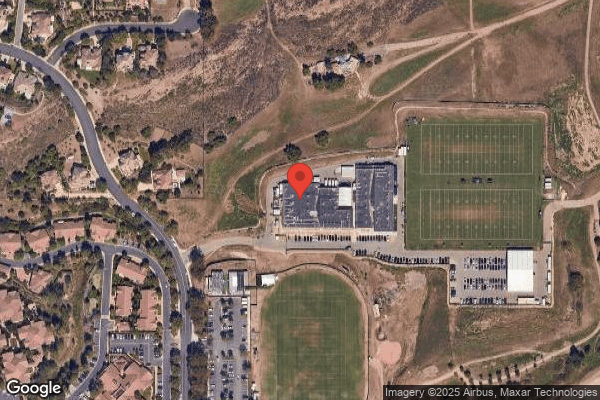

3557 Campus Drive, Thousand Oaks, CA 91360 (805) 241-2000
For profit - Partnership 48 Beds CONTINUING LIFE Data: November 2025
Trust Grade
90/100
#154 of 1155 in CA
Last Inspection: January 2025

Within standard 12-15 month inspection cycle. Federal law requires annual inspections.

Overview

Oakview Skilled Nursing has received an impressive Trust Grade of A, indicating excellent quality and a high recommendation. They rank #154 out of 1,155 facilities in California, placing them in the top half, and #5 out of 19 in Ventura County, suggesting only a few local options are better. The facility's trend is stable, with the same number of issues reported in both 2023 and 2025. Staffing is a relative strength, with a rating of 4 out of 5 stars and a turnover rate of 35%, which is below the state average. However, there have been 9 identified concerns, including failures to verify residents' CPR wishes upon admission and lapses in infection control practices, such as staff entering isolation rooms without proper protective equipment. Overall, while Oakview Skilled Nursing has many strengths, families should be aware of these weaknesses and the need for improvement in specific areas.


Trust Score
A
90/100
In California
#154/1155
Top 13%
Safety Record
Low Risk
No red flags
Inspections
Holding Steady
3 → 3 violations
Staff Stability
○ Average
35% turnover. Near California's 48% average. Typical for the industry.
Penalties
✓ Good
No fines on record. Clean compliance history, better than most California facilities.
Skilled Nurses
○ Average
Each resident gets 32 minutes of Registered Nurse (RN) attention daily — about average for California. RNs are the most trained staff who monitor for health changes.
Violations
○ Average
9 deficiencies on record. Average for a facility this size. Mostly minor or procedural issues.
★★★★★
5.0
Overall Rating
★★★★☆
4.0
Staff Levels
★★★★★
5.0
Care Quality
★★★★★
5.0
Inspection Score
Stable
2023: 3 issues
2025: 3 issues

The Good

  • 4-Star Staffing Rating · Above-average nurse staffing levels
  • 5-Star Quality Measures · Strong clinical quality outcomes
  • Full Sprinkler Coverage · Fire safety systems throughout facility
  • No fines on record
  • Staff turnover below average (35%)

    13 points below California average of 48%

Facility shows strength in staffing levels, quality measures, fire safety.

The Bad

Staff Turnover: 35%

11pts below California avg (46%)

Typical for the industry

Chain: CONTINUING LIFE

Part of a multi-facility chain

Ask about local staffing decisions and management

The Ugly 9 deficiencies on record

Aug 2025 2 deficiencies
CONCERN (D) 📢 Someone Reported This

A family member, employee, or ombudsman was alarmed enough to file a formal complaint

Potential for Harm - no one hurt, but risky conditions existed

Deficiency F0578 (Tag F0578)

Could have caused harm · This affected 1 resident

**NOTE- TERMS IN BRACKETS HAVE BEEN EDITED TO PROTECT CONFIDENTIALITY** Based on interview and record review, the facility failed to ensure policies and procedures (P&P) were implemented for two of th...

Read full inspector narrative →
**NOTE- TERMS IN BRACKETS HAVE BEEN EDITED TO PROTECT CONFIDENTIALITY** Based on interview and record review, the facility failed to ensure policies and procedures (P&P) were implemented for two of three sampled Residents (Resident 1 and Resident 3) when nursing staff failed to verify residents' wishes regarding Cardiopulmonary Resuscitation (CPR - is an emergency lifesaving procedure performed when the heart stops beating) upon admission. This failure had the potential to result in the facility staff providing or delaying medical treatment and services against the will of the residents.During a review of the facility's policy and procedure (P&P) titled, Resident Rights, dated 05/2024, the P&P indicated, Policy: . [facility name] shall promote the exercise of rights for all residents, including those who face, barriers, such as communication problems, hearing problems, and cognition limits, in the exercise of these rights .13. Right to formulate an advanced directive. F. a) If the physician agrees to admit the resident, the physician will be referred to the appropriate nursing station to provide orders unless he/she has already provided said orders. G. The HID or designee will supply the nursing station with the POLST [ Physician Orders for Life-Sustaining Treatment - a document that outlines a seriously ill or frail person's preferences for medical care, particularly at the end of life] form along with other consent forms needed for resident's admission. H. The licensed nurse will introduce and complete the POLST form (if needed) during the admission assessment of the resident, if possible. I. The licensed nurse will convey to the physician of record the wishes of the resident as indicated on the POLST form by faxing the form to the physician as soon as possible in order to obtain the physician's order reflecting the levels of care requested by the resident/legal surrogate.During a concurrent interview and record review on [DATE] at 1:18 p.m., with Administrator (ADM), Resident 1's medical record, dated [DATE] was reviewed. The records indicated Resident 1 did not have an order for Code status (a patient's pre-determined medical decision regarding the type of resuscitation measures desired). The ADM stated, per facility policy, if a Resident does not have a code status on record, the Resident is considered a Full Code (a medical directive that indicates a patient's consent to receive all possible life-saving measures) until proven otherwise. The ADM states that Code status should be received and documented upon admission. The ADM further acknowledged that Resident 1 did not have an order for Code status in the record. ADM stated that the POLST, dated [DATE], indicated that Resident 1 was a Full Code and stated that we did not have their POLST in the chart till after the fact [after discharge] acknowledging that staff did not have a record of Resident 1's code status on admission. During a concurrent interview and record review on [DATE] at 1:18 p.m., with ADM, Resident's 3 medical record, dated [DATE], was reviewed. The Records indicated that Resident 3 did not have an order for Code status and no POLST or Advance directive was in their medical record. ADM confirmed that Resident 3 did not have an order for Code status, a POLST and/or Advance Directive were not in the record and acknowledged that per policy it should have been completed on admission.
CONCERN (D) 📢 Someone Reported This

A family member, employee, or ombudsman was alarmed enough to file a formal complaint

Potential for Harm - no one hurt, but risky conditions existed

Infection Control (Tag F0880)

Could have caused harm · This affected 1 resident

**NOTE- TERMS IN BRACKETS HAVE BEEN EDITED TO PROTECT CONFIDENTIALITY** Based on observations, interviews, and record review, the facility failed to ensure infection control practices were implemented...

Read full inspector narrative →
**NOTE- TERMS IN BRACKETS HAVE BEEN EDITED TO PROTECT CONFIDENTIALITY** Based on observations, interviews, and record review, the facility failed to ensure infection control practices were implemented when: 1. Rehabilitation staff entered a Contact Isolation (infection control measures used to prevent spread of infections through direct (touching resident) or indirect (residents environment)) room without personal protective equipment (PPE - protective clothing such as gowns, gloves, face shields or other equipment) for one of three sampled Residents (Resident 2). 2. Proper identifier for enhanced barrier precautions (EBP - an infection control intervention used to reduce transmission of MDROs (multidrug-resistant organisms that includes use of PPE during high-contact resident care) was not placed on Residents door alerting staff to use PPE, for one of three sampled residents (Resident 3). These deficient practices had the potential to cause cross contamination and the spreading of MDRO's among residents. 1. During a review of the facility's policy and procedure P&P titled, Enhanced Standard Precautions (ESP), undated, the P&P indicated, Policy Statement: . to reduce and/or prevent the transmission of pathogens, including Multi-Drug-Resistant Organisms (MDRO) and viruses. D. Contact Precautions: . gowns and gloves are required for all resident contact. Contact Precautions must be implemented for a resident known or suspected to be infected or colonized with micro-organisms contained within such things as excessive uncontained wound drainage, fecal incontinence or other body fluids that can be transmitted by direct contact with the resident or indirect contact with environmental surfaces or resident-care items in the resident's environment. Signs used to Alert staff of Contact Precautions: d) Signs: Color coded signs will be used to alert staff of the implementation of isolation precautions, while protecting the privacy of the resident. Orange is the color code for Contact Precautions. During an observation on 07/30/25 at 12:20 p.m., in the hallway outside room [ROOM NUMBER], observed PPE (personal protective equipment - protective clothing such as gowns, gloves, face shields or other equipment) and an orange contact isolation precautions sign on the door that occupied two residents. Observed a staff member at the bedside of Resident 2 not wearing PPE, gown or gloves. Witnessed this staff member leave the Residents room without using hand sanitizer or washing hands, enter the nurses station and proceed back to room [ROOM NUMBER] and enter with PPE or hand sanitizer. During an interview on 07/30/25 at 12:20 p.m. with Director of Rehab (DOR), DOR stated she did not know Resident 2 was on isolation precautions and assumed the isolation was for another resident in the room. The DOR stated Resident 2 was newly admitted to the facility and does not know Resident 2's isolation stating, did not check prior to seeing Resident 2. DOR acknowledged she saw the contact isolation sign on the door but states didn't know if PPE is to be worn when entering the room. During an interview on 07/30/25 at 12:25 p.m., with Licensed Nurse (LN) 1, LN1 stated Resident 2 was on contact isolation precautions for an active MDRO infection being treated with antibiotics and confirmed the DOR should should have worn PPE, including gown and gloves when entering the room. During an interview on 07/30/25 at 1:10 p.m. with Nursing Supervisor (NS), NS confirmed that Resident 2 was on contact isolation precautions for MDRO stated that staff should be wearing gowns when entering the room. The NS agreed that DOR should have worn PPE, including gown and gloves. 2 . During a review of the facility's policy and procedure (P&P) titled, Enhanced Standard Precautions (ESP), undated, the P&P indicated, . Signs: Color-coded signs will be used to alert staff of the implementation of isolation precautions, while protecting the privacy of the resident. During an interview on 07/30/25 at 12:25 p.m. with LN1, LN1 stated that residents on EBP, require staff to wear PPE during patient care and that an EBP sign should be posted outside the resident's room. During an observation on 07/30/25 at 12:45 p.m., in room [ROOM NUMBER], Resident 3 was observed in bed, with a Foley bag on the lower side of the bed. Resident 3 room did not have isolation (EBP) sign posted on the door to alert staff.During an interview on 07/30/25 at 1:10 p.m. with NS, the NS confirmed that a Resident has an indwelling device such as a Foley catheter (tube placed and left in the bladder to drain urine into a bag), they would be placed on EBP (enhanced barrier precautions - an infection control intervention used to reduce transmission of MDROs that includes use of PPE during high-contact resident care) and a sign would be placed on Residents door alerting staff to use PPE. The NS acknowledges there was no EBP sign on Resident 3's door, and stated the signage should have been posted upon admission.
Jan 2025 1 deficiency
CONCERN (D)

Potential for Harm - no one hurt, but risky conditions existed

Pharmacy Services (Tag F0755)

Could have caused harm · This affected 1 resident

Based on observation, interview and record review, the facility failed to ensure an opioid medication (pain medication that has a high risk of addiction) that was administered was documented on the ap...

Read full inspector narrative →
Based on observation, interview and record review, the facility failed to ensure an opioid medication (pain medication that has a high risk of addiction) that was administered was documented on the appropriate record. This failure resulted in an inaccurate narcotic count and had the potential to result in diversion of a controlled medication. Findings: During a medication observation on 1/29/25 at 6 a.m. of Medication Cart 1, a narcotic blister pack (card with vacuum sealed medications) of Tramadol (opioid/pain medication that has a high risk for addiction and dependence [Schedule IV under the Controlled Substance Act]) 50 mg. was observed to contain 29 tablets. During a concurrent interview and record review on 1/29/25 at 6:05 a.m. with Licensed Nurse (LN 1), the Controlled Substances Declining Inventory Record or Narcotic Count Sheet/Log (Narcotic Log), dated 1/25/25 was reviewed. The Narcotic Log indicated, there were 30 tablets of Tramadol 50 in Medication Cart 1. Observation of Medication Cart 1 indicated, there were 29 tablets of Tramadol. LN 1 stated punched out the medication from the blister pack without signing the Narcotic Log causing the discepancy between the Narcotic Log count and how many Tramadol tablets were actually remaining in the blister pack. During a concurrent observation, interview and record review on 1/29/25 at 6:12 a.m. with the Director of Nursing (DON), the Narcotic Log was reviewed. The blister pack of Tramadol in Medication Cart 1 was observed and the DON confirmed there were only 29 tablets of Tramadol and the Narcotic Log indicated, 30 Tramadol tablets. The DON stated, The medication should have been signed out. During a review of the facility's policy and procedure (P&P), titled 5.4 Inventory Control of Controlled Substances, revisded 01/01/13, the P&P indicated in part, 1.2 Facility should ensure that the incoming and outgoing nurses count all Schedule II controlled substances and other medications with a risk of abuse or diversion at the change of each shift . and 2. Facility should ensure that Facility staff count all Schedule III-V controlled substances in accordance with Facility policy and Applicable Law.
Dec 2023 1 deficiency
CONCERN (D) 📢 Someone Reported This

A family member, employee, or ombudsman was alarmed enough to file a formal complaint

Potential for Harm - no one hurt, but risky conditions existed

Food Safety (Tag F0812)

Could have caused harm · This affected 1 resident

Based on record review and interview, the facility failed to follow it's policy and procedure to consistently monitor temperature controls from the time food leaves the kitchen to transport and distri...

Read full inspector narrative →
Based on record review and interview, the facility failed to follow it's policy and procedure to consistently monitor temperature controls from the time food leaves the kitchen to transport and distribution to residents. This failure occurred in 1 of 21 opportunities for monitoring. This failure risks residents receiving their food outside of appropriate temperature range. Findings: During a review of facility policy and procedure titled, Service Temperature of Food, dated 10/17/22, indicated in part .Record reading on Food Temperature Chart form 401, at beginning of tray line and at end of tray line . During a concurrent interview and record review on 12/01/22, starting at 2 p.m., with lead cook (LC), while reviewing the Temperature Log for breakfast, lunch and dinner for the week of 11/05/23 through 11/11/2023, log temperature recordings were missing for the dinner meal on 11/07/23. LC acknowledged missing temperature recordings, while also acknowledged that the responsibility for filling out log is the LC. LC confirmed she was the LC on 11/07/23, and stated, I think it slipped my mind, I know it's my responsibility, I just can't tell you why I didn't do it that evening.
Sept 2023 1 deficiency
CONCERN (D) 📢 Someone Reported This

A family member, employee, or ombudsman was alarmed enough to file a formal complaint

Potential for Harm - no one hurt, but risky conditions existed

Assessment Accuracy (Tag F0641)

Could have caused harm · This affected 1 resident

**NOTE- TERMS IN BRACKETS HAVE BEEN EDITED TO PROTECT CONFIDENTIALITY** Based on interview and record review, the facility failed to ensure one of two sampled residents (Resident 1), had an accurate a...

Read full inspector narrative →
**NOTE- TERMS IN BRACKETS HAVE BEEN EDITED TO PROTECT CONFIDENTIALITY** Based on interview and record review, the facility failed to ensure one of two sampled residents (Resident 1), had an accurate assessment recorded on their Minimum Data Set Assessment ((MDS) a tool for implementing standardized assessment and for planning care). For Resident 1, this failure had the potential to result in a plan of care (a communication tool for healthcare providers to ensure quality care is being provided) that did not match their actual needs. Findings: During a review of Resident 1 ' s MDS, dated [DATE], the MDS indicated, Resident 1 ' s functional status (ability to physically perform tasks) related to bathing was Total dependence [unable to participate in any of the bathing activity] . One-person physical assist [assisted by one staff person]. During a review of Resident 1 ' s MDS, dated [DATE], the MDS indicated, Resident 1 ' s functional status related to bathing was Supervision – oversight help only . Two+ person physical assist [assisted by two or more staff persons]. During an interview on 08/16/2023 at 2:12 p.m. with Director of Nursing (DON), DON reviewed MDS dated [DATE] for bathing and stated Yea, that is wrong. DON reviewed MDS dated [DATE] and stated, that is correct. During a review of the facility ' s MDS manual titled, CMS ' s RAI Version 3.0 Manual, dated 10/2019, the MDS manual indicated, Bathing. How the resident takes a full body bath, shower or sponge bath, including transfers in and out of the tub or shower . Code for the maximum amount of assistance the resident received during the bathing episodes . supervision: if the resident required oversight help only . total dependence: if the resident is unable to participate in any of the bathing activity.
Apr 2023 1 deficiency
CONCERN (D)

Potential for Harm - no one hurt, but risky conditions existed

Assessment Accuracy (Tag F0641)

Could have caused harm · This affected 1 resident

Based on interview and record review, the facility failed to accurately document the health condition related to medical condition for two of five sampled residents (Resident 9 and Resident 196), usin...

Read full inspector narrative →
Based on interview and record review, the facility failed to accurately document the health condition related to medical condition for two of five sampled residents (Resident 9 and Resident 196), using the Minimum Data Set ((MDS - a tool used to assess and plan care of residents in a nursing facility) when: 1. For Resident 9 - had a missing diagnosis for anxiety. 2. For Resident 196 - had a missing diagnosis for depression. This facility failure resulted in the facility reporting inaccurate data to Centers for Medicare & Medicaid Services (CMS). Findings: During a review of the facility's policy and procedure (P&P) titled, Resident Assessment Instrument (RAI), dated 10/2019, the P&P indicated, Medical record sources for physician diagnoses include progress notes, the most recent history and physical, transfer documents, discharge summaries, diagnosis/problem list, and other resources as available. 1. During a review of Resident 9's Face Sheet (FS), dated 4/23, the FS indicated, Resident 9 had a diagnosis of Unspecified Anxiety Disorder. During a review of the Physician's Order (PO), dated 4/19/23, the PO indicated, Resident 9 is to be given Lorazepam concentrates 2 milligrams/milliliter (mg/ml), 0.1 ml orally (by mouth) every six hours as needed for Anxiety manifested by restlessness and/or shortness of breath. During a review of the Physician Order and Informed Consent Verification Form (POICVF), dated 4/23, the POICVF indicated, the informed consent for the Lorazepam for diagnosis of Anxiety was obtained from Resident 9's responsible party. During a review of Resident 9's Care Plan (CP) - (a plan developed by the facility to identify resident's needs care and needs), dated 2/23, the CP indicated, Resident 9 uses anti-anxiety medication related to anxiety disorder. During a concurrent interview and record review, on 4/27/23, at 10:30 a.m., with the Director of Nursing (DON), Resident 9's most recent MDS section I, dated 2/17/23 was reviewed. The MDS indicated, a missing diagnosis for Anxiety. The DON stated, I already knew my deficiency. I missed the diagnosis for Anxiety. The DON further stated, I should have coded it. 2. During a review of Resident 196's PO, dated 4/10/23, the PO indicated, Resident 196 is to be given Trazodone 50 mg by mouth at bedtime for Depression resulting in insomnia . During a review of the POICVF, dated 4/10, the POICVF indicated, the informed consent for Trazodone for the diagnosis of Depression was obtained from Resident 196. During a review of Resident 196's CP, dated 2/23, the CP indicated, Resident 196 uses antidepressant medication related to diagnosis of Depression. During a concurrent interview and record review, on 4/27/23, at 10:30 a.m., with the DON, Resident 196's MDS section I, dated 4/17/23 was reviewed. The MDS indicated, a missing diagnosis for Depression. The DON acknowledged and stated, There was no documentation coding for Depression diagnosis in section I. The DON further stated, I missed documenting the diagnosis .It was my mistake.
Oct 2019 3 deficiencies
CONCERN (D)

Potential for Harm - no one hurt, but risky conditions existed

Safe Environment (Tag F0584)

Could have caused harm · This affected 1 resident

Based on observation, interview and record review, the facility failed to maintain equipment in a safe and sanitary manner for one of 12 sampled residents (Resident 12). This facility failure had the ...

Read full inspector narrative →
Based on observation, interview and record review, the facility failed to maintain equipment in a safe and sanitary manner for one of 12 sampled residents (Resident 12). This facility failure had the potential for Resident 12 to develop an infection from a surface that could not be adequately sanitized. Findings: During an observation and concurrent interview with the Director of Staff Development (DSD), on 10/22/19, at 3:54 p.m., a two inch tear was noted in the vinyl on the left arm rest of a reclining geriatric chair (large, padded, comfortable chair with casters designed to allow patients to sit comfortably while being fully supported) occupied by Resident 12. The DSD acknowledged that the chair cannot be adequately sanitized, and should not be in use. The facility policy and procedure titled, Community - Care Equipment, dated 9/21/17, indicated in part, It is the policy of [facility name] to maintain resident care equipment in a sanitary manner, both in appearance and also in terms of reduction of infectious potential.
CONCERN (D)

Potential for Harm - no one hurt, but risky conditions existed

Deficiency F0658 (Tag F0658)

Could have caused harm · This affected 1 resident

**NOTE- TERMS IN BRACKETS HAVE BEEN EDITED TO PROTECT CONFIDENTIALITY** Based on observation, interview, and record review, the facility failed to ensure one sampled resident (Resident 37) had a splin...

Read full inspector narrative →
**NOTE- TERMS IN BRACKETS HAVE BEEN EDITED TO PROTECT CONFIDENTIALITY** Based on observation, interview, and record review, the facility failed to ensure one sampled resident (Resident 37) had a splint applied to the left hand as ordered by the medical doctor (MD). This facility failure had the potential for Resident 37 to suffer complications, such as worsened contracture (a permanent shortening of muscle, tendon, or scar tissue) producing deformity or distortion. Findings: According to [NAME] and Perry's, 7th Edition, Mosby's Fundamentals of Nursing, page 419 in the section titled, Legal Implications in Nursing Practice, Nurses are obligated to follow physician order unless they believe they orders are in error or would harm clients. During an observation on 10/21/19, at 4:14 p.m., Resident 37's left hand was noted to be clenched into a fist, and no splint was in place. Resident 37's Responsible Party (RP) manually opened Resident 37's fingers and stated Resident 37's splint is supposed to be on. During a review of the clinical record for Resident 37, the Order Listing Report, dated 4/12/19, indicated in part, Splint wearing schedule: beige splint for left hand, on 2 hours/off 2 hours during waking time i.e. after breakfast on approx 9:30-12:30, off for lunch, on in p.m approx. 2:00-5:00, off during dinner . During a review of Resident's 37's, Treatment Administration Record (TAR), dated October 2019, did not contain splint application and removal documentation. A review of Resident's 37's, Care Plan Report, dated 7/26/19, indicated a focus is, Resident at risk for skin breakdown to left palm related to neurological dysfunction to left hand causing left hand contracture. One intervention states, Splint wearing schedule: beige splint for left hand, on 2 hours/off 2 hours during waking time i.e. after breakfast on approx 9:30-12:30, off for lunch, on in pm approx. 2:00-5:00 off during dinner . During an interview with the Administrator (ADM), and the Director of Nursing (DON), on 10/21/19, at 5:16 p.m., the DON stated there is no mechanism for documentation of the splint being applied or removed, and acknowledged that the splint was not in place as it should have been. The facility policy and procedure titled, Resident Mobility and Range of Motion, dated 1/1/19, indicated in part, Interventions may include therapies, the provision of necessary equipment, and/or exercises and is based on professional standards of practice .
CONCERN (D)

Potential for Harm - no one hurt, but risky conditions existed

Deficiency F0761 (Tag F0761)

Could have caused harm · This affected 1 resident

**NOTE- TERMS IN BRACKETS HAVE BEEN EDITED TO PROTECT CONFIDENTIALITY** Based on observation, interview, and record review, the facility failed to ensure medications and medical supplies were properly...

Read full inspector narrative →
**NOTE- TERMS IN BRACKETS HAVE BEEN EDITED TO PROTECT CONFIDENTIALITY** Based on observation, interview, and record review, the facility failed to ensure medications and medical supplies were properly labeled and stored when: 1. Two vials of expired heparin (a blood thinning medication) were found in a facility emergency medication kit (E-Kit) (a kit that stores a variety of medications intended for emergency resident use). 2. Expired supplies were found in the intravenous (IV) supply cart. These failures had the potential for residents to receive medications which may be ineffective or altered, and for residents to to have potential complications from use. Findings: 1. During an observation and concurrent interview with a licensed nurse (LN1), on [DATE], at 10:20 a.m., two expired vials of heparin were found in a facility E-Kit with a labeled expiration date of [DATE]. LN1 confirmed the two vials of heparin were expired and acknowledged she would contact pharmacy to get them replaced. 2. During an observation on [DATE], at 10:40 a.m., in the IV supply cart the following items were found: a. Four expired povidone-iodine prep pads (an antiseptic used to clean the skin to prevent infection) were found. Three povidone-iodine prep pads were labeled with an expiration date of 9/19 and one povidone-iodine prep pad was labeled with an expiration date of 8/18. b. One expired chloraprep applicator (an antiseptic used to clean the skin to prevent infection) was labeled with an expiration date of 3/14. c. Six expired chloraprep swab sticks were expired. Four chloraprep swab sticks were labeled with an expiration date of 5/16. Two chloraprep swab sticks were labeled with an expiration date of 9/13. d. One expired alcohol swab stick (an antiseptic used to clean the skin to prevent infection) was found with an expiration date of 5/11. During an interview on [DATE], at 10:56 a.m., LN1 confirmed the supplies were expired and stated We will dispose of these. The facility policy and procedure titled, Disposal/Destruction of Expired or Discontinued Medication, dated 5/10, indicated in part, Facility should place all discontinued or out-dated medications in a designated, secure location which is solely for discontinued medications or marked to identify the medications are discontinued and subject to destruction.
Understanding Severity Codes (click to expand)
Life-Threatening (Immediate Jeopardy)
J - Isolated K - Pattern L - Widespread
Actual Harm
G - Isolated H - Pattern I - Widespread
Potential for Harm
D - Isolated E - Pattern F - Widespread
No Harm (Minor)
A - Isolated B - Pattern C - Widespread

Questions to Ask on Your Visit

  • "Can I speak with families of current residents?"
  • "What's your RN coverage like on weekends and overnight?"

Our Honest Assessment

Strengths
  • • Grade A (90/100). Above average facility, better than most options in California.
  • • No major safety red flags. No abuse findings, life-threatening violations, or SFF status.
  • • No fines on record. Clean compliance history, better than most California facilities.
  • • 35% turnover. Below California's 48% average. Good staff retention means consistent care.
Concerns
  • • No significant concerns identified. This facility shows no red flags across CMS ratings, staff turnover, or federal penalties.
Bottom line: Generally positive indicators. Standard due diligence and a personal visit recommended.

About This Facility

What is Oakview Skilled Nursing's CMS Rating?

CMS assigns Oakview Skilled Nursing an overall rating of 5 out of 5 stars, which is considered much above average nationally. Within California, this rating places the facility higher than 99% of the state's 100 nursing homes. This rating reflects solid performance across the metrics CMS uses to evaluate nursing home quality.

How is Oakview Skilled Nursing Staffed?

CMS rates Oakview Skilled Nursing's staffing level at 4 out of 5 stars, which is above average compared to other nursing homes. Staff turnover is 35%, compared to the California average of 46%. This relatively stable workforce can support continuity of care.

What Have Inspectors Found at Oakview Skilled Nursing?

State health inspectors documented 9 deficiencies at Oakview Skilled Nursing during 2019 to 2025. These included: 9 with potential for harm.

Who Owns and Operates Oakview Skilled Nursing?

Oakview Skilled Nursing is owned by a for-profit company. For-profit facilities operate as businesses with obligations to shareholders or private owners. The facility is operated by CONTINUING LIFE, a chain that manages multiple nursing homes. With 48 certified beds and approximately 43 residents (about 90% occupancy), it is a smaller facility located in Thousand Oaks, California.

How Does Oakview Skilled Nursing Compare to Other California Nursing Homes?

Compared to the 100 nursing homes in California, Oakview Skilled Nursing's overall rating (5 stars) is above the state average of 3.2, staff turnover (35%) is significantly lower than the state average of 46%, and health inspection rating (5 stars) is much above the national benchmark.

What Should Families Ask When Visiting Oakview Skilled Nursing?

Based on this facility's data, families visiting should ask: "Can I visit during a mealtime to observe dining assistance and food quality?" "How do you handle medical emergencies, and what is your hospital transfer rate?" "Can I speak with family members of current residents about their experience?"

Is Oakview Skilled Nursing Safe?

Based on CMS inspection data, Oakview Skilled Nursing has a clean safety record: no substantiated abuse findings (meaning no confirmed cases of resident harm), no Immediate Jeopardy citations (the most serious violation level indicating risk of serious injury or death), and is not on the Special Focus Facility watch list (a federal program monitoring the lowest-performing 1% of nursing homes). The facility has a 5-star overall rating and ranks #1 of 100 nursing homes in California. While no facility is perfect, families should still ask about staff-to-resident ratios and recent inspection results during their visit.

Do Nurses at Oakview Skilled Nursing Stick Around?

Oakview Skilled Nursing has a staff turnover rate of 35%, which is about average for California nursing homes (state average: 46%). Moderate turnover is common in nursing homes, but families should still ask about staff tenure and how the facility maintains care continuity when employees leave.

Was Oakview Skilled Nursing Ever Fined?

Oakview Skilled Nursing has no federal fines on record. CMS issues fines when nursing homes fail to meet care standards or don't correct problems found during inspections. The absence of fines suggests the facility has either maintained compliance or corrected any issues before penalties were assessed. This is a positive indicator, though families should still review recent inspection reports for the full picture.

Is Oakview Skilled Nursing on Any Federal Watch List?

Oakview Skilled Nursing is not on any federal watch list. The most significant is the Special Focus Facility (SFF) program, which identifies the bottom 1% of nursing homes nationally based on persistent, serious quality problems. Not being on this list means the facility has avoided the pattern of deficiencies that triggers enhanced federal oversight. This is a positive indicator, though families should still review the facility's inspection history directly.