Sherwood Oaks Post Acute
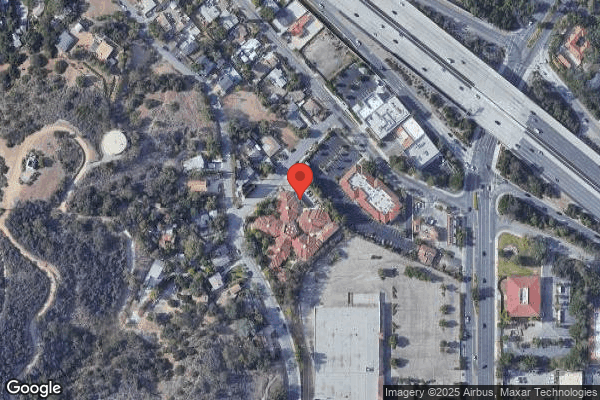
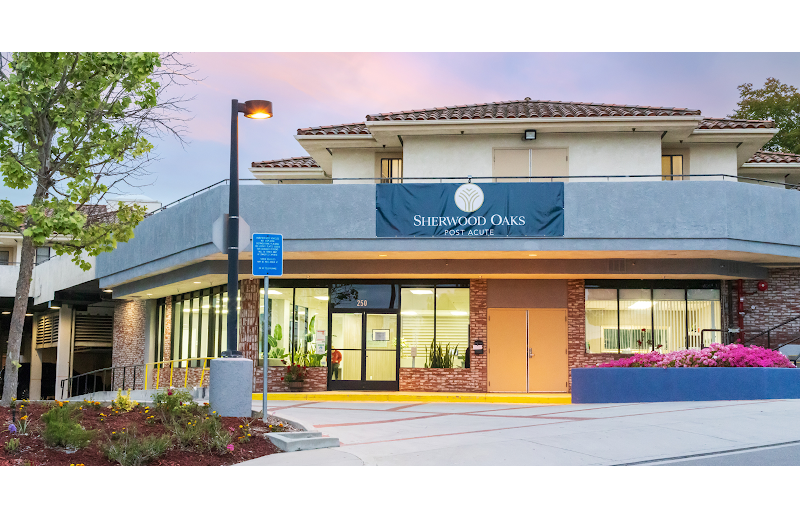
250 Fairview Road, Thousand Oaks, CA 91361 (805) 494-1233
For profit - Limited Liability company 99 Beds PACS GROUP Data: November 2025
Trust Grade
73/100
#474 of 1155 in CA
Last Inspection: February 2025

Within standard 12-15 month inspection cycle. Federal law requires annual inspections.

Overview

Sherwood Oaks Post Acute in Thousand Oaks, California, has a Trust Grade of B, indicating it is a good choice for families seeking care, though not without its issues. It ranks #474 out of 1,155 facilities in California, placing it in the top half overall, but only #15 out of 19 in Ventura County, suggesting that there are better local options. The facility is improving, having reduced its issues from 11 in 2024 to 6 in 2025. Staffing is relatively stable with a turnover rate of 28%, which is below the state average, although RN coverage is only average. While there are no fines recorded, which is a positive sign, the facility has received concerns about food temperature and safe food handling practices, as well as failing to post important resident rights information. This mix of strengths and weaknesses makes it essential for families to consider both the positive aspects and the areas needing improvement when evaluating this nursing home.
Trust Score
B
73/100
In California
#474/1155
Top 41%
Safety Record
Low Risk
No red flags
Inspections
Getting Better
11 → 6 violations
Staff Stability
✓ Good
28% annual turnover. Excellent stability, 20 points below California's 48% average. Staff who stay learn residents' needs.
Penalties
✓ Good
No fines on record. Clean compliance history, better than most California facilities.
Skilled Nurses
○ Average
Each resident gets 33 minutes of Registered Nurse (RN) attention daily — about average for California. RNs are the most trained staff who monitor for health changes.
Violations
⚠ Watch
56 deficiencies on record. Higher than average. Multiple issues found across inspections.
★★★★☆
4.0
Overall Rating
★★★☆☆
3.0
Staff Levels
★★★★★
5.0
Care Quality
★★★☆☆
3.0
Inspection Score
Stable
2024: 11 issues
2025: 6 issues

The Good

  • 5-Star Quality Measures · Strong clinical quality outcomes
  • Low Staff Turnover (28%) · Staff stability means consistent care
  • Full Sprinkler Coverage · Fire safety systems throughout facility
  • No fines on record
  • Staff turnover is low (28%)

    20 points below California average of 48%

Facility shows strength in quality measures, staff retention, fire safety.

The Bad

Chain: PACS GROUP

Part of a multi-facility chain

Ask about local staffing decisions and management

The Ugly 56 deficiencies on record

Jul 2025 2 deficiencies
CONCERN (D) 📢 Someone Reported This

A family member, employee, or ombudsman was alarmed enough to file a formal complaint

Potential for Harm - no one hurt, but risky conditions existed

Safe Environment (Tag F0584)

Could have caused harm · This affected 1 resident

Based on observation, interview and record review, the facility failed to ensure a shower room was sanitary and in good repair.This failure had the potential to violate Residents rights to receive car...

Read full inspector narrative →
Based on observation, interview and record review, the facility failed to ensure a shower room was sanitary and in good repair.This failure had the potential to violate Residents rights to receive care in a safe, clean and homelike environment. During a concurrent observation and interview, on 7/31/25, beginning at 12:55 p.m., with the Maintenance Director (MTD 1), a shower room located in hallway four was inspected. In the shower room, the shower doorframe was in a state of disrepair, the wall had broken tiles, the call light cord was broken and had been replaced with plastic bags in lieu of replacing the cord, a bottle of lotion was stored atop a dirty sharps container and a used razer was stored in a plastic cup atop a box of clean gloves. The MTD 1 confirmed and verbalized the doorframe was in a state of disrepair, there were broken tiles, the call light cord needed to be replaced, staff had stored a lotion bottle atop a dirty sharps container and a dirty razer was stored atop a box of clean gloves. During a review of the facility's policy and procedures titled Homelike Environment dated 2/21, indicated in part Residents are provided with a safe, clean, comfortable and homelike environment.The facility staff and management maximizes, to the extent possible, the characteristics of the facility that reflect a personalized, homelike setting. These characteristics include.clean, sanitary and orderly environment.
CONCERN (D) 📢 Someone Reported This

A family member, employee, or ombudsman was alarmed enough to file a formal complaint

Potential for Harm - no one hurt, but risky conditions existed

Deficiency F0813 (Tag F0813)

Could have caused harm · This affected 1 resident

Based on observation, interview and record review the facility failed to adhere to its policy and procedure for foods brought in by family and visitors. This failure had the potential for Residents to...

Read full inspector narrative →
Based on observation, interview and record review the facility failed to adhere to its policy and procedure for foods brought in by family and visitors. This failure had the potential for Residents to consume spoiled food and to experience negative outcomes.During a concurrent observation and interview, on 7/31/25, at 1:21 p.m., with the Infection Preventionist (IP 1), the resident refrigerator was inspected. Inside the resident refrigerator was a unlabeled and undated plastic bag containing a head of lettuce which had partially turned brown and two unlabeled and undated half eaten sandwiches in plastic containers. The IP 1 confirmed the observations and verbalized the resident food items should have been labeled with a resident's name and date. When asked how long these items had been in the resident refrigerator the IP 1 could not give a definitive answer but did verbalize facility practice was to clean out the refrigerator once a week on Friday's.During a review of the facility's policy and procedure titled Foods Brought by Family/Visitors dated 3/22, indicated in part Perishable foods are stored in re-sealable containers with tightly fitting lids in a refrigerator. Containers are labeled with the resident's name, the item and the use by date.The nursing and/or food service staff will discard any foods prepared for the resident that show obvious signs of potential foodborne danger.
Feb 2025 3 deficiencies
CONCERN (D)

Potential for Harm - no one hurt, but risky conditions existed

Report Alleged Abuse (Tag F0609)

Could have caused harm · This affected 1 resident

Based on interview, record review, and facility document and policy review, the facility failed to report a resident-to-resident abuse allegation to the State Agency within two hours of an incident fo...

Read full inspector narrative →
Based on interview, record review, and facility document and policy review, the facility failed to report a resident-to-resident abuse allegation to the State Agency within two hours of an incident for 2 (Resident #7 and Resident #39) of 3 residents reviewed for abuse. Specifically, on 01/27/2025, the police responded to the facility after Resident #39 reported that Resident #7 bumped into their wheelchair, then bumped the resident's knee. The facility Social Services Director (SSD) documented that she and the Administrator had a conversation with Resident #7 on 01/30/2025 about harassment of Resident #39; however, there was no documented evidence the facility notified the State Agency of a resident-to-resident abuse allegation until 02/05/2025. Findings included: A facility policy titled, Abuse Prevention, dated 12/31/2015, indicated, 1. All health practitioners and all employees in a long-term healthcare facility are mandated reports [sic] (Welfare and Institutions Code, Section 15630, Appendix IV). 2. Any mandated reporter who, in his or her professional capacity, or within the scope of his or her employment has observed or has knowledge of an incident that reasonably appears to be physical abuse, abandonment, isolation, financial abuse, or neglect, or is told by an elder or dependent adult that he or she has experienced behavior constituting physical abuse, abandonment, isolation, financial abuse or neglect, or reasonably suspects abuse shall report known or suspected abuse. The policy revealed, 5. First responder or first staff member informed will be responsible for informing immediate supervisor and initiating incident report. 6. Any employee who suspects an alleged violation shall immediately notify the Administrator or designee. 7. The Administrator shall report all alleged or suspected violations to the appropriate state agencies immediately or within 24 hours (California H&S [Health and Safety] Code 1418.91a) and Vice-President of Operations. Resident #39's admission Record indicated the facility admitted the resident on 06/05/2019. According to the admission Record, the resident had a medical history that included diagnoses of depression, other abnormalities of gait and mobility, and diffuse traumatic brain injury with loss of consciousness of unspecified duration. A quarterly Minimum Data Set (MDS), with an Assessment Reference Date (ARD) of 12/18/2024, revealed Resident #39 had a Brief Interview for Mental Status (BIMS) score of 15, which indicated the resident had intact cognition. Per the MDS, Resident #39 had utilized a walker and a wheelchair during the assessment look-back period. The MDS revealed the resident had no behavioral symptoms during the assessment look-back period. Resident #39's Care Plan included a problem statement initiated 02/04/2025, that indicated the resident was at risk for emotional distress due to an alleged disagreement with another resident. Interventions (initiated 02/04/2025) directed staff to divert the resident's attention to pleasant thoughts, encourage the resident to participate in activities of choice, encourage the resident to verbalize feelings, notify the medical doctor of any significant changes, and obtain a psychiatric consultation as ordered by the physician. Resident #7's admission Record indicated the facility admitted the resident on 11/06/2021. According to the admission Record, the resident had a medical history that included diagnoses of chronic pain syndrome, bipolar disorder, anxiety disorder, unsteadiness, and muscle weakness. An annual Minimum Data Set (MDS), with an Assessment Reference Date (ARD) of 01/10/2025, revealed Resident #7 had a Brief Interview for Mental Status (BIMS) score of 15, which indicated the resident had intact cognition. Per the MDS, Resident #7 had utilized a walker and a wheelchair during the assessment look-back period. The MDS revealed the resident had no behavioral symptoms during the assessment look-back period Resident #7's Care Plan included a problem statement initiated 02/04/2025, that indicated the resident was at risk for emotional distress due to an alleged disagreement with another resident. Interventions (initiated 02/04/2025) directed staff to monitor interactions between the resident and the other party involved observe the resident for signs and symptoms of emotional distress, obtain a psychiatric consultation for further assessment and intervention, offer emotional support and reassurance, report to the medical doctor and document any signs of distress or further incidents, and separate the residents if necessary to prevent escalation. Resident #7's Social Service Note, dated 01/29/2025 at 1:22 PM, indicated the Social Services Director (SSD), Administrator, and Administrator in Training spoke with Resident #7 regarding claims that Resident #39 accused the resident of harassment. Per the note, Resident #7 stated that they had not harassed Resident #39 or any other resident of the facility and stated that Resident #39 was harassing them (Resident #7). The note revealed the SSD told Resident #7 that moving forward, they should not look at, have a conversation with, or interact with Resident #39 and that the SSD would contact the Ombudsman regarding the matter. A facility Report of Suspected Dependent Adult/Elder Abuse, dated 02/04/2025, revealed the facility reported to the State Agency that there was an alleged verbal disagreement between Resident #7 and Resident #39 and there was no physical injury. An addendum letter sent to the State Agency on 02/05/2025 revealed the incident occurred on 01/27/2025 at 4:40 PM. During an interview on 02/03/2025 at 1:56 PM, Resident #39 stated that the week prior, they were speaking with the Social Services Assistant (SSA), and they did not want to talk in the open because there were too many nosy people. Resident #39 stated that afterward, Resident #7 bumped into their wheelchair, then bumped their knee and said, You're not God. There's only one God. Resident #39 stated they were not hurt. According to Resident #39, they called 911 on 01/27/2025 at 7:55 PM about the incident. During a follow-up interview on 02/04/2025 at 10:31 AM, Resident #39 stated Resident #7 had never hurt them, but they still felt unsafe because they (Resident #7) want to start something with me and I never know what [Resident #7's] going to do next. During an interview on 02/05/2025 at 11:38 AM, Resident #69 stated Resident #7 bumped into Resident #39's chair. According to Resident #69, it was intentional, because Resident #7 changed their trajectory to do it. Resident #69 stated that staff were around, and they separated the residents. During an interview on 02/05/2025 at 12:37 PM, Resident #7 stated they did not bump into Resident #39's chair and stated, Check the cameras. Resident #7 also insisted that Resident #39 was bullying them. On 02/06/2025 at 11:05 AM, an attempt was made to contact Deputy #21, and the deputy was not on duty. During a telephone interview on 02/09/2025 at 11:55 PM, conducted after the survey exit date, Deputy #21 stated she responded to a call from the facility on 01/27/2025. Per the deputy, Resident #39 stated they were talking with a social worker, which halted the games residents were playing. Per the deputy, Resident #39 stated this made Resident #7 mad, and Resident #7 began staring down at Resident #39. Deputy #21 stated Resident #39 reported that several hours later, Resident #7 bumped into Resident #39's walker while Resident #39 was eating and said something like, Only God can judge you. Per Deputy #21, the incident did not meet the legal criteria for any type of elder abuse, crime, or threat, which was what she told the facility when she exited. She stated she completed an internal document, not a police report. She stated a week later, the facility requested a report, and she wrote a courtesy report. During an interview on 02/06/2025 at 12:10 PM, the SSA stated she first became aware of an incident on Wednesday (01/29/2025). Per the SSA, the sheriff's office came in on Monday night (01/27/2025). She stated she was notified that the residents had a disagreement and were not on good terms. She stated she knew that they did not like each other but nothing had ever happened between them. The SSA also stated that the incident occurred at night when most department heads were not in the facility. She stated anyone who witnessed it should have reported it to the Administrator. She stated per policy, abuse had to be reported to the abuse coordinator and a report had to be filed with the State Agency. The SSA stated they were monitoring Resident #39 because the resident initially stated that they felt unsafe. During an interview on 02/05/2025 at 2:40 PM, the SSD stated that to her knowledge, the residents' mutual dislike had never escalated to physical contact. During an interview on 02/06/2025 at 1:35 PM, the Director of Nursing (DON) stated she was notified of an incident on 01/27/2025. She stated she only knew that Resident #39 called the sheriff and that the police had given a report to a nurse that there was no crime or altercation. Per the DON, she was not notified that Resident #39 alleged there was a physical altercation. She stated she notified the Administrator. Per the DON, the facility did not report an abuse allegation based on the police's conclusion that there had been no altercation. During an interview on 02/06/2025 at 2:04 PM, the Operations Manager stated he learned of an incident on 01/27/2025, when the DON contacted him. He stated he knew there had been a verbal disagreement between the two residents, and that the police did not find grounds for any further action. He stated he was never told of a collision in the dining room. The Operations Manager stated he reported what he learned to the Administrator. Per the Operations Manager, the expectation was to report abuse allegations; however, the Administrator probably did not find that it rose to the level of abuse based on what the police said. During an interview on 02/06/2025 at 1:51 PM, the Administrator stated he was first made aware of an incident on 01/27/2025. He stated the Operations Manager informed him that the police were at the facility. According to the Administrator, the police spoke with Licensed Vocational Nuse (LVN) #14, who was on shift when the incident occurred. The Administrator stated that according to the police, there was a disagreement/dispute between the two residents; however, no altercation took place. The Administrator stated that LVN #14 also stated there was a disagreement/dispute and Resident #69 stated there was no altercation. According to the Administrator, he was not notified that Resident #7 collided with Resident #39's wheelchair. On 02/05/2025 at 3:30 PM, 02/06/2025 at 8:37 AM, and 02/06/2025 at 9:41 AM, attempts were made to reach LVN #14, who was working the evening shift of 01/27/2025. All attempts were unsuccessful. During a follow-up interview on 02/05/2025 at 8:46 AM, the Administrator stated he did not report the allegation from the previous week until 02/04/2025.
CONCERN (D)

Potential for Harm - no one hurt, but risky conditions existed

Deficiency F0645 (Tag F0645)

Could have caused harm · This affected 1 resident

Based on interview, record review, and facility policy review, the facility failed to refer 1 (Resident #49) of 2 residents reviewed for Pre-admission Screening and Resident Review (PASRR) for a Level...

Read full inspector narrative →
Based on interview, record review, and facility policy review, the facility failed to refer 1 (Resident #49) of 2 residents reviewed for Pre-admission Screening and Resident Review (PASRR) for a Level II screening when Resident #49 was admitted with a diagnosis of psychosis and depression. Findings included: A facility policy titled, PASARR [Pre-admission Screening and Resident Review, PASRR], dated 03/2024, indicated, a. The facility verifies with [sic] acute hospital if a Level I PASARR screen for potential admissions and readmissions, regardless of payer source, to determine if the individual meets the criteria for a MD [mental disorder], ID [intellectual disability] or RD [related disorders]. b. Before a patient can be transferred from a hospital, they must undergo a PASARR Level I screening. This initial screening is designed to identify individuals who may have mental illness (MI), intellectual disability (ID) or related conditions. The goal is to determine whether they require further evaluation (Level II) to assess the need for specialized services. c. If the level I screen indicates that the individual may meet the criteria for a MD, ID, or RD, he or she is referred to the state PASARR representative for the Level II (evaluation and determination) screening process. Resident #49's Preadmission Screening and Resident Review (PASRR) Level I Screening, dated 10/16/2024, revealed the resident had no diagnosed serious mental illness, such as depressive disorder, anxiety disorder, panic disorder, schizophrenia/schizoaffective disorder, or symptoms of psychosis, delusions, and/or mood disturbance. The Level I PASRR revealed after observing the resident and reviewing the resident's records, there was no suspected mental illness. The PASRR also revealed the resident had not been prescribed any psychotic medications for a serious mental illness. An admission Record revealed the facility admitted Resident #49 on 10/19/2024. According to the admission Record, the resident had a medical history that included a diagnosis of unspecified psychosis not due to a substance or known physiological condition and unspecified depression. An admission Minimum Data Set (MDS), with an Assessment Reference Date (ARD) of 10/25/2024, revealed Resident #49 had a Brief Interview for Mental Status (BIMS) of 5, which indicated the resident had severe cognitive impairment. The MDS revealed the resident had active diagnoses of depression and psychotic disorder. The MDS revealed the resident had taken antipsychotic and antidepressant medications during the assessment's seven-day look-back period. Resident #49's Care Plan included a problem area initiated 10/19/2024, that indicated [Resident #49] has Psychosis. The Care Plan included a problem area initiated 10/21/2024, that indicated the resident required antidepressant medication related to depression. Resident #49's physician orders revealed an order for quetiapine fumarate oral tablet 100 milligrams (mg) with instructions to give one tablet by mouth at bedtime for psychosis, that started on 10/19/2024 and ended on 01/06/2025. Resident #49's Medication Review Report, revealed an order dated 01/13/2025 for quetiapine fumarate 50 mg with instructions to give one tablet by mouth at bedtime for psychosis. During an interview on 02/06/2025 at 9:51 AM, the admission Director stated the hospital completed PASRRs and usually sent them to the facility via the PASRR portal. She stated the diagnosis was likely added on admission. The admission Director revealed she did not know who was responsible for referring a resident for a PASRR when the resident had a new diagnosis of an SMI. During a follow-up interview on 02/06/2025 at 10:42 AM, the admission Director revealed Resident #49 had a diagnosis of psychosis from the hospital. She revealed she probably missed the diagnosis since the resident was admitted to the facility on a weekend. During an interview on 02/06/2025 at 2:19 PM, the MDS Coordinator stated the facility received PASRRs from the hospital where they were completed. He stated his process for reviewing PASRRs included reviewing the resident's diagnosis list and resubmitting a PASRR if it did not match the diagnosis list. The MDS Coordinator stated Resident #49 was admitted on a weekend and the diagnosis got passed them. During an interview on 02/06/2025 at 1:35 PM, the Director of Nursing (DON) stated that on admission from the hospital, the admission Director reviewed the resident's PASRR and the resident's diagnoses and medications. She stated the MDS Coordinator completed a second review. She stated that the admission PASRR did not capture Resident #49's diagnosis of psychosis. During an interview on 02/06/2025 at 1:51 PM, the Administrator stated that admissions staff reviewed new resident admissions to see if a Level II screening was required. He stated the facility missed Resident #49's psychosis diagnosis.
CONCERN (F)

Potential for Harm - no one hurt, but risky conditions existed

Deficiency F0575 (Tag F0575)

Could have caused harm · This affected most or all residents

Based on observation, interview, and facility policy review, the facility failed to post the State Survey Agency contact information and a statement regarding a resident's right to file a complaint wi...

Read full inspector narrative →
Based on observation, interview, and facility policy review, the facility failed to post the State Survey Agency contact information and a statement regarding a resident's right to file a complaint with the State Survey Agency. This failure had the potential to affect all 94 residents who resided at the facility. Findings included: A facility policy titled, Federal Posting Policy, version 05/2024, revealed, This policy ensures compliance with federal posting requirements for skilled nursing facilities. The facility will prominently display all federally mandated notices to inform employees, residents, and visitors of their rights and protections under federal law. This policy applies to all required postings in publicly accessible areas of the facility. The policy revealed that 1. Required Postings: included, A statement that the resident may file a complaint with the State survey and certification agency concerning resident abuse, neglect, and misappropriation of resident property in the facility, and non-compliance with advance directive requirements. An observation on 02/05/2025 at 12:36 PM of the facility's bulletin board, located on the wall beside the nurses' station, revealed no evidence of a posting or statement that outlined the resident's right to file a complaint with the state survey agency. During interview on 02/05/2025 at 12:40 PM, Resident #32 (who had a Brief Interview for Mental Status [BIMS] score of 12, which indicated the resident had moderate cognitive impairment, per an admission Minimum Data Set [MDS] assessment, with an Assessment Reference Date [ARD] of 01/21/2025), stated they did not know whether they could file a complaint with the state agency about care at the facility. The resident stated they had not seen a posting or information with the state survey agency's contact information. During an interview on 02/05/2025 at 12:51 PM, Certified Nursing Assistant (CNA) #1 stated she was not aware of a posting in the facility with information on how a resident could file a complaint with the state survey agency. During an interview on 02/05/2025 at 1:08 PM, the Director of Nursing (DON) stated if a resident had a complaint, they should complete a grievance form. The DON revealed there was no posting or information in the facility with the state survey agency's contact information or the residents' right to file a complaint. During a follow-up interview on 02/05/2025 at 2:46 PM, the DON stated she expected the facility to post all required information. During an interview on 02/06/2025 at 1:51 PM, the Administrator stated the facility reviewed to ensure everything was posted, monthly. He stated, Obviously we haven't done a good job with that. The Administrator said it was his expectation that all required data was posted.
Jan 2025 1 deficiency
CONCERN (D) 📢 Someone Reported This

A family member, employee, or ombudsman was alarmed enough to file a formal complaint

Potential for Harm - no one hurt, but risky conditions existed

Deficiency F0557 (Tag F0557)

Could have caused harm · This affected 1 resident

**NOTE- TERMS IN BRACKETS HAVE BEEN EDITED TO PROTECT CONFIDENTIALITY** Based on observation, interview and record review, the facility failed to promote dignity and respect when Resident 1's custom-b...

Read full inspector narrative →
**NOTE- TERMS IN BRACKETS HAVE BEEN EDITED TO PROTECT CONFIDENTIALITY** Based on observation, interview and record review, the facility failed to promote dignity and respect when Resident 1's custom-built hearing aids was lost and was not replaced timely. This failure increased the potential for Resident 1 to not effectively communicate his needs and overall well-being. Findings: During the review of medical records, Face Sheet indicated Resident 1 was admitted to the facility on [DATE] with diagnoses that included Alzheimer's Disease (a progressive disease affecting memory and other mental functions). A record titled Inventory of Personal Effects dated 6/24/24 indicated, Resident 1 had hearing aids. During an interview on 1/28/24 at 11:36 a.m., with Resident 1's responsible party (RP), RP stated when Resident 1's custom-built hearing aids got lost sometime in July last year, the facility did not replace them and provided generic type hearing aids that kept on falling off from his ears and getting lost again. During a concurrent observation and interview on 1/28/25 at 2:15 p.m., with a certified nurse assistant (CNA1), Resident 1 was observed in bed, awake, no hearing aids; Resident 1 was unable to hear and understand questions asked. CNA1 stated Resident 1 had lost the hearing aids sometime in July last year; and further confirmed Resident 1 was not wearing hearing aids. During a concurrent interview and record review on 1/28/25 at 2:30 p.m., with the admitting clerk (AC), AC stated she did the inventory of Resident 1's personal belongings during admission on [DATE], and confirmed there was a pair of hearing aids worn by Resident 1. During the interview on 1/28/25 at 3:30 p.m., with the operations manager (OM), OM confirmed being aware of the request to replace the custom-built hearing aids for Resident 1 which was still pending approval by the upper management. OM further agreed the quality of life can be affected when someone cannot hear and not promote good communication between residents and staff.
Dec 2024 1 deficiency
CONCERN (D) 📢 Someone Reported This

A family member, employee, or ombudsman was alarmed enough to file a formal complaint

Potential for Harm - no one hurt, but risky conditions existed

Deficiency F0602 (Tag F0602)

Could have caused harm · This affected 1 resident

Based on interview and record review, the facility failed to ensure one of two sampled residents (Resident 1), was free from misappropriation of resident property. This failure had the potential for R...

Read full inspector narrative →
Based on interview and record review, the facility failed to ensure one of two sampled residents (Resident 1), was free from misappropriation of resident property. This failure had the potential for Resident 1 to be subject to financial abuse. Findings: During an interview on 12/30/24, at 5:09 p.m., with Resident 1, the Resident 1 verbalized a Certified Nursing Assistant (CNA 1) told Resident 1 that the CNA 1 was having car troubles and bill troubles and needed $1,000. Resident 1 verbalized upon hearing about CNA 1's financial hardship, provided the CNA 1 with a total of $740 dollars to help CNA 1 with the cost of the car repairs and bills. Resident 1 verbalized the two made an agreement that Resident 1 would be paid back by CNA 1 sometime during 1/25. During a review of Resident 1's Progress Notes dated 12/23/24, indicated in part Resident 1 stopped by the activities office and informed the activities staff that [Resident 1] had let a staff member (CNA 1) borrow some money. During a review of Resident 1's Progress Notes dated 12/27/24, indicated in part C.N.A. (CNA 1) came to the facility to bring the money to pay [Resident 1] the total of $740.00. D.S.D (Director of Staff Development, DSD 1) and Concierge were present in the resident's (Resident 1) room when C.N.A. (CNA 1) handed the money to the resident (Resident 1). During an interview on 12/30/24, at 3:02 p.m., with the Director of Nursing (DON 1), the DON 1 confirmed that CNA 1 took $740 dollars from Resident 1, when Resident 1 offered to help CNA 1 out due financial hardship. The DON 1 verbalized the CNA 1 paid Resident 1 back in full on 12/27/24. During a review of the facility's policy titled Abuse, Neglect, Exploitation and Misappropriation Prevention Program dated 4/21, indicated in part Residents have the right to be free from abuse, neglect, misappropriation of resident property and exploitation. During a review of the facility's policy titled Gifts, Gratuities, and Payments, undated, indicated in part Our facility prohibits employees from .engaging in any activity, practice, or act which conflicts with the interest of the facility or its residents.
Dec 2024 1 deficiency
CONCERN (D) 📢 Someone Reported This

A family member, employee, or ombudsman was alarmed enough to file a formal complaint

Potential for Harm - no one hurt, but risky conditions existed

Comprehensive Care Plan (Tag F0656)

Could have caused harm · This affected 1 resident

Based on interview and record review, the facility failed to implement a comprehensive care plan and follow physician orders, for one of two sampled residents (Resident 1). These failures had the pote...

Read full inspector narrative →
Based on interview and record review, the facility failed to implement a comprehensive care plan and follow physician orders, for one of two sampled residents (Resident 1). These failures had the potential to negatively impact Resident 1. Findings: During a review of Resident 1's Care Plan, dated 11/4/24, indicated in part, Resident 1 Requires Antidepressant medication related to diagnosis of depression. Resident 1's care plan further indicated in part, an intervention to Administer antidepressant medication as ordered by the physician. During a concurrent record review and interview, on 12/17/24, starting at 10:34 a.m., with the Director of Nursing (DON 1) and Medical Records Director (MRD 1), Resident 1's medication administration record (MAR) was reviewed. Resident 1's MAR indicated in part, two physician orders pertaining to the monitoring of Resident 1, due to Resident 1 taking the medication Trazadone (an antidepressant). One physician order was to monitor Resident 1 for episodes of depression manifested by difficulty in falling asleep every shift and a separate physician order for staff to monitor Resident 1 for adverse side effects of Trazadone every shift. Resident 1's MAR had a missing/blank entry once on 11/7/24, and once on 11/25/24, for both orders. The DON 1 and MRD 1 acknowledged the missing entries and could not provide additional documentation indicating both physician orders were carried out by staff on those dates. Resident 1's MAR further indicated Resident 1 had a physician order to receive one 100 mg tablet of Trazadone HCL by mouth two times a day for depression, manifested by a difficulty in falling asleep. Resident 1's MAR indicated Resident 1 only received one of the two ordered doses on 11/26/24. The DON 1 and MRD 1 acknowledged Resident 1's MAR indicated Resident 1 received only one of the two ordered doses on 11/26/24, and could not provide documentation indicating nursing staff administered both doses of the Trazadone, as ordered by the physician on 11/26/24. During a review of the facility policy titled Care Plans, Comprehensive Person-Centered dated 2001, indicated in part A comprehensive, person-centered care plan .is developed and implemented for each resident .The comprehensive, person-centered care plan .describes the services that are to be furnished to attain or maintain the resident's highest practicable physical, mental, and psychosocial well-being.
Nov 2024 1 deficiency
CONCERN (D) 📢 Someone Reported This

A family member, employee, or ombudsman was alarmed enough to file a formal complaint

Potential for Harm - no one hurt, but risky conditions existed

Deficiency F0573 (Tag F0573)

Could have caused harm · This affected 1 resident

Based on interview and record review, the facility failed to provide requested medical records in a timely manner, to a resident representative, for one of two sampled residents (Resident 1). This fai...

Read full inspector narrative →
Based on interview and record review, the facility failed to provide requested medical records in a timely manner, to a resident representative, for one of two sampled residents (Resident 1). This failure had violated Resident 1's rights. Findings: During an interview on 11/4/24, at 3:17 p.m., with the Social Services Director (SSD 1), the SSD 1 was asked to confirm when Resident 1's representative first made the request to obtain Resident 1's medical records. The SSD 1 stated Resident 1's representative verbally and in writing, requested Resident 1's medical records on 10/3/24. During an interview and concurrent record review, on 11/4/24, stating at 2:48 p.m., with the Director Of Nursing (DON 1) and Medical Records Director (MRD 1), the MRD 1 and DON 1 stated the facility required residents and/or their representatives to sign a facility authorization form titled Authorization Form For The Release of Health Information in order to obtain medical records. Both the DON 1 and the MRD 1 stated if a resident or resident representative made a verbal or written request for medical records, the facility would not produce the medical records, unless the facility's authorization form was also signed. The MRD 1 confirmed that as of 11/4/24, the facility had not provided Resident 1's representative with the requested medical records. During a review of the facility policy and procedure titled Resident Rights dated 12/16, indicated in part Federal and State Laws guarantee certain basic rights to all residents of this facility. These rights include the resident's right to .access personal information and medical records pertaining to him or herself. During a review of the facility policy and procedure titled Release of Information dated 2001, indicated in part A resident may have access to his or her records within 48 hours (excluding weekends or holidays) of the resident's written or oral request.
Oct 2024 2 deficiencies
CONCERN (D) 📢 Someone Reported This

A family member, employee, or ombudsman was alarmed enough to file a formal complaint

Potential for Harm - no one hurt, but risky conditions existed

Comprehensive Care Plan (Tag F0656)

Could have caused harm · This affected 1 resident

Based on record review and interview, the facility failed to follow a care planned intervention to monitor the intake and output of one of two sampled residents (Resident 1). This failure had the pote...

Read full inspector narrative →
Based on record review and interview, the facility failed to follow a care planned intervention to monitor the intake and output of one of two sampled residents (Resident 1). This failure had the potential for Resident 1 to experince negative outcomes. Findings: During a review of Resident 1's Care Plan undated, indicated in part, Resident 1 had a urinary tract infection on 6/22/24, with an intervention for staff to Monitor intake and output. During a concurrent record review and interview, on 10/9/24, at 4:21 p.m., with the Director of Nursing (DON 1) and Medical Records Director (MRD 1), Resident 1's Care Plan was reviewed. The DON 1 and the MRD 1 verbalized they were unable to provide documentation indicating Resident 1's care planned intervention to monitor intake and output was carried out by staff. During a review of the facility's policy and procedure titled Care Plans, Comprehensive Person-Centered dated 2001, indicated in part A comprehensive, person-centered care plan that includes measurable objectives and timetables to meet resident's physical, psychosocial and functional needs is developed and implemented for each resident. The policy further indicated in part The comprehensive, person-centered care plan .describes the services that are to be furnished.
CONCERN (D) 📢 Someone Reported This

A family member, employee, or ombudsman was alarmed enough to file a formal complaint

Potential for Harm - no one hurt, but risky conditions existed

Quality of Care (Tag F0684)

Could have caused harm · This affected 1 resident

Based on record review and interview, the facility failed to follow physician orders for catheter care, for one of two sampled residents (Resident 1). This failure had the potential for Resident 1 to ...

Read full inspector narrative →
Based on record review and interview, the facility failed to follow physician orders for catheter care, for one of two sampled residents (Resident 1). This failure had the potential for Resident 1 to experience negative outcomes including an increased risk for developing urinary tract infection(s). Findings: During a concurrent interview and record review, on 10/9/24, starting at 4:30 p.m., with the Director of Nursing (DON 1) and the Medical Records Director (MRD 1), Resident 1's Treatment Administration Record (TAR), was reviewed. Resident 1's TAR indicated in part Resident 1 had a physician order of Indwelling catheter: Monitor for change in urine character .every shift for f/c (foley catheter) management. The physician order was active from 5/30/24 to 8/23/24. Resident 1's TAR indicated missing/blank entries on 6/8/24, 6/17/24, 7/2/24, 7/5/24, 7/7/24, 7/19/24, 7/21/24, 7/28/24, 7/29/24, 7/30/24, 7/31/24, 8/8/24, 8/12/24, 8/13/24. The DON 1 and MRD 1 confirmed the missing entries. During a concurrent interview and record review, on 10/9/24, starting at 4:30 p.m., with the DON 1 and the MRD 1, Resident 1's TAR was reviewed. Resident 1's TAR indicated in part Resident 1 had a physician order to Monitor proper placement, no kinking or compression that could obstruct urine flow to a gravity bag during catheter care Q (every) shift every shift for f/c management. The physician order was active from 5/30/24 to 8/23/24. Resident 1's TAR indicated missing/blank entries on 6/8/24, 6/17/24, 7/2/24, 7/5/24, 7/7/24, 7/19/24, 7/21/24, 7/28/24, 7/29/24, 7/30/24, 7/31/24, 8/8/24, 8/12/24, 8/13/24. The DON 1 and MRD 1 confirmed the missing entries.
Aug 2024 1 deficiency
CONCERN (D) 📢 Someone Reported This

A family member, employee, or ombudsman was alarmed enough to file a formal complaint

Potential for Harm - no one hurt, but risky conditions existed

Quality of Care (Tag F0684)

Could have caused harm · This affected 1 resident

Based on record review and interview, the facility failed to administer Metoprolol (a medication used to treat high blood pressure) per physician orders, for one of two sampled residents (Resident 1)....

Read full inspector narrative →
Based on record review and interview, the facility failed to administer Metoprolol (a medication used to treat high blood pressure) per physician orders, for one of two sampled residents (Resident 1). This failure had the potential to result in a medication being withheld, when it should have been administered. Findings: During a concurrent record review and interview, on 8/8/24, starting at 11:28 a.m., with the Director of Nursing (DON 1) and Medical Records Director (MRD 1), Resident 1's medical record was reviewed. Resident 1's Medication Administration Record (MAR) indicated in part, Resident 1 had a physician order of Metoprolol .Give 12.5mg (milligrams) by mouth two times a day for HTN (hypertension [high blood pressure]) hold for SBP (systolic Blood Pressure) < (less than) 110 or HR (heart rate) < 60 (60 beats per minute). Resident 1's MAR indicated on 8/1/24, at 9:00 p.m., Resident 1 did not receive the scheduled dose of the medication due to Resident 1's vital signs being outside the parameters of the order. Review of Resident 1's Weights and Vitals Summary indicated in part, Resident 1's recorded blood pressure was 118/78, and heart rate was 72 beats per minute, at 9:06 p.m. on 8/1/24. The DON 1 and MRD 1 acknowledged according to the facility's documented blood pressure reading and heart rate reading for Resident 1 on 8/1/24, at 9:06 p.m., Resident 1 should have received the scheduled dose of Metoprolol instead of it being withheld. During a review of Resident 1's Care Plan, undated, the Care Plan indicated in part Resident (Resident 1) requires antihypertensive (medication used to lower blood pressure) medication related to hypertension. Resident 1's care plan further indicated in part Resident 1 had an intervention of Medication as ordered. Adhere to parameters for holding medication as ordered. During a review of the facility's policy and procedure (P&P) titled Documentation of Medication Administration, dated 11/22, the P&P indicated in part, Documentation of medication administration includes .reason(s) why a medication was withheld, not administered, or refused.
Aug 2024 1 deficiency
CONCERN (D) 📢 Someone Reported This

A family member, employee, or ombudsman was alarmed enough to file a formal complaint

Potential for Harm - no one hurt, but risky conditions existed

Comprehensive Care Plan (Tag F0656)

Could have caused harm · This affected 1 resident

Based on record review and interview, the facility failed to provide documentation indicating a care planned intervention for falls was carried out for one of two sampled residents (Resident 1). This ...

Read full inspector narrative →
Based on record review and interview, the facility failed to provide documentation indicating a care planned intervention for falls was carried out for one of two sampled residents (Resident 1). This failure had the potential to lead to negative outcomes for Resident 1. Findings: During a review of Resident 1's Progress Notes dated 7/8/24, indicated in part on 7/6/24, at 3:20 a.m., CNA (certified nursing assistant) (CNA1) was walking by resident's room and observed the resident (Resident 1) sitting on the landing mat .Resident (Resident 1) was alert and stated that (Resident 1) got up to use the commode and lost (Resident 1) balance and fell, hitting the back of (Resident 1) head on the armrest of the commode .small laceration on the back of the head with bleeding .Resident (Resident 1) c/o (complaints of) pain on the back of the head 4/10 and right rib area 7/10. The progress note entry further indicated in part Resident (Resident 1) is at risk for further falls and injury due to non-compliance with safety precautions, transferring and ambulating without assistance. Resident (Resident 1) has a hx (history of) falling with displaced fracture .of left clavicle . (Resident 1) is incontinent (having no voluntary control) of bowel and bladder. With lack of coordination, muscle weakness and unsteady gait (walking). During a concurrent record review and interview, on 8/1/24, starting at 3:45 p.m., with the Director of Nursing (DON 1) and Medical Records Director (MRD 1), Resident 1's medical record was reviewed. Resident 1 had a fall care plan which indicated in part Resident (Resident 1) is at risk for falls with or without injury related to history of falls .7/6/24 - Evaluated at [Hospital Name] with Dx (diagnoses) of Acute Fracture Right 8th and 9th Ribs, Head Injury, Scalp Laceration (cut) with staples. Resident 1's care plan for falls indicated in part an intervention created on 7/6/24, to Check resident (Resident 1) at least every 2 hours and as needed and ask if (Resident 1) needs assistance with toileting. The DON 1 and MRD 1 were asked to provide documentation indicating this facility chosen care planned intervention was carried out. The DON 1 verbalized the facility could not provide documentation indicating this care planned intervention was carried out by staff, post Resident 1's return from the hospital. During a review of the facility's policy and procedure titled Care Plans, Comprehensive Person-Centered dated 2001, indicated in part A comprehensive, person-centered care plan that includes measurable objectives and timetables to meet the resident's physical, psychosocial and functional needs is developed and implemented for each resident. During a review of the facility's policy and procedure titled Falls and Fall Risk, Managing dated 2001, indicated in part The staff .will implement a resident-centered fall prevention plan to reduce the specific risk factor(s) of falls for each resident at risk or with history of falls .the staff will monitor and document each resident's response to interventions intended to reduce falling or the risks of falling.
May 2024 1 deficiency
CONCERN (D) 📢 Someone Reported This

A family member, employee, or ombudsman was alarmed enough to file a formal complaint

Potential for Harm - no one hurt, but risky conditions existed

Pressure Ulcer Prevention (Tag F0686)

Could have caused harm · This affected 1 resident

**NOTE- TERMS IN BRACKETS HAVE BEEN EDITED TO PROTECT CONFIDENTIALITY** Based on observation, interview and record review, the facility failed to ensure there was timely monitoring and skin evaluation...

Read full inspector narrative →
**NOTE- TERMS IN BRACKETS HAVE BEEN EDITED TO PROTECT CONFIDENTIALITY** Based on observation, interview and record review, the facility failed to ensure there was timely monitoring and skin evaluation on a resident's skin in one of three sampled residents (Resident 1). This failure had the potential for miscommunication in skin care that may result in further decline in Resident 1's skin condition after cast removal on the right lower limb . Findings: During a review of the undated admission record, Resident 1 was admitted to the facility on [DATE] following a right knee surgery and had conditions listed as encounter for orthopedic (the treatment of bones that have been damaged) aftercare. A review of the history and physical dated 3/23/24, Resident 1 has the capacity to understand and make decisions. During a review of Resident 1 s Physician's orders dated 3/22/24, it indicated right knee immobilizer on at all times, check for circulation, skin integrity, and signs and symptoms of infection and skin breakdown. During a concurrent observation and interview on 5/1/24 at 3:15 p.m., Resident 1 was observed in her room awake, alert, right leg slightly elevated with brace (immobilizer) from thigh to below knee and above right heel. Right ankle was noted to be swollen, right foot with heel protector, protective padded brown dressing noted covering the entire right heel. Resident 1 stated she did not have any wound other than her surgical wound on her right knee when she went in the facility. During an interview on 5/14/24 at 2:00 p.m., Certified Nurse Assistant (CNA) stated that she helped Resident 1 with bed bath and confirmed the right leg had a cast from thigh to foot, so she was unable to see the right foot including the heel. During an interview on 5/14/24 at 2:15 p.m., the treatment nurse (TN 1) stated Resident 1 was admitted with a cast on right leg from thigh down to the right foot exposing only the right toes and was unable to see the right heel. TN 1 stated that Resident 1's cast was removed at the Orthopedic surgeon s office on 4/15/24 and came back to the facility with a right knee immobilizer making the right heel visible to for monitoring and assessments. TN 1 confirmed there was no communication from the orthopedic doctor's office and nursing did not follow-up to check for new additional order. During an interview on 5/14/24 at 2:30 p.m., treatment nurse (TN 2) stated there was a chance to check for the skin on Resident 1's right foot area when the cast was removed on 4/15/24 but confirmed there was no monitoring documented in the medical records until the discovery of a deep tissue injury (soft tissue loss) on Resident 1's right heel on 4/17/24. During an interview on 5/17/24 at 04:15 p.m., wound consultant (WC) from Omni Wound Physicians stated Resident 1 was referred to him on 4/23/24 and was assessed with unstageable injury (thick dead tissues under the skin) on Resident 1's right heel. WC stated he did right heel wound debridement (process of removing dead skin or tissue from a wound) thus changing the wound status to stage IV (a wound that has full thickness tissue loss with exposed bone, tendon, or muscle). WC stated that an unstageable wound can develop within few hours from pressure to a bony structure like the heel area given the high-risk factors and limited mobility of Resident 1. WC confirmed that the injury can be invisible up to 48 hours following a friction to an immobilizer or device. WC stated he ordered offloading/floating (raising the affected foot to a pillow to prevent friction and shearing to any surface) on the right heel instead of using a heel protector to promote air flow to the area for faster healing. During a review of undated facility policy and procedure (P&P), titled Charting and Documentation, the P&P indicated, Any notable changes in the resident's medical, physical, functional, or psychosocial condition observed by staff, should be documented in the resident's medical record. The medical record is a format that facilitates communication between the interdisciplinary team.
Apr 2024 1 deficiency
CONCERN (D) 📢 Someone Reported This

A family member, employee, or ombudsman was alarmed enough to file a formal complaint

Potential for Harm - no one hurt, but risky conditions existed

Deficiency F0657 (Tag F0657)

Could have caused harm · This affected 1 resident

**NOTE- TERMS IN BRACKETS HAVE BEEN EDITED TO PROTECT CONFIDENTIALITY** Based on interview and record review, the facility failed to revise the care plan (a document which provides direction for and c...

Read full inspector narrative →
**NOTE- TERMS IN BRACKETS HAVE BEEN EDITED TO PROTECT CONFIDENTIALITY** Based on interview and record review, the facility failed to revise the care plan (a document which provides direction for and communicates to staff the individualized care of the resident) for one of three sampled residents (Resident 1) after a fall incident. This failure had the potential to result in Resident 1's repeat occurrence of falling. Findings: Resident 1 was admitted to the facility on [DATE], with diagnoses that include Dementia, Anxiety, Unsteadiness on Feet. History and Physical (H&P) indicated that Resident 1 has fluctuating capacity to understand and make decisions and was assessed of having a high risk of falling. Facility reported that Resident 1 had an unwitnessed fall on 3/8/24 and was not complaining of any pain or discomfort until when Resident 1 complained of hip pain on 3/16/24. An X-ray (a procedure using a machine to capture an image in any solid internal part of the body like bones) indicated right hip fracture (break in the continuity of a bone). During an observation on 4/3/24 at 10:50 p.m., with Resident 1, in room [ROOM NUMBER] B, Resident 1 was observed resting comfortably in her bed, and had no signs of any distress or discomfort. Room was dimly lit, room had conducive temperature, bed kept in low position. Call light button kept within reach. During a concurrent interview and record review on 4/3/24 at 11:15 p.m., with Nurse Supervisor (NS), the fall care plans dated 3/1/24 (before the fall incident), and 3/9/24 (after the fall incident) were reviewed with NS and records indicated similar interventions on both. NS verbalized that the intervention should have been revised after the fall incident. During an interview on 4/16/24 at 2:15 p.m., with the director of nursing (DON), DON confirmed that the additional interventions to include falling star, fall mat, and to keep resident within close distance from the station for safety monitoring were added on 4/4/24. During an interview on 4/18/24 at 10:45 a.m., with the Minimum Data Set (MDS) coordinator, MDS stated that there was an IDT meeting on 3/9/24 to address Resident 1's fall incident on 3/8/24 but agreed the care plan was similar before and after the fall incident and should have been updated to include new interventions to have prevented another fall/accident to Resident 1. During a review of facility's policy and procedure (P&P) titled, Care Plans, Comprehensive Person-Centered dated 3/2022, the P&P indicated, The care plan interventions should be derived from information obtained from the resident and his/her family/responsible party, with possible discretionary modifications resulting from the comprehensive assessment.
Mar 2024 1 deficiency
CONCERN (D) 📢 Someone Reported This

A family member, employee, or ombudsman was alarmed enough to file a formal complaint

Potential for Harm - no one hurt, but risky conditions existed

Food Safety (Tag F0812)

Could have caused harm · This affected 1 resident

Based on observation, and interview, the facility failed to label and discard perishable food items, from the resident refrigerator, per policy and procedure. This facility failure had the potential f...

Read full inspector narrative →
Based on observation, and interview, the facility failed to label and discard perishable food items, from the resident refrigerator, per policy and procedure. This facility failure had the potential for residents to experience negative outcomes, including foodborne illness. Findings: During a review of the facility ' s policy and procedure titled Foods Brought by Family/Visitors dated 3/22, indicated in part Containers are labeled with the resident ' s name, the item and the use by date .The nursing staff will discard perishable foods on or before the use by date. During a concurrent observation, and interview, on 3/4/24, starting at 2:15 p.m., with licensed nurse (LN 1), the facility ' s resident refrigerator was inspected. One container of Kimchi, one container of cream cheese, one container of chicken, one container of fruit salad, and one container of prunes, were not labeled with a use by date. The LN 1 acknowledged these food items, in the resident refrigerator, lacked use by dates. Also found in the resident refrigerator was one box of key lime pie, dated 2/28/24, one container of mixed fruit dated 2/16/24, one container of fruit dated 2/27/24, and one container of spaghetti with meatballs dated 2/23/24. The LN 1 acknowledged these food items were all past there use by dates and verbalized they would need to be discarded. When asked how long foods were to be kept in the resident refrigerator, the LN 1 verbalized after three days the food should be discarded.
Feb 2024 1 deficiency
CONCERN (D) 📢 Someone Reported This

A family member, employee, or ombudsman was alarmed enough to file a formal complaint

Potential for Harm - no one hurt, but risky conditions existed

Comprehensive Care Plan (Tag F0656)

Could have caused harm · This affected 1 resident

Based on record review and interview, the facility failed to ensure a medication ordered by the physician and care planned as an intervention was implemented for one of two sampled residents (Resident...

Read full inspector narrative →
Based on record review and interview, the facility failed to ensure a medication ordered by the physician and care planned as an intervention was implemented for one of two sampled residents (Resident 1). This facility failure had the potential for medications to be missed /administration with no follow up, placing Resident 1 at risk for non medication effectiveness or benefit in addressing the health issue the medication was prescribed for. Findings: During a review of Resident 1's admission Record undated, indicated in part, Resident 1 had diagnoses including Dementia (a general term for loss of memory, language, problem-solving and other thinking abilities that are severe enough to interfere with daily life), and Alzheimer's disease (a brain disorder that slowly destroys memory and thinking skills, and eventually, the ability to carry out the simplest tasks). During a concurrent record review and interview, on 1/10/24, starting at 1:36 p.m., with the Medical Records Director (MRD 1), Resident 1's physician orders and Medication Administration Record (MAR) from 12/23 to 1/24 were reviewed. Resident 1 had a physician order from 7/26/23, to 1/3/24, for quetiapine fumarate tablet 50mg (a medication commonly used to treat schizophrenia) give 1 tablet by mouth three times a day for dementia with behavioral disturbance M/B (manifested by) agitation affecting ADL's (Activities of daily living). Resident 1 also had a physician order starting 1/3/24, for quetiapine fumarate oral tablet 50mg, give 1 tablet by mouth three times a day for schizophrenia M/B disorganized or behavior. Resident 1's MAR indicated on 12/10/23, and 12/22/23, Resident 1 received only two of the scheduled three tablets. Resident 1's MAR indicated on 1/8/24, Resident 1 received only one of the scheduled three tablets. The MRD 1 acknowledged the blank entries on Resident 1's MAR and confirmed the facility did not have any additional documentation indicating Resident 1 had received or refused the physician ordered quetiapine fumarate on those dates. During a review of Resident 1's Care Plan dated 10/18/23, indicated Resident 1 was receiving Quetiapine fumarate tablet 50mg give 1 tablet by mouth three times a day for dementia with behavioral disturbance M/B agitation affecting ADL's. Resident 1's care plan further indicated an intervention chosen by the facility was to Administer medications as ordered.
Sept 2023 1 deficiency
CONCERN (D) 📢 Someone Reported This

A family member, employee, or ombudsman was alarmed enough to file a formal complaint

Potential for Harm - no one hurt, but risky conditions existed

Safe Environment (Tag F0584)

Could have caused harm · This affected 1 resident

Based on observation and interview, the facility failed to identify and fix a broken window frame and blind curtain handle, in one of three sampled residents (Resident 3) rooms. This facility failure ...

Read full inspector narrative →
Based on observation and interview, the facility failed to identify and fix a broken window frame and blind curtain handle, in one of three sampled residents (Resident 3) rooms. This facility failure had the potential for residents not to be provided with a homelike and comfortable environment. Findings: During a concurrent observation and interview, on 8/24/23, at 11:11 a.m., with the Housekeeping Supervisor (HS 1), Resident 3 ' s room was inspected. A window frame was found in a state of disrepair, off its track, and the window ' s blind tilt wand was not connected to the blinds. The HS 1 agreed both the window frame and blind tilt wand were in a state of disrepair and needed to be fixed. During a concurrent observation and interview, on 8/24/23, at 11:50 a.m., with the Maintenance Director (MTD 1), Resident 3 ' s window was inspected. The MTD 1 acknowledged staff had not previously reported the broken window frame or detached window blind tilt to the maintenance department and that the maintenance department had been unaware of the issue. During an interview on 8/31/23, at 3:54 p.m., with the Medical records Director (MRD 1), the MRD 1 verbalized the facility could not produce a policy speaking to physical environment or maintenance rounding.
Jul 2023 1 deficiency
CONCERN (D) 📢 Someone Reported This

A family member, employee, or ombudsman was alarmed enough to file a formal complaint

Potential for Harm - no one hurt, but risky conditions existed

Deficiency F0573 (Tag F0573)

Could have caused harm · This affected 1 resident

Based on interview and record review, the facility failed to ensure one of two sampled resident (Resident 1) had timely access to medical records as requested from time of date requested. This failur...

Read full inspector narrative →
Based on interview and record review, the facility failed to ensure one of two sampled resident (Resident 1) had timely access to medical records as requested from time of date requested. This failure violated the resident's right to medical record access. Findings: During a review of the facility policy and procedure titled Release of Information, undated, indicated in part All information in the resident ' s medical record is confidential and may only be released by the written consent of the resident or his/her legal representative (sponsor), consistent with state laws and regulations. During a review of the facility policy and procedure titled Protected Health Information (PHI), Residents ' Rights Relative to dated 3/14, indicated in part Residents have the right to access their protected health information (PHI) and any other information in their medical records maintained/retained by this facility. During an interview on 7/12/23, at 12:35 p.m., with the Medical Records Director (MRD 1), the MRD 1 verbalized on 6/23/23, the facility received by mail, a request for Resident 1 ' s medical records from Resident 1 ' s legal representative. During an interview on 7/21/23, at 1:15 p.m., with MRD 1, the MRD 1 verbalized the facility ' s lawyers provided Resident 1 ' s legal representative with the requested medical records on 7/7/23, 14 days after it was requested.
Jul 2023 1 deficiency
CONCERN (D) 📢 Someone Reported This

A family member, employee, or ombudsman was alarmed enough to file a formal complaint

Potential for Harm - no one hurt, but risky conditions existed

Quality of Care (Tag F0684)

Could have caused harm · This affected 1 resident

**NOTE- TERMS IN BRACKETS HAVE BEEN EDITED TO PROTECT CONFIDENTIALITY** Based on interview and record review, the facility failed to ensure quality of care was provided in accordance with professional...

Read full inspector narrative →
**NOTE- TERMS IN BRACKETS HAVE BEEN EDITED TO PROTECT CONFIDENTIALITY** Based on interview and record review, the facility failed to ensure quality of care was provided in accordance with professional standards of practice according to facility policy and procedure for one of three sampled residents (Resident 1) when: 1. Skin pressure injury on Resident 1's right and left buttocks found on 9/13/22 admission was not assessed. 2. No follow up assessments found for right and left buttocks skin pressure injuries. 3. No records of turning and repositioning found. 4. No comprehensive person centered Care Plans with interventions found for skin breakdown and/or pressure injury. 5. Physician orders for skin monitoring were not completed on 9/19/22 and 9/20/22. These failures put Resident 1 at risk for further skin breakdown and infection. Findings: 1. Review of [NAME], [NAME], Stockert, Hall 10th Edition, Fundamentals of Nursing , page 222 in the section titled, Data Documentation indicates, Observation and recording patient status are legal and professional responsibilities for all nurses. The Nurse Practice Act in all states and the American Nurses Association Nursing's Social Policy Statement (ANA 2010) require accurate data collection and recording as independent functions essential to the role of the professional nurse. The facility policy and procedure titled Pressure Ulcers/Skin Breakdown - Clinical Protocol Assessment and Recognition undated indicated in part, .the nurse shall describe and document/report the following: a. Full assessment of pressure sore including location, stage, length, width and depth, presence of exudates or necrotic (dead-black) tissue . During a concurrent record review and interview with licensed nurse 1 (LN 1) on 6/14/23 at 3:38 p.m. reviewed Resident 1's 01. Nursing-Admission/readmission Assessment dated 9/13/22. LN1 confirmed being the author of the document and acknowledged, I did not properly assess the pressure injuries I observed to the right buttock and left buttock. I did not stage (assess skin pressure injury for: intact, open wound, depth of wound, presence of blood/pus/dead black tissue), describe, measure, and obtain photos. [Resident 1's name] did come to us on admission with the right and left buttock pressure injuries. I just didn't assess them correctly. I should have done that, but didn't. During a review of Resident 1's clinical records and a concurrent interview with the assistant director of nursing (ADON) on 6/14/23 at 12:10 p.m. The 01. Nursing-Admission/readmission Assessment dated 9/13/22 indicated, .Right Buttock and left buttock (PI). After reviewing the document, the ADON clarified (PI) means pressure injury to the skin. The ADON also confirmed and acknowledged, There is no pressure injury assessment, staging, measurements, description, and photos for the right and left buttocks pressure injury found in the document. 2. Review of [NAME], [NAME], Stockert, Hall, Fundamentals of Nursing tenth edition, page 261 under Reassessing a Patient indicated in part, Reassessment .is the gathering of additional information to ensure that the plan of care is still complete, current, and appropriate. The reassessment helps you decide if the proposed nursing actions are still appropriate for a patient's level of wellness. The facility policy and procedure titled Prevention of Pressure Injuries dated revised 4/2020 indicated in part, Assess the resident on admission (within eight hours) for existing pressure injury risk factors. Repeat the risk assessment weekly and upon any changes in condition .with each risk assessment, as indicated according to the resident's risk factors, and prior to discharge . During a concurrent record review and interview with the assistant director of nursing (ADON) on 6/14/23 at 12:10 p.m. clinical records indicated Resident 1 was admitted with right buttock and left buttock PI (PI-pressure injury to the skin). Also reviewed the Progress Notes NEW and Treatment Nurse Documentations dated from 9/13/22 through 9/24/22. After reviewing Resident 1's clinical records the ADON was asked if Resident 1's medical records contained any nursing reassessments of the right and left buttocks pressure injuries. The ADON agreed and confirmed, No reassessments found. 3. According to [NAME], [NAME], Stockert, Hall 10th Edition, Fundamentals of Nursing, page 365 in the section titled Documentation indicated, Documentation is a key communication strategy that produces a written account of pertinent patient data, clinical decisions and interventions, and patient responses in a health record. Documentation in a patient's health record is a vital aspect of nursing practice. According to the facility policy and procedure titled Repositioning dated revised 5/2013 indicated in part, Residents who are in bed should be on at least an every two hour (q2hour) repositioning schedule .For residents with a stage 1 (superficial reddening does not return to healthy skin color after pressing with finger) or above pressure ulcer, an every two hour (q2hours) repositioning .The following information should be recorded in the resident's medical record: The position in which the resident was placed. This may be on a flow sheet . The name and title of the individual who gave the care .The signature and title of the person recording the data . During a concurrent record review and interview with the assistant director of nursing (ADON) on 6/14/23 at 2:33 p.m. reviewed Resident 1's clinical records. The medical records indicated Resident 1 was admitted with right buttock and left buttock PI (PI-pressure injury to the skin). After reviewing Resident 1's clinical records the ADON agreed and confirmed, There is no documentation found for repositioning/turning Resident 1 every two hours. We turn the residents who need turning every two hours, but we don't document the turning/repositioning. We don't have any logs of turning/repositioning. We don't document this. 4. Review of [NAME], [NAME], Stockert, Hall 10th Edition, Fundamentals of Nursing, page 249 under Systems for Planning Nursing Care indicated In any health care setting nurses are responsible for providing a nursing plan of care for each patient .customizes each plan to the unique needs of each patient .includes nursing diagnoses, goals and/or expected outcomes, individualized nursing interventions . Also, on page 261 under Reviewing and Revising the Existing Nursing Care Plan indicated, An out-of-date, incomplete, or incorrect care plan compromises the quality of nursing care . The facility policy and procedure titled Care Plans, Comprehensive Person-Centered undated indicated in part, A comprehensive, person-centered care plan should include measurable objectives and timetables to meet the resident's physical, psychosocial and functional needs. On 6/14/23 at 4:35 p.m. conducted a record review and concurrent interview with the assistant director of nursing (ADON) of Resident 1's clinical records. Resident 1's nursing admission assessment included discovery of a pressure injury to the right and left buttock. Although the pressure injury was discovered on admission, the Care Plan initiated on 9/14/23 did not address skin breakdown and pressure injury. When asked if the comprehensive person-centered Care Plan addressed Resident 1's skin breakdown and right and left buttock pressure injury, the ADON acknowledged No . 5. Review of [NAME], [NAME], Stockert, Hall 10th Edition,Fundamentals of Nursing, page 246 in the section titled, Critical Thinking in Planning Nursing Care indicates, Health care provider-initiated interventions are dependent nursing interventions that require and order from a health care provider. As a nurse you intervene by carrying out the health care provider's written and/or verbal orders. The facility policy and procedure titled Medication and Treatment Orders dated revised 7/2016 indicated in part, Orders for medications and treatments will be consistent with principles of safe and effective order writing. During a record review and concurrent interview with the assistant director of nursing (ADON) on 6/14/23 at 12:10 p.m. reviewed Resident 1's clinical records. The Physician Order dated 9/13/22 indicated, Monitor skin (Head to Toes) daily X's 21 days for the FF (FF-following factors): redness, rash, skin discoloration. Document (-) none & (+) for presence. Every shift for 21 days. Also reviewed the PACS-Treatment Administration Record (TAR) for implementation of the above order. No documentation found indicating the order was carried out on: 3/19/22 evening shift (3 p.m. to 11 p.m.) and night shift (11 p.m. to 7 a.m.) and on 3/20/22 night shift. The ADON indicated a computer glitch may be responsible and would verify the missing entries. During a follow up interview with the ADON on 6/14/23 at 2:55 p.m. the ADON was asked if the above Physician's order to monitor Resident 1's skin every shift every day for 21 days was carried out and documented as implemented on the TAR on 3/19/22 evening and night shifts and on 3/20/22 night shift. The ADON confirmed and acknowledged, No.
Apr 2023 1 deficiency
CONCERN (D) 📢 Someone Reported This

A family member, employee, or ombudsman was alarmed enough to file a formal complaint

Potential for Harm - no one hurt, but risky conditions existed

Comprehensive Care Plan (Tag F0656)

Could have caused harm · This affected 1 resident

Based on record review and interview, the facility failed to follow care planned interventions for one of two sampled residents (Resident 1). This facility failure resulted in Resident 1 receiving ina...

Read full inspector narrative →
Based on record review and interview, the facility failed to follow care planned interventions for one of two sampled residents (Resident 1). This facility failure resulted in Resident 1 receiving inadequate assistance from facility staff for bed mobility (how resident moves to and from lying position, turns side to side, and positions body while in bed or alternate sleep furniture), and had the potential for Resident 1 to experience an increase in pain and or shortness of breath while being turned and repositioned by staff. Findings: During a review of Resident 1's admission Record undated, indicated in part, Resident 1 had diagnoses of, but not limited to, Radiculopathy (irritation of, or injury to, a spinal nerve root that typically causes pain, numbness, or muscle weakness, in the part of the body which is supplied with nerves from that root), Chronic Obstructive Pulmonary Disease (a condition involving constriction of the airways and difficulty or discomfort in breathing), morbid obesity (a complex disease involving an excessive amount of body fat), Asthma (a respiratory condition marked by spasms in the bronchi (air passages) of the lungs, causing difficulty breathing), Heart Failure (a condition in which the heart muscle cannot pump enough blood to meet the body's need for blood and oxygen), muscle weakness, abnormal posture, and dependence on supplemental (additional) oxygen. During a review of Resident 1's Care Plan, dated 3/13/23, indicated in part, Resident 1 had a Performance deficit r/t (related to) impaired balance, limited mobility, musculoskeletal impairment, pain, and shortness of breath .Resident (Resident 1) requires up to extensive assistance with areas of self care and mobility daily. Resident 1's Care Plan further indicated a facility chosen intervention of RESIDENT (Resident 1) IS A TWO PERSON ASSIST AT ALL TIMES. During a review of Resident 1's Documentation Survey Report, dated 3/23, indicated in part, facility staff provided Resident 1 with a one person assist for bed mobility twice on 3/14/23, twice on 3/15/23, three times on 3/16/23, twice on 3/17/23, twice on 3/18/23, twice on 3/19/23, three times on 3/20/23, three times on 3/21/23 and once on 3/22/23. During an interview on 3/22/23, at 2:05 p.m., with certified nursing assistant (CNA 2), the CNA 2 verbalized Resident 1 required a two person physical assist with bed mobility. The CNA 2 confirmed Resident 1's Documentation Survey Report, indicated from 3/14/23 through 3/22/23, Resident 1 was still receiving a one person assist with bed mobility and it should have been a two person assist. During a interview on 3/22/23, at 2:22 p.m., with the medical records director (MR 1), the MR 1 acknowledged Resident 1's Care Plan was not followed from 3/14/23 through 3/22/23, when Resident 1 received a one person assist for bed mobility, instead of a two person assist. During a review of the facility's policy and procedure titled Care Plans, Comprehensive Person-Centereddated, 3/22, indicated in part A comprehensive, person-centered care plan that includes measurable objectives and timetables to meet the resident's physical, psychosocial and functional needs is developed and implemented for each resident .The comprehensive, person-centered care plan: .describes the services that are to be furnished to attain or maintain the resident's highest practicable physical, mental, and psychosocial well-being.
Feb 2023 6 deficiencies
CONCERN (D) 📢 Someone Reported This

A family member, employee, or ombudsman was alarmed enough to file a formal complaint

Potential for Harm - no one hurt, but risky conditions existed

Deficiency F0553 (Tag F0553)

Could have caused harm · This affected 1 resident

Based on record review, and interview, the facility failed to ensure the responsible party for one of two sampled residents (Resident 1) was informed of a Covid-19 exposure, while Resident 1 was in th...

Read full inspector narrative →
Based on record review, and interview, the facility failed to ensure the responsible party for one of two sampled residents (Resident 1) was informed of a Covid-19 exposure, while Resident 1 was in the facility. This facility failure resulted in Resident 1 ' s responsible party not being given the opportunity to make decisions regarding care, treatment, and healthcare goals. Findings: During a review of Resident 1 ' s physicians order dated 1/6/22, the physicians order indicated in part, Isolation with contact and droplet precautions d/t (due to) exposure to positive Covid-19. During an interview, with the medical records director (MR 1), on 1/31/23, at 2:10 p.m., the MR 1 was asked if Resident 1 ' s responsible party (RP 1) was notified regarding Resident 1 being exposed to Covid-19, and the new physician orders for Resident 1, to be placed on isolation and contact precautions. The MR 1 verbalized the facility could not produce documentation indicating the RP 1 was notified. During a review of the facility ' s policy and procedure titled, Change in a Residents Condition or Status, dated 2/21, the policy and procedure indicated in part, Our facility promptly notifies the resident, his or her attending physician, and the resident representative of changes in the resident ' s medical/mental condition and/or status.
CONCERN (D) 📢 Someone Reported This

A family member, employee, or ombudsman was alarmed enough to file a formal complaint

Potential for Harm - no one hurt, but risky conditions existed

Deficiency F0658 (Tag F0658)

Could have caused harm · This affected 1 resident

Based on record review, and interview, the facility failed to follow physician orders for one of two sampled Residents (Resident 1) when: 1. Supplemental oxygen was administered to Resident 1, without...

Read full inspector narrative →
Based on record review, and interview, the facility failed to follow physician orders for one of two sampled Residents (Resident 1) when: 1. Supplemental oxygen was administered to Resident 1, without a physician order. 2. Acetaminophen (a pain medication) was administered outside of physician orders. 3. Dilaudid (a pain medication) was administered outside of physician orders. 4. Hydrocodone-Acetaminophen (a pain medication) was administered outside of physician orders. 5. Skin treatments for a facial lesion, was not performed per physician orders. 6. Right groin treatments not performed per physician orders. 7. Right heel treatments not performed per physician orders. 8. Head to toe skin monitoring not performed per physician orders. 9. Intake and output monitoring not performed per physician orders. 10. IV (intra venous) monitoring not performed per physician orders. 11. Daptomycin (antibiotic) not administered per physician orders. These facility failures had the potential for Resident 1 to experience negative outcomes, while receiving care in the facility. Findings: 1. During a concurrent record review, and interview, on 2/2/23, with the medical records director (MR 1), Resident 1 ' s medical record was reviewed. Resident 1 ' s Weights and Vitals Summary form datedd 1/14/22, at 4:39 p.m., indicated, Resident 1 was receiving Oxygen via nasal cannula (a medical device used to provide supplemental oxygen). The MR 1 verbalized Resident 1 did not have physician orders for supplemental oxygen until 1/16/22. During an interview on 1/31/23, at 1:40 p.m., with the social services director (SSD 1), the SSD 1 verbalized not being able to locate a physician order for supplemental oxygen, until 1/16/22. During a review of the facility ' s policy and procedure titled, Oxygen Administration, undated, the policy and procedure indicated in part, The purpose of this procedure is to provide guidelines for safe oxygen administration .Verify that there is a physician ' s order for this procedure. Review the physician ' s orders or facility protocol for oxygen administration. 2. During a concurrent record review, and interview, on 1/31/23, at 12:02 p.m., with the medical records director (MR 1), Resident 1 ' s medication administration record (MAR) was reviewed. Resident 1 ' s MAR indicated an order for, Acetaminophen Tablet 325mg (milligrams) Give 2 tablet by mouth every 4 hours as needed for mild pain on a scale of 1-3/10 of the pain scale. The MAR further indicated on 12/23/22, Resident 1 reported a pain of 7/10 on the pain scale, and the acetaminophen was administered. The MR 1 verbalized the MAR indicated Resident 1 received the acetaminophen outside of the physician ordered pain scale parameters. 3. During a concurrent record review, and interview, on 1/31/23, at 12:49 p.m., with the medical records director (MR 1), Resident 1 ' s MAR was reviewed. Resident 1 ' s MAR indicated in part an order for Dilaudid tablet 4 mg, give 1 tablet by mouth every 4 hours as needed for moderate pain level 4-6. The MAR further indicated on 12/28/22, on two occasions, and on 12/31/22, on one occasion, Resident 1 reported a pain level of 7/10 on the pain scale, and the Dilaudid was administered. The MR 1 verbalized the MAR indicated Resident 1 received the Dilaudid outside of the physician ordered pain scale parameters. 4. During a concurrent record review, and interview, on 1/31/23, at 12:52 p.m., with the medical records director (MR 1), Resident 1 ' s MAR was reviewed. Resident 1 ' s MAR indicated an order for, Hydrocodone-Acetaminophen tablet 10-325mg (milligram), give 1 tablet by mouth every 4 hours as needed for moderate pain (pain scale of 4-7). The MAR further indicated on 12/28/22, Resident 1 reported a pain of 0/10 on the pain scale and was given the medication. The MR 1 verbalized the MAR indicated staff gave the medication outside the physician ordered pain scale parameters. 5. During a concurrent record review, and interview, on 1/31/23, at 12:55 p.m., with the medical records director (MR 1), Resident 1 ' s MAR was reviewed. Resident 1 ' s MAR indicated an order for a, left and right lower labial (relating to the lips) of the face, lesion (a region in an organ or tissue which has suffered damage through injury or disease): cleanse with NS (normal saline: a mixture of sodium chloride and water which has a number of uses including cleaning of wounds), pat dry and apply A&D (a medication is used as a moisturizer to treat or prevent dry, rough, scaly, itchy skin and minor skin irritations) and LOA (leave open to air) every day shift for skin management for 21 days, with a start date of 12/24/21. Resident 1 ' s MAR further indicated blank entries on 12/29/21, 1/6/22, 1/8/22, and 1/12/22. The MR 1 verbalized Resident 1 ' s MAR indicated the physician order was not carried out for those dates. 6. During a concurrent record review, and interview, on 1/31/23, at 12:55 p.m., with the medical records director (MR 1), Resident 1 ' s MAR was reviewed. Resident 1 ' s MAR indicated an order for a, Right groin MASD (Moisture Associated Skin Damage): cleanse with NS, pat dry and apply zinc oxide and LOA every day shift for skin management for 14 days. The MAR further indicated the start date for this physician order was on 12/24/22. Resident 1 ' s MAR indicated blank entries on 12/29/21 and 1/6/22. The MR 1 verbalized Resident 1 ' s MAR indicated the physician order was not carried out for those dates. 7. During a concurrent record review, and interview, on 1/31/23, at 12:55 p.m., with the medical records director (MR 1), Resident 1 ' s MAR was reviewed. Resident 1 ' s MAR indicated an order for a, Right heel dti (deep tissue injury): cleanse with NS, pat dry apply betadine (an antiseptic) and LOA every day shift for 14 days. Resident 1 ' s MAR further indicated blank entries on 12/29/21 and 1/6/22. The MR 1 verbalized Resident 1 ' s MAR indicated the physician order was not carried out for those dates. 8. During a concurrent record review, and interview, on 1/31/23, at 1:05 p.m., with the medical records director (MR 1), Resident 1 ' s MAR was reviewed. Resident 1 ' s MAR indicated an order for, Monitor skin (Head to Toes) daily x ' s (for) 21 days for redness, rash, skin decolorization . every shift, with start date of 12/23/21. Resident 1 ' s Mar further indicated blank entries on 12/24/21 evening and night shift, 12/26/21 night shift, 12/29/21 day shift, 1/2/22 evening and night shift, 1/3/22 night shift, 1/6/22 day shift, 1/7/22 night shift, 1/8/22 day and night shift, 1/9/22 evening and night shift, 1/10/22 evening shift, 1/11/22 night shift, 11/12/22 day and evening shift and 1/13/22 evening shift. The MR 1 verbalized Resident 1 ' s MAR indicated the physician order was not carried out for those dates. 9. During a concurrent record review, and interview, on 1/31/23, at 1:10 p.m., with the medical records director (MR 1), Resident 1 ' s MAR was reviewed. Resident 1 ' s MAR indicated an order for, Monitor intake and output every shift (when on Vancomycin [antibiotic] or Aminoglycosides [class of antibiotics] such as Gentamycin [antibiotic], Tobramycin [antibiotic] and Amikacin and when on IV [intra venous] hydration every shift, with an order start date of 12/23/21 until 1/22/22. Resident 1 ' s MAR further indicated blank entries on 12/24/21 day, evening, and night shifts, 12/25/21 evening shift, 12/26/21 evening and night shift, 12/28/21 night shift, 12/29/21 night shift, 1/1/22 evening shift, 1/2/22 night shift, 1/3/22 evening and night shift,1/5/22 night shift, 1/6/22 evening and night shift, 1/7/22 evening and night shift, 1/9/22 evening shift and 1/11/22 night shift. The MR 1 verbalized Resident 1 ' s MAR indicated the physician order was not carried out for those dates. 10. During a concurrent record review, and interview, on 1/31/23, at 1:15 p.m., with the medical records director (MR 1), Resident 1 ' s MAR was reviewed. Resident 1 ' s MAR indicated an order for, Monitor IV (intra venous) site every shift until 1/22/22, with a start date of 12/23/21. Resident 1 ' s MAR further indicated blank entries on 12/24/21 day and evening shifts, 12/25/21 evening shift, 12/26/21 evening and night shift, 12/27/21 night shift, 12/28/21 night shift, 12/29/21 night shift, 1/1/22 evening shift, 1/3/22 evening shift, 1/5/22 night shift, 1/6/22 evening and night shift and 1/7/22 evening shift. The MR 1 verbalized Resident 1 ' s MAR indicated the physician order was not carried out for those dates. 11. During a concurrent record review, and interview, on 1/31/23, at 1:20 p.m., with the medical records director (MR 1), Resident 1 ' s MAR was reviewed. Resident 1 ' s MAR indicated an order for, Daptomycin (antibiotic) 400 mg (milligrams) Q (every) 24 hours for spinal infection in the evening for spinal infection until 1/20/22. Resident 1 ' s MAR further indicated blank entries on 1/1/23, 16/23 and 1/7/23. The MR 1 was asked if there was any documentation indicating Resident 1 had refused the antibiotic on those dates. The MR 1 confirmed the blank entries in the MAR, and further verbalized the facility did not have documentation indicating Resident 1 refused the antibiotic on those dates.
CONCERN (D) 📢 Someone Reported This

A family member, employee, or ombudsman was alarmed enough to file a formal complaint

Potential for Harm - no one hurt, but risky conditions existed

Deficiency F0661 (Tag F0661)

Could have caused harm · This affected 1 resident

**NOTE- TERMS IN BRACKETS HAVE BEEN EDITED TO PROTECT CONFIDENTIALITY** Based on record review, and interview, the facility failed to discharge on e of two sampled residents (Resident 1) with a full l...

Read full inspector narrative →
**NOTE- TERMS IN BRACKETS HAVE BEEN EDITED TO PROTECT CONFIDENTIALITY** Based on record review, and interview, the facility failed to discharge on e of two sampled residents (Resident 1) with a full list of current medications. This facility failure resulted in Resident 1 ' s responsible party (RP 1) not receiving adequate discharge instructions for the use of Resident 1 ' s supplemental oxygen. Findings: During a review of Resident 1 ' s physician orders, dated 1/16/22, the physicians orders indicated in part Continue 02 (oxygen) at 2 lpm (liters per minute) via N/C (nasal cannula) from admission every shift for SOB (shortness of breath)/wheezing/to keep 02 sat (saturation) greater than or equal to 92%. During a concurrent record review, and interview, on 2/2/23, at 10:39 a.m., with the medical records director (MR 1), Resident 1 ' s Transfer/Discharge Report dated 1/16/22, was reviewed. It indicated a current list of Resident 1 ' s medications, at the time of Resident 1 ' s discharge on [DATE]. The current list of medications did not include Resident 1 ' s physician order for supplemental oxygen. The MR 1 confirmed Resident 1 had orders for supplemental oxygen, at time of discharge, but those orders were not on the transfer/discharge report and should have been. The MR 1 further verbalized the facility was unable to produce documentation indicating facility staff provided education to Resident 1 and or RP 1 about the oxygen order, or how to use/operate the oxygen equipment. During an interview on 1/31/23, at 12:00 p.m., with the social services director (SSD 1), the SSD 1 acknowledged Resident 1 was discharged from the facility with supplemental oxygen. During a review of Resident 1 ' s progress notes, written by SSD 1, dated 1/15/22, indicated in part I (SSD 1) told RP 1 that RP 1 can take one of our oxygen tank. Further review of Resident 1 ' s progress notes indicated an entry from SSD 1 on 1/17/22, which indicated in part RP 1 . had to come back to the facility to get another tank of oxygen. During a review of the facility ' s policy and procedure titled, Discharging the Resident, dated 12/16, the policy and procedure indicated in part, If the resident is being discharged home, ensure that resident and/or responsible party receive teaching and discharge instructions.
CONCERN (D) 📢 Someone Reported This

A family member, employee, or ombudsman was alarmed enough to file a formal complaint

Potential for Harm - no one hurt, but risky conditions existed

Deficiency F0825 (Tag F0825)

Could have caused harm · This affected 1 resident

Based on record review, and interview, the facility failed to provide physical therapy, as ordered by the physician, for one of two sampled residents (Resident 1). This facility failure had the potent...

Read full inspector narrative →
Based on record review, and interview, the facility failed to provide physical therapy, as ordered by the physician, for one of two sampled residents (Resident 1). This facility failure had the potential for Resident 1 to experience a decline in activities of daily living and mobility. Findings: During a review of Resident 1 ' s Medication Review Report (MAR), dated 12/23/21 – 1/16/22, Resident 1's MAR indicated, a physician order on 12/24/21, for Skilled PT (physical therapy) 5x (times) a week x (times) four weeks. During a review of Resident 1 ' s Care Plan (CP) dated initiated 12/23/21, Resident 1's CP indicated, Resident 1 had an ADL (activity of daily living) deficit, with a facility intervention of PT (physical therapy) as ordered. During a concurrent record review, and interview, on 1/31/23, at 1:37 p.m., with medical records director (MR 1), Resident 1 ' s PT (Physical Therapy) Daily Treatment Note was reviewed. The MR 1 verbalized Resident 1 received four physical therapy sessions from 12/31/22 to 1/6/22, instead of five physical therapy sessions. The MR 1 confirmed the facility could not provide documentation indicating Resident 1 refused to participate in a 5th session of physical therapy that week. During a review of the facility ' s policy and procedure titled, Care Plans, Comprehensive Person-Centered (CCPC) ,dated 3/22, the CCPC indicated, The Comprehensive, person centered care plan .describes the services that are to be furnished to attain or maintain the resident ' s highest practicable physical, mental, and psychosocial well-being.
CONCERN (D) 📢 Someone Reported This

A family member, employee, or ombudsman was alarmed enough to file a formal complaint

Potential for Harm - no one hurt, but risky conditions existed

Deficiency F0883 (Tag F0883)

Could have caused harm · This affected 1 resident

Based on record review, and interview, the facility failed to provide education regarding the benefits, and potential side effects, of the influenza and pneumococcal vaccines, for one of two sampled R...

Read full inspector narrative →
Based on record review, and interview, the facility failed to provide education regarding the benefits, and potential side effects, of the influenza and pneumococcal vaccines, for one of two sampled Residents (Resident 1). This facility failure had the potential for Resident 1 and/or Resident 1 ' s responsible party (RP 1) to not be fully informed about the risks and benefits of the influenza and pneumococcal vaccines. Findings: During a concurrent record review, and interview, on 2/2/23, at 10:36 a.m., with the medical records director (MR 1), Resident 1 ' s medical record was reviewed. Resident 1 ' s medical record indicated on 12/27/21, Resident 1 refused both the influenza and pneumococcal vaccinations but the checkbox for Education Provided to Resident/Family was blank. The MR 1 confirmed the blank entries and verbalized the facility could not provide documentation indicating Resident 1, or RP 1, had received education regarding the influenza and pneumococcal vaccines. During a review of the facility ' s policy and procedure titled Vaccination of Residents, dated 10/19, indicated in part Prior to receiving vaccinations, the resident or legal representative will be provided information and education regarding the benefits and potential side effects of the vaccinations . Provision of such education shall be documented in the resident ' s medical record.
CONCERN (D) 📢 Someone Reported This

A family member, employee, or ombudsman was alarmed enough to file a formal complaint

Potential for Harm - no one hurt, but risky conditions existed

Deficiency F0887 (Tag F0887)

Could have caused harm · This affected 1 resident

Based on record review, and interview, the facility failed to provide education regarding the benefits, and potential side effects, of the Covid-19 vaccine, for one of two sampled Residents (Resident ...

Read full inspector narrative →
Based on record review, and interview, the facility failed to provide education regarding the benefits, and potential side effects, of the Covid-19 vaccine, for one of two sampled Residents (Resident 1). This facility failure had the potential for Resident 1 and/or Resident 1 ' s responsible party (RP 1) to not be fully informed about the risks and benefits of the Covid-19 vaccination. Findings: During a concurrent record review, and interview, on 1/31/23, with the medical records director (MR 1), Resident 1 ' s medical record was reviewed. Resident 1 ' s medical record indicated on 12/27/21, Resident 1 refused the Covid-19 vaccination but the checkbox for Education Provided to Resident/Family was blank. The MR 1 confirmed the blank entry and verbalized the facility could not provide documentation indicating Resident 1 or RP 1, had received education regarding the Covid-19 vaccine. During a review of the facility ' s policy and procedure titled Vaccination of Residents, dated 10/19, indicated in part Prior to receiving vaccinations, the resident or legal representative will be provided information and education regarding the benefits and potential side effects of the vaccinations . Provision of such education shall be documented in the resident ' s medical record.
Jan 2023 2 deficiencies
CONCERN (D) 📢 Someone Reported This

A family member, employee, or ombudsman was alarmed enough to file a formal complaint

Potential for Harm - no one hurt, but risky conditions existed

Notification of Changes (Tag F0580)

Could have caused harm · This affected 1 resident

Based on record review, and interview, the facility failed to follow its policy and procedure (P&P) for a change in a resident's condition or status for one of two sampled residents (Resident 1), when...

Read full inspector narrative →
Based on record review, and interview, the facility failed to follow its policy and procedure (P&P) for a change in a resident's condition or status for one of two sampled residents (Resident 1), when Resident 1 acquired a right buttock pressure injury (a shallow open ulcer or loss of skin with exposed part of skin layer). This facility failure resulted in Resident 1's representative not being informed of Resident 1's change of condition status. Findings: During a review of the facility's P&P, titled, Change in a Resident's Condition or Status, dated 2/21, the P&P, indicated, 3. Prior to notifying the physician or healthcare provider, the nurse will make detailed observations and gather relevant and pertinent information for the provider, including Information prompted by the Interact SBAR Communication Form. 4, Unless otherwise instructed by the resident, a nurse will notify the resident's representative when: a. the resident is involved in any incident that results in an injury including injuries of an unknown origin. During a review of Wound Specialist Progress Notes, dated 10/17/22, the Wound Specialist Progress Notes indicated, Resident 1 was evaluated for a new wound on the right buttock pressure ulcer stage 2. During a review of Resident 1's Minimum Data Set (MDS - an assessment tool for a resident), dated 8/22, the MDS indicated, Resident 1 had a Brief Interview for Mental Status BIMS of 4 (a system that measures mental status in a nursing home, 0-7 suggests severe impairment, 8-12 suggests moderately impaired, and 13 -15 suggests cognitively intact). During a concurrent record review and interview on 12/29/22, at 10:10 a.m., with the treatment nurse (LN 1), LN 1verbalized, when there is a resident change in condition, it will be documented in resident's electronic health record, a care plan will be initiated and ., the resident or the resident's representative will be notified. LN 1, further verbalized, the change of condition assessment was not done for Resident 1's right buttock stage 2 pressure ulcer, and no documentation that family was notified. During interview on 12/28/22, at 4:00 p.m., with the Director of Nursing (DON), the DON verbalized, there should have been a Change in Condition documentation for the right buttock stage 2 pressure ulcer, and Resident 1's representative should have been informed but was not.
CONCERN (D) 📢 Someone Reported This

A family member, employee, or ombudsman was alarmed enough to file a formal complaint

Potential for Harm - no one hurt, but risky conditions existed

Comprehensive Care Plan (Tag F0656)

Could have caused harm · This affected 1 resident

Based on record review, and interview, the facility failed to ensure a person-centered care plan for a skin condition was implemented for one of two sampled residents (Resident 1). This failure had th...

Read full inspector narrative →
Based on record review, and interview, the facility failed to ensure a person-centered care plan for a skin condition was implemented for one of two sampled residents (Resident 1). This failure had the potential for Resident 1 to develop an actual skin breakdown with no follow up or plan in place. Findings: During a review of the facility's policy and procedure (P&P) titled, Care Plans, Comprehensive Person-Centered, dated, 3/22, the P&P indicated, A comprehensive, person-centered care plan that includes measurable objectives and timetables to meet the resident's physical, psychosocial and functional needs is developed and implemented for each resident. During a review of Wound Specialist Progress Notes, dated 10/17/22, the Wound Specialist Progress Notes indicated, Resident 1 was evaluated for a new wound on the right buttock pressure ulcer stage 2 (a shallow open ulcer or loss of skin with exposed part of skin layer). During a concurrent record review and interview on 12/29/22, at 10:10 a.m., with the treatment nurse (LN 1), LN 1 verbalized, there was no care plan for Resident 1's stage 2 pressure ulcer on the right buttock. LN 1, further verbalized, Resident 1's care plan for right buttock stage 2 pressure ulcer should have been done but was not. During a concurrent record review of an electronic mail communication, and interview on 12/29/22, at 4:45 p.m., with the Medical Records Director (MRD), the MRD verbalized, there was no care plan in the clinical record for Resident 1's right buttock stage 2 pressure ulcer. During a concurrent record review and interview on 01/03, at 4:25 p.m., with the Director of Nursing (DON), the DON acknowledged, Resident 1 had a missing care plan for the right buttock stage 2 pressure ulcer in the electronic health record.
Nov 2022 11 deficiencies
CONCERN (D)

Potential for Harm - no one hurt, but risky conditions existed

Comprehensive Care Plan (Tag F0656)

Could have caused harm · This affected 1 resident

**NOTE- TERMS IN BRACKETS HAVE BEEN EDITED TO PROTECT CONFIDENTIALITY** During a review of Resident 47's, admission Record (AR), the AR indicated, Resident 47 was admitted on [DATE], with the diagnose...

Read full inspector narrative →
**NOTE- TERMS IN BRACKETS HAVE BEEN EDITED TO PROTECT CONFIDENTIALITY** During a review of Resident 47's, admission Record (AR), the AR indicated, Resident 47 was admitted on [DATE], with the diagnoses including: hemiplegia and hemiparesis (paralysis of one side of the body), dysphagia (difficulty swallowing), schizophrenia (a mental disorder characterized by significant impairments in which reality is perceived), and depression (a mood disorder that causes feelings of sadness). During a concurrent observation and interview on 11/14/22, at 10:30 a.m., with Resident 47, inside the resident's room, the resident was in bed, awake, alert, with difficulty expressing self. A pictogragh (communication board) was noted at the bed's headrest, the resident stated I don't get it (referring top the pictograph). During a review of Resident 47's care plan, (undated), the care plan indicated no documentation of goals and interventions for Resident 47's communication needs addressing difficulty of expressing self and not getting the pictograph. During a concurrent interview and record review on 11/17/22, at 8:44 a.m., with a licensed nurse (LN) 3, the undated careplan and pictograph were discussed . LN 3 indicate staff have always used a visual communication board (pictograph) to communicate with Resident 47, but LN3 had no additional information regarding the resident's difficulty of expressing self and not getting the pictograph. During a review of the facility's policy and procedure titled, Goals and Objectives, Care Plans, [undated ], indicated, in part ., Care plans shall incorporate goals and objectives that lead to the resident's highest obtainable level of independence. Goals and objectives are reviewed and/or revised in part . Based on observation, interview, and record review, the facility failed to ensure an individualized care plan, for communication, was developed when the resident was not able to avail fully and effectively the use of a communication board for one of 23 sampled residents (Resident 47). This failure had the potential for Resident 47's communication needs not being met with effects on the overall physical and mental well-being. Findings:
CONCERN (D)

Potential for Harm - no one hurt, but risky conditions existed

Deficiency F0657 (Tag F0657)

Could have caused harm · This affected 1 resident

Based on observation, interview, and record review, the facility failed to ensure the fall care plan for one of 23 sampled residents (Resident 35), was re-evaluated and revised. This failure had the ...

Read full inspector narrative →
Based on observation, interview, and record review, the facility failed to ensure the fall care plan for one of 23 sampled residents (Resident 35), was re-evaluated and revised. This failure had the potential of placing Resident 35 at risk for future falls. Findings: During a review of Incidents by Incident Type,date range from 10/1/22 to 10/21/22, the Incidents by Incident Types indicated, in part .Un-witnessed Fall Incidents .Resident 35 on 10/01/22 1:45 AM. During an interview on 11/15/22, at 4:15 p.m., with Medical Records Director (MRD), MRD stated, The long term care plan wasn't updated or revised. During a review of Resident 35's Care Plan for FALLS, dated 09/21/22, the care plan indicated, no revised interventions for Residnet 35's fall which occurred on 10/01/22. During a review of the facility's policy and procedure titled, Goals and Objectives, Care Plans, [untitled], indicated, in part, .Care plans shall incorporate goals and objectives that lead to the resident's highest obtainable level of independence. Goals and objectives are reviewed and/or revised: a. when there has been a significant change in the resident's condition .
CONCERN (D)

Potential for Harm - no one hurt, but risky conditions existed

Deficiency F0658 (Tag F0658)

Could have caused harm · This affected 1 resident

**NOTE- TERMS IN BRACKETS HAVE BEEN EDITED TO PROTECT CONFIDENTIALITY** 4. According to ANA's (American Nurses' Association) book titled, Principles for Nursing Documentation (Guidance for Registered ...

Read full inspector narrative →
**NOTE- TERMS IN BRACKETS HAVE BEEN EDITED TO PROTECT CONFIDENTIALITY** 4. According to ANA's (American Nurses' Association) book titled, Principles for Nursing Documentation (Guidance for Registered Nurses), copyright 2010, the guidance indicated, in part, Clear, accurate, and accessible documentation is an essential element of safe, quality, evidence-based nursing practice. Documentation of nurses' work is critical as well for effective communication with each other and with other disciplines .Nurses document their work and outcomes for a number of reasons: the most important is for communicating within the health care team and providing information for other professionals .to support the ability of the health care team to ensure informed decisions and high-quality care in the continuity of patient care During a review of Resident 47's, admission Record (AR), dated 11/16/22, the AR indicated, Resident 47 was a [AGE] year-old, male, who was initially admitted to the facility on [DATE], with diagnoses including hemiplegia and hemiparesis (paralysis of one side of the body), dysphagia (difficulty swallowing), chronic atrial fibrillation (rapid and irregular beating of the heart), schizophrenia (a mental disorder characterized by significant impairments in which reality is perceived), and depression (a mood disorder that causes feelings of sadness). During a review of Resident 47's, Order Summary Report (OSR), dated 11/17/22, and Medication Administration Record (MAR), dated 11/1-11/30/22 respectively, the OSR and MAR indicated the orders, Apixaban tablet (a type of blood thinner) 5 mg (milligram) 1 tablet by mouth two times a day (order date: 5/6/22) . and Anticoagulant medication - monitor for discolored urine, black tarry stools, sudden severe headache . nose bleeds. Document: 'Y' if monitored and none of the above observed. 'N' if monitored and any of the above was observed . progress note findings (order date: 11/14/22). Further review of Resident 47's MAR did not reflect staff monitoring for the resident's anticoagulant use as indicated by an 'X' mark from the time it was ordered until current. During a concurrent interview and record review with a licensed nurse (LN 3), on 11/17/22 at 8:31 a.m., Resident 47's OSR and MAR were reviewed. LN 3 verified the anticoagulant medication and monitoring orders for Resident 47. On further review of Resident 47's MAR, LN 3 acknowledged the MAR did not reflect staff monitoring for the resident's anticoagulant use from the time it was ordered until current. During a review of Resident 10's, AR, dated 11/16/22, the AR indicated, Resident 10 was [AGE] year-old, female, who admitted to the facility on [DATE], with diagnoses including hemiplegia, atherosclerotic heart disease (build up of fats in the artery walls), type 2 diabetes mellitus (high levels of sugar in the blood), and long-term use of anticoagulants. During a review of Resident 10's, MAR, dated 11/1-11/30/22, the MAR indicated the orders, Aspirin (a type of blood thinner) EC (enteric-coated) tablet delayed release 81 mg one tablet by mouth one time a day, Apixaban tablet 5 mg one tablet by mouth two times a day, and Anticoagulant medication - monitor for discolored urine, black tarry stools, sudden severe headache . nose bleeds. Document: 'Y' if monitored and none of the above observed. 'N' if monitored and any of the above was observed . progress note findings. Further review of Resident 10s MAR did not reflect staff monitoring for the resident's anticoagulant use as indicated by an 'X' mark from the time it was ordered until current. During a concurrent interview and record review with a licensed nurse (LN 3), on 11/16/22 at 9:02 a.m., Resident 10's MAR was reviewed. LN 3 verified, the anticoagulant medication and monitoring orders for Resident 10. On further review of Resident 10's MAR, LN 3 acknowledged the MAR did not reflect staff monitoring for the resident's anticoagulant use from the time it was ordered until current. During a review of the facility's policy and procedures (P&P), titled, Anticoagulation - Clinical Protocol, dated 11/18, the P&P indicated in part, Assessment and Recognition . 1) As part of the initial assessment, the physician and staff will identify individuals who are currently anticoagulated . a) Assess for any signs and symptoms related to adverse drug reactions due to the medication alone or in combination with other medications, b) Assess for evidence of effects related to the subtherapeutic or greater than therapeutic drug level related to that particular drug (for example . anticoagulation medication should be assessed for bleeding). 3. According to the Fundamentals of Nursing ([NAME] et al), 9th Edition, page 311 indicated in part, .The health care provider (physician or advanced practice nurse) is responsible for directing medical treatment. Nurses follow health care provider's orders . During an interview on 11/14/22, at 9:55 a.m., with Resident 60, Resident 60 verbalized, medications for the groin area are not given; and stated, they say that they will be back, and they never return. During a concurrent interview and record review, on 11/16/22, at 10:38 a.m., with the Director of Nursing (DON), Resident 60's Treatment Administration Record (TAR), was reviewed. The TARindicated in part a PO of Clotrimazole Cream (medication used to treat fungal infection on the skin) 1% apply to Right and Left Groin area topically two times a day for redness for 21 days at 9:00 a.m., and 6:00 p.m., and Nystatin Powder (a medication to treat fungal or yeast infections on the skin) 100000 Unit/GM apply to abdominal fold topically two times a day for redness at 9:00 a.m. and 6:00 p.m. Further review of the TAR indicated on 11/6/22 and 11/14/22 at 6 p.m., no documentations or initials were noted the medication Clotrimazole cream and Nystatin powder were administered as ordered. The DON confirmed the treatment dates (11/6/22 and 11/14/22 at 6 p.m.,) were left blank. During a telephone interview on 11/16/22, at 10:42 a.m., with LN 1, LN 1 verbalized, If I didn't sign it then I did not give it. During a review of the facility's P&P titled, Medication Errors and Adverse Consequences, revised April 2014, the P&P indicated, in part 6. Examples of medication Errors include a. Omission- a drug is ordered and not administered. Based on observation, interview, and record review, the facility failed to ensure care rendered were according to professional standards when physician orders (PO) were not implemented : 1. Resident 74's gastro enteral feeding tube (GT - tube in stomach for liquid formula to go thru -for nourishment) water flush as ordered was documented done prior to administration. This failure has the potential for the resident not to received the water flush as ordered . 2. Oxygen administration order was not followed for Resident 74. This failure has the potential for the resident to have episodes of respiratory distress. 3. Topical medications for skin problem was not administered to Resident 60. This failure [NAME] the potential for the resident's skin to be more irritated leading to skin openings or infection. ` 4. Anticoagulant (blood thinner) medication side effects were not monitored for two residents (Resident 47 and 10). This failure has the risk and potential for signs and symptoms of the resident bleeding internally with no follow up and immediate intervention from staff. Findings: According to the Fundamentals of Nursing ([NAME] et al), 9th Edition, page 311 indicated in part, .The health care provider (physician or advanced practice nurse) is responsible for directing medical treatment. Nurses follow health care provider's orders . Review of [NAME] and [NAME], 7th Edition, Mosby's Fundamentals of Nursing, page 243 in the section titled, Data Documentation indicates, Observation and recording of client status is a legal and professional responsibility. The nurse practice acts in all states and the American Nurses Association Nursing's Social Policy Statement (2003) mandate, or require, accurate data collection and recording as independent functions essential to the role of the professional nurse. 1. During an observation on 11/14/22 inside the room of Resident 74 from 9:00 a.m. to 11:30 a.m.,, the resident was on bed, awake, non verbal and with a GT in place. A feeding formula and a bag of water (water flush) were noted hanging by a poll beside the resident's bed. The formula was connected to the GT but was off , the water flush was not connected to the GT . During a review of the resident's clinical record , there were two PO's dated 11/7/22, indicating flush the GT with 30 cc of water before and after medication administration via GT and to flush the GT with 100 cc of water every 6 hours. The Medication Administration Record (MAR) dated for 11/2022 indicated the GT flush is implemented every six hours at 12 noon, 6 p.m., 12 midnight, and 6 a.m For the 11/14/22 GT flush it was noted for the whole day including 12 noon (although the time was only 11:30 a.m.) it was already marked as completed meaning the flush was administered During a concurrent record review and interview, on 11/14/22, at 11:33 a.m., with licensed nurse (LN 1) and the assistant director of nursing (ADON), Resident 74's PO and MAR were reviewed. LN1 was asked if the resident's 12 noon GT flush was already administered as documented in the MAR. LN 1 stated, I still need to go and administered the 70 cc of the 100cc order and it's already documented as done. The ADON confirmed staff should not document any order as done if it is not completed or implemented as ordered. 2.During an observation on 11/14/22, at 11:26 a.m., inside the resident's room , Resident 74 was on bed with an ongoing oxygen at 3 L/min (liters per minute - a rate of how much oxygen gas is administered) via NC. During a record review of Resident 74's PO, dated 11/7/22, the PO indicated, Continuous oxygen at 1-2 L/min via NC (through nasal cannula small tubes in the nares - NC). During another observation, concurrent record review and interview on 11/16/22 at 11:45 a.m, with the ADON, inside the resident's room, the resident was on bed awake and on continous oxygen at 3 Liters /min/NC . The oxygen PO was discussed with the ADON, the ADON confirmed, Resident 74 is receiving 3 liters of oxygen via NC greater than prescribed by the physician. During a review of the facility's P&P titled, Physician Orders, Accepting Transcribing and Implementing (Noting), undated, the P&P indicated in part, Licensed nursing personnel will ensure that . orders will be recorded and implemented.
CONCERN (D) 📢 Someone Reported This

A family member, employee, or ombudsman was alarmed enough to file a formal complaint

Potential for Harm - no one hurt, but risky conditions existed

Pressure Ulcer Prevention (Tag F0686)

Could have caused harm · This affected 1 resident

Based on interview and record review, the facility failed to ensure policy and procedure (P&P) in documenting all the services was followed when the turning task or schedule as part of the interventio...

Read full inspector narrative →
Based on interview and record review, the facility failed to ensure policy and procedure (P&P) in documenting all the services was followed when the turning task or schedule as part of the intervention and measures to heal off existing pressure areas (skin opening) was not documented, as completed in one resident (Resident 1). This failure placed the resident at further risk for a non healing skin wound /pressure areas detrimental to the resident's overall well being . Findings: During a review of Resident 1's clinical record, indicated, Resident 1 was admitted from the hospital with multiple pressure injuries on the sacrum area, left and right heel with the admission date of 6/25/22 and hospitalized (transferred back to the hospital) on 8/10/22 to 8/26/22, 8/28/22 to 9/15/22 and 10/28/22 (did not return back to the facility). Further review of the clinical record , the wound physician's (WP) treatment plan, dated 8/8/22, indicated, to turn patient every two hours, keep skin and dry, avoid massaging bony prominences, provide adequate intake of protein and calories, maintain current level of activity and mobility and range of motion, use positioning devices to prevent prolonged pressure bony prominences, keep head of bed low as possible to reduce the risk of shearing and keep sheets dry and wrinkle free. Review of the Resident 1's clinical record showed no evidence of documentation or notes the turning and repositining as stated on the WP's treatment plan was implemented for the dates of 9/15/22 to 9/27/22. During an interview on 11/16/22, at 2:15 p.m., with the director of staff development (DSD), the DSD stated, The certified nursing assistants (CNAs) document the residents' turning every two hours, in the task portion of the electronic health records. The DSD acknowledged, turning and repositioning were not documented. During a review of the facility's P&P titled, Charting and Documentation, undated, the P&P indicated, All services provided to the resident, progress toward the care plan goals, or any changes in the resident's medical, physical, functional or psychosocial condition shall be documented in the resident's medical record.
CONCERN (D)

Potential for Harm - no one hurt, but risky conditions existed

Deficiency F0790 (Tag F0790)

Could have caused harm · This affected 1 resident

Based on observation, interview, and record review, the facility failed to ensure one of 23 sampled residents, (Resident 67), received a dental consult, within the first 90 days of admission. This fai...

Read full inspector narrative →
Based on observation, interview, and record review, the facility failed to ensure one of 23 sampled residents, (Resident 67), received a dental consult, within the first 90 days of admission. This failure had the potential for possible dental issues to not be assessed and addressed. Findings: During an interview on 10/21/22, at 3:10 p.m., with Resident 67, Resident 67 stated, I need to see the dentist. I never have. During a concurrent interview and record review, on 10/21/2022, at 3:45 p.m., with Social Services Assistant (SSA), SSA checked Resident 67's medical records for a dental consultation. There was nodental consulatation in the chart. SSA stated, Residents usually let someone know, and then we schedule it. SSA further stated, Resident 67 has never mentioned it. During an interview on 10/21/2022, at 4:10 p.m., with SSA, SSA explained, Resident 67 has a HMO and the consulting dentist doesn't take that insurance. When asked about the process when this occurs, SSA stated, Nothing, unless the resident complains. I don't have an answer why I didn't call the sons. During a review of the facility's policy and procedure titled, Dental Consultation, [undated], indicated, in part ., Dental care shall be provided through the services of a Consultant Dentist. A. Consultant Dentist is retained by our facility and is responsible for: b. Providing a dental assessment of each resident within ninety (90) days of admission.
CONCERN (D)

Potential for Harm - no one hurt, but risky conditions existed

Deficiency F0802 (Tag F0802)

Could have caused harm · This affected 1 resident

Based on observation, interview, and record review, the facility failed to ensure one cook (Cook 2) was competent on internal cooking temperatures for fish and poultry to ensure food safety. This fai...

Read full inspector narrative →
Based on observation, interview, and record review, the facility failed to ensure one cook (Cook 2) was competent on internal cooking temperatures for fish and poultry to ensure food safety. This failure placed the residents at risk for a foodborne illness. Findings: During a concurrent observation and interview on 11/15/22, at 10:41 a.m., with cook (Cook 2), in the presence of Dietary Manager (DM), in the kitchen, [NAME] 2 was asked how she determined fish was cooked thoroughly. [NAME] 2 stated, she would check the temperature with a thermometer and look for 40 degrees [F-Fahrenheit]. DM clarified the question with [NAME] 2 in Spanish, and [NAME] 2 repeated she would expect to see 40 degrees F to know that fish was cooked thoroughly. During a concurrent observation and interview on 11/15/22, at 10:45 a.m., with [NAME] 2, in the presence of DM, in the kitchen, [NAME] 2 was asked to check the internal temperature of the fish that was sitting on the stove range, after she took it out of the oven. [NAME] 2 inserted the bayonet thermometer, and [NAME] 2 stated, It's 31 degrees [F]. DM observed the thermometer and verified it indicated 131 degrees F. During an interview on 11/15/22, at 10:47 a.m., with [NAME] 2, translated in Spanish by DM, in the kitchen, [NAME] 2 was asked how she would know when chicken had been cooked thoroughly and was safe to eat. [NAME] 2 stated, she would check the temperature with a thermometer and expect 155 degrees [F]. DM verified [NAME] 2 was not competent on safe internal cooking temperatures for food safety. During an interview on 11/15/22, at 10:50 a.m., with DM, DM stated, he had not implemented a monitoring log requiring cooks to document the final internal cooking temperature of food that was prepared. During a review of the recipe Fish Fillet With Garlic Sauce, undated, the fish fillet recipe indicated, Internal temperature must register at least 145 degrees F for 15 seconds. During a review of the facility's policy and procedure (P&P) titled, Food Preparation, dated 2018, the P&P indicated, .Cook potentially hazardous foods to AT LEAST the following time and temperature standards: Poultry .165 degrees F for 15 seconds, .fish .145 degrees F for 15 seconds .
CONCERN (D)

Potential for Harm - no one hurt, but risky conditions existed

Menu Adequacy (Tag F0803)

Could have caused harm · This affected 1 resident

Based on observation, interview and record review, the facility failed to follow the menu as planned when: 1. The incorrect food item (rice) and portion size was served to one of 23 sampled residents...

Read full inspector narrative →
Based on observation, interview and record review, the facility failed to follow the menu as planned when: 1. The incorrect food item (rice) and portion size was served to one of 23 sampled residents (Resident 24) when finger foods when possible was listed on her meal tray card. 2. Too large of chicken piece sizes were served to one of 23 sampled residents (Resident 68) who was on a Soft & Bite-Sized diet order. 3. The menu for puree diet was not followed for one of 23 sampled residents (Resident 80) when the cook did not prepare puree tartar sauce as directed on the planned menu. This facility failure had the potential to cause frustration in a resident by not providing finger foods to promote independence, placed a resident at an increased risk for choking, and had the potential to cause decreased food intake, and impede dignity, when puree tartar sauce was not served for the resident to enjoy with puree fish, as residents on a regular diet received. Findings: 1. During a concurrent observation and interview on 11/15/22, at 12:05 p.m., with [NAME] 2, in the kitchen, [NAME] 2 was observed to have used a # (number)12 scoop to serve rice on Resident 24's lunch plate. [NAME] 2 stated, she used a #12 scoop to serve the rice. Consecutively, [NAME] 2 asked the Registered Dietitian (RD) if a #12 scoop was the correct portion for a CCHO diet (consistent carbohydrate diet for diabetes). The RD showed [NAME] 2 the planned menu for a CCHO diet that indicated to use a #16 scoop to serve the portion of rice. In addition, the RD reviewed Resident 24's meal tray card that indicated, Diet Order: Soft & Bite -Sized [foods that are soft, tender, moist and 1/2 for bite size], CCHO, Fortified [increased calories and/or protein], NAS [no added salt] .Notes: Finger Foods when possible [Finger foods can be easily picked up with the hands without falling apart] . The RD showed [NAME] 2 the planned menu for finger foods that listed sliced potatoes, instead of rice. [NAME] 2 stated, she had not prepared sliced potatoes for lunch that day. RD verified the planned menu was not followed for the CCHO diet, nor for the resident's specific directions listed on the meal tray card for finger foods when possible. During a review of the planned menu (PM) for lunch, dated 11/15/22, the PM indicated, a # 12 scoop was a 1/3 portion size, and a #16 scoop was a ¼ cup portion size. During a review of Resident 24's Order Summary (OS), dated 9/24/2021, the OS indicated, Resident 24 had a diet order for Fortified, CCHO, NAS, Finger Foods diet Soft and Bite-Sized texture, Thin Liquids consistency. During a review of the facility's policy and procedure (P&P) titled, Portion Sizes, dated 2018, the P&P indicated, Policy: Various portion sizes of the food served will be available to better meet the needs of the residents. During a review of the facility's policy and procedure (P & P) titled, Tray Card System, dated 2018, the P & P indicated, Each meal tray at breakfast, lunch and dinner will have a tray card which designates the resident's name, diet, food dislikes, food requests, allergies, beverage preferences and portion size. During a review of the facility's policy and procedure (P & P) titled, Menu Planning, dated 2020, the P & P indicated, The menus are planned to meet nutritional needs of residents in accordance with established national guidelines, Physician's orders and, to the extent medically possible, in accordance with the most recent recommended dietary allowances of the Food and Nutrition Board of the National Research Council National Academy of Sciences. During a review of the Academy of Nutrition an Dietetics Nutrition Care Manual (NCM), dated 2022, the NCM indicated, Definition: Finger foods can be easily picked up with the hands without falling apart. A finger food meal plan may specify eating strategies that promote independence with eating . 2. During a concurrent observation and interview on 11/15/22, at 12:10 p.m., with Registered Dietitian (RD), in the kitchen, Resident 68's lunch meal tray was observed to be placed on the meal delivery cart. RD was asked to remove Resident 68's lunch meal tray and check it for accuracy. RD reviewed Resident 68's lunch meal tray card located on the meal tray that indicated, Diet Order: Soft & Bite-Sized [foods that are soft, tender, moist and 1/2 for bite size], 2 gm Na [limit to 2 grams of salt per day], Fortified [increased calories and/or protein], Thin Liquids. RD observed the pieces of chicken on Resident 68's lunch meal tray and returned the tray to [NAME] 2 informing [NAME] 2 the pieces of chicken were too large. RD stated, the chicken pieces that were chopped up should not have been larger than a ½ (half inch) for a Soft & Bite-Sized diet order. During a review of the planned menu (PM) for lunch, dated 11/15/22, the PM indicated, Chopped - ½ or less (or specify otherwise) . During a review of Resident 68's Order Summary (OS), dated 1/11/2022, the OS indicated, Resident 68 had a diet order for Fortified, 2 gm Na diet, Soft & Bite-Sized texture, Thin Liquids consistency. During a review of Resident 68's Nutrition Care Plan (NCP), initiated on 1/6/22, indicated, Interventions/Tasks; Monitor .for s/sx [signs/symptoms] of dysphagia (difficulty in swallowing): Pocketing, choking, coughing, drooling, holding food in the mouth, several attempts at swallowing . During a review of the Academy of Nutrition an Dietetics Nutrition Care Manual (NCM), dated 2022, the NCM indicated, Definition: The Level 6 Soft and Bite-Sized diet is prescribed for people who have difficulty chewing hard, tough, stringy or crunchy food and are unable to safely bite off pieces of food. Some chewing ability is required to break food further into pieces and to move food around for a safe swallow. This diet requires a texture modification so that foods are soft, tender, moist and have no separate thin liquids. Foods should have a particle size no larger than 1.5 centimeters x 1.5 centimeters. During a review of the facility's policy and procedure (P & P) titled, Tray Card System, dated 2018, the P & P indicated, Each meal tray at breakfast, lunch and dinner will have a tray card which designates the resident's name, diet, food dislikes, food requests, allergies, beverage preferences and portion size. During a review of the facility's policy and procedure (P & P) titled, Menu Planning, dated 2020, the P & P indicated, The menus are planned to meet nutritional needs of residents in accordance with established national guidelines, Physician's orders and, to the extent medically possible, in accordance with the most recent recommended dietary allowances of the Food and Nutrition Board of the National Research Council National Academy of Sciences. 3. During a concurrent observation and interview on 11/15/22, at 12:17 p.m., with Dietary Manager (DM), in the kitchen, Resident 80's lunch meal tray was observed to be placed on the meal delivery cart. DM was asked to remove Resident 80's lunch meal tray and review it for accuracy. DM reviewed Resident 80's lunch meal tray card that indicated, Diet Order: Puree . DM stated, it was missing puree tartar sauce. DM asked [NAME] 2 if she had made puree tartar sauce, and [NAME] 2 stated, no. DM verified the planned menu for the puree diet was not followed. During a review of the planned menu for the puree diet, dated 11/15/22, the menu included puree fish fillet with garlic sauce, puree tartar sauce, puree rice pilaf, puree ginger carrots, puree wheat roll and puree peanut butter cake. During a review of Resident 80's Order Summary (OS), dated 1/11/2022, the OS indicated, Resident 80 had a diet order for Regular diet. Pureed texture, Thickened liquid honey consistency. During a review of the facility's policy and procedure (P & P) titled, Menu Planning, dated 2020, the P & P indicated, Menus are written for regular and modified diets in compliance with the diet manual.
CONCERN (D)

Potential for Harm - no one hurt, but risky conditions existed

Deficiency F0808 (Tag F0808)

Could have caused harm · This affected 1 resident

Based on observation, interview, and record review, the facility failed to follow the therapeutic diet, as ordered by the physician, for one of 23 sampled residents (Resident 23), when Resident 23 was...

Read full inspector narrative →
Based on observation, interview, and record review, the facility failed to follow the therapeutic diet, as ordered by the physician, for one of 23 sampled residents (Resident 23), when Resident 23 was fed a whole banana while on a pureed diet. This failure had the potential for Resident 23 to choke on the solid food. Findings: During a review of Resident 23's admission Record, dated 3/8/22, the admission Record indicated, in part, Diagnosis Information, and Dysphagia, Oral Phase (difficulty swallowing foods). During a review of Resident 23's Medication Review Report (MRR), dated 11/14/22, the MMR indicated, in part, Diet, Pureed Texture, and Order status, Active. During a review of Resident 23's Rehab - Dysphagia Screening Form, dated 11/7/22, the from indicated, in part, Resident is unable to swallow on demand, and Diagnosis and clinical symptoms indicate presence of dysphagia. During a review of Resident 23's Care Plan, initiated 2/11/22, the Care Plan indicated, in part, Focus, Dysphagia/Swallowing impairment, and Interventions/Tasks, Diet as ordered, Diet texture modification indicated. During a concurrent observation and interview on 11/14/22, at 12:52 p.m., with a Certified Nursing Assistant (CNA 1), Resident 23 was observed feeding self a whole banana, with all other foods on the tray in a pureed form. CNA 1 agreed, the whole banana should be pureed and Resident 23 was at risk for choking by eating it whole. CNA 1 stated, It should not have been served to Resident 23. During an interview on 11/14/22, at 3:06 p.m., with the Director of Nursing (DON), DON agreed, Resident 23 was on a pureed diet and a whole banana should not have been provided. During a review of the facility policy and procedure titled, Therapeutic Diets, revised October 2017, indicated, in part, Therapeutic diets are prescribed by the attending physician to support the resident's treatment plan .
CONCERN (D)

Potential for Harm - no one hurt, but risky conditions existed

Infection Control (Tag F0880)

Could have caused harm · This affected 1 resident

**NOTE- TERMS IN BRACKETS HAVE BEEN EDITED TO PROTECT CONFIDENTIALITY** Based on observation, interview, and record review the facility failed to follow and implement safe infection control practices ...

Read full inspector narrative →
**NOTE- TERMS IN BRACKETS HAVE BEEN EDITED TO PROTECT CONFIDENTIALITY** Based on observation, interview, and record review the facility failed to follow and implement safe infection control practices when: 1. No visible signage of transmission-based precautions (alert of precautions to prevent spread of infection) was posted at the door for one resident (Resident 76) on contact isolation. 2. Staff failed to donn (put on) personal protective equipments (PPE- disposable gloves and gown to prevent spread of infection) prior to entering contact isolation room for one resident (Resident 13). 3. Two certified nurse assistants failed to sanitize hands before entering patient rooms. 4. Staff failed to appropriately handle and dispose of soiled bandage. These failures had the potential to cause the spread of infection to a vulnerable elderly and immune compromised population. Findings: 1. During an concurrent observation and interview on 11/14/22, with the infection preventionist (IP) during initial pool, Resident 76's room was observed. There was an isolation cart by the door. There was no sign visible to indicate the type of isolation precaution being implemented. The infection preventionist (IP) verbalized, Resident 76 is on a contact precaution for extended spectrum beta lactimase (ESBL) infection of the urine. The IP acknowledged, there should be a sign visible to tell anyone going to the room what type of precaution and personal protective equipment to use. The facilty policy and procedure (P&P) titled, Isolation - Categories of Transmission -Based Precautions, dated September 2022, indicates, When a resident is placed on transmission based precautions, appropriate notification is placed on the room entrance door and in the front of the chart so that personnel and visitors are aware of the need for and the type of precaution. 2. During an concurrent observation and interview, on 11/14/22, at 9:29 a.m., certified nurse assistant 2 (CNA 2) did not put on PPE (personal protective equipments-disposable gloves and gown) and entered the contact isolation room (transmission-based precautions prevent spread of infection) of Resident 13. CNA 2 acknowledged, no PPE was put on before entering the contact isolation room. CNA 2 also verbalized, being unsure of the facility's P&P for PPE use and requirements when entering the room of a patient on contact isolation, if not providing direct care. During a concurrent record review and interview, on 11/17/22, at 3:02 p.m., the infection preventionist (IP) reviewed the P&P titled, Isolation-Categories of Transmission- Based Precautions, dated, revised 9/2022. The IP confirmed, PPE should always be put on before entering a resident room labeled contact isolation to prevent the spread of infection. The IP further verbalized, CNA 2 should have put on PPE, whether direct care is provided or not. The facility P&P titled, Isolation-Categories of Transmission-Based Precautions, dated, revised 9/2022, the P&P indicated in part, Transmission-based precautions are additional measure that protect staff, visitors and other residents from becoming infected. Contact Precautions: . Staff and visitors wear gloves . a disposable gown upon entering the room and remove before leaving the room . 3. During a concurrent observation and interview, on 11/14/22, at 9:29 a.m., CNA 2 did not sanitize hands before entering a resident room, labeled contact isolation. CNA 2 acknowledged, omitting hand sanitizing before entering the contact isolation room and stated, I should have sanitized my hands, but I didn't. During a concurrent observation and interview, on 11/14/22, at 11:14 a.m., in hallway 2, certified nurse assistant 3 (CNA 3) picked up a soiled elastic bandage (dressing) from the floor, entered resident room [ROOM NUMBER], and did not sanitize hands beforehand. CNA 3 acknowledged, the omission and stated, I didn't sanitize my hands before entering the residents' room and I should have. During a concurrent record review and interview, on 11/17/22, at 3:02 p.m., with the Infection Preventionist (IP - staff responsible for facility adherence to infection control practices), the facility's P&P titled, Handwashing/Hand Hygiene, undated, was reviewed. When asked if the CNAs followed the P&P for handwashing, the IP stated, No. The facility's P&P titled, Handwashing/Hand Hygiene, undated, indicated in part, This facility considers hand hygiene the primary means to prevent the spread of infections. Use an alcohol-based hand rub . for the following situations: . before and after entering isolation precaution settings; .after handling used dressings . 4. During a concurrent observation and interview, on 11/14/22, at 11:14 a.m., with certified nurse assistant 3 (CNA 3), CNA 3 was in hallway 2 and used a bare hand to pick up a soiled dressing from the floor, and placed the soiled dressing into a resident's room trash can. CNA 3 confirmed and acknowledged, CNA 3 used bare hand to pick up a soiled dressing from the floor, did not place the soiled dressing in a plastic bag, and threw the unbagged soiled dressing directly into a resident's room trash can. During a concurrent record review and interview, on 11/17/22, at 3:02 p.m., with the infection preventionist, the facility's P&P titled, Dressings, Soiled/Contaminated, undated was reviewed. When asked if CNA 3 followed and implemented the above policy, the IP stated, No. During a review of the facility's P&P titled, Dressings, Soiled/Contaminated, undated, indicated in part, .Soiled dressings that are no heavily soiled with exudate may be placed in a plastic bag and placed in regular waste .Gloves must be worn when . handling . potentially infective materials.
CONCERN (E)

Potential for Harm - no one hurt, but risky conditions existed

Deficiency F0804 (Tag F0804)

Could have caused harm · This affected multiple residents

Based on observation, interview, and record review, the facility failed to ensure meals were served at a palatable temperature to ensure residents' satisfaction as stated by 9 of 9 residents during th...

Read full inspector narrative →
Based on observation, interview, and record review, the facility failed to ensure meals were served at a palatable temperature to ensure residents' satisfaction as stated by 9 of 9 residents during the confidential resident council meeting. There were eight-seven residents receiving food from the facility's kitchen. Failure to serve food at an appetizing temperature to ensure resident's satisfaction could result in poor food intake and unplanned weight loss. Findings: During a confidential resident council meeting on 11/15/22, at 2:32 p.m., nine of nine residents present stated they were not satisfied with the temperature of the food when served, specifying the food was not hot enough. During an observation on 11/17/22, at 12:35 p.m., in the kitchen, the Dietary Manager (DM) was observed calibrating a digital thermometer in ice, and DM stated, It's 32 degrees F [Fahrenheit]. During a concurrent observation and interview on 11/17/22, at 01:13 p.m., with Certified Nursing Assistant (CNA) 4, in the hallway of Wing 5, CNA 4 was observed to be the only staff delivering meal trays to residents from the meal delivery cart that had just arrived. CNA 4 stated, I'm the only one passing meal trays right now but there are usually two of us doing that. During a concurrent observation and interview on 11/17/22 at 1:31 p.m., with DM, at the nursing station adjacent to Wing 5, the DM was observed obtaining temperatures for a puree diet test tray using the calibrated thermometer, and DM stated, The puree pork is 119 degrees F, and the puree bread is 114 degrees F. The DM stated the bread was intended to be served hot. During a concurrent observation and interview on 11/17/22 at 1:36 p.m., with DM, at the nursing station adjacent to Wing 5, the DM was observed obtaining temperatures for a regular diet test tray using the calibrated thermometer, and DM stated, The pork is 117 degrees F. DM tasted the pork, and DM stated, It's a little cold. During a review of the facility's policy and procedure (P&P) titled, Meal Service, dated 2018, the P&P indicated, 7. Temperature of the food when the resident receives it is based on palatability. The goal is to serve cold food cold and hot food hot. See table below for suggested temperature .Hot Entrée 120 degrees F or greater, Starch 120 degrees F or greater ., 8. Nursing personnel will serve the trays immediately upon checking the tray to be sure nothing is missing from the tray and the diets are correct.
CONCERN (E)

Potential for Harm - no one hurt, but risky conditions existed

Food Safety (Tag F0812)

Could have caused harm · This affected multiple residents

Based on observation, interview, and record review, the facility failed to ensure safe food handling and sanitation when: 1. Staff were not following the facility's dating system for food products to ...

Read full inspector narrative →
Based on observation, interview, and record review, the facility failed to ensure safe food handling and sanitation when: 1. Staff were not following the facility's dating system for food products to ensure used within the shelf- life guidance for safety and quality. 2. Dishes and foodservice equipment stored as clean had dried debris and a build up of grease and grime. 3. Meatballs were not cooled down safely in accordance with directions located on the Cool Down Log. 4. The food processor was not washed and sanitized between food items during puree food preparation which increased the risk of cross-contact of a potential food allergen. As a result, residents were placed at risk for developing a food borne illness. There were eighty-seven residents receiving food from the facility's kitchen. There were nine residents on a puree diet of which one of those residents had a food allergy and was at an increased risk for cross contact food allergen due to lack of washing and sanitizing the food processing equipment after each food item. According to foodallergy.org, Cross-contact happens when one food comes into contact with another food and their proteins mix. As a result, each food then contains small amounts of the other food. These amounts are so small that they usually can't be seen. https://www.foodallergy.org/resources/avoiding-cross-contact#) Findings: 1. During a concurrent observation and interview on 11/14/22, at 08:53 a.m., with a [NAME] (Cook 1) and Dietary Manager (DM), in the walk-in refrigerator in the kitchen, [NAME] 1 and DM observed a container of cooked rice, dated 11/13/22. [NAME] 1 stated, he thought the date meant that was the day the rice was prepared. DM stated the rice was prepared on 11/13/22 and placed in the container on 11/13/22. During a concurrent observation and interview on 11/14/22, at 08:56 a.m., with [NAME] 1, in the walk-in refrigerator in the kitchen, [NAME] 1 observed a container of salsa labeled and dated as Use by 11/13/22. [NAME] 1 stated a Use by date was an expiration date. Concurrently, DM observed the salsa and stated it was prepared on 11/13/22 and was incorrectly labeled as a Use by date. During an interview on 11/14/22, at 09:00 a.m., with DM, DM stated, he will in-service dietary staff again, as he wants them to date the food items when prepared or opened. During a concurrent observation and interview on 11/14/22, at 09:07 a.m., with DM, in the dry food storage room in the kitchen, DM observed a large ingredient bin labeled as thickener; use by 9/13/22, which was highlighted in yellow. DM stated, the bin of thickener should be labeled as prepared on 9/13/22. DM stated, the staff were not labeling the food items correctly per facility policy. DM acknowledged inconsistent dating and labeling could interfere with following the facility's shelf-life guidance for food quality and safety. During a review of the facility's policy and procedure (P&P) titled, Labeling And Dating Of Foods, dated 2020, the P&P indicated, Policy: All food items in the storeroom, refrigerator, and freezer need to be labeled and dated. Procedure: Food delivered to facility needs to be marked with a received date ., Newly opened food items will need to be closed and labeled with an open date and used by the date that follows guidelines ., All prepared foods need to be covered, labeled, and dated . During a review of the facility's policy and procedure (P&P) titled, Procedure For Refrigerated Storage, dated 2019, the P & P indicated, .All refrigerated foods are to be kept the amount of time per 'Refrigerated Storage Guidelines' [shelf-life guidelines] . 2. During a concurrent observation and interview on 11/14/22, at 09:49 a.m., with Dietary Aide (DA 1), in the kitchen, DA 1 was observed pouring water, and juice, into cups. A cook (Cook 2) observed the cups, and [NAME] 2 stated, they were being filled with water and juice to chill in the refrigerator for tomorrow's breakfast for the residents. During a concurrent observation and interview on 11/14/22, at 09:55 a.m., with Dietary Manager (DM), in the kitchen, DM observed the cups stored in bins and verified they were the clean ones and available for use. DM observed dried discolored debris on a cup, DM stated, Looks like shake. DM verified there were several of the cups stored as clean that had dried discolored debris on them and should not have been available for use. During a concurrent observation and interview on 11/14/22, at 09:58 a.m., with DM, in the kitchen, DM observed cooking sheet pans stored on a lower shelf of the tray line area (location to assemble meals). DM verified there were approximately six sheet pans that had a thick build up of grease and grime, and verified they were not maintained in a sanitary condition and should not be used to prepare food. In the same area, DM verified there were five muffin pans stored as clean that had a thick build up of black grime. DM stated they were not sanitary and needed to be replaced. During a review of the facility's policy and procedure (P&P) titled, Sanitation, dated 2018, the P&P indicated, Policy: The Food & Nutrition Services Department shall have equipment of the type and in the amount necessary for the proper preparation, serving and storing of food ., All equipment shall be maintained as necessary and kept in working order. Procedure: .All utensils, counters, shelves and equipment shall be kept clean, maintained in good repair and shall be free from breaks, corrosions, open seam, cracks and chipped areas . 3. During a concurrent interview and record review on 11/14/22 at 03:40 p.m., with a [NAME] (Cook 2), the Cool Down Log (CDL), dated 9/19/21 was reviewed. The CDL indicated, on 9/19/21, meatball was 130 degrees F (Fahrenheit) at 1 p.m. and was 39 degrees F after two hours. [NAME] 2 reviewed the CDL and was unable to explain what the CDL was and was unable to identify whether the meatball was cooled down safely or not. During a concurrent interview and record review on 11/14/22 at 03:46 p.m., with Dietary Manager (DM), DM reviewed the CDL and stated the cool down should have started at 140 degrees F as indicated on the CDL. During a review of the directions located on the CDL, the CDL indicated, Once food drops to 140 degrees [F], begin the cooling procedure . During a review of the facility's policy and procedure (P&P) titled, Cooling and Reheating Potentially Hazardous Foods (PHF) also called Time/Temperature Control for Safety (TCS), dated 2018, the P & P indicated, Policy: Cooked potentially hazardous foods shall be cooled and reheated in a method to ensure food safety. Potentially hazardous foods include: a food of animal origin that is raw or heat-treated ., Procedure: When potentially hazardous cooked food will not be served right away it must be cooled as quickly as possible. The method is: The Two-Stage Method; Cool cooked food from 140 degrees F to 70 degrees F within two hours. Then cool from 70 degrees F to 41 degrees or less in an additional four hours for a total cooling time of six hours. According to the 2017 FDA Food Code, .(A) Cooked time/temperature control for safety food shall be cooled: (1) Within 2 hours from 135 degrees F to 70 degrees F, and (2) Within a total of 6 hours from 135 degrees F to 41 degrees F or less. (3-501.14 Cooling) 4. During an observation on 11/15/22, at 10:28 a.m., in the kitchen, [NAME] (Cook 2) was observed placing bread and milk in a food processor to puree for residents on a puree diet. When finished, [NAME] 2 was observed rinsing out the food processor at the two compartment sink under running water. [NAME] 2 then proceeded to prepare puree carrots. When finished, [NAME] 2 was observed rinsing out the food processor at the 2-compartment sink under running water. [NAME] 2 stated she was going to prepare pureed fish next and was waiting for it to finish cooking in the oven. [NAME] 2 verified it was her usual practice to rinse the food processor in the sink under running water between food items. During a review of the recipe for that day's fish fillet entrée, the recipe included onion powder. During a review of Resident 57's meal tray card (includes resident specific directions such as food allergies), Resident 57 was on a puree diet and had an allergy to onion. During an interview on 11/15/22, at 11:07 a.m., with Dietary Manager (DM), DM stated, the food processor needed to be washed and sanitized after each food item during puree food preparation to prevent cross contact with a potential food allergen. DM proceeded to verify with [NAME] 2 that she had not washed and sanitized the food processor after preparing a puree food item before use on another food item, and should have. During a review of the facility's policy and procedure (P&P) titled, Sanitation, dated 2018, the P&P indicated, The FNS [Food and Nutrition Services] Director is responsible for instructing employees in the fundamentals of sanitation in food service and for training employees to use appropriate techniques. During a review of ServSafe at https://www.servsafe.com/downloads/demos/fh/fh-sample-chapter, ServSafe indicated, prepping food for customers with food allergies included wash, rinse, and sanitize cookware, utensils, and equipment before prepping the food.
Apr 2019 16 deficiencies
CONCERN (D)

Potential for Harm - no one hurt, but risky conditions existed

Resident Rights (Tag F0550)

Could have caused harm · This affected 1 resident

Based in observation and interview the facility failed to ensure dignity was provided to one resident (Resident 42) when the resident's indwelling catheter bag (bag of urine attached to the catheter) ...

Read full inspector narrative →
Based in observation and interview the facility failed to ensure dignity was provided to one resident (Resident 42) when the resident's indwelling catheter bag (bag of urine attached to the catheter) was exposed and not covered. This facility failure has the potential to violate the resident's right to be treated with respect in all aspect of care. Findings: During an observation on 4/2/19 at 9:48 A.M., Resident 42 was sitting in a geri chair inside the resident's room . The resident's urinary bag with collected urine was noted attached to the side of the gerichair, exposed ,and not inside a dignity bag (privacy bag). During an interview on 4/2/19 at 10:48 A.M., the licensed nurse (LN3) acknowledged the indwelling catheter bag was not inside the dignity bag and should be. The facility policy and procedure titled Privacy/Dignity dated 10/27/17, indicated in part all employees shall treat residents, family and visitors, and fellow workers with kindness, respect, and dignity. Always ensure privacy and/or dignity of resident is respected during care and during conversation with residents. Examples: talking in a low tone of voice when explaining procedures or while giving medications making sure that on other resident or visitors hears the conversation; closing privacy curtains during care; ensuring closets and drawers are organized according to the resident's wishes; ensuring the resident wears her/his own clothes; always offering choices to resident's who are able to choose; making sure that residents are fully covered while being transported in shower chairs, etc. During an interview with the director of nursing (DON )on 4/04/19 at 10: 54 A.M.,the DON confirmed the indwelling catheter bag with urine should be inside a dignity bag and leaving the bag exposed is a dignity issue.
CONCERN (D)

Potential for Harm - no one hurt, but risky conditions existed

Deficiency F0558 (Tag F0558)

Could have caused harm · This affected 1 resident

Based on observation and interview the facility failed to provide a specialized call light as assessed by the facility for one of 18 sampled residents (Resident 46). This facility failure has the pot...

Read full inspector narrative →
Based on observation and interview the facility failed to provide a specialized call light as assessed by the facility for one of 18 sampled residents (Resident 46). This facility failure has the potential for the resident to receive delayed care due to the unavailability of a usable call light. Findings: During an observation on 4/02/19 at 9:15 A.M., Resident 46 was in bed, with a call light positioned on top of the resident's belly. Resident 46 was unable to hold or push the button of the call light. During an interview on 4/02/19 at 9:25 A.M., the licensed nurse (LN 3) indicated the resident had a specialized/adaptive call light but is not working at this time. LN 3 indicated the resident was provided a regular call light temporarily until the specialized/adaptive call light is being fixed. LN 3 acknowledged resident is not able to use the regular call light. Facility policy and procedures titled Call Light, Answering, dated 04/01/2019 indicates it is the policy of Windsor Healthcare that each resident call light will be answered in a reasonable and timely manner to meet the needs of the residents. When indicated, obtain and provide adaptive or alternative call light device. (i.e. paddle type, larger sized button, etc.)
CONCERN (D)

Potential for Harm - no one hurt, but risky conditions existed

Notification of Changes (Tag F0580)

Could have caused harm · This affected 1 resident

**NOTE- TERMS IN BRACKETS HAVE BEEN EDITED TO PROTECT CONFIDENTIALITY** Based on interview and record review, the facility failed to ensure a resident's representative (RR) and primary care physician ...

Read full inspector narrative →
**NOTE- TERMS IN BRACKETS HAVE BEEN EDITED TO PROTECT CONFIDENTIALITY** Based on interview and record review, the facility failed to ensure a resident's representative (RR) and primary care physician (PCP) were notified of one resident (Resident 19's) transfer to a General Acute Care Hospital when a change of condition occurred while receiving treatment at the dialysis facility. This facility failure resulted to the resident's representative not knowing the condition and whereabouts of their family member and for the primary care physician not being involved in the continuing of the resident's care during hospitalization. Findings: Review of the clinical records for Resident 19, indicated diagnoses including end stage renal disease (kidney failure -ESRD),dependence on renal dialysis (mechanical cleansing of blood- dialysis), and a physician order for dialysis three times a week. The Minimum Data Set (resident assessment tool-MDS) dated [DATE], assessed the resident with severe cognitive impairment with a designated representative to make medical decisions and provide emotional support. During an interview and record review with the director of nursing (DON) on 4/2/19 at 9:45 a.m., the DON indicated Resident 19 was not in the facility, the resident was transferred to the hospital straight from the dialysis facility. The DON was not aware when the transfer occurred, and reviewed Resident 19's electronic medical records (Progress Notes) from 3/20/19 through 4/2/19 but was unable to locate documentation or communication of the resident's transfer to the hospital. No dialysis communication report about the transfer was located. During a record review and interview with the health information director (HID) on 4/2/19 at 10:24 a.m., the HID reviewed the resident's clinical record from 3/20/19 to 4/2/19. No documentation or records were located pertaining to the resident's transfer to the hospital from the dialysis facility. The HID indicated the process during a transfer is for nursing staff to document the transfer followed by notification of the PCP, RR, and facility's social services. The HID confirmed the process for transfer was not followed in Resident 19's case. During an interview with Resident 19's RR on 4/3/19 at 9:04 a.m., the RR indicated the facility failed to provide notification of the transfer. The RR learned about the transfer thru a telephone call from the hospital on 3/26/19 at 10 p.m., asking for a consent to perform blood transfusion on the resident. The RR indicated being upset at not being able to participate in the care and emotional support of Resident 19 at the hospital. During an interview with licensed nurse 3 (LN3) on 4/4/2019 at 9:10 a.m., LN3 confirmed receiving notification on 3/26/19 from the dialysis facility transferring Resident 19 to the hospital. LN3 further confirmed failing to notify the PCP, RR, and social services of the transfer. The facility's policy and procedure titled Dialysis, Coordination of Care & Assessment of Resident revised 11/2012 and 1/2018 and Change of Condition, Resident revised 11/2017, indicated the facility and dialysis center will communicate residents condition, the facility will notify the PCP and RR, and nurses shall document interventions and changes in the resident's medical record. During an interview with the DON on 4/4/2019 at 9:05 a.m., the DON confirmed the facility failed to notify the PCP, RR, and social services of Resident 19's transfer from dialysis to the hospital.
CONCERN (D)

Potential for Harm - no one hurt, but risky conditions existed

Transfer Notice (Tag F0623)

Could have caused harm · This affected 1 resident

**NOTE- TERMS IN BRACKETS HAVE BEEN EDITED TO PROTECT CONFIDENTIALITY** Based on interview and record review, the facility failed to provide the resident's representative (RR) and Ombudsman (resident'...

Read full inspector narrative →
**NOTE- TERMS IN BRACKETS HAVE BEEN EDITED TO PROTECT CONFIDENTIALITY** Based on interview and record review, the facility failed to provide the resident's representative (RR) and Ombudsman (resident's community representative - OMB) notification in writing of one of one residents (Resident 19) transfer to a General Acute Care Hospital when a change of condition occurred while receiving treatment at the dialysis facility. This facility failure has the potential for facility discharges to not be monitored for proper discharge requirements which can result to lack of resident's representation for re-admission. Findings: Review of the clinical record for Resident 19, indicated diagnoses including end stage renal disease (kidney failure -ESRD), dependence on renal dialysis (mechanical cleansing of blood- dialysis), and a physician order for dialysis three times a week. The Minimum Data Set (resident assessment tool-MDS) dated [DATE], assessed the resident with severe cognitive impairment with a designated representative to make medical decisions and provide emotional support. During an interview and record review with the director of nursing (DON) on 4/2/19 at 9:45 a.m., the DON indicated Resident 19 was not in the facility, the resident was transferred to the hospital straight from the dialysis facility. The DON was not aware when the transfer occurred, and reviewed Resident 19's electronic medical records from 3/20/19 through 4/2/19 but was unable to locate documentation or communication of the resident's hospital transfer to the RR or OMB. No communication report about the transfer was located. During a record review and interview with the health information director (HID) on 4/2/19 at 10:24 a.m., the HID reviewed the resident's clinical record from 3/20/19 to 4/2/19. No documentation or written notification sent to the RR and OMB was located in Resident 19's clinical record. The HID indicated social services is required to notify the OMB and RR in writing upon a resident's discharge/transfer out of the facility. During an interview with Resident 19's RR on 4/3/19 at 9:04 a.m., the RR indicated the facility failed to provide notification of the transfer in writing or by telephone. The RR learned about the transfer thru a telephone call from the hospital on 3/26/19 at 10 p.m., asking for a consent to perform blood transfusion on the resident. The RR indicated being upset at not being able to participate in the care and emotional support of Resident 19 at the hospital. The facility's policy and procedure titled Transfer and Discharge Notice revised 6/2017 and Change of Condition, Resident revised 11/2017, indicated the facility will communicate residents condition to the PCP, RR, and notify the RR and OMB in writing to protect residents' rights and ensure proper discharge requirements have been fulfilled. During an interview with licensed nurse 3 (LN3) on 4/4/2019 at 9:10 a.m., LN3 confirmed receiving notification on 3/26/19 from the dialysis facility transferring Resident 19 to the hospital. LN3 further confirmed not documenting the transfer communication from the dialysis facility and did not notify the PCP, RR, and social services of the transfer.
CONCERN (D)

Potential for Harm - no one hurt, but risky conditions existed

Deficiency F0655 (Tag F0655)

Could have caused harm · This affected 1 resident

**NOTE- TERMS IN BRACKETS HAVE BEEN EDITED TO PROTECT CONFIDENTIALITY** Based on record review and interview, the facility failed to ensure a baseline care plan for a pressure ulcer (injury to skin an...

Read full inspector narrative →
**NOTE- TERMS IN BRACKETS HAVE BEEN EDITED TO PROTECT CONFIDENTIALITY** Based on record review and interview, the facility failed to ensure a baseline care plan for a pressure ulcer (injury to skin and underlying tissue resulting from prolonged pressure on the skin) was developed within 48 hours of admission for one of 18 sampled residents (Resident 60). This facility failure had the potential to delay appropriate care and treatment to a pressure ulcer which can further affect the resident's overall condition. Findings: Review of Resident 60's clinical record on 4/3/19 indicated an admission date of 12/26/18 with diagnoses including protein-calorie malnutrition (lack of proper nutrition) status post insertion of a gastrostomy tube (a device inserted into the stomach and used to supply nutrition), pressure ulcer (injury to skin and underlying tissue resulting from prolonged pressure on the skin) to the sacral area, urinary tract infection (urine infection), hypertension ( uncontrolled high blood pressure, hypothyroidism (decrease in thyroid hormone), and adult failure to thrive (lack of need to eat for survival). The Admit/Readmit Assessment dated 12/26/18 at 8:18 p.m. indicated Resident 60 had a stage 3 (a sore that has gone through the second layer of skin into the fat tissue) pressure ulcer on the sacrum. The Care Plan(document that identifies nursing orders and serves as a guide for nursing care) dated 12/29/18 had no documentation of a plan of care for Resident 60's pressure ulcer. The Care Plan dated 3/21/19 indicated Resident 60's plan of care for a pressure ulcer was initiated on 1/21/19, 24 days after admission. The facility policy titled Care Plan, Baseline and Comprehensive dated 11/2017 indicated It is the policy of this facility to develop, upon admission and following completion of the admission Nursing Assessment, an interim and comprehensive care plan for the resident . A baseline care plan will be implemented within 48 hours of admission . The facility policy titled Skin Assessment dated 6/2018 indicated A skin evaluation will be performed on the date of admission . admission Requirements . Initiate a care plan. During an interview with a licensed nurse (LN1) on 4/04/19 at 10:43 a.m., LN1 was unsure when the resident's care plan on pressure ulcer was initiated. During an interview with the director of nursing (DON) on 4/5/19 at 4:27 p.m.,the DON acknowledged there was no baseline care plan in Resident 60's clinical record when the pressure ulcer was assessed and identified on the day of the resident's admission on [DATE].
CONCERN (D)

Potential for Harm - no one hurt, but risky conditions existed

Deficiency F0657 (Tag F0657)

Could have caused harm · This affected 1 resident

**NOTE- TERMS IN BRACKETS HAVE BEEN EDITED TO PROTECT CONFIDENTIALITY** Based on record review and interview, the facility failed to ensure the care plan for advance directive was revised for one of o...

Read full inspector narrative →
**NOTE- TERMS IN BRACKETS HAVE BEEN EDITED TO PROTECT CONFIDENTIALITY** Based on record review and interview, the facility failed to ensure the care plan for advance directive was revised for one of one sampled resident (Resident 38). This failure had a potential to create confusion and delays in implementing the resident's preferred life saving treatments during an emergency. Findings: Review of Resident 38's clinical record on [DATE] at P.M., indicated a physician order of Full code or CPR (cardio pulmonary resuscitation) dated [DATE]. Concurrent review of admission Record and Physician Orders for Life-Sustaining Treatment(POLST) dated [DATE] indicated CPR and Full code. Review of the care plan titled Resident/responsible party/surrogate decision maker has chosen care directives dated [DATE] indicated interventions including .Do not resuscitate, no life prolonging, no tube feeding . During an interview with the Director of Nursing (DON) on [DATE] at 9:17 A.M., the DON indicated the resident's care plan for care chosen directives was not revised and it should have been. The facility policy titled Physician Orders for Life Sustaining Treatment dated 11/2017 indicated .Identify the code status on the resident ' s care plan .
CONCERN (D)

Potential for Harm - no one hurt, but risky conditions existed

Deficiency F0688 (Tag F0688)

Could have caused harm · This affected 1 resident

Based on record review and interview, the facility failed to ensure the residents received services to improve or maintain range of motion (the ability for each joint to have full range of motion-ROM)...

Read full inspector narrative →
Based on record review and interview, the facility failed to ensure the residents received services to improve or maintain range of motion (the ability for each joint to have full range of motion-ROM) for two of 18 sampled residents (Resident 38 and 37). This failure had the potential to result in the decline of the residents ROM, and further contractures (a shortening and stiffening of muscles causing deformity and reduction in ROM). Findings: The facility policy titled Restorative Nursing Documentation dated 11/2017 indicated .The staff providing the program shall document the date, the modality, length in minutes when applicable. When a session is refused or withheld, the reason shall be documented and the charge nurse shall be notified . a. Resident 38's clinical record was reviewed on 4/3/19 at 12:38 PM. The clinical record indicated an admission date of 9/27/18 with diagnoses including among others traumatic brain injury, lack of coordination, muscle weakness, contracture of muscle bilateral thigh and ankle, and abnormal posture. A physician's order dated 2/12/19 indicated for restorative nursing assistant (RNA) to apply left and right resting hand splint for six hours 5x/wk as tolerated. Resident 38's comprehensive care plan, dated 2/12/19 indicated Resident 38 is on RNA-ROM (range of motion)and bilateral upper extremities splints with interventions including RNA to apply bilateral (left and right) resting hand splint for six hours five times a week (5x/wk) as tolerated. Resident 38's RNA service log dated 3/1/19 to 3/31/19 had no documentation the resident received the left resting hand splint 5x/wk as ordered and careplanned. During an interview on 4/4/19 at 9:17 AM with the Director of Nursing (DON), the DON confirmed Resident 38 did not receive the RNA left resting hand splint as ordered. b. Review of Resident 37's clinical record 4/04/19 4:58 PM indicated diagnoses including .Osteoarthritis, fibromyalgia, muscle weakness, lack of coordination, abnormal posture . Review of the physician order dated 3/29/19 indicated for the resident to receive RNA for Passive Range of Motion (PROM) to Left Upper Extremities (LUE) five times a week (5x/wk) as tolerated order Review of the Care plan titled The resident requires RNA-ROM further decline related to risk for further decline in ROM LUE initiated 3/29/19 indicated RNA for PROM to LUE 5x/wk as tolerated. Review of the RNA service log from 3/29/19 to 4/4/19 indicated Resident 37 did not receive the RNA services as ordered from 3/29/19 to 4/4/19. During an interview with the DON on 4/5/19 at 10:56 A.M. the DON confirmed the resident was not given the RNA services as ordered by the physician.
CONCERN (D)

Potential for Harm - no one hurt, but risky conditions existed

Deficiency F0825 (Tag F0825)

Could have caused harm · This affected 1 resident

Based on record review and interview, the facility failed to ensure physical therapy services were provided as determined on resident's comprehensive care plan for one of one sampled resident (Residen...

Read full inspector narrative →
Based on record review and interview, the facility failed to ensure physical therapy services were provided as determined on resident's comprehensive care plan for one of one sampled resident (Resident 38). This failure had a potential for Resident 38 to have a decline in muscle strength, balance, range of motion, and functional mobility. Findings: Review of Resident 38's clinical record on 4/3/19 at 12:38 PM indicated diagnoses including diffuse traumatic brain injury, lack of coordination, muscle weakness, motorcycle driver injured in collision with car/truck/van, disruption of external operation wound, tracheostomy status, respiratory failure, contracture of muscle bilateral thigh and ankle, spastic quadriplegic cerebral palsy, anoxic brain damage, and cerebral infarction without residual deficits. Concurrent review of the physician order indicated an order of physical therapy evaluation and treatment dated 2/21/19 and a late entry for 3/21/19 on physical therapy clarification orders to include therapeutic exercises, neuromuscular reeducation, manual therapy and therapeutic exercises everyday three times a week for 30 days. Review of the care plan titled The resident requires Physical Therapy related to limitation in joint mobility, positioning issue dated 4/4/19 indicated .Therapeutic activities, therapeutic exercises, patient and caregiver education three times a week with duration of 30 days . Review of physical therapy service log matrix service dates from 3/1/19 to 3/31/19 with treatment onset of 2/21/19 indicated ,Physical therapy services were provided two times a week instead of three times a week as ordered from 3/10/19 to 3/16/19 and from 3/17/19 to 3/23/19. During an interview on 4/4/19 at 9:08 AM with the physical therapy manager (PTM) , the PTM confirmed above findings and stated, We may have missed some therapy sessions and unsure of the reason . PTM reviewed Resident 38's therapy record and could not locate the reason for the missed therapy sessions. During an interview with the Director of Nursing (DON) on 4/4/19 at 9:17 AM the DON confirmed Resident 38 did not received the physical therapy services as ordered by the physician. Written declaration provided by PTM dated 4/4/19 at 9:35 AM indicated .Patient was scheduled to be treated on 3/13/19 and 3/20/19. Therapist on 3/13/19 did not put in missed visit and therapist on 3/20/19 called in and no attempts were made to reschedule .
CONCERN (D)

Potential for Harm - no one hurt, but risky conditions existed

Infection Control (Tag F0880)

Could have caused harm · This affected 1 resident

Based on record review and interview, the facility failed to ensure possible causes of a recurring eye infection on one unsampled resident (Resident 28) were identified and ruled out. Resident 28 had ...

Read full inspector narrative →
Based on record review and interview, the facility failed to ensure possible causes of a recurring eye infection on one unsampled resident (Resident 28) were identified and ruled out. Resident 28 had multiple eye infection recurrences from March 2018 to February 2019. This facility failure has the potential for the spread of infection to other residents. Findings: Review of the clinical record for Resident 28 on 4/4/19 indicated diagnoses including gastrotomy tube (feeding tube inserted in the stomach), tracheostomy (opening in the throat for airway passage) and multiple incidents of eye infections. The clinical record documentation indicated the resident was treated for eye infection on 3/13/18, 8/30/18, 9/14/18, 10/16/18, 12/16/18, and 2/25/19 with eye antibiotic medications of ciproflaxin drops, erythromycin drops, keflex capsule, and tobramycin dexamethasone drops. No documentation in the clinical record was located on what other measures/interventions were taken to identify the possible causes of the resident's recurring eye infections. During an observation on 4/5/19 at 10 a.m., Resident 28 was awake, in bed and non verbal. The resident was unable to move the left side of the body with limited movement on the right upper arm. During an interview on 4/5/19 at 10:05 a.m.,a licensed nurse (LN4) indicated the resident's attending physician mentioned that if the eye infection recurs back after the last episode on 2/25/19 an eye culture will be considered. LN4 was unable to indicate the possible cause of the resident's multiple eye infection recurrences. During a telephone interview with the resident's family member (FM) on 4/5/19 at 12:28 p.m., the FM indicated concerns about Resident 28's eye infection recurrences and has already informed the facility to do something about it but nothing has been done. The FM stated I think there's some kind of bug in there .it never fails, as soon as I'm on my way home, they start itching. The facility's policy and procedure titled ,Infection Control Surveillance Process dated 10/2016 and 1/2018 indicated in part, The infection control preventionist (ICP) will review the infection control data collection surveillance tool. The name of the resident and pertinent data regarding the infection will be placed in the infection control log the tool for gathering data through the following week and month to monitor the infection. No surveillance infection control tool used on tracking Resident 28's recurring eye infection from 3/13/18, 8/30/18, 9/14/18, 10/16/18, 12/16/18, and 2/25/19 was presented upon request. As of 4/5/19 the facility had no designated (ICP).
CONCERN (E)

Potential for Harm - no one hurt, but risky conditions existed

Deficiency F0565 (Tag F0565)

Could have caused harm · This affected multiple residents

Based on interview and record review the facility failed to act on the recurring grievances /issues of call lights not being answered timely brought up the residents on their resident council meetings...

Read full inspector narrative →
Based on interview and record review the facility failed to act on the recurring grievances /issues of call lights not being answered timely brought up the residents on their resident council meetings. This facility failure placed residents at risk for poor and unmonitored care and possible accidents occurrences that could lead to harm. Findings: During the resident council meeting on 4/02/19 at 2:36 P.M., the six residents in attendance verbalized and confirmed it takes a long time for facility staff to answer the residents calls for assistance via call lights. All six residents indicated call bell response takes a long time before it's answered and they are being told it will be answered on time but it does not happen. Review of the Resident Council Minutes dated 3/7/19, 1/8/19, 8/7/18, 6/6/18, and 5/1/18 documented concerns /issues from residents of Long wait times about 45 minutes for call lights to be answered. Review of the Resident Grievance log indicated recurring issues for long waiting time for call light to be answered on 1/8/19, 1/15/19, 1/22/19,1/24/19 and 3/7/19. The facility's policy and procedure titled Call Light, Answering dated 4/1/19, indicated it is the policy of the facility that each residents call light will be answered in a reasonable and timely manner to meet the needs of the residents. During an interview on 4/5/19 at 5:12 P.M., the administrator (ADM) was unable to give the minutes /time it will take to answer residents call light in a reasonable and timely manner to meet residents needs as stated in the facility policy and procedure.
CONCERN (E)

Potential for Harm - no one hurt, but risky conditions existed

Comprehensive Care Plan (Tag F0656)

Could have caused harm · This affected multiple residents

**NOTE- TERMS IN BRACKETS HAVE BEEN EDITED TO PROTECT CONFIDENTIALITY** Based on record review and interview, the facility failed to ensure: 1. Resident 60's careplan for restorative nursing services ...

Read full inspector narrative →
**NOTE- TERMS IN BRACKETS HAVE BEEN EDITED TO PROTECT CONFIDENTIALITY** Based on record review and interview, the facility failed to ensure: 1. Resident 60's careplan for restorative nursing services (RNA - a program to help residents increase their level of strength and mobility) was implemented. This facility failure had the potential to result on the decline of the range of motion of Resident 60's extremities and occurrence of contractures (hardening of bones and muscles). 2. An individualized careplan for tracheostomy (opening through neck into wind pipe) care was developed and implemented for Resident 18. This failure has the potential for facility staff not implementing proper tracheostomy care which can result to increased airway obstruction and possible infection of the site. 3. An individualized care plan for Foley catheter (tube in bladder for emptying urine into bag) was developed and implemented for Resident 56. This failure had the potential for facility staff not implementing proper care of the resident's Foley catheter which result to infection. Findings: 1. During a review of the clinical record for Resident 60, the Care plan dated 3/21/19 indicated orders for RNA-ROM (range of motion) with interventions including ,RNA to provide PROM (passive range of motion) to BLE (bilateral lower extremities) 5x/week and RNA to provide PROM to BUE (bilateral upper extremities) 5x/week. Review of the RNA Service Log dated March 2019 and April 1 through April 4, 2019 indicated Resident 60 did not have RNA treatments on the bilateral lower extremities (BLE). During an interview with the RNA on 4/4/19 at 10:55 a.m., the RNA confirmed Resident 60 has not been receiving RNA services for bilateral lower extremities (BLE). The RNA indicated not being aware of the orders. During an interview with the director of nursing (DON) on 4/4/19 at 11:30 a.m., the DON confirmed Resident 60's order as care planned for RNA treatment was not implemented. 2. During a review of the clinical record for Resident 18, the minimum data set (MDS- resident assessment) dated 3/20/19 and medication review report (MRR) dated 12/1/18 - 4/30/19 indicated Resident 18 has a tracheostomy (opening through neck into wind pipe ) and should receive treatments and cleansing care to the Trach site daily. The resident's careplan for tracheostomy dated 6/29/18 showed no documentation for cleansing of the site and daily changing of dressing. During a record review and interview with the minimum date set coordinator (MDSC) on 4/5/19 at 2:57 p.m., the MDSC confirmed Resident 18's plan of care for tracheostomy did not reflect cleansing care and dressing change. During a record review and interview with the director of nursing (DON) on 4/5/19 at 3:48 p.m., the DON confirmed Resident 18's careplan for tracheostomy did not include the daily dressing change and site cleansing as needed by the resident 3. During a review of the clinical record for Resident 56, the MDS dated [DATE] and MRR dated 1/22/19 indicated Resident 56 has one kidney, with a Foley catheter (tube in bladder for emptying urine into bag). The clinical record further indicated Resident 56 shall receive Foley catheter care every shift. Review of Resident 56's care plan dated 2/17/19 showed no individualized interventions for the resident's Foley catheter care. During a record review and interview with MDSC on 4/5/19 at 3:27 p.m., the MDSC indicated and confirmed a Foley catheter careplan was not developed to address Resident 56 need for a Foley catheter and should have been. During a record review and interview with the DON on 4/5/19 at 3:48 p.m., the DON indicated and confirmed no individualized care plan for Foley catheter was developed for Resident 56. The facility policy and procedure titled Care Plan, Baseline and Comprehensive revised 11/2017 indicated the facility will develop a comprehensive person centered care plan consistent with residents' needs. Review of [NAME] and [NAME], 7th Edition, Mosby's Fundamentals of Nursing, page 280 under Standard Nursing Interventions indicated Each plan of care will be totally unique to that client, with interventions individualized on the basis of the client's specific health problems. In the same reference on page 282 under Reviewing and Revising the Existing Nursing Care Plan indicated, An out-of-date or incorrect care plan compromises the quality of nursing care.
CONCERN (E)

Potential for Harm - no one hurt, but risky conditions existed

Deficiency F0658 (Tag F0658)

Could have caused harm · This affected multiple residents

**NOTE- TERMS IN BRACKETS HAVE BEEN EDITED TO PROTECT CONFIDENTIALITY** 3. The facility policy titled Restorative Nursing Documentation dated 11/2017 indicated .The staff providing the program shall d...

Read full inspector narrative →
**NOTE- TERMS IN BRACKETS HAVE BEEN EDITED TO PROTECT CONFIDENTIALITY** 3. The facility policy titled Restorative Nursing Documentation dated 11/2017 indicated .The staff providing the program shall document the date, the modality, length in minutes when applicable. When a session is refused or withheld, the reason shall be documented and the charge nurse shall be notified . Resident 60's clinical record was reviewed on 4/3/19 at 11:27 a.m The clinical record indicated a admission date of 2/26/18 with diagnoses including but not limited to muscle weakness, lack of coordination, urinary tract infection (UTI), hypertension (HTN), hypothyroidism, adult failure to thrive, protein-calorie malnutrition (lack of proper nutrition) status post gastrostomy tube insertion tube (a device inserted into the stomach and used to supply nutrition), pressure ulcer (injury to skin and underlying tissue resulting from prolonged pressure on the skin) to the sacral area. A physician's order dated 3/11/19 documented an order for RNA (Restorative Nursing Assistant) to provide BUE (bilateral upper extremities) AAROM (active assited range of motion) exercises 5x/wk as tolerated. A physician's order dated 3/21/19 indicated RNA to provide PROM (passive range of motion) to BLE (bilateral lower extremities) 5x/wk as tolerated. Resident 60's, the Care plan (document that identifies nursing orders and serves as a guide for nursing care) dated 3/21/19 indicated Resident 60 requires RNA-ROM further decline r/t: risk for further decline in ROM BLE and BUE with interventions including RNA to provide PROM (passive range of motion) to BLE (bilateral lower extremities) 5x/week and RNA to provide AAROM to BUE (bilateral upper extremities) 5x/week Resident 60's, RNA Service Log dated March 2019 and April 1 through April 4, 2019 indicated Resident 60 did not receive RNA treatments on the bilateral lower extremities (BLE) and bilateral upper extremity (BUE) treatments five days per week as ordered. During an interview with the restorative nursing assistant (RNA) on 4/4/19 at 10:55 a.m., the RNA confirmed Resident 60 has not been receiving RNA services for bilateral lower extremities (BLE). The RNA indicated not being aware of the RNA orders for BLE and BUE five days a week as ordered. 4. Review of [NAME] and [NAME], 7th Edition, Mosby's Fundamentals of Nursing, page 243 in the section titled, Data Documentation indicates, Observation and recording of client status is a legal and professional responsibility. The nurse practice acts in all states and the American Nurses Association Nursing's Social Policy Statement (2003) mandate, or require, accurate data collection and recording as independent functions essential to the role of the professional nurse. a. During a review of the clinical records for Resident 18, indicated diagnoses including partial intestinal obstruction, colostomy (opening into intestine through abdomen to drain stool into a bag), malignant neoplasm of larynx (cancer of throat area used for breathing, swallowing and talking), tracheostomy (opening in neck leading into the windpipe ), other abnormalities of breathing, neuromuscular dysfunction of bladder (inability to control urination), and acute pyelonephritis (inflammation of the kidney). Resident 18's Medication Review Report/ Physician orders (MRR/PO) dated 12/1/2018 - 4/30/2019, indicated Resident 18 shall receive on every shift; colostomy care, suprapubic urinary catheter (tube inserted from abdomen into bladder to drain urine into collection bag), pain assessment before, during and after treatments, skin cleansing and skin treatments. During a record review and interview with the health information director (HID) on 4/4/19 at 10:39 a.m., the resident's Treatment Administration Record (TAR) dated 12/1/2018 through 3/31/19 indicated numerous omissions on various dates, times, and shifts by licensed nursing staff for completion of colostomy care, suprapubic catheter care, tracheostomy care, skin care and treatments. The HID confirmed missing entries meant treatments, care, and assessments were not performed. During an observation,interview, and record review with licensed nurse 1 (LN1- treatment nurse) on 4/5/2019 at 2:27 p.m., LN1 assessed Resident 18 for pain, and performed colostomy, Trach, and suprapubic catheter care. LN1 confirmed treatments not documented in Resident 18's Treatment Administration Record indicate the treatments were not performed and should have been. During a record review and interview with the director of nursing (DON) on 4/4/19 at 3:58 p.m., the DON confirmed the numerous missing entries on various dates, times and shifts by nursing staff from 12/1/2018 through 3/31/19. The facility policies and procedures titled Medication and Treatment Administration Record dated 11/2017 and Documentation revised 11/2012, and Tracheostomy Care revised 7/2015, and Dressings, Non-Sterile revised 11/2012 indicated nursing personnel will perform accurate assessments and provide Physician ordered treatments, dressing changes, and Trach care by maintaining timely, complete, legible, and accurate documentation in the Residents' medical record. b. Review of [NAME] and [NAME], 7th Edition, Mosby's Fundamentals of Nursing, page 336 in the section titled, Physicians' Orders indicates, Physician orders shall be clarified if found to be erroneous or harmful to the patient. Review of the clinical records for Resident 19 indicating diagnoses of end stage renal disease (kidney failure), dependence on renal dialysis (machine removes excess fluid from the body and cleanses the blood), oral therapeutic Renal Diet (diet to promote kidney health), liquid nutrition via tube feeding, and has severe cognitive impairment (loss of intellectual capacity). Resident 19's MRR/PO dated 3/1/19 - 3/31/19 documented two physician orders of : 1/30/2018 fluid restriction of 1200 cc (about 40.5 liquid ounces) 24 hours a day seven days a week and 9/19/19 Do not restrict fluids. Both orders were marked on the MRR/PO as active (current). During a record review and interview with the DON on 4/2/19 at 10:03 a.m., the DON reviewed the MRR/PO dated 3/1/19-3/31/19 and confirmed there were conflicting Physician's orders whether to restrict or not restrict the resident's fluids. The DON indicated clarification of fluid intake orders were of special importance because the resident has kidney failure and is receiving treatments to remove excess fluids. The facility policy and procedure titled Physician Orders, Clarification of revised 11/2012 indicated, When a physician's order is unclear, confusing or appears inappropriate, the order will be clarified to ensure that the medical needs of the resident are met. c. During a review of the clinical records for Resident 56, indicated Resident 56 has severe cognitive impairment, one kidney, was admitted with moisture associated skin damage (skin rash-MASD), and an abdominal fold skin excoriation (skin scrape) not assessed as a pressure ulcer. The MRR/PO dated 1/22/19 to 4/5/19 indicated orders including: 1. Foley catheter ( inserted on 2/19/19) for urinary retention (inability to completely empty bladder). 2. measure and document the amount of urine collected. 3. Foley catheter care. 4. monitor for pain level. 5. general skin cleansing and skin treatments (sacrum, peri area, buttocks, abdominal folds). 6. monitoring skin daily for of redness, rash, skin discoloration, and skin scrapes. 7. low air loss mattress (mattress used to prevent skin breakdown-LAL) on bed every shift. 8. apply ace bandage wraps (stretchable bandage) to reduce swelling in the lower legs. During a record review and interview with the HID on 4/4/19 at 10:39 a.m., the TAR dated 1/1/2019 through 4/3/19 indicated numerous missing entries of implementation of the physician orders (Foley catheter care, urine measurement, pain level monitoring, skin care and treatment, skin monitoring, LAL on bed, and applying the ace bandage to the lower legs on various dates, times, and shifts from 1/1/19 to 4/3/19. The HID confirmed the missing entries on the TAR from 1/1/19 to 4/3/19. The facility policies and procedures titled Medication and Treatment Administration Record dated 11/2017, Intake and Output (I&O), Monitoring of revised 10/2017, and Documentation revised 11/2012 indicated nursing personnel will perform accurate assessments, provide Physician ordered treatments, and accurately record fluid output by maintaining timely, complete, legible, and accurate documentation in the Residents' medical record. During a record review and interview with the DON on 4/4/19 at 3:58 p.m., the DON confirmed the numerous missing entries of physician orders implementation on the TAR 1/1/219 through 4/3/19. The DON indicated it should have not been missing. Based on interview and record review the facility failed to ensure: 1. Episodes of behavior/manifestation of psychotropic medications (medications for behavior modification) and adverse side effects (ASE) were monitored, documented as ordered for one resident (Resident 51) for: - Lorazepam (anti anxiety) - Seroquel (anti psychosis) and - Sertraline (anti-depressant). This failure had the potential of using psychotropic medications on residents with no monitoring of effects and side effects which could lead to possible harm. 2. Responsible party consented and verified informed by the prescribing physician of the risks and benefits of Seroquel as documented on the psychotropic consent form for one resident (Resident 51). This failure had the potential to violate the resident's right to be informed. 3. Physician orders for range of motion ( ROM -the ability for each joint to have full range of mobility) was implemented for one of nine sampled residents (Resident 60). This failure placed the resident at risk for contractures (hardening of bones and muscles) which can result to pain and decline in the resident's movement. 4. Care Treatments as ordered by the physician for Residents 18, 19, and 56 were clarified,recorded and documented as evidence of implementation of orders. This failure had the potential for physician orders to be not carried out which can result to complications of the already compromised residents condition. Findings: Review of [NAME] and [NAME], 7th Edition, Mosby's Fundamentals of Nursing, page 419 in the section titled, Legal Implications in Nursing Practice indicates, Nurses are obligated to follow physician order unless they believe the orders are in error or would harm clients. 1. During a review of the clinical record for Resident 51 on 4/3/19 indicated orders of monitor ASE for Lorazepam and episodes of anxiety, monitor ASE for Seroquel and episodes of psychosis, and monitor ASE for Sertraline and episodes of sadness. Monitor every shift and tally by hashmarks on the medication administration record (MAR). Review of the MAR dated 3/1/19 to 3/31/19 and 4/2/19 to 4/3/19 indicated no monitoring for: 1. Tardive dyskenisia (ASE) on 3/1/19 night shift, 3/19/19 night shift, 3/20/19 evening shift, 3/29/19 night shift and 4/2/19 evening shift. 2. ASE and episode of anxiety for Lorazepam on 3/1/19 night shift, 3/19/19 night shift, 3/20/19 evening shift, 3/29/19 night shift and 4/2/19 evening shift. 3. ASE and psychotic episodes for Seroquel on 3/1/19 night shift, 3/19/19 night shift, 3/20/19 evening shift, 3/29/19 night shift and 4/2/19 evening shift. 4. ASE and episode of sadness fro Sertraline on 3/1/19 night shift, 3/19/19 night shift, 3/20/19 evening shift, 3/29/19 night shift and 4/2/19 evening shift. During an interview on 4/3/19 at 4:56 P.M., the nurse supervisor (NS) confirmed monitoring of the ASE and behavior manifestations for he medications Lorazepam, Seroquel, and Sertraline were not done as ordered. The facility policy and procedures titled Physicians Orders, Accepting, Transcribing and Implementing dated [DATE] indicated licensed nursing personal will ensure telephone orders and verbal orders will be recorded and implemented, All physician orders are to be complete and clearly defined to ensure accurate implementation. 2. According to Nursing Fundamentals by [NAME], [NAME] and [NAME], second edition, 2010 p. 322, Documentation is the professional responsibility of all health care practitioners. It provides written evidence of the practitioner's accountability to the client, the institution, the profession, and society. Review of the clinical record for Resident 51 on 4/4/19 at 9:20 A.M., indicated a consent for Seroquel dated 2/5/19 for psychosis manifested by going into other resident's room. Documentation on the consent form indicated the prescribing physician confirmed informing the resident's responsible party of the risks and benefits of Seroquel via conversation with the signed off date of 2/17/19. The consent form had no responsible party signature confirming consent to the use Seroquel on Resident 51. Further review of the consent form indicated facility staff signing and confirming informed consent was obtained on 2/5/19, 12 days prior to the physician's signature of 2/17/19. Review of the facility policy and procedure titled Record Content dated 11/2017 indicated in part, the facility staff shall verify the resident or resident representative has given informed consent to the proposed treatment or procedure prior to the initiation of psychotherapeutic drugs, antipsychotic drugs, physical restraints, bedrail use or prolonged use of device that may lead to the inability to regain use of normal body function, or prior to the installation of bedrail. Note: a nurse is not required to document the informed consent information when the licensed practitioner documents the informed consent was obtained in the health record , himself/herself. No documentation was located in Resident 51's clinical record about the informed consent for Seroquel having been obtained by the prescribing physician from the responsible party. During an interview and record review with the director of nursing (DON) on 4/4/19 at 9:31 A.M., the DON indicated the telephone obtained consent was not done correctly per facility's policy and procedure.
CONCERN (E)

Potential for Harm - no one hurt, but risky conditions existed

Deficiency F0725 (Tag F0725)

Could have caused harm · This affected multiple residents

Based on interview and record review, the facility failed to ensure residents call for assistance were attended by responding to the call lights timely as stated in the facility's policy and procedure...

Read full inspector narrative →
Based on interview and record review, the facility failed to ensure residents call for assistance were attended by responding to the call lights timely as stated in the facility's policy and procedure. This facility failure has the potential to compromise resident's care and safety. Findings: During an interview with Resident 27 on 4/2/19 at 11:26 a.m., the resident indicated it takes 30 to 6o minutes wait time for staff to answer the call light. Resident 27 stated,It takes a while for them to get to me. During an interview with Resident 73 on 4/2/19 at 11:45 a.m., the resident indicated it takes 60 to 90 minutes wait for staff to attend to the resident's call for help. Resident 73 stated, My ankle was broken at that time and I needed to go to the potty .I almost peed in my pants waiting for them to answer .sometimes they just come in and turn off the call light, and never come back. Review of the Resident Council meeting minutes dated 4/2/19, 3/7/19, 1/8/19, 8/7/18, 6/4/18, 5/1/18, 2/27/18, and 1/30/18 indicated, concerns brought up by the residents of staff taking anywhere from 30 to 90 minutes to answer the call lights. A review of the 2019 list of resident grievances from the social service director (SSD), dated 1/15, 1/15, 1/22, and 1/24, documented repeatedly for staff taking a long time to answer the call lights. A review of facility policy and procedure titled, Call Light, Answering, dated November 2012, indicates in part .each resident call light will be answered in a reasonable and timely manner to meet the needs of the residents, and .all staff will promptly attend to residents requesting assistance. During an interview on 4/5/19 at 5:12 P.M., the administrator (ADM) was unable to give the minutes/time it will take to answer resident's call light in a reasonable and timely manner to meet resident's needs, as stated in the facility policy and procedure.
CONCERN (E)

Potential for Harm - no one hurt, but risky conditions existed

Deficiency F0757 (Tag F0757)

Could have caused harm · This affected multiple residents

2. The facility policy titled Psychoactive Drug Use dated 11/28/18 indicated obtain responsible party consent form before starting psychotropic medications. During a review of the clinical record for ...

Read full inspector narrative →
2. The facility policy titled Psychoactive Drug Use dated 11/28/18 indicated obtain responsible party consent form before starting psychotropic medications. During a review of the clinical record for Resident 64, the Psychiatric Note dated 9/26/18 indicated Resident 64 was with cognitive impairment and not able to make decisions. A Responsible party was designated to make legal decisions for Resident 64. Resident 64's Medication Administration Record (MAR) dated 12/1/18-12/31/18 indicated the resident was on Seroquel 25 mg. (milligrams) by mouth one time a day and 50 mg by mouth at bedtime for unspecified dementia without behavioral disturbance starting on 12/16/18. Review of the Facility Verification/Informed Consent for Psychotherapeutic Drugs and interview with the DON on 4/5/19 at 11:19 a.m., the DON confirmed the facility gave Resident 64 Seroquel without consent from 12/16/18 through 12/25/18. 3. The facility policy titled Psychotropic Medication Use dated 10/2017 indicated . Antipsychotics used to treat BPSD (behavioral or psychological symptoms of dementia) must receive gradual dose reduction . During clinical record review for Resident 64, undated Psychotropic Interdisciplinary Team Review, notes indicated a recommendation for a GDR for Seroquel 50 mg (milligrams) at night to 37.5 mg. one tablet at night. The MAR dated 12/1/18-12/31/18 indicated the resident was on Seroquel 25 mg. (milligrams) by mouth one time a day and 50 mg by mouth at bedtime starting on 12/16/18. No documentation was located in the resident's clinical record indicating the GDR was acted upon. During an interview with the DON on 4/5/19 at 11:19 a.m., DON confirmed the recommended GDR was never implemented by staff. Based on record review and interview, the facility failed to ensure: 1. A recommendation for a gradual dose reduction (GDR, the stepwise tapering of a dose to determine if symptoms, conditions, or risks can be managed by a lower dose or if the dose or medication can be discontinued) for Seroquel (anti-psychotic mood modification medication) was implemented as ordered for one resident (Resident 78). This failure had the potential for Resident 78 to continue on the medication with no basis and indication. 2. Resident 64 consented to the use of the medication Seroquel prior to administration. This failure have the potential for the resident to have adverse side effects with no accountability from the facility. 3. A recommendation for GDR was implemented for Resident 64 in the use of Seroquel. This failure had the potential for the resident to experience unnecessary adverse medication side effects, negative physical and psychosocial impacts of receiving mood altering medications. Findings: 1. Review of the clinical record for Resident 78 on 4/5/19 indicated diagnoses including Alzheimer's disease, unspecified dementia with behavioral disturbance, delusional disorders, and major depressive disorders. The physician's order dated 12/17/18, indicated an order for Seroquel 25 mg (milligrams) by mouth one time a day and 37.5 mg by mouth at bedtime for psychotic disorder manifested by paranoid thinking and combativeness. A review of psychiatric follow up note dated 3/21/19 indicated a recommendation for GDR of Seroquel from 25 mg one tablet one time a day (AM) and Seroquel 37.5 mg. one tablet at night to Seroquel to 25 mg. two times a day. Review of the Medication Administration Record dated 3/21/19 to 4/4/19 indicated Resident 78 continued to receive Seroquel 37.5 mg at night instead of Seroquel 25 mg. During a review of the resident's clinical records and interview with the Director of Nurses (DON) the DON acknowledged the resident's Seroquel night dose was not decreased as ordered by the physician. The DON indicated informing the resident's family about the GDR recommendation but the family declined. The DON was not able to locate any documentation of the conversation between the DON and the resident's family in the clinical record. A review of the Psychotropic Medication Use policy dated 10/2017 indicated .Facility should involve the resident or the resident's representative in the discussion of potential non-drug and medication interventions to address the management of behaviors and the involvement should be documented in the resident ' s medical record .
CONCERN (E)

Potential for Harm - no one hurt, but risky conditions existed

Deficiency F0761 (Tag F0761)

Could have caused harm · This affected multiple residents

3. During an observation and concurrent interview on 04/02/19 at 9:51 a.m., a red medication crash cart (an emergency medication and treatment storage cart) was at end of hallway 5. One drawer contain...

Read full inspector narrative →
3. During an observation and concurrent interview on 04/02/19 at 9:51 a.m., a red medication crash cart (an emergency medication and treatment storage cart) was at end of hallway 5. One drawer containing syringes and vials was unlocked and open. A licensed nurse (LN1) confirmed the crash cart should be not unlock but locked at all times. The facility policy and procedure titled MEDICATION STORAGE IN THE FACILITY dated April 2008 indicated, in part, only licensed nurses, pharmacy personnel, and those lawfully authorized are allowed access to medications. Medication rooms, carts, and medication supplies are locked . Based on observation, interview and record review the facility failed to ensure: 1. Opened/used treatment ointments were labeled,liquid bottles of medication should be kept clean, and expired medications were discarded and not left in the medication cart. This failure had the potential for expired medications to be administered to residents causing adverse reactions. 2. Ensure a crash cart (emergency cart) was locked and ready for use. This facility failure had the potential for unauthorized personnels to access the cart and tamper the medical items used for an emergency event. Findings; 1. During an observations and concurrent interview with the Director of Nursing (DON) on 04/02/19 at 11:04 A.M. inside the facility medication room two opened containers of zinc oxide ointment labeled treatment nurse were found stored in the cupboard with new medications. The DON stated, Those ointments should not be in the cupboard with new ointments and once opened should be labeled with an open date and be kept in the treatment cart. During an observation and concurrent interview with the DON on 04/02/19 at 11:48 A.M. medication cart one the following were noted : -One bottle of milk of magnesia (medication for constipation) with a white substance on the exterior of the bottle -One bottle of liquid docusate sodium (medication for constipation)with a sticky substance on the exterior of the bottle - The bottom drawer of the medication cart one had a grainy substance on its surface. The DON stated The bottles should be cleaned if there's spilling on them. During another observation and concurrent interview with the DON on 04/02/19 at 11:52 A.M. inside medication cart the following were found: -one insulin (injectable medication used to treat diabetes) pen for a resident which had been used with no open date. -two insulin vials stored past their discard date. One insulin vial was labeled with an open date of 2/10/19. The second insulin vial had an open date of 2/10/19 and instructions to discard after 28 days. The DON indicated insulin should be discarded within 28 days of opening per pharmacy labeling and since the insulin pen has no open date it too should be discarded. The facility policy and procedure titled MEDICATION STORAGE IN THE FACILITY dated April 2008 M. Outdated, contaminated, or deteriorated mediations and those in containers that are cracked, soiled or without secure closures are immediately removed from stock, disposed of according to procedures for medications disposal and reordered from the pharmacy if a current order exists.
CONCERN (E)

Potential for Harm - no one hurt, but risky conditions existed

Deficiency F0865 (Tag F0865)

Could have caused harm · This affected multiple residents

Based on observation, interview, and record review, the facility failed to ensure their Quality Assessment and Performance Improvement (QAPI) was utilized effectively for identifying and resolving def...

Read full inspector narrative →
Based on observation, interview, and record review, the facility failed to ensure their Quality Assessment and Performance Improvement (QAPI) was utilized effectively for identifying and resolving deficiencies related to: 1. Cross reference F550 - Resident Rights 2. Cross reference F558 - Reasonable Accommodations Needs. 3. Cross reference F565 - Resident/family Group and Response. 4. Cross reference F580 - Notify on Changes. 5. Cross reference F623 - Notice Requirements Before Transfer/discharge. 6. Cross reference F625 - Notice of bed Hold Policy Before/upon Transfer. 7. Cross reference F655 - Baseline Care Plan. 8. Cross reference F656 - Develop /implement Comprehensive Care Plan. 9. Cross reference F657 - Care Plan Timing and Revision. 10. Cross reference F658 - Services Provided Meet Professional Standards 11. Cross reference F688 - Increase/prevent Decrease in ROM/mobility. 12. Cross reference F725 - Sufficient Nursing Staff. 13. Cross reference F757 - Drug Regimen is Free From Unnecessary Drugs. 14. Cross reference F761 - Label/store Drugs and Biologicals. 15. Cross reference F825 - Provide/obtain Specialized Rehab Services. 16. Cross reference F880 - Infection Prevention and Control. Findings: During an interview on 04/05/19 at 05:12 P.M., the Administrator (ADM) indicated QAA members are the following Med Director, Administrator, DON/Infection Preventionist, DSS, DSD, Activity, Dietary, MDS, Rehab. Meeting is once a month and Quarterly. QAA is working on call bells, weight loss, pressure ulcers. Call bells has been identified as problem since the last survey policy for call bells does not state time frame for an appropriate time to answer call lights. According to CMS.gov, Nursing Home Quality Initiatives, Questions and Answers, dated August 29, 2017, Nursing home QAPI is the coordinated application of two mutually-reinforcing aspects of a quality management system: Quality Assurance (QA) and Performance Improvement (PI). QAPI takes a systematic, comprehensive, and data-driven approach to maintaining and improving safety and quality in nursing homes while involving residents, families, and all nursing home caregivers in practical and creative problem-solving. QA is the specification of standards for quality of care, service and outcomes, and systems throughout the facility for assuring that care is maintained at acceptable levels in relation to those standards. QA is on-going, both anticipatory and retrospective in its efforts to identify how the organization is performing, including where and why facility performance is at risk or has failed to meet standards. PI (also called Quality Improvement or QI) is the continuous study and improvement of processes with the intent to improve services or outcomes and prevent or decrease the likelihood of problems, by identifying opportunities for improvement and testing new approaches to fix underlying causes of persistent/systemic problems or barriers to improvement. Review of the QAPI minutes (last quarter) with the facility administrator had no documentation in place what data, tools or form of measurement the facility used to determine the issue about call lights is being addressed, what measure/intervention was put in place and if it was effective. The facility was unable to present ongoing programs in place identifying the concerns identified during the facility survey from 4/2/19 to 4/5/19 as outlined above.
Understanding Severity Codes (click to expand)
Life-Threatening (Immediate Jeopardy)
J - Isolated K - Pattern L - Widespread
Actual Harm
G - Isolated H - Pattern I - Widespread
Potential for Harm
D - Isolated E - Pattern F - Widespread
No Harm (Minor)
A - Isolated B - Pattern C - Widespread

Questions to Ask on Your Visit

  • "Can I speak with families of current residents?"
  • "What's your RN coverage like on weekends and overnight?"

Our Honest Assessment

Strengths
  • • No major safety red flags. No abuse findings, life-threatening violations, or SFF status.
  • • No fines on record. Clean compliance history, better than most California facilities.
  • • 28% annual turnover. Excellent stability, 20 points below California's 48% average. Staff who stay learn residents' needs.
Concerns
  • • 56 deficiencies on record. Higher than average. Multiple issues found across inspections.
Bottom line: Mixed indicators with Trust Score of 73/100. Visit in person and ask pointed questions.

About This Facility

What is Sherwood Oaks Post Acute's CMS Rating?

CMS assigns Sherwood Oaks Post Acute an overall rating of 4 out of 5 stars, which is considered above average nationally. Within California, this rating places the facility higher than 99% of the state's 100 nursing homes. This rating reflects solid performance across the metrics CMS uses to evaluate nursing home quality.

How is Sherwood Oaks Post Acute Staffed?
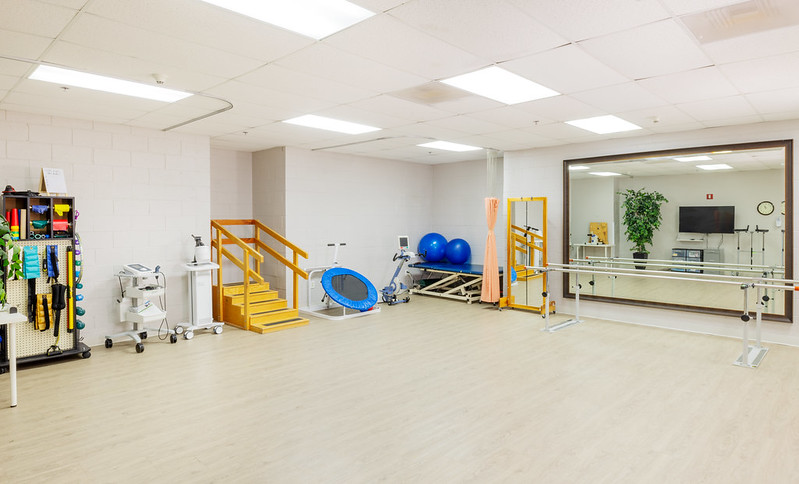
CMS rates Sherwood Oaks Post Acute's staffing level at 3 out of 5 stars, which is average compared to other nursing homes. Staff turnover is 28%, compared to the California average of 46%. This relatively stable workforce can support continuity of care.

What Have Inspectors Found at Sherwood Oaks Post Acute?

State health inspectors documented 56 deficiencies at Sherwood Oaks Post Acute during 2019 to 2025. These included: 56 with potential for harm. While no single deficiency reached the most serious levels, the total volume warrants attention from prospective families.

Who Owns and Operates Sherwood Oaks Post Acute?

Sherwood Oaks Post Acute is owned by a for-profit company. For-profit facilities operate as businesses with obligations to shareholders or private owners. The facility is operated by PACS GROUP, a chain that manages multiple nursing homes. With 99 certified beds and approximately 92 residents (about 93% occupancy), it is a smaller facility located in Thousand Oaks, California.

How Does Sherwood Oaks Post Acute Compare to Other California Nursing Homes?

Compared to the 100 nursing homes in California, Sherwood Oaks Post Acute's overall rating (4 stars) is above the state average of 3.2, staff turnover (28%) is significantly lower than the state average of 46%, and health inspection rating (3 stars) is at the national benchmark.

What Should Families Ask When Visiting Sherwood Oaks Post Acute?

Based on this facility's data, families visiting should ask: "Can I visit during a mealtime to observe dining assistance and food quality?" "How do you handle medical emergencies, and what is your hospital transfer rate?" "Can I speak with family members of current residents about their experience?"

Is Sherwood Oaks Post Acute Safe?

Based on CMS inspection data, Sherwood Oaks Post Acute has a clean safety record: no substantiated abuse findings (meaning no confirmed cases of resident harm), no Immediate Jeopardy citations (the most serious violation level indicating risk of serious injury or death), and is not on the Special Focus Facility watch list (a federal program monitoring the lowest-performing 1% of nursing homes). The facility has a 4-star overall rating and ranks #1 of 100 nursing homes in California. While no facility is perfect, families should still ask about staff-to-resident ratios and recent inspection results during their visit.

Do Nurses at Sherwood Oaks Post Acute Stick Around?

Staff at Sherwood Oaks Post Acute tend to stick around. With a turnover rate of 28%, the facility is 17 percentage points below the California average of 46%. Low turnover is a positive sign. It means caregivers have time to learn each resident's needs, medications, and personal preferences. Consistent staff also notice subtle changes in a resident's condition more quickly. Registered Nurse turnover is also low at 22%, meaning experienced RNs are available to handle complex medical needs.

Was Sherwood Oaks Post Acute Ever Fined?

Sherwood Oaks Post Acute has no federal fines on record. CMS issues fines when nursing homes fail to meet care standards or don't correct problems found during inspections. The absence of fines suggests the facility has either maintained compliance or corrected any issues before penalties were assessed. This is a positive indicator, though families should still review recent inspection reports for the full picture.

Is Sherwood Oaks Post Acute on Any Federal Watch List?

Sherwood Oaks Post Acute is not on any federal watch list. The most significant is the Special Focus Facility (SFF) program, which identifies the bottom 1% of nursing homes nationally based on persistent, serious quality problems. Not being on this list means the facility has avoided the pattern of deficiencies that triggers enhanced federal oversight. This is a positive indicator, though families should still review the facility's inspection history directly.