LAKE BALBOA CARE CENTER
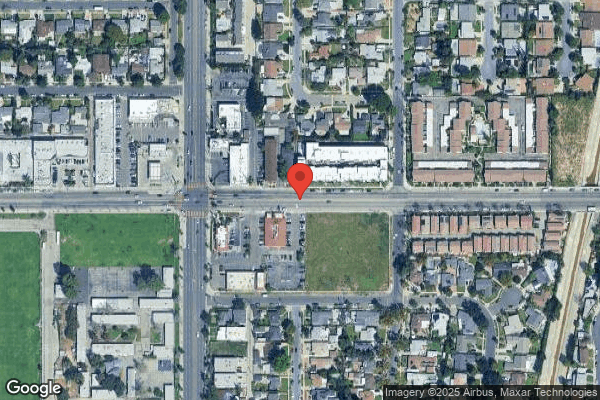
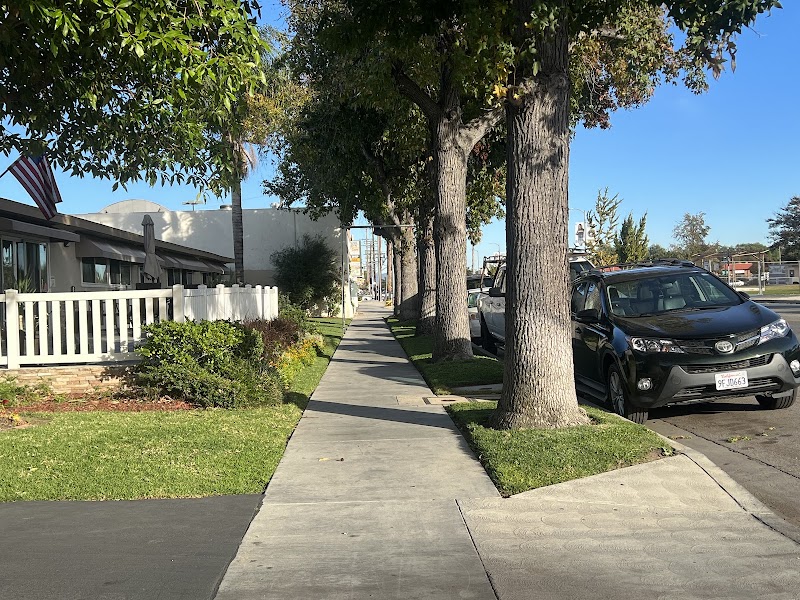
16955 VANOWEN STREET, VAN NUYS, CA 91406 (818) 343-0700
For profit - Corporation 50 Beds THE ENSIGN GROUP Data: November 2025
Trust Grade
83/100
#112 of 1155 in CA
Last Inspection: March 2025

Within standard 12-15 month inspection cycle. Federal law requires annual inspections.

Overview

Lake Balboa Care Center has received a Trust Grade of B+, which means it is above average and recommended for families considering options for their loved ones. It ranks #112 out of 1,155 facilities in California, placing it in the top half, and #24 out of 369 in Los Angeles County, indicating that only a few local options are better. The facility is on an improving trend, having reduced its issues from 8 in 2024 to 5 in 2025. While it has a solid RN coverage that exceeds 81% of California facilities, staffing is rated average with a turnover rate of 28%, which is better than the state average. On a positive note, the center has no fines on record, which is encouraging. However, there are some concerns, including past incidents where residents' blood pressure medications were not administered as prescribed, potentially risking adverse side effects, and delays in responding to call lights, which caused unresolved grievances among residents. Overall, while Lake Balboa Care Center shows strengths in certain areas, families should be aware of these weaknesses as they make their decision.

Trust Score
B+
83/100
In California
#112/1155
Top 9%
Safety Record
Low Risk
No red flags
Inspections
Getting Better
8 → 5 violations
Staff Stability
✓ Good
28% annual turnover. Excellent stability, 20 points below California's 48% average. Staff who stay learn residents' needs.
Penalties
✓ Good
No fines on record. Clean compliance history, better than most California facilities.
Skilled Nurses
✓ Good
Each resident gets 49 minutes of Registered Nurse (RN) attention daily — more than average for California. RNs are trained to catch health problems early.
Violations
⚠ Watch
21 deficiencies on record. Higher than average. Multiple issues found across inspections.
★★★★★
5.0
Overall Rating
★★★☆☆
3.0
Staff Levels
★★★★★
5.0
Care Quality
★★★★★
5.0
Inspection Score
Stable
2024: 8 issues
2025: 5 issues

The Good

  • 5-Star Quality Measures · Strong clinical quality outcomes
  • Low Staff Turnover (28%) · Staff stability means consistent care
  • Full Sprinkler Coverage · Fire safety systems throughout facility
  • No fines on record
  • Staff turnover is low (28%)

    20 points below California average of 48%

Facility shows strength in quality measures, staff retention, fire safety.

The Bad

Chain: THE ENSIGN GROUP

Part of a multi-facility chain

Ask about local staffing decisions and management

The Ugly 21 deficiencies on record

Mar 2025 5 deficiencies
CONCERN (D)

Potential for Harm - no one hurt, but risky conditions existed

Resident Rights (Tag F0550)

Could have caused harm · This affected 1 resident

**NOTE- TERMS IN BRACKETS HAVE BEEN EDITED TO PROTECT CONFIDENTIALITY** Based on observation, interview, and record review, the facility failed to provide care in a manner that maintained or enhanced ...

Read full inspector narrative →
**NOTE- TERMS IN BRACKETS HAVE BEEN EDITED TO PROTECT CONFIDENTIALITY** Based on observation, interview, and record review, the facility failed to provide care in a manner that maintained or enhanced a resident`s dignity and respect in full recognition of their individualities for one of one sampled resident (Resident 26) when Certified Nursing Assistant 2 (CNA 2) was standing over the resident while assisting him during a meal. This deficient practice had the potential to negatively affect the resident`s psychosocial wellbeing and loss of dignity. Findings: During a review of Resident 26's admission Record (face sheet), the admission Record indicated that the facility originally admitted the resident on 3/28/2024, and readmitted on [DATE], with diagnoses including Parkinson`s disease (a progressive disease of the nervous system marked by tremor, muscular rigidity, and slow, imprecise movements), dysphagia (difficulty swallowing), depression (a mood disorder that causes a persistent feeling of sadness and loss of interest), and need for assistance with personal care. During a review of Resident 26's Nutrition/Hydration Risk Evaluation form dated 3/18/2025, the evaluation indicated that the resident was slow to response and required verbal cues to feed himself. During a concurrent observation and interview on 3/29/2025 at 7:50 a.m., inside Resident 26`s room, Certified Nursing Assistant 2 (CNA 2) was standing over Resident 26 while feeding him. CNA 2 stated that she always stands over residents and feed them because it is easier for her. During a concurrent observation and interview on 3/29/2025 at 7:52 a.m. with MDS Coordinator 1 (MDSC 1), inside Resident 26`s room, MDSC 1 observed CNA2 standing over Resident 26 while assisting him with his breakfast. MDSC 1 stated staff are able to assist the residents with feeding in standing or sitting positions. During an interview on 3/29/2025 at 8:00 a.m., with the Director of Nursing (DON), the DON stated staff are required to assist residents with feeding in a sitting position so they can maintain their dignity. During a review of facility`s Policy and Procedure (P&P) titled Feeding the Dependent Resident, last reviewed 1/2025, the P&P indicated that some residents cannot feed themselves because of severe weakness, doctor`s order, or impaired ability so they cannot use their hands. Sit at eye level of the resident. This allows social interaction and better observation if any swallowing difficulty. During a review of facility`s Policy and Procedure (P&P) titled Dignity and Respect, last reviewed 1/2024, the P&P indicated that staff shall display respect for residents when speaking with, caring for, or talking about them, as constant affirmation of their individuality and dignity as human being.
CONCERN (D)

Potential for Harm - no one hurt, but risky conditions existed

Deficiency F0583 (Tag F0583)

Could have caused harm · This affected 1 resident

Based on observation, interview, and record review, the facility failed to maintain privacy of confidential information for one of three sampled residents (Resident 94), when Licensed Vocational Nurse...

Read full inspector narrative →
Based on observation, interview, and record review, the facility failed to maintain privacy of confidential information for one of three sampled residents (Resident 94), when Licensed Vocational Nurse 1 (LVN 1) left Resident 94's electronic health record (EHR- a digital version of a patient's paper chart) open and unattended. This deficient practice violated the resident's right to privacy and confidentiality of medical records. Findings: During a review of Resident 94's admission Record, the admission Record indicated that the facility admitted Resident 94 on 3/17/2025 with diagnoses including acute pulmonary edema (a condition where fluid accumulates in the lungs, making it difficult to breathe) and heart failure (occurs when the heart can't pump enough blood to meet the body's needs, leading to symptoms like shortness of breath, fatigue, and swelling). During a review of Resident 94's Minimum Data Set (MDS - a federally mandated resident assessment tool), dated 3/21/2025, the MDS indicated that the resident had the ability to sometimes understand others and the ability to sometimes makes self-understood. The MDS further indicated that Resident 94 is totally dependent on staff for toileting hygiene, shower, lower and upper body dressing. During a concurrent medication pass observation and interview on 3/29/2025 at 4:47 p.m., with Licensed Vocational Nurse 1 (LVN 1), observed LVN 1 left the computer screen open, displaying Resident 94` medication list and photo, while stepping away from the medication cart to enter Resident 94's room. During an interview with LVN 1, LVN 1 stated that she should have ensured that Resident 94`s electronic chart was not accessible to anyone while she stepped away from the computer which was on top of the medication cart. LVN 1 stated that it is a violation of the Health Insurance Portability and Accountability Act (HIPAA) to have the resident's health information visible to unauthorized persons. During a review of The Health Insurance Portability and Accountability Act (HIPAA) of 1996, it indicated the HIPAA Security Rule protects specific information cover the Privacy Rule law applies fully to nursing homes, requiring them to protect the privacy of residents' health information (PHI) by implementing appropriate safeguards, including technical, administrative, and physical measures to prevent unauthorized access, use, or disclosure of this information, particularly electronic protected health information (ePHI). During a review of the facility's policy and procedure (P&P), titled, Pharmacy Services for Nursing Facilities, last reviewed on 1/15/2025, the policy indicated that during administration of medications, the medications cart is kept closed and locked when out of sight of the medication nurse or aide .in addition, privacy is maintained always for all resident information by closing the computer screen when not in use .
CONCERN (D)

Potential for Harm - no one hurt, but risky conditions existed

Deficiency F0697 (Tag F0697)

Could have caused harm · This affected 1 resident

Based on interview and record review, the facility failed to ensure licensed nurses provided non-pharmacological interventions (any type of healthcare intervention which is not primarily based on medi...

Read full inspector narrative →
Based on interview and record review, the facility failed to ensure licensed nurses provided non-pharmacological interventions (any type of healthcare intervention which is not primarily based on medication) to one of three sampled residents (Resident 15) prior to administering as needed (prn) opioid ([narcotic-treats moderate to severe pain) pain medication. This deficient practice had the potential to place the resident at increased risk of experiencing adverse side effects (undesired harmful effect resulting from a medication or other intervention) from use of opioids. Findings: During a review of Resident 15's admission Record, the admission Record indicated the facility admitted the resident on 1/03/2025 with diagnoses including atrial fibrillation (a heart condition that causes an irregular heartbeat) and pneumonia (infection that inflames air sacs in one or both lungs, which may fill with fluid). During a review of Resident 15's Minimum Data Set (MDS - a federally mandated resident assessment tool), dated 1/08/2025, the MDS indicated that the resident had intact cognition (undamaged mental abilities, including remembering things, making decisions, concentrating, or learning). The MDS further indicated that Resident 15 required substantial-to-maximal assistance for showering, toileting and personal hygiene, dressing and chair-to-bed transfer. During a review of Resident 15's physician's orders, the physician's orders indicated the following orders: - Percocet Oral Tablet ([Oxycodone with Acetaminophen] medication used to treat moderate to severe pain) 5-325 milligrams (mg - unit of measurement), give one tablet by mouth every eight (8) hours as needed for severe pain 7-10/10 (numerical scale used to measure pain with 0 being no pain and 10 being the worst pain), ordered on 1/06/2025. - Provide non-pharmacological intervention for pain, including repositioning, quiet environment, relaxation, distraction, music, and massage every shift. During a concurrent interview and record review on 3/29/2025 at 6:30 p.m., with the Director of Nursing (DON), reviewed Resident 15's Medication Administration Record (MAR - a report that serves as a legal record of the drugs administered to a resident at a facility by a health care professional) for the month of 03/2025. The DON verified the dates when Percocet were administered and also verified that there were no non-pharmacologic interventions provided to Resident 15 prior to administration of Percocet on the following dates: 3/20/2025 at 9:18 p.m. 3/21/2025 at 9:45 p.m. 3/26/2025 at 8:45 p.m. The DON stated that non-pharmacologic interventions should be attempted first because the pain might just be caused by Resident 15's position in bed, or other external factors that are causing the pain. The DON stated that when the non-pharmacologic interventions are not effective, then that is the time to administer Percocet. The DON stated that the use of narcotic pain medication such as Percocet can increase the risk of a resident experiencing adverse effects of the medication such as dizziness which can lead to fall and respiratory depression. During a review of Resident 15`s Care Plan (CP-are written tools that outline nursing diagnoses, interventions, and goals) for Acute or Chronic Pain dated 1/03/2025, the CP indicated a goal for the resident to have no interruption in normal activities due to pain through the review date. During a review of the facility's policy and procedure titled, Pain Recognition and Management, last reviewed and revised on 2/2025, the policy and procedure indicated The care plan will include preventative or care interventions (pharmacological and non-pharmacological) to manage and/or prevent pain and consider the resident needs, preferences, and goals .
CONCERN (D)

Potential for Harm - no one hurt, but risky conditions existed

Infection Control (Tag F0880)

Could have caused harm · This affected 1 resident

**NOTE- TERMS IN BRACKETS HAVE BEEN EDITED TO PROTECT CONFIDENTIALITY** Based on observation, interview and record review, the facility failed to ensure a resident's indwelling catheter (a flexible tu...

Read full inspector narrative →
**NOTE- TERMS IN BRACKETS HAVE BEEN EDITED TO PROTECT CONFIDENTIALITY** Based on observation, interview and record review, the facility failed to ensure a resident's indwelling catheter (a flexible tube used to empty the bladder and collect urine in a drainage bag) tubing was not touching the floor for one of one sampled resident (Resident 195) reviewed under indwelling catheter. This deficient practice had the potential to result in contamination of the resident's care equipment and risk of transmission of bacteria that can lead to infection. Findings: During a review of Resident 195's admission Record, the admission Record indicated the resident was admitted to the facility on [DATE], with diagnoses including fracture of neck of femur (a break in the uppermost part of thighbone, next to hip joint), hypertension (a condition in which blood pressure is higher than normal), and acute kidney failure (a condition in which the kidneys are damaged and cannot filter blood well). During a review of Resident 195`s Minimum Data Set (MDS - a standardized assessment and care screening tool), dated 03/27/2025, the MDS indicated the resident had a mildly impaired cognition (a slight decline in mental abilities, memory and completing complex tasks) and required substantial assistance from staff for toileting hygiene, shower, dressing and personal hygiene. During the review of Resident 195's History and Physical (H&P- a comprehensive assessment of a patient's health, performed by a doctor during an initial visit) dated 3/24/2025, the H&P indicated Resident 195 had fluctuating capacity to understand and make decisions. During the review of Resident 195's Order Summary Report dated 3/29/2025, the Order Summary report indicated an order for indwelling catheter and indwelling catheter care every shift dated 3/25/2025. During the review of Resident 195's Care plan (a document that outlines the actions and interventions needed to address a resident's health and care needs), dated 3/23/2025, the care plan indicated to position catheter bag and tubing below the level of the bladder and away from the entrance room door. During an observation and interview on 03/29/2025 at 10:08 a.m., observed Resident 195 in bed with the indwelling catheter tubing hanging on the right side of the bed and touching the floor. During an observation and interview on 03/29/2025 at 10:09 a.m., with Licensed Vocational Nurse 2 (LVN 2), LVN 2 stated the catheter tubing was touching the floor. LVN 2 stated that indwelling catheter tubing should not touch the floor because of risk of infection to Resident 195. During an interview on 03/29/2025 at 10:10 a.m., with the Director of Nursing (DON), the DON stated that the indwelling catheter tubing should not touch the floor. The DON stated that the indwelling catheter tubing touching the floor had the potential for bacterial transmission, potentially leading to infection. During a review of the facility`s policy and procedure titled Indwelling Urinary Catheter Care, last reviewed on 2/2025, the policy and procedure indicated :It is the policy of this facility that each resident with an indwelling catheter will receive catheter care daily and as needed (PRN)to promote hygiene, comfort, and decrease the risk of infection.
MINOR (B)

Minor Issue - procedural, no safety impact

Deficiency F0912 (Tag F0912)

Minor procedural issue · This affected multiple residents

**NOTE- TERMS IN BRACKETS HAVE BEEN EDITED TO PROTECT CONFIDENTIALITY** Based on observation, interview, and record review, the facility failed to provide at least 80 square (sq.) feet (ft.) per resid...

Read full inspector narrative →
**NOTE- TERMS IN BRACKETS HAVE BEEN EDITED TO PROTECT CONFIDENTIALITY** Based on observation, interview, and record review, the facility failed to provide at least 80 square (sq.) feet (ft.) per resident for ten (10) of 26 resident rooms (room [ROOM NUMBER], 103, 105, 107, 110, 112, 115, 117, 119, and 121). The room size for these rooms had the potential to have inadequate space for resident care and mobility. Findings: During the recertification survey from 3/28/2025 to 3/30/2025 the residents residing in the rooms with an application for room variance were observed with sufficient amount of space for residents to move freely inside the rooms. There was adequate room for the operation and use of wheelchairs, walkers, or canes. The room variance did not affect the care and services provided by nursing staff for the residents. The Administrator submitted an application for the Room Variance Waiver, dated 3/28/2025, for 10 resident rooms. The room waiver request showed the following: Room Square Footage (sq ft) Bed Capacity Sq Ft per Resident 101 152 2 76 102 154 2 77 105 159 2 79.5 107 156 2 78 110 310 4 77.5 112 312 4 78 115 156 2 78 117 154 2 77 119 158 2 79 121 154 2 77 The minimum requirement for a 2-bed room should be at least 160 sq. ft. The minimum requirement for 4 -bed room should be at list 360 sq. ft. During a review of the room waiver letter dated 1/12/2025, indicated that, each room listed on the Client Accommodation Analysis has no interfere with free movement of wheelchairs and/ or sitting devices. There is enough space to provide for each resident care, dignity and privacy, and the rooms are in accordance with the special needs of the residents and would not have an adverse effect on the residents' health and safety or impede the ability of any resident in the rooms to attain his or her highest practicable well-being. During a resident council group interview on 3/29/2025 at 10 a.m., residents stated they do not have any problem physically getting around their room. The residents stated their nurses were able to provide them with good care and privacy. During multiple room observations conducted in Rooms 101, 103, 105, 197, 110, 112, 115, 117, 119 and 121 from 3/28/2025 to 3/30/2025, between the hours of 7:30 a.m. - 9 p.m., it was observed the that nursing staff had adequate space to provide care to the residents, and that each resident was provided privacy curtains for privacy; and the rooms had two modes of egress, one with direct access to the corridors and another leading to the outside of the building. During an interview on 3/29/2025 at 2:12 p.m., with Resident 41 and Resident 31, both residents verbalized the rooms afforded them adequate space to accommodate their needs and staff were able to provide care safely and without restrictions. During an interview on 3/29/2025 at 2:15 p.m., with Certified Nursing Assistant 1 (CNA 1) and Licensed Vocational Nurse 2(LVN 2), both CNA 1 and LVN 2 did not state concerns regarding the lack of space while providing care for the residents. During a review of the facility's policy and procedure titled, Resident Rooms, last reviewed 2/2025, indicated: It is policy of this facility that a resident room must .measure at least 80 square feet per resident in multiple resident bedrooms, and at least 100 square feet in a single resident room.
Dec 2024 1 deficiency
CONCERN (D) 📢 Someone Reported This

A family member, employee, or ombudsman was alarmed enough to file a formal complaint

Potential for Harm - no one hurt, but risky conditions existed

Quality of Care (Tag F0684)

Could have caused harm · This affected 1 resident

Based on interview and record review, the facility failed to provide the needed care and services that were resident centered for two of five sampled residents (Resident 2 and Resident 5) by failing t...

Read full inspector narrative →
Based on interview and record review, the facility failed to provide the needed care and services that were resident centered for two of five sampled residents (Resident 2 and Resident 5) by failing to implement the facility's policy on pacemaker (small device that's implanted [placed] in the chest to help control the heartbeat) by not documenting the residents' type of pacemaker, date of insertion, rate, pacemaker check lab (a facility that monitors and maintains pacemakers) and phone number per the facility's policy. This deficient practice had the potential to result in confusion in the care and services provided to Resident 2 and Resident 5, which could place the residents at risk of not receiving appropriate care due to incomplete resident medical care information. Findings: a. During a review of Resident 2's admission Record, the admission Record indicated the facility admitted the resident on 12/2/2024 with diagnoses that included atrial fibrillation (Afib, an irregular, often rapid heart rate that commonly causes poor blood flow) and presence of cardiac (relating to the heart) pacemaker. During a review of Resident 2's Minimum Data Set (MDS - a resident assessment tool) dated 12/8/2024, the MDS indicated Resident 2's cognitive skills (the mental action or process of acquiring knowledge and understanding through thought, experience, and the senses) for daily decision making was moderately impaired. The MDS indicated Resident 2 required setup or clean-up assistance with oral hygiene, substantial/maximal assistance toileting hygiene, and partial/moderate assistance personal hygiene. During a review of Resident 2's Care Plan (a document that summarizes a resident's needs, goals, and care/treatment) for pacemaker related to tachybradycardia syndrome (a heart rhythm disorder that causes the heart to beat irregularly, alternating between fast and slow rates), initiated 12/8/2024, the care plan did not indicate the type of pacemaker, date of insertion, rate, pacemaker check lab and phone number. During a concurrent interview and record review on 12/16/2024 at 11:04 a.m., with the MDS Nurse (MDSN), reviewed Resident 2's physician's orders, Resident 2's progress notes from 12/2/2024 to 12/16/2024, and Resident 2's care plan for pacemaker dated 12/8/2024. The MDSN stated that when residents have pacemakers, the facility must have the residents' pacemaker information such as the serial number of the pacemaker. The MDSN stated that there was no documented evidence of Resident 2's pacemaker information indicating the type of pacemaker, date of insertion, rate, pacemaker check lab and phone number. During a concurrent interview and record review on 12/16/2024 at 11:30 a.m., with the Assistant Director of Nursing (ADON), reviewed Resident 2's physician's orders, Resident 2's progress notes from 12/2/2024 to 12/16/2024, and Resident 2's care plan for pacemaker dated 12/8/2024. The ADON stated that the facility does not have any information on Resident 2's pacemaker indicating the type of pacemaker, date of insertion, rate, pacemaker check lab and phone number. The ADON stated that the facility is a fast-paced facility, and the facility tends to overlook a lot of details, such as pacemaker information. The ADON continued to state that it is important for the facility to obtain pacemaker information for residents' safety. The ADON further stated that pacemaker information should have been obtained upon admission. b. During a review of Resident 5's admission Record, the admission Record indicated the facility admitted the resident on 12/10/2024 with diagnoses that included atrial fibrillation and presence of cardiac pacemaker. During a review of Resident 5's physician's order dated 12/16/2024 at 11:15 a.m., Resident 5's physician's order indicated: Record Pacemaker Information: Diagnosis: Afib; Manufacturer: Medtronic; Model: no info; Serial number: no info. During a review of Resident 5's Care Plan for pacemaker related to atrial fibrillation, initiated 12/16/2024, the care plan did not indicate the rate, pacemaker check lab and phone number. During a concurrent interview and record review on 12/16/2024 at 11:24 a.m., with the MDSN, reviewed Resident 5's physician's orders, Resident 5's progress notes from 12/10/2024 to 12/16/2024, and Resident 5's care plan for pacemaker dated 12/16/2024. The MDSN stated that there was no documented evidence of Resident 5's pacemaker serial number and Resident 5's care plan for pacemaker did not indicate detailed information regarding the pacemaker such as the rate, pacemaker check lab and phone number. The MDSN stated that the ADON is responsible for obtaining pacemaker information. During a concurrent interview and record review on 12/16/2024 at 11:52 a.m., with the ADON, reviewed Resident 5's physician's orders, Resident 5's progress notes from 12/10/2024 to 12/16/2024, and Resident 5's care plan for pacemaker dated 12/16/2024. The ADON stated that there is no documented evidence of Resident 5's pacemaker information indicating the rate, pacemaker check lab and phone number. The ADON stated that she reached out to Resident 5's cardiologist, however, was not able to obtain Resident 5's pacemaker information. The ADON stated that the facility should have residents' pacemaker information for safety. During an interview on 12/16/2024 at 1:36 p.m., with the Director of Nursing (DON), the DON stated that it is the facility's responsibility to obtain residents' pacemaker information upon admission. During a review of the facility's policy and procedure titled, Pacemaker Check, reviewed 11/19/2024, the policy indicated it is the policy of this facility that residents with permanent pacemakers will be checked on periodic basis to ensure that implanted pacemaker is functioning properly. Purpose: To have a system of monitoring residents with permanent pacemakers .Enter on residents' care plan the type of pacemaker, date of insertion, rate, pacemaker check lab and phone number.
Dec 2024 1 deficiency
CONCERN (D) 📢 Someone Reported This

A family member, employee, or ombudsman was alarmed enough to file a formal complaint

Potential for Harm - no one hurt, but risky conditions existed

Infection Control (Tag F0880)

Could have caused harm · This affected 1 resident

**NOTE- TERMS IN BRACKETS HAVE BEEN EDITED TO PROTECT CONFIDENTIALITY** Based on interview and record review, the facility failed to implement the facility's infection control policy by failing to: 1....

Read full inspector narrative →
**NOTE- TERMS IN BRACKETS HAVE BEEN EDITED TO PROTECT CONFIDENTIALITY** Based on interview and record review, the facility failed to implement the facility's infection control policy by failing to: 1. Ensure two of two visitors were offered Coronavirus disease-2019 [COVID-19, a highly contagious viral infection that can trigger respiratory tract infection]) testing upon entering the facility. 2. Ensure a resident was placed on contact isolation (used when a resident has an infectious disease that may be spread by touching either the resident or other objects the resident has handled) per physician's order for one of four sampled residents (Resident 4). These deficient practices had the potential to place residents, staff members, and visitors at risk of spreading infections. Findings: a. During an interview on 12/12/2024 at 9:45 a.m., with Family Member 1 (FM 1) in the facility's lobby, FM 1 stated that she was not offered a COVID-19 test when she walked in the facility today (12/12/2024). During an interview on 12/12/2024 at 10:02 a.m., with Receptionist 1 (Rec 1), Rec 1 stated that when a visitor enters the facility, Rec 1 instructs visitors to check their temperature and Rec 1 offers visitors to wear a mask. Rec 1 stated that she does not offer visitors a COVID-19 test upon entering the facility. During an interview on 12/12/2024 at 10:16 a.m., with the Infection Preventionist (IP), the IP stated that the facility does not offer COVID-19 testing to visitors upon entry to the facility. The IP stated that as long as visitors are feeling well and are not experiencing any COVID-19 or flu like symptoms, the facility does not offer COVID-19 testing. The IP stated if the visitor presents to the facility with COVID-19 or flu like symptoms upon entry, the facility offers COVID-19 testing. During an interview on 12/12/2024 at 11:15 a.m., with Caregiver 1 (CG 1), CG 1 stated that she was not offered a COVID-19 test when she entered the facility on 12/12/2024. During a concurrent interview and record review on 12/12/2024 at 11:26 a.m., with the IP, reviewed the facility's policy titled, Masking Policy, with a review date of 11/19/2024. The IP stated that based on the facility's policy, the facility should be offering COVID-19 testing to visitors upon entry to the facility. When asked why this is not being done, the IP did not answer. During an interview on 12/12/2024 at 11:26 a.m., with the Director of Nursing (DON), the DON stated that the facility does not offer COVID-19 testing to visitors upon entry to the facility because the facility does not have to. The DON stated that the facility does not have to offer COVID-19 testing because the facility does not have a COVID-19 outbreak (more cases of disease in time or place than expected). The DON further stated that the facility does not have the resources to offer a COVID-19 test to every visitor that comes through the facility door. During a follow-up interview on 12/13/2024 at 2:00 p.m., with the DON, the DON stated that when visitors will ask for a COVID-19 test, the facility will then offer the COVID-19 test. The DON stated if visitors don't ask, the facility will not offer COVID-19 testing. The DON stated the facility does not offer COVID-19 testing because it is not necessary. The DON stated the facility should offer COVID-19 testing when the facility is in an outbreak, however, the facility is not in an outbreak. During a review of the facility's policy and procedure titled, Masking Policy, reviewed 11/19/2024, the policy indicated although masking regardless of vaccination status may continue to be required by the facility or, if warranted based on local respiratory virus transmission. The following requirement is still in place: Before entry, all visitors must be offered self-testing with a COVID-19 antigen test and a well-fitting, high-quality mask with good filtration to wear during their visits. This is regardless of vaccination status. If a visitor tests positive for COVID-19, whether symptomatic (showing symptoms) or not, they should not be allowed to visit until after they recover. b. During a review of Resident 2's admission Record, the admission Record indicated the facility admitted the resident on 12/11/2024 with diagnoses that included abnormalities of gait (manner of walking or moving on foot) and mobility, need for assistance with personal care, and thrombocytopenia (low number of platelets [small cell fragments in our blood that form clots and stop or prevent bleeding] in the blood). During a review of Resident 4's admission Record, the admission Record indicated the facility admitted the resident on 12/9/2024 with diagnoses that included sepsis (a life-threatening complication of an infection) and bacteremia (the presence of bacteria in the blood). During a review of Resident 4's physician's order dated 12/9/2024 at 6:32 p.m., the physician order indicated transmission-based precautions (steps taken to prevent spread of infection to others): contact isolation: Escherichia coli (E-coli - a type of bacteria commonly found in the intestines of humans and animals, but some types can make people sick)/bacteremia blood until 12/12/2024. During a concurrent interview and record review on 12/13/2024 at 9:15 a.m., with the IP, reviewed Resident 4's admission Record and Resident 4's physician orders. The IP stated Resident 4 was readmitted to the facility on [DATE]. The IP stated that she received an order for Resident 4 to be placed on contact isolation for E. coli/bacteremia on 12/9/2024. The IP continued to state that Resident 4 was not placed in a private/isolation room upon Resident 4's readmission. The IP stated that during the time of Resident 4's readmission, the facility was expecting a new admission (Resident 2) to be assigned to the private/isolation room. When asked if the new admission (Resident 2) required to be in a private/isolation room, the IP stated that the new admission (Resident 2) did not require isolation. During an interview on 12/13/2024 at 11:46 a.m., with the admission Coordinator (AC), the AC stated that the facility was aware that Resident 4 would be readmitted back to the facility on [DATE], however was not aware that Resident 4 required a private/isolation room upon readmission. The AC stated that the facility was expecting a new admission, Resident 2, that was assigned and family expected to be in the private/isolation room. However, the new admission, Resident 2, did not arrive on 12/9/2024 as planned. Resident 2 was admitted to the facility on [DATE]. During a concurrent interview and record review on 12/13/2024 at 12:30 p.m., with the IP, reviewed the facility's census (daily list indicating resident names with corresponding room numbers) dated 12/8/2024 (census for 12/9/2024), 12/9/2024 (census for 12/10/2024), and 12/10/2024 (census for 12/11/2024). The IP stated that there was a private/isolation room available on 12/9/2024, 12/10/2024, and 12/11/2024. The IP reviewed Resident 2's admission Record and stated that Resident 2 was admitted to the facility on [DATE] and was assigned to the private/isolation room. The IP reviewed Resident 4's admission Record and stated that Resident 4 was admitted on [DATE] and placed in a room with roommates with curtains to be drawn. The IP stated that Resident 4 should have been placed in a private/isolation room because the facility had an available room. When asked why Resident 4 was not placed in an isolation room, the IP did not answer. During a concurrent interview and record review on 12/13/2024 at 1:06 p.m., with the DON, reviewed Resident 4's physician orders. The DON stated that Resident 4 had an order for contact isolation dated 12/9/2024. The DON stated that there was a private/isolation room available upon Resident 4's readmission on [DATE]. The DON stated that Resident 4 required a private/isolation room because the facility received an order from the physician for contact isolation. The DON continued to state that the DON decided not to place Resident 4 in a private/isolation room because the infection was not in Resident 4's urine, or sputum (mucus and other matter brought up from the lungs by coughing), but the infection was in the blood and Resident 4 had no active bleeding. The DON stated Resident 4 did not have a true infection and did not require isolation precautions, despite the physician's order. The DON further stated that the IP had a proactive approach and the IP discussed and received an order for contact isolation. The DON stated Resident 4 should have just been placed on enhanced barrier precautions (EBP - a set of infection control practices that use personal protective equipment [PPE - equipment worn to reduce exposure to hazards in the workplace] to reduce the spread of multidrug-resistant organisms [MDROs - microorganisms that are resistant to multiple classes of antibiotics and antifungals] in nursing homes). During a review of the facility's policy and procedure titled, Infection Prevention and Control Program (IPCP) Standard and Transmission-Based Precautions, reviewed 11/19/2024, the policy indicated it is the policy of this facility to implement infection control measures to prevent the spread of communicable disease and conditions .Contact Precautions are used with a known infection that is spread by direct or indirect and the resident or the resident's environment .Room Placement: iii. When private rooms are not available, some residents may be cohorted (a group of people with a shared characteristic) or per an alternative risk-based approach.
Mar 2024 6 deficiencies
CONCERN (D)

Potential for Harm - no one hurt, but risky conditions existed

Resident Rights (Tag F0550)

Could have caused harm · This affected 1 resident

Based on observation, interview, and record review, the facility failed to ensure Certified Nurse Assistant 1 (CNA 1) knocked and asked permission prior to entering two of two sampled residents' rooms...

Read full inspector narrative →
Based on observation, interview, and record review, the facility failed to ensure Certified Nurse Assistant 1 (CNA 1) knocked and asked permission prior to entering two of two sampled residents' rooms (Resident 98 and 28). This deficient practice had the potential to affect the residents' sense of self-worth and self-esteem. Findings: During a concurrent observation and interview on 3/17/2024 at 11:27 a.m., observed CNA 1 walking in the hallway and went inside Resident 98's room without knocking and asking permission. Observed CNA 1 exit Resident 98's room and proceeded to go inside Resident 28's room without knocking and asking permission. Upon exiting Resident 28's room, CNA 1 was asked how the facility promotes and ensures dignity and respect for the resident's private space such as when accessing their rooms. CNA 1 replied that prior to entering a resident's room, staff should knock, introduce themselves and ask permission to come into the resident's room. CNA 1 stated that they periodically receive in-services (training intended for those actively engaged in a profession) regarding respecting resident's rights which included their right to a dignified existence and knocking and asking permission prior to entering their rooms as a way to promote their dignity. CNA 1 acknowledged by stating that she did not knock and ask permission from the residents when she went into Resident 98's and Resident 28's room. A review of the facility's policy and procedure titled, Resident Rights, last reviewed on 1/2024, indicated, Residents shall be examined and treated in a manner that maintains the privacy of their bodies. A closed door or drawn curtain shields the Resident from passers-by. People not involved in the care of the Resident shall not be present without the resident's consent while they are being examined or treated. Staff members shall knock before entering the Resident's room .
CONCERN (D)

Potential for Harm - no one hurt, but risky conditions existed

Deficiency F0558 (Tag F0558)

Could have caused harm · This affected 1 resident

Based on observation, interview, and record review, the facility failed to ensure that a resident's call light (a remote control that allows patients to request assistance from nurses or other staff) ...

Read full inspector narrative →
Based on observation, interview, and record review, the facility failed to ensure that a resident's call light (a remote control that allows patients to request assistance from nurses or other staff) was within reach for one of one sampled resident (Resident 150) investigated under the care area of accommodation of needs. This deficient practice had the potential to cause a delay in resident care and for the residents' needs to remain unmet. Findings: A review of Resident 150's admission Record indicated the facility admitted the resident on 3/15/2024 with diagnoses including pneumonia (an infection that affects one or both lungs) and unspecified fall. A review of Resident 150's History and Physical (a formal document that a physician produces through a patient interview, physical exam, and summary of any testing), dated 3/17/2024, indicated the resident has fluctuating (to vary or change irregularly) capacity to understand and make decisions. A review of Resident 150's Care Plan (a written document that outlines a patient's needs, goals, and the steps to address them) for risk for falls, initiated on 3/15/2024, indicated that the resident will be free of falls through the review date and will not sustain serious injury through the review date. An intervention included to ensure the call light is within reach and encourage the resident to use the call light for assistance as needed. During an observation on 3/18/2024 at 9:50 a.m., observed Resident 150 in bed with their call light under the bed. During a concurrent observation and interview on 3/18/2024 at 9:55 a.m., with Certified Nursing Assistant 2 (CNA 2), CNA 2 verified the observation by stating that Resident 150's call light was under the bed. CNA 2 stated the call light should have been within the resident's reach, so he could call for help when needed. During an interview on 3/21/2024 at 9:59 a.m., with the Director of Nursing (DON), the DON stated that call lights should always be within residents' reach. The DON stated they should be clipped to the resident's sheets. The DON stated it was important for call lights to be within reach so that residents can call for help in case of an emergency. The DON stated if residents were unable to use their call light, there can be a potential risk of an accident occurring. A review of the facility's policy and procedure titled, Call Light, last reviewed on 1/2023, indicated it is the policy of the facility to provide the resident a means of communication with nursing staff. Place the call device within resident's reach before leaving room.
CONCERN (D)

Potential for Harm - no one hurt, but risky conditions existed

Deficiency F0578 (Tag F0578)

Could have caused harm · This affected 1 resident

Based on interview and record review, the facility failed to ensure a copy of the resident's Advance Directive (AD- a written statement of a person's wishes regarding medical treatment) is kept in the...

Read full inspector narrative →
Based on interview and record review, the facility failed to ensure a copy of the resident's Advance Directive (AD- a written statement of a person's wishes regarding medical treatment) is kept in the resident's chart and easily retrievable for one of five sampled residents (Resident 7) investigated for advance directive. This deficient practice has the potential to create confusion which could lead to conflict with the resident's wishes regarding his/her health care. Findings: A review of Resident 7's admission Record indicated the facility admitted the resident on 1/18/2024 with diagnoses that included gastro-esophageal reflux disease (stomach contents flow backward, up into the esophagus, the tube that carries food from your throat into stomach) and chronic kidney disease (gradual loss of kidney function). A review of Resident 7's Minimum Data Set (MDS - a standardized assessment and care screening tool) dated 1/24/2024, indicated that Resident 7 had the ability to make self-understood and had the ability to understand others. During a concurrent interview and record review on 3/20/2024 at 2:46 p.m., with the Director of Nursing (DON), reviewed Resident 7's Social Services Assessment/Evaluation dated 1/19/2024 and Resident 7's electronic chart and physical chart in regards for Resident 7's AD. Resident 7's Social Services Assessment/Evaluation dated 1/19/2024, indicated Resident 7 had issued an advance directive about her care and treatment with a note that indicated, Obtain a copy of such directives to be included in the resident's medical record. The DON was not able to locate from the physical chart and electronic chart the actual copy of Resident 7's AD. The DON stated that if there is an existing AD, it should be kept in the physical chart so it can be referenced in case of an emergency because without it, the resident's wishes for health care treatment may not be followed or treatment provided may conflict with the resident's wishes. A review of the facility's policy and procedure titled, Advance Directive, last reviewed on 12/2023, indicated, It is the policy of the facility that a resident's choice about advance directives will be recognized and respected. Further, the facility recognizes and respects the resident's rights to choose their treatment and make decisions about care to be received at the end of their life .obtain copy of the Advance Directive and conservatorship/guardianship documents and place in the resident health record .
CONCERN (D)

Potential for Harm - no one hurt, but risky conditions existed

Food Safety (Tag F0812)

Could have caused harm · This affected 1 resident

Based on observation, interview, and record review, the facility failed to follow proper food handling practices by failing to ensure a bag of raw beef located in one of two facility refrigerators (Re...

Read full inspector narrative →
Based on observation, interview, and record review, the facility failed to follow proper food handling practices by failing to ensure a bag of raw beef located in one of two facility refrigerators (Refrigerator 1) was labeled and dated when taken out of the freezer and placed in the refrigerator to be thawed. This deficient practice had the potential to place 46 out of 48 residents living in the facility at risk for foodborne illnesses (refers to illness caused by the ingestion of contaminated food or beverages). Findings: During an observation of the facility's kitchen and concurrent interview on 3/18/2024 at 8:11 a.m., with the Dietary Supervisor (DS), observed one transparent plastic bag containing a slab of raw beef inside Refrigerator 1. Upon closer inspection, the slab of raw beef did not have a date as to when it was placed in the refrigerator for thawing. The DS stated that if there is no date on the meat item placed in the refrigerator for thawing, the kitchen staff will not know when the meat item was pulled out from the freezer. The DS stated that meat items that have no thawing dates are not safe to be consumed by the residents and if ingested could result to foodborne illnesses. A review of the facility's policy and procedure titled, Food Storage, last revised on 8/29/2023, indicated, Thawing: Thaw meat preferably by placing in deep pans and setting on lowest shelf in refrigerator. Develop guidelines detailing defrosting procedure for different types of food. Date meat when taken out of freezer. Follow meat pull schedule when available in menu program .
CONCERN (E)

Potential for Harm - no one hurt, but risky conditions existed

Pharmacy Services (Tag F0755)

Could have caused harm · This affected multiple residents

**NOTE- TERMS IN BRACKETS HAVE BEEN EDITED TO PROTECT CONFIDENTIALITY** Based on interview and record review, the facility failed to: 1. Ensure licensed nurses held (did not give) a resident's blood p...

Read full inspector narrative →
**NOTE- TERMS IN BRACKETS HAVE BEEN EDITED TO PROTECT CONFIDENTIALITY** Based on interview and record review, the facility failed to: 1. Ensure licensed nurses held (did not give) a resident's blood pressure (the force of blood pushing against the walls of the arteries) medications when the resident's blood pressure was outside of the physician's prescribed parameters (a set of defined limits) for one of one sampled resident (Resident 39) investigated under pharmacy services. This deficient practice had the potential to place the resident at increased risk of adverse side effects (undesired harmful effect resulting from a medication or other intervention). 2. Ensure the 9:00 p.m. dose of cefepime (antibiotic- it can treat bacterial infections) was administered on 2/16/2024 per physician's orders for one of one sampled resident (Resident 20) investigated under Antibiotic Use. This deficient practice placed the resident at risk for unintended complication of not completing the entire antibiotic course that could lead to antibiotic or antimicrobial resistance (antimicrobial resistance happens when germs develop the ability to defeat the drugs designed to kill them and continue to grow). Findings: 1. A review of Resident 39's admission Record indicated the facility admitted the resident on 2/5/2024 with diagnoses including hypertensive chronic kidney disease (a condition that occurs when high blood pressure [the force of the blood pushing on the blood vessel walls is too high] damages the kidneys). A review of Resident 39's Minimum Data Set (MDS - a standardized assessment and care screening tool), dated 2/8/2024, indicated the resident had severely impaired cognition (a term for the mental processes that take place in the brain) and was dependent on staff for toileting hygiene, showering/bathing, dressing, bed mobility, and transferring. A review of Resident 39's physician's orders indicated the following: - Metoprolol tartrate (medication used for high blood pressure) 50 milligrams (mg - unit of measurement). Give one tablet by mouth two times a day related to essential (primary) hypertension (high blood pressure) with food, hold for systolic blood pressure (SBP - the first number in a blood pressure reading, which measures the pressure in the arteries when the heart beats) less than 110 millimeters of mercury (mmHg - unit of measurement) and pulse less than 60 beats per minute (BPM - unit of measurement), ordered on 2/5/2024. - Nifedipine (medication used for high blood pressure) extended release (ER - designed to last longer in the body) 30 mg. Give one tablet by mouth two times a day for hypertension, hold for SBP less than 110 mmHg, ordered on 2/5/2024. A review of Resident 39's Care Plan (a written document that outlines a patient's needs, goals, and the steps to address them) for risk for high blood pressure level related to hypertension, initiated on 2/6/2024, indicated an intervention to give anti-hypertensive medications as ordered. During a concurrent interview and record review on 3/21/2024 at 10:01 a.m., with the Director of Nursing (DON), reviewed Resident 39's Medication Administration Record (MAR - a report detailing the drugs administered to a patient by a healthcare professional) dated 2/2024. The DON verified by stating the following: - On 2/10/2024 at 9 a.m., the licensed nurse administered metoprolol 50 mg when Resident 39's blood pressure was 107/66 mmHg. - On 2/10/2024 at 9 a.m., the licensed nurse administered nifedipine 30 mg when Resident 39's blood pressure was 107/66 mmHg. - On 2/28/2024 at 9 a.m., the licensed nurse administered metoprolol 50 mg when Resident 39's blood pressure was 100/60 mmHg. - On 2/28/2024 at 9 a.m., the licensed nurse administered nifedipine 30 mg when Resident 39's blood pressure was 100/60 mmHg. The DON stated that based on Resident 39's blood pressure parameters, metoprolol and nifedipine should not have been administered. The DON stated that if the resident already had low blood pressure, then giving them anti-hypertensive medications can cause the resident to experience increased hypotension (low blood pressure). A review of the facility's policy and procedure titled, Medication Administration, last reviewed on 1/2024, indicated it is the facility's policy to accurately prepare, administer, and document oral medications. Take vital signs if required. Hold drugs if indicated. 2. A review of Resident 20's admission Record indicated the facility admitted the resident on 2/6/2024 with diagnoses including hypertension and type 2 diabetes mellitus (a chronic condition that affects the way the body processes blood glucose [sugar]). A review of Resident 20's MDS dated [DATE], indicated the resident's cognitive skills for daily decision-making was moderately impaired. The MDS further indicated Resident 20 required partial/moderate assistance with toileting hygiene, shower, lower body dressing and putting on and taking off footwear. A review of Resident 20's physician's order dated 2/6/2024, indicated an order for cefepime hydrochloride injection solution reconstituted one (1) gram (gm- a unit of measurement) intravenously (usually refers to a way of giving a drug or other substance through a needle or tube inserted into a vein) every 12 hours for urinary tract infection (an infection in any part of the urinary tract, the system of organs that makes urine) until 3/12/2024. During a concurrent interview and record review on 3/20/2024 at 3:20 p.m., with the Director of Nursing (DON), reviewed Resident 20's MAR for the month of 2/2024. Resident 20's MAR dated 2/2024 indicated that the cefepime 1 gm intravenous dose for 2/16/2024 at 9:00 p.m. was not documented as given. The DON stated that if the medication dose is not documented that means it was not given. The DON stated that a complication of not completing the antibiotic course can result to an untreated infection. The DON stated that untreated infection will require more antibiotic doses which could result to antibiotic resistance making the infection hard to treat. A review of the facility's policy and procedure titled, Nursing Services, last reviewed on 1/2024, indicated, It is the policy of this facility that medications and/or fluids shall be administered as prescribed by the attending physician .
MINOR (B)

Minor Issue - procedural, no safety impact

Deficiency F0912 (Tag F0912)

Minor procedural issue · This affected multiple residents

**NOTE- TERMS IN BRACKETS HAVE BEEN EDITED TO PROTECT CONFIDENTIALITY** Based on observation, interview, and record review, the facility failed to meet the required room size of 80 square feet (sq ft ...

Read full inspector narrative →
**NOTE- TERMS IN BRACKETS HAVE BEEN EDITED TO PROTECT CONFIDENTIALITY** Based on observation, interview, and record review, the facility failed to meet the required room size of 80 square feet (sq ft - unit of measurement) per resident for 10 of 23 multiple resident rooms (room [ROOM NUMBER], 103, 105, 107, 110, 112, 115, 117, 119, and 121). This deficient practice had the potential to result in inadequate space to provide safe nursing care and privacy for the residents. Findings: During the resident council (a group of nursing home residents who meet regularly to discuss their rights, quality of care, and quality of life) meeting on 3/18/2024 at 2:31 p.m., when the residents were asked about their room space, there were no concerns or issues brought up. During the recertification survey from 3/18/2024 to 3/21/2024, observed that the residents residing in the rooms with an application for variance had sufficient amount of space for residents to move freely inside the rooms. There was adequate room for the operation and use of wheelchairs, walkers, and canes. The room variance did not affect the care and services provided by nursing staff to the residents. On 3/18/2024, the Administrator (ADM) submitted the Client Accommodation Analysis and a letter requesting for continuation of their room waiver. A review of the Client Accommodation Analysis indicated that 10 out of 23 resident rooms did not have at least 80 square feet per resident. The room waiver request and Client Accommodation Analysis showed the following: Room No. Square Footage Bed Capacity Sq. Ft. per Resident 101 151.55 2 75.78 103 153.67 2 76.84 105 159.30 2 79.65 107 155.58 2 77.79 110 310.66 4 77.67 112 312.05 4 78.01 115 156.48 2 78.24 117 153.67 2 76.84 119 157.60 2 78.80 121 154.68 2 77.34 The minimum requirement for a 2-bedroom should be at least 160 sq. ft. The minimum requirement for a 4-bedroom should be at least 320 sq. ft. A review of the room waiver letter, dated 3/18/2024, indicated, No patients in these rooms are hindered, nor adversely affected by the limited room size. There is adequate room for the operation and use of wheelchairs, walkers, and other like aides. All of the following are available to each patient: they all have sufficient closet, drawer, and storage space. Bathrooms are easily accessible to all patients. The rooms are close to the nursing stations and exit doors. This makes it very accessible to the evacuation areas. The rooms are well-lit and aerated. A denial of this waiver would cause a severe financial hardship, which would jeopardize the continued operation of this facility. After careful evaluation of this facility's building plan, the Quality Assurance Committee has reached the conclusion that the waiver on room size will not in any way threaten the health, safety, or happiness of any of the patients. A review of the facility's policy and procedure titled, Resident Rooms, last reviewed on 1/2024, indicated it is the policy of this facility that a resident room must measure at least 80 square feet per resident in multiple resident bedrooms, and at least 100 square feet in a single resident room.
May 2023 1 deficiency
CONCERN (D) 📢 Someone Reported This

A family member, employee, or ombudsman was alarmed enough to file a formal complaint

Potential for Harm - no one hurt, but risky conditions existed

Resident Rights (Tag F0550)

Could have caused harm · This affected 1 resident

Based on interview and record review, the facility failed to ensure one of three sampled residents (Resident 1) was provided with dignity and respect when Resident 1 was placed in the facility activit...

Read full inspector narrative →
Based on interview and record review, the facility failed to ensure one of three sampled residents (Resident 1) was provided with dignity and respect when Resident 1 was placed in the facility activity room wearing a gown (a short collarless garment that ties in the back), with her hair uncombed, and her face unclean and unwashed. This deficient practice had the potential to result in decreased self-esteem and self-worth. Findings: A review of Resident 1`s admission Record indicated that the facility admitted the resident on 04/29/2023 with diagnoses that included, obesity (abnormal or excessive fat accumulation that presents a risk to health), Type 2 Diabetes Mellitus (a chronic condition that affects the way the body processes sugar), and a need for assistance with personal care. A review of Resident 1's History and Physical (H&P) indicated that the resident did not have the capacity to understand and make decisions. During an interview with the Director of Nursing (DON) on 5/15/2023 at 3:45 p.m., DON stated that on 5/2/2023, Registered Nurse Supervisor 3 (RN3) responded to a family member`s complaint and went to the activity room where Resident 1 was observed wearing a gown and was not groomed. DON stated that residents in the facility should look presentable and properly groomed as part of the care that residents receive in the facility. DON stated it is undignified for a person to be unkempt and unclean. During an interview with RN 3 on 5/25/23 at 12:14 p.m., RN 3 stated that on 5/2/2023 at around 2:00 p.m., Resident 1 ' s responsible party (Responsible Party 1 [RP 1]) complained to RN 3 that Resident 1 was in the activity room not wearing her dentures, not being cleaned, and wearing a gown which was open and exposing the resident ' s back. RN3 stated that she observed Resident 1 in the activity room wearing a gown, but the gown was tied, and the back was not exposed. RN3 stated that she further observed Resident 3 with her hair uncombed, and her face unclean and unwashed. RN3 stated that she observed Resident 1 without her dentures. RN3 stated that she spoke with Certified Nurse Assistant 3 (CNA3) and reminded CNA 3 that residents have to be cleaned and groomed before they are brought to the activity room and should be wearing their own personal clothing. RN3 stated its not dignified for anyone to be unclean and dirty while attending or participating in any group activity. RN3 stated that it is embarrassing for a person to be left dirty in the presence of other residents in the facility. During an interview with CNA 3 on 5/25/2023 at 2:15 p.m., CNA 3 stated that on 5/2/2023 she was the assigned CNA for Resident 1. CNA 33 stated that on 5/2/2023 she was feeding Resident 1. CNA 3 stated that after feeding Resident 1, she removed the resident ' s dentures so that it could be cleaned and placed it in a container on Resident 1 ' s table. CNA 3 stated that as she in the process to prepare cleaning Resident 1 so that the resident could be placed in the activity room, somebody took Resident 1 and placed the resident in the activity room before CNA 3 could finish cleaning the resident. CNA 3 stated that it is undignified for a resident to be in a common area of the facility in the presence of other residents being left unclean, in a gown, with uncombed hair. A review of the facility`s policy and procedure titled Resident Rights- Dignity and Respect, dated 3/23/2023, indicated that it it is the policy of this facility that all residents be treated with kindness, dignity and respect .residents will be appropriately dressed in clean clothes arranged comfortably on their persons, and be well groomed and treated in a manner that maintains the privacy of their bodies .
Nov 2021 7 deficiencies
CONCERN (D)

Potential for Harm - no one hurt, but risky conditions existed

Deficiency F0558 (Tag F0558)

Could have caused harm · This affected 1 resident

Based on observation, interview, and record review, the facility failed to ensure resident call light was within reach for one of one sampled resident (Resident 194). This deficient practice had a po...

Read full inspector narrative →
Based on observation, interview, and record review, the facility failed to ensure resident call light was within reach for one of one sampled resident (Resident 194). This deficient practice had a potential for the resident not able to call for assistance as needed. Findings: A review of Resident 194's admission Record indicated the facility admitted the resident, on 11/17/2021, with diagnoses including encephalopathy (disease in which the functioning of the brain is affected by some agent or condition such as infection or toxin in the blood), urinary tract infection (bladder infection) and overactive bladder. A review of Resident 194's History and Physical, dated 11/19/2021, indicated resident had the capacity to understand and make decisions. A review of the care plan, dated 11/17/2021, indicated Resident 194 required assistance in the following areas of bed mobility, transfers, walk in room and corridor, locomotion on and off unit, dressing, eating, toilet use, personal hygiene and bathing. The care plan indicated staff's interventions to have call light within reach of the resident and answered promptly. During an observation and interview, on 11/20/2021 at 8:16 a.m., Resident 194 was calling for a nurse. The call light was observed on the floor. Resident 194 stated that she had been trying to call the nurse because she needed to use the bed pan. Resident 194 stated that she needed to urinate right away. During an observation, on 11/20/2021 at 8:17 a.m., Certified Nursing Assistant 1 (CNA 1) was called to attend to the resident. CNA 1 went inside the room and asked what the resident needed and left the room. During a concurrent observation and interview, on 11/20/2021 at 8:19 a.m., Resident 194's call light was observed on the floor with CNA 1. CNA 1 stated that call light should be within reach at all times. During an interview, on 11/20/2021 at 8:30 a.m., LVN 2 stated that the resident should always have the call light within reach at all times so they could call for help whenever they need it. A review of facility's undated policy titled Call light-answering policy indicated that the purpose of this policy is to meet the resident's needs and request within an appropriate time frame. It is the only mechanism at the resident's bedside whereby residents are able to alert nursing personnel to their needs.
CONCERN (D)

Potential for Harm - no one hurt, but risky conditions existed

Comprehensive Care Plan (Tag F0656)

Could have caused harm · This affected 1 resident

**NOTE- TERMS IN BRACKETS HAVE BEEN EDITED TO PROTECT CONFIDENTIALITY** Based on observation, interview, and record review, the facility failed to develop and implement a care plan that would address ...

Read full inspector narrative →
**NOTE- TERMS IN BRACKETS HAVE BEEN EDITED TO PROTECT CONFIDENTIALITY** Based on observation, interview, and record review, the facility failed to develop and implement a care plan that would address the resident`s need for communication aid for two of two sampled residents (Residents 21 and 23) investigated under the care area of comprehensive care plans. This deficient practice had the potential to result in a failure of delivering necessary care and services to the residents. Findings: a. A review of the admission Record indicated Resident 21 was admitted to the facility, on 10/18/2021, with diagnoses including benign prostatic hyperplasia- prostate gland enlargement), hyperlipidemia (an abnormally high concentration of fats in the blood), and diabetes mellitus ( a group of diseases that result in too much sugar in the blood). A review of the Minimum Data Set (MDS- a standardized assessment and screening tool), dated 10/22/2021, indicated Resident 21's cognitive skills (cognition refers to conscious mental activities, and include thinking, reasoning, understanding, learning, and remembering) for daily decision making was severely impaired. The MDS indicated Resident 21 required extensive assistance for transfer, dressing, toilet use, personal hygiene, and bathing. During an observation, on 11/19/2021 at 6:29 p.m., Resident 21was in bed, awake, and when addressed, he/she uttered doesn`t speak English, and was gesturing. Resident 21 was incomprehensible. During an observation and interview, on 11/19/21 at 7:27 p.m., the Director of Nursing (DON) stated residents that were non-English speaking were provided with communication board. The DON stated communication boards would help facilitate communication and the resident would not feel frustrated if they could make themselves understood even the basic things. The DON looked through the resident's belongings and confirmed that there was no communication board provided. A review of Resident 21`s Care Plan, dated 11/20/2021, indicated Resident 21 was at risk for impaired communication and was non-English speaking. The Care Plan indicated the resident's goal to be able to communicate daily needs daily thru next review. A review of the facility`s policy, last revised on 12/2016, titled Care Plans, Comprehensive Person-Centered, indicated that a comprehensive, person-centered care plan that includes measurable objectives and timetables to meet the resident`s physical, psychosocial and functional needs is developed and implemented for each resident. b. A review of the admission Record indicated Resident 23 was admitted to the facility, on 10/21/2021, with diagnoses including muscle weakness, hyperlipidemia (an abnormally high concentration of fats in the blood), and diabetes mellitus. A review of the MDS, dated [DATE], indicated Resident 25's cognitive skills for daily decision making was moderately impaired. The MDS indicated Resident 21 required extensive assistance for transfer, dressing, toilet use, personal hygiene, and bathing. During an observation, on 11/19/2021 at 6:35 p.m., Resident 23 was in bed, awake, watching television, and when spoken to, stated No English. There was no communication board observed in the resident`s room. During an observation and interview, on 11/19/21 at 7:31 p.m., the DON stated residents that were non-English speaking should provided with communication board. The DON looked through the resident's belongings and confirmed that there was no communication board provided. A review of Resident 23`s Care Plan, dated 11/20/2021, indicated Resident 21 was at risk for impaired communication and was non-English speaking. The Care Plan indicated resident's goal was to be able to communicate daily needs daily through the next review. A review of the facility`s policy, last revised on 12/2016, titled Care Plans, Comprehensive Person-Centered, indicated that a comprehensive, person-centered care plan that includes measurable objectives and timetables to meet the resident`s physical, psychosocial and functional needs is developed and implemented for each resident.
CONCERN (D)

Potential for Harm - no one hurt, but risky conditions existed

Pharmacy Services (Tag F0755)

Could have caused harm · This affected 1 resident

**NOTE- TERMS IN BRACKETS HAVE BEEN EDITED TO PROTECT CONFIDENTIALITY** b. A review of Resident 197's admission Record indicated the resident was admitted on [DATE] with diagnoses including urinary tr...

Read full inspector narrative →
**NOTE- TERMS IN BRACKETS HAVE BEEN EDITED TO PROTECT CONFIDENTIALITY** b. A review of Resident 197's admission Record indicated the resident was admitted on [DATE] with diagnoses including urinary tract infection, heart failure (heart not pumping effectively) and fibromyalgia (a chronic disorder characterized by widespread musculoskeletal pain, fatigue, and tenderness in localized areas). A review of Resident 197's Minimum Data Set (MDS- a standardized assessment and care-screening tool), dated 11/16/2021, indicated the resident had intact cognition (mental action of acquiring knowledge and understanding through thought and the senses). A review of Resident 197's Physician's Order dated 11/12/2021, indicated to give Norco (controlled pain medication) 5/325 milligrams (mg - unit of measurement) one tablet by mouth every four hours as needed for moderate pain level. During a concurrent interview and record review on 11/20/2021 at 7:30 a.m. with Licensed Vocational Nurse 2 (LVN 2), Resident 197's Medication Administration Record and Controlled Medication Count Sheet were reviewed. Resident 197's Controlled Medication Count Sheet had a total of 17 doses of Norco 5/325 mg removed from the bubble pack (packaging in which medications are organized and sealed between a cardboard backing and clear plastic cover). LVN 2 stated that there were only 16 doses of Norco 5/325 mg administered according to the MAR. LVN 2 stated that the Controlled Medication Count Sheet and the MAR do not match. During a concurrent interview and record review on 11/20/2021 at 9:20 a.m. with the Director of Nursing (DON), Resident 197's MAR and Controlled Medication Count Sheet were reviewed. The DON stated that there was a missing dose on 11/17/2021 when the nurse took out one tablet and documented in the Controlled Medication Count Sheet but did not document in the MAR. The DON stated that it should have been documented as soon as it was given. A review of the facility's policy and procedures titled, Administration Procedures for All Medications, dated 01/2017, indicated, After administration, return to cart, replace medication container (if multi-dose and doses remain), and document administration in the MAR. Based on observation, interview, and record review, the facility failed to ensure the Controlled Medication Count Sheet (accountability record of medications that are considered to have a strong potential for abuse) coincided with the Medication Administration Record (MAR) for two of two residents (Residents 4 and 197). This deficient practice resulted in inaccurate reconciliation of the controlled medication and placed the facility at potential for inability to readily identify loss and drug diversion (illegal distribution of abuse of prescription drugs or their use for unintended purposes) of controlled medications. Findings: a. A review of Resident 4's admission Record indicated the resident was admitted to the facility on [DATE] with a readmission date of 9/25/2021 with diagnoses that included polyneuropathy (disease of one or more peripheral nerves causing numbness or weakness), low back pain, and primary osteoarthritis (joint degeneration). A review of Resident 4's Minimum Data Set (MDS- an assessment and care screening tool) dated 9/29/2021 indicated the resident had the ability to make self-understood and had the ability to understand others. A review of Resident 4's physician's orders indicated an order for Norco (controlled strong pain medication) tablet 5-325 milligrams (mg - unit of measurement) give 1 tablet by mouth every 6 hours as needed (PRN) for pain management, pain level 10/10 (severe pain), ordered on 9/25/2021. During a concurrent interview and record review on 11/20/2021 at 8:20 a.m.,with Licensed Vocational Nurse 5 (LVN 5), Resident 4's Norco 5-325mg Controlled Medication Count Sheet was compared to Resident 4's Medication Administration Record (MAR). The medication count on the bubble pack (packaging in which medications are organized and sealed between a cardboard backing and clear plastic cover) matched the count on the Controlled Medication Count Sheet. LVN 5 verified that the Controlled Medication Count Sheet did not match the MAR. LVN 5 verified that according to the Controlled Medication Count Sheet, Resident 4 received two doses of Norco 5-325 mg on 11/10/2021. LVN 5 verified that one dose was documented on the MAR instead of two doses. LVN 5 stated when giving controlled PRN medications, the medication is popped out of the bubble pack and documented on the Controlled Medication Count Sheet. LVN 5 further stated after the medication is administered to the resident, it is documented in the MAR. LVN 5 stated it should have been documented in the MAR after being given. During a concurrent interview and record review on 11/20/2021 at 12:47 p.m., with the Director of Nursing (DON), the DON verified that according to the Controlled Medication Count Sheet, Resident 4 received two doses of Norco 5-325mg on 11/10/2021; however, one dose was documented on the MAR. The DON stated when administering controlled medications, the medication should be taken from the bubble pack and documented on the Controlled Medication Count Sheet. The DON further stated the medication should be documented in the MAR after it is administered to the resident. A review of the facility's policy and procedures titled, Administration Procedures for All Medications, dated 01/2017, indicated, After administration, return to cart, replace medication container (if multi-dose and doses remain), and document administration in the MAR.
CONCERN (D)

Potential for Harm - no one hurt, but risky conditions existed

Deficiency F0761 (Tag F0761)

Could have caused harm · This affected 1 resident

Based on observation, interview, and record review, the facility failed to label one glucometer (medical device for determining the approximate concentration of glucose [sugar] in the blood) test stri...

Read full inspector narrative →
Based on observation, interview, and record review, the facility failed to label one glucometer (medical device for determining the approximate concentration of glucose [sugar] in the blood) test strip container with the date it was opened during an inspection of two of two medication carts. This deficient practice had the potential to compromise the the test outcomes which may result in inaccurate blood glucose readings. Findings: a. During an observation (inspection) of Medication Cart 1 on 11/19/2021 at 7:17 p.m. with Licensed Vocational Nurse 5 (LVN 5), observed an opened glucometer (medical device for determining the approximate concentration of glucose [sugar] in the blood) test strip container not labeled with an open date. LVN 5 stated once opened, the glucometer test strips are good for 90 days. LVN 5 stated since it is not labeled, staff would not be able to know how long it is good for. LVN 5 further stated the container should be labeled once opened. During an interview on 11/21/2021 at 3:27 PM, with the Director of Nursing (DON), the DON stated the glucometer test strip container should be labeled with an open date once opened. The DON stated that after 90 days the glucometer test strips lose its accuracy, and they go by the manufacture's guidelines. A review of the manufacture's guideline for the blood glucose test strips indicated, use bottle within 3 months after first opening.
CONCERN (E)

Potential for Harm - no one hurt, but risky conditions existed

Deficiency F0565 (Tag F0565)

Could have caused harm · This affected multiple residents

Based on interview and record review the facility failed to make prompt efforts to resolve issues and grievances expressed by residents regarding call light response documented in the Resident Council...

Read full inspector narrative →
Based on interview and record review the facility failed to make prompt efforts to resolve issues and grievances expressed by residents regarding call light response documented in the Resident Council Minutes [RCM], for three out of three months reviewed under the care area Resident/Family Group and Response. This deficient practice resulted in unresolved residents' grievances related to delay in assistance for resident care needs. Findings: A review of the Resident Council Minutes indicated the following: 1. On 08/27/2021, residents were concerned about call lights not being answered on time on the 11 p.m. until 7 a.m. shifts, between 3:00 a.m. until 4:00 a.m. in the morning. 2. On 09/29/2021, one resident stated that night shift nurses, from 11 p.m. until 7 a.m. shifts did not answer call lights on time and should empty urinals (bottle for urination) more often. 3. On 10/27/2021, residents stated that a nurse from 11 p.m. until 7 a.m. night shift needed to have a better customer service when answering call lights. During an interview and record review, on 11/20/21 at 11:06 a.m., the Director of Staff Development (DSD) stated call lights issues during resident council meetings were not resolved or responded by the facility. The DSD stated when concerns from the council minutes were endorsed to him/her for resolution, he/she would then go around and interview residents and staff to investigate the issue. DSD added that he/she would address the issue by immediately talking to the staff involved. The DSD stated that resident council meeting concerns such as prompt call light response could be a grievance if it continued to happen and were unresolved A review of the facility`s undated policy, titled Call Light- Answering Policy, indicated that the purpose of this policy is to meet the resident`s needs and request within an appropriate time frame. It is the only mechanism at the resident`s bedside whereby residents are able to alert nursing personnel to their needs. Call lights need to be answered within 3-5 minutes.
CONCERN (E)

Potential for Harm - no one hurt, but risky conditions existed

Infection Control (Tag F0880)

Could have caused harm · This affected multiple residents

**NOTE- TERMS IN BRACKETS HAVE BEEN EDITED TO PROTECT CONFIDENTIALITY** Based on observation, interview, and record review, the facility failed to observe infection control measures for three out of t...

Read full inspector narrative →
**NOTE- TERMS IN BRACKETS HAVE BEEN EDITED TO PROTECT CONFIDENTIALITY** Based on observation, interview, and record review, the facility failed to observe infection control measures for three out of three sampled residents by failing to ensure oxygen nasal cannula tubing (device used to deliver supplemental oxygen placed directly on a resident's nostrils) are off the floor for Residents 5, 15 and 195. This deficient practice had the potential to result in contamination of the residents' care equipmenst and risk of transmission of bacteria that can lead to infection. Findings: a. A review of Resident 15's admission Record indicated the facility admitted the resident on 10/11/2021 with diagnoses including fracture (broken bone) of the leg, chronic obstructive pulmonary disease (COPD- lung disease marked by permanent damage to tissues in the lungs which makes breathing difficult) and dementia (decline in mental ability severe enough to interfere with daily functioning/life). A review of Resident 15's Minimum Data Set (MDS- a standardized assessment and care-screening tool), dated 10/16/2021, indicated the resident had moderately impaired cognition (mental action of acquiring knowledge and understanding through thought and the senses). A review of Resident 15's Physician's Order dated 10/11/2021, indicated an order for continuous oxygen inhalation at two liters per minute (l/min -unit of measurement) via nasal cannula (a small, flexible tube that contains two open prongs intended to sit just inside your nostrils) for shortness of breath and wheezing (high-pitched whistling sound made while breathing). During a concurrent observation and interview on 11/19/2021 on 7:30 p.m., Licensed Vocational Nurse 1 (LVN 1), Resident 15 was observed in his room. Observed Resident 15's nasal cannula was touching the floor. LVN 1 immediately took it off the floor. LVN 1 stated that the nasal cannula should not be touching the floor because of the risk of infection. A review of facility's undated policy and procedure titled Oxygen Tubing/Humidifiers indicated that it is the policy of this facility to make sure that all oxygen tubing/humidifiers are checked accordingly. A review of the Centers for Disease Control (CDC) source material, Guidelines for Environmental Infection Control in Health-Care Facilities, dated 2003, indicated floors can become rapidly contaminated from airborne microorganisms and those transferred from shoes, equipment wheels, and body substances. b. A review of Resident 195's admission Record indicated the facility admitted the resident on 11/18/2021 with diagnoses including abnormal posture and abnormalities with gait and mobility. A review of Resident 195's Physician order dated 11/18/2021, indicated resident had an order for oxygen inhalation at two liters per minute (l/min -unit of measurement) via nasal cannula (a small, flexible tube that contains two open prongs intended to sit just inside your nostrils) as needed for shortness of breath and to maintain oxygen saturation (measurement of the amount of oxygen in the bloodstream) above 92 percent (%). During a concurrent observation and interview on 11/20/2021 at 5:16 p.m., with Certified Nursing Assistant 2 (CNA 2) inside Resident 195's room, Resident 195's nasal cannula was observed touching the floor. CNA stated that the nasal cannula should not be touching the floor. CNA immediately lifted it off the floor. A review of facility's undated policy and procedure titled Oxygen Tubing/Humidifiers indicated that it is the policy of this facility to make sure that all oxygen tubing/humidifiers are checked accordingly. A review of the Centers for Disease Control (CDC) source material, Guidelines for Environmental Infection Control in Health-Care Facilities, dated 2003, indicated floors can become rapidly contaminated from airborne microorganisms and those transferred from shoes, equipment wheels, and body substances. c. A review of Resident 5's admission Record indicated the resident was admitted to the facility on [DATE], with diagnoses that included but not limited to, muscle weakness and chronic obstructive pulmonary disease (COPD- a group of lung diseases that block airflow and make it difficult to breathe). A review of Resident 5's Minimum Data Set (MDS- an assessment and screening tool) dated 10/02/2021 indicated that Resident 5's cognitive skills (cognition refers to conscious mental activities, and includes thinking, reasoning, understanding, learning, and remembering) for daily decision making was intact. The MDS also indicated that Resident 5 required extensive assistance from staff for dressing, toilet use, personal hygiene, and bathing. A review of Resident 5`s physician`s orders, dated 10/15/2021, indicated oxygen to be administered at 2 liters per minute ( human body requires and regulates a very precise and specific balance of oxygen in the blood) via nasal cannula as needed if oxygen saturation ( O2 saturation- indicates that amount of oxygen traveling through your body with your red blood cells) is below 92% every shift for COPD and may titrate (titration allows doctors to determine a patient's baseline blood oxygen saturation) to maintain O2 saturation above 92%. On 11/19/2021 at 06:29 p.m., during the initial tour and room observation, observed Resident 5 lying in bed, awake and with oxygen nasal cannula tubing (a device used to deliver supplemental oxygen or increased airflow to a patient or person in need of respiratory help) attached to Resident 5`s nostril and tubing extend all the way to the oxygen concentrator (a medical device that concentrates oxygen from environmental air and delivers it to a patient in need of supplemental oxygen). Upon closer inspection, observed the tubing to be touching the floor. On 11/19/21 at 06:55 p.m., during a concurrent room observation and interview with the Director of Nursing (DON), the DON confirmed the observation regarding the nasal cannula tubing that was touching the floor. According to the DON, the tubing should not be touching the floor as it may get contaminated and can place the resident at risk for infection. A review of facility's undated policy and procedure titled Oxygen Tubing/Humidifiers indicated that it is the policy of this facility to make sure that all oxygen tubing/humidifiers are checked accordingly. A review of the Centers for Disease Control (CDC) source material, Guidelines for Environmental Infection Control in Health-Care Facilities, dated 2003, indicated floors can become rapidly contaminated from airborne microorganisms and those transferred from shoes, equipment wheels, and body substances.
MINOR (B)

Minor Issue - procedural, no safety impact

Deficiency F0912 (Tag F0912)

Minor procedural issue · This affected multiple residents

**NOTE- TERMS IN BRACKETS HAVE BEEN EDITED TO PROTECT CONFIDENTIALITY** Based on observation, interview, and record review, the facility failed to ensure that 10 of 23 resident rooms (room [ROOM NUMBE...

Read full inspector narrative →
**NOTE- TERMS IN BRACKETS HAVE BEEN EDITED TO PROTECT CONFIDENTIALITY** Based on observation, interview, and record review, the facility failed to ensure that 10 of 23 resident rooms (room [ROOM NUMBER], 103, 105, 107, 110, 112, 115, 117, 119, and 121) met the square footage requirement of 80 square feet (sq ft. - unit of measurement) per resident in multiple resident rooms. The room size for these rooms had the potential to have inadequate space for resident care and mobility. Findings: During the Resident Council Meeting on 11/20/2021 at 10 a.m., when the residents were asked about their room space, there were no concerns or issues brought up. During the recertification survey from 11/19/2021 to 11/21/2021, it was observed that the residents residing in the rooms with an application for variance had sufficient amount of space for residents to move freely inside the rooms. There was adequate room for the operation and use of wheelchairs, walkers, or canes. The room variance did not affect the care and services provided by nursing staff for the residents. On 11/20/2021, the Administrator submitted the application for the Room Variance Waiver for 10 resident rooms. The room variance letter indicated that these rooms did not meet the 80 square feet per resident requirement per federal regulation. The room waiver request showed the following: Room # Square Number of Footage Beds 101 151.55 2 103 153.67 2 105 159.30 2 107 155.58 2 110 310.66 4 112 312.05 4 115 156.48 2 117 153.67 2 119 157.60 2 121 154.68 2 The minimum requirement for a 2 bedroom should be at least 160 sq. ft. The minimum requirement for a 3 bedroom should be at least 240 sq. ft. The minimum requirement for a 4 bedroom should be at least 320 sq. ft. A review of the room waiver letter dated 11/20/2021 indicated, No patients in these rooms are hindered, nor adversely affected by the limited room size. There is adequate room for the operation and use of wheelchairs, walkers, and other like aides. All of the following are available to each patient: they all have sufficient closet, drawer, and storage space. Bathrooms are easily accessible to all patients. The rooms are close to the nursing stations and exit doors. This makes it very accessible to the evacuation areas. The rooms are well-lighted and aerated. A denial of this waiver would cause a severe financial hardship, which would jeopardize the continued operation of this facility. After careful evaluation of this facility's building plan, the Quality Assurance Committee has reached the conclusion that the waiver on room size will not in any way threaten the health, safety, or happiness of any of the patients.
Understanding Severity Codes (click to expand)
Life-Threatening (Immediate Jeopardy)
J - Isolated K - Pattern L - Widespread
Actual Harm
G - Isolated H - Pattern I - Widespread
Potential for Harm
D - Isolated E - Pattern F - Widespread
No Harm (Minor)
A - Isolated B - Pattern C - Widespread

Questions to Ask on Your Visit

  • "Can I speak with families of current residents?"
  • "What's your RN coverage like on weekends and overnight?"

Our Honest Assessment

Strengths
  • • Grade B+ (83/100). Above average facility, better than most options in California.
  • • No major safety red flags. No abuse findings, life-threatening violations, or SFF status.
  • • No fines on record. Clean compliance history, better than most California facilities.
  • • 28% annual turnover. Excellent stability, 20 points below California's 48% average. Staff who stay learn residents' needs.
Concerns
  • • 21 deficiencies on record. Higher than average. Multiple issues found across inspections.
Bottom line: Generally positive indicators. Standard due diligence and a personal visit recommended.

About This Facility

What is Lake Balboa's CMS Rating?

CMS assigns LAKE BALBOA CARE CENTER an overall rating of 5 out of 5 stars, which is considered much above average nationally. Within California, this rating places the facility higher than 99% of the state's 100 nursing homes. This rating reflects solid performance across the metrics CMS uses to evaluate nursing home quality.
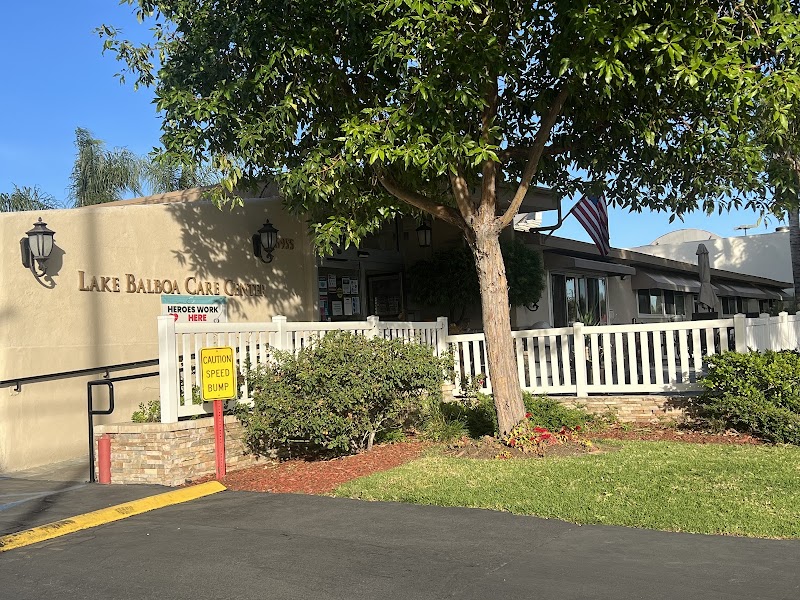
How is Lake Balboa Staffed?

CMS rates LAKE BALBOA CARE CENTER's staffing level at 3 out of 5 stars, which is average compared to other nursing homes. Staff turnover is 28%, compared to the California average of 46%. This relatively stable workforce can support continuity of care.

What Have Inspectors Found at Lake Balboa?

State health inspectors documented 21 deficiencies at LAKE BALBOA CARE CENTER during 2021 to 2025. These included: 18 with potential for harm and 3 minor or isolated issues.
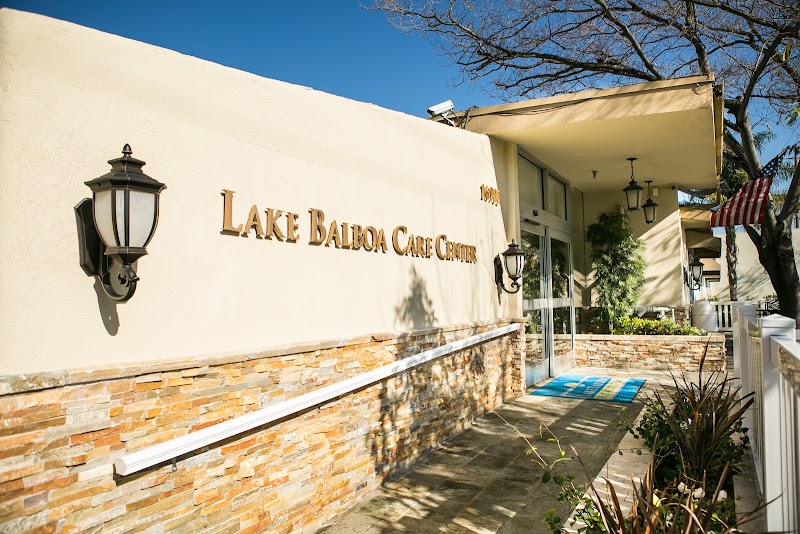
Who Owns and Operates Lake Balboa?

LAKE BALBOA CARE CENTER is owned by a for-profit company. For-profit facilities operate as businesses with obligations to shareholders or private owners. The facility is operated by THE ENSIGN GROUP, a chain that manages multiple nursing homes. With 50 certified beds and approximately 46 residents (about 92% occupancy), it is a smaller facility located in VAN NUYS, California.
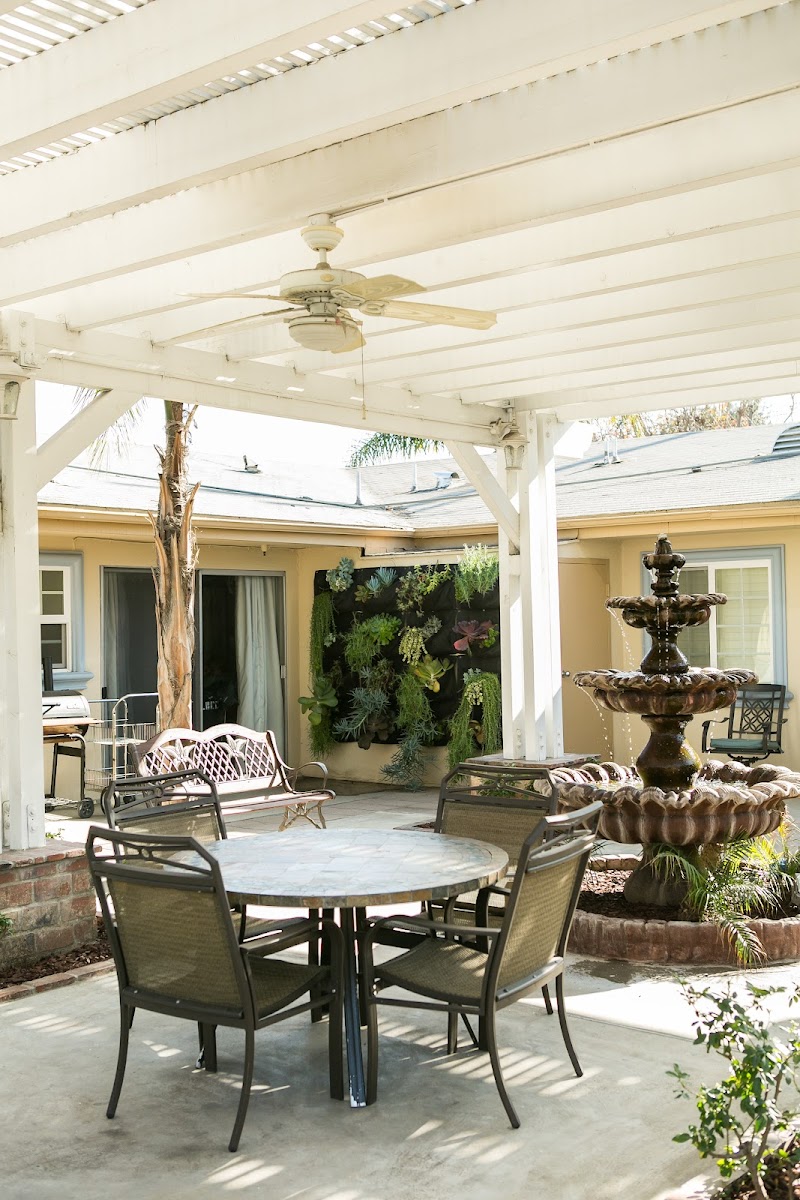
How Does Lake Balboa Compare to Other California Nursing Homes?

Compared to the 100 nursing homes in California, LAKE BALBOA CARE CENTER's overall rating (5 stars) is above the state average of 3.2, staff turnover (28%) is significantly lower than the state average of 46%, and health inspection rating (5 stars) is much above the national benchmark.

What Should Families Ask When Visiting Lake Balboa?

Based on this facility's data, families visiting should ask: "Can I visit during a mealtime to observe dining assistance and food quality?" "How do you handle medical emergencies, and what is your hospital transfer rate?" "Can I speak with family members of current residents about their experience?"

Is Lake Balboa Safe?

Based on CMS inspection data, LAKE BALBOA CARE CENTER has a clean safety record: no substantiated abuse findings (meaning no confirmed cases of resident harm), no Immediate Jeopardy citations (the most serious violation level indicating risk of serious injury or death), and is not on the Special Focus Facility watch list (a federal program monitoring the lowest-performing 1% of nursing homes). The facility has a 5-star overall rating and ranks #1 of 100 nursing homes in California. While no facility is perfect, families should still ask about staff-to-resident ratios and recent inspection results during their visit.

Do Nurses at Lake Balboa Stick Around?

Staff at LAKE BALBOA CARE CENTER tend to stick around. With a turnover rate of 28%, the facility is 18 percentage points below the California average of 46%. Low turnover is a positive sign. It means caregivers have time to learn each resident's needs, medications, and personal preferences. Consistent staff also notice subtle changes in a resident's condition more quickly. Registered Nurse turnover is also low at 25%, meaning experienced RNs are available to handle complex medical needs.

Was Lake Balboa Ever Fined?

LAKE BALBOA CARE CENTER has no federal fines on record. CMS issues fines when nursing homes fail to meet care standards or don't correct problems found during inspections. The absence of fines suggests the facility has either maintained compliance or corrected any issues before penalties were assessed. This is a positive indicator, though families should still review recent inspection reports for the full picture.

Is Lake Balboa on Any Federal Watch List?

LAKE BALBOA CARE CENTER is not on any federal watch list. The most significant is the Special Focus Facility (SFF) program, which identifies the bottom 1% of nursing homes nationally based on persistent, serious quality problems. Not being on this list means the facility has avoided the pattern of deficiencies that triggers enhanced federal oversight. This is a positive indicator, though families should still review the facility's inspection history directly.