THE ORCHARD - POST ACUTE CARE

12385 E. WASHINGTON BLVD, WHITTIER, CA 90606 (562) 693-7701
For profit - Limited Liability company 162 Beds THE ENSIGN GROUP Data: November 2025
Trust Grade
45/100
#696 of 1155 in CA
Last Inspection: August 2025

Inspected within the last 6 months. Data reflects current conditions.

Overview

The Orchard - Post Acute Care has a Trust Grade of D, which indicates below-average performance with some concerning issues. They rank #696 out of 1155 nursing homes in California, placing them in the bottom half of facilities statewide, and #145 out of 369 in Los Angeles County, meaning there are only a few better local options. Unfortunately, the facility's trend is worsening, with problems increasing from 13 in 2024 to 21 in 2025. Staffing is somewhat stable with a 3/5 rating and a 33% turnover rate, which is below the California average, but there is less RN coverage than 84% of other facilities, raising concerns about adequate medical oversight. Specific incidents found during inspections include a failure to ensure a resident at risk for pressure ulcers received timely care and necessary follow-up appointments, and another resident with a history of falls did not receive proper supervision or adequate room lighting as outlined in their care plan. While the facility has strengths, such as a good quality measures rating of 5/5, these serious deficiencies highlight significant areas for improvement.

Trust Score
D
45/100
In California
#696/1155
Bottom 40%
Safety Record
Moderate
Needs review
Inspections
Getting Worse
13 → 21 violations
Staff Stability
○ Average
33% turnover. Near California's 48% average. Typical for the industry.
Penalties
✓ Good
$41,849 in fines. Lower than most California facilities. Relatively clean record.
Skilled Nurses
⚠ Watch
Each resident gets only 18 minutes of Registered Nurse (RN) attention daily — below average for California. Fewer RN minutes means fewer trained eyes watching for problems.
Violations
⚠ Watch
55 deficiencies on record. Higher than average. Multiple issues found across inspections.
★★★☆☆
3.0
Overall Rating
★★★☆☆
3.0
Staff Levels
★★★★★
5.0
Care Quality
★★☆☆☆
2.0
Inspection Score
Stable
2024: 13 issues
2025: 21 issues

The Good

  • 5-Star Quality Measures · Strong clinical quality outcomes
  • Full Sprinkler Coverage · Fire safety systems throughout facility
  • No fines on record
  • Staff turnover below average (33%)

    15 points below California average of 48%

Facility shows strength in quality measures, fire safety.

The Bad

3-Star Overall Rating

Near California average (3.1)

Meets federal standards, typical of most facilities

Staff Turnover: 33%

13pts below California avg (46%)

Typical for the industry

Federal Fines: $41,849

Above median ($33,413)

Moderate penalties - review what triggered them

Chain: THE ENSIGN GROUP

Part of a multi-facility chain

Ask about local staffing decisions and management

The Ugly 55 deficiencies on record

2 actual harm
Aug 2025 15 deficiencies
CONCERN (D)

Potential for Harm - no one hurt, but risky conditions existed

Deficiency F0554 (Tag F0554)

Could have caused harm · This affected 1 resident

**NOTE- TERMS IN BRACKETS HAVE BEEN EDITED TO PROTECT CONFIDENTIALITY** Based on observation, interview, and record review the facility failed to ensure one of nine sampled residents (Resident 84) was...

Read full inspector narrative →
**NOTE- TERMS IN BRACKETS HAVE BEEN EDITED TO PROTECT CONFIDENTIALITY** Based on observation, interview, and record review the facility failed to ensure one of nine sampled residents (Resident 84) was assessed to determine if the resident was capable of self-administering medications, and the physician ordered to allow the resident to keep medication at the bedside before the facility allowed the resident keep medications at bedside. This deficient practice had the potential for unsafe medication administration and storage for Resident 84 and result in adverse reaction (undesired effect) or receive expired or too much medication that could lead to overdose.During a review of Resident 84's admission Record (AR), the AR indicated the resident was admitted to the facility on [DATE], with diagnoses that included chronic obstructive pulmonary disease (COPD, a chronic lung disease causing difficulty in breathing), bronchiectasis with exacerbation (a worsening of symptoms in individuals with bronchiectasis, a chronic lung condition characterized by abnormal and irreversible widening of the airways), and osteoporosis (a condition where bones become weak and brittle, making them more likely to break). During a review of Resident 84's Initial admission Record dated [DATE] at 5:20 PM, the Initial admission record indicated the resident did not desire to self-administer drugs. The Initial admission Record indicated if the resident wanted to self-administer drugs a Self-administration of Medications Interdisciplinary Team (IDT, a group of professionals who work together to achieve a common goal, typically involving the care of an individual with complex needs) Determination Evaluation would be triggered. During a review of Resident 84's Minimum Data Set (MDS, a federally mandated resident assessment tool) dated [DATE], the MDS indicated the resident had moderate cognitive impairment (a person was experiencing noticeable and significant difficulties with thinking, learning, remembering, and other cognitive skills that impact their daily life). The MDS indicated the resident's active diagnoses included COPD. During a review of Resident 84's Self-Administration of Medication - Xopenex (rescue inhaler that provided quick relief for breathing difficulties) Care Plan dated [DATE], the Care Plan indicated a goal for Resident 84 to safely self-administer medication. The Care Plan interventions indicated to ensure medication was safe and appropriate for self-administration, evaluate the resident's ability to ensure the medication was stored safely and securely, and determine the resident's comprehension of instructions for the medication they were taking, including the dose, timing, and signs of side effects and when to report to facility staff. During a review of Resident 84's Physician's Order dated [DATE] at 10:59 PM, the Physician's Order indicated Xopenex Hydrofluoroalkane (HFA, propellant used in pressurized metered-dose inhalers) aerosol 45 micrograms per actuation (mcg, unit of mass/act), two puff inhale orally every four hours as needed for wheezing, shortness of breath, coughing, for two weeks unsupervised, self-administration, physician gave okay to leave at bedside / family supplies. During a review of Resident 84's Medication Administration Record (MAR) dated [DATE] to [DATE], the MAR indicated Xopenex HFA aerosol 45 mcg/act was documented from [DATE] to [DATE]. The MAR documentation used the code U-SA during each of those days. The MAR chart code indicated U the code for Unknown and there was no indication of SA. During an observation and interview in Resident 84's room on [DATE] at 10:05 AM, Resident 84 was sitting on the edge of the bed and a medication - Xopenex HFA aerosol box was observed to the left side of the resident. Resident 84 stated I've been using this for 40 years; it helps me with my breathing. Resident 84 stated the facility was aware of the medication and her physician allowed her to have the medication at the bedside. During an interview on [DATE] at 10:30 AM, the Licensed Vocational Nurse (LVN) 2 stated there was no assessment done to identify if Resident 84 was capable of using the medication - Xopenex HFA aerosol and IDT did not assess the resident's ability or cognitive status to ensure Resident 84 was able to use the medication. LVN 2 stated the medication should have been renewed otherwise Resident 84 would be self-administering medications that were not ordered that could result in possible side effects of the medication could cause a change in condition in the resident. During an interview on [DATE] at 12:25 PM, the Director of Nursing (DON) stated a self-administration assessment was not done on Resident 84 but should have been done. The DON stated the medication - Xopenex HFA aerosol was not an active order but should have been since the medication was still at the resident's bedside. The DON stated if there was no active order or assessment done Resident 84 could potentially self administer the medication, and the facility would have to renew the order with the physician. During a concurrent interview and record review of the MAR dated [DATE] to [DATE] on [DATE] at 12:40 PM, the DON stated there was no documentation of the medication being used but there should have been. The DON stated if there was no documentation of the medication then the facility would not know if Resident 84 was taking the medication or not and also not know if the resident was taking too much. The DON stated she did not know what SA meant. During a concurrent interview and record review of the facility's policy and procedure (P&P) titled, Self-Administration of Medications dated [DATE], the P&P indicated If a resident desired to participate in self-administration, the interdisciplinary team will assess and periodically re-evaluate the resident based on change in the resident's status. Residents will be instructed regarding proper administration of medication by the nurse. Nursing will be responsible for recording self-administered doses in the resident's medication administration record (MAR). The P&P indicated, Storage and location of drug administration (e.g., resident's room, nurses' station, or activities room) will comply with state and federal requirements for medication storage. LVN 2 stated the facility was not following the policy which could turn into a medication error and affect Resident 84's overall health. During a concurrent interview and record review of the facility's P&P titled, Self-Administration of Medications dated [DATE], the DON stated the facility was not following the policy. The DON stated if the facility was not following the policy, the facility would not have a record of the medication or know if Resident 84 was using the medication or was capable of using the medication.
CONCERN (D)

Potential for Harm - no one hurt, but risky conditions existed

Notification of Changes (Tag F0580)

Could have caused harm · This affected 1 resident

**NOTE- TERMS IN BRACKETS HAVE BEEN EDITED TO PROTECT CONFIDENTIALITY** Based on observation, interview, and record review, the facility failed to report multiple, consecutive Restorative Nursing Aide...

Read full inspector narrative →
**NOTE- TERMS IN BRACKETS HAVE BEEN EDITED TO PROTECT CONFIDENTIALITY** Based on observation, interview, and record review, the facility failed to report multiple, consecutive Restorative Nursing Aide (nursing aide program that help residents maintain any progress made after therapy intervention to maintain their function) treatments that was refused by one of seven sampled residents (Resident 43) to the physician. These failures resulted in Resident 43 not receiving services and interventions to improve ROM and address reasons for refusals, prevent contractures (condition of shortening and hardening of muscles, tendons, or other tissue, often leading to joint stiffness), and improve overall mobility and physical functioning. Findings: During a review of Resident 43's admission Record, the admission Record indicated the facility originally admitted Resident 43 on 2/18/2020 and re-admitted Resident 43 on 3/14/2025 with diagnoses including left-sided hemiplegia (weakness to one side of the body) and hemiparesis (inability to move one side of the body) following a cerebral infarction (stroke, blockage of the flow of blood brain, causing or resulting in brain tissue death), left hand contracture (loss of motion of a joint associated with stiffness and joint deformity), and left above knee amputation (surgical removal of a limb above the level of knee). During a review of Resident 43's Order Summary Report, the Order Summary Report indicated physician's orders, dated 5/20/2025, for RNA to apply a left hand splint (rigid material or apparatus used to support and immobilize a broken bone or impaired joint), five times a week for six hours or as tolerated and for RNA to provide gentle passive range of motion (PROM, movement at a given joint with full assistance from another person) exercises to Resident 43's left arm, five times a week. During a review of Resident 43's MDS, dated [DATE], the MDS indicated Resident 43 had moderate cognitive (ability to think, understand, learn, and remember) impairment. The MDS indicated Resident 43 required set-up or clean up assistance for eating, oral hygiene, and upper body dressing and supervision/touching assistance for rolling to both sides, transfers, toileting hygiene, lower body dressing, and bathing. During an observation and interview on 8/5/2025 at 9:18 am, in Resident 43's room, Resident 43 was lying in bed. Resident 43 stated he was unable to move his left arm on his own because his arm was paralyzed (unable to move). Resident 43 had a left leg AKA (above knee amputation) and was able to raise his left thigh minimally. Resident 43 stated staff assisted with left arm and left leg exercises sometimes but stated he refused to participate most of the time because he preferred to do the exercises on his own since he only trusted particular staff members assisting with ROM exercises. During a concurrent observation and interview on 8/6/2025 at 10:39 am, Restorative Nursing Aide 2 (RNA 2) entered Resident 43's room to attempt an RNA session. Resident 43 looked at RNA 2 and yelled, no! before RNA was able to speak. RNA 2 attempted to explain the importance of exercises and Resident 43 interrupted and adamantly refused to participate. RNA 2 left Resident 43's room and stated Resident 43 had been refusing RNA consistently, multiple times a day, for many months for unknown reasons. RNA 2 stated Resident 43 refused RNA services so often that she stopped documenting Resident 43's RNA refusals in the RNA daily and weekly documentation reports. During a concurrent record review and interview on 8/7/2025 at 9:46 am, RNA 2 stated RNA attempted RNA sessions with each resident on the RNA program at least three times a day before documenting refusals in the medical record. RNA 2 stated if a resident refused to participate in RNA after the third time, the RNAs were supposed to document the resident's refusal on the RNA daily flowsheet and weekly summaries, report the refusal to the charge nurse, and report the refusals in the weekly RNA meetings. RNA 2 stated Resident 43 refused RNA services at least one to two times, every day, for months but stopped documenting any refusals because he refused RNA so frequently. RNA 2 stated she informed the charge nurse of Resident 43's multiple refusals sometimes, but did not document it. During a concurrent interview and record review on 8/7/2025 at 10:30 AM, Restorative Nursing Aide 3 (RNA 3) stated Resident 43 refused RNA at least one to two times a day, five times a week, for many months. RNA 3 stated the RNAs were expected to attempt RNA sessions at least three times a day. RNA 3 stated RNA weekly summaries were written to communicate how a resident tolerated the RNA program throughout the week. RNA 3 stated she worked with Resident 43 consistently since he was admitted to the facility and stated Resident 43 used to consistently participate RNA services up until about four months ago. RNA 3 stated Resident 43's attitude toward staff and participation level in RNA services changed ever since he had his left leg AKA surgery within the past year. RNA 3 stated she did not always inform the charge nurse of Resident 43's refusals and stopped documenting Resident 43's refusals on the daily flowsheets and weekly summaries because the refusals occurred so frequently and were a known issue among staff. During an interview on 8/7/2025 at 11:00 am, the DSD stated she supervised the RNAs. The DSD stated the RNAs attempted RNA sessions for each resident on the RNA program at least three times a day. The DSD stated if a resident continued to refuse after the third attempt or if the resident demonstrated a pattern of refusals, RNA should document the resident's refusal on the daily and weekly record and report the refusal to the charge nurse and in the weekly RNA meetings. The DSD stated facility staff should investigate the reason for refusal, notify the physician, conduct an Interdisciplinary Team (IDT, team of health care professionals that work together with the resident and or resident's representative to prioritize the resident 's needs and goals) meeting, and update the care plan. The DSD stated she was aware of Resident 43's consistent refusals of RNA services for many months and did not notify the physician but should have. The DSD confirmed the facility staff did not notify the physician, did not investigate the reason for Resident 43's recurring refusals, and did not conduct an IDT meeting to address Resident 43's multiple and consistent refusals. The DSD stated it was important facility staff notified the physician of recurring RNA refusals to ensure the appropriate interventions were implemented and the reason for refusals was investigated properly. During an interview on 8/7/2025 at 12:16 pm, Registered Nurse Supervisor 1 (RN 1) stated multiple, consecutive RNA refusals should be reported by the RNA to the charge nurse who in turn initiated a COC and notified the physician. RN 1 stated multiple, consecutive refusals of RNA was considered a COC and the physician must be notified to ensure the resident was assessed appropriately and the proper interventions were implemented. RN 1 stated it was important facility staff notified the physician to ensure the resident received the services he or she needed to prevent any functional declines and the reasons for refusal could be investigated. During an interview on 8/7/2025 at 2:28 pm, the Director of Nursing (DON) stated multiple, consecutive RNA refusals must be reported to the physician. The DON stated RNA must report multiple, consecutive RNA refusals to a licensed nurse who in turn monitored for changes, assessed the resident and discussed the risks and benefits of the treatment, initiated a COC if indicated, notified the physician, implemented physician orders and interventions, updated the care plan, and notified the family or responsible party. The DON stated it was important facility staff notified the physician of multiple, consecutive RNA refusals to ensure the physician was able to properly direct medical care and implement appropriate interventions to address the issue. During a review of the facility's Policy and Procedure (P/P) titled, Change in Condition, revised 4/2025, the P/P indicated if, at any time, it was recognized by any one of the team members that a condition or care needs of the resident have changed, the Licensed Nurse or Nurse Supervisor should be made aware. The P/P indicated examples of changes of condition included a change in a resident's behavior. The P/P indicated the nurse would perform and document an assessment of the resident and identify need for additional interventions via existing orders or through communication with the resident's provider. The P/P indicated nursing shall use his or her clinical judgement and contact the physician. The IDT shall collaborate with the attending physician, resident, and/or resident representative to review risk indicators and the plan of care.
CONCERN (D)

Potential for Harm - no one hurt, but risky conditions existed

Deficiency F0676 (Tag F0676)

Could have caused harm · This affected 1 resident

**NOTE- TERMS IN BRACKETS HAVE BEEN EDITED TO PROTECT CONFIDENTIALITY** Based on observation, interview and record review, the facility failed to provide a communication tool or device that translate ...

Read full inspector narrative →
**NOTE- TERMS IN BRACKETS HAVE BEEN EDITED TO PROTECT CONFIDENTIALITY** Based on observation, interview and record review, the facility failed to provide a communication tool or device that translate to a language the resident could understand for one of three residents (Resident 94) who does not speak the formal language in the facility. This deficient practice prevented Resident 94 from communicating the necessary needs with facility staff that could delay in the resident receiving appropriate care/treatment. A review of Resident 94's admission Record [AR] indicated Resident 94 was admitted to the facility on [DATE], with diagnoses that included prostate cancer (uncontrolled growth and spread of abnormal cells that can invade and damage healthy tissues) and anemia (lower-than-normal number of red blood cells). The AR indicated that Resident 94 primary language was Spanish. A review of Resident 94's History and Physical Examination (HPE, a comprehensive physician's note regarding the assessment of the Patient's health status) signed by the attending physician on 7/3/2025, the HPE indicated Resident 94 does not have the capacity to understand and make decisions. A review of Resident 94's Minimum Data Set (MDS, a resident assessment tool) dated 7/6/2025, the MDS indicated that Resident 94 had a moderately impaired cognition (thought process). During an observation on 8/4/2025 at 9:42AM, Resident 94's room did not have any communication tool or device, or translation material posted around his living area. During a concurrent resident room observation and interview on 8/7/2025 at 9:00AM, Certified Nursing Assistant (CNA 2) stated that she did not see any translation or communication tool or device and material in Resident 94 living area. CNA 1 stated that Resident 94 does not speak English. CNA 2 stated it was important to have translation material at bedside for residents that did not speak English so the resident will be able to communicate their needs for any type of assistance and while providing ADL care. During an interview on 8/7/2025 at 9:18AM, Director of Nursing (DON) stated that every resident room should have a communication board posted to assist in resident's expressing their needs. The DON stated by Resident 94 not having the communication board, it could negatively impact on the delivery of care such as the resident requesting assistance to the bathroom. A review of the facility's policy and procedure (P&P) titled Communication Tool, revised 10/2019 indicated the facility will supply residents and/or family members with the use of a communication board that has universally known drawings. The P&P indicated the communication tool will be kept at the resident's bedside for use.
CONCERN (D)

Potential for Harm - no one hurt, but risky conditions existed

Pressure Ulcer Prevention (Tag F0686)

Could have caused harm · This affected 1 resident

Based on observation, interview, and record review, the facility failed to ensure one of seven sampled residents (Resident 81) who was assessed as being at risk for pressure ulcer (a localized injury ...

Read full inspector narrative →
Based on observation, interview, and record review, the facility failed to ensure one of seven sampled residents (Resident 81) who was assessed as being at risk for pressure ulcer (a localized injury to the skin and/or underlying tissue usually over a bony prominence as a result of pressure, or pressure in combination with shear) was provided a pressure relieving barrier to be placed between Resident 81's overlapping, contracted (loss of motion of a joint associated with stiffness and joint deformity) toes of the left foot as indicated on the facility policy. This deficient practice had the potential to result in Resident 81 developing pressure ulcers on the left foot. Findings: During a review of Resident 81's admission Record, the admission Record indicated the facility admitted Resident 81 on 12/9/2014 with diagnoses including right-sided hemiplegia and hemiparesis following an unspecified cerebrovascular disease (group of conditions that impact the brain's blood vessels and blood flow) and apraxia (disorder of the brain and nervous system in which a person is unable to carry out purposeful movements and gestures). During a review of Resident 81's Minimum Data Set (MDS, resident assessment tool), dated 7/8/2025, the MDS indicated Resident 81 had severe impairment with cognitive (mental action or process of acquiring knowledge and understanding) skills for daily decision making. The MDS indicated Resident 81 required set-up or clean up assistance (Helper sets up or cleans up; resident completes activity. Helper assists only prior to or following the activity) for eating, supervision/touching assistance (Helper provides verbal cues and/or touching/steadying and/or contact guard assistance as resident completes activity. Assistance may be provided throughout the activity or intermittently) for oral hygiene, partial/moderate assistance (Helper does less than half the effort. Helper lifts, holds, or supports trunk or limbs, but provides less than half the effort) for upper body dressing and personal hygiene, and substantial/maximal assistance (Helper does more than half the effort. Helper lifts, holds, or supports trunk or limbs, but provides more than half the effort) for toilet hygiene, bathing, lower body dressing, and rolling to both sides. The MDS indicated Resident 81 was at risk for pressure ulcer development. During a review of Resident 81's Braden Scale (pressure ulcer risk assessment tool), dated 7/18/2025, the Braden Scale indicated Resident 81 was at moderate risk for pressure ulcer development due to slightly limited sensory perception (unable to communicate discomfort, needs to be turned, or had limited ability to feel paid or discomfort in one or two arms or legs), very moist skin, and very limited mobility (ability to move). During a review of Resident 81's care plan, the care plan indicated Resident 81 had potential for pressure ulcer development. The care plan indicated a goal for Resident 81 to have intact skin, free of redness, blisters or discoloration with an intervention which included to follow facility policy and protocols for the prevention and treatment of skin breakdown (tissue damage caused by friction, shear, moisture, or pressure). During a concurrent observation and interview on 8/5/2025 at 10:10 am, in Resident 81's room, Resident 81 was lying in bed with blankets covering both legs. MDS Nurse 2 (MDSN 2) entered the room and removed the blankets from Resident 81's legs. Resident 81's both legs were bent slightly at the knees and the toes of the left foot were bent with the big toe bent inwards to the left, overlapping the second toe. MDSN 2 stated Resident 81 was cognitively impaired and was unable to actively move both legs on her own. During a concurrent observation and interview on 8/6/2025 at 9:39 am, Licensed Vocational Nurse 2 (LVN 2) confirmed Resident 81 had contractures of the left foot causing the left big toe and second toe to overlap. LVN 2 separated Resident 81's left big toe and second toe and confirmed there were areas of pressure on the skin where the toes overlapped. LVN 2 stated Resident 81 should have a barrier (something that blocks, restricts or separates) to offload the pressure between the toes of the left foot but did not. LVN 2 stated Resident 81 was at risk for developing pressure ulcers and fungus (organism that lives by feeding on living tissues) on the left foot because Resident 81's toes were overlapping with constant areas of pressure on the skin with no barrier in-between to separate the toes. During a concurrent observation and interview on 8/6/2025 at 9:48 am, LVN 9 confirmed Resident 81 had contractures of the left foot causing the left big toe and second toe to overlap. LVN 9 separated Resident 81's left big toe and second toe and confirmed there were areas of pressure on the skin where the toes overlapped. LVN 9 stated Resident 81 should have a barrier between Resident 81's left big toe and second toe to offload the pressure but did not. LVN 9 stated Resident 81 was at risk for developing skin breakdown and pressure sores because Resident 81's left toes were contracted, there were areas of constant pressure between the overlapping left big toe and second toe with no barrier, and Resident 81 required total care for mobility and was unable to move on her own. During an interview on 8/7/2025 at 2:28 pm, the Director of Nursing (DON) stated the lack of repositioning, prolonged areas of pressure, and immobility (state of not moving) put residents at risk for skin breakdown and pressure ulcers. The DON stated areas of pressure should be avoided to prevent skin breakdown and pressure ulcers. The DON stated a soft barrier should be placed in between areas of pressure or overlapping body parts to prevent pressure ulcers. During a review of the facility's Policy and Procedure (P/P) titled, Skin and Wound Monitoring and Management, revised 4/2025, the P/P indicated the facility provided care and services to promote interventions that prevent pressure injury development. The P/P indicated nursing staff shall stabilize, reduce, or remove any exiting underlying risks and use pressure relieving/reducing and redistributing devices to prevent the development of skin breakdown or prevent existing pressure injuries from worsening. The P/P indicated treatment of pressure ulcers included preventative measures such as pressure reduction.
CONCERN (D)

Potential for Harm - no one hurt, but risky conditions existed

Incontinence Care (Tag F0690)

Could have caused harm · This affected 1 resident

Based on observation, interview, and record review, the facility failed to provide care and services to one of three sampled residents (Resident 142) who was incontinent of bladder (loss of bladder co...

Read full inspector narrative →
Based on observation, interview, and record review, the facility failed to provide care and services to one of three sampled residents (Resident 142) who was incontinent of bladder (loss of bladder control) and had recent history of urinary tract infection (UTI- an infection in the bladder/urinary tract) was not kept clean and dry. Resident 142's incontinent brief was soaked with urine when observed at 10:35 AM. Certified Nursing Assistant (CNA) 2 stated she changed Resident 142's incontinent brief around 7:45 AM and she was going to check if the resident need to be changed at 11:30 AM. This deficient practice had the potential to result Resident 142 to be at risk for recurrent UTI and skin breakdown. Findings: During a review of Resident 142's admission Record (AR), the AR indicated that the facility originally admitted Resident 142 on 6/17/2025 and readmitted her on 7/8/2025 with diagnoses including atherosclerosis (hardening of arteries) of coronary artery bypass graft(s) (known as bypass surgery-- a medical procedure to improve blood flow to the heart), UTI, and sepsis (a life-threatening blood infection). During a review of Resident 142's Minimum Data Set (MDS - a federally mandated resident assessment tool) dated 7/13/2025, the MDS indicated that Resident 142 had moderately impaired cognition (decisions poor; cues/supervision required). The MDS indicated that Resident 142 was always incontinent of bladder. The MDS also indicated that Resident 142 was dependent (helper does all the effort) on toilet hygiene, shower/bathe self, and lower body dressing. During a review of Resident 142's Urinalysis (UA- a set of tests that looks at the appearance of urine) Final Report dated 7/2/2025, indicated Resident 142 urine had leukocytes esterase (an enzyme present in white blood cells), protein, glucose, ketones (acids that a human body releases when it burns fat), blood, bilirubin (substance produced by the breakdown of red blood cells), WBC (white blood cells) , RBC (red blood cells) with bacteria, yeast (fungus). The result indicated presence of infection. During a review of Resident 142's Tasks Documentation Survey Report (TDSR) dated from 7/2025 to 8/2025, the TDSR indicated that Resident 142 was dependent (helper does all of the effort) on toilet hygiene. The DSR indicated that Resident 142 was assisted with toilet hygiene one or two shifts of total three shifts per day. The TDSR did not specifically indicate how many times Resident 142 was assisted per shift or per day for toilet hygiene. During a concurrent observation and an interview at 8/6/2025 at 10:35 AM with CNA 2, CNA 2 stated she changed Resident 142's diaper around 7:45 AM and she plans to change the resident's diaper again at 11:30 AM. CNA 2 stated she just asked, and Resident 142 responded to her that she was dry but did not specify what time she asked the resident. CNA 2 walked to Resident 142 and checked the diaper upon request, Resident 142's diaper was observed soaked and wet when opened. During a concurrent interview and record review on 8/7/2025 at 11 AM with licensed vocational nurse (LVN) 3, LVN 3 stated Resident 142 did not have a care plan developed for UTI. LVN 3 stated Resident 142 developed symptoms of UTI but was treated at the hospital. LVN 3 stated that there should have been care plan to monitor for Resident 142 for S/S of UTI, and there should have been interventions for prevention from recurring. During an interview on 8/6/2025 at 11:10 AM with the Licensed Vocational Nurse (LVN) 8, LVN 8 stated CNA 2 should be checking diaper every 2 hour During an interview on 8/7/2025 at 2:29 PM with the Director of Nursing (DON), DON stated Resident 142 developed S/S of UTI and was transferred to the General Acute Care Hospital (GACH) 1 for evaluation and treatment. DON stated that the licensed nursing staffs were responsible for developing a comprehensive care plan upon Resident 142's readmission to the facility on 7/8/2025 but the care plan was not developed, DON stated all nursing staffs were responsible for monitoring and implementing interventions. DON also stated that by not having a comprehensive care plan, nursing staffs could not provide person-centered care to Resident 142 or evaluate the effectiveness of their interventions provided. DON stated CNA 3 should have not assumed Resident 142's incontinent brief was dry without checking. During an interview on 8/7/2025 at 3:50 PM with the Medical Record Director (MRD), MRD stated that the facility did not have policy and procedures for incontinence care or one related to prevention measurement of UTI.
CONCERN (D)

Potential for Harm - no one hurt, but risky conditions existed

Deficiency F0692 (Tag F0692)

Could have caused harm · This affected 1 resident

**NOTE- TERMS IN BRACKETS HAVE BEEN EDITED TO PROTECT CONFIDENTIALITY** Based on observation, interview, and record review, the facility failed to implement the facility's policy and procedure for Nut...

Read full inspector narrative →
**NOTE- TERMS IN BRACKETS HAVE BEEN EDITED TO PROTECT CONFIDENTIALITY** Based on observation, interview, and record review, the facility failed to implement the facility's policy and procedure for Nutrition Status Management to weigh one of four sampled residents (Resident 142) upon readmission for nutrition evaluation and management. Resident 142 was weighed six days after readmitted to the facility on [DATE]. The nutrition evaluation by the Registered Dietitian (RD- professionals who are experts in food and nutrition) review was not conducted and did not identify Resident 142's weight loss until six days later. This deficient practice had resulted in the delayed implementation of the intervention for Resident 142's weight maintenance and nutrition management to prevent further weight loss.Findings: During a review of Resident 142's admission Record (AR), the AR indicated that the facility originally admitted Resident 142 on 6/17/2025 and readmitted her on 7/8/2025 with diagnoses including atherosclerosis (hardening of arteries) of coronary artery bypass graft(s) (known as bypass surgery-- a medical procedure to improve blood flow to the heart), UTI, and sepsis (a life-threatening blood infection). During a review of Resident 142's Minimum Data Set (MDS - a federally mandated resident assessment tool) dated 7/13/2025, the MDS indicated that Resident 142 was moderately cognitively impaired (decisions poor; cues/supervision required). The MDS indicated that Resident 142 complained of difficulty or pain with swallowing. The MDS also indicated that Resident 142 was dependent (helper does all the effort) on toilet hygiene, shower/bathe self, and lower body dressing. During a review of Resident 142's Physician's Orders dated 7/8/2025, the Physician's Orders indicated to weigh Resident 142 weekly weight for four weeks then monthly. During a review of Resident 142's Physician's Orders dated 7/14/2025, the Physician's Orders indicated to provide Glucerna two times daily for supplement. During a review of Resident 142's Nutrition Evaluation and RDN (Registered Dietitian Nutritionist- also known as RD) Review (NERR) dated 7/14/2025, the NERR indicated the RDN reviewed most recent weight 135.2 pounds (lbs.) measured on 7/1/2025. The NERR also indicated that RDN reviewed and compared weight of Resident 142 which measured 140.6 on 6/18/2025 with weight measured 127.5 on 7/14/2025. During a review of Resident 142's Physician's Orders dated 7/29/2025, the Physician's Orders indicated CCHO (controlled carbohydrate) NAS (no added salt) diet mechanical soft (foods that are soft and easy to chew)- chopped texture, thin liquid consistency, fortified (a food that has extra nutrients added to it). During a review of Resident 142's Weights and Vitals Summary (WVS) dated from 7/1/2025 to 8/4/2025, the WVS indicated that Resident 142 weights on the following dates: 7/1/2025-135.2 lbs. 7/14/2025-127.5lbs 7/22/2025-124.5 lbs. 7/28/2025-124.5 lbs. 8/4/2025-124.2 lbs. During an observation and concurrent interview on 8/6/2025 at 12:45 PM with Resident 142 at lunch time, Resident 142 was observed putting down utensils after eating several spoons full of different items on the tray. Resident 142 stated she just did not have any appetite to eat her current meal and she felt she has lost some weight. Resident 142 stated that the doctor ordered supplemental drinks for her since last month and that's what she has been given in between three meals. During a concurrent record review and an interview on 8/6/2025 at 1:15 PM with the Licensed Vocational Nurse (LVN) 8, Resident 142's WVS and NERR were reviewed. LVN 8 stated Resident 8 was not weigh on July 8, 2025, upon readmission to the facility and she focused on the weight loss from one month apart. LVN 8 stated the nurse who admitted the resident should have weighed the resident and documented it in the EHR (electronic health record- a digital collection of a patient's medical history and health information). During a concurrent record review and an interview on 8/6/2025 at 3:50 PM with the Registered Dietitian (RD), WVS and Nutrition Evaluation and RDN Review were reviewed. RD stated she evaluated Resident 142's nutritional status and initiated oral supplement when she noticed the weight loss on 7/14/2025 compared to previous weight measured on 7/1/202. RD stated she did not know why Resident 142 was not weighed upon readmission on [DATE]. RD stated evaluation and interventions could have been done earlier if the weight loss was identified earlier. During an interview on 8/7/2025 at 2:55 PM with the Director of Nursing (DON), DON stated there was no weight measurement documented for Resident 142 when the resident was admitted on [DATE], the missing weight measurement should have been documented in the EHR. DON stated Resident 142's nutrition status negatively impacted the weight evaluation conducted by IDT that identified resident's weight loss six days later. During a review of the facility's Policy and Procedures (P&P) titled Nutrition Status Management revised in 4/2025, the P&P indicated that each resident's nutritional status is assessed on admission and at least quarterly thereafter. The P&P also indicated that each resident is to be weighed upon admission. The weight will be entered directly into the electronic health record.
CONCERN (D)

Potential for Harm - no one hurt, but risky conditions existed

Pharmacy Services (Tag F0755)

Could have caused harm · This affected 1 resident

**NOTE- TERMS IN BRACKETS HAVE BEEN EDITED TO PROTECT CONFIDENTIALITY** Based on interview and record review, the facility failed to provide pharmaceutical services to one of five sampled residents (R...

Read full inspector narrative →
**NOTE- TERMS IN BRACKETS HAVE BEEN EDITED TO PROTECT CONFIDENTIALITY** Based on interview and record review, the facility failed to provide pharmaceutical services to one of five sampled residents (Resident 157) as evidenced by: 1. Failing to administer Entresto (a medication to treat heart failure [a chronic condition in which the heart does not pump blood as well as it should]) to Resident 157 on 6/29/2025 at 9 AM, 6/30/2025 at 5 PM, 7/1/2025 at 5 PM and 7/16/2025 at 5 PM. 2. Failing to document the reason why Entresto was not administered on 6/30/2025 at 5 PM, 7/1/2025 at 5 PM and 7/16/2025 at 5 PM. 3. Failing to notify the physician and obtain an order when Resident 157 did not receive Entresto on 6/29/2025 at 9 AM, 6/30/2025 at 5 PM, 7/1/2025 at 5 PM, and 7/16/2025 at 5 PM due to unavailability of the medication at the scheduled time for administration. These deficient practices placed Resident 157 at risk for worsening of her heart condition and hypertension (high blood pressure). During a review of Resident 157's admission Record (AR), the AR indicated the facility originally admitted Resident 157 on 5/26/2019 and readmitted on [DATE] with diagnoses that included heart failure and hypertension (high blood pressure). During a review of Resident 157's Minimum Data Set (MDS, a resident assessment tool), dated 5/7/2025, the MDS indicated Resident 157 had intact memory and cognition (ability to think and reasonably). The MDS indicated Resident 157 required setup and clean-up assistance with eating and oral hygiene, supervision or touching assistance with personal hygiene, and partial/moderate assistance (helper does less than half the effort) with toileting hygiene and chair/bed-to-chair transfer and shower/bathe self. During a review of Resident 157's Order Summary Report, dated 8/5/2025, the report indicated the physician ordered Entresto Oral Tablet 24-26 milligram (MG, a unit of measurement) two tablets by mouth two times a day for heart failure, starting on 3/27/2025. During a review of Resident 157's Progress Notes (PN), dated 6/29/2025 at 9:39 AM, the PN indicated Entresto was not available. During an interview on 8/5/2025 at 9:10 AM with Resident 157, Resident 157 stated she did not receive her Entresto 24/26mg 2 tabs last week for several days and remembered getting it just one day. Resident 157 stated the nurses told her the medication was not available in the facility. Resident 157 stated this issue has occurred a few times and she went without the medication for 3 days but was unable to recall on what day it occurred. Resident 157 stated she needed Entresto to treat her heart and blood pressure so she was worried her heart condition would get worse without the consistent administration of Entresto. During an interview on 8/5/2025 at 9:30 AM with Licensed Vocational Nurse (LVN) 1, LVN 1 stated t Resident 157 would miss the Entresto doses occasionally because the medication was not available in the facility. LVN 1 stated if Resident 157 did not receive the scheduled doses of Entresto, the resident's blood pressure would be elevated. During an interview on 8/5/2025 at 10 AM with the Director of Nursing (DON), the DON stated if Resident 157 did not receive the scheduled dose, it could affect the therapeutic level of Entresto in her body and put her at risk for elevated blood pressure. During an interview on 8/5/2025 at 12:54 PM with Registered Nurse (RN) 1, RN 1 stated she was not aware that the nurses had issue of re-ordering refills for Resident 157's Entresto and no nurses reported to her before. During a concurrent interview and record review on 8/5/2025 at 12:55 PM with RN 1, Resident 157's Medication Administration Record (MAR), dated 6/30/2025 at 5 PM, 7/1/2025 at 5 PM and 7/16/2025 at 5 PM, and Resident 157's PN, dated 6/30/2025 at 6:38 PM, 7/1/2025 at 7:39 PM and 7/16/2025 6:28 PM, were reviewed. The MAR indicated Entresto were documented with 7 (nurse did not administer Entresto at that time and to see PN) on 6/29/2025 at 9 AM, 6/30/2025 at 5 PM, 7/1/2025 at 5 PM and 7/16/2025 at 5 PM. The PN did not indicate documentation of the reason why the medication was not given on 6/29/2025 at 9 AM, 6/30/2025 at 5 PM, 7/1/2025 at 5 PM and 7/16/2025 at 5 PM. RN 1 stated according to Resident 157's MAR the licensed nurses did not administer Entresto to Resident 157 on 6/29/2025 at 9 AM, 6/30/2025 at 5 PM, 7/1/2025 at 5 PM and 7/16/2025 at 5 PM. RN 1 stated the nurse should document the reason why the medication was not administered to Resident 157 in the PN and Resident 157's PN did not indicate documentation of the reason why the medication was not given on 6/29/2025 at 9 AM, 6/30/2025 at 5 PM, 7/1/2025 at 5 PM and 7/16/2025 at 5 PM. RN 1 stated the nurse should also notify the physician about the dose of medication not given to the resident and document the physician's order and instruction to make sure the resident did not experience negative effect from the missing dose of the medication. RN 1 stated it was important to clearly document the information on the resident's medical record to ensure the consistent care was provided to the resident. During an interview on 8/6/2025 at 10:54 AM with LVN 7, LVN 7 stated he did not administer Entresto to Resident 157 on 7/16/2025 at 5 PM because Entresto was not available at the time, and he document 7 (other/see notes) on the MAR. LVN 7 stated he called the pharmacy to notified the physician but he did not document the reason why Entresto was not given on 7/16/2025 at 5 PM and did not document the notification of physician and the physician's instruction on the PN. LVN 7 stated, if it was not documented in the resident's medical records, meaning it was not done. During a concurrent interview and record review on 8/6/2025 at 3:25 PM with LVN 4, Resident 157's PN, dated 6/29/2025 at 9:39 AM, was reviewed. LVN 4 stated the facility ran out of stock of Resident 157's Entresto on 6/29/2025 morning and she called the pharmacy to follow up. LVN 4 stated the nurses had to call or send a request to the pharmacy for refills three days before a medication ran out, but she was not sure when the request for the refill of Entresto was called and sent to the pharmacy because the facility does not have a process in place on keeping records when sending request to the pharmacy. During a concurrent interview and record review on 8/6/2025 at 3:30 PM with LVN 5, Resident 157's MAR, dated 7/2025, and Resident 157's PN, dated 7/1/2025 at 7:39 PM, were reviewed. LVN 5 stated she did not administer Entresto to Resident 157 on 7/1/2025 at 5 PM because her Entresto was not available. LVN 5 stated she only called the pharmacy, but she did not report to the physician about the medication not being available. LVN 5 stated she documented 7 (other/see notes) for Resident 157's Entresto on 7/1/2025 at 5 PM in the MAR but she did not document the reason why Entresto was not given in Resident 157's PN. LVN 5 stated she should report to the physician when the resident did not receive her schedule medication, so the physician could give further order to prevent any potential adverse effect from the missing dose. LVN 5 stated she should document if Entresto was not given due to the medication not available in the PN, so other staff would know what happened to ensure continuation of the care for Resident 157. During a concurrent interview and record review on 8/6/2025 at 3:40 PM with LVN 6, Resident 157's MAR, dated 6/2025, and Resident 157's PN, dated 6/30/2025 at 6:58 PM, were reviewed. LVN 6 stated she documented 7 for Entresto on 6/30/2025 at 5 PM on the MAR. LVN 6 stated she did not document anything on the PN to indicate why Entresto was not given. LVN 6 stated she did not remember what happened to Resident 157's Entresto on that day and she did not notify the physician about the dose of Entresto was not given. LVN 6 stated she should document why Entresto was not given at that time and notified the physician right away to obtain orders and to ensure the resident does not experience the potential undesirable effects of missed dose of Entresto. During an interview on 8/7/2025 at 10:10 AM with Physician 1, Physician 1 stated she would like to the nurses to keep her informed about Resident 157's condition for any missed dose of medication and for how many days the resident did not receive the medication. During an interview on 8/7/2025 at 10:57 AM with Pharmacist 2, Pharmacist 2 stated from the record, the facility called the pharmacy on 6/28/2025 to refill Resident 157's Entresto. Pharmacist 2 stated it took 48 to 72 hours for the pharmacy to process and deliver the refills, so the nurses should contact the pharmacy three days before they ran out the medication. During an interview on 8/7/2025 at 1:30 PM with the DON, the DON stated there was no AM dose of Entresto available for Resident 157 on 6/29/2025 and the pharmacy did not deliver the next batch of Entresto until 7/2/2025 at 12:20 AM, but the nurses documented the AM dose of Entresto was given to the resident on 6/30/2025 and 7/1/2025. The DON stated there was no AM dose of Entresto available on 6/30/2025 and 7/1/2025 from the records, and she did not know how the nurses were able to administer Entresto to Resident 157 on 6/30/2025 and 7/1/2025 at 9 AM. During an interview on 8/7/2025 at 1:40 PM with the DON, the DON stated it was important to notify the physician if a medication was not administered to the physician and informed the physician why the medication was not administered, so the physician could give further order to monitor the resident or give an alternative medication to ensure the resident's condition was stable. The DON stated the nurse should document the information on the progress notes. During an interview on 8/7/2025 at 1: 43 PM with the DON, the DON stated she was not aware of the ongoing issue with the ordering refill of Resident 157's Entresto from the pharmacy until 8/5/2025 and the nurses did not report to her about it. The DON stated the facility did not have a process of handling the issue of ordering refills, so the issue was not escalated to the upper management level to resolve it timely. The DON stated it was important to have medication available for the residents to ensure they received their medications as physician's order and their medical condition was stable. During a review of the facility's P&P titled, Medication Administration, dated 10/2007, the P&P indicated the nurse should document administration of medication. The P&P also indicated Any irregularity in pouring or administering must be reported to the doctor. During a review of the facility's P&P titled, Ordering and Receiving Non-Controlled Medications from The Dispensing Pharmacy, dated 2/2020, the P&P indicated Medications and related products are received from the dispensing pharmacy on a timely basis. The P&P also indicated a licensed nurse should Promptly reports discrepancies and omissions to the issuing pharmacy and the charge nurse/supervisor.
CONCERN (D)

Potential for Harm - no one hurt, but risky conditions existed

Deficiency F0790 (Tag F0790)

Could have caused harm · This affected 1 resident

**NOTE- TERMS IN BRACKETS HAVE BEEN EDITED TO PROTECT CONFIDENTIALITY** Based on observation, interview, and record review, the facility failed to promptly provide dental services for one of nine samp...

Read full inspector narrative →
**NOTE- TERMS IN BRACKETS HAVE BEEN EDITED TO PROTECT CONFIDENTIALITY** Based on observation, interview, and record review, the facility failed to promptly provide dental services for one of nine sampled residents (Resident 79) by failing to follow recommendations from the dentist for an oral surgery referral for bone spurs removal (a surgical procedure to remove a bone spur - small sharp pieces of bone that could sometimes detach after a tooth extraction or other oral surgery). This deficient practice resulted in Resident 79 having pain and resorting to eating oatmeal, soups, and pureed food that can potentially result lt in weight loss. During a review of Resident 79's admission Record (AR), the AR indicated the resident was admitted to the facility on [DATE], with diagnoses that included type 2 diabetes mellitus (DM, a disorder characterized by difficulty in blood sugar control and poor wound healing), gout (a type of arthritis [a condition that caused pain, swelling, and stiffness in one or more joints] that caused sudden, severe pain, swelling, and stiffness in one or more joints), and gastro-esophageal reflux disease (a condition where stomach acid flows back into the esophagus, causing irritation and discomfort). During a review of Resident 79's Minimum Data Set (MDS, a federally mandated resident assessment tool) dated 5/9/2025, the MDS indicated the resident had moderate cognitive impairment (a person was experiencing noticeable and significant difficulties with thinking, learning, remembering, and other cognitive skills that impact their daily life). The MDS indicated under the oral/dental status, the facility did not check the box indicating the resident had mouth or facial pain, discomfort or difficulty with chewing. During a review of Resident 79's Social Services Progress Notes dated 5/14/2025 at 7:40 AM, the Progress Note indicated the resident was seen by the dentist. During a review of Resident 79's Dental Notes dated 5/14/2025, the Dental Notes indicated the Dentist recommended the resident have an Oral Surgery (OS) referral for bone spurs removal. The Dental Notes indicated the referral was given. During an interview on 8/4/2025 at 10:21 AM, Resident 79 stated the dentures (removable sets of artificial teeth, used to replace missing natural teeth) she received from the facility were hurting, so the resident did not use them. Resident 79 stated about two months ago the doctor recommended the resident get her gums/mouth cleaned and that might help with the dentures, but Resident 79 stated she had not heard anything from the social service designee and the nurses regarding the dentist's recommendation. Resident 79 stated that because she did not wear the dentures, the resident was only able to eat oatmeal, soups, and pureed food. During a concurrent interview and record review of Resident 79's Dental Notes dated 5/14/2025 on 8/7/2025 at 9:15 AM, the Social Service Director (SSD) stated the facility should have followed up with the dentist regarding the recommendations but there was no documented evidence provided the regarding the referral. The SSD could not find documentation indicating the resident was provided with follow up from the recommendations of the dentist from May until now. The SSD stated she was unable to state what could have happened to Resident 79 due to treatment not being provided because her opinions were not professional. During an interview on 8/7/2025 at 10:22 AM, the Licensed Vocational Nurse (LVN) 2 stated Resident 79 had complained about her teeth before, and the facility always had the in-house dentist see the resident. LVN 2 stated Resident 79 complained about her dentures poorly fitting and wanted them adjusted so the facility had the dental consultant come see the resident. During an interview on 8/7/2025 at 12:16 PM, the Director of Nursing (DON) stated the facility did not follow up with dental recommendations for Resident 79 as soon as possible but at least the staffs should have followed up within one month and the interdisciplinary team (IDT, a group of professionals who work together to achieve a common goal, typically involving the care of an individual with complex needs) should have followed up as well. The DON stated Resident 79's dentures were to help with eating and for aesthetic purposes (improve the appearance of the smile and creating natural looking teeth and gums) and although the resident could still eat, her diet would have to be modified regarding texture and the facility would have to provide pureed foods. During a review of the facility's policy and procedure (P&P) titled, Dental Services dated April 2025, the P&P indicated It is the policy of this Facility to ensure that its resident who require dental services on a routine or emergency basis have access to such services without barrier. It is likewise the policy of the Facility to repair or replace the dentures of a resident. The P&P indicated a definition of Emergency dental services - includes services needed to treat an episode of acute pain in teeth, gums, or palate; broken, or otherwise damaged teeth, or any other problem of the oral cavity that required immediate attention by the dentist. The P&P indicated, In the event that a Facility resident requires emergency dental services, for the repair or replacement of dentures or otherwise, the Facility will: assist the resident in making the necessary dental appointments, when necessary or requested. If a referral for dental services does not occur within three business days from the date of the loss/damage, the Facility will: document what actions were taken to ensure the resident could eat, drink, and communicate adequately while awaiting dental services and document the nature of the extenuating circumstances which led to the delay.
CONCERN (D)

Potential for Harm - no one hurt, but risky conditions existed

Food Safety (Tag F0812)

Could have caused harm · This affected 1 resident

Based on observation and interview and record review the facility failed to follow its policy and procedure on food storage, preparation, distribution and serving food in accordance with professional ...

Read full inspector narrative →
Based on observation and interview and record review the facility failed to follow its policy and procedure on food storage, preparation, distribution and serving food in accordance with professional standards for food service safety by failing to ensure that the Dietary Aid (DA) 1 labeled individually packaged four (4) cups of cottage cheese, 12 cups of yogurt, and four (4) cups of puddings in the refrigerator with the date of Use By. This deficient practice had the potential to cause food unlabeled past safe storage time/ period, and place residents who consume this food at risk for foodborne illness (food poisoning or food illness due to pathogens [harmful organisms that cause illness such as bacteria, viruses, or parasites] and toxins that contaminate food). Findings: During an observation and concurrent interview on 8/5/2025 at 11:35 AM, a food tray with a total of 20 individually- wrapped food in dessert cups was observed in the refrigerator which includes four cups of cottage cheese, 12 cups of variety flavors of yogurt, and four cups of pudding. The tray and the 20 individually- wrapped food cups were not labeled with Use by date. DA 1 stated he did not see labels of Use by date on any of the 20 cups and on the tray. DA 1 stated he was the person who individually wrapped the food in dessert cups and put them in the refrigerator, but he did not prepare and labeled the 20 cups with the Use by date. DA 1 stated he should not rush his work and should have made sure all food cups were labeled correctly at the time he put them in the refrigerator for food safety. During an interview on 8/5/2025 at 11:40 AM with the Dietary Supervisor (DS), the DS stated he saw DA 1 wrapping the 20 dessert cups and he believes DA 1 knows the standards of practice to label food when refrigerating it. DS stated if those 20 dessert cups containing perishable food are improperly stored or left unlabeled with Use by date, it can place residents at risk for consuming expired food and cause foodborne illnesses. During a review of the facility's policy and procedures (P&P) titled Labeling and Dating of Foods dated 2023, the P&P indicated the following: The individual opening or preparing food shall be responsible for date marking at the time of processing and/or storage. For foods that are commercially processed, ready to eat and intended to be stored cold greater than 24 hours will be marked with a Use By date. For foods that are prepared by the facility, held greater than 24 hours cold shall be clearly marked to indicate the date by which the food shall be consumed or discarded--- Use by.
CONCERN (E)

Potential for Harm - no one hurt, but risky conditions existed

Assessment Accuracy (Tag F0641)

Could have caused harm · This affected multiple residents

**NOTE- TERMS IN BRACKETS HAVE BEEN EDITED TO PROTECT CONFIDENTIALITY** Based on observation, interview, and record review, the facility failed to ensure and accurate Minimum Data Set (MDS, a resident...

Read full inspector narrative →
**NOTE- TERMS IN BRACKETS HAVE BEEN EDITED TO PROTECT CONFIDENTIALITY** Based on observation, interview, and record review, the facility failed to ensure and accurate Minimum Data Set (MDS, a resident assessment tool) assessment for three (3) of 3 sampled residents (Residents 43, 81, and 7) by failing to ensure: 1. The functional limitations (limited ability to move a joint that interferes with daily functioning, including activities of daily living, or places the resident at risk of injury) in range of motion (ROM, full movement potential of a joint) was accurate assessed for Resident 43's left arm. 2. The functional limitations in ROM was accurately assessed for Resident 81's both legs. This deficient practice had the potential to result in delayed or missed identification of joint ROM changes, inaccurate care planning, and inadequate provision of services and treatments for Residents 43 and 81. 3. Resident 7's diagnosis of dementia (a progressive brain disorder that affects memory and thought process) and use on antipsychotic medication (medication that affects mood and behavior) was reflected on the MDS. This deficient practice had the potential for Residents 43, 81, and 7 not to receive the necessary care to address resident's needs and the individualized plan of care. Findings: 1.During a review of Resident 43’s admission Record, the admission Record indicated the facility originally admitted Resident 43 on 2/18/2020 and re-admitted Resident 43 on 3/14/2025 with diagnoses including left-sided hemiplegia (weakness to one side of the body) and hemiparesis (inability to move one side of the body) following a cerebral infarction (stroke, blockage of the flow of blood brain, causing or resulting in brain tissue death), left hand contracture (loss of motion of a joint associated with stiffness and joint deformity), and amputation (surgical removal of a limb) of the left leg above the level of the knee. During a review of Resident 43’s MDS, dated [DATE], the MDS indicated Resident 43 had moderate impairment with cognitive (ability to think, understand, learn, and remember) skills for daily decision making. The MDS indicated Resident 43 required set-up or clean up assistance (Helper sets up or cleans up; resident completes activity. Helper assists only prior to or following the activity) for eating, oral hygiene, and upper body dressing and supervision/touching assistance (Helper provides verbal cues and/or touching/steadying and/or contact guard assistance as resident completes activity. Assistance may be provided throughout the activity or intermittently) for rolling to both sides, transfers, toileting hygiene, lower body dressing, and bathing. Resident 43’s MDS for functional limitations in ROM was coded “zero” which indicated Resident 43 had no ROM limitations in both arms. During a review of Resident 43’s Quarterly Joint Mobility Evaluation (JME, a brief assessment of a resident's ROM in both arms and both legs), dated 6/5/2025, the JME indicated Resident 43 had minimal (75% to 100% of ROM intact) ROM limitations of the left elbow, maximal (25% to 50% of ROM intact) ROM limitations of the left fingers, and moderate (50% to 75% of ROM intact) ROM limitations of left shoulder. During an observation and interview on 8/5/2025 at 9:18 am, in Resident 43’s room, Resident 43 was lying in bed wearing a splint (rigid material or apparatus used to support and immobilize a broken bone or impaired joint) to the left hand. Resident 43 stated he wore the splint to the left hand for many hours a day to absorb sweat and to keep the hand open since his left hand automatically closed into a fist if the splint was not worn. Resident 43 stated he was unable to move his left arm on his own because his arm was paralyzed. During a concurrent interview and record review on 8/6/2025 at 4:33 pm, MDS Nurse 1 (MDSN 1) stated the MDS was an assessment tool completed upon admission, quarterly, and upon a significant change of condition to identify the needs of the residents in the facility. MDSN 1 stated the facility monitored for changes in joint ROM by the MDS, JMEs performed by the Rehabilitation Department (Rehab), and weekly RNA meetings. MDSN 1 stated the MDS would indicate if a resident had functional ROM limitations in both arms. MDSN 1 stated she observed a resident actively move his or her arms and legs to perform ADLs, physically moved a resident’s arms and legs through ROM, and gathered information from Rehab which included reviewing the results of the resident’s JME when coding the functional abilities in the MDS. MDSN 1 reviewed Resident 43’s MDS assessment, dated 6/3/2025, and confirmed the MDS functional abilities assessment was coded a “zero” which meant Resident 43 had no ROM limitations in both arms. MDSN 1 reviewed Resident 43’s JME, dated 6/5/2025, and confirmed the JME indicated Resident 43 had minimal ROM limitations of the left elbow, maximal ROM limitations of the left fingers, and moderate ROM limitations of left shoulder. MDSN 1 stated the MDS functional abilities assessment, dated 6/3/2025, was coded incorrectly and should have been coded a “one” since Resident 43 had ROM limitations in the left arm because he was paralyzed and was unable to use the left arm functionally. MDSN 1 stated it was important the MDS was coded accurately to ensure the facility provided the residents with the appropriate care and services. 2. During a review of Resident 81’s admission Record, the admission Record indicated the facility admitted Resident 81 on 12/9/2014 with diagnoses including right-sided hemiplegia and hemiparesis following an unspecified cerebrovascular disease (group of conditions that impact the brain’s blood vessels and blood flow) and apraxia (disorder of the brain and nervous system in which a person is unable to carry out purposeful movements and gestures). During a review of Resident 81’s Quarterly JME, dated 6/5/2025, the JME indicated Resident 81 had moderate ROM limitations in the right hip, right knee, and right ankle and minimal ROM limitations in the left knee. During a review of Resident 81’s MDS, dated [DATE], the MDS indicated Resident 81 had severe impairment with cognitive skills for daily decision making. The MDS indicated Resident 81 required set-up or clean up assistance for eating, supervision/touching assistance for oral hygiene, partial/moderate assistance for upper body dressing and personal hygiene, and substantial/maximal assistance for toilet hygiene, bathing, lower body dressing, and rolling to both sides. Resident 81’s MDS for functional limitations in ROM was coded “zero” which indicated Resident 81 had no ROM limitations in both legs. During a concurrent observation and interview on 8/5/2025 at 10:10 am, in Resident 81’s room, Resident 81 was lying in bed with blankets covering both legs. MDS Nurse 2 (MDSN 2) entered the room and removed the blankets from Resident 81’s legs. Resident 81’s both legs were bent slightly at the knees and the toes of the left foot were bent with the big toe bent inwards to the left, overlapping the second toe. MDSN 2 stated Resident 81 was cognitively impaired and was unable to actively move both legs on her own. During a concurrent interview and record review on 8/6/2025 at 4:33 pm, MDSN 1 stated the MDS was an assessment tool completed upon admission, quarterly, and upon a significant change of condition to identify the needs of the residents in the facility. MDSN 1 stated the facility monitored for changes in joint ROM by the MDS, JMEs performed by Rehab, and weekly RNA meetings. MDSN 1 stated the MDS would indicate if a resident had functional ROM limitations in both arms. MDSN 1 stated she observed a resident actively move his or her arms and legs to perform ADLs, physically moved a resident’s arms and legs through ROM, and gathered information from Rehab which included reviewing the results of the resident’s JME when coding the functional abilities in the MDS. MDSN 1 reviewed Resident 81’s MDS assessment, dated 7/8/2025, and confirmed the functional abilities on the MDS assessment was coded a “zero” which meant Resident 81 had no ROM limitations in both legs. MDSN 1 reviewed Resident 81’s JME, dated 6/5/2025, and confirmed the JME indicated Resident 81 had moderate ROM limitations in the right hip, right knee, and right ankle and minimal ROM limitations in the left knee. MDSN 1 stated the function abilities of the MDS assessment, dated 7/8/2025, was coded incorrectly and should have been coded a “two” since Resident 81 had ROM limitations in both legs since she was unable to actively move both legs functionally. MDSN 1 stated it was important the MDS was coded accurately to ensure the facility provided the residents with the appropriate care and services. During an interview on 8/7/2025 at 2:28 pm, the Director of Nursing (DON) stated it was important the MDS was coded accurately to ensure the facility was able to assess if the care provided was appropriate for the residents’ needs. The DON stated incorrect coding of the MDS could potentially result in an inaccurate assessment of the resident which could negatively impact the care and services he or she received. During a review of the facility’s Policy and Procedures (P/P) titled, “Resident Assessment and Associated Processes,” revised April 2025, the P/P indicated comprehensive, accurate, standardized reproducible assessments of each resident would be conducted initially and periodically as part of an ongoing process through which each resident’s preferences and goals of care, functional and health status, and strengths and needs would be identified. The P/P indicated each person who completed a portion of the resident assessment would sign and certify the accuracy of that portion of the assessment. 3. During a review of Resident 7’s admission Record (AR), the AR indicated the resident was admitted to the facility on [DATE], with diagnoses that included dementia, major depressive disorder (a mood disorder that caused persistent feeling of sadness and loss of interest), and type 2 diabetes mellitus (DM, a disorder characterized by difficulty in blood sugar control and poor wound healing). During a review of Resident 7’s MDS, dated [DATE], the MDS indicated the resident had severe cognitive impairment. The MDS indicated Resident 7 did not have a diagnoses of dementia and was not receiving an antipsychotic medication. During a review of Resident 7’s History and Physical (H&P), dated 6/5/2025, the H&P indicated the resident did not have capacity to understand and make decisions. During a review of Resident 7’s Physician’s Order dated 7/20/2025 at 12:19 PM, the Physician’s Order indicated Seroquel (a group of medications called atypical antipsychotics used to treat serious mental health conditions) oral tablet, give 75 milligram (mg, unit of measurement) by mouth one time a day for psychosis (mental health condition characterized by a loss of touch with reality) manifested by distrust in others causing angry outbursts. During a review of Resident 7’s Medication Administration Record (MAR) dated 7/1/2025 to 7/31/2025, the MAR indicated the resident received Seroquel oral tablet 75 mg from 7/21/2025 to 7/31/2025. During a review of Resident 7’s MAR dated 8/1/2025 to 8/31/2025, the MAR indicated the resident received Seroquel oral tablet 75 mg from 8/1/2025 to 8/6/2025. During a concurrent interview and record review of Resident 7’s MDS dated [DATE] on 8/7/2025 at 3:37 PM, the MDS Nurse (MDSN) stated the MDS did not have the resident’s dementia diagnoses listed but should have been. The MDSN stated if the resident’s dementia diagnoses do not include in the MDS, the facility would not be able to take care of the resident and create a plan of care that was specifically appropriate for Resident 7 and that could affect the resident’s quality of life. During a concurrent interview and record review of Resident 7’s MDS dated [DATE] on 8/7/2025 at 3:41 PM, the MDSN stated the MDS did not indicate the resident was on an antipsychotic medication and Resident 7’s Seroquel was not coded under the antipsychotic portion. The MDSN stated if the Seroquel was not coded then the MDS was not accurate, and the facility was not providing the appropriate care and Resident 7’s quality of life could be affected or be at risk. During a concurrent interview and record review of Resident 7’s MDS date 6/9/2025 on 8/7/2025 at 12:04 PM, the Director of Nursing (DON) stated the resident had a diagnosis of dementia, that did not reflect in the MDS but should have been. The DON the MDS assessment did not capture the resident’s condition during the assessment. During a concurrent interview and record review of Resident 7’s MDS date 6/9/2025 on 8/7/2025 at 12:08 PM, the DON stated the resident’s antipsychotic medication use should have been documented in the MDS otherwise the facility was not capturing the antipsychotic use correctly and the MDS would not be accurate. During a review of the facility’s policy and procedure (P&P) titled, “Resident Assessment and Associated Processes, dated April 2025, the P&P indicated, “It is the policy of this facility that resident will be assessed and the findings documented in their clinical health record. These will be comprehensive, accurate, standardized reproducible assessment of each resident and will be conducted initially and periodically as part of an ongoing process through which each resident’s preferences and goals of care, functional and health status, and strengths and needs will be identified.” The P&P indicated, “An accurate Comprehensive Assessment will be made of the resident’s needs, strengths, goals, life history and preferences, using the RAI (Resident Assessment Instrument) and will include at least the following: cognitive patterns, psychological well-being, disease diagnoses and health conditions, and medications.” The P&P indicated, “The assessment process will include direct observation and communication with residents, as well as communication with licensed and non-licensed direct care staff members on all shifts. Assessment information will be used to develop, review, and revise the resident’s comprehensive care plan. When applicable, recommendations from the pre-admission screening and resident review (PASARR) evaluation report will be incorporated into the resident’s assessment, care planning, and transitions of care.”
CONCERN (E)

Potential for Harm - no one hurt, but risky conditions existed

Comprehensive Care Plan (Tag F0656)

Could have caused harm · This affected multiple residents

**NOTE- TERMS IN BRACKETS HAVE BEEN EDITED TO PROTECT CONFIDENTIALITY** Based on interview and record review the facility failed to develop and implement a person-centered care plan (a treatment plan ...

Read full inspector narrative →
**NOTE- TERMS IN BRACKETS HAVE BEEN EDITED TO PROTECT CONFIDENTIALITY** Based on interview and record review the facility failed to develop and implement a person-centered care plan (a treatment plan that focused on the needs and preferences of a resident or individual) for four of nine residents (Resident 43, 63, 7, and 142) by failing to: 1.Develop Resident 63's care plan related to behavior related to dementia (a progressive brain disorder that results in memory loss, change in personality and thought process that affects the activities of daily living) was developed to address how to supervise and monitor the resident. 2. Develop Resident 7's care plan that addressed how the resident will be monitored while receiving Escitalopram Oxalate (a medication primarily used to treat depression). These deficient practices had the potential for Resident 63 and Resident 7 not to receive necessary care and intervention to manage their behaviors and psychosocial needs related to their disease process and medication therapy. 3. Develop a plan of care for Resident 142 who had recent history of UTI ( infection of the bladder, urethra, ureter and kidney) to address intervention and how the resident will be assessed and monitor signs and symptoms (S/S) to prevent recurrence of UTI This deficient practice could result in the Resident 142 not to receive care necessary to prevent recurrent UTI. 4. Develop and implement a comprehensive care plan and conduct interdisciplinary team (IDT, team of health care professionals that work together with the resident and or resident's representative to prioritize the resident 's needs and goals) care conferences to address multiple, consecutive RNA (Restorative Nurse Assistant-facility staff that assist residents with exercises and mobility) refusals for Resident 43 who was identified as having range of motion (ROM, full movement potential of a joint) and mobility concerns. This deficient practice had the potential to negatively affect the delivery of necessary care and services for Resident 43 that could lead to contracture (loss of motion of a joint associated with stiffness and joint deformity) development and a decline in overall physical functioning and activities of daily living (ADL, basic activities such as eating, dressing, toileting). Findings: 1. During a review of Resident 63’s admission Record (AR), the AR indicated the resident was admitted to the facility on [DATE] and re-admitted on [DATE], with diagnoses that included dementia, schizoaffective disorder (a mental illness that could affect thoughts, mood, and behavior, and major depressive disorder (a mood disorder that caused persistent feeling of sadness and loss of interest). During a review of Resident 63’s Minimum Data Set (MDS, a federally mandated resident assessment tool) dated 5/24/2025, the MDS indicated the resident had severe cognitive impairment (problems with a person’s ability to think, learn, remember, use judgement, and make decisions). The MDS indicated Resident 63’s Active Diagnoses included dementia, depression, and schizoaffective disorders. The MDS indicated Resident 63 was receiving antipsychotic and antidepressant medications. During a review of Resident 63’s Comprehensive Care Plan, the Care Plan did not include a focused care plan with specific behaviors to monitor or supervise related to Resident 63’s triggered behavior associated with Dementia. During a concurrent interview and record review of Resident 63’s Comprehensive Care Plan on 8/6/2025 at 2:20 PM, the Licensed Vocational Nurse (LVN) 2 stated Resident 63 did not have a care plan for Dementia but should have had one. LVN 2 stated Resident 63’s behaviors related to dementia should have been included as part of the care plan’s interventions and should have been resident specific. LVN 2 stated if the care plan was not resident specific the facility could miss cues or opportunities to help the resident to be less agitated which could lead to her becoming more agitated and affect her sleeping pattern or schedule and develop changes. During a concurrent interview and record review of Resident 63’s Comprehensive Care Plan on 8/6/2025 at 2:46 PM, Minimum Data Set Nurse (MDSN) 2 stated the resident did not have an active dementia care plan but should have had one because the resident’s active diagnoses included dementia. MDSN 2 stated if Resident 63 did not have an active dementia care plan there was a possibility that the facility would not provide proper care because the care plan reflected how the facility takes care of residents. During a concurrent interview and record review of Resident 63’s Comprehensive Care Plan on 8/7/2025 at 11:45 AM, the Director of Nursing (DON) stated the resident should have had an actual dementia care plan. The DON stated the facility did not combine care plan’s usually and the facility would have to find the information “somewhere else” but having all the information regarding the resident’s dementia in one place “would be ideal to have it all together.” 2. During a review of Resident 7’s AR, the AR indicated the resident was admitted to the facility on [DATE], with diagnoses that included dementia, major depressive disorder, and type 2 diabetes mellitus (DM, a disorder characterized by difficulty in blood sugar control and poor wound healing). During a review of Resident 7’s MDS dated [DATE], the MDS indicated the resident had severe cognitive impairment. The MDS indicated the resident was receiving an antidepressant medication. During a review of Resident 7’s History and Physical (H&P) dated 6/5/2025, the H&P indicated the resident did not have capacity to understand and make decisions. During a review of Resident 7’s Physician’s Order dated 7/9/2025 at 7:50 AM, the Physician’s Order indicated escitalopram oxalate tablet 20 milligram (mg, unit of measurement), give one tablet by mouth one time a day for depression manifested by verbalized feelings of sadness related to major depressive disorder. During a review of Resident 7’s Comprehensive Care Plan, the Care Plan did not include a focused care plan to address on how the resident will be monitored and supervised while receiving Escitalopram Oxalate tablet. During a review of Resident 7’s Medication Administration Record (MAR) dated 7/1/2025 to 7/31/2025, the MAR indicated the resident received Escitalopram Oxalate tablet 20 mg from 7/9/2025 to 7/31/2025. During a review of Resident 7’s MAR dated 8/1/2025 to 8/31/2025, the MAR indicated the resident received Escitalopram Oxalate tablet 20 mg from 8/1/2025 to 8/6/2025. During a concurrent interview and record review of Resident 7’s Comprehensive Care Plan on 8/7/2025 at 10:17 AM, Licensed Vocational Nurse (LVN) 2 stated Resident 7 did not have a care plan for Escitalopram Oxalate but should have had one. LVN 2 stated the facility would not be able to monitor any side effects from the medication which could affect Resident 7’s behavior like number of episodes of being sad or agitated. During a concurrent interview and record review of Resident 7’s Comprehensive Care Plan on 8/7/2025 at 12:15 PM, the Director of Nursing (DON) stated the care plan was used to direct the facility on the care of the resident and Resident 7 did not have Escitalopram Oxalate as a “problem” and only included interventions but should have had a care plan for the medication. During a review of the facility’s policy and procedure (P&P) titled, “Comprehensive Person-Centered Care Planning” dated April 2025, the P&P indicated “It is the policy of this facility that the interdisciplinary team (IDT, a group of professionals who work together to achieve a common goal, typically involving the care of an individual with complex needs) shall develop a comprehensive person-centered care plan for each resident that includes measurable objectives and timeframes to meet a resident’s medical, nursing, mental and psychosocial needs that are identified in the comprehensive assessment. The P&P indicated a definition of “Interventions – are actions, treatments, procedures, or activities designed to meet an objective,” and “Person-centered care – means to focus on the resident as the locus of control and support the resident in making their own choices and having control over their daily lives.” The P&P indicated “The resident’s comprehensive plan of care will be reviewed and/or revised by the IDT after each assessment, including both the comprehensive and quarterly review assessments.” 3. During a review of Resident 142’s admission Record (AR), the AR indicated that the facility originally admitted Resident 142 on 6/17/2025 and readmitted her on 7/8/2025 with diagnoses including atherosclerosis (hardening of arteries) of coronary artery bypass graft(s) (known as bypass surgery-- a medical procedure to improve blood flow to the heart), UTI, and sepsis (a life-threatening blood infection). During a review of Resident 142’s Minimum Data Set (MDS – a resident assessment tool) dated 7/13/2025, the MDS indicated that Resident 142 was moderately cognitively impaired (decisions poor; cues/supervision required). The MDS indicated that Resident 142 was incontinent in bladder. also indicated that Resident 142 was dependent (helper does all the effort) on toilet hygiene, shower/bathe self, and lower body dressing. During a review of Resident 142’s Urinalysis (UA- a set of tests that looks at the appearance of urine) Final Report date ordered on 6/27/2025, and (result) approved on 7/2/2025, the UA report indicated multiple substances were detected: leukocytes esterase (an enzyme present in white blood cells), protein, glucose, ketones (acids that a human body releases when it burns fat), blood, bilirubin (substance produced by the breakdown of red blood cells), WBC (white blood cells), RBC (red blood cells), bacteria, yeast (fungus). During a review of Resident 142’s Nursing Progress Notes (NPN) dated 7/8/2025, the NPN indicated that Resident 142 was readmitted with diagnoses including UTI and sepsis. During a review of Resident 142’s Care Plan, there was no comprehensive care plan developed that indicated to monitor signs and symptoms (S/S) and prevention of UTI. During a concurrent interview and record review on 8/7/2025 at 11 AM with licensed vocational nurse (LVN) 3, LVN 3 stated Resident 142 did not have a care plan developed for UTI. LVN 3 stated Resident 142 developed symptoms of UTI but was treated at the hospital. LVN 3 stated that there should have been care plan to monitor for Resident 142 for S/S of UTI, and there should have been interventions for prevention from recurring. During an interview on 8/7/2025 at 2:29 PM with the Director of Nursing (DON), DON stated Resident 142 developed S/S of UTI and was transferred to the General Acute Care Hospital (GACH) 1 for evaluation and treatment. DON stated that the licensed nursing staffs were responsible for developing a comprehensive care plan upon Resident 142’s readmission to the facility on 7/8/2025, and all nursing staffs were responsible for monitoring and implementing interventions. DON also stated that by not having a comprehensive care plan, nursing staffs could not provide person-centered care to Resident 142 or evaluate the effectiveness of their interventions provided. During a review of the facility’s Policy and Procedures (P&P) titled “Comprehensive Person-Centered Care Planning” revised 4/2025, the P&P indicated that the interdisciplinary team (IDT- )shall develop a comprehensive person-centered care plan for each resident that includes measurable objectives and timeframes to meet a resident’s medical, nursing, mental and psychosocial needs that are identified in the comprehensive assessment. 4. During a review of Resident 43’s admission Record, the admission Record indicated the facility originally admitted Resident 43 on 2/18/2020 and re-admitted Resident 43 on 3/14/2025 with diagnoses including left-sided hemiplegia (weakness to one side of the body) and hemiparesis (inability to move one side of the body) following a cerebral infarction (stroke, blockage of the flow of blood brain, causing or resulting in brain tissue death), left hand contracture (loss of motion of a joint associated with stiffness and joint deformity), and left above knee amputation (surgical removal of a limb above the level of knee). During a review of Resident 43’s Order Summary Report, the Order Summary Report indicated physician’s orders, dated 5/20/2025, for RNA to apply a left hand splint (rigid material or apparatus used to support and immobilize a broken bone or impaired joint), five times a week for six hours or as tolerated and for RNA to provide gentle passive range of motion (PROM, movement at a given joint with full assistance from another person) exercises to Resident 43’s left arm, five times a week. During a review of Resident 43’s MDS, dated [DATE], the MDS indicated Resident 43 had moderate cognitive (ability to think, understand, learn, and remember) impairment. The MDS indicated Resident 43 required set-up or clean up assistance for eating, oral hygiene, and upper body dressing and supervision/touching assistance for rolling to both sides, transfers, toileting hygiene, lower body dressing, and bathing. During a review of Resident 43’s Quarterly Joint Mobility Evaluation (JME, a brief assessment of a resident's ROM in both arms and both legs), dated 6/5/2025, the JME indicated Resident 43 had minimal (75% to 100% of ROM intact) ROM limitations of the left elbow and left hip, maximal (25% to 50% of ROM intact) ROM limitations of the left fingers, and moderate (50% to 75% of ROM intact) ROM limitations of left shoulder. During an observation and interview on 8/5/2025 at 9:18 am, in Resident 43’s room, Resident 43 was observed lying in bed. Resident 43 stated he was unable to move his left arm on his own because his arm was paralyzed (unable to move). Resident 43 had a left leg AKA (above knee amputation) and was able to raise his left thigh minimally. Resident 43 stated staff assisted with left arm and left leg exercises sometimes but stated he refused to participate most of the time because he preferred to do the exercises on his own since he only trusted particular staff members assisting with ROM exercises. During a concurrent observation and interview on 8/6/2025 at 10:39 am, Restorative Nursing Aide 2 (RNA 2) entered Resident 43’s room to attempt an RNA session. Resident 43 looked at RNA 2 and yelled, “no!” before RNA was able to speak. RNA 2 attempted to explain the importance of exercises and Resident 43 interrupted and adamantly refused to participate. RNA 2 left Resident 43’s room and stated Resident 43 had been refusing RNA consistently, multiple times a day, for many months for unknown reasons. RNA 2 stated Resident 43 refused RNA services so often that she stopped documenting Resident 43’s RNA refusals in the RNA daily and weekly documentation reports. During an interview on 8/7/2025 at 10:30 AM, Restorative Nursing Aide 3 (RNA 3) stated Resident 43 refused RNA at least one to two times a day, five times a week for many months. RNA 3 stated the RNAs were expected to attempt RNA sessions at least three times a day. RNA 3 stated she worked with Resident 43 consistently since he was admitted to the facility and stated Resident 43 used to consistently participate RNA services up until about four months ago. RNA 3 stated Resident 43’s refusals were a known issue amongst staff, including the Director of Staff Development (DSD) who supervised the RNAs, since Resident 43’s RNA refusals had been an ongoing issue for many months. RNA 3 stated Resident 43’s attitude toward staff and participation level in RNA services changed ever since he had his left leg AKA surgery. During an interview on 8/7/2025 at 11:00 am, the DSD stated she supervised the RNAs. The DSD stated the RNAs attempted RNA sessions for each resident on the RNA program at least three times a day. The DSD stated if a resident continued to refuse after the third attempt or if the resident demonstrated a pattern of refusals, RNA should document the resident’s refusal on the daily and weekly record and report the refusal to the charge nurse and in the weekly RNA meetings. The DSD stated facility staff should investigate the reason for refusal, notify the physician, conduct an IDT meeting, and update the care plan. The DSD stated she was aware of Resident 43’s consistent refusals of RNA services for many months. The DSD confirmed the facility staff did not notify the physician, did not investigate the reason for Resident 43’s recurring refusals, and did not conduct an IDT meeting to address Resident 43’s multiple and consistent refusals. The DSD stated it was important the facility created a care plan and conducted an IDT meeting when Resident 43’s demonstrated patterns of refusals for RNA to ensure Resident 43 received the appropriate care and areas of concern were addressed. During a concurrent interview and record review on 8/7/2025 at 11:46 am, the Minimum Data Set Nurse 1 (MDSN 1) stated a care plan was developed and used as a guideline to ensure proper care was provided for each resident. MDSN 1 stated IDT conferences were conducted upon admission, quarterly, and as needed if any area of concern requiring a formal, interdisciplinary discussion was warranted. MDSN 1 stated IDT conferences were important to ensure the root cause of the issue was investigated and appropriate interventions were implemented. MDSN 1 stated multiple and consistent RNA refusals should be reported by the RNA to the charge nurse, the physician should be notified, an IDT conference should be conducted to investigate the issue, and a care plan should be developed or updated to address the RNA refusals. MDSN 1 stated she was aware of Resident 43’s multiple RNA refusals. MDSN 1 reviewed Resident 43’s clinical record and confirmed the facility did not investigate the reason for Resident 43’s RNAs refusals, did not create a care plan, and did not conduct an IDT meeting to address Resident 43’s multiple and consistent refusals. MDSN 1 stated it was important for the facility to create a care plan and conduct an IDT meeting when Resident 43 demonstrated patterns of RNA refusals to ensure Resident 43 received the appropriate care and services and the reason for refusal was properly investigated. During a concurrent interview and record review on 8/7/2025 at 12:25 pm, the Social Services Director (SSD) stated an IDT conference should be conducted if a resident consistently refused to participate in RNA services. The SSD stated an IDT conference to address continuous RNA refusals was important to ensure the facility worked as a team to discuss, develop, and implement a plan of care to ensure the appropriate care and services were provided and the root cause of the refusals was investigated. The SSD reviewed Resident 43’s clinical record and confirmed no IDT conferences were conducted to address Resident 43’s continuous RNA refusals and should have been done as soon as Resident 43’s began to consistently refuse RNA services. During an interview on 8/7/2025 at 2:28 pm, the Director of Nursing (DON) stated comprehensive care plans were used as a guide to ensure the appropriate care and services were provided for each resident. The DON stated care plans should be developed, and an IDT conference should be conducted if a resident refused RNA consistently to ensure the reason for refusal was investigated, areas of concern were identified, goals were created, and interventions were established to address the resident’s needs. The DON stated if a care plan was not developed and an IDT conference was not done for residents who consistently refused to participate in an RNA program, staff may not investigate the reason for refusal and the resident may not receive the appropriate care and services. During a review of the facility’s Policy and Procedure (P&P) titled, “Comprehensive Person-Centered Care Planning,” revised 4/2025, the P&P indicated the IDT shall develop a comprehensive, person-centered care plan that included measurable objectives and timeframes to meet a resident’s medical, nursing, mental, and psychosocial needs that are identified in the comprehensive assessment. The P/P indicated in the event a resident refused treatment, the comprehensive care plan would identify care or service declined, the associated risks, IDT’s effort to educate the resident and resident representative and any alternative means to address the risk.
CONCERN (E)

Potential for Harm - no one hurt, but risky conditions existed

Deficiency F0761 (Tag F0761)

Could have caused harm · This affected multiple residents

**NOTE- TERMS IN BRACKETS HAVE BEEN EDITED TO PROTECT CONFIDENTIALITY** Based on observation, interview, and record review the facility failed to ensure safe provisions of pharmaceutical services to p...

Read full inspector narrative →
**NOTE- TERMS IN BRACKETS HAVE BEEN EDITED TO PROTECT CONFIDENTIALITY** Based on observation, interview, and record review the facility failed to ensure safe provisions of pharmaceutical services to provide safe storage of medications as indicated in the facility's policy and procedure by failing to: 1.Ensure Resident 84 assessed and have a physician's order to keep Xopenex (a rescue inhaler that provided quick relief for breathing difficulties) at the bedside. 2. Ensure Medication Cart 1 and Medication Cart 2 did not have loose pills in the drawer that licensed nurses could not identify. These deficient practices had the potential for the resident to self administer multiple dosage of medication and cause overdose and/or lead to unsafe consumptions of medication by other residents who could access the medications. Addition the deficient practice could result in medication loss and misuse. Findings: 1.During a review of Resident 84's admission Record (AR), the AR indicated the resident was admitted to the facility on [DATE], with diagnoses that included chronic obstructive pulmonary disease (COPD, a chronic lung disease causing difficulty in breathing), bronchiectasis with exacerbation (a worsening of symptoms in individuals with bronchiectasis, a chronic lung condition characterized by abnormal and irreversible widening of the airways), and osteoporosis (a condition where bones become weak and brittle, making them more likely to break). During a review of Resident 84's Minimum Data Set (MDS, a federally mandated resident assessment tool) dated 6/18/2025, the MDS indicated the resident had moderate cognitive impairment (a person was experiencing noticeable and significant difficulties with thinking, learning, remembering, and other cognitive skills that impact their daily life). The MDS indicated the resident's active diagnoses included COPD. During a review of Resident 84's care plan titled Self-Administration of Medication - Xopenex Care Plan dated 5/31/2023, the Care Plan indicated a goal for the resident to safely self-administer medication. The Care Plan interventions indicated to ensure medication was safe and appropriate for self-administration, the facility will evaluate the resident's ability to ensure the medication was stored safely and securely, and determine the resident's comprehension of instructions for the medication they were taking, including the dose, timing, and signs of side effects and when to report to facility staff. During a review of Resident 84's Physician's Order dated 3/30/2025 at 10:59 PM, the Physician's Order indicated to administer Xopenex Hydrofluoroalkane (HFA, propellant used in pressurized metered-dose inhalers) aerosol 45 micrograms per actuation (mcg, unit of mass/act), two puff inhale orally every four hours as needed for wheezing, shortness of breath, coughing, for two weeks unsupervised, self-administration, physician gave okay to leave at bedside / family supplies. During an observation and interview in Resident 84's room on 8/4/2025 at 10:05 AM, Resident 84 was sitting on the edge of the bed and a medication - Xopenex HFA aerosol was observed to the left side of the resident on the bed. Resident 84 stated I've been using this for 40 years; it helps me with my breathing. Resident 84 stated the facility was aware of the medication she kept at bedside and her physician stated the resident was able to have the medication at the bedside. During an interview on 8/7/2025 at 10:49 AM, the Licensed Vocational Nurse (LVN) 2 stated because there was not an order for the medication - Xopenex HFA aerosol, the medication should not have been at the bedside. LVN 2 stated the medication should have been kept in the medication cart for safety. LVN 2 stated if the medication was left at bedside there was potential for a medication error and could be harmful for Resident 84 because of side effects. During an interview on 8/7/2025 at 12:45 PM, the Director of Nursing (DON) stated the medication - Xopenex HFA aerosol should not have been at the bedside otherwise Resident 84 could use the medication and the facility would not know how much the resident was using. The DON stated the facility must make sure there was a physician's order if the resident needed the medication. The DON stated the medication should have been stored in the medication cart. During a concurrent interview and record review of the facility's policy and procedure (P&P) titled, Self-Administration of Medications dated May 2019, the P&P indicated If a resident desired to participate in self-administration of medications, the interdisciplinary team will assess and periodically re-evaluate the resident based on change in the resident's status. Residents will be instructed regarding proper administration of medication by the nurse. Nursing will be responsible for recording self-administered doses in the resident's medication administration record (MAR). The P&P indicated, Storage and location of drug administration (e.g., resident's room, nurses' station, or activities room) will comply with state and federal requirements for medication storage. LVN 2 stated the facility was not following the policy which could turn into a medication error and affect Resident 84's overall health. During a concurrent interview and record review of the facility's P&P titled, Self-Administration of Medications dated May 2019, the DON stated the facility was not following the policy. The DON stated if the facility was not following the policy, the facility would not have a record of the medication or know if Resident 84 was using the medication or was capable of using the medication.
CONCERN (E)

Potential for Harm - no one hurt, but risky conditions existed

Medical Records (Tag F0842)

Could have caused harm · This affected multiple residents

**NOTE- TERMS IN BRACKETS HAVE BEEN EDITED TO PROTECT CONFIDENTIALITY** Based on observation, interview, and record review the facility failed to maintain complete and accurate documentation in the me...

Read full inspector narrative →
**NOTE- TERMS IN BRACKETS HAVE BEEN EDITED TO PROTECT CONFIDENTIALITY** Based on observation, interview, and record review the facility failed to maintain complete and accurate documentation in the medical records for two of nine sampled residents (Residents 63 and 43) by failing to ensure: 1.Resident 63's use of antipsychotic medication (primarily used to treat psychosis [mental state where a a resident has difficulty distinguishing between what is real and what is not]) and antidepressant medications (a medication used to treat depression) on the resident's Nursing Summary Weekly. This deficient practice had the potential to result in Resident 63's lack of or delay in treatment and interrupt the provision of care/intervention to the resident's psychosocial need. 2. Restorative Nursing Assistant (RNA- nursing aide program that help residents maintain any progress made after therapy intervention to maintain their function) treatment that were refused by Resident 43 were accurately documented in the resident's medical records. This deficient practice had the potential to negatively impact the provision of necessary care and services due to the inaccurate reflection of services provided to Resident 43. Findings: 1.During a review of Resident 63’s admission Record (AR), the AR indicated the resident was admitted to the facility on [DATE] and re-admitted on [DATE], with diagnoses that included dementia (a progressive state of decline in mental abilities, schizoaffective disorder (a mental illness that could affect thoughts, mood, and behavior, and major depressive disorder (a mood disorder that caused persistent feeling of sadness and loss of interest). During a review of Resident 63’s Minimum Data Set (MDS, a federally mandated resident assessment tool) dated 5/24/2025, the MDS indicated the resident had severe cognitive impairment (problems with a person’s ability to think, learn, remember, use judgement, and make decisions). The MDS indicated Resident 63’s active Diagnoses included dementia, depression, and schizoaffective disorders. The MDS indicated Resident 63 was receiving antipsychotic and antidepressant medications. During a review of Resident 63’s Physician’s Order dated 10/24/2024 at 4:11 PM, the Physician’s Order indicated Seroquel (a medication classified as an atypical antipsychotic to treat mental health conditions like schizophrenia) oral tablet 25 milligrams (mg, unit of measurement), give one tablet by mouth at bedtime related to schizoaffective disorder, manifested by auditory hallucinations (hearing things that were not there). During a review of Resident 63’s Physician’s Order dated 7/24/2027 at 4:33 PM, the Physician’s Order indicated fluoxetine hydrochloride (fluoxetine HCL, type of antidepressant used to treat various mental health conditions including depression) capsule (a type of pill where the medicine was encased in a shell, typically made of gelatin) 20 mg, give one capsule by mouth one time a day related to major depressive disorder, single episode manifested by crying spells for no apparent reason. During a review of Resident 63’s Nursing Summary Weekly dated 6/15/2025 at 12:44 AM, the Nursing Summary Weekly indicated the resident was not using psychoactive medications such as an antidepressant in the last seven days or taking antipsychotic medications. During a review of Resident 63’s Medication Administration Record (MAR) dated 6/1/2025 to 6/30/2025, the MAR indicated the resident received Seroquel oral tablet 25 mg, one tablet by mouth at bedtime every day from 6/1/2025 to 6/30/2025. The MAR indicated Resident 63 received fluoxetine HCL capsule 20 mg, one capsule by mouth one time a day every day from 6/1/2025 to 6/30/2025. During a concurrent interview and record review of Resident 63’s Nursing Summary Weekly dated 6/15/2025 at 12:44 PM on 8/7/2025 at 10:13 AM, Licensed Vocational Nurse (LVN) 2 stated Resident 63 was taking an antipsychotic and antidepressant medication. LVN 2 stated the Nursing Summary Weekly was not accurate and should have indicated the resident was receiving both antipsychotic and antidepressant medications. LVN 2 stated if the Nursing Summary Weekly did not reflect accurate information the facility could miss to monitor the side effects of the medications, or the effectiveness of the medication used and could affect Resident 63’s overall health including an increase or decrease in the resident’s behavior. During a concurrent interview and record review of Resident 63’s Nursing Summary Weekly dated 6/15/2025 at 12:44 PM on 8/7/2025 at 11:12 AM, the Director of Nursing (DON) stated Resident 63 was receiving antipsychotic and antidepressant medications and the Nursing Summary Weekly did not reflect that information but should have. The DON stated if the Nursing Summary Weekly did not reflect accurate information the facility would not have an overall picture of the resident’s care and would not accurately summarize the resident’s information. During an interview on 8/7/2025 at 4:12 PM, the Director of Health Information Management (DHIM) stated the facility did not have a policy on nursing documentation or charting. During a review of the facility’s policy and procedure (P&P) titled, “Resident Assessment and Associated Processes” dated April 2025, the P&P indicated, “It is the policy of this facility that resident will be assessed, and the findings documented in their clinical health record. These will be comprehensive, accurate, standardized reproducible assessment of each resident and will be conducted initially and periodically as part of an ongoing process through which each resident’s preferences and goals of care, functional and health status, and strengths and needs will be identified.” The P&P indicated, “The assessment process will include direct observation and communication with residents, as well as communication with licensed and non-licensed direct care staff members on all shifts. Assessment information will be used to develop, review, and revise the resident’s comprehensive care plan. When applicable, recommendations from the pre-admission screening and resident review (PASARR) evaluation report will be incorporated into the resident’s assessment, care planning, and transitions of care.” 2. During a review of Resident 43’s admission Record, the admission Record indicated the facility originally admitted Resident 43 on 2/18/2020 and re-admitted Resident 43 on 3/14/2025 with diagnoses including left-sided hemiplegia (weakness to one side of the body) and hemiparesis (inability to move one side of the body) following a cerebral infarction (stroke, blockage of the flow of blood brain, causing or resulting in brain tissue death), left hand contracture (loss of motion of a joint associated with stiffness and joint deformity), and left above knee amputation (surgical removal of a limb above the level of knee). During a review of Resident 43’s Order Summary Report, the Order Summary Report indicated physician’s orders, dated 5/20/2025, for RNA to apply a left hand splint (rigid material or apparatus used to support and immobilize a broken bone or impaired joint), five times a week for six hours or as tolerated and for RNA to provide gentle passive range of motion (PROM, movement at a given joint with full assistance from another person) exercises to Resident 43’s left arm, five times a week. During a review of Resident 43’s MDS, dated [DATE], the MDS indicated Resident 43 had moderate cognitive (ability to think, understand, learn, and remember) impairment. The MDS indicated Resident 43 required set-up or clean up assistance for eating, oral hygiene, and upper body dressing and supervision/touching assistance for rolling to both sides, transfers, toileting hygiene, lower body dressing, and bathing. During a review of Resident 43’s RNA daily documentation flowsheet (RNA flowsheet, daily record of RNA services provided for each month), dated 7/2025, the RNA flowsheet indicated Restorative Nursing Aide 3’s (RNA 3) initials on the following days: 7/1/2025 to 7/4/2025, 7/7/2025, 7/8/2025, 7/16/2025, 7/18/2025, 7/23/2025, 7/25/2025, 7/29/2025, and 7/30/2025. The RNA flowsheet indicated Restorative Nursing Aide 2’s (RNA 2) initials on the following days: 7/9/2025 to 7/11/2025, 7/14/2025, 7/15/2025, 7/17/2025, 7/21/2025, 7/22/2025, 7/24/2025, 7/28/2025, and 7/31/2025. During a review of Resident 43’s RNA Weekly Summary, dated 7/2/2025, the weekly summary indicated Resident 43 was seen five times a week for RNA sessions and had “zero” episodes of RNA refusals. During a review of Resident 43’s RNA Weekly Summary, dated 7/9/2025, the weekly summary indicated Resident 43 was seen five times a week for RNA sessions and had “zero” episodes of RNA refusals. During a review of Resident 43’s RNA Weekly Summary, dated 7/16/2025, the weekly summary indicated Resident 43 was seen five times a week for RNA sessions and had “zero” episodes of RNA refusals. During a review of Resident 43’s RNA Weekly Summary, dated 7/23/2025, the weekly summary indicated Resident 43 was seen five times a week for RNA sessions and had “zero” episodes of RNA refusals. During a review of Resident 43’s RNA Weekly Summary, dated 7/30/2025, the weekly summary indicated Resident 41 was seen five times a week for RNA sessions and had “zero” episodes of RNA refusals. During an observation and interview on 8/5/2025 at 9:18 am, in Resident 43’s room, Resident 43 was lying in bed. Resident 43 stated he was unable to move his left arm on his own because his arm was paralyzed (unable to move). Resident 43 had a left leg AKA and was able to raise his left thigh minimally. Resident 43 stated staff assisted with left arm and left leg exercises sometimes but stated he refused to participate most of the time because he preferred to do the exercises on his own since he only trusted particular staff members assisting with ROM exercises. During a concurrent observation and interview on 8/6/2025 at 10:39 am, Restorative Nursing Aide 2 (RNA 2) entered Resident 43’s room to attempt an RNA session. Resident 43 looked at RNA 2 and yelled, “no!” before RNA was able to speak. RNA 2 attempted to explain the importance of exercises and Resident 43 interrupted and adamantly refused to participate. RNA 2 left Resident 43’s room and stated Resident 43 had been refusing RNA consistently, multiple times a day, for many months for unknown reasons. RNA 2 stated Resident 43 refused RNA services so often that she stopped documenting Resident 43’s RNA refusals in the RNA daily and weekly documentation reports. During a concurrent record review and interview on 8/7/2025 at 9:46 am, RNA 2 stated RNA attempted RNA sessions with each resident on the RNA program at least three times a day before documenting refusals in the medical record. RNA 2 stated if a resident refused to participate in RNA after the third time, the RNAs were supposed to document the resident’s refusal on the RNA daily flowsheet and weekly summaries, report the refusal to the charge nurse, and report the refusals in the weekly RNA meetings. RNA 2 reviewed Resident 43’s July 2025 RNA flowsheet and July 2025 weekly summaries, dated 7/2/2025, 7/9/2025, 7/16/2025, 7/23/2025, and 7/30/2025. RNA 2 confirmed she initialed the following dates 7/9/2025 to 7/11/2025, 7/14/2025, 7/15/2025, 7/17/2025, 7/21/2025, 7/22/2025, 7/24/2025, 7/28/2025, and 7/31/2025 which indicated RNA treatment was provided that day. RNA 2 confirmed the July 2025 RNA weekly summaries indicated Resident 43 was seen five times for treatment each week and refused “zero” times. RNA 2 stated the July 2025 RNA flowsheets and July RNA weekly summaries were inaccurate because Resident 43 refused RNA at least one to two times, every day, but stopped documenting any refusals because he refused RNA so frequently. RNA 2 stated she recalled Resident 43 refused RNA completely and did not receive RNA treatment on some days in July 2025, but could not recall which specific days, did not circle her initials on those days to indicate refusals, and did not document the refusals on the RNA weekly summaries. RNA 2 stated she informed the charge nurse of Resident 43’s multiple refusals “sometimes,” but did not document it. RNA 2 stated refusals should be documented accurately in the resident’s records to ensure the facility was aware of the resident’s refusals, the doctor was notified, and the Rehabilitation Department (Rehab) or nursing could re-assess the resident and adjust the program if needed. During a concurrent interview and record review on 8/7/2025 at 10:30 AM, Restorative Nursing Aide 3 (RNA 3) stated Resident 43 refused RNA at least one to two times a day, five times a week, for many months. RNA 3 stated the RNAs were expected to attempt RNA sessions at least three times a day. RNA 3 stated RNA weekly summaries were written to communicate how a resident tolerated the RNA program throughout the week. RNA 3 stated she worked with Resident 43 consistently since he was admitted to the facility and stated Resident 43 used to consistently participate RNA services up until about four months ago. RNA 3 stated Resident 43’s attitude toward staff and participation level in RNA services changed ever since he had his left leg AKA (above knee amputation) surgery within the past year. RNA 3 reviewed Resident 43’s July 2025 RNA weekly summaries, dated 7/2/2025, 7/9/2025, 7/16/2025, 7/23/2025, and 7/30/2025, and confirmed the weekly summaries indicated Resident 43 was seen five times for treatment each week and refused “zero” times. RNA 3 stated Resident 43’s July 2025 weekly summaries, dated 7/2/2025, 7/9/2025, 7/16/2025, 7/23/2025, and 7/30/2025, were inaccurate because the documents indicated Resident 43 refused RNA “zero” times when Resident 43 consistently refused RNA sessions at least one to two times a day, five times a week, for the entire month. RNA 3 stated she should have indicated the number of refusals in Resident 43’s weekly summaries to ensure staff were aware of Resident 43’s continuous refusals but did not. During a concurrent interview and record review on 8/7/2025 at 11:00 am, the DSD stated she supervised the RNAs. The DSD stated the RNAs attempted RNA sessions for each resident on the RNA program at least three times a day. The DSD stated if a resident continued to refuse after the third attempt or if the resident demonstrated a pattern of refusals, RNA should document the resident’s refusal on the daily and weekly record and report the refusal to the charge nurse and in the weekly RNA meetings with the DSD. The DSD stated facility staff should investigate the reason for the refusal, notify the physician, conduct and IDT meeting, and update the care plan. The DSD stated she was aware of Resident 43’s consistent refusals of RNA services for many months. The DSD reviewed Resident 43’s July 2025 weekly summaries, dated 7/2/2025, 7/9/2025, 7/16/2025, 7/23/2025, and confirmed the weekly summaries indicated Resident 43 refused RNA “zero” times in the month of July 2025 despite knowledge and reports of daily, consistent RNA refusals. The DSD stated inaccurate RNA documentation could potentially result in an inaccurate reflection of a resident’s tolerance to the RNA program and services provided and missed opportunities to investigate reasons for refusals which could negatively affect the care plan. During an interview on 8/7/2025 at 2:28 pm, the Director of Nursing (DON) stated accurate RNA documentation was important to ensure the facility had an accurate assessment of the type and frequency of services provided, the status of the resident’s function, and the resident’s tolerance to the RNA program. During a review of the facility’s Policy and Procedure (P/P) titled, “RNA Services, ROM, and Contracture Prevention,” revised 5/2019, the P/P indicated the facility would ensure the management of a resident’s joint mobility was provided by an interdisciplinary team approach of assessment, care planning, and preventative or rehabilitative measures. The P/P indicated appropriate documentation was completed to address goals of the program and resident tolerance to the program.
CONCERN (E)

Potential for Harm - no one hurt, but risky conditions existed

Infection Control (Tag F0880)

Could have caused harm · This affected multiple residents

Based on observation, interview, and record review, the facility failed to follow their facility's policies and procedures (P&P) for 1 of 5 sample residents (Resident 3) when Licensed Vocational Nurse...

Read full inspector narrative →
Based on observation, interview, and record review, the facility failed to follow their facility's policies and procedures (P&P) for 1 of 5 sample residents (Resident 3) when Licensed Vocational Nurse (LVN) 6 did not wear personal protective equipment (PPE, clothing and equipment that is worn or used to provide protection against hazardous substances and/or environments) when administering medication through Resident 3's feeding tube (g-tube, a thin flexible tube used to deliver nutrition, hydration, and medication directly into the stomach when a person is unable to eat or drink on their own). This failure had the potential to result in Resident 6 sustaining an infection from external exposure from other residents, staff, and visitors and the infection could spread throughout the facility. Findings: During a review of Resident 3's admission Record (AR), the AR indicated the facility admitted Resident 3 on 3/28/2023 and readmitted Resident 3 on 7/30/2024 with diagnoses that included quadriplegia (paralysis from the neck down, including legs, and arms, usually due to a spinal cord injury), type 2 Diabetes Mellitus (DM, a disorder characterized by difficulty in blood sugar control and poor wound healing), and dysphagia (difficulty swallowing). During a review of Resident 3's Minimum Data Set (MDS, resident assessment tool), dated 5/20/2025, the MDS indicated Resident 3 rarely made decisions regarding tasks of daily life. The MDS indicated Resident 3 was dependent (helper does all the effort) for his activities of daily living (ADLs, activities such as bathing, dressing, and toileting a person performs daily) such as toileting hygiene, bathing, and dressing himself. The MDS indicated Resident 3 required maximal assistance (helper does more than half the effort) when turning side to side in bed, moving from a sitting to a lying position, and transferring from chair/bed to chair. The MDS indicated Resident 3 had a feeding tube. During a review of Resident 3's care plan, revised on 6/10/2025, the care plan's interventions included to use enhanced barrier precautions (EBP, a set of infection control interventions designed to reduce the transmission of multidrug-resistant [MDRO] organisms) and to provide local care at g-tube site, and to monitor for signs and symptoms of infection. During a review of Resident 3's Order Summary Report, order date 9/11/2024, the order indicated Resident 3 was placed on enhanced barrier precautions: PPE required for high resident contact care activities. The order indicated Resident 3 had an indwelling medical device, g-tube. During an observation on 8/6/2025 at 4:02 PM outside Resident 3's room, there was an Enhanced Barrier Precaution signage posted by the doorway. During an observation on 8/6/2025 at 4:05 PM inside Resident 3's room, Licensed Vocational Nurse (LVN) 6 was observed not wearing a gown, wearing only gloves, when checking Resident 3's blood pressure. During another observation on 8/6/2025 at 4:20 PM inside Resident 3's room, LVN 6 was observed not wearing a gown, wearing only gloves, when flushing and administering Resident 3's medication through his g-tube. During an interview on 8/6/2025 at 5 PM with LVN 6, LVN 6 stated she did not wear her PPE when handling Resident 3's g-tube, which was an indwelling medical device. LVN 6 stated, she should have worn a gown when in contact or when handing the resident's g-tube to prevent the spread of infection when accessing the medical device. During an interview on 8/7/2025 at 2:30 PM with the Director of Nursing (DON), the DON stated, EBP residents included residents who have wounds or indwelling medical devices. The DON stated it was important to wear PPE for infection control. The DON stated, EBP residents were considered high risk residents, and it was important for the nursing staff to wear PPE to prevent exposing any bacteria or germs on their clothes to these residents. During a review of the facility's P&P titled IPCP Standard and Transmission-Based Precautions, dated 3/2024, the P&P indicated, it is the policy of this facility to implement infection control measures to prevent the spread of communicable disease and conditions. During a review of the facility's P&P titled IPCP Standard and Transmission-Based Precautions, dated 3/2024, the P&P indicated standard precautions are infection prevention practices that apply to the care of all residents, and are based on the principle that all blood, body fluids, secretions, and excretions (except sweat) may contain transmissible infectious agents. During a review of the facility's P&P titled IPCP Standard and Transmission-Based Precautions, dated 3/2024, the P&P indicated standard precautions included: proper selection and use of PPE, such as gowns, gloves, facemasks, respirators, and eye protection. During a review of the facility's P&P titled IPCP Standard and Transmission-Based Precautions, dated 3/2024, the P&P indicated Enhanced Barrier Protection (EBP) expand the use of PPE through the use of gown and gloves during high-contact resident care activities that provide opportunities for indirect transfer of MDRO to staff hands and clothing then indirectly transferred to residents or from resident-to-resident. The P&P indicated, residents with wounds or indwelling medical devices are at especially high risk for both acquisition and of colonization with MDROs. During a review of the facility's P&P titled IPCP Standard and Transmission-Based Precautions, dated 3/2024, the P&P indicated examples of high-contact resident care activities requiring gown and glove use for Enhanced Barrier Precautions include: device care or use: feeding tube.
CONCERN (E)

Potential for Harm - no one hurt, but risky conditions existed

Safe Environment (Tag F0921)

Could have caused harm · This affected multiple residents

**NOTE- TERMS IN BRACKETS HAVE BEEN EDITED TO PROTECT CONFIDENTIALITY** Based on observation, interview and record review, the facility failed to provide a safe and hazard free environment for three o...

Read full inspector narrative →
**NOTE- TERMS IN BRACKETS HAVE BEEN EDITED TO PROTECT CONFIDENTIALITY** Based on observation, interview and record review, the facility failed to provide a safe and hazard free environment for three of five sampled residents (Resident 22, 144, and 159) as evidenced by multiple power strips were plugged in another power strip around Resident 22, 144 and 159's bed. The deficient practice had the potential to lead to power overload, overheat that could lead to fire at the facility that threatens the lives of residents, staffs and visitors and/or put them at risk for injury and harm. Findings: 1. During a review of Resident 159's admission Record (AR), the AR indicated the facility originally admitted Resident 159 on 10/23/2014 and readmitted on [DATE] with diagnoses that included anxiety disorder (a mental health disorder characterized by feelings of worry, anxiety, or fear that are strong enough to interfere with one's daily activities) and difficulty in walking. During a review of Resident 159's Minimum Data Set (MDS, a resident assessment tool), dated 7/7/2025, the MDS indicated Resident 159 had intact memory and cognition (ability to think and reasonably). The MDS indicated Resident 159 required setup and clean-up assistance with eating and oral hygiene, supervision or touching assistance with personal hygiene, and partial/moderate assistance with toileting hygiene and chair/bed-to-chair transfer and shower/bathe self. During a concurrent observation and interview on 8/4/2025 at 9:04 AM with Resident 159, Power Strip 1 was mounted to the wall on the right side of the head of Resident 159's bed, with another Power Strip 2 plugged into it. Power Strip 3 was also plugged into Power Strip 2. A total of 3 Power Strips were plugged into one wall electrical outlet. Resident 159 stated she had stayed in this room for almost a year, and the three power strips were there when she moved in. Resident 159 stated the staff knew about the three power strips being plugged in one wall electrical outlet, but no one removed them. Resident 159 stated she was concerned about the safety because of these electrical wires and power strips that could lead to power overload and fire. 2. During a review of Resident 22's AR, the AR indicated the facility originally admitted Resident 22 on 2/25/2015 and readmitted on [DATE] with diagnoses that included diabetes mellitus (a group of diseases that result in too much sugar in the blood) and difficulty in walking. During a review of Resident 22's MDS, dated [DATE], the MDS indicated Resident 22 had severely impaired memory and cognition. The MDS indicated Resident 22 required setup and clean-up assistance with eating, partial/moderate assistance with personal hygiene, substantial/maximal assistance with oral hygiene, and was dependent on toileting hygiene and chair/bed-to-chair transfer. 3. During a review of Resident 144's AR, the AR indicated the facility originally admitted Resident 144 on 7/19/2024 and readmitted on [DATE] with diagnoses that included hemiplegia (a condition characterized by weakness or paralysis [the affected side has limited or no ability to move] on one side of the body) and muscle weakness. During a review of Resident 144's MDS, dated [DATE], the MDS indicated Resident 144 had severely impaired memory and cognition. The MDS indicated Resident 144 required setup and clean-up assistance with eating, supervision or touching assistance with oral hygiene, partial/moderate assistance with personal hygiene, substantial/maximal assistance with toileting hygiene and chair/bed-to-chair transfer. During a concurrent observation and interview on 8/4/2025 at 10:56 AM with Resident 22, Power Strip 4 was mounted to the wall at foot side of Resident 144's bed, with Power Strip 5 plugged into it. Power strip 5 was mounted to the wall next to Power Strip 4. Resident 22's hospital bed and her TV plugged into Power Strip 5. Resident 22 and Resident 144's curtains were draped close to the two power strips near the oxygen concentrator that Resident 22 used when she was short of breath. Resident 22 stated her TV on the nightstand was always at the foot of her bed and she did not know when and how the electrical plugs were arranged. During a concurrent observation and interview on 8/4/2025 at 12:07 PM with Certified Nursing Assistant (CNA) 1, CNA 1 stated Power Strip 4, which was plugged into the electric wall outlet next to Resident 144's bed, was mounted to the wall at the foot of Resident 144's bed. CNA 1 stated Power Strip 5 was plugged into Power Strip 4, and Resident 22's hospital bed and TV were plugged into Power Strip 5. CNA 1 stated she did not know how long Power Strip 5 was plugged into Power Strip 4 and who plugged it like this. CNA 1 stated she did not know if it was safe to connect the power strips to each other. During a concurrent observation and interview on 8/4/2025 at 12:14 PM with the Maintenance Director (MD), the MD stated Power Strip 2 was plugged into Power Strip 1, and Power Strip 3 was plugged into Power Strip 2 around Resident 159's bed. The MD stated the staff should not connect the power strips to each other because it could cause fire and put the residents at risk for fire hazards. The MD stated he did not know who connected the power strips to each other in Resident 22, 144, and 159's rooms and did not know how long it had been. During a review of the undated facility's policy and procedures (P&P) titled, Environmental Conditions/Environmental Rounds, the P&P indicated the facility must provide a safe, functional, sanitary, and comfortable environment for residents. During a review of the undated facility's P&P titled, Equipment Maintenance, the P&P indicated routine and non-routine care of equipment should be provided to ensure that equipment remains in good working order for resident and staff safety. The P&P also indicated routine inspections and maintenance of all electrical, hydraulic and other equipment will be performed by maintenance supervisor/designee.
Jul 2025 5 deficiencies
CONCERN (D) 📢 Someone Reported This

A family member, employee, or ombudsman was alarmed enough to file a formal complaint

Potential for Harm - no one hurt, but risky conditions existed

Notification of Changes (Tag F0580)

Could have caused harm · This affected 1 resident

**NOTE- TERMS IN BRACKETS HAVE BEEN EDITED TO PROTECT CONFIDENTIALITY** Based on interview and record review the facility failed to immediately notify the resident's Physician for one of three sampled...

Read full inspector narrative →
**NOTE- TERMS IN BRACKETS HAVE BEEN EDITED TO PROTECT CONFIDENTIALITY** Based on interview and record review the facility failed to immediately notify the resident's Physician for one of three sampled residents (Resident 2) reviewed for accidents, of a change in condition when Resident 2 had a fall and was currently receiving anticoagulant (a group of medications that decreased your blood's ability to clot) medications. This deficient practice had the potential for Resident 2 to have complications from the use of anticoagulant due to frequent falls and not to receive the necessary interventions and negatively affect the provision of care and services. During a review of Resident 2's admission Record (AR), the AR indicated the resident was admitted to the facility on [DATE], with diagnoses that included history of falling, abnormalities of gait and mobility (a change to your walking pattern), and personal history of other diseases of the nervous system (a complex network of nerves and tissues that allowed us to think, feel, and move) and sense organs (parts of the body that helped us perceive the world around us including eyes for sight). During a review of Resident 2's Risk for Falls Care Plan dated 5/15/2025, the Care Plan indicated a goal for the resident to be free of falls and not sustain serious injury. The Care Plan interventions included bed in lowest position, concave mattress for special orientation, floor mats at bedside, and to place the resident in a sitter room for close observation. The Care Plan did not include the resident was legally blind. During a review of Resident 2's History and Physical (H&P) dated 5/18/2025 at 10:23 AM, the H&P indicated the resident did not have the capacity to understand and make medical decisions. The H&P indicated the resident's Head, Eyes, Ears, Nose, and Throat (HEENT, used to describe a physical examination that focused on these body systems) physical exam showed a dysconjugate gaze (a condition where the eyes did not move together in a coordinated manner, meaning they failed to move in the same direction at the same time) and Resident 2's Pupils, Equal, Round, Reactive, Light, Accommodation (PERRLA, used in medicine to describe the assessment of the pupils during a physical exam) only included PERLA. During a review of Resident 2's Anticoagulant Care Plan dated 5/19/2025, the Care Plan goals for the resident included to remain free of complications related to altered hematological status and the resident would not be re-hospitalized within 30 days. The Care Plan Interventions included to complete fall risk assessment and increase vigilance for falls, obtain and monitor lab/diagnostic work as ordered, and indicated a black box warning for Warfarin indicating the medication could cause major or fatal bleeding. During a review of Resident 2's MDS dated [DATE], the MDS indicated the resident had severe cognitive impairment (problems with a person's ability to think, learn, remember, use judgement, and make decisions). The MDS indicated the resident had a fall in the last month and also had a fall in the last two to six months. During a review of Resident 2's Medication Administration Record (MAR) dated May 2025, the MAR indicated the resident was receiving Lovenox (also known as Enoxaparin sodium, to help prevent blood clots) injection solution prefilled syringe, inject 90 milligram (mg, unit of measurement) subcutaneously (beneath, or under all the layers of the skin) one time a day for deep vein thrombosis (DVT, formation of a blood clot in a deep vein, usually in the leg or arm). The MAR indicated the order date was on 5/15/2025 at 9:23 PM and the discontinue date was on 5/29/2025 at 10:19 PM. The MAR indicated Resident 2 received Lovenox from 5/18/2025 to 5/29/2025. During the same review of Resident 2's MAR dated May 2025, the MAR indicated the resident was receiving Warfarin sodium (helped prevent harmful blood clots from forming or growing larger in your body) oral tablet 7.5 mg, give one tablet by mouth in the evening for DVT for seven days. The MAR indicated the order date was on 5/22/2025 at 6:49 AM. The MAR indicated Resident 2 received Warfarin sodium from 5/22/2025 to 5/24/2025 and 5/26/2025 to 5/28/2025. The MAR indicated Resident 2 did not receive Warfarin sodium on 5/25/2025 because the resident was hospitalized . During a review of Resident 2's Change in Condition Progress Note dated 5/25/2025 at 6:53 AM, the Progress Note indicated at approximately 5:45 AM Resident 2 was seen on the floor lying face down. LVN 2 called for the Registered Nurse Supervisor to do an assessment and Resident 2 was assisted to bed in the lowest position with facility staff. During a review of Resident 2's Change in Condition Evaluation dated 5/25/2025 at 4:57 PM, the Evaluation indicated Resident 2 had a fall in the morning. The Evaluation indicated the Physician was notified at 3:30 PM with orders to send the resident to the general acute care hospital (GACH) for computed tomography (CT, a medical imaging technique that used x-rays and computer processing to create detailed cross-sectional images of the body) scan of the head due to the fall. During a review of Resident 2's Fall Risk Evaluation dated 5/25/2025 at 10:18 PM, the Fall Risk Evaluation indicated the resident had a fall risk score of 19. The Fall Risk Evaluation indicated the resident was disoriented times three, had a history of one to two falls in the past three months, was regularly incontinent, and was legally blind. The Fall Risk Evaluation indicated the resident required use of assistive devices, was taking one to two medications, and had one to two predisposing diseases present. During an interview on 7/11/2025 at 9:31 AM, Licensed Vocational Nurse (LVN) 3 stated upon entering the facility LVN 3 was informed of Resident 2's fall and noticed the Physician was not notified right away after the fall at 6:53 AM on 5/25/2025. LVN 3 stated because Resident 2 was on an anticoagulant the facility's protocol was to inform the Physician right away in case of bleeding. LVN 3 stated even though time had passed the Physician had to be notified and that was why LVN 3 started a Change in Condition (COC, document used to officially report a significant shift or alteration in someone's situation, typically with implications for health). During a review of Resident 2's Order Summary Report dated 7/3/2025, the Order Summary Report indicated Warfarin sodium oral tablet, give 2.5 mg by mouth in the evening for treating/preventing blood clots until 7/11/2025 at 4:59 PM. During a concurrent interview and record review of Resident 2's Change in Condition dated 5/25/2025 at 4:57 PM on 7/11/2025 at 10:51 AM, LVN 1 stated as soon as an incident occurred the incident must be reported to the Physician. LVN 1 stated from 5:45 AM to 3:30 PM was not as soon as possible and because Resident 2 was on blood thinners, the resident could have potentially had a bleed. During the same interview on 7/11/2025 at 2:33 PM, the DON stated she expected the facility staff to contact the Physician right away for a fall because the Physician could give new orders or have a new plan of care. During a review of the facility's policy and procedure (P&P) titled, Incidents and Accidents dated February 2023, the P&P indicated It is the policy of this facility to implement and maintain measures to avoid hazards and accidents. Should an accident/incident occur, the resident, staff member will be provided immediate attention by a licensed nurse, who will notify medical provider, family member. The P&P indicated, Licensed nurse will notify medical provider of the incident and obtain orders for further evaluation or treatment. During a review of the facility's P&P titled, Change in Condition dated April 2025, the P&P indicated If, at any time, it is recognized by any one of the team members that the condition or care needs of the resident have changed, the Licensed Nurse or Nurse Supervisor should be made aware including a fall or other related incident. The P&P indicated The nurse will perform and document an assessment of the resident and identify need for additional interventions, considering implementation of existing orders or nursing interventions or through communication with the resident's provider using SBAR (Situation, Background, Assessment, and Recommendation, structured communication framework used in healthcare to ensure clear, concise, and efficient information was exchanged, especially during critical situations) or similar process to obtain new orders or interventions. The P&P indicated There will be certain circumstances where immediate attention will be warranted, and nursing will be responsible for notifying the appropriate department for evaluation. The nurse shall use his/her clinical judgment and shall contact the physician based on the urgency of the situation. The Medical Director shall be notified in the event that the Attending Physician or on-call Physician cannot be reached.
CONCERN (D) 📢 Someone Reported This

A family member, employee, or ombudsman was alarmed enough to file a formal complaint

Potential for Harm - no one hurt, but risky conditions existed

Assessment Accuracy (Tag F0641)

Could have caused harm · This affected 1 resident

**NOTE- TERMS IN BRACKETS HAVE BEEN EDITED TO PROTECT CONFIDENTIALITY** Based on observation, interview, and record review, the facility failed to ensure the Minimum Data Set (MDS- a resident assessme...

Read full inspector narrative →
**NOTE- TERMS IN BRACKETS HAVE BEEN EDITED TO PROTECT CONFIDENTIALITY** Based on observation, interview, and record review, the facility failed to ensure the Minimum Data Set (MDS- a resident assessment tool), accurately reflected resident's vision status for one out of three sampled residents (Resident 2), who has visual impairment (a term describing any vision loss that cannot be fully corrected). Resident 2 was assessed having adequate vision (sees fine detail, such as regular print in newspapers/books). This deficient practice had the potential for Resident 2 to not receive care to address Resident 2's visual impairment. Findings: During a review of Resident 2's admission Record (AR), the AR indicated the resident was admitted to the facility on [DATE], with diagnoses that included history of falling, abnormalities of gait and mobility (a change to your walking pattern), and personal history of other diseases of the nervous system (a complex network of nerves and tissues that allowed us to think, feel, and move) and sense organs (parts of the body that helped us perceive the world around us including eyes for sight). During a review of Resident 2's History and Physical (H&P) dated 5/18/2025 at 10:23 AM, the H&P indicated the resident did not have the capacity to understand and make medical decisions. The H&P indicated the resident's Head, Eyes, Ears, Nose, and Throat (HEENT, used to describe a physical examination that focused on these body systems) physical exam showed a dysconjugate gaze (a condition where the eyes did not move together in a coordinated manner, meaning they failed to move in the same direction at the same time) and Resident 2's Pupils, Equal, Round, Reactive, Light, Accommodation (PERRLA, used in medicine to describe the assessment of the pupils during a physical exam) only included PERLA. During a review of Resident 2's Minimum Data Set, dated [DATE], signed by MDS Nurse (MN), indicated the resident has severely impaired cognition (a person's ability to think, learn, remember, use judgement, and make decisions). The MDS also indicated that the resident did not exhibit disorganized thinking (rambling or irrelevant conversation, unclear or illogical flow of ideas, or unpredictable switching from subject to subject). The MDS indicated that the resident is dependent (helper does all the effort) on activities of daily living, including eating, hygiene, and bathing. The MDS indicated the resident requires substantial assistance (helper does more than half the effort) on activities such as rolling in bed from left to right, changing positions from sitting to lying in bed, lying in bed to sitting, and sitting to standing. The MDS also indicated that the resident was assessed to have adequate vision (sees fine detail, such as regular print in newspapers/books). The MDS also indicated the resident did not wear corrective lenses such as contacts, glasses, or magnifying glass, and never needed someone to help when reading instructions, pamphlets, or other written material from the doctor or pharmacy During a review of Resident 2's Occupational Therapy Evaluation (OTE) from General Acute Care Hospital (GACH) prior to the admission to the facility, included the following evaluation notes regarding Resident 2's vision: Dated 5/13/2025, Spontaneously tracks laterally but no visual tracking, No consistent blink to threat; and Dated 5/6/2025, Impaired visual foundation skills, impaired visual perceptual skills. During a review of Resident 2's Initial admission Record (IAR), dated 5/15/2025, timed at 10:20 PM, signed by a Registered Nurse (RN), indicated the following regarding Resident 2's vision. The IAR indicated Resident 2's ability to see adequate light (with glasses or other visual appliances) was impaired (sees large print but no regular print in newspaper/books). The IAR also indicated the resident does not wear corrective lenses. The IAR also added that corrective lenses were present during the resident's admission. During a review of Resident 2's Occupational Therapy OT Evaluation & Plan of Treatment, dated 5/16/2025, signed by Occupational Therapist (OTR), included precautions for Resident 2 including risk of falls and bilateral eye blindness. During a review of Resident 2's Optometric Notes, dated 5/24/2025, the notes indicated there was suspicion that Resident 2 was blind. The notes added the resident mentioned to facility staff that I (Resident 2) can't see. The notes indicated that Resident 2 has a problem of Cortical blindness (a condition where vision loss is caused by damage to the visual processing areas of the brain). During an observation and interview on 7/11/2025 at 8:48 AM inside Resident 2's room bathroom, Resident 2 was approached for an interview. Resident 2 stood 2 feet facing the surveyor but did not look into the surveyor's eyes when responding to questions. During the interview, Resident 2 stated her eyesight is blurry and could not see the surveyor's face. Resident 2 stated she was only able to see shapes but could not distinguish details. Resident 2 stated she cannot read anything that is put in front of her regardless of distance. During an interview on 7/11/2025 at 9:05 AM with Resident 2's assigned Certified Nursing Assistant (CNA), CNA 1 stated Resident 2 requires help with walking to the bathroom because of her vision. CNA 1 stated Resident 2 requires assistance with setting up for meals because she cannot see what is in front of her. During an interview on 7/11/2025 at 10:10 AM with Resident 2's assigned Licensed Vocational Nurse (LVN), LVN 1 stated Resident 2 can only see shadows and is partially blind. LVN 1 stated Resident 2 requires assistance with walking using a walker because of her vision. LVN 1 stated Resident 2 is at risk of falls because of her blindness. During an interview on 7/11/2025 at 11:58 AM with MN, MN stated when she conducted the vision section of Resident 2's MDS, dated [DATE], she based her findings on the social worker's notes and her own assessment. MN stated when she assessed Resident 2, Resident 2 would look at [her] and [Resident 2's] eyes was like looking at [her]. During the same interviews on 7/11/2025 at 11:58 AM with MN, Resident 2's records were concurrently reviewed. MN stated the IAR, dated 5/15/2025, indicated the resident had impaired vision. MN stated she did not refer to the IAR when she conducted Resident 2's MDS. MN stated Resident 2's OTE, dated 5/13/2025, from GACH indicated the resident had no visual tracking. MN stated she was not aware of the OTE from GACH. MN stated Resident 2's Occupational Therapy OT Evaluation & Plan of Treatment, dated 5/16/2025, indicated the resident had bilateral eye blindness. MN stated she was not aware of the record. During a follow up interview on 7/11/2025 at 12:55 PM with Resident 2, Resident 2 was observed in the facility's dining room. Resident 2 stated her vision has been blurry even before her admission to the facility. During an interview and concurrent record review on 7/11/2025 at 1:17 PM with Social Worker (SW), Resident 2's Social Services Assessment/Evaluation (SSE), dated 5/21/2025, was reviewed. SW stated she does not conduct an assessment of the resident's visual acuity on her evaluation of the resident. During a review of the SSE, dated 5/21/2025, it did not include a section to assess the resident's visual acuity. During a concurrent interview and record review on 7/11/2025 at 2:10 PM with OTR, Resident 2's Occupational Therapy OT Evaluation & Plan of Treatment notes, dated 5/16/2025, was reviewed. OTR stated the notes indicated the resident was blind on both eyes. OTR stated when he evaluated Resident 2, the resident could not read regardless of the distance. OTR stated the resident stated she could not see and that the resident would only focus on his voice During a concurrent interview and record review on 7/11/2025 at 2:33 PM with the Director of Nursing (DON), Resident 2's entire medical records and the facility's policy and procedure for completing the MDS titled, CMS RAI Version 3.0 Manual (RAI Manual) were reviewed. DON stated Resident 2's records, including the Occupational Therapy OT Evaluation & Plan of Treatment notes, dated 5/16/2025, the IAR, dated 5/15/2025, and the OTE from GACH prior to the admission to the facility, all indicated the resident did not have adequate visual acuity. DON stated the RAI Manual indicated the assessment for the resident's MDS includes asking other direct care staff about the resident's visual acuity. DON stated MN should have taken into account other direct care staff's documentation and assessment of the resident when completing Resident 2's MDS. During a review of the facility's P&P for completing the MDS, titled CMS RAI Version 3.0 Manual, dated 10/2024, indicated steps to assess the resident's vision include to ask family, caregivers, and/or direct care staff over all shifts, if possible, about the resident's usual vision patterns and to ask the resident about their visual abilities. The P&P also indicated the following regarding a resident's vision: Adequate vision indicates the resident can see fine detail, such as regular print in newspapers/books. Impaired vision indicates that the resident can see large print, but no regular print in newspapers/books. Moderately impaired vision indicates that the resident has limited vision; not able to see newspaper headlines but can identify objects. Highly impaired vision indicates the resident's ability to identify objects is questionable, but the resident's eyes appear to follow objects. Severely impaired vision indicates that the resident has no vision or sees only light, colors of shapes; eyes do not appear to follow objects.
CONCERN (D) 📢 Someone Reported This

A family member, employee, or ombudsman was alarmed enough to file a formal complaint

Potential for Harm - no one hurt, but risky conditions existed

Comprehensive Care Plan (Tag F0656)

Could have caused harm · This affected 1 resident

**NOTE- TERMS IN BRACKETS HAVE BEEN EDITED TO PROTECT CONFIDENTIALITY** Based on observation, interview, and record review, the facility failed to develop a comprehensive person-centered plan of care ...

Read full inspector narrative →
**NOTE- TERMS IN BRACKETS HAVE BEEN EDITED TO PROTECT CONFIDENTIALITY** Based on observation, interview, and record review, the facility failed to develop a comprehensive person-centered plan of care for one out of three sampled residents (Resident 2) who was assessed to have visual impairment (a term describing any vision loss that cannot be fully corrected) did not have a care plan to address interventions for the resident's visual impairment. This deficient practice had the potential for Resident 2 not to receive care and services for visual impairment such as keeping the resident safe and to prevent accidents and falls. Findings: During a review of Resident 2's admission Record (AR), the AR indicated the resident was admitted to the facility on [DATE], with diagnoses that included history of falling, abnormalities of gait and mobility (a change to your walking pattern), and personal history of other diseases of the nervous system (a complex network of nerves and tissues that allowed us to think, feel, and move) and sense organs (parts of the body that helped us perceive the world around us including eyes for sight). During a review of Resident 2's History and Physical (H&P) dated 5/18/2025 at 10:23 AM, the H&P indicated the resident did not have the capacity to understand and make medical decisions. The H&P indicated the resident's Head, Eyes, Ears, Nose, and Throat (HEENT, used to describe a physical examination that focused on these body systems) physical exam showed a deconjugate gaze (a condition where the eyes did not move together in a coordinated manner, meaning they failed to move in the same direction at the same time) and Resident 2's Pupils, Equal, Round, Reactive, Light, Accommodation (PERRLA, used in medicine to describe the assessment of the pupils during a physical exam) only included PERLA. During a review of Resident 2's Minimum Data Set (MDS, a federally mandated resident assessment tool) dated 5/20/2025, the MDS indicated the resident had severe impaired cognition (the ability to think, learn, remember, use judgement, and make decisions). The MDS indicated that the resident is dependent (helper does all the effort) on activities of daily living, including eating, hygiene, and bathing. The MDS indicated the resident requires substantial assistance (helper does more than half the effort) on activities such as rolling in bed from left to right, changing positions from sitting to lying in bed, lying in bed to sitting, and sitting to standing. The MDS also indicated that the Resident 2 was assessed to have adequate vision (sees fine detail, such as regular print in newspapers/books). The MDS indicated the resident had a fall in the last month and in the last two to six months. During a review of Resident 2's Fall Risk Evaluation dated 5/24/2025 at 3:36 PM, the Fall Risk Evaluation indicated the resident had a fall risk score of 18 and was at high risk for falls. The Fall Risk Evaluation indicated the resident had a history of one to two falls in the past three months, was regularly incontinent (involuntary loss of bodily fluids, such as urine or stool), and was legally blind. During a review of Resident 2's Fall Risk Evaluation dated 5/25/2025 at 10:18 PM, the Fall Risk Evaluation indicated the resident had a fall risk score of 19 and was at high risk for falls. The Fall Risk Evaluation indicated the resident was disoriented times three, had a history of one to two falls in the past three months, was regularly incontinent, and was legally blind. During a review of Resident 2's Fall Risk Evaluation dated 6/7/2025 at 11:39 AM, the Fall Risk Evaluation indicated the resident had a fall risk score of 22 and was at high risk for falls. The Fall Risk Evaluation indicated the resident was disoriented times three, had three or more falls in the past three months, was regularly incontinent, and was legally blind. During a review of Resident 2's Occupational Therapy Evaluation (OTE) from General Acute Care Hospital (GACH) prior to the admission to the facility, included the following evaluation notes regarding Resident 2's vision: Dated 5/13/2023, Spontaneously tracks laterally but no visual tracking, No consistent blink to threat; and Dated 5/6/2025, Impaired visual foundation skills, impaired visual perceptual skills. During a review of Resident 2's Initial admission Record (IAR), dated 5/15/2025, timed at 10:20 PM, signed by a Registered Nurse (RN), indicated the following regarding Resident 2's vision. The IAR indicated Resident 2's ability to see adequate light (with glasses or other visual appliances) was impaired (sees large print but no regular print in newspaper/books). The IAR also indicated that the resident does not wear corrective lenses. The IAR also added that corrective lenses were present during the resident's admission. During a review of Resident 2's Occupational Therapy OT Evaluation & Plan of Treatment, dated 5/16/2025, signed by Occupational Therapist (OTR), included precautions for Resident 2 including risk of falls and bilateral eye blindness. During a review of Resident 2's Optometric Notes, dated 5/24/2025, the notes indicated that there was suspicion that Resident 2 was blind. The notes added the resident (Resident 2) mentioned to facility staff that I (Resident 2) can't see. The notes indicated that Resident 2 has a problem of Cortical blindness (a condition where vision loss is caused by damage to the visual processing areas of the brain). During a review of Resident 2's entire (from 5/15/2025 to 7/11/2025) care plans did not include documented evidence for the development of a comprehensive person-centered care plan to address the necessary intervention to meet the resident's need due to blindness or visual impairment. During an observation and interview on 7/11/2025 at 8:48 AM inside Resident 2's room bathroom, Resident 2 was approached for an interview. Resident 2 faced the surveyor, who was about 2 feet in front of Resident 2, but did not look into the surveyor's eyes when responding to questions. Resident 2 stated her eyesight was blurry and could not see the surveyor's face. Resident 2 stated she was only able to see shapes but could not distinguish details. Resident 2 stated she cannot read anything that is put in front of her regardless of distance. During an interview on 7/11/2025 at 9:05 AM with Resident 2's assigned Certified Nursing Assistant (CNA), CNA 1 stated Resident 2 required help with walking to the bathroom because of her vision. CNA 1 stated Resident 2 required assistance with setting up for meals because she cannot see what was in front of her. During a concurrent interview and record review on 7/11/2025 at 10:33 AM with Resident 2's assigned Licensed Vocational Nurse (LVN), LVN 1, Resident 2's entire care plans were reviewed. LVN 1 stated Resident 2 can only see shadows and is partially blind. LVN 1 stated there is no care plan for Resident 2's blindness or visual impairment. LVN 1 added if there was no care plan for Resident 2's blindness, staff would not know interventions to address the resident's problem. During an interview on 7/11/2025 at 2:33 PM with the Director of Nursing (DON), the DON stated the purpose of a care plan was to direct the care for the residents. The DON added that without a care plan, the staff taking care of the resident would not be able to know how to care for the resident. The DON stated the care plan was also used to track the interventions that work and those that need to be revised. The DON further added that for Resident 2, interventions for the resident's blindness would include interventions such as orienting the resident to the environment. During a review of the facility's policy and procedure (P&P) titled, Comprehensive Person-Centered Care Planning, revised 4/2025, indicated it is the policy of the facility to develop a comprehensive person-centered care plan for each resident that includes measurable objectives and timeframes to meet a resident's medical, nursing, mental and psychosocial needs. The P&P also indicated that the comprehensive plan of care will be reviewed and/or revised by the [Interdisciplinary Team] after each assessment.
CONCERN (D) 📢 Someone Reported This

A family member, employee, or ombudsman was alarmed enough to file a formal complaint

Potential for Harm - no one hurt, but risky conditions existed

Accident Prevention (Tag F0689)

Could have caused harm · This affected 1 resident

**NOTE- TERMS IN BRACKETS HAVE BEEN EDITED TO PROTECT CONFIDENTIALITY** Based on observation, interview, and record review, the facility failed to ensure fall prevention interventions were implemented...

Read full inspector narrative →
**NOTE- TERMS IN BRACKETS HAVE BEEN EDITED TO PROTECT CONFIDENTIALITY** Based on observation, interview, and record review, the facility failed to ensure fall prevention interventions were implemented for one out of three sampled residents (Resident 2), reviewed for accidents when Resident 2, who had history of multiple falls at the facility (5/24/2025, 5/25/2025, 6/7/2025, and 6/10/2025), did not have a floor mat in place when the resident was lying in bed, as indicated in the resident's care plan titled Actual Fall. This deficient practice had the potential for recurrent falls for Resident 2 and sustain major injuries as a result of a fall from the resident's bed. Findings: During a review of Resident 2's admission Record (AR), the AR indicated the resident was admitted to the facility on [DATE], with diagnoses that included history of falling, abnormalities of gait and mobility (a change to your walking pattern), and personal history of other diseases of the nervous system (a complex network of nerves and tissues that allowed us to think, feel, and move) and sense organs (parts of the body that helped us perceive the world around us including eyes for sight). During a review of Resident 2's History and Physical (H&P) dated 5/18/2025 at 10:23 AM, the H&P indicated the resident did not have the capacity to understand and make medical decisions. The H&P indicated the resident's Head, Eyes, Ears, Nose, and Throat (HEENT, used to describe a physical examination that focused on these body systems) physical exam showed a dysconjugate gaze (a condition where the eyes did not move together in a coordinated manner, meaning they failed to move in the same direction at the same time) and Resident 2's Pupils, Equal, Round, Reactive, Light, Accommodation (PERRLA, used in medicine to describe the assessment of the pupils during a physical exam) only included PERLA. During a review of Resident 2's Minimum Data Set (MDS, a federally mandated resident assessment tool) dated 5/20/2025, the MDS indicated the resident had severe cognitive impairment (problems with a person's ability to think, learn, remember, use judgement, and make decisions). The MDS indicated the resident's ability to see in adequate light with glasses or other visual appliances was adequate, meaning the resident was able to see fine detail, such as regular print in newspapers/books, did not wear corrective lenses such as contacts, glasses, or magnifying glass, and never needed someone to help when reading instructions, pamphlets, or other written material from the doctor or pharmacy. The MDS indicated the resident had a fall in the last month and also had a fall in the last two to six months. During a review of Resident 2's Fall Risk Evaluation dated 5/24/2025 at 3:36 PM, the Fall Risk Evaluation indicated the resident had a high fall risk score of 18. The Fall Risk Evaluation indicated the resident was disoriented times three (a resident who is alert but disoriented to person, place, and time), had a history of one to two falls in the past three months, was regularly incontinent (involuntary loss of bodily fluids, such as urine or stool), and was legally blind. The Fall Risk Evaluation indicated the resident had a balance problem while standing/walking, required use of assistive devices, and had one to two predisposing diseases (having a higher chance of developing a disease due to inherited genetic factors or family history) present. During a review of Resident 2's second Fall Risk Evaluation dated 5/25/2025 at 10:18 PM, the Fall Risk Evaluation indicated the resident had a higher fall risk score of 19. The Fall Risk Evaluation indicated the resident was disoriented times three, had a history of one to two falls in the past three months, was regularly incontinent, and was legally blind. The Fall Risk Evaluation indicated the resident required use of assistive devices, was taking one to two medications, and had one to two predisposing diseases present. During a review of Resident 2's third Fall Risk Evaluation dated 6/7/2025 at 11:39 AM, the Fall Risk Evaluation indicated the resident had a higher fall risk score of 22. The Fall Risk Evaluation indicated the resident was disoriented times three, had three or more falls in the past three months, was regularly incontinent, and was legally blind. The Fall Risk Evaluation indicted the resident had a balance problem while standing/walking, required used of assistive devices, was taking one to two medications, and had one to two predisposing diseases present. During a review of Resident 2's Fall Risk Evaluation dated 6/10/2025 at 3:56 AM, the Fall Risk Evaluation indicated the resident had a fall risk score of back to 18. The Fall Risk Evaluation indicated the resident was disoriented times three, had one to two falls in the past three months, was regularly incontinent, and had adequate vision with or without glasses. The Fall Risk Evaluation indicated the resident had a balance problem while standing/walking, required use of assistive devices, was taking three to four medications, and had one to two predisposing diseases present. During a review of Resident 2's care plan for falls, initiated on 5/15/2025, the care plan included an intervention to have the resident's bed on the lowest position with a floor mat for poor safety awareness. During a review of Resident 2's care plan for Actual Fall, initiated on 6/10/2025, included an intervention for placing a floor mat. During an observation and interview on 7/10/2025 at 1:18 PM inside Resident 2's room, Resident 2 was observed lying in bed. A floor mat was not observed beside Resident 2's bed. Resident 2 stated she did not know that the floor mat was not in place. Resident 2 added that the purpose of the floor mat was to ensure her safety. During a concurrent observation and interview on 7/10/2025 at 2:25 PM inside Resident 2's room, Certified Nursing Assistant (CNA) 2 stated there is no floor mat right next to Resident 2's bed. CNA 2 stated the floor mat must be in place when the resident is laying in her bed. During an interview on 7/11/2025 at 10:51 AM with Licensed Vocational Nurse (LVN) 1, LVN 1 stated Resident 2's fall care plans include interventions such as placing a floor mat next to Resident 2's bed. LVN 1 stated the purpose of the floor mat is to prevent major injury if the resident falls from the bed. LVN 1 added the resident could suffer major injuries if the resident falls from the bed onto the hard floor, and not on the floor mat. During an interview on 7/11/2025 at 2:33 PM with the Director of Nursing (DON), the DON stated Resident 2 had rolled out of the bed and had fallen from the bed as a result. The DON stated that the interventions implemented to prevent injury from falling from the bed include placing a floor mat beside the bed. The DON stated that the floor mat serves as a cushion to prevent major injury in the event of a fall from the bed. During a review of the facility's policy and procedure (P&P) titled, Fall Prevention- Falling STAR Program, revised 1/24/2024, indicated it is the policy of the facility to reduce the number and severity of falls and to take precautionary measures. The P&P also indicated staff are to check at the beginning of every shift for correct placement of safety devices. During a review of a review of the facility's P&P titled, Fall Management System, revised 4/2025, indicated it is the facility's policy to provide an environment that remains as free of accident hazards as possible. The P&P also indicated it is the facility's policy to provide each resident with appropriate assessment and interventions to prevent falls and to minimize complications if a fall occurs.
CONCERN (D) 📢 Someone Reported This

A family member, employee, or ombudsman was alarmed enough to file a formal complaint

Potential for Harm - no one hurt, but risky conditions existed

Medical Records (Tag F0842)

Could have caused harm · This affected 1 resident

**NOTE- TERMS IN BRACKETS HAVE BEEN EDITED TO PROTECT CONFIDENTIALITY** Based on observation, interview, and record review the facility failed to accurately document in the Fall Risk Evaluation (FRE) ...

Read full inspector narrative →
**NOTE- TERMS IN BRACKETS HAVE BEEN EDITED TO PROTECT CONFIDENTIALITY** Based on observation, interview, and record review the facility failed to accurately document in the Fall Risk Evaluation (FRE) on 6/10/2025 and accurately document in the Minimum Data Set (MDS, a federally mandated resident assessment tool) that one of three samples residents (Resident 2) had visual impairment (a term describing any vision loss that cannot be fully corrected) and was at high risk for accidents and fall due to blindness. This deficient practice had the potential for Resident 2 not to receive care to address Resident 2's visual impairment that could lead to a lack of or delay in delivery of necessary care or services to Resident 2 such as monitoring and supervision to prevent recurrent accidents and falls.Findings: During a review of Resident 2's admission Record (AR), the AR indicated the resident was admitted to the facility on [DATE], with diagnoses that included history of falling, abnormalities of gait and mobility (a change to your walking pattern), and personal history of other diseases of the nervous system (a complex network of nerves and tissues that allowed us to think, feel, and move) and sense organs (parts of the body that helped us perceive the world around us including eyes for sight). During a review of Resident 2's Risk for Falls Care Plan dated 5/15/2025, the Care Plan indicated a goal for the resident to be free of falls and not sustain serious injury. The Care Plan interventions included bed in lowest position, concave mattress for special orientation, floor mats at bedside, and to place the resident in a sitter room for close observation. The Care Plan did not indicate Resident 2 was legally blind and at risk for accidents and fall due to blindness or impaired vision. During a review of Resident 2's Initial admission Record (IAR), dated 5/15/2025 at 10:20 PM, signed by a Registered Nurse (RN), indicated Resident 2's ability to see adequate light (with glasses or other visual appliances) was impaired (sees large print but no regular print in newspaper/books). The IAR also indicated that the resident did not wear corrective lenses. The IAR also added that corrective lenses were present during the residents' admission. During a review of Resident 2's Occupational Therapy OT Evaluation & Plan of Treatment, dated 5/16/2025, signed by the Occupational Therapist (OTR), included precautions for Resident 2 including risk of falls and bilateral eye blindness. During a review of Resident 2's History and Physical (H&P) dated 5/18/2025 at 10:23 AM, the H&P indicated the resident did not have the capacity to understand and make medical decisions. The H&P indicated the resident's Head, Eyes, Ears, Nose, and Throat (HEENT, used to describe a physical examination that focused on these body systems) physical exam showed a dysconjugate gaze (a condition where the eyes did not move together in a coordinated manner, meant they failed to move in the same direction at the same time) and Resident 2's Pupils, Equal, Round, Reactive, Light, Accommodation (PERRLA, used in medicine to describe the assessment of the pupils during a physical exam) only included PERLA. During a review of Resident 2's MDS dated [DATE], the MDS indicated the resident had severe cognitive impairment (problems with a person's ability to think, learn, remember, use judgement, and make decisions). The MDS indicated the resident's ability to see in adequate light with glasses or other visual appliances was adequate, meaning the resident was able to see fine details, such as regular print in newspapers/books, did not wear corrective lenses such as contacts, glasses, or magnifying glass, and never needed someone to help when reading instructions, pamphlets, or other written material from the doctor or pharmacy. The MDS indicated the resident had a fall in the last month and also had a fall in the last two to six months. The MDS did not indicate Resident 2 was legally blind. During a review of Resident 2's Optometric Notes, dated 5/24/2025, the note indicated that there was suspicion that Resident 2 was blind. The note added the resident mentioned to facility staff that I (Resident 2) can't see. The note indicated that Resident 2 had a problem of Cortical blindness (a condition where vision loss is caused by damage to the visual processing areas of the brain). During a review of Resident 2's Change in Condition Evaluation dated 5/24/2025 at 2:19 PM, the Evaluation indicated Resident 2 had a witnessed fall in the morning. During a review of Resident 2's Fall Risk Evaluation dated 5/24/2025 at 3:36 PM, the Fall Risk Evaluation indicated the resident had a fall risk score of 18. During a review of Resident 2's Change in Condition Evaluation dated 5/25/2025 at 4:57 PM, the Evaluation indicated Resident 2 had a fall in the morning and was ordered by the physician to be sent to hospital for computed tomography (CT, a medical imaging technique that used x-rays and computer processing to create detailed cross-sectional images of the body) scan of the head due to the fall. During a review of Resident 2's Fall Risk Evaluation dated 5/25/2025 at 10:18 PM, the Fall Risk Evaluation indicated the resident had a fall risk score of 19. During a review of Resident 2's Change in Condition Evaluation dated 6/7/2025 at 9:30 AM, the Evaluation indicated Resident 2 had a fall in the morning. During a review of Resident 2's Change in Condition Evaluation dated 6/10/2025 at 3:43 AM, the Evaluation indicated Resident 2 had a fall in the night and had pain to the right shoulder with a pain score of 8 (a numerical pain scale in which 0 indicates no pain and 10 represents the worst pain imaginable). The Evaluation indicated the Resident 2's Physician ordered the resident to transfer to the hospital. During a review of Resident 2's Fall Risk Evaluation dated 6/10/2025 at 3:56 AM, the Fall Risk Evaluation indicated the resident had a fall risk score of 18. The Fall Risk Evaluation indicated the resident was disoriented times three, had one to two falls in the past three months, was regularly incontinent, and had adequate vision with or without glasses. The Fall Risk Evaluation did not indicate Resident 2 was legally blind and was at risk for accidents and fall due to blindness or impaired vision. During an interview on 7/11/2025 at 8:48 AM, CNA 1 stated Resident 2 was blind and that was why the resident needed help. During an interview on 7/11/2025 at 9:05 AM with Resident 2's assigned CNA, CNA 1 stated Resident 2 required help with walking to the bathroom because of her vision. CNA 1 stated Resident 2 required assistance with setting up meals because she could not see what was in front of her. During a concurrent interview and record review on 7/11/2025 at 10:10 AM, LVN 1 stated Resident 2 was partially blind and could only see shadows. LVN 1 stated to prevent falls and injuries for Resident 2, the resident required help with walking and the resident had a floor mat to prevent injury from any fall. LVN 1 stated the purpose of the Fall Risk Evaluation (FRE) was to find the reason the resident fell and to do interventions. LVN 1 stated accurately documenting the FRE was important to prevent falls otherwise the facility would not fully get the information of the resident, and the resident could end up having another fall. During an interview on 7/11/2025 at 11:58 AM with the MDS Nurse (MN), MN stated when she conducted the vision section of Resident 2's MDS, dated [DATE], MS stated she based her assessment on the social worker's notes and she did not review other clinical history records related to Resident 2's blindness. MN stated when she assessed Resident 2, she observed Resident 2 would look at [her] and [Resident 2's] eyes was looking at [her]. During the same interview and concurrent record review on 7/11/2025 at 11:58 AM with MN, MN stated the Initial admission Record (IAR), dated 5/15/2025, indicated the resident had impaired vision. MN stated she did not refer to the IAR when she conducted Resident 2's assessment to complete the MDS assessment. MN stated Resident 2's medical records from the GACH such as the Occupational Therapy Evaluation (OTE), dated 5/13/2025, indicated the resident had no visual tracking. MN stated she was not aware of the OTE from the GACH. MN stated Resident 2's Occupational Therapy OT Evaluation & Plan of Treatment record, dated 5/16/2025, indicated the resident had bilateral (both sides) eye blindness. MN stated she did not review and was not aware of the OTE and Occupational Therapy OT Evaluation & Plan of Treatment records. During an observation and interview on 7/11/2025 at 12:55 PM with Resident 2, Resident 2 was observed in the facility's dining room. Resident 2 stated her vision had been blurry even before she was admitted to the facility. During a concurrent interview and record review on 7/11/2025 at 2:10 PM with the Occupational Therapist (OTR), Resident 2's Occupational Therapy OT Evaluation & Plan of Treatment notes, dated 5/16/2025, was reviewed. OTR stated the note indicated the resident was blind on both eyes. The OTR stated when Resident 2 was evaluated, the resident could not read regardless of the distance. The OTR stated Resident 2 informed her that she could not see and that the resident would only focus on the OTR's voice. During a concurrent interview and record review on 7/11/2025 at 2:33 PM with the Director of Nursing (DON), Resident 2's entire medical records and the facility's policy and procedure for completing the MDS titled, CMS RAI Version 3.0 Manual (RAI Manual) were reviewed. The DON stated Resident 2's records, including the Occupational Therapy OT Evaluation & Plan of Treatment notes, dated 5/16/2025, the IAR, dated 5/15/2025, and the OTE from GACH prior to the admission to the facility, all indicated the resident did not have adequate visual acuity. The DON stated the RAI Manual indicated the assessment for the resident's MDS included asking other direct care staff about the resident's visual acuity. The DON stated MN should have taken into account other direct care staff's documentation and assessment of the resident when completing Resident 2's MDS. During the same interview on 7/11/2025 at 2:33 PM, the DON stated having an accurate FRE was important to identify the type of care needs for the resident otherwise the FRE would not identify the correct score and potentially affect the resident's interventions for a fall. The DON stated Resident 2's FRE was not accurate and without the correct information the facility staff would not know how to care for the resident without a proper assessment. During a review of the facility's policy and procedure (P&P) titled, Fall Management System dated June 2018, the P&P indicated It is the policy of this facility to provide an environment that remains as free of accident hazards as possible. It is also the policy of this facility to provide each resident with appropriate assessment and interventions to prevent falls and to minimize complications if a fall occurs. During a review of the facility's P&P for completing the MDS, titled CMS RAI Version 3.0 Manual, dated 10/2024, indicated steps to assess the resident's vision included to ask family, caregivers, and/or direct care staff over all shifts, if possible, about the resident's usual vision patterns and to ask the resident about their visual abilities. The P&P also indicated the following regarding a resident's vision: Adequate vision indicates the resident can see fine detail, such as regular print in newspapers/books. Impaired vision indicates that the resident can see large print, but no regular print in newspapers/books. Moderately impaired vision indicates that the resident has limited vision; not able to see newspaper headlines but can identify objects. Highly impaired vision indicates the resident's ability to identify objects is questionable, but the resident's eyes appear to follow objects. Severely impaired vision indicates that the resident has no vision or sees only light, colors of shapes; eyes do not appear to follow object.
Apr 2025 1 deficiency 1 Harm
SERIOUS (G) 📢 Someone Reported This

A family member, employee, or ombudsman was alarmed enough to file a formal complaint

Actual Harm - a resident was hurt due to facility failures

Pressure Ulcer Prevention (Tag F0686)

A resident was harmed · This affected 1 resident

**NOTE- TERMS IN BRACKETS HAVE BEEN EDITED TO PROTECT CONFIDENTIALITY** Based on interviews and record reviews, the facility failed to provide necessary care and services for one of 4 sampled resident...

Read full inspector narrative →
**NOTE- TERMS IN BRACKETS HAVE BEEN EDITED TO PROTECT CONFIDENTIALITY** Based on interviews and record reviews, the facility failed to provide necessary care and services for one of 4 sampled resident ( Resident 1) who was at risk for developing pressure ulcer (PU- a skin damage or injury due to poor circulation or prolonged unrelieved pressure) and complications from PU, in accordance with the facility ' s policy and procedure, care plan and the physician ' s order by failing to: 1. Ensure the facility ' s licensed staff was referred and followed up on Resident 1 ' s referral and appointment with a vascular physician (a doctor who specializes in the diagnosis, treatment, and prevention of diseases that affect the blood vessels, including arteries and veins), in accordance with Nurse Practitioner (NP) 1 ' s recommendations on 9/24/2024. Resident 1 was not evaluated until 1/17/2025 when Resident 1 was transferred to the GACH (General Acute Care Hospital) 1 emergency room (ER). 2. Ensure the facility ' s licensed staff identified and addressed Resident 1 ' s diagnoses of peripheral vascular disease and develop a comprehensive care plan starting 12/18/2024 upon receipt of the arterial doppler result indicating the findings was consistent with moderate PVD of the bilateral lower extremities to ensure appropriate treatment measures are provided to the resident. 3. Ensure the facility ' s licensed staff referred and followed up on Resident 1 ' s referral and appointment with a wound specialist to assess the Resident ' s right foot wound, in accordance with NP 1 ' s recommendations and orders on 12/25/2024. The physician ' s order was placed by the facility staff on 1/13/2025 (19 days from NP 1 ' s order to refer Resident 1 to a wound specialist) and was seen by the wound specialist for an outpatient appointment on 1/17/2025. These deficient practices resulted in delays of Resident 1 ' s wound assessment and interventions to the right and left foot. On 1/17/2025, Resident 1 was transferred to GACH (General Acute Care Hospital) 1 emergency room (ER) as ordered by the wound specialist due to infection and gangrenous changes to the right heel and left second toe. In GACH 1, Resident 1 was found to have worsening lower extremity gangrene that included malodorous (an unpleasant or offensive odor, often associated with rotting or decaying matter) dry gangrenous right heel ulcer with surrounding erythema (abnormal redness) and tenderness to palpation, left second toe with dry gangrene. Resident 1 was discharged from GACH 1 on 1/29/2025 to hospice care (a specialized form of end-of-life care that provides comfort, support, and medical assistance to terminally ill patients and their families) and passed away on 2/18/2025. The Certificate of Death indicated Resident 1 ' s immediate cause of death was sepsis (a life-threatening emergency that happens when your body's response to an infection damages vital organs and, often, causes death) secondary to osteomyelitis (infection in the bone that can cause inflammation, pain and damage to the bone), peripheral artery disease (also knows as peripheral vascular disease [PVD], is a circulatory condition where narrowed arteries reduce blood flow to the arms and legs, most commonly affecting the extremities), Diabetes Mellitus (DM-a disorder characterized by difficulty in blood sugar control and poor wound healing) Type II. Findings: During a review of Resident 1 ' s admission Record (AR), the AR indicated Resident 1 was originally admitted on [DATE] and readmitted on [DATE] with diagnoses including pneumonia (a severe infection and inflammation of the lungs), chronic kidney disease (a condition when kidneys have become damaged overtime and unable to filter out fluids and toxins in the body) diabetes mellitus, and Parkinson ' s Disease (a progressive disease of the nervous system marked by tremor, muscular rigidity, and slow, imprecise movements). During a review of Resident 1 ' s Braden Scale for Predicting Pressure Injury Risk (a Braden Scale used to predict the risk of developing pressure sores/injuries. Early identification allows for preventative measure to be taken, such as repositioning, pressure relief measures, and nutritional support) dated 3/14/2024, the total score indicated was 14 (categorized at moderate risk for pressure injury). During a review of Resident 1 ' s Care Plan dated 6/30/2024, the care plan indicated Resident 1 was at risk for developing PU related to UTI (urinary tract infection- an infection in the bladder/urinary tract), ESRD (End Stage Renal Disease-irreversible kidney failure) on hemodialysis (a treatment to cleanse the blood of wastes and extra fluids artificially through a machine when the kidney(s) have failed). The care plan interventions included: the facility will assess/record/monitor wound healing, assess and document the wound perimeter (around the wound), report improvements and declines to the physician; administer treatment as ordered and monitor for effectiveness; provide pressure relieving/reducing device; weekly head to toe skin at risk assessment. During a review of Resident 1 ' s Podiatry (a medical care and treatment of the human foot) Evaluation and Treatment dated 8/19/2024, the Podiatry Evaluation indicated Resident 1 had absent hair growth on the foot and skin temperature was cool to touch. The evaluation indicated Resident 1 was assessed having onychomycosis (a fungal infection of the nails). During a review of Resident 1 ' s Braden Scale for Predicting Pressure Injury Risk dated 9/16/2024, indicated the total score was 14 (categorized at moderate risk for pressure injury). During a review of Resident 1 ' s Podiatry Evaluation and Treatment dated 10/22/2024, the Podiatry Evaluation indicated Resident 1 had absent hair growth on the foot with skin temperature cool to touch. The evaluation indicated Resident 1 was assessed having onychomycosis, The Podiatry evaluation added another diagnosis during this assessment and indicated Resident 1 had Type II Diabetes with PVD without gangrene (death of body tissue due to a lack of blood flow or a serious bacterial infection). Resident 1 ' s records did not indicate any other follow up Podiatry Evaluations after this visit on 10/22/2024. During a review of the Progress Notes dated 11/21/2024 indicated Resident 1 had a change in skin condition of the right heel which was noted with cracked skin, scant (small amount) bleeding and redness. The Progress Notes did not indicate the type of wound and/or measurement of the wound. During a review of Resident 1 ' s Care Plan, dated 11/21/2024 indicated Resident 1 had PU on right heel related to history of ulcers and immobility. The care plan interventions included placing heel protectors, assessing/recording/monitoring wound healing, wound perimeter, measure length, width, and depth of the wound. wound bed, and healing progress. The interventions also included reporting improvements and declines of the skin condition to the physician. During a review of Resident 1 ' s Skin Evaluation PRN (as needed) /Weekly dated 11/25/2024 indicated, Resident 1 ' s right heel was noted with a pressure wound measuring 1 centimeter (cm) x 1 cm with no staging (no documentation of the stage or depth of the wound/ulcer). Additional comments indicated Resident 1 ' s right heel had cracked skin. During a review of Resident 1 ' s Skin PU Weekly assessment dated [DATE] indicated, Resident 1 ' s right heel PU was reclassified to SDTI measuring 3 cm x 4 cm, with 100% (percent) maroon/purple discoloration and pain, the wound bed was assessed to have normal skin. The intervention was to clean with normal saline, pat dry, paint with Betadine (a solution that kills virus and bacteria) and cover with dry dressing, and offload (lift or remove) from pressure. During a review of the Minimal Data Sheet (MDS- a resident assessment tool) dated 11/29/2024, indicated Resident 1 had severe cognitive impairment (a condition that makes it very difficult for a person to think, learn, and remember) and had no behavior of refusal or rejection of care. The MDS indicated Resident 1 required partial/moderate assistance (helper does less than half the effort, lifts, holds, or supports trunk or limbs, but provides less than half the effort) on rolling left and right, sitting to lying, lying on side of bed, and chair/bed-to-chair transfer and personal hygiene. The MDS indicated Resident 1 was assessed with one unstageable pressure injury presenting as deep tissue injury. Further review of the MDS indicated Resident 1 was not assessed as having any other issues or foot problems that included infection of the foot, diabetic foot ulcer (an open sore or wound on the foot of a person with diabetes, often located on the bottom of the foot) and/or other open lesions on the foot. During a review of Resident 1 ' s Care Plan dated 11/29/2024, indicated that Resident 1 had PU staged as SDTI on right heel related to immobility. The care plan interventions further indicated heel protectors (a medical device, often made of cushioned materials like foam or air, designed to protect and support the heels of individuals who are bedridden) in place, right heel open wound to be cleaned with normal saline, pat dry, and paint with betadine and cover with dry dressing, and off load from pressure. During a review of Resident 1 ' s Care Plan dated 12/9/2024, the care plan indicated Resident 1 ' s potential for complications due to pain on bilateral lower extremities and bilateral plantar foot. The care plan interventions included administering Neurontin 300 mg daily (medication for nerve pain) as ordered and monitoring the site and location of pain. During a review of Resident 1 ' s Braden Scale for Predicting Pressure Injury Risk dated 12/9/2024, the record indicated the total score was 15 (categorized at low risk for pressure injury). During a review of Resident 1 ' s Condition Follow Up Note dated 12/16/2024, the Note indicated Resident 1 had a new ischemic ulcer (an open sore or wound that develops due to lack of oxygen and nutrients to the tissues, caused by reduced blood flow in the arteries) on the right foot lateral and right fifth toe. The Note indicated Family 1 was made aware and informed of the new order for arterial doppler ultrasound to the bilateral lower extremities to check for circulation. During a review of Resident 1 ' s Skin Evaluation PRN/Weekly dated 12/16/2024, the assessment indicated the following: New skin changes with two closed wounds on right fifth toe and right metatarsal (lateral foot), measuring 0.8 cm x 0.7 cm x (UTD) -Unstageable Tissue Damage a condition where the stage of a pressure ulcer cannot be accurately determined because the wound bed is obscured by eschar or slough)) cm and 1.5 cm x 1 cm x UTD cm respectively, and both wounds were noted 100% maroon discoloration. Right heel SDTI measured 3 cm x 4 cm x UTD no documented evidence about wound assessment including description of the wound. During a review of Resident 1 ' s Care Plan dated 12/16/2024, the Care Plan indicated Resident 1 had a right metatarsal closed wound. The care plan interventions included to clean with normal saline (sterile water with salt that removes bacteria from the wound), pat dry, and paint with betadine and leave open to air, and keep skin clean and dry. During a review of Resident 1 ' s Physician Order dated 12/16/2024, the order indicated to obtain arterial ultrasound (a test that looks at the blood circulation in the arteries of upper or lower extremities [limbs]) on bilateral lower extremities due to pain. During a review of the Radiology (high-energy radiation) Interpretation report dated 12/18/2024 indicated an arterial doppler of the bilateral lower extremity was performed for Resident 1 due to pain in the right and left leg. The arterial doppler findings showed moderate plaque (hard substance around the artery) noted within visualized arteries bilaterally. The report indicated the findings was consistent with moderate peripheral vascular disease without occlusion, bilateral lower extremities. The arterial doppler findings further indicated moderate stenosis (narrowing or constriction of an opening/passage) between left popliteal artery and posterior tibial artery. A handwritten note on the document indicated Texted [Physician 1] and [NP 1] [on] 12/19/2024 at 6:50 pm. Awaiting response. NNO (No New Order). During a review of Resident 1 ' s Skin Evaluation PRN/Weekly dated 12/23/2024 indicated Resident 1 ' s wounds on right fifth toe and right lateral foot, measuring 0.8 cm x 0.7 cm x udt (unable to determine) cm and 1.5x1.0x UDT cm respectively, both were staged as SDTI and noted with dark maroon/ purple discoloration. No other details of PU assessment were documented. During a review of Resident 1 ' s Physician Progress Note dated 12/25/2024, authored by NP 1, the progress note indicated right foot wound was observed. NP 1 ' s notes indicated to see orders to follow up with a wound specialist (healthcare personnel specializing in wound care). During a review of Resident 1 ' s Physician Order dated 12/25/2024, indicated to obtain an Xray (photographic or digital image of the inside of the body) of right foot to rule out osteomyelitis. During a review of Resident 1 ' s Skin PU Weekly assessment dated [DATE], the assessment indicated the following: 1. Resident 1 ' s right heel with suspected deep tissue injury measuring 4 cm x 4.5 cm, staged as SDTI, with 100% (percent) maroon/ purple discoloration and skin breakdown noted on 25% of wound bed. The wound bed was assessed to be black/brown (eschar). The intervention was to clean with normal saline, pat dry, and paint with Betadine and cover with dry dressing and offload from pressure. 2. Resident 1 ' s right fifth toe was staged as unstageable (slough/eschar) measuring 0.8 cm x 0.7 cm x UDT cm. The intervention was to clean with normal saline, pat dry, and paint with betadine and cover with dry dressing and offload from pressure. 3. Resident 1 ' s right metatarsal foot was staged as SDTI measuring 1.5 cm x1 cm x UDT cm, the wound bed was noted as black/eschar. The intervention was to clean with normal saline, pat dry, and paint with Betadine and cover with dry dressing and offload from pressure. During a review of Resident 1 ' s Skin PU Weekly assessment dated [DATE], the assessment indicated the following: 1. Resident 1 ' s right heel with suspected deep tissue injury measuring 4.0 x4.5 cm, staged as SDTI, with 100% (percent) maroon/purple discoloration, skin breakdown noted on 25% of wound bed. The wound bed was assessed as black/brown (eschar). The intervention was to clean with normal saline, pat dry, and paint with betadine and cover with dry dressing and offload from pressure. 2. Resident 1 ' s right fifth toe was staged as SDTI measuring 0.8 x 0.7 x udt cm, and the wound bed was noted as black/brown (eschar). The intervention was to clean with normal saline, pat dry, and paint with betadine and cover with dry dressing and offload from pressure. 3. Resident 1 ' s right metatarsal foot was staged as unstageable measuring 1.5 x 1.0xudt cm, the wound bed was noted as black/eschar. The intervention was to clean with normal saline, pat dry, and paint with betadine and cover with dry dressing and offload from pressure. During a review of Resident 1 ' s Progress Note dated 12/28/2024 to 1/12/2025 indicated no documented evidence that Resident 1 ' s right foot SDTI condition was reported to Physician 1 or NP 1. During a review of Resident 1 ' s Physician Order dated 1/3/2025, the order indicated a podiatry appointment was scheduled on 1/8/2025 timed at 3:30pm. During a review of Resident 1 ' s Nursing Note dated 1/8/2025 timed at 3:49 PM, the Nursing Note indicated Resident 1 returned from a Podiatry appointment with Family 1. The Note further indicated Resident 1 was not seen by the Podiatrist since the Podiatrist was not in the office. During a review of Resident 1 ' s Physician Order dated 1/8/2025, the order indicated the podiatry appointment was rescheduled for 1/13/2025 at 2:30 pm. During a review of Resident 1 ' s Physician Order dated 1/13/2025 (19 days from NP 1 ' s progress notes to refer Resident 1 to a wound specialist dated 12/25/2024), the order indicated a wound consultant appointment for Resident 1 ' s wounds on the foot was scheduled for 1/17/2025 at 1:30 pm. During a review of Resident 1 ' s Daily Skilled Note dated 1/15/2025 timed at 7:04 PM, the Note indicated under Skin/Wound Report as of 1/12/2025 showed multiple areas of concerns, including Right heel wound with increasing size and 100% necrotic tissue (dead tissue in the body that may be caused by lack of blood supply or injury), wound unstageable. Right fifth toe metatarsal with maroon/purple discoloration but no skin breakdown. Wound healing needs to be supported . The Note indicated Resident 1 has impaired skin integrity related to compromised circulation and nutritional status as evidenced by Increasing size of necrotic tissue on the heel and discoloration of the right foot. The Note indicated the facility ' s interventions included continuing Renal diet (a dietary plan designed for individuals with kidney disease), recommend liquid protein (Prostat, 30 milliliter [ml]) for wound healing and muscle maintenance, reinforce fluid restriction, offer high calorie/high protein snacks to address poor intake. The Note indicated for Skin/Wound Care, to monitor the wound status of Resident 1 regularly, Family 1 informed and well understood. During a review of Resident 1 ' s Nursing note dated 1/16/2025, the Note indicated Family 1 verbalized concerns about Resident 1 ' s ischemic wound to the right heel. The Note indicated that it was explained to Family 1 that Resident 1 was already scheduled for a wound consult for 1/17/2025 and informed Family 1 if the Wound Physician wants to proceed with further work-up, the facility will adhere to the Wound Physician ' s recommendations. The Note indicated that the TXN updates Family 1 with on a daily basis with Resident 1 ' s wound condition, as well as any new orders and interventions. The Note indicated Once again, [Family 1] was provided with a recap of what had been done with Resident 1 ' s right heel ischemic wound. The Note indicated that Family 1 was reminded that the facility continues with nutritional approaches to wound healing, offloading heels but resident keeps on removing devices and not being compliant. The Note further indicated that a Doppler Ultrasound that was performed [12/18/2024] for the bilateral lower extremities showed Resident 1 has PVD and stenosis which can delay and/or impaired wound healing. During a review of Resident 1 ' s Wound Specialist handwritten document titled Physician Orders dated 1/17/2025 timed at 2:20 PM, the document indicated Patient [Resident 1] with gangrenous changes of [Right] heel and left second toe. Ischemic (inadequate blood supply in one part of a body) and infected foot. Please admit [to the GACH] for IV [intravenous-through the vein] antibiotics and revascularization (a medical procedure aimed at restoring blood flow to a body part or organ, typically by surgical or minimally invasive methods, to address a blockage or narrowing of blood vessels). During a review of Resident 1 ' s Nursing Note dated 1/17/2025 timed at 3:12 PM, the Note indicated Resident 1 came back to the facility with Family 1 from the Wound Specialist appointment with an order to transfer Resident 1 to GACH 1 ER due to gangrenous changes of the right heel. During a review of Resident 1 ' s Nursing Note dated 1/17/2025 timed at 7:25 PM, the Note indicated Resident 1 was picked up by ambulance via gurney to transfer to GACH 1, in the presence of Family 1. During a review of Resident 1 ' s Physician Order dated 1/17/2025, the order indicated transfer Resident 1 to GACH emergency room per wound consultant for ischemic (reduced blood flow to an area of the body) and infected wound evaluation. During a review of Resident 1 ' s GACH 1 record titled ED [Emergency Department] Triage Note dated 1/17/2025 indicated Resident 1 arrived at GACH 1 ED on 1/17/2025 at 7:43 PM with a chief complaint of Lower Extremity Pain. The ED Triage Note indicated [Resident 1] presented with infection and gangrene of the right heel and left second toe. Patient [Resident 1] sent from nursing home. No fall or injury. She has diabetes and peripheral vascular disease. The ED Triage Note Physical Exam for Resident 1 indicated Resident 1 had Dry gangrene of the right heel with surrounding erythema and tenderness to palpation. Patient does have capillary refill to the toes. Left second toe with dry gangrene. The ED Triage Note ' s Medical Decision Making indicated Patient [Resident 1] presenting with gangrene of the right heel and left second toe. Lab [laboratory tests] shows leukocytosis (an increase in the number of white cells in the blood, especially during an infection), acute on chronic kidney disease, hypokalemia (low potassium level). [Resident 1] was given vancomycin and Zosyn. She [Resident 1] will be admitted . During a review of GACH 1 Right Foot X-ray date 1/17/2025 indicated an impression of Extensive vascular calcifications of peripheral arterial disease. During a review of Resident 1 ' s GACH 1 Physician History and Physical (H&P) dated 1/18/2025, indicated Resident 1 was admitted to GACH 1 due to Worsening lower extremity gangrene. The GACH 1 H&P indicated Resident 1 was unable to give any information but complained of lower extremity pain. During a review of GACH 1 ' s Interventional Radiology Consultation dated 1/18/2025, the record indicated Resident 1 was a poor historian but stated she has had an infection for about three months in her leg. The record indicated Resident 1 presented with gangrenous wounds to the feet. Unable to exam them (both feet) as [Resident 1] had severe pain with soft touch. Her [Resident 1] pain extends to both her calves bilaterally . Although she [Resident 1] appears to be a generally poor candidate for limb salvage due to her listed comorbidities, it is reasonable to try and conservatively heal her wounds depending on the severity, with wound care and angiogram (a medical imaging technique that uses X-rays to visualize blood vessels) for revascularization. During a review of GACH 1 Podiatry Consult dated 1/18/2025 timed at 5:21 PM, the Podiatry Consult indicated Resident 1 was seen at bedside with Family 1. The Podiatry Consult indicated The past few weeks her (Resident 1) toes and heel became red and discolored. [Family 1] stated that he talked to the [facility] staff who said it [toes and heel] looked okay and normal until it became black. [Resident 1] was referred to the [GACH 1] Wound Center and the Wound Physician referred Resident 1 to the GACh 1 ED for treatment. The Physical Exam indicated Non-palpable dorsalis pedis and posterior tibialis pulses bilaterally. No edema. Capillary filling time is delayed for toes 1 through 5. Digital hair growth is absent. Gangrenous changes to the distal tips of the lesser toes. Sensation is intact to touch and there is pain with palpation . Gangrenous changes to both third and fourth and fifth toes. Malodorous (an unpleasant or offensive odor, often associated with rotting or decaying matter) gangrenous right heel ulcer. Erythematous (exhibiting abnormal redness of the skin). No drainage. The exam further indicated Resident 1 ' s general appearance as No acute distress . pedal pulses absent. The Podiatry Consult further indicated under Problem List indicated severe peripheral arterial disease, diabetes mellitus with peripheral angiopathy with gangrene, gangrene of the right foot, bilateral toe gangrene. The Podiatry Consult indicated prognosis is guarded and awaiting arterial doppler and interventional radiology consultation. If there are large amounts of small vessel disease treatment with angioplasty (surgical repair or unblocking of a blood vessel), the heel may not heal and require below knee amputation. Continue offloading at this time. Order right ankle magnetic Resonance Imaging (MRI - to create detailed images of the body's internal structures) to assess heel ulcer. During a review of GACH 1 ' s Extremity Angiogram Unilateral with Intervention dated 1/22/2025, the record indicated Resident 1 ' s angiogram was performed to Resident 1 on 1/22/2025. The record indicated an impression that showed the following: 1. Chronic total occlusion of the distal superficial femoral artery successfully recanalized with balloon angioplasty. 2. Moderate popliteal and severe anterior tibial artery origin flow-limiting stenoses successfully treated 3 millimeters balloon angioplasty. 3. Severe microvascular disease of the foot. Chronically occluded peroneal and posterior tibial arteries without distal targets for recanalization (the process of restoring or reopening a blocked or narrowed vessel, particularly a blood vessel, to allow for improved blood flow). During a review of GACH 1 ' s Physician Discharge Summary documented on 1/30/2025, the Discharge Summary indicated Resident 1 was discharged from the facility on 1/29/2025. The discharge diagnoses include but not limited to acute osteomyelitis of the right foot, chronic heel ulcer, PAD, gangrene of the right foot, diabetes mellitus with peripheral angiopathy, ESRD on dialysis, obesity, malnutrition. During a review of Resident 1 ' s Certificate of Death (COD) signed by a physician on 2/20/2025, the COD indicated Resident 1 ' s date of death was 2/18/2025. The COD indicated Resident 1 ' s immediate cause (final disease or condition resulting in death) of death was sepsis. The COD indicated the list of conditions leading to the cause of death or the underlying cause of death (disease or injury that initiated the events resulting in death) were osteomyelitis, peripheral artery disease, Diabetes Mellitus type II. During a record review and concurrent interview on 4/28/25 at 10:20 am with the Treatment Nurse (TXN), the TXN state when Resident 1 ' s right heel cracked skin occurred on 11/21/2024, Resident 1 ' s right heel did not look like a PU, therefore staging was not indicated in the Change in Condition Progress Note. The TXN stated she documented the right heel as PU on Skin Evaluation PRN/Weekly dated 11/25/2024 while it looked like a cut on Resident 1 ' s right heel initially noted on 11/21/2024. During a record review and concurrent interview on 4/28/25 at 11:30 am with the TXN, the TXN stated she documented the measurement for Resident 1 ' s right heel SDTI on Skin PU Weekly dated 11/29/2024 but did not measure the right heel open wound. The TXN stated she should have measured and documented the right heel open wound. During a record review and concurrent interview on 4/28/25 at 1:20 pm The TXN stated she did not notify Physician 1 on 12/28/2024 when Resident 1 ' s right fifth toe and metatarsal PU were noted with black/eschar because Nurse Practitioner (NP) 1 visited Resident 1 on 12/25/2024 and knew about Resident 1 ' s wounds also ordered an Xray and a laboratory test. The TXN stated she thought the current wound treatment at that time was appropriate. TXN 1 stated that Resident 1 had been noncompliant with wearing the heel protector and offloading both heels. During an interview with NP 1 on 4/29/2025 at 10:40 am, NP 1 stated she had reviewed Resident 1 ' s arterial doppler of the bilateral lower extremity result on 12/19/2024. NP 1 stated that Magnetic Resonance Angiogram (MRA) and Computed Tomography Angiography (CTA) was not ordered right away because Resident 1 needed to be evaluated by a vascular surgeon. NP 1 stated We are trying to schedule for a vascular surgeon and podiatry consult. NP 1 stated that in her progress notes dated 9/24/24, she wrote that Resident 1 had a vascular physician appointment pending for Resident 1. NP 1 stated she was made aware by facility staff that Resident 1 ' s family had refused In-house Podiatry. NP 1 stated she did not have documentation of Resident 1 ' s family ' s refusal of inhouse podiatry but the facility staff noted it. NP 1 stated she did not know what happened to the pending vascular physician referral since 9/24/24. NP 1 stated she was not sure what to say why the facility did not refer Resident 1 right away when it was ordered on 12/25/2024. NP 1 stated she informed the facility ' s TXN to follow up the order for Resident 1 ' s wound specialist/consult. During a record review of Resident 1 ' s progress notes and concurrent interview with the TXN on 4/29/25 at 11:59 am, the TXN stated she was given a verbal order from NP 1 on 12/25/2024 about Resident 1 ' s podiatry and vascular physician referral but did not place the order in the resident ' s records. The TXN stated the facility did not make a referral or an appointment over the phone for Resident 1 because the phoneline was down at the GACH 1 medical group where Resident 1 needed to be referred during that time (December 2024). The TXN stated they had Resident 1 ' s Family 1 walk into the GACH 1 medical group to make the appointments for podiatry and wound physician/specialist for Resident 1. The TXN stated Family 1 was not able to make an appointment to a vascular physician during that time. The TXN stated the facility did not do anything when Family 1 was not able to make an appointment for the vascular physician. The TXN stated she could not find documented evidence documented on 12/2024 and January 2025 resident ' s records why Resident 1 was not referred to a wound specialist or vascular physician when it was written and ordered by NP 1 to follow up on 12/25/2024. During an interview with the DON on 4/29/2025 at 11:15 am, the Director of Nursing (DON) stated, the facility did not think about getting another wound specialist for Resident 1 if there was difficulty getting an appointment for Resident 1. The DON stated she could not remember why the vascular physician appointment were not made and could not find documented evidence anywhere in resident ' s records why Resident 1 was not referred to a vascular physician when it was recommended since September 2024 and December 2024. During a record review and concurrent interview on 4/29/25 at 1:40 pm with the DON, the DON stated the wound specialist referral was not scheduled immediately due to a systemwide problem experienced by the GACH 1 medical group in December 2024 and was unable to make appointments thru the GACH 1 medical group online system where Resident 1 needed to be referred to for the wound specialist in December 2024. The DON stated the facility did not make other attempts to make an appointment prior to [1/13/2025]. The DON stated she was not aware of the change in condition for Resident 1 ' s wounds on the right and left feet on 12/28/2024 compared with 12/16/2024. The DON stated Resident 1 was not referred to a different wound specialist or a vascular physician at a different medical group that was not affected by the GACH 1 systemwide problem. The DON stated she was not aware of the verbal order of NP 1 to the TXN for vascular and wound specialty referral. The DON stated the facility should have made the necessary appointments for Resident 1 and ensured care and services were not delayed. The DON stated she could not find documented evidence that a comprehensive care plan was developed for Resident 1 ' s PAD/PVD or for stenosis or occlusion/plaques found during Resident 1 ' s arterial doppler performed on 12/18/2024. The DON stated NP 1 did not point out or informed a licensed nurse about the wound specialist follow up note written in NP 1 ' s progress notes on 12/25/24, so nobody saw the note until 1/13/25, when facility staff placed the referral order in the physician progress notes. During an interview with Family[TRUNCATED]
Jul 2024 13 deficiencies 1 Harm
SERIOUS (G) 📢 Someone Reported This

A family member, employee, or ombudsman was alarmed enough to file a formal complaint

Actual Harm - a resident was hurt due to facility failures

Accident Prevention (Tag F0689)

A resident was harmed · This affected 1 resident

**NOTE- TERMS IN BRACKETS HAVE BEEN EDITED TO PROTECT CONFIDENTIALITY** Based on observation, interview, and record review, the facility failed to ensure one of three sampled residents (Resident 143) ...

Read full inspector narrative →
**NOTE- TERMS IN BRACKETS HAVE BEEN EDITED TO PROTECT CONFIDENTIALITY** Based on observation, interview, and record review, the facility failed to ensure one of three sampled residents (Resident 143) with history of falls (move downward, typically rapidly and freely without control, from a higher to a lower level) was provided supervision, monitoring and assistance as indicated on the resident's care plan (a document that outlines the facility's plan to provide personalized care to a resident based on the resident's needs) of high risk for falls and facility's policy and procedure to prevent falls by failing to: 1. Ensure Resident 143's room was well lit and had adequate lighting and not kept dark, in accordance with the resident's care plan dated 6/8/2024, and 6/14,2024 to prevent hazards, falls and accidents. 2. Ensure Resident 143's care plan addressed high-risk factors identified on the resident's Fall Risk Evaluation dated 6/8/2024 to ensure an individualized care plan is developed that includes measurable objectives and timeframes. The care plan interventions will be developed to prevent falls by addressing the risk factors and will consider the elements of the evaluation that put the resident at risk. 3. Implement IDT's (Interdisciplinary Team, a team of staff that review and develop the resident's plan of care) recommendation and resident's care plan on 6/25/2024, to place Resident 143 on a Bowel and Bladder Schedule by offering the resident toilet use upon rising (the act of getting out of bed in the morning, or at some other time during the day), at mealtimes, at bedtimes and as needed. As a result, after the first fall in the facility on 6/25/2024, on 7/6/2024 at 4:20 AM, Resident 143 fell again on the floor with complaint of the right hip pain after the fall. An Xray (medical procedure that generate images of tissues and structures inside the body) was performed which revealed a right hip fracture (broken bone). Resident 143 was transferred to General Acute Care Hospital (GACH)'s Emergency Department (ED) on 7/6/2024 at 10:33 PM (18 hours after the resident fell on 7/6/24 at 4:20 AM) for further treatment and evaluation for severe, constant right hip pain. On 7/8/2024, Resident 143 had hemiarthroplasty (a surgical procedure that replaces only the ball portion of the hip joint, not the socket portion) right hip due to right femoral neck fracture (broken bone of the thigh bone near the hip joint). Findings: During a review of Resident 143's admission Record, indicated Resident 143 was originally admitted to the facility on [DATE] and readmitted on [DATE] with diagnosis that included dementia [the loss of cognitive functioning (thinking, remembering, and reasoning) to such an extent that it interferes with a person's daily life and activities], muscle weakness, abnormality of gait (a manner of walking) and mobility (ability to move freely), osteoporosis (a condition that causes bones to become weak and lose their strength, making them break more easily than normal bones), history of fall, fractures (broken bone) of lower end of right radius (one of two major bones in the forearm from the elbow to the wrist), fracture of right pubis (broken three main bones that make up the pelvis, a structure located between the abdomen and thighs). The record indicated, on 7/11/2024, Resident 143 was readmitted to the facility with a diagnosis of the right femur (thigh bone) fracture. During a review of Resident 143's Fall Risk Evaluation, dated 6/8/2024, indicated Resident 143 was at high risk for fall due to history of one (1) to two (2) falls in the past 3 months, and was regularly incontinent (no control of bladder to urinate and bowel to have bowel movement), and had balance problem. During a review of Resident 143's Care Plan, dated 6/8/2024, indicated Resident 143 was at risk for falls related to post (after) fall at home on 6/5/2024. The Care Plan indicated to ensure Resident 143 was free from falls and serious injury, the facility will anticipate the resident's needs, by providing a safe environment with adequate lighting, and will keep personal items within reach. The interventions also indicated the facility will review information from Resident 143's past falls and will attempt to determine cause of falls, record possible root causes, and alter/remove any potential causes of fall if possible. The care plan did not address the resident being at high risk for fall as indicated in the Fall Risk Evaluation dated 6/8/2024 to ensure the care plan include measurable objectives and interventions that addressed risk factors to prevent falls. During a review of Resident 143's Care Plan, dated 6/14/2024, indicated Resident 143 was at risk for fall due to osteoporosis, with the intervention to keep inside of resident's room well lit at night. During a review of Resident 143's Bowel and Bladder Evaluation, dated 6/8/2024, indicated Resident 143 was a likely candidate for Bowel and Bladder re-training (a program for toileting schedule when the nurse promotes a patient's toileting every two hours to avoid overfilling the bladder to decrease the chance of incontinence). During a review of Resident 143's History and Physical (H&P), dated 6/9/2024, indicated Resident 143 had fluctuating (changing) capacity to understand and make decisions. During a review of Resident 143's GACH record titled Physician Discharge Summary, dated 6/10/2024, indicated Resident 143 was admitted to GACH from 6/5/2024 to 6/8/2024 due to a fall at home that resulted in fractures of the right radius and the right pubis and received nonsurgical intervention for the right ramus (branch of the arm bone) fracture and, underwent an open reduction and internal fixation (ORIF, surgical procedure to fix a severe bone fracture. Open reduction means surgery is needed to realign the bone fracture into the normal position) of the right radius. During a review of Resident 143's Minimum Data Set (MDS, a comprehensive assessment and screening tool) dated 6/13/2024, indicated Resident 143's cognitive skills (ability to think, remember and reason) were moderately impaired, was dependent (full staff performance, resident does none of the effort to complete activity) in toileting hygiene [ability to maintain perineal (relating to the area between the anus and genitals) hygiene, adjust clothes before and after voiding or having a bowel movement) and toilet transfer (ability to get on and off a toilet or commode). The MDS indicated, Resident 143 required moderate assistance (helper lifts, holds, or supports trunk or limbs but provides less than half the effort) in walking 10 feet in the room and walking at least 50 feet and make two turns. During the same review of Resident 143's MDS, dated [DATE], indicated, Resident 143 was frequently incontinent (unable to control bladder to urine and bowel to have a bowel movement), balance problem while standing/walking, and required the use of assistive devices (such as cane, walker, wheelchair) with urine and was on a toileting program (e.g., scheduled toileting, prompted voiding, or bladder training) to manage the resident's urinary continence. The MDS assessment did not address Resident 143's history of falling at home where the resident sustained a right radius and right pubis fracture on 6/5/2024 prior to admission to the facility on 6/8/2024. During a review of Resident 143's SBAR (Situation, Background, Assessment, Recommendation) Communication Form, (a form used for consistent process to facilitate concise, clear, focused communication in the facility), dated 6/25/2024 (no time indicated), indicated Resident 143 was found sitting on the floor outside of the bathroom and reported having pain at the level of 2/10 in pain scale (0 for no pain and 10 for severe pain) and Tylenol (pain medication) was given. During a review of Resident 143's Progress Notes-Nursing, dated 6/25/2024, documented by Licensed Vocational Nurse (LVN) 6 indicated on 6/25/2024 at approximately 1:45 AM, a Certified Nursing Assistant (CNA) (unspecified) found the resident sitting on the floor outside of bathroom. The record indicated Resident 143 stated she got up to use the bathroom without assistance. The record indicated Resident 143 received Tylenol for pain. During a review of Resident 143's Progress Notes-Nursing, dated 6/25/2024, documented by Registered Nurse (RN) 4, indicated on 6/25/2024 at 1:50 AM, a CNA (unspecified) found the resident sitting upright on the floor in front of the bathroom and 1 cm (centimeter, unit of length) skin tear was found on the resident's left knuckle of the middle finger. During a review of Resident 143's Fall Risk Evaluation, dated 6/25/2024, documented by RN 4 after the fall incident, indicated Resident 143 was at medium risk for fall due to history of 3 or more falls in the past 3 months. The record indicated Resident 143 had improved elimination status from regularly incontinent (no control bladder and bowel) to regularly continent and improved her gait/balance/ambulation that she no longer had balance problem. During a review of Resident 143's Post-Event IDT Review, dated 6/25/2024, indicated on 6/25/24 at around 1:50 AM, a facility's staff (unspecified who) found Resident 143 sitting upright on the floor in front of the bathroom. The record indicated, IDT recommended for Resident 143 to be placed on bowel and bladder scheduling by offering toileting upon rising, at mealtimes, at bedtimes and as need and the care plan needed update to include new interventions. During a review of Resident 143's Care Plan, dated 6/25/2024, the care plan indicated, Resident 143 had an actual fall and sustained a skin tear on left middle finger related to poor safety awareness. The care plan interventions indicated Resident 143 will be placed on Bowel and Bladder Scheduling by offering toilet use upon rising in bed, at mealtimes, at bedtimes and as needed (PRN). During a review of the facility's Fall Investigation, dated 6/26/2024, indicated on 6/25/24 at 1:50 AM, a CNA (unspecified) reported to RN 4 that Resident 143 fell. RN 4 went to the resident's room and found Resident 143 on the floor near the bathroom. The report indicated Resident 143 was alert and oriented, able to verbalize that she needed to use the bathroom. The report indicated Resident 143 stated she was walking then lost her balance and fell. The report also indicated the fall resulted in Resident 143's skin tear measuring one centimeter on the left knuckle of the middle finger and the IDT recommended for bowel and bladder scheduling to offer toileting upon rising, at mealtimes, at bedtimes and PRN. During a review of Resident 143's SBAR Communication Form, dated 7/6/2024, documented by LVN 6, the SBAR indicated on 7/6/2024 (unspecified time) Resident 143 had a fall that resulted in mild right hip pain. Tylenol (pain medication) was given. During a review of Resident 143's Order Summary Report, for July 2024, indicated the Resident 143's primary physician ordered on 7/6/2024 (unspecified time) to obtain X-Rays of the resident's bilateral (both sides) pelvis and hips post (after) fall. The order summary indicated to transfer the resident to General Acute Care Hospital for further evaluation. During a review of Resident 143's Progress Notes-Nursing, dated 7/6/2024, documented by LVN 6, indicated Resident 143 attempted to use the bathroom without assistance and sat down on the floor due to room being too dark. During a review of Resident 143's Progress Notes-Nursing, dated 7/6/2024, documented by RN 4, indicated on 7/6/2024 at 4:20 AM, a CNA (unspecified) found Resident 143 sitting upright on the floor next to her bed in the dark. The record indicated Resident 143 complained of 2/10 pain when performing both active (moving a part of your body without assistance) and passive (someone or something is creating the movement) range of motion (ROM) of the right lower extremity and refused to take pain medication. The record indicated Resident 143 reported that she needed to use the bathroom. The record indicated, Resident 143's primary physician was notified of incident and Xray was ordered. During a review of Resident 143's Progress Notes-Nursing, dated 7/6/2024, indicated on 7/6/2024 at approximately 6:25 PM, the ordered Xray was done on the right hip due to unwitnessed fall with result of fractured right hip. The record indicated, the result was reported to Resident 143's primary physician and was given an order to send the resident out to GACH. The record indicated Resident 143 was provided with her pain medication (Norco 5-325 mg) at approximately 9 PM. The record indicated Resident 143 was transferred to GACH at 10:15 PM. During a review of Resident 143's eMAR [electronic Medication Administration Record (MAR)]-Medication Administration Note, and MAR, dated 7/6/2024, indicated on 7/6/2024 at 11:48 AM, Resident 143 received Norco (pain medication) oral (given by mouth) tablet 5-325 mg (milligram, unit of weight) for moderate to severe pain (4-10) of the hip area with the pain level of 7/10. During a review of Resident 143's MAR, dated 7/6/2024, indicated on 7/6/2024 at 8:49 PM, Resident 143 was experiencing a level of 5/10 pain with no identified location of pain and was given Norco to relieve pain as ordered. During a review of Resident 143's GACH record titled, Physician History & Physical (H&P), dated 7/7/2024, indicated Resident 143 was admitted to GACH with a chief complaint of right hip pain after an unwitnessed fall on 7/6/2024. The record indicated, Resident 143 landed on her right hip after a mechanical fall (fall caused by outside or environmental factors) and experienced severe pain at the right hip and unable to put weight on the right leg. The record also indicated Resident 143 had sharp, constant, severe right hip pain with more pain when the resident moved her right leg. During a review of Resident 143's GACH's record titled, ED Note, dated 7/7/2024, indicated on 7/6/2023 at 10:33 PM, Resident 143 was admitted to GACH's ED for complaint of right hip pain. The record indicated Resident 143 had a history of dementia and had unwitnessed fall and Resident 143 stated that she was trying to stand up, lost her footing and fell. The record indicated on 7/6/2024 at 11:37 PM, a hip X-ray was done that showed a result of the right femoral neck fracture. The record indicated, Resident 143 required admission to GACH with orthopedic (the medical specialty that focuses on injuries and diseases of the body's bones and muscles system) consult for closed right femoral neck fracture related to fall. During a review of Resident 143's GACH's record titled, Orthopedic Surgery Consult, dated 7/7/2024, indicated on 7/6/2024, Resident 143 had a fall when she got up unsupervised injuring her right hip with immediate pain and unable to bear weight and get up. The record indicated Resident 143 needed hemiarthroplasty of the right hip due to right femoral neck fracture. During a review of Resident 143's GACH's record titled, Operative Report, dated 7/8/2024, indicated, on 7/8/2024 at 3:44 PM, Resident 143 underwent a surgical procedure for right hip hemiarthroplasty procedure. During a review of the facility's Written Investigation Summary Report (WISP), dated 7/11/2024, signed by the Director of Nurses (DON), indicated CNA 4's interview statement that on 7/6/2024, CNA 4 changed Resident 143's brief around 2:30 AM, then at 4:20 AM, while finishing care with another resident, CNA 4 heard a sound from Resident 143's room. CNA 4 quickly went inside the room and saw Resident 143 sitting on the floor next to her bed. CNA 4 instructed Resident 143 not to move as CNA 4 rushed to the nursing station and informed RN 4 of the resident's fall incident. RN 4 immediately went to assess Resident 143 while the resident was still sitting on the floor. CNA 4 and RN 4 assisted Resident 143 back to bed. During the same review of facility's WISP, dated 7/11/2024, indicated RN 4's interview statement that on 7/6/2024, RN 4 was at the nursing station around 4:20 AM when CNA 4 came to tell him that Resident 143 fell. RN 4 immediately went to the room and saw Resident 143 sitting on the floor on the right side of her bed facing the television, with her legs stretched forward. The record indicated Resident 143 got up by herself, tried to stand up, but she slipped, lost her balance, slid on the floor, landed on her buttocks and she leaned to the right side. The record indicated, RN 4 completed a body assessment and noted resident complained of pain at 2/10 on the pain scale when performing both active and passive ROM of the right lower extremity. The record indicated Resident 143 stated she wanted to use the bathroom on her own. During the same review of facility's WISP, dated 7/11/2024, indicated on 7/6/2024, Resident 143's physician was notified and ordered to obtain X-Rays to bilateral hips and pelvis due to the resident's history of previous falls. The record indicated the result from the X-ray taken in the facility on 7/6/2024 revealed in a right hip fracture and the resident was sent to GACH for further evaluations and interventions. The record indicated, on 7/8/2024 at 11:10 AM, the DON spoke with Resident 143's GACH's physician regarding Resident 143's X-ray's result of the right femoral neck fracture and that the resident was scheduled for partial right hip replacement (a surgical procedure in which the hip joint is replaced by artificial part made of metal, ceramic, or plastic) later on 7/8/2024. During a concurrent observation and interview on 7/26/2024 at 7:45 AM, Resident 143 was sitting on the wheelchair next to her bed eating breakfast. Resident 143 stated she had right hip pain when moving from one position to another. Resident 143 stated she could not recall the last time she fell in the facility. Resident 143 stated, she had a habit of going to the bathroom every time she woke up, even when she did not feel the urge to urinate. Resident 143 stated, she always wanted to go to the bathroom first when she woke up because she would not have to worry about going to the bathroom later for at least a few hours. Resident 143 stated, she preferred to go to the bathroom than use an incontinent brief and/or bedpan. Resident 143 stated who would want the bedpan and pee in bed? During an interview on 7/26/2024 at 8:45 AM with CNA 4, CNA 4 stated, on 7/6/2024, she was assigned to Resident 143 during the night shift (11PM-7AM). CNA 4 stated, she changed Resident 143's incontinent brief around 2 AM before she went on break. CNA 4 stated, she came back from break and assisted another resident around 4:20 AM when she heard a sound from Resident 143's room. CNA 4 stated, she finished up assisting the other resident before she went to check on Resident 143 who was found on the floor. CNA 4 stated, Resident 143 told her that Resident 143 wanted to go to the bathroom but did not want to bother CNA 4 and did not call for help. CNA 4 stated, Resident 143 was forgetful. CNA 4 stated, Resident 143 was not on bowel and bladder scheduling program, and she did not offer Resident 143 with scheduled toilet use upon rising in bed, at bedtimes and as needed. CNA 4 stated, at nighttime, she would change Resident 143's incontinent brief in bed or as needed, and she did not offer the resident to go to the bathroom because of Resident 143's history of falls and fractures. During an interview on 7/26/2024 at 9:13 AM with RN 4, RN 4 stated he was the RN Supervisor for the night when Resident 143 fell on 7/6/2024. RN 4 stated, Resident 143's room was located at the end of the hallway and about five rooms away from Nursing Station (NS) 4. RN 4 stated, around 4:20 AM, he was sitting at NS 4 charting when he was notified by CNA 4 that Resident 143 was found on the floor. RN 4 stated, Resident 143 was sitting on the floor about three (3) feet away from her bed. RN 4 stated, Resident 143 previously fell in the facility on 6/25/2024 around 1-2 AM with the same reason that she wanted to go to the bathroom. RN 4 stated, he was working during the night of 6/25/2024 and he saw Resident 143 on the floor close to the bathroom. During an interview on 7/26/2024 at 9:53 AM, LVN 6 stated she was the Charge Nurse during the shift when Resident 143 fell on 7/6/2024. LVN 6 stated, Resident 143 told her that she wanted to go to the bathroom but did not want to bother or wake anybody up, so she stood up by herself and walked a few steps, then she got scared and uneasy because it was too dark, so she slid on the floor. LVN 6 stated, Resident 143 had another fall on 6/25/2024 with the same reason that Resident 143 wanted to go to the bathroom. LVN 6 stated, during the nighttime, the facility was usually dark. LVN 6 stated Resident 143 was very forgetful. During an interview on 7/26/2024 at 10:37 AM with Resident 143's family member (FAM) 1, FAM 1 stated, before admitted to the facility, Resident 143 fell at home. FAM 1 stated, Resident 143 was able to walk when she was first admitted to the facility. FAM 1 stated, after falling two times in the facility, the resident was no longer able to walk. During an interview on 7/26/2024 at 11:02 AM, CNA 4 stated, she usually had the bathroom's light on and have the bathroom's door opened wide so that it was not too dark in the resident's room. CNA 4 stated, there was no other light aside from the overhead light in the hallway outside the resident's room and the resident's bathroom light. CNA 4 stated, Resident 143's bed was by the window, which was far away from the bathroom and the entrance door. During a concurrent interview and record review on 7/26/2024 at 11:40 AM with CNA 7, Resident 143's CNA Tasks for July 2024 was reviewed. CNA 7 stated, Resident 143 was not on any bowel and bladder scheduling program. CNA 7 stated, if Resident 143 was on bowel and bladder program, there would be a charting system that would remind the CNA to offer the resident to the bathroom every two hours. CNA 7 stated, there was no task to offer Resident 143 to the bathroom every two hours. CNA 7 stated, she offered Resident 143 to the bathroom when the resident requested by pressing the call light only. During a concurrent interview and record review on 7/26/2024 at 1:45 PM with LVN 7, Resident 143's CNA Tasks, and Order Summary Report for July 2024 were reviewed. LVN 7 stated, Resident 143 had no documented evidence that Resident 143 was placed on any bowel and bladder scheduling program because she did not see any documentation in the CNA tasks or physician order. During a concurrent interview and record review of Resident 143's electronic record on 7/26/2024 at 2:52 PM with the DON, Resident 143's Tasks (an electronic record used by the CNA to indicate that the resident was offered and assisted to use the toilet on scheduled time), Medication Administration Record, Care plan, and Order Summary Report for June and July 2024 were reviewed. The DON stated, there was no documented evidence that Resident 143 was placed on a bowel and bladder schedule as indicated in the care plan. The DON stated there should be a documentation in the CNA Task that the CNAs asked and offered Resident 143 to go to the bathroom every two hours so they could assist the resident to prevent fall. The DON stated, she could not find any proof that the CNAs had been offering to assist Resident 143 to the bathroom. During a review of the facility's policy and procedure (P&P) titled, Fall Management System, revised 1/2024, the P&P indicated the following information: -It is the policy of the facility to provide an environment that remains as free of accident hazards as possible. It is also the policy of the facility to provide each resident with appropriate assessment and interventions to prevent falls and to minimize complications if a fall occurs. -Residents with high risk factors identified on the Fall Risk Evaluation will have an individualized care plan developed that includes measurable objectives and timeframes. The care plan interventions will be developed to prevent falls by addressing the risk factors and will consider the particular elements of the evaluation that put the resident at risk. -A review of the fall incident will include investigation to determine probable causal factors. -The investigation will be reviewed by the Interdisciplinary Team. Fall IDT summary and recommendations will be documented in the resident's Clinical Record. -Resident's care plan will be updated. During a review of the facility's P&P titled, Fall Prevention - Falling STAR Program, revised 1/29/2020, the P&P indicated: -It is the policy of the facility to reduce the number and severity of falls and to identify high risk residents and take precautionary measures. -Interventions included: Appropriate toileting program to be followed, and staff to check at the beginning of every shift for correct application of safety devices.
CONCERN (D)

Potential for Harm - no one hurt, but risky conditions existed

Deficiency F0557 (Tag F0557)

Could have caused harm · This affected 1 resident

**NOTE- TERMS IN BRACKETS HAVE BEEN EDITED TO PROTECT CONFIDENTIALITY** Based on observation, interview, and record review, the facility failed to ensure one of three sampled residents (Resident 21) w...

Read full inspector narrative →
**NOTE- TERMS IN BRACKETS HAVE BEEN EDITED TO PROTECT CONFIDENTIALITY** Based on observation, interview, and record review, the facility failed to ensure one of three sampled residents (Resident 21) were provided dignity and/or privacy during a medication pass. Licensed Vocational Nurse (LVN) 2 did not close Resident 21's door and/or pull the resident's privacy curtain during administration of medication via injection (medication adminitered using needle into the skin or muscle) into the resident's abdomen, while the resident's roommate was sitting across the room in Resident 21. This failure resulted the violation of Resident 21's right for privacy and dignity. Findings: During a review of Resident 21's admission Record, indicated Resident 21 was admitted to the facility on [DATE] with diagnoses that included muscle weakness and type 2 diabetes mellitus (DM- a disease that occurs when the blood sugar is too high). During a review of Resident 21's History and Physical Examination (H&P) dated 2/7/2024, indicated Resident 21 did not have the capacity to understand and make decisions. During a review of Resident 21's Minimum Data Set (MDS, a standardized assessment and care-screening tool), dated 6/19/2024, indicated Resident 21 had severe impairment in cognitive (ability to think and reason) skills. The MDS indicated Resident 21 required substantial/maximal assistance (helper does more than half the effort) with lower body dressing and putting on/taking off footwear. The MDS also indicated Resident 21 required partial/moderate assistance (helper does less than half the effort) with toileting hygiene and shower/bathe self. During a review of Resident 21's Order Summary Report (a summary of all currently active physician orders), dated 7/25/24, indicated Resident 21 was ordered to administered Insulin Glargine (a medication used to treat DM) 100 unit/milliliter (mL) subcutaneous (SQ, injection given between the skin and the muscle) two times a day for DM (hold if blood sugar less than 90). During a medication pass observation, on 7/25/2024 at 8:12 AM. LVN 2 did not close the door or pull and close Resident 21's privacy curtain. Then LVN 2 lifted Resident 21's gown to the side and administered Insulin Glargine on the resident's abdomen. Resident 21's roommate was observed sitting in the wheelchair facing and in view of Resident 21. During an interview on 7/25/2024 at 9:37 AM, with LVN 2, LVN 2 stated he forgot to close the curtain while administering medication to Resident 21. LVN 2 stated he violated Resident 21's privacy and dignity. LVN 2 stated the resident's privacy and dignity should be maintained. During an interview with Director of Nursing (DON), on 7/25/24 at 11:25 AM, the DON stated the resident's privacy should be maintained always, by closing doors, curtains, and screens in order to assure adequate privacy during nursing care and treatment. During a review of facility's policies and procedures titled, Dignity and Privacy, dated 11/2021, indicated that the residents shall be examined and treated in a manner that maintain the privacy of their bodies. A closed door or drawn curtain shields the Resident from passers-by. People not involved in the care of the resident shall not be present without the resident's consent while they are being examined or treated. Staff members shall knock before entering the resident's room.
CONCERN (D)

Potential for Harm - no one hurt, but risky conditions existed

Deficiency F0558 (Tag F0558)

Could have caused harm · This affected 1 resident

**NOTE- TERMS IN BRACKETS HAVE BEEN EDITED TO PROTECT CONFIDENTIALITY** Based on observation, interview and record review, the facility failed to accommodate the needs of one of one sampled resident (...

Read full inspector narrative →
**NOTE- TERMS IN BRACKETS HAVE BEEN EDITED TO PROTECT CONFIDENTIALITY** Based on observation, interview and record review, the facility failed to accommodate the needs of one of one sampled resident (Resident 108) in accordance with the facility ' s policy and procedure by failing to ensure the call light (a device used by residents to signal his or her needs for assistance) was within reach. This deficient practice had the potential for Resident 108 not able to call the facility staff to ask for help or assistance especially during emergency. Findings: During a review of Resident 108's admission Record, indicated the facility originally admitted Resident 108 on 12/19/2021 and readmitted on [DATE] with diagnoses that included cerebral infarction (damage to tissues in the brain due to a loss of oxygen to the area), dysarthria (difficulty speaking because the muscles use for speech are weak), and hemiplegia ( paralysis that affects only one side of your body) hemiparesis (weakness or the inability to move on one side of the body) affecting right dominant side. During a review of Resident 108 ' s History and Physical Examination, dated 1/18/2024, indicated Resident 108 had the capacity to understand and make decisions. During a review of Resident 108's Minimum Data Set (MDS, a standardized assessment and care planning tool), dated 4/22/2024, indicated Resident 108 required partial/moderate assistance (helper does less than half the effort) with dressing, personal hygiene, roll left and right, and required substantial/maximal assist (helper does more than half the effort) toileting, shower, chair to bed transfer. During a concurrent observation and interview on 7/23/2024 at 9:30 AM with Certified Nurse Assistant (CNA) 1 and Licensed Vocational Nurse (LVN) 1, in Resident 108's room, Resident 108 shrugged (to lift or contract the shoulders especially to express aloofness, or uncertainty) when asked where was his call light? which was noted to be behind Resident 108 ' s television (TV) that Resident 108 could not reach. CNA 1 stated, Resident 108 was capable to use the call light and she was not sure why it was behind the TV. LVN 1 stated, the call light should be within reach for Resident 108 so he could get the assistance and accommodation he needs especially during an emergency. During an interview on 7/23/2024 at 11:30 AM with Registered Nurse (RN) 1, RN 1 stated, The call light should always be within reach of the resident no matter what their capacity, it is important so they can call for assistance and in case on emergency. During a review of Resident 108 ' s care plan (CP) for risk for falls related to right sided deficits, dated 12/19/2021, the CP intervention included to be sure the call light is within reach. During a review of Resident 108 ' s Fall Risk Evaluation, dated 5/3/2024, indicated Resident 108 was at medium risk for fall. During a review of Resident 108 ' s CP for communication problem related to Spanish speaking and unclear speech, revised 5/7/2024, the CP intervention included to ensure the call light is within reach. During a review of Resident 108 ' s CP for potential for pressure ulcer development related to immobility, revised 5/7/2024, the CP intervention included to ensure the call light is within reach. During an interview on 7/24/2024 at 9:23 AM with Director of Nurses (DON), DON stated, she expected the nurses to keep the call lights to the residents within reach to be used to call for assistance, to accommodate needs and/or emergency. During a review the facility ' s policy and procedure (P&P) titled, Communication- Call System, dated 1/1/2012, the P&P indicated; a) the facility will provide a call system to enable residents to alert the nursing staff from their room and toileting/bathing facilities, b) call cords will be placed within the resident ' s reach in the resident ' s room.
CONCERN (D)

Potential for Harm - no one hurt, but risky conditions existed

Comprehensive Care Plan (Tag F0656)

Could have caused harm · This affected 1 resident

Based on observation, interview, and record review, the facility failed to develop a resident specific comprehensive care plan in the management of dysuria (pain or discomfort when urinating) for one ...

Read full inspector narrative →
Based on observation, interview, and record review, the facility failed to develop a resident specific comprehensive care plan in the management of dysuria (pain or discomfort when urinating) for one out of thirty sampled residents (Resident 101). This deficient practice had the potential to result in Resident 101 to experience recurrent dysuria and urinary tract infection (UTI, an illness in any part of urinary tract, the system of organs that makes urine). Findings: During a review of Resident 101's admission Record, indicated the facility originally admitted Resident 101 on 12/13/22 and readmitted Resident 101 on 5/24/23 with diagnoses that include UTI and hemiplegia (paralysis of one side of the body). During a review of a Minimum Data Set (MDS, a standardized assessment and care planning screening tool), dated 5/20/24, indicated Resident 101 had severely impaired cognitive (ability to understand and make decisions) skills for daily decision making. The MDS indicated Resident 101 required setup or clean-up assistance with eating and oral hygiene, supervision with personal hygiene, and partial/moderate assistance with toileting hygiene, shower/bathe self and chair/bed-to-chair transfer. During a review of Resident 101's Change in Condition Evaluation (COC), dated 7/10/24, indicated Resident 101 complained of lower abdominal (the belly) pain and dysuria. Resident 101 was ordered by the physician to receive Pyridium 100 milligram (MG, measurement unit) for three days. During a concurrent observation and interview on 7/23/24 at 12:10 PM, Resident 101 was sitting on the wheelchair in the dining room. Resident 101 stated she had the recurrent UTI and dysuria about two weeks ago, and it was so painful for her whenever the symptoms returned. Resident 101 stated she needed the staff to assist her with toileting and perineal care. During a concurrent interview and record review on 7/25/24 at 11:50 PM, with Licensed Vocational Nurse (LVN) 3, Resident 101 ' s Care Plan (CP) was reviewed. LVN 3 stated Resident 101 complained of lower abdominal pain and dysuria on 7/10/24 and the COC evaluation was completed. LVN 3 stated after the COC evaluation was completed, the licensed nurses should have developed a care plan to address the resident ' s concern about dysuria. LVN 3 stated there was no documented evidence in Resident 101 ' s clinical record to indicate a care plan was developed to address dysuria. LVN 3 stated it was important to develop a care plan to address Resident 101' s dysuria and to intervene to monitor, treat and prevent the symptoms. During an interview on 7/26/24 at 9:22 AM, with the Director of Nursing (DON), the DON stated Resident 101 had a history of UTI and a recent episode of dysuria. The DON stated a care plan should be developed and implemented to address Resident 101's UTI and dysuria, including assessing signs and symptoms, proper perineal care, and administering medication as ordered. During a review of the facility ' s policy and procedure (P&P) titled, Comprehensive Resident Centered Care Plan, dated 1/2022, indicated the facility should develop a comprehensive person-centered care plan for each resident to meet a resident ' s medical, nursing, mental and psychosocial needs.
CONCERN (D)

Potential for Harm - no one hurt, but risky conditions existed

ADL Care (Tag F0677)

Could have caused harm · This affected 1 resident

Based on observation, interview, and record review the facility failed to provide necessary care and services to residents who was dependent with the staff to carry out activities of daily living (ADL...

Read full inspector narrative →
Based on observation, interview, and record review the facility failed to provide necessary care and services to residents who was dependent with the staff to carry out activities of daily living (ADL), maintain grooming, and good personal hygiene for one of two sampled residents (Resident 454) by not shaving his facial hairs after a bed bath. This deficient practice had the potential to negatively affect Resident 454's physical appearance, dignity, and quality of life. Findings: During a review of Resident 454's admission Record, indicated the facility admitted Resident 454 on 7/9/2024 with diagnoses that included congestive heart failure (CHF) (the heart doesn't pump enough blood for your body's needs), muscle weakness, and abnormalities of gait and mobility. During a review of Resident 454's History and Physical Examination, dated 7/10/2024, indicated Resident 454 had the capacity to understand and make decisions. During a review of Resident 454 's Care Plan (CP) for ADL (Activities of Daily Living) Self-care performance Deficit related to diagnoses shortness of breath, CHF, and Glaucoma ( eye condition where the optic nerve, which connects the eye to the brain, becomes damaged), revised 7/13/2024, the CP intervention included assisting resident with bathing, and for routine personal hygiene Resident 454 preferred being shaved. During a review of Resident 454's Minimum Data Set (MDS, a standardized assessment and care planning tool), dated 7/14/2024, indicated Resident 454 required partial/moderate assistance (helper does less than half the effort) with toileting, upper body dressing, personal hygiene, and required substantial/maximal assist (helper does more than half the effort) with bathing and lower body dressing. During a concurrent observation and interview on 7/23/2024 at 11:46 AM with Resident 454, in Resident 454's room, Resident 454 had thick growth of facial hair unshaven. Resident 454 stated, he felt dirty, he thought the staff forgot to shave him last week after his bath and hoped he gets a shave today. During an interview on 7/23/2024 at 11:51 AM with Certified Nurse Assistant (CNA) 7, CNA 7 stated, she should have shaved Resident 454 after his bed bath, so Resident 454 would have felt cleaner and better. CNA 7 stated, she was planning to shave Resident 454, she was just covering for another CNA ' s break. During an interview on 7/23/2024 at 12 PM with Licensed Vocational Nurse (LVN) 1, LVN 1 stated, Resident 454 should have been shaved after a bath, it violates resident's rights and dignity. During an interview on 7/23/2024 at 12:30 PM with Registered Nurse (RN) 1, RN 1 stated, Resident 454 should have been shaved for appearance as part of grooming, it violates resident's rights and dignity. During an interview on 7/24/2024 at 9:23 AM with DON, DON stated, Resident 454 should have been shaved as part of grooming care, it makes the Resident looks presentable, it violates resident rights and dignity. During a review of the facility ' s policy and procedure (P&P) titled, Resident Rights - Dignity and Respect, dated 11/2021, the P&P indicated: a) the policy of the facility that all residents be treated with kindness, dignity and respect, b) Residents will be appropriately dressed in clean clothes arranged comfortably on their persons and be well groomed.
CONCERN (D)

Potential for Harm - no one hurt, but risky conditions existed

Respiratory Care (Tag F0695)

Could have caused harm · This affected 1 resident

**NOTE- TERMS IN BRACKETS HAVE BEEN EDITED TO PROTECT CONFIDENTIALITY** Based on observation, interview and record review, the facility failed to provide necessary respiratory care and services for on...

Read full inspector narrative →
**NOTE- TERMS IN BRACKETS HAVE BEEN EDITED TO PROTECT CONFIDENTIALITY** Based on observation, interview and record review, the facility failed to provide necessary respiratory care and services for one of four sampled residents (Resident 90) by failing to label with the date and time when first used and replacing the oral suctioning (a procedure involves inserting a small plastic tube attached to a suction machine into the mouth to remove saliva or secretion) canister (a container used in medical settings to collect waste material during suction procedure) of Resident 90. This deficient practice placed Resident 90 at risk for respiratory infection (any infectious disease of the parts of the body involved in breathing). Findings: During a review of Resident 90's admission Record, indicated the facility originally admitted Resident 90 on 1/6/21 and readmitted on [DATE] with diagnoses that include hemiplegia (paralysis of one side of the body) and dysphagia (difficulty swallowing). During a review of a Minimum Data Set (MDS, a standardized assessment and care planning screening tool), dated 7/11/24, indicated Resident 90 had severely impaired cognitive (ability to understand and make decisions) skills for daily decision making. The MDS indicated Resident 90 required partial/moderate assistance with oral hygiene, substantial/maximal assistance with personal hygiene, and dependent with toileting hygiene, shower/bathe self and chair/bed-to-chair transfer. During a review of Resident 90's Order Summary Report, dated 7/25/24, indicated the physician ordered for Resident 90 to receive oral suction as needed for excessive secretions/congestion (a feeling of fullness in the nose or face), starting on 2/21/24. During a concurrent observation and interview on 7/23/24 at 8:47 AM, in Resident 90's room, with Licensed Vocational Nurse (LVN) 4, Resident 90 was lying in the bed. A portable suction machine with a suctioning canister attached on it was on Resident 90's nightstand. The suction canister contained 100 milliliter (ML, measurement of unit) clear liquid and a few white particles at the bottom of the canister. The canister was not dated or labeled. LVN 4 stated the canister was not labeled with the date when it was first used, and she did not know when it was changed last time. LVN 4 stated the licensed nurses were responsible to date and label with the date when first used and change the canister, but no nurse date and label the canister. LVN 4 stated she was not sure how often they were supposed to change the canister. LVN 4 stated Resident 90 would be at risk for infection if the canister was not changed as directed. During an interview on 7/25/24 at 11:52 AM, with LVN 3, LVN 3 stated he did not know how often an oral suctioning canister needed to be changed and no one had informed him about this information. LVN 3 stated it was important to date and label with date when first used and replace the canister to protect the resident from infection. During a concurrent interview and record review on 7/26/24 at 9:20 AM, with the Director of Nursing, the facility's undated policy and procedure (P&P) titled, Medical Equipment-Storage, Labeling, Cleaning and Disinfecting, was reviewed. The P&P indicated suction canister should be emptied and cleaned as needed. The DON stated the P&P did not specifically indicate when a suction canister should be emptied and cleaned, but as the standard of practice in the facility, the licensed nurse should date, label, and replace the suction canister daily to prevent potential infection to the residents.
CONCERN (D)

Potential for Harm - no one hurt, but risky conditions existed

Deficiency F0697 (Tag F0697)

Could have caused harm · This affected 1 resident

**NOTE- TERMS IN BRACKETS HAVE BEEN EDITED TO PROTECT CONFIDENTIALITY** 2. During an observation on 7/23/2024 at 10:47 AM, Resident 604 had a grimace on his face and grimacing. In a concurrent intervi...

Read full inspector narrative →
**NOTE- TERMS IN BRACKETS HAVE BEEN EDITED TO PROTECT CONFIDENTIALITY** 2. During an observation on 7/23/2024 at 10:47 AM, Resident 604 had a grimace on his face and grimacing. In a concurrent interview Resident 604 stated he had pain in his left clavicle and the facility had not managed his pain well since admission. During a concurrent interview and record review on 7/25/2024 at 11:15 AM with Registered Nurse (RN) 3 stated, according to Resident 604 ' s Medication Administration Record (MAR), dated 7/25/2024, Resident 604 did not receive Oxycodone/Acetaminophen (medication for moderate to severe pain) on 7/18/2024 for a pain level of 8 (severe pain) out of 10 ( pain scale -0 no pain and 10-severe pain), and on 7/19/2024 for pain level of 8. RN 3 stated Resident 604 was admitted to the facility for pain management and rib fracture after a fall. RN 3 stated she could not explain why Resident 604 was not given pain medication on 7/18/2024 and 7/19/2024. RN 3 stated if the pain level was 8 out of 10, Resident 604 should have been given Oxycodone/Acetaminophen for pain relief and control. During a concurrent interview and record review on 7/25/2024 at 11:35 PM with the Director of Nursing (DON), the DON stated the staff did not follow the nursing process (a resident-centered, systematic, evidence-based approach to delivering high-quality nursing care that involves assessment, intervention and evaluation of care) for assessment and reassessment of pain. During a review of Resident 604's Care Plan, dated 7/14/2024, indicate Resident 604 has acute (sudden) and chronic (frequent) pain due to shoulder, clavicle and rib fracures. The care plan indicated Resident 604 would remain free from pain or at the level of discomfort acceptable to the resident by ensuring to monitor for verbal and non-verbal (moaning, restless, grunting, fast/slow breathing) pain and anticipate needs for pain relief and respond immediately for any complaint of pain. During a review of the facility ' s policy and procedure (P&P) titled, Resident Care - Recognition and Management of Pain, dated 1/2021, indicated the facility would interview/observe for the presence of pain, anticipate pain, work with the resident that considers their preferences/goals, and develop a plan for non-pharmacological and/or pharmacological interventions to manage pain. The P&P indicated if the pain was not managed by current orders, a licensed nurse will contact the physician. Based on observation, interview, and record review, the facility failed to follow the facility policy and procedure titled Resident Care - Recognition and Management of Pain, dated 1/2021, for two (2) out of two (2) sampled residents (Resident 25, and 604) by failing to: 1. Ensure Certified Nurse Assistant (CNA) 6 immediately report to Licensed Vocational Nurse (LVN) 8, Resident 25's complaint of pain to ensure LVN 8 reassess the resident for the pain medication's effectiveness, and reassess Resident 25 ---was observed experiencing pain in his left leg's stump [the basal portion of a bodily part (as a limb) remaining after the rest is removed] on 7/23/2024 at 10:17 AM. 2. Ensure Resident 604 with pain in the shoulder, clavicle (the collar bone/the bone that connects the breastbone to the shoulder blade) and ribs due to fracture (broken bone) was provide pain medication timely to control pain. These deficient practices resulted in Resident 25 experiencing pain on 7/23/2024, and Resident 604 experiencing uncontrolled pain that had the potential to result in the decline in the ability to carry out activities of daily living and delayed healing. Findings: 1. During a review of Resident 25's admission Record, the record indicated Resident 25 was admitted to the facility on [DATE] and readmitted on [DATE] with diagnosis that included cellulitis of let lower limb, fracture of superior rim of left pubis, and acquired absence of left leg below knee. During a review of Resident 25's History and Physical, dated 12/5/2023, indicated Resident 25 had capacity to understand and make decisions. During a review of Resident 25's Minimum Data Set (MDS- a comprehensive assessment and screening tool) dated 6/7/2024, the record indicated Resident 25 ' s cognition was severely impaired (difficulty with or unable to make decisions, learn, and remember things) and needed moderate assistance (helper does less than half the effort. Helper lifts, holds, or supports trunk or limbs, but provides more than half the effort) in toileting hygiene (the ability to maintain perineal hygiene). During a review of Resident 25's Care plan, dated 1/18/2024, the record indicated Resident 25 had acute/chronic pain with the goal that the resident would verbalize adequate relief of pain and the interventions included to anticipate need for pain relief and respond immediately to any complaint of pain, to follow pain scale to medicate as ordered, to monitor/document for probable cause of each pain episode, and to monitor/record pain characteristics [quality, severity, anatomical (body structure) location, onset, duration, aggravating factors, and relieving factors]. During a review of Resident 25's Order Summary Report, dated 1/31/2024, indicated Resident 25 had a physician's order to assess the resident ' s pain every shift. During a review of Resident 25's Medication Administration Record (MAR), dated 7/23/24, the MAR indicated pain assessment for 7 AM to 3 PM shift was 0 (indicating no pain). During a concurrent observation and interview on 7/23/2024 at 10:17 AM in Resident 25's room, Resident 25 was observed lying on his right side touching his left leg's stump (a residual limb after an amputation) in the presence of CNA 6. Resident 25 stated, he had constant pain in his left stump. CNA 6 stated, she would let the nurses know. During an interview on 7/23/2024 at 11:03 AM (approximately one hour later) with Resident 25, Resident 25 stated, his left leg stump was still in pain with a level of 7/10 (pain scale with 0 as no pain and 10 as the worse pain a person has ever felt) and no staff had come to assist him yet or gave the resident medication for pain. During an interview on 7/23/2024 at 11:05 AM with CNA 6, CNA 6 stated she was busy assisting other residents, and forgot to let Resident 25's assigned Charge Nurse know the resident was in pain. During an interview on 7/23/2024 at 11:09 AM with Licensed Vocational Nurse (LVN) 8, LVN 8 stated, she got report around 8:50 AM in the morning from CNA 2 that Resident 25 was having pain in his left stump. LVN 8 stated, she went to let Resident 25 know that she gave his routine medications around 8:40 AM including his pain medications and told him to give it sometimes to take effect. LVN 8 stated, she did not receive report from CNA 6 related to Resident 25's pain. LVN 8 stated she reassessed Resident 25's pain in the morning after she gave Resident 25 his routine pain medication. During a concurrent observation and interview on 7/23/2024 at 11:15 AM with LVN 8 in Resident 25's room, Resident 25 was being changed by CNA 2. CNA 2 stated he just finished cleaning Resident 25 to get the resident ready for activities. LVN 8 stated, she must have mistaken another resident with Resident 25 when she administered the pain medication. LVN 8 stated, she did not reassess Resident 25's pain and stated, it should have been reassessed within one hour after the pain medication was given to make sure the medication was effective and if there was a need for a different intervention. During an interview on 7/23/2024 at 2:11 PM with the Director of Nurses (DON), the DON stated, CNA 6 should have reported Resident 25's pain to LVN 8 to have it addressed right away and LVN 8 should have reassess the resident's pain after one hour of pain medication's administration when the resident complained about pain. The DON confirmed that the resident should not be suffering from pain. During a review of the facility's policy and procedure (P&P) titled, Resident Care - Recognition and Management of Pain, dated 1/2021, the P&P indicated the facility assists each resident with pain management to maintain or achieve the highest practicable level of well-being and functioning by: Interviewing or observing the resident to determine if pain is present; Identifying circumstances when pain can be anticipated; Evaluating pain and working with the resident to develop a plan of care that considers their needs preferences and goals. The P&P also indicated: The resident will be evaluated for pain upon admission, quarterly, and with any change in their status, pain will be documented in the electronic health record (HER) using a scale of 1-10, monitor pain status every shift using either the numerical pain rating or Pain Advanced Dementia scoring guide, and the Interdisciplinary Care Plan will reflect the location and type of pain, pharmacological, and non-pharmacological interventions, with evaluation and revision as indicated.
CONCERN (D)

Potential for Harm - no one hurt, but risky conditions existed

Deficiency F0698 (Tag F0698)

Could have caused harm · This affected 1 resident

Based on observation, interview and record review, the facility failed to provide an accessible-hemodialysis (a process of removing toxins and excess fluid in the blood by insering a plastic catheter ...

Read full inspector narrative →
Based on observation, interview and record review, the facility failed to provide an accessible-hemodialysis (a process of removing toxins and excess fluid in the blood by insering a plastic catheter or tube into the body using a machine ) emergency kit (kit used in the event bleeding was observed in the hemodialysis site) for one of three sample residents (Resident 138) who received hemodialysis. This deficient practice had the potential to delay or unable to immediately provide interventions in an event of emergency to Resident 138 for complications such as trauma, and bleeding on the dialysis access site (a surgically created vein used to remove and return blood to the body during hemodialysis) that could lead to a significant blood loss and decline in the resident's wellbeing. Findings: During a review of Resident 138's admission Record, indicated the facility admitted Resident 138 on 3/14/24 with diagnoses that include acute kidney failure (failure of the kidney to filter waste/toxins and excess fluids in the blood) and hypertension (high blood pressure). During a review of a Minimum Data Set (MDS, a standardized assessment and care planning screening tool), dated 6/10/24, indicated Resident 138 had severely impaired cognitive (ability to understand and make decisions) skills for daily decision making. The MDS indicated Resident 138 required substantial/maximal assistance with eating and oral hygiene, and dependent with toileting hygiene, shower/bathe self, personal hygiene, and chair/bed-to-chair transfer. During a review of Resident 138's Order Summary Report, dated 7/25/24, indicated Resident 138 to receive hemodialysis on every Tuesday, Thursday, and Saturday, ordered on 6/3/24. During a concurrent observation and interview on 7/23/24 at 3:40 PM, in Resident 138's room, with Licensed Vocational Nurse (LVN) 3, Resident 138 was lying on the bed with a permacath (a special catheter used for short-term dialysis treatment) wrapped in a clean dressing on her right upper chest. LVN 3 stated Resident 138 receives hemodialysis, and a dialysis emergency kit should be available at bed side. LVN 3 looked around Resident 138's bed and the walls and checked inside her nightstand and its drawer. LVN 3 stated he did not find the dialysis emergency kit at Resident 138's bedside. LVN 3 stated he did not know what was inside the dialysis emergency kit. LVN 3 stated the central supply prepared the kit and the licensed nurses were responsible to make sure a dialysis emergency kit was available at every dialysis's bedside in case of emergency, such as excessive bleeding from the dialysis access. During a concurrent observation and interview on 7/23/24 at 3:54 PM, in Resident 138's room, with Registered Nurse (RN) 2, RN 2 checked Resident 138 ' s bed side and stated there was no dialysis emergency kit at Resident 138's bedside. RN 2 stated a dialysis emergency kit should be available at every dialysis resident's bedside so the staff could get immediate access in case of emergency. RN 2 stated the central supply staff prepared the kit and placed it on the hook that was attached to the right side of the resident's nightstand. During a concurrent interview and record review on 7/26/24 at 9:21 PM, with the Director of Nursing (DON), the facility's policy and procedure (P&P) titled, Dialysis (Renal), Pre- and Post-Care, dated 12/2023, was reviewed. the DON stated the facility's dialysis policy did not indicate specifically a dialysis emergency kit should be placed at every dialysis resident's bedside, but as the standard of practice in the facility, a dialysis emergency kit, including gauzes and tourniquets, should be placed on the hook that was attached to the right side of the nightstand for every dialysis resident. The DON stated in case of emergency, the staff could have the immediate access to the emergency kit to prevent any harm to the dialysis residents. The DON stated all staff, including the licensed nurses and the central supply staff should know where to place and locate the dialysis emergency kit for the dialysis residents. The DON stated the licensed nurses should know what was inside of the dialysis emergency kit so they could better utilize the kit during an emergency.
CONCERN (D)

Potential for Harm - no one hurt, but risky conditions existed

Pharmacy Services (Tag F0755)

Could have caused harm · This affected 1 resident

**NOTE- TERMS IN BRACKETS HAVE BEEN EDITED TO PROTECT CONFIDENTIALITY** Based on observation, interview and record review, the facility failed to provide pharmaceutical (medication related) services t...

Read full inspector narrative →
**NOTE- TERMS IN BRACKETS HAVE BEEN EDITED TO PROTECT CONFIDENTIALITY** Based on observation, interview and record review, the facility failed to provide pharmaceutical (medication related) services to prevent consequences of medication-related adverse events (undesired effects) for two (2) out of three (3) sampled residents (Resident 21 and Resident 22) by failing to: 1. Administer PreserVision (medication used for dry eye) with food per physician's order for Resident 21. This failure had the potential to cause Resident 21 to have stomach irritation such as stomach pain, nausea, and vomiting. 2. Administer Metformin Hydrochloride (medication given to lower the blood sugar level) was administered with meals as ordered by the physician for Resident 22. This failure had the potential to result in Resident 22 to develop adverse reaction to the medication such as significant drop in blood sugar level. Findings: 1. During a review of Resident 21's admission Record, indicated Resident 21 was admitted to the facility on [DATE] with diagnoses that included muscle weakness and type 2 diabetes mellitus (DM- a disease that occurs when the blood sugar is too high). During a review of Resident 21's History and Physical Examination (H&P), dated 2/7/2024, indicated Resident 21 did not have the capacity to understand and make decisions. During a review of Resident 21's Minimum Data Set (MDS, a standardized assessment and care-screening tool), dated 6/19/2024, indicated Resident 21 had severe impairment in cognitive (ability to think and reason) skills. The MDS indicated Resident 21 required substantial/maximal assistance (helper does more than half the effort) with lower body dressing and putting on/taking off footwear. The MDS also Resident 21 required partial/moderate assistance (helper does less than half the effort) with toileting hygiene and shower/bathe self. During a review of Resident 21's Order Summary Report (a summary of all currently active physician orders), dated 7/25/24, indicated the physician ordered Resident 21 to receive PreserVision to be given one capsule by mouth two times a day for mild dry - aged related macular degeneration (an eye disease that cause vision loss), administer with food. During a medication pass observation, on 7/25/2024 at 8:12 AM. Licensed Vocational Nurse (LVN) 2 administered PreserVision to Resident 21 without food and snack that were not observed on top of the medication cart or in the Resident 21's room. 2. During a review of Resident 22's admission Record, indicated the resident was admitted to the facility on [DATE] with diagnoses that included muscle weakness, cirrhosis of liver (liver damage where healthy cells are replaced by scar tissue), and type II Diabetes Mellitus (a group of diseases that result in too much sugar in the blood). During a review of Resident 22's MDS, dated 6/5/2024 indicated the resident had severe cognitive impairment. The MDS indicated the resident was assessed requiring required substantial/maximal assistance from staff for toileting hygiene, shower/bathe self, and lower body dressing. During a review of the History and Physical Examination, dated 1/18/2024, indicated Resident 22 had fluctuating capacity to understand and make decision. During a review of Resident 22's Order Summary report, dated 7/21/2024 indicated the physician ordered Resident 22 to receive Metformin Hydrochloride one tablet 1000 milligrams (mg, a unit of measurement) by mouth, one time a day for DM, to be given with meals (breakfast, lunch, and dinner). During a medication administration observation on 7/25/2024 at 9:50 AM, LVN 2 administered Metformin Hydrochloride to Resident 22 from a bubble pack (packaging in which medications are organized and sealed between a cardboard backing and clear plastic cover). LVN 2 and did not offer the resident food and there was no snack or food at bedside table. During a record review of Resident 22's Medication Administration Record (MAR), and physician orders with LVN 2 on 7/25/2024 at 10:12 AM, LVN 2 confirmed the physician ordered Resident 22 to administer Metformin with food and ordered Resident 21 to administer PreserVision with food. LVN 2 stated breakfast was served at 7:30 AM. The LVN 2 confirmed she did not offer snack or food to Resident 22 before administration of Metformin. LVN 2 stated it was important to take Metformin with meals to prevent hypoglycemia (low blood sugar). LVN 2 also stated he did not offer snack or food to Resident 21 before administration of PreserVision. LVN 2 further stated it was important to take PreserVision with food to prevent stomach irritation such as nausea, vomiting, and stomach pain. During an interview on 7/25/2024 at 11:25 AM, the DON stated the licensed nurses should have offered some snacks before administering Metformin and PrserVision to the resident. DON stated administering Metformin with food could prevent blood sugar drop and administering PreserVision with food to prevent stomach irritation. DON stated LVN 2 should administered medication in accordance with the orders. During a review of the facility's policy and procedure titled Administering Medications, revised dated 5/2021, the policy indicated that the facility to accurately prepare, administer and document oral medications. The procedure indicated to administer drug to resident: verify medication cards with medication sheets, read the label on the container as it is removed from the shelf and check label with medication card. Verify with another staff member if any questions.
CONCERN (D)

Potential for Harm - no one hurt, but risky conditions existed

Deficiency F0804 (Tag F0804)

Could have caused harm · This affected 1 resident

**NOTE- TERMS IN BRACKETS HAVE BEEN EDITED TO PROTECT CONFIDENTIALITY** Based on observation, interview and record review, the facility failed to ensure the food served for one of two sampled resident...

Read full inspector narrative →
**NOTE- TERMS IN BRACKETS HAVE BEEN EDITED TO PROTECT CONFIDENTIALITY** Based on observation, interview and record review, the facility failed to ensure the food served for one of two sampled residents (Residents 354) was palatable and hot food were served hot and/or above 120 degrees °F (°F-a measurement of temperature) as indicated in the facility's policy and procedure titled, Meal Service, dated 2023. This deficient practice had the potential to affect palatability of the food to the residents and to have poor meal intake that could lead to weight loss. Findings: During a review of Resident 354's admission Record indicated Resident 354 was admitted to the facility on [DATE] with diagnosis that included iron deficiency anemia (low blood count), protein-calorie malnutrition (inadequate intake of food as a source of protein, calories, and other essential nutrients), hyperlipidemia (an abnormally high concentration of fat particles in the blood). During a review of Resident 354's Minimum Data Set (MDS- a comprehensive assessment and screening tool) dated 7/13/2024, indicated Resident 354 was cognitively intact (able to think, remember, and reason) and required setup or clean-up assistance (helper sets up or cleans up; resident completes activity. Helper assists only prior to or following the activity) in eating. During a review of Resident 354's History and Physical, dated 7/8/2024, indicated, Resident 354 had capacity to understand and make decisions. During a review of Resident 354's Order Summary Report, dated 7/17/2024, indicated, Resident 354 had a physician ' s order of No Added Salt fortified (added nutrients to food) diet with regular texture thin liquid consistency, large portions of protein for all meals related to unspecified protein-calorie malnutrition. During a review of Resident 354's Care plan, dated 7/9/2024, indicated, Resident 354 had protein-calories malnutrition with the goal to maintain adequate nutritional status with interventions that included to honor resident rights to make personal dietary choices. During a concurrent observation and interview on 7/24/2024 at 1:05 PM in Resident 354's room, the resident's lunch tray delivered at bedside table by the Director of Staff Development Assistant (DSDA). Resident 354 was observed touching the hamburger and stated that it was too cold for his liking. Resident 354 added, he always received cold food during lunch time. Resident 354 stated, he could not eat if the food was cold because it decreases his appetite. During a concurrent observation and interview on 7/24/2024 at 1:06 PM with the DSDA checked the temperature of Resident 354's hamburger. The DSDA stated, the temperature of the hamburger was at 102.9 degrees Fahrenheit. The DSDA stated, she did not know if the measured temperature was at the correct serving temperature. During an interview on 7/24/2024 at 1:18 PM with the Dietary Supervisor (DS), the DS stated, Resident 354 ' s hamburger on the hot plate was supposed to be above 120 °F degrees Fahrenheit when it was delivered to the resident's bedside table. The DS stated, undesired food temperature could lead to the resident's dissatisfactory and decreased his appetite, which could potentially result in weight loss. During an interview on 7/26/2024 at 2:50 PM with the Director of Nurses (DON), the DON stated, when a hot food is served cold with low temperature, it could lead to the food not tasting good for the resident which could eventually discourage the resident to eat. During a review of the facility's policy and procedure titled, Meal Service, dated 2023, indicated: a. Meals that meet the nutritional needs of the resident will be served in an accurate and efficient manner and served at the appropriate temperatures, b. Temperature of the food when the resident receives it is based on palatability. The goal is to serve cold food cold and hot food hot. Recommended temperature at delivery to resident for hot entrée was above or at 120-degree Fahrenheit.
CONCERN (E)

Potential for Harm - no one hurt, but risky conditions existed

Food Safety (Tag F0812)

Could have caused harm · This affected multiple residents

2. During an observation on 7/24/2024 at 11:25 AM, in the kitchen, Dietary Aid (DA) 1 lifted a trash bin and moved it aside, then, she reached the hairnet bin on the wall to grab a clean hairnet. Afte...

Read full inspector narrative →
2. During an observation on 7/24/2024 at 11:25 AM, in the kitchen, Dietary Aid (DA) 1 lifted a trash bin and moved it aside, then, she reached the hairnet bin on the wall to grab a clean hairnet. Afterwards, the DA 1 lifted and moved the trash bin back in place, then, returned to work in the tray line and food preparation area. During an interview on 7/24/24 at 11:26 AM, with the Dietary Supervisor (DS), the DS stated the DA 1 should have washed her hands after touching the trash can before touching clean objects and returning to work. During a review of the facility ' s policy and procedure titled, Hand Washing Procedure - Healthcare Menu Direct dated 2023, indicated, Hand Hygiene is important to prevent the spread of infection. PROCEDURE . and WHEN HANDS NEED TO BE WASHED: 8. Touching trash can or lid. Based on observation, interview, and record review, the facility failed implement the facility's policy and procedure for infection control by failing to: 1. Store food in a sanitary manner to prevent growth of microorganisms that causes food borne illness (food poisoning: any illness resulting from the food spoilage of contaminated food, pathogenic bacteria, viruses, or parasites that contaminate food, as well as toxins) for residents in the facility by not checking the boxes of fruit and vegetables that was rotten and spoiled items. 2. Ensure the dietary aid to follow hand washing practices consistent with accepted standard of practice after touching trash bin prior to returning to work. These deficient practices had the potential to result in pathogen (germ) exposure to residents and placed residents at risk for a wide spread of infection (a process when a microorganism, such as bacteria, fungi, or a virus, enters a person's body and causes harm) and developing foodborne illness (also called food poisoning, caused by eating contaminated food or eating food not kept at appropriate temperatures.) with symptoms including upset stomach, stomach cramps, nausea, vomiting, diarrhea and fever and can lead to other serious medical complications and hospitalization. Findings: 1. During an observation on 7/23/24 at 8:53 AM, in the kitchen, observed three cantaloupes and one honeydew were in a bin, which was stored on the dry storage shelf. Three cantaloupes had multiple black marks on them. One cantaloupe had white and gray color molds on it. There was yellow color residual at the bottom of the bin with the melons. Two rotten onions with black and gray molds on them were stored in a separate bin in the dry storage. During an interview on 7/23/24 at 8:56 AM with the Dietary Supervisor (DS). The DS stated three cantaloupes were soggy to touch and had black marks on them, and one cantaloupe had molds on it. The DS stated the yellow residual at the bottom of the bin was from the rotten cantaloupes. The DS stated two onions had molds on them and they were rotten. The DS stated he and another dietary staff were responsible to check and dispose the rotten food. The DS stated these rotten items should had been thrown out. The DS stated if residents ate the rotten food, the residents would be at risk for food borne illness. During an interview on 7/25/24 at 2:14 PM, with the Corporate Registered Dietitian (CRD). The CRD stated before they serve the food for the resident, they would wash and check the food and if the food was spoiled, they would throw it away. The CRD stated if a melon had a black spot and had mold on it, they would wash it, check it, cut out the black part, and serve the good part. The CRD stated for the onions with molds grew on it, they would peel it, wash it, and check it, and cut out the molded part and would use the remaining of the onion if it was good. The CRD stated the facility did not break the food safety code when she was asked if it was ok to store the rotten cantaloupes in a dirty bin and the rotten onions in the storage area. The CRD stated she did not see how the facility failed on the food code by storing the melons with black spots and molds grew on it, which was stored in a bin with yellow juice residual from the melon on bottom, and onions with gray color molds in the dry storage. During a review of the facility's policy and procedure titled, Storing Produce, dated 2023, the P&P indicated, 1. Check boxes of fruit and vegetables for rotten, spoiled items. Check often prior to processing. Throw away all spoiled items; and 6. Fresh fruits such as apricots, avocados, peaches, melons, plums, pineapples, and pears may be stored at room temperature until ripe. When ripe, they should be stored in the refrigerator.
CONCERN (E)

Potential for Harm - no one hurt, but risky conditions existed

Infection Control (Tag F0880)

Could have caused harm · This affected multiple residents

**NOTE- TERMS IN BRACKETS HAVE BEEN EDITED TO PROTECT CONFIDENTIALITY** 3. During a review of Resident 108's admission Record, indicated the facility originally admitted Resident 188 on [DATE] and rea...

Read full inspector narrative →
**NOTE- TERMS IN BRACKETS HAVE BEEN EDITED TO PROTECT CONFIDENTIALITY** 3. During a review of Resident 108's admission Record, indicated the facility originally admitted Resident 188 on [DATE] and readmitted on [DATE] with diagnoses that included sepsis (a serious condition in which the body responds improperly to an infection), end stage renal disease (ESRD) (kidneys no longer work as they should to meet your body's needs), and diabetes (lifelong condition that causes a person's blood sugar level to become too high). During a review of Resident 108 ' s History and Physical Examination, dated [DATE], indicated Resident 108 had the capacity to understand and make decisions. During a review of Resident 108's Minimum Data Set (MDS, a standardized assessment and care planning tool), dated [DATE], indicated Resident 108 required partial/moderate assistance (helper does less than half the effort) with dressing , personal hygiene, roll left and right, and required substantial/maximal assist (helper does more than half the effort) toileting, shower, chair to bed transfer. During a concurrent observation and interview on [DATE] at 9:35 AM with Licensed Vocational Nurse (LVN) 1 in Resident 108 ' s room, Resident 108 ' s G-tube formula bottle tubing was not dated. LVN 1 stated, the tubing attached to the G-tube formula should have been dated, so we know the last time it was changed. LVN 1 stated, it was an infection control issue, and it could affect Resident 108 ' s health if it ' s an old tubing, it could grow bacteria and potentially get the Resident sick. During an interview on [DATE] at 11:30 AM with Registered Nurse (RN) 1, RN 1 stated, the tubing attached to the G-tube formula bottle should be dated, it is the indication the last time it was changed. RN 1 stated the tubing is supposed to be changed within 24 hours. RN 1 stated, the tubing needs to be changed for sanitary and hygiene reasons and if the tubing is old, it could potentially grow bacteria and get the resident sick. During a review of Resident 108 ' s Care Plan (CP), for risk for infection related to indwelling device (G-tube), dated [DATE], the CP intervention included Enhance Barrier Precautions (EBP) (an infection control intervention designed to reduce transmission of multidrug-resistant organisms that employs targeted gown and glove use during high contact resident care activities) During an interview on [DATE] at 9:23 AM with Director of Nurses (DON), DON stated, the tubing attached to the G-tube formula bottle should be dated to indicate the last time it was changed. DON stated, the tubing needs to be changed within 24, because if it ' s an old tubing it could potentially grow bacteria and cause infection to the resident. During a review of the facility ' s P&P titled, Infection Prevention and Control Program, revised 10/2022, indicated, the facility is responsible to promote individual resident's rights and well-being while trying to prevent and control the spread of infection. The P&P also indicated the facility will provide areas, equipment, and supplies to implement its Infection Control Program with the goal of safe use of disposable and single use supplies and equipment; and effective cleaning and disinfecting equipment as needed. 4. During a review of Resident 454's admission Record, indicated the facility admitted Resident 454 on [DATE] with diagnoses that included chronic pulmonary edema (a condition caused by too much fluid in the lungs), severe chronic kidney disease ( a long-term condition where the kidneys do not work as well as they should) and urinary tract infection (UTI) (an infection in any part of the urinary system). During a review of Resident 454 ' s History and Physical Examination, dated [DATE], indicated Resident 454 had the capacity to understand and make decisions. During a review of Resident 454's Minimum Data Set (MDS, a standardized assessment and care planning tool), dated [DATE], indicated Resident 454 required partial/moderate assistance (helper does less than half the effort) with toileting, upper body dressing, personal hygiene, and required substantial/maximal assist (helper does more than half the effort) with bathing and lower body dressing. During a concurrent observation and interview on [DATE] at 11:46 AM with Resident 454 in Resident 454 room, PIV dressing on Resident ' s 454 right hand without a date. Resident 454 stated, he does not remember when the PIV was put on him and the last time it was used. During a concurrent interview with LVN 1 and RN 1 on [DATE] at 12:00 PM in Resident 454 ' s room, LVN 1 stated, the PIV dressing should have been dated, so we know the last time it was changed, it was an infection control issue, and if its old it could cause infiltration and/or infection. RN 1 stated, he is not sure why the PIV dressing was not dated indicating the last time it was changed. RN 1 stated, Not knowing the date, the PIV dressing could have been old and can cause infiltration or infection and affect the Residents 454 ' s health. During a review of Resident 454 ' s CP for risk for infection, revised [DATE], the CP intervention included maintain standard precaution (in the care of all patients to reduce the risk of transmission of microorganisms from both recognized and non-recognized sources of infection) when providing resident care. During a review of Resident 454 ' s CP for 3 episodes of diarrhea and cough, revised 7/16 2024, the CP intervention included to provide IV hydration for 1 day to prevent possible dehydration. During an interview on [DATE] at 9:23 AM with DON, DON stated, the PIV dressing should have been dated so we know the last time it was changed, if the PIV is old, it could cause an infection and affect the Residents health. DON stated, ensuring the PIV dressing is dated is for infection prevention. During a review of the facility's policy and procedure (P&P) titled, Infusion Guidelines and Procedure, (undated), the P&P indicated; a) all peripheral IV (PIV) sites shall be monitored closely for signs of phlebitis (inflammation of a vein), b) all peripheral IV sites shall be rotated every 72 hours or sooner if phlebitis is suspected, unless otherwise ordered, c) All peripheral occlusive dressing shall be changed with the peripheral changed. During a review of the facility's P&P titled, Infection Prevention and Control Program, revised 10/2022, indicated, the facility is responsible to promote individual resident's rights and well-being while trying to prevent and control the spread of infection. The P&P also indicated the facility will provide areas, equipment, and supplies to implement its Infection Control Program with the goal of safe use of disposable and single use supplies and equipment; and effective cleaning and disinfecting equipment as needed. 2. During a review of Resident 25 ' s admission Record indicated Resident 25 was admitted to the facility on [DATE] and readmitted on [DATE] with diagnosis that included pneumonia (a severe lung infection), respiratory failure (a condition in which not enough oxygen passes from the lungs into the blood), chronic obstructive pulmonary disease with exacerbation (COPD - a lung disease characterized by long-term poor airflow), and asthma (a condition that is marked by difficulty in breathing with wheezing, a feeling of tightness in the chest, and coughing). During a review of Resident 25 ' s History and Physical, dated [DATE], indicated, Resident 25 had capacity to understand and make decisions. During a review of Resident 25 ' s Minimum Data Set (MDS- a comprehensive assessment and screening tool), dated [DATE], indicated Resident 25 ' s cognition was severely impaired (difficulty with or unable to make decisions, learn, and remember things) and needed setup or clean up assistance in eating and oral hygiene. During a review of Resident 25 ' s Order Summary Report, dated [DATE], indicated Resident 25 had a physician order for continuous oxygen at 2 LPM [Litters (unit of volume) per minute (unit of time)] via nasal cannula. During an observation on [DATE] at 9:14 AM, Resident 25 was not in his room. Resident 25 ' s oxygen concentrator was observed side by side the trashcan, the nasal cannula was observed not in use and not covered, and a portion of the nasal cannula tubing was touching the trashcan and the floor. During an observation on [DATE] at 12:44 PM, Resident 25 ' s nasal cannula dated [DATE] stored in a bag hanging beside the oxygen machine. During a concurrent observation and interview on [DATE] at 3:30 PM with Certified Nurse Assistant (CNA) 3, Resident 25 was observed in bed with nasal cannula, dated [DATE] being used and the oxygen prongs (small opening at the tip of the NC) that was touching the trashcan was on his nose. CNA 3 stated, when he tidied up Resident 25 ' s bed around 12:30 PM and noticed the nasal cannula hanging on the oxygen machine and not being stored properly so he put it in the bag. CNA 3 stated, when Resident 25 came back from the activity ' s room, he assisted Resident 25 to bed and reused the same nasal cannula tubing. During an interview on [DATE] at 10:06 AM with the Director of Staff Development (DSD), the DSD stated, once the nasal cannula was observed not being stored properly when not in use, it should already be discarded due to infection issue. The DSD stated, if the nasal cannula was touching the trash can, it was contaminated and could potentially cause respiratory infection if reused. During a review of the facility ' s policy and procedure (P&P) titled, Oxygen, Use of, revised [DATE], indicated, the tubing should be kept off the floor. Labeled and dated bags should be provided for cannulas and masks to be placed in when not in use. During a review of the facility ' s P&P titled, Infection Prevention and Control Program, revised 10/2022, indicated, the facility is responsible to promote individual resident's rights and well-being while trying to prevent and control the spread of infection. The P&P also indicated the facility will provide areas, equipment, and supplies to implement its Infection Control Program with the goal of safe use of disposable and single use supplies and equipment; and effective cleaning and disinfecting equipment as needed. Based on observation, interview, and record review, the facility failed implement the facility's policy and procedure on infection control to prevent spread of infection for four (4) out of seven (7) sampled residents (Resident 102, 25, 108, and 454) by failing to: 1. Ensure the nasal cannula (NC-a device used to deliver supplemental oxygen to people) tubing was changed at least every 7 days for Resident 102. 2. Ensure the NC was stored properly and not reused after it was observed touching the trashcan and the floor for Resident 25. 3. Ensure the G-tube (A tube inserted through the wall of the abdomen directly into the stomach) formula bottle tubing was dated for Resident 108. 4. Ensure the peripheral intravenous (a thin, flexible tube that is inserted into a vein, it is used to give intravenous fluids, blood transfusions, chemotherapy, and other drugs) (PIV) dressing was dated for Resident 454. These deficient practices had the potential to result in the residents' infection (a process when a microorganism, such as bacteria, fungi, or a virus, enters a person's body and causes harm) and a widespread of infection in the facility. Findings: 1. During a review of Resident 102 ' s admission Record, indicated the facility initially admitted Resident 102 on [DATE] and readmitted on [DATE] with diagnoses that included dementia (a general term for the impaired ability to remember, think, or make decisions that interferes with doing everyday activities) and heart failure (a condition that develops when the heart does not pump enough blood for your body ' s needs). During a review of Resident 102's Minimum Data Set (MDS, a standardized assessment and care planning tool), dated [DATE], indicated Resident 102 had severely impaired memory and cognitive (ability to think and reasonably) impairment. The MDS indicated Resident 102 required setup or clean-up assistance with eating and oral hygiene, and partial/moderate assistance with toileting hygiene, shower/baths self, person hygiene and chair/bed-to-chair transfer. During a review of Resident 102 ' s Order Summary Report, dated [DATE], indicated Resident 102 to receive oxygen at two and may titrate up to four liter per minute (LPM, measurement units) via nasal cannula as needed. The report indicated to change the nasal cannula weekly. During a concurrent observation and interview on [DATE] at 11:59 AM, with the MDS nurse, Resident 102 was sitting on a wheelchair with portable oxygen tank attached on the back of the wheelchair. Resident 102 was receiving oxygen at two LPM via a NC tubing which was dated [DATE]. The MDS nurse stated a NC should be changed every seven days. The MDS nurse stated Resident 102 ' s NC tubing had not been changed more than 7 days and potentially placed Resident 102 at risk for respiratory infection. During an interview on [DATE] at 9:19 AM, with the Director of Nurse (DON), the DON stated according to the facility policy, the staff should date the NC tubing and change it every 7 days to prevent infection. During a review of the facility ' s policy and procedure (P&P) titled, Use of Oxygen, dated 5/2021, indicated Oxygen cannula will be changed at least every 7 days.
CONCERN (E)

Potential for Harm - no one hurt, but risky conditions existed

Safe Environment (Tag F0921)

Could have caused harm · This affected multiple residents

**NOTE- TERMS IN BRACKETS HAVE BEEN EDITED TO PROTECT CONFIDENTIALITY** 2. During a review of Resident 64 ' s admission Record indicated Resident 64 was admitted to the facility on [DATE] with diagnos...

Read full inspector narrative →
**NOTE- TERMS IN BRACKETS HAVE BEEN EDITED TO PROTECT CONFIDENTIALITY** 2. During a review of Resident 64 ' s admission Record indicated Resident 64 was admitted to the facility on [DATE] with diagnosis that included muscle weakness, type 2 diabetes mellitus (condition that results in too much sugar circulating in the blood), hypertension (high blood pressure), and dementia [the loss of cognitive functioning (thinking, remembering, and reasoning) to such an extent that it interferes with a person's daily life and activities]. During a review of Resident 64's Minimum Data Set (MDS- a comprehensive assessment and screening tool) dated 7/8/2024, indicated Resident 64 was cognitively intact (able to think, remember, and reason). During a review of Resident 64's History and Physical, dated 7/5/2024, indicated, Resident 64 had capacity to understand and make decisions. During a concurrent observation and interview on 7/24/2024 at 9:10 AM in Resident 64 ' s room, two unemptied urinals were observed hanging on the resident's bedside table, one urinal was observed half full, and one urinal was observed one third full of urine. Resident 64 stated, Resident 64 had been urinating in the urinals since the night before and no staff members had come in to empty them. Resident 64 stated, the smell from unemptied urinals made him feel unsanitary and uncomfortable. During an interview on 7/24/2024 at 9:21 AM in Resident 64's room with Certified Nurse Assistant (CNA) 3, CNA 3 stated, he noticed the urinals with urine in them since he made his round around 7 AM, but he did not empty them because he usually wait until the end of the shift to empty the urinals or he would empty the urinal when the resident complained about the urine odor. During an interview on 7/25/2024 at 10:06 AM with the Director of Staff Development (DSD), the DSD stated, the urinals supposed to be emptied as soon as CNA 3 noticed them due to infection issue. During an interview on 7/26/2024 at 2:46 PM with the Director of Nurses (DON), the DON stated, CNA 3 should have empty them right away when he noticed there was urine in the urinals because of the bad smell, which could make the resident uncomfortable. The DON added, unemptied urinals could make the resident ' s environment unsanitary. During a review of the facility ' s policy and procedure (P&P) titled, Infection Prevention and Control Program, dated 10/2022, indicated the following information: -The facility is responsible to promote individual resident's rights and well-being while trying to prevent and control the spread of infection. -The facility will use effective methods for the safe refuse and infectious waste, consistent with all applicable local, state, and federal requirements for such disposal. -The facility will provide areas, equipment, and supplies to implement its Infection Control Program with the goal to safely use disposable and single use supplies and equipment; and effective cleaning and disinfecting equipment as needed. Based on observation, interview, and record review, the facility failed to maintain a safe, sanitary, and hazard free environment for two (2) out of six (6) residents (Resident 255, and 64) by failing to: 1. Ensure the footrest (a base of support and elevates the legs) of a wheelchair was not placed in the doorway, blocking the residents and staffs from leaving and entering Resident 255 room. This failure had the potential for residents and staffs to be at risk for accident by tripping onto the footrest and result in a major injury. 2. Ensure the facility's staff timely empty two used urinals filled with the resident's urine for Resident 64. This failure resulted in Resident 64's complaint of foul urine odor, feeling unsanitary and uncomfortable with the smell. Findings: 1. During a review of Resident 255's admission Record, indicated Resident 255 was admitted to the facility on [DATE] with diagnoses that included muscle weakness and anemia (a condition in which the blood does not have enough healthy red blood cell to carry oxygen all through the body). During a review of Resident 255's History and Physical Examination (H&P), dated 9/21/2023, indicated Resident 255 had the capacity to understand and make decisions. During a review of Resident 255's Minimum Data Set (MDS, a standardized assessment and care-screening tool), dated 6/19/2024, indicated Resident 255 had cognitive skill (ability to think and reason) was moderately impaired. The MDS indicated Resident 255 required partial/moderate assistance (helper does less than half the effort) with toileting hygiene, lower body dressing and putting on/taking off footwear. The MDS indicated Resident 255 used a wheelchair and ability to wheel at least 50 feet with two turns. During a concurrent observation and interview in Resident 255's room on 7/25/2024 at 8:10 AM, Resident 255 stated she would like to get out of the room, but the footrest was blocking her way. The footrests were observed on the floor by the door. During an interview with Licensed Vocational Nurse 2 (LVN 2) in Resident 255 ' s room, on 7/25/2024 at 9:37 AM, LVN 2 confirmed that the footrest was left on the floor by the entrance door of Resident 255 ' s room. LVN 2 stated that the footrests were blocking the residents from leaving and entering the room. LVN 2 stated it was a potential risk for falls and injuries to have a hazardous medical equipment blocking the pathway. During a review of facility ' s policy and procedure titled, Incidents and Accidents, revised dated 2/2023, indicated that facility to implement and maintain measures to avoid hazards and accidents.
Sept 2023 1 deficiency
CONCERN (D) 📢 Someone Reported This

A family member, employee, or ombudsman was alarmed enough to file a formal complaint

Potential for Harm - no one hurt, but risky conditions existed

Deficiency F0777 (Tag F0777)

Could have caused harm · This affected 1 resident

Based on observation, interview, and record review, the facility failed to ensure that one of two sampled residents ' diagnostic tests were completed as ordered by Resident 1 ' s physician to confirm ...

Read full inspector narrative →
Based on observation, interview, and record review, the facility failed to ensure that one of two sampled residents ' diagnostic tests were completed as ordered by Resident 1 ' s physician to confirm the diagnosis of dementia (a progressive condition marked by the development of multiple cognitive deficits). This deficient practice had the potential to result in Resident 1 not receiving the adequate dementia care and being able to achieve her highest level of functioning. Findings: During an observation on 9/28/23, Resident 1 was observed sitting in a wheel chair in her room watching television. A review of Resident 1 ' s admission Record indicated the facility admitted the resident on 9/07/2022, with diagnoses that included metabolic encephalopathy (an alteration in consciousness caused due to brain dysfunction), unspecified dementia without behavioral disturbances, psychotic disturbances, mood disturbances and anxiety. A review of Resident 1 ' s History and Physical Examination (HPE) signed and dated by the attending physician on 9/10/2022, indicated the resident did not have the capacity to understand and make decisions. The HPE indicated as a reason: Dementia/Alzheimer ' s (A progressive disease that destroys memory and other important mental functions). A review of Resident 1 ' s Minimum Data Set (MDS; a care assessment screening tool) dated 9/21/2023, indicated the resident had severely impaired cognition (thought process). The MDS indicated Resident 1 required extensive assistance (resident involved in activity; staff provide weight bearing support) with bed mobility, transferring between surfaces, dressing, toilet use and personal hygiene. The MDS indicated Resident 1 required supervision (oversight, encouragement or cueing) while eating. A review of Resident 1 ' s Care Plan for dementia dated 9/7/2022 with a revision date of 8/31/2023 Indicated Resident 1 was At risk for impaired cognitive function/dementia or impaired thought process. The care plan indicated a goal for the resident was to maintain current level of cognitive function through the review date. A review of Resident 1 ' s document titled Physician ' s orders dated 10/11/2022 indicated a handwritten order for Head MRI (magnetic resonance imaging - a medical imaging technique used in radiology to form pictures of the anatomy and the physiological processes of the body) without contrast for Diagnosis of Dementia. The physician ' s orders form indicated Return to care in two months. During an interview on 9/28/23 at 9:15 AM with Family Member 1 (FM1), FM1 stated that Resident 1 ' s neurologist had ordered an MRI to be completed last year 2022 and to her knowledge it was never done. FM 1 stated she asked the facility but did not receive an answer if the MRI was done. During an interview and concurrent record review of Resident 1 ' s Physician ' s orders dated 10/11/2022 and Resident 1 ' s medical records with the Director of Nursing (DON), the DON stated she could not find documented evidence in Resident 1 ' s records that indicated the MRI ordered by the neurologist was ever completed. The DON stated she could not find written documentation in Resident 1 ' s medical records that Resident 1 ' s neurologist was informed of the MRI not being completed or the follow up appointment was attempted to be scheduled as ordered by Resident 1 ' s neurologist. The DON stated the MRI should have been ordered the next day or at most two days after the order was received from the neurologist. During an interview with the DON on 9/28/23 at 4:40 PM, the DON stated the facility does not have a policy and procedure for following or carrying out physicians with laboratory orders. The DON stated it is the facility ' s standard of practice that all physicians ' orders should be followed and carried out within two days at most, if in case order cannot be carried out physician should be notified immediately and nurse responsible should document in resident record physician notification and response from physician.
Aug 2023 3 deficiencies
CONCERN (D) 📢 Someone Reported This

A family member, employee, or ombudsman was alarmed enough to file a formal complaint

Potential for Harm - no one hurt, but risky conditions existed

Deficiency F0578 (Tag F0578)

Could have caused harm · This affected 1 resident

**NOTE- TERMS IN BRACKETS HAVE BEEN EDITED TO PROTECT CONFIDENTIALITY** Based on interview and record review the facility failed to follow its policy and procedure to have one of two sampled residents...

Read full inspector narrative →
**NOTE- TERMS IN BRACKETS HAVE BEEN EDITED TO PROTECT CONFIDENTIALITY** Based on interview and record review the facility failed to follow its policy and procedure to have one of two sampled residents (Resident 1) Physician Orders for Life Sustaining Treatment (POLST) signed by the physician. This deficient practice has resulted in confusion and a delay in the necessary care/services for Resident1 during an emergency on [DATE]. Findings: A review of Resident 1's admission Record indicated the resident was admitted on [DATE] with the following diagnoses of muscle weakness and abnormalities of gait and mobility. A review of Resident 1's History and Physical (H&P), dated [DATE], indicated the resident had the capacity to understand and make decisions. A review of Resident 1's Minimum Data Set (MDS; a standardized assessment and care screening tool) dated [DATE], indicated the resident was severely impaired of cognition (thought process). The MDS indicated Resident 1 was assessed requiring one-person limited assistance (resident highly involved in activity; staff provide guided maneuvering of limbs or other non-weight-bearing support) with walking, including transfers from wheelchair to bed, vice versa, or to a standing position. The MDS indicated Resident 1 was assessed requiring extensive assistance with movement between locations inside her room, including self-sufficiency in the wheelchair. The MDS also indicated Resident 1 was occasionally incontinent of bowel and occasionally incontinent of bladder (lack of involuntary control to urinate and bowel movement). A review of Resident 1's POLST date prepared [DATE] indicated a checkmark on Do not attempt resuscitation (DNR) (Allow Natural Death). The POLST indicated the POLST was discussed with Resident 1 and signed by Resident 1 on [DATE]. The POLST indicated blank under physician name, signature, phone number, license number, and date. A review of Resident 1's Progress Notes dated [DATE] timed at 3:50 PM, indicated at around 10:30 AM, authored by Licensed Vocational Nurse (LVN) 1, indicated LVN 1 was called to Resident 1's room and that Resident 3 (Resident 1's roommate) stated Resident 1 tried opening the curtain, defecated (had a bowel movement), and slipped on the feces. The Progress Notes also indicated Resident 1 had three (3) episodes of emesis (vomiting). The Notes further indicated the resident was assessed by the RN Supervisor; alert, responsive, able to move all limbs (arms and legs). The resident then, stopped responding to verbal commands. The Progress Notes indicated that at 10:35 AM, 9-1-1 emergency services were called and arrived at the facility at 10:40 AM. The Progress Notes indicated the resident was moved to the bed to begin chest compressions (the act of applying pressure to someone's chest to help blood flow through the heart in an emergency). The Progress Notes indicated at 10:50 AM, Resident 1 expired. A review of Resident 1's paramedics report dated [DATE] timed at 10:37 AM, indicated a dispatch complaint of cardiac arrest. The Disposition indicated CPR attempted and terminated or DNR. The report indicated the paramedics arrived at the facility timed at 10:44 AM. The report indicated Resident 1's cardiac arrest happened before Emergency Medical Services' (EMS) arrival. The report indicated the EMS time of assessment was at 10:45 AM and the assessment included apnea (absence of breathing), unresponsive, pale skin, bilateral eyes were fixed and dilated. The report indicated Resident 1's date and time of death was [DATE] at 10:50 AM. The report narrative indicated that while CPR and ventilations were being performed, the facility staff provided a DNR (Resident 1's unsigned POLST document) and then, Resident 1's family arrived (Family 1). The report indicated Family 1 decided she did not want resuscitation efforts continued. During a concurrent interview and record review of Resident 1's POLST at [DATE] at 3:24 PM, dated [DATE], indicated the physician did not sign Resident 1's POLST. The Director of Nursing (DON) stated it is important to have the POLST signed for completeness by the resident or legally recognized healthcare decision maker, and by the physician, because it can cause confusion if the POLST was not signed. The DON also stated it should be signed by the physician as soon as possible. A review of the facility's Policy and Procedure titled Physician Orders for Life Sustaining Treatment (POLST), revised 12/2009, indicated the admitting nurse will note the existence of the POLST form on the admission assessment and review the form for completeness. Policy also indicated a completed, fully executed POLST is a legal physician order, and is immediately actionable.
CONCERN (D) 📢 Someone Reported This

A family member, employee, or ombudsman was alarmed enough to file a formal complaint

Potential for Harm - no one hurt, but risky conditions existed

Accident Prevention (Tag F0689)

Could have caused harm · This affected 1 resident

**NOTE- TERMS IN BRACKETS HAVE BEEN EDITED TO PROTECT CONFIDENTIALITY** Based on interview and record review, the facility failed to provide safety measures by assisting, and monitoring to prevent fal...

Read full inspector narrative →
**NOTE- TERMS IN BRACKETS HAVE BEEN EDITED TO PROTECT CONFIDENTIALITY** Based on interview and record review, the facility failed to provide safety measures by assisting, and monitoring to prevent falls and injury for one of five sampled residents (Resident 1) by failing to: 1. Ensure Resident 1, who was assessed at high risk for falls was free from falls and injury when the resident fell hitting her forehead on the floor in her room on [DATE] and on [DATE], when Resident 1 slipped on her feces on the floor and fell. 2. Ensure facility staff immediately assisted Resident 1 when the resident activated the call light (communication system that link facility staff to the needs of residents) on [DATE] as indicated in the facility's policy on Responding to Call lights, and Resident 1's care plan for Risk for Falls and Actual Fall. Resident 3, (Resident 1's roommate) reported Resident 1 activated the call light and facility staff did not come in the room to assist immediately on [DATE]. These deficient practices resulted in Resident 1 losing her balance, hitting the wall, and falling onto the floor on [DATE] at 10:30 AM. Resident 1 vomited three times, then stopped responding to verbal commands (became non-responsive). 9-1-1 emergency services were called at 10:35AM by facility staff and chest compressions (the act of applying pressure to someone's chest to help blood flow through the heart in an emergency) were initiated. On [DATE] at 10:50 AM (20 minutes after Resident 1 was found on the floor), Resident 1 was pronounced dead. Cross referenced to F677 Findings: A review of Resident 1's admission Record indicated the resident was admitted to the facility on [DATE] with diagnoses that included urinary tract infection, abnormalities of gait (walking) and mobility, muscle weakness, and acute kidney failure (occurs when kidneys suddenly unable to filter waste products from the blood). A review of Resident 1's Fall Risk Evaluation (an assessment tool to evaluate how likely an individual is likely to fall), dated [DATE], indicated Resident 1 was evaluated at high risk for falls. A review of Resident 1's care plan for Activities of Daily Living (ADL) self-care Performance Deficit, dated [DATE], indicated Resident 1 required staff participation with transfers. The care plan indicated Resident 1 required staff assistance to wash hands, adjust clothing, clean self, transfer onto toilet, transfer off toilet and to use toilet. A review of Resident 1's care plan for Risk for Falls dated [DATE], indicated Resident 1 needs a safe environment. The care plan indicated the goal of Resident 1 to be free from falls and will not sustain serious injury through the review date. The interventions included for facility staff to be sure the resident's call light is within reach and encourage to encourage the resident to use the call light when calling for assistance. The interventions also included Resident 1 needing a safe environment and to ensure the floor was free from spills and clutter. A review of Resident 1's care plan Actual Fall dated [DATE], indicated to continue interventions with previous Risk for Falls care plan dated [DATE] and reeducated the resident to call for assistance whenever help is needed. A review of Resident 1's Minimum Data Set (MDS; a standardized assessment and care screening tool) dated [DATE], indicated the resident was severely impaired of cognition (thought process). The MDS indicated Resident 1 was assessed requiring one-person limited assistance (resident highly involved in activity; staff provide guided maneuvering of limbs or other non-weight-bearing support) with walking, including transfers from wheelchair to bed, vice versa, or to a standing position. The MDS indicated Resident 1 was assessed requiring extensive assistance with movement between locations inside her room, including self-sufficiency in the wheelchair. The MDS also indicated Resident 1 was occasionally incontinent (lack of involuntary control to urinate and bowel movement) of bowel and occasionally incontinent of bladder. A review of Resident 1's Progress Notes dated [DATE] timed at 10:14 AM, indicated Resident 1 was found on the floor and that Resident 1 complained of pain stating she hit her head on the floor. The Notes further indicated a bump was noted on the resident's left frontal head (forehead). A review of Resident 1's Progress Notes under Fall Committee Interdisciplinary Team (IDT) dated [DATE] at 9:47 AM, indicated on [DATE], during the morning shift, the charge nurse reported the resident bent down to pick up her cellphone when the resident fell on the floor and fell on her head. The Notes indicated Resident 1 complained of slight pain stating she (Resident 1) hit her head on the floor. The Progress Notes further indicated met and discussed Resident 1's fall incident and recommended interventions to reeducate the resident to call for assistance when help is needed, rehab (rehabilitation) department for safety training, and provide frequent visual checks every two (2) hours for 72 hours. A review of Resident 1's Progress Notes dated [DATE] at 3:21 PM, indicated Resident 1 reported waking up with blood on the pillowcase and to monitor Resident 1's right ear bleed. A review of Resident 1's Progress Notes dated [DATE] at 9:58 PM, indicated for Resident 1 to continue to be monitored from the previous fall. The Progress Notes indicated Resident 1 was reminded to use call light when needing assistance. A review of Resident 1's Progress Notes dated [DATE] timed at 3:50 PM, indicated at around 10:30 AM, authored by Licensed Vocational Nurse (LVN) 1, indicated LVN 1 was called to Resident 1's room and that Resident 3 (Resident 1's roommate) stated Resident 1 tried opening the curtain, defecated (had a bowel movement), and slipped on the feces. The Progress Notes also indicated Resident 1 had three (3) episodes of emesis (vomiting). The Notes further indicated the resident was assessed by the Registered Nurse (RN) Supervisor; alert, responsive, able to move all limbs (arms and legs). The resident then, stopped responding to verbal commands. The Progress Notes indicated that at 10:35 AM, 9-1-1 emergency services were called and arrived at the facility at 10:40 AM. The Progress Notes indicated the resident was moved to the bed to begin chest compressions (the act of applying pressure to someone's chest to help blood flow through the heart in an emergency). The Progress Notes indicated at 10:50 AM, Resident 1 expired. A review of Resident 3's admission Record, indicated the resident was admitted on [DATE] with diagnoses including hemiplegia (paralysis of one side of the body) and hemiparesis (weakness on one side of the body) of the left side and muscle weakness. A review of Resident 3's MDS, dated [DATE], indicated the resident was moderately impaired of cognition. The MDS indicated Resident 3 did not have impaired communication and was able to understand others and be understood. The MDS indicated the resident required one-person extensive assistance with bed mobility, transfer, walk in room and corridor, locomotion (resident moves to and from) on unit, dressing, toilet use and personal hygiene. The MDS indicated Resident 3 was always incontinent of bladder and frequently incontinent of bowel movement. A review of Resident 3's care plan for ADL Self Care Performance Deficit, dated [DATE], indicated the resident required staff participation with personal hygiene. The care plan also indicated the resident required physical assistance with transferring. During an interview on [DATE] at 12:37 PM, Resident 3 stated she feels uneasy and very upset when the facility staff does not attend to her promptly when she pressed her call light for assistance. Resident 3 stated facility staff never come on time to assist. It would take facility staff 30 minutes to come and help to change her. During the same interview, on [DATE] at 12:37 PM, Resident 3 (Resident 1's roommate) stated her roommate (Resident 1) fell a few days ago while waiting for facility staff to assist her. Resident 3 stated on [DATE], at around 9:30 AM, she observed Resident 1 walk over to Resident 3's bedside of the room trying to open the drapes (window curtain) when Resident 1 lost her balance. Resident 3 stated she saw Resident 1 fall back against the wall and the resident slipped on the bowel movement on the floor. Resident 3 stated she recalled after Resident 1 fell hearing Resident 1 verbalized, Oh God . I pushed the button, but no one came. Resident 3 stated she also screamed and yelled for facility staff to come and assist Resident 1. Resident 3 stated Certified Nurse Assistant (CNA) 1 finally came to their room and attended to Resident 1 about an hour later around 10:30 AM. Resident 3 stated Resident 1 was bleeding from her left elbow and the treatment nurse (TN1) took care of the resident's elbow. Resident 3 stated I was yelling my head off and no one came. During the same interview, on [DATE] at 12:37 PM, Resident 3 stated she saw the licensed nurses lay Resident 1 on the bed and performed cardiopulmonary resuscitation (CPR; an emergency lifesaving procedure performed when the heart stops beating). Resident 3 stated Resident 1 died shortly after 9-1-1 emergency services arrived in their room. Resident 3 stated she was very upset because she did not know what to do because she was screaming and yelling for facility staff, and no one came to assist. During an interview on [DATE] at 2 PM, CNA 1 stated Resident 1 was supposed to be discharged home on [DATE] when the resident fell. CNA 1 stated Resident 1 had tendencies of getting up without waiting for facility staff assistance. On [DATE], CNA 1 stated she arrived in Resident 1's room at around 10:30 AM to respond to the activated call light in the room. CNA1 stated she was busy in another room attending to another resident prior to seeing Resident 1's call light. CNA1 stated she observed Resident 1 on the floor with feces on her legs. CNA1 stated it looked like Resident 1, Sat on her feces. CNA1 stated she called the charge nurse (LVN 1) and the TN 1. CNA1 stated Resident 1 was still alert and able to respond when she arrived in the room. CNA 1 stated LVN 1 asked her to clean Resident 1, but Resident 1 started vomiting on the chair. CNA 1 stated she assisted to clean the vomit off the resident when RN 1 arrived in Resident 1's room. CNA 1 stated the licensed nurses (LVN 1 and RN 1) stated they were going to call 9-1-1. CNA 1 then stated at around 10:34 AM, CNA1 stepped out of Resident 1's room while the licensed nurses assessed Resident 1. CNA1 stated she cleaned up Resident 1's feces off the resident's legs at around 10:43 AM, prior to the arrival of the 9-1-1 paramedics. During an interview, on [DATE] at 2:10 PM, LVN 1 stated on [DATE], when Resident 1 fell, CNA 1 called her to Resident 1's room. LVN 1 stated when LVN 1 arrived at Resident 1's room, LVN 1 saw Resident 1 on the floor with feces on her legs and on the floor. LVN 1 stated Resident 3 informed her that Resident 1 slipped on her feces. LVN 1 stated when she was assessing Resident 1, Resident 1 vomited and then after a few minutes vomited two more times. LVN 1 stated after vomiting, Resident 1 started to lose consciousness (loss of consciousness refers to a state in which an individual lacks normal awareness of self and the surrounding environment. The individual is not responsive and will not react to any activity or stimulation). During an interview with TN 1 on [DATE] at 2:20 PM, TN 1 stated, Answering the call light should only take a minute because in case of emergencies, or if the resident needs to use the restroom. During an interview with RN 1 on [DATE] at 2:39 PM, RN 1 stated Answering a call light should take less than 5 minutes because it can be like a fall or anything urgent like that. RN 1 stated that on [DATE] when Resident 1 fell, she was notified at around 10:20 AM and went to the resident's room. RN 1 stated at 10:25 AM, Resident 1 was still responding and stated, I'm ok. RN 1 stated she did not have a chance to call the physician because she had to call 9-1-1 when Resident 1 started to have nausea and vomiting and became lethargic (abnormal drowsiness, lack of energy). RN 1 stated Resident 1 was high risk for falls because the resident had previous falls. A review of the facility policy titled Nursing Clinical - Responding to call light, dated 12/2016 all staff can assist in answering call lights. The policy indicated that staff would provide assistance for resident's call lights. On [DATE] at 3:24 PM, during a concurrent interview and record review of the facility's policy and procedure titled Nursing Clinical - Responding to call light, dated 12/2016 with the Director of Nursing (DON), the DON stated that according to the facility's policy, all staff can assist in answering call lights and that nursing staff would provide assistance. During the policy review, the DON stated answering or responding to resident's call lights should be less than five (5) minutes in case the residents required urgent assistance such as toileting or a fall. The DON stated the timeframe for facility staff to answer resident's call lights was not included in the facility's written policy on Nursing Clinical - Responding to call light, but it should had been included in the facility policy. The DON also stated the falls on [DATE] and [DATE] was not thoroughly analyzed or investigated. The DON stated a thorough investigation of resident falls helps to prevent further occurrence of falls. A review of the facility's policy and procedure titled Fall Management Program dated [DATE], indicated the facility is to provide each resident with appropriate assessment and interventions to prevent falls and to minimize complications if a fall occurs. Additionally, all resident falls in the facility are analyzed and trended through the Quality Improvement Review Process to maintain a safe environment.
CONCERN (E) 📢 Someone Reported This

A family member, employee, or ombudsman was alarmed enough to file a formal complaint

Potential for Harm - no one hurt, but risky conditions existed

ADL Care (Tag F0677)

Could have caused harm · This affected multiple residents

**NOTE- TERMS IN BRACKETS HAVE BEEN EDITED TO PROTECT CONFIDENTIALITY** Based on observation, interview and record review, the facility failed to ensure that assistance with resident's call lights wer...

Read full inspector narrative →
**NOTE- TERMS IN BRACKETS HAVE BEEN EDITED TO PROTECT CONFIDENTIALITY** Based on observation, interview and record review, the facility failed to ensure that assistance with resident's call lights were provided for 4 of 5 residents (Residents 2, 3, 4 and 5) within a timely manner and according to the resident's assessed needs, ADL (Activities for Daily Living) care plans, and facility policy on Nursing Clinical - Responding to call light. These deficient practices had the potential to result in ADL decline, unavoidable falls, and loss of dignity for Residents 2, 3, 4, and 5 which all stated that facility staff takes a long time to respond to residents when call lights are activated for help or staff assistance. Findings: 1. A review of Resident 2's admission Record, indicated the resident was originally admitted to the facility on [DATE] and was readmitted on [DATE] with the following diagnosis including hemiplegia (muscle weakness on one side of the body that can affect the arms, legs and facial muscles), hemiparesis (weakness or the inability to move on one side of the body) and low back pain. A review of Resident 2's MDS dated [DATE], indicated the resident was moderately impaired of cognition. The MDS indicated that Resident 2 required one-person limited assistance with bed mobility, transfer, walk in room, dressing, toilet use and personal hygiene. The MDS indicated Resident 2 was frequently incontinent (loss of bowel or bladder control) of bowel movement. A review of Resident 2's care plan titled ADL Self Care Performance Deficit dated 8/9/2023, indicated interventions that included resident requiring staff participation with personal hygiene and requiring physical assistance with transferring. 2. A review of Resident 3's admission Record, indicated the resident was admitted on [DATE] with diagnoses including hemiplegia (paralysis of one side of the body) and hemiparesis (weakness on one side of the body) of the left side and muscle weakness. A review of Resident 3's MDS, dated [DATE], indicated the resident was moderately impaired of cognition. The MDS indicated the resident required one-person extensive assistance with bed mobility, transfer, walk in room and corridor, locomotion (resident moves to and from) on unit, dressing, toilet use and personal hygiene. The MDS indicated Resident 3 was always incontinent of bladder and frequently incontinent of bowel movement. A review of Resident 3's care plan for ADL Self Care Performance Deficit, dated 8/2/2023, indicated the resident required staff participation with personal hygiene. The care plan also indicated the resident required physical assistance with transferring. A review of Resident 3's care plan for Bowel and Bladder dated 8/2/2023, indicated interventions that included facility staff to check the resident as required for incontinence. The care plan interventions also included for facility staff to assist the resident in washing, rinsing, and drying the perineum (the area between the genitals and the anus). 3. A review of Resident 4's admission Record, indicated the resident was originally admitted on [DATE] and readmitted on [DATE] with the following diagnosis of muscle weakness and osteoarthritis (wear and tear arthritis and it occurs most frequently in the hands, hips and knees). A review of Resident 4's History and Physical (H and P), dated 8/3/2023, indicated resident had the capacity to understand and make decisions. A review of Resident 4's MDS, dated [DATE], indicated the resident's cognition was intact. The MDS indicated Resident 4 required two-person extensive assistance with bed mobility and toilet use. The MDS indicated, Resident 4 required one-person extensive assistance with transfer and dressing. A review of Resident 4's care plan for ADL Self-care Performance Deficit dated 5/26/2023, indicated the resident required one staff participation with personal hygiene and oral care. 4. A review of Resident 5's admission Record, indicated the resident was originally admitted on [DATE] and readmitted on [DATE] with diagnosis including muscle weakness and osteoarthritis. A review of Resident 5's undated H and P, indicated the resident had the capacity to understand and make decisions. A review of Resident 5's MDS, dated [DATE], indicated the resident was moderately impaired of cognition. The MDS also indicated the resident required two-person extensive assistance with bed mobility and one-person extensive assistance with dressing and toilet use. The MDS indicated the resident was frequently incontinent of bowel and bladder movements. A review of Resident 5's care plan for ADL Self-care Performance Deficit, dated 6/14/2023, indicated resident required assistance with toilet use such as to wash hands, adjust clothing, clean self, transfer onto toilet, transfer off toilet and to use the toilet. During an interview on 8/18/2023 at 12:20 PM, Resident 2 stated it would take 2 hours for the facility staff to come to her room and assist her when she pressed the call light for assistance for assistance needed for incontinent care. Resident 2 stated that facility staff does not come when she presses the call light. Resident 2 stated every time when she needed to have a bowel movement (BM), the facility staff does not come help. Resident 2 stated the facility staff leaves her soiled with BM for a long time. During an interview on 8/18/2023 at 12:37 PM, Resident 3 stated she feels uneasy and very upset when the facility staff does not attend to her promptly when she pressed her call light for assistance. Resident 3 stated facility staff never come on time to assist. It would take facility staff 30 minutes to come and help to change her. During an observation while in the facility's hallway, on 8/18/2023 at 1:10 PM, a call light from Resident 4's room was activated. During the observation, Resident 4's call light was answered by a facility staff at 1:17 PM (7 minutes). During a subsequent interview on 8/18/2023 at 1:34 PM with Resident 4, Resident 4 stated she pressed the call light. Resident 4 stated that it had been a while when she first pressed the call light and that she could not remember why she needed assistance. During an interview on 8/18/2023 at 1:41 PM, Resident 5 stated it would take a long time like 20 minutes for facility staff to answer when she pressed her call light for facility staff assistance. Resident 5 stated she mostly calls for staff assistance to ask for help with incontinence care like diaper change. During an interview with TN 1 on 8/18/23 at 2:20 PM, TN 1 stated, Answering the call light should only take a minute because in case of emergencies, or if the resident needs to use the restroom. TN 1 stated Seven minutes is a long time to wait for the call light to be answered. During an interview with RN 1 on 8/18/23 at 2:39 PM, RN 1 stated Answering a call light should take less than 5 minutes because it can be like a fall or anything urgent like that. A review of the facility policy titled Nursing Clinical - Responding to call light, dated 12/2016 all staff can assist in answering call lights. The policy indicated that staff would provide assistance for resident's call lights. On 8/18/2023 at 3:24 PM, during a concurrent interview and record review of the facility's policy and procedure titled Nursing Clinical - Responding to call light, dated 12/2016 with the Director of Nursing (DON), the DON stated that according to the facility's policy, all staff can assist in answering call lights and that nursing staff would provide assistance. During the policy review, the DON stated answering or responding to resident's call lights should be less than five (5) minutes in case the residents required urgent assistance such as toileting or a fall. The DON stated the timeframe for facility staff to answer resident's call lights was not included in the facility's written policy on Nursing Clinical - Responding to call light, but it should had been included in the facility policy. The DON also stated the falls on 8/6/2023 and 8/12/2023 was not reported nor was it thoroughly investigated. DON states a thorough investigation helps to prevent further occurrence of falls.
Mar 2023 1 deficiency
CONCERN (D) 📢 Someone Reported This

A family member, employee, or ombudsman was alarmed enough to file a formal complaint

Potential for Harm - no one hurt, but risky conditions existed

Accident Prevention (Tag F0689)

Could have caused harm · This affected 1 resident

**NOTE- TERMS IN BRACKETS HAVE BEEN EDITED TO PROTECT CONFIDENTIALITY** Based on observation, interview, and record review, the facility failed to ensure adequate supervision and safety measures to pr...

Read full inspector narrative →
**NOTE- TERMS IN BRACKETS HAVE BEEN EDITED TO PROTECT CONFIDENTIALITY** Based on observation, interview, and record review, the facility failed to ensure adequate supervision and safety measures to prevent a fall were provided for two (2) of three (3) sampled residents (Resident 1 and Resident 2) with history of falls. 1. Ensure Resident 1 was free from falls in accordance with Resident 1 ' s plan of care for Falls. 2. Ensure Resident 2 ' s call light is always within reach, in accordance with the resident ' s Fall Risk Care Plan. During an observation, Resident 2 was observed sitting on the floor in front of her wheelchair while calling for help. This deficient practice resulted in Resident 2 falling to the ground and had the potential for Resident 1 and Resident 2 to sustain serious injuries from falls. Findings: 1. A review of Resident 1 ' s admission Record indicated a readmission to the facility on 2/16/2023 with diagnoses of fracture of superior rim of right pubis (one of three major bones of the pelvis) with routine healing, other specified fracture of left pubis with routine healing, and fall on same level from slipping, tripping, and stumbling with subsequent striking against unspecified object. A review of Resident 1 ' s History and Physical dated 12/16/2022 indicated Resident 1 had altered mental status (a change in mental function) and had occasional sun-downing (a state of confusion occurring in the late afternoon and lasting into the night). A review of Resident 1 ' s latest comprehensive Minimum Data Set (MDS, a standardized assessment and care planning tool), dated 2/21/2023 indicated Resident 1 required extensive assistance (resident involved in activity, staff provide weight-bearing support) for bed mobility and transfer. The MDS indicated Resident 2 ' s balance during transitions and walking were not steady (only able to stabilize with staff assistance) for surface-to-surface transfer (transfer between bed and chair or wheelchair). A review of Resident 1 ' s Fall risk care plan initiated on 12/6/2022 with target date 4/6/23, indicated Resident 1 was at risk for falls related to weakness, unsteady gait, history of falling, osteopenia, and arthritis. The care plan indicated Resident 1 will be free of falls and not sustain serious injury through the review date. A review of Resident 1 ' s Progress notes titled Fall Committee interdisciplinary team (IDT): 1) On 1/10/2023 timed at 9:25 AM, progress notes indicated Resident 1 had an actual fall on 12/31/2022 at 10:57 AM and was found lying on the floor mat next to her bed (bed on lowest position). No injury was noted at that time. Resident was unable to tell what happened. IDT recommended the following: Resident frequent visual check and continue with the use of low bed and floor pad. 2) On 1/17/2023 timed at 9:15 AM, progress notes indicated on 1/16 at approximately 4:30 PM assigned charge nurse was in another resident ' s room when certified nursing assistant (CNA) reported that Resident 1 had fell from a wheelchair. Resident 1 seen laying on side of the hallway floor. Resident 1 was up in wheelchair, tried to stand up but slip and slid to the floor. Body assessment done, with no injury noted. IDT met and discussed with recommendation to remind Resident 1 to ask for help if needed. Continue low bed with floor mat. May have ¼ siderails for turning and repositioning and ease in mobility as enabler. Continue to monitor and provide additional intervention as needed. IDT with recommendation for rehab therapy for safety training. 3) On 2/2/2023 timed at 9:39 AM, progress notes indicated on 2/1/22 around 1:15 PM, heard a voice from another resident room (not Resident 1 ' s room), went inside, saw resident sitting on floor in front of her wheelchair inside the bathroom doorway. Per Resident 1, she was maneuvering her wheelchair looking for her room, slipped and slid to the floor inside bathroom doorway. Body assessment done with no injury noted, able to move all extremities. IDT met and discussed with recommendation for every hour check for 72 hours. IDT with recommendation Pad alarm on bed and wheelchair to alert staff of unassisted transfers. Move to a room in front of the nursing station for close observation, low bed with floor mat due to poor safety awareness. May have ¼ side rails for turning and repositioning and ease in mobility as enabler. Continue rehab therapy for safety training. 4) On 2/10/2023 time at 9:16 AM, progress notes indicated on 2/9/23 at around 2 PM, a charge nurse was sitting at the nursing station, heard an alarm sounded and quickly went into Resident 1 ' s room and saw Resident 1 lying on the floor. Charge nurse quickly called for help, Director of Nursing (DON) immediately went inside the room, saw Resident 1 lying on her back on the right side of her bed at the foot part toward the end of floor mat. Body assessment done, noted slight bleeding and bump right side of her head. Pressure dressing applied and ice pack applied. Bleeding stopped. Noted skin tear on right elbow area, dressing applied. IDT met with recommendation upon resident return from the hospital to have safety check every hour for 72 and to place Resident 1 in the dining room during lunch for close supervision. Continue to place resident in a room across from the nursing station, continue pad alarm on bed and wheelchair to alert staff of unassisted transfers. Low bed with floor mat due to poor safety awareness. Rehab to evaluation for safety training. IDT to meet and discuss for any additional needs upon Resident 1 return from the hospital. A review of Resident 1 ' s Fall Risk assessment dated [DATE] timed at 4:20 PM, indicated the resident was considered at high risk for potential falls due to disoriented mental status, history of falls, regularly incontinent, change in gait pattern when walking, requires use of assistive devices, the use of the following medications: antihypertensives (drug used to treat high blood pressure) and narcotics (drug used to treat moderate to severe pain), and predisposing diseases/conditions that include fractures. During a telephone interview with the DON on 3/9/2023 at 3:45 PM, the DON stated Resident 1 had three (3) falls since initial admission to the facility. The DON stated in addition to the bed/chair alarm, Resident 1 had two (2) room changes. The DON stated after Resident 1 ' s last fall on 2/9/23 it was discussed during Resident 1 ' s last interdisciplinary team to elevate measures for Resident 1 to have a 1:1 sitter. The DON stated Resident 1 is doing better now with the 1:1 sitter. 2. During a concurrent observation and interview in Resident 2 ' s room on 2/22/2023 at 5:02 PM, Resident 2 was observed sitting on the floor, in front of her wheelchair, on the right side of her bed. Resident 2 stated in a very soft voice, Help! I have been calling for help. Resident 2 was observed with call light and cord wrapped around the bed rail, threefeet away and not within Resident 2 ' s reach. At 5:03 PM, three facility staff arrivedat Resident 2 ' s room to assist. Resident 2 stated to staff I fell on my buttocks and was calling for help. A review of Resident 2 ' s admission Record indicated a readmission to the facility on 3/11/2018 with diagnoses of muscle weakness, weakness, heart failure, and history of falls. A review of Resident 2 ' s History and Physical dated 5/10/2022 indicated Resident 2 had the capacity to understand and make decisions. A review of Resident 2 ' s latest comprehensive MDS dated [DATE] indicated Resident 2 required limited assistance for bed mobility and transfer. The MDS indicated Resident 2 ' s balance during transitions and walking were not steady for moving from seated to standing position, walking, turning around, moving on and off toilet, and surface-to-surface transfer. A review of Resident 2 ' s Fall risk care plan with last revision date of 12/20/2022 indicated Resident 2 was at risk for falls related to limited mobility secondary to status post fall, lower extremity cellulitis (common bacterial skin infection that causes redness, swelling, and pain in the infected area of the skin), leukocytosis (high white blood cell count), congestive heart failure (CHF, weakened heart condition that causes fluid buildup in the feet, arms, lungs, and other organs), seizure (sudden, uncontrolled burst of electrical activity in the brain that can cause changes in behavior, movements, feelings and levels of consciousness) disorder and per risk assessment. The care plan indicated to be sure call light is within reach and encourage to use it to call for assistance as needed. A review of Resident 12s Fall Risk assessment dated [DATE], indicated the resident was considered at medium risk for potential falls due to balance problem while standing/walking, use of assistive devices, the use of the following types of medications: antiseizure (drugs used to treat seizures) and diuretics (water pill, help kidneys get rid of extra water and salt from body through urine). During an interview with the Social Services Director in Resident 2 ' s room on 2/22/2023 at 5:05 PM, the SSD stated, I was just in this room [ROOM NUMBER] minutes ago to notify Resident 3 for your interview. The SSD stated Resident 2 must have fell during that time because she saw Resident 2 sitting in her wheelchair before she left the room. During a concurrent observation and interview in Resident 2 ' s room on 2/22/2023 at 5:24 PM, Resident 2 was observed sitting in the wheelchair with the bedside table in front of her and a chair alarm noted on the wheelchair. Resident 2 ' s call light and cord were observed still wrapped around Resident 2 ' s bed rail and not within reach. Resident 2 stated she is okay and refused to be interviewed. During an interview with Licensed Vocational Nurse (LVN) 1 at the Nursing Station on 2/22/2023 at 5:28 PM, LVN 1 stated the last time Resident 2 fell at the facility was in Year 2021. LVN 1 stated Resident 2 is not steady with legs and staff would remind her to call and use the call light. During a concurrent observation and interview with LVN 1 in Resident 2 ' s room on 2/22/2023 at 5:33 PM, LVN 1 confirmed placement of Resident 2 ' call light and askedResident 2, Are you able to reach this (pointed to the call light)? The call light was still wrapped around the bed rail and Resident 2 could not reach it. During an interview with the Director of Staff Development (DSD) on 2/22/2023 at 5:38 PM, the DSD stated staff will be in-serviced regarding placement of call light. A review of the facility ' s policy and procedure titled Call light/bell revised on 5/2020 indicated to place the call device within resident ' s reach before leaving the room. A review of the facility ' s policy and procedure titled Fall Management Program dated 6/2013 indicated it is the policy of the facility to provide each resident appropriate assessment and interventions to prevent falls and to minimize complications if a fall occurs.
Jan 2023 1 deficiency
CONCERN (D) 📢 Someone Reported This

A family member, employee, or ombudsman was alarmed enough to file a formal complaint

Potential for Harm - no one hurt, but risky conditions existed

Pharmacy Services (Tag F0755)

Could have caused harm · This affected 1 resident

**NOTE- TERMS IN BRACKETS HAVE BEEN EDITED TO PROTECT CONFIDENTIALITY** Based on interview and record review the facility failed to administer pain medications per physician orders and have medication...

Read full inspector narrative →
**NOTE- TERMS IN BRACKETS HAVE BEEN EDITED TO PROTECT CONFIDENTIALITY** Based on interview and record review the facility failed to administer pain medications per physician orders and have medications readily available for six (6) consecutive days for one of two sampled resident (Resident 1). The resident's antineoplastic medication (medication for cancer) was not readily available for administration for six (6) consecutive days. This deficient practice had the potential for Resident 1's pain to go untreated and missing medications could contribute to worsening of health condition/illness due to medications not being readily accessible. Findings: A review of Resident 1's admission Record indicated an initial admission to the facility on 3/14/22, and readmission on [DATE] with diagnoses of urinary tract infection (UTI- common infections that happen when bacteria, often from the skin or rectum, enter the urethra, and infect the urinary tract), heart failure, and hypertension (high blood pressure). A review of Resident 1's General Acute Care Hospital (GACH) History and Physical, dated 10/15/22, indicated a recent diagnosis of hepatocellular carcinoma (HCC: liver cancer). A review of Resident 1's Minimum Data Set (MDS: a care area screening and assessment tool) dated 12/1/22 indicated Resident 1 had moderate impaired cognition. A review of Resident 1's 11/22 Order Summary Report indicated an order dated 10/20/22 for the resident to receive acetaminophen tablet (pain relief medication) 325 milligram (mg: a unit of measurement) two (2) tablets (tab) by mouth every four (4) hours as needed for mild pain (1-3). A review of Resident 1's 11/22 Order Summary Report indicated an order dated 10/20/22 for the resident to receive for Lenvatinib (antineoplastic: [medications used to treat cancer]) eight (8) mg daily dose Capsule therapy pack 2x4 mg, give 2 capsules by mouth one (1) time a day for antineoplastic. A review of Resident 1's 11/22 Order Summary Report indicated an order dated 10/18/22 for the resident to receive Tramadol hydrochloride (HCL) 50 mg, give 1 tablet by mouth every 6 hours as needed for moderate to severe pain (4-10), ordered 10/18/22. A review of Resident 1's Medication Administration Record (MAR) for 11/22 indicated the resident was given Acetaminophen (medication used to treat fever and mild to moderate pain) tablet (tab) 325 mg on 11/18/22, 11/22/22, 11/24/22, 11/26/22, 11/27/22, 11/30/22, and 12/13/22 for a documented pain score of ranging from 4-5 out of 10. A review of Resident 1's MAR for 12/22 indicated Lenvatinib was not given to the resident as ordered on 12/5, 12/6, 12/8, 12/9, 12/10, 12/11, 12/12, and 12/13. The MAR indicated 7 for the reason Lenvatinib was not administered, indicating Other/ See Nurses Notes per the MAR chart codes. A review of Resident 1's Progress Note, titled Electronic Medication Administration Record (eMAR), dated 12/5/22 at 11:19 AM, indicated NA for Lenvatinib not administered. A review of Resident 1's Progress Note, titled eMAR, dated 12/6/22 at 10:50 AM, indicated awaiting supply from oncology for Lenvatinib not administered. A review of Resident 1's Progress Note, titled eMAR, dated 12/8/22 at 10:27 AM, indicated awaiting delivery from oncologist office for Lenvatinib not administered. A review of Resident 1's Progress Note, titled eMAR, dated 12/9/22 at 8:28 AM, indicated medication not available for Lenvatinib not administered. A review of Resident 1's Progress Note, titled eMAR, dated 12/10/22 at 9:48 AM, indicated NA will call pharmacy for Lenvatinib not administered. A review of Resident 1's Progress Note, titled eMAR, dated 12/11/22 at 8:04 AM, indicated waiting for delivery for Lenvatinib not administered. A review of Resident 1's Progress Note, titled eMAR, dated 12/12/22 at 8:34 AM, indicated ordered for Lenvatinib not administered. A review of Resident 1's Progress note, titled eMAR, dated 12/13/22 at 7:27AM, indicated an administration of Acetaminophen two tablets for requested for hemorrhoids. A review of Resident 1's Progress Note, titled eMAR, dated 12/13/22 at 8:42AM, indicated waiting for delivery for Lenvatinib not administered. During a medication pass observation and interview in Resident 1's room on 12/20/22 at 10:04AM, Licensed vocational nurse (LVN) 1 was observed administering Resident 1's acetaminophen. LVN 1 could not state where Resident 1's pain was located, then proceeded to ask Resident 1 what her pain level was. Resident 1 stated she had not been feeling well and stated LVN1 just gave her acetaminophen. During an interview on 12/20/22 at 10:51AM, LVN2 stated Resident 1 had more recently become withdrawn while in the facility since finding out about Resident 1's recent cancer diagnoses. CNA1 stated Resident 1 did not talk about her cancer diagnosis, and seldomly converses with facility staff since finding out about Resident 1's recent diagnosis of cancer. During an interview on 12/27/22 at 10:08 AM, licensed vocational nurse 1 (LVN) stated when medications are not available in the facility, it was the responsibility of the licensed nurses (LN) to follow up with pharmacy on the status of medications. LVN 1 stated in cases where medications were not readily available, LN's must follow up on the medication. LVN1 stated medication delivery varies from the same day to 1-2 days. LVN1 stated he orders ahead prior to Resident's medications running out, usually 6-7 days before a medication runs out. LVN 1 stated it was important to ensure medications were available to ensure residents did not miss their medications and receive them according to physician's orders. During an interview on 12/27/22 at 10:10AM, LVN 1 stated Resident 1 had generalized pain and had an order for mild and moderate to severe pain medications. LVN1 stated medications ordered for pain was not administered for other purposes, and was only administered for the physician's intended order, such as pain. LVN 1 stated when there was a new occurrence with a resident, LVN 1 would identify it as a change in condition, report to the physician, obtain an order for a medication, and document the change in resident status on a form titled Situation, Background, Assessment, Response (SBAR). During an interview on 12/27/22 at 10:20AM, the Director of Nursing (DON) stated when a resident refuses medication, the physician was notified, and symptoms were monitored. The DON stated when medications were not available at the facility, pharmacy was called. The DON stated pharmacy delivery was routine, but in instances medications ran out, consistent follow up must be done to ensure residents received their prescribed medications. The DON stated sometimes delivery may take 2-3 days, but residents should be receiving their medications as ordered. The DON stated Resident 1's Lenvatinib was important since it was Resident 1's cancer medications and was necessary since it was a treatment medication. The DON stated medications are only administered for their intended use and should never be administered for other purpose indicated by the resident's physician orders During an interview on 12/28/22 at 9:53 AM, the DON stated a pharmacy receipt was located indicating a delivery date for 12/9/2 for Lenvatinib. The DON could not state why Resident 1's Lenvatinib had not been administered to Resident 1 after pharmacy delivery. The DON stated Resident 1's Lenvatinib should have been administered per physician orders. The DON stated there were protocols that facility followed to ensure Residents are receiving their medications as ordered and as prescribed. The DON stated administering a medication, such as acetaminophen for moderate to severe pain (4-10 pain out of 10) was inaccurate, since the order was to administer the medication for mild pain (1-3). The DON stated LN should have assessed the resident to ensure facility protocols were followed. The DON stated, pain would be left untreated when not assessed appropriately. A review of the facility's Policy and Procedure titled Physician Orders, revised May 2019, indicated it was the policy of the facility that drugs shall be administered only upon the written order of a person duly licensed and authorized to prescribe such drugs. The policy indicated order for medication must include the reason or problem for which given. The policy indicated charge nurse of the director of nursing services shall place the order for all prescribed medications. The policy indicated drugs and biologicals that are required to be refilled must be reordered from the issuing pharmacy not less than three (3) days prior to the last dosage being administered to assure that refills are on hand. A review of the facility's Policy and Procedure titled, Medication Administration, revised October 2007, indicated it was facility policy to accurately prepare, administer and document medications. The policy indicated no medication is to be administered without a physician's written order.
Jan 2023 1 deficiency
CONCERN (E) 📢 Someone Reported This

A family member, employee, or ombudsman was alarmed enough to file a formal complaint

Potential for Harm - no one hurt, but risky conditions existed

Infection Control (Tag F0880)

Could have caused harm · This affected multiple residents

**NOTE- TERMS IN BRACKETS HAVE BEEN EDITED TO PROTECT CONFIDENTIALITY** Based on observation, interviews and record reviews, the facility failed to implement facility's infection control policy and pr...

Read full inspector narrative →
**NOTE- TERMS IN BRACKETS HAVE BEEN EDITED TO PROTECT CONFIDENTIALITY** Based on observation, interviews and record reviews, the facility failed to implement facility's infection control policy and procedures (P&P) for three of six sampled residents (Resident 1, 2 and 5). The facility failed to: 1.Ensure contact isolation precaution (measures that are intended to prevent transmission of infectious agents which are spread by direct or indirect contact with the resident or the resident's environment) was posted outside Resident 1's room and an isolation cart (clean Personal Protective Equipment [PPEs -specialized clothing or equipment worn by healthcare workers for protection against infectious materials] container) were in place outside Resident 1's room. 2.Ensure Resident 2's oxygen humidifier (device used to humidify supplemental oxygen) and nasal cannula (a small, flexible tube that contains two open prongs intended to sit just inside the person's nostrils attached to an oxygen source/device used to provide supplemental oxygen) were changed every 7 days in accordance with the facility's P&P. 3. Ensure Resident 5's nasal cannula was changed and labeled in accordance with the facility's P&P. These deficient practices had the potential to spread infection to residents, staff, and visitors. Findings: 1. A review of Resident 1's admission record indicated the resident was re-admitted to the facility on [DATE] with diagnoses that included type 2 diabetes mellitus (chronic condition that affects the way the body processes blood sugar), chronic kidney disease, stage 4 (severe kidney damage) and essential hypertension (high blood pressure). A review of Resident 1's History and Physical (H&P) dated 12/22/2022, indicated Resident 1 did not have the capacity to understand and make decisions. A review of Resident 1's Minimum Data Set (MDS, a standardized resident assessment and care-screening tool), dated 10/13/2022, indicated Resident 1 required total dependence (full staff performance every time during entire 7-day period) with toilet use and required extensive assistance (resident involved in activity; staff provide weight-bearing support) with bed mobility, transfer, dressing, and personal hygiene. The MDS indicated Resident 1 was independent (no help or staff oversight anytime) with eating. A review of Resident 1's Physician Order dated 12/31/2022, indicated an order for a contact isolation precautions due to ESBL in urine every shift for seven (7) days. A review of Resident 1's Lab Results Report dated 12/31/2022, indicated a urine culture (a laboratory test to check for bacteria or other germs in a urine sample) positive for ESBL in urine. A review of Resident 1's ESBL care plan dated 1/6/2023, indicated an intervention of isolation as ordered. A review of Resident 4's admission record indicated the resident was initially admitted to the facility on [DATE] with diagnoses that included iron deficiency anemia (blood disorder/ a condition in which the body does not have enough health red blood cells), muscle weakness, and essential hypertension. A review of Resident 4's H&P dated 5/24/2022, indicated Resident 4 had the capacity to understand and make decisions. A review of Resident 4's MDS dated [DATE], indicated Resident 4 required extensive assistance with bed mobility, transfer, dressing, toilet use, personal hygiene and required supervision (oversight; encouragement or cueing) with eating. A review of Resident 6's admission record indicated the resident was initially admitted to the facility on [DATE] with diagnoses that muscle weakness, difficulty in walking and essential hypertension. A review of Resident 6's H&P dated 1/31/2022, indicated Resident 6 had the capacity to understand and make decisions. A review of Resident 6's MDS dated [DATE], indicated Resident 4 required extensive assistance with bed mobility, transfer, dressing, toilet use, personal hygiene and required supervision with eating. A review of Resident 7's admission record indicated the resident was re- admitted to the facility on [DATE] with diagnoses of muscle weakness, essential hypertension, and anemia. A review of Resident 7's H&P dated 3/10/2022, indicated Resident 7 had the capacity to understand and make decisions. A review of Resident 7's MDS dated [DATE], indicated Resident 7 required extensive assistance with bed mobility, transfer, dressing, toilet use, personal hygiene and required supervision with eating. During an observation outside Resident 1's room and concurrent interview on 1/4/2023 at 4:27 PM, Licensed Vocational Nurse (LVN) 1 stated Resident 1 was on isolation precaution for extended spectrum beta lactamase (ESBL-enzyme found in some bacteria that cannot be killed by most antibiotics) in urine and the other three residents (Residents 4, 6 and 7) in the same room were not on any type of isolation precaution. LVN 1 stated there was no isolation cart outside Resident 1's room. LVN 1 stated there was no sign posted outside the Resident 1's room to alert staff of Resident 1 was on contact precaution. LVN 1 stated it was important to put up the signs for the contact isolation precaution outside Resident 1's room to protect residents and staff at risk for cross contamination and spread of infection. During an interview on 1/4/2022 at 4:56 PM, Certified Nurse Assistant (CNA) 1 stated she removed the isolation cart on 1/4/2023 at the beginning of CNA 1's evening shift (3 PM to 7 PM) since her and LVN 1 were not aware that Resident 1 had had an order for contact isolation due to ESBL in the urine. CNA 1 stated she pushed away the isolation cart, so no one get confused why there was a Green Unit sign and isolation cart. CNA 1 stated there should be a sign for contact precaution so any one entering Resident 1's room will be alerted and to ensure to wear the appropriate PPEs. During an interview on 1/4/2023 at 5:55 PM, the Director of Nursing (DON) stated Resident 1's attending physician ordered for Resident 1 to be in contact isolation precaution due to ESBL in urine. The DON stated isolation cart and TBP signage for contact precaution isolation should be posted outside Resident 1's room so staff would be aware of what kind precaution need to follow and what Personal Protective Equipment was required before entering the Resident 1's room. During an interview on 1/6/2023 at 10:55 AM, IP 1 (Infection Preventionist Nurse) 1 stated a stop sign and a proper TBP signage should be posted for all TBP residents so they will know what precautions they need to follow to prevent the spread of infection to other residents, staff, and visitors. 2. A review of Resident 2's admission record indicated the resident was initially admitted to the facility on [DATE] with diagnoses that included type 2 diabetes mellitus, essential hypertension, and muscle weakness. A review of Resident 2's H&P dated 12/27/2022, indicated Resident 2 had the capacity to understand and make decisions. A review of Resident 2's MDS dated [DATE], indicated Resident 2 required extensive assistance with bed mobility, dressing, eating, toilet use, and personal hygiene. A review of Resident 2's Physician's order dated 11/28/2022, indicated an order to administer oxygen at 2 LPM via nasal cannula to keep oxygen saturation greater than 92%. During a concurrent observation and interview on 1/4/2022 at 6:45 PM, LVN 2 stated, oxygen humidifiers should be changed every three to four days. LVN 2 stated Resident 2's humidifier was labeled 12/27/2022 (8 days ago) thus should have been changed. LVN 2 stated Resident 2's nasal cannula tubing was not labeled with date opened (first use). LVN 2 stated oxygen humidifiers and nasal cannula tubing should be labeled with date opened or first use, so they know when they needed to replace it with a new one to for infection control purposes. During an interview on 1/4/2022 at 6:59 PM, the DON stated oxygen humidifier and nasal cannula should be change weekly (every 7 days??). The DON stated Resident 2's oxygen humidifier and nasal cannula tubing should have been changed on 1/3/2022. 3. A review of Resident 5's admission record indicated the resident was initially admitted to the facility on [DATE] with diagnoses of atrial fibrillation (irregular heart rate), essential hypertension, and anemia. A review of Resident 5's H&P dated 1/5/2023, indicated Resident 5 did not have the capacity to understand and make decisions. During a concurrent observation and interview on 1/6/2023 at 11:45 AM, LVN 3 stated Resident 5's nasal cannula tubing was not labeled with the date it was opened or replaced with a new nasal cannula tubing. LVN 3 stated nasal cannula tubing should be labeled so staff will know when it needs to be change. A review of facility's policy and procedure (P&P) titled IPCP Standard, and Transmission-Based Precautions revised on October2022, indicated It is the policy of this facility to implement infection control measures to prevent the spread of communicable diseases and conditions. The P&P indicated The facility will implement a system to alert staff, residents, and visitors that a resident is on TBP. 1. Post clear signage on the door or wall outside of the resident room indicating the type of Precautions and required PPE (e.g., gown and gloves) 2. Make PPE, including gowns and gloves, available immediately outside of the resident room. A review of facility's P&P titled Infection Control Policy and Procedure revised on May 2021, indicated The oxygen cannula or mask will be changed at least every 7 days, as well as the disposable humidifier. Tubing, masks, humidifiers, and other disposables used for Oxygen administration will be dated in an identifiable fashion.
Dec 2021 14 deficiencies
CONCERN (D)

Potential for Harm - no one hurt, but risky conditions existed

Deficiency F0578 (Tag F0578)

Could have caused harm · This affected 1 resident

**NOTE- TERMS IN BRACKETS HAVE BEEN EDITED TO PROTECT CONFIDENTIALITY** Based on interview and record review, the facility failed to ensure the resident's medical records were updated to show document...

Read full inspector narrative →
**NOTE- TERMS IN BRACKETS HAVE BEEN EDITED TO PROTECT CONFIDENTIALITY** Based on interview and record review, the facility failed to ensure the resident's medical records were updated to show documentation that advance directives (written statement of a person's wishes regarding medical treatment made to ensure those wishes are carried out should the person be unable to communicate them to a doctor) were discussed and written information were provided to the residents and/or responsible parties for one of the seven sampled residents (Resident 30). This deficient practice violated the resident's and/or the representatives' right to be fully informed of the option to formulate their advance directives and had the potential to cause conflict with the residents' wishes regarding health care. Findings: A review of Resident 30's admission Record indicated the resident initially admitted to the facility on [DATE] and readmitted on [DATE] with diagnoses that included aphasia (loss of ability to understand or express speech, caused by brain damage) following cerebral infarction (a result of disrupted blood flow to the brain due to problems with the blood vessels that supply it), type 2 diabetes mellitus (DM, long-term medical condition in which the body does not use insulin properly, resulting in unusual blood sugar levels), and hyperlipidemia (an abnormally high concentration of fats or lipids in the blood). The record also indicated that Resident 30's responsible party was the resident's spouse. A review of Resident 30's Minimum Data Set (MDS, a comprehensive standardized assessment and care-screening tool), dated 12/28/20, indicated that Resident 30 rarely/never understood others. A review of Resident 30's History and Physical (H&P), dated 1/15/21, indicated that Resident 30 did not have the mental capacity to make medical decisions. A review of Resident 30's Acknowledgement of Advance Directive, dated 1/18/21, indicated that there was no documentation that the resident and/or family member was provided written information regarding the resident's right to formulate an advance directive. On 12/8/21 at 3:26 PM, during a concurrent interview and record review of Resident 30's Acknowledgement of Advance Directive form, Social Service Assistant (SSA) stated that the Social Service Department was responsible for obtaining the Acknowledgement of Advance Directive form. SSA stated that Resident 30's Acknowledgement of Advance Directive form was incomplete. SSA stated that Resident 30's spouse should have filled out and signed the form. On 12/09/21 at 12:12 PM, during a concurrent interview and record review of Resident 30's Acknowledgement of Advance Directive form, Social Service Director (SSD) stated that the Acknowledgement of Advance Directive form was not complete. SSD stated that she was aware that Resident 30 did not have the capacity to understand the form. A review of the facility's policy and procedure (P&P) titled, Advance Directives, revised 11/2019, indicated it was the policy of this facility that a resident's choice about advance directives would be recognized and respected. The P&P indicated that the facility would inform and provide written information to all adult residents concerning the right to accept or refuse medical or surgical treatment and, at the resident's option, formulate an advance directive. The facility recognized and respected the resident's right to choose his/her treatment and make decisions about care to be received at the end of his/her life.
CONCERN (D)

Potential for Harm - no one hurt, but risky conditions existed

Safe Environment (Tag F0584)

Could have caused harm · This affected 1 resident

**NOTE- TERMS IN BRACKETS HAVE BEEN EDITED TO PROTECT CONFIDENTIALITY** Based on observation, interview, and record review, the facility failed to ensure the residents were provided with a safe, clean...

Read full inspector narrative →
**NOTE- TERMS IN BRACKETS HAVE BEEN EDITED TO PROTECT CONFIDENTIALITY** Based on observation, interview, and record review, the facility failed to ensure the residents were provided with a safe, clean, comfortable, and homelike environment for one of seven sampled residents (Resident 62). Resident 62's wheelchair was observed with a worn right arm rest, the left arm rest had no cushion, and the chair back and seat had torn spots. This deficient practice had the potential to make the resident feel like they were not in a comfortable homelike environment. Findings: During an observation on 12/06/21 at 11:20 AM, Resident 62 was sitting in his wheelchair in his room. Resident 62's right arm rest cushion was worn, cracked with cushion exposed, left arm rest had no cushion at all, and the chair back and seat had torn spots. During an interview on 12/08/21 at 10:25 AM, Maintenance 1 (M1) stated if the arm rest was broken, the facility could replace it. M1 stated that the nurses could also let maintenance staff know if any wheelchairs were broken and the facility would fix right away. During an interview on 12/08/21 at 1:17 PM, Resident 62 stated that his arm rests have been cracked and missing for a long time. Resident 62 stated that he did not know that he could ask to get them fixed. During a concurrent interview and observation on 12/08/21 at 1:28 PM, Director of Staff Development (DSD) stated that they must report broken or worn wheelchairs to maintenance. DSD stated that Resident 62's wheelchair should not be left in that condition for safety and infection control. A review of Resident 62's admission Record indicated that the resident admitted to the facility on [DATE], with diagnoses that included generalized muscle weakness and gout (a form of arthritis characterized by severe pain, redness, and tenderness in joints). A review of Residents 62's Minimum Data Set (MDS, a comprehensive assessment care-screening tool), dated 10/10/21, indicated that Resident 62 used a wheelchair as a mobility device. A review of the facility's policy and procedure (P&P) titled, Physical Environment: Equipment Maintenance, dated 5/2016, indicated that the facility was to establish procedures for routine and non-routine care of equipment and ensure that equipment remained in good working order for resident and staff safety.
CONCERN (D)

Potential for Harm - no one hurt, but risky conditions existed

Deficiency F0679 (Tag F0679)

Could have caused harm · This affected 1 resident

**NOTE- TERMS IN BRACKETS HAVE BEEN EDITED TO PROTECT CONFIDENTIALITY** Based on interview and record review, the facility failed to provide an ongoing program of activities designed to meet the needs...

Read full inspector narrative →
**NOTE- TERMS IN BRACKETS HAVE BEEN EDITED TO PROTECT CONFIDENTIALITY** Based on interview and record review, the facility failed to provide an ongoing program of activities designed to meet the needs for one of three residents (Resident 113). The facility did not provide regular in room visits for Resident 113 as indicated on the residents's care plan. This deficient practice had the potential to negatively affect the overall well-being of the resident. Findings: A review of Resident 113's admission Record indicated the resident initially admitted to the facility on [DATE] with diagnoses that included generalized muscle weakness, hypertension (high blood pressure), and dementia (name for a group of symptoms caused by disorders that affect the brain). A review of Resident 113's Minimum Data Set (MDS, a standardized assessment and care-screening tool), dated 11/3/21, indicated the resident had severe impairment in cognitive skills. The MDS indicated the resident required extensive assistance from staff for transferring, dressing, toileting, and personal hygiene. A review of Resident 113's care plan titled, Resident centered care - Dependent on staff for activities, cognitive stimulation, social interaction related to (r/t) immobility, initiated on 9/03/21, indicated a goal for the resident would be to maintain involvement in cognitive stimulation, social activities as desired through review date. The care plan indicated an intervention that the resident needed one to one bedside/in room visits and activities if unable to attend out of room events. During a concurrent record review and interview on 12/08/2021 at 2:04 PM, the Activities Director (AD) stated that the facility's activity log titled, Activities 1, for the month of November 2021, indicated that one on one activity occurred for a total of three times (on 11/10/21, 11/13/21, and 11/29/21) for Resident 113. The AD stated that there were gaps (days the resident did not receive one to one) in the room visits for the resident. During an interview on 12/09/21 at 11:29 AM, the Director of Nursing (DON) stated that one to one visitation for residents were usually done three times a week but may vary depending on the need of the resident. A review of the facility's policies and procedures titled, Policy/Procedure, Quality of Life, Activities Program, dated 3/2019, indicated that the facility would implement an ongoing resident centered activities program that incorporated the resident's interests, hobbies, and cultural preferences which was integral to maintaining and/or improving a resident's physical, mental and psychosocial well-being and independence.
CONCERN (D)

Potential for Harm - no one hurt, but risky conditions existed

Deficiency F0697 (Tag F0697)

Could have caused harm · This affected 1 resident

**NOTE- TERMS IN BRACKETS HAVE BEEN EDITED TO PROTECT CONFIDENTIALITY** Based on observation, interview, and record review, the facility failed to effectively manage a resident's pain for one of two s...

Read full inspector narrative →
**NOTE- TERMS IN BRACKETS HAVE BEEN EDITED TO PROTECT CONFIDENTIALITY** Based on observation, interview, and record review, the facility failed to effectively manage a resident's pain for one of two sampled residents (Resident 455) for three days (from 12/6/21 to 12/8/21). The facility failed to reassess the resident's pain and notify the resident's physician that Resident 455's ordered pain medications did not alleviate the pain. This deficient practice resulted in the resident experiencing unnecessary pain which affected the resident's daily activity and ability to sleep well. Findings: A review of Resident 455's admission Record indicated that the resident admitted to the facility on [DATE] with diagnoses that included repeated falls, multiple right rib fractures (a complete or partial break in the rib bone), and difficulty walking. A review of Resident 455's History and Physical, dated 12/7/21, indicated that the resident had fluctuating capacity to understand and make medical decisions. A review of Resident 455's Pain Management Review, dated 12/4/21, indicated that Resident 455 had pain related to the right 6th, 7th, and 8th rib fractures. Resident 455 experienced sharp bone pain daily or several times a day. Resident 455 indicated that physical activity/exercise and turning/repositioning made her pain worse. Resident 455 indicated that a pain level of two (2) out of 10 [a pain scale to describe the intensity of an individual's pain from one (1) to 10, zero (0) being no pain and 10 being the most severe pain] would be satisfactory in terms of function and intensity of pain. A review of Resident 455's monthly Order Summary Report for December 2021, indicated that Resident 455 had an order for the following medications for pain management: 1. Acetaminophen (mild pain medication) tablet 325 milligrams (mg, unit of measurement) give 2 tablets by mouth (PO) every 4 hours (Q4 hrs) as needed (PRN) ordered on 12/4/21. 2. Norco (Hydrocodone-Acetaminophen, a medication used to treat moderate to severe pain) tablet 10-325 mg give 1 tablet PO Q4 hrs PRN for severe pain scale of eight (8) out of 10 ordered on 12/4/21. A review of Resident 455's Medication Administration Record (MAR) for December 2021, indicated on 12/6/21 at 8:47 AM, the facility staff administered Norco 10-325 mg tablet for the resident's pain level score of six (6) out of 10. During a concurrent observation and interview, on 12/6/21 at 10 AM, Resident 455 was observed lying in bed and moving around a lot trying to get comfortable and grimacing (a twisted facial expression typically expressing pain). Resident 455 stated that she had a fall at home and broke three or four ribs on her right side. Resident 455 stated that the staff took a long time to give her pain medicine. Resident 455 stated that it sometimes took 20 minutes or longer when she let the staff know that she was in pain. Resident 455 stated that she received her Norco around 9 AM (today) and it did not help with the pain. A review of Resident 455's MAR for December 2021, indicated on 12/7/21 at 6:50 AM that the facility staff administered Norco 10-325 mg tablet for a pain level of 8 out of 10. During another observation and interview, on 12/7/21 at 12:18 PM, Resident 455 was observed moving around a lot with grimacing on her face. Resident 455 stated that her pain level was still the same and the pain medication was not effective. A review of Resident 455's MAR for December 2021, indicated on 12/8/21 at 10:33 AM the facility staff administered Norco 10-325 mg tablet for pain level of 6 out of 10. During another observation and interview, on 12/8/2 at 12:58 PM, Resident 455 was observed moving around a lot with grimacing on her face. Resident 455 stated that she received her Norco pain pill around 11 AM or 12 PM. Resident 455 stated that the medication was not controlling her pain. Resident 455 stated that her current pain level was 8.5 out of 10. Resident 455 stated that it would take about 30 minutes for the medication to start to work. Resident 455 stated that the pain does not completely go away. Resident 455 stated that she cannot last the whole 4 hours before needing her next pain medication because her pain comes back before she have another dose of pain medication (Norco). Resident 455 stated that she does not remember the nurses ever coming back to check on her or reassessing her pain level after she received her pain medication. Resident 455 stated that the pain had been affecting her ability to get comfortable and get sleep. During an interview, on 12/8/21 at 1:08 PM, a Certified Nursing Assistant 8 (CNA 8) stated that Resident 455 pain has been about the same since she was admitted to the facility. CNA 8 stated that when the resident laid on her left side the pain was mild, but when she moved around it would get worse. CNA 8 stated that when the resident told her she was in pain, she would tell the nurse, and the nurse would give the resident some pain medicine but the medicine does not seem to work. CNA 8 stated that even after receiving the pain medicine Resident 455 would still move around a lot and would not be able to get comfortable. During an observation and interview, on 12/8/21 at 1:28 PM, a Licensed Vocational Nurse 1 (LVN 1) stated that she was not aware that Resident 455's pain was not controlled. LVN 1 stated that the resident told her that she was fine. LVN 1 entered Resident 455's room and LVN 1 asked Resident 455 if she was in pain and the resident answered that she was. Resident 455 stated that her Norco pill did not take her pain away and that her pain was not controlled. Resident 455 stated that the Norco just subdues it a little and she would like to get a stronger dose. LVN 1 stated that she would call the resident's physician. Resident 455 also stated that she had a hard time sleeping because of the pain. LVN 1 said she would follow up with the resident's pain medication. A review of Resident 455's physician orders, dated 12/8/21, indicated the resident's physician ordered Mobic (a pain medication used to treat pain) tablet 15 mg, give 15 mg PO one time a day (QDay) for pain management. A review of Resident 455's MAR for December 2021, indicated the facility administered the following medications on 12/9/21 at the following times: 1. at 9 AM, Mobic 15 mg for pain level 6 out 10. 2. at 9:13 AM, Norco 10-325 mg tablet for pain level of 6 out of 10. During an interview, on 12/9/21 at 11:47 AM, Resident 455 stated that currently her pain was better because the resident's physician ordered her another pain medication. Resident 455 stated that she received the new medication today (12/9/21) and that it helped. A review of Resident 455's Physical Therapy (a treatment of disease, injury, or deformity by physical methods such as message, heat treatment, or exercise rather than by drugs or surgery) Treatment Encounter Notes, dated 12/6/21, indicated that resident was premedicated for pain, but during the therapy session Resident 455 complained of right sided rib pain and nursing had to be made aware. A review of Resident 455's Physical Therapy Treatment Encounter Notes, dated 12/8/21, indicated that during the therapy session Resident 455 complained of right sided pain during all functional activities even though Resident 455 was premedicated prior to the session. During an interview, on 12/9/21 at 2:40 PM, a Physical Therapist 1 (PT 1, a movement expert who improve quality of life through prescribed exercise, hands- on care, and patient education) stated that she teaches Resident 455 proper turning techniques and was working on the resident's gait (walking balance). PT 1 stated that she always made sure Resident 455 was premedicated before their therapy session. PT 1 stated that she did not know what the resident was taking for pain management, but according to the nurses they were premedicated the resident. PT 1 stated that there has been a time where she had to return later for Resident 455's therapy because Resident 455 said she was in too much pain and wanted PT 1 to come back later. PT 1 stated that Resident 455 tolerated the sitting exercises, but she was not able to do a lot of the lower extremity exercises because of the pain. PT 1 stated that during the sessions Resident 455 made a lot of facial expressions and moaned a lot. A review of Resident 455's care plan titled, At risk for pain related to limited mobility; disease process, dated 12/4/21, indicated a goal that Resident 455 would not have an interruption in normal activities due to pain. The follow interventions were initiated on 12/4/21 to meet that goal by: 1. Anticipating the resident's need for pain relief and respond immediately to any complaints of pain. 2. Evaluating the effectiveness of pain interventions. Reviewing for compliance, alleviating of symptoms, dosing schedules and resident satisfaction with results, impact on functional ability and impact on cognition. 3. Monitoring/recording/reporting to the nurse any signs and symptoms of non-verbal pain such as changes in: breathing (noisy, deep/shallow, labored, fast/slow), vocalization (grunting, moans, yelling out, silence), mood/behavior changes (irritable, restless, aggressive, squirmy, constant motion), eyes (wide open/narrow slits/shut, glazed, tearing, no focus), face (sad, crying, worried, scared, clenched teeth, grimacing), and body (tense, rigid, rocking, curled up, thrashing). A review of the facility's policy and procedure titled, Pain Management, dated 11/2010, indicated that the facility assisted each resident with pain to maintain or achieve the highest practicable level of well-being and functioning by comprehensively assessing the pain and developing and implementing a plan, using pharmacologic and/ or non-pharmacologic interventions to manage the pain and/or try to prevent the pain consistent with the resident's goals. The facility must: 1. Monitor pain status and treatment effects on a regular basis. 2. Consult physician for additional interventions if pain was not relieved by currently ordered treatment modalities and comfort measures. 3. The Interdisciplinary care plan would reflect the location and type of pain, pharmacological, and non-pharmacological interventions, with evaluation and revision as indicated.
CONCERN (D)

Potential for Harm - no one hurt, but risky conditions existed

Deficiency F0761 (Tag F0761)

Could have caused harm · This affected 1 resident

Based on observation, interview, and record review, the facility failed to label one opened medication packet of multidose vials with an opened date. During an inspection of a medication cart 2, an op...

Read full inspector narrative →
Based on observation, interview, and record review, the facility failed to label one opened medication packet of multidose vials with an opened date. During an inspection of a medication cart 2, an opened packet of Ipratropium Bromide/Albuterol Sulfate (used to prevent and treat wheezing and shortness of breath caused by breathing problems) did not have a label of when it was opened. There were four of five doses remaining in the package. This deficient practice had the potential for use of expired medications which could adversely affect the residents. Findings: On 12/8/21 at 1:02 PM, during an inspection of medication cart 2, an opened packet (with four of five doses remaining) of Ipratropium Bromide 0.5 milligram (mg, a unit of measurement)/Albuterol Sulfate 3 mg inhalation solution had no open date labeled on the medication packet. On 12/8/21 at 1:02 PM, during an interview, a Licensed Vocational Nurse 2 (LVN 2) stated that she did not know when it was opened. LVN 2 stated it may have been opened last night. On 12/8/21 at 1:14 PM, during an interview, the Director of Nursing (DON) stated Ipratropium Bromide 0.5 mg and Albuterol Sulfate 3 mg inhalation solution box should have an open date and the individual packet should be dated with its own open date because it has more than one packet in a box. DON stated, it should be disposed once packet was opened. On 12/8/21 at 1:14 PM, during an interview and record review of the manufacturer's instructions on the packet of the Ipratropium Bromide 0.5 mg and Albuterol Sulfate 3 mg inhalation solution, DON stated once opened, should be used within one week. DON stated that she will discard the packets. DON stated, We do not know when the packet was opened. It should have been dated with open date. DON stated it was important to date because residents could have adverse reactions to expired medicine and the resident would not get the full dose because the facility did not know when the packet was opened. A review of the facility's policy and procedure titled, Preparation and General Guidelines, dated 2/23/15, indicated vials and ampules of injectable medications were used in accordance with the manufacturer's recommendations or the provider pharmacy's directions for storage, use, and disposal. The date opened and the initial of the first person to use the vial were recorded on multidose vials on the vial label or an accessory label affixed for that purpose.
CONCERN (E)

Potential for Harm - no one hurt, but risky conditions existed

Comprehensive Care Plan (Tag F0656)

Could have caused harm · This affected multiple residents

**NOTE- TERMS IN BRACKETS HAVE BEEN EDITED TO PROTECT CONFIDENTIALITY** Based on interview and record review, the facility failed to develop and implement a comprehensive and person-centered care plan...

Read full inspector narrative →
**NOTE- TERMS IN BRACKETS HAVE BEEN EDITED TO PROTECT CONFIDENTIALITY** Based on interview and record review, the facility failed to develop and implement a comprehensive and person-centered care plan that included measurable objectives and time frames for three residents (Residents 96, 98, and 113). Residents 96, 98, and 113 did not have care plans with measurable objectives and time frames. This deficient practice had the potential to negatively affect the delivery of care and services for the residents. Findings: a. A review of Resident 96's admission Record indicated the resident admitted to the facility on [DATE] with diagnoses that included dementia (a group of thinking and social symptoms that interferes with daily functioning.), depression (disorder characterized by persistent sadness), and anxiety disorder (disorder characterized by persistent nervousness or anxiousness). A review of Resident 96's Minimum Data Set (MDS, a standardized assessment and care-screening tool), dated 10/27/21, indicated the resident had severe impairment in cognitive skills (ability to make daily decisions). The MDS indicated the resident required extensive assistance (resident involved in activity, staff provided weight-bearing support) from staff for dressing, toileting, and personal hygiene. A review of Resident 96's Hospice Face Sheet indicated that the resident was admitted under hospice care on 11/29/19. During an interview and record review, on 2/9/21 at 10:30 AM, the Minimum Set Data Coordinator (MDSC) stated that care plans have to have measurable goals. MDSC stated that Resident 96's care plan titled, Has a terminal prognosis related to (r/t) admitted to hospice services, indicated that the goal for the resident was for the resident's comfort to be maintained through the review date. MDSC stated that it was not a measurable goal. b. A review of Resident 98's admission Record indicated the resident initially admitted to the facility on [DATE] with diagnoses that included aphasia (disorder that affects a person ability to speak or communicate), dysphagia (difficulty swallowing), and hemiplegia (loss of movement on one side of the body) following cerebrovascular disease (lack of blood flow to the brain). A review of Resident 98's MDS, dated [DATE], indicated the resident had severe impairment in cognitive skills. The MDS indicated the resident required extensive assistance from staff for transferring, dressing, eating, toileting, and personal hygiene. A review of Resident 98's hospice record titled, Informed Consent and Medicare Benefit Election Form, revised 11/2013, indicated that the resident was admitted to hospice care on 11/29/19. A record review of Resident 98's care plan titled, Has a terminal prognosis r/t currently under hospice care, initiated on 1/29/21, indicated that the goal for the resident was for the resident's comfort to be maintained through the review date. During an interview on 2/9/21 at 11:41 AM, the Director of Nursing (DON) stated that care plans should be measurable. c. A review of Resident 113's admission Record indicated the resident initially admitted to the facility on [DATE] with diagnoses that included generalized muscle weakness, hypertension (high blood pressure), and dementia. A review of Resident 113's MDS, dated [DATE], indicated the resident had severe impairment in cognitive skills. The MDS indicated the resident required extensive assistance from staff for transferring, dressing, toileting, and personal hygiene. During an interview and record review, on 2/9/21 at 11:41 AM, the DON stated that Resident 113's care plan titled, Resident centered care-dependent on staff for activities, cognitive stimulation, social interaction r/t immobility, initiated on 9/03/21, indicated that the resident's goal to maintain involvement in cognitive stimulation, social activities as desired through review date. The DON stated this was not a measurable goal. The DON stated that the care plan also indicated an intervention for the resident needed one to one bedside/in room visits and activities if unable to attend out of room events. The DON stated that this intervention was not measurable. A review of the facility's policies and procedures titled, Policy and Procedure, Comprehensive Resident Centered Care Plan, Care Planning, dated 1/2021, indicated that the facility, shall develop and implement a comprehensive person-centered care plan for each resident, consistent with the resident's rights, that includes measurable objectives and timeframes.
CONCERN (E)

Potential for Harm - no one hurt, but risky conditions existed

Deficiency F0688 (Tag F0688)

Could have caused harm · This affected multiple residents

**NOTE- TERMS IN BRACKETS HAVE BEEN EDITED TO PROTECT CONFIDENTIALITY** Based on observation, interview, and record review, the facility failed to provide treatments and services to prevent and/or lim...

Read full inspector narrative →
**NOTE- TERMS IN BRACKETS HAVE BEEN EDITED TO PROTECT CONFIDENTIALITY** Based on observation, interview, and record review, the facility failed to provide treatments and services to prevent and/or limit decline in range of motion (ROM) and mobility for five of 28 sampled residents (Residents 30, 36, 52, 91, and 116) who were receiving restorative nursing aide (RNA, nursing aide program that help residents to maintain their function and joint mobility) services. The facility failed to ensure: a. For Resident 30, RNA treatments for both upper extremities (BUE, shoulder, elbow, wrist, hand) passive range of motion (PROM, movement at a given joint with full assistance from another person) exercises five times a week and RNA treatments for sit to stand (moving from a sitting position to standing position) five times a week were provided since 1/13/21, when the order for RNA program was written. b. RNA services were provided to Resident 52 for active assistive range of motion (AAROM, movement at a given joint with a person's own effort and assistance from an external force or another person) on both lower extremities (BLE, hip, knee, ankle, foot) five times a week. c. RNA services were provided to Resident 36 for PROM on BLE five times a week. d. RNA services were provided to Resident 91 for ambulation with a front-wheeled walker (FWW, type of mobility aid with wide base of support) five times a week. e. RNA services were provided to Resident 116 for RNA to put on/take off a left resting hand splint (rigid material or apparatus used to support and immobilize a broken bone or impaired joint) for four hours a day, five times a week; RNA for active range of motion (AROM, movement at a given joint when the person moves voluntarily) to BUE five times a week; RNA for BLE AAROM/PROM five times a week. These deficient practices had the potential to cause further decline in the resident's joint range of motion, lead to contractures, and have a decline in physical functioning such as the ability to eat, dress, and stand. Findings: a. During an observation and interview on 12/7/21 at 11:25 AM, Resident 30 was observed sitting up in a hospital bed with the head of bed up. Resident 30 was able to respond yes or no to simple questions. Res 30 stated no when asked if she received any upper extremity exercises or standing exercises today. Resident 30 was able to lift her left arm up and down but was not able to move her right arm on her own. A review of Resident 30's admission Record indicated the resident readmitted to the facility on [DATE] with diagnoses including hemiplegia (weakness to one side of the body) and hemiparesis (inability to move one side of the body) following cerebrovascular disease (blood flow stops to a part of the brain, brain damage due to blocked blood flow) affecting right dominant side, aphasia (loss of ability to understand or express speech, caused by brain damage), presence of cardiac pacemaker (medical device that helps the heart pump blood and regulate heart contractions). A review of Resident 30's Minimum Data Set (MDS, a standardized assessment and care-screening tool), dated 9/14/21, indicated Resident 30 required extensive assistance (resident involved in activity, staff provided weight-bearing support) from staff with bed mobility, transfers, and personal hygiene. Resident 30 did not walk. It also indicated Resident 30 had impairment in range of motion on one side of the upper extremity and no impairments in ROM on both lower extremities. A review of Resident 30's order summary report for December 2021, indicated an order dated 1/13/21 for RNA for sit to stand using siderail once a day, five times a week or as tolerated. It also indicated an order dated 1/13/21 for RNA services for BUE PROM once a day, five times a week or as tolerated. During an interview and record review of daily RNA treatment notes, on 12/7/21 at 2:24 PM, Restorative Nursing Assistant 1 (RNA 1) stated Resident 30 was not currently receiving RNA services and there was no RNA treatment flowsheet for Resident 30. RNA 1 stated she had not provided RNA services to Resident 30 for a long time. During an interview and record review, on 12/8/21 at 10:21 AM, the Director of Staff Development (DSD) stated she was the nursing supervisor for the RNA program and RNAs. DSD reviewed Resident 30's clinical records and stated Resident 30 had an active order for RNA for sit to stand using siderail five times a week and an order for RNA for BUE PROM five times a week both dated 1/13/21. DSD reviewed Resident 30's clinical records and the RNA treatment notes binder and stated there were no current RNA treatment notes for Resident 30. DSD stated the last documented RNA treatment provided was on 12/31/20. DSD stated Res 30 was at risk for developing contractures, muscle wasting, and overall functional decline, because the resident had a stroke and could not move all her arms and legs. During an interview on 12/8/21 at 2:45 PM, DSD stated the facility missed the RNA orders for Resident 30 and confirmed Resident 30 had not received RNA services since 1/13/21 as ordered. b. During an observation and interview on 12/9/21 at 10:06 AM, Resident 52 stated she completed arm exercises on her own but required assistance to do exercises for both of her legs. Resident 52 stated she received RNA exercises for her legs one to three times a week and sometimes no exercises in a week. Resident 52 stated she would like to get exercises everyday because she was getting better and stronger in her legs. Resident 52 demonstrated some movement in her ankles and was able to bend both knees a few degrees on her own. Resident 52 was able to open and close her both fingers and wrists, and bend and straighten both elbows. A review of Resident 52's admission Record indicated the resident initially admitted to the facility on [DATE] and readmitted on [DATE] with diagnoses including muscle weakness, functional quadriplegia weakness or paralysis to all four extremities), and chronic obstructive pulmonary disease (lung disease that causes obstruction of airflow and can limit normal breathing). A review of Resident 52's MDS, dated [DATE], indicated Resident 52 required extensive assistance with bed mobility, dressing, and personal hygiene, and total dependence for transfers. It also indicated that Resident 52 had no limitations in ROM for both upper and lower extremities. A review of Resident 52's physician's History and Physical, dated 6/14/21, indicated Resident 52 was alert and oriented to place and situation. A review of Resident 52's order summary report for December 2021, indicated an order dated 7/13/21 for RNA to provide AAROM on BLE once a day, five times a week or as tolerated. It also indicated an order revised 12/4/21 for RNA to provide AAROM on BLE once a day, three times a week as tolerated. c. During an observation and interview, on 12/6/21 at 3:27 PM, Resident 36 stated she has resided in the facility for 17 years. Resident 36 stated she does not consistently receive her RNA exercises every week and it was a hit or miss. Resident 36 stated sometimes she received it at most once a week. Resident 36 stated she really needed it for her legs and would like to get her exercises more often. During another observation and interview, on 12/7/21 at 11:53 AM, Resident 36 stated again that she received her RNA leg exercises one to two times a week at best. Resident 36 was able to move both arms to reach for items within reach and eat a snack independently. A review of Resident 36's admission Record indicated the resident initially admitted to the facility on [DATE] and readmitted to the facility 9/6/14 with diagnoses including chronic respiratory failure (any condition that affects breathing function and result in lungs not functioning properly) with hypoxia (low oxygen level in tissues), muscle weakness, and multiple sclerosis (a disease in which the immune system attacks the protective covering of the nerves causing nerve damage, it can lead to a variety of symptoms including vision loss, pain, fatigue, impaired coordination). A review of Resident 36's undated Physician's History and Physical indicated Res 36 had the capacity to understand and make decisions. A review of Resident 36's MDS, dated [DATE], indicated the resident had no impairment in cognitive skills. It also indicated Resident 36 required extensive assistance with bed mobility, dressing, and toileting, and did not walk. Resident 36 required supervision with eating, and personal hygiene. It also indicated Resident 36 had no limitations in ROM in the upper extremity and had impairments in ROM on both lower extremities. A review of Resident 36's order summary report for December 2021, indicated an order dated 11/26/19 for RNA for PROM on both LE once a day five times a week or as tolerated. d. During a resident meeting, on 12/7/21 at 10:16 AM, Resident 91 stated she received her RNA exercises about twice a week and was not aware of how many times she should be receiving her exercises. During an observation and interview, on 12/7/21 at 3:13 PM, Resident 91 was sitting up in bed with both legs crossed and was able to move all extremities. Resident 91 stated she did not walk yesterday. Resident 91 stated she did not walk and was never asked to walk with staff five times a week. Resident 91 stated sometimes she asked staff if she could walk that day and they responded with no, not today. A review of Resident 91's admission Record indicated the resident admitted to the facility on [DATE] with diagnoses including muscle weakness, chronic obstructive pulmonary disease (lung disease that causes obstruction of airflow and can limit normal breathing), and end stage renal disease (chronic kidney disease that causes gradual loss of kidney function). A review of Resident 91's MDS, dated [DATE], indicated Resident 91 required limited assistance (resident highly involved in activity; staff provide guided maneuvering of limbs or other non-weight bearing assistance) from staff with bed mobility, transfers, dressing, and toileting. It also indicated Resident 91 had no limitations in ROM for both upper and lower extremities. A review of Resident 91's order summary report for December 2021, indicated an order dated 11/17/21 for RNA program for ambulation with FWW once a day, five times a week or as tolerated. e. During an observation and interview on 12/6/21 at 3:06 PM, Resident 116 did not have a left hand splint on and stated she did not wear her splint today. During an observation and interview on 12/7/21 at 2:20 PM, Resident 116 was in bed with headphones over her ears. Resident 116 held a listening device with her left thumb and index finger and did not have a left hand splint on. Resident 116 stated she did not receive her exercises yet and did not have her left hand splint put on yet. A review of Resident 116's admission Record indicated the resident admitted to the facility on [DATE] with diagnoses including muscle weakness, cauda equina syndrome (when nerve roots in the lower area of the spine are compressed cutting off sensation and movement), and Type 2 diabetes mellitus (a chronic disease that affects how the body processes sugar) with diabetic neuropathy (nerve damage caused by diabetes). A review of Resident 116's MDS, dated [DATE], indicated the resident required total dependence (full staff performance every time) from staff for transfers, extensive assistance for bed mobility, dressing, hygiene, and Resident 116 did not walk. It also indicated Resident 116 had no limitations in ROM for both upper and lower extremities. A review of Resident 116's physician's History and Physical, dated 2/25/21, indicated the resident had the capacity to understand and make decisions. A review of Resident 116's order summary report for December 2021, indicated an order dated 12/16/20 to continue RNA for donning (putting on)/doffing (taking off) resting hand splint for left hand for four hours once a day five times a week as tolerated. It also indicated an order dated 2/23/21 for RNA for AROM to BUE once a day, five times a week as tolerated. It also indicated an order dated 11/3/21 for RNA for BLE AAROM/PROM exercises once a day, five times a week or as tolerated. During an interview on 12/7/21 at 2:24 PM, RNA 1 and RNA 2 stated there have been instances when RNA 1 and RNA 2 were not able to complete RNA treatments for residents on their scheduled days. RNA 1 and RNA 2 could not state specific days or specific residents in which the treatments were missed. RNA 1 and RNA 2 stated sometimes there were too many residents to see in one day, because they had a lot of residents to see and/or had other responsibilities to complete. During an interview on 12/8/21 at 10:21 AM, the Director of Staff Development (DSD) stated she was the nursing supervisor for the RNA program and RNAs. DSD stated residents received RNA treatments and services to help residents maintain their ROM, ability to move around, and to prevent contractures (condition of shortening and hardening of muscles, tendons, or other tissue, often leading to deformity and rigidity of joints). DSD stated that the facility was aware of the high caseload of residents on RNA for the RNAs to complete each day. DSD also stated that there were instances where an RNA was scheduled to work as a CNA instead. DSD stated all residents with RNA orders should receive RNA treatments and service as ordered. During an interview on 12/8/21 at 3:33 PM, the Director of Nursing (DON) stated the RNA program assisted residents in maintaining their ROM and prevented contractures. DON stated if a resident had a decline in joint mobility or had contractures, a resident could have difficulty completing activities of daily living (such as dressing, hygiene, toileting) and may have pain. DON stated that all residents should receive their RNA treatments as ordered because that was what was determined the resident needed to help maintain their ROM and physical function. A review of the facility's policy and procedure titled, RNA Program/ROM and Contracture Prevention, revised 5/2019, indicated it was the policy of this facility to ensure that residents received services, care and equipment to assure that every resident maintained, and/or improved his/her highest level of range of motion and mobility.
CONCERN (E)

Potential for Harm - no one hurt, but risky conditions existed

Accident Prevention (Tag F0689)

Could have caused harm · This affected multiple residents

**NOTE- TERMS IN BRACKETS HAVE BEEN EDITED TO PROTECT CONFIDENTIALITY** 3. A review of Resident 56's admission Record indicated the resident initially admitted to the facility on [DATE] and readmitted...

Read full inspector narrative →
**NOTE- TERMS IN BRACKETS HAVE BEEN EDITED TO PROTECT CONFIDENTIALITY** 3. A review of Resident 56's admission Record indicated the resident initially admitted to the facility on [DATE] and readmitted on [DATE] with diagnoses that included epilepsy, Parkinson's disease (brain disorder that leads to shaking, stiffness, and difficulty with walking, balance, and coordination), and unspecified dementia without behavioral disturbance (a mental disorder in which a person loses the ability to think, remember, learn, make decisions, and solve problems). A review of Resident 56's MDS, dated [DATE], indicated that Resident 56 rarely/never understood others and required extensive assistance (resident involved in activity, staff provide weight-bearing support) from staff for bed mobility (how resident moves to and from lying position, turns side to side, and positions body while in bed), transferring, dressing, toileting, and personal hygiene. A review of Resident 56's monthly Order Summary Report for December 2021, indicated an order dated 9/14/20 for the resident to have padded siderails due to seizure disorder every shift. On 12/7/21 at 12:55 PM, during an observation, Resident 56's bedside rails did not have padding. On 12/8/21 at 1:38 PM, during an observation and interview, the Director of Nursing (DON) stated that Resident 56 had epilepsy. DON stated that there were no pads on the resident's side rails. DON stated, Yes, there should be padding for safety to prevent injury. We will put on right now. A review of the facility's policy and procedure titled, Siderails, revised 1/2013, indicated it was the policy of this facility to determine the appropriate use of side rails: based on resident's assessed medical needs, used for treatment of medical symptoms or condition, to protect the resident from any related injury. In addition, a physician's order would be obtained and use of the devices would be reevaluated quarterly and on an as needed basis. 2a. A review of Resident 438's admission Record indicated that the resident admitted to the facility on [DATE] with diagnoses that included history of falling, fractures of the right ilium (hip) and pubis (pelvic) bone, and Alzheimer's disease (a progressive disease that destroys memory and other mental functions). A review of Resident 438's monthly Order Summary Report for December 2021, indicated an order dated 11/21/21 for a pad alarm on the bed and wheelchair to alert staff of unassisted transfers every shift for the resident. A review of Resident 438's Minimum Data Set (MDS, a comprehensive assessment care-screening tool), dated 11/25/21, indicated that Resident 438 normally used a wheelchair as a mobility device. A review of Resident 438's Fall Risk Evaluation (a questionnaire tool used to determine if a resident is at a high risk for falls), dated 11/21/21, indicated that Resident 438 had a score of 13 which was categorized as high risk for falls. During an observation on 12/6/21 at 9:22 AM, Resident 438 was in bed and the bed alarm was not on. There was no green light flashing from the bed alarm pad. During an interview on 12/6/21 at 9:41 AM, a Certified Nursing Assistant 8 (CNA 8) stated that the bed alarm got disconnected and that it should be on at all times because Resident 438 was a fall risk and she did not want the resident to fall and injure herself. 2b. A review of Resident 4's admission Record indicated that the resident admitted to the facility on [DATE] with diagnoses that included repeated falls and hemiplegia (complete or partial loss of muscle function on one side of the body). A review of Resident 4's MDS, dated [DATE], indicated that the resident had long and short-term memory problems. A review of Resident 4's monthly Order Summary Report, dated 12/9/21, indicated an order dated 8/16/21 for the resident to have a pad alarm on the bed and wheelchair to alert staff of unassisted transfers every shift. A review of resident 4's Fall Risk Evaluation, dated 11/25/21, indicated that Resident 4 had a score of 15. During an observation on 12/6/21 at 3:31 PM, Resident 4 was sitting in his wheelchair, moving himself around in his room. Resident 4's wheelchair alarm was attached, but there was no green light blinking indicating that the alarm was on. During a concurrent observation and interview with a Licensed Vocational Nurse 1 (LVN 1) and a Certified Nurse Assistant 6 (CNA 6), on 12/6/21 at 3:36 PM, LVN 1 stated to check if the wheelchair alarm was working, she would have to stand the resident up. LVN 1 stated if it alarmed then she would know that the alarm was working. CNA 6 stated that you know if the alarm was functioning if the green light was flashing. LVN 1 and CNA 6 lifted Resident 4 up off the wheelchair and it did not alarm. LVN 1 stated that it should be working at all times to keep the resident safe and for prevention of falls. 2c. A review of Resident 455's admission Record indicted that the resident admitted to the facility on [DATE] with diagnoses that included repeated falls, and multiple right rib fractures (a complete or partial break in the bone), and difficulty walking. A record review of Resident 455's monthly Order Summary Report for December 2021, indicated an order dated 12/4/21 for the resident to have a low bed with floor mat due to poor safety awareness and pad alarm on bed and wheelchair to alert staff of unassisted transfers every shift. A review of Resident 455's care plan titled, Fall risk, dated 12/4/21, indicated interventions for the resident to have a low bed with floor mat due to poor safety awareness and pad alarm on bed to alert staff of unassisted transfers. During an observation on 12/7/21 at 4:13 PM, Resident 455 did not have a floor mat and no bed alarm were present in the resident's room. During an interview on 12/8/21 at 10:19 AM, Licensed Vocational Nurse 1 (LVN 1) stated that Resident 455 should have floor mat and bed alarm. LVN 1 stated that Resident 455 was a new admit to the facility and had a history of falls. LVN 1 stated that Resident 455 needed the floor mat and bed alarm for safety and to prevent falls. During an interview on 12/8/21 at 11:24 AM, CNA 7 stated that she did not know how to tell if the wheelchair alarm was functioning. CNA 7 stated that the resident had to stand up or unplug the alarm, and if it beeped then it would alert that it was functioning. A review of the facility's undated bed alarm manual titled, Attendant Pressure Alarm Owner's Manual, indicated that the in-use light notified at a glance that the unit was properly operating. The in-use light would blink every three seconds. A review of the facility's Policy and Procedure (P&P) titled, Fall Management Program, dated 1/29/20, did not indicate any information regarding the use of bed/chair alarms or how to access it to see if it was functioning. Based on observation, interview, and record review, the facility failed to ensure interventions were implemented for the prevention of avoidable accidents for five out of nine sampled residents (Residents 116, 438, 4, 455, and 56). 1. Staff tilted a shower chair backwards onto the two rear wheels while transferring Resident 116 with a Hoyer lift (a mechanical lift that allows a person to be transferred from one surface to another). 2. Residents 438, 4, and 455 did not have a functioning bed and wheelchair alarm (sensor pad connected to an alarm monitor that can be placed on the bed and wheelchair seat. The alarm is triggered and signals the staff if the resident is attempting to get out of bed or wheelchair) to alert the staff if the residents attempted to get out of the beds or wheelchairs. 3. Resident 56, who had a diagnosis of epilepsy (a brain disorder that causes people to have recurring seizures), did not have padded (cushioned) side rails (barriers attached to the side of a bed). These deficient practices had the potential for the residents to sustain serious injuries. Findings: 1. A review of Resident 116's admission Record indicated the resident admitted to the facility on [DATE] with diagnoses including muscle weakness, cauda equina syndrome (when nerve roots in the lower area of the spine are compressed cutting off sensation and movement), and Type 2 diabetes mellitus (a chronic disease that affects how the body processes sugar) with diabetic neuropathy (nerve damage caused by diabetes). A review of Resident 116's MDS, dated [DATE] indicated Res 116 required total dependence (full staff performance every time) from two or more staff for transfers (moving from one surface to another, such as bed to wheelchair) and the resident did not walk. During an observation on 12/8/21 at 9:18 AM in Resident 116's room, Certified Nursing Assistant 1 (CNA 1) tilted a shower chair with four wheels backwards onto the rear two wheels while CNA 2 controlled the hoyer lift and lowered Resident 116 onto the shower chair. CNA 1 tilted the shower chair back down onto the four wheels once Resident 116 was placed onto the shower chair. During an interview on 12/8/21 at 9:23 AM, CNA 1 stated she assisted CNA 2 with the hoyer lift transfer for Resident 116. CNA 1 stated she tilted the shower chair backwards onto the rear two wheels as the resident was lowered onto the shower chair. CNA 1 stated she should not have tilted the chair backwards to position the resident because there were handles on the sling (flexible material used to support a person during a mechanical lift transfer) for staff to use to lift up the resident into an upright sitting position. CNA 1 stated staff should not tilt the chair backwards because it can be dangerous, the resident or staff could fall backwards and the resident and/or staff member could fall and be injured. During an interview on 12/8/21 at 11:16 AM, the Director of Staff Development (DSD) stated she provided staff training on hoyer lift techniques for transfers with residents. DSD stated staff were to use the handles on the sling to guide the resident as the resident is lowered onto the chair. DSD stated the chair should be locked and should not be tilted. DSD stated if the wheelchair or shower chair was tilted, the staff or resident could lose their balance and the staff and/or resident could be injured. A review of the facility's policy and procedure titled, Hoyer lift, revised 1/2020, indicated .position wheelchair and lock brakes. Swing resident's feet off bed; when resident has been lifted clear off bed, grasp steering handles and move resident over chair Push gently on his knees as he is being lowered into chair so correct position will be obtained. Lower resident slowly. Guide his descent.
CONCERN (E)

Potential for Harm - no one hurt, but risky conditions existed

Pharmacy Services (Tag F0755)

Could have caused harm · This affected multiple residents

**NOTE- TERMS IN BRACKETS HAVE BEEN EDITED TO PROTECT CONFIDENTIALITY** 2. On 12/8/21 at 1:29 PM, during an inspection of Medication Cart 2 with LVN 2, one white, round pill with the letter U on one s...

Read full inspector narrative →
**NOTE- TERMS IN BRACKETS HAVE BEEN EDITED TO PROTECT CONFIDENTIALITY** 2. On 12/8/21 at 1:29 PM, during an inspection of Medication Cart 2 with LVN 2, one white, round pill with the letter U on one side of the pill and the number 10 on the other side of the pill was found on top of the sharps disposal container and two medications (one tablet and one capsule) were observed inside the sharps disposal container. LVN 2 stated that she placed the white pill on top of the sharps disposal container and planned to dispose of the pill in the incineration bin in the medication room. LVN 2 stated that she found the white pill on the floor in the hallway between rooms [ROOM NUMBERS] around 9 AM. On 12/8/21 at 1:35 PM, during an interview, the DON stated the facility's system to dispose pills was to log the medications and to dispose of the medication in the incinerator bin in the medication room. A review of the facility's policy titled, Disposal of Medications and Medication-Related Supplies, dated 2/23/15, indicated discontinued medications and medications left in the facility after a resident's discharge, which do not qualify for return to the pharmacy for credit, were destroyed. Based on observation, interview, and review of documents, the facility failed to ensure safe disposition of medications. 1. During an inspection of one of four medication carts (Medication Cart 4C), the Narcotic and Hypnotic Record for tramadol (a controlled substance medication used to treat moderate to severe pain) was not disposed of with two licensed nurses as witnesses as indicated in the facility's policy and procedure. 2. During an inspection of Medication Cart 2, three unknown oral medications were observed in a sharps container (a puncture-resistant and leak-proof container with a one-way top used to dispose of sharps) . These deficient practices had the potential for diversion of controlled substance drugs and accidental use of the wrong medication. Findings: 1. During an inspection of a Medication Cart 4C and record review with Licensed Vocational Nurses 4 and 5 (LVN 4 and LVN 5), on 12/8/21 at 7:16 AM, the facility's Narcotic and Hypnotic Record indicated tramadol was wasted (discarded and/or not used). The date and time on the record was not clear with one staff signature documented. LVNs 4 and 5 stated that the Narcotic and Hypnotic Record was not clear (referring to the date and time the tramadol was wasted). LVNs 4 and 5 stated that only one licensed nurse wasted the controlled medication and that two licensed nurses were required to dispose of controlled medications. On 12/8/21 at 9:41 AM, during an interview, the Director of Nursing, (DON) stated any wasted control medication should be clearly signed off by two licensed nurses and the date and time should be clearly indicated. The DON stated that it was required to document the reason for wasting the control medication on the electronic Medication Administration Record (eMAR). A review of the facility's policy and procedure titled, Disposal of Medications and Medication-Related Supplies, dated 2/23/15, indicated when a dose of controlled medication was removed from the container for administration but refused by the resident or not given for any reason, it was not placed back in the container. It was destroyed in the presence of two licensed nurses, and the disposal was documented on the accountability record on the line representing that dose. The same process applied to the disposal of unused partial tablets and unused portions of single dose ampules and doses of controlled substances wasted for any reason.
CONCERN (E)

Potential for Harm - no one hurt, but risky conditions existed

Unnecessary Medications (Tag F0759)

Could have caused harm · This affected multiple residents

**NOTE- TERMS IN BRACKETS HAVE BEEN EDITED TO PROTECT CONFIDENTIALITY** Based on observation, interview, and record review, the facility failed to ensure it was free of a medication error rate of five...

Read full inspector narrative →
**NOTE- TERMS IN BRACKETS HAVE BEEN EDITED TO PROTECT CONFIDENTIALITY** Based on observation, interview, and record review, the facility failed to ensure it was free of a medication error rate of five percent or greater, as evidenced by the identification of three medication errors out of 25 opportunities for error, to yield a cumulative error rate of 12 percent for two of four sampled residents (Residents 18 and 59). During medication pass observations, the following were observed: 1. Licensed Vocational Nurse 3 (LVN 3) failed to provide food as indicated on the physician`s order for the administration of Sevelamer [medication used to lower the amount of phosphorus (a mineral found in the bones and needed to build strong healthy bones) in the blood for residents receiving kidney dialysis (machine used to remove waste and extra fluid from the body)] for Resident 59. 2a. LVN 3 failed to provide food as indicated on the physician`s order for the administration of Ferrous Sulfate [medication used to treat or prevent low blood level of iron (needed to make healthy red blood cells] for Resident 18. 2b. LVN 3 failed to prepare Miralax (medication used to provide relief from occasional constipation) with the right amount of water as ordered to Resident 18. These deficient practices had potential for the medications administered not to be effective and/or have adverse side effects from the wrong preparation of the medication. Findings: 1. A review of Resident 59 's admission Record indicated the resident admitted to the facility on [DATE] with diagnoses that included epilepsy (an electrical brain disorder marked by episodes of loss of consciousness, or convulsions), gastro esophageal reflux disease (chronic digestive disease where the liquid content of the stomach refluxes into the esophagus), and end stage renal disease (a loss of the body's ability to remove waste and excess fluid from the body). A review of Resident 59's Minimum Data Set (MDS, a comprehensive assessment and care-screening tool), dated 10/6/21, indicated the resident had no impairment in cognitive skills (ability to make daily decisions). The MDS indicated the resident needed extensive assistance (resident involved in activity, staff provided weight-bearing support) from staff for transferring and toileting. A review of Resident 59's monthly physician's orders for December 2021, indicated an order, dated on 10/22/21, for the resident to receive Sevelamer 800 milligram (mg, a unit of measurement) one tablet by mouth (PO) with meals. On 12/7/21 at 8:39 AM, during a medication pass observation, LVN 3 was observed administering Sevelamer 800 mg one tablet PO without meals (food). On 12/7/21 at 10:27 AM, during an an interview and record review, LVN 3 stated that the Resident 59's order for sevelamer was supposed to be given with meals. LVN 3 stated that she did not give sevelamer with food to Resident 59. On 12/7/21 at 10:33 AM, during an interview, Resident 59 stated he could not recall his breakfast time and stated he did not know sevelamer needed to be taken with food. Resident 59 stated that the nurse did not give him his medication with food. 2. A review of Resident 18 's admission Record indicated the resident admitted to the facility on [DATE] with diagnoses that included anemia (low blood count), urinary tract infection (UTI, an infection of the bladder and urinary system), and Alzheimer's disease (a progressive disease that destroys memory and other important mental functions). A review of Resident 18's MDS, dated [DATE], indicated the resident had severe impairment in cognitive skills. The MDS indicated the resident needed extensive assistance from staff for transferring, dressing, toileting, and personal hygiene. A review of Resident 18's monthly physician's orders for December 2021, indicated orders for the resident to receive the following medications: a. Ferrous Sulfate 325 mg one tablet PO one time a day (QDay) for supplementation give with food. b. Miralax Powder 17 gram (gm, a unit of measurement), give one scoop PO QDay for constipation hold if there was presence of loose stool, mix with 8 ounces [oz, a unit of measurement, which is equal to 240 milliliters (mL)] of water. During a medication pass observation, on 12/7/21 at 9 AM, LVN 3 administered the following medications to Resident 18 not as ordered: a. Ferrous sulfate 325 mg one tablet without offering food. b. Miralax 17 gm mixed with 120 mL of water (not 8 oz/240 mL as ordered). On 12/7/21 at 10:27 AM, during an interview, LVN 3 stated that she mixed Miralax with 120 mL and not 8 oz as ordered (240 mL). A review of the facility's policy and procedure titled, Medication Administration, dated 10/2007, indicated it was the policy of the facility to accurately prepare administer and document oral medications.
CONCERN (E)

Potential for Harm - no one hurt, but risky conditions existed

Food Safety (Tag F0812)

Could have caused harm · This affected multiple residents

Based on observation, interview, and record review, the facility failed to store food in accordance with professional standards for food service safety by failing to discard expired food items. During...

Read full inspector narrative →
Based on observation, interview, and record review, the facility failed to store food in accordance with professional standards for food service safety by failing to discard expired food items. During an inspection of the dried food storage, the following items were observed expired: 1. Hamburger buns with a best before date of 11/23/21. 2. Hotdog buns with best before date of 12/1/21. 3. Hotdog buns with best before date of 12/6/21. This deficient practice had the potential to result in foodborne illness to residents. Findings: During an inspection of the dried food storage area, on 12/6/21 at 8:26 AM, the following expired items were found: 1. Hamburger buns with a best before date of 11/23/21. 2. Hotdog buns with best before date of 12/1/21. 3. Hotdog buns with best before date of 12/6/21. During an interview on 12/6/21 at 8:50 AM, he Assistant Kitchen Supervisor (AKS) stated that the bread (buns) was no good and should not have been stored in the dry food storage area because the facility could serve it to the residents and the residents could get sick. The AKS stated that he would remove the bread (buns) right away. A review of the facility's Policy and Procedure (P&P) titled, Storage of Food and Supplies: procedures for Dry storage, dated 2018, indicated that no food would be kept longer than the expiration date on the product.
CONCERN (E)

Potential for Harm - no one hurt, but risky conditions existed

Deficiency F0849 (Tag F0849)

Could have caused harm · This affected multiple residents

**NOTE- TERMS IN BRACKETS HAVE BEEN EDITED TO PROTECT CONFIDENTIALITY** Based on interview and record review, the facility failed to collaborate with the hospice the development, implement, and revisi...

Read full inspector narrative →
**NOTE- TERMS IN BRACKETS HAVE BEEN EDITED TO PROTECT CONFIDENTIALITY** Based on interview and record review, the facility failed to collaborate with the hospice the development, implement, and revision of the hospice visits calendar and provide documentation of the resident's hospice plan of care for two of two residents (Residents 96 and 98). This deficient practice had the potential to negatively affect the delivery of care and services related to the end-of-life status for hospice residents. Findings: a. A review of Resident 96's admission Record indicated the resident admitted to the facility on [DATE] with diagnoses that included dementia (a group of thinking and social symptoms that interferes with daily functioning.), depression (disorder characterized by persistent sadness), and anxiety disorder (disorder characterized by persistent nervousness or anxiousness). A review Resident 96's Hospice Face Sheet indicated that the resident was admitted to hospice care on 11/29/19. A review of Resident 96's Minimum Data Set (MDS, a standardized assessment and care-screening tool), dated 10/27/21, indicated the resident had severe impairment in cognitive skills (ability to make daily decisions). The MDS indicated the resident required extensive assistance (resident involved in activity, staff provided weight-bearing support) from staff for dressing, toileting, and personal hygiene. During an interview and record review with the Director of Nursing (DON), on 12/7/21 at 2:51 PM, the hospice documentation titled, Home Health & Hospice Services, Communication Note, for the dates, 11/2/21, 11/10/21, 11/16/21, and 12/1/21, did not indicate any communication with the facility's staff to coordinate care while in the facility and/or caring for the resident. The DON verified she did not see any care coordination documentation by the hospice agency staff to communicate with the facility staff. Additionally, a review of a second hospice care record untitled calendar marked November indicated projected visits for Registered Nurse (RN) and had writing that was not legible (able to read). The DON stated she could not tell who the person was scheduled to visit. b. A review of the hospice record titled, Informed Consent and Medicare Benefit Election Form, revised 11/2013, indicated that the resident was admitted to hospice care on 11/29/19. A review of Resident 98's admission Record indicated the resident initially admitted to the facility on [DATE] with diagnoses that included aphasia (disorder that affects a person ability to speak or communicate), dysphagia (difficulty swallowing), and hemiplegia (loss of movement on one side of the body) following cerebrovascular disease (lack of blood flow to the brain). A review of Resident 98's MDS, dated [DATE], indicated the resident had severe impairment in cognitive skills. The MDS indicated the resident required extensive assistance from staff for transferring, dressing, eating, toileting, and personal hygiene. During an interview on 12/7/21 at 2:51 PM, the DON verified the hospice untitled calendar document did not specify who was scheduled to visit the facility to care for the resident. The DON stated that in October there was no RN visits on the schedule. The DON stated that there were 16 entries that indicated, MP, and she did not know who MP was or what discipline MP was. During an interview on 12/7/21 at 2:51 PM, the DON reviewed and verified the hospice document titled, Hospice Interdisciplinary Group (IDG) Comprehensive Assessment and Plan of Care Update Report, dated 11/11/21, indicated the hospice certified home health aide (CHHA) was scheduled to visit twice a week. The DON stated there was no assignment sheet for the CHHA from the hospice in the chart indicating the duties or plan of care for the CHHA while caring for Resident 98. The DON stated that there was no sign in sheet for the CHHA to document the care and visit of hospice care. A review of the facility's undated policies and procedures titled, Policy/Procedure- Nursing Clinical, Hospice Admission, indicated when hospice care is provided, the facility staff will remain responsible for meeting the resident's personal care and nursing needs in coordination with the hospice representative. In addition, the facility is responsible for, communicating with the hospice representatives and other health care providers in caring for the patient's terminal illness, related conditions, and other conditions to ensure quality for the resident and family.
CONCERN (E)

Potential for Harm - no one hurt, but risky conditions existed

Infection Control (Tag F0880)

Could have caused harm · This affected multiple residents

**NOTE- TERMS IN BRACKETS HAVE BEEN EDITED TO PROTECT CONFIDENTIALITY** 2. During a lunch dining observation, on 12/6/21 at 12:15 PM, Residents 62 and 13 received their meal trays, but did not perform...

Read full inspector narrative →
**NOTE- TERMS IN BRACKETS HAVE BEEN EDITED TO PROTECT CONFIDENTIALITY** 2. During a lunch dining observation, on 12/6/21 at 12:15 PM, Residents 62 and 13 received their meal trays, but did not perform hand hygiene prior to eating. a. A review of Resident 62's admission Record indicated that the resident admitted to the facility on [DATE], with diagnoses that included generalized muscle weakness, atrial fibrillation (an irregular, often rapid heart rate that commonly causes poor blood flow), and gout (a form of arthritis characterized by severe pain, redness, and tenderness in joints). A record review of Residents 62's MDS, dated [DATE], indicated Resident 62 had moderate impairment in cognitive skills. The MDS indicated the resident required limited assistance (resident highly involved in activity; staff provide guided maneuvering of limbs or other non-weight bearing assistance) from staff for dressing and personal hygiene. During an interview on 12/6/21 at 12:26 PM, Resident 62 stated that he did not wash his hands before eating, and he did not recall staff offering hand washing before eating. b. A review of Resident 13's admission Record indicated that Resident 13 admitted to the facility on [DATE] with diagnoses that included hemiplegia (complete or partial loss of muscle function on one side of the body) and Type 2 diabetes ( a chronic condition that affects the way the body process blood sugar which can cause the individual to be more susceptible to infections). A record review of Residents 13's MDS, dated [DATE], indicated Resident 13 had severe cognitive impairment. During an interview on 12/6/21 at 12:34 PM, Resident 13 stated that the staff never offered to wash his hands before eating. During an interview on 12/9/21 at 9:42 AM, the IPN stated that the residents should be washing their hands prior to coming into the dining room, or they should use alcohol-based hand sanitizer prior to eating to prevent infection. During a phone interview on 12/16/21 at 10:50 AM, the Director of Staff Development (DSD) stated that residents were supposed to be provided hand hygiene prior to eating, because the residents were constantly touching things in the activity/dining room like games and the tables, so it was important to prevent infection. DSD stated the facility's hand hygiene policy was not specific for residents, but the guidance they followed were the latest from the Centers for Disease Control and Prevention (CDC) guidance. According to the CDC guidance titled, Handwashing: Clean Hands Saves, dated 8/10/21, indicated that the times to wash your hand was before and after eating. Retrieved from https://www.cdc.gov/handwashing/when-how-handwashing.html Based on observation, interview, and record review, the facility failed to implement recommended practices to prevent the spread of Covid-19 (Coronavirus disease, a severe respiratory illness caused by a virus and spread from person to person) and to implement their Infection Prevention and Control Policy and Procedure and Centers for Disease Control and Prevention (CDC) guidelines for three of 12 sampled residents (Residents 4, 62, and 13) in the [NAME] Zone (Non-Covid-19 area) when: 1. Staff failed to instruct Resident 4 to wear a face mask to cover the nose and mouth and replace a face mask when soiled. 2. Residents 62 and 13 were not provided hand washing prior to eating lunch. These deficient practices had the potential to spread infection to residents, staff, and visitors in the facility. Findings: 1. A review of Resident 4 's admission Record indicated the resident was admitted to the facility on [DATE] with diagnoses that included epilepsy (an electrical brain disorder marked by episodes of loss of consciousness, or convulsions) and dementia (long term and often gradual decrease in the ability to think and remember severe enough to affect a person's daily functioning). A review of Resident 4's Minimum Data Set (MDS, a comprehensive assessment and care-screening tool), dated 11/17/21, indicated Resident 4 had severe impairment in cognitive skills (ability to make daily decisions). The MDS indicated Resident 4 required extensive assistance (resident involved in activity, staff provided weight-bearing support) from staff for transferring, dressing, eating, toileting, and personal hygiene. During an observation on 12/6/21 at 2:33 PM, in nursing station 4, Resident 4 was observed wearing a soiled mask and covering only his mouth. During an observation on 12/6/21 at 2:57 PM, Licensed Vocational Nurse 2 (LVN 2) was observed assisting Resident 4 to maneuver his wheelchair. LVN 2 failed to offer the resident a new mask and did not provide instructions on how to properly wear his mask. During an interview on 12/6/21 at 3:51 PM, Certified Nurse Assistant 9 (CNA 9) confirmed resident was wearing his mask improperly because his nose was not completely covered. CNA 9 further stated that the resident's mask was wet and soiled. CNA 9 stated staff should offer the resident a new mask. During an interview on 12/7/21 at 3:44 PM, the Infection Preventive Nurse (IPN) stated everyone in the facility was required to wear a mask. IPN stated CNAs were responsible to provide masks to residents daily or as needed. IPN stated that the proper way to wear surgical masks was to cover from the bridge of the nose to the mouth. IPN stated that improperly wearing masks could increase the risk of spreading infection.
CONCERN (E)

Potential for Harm - no one hurt, but risky conditions existed

Deficiency F0886 (Tag F0886)

Could have caused harm · This affected multiple residents

**NOTE- TERMS IN BRACKETS HAVE BEEN EDITED TO PROTECT CONFIDENTIALITY** Based on interview and record review, the facility failed to complete routine surveillance Coronavirus Disease 2019 (COVID-19, a...

Read full inspector narrative →
**NOTE- TERMS IN BRACKETS HAVE BEEN EDITED TO PROTECT CONFIDENTIALITY** Based on interview and record review, the facility failed to complete routine surveillance Coronavirus Disease 2019 (COVID-19, a new infectious viral disease that can cause respiratory illness) testing for three of three unvaccinated staff [Certified Nursing Assistants (CNAs) 3, 4, and 5] according to the local state Department of Public Health requirements when: a) CNA 3 did not test 48 hours prior to the start of the shift on 11/29/21. b) CNA 4 did not test 48 hours prior to the start of the shift on 12/6/21. c) CNA 5 worked more than one shift and did not test twice during the week of 11/22/21 to 11/28/21. These deficient practices had the potential to spread COVID-19 to the facility staff, residents, and/or visitors. Findings: During an interview and record review on 12/9/21 at 10:53 AM, the Director of Staff Development (DSD) who also served part-time as the Infection Preventionist Nurse (IPN) stated that CNAs 3, 4, and 5 were three of three unvaccinated staff members with religious exemptions. DSD stated unvaccinated staff members were required to test twice a week for routine surveillance testing for COVID-19. a. During the same interview and record review of the facility's COVID-19 testing results, DSD stated CNA 3 tested for COVID-19 on 11/15/21, 11/17/21, 11/22/21, 11/29/21, and 12/1/21. DSD stated on the week of 11/22/21, CNA 3 only worked one shift and returned to work at the facility on 11/29/21. DSD stated CNA 3 tested on [DATE] upon return to work but the facility did not require CNA 3 perform COVID-19 testing within 48 hours of the next shift on 11/29/21. DSD stated that local state Department of Public Health required unvaccinated staff to perform routine surveillance COVID-19 testing within 48 hours of the start of the next shift at the facility if the staff member only worked one shift that week. DSD stated that testing upon return to the facility and after the start of the next shift was already too late, because staff could be positive for COVID-19 and the facility would not know until test results were received 24 to 72 hours later. b. During the same interview and record review of the facility's COVID-19 testing results, DSD stated CNA 4 tested for COVID-19 on 12/6/21, 11/24/21, 11/22/21, 11/17/21, and 11/15/21. DSD stated CNA 4 did not test the week of 11/29/21, because CNA 4 did not work. DSD stated CNA 4 should have tested 48 hours prior to starting the next shift on 12/6/21 but did not test as required. c. During the same interview and record review of the facility's COVID-19 testing results, DSD stated CNA 5 tested for COVID-19 on 12/1/21, 11/29/21, 11/22/21, 11/17/21, and 11/15/21. DSD stated CNA 5 worked more than one shift on the week of 11/22/21 and should have tested twice that week. DSD stated CNA 5 tested on ly once on 11/22/21. In the same interview, DSD stated that the testing requirements for unvaccinated staff were important to follow because they helped screen and prevent staff members who may be positive for COVID-19 to work while contagious and assisted in preventing the spread of COVID-19 infection to residents and staff at the facility. A review of the facility's COVID-19 Mitigation Plan Manual, revised on 8/27/21 indicated, Routine diagnostic screening testing at a twice weekly cadence should continue for SNF HCP who are unvaccinated or partially vaccinated. It also indicated, baseline and surveillance testing are critical steps to avoid outbreaks and protect vulnerable populations. A review of the local state Department of Public Health All Facility Letter (AFL, a letter with information that may include changes in requirements in healthcare, enforcement, new technologies, scope of practice, or general information that affects the health facility) 21-28, dated 8/3/21, titled, Coronavirus Disease 2019 (COVID-19) Testing, Vaccination Verification and Personal Protective Equipment for Health Care Personnel (HCP) at Skilled Nursing Facilities (SNF), indicated, HCP who are unvaccinated or incompletely vaccinated must undergo at least twice-weekly [COVID-19] diagnostic screening testing. HCP who are unvaccinated or incompletely vaccinated and work no more than one shift per week must undergo weekly [COVID-19] diagnostic screening testing, and the testing should occur within 48 hours before their shift.
Understanding Severity Codes (click to expand)
Life-Threatening (Immediate Jeopardy)
J - Isolated K - Pattern L - Widespread
Actual Harm
G - Isolated H - Pattern I - Widespread
Potential for Harm
D - Isolated E - Pattern F - Widespread
No Harm (Minor)
A - Isolated B - Pattern C - Widespread

Questions to Ask on Your Visit

  • "Can I speak with families of current residents?"
  • "What's your RN coverage like on weekends and overnight?"

Our Honest Assessment

Strengths
  • • 33% turnover. Below California's 48% average. Good staff retention means consistent care.
Concerns
  • • 55 deficiencies on record, including 2 serious (caused harm) violations. Ask about corrective actions taken.
  • • $41,849 in fines. Higher than 94% of California facilities, suggesting repeated compliance issues.
  • • Grade D (45/100). Below average facility with significant concerns.
Bottom line: Trust Score of 45/100 indicates significant concerns. Thoroughly evaluate alternatives.

About This Facility

What is The Orchard - Post Acute Care's CMS Rating?

CMS assigns THE ORCHARD - POST ACUTE CARE an overall rating of 3 out of 5 stars, which is considered average nationally. Within California, this rating places the facility higher than 0% of the state's 100 nursing homes. This mid-range rating indicates the facility meets federal standards but may have areas for improvement.
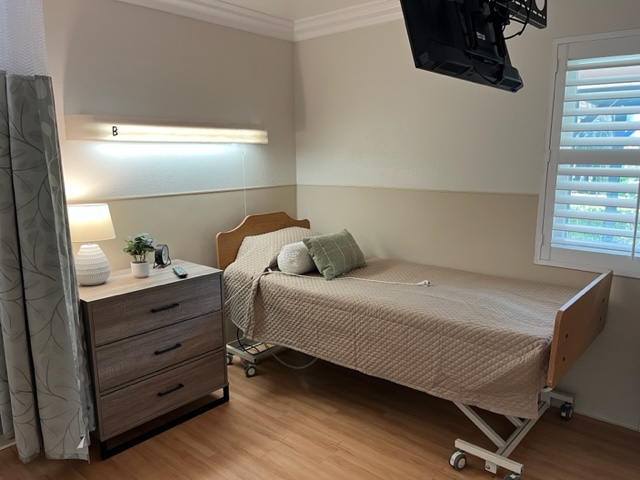
How is The Orchard - Post Acute Care Staffed?

CMS rates THE ORCHARD - POST ACUTE CARE's staffing level at 3 out of 5 stars, which is average compared to other nursing homes. Staff turnover is 33%, compared to the California average of 46%. This relatively stable workforce can support continuity of care.

What Have Inspectors Found at The Orchard - Post Acute Care?

State health inspectors documented 55 deficiencies at THE ORCHARD - POST ACUTE CARE during 2021 to 2025. These included: 2 that caused actual resident harm and 53 with potential for harm. Deficiencies causing actual harm indicate documented cases where residents experienced negative health consequences.
Who Owns and Operates The Orchard - Post Acute Care?

THE ORCHARD - POST ACUTE CARE is owned by a for-profit company. For-profit facilities operate as businesses with obligations to shareholders or private owners. The facility is operated by THE ENSIGN GROUP, a chain that manages multiple nursing homes. With 162 certified beds and approximately 151 residents (about 93% occupancy), it is a mid-sized facility located in WHITTIER, California.
How Does The Orchard - Post Acute Care Compare to Other California Nursing Homes?

Compared to the 100 nursing homes in California, THE ORCHARD - POST ACUTE CARE's overall rating (3 stars) is below the state average of 3.1, staff turnover (33%) is significantly lower than the state average of 46%, and health inspection rating (2 stars) is below the national benchmark.

What Should Families Ask When Visiting The Orchard - Post Acute Care?

Based on this facility's data, families visiting should ask: "Can I visit during a mealtime to observe dining assistance and food quality?" "How do you handle medical emergencies, and what is your hospital transfer rate?" "Can I speak with family members of current residents about their experience?"

Is The Orchard - Post Acute Care Safe?

Based on CMS inspection data, THE ORCHARD - POST ACUTE CARE has a clean safety record: no substantiated abuse findings (meaning no confirmed cases of resident harm), no Immediate Jeopardy citations (the most serious violation level indicating risk of serious injury or death), and is not on the Special Focus Facility watch list (a federal program monitoring the lowest-performing 1% of nursing homes). The facility has a 3-star overall rating and ranks #100 of 100 nursing homes in California. While no facility is perfect, families should still ask about staff-to-resident ratios and recent inspection results during their visit.

Do Nurses at The Orchard - Post Acute Care Stick Around?

THE ORCHARD - POST ACUTE CARE has a staff turnover rate of 33%, which is about average for California nursing homes (state average: 46%). Moderate turnover is common in nursing homes, but families should still ask about staff tenure and how the facility maintains care continuity when employees leave.

Was The Orchard - Post Acute Care Ever Fined?

THE ORCHARD - POST ACUTE CARE has been fined $41,849 across 3 penalty actions. The California average is $33,497. While any fine indicates a compliance issue, fines under $50,000 are relatively common and typically reflect isolated problems that were subsequently corrected. Families should ask what specific issues led to these fines and confirm they've been resolved.

Is The Orchard - Post Acute Care on Any Federal Watch List?

THE ORCHARD - POST ACUTE CARE is not on any federal watch list. The most significant is the Special Focus Facility (SFF) program, which identifies the bottom 1% of nursing homes nationally based on persistent, serious quality problems. Not being on this list means the facility has avoided the pattern of deficiencies that triggers enhanced federal oversight. This is a positive indicator, though families should still review the facility's inspection history directly.