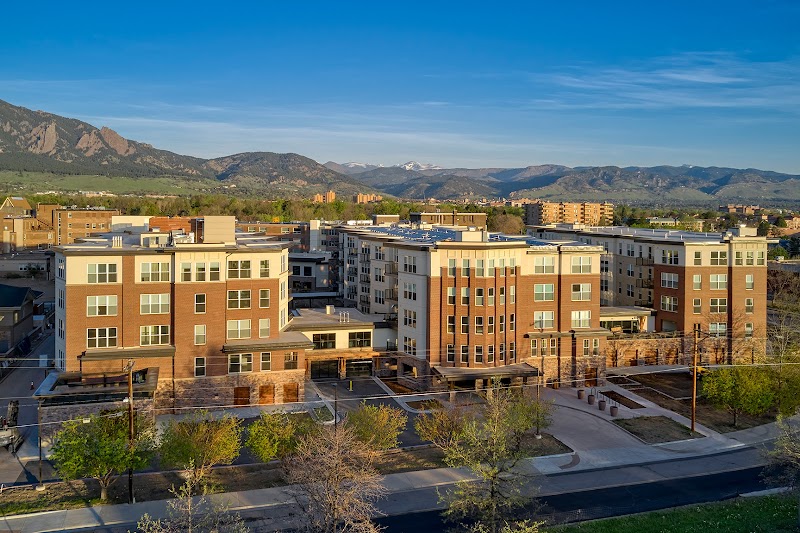
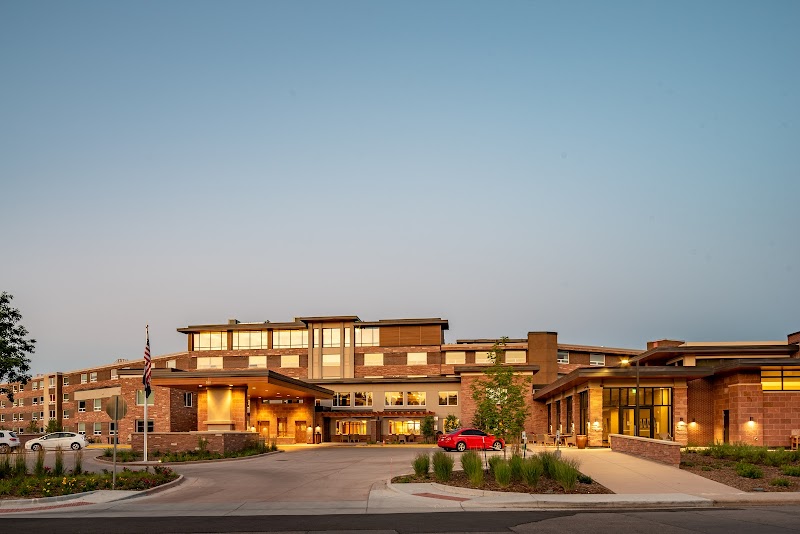
FRASIER MEADOWS HEALTH CARE CENTER

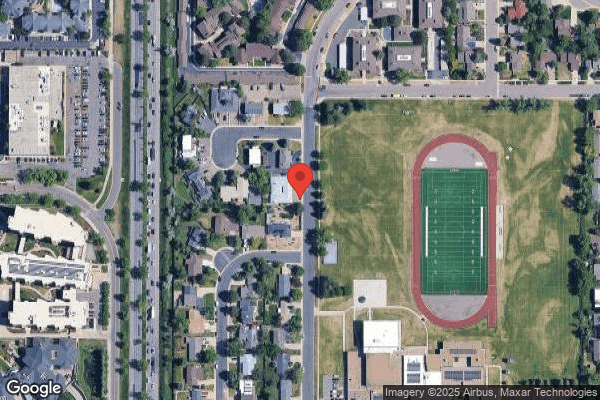
4950 THUNDERBIRD DR, BOULDER, CO 80303 (303) 499-8412
Non profit - Church related 54 Beds Independent Data: November 2025
Trust Grade
73/100
#23 of 208 in CO
Last Inspection: April 2024

Within standard 12-15 month inspection cycle. Federal law requires annual inspections.

Overview

Frasier Meadows Health Care Center in Boulder, Colorado has a Trust Grade of B, indicating it is a good choice for families seeking care, falling solidly within the "good" range. It ranks #23 out of 208 facilities in Colorado, placing it in the top half, and #2 of 10 in Boulder County, meaning only one local option is better. The facility is showing signs of improvement, reducing issues from 2 in 2023 to 1 in 2024. Staffing is a strength here, with a perfect 5/5 star rating and a turnover rate of 26%, well below the Colorado average of 49%, suggesting staff are experienced and familiar with residents. However, the facility has incurred $82,624 in fines, which is concerning as it is higher than 95% of Colorado facilities, indicating potential compliance issues. While the nursing home has excellent RN coverage, there have been serious incidents, such as a resident developing pressure ulcers due to inadequate care after hip surgery, and failures to notify physicians and legal representatives promptly when residents fell. These issues highlight the need for families to weigh both the strengths and weaknesses when considering this facility for their loved ones.

Trust Score
B
73/100
In Colorado
#23/208
Top 11%
Safety Record
High Risk
Review needed
Inspections
Getting Better
2 → 1 violations
Staff Stability
✓ Good
26% annual turnover. Excellent stability, 22 points below Colorado's 48% average. Staff who stay learn residents' needs.
Penalties
○ Average
$82,624 in fines. Higher than 63% of Colorado facilities. Some compliance issues.
Skilled Nurses
✓ Good
Each resident gets 64 minutes of Registered Nurse (RN) attention daily — more than 97% of Colorado nursing homes. RNs are the most trained staff who catch health problems before they become serious.
Violations
○ Average
7 deficiencies on record. Average for a facility this size. Mostly minor or procedural issues.
★★★★★
5.0
Overall Rating
★★★★★
5.0
Staff Levels
★★★★★
5.0
Care Quality
★★★★☆
4.0
Inspection Score
Stable
2023: 2 issues
2024: 1 issues

The Good

  • 5-Star Staffing Rating · Excellent nurse staffing levels
  • 5-Star Quality Measures · Strong clinical quality outcomes
  • Low Staff Turnover (26%) · Staff stability means consistent care
  • Full Sprinkler Coverage · Fire safety systems throughout facility
  • No fines on record
  • Staff turnover is low (26%)

    22 points below Colorado average of 48%

Facility shows strength in staffing levels, quality measures, staff retention, fire safety.

The Bad

Federal Fines: $82,624

Well above median ($33,413)

Moderate penalties - review what triggered them

The Ugly 7 deficiencies on record

2 actual harm
Apr 2024 1 deficiency 1 Harm
SERIOUS (G)

Actual Harm - a resident was hurt due to facility failures

Pressure Ulcer Prevention (Tag F0686)

A resident was harmed · This affected 1 resident

**NOTE- TERMS IN BRACKETS HAVE BEEN EDITED TO PROTECT CONFIDENTIALITY** Based on observations, record review and interviews the facility failed to ensure one (#31) of three residents reviewed for pres...

Read full inspector narrative →
**NOTE- TERMS IN BRACKETS HAVE BEEN EDITED TO PROTECT CONFIDENTIALITY** Based on observations, record review and interviews the facility failed to ensure one (#31) of three residents reviewed for pressure-related skin conditions out of 19 sample residents received care consistent with professional standards of practice to prevent pressure ulcers from developing. Resident #31, who was at risk for developing pressure injuries due to a recent surgery to replace his left hip joint, was admitted to the facility on [DATE]. According to the facility's assessment of the resident's skin on 3/8/24, the resident was admitted without any pressure injuries. The facility implemented a pressure reducing mattress upon the resident's admission, however, there were no interventions implemented for offloading the resident's heels, which were at an increased risk for skin breakdown due to the resident's decrease in mobility following the left hip surgery. On 3/11/24, a left heel blister was observed to the resident's left heel and a right heel blister developed later that same day. The facility did begin appropriate treatment of the wounds and implemented further interventions to address offloading the resident's heels after the wounds were identified, however, they failed to implement appropriate interventions of heel booties or an air mattress overlay until after the wounds developed. Despite providing treatment to the wounds after they developed and implementing further interventions, Resident #31's wounds continued to worsen. The resident was discharged to the hospital on 3/27/24 for further treatment of the wounds. Once at the hospital, Resident #31's heel wounds required surgical debridement down to the bone. Due to the facility's failures to identify upon admission that Resident #31 was at risk for pressure injuries related to his recent hip surgery and the facility's failure to implement timely interventions to offload and protect the resident's heels, Resident #31 developed pressure wounds to both of his heels within three days of his admission which resulted in his discharge to the hospital 16 days after the wounds developed for further wound treatment. Findings include: I. Professional reference According to the National Pressure Injury Advisory Panel, European Pressure Injury Advisory Panel and Pan Pacific Pressure Injury Alliance Prevention and Treatment of Pressure Injuries: Clinical Practice Guideline, third edition, [NAME] Haesler (Ed.), EPUAP/NPIAP/PPPIA: (2019), retrieved from https://www.internationalguideline.com/guideline on 4/17/24, Pressure ulcer classification is as follows: Category/Stage 1: Nonblanchable Erythema (discoloration of the skin that does not turn white when pressed, early sign of tissue damage) Intact skin with nonblanchable redness of a localized area usually over a bony prominence. Darkly pigmented skin may not have visible blanching; its color may differ from the surrounding area. The area may be painful, firm, soft, warmer or cooler as compared to adjacent tissue. Category/Stage 1 may be difficult to detect in individuals with dark skin tones. May indicate 'at risk' individuals (a heralding sign of risk). Category/Stage 2: Partial Thickness Skin Loss Partial thickness loss of dermis presenting as a shallow open ulcer with a red pink wound bed, without slough. May also present as an intact or open/ruptured serum filled blister. Presents as a shiny or dry shallow ulcer without slough or bruising. This Category/Stage should not be used to describe skin tears, tape burns, perineal dermatitis, maceration or excoriation. Category/Stage 3: Full Thickness Skin Loss Full thickness tissue loss. Subcutaneous fat may be visible, but bone, tendon or muscle are not exposed. Slough may be present but does not obscure the depth of tissue loss. May include undermining and tunneling. The depth of a Category/ Stage 3 pressure ulcer varies by anatomical location. The bridge of the nose, ear, occiput and malleolus do not have subcutaneous tissue and Category/ Stage 3 ulcers can be shallow. In contrast, areas of significant adiposity can develop extremely deep Category/Stage 3 pressure ulcers. Bone/tendon is not visible or directly palpable. Category/Stage 4: Full Thickness Tissue Loss Full thickness tissue loss with exposed bone, tendon or muscle. Slough or eschar may be present on some parts of the wound bed. Often include undermining and tunneling. The depth of a Category/Stage 4 pressure ulcer varies by anatomical location. The bridge of the nose, ear, occiput and malleolus do not have subcutaneous tissue and these ulcers can be shallow. Category/ Stage 4 ulcers can extend into muscle and/ or supporting structures (fascia, tendon or joint capsule) making osteomyelitis possible. Exposed bone/tendon is visible or directly palpable. Unstageable: Depth Unknown Full thickness tissue loss in which the base of the ulcer is covered by slough (yellow, tan, gray, green or brown) and/or eschar (tan, brown or black) in the wound bed. Until enough slough and/or eschar is removed to expose the base of the wound, the true depth, and therefore Category/ Stage, cannot be determined. Stable (dry, adherent, intact without erythema or fluctuance) eschar on the heels serves as the body's natural (biological) cover and should not be removed. Suspected Deep Tissue Injury: Depth Unknown Purple or maroon localized area of discolored intact skin or blood-filled blister due to damage of underlying soft tissue from pressure and/or shear. The area may be preceded by tissue that is painful, firm, mushy, boggy, warmer or cooler as compared to adjacent tissue. Deep tissue injury may be difficult to detect in individuals with dark skin tones. Evolution may include a thin blister over a dark wound bed. The wound may further evolve and become covered by thin eschar. Evolution may be rapid, exposing additional layers of tissue even with optimal treatment. II. Facility policy and procedures The Pressure Injuries policy, revised on 1/9/24, was provided by the director of nursing (DON) on 4/11/24 at 5:42 p.m. The policy revealed the purpose of the policy was to assure that all residents received an accurate assessment of pressure injuries, and the appropriate documentation was completed. The compliance guidelines revealed skin assessments would be completed by a licensed nurse upon admission and weekly thereafter. The information provided by the initial comprehensive assessment, established baseline data for the ongoing assessment of the resident's skin status. Accurate assessments that addressed each resident's skin status would be conducted by qualified staff and correctly documented in the medical record. A qualified health professional would correctly document the presence, number, size and stage of any pressure injury on the wound documentation form in the medical record. The nurse completing the skin section of the minimum data set (MDS) assessment would record the appropriate number and stage of pressure injuries as reflected in the pressure injury documentation. A licensed nurse would conduct or coordinate each assessment with the appropriate participation of health professionals. The director of nursing (DON) would be notified of any pressure injury. If it was determined a consultation was necessary, the wound nurse would be notified. If the wound nurse was notified, the DON, or designee, would be present during his/her visit. A Weekly Wound Evaluation would be completed and added to the pressure injury log. Education regarding pressure injuries would be provided to the nurses at least annually. Dressing treatments would be determined based on recommendations from the wound nurse, ordering physician, or best practice. The care plan would be updated indicating the presence of a pressure injury, the goal, and appropriate interventions. The physician would be informed of the presence of a pressure injury and treatment orders would be obtained. III. Resident #31 A. Resident status Resident #31, age [AGE], was admitted on [DATE] and was discharged to the hospital on 3/27/24. According to the March 2024 computerized physician orders (CPO), diagnoses included aftercare following joint replacement, left artificial hip joint, chronic atrial fibrillation, cardiomyopathies and chronic kidney disease. The 3/11/24 MDS assessment revealed the resident had intact cognition with a brief interview for mental status (BIMS) score of 13 out of 15. The resident required substantial/maximal staff assistance for upper and lower body dressing. He also required substantial/maximal staff assistance for putting on/taking off footwear. The resident was at risk for the development of a pressure ulcer. The resident did not have any pressure, venous or arterial ulcers upon admission. C. Record review A care plan, initiated 3/8/24, revealed Resident #31 was at risk for a pressure ulcer related to a recent fracture. The goal was for the resident's skin to remain intact with no new open areas caused by pressure or friction throughout his stay in the facility. Interventions included a skin risk assessment Braden Scale would be completed upon admission, quarterly and with a significant change in condition. The resident would use a pressure reducing mattress when in bed (start 3/8/24). A new recliner was ordered to try a different pressure relieving technique (start 3/8/24). The resident would allow staff to float his heels while in bed (start 3/11/24). On 3/18/24, a new boot for his heels was ordered according to physician recommendations. The care plan (started 3/11/24) further revealed the resident had a blister to his left heel and the resident was to wear booties when in bed. On 3/11/24, the resident's room recliner was replaced with a new recliner. On 3/13/24, the new recliner was not comfortable for the resident and another one was ordered by central supply. The staff were to provide treatment as ordered as necessary. An air mattress was placed on the resident's bed. The resident started on a nutritional supplement twice a day. The care plan (started 3/15/24) further revealed the resident had a blister on his right heel. A new air mattress was placed on his bed(start 3/15/24). The staff were to provide treatment as ordered as necessary. An air mattress was placed on the resident's bed. The resident started on a nutritional supplement twice a day (start 3/15/24). A Skin Evaluation Form, dated 3/8/24 at 2.16 p.m. by a registered nurse (RN) did not reveal any pressure injuries to the resident's heels. The Braden Scale assessment for predicting pressure sore risk, dated 3/8/24 at 1:33 p.m., documented Resident #31 was not at risk for the development of pressure ulcer/injury development. A Skin Evaluation Form dated 3/11/24 at 11:35 a.m. by a RN revealed a pressure injury to the left heel with an onset date of 3/11/24. The left heel pressure injury measured 3.8 centimeters (cm) by 2.2 cm by 0.0 cm depth. The wound was an unstageable unopened blister that was purple in color. The wound bed was not visible and there was no exudate. A nurse note dated 3/11/24 at 11:54 a.m. by a registered nurse (RN) revealed the resident complained of pain in his bilateral heels that morning in occupational therapy. The nurse assessed the resident and found a purple blister to the left heel and the wound bed was not visible. The right heel was pink with a blanchable (skin turns white when pressed then returns to pink when pressure is removed) surface. Booties for his heels were requested from supply. An addendum to the 3/11/24 nurse note, documented at 3:24 p.m., revealed during the day the resident developed an unstageable blister to the right heel. The nurse practitioner (NP) assessed and agreed to use the same treatment for both heels. The recommended treatment was skin prep (a skin barrier wipe which creates a thin film on the skin to protect skin by reducing friction) with optifoam (gauze pad) and protective booties while in bed. A Skin Evaluation Form dated 3/11/24 at 3:26 p.m. by a RN revealed a pressure injury to the right heel with an onset date of 3/11/24. The wound was an unstageable blister that measured 3.0 cm by 3.0 cm by 0.0 depth. A nurse note dated 3/12/24 at 2:07 p.m. by a licensed practical nurse (LPN) revealed the resident wore bunny boots (heel protection cushions) to his bilateral feet. The resident had slight edema to his bilateral lower extremities and was also wearing thigh high compression stockings. -The facility failed to implement protective heel booties until after Resident #55 developed the blisters on his heels. A nurse note dated 3/13/24 at 10:56 a.m. by a LPN revealed large fluid filled blisters were noted to bilateral heels that appeared to be from the middle to the lateral (outer) side. The resident had bunny boots to be worn when not working with therapy. The optifoam was removed, skin prep was applied and new optifoam was applied. Facility supply was working on getting a new recliner for the resident so he could elevate his legs. A nurse note dated 3/15/24 at 11:44 a.m. by a RN revealed large blisters on both heels. Skin prep and a dressing were applied. The resident had booties on with compression hose. An air mattress overlay was placed on his bed to help prevent skin breakdown. A recliner was ordered so that the resident could recline with his feet up. -The facility failed to implement the mattress overlay until four days after the blisters on the resident's heels were first noted. A nurse note dated 3/16/24 at 9:29 a.m. by a RN revealed the resident had slight edema to his legs and compression stockings were in place. The dressings to his heels were clean, dry and intact. The resident had booties in place and an air mattress (overlay) on his bed to help prevent skin breakdown. A nurse note dated 3/17/24 at 3:20 p.m. by a RN revealed a right heel blister had opened with drainage on a pillowcase. The left heel blister was intact. The dressings were changed as ordered and the resident was concerned about the blisters/wounds on his heels. The right foot looked swollen and the compression stockings were not on. A nurse note dated 3/18/24 at 10:54 a.m. by a RN revealed no edema was noted to the resident's legs and his legs were elevated on a stack of pillows and the heels were floated. The dressings were clean, dry and intact to bilateral heel blisters. The bunny boots were off due to bruising to the tops of his feet. His bed had an air overlay in place to relieve pressure. A nurse note dated 3/18/24 at 10:48 p.m. by a RN revealed the bandage to the left heel was replaced and a seeping (slow leak) of pink fluid was observed from the site. An absorbent pad was placed under his feet and the resident requested his socks be applied before the placement of the bunny boots. A nurse note dated 3/19/24 at 10:01 a.m. by a RN revealed open blisters to bilateral heels and the dressings were changed. A physician assessed the wounds and new booties were ordered. A new recliner for the resident had arrived and needed to be placed in his room. The resident had low albumin levels and the physician ordered a protein shake in addition to a nutritional supplement. A nurse note dated 3/21/24 at 2:37 p.m. by a LPN revealed the resident's left heel was hurting during a walk to the bathroom with therapy staff. The dressings to his heels were removed and saturated with drainage. The heel wounds were slightly macerated (soft with breaking down of skin due to prolonged exposure to moisture). The heels were cleaned and dried. Skin prep was applied to the periwound and to the wound areas. Calcium alginate was applied to the wound bed and covered with optifoam. Two optifoams were used on the left heel because the wound was too big. Larger heel dressings and blue offloading air boots were requested from facility supply. The resident had a low protein level on his last set of labs and he was now on a nutritional supplement. A nurse note dated 3/21/24 at 11:49 a.m. by a LPN revealed requested offloading blue air boots from supply, as well as bigger heel dressings. A nurse note dated 3/22/24 at 5:11 p.m. by a RN revealed physician orders for vitamin C chewable 500 milligrams tablets twice a day and zinc 220 milligrams, 50 capsules twice a day for 14 days. Wound care orders were to cover the wound bed and periwound with zinc barrier cream and apply calcium alginate with the alginate cut to fit the wound bed. Cover with silicone bordered foam dressing, wrap with kerlix (gauze) and Coban (wrapping material) to keep in place. The dressings were to be changed twice a week. The resident was to avoid walking until further notice. It was okay for the resident to use the Nu step machine (exercise machine) and use a bike. A nurse note dated 3/22/24 at 10:56 a.m. by a RN revealed wound rounds were completed. The right heel measured 5.6 cm by 6.5 cm by 0.2 cm depth. The left heel measured 6.0 cm by 8.0 cm by 0.2 cm depth. Large serous (pale yellow watery fluid) drainage from both heels that were boggy (soft and watery). Both heels were debrided (removal of dead or unhealthy tissue) and the dressings were to be changed three times a week. The resident was to remain off his heels as much as possible. A Skin Evaluation Form dated 3/22/24 at 11:06 a.m. by a RN revealed a pressure injury to the right heel with an onset date of 3/11/24. The right heel measured 5.6 cm by 6.5 cm by 0.2 cm depth. The wound was an unstageable opened blister that was boggy. There was a large amount of serous exudate and the wound tissue was 50% slough (yellow/white material of dead cells in a wound bed). A Skin Evaluation Form dated 3/22/24 at 11:12 a.m. by a RN revealed a pressure injury to the left heel with an onset date of 3/11/24. The left heel measured 6.0 cm by 8.0 cm by 0.2 cm depth. The wound was an unstageable opened blister that was boggy. There was serous exudate and the wound tissue was slough. A nurse note dated 3/23/24 at 12:37 p.m. by a RN revealed dressings were clean, dry and intact to bilateral feet. No edema was noted in the resident's ankles but he had slight edema in his feet below the Coban wrapping. The resident said, I am off the heels. A nurse note dated 3/25/24 at 4:29 p.m. by a RN revealed the resident sat in a recliner in his room with his feet off the end of the recliner footpad with booties on his heels. The resident said just in case I forget to put my feet up. The dressings were changed to his bilateral heels and a small amount of drainage was observed to the dressings when removed. The dressings for both heels required rolled gauze around the feet so there was a cushion from the protective bootstraps. A nurse note dated 3/26/24 at 3:54 p.m. by a LPN revealed the resident continued to have wounds to his bilateral heels. The resident was seated in a recliner with his feet elevated and floated off the edge of the recliner. He had bunny boots on both feet and his feet were warm with normal color. The resident was accepting the protein shakes and nutritional supplement. The resident said his heels did hurt at times. No edema was observed. A nurse note dated 3/27/24 at 11:40 a.m. by a RN revealed no edema was observed. The resident reported pain in his heels. Wound care was completed. The wounds were smelly with black necrotic (dead cells) tissue on both heels. The right heel measured 4.5 cm by 5.5 cm by 0.1 cm depth. The left heel measured 4.9 cm x 5.0 cm by 0.3 cm depth. There was a new order for skin prep, silver alginate, optifoam with silver and rolled gauze with kerlix to be changed daily. A referral was made to (physician's name) for possible surgical debridement. The referred provider wanted the resident to have restrictions on walking on his heels. A Skin Evaluation Form dated 3/27/24 at 11:54 a.m. by a RN revealed a pressure injury to the left heel with an onset date of 3/11/24. The left heel measured 4.9 cm by 5.0 cm by 0.3 cm depth. The wound was unstageable with black tissue. There was serous exudate and the wound tissue was necrotic/eschar (dry dead tissue in a wound). A Skin Evaluation Form dated 3/27/24 at 11:56 a.m. by a RN revealed a pressure injury to the right heel with an onset date of 3/11/24. The right heel measured 4.5 cm by 5.5 cm by 0.1 cm depth. The wound was unstageable with black necrotic tissue. There was serous exudate and the wound tissue was 100% eschar. A nurse note dated 3/27/24 at 4:18 p.m. by a RN revealed the writer received physician's orders to send the resident out to the hospital for deep tissue concerns to the bilateral heels. The resident was sent out by a transport service at 3:58 p.m. via stretcher to the hospital. A physician's assistant (PA) note dated 3/27/24 at 8:12 p.m. revealed a deep tissue injury (unstageable) to the right heel measuring 4.5 cm by 5.0 cm by 0.1 cm depth. There was no undermining (space that occurs under the wound's edges as tissue erodes) or tunneling (a channel that has opened underneath the skin). There was a large amount of sero-serosanguinous exudate with slough and a foul odor. There was 90% firmly adherent slough and dark purple necrotic tissue with 10% granulated tissue. Last week's measurement was 5.6 cm by 6.5 cm by 0.2 cm depth. The left heel was a deep tissue injury (unstageable) with no undermining or tunneling. There was a large amount of sero-serosanguinous exudate with slough and a foul odor. There was 80% firmly adherent slough with 20% beefy red granulation tissue. The previous week's measurement was 5.0 cm by 8.0 cm by 0.2 cm depth. Both heels were debrided on 3/22/24. The resident was very edematous when the wounds were started and now the edema was controlled. The procedures performed were Sharps debridement (use of forceps, scissors or scalpel to remove devitalized tissue, foreign material or debris from a wound) attempted to remove slough, but nearly all was firmly adhered. An attempt was made to probe to find viable tissue, but the necrosis was too deep and extensive. The resident was in pain and did not tolerate the procedure very well. Very little of the slough was removed due to the resident's pain and the severity of the tissue necrosis. A Hospital History and Physical dated 3/27/24 at 7:20 p.m. revealed a chief complaint of bilateral heel pain. The resident presented with bilateral pressure injuries on his heels. The wounds present with eschar and necrosis. The wounds would need Sharp debridement in the morning. The resident also presented with severe life threatening conditions including pressure injuries that required close monitoring and complex decision-making. It appeared the resident had very limited mobility since his most recent surgery and despite attempts to be more mobile and offloading his heels, the resident had developed bilateral heel wounds associated with significant pain. A Hospital Assessment and Plan dated 4/1/24 at 9:39 p.m. revealed full thickness necrotic pressure ulcers of bilateral heels due to pressure injuries suffered after a hip fracture and fixation (surgical repair). It did not appear there was any arterial compromise to the wounds to complicate the healing, and there was significant tissue space to recover. The relevant laboratory findings, dated 3/28/24, revealed 3+ Proteus mirabilis (A) and Rare Staphylococcus aureus (A). The Proteus isolates (bacterial organisms) from the debrided necrotic tissue did not guarantee or clearly imply direct pathogenicity. The local isolates would be considered when choosing the covering antibiotics during the preoperative and post-operative period. The resident complained of heel pain when his legs were moved dependently. The wounds initially came from pressure ulcerations after he had a hip fracture that required hospitalization and surgical stabilization. He had significant debridement of both necrotic heels on 3/28/24 (during hospitalization) that required debridement down to the bone. The resident was currently tolerating the ampicillin/sulbactam (antibiotics). IV. Staff interviews The DON and the assistant director of nursing (ADON) were interviewed on 4/15/24 at 3:30 p.m. The DON said the resident was admitted to the facility on [DATE] and the admission skin assessment did not reveal the resident had any skin issues with his heels. The DON said the resident was ambulatory and liked to wear slippers. She said during the last two days in the facility, the resident only walked to the bathroom. The DON said on 3/11/24 (after the resident developed the wounds) an air mattress overlay was placed on the resident's mattress. The DON said the 3/11/24 nurse note revealed the resident had a blister to his right heel and a purple blister to his left heel. From 3/11/24 at 11:54 a.m. to 3:30 p.m. the right heel went from a blister to an unstageable (fluid filled) pressure ulcer. The DON said bunny boots were put in place on 3/11/24. His heels were also floated on pillows at times. They agreed on measurements in the clinical record that were taken by a physician assistant (PA) that had wound certifications. They said the resident never refused any treatments, never refused to offload his heels and was compliant with interventions such as wearing the bunny boots. The DON said the facility thought the resident's heel pressure ulcers might be due to the resident digging his heels into the carpet to engage his chair recliner into the reclining position. The facility purchased a new electric recliner to remedy the action and to help him to be able to elevate his feet easier. She said the facility ordered the resident a special set of boots (more padding past the ankle and up to the calf) for the resident two days before he left the facility. The resident was provided with protein smoothies and a nutritional supplement. The DON said the resident was sent to the hospital on 3/27/24 at 4:00 p.m. using non-emergent transportation due to the fast progression of his bilateral heel pressure ulcers. The PA at the facility had recommended the resident be assessed by a wound physician, however the next available appointment was not until 4/17/24. The resident's family was okay with waiting until that date, but the PA spoke with the family and the resident's son, who was a physician, and they were in agreement to send the resident to the hospital. The PA called the hospital and provided a detailed report on the resident's wounds. The DON and registered nurse (RN) #2 were interviewed on 4/16/243 at 9:00 a.m. RN #2 said she did the resident's admission assessment and he had no skin issues on his heels. The DON and RN #2 agreed the resident was observed, on 3/11/24, to have blisters on his heels. RN #2 said a PA assessed and measured the resident's bilateral heel wounds on three separate dates. RN #2 said on 3/11/24 (after the development of the wounds) the resident had facility bunny boots applied to both heels. The facility ordered a specialty set of bunny boots on 3/19/24 and they arrived at the facility on 3/26/24. RN #2 said the resident's room recliner was too short for him and the facility purchased a new recliner for the resident. The new recliner was electric and kept the resident from digging his heels into the floor to push back in the recliner. She said the resident had a standard mattress and an air overlay was placed on his mattress. She said he did ambulate in the facility while wearing his own shoes. She said the only time he did not ambulate was when the PA did not want him to make his heel worse by walking. She said the PA debrided both heels only once at the facility and he was not seen by another wound physician. She said that he was sent to the hospital because the PA wanted the heels to be debrided better. She said the pressure wounds were unstageable and had a foul odor when he went to the hospital. They both said they were unsure how the pressure ulcers started. V. Physician letter The facility sent a typed/signed physician letter dated 4/16/24 at 5:11 p.m. (after the survey exit date). The letter revealed the resident had bilateral heel blisters with acute and rapid onset due to comorbidities of poor cardiac perfusion, and frailty, recent hip fracture with surgical repair and malnutrition per labs. The blisters escalated to pressure wounds quickly despite close monitoring, intervention with wound care and nutritional supplementation. This was unavoidable despite close monitoring, and rapid and appropriate interventions including wound care by a wound specialist, off-loading, and nutritional supplementation. -However, the facility failed to implement appropriate interventions, such as heel booties or a specialty mattress to offload Resident #31's heels, until after Resident #31 developed the bilateral heel wounds. -Additionally, the facility failed to have the physician document the wounds were unavoidable until after the survey exit.
Jan 2023 2 deficiencies 1 Harm
SERIOUS (G)

Actual Harm - a resident was hurt due to facility failures

Accident Prevention (Tag F0689)

A resident was harmed · This affected 1 resident

**NOTE- TERMS IN BRACKETS HAVE BEEN EDITED TO PROTECT CONFIDENTIALITY** III. Resident #26 A. Resident status Resident #26, age [AGE], was admitted on [DATE] and readmitted on [DATE]. According to the ...

Read full inspector narrative →
**NOTE- TERMS IN BRACKETS HAVE BEEN EDITED TO PROTECT CONFIDENTIALITY** III. Resident #26 A. Resident status Resident #26, age [AGE], was admitted on [DATE] and readmitted on [DATE]. According to the January 2023 computerized physician orders (CPO), diagnoses included Parkinson's disease, dementia, abnormalities of gait and mobility, difficulty in walking, and lack of coordination. The 11/20/22 minimum data set (MDS) assessment revealed that the resident was cognitively intact with a BIMS of 13 out of 15. He required one-person extensive assistance with bed mobility, transfers, toilet use, and personal hygiene. He required two-person extensive assistance for dressing. The Fall History on Admission/Entry or Reentry section of the MDS assessment was not completed. B. Observations On 1/4/23 at 1:27 p.m., Resident #26 was lying in bed with his eyes closed. There was a thick padded fall mat on the floor beside the bed. On 1/9/23 at 9:26 a.m., Resident #26 was in his room seated in his wheelchair. His wife was present in the room. The fall mat was folded up and leaning against the wall at the end of the bed. On 1/10/23 at 2:16 p.m., Resident #26 was seated in his recliner in his room. His wife was sitting on the resident's bed talking to him. C. Record review Review of Resident #26's electronic medical record (EMR) revealed the resident had sustained 13 falls since his initial admission on [DATE]. -Of the 13 falls sustained by Resident #26, six of the falls occurred after the resident's readmission to the facility on [DATE]. Review of Resident #26's fall care plan, initiated 10/31/22 and revised 11/16/22, revealed that the resident was at risk for falling related to seizures, weakness, and Parkinson's disease. Pertinent interventions included frequent checks of the resident, putting the resident's bed in the lowest position while in bed and a mat next to the bed for safety, obtaining physical therapy consult as needed and following therapy recommendations, providing the resident an environment free of clutter, keeping the call light in reach at all times, and keeping personal items and frequently used items within reach of the resident. The Fall Risk assessment dated [DATE] revealed Resident #26 was at significant risk for falls. Review of the incident reports for Resident #26's falls revealed the following: 7/4/22 fall Review of Resident #26's EMR revealed the resident sustained an unwitnessed fall on 7/4/22 at 8:15 p.m. The incident report for the fall read in pertinent part: Nurse went into the resident's room to give medication and found the resident sitting on the floor with back against the bed and wheelchair in front of him. Resident stated 'I got up to get undressed and could not make it back to bed. 'When asked about pain and injury he stated he had no pain or injury. Assessed for injury, two people assisted to bed, started neuro (neurological) assessments/frequent checks, instructed the resident to use call light for help. -The Quality Indicators section of the incident report was not completed. -There was no fall investigation/follow-up by the interdisciplinary team (IDT) documented on the incident report. 7/6/22 fall Review of Resident #26's EMR revealed the resident sustained a witnessed fall on 7/6/22 at 5:00 p.m. The incident report for the fall read in pertinent part: Resident sitting on shower chair. When he was ready to transfer to wheelchair with certified nurse aide (CNA) assisting, he pushed up using his arm rests and slid to the left side. His left thigh was wedged between the cushion on the chair. Staff was able to unwedge his leg and return him to his wheelchair. Left thigh reddened with bruising, no swelling noted. Complained of slight discomfort. Physician faxed. Resident's wife to be notified in a.m. (morning) -There were no immediate fall interventions documented on the incident report. -The Quality Indicators section of the incident report was not completed. 7/24/22 fall Review of Resident #26's EMR revealed the resident sustained an unwitnessed fall on 7/24/22 at 5:20 p.m. The incident report for the fall read in pertinent part: Resident was found on both knees, kneeled down in front of recliner. Resident stated 'I did not fall. I went from the bed to the chair and kind of crumbled.' No injury. CNA found the resident and reported it to the nurse. Vital signs stable. Nurse assessed. Notified provider and next of kin. -There were no immediate fall interventions documented on the incident report or on the resident's care plan. -The Quality Indicators section of the incident report was not completed. -The IDT fall investigation/follow-up by the IDT was not documented on the incident report until 8/2/22 at 9:42 a.m., nine days after the incident occurred. -The IDT investigation did not reveal any new fall interventions put into place to prevent further falls for Resident #26. 9/14/22 fall Review of Resident #26's EMR revealed the resident sustained an unwitnessed fall on 9/14/22 at 6:25 p.m. The incident report for the fall read in pertinent part: CNA reported to the nurse that she found Resident #26 in his bathroom by his wheelchair. CNA said that she told him if he needed help he should use the call light, but he tried to go to the bathroom by himself and lost his balance and fell. No injury. Resident assessed by the nurse for any injury. Neuro assessments and vital signs all checked and all within normal limits. He did not complain of pain or signs of discomfort. No skin issues noted except old bruise to his right arm. It is important to prevent this kind of fall, check the resident more often after dinner because after dinner the resident might need to go to the bathroom. -The intervention to check on the resident after dinner and take him to the bathroom was not added to Resident #26's fall care plan. -The Quality Indicators section of the incident report was not completed. -The IDT fall investigation/follow-up by the IDT was not documented on the incident report until 9/21/22 at 11:54 a.m., seven days after the incident occurred. The note documented an intervention to remind the resident to use his call light. -The fall intervention to remind Resident #26 to use his call light was not updated on the care plan. 9/21/22 fall Review of Resident #26's EMR revealed the resident sustained a witnessed fall on 9/21/22 at 8:45 p.m. The incident report for the fall read in pertinent part: CNA was assisting resident to bed when he became unstable and started falling backwards. CNA assisted the resident to the floor on his knees. Resident sustained a 4 centimeter (cm) by 1 cm abrasion to the left shin and a 1 cm by 0.5 cm skin tear to the right knee. Staff assisted the resident to bed with a gait belt, assessed for injury. Cleaned shin and knee applied triple antibiotic ointment and bandaid to right knee and dressing to left shin. -There were no immediate fall interventions documented on the incident report or on the resident's care plan. -The Quality Indicators section of the incident report was not completed. -There was no fall investigation/follow-up by the interdisciplinary team (IDT) documented on the incident report. 10/5/22 fall Review of Resident #26's EMR revealed the resident sustained an unwitnessed fall on 10/5/22 at 8:00 p.m. The incident report for the fall read in pertinent part: CNA found the resident laying flat on floor by bed between window and bed. The resident sustained a 2 cm by 1 cm skin tear to the right shin. Assessed resident for injury, reported no pain or injury, three persons assisted with gait belt, resident able to lift hips to get gait belt around him, assist to sitting, then to sitting on bed, started neuro assessments. Later while getting the resident undressed for bed, found skin tear to right shin, cleaned and steri-stripped. -There were no immediate fall interventions documented on the incident report or on the resident's care plan. -The Quality Indicators section of the incident report was not completed. -The IDT fall investigation/follow-up by the IDT was not documented on the incident report until 11/8/22 at 8:35 a.m., 34 days after the incident occurred. -The IDT note documented an intervention to remind the resident to use his call light, the same intervention the facility documented after the resident's previous fall. -The fall intervention to remind Resident #26 to use his call light was again not updated on the care plan. 10/14/22 fall Review of Resident #26's EMR revealed the resident sustained an unwitnessed fall on 10/14/22 at 8:40 p.m. The incident report for the fall read in pertinent part: Resident found on floor face down between bed and recliner. Assessed resident for pain or injury, moved recliner away, rolled resident to back, asked resident if anything hurt. He stated 'My pride.' Three-person assisted with gait belt to bed, assessed skin and found abrasion from rug burn on right knee, cleaned and left open to air. Started neuro assessments. -There were no immediate fall interventions documented on the incident report or on the resident's care plan. -The Quality Indicators section of the incident report was not completed. -The IDT fall investigation/follow-up by the IDT was not documented on the incident report until 11/8/22 at 8:34 a.m., 25 days after the incident occurred. The note documented an intervention that staff was educated to check the resident's floor for objects when leaving the resident's room. -The fall intervention to check Resident #26's floor for objects when leaving the resident's room was not updated on the care plan. 11/13/22 fall Review of Resident #26's EMR revealed the resident sustained an unwitnessed fall on 11/13/22 at 5:30 p.m. The incident report for the fall read in pertinent part: Resident found on the right side of his bed positioned on his right side. He sustained multiple skin abrasions. Resident stated he wanted to stand up and stretch. -There were no immediate fall interventions documented on the incident report or on the resident's care plan. -The IDT note, dated 11/16/22 at 8:54 a.m., documented an intervention to remind the resident to use his call light, the same intervention the facility documented for two previous falls. -There were no new interventions updated on Resident #26's care plan. 11/18/22 fall Review of Resident #26's EMR revealed the resident sustained an unwitnessed fall on 11/18/22 at 8:00 a.m. The incident report for the fall read in pertinent part: At 8:00 a.m., resident sitting on the fall mat perpendicular to the bed, no new injury, pain, or discomfort noted on assessment, resident denied pain. Two people assisted the resident up on the chair, assessed for pain, injury, neuro assessments, pupil reaction, vital signs, and mobility. Wife, hospice, and nurse practitioner notified. Neuro assessments initiated. -There were no immediate fall interventions documented on the incident report or on the resident's care plan. -The Quality Indicators section of the incident report was not completed. -The IDT fall investigation/follow-up by the IDT was not documented on the incident report until 11/29/22 at 8:30 a.m., 11 days after the incident occurred. -The IDT note documented an intervention that the resident had a low bed with a fall mat, which was not a new intervention. -There were no new interventions updated on Resident #26's care plan. 11/20/22 fall Review of Resident #26's EMR revealed the resident sustained an unwitnessed fall on 11/20/22 at 7:45 p.m. The incident report for the fall read in pertinent part: CNA found resident on mat with back against bed, perpendicular to bed. Assessed resident for injuries, three people assisted to bed, started neuro assessments. Resident was still restless and kept trying to get out of bed when checking him for neuro assessments. Frequent checks and CNA one on one in the room until the resident was more calm. -The Quality Indicators section of the incident report was not completed. -The IDT fall investigation/follow-up by the IDT was not documented on the incident report until 11/29/22 at 8:29 a.m., nine days after the incident occurred. -The IDT note documented an intervention that the resident had a low bed with a fall mat and that the resident was reminded to use his call light, which were not new interventions. -There were no new interventions updated on Resident #26's care plan. 11/22/22 fall Review of Resident #26's EMR revealed the resident sustained an unwitnessed fall on 11/22/22 at 6:40 a.m. The incident report for the fall read in pertinent part: CNA found the resident lying on the floor mattress. He said that he put himself on the mattress. He was covered with a blanket. He looked comfortable. No new bodily injuries noted. Neuro assessments within normal limits. Vital signs stable. Assisted back to wheelchair with two person assist. -There were no immediate fall interventions documented on the incident report or on the resident's care plan. -The Quality Indicators section of the incident report was not completed. -The IDT fall investigation/follow-up by the IDT was not documented on the incident report until 11/29/22 at 8:23 a.m., seven days after the incident occurred. -The IDT note did not document any new fall interventions for Resident #26. -There were no new interventions updated on Resident #26's care plan. 11/26/22 fall Review of Resident #26's EMR revealed the resident sustained an unwitnessed fall on 11/26/22 at 11:30 a.m. The incident report for the fall read in pertinent part: CNA reported resident on floor on his knees at 11.30am (11:30 a.m.). This writer observed the resident on his knees between bed and recliner. Per resident, he was trying to get up out of his recliner to say thank you to choir singers, and he slid off his chair. Denies hitting his head, no injury noted. Neuro assessments initiated. Resident assisted to bed with a gait belt and two person assist. -There were no immediate fall interventions documented on the incident report or on the resident's care plan. -The Quality Indicators section of the incident report was not completed. -The IDT note, dated 11/29/22 at 8:26 a.m., documented an intervention to remind the resident to use his call light, the same intervention the facility documented for several previous falls. -There were no new interventions updated on Resident #26's care plan. 1/1/23 fall Review of Resident #26's EMR revealed the resident sustained an unwitnessed fall on 1/1/23 at 11:40 a.m. The incident report for the fall read in pertinent part: At 11:40 a.m., the resident was found on the floor lying facing down next to bed in front of his recliner in his room. Resident was conscious and alert, explained he transferred himself and fell on his left buttock, denied hitting head. Left buttock had a 4 cm by 4 cm bruise on skin assessment, mobility of extremities is intact with mild pain on his left shoulder. Assessed pupil reaction, mobility, skin, and injuries. Three staff assisted the resident into his wheelchair, gave education to call and wait for staff. Neuro assessments and vital signs initiated. Wife, physician, and hospice were notified. -There were no immediate fall interventions documented on the incident report other than education to resident to call and wait for staff. -The Quality Indicators section of the incident report was not completed. -The IDT note, dated 1/5/23 at 12:21 p.m., documented the resident had a low bed with mat, wife and staff have educated the resident to call for assistance and not to transfer by himself. Staff provides frequent checks and wife visits with resident daily. -The fall interventions documented in the IDT follow up note were interventions previously implemented. There were no new fall interventions documented in the note or updated on the Resident #26's fall care plan. -Review of the January 2023 CPO revealed the facility did not obtain a physician's order for Resident #26 to receive a physical therapy evaluation for restorative therapy as an intervention for the resident's falls until 1/3/23, after the resident had sustained six falls between 10/31/22 and 1/1/23. D. Staff interviews Registered nurse (RN) #2 was interviewed on 1/10/23 at 11:05 a.m. RN #2 said when a resident had a fall, the nurse was to assess the resident for injury. She said if the fall was unwitnessed or the resident was witnessed hitting their head, neurological assessments were to be initiated. RN #2 said the nurse was to investigate the fall to determine what had occurred to cause the fall. She said the fall incident report was to be filled out by the nurse. She said she did not think the nurse was supposed to fill out the Quality Indicators section of the incident report. RN #2 said management determined the fall interventions to put in place for the residents. She said Resident #26 had lots of falls and staff tried to do frequent checks on him to prevent falls. She said it was difficult to monitor residents. RN #2 said staff provided repeat education to Resident #26 to use his call light to get help from staff. CNA #3 was interviewed on 1/10/23 at 2:04 p.m. CNA #3 said Resident #26 had had several falls. He said the resident had a low bed with a fall mat. CNA #3 said he did not know if there were any other fall interventions in place for Resident #26. IV. Resident #54 A. Resident status Resident #54, age [AGE], was admitted on [DATE]. According to the January 2023 CPO, diagnoses included Parkinson's disease, weakness, and orthostatic hypotension (a form of low blood pressure that happens when standing after sitting or lying down that can cause dizziness, lightheadedness and possibly fainting.) The 12/6/22 MDS assessment revealed that the resident was cognitively intact with a BIMS of 15 out of 15. He required one-person extensive assistance for bed mobility, transfers, dressing, toilet use, and personal hygiene. He had a history of falls in the six months prior to admission, and had had one fall without injury since admission to the facility. B. Observations and resident interview On 1/4/23 at 12:25 p.m., Resident #54 was seated in his wheelchair in his room. There was a walker folded up and propped against the wall under the television (TV). Resident #54 had a thick purple scab on his left temple just above his left eyebrow. He had a large purple bruise that encompassed the upper left side of his face and left eye and extended around the bottom portion of his left eye. He said he fell out of his chair recently while he was reaching for something. He said he had had several falls at the facility. Resident #54 said staff reminded him to wait for help to do things like go to the bathroom. On 1/5/23 at 2:41 p.m., Resident #54 was seated in his wheelchair in his room watching TV. His bedside table was in front of him and he had his feet resting across the bar on the bottom of the table. His walker was folded up and propped against the wall under the TV. On 1/9/23 at 9:35 a.m., the privacy curtain in Resident #54's room was observed to be pulled halfway across the entrance to the room, and the resident could not be seen from the doorway of his room. Upon entry into the room, the resident was observed seated in his wheelchair watching TV. The resident's walker was folded up and propped against the wall under the TV. On 1/10/23, Resident #54 was observed from 10:35 a.m. to 10:53 a.m. The resident could not be seen from the doorway of his room. Upon entering the room, Resident #54 was observed seated in his wheelchair on the side of the bed closest to the bathroom. The resident was facing the head of the bed with his back to the wall containing the TV. The resident was observed leaning way over to the right side of his wheelchair reaching toward the floor. He said he was trying to get his TV remote. The TV remote was on his bedside table on the opposite side of the bed. There was nothing on the floor. The resident's call light was on the floor at the head of the bed. His walker was folded up and leaning against the dresser under the TV. Resident #54 stopped leaning to the right side of his wheelchair, however he continued to lean forward in the wheelchair. No staff came to check on the resident during the continuous observation. At 10:53 a.m., registered nurse (RN) #1 was notified Resident #54 was leaning forward in his wheelchair and the RN went down to the resident's room to check on him. C. Record review Review of Resident #54's EMR revealed the resident had sustained four falls since his admission on [DATE]. Review of Resident #54's fall care plan, initiated 11/25/22, revealed that the resident was at risk for falling related to being very weak and having close calls for falls in the prior two weeks. Pertinent interventions included frequent checks of the resident, obtaining physical therapy consultation as needed and following therapy recommendations, providing the resident an environment free of clutter, keeping the call light in reach at all times, and keeping personal items and frequently used items within reach of the resident. Further review of Resident #54's care plan revealed he had impaired functional status with bed mobility, transfers, walking, toileting, eating, grooming, and bathing. Pertinent interventions included leaving the resident's walker or wheelchair near the resident for safety when he was in his room due to the resident's high fall risk. The Fall Risk assessment dated [DATE] revealed Resident #54 was at moderate risk for falls. Review of the incident reports for Resident #54's falls revealed the following: 11/29/22 fall Review of Resident #54's EMR revealed the resident sustained an unwitnessed fall on 11/29/22 at 6:30 p.m. The incident report for the fall read in pertinent part: Resident was found on floor by staff after being notified by resident's roommate's son. Resident was noted to be lying on his right side, with his legs bent in a sort of fetal position. Resident asked what he was trying to do and stated 'I heard a little boy yelling for help.' It is noted that a resident down the hall was yelling 'Help' several times prior to fall. When asked if he only heard the little boy or if he saw him as well, the resident stated that he had heard them, and then stated he saw them down the hallway. Resident stated that he did not fall, but that he got on the ground to see if he could crawl to go help them. Resident denied pain when asked, and denied hitting his head. No injury noted. Neuro assessments initiated. Call placed to wife with no answer and unable to leave voicemail. Resident assisted back into his recliner via assistance of three staff members. -There were no immediate fall interventions documented on the incident report or on the resident's care plan. -The Quality Indicators section of the incident report was not completed. -There was no fall investigation/follow-up by the IDT documented on the incident report. 12/20/22 fall Review of Resident #54's EMR revealed the resident sustained an unwitnessed fall on 12/20/22 at 2:15 p.m. The incident report for the fall read in pertinent part: Resident was found on the floor between his recliner and his wheelchair. He was able to stand with the help of staff. No bumps, bruises or abrasions. Resident had no complaints of pain. Wife and physician notified in person. Resident was assisted into his wheelchair. Resident placed on incident follow up with neuro assessments. Room was rearranged to allow more room for moving around. Will continue to monitor. -The Quality Indicators section of the incident report was not completed. -The IDT fall investigation/follow-up by the IDT was not documented on the incident report until 12/29/22 at 8:29 a.m., nine days after the incident occurred. -There were no new fall interventions documented in the IDT follow up note or updated on the Resident #54's fall care plan. 12/28/22 fall Review of Resident #54's EMR revealed the resident sustained an unwitnessed fall on 12/28/22 at 11:15 p.m. The incident report for the fall read in pertinent part: Resident was found by staff on floor in front of his recliner next to the wheelchair. When asked what happened the resident stated that he was trying to see if anything on the wheelchair needed to be tightened. He stated he was pretty handy back in the day. Denied pain. Neuro assessments started. Denied hitting head. Message left for physician, wife not called as it is late. -There were no immediate fall interventions documented on the incident report or on the resident's care plan. -The Quality Indicators section of the incident report was not completed. -The IDT fall note dated 12/29/22 at 8:30 a.m. documented an intervention to remind the resident to use his call light. The note further documented the recliner was assessed for safety. -The fall intervention to remind Resident #54 to use his call light was not updated on the care plan. 12/31/22 fall Review of Resident #54's EMR revealed the resident sustained an unwitnessed fall on 12/31/22 at 4:55 a.m. The incident report for the fall read in pertinent part: At 4:55 a.m., CNA found the resident lying on the floor. The resident said 'I was trying to get out of bed and I fell down. I hit my head.' He sustained a 1 cm by 1 cm lump to his left eyebrow, and a skin tear of 5 cm by 3 cm to his left elbow. Cleansed with normal saline and applied triple antibiotic ointment and wrapped with non-adherent dressing. Neuro assessments within normal limits. Denied pain. Assisted back to bed after toileting with two person assist. Resident was confused. Reminded resident of using the call button. -The Quality Indicators section of the incident report was not completed. -There was no fall investigation/follow-up by the IDT documented on the incident report. -There were no new fall interventions updated on Resident #54's care plan. D. Staff interviews CNA #4 was interviewed on 1/10/23 at 11:00 a.m. CNA #4 said she was not sure what interventions were in place for Resident #54 to prevent his falls. She said staff did try to check on the resident frequently. CNA #4 said she tried to encourage the resident to sit in a recliner in the common area. RN #1 was interviewed on 1/10/23 at 1:54 p.m. RN #1 said Resident #54 had had falls while at the facility. She said staff checked on him and reminded him to use his call light for help. RN #1 said she thought those were the only interventions in place for the resident. She said he did not want to come out of his room very often. RN #1 said when a resident fell, nurses assessed the resident and attempted to find out how the fall occurred. She said the nurse was to fill out an incident report after every fall. She said she put a fall intervention on the incident report if she could think of one, otherwise she did not add an intervention. RN #1 said she did not fill out the Quality Indicators section of the incident report, but she said that was probably a section that should be completed. She said she did not know who reviewed the fall incident reports once the nurses completed them. V. DON interview The director of nursing (DON) was interviewed on 1/10/23 at 12:18 p.m. The DON said when a resident sustained a fall, nurses were to assess the resident for injury and attempt to identify the reason the fall occurred. She said nurses were to fill out an incident report for every fall. She said immediate fall interventions should be put into place after every fall and documented on the incident report and the resident's fall care plan. She said the facility needed improvement on implementing immediate and different fall interventions. The DON said all fall interventions for residents should be care planned. The DON said the Quality Indicators section of the incident report had never not generally been filled out for each fall, however, she agreed that it should be completed. She said if the Quality Indicator section was not filled out she would consider the incident report incomplete. The DON said the facility did not have a team in place to review the falls and incident reports. She said the facility did not meet very often as an IDT team to discuss falls. She said she was the person who reviewed most of the falls. She said after the nurse filled out the incident report for a fall, she would get an email alert that an incident report had been submitted. The DON said she would then review the fall and the incident report. She said she tried to make sure residents had interventions in place after each fall. She said she did not always complete a timely review of resident's falls. The DON said she needed to ensure she was documenting the follow up investigation more timely on the incident reports. The DON said the facility implemented a Performance Improvement Project (PIP) in November 2021 because the facility had identified that there were a lot of residents who sustained multiple falls in the facility. She said the goal of the PIP was to decrease the number of falls in the facility and the number of residents who sustained multiple falls. She said the facility had met monthly and worked on the PIP. She said the facility met the goal of the PIP and the PIP was completed in January 2022. The DON said the facility started the PIP again in September 2022 because they identified that fall numbers and multiple falls were increasing again. The DON said the facility also wanted to address implementing timely fall interventions and completing thorough incident reports. VI. Facility follow up The DON provided a copy of the facility's PIP on 1/10/23 at 2:23 p.m. The PIP documented the facility was working to decrease multiple falls for residents. The PIP had been initiated in November 2021 and ended in January 2022 when the facility's goal for falls was met. The facility restarted the PIP in September 2022 when falls again increased. The committee for reducing multiple falls had been meeting monthly since September 2022 and had implemented interventions such as increasing activities and adding team members to the Fall Review Committee. -The PIP did not address ensuring incident reports were filled out completely, ensuring immediate fall interventions were put into place, ensuring interventions were updated on the care plan, or ensuring review of falls occurred more timely. Based on observations, record review and interviews, the facility failed to implement timely interventions for falls and for falls with injury for three (#5, #26 and #54) of six out of 17 sample residents reviewed. Resident #5 had diagnoses of dementia, normal pressure hydrocephalus (a condition in which fluid accumulates in the brain) and history of repeated falls prior to admission 6/30/22. The facility failed to develop a person centered plan of care to promote safety and prevent repeated falls with injury. Resident #5 had falls on 8/15/22, 9/7/22 and 12/29/22, the resident suffered a skin tear, bruising and a head laceration (see record review). On 9/7/22 Resident #5 suffered a laceration to her head she was hospitalized and received five staples to her head. The facility failed to conduct an interdisciplinary team (IDT) review of Resident #5's repeated fall and implement further interventions. Additionally, the facility failed to develop person centered plans of care to prevent repeated falls for Resident #26 and #54. Findings include: I. Facility policy The Fall p[TRUNCATED]
CONCERN (E)

Potential for Harm - no one hurt, but risky conditions existed

Notification of Changes (Tag F0580)

Could have caused harm · This affected multiple residents

**NOTE- TERMS IN BRACKETS HAVE BEEN EDITED TO PROTECT CONFIDENTIALITY** Based on record review and interviews, the facility failed to inform the physician and/or the resident's legal representative in...

Read full inspector narrative →
**NOTE- TERMS IN BRACKETS HAVE BEEN EDITED TO PROTECT CONFIDENTIALITY** Based on record review and interviews, the facility failed to inform the physician and/or the resident's legal representative in a timely manner that the residents had a fall in the facility for two (#26 and #54) of six residents reviewed for falls out of 17 sample residents. Specifically, the facility failed to: -Ensure Resident #26's physician was notified on one occasion following the resident sustaining a fall in the facility; -Ensure the legal representative for Resident #26 was notified in a timely manner on six different occasions following the resident sustaining falls in the facility; and, -Ensure the legal representative for Resident #54 was notified in a timely manner on two different occasions following the resident sustaining falls in the facility. Findings include: I. Facility policy and procedure The Notification of Changes policy, last revised 11/9/22, was provided by the nursing home administrator (NHA) on 1/10/23 at 3:26 p.m. It read in pertinent part: The purpose of this policy is to ensure the facility promptly informs the resident, consults the resident's physician; and notifies, consistent with his or her authority, resident's medical power of attorney (MPOA)/Guardian when there is a change requiring notification. Circumstances requiring notification include accidents/incidents. II. Resident #26 A. Resident status Resident #26, age [AGE], was admitted on [DATE] and readmitted on [DATE]. According to the January 2023 computerized physician orders (CPO), diagnoses included Parkinson's disease, dementia, abnormalities of gait and mobility, difficulty in walking, and lack of coordination. The 11/20/22 minimum data set (MDS) assessment revealed that the resident was cognitively intact with a BIMS of 13 out of 15. He required one-person extensive assistance with bed mobility, transfers, toilet use, and personal hygiene. He required two-person extensive assistance for dressing. The Fall History on Admission/Entry or Reentry section of the MDS assessment was not completed. B. Record review 1. 7/6/22 fall Review of Resident #26's electronic medical record (EMR) revealed the resident sustained a witnessed fall on 7/6/22 at 5:00 p.m. The incident report for the fall read in pertinent part: Resident sitting on shower chair. When he was ready to transfer to wheelchair with certified nurse aide (CNA) assisting, he pushed up using his arm rests and slid to the left side. His left thigh was wedged between the cushion on the chair. Staff was able to unwedge his leg and return him to his wheelchair. Left thigh reddened with bruising, no swelling noted. Complained of slight discomfort. Physician faxed. Resident's wife to be notified in a.m. (morning) The incident report further documented that the resident's wife was notified on 7/7/22 at 10:20 a.m. -Despite the fall occurring at 5:00 p.m., the resident's wife was not notified until 17 hours after the incident. 2. 7/24/22 fall Review of Resident #26's EMR revealed the resident sustained an unwitnessed fall on 7/24/22 at 5:20 p.m. The incident report for the fall read in pertinent part: Resident was found on both knees, kneeled down in front of recliner. Resident stated ' I did not fall. I went from the bed to the chair and kind of crumbled. -The incident report did not document that the physician or the resident's wife were notified of the fall. 3. 9/14/22 fall Review of Resident #26's EMR revealed the resident sustained an unwitnessed fall on 9/14/22 at 6:25 p.m. The incident report for the fall read in pertinent part: CNA reported to the nurse that she found Resident #26 in his bathroom by his wheelchair. CNA said that she told him if he needed help he should use the call light, but he tried to go to the bathroom by himself and lost his balance and fell. -The incident report did not document that the resident's wife was notified of the fall. 4. 9/21/22 fall Review of Resident #26's EMR revealed the resident sustained a witnessed fall on 9/21/22 at 8:45 p.m. The incident report for the fall read in pertinent part: CNA was assisting resident to bed when he became unstable and started falling backwards. CNA assisted the resident to the floor on his knees. Resident sustained a 4 centimeter (cm) by 1 cm abrasion to the left shin and a 1 cm by 0.5 cm skin tear to the right knee. -The incident report documented the resident's wife was notified of the fall with injury on 9/22/22 at 9:20 a.m., more than 12 hours after the resident's fall. 5. 10/5/22 fall Review of Resident #26's EMR revealed the resident sustained an unwitnessed fall on 10/5/22 at 8:00 p.m. The incident report for the fall read in pertinent part: CNA found the resident laying flat on floor by bed between window and bed. The resident sustained a 2 cm by 1 cm skin tear to the right shin. -The incident report did not document that the resident's wife was notified of the fall with injury. 6. 11/22/22 fall Review of Resident #26's EMR revealed the resident sustained an unwitnessed fall on 11/22/22 at 6:40 a.m. The incident report for the fall read in pertinent part: CNA found the resident lying on the floor mattress. He said that he put himself on the mattress. He was covered with a blanket. He looked comfortable. -The incident report did not document that the resident's wife was notified of the fall. III. Resident #54 A. Resident status Resident #54, age [AGE], was admitted on [DATE]. According to the January 2023 CPO, diagnoses included Parkinson's disease, weakness, and orthostatic hypotension (a form of low blood pressure that happens when standing after sitting or lying down that can cause dizziness, lightheadedness and possibly fainting). The 12/6/22 MDS assessment revealed that the resident was cognitively intact with a BIMS of 15 out of 15. He required one-person extensive assistance for bed mobility, transfers, dressing, toilet use, and personal hygiene. He had a history of falls in the six months prior to admission, and had had one fall without injury since admission to the facility. B. Record review 1. 11/29/22 fall Review of Resident #54's EMR revealed the resident sustained an unwitnessed fall on 11/29/22 at 6:30 p.m. The incident report for the fall read in pertinent part: Resident was found lying on his right side in front of the recliner next to the bed. Further review of the incident report revealed the nurse called the resident's wife on 11/29/22 at 7:00 p.m. to inform her of the fall, however the resident's wife did not answer and the nurse documented she was unable to leave a message. -There was no documentation in the EMR to indicate further attempts were made by the facility to notify the resident's wife of the fall until she came into the facility on [DATE]. -The incident report documented that the resident's wife was notified of the fall in person on 11/30/22 at 11:20 p.m., almost 17 hours after the incident. 2. 12/28/22 fall Review of Resident #54's EMR revealed the resident sustained an unwitnessed fall on 12/28/22 at 11:15 p.m. The incident report for the fall read in pertinent part: Resident was found on floor in front of recliner next to wheelchair. -The incident report documented that the resident's wife was notified of the fall on 12/29/22 at 3:30 p.m., 16 hours after the incident. IV. Staff interviews Registered nurse (RN) #2 was interviewed on 1/10/23 at 11:05 a.m. RN #2 said when a resident sustained a fall, the nurse should notify the resident's physician and the legal representative as soon as possible after the resident has been assessed. Notification to the physician and the representative should occur even if the resident did not sustain an injury. The director of nursing (DON) was interviewed on 1/10/23 at 12:18 p.m. The DON said the resident's physician and legal representative should be notified after every fall, even if there was no injury to the resident. She said notification should occur as soon as possible, but at least by the end of the shift if the resident did not sustain an injury. The DON said if the resident sustained an injury, notification should occur as soon as the resident was assessed by the nurse and the injuries were attended to. She said notifications of the physician and the legal representative should be documented in the incident report and in a progress note in the resident's EMR. RN #1 was interviewed on 1/10/23 at 1:54 p.m. RN #1 said nurses should notify the resident's physician and legal representative for every fall. She said notification should occur even if the resident did not sustain an injury. RN #1 said notification should occur as soon as possible after the resident was assessed and comfortable. She said notification of the physician and the legal representative was documented by the nurse on the incident report.
Sept 2021 4 deficiencies
CONCERN (D)

Potential for Harm - no one hurt, but risky conditions existed

Investigate Abuse (Tag F0610)

Could have caused harm · This affected 1 resident

**NOTE- TERMS IN BRACKETS HAVE BEEN EDITED TO PROTECT CONFIDENTIALITY** Based on record review and interviews the facility failed to thoroughly investigate allegations of abuse for one of two (#191) o...

Read full inspector narrative →
**NOTE- TERMS IN BRACKETS HAVE BEEN EDITED TO PROTECT CONFIDENTIALITY** Based on record review and interviews the facility failed to thoroughly investigate allegations of abuse for one of two (#191) of 44 residents reviewed. Specifically the facility failed to: -Provide an investigation of the incident from the Independent living unit where the incident occured; and, -Investigate bruising documented on Resident #191's arm. Findings include: I. Facility policy The Abuse policy, revised on 5/10/18, was received from the nursing home administrator (NHA) on 9/15/21 at 10:30 a.m. It read in pertinent part: When abuse is suspected or reported an investigation is immediately warranted. Components of the investigation include: 1. Identify the staff doing the investigation 2. Use caution in handling any evidence found during the investigation 3. Identify and interview all involved persons including the alleged perpetrator and alleged victim, witnesses and others who may have knowledge of the allegations. 4. Provide complete a thorough documentation of the investigations The facility will make efforts to ensure all residents are protected from physical harm during and after the investigation. Examples include but are not limited to : Respond immediately to protect the alleged victim and integrity of the investigation. Provide increased supervision of alleged victims and residents, and temporary one on one supervision of a resident. II. Resident #191 A. Resident status Resident #191 age [AGE], was admitted on [DATE]. According to the September 2021 computerized physicians orders (CPO) the diagnosis included: dementia with behavioral disturbances, chronic kidney disease, osteoarthritis of right knee. The 7/28/21 minimum data set (MDS) assessment revealed the resident was severely cognitively impaired with no brief interview for mental status (BIMS) conducted. The resident could not be understood or understand others.The resident required extensive two person assistance with grooming, bathing, dressing, bathing and one person assistance with mobility and eating. III. Record review Abuse investigation notes dated 8/27/21 at 3:30 p.m. The summary of the notes indicated that a private caregiver working in the independent living unit was a witness to the alleged abuse. The report revealed Resident #191 was observed in the elevator with the alleged abuser. The resident was observed trying to stand up from her wheelchair and the witness observed the alleged abuser continuously push the resident in the stomach back into the wheelchair. The witness said she went to the nursing side of the facility and reported the incident to a nurse who then contacted the NHA. The police were contacted as the incident occured in the independent living community. The NHA contacted [NAME] care independent living facility and asked the staff to check the condition of the alleged victim who was in apartment 492 with the alleged abuser. The staff member reported that Resident #191 was not in any distress. Interdisciplinary (IDT) note dated 8/31/21 at 10:04 a.m. Two bruises noted on Resident #191 left forearm. Resident was resistant with care and became anxious and combative. Refused care and brief change. IDT note dated 8/31/21 at 8:47 p.m. Resident left for a visit with her husband and returned at 6:30 p.m. Bruising to left forearm remained unchanged. Skin evaluation forms provided were dated 8/5/21, 8/11/21, 8/20/21, 8/26/21, 9/2/21 and 9/9/21. The evaluation forms all indicated there were no new issues for Resident #191, however the 8/31/21 IDT note indicated two bruises on the resident's left forearm. -The facility failed to provide documentation of a thorough investigation for the two bruises that were found on Resident #191's left forearm. IV. Interviews The NHA was interviewed on 9/14/21 at 9:00 a.m. She said the independent living facility did not do an investigation regarding Resident #191 and the alleged abuse. She could not give a reason why that did not happen. The NHA was interviewed again on 9/15/21 at 10:35 a.m. She said the case with Resident #191 was still an open investigation. She said adult protective services (APS) came to the facility on 8/30/21 and interviewed the alleged perpetrator. She said APS told her to re-educate him on how to reach the staff in case of emergency and offer redirection techniques should the resident try to get out the chair again. She said they did not recommend keeping them separated or have any ongoing supervised visitation. She said she took the advice of APS and allowed the couple to keep seeing each other. The NHA said she visited the alleged abuser on 8/30/21 at 2:45 p.m. in his apartment at the independent living community. She said she asked him if he struck the resident to which he replied of course not. She said he told her that he was devastated that anyone thought he would intentionally harm Resident #191. The NHA said she reminded the alleged abuser that he could get help from the staff by simply pushing the resident's pendant and the staff would respond to his exact location. She said she provide education to the alleged abuser on redirecting unsafe behaviors from Resident #191. She said she told him to hold the resident's hand or point to a distraction to look at. She said she did not do an investigation or an incident report about the bruising that occured on Resident#191 arm to determine the cause. She said she felt the bruises did not look like grab marks to her and she instructed the nurse to document the bruises in the resident's medical record. Detective #1 was interviewed on 9/16/21 at 9:10 a.m. He said he had not investigated the case yet regarding Resident #191. He said this was an open investigation. He included that many of these cases were substantiated but he did not know that yet. He said the officer that initially reported this case said it was alleged that the perpetrator struck Resident #191 in the stomach with the back of his hand. He said the resident had bruises on her arm two days after the reported incident and he would check into that. He said that sometimes he would ask the district attorney to look at these cases to help with decision making on how to proceed with the case. Witness was interviewed on 9/19/21 at 10:35 a.m. She said the incident occurred on 8/27/21 at approximately 3:30 p.m. She said she was standing by the elevator on the 5th floor with her client. She said the elevator doors opened and she saw Resident #191 with her husband on the elevator. She said the resident was trying to get out of her wheelchair and the husband was pushing her back into the wheelchair aggressively with his left hand. She said she offered her help to the husband and he refused. She said she asked the husband to stop doing that to the resident and he replied to her that I can do what I want. She said she then took her client back to her apartment and went to the nursing side of the facility and reported the incident to one of the nurses on the unit. She said the alleged abuser appeared to be frustrated with the situation and that he did not have control. She said that every time he pushed the resident into the chair she made a loud grunting noise. She said he did this several times until he was able to get the elevator going again and they both left the area.
CONCERN (D)

Potential for Harm - no one hurt, but risky conditions existed

Deficiency F0679 (Tag F0679)

Could have caused harm · This affected 1 resident

**NOTE- TERMS IN BRACKETS HAVE BEEN EDITED TO PROTECT CONFIDENTIALITY** Based on observations, record review and interviews the facility failed to follow an activity program designed to meet the inter...

Read full inspector narrative →
**NOTE- TERMS IN BRACKETS HAVE BEEN EDITED TO PROTECT CONFIDENTIALITY** Based on observations, record review and interviews the facility failed to follow an activity program designed to meet the interests of and support the physical, mental, and psychosocial well-being for one resident (#28) of two out of 44 sample residents. Specifically, the facility failed to provide one on one activities with Resident #28. I. Facility policy The activity policy, revised on 1/23/21, was provided by the nursing home administrator (NHA) on 9/16/21 at 11:00 a.m., it read in pertinent part; It was the policy of the facility to provide an ongoing program to support residents in their choice of activities based on their comprehensive assessment, care plan, and preferences of each resident. Facility sponsored group or individual activities and independent activities will be designed to meet the interests of and support the physical, mental and psychosocial well-being of each resident, as well as, encourage both independance and interaction within the community. II. Resident status Resident #28, age [AGE], was admitted on [DATE]. According to the September 2021 computerized physician orders (CPO), the diagnoses included dementia, cerebral vascular attack, hypertension and schizophrenia. The 6/23/21 minimum data set (MDS) assessment revealed the resident was cognitively impaired with a brief interview for a mental status score of four out of 15. He required limited assistance with one person for bed mobility and transfers and extensive assistance of one person for dressing, hygiene, and toileting. No rejection of cares. III. Observations Resident #28 was observed on 9/14/21 at 2:15 p.m. sitting in the day room on the opposite hallway where his room was. The music activity person arrived to play some music and the resident said, That would be nice to listen to some music. The music person was setting up her equipment when she was escorted to the other hallway by Resident #28s room where she proceeded to play the music. Resident #28 did not attend the music activity; he remained seated in the day room. No one assisted or offered to have Resident #28 attend the activity to listen to the music. The daily charting log for 9/14/21 showed Resident #28 attended the music group activity. There were no observations of Resident #28 attending the activity. Continuous observations from 9:20 a.m. to 1:10 p.m. revealed Resident #28 was sitting in the day room asleep in a chair at 9:20 a.m. There were no other residents in the day room. -11:15 a.m. he continued to be asleep in the day room, -12:10 p.m. he had assistance to come have lunch at the dining room table, he sat by himself at lunch and afterwards he sat by the window of the day room, -1:10 p.m. he was asleep in a chair in the day room. IV. Record review Record review of the activity logs for Resident #28 on 9/16/21 at 11:00 a.m. revealed there was no one on one activities. The activity care plan for Resident #28, dated on 6/24/21 was provided by the NHA on 9/16/21 at 11:00 a.m., it read in pertinent part; Resident #28 enjoys walks outside when weather permits, happy hour several times a month and reading groups. He enjoys one on one visits in his room and having someone read the daily chronicle to him. It read he needed reminders for some daily activity choices, he enjoyed music programs, supper food presentations and sing-alongs. Resident #28 will accept and receive one on one visits. He attends one to four activities of interest per week. The psychosocial well being care plan for Resident #28, dated on 6/28/21 was provided by the NHA on 9/16/21 at 11:00 a.m., it read in pertinent part; Resident #28 psychosocial well being would be impaired by his loss of being physically active outdoors. He will maintain his current involvement in activities, exercises and friendships. He responds well to music activities. Invite him to activities of interest (music). Resident #28 annual activity assessment dated on 10/28/2019 was provided by the NHA on 9/16/21 at 11:00 a.m., it read in pertinent part; Resident #28s activity interests are reading, music, talking, conversation, aromatherapy and social activities. Care conference note dated 4/15/21 for Resident #28 read in pertinent part; Resident #28 will accept and receive one on one visits. Staff will provide support and encouragement through one on one visits. The interdisciplinary social services note for Resident #28 dated 7/1/21 was provided by the NHA on 9/16/21 at 11:00 a.m., it read in pertinent part; Resident #28 expressed satisfaction with the current activity schedule such as one on one visits, one to five times a week with a duration of five to 20 minutes per visit. Daily charting log for Resident #28 revealed the resident attended 12 group activities in July and 12 in August 2021 which were logged as a music activity. The September log revealed he attended four group activities of music. The log had all other activities charted as independent activities. The duration of the time of activity was PRN or as needed. V. Interviews Certified nurse aide (CNA) #3 was interviewed on 9/15/21 at 2:15 p.m. She said Resident #28 liked to attend music activities. She said he stayed in the dayroom a lot during the day or wandered around on the patio. The community life coordinator (CLC) was interviewed on 9/15/21 at 4:00 p.m. She said when a resident moved into the facility an assessment was completed on their likes and dislikes. She said Resident #28 attended music groups and loved to go outside. She said the care plan reflected the activity for each resident. She said a daily charting log was filled out so she assessed the residents' activity quarterly. She said she helped Resident #28 with activities to walk outside, she read to him and he enjoyed most of his time in the day room sitting in the sun. She said there were no one on one activity logs specific to one on one visits.
CONCERN (D)

Potential for Harm - no one hurt, but risky conditions existed

Accident Prevention (Tag F0689)

Could have caused harm · This affected 1 resident

**NOTE- TERMS IN BRACKETS HAVE BEEN EDITED TO PROTECT CONFIDENTIALITY** Based on observations, record review and interviews, the facility failed to implement interventions to prevent falls for one (#1...

Read full inspector narrative →
**NOTE- TERMS IN BRACKETS HAVE BEEN EDITED TO PROTECT CONFIDENTIALITY** Based on observations, record review and interviews, the facility failed to implement interventions to prevent falls for one (#192) of three out of 44 residents reviewed. Specifically the facility failed to provide appropriate person centered interventions and safety devices were implemented timely for Resident #192 who had multiple falls since admission. Findings include: I. Fall prevention policy The Fall Prevention policy, revised on 10/21/2020, was provided by the nursing home administrator (NHA) on 9/21/21 at 1:23 p.m. It read, in pertinent part: Each resident will be assessed for fall risk and will receive care and services in accordance with their level of risk for falls. A fall is an event in which a person unintentionally comes to rest on the ground,floor or other surface. Each resident ' s risk factors and environmental hazards will be evaluated when developing the resident ' s plan of care. Interventions will be monitored for effectiveness and the care plan will be revised as necessary. II. Resident status A.Resident #192 Resident #192 age [AGE] was admitted on [DATE]. The September 2021 computerized physician orders (CPO) revealed a diagnosis of advancing Alzheimer's disease and dementia with behavioral disturbances, falls, and osteoporosis. The 7/21/21 minimum data set revealed the resident was severely cognitively impaired with a brief interview of mental status (BIMS) score of four out of 15. He required extensive two person assistance with bathing, dressing, transferring ,personal hygiene and toilet use. The MDS indicated the resident had one fall since admission, however see the incident reports below. B. Observations 9/15/21 -At 10:00 a.m. the resident's room did not have a fall mat by the resident ' s bed. His wheelchair did not have any anti-rollback device on it. -At 3:56 p.m. Resident #192 was seated at a table in the dining room in his wheelchair. There was no staff present in the area. There were no anti-roll back devices on the back of his wheelchair. -At 3:58 p.m. the resident left the dining room in his wheelchair. -At 4:00 p.m. the resident took himself down the hall in his wheelchair. -At 4:02 p.m. the resident took himself in his wheelchair to a chair by a window in the hallway. -At 4:03 p.m. the resident proceeded to transfer himself from the wheelchair to the chair by the window. The wheelchair moved away from the resident due to the brakes not being engaged. -At 4:04 p.m. the activity assistant (AA) who was approximately six feet down the hall saw the resident and rushed up to him and grabbed the wheelchair to keep it from moving and helped the resident into the chair. The AA reminded the resident to ask for assistance before transferring. 9/16/21 -At 10:50 a.m. Resident # 192 was in the living room area, moving his wheelchair up to a sofa. The resident stood up from the wheelchair and transferred himself to the sofa. Certified nurse aide (CNA# 6) came up to the resident just as he was sitting down. The CNA placed the wheelchair directly in front of the resident and put the brakes on and walked away. She did not remind the resident to ask for help before transferring, or educate him on locking his brakes to reduce falls. -At 10:59 a.m. the resident stood up from the couch, took the brakes off the wheelchair and proceeded to push the wheelchair while walking behind it. There was no staff in the area. -At 11:03 a.m. Registered nurse (RN#2) entered the area and saw the resident pushing the wheelchair. She redirected the resident to a reclining chair and helped him sit down. She then raised up the feet on the chair and put a blanket over the resident and walked away. -At 11:05 a.m. the anti roll back devices were observed to be attached to the back of the resident ' s wheelchair. -At 2:00 p.m. Resident # 192 was observed in the hallway outside the dining room walking while holding on to his wheelchair. An unidentified staff member was observed pushing a cart coming down the hall towards the resident. She was approximately four feet away from him. She stopped in the hallway and assisted the resident back to his wheelchair. She reminded the resident he should not be walking by himself. -At 3:55 p.m. the resident was observed sitting at a table on the outside patio with his feet propped up on a chair. There was no staff with him. C. Record review Care plan for Resident #192 dated 7/8/21 indicated the resident would have a decreased risk of falls with injury. The interventions listed to prevent falls were: -Provide activities that minimize the potential for falls while providing diversion and distraction. -Remind resident to call for assistance with call button. -Remind the resident of safety awareness. There was no other mention of fall prevention in the care plan. Fall risk assessment dated [DATE] indicated Resident #192 had one fall in the last six months. The risk factors included in the assessment were mobility and resident required assistance and or supervision with transfers and ambulation, unsteady gait, lack of understanding of physical and cognitive limitations. The fall risk score was 22 with 13 or higher being a high fall risk. III. Incident reports for Resident #192: Incident report dated 7/18/21 at 2:15 p.m. The resident was heard calling for help and was found in his room sitting on the floor in front of his dresser. His walker was near the dresser. The resident said he got up from bed to grab the walker and fell. Neuro checks were noted at the resident's baseline and vitals were completed. The family and physician were notified. -No fall interventions were listed in this report. Incident report dated 7/26/21 at 4:50 a.m. RN# 4 heard a noise from the resident's bathroom and went in to investigate. The resident was sitting on the floor next to the toilet seat. His walker was at the bathroom door. He told the nurse he missed the seat. Two skin tears were noted on the resident ' s right hand. Neuro checks and vitals were performed all within normal limits. RN#4 placed a dressing on the resident ' s right hand. The RN reminded the resident to use his call light and not to transfer by himself. Incident report dated 8/13/21 at 1:30 p.m. the resident was found on the floor by his bed. The wheelchair was beside the bed. The resident said he tried to stand but slid to the floor. Resident was assessed for injury then assisted to his wheelchair. Vitals and neuro checks were completed and they were within normal range. The intervention noted was to check the resident frequently when he was in bed. Incident report dated 8/19/21 at 10:05 a.m. the resident was found on the floor in the dining room in front of his wheelchair. He was unable to state why he was on the floor. He did not complain of pain. The resident was assisted back to his wheelchair. The family was notified and neuro checks and vitals were completed. No interventions were noted in the report. A follow up screen was completed on 8/19/21 at 3:35 p.m. A cushion made of non-slip material was placed on the resident's wheelchair. Registered nurse (RN#5) put in a work order for an anti roll back device for further fall prevention. The work order was requested and not provided. Incident report dated 9/1/21 at 7:30 a.m. indicated the resident was found on the floor by his bed. He said he tried to get up but slipped and fell. No injuries noted. Nuero checks and vitals done. The fall intervention listed was to check the resident frequently in early am to see if he needed assistance. Incident report dated 9/15/21 at 8:00 a.m. indicated that the resident was found on the floor by his bed lying on his left side. Resident noted to have a skin tear over left eye and a small bruise to the right side of his nose.The resident reported he tried to get up but lost his balance. Neuro(logical) and vital checks were completed. This fall occurred during the survey. No new interventions were listed. -The anti roll back device was not observed on the resident's wheelchair until 9/16/21. The nurses notes indicated that Resident #192 experienced a fall on 7/18/21, 7/26/21, 8/13/21, 8/19/21, 9/1/21, and 9/15/21. Each fall report indicated that the resident got up by himself and was later found on the floor by staff. This was a total of six falls since the resident ' s admission on [DATE]. The facility failed to ensure appropriate person centered interventions were implemented and the interventions that were recommended were implemented timely, to assist with the prevention of future falls. IV. Interviews The director of nursing (DON) was unavailable for an interview on 9/14/21, during the survey. The nursing home administrator (NHA) was interviewed on 9/15/21 at 10:00 a.m. She said Resident #192 was moved from the assisted living to the nursing unit because of the numerous falls he had in the assisted living. She said the resident fell this morning because he tried to get out of his wheelchair by himself. She said the interventions in place for the resident were consistent monitoring and reminding the resident to call for assistance. She said that maintenance was in charge of placing anti roll back devices on residents wheelchairs. There was no doctor order for this device.She stated that the DON was in charge of ensuring the fall interventions from the reports were followed and added to the care plan. RN#1 was interviewed on 9/15/21 at 1:02 p.m. She said Resident #192 has fallen many times since he moved to the nursing unit. She said he did not have an anti-roll back device on his wheelchair. She said that the staff were required to keep a close eye on the resident for fall prevention. CNA#8 and CNA#7 were interviewed on 9/15/21 at 4:18 p.m. CNA #8 said that Resident #192 was impulsive and stood up from his wheelchair without warning. CNA#7 said the resident tries to get out of the wheelchair by himself all the time. She said the staff can ' t always be with him due to other work duties. She said the resident had fallen many times since he came to the unit. CNA #6 was interviewed on 9/15/21 at 4:35 p.m. She said Resident #192 had an anti-rollback device on his wheelchair. She said the resident stands up from his wheelchair all the time. She said that one time she saw him slip out of the wheelchair before she could get to him. She said it was up to all the staff to keep an eye on the resident. She included Resident #192 does not think to use his call button to ask for help. Activity assistant (AA) was interviewed on 9/15/21 at 4:45 p.m. She said Resident #192 moved to the nursing unit from assisted living because he was falling a lot there. She said the resident stands up from his wheelchair all of the time without asking for help.
CONCERN (D)

Potential for Harm - no one hurt, but risky conditions existed

Respiratory Care (Tag F0695)

Could have caused harm · This affected 1 resident

**NOTE- TERMS IN BRACKETS HAVE BEEN EDITED TO PROTECT CONFIDENTIALITY** III. Resident #13 A. Resident status Resident #13, age [AGE], was admitted on [DATE]. According to the [DATE] computerized physi...

Read full inspector narrative →
**NOTE- TERMS IN BRACKETS HAVE BEEN EDITED TO PROTECT CONFIDENTIALITY** III. Resident #13 A. Resident status Resident #13, age [AGE], was admitted on [DATE]. According to the [DATE] computerized physician orders (CPO), the diagnoses included hypertension, non-alzheimer's dementia and depression. The 9/8/21 minimum data set (MDS) assessment revealed the resident was cognitively intact with a brief interview for a mental status score of 15 out of 15. She required limited assistance of one person with bed mobility, transfers and toileting. Extensive assistance with dressing of one person and supervision of one person for hygiene. No oxygen documented. B. Observations Resident #13 was observed on 9/14/21 at 3:30 p.m. laying in her bed. She had an oxygen concentrator on at two liters and the tubing layed on the floor next to her. Resident #13 was observed on 9/15/21 at 7:45 a.m. laying sideways on her bed. The oxygen concentrator was on at two liters and the oxygen tubing was around her neck. -At 9:45 a.m. the oxygen tubing was around her neck. C. Record review Interdisciplinary note for Resident #13 dated 9/6/21 at 6:54 a.m. revealed vital signs of oxygen reading 89 percent (%) on one liter of oxygen and turned up to two liters of oxygen. Interdisciplinary note for Resident #13 dated 9/7/21 at 6:24 a.m. revealed vital signs of oxygen reading 91% on two liters of oxygen. Interdisciplinary note for Resident #13 dated 9/9/21 at 6:37 a.m. revealed vital signs of oxygen reading 96% on two liters of oxygen. Record review of Resident #13 physician orders on 9/15/21 at 10:00 a.m. revealed no oxygen orders. Record review of Resident #13 care plan on 9/15/21 at 10:00 a.m. revealed no oxygen care plan. D. Interviews Registered nurse (RN) #1 was interviewed on 9/15/21 at 10:30 a.m. She said Resident #13 started on oxygen when she arrived back from the hospital on 9/5/21. She said the oxygen concentrator was delivered the evening she arrived at the facility. She said the resident did not always wear the oxygen and took it off herself. The RN did a record review and it revealed there were no oxygen orders. The nursing home administrator (NHA) was interviewed on 9/15/21 at 3:30 p.m. She said there was no oxygen orders for Resident #13. She said when a resident used oxygen she would expect an order to be written for nurses to follow. E. Follow-up Interdisciplinary note for Resident #13 dated 9/15/21 at 5:26 p.m. read in pertinent part; The daughter requested not to have oxygen on Resident #13. She requested the oxygen concentrator to be picked up. NHA wrote in a follow-up email on 9/16/21 at 9:30 a.m. that read in pertinent part; When the resident was discharged from the hospital (new hospice admission from the hospital), the hospice nurse ordered that oxygen be delivered. Unfortunately, they neglected to write an order for the oxygen (O2), and she had been unable to locate any orders. Based on observation, interviews and record review the facility failed to ensure that two (#23 and #13) out of three residents reviewed for oxygen, out of 44 total sample residents, received necessary respiratory care and services. Specifically, the facility failed to ensure: -Resident #23 was administered oxygen per physician's order; and, -Resident #13 had a physician's order for the continued use of the administration of oxygen. Findings include: I. Facility policy and procedure The Oxygen Administration policy, dated 5/20/21, was received from the nursing home administrator (NHA) on 9/15/21 at 11:35 a.m. The policy documented in pertinent part Oxygen is administered under orders of a physician, except in the case of an emergency. In such case, oxygen is administered and orders for oxygen are obtained as soon as practicable when the situation is under control. Personnel authorized to initiate oxygen therapy include physicians, RNs, and LPNs. Staff shall document the initial and ongoing assessment of the resident's condition warranting oxygen and the response to oxygen therapy. The resident's care plan shall identify the interventions for oxygen therapy, based upon the resident's assessment and orders, such as, but not limited to: The type of oxygen delivery system. When to administer, such as continuous or intermittent and/or when to discontinue. Equipment setting for the prescribed flow rates. Monitoring of SpO2 (oxygen saturation) levels and/or vital signs, as ordered. Monitoring for complications associated with the use of oxygen. II. Resident #23 A. Resident status Resident #23, age [AGE], was admitted on [DATE]. According to the September 2021 computerized physician orders (CPO) diagnoses included, hypoxemia and dependence on supplemental oxygen. The 5/6/21 minimum data set (MDS) assessment documented the resident was severely cognitively impaired with a brief interview for mental status (BIMS) score of three out of 15. Resident #23 required limited one person assistance with bed mobility, transfers, and personal hygiene. She required extensive one person assistance with dressing and toileting. She was on supplemental oxygen. B. Record review The September 2021 physician orders were reviewed. Resident #23 had an order for continuous oxygen at two LPM (liters per minute) via nasal cannula for hypoxia. The September 2021 medication administration record (MAR) was reviewed. The MAR was signed off by the nurses on the day, evening and night shift indicating oxygen had been administered as ordered. There was no documentation that the resident refused oxygen. The Pulmonary care plan dated 7/22/21 was reviewed. The care plan documented the resident had the potential for complications from hypoxia. Interventions included administering medications and treatment per orders. Monitor oxygen saturation and administer oxygen per physician's orders. Montir for complications such as dyspnea, shortness of air, cyanosis and tachypnea. C. Observations and interviews On 9/13/21 at 7:30 p.m., Resident #23 was in bed. She had an oxygen concentrator next to her bed. She did not have the oxygen on. The tubing was wrapped up and tucked in the top of the oxygen concentrator. On 9/14/21 at 10:42 a.m., Resident #23 was in bed. She had an oxygen concentrator next to her bed. She did not have the oxygen on. The tubing was again wrapped up and tucked in the top of the oxygen concentrator. On 9/15/21 at 9:13 a.m., Resident #23 was in bed. She had an oxygen concentrator next to her bed. The oxygen tubing was on the floor next to the bed. The oxygen concentrator was off. On 9/15/21 at 9:51 a.m., Resident #23 was still in bed. The oxygen tubing was still on the floor next to the bed. Certified nurse aide (CNA) #2 was informed of the concern and observed the tubing as mentioned above as well. He observed the resident without oxygen and said she only wears oxygen at night. He then said her oxygen saturation was 90% this morning, and she did not need to wear her oxygen. He removed the tubing from the floor and replaced it with new tubing. He placed the new tubing in a bag and hung it on the oxygen concentrator. -He did not place the oxygen on the resident. On 9/15/21 at 10:05 a.m., Resident #23 was observed with registered nurse (RN) #2. RN#2 said she did not know why Resident #23 did not have oxygen on. She said maybe she only wears it at night. RN #2 then went into the hall and asked CNA #2 why the resident did not have oxygen on. CNA #2 told her that the resident's oxygen saturation level was 91% , therefore he did not put her oxygen on. She checked the oxygen orders on her computer and said the resident had orders for oxygen at 2LPM continuously via nasal cannula. On 9/15/21 at 10:06 a.m., RN #2 was asked to check the residents oxygen saturation level. Her oxygen saturation level on room air was 84%. RN #2 placed the oxygen on the resident at 2LPM. The oxygen went up to 88% slowly after two minutes, and then to 90%. The resident did not remove the oxygen. CNA #2 said he was unsure how the CNAs knew what the residents oxygen orders were. He then went to a computer and pulled up the CNA care plan. He said the CNA care plan did not indicate she was on oxygen. RN #2 said CNA #2 should have known the resident wore oxygen at 2LPM by looking at the care plan. RN #2 and CNA #2 both then said the resident removes the oxygen. However, based on observations and interviews above the resident was not consistently offered the oxygen, and the staff were unaware of her oxygen orders. D. Additional staff interviews On 9/15/21 at 10:29 a.m., the director of nursing (DON) was out of the facility. The NHA said she did not know anything about oxygen, and to speak to the admission nurse (ADN). The ADN was interviewed on 9/15/21 at 10:31 a.m. She said oxygen orders should include the liter flow, the frequency, the route and diagnosis. She said the information is available to the CNA on the CNA care plan. She said, she, as the admission nurse, should make sure it is on the CNA care plan. The ADN said the CNA could not titrate the oxygen or decide to not administer the oxygen. She said CNA #2 should not have held the oxygen this morning. E. Facility follow-up On 9/15/21 at 11:19 a.m., the ADN provided a copy of the CNA care plan. It documented she is on two liters oxygen. The CNA care plan did not document the frequency of the oxygen. It did not document that she wore it at night or continuously as was documented in the physician's order.
Understanding Severity Codes (click to expand)
Life-Threatening (Immediate Jeopardy)
J - Isolated K - Pattern L - Widespread
Actual Harm
G - Isolated H - Pattern I - Widespread
Potential for Harm
D - Isolated E - Pattern F - Widespread
No Harm (Minor)
A - Isolated B - Pattern C - Widespread

Questions to Ask on Your Visit

  • "Can I speak with families of current residents?"
  • "What's your RN coverage like on weekends and overnight?"

Our Honest Assessment

Strengths
  • • 26% annual turnover. Excellent stability, 22 points below Colorado's 48% average. Staff who stay learn residents' needs.
Concerns
  • • Multiple safety concerns identified: 2 harm violation(s), $82,624 in fines. Review inspection reports carefully.
  • • 7 deficiencies on record, including 2 serious (caused harm) violations. Ask about corrective actions taken.
  • • $82,624 in fines. Extremely high, among the most fined facilities in Colorado. Major compliance failures.
Bottom line: Mixed indicators with Trust Score of 73/100. Visit in person and ask pointed questions.

About This Facility

What is Frasier Meadows Health's CMS Rating?

CMS assigns FRASIER MEADOWS HEALTH CARE CENTER an overall rating of 5 out of 5 stars, which is considered much above average nationally. Within Colorado, this rating places the facility higher than 99% of the state's 100 nursing homes. This rating reflects solid performance across the metrics CMS uses to evaluate nursing home quality.

How is Frasier Meadows Health Staffed?

CMS rates FRASIER MEADOWS HEALTH CARE CENTER's staffing level at 5 out of 5 stars, which is much above average compared to other nursing homes. Staff turnover is 26%, compared to the Colorado average of 46%. This relatively stable workforce can support continuity of care.

What Have Inspectors Found at Frasier Meadows Health?

State health inspectors documented 7 deficiencies at FRASIER MEADOWS HEALTH CARE CENTER during 2021 to 2024. These included: 2 that caused actual resident harm and 5 with potential for harm. Deficiencies causing actual harm indicate documented cases where residents experienced negative health consequences.

Who Owns and Operates Frasier Meadows Health?

FRASIER MEADOWS HEALTH CARE CENTER is owned by a non-profit organization. Non-profit facilities reinvest revenue into operations rather than distributing to shareholders. The facility operates independently rather than as part of a larger chain. With 54 certified beds and approximately 53 residents (about 98% occupancy), it is a smaller facility located in BOULDER, Colorado.

How Does Frasier Meadows Health Compare to Other Colorado Nursing Homes?

Compared to the 100 nursing homes in Colorado, FRASIER MEADOWS HEALTH CARE CENTER's overall rating (5 stars) is above the state average of 3.2, staff turnover (26%) is significantly lower than the state average of 46%, and health inspection rating (4 stars) is above the national benchmark.

What Should Families Ask When Visiting Frasier Meadows Health?

Based on this facility's data, families visiting should ask: "Can I visit during a mealtime to observe dining assistance and food quality?" "How do you handle medical emergencies, and what is your hospital transfer rate?" "Can I speak with family members of current residents about their experience?"

Is Frasier Meadows Health Safe?

Based on CMS inspection data, FRASIER MEADOWS HEALTH CARE CENTER has a clean safety record: no substantiated abuse findings (meaning no confirmed cases of resident harm), no Immediate Jeopardy citations (the most serious violation level indicating risk of serious injury or death), and is not on the Special Focus Facility watch list (a federal program monitoring the lowest-performing 1% of nursing homes). The facility has a 5-star overall rating and ranks #1 of 100 nursing homes in Colorado. While no facility is perfect, families should still ask about staff-to-resident ratios and recent inspection results during their visit.

Do Nurses at Frasier Meadows Health Stick Around?

Staff at FRASIER MEADOWS HEALTH CARE CENTER tend to stick around. With a turnover rate of 26%, the facility is 20 percentage points below the Colorado average of 46%. Low turnover is a positive sign. It means caregivers have time to learn each resident's needs, medications, and personal preferences. Consistent staff also notice subtle changes in a resident's condition more quickly.

Was Frasier Meadows Health Ever Fined?

FRASIER MEADOWS HEALTH CARE CENTER has been fined $82,624 across 10 penalty actions. This is above the Colorado average of $33,905. Fines in this range indicate compliance issues significant enough for CMS to impose meaningful financial consequences. Common causes include delayed correction of deficiencies, repeat violations, or care failures affecting resident safety. Families should ask facility leadership what changes have been made since these penalties.

Is Frasier Meadows Health on Any Federal Watch List?

FRASIER MEADOWS HEALTH CARE CENTER is not on any federal watch list. The most significant is the Special Focus Facility (SFF) program, which identifies the bottom 1% of nursing homes nationally based on persistent, serious quality problems. Not being on this list means the facility has avoided the pattern of deficiencies that triggers enhanced federal oversight. This is a positive indicator, though families should still review the facility's inspection history directly.