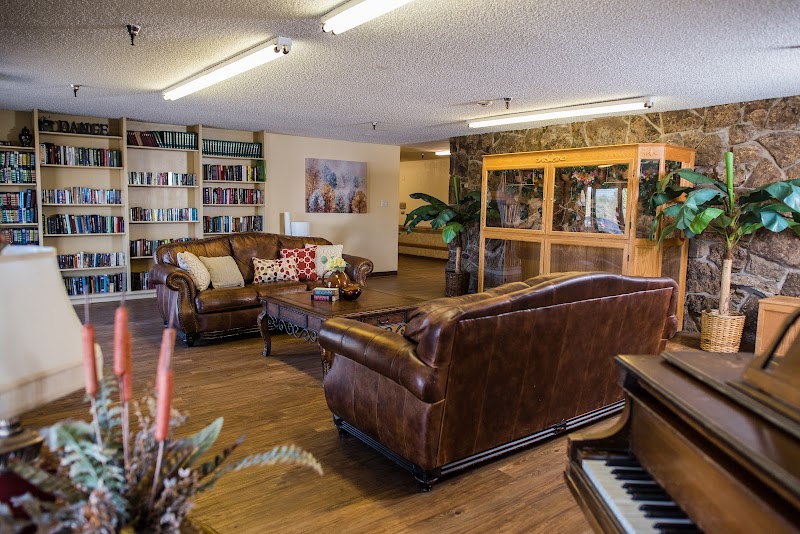
HEIGHTS POST ACUTE, THE

3131 S FEDERAL BLVD, DENVER, CO 80236 (303) 761-0260
For profit - Limited Liability company 110 Beds PACS GROUP Data: November 2025 1 Immediate Jeopardy citation
Trust Grade
0/100
#148 of 208 in CO
Last Inspection: January 2024

Within standard 12-15 month inspection cycle. Federal law requires annual inspections.

Overview

Heights Post Acute in Denver has received a Trust Grade of F, indicating significant concerns about the quality of care provided. Ranking #148 out of 208 facilities in Colorado places it in the bottom half, and #17 out of 20 in Arapahoe County suggests that there are only a few local facilities that are better. While the facility has shown improvement in its trend, reducing issues from 27 to just 1 between 2024 and 2025, it still struggles with high staffing turnover at 69%, which is concerning compared to the state average of 49%. Additionally, the facility has incurred $77,665 in fines, indicating compliance problems that are higher than 88% of Colorado facilities. Specific incidents of concern include failures to provide adequate behavioral health support to residents expressing suicidal thoughts and a lack of effective interventions for a resident suffering from a worsening pressure ulcer, highlighting serious care deficiencies despite a strong rating in quality measures.

Trust Score
F
0/100
In Colorado
#148/208
Bottom 29%
Safety Record
High Risk
Review needed
Inspections
Getting Better
27 → 1 violations
Staff Stability
⚠ Watch
69% turnover. Above average. Higher turnover means staff may not know residents' routines.
Penalties
✓ Good
$77,665 in fines. Lower than most Colorado facilities. Relatively clean record.
Skilled Nurses
○ Average
Each resident gets 31 minutes of Registered Nurse (RN) attention daily — about average for Colorado. RNs are the most trained staff who monitor for health changes.
Violations
⚠ Watch
56 deficiencies on record. Higher than average. Multiple issues found across inspections.
★★☆☆☆
2.0
Overall Rating
★★★☆☆
3.0
Staff Levels
★★★★★
5.0
Care Quality
★☆☆☆☆
1.0
Inspection Score
Stable
2024: 27 issues
2025: 1 issues

The Good

  • 5-Star Quality Measures · Strong clinical quality outcomes
  • Full Sprinkler Coverage · Fire safety systems throughout facility
  • No fines on record

Facility shows strength in quality measures, fire safety.

The Bad

2-Star Overall Rating

Below Colorado average (3.1)

Below average - review inspection findings carefully

Staff Turnover: 69%

23pts above Colorado avg (46%)

Frequent staff changes - ask about care continuity

Federal Fines: $77,665

Well above median ($33,413)

Moderate penalties - review what triggered them

Chain: PACS GROUP

Part of a multi-facility chain

Ask about local staffing decisions and management

Staff turnover is elevated (69%)

21 points above Colorado average of 48%

The Ugly 56 deficiencies on record

1 life-threatening 4 actual harm
May 2025 1 deficiency
CONCERN (E) 📢 Someone Reported This

A family member, employee, or ombudsman was alarmed enough to file a formal complaint

Potential for Harm - no one hurt, but risky conditions existed

Free from Abuse/Neglect (Tag F0600)

Could have caused harm · This affected multiple residents

**NOTE- TERMS IN BRACKETS HAVE BEEN EDITED TO PROTECT CONFIDENTIALITY** Based on record review and interviews, the facility failed to ensure four (#1, #2, #3 and #4) of four residents reviewed for abu...

Read full inspector narrative →
**NOTE- TERMS IN BRACKETS HAVE BEEN EDITED TO PROTECT CONFIDENTIALITY** Based on record review and interviews, the facility failed to ensure four (#1, #2, #3 and #4) of four residents reviewed for abuse out of four sample residents were free from abuse. Specifically the facility failed to: -Prevent verbal and physical abuse between Resident #2 and Resident #4. -Protect Resident #1 from physical abuse by Resident #2; and, -Protect Resident #3 from physical abuse by Resident #4. Findings include: I. Facility policy and procedure The Abuse, Neglect, Exploitation and Misappropriation Prevention Program policy and procedure, revised 2025, was provided by the nursing home administrator (NHA) on 5/8/25 at 11:33 a.m. It read in pertinent part, Residents have the right to be free from abuse, neglect, misappropriation of resident property and exploitation. The Abuse, Neglect, Exploitation or Misappropriation Reporting and Investigation policy and procedure, revised September 2022, was provided by the NHA on 5/8/25 at 11:33 a.m. It read in pertinent part, Upon receiving any allegations of abuse, neglect, exploitation, misappropriation of resident property or injury of unknown source, the administrator is responsible for determining what actions (if any) are needed for the protection of residents. II. Incident of verbal and physical abuse between Resident #2 and Resident #4 on 1/31/25 A. Facility investigation The 1/31/25 physical abuse investigation documented a witnessed resident-to-resident verbal and physical altercation between Resident #2 and Resident #4. Resident #2 and Resident #4 were in the smoking area during a supervised smoking session. Resident #2 walked up to Resident #4, who was standing with his back against the wall, and yelled at him. Resident #4 then called Resident #2 an expletive. Resident #2 attempted to push Resident #4, which caused Resident #2 to fall to the ground. Resident #2 then stood up and attempted to slap Resident #4. The staff separated the two residents. The two residents were assessed and no injuries were identified. The investigation indicated both residents were started on psychosocial visits and denied fear. Both of the residents were being followed by behavioral health services (BHS), and their behaviors related to agitation were being addressed. Resident #4 was suspended from smoking during the investigation. The facility unsubstantiated the allegation of physical abuse at the conclusion of the investigation due to no bodily harm noted during the investigation. -However, physical abuse occurred when Resident #2 pushed Resident #4 against the wall and verbal abuse occurred when Resident #4 called Resident #2 an expletive. B. Resident #2 (assailant and victim) 1. Resident status Resident #2, age less than 65, was admitted on [DATE]. According to the May 2025 computerized physician orders (CPO), diagnoses included epilepsy (seizure disorder), chronic obstructive pulmonary disease (COPD) and dementia. The 4/18/25 minimum data set (MDS) assessment revealed the resident was cognitively intact with a brief interview for mental status (BIMS) score of 15 out of 15. He was independent with eating, toileting, personal hygiene, transfers and bed mobility. The assessment did not indicate the resident exhibited physical or verbal behaviors towards others. 2. Resident interview Resident #2 was interviewed on 5/8/25 at 9:32 a.m. The resident exhibited speech that was difficult to understand. Resident #2 said he did not remember the incident in the dining room. He said there was a resident that had been ramming him with his walker and yelling expletives at him. He said I told him to stop that. 3. Record review The behavior care plan, initiated 4/7/25, documented Resident #2 had a history of being verbally aggressive to staff and residents due to ineffective coping skills and poor impulse control. Interventions included administering medications as ordered, analyzing triggers and what de-escalated his behavior, providing positive feedback for good behavior, redirecting by staff away from tasks for staff and resident safety and offering supervised opportunities for him to participate in cleaning tasks. -However, the behavior care plan was not initiated until after a second resident-to-resident incident occurred on 4/5/25 (see 4/5/25 incident below). The 1/26/25 nursing progress note documented Resident #2 was heard shouting in the dining room and hitting the dining room door. He was agitated and shouting that he was being mistreated by everyone on the staff. He was unable to provide details. He said staff were changing his medications and taking medications away from him. The 1/31/25 nursing progress note documented the director of nursing (DON) interviewed the Resident #2 regarding the resident's fall/incident. Resident #2 denied onset of pain and denied feeling threatened or fearful. -However, the nursing progress note documentation did not reveal what occurred during the resident-to-resident altercation that occurred on 1/31/25 with Resident #4. The 2/1/25 at 6:00 p.m. nursing progress note documented Resident #2 was on follow-up for a resident-to-resident altercation on 1/31/25. Resident #2 was observed not to be aggressive towards staff or other residents. The 2/1/25 at 9:52 p.m. nursing progress note documented Resident #2 was on monitoring after a resident-to-resident altercation. The resident appeared angry and agitated but took his medications. The resident was in his room. The 2/2/25 nursing progress note documented Resident #2 continued to be agitated and angry when approached for assessment. He denied pain or discomfort. The 2/3/25 nursing progress note documented Resident #2 was on a 72-hour assessment after a resident-to-resident altercation. The resident was in his room and had no complaints. He was upset over not being allowed to leave when he wanted. A comprehensive review of Resident #2's electronic medical record (EMR) did not reveal documentation of any interdisciplinary team (IDT) notes after the 1/31/25 resident-to-resident altercation with Resident #4. C. Resident #4 (assailant and victim) 1. Resident status Resident #4, age less than 65, was admitted on [DATE]. According to the May 2025 CPO, diagnoses included stroke, COPD and dementia. The 3/7/25 MDS assessment revealed the resident had severe cognitive impairment with deficits in short and long term memory. He had moderate impairment for daily decision making with poor decision making and required cues and supervision per staff assessment. He was independent with eating, toileting, bed mobility, personal hygiene and transfers. The assessment did not indicate the resident exhibited physical or verbal behaviors towards others. 2. Record review The behavior care plan, initiated 11/2/21 and revised 2/25/25, documented Resident #4 had a history of behaviors related to a traumatic brain injury (TBI), anxiety disorder and dementia. He could be physically aggressive towards staff during supervised smoking when times were late or missed and had been involved in resident-to-resident altercations. Interventions included behavioral monitoring (5/19/21), providing opportunity for positive interaction (5/19/21), encouraging to express feelings appropriately, (5/19/21), explaining procedures before starting (5/19/21), discussing behaviors if being reasonable (5/19/21), providing a program of activities (4/27/22), referring to behavioral health service for psychological interventions to decrease physical altercations (1/22/24), moving to a private room to prevent further occurrences (3/14/24) and laboratory work (labs) for a physically aggressive episode (3/18/25). The smoking care plan, initiated 3/14/25 and revised 3/17/25, documented Resident #4 required supervision during smoking due to his cognitive impairment. Interventions included assessing ability to smoke safely, explaining smoking policy, smoking apron and supervising while resident was smoking. -However, the smoking care plan was not initiated until 3/14/25. Review of Resident #4's EMR revealed there was no progress note of the incident that occurred on 1/31/25 with Resident #2. The 2/1/25 at 6:00 p.m. nursing progress note documented Resident #4 was on follow-up for a resident-to-resident altercation from 1/31/25. Resident #4 was ambulating in hallways without complaints or visible injury. The 2/1/25 at 9:49 p.m. nursing progress note documented Resident #4 was on monitoring after a resident-to-resident altercation. Resident #4 denied pain or discomfort or injury. The 2/3/25 at 12:56 a.m. nursing progress note documented Resident #4 continued to be monitored after a post-altercation with another resident (Resident #2). No complaints or behaviors were identified. III. Incident of physical abuse between Resident #2 and Resident #1 on 4/5/25 A. Facility investigation The 4/5/25 physical abuse investigation documented a witnessed resident-to-resident physical altercation between Resident #2 and Resident #1. The staff observed the two residents arguing after Resident #1 closed a window in the dining room. Resident #2 slapped Resident #1, which caused Resident #1 to lose his balance and fall to the ground. The staff separated the two residents and Resident #1 was assessed head-to-toe by a registered nurse (RN). Redness to Resident #1's eye was observed but no other injuries were identified. The investigation indicated Resident #2 and Resident #1 lived on different hallways but both residents would have staff monitoring during meals and when in close proximity to each other. The facility substantiated the allegation of physical abuse at the conclusion of their internal investigation. B. Resident #2 (assailant) 1. Record review The 4/6/25 at 3:51 a.m. nursing progress note documented a resident-to-resident physical altercation between Resident #2 and Resident #1 occurred on 4/5/25 at 7:30 p.m. Resident #2 initiated the physical aggression and got into an argument with Resident #1 and then slapped Resident #1 and pushed him to the ground after Resident #1 closed the window in the dining area. Resident #1 was assessed head-to-toe by a RN and had redness to his right eye. No other injuries were noted. The physician was notified. Resident #1 denied pain. A review of Resident #2's May 2025 medication administration record (MAR) revealed a physician's order for behavior monitoring for antipsychotic medications with the target behaviors of afraid, angry, agitated, mood changes, noisy, restless, withdrawn, crying and combative to check each shift and document in the nursing progress notes every shift, ordered 3/28/25. -However, behaviors were documented as did not occur for each shift for 4/5/25. C. Resident #1 (victim) 1. Resident status Resident #1, age [AGE], was admitted on [DATE]. According to the May 2025 CPO, diagnoses included dementia and traumatic brain injury (TBI). The 4/11/25 MDS assessment revealed the resident was cognitively intact with a BIMS score of 15 out of 15. He was independent with eating, toileting, personal hygiene, bed mobility and transfers. The assessment did not indicate the resident exhibited physical or verbal behaviors towards others. 2. Resident interview Resident #1 was interviewed on 5/7/25 at 1:05 p.m. Resident #1 said Resident #2 liked to sit in the dining room next to the windows and liked them open. He said he had said something to Resident #2 about bums having beards since Resident #2 had a beard. He said Resident #2 got mad at him and hit him in the face with his fist. He said he did not remember any difficulty with his eye afterwards. He said he had never had an issue with Resident #2 before. He said he avoided Resident #2 because he did not like him. 3. Record review The behavior care plan, initiated 1/2/19 and revised 4/25/25, documented Resident #1 was extremely impulsive, was difficult to direct and was verbally aggressive towards other residents due to a TBI and dementia. Interventions included redirecting the resident away from situations with verbal aggression (9/17/24), reminding him to speak kindly and be careful of word choice (9/19/24), administering medication as ordered (8/21/24), anticipating needs (1/2/19), assisting the resident to develop more appropriate coping (1/2/19), encouraging him to express feelings appropriately (1/2/19), explaining procedures (1/2/19), praising progress improvement (1/2/19) and providing him with an activities program (1/2/19). -A review of Resident #1's comprehensive care plan did not reveal any new personalized interventions after the 4/5/25 altercation with Resident #2 to prevent further abuse (see facility abuse investigation above). The 4/6/25 at 12:09 a.m. nursing progress note, documented on 4/5/25 at 6:30 p.m., revealed a certified nurse aide (CNA) brought to the attention of the RN that there was an altercation between two residents. Resident #1 had received physical aggression from Resident #2. Resident #1 had reported he closed the window because it was cold and Resident #2 was upset because he closed the window and they got into an argument. The CNA said Resident #2 slapped Resident #1 on the right cheek and pushed him to the ground before staff could get there and separate them. Resident #1 was assessed and had redness noted to his right eye. No other injuries were noted. The DON, the NHA and the physician were notified. IV. Incident of physical abuse between Resident #4 and Resident #3 on 3/17/25 A. Facility investigation The 3/17/25 physical abuse investigation documented a witnessed resident-to-resident physical altercation between Resident #4 and Resident #3. Resident #4 became upset during supervised smoking time and began cursing and yelling at the social services assistant (SSA) and pushed the smoking cart over. The SSA stepped back to call for staff assistance. Resident #3 was looking at Resident #4 and Resident #4 began yelling at her, flipping her off and calling her expletives. Resident #4 then walked over to Resident #3 yelled at her and hit her hand which was resting on her wheelchair. The two residents were separated. Resident #3 was assessed by a RN for injuries and no injuries were identified. Staff stayed with Resident #4 until the resident's representative could sit with him until he laid down for a nap. The investigation indicated Resident #4's representative would provide a vaporizer (vape) pen for him for when his cigarettes ran low and the IDT was to monitor Resident's #
Understanding Severity Codes (click to expand)
Life-Threatening (Immediate Jeopardy)
J - Isolated K - Pattern L - Widespread
Actual Harm
G - Isolated H - Pattern I - Widespread
Potential for Harm
D - Isolated E - Pattern F - Widespread
No Harm (Minor)
A - Isolated B - Pattern C - Widespread

Questions to Ask on Your Visit

  • "What changes have you made since the serious inspection findings?"
  • "What safeguards are in place to prevent abuse and neglect?"
  • "Why is there high staff turnover? How do you retain staff?"
  • "Can I speak with families of current residents?"
  • "What's your RN coverage like on weekends and overnight?"

Our Honest Assessment

Strengths
  • • Licensed and certified facility. Meets minimum state requirements.
Concerns
  • • Multiple safety concerns identified: Federal abuse finding, 1 life-threatening violation(s), 4 harm violation(s), $77,665 in fines, Payment denial on record. Review inspection reports carefully.
  • • 56 deficiencies on record, including 1 critical (life-threatening) violation. These warrant careful review before choosing this facility.
  • • $77,665 in fines. Extremely high, among the most fined facilities in Colorado. Major compliance failures.
  • • Grade F (0/100). Below average facility with significant concerns.
Bottom line: This facility has a substantiated abuse finding. Extreme caution advised. Explore alternatives.

About This Facility

What is Heights Post Acute, The's CMS Rating?

CMS assigns HEIGHTS POST ACUTE, THE an overall rating of 2 out of 5 stars, which is considered below average nationally. Within Colorado, this rating places the facility higher than 0% of the state's 100 nursing homes. A rating at this level reflects concerns identified through health inspections, staffing assessments, or quality measures that families should carefully consider.

How is Heights Post Acute, The Staffed?

CMS rates HEIGHTS POST ACUTE, THE's staffing level at 3 out of 5 stars, which is average compared to other nursing homes. Staff turnover is 69%, which is 23 percentage points above the Colorado average of 46%. High turnover can affect care consistency as new staff learn residents' individual needs.

What Have Inspectors Found at Heights Post Acute, The?

State health inspectors documented 56 deficiencies at HEIGHTS POST ACUTE, THE during 2019 to 2025. These included: 1 Immediate Jeopardy (the most serious level, indicating potential for serious harm or death), 4 that caused actual resident harm, 50 with potential for harm, and 1 minor or isolated issues. Immediate Jeopardy findings are rare and represent the most serious regulatory concerns. They require immediate corrective action.

Who Owns and Operates Heights Post Acute, The?

HEIGHTS POST ACUTE, THE is owned by a for-profit company. For-profit facilities operate as businesses with obligations to shareholders or private owners. The facility is operated by PACS GROUP, a chain that manages multiple nursing homes. With 110 certified beds and approximately 67 residents (about 61% occupancy), it is a mid-sized facility located in DENVER, Colorado.

How Does Heights Post Acute, The Compare to Other Colorado Nursing Homes?

Compared to the 100 nursing homes in Colorado, HEIGHTS POST ACUTE, THE's overall rating (2 stars) is below the state average of 3.1, staff turnover (69%) is significantly higher than the state average of 46%, and health inspection rating (1 stars) is much below the national benchmark.

What Should Families Ask When Visiting Heights Post Acute, The?

Based on this facility's data, families visiting should ask: "What changes have been made since the serious inspection findings, and how are you preventing similar issues?" "What safeguards and monitoring systems are in place to protect residents from abuse or neglect?" "How do you ensure continuity of care given staff turnover, and what is your staff retention strategy?" "Can I visit during a mealtime to observe dining assistance and food quality?" These questions are particularly relevant given the facility's Immediate Jeopardy citations, the substantiated abuse finding on record, and the facility's high staff turnover rate.

Is Heights Post Acute, The Safe?

Based on CMS inspection data, HEIGHTS POST ACUTE, THE has documented safety concerns. The facility has 1 substantiated abuse finding (meaning confirmed case of resident harm by staff or other residents). Inspectors have issued 1 Immediate Jeopardy citation (the most serious violation level indicating risk of serious injury or death). The facility has a 2-star overall rating and ranks #100 of 100 nursing homes in Colorado. Families considering this facility should ask detailed questions about what corrective actions have been taken since these incidents.

Do Nurses at Heights Post Acute, The Stick Around?

Staff turnover at HEIGHTS POST ACUTE, THE is high. At 69%, the facility is 23 percentage points above the Colorado average of 46%. High turnover means new staff may not know residents' individual needs, medications, or preferences. It can also be disorienting for residents, especially those with dementia who rely on familiar faces. Families should ask: What is causing the turnover? What retention programs are in place? How do you ensure care continuity during staff transitions?

Was Heights Post Acute, The Ever Fined?

HEIGHTS POST ACUTE, THE has been fined $77,665 across 3 penalty actions. This is above the Colorado average of $33,856. Fines in this range indicate compliance issues significant enough for CMS to impose meaningful financial consequences. Common causes include delayed correction of deficiencies, repeat violations, or care failures affecting resident safety. Families should ask facility leadership what changes have been made since these penalties.

Is Heights Post Acute, The on Any Federal Watch List?

HEIGHTS POST ACUTE, THE is not on any federal watch list. The most significant is the Special Focus Facility (SFF) program, which identifies the bottom 1% of nursing homes nationally based on persistent, serious quality problems. Not being on this list means the facility has avoided the pattern of deficiencies that triggers enhanced federal oversight. This is a positive indicator, though families should still review the facility's inspection history directly.

s smoking materials to ensure he did not run out. The facility substantiated the allegation of physical abuse at the conclusion of the investigation. B. Resident #4 (assailant) 1. Record review Review of Resident #4's behavior care plan revealed the facility updated the care plan with an intervention to obtain labs for a physically aggressive episode (3/18/25). The 3/17/25 nursing progress note documented that Resident #4 was involved in an altercation with another resident (Resident #3). Resident #4 was witnessed hitting Resident #3 on her left arm during smoking time, after being informed he was out of cigarettes. Resident #4 was escorted back to his room. The DON, the physician and the resident's representative were notified. The 3/18/25 at 8:48 a.m. behavior progress note documented Resident #4 was informed of the removal of his smoking privileges following the resident-to-resident altercation with Resident #3. Resident #4 became extremely angry and began yelling and cursing. An attempt was made to speak with him regarding alternative methods with the resident's urge to smoke. Resident #4 threw his coffee at the progress note writer's face and the resident punched the writer twice on the right side of his neck and face. The family representative was notified and spoke with the resident for a few minutes and calmed him down. Resident #4 asked the family representative if he could smoke and was told not right now. Resident #4 then threw the cell phone down the hallway, went to his room, got under the sheets and went to sleep. The family representative arrived and sat with the resident until he had calmed. The 3/18/25 at 5:48 p.m. behavior progress note documented no further behaviors were noted after Resident #4 became angry with the staff earlier. The resident allowed blood to be drawn for lab tests. A review of Resident #4's May 2025 CPO documented a physician's order for behavior monitoring for target behaviors of aggression, impulsivity and yelling out. Staff were to check each shift and document in the nursing progress notes every shift, ordered 4/18/23. -However, review of Resident #4's MAR documented behaviors did not occur on 3/17/25. C. Resident #3 (victim) 1. Resident status Resident #3, age less than 65, was admitted on [DATE] and readmitted on [DATE]. According to the May 2025 CPO, diagnoses included COPD, diabetes mellitus, morbid obesity, stroke and schizoaffective disorder. The 3/5/25 MDS assessment revealed the resident was cognitively intact with a BIMS score of 14 out of 15. She was dependent with transfers, substantial/maximal assistance with toileting, personal hygiene, bed mobility and required set up assistance for eating. The assessment did not indicate the resident exhibited physical or verbal behaviors towards others. 2. Resident interview Resident #3 was interviewed on 5/7/25 at 1:45 p.m. Resident #3 said Resident #4 was in the smoking area and flipped over the cart (on 3/17/25). She said she yelled for someone to call the police and Resident #4 came over and hit her on the arm and it hurt. She said she had had no further interactions with him and avoided him. She said nothing seemed to happen to correct the situation because Resident #4 was back out smoking in the smoking area the next day. She said the social worker seemed to be very afraid of him when he did not have any more cigarettes. She said she could not enjoy her smoke breaks when Resident #4 was out there. 3. Record review The psychosocial behavior care plan, initiated 2/27/25 and revised 3/10/25, documented Resident #3 had a history of making false allegations and using vulgar language against other residents and staff and became agitated when other residents were sitting at the same table. Interventions included providing diversional activities (2/27/25), anticipating needs (2/27/25), being aware of surroundings when pushing her wheelchair through doorways (2/27/25), documenting and recording behavioral episodes and responding to call light timely (2/27/25), establishing a rapport with the resident (2/27/25), providing cares in pairs (2/27/25) and following through on all allegations to ensure safety (2/27/25). -A review of Resident #3's comprehensive care plan did not reveal new interventions after the 3/17/25 altercation with Resident #4 to prevent further abuse (see facility abuse investigation above). -A review of Resident #3's EMR did not reveal nursing progress note documentation of the resident-to-resident altercation with Resident #4 on 3/17/25 or the RN assessment performed after the incident. IV. Staff interviews Licensed practical nurse (LPN) #1 was interviewed on 5/8/25 at 9:05 a.m. LPN #1 said Resident #4 was pleasant but could become easily agitated if things did not go his way. She said issues around smoking were triggers for his behaviors, especially if he ran out of cigarettes. She said he would try to get cigarettes from other residents and they would not give him one. She said Resident #4 had a tendency to try to take things that were not his. She said the smoking area was supervised and two staff people should be out there at all times. She said Resident #2 was impulsive and reactionary in the moment and was sorry for his behavior afterwards. RN #1 was interviewed on 5/8/25 at 9:20 a.m. RN #1 said when resident-to-resident physical altercations occurred, staff first separated residents to ensure their safety and then notified the DON and the NHA. She said she was not aware of any special interventions for Resident #2 or Resident #4 for their behaviors around their recent resident-to-resident altercations. She said frequent behavioral monitoring was only done in certain situations, such as when someone was having suicidal ideation. She said she was not aware of any special behavior monitoring for residents involved in resident-to-resident physical altercations. CNA #1 was interviewed on 5/8/25 at 9:55 a.m. CNA #1 said Resident #4 was independent. She said he just liked to go to his room and be left alone. She said she was not aware of any recent behaviors or resident-to-resident altercations involving Resident #4. She said she was not aware of any special interventions for his behaviors. She said when residents became aggressive with one another, staff separated and redirected them. The medical records director (MRD) was interviewed on 5/8/25 at 10:05 a.m. The MRD said she was part of the staff assigned to the resident smoking sessions supervision, which was assigned rotationally amongst the managers and other staff. She said she was at the smoking cart (on 1/31/25) and had her back to the residents. She said she heard raised voices and Resident #2 was on the ground and angry. She said Resident #4 was apologetic. She said she tried to help Resident #2 off the ground and he resisted so she went to get other staff to assist. She said there were usually 10 to 12 people during a smoking session, which was manageable since there was a routine and everyone knew the routine. She said she now kept an eye out for Resident #2 and Resident #4 but did not know if there were any special interventions for those two residents when they were in the smoking area. The NHA and the clinical resource director (CRD) were interviewed on 5/8/25 at 10:51 a.m. The NHA said if alleged resident-to-resident abuse occurred, the facility would obtain witness statements and begin with an initial investigation and immediately report it. He said if the allegation proved to be false, the facility would unsubstantiate it. He said if actual abuse occurred, the residents involved were separated so their safety was ensured. He said RN assessments were conducted to determine if any injury occurred. The NHA said any alleged abuse was reported to the NHA, the DON and the social services director (SSD). He said the facility would conduct a formal investigation that included interviews and a chart review. He said there was an IDT review to put in place the appropriate interventions and determine long-term interventions. He said the interventions were then care planned. He said there was no formal IDT documentation in the chart. He said the IDT review of an incident was done during the morning meeting and the IDT note with interventions was kept on a spreadsheet. He said each resident-to-resident altercation should be placed in the care plan and interventions that were identified for each resident should be care planned. The NHA said Resident #2 believed he worked at the facility and was very protective and particular about how the building was kept. He said in the 4/5/25 altercation between Resident #2 and Resident #1, Resident #2 had sat down in the dining room by the window and had opened the window. He said Resident #1 went to shut the window after Resident #2 had opened it. He said Resident #2 became very angry and he slapped Resident #1, which caused Resident #1 to trip over his walker and fall to the ground. The NHA said the incident was witnessed by staff. He said there was a scheduled appointment for Resident #2 with behavioral health services (BHS) and they had been involved with his behavioral management. He said Resident #2 and Resident #1 did not interact much and they lived on separate hallways. He said the altercation should be documented in the care plans with the appropriate identified interventions and documented in the nursing progress notes. He said there should also be a 72-hour follow-up behavioral documentation after a resident-to-resident altercation. The NHA said the resident-to-resident physical altercation between Resident #4 and Resident #3 on 3/17/25 happened during a smoking session. He said the SSA was supervising the smoking session. He said Resident #4 was smoking to the side of the smoking area and started yelling at the SSA. The NHA said Resident #4 pushed the smoking cart and the SSA fell to the concrete. He said Resident #3 was looking at Resident #4 and Resident #4 walked towards Resident #3 and yelled at her. He said Resident #4 flipped Resident #3 off and swatted at her arm. He said the staff separated them. He said in the smoking area, the amount of staff present during smoking times depended on how many residents were out there smoking. He said for five to six residents there was one staff member. He said for eight to ten residents there should be at least two staff members. The NHA said there was a resident-to-resident altercation between Resident #2 and Resident #4 in the smoking area on 1/31/25. He said Resident #4 was leaning against the building and Resident #2 was in the courtyard. He said Resident #2 walked up to Resident #4 and pushed Resident #4 on the chest which caused Resident #2 to fall backwards onto the ground. He said the incident was verified based on camera footage. The NHA said the altercation should be care planned and documented. The NHA said the facility would be looking at how to document the IDT reviews of resident-to-resident physical altercations going forward, with emphasis on ensuring documentation was completed on the root cause of the incident and ensuring interventions were put into place after each altercation and updated on the residents' care plans. The CRD said the facility would be doing an audit of their care plans and looking into their process for behavior tracking and documentation.
Jul 2024 1 deficiency
CONCERN (D) 📢 Someone Reported This

A family member, employee, or ombudsman was alarmed enough to file a formal complaint

Potential for Harm - no one hurt, but risky conditions existed

Free from Abuse/Neglect (Tag F0600)

Could have caused harm · This affected 1 resident

**NOTE- TERMS IN BRACKETS HAVE BEEN EDITED TO PROTECT CONFIDENTIALITY** Based on record review and staff interviews, the facility failed to ensure one (#1) of three residents reviewed for abuse were k...

Read full inspector narrative →
**NOTE- TERMS IN BRACKETS HAVE BEEN EDITED TO PROTECT CONFIDENTIALITY** Based on record review and staff interviews, the facility failed to ensure one (#1) of three residents reviewed for abuse were kept free from abuse out of five sample residents. Specifically, the facility failed to protect Resident #1 from physical abuse by Resident #2. Findings include: I. Facility policy and procedure The Abuse, Neglect, and Exploitation policy and procedure, revised April 2024, was provided by the director of nursing (DON) on 7/11/24 at 12:39 p.m. The policy read in pertinent part, The nursing home administrator (NHA) is responsible for the overall coordination and implementation of the facility's policies and procedures against abuse, neglect, exploitation and misappropriation of resident's property. Policies are in place that prohibit and prevent resident abuse, neglect, exploitation and misappropriation of resident's property, establish processes to investigate such allegations, implement staff training and coordinate with the quality assurance and performance improvement (QAPI) committee. Policies address the following as part of abuse, neglect, exploitation and misappropriation prevention: Employee screening, staff training, prevention, identification of violations, investigative processes, protection of residents during investigations and reporting of and response to investigations. II. Facility investigation of the 2/4/24 incident between Resident #2 and Resident #1 The 2/4/24 altercation investigation revealed Resident #2 began getting upset when Resident #1 was looking at him while they were smoking. Resident #2 ran up to Resident #1 and hit him multiple times in the head. Resident #2 was immediately placed on one to one supervision with a staff member. Resident #2 said Resident #1 was talking crap so I hit him and he tried to fight me back. Resident #1 stated Resident #2 had just hit him and he yelled at him to stop. He said he hit his head. III. Resident #2 (assailant) A. Resident status Resident #2, age greater than 65, was admitted on [DATE] and discharged on 3/7/24. According to the March 2024 computerized physician orders (CPO), diagnoses included moderate vascular dementia with mood disturbances, alcohol abuse, depression and insomnia. The 3/7/24 minimum data set (MDS) assessment revealed the resident had short term memory problems and his cognitive skills for daily decision making was moderately impaired. He had physical behaviors directed towards others on one to three days during the assessment lookback period and verbal behaviors directed towards others on one to three days. He was independent with all of his activities of daily living (ADL) and received an antipsychotic medication. B. Record review The behavior care plan, initiated 12/18/23 and revised 3/12/24, revealed Resident #2 had the potential to be physically aggressive related to a history of harm to others. Interventions included administering medication as ordered, providing physical and verbal cues to alleviate anxiety, giving positive feedback, assisting verbalization of the source of agitation, assisting the resident to set goals for more pleasant behavior, encouraging the resident to seek out a staff member when agitated, referring the resident to behavioral health services and placing the resident on one to one supervision with staff indefinitely. The 2/4/24 nurse progress note, written at 12:49 p.m., revealed the nurse heard screaming down the hallway and, upon assessment, Resident #2 was observed near the smoking area entrance and stated, Resident #1 was talking crap so I hit him and he tried to fight me back. Resident #1 denied hitting Resident #2. The police and emergency medical services were notified. -Further review of Resident #2's progress notes revealed he had been involved in four verbal altercations and four physical altercations with other residents during his four month stay at the facility. IV. Resident #1 (victim) A. Resident status Resident #1, age less than 65, was admitted on [DATE]. According to the July 2024 CPO, diagnoses included cerebral infarction (stroke), dementia, traumatic brain injury, generalized anxiety disorder, major depressive disorder and muscle weakness. The 6/19/24 MDS assessment revealed, the resident was unable to complete a brief interview for mental status (BIMS). He had short and long-term memory problems. His cognitive skills for daily living decision-making was moderately impaired. He had no behaviors and did not reject care. He was independent with his ADLs. B. Record review The behavior care plan, initiated 11/2/21 and revised 6/26/24, revealed Resident #1 had behavior challenges related to a history of a traumatic head injury and could become aggressive with staff. Interventions included referring the resident to behavioral health services, caregivers to provide opportunities for positive interaction and attention, encouraging the resident to express feelings appropriately and providing a program of activities that were of interest to the resident. The 2/4/24 nurse progress note. written at 12:33 p.m., revealed the nurse heard screaming down the hallway and, upon assessment, Resident #1 was seen holding his head while using profane language towards Resident #2. Resident #1 stated That dumb guy hit me in the head. Both parties were separated and Resident #1 was assessed and denied pain. Resident #1 was unable to recall what led up to the incident. The police and emergency services were notified. A 2/4/24 nurse progress note, written at 5:36 p.m., revealed Resident #1 was hit by Resident #2 in the face several times and would not stop until he was told multiple times to go to his room. V. Staff interviews The medical director (MD) was interviewed on 7/9/24 at 2:04 p.m. The MD said Resident #2 had behaviors that were explosive. He said Resident #2 could be calm and then just act out. He said his behaviors were unpredictable. He said the facility put scheduled smoking times in place, which helped with structure. Registered nurse (RN) #1 was interviewed on 7/9/24 at 4:48 p.m. RN #1 said Resident #2 was placed on one to one supervision with a staff member indefinitely related to his aggressive behaviors. She said Resident #1 liked to sing while walking down the hallway and in the dining room. She said at times other residents would yell at him to shut up. The DON was interviewed on 7/9/24 at 5:29 p.m. The DON said Resident #2 was easily agitated. She said he did not have triggers that could be identified and would just snap. She said he was placed on one to one supervision with a staff member on 1/13/24. However, she said Resident #2's one to one staff member was discontinued when he was not showing any behaviors or aggression towards others. The DON said Resident #2 was again placed on one to one supervision with a staff member indefinitely following his altercation with Resident #1 on 2/4/24. The NHA was interviewed on 7/9/24 at 5:45 p.m. The NHA said Resident #2 had a history of aggression towards others prior to his admission to the facility. He said Resident #2 would go from a calm mood with no issues to extreme aggression towards others. He said Resident #2 was placed on one to one supervision with a staff member until the interdisciplinary team (IDT) felt he was no longer a risk to others. The NHA said, following his altercation with Resident #1, Resident #2 was placed on one to one supervision indefinitely. He said Resident #2 had no identified triggers, which made it difficult to anticipate his aggressive behaviors. The NHA said, following an attack on his one to one certified nurse aide (CNA), Resident #2 was discharged from the facility on 3/7/24 to a facility who was able to provide increased psychiatric services for the resident.
May 2024 2 deficiencies 1 Harm
SERIOUS (G) 📢 Someone Reported This

A family member, employee, or ombudsman was alarmed enough to file a formal complaint

Actual Harm - a resident was hurt due to facility failures

Pressure Ulcer Prevention (Tag F0686)

A resident was harmed · This affected 1 resident

**NOTE- TERMS IN BRACKETS HAVE BEEN EDITED TO PROTECT CONFIDENTIALITY** Based on observations, record review and interviews, the facility failed to provide the necessary treatment and services to prev...

Read full inspector narrative →
**NOTE- TERMS IN BRACKETS HAVE BEEN EDITED TO PROTECT CONFIDENTIALITY** Based on observations, record review and interviews, the facility failed to provide the necessary treatment and services to prevent pressure injuries from occurring and worsening for one (#9) of three residents out of 14 sample residents. Resident #9 was admitted to the facility on [DATE] with diagnoses of chronic obstructive pulmonary disease and type II diabetes mellitus with diabetic chronic kidney disease. On 2/29/24, Resident #9 was identified to have developed a stage 3 pressure ulcer to his left heel. Record review and interviews revealed the facility failed to identify the skin breakdown on the comprehensive care plan and identify and implement person-centered interventions to prevent the worsening of the pressure injury to the left heel. Additionally, the facility failed to implement interventions ordered by the wound care physician (WCP). Due to the facility's failures to implement interventions recommended by the WCP, Resident #9's stage 3 pressure wound to the left heel worsened. Findings include: I. Professional reference According to the National Pressure Injury Advisory Panel, European Pressure Injury Advisory Panel and Pan Pacific Pressure Injury Alliance Prevention and Treatment of Pressure Injuries: Clinical Practice Guideline, third edition, [NAME] Haesler (Ed.), EPUAP/NPIAP/PPPIA: 2019, retrieved from https://www.internationalguideline.com/guideline on 5/16/24, Pressure ulcer classification is as follows: Category/Stage 1: Nonblanchable Erythema (discoloration of the skin that does not turn white when pressed, early sign of tissue damage) Intact skin with nonblanchable redness of a localized area usually over a bony prominence. Darkly pigmented skin may not have visible blanching; its color may differ from the surrounding area. The area may be painful, firm, soft, warmer or cooler as compared to adjacent tissue. Category/Stage 1 may be difficult to detect in individuals with dark skin tones. May indicate 'at risk' individuals (a heralding sign of risk). Category/Stage 2: Partial Thickness Skin Loss Partial thickness loss of dermis presenting as a shallow open ulcer with a red pink wound bed, without slough. May also present as an intact or open/ruptured serum filled blister. Presents as a shiny or dry shallow ulcer without slough or bruising.This Category/Stage should not be used to describe skin tears, tape burns, perineal dermatitis, maceration or excoriation. Category/Stage 3: Full Thickness Skin Loss Full thickness tissue loss. Subcutaneous fat may be visible, but bone, tendon or muscle are not exposed. Slough may be present but does not obscure the depth of tissue loss. May include undermining and tunneling. The depth of a Category/ Stage 3 pressure ulcer varies by anatomical location. The bridge of the nose, ear, occiput and malleolus do not have subcutaneous tissue and Category/ Stage 3 ulcers can be shallow. In contrast, areas of significant adiposity can develop extremely deep Category/Stage 3 pressure ulcers. Bone/tendon is not visible or directly palpable. Category/Stage 4: Full Thickness Tissue Loss Full thickness tissue loss with exposed bone, tendon or muscle. Slough or eschar may be present on some parts of the wound bed. Often include undermining and tunneling. The depth of a Category/Stage 4 pressure ulcer varies by anatomical location. The bridge of the nose, ear, occiput and malleolus do not have subcutaneous tissue and these ulcers can be shallow. Category/ Stage 4 ulcers can extend into muscle and/ or supporting structures ( fascia, tendon or joint capsule) making osteomyelitis possible. Exposed bone/tendon is visible or directly palpable Unstageable: Depth Unknown Full thickness tissue loss in which the base of the ulcer is covered by slough (yellow, tan, gray, green or brown) and/or eschar (tan, brown or black) in the wound bed. Until enough slough and/or eschar is removed to expose the base of the wound, the true depth, and therefore Category/ Stage, cannot be determined. Stable (dry, adherent, intact without erythema or fluctuance) eschar on the heels serves as 'the body's natural (biological) cover' and should not be removed. Suspected Deep Tissue Injury: Depth Unknown Purple or maroon localized area of discolored intact skin or blood-filled blister due to damage of underlying soft tissue from pressure and/or shear. The area may be preceded by tissue that is painful, firm, mushy, boggy, warmer or cooler as compared to adjacent tissue. Deep tissue injury may be difficult to detect in individuals with dark skin tones. Evolution may include a thin blister over a dark wound bed. The wound may further evolve and become covered by thin eschar. Evolution may be rapid, exposing additional layers of tissue even with optimal treatment. For individuals with a Category/Stage III or greater heel pressure injury, elevate the heels using a device specifically designed for heel suspension, offloading the heel completely in such a way as to distribute the weight of the leg along the calf without placing pressure on the Achilles tendon and the popliteal vein. Once a pressure injury develops, pressure relief on the heel is needed to promote perfusion and healing. Pressure on Category/Stage III, IV, and unstageable heel pressure injuries and deep tissue pressure injuries of the heel should be completely offloaded as much as possible. II. Facility policy and procedure The Prevention of Pressure Ulcers policy and procedure, dated 2001, was provided by the director of nursing (DON) on 5/16/24 at 11:54 am. It read in pertinent part, The purpose of this procedure is to provide information regarding identification of pressure injury risk factors and interventions for specific risk factors. Review the resident's care plan and identify the risk factors as well as the interventions designed to reduce or eliminate those considered modifiable. Review the interventions and strategies for effectiveness on an ongoing basis. III. Resident #9 A. Resident status Resident #9, age [AGE], was admitted on [DATE]. According to the May 2024 computerized physician orders (CPO), diagnoses included alcohol dependence with alcohol-induced persisting dementia, chronic obstructive pulmonary disease (COPD) and type II diabetes mellitus with diabetic chronic kidney disease. The 4/1/24 minimum data set (MDS) assessment revealed the resident had severe cognitive impairment with a brief interview for mental status (BIMS) score of three out of 15. He was independent with transfers, walking and bed mobility. The assessment indicated the resident was at risk for developing pressure ulcers and had actual skin breakdown of one stage three pressure ulcer not present upon admission. The assessment indicated the resident did not refuse care within the review period. B. Observations On 5/13/24 at 1:26 p.m., Resident #9 was laying in bed on his back. He had non-skid socks on his feet. His heels were not floated. The resident's left heel was observed lying directly on the mattress. At 2:24 p.m., the resident continued laying in bed on his back and was covered with a blanket. He asked if his food was ready and said he was going to get up because he was hungry. He kicked off the blanket revealing his feet were directly on the mattress. His heels were not floated or off loaded. At 3:40 p.m. Resident #9 was sitting in the dining room at a table. He said he was waiting for his plate. His heels were observed directly touching the floor. He was wearing non-skid socks and his feet were not elevated or off-loaded. At 4:33 p.m. the resident continued to sit in the dining room at the table. His heels were directly on the floor, not elevated. On 5/14/24 at 10:31 a.m. Resident #9 was lying in bed on his left side. His heels were lying directly on the mattress and were not being floated. At 11:30 a.m. the resident was sitting at a table in the dining room. The balls of his feet were resting on the legs of the table and his heels were pressed directly against the floor. He was wearing non-skid socks. -Resident #9 declined to allow his wound to be observed during the survey. C. Record review The skin integrity care plan, initiated on 4/18/14 and revised on 1/27/15, documented Resident #9 was at risk for skin breakdown related to incontinence of bowel and bladder and had a diagnosis of diabetes. It indicated Resident #9 refused full skin assessments at times. The interventions included administering medication for benign prostatic hyperplasia (BPH) as ordered and monitoring for side effects, administering vitamins as ordered, assisting or giving reminders to the resident for repositioning as needed, providing labs and x-rays as ordered and reporting the results to the physician, monitoring and recording weekly skin checks, monitoring the resident's skin for changes in integrity with routine care and offer fluids with medication pass, meals, activities and at bedside. -Resident #9's comprehensive care plan did not address the resident's actual skin breakdown nor did it provide person-centered interventions to prevent the development and worsening of pressure injuries. The weekly nursing summary, dated 2/26/24, revealed the resident's skin was intact. The resident did not have any open areas or wounds. The 2/29/24 e-interact change of condition communication form documented the resident had an open wound on the left heel. The February 2024 CPO revealed the following physician's order, dated 2/29/24, for wound care to the left heel: Clean with wound cleanser; apply Medihoney and foam dressing two times per day. The WCP's progress note, dated 3/6/24, documented Resident #9 developed a stage 3 pressure injury to the left heel. The wound measurements documented were 3.4 centimeter (cm) length by 3.5 cm width by 0.4 cm depth with 100% granulation. The physician recommended to offload the pressure injury, elevate the resident's legs and float his heels in bed. -The facility failed to ensure these recommendations were transcribed into the resident's comprehensive care plan and made part of his plan of care. The WCP's progress note dated 3/13/24 indicated wound measurements of 3.0 cm length by 2.8 cm width by 0.3 cm depth with 100% granulation. The WCP's progress note dated 3/27/24 indicated that the stage 3 pressure ulcer to the resident's left heel had worsened. The wound measurements were 3.0 cm length by 3.2 cm width by 0.3 cm depth with 50% granulation, 30% slough and 20% eschar. The physician continued to recommend the resident's legs be elevated and to float his heels. -The facility continued to fail to ensure the interventions and recommendations made by the WCP were documented in the physician's orders or implemented on the resident's plan of care. The skin evaluation dated 4/3/24 indicated improvement in the wound with measurements of 2.2 cm length by 2.6 cm width by 0.1 cm depth and 100% granulation. The 4/24/24 WCP progress note documented that Resident #9's stage 3 pressure injury to the left heel had worsened. The wound measurements were 2.4 cm length by 2.8 cm width by 0.1 cm depth with 50% granulation, 30% slough and 20% eschar. The interventions recommended by the WCP documented that the resident's heels should be offloaded, elevate the resident's legs and float the resident's heels. The 5/1/24 WCP progress note documented that the stage 3 pressure ulcer to the left heel was stable. The wound measurements were 2.4 cm length by 2.5 cm width by 0.1 cm depth and 100% granulation. The WP continued to recommend offloading/floating of the heels and elevating the resident's legs. The WCP's treatment order, dated 5/10/24, read: Left heel: cleanse with wound cleanser; apply Medihoney (wound treatment) to the wound bed and cover with bordered gauze and Kerlix (gauze dressing) daily and as needed (PRN). -The facility failed to implement the WCP's consistent recommendations to prevent the worsening of Resident #9's stage 3 pressure injury to the left heel. D. Staff interviews Certified nurse aide (CNA) #1 was interviewed on 5/14/24 at 1:55 p.m. CNA #1 said Resident #9 did not require a lot of assistance with personal care. She said she provided reminders to the resident when to come out of his room for meals. She said she did not know if Resident #9 had any pressure injuries. She said wound interventions should be documented in the electronic medical record (EMR). Licensed practical nurse (LPN) #1 was interviewed on 5/14/24 at 2:12 pm. LPN #1 said wound interventions should be documented on the treatment administration record (TAR). She said Resident #9 received treatment for the stage 3 pressure injury to his left heel daily. She said he had a foam dressing on the left heel to protect the wound. She said the resident was not compliant with floating his heels. -However, the resident's medical record did not reveal any documentation that the resident refused or was non-compliant with the WCP recommendation and did not document the intervention to prevent the worsening of the wound. The DON was interviewed on 5/14/24 at 3:12 p.m. The DON said upon the identification of a new wound, a skin assessment and new treatment orders should be documented in the residents' medical record. She said the wound nurse would evaluate the wound and address the treatment orders if needed. The DON said the resident would be added to the WCP's caseload. The DON said the wound nurse was responsible to review the WCP's progress notes and document any new treatment orders in the resident's medical record. She said every wound should be addressed in the comprehensive care plan with person-centered interventions. She said the interventions should be documented on the [NAME] (tool utilized by staff to provide person-centered care) for the CNAs. The DON said Resident #9's stage 3 pressure wound to the left heel was not addressed in his comprehensive care plan prior to 5/13/24 and the recommendations from the provider to offload the wound, elevate feet and float heels were not documented in the interventions of his plan of care. The WCP was interviewed on 5/16/24 at 4:35 p.m. The WCP said the origin of the wound on Resident #9's left heel was from pressure. He said during his visits with Resident #9, he stressed to the resident and the nurse caring for him the importance of offloading the pressure on the left heel and elevating his feet. The WCP said the resident could be difficult to work with and some weeks did not allow him to examine his wound. The WCP said he recommended floating the heels on multiple occasions to prevent the worsening of the stage 3 pressure injury. He said he was disappointed that the interventions he had recommended multiple times were not in place. IV. Additional information The updated skin integrity care plan, (updated 5/13/24 at 6:00 p.m., during the survey) documented Resident #9 had a stage 3 pressure ulcer to his left heel and was at risk for further breakdown. The updated interventions (dated 5/13/24) included administering medications as ordered, administering treatments as ordered, nutritional or hydration interventions to manage the resident's skin problems and the WCP to follow. -The care plan interventions, updated 5/13/24, still did not include the treatments of offload wound, elevate feet and float heels, as ordered by the wound care physician.
CONCERN (D) 📢 Someone Reported This

A family member, employee, or ombudsman was alarmed enough to file a formal complaint

Potential for Harm - no one hurt, but risky conditions existed

Infection Control (Tag F0880)

Could have caused harm · This affected 1 resident

**NOTE- TERMS IN BRACKETS HAVE BEEN EDITED TO PROTECT CONFIDENTIALITY** Based on record review, observations and interviews, the facility failed to maintain an infection prevention and control program...

Read full inspector narrative →
**NOTE- TERMS IN BRACKETS HAVE BEEN EDITED TO PROTECT CONFIDENTIALITY** Based on record review, observations and interviews, the facility failed to maintain an infection prevention and control program designed to provide a safe, sanitary, and comfortable environment and to help prevent the development and transmission of communicable diseases and infections for one (#8) of three out of 14 sample residents. Specifically, the facility failed to follow infection control practices while providing wound care to Resident #8. Findings include: I. Professional reference According to [NAME], P.A., [NAME], A.G., et.al., Fundamentals of Nursing, 10 ed. (2022), Elsevier, St. Louis Missouri, page 1265, retrieved on 5/23/24 Clean away from the wound. Never use the same piece of gauze to clean across an incision or wound twice. II. Resident #8 status Resident #8, age less than 65, was admitted on [DATE]. According to the April 2024 computerized physician orders (CPO), diagnoses included multiple sclerosis (disease affecting the central nervous system), stage 4 pressure ulcer of right hip, stage 4 pressure ulcer of left buttock, stage 4 pressure ulcer of right buttock and chronic obstructive pulmonary disease (COPD). The 5/1/24 minimum data set (MDS) assessment revealed the resident was cognitively intact with a brief interview for mental status (BIMS) score of 15 out of 15. He required total assistance with bed mobility and transfers. A. Record review According to the May 2024 CPOs, wound care orders were as follows: -Right buttock: cleanse with wound cleanser, apply Calcium Alginate Silver (wound dressing), cover with Island dressing (wound dressing) daily and as needed (PRN); -Right hip: cleanse with wound cleanser, apply Calcium Alginate with Silver, cover with Island dressing; and, -Left buttock: cleanse with wound cleanser, apply Calcium Alginate Silver, cover with Island dressing. B. Observations On 5/15/24 at 9:00 a.m the wound care nurse (WCN) entered the room of Resident #8 to perform treatments to the pressure injuries to the right hip and right buttocks. The WCN had the treatment supplies in a plastic bag upon entering the resident's room and donned (put on) a gown and gloves. The WCN removed the old dressings from both of the resident's wounds (right hip and right buttocks), threw them in the trash, removed her gloves, sanitized her hands and donned a clean pair of gloves. She cleaned the right hip wound with gauze and wound cleanser. Using the same gauze, the WCN folded the gauze in half and cleaned the wound to the right buttocks. She did not change gloves and sanitize her hands between wounds. The WCN changed gloves and cleaned both wounds again, using the same gauze for both wounds and wearing the same gloves. The WCN doffed (took off) her gloves, washed her hands and donned new gloves. She applied Calcium Alginate Silver, per orders, to each wound using the same gloved finger. She covered each wound with Island dressings. She dated each dressing prior to the application. III. Interviews The WCN was interviewed on 5/15/24 at 9:45 a.m. The WCN said she used the same gauze for both wounds to Resident #8's right hip and right buttocks. She said she did not change gloves in between wounds. She said she usually brings a lot of gauze when performing treatments, but tried not to be wasteful. The WCN said she did not understand that each wound should be treated separately, completing one dressing change before moving on to the other wound, to avoid cross contamination. The DON was interviewed on 5/15/24 at 9:46 a.m. She said the WCN should have treated each of Resident #8's wounds separately. She said the WCN should have cleaned the wounds with different pieces of clean gauze. She said the WCN should have sanitized her hands and changed her gloves in between treatments for each wound to prevent potential cross contamination between the wounds.
Mar 2024 3 deficiencies
CONCERN (D) 📢 Someone Reported This

A family member, employee, or ombudsman was alarmed enough to file a formal complaint

Potential for Harm - no one hurt, but risky conditions existed

Deficiency F0554 (Tag F0554)

Could have caused harm · This affected 1 resident

**NOTE- TERMS IN BRACKETS HAVE BEEN EDITED TO PROTECT CONFIDENTIALITY** Based on observations, record review, and interviews, the facility failed to ensure the self-administration of medications was c...

Read full inspector narrative →
**NOTE- TERMS IN BRACKETS HAVE BEEN EDITED TO PROTECT CONFIDENTIALITY** Based on observations, record review, and interviews, the facility failed to ensure the self-administration of medications was clinically appropriate for one (#3) out of three out of seven sample residents. Specifically, the facility failed to ensure a self-administration assessment was completed for Resident #3 to perform her own wound care treatments. Findings include: I. Facility policy and procedure The Self-Administration of Medications policy and procedure, revised February 2021, was provided by the director of nursing (DON) on 3/19/24 at 4:33 p.m. It documented, in pertinent part, Residents have the right to self-administer medications if the interdisciplinary team (IDT) has determined that it is clinically appropriate and safe for the resident to do so. As part of the assessment, the IDT assesses each resident's cognitive and physical abilities to determine whether self-administering medications is safe and clinically appropriate. If deemed safe and appropriate it is documented in the medical record, the care plan and reassessed periodically. If the team determines that a resident cannot safely self-administer medication, the nursing staff will administer the resident's medication and the IDT evaluates options which allow residents to safely participate in the medication administration process. II. Resident #3 status Resident #3, under age [AGE], was admitted on [DATE]. According to the March 2024 computerized physician orders (CPO), the diagnoses included cellulitis (skin infection) of the right and left lower legs. The 2/8/24 minimum data set (MDS) assessment revealed the resident was cognitively intact with a brief interview for mental status score of 15 out of 15. She required partial/moderate assistance with dressing and personal hygiene. There were no behaviors or refusals documented during the assessment period. A. Resident interview and observations Resident #3 was interviewed on 3/19/24 at 9:00 a.m. She said she had an infection in her lower legs for about two years. She said they drain constantly and she had to change the dressing frequently because they were soiled. She said she changed the dressing herself when the nursing staff did not have time. She said the nursing staff left the extra supplies in her room, such as the cream and powder, so she was able to perform dressing changes as the bandages became soiled. Resient #3 pulled up her blanket to expose her legs. She said she did the dressing change earlier that morning because the previous dressing was soiled. A bottle of wound cleanser, medicated fungal powder and two medication cups unlabeled with a pink cream in each were observed on the bedside table. Both unlabeled cups had an application stick inside. Resident #3 said there was zinc cream in the cups. Resident #3 opened the drawer of her bedside table to reveal the drawer full of pads, tape and wraps for the dressing changes. B. Record review The skin integrity care plan, revised 2/7/24, documented that the resident had impaired skin integrity present on admission as evidenced by bilateral (both sides) lower extremity cellulitis. The interventions included administering treatments as ordered; monitoring for effectiveness; checking the resident's skin during daily care provisions; providing supplements as ordered by the physician; and consulting a wound care provider as indicated. The March CPOs documented the following treatment order: -BLE (bilateral lower extremity): cleanse with wound cleanser, mix antifungal cream/powder with zinc and apply to the wound bed. Apply adaptic emulsion dressing. Apply calcium alginate over emulsion dressing, cover with ABD (highly absorbent sterile dressing), wrap with kerlix, and then wrap with ace bandage - once every day shift and as needed - ordered 3/15/24. A review of the resident's electronic medical record (EMR) did not reveal documentation that an assessment for self-administration had been completed, nor an order from the physician for the resident to self-administer leg wound treatments obtained. III. Staff interviews Licensed practical nurse (LPN) #1 was interviewed on 3/19/24 at 3:55 p.m. She said Resident #3 was not able to self-administer medications. She said Resident #3 was not appropriate because she did not follow the provider's orders accurately and completely at times when she did her own dressing changes. She said she was aware Resident #3 would do her own treatments to the wounds on her legs. LPN #1 said an assessment needed to be completed for self-administration along with a physician's order prior to a resident self-administering medications or treatments. She said education should be provided to the resident and it should be included in the comprehensive care plan. The DON was interviewed on 3/19/24 at 4:20 p.m. She said a nursing evaluation, interdisciplinary (IDT) team review, and a physician's order were needed prior to a resident self-administering medications or treatments. She said education should be given to the resident on the procedure of the treatment, the side effects and safe storage. She said the self-administration should be documented in the resident's comprehensive care plan. The DON said Resident #3 was not appropriate for self-administration of medications. She said an evaluation to determine the appropriateness of self-administration of wound treatments had not been conducted by the facility. She said nursing staff were bringing the resident wound care supplies and leaving it in her room if she refused the wound care. She said it was not appropriate for the nurses to do so without a self-administration evaluation completed and physician's order.
CONCERN (D) 📢 Someone Reported This

A family member, employee, or ombudsman was alarmed enough to file a formal complaint

Potential for Harm - no one hurt, but risky conditions existed

Deficiency F0658 (Tag F0658)

Could have caused harm · This affected 1 resident

**NOTE- TERMS IN BRACKETS HAVE BEEN EDITED TO PROTECT CONFIDENTIALITY** Based on observations, record review and interviews, the facility failed to ensure services provided to two (#3 and #4) of seven...

Read full inspector narrative →
**NOTE- TERMS IN BRACKETS HAVE BEEN EDITED TO PROTECT CONFIDENTIALITY** Based on observations, record review and interviews, the facility failed to ensure services provided to two (#3 and #4) of seven sample residents met professional standards of practice. Specifically, the facility failed to ensure wound care dressings were dated for Resident #3 and Resident #4. Findings include: I. Resident #4 status Resident #4, under age [AGE], was admitted on [DATE]. According to the March 2024 computerized physician orders (CPO), his diagnoses included cellulitis (skin infection) of the right and left lower legs and open wound to the right and left lower legs. The 2/25/24 minimum data set (MDS) assessment revealed the resident was cognitively intact with a brief interview for mental status score of 15 out of 15. A. Resident interview and observations Resident #4 was interviewed on 3/18/24 at 9:20 a.m. He said the nursing staff were not doing his wound care daily. He said his treatments were being done every couple of days. Resident #4 was observed for wound care on 3/19/24 at 11:00 a.m. with licensed practical nurse (LPN) #1. LPN #1 removed the ace wrap that kept the dressing in place. The dressing was not dated. LPN #1 confirmed the dressing was not dated. B. Record review The March 2024 CPOs documented the following treatment order: -RLE (right lower extremity): cleanse with wound cleanser and protect periwound with skin prep. Apply xeroform (dressing soaked in petroleum jelly) to open areas. Apply kerlix and wrap with ace bandage- daily and as needed for saturated/soiled/dislodged dressings- ordered 3/13/24. -LLE (left lower extremity): cleanse with wound cleanser and protect periwound with skin prep. Apply 8x8 hydrofera blue (antibacterial wound dressing) to cover open areas. Apply kerlix and wrap with ace bandage- change daily and as needed for saturated/soiled/dislodged dressings- ordered 3/13/24. II. Resident #3 status Resident #3, under age [AGE], was admitted on [DATE]. According to the March 2024 CPOs, the diagnoses included cellulitis (skin infection) of the right and left lower legs. The 2/8/24 MDS assessment revealed the resident was cognitively intact with a brief interview for mental status score of 15 out of 15. She required partial/moderate assistance with dressing and personal hygiene A. Observations Resident #3 was observed for wound care on 3/19/24 at 3:20 p.m. with LPN #1. LPN #1 removed the ace wrap that kept the dressing in place. The dressing was not dated. LPN #1 confirmed the dressing was not dated. B. Record review The March CPOs documented the following treatment order: -BLE (bilateral lower extremity): cleanse with wound cleanser, mix antifungal cream/powder with zinc and apply to the wound bed. Apply adaptic emulsion dressing. Apply calcium alginate over emulsion dressing, cover with ABD (highly absorbent sterile dressing), wrap with kerlix, and then wrap with ace bandage - once every day shift and as needed - ordered 3/15/24. III. Staff interviews LPN #1 was interviewed on 3/19/24 at 11:05 a.m. She said treatments should be dated and initialed by the nurse performing the treatment. She said this was important to be able to tell when the dressing change was last performed. The DON was interviewed on 3/19/24 at 4:20 p.m. She said she did not expect nursing staff to date and initial wound care dressings. She said she could easily tell the last time a wound was dressed based on what it looked like. -The DON did not recognize the standard of practice to date and initial the treatments when they were completed.
CONCERN (D) 📢 Someone Reported This

A family member, employee, or ombudsman was alarmed enough to file a formal complaint

Potential for Harm - no one hurt, but risky conditions existed

Infection Control (Tag F0880)

Could have caused harm · This affected 1 resident

Based on observations, interviews and record review, the facility failed to maintain an infection control program designed to provide a safe, sanitary and comfortable environment to help prevent the d...

Read full inspector narrative →
Based on observations, interviews and record review, the facility failed to maintain an infection control program designed to provide a safe, sanitary and comfortable environment to help prevent the development and transmission of disease and infection. Specifically, the facility failed to ensure infection control practices were observed during wound care for Resident #4 and Resident #3. Findings include: I. Facility policy and procedure The Handwashing/Hand Hygiene policy and procedure, revised October 2023, was received from the director of nursing (DON) on 3/19/24 at 4:33 p.m. It documented, in pertinent part, The facility considers hand hygiene the primary means to prevent the spread of healthcare-associated infections. Hand hygiene is indicated immediately before touching a resident, before performing an aseptic (sterile) task, after touching a resident, after touching a resident's environment, before moving from work on a soiled body site to a clean body site on the same resident and immediately after glove removal. The use of gloves does not replace hand washing/hand hygiene. II. Failure to perform proper hand hygiene during wound care treatment A. Wound care was performed on Resident #4 by licensed practical nurse (LPN) #1 on 3/19/24 at 11:00 a.m. LPN #1 obtained Resident #4's verbal consent, explained the procedure, gathered supplies and then re-entered the resident's room. She washed her hands and placed a clean pad under his right lower leg. She donned gloves and removed the soiled dressing. The old dressing was visibly soiled with wound drainage. She cleansed with a wound cleanser. -She did not remove the visibly soiled gloves or perform hand hygiene before cleansing the wound. LPN #1 applied skin prep and then removed her soiled gloves. She performed hand hygiene and donned new gloves. She applied the new dressing and wrap. She removed the gloves, washed her hands and donned new gloves. She removed the left lower leg dressing and cleansed with a wound cleanser. She applied skin prep. She removed the visibly soiled gloves and donned new ones. -She did not perform hand hygiene before donning new gloves. LPN #1 applied the clean dressing and wrapped the resident's leg with ace wrap. She removed the gloves and performed hand hygiene. B. Wound care was performed on Resident #3 by LPN #1 on 3/19/24 at 3:20 p.m. LPN #1 obtained Resident #4's verbal consent, explained the procedure, gathered supplies and then re-entered the resident's room. She then performed hand hygiene. She donned gloves and placed a clean pad under the resident's left leg. The resident started taking off the soiled dressing and the nurse assisted. The nurse began to cleanse the wound with wound cleanser and dry gauze. She grabbed the cup of cream and applicator and applied the medication around the wound. -The nurse did not change gloves when moving from dirty to clean. There was no hand hygiene performed between moving from dirty to clean. LPN #1 removed her gloves and went to the treatment cart outside the room to gather more supplies. -She did not perform hand hygiene. She donned new gloves and applied the clean dressing. She removed the gloves to gather more supplies at the treatment cart. -She did not perform hand hygiene. LPN #1 donned new gloves and applied the wrap to the resident's left leg. She moved the pad under the resident's leg to a dry spot and began to remove the soiled dressing on the resident's right leg. The nurse cleansed the wound with wound cleanser and dry gauze. She removed her gloves to go to the treatment cart for more supplies. -She did not perform hand hygiene. LPN #1 donned new gloves and grabbed the cup of cream, an applicator and applied the medication around the wound. She removed her gloves. -She did not perform hand hygiene. LPN #1 donned new gloves and applied the dressing to the wound. She removed her gloves and went to the treatment cart for more supplies. -She did not perform hand hygiene. LPN #1 donned new gloves and wrapped the resident's right leg with the dressing. She removed the gloves and performed hand hygiene. III. Staff interviews LPN #1 was interviewed on 3/19/24 at 3:55 p.m. She said hand hygiene should be performed before and after wound care and after removing gloves. She said hand washing should be performed when hands were visibly soiled. The DON was interviewed on 3/19/24 at 4:20 p.m. She said hand hygiene should be completed before wound care, after removing the soiled dressing, at the end of the wound care treatment, and in between gloves changes. She said this was important to prevent the spread of infection.
Jan 2024 21 deficiencies 1 IJ
CRITICAL (J) 📢 Someone Reported This

A family member, employee, or ombudsman was alarmed enough to file a formal complaint

Immediate Jeopardy (IJ) - the most serious Medicare violation

Deficiency F0740 (Tag F0740)

Someone could have died · This affected 1 resident

**NOTE- TERMS IN BRACKETS HAVE BEEN EDITED TO PROTECT CONFIDENTIALITY** Based on record review and interviews, the facility failed to provide the necessary behavioral health care and services to attai...

Read full inspector narrative →
**NOTE- TERMS IN BRACKETS HAVE BEEN EDITED TO PROTECT CONFIDENTIALITY** Based on record review and interviews, the facility failed to provide the necessary behavioral health care and services to attain and maintain the highest practicable physical, mental, and psychosocial well-being for two (#80 and #281) of two residents reviewed for psychosocial well-being out of 44 sample residents. Both residents had expressed suicidal ideations. The facility's failures in response created a situation of immediate jeopardy for serious harm. -The facility failed to ensure Resident #80 received the appropriate level of support and supervision to ensure she did not engage in self-harm after making a suicidal ideation with a plan to self-harm. Resident #80 was admitted with diagnoses of bipolar disorder and major depressive disorder and had a history of suicide attempts. The resident met with the behavioral health practitioner (BHP), the director of nursing (DON), the social services director (SSD), and the operations manager (OM) on 12/12/23 to discuss her psychotropic medications. Resident #80 stated that Lorazepam (Ativan), discontinued by the BHP on 12/10/23, was the medication that worked for her and she requested it be restarted. Resident #80 said she would try and kill herself if not given the Lorazepam to address her anxiety. Issues of manipulative and drug-seeking behaviors were raised in the meeting. When Resident #80's request to restart the medication was denied, the resident began sobbing and said she would end her life and had a plan that she would not divulge. She said she had cut her wrists in the past. The resident left the meeting and walked to her room, unattended and without staff supervision. Some moments later, when the BHP suggested someone should be with the resident, Resident #80 was found with scissor cuts on her wrist. -The facility failed to ensure Resident #281 was properly assessed, care planned, and timely referred for behavioral health services after she stated she was going to kill herself. Resident #281 was admitted to the facility with a diagnosis of generalized anxiety disorder. On 1/3/24, she asked the certified nurse aide (CNA) for a knife and said she was going to kill herself. The nursing progress note documented that the resident was assessed and sharp objects were removed from the resident's room. No other documentation was found in the resident's medical record, including a care plan. Interviews with the SSD, nursing home administrator (NHA), and OM confirmed that on 1/3/24 after Resident #281 said she was going to kill herself, the resident was not assessed by a licensed clinician but rather by a social worker and the OM, who were not licensed clinicians and who determined the resident was no longer a threat to self-harm. The facility's failures in response to Resident #80 and #281's suicidal ideations created a situation of immediate jeopardy for serious harm. Findings include: I. Immediate Jeopardy A. Situation of immediate jeopardy The facility failed to provide the appropriate level of support and supervision for Resident #80, who had a history of self-harm, when she voiced an active threat to harm herself. After the resident's request at a meeting with the BHP, SSD, OM, and DON for a medication that she believed was most effective for her was denied, the resident threatened she would try and kill herself. She returned to her room unattended and unsupervised, and cut her wrist with scissors. The facility's failure to provide support and supervision for the resident contributed to the resident harming herself. The facility failed to adequately evaluate Resident #281's threat level for self-harm after she said she wanted to kill herself and slit her wrist. The facility failed to conduct a lethality assessment, determine the resident's threat level, and timely refer the resident for behavioral health services. Further, the facility failed to identify either resident's suicidal ideation within the comprehensive care plan and develop and implement person-centered interventions. B. Imposition of immediate jeopardy On 1/9/24 at 5:48 p.m., the nursing home administrator (NHA), DON, and OM were notified of the immediate jeopardy situation created by the facility's failure to ensure Resident #80 was kept safe after making a suicidal ideation and ensure Resident #281's threat level had been evaluated following a suicidal ideation. C. Facility plan to remove immediate jeopardy On 1/10/24 at 1:00 p.m., the facility submitted a plan to address the immediate jeopardy. The plan read: 1. Immediate action The DON educated all staff on duty on the policy for who to report to when a resident makes a suicidal ideation and the proper steps to take after a suicidal ideation is made. The facility also put education in the agency education binder. The lethality assessment for Resident #281 was completed, referral to behavioral health services, started fifteen minute checks and placed an order on the resident's medication administration record (MAR) for monitoring target behaviors every shift. The DON or designee will provide education to all staff before their next shift. The NHA provided education on 1/9/24 to the social services director (SSD) and nursing staff on performing a lethality assessment when there is a suicidal ideation statement made. The NHA provided education on 1/9/24 to the SSD on the policy for timely care planning of interventions and submitting timely referrals to behavioral health services. On 1/9/24, the DON performed lethality assessments on all residents in the facility. After the lethality assessments were completed, the SSD and the DON updated everyone's comprehensive care plans and made referrals to behavioral health as indicated by the lethality assessment. The DON completed and placed a step by step instruction of what to do when a suicidal ideation is made at each nursing station. 2. Plan All staff report any threats of suicide immediately to the nurse supervisor/charge nurse. The registered nurse shall immediately assess the situation by doing a suicide lethality assessment and shall notify the charge nurse/supervisor, DON and NHA of such threats. A staff member shall remain with the resident until the nurse supervisor/charge nurse determines the threat level. After assessing the resident in more detail, the nurse supervisor/charge nurse shall notify the resident's attending physician of the resident's threat level based on the lethality assessment. If the resident was determined, through the assessment, to be an immediate threat, the nurse will notify the provider and the resident will be sent for an emergent psychiatric evaluation and shall seek further direction from the physician. All nursing personnel and other staff involved in caring for the resident shall be informed of the suicide threat and instructed to report changes in the resident's behavior immediately. As indicated, a psychiatric consultation or transfer for emergency psychiatric evaluation may be initiated. If the resident remains in the facility, staff will monitor the resident's mood and behavior by immediately placing the resident on one to one and update care plans accordingly, until a behavioral health practitioner has determined that a risk of suicide does not appear to be present. The facility will place an order on the MAR for monitoring targeting behaviors to monitor every shift and for the CNAs visual checks task will be placed for every two hours until the resident is no longer a threat. Staff shall document the details of the situation objectively in the resident's medical record and any referrals that have been sent out. The SSD or designee will be responsible for developing a safety plan for the resident, document in the resident's medical record and be included in the comprehensive care plan. SSD or designee will be responsible for updating the care plans when there is an assessment or statement made with all interventions. The comprehensive care plan will include any history of suicide ideations or attempts of suicide. The comprehensive care plan will include any history of suicide ideations or attempts of suicide. The SSD or designee will ensure that referrals are sent to behavioral health services promptly for those residents that make a suicidal ideation. Staff development coordinator or designee will provide ongoing education with all remaining staff, any new employees and agency staff by 1/26/24. NHA or designee will follow up within 24 hours with all involved parties when there is an suicidal ideation made to ensure that all proper steps have been taken. D. Removal of the immediate jeopardy The above plan was accepted on 1/10/24 at 5:08 p.m. Based on the actions taken and described in the plan, the immediate jeopardy was removed. However, record review and interviews revealed deficient practice remained at a G level, actual harm that was isolated. II. Facility policy and procedure A. The Suicide Threats policy and procedure, revised December 2007, was provided by the NHA on 1/11/24 at 2:00 p.m. It revealed, in pertinent part, Staff shall report any resident threats of suicide immediately to the nurse supervisor/charge nurse. The nurse supervisor/charge nurse shall immediately assess the situation and notify the DON of such threats. A staff member shall remain with the resident until the nurse supervisor/charge nurse arrives to evaluate the resident. After assessing the resident in more detail, the nurse supervisor/charge nurse shall notify the resident's attending physician and responsible party, and shall seek further direction from the physician. As indicated, a psychiatric consultation or transfer for emergency psychiatric evaluation may be initiated. If the resident remains in the facility, staff will monitor the resident's mood and behavior and update the care plans accordingly, until a physician has determined that a risk of suicide does not appear to be present. Staff shall document details of the situation objectively in the resident's medical record. B. The SSD was interviewed on 1/9/24 at 3:04 p.m. She said when a suicidal ideation was made, social services, the DON, OM, and NHA should be notified. She said a lethality assessment should be conducted immediately to determine the resident's threat level of self-harm. She said the lethality assessment should be documented in the resident's medical record. She said after the lethality assessment was completed, the interdisciplinary team (IDT) should develop a safety plan for the resident if the resident was determined not to be an immediate threat. If the resident was determined to be an immediate threat, then the resident should be sent to the hospital for an urgent psychiatric evaluation. She said the facility should determine the resident's triggers and include that with the comprehensive care plan. She said the comprehensive care plan should include person-centered interventions. III. Facility failure to ensure Resident #80 was provided the appropriate level of support and supervision to prevent an incident of self-harm. A. Resident #80 status Resident #80, age [AGE], was admitted on [DATE], readmitted on [DATE], and discharged on 12/12/23. According to the December 2023 computerized physician orders (CPO), the resident's diagnoses included bipolar disorder, major depressive disorder, mood affective disorder, and suicidal ideations. The 12/12/23 minimum data set (MDS) assessment revealed the resident's short-term and long-term memory was intact with modified independence in making decisions regarding tasks of daily life. She required set up or supervision with all activities of daily living. It indicated the resident did not exhibit any behaviors during the assessment period. The PHQ-9, a patient health questionnaire for depression, was not completed. The 11/11/23 MDS documented the resident had little interest or pleasure in doing things every day; felt down, depressed, and hopeless every day; felt tired or had little energy every day and had thoughts she was better off dead or hurting herself in some way every day. The resident scored a 12 out of 27 on the PHQ-9 which indicated the resident had moderate depression. The resident's medications as of 12/23 included the following psychotropic medications: -Olanzapine 5 mg (milligrams) every night; -Buproprion HCI ECR (XL) oral tablet extended release 24 hour 300 mg every day; and -Venlafaxine HCL ER 75 MG CAP ER give three 75 mg tablet every day; The resident's use of an anti-depressant medication care plan, initiated on 6/15/23, documented that the resident required the use of an anti-depressant medication manifested by making negative statements, persistent anger with herself and others, self-deprecation, and repetitive health complaints. The interventions included behavior monitoring; educating the resident and family about the risks, benefits, and then side effects of the medication; PHQ-9 assessment on admission, quarterly, annually, and with a change of condition; and reviewing medications with the interdisciplinary team (IDT) quarterly and attempt a gradual dose reduction when clinically indicated. The mood care plan, initiated on 6/14/23 and revised on 12/18/23 (after discharge), documented the resident had a mood challenge related to bipolar disorder, depression, and anxiety. The interventions included administering medications as ordered; assisting the resident, family, and caregivers to identify strengths, positive coping skills; behavioral health consults as needed; educating the resident's family, caregivers, and family regarding expectations of treatment, concerns with side effects and potential adverse effects, evaluation and maintenance; and observing signs and symptoms of mania or hypomania racing thoughts or euphoria, increased irritability, frequent mood changes, pressured speech, flight of ideas, marked change in need for sleep and agitation or hyperactivity. The anxiety care plan, initiated on 6/26/23 and revised on 7/10/23, documented the resident had anxiety. The interventions included setting realistic goals; monitoring the resident's usual response to problems; and providing opportunities for the resident and family to participate in care. B. Resident 80's known history of suicidal attempts and ideations prior to a self-harm attempt on 12/12/23. 1. The 11/2/22 pre-admission screening and resident review (PASRR) level II evaluation documented that the resident stated she had a long history of depression and anxiety, characterizing it as chronic and ongoing. It indicated the resident had attempted suicide in the past, six to seven years prior, and was admitted to an inpatient psychiatric facility. The resident said she had been experiencing sadness and anxiety and she had been isolating herself. 2. The 11/9/23 physician progress note documented that Resident #80 had indicated she had become acutely anxious and had a history of suicidal ideations. It indicated the resident had a history of three suicide attempts. 3. Record review revealed the facility's knowledge of Resident #80's worsening suicidal ideations after the reduction of Lorazepam (Ativan). The 11/13/23 physician progress notes documented that Resident #80 was recently reviewed during a psychological pharmacy meeting and the resident had been having some worsening passive suicidal ideations after coming off an as-needed dose of Ativan. It indicated that the resident responded well on a low dose every 12 hours as needed. -The physician recommended the resident be restarted on this medication: Ativan 0.5 MG every 12 hours as needed for a history of suicidal attempt. 4. The 11/13/23 gradual dose reduction (GDR) meeting notes documented that the interdisciplinary team (IDT) met to review the resident's recent symptoms/behaviors, psychotropic medications, and overall treatment response; specifically assessing whether the resident was on the lowest effective dose for medication. -It indicated a GDR was contraindicated due to the severity of the resident's current symptoms, which would become unmanageable at lower doses. -A referral to behavioral health services was recommended and an 11/13/23 social services progress note documented the resident was referred to behavioral health services. 5. An 11/15/23 initial psychological evaluation completed by a behavioral health practitioner (BHP) documented the resident had a history of three suicidal attempts and five inpatient psychiatric hospital stays. It further indicated that during the evaluation, the resident had a mood score of 4/10, a depression score of 8/10, and an anxiety score of 8/10. It did not indicate what psychological testing measures were used. -It documented the resident endorses suicidal ideation but denies a specific plan. Assessed safety today, deemed the patient to be at moderate risk today. Reported SI (suicidal ideation) and/or behaviors, intent, and/or plan as documented. -It further read, Current protective and risk factors were reviewed, and the patient is currently at clinically significant risk for suicide/homicide. The patient was counseled on emergency resources such as going to the ER (emergency room) or dialing 911 if experiencing suicidal/homicidal ideation. Patient remains appropriate for continued SNF (skilled nursing facility) placement. -From the standpoint of her being at risk of self-harm, she has a history of three attempts to kill herself and she currently reports suicidal ideation but no plan. Without the history of three previous attempts to kill herself, this clinician would have said she is at moderate risk of a suicide attempt. However, with three previous, documented attempts during her lifetime to kill herself, this clinician believes she should be considered high risk. 6. An 11/16/23 restorative nursing note documented the resident refused services on 11/5/23 and 11/13/23, stating she had too much anxiety. 7. An 11/28/23 BHP progress note documented the resident was administered the PHQ-9 and GAD-7 assessments today with scores of 27 and 21, indicating high levels of depression and anxiety. Patient conveyed today a high level of despair and despondency about the upcoming discontinuation of Lorazepam (Ativan). She thinks this is the only medication that provides her with any relief from anxiety levels which are very high. 8. A 12/10/23 behavior progress note documented that the resident was observed crying in her room around 3:58 a.m. She said that she was depressed and did not know what was wrong. The resident called her sister, however, an hour later was found crying again. The physician was notified and administered a one-time order of Ativan 0.5 mg (milligram). 9. A review of the resident's orders revealed the BHP discontinued the resident's Lorazepam 0.5 MG every day was discontinued on 12/10/23. C. Failures in the facility's response 1. A review of the resident's medical record did not reveal the resident had been questioned about her risk for self-harm on 12/10/23 when she was discovered crying and reported she was depressed; no lethality assessment had been conducted to determine the resident's threat level of self-harm despite her documented history of behavioral health assessments that identified the resident as high risk for a suicide attempt. 2. A review of the resident's care plans for mood, anxiety, and antidepressant use (see above), revealed they failed to identify the resident's history of suicidal ideations and implement person-centered interventions in an attempt to address the resident's history and any potential suicidal ideations. Specifically, the review revealed no evidence of individualized supports to assist the resident during depressive episodes, no plan to increase supervision to monitor her behaviors or identify a plan to ensure the resident's safety. 3. A 12/11/23 physician progress note documented the physician had visited with the resident, who was in bed resting. The resident reported that she had intermittent depressive episodes but denied any suicidal ideation that day or a plan to self-harm. The note indicated that social services was contacted; it was recommended social services meet with the resident to develop a safety plan for when the resident was having an exacerbation of depression. However, a review of the resident's medical record did not reveal documentation that a safety plan had been developed for the resident per the physician's recommendation. D. Incident of self-harm on 12/12/23 Record review and interviews revealed the facility failed to provide Resident #80 with an appropriate level of support and supervision when she was actively suicidal. In a meeting with the BHP, DON, SSD, and OM on 12/12/23, where reference was made to the resident's depression and despondency as manipulative and drug-seeking, and where the resident expressed that if she could, she would end her life, staff allowed Resident #80 to leave the meeting alone and return to her room without any staff supervision. Specifically: 1. Record review a. On 12/12/23, the BHP conducted a psychiatric follow-up visit with Resident #80. Documentation from the visit by the BHP on 12/12/23 read: -Before the BHP visited with the resident that day, staff members had informed him the resident was very depressed. It had also recently come to this clinician's attention through another communication channel that the patient had become known for drug-seeking behaviors while she was at another facility. -The resident was seen in her room and was responsive in both the basic and communicative senses of the word. Her responses to questions were direct with no delays nor word search difficulties. However, the patient's presentation was again of distress and despair indicating that if there were a way to do it, she would end her life, citing high levels of depression and weariness. These sentiments had been expressed to the staff directly by the patient and also relayed on by this clinician to the staff. -In a new twist, she also indicated today she wanted to go to the hospital. It soon became evident in the encounter that this all had more than a little to do with her 0.5 mg Lorazepam (Ativan) being discontinued on 12/10/23. She expressed in the first and second visit with this clinician that it is the only medication that has provided her with any sense of peace and relaxation. -The overriding theme of the patient during the meeting was that she wanted her Lorazepam and that it was the only solution she would consider acceptable. As this clinician left her room, she was sobbing. The BHP documentation further read: - Later in the morning, the DON asked the BHP to sit in on a meeting with the resident, DON, OM, and SSD, which was requested by the resident. Without telling the patient that everyone else in the meeting was already aware of her reputation for drug seeking behaviors and manipulation, this clinician told the patient that the appearance here was that the patient was being manipulative and threatening self-harm in order to get her way on the Lorazepam. Patient went into a sobbing swoon indicating that if she could, she would end her life. She was asked if she had a plan and she indicated if she did that she would not divulge its details, but added that she had cut her wrists in the past. And she decided to leave the meeting. -At the time Resident #80 left the meeting, the DON called the resident's daughter to apprise her of the situation. The resident's daughter requested the resident be given the Lorazepam, per her request. The OM left the office to go to the resident's room, at the BHP's suggestion to take her to the nursing station for monitoring. During that time, the resident had gone to her room and slashed her wrist with a pair of scissors. The resident was sent to the emergency room on a mental health (M1) safety hold. 2. The 12/12/23 social services progress note documented that at 12:04 p.m., the SSD, DON, and the BHP met with the resident and determined she was on a lot of psychotropic medications. The progress note indicated the resident said she was suicidal, and reported she had a plan, but would not reveal the details. The resident had reported she had previously slit her wrist. The resident said she wanted the Lorazepam to be ordered again. 3. The 12/12/23 nursing progress notes documented that at 12:45 p.m., the nurse was called to the resident's room because the resident had taken a pair of scissors and attempted to slit her wrist. EMS (emergency medical services) was called immediately to place the resident under an M1 hold and transport her to the hospital. E. Staff interviews Staff interviews confirmed the resident returned to her room unattended and without supervision after expressing she wanted to end her life and had a plan. 1. The DON and SSD were interviewed on 1/9/24 at 3:53 p.m. The SSD said she did not know if a lethality assessment was completed for Resident #80. The DON said she was present during the meeting with Resident #80 on 12/12/23. She said the BHP had met with the resident and Resident #80 wanted him to restart the Lorazepam medication to assist with her anxiety. She said the resident said she was suicidal, wanted to end her life, and had a plan but would not tell them. The SSD said a meeting with Resident #80 was held with the BHP, DON, OM, and SSD. She said the resident reiterated her request (that Lorazepam be restarted). The DON said the BHP told the resident she was manipulative and drug-seeking. She said Resident #80 became very upset, started crying, and left the meeting. She said staff did not follow the resident. The DON said Resident #80 became more upset after the BHP said she was manipulative and drug-seeking. She said prior to leaving the meeting, Resident #80 said she wanted to kill herself, and said she had a plan but would not provide the details. The DON said she called the resident's daughter to talk to her, and the daughter also requested the resident be prescribed Lorazepam. She said the BHP said the resident should be placed at the nursing station for observations and the OM left the room. She said the OM was informed by staff, before getting to Resident #80's room, that the resident had taken scissors and slit her wrist. The DON said no one from the meeting followed the resident when she left the meeting to provide her with supervision for her safety. She confirmed Resident #80 slit her wrist with scissors after she left the meeting and while the OM began walking to her room. 2. The NHA and OM were interviewed on 1/9/24 at 4:14 p.m. The OM said he was present during the self-harm incident with Resident #80. He said he was part of the meeting, where the BHP told Resident #80 she was manipulative and drug-seeking. He said the resident left the room after stating she wanted to kill herself and had a plan. He said no one followed the resident. He said one of the staff members in the room should have immediately left with the resident to provide her with the appropriate supervision and prevent an incident of self-harm. The NHA said Resident #80 should have immediately been placed on one-to-one supervision following the suicidal ideation she had made to the BHP prior to the meeting with the rest of the team (see above). He said the resident's room should have been searched for any sharp objects since she had divulged she had slit her wrists in the past. The OM said he did not agree with the BHP calling Resident #80 manipulative and a drug seeker. However, he said no one in the meeting stopped the BHP from making those statements. IV. Facility failure to ensure Resident #281 was assessed, care planned, and referred to behavioral health services after she expressed an intent to self-harm. A. Resident #281's status Resident #281, age [AGE], was admitted on [DATE]. According to the January 2023 CPO, the resident's diagnoses included diffuse traumatic brain injury without loss of consciousness, failure to thrive, and anxiety disorder. The 12/29/23 MDS assessment revealed the resident had mild cognitive impairment with a brief interview for mental status score of 12 out of 15. She required set-up assistance with eating, substantial to maximum assistance with toileting, bathing, upper body dressing, lower body dressing, and personal hygiene. It indicated she did not exhibit any behavioral symptoms during the assessment period. The PHQ-9 (patient health questionnaire for depression) documented the resident scored an eight out of 27, which indicated the resident had mild depression. It indicated the resident felt bad about herself more than half of the days during the assessment period; felt tired or had little energy every day; and felt down, depressed, and hopeless every day. The use of an antidepressant medication care plan, initiated on 1/3/24, documented that the resident required the use of an antidepressant medication due to a diagnosis of major depressive disorder. The interventions included administering medications as ordered by the physician and observing the resident's mood and response to medication. The 12/27/23 nursing progress note documented that the resident continued to yell and scream out throughout the shift, and remove her brief and void in the bed. The comprehensive care plan did not identify that the resident had any behaviors with any person-centered interventions to address behaviors and diagnosis of major depressive disorder. C. Incident of suicidal ideation The 1/3/24 nursing progress note documented that the certified nurse aide (CNA) notified the nurse that Resident #281 asked for a knife so she could kill herself. It indicated that the resident was assessed, sharp objects were removed and the SSD, DON, and OM were notified. -However, a review of the resident's medical record did not reveal any documentation that a lethality assessment had been conducted to determine the resident's threat level of self-harm. Further, the resident's medical record did not reveal documentation from the SSD or any other staff for follow-up on the resident's suicidal ideation on 1/3/24. The 1/4/24 physician progress notes documented to refer the resident for behavioral health services. -However, the resident's medical record did not reveal documentation that the resident had been referred for behavioral health services following the suicidal ideation made on 1/3/24 and the physician's note on 1/4/24. Rather, the resident was referred on 1/9/23 (during the survey). D. Staff interviews 1. The SSD was interviewed on 1/9/24 at 3:04 p.m. The SSD said Resident #281 had a history of a traumatic brain injury. She said the resident would get really upset when she wasn't able to get a hold of her mom on the phone. She said Resident #281 asked the CNA for a knife to slit her wrists. She said she was in the facility when the event occurred. She said she and the OM went to the resident's room to talk to her. She said neither she nor any other staff conducted a lethality assessment. The SSD said she called the resident's mother and the resident calmed down. The SSD said she felt the resident was fine to be left alone. She said she obtained verbal consent that day from the resident's mom for a behavioral health referral. She presented the consent form and said she had not actually sent the referral until today, 1/9/24, six days after Resident #281 made a suicidal ideation. The SSD said the facility did not follow the protocol for suicidal ideations (see above) and a lethality assessment should have been completed immediately. The SSD said the OM entered a late entry progress note today regarding the incident on 1/3/24. She confirmed other than the late entry progress note, no other documenta[TRUNCATED]
SERIOUS (G)

Actual Harm - a resident was hurt due to facility failures

QAPI Program (Tag F0867)

A resident was harmed · This affected 1 resident

Based on record review and interviews, the facility failed to have an effective system to identify deviations in performance and adverse events, and to develop and implement appropriate quality assura...

Read full inspector narrative →
Based on record review and interviews, the facility failed to have an effective system to identify deviations in performance and adverse events, and to develop and implement appropriate quality assurance and performance improvement (QA/QAPI) plans of action to correct quality deficiencies. Specifically, the QAPI program committee failed to identify and address concerns related to suicidal ideations and the prevention of incidents of self-harm that rose to the level of immediate jeopardy. Cross-reference F740. Findings include: I. Facility policy and procedure The Quality Assessment and Assurance Committee policy and procedure, revised January 2018, was provided by the nursing home administrator (NHA) on 1/8/24 at 2:00 p.m. It revealed, in pertinent part, Purpose: to evaluate facility quality indicators, identify quality issues, develop corrective action plans and evaluate any action plans for continuous quality improvement. Any concerns, trends or clusters identified should be listed on the QA Concerns List. Document the concern, goal and approaches and interventions to correct the concern on the QA Concern Action Plan. Review monthly any ongoing concerns until resolved. Develop new interventions as needed. II. Cross-reference citation F740 Behavioral Health Services Record review and interviews revealed the facility failed to ensure two residents who expressed suicidal ideation, received necessary behavioral health care and services, to attain and/or maintain their highest practicable level of well-being. Specifically, the facility failed to identify and implement safety interventions; ensure lethality assessments were completed upon suicidal ideations; ensure timely referrals to behavioral health; and ensure person-centered comprehensive care plans were developed to address the suicidal ideation. A. Resident #80 was admitted with diagnoses of bipolar disorder and major depressive disorder and had a history of suicide attempts. The resident met with the behavioral health practitioner (BHP), the director of nursing (DON), the social services director (SSD), and the operations manager (OM) on 12/12/23 to discuss her psychotropic medications. Resident #80 stated that Lorazepam (Ativan), discontinued by the BHP on 12/10/23, was the medication that worked for her and she requested it be restarted. Resident #80 said she would try and kill herself if not given the Lorazepam to address her anxiety. Issues of manipulative and drug-seeking behaviors were raised in the meeting. When Resident #80's request to restart the medication was denied, the resident began sobbing and said she would end her life and had a plan that she would not divulge. She said she had cut her wrists in the past. The resident left the meeting and walked to her room, unattended and without staff supervision. Some moments later, when the BHP suggested someone should be with the resident, Resident #80 was found with scissor cuts on her wrist. The facility failed to ensure Resident #80 received the appropriate level of support and supervision to ensure she did not self-harm herself after making a suicidal ideation with a plan to self-harm. B. Resident #281 was admitted to the facility with a diagnosis of generalized anxiety disorder. On 1/3/24, she asked the certified nurse aide (CNA) for a knife and said she was going to kill herself. The nursing progress note documented that the resident was assessed and sharp objects were removed from the resident's room. No other documentation was found in the resident's medical record, including a care plan. Interviews with the SSD, nursing home administrator (NHA), and OM confirmed that on 1/3/24 after Resident #281 said she was going to kill herself, the resident was not assessed by a licensed clinician but rather by a social worker and operations manager, who were not licensed clinicians and who determined the resident was no longer a threat to self-harm. The facility failed to ensure a proper assessment was completed to ensure the resident's safety and develop a comprehensive care plan to address the resident's suicidal ideation. The facility failed to refer the resident to behavioral health services, until 1/9/24. III. Staff interviews The NHA and the OM were interviewed on 1/11/24 at 5:55 p.m. -The NHA said the QAPI meetings were held monthly. He said that he, the OM, the DON, the infection preventionist (IP), social services, the dietary manager, the pharmacist, and other members of the interdisciplinary team attended the meeting. -The NHA said each department presented a scheduled set of reports at each meeting and the facility attempted to identify the issues throughout the facility and discover trends. -The NHA said if new areas of concern were identified, performance improvement plans (PIP) would be developed and discussed during the next QAPI meeting. -The NHA said he had only been working at the facility for a couple of weeks, but the OM had been at the facility since March 2023. -The OM said the facility had not identified the significance of resident attempts to self-harm during the previous six months. He said the facility missed identifying the issue and failed to put interventions in place to address the failure. He said suicidal ideations and resident safety had not been identified on the monthly QAPI reports and the facility had not identified it as a concern to develop a performance improvement plan. -The OM said the facility did not identify that facility staff were not following the facility policy for suicidal ideations which, (cross-reference F740) provided for prompt reporting of suicidal ideations, staff remaining with the resident until the nurse supervisor/charge nurse arrived to conduct a lethality assessment, physician and responsible party notification, staff monitoring resident mood and behavior, updating the care plan, as well as the development of a safety plan. -The OM said the facility had determined today (1/11/24) that the facility could not handle the residents being admitted to the facility with behavioral concerns who were also physically aggressive, but did not state this was based on analysis of the data revealing issues raised by the facility's response to behavioral health issues. -The NHA said that today (1/11/24) the facility halted all admissions to the facility to ensure proper training was in place and completed to be able to attend to their current resident population. -The NHA said the facility's interdisciplinary team (IDT) decided to create a dementia program at the facility during the hiatus from admissions and to hire a behavioral specialist to assist. He said he would be sure to be out on the floor, speaking to the facility staff and residents to identify their needs and put a plan together on how to address those needs.
CONCERN (D) 📢 Someone Reported This

A family member, employee, or ombudsman was alarmed enough to file a formal complaint

Potential for Harm - no one hurt, but risky conditions existed

Deficiency F0552 (Tag F0552)

Could have caused harm · This affected 1 resident

**NOTE- TERMS IN BRACKETS HAVE BEEN EDITED TO PROTECT CONFIDENTIALITY** Based on interviews and record review, the facility failed to ensure consent was obtained for the use of psychotropic medication...

Read full inspector narrative →
**NOTE- TERMS IN BRACKETS HAVE BEEN EDITED TO PROTECT CONFIDENTIALITY** Based on interviews and record review, the facility failed to ensure consent was obtained for the use of psychotropic medications for one (#180) of five residents reviewed for unnecessary medication of out 44 sample residents. Specifically, the facility failed to obtain consent for psychotropic medications from Resident #180 prior to the use of a psychotropic medication for Resident #180. Findings include: I. Facility policy and procedure The Antipsychotic Medication Use policy, revised in July 2022, was received from the nursing home administrator (NHA) on 1/11/24 at 2:00 p.m. It read in pertinent part: Residents will only receive antipsychotic medications when necessary to treat specific conditions for which they are indicated and effective. Residents who are admitted from the community or transferred from a hospital and who are already receiving antipsychotic medications will be evaluated for the appropriateness and indications for use. The interdisciplinary team will complete PASRR screening (preadmission screening for mentally ill and intellectually disabled individuals), if appropriate; or re-evaluate the use of the antipsychotic medication at the time of admission and/or within two weeks (at the initial MDS assessment) to consider whether or not the medication can be reduced, tapered, or discontinued; or based on assessing the resident's symptoms and overall situation, the physician will determine whether to continue, adjust, or stop existing antipsychotic medication. Diagnosis of a specific condition for which antipsychotic medications are necessary to treat will be based on a comprehensive assessment of the resident. Residents (and/or resident representatives) will be informed of the recommendation, risks, benefits, purpose and potential adverse consequences of antipsychotic medication use. Residents (and/or representatives) may refuse medications of any kind. II. Resident #180 status Resident #180, age under 65, was admitted on [DATE]. According to the January 2024 computerized physician orders (CPOs), the diagnoses included cellulitis (bacterial skin infection that causes redness, swelling, and pain in the infected area of the skin) of the left and right lower extremity and depression. The 12/29/23 minimum data set (MDS) assessment revealed the resident was cognitively intact with a brief interview for a mental status score of 15 out of 15. She required staff assistance with activities of daily living. A. Resident interview Resident #180 was interviewed on 1/10/24 at 3:13 p.m. She said the facility had not reviewed her plan of care with her since her admission to the facility. She said the facility was attempting to administer a psychoactive medication but she said she never consented to accepting that medication. She said the friend listed on her medical record was who granted verbal consent to administer the psychoactive medication. She said her friend did not have any legal right to make any decisions for her. B. Record review The psychotropic medication care plan, initiated on 1/2/24, included the following: Resident #180 was prescribed Risperidone for her diagnosis of major depression. The resident will be/remain free of psychotropic drug related complications, including movement disorder, discomfort, hypotension, gait disturbance, constipation/impaction or cognitive/behavioral impairment through review date of 3/29/24. The interventions included administering psychotropic medications as ordered by the physician; monitoring for side effects and effectiveness every shift; and educating the resident about risks, benefits and the side effects and/or toxic symptoms of Risperidone. According to the January CPOs, the resident was prescribed the following: -Risperdone 1 mg (milligram) tablet; give one tablet by mouth twice per day for major depressive disorder-ordered on 1/2/24. A review of the resident's medical record did not reveal documentation that the facility had obtained consent from Resident #180 for the Risperidone medication. The resident had a signed consent to treat in her record that she signed when she was admitted to the facility, however the consent to administer the psychotropic medication was obtained verbally by a friend in the resident's contact information, who did not have the legal authority to consent. The facility never informed Resident #180 of the verbal consent obtained by the friend. D. Staff interviews The director of nursing (DON) was interviewed on 1/11/24 at 4:18 p.m. She said consents for psychotropic medications should be completed by the admitting nurse during the admission paperwork. She said consent should be obtained prior to administering the medications. The DON said any resident with a BIMS score of 15 of 15 and was able to make their needs known to the facility should sign their own consents. She said this included consent to administer psychotropic medications. The nursing home administrator (NHA) was interviewed on 1/11/24 at 4:18 p.m. He said only family members and legal guardians were authorized to make care decisions on a resident's behalf if the resident was not cognitively intact. He said all contacts should be fully vetted and power of attorney established for authorization to consent on a resident's behalf before the facility should obtain consent.
CONCERN (D) 📢 Someone Reported This

A family member, employee, or ombudsman was alarmed enough to file a formal complaint

Potential for Harm - no one hurt, but risky conditions existed

Deficiency F0559 (Tag F0559)

Could have caused harm · This affected 1 resident

**NOTE- TERMS IN BRACKETS HAVE BEEN EDITED TO PROTECT CONFIDENTIALITY** Based on record review and interviews, the facility failed to provide written notification of room change for one (#54) out of o...

Read full inspector narrative →
**NOTE- TERMS IN BRACKETS HAVE BEEN EDITED TO PROTECT CONFIDENTIALITY** Based on record review and interviews, the facility failed to provide written notification of room change for one (#54) out of one out of 44 sample residents. Specifically, the facility failed to provide Resident #54 and his family with written notification upon moving the resident to another room. Findings include: I. Facility policy and procedure The Room Change/Roommate Assignment policy and procedure was provided by the nursing home administrator (NHA) on 1/11/24 at 2:00 p.m. and read in pertinent part, Changes in room or roommate assignment shall be made when the facility deems it necessary or when the resident requests the change. The facility reserved the right to make the resident room changes when the facility deemed it necessary or when the resident requested the change. Prior to changing a room, all parties involved and their representatives would be given advance notice of such change unless medically necessary or for the safety and well-being of the resident, a resident would be provided with an advance notice of the room change and the notice would include the reason(s) why the move was recommended. Documentation of a room change is recorded in the resident's medical record. II. Resident # 54 A. Resident status Resident #54, over the age of 65, was admitted to the facility on [DATE] and discharged on 12/30/23. According to the January 2024 computerized physicians orders (CPO) diagnoses included dementia, bladder dysfunction, difficulty walking, difficulty swallowing, malnutrition, and dizziness. The 6/12/23 minimum data set (MDS) assessment documented that the resident had moderate cognitive impairment with a brief interview for mental status (BIMS) score of 10 out of 15. The resident had bilateral impairment in his arms and legs, and used a wheelchair and walker for mobility. He required extensive assistance from one staff member for bed mobility, transfers, mobility on and off the unit, dressing, toileting and personal hygiene. He required supervision from one staff member for eating. B. Record review The census history documented in the resident's medical record revealed the resident was moved from one room to another at the request of the facility. The resident's medical record did not contain any additional information regarding the room change or identify that consent had been obtained. -see staff interviews below. III. Staff interviews The director of nursing (DON) was interviewed on 1/11/24 at 10:50 a.m. She said room changes were based on resident preference or facility need. She said Resident #54 was moved because of issues with the roommate. She said the resident was moved emergently for his safety. The DON said she was unable to locate documentation in the resident's medical record that the resident's family was notified of the room change. The DON said she was aware that a written notice should be provided with any room change. She said facility policy for a room change required the room change form to be initiated, for consent to be obtained and should be completed five days prior to the room change. She said the policy also required notification to the resident's family or representative. She said the completed room change form should be scanned and placed into the resident's computerized medical record.
CONCERN (D)

Potential for Harm - no one hurt, but risky conditions existed

Free from Abuse/Neglect (Tag F0600)

Could have caused harm · This affected 1 resident

**NOTE- TERMS IN BRACKETS HAVE BEEN EDITED TO PROTECT CONFIDENTIALITY** Based on observation, interview and record review, the facility failed to protect residents from abuse for one (#36) of seven re...

Read full inspector narrative →
**NOTE- TERMS IN BRACKETS HAVE BEEN EDITED TO PROTECT CONFIDENTIALITY** Based on observation, interview and record review, the facility failed to protect residents from abuse for one (#36) of seven residents reviewed for abuse out of 44 sample residents. Specifically, the facility failed to protect Resident #36 from an altercation with Resident #48. Findings include: I. Facility policy and procedure The Abuse and Neglect-Clinical Protocol policy, revised March 2018, was received from the nursing home administrator on 1/10/24. It read in pertinent part: The physician and staff will help identify risk factors for abuse within the facility; for example, significant numbers of residents/patients with unmanaged problematic behavior; significant injuries in physically dependent individuals; problematic family relationships; issues related to staff knowledge and skill; or performance that might affect resident care. The facility management and staff will institute measures to address the needs of residents and minimize the possibility of abuse and neglect. The physician and staff will address appropriately causes of problematic resident behavior where possible, such as mania, psychosis, and medication side effects. The medical director will advise facility management and staff about ways to ensure that basic medical, functional, and psychosocial needs are being met and that potentially preventable or treatable conditions affecting function and quality of life are addressed appropriately. II. Resident #48 A. Resident status Resident #48, age [AGE], was admitted on [DATE]. According to the January 2024 computerized physician order (CPO), diagnoses included dementia, heart disease and unsteadiness on feet. The 10/26/23 MDS assessment revealed the resident had severe cognitive impairment with a brief interview for mental status score (BIMS) of four out of 15. The resident required supervision with eating, and was totally dependent upon staff for bed mobility, transfers, walking in her room and corridors and toilet use and personal hygiene. B. Record review The comprehensive care plan, revised 2/1/23, revealed Resident #48 had aggressive behaviors, confusion, and dementia. The resident had a behavior problem with a diagnosis of dementia. He was identified to be physically aggressive towards others without warning. The interventions included anticipating and meeting the resident's needs; intervening as necessary to protect the rights and safety of others; removing the resident from a situation and taking her to an alternative location as needed; and redirecting the resident as needed. III. Resident altercation 12/11/23 The 12/11/23 abuse investigation documented that Resident #48 was involved in a physical altercation with another resident. Resident #36 bumped into Resident #48 by accident. Resident #48 punched Resident #36 in the face. Staff members were near the altercation and separated the two residents. The facility reviewed the security footage and interviewed each resident. Resident #48 admitted to hitting Resident #36. Resident #36 said he felt annoyed and frustrated that he was hit for no reason. He denied injury. -The facility documented that the incident was not substantiated, even though Resident #48 willfully hit Resident #36. IV. Staff interviews The director of nursing (DON) was interviewed on 1/11/24 at 4:18 p.m. She said the resident to resident altercation occurred when Resident #48 chose to hit Resident #36 for bumping into him. She said the facility staff were trained on de-escalation to deal with residents who exhibited physically aggressive behaviors or violence toward others. The operational manager (OM) was interviewed on 1/11/24 at 4:18 p.m. He said he reported the incident of physical abuse between Resident #48 and Resident #36. He said when he reported the incident to the State Agency, he did not believe the incident was substantiated as physical abuse because there were no injuries or intent to harm. The OM said he was confused on the federal guidelines when it came to reporting abuse. He said he now understood the difference between state and federal guidelines. He said the abuse was substantiated because Resident #48 willfully hit Resident #36.
CONCERN (D)

Potential for Harm - no one hurt, but risky conditions existed

Report Alleged Abuse (Tag F0609)

Could have caused harm · This affected 1 resident

**NOTE- TERMS IN BRACKETS HAVE BEEN EDITED TO PROTECT CONFIDENTIALITY** Based on record review and interviews, the facility failed to report alleged violations of potential abuse to the State Survey a...

Read full inspector narrative →
**NOTE- TERMS IN BRACKETS HAVE BEEN EDITED TO PROTECT CONFIDENTIALITY** Based on record review and interviews, the facility failed to report alleged violations of potential abuse to the State Survey and Certification Agency in accordance with state law for three (#13, #72 and #7) of seven residents reviewed for abuse out of 44 sample residents. Specifically, the facility failed to: -Ensure an allegation of sexual abuse made by Resident #13 was reported to the State Agency timely; and, -Ensure an incident of verbal aggression by Resident #72 to Resident #7 was reported to the State Agency. Findings include: I. Facility policy and procedure The Abuse, Neglect, Exploitation or Misappropriation policies and procedure, revised April 2021, was provided by the nursing home administrator (NHA) on 1/10/24 at 1:10 p.m. It revealed in pertinent part, The administrator is responsible for the overall coordination and implementation of our facility's policies and procedures against abuse, neglect, exploitation and misappropriation of resident property. The management and staff, with physician support, will address situations of suspected or identified abuse and report them in a timely manner to appropriate agencies, consistent with applicable laws and regulations. II. Incident of sexual abuse allegation made by Resident #13 A. Resident status Resident #13, age [AGE], was admitted on [DATE]. According to the January 2024 computerized physician orders (CPO), diagnoses included post traumatic stress disorder (PTSD), schizoaffective disorder and difficulty walking. The 8/30/23 minimum data set (MDS) assessment revealed the resident had moderate cognitive impairment with a brief interview for mental status (BIMS) score of 11 out of 15. She was dependent upon staff for all activities of daily living (ADLs) to include showers and toileting. B. Record review The 12/15/23 nursing progress note documented that Resident #13 reported being inappropriately touched by a staff member while receiving incontinence care. The facility investigated the claim and had the staff member work on another hall until the investigation was complete. The facility reported the incident to the State Agency on 12/19/23, four days after the allegation was made by Resident #13. C. Staff interviews The nursing home administrator (NHA) was interviewed on 1/11/24 at 10:28 a.m. He said he was the abuse coordinator for the facility. He said the facility was required to report any allegations of abuse to the State Agency within 24 hours of the allegation being communicated. He said the facility did not report Resident #13's allegation timely to the State Agency. III. Incident between Resident #7 and Resident #72 A. Resident #7 1. Resident status Resident #7 age less than 65, was admitted on [DATE]. According to the January 2024 computerized physician orders (CPO), the diagnosis included major depressive disorder. The 12/11/23 minimum data set (MDS) assessment revealed the resident was cognitively intact with a brief interview for mental status score of 15 out of 15. It indicated the resident did not exhibit any behavioral symptoms during the assessment period. 2. Resident interview Resident #7 was interviewed on 1/8/24 at 12:17 p.m. He said a week prior he had a problem with another resident (Resident #72). He said he was ambulating in his wheelchair down the hallway and passed by Resident #72. He said Resident #72 said, what the (expletive) are you looking at, you (expletive). Do you want to fight? Resident #7 said the facility staff separated both of them. He said Resident #72 was rude, mean and said stuff like that all of the time and to any resident that might pass him by. He said Resident #72 liked to provoke and intimidate other residents. He said he could take him a fight and Resident #72 was messing with the wrong person. B. Resident #72 1. Resident status Resident #72, age [AGE], was admitted on [DATE]. According to the January 2024 CPOs, the diagnoses included vascular dementia, moderate with mood disturbance. The 12/14/23 MDS assessment revealed the resident had severe cognitive impairment with a brief interview for mental status score of five out of 15. It indicated that the resident did not exhibit any behavioral symptoms during the assessment period. 2. Record review The care plan for physical aggression identified the resident had potential to be physically aggressive related to history of harm to others. On 12/12/23 the resident was involved in a physical aggression (as the aggressor). On 12/18/23 the resident was the physical aggressor and attempted to hit three staff members. On 12/26/23 there was a physical altercation between Resident #72 and another resident. As of 12/27/23 the resident is on 30 minute checks. Interventions included administering medications as ordered. Monitoring/documenting for side effects and effectiveness; assessing and anticipating resident's needs: food, thirst, toileting needs, comfort level, body positioning, pain; communication: providing physical and verbal cues to alleviate anxiety; giving more positive feedback, assisting verbalization of source of agitation, assisting to set goals for more pleasant behavior, encouraging seeking out of staff member when agitated; and giving the resident as many choices as possible about care and activities. C. Incident between Resident #7 and Resident #72 The 12/20/23 nursing progress note documented Resident #72 and another resident (Resident #7) were in the hall last night yelling and cursing at each other. The facility staff had to intervene and separate the residents. -A review of the resident's medical record did not reveal any further documentation of the incident. Cross-reference F610 for failure to investigate an allegation of abuse. D. Staff interviews The nursing home administrator (NHA), director of nursing (DON), and operations manager (OM) were interviewed on 1/11/24 at 4:36 p.m. He said upon admission, Resident #72 was aggressive towards him and he reported that the resident had chased him through the entire facility. He said Resident #72 had three incidents of verbally and physically aggressive behaviors. The NHA said the facility was unable to find documentation on the verbally aggressive behavior between Resident #72 and Resident #7. The NHA said the incident was not reported to the State Agency.
CONCERN (D)

Potential for Harm - no one hurt, but risky conditions existed

Investigate Abuse (Tag F0610)

Could have caused harm · This affected 1 resident

**NOTE- TERMS IN BRACKETS HAVE BEEN EDITED TO PROTECT CONFIDENTIALITY** Based on record review and interviews, the facility failed to investigate an allegation of abuse for two (#72 and #7) of seven r...

Read full inspector narrative →
**NOTE- TERMS IN BRACKETS HAVE BEEN EDITED TO PROTECT CONFIDENTIALITY** Based on record review and interviews, the facility failed to investigate an allegation of abuse for two (#72 and #7) of seven residents reviewed for abuse of 44 sample residents. Specifically, the facility failed to ensure an investigation was conducted for a resident to resident incident between Resident #72 and Resident #7 on 12/20/23. Findings include: I. Facility policy and procedure The Abuse, Neglect, Exploitation or Misappropriation policies and procedure, revised April 2021, was provided by the nursing home administrator (NHA) on 1/10/24 at 1:10 p.m. It read, in pertinent part, the staff, with physician input as needed, will investigate alleged abuse and neglect to clarify what happened and identify possible causes. II. Incident between Resident #7 and Resident #72 A. Resident #7 1. Resident status Resident #7 age less than 65, was admitted on [DATE]. According to the January 2024 computerized physician orders (CPO), the diagnosis included major depressive disorder. The 12/11/23 minimum data set (MDS) assessment revealed the resident was cognitively intact with a brief interview for mental status score of 15 out of 15. It indicated the resident did not exhibit any behavioral symptoms during the assessment period. 2. Resident interview Resident #7 was interviewed on 1/8/24 at 12:17 p.m. He said a week prior he had a problem with another resident (Resident #72). He said he was ambulating in his wheelchair down the hallway and passed by Resident #72. He said Resident #72 said, what the (expletive) are you looking at, you (expletive). Do you want to fight? Resident #7 said the facility staff separated both of them. He said Resident #72 was rude, mean and said stuff like that all of the time and to any resident that might pass him by. He said Resident #72 liked to provoke and intimidate other residents. He said he could take him a fight and Resident #72 was messing with the wrong person. B. Resident #72 1. Resident status Resident #72, age [AGE], was admitted on [DATE]. According to the January 2024 CPOs, the diagnoses included vascular dementia, moderate with mood disturbance. The 12/14/23 MDS assessment revealed the resident had severe cognitive impairment with a brief interview for mental status score of five out of 15. It indicated that the resident did not exhibit any behavioral symptoms during the assessment period. 2. Record review The care plan for physical aggression identified the resident had potential to be physically aggressive related to history of harm to others. On 12/12/23 the resident was involved in a physical aggression (as the aggressor). On 12/18/23 the resident was the physical aggressor and attempted to hit three staff members. On 12/26/23 there was a physical altercation between Resident #72 and another resident. As of 12/27/23 the resident is on 30 minute checks. Interventions included administering medications as ordered. Monitoring/documenting for side effects and effectiveness; assessing and anticipating resident's needs: food, thirst, toileting needs, comfort level, body positioning, pain; communication: providing physical and verbal cues to alleviate anxiety; giving more positive feedback, assisting verbalization of source of agitation, assisting to set goals for more pleasant behavior, encouraging seeking out of staff member when agitated; and giving the resident as many choices as possible about care and activities. C. Incident between Resident #7 and Resident #72 The 12/20/23 nursing progress note documented Resident #72 and another resident (Resident #7) were in the hall last night yelling and cursing at each other. The facility staff had to intervene and separate the residents. -A review of the resident's medical record did not reveal any further documentation of the incident. -The facility was unable to provide documentation to indicate an investigation had been conducted to determine the root cause of the incident, if verbal abuse had occurred and any interventions to prevent further incidents. III. Staff interviews The NHA, director of nursing (DON), and operations manager (OM) were interviewed on 1/11/24 at 4:36 p.m. The OM said Resident #72 was physically and verbally aggressive upon his admission to the facility. He said he personally had been chased by Resident #72 throughout the entire building while threatening the OM with physical harm. He said Resident #72 had three incidents of verbal and physically aggressive behaviors. The NHA said he was not aware of the incident on 12/20/23. The DON said she was unable to locate an investigation or any further information regarding the incident. She said the staff did not follow the facility policy to report any resident to resident incidents to the NHA and the DON. -No additional information was provided prior to or after the exit of the survey on 1/11/24.
CONCERN (D) 📢 Someone Reported This

A family member, employee, or ombudsman was alarmed enough to file a formal complaint

Potential for Harm - no one hurt, but risky conditions existed

Safe Transfer (Tag F0626)

Could have caused harm · This affected 1 resident

**NOTE- TERMS IN BRACKETS HAVE BEEN EDITED TO PROTECT CONFIDENTIALITY** Based on record review and interviews, the facility failed to permit two (#80 and #281) of two out of 44 sample residents to ret...

Read full inspector narrative →
**NOTE- TERMS IN BRACKETS HAVE BEEN EDITED TO PROTECT CONFIDENTIALITY** Based on record review and interviews, the facility failed to permit two (#80 and #281) of two out of 44 sample residents to return to the facility following a facility initiated transfer. Specifically, the facility failed to readmit Resident #80 and Resident #281 to the facility following a facility initiated transfer. The facility failed to provide the residents with an involuntary discharge notice prior to or after the transfer and did not permit the residents to be readmitted to the facility. Cross-reference F740: The facility failed to ensure residents received the proper care and services to maintain highest psychosocial well-being. The facility failed to ensure residents were protected by identifying and implementing safety interventions with residents who voiced they were suicidal, ensuring lethality assessments were completed upon suicidal ideations; ensure timely referrals to behavioral health and ensure a person-centered comprehensive care plan was developed to address the residents' suicidal ideations. Findings include: I. Facility policy and procedure The Transfer and Discharge policy and procedure, undated, was provided by the nursing home administrator (NHA) on 1/11/24 at 2:00 p.m. It revealed, in pertinent part, It is the policy of this facility to permit each resident to remain in the facility, and not initiate transfer or discharge for the resident from the facility, except in limited circumstances. Once admitted , the resident has the right to remain at the facility unless their transfer or discharge meets one of the following requirements: the transfer or discharge is necessary for the resident's welfare and the resident's needs cannot be met in the facility; the safety of individuals in the facility is endangered due to clinical or behavioral status of the resident; the health of individuals in the facility would otherwise be endangered. The facility's transfer/discharge notice will be provided to the resident and the resident's representative in a language and manner in which they can understand. The notice will include all of the following at the time it is provided: the specific reason and basis for transfer or discharge; the effective date of transfer or discharge; the specific location to which the resident is to be transferred or discharged ; an explanation of the right to appeal the transfer or discharge to the State; the name, address and telephone number of the State entity which received such appeal hearing requests; information on how to obtain an appeal form; information on obtaining assistance in completing and submitting the appeal hearing request; the name, address and phone number of the representative of the Office of the State Long-Term Care Ombudsman. Generally the notice must be provided at least 30 days prior to a facility-initiated transfer or discharge of the resident. In exceptional cases, the notice must be provided to the resident, resident's representative if appropriate and the long term care Ombudsman as soon as practicable before the transfer or discharge. In situations where the facility has decided to discharge the resident while the resident is still hospitalized , the facility will send a notice of discharge to the resident and resident representative before the discharge. The resident has the right to return to the facility pending an appeal of any facility-initiated discharge unless the return would endanger the health or safety of the resident or other individuals in the facility. The facility will document the danger that the failure to transfer or discharge would pose. II. Resident #80 A. Resident status Resident #80, age [AGE], was admitted on [DATE], readmitted on [DATE] and discharged on 12/12/23. According to the December 2023 computerized physician orders (CPO), the diagnoses included bipolar disorder, major depressive disorder, mood affective disorder and suicidal ideations. The 12/12/23 minimum data set (MDS) assessment revealed the resident's short term and long term memory was intact with modified independence in making decisions regarding tasks of daily life. She required set up or supervision with all activities of daily living. It indicated the resident did not exhibit any behaviors during the assessment period. The PHQ-9 (a patient health questionnaire used to assess level of depression) was not completed. The 11/11/23 MDS documented the resident had little interest or pleasure in doing things every day; felt down, depressed and hopeless every day; felt tired or had little energy every day; and had thoughts she was better off dead or hurting herself in some way every day. The resident scored a 12 out of 27 on the PHQ-9 which indicated the resident had moderate depression. B. Record review The 12/10/23 behavior progress note documented that the resident was observed crying in her room around 3:58 a.m. She said she was depressed and did not know what was wrong. The resident called her sister, however, an hour later she was found crying again. The physician was notified and administered a one-time order of Ativan 0.5 mg (milligrams). -A review of the resident's medical record did not reveal that a lethality assessment had been conducted to determine the resident's threat level of self-harm. The 12/11/23 physician progress note documented the physician visited with the resident, who was in bed resting. The resident reported that she had intermittent depressive episodes but denied any suicidal ideation that day or a plan to self-harm. It indicated that social services was contacted and recommended they meet with the resident to develop a safety plan for when the resident was having an exacerbation of depression. -A review of the resident's medical record did not reveal documentation that a safety plan had been developed for the resident per the physician's request. -The comprehensive care plan did not address the resident's history of self-harm and suicidal ideations with person-centered interventions to assist the resident during depressive episodes. The 12/12/23 psychiatric follow up by the behavioral health provider (BHP) documented prior to his visit with the resident that day that staff members had informed him the resident was very depressed. It had also recently come to this clinician's attention through another communication channel that the patient had become known for drug seeking behaviors while she was at another facility. It indicated the resident was seen by the BHP in her room and the resident was responsive in both the basic and communicative senses of the word. Her responses to questions were direct with no delays nor word search difficulties. However, the patient's presentation was again of distress and despair indicating that if there were a way to do it, she would end her life, citing high levels of depression and weariness. These sentiments had been expressed to the staff directly by the patient and also relayed on by this clinician to the staff. In a new twist, she also indicated today she wanted to go to the hospital. It soon became evident in the encounter that this all had more than a little to do with her 0.5 mg Lorazepam (Ativan) being discontinued on 12/10/23. She expressed in the first and second visit with this clinician that it is the only medication that has provided her with any sense of peace and relaxation. The overriding theme of the patient during the meeting was that she wanted her Lorazepam and that it was the only solution she would consider acceptable. As this clinician left her room she was sobbing. It documented that later in the morning, the DON asked him to sit in on a meeting with the resident, DON and SSD, which was requested by the resident. Without telling the patient that everyone else in the meeting was already aware of her reputation for drug seeking behaviors and manipulation, this clinician told the patient that the appearance here was that the patient was being manipulative and threatening self-harm in order to get her way on the Lorazepam. The patient went into a sobbing swoon indicating that if she could, she would end her life. She was asked if she had a plan and she indicated if she did that she would not divulge its details, but added that she had cut her wrists in the past. And she decided to leave the meeting. It documented that in the time Resident #80 left the meeting, the DON called the resident's daughter to apprise her of the situation. The resident's daughter requested the resident be given the Lorazepam, per her request. The operations manager (OM) left the office to go to the resident's room, indicated by the BHP, to take her to the nursing station for monitoring. During that time, the resident had gone to her room and slashed her wrist with a pair of scissors. The resident was sent to the emergency room on an M1 (an involuntary psychiatric hospital hold put in place when an individual appears to be in imminent danger of harming oneself or others) safety hold. The 12/12/23 social services progress note documented at 12:04 p.m. the SSD, DON and the BHP met with the resident and determined she was on a lot of psychotropic medications. It indicated the resident said she was suicidal, reported she had a plan, but would not reveal the details. The resident had reported she had previously slit her wrist. The resident said she wanted the Lorazepam to be ordered again. The 12/12/23 nursing progress notes documented at 12:45 p.m. the nurse was called to the resident's room because the resident had taken a pair of scissors and attempted to slit her wrist. EMS (emergency medical services) was called immediately to place the resident under an M1 hold and transport her to the hospital. -The facility did not permit the resident to return to the facility and was unable to provide documentation that the resident was provided an immediate or 30-day discharge notice prior to or upon her discharge to the hospital for the M1 hold. III. Resident #281 A. Resident status Resident #281, age [AGE], was admitted on [DATE] and readmitted on [DATE] and discharged on 12/20/23. According to the January 2024 CPO, the diagnoses included major depressive disorder, dementia with behavioral disturbance, bipolar disorder and suicidal ideations. The 12/20/23 MDS assessment revealed the resident's short term and long term memory was intact and was independent with making decisions regarding tasks of daily life. She was independent with activities of daily living. The 10/5/23 MDS assessment documented the resident had little interest or pleasure in doing things every day; felt down, depressed and hopeless every day; and felt tired or having little energy every day. It indicated the resident scored nine out of 27 on the PHQ-9 indicating the resident had mild depression. It indicated the resident did not exhibit behavioral symptoms during the assessment period. B. Record review The 12/20/23 behavioral progress note documented that Resident #281 had approached the nursing staff on a couple of occasions for her cigarettes. The nurse and CNA told the resident she was no longer able to smoke independently. The resident entered the nursing station and said I know exactly where you keep them and they are mine so I will get them myself. Resident #281 entered the nursing station and attempted to open the locked medication cart. The resident was asked to leave the nursing station, however sat down on her walker and said she was not leaving until she was allowed to smoke. The CNA pushed the resident on the walker outside of the nursing station and shut the door. Resident #281 picked up her walker and began throwing the walker into the door, pounding on the door and screaming. The facility staff called emergency services, who came to the facility, talked to the resident and determined they would not transport the resident to the hospital. A police officer arrived to the facility, talked to the staff and Resident #281, determined the resident did not require transport to the hospital and left the facility. The resident continued to ask for a cigarette and was told no by the facility staff. When the DON returned to the hallway, the resident had started to self-inflict a wound on the top of her left hand with her fingernails, causing a small amount of blood. The resident said, I just want to die if I can't have a smoke. The DON instructed the nurse to call emergency services telling them the resident made a suicidal ideation with an attempt at self-harm. The resident was transported to the emergency room. -The progress note further documented the resident would not be accepted back to the facility. The 12/26/23 interdisciplinary team (IDT) progress note documented that the OM spoke with the hospital case manager regarding Resident #281. The OM indicated to the case manager the necessary steps that were required for the resident to return to the facility. It indicated that the resident required a greater level of care than what was able to be provided by the facility. During a discussion with the director of case management at the hospital, the OM said the resident could return upon an evaluation by a licensed psychiatrist and a new baseline established, followed by in person visits to ensure the resident's needs could be met by the facility. The 12/27/23 IDT progress note documented that the OM, NHA, SSD and medical director met and determined that the resident had expressed motivation in the past to commit suicide at the facility. Due to the federal and state constraints on long term care, the facility would be unable to prevent an inevitable suicide. The OM called and spoke with the case manager at the hospital. The medical director did not feel the facility could meet the needs of the resident. The hospital psychiatrist, who spoke directly with the medical director, disagreed and stated they would be discharging the resident back to the facility regardless. -No further notes were documented in the resident's medical record. -The facility did not permit the resident to return to the facility and was unable to provide documentation that the resident was provided an immediate or 30-day discharge notice prior to or upon her discharge to the hospital for the M1 hold. III. Staff interviews The OM and NHA were interviewed on 1/9/24 at 4:14 p.m. The NHA said he had been working at the facility for two weeks. The OM said he assisted in the day-to-day functions at the facility with non-clinical responsibilities. The OM said he was present during the self-harm incident with Resident #80. He said he was part of the meeting where the BHP told Resident #80 she was manipulative and drug seeking. He said the resident left the room after stating she wanted to kill herself and had a plan. He said no one followed the resident. He said one of the staff members in the room should have immediately left with the resident to provide her with the appropriate supervision and prevent an incident of self-harm. The OM said the BHP continued to trigger Resident #80 during the meeting and did not agree with him calling Resident #80 manipulative and a drug seeker. He said no staff in the meeting stopped the BHP from making those statements. The OM said the facility did not follow the requirements for discharging and did not permit Resident #80 to return to the facility. The OM said he was present during the incident with Resident #281. He said the resident's responsible party had said the resident was going through cigarettes too fast for her finances and to monitor her smoking. He said the facility changed the resident's smoking status from independent to supervised. He said residents who required supervised smoking were only able to smoke during designated times and their smoking paraphernalia had to be locked up at the nursing station. The OM said the facility had not conducted a meeting with Resident #281 and her responsible party to notify the resident of the request to monitor the resident's smoking based on her finances. He said the facility changed her smoking status without notifying Resident #281. The OM said Resident #281 became violent, threatened self-harm and made an attempt to harm herself during the incident. He said EMS was contacted and the resident was placed on an M1 hold. The OM identified that the facility played a significant role in triggering the resident's physically aggressive behavior and statement of self-harm. He confirmed that the facility could have de-escalated the situation by giving the resident her cigarettes and setting up a meeting with the resident and her responsible party at a later time. The OM said the facility did not follow the requirements for discharging Resident #281 and permitting them to return to the facility. The nurse practitioner (NP) was interviewed on 1/11/24 at 2:52 p.m. She said the facility admitted a lot of residents with mental health issues with physically aggressive behaviors. She said she did not feel the facility could handle all the residents who required mental health services. She said she did not think that the facility provided the staff with enough training on behavioral health. The NP said she was aware of the situation with Resident #281. She said the facility staff should have met with the resident to discuss changing her smoking status from independent to supervised. She said when the situation escalated the facility staff should have given the resident the cigarettes and set up a meeting with her family at a later time to discuss the cigarettes.
CONCERN (D)

Potential for Harm - no one hurt, but risky conditions existed

Deficiency F0685 (Tag F0685)

Could have caused harm · This affected 1 resident

**NOTE- TERMS IN BRACKETS HAVE BEEN EDITED TO PROTECT CONFIDENTIALITY** Based on record review and interviews the facility failed to ensure proper treatment and assistive devices to maintain vision ab...

Read full inspector narrative →
**NOTE- TERMS IN BRACKETS HAVE BEEN EDITED TO PROTECT CONFIDENTIALITY** Based on record review and interviews the facility failed to ensure proper treatment and assistive devices to maintain vision abilities for two (#66 and #2) of three residents reviewed for visual problems out of 44 sample residents. Specifically, the facility failed to ensure: -Resident #66 had an eye exam; and, -Resident #2 was provided and encouraged to wear her glasses. Finding include: I. Facility policy and procedure The Hearing and Vision Services policy, dated 2023, was provided by the director of nurses (DON) on 1/11/24 at 9:43 a.m. It revealed in pertinent part, It is the policy of this facility to ensure that all residents have access to hearing and vision services and receive adaptive equipment as indicated. The facility will utilize the comprehensive assessment process for identifying and assessing a resident's vision and hearing abilities in order to provide person-centered care. This process includes: -Obtaining history from medical records, the family, and the resident regarding hearing and vision abilities; -MDS and care area assessments; -Ongoing monitoring of sensory problems; -Care plan development and implementation, and -Evaluation. Employees should refer any identified need for hearing or vision services/appliances to the social worker/social service designee. The social worker/social service designee is responsible for assisting residents, and their families, in locating and utilizing any available resources (e.g. Medicare or Medicaid program payment, local health organizations offering items and services which are available free to the community), for the provision of the vision and hearing services the resident needs. Once vision or hearing services have been identified, the social worker/social service designee will assist the resident by making appointments and arranging for transportation. II. Resident #66 A. Resident status Resident #66, age under 65, was admitted on [DATE]. According to the January 2024 computerized physician orders (CPO), the diagnoses included paraplegia (unable to move lower parts of the body). The 11/22/23 minimum data set (MDS) assessment revealed the resident was cognitively intact with a brief interview for mental status (BIMS) score of 15 out of 15. He was independent and needed no assistance with his activities of daily living (ADLs). It indicated the resident had adequate vision. B. Resident interview Resident #66 was interviewed on 1/8/24 at 2:30 p.m. He said he would like to get his eyes checked. C. Record review The baseline care plan dated 6/7/23 documented the resident had impaired vision. It documented poor vision but did not have eyeglasses in his possession. -Review of the medical record from June 2023 to January 2024 failed to show the resident was offered vision services. D. Staff interviews The social services director (SSD) was interviewed on 1/11/24 at 10:12 a.m. She said staff would refer any identified need for hearing or vision to the social services department. She said once she was notified by staff then she would assist the resident by making an appointment. She was not aware Resident #66 wanted his vision checked. She said she would make an appointment for the resident. III. Resident #2 A. Resident status Resident #2, age [AGE], was admitted to the facility on [DATE]. According to the January 2024 computerized physician orders (CPO), diagnoses included Alzheimer's disease, vascular dementia, glaucoma, repeated falls and macular degeneration. The 10/24/23 minimum data assessment (MDS) assessment showed the resident had cognitive impairments with a score of 10 out of 15 on the brief interview for mental status. The resident had adequate vision and hearing -The assessment inaccurately showed the resident did not have corrective lenses. B. Observation On 1/10/24 at 8:57 a.m. the resident was sitting in her wheelchair. She was not wearing glasses, and was sitting in her wheelchair watching television. At 9:15 a.m. an activities staff member assisted the resident in her wheelchair to a group activity. The resident was not wearing glasses. At 5:04 p.m. an unidentified kitchen staff member repeatedly asked the resident what she needed, but could not understand what the resident was asking for. The kitchen staff member asked the resident if she wanted him to get one of her nurses, but the staff member could not understand the resident's answer. The kitchen staff member walked away. At 11:16 a.m. an unidentified certified nurse aide (CNA) assisted the resident to the dining room. The resident was assisted to a table by herself and was not wearing glasses. On 1/11/24 at 8:38 a.m. the resident was sitting in the dining room in her wheelchair, not wearing glasses. At 12:56 p.m.CNA #4 looked through the resident's drawers and did not find any glasses. C. Resident and representative interview The resident was interviewed on 1/10/24 at 8:57 a.m., however, the resident was unable to comprehend the conversation due to cognitive status. The resident's representative was interviewed on 1/11/24 at 12:42 p.m. The representative said the resident should be wearing glasses at all times except for when she was sleeping. She said that the resident needed to be reminded to wear her glasses. D. Record review The 6/21/23 care plan identified the resident had macular degeneration. Pertinent interventions included, ensuring the resident had appropriate visual aids available to support the resident's participation in activities, reminding the resident to wear her glasses when she was up, and ensuring the resident was wearing glasses that were clean and in good repair. The 8/10/23 physician progress indicated that the resident's macular degeneration was a contributor to her fall risk and that she needed to follow-up with ophthalmology. -Review of the record did not reveal any follow-up with ophthalmology. E. Staff interviews CNA #4 was interviewed on 1/11/24 at 12:56 p.m. The CNA said that he has only worked at the facility twice before and had never seen the resident wearing glasses. The SSD was interviewed on 1/11/24 at 1:45 p.m. The SSD said she was not aware that the resident had not been wearing her glasses. The SSD said that the resident would be added to the list of resident who needed vision services as soon as possible. The resident had not received ophthalmology services since admission. The SSD said that she had completed an audit in November 2023 of residents that needed ancillary services and Resident #2 was on the list to have these services performed. However, she had not received any of the services.
CONCERN (D)

Potential for Harm - no one hurt, but risky conditions existed

Deficiency F0744 (Tag F0744)

Could have caused harm · This affected 1 resident

**NOTE- TERMS IN BRACKETS HAVE BEEN EDITED TO PROTECT CONFIDENTIALITY** III. Resident #72 A. Resident status Resident #72, age [AGE], was admitted on [DATE]. According to the January 2024 CPO, the dia...

Read full inspector narrative →
**NOTE- TERMS IN BRACKETS HAVE BEEN EDITED TO PROTECT CONFIDENTIALITY** III. Resident #72 A. Resident status Resident #72, age [AGE], was admitted on [DATE]. According to the January 2024 CPO, the diagnoses included esophageal obstruction (malformation in which the esophagus is interrupted and forms a blind-ending pouch rather than connecting normally to the stomach) and vascular dementia, moderate, with mood disturbance. The 12/11/23 MDS assessment revealed the resident with severely impaired cognition with a brief interview for mental status score of five out of 15. The resident had no behavioral symptoms. He required setup or clean up assistance with eating, oral hygiene, personal hygiene, and tub/shower transfer. He was independent with upper and lower body dressing, rolling left and right, sitting to lying and lying to sitting, sitting to standing, chair/bed to chair transfer and toileting transfer. B. Observation On 1/9/24 at 2:49 p.m. Resident #72 was standing in the hallway by the doorway to go out to smoke and he was heard saying to another resident in a loud voice, Get out of the way. An unidentified staff member told Resident #72 that he needed to be patient and he stated, He is just standing there. On 1/10/24 at 10:57 a.m. Resident #72 in his room lying down in his bed sleeping. At 12:35 p.m. Resident #72 in his room lying down in his bed sleeping. The resident was on 30 minute checks and staff did not go into his room to check in on the resident. At 3:41 p.m. Resident #72 in his room lying down in his bed sleeping. At 4:12 a.m. an unidentified staff member with a tablet in her hand walked up to the resident's room, did not enter the room, saw that the resident was sleeping and walked away. At 4:45 p.m. Resident #72 in his room lying down in his bed sleeping. Staff have not gone into his room to check in on the resident. C. Record review -Review of the comprehensive care plan failed to show the resident had a care plan initiated for cognitive loss/dementia. The 12/11/23 MDS care assessment section documented care area triggered cognitive loss/dementia. D. Staff interview The nursing home administrator (NHA), director of nursing (DON) and operations manager (OM) was interviewed on 1/11/24 at 4:36 p.m. The OM said the resident had been stable, pleasant and manageable the last few days. He said when the resident was admitted he was aggressive. He said the resident had chased him through the entire building. He said the resident was getting more comfortable with the building and had become more pleasant. The OM said they used recognizing trends to help de escalate the resident. He said they looked at the resident medications and would make adjustments as needed. The DON said when the resident had a verbal argument and pushed a resident that a medication adjustment was completed. She said the resident was started on Ativan for 14 days to help with the behaviors. She said the medication was not renewed as the resident was doing better. The DON said she did not know if staff were following the 30 minute checks. She said she would not expect to see the 30 minute checks on for long. She said the resident had stabilized. Based on observation, interview and record review, the facility failed to ensure residents received person-centered dementia care that met their needs for two (#2 and #72) of three residents reviewed for dementia care out of 44 sample residents. Specifically, the facility failed to: -Develop and implement individualized interventions for Resident #2 and Resident #72, who had a dementia diagnosis; and, -Provide meaningful activities that promoted Resident #2 and Resident #72's interests and preferences. Findings include: I. Facility policy and procedure The Dementia-Clinical Protocol, revised November 2018, was received from the nursing home administrator on 1/11/24. It read in pertinent part: For the individual with confirmed dementia, the IDT (interdisciplinary team) will identify a resident-centered care plan to maximize remaining function and quality of life. Nursing assistants will receive initial training in the care of residents with dementia and related behaviors. In-services will be conducted at least annually thereafter. Additionally, performance reviews will be conducted annually and in-service education will be based on the results of the reviews. The facility will strive to optimize familiarity through consistent staff-resident assignments. Direct care staff will support the resident in initiating and completing activities and tasks of daily living. Bathing dressing, mealtimes, and therapeutic and recreational activities will be supervised and supported throughout the day as needed. The staff will monitor the individual with dementia for changes in condition and decline in function and will report these findings to the physician. The IDT will adjust interventions and the overall plan depending on the individual's responses to those interventions, progression of dementia, development of new acute medical conditions or complications, changes in resident or family wishes, and other relevant factors. II. Resident #2 Resident status Resident #2, age [AGE], was admitted to the facility on [DATE]. According to the January 2024 computerized physician orders (CPO), diagnoses included Alzheimer's disease, vascular dementia, glaucoma and macular degeneration. The 10/24/23 minimum data assessment (MDS) assessment showed the resident had cognitive impairments with a score of 10 out of 15 on the brief interview for mental status. The resident required substantial maximum assistance with activities of daily living. B. Resident representative interview The resident's representative was interviewed on 1/11/24 at 12:42 p.m. The representative said the resident enjoyed gardening, reading, bingo, and sewing. The representative said the resident was not interested in attending bingo. The representative thought the resident might participate if someone else suggested the activity. The representative said that the resident does not get out much and mostly sat in her room doing nothing. C. Observations On 1/10/24 at 9:08 a.m. Resident #2 was observed sitting in her wheelchair in the hallway. The resident called certified nurse aide (CNA) #5 to help her with something but could not communicate what she needed. The CNA told the resident that she could come exercise, but the resident refused this. The CNA told her she would come back later to see if she wanted to come with her. The resident became upset and started crying. CNA #2 tried to comfort the resident and said that she was sorry and did not mean to upset her. The resident told the CNA to shut up. The CNA apologized for upsetting her and left. Another unidentified CNA came up to Resident #2 to try to comfort the resident and asked if she needed to be moved into the hall. The resident physically threatened to punch this CNA, told her to get out multiple times, then yelled get the hell out of here. The CNA promptly left. Another unidentified CNA came up to Resident #2 and asked if she wanted to have her door closed or to come out into the hallway. The resident eventually said that she wanted to be out in the hallway. The resident became upset, said she was not understood by anyone. The CNA assisted the resident out into the hallway, closed her door, and left the resident in the hallway. At 9:08 a.m. Resident #2 was taken to a sit and be fit class and assisted the resident to a seat next to other residents. The resident remained motionless upright in her wheelchair throughout the duration of the class. The activities director (AD) only spoke to the resident once during the class, and did not engage with the resident directly, call her name or encourage the resident to participate. At 10:03 a.m. the AD asked Resident #2 if she wanted to stay in the dining room or go back to her room. The AD then asked the resident if she wanted to play a game, and assisted her to a table to play a game. The resident said no, and the AD said you like it normally though. The AD then went back to assisting other residents and left Resident #2 at the empty table without trying to offer or encourage a different activity that the resident migh be interested in. At 11:16 a.m. Resident #2 was left alone at a dining table. There were no staff members in the dining room. At 11:38 a.m. Resident #2 was self-propelling out of the dining room. Multiple facility staff members passed by the resident when going into and out of the dining room but did not attempt to assist the resident or engage the resident in anyway. At 11:38 a.m. Resident #2 started crying. The AD and the activities assistant (AA) approached the resident to ask if she was alright and if there was anything they could get her. The resident's response was unintelligible. At 1:09 p.m. Resident #2 was alone in the hallway outside her room. The resident was self-propelled in her wheelchair and was crying. At 3:06 p.m. Resident #2 was at a table with another resident in the dining/activity room while the facility hosted karaoke. Resident #2 was facing away from the activity and not interacting nor participating. At 4:13 p.m. Resident #2 was self-propelling down the hallway wandering around near her room. At 4:13 p.m. the Resident #2 was assisted into her room by CNA #5. The CNA asked why the resident was sad, and what would make her happy, when the resident was unable to answer the CNA kept asking this repeatedly. The CNA asked if the resident would like to color or listen to music. The resident did not respond. The CNA assisted the resident to her desk so that they could listen to music together, and asked the resident what type of music she would like to listen to. The resident did not respond. At 5:04 p.m. an unidentified kitchen staff member repeatedly asked the resident what she needed, but could not understand what the resident was asking for. The kitchen staff member asked the resident if she wanted him to get one of her nurses, but the staff member could not understand the resident's answer either. The kitchen staff member walked away without getting the resident anything. At 5:07 p.m. Resident #2 was alone at a dining table, trying to cut up eggs and toast with a fork. An unidentified CNA approached the resident to ask if she needed help and asked the resident if she wanted her to cut her food. The resident indicated that she needed help with eating. The CNA assisted the resident to eat and stood over the resident while she cut up the resident's food. After cutting up the food the CNA pulled over a chair to sit with the resident. On 1/11/24 at 10:00 a.m. Resident #2 was self-propelling wandering down the hallway away from her room. No staff members were present. At 10:20 a.m. Resident #2 was self-propelling down a dead-end hallway and trying to open a door leading outside of the facility. No staff members were present to notice the resident elopement attempt. CNA #4 found the resident by the exit door and said she doesn't want to stay in her room. The CNA then assisted the resident back to his desk in the hallway and engaged her wheelchair brakes. The CNA talked with Resident #2 and another resident at the desk. At 2:43 p.m. the resident was crying in the hallway near her room. No staff members were present. C. Record review The 6/9/23 care plan identified that the resident had cognitive loss related to Alzheimer' s disease. Pertinent interventions included inviting and encouraging the resident to attend activity programs. The 6/21/23 care plan identified that Resident #2 has a behavior problem that resulted in aggressive behaviors towards other residents and staff. Pertinent interventions included administering medications as ordered, caregivers stopping to talk to the resident, and educating caregivers on successful coping and interaction strategies. The 6/21/23 care plan identified that the resident had a deficit with her activities of daily living (ADLs) resulting from Alzheimer' s disease. A behavior problem that resulted in aggressive behaviors towards other residents and staff. Pertinent interventions included encouraging the resident to participate to the fullest extent possible with each interaction, and that the resident required staff support with eating. The activity survey reports from November 2023 through January 2024 recorded nine instances in which Resident #2 attended group activities. The activities listed included the Sit and Be Fit class, discussion groups, coloring, and watching movies. Paper records provided by an activities staff member recorded nine additional group activities the resident had attended. These activities included the Sit and Be Fit class, a balloon toss game, and observing bingo. The record review revealed the resident was in physical aggressive incidents on 12/7/23, 12/18/23 and 12/19/23. D. Staff interviews CNA #4 was interviewed on 1/11/24 at 12:56 p.m. The CNA said there was supposed to be a CNA sitting in Resident #2' s hallway at all times. He said someone had to come over and replace the CNA in the hallway before the CNA was permitted to leave the hall because the CNA had to attend to residents there. CNA #4 said Resident #2 was always crying for no reason and she had been crying all day. The CNA said he had only worked at this facility two other times. The CNA said that someone had to come over and replace the CNA in the hallway before they could attend to residents. The CNA indicated that other residents were a fall risk and that Resident #2 was always doing something. The social services director (SSD) was interviewed on 1/11/24 at 1:45 p.m. The SSD said the Resident #2 resided in a low-stimulus unit where she spent most of her time with the CNA in that unit. The SSD said that the resident was usually in the line of sight of the CNA but did not need frequent checks or active monitoring. The SSD said the best thing to comfort the resident was to keep her low-stimulated, hold her hand or rub her back and she should put that in her care plan. The SSD said since the resident had the physical aggressive incident had been perfectly fine ever since because she was evaluated by the hospital and had a urinary tract infection. CNA #5 was interviewed on 1/11/24 at 2:51 p.m.The CNA said she did not usually work with Resident #2. The CNA said the techniques she used with Resident #2 were asking what would make her happy, playing music for her and offering to help her use the toilet. The CNA said that it seemed like the resident could not communicate why she was upset. The CNA said that she tried not to give the resident too much stimulation to prevent further escalation of her behaviors and sometimes the resident just needed time and space or was tired. The nursing home administrator (NHA) was interviewed on 1/11/24 at 4:20 p.m. The NHA said Resident #2 should have close monitoring, especially when she was around other residents or be put on one-to-one observation due to Resident #2' s behaviors. The NHA said they would want to identify potential behavioral triggers for Resident #2 but had not done so.
CONCERN (D)

Potential for Harm - no one hurt, but risky conditions existed

Deficiency F0807 (Tag F0807)

Could have caused harm · This affected 1 resident

**NOTE- TERMS IN BRACKETS HAVE BEEN EDITED TO PROTECT CONFIDENTIALITY** Based on observation, interview, and record review the facility failed to ensure residents maintained adequate hydration for one...

Read full inspector narrative →
**NOTE- TERMS IN BRACKETS HAVE BEEN EDITED TO PROTECT CONFIDENTIALITY** Based on observation, interview, and record review the facility failed to ensure residents maintained adequate hydration for one (#2) out of one resident reviewed for hydration out of 44 sample residents. Specifically, the facility failed to encourage fluid intake for Resident #2. Findings include: I. Facility policy and procedure The Hydration-Clinical Protocol, revised 2017, was received from the nursing home administrator on 1/11/24. It read in pertinent part: The physician and staff will identify significant risk for subsequent fluid and electrolyte imbalance; for example, individuals with prolonged vomiting, diarrhea, or fever, or who are taking diuretics and/or ACE (angiotensin-converting enzyme) inhibitors and who are not eating or drinking well. The staff will provide supportive measures such as supplemental fluids and adjusting environmental temperature, where indicated. The physician and staff will monitor for the subsequent development, progression, or resolution of fluid and electrolyte imbalance in at-risk individuals. II. Resident #2 Resident status Resident #2, age [AGE], was admitted to the facility on [DATE]. According to the January 2024 computerized physician orders (CPO), diagnoses included Alzheimer's disease and vascular dementia. The 10/24/23 minimum data assessment (MDS) assessment showed the resident had cognitive impairments with a score of 10 out of 15 on the brief interview for mental status. The resident required supervision and verbal cues with eating. The resident required substantial maximum assistance with activities of daily living. B. Observation On 1/10/24 at 8:57 a.m. Resident #2 was self-propelling in her room, then went into the hallway. At 9:15 a.m. Resident #2 was assisted to a sit and be fit class. At 10:09 a.m. Resident #2 indicated to certified nurse aide (CNA) #5 she felt nauseous. CNA #5 assisted the resident to her room and closed the door. The door remained open until 10:14 a.m. At 10:29 a.m. Resident #2 was sleeping in her bed. The resident's water bottle was just outside of arm's reach on her side table. At 11:16 a.m. Resident #2 was assisted to an empty table in the dining room. The resident's water bottle was left in her room. At 12:07 p.m. Resident #2 was given a single 240 milliliter (ml) glass of juice. This juice was the first time liquids were offered to the resident since the observation period started at 8:57 a.m. At 12:07 p.m. the director of nursing (DON) approached Resident #2 and asked her how lunch was. The resident's juice glass was empty and she was not offered a refill on her fluid. At 5:04 p.m. a kitchen staff member gave Resident #2 a single 240 ml glass of cranberry juice. Other residents were served at least two glasses to four glasses of juice or other beverages. At 5:07 p.m. Resident #2 finished her glass of juice. An unidentified certified nurse aide (CNA) approached the resident to help her eat her meal. The CNA assisted the resident until 5:15 p.m., then left the resident alone at the table and attended to other residents. At 5:18 p.m. Resident #2 tried to drink from her empty cup, then tried to ask a kitchen staff member for something. The staff member told the resident she would finish cleaning the dining room and then she would do whatever the resident asked. At 5:34 p.m. Resident #2's water bottle was in her room and empty. The resident was in the hallway outside her room. On 1/11/24 at 8:38 a.m. Resident #2 was sitting at a dining table alone with one 240 ml juice cup that was empty. The resident's water bottle was not with her nor in her room. At 12:56 p.m. Resident #2 was sleeping in her bed. The resident's water bottle was on a table across the room from her. C. Record review The 6/21/23 care plan identified that Resident #2 was at risk for poor fluid intake due to cognitive deficits. Pertinent interventions included encouraging fluid intake as tolerated by the resident and educating the resident and her caregivers on the importance of fluid intake. The resident's hydration needs showed in the nutritional assessment dated [DATE] said that the resident's daily fluid intake goal was 1400 ml. The fluid intake from 12/12/23 to 1/10/24 showed the resident received from 240 ml to 1920 ml fluids per day. The 12/30/23 nursing note said that the resident consumes enough fluids throughout the day. The fluid intake form dated 1/10/24 said that the resident received 1000 ml of fluid by 2:28 a.m. III. Staff interview The DON was interviewed on 1/11/24 at 4:20 p.m. She said the resident should be getting two 240ml glasses of beverages at meals. She said the resident should get water at every meal too. The registered dietitian (RD) was interviewed on 1/11/24 at 5:56 p.m. The RD said the resident should receive two 240 ml of juice or milk and 240 ml of water. The RD was not aware the resident was only receiving 240 ml of juice as the sole beverage.
CONCERN (E)

Potential for Harm - no one hurt, but risky conditions existed

Deficiency F0576 (Tag F0576)

Could have caused harm · This affected multiple residents

Based on interviews, observations and record review, the facility failed to ensure that residents had reasonable access to send and receive mail and packages at the facility. Specifically, the facilit...

Read full inspector narrative →
Based on interviews, observations and record review, the facility failed to ensure that residents had reasonable access to send and receive mail and packages at the facility. Specifically, the facility failed to ensure residents' personal mail was delivered timely on all days Monday through Saturday. Findings include: I. Resident group interview and observations The resident group interview was conducted on 1/9/24 at 3:08 p.m., with six (#39, #58, #71, #19, #74 and #69) alert and oriented residents. The residents said they had never received mail on Saturdays at the facility. The residents said they would like to receive their mail on Saturdays. The resident's said the mail would sit over the weekend in the mail box and the receptionist would pick it up on Monday morning when she arrived and then distribute it. II. Record review On 1/9/24 at 4:15 p.m. a poster of resident rights were observed posted on the wall by the entrance to the facility. It documented that the residents had the right to receive mail during the weekdays and weekends. III. Staff interviews The receptionist was interviewed on 1/11/24 at 12:55 p.m. She said that she worked Monday through Friday. She said she was in charge of receiving the mail. She said the mail delivered on the weekend was placed in the mailbox and she emptied it on Monday morning when she arrived at the facility. She said residents should be able to receive their mail on Saturdays. The activity director (AD) was interviewed on 1/11/24 at 1:40 p.m. She said she was not sure if mail was delivered to the residents on Saturdays. The nursing home administrator (NHA) was interviewed on 1/11/24 at 1:44 p.m. He said he was unaware that the residents were not receiving their mail on Saturdays. He said it was a resident right to receive mail during the United States Postal Services hours of operation. He said the facility had a mailbox outside and he would have the activity department receive and distribute the mail on the weekend moving forward.
CONCERN (E)

Potential for Harm - no one hurt, but risky conditions existed

Safe Environment (Tag F0584)

Could have caused harm · This affected multiple residents

**NOTE- TERMS IN BRACKETS HAVE BEEN EDITED TO PROTECT CONFIDENTIALITY** Based on observations and interviews, the facility failed to maintain a clean, comfortable and homelike environment for the resi...

Read full inspector narrative →
**NOTE- TERMS IN BRACKETS HAVE BEEN EDITED TO PROTECT CONFIDENTIALITY** Based on observations and interviews, the facility failed to maintain a clean, comfortable and homelike environment for the residents on four out of four hallways. Specifically, the facility failed to ensure resident rooms, bathrooms and shower rooms were odor free and received necessary repairs. Findings include: I. Observations Observations throughout the survey, conducted on 1/8, 1/9, 1/10 and 1/11/24, revealed the following: A. Individual resident rooms 1. room [ROOM NUMBER] had broken blinds; the wall was scraped where the headboard was placed. There was an odor in the bathroom which smelled of urine, the ceiling fan was not working, the floor was dirty and had not been swept and there was missing tile at the base of the floor. 2. room [ROOM NUMBER] had paint chipped walls where the bed was placed. The bathroom had an odor of urine and the ceiling fan was not working. 3. room [ROOM NUMBER] had chipped tile at the entrance of the room. The bathroom ceiling fan was not working. 4. room [ROOM NUMBER] had the wall patched under the window, but was not repainted, the window sill had cracks where the window was and the ledge was missing. The towel bar in the room was patched but had not been painted. The bathroom had an odor of urine. 5. room [ROOM NUMBER] walls had paint chipped where the bed was positioned and the window ledge was missing and the wall had been patched but not painted. The bathroom had an odor of urine and the base board around the toilet was missing. 6. room [ROOM NUMBER] had paint chipped on the walls where the bed was located. There was an odor of urine smell in the bathroom. 7. room [ROOM NUMBER] had paint chipped on the walls where the bed was placed. The bathroom had a pad on the floor and an odor of urine. 8. room [ROOM NUMBER] had the wall scratched up by where the bed was placed. The bathroom had an odor of urine. 9. room [ROOM NUMBER] the wall was scratched up by where the bed was placed. The floor had black markings on it, the floor was dirty and needed to be cleaned/scrubbed. B. Shower rooms Observations of the three shower rooms, revealed baseboard missing by the tub and broken blinds in one of the shower rooms. The shower room floor had blue liquid on the floor. There was a wash cloth with dark brown matter left on the floor of the shower. II. Environment tour and staff interview The environment tour was conducted on 1/11/24 at 3:13 p.m. with the maintenance supervisor (MS). Regarding all observations above, the MS said that they were waiting on approval to do renovations. He said he walked the facility every day that he was there. He then said he was able to see the repairs needed to the hallways, but was not aware of the repairs needed to resident rooms. He said that he was notified of work orders by mailbox, paper wise and through direct supplies TELS (computer prgram) work order forms. He said he was not aware of some of the concerns and no one had pointed things out to him. He said he was aware of the need to upgrade the facility. He said the operations manager was aware of the renovations that needed to be done and he said he was waiting on approval to do renovations. He said he was not aware of the concerns that were shown to him.
CONCERN (E)

Potential for Harm - no one hurt, but risky conditions existed

Grievances (Tag F0585)

Could have caused harm · This affected multiple residents

Based on record review, observations and interviews, the facility failed to the facility made to make prompt efforts to resolve grievances. Specifically, the facility failed to address and provide res...

Read full inspector narrative →
Based on record review, observations and interviews, the facility failed to the facility made to make prompt efforts to resolve grievances. Specifically, the facility failed to address and provide resolutions to resident grievances expressed by the resident group and individual residents. Findings include: I. Facility policy and procedure The Grievances/Complaints Filing policy and procedure, revised April 2017, was received on 1/11/24 at 2:22 p.m. by the nursing home administrator (NHA). It revealed, in pertinent Residents and their representative have the right to file grievances, either orally or in writing, to the facility staff or to the agency designated to hear grievances (the State Ombudsman). The administrator and staff will make prompt efforts to resolve grievances to the satisfaction of the resident and/or representative. Any resident, family member, or appointed resident representative may file a grievance or complaint concerning care, treatment, behavior of other residents, staff members, theft of property, or any other concerns regarding his or her stay at the facility. Grievances also may be voiced or filed regarding care that has not been furnished. All grievances, complaints or recommendations stemming from resident or family groups concerning issues of resident care in the facility will be considered. Actions on such issues will be responded to in writing, including a rationale for the response. Upon receipt of a grievance and/or complaint, the grievance officer will review and investigate the allegations and submit a written report of such findings to the administrator within five (5) working days of receiving the grievance and/or complaint. The grievance officer will coordinate actions with the appropriate state and federal agencies, depending on the nature of the allegations. All alleged violations of neglect, abuse and/or misappropriation of property will be reported and investigated under guidelines for reporting abuse, neglect and misappropriation of property, as per state law. The grievance officer, administrator and staff will take immediate action to prevent further potential violations of resident rights while the alleged violation is being investigated. The administrator will review the findings with the grievance officer to determine what corrective actions, if any, need to be taken. The resident, or person filing the grievance and/or complaint on behalf of the resident, will be informed (verbally and in writing) of the findings of the investigation and the actions that will be taken to correct any identified problems. II. Resident group grievances A. Resident group interview The resident group interview was conducted on 1/9/24 at 3:08 p.m. with six (#39, #58, #71, #19, #74 and #69) alert and oriented residents. The residents said the food was decent. Resident #39 said the menu was not posted around the facility. The only place the menu was posted was in the dining room. They all said if they did not like what was served they could get a peanut butter and jelly sandwich right away and had to give the kitchen staff an hour heads up if they wanted a hamburger, grilled cheese or chef salad. The residents voiced concern about not getting the room trays delivered to their room until 1:00 p.m. or 1:30 p.m. The residents said they were informed the dining room was served first and then the room trays were served last. Resident #71 said that he did not get his breakfast tray until 9:00 a.m. He said the kitchen staff came in late. The residents said the portion sizes of the meals provided were small and they were left hungry after eating their meals. Resident #69 said he went to bed hungry. The residents said not all the kitchen staff wear their hair nets while preparing their meals. Resident #19 said the facility had a sweet corner where they served ice cream. He said they stopped the sweet corner when COVID-19 started and the facility had not brought it back. The residents said they would love to have it brought back. The residents said there need to be more outings planned with activities where they could go to the zoo or art museum. The residents said there was only one registered nurse (RN) and two certified nurse aides (CNAs) who work on the weekends. The residents said that there was not enough staff. B. Record review The 7/27/23 resident council meeting notes documented food complaints. -The complaints were not included in the notes received. No grievance forms were attached. The 8/32/23 resident council meeting notes documented residents requested salt and pepper shakers instead of packets for mealtimes, residents requested mac and cheese and taco salad. -No grievance forms were attached. The 11/29/23 resident council meeting note documented residents requested chicken nuggets and grilled cheese on the alternative menu. Residents would like rigatoni and manicotti. The residents would like early bird coffee for the residents who are early risers. Residents wanted to know about outings. The driver was back and transportation was for medical appointments and outings. -No grievance forms were attached. The 12/29/23 resident council meeting notes documented the four grievances. The first grievance documented exposed wires all over a resident's room. The second grievance was resident got the door slammed in her face. The third grievance was shower room had towels on the ground and it smelled. The fourth grievance was the call light not working and the resident gave up. III. Resident #7 Resident #7 was interviewed on 1/8/24 at 12:33 p.m. He said he ate all his meals in his room. He said he went to dialysis at 1:00 p.m., three times a week on Monday, Wednesday and Friday. He said he did not always eat lunch before going to dialysis because he did not get his meals on time. He said he had to ask for a sack lunch so that he could eat. -At 1:00 p.m. the resident said he was never provided with a second sack lunch to take with him to dialysis. The resident then left the building to go to dialysis. On 1/10/24 at 12:55 p.m. Resident #7 was getting ready to leave for dialysis and reported that he still had not received his lunch tray before going to dialysis. He said this happened all the time and he was sick of it. He said the sack lunch he received to go to dialysis was for a snack during but was not in place of his lunch. IV. Resident #57 Resident #57 was interviewed on 1/11/24 at 11:34 a.m. The resident said that the food she received was repetitive and she would see the same dish over and over for each meal. The resident said that the food was too mushy and that it had lost its nutritional value from being overcooked. The resident said she received many processed foods at mealtimes and frozen foods were sometimes not heated all the way through. The resident primarily ate in her room and said that food was always cold by the time it reached her room. Resident #57 said that the portion sizes were not sufficient. The resident said it was like living on rations and that the soup was watered down. The resident said she usually did not receive condiments with her meals and that if she asked for condiments she would not get them. The resident said they had asked in resident council for more fruits, puddings and other snacks as an alternative to the regular meal instead of the peanut butter and jelly sandwich the kitchen usually provided. V. Staff interviews The director of nursing (DON) and the operations manager (OM) was interviewed on 1/10/24 at 12:56 p.m. She said residents who went to dialysis were provided a sack meal. She said the meal included a sandwich, apple sauce and a beverage. She said the facility would provide additional sack meals, but the resident had to request one. She said Resident #7 was provided two sack meals that day, 1/10/24, by the OM. The OM said he left it up front for Resident #7 at the receptionist's desk. He said he asked the kitchen staff to duplicate what the resident was given. He said the sack lunch had two sandwiches for the resident. He said the facility provided the resident with lunch before he left to go to dialysis. The OM said he did not know why the room trays were being served late at 1:00 p.m. He said that the dining room was served first and after they had been served then the kitchen staff prepared the room trays. The OM said when he had gotten the sack lunch to the front entrance that the resident had already left and he did not hand Resident #7 the sack lunch. The sack lunch was left up front by the exit door sitting on the shelf. The OM said he did not tell anyone that the sack lunch was for Resident #7. -Upon observation, the sack lunch contained two peanut butter and jelly sandwiches, one 4 oz (ounce) cup of applesauce and an eight fluid ounce ginger ale. The SSD was interviewed on 1/10/24 at 5:25 p.m. She said she was responsible for tracking all grievances. She said she received a lot of grievances during resident council meetings. She said when the residents had a concern and brought it up in the resident council meeting, a grievance was filled out. She said that she updated the interdisciplinary team (IDT) which consisted of the nursing home administrator (NHA), director of nurses (DON), operations manager (OM), SSD, and director of rehabilitation services (DRS) in their morning meeting on any outstanding grievances. She said the grievances were handed to the department heads during their morning meeting. The SSD said she was responsible for following up with the residents. She said when she received the grievance back, she would go and talk with the resident and see if the grievance was resolved. She said if the grievance had been resolved she would ask the resident to sign it and then give it to the NHA. The social services director (SSD) was interviewed on 1/11/24 at 1:45 p.m. The SSD said she had heard a lot about the food. The SSD said some residents had come into her office and told her they disliked the food. The SSD said that she sent these residents to the operations manager or nursing home administrator or had the dietician fill out a preference form for the resident. The SSD said she had received two complaints about the food. One of these complaints was regarding snacks served at the facility by a resident who was just picky. The SSD said she filled out grievance forms for residents and staff members were supposed to fill them out too.
CONCERN (E)

Potential for Harm - no one hurt, but risky conditions existed

Deficiency F0688 (Tag F0688)

Could have caused harm · This affected multiple residents

**NOTE- TERMS IN BRACKETS HAVE BEEN EDITED TO PROTECT CONFIDENTIALITY** III. Resident #63 A. Resident status Resident #63, age greater than 65, was admitted on [DATE], discharged to the hospital on 9/...

Read full inspector narrative →
**NOTE- TERMS IN BRACKETS HAVE BEEN EDITED TO PROTECT CONFIDENTIALITY** III. Resident #63 A. Resident status Resident #63, age greater than 65, was admitted on [DATE], discharged to the hospital on 9/4/23 and readmitted to the facility on [DATE]. According to the January 2024 CPO, diagnoses included right sided paralysis, difficulty speaking, difficulty swallowing, stroke and need for assistance with personal care. The 12/4/23 MDS assessment revealed the resident was cognitively intact with a BIMS score of 15 out of 15. He was dependent on staff to put on and take off footwear, required maximum assistance from staff with transfers, toileting, bathing and dressing his lower body and was independent with bed mobility, dressing his upper body, eating and oral hygiene. The resident used a wheelchair with assistance from staff for mobility. According to the MDS assessment, the resident received restorative nursing for range of motion (ROM) three times during the seven day look back period. B. Resident observation and interview On 1/11/24 at 9:37 a.m. Resident #63 was lying in bed watching television with his door closed. The resident displayed right sided paralysis with his limb movements and was able to have a conversation when provided time to respond due to his aphasia. The resident said staff had not provided ROM by the RNA or CNA staff. He said he was unsure why the service was discontinued and wanted RNA services to resume. C. Record review The 10/4/23 physician order documented discharge from occupational and physical therapy for transition/start working with RNA. The comprehensive care plan, initiated on 9/26/23, documented Resident #63 had an activities of daily living (ADL) self-care performance deficit with a goal to improve his current level of function. Interventions included: -Encourage resident to discuss feelings about self-care deficit; -Encourage resident to participate to the fullest extent possible with each interaction; -Encourage the resident to call for assistance; -Monitor/document/report any reasons for self-care deficit and declines in function; -Resident required total assistance from staff for bathing and dressing; -Resident required extensive to total assist for transfers, personal hygiene and oral care and dressing; and, -Resident required set up assistance for eating. -The comprehensive care plan did not include a focus, goals or interventions specific for the resident's diagnoses of paralysis for maintaining or improving mobility. -The bedside [NAME] accessible to the CNA for the resident's daily care revealed tasks did not include RNA services or the need for ROM. -The treatment administration record revealed no documentation indicating nursing staff were offering the resident of ROM or splint assistance. D. Staff interviews CNA #1 was interviewed on 1/10/24 at 1:35 p.m. He said he was assigned to provide care for Resident #63. He said he received a shift report sheet but it did not include specific tasks and care he should provide for the resident. He said he was unaware if the resident had specific needs and he asked residents during care what he should provide. He said he had not provided any ROM exercises for Resident #63. The director of rehabilitation services (DRS) was interviewed on 1/10/24 at 3:57 p.m. He said the resident received physical and occupational therapy and was discharged from therapy after he reached his level of maximum potential. He said the resident was referred for RNA services on 10/4/23. The DON was interviewed on 1/11/24 at 10:45 a.m. The DON said Resident #63 was dependent on staff for his ADLs. The DON said Resident #63 was admitted after a stroke and was paralyzed on his right side. The DON said Resident #63 was not on a restorative program and the restorative care provider recently resigned. The DON said she would review the orders and follow up on the resident's RNA participation. The DON said the restorative program and ROM was important to prevent contractures and could assist the resident with participating to the extent possible, with caring for himself. Based on observations, record review and interviews, the facility failed to ensure three (#6, #63 and #47) of three residents reviewed for activities of daily living were provided with services or treatments to prevent the reduction in range of motion out of 44 sample residents. Specifically, the facility failed to ensure a restorative program was in place for Residents #6, #63 and #47. Findings include: I. Facility policy and procedures The Restorative Nursing Services policy, revised July 2017, was provided by the nursing home administrator (NHA) on 1/11/24 at 2:00 p.m. The policy revealed residents may be started on a restorative nursing program upon admission, during the course of stay. Restorative goals and objectives are individualized and resident-centered, and are outlined in the resident's plan of care. Restorative goals include but are not limited to supporting and assisting the resident in participating in the development and implementation of the resident's plan of care. II. Resident #6 A. Resident status Resident #6, age [AGE], was admitted on [DATE]. According to the January 2024 computerized physician orders (CPO), diagnoses included rheumatoid arthritis, failure to thrive, anxiety disorder, difficulty walking and dementia. The 12/11/23 minimum data set (MDS) assessment revealed the resident's cognitive status was intact with a brief interview for mental status (BIMS) score of 14 out of 15. According to the assessment, the resident did not exhibit behaviors or refuse care. The resident required extensive staff assistance with two plus persons to physical assist for bed mobility, dressing toileting and personal hygiene. The resident was totally dependent on staff and required physical assistance from two or more persons for transfers. The resident did not receive any therapy services including restorative nursing during the seven-day review period. B. Observations On 1/8/24 at 12:43 p.m. Resident #6 was observed sitting in her bed. Resident #6's hands had her fingers pressed to the palms, she was unable to open her hand and she grabbed some tissue with only her thumb and side of her hand. She did not have any bilateral splints in place. She said she did not currently have splints for her wrist, hand or fingers but would like to start wearing them. C. Record review A care plan for dependence with ADL care related to dementia, limited mobility, musculoskeletal impairment and was at risk of functional decline related to decreased strength, flexibility and functional mobility was initiated on 10/10/22 and revised on 12/5/22. The relevant interventions were the resident required two staff persons for maximum assistance with ADL. -The plan did not reveal the resident had bilateral contractures of his wrist, hands or fingers. A care plan for rheumatoid arthritis was initiated on 6/22/23 and revised on 6/22/23. The relative interventions included daily range of motion exercises both active and passive as tolerated. Additionally, use of supportive devices such as splints, braces, canes, crutches as recommended by occupational therapy. -The plan did not reveal the resident had bilateral contractures of his wrist, hands or fingers. Occupational therapy (OT) evaluation was completed on 9/29/22. It revealed the resident required skilled OT services to maximize independence with ADLs, assess the need for adaptations, develop and instruct in exercise program, maximize rehab potential, facilitate dynamic standing balance, increase functional activity tolerance and decrease painful condition of upper extremities. The assessment identified five or more deficits in areas of physical, cognitive, psychosocial skills causing activity limitation or participation restrictions. D. Staff interviews Certified nurse aide (CNA) #2 was interviewed on 1/10/24 at 2:42 p.m. She said Resident #6 did not use splints for her contractions. She said some facility staff did passive range of motion exercises with residents but there were no orders or tasks in place for all care staff to follow. She said there was no communication to care staff for residents who have contractures. The regional therapy director (RTD) was interviewed on 1/11/24 at 1:00 p.m. He said the facility did not have any formal restorative nursing so therapy services were performed by rehabilitation services. He said all residents who qualified for therapy services should have had weekly documentation and appropriate restorative care plans. He said residents benefit from therapy to improve function and quality of life. He said appropriate and effective therapy could slow the progression of contractors and avoid skin breakdown. He said in the past the resident was not cooperative with therapy services but the resident had not been evaluated since September 2022. He said the facility should do another evaluation to see if the resident would be more cooperative. The director of nursing (DON) was interviewed on 1/11/24 at 4:18 p.m. She said the facility's goal was to maintain a restorative program for residents. She said the care staff did not have any formal restorative nursing program but the residents would benefit greatly from having staff documenting restorative services and performing tasks. She said the facility did not have an effective restorative program. She said an effective restorative program needs each resident to have an individualized care plan with sufficient documentation to show the resident's improvement or decline. She said an effective restorative program with sufficient therapy services ensure the residents maintain highest level function and maintain independence. IV. Resident #47 A. Resident status Resident #47, age [AGE], was admitted on [DATE]. According to the January 2024 CPO, diagnoses included, hypertension, anxiety, contracture of left hand and bipolar disease. The 11/9/23 MDS assessment showed the resident had minimal cognitive impairments with a score of 13 out of 15. She was coded as having no behaviors or refusal of care. The resident required substantial to maximum assistance with activities of daily living. The resident had impairment on one side for both upper and lower extremities. B. Observation On 1/11/24 at 9:24 a.m. the resident was lying in bed. The resident had a sheep skin palm protector in her left hand. The resident's hand was contracted with a nearly closed hand. C. Resident interview Resident #47 was interviewed on 1/11/24 at 9:24 a.m. The resident said that she was unable to open her hand completely open. She said had not been receiving range of motion on her hand or on her left side. She said that she used to but it had been a while until yesterday when she was assessed by occupational therapy. D. Record review The care plan last updated on 9/5/23 identified the resident was at risk for a decline in range of motion. The care plan identified the resident had discomfort and decreased functional use of her extremity. The resident required restorative range of motion program. The only intervention was for physical therapy or occupational therapy to treat as indicated. -The care plan failed to identify which extremity had a contracture and to show interventions to prevent worsening of the left hand contracture. -The medical record failed to show range of motion was completed on the resident's left hand. E. Staff interviews The DRS was interviewed on 1/10/24 at 9:30 a.m. The DRS said that the facility currently did not have restorative program. He said that the resident was not currently receiving any range of motion. The regional nurse consultant (RNC) was interviewed on 1/11/24 at 4:25 p.m. The RNC said that due to the resident's lack of range of motion in her left hand, she should have passive range of motion on a routine basis. She said the facility was currently working on hiring restorative certified nurse aides.
CONCERN (E)

Potential for Harm - no one hurt, but risky conditions existed

Accident Prevention (Tag F0689)

Could have caused harm · This affected multiple residents

**NOTE- TERMS IN BRACKETS HAVE BEEN EDITED TO PROTECT CONFIDENTIALITY** Based on observation, interview, and record review the facility failed to ensure the environment remained as free from accident ...

Read full inspector narrative →
**NOTE- TERMS IN BRACKETS HAVE BEEN EDITED TO PROTECT CONFIDENTIALITY** Based on observation, interview, and record review the facility failed to ensure the environment remained as free from accident hazards as possible for three (#2, #14 and #67) of three residents reviewed for falls out of 44 sample residents. Specifically, the facility failed to: -Ensure Resident #67 had effective fall interventions implemented and that the fall interventions in place were consistently implemented; -Ensure post-fall documentation and interventions were added to Resident #67's care plan; and, -Consistently implement fall interventions for Resident #14 and Resident #2. Findings include: I. Facility policy and procedure The Falls and Fall Risk Management Guidelines, dated 2001 and revised in March 2018, was received from the nursing home administrator on 1/11/24. It read in pertinent part: Based on previous evaluations and current data, staff may identify interventions related to the resident's specific risks and causes in the attempt to reduce falls and minimize complications from falling. Fall risk factors may include environmental factors, resident conditions, and medical diagnosis. Resident centered fall prevention plans should be reviewed and revised as appropriate. II. Resident #67 A. Resident status Resident #67, age [AGE], was admitted on [DATE]. According to the January 2024 computerized physician orders (CPO), the diagnoses included chronic encephalopathy (brain dysfunction such as confusion, memory loss, and personality changes,), severe neurocognitive disorder (significant decline in cognition such as complex attention, language, learning, memory, social cognition), dementia with behavioral disturbances, diabetes, chronic limb ischemia (impaired blood flow to limbs) and anemia. The 11/3/23 minimum data set (MDS) assessment revealed the resident had severe cognitive impairment with a brief interview of mental status (BIMS) score of five out of 15. He required extensive assistance of two people for bed mobility, transfers, toileting and extensive assistance of one person for dressing and personal hygiene. Resident #67 had impairment in both lower extremities, used a wheelchair for mobility, required set up assistance for functional abilities of eating, and supervision from staff for oral hygiene. The assessment indicated the resident had no falls in the six months prior to admission and had no falls since admission to the facility. -Although, the record review documented two falls since admission. He was frequently incontinent of bowel and bladder and was not on a toileting or bowel program. B. Resident observations During a continuous observation 1/10/24 from 9:30 am to 12:10 p.m. the following was observed: -At 9:30 a.m. the door to the resident's room was closed. He sat on the side of his bed and his bed was positioned perpendicular to the doorway and long side against the wall. There was a fall mat on the floor next to his bed. The resident's call light button was not within his reach and had dropped between the bed and the wall and was under the foot of the resident's mattress. The resident's wheelchair was next to his bed and the bedside table along the wall just inside the doorway, not within reach of the resident. A bed cane was not present and the resident wore regular black socks. The resident had a television that was turned off. When requested, the resident was unable to look for or find his call light button. -At 11:13 a.m. an unidentified CNA entered and exited the resident's room and did not make the resident's call light accessible. -At11:33 a.m. an unidentified CNA opened and closed the resident's door. The CNA did not enter the room. -At 12:05 p.m. CNA#1 entered the resident's room and exited at 12:06 p.m. with the resident moved into the wheelchair. -At 12:10 p.m. the resident's call light remained between the wall and the bed, wrapped under the foot of the resident's mattress. -At 1:30 p.m. the resident was in his room, sitting in his wheelchair. His bed was made and the call light cord was coiled and placed on a bedside table that was positioned on the far side of the room divider curtain. -At 3:03 p.m. the call light remained coiled but was moved to hang on the wall near the resident's pillow and was not within reach of the resident. The resident was unable to demonstrate he could locate or use his call light. -At 3:08 p.m. CNA #2 assisted the resident with his call light after prompting. CNA #2 retrieved the call light cord and clipped the cord to the resident's shirt. On 1/10/24 during the continuous observation, failures of staff to implement fall prevention interventions specified in the resident's care plan (see below) included: -Anticipate and meet needs. Offer to lay down before and after each meal. However, the resident was observed at 9:30 sitting in his wheelchair in his room and at 12:05 p.m. he was assisted to lunch in the dining room. -Educate/remind Resident #67 to call for assistance with all transfers. Documentation and observations revealed the resident did not have the cognitive capacity to call for assistance with transfers. The resident's door was closed for long periods of time preventing staff from monitoring the resident closely. On 1/10/24 at 11:33 a.m. when the CNA visualized the resident, the CNA did not enter the room to check the resident for incontinence. -Laminated sign in the resident's room to remind him to ask for help. The reminder sign was not visualized in the room on 1/10/24. -Keep call light within reach. On 1/10/24 the call light was visualized out of reach of the resident four times between 9:30 a.m. and 3:08 p.m. -Keep personal items frequently used within reach. On 1/10/24 from 9:30 a.m. to 12:05 p.m. the resident sat on his bed. During that time, his bedside table which held his personal items, was positioned near the doorway and out of reach of the resident. -Provide proper, well-maintained footwear as indicated (non-skid socks). On 1/10/24 from 9:30 a.m. to 3:08 p.m., the resident was observed wearing regular socks. C. Record review Documentation included nine fall risk assessments completed from 10/27/23 to 12/7/23. The resident was assessed on each review to be a high fall risk, scoring 16-26. The 10/27/23 nurse admission assessment documented the resident had agitation, forgetfulness, was hard of hearing and had a communication deficit. The nurse documented the resident was at a high fall risk, ambulated with a wheelchair, and was incontinent of bowel and bladder. The 10/28/23 nurse documented the resident had no safety awareness, was a high fall risk and made several attempts to transfer without assistance. The fall risk care plan (included in the comprehensive care plan), initiated on 11/01/23 and revised on 11/20/23 and 12/5/23, documented the resident was at a risk for falls with or without injury related to altered balance while standing and/or walking, use of antidepressant medication and had a fall after admission, on 10/31/23. Initial interventions included in pertinent part: -Anticipate and meet needs; -Assist resident to the dining room and return to his room; -Offer to assist with toileting; -Offer to lay down before and after each meal; -Educate/remind resident to call for assistance with all transfers; -Evaluation of medication for side effects that may increase fall risk; -Keep bed in low position which brakes locked; -Keep call light within reach; -Keep personal items frequently used within reach; -Monitor for changes in condition affecting risk for falls and notifying physician if observed; -Provide proper, well-maintained footwear as indicated (non skid socks); -Provide verbal reminders/cues to ask for assistance as needed; and, -Safety devices as ordered (fall mat, anti-tip or anti-roll back on wheelchair). On 11/20/23 the fall risk care plan was revised to include the intervention: anti-roll back on the wheelchair to decrease fall risk. On 12/5/23 the fall risk care plan was revised to include the intervention: laminated sign in room, resident to ask for help. Resident falls 1. Fall on 10/31/23 The resident's comprehensive care plan indicated the resident sustained a non injury fall on 10/31/23. -However, there were no corresponding assessments or post fall review documents in the resident's record. 2. Fall on 11/1/23 The 11/1/23 documentation read the resident was found on the floor with his back against his bed and had no injuries. The resident was unable to state what happened and was incontinent of urine. On 11/2/23 the provider evaluated the resident and documented no injuries from the 11/1/23 fall. Prescribed medications were reviewed and read that a dose reduction of antidepressant medication would be initiated the next week to avoid changes over the weekend. The provider documented the resident had chronic encephalopathy, disorientation, neurocognitive deficits, agitation and dementia and had no additional recommendations for fall prevention. The 11/1/23 therapy assessment documented fall prevention recommendations: -Resident education on the importance of safety with transfers; -Resident to use call light and wait for staff assistance; -Educate staff to keep bed in low position; and, -No skilled services (therapy) recommended. On 11/3/23 the IDT documented fall prevention recommendations: Staff round on the resident frequently, completing every two hour checks for incontinence; -Ensure the resident wore non-skid socks; and, -Therapy to complete a fall prevention evaluation. -The resident's care plan did not indicate the new recommendations of frequent rounding for incontinence was implemented. 3. Fall on 11/3/23 The 11/3/23 documentation read the resident was found on the floor in a left lying fetal position and complained of left hip and leg pain. The provider ordered an xray of the left hip that revealed no fractures. On 11/3/23 rehab assessment documented the resident was educated on the importance of safety and encouraged to use the call light for transfers. A fall mat was placed next to the resident's bed. The resident was evaluated for safety and transfers and the resident consented for physical therapy. -The documentation failed to include if the resident understood safety education, and had cognitive capacity to use the call light system. On 11/7/23 the provider documented the resident had antisocial personality disorder, was bipolar, had severe neurocognitive behavior, was prescribed antipsychotic medication (Haldol five mg twice daily) and lacked decision making capacity. The resident had no current agitation or violent behavior. On 11/13/23 the nurse documented staff reported the resident had an increased need for more support than what was available, the resident had increased fall risk, increased confusion, poor safety awareness, required frequent reminders needed to use call light for assistance and had a decrease in cognition. -The nurse did not complete a change in condition assessment or notify the physician or representative of the concern. 4. Falls 11/14/23 On 11/14/23 the resident sustained two falls. At 3:59 p.m. the resident was found on the floor in his room next to his bed and his wheelchair. The nurse assessment read the resident was not in distress and was assisted back to his wheelchair. At 6:00 p.m. the resident was found on the floor in the hallway next to his wheelchair. The nurse documented the resident was assessed and stable and was assisted to his wheelchair and then back to his bed. -Documentation revealed the IDT failed to review the 11/14/23 falls and there were no new fall prevention interventions recommended. 5. Fall on 11/15/23 On 11/15/23 the nurse documented the resident was found on the floor in his room after he attempted to transfer from the wheelchair to bed. The nurses assessment documentation showed no injuries occurred. The resident was moved to sit at the nurses station and monitored. On 11/15/23 The DRS initiated a work order for an anti-roll back device for the resident's wheelchair. Therapy recommendations included: -Patient education on the importance of safety; and, -Encourage to use the call light for assistance with transfers. On 11/22/23 the IDT reviewed the 11/25/23 fall and recommended a call for help reminder sign for the resident. 6. Fall on 11/16/23 The 11/16/23 nurse progress note documented the resident was found on the floor in his room between his wheelchair and his bed. The nurse assessed the resident was stable, had no injuries and was assisted back to his wheelchair. On 11/16/23 the rehab post fall assessment was completed by the RN and documented no recommendations for therapy and did not report the fall assessment to the IDT. On 11/16/23 the provider evaluated the resident for weight and diabetes. The provider documented the resident was stable after antidepressant medication changes, the resident had no behaviors, and the resident's sleep pattern would be monitored. -The documentation did not reference current fall status or fall prevention recommendations. 7. Fall on 11/20/23 On 11/20/23 the nurse documented the resident was found on the floor with his legs extended in front of him. The documentation read the resident said he lost his balance and slid to the floor and had no apparent injuries. The 11/20/23 rehab post fall screen by rehab documented the resident was recently added to the physical therapy caseload. The resident was educated on the importance of safety with all transfers and the DRS documented the resident had minimal safety carryover/understanding. On 11/22/23 the IDT reviewed the fall and recommended a fall mat bed placed near the resident's bed and a therapy evaluation for the use of a bed cane to assist the resident with transfer in and out of bed. -The new interventions were not documented on the resident's all prevention care plan. 8. Fall on 11/23/23 On 11/23/23 the nurse documented Resident #67 self-propelled himself independently to the facility dining room and slid from his wheelchair to the floor in the hallway and struck his head on the wall. The provider was notified and determined the resident was stable and staff should monitor the resident. The nurse documented the resident could benefit from a lap belt, frequent brief changes, and evaluations for physical and occupational therapy. On 11/24/23 the provider evaluated the resident to assess his post fall. Documentation read the resident had a bandage on his right wrist and on the top of his head. The provider documented there were no other acute concerns, the resident remained a very high fall risk and sat at the nurses station. The provider reviewed the resident's medications and noted the resident sustained skin tears frequently and easily due to his frail skin and the resident's dressings on his right wrist and right side of his head were clean, dry, and intact. -There were no additional recommendations for fall prevention. On 11/27/23 the IDT reviewed the fall and determined the cause was the resident fell trying to transfer himself. The IDT recommended the therapy department evaluate Resident #67 for a soft helmet. 9. Fall on 12/1/23 On 12/1/23 the nurse documented the resident was on the floor in his room between wheelchair and his bed. The nurse assessment read the resident had no injury and was assisted to his wheelchair. The 12/4/23 IDT note documented the resident fell as he tried to get out of bed. The IDT recommended a new intervention: to educate the resident on using the grab bar/bed cane at his bedside during transfers. -A record review revealed the resident's care plan was not updated with the new intervention. On 12/7/23 the DRS completed a post fall screen for the 12/2/23 fall and documented the resident self transferred to his wheelchair. The DRS documented Resident #67 had his call light in reach, was educated on the importance of safety to decrease his risk of falling, use of a front wheel walker and to use the bed cane during transfers. -The documentation did not include an assessment of the resident's understanding of the education or return demonstration of how to use the call light, walker or bed cane. 10. Fall on 12/7/23 On 12/7/23 the nurse documented the resident was found on the floor in his room next to his wheelchair and near his bed. The nurse found no injuries and the resident was assisted to his wheelchair. On 12/8/23 the provider evaluated the resident for post fall. The provider documented the resident was confused and had no acute medical concerns, remained on high fall risk precautions and was very noncompliant with calling staff for help. On 1/2/24 the provider evaluated the resident for his fall risk, mood and compliance. The provider reviewed the resident's medications and noted the resident was largely nonverbal and the resident did not want his door kept closed. The provider had no acute medical concerns during the evaluation. The record read the resident had a significant decrease in falls after he was moved to a room closer to the nurses station. 11. Fall on 1/10/24 On 1/10/24 the nurse documented the resident was found on the floor in his room next to his wheelchair. The nurse determined he sustained a skin tear on his right elbow and was assisted to his wheelchair and then to bed. The provider was notified and directed the staff to monitor the resident. On 1/11/24 the provider evaluated the resident for a fall follow up. The documentation read the resident remained a very high fall risk and had been moved closer to the nurses station for increased observation. The provider's plan was to continue to monitor the resident closely. D. Staff interviews CNA #1 was interviewed on 1/10/24 at 1:35 p.m. CNA #1 said he was assigned to care for Resident #67. He said that he worked for an agency and was unfamiliar with the facility and Resident #67. CNA #1 said the shift report sheet did not include information for which residents were identified as high fall risk or information on individual care needs. CNA # 1 said he was unaware Resident #67 had recent falls, should wear a helmet and other care requirements for fall prevention. CNA #3 was interviewed on 1/10/24 at 3:15 p.m. CNA #3 said she worked for the facility for one week. She said she was unaware of Resident #67's fall history and care needs for fall prevention and said she ensured residents were able to reach their call light buttons and had items on their bedside table within reach. CNA #3 said she received education and training on fall prevention when she was hired. CNA #2 was interviewed on 1/10/24 at 3:38 p.m. She said she worked for an agency but was familiar with Resident #67 but was not assigned to care for him on 1/10//24. She said the resident was able to find and use his call light. -However on 1/10/24 at 3:08 p.m. CNA #2 was unable to find or activate his call light. The CNA verified the reminder sign for the resident to call for help was not hanging on the resident's wall. Licensed practical nurse (LPN) #1 was interviewed on 1/10/24 at 3:20 p.m. She said she worked for an agency and had received orientation education on fall prevention. She said when a resident was at a high fall risk, interventions could include frequent, every two hours, rounding to check for toileting or incontinence care needs. She said if a resident was unable to use a call light staff could round more frequently to anticipate care for the resident. She said she was aware Resident #67 was a high fall risk and said staff checked on him frequently. She said the resident's door should be left open for close observation. The director of rehabilitation services (DRS) was interviewed on 1/10.2 at 3:57 p.m. He said he was aware of Resident #67's fall history. He said the resident had an anti-roll back on his wheelchair and a bed cane to help with transfers. The DRS was unaware the resident did not wear his non-skid socks and that his reminder sign to call for assistance was not visualized in the resident's room. He said the resident received physical therapy recently and obtained his maximum benefit of services. The DRS said nursing staff were educated on resident capabilities and level of assistance through their assignment and report sheets and verbal reports at shift change. The director of nursing (DON) was interviewed on 1/11/24 at 10:45 a.m. She said CNAs should have received information during shift reports that identified which residents were at risk of falling. She said report sheets were recently redesigned to include specific care needs for residents. She said she was unaware resident care details were not being reported from one shift to the next. The DON said Resident #67 had several falls and was not compliant with using his call bell or asking for assistance. She said the IDT met every morning and reviewed every fall. When new interventions were recommended it was the responsibility of the corresponding service to update the resident's care plan. She said staff were educated on new interventions by task reminders and shift reports. The DON said Resident #67 did not want to wait for assistance to get out of bed, the resident has a bed cane to use for transfers but he was very weak and could not transfer independently. The DON said a fall mat was in place next to the resident's bed and he wore a soft helmet to reduce or prevent injuries. The DON said at the next IDT meeting she would recommend the resident for the restorative nursing program to focus on transfer mobility. The DON she unaware Resident #67's door was kept closed and it should be open for staff to monitor his movements closely. The DON said she believed Resident #67 was able to use his call light button and was able to understand education from staff. The DON was unaware if the resident had been evaluated for communication accommodations or ability to cognitively understand his care recommendations. II. Resident #14 A. Resident status Resident #14, age [AGE], was admitted on [DATE] and readmitted from the hospital on 9/25/23. According to the January 2024 CPO, the diagnoses included heart disease, glaucoma (eye disease that can cause vision loss and blindness by damaging a nerve in the back of your eye called the optic nerve), osteoporosis (a bone disease that develops when bone mineral density and bone mass decreases, or when the structure and strength of bone changes) and muscle weakness. The 12/15/23 MDS assessment revealed the resident was severely cognitively impaired with a BIMS score of three out of 15. She was supervised with ambulation (walking) with use of a walker. No falls were indicated on the assessment. She did not wander according to the MDS assessment. -However, she was identified as an elopement risk in her care plan (see below). B. Observations On 1/10/24 at 8:57 a.m. the resident was seen walking down the hallway with a staff member walking beside her. The resident was wearing plain black socks that were not non-skid. At 1:00 p.m. the resident was seen walking down the hallway. The resident had on plain black socks that were not non-skid. C. Record review The fall risk assessment completed on 12/21/22 identified Resident #14 as a high fall risk with a score of 13. The resident's fall care plan was initiated on 3/23/14 for related to impaired cognition (diagnosis of dementia) and decreased mobility. Interventions included to assess appropriate footwear, avoid repositioning furniture and keep furniture in locked position, encourage the resident to ask for assistance as needed and encourage the resident to wear non-slip footwear. D. Staff interviews Certified nursing aide (CNA) #5 was interviewed on 1/10/24 at 4:15 p.m. She said Resident #14 was not aware the resident was a fall risk. She said any resident was a fall risk would have interventions to include wearing non-skid socks and a fall mat near their bed. She said the facility notified staff of fall risk residents by word of mouth via shift change notifications. The director of nursing (DON) was interviewed on 1/11/24 at 4:28 p.m. She said all residents who were identified as a fall risk were to have a fall risk care plan in place. She said any resident who was a fall risk should not wear regular socks while ambulating through the facility. She said residents who were at fall risk should be wearing non-skid socks or shoes. She said the residents who were were fall risks to be identified by care staff and have their fall risk interventions actively demonstrated and followed. She said Resident #14 was able to walk around the facility with supervision but should have been in non-skid socks to prevent fall risk. IV. Resident #2 A. Resident status Resident #2, age [AGE], was admitted to the facility on [DATE]. According to the January 2024 CPO, diagnoses included Alzheimer's disease, vascular dementia, glaucoma, osteoporosis, gait and mobility abnormalities, repeated falls, and macular degeneration. The 10/24/23 MDS assessment showed the resident had cognitive impairments with a score of 10 out of 15 on the brief interview for mental status (BIMS). The MDS coded the resident as having a fall history and having one fall with injury since admission. The resident required substantial maximum assistance with activities of daily living. B. Observations On 1/10/24 at 8:57 a.m. the resident was sitting in her wheelchair and self-propelling. She was wearing regular loafer-type shoes and her wheelchair did not have anti-tippers. She was not wearing glasses. At 10:29 a.m. the resident was sleeping laterally near the edge of the low bed. Her water was not within reach. At 11:38 a.m. the resident was self-propelling and the wheelchair did not have anti-tippers. She was not wearing glasses. On 1/11/24 at 10:00 a.m. the resident was self-propelling down the hallway away from her room. The wheelchair continued to not have anti-tippers on the back of the wheelchair. At 10:20 a.m. the resident was self-propelling and the wheelchair did not have anti-tippers. She was not wearing glasses. At 10:34 a.m. physical therapist (PT) #1 observed Resident #2's wheelchair and said there were no anti-tip bars. C. Record review The January 2024 computerized physician orders showed an order for anti-tip bars to the wheelchair with a start date of 10/18/23. A comprehensive care plan for falls initiated on 6/12/23 documented that Resident #2 had a history of unwitnessed falls, and was at risk for falls due to confusion and gait/balance problems. Pertinent interventions included ensuring that the resident was appropriately positioned in the center of the bed, ensuring the resident was wearing appropriate footwear when ambulating or mobilizing in her wheelchair, ensuring visual aids were in place and having personal items within reach. Multiple progress notes from 6/19/23 through 1/4/24 indicated that Resident #2's macular degeneration was a contributor to her fall risk and that she needed to follow up with ophthalmology. An additional comprehensive care plan for falls was initiated on 10/18/23. Interventions for this care plan included keeping the resident within supervised view as much as possible, having anti-tippers applied to her manual wheelchair to decrease fall risk and keeping personal items that are frequently used within reach for the resident. D. Staff interviews Physical therapist (PT) #1 was interviewed on 1/11/24 at 10:34 a.m. PT #1 said there were no anti-tippers on Resident #2's wheelchair. He said that if there was a physician order, then they needed to follow it. Occupational therapist (OT) #1 was interviewed on 1/11/24 at 10:50 a.m. This OT provided a screenshot on his phone of Resident #2's care plan that indicated the resident should have either anti-tipper or anti-rollback installed on her wheelchair. The OT said an anti-rollback device was installed on the resident's wheelchair. The OT explained that the anti-rollback was to prevent the resident from pushing up and back from the wheelchair. The OT also indicated that the resident was positioned by the CNA with her back against the wall in order to prevent her from tipping or rolling back.
CONCERN (E)

Potential for Harm - no one hurt, but risky conditions existed

Deficiency F0808 (Tag F0808)

Could have caused harm · This affected multiple residents

Based on observations, record review and interviews, the facility failed to ensure residents received food prepared in a form designed to meet their needs. Specifically, the facility failed to provid...

Read full inspector narrative →
Based on observations, record review and interviews, the facility failed to ensure residents received food prepared in a form designed to meet their needs. Specifically, the facility failed to provide meals prepared according to the prescribed food orders. Findings include: I. Facility policy and procedure The Therapeutic Diets policy, revised October 2017, was received from the nursing home administrator on 1/11/24. It read in pertinent part: Therapeutic diets are prescribed by the Attending Physician to support the resident's treatment and plan of care and in accordance with his or her goals and preferences. If a 'mechanically altered diet' is ordered, the provider will specify the texture modification. The facility was utilizing the International Dysphagia Diet Standardisation Initiative (IDDSI) standards for their residents. The Soft & Bite-Sized IDDSI standard, dated January 2019, was received from the facility on 1/11/24. It read in pertinent part: Soft & Bite-Sized food may be used if you are not able to bite off pieces of food safely but are able to chew bite-sized pieces down into little pieces that are safe to swallow. Soft & Bite-Sized Foods: Soft, tender and moist, but with no thin liquid leaking/dripping from the food. Food can be mashed/broken down with pressure from fork. A knife is not required to cut this food No regular dry bread due to high choking risk. The Minced & Moist IDDSI standard, dated January 2019, was received from the facility on 1/11/24. It read in pertinent part: Minced & Moist food may be used if you are not able to bite off pieces of food safely but have some basic chewing ability. Minced & Moist Foods: Soft and moist, but with no liquid leaking/dripping from the food. Biting is not required. Food can be easily mashed with just a little pressure from a fork. Should be able to scoop food onto a fork, with no liquid dripping and no crumbles falling off the fork No regular dry bread due to high choking risk II. Observations from tray line The tray line was observed on 1/10/24 at the noon meal. The meal consisted of meatballs, butter noodles, broccoli and a full size garlic bread stick. Cook #1 was observed to prepare the soft and bite size diet. He placed the meatballs into the blender and chopped the meatballs to small granules. A scoop was used to serve the meatballs. Cook #1 called it ground meat. He did not follow the diet order of soft and bite sized. Cook #1 was observed to serve the residents on the minced and moist foods a whole breadstick and the broccoli which was not easily mashed with a fork. The tray line was observed on 1/11/24 at the noon meal. The meal consisted of ham, sweet potatoes and spinach. The dietary aide (DA) was observed to serve the minced and moist diet orders with spinach. She failed to drain off the excess thin liquid from the spinach and so therefore it was served with the spinach on the plate. III. Resident #2 A. Observations On 1/10/24 at 12:21 p.m. Resident #2 was served lunch in the dining room. The resident received a plate of pasta, a green vegetable puree and a full-sized breadstick. At 5:04 p.m. the resident was served dinner in the dining room. The resident received a plate with eggs, dry toast and hashbrowns. At 5:07 p.m. the resident was alone at a dining table. The resident was trying to cut up the eggs and toast with a fork, but was not able to do so. An unidentified CNA approached the resident to ask if she needed help and asked the resident if she wanted her to cut her food. The resident indicated that she needed help with eating. The CNA assisted the resident and cut up food while standing over her for a few minutes before pulling over a chair to sit with the resident. -The resident was served foods not consistent with their IDDSI soft and bite-sized textured duet (see reference above). IV. Resident #281 A. Observations On 1/10/24 at 12:21 p.m. the resident was assisted to the dining room and left unattended. The resident ate from another resident's plate before a staff member came over to redirect her. B. Record review The January 2024 CPO documented Resident #67's diet order as regular diet, IDDSI easy to chew texture, thin liquids consistency ordered on 12/22/23. V. Staff interviews Cook #2 was interviewed on 1/10/24 at approximately 5:30 p.m. The cook said that he had not received training on how to prepare the different types of food for the easy to chew or the minced and moist. He said that there were pictures he could refer to but he did not know where they were. The registered dietitian (RD) was interviewed on 1/11/24 at 10:50 a.m. The RD said the facility had adopted the IDDIS standard. She said that she had not completed training for the staff but she had taken pictures of what the diet was supposed to look like.
CONCERN (E)

Potential for Harm - no one hurt, but risky conditions existed

Deficiency F0809 (Tag F0809)

Could have caused harm · This affected multiple residents

Based on observations, record review and interviews, the facility failed to provide snacks for residents who ate at non-traditional times or outside of scheduled meal times. Specifically, the facility...

Read full inspector narrative →
Based on observations, record review and interviews, the facility failed to provide snacks for residents who ate at non-traditional times or outside of scheduled meal times. Specifically, the facility failed to ensure snacks were consistently available according to resident preferences on the units. Finding include: I. Facility policy The Food and Nutrition Services policy, revised October 2017, was provided by the director or nurses on 1/11/24 at 2:00 p.m. It revealed in pertinent part, Nourishing snacks are available to the residents 24 hours a day. The resident may request snacks as desired, or snacks may be scheduled. II. Resident group interview The resident group interview was conducted on 1/9/24 at 3:08 p.m., with six alert and oriented residents (#39, #58, #71, #19, #74 and #69) selected by the facility. All six residents said they did not always get snacks. It depended on which staff was working that day. All six residents said that snacks were not offered to them during the day. The group said snacks were passed out to everyone in the evening after dinner between 7:30 p.m. and 8:00 p.m. The residents said there were snacks to hand out but most of the days there was not enough staff to hand them out every night. The residents said they bought their own snacks or had family bring them in snacks so they did not have to ask for them. Resident #69 said he went to bed hungry. III. Additional resident interview Resident #181 was interviewed on 1/11/24 at 10:15 a.m. The resident said he had only lived at the facility for a few weeks. However, he only received a snack one or two times. He said he had gone to a physician appointment yesterday and he was sent without a lunch. He was gone for nearly three hours during lunch. He said he was starved when he got back to the facility. Resident #57 was interviewed on 1/11/24 at 11:34 a.m. The resident said that the snacks provided by the facility were usually ham or peanut butter and jelly sandwiches. The resident said that the facility sometimes ran out of snacks and did not have enough to provide to all the residents who requested them. IV. Observations The nourishment refrigerator was observed on 1/11/24 at 10:05 a.m. The room was key locked. The licensed nurse was the only one who had the key. The certified nurse aide (CNA) had to ask the nurse for the key. The refrigerator was empty and the cupboards in the room were empty. The nourishment refrigerator was observed on 1/11/24 at approximately 10:30 a.m., with the nursing home administrator (NHA). The NHA said it was empty. He did not know why there was a key lock on the door. He said the snacks were delivered to residents one time a day. The activity cart with coffee was being pushed around the 400 hallway on 1/11/24 at 10:11 a.m. However, there were no snacks on the cart. V. Staff interviews CNA #3 was interviewed on 1/11/24 at 9:30 a.m. The CNA said snacks were passed out and received from the kitchen after 7:00 p.m. She said there was a nourishment refrigerator and they would go to the kitchen for snacks if a resident asked. The CNA said they did not have access to the kitchen after the kitchen was closed. CNA #2 was interviewed on 1/11/24 at 10:00 a.m. The CNA said the nourishment room was locked. The only key was with the nurse. The CNA said they did not have access to the kitchen after the kitchen was closed. The activity assistant (AA) was interviewed on 1/11/24 at 10:15 a.m. The AA said she was passing out coffee and magazines. She said she did it once a month and there were no snacks on the cart. CNA #12 was interviewed on 1/11/24 at approximately 11:00 a.m. The CNA said the snacks were delivered from the kitchen after 7:00 p.m. She said snacks were not being delivered any other time of the day. She said she would go to the kitchen to get a snack if one was requested. The registered dietitian (RD) was interviewed on 1/11/24 at 5:56 p.m. The RD said snacks were delivered from the kitchen after 7:00 p.m. The RD said snacks were available in the kitchen if they needed any.
CONCERN (E)

Potential for Harm - no one hurt, but risky conditions existed

Infection Control (Tag F0880)

Could have caused harm · This affected multiple residents

**NOTE- TERMS IN BRACKETS HAVE BEEN EDITED TO PROTECT CONFIDENTIALITY** Based on observations and interviews, the facility failed to maintain an infection control program designed to provide a safe, s...

Read full inspector narrative →
**NOTE- TERMS IN BRACKETS HAVE BEEN EDITED TO PROTECT CONFIDENTIALITY** Based on observations and interviews, the facility failed to maintain an infection control program designed to provide a safe, sanitary and comfortable environment to help prevent the development and transmission of diseases and infection. Specifically, the facility failed to: -Ensure residents received hand hygiene prior to meals; and, -Ensure residents' items were labeled and stored appropriately in shared rooms. Findings include: I. Facility policy and procedure The Infection Control policy and procedure, revised October 2018, was provided by the nursing home administrator (NHA) on 1/10/24. It read in pertinent part: The facility's infection control policies and practices apply equally to all personnel and the general public. The objectives of our infection control policies and practices are to: -prevent, detect, investigate and control infections in the facility; -maintain a sanitary and comfortable environment for personnel and the general public; and, -provide guidelines for the safe cleaning and reprocessing of reusable resident-care equipment. All personnel will be training on our infection control policies and practices upon hire and periodically thereafter. The depth of employee training shall be appropriate to the degree of direct resident contact and job responsibilities. II. Resident hand hygiene During a continuous observation on 1/8/24 beginning at 11:55 p.m. and ended at 12:11 p.m. the following was observed: -At 11:55 a.m. a resident self propelled in their wheelchair to the main dining table and an unknown certified nurse aide (CNA) set food down without offering hand hygiene, the resident went from touching their wheelchair wheels to eating without being offered hand hygiene. -At 12:07 p.m. another resident was previously in the dining room came back from the restroom with an unknown CNA. The CNA brought the resident to the dining table and the resident wheeled himself closer to the table, no hand hygiene was offered in between touching their wheelchair wheels and their meal. -At 12:11 p.m. another resident arrived at the dining room and self propelled himself closer to the table. An unknown dining room staff member brought his tray with a hand hygiene wipe on the tray but the resident was not instructed it was there resident's hands touched wheelchair wheels and then he touched food without hand hygiene offered. III. Shared resident items On 1/11/24 at 11:25 a.m. room [ROOM NUMBER] was a shared bathroom for four residents it had a triangle cup in the bathroom that was not labeled. At 11:28 a.m. room [ROOM NUMBER] was a shared bedroom with residents and it had an unmarked toothbrush lying on the sink. At 11:35 a.m. room [ROOM NUMBER] was a shared bathroom for four residents and it had a triangle cup in the bathroom that was not labeled. At 11:38 a.m. room [ROOM NUMBER] was a shared bathroom for four residents and it had two triangle cups in the bathroom that were not labeled. At 11:48 a.m. room [ROOM NUMBER] was a shared bathroom for four residents and it had a triangle cup in the bathroom that was not labeled. IV. Staff interviews The infection preventionist (IP) was interviewed together on 1/11/24 at 10:07 a.m. The IP said he was unaware residents were not offered hand hygiene in the dining room after they self-propelled their wheelchairs to the dining room. The IP said resident equipment should be labeled with resident identification and stored on or in a clean container. The director of nursing (DON) was interviewed on 1/11/24 at 4:36 p.m. She said the facility staff assisting with meals should offer all residents hand hygiene before meals. She said if a resident left the dining room and returned the staff should offer hand hygiene. She said any resident that self propelled in a wheelchair was at risk for undesirable infection control outcomes when touching their soiled wheels and then eating without being offered and demonstrating effective hand hygiene. She said the facility would start training for all staff to ensure effective hand hygiene as soon as possible.
CONCERN (E)

Potential for Harm - no one hurt, but risky conditions existed

Deficiency F0947 (Tag F0947)

Could have caused harm · This affected multiple residents

Based on record review and interviews, the facility failed to ensure in-service training for certified nurse aides (CNA) consisted of at least 12 hours of annual training, including continuing compete...

Read full inspector narrative →
Based on record review and interviews, the facility failed to ensure in-service training for certified nurse aides (CNA) consisted of at least 12 hours of annual training, including continuing competence. Specifically, the facility failed to ensure CNAs had completed competencies prior to providing skilled services for five out of five CNAs. Findings include: I. Record review The employee files for CNA #7, CNA #8, CNA #9, CNA #10 and CNA #11 were requested on 1/10/23 at 3:26 p.m. The employee files provided by the nursing home administrator did not contain documentation of the demonstration of knowledge that was assessed and evaluated as part of a training, lecture or in service for staff. II. Staff interviews The nursing home administrator (NHA) was interviewed on 1/10/24 at 4:00 p.m. He said he would work on getting the requested information. -The facility was not able to provide the requested information before the exit of the survey 11/11/24.
MINOR (C)

Minor Issue - procedural, no safety impact

Deficiency F0582 (Tag F0582)

Minor procedural issue · This affected most or all residents

**NOTE- TERMS IN BRACKETS HAVE BEEN EDITED TO PROTECT CONFIDENTIALITY** Based on record review and interviews, the facility failed to inform three (#80, #82 and #57) of three residents reviewed for be...

Read full inspector narrative →
**NOTE- TERMS IN BRACKETS HAVE BEEN EDITED TO PROTECT CONFIDENTIALITY** Based on record review and interviews, the facility failed to inform three (#80, #82 and #57) of three residents reviewed for beneficiary notices out of 44 sample residents in a timely manner of changes in their services covered by Medicare. Specifically, the facility failed to ensure the appeal phone number was written accurately on the Notice of Medicare Non-Coverage (NOMNC) or identified at all for Resident #80, #82 and #57. Findings include: I. Professional reference According to Centers of Medicare and Medicaid Services (CMS), Medicare Appeals, (https://www.medicare.gov/Pubs/pdf/11525-Medicare-Appeals.pdf), retrieved on 1/11/24, for the Notice of Medicare Non-Coverage CMS-10123 documented, in pertinent part, To request an immediate appeal in Colorado, contact the Kepro Beneficiary Helpline at [PHONE NUMBER]. II. Record review The 10/8/23 NOMNC for Resident #80 documented that the resident's skilled services under Medicare would end on 10/18/23. It indicated that the letter was electronically signed by Resident #80 on 10/13/23. Under the portion of the letter titled, How to ask for an immediate appeal the inserted phone number was listed as 1800medicare. -The appeal agency name and phone number listed on the letter was not accurate according to the CMS website (see professional reference above). The 8/3/23 NOMNC for Resident #82 documented that the resident's skilled services under Medicare would end on 8/3/23. It indicated that the letter was signed by Resident #82 on 8/1/23. -Under the portion of the letter titled, How to ask for an immediate appeal it was left blank, not providing the resident with the information to seek an appeal. The 1/2/24 NOMNC for Resident #57 documented that the resident's skilled services under Medicare would end on 1/2/24. It indicated that the letter was electronically signed by Resident #57 on 1/2/24. Under the portion of the letter titled, How to ask for an immediate appeal the inserted phone number was listed as 1800medicare. -The appeal agency name and phone number was not accurate. III. Staff interviews The nursing home administrator (NHA) was interviewed on 1/11/24 at 10:34 a.m. He said the director of rehabilitation was responsible for providing residents with a NOMNC letter. He said he had given his notice that day, 1/11/24, and no longer worked at the facility. He said the regional therapy director (RTD) was in the facility and able to answer all questions. The RTD was interviewed on 1/11/24 at 11:00 a.m. He said once it was determined that a resident who was receiving skilled services through Medicare was ready to discharge or skilled services were scheduled to end, a NOMNC letter should be given 48 hours in advance of the discharge. The RTD said the NOMNC letter should include the correct appeal phone number. He confirmed the NOMNCs issued to Resident #80, #82 and #57 did not have the name of the appeal company and correct phone number.He further confirmed the information regarding who to appeal to was left blank on Resident #82's notice.
Oct 2023 3 deficiencies
CONCERN (E) 📢 Someone Reported This

A family member, employee, or ombudsman was alarmed enough to file a formal complaint

Potential for Harm - no one hurt, but risky conditions existed

Deficiency F0680 (Tag F0680)

Could have caused harm · This affected multiple residents

Based on interviews and record review, the facility failed to ensure the activities program was directed by a qualified professional. Specifically, the facility failed to employ a qualified activities...

Read full inspector narrative →
Based on interviews and record review, the facility failed to ensure the activities program was directed by a qualified professional. Specifically, the facility failed to employ a qualified activities director in order to provide a program of activities for residents requiring activity and recreational support. Findings include: I. Professional reference According to the National Certification Council of Activity Professionals (NCCAP) at www.nccap.org, an activity director must meet specific qualifications in education, certification and/or experience. The qualifications read in part: The activities program must be directed by a qualified professional who is a qualified therapeutic recreation specialist; or an activities professional who is licensed or registered, if applicable, by the State in which practicing; and -Eligible for certification as a therapeutic recreation specialist or as an activities professional by a recognized accrediting body; or -Has two (2) years of experience in a social or recreational program within the last 5 years, one of which was full-time in a therapeutic activities program; or -Is a qualified occupational therapist or occupational therapy assistant; or -Has completed a training course approved by the State. An activity director is responsible for directing the development, implementation, supervision and ongoing evaluation of the activities program. This includes completion of the activities component of the comprehensive assessment; contribution to the comprehensive care plan goals and approaches that are individualized to match the skills, abilities, and interests/preferences of each resident. II. Record review Review of the staff list revealed no individual in the position of activity director. The staff list identified the activity coordinator as the activity assistant. According to the nursing home administrator, the activity assistant/coordinator was currently in charge of activities (see below). III. Staff interviews The activities coordinator (AC) was interviewed on 10/19/23 at 2:05 p.m. The AC said she was new to the position, for the past few months. She said she used to work as a dietary aide before transitioning to the position of activities coordinator. She said she had no formal degree or education associated with recreational activities. She said she was planning to take a class but has not done so yet. She said she did not have an activity consultant. The nursing home administrator (NHA) was interviewed on 10/19/23 at 4:45 p.m. She said the activities coordinator was currently in charge of activities. She said the position for the activities director was open and the facility was trying to fill in the position.
CONCERN (E) 📢 Someone Reported This

A family member, employee, or ombudsman was alarmed enough to file a formal complaint

Potential for Harm - no one hurt, but risky conditions existed

Deficiency F0688 (Tag F0688)

Could have caused harm · This affected multiple residents

Based on observations, record review and interviews, the facility failed to ensure a resident with limited mobility receives appropriate services, equipment and assistance to maintain or improve mobil...

Read full inspector narrative →
Based on observations, record review and interviews, the facility failed to ensure a resident with limited mobility receives appropriate services, equipment and assistance to maintain or improve mobility for three (#15, #9 and #8) of five residents reviewed for activities of daily living out of 16 sample residents. Specifically, the facility failed to provide restorative care services to Resident #15, #9 and #8 on a regular basis, recommended by physical or occupational therapy. Findings include: I. Resident #15 A. Resident status Resident #15, age under 65, was admitted to the facility 7/7/23. According to the October 2023 computerized physician orders (CPO), diagnoses included cerebral palsy, epilepsy, chronic pain syndrome, muscle weakness, reduced mobility and muscle spasm. The 10/12/23 minimum data set (MDS) assessment revealed the resident was cognitively intact with a brief interview for mental status (BIMS) score of 11 out of 15. She had no behavioral problems, psychosis or rejection of care. She required extensive assistance of two people with bed mobility, transfers, dressing, toilet use and personal hygiene. Restorative therapy minutes were not indicated on the assessnt. B. Resident interview Resident #15 was interviewed on 10/18/23 at 12:43 p.m. She said she was in the facility for long term care. She said she was supposed to receive therapy from a restorative nursing program for both legs and arms but no staff was providing such services for weeks. She said she voiced her concerns to the nurses on several occasions but it did not help. Resident #15 was sitting in a wheelchair leaning to her left side. Resident #15 was unable to move her legs. She had minimal movement in her hands and fingers, but was unable to straighten herself in a chair. C. Record review The most recent occupational therapy notes for July and August 2023 revealed the resident participated in occupational therapy for significant left lateral lean and poor trunk control. -The resident did not have a care plan for the restorative program. The order for the restorative nursing program, initiated on 8/7/23 and revised on 10/6/23, revealed the resident was at risk for for decline and/or complications with range of motion in joints, decreased mobility and movement, decreased muscle strength, decreased functional use of extremely, pain, deformity, contracture, and/or skin breakdown. Requires a restorative nursing range of motion program to lower extremities, and upper extremities. The task record revealed the resident was enrolled in a restorative nursing program and was to receive active and passive range of motion for upper and lower extremities six times a week and as tolerated. The task record log for October 2023 was not completed. II. Resident #9 A. Resident status Resident #9, age under 65, was admitted to the facility 7/10/23. According to the October 2023 CPO, diagnoses included quadriplegia and type two diabetes. The 7/17/23 MDS assessment revealed the resident was cognitively intact with a BIMS score of 15 out of 15. He had no behavioral problems, psychosis or rejection of care. He required extensive assistance of two people with bed mobility, transfers, dressing, toilet use and personal hygiene. Restorative therapy minutes were not indicated on the assessnt. B. Resident interview Resident #9 was interviewed on 10/18/23 at 1:20 p.m. He said he was paralyzed below the waist and was not able to move his legs. He said he was supposed to receive passive range of motion on his legs, but was not receiving it for weeks. He said he asked nursing staff but was unable to receive any reason why therapy was not given. C. Record review The most recent physical therapy note dated 7/26/23 revealed the resident was discharged from physical therapy on 7/26/23 with recommendation for a restorative nursing program. The restorative nursing program referral dated 7/10/23 revealed resident was to receive passive and active range of motion six times a week. -The resident did not have a care plan for the restorative program. The order for the restorative nursing program, initiated on 7/27/23 and revised on 10/4/23, revealed the resident was at risk for for decline and/or complications with range of motion in joints, decreased mobility and movement, decreased muscle strength, decreased functional use of extremely, pain, deformity, contracture, and/or skin breakdown. Requires a restorative nursing range of motion program to lower extremities, and upper extremities. The task record revealed the resident was enrolled in a restorative nursing program and was to receive active and passive range of motion six times a week and as tolerated. The task record log for September 2023 revealed the last time the resident received therapy was on 9/10/23. The task record log for October 2023 was not completed. III. Resident #8 A. Resident 8 status Resident #8, age under 65, was admitted to the facility 7/7/23. According to the October 2023 CPO, diagnoses included paraplegia and major depressive disorder. The 7/17/23 MDS assessment revealed the resident was cognitively intact with a BIMS score of 14 out of 15. She had no behavioral problems, psychosis or rejection of care. She required extensive assistance of two people with bed mobility, transfers, dressing, toilet use and personal hygiene. Restorative therapy minutes were not indicated on the assessnt. B. Resident interview Resident #8 was interviewed on 10/18/23 at 1:45 p.m. She said she was in the facility for long term care. She said she was supposed to receive therapy from a restorative nursing program for both legs because she was paralyzed below the waist. She said did not receive a restorative nursing program for unknown reasons. C. Record review The most recent occupational therapy notes for July and August 2023 revealed the resident participated in occupational therapy for significant left lateral lean and poor trunk control. -The resident did not have a care plan for the restorative program. The order for the restorative nursing program, initiated on 8/7/23 and revised on 10/6/23, revealed the resident was at risk for for decline and/or complications with range of motion in joints, decreased mobility and movement, decreased muscle strength, decreased functional use of extremely, pain, deformity, contracture, and/or skin breakdown. Requires a restorative nursing range of motion program to lower extremities, and upper extremities. The task record revealed the resident was enrolled in a restorative nursing program and was to receive active and passive range of motion for upper and lower extremities six times a week and as tolerated. The task record log for October 2023 was not completed. IV. Staff interviews The nursing home administrator (NHA) was interviewed on 10/18/23 at 12:30 p.m. She said she was also performing duties of the director of nursing (DON) and was responsible for the restorative nursing program. She said the restorative nursing program was currently on hold due to the lack of restorative certified nurse aides (CNAs). She said the facility was actively working on starting the restorative nursing program again and was actively employing CNAs for the program. The medical director was interviewed 10/19/23 at 11:15 a.m. He said to the best of his knowledge there were residents in the facility who would benefit from the restorative nursing program. He said the restorative nursing program should be offered to residents. The director of physical therapy was interviewed on 10/19/23 at 2:30 p.m. He reviewed the records for the above residents and said all three residents were evaluated by physical or occupational therapy and were determined to benefit from regular restorative nursing program. He said the restorative program was important for the residents in maintaining functional mobility and reducing the probability of decline in their functional status. CNA # 1 was interviewed on 10/19/23 at 3:34 pm. She said she worked with all three residents for daily services and she did not provide any restorative services to residents. She said she did not observe residents participating in restorative nursing program. Registered nurse (RN) #1 was interviewed on 10/19/23 at 3:50 p.m. She said all three residents did not participate in the restorative nursing program. The NHA/DON was interviewed again on 10/19/23 at 4:15 p.m. She said the restorative program was about two days away from being implemented and they almost filled all necessary positions for restorative CNAs.
CONCERN (F) 📢 Someone Reported This

A family member, employee, or ombudsman was alarmed enough to file a formal complaint

Potential for Harm - no one hurt, but risky conditions existed

Deficiency F0727 (Tag F0727)

Could have caused harm · This affected most or all residents

Based on record review and interviews, the facility failed to designate a registered nurse (RN) to serve as the director of nursing (DON) on a full time basis. Specifically, the facility utilized the ...

Read full inspector narrative →
Based on record review and interviews, the facility failed to designate a registered nurse (RN) to serve as the director of nursing (DON) on a full time basis. Specifically, the facility utilized the nurse home administrator (NHA) to also serve as the DON and she was unable to work full time hours as the DON. Findings include: I. Record review Review of the staffing list demonstrated that the full time position of DON was filled by the same person as full time NHA. II. Staff interviews The assistant director of nursing (ADON) was interviewed on 10/18/23 at 12:15 p.m. She said the current director of nursing was the same person as the administrator. She said she shared the responsibilities with the DON and followed her direction on what needed to be done. She said the NHA who was filling in as the DON was present in the building daily and she was always available for assistance and questions. Registered nurse (RN) #1 was interviewed on 10/19/23 at 2:30 p.m. She said she knew who was the DON in the building. She said DON was always available for support. Licensed practical nurse (LPN) #1 was interviewed on 10/19/23 at 2:50 p.m. She knew who was DON in the building. She said DON was available, but she did not need her assistance as she was more familiar with ADON who was also always available. The NHA/DON was interviewed on 10/19/23 at 4:15 p.m. She said she was working in the facility as DON and when NHA left, she obtained an emergency NHA license and started working as an NHA on 10/5/23. She said she continued to work as a full time DON as well. She said she had many years of nursing experience and was able to manage all her nursing duties with assistance of ADON. She said the facility was actively interviewing candidates for the position of DON but at the moment was not able fill one in. She said it was an ongoing process.
Aug 2023 6 deficiencies 2 Harm
SERIOUS (G) 📢 Someone Reported This

A family member, employee, or ombudsman was alarmed enough to file a formal complaint

Actual Harm - a resident was hurt due to facility failures

Quality of Care (Tag F0684)

A resident was harmed · This affected 1 resident

**NOTE- TERMS IN BRACKETS HAVE BEEN EDITED TO PROTECT CONFIDENTIALITY** Based on interviews and record review, the facility failed to ensure that residents received treatment and care in accordance wi...

Read full inspector narrative →
**NOTE- TERMS IN BRACKETS HAVE BEEN EDITED TO PROTECT CONFIDENTIALITY** Based on interviews and record review, the facility failed to ensure that residents received treatment and care in accordance with professional standards of practice, the comprehensive person-centered care plan, and the resident's choices for one (#2) of three residents reviewed out of 13 sample residents. Resident #2 was admitted to the hospital from his mother's home on 5/8/23 due to alcohol intoxication with vomiting and inability to control his secretions. The resident's blood alcohol level was 257 (0.257), almost four times the legal limit. Resident #2 had a history of alcohol abuse and seizures with alcohol withdrawal. The facility admitted the resident on 5/9/23, less than 24 hours after he was admitted to the hospital highly intoxicated. The facility failed to monitor Resident #2 for withdrawal symptoms including seizures, provide timely treatment for withdrawal symptoms, and provide the resident a nurse call light. The medical director (MD) said a nursing facility was not the appropriate place for a person in acute alcohol withdrawal per guidelines. He said they were not prepared to follow Clinical Institute Withdrawal Assessment (CIWA) guidelines used for alcohol withdrawal that included frequent assessments and vital sign monitoring. As a result of the facility's failures Resident #2 suffered nausea, pain, increased anxiety, seizure activity, and complained of unknown withdrawal symptoms without timely treatment, physician notification or further assessment. Additionally, the facility failed to document the reason a PRN (as needed) medication for Resident #2 was administered. Findings include: I. Professional reference According to the National library of Medicine, Alcohol Withdrawal, retrieved 8/20/23 from:https://www.ncbi.nlm.nih.gov/books/ (2023) in pertinent part, Withdrawal has a broad range of symptoms from mild tremors to a condition called delirium tremens, which results in seizures and could progress to death if not recognized and treated promptly. Alcohol withdrawal can range from very mild symptoms to a severe form, which is named delirium tremens. Mild symptoms can be elevated blood pressure, insomnia, tremulousness, hyperreflexia, anxiety, gastrointestinal upset, headache, palpitations. Moderate symptoms include hallucinations and alcohol withdrawal seizures (rum fits) that can occur 12 to 24 hours after cessation of alcohol and are typically generalized in nature. There is a 3% incidence of status epilepticus in these patients. About 50% of patients who have had a withdrawal seizure will progress to delirium tremens. Delirium tremens is the most severe form of alcohol withdrawal, and its hallmark is that of an altered sensorium with significant autonomic dysfunction and vital sign abnormalities. It includes visual hallucinations, tachycardia, hypertension, hyperthermia, agitation, and diaphoresis. Symptoms of delirium tremens can last up to seven days after alcohol cessation and may last even longer. The Clinical Institute for Withdrawal Assessment for alcohol revised scale (CIWA-Ar) is a tool used to assess the severity of alcohol withdrawal symptoms. The tool allows clinicians to monitor for the signs and symptoms of withdrawal and determine who needs medical therapy. The features that are used for the CIWA-Ar scale include the presence of: Nausea and vomiting, headache, auditory disturbances, agitation, sweating, visual disturbances, tremor, clouding of senses, orientation.The following patients should be admitted : History of withdrawal seizures, concomitant psychiatric problems, abuse of other substances, suicidal ideations. Because chronic alcohol use is widespread in society, all healthcare workers, including the nurse and pharmacist, should be familiar with the symptoms of alcohol withdrawal and its management. Nurses monitoring alcoholic patients should be familiar with signs and symptoms of alcohol withdrawal and communicate to the interprofessional team if there are any deviations from normal. II. Facility policy The facility policies for alcohol withdrawal were requested from the operations manager (OM) on 8/176/23 at 1:17 p.m. He said the facility did not have a policy, procedure or protocol for acute alcohol withdrawal. III. Resident #2 A. Resident status Resident #2, under age [AGE], was admitted on [DATE] and discharged to the hospital without return to the facility on 6/14/23. According to the June 2023 computerized physician orders (CPO), diagnoses included epilepsy (seizures), alcohol abuse, opioid abuse, psychoactive medication abuse, history of falls and traumatic brain injury (TBI). The 5/14/23 minimum data set (MDS) assessment did not include the resident's cognitive status. The nursing admission assessment dated [DATE] documented the resident was alert and oriented to person, place and time. The MDS assessment documented the resident required supervision with bed mobility and transfers. He required limited assistance with dressing and extensive assistance with personal hygiene. Toileting was documented as only having occurred once or twice, with no amount of assistance was documented. The 5/9/23 nursing admission note documented the resident was incontinent of bladder. B. Record review The hospital notes dated 5/8/23 at approximately 3:00 p.m. documented the resident was intoxicated, tachycardic (rapid heart rate), and nauseated. He was restrained due to aggressive behavior with the hospital staff. His blood alcohol level was documented as 257. The laboratory results further documented a blood alcohol level of 50 to 100 was toxic, greater than 100 caused depression of the central nervous system and greater than 400 was fatal. He was discharged to the facility on 5/9/23. The facility nursing admission assessment documented the resident was admitted [DATE] at 12:00 p.m., less than 24 hours after he was admitted to the hospital for alcohol intoxication. The resident complained of withdrawal symptoms on admission. There were no specific symptoms or physician notification documented. There was no follow up assessment or documentation. His admission blood pressure was 105/61 and his pulse was 91 beats per minute (BPM). The assessment documented the resident was oriented to his room and call light. The fall risk assessment dated [DATE] documented the resident was at high risk for falls due to his history of falls, wheelchair use, dependence on staff assistance for transfers and incontinence, changes in cognition and medications. On 5/9/23 at 9:17 p.m. a daily skilled nursing note documented the resident had tremors, a low grade fever, and tachycardia (elevated heart rate) at 111 BPM. The only temperature documented was 97.9, below normal. On 5/9/23 at 9:34 p.m. a nurse documented a nursing weekly summary note. His vital signs were documented as 110/80 and his pulse was elevated at 111 BPM. The summary documented the resident's pain level was a six on a scale of one to ten. He had generalized pain. The resident had just been admitted at noon that day. -The weekly summary note did not document any information on the resident's withdrawal symptoms, or seizure activity. Review of the medication administration record (MAR) revealed the resident was not given anything for pain (see below). There were no further assessments of the resident documented throughout that night. On 5/10/23 at 5:11 a.m. the nurse practitioner (NP) documented Resident #2 presented to the emergency department on 5/8/23 for alcohol intoxication. Emergency medical services (EMS) was called by his mother for vomiting and being unable to clear his own secretions. The MD documented upon admission to the emergency department Resident #2 arrived in restraints, and was hostile and threatening to the staff. He had slurred speech. The resident had a history of head injury, alcohol abuse with seizures and heroin overdose in 2020. He had a stroke in 2020 and alcoholic hepatitis. He admitted to the facility on [DATE]. The NP further documented the resident would be monitored closely for alcohol withdrawal symptoms and consider sending him to the ER for additional management should this happen. She documented he had a tremor and was fatigued. Her note said to continue Keppra (anti seizure medication). -However, the facility had not administered his Keppra the previous night as ordered (see below). -There were no nursing notes or assessments documented of the resident condition until the primary care provider (PCP) came to see the resident. On 5/10/23 at 3:26 p.m. the nursing notes documented the primary care provider (PCP) who was also the medical director (MD) was at the facility to see the resident. The PCP requested the resident be sent to the ER due to withdrawal symptoms and the resident expressing concern that he felt he may have a seizure at any time. The nurse called 911 and the resident was sent to the hospital. -There were no nursing notes documented when the resident returned from the ER on [DATE]. The orders from the emergency room in the resident medical record were dated 5/10/23 at 4:19 p.m. The orders documented: Clorazepate 15 mg by mouth, take 1-2 tablets every 4 hours as needed on day one, take 1 tablet every 6 hours as needed on day two, take 1 tablet every 8 hours as needed on day three, take 1 tablet every 12 hours as needed on day four, and one tablet daily after that, On 5/11/23 at 5:22 a.m. licensed practical nurse (LPN) #7 documented in the nursing progress notes, Resident #2 had called 911 EMS on his phone because he was having alcohol withdrawal symptoms and did not have a call light in his room. The nurse documented Resident #2 was given some as needed medication for his withdrawal symptoms and moved to a room with a call light. -The specific withdrawal symptoms were not documented. -However, the resident did not receive medication for withdrawal symptoms on the morning of 5/11/23 as the nurse documented in the progress notes. He had been prescribed Clorazepate PRN (as needed) for alcohol withdrawal symptoms and seizures. The nurse documented at 4:44 a.m. the resident was given PRN (as needed) Tylenol 325 mg by mouth, two tablets and PRN Hydroxyzine 25mg by mouth for anxiety. The MAR did not document Clorazepate was given until 6:49 p.m. (see below). On 5/11/23 at 7:54 a.m. the NP documented the resident was sent to the ER for high risk seizure activity due to alcohol withdrawal. She documented the resident at this time was in bed resting and he complained he did not feel well. The NP documented the Clorazepate had just arrived from the pharmacy and would be started as soon as possible. She further documented the resident's vital signs would be taken every four hours and he would be monitored closely. -However, there were no vital signs documented, and the resident did not receive the PRN Clorazepate for withdrawal symptoms and seizures until 6:49 p.m. that night on 5/11/23. On 5/12/23 at 6:26 a.m. the PCP documented he was following up after his history and physical two days ago. He documented Resident #2 was at high risk for alcohol withdrawal seizures. He would be clinically appropriate for the ICU setting. He had an alcohol level of 250 prior to admission. He had a history of alcohol withdrawal seizures. The PCP documented at the time of his history and physical the resident was having tremors, tachycardia (elevated heart rate), diaphoresis (sweating) and anxiety. The resident was evaluated in the ER and was sent back to the facility several hours later with Clorazepate. He documented the nursing staff had been doing vital signs every four hours. -However, there were no vital signs, monitoring or assessments of Resident #2 documented by the licensed nursing staff. On 5/13/23 at 10:22 p.m., the nursing notes documented the resident representative had called the facility because the resident was concerned he had not been getting his medication. The note did not document which medication or what action was taken. There was no follow up documentation or investigation for review (cross-reference F585 grievances). On 5/14/23 at 2:32 a.m. the nursing notes documented the resident had called 911; he felt he was about to have a seizure. The resident did not return to the facility. -The nursing progress notes between 5/9/23 and 5/14/23 did not include any monitoring of Resident #2 for falls, seizure activity or alcohol withdrawal symptoms. The May 2023 medication administration record (MAR) was reviewed and revealed the following: The resident had orders for Keppra (anti seizure medication) ordered twice per day on 5/9/23. -He did not receive the evening dose of Keppra on 5/9/23. The MAR was coded with a nine, which indicated to see nurse's notes. However, there was no nurse's note. On 5/10/23 the MAR was blank for the evening dose of Keppra. -On 5/10/23 at 8:04 p.m., the MAR documented the resident was given Ondansetron 4 mg (milligrams), one tablet for nausea. The medication was documented as ineffective. -There was no further documentation or follow up in the nurses notes. On 5/10/23 at 8:04 p.m. the resident was given Tylenol 325 mg two tablets by mouth for a pain level of six. The medication was documented as ineffective. -There was no further documentation or follow up in the nurse's notes. -On 5/11/23 at 4:44 a.m., the nurse's notes documented the resident had been given medication for withdrawal symptoms. According to the MAR, the resident did not receive medication for withdrawal symptoms on the morning of 5/11/23. He had been prescribed Clorazepate PRN (as needed) for alcohol withdrawal symptoms and seizures on 5/10/23. The MAR documented the resident was given PRN Tylenol 325 mg by mouth PRN, and Hydroxyzine 25mg by mouth for anxiety PRN. On 5/12/23 the MAR documented the resident did not receive the Keppra evening dose because he was hospitalized . -There was no documentation in the medical record indicating the resident was in the hospital on 5/12/23. On 5/15/23 at 7:00 a.m. the MAR documented the resident received Keppra, Clorazepate, Tamsulosin and Thiamine. -However, the resident was not at the facility on 5/15/23. He had been sent to the hospital on 5/14/23 and never returned to the facility. Resident #2 had no care plan for falls, seizures or alcohol withdrawal. His baseline care plan, dated 5/9/23, did not address seizures or alcohol withdrawal. The baseline care plan had limited information to care for the resident, and was not signed by the resident. IV.Interviews LPN #7 was interviewed via telephone on 8/15/23 10:15 am. She said she did not recall Resident #2 very well. LPN #7 said when she administered Onestsatan for nausea on 5/10/23 at 8:04 p.m, and it was ineffective, she did not follow up with the physician. She said she passed it onto the next shift in the morning at 6:00 a.m. LPN #7 said she remembered on 5/11/23 in the early morning, the resident had called 911 because he said he was having withdrawal symptoms and he did not have a call light to call the nurse. She said she moved him to a new room with a nurse call light. LPN #7 said she did not ask the resident what withdrawal symptoms he was having. LPN #7 said she had never had a resident in acute alcohol withdrawal or any training in alcohol withdrawal symptoms or what to monitor. On 8/16/23 at 10:22 a.m. a voice message was left for LPN #5, who sent Resident #2 to the hospital on 5/10/23. No return call was received. LPN #4 was interviewed on 8/16/23 at 11:51a.m. He said he had no education or training from the facility on residents in acute alcohol withdrawal. He said he did not know what the symptoms of withdrawal were. LPN #4 said he thought the symptoms were probably isolation and depression. LPN #2 was interviewed on 8/16/23 at 11:55 a.m. She said she had no experience in alcohol withdrawal, no idea what symptoms the resident might have, or what monitoring should have been done. Registered nurse (RN) #1 was interviewed on 8/16/23 at 1:23p.m. She said she had heard of Clinical Institute for Withdrawal Assessment for alcohol (CIWA). She said she thought it was a protocol for how often to do vital signs, neurological checks, and medications needed when a person was withdrawing from alcohol. She said she did not know if the facility had any type of protocol for alcohol withdrawal. LPN # 3 was interviewed on 8/16/23 at 1:25 p.m. She said she had no idea what symptoms to look for when a resident was in alcohol withdrawal. She said she had not had anyone in that situation. The director of nursing (DON) was interviewed on 8/15/23 at 12:03 p.m. She said Resident #2 was admitted into a room without a call light. The DON said Resident #2 was a high fall risk and in alcohol withdrawal with a history of seizures. He was moved to another room with a call light on 5/11/23, after he had called 911 for symptoms of withdrawal and due to no call light in his room. She said the nurse documented maintenance was notified. The DON said she was hired at the end of June 2023, but did not start until the end of July 2023. She said the previous DON (PDON) had approved the resident's admission while still in his first 24 hours of alcohol withdrawal. The DON said she would not admit someone in acute alcohol withdrawal and seizure history as the facility used a lot of agency nursing staff and she did not know if the staff had training in alcohol withdrawal. She said the facility had not been able to establish support resources for the current residents such as AA (Alcoholics Anonymous). The DON reviewed the resident's nursing notes. She said there was no monitoring of the resident for seizures and the only time vital signs had been taken were on 5/9/23 and 5/12/23. The DON said according to the admission notes and nursing notes, the resident was at risk for seizures related to his alcohol withdrawal. She said he had no nurse call light from admission on [DATE] through 5/11/23. The DON said he had a cell phone, but she did not know if he had the number to call the facility and get a hold of a nurse if had symptoms or felt he was going to have a seizure. She said he had not called the facility, but called 911 according to the nursing notes. The DON said when PRN (as needed) medication was administered, the reason for the medications and the effectiveness should be documented. The DON said if the medication was not effective the resident's provider should be contacted for further orders. She did not know anything further about Resident #2. The medical director (MD) was interviewed on 8/16/23 at 9:48 a.m. The MD said a nursing facility was not the appropriate place for a person in acute alcohol withdrawal per current guidelines. He said the nursing facilities were not equipped to monitor a resident in acute alcohol withdrawal. He said they were not prepared to follow CIWA guidelines including frequent assessments and vital sign monitoring. He said nursing facilities did not have access to benzodiazepines that may be required to treat withdrawal symptoms. The medical director said it was an inappropriate admission to the facility and Resident #2 was at risk due the facility not knowing alcohol withdrawal protocols. The MD said when he evaluated the resident and reviewed his medical history, he was worried about seizure activity. He said he had him sent to the ER, and he was sent back to the facility with medication orders for withdrawal symptoms and seizures. The MD said he was shocked the facility had taken the admission to begin with. The MD said he was not aware of medications that were not given timely. He said that could have put him at further risk. The OM was interviewed on 8/16/23 at 1:17 p.m. He said the facility had a quality assurance and process improvement (QAPI) committee meeting on 7/27/23. The OM said he was employed by the facility when Resident #2 was admitted , but he did not recall any of the details around his admission. He said the facility had not identified concerns with admissions related to acute alcohol withdrawal or staff training that would be needed. He further said the facility had not completed a facility assessment to identify the care required by the resident population, considering the types of diseases, conditions, physical and cognitive disabilities, overall acuity, resources available, or staff training and competencies that would be needed. Cross-reference F838 for facility assessment. The OM said the facility had not checked all the other resident's rooms to ensure there were call lights. He said the facility did random call light audits once monthly and he would provide a copy. A frequent visitor was interviewed on 8/18/23 at 3:44 p.m. She said many residents had expressed concerns with call lights not being answered timely. She said this was an ongoing problem at the facility. The frequent visitor said she had spoken to Resident #2 while he was at the facility. He had expressed concerns with call light response time and late medications. V. Facility follow up On 8/15/23 at 2:45 p.m. the OM provided a document titled Nurse Call Audit dated 5/11/23; no time was documented. The audit listed 12 room numbers. No other information was documented, except a list of room numbers. It was unclear what was audited. room [ROOM NUMBER] was not listed on the audit.
SERIOUS (G) 📢 Someone Reported This

A family member, employee, or ombudsman was alarmed enough to file a formal complaint

Actual Harm - a resident was hurt due to facility failures

Incontinence Care (Tag F0690)

A resident was harmed · This affected 1 resident

**NOTE- TERMS IN BRACKETS HAVE BEEN EDITED TO PROTECT CONFIDENTIALITY** Based on record review and interviews, the facility failed to ensure residents with indwelling catheters received the appropriat...

Read full inspector narrative →
**NOTE- TERMS IN BRACKETS HAVE BEEN EDITED TO PROTECT CONFIDENTIALITY** Based on record review and interviews, the facility failed to ensure residents with indwelling catheters received the appropriate care and services according to professional standards for one (#4) of three residents reviewed for catheters of 13 sample residents. Specifically, the facility failed to obtain physician orders, a diagnosis, urology follow up or document catheter care for Resident #4. The resident had a history of liver transplant and was taking immunocompromising (lowered immune system response to fight infections) medications. Observations revealed the resident's catheter bag was lying on the floor in the hallway under his chair. He suffered repeated urinary tract infections with fever and falls. The resident had been to the emergency room twice in the last two months since his admission in May 2023. He had been diagnosed and treated for urinary tract infection (UTI) both times. Additionally, the facility failed to ensure: -Resident #4's catheter was cared for with an aseptic technique; and, -Ensure Resident #4 was placed on enhanced precautions to prevent infection due to an indwelling medical device and being immunodeficient (absence of parts of immune system) following a liver transplant. Findings include: I. Professional reference According to Centers for Disease Control (CDC), Frequently Asked Questions (FAQs) about Enhanced Barrier Precautions in Nursing Homes retrieved 8/20/23 from: https://www.cdc.gov/hai/containment/faqs (July 2022) in pertinent part, Enhanced Barrier Precautions are an infection control intervention designed to reduce transmission of multidrug-resistant organisms (MDROs) in nursing homes. Enhanced Barrier Precautions involve gown and glove use during high-contact resident care activities for residents known to be colonized or infected with a MDRO as well as those at increased risk of MDRO acquisition. Enhanced Barrier Precautions are recommended for residents with indwelling medical devices or wounds, who do not otherwise meet the criteria for Contact Precautions, even if they have no history of MDRO colonization or infection and regardless of whether others in the facility are known to have MDRO colonization. This is because devices and wounds are risk factors that place these residents at higher risk for carrying or acquiring a MDRO and many residents colonized with a MDRO are asymptomatic or not presently known to be colonized. II. Facility policy and procedure The Urinary Catheter Care policy, revised August 2022, was received from the operations manager (OM) on 8/16/23 at 3:27 p.m. The policy documented in pertinent part, Ensure that the catheter remains secured with a securement device to reduce friction and movement at the insertion site. Nursing and the interdisciplinary team should assess and document the ongoing need for a catheter that is in place. Use a standardized tool for documenting clinical indications for catheter use. Remove the catheter as soon as it is no longer needed. Use soap and water or bathing wipes for routine daily hygiene. Use aseptic technique when handling or manipulating the drainage system. Be sure the catheter tubing and drainage bag are kept off the floor. Secure catheter with catheter securement device. -A policy for enhanced barrier precautions was requested from the OM on 8/16/23, and not received within 24 hours after the survey exit on 8/16/23. III. Resident #4 A. Resident status Resident #4, age [AGE], was admitted on [DATE]. According to the August 2023 computerized physician orders (CPO), diagnoses included liver transplant with immunodeficiency, history of falls and chronic pain. The 5/1/23 minimum data set (MDS) assessment revealed that the resident had severe cognitive impairment with a brief interview for mental status (BIMS) of seven out of 15. He required extensive two person assistance with bed mobility, transfers, dressing and toileting. He required extensive one person assistance with personal hygiene. The assessment documented the resident had an indwelling catheter and did not have a urinary tract infection. B. Observations On 8/14/23 at 11:05 a.m. the resident was in the hallway in a reclined wheelchair. An unidentified certified nurse aide (CNA) was shaving him. The catheter bag was observed face down under the resident's chair with the opening to the catheter resting on the hallway floor. The urine was amber color. On 8/16/23 at 11:43 a.m., Resident #4's room was observed. There was no personal protective equipment (PPE) near or inside the room. C. Record review On 5/7/23 the nursing admission note documented Resident #4 admitted with a foley catheter for urinary retention. On 5/17/23 at 3:00 a.m. the primary care provider (PCP) documented the nursing staff had reported bright red urine yesterday. He documented the urine was pink with sediment today. The PCP documented he would ensure the indwelling catheter was changed every 30 days. -However, there were no orders for the catheter (see below). The PCP documented a note on the resident at least eight times between 5/10/23 and 5/24/23. Each note documented a plan to do a void trial (removal of catheter and assess for retention) in one to two weeks. -No documentation of a void trial was found in the nursing progress notes. On 5/18/23 at 3:08 a.m., the nursing notes documented the resident's urine was very dark in color. At 4:04 a.m. the nursing notes documented Resident #4 on the floor face down next to his bed. No injuries were noted. On 5/24/23 at 4:33 p.m. Resident #4 slipped out of his wheelchair. He complained of back and neck pain. He was sent to the hospital. At 9:18 p.m. the nursing notes documented the hospital had called. Resident #4 had a UTI. He was given intravenous (IV) antibiotics and would be sent back to the facility with orders for antibiotics. On 7/27/23 at 4:39 p.m. the nursing notes documented the resident's catheter had brown yellow discharge with no urine output that shift. The PCP was notified. Oxycodone was given for pain. At 4:41 p.m. the resident had a fever of 101.7 degrees fahrenheit and his pulse was elevated at 102 beats per minute. At 5:08 p.m. the nursing progress notes documented the resident was to be sent to the hospital for urosepsis (serious infection of urinary tract where the bacteria has entered the blood). At 6:02 p.m. the nursing notes documented the urine in the resident catheter bag was odorous with sediment. There was seropurulent (clear drainage that becomes cloudy, milky, varying color) drainage at the opening of the bag. On 7/28/23 at 1:00 a.m. the resident returned to the facility with orders for an antibiotic due to a urinary tract infection. The physician orders were reviewed for August 2023. There were no orders for an indwelling catheter, no diagnosis, no orders for the type and size of catheter, when to change the catheter or catheter care. The treatment administration records were reviewed for May 2023 through August 2023. There was no documentation of catheter care administered and no orders for catheter use including when to change the catheter or what size to use. The indwelling catheter care plan initiated 5/16/23 documented the resident had an indwelling catheter. The care plan documented he was at risk for urinary infections. Schedule a urology appointment. Change the catheter as needed for displacement, infection or obstruction. Check the tubing for kinks with care each shift. Provide enhanced barrier precautions due to the resident being immunocompromised post liver transplant and use of immunosuppressant medications. The staff were to utilize gowns and gloves for high-contact resident care activities such as dressing, bathing, showering, transferring, providing hygiene, changing linens, changing briefs or assisting with toileting, device care or wound care and skin care. Monitor for pain or discomfort. Monitor for signs of urinary infection and report to the physician. Catheter care every shift, ensure the catheter is unobstructed, secured and draining. -However, the resident was not on enhanced precautions despite his indwelling catheter and immunocompromised status, had not had a urology appointment, catheter care was not documented, and there were no orders to change the catheter. IV. Interviews Licensed practical nurse (LPN) #4 was interviewed on 8/16/23 at 11:51 a.m. He said the resident was not on any type of enhanced precautions. He looked up the resident's physician orders on his laptop. He said the resident had an indwelling catheter, but he could not find an order for the catheter, catheter care or a diagnosis. LPN #4 said the catheter should have a diagnosis and orders for when to change the catheter and to provide catheter care. The director of nursing (DON) was interviewed on 8/16/23 at 1:53 p.m. with the infection preventionist (IP). When advised of the catheter being on the floor and not secured the DON said that was an issue because the resident just returned from the hospital with an infection, urosepsis. She said she had reviewed the resident's medical record on her computer prior to the interview. She said there was no diagnosis for the catheter, no follow up urology appointment, no orders for the catheter and no catheter care documented. She said the resident was not on enhanced precautions but thought he should be because he had an indwelling catheter and was immunodeficient due to a liver transplant. The IP said the catheter bag on the floor in the hallway increased the resident's risk of infection.
CONCERN (D) 📢 Someone Reported This

A family member, employee, or ombudsman was alarmed enough to file a formal complaint

Potential for Harm - no one hurt, but risky conditions existed

Grievances (Tag F0585)

Could have caused harm · This affected 1 resident

**NOTE- TERMS IN BRACKETS HAVE BEEN EDITED TO PROTECT CONFIDENTIALITY** Based on interviews and record review, the facility failed to ensure residents and or there representatives were provided prompt...

Read full inspector narrative →
**NOTE- TERMS IN BRACKETS HAVE BEEN EDITED TO PROTECT CONFIDENTIALITY** Based on interviews and record review, the facility failed to ensure residents and or there representatives were provided prompt efforts by the facility to resolve grievances for two (#1 and #2) of three residents reviewed out of 13 sample residents. Specifically, the facility failed to: -Ensure Resident #1's representative received follow up regarding grievances for lack of oxygen for Resident #1 and a refund of the residents funds after his death; and, -Ensure Resident #2 and his representative received follow up regarding grievances related to his call light not being answered timely and delay in medications. Findings include: I. Facility policy and procedure The Grievances, Complaints, Recording and Investigating policy, dated April 2017, was received from the operations manager (OM) on 8/16/23 at 3:27 p.m. The policy documented in pertinent part, Upon receiving a grievance and complaint report, the grievance officer will begin an investigation into the allegations. The department director(s) of any named employee(s) will be notified of the nature of the complaint and that an investigation is underway. The Resident Grievance Complaint Investigation Report Form will be filed with the administrator within five working days of the incident. The resident, or person acting on behalf of the resident, will be informed of the findings of the investigation, as well as any corrective actions recommended, within (blank)working days of the filing of the grievance or complaint. The grievance officer will coordinate actions with the appropriate state and federal agencies, depending on the nature of the allegations. All alleged violations of neglect, abuse and/or misappropriation of property will be reported and investigated under guidelines for reporting abuse, neglect and misappropriation of property, as per state law. II. Resident #1 A. Resident status Resident #1, age [AGE], was admitted on [DATE] on hospice for a respite stay. He passed away at the facility on 5/1/23. According to the May 2023 computerized physician orders (CPO), diagnoses included chronic respiratory failure with hypoxia (low oxygen levels), emphysema (damaged lung tissue), heart failure and dependence on oxygen. The 4/21/23 minimum data set (MDS) assessment revealed that the resident had mild cognitive impairment with a brief interview for mental status (BIMS) or 14 out of 15. He required superison with bed mobility and transfers, and extensive one person assistance with dressing, toileting and personal hygiene. The assessment documented he had no behaviors, and was on oxygen continuously. B. Interviews 1. Oxygen The residents representative was interviewed on 8/14/23 at 1:15 p.m. She said the resident was admitted to the facility on hospice for a respite stay from home. He was on oxygen continuously. The representative said on 4/30/23 in the afternoon she received a call from the facility that Resident #1 was not doing well. She notified her sister and both of them headed to the facility. The representative said her sister arrived at the facility first and was escorted to the residents room by certified nurse aide (CNA) #4. The representative said CNA #4 told her sister Resident #1 had been deprived of oxygen for an unknown period of time that day. The representative said CNA #4 told her sister the oxygen was not in his nose and she replaced it. The CNA then said she noticed his oxygen tubing was not connected to the oxygen concentrator. The representative said she had previously reported concerns with his oxygen not being in his nose to the social worker (SW). The resident representative said she had spoken to the facility social worker soon after he had passed away on 5/1/23. The resident representative said she expressed her concern with the resident's oxygen not being in his nose and not connected to the oxygen concentrator. She said the social worker (SW) told her well there is nothing in the chart about that. The resident representative said she called the SW three more times after and left a message to call her. She never heard back from the facility. The resident representative's sister was interviewed on8/15/23 at 11:20 a.m. She said she had arrived to the facility first on 4/30/23 due to the decline of Resident #1. She said she was met at the facility door by CNA #4. CNA #4 escorted her to the resident's room. The resident representative's sister said on the way to Resident #1's room, CNA #4 said she had cared for Resident #1 on that day. The CNA said that morning, Resident #1 was in bed, his oxygen was not in his nose. The CNA replaced his oxygen and then noticed the oxygen had not been connected to the concentrator. CNA #4 said she did not know how long the resident had been like that. Licensed practical nurse (LPN) #8 was interviewed on 8/14/23 at 2:25 p.m. She said she began her shift on 4/30/23 around 6:00 p.m. She said she did not recall any concerns with Resident #1's oxygen coming unplugged. She said the resident had deteriorated and she notified hospice, elevated the head of his bed and turned his oxygen up. She said she had heard his oxygen was not working the previous day and the hospice provider had been contacted. LPN #8 did not observe Resident #1 remove his oxygen tubing. A voice mail message was left for CNA #4 on 8/14/23 at 2:46 p.m. and 8/15/23 at 12:01 p.m. There were no return calls. The OM was interviewed on 8/16/23 at 9:11 a.m. He said he was aware that Resident #1's resident representative had concerns with his oxygen. The OM said he thought the concern had been reported to the facility's previous social worker. The OM said the representative had found him without his oxygen on at times. The OM said the facility staff told her the resident removes it himself. He said there was no investigation or form with follow up for review. The OM said the follow up plan was to replace the oxygen when he removed it. The OM said if a resident or their representative called the facility with a concern or grievance the nurse would not document the complaint. The nurse would notify the social services department, who would then call the complainant for details of the concern. The OM said this was to ensure all the details were received. He said if a concern or grievance was expressed in person, the complaint would be filled out by the person with a grievance or the person they were reporting it to. The OM said he thought the previous social worker may have taken previous concern or grievance forms with her when she resigned. 2. Resident funds The residents representative on 8/14/23 at 1:15 p.m. She said she had paid the facility with a check for his care through 5/30/23. She said she had a record of the check and it had been cashed by the facility on 4/28/23. The representative said she had documented that she contacted the business office manager (BOM) at the facility eight times in the last three months regarding a refund of the resident's funds. She said the BOM told her she would not get a refund until the hospice provider paid the facility for their portion of his stay. She said she still had not heard anything further from the facility. The BOM was interviewed on 8/14/23 at 1:40 p.m. She said when a resident was admitted on private pay, they paid for their stay one month in advance. She said if the resident did not stay at the facility the entire time then they would be reimbursed. She said the Resident #1 had not been reimbursed in over 90 days because the corporate office said they would not reimburse her until the hospice provider paid the facility for their portion of his stay. The BOM said she did not understand why the representative had not been reimbursed or what the hospice provider owed had to do with the private portion paid. She said if the facility did not get paid from the hospice provider then she thought they would use the money paid by the resident for that portion. She said she had multiple calls from the residents representative but had no answers for her. She did not file a grievance for the resident's representative related to resident funds the facility owed. The facility policy on resident funds and reimbursement was requested. At 2:10 p.m., the BOM said she did not have a policy for resident funds and reimbursement. She said she had spoken to the corporate office. The corporate office told her a check for the resident funds would be processed on Wednesday (8/16/23) and sent to the resident's representative. C. Record review There were no grievances to review for the known concerns Resident #1's representative had regarding his oxygen use and failure of the facility to return the residents funds to his representative. Resident #1's care plan was reviewed on 8/15/23. There was no care plan related to his use of oxygen that would have advised the staff that the resident removed his oxygen and needed additional monitoring. III. Resident #2 A. Resident status Resident #2, under age [AGE], admitted on [DATE] and discharged to the hospital without return to the facility on 6/14/23. According to the June 2023 CPO diagnosis included epilepsy (seizures), alcohol abuse, opioid abuse, psychoactive medication abuse, history of falls and traumatic brain injury (TBI). The 5/14/23 MDS assessment did not include the resident's cognitive status. The nursing admission assessment, dated 5/9/23 documented the resident was alert and oriented to person, place and time. The MDS assessment documented the resident required supervision with bed mobility and transfers. He required limited assistance with dressing, and extensive assistance with personal hygiene. Toileting was documented as only having occurred once or twice, with no amount of assistance documented. The 5/9/23 nursing admission note documented the resident was incontinent of bladder. B. Record review On 5/11/23 at 5:22 a.m., the nursing progress notes documented the resident called 911 because he was having withdrawal symptoms (from alcohol) and had no call light in his room to call the nurse. On 5/11/23 at 7: 54 a.m. the primary care physician (PCP) documented the Clorazepate had just been delivered to the facility and implementation of medication would start ASAP (as soon as possible). The PCP documented the resident had been prescribed the Tranxene on 5/10/23 when he went to the emergency room from the facility with withdrawal symptoms and feelings of impending seizure activity. He returned on 5/10/23 with orders for Tranxene as needed for alcohol withdrawal symptoms and seizure activity. On 5/13/23 at 10:22 p.m. the nursing notes documented the resident's representative had called the facility and reported the resident was not getting his medications. C. Interviews The DON was interviewed on 8/15/23 at 12:03 p.m. She said she had heard of long call light wait time concerns from residents, but had no formal grievance from anyone. She said she had no documentation of a work order for the maintenance department regarding the missing call light for Resident #2's on 5/11/23. The operations manager (OM) entered the room at approximately 12:15 p.m. He said he had no grievance forms related to the call light or medications for Resident #2. He said the facility did random call light audits once monthly and he would provide a copy. A frequent visitor was interviewed on 8/18/23 at 3:44 p.m. She said she had received many complaints about the call light wait times up to one and half hours. She said she had spoken with Resident #2 who had also expressed concerns with call light response times and medication delays. The visitor said she assisted residents with completing and submitting grievance forms to the facility when she was at the facility. IV. Facility follow-up On 8/15/23 at 2:45 p.m. the OM provided a document titled Nurse Call Audit, dated 5/11/23, no time was documented. The audit listed 12 room numbers. No other information was documented, except a list of room numbers. It was unclear what was audited. Resident #2's room was not listed on the audit.
CONCERN (D) 📢 Someone Reported This

A family member, employee, or ombudsman was alarmed enough to file a formal complaint

Potential for Harm - no one hurt, but risky conditions existed

Accident Prevention (Tag F0689)

Could have caused harm · This affected 1 resident

**NOTE- TERMS IN BRACKETS HAVE BEEN EDITED TO PROTECT CONFIDENTIALITY** Based on interview and record review the facility failed to provide an environment free from accident hazards and risks as possi...

Read full inspector narrative →
**NOTE- TERMS IN BRACKETS HAVE BEEN EDITED TO PROTECT CONFIDENTIALITY** Based on interview and record review the facility failed to provide an environment free from accident hazards and risks as possible for one (#6) of three residents reviewed for accidents/hazards out of 13 sample residents. Specifically the facility failed to: -Investigate the root cause and implement interventions for Resident #6's 12 falls in less than two months; and, -Document neurological checks for Resident #6 after unwitnessed falls and falls with head injury. Findings include: I. Facility policy and procedure The Assessing Falls and Their Causes policy and procedure, revised March 2018, was provided by the operations manager (OM) on 8/16/23 at 3:27 p.m. It read in pertinent part, to provide guidelines for assessing a resident after a fall and to assist staff in identifying causes of the fall. Falls are a leading cause of morbidity and mortality among the elderly in nursing homes. Falling may be related to underlying clinical or medical conditions, overall functional decline, medication side effects and/or environmental risk factors. The following equipment and supplies will be necessary when performing this procedure. -Tools to assess a resident's level of consciousness and neurological status. If a resident has just fallen, or is found on the floor without a witness to the event, evaluate for possible injuries to the head, neck, spine, and extremities. Defining detail of falls: For each individual, distinguish falls in the following categories: -rolling, sliding,or dropping from an object (bed or chair to floor); -falling while already standing and trying to abulate. Identifying causes of a fall or fall risk: Within 24 hours of a fall, begin to try to identify the possible or likely cause of the incident. Continue to collect and evaluate information until the cause of falling is identified or it is determined that the cause cannot be found. If the cause is unknown but no additional evaluation is done, the physician or nursing staff should note why. The Neurological assessment policy and procedure, revised October 2010, was provided by the NHA on 8/16/23 at 3:50 p.m. It read in pertinent part, to provide guidelines for a neurological assessment: 1) upon physician order, 2) when following an unwitnessed fall; 3) subsequent to a fall with suspected head injury. When assessing neurological status, always include frequent vital signs. Perform neurological checks with the frequency as ordered or per falls protocol. The following information should be recorded in the resident's medical record: The date and time the procedure was recorded. If the resident refused the procedure, the reason(s) why and the intervention taken. Notify the supervisor if the resident refuses the procedure. II. Resident status Resident #6, over age [AGE], was admitted on [DATE]. According to the August 2023 computerized physician orders (CPO) diagnoses include dementia with other behavioral disturbances, type 2 diabetes mellitus, acute kidney failure, muscle weakness, repeated falls, major depressive disorder-recurrent and personal history of other mental and behavioral disorders. The 7/12/23 minimum data set (MDS) assessment revealed the resident had severe cognitive disability with a brief interview for mental status (BIMS) with a score of six out of 15. The resident required one person extensive assistance with bed mobility, transfers, personal hygiene, and dressing. The resident required supervision with walking in the room and corridors and eating. The resident required two person extensive assistance with toileting. III. Record review Nursing notes Nursing note dated 6/21/23 at 1:33 p.m. documented the resident suffered an unwitnessed fall in the dining room. The resident was found sitting on the dining room floor with the walker in front of him. He suffered a skin tear to the right elbow. Nursing note dated 6/30/23 at 9:00 a.m. documented the resident suffered an unwitnessed fall. The resident reported he had blacked out and fell and hit his head. He had a 0.5 cm (centimeter) by 0.5 cm hematoma on the right side of the back of the head. Nursing note dated 7/8/23 at 9:05 a.m. documented the resident suffered an unwitnessed fall while walking in the hallway. Resident was found on the floor on his back. No neurological checks were documented. The nurse initiated an unofficial line of sight. -The facility failed to document physician and responsible party notifications. Nursing note dated 7/8/23 at 11:18 a.m. documented the resident suffered an unwitnessed fall while walking in the dining room for lunch. The resident was found lying on the floor on his right side with no new injury. After lunch the nurse initiated an unofficial line of sight for fall prevention. -The facility failed to document physician and responsible party notifications. Documentation of neurological checks was requested from the OM on 8/15/23 and 8/16/23. No documentation of neurological checks was received by the end of the survey on 8/16/23. Nursing note dated 7/8/23 at 4:03 p.m. documented the resident suffered an unwitnessed fall in the dining room. Resident was found sitting on the floor without injury. The note documented neurological checks were stable. -Documentation of neurological checks was requested from the OM on 8/15/23 and 8/16/23. No documentation of neurological checks was received by the end of the survey on 8/16/23. Nursing note dated 7/8/23 at 7:00 p.m. documented the resident suffered a witnessed fall in the hallway falling forward on the left side and the left hip with no new injury. -Documentation of neurological checks was requested from the OM on 8/15/23 and 8/16/23. No documentation of neurological checks was received by the end of the survey on 8/16/23. Nursing note dated 7/11/23 at 7:01 p.m. documented the resident suffered a witnessed fall in the courtyard on the lawn. Nursing note dated 7/15/23 at 9:50 p.m. documented the resident suffered an unwitnessed fall. Resident was found on the floor with a skin tear to the left elbow. The note documented Risk management does not appear to need completed, as incidents are care planned. Nursing note dated 7/20/23 at 7:10 p.m. documented the resident suffered an unwitnessed fall and was found lying on the floor in the dining room with a skin tear to the right elbow. Nursing note dated 7/23/23 at 6:02 p.m. documented the resident suffered a witnessed fall outside in the courtyard with a skin tear to the right elbow. Nursing note dated 8/1/23 at 1:38 a.m. documented the resident suffered an unwitnessed fall in his room. The resident was found lying partly on the floor and partly on the fall mat with blood on the floor. The resident had an abrasion to the left wrist, two abrasions on the left side of the scalp and one on the front of the head and a bruise that opened. Nursing note dated 8/4/23 at 6:14 p.m. documented the resident suffered an unwitnessed fall at 1:40 p.m. in the dining room. The nursing post fall reviews dated 7/8/23 documented the resident was a high fall risk, had multiple falls in the last six months, and had wandering behavior daily for the last seven days. The resident used an assistive device, exhibited jerky or instability when making turns, changed gait patterns when walking through doorways and exhibited loss of balance while standing. Care Plan The care plan for falls, initiated on 4/21/23, revised on 4/28/23, documented the resident was at risk for falls with or without injury due to advanced age, altered balance while standing and/or walking. Interventions from 4/21/23 included placing the bed in the lowest position, having call light within reach and answering promptly, providing proper and well-maintained footwear as indicated and the resident continues to roll out of bed in spite of low positioned bed. -The facility failed to investigate the root cause or initiate new interventions in the care plan for the 12 falls from 6/21/23 to 8/4/23. III. Staff interviews Certified nursing aide (CNA) #5 was interviewed on 8/15/23 at 4:38 p.m. The CNA said Resident #6 had some falls. The CNA said the resident had not had one in a while because he was using his wheelchair more. The medical director (MD) was interviewed on 8/16/23 at 9:48 a.m. The MD said he had reviewed risk areas including falls on 8/8/23 with the director of nursing (DON). The MD said he was planning to meet with the DON and operations manager (OM) every Tuesday to review falls and other at risk areas. The OM was interviewed on 8/16/23 at 11:56 a.m. The OM said the nurses note documented neurological checks were performed, but there was no documentation. He said the neurological checks should be documented. The OM said there was no investigation into the root cause of Resident #6's four falls on 7/8/23. The director of nursing (DON) was interviewed on 8/16/23 at 1:57 p.m. The DON said it was difficult to have consistency with charting and education of agency staff. She said the facility had a lot of agency staff working in the facility. The OM was interviewed again on 8/16/23 at 3:45 p.m. The OM said it was difficult to educate staff to follow up on incidents due to the multiple agency nursing staff the facility had used. He said the facility educated staff based on the required regulatory in services. The OM said the facility was working on putting together an IDT team to review falls.
CONCERN (E) 📢 Someone Reported This

A family member, employee, or ombudsman was alarmed enough to file a formal complaint

Potential for Harm - no one hurt, but risky conditions existed

Infection Control (Tag F0880)

Could have caused harm · This affected multiple residents

Based on observations and interviews the facility failed to maintain an infection control program designed to provide a safe, sanitary and comfortable environment to help prevent the development and t...

Read full inspector narrative →
Based on observations and interviews the facility failed to maintain an infection control program designed to provide a safe, sanitary and comfortable environment to help prevent the development and transmission of disease and infection. Specifically, the facility failed to: -Ensure staff performed proper hand hygiene in the dining room when serving and assisting residents to eat; and, -Ensure residents were offered hand hygiene before meals. Findings include: I. Facility policy and procedures The Standard Precautions policy, revised September 2022 was received from the operations manager (OM) on 8/16/23 at 3:27 p.m. The policy documented in pertinent part, Personnel assist the residents with hand hygiene before meals, after toileting and when indicated. Hand hygiene refers to handwashing with soap (anti-microbial or non-antimicrobial) or the use of alcohol-based hand rub (ABHR), which does not require access to water.Hand hygiene is performed with ABHR or soap and water: before and after contact with the resident; before performing an aseptic task; before moving from work on a soiled body site to a clean body site on the same resident; after contact with items in the resident's room; and after removing gloves. II. Observations The main dining room and assisted dining room were connected and continuously observed on 8/14/23 from 11:10 a.m. to 12:15 p.m. The following was observed: -There was one ABHR wall dispenser in the main dining room and one in the assisted dining room next to the window where food was served from. There were no other ABHR dispensers or bottles of ABHR in the dining rooms. -At 11:24 a.m., dietary aide (DA) #1 served drinks to residents in both dining rooms. No hand hygiene was offered to the residents. -26 residents were in the main dining room, 11 of those residents propelled themselves into the dining room with their wheelchair. -The residents were served a roll and butter with their beef stroganoff lunch. The residents picked up the roll to butter it and ate it with their hands. -The trays were served through a window in the assisted dining room area. restorative nurse aide (RNA) #3 pushed on the ABHR on the wall next to the window. No ABHR came out, she served a tray to a resident, set up the meal, patted him on the back and returned to the window. She did not perform any hand hygiene. -RNA #1 then sat down to assist a resident with eating. She began to put food on a spoon when another staff person asked her to help reposition a resident. The resident was leaning to the left over the armrest. RNA #1 pulled the resident up in the wheelchair by the resident's pants in the back and then went back and sat down and began assisting the resident she had started with to eat. No hand hygiene was performed. -An unidentified certified nurse aide (CNA) assisted another female resident to eat. She got up and repositioned a pillow under the head of a resident and then went back to assisting the resident with eating. She did not perform hand hygiene. -CNA #1 went to the kitchen window, pushed the ABHR dispenser, no ABHR came out, she rubbed her hands together and began serving trays. III. Interviews The infection preventionist (IP) was interviewed with the DON on 8/15/23 at 12:03 p.m. The IP said residents should be offered hand hygiene before meals, after toileting and as needed. He said the staff in the dining room who passed out drinks should have offered the residents a hand wipe in the dining room. He said DA #1 may not have been trained to offer hand wipes when passing drinks before the meal. The DON said the main dining room should have more than one ABHR dispenser. She said she was going to look into getting individual bottles of hand sanitizer for the staff to carry and more wall mounted ABHR dispensers. The DON said it was housekeeping staff's responsibility to ensure ABHR was available in the wall dispenser. The DON said the last time the facility had done an inservice on handwashing was in April 2023.
CONCERN (F) 📢 Someone Reported This

A family member, employee, or ombudsman was alarmed enough to file a formal complaint

Potential for Harm - no one hurt, but risky conditions existed

Deficiency F0838 (Tag F0838)

Could have caused harm · This affected most or all residents

Based on record review, and staff interviews, the facility failed to conduct and document a facility-wide assessment to determine and identify what resources were necessary to care for its residents a...

Read full inspector narrative →
Based on record review, and staff interviews, the facility failed to conduct and document a facility-wide assessment to determine and identify what resources were necessary to care for its residents appropriately during both day-to-day operations and emergencies. Specifically, the facility failed to develop a facility assessment to include an evaluation of diseases, acuity of the population and the training and competency required by staff to care for the resident population. Cross-reference F684, quality of care for failure to identify education, training and other resources needed to care for a resident who had an acute alcohol withdrawal. Findings include: I. Record review and interviews The facility's assessment was requested from the operations manager (OP) on 8/16/23 at 9:11 a m. The facility's assessment was requested again on 8/16/23 at 1:17 p.m. from the OP. The OM was interviewed on 8/16/23 at 10:38 a.m The OM said the facility was acquired by a new owner on 3/1/23. The OP said he started at the facility in April 2023. He said he was not the licensed nursing home administrator (NHA) but he ran the day-to-day operations. He said the NHA came to the facility every other week, attended quality assurance (QA) meetings and dealt with legal issues. The OM was asked for the facility assessment to determine what resources were necessary to care for the residents in the facility. The OM said the facility had no facility assessment to provide for review. He said the facility had not completed a facility assessment, since the facility was acquired in March of 2023, five months ago. The OP said the quality assurance and process improvement (QAPI) committee would complete the facility assessment at the next QAPI meeting on 8/31/23.
Jul 2023 1 deficiency
CONCERN (D) 📢 Someone Reported This

A family member, employee, or ombudsman was alarmed enough to file a formal complaint

Potential for Harm - no one hurt, but risky conditions existed

Comprehensive Care Plan (Tag F0656)

Could have caused harm · This affected 1 resident

**NOTE- TERMS IN BRACKETS HAVE BEEN EDITED TO PROTECT CONFIDENTIALITY** Based on record review and interviews, the facility failed to develop a comprehensive care plan for one (#1) of three residents ...

Read full inspector narrative →
**NOTE- TERMS IN BRACKETS HAVE BEEN EDITED TO PROTECT CONFIDENTIALITY** Based on record review and interviews, the facility failed to develop a comprehensive care plan for one (#1) of three residents reviewed for care planning out of seven sample residents to attain or maintain the resident's highest practicable physical, mental and psychosocial well-being. Specifically, the facility failed to ensure Resident #1's care plan was personalized to address her individualized sexual needs. The resident's care plan documented Resident #1 had hypersexuality but the facility failed to place any interventions in place for the resident's needs. Findings include: I. Facility policy and procedure The Care Plans, Comprehensive Personal-Centered policy, revised in March 2022, was provided by the director of nursing (DON) on 7/25/23 at 11:17 a.m. It revealed in pertinent part, A comprehensive, person-centered care plan should include measurable objectives and timetables to meet the resident's physical, psychosocial and functional needs. A comprehensive, person-centered care plan for the resident should be developed by the interdisciplinary team (IDT), with input from the resident, and his/her family or legal representative. The care plan interventions should be derived from information obtained from the resident and his/her family/responsible party, with possible discretionary modifications resulting from the comprehensive assessment. Each resident has the right, individually or through a responsible party, to participate in the development and implementation of his or her comprehensive person-centered care plan, including the right to: Participate in the planning process; Suggests some possible individual goals and approaches; Request meetings; and participate in suggesting the type, amount, frequency, and duration of care. The comprehensive, person-centered care plan should: Include measurable objectives and time frames; Describe the services that are to be furnished in an attempt to assist the resident attain or maintain that level of physical, mental, and psychosocial wellbeing that the resident desires or that is possible, including services that would otherwise be provided for the above, but are not provided due to the resident exercising his or her rights (including the right to refuse treatments); and When possible, interventions should address the underlying source(s) of the problem The interdisciplinary team should review and updates (sic) the care plan: When there has been a significant change in the resident's condition; When the resident has been readmitted to the facility from a hospital stay; and At least quarterly, in conjunction with the required quarterly MDS assessment. II. Resident status A. Resident #1 Resident #1, age under 65, was admitted on [DATE]. According to the July 2023 computerized physician orders (CPO), the diagnoses included major depressive disorder recurrent severe without psychotic features, anxiety disorder, borderline personality disorder, hypertension (high blood pressure), cocaine and alcohol dependence in remission, cannabis abuse in remission and mild persistent asthma. The 6/15/23 minimum data set (MDS) assessment revealed the resident had moderate cognitive impairment with a brief interview for mental status (BIMS) score of 12 out of 15. During survey on 7/25/23, Resident #1 had her BIMS reevaluated and the score was 14 out of 15 which indicated no cognitive impairment. She required supervision with bed mobility, transfers, walking in the room and corridors, locomotion on and off the unit and eating. She required extensive assistance with dressing, toilet use and personal hygiene. She did not reject care from the facility staff. B. Resident #1 interview Resident #1 was interviewed on 7/23/23 at 12:00 p.m. She said she had a male friend she spent intimate time with. She said she made her own decisions about her life. She said she was able to do whatever she wanted in the facility. She said the facility did not talk to her about her sexual needs. She said she made her own decisions and she did not want her mother involved with her personal life. C. Record review The comprehensive care plan on 5/22/23 and revised on 6/22/23 revealed the following Focus: Resident had a history of hypersexuality. -Exhibits or at risk for behavioral symptoms (disrobing, has short term memory loss but was easily redirected) Goals: Make sure she was safe and her privacy was respected. Make certain she was safe from sexually transmitted infections (STIs and unwanted pregnancy). Interventions: Continue to redirect the resident as possible. Her mother was notified of her hypersexuality. III. Staff interviews The social services assistant (SSA) was interviewed on 7/24/23 at 2:20 p.m. She said Resident #1 was younger than many of the other residents. She said Resident #1 was friendly with male residents in an appropriate manner. She said Resident #1 respected men's boundaries. She said the facility had a room for consenting adults to use for sexual activities but the facility did not have a room like that any more. She said if Resident #1 wanted to have sexual activity, she could use her own room or the male resident's room. She said staff needed to be educated about sexual activity with Resident #1 so that Resident #1 could have her needs met and have sexual activity in a safe manner. She said Resident #1 had in her comprehensive care plan that she was hypersexual. She said the care plan was done by the former social service director who did not work at the facility. She said Resident #1 had no interventions in the care plan to address she was hypersexual. She said she did not know why there were no interventions in place for Resident #1 but she said there should be interventions in place for sexuality for the resident. She said Resident #1 could make her own decisions and she did not want her mother involved in her decisions. Agency certified nurse aide (ACNA) #1 was interviewed on 7/24/23 at 2:35 p.m. She said she had been at the facility as a CNA for about two years. She said she was aware that Resident #1 had sex with other residents. She said she was never trained by the facility about how to help the Resident #1 nor how to deal with the resident's sexual behavior. She said she was trained about sexuality in her CNA classes but never by the facility. ACNA #2 was interviewed on 7/24/23 at 2:40 p.m. She said she had worked at the facility for several months. She said she knew that Resident #1 had sex sometimes. She said she was never trained by the facility about how to help Resident #1 when it came to sexual encounters with other residents. She said she used her common sense to make sure a door was closed when she and another resident had sex. Licensed practical nurse (LPN) #1 was interviewed on 7/24/23 at 2:50 p.m. She said she was not educated by the facility about residents who wanted to have sex. She said the facility did not educate her about if residents could have sex or not. She said she was not educated by the facility on who was able to have consensual sex or what to do if the sex was nonconsensual. She said the staff were not told what to do to help Resident #1 with sexuality or if the staff were to redirect her. She said, I do not know just by looking at someone if the person could make a determination for sexual consent. She said Resident #1 was known by staff to go into men's rooms. She said staff were not educated about what to do if there was a roommate who might be uncomfortable or have to watch a couple have sex. The DON was interviewed on 7/25/23 at 9:35 a.m. She said she was hired about two months prior and had not been in the building a lot yet due to training and vacations. She said the matter of Resident #1's sexuality was brought to her attention just last week. She said she had a concern that the resident had hypersexual in her care plan. She said Was the resident hypersexual or was she normal sexually for her age? She said today she spoke about Resident #1 to the medical director (MD) of the facility and the resident's psychiatric nurse practitioner (PNP). She said she asked both the MD and the PNP to evaluate Resident #1 today. She said she asked the SSA to evaluate the resident's BIMS today (see physician progress note, and PNP interview below). The MD progress note for Resident #1 was provided by the DON on 7/25/23 at 9:40 a.m. which revealed, Resident #1 had a competency evaluation. She was capable of making all of her own social, medical, financial and relationship decisions. She was counseled on safe sex and pregnancy prevention. The PNP was interviewed on 7/25/23 at 10:00 a.m. He said he had been the resident's PNP for about four months. He said he evaluated the resident today. He said his job was to do psychological evaluations and to make sure the resident's medications were effective. He said Resident #1 was very together cognitively. He said he had observed her many times in different places in the facility and she never was observed to come into anyone's space inappropriately. He said he did not know why her care plan documented she was hypersexual. He said he never documented her to be hypersexual. He said he did not make that diagnosis, he did he know who put it in her care plan nor did he know who would change her care plan. The DON was interviewed again on 7/25/23 at 10:15 a.m. She said she had the SSA evaluate the resident's BIM score today. She said the resident was now 14 out of 15 which meant she was cognitively intact. She said the care plan for Resident #1 would be assessed for Resident #1. She said the staff would be educated on resident sexuality. She said Resident #1 would be provided with education about condoms. She said Resident #1 would have a safe place in the facility to have sexual relations in the facility. She said she would make sure that the comprehensive care plan was individualized to meet Resident #1's needs. She said she would put interventions in the care plan for Resident #1. She said after Resident #1 had completed appointments with a behavioral health specialist and her gynecology appointment, she would update the care plan as needed. She said from 7/25/23 to 8/15/23 she would do an audit of every resident's care plan in the facility to ensure the care plans were personalized and accurate.
Jun 2023 1 deficiency
CONCERN (D) 📢 Someone Reported This

A family member, employee, or ombudsman was alarmed enough to file a formal complaint

Potential for Harm - no one hurt, but risky conditions existed

Free from Abuse/Neglect (Tag F0600)

Could have caused harm · This affected 1 resident

**NOTE- TERMS IN BRACKETS HAVE BEEN EDITED TO PROTECT CONFIDENTIALITY** Based on record review and interviews, the facility failed to ensure two (#1 and #7) of six sample residents reviewed were kept ...

Read full inspector narrative →
**NOTE- TERMS IN BRACKETS HAVE BEEN EDITED TO PROTECT CONFIDENTIALITY** Based on record review and interviews, the facility failed to ensure two (#1 and #7) of six sample residents reviewed were kept free from abuse. Specifically, the facility failed to keep Residents #1 and #7 free from physical abuse from Resident #2. Findings include: I. Facility policy and procedure The Abuse, Neglect, Exploitation or Misappropriation policy, revised September 2022, was provided electronically by the nursing home administrator (NHA) on 6/15/23 at 12:00 p.m. It read, in pertinent part: All reports of resident abuse (including injuries of unknown origin), neglect, exploitation, or theft/misappropriation of resident property are reported to local, state and federal agencies (as required by current regulations) and thoroughly investigated by facility management. Findings of all investigations are documented and reported. If resident abuse, neglect, exploitation, misappropriation of resident property or injury of unknown source is suspected, the suspicion must be reported immediately to the administrator and to other officials according to state law. Upon receiving any allegations of abuse, neglect, exploitation, misappropriation of resident property or injury of unknown source, the administrator is responsible for determining what actions (if any) are needed for the protection of residents. II. Resident to resident abuse incident A nursing note dated 5/4/23 revealed an incident where the nurse was notified by a certified nurse aide (CNA) that Resident #1 was hit in her room by Resident #2 and was bleeding on her nose. Resident #1 was hit with a lotion bottle thrown by Resident #2 and suffered a small 0.5 centimeter (cm) cut between her eyes on the bridge of her nose. After the incident with Resident #1, Resident #2 went across the hall and hit Resident #7 in the upper chest and lower abdomen causing a scratch on his lower abdomen. The residents' injuries were cleaned and treated by staff in the facility. Resident #2 was calmed and monitored by staff, and notifications to facility administration, physician, and police were made. Resident #2 was sent to the emergency department on a psychiatric hold and did not return to the facility. III. Facility investigation The facility investigation was started immediately on 5/4/23. The investigation revealed Resident #2 hit her one-to-one care giver in the head and face and ran across the hall to Resident #1's room. The one-to-one (caregiver) followed her and upon entering the room, a lotion bottle hit the floor and Resident #1 grabbed her nose. Staff was called to Resident #1's room, then Resident #2 evaded staff and ran to Resident #7's room and proceeded to hit Resident #7 in the chest and abdomen. Interview with Resident #1 immediately after the incident revealed she did not remember the incident and believed she had fallen. She stated she had no pain and no fear of anyone. Interview with Resident #7 immediately after the incident revealed he was sleeping soundly when Resident #2 entered his room and began hitting him in the stomach. He stated she pulled his phone cord out of the wall. He stated he was startled by the resident at the time, but had no pain or fear of the resident. He stated he was glad Resident #2 would not be returning to the facility. IV. Resident #1 A. Resident status Resident #1, age [AGE], was admitted on [DATE]. According to the June 2023 computerized physician orders (CPO), the diagnoses included Turners syndrome (a genetic disorder that can cause medical and developmental problems), mood disorder, chronic pain syndrome, age related cataracts, insomnia depressive episodes and osteoporosis. The 3/13/23 minimum data set (MDS) assessment revealed the resident was mildly cognitively impaired with a brief interview for mental status score of 13 out of 15. She required supervision or limited assistance of one staff member with mobility and activities of daily living (ADLs). B. Record review A nurses note dated 5/5/23 revealed the resident was monitored for receiving physical aggression from another resident. She showed and voiced no signs or symptoms of pain or discomfort. The injury site was dressed with gauze to cushion for glasses. C. Resident interview Interviews with Resident #1 were attempted on 6/14/23 and 6/15/23. The resident was unable or unwilling to be interviewed due to mental status. IV. Resident #7 A. Resident status Resident #7, age under 65, was admitted on [DATE] and discharged on 5/18/23. According to the May 2023 CPO, the diagnoses included depression and psychoactive substance abuse. The 5/9/23 minimum data set (MDS) assessment revealed the resident was mildly cognitively impaired with a brief interview for mental status score of 13 out of 15. He required supervision of one staff member with mobility and ADLs. B. Record review A nurses note dated 5/5/23 revealed the resident was observed following physical aggression received from another resident. The left lower abdomen was faintly bruised and a scratch was present at the site. When asked, the resident denied any pain to the area. Resident #7 had discharged from the facility by the time of the onsite investigation which started on 6/8/23 and could not be interviewed. V. Resident #2 A. Resident status Resident #2, age [AGE], was admitted on [DATE] and discharged on 5/4/23. According to the May 2023 CPO, the diagnoses included unspecified dementia with behavioral disturbance, wandering, restlessness and agitation and adult failure to thrive. There was no MDS assessment completed on this resident. The resident was alert with confusion and multiple behaviors exhibited. She was independent or supervision with mobility and supervision to limited assistance of one for her ADLs. B. Record review Review of the resident's nursing notes during her stay in the facility from 4/25/23 to 5/4/23 revealed the resident was confused, aggressive, refused medications and assessments and exhibited constant wandering behaviors. The resident required a one-to-one caregiver to walk with her and attempt to redirect her out of other resident rooms and keep her from becoming aggressive with other residents. The resident did exhibit physical aggression against caregivers and staff. The facility engaged the resident's family in an attempt to keep her calm. On 4/27/23, the facility began referrals to alternate facilities which could better meet the resident's needs. The facility was not successful in finding the resident an alternate facility before the incident on 5/4/23. VI. Staff interviews CNA #1 was interviewed on 6/15/23 at 9:51 a.m. She stated the Resident #2 was combative, belligerent, impulsive and struck out without warning at times. She stated the resident had a one-to-one caregiver throughout her stay in the facility and all staff did their best to protect her and other residents. The scheduler (SCH), who also worked as a CNA in the facility at times, was interviewed on 6/15/23 at 10:15 a.m. She stated the Resident #2 was impulsive and constantly walked around the facility with the one-to-one caregiver. She was very confused and refused most care. She stated she would not let caregivers provide needed care and they could only walk with her and try to redirect her. She stated the resident had limited response to interventions. The NHA was interviewed on 6/15/23 at 10:35 a.m. He stated Resident #2 had a one-to-one caregiver throughout her stay in the facility and when she was calm she was calm, but if she was agitated, there was very little the staff or her family could do to redirect her. He stated it was evident shortly after her admission that she was not appropriate for the facility and attempts were initiated to find alternate placement for her a couple days after she was admitted . He stated the other residents involved in the incident did not provoke her in any way and the incident was random.
Sept 2022 9 deficiencies
CONCERN (D)

Potential for Harm - no one hurt, but risky conditions existed

Deficiency F0578 (Tag F0578)

Could have caused harm · This affected 1 resident

**NOTE- TERMS IN BRACKETS HAVE BEEN EDITED TO PROTECT CONFIDENTIALITY** Based on interviews, record review, and a review of facility policy, it was determined the facility failed to protect one (Resid...

Read full inspector narrative →
**NOTE- TERMS IN BRACKETS HAVE BEEN EDITED TO PROTECT CONFIDENTIALITY** Based on interviews, record review, and a review of facility policy, it was determined the facility failed to protect one (Resident #66) of 18 residents' rights to formulate an advanced directive. Specifically, the facility failed to ensure Resident #66's advanced directive and/or the Medical Orders for Scope of Treatment (MOST) was completed and available in the resident's medical record. Findings included: A review of the facility's policy for Advanced Directives, reviewed on [DATE], revealed, 2. If the resident has executed any advanced directive documents, or if he/she executes any such documents while living in the Community, a copy will be requested and placed in the Resident's record. b. If the resident has such documents, and has provided a copy to the Community, the Community will place a copy of the document in the Resident's record so the Community can readily access such documents. Further review of the policy indicated, 5. All MOST forms shall be kept in a binder at the nurses station. A review of Resident #66's admission Record revealed the facility admitted Resident #66 on [DATE] with diagnoses including quadriplegia (paralysis of all four limbs) and epilepsy (seizure disorder). The admission Minimum Data Set (MDS), dated [DATE], revealed the resident scored 14 on a Brief Interview for Mental Status (BIMS), which indicated the resident was cognitively intact. A review of Resident #66's care plan revealed no documented information related to an advanced directive. During a record review on [DATE] at 12:11 PM, there was no advance directive available for review for Resident #66 in the resident's electronic health record. A review of the MOST binder at the nurse's desk on [DATE] at 2:18 PM, revealed Resident #66 did not have a MOST form in the binder. During an interview on [DATE] at 2:22 PM, the Administrator brought in a copy of Resident #66's MOST form, stating the form was in a box for the doctor to sign. She stated the form was completed by either the admission nurse or the social worker with the resident and/or resident representative and then it went into the doctor's box for a signature. The Administrator stated Resident #66 had only been at the facility for two weeks, which was why the form had not been completed. A review of Resident #66's Colorado MOST form indicated the resident wished to have medical interventions that included Selective Treatment - goal to treat medical conditions while avoiding burdensome measures: In addition to treatment described in Comfort-focused Treatment below, use IV antibiotics and IV fluids as indicated. Do not intubate. May use noninvasive positive airway pressure. Transfer to hospital if indicated. Avoid intensive care. The Patient/Legal Decision Maker Signature (Mandatory) was signed by the resident's significant other on [DATE], the date of admission. The Physician/APN/PA Signature (Mandatory) was left blank. In an interview on [DATE] at 1:48 PM, the Social Service Director (SSD) and Social Service Assistant (SSA) were interviewed together due to the SSD being employed with the facility only two weeks. The SSD stated the MOST form should be completed by a nurse and the social services department reviewed it during the care conference and made updates as needed. The SSA stated the MOST form should be completed the day the resident was admitted . In addition, the SSD stated the facility should have the MOST form the day the resident arrived at the facility. The SSD stated the MOST form was important to have because the facility needed to know the resident's preferences, especially if the resident was sent to the hospital. In an interview on [DATE] at 2:10 PM, Licensed Practical Nurse (LPN) #1 stated the MOST form was completed by the admission nurse, and the doctor had to sign the within twenty-four hours of admission. In an interview on [DATE] at 2:32 PM, Registered Nurse (RN) #1 stated that if she admitted a resident, she would go over the MOST form with the resident and have the resident sign the document. If the resident was unable to sign, the resident's power of attorney would have to sign. RN #1 stated the doctor should sign the document right away. RN #1 stated if a doctor had not signed the MOST form, the nurse would have to provide cardiopulmonary resuscitation (CPR) regardless of the resident's wishes. In an interview on [DATE] at 7:49 AM, the Director of Nursing (DON) stated the nurse was responsible for completing the MOST form when the resident was admitted , and it should be completed, as soon as reasonably practicable. The DON further stated the signed MOST form should be accessible in the resident's medical record. In an interview on [DATE] at 8:28 AM, the Administrator stated the MOST form should be completed by the nurse on admission and should be accessible in the resident's medical record. According to the Administrator, the MOST form was not complete unless a physician had signed the form.
CONCERN (D)

Potential for Harm - no one hurt, but risky conditions existed

Investigate Abuse (Tag F0610)

Could have caused harm · This affected 1 resident

**NOTE- TERMS IN BRACKETS HAVE BEEN EDITED TO PROTECT CONFIDENTIALITY** Based on interview, record review, document review, and review of facility policies, the facility failed to thoroughly investiga...

Read full inspector narrative →
**NOTE- TERMS IN BRACKETS HAVE BEEN EDITED TO PROTECT CONFIDENTIALITY** Based on interview, record review, document review, and review of facility policies, the facility failed to thoroughly investigate one of three abuse allegations, which involved a resident-to-resident altercation between Resident #26 and Resident #48. Findings included: A review of the facility's Abuse Policy revised on 05/15/2012 revealed In addition to an investigation by the Police Department, the facility conducts an internal investigation. That investigation includes interviewing any staff members, residents, or family members who may have knowledge of the incident. Report the results of all investigations to the administrator or his or her designated representative and to other officials in accordance with State law, including to the State Survey Agency, within 5 working days of the incident, and if the alleged violation is verified appropriate corrective action must be taken. A review of the facility policy titled, Resident to Resident Altercations, (2001 MED PASS Inc. Revised December 2016) revealed, 2. If two residents are involved in an altercation, staff will: a. separate the residents, and institute measures to calm the situation; b. identify what happened, including what might have led to aggressive conduct on the part of one or more of the individuals involved in the altercation; i. complete a Report of Incident/Accident form and document the incident, findings, and any corrective measures taken in the resident's medical/clinical record. A review of Resident #26's admission Record revealed the resident had diagnoses of vascular dementia with behavioral disturbance, depressive episodes, and diabetes. A review of Resident #26's quarterly Minimum Data Set (MDS) dated [DATE], revealed the resident had a Brief Interview for Mental Status (BIMS) score of four, indicating severely impaired cognition. According to the MDS, the resident had mood symptoms with a score of nine, which indicated mild depression. Further review revealed the resident exhibited physical behavioral symptoms directed toward others (e.g., hitting, kicking, pushing, scratching, grabbing) on four to six days during the seven-day MDS assessment period. In addition, Resident #36 exhibited verbal behavioral symptoms directed toward others (e.g., threatening others, screaming at others, cursing at others) daily during the seven-day assessment period. According to the MDS, the resident rejected care daily; however, no wandering was exhibited during the assessment. The assessment also indicated the resident utilized a wheelchair for mobility. A review of a facility incident report (no title) revealed on 04/23/2022 at 5:45 PM, kitchen staff reported to nursing that there was an incident on the enclosed smoking patio. The residents that were on the smoking patio reported Resident #26 and Resident #48 were arguing over cigarettes. The arguing turned into hitting and slapping and ended with Resident #48 on the floor. When assessed, Resident #48 displayed confusion, and both residents were transferred to the hospital. A review of Resident #48's nursing Progress Note dated 04/23/2022 at 6:51 PM revealed Registered Nurse (RN) #2 documented that upon entering the smoking area, Resident #48 was on the floor while still in a sitting position on the chair. The resident's legs were up in the air and the resident had hit his/her head on the pavement. The note indicated another resident had attempted to take Resident #48's cigarettes and hit Resident #48, tipping Resident #48 over. According to the note, Resident #48 was normally ambulatory but was unable to walk. In addition, the resident stated he/she was dizzy and said, I don't feel good buddy. The note indicated the resident was able to move all extremities and there was no obvious head injury. However, Resident #48 stated he/she did hit his/her head and reported having a headache. The resident's vital signs were stable, and staff assisted the resident to his/her room via wheelchair. Once sitting on the edge of bed, the resident fell back onto the bed stating, I don't feel good buddy. According to the note, the resident's bed was lowered to lowest position and 911 was called. A review of an After Visit Summary dated 04/23/2022 revealed Resident #48 was seen in the emergency room for a fall and the resident's diagnosis was assault. The summary indicated a CT (Computerized Tomography) scan and laboratory testing was complete and the resident was transferred back to the facility. An interview with the Dietary [NAME] on 09/15/2022 at 9:24 AM revealed he heard Resident #26 and Resident #48 arguing over cigarettes but did not witness the altercation. The Dietary [NAME] stated he ran and told a CNA or nurse (could not recall who he told) about the altercation. The Dietary [NAME] could not recall for sure if the residents were inside the smoking room or waiting for someone to open the smoking room. The Dietary [NAME] stated residents routinely congregated outside the smoking room waiting for someone to unlock the door. On 09/16/2022 at 9:47 AM, an interview conducted with RN #2 revealed someone summoned or paged overhead for a nurse when the incident occurred. RN #2 stated when she arrived at the smoking area, Resident #48 was lying on the floor. The RN stated another staff (she thought it was Certified Nursing Assistant [CNA] #1) told her that Resident #26 hit Resident #48, resulting in the resident falling. She stated she was concerned with Resident #48 at the time but did not remember seeing any resident smoking and believed there were other residents present but did not remember who. RN #2 stated the resident was able to move all extremities and had no bleeding to the head. The resident stated he/she hit his/her head but was not able to tell what happened. The resident stated, I don't feel good buddy. On 09/16/2022 at 10:13 AM, an interview with CNA #1 revealed she and the Dietary [NAME] were in the dining room and residents were in the smoke room, which was separated by glass. CNA #1 stated residents were permitted to go to the smoke room during non-smoking times. CNA #1 stated she turned around and saw Resident #48 on the ground. She stated she did not hear anything. CNA #1 stated she and the Dietary [NAME] responded and CNA #1 went to get a nurse. According to CNA #1, Resident #48's chair was flipped over on the resident. The resident said he/she hit his/her head and it was hurting and pointed at Resident #26. According to the CNA, Resident #26 acted like nothing happened. The CNA stated Resident #26 was often confused and did not remember things. On 09/16/2022 at 9:44 AM, an interview with Licensed Practical Nurse (LPN) #2 revealed the incident with Resident #48 and Resident #26 occurred at the change of shift and believed the incident occurred in the smoke room. LPN #3 stated kitchen staff summoned the LPN because Resident #48 had fallen and hit his/her head. The LPN stated Resident #48 was in the smoke room with Resident #26, and he believed there were three other residents in the smoke room, but no one was smoking. LPN #3 stated he asked the other residents to leave because there was a medical emergency. An interview with LPN #3 on 09/16/2022 at 10:44 AM revealed she was assigned to care for Resident #26 the day the incident occurred. LPN #3 stated the Dietary [NAME] called her and said Resident #26 and Resident #48 were arguing over cigarettes. LPN #3 stated she did not remember who was in the area when she got there but stated it was an off time and residents were not smoking. LPN #3 stated she ran to the area and by that time, Resident #26 was trying to leave the room and Resident #48 was up in a chair. LPN #3 stated neither resident was alert enough to relay what happened. A review of the facility's Alleged Resident Physical or Verbal Abuse Incident Report revealed after the incident, the facility placed Resident #26 on observation to protect others and the residents were assessed and treated. According to the report there were no staff witnesses to the incident. Further review of the investigation revealed the Social Services Associate (SSA) interviewed Resident #48 on 04/25/2022 at 10:10 AM, (two days after the incident) and Resident #48 was able to say was, Oh no, not good. Nobody hit me. Not good. On 04/25/2022 at 10:15 AM, the SSA asked Resident #26 what happened, and the resident stated, Nothing happened, I didn't hurt anyone. According to the facility's report, the SSA interviewed five other residents regarding abuse in general. However, there was no documented evidence the facility conducted interviews with the other residents who were present in the smoking area when the incident occurred. In addition, there was no documented evidence the facility concluded whether abuse occurred in an effort to take corrective action to prevent recurrence. The facility's investigation did not address whether residents were unsupervised in the smoking area when the incident occurred, whether they should have been supervised, or whether corrective action was needed. On 09/15/2022 at 8:49 AM, an interview with the SSA revealed the SSA barely remembered investigating the incident. The SSA stated a dietary staff member (could not recall who) reported the incident to LPN #3, who then reported to the SSA. The SSA stated her role in the investigation process was to conduct interviews and the Administrator completed the rest of the investigation. The SSA stated the facility had not had a Social Services Director since January and she was under the supervision of a corporate social worker. The SSA indicated the previous Social Services director taught them how to do interviews. On 09/16/2022 at 11:24 AM, an interview with the Administrator indicated their expectation was that facility policies and procedures were followed. The Administrator stated she was notified of incidents usually directly and immediately. The Administrator indicated she completed an initial review of investigations in the first 24 hours and before it was submitted. According to the Administrator, the facility's new Social Services Director would be helpful in completing investigations.
CONCERN (D)

Potential for Harm - no one hurt, but risky conditions existed

Comprehensive Care Plan (Tag F0656)

Could have caused harm · This affected 1 resident

**NOTE- TERMS IN BRACKETS HAVE BEEN EDITED TO PROTECT CONFIDENTIALITY** Based on interviews, record review, and facility policy review, the facility failed to ensure that a comprehensive care plan was...

Read full inspector narrative →
**NOTE- TERMS IN BRACKETS HAVE BEEN EDITED TO PROTECT CONFIDENTIALITY** Based on interviews, record review, and facility policy review, the facility failed to ensure that a comprehensive care plan was developed for one (Resident #58) of four residents reviewed for pain management. Specifically, Resident #58 had pain in the left arm and back and required pain medication. The resident's pain evaluation revealed the resident required a pain management care plan; however, the facility failed to develop a care plan to manage Resident #58's pain. Findings included: A review of the facility policy titled, Care Plans, Comprehensive, Person-Centered, revised March 2022, indicated, A comprehensive, person-centered care plan that includes measurable objectives and timetables to meet the resident's physical, psychosocial and functional needs is developed and implemented for each resident. Further review of the policy revealed The care plan interventions are derived from a thorough analysis of the information gathered as part of the comprehensive assessment. In an interview on 09/12/2022 at 2:49 PM, Resident #58 reported pain in the upper arm and shoulder related to shingles. An observation of the resident revealed multiple bandages to the back side of left upper arm. A review of Resident #58's admission Record indicated the facility admitted Resident #58 with diagnoses that included bipolar disorder, vascular dementia with behavior disorder, and postherpetic nervous system involvement (burning pain that lasts after the rash and blisters of shingles disappear). A review of Resident #58's quarterly Minimum Data Set (MDS), dated [DATE], revealed Resident #58 had a Brief Interview for Mental Status (BIMS) score of 10, indicating moderate cognitive impairment. The MDS revealed Resident #58 had experienced almost constant pain during the assessment period. The MDS revealed Resident #58 had received scheduled pain medication and pain medication on an as-needed basis during the assessment period. A review of Resident #58's physician's Order Summary Report revealed Resident #58 had the following orders: - Monitor pain every shift using 0-10 pain scale. The resident's acceptable level of pain is zero. - Aspercreme Lidocaine Patch 4% (Lidocaine for pain)-Apply to the left shoulder topically one time a day related to postherpetic nervous system involvement. - Tylenol 325 milligrams (Acetaminophen)-Give two tablets by mouth every eight hours as needed for pain (Dose = 650 milligrams) (Not to exceed three grams in 24 hours). - Voltaren Gel 1% (Diclofenac Sodium for pain)- Apply to the left shoulder/back topically two times a day for postherpetic neuralgia 2 grams per dose (Not to exceed 32 grams per day). A review of Resident #58's most recent Pain Evaluation, dated 08/24/2022, indicated the resident had experienced chronic, aching, shooting, throbbing pain to the left arm and back within the previous five days. The evaluation determined that pain was present, and a management plan was needed. According to the Pain Evaluation the resident had Pain present and pain management plan needed, please see the care plan for specifics. However, a review of Resident #58's care plan, with a review date of 08/26/2022, revealed no documented evidence the facility developed a care plan to address pain management for the resident. In an interview on 09/15/2022 at 10:15 AM, Licensed Practical Nurse (LPN) #2 stated Resident #58 had regular complaints of pain which the resident labeled as shingles pain. LPN #2 stated they used Voltaren Gel and Lidocaine patches to help manage Resident #58's pain. In an interview on 09/15/2022 at 10:17 AM, Certified Nurse Aide (CNA) #3 stated Resident #58 complained of shoulder pain. CNA #3 stated nursing put patches on it every day. In an interview on 09/14/2022 at 4:35 PM, the MDS Coordinator stated that she completed residents' care plans based on what was recommended from the MDS assessment and a review of the physician orders. The MDS Coordinator stated she reviewed care plans quarterly. The MDS coordinator confirmed that Resident #58 did not have an active care plan for pain. The MDS coordinator stated the resident had a care plan for pain, but someone resolved Resident #58's care plan on 08/26/2022. The MDS Coordinator was unable to explain who resolved the resident's care plan for pain management. In an interview on 09/15/2022 at 4:49 PM, the Director of Nursing (DON) stated she expected care plans to be completed in a timely fashion and at a reasonably practicable level of completeness. In an interview on 09/15/2022 at 4:59 PM, the Administrator stated she expected care plans to be competed on admission and reviewed quarterly and upon a change of condition. The Administrator stated staff knew Resident #58 had pain and should have had a care plan for pain in place for the resident. The Administrator stated that resolving the resident's care plan for pain management was a mistake.
CONCERN (D)

Potential for Harm - no one hurt, but risky conditions existed

Deficiency F0657 (Tag F0657)

Could have caused harm · This affected 1 resident

**NOTE- TERMS IN BRACKETS HAVE BEEN EDITED TO PROTECT CONFIDENTIALITY** Based on interview, record review, document review, and review of facility policies, the facility failed to review and revise th...

Read full inspector narrative →
**NOTE- TERMS IN BRACKETS HAVE BEEN EDITED TO PROTECT CONFIDENTIALITY** Based on interview, record review, document review, and review of facility policies, the facility failed to review and revise the plan of care for one (Resident #26) of 18 residents reviewed following resident-to-resident altercations. The facility developed a care plan with interventions to minimize Resident #26's physically aggressive behavior; however, Resident #26 continued to exhibit aggressive/abusive behavior and the facility failed to review/revise Resident #26's to prevent further potential abuse. Resident #26 abused five residents (Residents #2, #24, #48, #69, and #173) from 04/14/2022 through 09/14/2022. Findings included: A review of the facility's Care Plans, Comprehensive Person-Centered policy revised March 2022 revealed 11. Assessments of residents are ongoing and care plans are revised as information about the residents and the resident's conditions change. 12. The interdisciplinary team reviews and updates the care plan: a. when there has been a significant change in the resident's condition; b. when the desired outcome is not met. A review of the facility's Abuse Policy revised 05/15/2018 revealed, The resident's care plan is revised to include new approaches to reduce or eliminate any further chance of abuse. Recommendations for appropriate intervention, up to and including hospitalization, can then be implemented. Further review of the policy revealed When residents who have been admitted exhibit behavior that presents a danger to others, interventions shall be taken to ensure the safety of other residents and staff. A review of Resident #26's admission Record revealed the resident had diagnoses of vascular dementia with behavioral disturbance, depressive episodes, and diabetes. A review of Resident #26's quarterly Minimum Data Set (MDS) dated [DATE], revealed the resident had a Brief Interview for Mental Status (BIMS) score of four, indicating severely impaired cognition. According to the MDS, the resident had mood symptoms with a score of nine, which indicated mild depression. Further review revealed the resident exhibited physical behavioral symptoms directed toward others (e.g., hitting, kicking, pushing, scratching, grabbing) on four to six days during the seven-day MDS assessment period. In addition, Resident #36 exhibited verbal behavioral symptoms directed toward others (e.g., threatening others, screaming at others, cursing at others) daily during the seven-day assessment period. According to the MDS, the resident rejected care daily; however, no wandering was exhibited during the assessment. The assessment also indicated the resident utilized a wheelchair for mobility. A review of Resident #26's care plan revised on 03/11/2022, revealed the resident had behaviors related to vascular dementia with behavioral disturbances as exhibited by yelling out; cursing; refusing care (to include medications); using foul language towards staff/other residents; and when approached, Resident #26 would sometimes strike out or become physically aggressive. In addition, the care plan indicated Resident #26 asked other residents for cigarettes when in the smoking area. The facility developed interventions to minimize behavioral episodes that included staff who are supervising smoking to remain close enough to Resident #26 to intervene if the resident became physically aggressive; frequent checks following negative interactions with other residents to ensure no delayed signs/symptoms of stress; monitor behavior episodes and attempt to determine underlying cause; document behavior and potential causes; praise any indication of the resident's progress/improvement in behavior; re-direct the resident away from conflict and negative interaction with other residents; and conduct frequent checks on Resident #26. Further review of Resident #26's care plan revealed the resident was at risk for elopement and wandering due to a diagnosis of dementia. The care plan indicated at times, the resident went into other rooms and restricted units. The facility developed interventions to maintain Resident #26's safety that included engaging the resident in activities and identifying a pattern of wondering, A review of the Medication Administration Record (MAR), between 10/07/2020 and 06/03/2022, showed documentation of 15-minute checks until further notice, every shift for safety. A. A review of an Alleged Resident Physical or Verbal Abuse Incident Report dated 04/14/2022 revealed Resident #26 propelled his/her wheelchair toward Resident #2, grabbed Resident #2's left arm, and attempted to scratch Resident #2 in the dining room of the facility. Resident #2 smacked Resident #26 on the face to get away. According to the report, there were no injuries. The report indicated the residents were separated and were on opposite side of the facility. The report indicated Resident #26 had been placed on observation to protect others. A review of Nursing Progress Notes dated 04/15/2022 at 2:43 AM revealed a follow up for aggression was initiated. The note indicated there had been no episodes of aggression during the shift, no injuries were noted, and the resident was on 15-minute checks. Continued review of Resident #26's care plan revealed no evidence the facility reviewed/revised the resident's care plan when the desired outcome was not met as required by the facility's care plan policy and to prevent further potential abuse. B. A review of an incident report (no title) dated 04/22/2022 at 1:21 PM, (six days later) also in the dining room on the main floor revealed Resident #26 grabbed Resident #69 by the right arm and Resident #26 dug his/her nails into Resident #69's arm. Resident #69 had no open areas and Resident #26 was assisted to his/her room. The facility indicated the predisposing factors were confusion, poor impulse control, poor safety awareness, impaired memory, and wandering. According to an Alleged Resident Physical or Verbal Abuse Incident Report dated 04/22/2022, the action taken to protect the victim or reduce vulnerabilities of further abuse was separated residents. Again, a review of Resident #26's care plan revealed no documented evidence the facility reviewed/revised Resident #26's to address the resident's behavior and protect residents from further potential abuse. C) A review of a facility incident report (no title) revealed the next day, 04/23/2022 at 5:45 PM, kitchen staff reported to nursing that there was an incident on the enclosed smoking patio. The residents that were on the smoking patio reported Resident #26 and Resident #48 were arguing over cigarettes. The arguing turned into hitting and slapping and ended with Resident #48 on the floor. When assessed, Resident #48 displayed confusion, and both residents were transferred to the hospital. A review of Resident #48's nursing Progress Note dated 04/23/2022 at 6:51 PM revealed Registered Nurse (RN) #2 documented that upon entering the smoking area, Resident #48 was on the floor while still in a sitting position on the chair. The resident's legs were up in the air and the resident had hit his/her head on the pavement. The note indicated another resident had attempted to take Resident #48's cigarettes and hit Resident #48, tipping Resident #48 over. According to the note, Resident #48 was normally ambulatory but was unable to walk. In addition, the resident stated he/she was dizzy and said, I don't feel good buddy. The note indicated the resident was able to move all extremities and there was no obvious head injury. However, Resident #48 stated he/she did hit his/her head and reported having a headache. The resident's vital signs were stable, and staff assisted the resident to his/her room via wheelchair. Once sitting on the edge of bed, the resident fell back onto the bed stating, I don't feel good buddy. According to the note, the resident's bed was lowered to lowest position and 911 was called. A review of an After Visit Summary dated 04/23/2022 revealed Resident #48 was seen in the emergency room for a fall and the resident's diagnosis was assault. The summary indicated a CT (Computerized Tomography) scan and laboratory testing was complete and the resident was transferred back to the facility. A review of IDT [interdisciplinary team] Psychpharm [Psychopharmacology] Management notes dated 04/25/2022, indicated Resident #26 had been involved in three aggressive behavioral episodes with other residents. The resident does not appear to cognitively understand or recall his/her behaviors. The recommendations were to increase the Risperdal to 1.5 mg daily due to increase in behavioral disturbance and aggression towards others related to dementia. However, there was no documented evidence that the facility revised the resident's care plan with interventions to supervise Resident #26 to prevent further potential resident abuse. D) A review of an incident report (no title) revealed on 05/15/2022 at 9:00 PM, Resident #26 kicked Resident #173 on the left shin while in the doorway of Resident #173's room. Resident #173 had no injuries. A review of an Alleged Resident Physical or Verbal Abuse Incident Report dated 05/15/2022, revealed there were no documented follow up actions taken to protect Resident #173 or to reduce vulnerabilities of further abuse. A review of an IDT [interdisciplinary team] Risk Management Review Note, dated 05/30/2022 at 3:01 PM, revealed 72-hour monitoring was implemented after the 05/15/2022 incident and interventions of attempting to have both parties avoid one another was implemented. There was no documented evidence that the facility reviewed/revised Resident #26's care plan with interventions to address the resident's supervision to protect residents from further potential abuse. According to Resident #26's MAR, the facility discontinued 15-minute checks for the resident on 06/03/2022, leaving an intervention to conduct frequent checks of Resident #26 as an intervention to address the resident's abusive behavior. A review of a quarterly MDS assessment dated [DATE] revealed Resident #26 exhibited no verbal or physical abusive behavioral symptoms during the seven-day assessment period. The MDS revealed the resident refused care daily and wandered four to six days of the seven-day assessment period. Further review of Resident #26's care plan revealed the facility revised the care plan on 07/21/2022 after the quarterly MDS; however, there was no documented evidence the facility revised the care plan with interventions to address Resident #26's behavior to protect residents from further potential abuse E) A review of an Alleged Resident Physical or Verbal Abuse Incident Report revealed another incident occurred with Resident #26 and Resident #69 on 08/26/2022. During a supervised smoking break (the second incident in the smoking area) at 10:30 AM on 08/26/2022, the last of the community cigarettes were offered and staff instructed Resident #26 after everyone was done, she would assist the resident with more cigarettes. According to the Activity Director's (AD) statement, Resident #26 was calm, then the AD stepped away to assist another resident and Resident #26 began striking Resident #69 on the left arm. The report indicated that Resident #69 had no injuries. The AD broke up the altercations and Resident #26 began hitting and striking the AD. According to the report, there were no documented follow up actions taken to protect Resident #173 or to reduce vulnerabilities of further abuse. A review of Resident #26's care plan revealed no evidence the facility made any modifications or revisions to the resident's care plan following this resident-to-resident altercation on 08/26/2022 as specified in the facility policy nor identified interventions to protect other residents from further abuse. F) Observations on 09/14/2022 at 12:45 PM, as the surveyor stood outside room [ROOM NUMBER] with LPN #1, RN #3, and NP #3 preparing to enter for a wound care observation, the surveyor observed Resident #26 with his/her hands raised in the air, yelling at Resident #24, who was walking in the hallway on Resident #26's left side. RN #1 was at the medication cart and reacted immediately, separating the residents. LPN #1 left the wound treatment cart to assist with the resident-to-resident altercation. An interview with Registered Nurse (RN) #1 on 09/14/2022 at 2:45 PM revealed she was pulling medications to administer to another resident and heard a noise. When she turned, she saw Resident #26 and Resident #24 hitting each other. RN #1 stated she quickly ran toward the residents and by the time she got there, the altercation was over. She stated she reported the incident to the DON and the SSA. On 09/16/2022 at 8:20 AM, an interview with the MDS Coordinator revealed the social worker was responsible for completing residents' care plans for smoking and behaviors. The MDS Coordinator stated she reviewed/read all care plans, but it was up to social services to update/revise residents' care plans. On 09/16/2022 at 9:27 AM, an interview with the Social Services Assistant (SSA) revealed she only modified/revised a care plan when someone asked her to do so. The SSA stated no one had ever told her to revise a care plan and had not been trained regarding revising care plans. On 09/16/2022 at 10:52 AM, an interview with the Director of Nursing (DON) revealed she anticipated residents' care plans would get updated and expected them to be updated daily. The DON stated, unfortunately, the facility had not had a consistent MDS coordinator. On 09/16/2022 at 11:24 AM, an interview with the Administrator indicated the expectation was that facility policies and procedures were followed, and that care plans were updated after behavior episodes.
CONCERN (D)

Potential for Harm - no one hurt, but risky conditions existed

ADL Care (Tag F0677)

Could have caused harm · This affected 1 resident

**NOTE- TERMS IN BRACKETS HAVE BEEN EDITED TO PROTECT CONFIDENTIALITY** Based on observation, interview, record review, and review of facility policy, it was determined the facility failed to ensure a...

Read full inspector narrative →
**NOTE- TERMS IN BRACKETS HAVE BEEN EDITED TO PROTECT CONFIDENTIALITY** Based on observation, interview, record review, and review of facility policy, it was determined the facility failed to ensure a resident who was unable to carry out activities of daily living (ADLs), received assistance with hygiene, specifically shaving, for one (1) of one (1) resident (Resident #19) reviewed for activities of daily living (ADLs). Findings included: A review of policy Activities of Daily Living (ADLs), Supporting, Version 1.0, dated revised 03/2018, revealed, 2. Appropriate care and services will be provided for residents who are unable to carry out ADLs independently, with the consent of the resident and in accordance with the plan of care, including appropriate support and assistance with: a. hygiene (bathing, dressing, grooming, and oral care). A review of an admission Record revealed the facility admitted Resident #19 with diagnoses including major depressive disorder, muscle weakness, and intervertebral disc degeneration. The quarterly Minimum Data Set (MDS), dated [DATE], revealed a Brief Interview for Mental Status (BIMS) score of 13 out of 15, which indicated the resident was cognitively intact. Further review of the MDS indicated the resident required limited one-person physical assistance for personal hygiene. A review of Resident #19's care plan, revised on 04/12/2022, indicated Resident #19 had an ADL self-care performance deficit related to decreased mobility, muscle weakness, and disc degeneration. The facility developed an intervention that included the resident to be on a restorative dressing/groom program six days a week or as tolerated. A review of Resident 19's Tasks screen within the electronic health record indicated the resident was to receive personal hygiene assistance by a CNA every day and evening. Resident 19's Task: ADL - Personal Hygiene was reviewed for the last 30 days and indicated the resident required one-person physical assistance for personal hygiene, which included shaving, for 27 of the 30 days reviewed. The form did not indicate which personal hygiene task was provided. During an observation on 09/12/2022 at 9:43 AM, Resident #19 was lying in bed, flat on their back, with their mouth open. The resident had facial hair that measured approximately 1/4 to 1/2 inches. The resident did not arouse upon knocking and announcing entry into the resident's room. During an observation and interview on 09/13/2022 at 4:47 PM, Resident #19 was lying in bed, flat on their back with their mouth open. The resident stated they did not like having facial hair and wanted to be shaved. The resident stated that staff shaved the resident, every once in a while and were supposed to shave the resident on their shower days. The resident stated they were unaware when they were to receive showers or when they received one last. During an observation on 09/14/2022 at 12:12 PM, the resident had the same facial hair appearance as originally observed on 09/12/2022 and had not been shaved. During an interview on 09/14/2022 at 12:50 PM, Certified Nursing Assistant (CNA) #1 and CNA #2 both stated the CNAs were responsible for shaving the resident. CNA #1 stated the resident was shaved once every two weeks because the resident's hair did not grow very fast. CNA #2 stated he was assigned to the resident that day, and the resident was shaved on the resident's shower days. CNA #2 stated he had not shaved the resident recently. CNA #2 and the surveyor went into the resident's room, and CNA #2 asked the resident if they wanted to be shaved. Resident #19 stated that they did, but not at the moment due to eating lunch. CNA #2 acknowledged the resident had approximately 1/4 to 1/2 inch of facial hair and the resident was normally clean shaven. In an interview on 09/14/2022 at 2:10 PM, Licensed Practical Nurse (LPN) #1 stated the CNAs were responsible for shaving the resident. LPN #1 was unaware of when the resident should be shaved. LPN #1 and the surveyor went into the resident's room and observed the resident had been shaved. LPN #1 stated she had seen the resident that morning and the resident had more than a 5 o'clock shadow. LPN #1 stated the resident's facial hair that morning was approximately 1/2 inch and the resident needed to be shaved. In an interview on 09/16/2022 at 7:49 AM, the Director of Nursing (DON) stated the CNAs were responsible for shaving the resident, which was offered at the time the resident was showered. The DON stated the residents could also request to be shaved at any time, not just on their shower days. The DON stated she was unaware how often the resident was shaved. The DON stated if a staff member saw facial hair on a resident that was normally clean shaven, staff should offer to shave the resident. In an interview on 09/16/2022 at 8:28 AM, the Administrator (ADM) stated that CNAs were responsible for shaving the resident, unless it required a higher skill set. The ADM stated she was unaware how often the resident was shaved. The ADM stated if a staff member saw facial hair on a resident that was normally clean shaven, staff should shave them.
CONCERN (E)

Potential for Harm - no one hurt, but risky conditions existed

Free from Abuse/Neglect (Tag F0600)

Could have caused harm · This affected multiple residents

**NOTE- TERMS IN BRACKETS HAVE BEEN EDITED TO PROTECT CONFIDENTIALITY** Based on observation, interviews, record review, document review, and review of the facility policies, the facility failed to en...

Read full inspector narrative →
**NOTE- TERMS IN BRACKETS HAVE BEEN EDITED TO PROTECT CONFIDENTIALITY** Based on observation, interviews, record review, document review, and review of the facility policies, the facility failed to ensure 5 of 18 sampled residents were free from physical abuse (Residents #2, #24, #48, #69, and #173). Resident #26 displayed physically aggressive/abusive behavior toward residents and staff. The facility failed to modify/revise Resident #26's care plan and implement adequate supervision for the resident to protect other facility residents from abuse. From 04/14/2022 through 09/14/2022, Resident #26 had physically abused (hit/kicked/grabbed/pushed) Residents #2, #24, #48, and #173; and physically abused Resident #69 twice. Findings included: A review of the facility's Abuse Policy revised 05/15/2018 indicated the facility does not condone resident abuse and shall take every precaution possible to prevent resident abuse by anyone, including staff members, other residents, volunteers, and staff of other agencies serving the resident, family members, legal guardians, resident representative, sponsors, friends, or any other individuals. Every resident has the right to be free from verbal, sexual, physical and mental abuse, corporal punishment, and involuntary seclusion. Resident abuse is defined as the willful infliction of injury, unreasonable confinement, intimidation, or punishment of a resident resulting in physical harm or pain, mental anguish, deprivation of goods or services that are necessary to attain or maintain physical, mental, or psychosocial well-being. The facility defined physical abuse abuse that results in bodily harm with intent. It includes hitting, slapping, pinching, kicking, and controlling behavior through corporal punishment and willful neglect of the resident's basic needs. Willful means the individual must have acted deliberately, not that he/she must have intended to inflict injury or harm. Continued review of the Abuse Policy revealed Each facility assesses each potential resident prior to admission. This assessment includes a behavior history. Persons with a significant history or high risk of violent behavior are carefully screened and assessed for appropriateness of admission. If a resident experiences a behavior change resulting in aggression toward other residents, the facility conducts further assessment and arranges for appropriate psychiatric evaluation for further screening. The resident's care plan is revised to include new approaches to reduce or eliminate any further chance of abuse. Recommendations for appropriate intervention, up to and including hospitalization, can then be implemented. Further review of the policy revealed When residents who have been admitted exhibit behavior that presents a danger to others, interventions shall be taken to ensure the safety of other residents and staff. A review of Resident #26's admission Record revealed the resident had diagnoses of vascular dementia with behavioral disturbance, depressive episodes, and diabetes. A review of Resident #26's quarterly Minimum Data Set (MDS) dated [DATE], revealed the resident had a Brief Interview for Mental Status (BIMS) score of four, indicating severely impaired cognition. According to the MDS, the resident had mood symptoms with a score of nine, which indicated mild depression. Further review revealed the resident exhibited physical behavioral symptoms directed toward others (e.g., hitting, kicking, pushing, scratching, grabbing) on four to six days during the seven-day MDS assessment period. In addition, Resident #36 exhibited verbal behavioral symptoms directed toward others (e.g., threatening others, screaming at others, cursing at others) daily during the seven-day assessment period. According to the MDS, the resident rejected care daily; however, no wandering was exhibited during the assessment. The assessment also indicated the resident utilized a wheelchair for mobility. A review of Resident #26's care plan revised on 03/11/2022, revealed the resident had behaviors related to vascular dementia with behavioral disturbances as exhibited by yelling out; cursing; refusing care (to include medications); using foul language towards staff/other residents; and when approached, Resident #26 would sometimes strike out or become physically aggressive. In addition, the care plan indicated Resident #26 asked other residents for cigarettes when in the smoking area. The facility developed interventions to minimize behavioral episodes that included staff who were supervising smoking were required to remain close enough to Resident #26 to intervene if the resident became physically aggressive; frequent checks following negative interactions with other residents to ensure no delayed signs/symptoms of stress; monitor behavior episodes and attempt to determine underlying cause; document behavior and potential causes; praise any indication of the resident's progress/improvement in behavior; re-direct the resident away from conflict and negative interaction with other residents; and conduct frequent checks on Resident #26. Further review of Resident #26's care plan revealed the resident was at risk for elopement and wandering due to a diagnosis of dementia. The care plan indicated at times, the resident went into other rooms and restricted units. The facility developed interventions to maintain Resident #26's safety that included engaging the resident in activities and identifying a pattern of wandering, A review of Resident #26's Medication Administration Record (MAR), for April 2022 revealed staff were to provide 15-minute checks until further notice, every shift for safety. A review of Progress Notes dated 04/11/2022, revealed Nurse Practitioner (NP) #2 documented during a monthly visit evaluation that Resident #26 suffered a left ruptured posterior cerebral artery aneurysm in May 2014, with a resultant large subarachnoid hemorrhage. Resident #26 experienced confusion and mood lability with aggressive physical and verbal behavior ever since. The note indicated behaviors and difficulty controlling them led to Resident #26's transfer to the facility in March 2020. A) A review of Resident #2's admission Record revealed the resident had diagnoses that included Alzheimer's disease, dementia with behavioral disturbance, and encephalopathy. A review of Resident #2's annual MDS dated [DATE] revealed the resident had a BIMS score of 15, indicating no cognitive impairment. According to the MDS, the resident had no behavioral symptoms. A review of an incident report (no title) revealed on 04/14/2022 at 6:09 PM, in the dining room on the main floor of the facility, Resident #26 ran into another resident with his/her wheelchair. Resident #26 was removed from the dining room and taken to his/her room. The facility indicated the predisposing factors were confusion, poor impulse control, poor safety awareness, and wandering. A review of an Alleged Resident Physical or Verbal Abuse Incident Report dated 04/14/2022 revealed Resident #26 propelled his/her wheelchair toward Resident #2, grabbed Resident #2's left arm, and attempted to scratch Resident #2. Resident #2 smacked Resident #26 on the face to get away. According to the report, there were no injuries. The report indicated the residents were separated and were on opposite sides of the facility. The facility attempted to interview the residents; however, due to cognition, the residents were unable to recall the incident. The report indicated Resident #26 had been placed on observation to protect others. A review of Certified Nursing Assistant (CNA) #4's witness statement revealed Resident #26 was going down the hallway in the opposite direction of Resident #2. Resident #26 was trying to run Resident #2 over and grabbed the resident's left arm. Resident #2 smacked Resident #26 on the face and Resident #26 began to go after Resident #2 but a CNA intervened. A review of CNA #5's witness statement revealed she also observed Resident #26 was going down the hallway and started running into Resident #2 and held the resident by the arm. Resident #2 smacked Resident #26 and walked away but Resident #26 was chasing Resident #2 down the dining room when the CNA intervened. According to the report, the facility substantiated abuse. A review of Nursing Progress Notes dated 04/15/2022 at 2:43 AM revealed a follow up for Resident #26's aggression was initiated. The note indicated there had been no episodes of aggression during the shift, no injuries were noted, and the resident was on 15-minute checks. Continued review of Resident #26's care plan revealed no modifications or revisions were made as required by the facility's abuse policy to prevent further potential resident abuse. B) A review of Resident #69's admission Record revealed the resident had diagnoses that included Schizoaffective Disorder, hemiplegia and hemiparesis of the left non-dominant side, and anxiety disorder. A review of Resident #69's quarterly MDS dated 0429/2022 revealed the resident had a BIMS score of 14, indicating cognition was intact. The resident had no behavioral symptoms but had mood symptoms with a score of nine, indicating mild depression. A review of an incident report (no title) dated 04/22/2022 at 1:21 PM, (six days after the first incident) revealed Resident #26 grabbed Resident #69 by the right arm and Resident #26 dug his/her nails into Resident #69's arm. This incident also happened in the dining room on the main floor of the facility. Resident #69 had no open areas and Resident #26 was assisted to his/her room. The facility indicated the predisposing factors were confusion, poor impulse control, poor safety awareness, impaired memory, and wandering. A review of an Alleged Resident Physical or Verbal Abuse Incident Report dated 04/22/2022 revealed the incident was initially reported at 12:20 PM. The report indicated Restorative Nurse Aide (RNA) #1 and #2 witnessed the suspected abuse. A review of Resident #69's interview summary revealed the resident stated he/she was in the dining room when Resident #26 rolled by me and approached the resident's chair. Resident #69 stated Resident #26 called him/her a stupid [expletive], grabbed the resident's arm, and tried to dig his/her fingernails into Resident #69's arm. Resident #69 stated a CNA pulled Resident #26 away and the resident's skin was not broken. According to Resident #26's interview the resident stated, Why would I do that? Did [Resident #69] say I did? Further review of the report revealed RNA #1's interview indicated she could see nail marks on Resident #69's right hand and there was no bleeding. According to the report, the facility substantiated the abuse allegation and the action taken to protect the victim or reduce vulnerabilities of further abuse was separated residents. Further review of Resident #26's care plan revealed no interventions were implemented to address Resident #26's behavior and protect residents from further potential abuse. C) A review of Resident #48's admission Record revealed the resident had diagnoses that included depressive episodes, anxiety disorder, a history of traumatic brain injury, and muscle weakness. A review of Resident #48's MDS revealed the resident had a BIMS score of six, which indicated severe cognitive impairment. The resident had no behavioral symptoms but had mood symptoms with a score of eight, indicating mild depression. A review of a facility incident report (no title) revealed the next day, 04/23/2022 at 5:45 PM, kitchen staff reported to nursing that there was an incident on the enclosed smoking patio. The residents that were on the smoking patio reported Resident #26 and Resident #48 were arguing over cigarettes. The arguing turned into hitting and slapping and ended with Resident #48 on the floor. When assessed, Resident #48 displayed confusion, and both residents were transferred to the hospital. A review of Resident #48's nursing Progress Note dated 04/23/2022 at 6:51 PM revealed Registered Nurse (RN) #2 documented that upon entering the smoking area, Resident #48 was on the floor while still in a sitting position on the chair. The resident's legs were up in the air and the resident had hit his/her head on the pavement. The note indicated another resident had attempted to take Resident #48's cigarettes and hit Resident #48, tipping Resident #48 over. According to the note, Resident #48 was normally ambulatory but was unable to walk. In addition, the resident stated he/she was dizzy and said, I don't feel good buddy. The note indicated the resident was able to move all extremities and there was no obvious head injury. However, Resident #48 stated he/she did hit his/her head and reported having a headache. The resident's vital signs were stable, and staff assisted the resident to his/her room via wheelchair. Once sitting on the edge of bed, the resident fell back onto the bed stating, I don't feel good buddy. According to the note, the resident's bed was lowered to lowest position and 911 was called. A review of an After Visit Summary dated 04/23/2022 revealed Resident #48 was seen in the emergency room for a fall and the resident's diagnosis was assault. The summary indicated a CT (Computerized Tomography) scan and laboratory testing was complete and the resident was transferred back to the facility. A review of Resident #48's Encounter Note dated 04/25/2022 (electronically signed on 04/26/2022 at 10:29 AM), revealed Nurse Practitioner (NP) #1 documented a follow-up was completed to the emergency room visit on 04/23/2022 after the fall hitting the head. The note indicated Resident #48 was found on the floor of the smoking room on the evening of 04/23/2022, after being pushed down by another resident. Resident #48's head was noted to be on the pavement, though not bleeding. At baseline, Resident #48 was able to ambulate independently; however, according to nurse reports, after the incident, the resident was not able to get up and walk. The resident also reported headache and dizziness, so the nurse called emergency medical services (EMS). A CT scan of the head and cervical spine revealed no acute intracranial abnormality, no skull fracture, and no cervical spine fracture. Laboratory testing and vital signs were unremarkable, and Resident #48 was sent back to the facility several hours later. Per the nurse report, the resident seemed to be at baseline mentation on 04/25/2022 and had been walking as usual and taking regular smoke breaks. According to NP #1's notes, Resident #48 had cognitive deficits, aphasia, and poor memory at baseline due to an old traumatic brain injury (TBI). Resident #48 denied dizziness or pain and remembered having a fall and going to the hospital but was unable to recount details of this incident. A review of nursing Progress Notes for Resident #26 revealed on 04/22/2022 at 10:18 PM paramedics arrived to transfer the resident to the hospital. The resident was combative, hitting and kicking paramedics, who had to restrain the resident on the gurney. According to nursing Progress Notes dated 04/24/2022 at 3:02 AM, Resident #26 arrived back at the facility via EMS after receiving risperidone (name brand Risperdal, which is an antipsychotic medication) one mg at the hospital. A review of IDT [interdisciplinary team] Psychpharm [Psychopharmacology] Management notes dated 04/25/2022, indicated Resident #26 had been involved in three aggressive behavioral episodes with other residents. The resident did not appear to cognitively understand or recall his/her behaviors. The recommendations were to increase Risperdal to 1.5 mg daily due to an increase in behavioral disturbance and aggression towards others related to dementia. A review of an Encounter Note dated 05/05/2022 revealed NP #2 documented Resident #26 can lash out verbal and physically at other residents. NP #2 documented the resident's primary care provider had adjusted Risperdal medication and the facility should continue safe and protective environment. A review of Resident #48's care plan revealed the facility revised the resident's care plan on 04/27/2022 with an intervention to be a supervised smoker and to monitor for unsafe smoking practices. However, there was no documented evidence that the facility revised interventions to supervise Resident #26 to prevent further potential resident abuse. D) A review of Resident #173's admission Record revealed the resident had diagnoses of diabetes, metabolic encephalopathy, muscle weakness, difficulty walking, muscle contractures and mild cognitive impairment. A review of Resident #173's quarterly MDS dated [DATE] revealed the resident had a BIMS score of 15, indicating intact cognition and the resident had no behavioral symptoms. A review of an incident report (no title) revealed on 05/15/2022 at 9:00 PM, Resident #26 kicked Resident #173 on the left shin while in Resident #173's doorway. Resident #173 had no injuries. The predisposing factors were confusion, poor impulse control, poor safety awareness, and impaired memory. A review of an Alleged Resident Physical or Verbal Abuse Incident Report dated 05/15/2022, revealed Resident #173 told the Social Services Assistant (SSA) that the incident occurred at the doorway of Resident #173's room. Resident #173 asked Resident #26 to move, Resident #26 agreed but did not move, and Resident #173 yelled, I can't move because you're in my way. According to Resident #173, Resident #26 gave the resident the finger and kicked the resident's left shin. Resident #173 then yelled for the nurse, who came and took Resident #26 away. The facility's report revealed the facility interviewed Resident #26 on 05/16/2022 at 2:51 PM and the resident stated, No I didn't kick anyone. An interview with Resident #173's roommate revealed Resident #26 was trying to get in our room, yelling at us. Further review of the report revealed the facility did not determine whether abuse occurred and there was no documented follow up actions taken to protect Resident #173 or to reduce vulnerabilities of further abuse. A review of Progress Notes dated 05/17/2022 revealed NP #4 documented Resident #26 that nursing reported the resident kicked another resident yesterday and tended to be argumentative and aggressive. Resident #26 refused to elaborate on reasons for kicking the other residents. NP #4 documented that the resident did not answer questions and rolled over in bed. Further review revealed given the resident's continued physical aggression [Resident #26] puts other residents and staff in danger and as such the resident's Risperdal was increased from 1.5 to 2 mg. A review of a physician Order Summary Report for Resident #26 revealed on 05/18/2022, the physician ordered an increase in Risperdal to 2.0 mg. A review of an IDT [interdisciplinary team] Risk Management Review Note, Progress Notes dated 05/30/2022 at 3:01 PM, revealed 72-hour monitoring was implemented after the 05/15/2022 incident and interventions of attempting to have both parties avoid one another was implemented. A review of Resident #26's June 2022 MAR revealed 15-minute checks until further notice, every shift for safety was discontinued on 06/03/2022. According to the MAR, beginning 06/10/2022, staff were required to monitor for restlessness (agitation), hitting, kicking, spitting, cursing, psychosis, aggression, and refusing care and document monitoring occurred. However, based on the MAR, there was no documented evidence that staff monitored the resident's behavior. Subsequently, there was no evidence the facility revised/implemented interventions to supervise Resident #26 to prevent further potential resident abuse. A review of a quarterly MDS assessment dated [DATE] revealed Resident #26 exhibited no verbal or physical abusive behavioral symptoms during the seven-day assessment period. The MDS revealed the resident refused care daily and wandered four to six days of the seven-day assessment period. Further review of Resident #26's care plan revealed the facility revised the care plan on 07/21/2022 after the quarterly MDS; however, there was no documented evidence the facility revised the care plan with interventions to protect residents from further potential abuse as required by the facility's abuse policy. E) A review of an Alleged Resident Physical or Verbal Abuse Incident Report revealed another incident with Resident #26 and Resident #69 on 08/26/2022. The Activity Director's (AD) statement revealed during a supervised smoking break (the second incident in the smoking area) at 10:30 AM on 08/26/2022, the last of the community cigarettes was offered and staff instructed Resident #26 that after everyone was done, she would assist the resident with more cigarettes. According to the AD's statement, Resident #26 was calm, then the AD stepped away to assist another resident and Resident #26 began striking Resident #69 on the left arm. The report indicated that Resident #69 had no injuries. The AD broke up the altercations and Resident #26 began hitting and striking the AD. According to the report, the facility did not determine whether abuse occurred and there were no documented follow up actions taken to protect Resident #173 or to reduce vulnerabilities of further abuse. A review of Resident #26's plan of care, dated 03/10/2022, indicated that during supervised smoking, staff who were supervising the resident were to remain close enough to Resident #26 to intervene if the resident becomes physically aggressive. There was no evidence of revisions of the care plan to increase/modify supervision for Resident #26 when smoking. A review of Resident #26's care plan revealed no evidence the facility made any modifications or revisions to the resident's care plan following this resident-to-resident altercation on 08/26/2022 as specified in the facility policy nor identified interventions to protect other residents from further abuse. An interview with Resident #69 on 09/15/2022 at 10:09 AM, revealed the resident did not recall the incident in the smoke room on 04/23/2022, when Resident #48 hit his/her head. However, stated Resident #26 was a problem and was always fighting with other residents about cigarettes. Resident #69 indicated Resident #26 had hit him/her on the arm before and it always happened in the smoking room. Resident #69 stated there were always staff in the smoking room, and they took action to break things up. F) A review of Resident #24's admission Record revealed the resident had diagnoses that included major depressive disorder, schizoaffective disorder, and anxiety disorder. A review of Resident #24's quarterly MDS dated [DATE] revealed the resident had a BIMS score of four, indicating severe cognitive impairment. The resident had mood symptoms and scored a six, indicating mild depression. According to the MDS, Resident #24 had no behavior symptoms. Observations on 09/14/2022 at 12:45 PM, as the surveyor stood outside room [ROOM NUMBER] with Licensed Practical Nurse (LPN) #1, Registered Nurse (RN) #3, and NP #3 preparing to enter for a wound care observation, the surveyor observed Resident #26 with his/her hands raised in the air, yelling at Resident #24, who was walking in the hallway on Resident #26's left side. RN #1 was at the medication cart and reacted immediately, separating the residents. LPN #1 left the wound treatment cart to assist with the resident-to-resident altercation. An interview with LPN #1 on 09/14/2022 at 1:59 PM revealed she did not see the altercation but could hear it. LPN #1 stated the nurse who responded first (name unknown) told LPN #1 that Resident #26 was grabbing Resident #24's arm. LPN #1 stated she told Resident #26 that it was close to smoking time and the resident moved on. An interview with RN #1 on 09/14/2022 at 2:45 PM revealed she was pulling medications to administer to another resident and heard a noise. When she turned, she saw Resident #26 and Resident #24 hitting each other. RN #1 stated she quickly ran toward the residents and by the time she got there, the altercation was over. She stated she reported the incident to the DON and the SSA. Continued review of Resident #26's care plan revealed the facility revised the resident's care plan on 09/15/2022 with interventions that included staff to sit with the resident when available to offer opportunities for connection; encourage the resident to attend groups and talk with residents around him/her; staff will assist the resident with dressing and hygiene as requested because the resident finds value and purpose in getting dressed, hair done, and looking nice. A review of Resident #26's Activities as of 09/16/2022 revealed the resident requires a 1:1 sitter in order to ensure resident safety due to behavior. On 09/16/2022 at 8:20 AM, an interview with the MDS Coordinator revealed the social worker was responsible for the behavior section of the MDS and for completing care plans for smoking and behaviors. The MDS Coordinator stated she was responsible for reviewing psychoactive medications and monitoring for behaviors and side effects of the medications. The MDS Coordinator stated she reviewed/read all care plans, but it was up to social services to update/revise residents' care plans. On 09/16/2022 at 9:27 AM, an interview with the SSA revealed her responsibility in the investigation process was to conduct interviews then give the interview information to the Administrator. The SSA stated she was responsible for interviewing the individuals present during the incident and residents and staff that heard or witnessed the incident. In addition, she stated the Administrator may ask her to go back to get more information once the Administrator reviewed the interviews. According to the SSA, she could go to risk management to see if there were other incidents but stated she did not look at resident medical records for an investigation. Further interview with the SSA revealed she had completed the BIMS, mood, and behavior sections of the MDS but only modified/revised a care plan when someone asked her to do so. The SSA stated no one had ever told her to revise a care plan and had not been trained regarding revising care plans. On 09/16/2022 at 10:52 AM, an interview with the Director of Nursing (DON) revealed Resident #26 had a tendency to keep to him/herself and would go up and down the corridors. The DON stated everyone was aware Resident #26 also had a tendency to get upset. If Resident #26 started to get agitated, staff redirected Resident #26 and assisted the resident in his/her wheelchair to another location. She stated there did not seem to be a trigger for Resident #26 actions. The DON's expectation was for the staff to keep an eye on Resident #26 and engage the resident in activities. According to the DON, she believed the facility had been able overall to supervise Resident #26, even though they were not successful in preventing abuse. The DON stated the facility did not supervise consistently up until now, when there was a sitter. When episodes occurred with Resident #26, staff let the DON know right away, and the DON immediately alerted the Administrator and asked the social services department to start interviews with the witnesses and residents involved. The resident's provider and family were also notified. The DON stated the facility had clinical meetings with the nursing staff at 9:00 AM, where she received a report about what had happened in the previous 12 hours. The facility also had a 9:30 AM leadership meeting, where the information she learned in the clinical meeting was shared with each department. The DON stated she anticipated resident care plans would get updated and expected them to be updated daily. The DON stated, unfortunately, the facility did not have a consistent MDS coordinator. According to the DON, the facility also had not had a contract for psychiatry services in the past either. On 09/16/2022 at 11:24 AM, an interview with the Administrator indicated the expectation was that facility policies and procedures were followed, and that care plans were updated after behavior episodes. The Administrator stated she was notified of incidents usually directly and immediately. The Administrator indicated she completed an initial review of investigations in the first 24 hours and before it was submitted.
CONCERN (E)

Potential for Harm - no one hurt, but risky conditions existed

Transfer Notice (Tag F0623)

Could have caused harm · This affected multiple residents

**NOTE- TERMS IN BRACKETS HAVE BEEN EDITED TO PROTECT CONFIDENTIALITY** Based on interview and record review, it was determined the facility failed to provide written notice to the resident and the re...

Read full inspector narrative →
**NOTE- TERMS IN BRACKETS HAVE BEEN EDITED TO PROTECT CONFIDENTIALITY** Based on interview and record review, it was determined the facility failed to provide written notice to the resident and the resident's representative(s) of a hospital transfer for three (3) of three (3) residents (Resident #72, Resident #172, and Resident #67) reviewed for hospitalization. Findings included: A policy was requested from the facility, but the facility did not have a policy related to resident transfers. 1. A record review of Resident 72's progress notes indicated that on 08/04/2022 at 4:21 PM, the resident was transferred from the facility to the hospital. In a record review of Resident #72's electronic health record, there was no documentation related to notifying the resident and/or resident representative of the resident's transfer to the hospital. In an interview on 09/14/2022 at 1:48 PM, the Social Service Director (SSD) and Social Service Assistant (SSA) were interviewed together due to the SSD being employed with the facility only two weeks. The SSD stated that when a resident was transferred or discharged , the social service department was responsible for notifying the resident and/or resident representative. The SSD stated they notified the resident and/or resident representative via telephone and did not notify the resident and/or resident representative in writing. The SSA, who had been employed in the position for one year and nine months, stated she had never notified the resident and/or resident representative in writing of a transfer and/or discharge and usually notified them by phone. Both the SSD and SSA stated they had not provided written notification to Resident #72 and/or the resident representative of the resident's transfer to the hospital. In an interview on 09/14/2022 at 2:10 PM, Licensed Practical Nurse (LPN) #1 stated that when a resident was transferred or discharged , the nurse on duty was responsible for notifying the resident and/or resident representative. LPN #1 stated she was not aware of the facility notifying the resident and/or resident representative in writing of the transfer. LPN #1 stated she had not provided written notification to Resident #72 and/or the resident representative of the resident's transfer to the hospital. In an interview on 09/14/2022 at 2:32 PM, Registered Nurse (RN) #1 stated she worked as an agency nurse and it was her first day on the job. RN #1 stated she had never known any facility that sent a letter to the resident and/or resident representative when a resident was transferred and/or discharged and had only notified them via telephone. In an interview on 09/16/2022 at 7:49 AM, the Director of Nursing (DON) stated that when a resident was transferred or discharged , the SSD was responsible for notifying the resident and/or resident representative of the transfer. The DON stated that before the current SSD was employed, the DON was responsible for notifying the resident and/or resident representative. The DON stated the facility did not provide the resident and/or resident representative with written notification of the resident's transfer. The DON stated there was no written notification for Resident #72. In an interview on 09/16/2022 at 8:28 AM, the Administrator (ADM) stated that when a resident was transferred or discharged , the nursing department was responsible for notifying the resident and/or resident representative of the transfer. The ADM stated the facility notified the resident and/or resident representative via telephone of the transfer and was not aware of the facility notifying anyone in writing of the transfer. The ADM stated she did not know if written notification for Resident #72 was provided. 2. A record review of Resident 172's eINTERACT Transfer Form screenshot indicated the resident was transferred to the hospital on [DATE], 08/15/2022, 08/05/2022, 03/18/2022, 02/20/2022, 02/18/2022, 01/23/2022, and 01/19/2022. In a record review of Resident #172's electronic health record, there was no documentation related to notifying the resident and/or resident representative of the resident's transfer to the hospital. In an interview on 09/14/2022 at 1:48 PM, the SSD and SSA both stated they had not provided written notification to Resident #172 and/or the resident representative of the resident's transfer to the hospital. In an interview on 09/14/2022 at 2:10 PM, LPN #1 stated she had not provided written notification to Resident #172 and/or the resident representative of the resident's transfer to the hospital. In an interview on 09/16/2022 at 7:49 AM, the DON stated there was no written notification for Resident #172's transfers to the hospital. In an interview on 09/16/2022 at 8:28 AM, the ADM stated she did not know if written notification for Resident #172's transfer was provided. 3. A record review of Resident 67's progress notes indicated that on 08/18/2022 at 12:23 PM, the resident was transferred to the hospital. In a record review of Resident #67's electronic health record, there was no documentation related to notifying the resident and/or resident representative of the resident's transfer to the hospital. In an interview on 09/14/2022 at 1:48 PM, the SSD and SSA both stated they had not provided written notification to Resident #67 and/or the resident representative of the resident's transfer to the hospital. In an interview on 09/14/2022 at 2:10 PM, LPN #1 stated she had not provided written notification to Resident #67 and/or the resident representative of the resident's transfer to the hospital. In an interview on 09/16/2022 at 7:49 AM, the DON stated there was no written notification for Resident #67's transfers to the hospital. In an interview on 09/16/2022 at 8:28 AM, the ADM stated she did not know if written notification for Resident #67's transfer was provided.
CONCERN (E)

Potential for Harm - no one hurt, but risky conditions existed

Deficiency F0625 (Tag F0625)

Could have caused harm · This affected multiple residents

**NOTE- TERMS IN BRACKETS HAVE BEEN EDITED TO PROTECT CONFIDENTIALITY** Based on interview, record review and policy review, it was determined the facility failed to provide the resident and/or the re...

Read full inspector narrative →
**NOTE- TERMS IN BRACKETS HAVE BEEN EDITED TO PROTECT CONFIDENTIALITY** Based on interview, record review and policy review, it was determined the facility failed to provide the resident and/or the resident's representative(s) written noticed of the bed hold policy when a resident was transferred to the hospital for three (3) of three (3) residents (Resident #72, Resident #172, and Resident #67) reviewed for hospitalization. Findings included: A review of the policy Bedhold, developed on 11/04/2013, indicated, The resident and/or responsible party shall be notified of Bedhold policies of the facility. The notification will be provided in writing upon admission and upon transfer for medical leave. 1. A record review of Resident 72's progress notes indicated that on 08/04/2022 at 4:21 PM, the resident was transferred to the hospital. In a record review of Resident #72's electronic health record, there was no documentation related to providing the resident and/or resident representative of the facility's bed hold policy when the resident was transferred to the hospital. In an interview on 09/14/2022 at 1:48 PM, the Social Service Director (SSD) and Social Service Assistant (SSA) were interviewed together due to the SSD being employed with the facility only two weeks. The SSA stated the facility did not provide the resident and/or resident representative with the facility's bed hold policy after a resident was transferred to the hospital. Both the SSD and SSA stated they had not provided a copy of the facility bed hold policy to Resident #72 and/or the resident representative after the resident's transfer to the hospital. In an interview on 09/14/2022 at 2:10 PM, Licensed Practical Nurse (LPN) #1 stated the facility bed hold policy was provided to the resident and/or resident representative in the admission packet, and LPN #1 was not aware of the facility providing a copy to Resident #72 and/or representative when the resident was transferred to the hospital. In an interview on 09/14/2022 at 2:32 PM, Registered Nurse (RN) #1 stated she worked as an agency nurse and it was her first day on the job. RN #1 stated she did not know if the facility provided a bed hold policy to the resident and/or resident representative after a resident was transferred to the hospital. In an interview on 09/16/2022 at 7:49 AM, the Director of Nursing (DON) stated that when a resident was transferred or discharged , the facility did not provide a bed hold policy because it was provided to the resident and/or resident representative with the admission paperwork. The DON stated there was no bed hold policy provided to Resident #72 and/or the resident representative when the resident was transferred to the hospital. In an interview on 09/16/2022 at 8:28 AM, the Administrator (ADM) stated that when a resident was transferred or discharged , the facility should provide a bed hold policy to the resident and/or resident representative, and it would be provided in the hospital packet. The ADM stated she did not know if a bed hold policy was provided to Resident #72. 2. A record review of Resident 172's eINTERACT Transfer Form screenshot indicated the resident was transferred to the hospital on [DATE], 08/15/2022, 08/05/2022, 03/18/2022, 02/20/2022, 02/18/2022, 01/23/2022, and 01/19/2022. In a record review of Resident #172's electronic health record, there was no documentation related to providing the resident and/or resident representative the facility's bed hold policy when the resident was transferred to the hospital. In an interview on 09/14/2022 at 1:48 PM, the SSD and SSA both stated they had not provided a bed hold policy to Resident #172 and/or the resident representative when the resident was transferred to the hospital. In an interview on 09/14/2022 at 2:10 PM, LPN #1 stated she was not aware of the facility providing a copy of the bed hold policy to Resident #172 and/or resident representative when the resident was transferred to the hospital. In an interview on 09/16/2022 at 7:49 AM, the DON stated there was no bed hold policy provided to Resident #172 and/or the resident representative. In an interview on 09/16/2022 at 8:28 AM, the ADM stated she did not know if a bed hold policy was provided to Resident #172. 3. A record review of Resident 67's progress notes indicated that on 08/18/2022 at 12:23 PM, the resident was transferred to the hospital. In a record review of Resident #67's electronic health record, there was no documentation related to providing the resident and/or resident representative the facility's bed hold policy when the resident was transferred to the hospital. In an interview on 09/14/2022 at 1:48 PM, the SSD and SSA both stated they had not provided a copy of the facility bed hold policy to Resident #67 and/or the resident representative when the resident was transferred to the hospital. In an interview on 09/14/2022 at 2:10 PM, LPN #1 stated she had not provided a copy of the facility bed hold policy to Resident #67 and/or the resident representative when the resident was transferred to the hospital. In an interview on 09/16/2022 at 7:49 AM, the DON stated there was no a copy of the facility bed hold policy provided to Resident #67 when the resident was transferred to the hospital. In an interview on 09/16/2022 at 8:28 AM, the ADM stated she did not know if a bed hold policy was provided to Resident #67 when the resident was transferred to the hospital.
CONCERN (E)

Potential for Harm - no one hurt, but risky conditions existed

Deficiency F0919 (Tag F0919)

Could have caused harm · This affected multiple residents

Based on observation, interview, document and policy review, it was determined the facility failed to ensure a communication system relayed a call light directly to a staff member or to a centralized ...

Read full inspector narrative →
Based on observation, interview, document and policy review, it was determined the facility failed to ensure a communication system relayed a call light directly to a staff member or to a centralized staff work area for two (halls 100 and 200) of four halls observed. Findings included: A review of Answering the Call Light, Version 1.2, revised 03/2021 revealed the policy did not indicate any information related to the functionality of the facility call light system. A review of a document Arial Emergency Call & Nurse Call, which was the call light system the facility used, revealed the system had the ability to have Centralized notifications and safety management: Integrated directly with Foresite fall management and WanderGuard BLUE wander management. Arial becomes the only application caregivers need to quickly identify residents who need care. Integrate EHR [electronic health records] systems such as PointClickCare, even and alarm management from motion detectors, smoke detectors, door and window sensors, temperature and humidity monitors and more. During an interview on 09/12/2022 at 9:49 AM, Resident #66, located on 100 Hall, stated it sometimes took staff 30 minutes to one and a half hours to answer the call lights. Resident #66 stated they thought the surveyor was the nurse because the resident had pressed the call light. The surveyor told the resident the call light would be timed to see how long it took staff to answer. The surveyor exited the resident's room and noticed there was no call light above the resident's door to notify the resident's call light had been pressed. There was no visible call light system for 100 Hall to indicate the call light system had been activated. Within a few minutes, the resident left their room without the call light being answered. During an observation on 09/12/2022 at 11:21 AM, the call lights for 100 Hall were displayed on a marquee located on 200 Hall. The marquee was on the other side of a set of fire doors, above the doors. If staff were on 100 Hall, they could not visibly see the marquee because it was behind the fire doors on 200 Hall. If the marquee were placed on the other side of the fire door, the marquee would be visible from 100 Hall. During an interview on 09/14/2022 at 12:50 PM, Certified Nursing Assistant (CNA) #1 and CNA #2 were interviewed together. CNA #1 stated the facility call light system worked by making a beep noise and then was displayed on a bar. CNA #1 stated the beep was not very loud. CNA #2 stated that when a resident pressed their call light, there was a single auditory beep, and a notification lit up on the bar in the hall. CNA #2 stated that in order to see the bar, located on 200 Hall, the CNAs made rounds and looked at the bar. CNA #2 stated the call light system was crappy, and the CNAs knew the residents that required more care and rounded on those residents more often. In an interview on 09/14/2022 at 2:10 PM, Licensed Practical Nurse (LPN) #1 stated a call light should be answered within three minutes if it was an emergency. LPN #1 stated with the facility call system, she could not differentiate between an emergency call light and a regular call light. LPN #1 stated that once a resident pressed the call light, there was a one-time beep, and a notification was put on a billboard on the other side of the fire door. LPN #1 stated she could not see the billboard from the 100 Hall. LPN #1 stated if staff were working on 100 Hall, she was unsure how staff would know that a call light had been activated unless the staff heard the beep and walked down to 200 Hall to look at the board. LPN #1 stated she had never seen a call light system like the one the facility had. In an interview n 09/14/2022 at 2:32 PM, Registered Nurse (RN) #1 stated it was her first day working at the facility. RN #1 stated she was told the call light system was on a laser board, like at an airport. RN #1 stated staff would have to walk up and down the hall to see the board. RN #1 stated she was not given any sort of device, such as a headset or pager. RN #1 stated if staff were working on 100 Hall and a call light was going off, staff would only know if they walked down to 200 Hall to see the board. During an interview on 09/15/22 at 09:33 AM, the Maintenance Director stated the current call light system was in place since 2015 or longer, but the software had been updated. The Maintenance Director indicated there was a ding (when the call light was activated) then it was displayed on scroll board, then after 5 minutes it goes to all the boards. Per the Maintenance Director, there were six boards throughout the building and the facility was trying to get the TV's to display the rooms where the call lights have been activated. The Maintenance Director stated the current system did not register the call light at the nurse station and the goal was to get a computer at each nurse station to see whose room was ringing. Per the Maintenance Director, there was a pager system that staff carried, but that was before COVID. The Maintenance Director stated the call light used to go to the pagers and after 5 minutes they would go to all the pagers, then after 15 minutes the DON. The Maintenance Director said before 2020 that system stopped and he did not know why. Per the Maintenance Director, he had one TV on the closed wing that he was able to program with the call system, but it did not work, and IT (information technology) could not figure it out. He stated he had purchased a couple pagers last month to see if we can get that re-established. Per the Maintenance Director, one of the concerns was agency coming in and maybe leaving the building with the pager. Before, each person was assigned their own pager. In an interview on 09/16/2022 at 7:49 AM, the Director of Nursing (DON) stated the call light system worked by displaying the resident's room number on a screen that was located at the top of the corridor, and there was no audible sound that it made. The DON stated that if staff were working on 100 Hall, the staff would advise each other if they saw a message on the bar that was assigned to staff that worked 100 Hall. The DON stated whoever saw the message would address the call. The DON stated the facility attempted a trial run a few weeks ago using pagers with the call light system the facility had, but staff were misplacing the pagers. The DON stated, We are working the best we can with the system that we have. In an interview on 09/16/2022 at 8:28 AM, the Administrator (ADM) stated that if a resident activated their call light, it went to a kiosk on each hallway. The ADM stated the facility had a pager system that was not in place right then, and they had contacted their corporate office about getting another system. The ADM stated staff working 100 Hall should communicate with each other if a call light had been activated. The ADM stated they attempted to have the call light system activate on televisions. However, the televisions would go into screen save mode, making it unable for staff to see the notification. The ADM stated the facility previously had lights outside of the resident's door. However, those had been removed at an unknown date. In a telephone interview on 09/19/2022 at 2:53 PM, Tech Support Specialist (TSS) from the call light system company stated the call light system should be placed in the resident's bedroom and bathroom. When the resident activated the call light system, any computer that was running the company's application would report that alert. If the facility had a pager system attached to the system, it would send a page. There was also a mobile application for cellular phones that would send a notification to the staff's cellular phone. The last option provided by the TSS was the facility may use a marquee sign that connected to the call light system. The TSS stated they would provide manufacturer's instructions to the surveyor, but at the time of the submission, no instructions were provided.
Nov 2019 8 deficiencies
CONCERN (D)

Potential for Harm - no one hurt, but risky conditions existed

Free from Abuse/Neglect (Tag F0600)

Could have caused harm · This affected 1 resident

**NOTE- TERMS IN BRACKETS HAVE BEEN EDITED TO PROTECT CONFIDENTIALITY** Based on record review and staff interviews, the facility failed to ensure one (#1) of one resident reviewed for sexual abuse ou...

Read full inspector narrative →
**NOTE- TERMS IN BRACKETS HAVE BEEN EDITED TO PROTECT CONFIDENTIALITY** Based on record review and staff interviews, the facility failed to ensure one (#1) of one resident reviewed for sexual abuse out of 45 sample residents remained free from visitor-to-resident abuse. Specifically, the facility failed to ensure Resident #1 was free from sexual abuse by a male family visitor. In addition, the witness investigations and interviews had inconsistent time frames of when they first witnessed the incident happening until the time the first witness intervened. The physician's interview did not correspond with the progress visit note that he was unaware of the incident. Adult protective services (APS) was not contacted by the facility (see policy below). Findings include: I. Facility policy and procedure The Abuse Policy, last revised 11/15/19, was provided by the quality improvement specialist (QIS) on 11/20/19 at 2:10 p.m. The policy read in pertinent part: Every resident has the right to be free from verbal, sexual, physical and mental abuse, corporal punishment, and involuntary seclusion. Providing a safe environment for the resident is one of the most basic and essential duties of our facility. Residents must not be subjected to abuse by anyone, including but not limited to facility staff, other residents, consultants, volunteers, staff or other agencies serving the residents, family members or legal guardians, friends, or other individuals. Sexual abuse is a non-consensual sexual contact of any type with a resident. The police department is notified in all cases or suspected cases of physical abuse, sexual abuse . Notification is also made to the resident's attending physician, Colorado Department of Public Health and Environment and Adult Protective Services . II. Resident #1 status Resident #1, age [AGE], was admitted to the facility on [DATE]. According to the November 2019 computerized physician's orders (CPO), diagnoses included dementia. According to the 11/8/19 minimum data set (MDS) assessment, the resident had severe cognitive impairment with a score of three out of 15 on the brief interview of mental status (BIMS). She did not have mood or behavior symptoms during the assessment period. III. Record review A care plan, initiated 8/21/19 with a target date of 2/6/20, identified the resident with impaired cognitive function/dementia or impaired thought processes related to dementia. Interventions included in part to monitor/document/report as needed any changes in cognitive function, specifically, mental status. A nurse note, time-stamped at 5:39 p.m. and dated 10/31/19, documented in pertinent part a certified nurse aide (CNA #4) reported that a male visitor was inappropriately touching the resident who was lying in bed. Another nurse also witnessed the event. When the nurse went into the room the visitor had his right hand down his pants and the nurse noted the resident and visitor were laughing. The social worker (SW) was called and spoke to the resident regarding the incident. The SW notified the nursing home administrator (NHA) and director of nursing (DON). The police and paramedics were called. A message was left for the physician and nurse practitioner (NP). A message was also left for the POA. A nurse note, time-stamped at 11:38 p.m. and dated 10/31/19, documented in pertinent part the resident continued on close monitoring after being inappropriately touched by a male visitor. She was pleasant and cooperative with staff and nursing care. She denied pain or discomfort and no distress was observed. An IDT (interdisciplinary team) risk management review note dated 11/1/19 for the incident on 10/31/19 documented in part: allegation of abuse reported by facility, inappropriate touch. Resident at risk due to impaired cognitive status. No injuries and no treatment required. Interventions put into place per IDT recommendations included frequent monitoring and daily follow up by staff to ensure mental well-being. Visitor no longer allowed on facility property. Multiple attempts made to contact the POA with no success. Message left to call the facility. There was no evidence of a head-to-toe skin assessment completed by nursing staff following the incident on 10/31/19. According to a nurse note dated 11/5/19 the resident was noted to have six fading bruises to her right knee and one large fading bruise to the left inner shin. The nursing home administrator (NHA) and director of nursing (DON) were notified as well as the police detective. A physician's progress note dated 11/18/19 documented in pertinent part the reason for the visit was dementia monitoring. The physician noted that after the visit, he learned of a reported sexual assault by the brother-in-law on 10/31/19 and no one had reported the incident to him. Review of progress notes from 11/1/19 through 11/20/19 failed to demonstrate the social worker was regularly checking in on the resident. However, the notes revealed consistent nurse monitoring for any physical signs of pain or distress. The activity staff were also checking in with the resident almost daily and noted no signs of distress. There was no evidence a psychosocial care plan was implemented with the interventions recommended by the IDT to protect the resident's psychosocial well-being and safety, or to identify her incapacity to form consent. There was no documented evidence of any further attempts to contact the POA since the time of the incident. The facility did not contact adult protective services (APS). IV. Incident investigation An investigation for alleged sexual abuse was initiated on 10/31/19. The assailant was identified as a male family visitor. The assailant and victim were separated and the assailant was placed on observation to protect others. The police were notified. A.Witness statements by the following staff: CNA #4 entered Resident #1's room while doing rounds around 3:30 p.m. and noticed a male visitor sitting next to her with his hands under the resident's covers on the resident's crotch. He left the room to go and report to the nurse. He then went back in to the resident's room at 4:10 p.m. and the male visitor was still in the room and still had his hand on the resident's crotch and leaning in toward the resident. He then left the room and saw another nurse and reported it to that nurse. Licensed practical nurse (LPN) #3 was informed by CNA #4 he saw the visitor's hand down the front of his pants. She then entered the room and heard Resident #1 laughing and giggling and asked her if everything was alright. She then called social services. She said what CNA #4 initially reported to her was unclear about who the resident was. LPN #3 did not state what time she entered the room after CNA #4 reported the incident to her. The social service director (SSD) statement revealed she interviewed the resident following the incident on 10/31/19. The resident acknowledged the visitor had touched her when questioned. The SSD asked the resident if she wanted him to touch her and she stated it did not do her any good. During the interview by the SSD the resident was observed pulling at her brief. The SSD asked her if she was having pain and she said she did earlier but not anymore. A typed statement by the nursing home administrator (NHA) documented she had reviewed video surveillance on 10/31/19 which showed the assailant enter the building at 3:41 p.m. on 10/31/19. Review of the risk management form dated 10/31/19 revealed Resident #1's roommate was present in the room at the time of the incident and was interviewed. The roommate stated she was asleep at the time and just heard talking. A typed statement, attached to the original abuse investigation and dated 11/19/19, documented Resident #1's roommate was interviewed a second time by the SSD. The statement revealed in part, she had come out of the bathroom one day a couple of weeks ago and she saw a man had his hands under Resident #1's blanket on her crotch area and then pulled his hands out quickly when he saw her. The roommate did not tell anyone about the incident. The roommate was educated on reporting situations like this immediately. V. Interviews LPN #4 was interviewed on 11/19/19 at 4:54 p.m. She said at 4:10 p.m. she was coming out of the nurses' station and CNA #4 came and told her to go check on Resident #1. She said when she went in the room she saw a man with his hand underneath the resident's blanket and moving fast. She said she believed he was fondling her. She said she thought he was a family member. She said she asked him what he was doing and he told her he was talking to the resident. She said she paged the social service director (SSD) right away as the man was attempting to leave. The NHA was interviewed on 11/19/19 at 5:00 p.m. She said the assailant tried to leave the building after being confronted by staff but was able to be detained until the police arrived. She said that the assailant had been arrested and charges were being filed against him. She said the assailant was identified to be a family member. She said she did not know if the resident was assessed by nursing staff after the incident; however, she believed the paramedics assessed her. She said the facility would not have that information. The NHA acknowledged the resident lacked the capacity to give consent due to her cognitive status. The physician was interviewed on 11/20/19 at 5:35 p.m. He said he had not heard of an allegation of sexual abuse towards Resident #1 by a family member. He said now was the first he was hearing about it. He said if it had been reported through the on-call line that he would still have been informed about it. He confirmed that the resident did not have the mental capacity to consent to sexual activity. The SSD was interviewed on11/21/19 at 9:40 a.m. She said LPN #4 came to her office and told her that a male visitor was touching Resident #1. She said she then went to the resident's room to talk to her and the male visitor was not in the room. She said she interviewed Resident #1 and asked her if she remembered having a visitor and she said yes. She then asked her if the visitor had touched her, and she said she did not want him to talk to her. The SSD said she instructed another staff to try and find the male visitor and the police were called immediately. CNA #4 was interviewed on 11/21/19 at 10:50 a.m. He said around 3:00 p.m. (he was not sure of the exact time) on 10/31/19 he had gone to Resident #1's room to get her up for supper. He said when he entered the room he saw a man sitting very close to the resident with his hand under her covers. He said he did not want to bother them due to privacy but he suspected something was not right. He then went to report it to the resident's nurse (LPN #3). He said after he reported it to her, he left to continue his rounds. He then went back to the resident's room approximately 30 minutes later and the man was still there with his hand under the resident's blanket. He said he did not know whether LPN #3 had intervened or not. He said he then saw LPN #4 in the hallway and told her to go check on the resident. CNA #4 said he had seen the man visit Resident #1 before but did not know who he was. He said he asked someone who he was and was told he was a family member. LPN #3 was interviewed on 11/21/19 at 6:00 p.m. She said on 10/31/19 she was notified by CNA #4, she thought, around 4:30 p.m. that something was going on with a resident. She said initially when he told her she could not understand what he was saying due to his accent and she thought he had mentioned another resident's name. She acknowledged it was her fault for not questioning CNA #4 more thoroughly. She said CNA #4 then re-approached her about five minutes later and told her it was Resident #1. She then went into the room and saw the male visitor with his hands inside his pants but did not notice his hands on the resident at that time. She said she asked what was going on, hoping that would distract the situation. She said she began talking to the resident's roommate who was in the room. She said as she stood there the male visitor stopped what he was doing. She said she then left the room and reported it immediately. She said she did not know how long the male visitor had been in the room with Resident #1. She said the entire situation was chaotic at the time. The NHA was interviewed a second time on 11/21/19 at 9:00 a.m. She said she had reviewed the video surveillance on 10/31/19 and saw that the assailant had entered the building at 3:41 p.m. The NHA said that she did not contact APS because the police would do that as part of their investigation. The NHA was asked if any further attempts had been made to contact the POA and she said the police had advised against it in the days following the incident because they did not want to spook the assailant away. The NHA said it was a difficult situation and confirmed that the assailant was the husband of the POA.
CONCERN (D)

Potential for Harm - no one hurt, but risky conditions existed

Report Alleged Abuse (Tag F0609)

Could have caused harm · This affected 1 resident

**NOTE- TERMS IN BRACKETS HAVE BEEN EDITED TO PROTECT CONFIDENTIALITY** Based on record review and interviews, the facility failed to ensure all alleged violations involving abuse, neglect, exploitati...

Read full inspector narrative →
**NOTE- TERMS IN BRACKETS HAVE BEEN EDITED TO PROTECT CONFIDENTIALITY** Based on record review and interviews, the facility failed to ensure all alleged violations involving abuse, neglect, exploitation or mistreatment, including injuries of unknown origin were reported immediately for two (#73 and #87) of two residents reviewed out of 45 sample residents. Specifically, the facility failed to ensure an allegation of resident to resident verbal abuse was reported to the State Survey Agency in a timely manner. Cross-reference to F600 - Failure to ensure residents were free from abuse. Cross-reference to F610 - Failure to ensure all allegations of abuse were thoroughly investigated. Findings include: I. Facility policy and procedure The Abuse Policy, last reviewed 11/15/19, was provided by the quality improvement specialist (QIS) on 11/20/19 at 2:10 p.m. The policy read in pertinent part: Every resident has the right to be free from verbal, sexual, physical and mental abuse, corporal punishment, and involuntary seclusion. Verbal abuse is defined as the use of oral, written, or gestured language that includes disparaging or derogatory terms to residents or their families, or within their hearing distance, regardless of their ability to comprehend, or disability. Examples of verbal abuse include, but are not limited to: threats of harm . The facility will ensure that all alleged violations involving abuse, neglect, exploitation or mistreatment are reported immediately, but no later than 2 hours after the allegation is made, if the events that cause the allegation involve abuse or result in serious bodily injury, or not later than 24 hours if the events that cause the allegation do not involve abuse and do not result in serious bodily injury, to the administrator of the facility and to other officials (including the State Survey Agency and Adult Protective Services where state law provides for jurisdiction in long-term care facilities) in accordance with State law through established procedures. All employees of this facility must immediately report any suspected, observed or reported incident of resident neglect, abuse, or misappropriation of resident property, whether by staff members, family members or any other persons to the facility administrator. II.Resident #73 status Resident #73, greater than [AGE] years of age, was admitted on [DATE]. According to the November 2019 computerized physician's orders (CPO), diagnoses included vascular dementia. According to the 10/14/19 minimum data set (MDS) assessment, the resident was cognitively intact with a score of 12 out of 15 on the brief interview of mental status (BIMS). He had moods to include feeling down, depressed, feeling tired and having little energy and trouble falling or staying asleep or sleeping too much. He had no behaviors during the assessment period. A nurse progress note dated 11/7/19 documented in part that a certified nurse aide (CNA) reported to the nurse that a night shift CNA reported that on 11/5/19, the resident was intentionally run into by another resident while in the wheelchair, and the other resident threatened to kill him. The camera did not show the other resident running into this resident for the time reported, however a verbal interaction was noted. The nursing home administrator (NHA), director of nursing (DON) and social services (SS) were notified along with the physician and family representative. The investigation report revealed the incident was investigated and reported to the State Survey Agency on 11/7/19. Frequent checks for both residents were initiated. The witness interview stated that a staff CNA stated to another staff CNA that she had witnessed Resident #87 ram his wheelchair into Resident #73 and told him he was going to kill him (see nurse note above). Resident #73 was interviewed and had no recollection of the incident. Resident #87 was interviewed and denied yelling or even talking to resident #73. The CNA that said she had witnessed the incident on 11/5/19 and did not report it immediately was terminated. The investigation report revealed an email dated 11/7/19 from the NHA to facility administration. The email read in pertinent part: this is being reported under 609 .Res A (#87) allegedly told Res B (#73) in the hallway that he was going to kill him .facility reported immediately when notified of incident this morning. Initial incident was reported as arguing but further investigation revealed the words 'I'm going to kill you.' An interdisciplinary team/risk management note dated 11/8/19 documented the incident happened on 11/7/19. The type of incident was verbal aggression received from another resident. The root cause was poor impulse control. III. Resident #87 status Resident #87, age less than 65, was admitted on [DATE]. According to the November 2019 CPO, diagnoses included chronic pain syndrome, opioid dependence and alcohol dependence. According to the 10/24/19 MDS assessment, the resident was cognitively intact with a score of 14 out of 15 on the BIMS. He had moods to include little interest or pleasure in doing things, feeling down, depressed or hopeless, trouble falling or staying asleep or sleeping too much. He had no behaviors during the assessment period. A nurse progress note dated 11/7/19 was placed in Resident #87s clinical record similar to the one documented for Resident #73 above. IV. Staff interviews The NHA was interviewed on 11/19/19 at 5:00 p.m. She said the incident was reported late because initially it had been reported the residents were arguing. She said she had interviewed the evening nurse that worked on 11/5/19 (when the incident initially happened between the two residents) on 11/7/19. The nurse said the CNA had reported to her that the two residents had a verbal argument and she immediately intervened. The NHA said the nurse should have investigated the incident more thoroughly and the CNA should have been more specific about what was actually being said. The NHA said per her review of the video surveillance, the incident occurred at the nurses' station. She said it looked like there was arguing but there was no sound. She said the CNA should have reported the incident correctly at the time it happened so that the proper steps could have been followed. The NHA was interviewed a second time on 11/21/19 at 6:30 p.m. she said there had not been any concerns brought to the quality assurance meeting recently regarding abuse investigations not being investigated or reported properly. She said the facility abuse investigations policy and procedures were followed.
CONCERN (D)

Potential for Harm - no one hurt, but risky conditions existed

Investigate Abuse (Tag F0610)

Could have caused harm · This affected 1 resident

**NOTE- TERMS IN BRACKETS HAVE BEEN EDITED TO PROTECT CONFIDENTIALITY** Based on record review and interviews, the facility failed in response to allegations of abuse, neglect, exploitation, or mistre...

Read full inspector narrative →
**NOTE- TERMS IN BRACKETS HAVE BEEN EDITED TO PROTECT CONFIDENTIALITY** Based on record review and interviews, the facility failed in response to allegations of abuse, neglect, exploitation, or mistreatment, to have evidence that all alleged violations are thoroughly investigated for two (#70 and #72) of four residents reviewed out of 45 sample residents. Specifically, the facility failed to maintain documentation that an alleged violation was thoroughly investigated. Cross-reference to F600 - Failure to ensure a resident was free from abuse. Cross-reference to F609 - Failure to report abuse in a timely manner. Findings include: I. Facility policy and procedure The Abuse Policy, last revised 11/15/19 was provided by the quality improvement specialist (QIS) on 11/20/19 at 2:10 p.m. The policy read in pertinent part: Every resident has the right to be free from verbal, sexual, physical and mental abuse, corporal punishment, and involuntary seclusion. -Investigation of abuse, neglect or misappropriation: In addition to an investigation by the police department, the facility conducts an internal investigation. That investigation includes interviewing any staff members, residents or family members who may have knowledge of that incident. The policy did not document the process of obtaining and maintaining investigative evidence. II. Resident status A. Resident #70 Resident #70, below the age [AGE], was admitted on [DATE]. According to the November 2019 computerized physician orders (CPO), diagnoses included cerebrovascular disease (stroke), anxiety and vascular dementia with behavioral disturbance. The 10/13/19 minimum data set (MDS) revealed the resident had short and long-term memory problems but knew the location of his room, knew the names and faces of staff and knew he was in a nursing facility. The brief interview for mental status (BIMS) was not attempted with the resident. There were no changes in the resident's behavioral expressions. There was no evidence of psychosis and he did not display physical, verbal or other behavioral symptoms directed towards others. B. Resident #72 Resident #72, below the age [AGE], was admitted on [DATE]. According to the November 2019 CPO, diagnoses included alcohol dependency, depression, and hypertension. The 10/12/19 MDS revealed the resident had intact cognition with a BIMS score of 15 out of 15. There were no changes in the resident's behavioral expressions. There was no evidence of psychosis and he did not display physical, verbal or other behavioral symptoms directed towards others. III. Resident interview Resident #70 was interviewed on 11/18/19 at 9:42 a.m. When asked how he gets along with his peers the resident made fist movements mimicking fighting and said, I'll kick his a--. As another resident walked by his room he said him, him. I want to punch him. He made fists and mimicked fighting. I want him to leave me alone; stay away. The resident was not able to give any further details for the reason he was so upset with his peer. IV. Resident progress notes Resident #70's progress note dated 10/29/19 at 1:44 p.m., read in pertinent part, Incident Note: At around 9:00 a.m., Resident #70 initiated verbal aggression and physical aggression to another resident. This nurse looked down the hall and saw both residents in a physical altercation, this nurse yelled for help. Three staff came to assist this nurse to separate residents. Residents separated successfully. Resident #72's progress note dated 10/29/19 at 1:50 p.m. documented the same information as in Resident #70's progress note. V. Incident investigation The incident investigation documentation revealed the following: -The investigation findings identified this occurrence was substituted as physical abuse and identified Resident #70 as the perpetrator and Resident #72 as the victim. -The investigator was the nurse who witnessed a portion of this incident. -The investigative report revealed that the incident occurred near Resident #16's door. The investigative report did not contain an interview with Resident #16 or a reason why resident #16 was not interviewed. -The investigative report revealed there was video footage of the incident. The investigative report did not contain documentation of what the investigator saw when reviewing the video footage, or even if the investigator viewed the video as a part of the investigation. -The investigative report revealed an email form the nursing home administrator (NHA) to facility administration. The email read in pertinent part: There is a concern that (Resident #72) is cognitively intact and was an active participant in the altercation not stepping away, but standing up and hitting (Resident #70). The investigative report did not go into any further explanation to whether or not the victim should have also been identified as a perpetrator to the occurrence or if additional protections or precautions should have been implemented. VI. Staff interviews The NHA was interviewed on 11/19/19 at 5:33 p.m. The NHA said when investigating an allegation of physical or verbal abuse they determined who the perpetrator was based on who started things, whether it be verbally or physically initiated. She said the social worker who was knowledgeable about the investigative process usually conducted the investigations on abuse incidents, but in this case the investigation was assigned to the licensed practical nurse on duty. The NHA said she conducted a part of the investigation and was the one who viewed the video of the occurrence, not the investigator. She agreed that it would have been a good idea to document the video observation as a part of the investigative findings to support the investigative conclusion and determination. She said in the future she would write up a summary of video observations for the investigative report. The NHA said she was not aware of any recent behaviors between the two residents or that Resident #70 was still upset by Resident #72, but would follow up with both residents and take appropriate action to prevent further aggressive behavior between the two residents. The QIS was interviewed on 11/19/19 at 5:48 p.m. The QIS said, It is my goal with all of our reportable incidents to train staff to recognize escalation in behaviors. It is important to recognize when residents are escalating, before it rises to aggression and abuse. We will be educating staff on behavioral triggers.
CONCERN (D)

Potential for Harm - no one hurt, but risky conditions existed

Deficiency F0658 (Tag F0658)

Could have caused harm · This affected 1 resident

**NOTE- TERMS IN BRACKETS HAVE BEEN EDITED TO PROTECT CONFIDENTIALITY** Based on observations, record review and interviews, the facility failed to ensure staff provided services to meet professional ...

Read full inspector narrative →
**NOTE- TERMS IN BRACKETS HAVE BEEN EDITED TO PROTECT CONFIDENTIALITY** Based on observations, record review and interviews, the facility failed to ensure staff provided services to meet professional standards of care for one (#92) of one resident reviewed out of 45 sample residents. Specifically, the facility failed to: -Ensure staff administered medications timely according to physician orders; and -Develop a system for monitoring timely administration of prescribed medications. Cross-referenced to F759 - Failure to ensure the medication administration error rate did not exceed five percent, related to late medication administration. Findings include: I. Facility policy and procedure The Administering Medication Policy, last revised December 2012, was provided by the quality improvement specialist (QIS) on 11/21/19 at 2:10 p.m. The policy read in pertinent part: Medications shall be administered in a safe and timely manner, and as prescribed. Policy interoperation and implementation: -Medications must be administered in accordance with the orders, including any required time frames. -Medications must be administered within one hour of their prescribed times, unless otherwise specified. The five rights are used when passing medications: right dose, right time, right resident, right route and right medication. -As required or indicated for a medication, the individual administering the medication will record, in the resident's record: the date and time the medication was administered . The policy did not document methodology for monitoring and addressing medications that were not administered timely. II. Resident status Resident #92, age [AGE], was admitted on [DATE]. According to the November 2018 computerized physician orders (CPO), diagnosis included hepatic encephalopathy (brain malfunction due to liver disease), metabolic acidosis (a buildup of acid in the body), and chronic cirrhosis of the liver. The 10/30/19 minimum data set (MDS) assessment, the resident was cognitively intact with a brief interview for mental status (BIMS) score of 15 out of 15. The resident was receiving diuretic and antidepressant medication seven days a week. III. Resident interview Resident #92 was interviewed on 11/19/19 at 9:57 a.m. The resident said The nurses bring me my medications at all different times. Most of the time my medications are late. The weekend nurse is always late with my mediation. Getting my medications late makes me feel sick. What most concerns me is that I am supposed to get my lactulose at regularly spaced intervals. The nurse gives my morning 9:00 a.m., dose at around 11:00 a.m., I get my afternoon at 2:00 p.m. dose between 4:00 p.m. and 6:00 p.m., and then they give me my evening 9:00 p.m. dose early sometimes around 7:00 p.m. The timing of my medication is all off and at the end of the day I am feeling dizzy and am seeing double. It makes me feel terrible. I feel like I'm being overdosed. IV. Record review The CPO medication order for lactulose read: -Lactulose Solution 20 grams per 30 milliliters (20 gm/30 ml), give 60 ml, three times a day for encephalopathy. To be given at 9:00 a.m., 2:00 p.m., and 9:00 p.m. Order date 10/31/19, discontinued date 11/3/19. Lactulose Solution 20 gm/30 ml, give 60 ml, three times a day for encephalopathy. To be given between 6:00 a.m. and 11:00 a.m., 4:00 p.m. and 7:00 p.m., and 7:00 p.m. and 10:00 p.m. Order date 11/3/19, discontinuation date 11/20/19. Lactulose Solution 20 gm/30 ml, give 60 ml, three times a day for encephalopathy. To be given at 7:30 a.m., 3:30 pm., and 10:00 p.m. Order date 11/20/19. A 30 day late medication report for the resident's medication form dates 10/20/19 to 11/20/19 was provided by the QIS on 11/21/19 at 10:15 a.m. The report revealed that the resident's medications scheduled for a specific time were delivered late in excess of grater than one to over four hours late, 90 times, in that 30 day period. Of those 90 late medication administration the resident's lactulose was administered late 25 times in that 30 day period. Some examples of late medication administration were: -On 10/20/19 a mediation due to be administered at 2:00 p.m., was not given until 5:04 p.m.; -On 10/21/19 a mediation due to be administered at 2:00 p.m., was not given until 5:02 p.m.; -On 10/22/19 two medications due to be administered at 7:00 a.m. and 7:30 a.m., were not given until 9:32 a.m.; -On 10/22/19 a medication due to be administered at 2:00 p.m., was not given until 4:12 p.m.; -On 10/23/19 a mediation due to be administered at 2:00 p.m., was not given until 4:16 p.m.; -On 10/24/19 a mediation due to be administered at 2:00 p.m., was not given until 5:23 p.m.; -On 10/24/19 a mediation due to be administered at 4:00 p.m., was not given until 5:23 p.m.; -On 10/24/19 a mediation due to be administered at 9:00 a.m., was not given until 10:04 a.m.; -On 10/25/19 a mediation due to be administered at 2:00 p.m., was not given until 7:01 p.m.; -On 10/25/19 a mediation due to be administered at 4:00 p.m., was not given until 7:00 p.m.; -On 10/25/19 a mediation due to be administered at 5:00 p.m., was not given until 7:00 p.m.; -On 10/26/19 five mediations due to be administered at 7:00 a.m.,7:30 a.m., and 8:00 a.m., were not given until 10:25 a.m.; -On 10/27/19 a mediation due to be administered at 9:00 a.m., was not given until 10:54 a.m.; -On 10/28/19 four mediations due to be administered at 7:00 a.m., 7:30 a.m., and 8:00 a.m., were not given until 10:15 a.m.; -On 10/28/19 a mediation due to be administered at 7:30 a.m., was not given until 10:15 a.m.; -On 10/29/19 two mediations due to be administered at 8:00 p.m. and 9:00 p.m., were not given until 11:04 p.m.; -On 10/31/19 a mediation due to be administered at 2:00 p.m., was not given until 4:28 p.m.; -On 11/1/19 a mediation due to be administered at 2:00 p.m., was not given until 5:49 p.m.; -On 11/1/19 a mediation due to be administered at 8:00 p.m., was not given until 11:01 p.m.; -On 11/2/19 three mediations due to be administered at 7:00 a.m., and 7:30 a.m., were not given until 9:59 a.m.; -On 11/2/19 a mediation due to be administered at 8:00 p.m., was not given until 10:40 p.m.; -On 11/3/19 three mediations due to be administered at 7:00 a.m., and 7:30 a.m., were not given until 9:47 a.m.; -On 11/9/19 a mediation due to be administered at 8:00 p.m., was not given until 10:03 p.m.; -On 11/10/19 eight mediations due to be administered at 7:00 a.m., were not given until 11:28 a.m.; -On 11/12/19 three mediations due to be administered at 8:00 p.m., were not given until 10:43 p.m.; -On 11/15/19 three mediations due to be administered at 8:00 p.m., were not given until 11:45 p.m.; and -On 11/19/19 three mediations due to be administered at 8:00 p.m., were not given until 10:43 p.m. The resident's progress notes dated 10/20/19 through 11/20/19 were reviewed. The notes did not show documentation that the attending physician was notified of the medications administered late to the resident. V. Staff interviews The director of nursing (DON) was interviewed on 11/20/19 at 11:00 a.m. The DON said she was unaware that the resident had concerns about her medications being administered late but she would look into the resident's concern. Licensed practical nurse (LPN) #6 was interviewed on 11/20/19 at 12:40 p.m. LPN #6 said that medications needed to be passed within an hour before and an hour after it was scheduled on the medication administration record (MAR). The DON was re-interviewed on 11/20/19 at 3:22 p.m. The DON said the nurses were to follow the doctors' orders when administering medications and give the medications according to the documented administration times listed on the resident's MAR. She said medications could be given an hour before and an hour after the time listed on the resident MAR and still be considered on time. She said if a medication was given later than an hour after its scheduled administration time the nurse should notify the doctor. The DON said she met with the Resident #92 to discuss her concerns over receiving her medications late and filed a grievance complaint form with the resident. The resident was most concerned about not getting her lactulose solution medication on time and at even intervals. The DON said she adjusted the medication administration times for the resident and acknowledged that giving medication late may interfere with effectiveness and even distribution of the medication.
CONCERN (D)

Potential for Harm - no one hurt, but risky conditions existed

Respiratory Care (Tag F0695)

Could have caused harm · This affected 1 resident

**NOTE- TERMS IN BRACKETS HAVE BEEN EDITED TO PROTECT CONFIDENTIALITY** Based on observations, record review and interviews, the facility failed to provide one (#8) of two residents reviewed of 45 sam...

Read full inspector narrative →
**NOTE- TERMS IN BRACKETS HAVE BEEN EDITED TO PROTECT CONFIDENTIALITY** Based on observations, record review and interviews, the facility failed to provide one (#8) of two residents reviewed of 45 sample residents with the necessary respiratory care and services in accordance with professional standards of practice. Specifically, the facility failed to ensure Resident #8 received oxygen as ordered and at the correct dosage (liter flow). Findings include: I. Facility policy and procedure The Oxygen Administration policy, last reviewed June 2019, was provided by the director of nursing (DON) on 11/26/19 at 3:00 p.m. The policy documented in pertinent part, The purpose of this procedure is to provide guidelines for safe oxygen administration. Verify that there is a physician's order for this procedure. Review the physician's orders or facility protocol for oxygen administration. Review the resident's care plan to assess for any special needs of the resident. Before administering oxygen, and while the resident is receiving oxygen therapy, assess for signs and symptoms of cyanosis, hypoxia, oxygen toxicity and oxygen saturation as ordered. After completing oxygen setup or adjustment, the following information should be recorded in the medical record: -How the resident tolerated the procedure -If the resident refused the procedure, the reason(s) why and the intervention taken -The signature and title of the person recording the data. Notify the supervisor if the resident refuses the procedure. Report other information in accordance with the facility policy and professional standards of practice. II. Resident #8 status Resident #8, age less than 65, was admitted on [DATE]. According to the November 2019 computerized physician's orders (CPO), diagnoses included status epilepticus and traumatic brain injury. According to the 11/18/19 minimum data set (MDS) assessment, the resident was cognitively intact with a score of 12 out of 15 on the brief interview for mental status (BIMS). He was coded as receiving oxygen therapy while a resident. III. Record review The December 2019 CPO revealed the following orders in pertinent part: -Resident to be on 2 liters of oxygen via nasal cannula throughout the night. To be evaluated in the morning due to low oxygen saturation. -Assist resident to do deep breathing every four hours while awake for low oxygen saturation. A physician's progress note dated 11/7/19 revealed in pertinent part the resident was being seen for hypoxia (low oxygen). The note documented he did not have a history of lung disease but was experiencing decreased oxygen levels up to the mid-80s and was requiring supplemental oxygen. He was intermittently compliant with wearing the oxygen. He stated he currently did not have shortness of breath. His oxygen saturation level during this visit was 86 percent. The general examination noted he had poor respiratory effort with coarse breath sounds. Review of the clinical record from 11/1/19 to 11/20/10 failed to demonstrate the resident refused oxygen therapy or that any attempts were made to notify the physician regarding the refusals. Review of the December 2019 treatment administration record (TAR) revealed the above order was in place. There were X marks each day where a nurse signature should have been documented. There was no care plan in place for the use of oxygen as ordered. IV. Observations and resident interview On 11/19/19 at 10:23 a.m. the resident was lying in bed. There was an oxygen concentrator in the room, turned on and the gauge was set at 1.5 liters. The oxygen tubing and nasal cannula were lying on top of his blankets. He said he did not want his oxygen. On 11/20/19 at 9:00 a.m. the resident was lying in bed with eyes closed. The oxygen concentrator was turned on and the gauge was set at 1.5 liters. The oxygen tubing and nasal cannula were on the floor. On 11/21/19 at 7:30 a.m. the resident was lying in bed. The oxygen concentrator was turned on and the gauge was set at 1.5 liters. The oxygen tubing and nasal cannula were draped over the over bed table. V. Staff interviews Licensed practical nurse (LPN) #7 was interviewed on 11/21/19 at 8:15 a.m. She said had not seen the resident with oxygen and did not know if he had an order. She said the CNAs (certified nurse aides) would report to her if there were any concerns with a resident on oxygen. Certified nurse aide (CNA) #6 was interviewed on 11/21/19 at 4:00 p.m. She said the resident was recently placed on oxygen but she was not sure why. She said he was supposed to be on 2 liters at all times. She said when she noticed he was not wearing it she would try to place it back on and educate him. She said he was non-compliant with wearing it. She said she had reported to the nurse in the past when he refused and thought she would take care of the matter. The DON was interviewed on 11/21/19 at 5:20 p.m. She said oxygen was considered a medication and physician's orders should be followed. She said if staff saw the resident without oxygen they should attempt to place it back on. She said the nurse was responsible for monitoring the resident and if he consistently refused, the physician should have been called.
CONCERN (D)

Potential for Harm - no one hurt, but risky conditions existed

Unnecessary Medications (Tag F0759)

Could have caused harm · This affected 1 resident

**NOTE- TERMS IN BRACKETS HAVE BEEN EDITED TO PROTECT CONFIDENTIALITY** Based on observations, record review and interviews, the facility failed to ensure it was free of a medication error rate of fiv...

Read full inspector narrative →
**NOTE- TERMS IN BRACKETS HAVE BEEN EDITED TO PROTECT CONFIDENTIALITY** Based on observations, record review and interviews, the facility failed to ensure it was free of a medication error rate of five percent or greater for two (#64 and #78) of 25 opportunities for error. Specifically, there was an error rate of eight percent with two errors. Residents #64 and #78 received scheduled medications outside of acceptable time frames and physician's orders. Findings include: I. Professional reference According to [NAME] & [NAME], Clinical Nursing Skills & Techniques, Eighth Edition, 2014, pgs. 480, 489 in part: - Safe Medication Administration - To prevent medication errors follow the six rights of medication administration consistently every time you administer medications. Many medication errors are linked in some way to an inconsistency in adhering to the six rights: 1. The right medication 2. The right dose 3. The right patient 4. The right route 5. The right time 6. The right documentation. -Medication errors often harm patients because of inappropriate medication use. Errors include inaccurate prescribing; administering the wrong medication, by the wrong route, and in the wrong time interval; and administering extra doses or failing to administer a medication. II. Facility policy and procedure The Administering Medications policy, revised December 2012, provided by the quality improvement specialist (QIS) on 11/21/19 at 2:00 p.m., documented in pertinent part, Medications shall be administered in a safe and timely manner, and as prescribed. Medications must be administered in accordance with the orders, including any required time frame. Medications must be administered within one (1) hour of their prescribed time, unless otherwise specified (for example, before and after meal orders). If a drug is withheld, refused, or given at a time other than the scheduled time, the individual administering the medication shall initial and circle the medication administration record (MAR) space provided for that drug and dose. III. Observations On 11/20/19 at 9:37 a.m., licensed practical nurse (LPN) #1 was observed preparing and administering medications to Resident #64. According to the November 2019 computerized physician's orders (CPO), in pertinent part, Cyanocobalamin tablet, one tablet by mouth one time a day for B-12 deficiency. According to the medication administration record (MAR) for Resident #64, the medication was scheduled for a 7:30 a.m. administration. The medication was administered over two hours late. On 11/20/19 at 9:53 a.m., LPN #1 was observed preparing and administering medications to Resident #78. According to the November 2019 CPO, in pertinent part, Norvasc 10mg, give one tablet by mouth one time a day for HTN (hypertension), hold for SBP (systolic blood pressure) less than 90 or HR (heart rate) less than 55. According to the MAR for Resident #78, the medication was scheduled for a 7:30 a.m. administration. The medication was administered over two hours late. IV. Staff interviews LPN #1 was interviewed immediately following the observations above. She acknowledged the medications were late. She said at the time she went to administer the medications, the residents were not available. She said she would call the physician and let them know. The director of nursing (DON) was interviewed on 11/21/19 at 4:30 p.m. She said if a medication was ordered at a specific time it should be given at that time. She said medications could be given within an hour before or after the scheduled time. She said if a medication was given late, the nurse should notify the physician.
CONCERN (E)

Potential for Harm - no one hurt, but risky conditions existed

Food Safety (Tag F0812)

Could have caused harm · This affected multiple residents

Based on observation, interviews and record review the facility failed to distribute and serve food in accordance with professional standards for food service safety in one out of three dining rooms o...

Read full inspector narrative →
Based on observation, interviews and record review the facility failed to distribute and serve food in accordance with professional standards for food service safety in one out of three dining rooms observed. Specifically the facility failed to handle and serve food in a sanitary manner whereby the serving staff utilized proper personal hygiene practices to prevent contamination of food. Cross-reference to F880 - Failure to ensure the residents were offered and encouraged to wash their hands prior to eating their meals. Findings included: I. Facility policy and procedures The Assistance with Meals policy and procedure, last revised July 2017, was provided by the quality improvement specialist (QIS) on 11/21/19 at 3:32 p.m. The polity read in pertinent part: -Residents shall receive assistance with meals in a manner that meets the individual needs of each resident. -Residents who cannot feed themselves will be fed with attention to safety, comfort and dignity. -All employees who provide resident assistance with meals will be trained and shall demonstrate competency in the prevention of foodborne illness, including personal hygiene practices and safety food handling. The Handwashing/Hand Hygiene policy and procedure, last revised August 2015, was provided by the QIS on 11/21/19 at 5:32 p.m. The policy read in pertinent part: The facility considers hand hygiene the primary means to prevent the spread of infection. -All personnel shall be trained and regularly in-serviced on the importance of hand hygiene in preventing the transmission of healthcare-associated infections. -Residents .will be encouraged to practice hand hygiene . -Use alcohol-based hand rub containing at least 62% alcohol; or alternatively, soap and water for the following situations: Before and after direct contact with residents; .After contact with a resident's intact skin; .After contact with objects in the immediate vicinity of the resident; .Before and after assisting a resident with meals . II. Observations On 11/18/19 at 11:41 a.m., fourteen residents were observed in the assisted dining room waiting for their meal. Staff present in the dining room did not offer any of the residents the opportunity to sanitize their hands prior to being served their beverages and eating their meal. Some of the residents in the dining room were observed to have rolled themselves into the dining room in manual wheelchairs with their hands on the wheels of the chairs and some walked in with walkers touching the hand grips of their walkers. -At 11:48 a.m., the beverage cart entered the assisted dining area. The assistant director of nursing (ADON) was passing out beverages to residents. She was observed picking up drinking glasses from the residents' tables, grabbing the top drinking rim of the glasses with her fingers over the top opening of the glass. After transferring the glass to her other hand she poured milk into the glass and placed the glasses back in front of the residents to consume. She continued in the manner picking up the resident's drinking glasses, holding the top drinking rim while filling the glass with the residents preferred beverage and then handing the glasses to the resident's. On 11/19/19 the lunch meal was observed from 11:15 a.m. to 12:45 p.m. The following was observed: -The staff development coordinator (SDC) acting as the manager on duty (MOD) was observed in the dining room monitoring the meal services, she stayed close to the service window and guided staff as they picked up residents food trays to deliver. The SDC did not go out to the resident tables or offer staff guidance as the staff assisted the residents to eat their meals. -No residents were offered hand hygiene prior to eating their meals some of whom were served sandwiches or other food they ate with their own hands. -At 11:49 a.m., certified nursing aide (CNA) #8 (agency staff) was observed bringing residents their drinks. As the CNA delivered the drinks she held the glasses at the top drinking rim and placed the glasses in front of the resident for them to drink. -CNA #8 sat with resident #1 while she waited for her meal the CNA reached for the resident's glass to bring it closer to the resident while doing so she held the glass at the top drinking rim and handed it to the resident. -At 11:57 a.m., CNA #8 was observed moving away from assisting Resident #1 and she sat with Resident #69 to help him eat his grilled cheese sandwich, mashed potatoes, milk and tomato juice. The CNA did not wash her hands between helping the two residents. -CNA #8 picked up Resident #69 sandwich with her bare hands, broke it in half and then broke a smaller piece and fed it to the resident with her hand. The CNA proceeded to feed the resident his whole sandwich with her bare hands breaking it apart and placing the pieces in his mouth. -In between feeding Resident #69 bites of his sandwich, the CNA was observed touching her hair, her face and grabbing the drinking glasses of other residents at the top drinking rim to encourage the resident to drink from the cup. She used the resident's napkin to wipe her fingers and wipe his face. At no time did she stop to sanitizer or wash her hands. -At 11/19/19 12:02 p.m., CNA #8 left the table Resident #69 was sitting at and entered the kitchen to get silverware for Resident #1. She returned with the silverware and helped resident #1 cut up her food. She then handed the resident her glass of milk while holding the top drinking rim. Then she returned to assist Resident #69 to finish helping him with his meal and before she sat down she touched the back of another resident's chair with her hands. CNA #8 did not wash or sanitize her hands before resuming to help Resident #69 with his meal. -At 11/19/19 12:14 p.m., CNA #1 was observed delivering drinks for a resident to consume while holding the glasses at the top drinking rim. -CNA #7 was observed coughing into her hand and then sitting to help a resident eat her meal without washing or sanitizing her hands prior to assisting the resident. -CNA #11 (agency staff) was observed picking up a resident's beverage by holding the glass at the top drinking rim and assisting a resident to drink the beverage. On 11/20/19 the lunch meal was observed from 11:15 a.m. to 12:43 p.m. The following was observed: -The staff development coordinator (SDC) acting as the manager on duty (MOD) was observed in the dining room monitoring the meal services, again she stayed close to the service window and guided staff as they picked up residents food trays to deliver. The SDC did not go out to the resident tables or offer staff guidance as the staff assisted the residents to eat their meals. -No residents were offered hand hygiene prior to eating their meals some of whom were served sandwiches or other food they ate with their own hands. -At 11:39 a.m., CNA #8 was observed serving beverages to the resident's. CNA #8 was observed holding the glasses at the top drinking rim and/or holding the glasses with her fingers over the top of the glass touching the drinking rim. While serving drinks she was also assisting residents with positioning. She was observed rubbing one resident's back and even touched her own face and itched her nose. The CNA did not wash or sanitize her hands during the whole process. -At 11:44 a.m., CNA #8 sat to assist Resident #30 with her meal, she did not perform hand hygiene. CNA #8 grasped the resident's fruit cup with her hand over the top of the bowl to move in within reach of the resident. The resident had a croissant and a bowl of tuna; the CNA asked her if she wanted it made into a sandwich. When the resident said yes, the CNA #8 picked up the croissant with her bare hands, broke it open, spooned on the tuna and smashed the bread together. The CNA then handed the sandwich to the resident. The resident took a bite of the sandwich. After making the sandwich for Resident #30, the CNA wiped her hands on the clothing protector of a resident who had left the table to get something. That resident later returned and put his bib back on and resumed eating his meal with the clothing protector that the CNA had wiped her hands on. -CNA #8 then went directly to help Resident #4 with her meal. The CNA did not wash or sanitize her hands between assisting the residents. Resident #4 had the same meal a croissant and a bowl of tuna. The CNA asked her if she would like her to make a sandwich with her food. When the resident said yes, CNA #8 picked up the croissant with her bare hands and broke it open, spooned in the tuna and smashed the bread together; then handed it to the resident. The resident took a bite of the sandwich. The CNA was observed touching the surface of the table and the seat of her chair and she did not sanitizer her hands. -CNA #10 was observed helping Resident #69 eat his meal. As she assisted him to drink his beverage she picked up the glass while holding the top drinking rim. III. Staff interviews CNA #9 (agency staff) was interviewed on 11/20/19 at 8:40 a.m. CNA #9 said she had been working for the facility for several weeks now on a regular basis. She said she was not provided any orientation or training on resident care from the facility. She said she did know from her prior training that she was supposed to wash her hands before providing resident care and to use hand sanitizer between serving residents. She said she used hand sanitizer when assisting the resident to eat, and wash her hands with soap and water after every two to three times she uses hand sanitizer. She said she would not touch any resident's food with her bare hands, but might if she was wearing gloves. CNA #8 was interviewed on 11/20/19 at 12:56 p.m. CNA #8 said she was agency staff and had been working for the facility on a regular basis for the past three months. She said she had not received any type of orientation or training from the facility, but was given some papers about confidentiality, resident rights and abuse reporting to read and sign. CNA #8 said was told a couple of days ago that she had to sanitize her hands if she touched her face. She said she knew not to touch the prong part of a resident's fork. She said she was also trained to wash her hands prior to helping a resident eat and as long as she washed her hands it was ok to pick up and a hand a resident their sandwich to eat. She did acknowledge that she really would not want someone touching and handing her sandwich to her even if they washed their hands. She said she knew she was being watched during the meal service, but she was not sure what she should have done differently and no one instructed her differently. The dietary manager (DM) was interviewed on 11/21/19 at 2:59 p.m. The DM said the MOD was responsible to monitor the activities in the dining room and that all managers regardless of their departments take turns monitoring dining services. She said if problems were discovered during dining services, the managers were to address the concern with staff or the resident and then bring the concern to him later that day or the next day, so he was aware and could address and correct the concerns if they continued. He was not aware of any current dining concerns. He said if he observed serving problems he would have corrected the staff. The DM said that staff serving the meals were to sanitize their hands prior picking up the trays and then re-sanitize their hands if they come in contact with a resident or stopped to attend to another task. He said if the staff touch their hair or face they were to sanitize their hands. He said when placing the dishes in front of residents, staff should not touch the eating surface of the plate or silverware, and they should not touch the top rim of the cups where the resident drinks from. He said when feeding a resident the staff should not be bouncing from resident to resident and they should sanitize their hands between assisting residents to eat. He said the proper way to feed a resident a sandwiches was to use silverware and the serving staff should never have bare hand contact with the residents' food. He said the staff working the dining room should be offering residents a hand wipe before they ate their meals. He said he had the hand sanitizing wipes in the kitchen for that purpose and he was not sure why the staff had not come to get the hand wipes to hand out before the residents ate their meals. The MODs were supposed to check to make sure hand hygiene was offered to residents. The SDC was interviewed on 11/21/19 at 3:27 p.m. The SDC said that her role as MOD for dining services was to make sure the service goes smoothly and residents get the correct food. She said she also watched to make sure residents' services are appropriate and staff were practicing hand hygiene. Her main role in the facility was to train staff. She said the staff should never touch the residents' food with their bare hands, but they could touch the residents' food if they washed their hands and wear gloves as that's what gloves were for. Staff should only handle glasses and cups from the bottom and they should never touch the rim of the glass or cup. She was not aware of any such occurrence in the dining room over the past couple of days. The director of nursing (DON) was interviewed on 11/21/19 at 5:49 p.m. The DON said serving staff should wash and sanitize their hands prior to picking up and delivering residents their food, and sanitize after each physical encounter of touching a resident or other surfaces. They should not touch the inside rim of a resident plate or bowl; and they should not touch the rim of the residents drinking glass. She said hands should be re-sanitized when they become soiled. She said the staff should never touch a resident food with their hands and instead should use silverware to feed residents. The QIS was interviewed on 11/21/19 at 5:52 p.m. The QIS acknowledged that staff should use the silverware provided to feed the residents their food and said there are no magic gloves. We provide the staff hand sanitizer and there is a sink in the bistro dining room were staff could wash their hands. She said if staff touched their face, hair, or other surfaces while assisting a resident in the dining room they should sanitize their hands. The QIS said the MOD role started to ensure dining services started on time and residents were getting drinks. The purpose of the MOD had since evolved and she was not sure if all of the MODs had been trained to monitor the meal service for dining dignity and sanitary services, but they will ensure that all of the managers were fully trained on the dining MOD expectation.
CONCERN (E)

Potential for Harm - no one hurt, but risky conditions existed

Infection Control (Tag F0880)

Could have caused harm · This affected multiple residents

Based on observations and staff interviews, the facility failed to maintain an infection control and prevention program designed to provide a sanitary environment to help prevent the development and t...

Read full inspector narrative →
Based on observations and staff interviews, the facility failed to maintain an infection control and prevention program designed to provide a sanitary environment to help prevent the development and transmission of communicable diseases and infections. Specifically, the facility failed to: -Ensure proper hand hygiene for residents; -Ensure that nasal cannulas were clean and sanitary; and -Ensure residents were assisted with smoking in a clean and sanitary manner. Findings include: I. Facility policy and procedure The Handwashing/Hand Hygiene policy, revised August 2015, was provided by the quality improvement specialist (QIS) on 11/21/19 at 5:37 p.m. It read in pertinent part, The facility considers hand hygiene the primary means to prevent the spread of infections. All personnel shall be trained and regularly in-serviced on the importance of hand hygiene in preventing the transmission of healthcare-associated infections. Before and after direct contact with residents, after contact with a resident's skin, before and after eating or handling food, before and after assisting a resident with meals. II. Observations A. Hand hygiene - main dining room On 11/18/19 at approximately 11:20 a.m. several unknown residents in the main dining room were observed pushing their own wheelchairs to the dining room. The certified nurse aides (CNAs) in the main dining room were observed to not offer residents hand washing or hand hygiene. On 11/18/19 at approximately 11:38 a.m. three unknown residents in front of the main dining room were approached by an unknown CNA. The CNA was observed to ask the residents what food they wanted to eat, but was not observed to ask residents if they wanted to clean or sanitize their hands. On 11/18/19 at approximately 12:00 p.m., numerous residents were observed sitting at tables in the main dining room with no staff offering cleaning cloths for residents' hands. On 11/18/19 at approximately 5:00 p.m. several residents were observed to push their wheelchairs to the main dining room. The CNAs were observed to not offer residents washing or sanitizing their hands. On 11/19/19 at approximately 11:30 a.m. several residents were observed to push their wheelchairs to the main dining room. At 12:10 p.m. many residents were observed sitting at tables in the main dining room. The CNAs were observed to not offer residents washing or sanitizing their hands. On 11/19/19 at approximately 5:05 p.m. several residents were observed pushing their wheelchairs to the main dining room. At 5:10 p.m. all residents were sitting at tables in the main dining room. The CNAs were observed to not offer residents washing or sanitizing their hands. B. Hand hygiene - nasal cannula On 11/20/19 at approximately 2:30 p.m. activities associate (AA) #1 was observed to go to an unknown resident who was wearing oxygen, touched the nasal cannula that went in the resident's nose with her unwashed bare hands, and did not not wash hands following care. She was then observed to touch another resident's back without cleaning her hands. At 3:33 p.m. the unknown resident was seen to drag his nasal cannula on the dining room floor after the smoke break. The resident then put the nasal cannula in his nose with AA#1 standing near him. C. Hand hygiene - smoking area On 11/20/19 at 10:00 a.m. seven residents were in the supervised smoking lounge. Activity associate (AA) #1 was assisting and supervising the residents with smoking. The AA was not observed at any time to sanitize her hands before starting to pass out and light the cigarettes or in between residents. Once all of the residents were in the room, she began handing out cigarettes from the left side of the room moving to the right. For each resident she removed a cigarette from each individual package with her bare hands. When she removed the cigarette, she grabbed the cigarette from the filter end (the end that was placed in each resident's mouth) and assisted each resident to place the cigarette in their mouth. She then lit the cigarette and move on to the next resident in the same manner. On 11/20/19 at approximately 3:05 p.m. dietary aide (DA) #1 was observed to take residents for the 3:00 p.m. smoke break. She was observed touching the door with bare hands, to not wash her hands, then take residents' cigarettes, and hold the filter ends that went into residents' mouths in her hand. She was then observed to not wash her hands as she handed cigarettes to residents. On 11/20/19 at 3:33 p.m., residents returned inside the building from smoke break and were not offered to wash their hands. II. Staff interviews AA #1 was interviewed on 11/21/19 at 12:32 p.m. She said she assisted the residents to smoke five to six times a week at 10:00 a.m. She stated she was not given any education or instruction on how to handle the residents' smoking materials. She said she just took the cigarettes out of the packets and handed them to the residents and then lit them. She stated she did sanitize her hands during the smoke break; however, during the observation above, she was not observed to sanitize her hands before passing out cigarettes or in between residents. AA #1 was interviewed a second time on 11/21/19 at 3:10 p.m. She said staff should wash their hands before and after assisting residents. She said staff should clean their hands before assisting with nasal cannulas and taking residents to smoke. She said she did not know she had not washed her hands when she dealt with residents. CNA #9 was interviewed on 11/20/19 at 8:40 a.m. CNA #9 said, I was not told to wash residents' hands before going to meals. CNAs in the dining room should clean residents' hands. CNA #8 was interviewed on 11/20/19 at 12:56 p.m. CNA #8 said, I've been working here for three months through the agency. I was not told to wash residents' hands before meals. CNA #10 was interviewed on 11/20/19 at 12:50 p.m. She said she had not received any training on asking residents who wheeled themselves into the dining room if they wanted to clean their hands. CNA #11 was interviewed on 11/20/19 at 12:30 p.m. CNA #11 said she had been working in the facility for a couple of months and worked a couple of times a week. She said she had not received any type of training on washing residents' hands. The dietary manager (DM) was interviewed on 11/21/19 at 4:00 p.m. He said it was the CNAs' responsibility to clean residents' hands. He said the kitchen had Sani wipes to clean residents' hands but the kitchen staff were never asked for any from nursing staff. He said kitchen staff who take residents out to smoke should ask if residents need their hands cleaned and never touch the filter side of cigarette with their bare hands. He said he did not check kitchen staff assigned to smoke breaks to see if they followed correct infection control procedures. The director of nursing (DON) was interviewed on 11/21/19 at 4:30 p.m. She said when staff are removing a cigarette for a resident, they should be mindful not to touch the filter end. She said if staff are touching the filter end with their bare hands and giving it to a resident this would be an infection control issue. She said there was a sanitation station outside the smoking room and staff should be sanitizing their hands before and each time they go in and out of the smoking room. The DON was interviewed a second time on 11/21/19 at 6:50 p.m. and said she expected staff to offer residents to have hands washed. She said she expected staff to offer to clean residents' hands while smoking and not touch nasal cannulas with unclean hands. The assistant director of nursing (ADON) was interviewed on 1/21/19 at 4:55 p.m. The ADON said she had conducted inservices with staff recently on handwashing. She said she would go over with staff again the correct way to assist residents with handwashing, clean hands while smoking, and cleaning hands before and after touching oxygen equipment.
Understanding Severity Codes (click to expand)
Life-Threatening (Immediate Jeopardy)
J - Isolated K - Pattern L - Widespread
Actual Harm
G - Isolated H - Pattern I - Widespread
Potential for Harm
D - Isolated E - Pattern F - Widespread
No Harm (Minor)
A - Isolated B - Pattern C - Widespread

Questions to Ask on Your Visit

Our Honest Assessment

Strengths
  • • Licensed and certified facility. Meets minimum state requirements.
Concerns
  • • Multiple safety concerns identified: Federal abuse finding, 1 life-threatening violation(s), 4 harm violation(s), $77,665 in fines, Payment denial on record. Review inspection reports carefully.
  • • 56 deficiencies on record, including 1 critical (life-threatening) violation. These warrant careful review before choosing this facility.
  • • $77,665 in fines. Extremely high, among the most fined facilities in Colorado. Major compliance failures.
  • • Grade F (0/100). Below average facility with significant concerns.
Bottom line: This facility has a substantiated abuse finding. Extreme caution advised. Explore alternatives.

About This Facility

What is Heights Post Acute, The's CMS Rating?

CMS assigns HEIGHTS POST ACUTE, THE an overall rating of 2 out of 5 stars, which is considered below average nationally. Within Colorado, this rating places the facility higher than 0% of the state's 100 nursing homes. A rating at this level reflects concerns identified through health inspections, staffing assessments, or quality measures that families should carefully consider.

How is Heights Post Acute, The Staffed?

CMS rates HEIGHTS POST ACUTE, THE's staffing level at 3 out of 5 stars, which is average compared to other nursing homes. Staff turnover is 69%, which is 23 percentage points above the Colorado average of 46%. High turnover can affect care consistency as new staff learn residents' individual needs.

What Have Inspectors Found at Heights Post Acute, The?

State health inspectors documented 56 deficiencies at HEIGHTS POST ACUTE, THE during 2019 to 2025. These included: 1 Immediate Jeopardy (the most serious level, indicating potential for serious harm or death), 4 that caused actual resident harm, 50 with potential for harm, and 1 minor or isolated issues. Immediate Jeopardy findings are rare and represent the most serious regulatory concerns. They require immediate corrective action.

Who Owns and Operates Heights Post Acute, The?

HEIGHTS POST ACUTE, THE is owned by a for-profit company. For-profit facilities operate as businesses with obligations to shareholders or private owners. The facility is operated by PACS GROUP, a chain that manages multiple nursing homes. With 110 certified beds and approximately 67 residents (about 61% occupancy), it is a mid-sized facility located in DENVER, Colorado.

How Does Heights Post Acute, The Compare to Other Colorado Nursing Homes?

Compared to the 100 nursing homes in Colorado, HEIGHTS POST ACUTE, THE's overall rating (2 stars) is below the state average of 3.1, staff turnover (69%) is significantly higher than the state average of 46%, and health inspection rating (1 stars) is much below the national benchmark.

What Should Families Ask When Visiting Heights Post Acute, The?

Based on this facility's data, families visiting should ask: "What changes have been made since the serious inspection findings, and how are you preventing similar issues?" "What safeguards and monitoring systems are in place to protect residents from abuse or neglect?" "How do you ensure continuity of care given staff turnover, and what is your staff retention strategy?" "Can I visit during a mealtime to observe dining assistance and food quality?" These questions are particularly relevant given the facility's Immediate Jeopardy citations, the substantiated abuse finding on record, and the facility's high staff turnover rate.

Is Heights Post Acute, The Safe?

Based on CMS inspection data, HEIGHTS POST ACUTE, THE has documented safety concerns. The facility has 1 substantiated abuse finding (meaning confirmed case of resident harm by staff or other residents). Inspectors have issued 1 Immediate Jeopardy citation (the most serious violation level indicating risk of serious injury or death). The facility has a 2-star overall rating and ranks #100 of 100 nursing homes in Colorado. Families considering this facility should ask detailed questions about what corrective actions have been taken since these incidents.

Do Nurses at Heights Post Acute, The Stick Around?

Staff turnover at HEIGHTS POST ACUTE, THE is high. At 69%, the facility is 23 percentage points above the Colorado average of 46%. High turnover means new staff may not know residents' individual needs, medications, or preferences. It can also be disorienting for residents, especially those with dementia who rely on familiar faces. Families should ask: What is causing the turnover? What retention programs are in place? How do you ensure care continuity during staff transitions?

Was Heights Post Acute, The Ever Fined?

HEIGHTS POST ACUTE, THE has been fined $77,665 across 3 penalty actions. This is above the Colorado average of $33,856. Fines in this range indicate compliance issues significant enough for CMS to impose meaningful financial consequences. Common causes include delayed correction of deficiencies, repeat violations, or care failures affecting resident safety. Families should ask facility leadership what changes have been made since these penalties.

Is Heights Post Acute, The on Any Federal Watch List?

HEIGHTS POST ACUTE, THE is not on any federal watch list. The most significant is the Special Focus Facility (SFF) program, which identifies the bottom 1% of nursing homes nationally based on persistent, serious quality problems. Not being on this list means the facility has avoided the pattern of deficiencies that triggers enhanced federal oversight. This is a positive indicator, though families should still review the facility's inspection history directly.