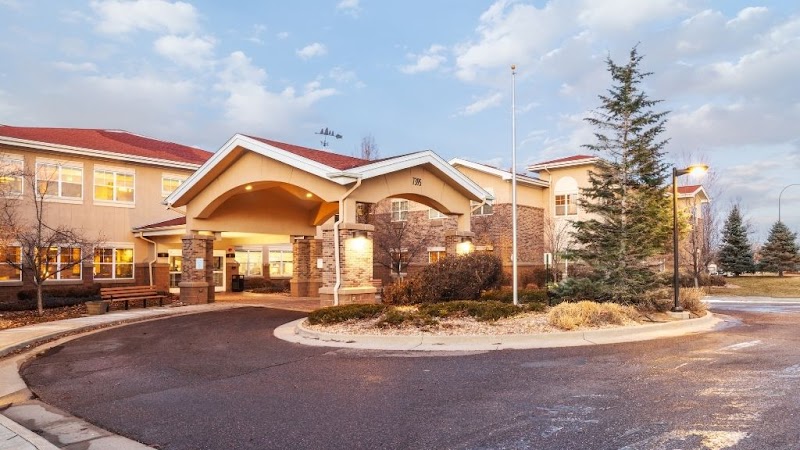
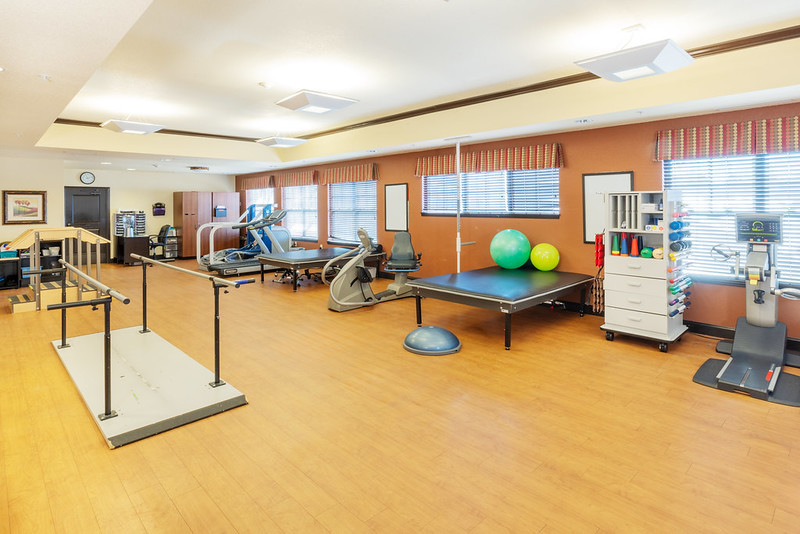
LAKEWOOD POST ACUTE AND REHABILITATION

7395 W EASTMAN PL, LAKEWOOD, CO 80227 (303) 730-8000
For profit - Limited Liability company 108 Beds PACS GROUP Data: November 2025
Trust Grade
15/100
#189 of 208 in CO
Last Inspection: March 2025

Within standard 12-15 month inspection cycle. Federal law requires annual inspections.

Overview

Lakewood Post Acute and Rehabilitation has received a Trust Grade of F, indicating significant concerns regarding the quality of care provided. With a state rank of #189 out of 208 facilities in Colorado, they are in the bottom half, and #19 out of 23 in Jefferson County, suggesting limited better options locally. Although the facility is showing improvement in some areas, reducing issues from 13 in 2023 to 11 in 2025, the staffing situation is concerning, with a low rating of 1 out of 5 stars and a high turnover rate of 63%, well above the state average. Families may also be troubled by the $49,137 in fines, which is more than 79% of other Colorado facilities, indicating potential compliance issues. Notable incidents include a failure to monitor and manage a resident’s significant weight loss and inadequate pain management for another resident following surgery, highlighting serious shortcomings in care.

Trust Score
F
15/100
In Colorado
#189/208
Bottom 10%
Safety Record
High Risk
Review needed
Inspections
Getting Better
13 → 11 violations
Staff Stability
⚠ Watch
63% turnover. Above average. Higher turnover means staff may not know residents' routines.
Penalties
⚠ Watch
$49,137 in fines. Higher than 84% of Colorado facilities, suggesting repeated compliance issues.
Skilled Nurses
○ Average
RN staffing data not reported for this facility.
Violations
⚠ Watch
34 deficiencies on record. Higher than average. Multiple issues found across inspections.
★☆☆☆☆
1.0
Overall Rating
★☆☆☆☆
1.0
Staff Levels
★★★★☆
4.0
Care Quality
★★☆☆☆
2.0
Inspection Score
Stable
2023: 13 issues
2025: 11 issues

The Good

  • 4-Star Quality Measures · Strong clinical quality outcomes
  • Full Sprinkler Coverage · Fire safety systems throughout facility
  • No fines on record

Facility shows strength in quality measures, fire safety.

The Bad

1-Star Overall Rating

Below Colorado average (3.1)

Significant quality concerns identified by CMS

Staff Turnover: 63%

17pts above Colorado avg (46%)

Frequent staff changes - ask about care continuity

Federal Fines: $49,137

Above median ($33,413)

Moderate penalties - review what triggered them

Chain: PACS GROUP

Part of a multi-facility chain

Ask about local staffing decisions and management

Staff turnover is elevated (63%)

15 points above Colorado average of 48%

The Ugly 34 deficiencies on record

3 actual harm
Mar 2025 11 deficiencies
CONCERN (D)

Potential for Harm - no one hurt, but risky conditions existed

Deficiency F0552 (Tag F0552)

Could have caused harm · This affected 1 resident

**NOTE- TERMS IN BRACKETS HAVE BEEN EDITED TO PROTECT CONFIDENTIALITY** Based on record review and interviews, the facility failed to ensure consent was obtained for the use of psychotropic medication...

Read full inspector narrative →
**NOTE- TERMS IN BRACKETS HAVE BEEN EDITED TO PROTECT CONFIDENTIALITY** Based on record review and interviews, the facility failed to ensure consent was obtained for the use of psychotropic medications for one (#4) of five residents reviewed for unnecessary medications out of 17 sample residents. Specifically, the facility failed to ensure informed consents, which included the risks associated with taking a psychotropic medication, were obtained for Resident #4 prior to the administration of a psychotropic medication. Findings include: I. Facility policy and procedure The Use of Psychotropic Medications policy and procedure, undated, was received from the regional director of clinical services (RDCS) on 3/27/25 at 1:22 p.m. It revealed in pertinent part, It is the intent of this policy to ensure that residents only receive psychotropic medications when other nonpharmacological interventions were clinically contraindicated. Additionally, these medications should only be used to treat the resident's medical symptoms and not used for discipline or staff convenience, which would deem it a chemical restraint. The resident has the right to accept or decline the initiation or increase of a psychotropic medication. The facility will document that the resident or resident representative was informed in advance of the risks and benefits of the proposed care, the treatment alternatives or other options and the preferred option to accept or decline in a format the facility deems to use (written consent form, narrative note). II. Resident #4 A. Resident status Resident #4, age less than 65, was admitted on [DATE]. According to the March 2025 computerized physician orders (CPO), diagnoses included type two diabetes mellitus (abnormal glucose control), major depressive disorder and heart failure. The 2/23/25 minimum data set (MDS) assessment revealed the resident was cognitively intact with a brief interview of mental status (BIMS) score of 15 out of 15. The MDS assessment revealed Resident #4 received antipsychotic medications, had depression and was taking antidepressants. B. Record review The March 2025 CPO revealed the following physician's orders: -Bupropion 150 milligrams (mg), one tablet by mouth once daily for depression, ordered on 2/16/25; and, -Bupropion 300 mg, one tabled by mouth once daily for depression, ordered on 3/22/25. The 2/16/25 comprehensive care plan revealed Resident #4 was on antidepression medication due to a diagnosis of depression. Interventions included administering medications as ordered by the physician and observing the resident's mood and response to the medications. -Review of Resident #4's electronic medical records (EMR) failed to reveal an informed consent, which included the risks associated with taking the medication were discussed with the resident or resident representative prior to the administration of the medication. Review of the resident's EMR on 3/26/25 revealed the facility obtained informed consent from Resident #4 on the use of Bupropion on 3/26/25. -The facility failed to obtain informed consent from Resident #4 prior to the first administration of Bupropion on 2/16/25. C. Staff interviews Licensed practical nurse (LPN) #1 was interviewed on 3/26/25 at 2:10 p.m. She said it was the responsibility of the admitting nurse to obtain all consents for treatment including informed consents on psychotropic medications. LPN #1 said the resident had the right to refuse or accept taking medication and consent should be obtained from the resident or responsible party prior to the first administration. LPN #1 reviewed Resident #4's EMR and was unable to locate an informed consent for the use of Bupropion and said she would follow up on this matter. (see record review above). The social service director (SSD) was interviewed on 3/27/25 at 12:26 p.m. She said informed consent should be obtained from the resident or responsible party to ensure they knew the risks and benefits of taking the medication. The director of nursing (DON) was interviewed on 3/27/25 at 1:39 p.m. She said the floor nurses were responsible to ensure informed consent was obtained on medications during the admission process. She said the consent forms were part of the packet set-up to be completed for admissions. The DON said informed consent was important so the resident was aware of the risks and benefits of the medications they were taking . The DON said every new admit chart was audited by herself or the assistant director of nursing (ADON). The DON said she was unable to determine how the consent for this medication was missed.
CONCERN (D)

Potential for Harm - no one hurt, but risky conditions existed

Comprehensive Care Plan (Tag F0656)

Could have caused harm · This affected 1 resident

**NOTE- TERMS IN BRACKETS HAVE BEEN EDITED TO PROTECT CONFIDENTIALITY** III. Resident #15 A. Resident status Resident #15, age [AGE], was admitted on [DATE]. According to the March 2025 CPO, diagnoses...

Read full inspector narrative →
**NOTE- TERMS IN BRACKETS HAVE BEEN EDITED TO PROTECT CONFIDENTIALITY** III. Resident #15 A. Resident status Resident #15, age [AGE], was admitted on [DATE]. According to the March 2025 CPO, diagnoses included altered mental status, rheumatoid arthritis, osteoporosis, muscle weakness, chronic pain syndrome and cellulitis (infection of the skin of the right lower limb. The 1/23/25 MDS assessment documented the resident had moderate cognitive impairments with a BIMS score of nine out of 15. She had a functional range of motion deficit to her lower extremities. She required a wheelchair for mobility and required maximum assistance from staff for toileting, showering, dressing, bed mobility, transfers and ambulation. B. Resident interview and observation Resident #15 was interviewed on 3/24/25 at 10:30 a.m. The resident was unable to recall how she sustained her contractures but pointed out splints on her table. She said she could not remember how long she had been using the splints but she did not like them because the splints caused her pain. The resident said she knew she had been working with therapy for a long time and her goal was to be able to straighten her legs. During the interview Resident #15 was laying on her right side with her legs bent with her heels touching her back. C. Record review The comprehensive care plan, initiated 7/16/24, revealed the resident had an alteration in musculoskeletal status related to rheumatoid arthritis and osteoporosis. Interventions (revised 7/16/24) included anticipating and meeting the residents needs, providing heat and cold applications as needed, placing the call light within reach, monitoring for fatigue, monitoring for risk of falls and monitoring signs and symptoms or complications related to arthritis. The therapy care plan, revised on 7/16/24, revealed the resident was on physical therapy (PT) services related to a spinal surgery and metabolic encephalopathy which caused weakness and deconditioning. Interventions (revised 7/16/24) included PT five times a week for four weeks for improved independence and safety with functional mobility. -The care plan did not include the presence of contractures or a medical device to treat contractures such as a splint. The March 2025 CPO revealed the following physician's orders: A review of hospital records, dated 4/29/24, revealed the resident had bilateral knee and hip contractures. The OT evaluation, dated 5/29/24, documented the resident had bilateral contractures and spasticity (involuntary muscle stiffness). The PT evaluation, dated 5/29/24, documented the resident began using a bilateral knee extension bracing for contracture management two hours daily. The PT evaluation, dated 3/20/25, documented the resident was using knee splints for up to six hours a day to improve range of motion. -However, review of Resident #15's comprehensive care plan did not reveal the use of the splints (see care plan above). D. Staff interviews Licensed practical nurse (LPN) #1 was interviewed on 3/26/25 at 9:09 a.m. She said she had worked with Resident #15 for over a year and the resident had contractures in her legs the entire time. LPN #1 said therapy worked with the resident and she had knee splints for the contractures. She said the nurse management wrote all the care plans and the interventions for residents for nursing treatment and services. LPN #1 said the nursing staff utilized the care plan for resident centered interventions. The director of rehabilitation (DOR) was interviewed on 3/26/25 at 12:55 p.m. She said Resident #15 was receiving services from PT and OT. The DOR said PT had just started using a splint with the resident for her contractures. She said the nursing department would be responsible for including any devices used for contractures in the resident's care plan. The DON was interviewed on 3/27/25 at 1:47 p.m. She said the therapy department took the lead on assessing and identifying devices that were needed for the residents. The DON said the nursing department added the resident diagnosis and any treatment being received from therapy into the resident's care plan. The DON said she thought Resident #15 had only used a splint one time. She said she did not know why the splint was not included in her care plan. Based on record review and interviews, the facility failed to develop and implement a comprehensive care plan for two (#18 and #15) of three residents reviewed for care plans out of 17 sample residents. Specifically, the facility failed to: -Ensure Resident #18's comprehensive care plan addressed his use of oxygen; and, -Ensure Resident #15 had a care plan for the use of splint and contractors. Findings include: I. Facility policy and procedure The Comprehensive Care Plan policy, undated, was provided by the regional director of clinical services (RDCS) on 3/27/25 at 1:22 p.m. It read in pertinent part, It is the policy of this facility to develop and implement a comprehensive person-centered care plan for each resident, consistent with resident rights, that includes measurable objectives and timeframes to meet a resident's medical, nursing, mental and psychosocial needs. The comprehensive care plan will be developed within 7 (seven) days after the completion of the comprehensive MDS (minimum data set) assessment. All Care Assessment Areas (CAAs) triggered by the MDS will be considered in developing the plan of care. Other factors identified by the interdisciplinary team, or in accordance with the resident's preferences, will also be addressed in the plan of care. The facility's rationale for deciding whether to proceed with care planning will be evidenced in the clinical record. The comprehensive care plan will describe the services that are to be furnished to attain or maintain the resident's highest practicable physical, mental, and psychosocial well-being. II. Resident #18 A. Resident status Resident #18, age greater than 65, was admitted on [DATE]. According to the March 2025 computerized physician orders (CPO), diagnoses included oxygen dependency, morbid (severe) obesity due to excess calories, shortness of breath and dependence on supplemental oxygen. The 1/31/25 MDS assessment revealed the resident was cognitively intact with a mental status (BIMS) score of 15 out of 15. He was independent with eating. The MDS assessment indicated he received oxygen therapy. B. Observations Resident #18 was observed three times between 3/24/25 and 3/27/25 in his room. He had a nasal cannula in place during all observation. His oxygen tubing was attached to his portable oxygen or his oxygen concentrator during observations. C. Record review Review of Resident #18`s comprehensive care plan on 3/24/25 did not reveal a care plan for oxygen therapy. Review of Resident #18's electronic medical record (EMR) revealed the resident did not have a physician's order for oxygen use. Cross-reference F695: failure to ensure a physician's order was obtained for oxygen therapy. D. Staff interviews Registered nurse (RN) #1 was interviewed on 3/26/25 at 9:37 a.m. RN #1 said if a resident was receiving oxygen therapy, there should be a physician's order and a care plan. She said she reviewed Resident #18's EMR and was not able to find the care plan for Resident #18's oxygen therapy and flow rate. The assistant director of nursing (ADON) was interviewed on 3/26/25 at 9:47 a.m. The ADON said a care plan and a physician order should be in place for oxygen therapy. She said she was not able to find a care plan for the resident's use of oxygen. The director of nursing (DON) was interviewed on 3/26/25 at 2:19 p.m. She said the use of oxygen required a physician's order as well as a care plan. She said these documents were crucial for the staff to know what the resident's plan of care was. She said the facility completed an audit to ensure all residents utilizing oxygen had a care plan in place.
CONCERN (D)

Potential for Harm - no one hurt, but risky conditions existed

Deficiency F0658 (Tag F0658)

Could have caused harm · This affected 1 resident

**NOTE- TERMS IN BRACKETS HAVE BEEN EDITED TO PROTECT CONFIDENTIALITY** Based on observations, record review and interviews, the facility failed to ensure one (#15) of two residents received care and ...

Read full inspector narrative →
**NOTE- TERMS IN BRACKETS HAVE BEEN EDITED TO PROTECT CONFIDENTIALITY** Based on observations, record review and interviews, the facility failed to ensure one (#15) of two residents received care and services according to acceptable standards of clinical practice out of 17 sample residents. Specifically, the facility failed to ensure residents had a physician review and order for the use of specialized medical devices for Resident #15. Findings include: I. Resident #15 A. Resident status Resident #15, age [AGE], was admitted on [DATE]. According to the March 2025 computerized physician orders (CPO), diagnoses included altered mental status, rheumatoid arthritis, osteoporosis, muscle weakness, chronic pain syndrome, and cellulitis (infection of the skin) of the right lower limb. The 1/23/25 minimum data set (MDS) assessment documented the resident had moderate cognitive impairments with a brief interview of mental status (BIMS) score of nine out of 15. She had a functional range of motion deficit to her lower extremities. She required a wheelchair for mobility and required maximum assistance from staff for toileting, showering, dressing, bed mobility, transfers, and ambulation. The MDS assessment failed to indicate any assistive or therapeutic devices. B. Resident interview and observations Resident #15 was interviewed on 3/24/25 at 10:30 a.m. The resident was unable to recall how she sustained her contractures but pointed out splints on her table. She said she could not remember how long she had been using the splints. The resident said she knew she had been working with therapy for a long time and her goal was to be able to straighten her legs. During the interview Resident #15 was laying on her right side with her legs bent with her heels touching her back. Resident #15 was observed on 3/25/25 at 1:15 p.m. laying in her bed on her right side with her legs bent with her heels touching her back. C. Record review The comprehensive care plan, initiated 7/16/24, revealed the resident had an alteration in musculoskeletal status related to rheumatoid arthritis and osteoporosis. Interventions included anticipating and meeting the residents' needs, providing heat and cold applications as needed, placing the call light within reach, monitoring for fatigue, monitoring for risk of falls and monitoring for signs and symptoms or complications related to arthritis. The therapy care plan, revised on 7/16/24, revealed the resident was on physical therapy (PT) services related to spinal surgery and metabolic encephalopathy which caused weakness and deconditioning. Interventions included providing PT five times a week for four weeks for improved independence and safety with functional mobility. The March 2025 CPO revealed the following physician's orders: Provide occupational therapy (OT) two times a week for four weeks, treatment may include bilateral lower extremity passive range of motion exercises, ordered on 3/18/25. Provide PT one to two times a week. The resident would tolerate knee splinting daily to improve range of motion and reduce risk of skin breakdown, ordered on 3/20/25 and effective on 3/26/25 (during the survey). -Physician visit notes dated 3/15/24 to 3/19/25 failed to reveal orders for splints or braces for contractures. A PT evaluation, dated 5/29/24, documented the resident began using a bilateral knee extension bracing for contracture management two hours daily. A PT evaluation, dated 3/20/25, documented the resident was using knee splints for up to six hours a day to improve range of motion. -Review of the March 2025 CPO revealed the resident did not have a physicians' order for splint use until 3/26/25 (during the survey), although documentation revealed PT had been using the knee splints since 5/29/24. II. Staff interviews Licensed practical nurse (LPN) #1 was interviewed on 3/26/25 at 9:09 a.m. She said she had worked with Resident #15 for over a year and the resident had contractures in her legs the entire time. LPN #1 said therapy worked with the resident and she had knee braces for the contractures. LPN #1 said she did not know if there was a physician's order for the use of the splints. She said there should have been a physician's order prior to the use of the splints. The director of rehabilitation (DOR) was interviewed on 3/26/25 at 12:55 p.m. She said Resident #15 was receiving services from PT and OT. The DOR said PT had just started using a splint with the resident for her contractures. -However, record review revealed the PT was using splints since 5/29/24 (see record review above). The DOR said she did not know if the physician had to write an order for the use of splints or braces for Resident #15 because the resident was paying privately and not through her insurance. The DOR said she did not know how the staff knew how to provide person-centered care without the physician's. She said the therapist working with Resident #15 had told her that she had entered the order into the electronic medical record (EMR) on 3/20/25 but there was no record of this. The director of nursing (DON) was interviewed on 3/27/25 at 1:47 p.m. She said the therapy department took the lead on assessing and identifying devices that may be needed for the residents. The DON said once a trial of the device took place, the therapy department notified the nursing department and the physician would be contacted for an order. The DON said it was important to ensure there was a physician's order prior to the use of any devices such as braces or splints for the collaboration of care with all departments. The DON said she was not aware the resident did not have a physician's order for the splint until the survey.
CONCERN (D)

Potential for Harm - no one hurt, but risky conditions existed

Respiratory Care (Tag F0695)

Could have caused harm · This affected 1 resident

**NOTE- TERMS IN BRACKETS HAVE BEEN EDITED TO PROTECT CONFIDENTIALITY** Based on observations, record review and interviews, the facility failed to ensure one (#18) of three residents who required res...

Read full inspector narrative →
**NOTE- TERMS IN BRACKETS HAVE BEEN EDITED TO PROTECT CONFIDENTIALITY** Based on observations, record review and interviews, the facility failed to ensure one (#18) of three residents who required respiratory care received the care consistent with professional standards of practice out of 17 sample residents. Specifically, the facility failed to: -Obtain a physician`s order for oxygen therapy was in place for Resident #18. -Ensure Resident #18`s portable oxygen tank was operating when in use. Findings include: I. Facility policy and procedure The Oxygen Administration policy, undated, was provided by the regional director of clinical services (RDCS) on 3/27/25 at 1:22 p.m. It read in pertinent part, Oxygen is administered to residents who need it, consistent with professional standards of practice, the comprehensive person-centered care plans, and the resident's goals and preferences. Oxygen is administered under orders of a physician, except in the case of an emergency. Personnel authorized to initiate oxygen therapy include physicians, RNs (registered nurse), LPNs (licensed practical nurse) and respiratory therapists. The resident's care plan shall identify the interventions for oxygen therapy, based upon the resident's assessment and orders, such as, but not limited to: a. The type of oxygen delivery system. b. When to administer, such as continuous or intermittent and/or when to discontinue. c. Equipment setting for the prescribed flow rates. II. Resident #18 A. Resident status Resident #18, age greater than 65, was admitted on [DATE]. According to the March 2025 computerized physician orders (CPO), diagnoses included oxygen dependency, morbid (severe) obesity due to excess calories, shortness of breath and dependence on supplemental oxygen. The 1/31/25 minimum data set (MDS) assessment revealed the resident was cognitively intact with a mental status (BIMS) score of 15 out of 15. He was independent with eating. The MDS assessment indicated he received oxygen therapy. B. Observations On 3/24/25 at 10:21 a.m. Resident #18 was sitting in his wheelchair in his room He had a nasal cannula in his nose and the tube was attached to his portable oxygen tank. He had his portable oxygen tank on the back of his wheelchair. The portable oxygen tank was not turned on. He said he was unsure about the oxygen concentration setting. On 3/25/25 at 9:33 a.m. Resident #18 was in his room. He was sitting in his wheelchair and he had a nasal cannula in place. The oxygen tubing was attached to his oxygen concentration tank. The concentrator flow rate was set to 2.5 liters per minute (LPM). On 3/26/25 at 9:04 a.m. Resident #18 was sitting in his wheelchair in his room with the nasal cannula in his nose. The oxygen tubing was attached to the oxygen concentrator. The concentrator flow rate was set to 2 LPM. C. Record review Review of Resident #18`s March 2025 CPO revealed the resident did not have a physician's order for oxygen therapy. III. Staff interviews Certified nurse aide (CNA) # 1 was interviewed on 3/26/25 at 9:30 a.m. CNA #1 said the nurse notified the CNAs of the appropriate oxygen flow for the residents. He said they also had a report sheet that the assistant director of nursing (ADON) updated with the resident oxygen levels. He said the report sheet would show the residents oxygen flow rate. He said if a resident was using a portable oxygen tank, the resident's oxygen tubing should be reattached back to the concentrator upon returning to their room. He said the CNA might have forgotten to reattach Resident #18`s oxygen tubing to his concentrator after he returned to his room. Registered nurse (RN) #1 was interviewed on 3/26/25 at 9:37 a.m. RN #1 said the oxygen flow rate was located in the medication administration record (MAR) or on the report sheet. She said there should be a physician's order for oxygen therapy and it should be included on the resident's care plan. She was not able to find the physician`s order or the care plan for Resident #18's oxygen therapy and flow rate. She said the portable oxygen tank should be on when in use. She said residents should be switched over to the concentrator when they returned to their room. Cross- reference F656: failure to ensure Resident #18 had a care plan for the use of oxygen. The ADON was interviewed on 3/26/25 at 9:47 a.m. The ADON said a physician's order should be obtained and include the use of oxygen therapy and the flow rate. She said the hospital discharge paperwork should also tell them the correct therapies and flow rate ordered for the residents. She said a care plan and a physician's order should be in place for oxygen therapy. She was not able to find either documents in the resident's medical record. She said the portable tank should be on when in use. She said she will put the order in right away. The director of nursing (DON) was interviewed on 3/26/25 at 2:19 p.m. She said the use of oxygen required a physician's order as well as a care plan. She said these documents were crucial for the staff to know what the residents` plan of care was. She said portable oxygen should be turned on when in use.
CONCERN (D)

Potential for Harm - no one hurt, but risky conditions existed

Deficiency F0698 (Tag F0698)

Could have caused harm · This affected 1 resident

**NOTE- TERMS IN BRACKETS HAVE BEEN EDITED TO PROTECT CONFIDENTIALITY** Based on observations, record review and interviews, the facility failed to ensure one (#75) of one resident reviewed for dialys...

Read full inspector narrative →
**NOTE- TERMS IN BRACKETS HAVE BEEN EDITED TO PROTECT CONFIDENTIALITY** Based on observations, record review and interviews, the facility failed to ensure one (#75) of one resident reviewed for dialysis care out of 17 sample residents received dialysis services consistent with professional standards of practice. Specifically, the facility failed to consistently complete the pre-dialysis facility assessment section on dialysis communication form for Resident #75. Findings include: I. Facility policy and procedure The Hemodialysis policy and procedure, undated, was received from the regional director of clinical services (RDCS) on 3/27/25 at 1:22 p.m. It revealed in pertinent part, The facility will provide the necessary care and treatment, consistent with professional standards of practice, physician orders, the comprehensive person-centered care plan, and the resident's goals and preferences, to meet the special medical, nursing, mental, and psychosocial needs of residents receiving hemodialysis. The licensed nurse will communicate to the dialysis facility via telephonic communication or written format, such as a dialysis communication form or other form, that will include, but not limit itself to: -Timely medication administration (initiated, held or discontinued) by the nursing home and/or dialysis facility; -Physician/treatment orders, laboratory values, and vital signs; -Advance Directives and code status; specific directives about treatment choices; and any changes or need for further discussion with the resident/representative, and practitioners; -Nutritional/fluid management including documentation of weights, resident compliance with food/fluid restrictions or the provision of meals before, during and/or after dialysis and monitoring intake and output measurements as ordered; -Dialysis treatment provided and resident's response, including declines in functional status, falls, and the identification of symptoms that may interfere with treatments; -Dialysis adverse reactions/complications and/or recommendations for follow up observations and monitoring, and/or concerns related to the vascular access site; -Changes and/or declines in condition unrelated to dialysis; and, -The occurrence or risk of falls and any concerns related to transportation to and from the dialysis facility. The nurse will monitor and document the status of the resident's access site(s) upon return from the dialysis treatment to observe for bleeding or other complications. II. Resident #75 A. Resident status Resident #75, age greater than 65, admitted on [DATE]. According to the March 2025 computerized physician orders (CPO) diagnoses included metabolic encephalopathy, congestive heart failure (fluids overload on the heart), end stage renal disease (abnormal kidney function) and type two diabetes mellitus (abnormal glucose control). The 3/21/25 minimum data set (MDS) assessment revealed the resident had moderate cognitive impairments with a brief interview for mental status score (BIMS) score of ten out of 15. The MDS assessment revealed he had renal insufficiency, renal failure, or end stage renal disease (ESRD). B. Record review The dialysis communication book was provided for Resident #75 on 3/25/25 at 2:17 p.m. by registered nurse (RN) #1. Review of the binder revealed one communication sheet, dated 3/17/25. The post dialysis section of the form was not completed by the facility staff. The assistant director of nursing (ADON) provided a second binder for Resident #75 on 3/25/25 at 2:58 p.m. Review of the second binder revealed the dialysis center information with chair time, resident face sheet, medical orders for scope of treatment (MOST) form and current medication list. Review of the communication forms in the binder revealed the following: -The 3/17/25 communication form was placed into this binder and was l missing the post dialysis section to be completed by the facility; -The 3/19/25 communication form did not have the post dialysis section completed by facility staff; -The 3/21/25 communication form did not have the post dialysis section completed by facility staff; and, -The 3/24/25 communication form did not have the post dialysis section completed by facility staff. The March 2025 CPO revealed the following physician's orders: Obtain vital signs pre dialysis and post dialysis every shift every Monday, Wednesday and Friday, ordered on 3/24/25. Fill out pre/post dialysis form for dialysis Monday, Wednesday and Friday, name of dialysis center, location and chair time, ordered on 3/26/25 (during the survey). -Resident #75 had received four sessions of dialysis since admission to the facility. The facility failed to complete the post dialysis section of the communication form for all four dialysis sessions. III. Staff interviews RN #1 was interviewed on 3/25/25 at 3:06 p.m. She said the nurses were responsible for completing the dialysis communication forms prior to the resident leaving for dialysis and upon the resident's return. She said the nurse needed to review the form for orders or complications at dialysis and then complete the post dialysis section on the form. RN #1 confirmed the communication forms were incomplete (see record review above). The ADON was interviewed on 3/25/25 at 3:10 a.m. She said it was the floor nurses responsibility to ensure the dialysis communication forms were completed by all parties. The ADON said the missing entries on the dialysis forms were probably related to agency staff who provided care in the facility. The director of nursing (DON) was interviewed on 3/27/25 at 1:41 p.m. She said the facility was responsible for completing two of three sections on the communication forms used between the facility and the dialysis center. The DON said it was the responsibility of the floor nurse assigned to the resident to ensure the form was completed by all parties. The DON said the communication forms were important so the facility and the dialysis center were aware of the residents medical needs like if there was a change in condition or recommendations from dialysis to be discussed with the attending physician. The DON said agency staff have to review a binder prior to working to ensure they understand our policies, however it was the responsibility of the facility staff to ensure the forms were completed.
CONCERN (D)

Potential for Harm - no one hurt, but risky conditions existed

Deficiency F0742 (Tag F0742)

Could have caused harm · This affected 1 resident

**NOTE- TERMS IN BRACKETS HAVE BEEN EDITED TO PROTECT CONFIDENTIALITY** Based on record review and interviews, the facility failed to ensure residents diagnosed with mental disorder or psychosocial ad...

Read full inspector narrative →
**NOTE- TERMS IN BRACKETS HAVE BEEN EDITED TO PROTECT CONFIDENTIALITY** Based on record review and interviews, the facility failed to ensure residents diagnosed with mental disorder or psychosocial adjustment difficulty received appropriate treatment and services to attain the highest practicable mental and psychosocial wellbeing for one (#78) of three residents out of 17 sample residents. Specifically, the facility failed to: -Ensure Resident #78, who had a history of suicide attempts and trauma, was monitored for signs and symptoms of suicidal ideation; and, -Ensure Resident #78, who had a diagnosis of depression and requested to see a therapist, was provided with mental health services. Findings include: I. Resident #78 A. Resident status Resident #78, aged 66, was admitted on [DATE]. According to the March 2025 computerized physician orders (CPO), diagnoses included multiple fractures of ribs, myocardial infarction (heart attack), diabetes, chronic kidney disease, adjustment disorder with depressed mood and compression fracture of vertebra. The 3/25/25 minimum data set (MDS) assessment revealed the resident was cognitively intact with a brief interview for mental status (BIMS) score of 15 out of 15. The resident's depression screen assessment, dated 3/25/25, revealed Resident #78had indicated she felt depressed, hopeless and bad about herself. B. Resident interview and observation Resident #78 was interviewed on 3/24/25 at 11:00 a.m. Resident #78 said she was recently admitted to the facility following a car accident. She said she had asked the social services director (SSD) if she could see a therapist because she felt she needed to talk to someone. Resident #78 said she had lost her mother a few months prior to her admission to the facility, the anniversary of her nephew's murder was coming up in a few days and she was worried she would no longer be able to care for herself without assistance. She said she had not heard anything from the SSD about a therapist appointment. During the interview, Resident #78 became tearful and cried frequently when discussing her traumatic experiences. C. Record review The trauma informed care plan, initiated 3/21/25, revealed Resident #15was at risk for decreased psychosocial well-being, adjustment issues, emotional distress, ineffective coping skills and poor impulse control. Trauma included family issues, loss of mother in December 2024, murder of nephew in March 2022, life threatening illness, suicide attempt by overdose and recent breakup with her longterm partner. Interventions included encouraging the resident to verbalize her feelings, monitoring for signs and symptoms of decreased psychosocial wellbeing and adjustment issues and social services visits as indicated. Review of Resident #78's March 2025 CPO revealed the following physician's orders: Psychological evaluation and treatment needed, ordered 3/18/25. Bupropion (Wellbutrin) 150 milligrams (mg) tablet. Give one tablet by mouth one time per day for depression, ordered 3/18/25. Escitalopram (Lexapro) 5 mg tablet. Give one tablet one time per day for depression, ordered 3/18/25. Behavior monitoring for tearful or sad expressions, ordered 3/19/25. -The March 2025 CPO did not include a physician's order to monitor for potential signs and symptoms of suicidal ideation. The social history admission assessment, dated 3/18/25, revealed Resident #78 had indicated a history of stressful events to include a motor vehicle accident, life threatening illness or injury and a sudden, violent death. The resident lived with her sister and neither had been managing their health. Her sister was currently in the hospital and on dialysis. The discharge plan was unclear and the resident might have to move in with her brother. Social history obtained from the brother revealed the brother had concerns about the sisters being able to live together. Social services focus was to connect the resident with mental health services. Review of Resident #78's progress notes, from 3/18/25 to 3/25/25, failed to reveal documentation that referral had been sent to a psychologist for evaluation and treatment of the resident. II. Staff interviews Licensed practical nurse (LPN) #1 was interviewed on 3/26/25 at 9:09 a.m. LPN #1 said Resident #15 exhibited signs of depression, such as staying isolated in her room. LPN #1 said she knew the resident had lost her mother recently, but she was unaware of any other significant traumatic events or a history of suicide attempts for the resident. She said if the resident expressed signs or symptoms of depression, the nurse would document the information in the resident's medical record. Certified nurse aide (CNA) #2 was interviewed on 3/26/25 at 9:37 a.m. CNA #2 said he knew Resident #78's nephew had been murdered and the anniversary of his death was coming up. He said he was unaware of any other significant traumatic events or a history of suicide attempts for the resident. He said if the resident expressed signs or symptoms of depression, he would document it. CNA #3 was interviewed on 3/26/25 at 12:47 p.m. CNA #3 said Resident #78 cried frequently but she did not know why. The SSD was interviewed on 3/27/25 at 11:00 a.m. The SSD said she met with residents three days after admission to the facility. She said if a resident was having difficulty with coping or suffering from loss, she would check in with the resident. She said social services assessments were used to determine residents' needs. The SSD said the facility did not have any mental health providers. She said she only set up mental health services for a resident to follow up on after discharge from the facility. She said a resident with six or more traumatic events would be at higher risk for psycho social distress. She said if a resident had a history of suicidal ideations or attempts, that would warrant establishing behavior monitoring of signs and symptoms of increased depression. The SSD said she had completed a trauma assessment for Resident #78 and she was aware she had attempted suicide in the past. The SSD said she did not initiate behavior monitoring for suicidal ideations for the resident because Resident #78 said she would not attempt suicide again. She said she did not notify the facility staff that the resident had significant trauma or a history of suicide attempts. The SSD said it would be important for the staff to be aware that Resident #78 was at higher risk due for suicide due to an increase in stressors since her prior suicide attempt and staff could report to the SSD right away if there was a concern.
CONCERN (D)

Potential for Harm - no one hurt, but risky conditions existed

Medication Errors (Tag F0758)

Could have caused harm · This affected 1 resident

**NOTE- TERMS IN BRACKETS HAVE BEEN EDITED TO PROTECT CONFIDENTIALITY** Based on record review and interviews, the facility failed to ensure two (#15 and #11) of five residents were free from unnecess...

Read full inspector narrative →
**NOTE- TERMS IN BRACKETS HAVE BEEN EDITED TO PROTECT CONFIDENTIALITY** Based on record review and interviews, the facility failed to ensure two (#15 and #11) of five residents were free from unnecessary psychotropic medications out of 17 sample residents. Specifically, the facility failed to: -Document resident specific care plan approaches, to include medication specific target behaviors and person-centered interventions for Resident #15 and Resident #11's psychotropic medications; -Document behaviors for Resident #15 and Resident #11 to justify the use of psychotropic medications; and, -Ensure non-pharmacological interventions were offered to Resident #11 prior to the administration of an as needed (PRN) psychotropic medication. Findings include: I. Facility policy The Behavior Assessment, Interventions, and Monitoring policy, revised March 2019, was provided by the regional director of clinical services (RDCS) on 3/27/25 at 1:26 p.m. It read in pertinent part, The interdisciplinary team (IDT) will evaluate behavioral symptoms in residents to determine the degree of severity, distress and potential safety risk to the resident, and develop a plan of care accordingly. Interventions will be individualized and part of an overall care environment that supports physical, functional and psychosocial needs, and strives to understand, prevent or relieve the resident's distress or loss of abilities. Interventions and approaches will be based on a detailed assessment of physical, psychological and behavioral symptoms and their underlying causes, as well as the potential situational and environmental reasons for the behavior. The care plan will include a description of the behavioral symptoms, including: frequency, intensity, duration, outcomes, location, environment, and precipitating factors or situations. The care plan will include targeted and individualized interventions for the behavioral and/or psychosocial symptoms, the rationale for the interventions and approaches, specific and measurable goals for targeted behaviors, and how the staff will monitor for effectiveness of the interventions. Non-pharmacologic approaches will be utilized to the extent possible to avoid or reduce the use of antipsychotic medications to manage behavioral symptoms. When medications are prescribed for behavioral symptoms, documentation will include the rationale for use, potential underlying causes of the behavior, other approaches and interventions tried prior to the use of antipsychotic medications. For monitoring, if the resident is being treated for altered behavior or mood, the IDT will seek and document any improvements or worsening in the individual's behavior, mood, and function. The IDT will monitor the progress of individuals with impaired cognition and behavior until stable. New or emergent symptoms will be documented and reported. Interventions will be adjusted based on the impact on behavior and other symptoms. II. Resident #15 A. Resident status Resident #15, age [AGE], was admitted on [DATE]. According to the March 2025 computerized physician orders (CPO), diagnoses included altered mental status, chronic pain syndrome and unspecified dementia with behavioral disturbances. The 1/23/25 minimum data set (MDS) assessment documented the resident had moderate cognitive impairment with a brief interview of mental status (BIMS) score of nine out of 15. The MDS assessment indicated the resident did not exhibit hallucinations or delusions, did not have physically or verbally abusive behaviors directed towards others, and did not display other symptoms such as disrobing in public or smearing/throwing bodily waste. B. Resident interview Resident #15 was interviewed on 3/24/25 at 10:30 a.m. Resident #15 said she could not recall the medications she was taking but she said she had a history of anxiety and depression related to chronic pain. She said when the staff provided her with interventions that alleviated physical discomfort, such as distracting her through snacks and keeping the room temperature comfortable, this decreased her anxiety and depression. C. Record review The cognitive care plan, revised 3/4/25, revealed Resident #15 had exhibited cognitive loss related to encephalopathy and altered mental status. She had delusions and hallucinations about dead family members and strangers in her room. Interventions (revised 7/16/24) included explaining all care to the resident to reduce tension, providing cognitive therapy and reality orientation, and monitoring and documenting behavior episodes to attempt to determine underlying causes considering location, time of day, person involved and situation. -The care plan failed to identify what specific person-centered interventions were effective in decreasing Resident #15's hallucinations and delusions. The psychosocial care plan, revised 7/16/24, revealed Resident #15 was at risk for behavioral symptoms (striking out, grabbing others, combative, verbally, or physically abusive, inappropriate disrobing, smears/throws food/feces/objects). Interventions (revised 7/16/24) included anticipating needs, notifying the physician of episodes of aggression and abusive behaviors, observing and documenting changes in behavior to include potential triggers, and reducing stimulation. -The care plan failed to identify which specific target behaviors Resident #15 exhibited or what specific person-centered interventions were effective for the resident's behaviors. -The care plan failed to identify potential triggers for Resident #15's behaviors. Review of Resident #15's March 2025 CPO revealed the following physician's orders: Behavior monitoring every shift for antipsychotic medication with target behaviors of combativeness, harm to self or others, delusions, and hallucinations, ordered 10/31/24. Record non-pharmological interventions used for antipsychotic medication,to include re-direction to another area of the facility, re-orientation of the resident to the current situation, providing a safe and secure environment, visits from social services, and diverging attention to an activity of choice, ordered 10/31/24. Risperdal (antipsychotic medication) 0.5 milligrams (mg). Give one tablet by mouth one time per day for dementia with behaviors, ordered 2/27/25 (original start date 9/15/24). Review of Resident #15's progress notes from 1/1/25 to 3/25/25 revealed there was no documentation regarding any behaviors for the resident. Review of Resident #15's medication administration records (MAR) and treatment admission records (TAR) from 1/1/25 to 3/25/25 revealed there were no behaviors documented for the resident during that time period. Review of the facility's psychotherapeutic meeting minutes revealed Resident #15 had been reviewed by the IDT one time, on 3/18/25. -There was no documentation to indicate the facility had concerns regarding behavior episodes for the resident and there was no documentation to indicate the justification for the continued use of the resident's antipsychotic medication. III. Resident #11 A. Resident status Resident #11, age [AGE], was admitted on [DATE]. According to the March 2025 CPO, diagnoses included chronic pain, major depressive disorder and anxiety disorder. The 3/7/25 MDS assessment documented the resident had no cognitive impairments with a BIMS score of 15 out of 15. The MDS assessment indicated the resident had no behaviors. B. Resident interview Resident #11 was interviewed on 3/26/25 at 2:00 p.m. Resident #11 said she took PRN medication for anxiety. She said when she was feeling anxious, some non pharmacological interventions that helped were a cup of coffee and reading. Resident #11 said she had read three entire books since admitting to the facility and it distracted her from her anxiety. She did not recall if the staff offered her other interventions prior to giving her the PRN medication. C. Record review The medication care plan, initiated 3/13/25, revealed Resident #11 required anti-anxiety medications. Interventions included attempting non-pharmological approaches prior to medication administration and observing and recording the effectiveness of medications. -The care plan failed to identify person-centered non-pharmacological interventions that were effective for Resident #11. The psychosocial care plan, revised 3/13/25, revealed Resident #11 had a diagnoses of depression and anxiety and was at risk for tearfulness, isolation, withdrawing, restlessness, irritability and decline in mood. Interventions included observing for tearfulness, increased agitation and decreased participation in care. -The care plan failed to identify person-centered non-pharmacological interventions that were effective for Resident #11. Review of Resident #11's March 2025 CPO revealed the following physician's orders: Valium (benzodiazepine) 5 mg. Give one tablet by mouth every four hours as needed (PRN) for anxiety, ordered on 3/3/25 and discontinued 3/20/25. Valium 5 mg. Give one tablet by mouth every six hours PRN for anxiety, ordered 3/20/25. Behavior monitoring every shift for episodes of restlessness or repetitive questions. Record non-pharmological interventions, such as musical activity, empathetic listening, positive reinforcement, dim lights, social service visits, diverting attention, and encouraging the resident to express feelings or concerns, ordered 2/3/25. Review of Resident #11's MAR and TAR records from 2/3/25 to 3/25/25 revealed the following: The resident received PRN Valium five times between 2/3/25 and 2/28/25. -There was no documentation to indicate what behaviors warranted the administration of the medication. The resident received PRN Valium 102 times between 3/3/25 and 3/25/25. -There was no documentation to indicate what behaviors warranted the administration of the medication. Review of Resident #11's progress notes from 2/3/25 to 3/25/25 revealed a non pharmacological intervention was attempted or offered prior to the PRN Valium 25times out of 107 administrations of the medication. -The facility failed to consistently offer non-pharmacological interventions to Resident #11 prior to administration of her PRN Valium medication. A review of the facility's psychotherapeutic meeting minutes revealed Resident #11had been reviewed by the IDT on 3/5/25. -There was no documentation to indicate the facility had concerns regarding behaviors episodes for the resident. IV. Staff interviews Licensed practical nurse (LPN) #1 was interviewed on 3/26/25 at 9:09 a.m. LPN #1 said prior to the administration of a PRN psychotropic medication, such as Valium for anxiety, the nurse should offer non-pharmacological interventions. Non-pharmacological interventions tried were documented in the resident's MAR or the TAR, as well as specific notes were put into the progress notes. She said the social services director (SSD) put standard, not individualized, interventions on the monitoring order and the nurses determined what worked most effectively through trial and error with the resident. LPN #1 said Resident #11 had behaviors of anxiety and agitation related to pain and stress over her health conditions. LPN #1 said she tried non-pharmacological interventions with Resident #11 such as one-on-one interactions, offering a book, offering a cup of coffee and offering to take the resident to the therapy department for socialization. LPN #1 said Resident #15 had behaviors of crying for staff to keep her company or agitation when she became too warm and the non-pharmacological interventions that worked for her included one-on-one visits, snacks (such as yogurt), turning on her air conditioner and putting a pillow in between her legs. She said she had not been asked by the SSD or the director of nursing (DON) what interventions she had tried for Resident #11 or Resident # 15. Certified nurse aide (CNA) #2 was interviewed on 3/26/25 at 9:37 a.m. CNA #2 said Resident #11 had behaviors of anxiety but he did not know the specifics. He said when she became anxious, he would give her a cup of coffee or offer to take her to visit the therapy department and that was effective. CNA #2 said Resident #15 cried out for attention and going to her favorite activities, such as bingo, was an effective intervention, as well as offering her a favorite snack, such as yogurt. CNA #3 was interviewed on 3/26/25 at 11:00 a.m. CNA #3 said Resident #15 was often confused but she did not have any behaviors that she knew of. CNA #1 was interviewed on 3/26/25 at 12:47 p.m. CNA #1 said Resident #15 was very vocal and cried frequently. He said he was not sure if she was crying because she was in pain or because she was depressed. He said the intervention he tried with Resident #15 was to turn on her air conditioner. CNA #1 said reorientating the resident to reality or removing her from the environment (her room) were not effective interventions because the resident required extensive assistance from staff to leave her room and this could cause her a lot of pain and reorientation would cause the resident distress. The SSD was interviewed on 3/27/25 at 11:00 a.m. The SSD said her role with psychotropic medications started at admission when she would review the hospital discharge records for background information on the resident's medications, history and diagnoses. The SSD said she assessed the residents after admission and reported back to the physician if there were any concerns with the psychotropic medications or if there needed to be changes to the medications. She said she determined the appropriate behaviors to put in the behavior tracking order based on the type of medication, or drug class, as well as the resident's diagnoses. The SSD said the nurse admitting the resident entered the physician's order for behavior tracking. She said if there were specific behaviors, the SSD would make modifications to the behavior tracking. The SSD said to determine the effectiveness of the psychotropic medications, she interviewed the nursing staff, the CNA staff and reviewed information from the morning clinical meeting. She said the nurses documented behaviors on the residents' TARs or in the progress notes. The SSD said the CNAs used the behavior tracking physician's orders to determine the specific non-pharmacological interventions to use for resident behaviors. She said the CNAs documented behaviors on the [NAME] (a tool utilized to provide consistent resident care) or in the CNA documentation system. The SSD said when there was a change to the behaviors or interventions, the DON would make updates to the physician's orders and staff were notified of the change when it came up on the resident's TAR again. She said once a month, the facility had a psychotherapeutic medication meeting where the residents' medications, behaviors and depression screens were reviewed. The SSD said the IDT reviewed the behavior monitoring documented on the TAR and the progress notes for changes to provide behavior information at the meeting. She said it was important the behaviors were being accurately captured and documented on the behavior monitoring records to reflect the necessity and efficacy of the psychotropic medications. The SSD said if a resident was taking a PRN psychotropic medication, the nurse needed to attempt a non-pharmacological intervention before offering the PRN medication and document whether the intervention was effective or not. She said the necessity for the PRN medications were reviewed in the psychotherapeutic drug meetings. The SSD said the meeting was important because the pharmacist, the medical director, social services and nurse management staff were present to review and make recommendations on medications for residents who were staying long-term in the facility. The SSD said Resident #11 was receiving Valium PRN for restlessness and fidgeting. She said she was not sure the origin of her behaviors other than the resident suffered from anxiety related to her chronic pain. The SSD said she was not aware of the specific non-pharmacological interventions listed for the PRN medication or what interventions the staff were using that were effective with Resident #11. The SSD said Resident #15 was prescribed Risperdal for combativeness, harm to self or others, delusions and hallucinations. She said Resident #15 had lived in the facility since 3/14/24 and should be reviewed in the psychotherapeutic meeting every quarter. She said the reason Resident #15 was only reviewed one time since 3/14/24 was because the facility had been having the meeting sporadically and not consistently. She said the psychotherapeutic drug meeting schedule had been disrupted with DON and assistant director of nursing (ADON) staffing changes. She said the facility did not have a process to ensure systems, such as the psychotherapeutic drug meetings were not interrupted by changes in clinical staff. The SSD said she was not aware that the current non-pharmacological interventions listed on the behavior monitoring records were ineffective and the staff were using different interventions for residents. The SSD said if the staff were not documenting correctly as to what behaviors were occurring and what interventions were being used, this affected the physician's ability to show the necessity for the medication and made it appear the facility was only using medication as an intervention for behaviors.
CONCERN (D) 📢 Someone Reported This

A family member, employee, or ombudsman was alarmed enough to file a formal complaint

Potential for Harm - no one hurt, but risky conditions existed

Deficiency F0808 (Tag F0808)

Could have caused harm · This affected 1 resident

**NOTE- TERMS IN BRACKETS HAVE BEEN EDITED TO PROTECT CONFIDENTIALITY** Based on observations, record review and interviews the facility failed to ensure for one (#5) of two residents reviewed receive...

Read full inspector narrative →
**NOTE- TERMS IN BRACKETS HAVE BEEN EDITED TO PROTECT CONFIDENTIALITY** Based on observations, record review and interviews the facility failed to ensure for one (#5) of two residents reviewed received foods in the appropriate form as prescribed by the physician and/or assessed by the interdisciplinary team to support the treatment and plan of care. Specifically, the facility failed to consistently follow the physician's order for a renal diet for a Resident #5. Findings include: I. Professional reference The National Kidney Foundation (2023) Potassium in Your Diet, was retrieved on 4/2/25 from https://www.kidney.org/kidney-topics/potassium-your-ckd-diet It read in pertinent part, People with kidney disease are often advised to avoid high potassium foods. The body uses the potassium it needs. A person's kidneys remove the extra potassium from the blood. But when someone has kidney disease, the kidneys cannot remove extra potassium in the right way, and too much potassium can stay in the blood. When there is too much potassium in the blood, it is called hyperkalemia, or high potassium. Having too much potassium in the blood can be dangerous. Potassium affects the way a person's heart muscles work. When there is too much potassium, the heart may beat irregularly, which in the worst cases can cause heart attack. Foods high in potassium can include potatoes and tomatoes. II. Resident status A. Resident #5 Resident #5, age [AGE], was admitted on [DATE]. According to the March 2025 computerized physician orders (CPO), diagnosis of acute kidney failure, diabetes and protein calorie malnutrition. The 3/14/25 minimum data set (MDS) assessment documented the resident was cognitively intact with a brief interview of mental status (BIMS) score of 15 out of 15. The resident had a diagnosis of renal failure and was prescribed a therapeutic diet. B. Resident interview and observation Resident #5 was interviewed on 3/24/25 at 10:30 a.m. She said she was not aware she had kidney disease until her recent hospitalization but tried to adhere to her new renal diet. Resident #5 said she was aware she was supposed to eat foods low in potassium but frequently received foods that were not consistent with her renal diet like potatoes, tomatoes and bananas. She said she left those items on the plate and did not eat them. On 3/24/25 at 1:00 p.m. Resident #5 had her lunch tray. She had received tomatoes on the side and she had left them uneaten. C. Record review The nutrition care plan, initiated 3/15/25, revealed the resident had altered nutrition related to acute kidney failure. Interventions included to provide diet as ordered. -The care plan did not specify the resident's therapeutic diet. The March 2025 CPO revealed a physician's order for a renal protein 80 gram (g) diet with regular textures- ordered on 3/10/25. The dietary assessment, dated 3/10/25, revealed the resident was on a renal diet and was cognitively able to understand her prescribed diet. The physician's history and physical, dated 3/10/25, revealed the resident was hospitalized prior to admitting to the facility due to her kidney functioning. She reported to the physician she had lost her sense of taste but it had improved with her improving renal function. The weight note, dated 3/19/25, revealed the resident had a 4% anticipated weight loss due to diuretics. The resident reported she did not eat a lot of her meal if she received foods that she knew were high in potassium. The resident was provided education on her diet. III. Staff interviews The nutrition service manager (NSM) and the registered dietitian (RD) were interviewed together on 3/27/25 at 10:30 a.m. The RD said she reviewed the resident's prescribed diet in her evaluation and put the diet order into the electronic medical record (EMR). The RD said the NSM was notified through the EMR and entered the diet order into the electronic ticket system. The RD said the electronic ticket system printed out the resident's meal tickets with their imputed diet, texture and preferences. The RD said she worked at the facility part time and when she was in the building, she checked the tickets on the meal trays before the tray went out to the resident to ensure the order was correct and consistent with the resident's diet. The RD said for a resident on a renal diet, they received foods that were low in potassium because of the kidney's compromised functioning. The NSM said the facility started using the current electronic ticket system two months prior and he had found occasional errors in the system if too many specifics are entered into a resident's diet order. He said he had been working on how to improve the system errors and on a process to provide education to the kitchen staff on the different therapeutic diets. He said he was aware of the error with the tomatoes on the meal tray for Resident #5 on 3/24/25 but was not aware she had received high potassium foods on other days. The NSM said he would begin to work on a system to make sure the tickets are checked for accuracy for every meal, not only the meals when the RD was present.
CONCERN (E)

Potential for Harm - no one hurt, but risky conditions existed

Deficiency F0730 (Tag F0730)

Could have caused harm · This affected multiple residents

Based on record review and interviews, the facility failed to complete a performance review of every nurse aide at least once every 12 months and provide regular in-service education based on the outc...

Read full inspector narrative →
Based on record review and interviews, the facility failed to complete a performance review of every nurse aide at least once every 12 months and provide regular in-service education based on the outcome of these reviews for five of five certified nurse aides (CNA). Specifically, the facility failed to complete annual performance reviews for CNA #2, CNA #4, CNA #5, CNA #6 and CNA #7 in order to determine potential training needs. Findings include: I. Facility policy and procedure The Performance Evaluations policy and procedure, revised September 2024, was provided by the regional director of clinical services (RDCS) on 3/27/25 at 1:22 p.m. It read in pertinent part, The job performance of each employee shall be reviewed and evaluated at least annually. A performance evaluation will be conducted on each employee at the conclusion of his/her 90 day probationary period, and at least annually thereafter. Performance evaluations may be used in determining employee's promotion, shift/position transfer, demotions, terminations, wage increases and to improve the quality of the employee's work performance. The written performance evaluations will contain the director's and/or supervisor's remarks and suggestions, any action that should be taken (further training), and goals. II. Record review Annual performance reviews were requested on 3/25/25 at 3:59 p.m. for CNA #2 (hired 7/20/23), CNA #4 (hired on 7/30/23), CNA #5 (hired on 7/20/23), CNA #6 (hired on 7/20/23) and CNA #7 (hired on 3/18/24). -The facility was unable to provide documentation indicated CNA #2, CNA #4, CNA #5, CNA #6 and CNA #7 had annual performance evaluations. -The director of nursing (DON) said the five CNAs did not have annual performance reviews and had not completed annual in-service education based on the outcome of their reviews. Cross-reference F943 for failure to ensure all staff had abuse and dementia training. III. Staff interviews The DON was interviewed on 3/26/25 at 2:11 p.m. The DON said she had become the DON six weeks prior to the survey. She said she did not know why the annual performance evaluations had not been completed.
CONCERN (E)

Potential for Harm - no one hurt, but risky conditions existed

Infection Control (Tag F0880)

Could have caused harm · This affected multiple residents

**NOTE- TERMS IN BRACKETS HAVE BEEN EDITED TO PROTECT CONFIDENTIALITY** Based on observations and interviews, the facility failed to maintain an infection control program designed to provide a safe, s...

Read full inspector narrative →
**NOTE- TERMS IN BRACKETS HAVE BEEN EDITED TO PROTECT CONFIDENTIALITY** Based on observations and interviews, the facility failed to maintain an infection control program designed to provide a safe, sanitary and comfortable environment to help prevent the development and transmission of diseases and infection. Specifically, the facility failed to: -Ensure staff wore the appropriate personal protective equipment (PPE) in contact and/or droplet precaution resident rooms; -Ensure housekeeping staff cleaned resident rooms in a sanitary manner: and, -Ensure disinfectant dwell times were followed. Findings include: I. PPE failures A. Facility policy and procedure The Infection Preventions and Control Program, revised October 2018, was received from the regional director of clinical services (RDCS) on 3/24/25 at 2:23 p.m. It revealed in pertinent part, An infection prevention and control program (IPCP) is established and maintained to provide a safe, sanitary and comfortable environment and to help prevent the development and transmission of communicable diseases and infections. The infection prevention and control program is a facility-wide effort involving all disciplines and indi-viduals and is an integral part of the quality assurance and performance improvement program. B. Observations On 3/24/25 at 12:04 p.m. resident room [ROOM NUMBER] was observed to have a sign on the door identifying the room was on droplet precautions and a PPE container was located to the left of the door. The assistant director of nursing (ADON) was applying a gown, mask, gloves and a face shield. The ADON applied PPE prior to entering the resident room with a lunch tray. The ADON exited room [ROOM NUMBER] with a mask and face shield. The ADON then removed her face shield and placed it into a blue paper bag located on the isolation cart and performed hand hygiene with an alcohol based rub. The blue paper bag was noted to have a second face shield in it. -The ADON failed to dispose of the face shield or disinfect it prior to placing it into the blue paper bag. On 3/24/25 at 10:21 a.m. an unidentified housekeeper was observed cleaning resident room [ROOM NUMBER]. The room had a sign on the outside of the door indicating the resident was on droplet precautions and an isolation cart with PPE was available outside the door in the hallway. The housekeeper entered the resident's room wearing a surgical mask and gloves. Upon her exit from the isolation room she removed her gloves and completed hand hygiene with an alcohol based hand rub. She then proceeded to the next room with the surgical mask in place. The housekeeper was observed to enter two other resident rooms with the same surgical mask worn in room [ROOM NUMBER], who was on droplet precautions per the signage on the door. -The housekeeper failed to properly apply the correct PPE when entering a resident room in isolation for droplet precautions and she failed to remove all PPE on exit of the room. On 3/25/25 at 12:09 p.m. the nutrition service manager (NSM) was brought a lunch meal tray to residents in room [ROOM NUMBER]. He came to the closed door, read the sign and looked for the PPE cart. The NSM asked the floor nurse where the PPE was to enter room [ROOM NUMBER]. Registered nurse (RN) #1 advised him it had been moved into the resident's room. The NSM then placed the room tray items on a table in the hallway approximately 10 feet from the resident's room. The NSM entered the resident's room, collected a gown, gloves and a mask. He applied the PPE then walked across the hallway to retrieve the lunch tray and entered room [ROOM NUMBER] to deliver the room tray. -The NSM failed to properly don PPE without bringing the PPE into the hallway after entering the resident room to retrieve the PPE. On 3/25/25 at 2:38 p.m. an unidentified oxygen supplier entered resident room [ROOM NUMBER]. There was a sign on the door that indicated the resident was on droplet precautions. There was a cart to the left of the door that contained PPE. The unidentified oxygen supplier did not put on PPE. He was observed to be within three feet of the resident assessing her oxygen use. The oxygen supplier exited the room, returned to the nurses station, spoke with facility personnel, returned to the resident's room and had staff assist him in retrieving an oxygen concentrator from the resident's room that was not in use. He then applied gloves in the hallway and wiped the oxygen concentrator down with a disinfectant wipe. He left the concentrator in the hallway then proceeded to several other resident rooms reviewing their oxygen needs. -The oxygen supplier failed to apply PPE prior to entering an isolation room and failed to perform hand hygiene after exiting a resident's room who was on droplet isolation room. C. Staff interviews RN #1 was interviewed on 3/25/25 at 2:22 p.m. She said the resident in room [ROOM NUMBER] was on isolation for vomiting and loose stools. RN #1 said the resident in room [ROOM NUMBER] was able to self ambulate to the restroom. RN #1 said the PPE cart was placed into the resident's room who resided in room [ROOM NUMBER] per the infection preventionist (IP) direction on 3/25/25. RN #1 said the IP informed her it could be placed inside the residents room if kept in what the facility considered a clean area in the room. RN #1 said the resident in room [ROOM NUMBER] was initially placed on droplet precautions, but was then changed to contact precautions per the IP direction. RN #1 said PPE was to be applied prior to entering the resident's room and removed prior to exiting. RN #1 said a gown and gloves were needed for contact precautions. RN #1 said if the resident was on droplet precautions the staff would have to apply a mask in addition to gown and gloves. RN #1 said regardless if the staff was providing care or not, anyone who entered a resident's room needed to apply PPE to prevent the spread of infection. The unidentified oxygen supplier was interviewed on 3/25/25 at 2:48 p.m. He said he worked for the oxygen company. He said he did not realize he entered a resident's room who was in isolation. He said he did not touch the resident, but should have performed hand hygiene on exit from the room. He said he usually applied PPE when he saw a sign on resident doors but did not apply it today. The infection preventionist (IP) was interviewed on 3/27/25 at 10:49 a.m. She said there were currently two residents in the building that were on isolation. She said one resident was on droplet precautions and the other one was on contact precautions. The IP said anyone who entered a room on droplet precautions needed to apply gloves, gown, mask and a face shield. The IP said anyone who entered a resident's room that was on contact precautions needed to apply a gown and gloves. The IP said PPE was important to help prevent the spread of infection. The IP said PPE could be stored inside a resident's room for contact precautions. She said PPE was stored outside of the room when the resident was on droplet transmission. The IP said they created a clean area within resident room [ROOM NUMBER] to place the PPE for contact isolation. She said she expected staff to enter the room to apply PPE in the deemed clean area within the room. The IP said a resident in room [ROOM NUMBER] was initially placed on droplet precautions by staff and when she arrived at the facility on 2/25/25. She said she reviewed the resident's isolation precautions and changed the precautions to contact based on the resident's symptoms. The IP said she then changed the signs and placed the isolation cart inside the resident's room. The IP said the facility had plenty of PPE and the face shield used on 3/24/25 should have been disposed of or wiped down with a disinfectant prior to being placed into the blue paper bag. The housekeeping laundry manager (HLM) was interviewed on 3/27/25 at 12:21 a.m. He said the housekeeping staff were to wear PPE when entering a resident room who was in isolation along with performing hand hygiene with soap and water. The HLM said alcohol based had rub could be used for hand hygiene, but soap and water was more effective. II. Housekeeping failures A. Professional Reference Assadian O, Harbarth S, Vos M, et al. Practical Recommendations for Routine Cleaning and Disinfection Procedures in Healthcare Institutions: A Narrative Review. The Journal of Hospital Infection, (July 2021) 113:104-114, was retrieved on 4/2/25 from https://www.journalofhospitalinfection.com/article/S0195-6701(21)00105-5/fulltext. It revealed in pertinent part, High-touch surfaces, on the other hand, are usually close to the patient, are frequently touched by the patient or nursing staff, come into contact with the skin and, due to increased contact, pose a particularly high risk of transmitting pathogens (virus or microorganism that can cause disease) Healthcare-associated infections (HAIs) are the most common adverse outcomes due to delivery of medical care. HAIs increase morbidity and mortality, prolonged hospital stay, and are associated with additional healthcare costs. Contaminated surfaces, particularly those that are touched frequently, act as reservoirs for pathogens and contribute towards pathogen transmission. Therefore, healthcare hygiene requires a comprehensive approach. This approach includes hand hygiene in conjunction with environmental cleaning and disinfection of surfaces and clinical equipment. The Centers for Disease Control and Prevention (CDC) Environment Cleaning Procedures, (revised 3/19/24) was retrieved on 4/2/25 from https://www.cdc.gov/healthcare-associated-infections/hcp/cleaning-global/procedures.html. It read in pertinent part, High-Touch Surfaces: The identification of high-touch surfaces and items in each patient care area is a necessary prerequisite to the development of cleaning procedures, as these will often differ by room, ward and facility. Common high-touch surfaces include: bed rails, IV (intravenous) poles, sink handles, bedside tables, counters, edges of privacy curtains, patient monitoring equipment (keyboards, control panels), call bells and door knobs. Proceed from cleaner to dirtier areas to avoid spreading dirt and microorganisms. Examples include: during terminal cleaning, clean low-touch surfaces before high-touch surfaces, clean patient areas (patient zones) before patient toilets, within a specified patient room, terminal cleaning should start with shared equipment and common surfaces, then proceed to surfaces and items touched during patient care that are outside of the patient zone, and finally to surfaces and items directly touched by the patient inside the patient zone. In other words, high-touch surfaces outside the patient zone should be cleaned before the high-touch surfaces inside the patient zone and clean general patient areas not under transmission-based precautions before those areas under transmission-based precautions. The Profect HP Hydrogen Peroxide Disinfectant product specification sheet, undated, was retrieved on 4/2/25 from https://www.spartanchemical.com/globalassets/sharepoint/product-literature--documentation---epidocuments/product-literature/l1008_profect_hp.pdf. It revealed in pertinent part Use Profect HP daily as part of a simple and effective cleaning and disinfection program for your entire facility on hard, non-porous surfaces. Featuring patented hydrogen peroxide technology, Profect HP kills bacteria and viruses in 60 seconds. One minute contact times ensure efficacy and compliance for your most critical disinfection needs. Ideal for daily use on high-touch surfaces, Profect HP is available in a convenient ready-to-use formula. B. Facility policy and procedure The Routine Cleaning and Disinfection policy and procedure, undated, was received from the RDCS on 3/27/25 at 1:22 p.m. It revealed in pertinent part It is the policy of this facility to ensure the provision of routine cleaning and disinfection in order to provide a safe, sanitary environment and to prevent the development and transmission of infections to the extent possible. Routine cleaning and disinfection of frequently touched or visibly soiled surfaces will be performed in common areas, resident rooms, and at the time of discharge. Cleaning considerations include, but not limited to, the following: a. Dry cleaning procedures will be conducted before wet procedures; b. Clean from areas that are visibly clean and least likely to be contaminated to areas usually visibly dirty; c. Clean from top to bottom (bring dirt from high levels down to floor levels); and, d. Clean from back to front areas. Routine surface cleaning and disinfection will be conducted with a detailed focus on visibly soiled surfaces and high touch areas to include, but not limited to: toilet flush handles; bed rails; tray tables; call buttons; TV (television) remote; telephones; toilet seats; monitor control panels, touch screens and cables; resident chairs; IV poles; blood pressure cuffs; sinks and faucets; light switches; and, door knobs and levers. Disinfectant solutions will be prepared fresh daily and changed frequently in order to ensure effectiveness. a. Follow manufacturer recommendations for dilution and frequency of changing of disinfectant solution. b. Follow manufacturer recommendations regarding appropriate contact time to ensure adequate disinfection. c. Change solution after cleaning a room under transmission-based precautions. Clean and disinfect any equipment that enters the room before use in another location. d. Verify products used to clean and disinfect surfaces in rooms under transmission-based precautions are effective against the pathogen of concern. C. Observations Housekeeper (HK) #1 was observed on 3/25/25 at 9:40 a.m. cleaning resident room [ROOM NUMBER], a single occupancy room. HK #1 performed hand hygiene with alcohol based hand rub and applied gloves. She entered the room with Profect HP disinfectant spray and a rag. HK#1 sprayed a table in the room, the TV stand and dresser tops. HK#1 immediately wiped the spray on the surfaces. -HK #1 failed to allow a one minute dwell time for the Profect HP disinfectant to sit on the surface of items to ensure it was properly disinfected (see professional reference above). HK#1 removed her gloves, performed hand hygiene with alcohol based hand rub and applied new clean gloves. HK #1 then entered the bathroom with Profect HP disinfectant spray and two rags. HK #1 sprayed the sink handles, rim and bowl then she sprayed the toilet tank, rim and bowl with Profect HP disinfectant spray. HK #1 immediately flushed the toilet after she sprayed it with Profect HP disinfectant. HK #1 then returned to the sink and turned on the water. She splashed water onto the mirror and took a paper towel from the paper towel and wiped the mirror. HK#1 then took one rag and wiped the sink rim, handles and then the bowl of the sink. HK #1 then took the same rag she cleaned the sink with and wiped down all the grab bars in the bathroom. -HK #1 failed to clean the sink from cleanest to dirtiest. -HK #1 used the same rag, which had been contaminated by the sink, to clean the grab bars which were not sprayed with any Profect HP disinfectant spray. HK #1 went to the toilet with a new rag and she wiped the toilet tank, the handle, the seat and the rim of the toilet bowl. HK #1 then took the rag, dunked it into the toilet bowl water, wrung out the rag splashing water outside of the toilet. She then wiped the rim of the toilet again and the outside of the toilet to the floor with the same rag she dipped into the toilet bowl. -HK #1 failed to clean the toilet in a hygienic manner. HK#1 then returned to her cleaning cart. She removed her gloves, performed hand hygiene with alcohol based rub and applied clean gloves. She collected two mop pads from a bucket on her cart and wrung them out. HK #1 took one mop pad to clean the resident room from the window to the bathroom door. She changed the mop pad out and used the second mop pad in the bathroom. She used the same mop mad to clean the and the remaining floor from the bathroom door to the entrance of the room. -HK#1 failed to clean the floor in a hygienic manner as she finished mopping the room with the same mop pad from the bathroom. HK#1 said she was done cleaning room [ROOM NUMBER] at 9:51 a.m. -HK #1 failed to clean high touch areas in a resident room like call light, bed controls, handles to dresser, handles to doors and the bedside table. HK#1 was observed to clean room [ROOM NUMBER], a single occupancy room, on 3/25/25 at 9:54 a.m. She performed hand hygiene with alcohol based rub and applied clean gloves. HK #1 entered the resident's room with rag and Profect HP disinfectant spray. HK #1 sprayed the disinfectant on the horizontal surfaces of the TV stand, dresser, bedside table, night stands and tops of lamps. While HK #1 was spraying disinfectant spray she moved items that were on the bedside table including the resident's urinal. HK#1 immediately wiped the surface after spraying with disinfectant. The surfaces did not remain wet for one minute. -HK #1 failed to clean handles to dresser, night stand, call lights, bed controls and light switches. HK #1 failed to keep surfaces wet with disinfectant for one minute dwell time. HK #1 returned to the cleaning cart, removed her gloves, performed hand hygiene with alcohol based hand run and applied new clean gloves. HK #1 then collected two rags and entered the resident's bathroom. HK #1 sprayed disinfectant spray on the paper towel dispenser and the sink. HK #1 took one rag and wiped the paper towel dispenser. With the same rag, she wiped the sink rim and sink handle. HK #1 splashed water onto the mirror and wiped it down with a paper towel. HK #1 wiped the sink bowl and. Using the same rag she wiped down the grab bars in the bathroom without spraying them with a disinfectant. -HK #1 failed to clean the bathroom sink and grab bars in a hygienic manner. HK #1 did not apply any disinfectant to the grab bars prior to wiping them down with the solid rag from the sink. HK #1 took a second rag and began wiping the toilet by wiping the tank, handles, seat, and the rim of the toilet bowl . HK #1 then dunked the rag into the toilet bowl water and rang it out. She splashed toilet bowl water on the outside of the toilet. Using the same rag she wiped the toilet rim and the outside of the toilet base to the floor. -HK #1 failed to clean the toilet in a hygienic manner. HK #1 said she had completed cleaning the resident room at 10:09 a.m. -HK#1 failed to clean the high touch areas in the resident room: call light, door handles, light switches. D. Staff interviews HK #1 was interviewed on 3/25/25 at 10:10 a.m. She said the disinfectant spray she used was called Profect HP and had a three minute dwell time. -However, according to the manufacturer recommendations the dwell time was one minute (see manufacturer recommendations above). HK #1 said high touch areas in a resident room were cleaned only during a deep cleaning or when the resident was discharged from the facility. HK #1 said high touch areas were call lights, bed controls, light switches, handles and door handles. HK #1 said she did not clean the high touch areas as the two rooms she cleaned were regular cleans and not deep cleans. HK #1 said she had a toilet bowl brush to clean toilets but only used it when there was visible stool observed in the toilet. HK #1 said the Profect HP disinfectant she sprayed on the toilet was enough to clean it. She said she had no concerns with wiping the rim and the outside part of the toilet after dipping the rag into the toilet bowl. The housekeeping and laundry manager (HLM) was interviewed on 3/27/25 at 12:21 a.m. with the director of nursing (DON) present. The HLM said the chemicals used in the facility had a one to two minute dwell time. He said the surface had to remain wet for it to be effective in disinfecting the surface. The HLM said high touch surfaces were to be cleaned daily due to them being frequently touched by residents or staff. The HLM said high touch areas in resident rooms included call lights, door knobs and remotes. The HLM said the residents' rooms should be cleaned in a clock manner to ensure all surfaces were cleaned accordingly. The HLM said areas should be cleaned from cleanest to dirtiest areas to prevent contamination of cleaner areas. The IP was interviewed on 3/27/25 at 10:49 a.m. The IP said high touch areas in a resident's room included bedside tables, handles to drawers or doors, call lights, light switches, bed controls and any area the resident frequently touched. The IP said the high touch area should be cleaned daily with a disinfectant to help prevent the spread of infection. The IP said when cleaning a room, the cleanest areas should be cleaned first then the dirtiest last to prevent moving contamination from a dirtier area to cleaner areas. The IP said she did not know what disinfectant spray the housekeepers used to clean rooms. The IP said dwell time meant the time the surface was to remain wet for the disinfectant to be effective.
CONCERN (E)

Potential for Harm - no one hurt, but risky conditions existed

Deficiency F0943 (Tag F0943)

Could have caused harm · This affected multiple residents

Based on record review and interviews, the facility failed to provide training to their staff that at a minimum educated staff on activities that constitute abuse, neglect, exploitation and misappropr...

Read full inspector narrative →
Based on record review and interviews, the facility failed to provide training to their staff that at a minimum educated staff on activities that constitute abuse, neglect, exploitation and misappropriation of resident property as set forth, procedures for reporting incidents of abuse, neglect, exploitation or misappropriation of resident property and resident dementia abuse prevention. Specifically the facility failed to: -Provide annual resident abuse prevention training to 17 out of 74 staff members; and, -Provide annual dementia management training for 15 out of 74 staff members. Findings include: I. Facility policy and procedure The Training Requirements policy and procedure, undated, was provided by the regional director of clinical services (RDCS) on 3/31/25 at 9:22 a.m. It read in pertinent part, It is the policy of this facility to develop, implement and maintain an effective training program for all new and existing staff, individuals providing services under a contractual arrangement and volunteers consistent with their expected roles. II. Staff training records A request was made for the facility's annual abuse and dementia training records for all active staff members on 3/25/25. On 3/26/25 at 11:00 a.m the RDCS provided the records for all active staff members who had completed annual abuse and dementia training. She said the training had not been completed by all the facility staff. Additionally, the records revealed 17 out of 74 staff members had not completed the facility's annual abuse training and 15 out of 74 had not completed the facility's annual dementia training. -The facility failed to ensure all active staff members completed the annual training for abuse and dementia. III. Staff interviews The director of nursing (DON) was interviewed on 3/26/25 at 2:11 p.m. The DON said she had become the DON six weeks prior to the survey. She said abuse and dementia training were completed upon hire and annually by human resources. She said she was responsible for tracking the staff abuse and dementia training and did not know why the training had not been completed.
Sept 2023 12 deficiencies 2 Harm
SERIOUS (G)

Actual Harm - a resident was hurt due to facility failures

Deficiency F0692 (Tag F0692)

A resident was harmed · This affected 1 resident

**NOTE- TERMS IN BRACKETS HAVE BEEN EDITED TO PROTECT CONFIDENTIALITY** Based on record review, observations and staff interviews, the facility failed to ensure one (#6) of three residents reviewed ou...

Read full inspector narrative →
**NOTE- TERMS IN BRACKETS HAVE BEEN EDITED TO PROTECT CONFIDENTIALITY** Based on record review, observations and staff interviews, the facility failed to ensure one (#6) of three residents reviewed out of 28 sample residents, was provided the care and services necessary to meet their nutrition needs to maintain their highest level of physical well-being. Resident #6, age [AGE], was admitted on [DATE] with diagnoses of fractured right femur (thigh bone), NPO (no food or fluids by mouth), type two diabetes, anemia, dysphagia (difficulty swallowing), and vitamin D deficiency. Resident #6 sustained a weight loss of 7.7 % (8.3 lbs) from 8/22/23 to 9/12/23, and a weight loss of 11.6 % ( 12.0 lbs) from 8/22/23 to 9/19/23, which was considered significant. Resident #6's weight was not obtained on 9/26/23, and not requested on 9/27/23 or 9/28/23. The facility failed to monitor, verify and document Resident #6's bolus tube feedings and liquid protein supplement were administered correctly and timely per the physician's orders. Findings include: I. Facility policy and procedure The Enteral Tube Feeding via Syringe (Bolus) policy, revised November 2018, was provided by the nursing home administrator (NHA) on 9/28/23 at 2:05 p.m. It read in pertinent part, Check the enteral nutrition label against the order before administration. Check the following information: type of formula, route of delivery, access site, method and rate of administration (ml/hour). The person performing this procedure should record the following information in the resident's medical record: the date and time the procedure was performed, amount of feeding and amount of water administered, the name and title of the individuals who performed the procedure, how the resident tolerated the procedure, if the resident refused the procedure, why and the intervention taken, the signature and title of the person recording the data. Report complications promptly to the supervisor and the attending physician. Notify the supervisor if the resident refuses the procedure. Report other information in accordance with facility policy and professional standards of practice. II. Resident status Resident #6, age [AGE], was admitted on [DATE]. According to the September 2023 computerized physician orders (CPO), the diagnoses included fractured right femur (thigh bone), NPO (no food or fluids by mouth), type two diabetes, anemia, dysphagia (difficulty swallowing) and vitamin D deficiency. The 7/11/23 minimum data set (MDS) assessment revealed the resident did not have a brief interview for mental status (BIMS) completed. He required extensive assistance of two people with bed mobility, transfers, dressing and toilet use, and extensive assistance of one person with locomotion on and off the unit and personal hygiene. He needed the assistance of one person for bathing. The MDS assessment indicated the resident had a feeding tube and received 51% of more of his nutrition from the feeding tube. III. Resident representative interview and observations A. Resident representative interview Resident #6's wife was interviewed on 9/25/23 at 2:00 p.m. She said she did not understand how Resident #6 received 2200 calories a day and lost 10 pounds. She said she was concerned about Resident #6's weight loss. She said the facility ran out of the previous tube feeding product and changed the order to the Jevity 1.5; now the facility provided 325 ml per feeding and five bolus feedings per day instead of four and he was getting about 2400 calories a day. She said his nutrition was provided by the tube feeding and he only had food by mouth if he was working directly with speech therapy at the facility. B. Observations A continuous observation was completed on 9/26/23 from 2:30 p.m. until 4:30 p.m. -At 3:55 p.m. licensed practical nurse (LPN) #1 moved the medication cart outside the door to Resident #6's room. -At 3:58 p.m. LPN #1 entered Resident #6's room. She administered Resident #6's nystatin orally per the physician's order. LPN #1 did not administer any other medications or feedings for Resident #6. LPN #1 left Resident #6's room at 4:01 p.m. -At 4:05 p.m. Resident #6 was interviewed and he said he was unable to remember if he received his afternoon bolus feeding. LPN #1 was interviewed on 9/26/23 at 4:30 p.m. She said she administered Resident #6's bolus feeding at 2:00 p.m. on 9/26/23. A review of Resident #6's medication time stamped on 9/27/23 for medications administered 9/26/23 revealed the following: -Active critical care liquid protein was ordered to be administered at 7:00 a.m. daily and on 9/26/23 the active critical care liquid protein administration was marked completed at 3:53 p.m by LPN #1. - A 60 ml enteral tube water flush was ordered to be administered at 1:00 p.m. and on 9/26/23 the enteral water flush was marked completed at 3:55 p.m. by LPN #1. -An enteral feed of 325 ml of Jevity 1.5 with 120 ml of water flush was ordered to be administered at 3:00 p.m. and on 9/26/23 was marked completed at 5:29 p.m. by LPN #1. The active critical care liquid protein and 60 ml water tube flush were not observed to be administered at the time the medication was marked completed, or between 2:30 p.m. to 4:30 p.m. on 9/26/23. A continuous observation was completed on 9/27/23 from 2:30 p.m. until 4:50 p.m. -At 4:20 p.m. Resident #6's enteral feed of 325 ml of Jevity 1.5 with 120 ml water flush scheduled for 3:00 p.m. showed as overdue in the electronic medical record. -At 4:30 p.m. Resident #6's enteral bolus feed of 325 ml of Jevity 1.5 with 120 ml water flush was marked completed in the resident's electronic medical record. -At 4:38 p.m. LPN #2 entered Resident #6's room and told Resident #6 she wanted to administer Resident #6's bolus feeding. LPN #2 was observed measuring 237 ml of Jevity 1.5 into a measuring cylinder and LPN #2 said she measured 237 ml of Jevity 1.5. LPN #2 said she would administer his flush of 120 ml of water. LPN #2 was observed measuring 120 ml of water. LPN #2 attached a bolus syringe to Resident #6's feeding tube, poured Jevity 1.5 and partial water flush into the syringe and administered the formula into the tube. LPN #2 administered the remainder of the water flush into Resident #6's feeding tube. A review of Resident #6's electronic medical record at 5:00 p.m. revealed LPN #2 administered Resident #6's 10:00 a.m. bolus tube feeding on 9/27/23. LPN #2 was interviewed on 9/27/23 at 5:19 p.m. LPN #2 said she used a small bottle of Jevity 1.5 for Resident #6's 10:00 a.m. feeding and that must be why she thought to administer 237 ml. She said she gave Resident #6 237 ml of Jevity 1.5 for his 10:00 a.m. bolus feeding and that she could go back to his room and give Resident #6 additional Jevity to equal 325 ml. A review of the 9/27/23 daily skilled nursing note completed at 6:18 p.m. by LPN #2 documented Resident #6 received 325 ml of bolus. -The note did not provide further documentation of when or how LPN #2 returned to Resident #6's room to provide a additional bolus feeding after completing two bolus feedings incorrectly on 9/27/23 by measuring only 237 ml instead of 325 ml of Jevity 1.5 for the 10:00 a.m. and 3:00 p.m. feedings. A continuous observation was completed on 9/28/23 from 8:56 a.m. until 11:20 a.m. -At 9:54 a.m. Resident #6's enteral bolus feeding of 325 ml of Jevity 1.5 with 120 ml of water flush was marked completed in the resident's electronic medical record. -At 10:00 a.m. LPN #3 entered Resident #6's room. She asked how he was doing and told him she was checking on him. LPN #3 told Resident #6 she opened his blinds and said that she would see him in a little bit. She then told him she would put his pillows under his neck and left Resident #6's room at 10:01 a.m. -At 10:53 a.m. LPN #3 entered Resident #6's room and she said she was going to administer Resident #6's bolus feeding in a little bit and she was just bringing the containers. She carried a measuring cylinder in her hand entering the room. LPN #3 asked Resident #6 if he was doing all right. LPN #3 told Resident #6 she would be back in a little bit and she would see him in a while. -At 11:19 a.m. LPN #3 was observed administering Resident #6's enteral bolus tube feeding. LPN #3 provided 325 ml of Jevity 1.5 over two minutes with 120 ml water flush. LPN #3 was interviewed on 9/28/23 at 11:21 a.m. LPN #3 said she held Resident #6's earlier bolus feeding as a staff member from the therapy department was in Resident #6's room. IV. Record review A. Nutrition evaluation, care plan and physician orders Resident #6's 7/6/23 nutrition evaluation documented Resident #6's estimated nutritional needs to be 1470 to 1715 calories per day and 58 to 76 grams of protein per day. The evaluation documented Resident #6's initial tube feeding order provided 1785 calories and 76 grams of protein per day. Resident #6's care plan initiated 7/6/23 and revised 9/25/23 documented he was at risk for alteration in nutrition related to his NPO status and need for enteral feeding, low BMI (body mass index) and weight changes. The goal was for Resident #6 to maintain adequate nutritional status evidenced by no significant weight changes in 90 days while allowing for appropriate weight gain, meet his estimated nutritional needs at greater than 75% and tolerate his tube feeding without nausea, vomiting or diarrhea. Pertinent care plan interventions included to explain and reinforce the importance of maintaining the diet as ordered; obtain and monitor lab/diagnostic work as ordered and notify the physician of results and follow up as indicated; registered dietitian to evaluate and make diet change recommendations PRN (as needed), all initiated 7/6/23. -Resident #6's care plan interventions were not updated after his significant weight loss. Resident #6 had a care plan for cognitive loss and confusion as related to Alzheimer's disease and dementia, initiated 8/3/23. Resident #6's physician orders documented the following enteral g-tube feeding orders: -A 60 ml water flush to be administered through the feeding tube three times a day at 9:00 a.m., 1:00 p.m. and 9:00 p.m. initiated 8/17/23. -A bolus feeding (administered to the tube with a syringe) of 325 ml of liquid Jevity 1.5 (1.5 calories/ml) with a 120 ml water flush five times a day at 12:00 a.m., 5:00 a.m., 10:00 a.m., 3:00 p.m. and 7:00 p.m., initiated 9/21/23. -A 30 ml supplement of active critical care liquid protein administered through the tube feeding one time a day at 7:00 a.m. for low BMI initiated 9/9/23. B. Resident weights Resident #6's weights were documented in the resident's record as follows: -On 8/8/23 the resident weighed 110.0 lbs -On 8/15/23 the resident weighed 107.1 lbs -On 8/22/23 the resident weighed 107.5 lbs -On 8/29/23 the resident weighed 103.2 lbs -On 9/12/23 the resident weighed 99.2 lbs -On 9/19/23 the resident weighed 95.0 lbs -A weight was not obtained on 9/26/23, 9/27/23 or 9/28/23 (during the survey). From 8/22/23 to 9/12/23 Resident #6 lost 8.3 lbs, which was a 7.7 % weight loss considered significant and from 8/22/23 to 9/19/23 Resident #6 lost 12.0 lbs which was an 11.6% weight loss considered significant. There were no documented re-weighs to verify if any weight changes were incorrect. C. Progress notes Resident #6's progress notes were reviewed from 8/29/23 to 9/28/23. -The 9/8/23 registered dietitian (RD) note at 3:01 p.m. documented the RD spoke with the physician's assistant (PA) regarding the plan of care for Resident #6. Resident #6's tube feeding provided 42 calories per kilogram (kg) of body weight. A new weight was not recorded to review and adding liquid protein daily was recommended, which provided an additional 100 calories and 10 grams of protein per day. -The 9/13/23 weight change note at 11:20 a.m. documented Resident #6's weight continued to decrease despite the increased calories provided. The 8/24/23 labs showed a TSH3 (thyroid stimulating hormone) of 14 which was considered elevated. This lab result was relayed to the PA as this might have contributed to Resident #6's weight loss. Resident #6 was receiving 43 calories per kg of body weight which exceeded his estimated needs. A liquid protein supplement once daily was added on 9/9/23, and resident was reassessed as needed. -The 9/14/23 nurses note at 3:33 p.m. documented Resident #6 had a post surgical follow up at the hospital and the hospital physician reported worsening weight loss, decreased cognition and overall functional status and recommended a nutrition consult with a tube feeding adjustment for Resident #6. -The 9/15/23 nutrition narrative note at 9:40 a.m. documented the RD received a consult for Resident #6's continued weight decrease despite the increase in calories. The PA added levothyroxine for 9/16, and the facility allowed time for Resident #6's TSH to improve weight maintenance. The tube feeding exceeded estimated needs at 43 calories per kg of body weight and liquid protein was added 9/9/23. The facility would follow up with the PA and assess Resident #6 as needed. -The 9/20/23 weight change note at 9:54 a.m. documented Resident #6 continued with a weight decrease and was started on levothyroxine as an intervention. He was receiving an excess of calories and protein and was unable to maintain his weight. An additional bolus feeding was added to attempt to stabilize his weight. The RD referred to the PA regarding concerns for weight loss in presence of exceeding calories and protein needs. The new recommended tube feeding order was 325 ml of Jevity 1.5 five times a day, which provided 59 calories per kg of body weight. -The 9/22/23 nutrition narrative note at 12:57 p.m. documented Resident #6 continued on NPO; the tube feeding provided an excess of calories and protein, providing 2547 calories a day, with 59 calories per kg of body weight. The RD explained this to Resident #6's wife. Resident #6's weight continued to trend down and the PA was consulted. -There was no facility documentation of verification Resident #6's bolus tube feeding or liquid protein supplement was provided in the correct amounts. V. Staff interviews LPN #2 was interviewed on 9/26/23 at 5:06 p.m. LPN #2 said she looked at Resident #6's enteral tube feeding order again and said the bolus feeding was not late. She said it was up to the resident to choose and sometimes Resident #6 was tired and did not want his tube feeding. LPN #2 said the bolus feeding was given within the hour for administration at 4:00 p.m. when she provided it. She said it was her first day working at the facility. RD #1 and RD #2 were interviewed on 9/28/23 at 11:30 a.m. RD #1 said the interventions for Resident #6 were increased protein through his supplement, a tube feeding change from Jevity 1.2 to Jevity 1.5 and the physician was notified of Resident #6's weight loss. RD #1 said Resident #6's thyroid medication was adjusted. She said he was working with a speech therapist. RD #1 said Resident #6 was previously receiving a bolus tube feeding at home and his current tube feeding order using a bolus was based on his history. She said the facility kept Resident #6's tube feeding as a bolus instead of a continuous tube feeding to provide Resident #6 with a sense of normalcy based on what the resident used to receive at home. RD #2 said she could see if a bolus tube feeding was marked as administered by checking the resident's electronic medical record. She said if a medication in the electronic medication administration record (eMAR) was marked as completed that was the information she used. RD #2 said she was unable to check time stamps of medications that were administered. She said she assumed the bolus was administered correctly because it was marked completed in the eMAR. RD #1 and RD #2 said they were unsure if any visual verification the bolus feeding amount administered to Resident #6 was observed or completed. RD #1 and RD #2 said a visual verification of the bolus feeding should be completed and nursing staff were responsible for that. RD #2 said physicians typically recommended tube feed changes and made the changes as needed. The director of nursing (DON) and NHA were interviewed on 9/28/23 at 2:15 p.m. The DON said a medication should not be marked completed before the medication was administered and the medication should be marked completed after being administered. The DON said every resident in the building was weighed every week on Tuesday by a certified nurse aide (CNA). The DON said the RD reviewed all weights weekly on Wednesday and if a weight or re-weight of a resident was needed the RD would notify the DON and the DON would request the CNA weigh the resident. The DON said she did not receive a request from the RD a weight was needed for Resident #6. The DON said all departments were responsible for verifying the administration accuracy of the tube feeding orders and if a staff member noticed something was wrong it should be brought to a manager's attention. The DON said the physician would decide if a continuous tube feeding would be more appropriate for a resident than the bolus feeding. The DON said if a nurse administered Resident #6's tube feeding with 237 ml instead of the ordered 325 ml and then returned to the resident's room to provide an additional bolus feeding, a nurse would have to leave a written note or documentation to make the DON aware it occurred. The DON said she spoke with LPN #3 and the regional director of clinical services (RDCS) provided LPN #3 with an in-service on the correct times for medication administration. The DON said she was going to observe and monitor Resident #6's bolus feedings. The NHA said he preferred LPN #1 and LPN #2 not return to the facility. The NHA said the facility would likely keep Resident #6 on the bolus tube feeding as that was what Resident #6 received historically. VI. Facility follow up Daily weights were ordered on 9/28/23 at 12:32 p.m. for Resident #6. The NHA provided copies of facility in-services on 10/2/23 at 6:02 p.m. The in-services documented the regional director of clinical services (RDCS) provided education to licensed nursing staff at 12:30 p.m. on 9/28/23. The in-services revealed in pertinent part, Enteral tube feeding-bolus, pour, pass, sign. When administering medications, after observing the patient taking the medication sign the medications out on the eMAR (electronic medication administration record). Medications must be administered within the hour before time the medication is due or within the hour following. Do not sign medications as administered until after medication is taken by the patient.
SERIOUS (G)

Actual Harm - a resident was hurt due to facility failures

Deficiency F0697 (Tag F0697)

A resident was harmed · This affected 1 resident

**NOTE- TERMS IN BRACKETS HAVE BEEN EDITED TO PROTECT CONFIDENTIALITY** Based on record review and interviews, the facility failed to consistently provide pain management services for one (#14) of one...

Read full inspector narrative →
**NOTE- TERMS IN BRACKETS HAVE BEEN EDITED TO PROTECT CONFIDENTIALITY** Based on record review and interviews, the facility failed to consistently provide pain management services for one (#14) of one resident reviewed for pain out of 28 sample residents. Resident #14 was admitted on [DATE]. He had a surgical procedure on 9/25/23 to scrape infected bone out of his left foot and ankle region as a result of osteomyelitis (bone infection). Resident #14 had pain from the recent surgical procedure and phantom pain from a previous right leg above-knee amputation. He had orders for as-needed (PRN) Oxycodone which relieved his pain when given, but it was not administered in a timely manner. The facility failed to ensure Resident #14 had enough pain medication on hand to manage his pain and when it ran out failed to provide it from the facility emergency kit. The facility failed to notify the resident's physician of his unrelieved pain and need for medication and failed to conduct adequate pain assessments to determine if the pain regimen was effective and to determine whether an order for regularly scheduled pain medication was needed. Resident #14's pain management care plan was not individualized, did not include his pain management goals and was not updated after his surgery. These failures contributed to Resident #14 experiencing unrelieved severe pain rated at seven out of 10, which affected his sleep and daily activities. Findings include: I. Facility policy The Pain Management policy, revised October 2022, was provided by the nursing home administrator (NHA) on 10/2/23 at 6:02 p.m. The policy read in pertinent part: Implementing pain management strategies: 5. The following are considered when establishing that medication regimen: a. Starting with lower doses and titrating upwards (increasing the dose) as necessary; b. Administering medications around the clock rather than as needed (PRN); c. Combining long-acting medications with PRNs for breakthrough pain; d. Combining non-narcotic analgesics (pain relievers) with narcotic (opioid) analgesics; and e. Reducing or preventing anticipated adverse consequences of medications. 6. The medication regimen is implemented as ordered. Results of the interventions are documented and communicated directly to the provider when appropriate. Ongoing communication between the prescriber and the staff is necessary for the optimal and judicious use of pain medication. Monitoring and modifying approaches: 5. Contact the prescriber immediately if the resident's pain or medication side effects are not adequately controlled. 6. If pain has not been adequately controlled, the multidisciplinary team, including the physician, shall reconsider approaches and make adjustments as indicated. 7. If there is a pattern (time of day or day of the week) that the resident reports or appears to be in increased pain, consider the possibility of drug diversion and communicate the pattern to the nursing supervisor. II. Resident #14 status Resident #14, age [AGE], was admitted on [DATE]. According to the September 2023 computerized physician orders (CPO), diagnoses included osteomyelitis (bone infection) of the left ankle and foot, acquired absence of right leg above the knee (amputation of right leg), a stage f4 pressure ulcer of the sacral region (above the tailbone) and depression. According to the 8/8/23 minimum data set (MDS) assessment, the resident was cognitively intact with a brief interview for mental status (BIMS) score of 15 out of 15. He required extensive one-person assistance with bed mobility, transfers, dressing, toileting and personal hygiene. The pain management section showed Resident #14 received a scheduled pain medication regimen as well as PRN pain medications. Resident #14 received no non-medication interventions for pain. Resident #14 had a hard time sleeping at night and his day-to-day activities were limited due to his pain. Resident #14 rated his pain as an eight (severe) on a scale of zero to 10. III. Interviews and observations Resident #14 was interviewed on 9/27/23 at 2:40 p.m. He said he had a major procedure on 9/25/23 where the surgeons had scraped the infected bone out of his left foot and ankle region. He said his pain was a seven (severe) on a scale of one to 10. Observations during the interview revealed he grimaced every time he had to move his left foot or when he attempted to fix the pillow his foot rested on. Resident #14 said he requested his as-needed (PRN) pain medication as soon as he was able to. He said he requested his Oxycodone every four hours and his Methocarbomal (a muscle relaxer used to treat acute musculoskeletal pain but does not relieve generalized pain) every six hours and he kept track of when he had taken each dose so he knew when he could request more. He said there seemed to be a problem with getting his Oxycodone (pain medication) being refilled because the facility could not get it in time from the pharmacy before he ran out. Resident #14 said it was not the first time he ran out of his Oxycodone and he was concerned because of the major surgery he had. He said it was really hard for him to sleep because of the pain and he was unable to take acetaminophen (non-narcotic pain medication) because there was concern about too much acetaminophen affecting his liver. Resident #14 said he took one to two tablets of Oxycodone every four hours PRN for pain. He said he received a dose around 10:00 a.m. on 9/27/23 and was informed by the nurse that it was his last dose. He said he believed he had a PRN order for Tramodol but the nurse told him he did not. He had an order for PRN Methocarbamol (muscle relaxer) which he said was not as effective on his pain but he was waiting for 6:00 p.m. when he would be able to receive the next dose. Licensed practical nurse (LPN) #2 was interviewed on 9/27/23 at 3:33 p.m. She said she touched base with the pharmacy for Resident #14's Oxycodone refill and was waiting for it. She said the pharmacy told her he needed a new prescription and she left a voicemail with Resident #14's physician to get the prescription sent over. She said the facility had an emergency kit with narcotics in it and it was an option for pain relief if Resident #14 needed it. She said she was an agency nurse and did not know a lot about Resident #14's pain. Resident #14 was interviewed again on 9/28/23 at 12:40 p.m. He said the nurses did not administer pain medication the night before (on 9/27/23). Resident #14 said on a scale of one to 10 his pain was a seven. He said, No one offered non-pharmacological options. I elevated my left foot on a pillow and no one has offered me ice since I returned from surgery on Monday, 9/25/23. (See record review below) He said the director of nursing (DON) worked last night, was not aware he was out of his pain medication and she said the facility was having issues with the pharmacy they used. I was told my medications would be delivered today by 9:00 a.m. I asked the nurse for an update since no one came in around that time. The nurse said my medications would be delivered between 1:00 p.m. and 3:00 p.m. so I'm waiting to see if they show up. I should not have to advocate this hard for my own pain medications, especially after just having surgery. I should just be able to recover, it gets very tiring having to advocate for myself this much. It is a daily fight to get a pain pill that I need. I had the infection scraped from my bone and it was a very painful experience. My pain today, on a scale of one to 10, is a seven. I know I probably will never be able to get the pain completely controlled but it would be great if I could get the pain down to a three or four. I experience a dull throb and sometimes it is a sharp pain on the inside of my left ankle. The pain changes depending on how I move my foot and ankle. The pain is constant and so far nothing has helped with the pain except the Oxycodone, even the Tramadol and Methocarbamol (muscle relaxers) do not help as much as the actual pain medicine. Resident #14 was tearful during the interview and winced whenever he moved or repositioned his foot. LPN #3 was interviewed on 9/28/23 at 1:05 p.m. She said she spoke to the pharmacy and they told her the medication would go out on the 1:00 p.m. medication run and usually was delivered between 1:00 p.m. and 3:00 p.m. She said Resident #14's pain was usually an eight out of 10 when he asked for his Oxycodone at 1:00 p.m. She said Resident #14 would probably want his pain brought down to a one or a two; he also had phantom pain due to his amputation. She said she ordered the medication when they were down to day six or day seven on a medication pack. Some medications came in multiple cards at a time, so it depended on the medication. She said Resident #14 should get a 30 or 90 day supply of his Oxycodone. We also have a narcotic emergency kit that typically stays in the medication cart but I am not sure where it is. It was in the cart Sunday (9/24/23) when I worked my last day and when I returned today it was not in the cart. I did not ask where the narcotic emergency kit went. LPN #3 said she administered Resident #14 a PRN Tramadol at approximately 10:00 a.m. to try to help his pain until the pharmacy delivered his medications. -LPN #3 did not notify the physician until 1:22 p.m. when discussing his PRN Tramadol not having an active order. The DON was interviewed on 9/28/23 at 1:37 p.m. She said the facility had issues with the pharmacy they used. She said, We faxed things to the pharmacy multiple times and they would say they never received it, although we received the fax confirmation sheet. The DON said she saw Resident #14's Oxycodone order was discontinued on his electronic medication administration record (EMAR) but was not able to locate the order in the CPO to discontinue it. She said when she spoke to the pharmacy she was informed the pharmacy discontinued the order because they never received the paperwork from Resident #14's doctor that they needed for a new prescription. She explained Resident #14 had surgery on 9/25/23 to scrape the infection from his bone and said it was a very painful procedure. The DON said Resident #14's pain was not being managed by the facility. She said, I tried calling the pharmacy for authorization to use the narcotic emergency kit and they said the medications were gone so they could not give the medication. The nurses called the pharmacy to see when his Oxycodone would be delivered so I was the only one to call and ask about using the emergency kit, which the pharmacy would not authorize. This is a typical problem with this pharmacy. Last night (9/27/23) he was in a lot of pain and I called the doctor to get the medication refilled and to get a new order. She said Resident #14's pain was not being managed by the facility. The NHA was interviewed on 9/28/23 at 4:40 p.m. He said the facility had been having problems since they switched pharmacies. He said, There is now an on-grounds liaison that we can call if we are having issues and she will get us the medications we need. The liaison is available to arrange medication deliveries 24/7 (24 hours a day, seven days a week). The NHA said he was unsure who the backup pharmacy was for the facility. He said non-pharmacological options should be used if appropriate. The NHA said the facility communicated with the resident's doctor or an on-call doctor if they could not reach the resident's doctor and consulted with them to determine if the best option for pain management would be the resident being sent to the emergency room. He said, If we consulted with the doctor and they indicated that a scheduled pain medication regime would work better for the resident versus PRN pain medications then we would do that. IV. Record review Resident #14's pain care plan, initiated 7/30/23 and not revised, identified, Pain (specify location) evidenced by (blank) related to (blank) which was initiated 7/30/23 and not revised. The goal was, Will express that pain management is within acceptable limits. -However, the facility did not list interventions to reach the resident's pain goal or specify where the pain was or what the pain was related to. The care plan was not individualized or person-centered and had not been updated since the resident's surgery. The September 2023 CPO read in pertinent part: Oxycodone HCI Oral Tablet 5 mg- give one tablet by mouth every four hours as needed for moderate pain (scale of one to six). Give two tablets by mouth every four hours as needed for severe pain (scale of seven to 10). The electronic medication administration record (EMAR) showed the last dose Resident #14 received of Oxycodone was two 5mg tablets administered on 9/27/23 at 11:19 a.m. It showed he received one Methocarbamol oral tablet 750 mg on 9/27/23 at 11:19 a.m. Staff documented pain levels prior to administering PRN pain medications. When he received his Oxycodone his pain levels were documented below a three out of 10 but when the Oxycodone was not received his pain level was documented at an eight out of 10. -However, no other pain medications were documented for the rest of 9/27/23 or 9/28/23 when Resident #14 said his pain was at a seven out of 10, his sleep was disrupted and the pain affected his activities of daily living. Resident #14 had no nursing progress notes in his medical record documenting his pain levels or that he was out of his pain medication. Resident #14's EMAR dated 9/1/23 to 9/28/23 directed nursing staff to document non-pharmacological pain interventions used for Resident #14. The options were listed as: -none needed -repositioning/limb elevation -reassurance/emotional support -provide distraction/diversionary activities -exercise/range of motion (ROM)/ambulation/stretching -rest period/quiet environment -Deep breathing/relaxation exercise -guided imagery/meditation -laughter/socialization -aromatherapy Additional options on Resident #14's EMAR for non-pharmacological interventions ordered 9/9/23 were documented as: -reposition -cold application -calm environment -deep breathing -relaxing technique -diversional activity Staff had documented providing Resident #14 with ice or cold applications on the EMAR as follows: 9/25/23 at 7:00 p.m. 9/26/23 at 7:00 a.m. and 7:00 p.m. 9/27/23 at 7:00 a.m. and 7:00 p.m. 9/28/23 at 7:00 a.m. -However, Resident #14 said he had not received any ice since the evening of 9/25/23. No other non-pharmacological pain interventions were documented. Staff had documented Resident #14's pain scale on the EMAR as follows: 9/25/23 for day shift, 7:00 a.m. to 7:00 p.m., one out of 10 9/25/23 for night shift, 7:00 p.m. to 7:00 a.m., two out of 10 9/26/23 for day shift zero out of 10 9/26/23 for night shift eight out of 10 9/27/23 for day shift three out of 10 9/27/23 for night shift one out of 10 9/28/23 for day shift one out of 10 Staff documented Resident #14's pain when he requested a PRN Oxycodone as follows: On 9/25/23: 12:00 a.m. pain was an eight out of 10 and the PRN Oxycodone was effective 11:37 a.m. pain was a seven out of 10 and the PRN Oxycodone was effective On 9/26/23: 4:16 a.m. pain was an eight out of 10 and the PRN Oxycodone was effective 8:55 a.m. pain was a five out of 10 and the PRN Oxycodone was effective 1:24 p.m. pain was a six out of 10 and the PRN Oxycodone was effective 6:46 p.m. pain was an eight out of 10 and the PRN Oxycodone was effective 11:23 p.m. pain was an eight out of 10 and the PRN Oxycodone was effective On 9/27/23: 11:19 a.m. pain was a five out of 10 and the PRN Oxycodone was effective -However, Resident #14 said during interviews on 9/27/23 at 2:40 p.m. and 9/28/23 at 12:40 p.m. that his pain level was seven out of 10. His nurses said on 9/27/23 at 3:33 p.m. and 9/28/23 at 1:05 p.m. that they were awaiting a refill of his Oxycodone. Interviews on the afternoon of 9/28/23 with the DON and the NHA and record review revealed the physician was not notified in a timely manner of the resident's unmanaged pain and there was still no plan to relieve Resident #14's pain. -Resident #14 had one comprehensive pain assessment completed on 8/8/23 and the facility failed to complete another pain assessment after he had surgery 9/25/23.
CONCERN (D)

Potential for Harm - no one hurt, but risky conditions existed

Comprehensive Care Plan (Tag F0656)

Could have caused harm · This affected 1 resident

**NOTE- TERMS IN BRACKETS HAVE BEEN EDITED TO PROTECT CONFIDENTIALITY** Based on record review, interviews, and observations the facility failed to develop a comprehensive care plan for two (#6 and #1...

Read full inspector narrative →
**NOTE- TERMS IN BRACKETS HAVE BEEN EDITED TO PROTECT CONFIDENTIALITY** Based on record review, interviews, and observations the facility failed to develop a comprehensive care plan for two (#6 and #131) of eight residents out of 28 sample residents for services to attain or maintain the residence highest practical physical, mental and psychosocial well-being that included measurable objectives and timeframes. Specifically, the facility failed to: -Ensure the comprehensive care plan for Resident #6 included a focus care plan for catheter care; and, -Ensure the comprehensive care plan for Resident #131 included a focus care plan for antidepressant and antipsychotic medication use. Findings include: I. Facility policy and procedure: The Care Plans-Comprehensive Person-Centered policy, revised March 2022, was provided by the nursing home administrator (NHA) on 9/28/23 at 4:21 p.m. It revealed in pertinent part, A comprehensive, person-centered care plan should include measurable objectives and timetables to meet the resident's physical, psychosocial, and functional needs. A comprehensive, person-centered care plan for the resident should be developed within seven days of the completion of the required minimum data set (MDS) assessment and should be completed within 21 days of admission. The interdisciplinary team should review and update the care plan when there has been a significant change in the resident's condition, when the resident has been readmitted to the facility from a hospital stay and at least quarterly, in conjunction with the required quarterly MDS assessment. II. Resident #6 A. Resident status Resident #6, age [AGE], was admitted on [DATE]. According to the September 2023 computerized physician orders (CPO), the diagnoses included fractured right femur (thigh bone), NPO (no food or fluids by mouth), type two diabetes, anemia, dysphagia (difficulty swallowing) and vitamin D deficiency. The 7/11/23 minimum data set (MDS) assessment revealed the resident did not have a brief interview for mental status (BIMS) completed. He required extensive assistance of two people with bed mobility, transfers, dressing and toilet use, and extensive assistance of one person with locomotion on and off the unit and personal hygiene. He needed the assistance of one person for bathing. Resident #6 had an indwelling catheter. B. Record review A review of Resident #6's September 2023 electronic medication administration record on 9/27/23 revealed an order initiated 7/5/23 to provide catheter care by placing a split sponge at insertion site after cleansing. The 9/13/23 progress note documented the nurse noted dark colored urine with a mild odor. Family was present and stated there was blood in the urine bag. The nurse retrieved a urine sample for urinalysis. The 9/17/23 progress note documented a positive result from the urinalysis and antibiotics were started on 9/19/23. The care plan with a date of 9/25/23 did not reveal a section for Resident #6's catheter care. C. Staff interviews The social services director (SSD) was interviewed on 9/28/23 at 1:40 p.m. She said catheter care on a care plan was a nursing department responsibility and the nursing department should have triggered catheter care into Resident #6's baseline care plan. The director of nursing (DON) was interviewed on 9/28/23 at 2:15 p.m. The DON said after the nursing department completed a new baseline care plan for a resident, the MDS nurse looked to see if anything was missed and it was reviewed in clinical meetings. The DON said sometimes residents were admitted with a catheter but because sometimes catheters were not needed a few days after resident admission to the facility, the catheter care plan might not be completed right away. The MDS coordinator (MC) was interviewed on 9/28/23 at 3:00 p.m. The MC said Resident #6 should have had a skin and bladder assessment which triggered his catheter care plan, but it was not triggered for him on the assessment. III. Resident #131 A. Resident status Resident #131, age [AGE], was admitted on [DATE]. According to the September 2023 CPO, the diagnoses included a perforated ulcer, type two diabetes mellitus and history of stroke. The 9/8/23 minimum data set (MDS) assessment revealed the resident cognitively intact with a brief interview for mental status (BIMS) score of 15 out of 15. She required extensive assistance of one person with bed mobility, locomotion on the unit, toilet use and required total dependence of one person while bathing. She required limited assistance of one person for dressing and set up help only for eating. She needed the assistance of two people for transfers. The MDS documented the resident received antidepressants but antipsychotic medications were not received by the resident. B. Record review A review of Resident #131's September 2023 CPO revealed she had an order for quetiapine, an antipsychotic medication and venlafaxine, an antidepressant medication both initiated 9/6/23. Resident #131's comprehensive care plan was reviewed on 9/27/23 did not contain a focus care plan area, goals or interventions for an antipsychotic medication or antidepressant medication. C. Staff interviews The SSD was interviewed on 9/28/23 at 1:40 p.m. The SSD said a medication care plan would typically be the responsibility of social services department.She said she missed it and failed to put the medication care plan focus in Resident #131's comprehensive care plan and the section should have been listed under the nursing portion of the care plan. She said the facility had two weeks from a resident's date of admission to enter in a comprehensive care plan. The MC was interviewed on 9/28/23 at 3:00 p.m. The MC said when she coded a comprehensive care plan she opened physician verification documentation, but the documentation was not yet completed for Resident #131. The MC said Resident #131's care plan could have still been completed.
CONCERN (D)

Potential for Harm - no one hurt, but risky conditions existed

Respiratory Care (Tag F0695)

Could have caused harm · This affected 1 resident

**NOTE- TERMS IN BRACKETS HAVE BEEN EDITED TO PROTECT CONFIDENTIALITY** Based on observation, record review and interviews, the facility failed to ensure one (#229 ) of two residents reviewed out of 2...

Read full inspector narrative →
**NOTE- TERMS IN BRACKETS HAVE BEEN EDITED TO PROTECT CONFIDENTIALITY** Based on observation, record review and interviews, the facility failed to ensure one (#229 ) of two residents reviewed out of 28 sample residents who required respiratory care were provided such care and services consistent with professional standards of practice. Specifically, the facility failed to: -Ensure Resident #229 had physician orders to care for tracheostomy care; and, -Ensure the tracheostomy was included in the baseline care plan. Findings include: I. Facility policy The Tracheostomy Care policy, revised August 2013, was provided on 9/28/23 at 12:18 p.m. by the nursing home administrator (NHA). The policy read in pertinent part: Tracheostomy care should be provided as often as needed, at least once daily for old, established tracheostomies. Document procedure, condition of the site, and the resident's response. II. Resident status Resident #229, age [AGE], was admitted on [DATE]. According to the September 2023 computerized physician orders (CPO), diagnoses included acute cholecystitis (gallbladder infection), diabetes, respiratory failure and heart failure. The 9/21/23 minimum data set (MDS) assessment revealed the resident was cognitively intact with a brief interview for mental status (BIMS) score of 14 out of 15. He required two- person assistance for mobility in bed, transferring, dressing, and personal hygiene. The resident had oxygen therapy, sunctioning and tracheostomy care. III. Resident interview Resident #229 was interviewed on 9/27/23 at 10:30 a.m. The resident said that the staff were not doing everything for tracheostomy care that they should be doing. Resident #229 said that he wanted his tracheostomy to be suctioned more. IV. Observation On 9/27/23 at 10:30 a.m., Resident #229 had a frequent cough over ten minutes that was loose. V. Record review The September 2023 computerized physician orders (CPO) failed to show orders to care for the tracheostomy. The progress notes and treatment administration record did not include documentation of tracheostomy suctioning or care until being identified during the survey. The baseline care plan, reviewed 9/26/23, did not contain information about the resident's tracheostomy status or care. -The facility added tracheostomy to the care plan on 9/27/23 after being identified during the survey. VI. Staff Interviews Licensed practical nurse (LPN) #4 was interviewed on 9/27/23 at 1:55 p.m. The LPN said she did not know what size tracheostomy tube the resident wore. She said there should be tracheostomy care orders and a care plan for the tracheostomy, but she had not had time to look at them. The director of nursing (DON) was interviewed on 9/27/23 at 3:50 p.m. The DON said tracheostomy care orders should be present on admission and the baseline care plan should reflect tracheostomy care. The DON said orders and the care plan had not been completed prior to 9/27/23 after being identified during the survey.
CONCERN (D)

Potential for Harm - no one hurt, but risky conditions existed

Deficiency F0760 (Tag F0760)

Could have caused harm · This affected 1 resident

**NOTE- TERMS IN BRACKETS HAVE BEEN EDITED TO PROTECT CONFIDENTIALITY** Based on resident and family interviews, staff interviews and record review, the facility failed to ensure one (#180) of 28 samp...

Read full inspector narrative →
**NOTE- TERMS IN BRACKETS HAVE BEEN EDITED TO PROTECT CONFIDENTIALITY** Based on resident and family interviews, staff interviews and record review, the facility failed to ensure one (#180) of 28 sample residents was free from a significant medication error that involved an intravenous (IV) antibiotic. Specifically, the facility failed to ensure the IV antibiotics administered to Resident #180 were prescribed to her and that it was the correct medication was ordered for Resident #180. Findings include: I. Resident #180 status Resident #180, age [AGE], was admitted on [DATE]. According to the September 2023 computerized physician orders (CPO), diagnoses included sepsis (severe infection), metabolic encephalopathy (a brain issue caused by an imbalance in the blood), and type 2 diabetes mellitus with diabetic neuropathy. The 9/22/23 minimum data set (MDS) assessment showed minimal cognitive impairment with a brief interview for mental status (BIMS) score of 13 out of 15. II. Resident and family interview Resident #180 and her medical durable power of attorney (MDPOA) were interviewed on 9/27/23 at 4:18 p.m. The MDPOA said Resident #180 was admitted on [DATE] after a car accident and was septic. When Resident #180 was admitted to the facility she had a PICC (peripherally inserted central catheter) line and received IV antibiotics through her PICC line. The MDPOA said Resident #180 was supposed to receive Cefepime HCI (antibiotic) IV solution 2 grams/100 milliliters. RN #2 passed 8:00 p.m. medications the night of 9/15/23 and hooked up Resident #180's IV bag to her PICC line and turned on the pump to administer the medication. Approximately 15 minutes after the pump began to run, Resident #180 asked her MDPOA to assist her to the restroom. Her MDPOA help her move the IV pole to the bathroom since her medication was still being administered and when her MDPOA looked up she saw Resident #230's name on the IV medication and not Resident #180's name. The MDPOA looked at the IV medication more closely and noticed the medication was Cefazolin Sodium (antibiotic) instead of the antibiotic Cefepime HCI which Resident #180 was prescribed. The certified nurse aides (CNAs) who worked that night asked RN #2 to check Resident #180's IV medication because the MDPOA informed them it was wrong medication and wrong resident. The MDPOA said the CNAs told RN #2 he needed to call the director of nursing (DON) to inform her of what occurred and RN #2 said no, we can handle it ourselves in front of the MDPOA. The MDPOA expressed her concerns because Resident #180 was allergic to Penicillins and Cefazolin was a medication that would not be administered to people with a Penicillin allergy because it could cause an allergic reaction. Resident #180 said, Luckily I did not have an allergic reaction but I did not get the right medication for my infection and I wasted (Resident #230's) medicine which he obviously needed for his infection. The MDPOA said she never received a call from the DON to discuss the medication error until the social services director (SSD) called her a few days later to schedule a care conference. The DON and nursing home administrator (NHA) did not follow up on the issue until 9/18/23 (three days after the incident occurred). The MDPOA said the DON told her the antibiotic was never hung and infused to Resident #180's PICC line and that was why she never received a phone call. The MDPOA inquired about the resident's name on the IV bag and if that resident received that particular medication and the DON confirmed and said that was not the story she was told and that RN #2 no longer worked at the facility. III. Staff interviews The social services director (SSD) was interviewed on 9/28/23 at 10:00 a.m. and said on 9/15/23 there were two medication errors because Resident #180 received the wrong medication and Resident #230 never received his medication. The SSD said she suggested to the DON that they report the incident to the state but said the DON said they did not have to because he was an agency nurse and did not work directly for the facility. The SSD said Resident #180's MDPOA had brought multiple medication errors to the facility's attention and she was unsure what was done to prevent future medication errors. The SSD was unaware if any official grievances had been filed since the reports went to the DON because they were about medication errors. The SSD said, I am unsure what the facility is doing to prevent the medication errors. Resident #180's MDPOA is here every day. She never leaves the facility because she is scared to leave her mom here and have something happen with her medications. If she is here all the time catching these medication errors, what happens to the residents who do not have that kind of support system and someone to check their medications before they are administered? The DON was interviewed on 9/28/23 at 11:01 a.m. She said she received a phone call from the CNAs working the night of 9/15/23. The CNAs informed the DON that they were not 100% sure because they were CNAs and not nurses, but the CNAs thought there was an antibiotic that infused into Resident #180 that should not have been. The DON said she called the facility and spoke to RN #2 and he told her the IV medication was hung on the pole and he went to verify the right medication to the right person on the computer and it had not been infused until he confirmed. She told RN #2 to confirm it was the correct medication because the CNAs and the MDPOA were concerned. The DON said, I think the CNAs called me based on the MDPOA's reaction to the medication because the MDPOA was a paramedic for 30 years and understands medication administration. I had another LPN working that night check and she went in with RN #2 and the LPN said it was not infusing. The MDPOA told me her mom got up to use the restroom and when she went the IV was hooked up so she clamped it off. I did not get to talk to the daughter about the incident right away, however, I agree if the medication was not being infused then the IV line would not have needed to be clamped off. I agree he was probably lying to me about not hooking up the medication. I have spoken to the nurses that they are double checking the medications and I have done education with the nurses too. IV. Record review Resident #180's electronic medication administration record (EMAR) showed she had an order entered for CefePime HCI (antibiotic) IV solution 2gm/100mL twice a day at 8:00 a.m. and 8 p.m. with a start date of 9/15/23 and it was discontinued 9/16/23 at 4:45 p.m. Her EMAR showed her dose on 9/15/23 scheduled for 8:00 p.m. was administered by the working nurse (RN #2). An interdisciplinary team (IDT) progress note was entered into Resident #180's chart on 9/18/23 at 8:00 a.m. and said, Late entry: IDT team discussed medication error on 9/16/23 regarding IV antibiotic administration. Interventions discussed, reviewed medication administration, medical director (MD) notified, family aware, staff and care partners continue to monitor for any adverse reactions or side effects. Denies and no signs of rash or itching, respirations remain even and unlabored, denies abdominal discomfort or lower pain, tenderness, denies nausea or complaint of diarrhea. IDT team present: NHA, DON, and MDS coordinator. A progress note was entered into Resident #180's chart on 9/18/23 at 10:07 a.m. that said, Late entry: Patient monitored for signs and symptoms of adverse reaction to wrong IV partially administered. No adverse reaction noted for 24 hours. A nurse practitioner's (NP) note was entered into Resident #180's chart on 9/22/23 at 1:38 p.m.: Many medication errors for patient while in facility, another this morning when antibiotic was mixed too soon and ultimately was not able to be administered, awaiting redelivery from pharmacy for administration. Daughter is managing all medications and nursing is going over each tablet for her peace of mind. Continue to monitor very closely. A resident grievance form was provided by the NHA on 10/2/23 at 6:02 p.m. The grievance was not dated but had the date of concern as 9/18/23 at 8:00 a.m. Daughter of resident addressed concerns with medication error. Agency nurse hung incorrect medication on Resident #180. Would like to know interventions in place. The findings for the investigation were documented as upon investigation, agency nurse falsely notified DON of medications error. Risk management opened. Patient monitored, to be seen by MD. The resolution and interventions were listed as risk management opened. 24 hour monitoring. Assessed by the MD/NP. Agency nurse marked on the do not return list. The grievance follow up was dated 9/20/23 by the DON. The grievance was marked as resolved on 9/28/23. The action plan was documented as submitted to the NHA on 9/22/23, with a signature from the NHA and DON but the SSD signature was blank. -However the SSD said risk management was not opened/documented and the MDPOA was unaware of the interventions in place on 9/28/23 (when the grievance was marked as resolved).
CONCERN (E)

Potential for Harm - no one hurt, but risky conditions existed

Deficiency F0578 (Tag F0578)

Could have caused harm · This affected multiple residents

**NOTE- TERMS IN BRACKETS HAVE BEEN EDITED TO PROTECT CONFIDENTIALITY** Based on record review and interviews, the facility failed to ensure each resident had the right to formulate an advanced direct...

Read full inspector narrative →
**NOTE- TERMS IN BRACKETS HAVE BEEN EDITED TO PROTECT CONFIDENTIALITY** Based on record review and interviews, the facility failed to ensure each resident had the right to formulate an advanced directive based on the residents wishes for five (#23, #181, #6, #233 and #14) of five residents reviewed out of 28 sample residents. Specifically, the facility failed to ensure: -Resident #23's physician order matched his Medical Orders for Scope of Treatment (MOST) advance directives form; -Resident #181 and Resident #233 had the MOST form completed upon admission; -Resident #6's physician order matched his MOST form and was readily accessible to nursing staff; and, -Resident #14 had a MOST form completed upon admission and reviewed with him. Findings include: I. Facility policy The Advanced Directives policy, revised [DATE], provided by the nursing home administrator (NHA) on [DATE] at 8:50 a.m., read in pertinent part: The resident has the right to formulate an advanced directive, including the right to accept or refuse medical or surgical treatment. Advanced directives are honored in accordance with state law and facility policy. If the resident or representative indicates that he or she has not established advanced directives, the facility staff will offer assistance in establishing advanced directives. Information about whether or not the resident has executed an advanced directive is displayed prominently in the medical record in a section of the record that is retrievable by any staff. II. Staff interviews Certified nurse aide (CNA) #2 was interviewed on [DATE] at 2:00 p.m. and said she did not know where the MOST form binder was located. She said she had worked at the facility for seven years and just checked the residents for medical bracelets. If the resident had a bracelet they were a do not resuscitate and if the resident did not have a bracelet they received cardiopulmonary resuscitation (CPR). Licensed practical nurse (LPN) #5 was interviewed on [DATE] at 2:00 p.m. and said he checked the resident's face sheet in the facility's charting system for CPR status when a medical emergency occurred. He was not aware of a binder that contained the residents' MOST forms but he would check with the charge nurse. LPN #1 was interviewed on [DATE] at 3:30 p.m. She said code status would be documented under the resident's face sheet or in the resident's computerized physician orders (CPO). She said if it was not in the facility's charting system then it would be located in the MOST forms binder. LPN #1 also said if the MOST form was not in the computer or the binder, the staff treated it as a full code and provided CPR to the resident. LPN #5 was interviewed again on [DATE] at 3:41 p.m. He said if the code status was not in the facility's charting system he would check the MOST form binder. If he was unable to locate the MOST form in the binder he said, I guess I would call a code and start CPR and inform the charge nurse or the director of nursing (DON) so they could make the final decision of what to do for the resident. LPN #2 was interviewed on [DATE] at 3:33 p.m. and said, We check the MOST form binder because that is the paperwork that the resident and the doctor have signed. We check to see if the computer orders match, too. If the resident does not have a MOST form then they are a full code, I think, until the form is signed. The social services director (SSD) was interviewed on [DATE] at 10:00 a.m. She said the social services team completed an audit on the MOST forms on Mondays and Fridays. She said her team checked the binder but not the orders in the computer. The MOST forms were initially completed by nursing staff and the social services team reviewed them during interdisciplinary team (IDT) meetings and care conferences and checked to see if the residents' wishes were still the same or had changed. She said the residents received a MOST form with their admission packet and was filled out by the admitting nurse. The facility did not use DNR bracelets of any kind, especially if information or wishes changed and the bracelet was not removed, or if the bracelet fell off and staff provided CPR to a resident who had a DNR in place. She said the bracelets caused a lot of problems and having the MOST form with a matching doctor's order was what the facility used. The DON was interviewed on [DATE] at 1:37 p.m. and said the MOST form was what the facility used for their residents. The MOST forms were expected to be completed upon admission with the admitting nurse. She said, We noticed issues with the MOST forms before where they were not being filled out completely. She said when a MOST form was signed by the resident or their representative then it was flagged for their doctor to sign the next time they were at the facility. The nursing home administrator (NHA) was interviewed on [DATE] at 4:40 p.m. He said the MOST forms were discussed at a previous quality assurance and performance improvement (QAPI) meeting. An audit was completed and the MOST forms were checked to see if everything was uploaded in the facility's system, coded correctly, and filled out accurately. He said, I think it failed because some MOST forms were completed and uploaded into the system but the paper MOST forms were not correct. I think too many people have their hands on the MOST forms. The NHA said a MOST form was completed upon admission and the social services team would follow up to ensure it was completed. The nursing staff should use the MOST form uploaded in the facility's charting system or the code status at the top of the resident's face sheet. He said the MOST forms went through their internal system which should have ensured the forms and orders matched. III. Resident #23 A. Resident status Resident #23, age [AGE], was admitted on [DATE]. According to the [DATE] computerized physician orders (CPO), diagnoses included cerebral infarction (stroke), depression, gout (a form of severe arthritis), and hemiplegia (paralysis) of the left side of his body. According to the [DATE] minimum data set (MDS) assessment the resident was cognitively intact with a brief interview of mental status (BIMS) score of 15 out of 15. He required minimum assistance for bed mobility. He required extensive assistance of one person transfers, toileting, dressing, and personal hygiene. B. Record review Resident #23 had a MOST form filled out and signed by himself and his physician on [DATE] as a DNR. An order was entered into his CPO as a full code on [DATE] and his face sheet showed full code as well. C. Resident interview Resident #23 was interviewed on [DATE] at 1:00 p.m. He said his DNR was extremely important to him. Resident #23 said his DNR was even entered into his will and everyone he knew understood his wishes. He said I would not just be mad that they provided me CPR and brought me back to life but I would be livid if I was brought back to life worse than I already am. IV. Resident #181 A. Resident status Resident #181, age [AGE], was admitted on [DATE]. According to the [DATE] CPO, diagnoses included fusion of cervical spine (neck), fusion of lumbar spine (lower back), and spinal stenosis (space in the back bones are too small). According to the [DATE] MDS assessment the resident was cognitively intact with a BIMS score of 15 out of 15. He required very limited one person assistance with most activities of daily living (ADLs) but required extensive one person assistance with dressing and toileting. B. Record review Neither a MOST form or a physician's order regarding advance directives could be located in Resident #181's records or in the MOST forms binder. C. Resident interview Resident #181 was interviewed on [DATE] at 2:17 p.m. and said no one at the facility had asked what his wishes were if there was an emergency. He said his family understood he wanted to be a full code and all life saving treatments provided. Resident #181 said, It would upset me if I needed CPR and did not receive it and my family would be upset and probably sue someone if I needed help and it was not provided. V. Resident #6 A. Resident status Resident #6, age [AGE], was admitted on [DATE]. According to the [DATE] CPO, diagnoses included osteomyelitis (bone infection), cervicalgia (neck pain), post-traumatic osteoarthritis (arthritis caused by an injury or trauma), chronic respiratory failure with hypoxia (not enough oxygen), and osteomyelitis of vertebra (bone infection in the spine). According to the [DATE] MDS a BIMS assessment had not been completed. Resident #6 required extensive two person assistance for bed mobility, transfers, dressing, toileting, and personal hygiene. B. Record review An unsigned MOST form was placed in the MOST form binder under Resident #6's tab that said DNR. There was nothing regarding advance directives in his CPO or on his face sheet. Under the resident's documents uploaded in the facility's charting system a full code MOST form, signed on [DATE] by Resident #6's legal decision-maker and signed by his physician on [DATE] (almost two months after admission), was located. V. Resident #233 A. Resident status Resident #233, age [AGE], was admitted on [DATE]. According to the September CPO diagnoses included epilepsy (seizures), atrial fibrillation (irregular heartbeats), muscle weakness, and chronic fatigue. According to the [DATE] MDS a BIMS assessment had not been completed. B. Record review Resident #233 had an order in his CPO and on his face sheet that said full code. A MOST form could not be located in the binder under Resident #233's tab. VI. Resident #14 A. Resident status Resident #14, age [AGE], was admitted on [DATE]. According to the [DATE] CPO, diagnoses included osteomyelitis (bone infection) of the left ankle and foot, acquired absence of right leg above the knee, a stage four pressure ulcer of the sacral region (above the tailbone), and depression. According to the [DATE] MDS assessment, the resident was cognitively intact with a BIMS score of 15 out of 15. He required extensive one-person assistance with bed mobility, transfers, dressing, toileting, and personal hygiene. B. Record review A MOST form or a physician's order could not be located in Resident #14's records initially. A new order was entered on [DATE] for Resident #14 to be a full code by the DON. (However, see the resident's and DON's interviews below.) C. Resident interview Resident #14 was interviewed on [DATE] at 2:17 p.m. He said no one had asked him what his wishes were since he had been admitted back in July. He said his wishes were to be a DNR due to having his leg amputated and dealing with a bone infection in his other leg. He said, It would just be best to let me go if something happened. D. Staff interview The DON was interviewed on [DATE] at 1:37 p.m. and said the MOST form was what the facility used for their residents. The MOST forms were expected to be completed upon admission with the admitting nurse. She said, We noticed issues with the MOST forms before where they were not being filled out completely. She said when a MOST form was signed by the resident or their representative then it was flagged for their doctor to sign the next time they were at the facility. -However, the DON said she did not know what Resident #14's advance directive wishes were and she did not recall entering any code status for him into the facility's charting system.
CONCERN (E)

Potential for Harm - no one hurt, but risky conditions existed

Deficiency F0658 (Tag F0658)

Could have caused harm · This affected multiple residents

**NOTE- TERMS IN BRACKETS HAVE BEEN EDITED TO PROTECT CONFIDENTIALITY** Based on observations, record review and interviews, the facility failed to ensure two (#183 and #14) of three residents reviewe...

Read full inspector narrative →
**NOTE- TERMS IN BRACKETS HAVE BEEN EDITED TO PROTECT CONFIDENTIALITY** Based on observations, record review and interviews, the facility failed to ensure two (#183 and #14) of three residents reviewed out of 28 sample residents were provided services that meet professional standards of quality. Specifically, the facility failed to: -Document narcotic medication on the narcotic sheet and in the medication administration record (MAR) at the time of administration for Resident #183; and, -Document narcotic medication on the narcotic sheet and in the MAR at the time of administration and have physician order prior to administering the narcotic for Resident #14. Findings include: I. Professional reference According to Treas, L.S., [NAME], K.L. and [NAME], M.H. (2022). [NAME] Advantage for Basic Nursing: Thinking, Doing and Caring (3rd ed): Most nurses consider documentation the sixth right. After administering a medication, document it immediately on the patient ' s MAR. II. Facility Policy The Administering Medications policy, revised [DATE], was provided by the nursing home administrator (NHA) on [DATE] at 10:49 a.m. The policy read in pertinent part: Medications are administered in a safe and timely manner, and as prescribed. Medications are administered in accordance with prescriber orders, including any required time frame. The individual administering the medication initials the resident ' s MAR on the appropriate line after giving each medication. III. Resident #183 A. Resident status Resident #183, age [AGE], was admitted on [DATE]. According to the [DATE] computerized physician orders (CPO), her diagnoses included right femur (upper leg) fracture, osteoarthritis, head injury, anemia, congestive heart failure, diabetes and chronic pain. The minimum data set (MDS) assessment had not yet been completed due to the resident being newly admitted . B. Observation On [DATE] at 11:45 a.m., the medication cart was reviewed with licensed practical nurse (LPN) #2. The count of the resident ' s oxycodone 10 milligram pills revealed 37 pills remained and the documentation on the narcotic log for these pills revealed 38 pills remained. The LPN stated she needed to document on the narcotic log the administration of a dose that she had given earlier to the resident. LPN #2 documented the dose she administered earlier that morning. C. Record review The CPO included an order for oxycodone 10 milligrams, every four hours with a start date of [DATE] at 12:00 p.m. On [DATE] at 12:45 p.m., the nursing home administrator (NHA) provided a record that revealed the LPN documented administration on [DATE] at 11:10 a.m. for the dose of Oxycodone which was scheduled at on [DATE] at 8:00 a.m. D. Staff interviews LPN #2 was interviewed on [DATE] at 11:45 a.m. The LPN said that she gave Resident #183 her scheduled dose of oxycodone at 8:00 a.m. on that day and she had not documented the removal of the narcotic from the medication cart. The director of nursing (DON) was interviewed on [DATE] at 12:50 p.m. The DON said the nurse should document administration of medication immediately after the resident took the medication. She said the nurse should document on the narcotic log as soon as the narcotic was removed from the cart. IV. Resident #14 A. Resident #14 Resident #14, age [AGE], was admitted on [DATE]. According to the [DATE] CPO, diagnoses included osteomyelitis (bone infection) of the left ankle and foot, acquired absence of right leg above the knee (amputation of right leg), a stage four pressure ulcer of the sacral region (above the tailbone), and depression. According to the [DATE] MDS assessment, the resident was cognitively intact with a BIMS score of 15 out of 15. He required extensive one-person assistance with bed mobility, transfers, dressing, toileting, and personal hygiene. The MDS pain management section showed Resident #14 received a scheduled pain medication regimen as well as PRN pain medications. Resident #14 received no non-medication interventions for pain. Resident #14 had a hard time sleeping at night and his day-to-day activities were limited due to his pain. Resident #14 rated his pain as an eight (severe) on a scale of one to 10. C. Resident interview Resident #14 was interviewed on [DATE] at 2:40 p.m. and he said he believed he had a PRN order for Tramadol but the night nurse on [DATE] told him he did not. He had an order for PRN Methocarbamol (muscle relaxer) which he said was not as effective on his pain but he was waiting for 6:00 p.m. when he would be able to receive the next dose. Resident #14 was interviewed again on [DATE] at 12:40 p.m. He said the nurses did not administer pain medication the night before (on [DATE]). Resident #14 said on a scale of one to 10 his pain was a seven. He said licensed practical nurse (LPN) #3 administered a Tramadol to him but he did not know where the medication came from since a previous nurse informed Resident #14 that he did not have an order for it. (Cross-reference F697, pain management.) D. Staff observations and interviews LPN #3 was interviewed on [DATE] at 1:05 p.m. and said she spoke to the pharmacy about Resident #14 being out of his Oxycodone. She said his pain was usually an eight by the time he requested his Oxycodone at 1 p.m. She said she worked on getting his pain medication delivered. -However, LPN #3 failed to mention she provided Resident #14 a Tramadol for his pain. LPN #3 was interviewed again on [DATE] at 1:14 p.m. and said, Shoot, yes I did give Resident #14 a PRN Tramadol around 10:00 a.m. He has a card in the narcotic lock box of Tramadol. She provided the Tramadol's count sheet but said she needed to sign out his 10:00 a.m. dose first. She said she was unable to locate the order in Resident #14's electronic medication administration record (EMAR) to sign off the medication as administered, just an old order that expired on [DATE]. She reached out to the physician's assistant (PA) to obtain an order during the interview. -LPN #3 said she administered the Tramadol on [DATE] at 10:00 a.m. however she signed the narcotic count sheet for [DATE] at 11:00 a.m. as administered and did not sign the count sheet until 1:14 p.m. (two hours and 15 minutes after she administered the medication). The DON was interviewed on [DATE] at 1:37 p.m. She said a medication should not be administered if there was not an order for it. The DON said when nurses passed medications they located the resident, located the right medication, signed the narcotic count sheet when the narcotic medication was put into a medication cup, administered the medication, and then marked the successful administration on the EMAR. She confirmed the PRN Tramadol order expired for Resident #14 on [DATE] and a new order was needed to continue administering it. -A one-time order was entered for Resident #14 on [DATE] in his CPO and on the EMAR at 1:45 p.m. E. Record review Resident #14 had an order for PRN Tramadol which expired on [DATE]. The narcotic count sheet for the Tramadol said to discard the medication after [DATE]. The narcotic count sheet showed the following administrations to Resident #14: [DATE] at 9:30 a.m. by LPN #6 [DATE] at 5:50 p.m. by LPN #6 [DATE] at 11:30 a.m. by LPN #3 [DATE] at 6:20 p.m. by LPN #3 [DATE] at 11:00 pm by an unidentified nurse [DATE] at 10:00 a.m. by LPN #3 -Each time the medication was administered it was documented on the paper count sheet but not on the resident's EMAR because there was no active order in the CPO to make it accessible for administration documentation. V. Facility follow-up On [DATE] at 6:02 p.m., after the survey, the NHA provided the following documentation of nursing education: -On [DATE] When administering medications, after observing the patient taking the medications, sign the medications out on the EMAR. When administering narcotics, sign the medication out at the time the medication is removed. -On [DATE] Logging controlled substances- when administering controlled substances, medication must be signed out of the EMAR immediately after the administration to patient. Any controlled substance that is not signed out on the EMAR is considered diversion. All staff must sign in and out when handing off the keys on the staff sheet (oncoming/off-going). All controlled substances must be signed in and out of the controlled substances binder with a dual sign off between two nurses. -On [DATE] Medications must be administered within the hour before time the medication is due or within the hour following. Do not sign medications as administered until after medication is taken by the patient. With controlled substances, sign narcotic out of controlled binder at the time of removing medication. If medications are not available, pharmacy must be contacted, medical director (MD) notified medication not given, and a progress note entered.
CONCERN (E)

Potential for Harm - no one hurt, but risky conditions existed

Deficiency F0726 (Tag F0726)

Could have caused harm · This affected multiple residents

Based on staff interviews and record review, the facility failed to ensure certified nurse aides and licensed nurses were able to demonstrate competency skills and techniques necessary to care for res...

Read full inspector narrative →
Based on staff interviews and record review, the facility failed to ensure certified nurse aides and licensed nurses were able to demonstrate competency skills and techniques necessary to care for residents' needs. This placed all residents at the facility at risk of receiving inadequate care. Specifically, the facility failed to conduct staff competency evaluations for certified nurse aides (CNAs), licensed practical nurses (LPNs) and registered nurses (RNs). Cross-reference F658, professional standards for failure to sign out narcotic medications at the time of administration. Cross-reference F692, nutrition/hydration for failure to administer bolus tube feedings and water flushes per physician orders resulting in significant weight loss. Cross-reference F695, respiratory care for failure to ensure physician orders and baseline care planning for tracheostomy care. Cross-reference F697, pain management for failure to provide pain medications resulting in severe pain. Cross-reference F760, significant medication errors for failure to ensure a resident was not administered an intravenous antibiotic with properties she was allergic to, and which was ordered for a different resident. Cross-reference F880, infection control for failure to follow enhanced barrier precautions for residents with indwelling medical devices and failure to use proper personal protective equipment when entering a COVID-positive room. Findings include: I. Facility assessment The facility assessment, reviewed 9/11/23, identified the staff training provided by the facility to meet the needs of the residents, which read in pertinent part: Staff training/education and competencies Training Topics: Communication - effective communications for direct care staff Resident's rights and facility responsibilities - ensure that staff members are educated on the rights of the resident and the responsibilities of a facility to properly care for its residents Abuse, neglect, and exploitation - training that at a minimum educates staff on- (1) Activities that constitute abuse, neglect, exploitation, and misappropriation of resident property; (2) Procedures for reporting incidents, of abuse, neglect, exploitation, or the misappropriation of resident property; and (3) Care/management for persons with dementia and resident abuse prevention. Infection control - a facility must include as part of its infection prevention and control program mandatory training that includes the written standards, policies, and procedures for the program Culture change (that is, person-centered and person-directed care) Required in-service training for nurse aides. In-service training must: -Be sufficient to ensure the continuing competence of nurse aides and all staff but must be no less than 12 hours per year. -Include dementia management training and resident abuse prevention training. -Address areas of weakness as determined in nurse aides' performance reviews and facility assessment and may address the special needs of residents as determined by the facility staff. -For nurse aides providing services to individuals with cognitive impairments, also address the care of the cognitively impaired. Required training of feeding assistants - through a State-approved training program for feeding assistants Identification of resident changes in condition, including how to identify medical issues appropriately, how to determine if symptoms represent problems in need of intervention, how to identify when medical interventions are causing rather than helping relieve suffering and improve quality of life Cultural competency (ability of organizations to effectively deliver health care services that meet the social, cultural, and linguistic needs of residents) Person-centered care - This should include but not be limited to person-centered care planning, education of resident and family /resident representative about treatments and medications, documentation of resident treatment preferences, end-of-life care, and advance care planning Activities of daily living - bathing (e.g., tub, shower, sitz, bed), bed-making (occupied and unoccupied), bedpan, dressing, feeding, nail and hair care, perineal care (female and male), mouth care (brushing teeth or dentures), providing resident privacy, range of motion (upper or lower extremity), transfers, using gait belt, using mechanic lifts Disaster planning and procedures - active shooter, elopement, fire, flood, power outage, tornado Infection control- hand hygiene, isolation, standard universal precautions including use of personal protective equipment, precautions, environmental cleaning Medication administration - injectable, oral, subcutaneous, topical Measurements: blood pressure, orthostatic blood pressure, body temperature, urinary output including urinary drainage bags, height and weight, radial and apical pulse, respirations, recording intake and output, urine test for glucose/acetone Resident assessment and examinations - admission assessment, skin assessment, pressure injury assessment, neurological check, lung sounds, nutritional check, observations of response to treatment, pain assessment Caring for persons with Alzheimer's or another dementia Specialized care - catheterization insertion/care, colostomy care, diabetic blood glucose testing, oxygen administration, suctioning, pre-op and post-op care, trach care/suctioning, ventilator care, tube feedings, wound care/dressings, dialysis care Caring for residents with mental and psychosocial disorders, as well as residents with a history of trauma and/or post-traumatic stress disorder, and implementing nonpharmacological interventions. II. Competency records The training records were requested on 9/27/23 at 12:00 p.m. The facility was not able to provide documentation of competency or training for certified nurse aide (CNA) #1, CNA #2, CNA #3, licensed practical nurse (LPN) #5, and registered nurse (RN) #1. III. Staff interviews The human resources staff person (HR) was interviewed on 9/27/23 at 12:20 p.m. HR said she did not have access to the annual competency checks. She said the company was bought out in July 2023 and all of their files were sent off either for storage or to be shredded. She said she would reach out to the former company and try to obtain the records. HR was interviewed again on 9/27/23 at 3:40 p.m. She said, I have no competency checks or annual reviews for any staff. Unfortunately, the last company did not complete them at all and I reached out to see if I could get a written statement but their HR person is on vacation. We should have completed the competencies when we took over but we did not and I understand we dropped the ball. HR provided a copy of the blank competency checks that would be used going forward for CNAs, LPNs, and RNs. The director of nursing (DON) was interviewed on 9/28/23 at 1:37 p.m. She said processes were not in place when the corporation change occurred in July 2023. She said We are working on a process now. Whichever nurse provided the training would complete the competencies. We completed an audit shortly after the buyout and I attempted to go through the employees' files but I did not see them. I assumed they were already sent to the storage facility. We have not completed the competencies but we have been talking about it and I just received access to the system with our forms to do that. -As of 10/2/23, no further information regarding nursing competencies was provided by the facility.
CONCERN (E)

Potential for Harm - no one hurt, but risky conditions existed

Infection Control (Tag F0880)

Could have caused harm · This affected multiple residents

Based on observations, record review and interviews, the facility failed to maintain an infection control program designed to provide a safe, sanitary and comfortable environment to help prevent the d...

Read full inspector narrative →
Based on observations, record review and interviews, the facility failed to maintain an infection control program designed to provide a safe, sanitary and comfortable environment to help prevent the development and transmission of disease and infection. Specifically, the facility failed to provide isolation signage, appropriately apply and remove (donning and doffing) personal protective equipment (PPE) and assure the resident's door remained closed for Resident #232 on isolation precautions. Findings include: I. Professional reference According to the Centers for Disease Control and Prevention (CDC), revised 5/8/23, Interim Infection Prevention and Control Recommendations for Healthcare Personnel During Coronavirus Disease 2019, retrieved from https://www.cdc.gov/coronavirus/2019-ncov/hcp/infection-control-recommendations.html : Place a patient with suspected or confirmed SARS-CoV-2 infection in a single person room. The door should be kept closed. Healthcare personnel who enter the room should adhere to standard precautions and use a NIOSH approved particulate respirator with N95 filters or higher, gown, gloves, and eye protection (goggles or face shield that covers front and side of face. According to the CDC, revised 8/8/21, Coronavirus Disease 2019 (COVID-19) Factsheet entitled Use Personal Protective Equipment When Caring for Patients with Confirmed or Suspected COVID -19, retrieved from https://www.cdc.gov/coronavirus/2019-ncov/downloads/A_FS_HCP_COVID19_PPE.pdf: PPE must be donned correctly before entering the patient area. PPE must be removed slowly and deliberately in a sequence that prevents self-contamination. Do not wear respirator/face mask under your chin. Respirator straps should be placed on crown of head (top strap) and base of neck (bottom strap). When wearing an N95 respirator, select the proper eye protection to ensure that the respirator does not interfere with the correct positioning of the eye protection, and the eye protection does not affect the fit or seal of the respirator. Face shields provide full face coverage. Goggles also provide excellent protection for eyes, but fogging is common. Doffing-taking off the gear- 1. Remove gloves. Ensure glove removal does not cause additional contamination of hands. Gloves can be removed using more than one technique (e.g., glove-in-glove or bird beak). 2. Remove gown. Untie all ties (or unsnap all buttons). Dispose in trash receptacle. 3. May now exit patient room. 4. Perform hand hygiene. 5. Remove face shield or goggles. 6. Remove and discard respirator (or facemask if used instead of respirator). 7. Perform hand hygiene after removing the respirator/facemask and before putting it on again if your workplace is practicing reuse. II. Facility policy The Infection Prevention and Control Program policy, revised October 2018, was provided by the nursing home administrator (NHA) on 9/25/23. It read in pertinent part: Important facets of infection prevention include educating staff and ensuring that they adhere to proper techniques and procedures. Following established general and disease- specific guidelines such as those for the Centers for Disease Control (CDC). III. Observations On 9/25/23 at 10:00 a.m., an isolation sign was not present on Resident #232's door, who was diagnosed with COVID-19 on 9/22/23. At 11:05 a.m., an unidentified housekeeper was observed cleaning the resident's room. There was not an isolation sign on the door. The housekeeper was in the room wearing an N95 respirator, a gown, gloves and no eye protection. At 11:07 a.m. the housekeeper exited the room wearing a gown and gloves. She took off the gloves, reached out to her pants pocket, located a key and unlocked the cart. She removed a bottle of sanitizer, locked the cart, put clean gloves on and entered the room again. At 11:10 a.m. the housekeeper wiped her wet hands on the gown. She later approached the exit of the room, removed her gown, removed N95 mask and then gloves. She did not remove her mask last. She exited the room, sanitized her hands and donned a new N95 mask. At 11:14 a.m., certified nurses aide (CNA) #1 moved an isolation sign from another resident room to Resident #232's door. She was wearing her N95 mask with the top string security around her head. The bottom string was under her chin. At 11:46 a.m., an unidentified CNA donned a gown, gloves and put a N95 mask on. She did not wear a face shield. She was wearing her own glasses. She left her surgical mask hanging under her neck. She went in the room with a vital sign machine. At 11:57 a.m., the CNA exited the room wearing a N95 mask, surgical mask still under her chin. She did not replace her N95 mask after leaving the room. At 11:57 a.m., the speech language pathologist (SLP) entered the room and donned a gown, gloves, N95 mask and face shield. At 12:28 p.m., the CNA entered the room again with PPE, but continued to wear a surgical mask under her chin. She exited a minute later. She did not change her N95 after she exited the room and she still had her surgical mask under her chin. At 12:28 p.m., an unidentified staff entered the room. He donned a gown only. He wore his existing N95 mask into the room. He did not wear gloves or eye protection. He exited the room a minute later and did not remove his N95 mask. At 12:36 p.m., the SLP exited the room. She was wearing a N95 mask and she did not remove it upon exiting. On 9/26/23 at 10:25 a.m., an unidentified staff member holding a clipboard left the resident room, removed her gown and gloves and kept her N95 mask on after she left the resident room. She left the door of the resident's room completely open. IV. Staff interviews CNA #1 was interviewed on 9/25/23 at 11:15 a.m. She said Resident #232 should have had a sign on his door because resident was on isolation and she said she was removing the one from resident who was no longer in isolation and was going to place on the door of Resident #232. The director of nursing (DON), who was in charge of infection control for the facility, was interviewed on 9/25/23 at 2:56 p.m. She said the facility had a COVID outbreak that started on 9/2/23. The DON said since testing began, several residents and staff members have tested positive for COVID. She said the most recent testing was completed on 9/23/23 which revealed a staff member tested positive for COVID. The DON said two residents were positive for COVID at the time of the interview. The NHA was interviewed on 9/26/23 at 10:30 a.m. He said the door to Resident #232's room should not be left open (he then closed the resident's door). The DON was interviewed on 9/27/23 at approximately 12:30 p.m. The DON stated she had asked all staff providing direct resident care to be wearing N95 masks at all times due to recent COVID infections. V. Facility follow-up On 10/2/23 at 6:02 p.m. the NHA provided a copy of educational staff in-service completed on 9/29/23. The education included proper donning and doffing (addition and removal) of PPE, hand hygiene, isolation cart information and isolation signage.
CONCERN (E)

Potential for Harm - no one hurt, but risky conditions existed

Deficiency F0883 (Tag F0883)

Could have caused harm · This affected multiple residents

**NOTE- TERMS IN BRACKETS HAVE BEEN EDITED TO PROTECT CONFIDENTIALITY** Based on record review and staff interviews, the facility failed to implement policies and procedures related to pneumococcal im...

Read full inspector narrative →
**NOTE- TERMS IN BRACKETS HAVE BEEN EDITED TO PROTECT CONFIDENTIALITY** Based on record review and staff interviews, the facility failed to implement policies and procedures related to pneumococcal immunizations for four (#232, #230, #16 and #229) of seven residents reviewed for immunizations out of 28 sample residents. Specifically, the facility failed to: -Offer Resident #232 and #16 the pneumococcal vaccine upon admission; and, -Offer additional doses of the pneumococcal vaccine to Resident #229 and #230. Findings include: I. Professional reference According to the Centers for Disease Control and Prevention (CDC) Recommended Immunization Schedule for Adults Aged 19 Years or Older, United States, 2023, retrieved on 9/28/23, from: https://www.cdc.gov/vaccines/schedules/downloads/adult/adult-combined-schedule.pdf, in pertinent part: Routine vaccination - pneumococcal -For those ages 19 or older with an additional risk factor or another indication was: One (1) dose PCV15 (pneumococcal 15-valent conjugate vaccine PCV15 Vaxneuvance) followed by PPSV23 (pneumococcal 23-valent polysaccharide vaccine PPSV23 Pneumovax 23)or one (1) dose PCV20 (pneumococcal 20-valent conjugate vaccine PCV20 Prevnar 20). (see notes) -For those over the age of 65 who meet age requirement and lack documentation of vaccination, or lack evidence of past infection was: One (1) dose PCV15 followed by PPSV23 or one (1) dose PCV20. Special situations: age [AGE]-64 years with certain underlying medical conditions or other risk factors who have not previously received a pneumococcal conjugate vaccine or whose previous vaccination history is unknown: One (1) dose PCV15 or one (1) dose PCV20. If PCV15 is used, this should be followed by a dose of PPSV23 given at least 1 year after the PCV15 dose. A minimum interval of 8 weeks between PCV15 and PPSV23 can be considered for adults with an immunocompromising condition, cochlear implant, or cerebrospinal fluid leak to minimize the risk of invasive pneumococcal disease caused by serotypes unique to PPSV23 in these vulnerable groups. -Note: Immunocompromising conditions include chronic renal failure, nephrotic syndrome, immunodeficiency, iatrogenic immunosuppression, generalized malignancy, human immunodeficiency virus (HIV), Hodgkin disease, leukemia, lymphoma, multiple myeloma, solid organ transplants, congenital or acquired asplenia, sickle cell disease, or other hemoglobinopathies. -Note: Underlying medical conditions or other risk factors include alcoholism, chronic heart/liver/lung disease, chronic renal failure, cigarette smoking, cochlear implant, congenital or acquired asplenia, CSF (cerebral spinal fluid) leak, diabetes mellitus, generalized malignancy, HIV, Hodgkin disease, immunodeficiency, iatrogenic immunosuppression, leukemia, lymphoma, multiple myeloma, nephrotic syndrome, solid organ transplants, or sickle cell disease or other hemoglobinopathies. II. Facility policy The Pneumococcal Vaccine policy, revised March 2022, was provided by the nursing home administrator (NHA) on 9/25/23. It read in pertinent part, All residents are offered pneumococcal vaccines to aid in preventing pneumonia/pneumococcal infections. Prior to or upon admission, residents will be assessed for eligibility to receive the pneumococcal vaccine series, and when indicated, wil be offered the vaccine series within thirty (30) days of admission to the facility unless medically contraindicated or the resident has already been vaccinated. Administration of the pneumococcal vaccines or revaccinations will be made in accordance with current Centers for Disease Control and Prevention (CDC) recommendations at the time of the vaccination. III. Resident #230 A. Resident #230 Resident #230, age [AGE], was admitted on [DATE]. According to the 9/21/23 minimum data set (MDS) assessment diagnosis included atrial fibrillation. The 9/21/23 MDS revealed Resident #230 had moderately impaired cognitive status with a brief interview for mental status (BIMS) score of 10 out of 15. -The MDS assessment inaccurately documented the resident was up to date on the pneumonia vaccination. B. Record review A review of Resident 230's electronic medical record (EMR) revealed the resident received the pneumococcal vaccine,pneumococcal 23-valent polysaccharide vaccine (PPSV23) on 6/8/22. -The EMR failed to show that the resident had not been offered an additional dose since. IV. Resident #232 A. Resident #232 Resident #232, age [AGE], was admitted on [DATE]. According to the 9/29/23 MDS assessment diagnoses included heart failure, hypertension and renal insufficiency. The 9/29/23 MDS revealed Resident #232 was cognitively intact with a brief interview for mental status (BIMS) score of 15 out of 15. The MDS assessment documented the resident was up to date on the pneumonia vaccination. B. Record review A review of Resident 232's EMR revealed the resident received the pneumococcal vaccine PPSV23 on 9/2/21. -The EMR failed to show that the resident had not been offered an additional dose on admission. The Colorado Immunization Information System (CIIS) showed the resident was due for the PVR 15 on 9/24/23. V. Resident #16 A. Resident #16 Resident #16, age under 65, was admitted on [DATE]. According to the 7/17/23 MDS assessment diagnoses included deep venous thrombosis, pneumonia and cancer. The 7/17/23 minimum data set assessment (MDS) revealed Resident #16 was cognitively intact with a brief interview for mental status (BIMS) score of 11 out of 15. -The MDS inaccurately coded that the resident was up to date on the pneumococcal vaccination. B. Record review The resident's immunization record showed the resident was offered and refused the pneumococcal vaccination. -However, the EMR showed a consent form which was marked as a refusal, however, there was no signature from the resident or responsible party. VI. Resident #229 Resident #229, age [AGE], was admitted on [DATE] According to the 9/21/23 MDS diagnoses included heart failure, arterial fibrillation, and anemia. The 9/21/23 minimum data set assessment (MDS) revealed Resident #229 was cognitively intact with a brief interview for mental status (BIMS) score of 14 out of 15. -The MDS inaccurately coded that the resident was up to date on the pneumococcal vaccination B. Record review The resident's immunization record showed the resident received the Prevnar 13 on 5/26/22. -However, the EMR failed to show the resident was offered an additional vaccination on admission. VII. Interview The director of nurses (DON) was interviewed on 9/28/23 at 4:00 p.m. The DON said the facility offered residents pneumonia vaccinations. She said at admission the resident's vaccination record was obtained. She said that Colorado Immunization Information System (CIIS) was utilized. She said it should be downloaded to ensure accurate information was obtained in regard to the resident's vaccination record. She said the admitting nurse would then offer and provide education to the resident in regard to the importance of being vaccinated against pneumonia. She said if the resident accepted the pneumonia vaccination then the consent was signed and the vaccination was administered after receiving the physician's order. She said that if the resident refused then the resident signed the consent form. She said that the resident should be asked again within a year. The DON said the facility followed the CDC guidance. The DON reviewed the records and confirmed the CIIS records were not utilized as should be. She confirmed that the consents were not signed and that the residents were not offered the pneumococcal vaccination as should be. She said Prevenar 20 should be offered.
CONCERN (F)

Potential for Harm - no one hurt, but risky conditions existed

Deficiency F0761 (Tag F0761)

Could have caused harm · This affected most or all residents

**NOTE- TERMS IN BRACKETS HAVE BEEN EDITED TO PROTECT CONFIDENTIALITY** Based on record review, observations and interviews, the facility failed to ensure proper storage of medications for two of thre...

Read full inspector narrative →
**NOTE- TERMS IN BRACKETS HAVE BEEN EDITED TO PROTECT CONFIDENTIALITY** Based on record review, observations and interviews, the facility failed to ensure proper storage of medications for two of three medication storage carts. Specifically, the facility failed to: -Ensure a medication cart that was no longer in use did not contain medications from residents who had discharged and over the counter medications were kept locked; and. -Ensure medication was properly labeled with open dates. Findings include: I. Professional reference According to [NAME] Lilly and Company, revised August 2023, Humalog-Insulin Lispro Injection, obtained from https://uspl.lilly.com/humalog/humalog.html#ug. Per manufacturer instructions, opened lispro (Humalog) vials must be thrown away 28 days after first use, even if they still contain insulin and opened vials can be stored in refrigerator or at room temperature up to 28 days. II. Facility policy and procedure The Medication Storage policy, revised November 2020, was provided by the nursing home administrator (NHA) on 10/2/23 at 6:02 p.m. It read in pertinent part: Drugs and biologicals used in the facility are stored in locked compartments. Compartments (including but not limited to drawers, cabinets, rooms, refrigerators, carts, and boxes containing drugs and biologicals) are locked when not in use. Unlocked medication carts are not left unattended. Discontinued, outdated, or deteriorated drugs or biologicals are returned to the dispensing pharmacy or destroyed. III. Observations and interviews On 9/26/23 at 11:06 a.m., licensed practical nurse (LPN) #5 prepared to administer Lispro insulin to Resident #17. LPN #5 obtained the insulin vial from the medication cart. The medication was unrefrigerated and was labeled with the resident's name. The label indicated the pharmacy had dispensed the medication on 8/9/23. The package had been previously opened and the vial or package did not contain a label which indicated the date it was opened. LPN #5 was ineterviews and said it did not matter that a date opened label was on the package because the manufacturer expiration date had not been reached. On 9/28/23 at 12:35 p.m., there were two medication carts located on the 1st floor east hallway which was accessible to the public, and residents, near the nurses station. One of the medication carts was unlocked. At 1:05 p.m., the medication cart that had been unlocked at 12:35 p.m. continued to be unlocked. LPN #3 opened drawers in the medication cart. There were 50 bottles of pills in the cart including over the counter medications. Five medications with resident labels were affixed to packages, which the LPN said belonged to discharged residents. The cart contained an insulin pen and a box of lancets. LPN #3 was interviewed and said the cart was not actively being used and she did not know if anything was in the cart. She said every time she has seen this medication cart when she worked, it was unlocked. She said the medications from discharged residents should have been removed from the cart. IV. Administrative interviews The director of nursing (DON) was interviewed on 9/27/23 at 3:46 p.m. The DON said an opened vial of lispro insulin should be labeled after opening with the date opened and should be discarded if found to not have a label with the date opened. The DON was interviewed again on 9/28/23 at 1:30 p.m. The DON identified the unlocked cart as the facility's surplus medication cart and said the cart should have been locked unless someone was actively administering medications from it. V. Facility follow-up On 10/2/23 at 6:02 p.m., the NHA provided in-service documentation dated 9/29/23, entitled Nursing Education-Med Storage. The document read: All medication carts must remain locked when unattended. This includes carts that are not in use. Any medications for patients that have been discharged must be placed in the med rooms. No expired medications can be in the medication carts at any time. All OTCs (over the counter) and insulins upon opening must be dated.
CONCERN (F)

Potential for Harm - no one hurt, but risky conditions existed

Food Safety (Tag F0812)

Could have caused harm · This affected most or all residents

Based on observations, record review and interviews, the facility failed to store, prepare and serve food in a sanitary manner. Specifically, the facility failed to: -Ensure a system was in place to m...

Read full inspector narrative →
Based on observations, record review and interviews, the facility failed to store, prepare and serve food in a sanitary manner. Specifically, the facility failed to: -Ensure a system was in place to monitor the internal temperature of the dish machine and ensure proper functioning of a high temperature dish machine; -Ensure staff washed and dried hands appropriately while plating and serving resident meals; and, -Ensure proper bistro refrigerator temperatures were maintained in two of two resident snack refrigerators that contained ready to eat perishable food. Findings include: I. Dish machine temperatures A. Professional reference The 2022 Food and Drug Administration (FDA) Food Code was accessed on 10/4/23 from https://www.fda.gov/media/164194/download?attachment and revealed in pertinent part, Water temperature is critical to sanitization in warewashing operations. This is particularly true if the sanitizer being used is hot water. A temperature measuring device is essential to monitor manual warewashing and ensure sanitization. Effective mechanical hot water sanitization occurs when the surface temperatures of utensils passing through the warewashing machine meet or exceed the required 160 degrees fahrenheit. Parameters such as water temperature, rinse pressure, and time determine whether the appropriate surface temperature is achieved. Although the Food Code requires integral temperature measuring devices and a pressure gauge for hot water mechanical warewashers, the measurements displayed by these devices may not always be sufficient to determine that the surface temperatures of utensils are reaching 160 degrees fahrenheit. The regular use of irreversible registering temperature indicators provides a simple method to verify that the hot water mechanical sanitizing operation is effective in achieving a utensil surface temperature of 160 degrees fahrenheit. B. Facility policy and procedure The Sanitization policy, revised November 2022, was provided by the nursing home administrator (NHA) on 9/27/23 at 3:59 p.m. It revealed in pertinent part, Dishwashing machines are operated according to manufacturer's instructions. General recommendations for heat sanitization for a high-temperature dish machine are: Wash temperature 150 to 165 degrees fahrenheit and rinse temperatures 180 degrees fahrenheit. One hundred and sixty degrees fahrenheit at the rack/dish surface reflects 180 degrees fahrenheit at the manifold, which is the area just before the final rinse nozzle where the temperature of the dish machine is measured. Temperature logs are to be kept for each meal (breakfast, lunch and dinner). If temperatures are not up to manufacturers regulations, notify the maintenance director and administrator. If the machine is cold or has not run for an extended period, run it a few times to bring it up to temperature. In the event the gauges are not reading correctly, temperature stips are to be run through to acquire temperature checks. Dishwashers are considered out of order and cannot be used if temperatures are not met. C. Observations At 9:25 a.m. the high temperature dish machine log for September 2023 was observed on the wall in the dish room. The dish machine log contained three columns for dish machine wash and rinse temperatures to be recorded three times a day. -There were no dish machine wash or rinse temperatures recorded from 9/12/23 to 9/25/23. The high temperature dish machine was observed during a wash and rinse cycle on 9/25/23 at 9:28 a.m. The first rinse cycle reached a maximum of 100 degrees fahrenheit. The dish machine was started for a second cycle and the rinse cycle reached a maximum 102 degrees fahrenheit. -The manufacturing instruction label on the side of the dish machine documented the required rinse temperature of the high temperature dish machine was 180 degrees fahrenheit. At 9:45 a.m. dish machine log was observed to have wash and rinse temperatures written on the temperature log from 9/12/23 to the breakfast shift on 9/25/23. All recorded temperatures were 180 degrees fahrenheit in the rinse temperature column. The environmental services director (ESD) asked the dietary manager (DM) if she had any of the temperature indicator strips to check the dish machine internal rinse temperature. The DM was interviewed on 9/25/23 at 9:46 a.m. The DM said she was aware the dish machine log was not filled out correctly and told the dietary aide to make sure dish machine temperatures were recorded. The DM said she thought the machine was a high temperature dish machine but was unsure. She said she was going to go find some temperature indicator strips to check the internal rinse temperature of the dish machine. At 9:50 a.m. the NHA was alerted that the logs were filled in from 9/12/23 to 9/25/23. The NHA said he was going to get a temperature indicator strip to check the internal temperature of the dish machine from another facility within their cooperation. At 10:04 a.m. the DM said she was trying to find the paperwork from the dish machine service company on their last facility visit that verified the dish machine worked and find a temperature indicator strip. She said the dietary staff would wash dishes in a three compartment sink until the the dish machine fixed. -A copy of the verification from the dish machine service company was requested but not provided. -On 9/27/23 at 11:20 a.m. the dish machine was observed running through a wash and rinse cycle and reached a maximum of 182 degrees fahrenheit on the rinse cycle. The NHA said the dish machine had been fixed Monday. D. Staff interviews The ESD was interviewed on 9/25/23 at 9:45. He said a dish machine service company was at the facility a couple weeks ago and the company verified the machine was working correctly and he would provide the documentation. The NHA and DM were interviewed on 9/28/23 at 1:00 p.m. The DM said the facility did not have internal measuring devices in house for the dish machine on Monday, but ordered some and the new temperature indicator monitoring strips were in the kitchen. The DM said her staff knew the importance of the dish machine rinse temperature being 180 degrees fahrenheit for sanitation purposes. The DM said monitoring the dish machine temperatures was the responsibility of all staff working but recording the temperatures was the responsibility of whomever was washing dishes that day. The DM said she had the documentation the dish machine service company paper verified the machine worked correctly and she would check the date the company was at the facility. The DM and the NHA said the rinse gauge was fixed Monday, tested and was running correctly. The NHA said he provided an inservice regarding the correct dish machine temperatures, recording the dish machine temperatures and not to use the dish machine if it was not working correctly. He said he provided the in-service to the DM and needed to provide the inservice to the remainder of the dietary staff. E. Facility follow-up The NHA provided sanitization inservice documentation on 10/2/23 at 6:02 p.m. that was provided to the dietary staff on 9/25/23. A new dish machine log was provided that included a column with a corrective action section to complete if the dish machine was not working properly. II. Proper handwashing A. Professional reference The Colorado Retail Food Regulations, effective 1/1/2019, were retrieved 10/4/23 from https://cdphe.colorado.gov/environment/food-regulations. It read in pertinent part, Food employees shall keep their hands and exposed portions of their arms clean. Food employees shall clean their hands and exposed portions of their arms, including surrogate prosthetic devices for hands or arms for at least 20 seconds, using a cleaning compound in a handwashing sink. Food employees shall use the following cleaning procedure in the order stated to clean their hands and exposed portions of their arms, including surrogate prosthetic devices for hands and arms: rinse under clean, running warm water; apply an amount of cleaning compound recommended by the cleaning compound manufacturer; rub together vigorously for at least 10 to 15 seconds while paying particular attention to removing soil from underneath the fingernails during the cleaning procedure, and creating friction on the surfaces of the hands and arms or surrogate prosthetic devices for hands and arms, finger tips, and areas between the fingers; thoroughly rinse under clean, running warm water; and immediately follow the cleaning procedure with thorough drying method. Food employees shall clean their hands and exposed portions of their arms as specified under immediately before engaging in food preparation including working with exposed food, clean equipment and utensils, and unwrapped single service and single-use articles and: after touching bare human body parts other than clean hands and clean, exposed portions of arms; after using the toilet room; after coughing, sneezing, using a handkerchief or disposable tissue, using tobacco, eating, or drinking; after handling soiled equipment or utensils; during food preparation, as often as necessary to remove soil and contamination and to prevent cross contamination when changing tasks; when switching between working with raw food and working with ready-to-eat food; before donning gloves to initiate a task that involves working with food; after engaging in other activities that contaminate the hands. B. Facility policy and procedure The Handwashing/Hand Hygiene policy, revised August 2019, was provided by the NHA on 9/27/23 at 3:59 p.m. It revealed in pertinent part, The facility considers hand hygiene the primary means to prevent the spread of infection. All personnel shall follow the handwashing/ hand hygiene procedures to help prevent the spread of infections to other personnel, residents and visitors. Hand hygiene is the final step after removing and disposing of personal protective equipment. The use of gloves does not replace hand washing/hand hygiene. Integration of glove use along with routine hand washing is the best practice for preventing healthcare-associated infections. C. Observations Meal service was observed on 9/27/23 from 11:25 a.m. to 12:00 p.m. The hot foods were placed in the preheated steam table. The main server, cook (CK) #1, started the meal service by washing his hands with soap and water and applying disposable plastic gloves, but failed to perform proper hand hygiene during meal service while preparing resident meal plates. -At 11:36 a.m. CK #1 used utensils to scoop food onto a plate. CK #1 then touched the food on the plate with his gloved hands. He placed the plate in the serving window, a lid was placed over the plate and the plate was placed in the resident meal cart. CK #1 then used utensils to scoop food onto two more plates. He then used his gloved hand to place a roll on each of the two plates. The two plates were placed in the serving window, covered with a lid and placed in the resident meal cart. A pair of tongs were observed in the pan of rolls and remained there for the duration of meal service. -At 11:40 a.m. CK #1, while wearing the same gloves, touched two dry towels on the side of the steam table, used utensils to scoop food onto a plate and then touched the food on the plate with his gloved hands. He then put the plate in the window, a lid was placed over the plate and the plate was put in the resident meal cart. -At 11:42 a.m. CK #1, while wearing the same gloves, used utensils to scoop food onto two plates. He then used his gloved hand to place a roll on each of the two plates. The two plates were placed in the serving window, covered with a lid and placed in a resident meal cart. -At 11:45 a.m. CK #1 while wearing the same gloves, opened the microwave, placed a bowl of food inside, closed the door and pushed the microwave buttons to heat the food inside. He then opened the microwave, took the bowl out of the microwave and scooped the food onto a plate. He added a roll to the plate using his gloved hand. CK #1 then used his gloved hands and pushed the vegetables off the plate and back into the hot pan on the steam table. He placed the plate in the serving window, a lid was placed over the plate and the place was placed in the resident meal cart. -At 11:48 p.m. CK #1, while wearing the same gloves, guided cooked pasta onto a plate with his hands. He placed the plate in the serving window, a lid was placed over the plate and the plate was placed in the resident meal cart. -At 11:50 a.m. CK #1, while wearing the same gloves, used tongs to remove sliced turkey from the hot steam table pan and carried the sliced turkey to a cutting board. He started chopping the turkey with a knife and used his gloved hands to push the chopped turkey together on the cutting board and continued chopping. He then wiped his gloved hands on his pants, and grabbed a new pair of gloves and set them on the table next to the cutting board he was using. CK #1 then used the knife he chipped with and his gloved hand to scoop the chopped turkey off the cutting board and carried the turkey back to the steam table and placed the chopped turkey in the hot steam table pan. He then removed his gloves, did not wash his hands and put on the gloves he placed on the table. -At 11:55 a.m. CK #1 used utensils to scoop food onto a plate. He used his gloved hand to place a roll on the two plates. The plate was placed in the serving window, covered with a lid and placed in a resident meal cart. -At 12:00 p.m. CK #1 said he would use tongs for rolls in the future. D. Staff interviews The NHA and DM were interviewed on 9/28/23 at 1:00 p.m. The DM said she corrected CK#1 on a regular basis during his shifts to wash hands and perform hand hygiene correctly. She said she did not correct CK #1 during the meal service observation during the survey because she was not aware she was able to. The DM said she verbalized previous hand washing inservices to the dietary staff and did not have any written inservices she could provide. The NHA said moving forward the inservices would be documented or it was considered the in-service did not occur. The DM said she provided regular hand washing training. The DM said to properly wash your hands, after you turn on the water, add soap to your hands, sing the happy birthday song twice, dry your hands with a towel grab another towel and shut the water off. The DM said CK #1 was trained to wash his hands in between glove changes previously. The DM said she followed up with CK #1 again after meal service, he apologized and the DM told CK #1 had to be on top of his hand washing. The DM said she worked with the dietary staff on proper handwashing daily. The NHA said the infection preventionist (IP) provided handwashing inservices for all facility staff that attended the all staff meeting. The NHA said the IP did a demonstration for the staff but staff have not previously had to do a handwashing demonstration themselves. The NHA said he would look for some staff to sign in sheets that verified hand washing training. The IP was interviewed on 9/28/23 at 2:15 p.m. The IP said she had not completed a handwashing inservice for the building yet and had not yet provided any written handwashing education materials to the staff. III. Cold food holding of ready to eat food and unit refrigerators A. Professional reference The Colorado Retail Food Regulations, effective 1/1/19 and retrieved 10/4/23 from https://cdphe.colorado.gov/environment/food-regulations read in pertinent part, Except during preparation, cooking, or cooling, time and temperature control for safety food shall be maintained at 41 degrees Fahrenheit (F) or less. Equipment for cooling and heating food, and holding cold and hot food, shall be sufficient in number and capacity to provide food temperatures as specified. The FDA (Food and Drug Administration) food code reviewed 3/27/23 and retrieved 10/5/23 from https://www.fda.gov/food/fda-food-code/food-code-2022 read in pertinent part, Bacterial growth and/or toxin production can occur if time/temperature control for safety food remains in the temperature danger zone (41 degrees to 135 degrees F) too long. B. Facility policy and procedure The Refrigerators and Freezers policy, revised November 2022, was provided by NHA on 9/27/23 at 3:59 p.m. It read in pertinent part, The facility will ensure safe refrigerator and freezer maintenance, temperatures, and sanitation, and will observe food expiration guidelines. Refrigerators and/or freezers are maintained in good working conditions. Refrigerators keep foods at or below 41 degrees fahrenheit. Monthly tracking sheets include time, refrigerator temperature, temperature of PHF/TCS food, initials, and 'action taken.' The last column will be completed only if temperatures are not acceptable. Food service supervisors or designated employees check and record refrigerator and freezer temperatures daily with first opening and at closing in the evening. The supervisor takes immediate action if temperatures are out of range. Actions necessary to correct the temperatures are recorded on the tracking sheet, including the repair personnel and /or department contacted. C. Observations -On 9/25/23 at 11:03 a.m. a refrigerator was observed in the east hall bistro area. The refrigerator contained 10 half pint cartons of milk. There was no evidence of a temperature monitoring log on the refrigerator. -On 9/25/23 a.m. at 11:06 a.m. a refrigerator was observed in the west hall bistro area. The refrigerator contained 12 half pint cartons of milk and four individual yogurts. There was no evidence of a temperature monitoring log on the refrigerator. -On 9/27/23 at 10:55 the east hall bistro refrigerator was observed to have a temperature log on the outside of the refrigerator. The temperature log contained a morning temperature column and a evening temperature column. There were refrigerator temperatures recorded 9/26/23 and 9/27/23 and no temperatures recorded from 9/1/23 to 9/25/23. -On 9/27/23 at 11:00 a.m. the west hall bistro refrigerator was observed to have a temperature log on the outside of the refrigerator. The temperature log contained a morning temperature column and a evening temperature column column. There were refrigerator temperatures recorded 9/26/23 and 9/27/23 and no temperatures recorded from 9/1/23 to 9/25/23. D. Staff interviews The NHA and DM were interviewed on 9/28/23 at 1:00 p.m. The NHA said nursing staff should monitor and record refrigerator temperatures on the bistro logs. The NHA said typically floor staff or a certified nurse aide (CNA) should monitor and record the bistro refrigerator temperature at shift change which was twice a day at 6:00 a.m. and 6:00 p.m. The NHA said the bistro refrigerators might have food items for the night shift such as yogurts or anything residents requested. The NHA said there were no August 2023 refrigerator temperature logs for the bistro. The NHA said previously it was kitchen staff who monitored the bistro refrigerators but a CNA would monitor the refrigerators going forward. The DM said she thought nursing staff monitored the bistro refrigerator logs. The DON and NHA were interviewed on 9/28/23 at 2:15 p.m. The DON said her understanding was the kitchen staff monitored the bistro refrigerators. The DON said she was unsure who put refrigerator temperature logs on the bistro refrigerators during the survey. The DON said the kitchen staff placed product in the bistro refrigerator and were responsible for removing outdated products from the bistro refrigerators.
Apr 2023 1 deficiency 1 Harm
SERIOUS (G) 📢 Someone Reported This

A family member, employee, or ombudsman was alarmed enough to file a formal complaint

Actual Harm - a resident was hurt due to facility failures

Quality of Care (Tag F0684)

A resident was harmed · This affected 1 resident

**NOTE- TERMS IN BRACKETS HAVE BEEN EDITED TO PROTECT CONFIDENTIALITY** Based on record review and staff interviews, the facility failed to ensure one (#1) resident reviewed out of nine sample residen...

Read full inspector narrative →
**NOTE- TERMS IN BRACKETS HAVE BEEN EDITED TO PROTECT CONFIDENTIALITY** Based on record review and staff interviews, the facility failed to ensure one (#1) resident reviewed out of nine sample residents received treatment and care in accordance with professional standards of practice. The facility failed to consistently monitor the blood sugar for Resident #1 as written in the provider's orders. The facility failed to notify the provider for the change in condition. Resident #1 sustained blood sugar was below the normal range multiple times on 1/10/23. Record review revealed that the diabetic interventions were not implemented and the provider was not notified to modify the plan of care to prevent further complications. Findings include: I. Professional reference According to the American Diabetes Association, January 2023, accessed on 5/2/23 from https://diabetes.org/healthy-living/medication-treatments/blood-glucose-testing-and-control/hypoglycemia: Hypoglycemia symptoms occur when blood glucose levels fall below 70 mg/dL. As unpleasant as they may be, the symptoms of low blood glucose are useful. These symptoms tell you that your blood glucose is low and you need to take action to bring it back into a safe range. From milder, more common indicators to the most severe, signs and symptoms of low blood glucose include: coordination problems, clumsiness, confusion, feeling shaky, and feeling weak or having no energy. II. Facility policy and procedure The Diabetes: Care Management Clinical Guideline policy, revised November 2023, was provided by the director of nursing (DON). It includes in pertinent part: Establish a current status of blood glucose management including: current medication use, blood glucose baselines, stability of blood glucose levels, and current level of activity associated with glucose stability. III. Resident #1 A. Resident status Resident #1, age [AGE], was admitted on [DATE]. According to the April 2023 computerized physician orders (CPO), diagnoses included type two diabetes mellitus. The 1/10/23 minimum data set (MDS) assessment revealed the resident had no cognitive impairment. She had limited assistance for bed mobility, transfers, dressing, toilet use, and personal hygiene. B. Record review According to the April 2023 CPO, the resident had the following orders: Jentadueto Oral Tablet 2.5-1000 mg, give 1 tablet by mouth two times a day for diabetes type 2, ordered 1/7/23. According to the nursing progress notes on 1/10/23 at 2:35 a.m. the facility staff responded to the resident's room. The resident was noted to be in bed with a dazed look while yelling for help. Nursing staff called emergency services. Staff obtained vital signs and found her blood sugar to be 60 mg/dl. The resident was given orange juice. Staff called on-call provider who recommended the resident be evaluated by paramedics. Paramedics determined that Resident #1 was stable and resident declined to go to the hospital since she started to feel better. The on-call physician was called and informed of resident's decision, also that there were no current blood sugar orders in electronic medical record. New order was received to check blood sugar every hour for the next four hours and to do vital signs every four hours for 24 hours. At 9:39 a.m. the resident's blood sugar dropped to 61 mg/dl. -There was no evidence that the provider was notified and resident's below normal blood sugar was treated. At 11:24 a.m. (two hours later) the resident's blood sugar was recorded as 68 mg/dl. -There was no evidence that the provider was notified and resident's below normal blood sugar was treated. -The blood sugar checks were discontinued at that time and the resident's blood sugar was not checked again until the resident experienced a change in her condition and became unable to think and react properly. According to nursing progress notes at 7:25 p.m. the facility staff responded to the resident's room. The resident was noted to be sitting on her bed with a dazed look while yelling for help. The staff noted that the resident appeared to be sweating. The resident's blood sugar was 53 mg/dl. The resident was given orange juice. The resident's daughter informed the staff to call 911. -The resident's blood sugar was not rechecked by staff. According to the paramedic's notes on 1/10/23, upon arrival the resident was found in bed. The facility staff stated that at 6:45 p.m. the resident started having slurred speech and having right sided arm weakness and right leg weakness. The paramedics transferred the resident to the hospital for possible stroke rule out and low blood sugar. The paramedics took the resident's blood sugar which was 52 mg/dl. The resident was given dextrose solution intravenously enroute to the hospital which improved her blood sugar to 137 mg/dl. IV. Staff interviews The registered nurse (RN) was interviewed on 4/19/23 at 10:55 a.m. She said the facility's standard precautions for diabetic residents were any blood sugars recorded below 70 mg/dl, the staff were required to notify the provider, give the resident juice and recheck blood sugar every 15 minutes. She said that the facility carried a glucagon emergency kit in the event of an emergency. These kits were kept in the medication room and in the medication carts. The facility medical director was interviewed on 4/19/23 at 11:16 a.m. She said she was a treating physician for Resident #1. She reviewed Resident #1's records and stated she was not notified on 1/10/23 when the resident's blood sugar dropped below 70 mg/dl. She said the only notifications she received were the first episode and second time when a resident was sent to the hospital. She said if the nursing staff had communicated the resident's low blood sugar results, she would have continued the order to monitor blood sugars every two hours and the emergency would be avoided. She said the resident could have been treated in the facility without going to the hospital. She said she discussed the above concerns with the DON and the facility would start to put in place standing orders for diabetic residents to include twice daily blood sugar checks. The DON was interviewed on 4/19/23 at 2:00 p.m. She said all diabetic residents should have their blood sugars checked at least twice a day. She said any change of condition should be documented by nursing staff and the DON and provider should be notified. She said that if the provider had been aware of the low blood sugars, the facility could have treated the resident without sending her out to the hospital. She said she planned to educate the staff on the facility's diabetic policies and procedures in the near future.
Feb 2020 10 deficiencies
CONCERN (D)

Potential for Harm - no one hurt, but risky conditions existed

Resident Rights (Tag F0550)

Could have caused harm · This affected 1 resident

**NOTE- TERMS IN BRACKETS HAVE BEEN EDITED TO PROTECT CONFIDENTIALITY** Based on record review and resident and staff interviews, the facility failed to treat residents with dignity and respect while ...

Read full inspector narrative →
**NOTE- TERMS IN BRACKETS HAVE BEEN EDITED TO PROTECT CONFIDENTIALITY** Based on record review and resident and staff interviews, the facility failed to treat residents with dignity and respect while providing assistance and care for one (#110) of six out of 27 sample residents. Specifically, the facility failed to ensure: -Resident #110 was treated with dignity and respect; and, -The facility failed to demonstrate a thorough investigation was conducted to determine why the resident was upset. Findings include: Resident #110 stated that she felt disrespected by the way certified nurse aide (CNA #6) spoke to her when answering her call light for assistance. I. Facility policy The Considerate and Respectful Treatment policy, last revised 7/1/19, was provided by the corporate nurse consultant (CNC) on 2/25/2020 at 9:24 a.m. The policy documented in part, Centers will promote respectful and dignified care for patients in a manner and in an environment that promotes maintenance or enhancement of his/her quality or life while recognizing each patient's individuality. -To provide patients the right to a quality of life that supports independent expression, decision-making, and respect; -Staff will show respect when communicating with, caring for, or talking about patients; -Respect patients by speaking respectfully. II. Resident #110 status Resident #110, age [AGE], admitted on [DATE]. According to the February 2020 computerized physician's orders (CPO) diagnoses included Parkinson's disease, fracture of left femur and depression. According to a 2/23/2020 minimum data set (MDS) assessment, the resident was cognitively intact with a brief interview of mental status (BIMS) of 15 out of 15. She had moods of feeling down, depressed or hopeless. She did not have any behaviors. III. Resident interview The resident was interviewed on 2/19/2020 at 2:28 p.m. and was asked if she was treated with dignity and respect. She said no, not by everyone. She said she had a confrontation with CNA #6 yesterday. She said she did not know her name, however; she said she was Hispanic and had her hair up in a bun. She said she had pushed the call light to go to the bathroom and waited 45 minutes before the CNA came to her room. She said when CNA #6 entered her room she asked why it had taken her so long and she was about to have an accident in her bed. She said CNA #6 responded in a very rude tone and told her that she had other patients to take care of! She said she felt pushed aside and not important. She said she was very upset by the whole situation and wished someone would just have answered her call light sooner to let her know it would be awhile before they could assist her. She said she reported it to the unit manager (UM #1) who came into her room to talk to her. She said UM #1 told her that she would take care of the situation and that CNA #6 would not work with her anymore. She said UM #1 would check the call light report to see how long her light had been on. She said since the episode happened, two people come in to help her when she calls on the light. The resident was interviewed a second time on 2/24/2020 at 2:27 p.m. She said two people came to her room earlier and asked questions. She said they asked her about what happened last week with the call light and the CNA. She said they asked her yes and no questions and if she had any concerns with any of the staff and she told them no. She said they did not ask specific questions about what had happened. She was asked if she recognized her CNA taking care of her today as the same one (CNA #6) who spoke to her in a rude way. She said she thought she recognized her however; she thought she must be wrong because she was told that CNA was not going to take care of her anymore. She said if the CNA today was the same one from last week, she did not want her taking care of her anymore IV. Record review A physician's order found on the February 2020 CPO, documented in part: Two person assist with all cares every shift. Start date 2/18/2020. A general nurse note dated 2/18/2020, and with a time stamp of 5:00 p.m. documented in part that the resident was upset this afternoon after she felt a CNA did not come in to take her to the bathroom fast enough. The resident stated she was mad and was not going to go to the bathroom when mad. The resident was offered to go to the bathroom now. The resident then responded are you going to hurt me? The nurse asked the resident why she would hurt her and the resident responded because you are mad at me. The resident refused assistance to go to the bathroom. The husband was called to discuss any history of confusion or previous healthcare worker abuse. The husband stated there was not. A grievance/concern form dated 2/18/2020 was provided and revealed in part a summary of the concern above. The form documented the resident reported that she had to wait awhile to go to the bathroom. She thought the CNA did not come to take her to the bathroom quick enough. She refused to let the nurse take her to the bathroom and when asked why, she replied she was mad. -The investigation failed to demonstrate further discussion with the resident as to the reason she was mad. The investigation further documented the resident did not feel she was abused or neglected. The form documented the concerns was resolved due to the resident not voicing any concerns and not feeling like she had been abused or neglected. Two hand written call light audits were provided for review on 2/24/2020. The first one was dated 2/10/2020 (prior to the resident being admitted ). The second one had a date range of 2/10/2020 to 2/20/2020 and documented in part the following: -On 2/10/2020 rooms [ROOM NUMBERS] were checked. There were no call light audits conducted for 2/18/2020 (the date of the concern). The facility did not have a means for printing a real-time audit from their electronic call light system. A physician progress note dated 2/25/2020 documented in part the resident was feeling fatigued and was complaining of a headache. The RN also reported the resident was confused. The resident and nurse reported urinary frequency and a urinalysis was ordered. The physician noted the resident was alert and oriented times three and appeared at baseline. The UM#1 thought the resident might be confused, however, the physician documented the resident was alert and oriented times three and appeared at baseline. V. Interviews The nursing home administrator was interviewed on 2/24/2020 at 12:21 p.m. He said both he and the social services director (SSD) went to follow-up with the resident about the concern but she seemed uncomfortable talking to him so he left and allowed the SSD to finish interviewing her. He said she appeared confused when they began asking her about the situation. The NHA was informed of what the resident said in her interview last week and that she felt pushed aside and not important with the way CNA #6 responded to her (see above). He said it was not appropriate to speak to residents in a disrespectful manner. The handwritten call light audits were reviewed with the NHA and he said one should have been done on 2/18/2020 when the resident made the grievance. UM #1 was interviewed on 2/24/2020 at 1:15 p.m. She said after she became aware of the situation with Resident #110 she went in to talk to her and offer to take her to the bathroom. She said the resident told her she did not want to go to the bathroom anymore and that she was mad at the CNA because it took her too long to take her to the bathroom and she had been timing her on the clock. She said the resident asked her if she was going to hurt her and she told her she would never hurt her. She said she asked her if she had ever been hurt by anyone and she said no. UM #1 said she did some cognition testing with the resident by asking her if she could read the clock. She said the resident was off by ten minutes. She said she then called her husband and when she was on the phone with him the resident called him at the same time. She said she went in with the SSD today to speak to the resident. She said the resident told her when she told the CNA last week she had taken a long time to answer her call light, the CNA rolled her eyes at her. The UM said when she talked to the resident last week she did not mention that. UM #1 was asked who the CNA was and she said it was the same one taking care of her today, CNA #6. CNA #6 was interviewed on 2/24/20 at 1:35 p.m. She said that she took care of Resident #110 on 2/18/2020. She said she was busy taking care of a new admission at 1:30 p.m. that day and had noticed the resident's call light was on as she passed by to get supplies for the new admission. She said she did not go in at that time to check and see what she needed. She said it was about fifteen minutes that she was with the new admission. She said she did not know how long Resident #110s light had been on. She said there were two other CNAs working that day. She said when she finished what she was doing she went and answered Resident #110s light. She said when she walked in the resident was upset and told her she had been waiting a long time to use the bathroom. She said the resident had her cell phone in her hand saying she was timing her. The CNA said she apologized to the resident and the resident told her she should have stopped to let her know she was busy and when she would be back. She said she brought her the wheelchair so she could take her to the bathroom and the resident kicked the wheelchair saying she no longer needed to go. She said she left the room to go and get another CNA to help her and when they came back in, the resident told them again that someone could have checked in on her (when she had the call light on) to let her know we were busy. CNA #6 said she then reported to UM #1 that the resident was upset with her. She said she was told not to take care of her anymore that day, however; no one told her she was not to work with the resident again. She said she was taking care of the resident today and she did not say anything. The NHA provided follow up on 2/24/20 at 3:19 p.m. He said CNA #6 had been given one-to-one training regarding dignity and respect. He said the CNA had been removed from caring for the resident for the remainder of her shift. He said he would be providing social services to the resident going forward. The SSD was interviewed on 2/24/2020 at 5:27 p.m. She said she was not aware of the situation with Resident #110 until this morning when she went with the NHA to talk to her. She said she was told there was a concern about a long call light wait and the way a CNA spoke to her. She said when she spoke to the resident she said things had been addressed to her satisfaction and she was glad that CNA was not taking care of her anymore. The SSD said that staff are here to serve the residents because they are in their home and residents should be treated with dignity and respect. She said staff should respond to residents with kindness and a pleasant attitude. She said all staff receive training regarding dignity and respect upon hire. VI. Facility follow-up On 2/26/2020, after the survey exit, the facility provided additional information. The information included in part an in-service dated 12/16/19. The content of the in-service included timely call light response times and that call lights should be responded to by every staff member. All staff members were responsible for answering a call light and notifying the nurse or CNA of a patient's need promptly. The staff signature page was attached and revealed CNA #6 attended the in-service. In addition, the facility provided evidence of interviews conducted with residents on the unit where the resident resided. Most of the interviews were illegible, however; the interview conducted with Resident #110 was legible and revealed the resident was asked if the staff treated her with dignity and respect and she replied yes, most of the time.
CONCERN (D)

Potential for Harm - no one hurt, but risky conditions existed

Deficiency F0577 (Tag F0577)

Could have caused harm · This affected 1 resident

Based on observation and interviews the facility failed to have the last three years of recertification survey results, complaints and plans of correction posted in a public area accessible to residen...

Read full inspector narrative →
Based on observation and interviews the facility failed to have the last three years of recertification survey results, complaints and plans of correction posted in a public area accessible to residents, visitors and staff, without having to ask for them. Specifically, the facility failed to have the state survey results available to residents without asking as well as including the past three years of survey results, complaints and plans of correction. Findings include: I. Observations The survey results could not be found in a public area on 2/20/2020 at 1:20 p.m. An information board in the hallway instructed inquirers to ask the receptionist for the recertification survey results. The receptionist was not available at the desk. Licensed practical nurse (LPN) #3, in the admissions office, was asked for the recertification results and she had to inquire with the director of nursing (DON) who had to inquire with the corporate nursing consultant (CNC). The CNC was able to produce the recertification results binder from inside the admissions office. The contents of the binder did not include the most recent survey results from 2019, facility complaint investigations or the facilities plan of correction for cited deficiencies. II. Resident group A resident group meeting with four alert and oriented residents was held on 2/20/2020 at 2:00 p.m. They all said they did not know where to find the facility recertification results binder. One resident was interested in reviewing the information in the binder. III. Facility follow up The facility made the recertification survey binder available in a public location on 2/20/2020 at 3:00 p.m. The binder was in a bin on the wall next to the admissions office and receptionist desk. The binder included the 2019 survey results however, it did not include the plan of correction or complaint investigations. The facility sent follow up documents on 2/26/2020. An updated posting for the information wall still informed inquirers to go to the reception desk for the survey results. This posting did not include the survey results in public location. A letter from the licensed social worker documented she educated new hires about where the survey results could be located however, it did not include any information given to residents about where the survey results could be found.
CONCERN (D)

Potential for Harm - no one hurt, but risky conditions existed

Deficiency F0658 (Tag F0658)

Could have caused harm · This affected 1 resident

**NOTE- TERMS IN BRACKETS HAVE BEEN EDITED TO PROTECT CONFIDENTIALITY** Based on observations, record review and interviews, the facility failed to meet professional standards of quality for one (#50)...

Read full inspector narrative →
**NOTE- TERMS IN BRACKETS HAVE BEEN EDITED TO PROTECT CONFIDENTIALITY** Based on observations, record review and interviews, the facility failed to meet professional standards of quality for one (#50) of five residents reviewed for unnecessary medications of 27 sample residents. Specifically, the facility failed to follow physician orders for the administration of anti-anxiety medication and pain medication for Resident #50. Findings include: I. Resident #50 A. Resident status Resident #50, age [AGE], was admitted on [DATE]. According to the February 2020 CPO, diagnoses included acute osteomyelitis left ankle and foot, methicillin susceptible staphylococcus, fibromyalgia, congestive heart failure, bipolar, depression and chronic kidney disease. According to the 2/8/2020 minimum data set (MDS) assessment, the resident had no cognitive impairment with a brief interview for mental status (BIMS) score of 15 out of 15. No mood or behavior symptoms were noted. She required extensive assistance for bed mobility, transfers, grooming and toilet use. She was occasionally incontinent of bowel and bladder. Revealed the resident received one antianxiety medication and six anit depressants. B. Record review The February 2020 CPO showed a physician order for diazepam 5mg by mouth every 12 hours as needed for anxiety for 14 days. Do not give with oxycodone. The care plan, initiated 2/2/2020 and revised 2/19/2020, identified the resident was prescribed Diazepam for diagnosis of anxiety. I show my anxiety by increased shortness of breath (SOB), increased restlessness and fidgeting. Interventions include when, I feel anxious, it helps me when I practice deep breathing. Allow the resident to talk with her family. The February 2020 medication administration record (MAR) documented one dose of oxycodone 10 mg was administered on 2/7/2020 at 7:44 a.m. The February 2020 MAR documented one dose of diazepam 5mg was administered on 2/7/2020 at 7:45 a.m. Nursing log note date 2/7/2020 at 7:44 a.m., revealed oxycodone tablet 10 mg by mouth every four hours PRN for pain for 14 days. Nursing log note date 2/7/2020 at 7:45 a.m., revealed diazepam tablet f mg by mouth every 12 hours PRN for anxiety for 14 days. Do not give with oxycodone. II. Interview The director of nursing (DON) was interviewed on 2/25/2020 at 9:13 a.m. She said when a physician wrote an order the order should be followed. The DON was informed of the record review of the diazepam administration along with oxycodone. The DON was shown a copy of the February MAR and stated the oxycodone was administered on 2/7/20202 at 7:44 a.m., along with diazepam 5mg was administered at 7:45 a.m. She said a negative outcome for administering medication together could be increased sedation, confusion and difficulty concentrating. She stated she would like time to verify the information and she would get back to this surveyor. The DON was interviewed again on 2/25/2020 at 11:40 a.m. She said the nurse who administered the medication was provided reeducation. The DON provided a statement dated 2/25/2020 no time given, which documented in part Resident #50 requested her oxycodone and her diazepam. These two medications were not administered together. These two medications were administered 30 minutes apart, Resident #50 was addressed within in one hour, Resident #50 did not appear sedated, patient comfortable in bed. The DON said the statement should have been documented in the resident ' s chart on the day of the administration and should have been documented in a follow up nursing note for any side effects. The DON said the physician should have been contacted for the medication administration of diazepam and oxycodone.
CONCERN (D)

Potential for Harm - no one hurt, but risky conditions existed

Quality of Care (Tag F0684)

Could have caused harm · This affected 1 resident

**NOTE- TERMS IN BRACKETS HAVE BEEN EDITED TO PROTECT CONFIDENTIALITY** Based on resident, family interviews and record review, the facility failed to ensure the resident received treatment and care i...

Read full inspector narrative →
**NOTE- TERMS IN BRACKETS HAVE BEEN EDITED TO PROTECT CONFIDENTIALITY** Based on resident, family interviews and record review, the facility failed to ensure the resident received treatment and care in accordance with professional standards of practice, their comprehensive, person centered care plan and the residents choice for one (#50) of three residents reviewed for skin issues non pressure related out of 27 sample residents. Specifically, the facility failed: -To ensure tubigrips were placed on lower extremities for Resident #50 according to physician order. Findings include: I. Resident #50 A. Resident status Resident #50, age [AGE], was admitted on 2/2//2020. According to the February 2020 CPO, diagnoses included acute osteomyelitis left ankle and foot, methicillin susceptible staphylococcus, fibromyalgia, congestive heart failure, bipolar, depression and chronic kidney disease. According to the 2/8/2020 minimum data set (MDS) assessment, the resident had no cognitive impairment with a brief interview for mental status (BIMS) score of 15 out of 15. No mood or behavior symptoms were noted. She required extensive assistance for bed mobility, transfers, grooming and toilet use. B. Record review The February 2020 CPO showed a physician order for tubigrips to bilateral lower extremities. The order documented the tubigrips be put on in the day and taken off at night. The start date was 2/5/2020. The care plan, initiated 12/17/18 and revised 1/6/2020, identified the resident had an activities of daily living (ADL) self-care performance deficit related to generalized weakness. Interventions include anti roll back and anti-tippers to wheelchair. Avoid scrubbing and pat dry sensitive skin. Allow sufficient time for dressing and undressing. Encourage the resident to participate to the fullest extent possible with each interaction. The resident had no care plan identifying edema or tubigrip placement, monitoring of and the day and time. C. Observations On 2/19/2020 at 10:48 a.m., the resident was lying on her bed. The resident was not wearing her tubigrips on lower extremities. On 2/20/2020 at 9:21 a.m., the resident was lying on her bed. The resident was not wearing her tubigrips on lower extremities. On 2/24/2020 at 10:28 a.m., the resident was lying on her bed. The resident was not wearing her tubigrips on lower extremities. D. Resident interview Resident #50 was interviewed on 2/24/2020 at 10:28 a.m. She said the only thing that she put on her right legs were the non skid socks. She said, I did not even know what the tubigrips were. II. Staff interviews Certified nursing aid (CNA) #3 was interviewed on 2/24/2020 at 10:31 a.m. She said Resident #50 would put the tubigrips on herself and we would just check to see if she had them on. She said Resident #50 would wear tubigrips on both of her legs. CNA #3 observed Resident #50 in her room and stated, No she did not have her tubigrips on and she could not wear a tubigrip on her left foot as it had a cast up to her knee. Registered nurse (RN) #3 was interviewed on 2/24/20202 at 10:42 a.m. He opened up his computer to check the physician's order. He said Resident #50 did have an order for tubigrips and they were supposed to be on in the a.m., and removed in the evening. RN #3 opened his medication cart and looked inside to see if the tubigrips were in his medication cart. He said The tubigrips were not in his cart so he would have to get them from supply. He exited the area and proceeded into the supply room. At 11:18 a.m., RN #3 was interviewed again. He said the resident refused to wear the tubigrips when he asked her. He said it would be his expectation if Resident #50 continued to refuse to wear the tubigrips on a daily basis. He would call the resident's provider to either discontinue the tubigrips or look for an alternative treatment. He said a negative outcome would be the resident's edema would continue and she could have increased swelling and decreased circulation and the tubigrips would help with general comfort for the resident. The director of nursing (DON) was interviewed on 2/25/2020 at 9:13 a.m. The DON said, the CNA's were supposed to apply the tubigrips. The nursing staff should verify placement of the tubigrips on the resident and they are to be put on and taken off according to the physician's orders. The DON was informed of the observations of Resident #50 not wearing her tubigrips on 2/19, 2/20, and on 2/24/2020. She said a negative outcome for not having the tubigrips would be increased edema to lower extremities, poor circulation, deep vein thrombosis (DVT) and should be included in all residents' ADL care and individualized care plans. She said her expectation was the physician's order to be followed for placement of tubigrips in the morning and removed in the evening and if the resident refused tubigrips it should have been documented as well.
CONCERN (D)

Potential for Harm - no one hurt, but risky conditions existed

Medication Errors (Tag F0758)

Could have caused harm · This affected 1 resident

**NOTE- TERMS IN BRACKETS HAVE BEEN EDITED TO PROTECT CONFIDENTIALITY** Based on observations, record review and interviews, the facility failed to ensure one (#39) of five residents reviewed out of 2...

Read full inspector narrative →
**NOTE- TERMS IN BRACKETS HAVE BEEN EDITED TO PROTECT CONFIDENTIALITY** Based on observations, record review and interviews, the facility failed to ensure one (#39) of five residents reviewed out of 27 residents were as free from unnecessary medications as possible. Specifically, the facility failed to: -Identify, monitor and care plan resident specific targeted behaviors for psychotropic medication use, and side effects of Seroquelfor Resident #39; and, -Document and implement resident specific care plan approaches to include non-pharmacological interventions and non-pharmacological interventions were tried before restarting the resident back on Seroquel. Findings include: I. Facility policy The Psychotropic Medication Use policy, revised 11/28/16, was provided by the corporate nurse consultant (CNC) on 2/25/2020 at 9:24 a.m. The policy documented in part, A psychotropic drug is any medication that affects brain activities associated with mental processes and behavior. -The facility should not use psychotropic medication to address behaviors without first determining if there is a medical, physical, functional, psychological, social or environmental cause of the residents behaviors; -Facility staff should take a holistic approach to behavior management that involves a thorough assessment of underlying causes of behaviors and individualized person-centered non-drug and pharmaceutical interventions; -Facility staff should provide the resident with a supportive environment promoting comfort, recognizing individual needs and preferences; -Staff should become familiar with the cultural, medical, and psychological information about the resident to identify potential environmental and other triggers to prevent or reduce behavioral symptoms and/or distress, types and the consequences of behaviors exhibited by the resident and interventions that may be indicated for a specific behavior type; -Residents who exhibit new or worsening behavioral or psychological symptoms of dementia will be evaluated by a health care professional and the care team to identify contributing factors: Treatable medical conditions, physical problems, emotional stressors, psychiatric or psychological factors, social issues or environmental factors; and, -Facility should involve the resident or the resident ' s representative(s) in the discussion of potential non-drug and medication interventions to address the management of behaviors and the involvement should be documented in the resident ' s medical record. II. Resident #39 status Resident #39, age [AGE], admitted on [DATE]. According to the February 2020 computerized physician ' s orders (CPO) diagnoses included metabolic encephalopathy, hypertensive heart disease with heart failure, chronic obstructive pulmonary disease (COPD) and dementia without behavioral disturbance. According to the 2/6/2020 minimum data set (MDS) assessment the resident had moderate cognitive impairment with a brief interview of mental status (BIMS) score of nine out of 15. He was usually understood and usually understood others. He had no moods identified during the review period. He had other behavioral symptoms not directed towards others (e.g., physical symptoms such as hitting or scratching self, pacing, rummaging, public sexual acts, disrobing in public, throwing or smearing food or bodily wastes, or verbal/vocal symptoms like screaming, disruptive sounds) four to six days during the review period but less than daily. He was coded as receiving an antipsychotic for seven days. III. Record review An abnormal involuntary movement scale (AIMS) assessment dated [DATE] revealed no concerns in the areas assessed. A nurse admission progress note dated 1/31/2020 documented in part the resident did not present with any physical or verbal behaviors directed toward others. He did not present with any rejection of care. The 2/2020 CPO documented in part the following physician ' s orders: Seroquel 12.5mg (milligram) by mouth in the morning for dementia with behaviors. Order date 1/31/2020. Start 2/1/2020. Seroquel 25mg (milligram) by mouth at bedtime for dementia with behaviors. Order date 1/31/2020. Seroquel 12.5mg (milligram) in AM.(morning) Discontinued 2/19/2020. Seroquel, give 12.5mg (milligram) by mouth in the morning for dementia with behavioral disturbance. Order date 2/21/2020. Seroquel 25mg (milligram) at bedtime for dementia with behaviors and Give 12.5mg by mouth in the morning for dementia with behavioral disturbance. Start date 2/21/2020 -Is resident behavior free? (If behavior present document type, interventions and outcomes in NN-nurse notes) every shift for dementia dx (diagnosis). Order date 1/31/2020. -Is resident free from side effects of psychotherapeutic medications? (If no, document side effects in PN-progress notes) every shift for antipsychotics. Order date 1/31/2020. The January 2020 medication administration record (MAR) documented in pertinent part the Seroquel 25mg (milligram) bedtime order had no resident specific behaviors or interventions listed. There were three columns for documenting either Y, yes, there were behaviors or, N, no behaviors. The resident had no behaviors for one day of the month, (day of admission 1/31/2020). The February 2020 MAR documented in pertinent part the Seroquel 12.5mg (milligram) AM dose was started 2/1/2020 and discontinued on 2/19/2020. The Seroquel 12.5mg AM dose was then restarted on 2/22/2020. There were no resident specific behaviors or interventions listed to monitor for. The Seroquel 25mg (milligram) at bedtime remained the same. A care plan initiated 2/2/2020 and with a target date of 4/30/2020 identified the resident at risk for complications related to the use of psychotropic drugs (quetiapine; Seroquel) and documented in pertinent part the resident would have the smallest most effective dose without side effects times 90 days. Interventions included AIMS testing per protocol, monitor for changes in mental status and functional level and report to MD (physician) as indicated, monitor for continued need of medication as related to behavior and mood, monitor for side effects and consult physician and/or pharmacist as needed. The care plan was not resident centered and did not include specific, identified behaviors to direct staff to care for the resident. The care plan also did not specify potential side effects to monitor for the use of Seroquel. In addition, the care plan did not include non-pharmacological interventions. A physician ' s admission history and physical (H&P), dated 2/3/2020, documented in part the resident had dementia without behavioral episodes. He was appropriate in mood and affect; and that he had hospital induced delirium that resolved upon discharged . It documented the resident was previously on Seroquel 25mg at bedtime at home. In addition, his discharge orders documented he was to be started on 12.5mg (milligram) Seroquel in the AM. A physician ' s assistant note dated 2/19/2020 documented in pertinent part to discontinue Seroquel 12.5mg (milligram) morning dose and continue Seroquel 25mg (milligram) at bedtime. A physician ' s assistant note dated 2/21/2020 documented in pertinent part, .was started on Seroquel 12.5mg (milligram) in the hospital due to increased confusion. Tried stopping the AM dose two days ago, per RN (registered nurse), pt (patient) has been with increased confusion. Was doing better with AM dose. The assessment and plan documented in part since the resident had been at the facility his dementia and behavior had been well controlled enough to try stopping the AM dose. The Seroquel 12.5mg (milligram) at AM was restarted. There was no supporting documentation to evidence what type of behaviors the resident was exhibiting other than confusion or, that non-pharmacological interventions were attempted to calm the resident prior to restarting the resident ' s morning Seroquel 12.5mg (milligram) dose on 2/21/2020 after 48 hours of discontinuance. Nurse and physician progress notes were reviewed from the resident ' s admission on [DATE] to 2/24/2020 documented the resident was alert to person and time and that he was confused at times. His moods were documented to be appropriate. He had one documented episode of verbal aggression on 2/2/2020 (two days after admission and already on the dose of Seroquel in the morning) during personal care. Upon completion of the care, he returned to his baseline. A nurse note dated 2/20/2020 as a late entry, and time stamped at 5:35 p.m., documented in part the physician was notified the resident woke up with increased confusion, continuing to ask for his son and stating his room was not his. IV. Observations The resident was in his room on 2/19/2020 at 1:44 p.m., 2/19/2020 at 3:23 p.m., 2/20/2020 at 9:18 a.m. 2/20/2020 at 1:00 p.m., 2/24/2020 at 2:50 p.m. and 2/25/2020 at 10:15 a.m. He was either lying in bed resting, watching television or sitting up at the side of the bed eating his meal. Staff were observed checking on the resident and engaging with him. He did not exhibit any behaviors during any staff care. V.Staff interviews Certified nurse aide (CNA #5) was interviewed on 2/20/2020 at 11:00 a.m. She said the resident was alert and oriented and able to make his needs known. She said he slept a lot during the day shift. She said she had not witnessed any negative behaviors from Resident #39 but if she did, she would let the nurse know right away. Registered nurse (RN #1) was interviewed on 2/20/2020 at 11:08 a.m. She said that the resident was not being monitored for any behaviors and had not exhibited any that she had seen since his admission. CNA #4 was interviewed on 2/24/2020 at 5:05 p.m. She stated she was familiar with taking care of the resident since his admission. She said he did not have any behaviors. She said sometimes when they tried to encourage him to get out of bed, especially for therapy, he would not last long and wanted to go right back to bed. She said when she tried to encourage him to come out of his room for meals he would say no and she would respect his choice. She said he mostly slept during the day. She said she would let the nurse know right away if the resident had any behaviors or refusal of care. RN #6 was interviewed on 2/24/2020 at 5:11 p.m., she said she was not familiar with the resident. She said she did not receive any report from the day shift nurse of any unusual behaviors for him and she had not noticed any behaviors when she went in to check on him. She said if a resident admitted to the facility with known behaviors they would be identified and monitored on the MAR and there should also be a progress note made of the specific behavior and what was done about it. She said the nurse was responsible for putting the behaviors in the MAR. She said there should be a care plan also that showed the specific behaviors being monitored and interventions. She said there were not many residents admitted to a skilled facility with psychiatric medications or behavioral symptoms. She said if there was a need for medication she would always call and discuss it with the physician. She said they should also always try non-pharmacological interventions first before increasing any psychotropic medications. She said that all psychotropic medications should have the appropriate diagnoses. She said she did not like to see residents with dementia on an antipsychotic. The social services director (SSD) was interviewed on 2/25/2020 at 3:44 p.m. She said it was hard to review residents who are admitted on psychotropic medications because they are here for short-stay rehabilitation. She said they would discuss these residents during their weekly interdisciplinary (IDT) meetings. She said they do a monthly psych-pharm review which included the medical director, director of nursing (DON) and the pharmacist. She said she would print out a report from the electronic medical system of any residents on a psychotropic medication. She said the psych-pharm meetings are documented in the residents ' charts. She said they would discuss any falls, change of condition or other considerations such as increased sleepiness when determining if a dose reduction should occur. She said that any recommendations are sent by the pharmacist consultant to the physicians right away. She said if a resident was admitted with a psychotropic medication the nurse would obtain a signed consent and then create a care plan. She said she did not know if Resident #39 had been discussed in psych-pharm or if there were any notes. She said there needed to be behaviors and side effects the staff were monitoring on his care plan. She said if the nurses saw a specific behavior they needed to document it in the progress notes and any non-pharmacological interventions they attempted. The SSD, with the DON present, provided follow-up on 2/25/2020 at 5:43 p.m. The DON said the nurse who notified the physician about the resident ' s increased confusion did not document anything about it. She said she had the nurse put in a late entry and then re-educated her about documentation. At the end of the survey, the SSD did not provide any additional documentation to demonstrate that the IDT discussed the resident and his Seroquel usage since his admission on [DATE].
CONCERN (D)

Potential for Harm - no one hurt, but risky conditions existed

Medical Records (Tag F0842)

Could have caused harm · This affected 1 resident

**NOTE- TERMS IN BRACKETS HAVE BEEN EDITED TO PROTECT CONFIDENTIALITY** Based on record review and interviews, the facility failed to ensure that the medical record was complete and accurate in keepin...

Read full inspector narrative →
**NOTE- TERMS IN BRACKETS HAVE BEEN EDITED TO PROTECT CONFIDENTIALITY** Based on record review and interviews, the facility failed to ensure that the medical record was complete and accurate in keeping with accepted standards of practice for one (#57) of 27 total sampled residents. Specifically, Resident #57's skin assessment were not accurately documented. Findings include: I. Facility policy The policy Skin Integrity Management, revised January 2020, was provided by the corporate nurse consultant (CNC) on 2/25/2020 at 9:24 a.m. It read in pertinent part, The implementation of an individual patient's skin integrity management occurs within the care delivery process. Staff continually observe and monitor patients for changes and implement revisions to the plan of care as needed. II. Resident #57 A. Resident status Resident #57, age [AGE], was admitted to the facility on [DATE]. The February 2020 CPO revealed a diagnosis of a fractured femur. The 2/10/2020 MDS assessment revealed the resident was cognitively intact with a BIMS of 13 out of 15 which indicated the resident had minimal cognitive impairments. The resident required extensive one-person assistance with transfers and mobility and was at risk for skin conditions. A surgical wound and skin tear were documented. Treatments included a pressure reducing device for chairs, surgical wound care, and application of nonsurgical dressings. B. Observations The resident's legs were observed on 2/20/2020 at 8:59 a.m. Two quarter-sized red spots were observed on the resident's right shin surrounded by a rash, one of which had been scratched open. The resident was not comfortable showing the rash on her back. The resident's legs were observed on 2/24/2020 at 12:00 p.m. The open wound on her the front of her right shin was covered with a Band-Aid dated 2/22/2020 accompanied by initials. The other quarter-sized skin spot was unopened and uncovered. The Band-Aid was not changed before the resident discharged . C. Resident interview Resident #57 was interviewed on 2/19/2020 at 9:30 a.m. She said her back itched a lot of the time. She said the nursing staff rub cream on her rash. D. Record review Skin check documentation dated 2/13/2020 documented the resident's surgical incision as her only skin condition. The care plan, revised on 2/14/2020, revealed the resident was at risk for skin breakdown. The resident's surgical incision would show no signs of infection and the resident was to have no new signs of skin breakdown. Interventions included applying barrier cream upon cleansing skin, reposition resident every two hours as tolerated, monitor skin for signs of breakdown (redness, cracking, blistering, lack of sensation and blood flow), observe skin daily during care and report abnormalities, provide treatment as ordered and weekly wound assessment which included measurements and description of the wound status. A nurse's note dated 2/20/2020 documented the resident wanted her to look at her legs. The nurse noted discoloration on the resident's right lower extremity (RLE). An open area was noted to the front of the calf with a scant amount of blood. A petechiae rash noted on the resident's lower-left extremity. The resident denies itching or pain. The physician was notified. A physician's note dated 2/20/2020 documented the resident's skin was warm and dry with the presence of new petechial rashes on both lower legs. The physician added an order for anti-itch cream, twice a day for the rash. Skin check documentation dated 2/21/2020 documented no new or existing skin wounds or rashes to her legs or upper back. The surgical incision and redness to the coccyx were the only skin conditions noted. III. Staff interview Certified nurse aide (CNA) #7 was interviewed on 2/25/2020 at 9:45 a.m. CNA #7 said she looked at resident's while toileting and showering residents. She said if she saw anything out of the ordinary she reported it to the nurse. She said Resident #57 received showers in the evening, so she did not know much about her skin. Registered Nurse (RN) #2 was interviewed on 2/25/2020 at 9:50 a.m. RN #2 said she the CNAs informed her of any skin concerns which were observed. She said she coordinates with the CNAs during resident showers to do a full skin check for residents. She said she did a skin assessment and check all newly admitted residents exposed areas of skin. She said she reported any abnormalities, rashes, bruises, skin tears, incisions and open areas to the physician. She said Resident #57 was scheduled for evening skin checks after her shower. She said the physician determined she had a petechial rash on both lower legs. She said if the residents' skin check was on her schedule she would have documented the rash and wounds. She said since the skin check was not on her schedule she did not complete a skin check assessment. Unit manager (UM) #3 was interviewed on 2/25/2020 at 10:40 a.m. The UM #3 said skin checks were scheduled and assigned to the nurses by shift. She said the nurses were to check every inch of skin the resident would let them see and document their findings in the electronic chart. She said bruises, skin tears, rashes, incisions, open areas, and any non-blanching red skin should be recorded on the skin check. She said a rash should be documented as soon as it is noticed because it could indicate a negative medicine reaction or be caused by the laundry soap. She said the physician should be notified of all skin conditions. She said RN #2 alerted her to the rash of Resident #57 and that anti-itch cream was ordered by the physician to help the itching. She said the physician added an order to monitor the rash for changes. She said the Band-Aid was applied to help protect the wound because the resident had a tendency to scratch her skin. The director of nursing (DON) was interviewed on 2/25/2020 at 11:43 a.m. She said initial head-to-toe skin checks were done upon resident admission and then weekly after this. She said wounds, rashes and any skin issues should be documented accurately. She said skin checks were important because they monitored skin conditions for signs and symptoms of infections and healing. She said skin checks should include the size and description of wounds and affected skin areas. IV. Facility follow up The facility provided a skin check dated 2/25/2020. The skin check documented the resident's surgical incision and a petechia rash to bilateral extremities and upper back. This skin check did not note the two quarter-size red spots on the resident's RLE, one of which was open. The UM #3 provided an in-service dated 2/25/2020. This in-service covered the need and importance of thorough and accurate skin checks. It documented that nursing staff was to document any skin abnormality, including bruises, rashes, skin tears, abrasions, discoloration, MASD (moisture associated dermatitis), surgical incisions, blanching and non-blanching redness, areas of pressure and any other areas of concern.
CONCERN (E)

Potential for Harm - no one hurt, but risky conditions existed

Safe Environment (Tag F0584)

Could have caused harm · This affected multiple residents

**NOTE- TERMS IN BRACKETS HAVE BEEN EDITED TO PROTECT CONFIDENTIALITY** Based on observations and staff interview the facility failed to maintain a sanitary, orderly, and comfortable environment for r...

Read full inspector narrative →
**NOTE- TERMS IN BRACKETS HAVE BEEN EDITED TO PROTECT CONFIDENTIALITY** Based on observations and staff interview the facility failed to maintain a sanitary, orderly, and comfortable environment for residents in eight of 108 resident rooms and on 12 of 12 hallways. Specifically, the facility failed to ensure: -Walls, carpets, and door threshold were repaired, painted and properly maintained. Findings include: A. Initial observations Observations of occupied resident living environment conducted on 2/24/2020 at 10:12 a.m., revealed: -room [ROOM NUMBER]; the wall behind the head board had deep scratches and gouges approximately 13 inches long. The threshold from the resident's room to the hallway was pulled away from the floor, which was a tripping hazard. -room [ROOM NUMBER]; the wall behind the head board had deep scratches and gouges approximately eight inches long. The threshold from the resident's room to the hallway was pulled away from the floor, which was a tripping hazard. -room [ROOM NUMBER]; the wall behind the head board had deep scratches and gouges approximately seven inches long. -room [ROOM NUMBER]; the wall behind the head board had deep scratches and gouges approximately 11 inches long. The bathroom trash can was full of used adult briefs. -Room # 112; the wall behind the bed was damaged from the bed being lifted and lowered. The resident had a history of nausea and throwing up. She had thrown up in various locations of the room with the stains still visible on the carpet and the lower rails of the bedside table. The headboard was dangling on the left side of the bed. -room [ROOM NUMBER]; the wall behind the head board had deep scratches and gouges approximately three feet long. -room [ROOM NUMBER]; the wall behind the head board had deep scratches and gouges approximately 9 inches long. -room [ROOM NUMBER]: the wall behind the head board had deep scratches and gouges approximately 13 inches long. The wall had been painted but the scratches could still be seen. The residents headboard was leaning off to the right and was very losses B. Environmental tour and staff interview The environmental tour was conducted with the nursing home administration (NHA) and housekeeping supervisor (HKS) on 2/25/2020 at 2:00 p.m. The above detailed observations were reviewed. The NHA said his maintenance supervisor had resigned his position on 2/21/2020 and said he and his housekeeping supervisor (HKS) would complete the environment tour. The NHA documented the environmental concerns. The NHA said staff filled out requisition requests in the facility computer system for repairs. The NHA said he reviewed them on 2/25/2020. The NHA said he did not have any repair requisition requests for the above mentioned rooms. The NHA said the above-mentioned damage should have been repaired and addressed in a timely manner. The HKS said they do not have access to the computer systems which was why she was losing reports on the cleanliness of the residents ' rooms. The NHA said, We need to reeducate all of the staff on reporting conditions of the facility and we need to complete the education immediately.
CONCERN (E)

Potential for Harm - no one hurt, but risky conditions existed

Respiratory Care (Tag F0695)

Could have caused harm · This affected multiple residents

**NOTE- TERMS IN BRACKETS HAVE BEEN EDITED TO PROTECT CONFIDENTIALITY** V. Resident #57 A. Resident status Resident #57, age [AGE], was admitted on [DATE]. The February 2020 CPO revealed a diagnosis o...

Read full inspector narrative →
**NOTE- TERMS IN BRACKETS HAVE BEEN EDITED TO PROTECT CONFIDENTIALITY** V. Resident #57 A. Resident status Resident #57, age [AGE], was admitted on [DATE]. The February 2020 CPO revealed a diagnosis of a stroke. The 2/10/2020 minimum data set (MDS) assessment revealed the resident was cognitively intact with a brief interview fro mental status ( BIMS) of 13 out of 15 which indicated minimum cognitive impairments. The resident used oxygen therapy prior to admission, as well as, while a resident at the facility. B. Interview Resident #57 was interviewed on 2/24/2020 at 10:47 a.m. She said she had never been provided oxygen while at the facility. C. Observations The resident's room was observed on 2/19/2020, 2/20/2020, and 2/24/2020. No oxygen equipment was observed in the room and the resident was never observed wearing a nasal cannula. D. Record review A physician order initiated on 2/4/2020 documented the resident was to be on one liter of oxygen per minute (LPM)) via a nasal cannula every shift. This order was accompanied by an order to change out oxygen tubing weekly. The care plan dated 2/7/2020 was reviewed on 2/24/2020. It did not include any information regarding the oxygen for the resident. The February 2020 medication administration record (MAR) showed the licensed nurses had documented the administration of oxygen as refused or not given for eight of the residents 20 days at the facility. The other 12 days of her stay the oxygen was documented as given. The statistics of the resident ' s oxygen saturation documented her saturation level was routinely at or above 90%, except on 2/8/2020 when it was documented at 83%. The oxygen saturation levels were taken at room air for the following dates; -2/4/2020 -2/8/2020 -2/10/2020 E. Staff interview Certified nurse aide (CNA) #7 was interviewed on 2/24/2020 at 11:10 a.m. CNA #7 said she had never helped Resident #57 with oxygen. She said the resident had never used oxygen. Registered nurse (RN) #2 was interviewed on 2/24/2020 at 11:14 a.m. RN #2 said if there was an order in the electronic system, it should be followed. She confirmed the order for one liter per minute of oxygen for the resident. She said she had never assisted Resident #57 with oxygen because she never needed it. She said there were no concerns about the residents breathing or respirations. Unit manager (UM) #3 was interviewed on 2/24/2020 at 11:18 a.m. The UM reviewed the CPO for Resident #57 and confirmed the physician order for oxygen one LPM via nasal cannula. She was not aware the orders had not been discontinued, as the resident's equipment was removed a while ago because her oxygen levels were within the normal range. She confirmed the licensed nurses were signing off as administered, however it was not and said the nursing staff should not document that oxygen was given if it was not. UM #3 was interviewed a second time on 2/24/2020 at 2:40 p.m. UM #3 reviewed the care plan and confirmed the oxygen use was not identified on the care plan. She said oxygen flow and tubing changes were included in the respiratory care plan. The director of nursing (DON) was interviewed on 2/25/2020 at 11:43 a.m. The DON said the primary physician was able to put orders into the electronic chart and the nurses confirmed the orders. She said and the order can not be administered until the nurse confirmed it. She said if an order was not followed the physician should be notified so an alternate plan could be decided on. She said many residents come in from the hospital with oxygen orders because they were on oxygen after surgery. She said in these cases the facility will titrate down their oxygen levels with close monitoring to determine if the resident needs to continue with oxygen therapy or not. She said the physician had to discontinue any order. She was not familiar with Resident #57 and her oxygen orders. F. Facility follow up The resident's order of oxygen was discontinued on 2/24/2020. Based on resident observations, record review and staff interviews, the facility failed to ensure residents received proper respiratory treatment and care for four (#50, #161, #39 and #57) of eight residents reviewed for supplemental oxygen use out of 27 sample residents. Specifically, the facility failed to: -To administer oxygen in accordance with the physician's order for Resident #50, #161 and #57; and, -To ensure that Resident #39, identified as requiring oxygen upon admission and per the Resident Assessment Instrument RAI, had physicians orders and a care plan in place for administering oxygen. Findings include: I. Facility policies and procedures The Respiratory Management Policies and Procedures policy, revised 11/1/19, was provided on 2/25/2020 at 3:50 p.m., by the director of nursing (DON). Patients will be assessed for the need for respiratory services as part of the nursing assessment process. If respiratory care was needed, it would be performed by a licensed nurse who has been trained on the procedure and demonstrated competency. Certain respiratory treatments may be performed by non-licensed staff with appropriate training per state regulation. The policy Transcription of Orders, revised November 2019, was provided by the CNC on 2/25/2020 at 9:24 a.m. It read in pertinent part Orders from an authorized independent practitioner are transcribed by a licensed nurse. Written orders may be transcribed by the health unit coordinator (HUC) with appropriate training. A licensed nurse must verify accuracy and sign off on orders transcribed by the HUC. The purpose of this policy is to communicate all practitioner orders to caregivers regarding the patient's care and treatment. Respiratory therapist (RT) may screen a patient at the request of nursing. Respiratory assessments and or services will be provided only when referred by a physician/advanced practice provider (APP). The nurse will consult with the physician and APP regarding a respiratory referral. II. Resident #50 A. Resident status Resident #50, age [AGE], was admitted on 2/2//2020. According to the February 2020 CPO, diagnoses included acute osteomyelitis left ankle and foot, methicillin susceptible staphylococcus, fibromyalgia, congestive heart failure, bipolar, depression and chronic kidney disease. According to the 2/8/2020 minimum data set (MDS) assessment, the resident had no cognitive impairment with a brief interview for mental status (BIMS) score of 15 out of 15. No mood or behavior symptoms were noted. She required extensive assistance for bed mobility, transfers, grooming and toilet use. Revealed the resident received oxygen therapy. B. Record review The resident did not have an oxygen care plan. The February 2020 CPO included an oxygen order dated 2/4/2020 for O2 at 2liters per minute (LPM) continuous every shift post treatment; evaluate heart rate, respiratory, rate, pulse oximetry,skin color, and breath sounds. C. Observation The resident was lying in bed on 2/19/2020 at 10:47 a.m. She was not wearing any oxygen. She did not have an oxygen concentrator or a portable tank in her room. The resident was lying in bed on 2/20/20 at 10:11 a.m. She was not wearing any oxygen. She did not have an oxygen concentrator or a portable tank in her room. D. Staff interviews Certified nurse aide (CNA) #3 was interviewed on 2/20/2020 at 11:05 a.m. She said the resident did not use oxygen. Licensed practical nurse (LPN) #4 was interviewed on 2/20/2020 at 11:18 a.m. She said oxygen was a medication. She said Resident #50 refuses to wear her oxygen and would leave it on the headboard of her bed. She was informed of the observation of the resident not having an oxygen concentrator or portable tank in her room. Resident #50's room was observed with LPN #4. LPN #4 said, Resident #50 did not have an oxygen concentrator or portable air tank in her room. She said, I thought she utilized oxygen. III. Resident #161 A. Resident status Resident #161, age [AGE], was admitted on [DATE]. According to the February 2020 CPO, diagnoses included periprosthetic fracture around the internal prosthetic right hip, history of falling, hypertensive disease, chronic obstructive pulmonary disease (COPD), and pulmonary hypertension. According to the 2/20/20 minimum data set (MDS) assessment, the resident had no cognitive impairment with a brief interview for mental status (BIMS) score of 15 out of 15. No mood or behavior symptoms were noted. Revealed the resident received oxygen therapy. B. Resident records The care plan, initiated 2/19/2020, identified the resident was at risk for respiratory complications related to chronic obstructive pulmonary disease (COPD). Obtain labs as ordered and report to a physician as indicated. Medicate as ordered and monitor for effectiveness and observe for signs/symptoms of side effects. Report to physician as indicated. Monitor and report O2 Saturation levels via pulse oximetry as ordered and as needed (PRN). O2 as ordered via nasal cannula. Observe respiratory status and assess for changes as well as changes in mental status. Provide respiratory treatment as ordered and monitor for effectiveness. The February 2020 CPO included O2 2LPM via nasal cannula (NC) continuously every shift for O2 post TX: evaluate heart rate, respiratory rate, pulse oximetry, skin color, and breathe. Start date 2/17/2020. C. Observations The resident was seated in her wheelchair (W/C) on 2/19/2020 at 11:07 a.m. She was not wearing her oxygen cannula. Her oxygen cannula was lying on her bed. Her oxygen concentrator was on with the LPM set at one and a half. -At 12:12 p.m., the resident in the dining room sitting at a table. She did not have a portable oxygen tank or cannula on to administer oxygen. The resident was seated in her w/c on 2/20/2020 at 10:11 a.m. Her oxygen tubing cannula was lying on the bed. Her oxygen concentrator was set at one and a half LPM. D. Interviews Certified nurse aide (CNA) #4 was interviewed on 2/20/2020 at 11:00 a.m. She said the resident wears oxygen and we monitor her daily. CNA #4 observed the resident oxygen cannula on the bed. She said, Resident #116 should have her oxygen on. CNA #4 said her oxygen was supposed to be set at 2LPM. CNA #4 checked Resident #161's oxygen concentrator. She said it was set at one and a half LMP. She said the oxygen tubing was also kinked which would not have allowed the resident to receive her oxygen. She said it was her expectation the resident's concentrator should have been at two LPM. Licensed practical nurse (LPN) #4 was interviewed on 2/20/2020 at 11:18 a.m. She said oxygen was a medication. She said the resident will not wear her oxygen at times and that was her choice. She said We cannot force her to wear it. She said she had a note identifying the need to titrate Resident #116's oxygen but could not find it. She said when a resident refuses to wear their oxygen the physician should be contacted to try to titrate their oxygen or to see if the physician would want the oxygen order changed to as needed (PRN). The unit manager (UM) #1 was interviewed on 2/20/2020 at 11:23 a.m. She said, We should have identified the resident's refusal to wear her oxygen and we should have asked for a physician's order to trial room air or discontinue her oxygen. She said she would contact the physician immediately. The director of nursing was interviewed on 2/25/2020 at 9:13 a.m. She said oxygen was a medication. When informed of the physician's order and observations above, she said the oxygen should be administered as the provider ordered it. She said in this facility oxygen was an issue because we did not know if they received oxygen from the hospital or where the order came from. She said one of the main insurance carriers we deal with in this facility was on our radar because they are not clarifying the need for oxygen. She said we would then have to monitor saturation levels and the continued need of oxygen. She said we would need to contact the physician to get clarification of the order and if they wanted to order us to titrate the residents' oxygen or go to a PRN order or discontinue it all together. She said it was her expectation the oxygen should be administered as the provider ordered it and clarified if needed. The DON said a negative outcome could be altered mental status, dizziness, falls, hypoxic events and could have put the resident in respiratory distress. IV. Resident #39 A. Resident status Resident #39, age [AGE], admitted on [DATE]. According to the February 2020 computerized physician's orders (CPO) diagnoses included metabolic encephalopathy, chronic respiratory failure with hypoxia, chronic obstructive pulmonary disease (COPD) and dementia without behavioral disturbance. According to the 2/6/2020 minimum data set (MDS) assessment the resident had moderate cognitive impairment with a brief interview of mental status (BIMS) score of nine out of 15. He was identified as receiving oxygen therapy while a resident. B. Observations On 2/19/2020 at 1:44 p.m. the resident was in his room awake and lying in bed. He was wearing oxygen and it was set at 4.5 liters per minute (LPM). He said he had been using oxygen for six years and he was on 3LPM. His oxygen tubing was labeled with a piece of tape and dated 2/9/2020. On 2/19/2020 at 3:23 p.m. the resident was in his room lying awake in bed. He was wearing his oxygen and the liter flow was still set at 4.5LPM. On 2/20/2020 at 9:18 a.m. the resident was in his room lying in bed with the television on. He was wearing his oxygen and it was set at 2.5LPM. The oxygen tubing was labeled with a piece of tape and had a date of 2/16/2020 on it, even though the previous date it was dated 2/9/2020. On 2/20/2020 at 1:00 p.m. the resident was in his room lying in bed and had just finished eating his lunch. He was wearing oxygen and the liter flow was set at 2.5LPM. On 2/24/2020 at 2:50 p.m. the resident was in bed sleeping. He was not wearing his oxygen. The oxygen tubing was wrapped up and tucked into the handle of the concentrator. No barrier or containment was provided for the tubing. On 2/25/2020 at 10:15 a.m. the resident was in bed resting. He was wearing oxygen again and the liter flow was set at 2.5LPM. C. Record review A hospital discharge order and plan dated 1/31/2020 documented in pertinent part the resident had chronic respiratory failure with hypoxia with underlying COPD. He was baseline on 3LPM of oxygen. On 1/31/2020 he was near baseline at 4LPM of oxygen via nasal cannula with a plan to continue current care plan. A nursing admission assessment dated [DATE] identified the resident with symptoms of shortness of breath or shortness of breath with exertion (walking, bathing, transferring), when sitting at rest and when lying flat or unable to lay flat due to shortness of breath. He was identified with a respiratory care need of oxygen at 3LPM. A physician's admission history and physical dated 2/4/2020 documented the resident had chronic respiratory failure with hypoxia and with chronic use of oxygen at 3LPM continuous. The resident's 2/2020 CPO revealed there were no active oxygen orders in place for the use of oxygen to include the assessment or monitoring of his respiratory status needs (see hospital discharge orders above). The resident's electronic medical record (EMR) did show that his oxygen saturations were being monitored. Although, there were no orders in place for this either. There was no care plan in place for the use of oxygen to direct staff on how to manage his oxygen usage. The 2/2020 medication administration record (MAR) and the treatment administration record (TAR) revealed no order or monitoring for oxygen use. D. Staff interviews Certified nurse aide (CNA #5) was interviewed on 2/20/2020 at 11:00 a.m. She said Resident #39 wore oxygen and he was on 3LPM. She said she had to check on him to make sure he had it on at all times. She said some days he was more confused; usually after he just woke up and would take his oxygen off. She said the nurse was the only one who could adjust the oxygen liter flow but the CNAs could check the oxygen levels. She said if there were any problems she would report to the nurse. She said that the night shift CNAs were responsible for changing the tubing and making sure the humidifiers were filled. Registered nurse (RN #1) was interviewed on 2/20/2020 at 11:08 a.m. She said the oxygen was considered a medication and required a physician's order. She said that the admissions nurse was responsible for verifying the orders with the physician when a resident was admitted . She said the nurse will then input the orders into the EMR and from there the orders would pop up on the MAR for the nurse to document each shift. She said that oxygen saturations are part of the vital signs that are taken each shift and are also recorded in the EMR. She said the nurse was responsible for adjusting the liter flow according to the orders. She said if a resident needed oxygen they would talk to the physician and get a titration order. She said the oxygen tubing was changed and dated once a week by the night shift. She said if a resident was on oxygen there should also be a care plan in place with all of the pertinent information. RN #1 said Resident #39 was on oxygen continuous at 3LPM and was admitted on oxygen from the hospital. She reviewed his EMR and acknowledged there was no order in place and no care plan. She said she would let the unit manager know right away. E. Facility follow-up After the concern was brought to the facility's attention on 2/20/20, physician orders were put into place for administration of oxygen and a care plan was created.
CONCERN (E)

Potential for Harm - no one hurt, but risky conditions existed

Deficiency F0761 (Tag F0761)

Could have caused harm · This affected multiple residents

Based on observations, record review and interviews, the facility failed to ensure drugs and biologicals were labeled and stored properly for two out of four medication storage rooms and one out of ei...

Read full inspector narrative →
Based on observations, record review and interviews, the facility failed to ensure drugs and biologicals were labeled and stored properly for two out of four medication storage rooms and one out of eight medication carts. Specifically, the facility failed to ensure: -Injectable medications were dated when opened in order for the staff to identify when the medications should be removed from service; -An insulin vial, retrieved from the emergency drug unit (Omnicell) had the proper resident identifier; and, -Discontinued medications were removed from medication carts in a timely manner. Findings include: I. Facility policy A Medication Storage policy, with a review date of 7/5/16, was provided by the corporate nurse consultant (CNC). The policy read in part that medications administered by staff shall be kept in their original containers in a locked storage cabinet. The purpose of the policy was to ensure resident safety. The policy did not address anything regarding storage of expired medications or labeling of injectables. II. Medication rooms inspection and interviews On 2/25/2020 at 9:18 a.m. the 1 [NAME] medication room refrigerator was inspected. The following items were found: -An opened vial of Aplisol PPD with no date on the vial or the box to indicate when it was opened. -Two open vials of Afluria, influenza vaccine. One vial was dated 11/2 (with no identifying year). The second vial was dated 12/20 (with no identifying year). There was a sign posted on the front of the refrigerator that documented the following: All injectables must be dated when opened-No exceptions. On 2/25/2020 at 9:35 a.m., following the inspection, the unit manager (UM #1) was informed and witnessed the findings. She said that all multi-dose vials should be dated when opened. She said the influenza vaccine was good for 28 days. She said you must also check the manufacturer ' s expiration date on the bottle. On 2/25/2020 at 9:40 a.m. the 2 East medication room refrigerator was inspected with UM #3. The following item was found: -An opened vial of Aplisol PPD with no date on the vial or the box to indicate when it was opened. UM #3 said that was not good and said she would discard the vial right away. On 2/25/2020 at 9:50 a.m. the CNC was informed of the findings. She said vials should be dated when opened and she would follow the manufacturers recommendations regarding how long the medication was good for once opened. III. Medication carts On 2/25/2020 at 10:15 a.m. the 1 East medication cart #2 was inspected with registered nurse (RN #1) present. The following items were found: -One vial of Lantus glargine insulin dated 2/24/2020. There were no label directions and no resident name on the vial. It was not in a box. -One Lantus insulin pen with a label containing the resident name only. There were no instructions for use on the label. -Four medications, in addition to the Lantus pen (above). The resident had been discharged on 2/20/2020. RN #1 said she was not sure where the unlabeled vial of Lantus came from or which resident it had been used for. She said she would look at the insulin order on the medication administration record (MAR) if the instructions were not on the label. She said when a resident was discharged , their medications were removed from the cart and locked in the medication room. IV. Record review According to the Centers for Disease Control and Prevention (CDC) Vaccine Storage and Handling Toolkit (January 2020), page 16, retrieved from https://www.cdc.gov/vaccines/hcp/admin/storage/toolkit/storage-handling-toolkit-2020.pdf on 1/29/2020, in pertinent part: Always check expiration dates while counting stock and remove any expired doses immediately. According to the information found at www.fda.gov package insert for Afluria Quadrivalent influenza vaccine, dated January 2020, once the stopper of the multi-dose vial had been pierced the vial must be discarded within 28 days. According to Lantus prescribing information (2019), Insulin glargine injection for subcutaneous injection, retrieved from http://products.sanofi.us/Lantus/Lantus.html: Lantus multi-dose and three milliliter single patient use Solostar prefilled pen should be thrown away after 28 days, even if it still has insulin left in the vial. V. Additional staff interviews The director of nursing (DON) was interviewed on 2/25/2020 at 1:21 p.m. She said whenever a resident discharged from the facility, some of the medications could be sent back to the pharmacy and those that could not, would be sent for destruction. She said she would scan labels and a line list would automatically be generated for tracking. She said the nurses should go through the carts every shift and check for expired medications. She said if medications are pulled from the Omnicell it should be labeled with the residents name and identifying information. She said all vaccines must be dated once opened and stored in the original box. She said that PPD and insulins were good for 28 days. She said she would be providing education to the nurses going forward. VI. Facility follow-up On 2/26/2020, after the survey exit, the facility provided additional information from their pharmacy provider as follows: A medication storage guidance handout for Non-insulin injectable medications and dated April 2019, documented in part: Tuberculin test injections; date when opened and discard unused portion after 30 days. Multi-dose vials for injection; date when opened and discard unused portion after 28 days or in accordance with manufacturer ' s recommendations . In addition, the facility provided an in-service dated 2/26/2020 with signatures. The content of the inservice documented in part that a vial of multi-dose TB should be dated when opened or accessed and discarded within 28 days.
CONCERN (F)

Potential for Harm - no one hurt, but risky conditions existed

Food Safety (Tag F0812)

Could have caused harm · This affected most or all residents

Based on observations, record review and staff interviews, the facility failed to ensure food was stored, prepared, and served under sanitary conditions in four of four kitchens. Specifically, the fac...

Read full inspector narrative →
Based on observations, record review and staff interviews, the facility failed to ensure food was stored, prepared, and served under sanitary conditions in four of four kitchens. Specifically, the facility failed to ensure: -Appropriate hand hygiene by food service staff. Findings include: I. Improper hand hygiene A. Professional references Colorado Retail Food Establishment Rules and Regulations, effective 1/1/19, section 2-301.12 immediately before engaging in FOOD preparation including working with exposed FOOD, clean equipment utensils, and unwrapped single, service and single use articles and: food employees shall clean their hands and exposed portions of their arms as specified under 2-301.12 immediately before engaging in food preparation including working with exposed food clean equipment and utensils, and unwrapped single,service and single service articles and: (A) After touching bare human body parts other than clean hands and clean, exposed portions of arms; (B) After using the toilet room; (D) Except as specified in 2-401.11(B), after coughing, sneezing, using a handkerchief or disposable tissue, using tobacco, eating, or drinking; P48 (E) After handling soiled EQUIPMENT or UTENSILS; (F) During FOOD preparation, as often as necessary to remove soil and contamination and to prevent cross contamination when changing tasks; (G) When switching between working with raw food and working with READY-TO-EAT FOOD; (H) Before donning gloves to initiate a task that involves working with FOOD; and (I) After engaging in other activities that contaminate the hands. B. Observations Observation of meal preparation was conducted on 2/24/2020 from 11:30 a.m. to 12:40 p.m. Observations in the primary production kitchen included: Cook #1 was observed cutting vegetables. He proceeded to peel and cut carrots with his gloved hands. He would wipe his hands on the side of his pants in-between peeling the carrots. Cook#1 finished peeling the carrots and proceeded to grab the trash can next to him with his gloved hand. He placed the trash can in front of the cutting board and wiped the carrot peeling into the trash can with his gloved hand. He then grabbed the trash can with his gloved hand and placed it to the right of the cutting area. He then placed the cut carrots into a container with his contaminated gloved hand. He again wiped his hand on the side of his pants. He then proceeded to cut celery stalks. He continued cutting the celery and would wipe his hand on the side of his pants. He then reached for the trash can again grabbing the lip of the trash can with his gloved hand. He pulled it in front of the cutting board and proceeded to wipe the celery pieces into the trash can. He then placed the trash can to the right of the cutting area and wiped his hand on the side of his pants. He placed the cut celery into a container with his contaminated gloved hand. He then walked over to the front of the walk in the refrigerator, which was across the room and grabbed an arm full of red onions. He then walked back over to the cutting area. He proceeded to peel the onions on top of the yellow cutting board. After he peeled all of the onions he placed the cutting board on top of the trash can and wiped the onion peels into the trash can with his gloved hand. He placed the cutting board back onto the metal counter and proceeded to chop the onions. He then placed the cut onions into a container wiping his hands on the side of his pants. He did not wash his hands, change gloves, or sanitize his hands during this process. Cook #3 was observed cutting red meat for the beef stew with his gloved hands. [NAME] #3 placed the meat into a metal container after cutting them into small bite sized pieces. [NAME] #3 would wipe his gloved hands on the side of his pants. After he completed cutting the meat and poured the meat into a large metal container which was heating on the stove top. There was a puddle of blood on the metal counter top where [NAME] #3 had cut the red meat. He proceeded to wipe his hands on the side of his pants. After [NAME] #3 poured the two metal containers into the metal pot on the stove top. He walked into the dirty dish room to place the dirty metal containers in the dish room. He returned to the metal counter top where he had cut the meat and reached down to the sanitizer bucket and pulled out a washcloth and proceeded to wipe the blood up. [NAME] #3 repeated this process until he cleaned up the blood. He proceeded to walk over to the stove top and grabbed a large ladle and proceeded to stir the meat. He placed the ladle on the counter top and walked over to the walk-in refrigerator. He returned to the metal counter and removed the plastic wrap from the top of the containers. He proceeded to walk over to the stove top and pour the vegetables into the metal container with the meat. He wiped his hand on the side of his pants. He then grabbed the metal ladle and proceeded to sir the ingredient in the large metal pot. He did not wash his hand, change gloves, or sanitize his hands during this process. Cook #1 received several orders for grilled cheese sandwiches. He proceeded to grab a loaf of bread with his gloved hand. He then turned the burners on with his gloved hand. He proceeded to grab a brick of cheese from the small refrigerator next to the oven with his gloved hand. He then grabbed several slices of bread out of the bag with his gloved hand and proceeded to spread melted butter onto the bread. He would wipe his hands on the side of his pants. He placed ten slices of bread on the grill. He then opened the brick of cheese with his gloved and proceeded to grab several slices of cheese with his gloved hand and placed them on each slice of bread on the grill. He then rewrapped the brick of cheese and grabbed the refrigerator handle with his gloved hand and placed the cheese back into the small refrigerator. He dropped a spatula on the floor and picked it up with his gloved hand and placed it on the counter top. He proceeded to plate the grill cheese sandwiches and cut them in half. He did not wash his hands, change gloves, or sanitize his hands during this process. Dietary aide (DA) #1 was observed in a satellite kitchen. She was observed grabbing a bun with her gloved hand and proceeded to place it on a plate. She walked over to the small refrigerator and opened the door with her gloved hand. She returned to the serving line. She grabbed a scoop and proceeded to scoop the barbeque beef onto the bun. She then grabbed the other half of the bun with her gloved hand and smashed them together with her gloved hand. Shen then reached into an open bag of chips with her gloved hand and pulled out a hand full of chips and placed them on to the plate. She then grabbed a pickle with her gloved hand and placed it on the plate. She then grabbed a bowl and opened the lid of the large pot of soup. She placed a ladle of soup into the bowl with some soup dripping on the lip of the bowl. She wiped the bowl lip with her gloved hand and proceeded to place the bowl and plate onto the tray for the residents ' meal. She wiped her hands on the side of her pants. This process was repeated several more times until the orders were filled.She did not wash her hands, change gloves, or sanitize her hands during this process. Dietary aide (DA) #2 was observed in a satellite kitchen. She was observed putting on a pair of gloves. She was waiting for the meal tickets to come in for the resident meals. She would wring her gloved hands together and adjusted her clothes and touched her hair even though she had a hair net on. DA #2 received the first order and was observed grabbing a bun with her gloved hand and proceeded to place it on a plate. She grabbed a scoop and proceeded to scoop the barbeque beef onto the bun. She then grabbed the other half of the bun with her gloved hand and smashed them together with her gloved hand. She then reached into an open bag of chips with her gloved hand and pulled out a hand full of chips and placed them on to the plate. She then grabbed a bowl and opened the lid of the large pot of soup. She placed a ladle of soup into the bowl with some soup. She placed the sandwich and soup onto the tray for the residents ' meal. She continued to adjust her clothing and would frequently touch her hair. This process was repeated several more times until the orders were filled.She did not wash her hands, change gloves, or sanitize her hands during this process. C. Staff interview The dietary manager (DM) was interviewed on 2/25/2020 at 8:50 a.m. She said all kitchen staff needed to wash their hands between every task. She said all staff must wash their hands before handling or serving food. Staff should also wash their hands when they leave the kitchen area. The DM was informed of the observations of staff during meal observation. The DM said staff should be washing their hands every time they changed their gloves. The DM said staff should not touch their hair or adjust their clothing while serving residents food. The DM said it was her expectation all dietary staff wash their hands between tasks to avoid cross contamination.
Understanding Severity Codes (click to expand)
Life-Threatening (Immediate Jeopardy)
J - Isolated K - Pattern L - Widespread
Actual Harm
G - Isolated H - Pattern I - Widespread
Potential for Harm
D - Isolated E - Pattern F - Widespread
No Harm (Minor)
A - Isolated B - Pattern C - Widespread

Questions to Ask on Your Visit

  • "Why is there high staff turnover? How do you retain staff?"
  • "Can I speak with families of current residents?"
  • "What's your RN coverage like on weekends and overnight?"

Our Honest Assessment

Strengths
  • • Licensed and certified facility. Meets minimum state requirements.
Concerns
  • • Multiple safety concerns identified: 3 harm violation(s), $49,137 in fines, Payment denial on record. Review inspection reports carefully.
  • • 34 deficiencies on record, including 3 serious (caused harm) violations. Ask about corrective actions taken.
  • • $49,137 in fines. Higher than 94% of Colorado facilities, suggesting repeated compliance issues.
  • • Grade F (15/100). Below average facility with significant concerns.
Bottom line: Trust Score of 15/100 indicates significant concerns. Thoroughly evaluate alternatives.

About This Facility

What is Lakewood Post Acute And Rehabilitation's CMS Rating?

CMS assigns LAKEWOOD POST ACUTE AND REHABILITATION an overall rating of 1 out of 5 stars, which is considered much below average nationally. Within Colorado, this rating places the facility higher than 0% of the state's 100 nursing homes. A rating at this level reflects concerns identified through health inspections, staffing assessments, or quality measures that families should carefully consider.

How is Lakewood Post Acute And Rehabilitation Staffed?

CMS rates LAKEWOOD POST ACUTE AND REHABILITATION's staffing level at 1 out of 5 stars, which is much below average compared to other nursing homes. Staff turnover is 63%, which is 17 percentage points above the Colorado average of 46%. High turnover can affect care consistency as new staff learn residents' individual needs. RN turnover specifically is 70%, which is notably high. RNs provide skilled clinical oversight, so turnover in this role can affect medical care quality.

What Have Inspectors Found at Lakewood Post Acute And Rehabilitation?

State health inspectors documented 34 deficiencies at LAKEWOOD POST ACUTE AND REHABILITATION during 2020 to 2025. These included: 3 that caused actual resident harm and 31 with potential for harm. Deficiencies causing actual harm indicate documented cases where residents experienced negative health consequences.

Who Owns and Operates Lakewood Post Acute And Rehabilitation?

LAKEWOOD POST ACUTE AND REHABILITATION is owned by a for-profit company. For-profit facilities operate as businesses with obligations to shareholders or private owners. The facility is operated by PACS GROUP, a chain that manages multiple nursing homes. With 108 certified beds and approximately 19 residents (about 18% occupancy), it is a mid-sized facility located in LAKEWOOD, Colorado.

How Does Lakewood Post Acute And Rehabilitation Compare to Other Colorado Nursing Homes?

Compared to the 100 nursing homes in Colorado, LAKEWOOD POST ACUTE AND REHABILITATION's overall rating (1 stars) is below the state average of 3.1, staff turnover (63%) is significantly higher than the state average of 46%, and health inspection rating (2 stars) is below the national benchmark.

What Should Families Ask When Visiting Lakewood Post Acute And Rehabilitation?

Based on this facility's data, families visiting should ask: "How do you ensure continuity of care given staff turnover, and what is your staff retention strategy?" "Can you walk me through typical staffing levels on day, evening, and night shifts?" "Can I visit during a mealtime to observe dining assistance and food quality?" "How do you handle medical emergencies, and what is your hospital transfer rate?" These questions are particularly relevant given the facility's high staff turnover rate and the below-average staffing rating.

Is Lakewood Post Acute And Rehabilitation Safe?

Based on CMS inspection data, LAKEWOOD POST ACUTE AND REHABILITATION has a clean safety record: no substantiated abuse findings (meaning no confirmed cases of resident harm), no Immediate Jeopardy citations (the most serious violation level indicating risk of serious injury or death), and is not on the Special Focus Facility watch list (a federal program monitoring the lowest-performing 1% of nursing homes). The facility has a 1-star overall rating and ranks #100 of 100 nursing homes in Colorado. While no facility is perfect, families should still ask about staff-to-resident ratios and recent inspection results during their visit.

Do Nurses at Lakewood Post Acute And Rehabilitation Stick Around?

Staff turnover at LAKEWOOD POST ACUTE AND REHABILITATION is high. At 63%, the facility is 17 percentage points above the Colorado average of 46%. Registered Nurse turnover is particularly concerning at 70%. RNs handle complex medical decisions and coordinate care — frequent RN changes can directly impact care quality. High turnover means new staff may not know residents' individual needs, medications, or preferences. It can also be disorienting for residents, especially those with dementia who rely on familiar faces. Families should ask: What is causing the turnover? What retention programs are in place? How do you ensure care continuity during staff transitions?

Was Lakewood Post Acute And Rehabilitation Ever Fined?

LAKEWOOD POST ACUTE AND REHABILITATION has been fined $49,137 across 2 penalty actions. The Colorado average is $33,570. While any fine indicates a compliance issue, fines under $50,000 are relatively common and typically reflect isolated problems that were subsequently corrected. Families should ask what specific issues led to these fines and confirm they've been resolved.

Is Lakewood Post Acute And Rehabilitation on Any Federal Watch List?

LAKEWOOD POST ACUTE AND REHABILITATION is not on any federal watch list. The most significant is the Special Focus Facility (SFF) program, which identifies the bottom 1% of nursing homes nationally based on persistent, serious quality problems. Not being on this list means the facility has avoided the pattern of deficiencies that triggers enhanced federal oversight. This is a positive indicator, though families should still review the facility's inspection history directly.