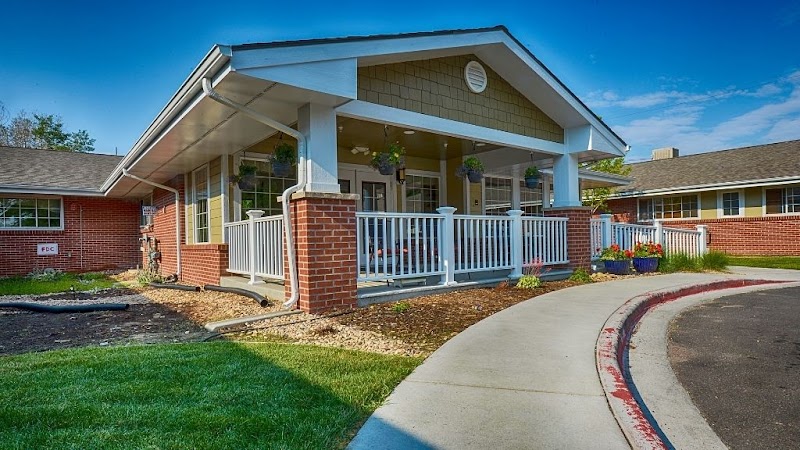
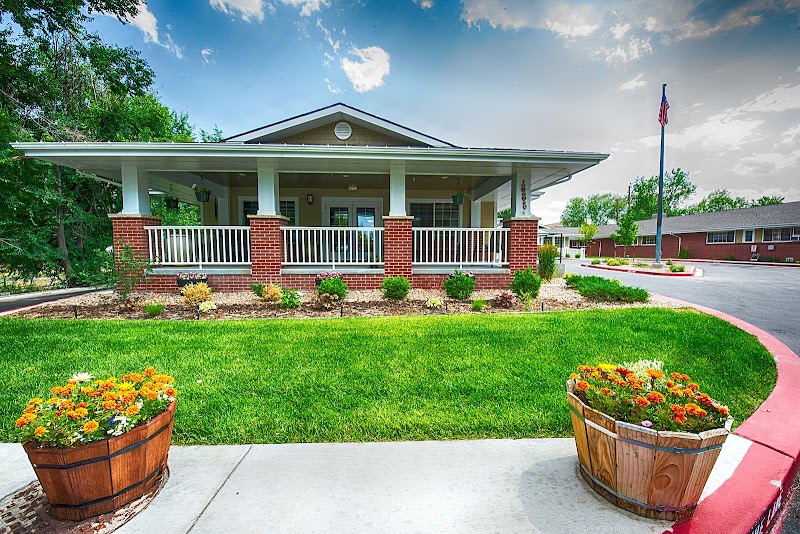
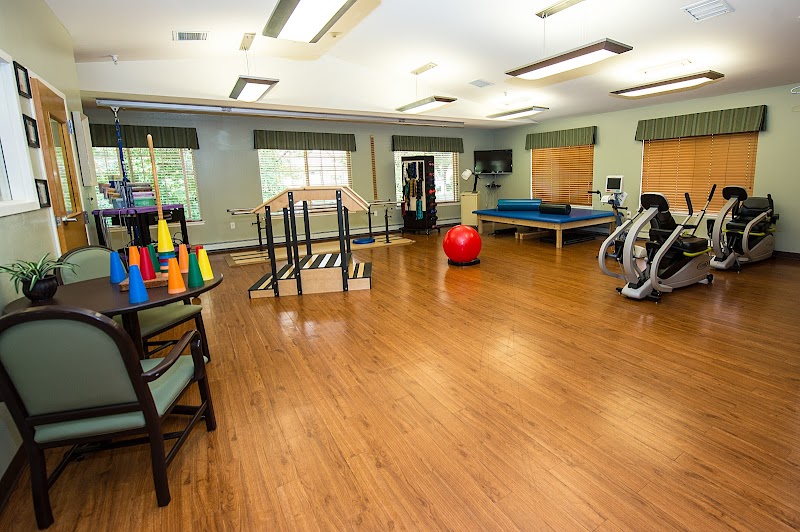
LAKESIDE POST ACUTE

6270 W 38TH AVE, WHEAT RIDGE, CO 80033 (303) 421-2272
For profit - Corporation 78 Beds PACS GROUP Data: November 2025 1 Immediate Jeopardy citation
Trust Grade
36/100
#110 of 208 in CO
Last Inspection: July 2024

Within standard 12-15 month inspection cycle. Federal law requires annual inspections.

Overview

Lakeside Post Acute has received a Trust Grade of F, indicating significant concerns about the quality of care provided. They rank #110 out of 208 facilities in Colorado, placing them in the bottom half of nursing homes in the state, and #12 out of 23 in Jefferson County, meaning only eleven local options are better. While the facility appears to be improving, going from 10 issues in 2024 to just 1 in 2025, the staffing rating is concerning, with a turnover rate of 69%, significantly higher than the Colorado average. The facility has also faced $14,058 in fines, which is average but suggests some compliance problems. Specific incidents include a failure to provide adequate supervision for a resident at risk of elopement and inadequate care for a resident at high risk for pressure ulcers, highlighting both serious and critical deficiencies in care. Overall, while there are some strengths, such as excellent quality measures, the weaknesses raise serious concerns for families considering this facility.

Trust Score
F
36/100
In Colorado
#110/208
Bottom 48%
Safety Record
High Risk
Review needed
Inspections
Getting Better
10 → 1 violations
Staff Stability
⚠ Watch
69% turnover. Above average. Higher turnover means staff may not know residents' routines.
Penalties
✓ Good
$14,058 in fines. Lower than most Colorado facilities. Relatively clean record.
Skilled Nurses
○ Average
Each resident gets 30 minutes of Registered Nurse (RN) attention daily — about average for Colorado. RNs are the most trained staff who monitor for health changes.
Violations
⚠ Watch
20 deficiencies on record. Higher than average. Multiple issues found across inspections.
★★★☆☆
3.0
Overall Rating
★★☆☆☆
2.0
Staff Levels
★★★★★
5.0
Care Quality
★★☆☆☆
2.0
Inspection Score
Stable
2024: 10 issues
2025: 1 issues

The Good

  • 5-Star Quality Measures · Strong clinical quality outcomes
  • Full Sprinkler Coverage · Fire safety systems throughout facility
  • No fines on record

Facility shows strength in quality measures, fire safety.

The Bad

3-Star Overall Rating

Near Colorado average (3.1)

Meets federal standards, typical of most facilities

Staff Turnover: 69%

23pts above Colorado avg (46%)

Frequent staff changes - ask about care continuity

Federal Fines: $14,058

Below median ($33,413)

Minor penalties assessed

Chain: PACS GROUP

Part of a multi-facility chain

Ask about local staffing decisions and management

Staff turnover is elevated (69%)

21 points above Colorado average of 48%

The Ugly 20 deficiencies on record

1 life-threatening 2 actual harm
Feb 2025 1 deficiency 1 IJ
CRITICAL (J) 📢 Someone Reported This

A family member, employee, or ombudsman was alarmed enough to file a formal complaint

Immediate Jeopardy (IJ) - the most serious Medicare violation

Accident Prevention (Tag F0689)

Someone could have died · This affected 1 resident

**NOTE- TERMS IN BRACKETS HAVE BEEN EDITED TO PROTECT CONFIDENTIALITY** Based on record review and interviews, the facility failed to ensure that one (#1) of four residents out of eight sample residen...

Read full inspector narrative →
**NOTE- TERMS IN BRACKETS HAVE BEEN EDITED TO PROTECT CONFIDENTIALITY** Based on record review and interviews, the facility failed to ensure that one (#1) of four residents out of eight sample residents received adequate supervision and facility-assisted devices to prevent elopement. Specifically, the facility failed to provide Resident #1 the supervision necessary to prevent elopements. These facility failures created a situation with the likelihood of serious harm to the resident's health and safety if not immediately corrected. Resident #1 was admitted to the facility on [DATE] with a diagnosis of bipolar disorder (major mental illness), adult failure to thrive, cocaine dependence and alcohol dependence. A wander/elopement risk evaluation was completed upon the resident's admission on [DATE] and revealed Resident #1 had no previous elopement attempts and was not at risk for eloping or wandering. However, Resident #1 had an emergency court-appointed guardian who requested the resident not leave the facility without supervision due to her mental illness and substance-seeking behaviors. On 1/10/25 at approximately 10:25 a.m. Resident #1 left the facility unsupervised when the receptionist buzzed someone out the front door and failed to see Resident #1 following behind the other person leaving the facility. After actively searching for the resident and notifying the resident's guardian about the resident's elopement, Resident #1 was located by the resident's guardian at 12:45 p.m. near a homeless shelter approximately five miles from the facility and the facility's driver picked up the resident and returned her to the facility. -The facility placed Resident #1 on 15-minute checks upon her return to the facility, however, this intervention proved to be ineffective as Resident #1 eloped a second time, four hours after returning to the facility. On 1/10/25 at 5:17 p.m., despite the facility initiating and conducting 15-minute checks on Resident #1, the resident eloped from the facility a second time when a nurse buzzed the resident out the facility door after failing to check the camera to see who was being buzzed out the door. The facility again began a search for Resident #1 and notified the police and the resident's guardian. On 1/11/25 at 10:15 p.m. (almost 29 hours after the resident eloped from the facility the second time) a staff member saw Resident #1 on the side of the road in a downtown area approximately five miles from the facility and notified the nursing home administrator (NHA) and the police. When the police arrived, Resident #1 was transported to the hospital, per the guardian's request. Findings include: Observations, interviews and record review confirmed the facility corrected the deficient practice prior to the onsite investigation on 2/10/25 to 2/12/25, resulting in the deficiency being cited as past noncompliance with a correction date of 1/14/25. I. Situation of serious harm The facility failed to ensure facility staff were aware of which residents were able to leave the facility without supervision and which residents needed to have supervision when leaving the facility. This resulted in a staff member buzzing Resident #1 out the front door when another person left the faciity on 1/10/25. The resident was located approximately five miles from the facility over two hours later. Following Resident #1's first elopement on 1/10/25 at 10:25 a.m., the facility failed to put effective interventions and systems in place to ensure Resident #1 was unable to elope again. This resulted in Resident #1 being buzzed out the front door a second time on 1/10/25 and being located approximately five miles from the facility almost 29 hours later. II. Facility plan of correction The corrective action plan the facility implemented in response to Resident #1's elopement incidents on 1/10/25 was provided by the NHA on 2/11/25 at 1:00 p.m. The correction plan revealed the following: A. Immediate action Resident #1 had an elopement and community safety assessment completed on 1/10/25. Resident #1 was found by the police on 1/11/25 and taken to the hospital per the guardian's request until a locked unit was found for Resident #1. A sister facility with a locked unit accepted the resident. B. Identification of others affected The facility determined six other residents were at risk for eloping from the facility. C. Systemic changes -On 1/13/25 all residents were educated via individual letters regarding not assisting other residents to leave the facility and the process for signing in and out when leaving the facility by the NHA or designee. -On 1/13/25 all receptionists were educated to not leave the front desk unattended for breaks. -On 1/14/25 the interdisciplinary team (IDT) members reassessed all residents for elopement risk and community safety. -On 1/14/25 the IDT created an elopement binder, with a list of all residents at risk, their face sheets and photos, if allowed. The binder was placed at the front desk and the nurses' station. -On 1/14/25 staff on all shifts received education on the process for the front doors, residents at risk for eloping, notifying the nurse with concerns, location of the list of residents at risk of eloping, assisting residents to sign out and leave or redirection, elopement policy and elopement binder from the director of nursing (DON) or designee. Any staff members who were not on duty or were on leave, received education on their next scheduled work day. Agency staff were educated before the start of their shift. On 1/14/25 all residents' cell phone numbers were updated in the electronic medical records (EMR) by the IDT members. D. Preventing elopements The facility took the following actions to prevent elopement from reoccurring. The front desk will be staffed from 8:00 a.m. to 5:00 p.m., seven days per week and assist with helping residents sign in and out. Elopement risk assessments were to be completed on admission, with a change of condition, and quarterly by the IDT. Residents determined at risk by the IDT will have a care plan in place to prevent elopement. The DON will audit potential new admissions for elopement risk, determine if the facility can meet the resident's needs and ensure a care plan with appropriate interventions is in place if appropriate. New hires will receive education on wander, elopement and elopement binder and resident safety by the DON, the social services director (SSD) or designees. The NHA will ensure the elopement binders are kept up to date with any resident change in assessment or new admission. E. Monitoring The DON will track/audit all resident elopement assessments monthly to ensure they are completed on admission and quarterly. A quality assurance and performance improvement (QAPI) committee performance improvement plan (PIP) was implemented to review and interpret all audit findings. All findings will be discussed at the monthly QAPI committed meeting for a minimum of three months, or until the pattern of compliance is maintained. III. Facility policy and procedure The Elopements and Wandering Residents policy, undated, was provided by the NHA on 2/12/25 at 9:00 a.m. It read in pertinent part, The facility is equipped with door locks or alarms to help avoid elopements. Alarms are not a replacement for necessary supervision. Staff are to be vigilant in responding to alarms in a timely manner. The facility shall establish and utilize a systematic approach to monitoring and managing residents at risk for elopement or unsafe wandering, including identification and assessment of risk, evaluation and analysis of hazards and risks, implementing interventions to reduce hazards and risks, and monitoring for effectiveness and modifying interventions when necessary. IV. Resident #1 A. Resident status Resident #1, age greater than 65, was admitted on [DATE] and discharged to the hospital on 1/11/25. According to the January 2025 computerized physician orders (CPO), diagnoses included bipolar disorder, adult failure to thrive, cocaine dependence, alcohol dependence and acquired absence of left toes. The 10/10/24 minimum data set (MDS) assessment revealed Resident #1 was cognitively intact with a brief interview for mental status (BIMS) score of 14 out of 15. Resident #1 had no documented behaviors. Resident #1 had no impairment to her extremities and used a walker or wheelchair. B. Record review The elopement evaluation, dated 4/9/24, revealed Resident #1 had a diagnosis of bipolar disorder. Resident #1 ambulated independently with or without the use of an assistive device or wheelchair. The resident did not have any hearing, vision or communication problems. Resident #1 had no previous elopements or wandering behaviors. The elopement care plan, initiated on 1/10/25 (following the residents elopements) revealed Resident #1 was at risk for wandering, eloping and exit-seeking related to agitation, difficulty redirecting, poor safety awareness and impulsivity. The resident had left the facility without notifying staff and demonstrated poor safety awareness in the community. Pertinent interventions were documented as 15-minute checks of the resident's location for safety, allowing the resident to wander in safe areas within the facility and notifying the resident's guardian and the police if Resident #1 successfully eloped. The NHA provided the timeline of Resident #1's 1/10/25 elopement incidents on 2/11/25 at 9:00 a.m. The timeline revealed the following: Resident #1 eloped from the facility on 1/10/25 at approximately 10:25 a.m. when the receptionist buzzed someone out the front door and failed to see the resident following behind the other person. At 11:00 a.m. the nursing staff were unable to locate Resident #1 in the facility's common areas or the resident's room. The staff initiated a full facility sweep. At 11:20 a.m. the NHA and the DON were notified Resident #1 had eloped. The IDT members searched known areas for the resident, which included gas stations, bus stops and downtown areas. At 12:00 p.m. Resident #1's guardian was notified the resident eloped. The facility's driver was asked to help search locations based on the guardian's recommendations. At 12:45 p.m. Resident #1's guardian located the resident near a homeless shelter approximately five miles from the facility and the facility's driver picked up the resident and returned her to the facility. At 1:15 p.m. Resident #1 returned to the facility, was assessed by nursing staff and placed on 15-minute checks. At 5:15 p.m. Resident #1 was seen in the dining room for her 15-minute check. At 5:17 p.m. Resident #1 was buzzed out by a nurse at the nurses' station who failed to check the camera to see who was being buzzed out the door. At 5:30 p.m. Resident #1 was unable to be located for her 15-minute check. At 5:37 p.m. the nurse notified the DON, the NHA, the police and the resident's guardian. At 6:10 p.m. the police and the DON arrived at the facility. The police were given the resident's face sheet and a description of the resident. On 1/11/25 at 10:15 p.m. a staff member saw Resident #1 on the side of the road in a downtown area approximately five miles from the facility and notified the NHA and the police. At 10:30 p.m. the police arrived and spoke with Resident #1 and the staff member. The guardian's number was provided and the staff member told the police the guardian wanted Resident #1 to be taken to a hospital once she was found. The facility began investigating the situation on 1/11/25 and developed a QAPI plan which included a PIP on 1/13/25. V. Staff interviews The NHA, the SSD and the corporate consultant (CC) were interviewed together on 2/11/25 at 11:40 a.m. The SSD said the staff were doing their normal rounds on 1/10/25 and were unable to locate Resident #1. She said the staff searched the facility and expanded the search to the community. She said Resident #1 was located and the facility's driver returned the resident to the facility. The SSD said the resident was assessed by the provider and placed on 15-minute checks. The NHA said he received a phone call on the same day, but later in the evening, that the staff were unable to locate Resident #1 when the staff were completing their 15-minute checks. He said the resident's guardian and the police were notified that Resident #1 was unable to be located on 1/10/25. The NHA said on 1/11/25 he received a phone call from a staff member who was driving home and spotted Resident #1 on the side of the road in a downtown area. He said the staff member stayed with Resident #1 until the police arrived and then asked the police to take the resident to the emergency room, per the resident guardian's request. The NHA said Resident #1 did not return to the facility after the resident's guardian requested she be taken to the hospital on 1/11/25 and was placed in a sister facility with a secured unit per the guardian's request. The NHA said Resident #1 had never left the facility prior to 1/10/25 and did not have a history of eloping. He said the first time Resident #1 left the facility was because a staff member was buzzed out and Resident #1 followed behind the staff member. He said the second time Resident #1 left the facility, the nurse failed to look at the camera to see who was trying to be buzzed out and just opened the door.
Oct 2024 1 deficiency
CONCERN (D) 📢 Someone Reported This

A family member, employee, or ombudsman was alarmed enough to file a formal complaint

Potential for Harm - no one hurt, but risky conditions existed

Transfer Requirements (Tag F0622)

Could have caused harm · This affected 1 resident

**NOTE- TERMS IN BRACKETS HAVE BEEN EDITED TO PROTECT CONFIDENTIALITY** Based on interviews and record review, the facility failed to ensure residents were permitted to remain in the facility and not ...

Read full inspector narrative →
**NOTE- TERMS IN BRACKETS HAVE BEEN EDITED TO PROTECT CONFIDENTIALITY** Based on interviews and record review, the facility failed to ensure residents were permitted to remain in the facility and not transfer or discharge for one (#1) of three residents reviewed for discharge planning out of eight sample residents. Specifically, the facility failed to provide Resident #1 with an appropriate discharge process. Findings include: I. Facility policy and procedure The Transfer or Discharge, Facility-Initiated policy, revised October 2022, was provided by the nursing home administrator (NHA) on 10/21/24 at 1:15 p.m. It read in pertinent part, If the facility does not permit a resident's return to the facility (initiates a discharge) based on inability to meet the resident's needs, the facility will notify the resident, and/or his or her representative in writing of the discharge, including notification of appeal rights. A post-discharge plan is developed for each resident prior to his or her transfer or discharge. This plan will be reviewed with the resident, and/or his or her family, at least twenty-four (24) hours before the resident's discharge or transfer from the facility. Sufficient preparation and orientation for the resident prior to an immediate facility-oriented transfer or discharge includes explaining to the resident where he/she is going and why, and taking steps to minimize his/her anxiety or depression (working with the resident, representative, or family to ensure that the resident's belongings will be taken care of and transferred to the new location as needed/requested, and ensuring that staff recognize characteristic resident reactions identified during assessment and care planning). Documentation of Facility-Initiated Transfer or Discharge When a resident is transferred or discharged from the facility, the following information is documented in the medical record: -The basis for the transfer or discharge; and, -If the resident is being transferred or discharged because his or her needs cannot be met at the facility, documentation will include the specific resident needs that cannot be met and the facility's attempt to meet those needs. Should the resident be transferred or discharged for any of the following reasons, the basis for the transfer or discharge is documented in the resident's clinical record by the resident's attending physician. The Transfer and Discharge policy, dated 2024, was provided by the NHA on 10/21/24 at 2:59 p.m. It read in pertinent part, It is the policy of this facility to permit each resident to remain in the facility, and not initiate transfer or discharge for the resident from the facility, except in limited circumstances. Discharge Against Medical Advice (AMA): The resident and family/legal representative should be informed of the risks involved, the benefits of staying at the facility, and the alternatives to both. Under no circumstances will the facility force, pressure, or intimidate a resident into leaving AMA. The physician should be notified of the intended AMA discharge and be encouraged to speak with the resident to encourage them to stay at the facility. Documentation of this notification should be entered in the nurses' notes by the nursing department. The social service designee should document any discussions held with the resident/family in the social service progress notes, if present. Notify Adult Protection Services, or other entities, as appropriate if self-neglect is suspected. Document accordingly. III. Resident #1 A. Resident status Resident #1, age less than 65, was admitted on [DATE], readmitted on [DATE] and discharged on 7/23/24. According to the July 2024 computerized physician orders (CPO), diagnoses included end stage renal disease, peripheral vascular disease, chronic viral hepatitis C, opioid abuse, dependence on renal dialysis, polyneuropathy (nerve damage) and hypertension (high blood pressure). The 5/10/24 quarterly minimum data set (MDS) assessment revealed the resident had moderate cognitive impairment with a brief interview for mental status (BIMS) score of 12 out of 15. He was independent with eating, oral hygiene, toileting, and showering. He used a front wheel walker to ambulate. He experienced frequent pain, and received scheduled pain medication. He did not reject care from staff. He did not wander. B. Family interview A family member was interviewed on 10/21/24 at 2:45 p.m. The family member said Resident #1 was homeless before he was admitted to the facility and he was again homeless after the facility discharged him AMA. The family member said no one from the facility called the family member about the discharge even though they were the legal representative for Resident #1 and were listed as the contact person for the resident. The family member said Resident #1 did not receive his medications from the facility when he was discharged and the family member did not know why. C. Record review The comprehensive care plan, initiated on 1/9/24 and revised on 5/5/24, revealed Resident #1 was to have his medication administered as ordered by the physician, had a diagnosis of hypertension and was at risk for chest pain and dizziness. Resident #1 was at high nutritional risk related to dialysis and wounds, fluid overload with swelling. The resident had a history of dialysis refusals due to not feeling well. Pertinent interventions included providing a diet, supplements and vitamins/minerals per physician order and the facility was to coordinate care with the dialysis center's dietitian. The 5/31/24 nursing elopement risk assessment tool revealed the resident was not cognitively impaired with poor decision making skills, did not wander, did not leave the facility without notifying staff and was not at risk for elopement. The July 2024 CPO revealed Resident #1 was to receive scheduled dialysis every Tuesday, Thursday, and Saturday. -However, according to the resident's care plan, he frequently refused dialysis due to not feeling well (see care plan above). A behavioral contract, signed by Resident #1 on 7/12/24, documented in pertinent part, Resident #1 must adhere to the following expectations to remain a resident at (facility name): -Communicate with the nursing department prior to going out on pass and, -Take enough medication for the scheduled number of days you will be out. I read and understand the above-listed behavioral expectations. I understand if I choose to leave, without my prescribed medications, and do not return to (facility name) at the agreed upon time, I will be considered out AMA and immediately discharged from the facility. A 7/21/24 nurse progress note revealed, Resident #1 left (the facility) for an overnight pass with his medications. Resident #1 was expected to return on Monday 7/22/24 by 5:00 p.m. -However, according to the NHA, Resident #1 was not expected to return to the facility until 7/23/24 (see NHA interview below). The 7/21/24, 7/22/24 and 7/23/24 nursing progress notes documented Resident #1 was out of the facility on pass. A nurse progress note dated 7/23/24 at 10:38 a.m. documented Resident #1 did not show up for his dialysis appointment. -However, according to the resident's care plan, he frequently refused dialysis due to not feeling well (see care plan above). An interdisciplinary team (IDT) progress noted, dated 7/23/24 at 3:53 p.m., revealed Resident #1 went out on pass and said he would return by 7/23/24 at 5:00 p.m. The facility attempted to reach him by phone and a message was left reminding him of the agreement he signed regarding if he did not return to the facility at an agreed upon time he would be discharged per the agreement. A nurse progress note, dated 7/23/24 at 6:06 p.m., documented Resident #1 would be back from being out on pass that evening at 5:00 p.m. Several phone calls were made to the resident's voicemail with no return call. As per facility contract, if he had not returned as agreed upon, he would be considered an AMA discharge. Resident #1 did not go to his dialysis appointment today (7/23/24) which he needed three times per week. The NHA informed (via voicemail) Resident #1 of his choices and the outcome. A physician's assistant progress note dated 7/25/24 (two days after the discharge) documented Resident #1 was doing overall well and tolerating his dialysis well. He went out on pass on 7/21/2024, did not return as he agreed to on 7/23/24 and was then discharged per policy. The note documented to refer to the nursing notes for attempts to contact the patient/family. -There was no documentation in Resident #1's electronic medical record (EMR) which revealed the resident's needs that could not be met by the facility or the attempts made by the facility to meet the resident's needs. IV. Staff interviews The NHA was interviewed on 10/21/24 at 2:20 p.m. The NHA said Resident #1 sometimes left the facility and did not return when he said he would. The NHA said Resident #1 signed a behavioral contract on 7/12/24 which read if Resident #1 did not return when he said he was going to return to the facility, the facility would discharge him AMA (see record review above). The NHA said she thought Resident #1 agreed to return in two days on 7/23/24, not in one day (on 7/22/24) as the nurse documented. The NHA said he did sign out of the facility and take one day of medications with him. The NHA said when she reached Resident #1 at night (on 7/23/24) via telephone the NHA thought he was safe because he told her he was sleeping on someone's couch. The NHA said she did not document that information. The NHA said she did not document anything about Resident #1's medications. The NHA said she thought she finally spoke to Resident #1 at 8:00 p.m. that night, however, she said the only documentation of Resident #1 being told he was discharged AMA was on 7/23/24 at 6:06 p.m. The NHA said she told Resident #1 over the phone he had signed a contract and because he did not keep it, he was declared AMA. The NHA said, had Resident #1 returned at 5:00 p.m like he said he would, she would have let him continue to live at the facility. The NHA said Resident #1 asked how he would get his belongings. The NHA said she told him she would box up his belongings and his bike for someone to come and get. The NHA said about a month later, someone did come in to get his belongings but she did not recall who the person was. The NHA said she was unaware a facility behavioral contract was not an acceptable reason for a resident to be discharged AMA. The NHA said Resident #1 did not come to get his medications and the facility did not arrange to give his medications to him. The NHA said the facility did not offer to go and pick Resident #1 up from wherever he was on 7/23/24. The NHA said Resident #1 was not evaluated by the physician prior to the discharge. The NHA said, because she thought Resident #1's discharge was considered AMA, the facility did not need to notify the ombudsman or any state agencies. The NHA was interviewed a second time on 10/21/24 at 4:00 p.m. The NHA said she should have begun a facility initiated transfer for Resident #1 and had the medical director sign the necessary paperwork for an appropriate discharge. The NHA said Resident #1 was discharged from the facility because he did not return when he said he would. The NHA said she documented he was one hour and six minutes late therefore she discharged him from the facility.
Jul 2024 9 deficiencies 1 Harm
SERIOUS (G)

Actual Harm - a resident was hurt due to facility failures

Deficiency F0760 (Tag F0760)

A resident was harmed · This affected 1 resident

**NOTE- TERMS IN BRACKETS HAVE BEEN EDITED TO PROTECT CONFIDENTIALITY** III. Antibiotic medication error A. Professional reference [NAME] A, Triantafylidis L, O ' [NAME] N, et al. Improving Medication...

Read full inspector narrative →
**NOTE- TERMS IN BRACKETS HAVE BEEN EDITED TO PROTECT CONFIDENTIALITY** III. Antibiotic medication error A. Professional reference [NAME] A, Triantafylidis L, O ' [NAME] N, et al. Improving Medication Reconciliation With Comprehensive Evaluation At A Veterans Affairs Skilled Nursing Facility: The Joint Commision Journal on Quality and Patient Safety (2021), was retrieved on 7/1/24 from https://www.jointcommissionjournal.com/article/S1553-7250(21)00153-7/fulltext. It read in pertinent part, Unintentional medication discrepancies due to inadequate medication reconciliation pose a threat to patient safety. Skilled nursing facilities (SNFs) are an important care setting where patients are vulnerable to unintentional medication discrepancies due to increased medical complexity and care transitions. SNFs represent a critical setting for medication reconciliation efforts due to challenges completing the reconciliation process and the concomitant high risk of adverse drug events in this population. Ineffective medication reconciliation continues to threaten patient safety across health care systems around the world. Best-practice guidelines outline the need for high-quality medication reconciliation in all care settings, including skilled nursing facilities (SNFs). Patients in SNFs are at heightened risk for medication reconciliation errors due to increased care transitions (for example, home to hospital to SNF to home) and medical complexity. Improving medication reconciliation in the SNF setting is challenging due to resource constraints, complex workflows, and variation in the capabilities of electronic medical records (EMRs). B. Facility policy The Documentation of Medication Administration policy, revised November 2022, was received from the nursing home administrator (NHA) on 7/1/24 at 3:35 p.m. The policy read in pertinent part, A medication administration record is used to document all medications administered. A nurse documents all medication administered to each resident on the resident's medication administration record (MAR). Administration of medication is documented immediately after it is given. Documentation of medication administration includes, at a minimum, the resident's name, name and strength of the drug, dosage, route of administration, date and time of administration, initials, signature and title of the person administering the medication, and the resident response to the medication. C. Resident #38 1. Resident status Resident #38, age greater than 65, was admitted on [DATE]. According to the July 2024 CPO, diagnoses included neuromuscular bladder dysfunction and history of methicillin-susceptible staphylococcus aureus (MSSA) bacteremia staphylococcus infection (MSSA BSI). The 5/15/24 MDS assessment revealed the resident was cognitively intact with a BIMS score of 15 out of 15. The resident was independent with his activities of daily living. 2. Resident interview Resident #38 was interviewed on 7/1/24 at 1:14 p.m. Resident #38 said he took antibiotic medications three times a day. He said he took the medication to prevent an infection from returning to his spine. 3. Record review Review of Resident #38's July 2024 CPO revealed the following physician's order: Cephalexin 500 milligram (mg) tablets, give 500 mg orally (by mouth) three times a day, ordered 5/25/22. A 8/1/23 infectious disease (ID) physician note revealed Resident #38 was evaluated by the ID physician. The ID physician ordered a decrease in the resident's Cephalexin. The new order was for Cephalexin 500 mg tablets, two times a day. A 4/2/24 ID physician note revealed Resident #38 was evaluated by the ID physician. The note documented the resident had a history of MSSA BSI from an infection in his spine in 2020. The note documented the resident was to continue on Cephalexin 500 mg twice a day for infection prevention. The facility failed to change Resident #38's Cephalexin order on 8/1/23. From 8/1/23 to 7/2/24, the resident was administered the Cephalexin medication three times a day instead of two times a day. -There was no documentation in Resident #38's electronic medical record (EMR) to indicate a medication review and reconciliation had occurred following the resident's appointment with the ID physician in order to ensure the resident was receiving the correct dose of the Cephalexin antibiotic -Review of Resident #38's comprehensive care plan revealed the facility failed to develop an individualized care plan focus for Resident #38 for antibiotic stewardship and infection monitoring. D. Staff interviews Licensed practical nurse (LPN) #1 was interviewed on 7/1/24 at 1:05 p.m. LPN #1 said when any resident returned from outside appointments, the facility nurse should review the clinical documentation from the outside provider, which included a review and reconciliation of medication. She said when the nurse completed her review, it was the nurse's responsibility to contact the physician to discuss new or changed treatment orders. The DON was interviewed on 7/2/24 at 8:50 a.m. The DON said when residents returned to the facility from outside appointments, the nurse should review the clinical documentation from the outside provider. The DON said when changes to care were identified, the nurse should contact the physician for clarification and new facility orders if indicated. The DON said she was unable to locate documentation in Resident #38's EMR to indicate the nurse, the interdisciplinary team or the facility physician had completed a review of the ID physician's treatment plan. The DON said the facility had an antibiotic stewardship program. She said the antibiotic stewardship program was responsible for reviewing all antibiotic orders to ensure antibiotics were used effectively. The DON said she was unable to locate documentation to indicate the facility reviewed Resident 38's prescribed antibiotic medication. The DON said she would contact the ID physician and ensure Resident #38 received the prescribed dose of Cephalexin going forward. Based on interviews and record review, the facility failed to ensure residents were free from significant medication errors for two (#4 and #38) of seven residents reviewed for medication errors out of 32 sample residents. Resident #4, who had diagnoses of schizoaffective disorder (mental health condition that causes people to experience symptoms of schizophrenia and mood disorders) and bipolar, had a physician'sorder for clozapine (an antipsychotic medication). The medication required a complete blood count (CBC) laboratory result to be sent on a monthly basis to the pharmacy in order for the pharmacy to refill the medication. On 6/11/24, Resident #4 was administered her last available dose of clozapine, however, the results of the monthly CBC had not been obtained from the laboratory and faxed to the pharmacy in order for the pharmacy to refill the medication. Due to the facility's failure to send the CBC laboratory results to the pharmacy, Resident #4 did not receive her clozapine on 6/12/24 and 6/13/24. The facility failed to contact the resident's physician in order to inform the physician the medication was unavailable and obtain further orders. Due to the facility's failures to obtain the antipsychotic medication timely, Resident #4 missed two doses of the medication and self harmed herself on 6/13/24 by burning her left forearm with a cigarette, causing a cluster of five blisters. Additionally, the facility failed to: -Ensure Resident #38 received antibiotic medication according to the physician's orders; and, -Complete a medication review and reconciliation of medications prescribed for Resident #38. Findings include: I. Professional reference According to [NAME], P.A., [NAME], A.G., et.al., Fundamentals of Nursing, 10 ed. (2020), E.[NAME], St. Louis Missouri, pp. 606-607, retrieved on 7/15/24, Take appropriate actions to ensure the patient receives medication as prescribed and within the times prescribed and in the appropriate environment. Professional standards such as nursing scope and standards of practice apply to the activity of medication administration. To prevent medication errors, follow the seven rights of medication administration consistently every time you administer medications. Many medication errors can be linked in some way to an inconsistency in adhering to these seven rights: 1. The right medication 2. The right dose 3. The right patient 4. The right route 5. The right time 6. The right documentation 7. The right indication. II. Antipsychotic medication error A. Facility policy and procedure The Adverse Consequences and Medication Errors policy, revised April 2014, was provided by the nursing home administrator (NHA) on 7/1/24 at 9:46 a.m. It read in pertinent part, A medication error is defined as the preparation or administration of drugs or biologicals which is not in accordance with physician's orders, manufacturer specifications, or accepted professional standards and principles of professionals providing services. Examples of medication errors include the omission of drugs (medication not administered). The Medication Shortages/Unavailable Medication policy, revised 1/1/22, was provided by the director of nursing (DON) on 7/1/24 at 10:25 a.m. It read in pertinent part, This policy set forth procedures relating to medication shortages and unavailable medications. Upon discovery that the facility has an inadequate supply of medication to administer to a resident, facility staff should immediately initiate action to obtain the medication from the pharmacy. If a medication is unavailable during normal pharmacy hours, the facility nurse should call the pharmacy to determine the status of the order. If the next available delivery causes a delay or a missed dose in the resident'smedication schedule, the facility nurse should obtain the medication from the emergency medication supply kit to administer the dose. If the medication is not available in the facility'semergency supply kit, the licensed facility nurse should call the pharmacy emergency answering service and request to speak with the registered pharmacist on duty to manage the plan of action. If emergency delivery is unavailable, the facility nurse should contact the attending physician to obtain orders and directions. If the facility nurse is unable to obtain a response from the attending physician in a timely manner, the facility nurse should notify the nursing supervisor and contact the facility's medical director for orders and directions, making sure to explain the circumstances of the medication shortage. When the missed dose is unavoidable, the facility nurse should document the missed dose and the explanation for such missed dose on the MAR and TAR and in the nursing progress notes. The documentation should include a description of the circumstances of the medication shortage, a description of the pharmacy response upon notification, and actions taken. B. Resident #4 1. Resident status Resident #4, age less than 65, was admitted on [DATE]. According to the June 2024 computerized physician orders (CPO), diagnoses included schizoaffective disorder, bipolar, chronic obstructive pulmonary disease (COPD), depression and muscle weakness. The 5/16/24 minimum data set (MDS) assessment documented the resident was cognitively intact with a brief interview for mental status (BIMS) score of 13 out of 15. The assessment revealed the resident was on routine antipsychotic medications and it had been documented by a physician that a gradual dose reduction (GDR) was contraindicated. 2. Resident interview Resident #4 was interviewed on 6/26/24 at 10:33 a.m. Resident #4 said the facility told her they ran out of her clozapine. She said she became anxious and was feeling distressed about not receiving her routine clozapine medication for two consecutive days. Resident #4 said on 6/13/24, due to the anxiety she was feeling about not receiving the medication, she used a cigarette to burn her left forearm which caused five blisters on her arm that required medical attention 3. Record review A review of Resident #4's behavior care plan revealed the resident was on an antipsychotic medication for schizoaffective disorder related to unprovoked verbal aggressive behavior. Interventions included monitoring behavior episodes and attempting to determine the underlying cause. -The care plan did not include an intervention for ensuring CBC laboratory results were faxed to the pharmacy in order to obtain refills of the medication. Review of Resident #4's June 2024 CPO, revealed the following physician's orders: Clozapine oral tablet 100 milligrams (mg). Give three tablets by mouth at bedtime related to schizoaffective and bipolar disorder, ordered 6/15/23. Monthly CBC for clozapine monitoring every day shift every month for clozapine use. Fax results to pharmacy for refill on medication clozapine, ordered 8/28/23. Review of Resident #4's June 2024 medication administration record (MAR) revealed the resident received her last dose of clozapine on 6/11/24. -Further review of the June 2024 MAR revealed the resident's clozapine was not administered on 6/12/24 and 6/13/24. -A review of the resident's progress notes on 6/12/24 revealed no documentation to indicate why Resident #4 did not receive her clozapine. On 6/13/24 at 11:39 p.m. registered nurse (RN) #2 documented the medication was unavailable. RN #2 documented the pharmacy required an updated CBC laboratory result in order to refill the medication. -The facility failed to send Resident #4's CBC laboratory results to the pharmacy prior to the resident's last dose of the medication on 6/11/24 in order to receive the next refill of the medication in a timely manner (see progress note above and interviews below). A 6/14/24 progress note documented Resident #4 reported to an occupational therapist that, due to feelings of distress and not receiving her medication, she self harmed by burning herself with a cigarette on the evening of 6/13/24. A wound care progress note dated 6/24/24 revealed Resident #4's blisters on her left forearm had developed into wounds and had received a status of not healed. The initial wound encounter measurements were 3.2 centimeters (cm) length by 3.7 cm width. An education for medication unavailability and shortages, dated 6/18/24, was provided by the NHA on 7/2/24 at 12:13 p.m. It read in pertinent part, Education completed with the primary nurse (RN #4) regarding how to access needed laboratory information for follow up, notifying the provider and the need to document steps taken to resolve issues as they arise. Licensed practical nurse supervisor educated on the need to follow up on information reported from floor staff. All nursing administration was educated regarding the above. C. Staff interviews RN #4 was interviewed on 7/2/24 at 11:02 a.m. RN #4 said she discovered, during medication administration on her shift on 6/12/24, that Resident #4 did not have clozapine available for administration. RN #4 said she contacted the pharmacy and was told the medication would be delivered with the next delivery. RN #4 said she did not administer the medication on her shift because the clozapine was unavailable and therefore Resident #4 missed a dose of the medication on 6/12/24. RN #4 said she passed the information on to the next shift's nurse but did not inform the charge nurse or the nurse manager about the missed dose due to the unavailability of Resident #4's clozapine. RN #4 said she failed to document her actions in the nurse progress notes. RN #4 said missing the doses of clozapine could have caused Resident #4 to inflict the injuries to her forearm with a cigarette on 6/13/24. RN # 4 said she had been educated by the director of nursing (DON) on the proper procedures to follow when medications were unavailable. RN #2 was interviewed on 7/2/24 at 11:40 a.m. RN #2 said she contacted the pharmacy on 6/13/24 during her nighttime medication administration when she discovered Resident #4's clozapine was not available. RN #2 said the pharmacy requested an updated CBC laboratory result before the medication could be refilled. RN #2 said she faxed the most current CBC laboratory test result to the pharmacy, however, she said she still did not receive the clozapine. RN #2 said she contacted the pharmacy again and was informed that the clozapine was not filled because the CBC laboratory test result was not current and, as a result, Resident #4 missed a second dose of the medication on 6/13/24. RN #2 said she informed the oncoming nurse about the unavailable medication, however, she said she did not notify the attending physician to obtain further orders and/or directions. RN #2 said she was unable to obtain the updated CBC laboratory test result for the pharmacy because the laboratory's website did not communicate with the facility's electronic medical record system RN #2 said Resident #4 received clozapine for her diagnosis of schizoaffective and bipolar disorder and missing two consecutive days of her medication could result in extreme behaviors, such as self-harm. RN #2 said she did not recall why she did not inform the nursing supervisor and the attending physician about the missed doses of the medication. RN #2 said she had received education on the proper procedures to follow when there were instances of medication shortage/unavailability and to document her actions per the facility's protocol. The DON was interviewed on 7/2/24 at 12:10 p.m. The DON said the staff should have followed the facility's protocol for medication shortages and unavailability by notifying the nurse supervisor and the attending physician about the circumstances of the medication and the missed doses. The DON said she believed the lack of awareness of staff led to the significant medication error and she had completed training for all nursing staff about the facility's policy regarding medication unavailability and medication errors. -A voicemail was left for the pharmacist during the survey, however, the phone call was not returned by the survey exit on 7/2/24.
CONCERN (D)

Potential for Harm - no one hurt, but risky conditions existed

Deficiency F0583 (Tag F0583)

Could have caused harm · This affected 1 resident

**NOTE- TERMS IN BRACKETS HAVE BEEN EDITED TO PROTECT CONFIDENTIALITY** Based on observations, record review and interviews, the facility failed to ensure one (#8) of one resident reviewed out of 32 s...

Read full inspector narrative →
**NOTE- TERMS IN BRACKETS HAVE BEEN EDITED TO PROTECT CONFIDENTIALITY** Based on observations, record review and interviews, the facility failed to ensure one (#8) of one resident reviewed out of 32 sample residents was provided personal privacy in her room. Specifically, the facility staff failed to knock before entering Resident #8's room while the resident was being provided with personal care. Findings include: I. Facility policy and procedure The Resident Rights policy, revised August 2009, was provided by the nursing home administrator (NHA) on 7/4/24 at 9:46 a.m. It read in pertinent part, Employees shall treat all residents with kindness, respect, and dignity. Federal and state laws guarantee certain basic rights to all residents of this facility. These rights include the resident's right to privacy and confidentiality and voice grievances and have the facility respond to those grievances. II. Resident status Resident #8, age less than 65, was admitted on [DATE]. According to the June 2024 computerized physician orders (CPO), diagnoses included chronic respiratory failure, chronic pain syndrome, bipolar disorder, major depressive disorder, and diabetes mellitus. The 4/15/24 minimum data set (MDS) assessment revealed Resident #8 was cognitively intact with a brief interview for mental status (BIMS) score of 15 out of 15. Resident #8 required moderate assistance of one person with bed mobility, toileting and maximum assistance with lower body dressing. The assessment documented Resident #8 had no behaviors. III. Resident interview and observations Resident #8 was interviewed on 6/26/24 at 3:19 p.m. Resident #8 said most of the facility staff did not respect her privacy. Resident #8 said staff would frequently enter her room when she was receiving personal care which bothered her. On 6/27/24 at 1:51 p.m. Resident #8 was lying in her bed waiting for staff assistance to get ready for an outside appointment. At 1:55 p.m. certified nurse aide (CNA) #2 arrived to assist the resident. CNA #2 knocked on the door and entered the resident's room. CNA #2 closed the resident's door before she started providing personal care. At 2:02 p.m. activities assistant (AA) #1 arrived at Resident #8's room. AA #1 proceeded to enter Resident #8's room without knocking. -AA #1 exited the room quickly after realizing Resident #8 was being provided with personal care, however, AA #1 failed to initially knock before entering the room At 2:10 p.m. Resident #8 came out of her room in a power wheelchair and said there was no privacy in the facility. IV. Staff interviews CNA #2 was interviewed on 6/27/24 at 2:15 p.m. CNA #2 said she always knocked before entering a resident's room. She said AA #1 did not knock before she opened Resident #8's bedroom door. CNA #2 said she was providing personal care to Resident #8 when AA #1 entered the room without knocking. She said Resident #8 was upset about the incident. CNA #2 said she asked AA #1 to knock and wait for a response before entering a resident's room because residents' private areas were often exposed when they were receiving personal care. AA #1 was interviewed on 6/27/24 at 2:45 p.m. AA #1 said she was trained to run special activities groups, one-on-one activities and outings. AA #1 said she had been in her current position for two months and had no prior experience with the activity department. AA #1 said Resident #8 had previously complained that her knocking was too loud, which disturbed her afternoon sleep, therefore she tried to knock gently. AA #1 said she did not document or report the resident's concern about her knocking too loudly to disturb the resident's afternoon sleep to anyone. AA #1 said she would be mindful of knocking. -However, despite AA #1 saying she knocked gently on Resident #8's door, AA #1 was observed entering the resident's room without knocking (see observation above). The NHA was interviewed on 7/1/24 at 1:00 p.m. The NHA said it was the facility's policy for every resident to be treated with respect and dignity. The NHA said every staff member should knock before entering a resident's room. The NHA said resident's rights should be respected and followed. The NHA said she had initiated education on 7/1/24 for AA#1 and would continue to educate all the facility's staff regarding knocking on resident's doors before entering their rooms.
CONCERN (D)

Potential for Harm - no one hurt, but risky conditions existed

Deficiency F0657 (Tag F0657)

Could have caused harm · This affected 1 resident

**NOTE- TERMS IN BRACKETS HAVE BEEN EDITED TO PROTECT CONFIDENTIALITY** Based on record review and interviews, the facility failed to develop and revise the comprehensive care plans that included the ...

Read full inspector narrative →
**NOTE- TERMS IN BRACKETS HAVE BEEN EDITED TO PROTECT CONFIDENTIALITY** Based on record review and interviews, the facility failed to develop and revise the comprehensive care plans that included the instructions needed to provide effective and person-centered care for one (#8) of four residents reviewed out of 32 sample residents. Specifically, the facility failed to ensure Resident #8's care plan was revised to address the resident's confrontational behaviors. Findings include: I. Facility policy and procedure The Care Plans, Comprehensive Person-Centered policy, revised March 2022, was provided by the nursing home administrator (NHA) on 7/1/24 at 3:35 p.m. It read in pertinent part, A comprehensive, person-centered care plan should include measurable objectives and timetables to meet the resident's physical, psychosocial and functional needs. The interdisciplinary team should review and update the care plan when there has been a significant change in the resident's condition, when the resident has been readmitted to the facility from a hospital stay, and at least quarterly, in conjunction with the required quarterly MDS (minimum data set) assessment. The care plan interventions should be derived from information obtained from the resident and his/her family/responsible party, with possible discretionary modifications resulting from the comprehensive assessment. II. Resident status Resident #8, age less than 65, was admitted on [DATE]. According to the June 2024 computerized physician orders (CPO), diagnoses included chronic respiratory failure, chronic pain syndrome, bipolar disorder, major depressive disorder and diabetes mellitus. The 4/15/24 minimum data set (MDS) assessment revealed Resident #8 was cognitively intact with a brief interview for mental status (BIMS) score of 15 out of 15. Resident #8 required moderate assistance of one person with bed mobility, toileting and maximum assistance with lower body dressing. The assessment revealed Resident #8 had no behaviors. III. Resident interview Resident #8 was interviewed on 6/27/24 at 9:30 a.m. Resident #8 said she was threatened by another resident at the facility. She said the issue was reported and the facility initiated an investigation and reported the incident to law enforcement. The resident said the police came and interviewed her. Resident #8 said the facility did not complete any further follow up. IV. Record review The 3/26/24 nursing progress note documented at 9:38 p.m. revealed Resident #8 was in another resident's space yelling and was using foul language towards the other resident and the unit nurse. The incident escalated to an extent where law enforcement were called to the facility. The progress note documented after the police were gone, an unidentified CNA found Resident #8 in another resident's room. Resident #8 said she was retrieving books that the resident had borrowed from the facility's library. The behavior care plan, initiated on 2/22/23 and revised on 2/27/23, revealed Resident #8 was on antidepressant medication for depression. The interventions included ensuring all care needs were met and reviewing the resident if new behaviors were exhibited. -A review of Resident #8's comprehensive care plan revealed the comprehensive care plan failed to identify and include person-centered interventions to redirect Resident #8 when she got into others' space and initiated confrontations. V. Staff interviews Licensed practical nurse (LPN) #2 was interviewed on 6/27/24 at 3:55 p.m. LPN #2 said Resident #8 had the tendency to get too close to other residents and she would initiate confrontations. She said sometimes Resident #8 would use foul words and accusatory language toward the staff. LPN #2 said it was difficult to calm the resident down when she was upset. The director of nursing (DON) and the NHA were interviewed together on 7/1/24 at 1:00 p.m. The DON said Resident #8 had a history of initiating confrontations with others. The DON said two staff members witnessed the incident on 3/26/24 and stated Resident #8 initiated the altercation by going into the other resident's space and yelling at him. She said the resident's care plan should have been updated following the incident to include intervention for facility staff to manage the resident's escalating behaviors. The NHA said there should have been a care plan with person-centered approaches for Resident #8's confrontational behaviors. She said she would collaborate with the social services director to update the resident's care plan.
CONCERN (D)

Potential for Harm - no one hurt, but risky conditions existed

Accident Prevention (Tag F0689)

Could have caused harm · This affected 1 resident

**NOTE- TERMS IN BRACKETS HAVE BEEN EDITED TO PROTECT CONFIDENTIALITY** Based on observations, interviews and record review, the facility failed to ensure one (#19) of two residents reviewed for accid...

Read full inspector narrative →
**NOTE- TERMS IN BRACKETS HAVE BEEN EDITED TO PROTECT CONFIDENTIALITY** Based on observations, interviews and record review, the facility failed to ensure one (#19) of two residents reviewed for accident/hazards out of 32 sample residents remained as free from accident hazards as possible. Specifically, the facility failed to ensure Resident #19, who was an unsupervised smoker, smoked in an appropriate area designated for smoking. Findings include: I. Facility policies and procedure The Smoking policy, revised October 2023, was provided by the nursing home administrator (NHA) on 7/1/24 at 10:15 a.m. The policy revealed in pertinent part: The facility has established and maintained safe resident smoking practices. Before, and upon admission, residents are informed of the facility's smoking policy, including designated smoking areas, and the extent to which the facility can accommodate their smoking or non-smoking preferences. Smoking is only permitted in designated resident smoking areas, which are located outside of the building. Smoking is not allowed inside the facility under any circumstances. Metal containers, with self-closing cover devices, are available in smoking areas. Ashtrays are emptied only into designated receptacles. Residents who have independent smoking privileges are permitted to keep cigarettes, electronic cigarettes, pipes, tobacco, and other smoking items in their possession. Only disposable safety lighters are permitted. II. Resident Status Resident #19, age greater than 65, was admitted on [DATE]. According to the June 2024 computerized physician's orders (CPO), diagnoses included chronic obstructive pulmonary disease (COPD), paranoid schizophrenia, anxiety disorder, need for assistance with personal care and problems related to unspecified psychosocial circumstances. The 3/18/24 minimum data set (MDS) assessment revealed Resident #19 was cognitively intact with a brief interview for mental status (BIMS) score of 15 out of 15. Resident #19 required moderate assistance from one person with showers, toileting and mobility. III. Resident observation and interview On 6/26/24 at 12:48 p.m.Resident #19 was observed in an area that was not a designated smoking area smoking a cigarette. The resident extinguished her cigarette on the ground and then threw the butt in a space between the concrete slab at the end of the porch where she sat and a wooden fence located next to the concrete slab. There were multiple extinguished cigarette butts lying on the ground in between the slab and the wooden fence. On 6/27/24 at 11:10 a.m. Resident #19 was observed smoking a cigarette in the same area that was not a designated smoking area. On 6/27/24 at 11:58 p.m. after Resident #19 left the undesignated smoking area, a burn hole was observed in the seat cushion of the chair where the resident had been smoking her cigarette. On 6/27/24 at 2:48 p.m. Resident #19 was again observed smoking a cigarette in the same area that was not a designated smoking area. On 7/1/24 at 10:30 a.m. Resident #19 was observed smoking a cigarette in the same area that was not a designated smoking area. On 7/1/24 at 1:07 p.m. Resident #19 was observed smoking a cigarette in the same area that was not a designated smoking area. Resident #19 was interviewed on 7/1/24 at 10:45 a.m. Resident #19 said she was an independent smoker and did not require supervision when smoking. She said she did not like smoking in the designated smoking area with other residents. The resident said she smoked at the front of the facility, which was not a designated smoking area. IV. Staff interviews Certified nurse aide (CNA) #2 was interviewed on 7/1/24 at 10:05 a.m. CNA #2 said Resident #19 was an independent smoker and did not require supervision. She said the resident usually sat at the undesignated area for her smoke breaks. CNA #2 said she was unsure who permitted the resident to smoke in the area that was not a designated smoking area. Registered nurse (RN) #2 was interviewed on 7/1/24 at 10:15 a.m. RN #2 said Resident #19 always sat at the front of the facility on the concrete slab to smoke. RN #2 said she did not believe there was an ashtray for the resident to extinguish her cigarette after smoking. She said since there was a wooden fence next to the concrete slab where Resident #19 sat to smoke, there could be a potential fire hazard. RN #2 said she was unsure who permitted the resident to smoke in that area. The NHA was interviewed on 7/1/24 at 10:30 a.m. The NHA said she planned to designate the front location where Resident #19 sat to smoke to be a designated smoking area but had not officially done so. The NHA said she was aware of the resident smoking at the front of the facility because she permitted her to smoke there. The NHA said she understood the potential fire hazard in the area due to the wooden fence and not having an ashtray for the resident to extinguish her cigarette appropriately. The NHA said she would immediately ensure the appropriate measures were put in place to ensure the area was safe for smoking.
CONCERN (D)

Potential for Harm - no one hurt, but risky conditions existed

Deficiency F0698 (Tag F0698)

Could have caused harm · This affected 1 resident

**NOTE- TERMS IN BRACKETS HAVE BEEN EDITED TO PROTECT CONFIDENTIALITY** Based on observations, record review and interviews, the facility failed to ensure one (#16) of one resident reviewed for dialys...

Read full inspector narrative →
**NOTE- TERMS IN BRACKETS HAVE BEEN EDITED TO PROTECT CONFIDENTIALITY** Based on observations, record review and interviews, the facility failed to ensure one (#16) of one resident reviewed for dialysis care out of 32 sample residents received dialysis services consistent with professional standards of practice. Specifically, the facility failed to consistently complete the pre-dialysis facility assessment section on dialysis communication forms for Resident #16. Findings include: I. Facility policy and procedure The Care of the Dialysis Resident policy and procedure, undated, was received from the nursing home administrator (NHA) on 7/4/24 at 9:46 a.m. It revealed in pertinent part, Dialysis residents will be provided care and service in a manner that promotes the residents quality of life and to attain or maintain the residents highest possible physical, mental and psychosocial well being. The nursing staff will follow established protocol for all dialysis residents. The nursing staff will send a dialysis communication to the dialysis center every time a resident is scheduled for dialysis. II. Resident #16 Resident #16, age less than 65, was admitted on [DATE]. According to the July 2024 computerized physician orders (CPO), diagnoses included end stage renal disease (decreased kidney function), dependence on renal dialysis, type 2 diabetes mellitus (abnormal glucose control) and cirrhosis of liver (decreased liver function). The 5/1/24 minimum data set (MDS) assessment revealed the resident was cognitively intact with a brief interview for mental status (BIMS) score of 13 out of 15. He had no behaviors and did not reject care. He received dialysis care. III. Resident interview Resident #16 was interviewed on 6/27/24 at 10:45 a.m. Resident #16 said his dialysis communication folder had important papers the facility and dialysis center sent back and forth in order to communicate with each other. Resident #16 said sometimes the communication form did not get filled out by the facility staff. IV. Record review Review of Resident #16's July 2024 CPO revealed a physician's order for Resident #16 to receive dialysis on Mondays, Wednesdays and Fridays, ordered 3/21/24. Review of Resident #16's pre- and post-dialysis communication forms, located in the resident's electronic medical record (EMR), revealed the communication forms had three sections which were to be filled out on dialysis days. The general information section on the dialysis communication form was to be completed by the facility with the date, resident's name, facility contact person and facility phone number. The pre-dialysis section on the dialysis communication form was to be completed by the facility with the resident's vital signs, including temperature, pulse, respirations and blood pressure. The section included comments to identify any assessment concerns or medication changes which the facility wished to be communicated with the dialysis center. A signature/title/date and time the assessment was completed were to be filled in by the facility staff. The third section on the dialysis communication form was to be completed by the dialysis center after the resident completed their dialysis session. The section included vital signs, pre-weight, post-weight, whether any lab work was completed, whether any medications were given at the dialysis center and any recommendations or follow up from the dialysis center. A signature and date were to be filled in by the dialysis center nurse. Review of Resident #16's dialysis communication forms from May 2024 to July 2024 revealed the communication form was not completed appropriately on the following dates: -On 5/24/24 the facility did not complete the pre-dialysis section of the dialysis communication form. -On 5/31/24 the facility did not complete the pre-dialysis section of the dialysis communication form. -On 6/14/24 the facility did not complete the pre-dialysis section of the dialysis communication form. -On 6/22/24 the facility did not complete the pre-dialysis section of the dialysis communication form. -On 6/28/24 the facility did not complete the pre-dialysis section of the dialysis communication form. -On 7/1/24 the facility did not complete the pre-dialysis section of the dialysis communication form. V. Staff interviews Licensed practical nurse (LPN) #1 was interviewed on 7/1/24 at 9:12 a.m. LPN #1 said facility nurses were supposed to fill out the dialysis communication forms prior to residents leaving for dialysis. She said nurses needed to review the communication form upon the resident's return from dialysis for any complications or changes recommended by the dialysis facility. LPN #1 was interviewed again on 7/1/24 at 4:49 p.m., after Resident #16 had returned from dialysis. LPN #1 reviewed Resident #16's dialysis communication form for 7/1/24. LPN #1 said she had not filled out the pre-dialysis section of the form prior to Resident #16 leaving for dialysis that morning. LPN #1 said it was the responsibility of the night shift nurse to prepare the forms and place the forms, in the resident's dialysis communication folder, into the resident's wheelchair bag. LPN #1 said she did not fill out the communication form unless the resident came to her prior to leaving for dialysis with their folder. The director of nursing (DON) was interviewed on 7/1/24 at 4:56 p.m. The DON said the nurse on duty at the time the resident left for dialysis was responsible for completing the pre-dialysis section of the dialysis communication form. The DON said dialysis communication forms were important in order to communicate a resident's status or needs before or after dialysis.
CONCERN (D)

Potential for Harm - no one hurt, but risky conditions existed

Dental Services (Tag F0791)

Could have caused harm · This affected 1 resident

**NOTE- TERMS IN BRACKETS HAVE BEEN EDITED TO PROTECT CONFIDENTIALITY** Based on observations, record review and interviews, the facility failed to ensure one (#10) of three residents reviewed for anc...

Read full inspector narrative →
**NOTE- TERMS IN BRACKETS HAVE BEEN EDITED TO PROTECT CONFIDENTIALITY** Based on observations, record review and interviews, the facility failed to ensure one (#10) of three residents reviewed for ancillary services out of 32 sample residents received routine dental care and 24-hour emergency dental care. Specifically, the facility failed to ensure Resident #10 was provided dental services for new dentures timely. Findings include: I. Facility policy and procedure The Dental Services policy and procedure, undated, was received from the nursing home administrator (NHA) on 7/4/24 at 9:46 a.m. It revealed in pertinent part, It is the policy of this facility to assist residents in obtaining routine and emergency dental care. Routine dental services annual inspection of the oral cavity for signs of disease, diagnosis of dental disease, dental radiographs as needed, dental cleaning, fillings (new and repairs), minor partial or full dentures adjustments, smoothing of broken teeth and limited prosthodontic procedures (taking impressions for dentures and fitting dentures). For residents with lost or damaged dentures, the facility will refer the resident for dental services within three days. Direct care staff are responsible for notifying supervisors or social service director of the loss or damage of dentures during the shift that the loss or damage was noticed. The social service director or designee, shall make appointments and arrange transportation. The resident and/or resident representative shall be kept informed of all arrangements. All actions and information regarding dental services, including any delays related to obtaining dental services, will be documented in the residents medical record. II. Resident #10 Resident #10, age less than 65, was admitted on [DATE]. According to the July 2024 computerized physician orders (CPO), diagnoses included cellulitis of the right lower limb (infections of the skin), peripheral vascular disease (abnormal blood circulation), chronic kidney disease (abnormal kidney function) and chronic obstructive pulmonary disease (abnormal oxygen exchange). The 6/5/24 minimum data set (MDS) assessment revealed the resident was cognitively intact with a brief interview for mental status (BIMS) score of 14 out of 15. The resident was independent for oral hygiene and eating. The assessment documented Resident #10 did not use dentures. III. Resident interview Resident #10 was interviewed on 6/ 26/24 at 10:49 a.m. Resident #10 said his dentures went missing, along with the container, a few months ago and he told the staff. Resident #10 said he struggled with eating. He said if he was served something he could not chew with his gums he just would not eat it. Resident #10 said he was unable to replace the dentures himself due to the cost. IV. Record review A dental visit note from 10/24/23 documented Resident #10 had poorly fitting dentures and he was unable to wear them. The dentist recommended new dentures for Resident #10. -Review of the resident's electronic medical record (EMR) did not reveal documentation that the facility had scheduled any follow up appointments for the dentist recommendations. A progress note written by the social worker, dated 10/24/23, documented Resident #10 was seen by the dentist and the dentist recommended new dentures. The 2/25/24 weekly progress note documented the resident had upper and lower dentures but refused to wear them. The 4/10/24 weekly progress note documented Resident #10 was unable to find his dentures. The 4/24/24 weekly progress note documented Resident #10 lost his dentures. The 5/1/24 weekly progress note documented Resident #10 dentures were still missing. The 5/8/24 weekly progress note documented Resident #10 needed new dentures. The 6/5/24 weekly progress note documented Resident #10 had no dentures. The comprehensive care plan, initiated on 2/5/19 and revised on 5/27/20, revealed Resident #10 no longer had any natural teeth and was edentulous (missing all teeth). Interventions were to coordinate arrangements for dental care and transportation as needed. -However, a review of the resident's EMR did not reveal documentation indicating the facility had coordinated care for the resident's dental care needs. V. Staff interviews Licensed practical nurse (LPN) #1 was interviewed on 7/2/24 at 12:31 p.m. LPN #1 said Resident #10 lost his dentures at the hospital in April 2024. LPN #1 said the social service director (SSD) was aware of the missing dentures and she thought the facility was waiting on insurance to cover the cost of dentures. -There was no progress note to document where the dentures were lost or if the insurance was contacted for approval of new dentures. The NHA was interviewed on 7/2/24 at 12:36 p.m. The NHA said the SSD was not available for an interview. The NHA said Resident #10's dentures were lost at the hospital. She said the facility reached out to the hospital regarding the resident's missing dentures, however, there had been no resolution after talking to the hospital liaison. The NHA said she did not know where the facility was in regards to the process of getting new dentures for Resident #10. The NHA was interviewed again on 7/2/24 at 1:00 p.m. The NHA said Resident #10 had not been on the dental schedule at the time of the earlier interview (on 7/2/24). The NHA said Resident #10 had since been scheduled to see the dentist on 7/22/24. The NHA said she was unable to find documentation that indicated if the facility had taken steps to get Resident #10 new dentures. The NHA said she reviewed the dental visit note from 10/24/23 (see record review above) and she said Resident #10 was recommended to get new dentures eight months ago prior to the dentures being lost. The NHA said it was the facility's responsibility to get Resident #10 new dentures after such a long period of time since the initial dentist recommendation.
CONCERN (E)

Potential for Harm - no one hurt, but risky conditions existed

Food Safety (Tag F0812)

Could have caused harm · This affected multiple residents

Based on observations and interviews, the facility failed to store, prepare, distribute, and serve food in a sanitary manner in the facility's main kitchen and two out of four unit refrigerators. Spec...

Read full inspector narrative →
Based on observations and interviews, the facility failed to store, prepare, distribute, and serve food in a sanitary manner in the facility's main kitchen and two out of four unit refrigerators. Specifically, the facility failed to: -Ensure beverages in the unit refrigerators were dated and labeled; -Ensure stacked pans were dried appropriately; -Ensure dented food cans were not used; and, -Ensure an appropriate test strip was used for the sanitizing bucket. Findings include: I. Ensure beverages in the unit refrigerators were dated and labeled A. Professional reference The Colorado Department of Public Health and Environment (3/16/24) The Colorado Retail Food Establishment Rules and Regulations, were retrieved on 7/10/24 from https://www.colorado.gov/pacific/sites/default/files/DEHS_RetailFd_RFE_Reg_6 CCR 1010-2_2024_EN.pdf. It read in pertinent part, Time/temperature control for safety food prepared and packaged by a food processing plant shall be clearly marked, at the time the original container is opened in a food establishment and if the food is held for more than 24 hours, to indicate the date or day by which the food shall be consumed on the premises, sold, or discarded, based on the temperature and time combinations. A date marking system may include using a method approved by the regulatory authority for refrigerated, ready-to-eat time/temperature control for safety food that is frequently rewrapped, such as lunch meat or a roast, or for which date marking is impractical, such as soft serve mix or milk in a dispensing machine, marking the date or day of preparation, with a procedure to discard the food on or before the last date or day by which the food must be consumed on the premises, sold, or discarded and/or marking the date or day the original container is opened in a food establishment, with a procedure to discard the food on or before the last date or day by which the food must be consumed on the premises, sold, or discarded. The Hormel Code Date and Handling Information 2022, retrieved on 7/15/24 from chrome-extension://efaidnbmnnnibpcajpcglclefindmkaj/https://www.hormelhealthlabs.com/wp-content/uploaDM/HHL-Code-Date_Handling-Sheet-04_2024.pdf It revealed in pertinent part, Hormel Thick & Easy Clear Thickened Beverages shelf life: refrigerated up to ten days. B. Observation On 6/26/24 at 10:22 a.m., the following was observed in the east nursing station nourishment refrigerator: -There was one opened gallon of milk with no open date . On 6/27/24 at 3:14 p.m., the following was observed in the west nursing station nourishment refrigerator: -There were two bottles of juice, an opened bottle of sparkling water and an opened container of thickened beverage with no labels or dates on them. C. Staff interviews The dietary manager (DM) was interviewed on 6/27/24 at 3:45 p.m. The DM said nursing staff were responsible for ensuring all opened items in the unit refrigerator were properly labeled and dated. He said all opened and undated items should be discarded since no one knows how long they have been opened. He said undated beverages could cause food-borne illness. Licensed practical nurse (LPN) #2 was interviewed on 6/27/24 at 4:00 p.m. LPN #2 said opened beverages needed to be dated and labeled to ensure every staff member knew when the drink should be discarded. She said the gallon of milk in the refrigerator had no open date and needed to be thrown away. LPN #2 said residents could become sick from drinking milk products that were past the date they should be discarded. LPN #2 said all unlabeled and undated items in the refrigerator would be discarded. The NHA was interviewed on 7/1/24 at 1:00 p.m. She said the unit refrigerators should be monitored by nursing staff to ensure items were dated and labeled when opened. II. Ensure stacked pans were dried appropriately A. Professional reference The Colorado Department of Public Health and Environment (3/16/24) The Colorado Retail Food Establishment Rules and Regulations, was retrieved on 7/10/24 from https://www.colorado.gov/pacific/sites/default/files/DEHS_RetailFd_RFE_Reg_6 CCR 1010-2_2024_EN.pdf. It read in pertinent part, Equipment and Utensils, Air-drying required. After cleaning and sanitizing, equipment and utensils shall be air-dried or used after adequate draining before contact with food and may not be cloth dried. B. Facility policy The Kitchen Sanitation policy, revised November 2022, was provided by the nursing home administrator (NHA) on 7/2/24 at 6:25 p.m. It read in pertinent part, The food service area is maintained in a clean and sanitary manner. Food preparation equipment is allowed to be air dried. Drying food preparation equipment and utensils with a towel or cloth may increase risks for cross contamination. C. Observations On 7/1/24 at 10:40 a.m. there were metal pans that were stacked on a storage shelf in the main kitchen. The metal pans had moisture between them. D. Staff interviews Dietary aide (DA) #2 was interviewed on 7/1/24 at 11:00 a.m. DA #2 said cooking utensils and pans needed to be air-dried before they were stacked together to prevent moisture buildup. DA #2 said sometimes they stacked the pans together to make room for additional dishes. The DM was interviewed on 7/1/24 at 11:10 a.m. The DM said the pans should not have moisture between them and should be air-dried. The DM said the excess moisture could attract harmful bacteria and had higher chances of cross contamination. The DM separated the pans and placed them individually to be air-dried. He said he would provide education to all of the kitchen staff on the proper process of drying kitchen pans before they were stacked together. III. Ensure dented cans were discarded A. Professional reference According to the United States Department of Agriculture (USDA), retrieved on 7/10/24 from https://ask.usda.gov/s/article/Is-food-in-damaged-cans-dangerous, Never use food from cans that are leaking, bulging, or badly dented, cracked jars or jars with loose or bulging liDM, canned food with a foul odor or any container that spurts liquid when opening. Such cans could contain clostridium botulinum. A deep dent is one that you can lay your finger into. Deep dents often have sharp points. A sharp dent on either the top or side seam can damage the seam and allow bacteria to enter the can. Discard any can with a deep dent on any seam. While extremely rare, a toxin produced by it is the worst danger in canned gooDM. Don' t taste such fooDM. Even a minuscule amount of botulinum toxin can be deadly. B. Observations On 6/26/24 at 10:14 a.m., during the initial kitchen tour, there was one dented can of ready-to-use roasted chicken gravy, one dented can of mandarin oranges and one dented can of apples that were on the rack for storing canned fooDM in the kitchen. C. Staff interviews The DM was interviewed on 6/27/24 at 4:30 p.m. The DM said dented canned food needed to be stored separated from the other cans and should not be used. The DM said dented canned food could grow bacteria that could cause food-borne illness to the residents. The DM said he believed a lack of awareness from the kitchen staff resulted in having dented canned fooDM on the kitchen rack. He said all of the kitchen staff received training and were aware not to place dented food cans on the rack to be used. The DM said he had removed the dented cans and would provide education to the kitchen staff immediately to avoid staff using any dented food cans. The nursing home administrator (NHA) was interviewed on 7/1/24 at 1:00 p.m. The NHA said dented canned fooDM should be separated and were not to be used. IV. Ensure the correct sanitizing stripes were used for sanitizing buckets A. Professional reference The Colorado Department of Public Health and Environment (2024) The Colorado Retail Food Establishment Rules and Regulations, retrieved on 7/10/24 from: https://drive.google.com/file/d/1kEtv4f6YciFXXzLEu6amUc9Anu9uWGYn/view read in pertinent part, Chemical sanitizers that are used to sanitize equipment and utensils shall be provided and available for use during all hours of operation. A chemical sanitizer used in a sanitizing solution for a manual or mechanical operation at contact times and be used in accordance with the EPA registered label use instructions. Concentration of the sanitizing solution shall be accurately determined by using a test kit or other device. B. Observations and interviews On 6/26/24 at 10:11 a.m., DA #1 went to the dishwashing area and filled a red bucket with a broad range quaternary sanitizer solution and headed to the dining room. DA #1 said the solution was used to clean equipment and surfaces in the food preparation area. She said she did not check the chemical concentration of the sanitizer when she filled the bucket with the sanitizer solution. The DM said the kitchen had an automatic solution dispenser that mixed the solution with water. The DM said the staff used the machine to fill the red sanitizer buckets. He said the staff needed to test the solution each time they filled the bucket to ensure the strength of the solution was correct by testing the parts per million (PPM). He said the kitchen staff needed to document that they tested the solution on a log. He said the solution should also be tested in the morning and in the evening to ensure it was the correct strength. The solution was tested with a test strip by the DM. The solution registered 10 ppm on the strip. -The DM dumped out the solution and tested another bucket of sanitizer solution with a new test strip. The new test strip read 10 ppm. The DM told DA #1 to stop using the solution until the proper sanitizing solution was attained. On 6/27/24 at 8:50 a.m. the DM tested the sanitizer with a new test strip and tested the chemical solution and it measured 200 ppm. C. Record review A review of the June 2024 (6/1/24 to 6/27/24) sanitizing test strip log on 6/27/24 at 9:50 a.m. revealed the log was missing documentation for nine days out of 27 days. -The test logs for 6/1/ 24 to 6/18/24 documented the quat solution tested at 200 ppm each shift (see interview below). C. Staff interviews The DM was interviewed on 6/27/24 at 2:25 p.m. The DM said the facility had been using the wrong test strips to test the ppm of sanitizing solution. The DM said the correct test strips had been obtained and the quat solution was now testing at 200 ppm, which was the proper ppm. The DM said the test logs could not be accurate given the facility had the wrong test strips (see record review above). The DM said he would educate the kitchen staff on how to test the quat solution correctly. The DM said he did not know how long the facility had been using the wrong test strips. He said all the old test strips had been discarded. The nursing home administrator (NHA) was interviewed on 7/1/24 at 1:00 p.m. The NHA said the kitchen staff should ensure the sanitizing solution measures 200 ppm before using it on equipment and surfaces in the food preparation area and in the dining room where residents eat. The NHA said she was unsure why the policies and procedures were not being followed by facility staff. She said she would provide education immediately and monitor for compliance.
CONCERN (E)

Potential for Harm - no one hurt, but risky conditions existed

Infection Control (Tag F0880)

Could have caused harm · This affected multiple residents

**NOTE- TERMS IN BRACKETS HAVE BEEN EDITED TO PROTECT CONFIDENTIALITY** Based on observations and interviews, the facility failed to maintain an infection control program designed to provide a safe, s...

Read full inspector narrative →
**NOTE- TERMS IN BRACKETS HAVE BEEN EDITED TO PROTECT CONFIDENTIALITY** Based on observations and interviews, the facility failed to maintain an infection control program designed to provide a safe, sanitary and comfortable environment to help prevent the development and transmission of diseases and infection on two of four units. Specifically, the facility failed to: -Ensure housekeeping staff followed proper cleaning techniques for cleaning and disinfecting resident rooms and high frequency touch areas (call lights, bed controls and light switches); -Ensure infection control protocols were followed during and after wound care provided to a resident in the facility's shower room; and, -Ensure staff performed hand hygiene appropriately during wound care. Findings include: I. Housekeeping failures A. Professional reference Assadian O, Harbarth S, Vos M, et al. Practical Recommendations for Routine Cleaning and Disinfection Procedures in Healthcare Institutions: A Narrative Review. The Journal of Hospital Infection, (July 2021) 113:104-114, was retrieved on 7/10/24 from https://www.journalofhospitalinfection.com/article/S0195-6701(21)00105-5/fulltext. It revealed in pertinent part, High-touch surfaces, on the other hand, are usually close to the patient, are frequently touched by the patient or nursing staff, come into contact with the skin and, due to increased contact, pose a particularly high risk of transmitting pathogens (virus or microorganism that can cause disease) Healthcare-associated infections (HAIs) are the most common adverse outcomes due to delivery of medical care. HAIs increase morbidity and mortality, prolonged hospital stay, and are associated with additional healthcare costs. Contaminated surfaces, particularly those that are touched frequently, act as reservoirs for pathogens and contribute towards pathogen transmission. Therefore, healthcare hygiene requires a comprehensive approach. This approach includes hand hygiene in conjunction with environmental cleaning and disinfection of surfaces and clinical equipment. The Centers for Disease Control and Prevention (CDC) Environment Cleaning Procedures, (revised 3/19/24) was retrieved on 7/10/24 from https://www.cdc.gov/healthcare-associated- infections/hcp/cleaning-global/procedures.html?CDC_AAref_Val=https://www.cdc.gov/hai/prevent/resource-limited/cleaning-procedures.html#cdc_generic_section_2-4-1-general-environmental-cleaning-techniques. It read in pertinent part, High-Touch Surfaces: The identification of high-touch surfaces and items in each patient care area is a necessary prerequisite to the development of cleaning procedures, as these will often differ by room, ward and facility. Common high-touch surfaces include bed rails, IV (intravenous) poles, sink knobs, bedside tables, counters, edges of privacy curtains, patient monitoring equipment (keyboards, control panels), call bells and door knobs. Proceed from cleaner to dirtier areas to avoid spreading dirt and microorganisms. Examples include: during terminal cleaning, clean low-touch surfaces before high-touch surfaces, clean patient areas (patient zones) before patient toilets, within a specified patient room, terminal cleaning should start with shared equipment and common surfaces, then proceed to surfaces and items touched during patient care that are outside of the patient zone, and finally to surfaces and items directly touched by the patient inside the patient zone. In other words, high-touch surfaces outside the patient zone should be cleaned before the high-touch surfaces inside the patient zone and clean general patient areas not under transmission-based precautions before those areas under transmission-based precautions. B. Facility policy and procedure The Cleaning and Disinfecting Residents' Rooms policy and procedure, revised August 2013, was received from the nursing home administrator (NHA) on 7/1/24 at 2:49 p.m. It revealed in pertinent part, The purpose of this procedure is to provide guidance for cleaning and disinfecting residents' rooms. Clean horizontal surfaces (for example, bedside tables, over bed tables, and chairs) daily with a cloth moistened with disinfectant solution. Do not use feather dusters. Clean all high touch furniture items with disinfectant solution. Clean all high touch personal use items (for example, lights, phones, call bells and bed rails) with disinfecting solutions. C. Observations On 6/27/24 at 8:52 a.m. housekeeper (HSKP) #1 was observed cleaning resident room [ROOM NUMBER], a double occupancy room. HSKP #1 used a Swiffer duster to dust the B side of the room, including the lamp, ceiling, walls, television, bedside table, night stand, headboard/footboard of the bed, dresser and the window sill. After dusting, HSKP #1 removed her gloves, performed hand hygiene and applied new clean gloves. HSKP #1 proceeded to take the same Swiffer duster to the A side of the room and dust the lamp, ceiling, television, door frame, closet doors and the light above the sink. -HSKP #1 failed to wipe any high touch surfaces in the residents' room with a disinfectant. On 6/27/24 at 9:12 a.m. HSKP #1 was observed cleaning resident room [ROOM NUMBER], a double occupancy room. HSKP #1 collected the Swiffer duster and dusted the B side of the room, including the light over the sink, blinds, television, the light over the bed, headboard, footboard and the walls. HSKP #1 removed her gloves, performed hand hygiene and applied new clean gloves. HSKP #1 took the Swiffer duster again and dusted the A side of the room, including the night stand, walls, ceiling, television, dresser, door frame and the closet door. -HSKP #1 failed to wipe any high touch surfaces in the residents' room with a disinfectant. HSKP #1 proceeded to sprayed the toilet in room [ROOM NUMBER] with disinfectant and waited for the appropriate dwell time before wiping down the toilet. HSKP #1 wiped the toilet with a dry cloth starting with the toilet seat, then the outside of the toilet down to the floor. HSKP #1 proceeded to use a toilet brush to scrub the toilet bowl and flushed the toilet. While HSKP #1 was scrubbing the toilet bowl, water splashed onto the seat and the outside of the toilet. -HSKP #1 failed to clean the toilet from cleanest to dirtiest. -HSKP #1 failed to reclean the toilet seat and outside of the toilet after water from inside the toilet bowl splashed on the areas while the toilet bowl was being scrubbed. On 6/27/24 at 9:57 a.m. HSKP #2 was observed cleaning resident room [ROOM NUMBER], a double occupancy room. HSKP #2 sprayed the sink and toilet with disinfectant, waited the appropriate dwell time and began wiping the sink faucet handles, the toilet rim and the toilet bowl. Using the same rag she used to wipe the toilet rim and toilet bowl, HSKP #2 wiped down the handrails in the bathroom and the knob to the bathroom door. -HSKP #2 failed to clean surfaces from cleanest to dirtiest when she wiped the toilet bowl and then the handrails and bathroom door knob. HSKP #2 retrieved a new rag, sprayed the rag with disinfectant and wiped down the door knob to the main door of the room and the dresser for bed B. HSKP #2 then took a new rag, sprayed disinfectant on it and wiped down the dresser and nightstand for bed A. -HSKP #2 failed to disinfect any high touch surfaces in the residents' room. D. Staff interviews HSKP #1 was interviewed on 6/27/24 at 9:38 p.m. HSKP #1 said resident rooms were cleaned daily. HSKP #1 identified high touch areas/surfaces as light switches, blinds and walls. HSKP #1 said call lights and door knobs should be cleaned daily, however she did not clean them in either room (see observations above). HSKP #1 said bedside tables were cleaned when the residents asked for them to be cleaned. HSKP #1 said high touch areas should be cleaned to prevent bacteria build up. HSKP #2 was interviewed on 6/27/24 at 10:16 a.m. HSKP #2 said high touch areas in a resident room were call lights and should be disinfected daily. HSKP #2 said she did not clean the call lights or bedside tables in the room because the facility had a housekeeper (HSKP #3) on light duty and it was that person's responsibility to clean the high touch areas in the residents' rooms and common areas. HSKP #2 said she did not scrub the toilet in room [ROOM NUMBER] because she only scrubbed toilets as needed, based on their appearance. HSKP #3 was interviewed on 6/27/24 at 10:29 a.m. HSKP #3 said she was responsible for disinfecting/cleaning common areas in the building along with door knobs, sinks, mirrors and grab bars in residents' rooms while she was on light duty. HSKP #3 said she did not clean residents' bedside tables or call lights unless they appeared dirty. HSKP #3 said she did not get to every resident's room every day and she was assigned to different halls every day. The maintenance director (MTD) was interviewed on 7/2/24 at 11:57 a.m. The MTD said he was responsible for checking on housekeepers for audit purposes, such as checking that trash had been collected, rooms were cleaned and ensuring staff schedules were completed. The MTD said high touch areas in residents' rooms were door knobs, call lights, light switches and television remote controls. The MTD said high touch areas should be cleaned daily with a disinfectant to prevent the spread of infection. The MTD said HSKP #3 was on light duty and was responsible for cleaning all high touch surfaces in residents' rooms. The MTD said he left the training of the housekeepers to his housekeeping supervisor (HSKS). The HSKS was interviewed on 7/2/24 at 12:12 p.m. The HSKS said high touch surfaces in the residents' rooms were call lights, bed controls, television remote controls, the sink, door knobs and light switches. The HSKS said high touch surfaces should be cleaned daily to prevent infection. Infection preventionist (IP) #1 was interviewed on 7/2/24 at 11:52 a.m. IP#1 said high touch areas were sinks, bedside tables, door knobs, light switches and call lights. IP #1 said high touch areas were to be cleaned/disinfected daily to prevent infection. II. Wound care failures A. Professional reference The Clean and Aseptic Technique: Cleaning a Wound, undated, was retrieved on 7/15/24 from: https://www.healewoundcare.com/clean-aseptic. It revealed in pertinent part, Organize supplies onto a clean surface, wash hands and open up items to be used. A clean, non-porous material needs to catch and run-off from the wound during cleaning and should be replaced with a clean, dry field before dressing placement. B. Facility policy and procedure The Handwashing/Hand Hygiene policy and procedure, revised August 2019, was received from the NHA on 6/26/24 at 9:00 a.m. It revealed in pertinent part, The facility considers hand hygiene the primary means to prevent spread of infection. All personnel shall follow the handwashing/hand hygiene procedures to help prevent the spread of infection to other personnel, residents and visitors. Use an alcohol-based hand rub containing at least 62% alcohol, or alternatively, soap (antimicrobial or non antimicrobial) and water for the following situations: before and after direct contact with residents,before performing any mom-surgical invasive procedures, before handling clean or soiled dressings and gauze pads, before moving from a contaminated body site to a clean body site during resident care, after contact with blood or bodily fluids, after contact with objects in the immediate vicinity of the resident and after removing gloves. The use of gloves does not replace hand washing/hand hygiene. Integration of glove use along with routine hand hygiene is recognized as the best practice for preventing healthcare-associated infections. Applying and removing gloves perform hand hygiene before applying non sterile gloves. Perform hand hygiene after removing gloves. The Dressing-Clean Technique policy and procedure, undated, was received from the NHA on 7/4/24 at 9:46 a.m . It revealed in pertinent part, A clean dressing technique is used to provide a conduit to wound healing. All dressings are performed using clean technique, unless otherwise specified by the physician. Wash hands before and after the procedure and wear gloves. Remove gloves. Open packages and remove dressing, observing aseptic technique. C. Observations On 7/1/24 at 12:43 p.m. licensed practical nurse (LPN) #1 was observed providing wound care to Resident #10. Wound care was provided in the shower room. LPN #1 set all of the clean wound care supplies directly on the counter around the sink. Resident #10 remained sitting in a wheelchair for treatment with the resident's right foot resting on the foot pedal with no barrier pad between the surface of the foot pedal and the bottom of the resident's foot. -LPN #1 failed to provide a clean working area for the clean wound care supplies and the treatment of the wound. LPN #1 applied gloves and removed the old dressing from the resident's right foot. LPN #1 had to moisten the bandage with normal saline to remove the dressing. After removing the old dressing from the wound, LPN #1 removed her soiled gloves and applied new gloves. -LPN #1 failed to perform hand hygiene after removing her soiled gloves and before putting on new gloves. LPN #1 applied normal saline to two pieces of gauze. Taking one piece of gauze at a time, she pressed the wound twice with the gauze and then wiped the wound four times. Wound drainage and saline solution was observed to be dripping down the resident's leg onto his foot pedals and onto the shower room floor. LPN #1 opened sterile gauze pad packets and then opened a bottle of iodine and poured it over the gauze. LPN #1 proceeded to wring out the excess iodine over the trash can and placed the iodine soaked gauze pads on the resident's wound. LPN #1 secured gauze pads to the resident's leg with rolled gauze. Resident #10 left the shower room via wheelchair. -The resident's wheelchair pedals were not cleaned after the wound care was provided. LPN#1 removed her gloves after disposing of the unused supplies. LPN #1 applied one glove to one hand and carried the trash across the hallway from the shower room to the soiled utility room for disposal into a biohazard trash receptacle. LPN #1 returned to the nurses station, collected a computer and placed it onto her medication cart. The shower room door was closed and the floor was not cleaned. -LPN #1 failed to change her gloves after cleaning the wound, prior to opening the sterile packaging and failed to perform hand hygiene after wound care was complete. -LPN #1 failed to place a barrier pad under the resident's leg to contain the wound drainage. -LPN#1 did not clean the shower room floor or the resident's foot pedals after wound care. On 7/1/24 at 3:40 p.m. registered nurse (RN) #1 was observed on 7/1/24 at 3:40 p.m. providing wound care to a Resident #28 in his room. Resident #28 was lying on his right side for treatment and the resident's incontinence brief was pulled away from the site of the wound. The resident was lying on a chucks barrier pad. The incontinence brief and the chucks pad were observed with bloody wound drainage on them prior to RN #1 changing the wound dressing. -RN #1 did not place a clean chucks pad or incontinence brief under the resident prior to changing the wound dressing. Following the wound dressing change, RN #1 changed the resident's incontinence brief, however, she did not replace the soiled chucks barrier pad. -RN #1 failed to provide a clean working area under the resident for wound care. D. Staff interviews LPN #1 was interviewed on 7/1/24 at 12:49 p.m. LPN #1 said she did not sanitize between gloves changes and it was best practice to apply a sanitizer or wash hands with soap and water between glove changes. LPN #1 said the Resident #10 preferred not to complete wound care in his room if his roommate was present, which was why she completed the wound care in the shower room. LPN #1 said the shower room was cleaned by the certified nurse aides (CNA) after each use and once daily by housekeeping. LPN #1 said she did not observe any fluids drip onto the resident's foot pedals or floor during wound care and so she did not clean the shower room floor or the foot pedals (see observations above). LPN #1 said sometimes a barrier pad could be placed under the wound if a resident was receiving treatment in bed. LPN #1 said a barrier pad could prevent cross contamination or soiling of areas below the wound during treatment. LPN #1 said when cleaning the wound, she should have only wiped the wound once with each piece of gauze to prevent potential contamination of the wound. RN #1 was interviewed on 7/1/24 at 4:58 p.m. RN #1 said placing a new chucks barrier pad under the resident for wound care could help prevent infection. IP #1 was interviewed on 7/2/24 at 11:52 a.m. IP #1 said a wound should be cleaned with what the physician order instructed. IP #1 said the wound should only be wiped once with each piece of gauze to prevent infection. IP #1 said chucks barrier pads should be used under the residents' wounds to absorb drainage and prevent infection. IP #1 said setting up dressing supplies should be done on a clean surface, such as a barrier pad, to prevent infection. IP #1 said the nurse should have cleaned the shower room and foot pedals after wound care was provided. IP #1 said nursing staff should perform hand hygiene when changing gloves to prevent the spread of infection. IP #1 said housekeeping cleaned shower rooms and CNAs also cleaned shower rooms between residents. She said the nursing staff should have cleaned the shower room floor and Resident #10's foot pedals after performing wound care
CONCERN (E) 📢 Someone Reported This

A family member, employee, or ombudsman was alarmed enough to file a formal complaint

Potential for Harm - no one hurt, but risky conditions existed

Safe Environment (Tag F0921)

Could have caused harm · This affected multiple residents

Based on observations and interviews, the facility failed to provide a safe, functional, sanitary and comfortable environment for residents, staff and the public. Specifically, the facility failed to:...

Read full inspector narrative →
Based on observations and interviews, the facility failed to provide a safe, functional, sanitary and comfortable environment for residents, staff and the public. Specifically, the facility failed to: -Ensure the main entrance walkway was smooth without holes and gaps in the concrete surface; -Ensure the sidewalks and the common space areas were clear of debris, hoses and other equipment; -Ensure the residents had unrestricted access to hallway safety rails; -Ensure the common area recreational spaces were clear of extension cords; -Ensure the residents' hallway flooring was even without open gaps/spaces in the flooring surface; -Ensure the handicapped door opener was functioning and operational; -Ensure broken and damaged medical equipment, discarded resident belongings, folding chairs, large metal drums, hoses and maintenance items were disposed of and not left piled up in the parking lot behind the facility; -Ensure the landscaping was tidy and free from large areas covered with weeds and overgrown grass, empty cardboard boxes and piles of wood; and, -Ensure missing light covers were replaced when missing or broken. Findings include: I. Facility policy and procedure The Maintenance Manual policy, dated 12/31/15, was provided by the nursing home administrator (NHA) on 7/4/24 at 9:46 a.m. It read in pertinent part, Maintenance activities include, providing a functional, sanitary, and comfortable environment, controlling or eliminating nuisances and pollutants within the immediate environment and ensuring that all equipment, buildings, spaces, and fixtures are kept in operable condition. This facility shall properly maintain the exterior of the building, the grounds, and the parking lot to ensure that they are clean, well-kept, and as free as possible of environmental pollutants. This facility shall employ safe and proper methods in maintaining the facility to protect against injury to our residents, staff, or visitors. Exterior general maintenance: Inspect the exterior of the building weekly for needed repair. Check the exterior of doors and windows, including handles, knobs and locks, sills. Grounds, sidewalks, patios, and parking lot: Cut all lawns on a regular basis (weekly during summer). Keep shrubs neatly trimmed. Sweep sidewalks and patios daily during warm months when they are in constant use and weekly during cool months. Clean up any debris, especially broken glass, on sidewalks and patios immediately. All debris is a potential hazard to our residents. Maintain the facility, its fixtures, and equipment in safe and good repair. Repair, or have repaired, any defect in the facility's structure, fixtures, or equipment as soon as possible. By periodic inspection (at least weekly), he/she shall check the condition of special equipment and fixtures for the blind and otherwise physically handicapped residents, and all other required safety equipment and fixtures. Should any of the above be inoperable, defective, or not securely installed, the administrator will have them immediately repaired by the maintenance supervisor or appropriate servicing company. Inspect all areas in the building and grounds under the control of the license that are used to provide the care and services required to obtain and retain a license, including storage areas. Determine that no condition exists that presents a potential hazard to residents, clients, employees, or visitors. Check bulb guards around exposed light bulbs to make sure they are securely fastened. Install new fluorescent lights as necessary. Replace light covers and glass when broken or cracked. II. Observations Two environmental tours of the facility were conducted on 6/26/24 at 10:10 a.m. and on 7/2/24 at 12:22 p.m. Observations revealed the following: -The front concrete sidewalk at the bottom of the ramp leading to the front door was cracked and had a large hole the width of the sidewalk at the point where two pieces of the sidewalk met. The gap in the sidewalk spanned the entire width of the sidewalk and was four to five inches wide and a couple of inches deep. -Visitors and residents were observed having to make a deliberate step over the hole in the sidewalk or step or roll around to an area of the sidewalk that was not as badly gouged. A couple of visitors got stuck in the hole and one vendor bringing in supplies struggled to get the cart full of supplies over the gouged sidewalk. The facility had several patios for resident use. The patio off the activities room had raised garden beds where residents assisted in the gardening process. -The sidewalks on the activities room patio had gardening supplies, a cardboard box and a garden hose on the surface, which were likely to cause a trip hazard for residents using the patio. -Additionally, there were pieces of a disassembled plastic shed leaning up against the building. -The smoking patio had uneven sidewalks and several gouged areas on the surface of the walkway at the entrance to the patio area. -The unit hallways were cluttered with unused resident beds, wheelchairs, a recliner chair and mechanical lifts that were blocking resident access to the hallway safety rails. -The hallway lights outside the resident rooms were missing their covers and the bulbs were exposed. The facility recreation room had a large pool table, television and several bookshelves containing books and other recreation items for the residents. -The televisions and bookshelves in the room were inaccessible to residents because the walkway was blocked by a large coiled-up extension cord used to power a swamp cooler, which was a potential tripping hazard. -The hallway floor outside the rehabilitation gym was in a state of disrepair. The tiles were missing and a new plywood floor was placed. The floor, however, had a large gap where the flooring did not meet, causing an uneven surface that a resident with unsteady balance or using a walker assistive device could get stuck in causing a likely trip hazard. -There was a large pile of trash in the back parking lot visible from inside the facility. The unorganized pile of trash spanned several parking spaces and consisted of three hospital beds, several folding chairs, hoses, a large metal drums, a weed eater, a grass spreader, open and filled cardboard boxes, folding tables, metal buckets, walkers, wheelchairs, discarded resident belongings and other miscellaneous items. The pile was dumped in place in a disorganized manner and the items left in the elements were starting to rust. -The outside landscaping was overgrown with weeds. III. Resident interviews Resident #25 was interviewed on 6/26/24 at 9:33 a.m. Resident #25 said the front entrance sidewalk was a problem that had been in its current state of disrepair for at least the past two years. He said it needed to be fixed because he and the other residents and visitors would be caught up in the hole. He said he saw several residents in manual wheelchairs struggle to get past the hole and up the ramp. Resident #25 said the handicapped door opener at the front door when exiting the building had also been broken for at least two years. He said it caused an accessibility issue and was a problem because residents who used wheelchairs had to position themselves correctly to be able to push the door with their footrests and if they did not have proper shoes on it could be problematic to the person. Resident #25 said he was bothered by the pile of trash in the back parking lot. He said the trash was building up and the facility was not taking care of it. He said the weeds were growing around the trash and it could possibly attract rodents. A resident group interview was conducted on 7/1/24 at 10:30 a.m. with four alert and oriented residents (#65, #20, #42 and #46). The residents said they thought the area in the back parking lot was a storage area for broken equipment that needed to be repaired. The residents said the area was a space for staff parking and they had occasional cookouts for residents and staff in the back during warm weather. The residents said the handicapped door opener had been broken for at least three years and they just got used to it. One resident said it needed to be fixed. The residents said the cracked sidewalk at the bottom of the front entrance ramp had been that way forever. One resident said he hated that crack and they all said staff had to help them up the ramp because of the crack and hole in the surface of the sidewalk. IV. Staff interviews The maintenance director (MTD) was interviewed on 7/2/24 at 3:35 p.m. The MTD said there was a lot to keep up with in the building. He said the facility had contractors in the building doing structural repairs and it took his time away from his regular duties. He said the floor outside of the rehabilitation gym was sagging and he was having a hard time repairing it. He said he would replace more of the flooring to eliminate the gap in the floor. The MTD said the facility had a routine schedule for landscaping the grounds every Friday but got delayed when the building had plumbing issues that needed to be addressed. The MTD said the junk out back had been there for some time and they just needed to get a dumpster to get rid of all of the unused items. The MTD said the facility had plans to remodel the building and would begin that work as soon as they cleared the list of urgent repairs. The MTD said the handicapped door opener needed to be fixed. He said he had a door technician scheduled and would have him look at the handicapped door opener to see if he could repair it during the repair visit. The NHA was interviewed on 7/2/24 at 3:48 p.m. The NHA said the MTD had a lot of projects but she would talk to him about the issues discussed.
Feb 2023 6 deficiencies
CONCERN (D)

Potential for Harm - no one hurt, but risky conditions existed

Free from Abuse/Neglect (Tag F0600)

Could have caused harm · This affected 1 resident

**NOTE- TERMS IN BRACKETS HAVE BEEN EDITED TO PROTECT CONFIDENTIALITY** III. Failure to ensure Resident #4 was free from physical abuse by Resident #113. A. Resident #4 1. Resident status Resident #4...

Read full inspector narrative →
**NOTE- TERMS IN BRACKETS HAVE BEEN EDITED TO PROTECT CONFIDENTIALITY** III. Failure to ensure Resident #4 was free from physical abuse by Resident #113. A. Resident #4 1. Resident status Resident #4, under age [AGE], was admitted on [DATE]. According to the February 2023 computerized physician orders (CPO), diagnoses included depression, antisocial personality, post traumatic stress disorder (PTSD), bipolar disorder, diabetes mellitus type II, and neuropathy. The 1/26/23 minimum data set (MDS) assessment revealed the resident was cognitively intact with a brief interview for mental status (BIMS) score of 15 out of 15. The resident required set up help only with eating and was independent with all other cares; he ambulated independently in a wheelchair. Special instructions on the CPO to provide care in pairs as needed. 2. Care plan The care plan for behavior, initiated on 1/3/22 and revised on 12/28/22, revealed the resident's behaviors included low frustration tolerance, impulsive and physically aggressive behavior toward others, name calling and racist comments, threatening statements toward others, unprovoked verbal aggression, profanity, restlessness, false allegations toward others, repetitive verbalizations despite reassurance and education, self isolation, and apathy (declining care and participation in activities). He displayed episodes of physically aggressive behavior such as throwing objects and hitting walls and other objects. Interventions included, if reasonable, to discuss Resident #4's behavior and explain why the behavior was inappropriate and/or unacceptable; encourage the resident to refer to the general communication and shared spaces expectations and encourage him to respect others in shared spaces, and intervene as necessary to protect the rights and safety of others. Approach and speak to him in a calm manner, divert his attention, and remove him from the situation and take to an alternate location as needed. Educate him on successful coping and interaction strategies such as taking space alone to de-escalate. Provide the resident care in pairs as needed. B. Resident #113 1. Resident status Resident #113, under age [AGE], was admitted on [DATE] and discharged on 1/13/23. According to the January 2023 CPO, diagnoses included depression, alcohol and opioid dependence, bipolar disorder, anxiety, high blood pressure and pulmonary embolism (blood clot to the lungs). The 12/29/22 MDS assessment revealed the resident was cognitively intact with a BIMS score of 15 and was independent with all cares. 2. Care plans The care plan for behavior, initiated 5/23/22 revealed the resident's behaviors included yelling and verbal aggression toward others, physical aggression, and misperception of reality and/or paranoid misconceptions despite support, reassurance, and education. Interventions included to anticipate and meet the resident's needs, assist the resident to develop more appropriate methods of coping and interacting, and encourage him to express feelings appropriately. The resident benefited from short, clear, and concise information and replies. Additionally, staff were to offer and document non pharmacological interventions as needed such as massage, relaxation and breathing techniques, imagery and distraction techniques, aromatherapy, offer a snack, drink, redirect to an activity, offer independent activity supplies, offer to call a loved one, assist the resident outside, and sit with resident as needed. The care plan for psychosocial well-being was initiated on 9/22/22 related to ineffective coping, alcohol abuse, family challenges and recent death, grief and loss, and diagnosis of depression. Pertinent interventions included to remove the resident to a calm safe environment and allow him to vent and share feelings. C. Facility investigation of the incident between Resident #4 and #113 on 12/3/22 A summary of the facility's abuse investigation dated 12/5/22 revealed that on 12/3/22 Resident #4 threatened the nursing staff when they came to deescalate him from a previous argument he had with another resident. Resident #4 drove his power wheelchair very erratically, endangered himself and others including residents and staff. Nursing called the police for assistance in de-escalation. While Resident #4 and a registered nurse (RN) #3 attempted to go inside the building from the smoking courtyard, Resident #113 blocked them and argued with Resident #4. Resident #4 ran into the other Resident #113 shins and over his toes with the power wheelchair. Resident #113 then punched Resident #4 in the face. Nursing physically intervened and called the police. Both residents were placed on frequent checks, educated on involving staff members for issues between them and another resident, to never put their hands on another resident and use their wheelchairs appropriately. Education and encouragement were provided for supervision during smoking for continued safety, and room move offered to the other side of the building. No significant injuries were identified. The investigation on 12/5/23 revealed that based on multiple staff and resident witnesses, it was substantiated that Resident #113 hit Resident #4 in his face. It was also substantiated that Resident #4 drove over Resident #113's foot with his power wheelchair. The investigation notes did not indicate bruises, abrasions, lacerations or fractures to either resident. The investigation notes revealed RN #3 requested for RN #2 to call the police, however RN #2 went outside and attempted to de-escalate the situation before calling the police. The social services director (SSD) interviewed Resident #113 on 12/5/22 and he denied pain in his foot, and he believed it was his right foot that was run over but did not remember. The SSD attempted to interview Resident #4 on 12/5/22 but was unable to complete the interview as Resident #4 was screaming that he did nothing wrong and refused further interaction. The progress notes revealed Resident #4 declined skin checks on 12/4/22. On 12/5 22 the nursing progress for Resident #4 note read Resident on follow up for resident to resident altercation. This nurse observed the resident's face and did not note any discoloration, redness or swelling to face or eyes.Resident remains on 15 minute checks for the altercation. Resident #4's behavior care plan and interventions were updated on 12/28/22. Resident #113's care plan and interventions were not updated and he was discharged on 1/13/23. D. Staff interviews RN #3 was interviewed on 2/9/23 at 1:24 p.m. She said Resident #4 spit on the patio, but she did not see him do it. She said Resident #4 was hit in the face but she did not see it because Resident #4 and Resident #113 were coming through the patio door behind her. She said Resident #4 ran over Resident #113's foot with his power wheelchair while Resident #4 was coming in the door and Resident #113 was going out. She previously tried to separate them multiple times during the altercation, and told Resident #4 to go inside and he did not, and was calling her names and she was unable to de-escalate the residents. She stated because Resident #4 was pushing himself up with his arms (posturing) while in his wheelchair, and he did not want to go inside, she asked certified nurse aide (CNA) #1 to have RN #2 to call the police. She stated she would not have done anything differently and was taught to separate the residents if there was a verbal altercation. She stated because Resident #4 was posturing and was pushing himself up, and he did not want to go inside; she was unable to redirect him inside the building. The director of nursing (DON), nursing home administrator (NHA), and social services director (SSD) were interviewed on 2/9/23 at 1:43 p.m. The DON stated Resident #4 has had altercations with staff, herself included. She said he would yell right away with any interaction, verbal altercations were typical, he did have major depression and it played into his behaviors, and he did not think anyone could help him. The SSD stated she thought Resident #4 became frustrated when he was given an answer that did not align with his expectations and that challenged his coping skills. She said it was recommended to have two staff with cares due to his prior history. He was enrolled in mental health services but refused them. The NHA stated the staff did deescalate the situation between Resident #4 and Resident #113. She stated they have educated staff to deescalate resident altercations and to contact law enforcement if there was escalation or threats of violence. She said escalation was posturing, verbal threats or being unable to deescalate a situation, it did not have to become a physical altercation before police were called. She said that the facility staff had abuse training annually, and the DON stated abuse training was quarterly. The NHA said the facility did not do additional staff education after the incident. CNA #1 was interviewed on 2/9/23 at 2:30 p.m. She heard residents yelling on the patio and went outside to deescalate the situation. Resident #4 yelled at her as she came back into the building. She came back inside as she felt enough people were outside dealing with the residents. She said Resident #4 came back in the building and he seemed agitated and was muttering to himself while using his power wheelchair in the hallway, but not causing any problems so she just continued working. She stated that was usual behavior for Resident #4. She said she would not have done anything differently regarding how she handled the situation. Based on interview and record review the facility failed to protect two residents (#1 and #4) out of five residents out of 33 sample residents reviewed were free from abuse. Specifically, the facility failed to ensure Resident #1 was free from physical abuse by Resident #20 and Resident #4 was free physical abuse from from Resident #113. Findings include: I. Facility policy and procedure The Abuse, Neglect, Exploitation or Misappropriation, Reporting and Investigation policy and procedure, revised on 9/22, was provided by the nursing home administrator (NHA) on 2/7/23 at 12:49 p.m. It read in pertinent part: If resident abuse, neglect, exploitation, misappropriation of resident property or injury of unknown source is suspected, the suspicion must be reported immediately to the administrator and to other officials according to State law. Upon receiving any allegations of abuse, neglect, exploitation, misappropriation of resident property or injury of unknown source, the administrator was responsible for determining what actions (if any) are needed for the protection of residents. All allegations are thoroughly investigated. The administrator initiates investigations. The follow-up investigation report will provide sufficient information to describe the results of the investigation, and indicate any corrective actions taken if the allegation was verified. The administrator ensures that the resident and the person(s) reporting the suspected violation are protected from retaliation or reprisal by the alleged perpetrator, or by anyone associated with the facility. Notices include, as appropriate: the type of abuse that is alleged (verbal, physical, sexual, neglect), the name(s) of all persons involved in the alleged incident and what immediate action was taken by the facility. II. Failure to ensure Resident #1 was free from physical abuse by Resident #20 A. Resident #1 1. Resident status Resident #1, over age [AGE], was admitted on [DATE]. According to the January 2023 computerized physician orders (CPO), diagnoses included unspecified dementia, psychotic disturbances, mood disturbance and anxiety, and tobacco use. The 1/23/23 minimum data set (MDS) assessment revealed the resident had no cognitive impairment with a brief interview for mental status (BIMS) score of 14 out of 15. The resident required supervision and set up help only for transfers, walking in room, corridors and off the unit, and used a walker to assist with mobility. The care plan for behavior documented the resident had verbally and physically aggressive behaviors toward others with profanity, name calling and racist comments. The interventions included assisting the resident to develop more appropriate methods of coping and interacting and encouraging the resident to express feelings appropriately, education on coping and interactions strategies such as appropriate communication with others and de-escalating techniques as needed, divert attention and remove the resident from situations. 2. Resident interview Resident #1 was interviewed on 2/8/23 at 2:26 p.m. The resident said Resident #20 threw an orange juice bottle that missed hitting her and then a pepper shaker that hit her in the face which caused a nosebleed. She said the reason why Resident #20 had thrown the pepper shaker was because Resident #1 had called Resident #20 names and that they had argued. She said that they argued while they were roommates. The resident said that registered nurse (RN) #2 witnessed the altercation and stopped the bleeding nose and gave the resident medication for the pain. The resident said that the facility moved her out of the shared room into a new room immediately after the incident and gave each resident assigned smoking times to ensure the residents would not interact. B. Resident #20 1. Resident status Resident #20, under age [AGE], was admitted on [DATE]. According to the January 2023, computerized physician orders (CPO) diagnoses included hemiplegia (paralysis of one side of the body) and hemiparesis (weakness or loss of strength on one side of the body) following a cerebral infarction (stoke) affecting the left non-dominant side, depressive episodes, and generalized muscle weakness. The 1/20/23 minimum data set (MDS) assessment revealed the resident had no cognitive impairment with a brief interview for mental status (BIMS) score of 15 out of 15. The resident required extensive one person assistance with bed mobility, transfers, dressing, eating, toileting, and personal hygiene. The resident required one person supervision for locomotion on and off the unit. 2. Resident interview Resident #20 was interviewed on 2/6/23 at 10:04 a.m. The resident said that she had been in an altercation with Resident #1. She said she threw an orange juice bottle and then a pepper shaker at Resident #1 and it hit her in the face. Resident #20 said she did not get along with Resident #1 and she had filed multiple grievances regarding her roommate, but did not receive any resolution. Resident #20 was interviewed on 2/7/23 at 12:27 p.m. She said the reason she threw the pepper shaker at Resident #1 was because she called her names and was fighting with her. She said Resident #1 would not leave her alone and called her names and racial slurs. C. Facility investigation of allegations on 12/13/22. A summary of the facility's abuse investigation dated 12/13/22 revealed on 12/13/22 Resident #1 reported that she and Resident #20 were arguing about the volume on the television, this escalated into yelling and name calling and then Resident #20 first threw an orange juice bottle and missed then threw a pepper shaker and hit her in the face. Facility investigated the allegations and implemented the follow immediate actions, Resident #1 was moved to a new room and consented to a smoking schedule to avoid further interactions. The facility substantiated the allegations of abuse on 12/13/22. D. Staff interviews Licensed practical nurse (LPN) #3 was interviewed on 2/8/23 at 10:16 a.m. LPN #3 said Resident #1 preferred to stay alone unless she was going outside to smoke and that she had not had a confrontation with any other residents since December 2022. LPN #3 said Resident #1 seemed happier with her new roommate than she was with Resident #20. He said Resident #1 and Resident #20 did not get along well. LPN #3 said Resident #20 was very particular about her care and could become angry. LPN #3 said if there was a confrontation between residents the staff would separate them to make sure they were safe, initiate 15 minute checks, the checks were to make sure the residents were safe and were not engaging again. The staff would talk to the residents and try to calm them down; and then the staff would contact the director of nursing (DON) and follow the protocol for the facility. LPN #3 said if the residents smoked, staff would be assigned to check the residents to make sure they did not go out to the smoking patio at the same time. The staff would document any behaviors the residents might display. LPN #3 said the facility had annual abuse training for the staff. The training included information on various kinds of abuse, physical, verbal, and resident on resident. LPN #3 abuse had happened in the facility from time to time and the facility had investigated resident to resident abuse cases. Certified nurse aide (CNA) #5 was interviewed on 2/8/23 at 10:34 a.m. The CNA said Resident #20 had not had any recent confrontations with other residents. CNA #2 was interviewed on 2/8/23 at 10:42 a.m. The CNA said Resident #1 and Resident #20 did not get along but had not had any confrontations lately. The DON and NHA were interviewed on 2/8/23 at 1:29 p.m. The DON said she was in the building at the time of the 12/13/22 incident but the SSD had performed the investigation into the incident. The DON said there had not been any confrontations lately. The NHA said there had not been any confrontations and that both Resident #1 and Resident #20 were happy with their new roommates. The DON said if there was a confrontation between two residents that the staff were to separate them and then let abuse coordinator (the SSD) know about the incident and the NHA would be informed. The DON said the important thing was separating the two residents from each other and making sure everyone was safe and unharmed. She said that if the residents were cognitively intact then educate them about boundaries and others safety. She said the interdisciplinary team (IDT) would make any decisions about room moves, the administrator or the SSD made decisions regarding if the police would be called. They said they substantiated the abuse occurred.
CONCERN (D)

Potential for Harm - no one hurt, but risky conditions existed

ADL Care (Tag F0677)

Could have caused harm · This affected 1 resident

**NOTE- TERMS IN BRACKETS HAVE BEEN EDITED TO PROTECT CONFIDENTIALITY** Based on observation, interview, and record review the facility failed to provide necessary assistance with activities of daily ...

Read full inspector narrative →
**NOTE- TERMS IN BRACKETS HAVE BEEN EDITED TO PROTECT CONFIDENTIALITY** Based on observation, interview, and record review the facility failed to provide necessary assistance with activities of daily living (ADLs) for one (#25) of three out of 33 sample residents to maintain personal hygiene. Specifically, the facility failed to provide assistance with showers to maintain personal hygiene and grooming for Resident #25, who was dependent for care. Findings include: I. Facility policy and procedure The Activities of Daily Living (ADLs), supporting policy and procedure, revised on March 2018, was provided by the nursing home administrator (NHA) on 2/13/23 at 11:35 a.m. In pertinent part, it read: Residents will be provided with care, treatment, and services as appropriate to maintain or improve their ability to care for activities of daily living (ADLs). Residents who are unable to carry out activities of daily living independently will receive the services necessary to maintain good nutrition, grooming, and personal and oral hygiene. Appropriate care and services will be provided for residents who are unable to carry out ADLs independently, with consent of the resident and in accordance with the plan of care, including appropriate support and assistance with hygiene (bathing, dressing, grooming, and oral care). If residents with cognitive impairment or dementia resist care, staff will attempt to identify the underlying cause of the problem and not just assume the resident is refusing or declining care. Approaching the resident in a different way or at a different time, or having another staff member speak with the resident may be appropriate. II. Resident status Resident #25, age [AGE], was admitted on [DATE] and readmitted on [DATE]. According to the February 2023 computerized physician orders (CPO), diagnoses included major depressive disorder recurrent, muscle weakness generalized, cognitive communication deficit, hemiplegia (paralysis of one side of the body) following cerebral infarction (stroke) affecting left non-dominant side, unspecified symptoms, and sign involving cognitive functions and awareness, and need for assistance with personal care. The 12/22/22 minimum data set (MDS) assessment revealed the resident had no cognitive impairment with a brief interview for mental status (BIMS) score of 15 out of 15. The resident required extensive one person assistance with bed mobility, transfers between surfaces, dressing, toileting, and personal hygiene. He required total dependence for bathing. The resident did not reject care. III. Resident interview and observation Resident #25 was interviewed on 2/7/23 at 1:15 p.m. The resident said he received showers once a week and that he did not refuse when offered. He said he did not remember if he had a shower in the past few days. The resident said he had other clothes to wear and he did not remember when his shirt had been changed. The resident was observed during the interview to have white debris and a dark stain on his sweatshirt under his beard. His hair and beard were disheveled and oily. A laundry aide arrived during the interview to deliver his clean clothes including one green sweatshirt that he preferred to wear. Resident #25 was interviewed on 2/8/23 at 11:24 a.m. The resident said he had not had a shower the previous night and he had not been offered one. He said his sweatshirt had been changed that morning. The resident was observed wearing the clean green hoodie. The resident's hair and beard were disheveled and oily. Resident #25 was interviewed on 2/9/23 at 2:24 p.m. He said that he did not get a shower the previous night. The resident was observed with white debris on his green sweatshirt and his hair and beard were disheveled and oily. IV. Record review The behavior care plan, initiated on 9/22/22 documents the resident displayed episodes of not taking an active role in care despite education and encouragement. Interventions include: educating the resident of the possible outcome(s) of not complying with treatment or care and to encourage as much participation/interaction as possible during care activities. The ADL care plan, initiated on 6/28/22 and revised on 12/23/22, documented the resident had self-care performance deficit related to a recent hospital stay for a cerebral vascular accident (CVA, stroke) with left sided hemiplegia. Interventions for bathing include: check nail length and trim and clean on bath day and as necessary and encourage the resident to participate to the fullest extent possible. The plan of care (POC) response history on 1/10/23 documented the resident refusing a shower. The POC response history on 1/17/23 documented the resident was totally dependent for care during a shower. The POC response history on 1/23/23 documented the resident was able to physically help in part of bathing activity. The POC response history on 1/24/23 documented the resident refusing a shower. The POC response history on 1/29/23 documented the resident was totally dependent for care during a shower. The POC response history on 1/31/23 documented the resident refusing a shower. The POC response history on 2/7/23 documented the resident refusing a shower. -The facility failed to document further attempts to offer showers when the resident refused. In addition, the resident was interviewed 2/8/23 and he indicated he was not offered a shower on 2/7/23 (see interview above). -The facility failed to document resident refusals and attempts to offer the resident showers in resident's progress notes, the facility failed to document any follow up to offer shower or hygiene activities. V. Staff interviews Certified nurse aide (CNA) # 2 was interviewed on 2/8/23 at 9:01 a.m. The CNA said Resident #25 usually received showers on Tuesdays. She said Resident #25 was very motivated to get stronger and he had made progress because he pushed himself since he had the stroke. She said the resident understood that there was a lot he could not do yet and that therapy had been working with him. She said the resident would allow the CNAs to wash his face and hands and to change his clothes. She said sometimes he made requests for hygiene activities. Registered nurse (RN) #1 was interviewed on 2/8/23 at 9:02 a.m. The nurse said Resident #25 did not refuse care, medication, or anything else he might be asked of him. The director of nursing (DON) was interviewed on 2/9/23 at 8:23 a.m. The DON said residents were asked at admission what their bathing preferences were. She said some residents did not want baths or showers at all but the resident had an order for at least one shower or bath per week. She said staff followed the residents' preferences and continued to offer showers. She said if a resident refused a shower the CNA should inform that resident's nurse and the refusal would appear on a clinical alert in the electronic medical record. She said the staff member should document the refusal and the number of attempts made to offer the shower to the resident.
CONCERN (E)

Potential for Harm - no one hurt, but risky conditions existed

Deficiency F0761 (Tag F0761)

Could have caused harm · This affected multiple residents

Based on observations, record review, and staff interviews, the facility failed to ensure all drugs and biologicals were properly stored in one of two medication storage rooms and three of four medica...

Read full inspector narrative →
Based on observations, record review, and staff interviews, the facility failed to ensure all drugs and biologicals were properly stored in one of two medication storage rooms and three of four medication carts. Specifically, the facility failed to: -Ensure out of date medications and treatment supplies were timely removed from the medication storage area; and, -Ensure liquid protein supplements were dated as to when they were first opened. Findings include: I. Manufacturer's recommendations According to manufacturers product contents and storage literature of Active Liquid Protein Nutritional Supplement, 2017, retrieved on 2/8/23 from https://www.medline.com/product/Active-Liquid-Protein-Nutritional-Supplement/Oral-Nutritional-Supplements/Z05-PF10996?question=liquid%20protein#mrkDocumentation. It read, in pertinent part,Do not refrigerate. Shelf stable. 3-month shelf life from the date opened. According to Nutricia Specialized Adult Nutrition, 2018, retrieved on 2/8/23 from https://www.nutricialearningcenter.com/globalassets/pdfs/specialized-adult-nutrition/prostat_pp-card_sep2018.pdf. It read, in pertinent part, Discard three months after opening. II. Facility policy and procedure The Medication Storage and Labeling policy, updated November 2022, was provided by the director of nursing (DON) on 2/8/23 at 3:15 p.m. It read in pertinent part: Were medications and biologicals labeled in accordance with currently accepted professional principles, and include: Appropriate accessory and cautionary instructions and expiration date III. Observations and record review On 2/8/23 at 11:26 a.m., the Quandary Hall medication storage room and two medication carts were inspected with the licenced practical nurse (LPN) #2. The following items were found: -Nicotine gum, expired November 2022; -Heparin flush, expired January 2023; -A312 batteries, expired June 2021; -Blood collection tubes purple top, expired 1/31/23; and, -Two liquid protein supplement bottles (one per medication cart) was opened with no open date per manufacturers instructions(see above). On 2/8/23 at 12:15 p.m. one medication cart was inspected with the director of nursing (DON). One liquid protein supplement bottle was found opened in one the medication cart with no open date per manufacturers instructions IV. Staff Interviews LPN #2 was interviewed on 2/8/23 at 12:00 p.m. She said that the nursing staff were responsible for monthly cart audits that got reported to the DON. All expired medications were to be removed and disposed of by the staff at that time. She said the medication storage was maintained by the DON. She said there was a resident who used the hearing aide batteries found in the medication room. The DON was interviewed on 2/8/23 at 12:15 p.m. She said the nursing staff were responsible for the monthly cart audits and any discrepancies were reported to the DON. All expired medications were to be disposed of properly in the medication storage using a drug destroyer container. She said that the liquid protein solution on the cart should be dated upon opening and she would ensure it was done in the future. She said the heparin syringes in the medication supply room were old supplies that did not get thrown out when the new stock of syringes arrived. She said that the blood draw supplies were used by the registered nursing staff to collect blood from residents with port access. She said normally that supply was managed by a registered nurse but with the facility change in ownership (February 2023), this duty was not officially assigned yet. She said she would ensure all expiration dates were followed until a staff member was trained to take over.
CONCERN (E)

Potential for Harm - no one hurt, but risky conditions existed

Food Safety (Tag F0812)

Could have caused harm · This affected multiple residents

**NOTE- TERMS IN BRACKETS HAVE BEEN EDITED TO PROTECT CONFIDENTIALITY** Based on record review, observations and staff interviews, the facility failed to ensure food items were stored and served under...

Read full inspector narrative →
**NOTE- TERMS IN BRACKETS HAVE BEEN EDITED TO PROTECT CONFIDENTIALITY** Based on record review, observations and staff interviews, the facility failed to ensure food items were stored and served under sanitary conditions. Specifically, the facility failed to ensure: -The snack/nourishment refrigerators on two of two units were maintained and open food items were dated, labeled, and discarded before the expiration date; and, -Opened containers of potentially hazardous foods or leftovers were dated and used within seven days or according to facility policy to prevent potential foodborne illness. Findings include: I. Professional reference The Colorado Department of Public Health and Environment (2019) Retail Food Establishment Rules and Regulations, retrieved on 2/13/23, read in pertinent part, Refrigerated, ready to eat, time/temperature controlled for safety food, prepared and held for more than 24 hours shall be clearly marked to indicate the date or day by which the food shall be consumed or discarded when held at a temperature of (41ºF) or less for a maximum of seven days. The day of preparation shall be counted as day 1. Refrigerated, ready to eat, time/temperature control for safety food prepared and packaged by a food processing plant should be clearly marked, at the time the original container was opened, and if the food was held for more than 24 hours, indicated the date or day by which the food should be consumed or discarded. A date marking system that met the criteria above included: -Mark the date or day the original container was opened, with a procedure to discard the food on or before the last date or day by which the food should be consumed or discarded -Use calendar dates, days of the week, color-coded marks, or other effective marking methods, provided that the marking system was disclosed to the regulatory authority upon request. II. Facility policy The Food Receiving and Storage policy, revised 11/22, was provided by the nursing home administrator (NHA) on 2/9/22 at 12:00 p.m. It read in pertinent part, For food and snacks kept on the nursing units, all food items should be kept at or below 41 degrees fahrenheit when placed in the refrigerator located at the nurses station and labeled with a use by date. All foods that belong to residents were labeled with the resident's name, the item and the use by date. Beverages should be dated when opened and discarded after 24 hours. Other opened containers should be dated and sealed or covered during storage. Partially eaten food should not be kept in the refrigerator. Pesticides and other toxic substances and drugs should not be stored in the kitchen area or in storerooms for food or food preparation equipment and utensils. The Food From Outside Sources policy, dated 3/27/17, was provided by the NHA on 2/8/23 at 12:00 p.m. It read in pertinent part, If a resident's food was not consumed upon arrival, it should be stored in a suitable container and labeled with the date, resident name and item description if needed. Residents' food stored under refrigeration shall have the resident's name, date and expiration date on the label. III. Observations The unit refrigerators were inspected on 2/8/23 at 1:35 p.m. with the dietary director (DD). The following items were observed in unit #1's refrigerator/freezer; there were no items that had a resident name on them: -Gel pack/cold compress in a clear plastic bag was in the freezer; -Frappuccino bottled drink, unopened; -Frappuccino bottled drink, opened with no date; -A 16 ounce (oz.) container of dill dip, unopened; -Body [NAME] sports drink, opened with no date; -Bottle of balsamic glaze, opened with no date; and, -A two ounce dressing packet, unopened and with no expiration date. The following items were observed in unit #2's refrigerator/freezer; there were no items that had a resident name on them. -Two individually wrapped burritos in the freezer, unopened; -Tuna packet, unopened; -Can of diet coke, unopened; -A 4 oz. package of goat cheese, unopened; -Bottle of tapatio, opened with no updated expiration date; -Cup of soup, unopened; -Cup of fresh fruit, unopened; and, -Clear, ziploc bag of sliced cheese with visible mold. The DD stated he had just cleaned out unlabeled items from the unit refrigerators the previous day. He said the items in the unit refrigerators should have a resident name on them and expiration date, and the cold packs should not be in the freezer. He said the expiration date was seven days out. IV. Staff interviews The nursing home administrator (NHA) and director of nursing (DON) were interviewed on 2/9/23 at 11:30 a.m. The NHA stated the DD would fill the unit refrigerators with snacks and clean out the expired product or inappropriate items such as staff food items. She stated the DD checked the refrigerators daily as the facility made resident snacks and placed them in the unit refrigerator. She said a resident's personal food items stored in the unit refrigerator should have the resident name and expiration date on it. The NHA and DON stated the unit refrigerators were just for resident snacks and food and not staff food. The DD was interviewed on 2/9/23 at 1:50 p.m. He said the unit refrigerators were for resident food only, and the staff at the nurses station should label a food item brought to them by a resident to be stored in the unit refrigerator. He said he cleaned out items in the unit refrigerators again on 2/9/23 in the morning and moved unlabeled items to the staff refrigerator. He said the staff needed training on dating and labeling resident food.
CONCERN (E)

Potential for Harm - no one hurt, but risky conditions existed

Infection Control (Tag F0880)

Could have caused harm · This affected multiple residents

**NOTE- TERMS IN BRACKETS HAVE BEEN EDITED TO PROTECT CONFIDENTIALITY** Based on observations, interviews, and record review the facility failed to establish and maintain an infection prevention and c...

Read full inspector narrative →
**NOTE- TERMS IN BRACKETS HAVE BEEN EDITED TO PROTECT CONFIDENTIALITY** Based on observations, interviews, and record review the facility failed to establish and maintain an infection prevention and control program designed to provide a safe, sanitary and comfortable environment and to help prevent the development and transmission of communicable diseases and infections. Specifically, the facility failed to: -Follow proper housekeeping and hand hygiene to prevent cross contamination; -Ensure two of three crash carts were cleaned of dust debris; and, -Ensure mechanical lifts were clean and sanitized after resident use. Findings include: I. Failure to ensure housekeeper followed proper hand hygiene to prevent cross contamination A. Facility policies The Environmental Room Cleaning and Daily Housekeeping Checklist, undated, was provided by maintenance services director (MSD) on 2/9/23 at 10:37 a.m. It documented in pertinent part, Perform hand hygiene, put on personal protective equipment (PPE), clean lights, door knobs/handles, call button, phone, disinfect bathroom and door knob, remove gloves, perform hand hygiene and change gloves. The Handwashing/Hand Hygiene policy, revised August 2019, was provided by the nursing home administrator (NHA) on 2/9/23 at 2:17 p.m. It documented in pertinent part, All personnel shall follow the handwashing/hand hygiene procedures to help prevent the spread of infections to other personnel, residents, and visitors. Use an alcohol-based hand rub containing at least 62% alcohol; or, alternatively, soap (antimicrobial or non-antimicrobial) and water for the following situations: -After contact with objects (medical equipment) in the immediate vicinity of the resident and after removing gloves. Hand hygiene is the final step after removing and disposing of personal protective equipment. Perform hand hygiene before applying non-sterile gloves. B. Observation and interview Housekeeper (HSK) #1 was observed cleaning room [ROOM NUMBER]. She donned gloves and said she was ready to clean room [ROOM NUMBER] (she did not perform hand hygiene). She sprayed an activator/deodorizer to the toilet and high rise toilet seat, then she sprayed Clorox bleach to the toilet and high rise toilet (the Clorox bleach had a surface disinfectant time of 30 seconds). She removed the trash from the bathroom and then wiped the toilet and high rise toilet down. She cleaned the toilet bowl and flushed the toilet (she did not doff her gloves and perform hand hygiene before moving to the next task). She then sprayed disinfectant to the bathroom grab bars and window seal and wiped them down with a dry rag. Then she sprayed the resident's sink with disinfectant and wiped the sink, the resident's window seal, bedside tables and dressers. She swept and mopped the bathroom and room. She did not clean high touch areas such as the resident's call light, phone, remote, light switch or door knobs. HSK #1 was interviewed immediately following the observation. She said she knew she was supposed to sanitize her hands before donning gloves and after cleaning the resident's bathroom. She said she was supposed to clean high touch areas with every room cleaning, but she just forgot. II. Failure to ensure two of three crash carts were cleaned of dust debris A. Facility policy The Cleaning and Disinfection of Resident Care Items and Equipment, revised September 2022, was provided by the nursing home administrator (NHA) on 2/9/23 at 2:17 p.m. It documented in pertinent part, Reusable items are cleaned and disinfected or sterilized between residents (stethoscopes, durable medical equipment). B. Observations On 2/6/23 at 12:04 p.m., the dining room crash cart was observed. The equipment on the crash cart was full of thick dust debris. On 2/8/23 at 9:30 a.m., the Quandary unit crash cart was observed to have thick dust debris on the suction equipment and cart. On 2/9/23 at 8:25 a.m., the crash carts were observed to be cleaned (see interview below). III. Failure to ensure mechanical lifts were sanitized before or after use Observations and interviews On 2/8/23 at 9:30 a.m., one Sit-to-Stand lift and one of two Hoyer lifts (types of mechanical lifts) were observed to have thick dust debris. On 2/9/23 at 8:25 a.m., one Sit-to-Stand lift and one of two Hoyer lifts were observed to have thick dust debris. On 2/9/23 at 11:55 a.m., certified nurse aide (CNA) #1 and #3 were observed providing care to Resident #42. They assisted the resident out of bed with the Hoyer lift. Staff did not clean the lift after use. CNA #4 and another staff member assisted a resident out of bed in room [ROOM NUMBER]. The Hoyer lift was taken down the hallway to the Quandary unit and staff did not clean the Hoyer lift. CNA #1 and #4 said they should clean the lift after each use, CNA #1 said she just forgot. CNA #1 said staff were supposed to use a disinfectant wipe to clean the lifts. IV. Staff interviews The infection preventionist (IP) and director of nursing (DON) were interviewed on 2/8/23 at 1:43 p.m. The IP said she worked for the facility for two months and had started infection control training and education with the staff. She said the facility was in a COVID outbreak when she first started working for the facility and on 11/22/22 to 11/30/22 she completed training on hand hygiene and donning/doffing personal protective equipment. The DON said night shift staff checked off to ensure there was effective clean equipment on the crash carts. She said the crash cart in the dining room was likely dirty since the dining room was close to the smoking area. She said she would have the staff clean the equipment on the crash carts and would make sure the task was added to the night shift check off list. They said they would provide education to the housekeeper regarding proper room cleaning. The maintenance service director was interviewed on 2/9/23 at 8:31 a.m. He said he was the maintenance, housekeeping and laundry supervisor. He said staff should perform hand hygiene prior to room cleaning, after cleaning the bathroom and should clean high touch areas with every room cleaning. He said he would provide a housekeeping cleaning list and provide one-on-one education with HSK #1. Licensed practical nurse (LPN) #1 was interviewed on 2/9/23 at 12:28 p.m. She said staff were supposed to clean the lift after each use, and was observed cleaning the lifts with a disinfectant wipe. The DON was interviewed on 2/9/23 at 12:41 p.m. She said staff were supposed to clean the Hoyer lift after each use with a disinfectant wipe.
CONCERN (E)

Potential for Harm - no one hurt, but risky conditions existed

Deficiency F0883 (Tag F0883)

Could have caused harm · This affected multiple residents

**NOTE- TERMS IN BRACKETS HAVE BEEN EDITED TO PROTECT CONFIDENTIALITY** Based on record review and staff interview, the facility failed to develop and implement policies and procedures related to pneu...

Read full inspector narrative →
**NOTE- TERMS IN BRACKETS HAVE BEEN EDITED TO PROTECT CONFIDENTIALITY** Based on record review and staff interview, the facility failed to develop and implement policies and procedures related to pneumococcal immunizations for three (#8, #10 and #22) of five residents reviewed for vaccinations of 33 sample residents. Specifically, the facility failed to ensure Residents #8, #10 and #22 were offered and/or received either the influenza immunization and/or the pneumococcal immunization after consent was given. Findings include: I. Professional reference According to Center for Disease Control and Prevention, reviewed 11/21/22, retrieved on 2/14/23 from https://www.cdc.gov/flu/professionals/infectioncontrol/ltc-facility-guidance.htm. It read, in pertinent part, If possible, all residents should receive inactivated influenza vaccine (IIV) annually before influenza season. For persons aged =65 years, the following quadrivalent influenza vaccines are recommended: high-dose IIV, adjuvanted IIV, or recombinant influenza vaccine. If not available, standard-dose IIV may be given. In the majority of seasons, influenza vaccines will become available to long-term care facilities beginning in September, and influenza vaccination should be offered by the end of October. Informed consent is required to implement a standing order for vaccination, but this does not necessarily mean a signed consent must be present. Although vaccination by the end of October is recommended, influenza vaccine administered in December or later, even if influenza activity has already begun, is likely to be beneficial in the majority of influenza seasons because the duration of the season is variable, and influenza activity might not occur in certain communities until February or March. According to the Centers for Disease Control and Prevention (CDC) Recommended Immunization Schedule for Adults Aged 19 Years or Older, United States, 2023, retrieved on 2/13/23 from https://www.cdc.gov/vaccines/schedules/downloads/adult/adult-combined-schedule.pdf. It read, in pertinent part, The pneumococcal vaccine was to be administered to immunocompetent adults aged 65 years or older one dose of 13-valent pneumococcal conjugate vaccine (PCV13), if not previously administered, followed by one dose of 23-valent pneumococcal polysaccharide vaccine (PPSV23) at least one year after PCV13; if PPSV23 was previously administered but not PCV13, administer PCV13 at least one year after PPSV 23. For special situations (see-www.cdc.gov/mmwr/preview/mmwrhtml/mm6140a4. htm): individuals age [AGE]-64 years with chronic medical conditions (chronic heart [excluding hypertension], lung, or liver disease, diabetes), alcoholism, or cigarette smoking: give 1 dose PPSV23. II. Facility policy The Influenza and Pneumococcal Immunization policy, revised on 1/30/18, was provided by the nursing home administrator (NHA) on 2/6/23 at 4:39 p.m. It documented in pertinent part, Purpose: To minimize the risk of residents acquiring, transmitting, or experiencing complications from influenza and pneumococcal pneumonia by assuring that each resident is informed about the benefits and risks of immunizations; and has the opportunity to be immunized unless medically contraindicated or if refused by the resident or their legal representative. Procedure: Before offering the influenza/pneumococcal immunization, each resident, or the resident's legal representative will receive education regarding the benefits and potential side effects of the immunizations. They will be provided with this information on the informed consent form. Each resident will be offered an influenza immunization October 1 (one) through March 31 annually, unless the immunization is medically contraindicated or the resident has already been immunized during this time period. Each resident will be offered the pneumococcal immunization, unless immunization is medically contraindicated or the resident has already been immunized during this time period. III. Resident #8 Resident #8, age [AGE], was admitted on [DATE]. The 12/12/22 minimum data set (MDS) assessment revealed the resident's pneumococcal vaccination was not up-to-date. Review of the resident's medical record on 2/7/23 failed to reveal if facility staff offered the pneumococcal vaccination or provided education about the importance of receiving the vaccination. IV. Resident #10 Resident #10, age less than 60, was admitted on [DATE]. The 1/17/23 MDS assessment revealed the resident received the influenza vaccination outside of the facility and his pneumococcal vaccination was not up-to-date. Review of the resident's medical record on 2/7/23 revealed the resident declined to have the influenza vaccination due to already having received it and signed consent on 1/11/23 to receive the pneumococcal vaccination. However, the facility failed to provide it. V. Resident #22 Resident #22, age less than 65, was admitted on [DATE]. The 12/12/22 MDS assessment revealed the resident received the influenza vaccination outside of the facility and his pneumococcal vaccination was not up-to-date. Review of the resident's medical record on 2/7/23 failed to reveal if facility staff offered the pneumococcal vaccination or provided education about the importance of receiving the vaccination. VI. Staff interview The infection preventionist (IP) and director of nursing (DON) were interviewed on 2/8/23 at 1:43 p.m. The IP said she started working as the IP two months prior and was acclimating herself to the position and overseeing the infection control program. The DON said the facility did not have anyone designated to follow-up and ensure residents received their immunizations. She said typically the admitting nurse would ensure all paperwork was signed including consents for immunizations, but no staff followed up to make sure the residents received them and moving forward the IP would follow-up on them. The DON said Resident #10 had not received his influenza vaccination, so they administered it and the following month they would provide him with his pneumococcal vaccination. VII. Facility follow-up On 2/8/23 at 8:25 a.m. the DON provided documentation of Resident #8 and #22 receiving their pneumococcal vaccine on the evening of 2/7/23 and Resident #10 received his influenza vaccine on the evening of 2/7/23 (after being brought to the facility's attention).
Oct 2021 3 deficiencies 1 Harm
SERIOUS (G)

Actual Harm - a resident was hurt due to facility failures

Pressure Ulcer Prevention (Tag F0686)

A resident was harmed · This affected 1 resident

**NOTE- TERMS IN BRACKETS HAVE BEEN EDITED TO PROTECT CONFIDENTIALITY** Based on resident observation, record review and interviews, the facility failed to ensure one (#46) of three residents reviewed...

Read full inspector narrative →
**NOTE- TERMS IN BRACKETS HAVE BEEN EDITED TO PROTECT CONFIDENTIALITY** Based on resident observation, record review and interviews, the facility failed to ensure one (#46) of three residents reviewed for pressure ulcers out of 27 total sample residents, received care consistent with professional standards of practice to prevent pressure injuries. Resident #46 was at high risk for developing pressure injuries due to being admitted to the facility with diagnoses of malaise (debility/lack of health), hemiplegia (paralysis of one side of the body) and hemiparesis (weakness on one side of the body) following cerebral infarction (stroke) affecting left dominant side, and unspecified protein-calorie malnutrition. Resident #46 was admitted to the facility on [DATE] and was admitted with intact skin to both heels. The facility developed a care plan for the resident which did not include initial interventions for protecting the resident's heels from pressure injury development. On 6/29/21, the resident developed a deep tissue injury (DTI) to his left heel that was a stage 3 pressure wound following surgical debridement (removal of dead tissue) of the wound by the wound physician on 9/1/21. The facility failed to develop, document, and implement appropriate interventions for Resident #46 to prevent the resident from developing an avoidable left heel pressure injury. Findings include: I. Professional reference According to the National Pressure Ulcer Advisory Panel, European Pressure Ulcer Advisory Panel and Pan Pacific Pressure Injury Alliance. Prevention and Treatment of Pressure Ulcers: Quick Reference Guide, [NAME] Haesler (Ed.), Cambridge Media: [NAME] Park, Western Australia; 2014, from http://www.npuap.org (10/18/21): Pressure Injury: A pressure injury is localized damage to the skin and underlying soft tissue usually over a bony prominence or related to a medical or other device. The injury can present as intact skin or an open ulcer and may be painful. The injury occurs as a result of intense and/or prolonged pressure or pressure in combination with shear. The tolerance of soft tissue for pressure and shear may also be affected by microclimate, nutrition, perfusion, co-morbidities and condition of the soft tissue. Stage 1 Pressure Injury: Non-blanchable erythema of intact skin. Intact skin with a localized area of non-blanchable erythema, which may appear differently in darkly pigmented skin. Presence of blanchable erythema or changes in sensation, temperature, or firmness may precede visual changes. Color changes do not include purple or maroon discoloration; these may indicate deep tissue pressure injury. Stage 2 Pressure Injury: Partial-thickness skin loss with exposed dermis Partial-thickness loss of skin with exposed dermis. The wound bed is viable, pink or red, moist, and may also present as an intact or ruptured serum-filled blister. Adipose (fat) is not visible and deeper tissues are not visible. Granulation tissue, slough and eschar are not present. These injuries commonly result from adverse microclimate and shear in the skin over the pelvis and shear in the heel. This stage should not be used to describe moisture associated skin damage (MASD) including incontinence associated dermatitis (IAD), intertriginous dermatitis (ITD), medical adhesive related skin injury (MARSI), or traumatic wounds (skin tears, burns, abrasions). Stage 3 Pressure Injury: Full-thickness skin loss. Full-thickness loss of skin, in which adipose (fat) is visible in the ulcer and granulation tissue and epibole (rolled wound edges) are often present. Slough and/or eschar may be visible. The depth of tissue damage varies by anatomical location; areas of significant adiposity can develop deep wounds. Undermining and tunneling may occur. Fascia, muscle, tendon, ligament, cartilage and/or bone are not exposed. If slough or eschar obscures the extent of tissue loss, this is an Unstageable Pressure Injury. Stage 4 Pressure Injury: Full-thickness skin and tissue loss. Full-thickness skin and tissue loss with exposed or directly palpable fascia, muscle, tendon, ligament, cartilage or bone in the ulcer. Slough and/or eschar may be visible. Epibole (rolled edges), undermining and/or tunneling often occur. Depth varies by anatomical location. If slough or eschar obscures the extent of tissue loss, this is an Unstageable Pressure Injury. Unstageable Pressure Injury: Obscured full-thickness skin and tissue loss. Full-thickness skin and tissue loss in which the extent of tissue damage within the ulcer cannot be confirmed because it is obscured by slough or eschar. If slough or eschar is removed, a Stage 3 or Stage 4 pressure injury will be revealed. Stable eschar (i.e. dry, adherent, intact without erythema or fluctuance) on the heel or ischemic limb should not be softened or removed. Deep Tissue Pressure Injury: Persistent non-blanchable deep red, maroon or purple discoloration. Intact or non-intact skin with localized area of persistent non-blanchable deep red, maroon, purple discoloration or epidermal separation revealing a dark wound bed or blood filled blister. Pain and temperature change often precede skin color changes. Discoloration may appear differently in darkly pigmented skin. This injury results from intense and/or prolonged pressure and shear forces at the bone-muscle interface. The wound may evolve rapidly to reveal the actual extent of tissue injury, or may resolve without tissue loss. If necrotic tissue, subcutaneous tissue, granulation tissue, fascia, muscle or other underlying structures are visible, this indicates a full thickness pressure injury (Unstageable, Stage 3 or Stage 4). According to the National Pressure Ulcer Advisory Panel, European Pressure Ulcer Advisory Panel and Pan Pacific Pressure Injury Alliance Prevention and Treatment of Pressure Ulcers: Clinical Practice Guideline, [NAME] Haesler (Ed.), Cambridge Media: [NAME] Park, Western Australia; 2014, from https://www.ehob.com/media/2018/04/prevention-and-treatment-of-pressure-ulcers-clinical-practice-guidline.pdf (10/18/21), Repositioning to prevent and treat heel pressure ulcers: The reduction of pressure and shear at the heel is an important point of interest in clinical practice. The posterior prominence of the heel sustains intense pressure, even when a pressure redistribution surface is used. Because the heel is covered with a small volume of subcutaneous tissue, mechanical loads are transmitted directly angular to the bone. Given the small surface area of the heel, it is challenging to try to redistribute load from the heel through the use of pressure redistributing devices. Inspect the skin of the heels regularly. Ensure that the heels are free of the surface of the bed. Ideally, heels should be free of all pressure - a state sometimes called floating heels ' . Pressure can be relieved by elevating the lower leg and calf from the mattress by placing a pillow under the lower legs, or by using a heel suspension device that floats the heel. Consequently, the pressure will instead spread to the lower legs, and the heels will no longer be subjected to pressure. II. Facility policy and procedure The Pressure Injury policy, last revised 12/18/18, was provided by the nursing home administrator (NHA) on 10/12/21 at 3:08 p.m. It read in pertinent part, Purpose: To ensure that a resident who is admitted to the facility without a pressure injury does not develop a pressure injury unless clinically unavoidable and that a resident who has an injury receives appropriate care and services to promote healing and to prevent additional injuries. Reduce pressure over bony prominences by offloading and positioning. Develop turning and repositioning plans for residents in bed or chair. Provide special attention to suspending (offloading) heels. Evaluate the need for a pressure-reducing mattress or overlay. III. Air mattress product guide The product owner's manual for the alternating pressure mattress, obtained on 10/14/21 from https://www.smpcares.com/wp-content/uploads/2017/05/P10331-APM2-SS-OM-with-5900-Control.pdf, read in pertinent part, Indications for use: The alternating pressure (APM) models are powered, flotation therapy mattresses providing a pressure management surface for the prevention and treatment of pressure ulcers. Use in wound care: Use of APM models is only one element of care in the prevention and treatment of pressure ulcers. Frequent repositioning, proper care, routine skin assessment, wound treatment and proper nutrition are but a few of the elements required in the prevention and treatment of pressure ulcers. As there are many factors that may influence the development of a pressure ulcer for each individual, the ultimate responsibility in the prevention and treatment of pressure ulcers is with the health care professional. IV. Resident status Resident #46, age younger than 70, was admitted on [DATE]. According to the October 2021 computerized physician orders (CPO), diagnoses included other malaise, hemiplegia, and hemiparesis, following cerebral infarction affecting left dominant side, unspecified protein-calorie malnutrition, and uncomplicated alcohol and psychoactive substance abuse. The 9/14/21 minimum data set (MDS) assessment revealed that the resident had moderate cognitive impairment with a brief interview for mental status (BIMS) of nine out of 15. He required two-person limited assistance for bed mobility, dressing, toilet use, and personal hygiene. He required two-person extensive assistance for transfers. He was at risk for developing pressure ulcers/injuries and had a Stage 3 pressure ulcer which was not present upon admission. The resident was on hospice. V. Wound observation On 10/11/21 at 1:33 p.m., Resident #46's left heel Stage 3 pressure ulcer was observed during the wound dressing change performed by licensed practical nurse (LPN) #2. Certified nurse aide (CNA) #1 was also present during the dressing change to assist LPN #2 with positioning the resident's leg so LPN #2 could change the dressing. Resident #46 had an alternating pressure mattress to his bed. Resident #46 was sitting up in his wheelchair in his room. He was wearing foam heel protectors on both feet. LPN #2 removed the foam heel protector and sock from the resident's left foot. LPN #2 removed the previous dressing from the resident's left heel. There was minimal drainage observed on the old dressing. The wound was observed to be a penny-sized open area to the back of the resident's left heel. The open area of the wound presented with red granulation (healthy) tissue over the entire surface. There was no eschar (dead) tissue observed inside the wound. The skin surrounding the wound was intact with some small areas of dry, flaky skin. LPN #2 cleaned the wound with normal saline. She then removed her gloves, washed her hands, and re-gloved prior to applying a clean dressing to the wound. She reapplied the resident's sock and foam heel protector to his left foot. LPN #2 then cleaned up her wound supplies, washed her hands and exited the resident's room. Resident #46 tolerated the wound dressing change well and said that the wound only hurt when he bumped it. VI. Record review The 5/4/21 Braden Scale assessment (a guide utilized for assistance with predicting pressure ulcer risk) documented Resident #46 was at high risk for developing pressure ulcers based on a score of 11 out of 23 (a lower score indicates higher risk of developing pressure ulcers). The assessment documented the resident had slightly limited sensory perception, was bedfast, had very limited mobility, his food intake was probably inadequate, and his potential for friction (the force of rubbing two surfaces against one another) and shear (gravity force pushing down on the resident's body with resistance between the resident and the chair or bed) was a problem. Review of the Skilled Nursing Documentation assessment completed upon Resident #46's admission to the facility on 5/4/21 revealed the resident was admitted with a perineal area that was reddened and irritated from constant bowel movements. There were no other skin concerns and no wounds documented on the assessment. Review of the Weekly Nursing Documentation (weekly skin) assessments from 5/11 through 6/22/21 revealed the only skin concerns identified for Resident #46 were redness from his scrotum to the top of his coccyx and swelling in his right knee. There were no concerns documented regarding the resident's heels. The Weekly Nursing Documentation (weekly skin) assessment dated [DATE] documented Resident #46 had redness from his scrotum to the top of his coccyx, swelling in his right knee, and a right heel DTI. -The assessment documented incorrectly that the DTI was on the resident's right heel, however the DTI was actually on Resident #46's left heel. Review of Resident #46's comprehensive care plan, initiated 5/7/21 and last revised 9/29/21, revealed the resident was at risk and/or had the presence of skin breakdown related to incontinence and decreased mobility. He had erythema (redness) to his scrotum and coccyx, and an improving stage 3 left heel wound. Further review of Resident #46's at risk for skin breakdown care plan revealed the initial interventions put into place on 5/7/21 to prevent further skin breakdown included applying barrier cream to the resident's buttocks, coccyx, perineal area, and groin, encouraging and assisting the resident with positioning, monitoring/documenting/reporting as needed any changes in skin status, providing incontinence care as needed, and weekly skin checks performed by a licensed nurse. -Despite the resident's admitting diagnosis of hemiplegia and hemiparesis following cerebral infarction affecting the left dominant side, the initial care plan did not include interventions for offloading the resident's heels or for an alternating pressure mattress. The following pertinent interventions were added to Resident #46's skin breakdown care plan after the discovery of the left heel DTI on 6/29/21: administering supplements as ordered, administering treatments as ordered and monitoring for effectiveness, assessing/recording/monitoring wound healing weekly, measuring length, width and depth where possible, assessing and documenting the status of the wound perimeter, wound bed and healing progress, reporting improvements and declines to the medical doctor, resident is anxious at times and repeatedly removes his Prevalon boots, continuing to encourage the resident to wear boots related to the wound, and the use of a pressure relieving air mattress. -The foam heel protectors which Resident #46 was observed wearing multiple times during the survey were not included in the interventions on the care plan. -Despite the care plan indicating the resident repeatedly removed his Prevalon boots (which are different from the foam heel protectors the resident was observed wearing), review of progress notes revealed only one note dated 7/14/21 regarding the resident's refusal to wear the Prevalon boots. The note read in pertinent part, Refuses to keep boots on for a prolonged period. reapplying boots as needed (PRN), but the patient takes them off within the hour. Multiple attempts at education and application of boots. A skin/wound note documented on 6/29/21 read in pertinent part, Right heel wound, unopened. Discolored and hardened in areas.Wound measuring 1.5 inches by 2 inches in diameter. Director of nursing (DON), hospice and wound doctor (WD) were notified. -The 6/29/21 skin/wound note incorrectly documented the pressure wound was on Resident #46's right heel, however, the wound was on the resident's left heel. A Risk Management Review note dated 6/30/21 documented the following: Type of incident: New pressure injury Root Cause: friction from moving heels on mattress Treatment required : Betadine Interventions put into place: Prevalon boot applied Referrals made: Wound physician to see Medical doctor notified/response: Medical doctor will be in to look at tomorrow Resident/Responsible Party communication: Hospice Notified. Review of the wound doctor (WD) progress notes revealed the following wound notes, in pertinent part: 7/1/21: Wound #1 left heel is a deep tissue pressure injury. Persistent non-blanchable (discoloration of the skin that does not turn white when pressed) deep red, maroon or purple discoloration pressure ulcer and has received a status of not healed. Initial wound encounter measurements are 6 centimeters (cm) in length by 4 cm in width with no measurable depth. Wound bed has 100% epithelialization (the process of covering denuded (loss of the outer layer of skin caused by prolonged moisture and/or friction) epithelium, which is the layers of cells that make up the outer surface of the body). Cleanse the wound with normal saline and apply betadine to the area two times per day (BID) and as needed (PRN). 7/8/21: Wound #1 left heel is a deep tissue pressure injury. Persistent non-blanchable deep red, maroon or purple discoloration pressure ulcer and has received a status of not healed. ISubsequent wound encounter measurements are 3.5 cm in length by 4 cm in width with no measurable depth. Wound bed has 100% epithelialization. The wound is improving. Cleanse the wound with normal saline and apply betadine to the area BID. 7/14/21: Wound #1 left heel is a deep tissue pressure injury. Persistent non-blanchable deep red, maroon or purple discoloration pressure ulcer and has received a status of not healed. Subsequent wound encounter measurements are 3.5 cm in length by 4 cm in width with no measurable depth. Wound bed has 100% eschar (dead tissue). There is no change noted in the wound progression. Cleanse the wound with normal saline and apply betadine to the area BID. 7/22/21: Wound #1 left heel is a deep tissue pressure injury. Persistent non-blanchable deep red, maroon or purple discoloration pressure ulcer and has received a status of not healed. Subsequent wound encounter measurements are 3.5 cm in length by 3.5 cm in width with no measurable depth. Wound bed has 100% eschar. The wound is improving. Cleanse the wound with normal saline and apply betadine to the area BID. 7/29/21: Wound #1 left heel is a deep tissue pressure injury. Persistent non-blanchable deep red, maroon or purple discoloration pressure ulcer and has received a status of not healed. Subsequent wound encounter measurements are 1.5 cm in length by 1.8 cm in width with no measurable depth. Wound bed has 100% eschar. The wound is improving. A skin/subcutaneous (layer between the skin and muscle) level surgical debridement was performed. Subcutaneous tissue was removed along with devitalized tissue: necrotic/eschar. Post debridement measurements: 1.5 cm length by 1.8 cm width by 0.1cm depth. Cleanse the wound with normal saline and apply betadine to the area BID. 8/4/21: Wound #1 left heel is a deep tissue pressure injury. Persistent non-blanchable deep red, maroon or purple discoloration pressure ulcer and has received a status of not healed. Subsequent wound encounter measurements are 1 cm length by 1 cm width with no measurable depth. Wound bed has 100% epithelialization. The wound is improving. Cleanse the wound with normal saline and apply betadine to the area BID. 8/11/21: Wound #1 left heel is a deep tissue pressure injury. Persistent non-blanchable deep red, maroon or purple discoloration pressure ulcer and has received a status of not healed. Subsequent wound encounter measurements are 1 cm length by 1 cm width with no measurable depth. Wound bed has 100% epithelialization. There is no change noted in the wound progression. Cleanse the wound with normal saline and apply betadine to the area BID. 8/18/21: Wound #1 left heel is a deep tissue pressure injury. Persistent non-blanchable deep red, maroon or purple discoloration pressure ulcer and has received a status of not healed. Subsequent wound encounter measurements are 1.2 cm length by 0.8 cm width with no measurable depth. Wound bed has 100% eschar. There is no change noted in the wound progression. Cleanse the wound with normal saline and apply betadine to the area BID. Leave open to air. 8/25/21: Wound #1 left heel is a deep tissue pressure injury. Persistent non-blanchable deep red, maroon or purple discoloration pressure ulcer and has received a status of not healed. Subsequent wound encounter measurements are 1 cm length by 0.7 cm width with no measurable depth. Wound bed has 100% eschar. The wound is improving. Cleanse the wound with normal saline and apply betadine to the area BID. 9/1/21: Wound #1 left heel is a deep tissue pressure injury. Persistent non-blanchable deep red, maroon or purple discoloration pressure ulcer and has received a status of not healed. Subsequent wound encounter measurements are 0.7 cm length by 0.7 cm width with no measurable depth. There is a moderate amount of drainage noted. Wound bed has 100% eschar. The wound is deteriorating. A skin/subcutaneous level surgical debridement was performed. Subcutaneous tissue was removed along with devitalized tissue: necrotic/eschar. Post debridement measurements: 0.7 cm length by 0.7 cm width by 0.1cm depth. Cleanse the wound with wound cleanser. Apply Alginate with silver and cover with foam dressing. Change dressing every other day. 9/8/21: (Wound documented now as a stage 3 wound) Wound #1 left heel is a stage 3 pressure ulcer pressure injury. Persistent non-blanchable deep red, maroon or purple discoloration pressure ulcer and has received a status of not healed. Subsequent wound encounter measurements are 0.7 cm length by 0.5 cm width with no measurable depth. There is a small amount of drainage noted. Wound bed has 100% epithelialization. The wound is improving. Cleanse the wound with wound cleanser and apply betadine to the area BID. Leave open to air. 9/15/22: Wound #1 left heel is a stage 3 pressure ulcer pressure injury. Persistent non-blanchable deep red, maroon or purple discoloration pressure ulcer and has received a status of not healed. Subsequent wound encounter measurements are 1.0 cm length by 0.5 cm width by 0.2 cm depth. There is a moderate amount of drainage noted. Wound bed has 100% granulation (healthy tissue). The wound is deteriorating. Cleanse the wound with wound cleanser. Apply Alginate and cover with foam dressing. Change dressing every other day. 9/22/21: Wound #1 left heel is a stage 3 pressure ulcer pressure injury. Persistent non-blanchable deep red, maroon or purple discoloration pressure ulcer and has received a status of not healed. Subsequent wound encounter measurements are 1.0 cm length by 0.5 cm width by 0.1 cm depth. There is a small amount of drainage noted. Wound bed has 100% granulation (healthy tissue). There is no change noted in the wound progression. Cleanse the wound with wound cleanser and apply betadine to the area BID. 9/29/21: Wound #1 left heel is a stage 3 pressure ulcer pressure injury. Persistent non-blanchable deep red, maroon or purple discoloration pressure ulcer and has received a status of not healed. Subsequent wound encounter measurements are 1.0 cm length by 0.5 cm width by 0.1 cm depth. There is a moderate amount of drainage noted. Wound bed has 100% granulation (healthy tissue). There is no change noted in the wound progression. Apply Alginate and cover with foam dressing. Change dressing daily. Review of the October 2021 CPO revealed Resident #46 had a physician's order to cleanse the left heel with wound cleanser, apply Alginate to the wound bed and cover with a foam dressing daily. The start date of the order was 9/29/21. VII. Interviews LPN #2 was interviewed on 10/11/21 at 1:53 p.m. She said Resident #46 acquired his left heel wound at the facility. She said he was seen weekly by the WD. She said his wound had gotten a lot better. LPN #2 said Resident #46 was not compliant with the Prevalon boots. However, she said he would wear the foam heel protectors without taking them off. The DON and quality improvement specialist (QIS) #2 were interviewed together on 10/12/21 at 10:53 a.m. The DON said Resident #46's left heel wound was discovered on 6/29/21. She said the WD assessed the wound on 7/1/21 and said it was a DTI. She said the WD debrided the wound on 9/1/21 and classified it as a stage 3 pressure injury after the debridement. The DON confirmed that Resident #46's care plan documented that the alternating pressure mattress was initiated as an intervention on 7/1/21. However, she thought he had been utilizing the mattress since his admission to the facility. She said they did not float heels because that could frequently lead to pressure injuries on the back of the calf where the floating device was in place. The DON agreed the care plan did not document any other interventions in place to prevent heel pressure injuries prior to Resident #46 developing his left heel wound. She said he was participating in a restorative program three to six times per week effective 5/11/21. She said the program was put in place to assist him with bed mobility, which also would have improved his blood circulation to his heels. QIS #2 said Resident #46 was significantly debilitated when he was first admitted to the facility. She said he was non-compliant with wearing Prevalon boots. QIS #2 said the resident would wear the foam heel protectors. She confirmed that the foam heel protectors were not documented as an intervention in the care plan. QIS #2 said she thought the WD said Resident #46's left heel wound was unavoidable, but she did not think that was documented. -There was no documentation to indicate the resident refused to wear the Prevalon boots except for the progress note dated 7/14/21 (see above). QIS #2 said the alternating pressure mattresses the facility used were set based on height and weight of the resident. She said they were also set up to allow for the comfort of the residents. She said the nurses were to monitor the mattresses to ensure they were functioning properly and were inflated effectively. QIS #2 said restorative nurse aide (RNA) #1 was in charge of setting up the alternating pressure mattresses for residents. She said RNA #1 remembered setting up an alternating pressure mattress for Resident #46 upon his admission to the facility. The WD was interviewed on 10/12/21 at 11:59 a.m. The WD said when he first assessed Resident #46's left heel wound it was a DTI with necrotic tissue covering the wound. He said he debrided the necrotic tissue after the necrotic tissue began to slough (non-viable fibrous yellow tissue damaged tissue in the wound) because slough contributes to delayed wound healing. The WD said the wound was determined to be a stage 3 pressure injury after the debridement. The WD said he had not deemed the wound to have been an unavoidable wound. He said when residents are determined to be a high risk for pressure injuries, prevention of wound development should be top priority. He said if a resident was considered a high risk for pressure injury development, Prevalon boots would be the best intervention. The WD said if a resident was non-compliant with the Prevalon boots, foam heel protectors should be put in place to protect the heels and prevent the potential development of heel pressure injuries. Restorative nurse aide (RNA) #1 was interviewed on 10/12/21 at 1:04 p.m. RNA #1 said she had been trained how to set up the alternating pressure mattresses by the vendor who supplied the mattresses for the facility. She said she remembered setting up a mattress for Resident #46 when he was admitted he was very thin and weak. RNA #1 said she did not document or keep a list of which residents had alternating pressure mattresses. She said she just knew who had them. The facility's wound nurse was out of the country during the survey, and was unable to be interviewed regarding Resident #46's wound.
CONCERN (D)

Potential for Harm - no one hurt, but risky conditions existed

Comprehensive Care Plan (Tag F0656)

Could have caused harm · This affected 1 resident

**NOTE- TERMS IN BRACKETS HAVE BEEN EDITED TO PROTECT CONFIDENTIALITY** Based on record review and interviews, the facility failed to develop and implement a comprehensive care plan for two (#18 and #...

Read full inspector narrative →
**NOTE- TERMS IN BRACKETS HAVE BEEN EDITED TO PROTECT CONFIDENTIALITY** Based on record review and interviews, the facility failed to develop and implement a comprehensive care plan for two (#18 and #41) of five residents receiving anticoagulant medications out of 27 total sample residents. Specifically, the facility failed to develop and implement a care plan for anticoagulant medication use and develop interventions to monitor for signs/symptoms of bleeding due to the use of anticoagulant medication for Resident #18 and Resident #41. Findings include: I. Professional reference According to [NAME], P., & [NAME], A., & Stockert, P., & Hall, A. (2017) Fundamentals of Nursing (9th ed.), pp. 248-249, which read in pertinent part, A nursing care plan includes nursing diagnoses, goals, and/or expected outcomes, specific nursing interventions, and a section for evaluations so any nurse is able to quickly identify a patient's clinical needs and situation. Nurses revise a plan when a patient's status changes. The plan gives all nurses a central document that outlines a patient's diagnoses/problems, the plan of care for each diagnosis/problem, and the outcomes for monitoring and evaluating patient progress. A well-planned comprehensive nursing care plan reduces the risk for incomplete, incorrect, or inaccurate care. As a patient's problems and status change, so does the plan. A nursing care plan is a guideline for coordinating nursing care, promoting continuity of care, and listing outcome criteria to be used later for evaluation. The plan of care communicates nursing priorities to nurses and other healthcare providers. II. Facility policy and procedure On 10/12/21 at 12:46 p.m., an email request for the facility's care plan policy was made to the nursing home administrator (NHA). At 12:54 p.m., the NHA replied that the facility followed the Resident Assessment Instrument (RAI) Manual as their care plan policy. The MDS 3.0 RAI Manual v1.17.1_October 2019 section N: Medications was reviewed for this resident. It revealed: Section N0410E: Anticoagulant revealed to record the number of days an anticoagulant was received by the resident at any time during the seven day look back period (or since admission/entry or reentry if less than seven days). The planning for care section revealed the indications for initiating, withdrawing or withholding medications, as well as the use of non-pharmacological interventions, were determined by assessing the resident's underlying condition, current signs/symptoms, preferences and goals for treatment. This would include, where possible, the identification of the underlying causes, since a diagnosis alone may not warrant treatment with medications. Target symptoms and goals for the use of these medications should be established for each resident. Progress toward meeting the goals should be routinely evaluated. Possible adverse effects of these medications should be well understood by nursing staff. Nursing home staff should be educated to be observant of these adverse effects. Implement systematic monitoring of each resident taking any of these medications to identify any early adverse consequences. III. Resident #18 A. Resident status Resident #18, age [AGE], was admitted on [DATE] and readmitted on [DATE]. According to the October 2021 computerized physician orders, diagnoses included chronic deep vein thrombosis (DVT, blood clots). The 8/12/21 minimum data set (MDS) assessment revealed the resident was cognitively intact with a brief interview for mental status (BIMS) of 15 out of 15. He required two-person extensive assistance for bed mobility, dressing, and personal hygiene. He required two-person total assistance for transfers and toilet use. He received an anticoagulant medication. B. Record review Review of the October 2021 CPO revealed the Resident #18 had a physician's order for Rivaroxaban (an anticoagulant medication) 10 milligrams (mg) by mouth one time daily for chronic DVTs. The order had a start date of 8/11/21. -Review of Resident #18's comprehensive care plan, initiated 6/4/21 and last revised 8/18/21, revealed there was no care plan for the anticoagulant medication, nor were there any interventions to monitor the resident for signs/symptoms of bleeding due to the use of an anticoagulant medication. C. Interviews Licensed practical nurse (LPN) #2 was interviewed on 10/12/21 at 10:36 a.m. LPN #2 said residents who were receiving anticoagulant medications were at risk for bleeding, which could lead to excessive bleeding or hemorrhaging if not monitored. She said signs of bleeding that staff should monitor for included blood in the resident's stool, bleeding from the nose or gums, and increased bruising. LPN #3 was interviewed on 10/12/21 at 10:42 a.m. LPN #3 said residents who had an order for an anticoagulant medication should be monitored for increased bleeding. She said signs of increased bleeding could indicate the resident may have an internal or external bleeding concern which needed to be addressed quickly due to the resident's blood being thinner. She said symptoms nurses should monitor for included increased bruising and black stools which could indicate internal bleeding. The director of nursing (DON) and quality improvement specialist (QIS) #2 were interviewed together on 10/12/21 at 10:47 a.m. The DON said it was important to monitor residents who were prescribed anticoagulant medications for signs of increased bleeding, which could lead to hemorrhage, because the medication was a blood thinner. She said signs of bleeding staff should monitor for included blood-tinged urine, tarry black stools, changes in mental status, and increased bruising. The DON reviewed Resident #18's comprehensive care plan and confirmed there was no care plan for his anticoagulant medication, and there was no intervention to monitor the resident for signs of increased bleeding. She said the resident should have a care plan to monitor for signs of bleeding due to the resident receiving the anticoagulant medication. QIS #2 also reviewed Resident #18's comprehensive care plan and confirmed the resident did not have a care plan to monitor for signs of increased bleeding due to his use of the anticoagulant medication. She said there should be a care plan for anticoagulant medication use and to monitor for increased bleeding. IV. Resident #41 A. Resident status Resident #41, age [AGE], was admitted on [DATE] and discharged to hospital 10/1/21. According to the October 2021 computerized physician orders (CPO), diagnoses included anemia, encephalopathy, human immunodeficiency virus, and thrombocytopenia (low platelet levels). The 9/9/21 minimum data set (MDS) assessment revealed the resident had intact cognitive responses in the brief interview for mental status (BIMS) score of 15 out of 15 with no behaviors. The resident was independent with bed mobility, transfers, dressing, eating, toileting and personal hygiene. The resident utilized oxygen. The resident was administered an anticoagulant medication for seven days during the seven day review period. B. Record review Physician order (PO) dated 6/3/21 at 12:00 p.m., revealed to administer Rivaroxaban (anticoagulant) 20 milligrams (mg) orally in the evening for a history of deep vein thrombosis. The medication administration record (MAR) for July 2021 revealed the resident was administered an anticoagulant medication 31 times, the August 2021 MAR revealed the resident was administered an anticoagulant medication 31 times and the September 2021 MAR revealed the resident was administered an anticoagulant medication 30 times. The move/out/discharge note dated 10/1/21 at 3:14 p.m. revealed the resident had an oxygen saturation level of 73% while utilizing five liters of oxygen and was transferred to the hospital for evaluation and treatment. -The resident's care plan did not include a plan for the use of an anticoagulant medication which included specific interventions. C. Staff interviews The nursing home administrator (NHA) was interviewed on 10/11/21 at 2:00 p.m. He said the resident was sent to the hospital because of his low oxygen saturation levels. He said the resident was currently at the hospital and was utilizing ten liters of oxygen at this time. He said the resident was expected to return to the facility once his oxygen saturation levels were stabilized with the use of six liters of oxygen or less. The DON was interviewed on 10/12/21 at 11:53 a.m. She said the resident utilized an anticoagulant medication. She agreed the MDS dated [DATE] revealed the resident was administered an anticoagulant for seven days. She reviewed the resident's care plans and agreed there was no plan with interventions for the resident's use of an anticoagulant medication. She said a care plan should have been developed. She said the minimum data set coordinator (MDSC) and the interdisciplinary team (IDT) developed and/or revised care plans quarterly or as needed. She said the IDT was responsible for checking care plans for accuracy. The MDSC was interviewed on 10/12/21 at 12:06 p.m. She reviewed the MDS dated [DATE] and agreed it revealed the resident was administered an anticoagulant for seven days. She reviewed the resident's care plans and agreed there was no plan with interventions for the use of an anticoagulant medication for this resident. She said a care plan should have been developed. She said herself or the IDT had the responsibility for care plan accuracy. At 1:04 p.m., she said the facility used the RAI Manual 3.0 version as the policy/guidance for the development of care plans.
CONCERN (D)

Potential for Harm - no one hurt, but risky conditions existed

Food Safety (Tag F0812)

Could have caused harm · This affected 1 resident

**NOTE- TERMS IN BRACKETS HAVE BEEN EDITED TO PROTECT CONFIDENTIALITY** Based on observations, record review and interviews, the facility failed to ensure proper sanitation practices were followed in ...

Read full inspector narrative →
**NOTE- TERMS IN BRACKETS HAVE BEEN EDITED TO PROTECT CONFIDENTIALITY** Based on observations, record review and interviews, the facility failed to ensure proper sanitation practices were followed in one of one kitchens to prevent food borne illness. Specifically the facility failed to: -Clean the walk-in cooler on a regular basis; -Ensure the fryer was cleaned according to the schedule; -Keep shelf above the stove free of grease and grime; and, -Ensure leftovers in the refrigerator were dated properly. Findings include: I. Professional standards The Colorado Department of Public Health and Environment (2019) The Colorado Retail Food Establishment Rules and Regulations, retrieved on 10/14/21 from: https://www.colorado.gov/pacific/sites/default/files/DEHS_RetailFd_6CCR10102_RFFC_EffJan2019.pdf. It read in pertinent part, Section 4-407 Food-Contact Surfaces of Equipment and Utensils: A. Equipment food-contact surfaces and utensils shall be clean to sight and touch. B. Utensils and food-contact surfaces of equipment shall be cleaned and sanitized: 1. Before each use with a different type of raw animal food, such as beef, fish, lamb, pork, or poultry. 2. Each time there is a change from working with raw animal foods to working with ready-to-eat foods. 3. Between uses with raw fruits or vegetables and with potentially hazardous food. 4. At any time during the operation when contamination may have occurred. 5. After final use each working day. II. Facility policy and procedure The Food Wholesomeness policy, dated 1/12/16, was received from a registered dietitian (RD) on 10/12/21 at 2:30 p.m. It read in pertinent part: Kitchen and serving areas are clean at all times. A regular cleaning schedule is maintained and initialled when the tasks are completed. Food service manager checks the schedule on a regular basis. Foods not in original containers are labeled and dated with an opening date and have a use by date. Foods are stored under cleanable conditions. Kitchens' physical state and service areas meet regulatory requirements for cleanliness. III.Observations 10/6/21 -At 8:47a.m. the kitchen floor was observed to contain pieces of cut up food around every table. -At 9:00 a.m. the leftovers from the night before dinner in the walk-in cooler were not dated. Specifically, the leftovers included refried beans, hot dogs, salad, salad vegetables, and boiled eggs. There was loose fitting plastic wrap on top of each container. -At 9:05 a.m. the deep fryer contained a musty smell and was full of old crumbs. -At 9:07 a.m. the lids of all of the trash cans contained dried pieces of vegetables and potato skins on them. -At 9:10 a.m. the shelf over the cook stove was full of grease and it dripped onto the stove top. 10/11/21 -At 11:30 a.m.the shelves in the walk-in cooler contained dried pieces of food particles and felt sticky to the touch. -At 11:40 a.m. the heater vent on the ceiling had a dark substance in between the sections of the vent. -At 11:42 a.m.the lids to the trash cans were covered with dried pieces of potato skins and vegetables. -At 12:00 p.m.there were fry pans with dried food on them hanging over the food prep area. 10/12/21 -At 9:40 a.m. the walk-in cooler was dirty with dried food on the shelves and the floor was dirty. -At 9:45 a.m. the heater vent in the kitchen ceiling contained a dark brown substance. -At 10:00 a.m.the lids to the trash cans were dirty with dried food on them. -At 10:05 a.m.the kitchen floor had pieces of dried food and flour around the food prep area. -At 3:00 p.m. the walk-in cooler had been cleaned including the shelves. IV. Record review A cleaning schedule dated 2021 was provided on 10/12/21, however it had not been filled out by any staff. The schedule started with week one and ended with week four. Daily items included cereal dispensers, water sink, coffee machine and cabinet, juice machine and cabinet. There was a spot on each day of the schedule for the staff to date and sign after the task was completed. The schedule included all the items in the dish room such as dish rack, sinks, ice machine and chemical rack for the dish machine. The list included dry storage areas, the [NAME] cooler (floors, racks and walls) and the outside freezer. Other items listed were the fryer, stove top, oven bread rack, pots and pans, knife rack and vegetable sink. The counter items included the mixer, toaster, microwave, meat slicer, robot coupe cooks work station. On the list were the steam table, the pans, all utensils for serving food, walls, light fixtures, ceiling and vents and serving carts. V.Interviews Line cook (LC) was interviewed on 10/6/21 at 8:47 a.m. He said he had worked at the facility for three months. He said he knew the staff was responsible for cleaning the kitchen. He said the deep fryer should be cleaned once a week. He said the vents were cleaned monthly by an outside service. He said everything else in the kitchen should be cleaned daily. He said he was not sure about the cleaning schedule. The kitchen manager (KM) was interviewed on 10/6/21 at 9:10 a.m. He said he had worked at the facility for two years. He said there was a cleaning schedule for the staff but he had not seen it lately and his boss was on sick leave and would return on Monday 10/11/21. The dining service manager (DSM) was interviewed on 10/12/21 at 9:40 a.m. He said he had been gone for the past five weeks for medical reasons. He said he knew about the areas of the kitchen that were dirty and that he had not been supervising the staff on the cleaning duties. He said the assistant manager did not ensure the cleanliness of the kitchen while he was gone on sick leave. He said he was going to work on getting those areas cleaned today. He included he would do an inservice with the staff on the cleaning procedures for the kitchen and pay close attention to ensure they were completed.
Understanding Severity Codes (click to expand)
Life-Threatening (Immediate Jeopardy)
J - Isolated K - Pattern L - Widespread
Actual Harm
G - Isolated H - Pattern I - Widespread
Potential for Harm
D - Isolated E - Pattern F - Widespread
No Harm (Minor)
A - Isolated B - Pattern C - Widespread

Questions to Ask on Your Visit

  • "What changes have you made since the serious inspection findings?"
  • "Why is there high staff turnover? How do you retain staff?"
  • "Can I speak with families of current residents?"
  • "What's your RN coverage like on weekends and overnight?"

Our Honest Assessment

Strengths
  • • Licensed and certified facility. Meets minimum state requirements.
Concerns
  • • Multiple safety concerns identified: 1 life-threatening violation(s), 2 harm violation(s). Review inspection reports carefully.
  • • 20 deficiencies on record, including 1 critical (life-threatening) violation. These warrant careful review before choosing this facility.
  • • $14,058 in fines. Above average for Colorado. Some compliance problems on record.
  • • Grade F (36/100). Below average facility with significant concerns.
Bottom line: Trust Score of 36/100 indicates significant concerns. Thoroughly evaluate alternatives.

About This Facility

What is Lakeside Post Acute's CMS Rating?

CMS assigns LAKESIDE POST ACUTE an overall rating of 3 out of 5 stars, which is considered average nationally. Within Colorado, this rating places the facility higher than 0% of the state's 100 nursing homes. This mid-range rating indicates the facility meets federal standards but may have areas for improvement.

How is Lakeside Post Acute Staffed?

CMS rates LAKESIDE POST ACUTE's staffing level at 2 out of 5 stars, which is below average compared to other nursing homes. Staff turnover is 69%, which is 23 percentage points above the Colorado average of 46%. High turnover can affect care consistency as new staff learn residents' individual needs. RN turnover specifically is 78%, which is notably high. RNs provide skilled clinical oversight, so turnover in this role can affect medical care quality.

What Have Inspectors Found at Lakeside Post Acute?

State health inspectors documented 20 deficiencies at LAKESIDE POST ACUTE during 2021 to 2025. These included: 1 Immediate Jeopardy (the most serious level, indicating potential for serious harm or death), 2 that caused actual resident harm, and 17 with potential for harm. Immediate Jeopardy findings are rare and represent the most serious regulatory concerns. They require immediate corrective action.

Who Owns and Operates Lakeside Post Acute?

LAKESIDE POST ACUTE is owned by a for-profit company. For-profit facilities operate as businesses with obligations to shareholders or private owners. The facility is operated by PACS GROUP, a chain that manages multiple nursing homes. With 78 certified beds and approximately 66 residents (about 85% occupancy), it is a smaller facility located in WHEAT RIDGE, Colorado.

How Does Lakeside Post Acute Compare to Other Colorado Nursing Homes?

Compared to the 100 nursing homes in Colorado, LAKESIDE POST ACUTE's overall rating (3 stars) is below the state average of 3.1, staff turnover (69%) is significantly higher than the state average of 46%, and health inspection rating (2 stars) is below the national benchmark.

What Should Families Ask When Visiting Lakeside Post Acute?

Based on this facility's data, families visiting should ask: "What changes have been made since the serious inspection findings, and how are you preventing similar issues?" "How do you ensure continuity of care given staff turnover, and what is your staff retention strategy?" "Can you walk me through typical staffing levels on day, evening, and night shifts?" "Can I visit during a mealtime to observe dining assistance and food quality?" These questions are particularly relevant given the facility's Immediate Jeopardy citations, the facility's high staff turnover rate, and the below-average staffing rating.

Is Lakeside Post Acute Safe?

Based on CMS inspection data, LAKESIDE POST ACUTE has documented safety concerns. Inspectors have issued 1 Immediate Jeopardy citation (the most serious violation level indicating risk of serious injury or death). The facility has a 3-star overall rating and ranks #100 of 100 nursing homes in Colorado. Families considering this facility should ask detailed questions about what corrective actions have been taken since these incidents.

Do Nurses at Lakeside Post Acute Stick Around?

Staff turnover at LAKESIDE POST ACUTE is high. At 69%, the facility is 23 percentage points above the Colorado average of 46%. Registered Nurse turnover is particularly concerning at 78%. RNs handle complex medical decisions and coordinate care — frequent RN changes can directly impact care quality. High turnover means new staff may not know residents' individual needs, medications, or preferences. It can also be disorienting for residents, especially those with dementia who rely on familiar faces. Families should ask: What is causing the turnover? What retention programs are in place? How do you ensure care continuity during staff transitions?

Was Lakeside Post Acute Ever Fined?

LAKESIDE POST ACUTE has been fined $14,058 across 2 penalty actions. This is below the Colorado average of $33,219. While any fine indicates a compliance issue, fines under $50,000 are relatively common and typically reflect isolated problems that were subsequently corrected. Families should ask what specific issues led to these fines and confirm they've been resolved.

Is Lakeside Post Acute on Any Federal Watch List?

LAKESIDE POST ACUTE is not on any federal watch list. The most significant is the Special Focus Facility (SFF) program, which identifies the bottom 1% of nursing homes nationally based on persistent, serious quality problems. Not being on this list means the facility has avoided the pattern of deficiencies that triggers enhanced federal oversight. This is a positive indicator, though families should still review the facility's inspection history directly.