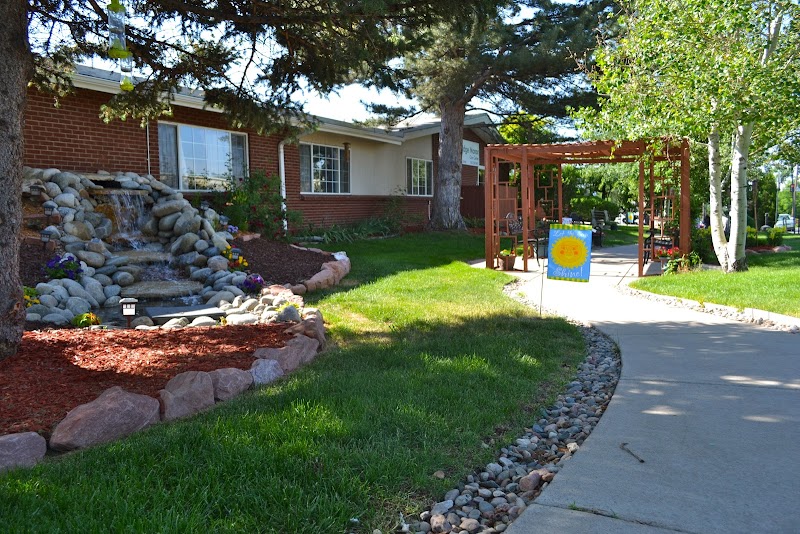
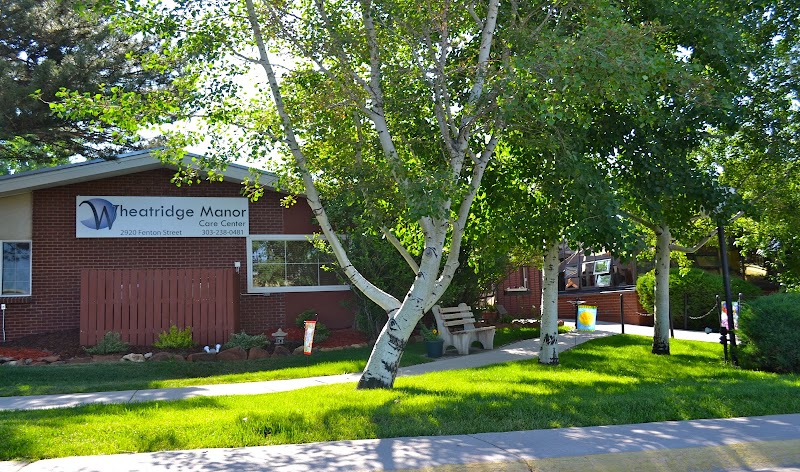
WHEATRIDGE CARE CENTER

2920 FENTON ST, WHEAT RIDGE, CO 80214 (303) 238-0481
For profit - Limited Liability company 65 Beds VIVAGE SENIOR LIVING Data: November 2025 1 Immediate Jeopardy citation
Trust Grade
36/100
#129 of 208 in CO
Last Inspection: June 2025

Inspected within the last 6 months. Data reflects current conditions.

Overview

Wheatridge Care Center has received a Trust Grade of F, indicating poor performance with significant concerns about the quality of care provided. They rank #129 out of 208 facilities in Colorado, placing them in the bottom half, and #15 out of 23 in Jefferson County, suggesting limited local options for better care. The facility's trend is worsening, with the number of critical issues increasing from 9 in 2023 to 10 in 2025. Staffing is a concern here, with a rating of 2 out of 5 stars and a high turnover rate of 60%, which is above the state average of 49%. While they have average RN coverage, the facility has faced serious incidents, including a critical medication error that resulted in a resident suffering from an opioid overdose, and a serious fall incident where a resident with known risks was left unsupervised and sustained a femur fracture. Additionally, the facility has been criticized for lacking a properly trained infection control preventionist, which could affect all residents. Overall, families should weigh these significant concerns against any potential strengths when considering this nursing home.

Trust Score
F
36/100
In Colorado
#129/208
Bottom 38%
Safety Record
High Risk
Review needed
Inspections
Getting Worse
9 → 10 violations
Staff Stability
⚠ Watch
60% turnover. Above average. Higher turnover means staff may not know residents' routines.
Penalties
○ Average
$24,507 in fines. Higher than 58% of Colorado facilities. Some compliance issues.
Skilled Nurses
○ Average
Each resident gets 36 minutes of Registered Nurse (RN) attention daily — about average for Colorado. RNs are the most trained staff who monitor for health changes.
Violations
⚠ Watch
24 deficiencies on record. Higher than average. Multiple issues found across inspections.
★★★☆☆
3.0
Overall Rating
★★☆☆☆
2.0
Staff Levels
★★★★★
5.0
Care Quality
★★☆☆☆
2.0
Inspection Score
Stable
2023: 9 issues
2025: 10 issues

The Good

  • 5-Star Quality Measures · Strong clinical quality outcomes
  • Full Sprinkler Coverage · Fire safety systems throughout facility
  • No fines on record

Facility shows strength in quality measures, fire safety.

The Bad

3-Star Overall Rating

Near Colorado average (3.1)

Meets federal standards, typical of most facilities

Staff Turnover: 60%

14pts above Colorado avg (46%)

Frequent staff changes - ask about care continuity

Federal Fines: $24,507

Below median ($33,413)

Minor penalties assessed

Chain: VIVAGE SENIOR LIVING

Part of a multi-facility chain

Ask about local staffing decisions and management

Staff turnover is elevated (60%)

12 points above Colorado average of 48%

The Ugly 24 deficiencies on record

1 life-threatening 1 actual harm
Jun 2025 10 deficiencies 1 Harm
SERIOUS (G)

Actual Harm - a resident was hurt due to facility failures

Accident Prevention (Tag F0689)

A resident was harmed · This affected 1 resident

**NOTE- TERMS IN BRACKETS HAVE BEEN EDITED TO PROTECT CONFIDENTIALITY** Based on record review and interviews, the facility failed to ensure the residents environment remained as free of accident haza...

Read full inspector narrative →
**NOTE- TERMS IN BRACKETS HAVE BEEN EDITED TO PROTECT CONFIDENTIALITY** Based on record review and interviews, the facility failed to ensure the residents environment remained as free of accident hazards as possible and ensured adequate supervision was provided for one (#18) of five residents reviewed out of 32 sample residents. Resident #18, who was at risk for falls related to weakness, multiple sclerosis (an autoimmune disease that affects the central nervous system) and a history of falls, was admitted to the facility on [DATE] for a long-term care stay due to the progressive nature of her illness. Per the resident's care plan, she required total staff assistance for activities of daily living (ADL), including showers. Resident #18 experienced an unwitnessed fall on 4/16/25 when she was left unsupervised in the main shower room, resulting in a fracture of her right femur. Specifically, the facility failed to provide adequate supervision for Resident #18 during her shower, which resulted in Resident #18 falling and sustaining a fracture of her right distal femur, which required surgical repair. Findings include: Observations, record review and interviews confirmed the facility corrected the deficient practice prior to the onsite investigation on 6/10/25 to 6/12/25, resulting in the deficiency being cited as past noncompliance with a correction date of 4/16/25. I. Fall incident on 4/16/25 Resident #18 experienced an unwitnessed fall on 4/16/25 when she was left unsupervised in the main shower room, resulting in a fracture of her right femur. II. Facility plan of correction The corrective action plan the facility implemented in response to the accident on 4/16/25 involving Resident #18 was provided by the regional clinical resource (RCR) on 6/12/25 at 4:16 p.m. The plan included the following: CNA #4 was interviewed and provided education on 4/16/25 to ensure residents were not left unattended in the shower room. Education was provided to all nursing staff on shower safety on 4/16/25 and ensuring risk management incident reports were completed to include appropriate notification. Ongoing random audits were to be completed weekly to ensure residents were not left unattended in the shower. III. Facility policy and procedure The Fall Management policy, revised on 2/29/24, was provided by the RCR on 6/16/25 at 3:20 p.m. It read in pertinent part, The purpose of the Fall Management policy is to modify or eliminate risk factors as applicable and thereby attempt to reduce the likelihood of falls with significant injury. A fall reduction program will be established and maintained to assess all residents to determine their risk for falls. A plan of care will be implemented based on the resident's assessed needs. The facility will educate and communicate implemented interventions to direct care staff. IV. Resident #18 A. Resident status Resident #18, age less than 65, was admitted on [DATE] and readmitted on [DATE]. According to the June 2025 computerized physician orders (CPO), diagnoses included multiple sclerosis, bipolar disorder, depressive episodes, stiffness of the right and left knee, stiffness of the right and left ankle and fracture of the right femur. The 3/24/25 minimum data set (MDS) assessment revealed Resident #18 was cognitively intact with a brief interview for mental status (BIMS) score of 15 out of 15. Resident #18 required total staff assistance with personal hygiene, toileting and showers. She was independent with mobility in an electric wheelchair; however, she required total staff assistance with all transfers. B. Resident interview Resident #18 was interviewed on 6/10/25 at 12:07 p.m. Resident #18 said she was left unattended in the main shower room by herself and when the staff member returned to the shower room, she was on the floor. The resident said she sustained an injury to her right femur, which needed surgery to repair. Resident #18 said she spent five days at the hospital after the surgery and was admitted back to the facility on 4/21/25. The resident said that due to the fall incident, she has been afraid of taking showers. C. Record review The long-term care level of care assessment, completed on 11/23/23, revealed Resident #18 required hands-on assistance or line-of-sight standby assistance throughout bathing activities in order to maintain safety, adequate hygiene and skin integrity. The ADL care plan, initiated 11/18/21 and revised 11/25/24, revealed Resident #18 had ADL care deficits related to weakness and advanced multiple sclerosis. Interventions included maximum assistance from two staff members and a Hoyer lift (mechanical lift) to move between surfaces as needed and as necessary with all transfers. The fall care plan, initiated 11/18/21 and revised 2/24/23, identified that Resident #18 was at risk for falls. Pertinent interventions included anticipating and meeting the resident's needs. The facility's fall investigation for Resident #18's 4/16/25 fall was provided by the RCR on 6/11/25 at 1:41 p.m. Review of the 4/16/25 fall investigation revealed Resident #18 was left unsupervised and found on the floor with a shower chair tipped over her. Resident #18 was lying on the right side of her body with her arm wrapped within the shower chair, requiring staff assistance to be removed. The investigation documented that a registered nurse (RN) post-fall assessment revealed no signs and symptoms of injury; however, there was noted swelling of the resident's right knee. Resident #18 complained of pain and an Xray was ordered. Upon review of the Xray, Resident #18 was transported to the emergency department for further evaluation. The investigation included a written report from an RN The report documented that certified nurse aide (CNA) #4 assisted Resident #18 with her shower. The report documented CNA #4 reported that during Resident #18's shower, she turned away from the resident to get assistance from another staff member and upon her return, Resident #18 was found on the floor in the shower room with the shower chair tipped over the resident. The 4/16/25 nursing progress note documented Resident #18 fell during a shower. CNA #4 informed the nurse of the fall. Before the fall, CNA #4 reported Resident #18 was upset because CNA #4 could not understand what she needed. CNA #4 reported the resident began crying and flailing her arms. CNA #4 left the resident unsupervised to look for help, and upon returning, found Resident #18 on the floor. Xrays were ordered due to Resident #18 exhibiting noted swelling to the right knee and ice was applied. Resident #18 reported severe leg pain. The 4/17/25 summary of episode note assessment documented that Resident #18 had a fall which resulted in a right femur fracture with right leg pain. Resident #18 was sent to the hospital on 4/16/25, where she underwent an intramedullary nailing (IMN) (a surgical procedure used to fix a bone fracture) on 4/18/25 and returned to the facility on 4/21/25. V. Staff interviews CNA #4 was interviewed on 6/11/25 at 1:44 p.m. CNA #4 said Resident #18 required total staff assistance with showers and could not be left alone in the shower. CNA #4 said that while assisting Resident #4 with a shower on the day of the resident's fall (4/16/25), the resident became agitated because she could not understand what the resident was trying to tell her. CNA #4 said she left the shower room to look for help and found Resident #18 on the shower room floor when she returned. CNA #4 said the resident sustained a right leg injury and was sent to the emergency department. CNA #4 said she did not use the call light in the shower room to call for help because she thought she would have to wait for a long time for another staff member to respond. She said she was not familiar with Resident #18's care and did not understand what she wanted her to do. Licensed practical nurse (LPN) #4 was interviewed on 6/11/25 at 1:55 p.m. LPN #4 said Resident #18 should not have been left in the shower room unsupervised. LPN #4 said the resident required supervision at all times during showers. She said Resident #18 suffered a fracture to the right femur, which required a surgical procedure to repair. LPN #4 said CNA #4 should have used the call light and remained with the resident until help arrived. The director for rehabilitation (DOR) was interviewed on 6/11/25 at 2:48 p.m. The DOR said Resident #18 was dependent on staff assistance for ADLs, including showers. The DOR said when residents who required assistance with showers were left unsupervised in the shower room, it could result in major injuries and hospitalization. She said Resident #18 was left in the shower room alone (on 4/16/25), which resulted in a fall with injury that required a surgical procedure to fix. The RCR was interviewed on 6/12/25 at 2:50 p.m. The RCR said he knew about Resident #18's fall incident and the investigation on 4/16/25. The RCR said that all dependent residents should not be left alone in the shower unsupervised. He said Resident #18 fell and sustained a fracture to her right femur, which required surgery. He said CNA #4 should have utilized the call light and stayed with the resident until another staff member came to assist her. The RCR said the facility immediately initiated an action plan on 4/16/25 about shower safety. He said CNA #4 was interviewed and provided education to ensure residents were not left unattended in the shower room. The RCR said he did not know the reason CNA #4 left Resident #4 alone instead of using the call light. The nursing home administrator (NHA) was interviewed on 6/12/25 at 4:55 p.m. The NHA said she was involved in the 4/16/25 fall investigation for Resident #18. The NHA said all fall incidents were reviewed by the interdisciplinary team (IDT). She said education was provided to all nursing staff on the proper way to use the call light to call for assistance and ensuring that dependent residents were not left unattended in the shower.
CONCERN (D)

Potential for Harm - no one hurt, but risky conditions existed

Deficiency F0742 (Tag F0742)

Could have caused harm · This affected 1 resident

**NOTE- TERMS IN BRACKETS HAVE BEEN EDITED TO PROTECT CONFIDENTIALITY** Based on record review and interviews, the facility failed to ensure two (#51 and #18) of three residents diagnosed with a menta...

Read full inspector narrative →
**NOTE- TERMS IN BRACKETS HAVE BEEN EDITED TO PROTECT CONFIDENTIALITY** Based on record review and interviews, the facility failed to ensure two (#51 and #18) of three residents diagnosed with a mental disorder or psychosocial adjustment difficulty received appropriate treatment and services to attain the highest practicable mental and psychosocial wellbeing out of 32 sample residents. Specifically, the facility failed to: -Identify Resident #51 had a history of suicide attempts and suicidal ideation in order to monitor for worsening signs and symptoms of depression or suicidal ideation; and, -Address identified psychosocial distress impacting a resident's level of functioning for Resident #18, who expressed fear of showers after a fall with major injury in the shower. Findings include: I. Resident #51 A. Resident status Resident #51, age [AGE], was admitted on [DATE]. According to the June 2025 computerized physician orders (CPO), diagnoses included bipolar disorder, Parkinson's disease and dementia. The 3/25/25 minimum data set (MDS) assessment documented the resident was cognitively intact with a brief interview for mental status (BIMS) score of 15 out of 15. Resident #51 was independent with her activities of daily living (ADLs) and used a walker for ambulation. The MDS assessment revealed Resident #51 had expressed feeling down, depressed or hopeless for several days during the assessment look back period. B. Record review The trauma informed care plan, revised 12/13/24, revealed Resident #51 had a history of trauma related to the loss of her father at a young age. Interventions, initiated 11/21/24, included assessing the resident's need for additional services and therapeutic supports or specialists from the community. The behavior care plan, revised 4/3/25, revealed Resident #51 took anti-psychotic medications related to the diagnosis of bipolar disorder. Target behaviors included mania/increased energy, racing thoughts, poor sleep, rapid speech, hyper focus, self-isolation, depressive statements and psychosis. Interventions, revised 8/13/24, included developing a program of activities that was meaningful and of interest to the resident. -The comprehensive care plan failed to identify any history of suicide attempts or expressions of suicidal ideations (see psychotherapy notes below). Review of Resident #51's June 2025 CPO revealed the following physician's orders: Aripiprazole (an antipsychotic medication) 10 milligrams (mg). Give one once a day for bipolar disorder, ordered 10/1/24. Monitor behaviors for antipsychotic use. Document number of episodes of target behavior, interventions attempted and effectiveness. Target behaviors: 1. Isolation 2. Hallucinations Interventions: a. Redirection b. One-on-one c. Activity d. Low stimulation environment e. Offer toileting f. Offer snacks g. Offer fluids h. Assess for pain i. Other-document in progress notes, ordered o 10/1/24. Depakote (mood stabilizer) 500 mg. Give one tablet in the morning for bipolar disorder, ordered 4/10/25. Depakote 250 mg. Give one tablet at bedtime for bipolar disorder, ordered 4/10/25. -The physician's orders failed to include behavior monitoring for attempts or expressions of suicidal ideations. Review of Resident #51's electronic medical record (EMR), from 2/1/25 to 6/12/25, revealed the following progress notes: The psychotherapy initial assessment note, dated 2/12/25, revealed Resident #51 disclosed having had suicidal thoughts in the past. A psychotherapy follow-up note, dated 3/11/25, revealed Resident #51 reported depression, racing thoughts and feelings of loneliness. Resident #51 had disclosed to the psychiatric nurse practitioner (NP) that she had attempted to overdose on pills in her past. Behavior intervention recommendations included monitoring, assessing and documenting depression and anxiety symptoms, rapid changes in mood, suicidal/homicidal ideations and hallucinations. A psychosocial gradual dose reduction (GDR) note, dated 4/1/25, revealed staff reported Resident #51 had a recent incident of becoming upset regarding her room situation, making a statement of not wanting to be here anymore and she had another incident on an outing where she became tearful and anxious. -However, despite the resident's expression of not wanting to be here anymore, review of the resident's EMR failed to reveal the facility was monitoring the resident for signs and symptoms of depression or suicidal ideation. A psychosocial social services note, dated 4/2/25, revealed Resident #51 had been presenting with instances of extreme agitation over the previous week. Additionally, Resident #51 had reported challenges with sleep. The resident's sister advised the facility poor sleep, rapid speech, hyper fixation and racing thoughts were indicators of mania for Resident #51. Resident #51 informed the social services director (SSD) that she was experiencing those symptoms. The resident's medication was to be reviewed. A psychotherapy follow-up note, dated 4/9/25, revealed Resident #51 reported to the psychiatric NP that she had been experiencing depression over the past month with mood elevation and a worsening of tremors related to her Parkinson's diagnosis. A psychotherapy follow-up note, dated 4/23/25, revealed Resident #51 continued to report manic episodes with difficulty sleeping, decreased appetite and episodes of anxiety. A psychotherapy follow-up note, dated 5/7/25, revealed Resident #51's primary focus during the visit were on her worsening tremors, which were significantly impacting her daily functioning. She expressed frustration and tearfulness to the psychiatric NP about how ineffective she believed her medications were in treating her tremors. A psychotherapy note, dated 5/21/25, revealed Resident #51 had discussed feelings of low self esteem or guilt and fears of rejection, dependency and abandonment. Additionally, she continued to struggle with healthy thoughts. Therapy objectives for Resident #51 included verbalizing grief, fear and anger regarding real or imagined losses. A psychotherapy follow-up note, dated 5/21/25, revealed Resident #51 had expressed feelings of disappointment and discouragement related to a lack of improvement in her tremors, despite medication changes and physical therapy, which she reported had increased in difficulty for her. -However, despite the psychotherapy notes indicating Resident #51 was reporting discouragement, tearfulness, feelings of loneliness and abandonment and struggling with healthy thoughts, review of the resident's EMR failed to reveal documentation to indicate the facility the facility was monitoring the resident for signs and symptoms of depression or suicidal ideation. II. Staff interviews Certified nurse aide (CNA) #5 was interviewed on 6/11/25 at 1:11 p.m. CNA #5 said Resident #51 did not have any behaviors. CNA #5 said she was not aware of any signs of symptoms of depression or a history of suicidal ideations or attempts for the resident. Registered nurse (RN) #2 was interviewed on 6/11/25 at 1:26 p.m. RN #2 said she did not know Resident #51 very well but she said if a resident had a history of suicidal ideations or attempts, there should be a behavior monitoring physician's order with the signs and symptoms to observe for and report to social services. CNA #3 and CNA #4 were interviewed together on 6/11/25 at 1:34 p.m. CNA #3 and CNA #4 said that Resident #51 did not have any behaviors or history of mental illness, to include a history of suicidal ideations or attempts, however, they said the resident did isolate herself in her room for long periods of time. Licensed practical nurse (LPN) #5 was interviewed on 6/11/25 at 1:50 p.m. LPN #5 said Resident #51 did not have any behaviors and she was unaware of what depression symptoms looked like for Resident #51. The SSD was interviewed on 6/12/25 at 11:28 a.m. The SSD was not able to identify specific indicators of depressive symptoms for Resident #51. The SSD said she was not aware the resident had made statements to staff about not wanting to be here or that she had shared a history of suicidal ideations and attempts with the therapist and the psychiatrist. The SSD said she would expect those things to be reported to her but acknowledged that she did not review the behavioral health notes regularly. The SSD said it would be important for staff to be aware of Resident #51's types of behaviors and history in order to be prompt in reporting to the SSD or nursing home administrator (NHA) potential indicators of increasing depression or thoughts of suicidal ideation in order to prevent the resident from self-harming. The SSD said increases in episodes of racing thoughts and mania, feelings of hopelessness and frustration over loss of physical abilities or declining health could all be triggers for a person with a history of suicidal ideations and attempts. The external behavioral health psychiatrist was interviewed via telephone on 6/12/25 at 2:50 p.m. The external behavioral health psychiatrist said she was one of several behavioral health providers that rotated in seeing the residents at the facility. She said she could recall bringing up Resident #51's statement about not wanting to be here anymore in a May 2025 psychopharmacological management meeting at the facility, but she said she could not recall the outcome of that meeting or if there was an action taken by the facility in regards to the resident's statement.II. Resident #18 A. Resident status Resident #18, age less than 65, was admitted on [DATE] and readmitted on [DATE]. According to the June 2025 CPO, diagnoses included multiple sclerosis, bipolar disorder, depressive episodes, stiffness of the right and left knee, stiffness of the right and left ankle and fracture of the right femur. The 3/24/25 MDS assessment revealed Resident #18 was cognitively intact with a BIMS score of 15 out of 15. Resident #18 required total staff assistance with personal hygiene, toileting and showers. She was independent with mobility in an electric wheelchair; however, she required total staff assistance with all transfers. B. Resident interview Resident #18 was interviewed on 6/10/25 at 12:07 p.m. Resident #18 said she had not taken a shower since she fell and broke her right femur in the shower room on 4/16/25, when a staff member left her in the shower room alone. Resident #18 said she was traumatized and still afraid of taking showers after the fall incident. The resident said she preferred showers, but she was afraid that the staff would leave her alone in the shower room again. Resident #18 said she had been receiving bed baths since she returned to the facility from the hospital after the fall. The resident said that if the facility staff would work with her to get her confidence back, she would return to taking showers, but that had not happened. The resident said she informed several staff members about her fears of taking showers due to the fall, and they would offer her bed baths. The resident said she had not received an evaluation on shower safety to help her overcome the fear of falling. C. Record review A 5/21/25 psychiatric evaluation progress note documented Resident #18 had expressed fear of taking showers to the facility's nurse practitioner (NP). The NP documented that the reason for the resident's fear of the shower was unspecified. -Review of Resident #18's EMR did not reveal further follow-up related to the resident's fear of the shower or identify any recommendations for addressing the resident's fear. The trauma-informed care plan, revised 11/27/24, revealed Resident #18 required trauma-informed care due to having an increased risk for the development of mood or behavioral symptoms, given her history of childhood abuse. Pertinent interventions included social services to offer and arrange for additional services and therapeutic support or specialists from the community. Staff was to offer referrals periodically and as needed and a referral was in place for behavioral health services (initiated 11/27/24). -Further review of Resident #18's care plan and EMR did not reveal a follow-up assessment, evaluations, social services notes and/or referrals made to behavioral health services in response to the resident's expression of fear of showers after she fell on 4/16/25 and sustained a major injury requiring surgery. Cross reference F689 for failure to keep residents free of accidents/hazards. -Review of Resident #18's care plan did not reveal interventions for facility staff to implement when the resident expressed fear of taking showers. -There was no documentation in Resident #18's EMR to indicate that staff who knew about the resident's fear of taking showers after the fall reported the concern to management. D. Staff interviews CNA #3 was interviewed on 6/11/25 at 1:00 p.m. CNA #3 said Resident #18 preferred showers, but since the fall incident on 4/16/25, the resident would not take a shower. CNA #3 said the resident had expressed fear of showers and she reported it to the unit nurse. CNA #3 said the nurse asked her to offer the resident a bed bath. LPN #4 was interviewed on 6/11/25 at 1:22 p.m. LPN #4 said she received report from CNAs that Resident #18 expressed fear with showers due to the fall incident. LPN #4 said she spoke with the resident and she confirmed the report. LPN #4 said she told the resident she could have bed baths. LPN #4 said she did not inform social services of the resident's fear and did not remember documenting the resident's concern. LPN #4 said she should have informed the SSD and management about Resident #18's fear of falling in the shower and she should have documented the resident's fear in the progress notes. The SSD was interviewed on 6/11/25 at 2:25 p.m. The SSD said Resident #18 had a history of trauma and she expected the nursing staff to report any expression of fear to management. The SSD said she was informed about the resident's fall incident on 4/16/25, however, she said she did not know about the resident's expression of fear with showers. The SSD said she did not notice the 5/21/25 psychiatric evaluation progress note that made mention of the resident's expressed fear of showers. The SSD said she expected the staff to inform her and the management team of Resident #18's concerns in order to come up with a plan and interventions to help bring the resident back to baseline so she could have the confidence and feel safe to do the things she enjoyed doing. The regional clinical resource (RCR) was interviewed on 6/12/25 at 2:50 p.m. The RCR said management did not receive a report of Resident #18 expressing fear of showers after the fall incident on 4/16/25. The RCR said staff should have reported and documented the resident's concerns in the resident's progress notes. The RCR said he did not know the reason the staff did not report the resident's fear of taking a shower after her fall. The RCR said the facility would immediately offer education to all the nursing staff to ensure a breakdown of communication from staff to management did not occur again. Primary care physician (PCP) #1 was interviewed on 6/12/25 at 2:15 p.m. PCP #1 said he heard about Resident #18's fall incident, but he said he had not heard of the resident's expression of fear about taking showers after the fall. PCP #1 said the facility staff should have brought the resident's concern to the management team's attention, and the team should have conducted a therapy evaluation and developed interventions to assist the resident with her fear of falling in the shower.
CONCERN (D)

Potential for Harm - no one hurt, but risky conditions existed

Unnecessary Medications (Tag F0759)

Could have caused harm · This affected 1 resident

Based on observations, record review and interviews, the facility failed to ensure that the medication error rate was not five percent (%) or greater. Specifically, the facility had a medication error...

Read full inspector narrative →
Based on observations, record review and interviews, the facility failed to ensure that the medication error rate was not five percent (%) or greater. Specifically, the facility had a medication error rate of 24%, which was six errors out of 25 opportunities for error. Findings include: I. Facility policy and procedure The Medication Administration policy, dated 2/29/24, was provided by the nursing home administrator (NHA) on 6/11/25. It revealed in pertinent part, Observe that the resident swallows oral drugs. Do not leave medications with the resident. II. Medication error observations and interviews On 6/11/25 at 11:30 a.m. registered nurse (RN) #2 was preparing medications for Resident #41. RN #2 dispensed two medications, metoprolol and Lyrica, into a medication cup. She walked to Resident #41's room, handed the medication cup to the resident, told him those were his medications and walked away before the resident had a chance to take his medications. -RN #2 failed to ensure Resident #41 took his medications at the time they were administered. At 11:48 a.m. RN #2 was preparing medications for Resident #111. RN #2 dispensed two tablets of Tylenol and one sodium chloride tablet into a medication cup. She took the medication cup to the resident's room, gave the cup to the resident and told her those were her medications. Resident #111 held the medication cup in her hand and RN #2 left the room without ensuring that the resident swallowed the medications. -RN #2 failed to ensure Resident #41 took his medications at the time they were administered. At 12:07 p.m. RN #2 walked into Resident #261's room with the medication cup containing the resident's medications. Resident #261 was in bed with the head of her bed slightly (at approximately a 30 degree angle). She had a lunch tray in front of her and was trying to eat her lunch. RN #2 handed the resident the medication cup which contained two tylenol tablets, checked that the resident had water and walked away from the room. RN #2 did not reposition the resident to an upright position and did not stay in the room to ensure the medications were taken. -RN #2 failed to ensure Resident #41 took his medications at the time they were administered. At 12:15 p.m. RN #2 entered Resident #264's room and placed a plastic medication cup in front of the resident. The cup was filled with liquid protein solution. Resident #264 said he did not want what was in the cup. RN #2 told the resident he had to drink what was in the cup. She left the room and left the medication cup with the resident. -RN #2 failed to ensure Resident #41 took his medications at the time they were administered. III. Staff interviews RN #2 was interviewed on 6/11/25 at 12:32 p.m. RN #2 said she gave Resident #111 her medications and she believed the resident put the medications in her mouth. She said she did not realize the resident did not swallow the medications. RN #2 said Resident #41 was alert and oriented and she felt comfortable leaving medications with him. RN #2 said she thought Resident #261 swallowed her medications when she was in the room. RN #2 said she did not know what to do when residents refused to take medications, as Resident #264 had done. She said she would usually just leave the medications in the room. Licensed practical nurse (LPN) #1, who was filling in for the director of nursing (DON) position, and the regional clinical resource (RCR) were interviewed together on 6/11/25 at approximately 2:00 p.m. LPN #1 and the RCR said nurses must observe residents taking the medications to ensure residents safely swallowed the medications. The RCR said education to all nursing staff would be initiated to ensure medications were administered to residents in a professional manner. She said RN #2 would be educated immediately and followed by a nurse manager to ensure she was adhering to professional standards of administering medications.
CONCERN (D)

Potential for Harm - no one hurt, but risky conditions existed

Deficiency F0761 (Tag F0761)

Could have caused harm · This affected 1 resident

**NOTE- TERMS IN BRACKETS HAVE BEEN EDITED TO PROTECT CONFIDENTIALITY** Based on observations and interviews, the facility failed to ensure all drugs and biologicals used in the facility were properly...

Read full inspector narrative →
**NOTE- TERMS IN BRACKETS HAVE BEEN EDITED TO PROTECT CONFIDENTIALITY** Based on observations and interviews, the facility failed to ensure all drugs and biologicals used in the facility were properly stored and labeled in two of three medication carts and one of two medication storage rooms. Specifically, the facility failed to: -Ensure insulin pens were labeled with an open date; and, -Ensure inhalers were stored in a sanitary manner and labeled with resident names. Findings include: I. Facility policy and procedure The Medication Storage policy, undated, was provided by the regional clinical resource (RCR) on 6/11/25 at 4:30 p.m. It read in pertinent part, The facility stores all drugs and biologicals in a safe, secure, and orderly manner. Drugs and biologicals used in the facility are stored in locked compartments under proper temperature. Only persons authorized to prepare and administer medications have access to locked medications. Drugs and biologicals are stored in the packaging, containers or other dispensing systems in which they are received. Only the issuing pharmacy is authorized to transfer medications between containers. Compartments (including, but not limited to, drawers, cabinets, rooms, refrigerators, carts, and boxes) containing drugs and biologicals are locked when not in use. Unlocked medication carts are not left unattended. Medications requiring refrigeration are stored in a refrigerator located in the drug room at the nurses station or other secured location. Medications are stored separately from food and are labeled accordingly. II. Manufacturer's recommendations According to the manufacturer's instructions found on a package insert for Humalog, Humalog, an insulin lispro injection, should be stored in the refrigerator at a temperature between 2 degrees celsius (C) and 8 degrees C (36 degrees fahrenheit (F) and 46 degrees F). Unopened Humalog: Store in the refrigerator until the expiration date. Opened Humalog: Vials and cartridges: Store in the refrigerator or at room temperature (up to 30 degrees C or 86 degrees F) for up to 28 days. Prefilled pens: Store at room temperature (up to 30 degrees C or 86 degrees F) for up to 28 days. According to the manufacturer's instructions found on a package insert for Lantus: Unused/Unopened: Refrigerate: Store unused Lantus vials and SoloStar pens in the refrigerator at temperatures between 36 degrees F and 46 degrees F (2 degrees C and 8 degrees C). Expiration Date: When stored in the refrigerator, unused Lantus will remain potent until the expiration date printed on the packaging. Do not freeze: Never freeze Lantus. If it freezes, discard it even if it thaws out. Room Temperature (Alternative): You can store unused Lantus at room temperature (up to 86 degrees F or 30 degrees C), but it will only last for 28 days. In-Use/Opened:Lantus SoloStar Pen: Once opened, keep the Lantus SoloStar pen at room temperature (up to 86 degrees F or 30 degrees C) and do not refrigerate. Lantus Vial: Opened vials can be stored either in the refrigerator or at room temperature (below 86°F or 30°C). Shelf Life: After the first use (opened), both Lantus SoloStar pens and vials should be discarded after 28 days, even if there is insulin left. Avoid: Keep Lantus away from direct heat and sunlight as this can degrade the insulin and make it less effective. According to the manufacturer's instructions found on a package insert for Ozempic: Ozempic should stay refrigerated until the first time you use it. You should keep it in the refrigerator (between 36 degrees F to 46 degrees F or 2 degrees C to 8 degrees C) when it's new and unused. After you've used your pen for the first time, you can either store your pen for 56 days at room temperature (between 59 degrees F to 86 degrees F or 15 degrees C to 30 degrees C) or you can still keep it in the refrigerator for 56 days. Keep the pen cap on when it is not in use. Unused Ozempic pens may be used until the expiration date printed on the label, if stored in the refrigerator. Do not freeze the pen or use it if it has been frozen. The Ozempic pen you are using should be disposed of (thrown away) after 56 days (whether kept in the refrigerator or at room temperature), even if it still has Ozempic left in it. III. Observations On 6/11/25 at 12:23 p.m. medication cart #1 was inspected in the presence of registered nurse (RN) #2. The following was observed: One Humalog insulin pen, one Lantus insulin pen and two Semgee insulin pens in the cart were not labeled with an open date. At 12:26 p.m. medication room [ROOM NUMBER] was inspected in the presence of RN #2. The following was observed: The medication room contained over-the-counter medications that were stored in cabinets. A 96-gallon black trash bin with a lid was in the middle of the room filled with trash. An additional large trash basket, without a lid, was filled with used gloves and food wraps. Next to it was a table with an uncovered suctioning machine and an upside down shower bench on top of it. Next to the non-working stained bidet filled with plastic and paper scraps was a large box with a biohazardous liner that contained six to seven filled sharps containers. One broken four-wheel walker was parked next to it. In the dusty sink, a deflated air mattress with an electric controller was observed. On top of it was an empty bucket and a brush. On top of the stained and dusty countertop was a locked box with controlled emergency medications (E-kit). The medication dispensing unit was observed in the corner of the room. Next to it was a small refrigerator with a sign that indicated the refrigerator was intended for vaccines only. -The vaccine storage refrigerator contained two boxes of insulin medication, in addition to flu vaccines. At 12:35 p.m. medication cart #2 was inspected in the presence of licensed practical nurse (LPN) #4. The following was observed: An undated ozempic pen was located in the cart. In addition, a small plastic basket was filled with seven inhalers, some were missing covers for mouth pieces and two were unlabeled with names. IV. Staff interviews RN #2 was interviewed on 6/11/25 at 12:32 p.m. RN #2 said she did not know why insulin pens were not labeled or why it was important to label it. LPN #4 was interviewed on 6/11/25 at 12:41 p.m. LPN #4 said inhalers should be stored in individual boxes with mouth covers for mouthpiece to ensure clean storage. She said she did not know who placed all the inhalers in one basket. She said she did not know why two inhalers were not labeled with resident names or who they belonged to. LPN #4 said she did not know how long the Ozempic pen could be used after it was removed from the refrigerator. She said the facility had a binder with expiration dates for medications but she could not locate it. LPN #1, who was covering for the director of nursing (DON) position and the RCR were interviewed together on 6/11/25 at approximately 3:00 p.m. LPN #1 said all insulin and Ozempic pens should be labeled with an open date to ensure they were not used past the expiration date. She said expiration times were different for different medications. She said inhalers should be stored in individual containers.
CONCERN (D)

Potential for Harm - no one hurt, but risky conditions existed

Infection Control (Tag F0880)

Could have caused harm · This affected 1 resident

**NOTE- TERMS IN BRACKETS HAVE BEEN EDITED TO PROTECT CONFIDENTIALITY** Based on observations and interviews, the facility failed to maintain an infection control program designed to provide a safe, s...

Read full inspector narrative →
**NOTE- TERMS IN BRACKETS HAVE BEEN EDITED TO PROTECT CONFIDENTIALITY** Based on observations and interviews, the facility failed to maintain an infection control program designed to provide a safe, sanitary and comfortable environment to help prevent the development and transmission of diseases and infection on one of three units. Specifically, the facility failed to: -Ensure the housekeeping staff followed the proper cleaning techniques for cleaning resident rooms and disinfecting high-frequency touched surfaces; and, -Ensure housekeeping staff performed appropriate hand hygiene. Findings include: I. Professional reference According to Assadian O, Harbarth S, Vos M, et al. Practical Recommendations for Routine Cleaning and Disinfection Procedures in Healthcare Institutions: A Narrative Review. The Journal of Hospital Infection. (July 2021); Volume 113, Pages 104-114, retrieved on 6/21/25 from https://pubmed.ncbi.nlm.nih.gov/33744383/, High-touch surfaces, on the other hand, are usually close to the patient, are frequently touched by the patient or nursing staff, come into contact with the skin and, due to increased contact, pose a particularly high risk of transmitting pathogens (virus or microorganism that can cause disease) Healthcare-associated infections (HAIs) are the most common adverse outcomes due to delivery of medical care. HAIs increase morbidity and mortality, prolonged hospital stay, and are associated with additional healthcare costs. Contaminated surfaces, particularly those that are touched frequently, act as reservoirs for pathogens and contribute towards pathogen transmission. Therefore, healthcare hygiene requires a comprehensive approach. This approach includes hand hygiene in conjunction with environmental cleaning and disinfection of surfaces and clinical equipment. According to the Centers for Disease Control and Prevention (CDC) Environment Cleaning Procedures (5/4/23) was retrieved on 6/21/25 from https://www.cdc.gov/healthcare-associated-infections/hcp/cleaning-global/procedures.html?CDC_AAref_Val=https://www.cdc.gov/hai/prevent/resource-limited/cleaning-procedures.html High-Touch Surfaces: The identification of high-touch surfaces and items in each patient care area is a necessary prerequisite to the development of cleaning procedures, as these will often differ by room, ward and facility. Common high-touch surfaces include: bedrails; IV (intravenous) poles; sink handles; bedside tables; counters; edges of privacy curtains; patient monitoring equipment (keyboards, control panels); call bells; and, door knobs. According to the CDC's Hand Hygiene in Healthcare Settings (1/18/21), retrieved on 6/21/25 from https://www.cdc.gov/handhygiene/providers/index.html, Cleaning your hands reduces the spread of potentially deadly germs to patients. Alcohol-based hand sanitizers are the most effective products for reducing the number of germs on the hands of healthcare providers. According to the CDC Hand Sanitizer Guidelines and Recommendations (3/12/24), retrieved on 6/23/25 from https://www.cdc.gov/clean-hands/about/hand-sanitizer.html, Germs are everywhere. They can get onto hands and items we touch during daily activities and make us sick. Cleaning hands at key times with soap and water or hand sanitizer that contains at least 60% alcohol is one of the most important steps you can take to avoid getting sick and spreading germs to those around you. There are important differences between washing hands with soap and water and using hand sanitizer. Apply the gel product to the palm of one hand (read the label to learn the correct amount). Cover all surfaces of hands. Rub your hands and fingers together until they are dry. This should take around 20 seconds. Wash your hands with soap and water whenever they are visibly dirty, before eating, and after using the restroom. B. Facility policy and procedure The Cleaning and Disinfecting Resident Rooms policy, revised August 2013, was provided by the regional clinical resource (RCR) on 6/16/25 at 3:56 p.m. It read in pertinent part, General guidelines included: housekeeping surfaces will be cleaned regularly, when spills occur, and when these surfaces are visibly soiled. Environmental surfaces would be disinfected on a regular basis, and when surfaces are visibly soiled, manufacturers' instructions will be followed for proper use of disinfectant. Walls, blinds, and window curtains in residents' areas will be cleaned when the surfaces are visibly soiled. Perform hand hygiene after removing gloves. The Hand Hygiene policy, revised August 2019, was provided by the RCR on 6/16/25 at 3:56 p.m. It read in pertinent part, This facility considers hand hygiene the primary means to prevent the spread of infections. All personnel shall be trained and regularly in-serviced on the importance of hand hygiene in preventing the transmission of healthcare-associated infections. All personnel shall follow the handwashing/hand hygiene procedure to help prevent the spread of infections to other personnel, residents, and visitors. C. Observations During a continuous observation on 6/11/25, beginning at 12:00 p.m. and ending at 1:10 p.m., the following was observed: Housekeeper (HK) #1 brought a cleaning cart to the front entrance of room [ROOM NUMBER]. HK #1 removed a disinfectant solution from the cleaning cart labeled Spic and Span. HK #1 sprayed the faucet, the sink, the towel dispenser and the countertop that had the residents personal hygiene items on it with Spic and Span disinfectant solution. , without donning (putting on) gloves. HK #1 placed the spray bottle back into the cleaning cart, applied alcohol based hand sanitizer, and immediately applied gloves. She began cleaning the faucet and the countertops without removing the personal hygiene items on the counter. She grabbed a wet rag from a wet bucket containing sanitizing solution from the cleaning cart and wiped down the areas she had sprayed. HK #1 removed her gloves, applied alcohol based hand sanitizer and immediately donned gloves while her hands were visibly wet. -HK #1 failed to disinfect high-touch areas such as door knobs, bed remotes, the call lights, the light switches, over the bed table and the night stand. -HK #1 failed to remove the residents personal hygiene items from the bathroom counter before spraying the disinfectant onto the surface. At 12:32 p.m., HK #1 proceeded to the door entrance of room [ROOM NUMBER]. She sprayed the disinfectant onto the surfaces of the toilet, grab bars, towel stand and the faucet. She went back to the cleaning cart and placed the disinfectant onto the cart. She applied hand sanitizer and immediately put on gloves, while her hands were visibly wet. At 12:40 p.m., HK #1, with gloves on, removed a toilet brush from her cleaning cart. She touched the cleaning brush container with both hands and used her right hand to open the bathroom door by holding on to the door knob. She proceeded to clean the toilet. She placed the soiled toilet brush into the cart and removed her gloves. She put on clean gloves immediately after applying hand sanitizer, while her hands were visibly wet. She removed the broom from the cleaning cart and swept the room. She removed her gloves and put on clean gloves, without performing hand hygiene. She removed the mop from the mop bucket and mopped the room. -HK #1 failed to disinfect high-touch areas such as door knobs, bed remotes, the call lights, the light switches, over the over-the-bed table and the night stand. -HK #1 did not rub her hands with the hand sanitizer until they were dry before applying gloves. -HK #1 failed to clean the bathroom door knob after touching it with her soiled gloves hand from holding the toilet brush. D. Staff interviews HK #1 was interviewed on 6/11/25 at 1:00 p.m. HK #1 said she usually worked as a laundry attendant and occasionally worked as a housekeeper. She said she received education on housekeeping and hand hygiene when she started working at the facility and annually thereafter. HK #1 said she found it difficult to don gloves because her hands were still wet with hand sanitizer (see observations above). She said she knew to allow her hands to dry when using hand sanitizer. HK #1 said she should have gathered all residents' hygiene items off the sink countertop before spraying the disinfectant on the surface. She said high-touch areas should be cleaned daily. She said she forgot to clean them and would go back to clean them immediately. The maintenance director (MTD) was interviewed on 6/12/25 at 2:30 p.m. The MTD said he had only been in his current position for three months and was not aware that he was in charge of housekeeping. The RCR was interviewed on 6/12/25 at 2:50 p.m. He said the housekeepers were trained on proper cleaning techniques and had been provided the necessary education to perform their duties at the beginning of their employment and annually. The RCR said HK #1 should have allowed her hands to dry after applying hand sanitizer before donning gloves. He said high-touch areas should be cleaned daily. The RCR said the residents' personal hygiene items should be kept in a sanitary condition. The RCR said housekeeping staff would be provided with education immediately.
CONCERN (E)

Potential for Harm - no one hurt, but risky conditions existed

Deficiency F0605 (Tag F0605)

Could have caused harm · This affected multiple residents

**NOTE- TERMS IN BRACKETS HAVE BEEN EDITED TO PROTECT CONFIDENTIALITY** Based on record review and interviews, the facility failed to ensure three (#17, #51 and #7) of six residents were free from che...

Read full inspector narrative →
**NOTE- TERMS IN BRACKETS HAVE BEEN EDITED TO PROTECT CONFIDENTIALITY** Based on record review and interviews, the facility failed to ensure three (#17, #51 and #7) of six residents were free from chemical restraints were receiving the least restrictive approach for their needs out of 32 sample residents. Specifically, the facility failed to: -Ensure Resident #17's behavior care plan had resident specific non-pharmacological care approaches; -Document consistent behaviors for Resident #17, Resident #51 and Resident #7 to justify the continued use of psychotropic medications; and, -Document resident specific care approaches, to include medication specific target behaviors and person-centered interventions for Resident #51 and Resident #7's psychotropic medications. Findings include: I. Facility policy and procedure The Psychopharmacological policy, dated 3/10/23, was provided by the regional clinical resource (RCR) on 6/16/25 at 3:56 p.m. It read in pertinent part, The care plan will include the resident's focus and target behaviors for the medication. Realistic and measurable goals will be utilized and approaches will include alternatives to psycho-pharmacological drug use. The plan of care must include behavior interventions and medication monitoring/dosage reduction if appropriate. Considerations should be given to potential underlying causes of behavior symptoms to assure appropriate treatment. Licensed nurses and additional staff will monitor and document any targeted behaviors that occur. These behaviors will be documented on one or more of the following: electronic medical record, progress notes, or on a Risk Management Incident Report. II. Resident #17 A. Resident status Resident #17, age [AGE], was admitted on [DATE]. According to the June 2025 computerized physician orders (CPO), diagnoses included bipolar disorder (mental illness), anxiety, depression, post traumatic stress disorder (PTSD) and vascular dementia. The 6/2/25 minimum data set (MDS) assessment documented the resident was severely cognitively impaired with a brief interview for mental status (BIMS) score of three out of 15. Resident #17 required one-person staff assistance with toileting and dressing. She ambulated independently. The MDS assessment indicated the resident did not have any behaviors during the assessment look back period. B. Record review The depression care plan, revised 12/3/24, revealed Resident #17 took antidepressant medications related to depression. An intervention, initiated 6/13/23, included monitoring the resident for hallucinations, delusions, social isolation and insomnia. -Review of the resident's depression care plan revealed there were no person-centered non-pharmological interventions for the resident's antidepressant medication use. The mood care plan, revised 12/3/24, revealed Resident #17 took antipsychotic medications associated with the diagnosis of vascular dementia with behaviors. The care plan documented her identified target behaviors were verbal and physical aggression towards others. Pertinent interventions included medications were to be reviewed quarterly and as indicated and attempts to reduce the dosage were to be made when clinically indicated (4/16/25). -Review of the resident's mood care plan revealed there were no person-centered non-pharmological interventions for the resident's antipsychotic medication. The behavior care plan, revised 4/7/25, revealed Resident #17 had the potential to be physically aggressive towards others related to dementia with behaviors with a history of throwing items. Pertinent interventions included providing the resident opportunities for positive interaction, stopping and speaking with her, discussing her behavior with her if it was inappropriate or unacceptable, approaching the resident in a calm manner, diverting attention and removing the resident to an alternative location (9/1/23). Review of Resident #17's June 2025 CPO revealed the following physician's orders: Monitor behaviors for antidepressant use. Document number of episodes of target behavior, interventions attempted and effectiveness. Target behavior 1. Isolation 2. Anger 3. Hallucinations. Intervention: a. Redirection b. One-on-one c. Diversional activity d. Offer to call family/friends e. Other-document in progress notes, ordered on 9/24/24. Risperdal (antipsychotic medication) 1 milligram (mg), take one tablet at bedtime for dementia with behaviors, ordered on 1/7/25. Fluoxetine (antidepressant medication) 40 mg, take one tablet a day for depression, ordered on 6/9/25. -The behavior monitoring physician's order failed to include identified behaviors of physical and verbal aggression, throwing items or delusions (see care plan above). -Resident #17 did not have behavior monitoring for the antipsychotic medication. Review of Resident #17's medication administration records (MAR) and treatment admission records (TAR) from 4/1/25 to 6/12/25 revealed the following: The April 2025 (4/1/25 to 4/30/25) MAR/TAR revealed there was no documentation to indicate Resident #17 exhibited behaviors during the month. The May 2025 (5/1/25 to 5/31/25) MAR/TAR revealed there was no documentation to indicate Resident #17 exhibited behaviors during the month. The June 2025 (6/1/25 to 6/12/25) MAR/TAR revealed there was no documentation to indicate Resident #17 exhibited behaviors during the month. Review of Resident #17's electronic medical record (EMR) from 4/1/25 to 6/12/25 revealed the progress notes documented for Resident #17 did not indicate the resident exhibited any behaviors. Review of Resident #17's psychopharmacological management meeting minutes, dated 5/6/25, did not reveal if Resident #17 had ever had a gradual dose reduction (GDR) or a risk/benefit initiated for the Risperdal medication. III. Resident #51 A. Resident status Resident #51, age [AGE], was admitted on [DATE]. According to the June 2025 CPO, diagnoses included bipolar disorder and dementia. The 3/25/25 MDS assessment documented the resident was cognitively intact with a BIMS score of 15 out of 15. Resident #51 was independent with her activities of daily living (ADLs) and used a walker for ambulation. The MDS assessment indicated the resident had not had any behaviors during the assessment look back period. B. Record review The behavior care plan, revised 4/3/25, revealed Resident #51 took antipsychotic medications associated with the diagnosis of bipolar disorder. Target behaviors included mania/increased energy, racing thoughts, poor sleep, rapid speech, hyper focus, self-isolation, depressive statements and psychosis. Interventions included developing a program of activities that was meaningful and of interest to the resident (8/13/24). -The comprehensive care plan failed to identify any medication specific target behaviors or person-centered interventions for the usage of the resident's mood stabilizing medication. Review of Resident #51's June 2025 CPO revealed the following physician's orders: Aripiprazole (antipsychotic medication) 10 mg, give one tablet once a day for bipolar disorder, ordered 10/1/24. Monitor behaviors for antipsychotic use. Document number of episodes of target behavior, interventions attempted, and effectiveness. Target behavior 1. Isolation 2. Hallucinations Intervention: a. Redirection. b. One-on-one c. Activity d. Low stimulating environment e. Offer toileting f. Offer snacks g. Offer fluids h. Assess for pain i. Other-document in progress notes, ordered 10/1/24. Depakote (mood stabilizer) 500 mg. Give one tablet in the morning for bipolar disorder, ordered 4/10/25. Depakote 250 mg. Give one tablet at bedtime for bipolar disorder, ordered 4/10/25. -The behavior monitoring physician's order failed to include identified behaviors of mania/increased energy, racing thoughts, poor sleep, rapid speech, hyper focus, depressive statements and psychosis (see care plan above). -Resident #51 did not have behavior monitoring for the mood stabilizer medication. Review of Resident #51's MARs and TARs from 4/1/25 to 6/12/25 revealed the following: The March 2025 (3/1/25 to 3/31/25) MAR/TAR revealed there was no documentation to indicate Resident #51 exhibited behaviors during the month. The April 2025 (4/1/25 to 4/30/25) MAR/TAR revealed there was no documentation to indicate Resident #51 exhibited behaviors during the month. The May 2025 (5/1/25 to 5/31/25) MAR/TAR revealed there was no documentation to indicate Resident #51 exhibited behaviors during the month. The June 2025 (6/1/25 to 6/12/25) MAR/TAR revealed there was no documentation to indicate Resident #51 exhibited behaviors during the month. Review of Resident #51's EMR from 3/1/25 to 6/12/25 revealed the following progress notes: A psychological GDR note, dated 3/4/25, revealed that Resident #51 had reported increased ruminating thoughts and mania. The note documented the staff attributed the resident's elevated mood to the recent start of medications for Parkinson' s disease. A psychological follow-up note, dated 3/11/25, revealed Resident #51 reported depression and racing thoughts, feelings of loneliness and variations in sleep patterns. A quarterly social services evaluation note, dated 3/25/25, revealed Resident #51 reported racing thoughts on a consistent basis. -However, no changes were made to Resident #51's behavior monitoring physician's order to include racing thoughts or the person-centered non pharmacological interventions that worked for her racing thoughts. A psychosocial social services note, dated 4/2/25, revealed Resident #51 had been presenting with instances of extreme agitation over the previous week. Additionally, Resident #51 had reported challenges with sleep. The resident's sister advised the facility that poor sleep, rapid speech, hyper fixation and racing thoughts were indicators of mania for Resident #51. Resident #51 endorsed to the social services director (SSD) that she was experiencing these symptoms. The resident's medication was to be reviewed. A psychological follow-up note, dated 4/9/25, revealed Resident #51 reported to the psychiatric nurse practitioner (NP) that she had been experiencing mania with mood elevation. A physician's visit note, dated 4/18/25, revealed Resident #51 had been reporting increased rumination of thoughts, poor sleep and agitation. A psychological follow-up note, dated 4/23/25, revealed that Resident #51 continued to report manic episodes with difficulty sleeping and episodes of anxiety. -Review of Resident #51's EMR did not reveal any further progress notes revealing behavior monitoring and non-pharmological interventions were attempted for Resident #51's manic episodes, poor sleep, rapid speech, hyper fixation and racing thoughts between 3/4/25 and 6/12/25. A review of Resident #51's psychoactive pharmacological management meeting minutes, dated 5/6/25, failed to reveal Resident #51 was on an antipsychotic medication (Aripiprazole). The only medication indicated as being reviewed was the resident's Depakote. Target behaviors indicated for the Depakote were periods of mania/increased energy, racing thoughts, poor sleep, rapid speech, hyper focus on change, self-isolation, periods of depressive statements and psychosis. The medical provider's response revealed the recent increase of Depakote was due to witnessed mania episodes from the staff in which redirection and conversations with her family did not alleviate (Resident #51's) mood. -However, review of the resident's EMR did not reveal documentation that indicated the nursing staff had witnessed mania episodes. IV. Resident #7 A. Resident status Resident #7, age [AGE], was admitted on [DATE]. According to the June 2025 CPO, diagnoses included schizophrenia (mental illness) and anxiety. The 4/28/25 MDS assessment documented the resident had moderate cognitive impairments with a BIMS score of 12 out of 15. Resident #7 was independent with his ADLs. The MDS assessment indicated the resident had not had any behaviors during the assessment look back period. B. Record review The mood care plan, revised 4/19/24, revealed Resident #7 took medications associated with the diagnosis of schizophrenia. The care plan identified the resident's target behaviors: auditory hallucinations/voices, paranoia, anxiety/rapid and shallow breathing. Interventions included developing a program of activities that was meaningful and of interest to the resident, providing affirmations when the resident converses with others and providing active listening when he became tearful (4/19/24). The psychotropic medication care plan, revised 5/29/24, revealed Resident #7 took antipsychotic medications associated with the diagnosis of schizophrenia. Interventions, dated 6/6/25, included target behaviors of verbal aggression and agitation with interventions of redirection, one-on-one, activity, low stimulating environment, offer toileting, offer snack, offer fluids, and assess for pain. The behavior care plan, revised 2/26/25, revealed that Resident #7 had behaviors related to schizophrenia with a history of removing clothing, displaying physical and verbal aggression towards staff, rubbing hand sanitizer on his head, and making sexually inappropriate comments to other residents. Interventions included providing the resident opportunities for positive interaction, stopping and speaking with him and discussing his behavior with him if inappropriate or unacceptable (4/11/24). Review of Resident #7's June 2025 CPO revealed the following physician's orders: Monitor behaviors for antipsychotic use. Document number of episodes of target behavior, interventions attempted, and effectiveness. Target behavior 1. Isolation 2. Hallucinations Intervention: a. Redirection b. One-on-one c. Activity d. Low stimulating environment e. Offer toileting f. Offer snacks g. Offer fluids h. Assess for pain i. Other-document in progress notes, ordered on 9/24/24 and discontinued on 6/6/25. Risperdal 3 mg, give one once a day for schizophrenia, ordered 3/5/25. Monitor behaviors for antipsychotic use. Document number of episodes of target behavior, interventions attempted, and effectiveness. Target behavior 1. Verbal aggression 2. Agitation Intervention: a. Redirection b. One-on-one c. Activity d. Low stimulating environment e. Offer toileting f. Offer snacks g. Offer fluids h. Assess for pain i. Other-document in progress notes, ordered 6/6/25. -The behavior monitoring physician's order, dated 9/24/24 and 6/6/25, had different behaviors with the same non-pharmological interventions that were not specific to Resident #7. -The behavior monitoring physician's order failed to include identified behaviors of paranoia, removing clothing, physical aggression, inappropriately using hand sanitizer and sexual comments towards other residents (see care plan above). Review of Resident #7's MARs and TARs from 4/1/25 to 6/12/25 revealed the following: The April 2025 (4/1/25 to 4/30/25) MAR/TAR revealed there was no documentation to indicate Resident #7 exhibited behaviors during the month. The May 2025 (5/1/25 to 5/31/25) MAR/TAR revealed there was no documentation to indicate Resident #7 exhibited behaviors during the month. The June 2025 (6/1/25 to 6/12/25) MAR/TAR revealed there was no documentation to indicate Resident #7 exhibited behaviors during the month. Review of Resident #7's EMR from 3/1/25 to 6/12/25 revealed the following progress notes: A psychological GDR note, dated 3/4/25, revealed staff reported Resident #7 had increased paranoia, pressured speech, delusions and yelling at other residents. The resident's Risperdal had been increased from 2 mg daily to 3 mg daily. A psychological follow-up note, dated 3/4/25, revealed documentation the psychiatric NP reviewed documentation from 2/24/25 that indicated Resident #7 had increased agitation. The interventions of giving the resident space, one-on-one intervention and reassurance were only mildly effective. The note documented that on 2/25/25, Resident #7 had been loudly expressing personal prejudices towards staff. The staff attempted to provide education to the resident on appropriate behavior but he remained with an elevated mood. During the psychiatric NP assessment of Resident #7 on 3/4/25, he was calm, pleasant and cooperative. The resident denied anxiety, depression, or experiencing hallucinations. A psychological GDR note, dated 4/1/25, revealed that Resident #7's Risperdal had been increased the previous month (March 2025) with some improvement, although staff reported ongoing behaviors of the resident being combative and threatening during care. A psychological follow-up note, dated 4/9/25, revealed the staff reported that Resident #7 could become angry and forceful at times, getting into the staff members faces with inconsistencies in communication status and erratic sleep patterns. A behavior note, dated 4/9/25, revealed that Resident #7 displayed physical aggression towards staff but was redirectable. -However, the method of redirection was not indicated on the resident's care plan. A behavior note, dated 4/19/25, revealed certified nurse aide (CNA) #3 reported to nursing that Resident #7 had been pulling his brief down and urinating in front of the receptionist's desk and had been difficult to redirect, requiring the assistance of other staff. A quarterly social services evaluation note, dated 4/28/25, revealed that Resident #7's mood and behaviors had been stable over the last three-month period. -The note did not reflect the behaviors displayed over the last three months and the necessity to increase Resident #7's antipsychotic medication as a result. A review of Resident #7's psychoactive pharmacological management meeting minutes, dated 4/1/25, revealed the resident's mood had been stable after medication was increased, however staff still reported agitation at times related to care. The person-centered non pharmacological interventions tried and if effective or not were not discussed. V. Staff interviews CNA #6 was interviewed on 6/10/25 at 1:30 p.m. CNA #6 said she started working at the facility three days prior to the interview. She said she thought resident specific behaviors and person-centered interventions were in the individual resident's care plan but she did not know how to access the care plan. CNA #5 was interviewed on 6/11/25 at 1:11 p.m. CNA #5 said Resident #51 did not have any behaviors. CNA #5 was not aware of any signs or symptoms of mania or non-pharmacological interventions for Resident #51. CNA #5 said Resident #17 had behaviors of wandering the hallways at night and sleeping all day. CNA #5 said Resident #17 would become angry if staff woke her up to perform care but if staff offered her an ice cream or a soda, Resident #17 would cooperate. CNA #5 said management would tell the staff what behaviors and interventions they wanted the staff to observe or use for residents. She said the CNAs documented in the CNA charting but there was only a list of generic, template behaviors and interventions available in the CNA charting and if the appropriate behavior or intervention were not on the template, the CNA would tell the nurse so the nurse could make a progress note. Registered nurse (RN) #2 was interviewed on 6/11/25 at 1:26 p.m. RN #2 said she did not know Resident #17, Resident #51 or Resident #7 very well but said nurses documented behaviors in the progress notes as a behavior note. RN #2 said resident behaviors, interventions to monitor and to use were in a behavior monitoring order and showed up on the MAR. She said she did not think the behavior monitoring physician's orders could be customized and that was why all the residents had similar non-pharmological interventions. RN #2 said she would look at the resident's diagnosis list and determine the resident behaviors based on the diagnosis. She said if a resident had a diagnosis of bipolar disorder, she would monitor for mania. She said if the resident had a diagnosis of schizophrenia, she would monitor for hallucinations and delusions. She said the nurses had to determine on their own what agitation, hallucinations, anger and mania looked like for each resident. CNA #3 and CNA #4 were interviewed together on 6/11/25 at 1:34 p.m. CNA #3 and CNA #4 said Resident #51 and Resident #7 did not have any behaviors or history of mental illness. CNA #4 said Resident #17 had behaviors of not wanting to get up in the morning and being verbally aggressive towards staff when attempting to get her up. CNA #4 said the staff reapproached her later and sometimes that worked but she was not aware of any other non-pharmacological interventions to use for Resident #17. CNA #3 said she had worked at the facility for a year and a half but was not aware if the CNAs could customize behaviors or interventions in the CNA charting. She said she always went to the nurse to report behaviors. CNA #3 and CNA #4 said management would show them the resident behaviors and interventions if they were in the care plan, but the CNAs did not have access to the care plans on their own. Licensed practical nurse (LPN) #5 was interviewed on 6/11/25 at 1:50 p.m. LPN #5 said Resident #51 did not have any behaviors and she was unaware of what mania looked like for Resident #51. LPN #5 said sometimes Resident #7 had behaviors of refusing care but she would just try reapproaching him, although that did not always work. LPN #5 said Resident #17 had behaviors of not wanting to get up from bed and hitting the staff and the staff would try to reapproach her. LPN #5 was not aware of any medication specific target behaviors and person-centered interventions for Resident #17, Resident #51 and Resident #7. She said the nurses documented behaviors in the progress notes and the nurses had to use their own judgment on what agitation, hallucinations, anger, and mania looked like for each resident. The SSD was interviewed on 6/12/25 at 11:28 a.m. The SSD said the efficacy of psychoactive medications was reviewed during the facility's psychoactive pharmacological management meeting and the behavior monitoring was used to determine if dose reductions were appropriate or if a medication needed to be increased. The SSD said she reviewed the resident's behavior progress notes and the CNA charting for behaviors throughout the three-month review period. She said the nurse charting on the MARs showed up in the progress notes. The SSD said nurses and CNAs were trained to document behaviors, non-pharmacological interventions tried and whether the interventions were effective or not in the CNA charting and the behavior progress notes. She said she did not believe there had been formal training for the staff. She said the expectation was verbalized to the staff but she had not provided the staff with any training on how behaviors were to be documented. The SSD said the staff should be documenting behaviors that were disruptive to the environment or other residents but she could not say how the staff obtained this resident specific information other than through verbal notification by the SSD. She said when new behaviors were identified, the target behaviors were updated in the care plan and matched what was on the behavior monitoring physician's order. She said she did not know who specifically wrote the behavior monitoring orders. The SSD said every resident on psychoactive medications should have individualized behaviors and non pharmacological interventions in their care plan. The SSD was not aware the staff did not know where to find resident specific behaviors or person-centered non pharmacological interventions but said the process needed to be improved as far as ensuring behavior monitoring physician's orders and care plans were more individualized and provided better guidance to the staff. Primary care physician (PCP) #1 was interviewed via telephone on 6/12/25 at 2:25 p.m. PCP #1 said his understanding of the facility's process for determining the efficacy of psychoactive medications was to discuss the medications in the monthly psychoactive pharmacological management meeting. PCP #1 said the appropriate use of medications and if a dose reduction was needed were also discussed during that meeting. The external behavioral health psychiatrist was interviewed via telephone on 6/12/25 at 2:50 p.m. The external behavioral health psychiatrist said she was one of several behavioral health providers that rotated seeing the residents at the facility. The external behavioral health psychiatrist said her expectation would be that the facility would attempt non-pharmological interventions with residents and if the interventions were not effective, try alternative interventions, and if all were ineffective, look at medication management along with the continued use of non-pharmological interventions. She said when someone from her group visited a resident, the provider checked in with the SSD before the visit, made a progress note of the visit and left it in the resident's EMR. She said the provider checked out with the SSD after the visit. The external behavioral health psychiatrist did not know Resident #17, Resident #51 or Resident #7 specifically. The nursing home administrator (NHA) was interviewed on 6/12/25 at approximately 4:00 p.m. She said either the nurse or the RCR entered the behavior monitoring physician's order and the information on the order was based on information obtained from the nurses and CNAs. The NHA said the staff could access the care plan for resident specific care approaches, to include medication specific target behaviors and person-centered interventions. She said the facility had a training with the staff in April 2025 on how to chart behaviors. The NHA said he was not part of the training and could not say whether or not how to find resident specific behaviors and person-centered interventions were discussed in the training. The NHA said if a resident was on more than one drug class medication, (an antidepressant, an antipsychotic, or mood stabilizer) each drug class should have its own behavior monitoring physician's order. She said the facility did not have resident specific behaviors or person-centered interventions on the behavior monitoring physician's order and expected the staff to look for that information in the care plan but she could not say how that expectation had been communicated to the staff. VI. Facility follow-up The CNA behavior monitoring, psychoactive medication gradual dose reductions and psychoactive medication risk/benefits for Resident #51, Resident #17 and Resident #7 were requested from the NHA on 6/11/25 at approximately 5:12 p.m. The CNA behavior monitoring was provided for Resident #51, Resident #17 and Resident #7 on 6/13/25 at 10:04 a.m. (after the survey exit). The CNA behavior monitoring, from 4/1/25 to 6/11/25, revealed Resident #51, Resident #17 and Resident #7 had not displayed any behaviors. -The psychoactive medication gradual dose reductions and psychoactive medication risk/benefits for Resident #51, Resident #17 and Resident #7 were not provided.
CONCERN (E)

Potential for Harm - no one hurt, but risky conditions existed

Deficiency F0658 (Tag F0658)

Could have caused harm · This affected multiple residents

**NOTE- TERMS IN BRACKETS HAVE BEEN EDITED TO PROTECT CONFIDENTIALITY** Based on observations, record review and interviews, the facility failed to ensure services met professional standards of practi...

Read full inspector narrative →
**NOTE- TERMS IN BRACKETS HAVE BEEN EDITED TO PROTECT CONFIDENTIALITY** Based on observations, record review and interviews, the facility failed to ensure services met professional standards of practice for four (#41, #111, #261 and #264) of 13 residents out of 32 sample residents. Specifically, the facility failed to ensure medications were not left at residents' bedsides and nurses monitored residents when they took their medications. Findings include: I. Professional reference According to [NAME] and [NAME], Clinical Procedures for Safer Patient Care (2015), retrieved on 6/17/25 from https://wtcs.pressbooks.pub/nursingskills/chapter/15-2-basic-concepts-of-administering-medications/#:~:text=The%20scope%20of%20practice%20regarding,in%20Open%20RN%20Nursing%20Pharmacology revealed, in pertinent part, Position the patient receiving oral medication in an upright position to decrease the risk of aspiration (choking). Patients should remain in this position for 30 minutes after medication administration, if possible. Remain with the patient until all medication has been swallowed before documenting to verify the medication has been administered. II. Facility policy and procedure The Medication Administration policy, dated 2/29/24, was provided by the nursing home administrator (NHA) on 6/11/25. It revealed in pertinent part, Observe that the resident swallows oral drugs. Do not leave medications with the resident. III. Resident #41 A. Resident status Resident #41, age [AGE], was admitted on [DATE]. According to the June 2025 computerized physician orders (CPO), diagnoses included peripheral vascular disease and malnutrition. The 3/4/25 minimum data set (MDS) assessment revealed the resident was cognitively intact with a brief interview for mental status (BIMS) score of 15 out of 15. The MDS assessment indicated the resident did not have swallowing problems. B. Observations On 6/1/25 at 11:30 a.m. registered nurse (RN) #2 was preparing medications for Resident #41. RN #2 dispensed two medications, metoprolol and Lyrica, into a medication cup. She walked to Resident #41's room, handed the medication cup to the resident, told him those were his medications and walked away before the resident had a chance to take his medications. IV. Resident #111 A. Resident status Resident #111, age [AGE], was admitted on [DATE]. According to the June 2025 CPO, diagnoses included low sodium levels and pain related to surgical site after hip surgery. The MDS assessment had not been conducted at the time of the survey. B. Observations On 6/11/25 at 11:48 a.m. RN #2 was preparing medications for Resident #111. RN #2 dispensed two tablets of Tylenol and one sodium chloride tablet into a medication cup. She took the medication cup to the resident's room, gave the cup to the resident and told her those were her medications. Resident #111 held the medication cup in her hand and RN #2 left the room without ensuring that the resident swallowed the medications. The resident had several family members visiting her in the room. RN #2 returned to the medication cart and began preparing medications for Resident #261. At 11:53 a.m. when RN #2 was walking to Resident #261's room to give Resident #261 her medications, a family member came out of Resident #111's room saying that Resident #111 was choking on her medications. Upon entering the room, Resident #111 was observed sitting on the bed with water dripping out of her month onto her gown and she was having difficulty swallowing the medication. Eventually, the resident was able to swallow the medications in the presence of RN #2. -However, RN #2 failed to observe Resident #111 taking her medications when she initially handed the medication cup to the resident at 11:48 a.m. (see observation above). C. Resident interview Resident #111 was interviewed on 6/12/25 at 1:30 p.m. Resident #111 said she recalled the incident with having difficulty swallowing her medications on 6/11/25. She said she was given three medications and one of the medications got stuck as she attempted to swallow it and she was not able to swallow it. She said the water poured out of her mouth and she felt like she was going to choke on the medication. She said she was able to eventually swallow her medications after the nurse came to the room. V. Resident #261 A. Resident status Resident #261, age [AGE], was admitted on [DATE]. According to the June 2025 CPO, diagnoses included rheumatoid arthritis. The MDS assessment had not been conducted at the time of the survey. B. Observations On 6/1/25 at 12:07 p.m. RN #2 walked into Resident #261's room with the medication cup containing the resident's medications. Resident #261 was in bed with the head of her bed slightly (at approximately a 30 degree angle). She had a lunch tray in front of her and was trying to eat her lunch. RN #2 handed the resident the medication cup which contained two tylenol tablets, checked that the resident had water and walked away from the room. RN #2 did not reposition the resident to an upright position and did not stay in the room to ensure the medications were taken. VI. Resident #264 A. Resident status Resident #264, age [AGE], was admitted on [DATE]. According to the June 2025 CPO, diagnoses included cognitive communication deficit. The MDS assessment had not been conducted at the time of the survey. B. Observations On 6/11/25 at 12:15 p.m. RN #2 entered Resident #264's room and placed a plastic medication cup in front of the resident. The cup was filled with liquid protein solution. Resident #264 said he did not want what was in the cup. RN #2 told the resident he had to drink what was in the cup. She left the room and left the medication cup with the resident. VII. Staff interviews RN #2 was interviewed on 6/11/25 at 12:10 p.m. RN #2 said she gave Resident #111 her medications and she believed the resident put the medications in her mouth. She said she did not realize the resident did not swallow the medications. RN #2 said Resident #41 was alert and oriented and she felt comfortable leaving medications with him. RN #2 said she thought Resident #261 swallowed her medications when she was in the room. RN #2 said she did not know what to do when residents refused to take medications, as Resident #264 had done. She said she would usually just leave the medications in the room. Licensed practical nurse (LPN) #1, who was filling in for the director of nursing (DON) position, and the regional clinical resource (RCR) were interviewed together on 6/11/25 at approximately 3:00 p.m. LPN#1 and the RCR said nurses must observe residents taking the medications to ensure residents safely swallowed the medications. The RCR said education to all nursing staff would be initiated to ensure medications were administered to residents in a professional manner. She said RN #2 would be educated immediately and followed by a nurse manager to ensure she was adhering to professional standards of administering medications. VIII. Facility follow-up On 6/12/25, during the survey, the RCR provided the following information: -Observation audits that were completed for RN #2 on 6/12/25; -Resident #111 was evaluated by the speech therapist (ST) on 6/12/25, who determined that Resident #111 had moderate cognitive impairment, reduced safety awareness and reasoning. The ST determined that Resident #111 did not have swallowing problems and was on a regular diet and thin liquids; and, -An action plan that was initiated by the facility on 6/11/25, after the above medication administrations observations. The action plan included education and continued audits.
CONCERN (E)

Potential for Harm - no one hurt, but risky conditions existed

Deficiency F0727 (Tag F0727)

Could have caused harm · This affected multiple residents

Based on record review and interviews, the facility failed to ensure the facility had a designated registered nurse (RN) acting as the director of nursing (DON). Specifically, the facility failed to ...

Read full inspector narrative →
Based on record review and interviews, the facility failed to ensure the facility had a designated registered nurse (RN) acting as the director of nursing (DON). Specifically, the facility failed to have a designated RN as the facility's fulltime DON. Findings include: I. Record review The facility's DON job description, created 12/28/22, was requested on 6/12/25 at 5:14 p.m. The job description was provided by the nursing home administrator (NHA) on 6/16/25 (after survey exit) at 4:59 p.m. It read in pertained part, Essential functions: Perform administrative duties such as: completing medical documents, reports, evaluations, studies, charting, evaluate accident/incident reports and implement interdisciplinary solutions, assure adequate supplies are available including but not limited to pharmaceuticals, resident personal supplies and equipment, prepare a plan of care for each resident that identifies the problems/needs, indicate the care to be given, goals to be accomplished and which professional service is responsible for each element of care, and coordinate with outside agencies including but not limited to; hospitals, hospice, home health, lab, x-ray, DME companies. Other duties: Develop, organize, implement, evaluate and direct the nursing service department, develop, organize, implement and evaluate programs and activities including but not limited to; restorative nursing, QAPI (quality assurance process improvement), prepare, plan, schedule and participate in nursing in-service meetings, determine and ensure appropriate staffing to meet the needs of the residents, provide employee reviews, employee feedback, corrective actions and determine dismissal of nursing services employees, and make rounds to assess quality of care performance and teamwork by employees, assuring quality service and safety. A staff list was requested on 6/10/25 at approximately 10:00 a.m. The staff list was provided on 6/17/25 (after survey exit) at 8:38 a.m. and revealed the facility did not have an acting DON. II. Staff interviews The NHA was interviewed on 6/10/25 at 9:00 a.m. upon survey entrance. The NHA said the facility did not currently have a designated RN acting as the full time DON. Licensed practical nurse (LPN) #1 and the regional clinical resource (RCR) were interviewed together on 6/11/25 at approximately 3:00 p.m. LPN #1 said she was sharing the DON duties with another nurse, the minimum data coordinator (MDSC), and the RCR. LPN #1 said the DON responsibilities were shared by the three of them. She said she assisted with auditing orders for admissions, follow up on fall recommendations, wounds and answering questions for the nurses on the floor. LPN #1 said she worked at least forty hours per week, plus nights and weekends when required to complete the duties. The NHA was interviewed on 6/12/25 at approximately 4:00 p.m. She said the facility had been without a full time RN as an acting DON since 5/5/25. The NHA said the facility had made an offer to a new DON but as of today (6/12/25), that individual had not officially accepted the offer for employment. The NHA said LPN #1, the MDSC and the RCR assisted with the DON responsibilities. She said the RCR was not in the building every day but could be reached remotely or by phone. The NHA said the MDSC was an RN. The NHA said the MDSC also covered restorative therapy and MDS duties in addition to assisting with DON duties. The NHA acknowledged each of these was a stand alone full time position.
CONCERN (E)

Potential for Harm - no one hurt, but risky conditions existed

Food Safety (Tag F0812)

Could have caused harm · This affected multiple residents

Based on observations and interviews, the facility failed to store, prepare, distribute and serve food in accordance with professional standards for food service safety in the main kitchen and in the ...

Read full inspector narrative →
Based on observations and interviews, the facility failed to store, prepare, distribute and serve food in accordance with professional standards for food service safety in the main kitchen and in the dry storage area. Specifically, the facility failed to ensure: -The kitchen was clean and sanitary; -Food was labeled and stored correctly in the walk-in refrigerator, freezer and the dry storage area; and, -Staff wore hairnets in the main kitchen. Findings include: I. Failure to ensure the kitchen was clean and sanitary A. Professional reference The Colorado Retail Food Regulations (3/16/24), was retrieved on 6/16/25. It revealed in pertinent part, Physical facilities shall be cleaned as often as necessary to keep them clean. Plumbing fixtures such as handwashing sinks, toilets, and urinals shall be cleaned as often as necessary to keep them clean. Floors, floor coverings, walls, wall coverings, and ceilings shall be designed, constructed, and installed so they are smooth and easily cleanable. Receptacles and waste handling units for refuse, recyclables, and returnables shall be kept covered Clean equipment and utensils shall be stored covered or inverted. (Chapters 4, 5, and 6) B. Facility policy and procedure The Kitchen Sanitation policy, undated, was provided by the regional clinical resource (RCR) on 6/16/25 at 3:56 p.m. It read in pertinent part, All kitchens, kitchen areas and dining areas are kept clean, free from garbage and debris, and protected from rodents and insects. Garbage and refuse containers are in good condition, without leaks, and waste is properly contained in dumpsters/compactors with lids. C. Observations On 6/10/25 at 9:39 a.m. an environmental tour of the kitchen and dish room were conducted, the following was observed: -The handwashing sink had Cheerios in it; -The handles to the handwashing sink had brown colored buildup around them; -Underneath the preparation tables, underneath the shelves holding hydration lids and dry goods and underneath the oven were food and debris; -The floor near the entrance of the kitchen, by the walk-in refrigerator and reach-in freezer had multiple cracks in the tiles and small missing pieces from the tile ; -Around the edges of the kitchen, where the wall meets the floor there was black colored buildup; -The cove base near the walk-in refrigerator was peeling from the wall; The cove base along the bottom of the walk-in refrigerator was missing; -A piece of the white tile on the wall close to the floor, near the entrance of the kitchen, was broken in half and the top half was missing; -The handles to the walk-in refrigerator and reach-in freezer were gritty and sticky; -The large mixer and meat slicer were not covered and were not in use; -The two large trash cans (one black one grey) in the food preparation area did not have lids. The black one was full and the grey one was half full; and, -Along the baseboards in the dish room and under the dishwashing machine was covered in debris. On 6/11/25 at 4:22 p.m. the following was observed in the main kitchen: -The large mixer and meat slicer were not covered and not in use; -The black trash can, that was is in the food preparation area was almost full and did not have a lid; -The yellow tile on the wall next to the walk-in refrigerator was dusty and had visible brown and black splatters of an unknown substance; -The front of the walk-in was dirty and had numerous brown spots on the side and on the door; The corners of the kitchen had black debris and dust; and, -The handles of the walk-in refrigerator and reach-in freezer had a white crusty substance on them. On 6/12/25 at 1:01 p.m. the following was observed in the main kitchen: -The large mixer and meat slicer were not covered; -There were two trash cans each one was half full and they did not have lids; There was debris underneath the food preparation tables and in the corners of the kitchen. D. Staff interviews The dietary manager (DM) was interviewed on 6/12/25 at 1:01 p.m. She said the large mixer and meat slicer should be covered and clean when they were not being used. She said the trash cans should have lids. She said she had not ordered the lids yet. She said the kitchen was deep cleaned once a month and there was a weekly cleaning schedule. She said she needed to check the cleaning schedule more often to make sure the cleaning was getting done. She said she has not told the maintenance director about the cracked tiles and the missing cove base. II. Failure to ensure foods were labeled and stored correctly in the walk-ins and dry storage area. A. Professional reference The Colorado Retail Food Establishment Regulations, (3/16/24), was retrieved on 6/16/25. It revealed in pertinent part, Food packaged in a food establishment shall be labeled, label information shall include: the common name of the food, or absent a common name, an adequately descriptive identity statement. Food shall be protected from contamination by storing the food in a clean, dry location, where it is not exposed to splash, dust, or other contamination and at least six inches above the floor. Food packages shall be in good condition and protect the integrity of the contents so that the food is not exposed to adulteration or potential contaminants. (Chapter 3) B. Facility policy and procedure The Food Storage policy, revised November 2022, was provided by the RCR on 6/16/25 at 3:56 p.m. It read in pertinent part, Refrigerators/walk-ins are not overcrowded. Foods in walk-ins are stored off the floor Refrigerated foods are labeled, dated and monitored so they are used by their used-by date, frozen, or discarded C. Observations On 6/10/25 at 9:39 a.m. the following was observed in the main kitchen: In the walk-in refrigerator: -Four small tinfoil wrapped items were not labeled or dated; -A container full of dressing was not dated or labeled; and, -Inside the walk-in freezer there was a box of crinkle-cut zucchini and a box of mixed frozen vegetables that were sitting directly on the floor. In the dry storage area there were three cans of thin cut sauerkraut with large fist sized dents on the side of the cans. On 6/11/25 at 4:22 p.m. the following was observed in the walk-in refrigerator: -Three tinfoil wrapped items that were not labeled or dated; and, container that contained lidded souffle cups (individual portioned cups) that were not labeled or dated. On 6/12/25 at 1:01 p.m. the following was observed in the main kitchen: In the walk-in refrigerator, -Three tinfoil-wrapped items were not labeled or dated; and, -Two containers filled with a white sauce that were not labeled or dated. In the dry storage the following was observed: -Three dented cans of thin cut sauerkraut. D. Staff interviews The DM was interviewed on 6/12/25 at 1:01 p.m. She said the tinfoil-wrapped items were sandwiches. She said the sandwiches should be labeled and dated. She said the souffle cups contained tartar sauce that was for dinner that evening. She said the containers should be labeled and should not be on the floor. She said food items should not be stored directly on the floors of the walk-in refrigerator or freezer. She said she sends dented cans back to the delivery people. She said she was not aware that the cans of sauerkraut had large dents. III. Failure to ensure staff wore harinets prior to entering the kitchen A. Professional reference Food employees shall wear hair restraints such as hats, hair coverings or nets, beard restraints, and clothing that covers body hair, that are designed and worn to effectively keep their hair from contacting exposed food; clean equipment, utensils, and linens; and unwrapped single- service and single-use articles. B. Observations On 6/11/25 at at 11:39 a.m. registered nurse (RN) #2 entered the kitchen area without wearing a hair net. She approached the main cooking area and grabbed a protein shake from the shelf. At 12:40 p.m. RN #2 entered the kitchen area without hair net at 12:40 p.m. to get another protein shake. On 6/11/25 at 4:22 p.m. An unidentified staff member came into the kitchen area, did not put on a hair net and did not wash her hands. She ordered an alternative meal for a resident and was touching hydration lids. C. Staff interviews The DM was interviewed on 6/12/25 at 1:01 p.m. She said any employee that entered the kitchen area should be wearing a hairnet.
CONCERN (F)

Potential for Harm - no one hurt, but risky conditions existed

Deficiency F0882 (Tag F0882)

Could have caused harm · This affected most or all residents

Based on observations and interviews, the facility failed to employ an infection control preventionist (ICP) who had completed specialized training in infection prevention and control which had the po...

Read full inspector narrative →
Based on observations and interviews, the facility failed to employ an infection control preventionist (ICP) who had completed specialized training in infection prevention and control which had the potential to affect all residents residing in the facility at the time of the survey. Specifically, the facility failed to maintain an onsite and/or at least part-time infection control preventionist to properly assess, develop, implement, monitor, and manage the infection prevention and control program. Findings include: A. Facility policy and procedure The Infection Preventionist policy, revised September 2022, was provided by the regional clinical resource (RCR) on 6/16/25 at 3:56 p.m. It read in pertinent part, The infection preventionist was responsible for coordinating the implementation and updating of the infection prevention and control program. Responsibilities included the following: The infection preventionist or designee coordinates the development and monitoring of the infection control program. The infection preventionist reports information related to compliance with the infection prevention and control program (IPCP) to the administrator and quality assurance and performance improvement committee, monitors changes in infection prevention and control guidelines and regulations to ensure the policies, practices, and protocols remain current, and aids in preventing and controlling the spread of infections. The infection preventionist provides education and training on evidence-based infection prevention and control practices. The infection preventionist is employed onsite and at least part-time. B. Record review A request was made for the ICP infection control certificate on 6/11/25. The minimum data set coordinator (MDSC) said she did not have an infection control certificate (see interview below). D. Staff interviews The MDSC was interviewed on 6/12/25 at 3:56 p.m. The MDSC said she was the manager for restorative nursing and also assisted with the duties of the infection preventionist. She said she did not oversee the IPCP. She said the RCR was filling in for the position. She said she did not have the ICP certification. The nursing home administrator (NHA) was interviewed on 6/12/25 at 4:44 p.m. The NHA said the facility did not have a designated person in charge of the IPCP. The NHA said the RCR was currently filling in as the infection preventionist. The RCR was interviewed on 6/12/25 at 2:50 p.m. He said the facility did not have a designated person in charge of the IPCP. The RCR said the MDSC was filling in until the facility was able to fill the IPCP position. The RCR said he did not have the certification to fill in as the infection control preventionist.

Oct 2023 6 deficiencies
CONCERN (D)

Potential for Harm - no one hurt, but risky conditions existed

Deficiency F0658 (Tag F0658)

Could have caused harm · This affected 1 resident

**NOTE- TERMS IN BRACKETS HAVE BEEN EDITED TO PROTECT CONFIDENTIALITY** Based on observations, record review and staff interviews the facility failed to provide services for two (#20 and #50) of three...

Read full inspector narrative →
**NOTE- TERMS IN BRACKETS HAVE BEEN EDITED TO PROTECT CONFIDENTIALITY** Based on observations, record review and staff interviews the facility failed to provide services for two (#20 and #50) of three out of 29 sample residents according to professional standards of practice. Specifically, the facility failed to ensure Resident #20 and Resident #50's vital signs were monitored prior to the administration of a blood pressure medication. Findings include: I. Professional reference Khashayar.F., [NAME], J. (2022). Beta Blockers. Stat Pearls. National Library of Medicine.https://www.ncbi.nlm.nih.gov/books/NBK532906 retrieved on 10/26/23. Beta receptors are found all over the body and induce a broad range of physiologic effects. The blockade of these receptors with beta-blocker medications can lead to many adverse effects. Bradycardia (low heart rate) and hypotension (low blood pressure) are two adverse effects that may commonly occur. The patient's heart rate and blood pressure require monitoring while using beta-blockers. According to Kizior, R. J., [NAME], K. J. (2023). Metoprolol. [NAME] Nursing Drug Handbook. Elsevier, p. 770. Assess B/P (blood pressure), heart rate immediately before drug administration. If pulse is 60 beats per minute or less or systolic B/P is less than 90 mmHg (millimeters of mercury) withhold medication and contact physician. II. Observations and record review On 10/18/23 at 7:15 a.m. licensed practical nurse (LPN) #1 was observed dispensing and administering Propranolol 20 mg to Resident #50. LPN #1 did not check for the resident's vital signs on the medical record, including the resident's blood pressure and pulse, prior to the administration. The October 2023 computerized physician orders (CPO) documented a physician order of Propranolol 20 mg one tablet by mouth three times a day. -The CPO did not document any vital sign parameters for when to hold the medication to notify the physician of irregular vital sign results. The October 2023 medication and treatment administration record (MAR/TAR) documented the resident's blood pressure and pulse was to be taken three times a day. At 7:20 a.m. LPN #1 was observed dispensing and administering Metoprolol 25 milligrams (mg) to Resident #20. LPN #1 did not check for on the medical record the resident's vital signs, including blood pressure and pulse, prior to the administration. The October 2023 CPO documented a physician order of Metoprolol extended release 25 mg, give one tablet by mouth, hold for a systolic blood pressure less than 100 mmHg or heart rate less than 55 beats per minute. III. Staff interviews LPN #1 was interviewed on 10/18/23 at 7:45 a.m. She said obtaining a blood pressure and pulse prior to administration of a blood pressure medication was important to ensure that the resident was within parameters before administering the medication. She said if there were no parameters ordered, then the blood pressure medication should be held if the systolic blood pressure was less than 100 mmHg and pulse was less than 60 bpm and notify the physician. The director of nursing (DON) was interviewed on 10/19/23 at 11:00 a.m. She said a blood pressure and pulse should be obtained prior to the administration of any blood pressure medication. She said if a blood pressure medication was given before the blood pressure and pulse was taken, there was no way to know what the resident's blood pressure and pulse were within parameters and could further drop the blood pressure and pulse.
CONCERN (D)

Potential for Harm - no one hurt, but risky conditions existed

Deficiency F0688 (Tag F0688)

Could have caused harm · This affected 1 resident

**NOTE- TERMS IN BRACKETS HAVE BEEN EDITED TO PROTECT CONFIDENTIALITY** Based on observations, record review and interviews the facility failed to ensure one (#40) of five residents reviewed were prov...

Read full inspector narrative →
**NOTE- TERMS IN BRACKETS HAVE BEEN EDITED TO PROTECT CONFIDENTIALITY** Based on observations, record review and interviews the facility failed to ensure one (#40) of five residents reviewed were provided with services or treatments to prevent the reduction in range of motion out of 29 sample residents. Specifically, the facility failed to ensure Resident #40 was provided with preventative measures for contracture of her right hand. Findings include: I. Facility policy The Resident Mobility and Range of Motion (ROM) policy, revised July 2017, was received by the nursing home administrator (NHA) on 10/17/23 at 4:54 p.m. It read in pertinent part: Residents with limited mobility will receive appropriate services, equipment and assistance to maintain or improve mobility unless reduction in mobility is unavoidable. As part of the resident's comprehensive assessment, the nurse will identify the resident's current range of motion of his or her joints, limitations in movement or mobility and opportunities for improvement. As part of the comprehensive assessment, the nurse will also identify conditions that place the resident at risk for complications related to ROM and mobility, including contractures. During the resident's assessment, the nurse will identify the underlying factors that contribute to his or range of motion or mobility problems, if any, including cerebral-vascular accident (stroke). The care plan will include specific interventions, exercises and therapies to maintain, prevent avoidable decline in, and/or improve mobility and range of motion. The care plan will include the type, frequency, and duration of interventions, as well as measurable goals and objectives. The resident and representative will be included in determining these goals and objectives. II. Resident status Resident #40, age under 65, was admitted on [DATE]. According to the October 2023 computerized physician orders (CPO), the diagnoses included apraxia (disorder of the brain and nervous system in which a person is unable to perform tasks or movements) following cerebrovascular disease (stroke) and hemiplegia and hemiparesis of right dominant side (paralysis of partial or total body function on one side of the body). The 9/11/23 minimum data set (MDS) assessment revealed the resident had moderate cognitive impairment with a brief interview for mental status score of nine out of 15. She required extensive assistance of two staff members with transferring, dressing, toilet use and personal hygiene. She had an upper extremity impairment to one side. Functional rehabilitation was not assessed. III. Observation and resident interview On 10/16/23 at 11:20 a.m. Resident #40 was in the dining room sitting in her wheelchair. Her right hand was clenched, fingers were touching palm. She was not wearing any therapy device on right hand to protect her palm. At 12:42 p.m. Resident #40 was self propelling her wheelchair down the hallway. Her right hand was clenched, fingers were touching palm. She was not wearing any therapy device on right hand to protect her palm. On 10/17/23 at 10:30 a.m. Resident #40 was in her room. Her right hand was clenched, fingers were touching palm. She was not wearing any therapy device on right hand to protect her palm. No therapy devices were visible in her personal area of her bedroom. Resident #40 stated her hand has been clenched for a long time. She said she could not remember if she used any therapeutic device. On 10/18/23 at 10:51 a.m. Resident #40 was in her room with an unknown staff member. Her right hand was clenched, fingers were touching palm. She was not wearing any therapy device on right hand to protect her palm. No therapy devices were visible in her personal area of her bedroom. IV. Record review Therapy recommendations for Resident #40 was received by the director of rehab (DOR) on 10/18/23 at 10:20 a.m. It revealed Resident #40 was receiving services from 2/3/22 to 2/11/22 for contracture management. A recommendation was made for Resident #40 to participate in restorative nursing program (RNP) to maintain level of functional performance and contracture management techniques for right upper extremity (RUE). The activities of daily living (ADL) deficit care plan, initiated 1/14/2020 and revised on 6/9/23, revealed Resident #40 had a self care performance deficit related to limited mobility/limited ROM. it indicated Resident #40's risk for decline in ADLs would be minimized. Interventions included the resident being on a nursing rehab/restorative program for the application of a splint/brace to her right upper extremity (RUE). She was to be provided with a carrot (device that positions contracted fingers away from the palm to protect the skin from excessive moisture, pressure, and the risk of nail puncture) overnight and during daytime if tolerated. The restorative documentation revealed a gap in services on 10/12/23, 10/13/23, 10/14/23, 10/15/23 and 10/16/23 due to the restorative aides working on the floor to cover shifts (see interviews below). The October 2023 medication administration record (MAR) and treatment administration record (TAR) did not reveal an order for Resident #40's carrot application. The 10/13/23 weekly nursing documentation did not indicate Resident #40 was using specialized equipment being splints/braces. V. Interviews Certified nurses aide (CNA) #1 was interviewed on 10/18/23 at 11:00 a.m. She was unaware Resident #40 used a carrot for her right affected hand. CNA #2 was interviewed on 10/18/23 at 11:05 a.m. She was unaware Resident #40 used a carrot for her right affected hand. Restorative aides (RA) #1 and #2 were interviewed on 10/18/23 at 1:30 p.m. They said Resident #40 used a carrot on her right affected hand for her contracture. They said if they were not working as restorative aides and work on the floor instead then splints and other devices were not implemented with residents. They said they worked on the floor on 10/12/23, 10/13/23, 10/14/23, 10/15/23 and 10/16/23. RA #2 said Resident #40's carrot was stored in her room. RA #1 searched the room of Resident #40 and was unable to locate the carrot. RA #2 said he last saw the carrot a week ago. CNA #3 was interviewed on 10/19/23 at 8:21 a.m. She was not aware Resident #40 used a carrot for her right affected hand. The minimum data set coordinator (MDSC) was interviewed on 10/19/23 at 8:30 a.m. She said Resident #40 used a carrot in the palm of the right affected hand. She said any staff member could provide placement of the carrot. She said there was not an order for the placement of carrot in the MAR/TAR. The director of rehabilitation (DOR) was interviewed on 10/19/23 at 1:00 p.m. She said a carrot was used for increasing or maintaining mobility of contractures. She said depending on the severity, some contractors cannot be reversed and in that instance using a carrot would protect the skin from moisture, pressure and nail punctures. She said Resident #40 was not currently on caseload and she could not speak to current contractures.
CONCERN (D)

Potential for Harm - no one hurt, but risky conditions existed

Deficiency F0760 (Tag F0760)

Could have caused harm · This affected 1 resident

Based on observations, record review and interviews, the facility failed to ensure that residents were free from significant medications error for one (#14) of nine residents reviewed for medication e...

Read full inspector narrative →
Based on observations, record review and interviews, the facility failed to ensure that residents were free from significant medications error for one (#14) of nine residents reviewed for medication error out of 29 sample residents. Specifically, the facility failed to ensure that Resident #14 was administered the correct dose of insulin by properly priming the insulin pen before insulin administration. Findings include: I. Professional reference According to the Lantus manufacturer guidelines, last updated 2022, retrieved from https://www.lantus.com/dam/jcr:817aed9c-a677-4cd6-a6b3-d93d8aba629a/lantus-solostar-pen-guide.pdf on 10/26/23 included the following recommendations, Perform a safety test. Dial a test dose of two units. Hold the pen with the needle pointing up and lightly tap the insulin reservoir so the air bubbles rise to the top of the needle. This will help you get the most accurate dose. Press the injection button all the way in and check to see that insulin comes out of the needle. The dial will automatically go back to zero after you perform the test. If no insulin comes out, repeat the test two more times. If there is still no insulin coming out, use a new needle and do the safety test again. Always perform the safety test before each injection. Never use the pen if no insulin comes out after using a second needle. II Observations On 10/18/23 at 7:30 a.m. licensed practical nurse (LPN) #1 checked Resident #14's insulin order of Lantus insulin 28 units before breakfast. She obtained Resident #14's labeled insulin pen.She dialed 28 units into the pen and placed a new needle cap on it. She did not prime pen with two units before dialing in the dose to be administered. She then entered Resident #14's room and administered insulin into the resident's right thigh. She returned to the medication cart and disposed of the needle cap into the sharps container. III. Staff interviews LPN #1 was interviewed on 10/18/23 at 7:35 a.m. She said when administering insulin with an insulin pen a new needle was placed and the amount to be given was dialed into the pen. She said the insulin was then administered to the resident. She said she was not aware that an insulin pen needed to be primed before dialing in the dose and administering to the resident. The director of nursing (DON) was interviewed on 10/18/23 at 8:55 a.m. She said that insulin pens should be primed with two units of insulin prior to dialing in the dose and administering to the resident. She said the insulin pens need to be primed so that there was no error in the dosage or amount of insulin being given.
CONCERN (E)

Potential for Harm - no one hurt, but risky conditions existed

Infection Control (Tag F0880)

Could have caused harm · This affected multiple residents

**NOTE- TERMS IN BRACKETS HAVE BEEN EDITED TO PROTECT CONFIDENTIALITY** Based on observations, interviews and record review, the facility failed to maintain an infection control program designed to pr...

Read full inspector narrative →
**NOTE- TERMS IN BRACKETS HAVE BEEN EDITED TO PROTECT CONFIDENTIALITY** Based on observations, interviews and record review, the facility failed to maintain an infection control program designed to provide a safe, sanitary and comfortable environment to prevent the development and transmission of disease and infection in one out of three hallways. Specifically, the facility failed to: -Ensure resident rooms were cleaned in a sanitary manner; -Failure to clean glucometers in a sanitary manner; -Failure to wear gloves while obtaining a blood glucose and giving an injection; -Failure to maintain an intravenous (IV) antibiotic administration set in a sanitary manner; and, -Failure to maintain a catheter in a sanitary manner Findings include: I. Housekeeping A. Professional reference Centers for Disease Control (CDC). (5/4/23). Environment Cleaning Procedures. https://www.cdc.gov/hai/prevent/resource-limited/cleaning-procedures.html#anchor/1505929362118 retrieved on 10/25/23. Proceed from cleaner to dirtier areas to avoid spreading dirt and microorganisms. Clean patient areas (patient zones) before patient toilets. B. Manufacturer's recommendations According to the [NAME] and Gamble Spic and Span 3 in 1 Professional manufacturer guidelines, not dated, retrieved from https://www.rjschinner.com/linked-files/KillClaims/P&G/Tech%20Bulletin-Spic%20and%20Span%20All%20Purpose%2015X.pdf To sanitize, let stand for five minutes before wiping. To disinfect, let stand 10 minutes before wiping C. Facility policy and procedure The Cleaning and Disinfection of Environmental Surfaces policy and procedure, revised August 2019, was provided by the director of clinical services (DCS) on 10/19/23 at 11:24 a.m. It read in pertinent part, Environmental surfaces will be cleaned and disinfected according to current Centers for Disease Control (CDC) recommendations for disinfection of healthcare facilities and the Occupational Safety and Health Administration (OSHA) bloodborne pathogens standard. Housekeeping surfaces (floors, tabletops) will be cleaned on a regular basis, when spills occur, and when these surfaces are visibly soiled. Horizontal surfaces will be wet dusted regularly using clean cloth moistened with an EPA registered hospital disinfectant (or detergent). The disinfectant (or detergent) will be prepared as recommended by the manufacturer. D. Observations 1. Housekeeper (HSK) #1 cleaned room [ROOM NUMBER] on 10/19/23 at 8:10 a.m. HSK #1 sprayed sink and toilet with spic and span disinfectant then cleaned the inside of toilet with toilet brush. Splash back went onto the raised commode seat during cleaning. She then replaced the toilet brush into the toilet brush receptacle and immediately began wiping down the sink. She began cleaning the bathroom starting with a dirty area and then went to the clean area without changing gloves or hand hygiene. She failed to ensure the surfaces remained wet for the 10 minute surface disinfectant time. She cleaned the resident's bathroom, a dirty area, before proceeding to the resident's room. HSK #1 mopped the entire room including the top of the resident's fall mat. She failed to move the mat to mop under. She did not wipe down any other surfaces in the resident's room. She did not wipe down bedside tables or furniture. She did not wipe down high touch surfaces such as door handles or light switches. 2. HSK #1 cleaned room [ROOM NUMBER] at 8:25 a.m. HSK #1 started cleaning the resident's bathroom. She sprayed the raised commode and sink with spic and span disinfectant. She cleaned the inside of the toilet bowl and commode with a toilet brush. She then immediately wiped down the commode seat with a rag and disposed of the rag. She did not wipe down any other surfaces of the commode seat. She then changed gloves and performed hand hygiene. She then immediately wiped down the sink. She began cleaning the bathroom starting with a dirty area. She failed to ensure the surfaces remained wet for the 10 minute surface disinfectant time. She cleaned the resident's bathroom, a dirty area, before proceeding to the resident's room. HSK #1 mopped the entire room including the top of the resident's fall mat. She failed to move the mat to mop under. She did not wipe down any other surfaces in the resident's room. She did not wipe down bedside tables or furniture. She did not wipe down high touch surfaces such as door handles or light switches. E. Staff interviews HSK #1 was interviewed 10/19/23 at 8:45 a.m. She said started cleaning room whith her spic and span and sprayed all surfaces in the bathroom. She said the surface disinfectant time was 10 seconds. She then wiped the trash. She said when wiping the toilet it should be cleaned first wiping the lid then the seat and then wiping down the bottom of the bowel. She then dry swept , mopped the bathroom first and then mopped the resident care area last. She said she did not wipe anything in the resident area unless asked to by the resident. The HSK supervisor was interviewed on 10/19/23 at 8:50 a.m. He said the vanity and bathroom should be sprayed first and let should sit for the 10 minute surface disinfectant time for lemon zip which was what is supposed to be used for the surfaces and spic and span was used for the inside of the toilet. He said clean surfaces should be cleaned before dirty surfaces and the resident's bathroom was considered a dirty area. He said personal items were not moved around. He said high touch surfaces such as light switches and door handles should be cleaned in the room. II. Standard precautions for resident glucometers A. Professional reference Institute for Safe Medical Practices. (July 2021). Infection transmission risk with shared glucometers, fingerstick devices, and insulin pens. https://www.ismp.org/resources/infection-transmission-risk-shared-glucometers-fingerstick-devices-and-insulin-pens retrieved on 10/30/23. Whenever possible, blood glucometers should not be shared. If they must be shared, each device should be cleaned and disinfected after every use, per the manufacturer's instructions. B. Manufacturer's guidelines Assure Platinum Blood Glucose Meter manufacturer cleaning and disinfecting guidelines (2023). https://www.arkrayusa.com/english/diabetes_management/professional_products/assure/assure_platinum.html, retrieved on 10/25/23, included the following recommendations, Disinfecting the meter can be accomplished with an EPA registered disinfectant detergent or germicide that is approved for healthcare settings. In accordance with CDC guidelines, we recommend that the Assure Platinum meter be cleaned and disinfected after each use for individual resident care. Micro-Kill+ Disinfecting, Deodorizing Cleaning Wipes manufacturer guidelines (2022) https://www.medline.com/media/catalog/Docs/MKT/LIT998_CAT_Healthcare%20Disinfectant%20W.pdf, retrieved on 10/25/23, included the following recommendations, Contact time for a disinfectant is the amount of time a surface must remain wet with the product to achieve disinfection. Hepatitis B (HBV), hepatitis C (HCV) and human immunodeficiency virus (HIV) two minute kill time. C. Facility policy and procedure The Cleaning and Disinfecting Glucometers policy and procedure, reviewed on 9/27/13, was provided by the DCS on 10/18/23 at 10:51 a.m. It read in pertinent part, Glucometers at the facility are used on more than one resident/patient, and are a specific concern for infection control. Clean and disinfect the meter using PDI Sani Cloth Plus wipes D. Observations On 10/18/23 at 7:30 a.m. licensed practical nurse (LPN ) #1 took out from north medication cart, a glucometer not labeled for a resident, to check Resident #14's morning blood glucose. She returned the glucometer to medication cart after finding Resident #14's labeled blood glucometer. She obtained Resident #14's blood glucose disposing of the test strip in the glucometer that contained blood and wiping the face of the blood glucometer with a small alcohol wipe. At 9:00 a.m. registered nurse (RN) #1 was observed with one non-labeled blood glucometer for the south medication cart. The sound mediation cart was observed to have no individually labeled blood glucometers. E. Staff interviews LPN #1 was interviewed on 10/18/23 at 7:35 a.m. She said she was not aware that resident's had individually labeled blood glucometers. She said she did not know what the facility was using to clean or the process for cleaning the blood glucometers. RN #1 was interviewed on 10/18/23 at 9:00 a.m. She said the south medication cart had only one glucometer that she was using for three residents to obtain their blood glucose. She said there were a couple of different products that were being used to clean the glucometer between resident uses, including the Micro Kill wipes. She said the Micro Kill wipes had a disinfectant time of one minute for HIV and might require five minutes for other pathogens. The director of nursing (DON) was interviewed on 10/18/23 at 9:05 a.m. She said all residents should have their own designated glucometer. She said there was a non-labeled general use blood glucometer in each cart in case there was a new admission. She said they were in the process of using different products to clean the glucometers. She said they were now using the Micro Kill wipes or the oxivir wipes. She said she was not sure of the kill times for these products. She said it was important to clean all glucometers appropriately after each use to prevent the spread of blood borne pathogens. III. Standard precautions A. Professional reference Centers for Disease Control and Prevention. (2019). Part III: Precautions to Prevent Transmission of Infectious Agents. https://www.cdc.gov/handhygiene/providers/, retrieved on 10/25/23. Standard Precautions combine the major features of Universal Precautions (UP) and Body Substance Isolation (BSI) and are based on the principle that all blood, body fluids, secretions, excretions, except sweat, non intact skin and mucous membranes may contain transmissible infectious agents. These include: hand hygiene, use of gloves, gown, mask, eye protection, or face shield, depending on the anticipated exposure; and safe injection practices. Also, equipment or items in the patient environment likely to have been contaminated with infectious body fluid must be handled in a manner to prevent transmission of infectious agents (wear gloves for direct contact, contain heavily soiled equipment, properly clean and disinfect or sterilize reusable equipment before use on another patient). B. Observations On 10/18/23 at 7:35 a.m. LPN #1 was observed obtaining Resident #14 blood glucose with a new lancet. LPN #1 was not wearing gloves while sticking Resident #14's finger, placing a drop of blood onto a test strip in the glucometer or disposing of test strip and lancet. At 7:38 a.m. LPN #1 was observed administering Resident #14's insulin without wearing gloves. C. Staff interviews LPN #1 was interviewed on 10/18/23 at 7:45 a.m. She said gloves should be worn when obtaining blood glucoses and administering insulin injections to prevent coming in contact with blood. The DON was interviewed on 10/19/23 at 11:08 a.m. She said standard precautions should be followed and gloves should be worn when obtaining blood glucoses and administering insulin injections to prevent infection from blood borne pathogens and causing cross contamination. IV. Intravenous tubing A. Observation On 10/16/23 at 1:53 p.m. Resident #49's IV administration tubing was observed without a sterile cap on the end of tubing disconnected from the resident and hanging on the IV pole. The tubing was not dated or timed when the tubing was hung or changed. Resident #49's IV administration tubing was observed hanging in an unsanitary manner without a sterile cap over the end to ensure it remained free of contamination. B. Staff interviews RN #1 was interviewed on 10/16/23 at 2:02 p.m. She said the IV administration tubing did not have a sterile cap on the end of the tubing; the entire administration tubing should be discarded since it was now considered contaminated. The DON, who was the infection preventionist (IP), was interviewed on 10/19/23 at 11:08 a.m. She said the IV administration tubing should have a sterile cap over the end of the tubing while not in use to prevent the sterile end of the tubing to prevent contamination from microorganisms. V. Urinary catheter A. Observations On 10/16/23 at 1:50 p.m. Resident #49's urinary catheter bag was observed lying on the floor with the emptying port lying on the ground and draining urine onto the floor. B. Staff interviews RN #1 was interviewed on 10/16/23 at 2:02 p.m She said the catheter bag and tubing should be secured and kept off the floor to keep it from being contaminated by microorganisms on the floor. The DON was interviewed on 10/16/23 at 11:08 a.m. She said the catheter bag and tubing should be kept below the bladder but secured off the floor. She said this was done for infection control reasons and to prevent cross contamination from pathogens on the floor.
CONCERN (F)

Potential for Harm - no one hurt, but risky conditions existed

Food Safety (Tag F0812)

Could have caused harm · This affected most or all residents

Based on observations and interviews, the facility failed to store, prepare, distribute and serve food in accordance with professional standards for food service safety. Specifically, the facility fai...

Read full inspector narrative →
Based on observations and interviews, the facility failed to store, prepare, distribute and serve food in accordance with professional standards for food service safety. Specifically, the facility failed to develop a maintenance program to ensure environmental concerns in the kitchen, dish room and the dry storage room were identified and corrected in a timely manner. Findings include: I. Facility policies and procedures The Maintenance Service policy, revised December 2009, was provided by the director of clinical services (DCS) on 10/19/23 at 9:32 a.m. The policy revealed maintenance services should be provided to all areas of the building, grounds and equipment. The maintenance department was responsible for maintaining the buildings, grounds, and equipment in a safe and operable manner at all times. The maintenance personnel were to maintain the building in compliance with current federal, state and local laws, regulations and guidelines. The maintenance director was responsible for maintaining records/reports related to the inspection of the building, work order requests and maintenance schedules. The Sanitization policy, revised November 2022, was provided by the DCS on 10/19/23 at 1:17 p.m. The policy revealed that the food service area was maintained in a clean and sanitary manner. All kitchen and dining areas were kept clean, free from garbage, debris and protected from rodents/insects. II. Observations Observations in the kitchen on 10/16/23 at 9:43 a.m. 10/17/23 at 8:08 a.m. and 10/18/23 at 7:07 a.m. revealed one broken wall tile, loose cove base, lint (fibrous material) on the walls, three ceiling vents covered in black matter and lint, two ceiling light bulbs were non-functional, yellowed/brown ceiling by the stove, three drawers with chipped paint located by the stove, red food splash marks on the ceiling by the exit door, one light fixture over the service counter covered with black matter and lint, one broken floor tile by the back exit door, one corner wall with sheetrock damage by the back exit door, lint on the ceiling electrical conduit, lint on the ceiling electrical junction boxes, lint on the ceiling and support wall by the dish room, and the metal grease trap container on the floor by the three compartment sink was covered with black matter. Observations in the dish room revealed stained floor tiles, air vent covered in black matter and lint, room walls covered with black matter and the grease trap metal container on the floor near the dish machine was covered with black matter. Observations in the dry storage room on 10/17/23 at 10:11 a.m. revealed two missing floor tiles, room floor covered with black matter, floors under the food storage racks covered with black matter, missing cove base, small pile of salt/sugar on the floor by one storage shelf, brown water spots on the floor, multiple small pieces of paper on the floor, multiple plastic utensils on the floor, room walls covered with black matter and lint, chipped paint on room walls, area under the window covered with black matter, window exhaust screen/fan covered with brown/black matter, approximately 100 round bug debris on the window ledge, large unfinished ceiling sheetrock patch and numerous brown stain spots on the ceiling. III. Staff interviews The dietary manager (DM) was interviewed on 10/18/23 at 10:21 a.m. She acknowledged the observations in the kitchen and the dry storage room. She said the kitchen floors were mopped after each shift and the ceiling vents were cleaned one month ago. She said the dry storage room was swept each Wednesday and it needed to be tidy (cleaned) up some. She said she thought the dry storage room had been deep cleaned one to two months ago. The maintenance supervisor (MS) was interviewed on 10/19/23 at 8:10 a.m. He acknowledged the observations in the kitchen and the dry storage room. He said he had no maintenance requests for the needed repairs in the kitchen or the dry storage room. He said a maintenance request log book was kept at the nurses station and staff could request maintenance services using this book. He said staff could also text or call him on his cell phone for needed maintenance services.
CONCERN (F)

Potential for Harm - no one hurt, but risky conditions existed

Garbage Disposal (Tag F0814)

Could have caused harm · This affected most or all residents

Based on observations and interviews, the facility failed to dispose of garbage and refuse properly for one of one dumpsters. Specifically, the facility failed to contain garbage and refuse within the...

Read full inspector narrative →
Based on observations and interviews, the facility failed to dispose of garbage and refuse properly for one of one dumpsters. Specifically, the facility failed to contain garbage and refuse within the dumpster. Findings include: I. Facility policy and procedures The Food Related Garbage and Refuse Disposal policy, revised October 2017, was provided by the director of clinical services (DCS) on 10/17/23 at 1:36 p.m. The policy revealed garbage and refuse containing food wastes would be stored in a manner that was inaccessible to pests. Storage areas would be kept clean at all times and should not constitute a nuisance. Outside dumpsters provided by garbage pickup services would be kept closed and free of surrounding litter. II. Observations On 10/16/23 at 9:50 a.m. and 12:46 p.m. the facility dumpster was observed to have one of the two top lids open with eight bags filled with debris, overflowing out of the top of the dumpster. There were 14 bags filled with debris lying on the ground, against a metal building that was approximately eight feet away from the dumpster. On 10/17/23 at 8:08 a.m. the facility dumpster had both top lids open and approximately 25 bags filled with debris overflowing out of the top of the dumpster. III. Staff interviews The cook (CK) observed the facility dumpster on 10/16/23 at 12:49 pm. He acknowledged one of the lids of the dumpster was open with bags of debris overflowing the top of the dumpster. He acknowledged the bags of debris lying on the ground against the metal building. He said the lid of the dumpster should be closed and all of the bags filled with debris should be contained in the dumpster. He said the dumpster was emptied by a service contractor twice a week. The nursing home administrator (NHA) observed the facility dumpster on 10/16/23 at 1:00 p.m. She acknowledged the observations of the one lid open on the dumpster and the overflowing of the bags of debris from the top of the dumpster. She also acknowledged the bags of debris lying on the ground against the metal building. She said she had a new service contract to remove the existing dumpster and replace it with two new dumpsters.
May 2023 1 deficiency 1 IJ
CRITICAL (J) 📢 Someone Reported This

A family member, employee, or ombudsman was alarmed enough to file a formal complaint

Immediate Jeopardy (IJ) - the most serious Medicare violation

Deficiency F0760 (Tag F0760)

Someone could have died · This affected 1 resident

**NOTE- TERMS IN BRACKETS HAVE BEEN EDITED TO PROTECT CONFIDENTIALITY** Based on record review and interviews, the facility failed to ensure the residents were kept free from significant medication er...

Read full inspector narrative →
**NOTE- TERMS IN BRACKETS HAVE BEEN EDITED TO PROTECT CONFIDENTIALITY** Based on record review and interviews, the facility failed to ensure the residents were kept free from significant medication errors for one (#1) out of five sample residents. On 4/29/23 at approximately 7:30 p.m. Resident #1 was administered Methadone (opioid analgesic) medication by agency licensed practical nurse (LPN) #1. The medication was not ordered for her. The medication was administered to the wrong resident, at the wrong time, by the wrong route to Resident #1. On 4/30/23 at approximately 12:30 a.m., Resident #1 was found to be unresponsive with oxygen saturation at 36% (with her normal saturation 95% or higher); emergency medical services were called and the resident was sent to the emergency department and treated for opioid overdose. The resident suffered respiratory failure and underwent intubation and mechanical ventilation in the intensive care unit. She returned to the facility on 5/3/23 following treatment and stabilization at the hospital. Serious harm occurred to Resident #1 due to being administered the wrong medication. Findings include: Record review and interviews confirmed the facility corrected the deficient practice prior to the onsite investigation on 5/8/23 to 5/10/23, resulting in the deficiency being cited as past noncompliance with a correction date of 5/2/23. I. Situation of serious harm Resident #1 was administered 89 milligrams (MG) of Methadone medication at approximately 7:30 p.m. on 4/29/23 by LPN #1. The error was discovered at approximately 10:40 p.m. during shift change narcotic count. The medication was ordered for Resident #1's roommate. Resident #1 was monitored by staff after the discovery of the medication error and was discovered at 12:30 a.m. to be unresponsive with dangerously low oxygen saturation at 36%. The staff took action and called emergency services. The resident was sent to the emergency department where she received Narcan in the ambulance and required intubation, mechanical ventilation and was admitted to the intensive care unit until stable. Record review and interviews during the complaint investigation confirmed the deficient practice had been corrected and the facility was in substantial compliance at the time of the survey from 5/8/23 to 5/10/23. II. Facility plan The NHA provided the facility's plan dated 5/1/23 was reviewed on 5/8/23 at 3:00 p.m. The plan documented the following: -Resident #1 was discharged to the emergency department for evaluation and treatment on 4/30/23. Primary care provider and emergency contact were notified. Medication error incident report was initiated. -Agency nurse (LPN #1) was removed from the schedule and will not be returning. Agency was notified of a significant medication error on 4/30/23. -All residents who received treatment from agency LPN were reviewed and evaluated to ensure no additional concerns were noted. -All current nurses received education on medication administration and medication errors on 5/1/23. All agency, temporary and as needed nursing staff will receive education prior to their next shift in the facility. -An audit was conducted to ensure all residents have a photo uploaded in the electronic health record to assist with identification on 5/1/23. -Medical director was notified of the incident on 5/1/23. -LPN #1 was reported to the (name of State) boards of nursing on 5/1/23. -Corporate mentor will complete weekly random medication pass observational audits to ensure all medications are administered correctly. Observational medication administration audit was performed on 5/2/23 with no concerns. -The facility will review incident, corrective actions, and monitoring monthly in the quality assurance and performance improvement (QAPI) meeting. The first post incident QAPI meeting was held on 5/2/23. Interviews and record review during the complaint investigation revealed corrective actions to identify the resident and other residents having potential to be affected by the deficient practice, systematic changes to prevent its recurrence and monitoring to ensure sustained correction. III. Facility policy and procedure The Adverse Consequences and Medication Errors policy, revised April 2014, was provided electronically by the director of clinical operations (DCO) on 5/10/23 at 12:54 p.m. It read in pertinent part: A medication error is defined as the preparation or administration of drugs or biologicals which is not in accordance with physician's orders, manufacturer specifications, or accepted professional standards and principles of the professional providing services. Examples of medication errors include: -Omission-a drug is ordered but not administered; -Unauthorized drug-a drug is administered without a physician's order; -Wrong dose; -Wrong route of administration; -Wrong dosage form; -Wrong drug; -Wrong time; -Failure to follow manufacturer instructions and/or accepted professional standards. The interdisciplinary team reviews the resident's medication regimen for efficacy and actual or potential medication-related problems on an ongoing basis. In the event of a significant medication related error or adverse consequence, immediate action is taken, as necessary, to protect the resident's safety and welfare. Significant is defined as: -requiring medication discontinuation or dose modification; -requiring hospitalization, or extending a hospitalization; -resulting in disability; -requiring treatment with a prescription medication; -resulting in cognitive deterioration or impairment; -life threatening; and/or; -resulting in death. The attending physician is notified promptly of any significant error or adverse consequence. Physicians order are implemented, and the resident is monitored closely for 24 to 72 hours or as directed. The incident is described on the shift change report to alert staff of the need to monitor the resident. The following information is documented in an incident report and the resident's clinical record: -Factual description of the error or adverse consequence; -Name of physician and time notified; -Physicians subsequent orders; and -Resident's condition for 24 to 72 hours or as directed. Each incident report is forwarded to the director of nursing, quality assurance nurse, medical director, and consultant pharmacist. III. Significant medication error A. Resident status Resident #1, age under 65, was admitted on [DATE]. According to the May 2023 computerized physician orders (CPO), the diagnoses included unspecified severe protein calorie malnutrition, wedge compression fracture of vertebra (back), chronic respiratory failure with hypoxia (decreased blood oxygen), osteoporosis with current pathological fracture, major depressive disorder and dependence on supplemental oxygen. The 3/6/23 minimum data set (MDS) assessment revealed the resident was cognitively intact with a brief interview for mental status score of 15 out of 15. She exhibited no behaviors. She required extensive assistance of one staff member with mobility and activities of daily living (ADLs). She received scheduled and as needed (PRN) pain medication. B. Record review Review of the resident's April 2023 physicians orders and medication administration record (MAR) revealed: Monitor pain every shift using 0-10 pain scale. Resident acceptable level of pain is 2. Every shift for monitoring. Order date 10/7/22. -The MAR revealed on 4/29/23 the resident's pain was 7 on day shift and 6 on evening shift. Hydromorphone HCl Solution 1 MG/ML. Give 2 ml (milliliters) via PEG-Tube (feeding tube) every 8 hours as needed for pain 6-10 dose of 2mg. Order date 2/15/23. -The MAR revealed the resident received this medication on 4/19/23 at 3:08 a.m. for pain level of 5 and at 11:27 a.m. for pain level of 8. There were no other administrations of this mediation. Review of the resident's progress notes and documentation from 4/29/23 to 5/3/23 revealed: An incident report note on 4/29/23 at 10:47 p.m. revealed: writer (LPN #1) unintentionally administered methadone for dilaudid as writer did not do due diligence and monitor her actions. DON notified. I, the writer, was irresponsible as I should have checked the medication three times. Medication was administered about 7:30 p.m. A registered nurse (RN) note documented, Event reported around 12:30 a.m. by LPN. She approached me and asked me to check on the patient that appeared unresponsive when CNA (certified nurse aide) approached her for vitals. Resident alert and oriented x 4 (to person, place and time) at baseline. Per LPN methadone given to patient earlier by previous nurse on duty. Went to patient's room and found patient unresponsive to verbal and painful stimuli and chest rubs. Respiration rate low and shallow. Radial pulses (wrist) stronger than dorsal pedis (main artery of foot). Unable to check pupils reaction to light due to eyes being shut tight. Patient's skin purple and cold to touch, clammy with purple nail beds as well. LPN was advised by this RN to call 911. Capillary refill more than 3 seconds. Per CNA present, O2 saturation about 36%. Feeding paused, bag valve mask used to support respirations. Shortly after, EMS (emergency medical services) present at bedside, took history and event information. An LPN note at 1:43 a.m. documented, I sent resident to hospital 911. Resident was not responding to voice commands or sternal rub. Oxygen was 54% with O2, nail beds blue, resident felt clammy. RN from south to assess resident. Called DON and MD (medical doctor) office spoke with NP (nurse practitioner). Resident was taken to hospital. When we did count today evening nurse reported she gave resident 89 mg of methadone instead of 2 ml dilaudid. I did call DON and report it. Nurse that gave the medication did a risk management. An interdisiplinary team (IDT) note dated 5/1/23 revealed the incident of a medication error on 4/29/23. The nurse gave the resident a medication she did not have an order for. The resident was sent to the emergency department. The nurse was reported to the Board of Nursing and the event was reported to the State Agency. The police were notified. An action plan was created and auditing was started at the facility. This was the nurses first and only shift at the facility and she was reported to her agency and marked as do not return. Hospital documentation on 4/30/23 at 1:57 a.m. revealed the resident with a history of chronic pain on chronic dilaudid who presents with methadone overdose, chronic weakness and inability to take care of herself. Patient is presenting from a nursing facility. At 8:30 p.m. she was mistakenly given 89 mg of methadone instead of her daily dilaudid. Was found to be hypoxic to 40%. EMS was called. Administered 2 mg of intranasal Narcan and her mental status improved however she was nauseous and reported severe abdominal pain. Reports that she was pale after Narcan. Patient is distress, reporting abdominal pain, nausea, and vomiting. According to the hospital documentation, the resident was suffering from respiratory failure, hypoxia (decreased blood oxygen) and hypercarbia (increased blood carbon dioxide level) which required intubation and mechanical ventilation and was admitted to the intensive care unit. The resident was readmitted to the facility on [DATE] once stabilized. C. Resident interview Resident #1 was interviewed on 5/8/23 at 2:50 p.m. She stated she did not remember the events that led to her hospitalization. She stated she woke up in the ambulance. She stated she needed the tube and ventilator in the hospital for a couple days and her throat was still a bit sore. She stated she did not understand how it happened, she did not remember asking for pain medication or receiving the medication. She stated she felt safe in the facility and felt comfortable with all of the staff. She stated there had never been an error before and she stated the nurses told her what they were giving before giving it. IV. Staff interviews RN #1 was interviewed on 5/9/23 at 10:38 a.m. She stated she had heard about the incident, but was not in the facility at the time it occurred. She stated the facility had provided all of the nursing staff additional education related to the five rights of medication administration and medication errors. She stated she had been audited on mediation pass the previous week as well. She was able to explain the five rights of medication administration during the interview. LPN #3 was interviewed on 5/9/23 at 10:42 a.m. She stated it was her second shift in the facility with her first shift being 5/8/23. She stated she received additional education for the five rights of medication administration and medication errors the previous day before her shift started. She stated she was informed of the incident and was always careful to follow the steps of medication administration. LPN #4 was interviewed on 5/9/23 at 10:49 a.m. She stated she had worked in the facility previously before the incident and would be working in the facility for the week. She stated she received the education prior to returning to the facility for her first shift. She stated she had been informed of the incident. She was able to describe the five rights of medication administration. The DON was interviewed on 5/9/23 at 12:22 p.m. She stated the facility had not had any other medication errors, especially significant medication errors, in recent history. She stated the night nurse called her at 10:48 p.m. on 4/29/23 to report the medication error which was discovered during the narcotic count. She stated she had attempted multiple times to reach LPN #1 to get her statement and explanation of exactly what happened and how, though all attempts had been unsuccessful. She stated the administration of the Methadone to Resident #1 was wrong since it was the wrong resident, wrong medication, wrong time and wrong route. The medical director (MD) was interviewed on 5/10/23 at 12:50 p.m. He stated he reviewed the incident and it was a significant medication error. He stated the nurse was reported to the Board of Nursing and hopefully would have her license revoked due to the degree of the error. He stated the facility had discussed the incident and had QAPI plans in place to prevent recurrence. The resident's provider (PA) was interviewed on 5/10/23 at 1:15 p.m. He stated he was the medical provider for the facility under the physician and he saw Resident #1 weekly on average. He stated the error was significant, harmed the resident and sent her to the hospital. He stated the facility had multiple systems in place to prevent this from happening.
Feb 2023 2 deficiencies
CONCERN (E) 📢 Someone Reported This

A family member, employee, or ombudsman was alarmed enough to file a formal complaint

Potential for Harm - no one hurt, but risky conditions existed

Deficiency F0760 (Tag F0760)

Could have caused harm · This affected multiple residents

**NOTE- TERMS IN BRACKETS HAVE BEEN EDITED TO PROTECT CONFIDENTIALITY** VIII. Resident #8 A. Resident status Resident #8, age [AGE], was admitted on [DATE] and discharged on 9/23/22. According to the ...

Read full inspector narrative →
**NOTE- TERMS IN BRACKETS HAVE BEEN EDITED TO PROTECT CONFIDENTIALITY** VIII. Resident #8 A. Resident status Resident #8, age [AGE], was admitted on [DATE] and discharged on 9/23/22. According to the August 2022 CPO diagnoses included, type II diabetes mellitus without complications, and essential primary hypertension. The care plan dated 8/9/22 stated monitor/document/report PRN (as needed) signs/symptoms of hypoglycemia: sweating, tremor, increase heart rate (tachycardia), pallor, nervousness, confusion, slurred speech, lack of coordination , and staggering gait. Monitor, document, report PRN compliance with diet and document any problems, and notify physician if blood glucose is outside ordered parameters. B. Resident interview Resident #8 was interviewed on 2/5/22 at 9:30 a.m. The resident said he had a short stay at the facility. He said during his stay there were five instances when he did not receive his medication as prescribed by the physician. He said the facility administered his medications to him. The resident said his insulin was not administered. He said the facility had switched pharmacies and he was told they could not find the order. He said he phoned a friend and asked for them to bring the insulin for him, as he had not received it at the facility. C. Record review Physician note dated 8/11/22 documented Resident #8 reported that his gabapentin had not been effective in pain management. The physician notes indicated they were cross titrating from gabapentin to lyrica and would continue to monitor for pain control. The August 2022 CPO physician orders were as follows: -Gabapentin 150 mg three times a day with the associated diagnosis of neuropathic pain with a start date of 8/9/22. -Lyrica 25 mg three times a day with associated diagnosis of neuropathic pain with a start date of 8/9/22. -Treseba insulin 100 unit/mL at bedtime with associated diagnosis of diabetes with a start date of 8/8/22. -Salonpas pain relieving patch 4% apply one time a day to lower back with the associated diagnosis of pain and remove at bedtime with a start date of 8/12/22. -Voltaren gel 1% two times a day to shoulders with associated diagnosis of pain with a start date of 8/12/22. -Pioglitazone HCI 15 mg once a day with associated diagnosis of diabetes with a start date of 8/8/22. -Fenofibrate 145 mg at bedtime with associated diagnosis of high-density lipoproten (HDL) with a start date of 8/8/22. The August 2022 MAR showed the following medication was not administered as ordered by the physician. The medical record failed to show a progress note to provide information in regards to reason not administered and physician not notified. -8/8/22 Treseba insulin 100 unit/ml was not administered. -8/8/22 Pioglitazone HCI 15mg was not administered. -8/8/22 Fenofibrate 145mg was not administered. -8/10/22 Gabapentin 150 mg was not administered. -8/21/22 Lyrica 50 mg was not administered. -8/25/22 Lyrica 50mg was not administered. -8/29/22 Lyrica 50mg was not administered. -Salonpas was not ordered until 8/12/22 for pain. -Voltaren Gel was not ordered until 8/12/22 for pain to the shoulders. D. Interview The director of nursing (DON) was interviewed on 2/2/23 at 2:45 p.m. The facility had a Nexis system which had medications which were available onsite in the event the pharmacy was not able to deliver. She said if the medication was not available in the Nexis system, then the physician would be called and asked if there was an alternative which could be utilized. If not, the nurse needed to make a note to indicate the physician was called and what the decision was. The DON said the facility recently switched pharmacies and the delivery was four hours after ordered, until the last order taken was 7:00 p.m. Based on record review and interviews, the facility failed to ensure medications five (#2, #3, #4, #5 and #8) out of five residents reviewed for medication administration of 18 sample residents were free from a significant medication error. Specifically, the facility failed to ensure: -Resident #2, Resident #3 and Resident #4 received their scheduled intravenous (IV) antibiotics; and, -Resident #3, Resident #4, Resident #5 and Resident #8 were administered their medications as ordered. Findings include: I. Professional reference [NAME] Alrabadi, Shaima Shawagfeh, Razan [NAME], Tareq Mukattash et.al., (2021), Journal of Pharmaceutical Health Services Research, Volume 12, Issue 1, pp 78 - 86 was accessed on 2/14/23 revealed in pertinent part, Medications errors, one of the most types of medical errors, could be venomous in clinical settings. Patients will be harmed physically and psychologically, in addition to adverse economic consequences. Reviewing and understanding the topic of medication error especially by nurses can help in advancing the medical services to patients.The World Health Organization's meaning of patient wellbeing builds up of which pointless damage or potential harm related to therapeutic services ought to be decreased to a worthy least. Medication errors are a global issue where 5.0% is deadly, and almost 50.0% of those are preventable. Patients are sometimes being harmed by incidents despite the safe and effective health services that are provided to them. Medication errors have been considered a global issue and it is essential to focus on the causes, results, and solutions.Therefore, medication errors might not only intend harm to patients, they additionally deface the notoriety of all medical experts in whom patients place their trust. II. Facility policy and procedure The facility policy was requested on 2/2/23 and on 2/6/23 however it was not received. III. Resident #3 A. Resident status Resident #3 age,76, was admitted to the facility on [DATE]. According to the February 2023 computerized physician orders (CPO) diagnoses included encephalopathy (a disease in which the functioning of the brain is affected by some agent or condition (such as viral infection or toxins in the blood)), type 2 diabetes mellitus, hypertension and acute osteomyelitis (an inflammation or swelling of bone tissue that is usually the result of an infection.). The 1/6/23 minimum data set assessment (MDS) showed the patient did not have any cognitive impairment and required limited assistance with activities of daily living (ADLs). B. Record review 1. IV medication and insulin A review of the November and December 2022 physician orders revealed the following order for the IV antibiotic: -Piperacillin Sod-Tazobactam Solution Reconstituted 3-0.375 GM (gram) Use 1 dose intravenously every 8 hours for osteomyelitis. The November and December 2022 medication administration record (MAR) indicated Resident #3 did not receive the antibiotics as ordered by the physician.The MAR had blank spaces indicating it was not administered. The progress notes failed to show any entry in regards to the IV antibiotic not administered. -11/17/22: Piperacillin IV not administered and or indicated on MAR per physician order. -12/12/22: Piperacillin IV not administered and or indicated on MAR per physician order. The January 2023 physician order revealed the following order for insulin: -Insulin Glargine-yfgn Solution 100 UNIT/ML (milliliters) Inject 22 unit subcutaneously at bedtime for DM (diabetes mellitus) Hold for blood sugar less than 80. The January 2023 MAR for 1/20/23 showed a blood sugar of 144 (above 80) which indicated the Glargine should be administered per the CPO; inject 22 unit subcutaneously at bedtime for DM Hold for blood sugar less than 80. -However, the insulin was not administered as ordered. 2. Additional medications not administered The January 2023 CPO showed the following physician orders: -Tamsulosin HCl Capsule 6:00 a.m. dose-0.4 MG Give 1 capsule by mouth one time a day for BPH (benign prostatic hyperplasia, enlarged prostate gland). -Sennosides Tablet 6:00 a.m. dose- 8.6 MG Give 2 tablet by mouth one time a day for constipation. -Zoloft Tablet 06:00 a.m. dose- 100 MG (SertralineHCl) Give 1 tablet by mouth one time a day for Depression. -Metformin HCl Tablet 06:00 a.m. dose- 1000 MG Give 1 tablet by mouth two times a day for DM (diabetes mellitus). -Potassium Chloride ER Tablet 06:00 a.m. dose-Extended Release 10 MEQ (milliequivelants) Give 1 tablet by mouth two times a day for potassium supplement. -Pedialyte Solution (Oral Electrolytes) 06:00 a.m. dose- Give 300 ml by mouth one time a day for Low Na (sodium blood level). -Tylenol Capsule 08:00 a.m. dose- 325 MG (Acetaminophen) Give 2 tablet by mouth three times a day for pain. -Tylenol Capsule 12:00 a.m. dose- 325 MG (Acetaminophen) Give 2 tablet by mouth three times a day for pain. The January 2023 MAR showed the resident did not receive his medication on 1/15/23. The medical record failed to show the reason the resident did not receive his medications. The medications not administered were as follows: -Tylenol 8:00 a.m. dose; -Tylenol 12:00 p.m. dose; -Sennosides 6:00 a.m. dose; -Potassium chloride 6:00 a.m. dose; -Metformin HCL 6:00 a.m. dose; -Zoloft 6:00 a.m. dose; and, -Tamsulosin HCL 6:00 a.m. dose. IV. Resident #2 A. Resident status Resident #2, age [AGE], was admitted to the facility on [DATE]. According to the October 2022 CPO diagnoses included discitis (infection of the discs between the vertebra of the spine) and hypertension. The 12/28/22 MDS assessment showed the resident had moderate cognitive impairment and required extensive assistance with a ADLs. B. Record review 1. IV medication A review of the September 2022 physician orders revealed the following order for the IV antibiotic: -Unasyn (renally dosed) IV fluid 0.9% sodium chloride (NS) 100 ml with ampicillin-sublbactam 3 gram solution reconstituted at 3 g by intravenous route every six hours for bone and joint infection. The September and October 2022 MAR indicated Resident #2 did not receive the antibiotics as ordered as indicated by the physician. The MAR had blank spaces and was not administered. The progress notes failed to show any entry in regards to the IV antibiotic not administered. -9/7/22 showed the 12:00 a.m. dose of the IV was not administered per physician order. -9/7/22 showed the 6:00 a.m. dose of the IV antibiotic was not administered per physician order. -10/5/22 showed the 6:00 a.m. dose of the IV antibiotic was not administered per physician order. 2. Additional medications not administered The October 2022 CPO showed the following physician orders: -Allopurinol Tablet 6:00 am dose-300 MG Give 1 tablet by mouth one time a day for Prophylaxis. -Polyethylene Glycol 3350 Kit 5:00 p.m. dose-Give 17 gram by mouth one time a day for Constipation. -Augmentin Tablet 5:00 p.m. dose-875-125 MG (Amoxicillin-Pot Clavulanate) Give 1 tablet by mouth two times a day for infection for 14 Days. -Acetaminophen Extra Strength Capsule 9:00 p.m. dose-500 MG (Acetaminophen) Give 500 mg by mouth three times a day for pain. -Acetaminophen Extra Strength Capsule 7:00 a.m. dose-500 MG (Acetaminophen) Give 500 mg by mouth three times a day for pain. The October 2022 Medication Administration Record (MAR) showed the incomplete entries and orders not carried out in the MAR per physician order on the following dates: - 10/11/22 Augmentin tablet 5:00 p.m. dose; -10/11/22 Acetaminophen 9:00 p.m. dose; -10/11/22 Polyethylene Glycol 5:00 p.m. dose; -10/12/22 Acetaminophen 7:00 a.m. dose; and, -10/12/22 Allopurinol 6:00 a.m. dose. V. Interviews The director of nursing (DON) was interviewed on 2/2/23 at approximately 2:00 p.m. The DON reviewed the medical record for both Resident #2 and Resident #3. She said after reviewing the record she confirmed that there were gaps on the MARs which indicated the residents did not receive the IV antibiotics or insulin as ordered. The DON said a blank space on the MAR indicated that the medication was not administered and/or noted according to the facility's documentation standards. The DON said antibiotics were to be administered when ordered to ensure the trough (the lowest concentration of antibiotic in the patient's bloodstream) was maintained. She said there were learning opportunities regarding MAR documentation and medication administration. The DON reviewed the record and confirmed the additional medication not administered on the specific dates (see above) according to physician orders for Resident #2 and Resident #3. She said the licensed nurse was to sign off on the MAR when the medication was administered. If the mediation was not administered then a progress note needed to indicate the reason for not administered. She also said the physician should be notified. VI. Resident #4 A. Resident status Resident #4, age [AGE], was admitted on [DATE] and readmitted on [DATE]. According to the January 2023 computerized physician order (CPO) diagnoses included infection and inflammatory reaction due to internal right hip prosthesis, unilateral primary osteoarthritis left and right hip and methicillin-resistant staphylococcus aureus infection. The 1/7/23 minimum data set (MDS) assessment coded the resident as cognitively intact with a score of 14 out of 15 on the brief interview for mental status (BIMS). The resident required extensive assistance with two person assist for transfers, all activities of daily living and one person assist for bed mobility. B. Record review 1. IV antibiotics The January 2023 CPO directed antibiotic intravenous injection medications: -Cefepime HCl Solution Reconstituted 2 GM. Use 1 dose intravenously every 8 hours for hardware infection, start on 1/3/23; -Ampicillin-Sulbactam Sodium Intravenous Solution Reconstituted 3 GM - Use 3 gram intravenously every 6 hours for bone and joint infection; start on 1/26/23. The January 2023 medication administration record (MAR) showed the IV antibiotics were not administered per physician orders. The medical record also failed to show a progress note was written when it was not administered. -1/3/23 at 5:08 p.m., Cefepime was not administered because med (medication) not on hand. The medication administration record was coded 9 which indicated other/see progress note. There was no progress note to follow up. -1/11/23 at 1:50 a.m., Cefepime was not administered because unable to administer. The medication administration record was coded 9 which indicated other/see progress note. There was no progress note to follow up. -1/30/23 at 11:30 a.m., Ampicillin was not administered because medication not available. The medication administration record was coded 9 which indicated other/see progress note. There was no progress note to follow up. -There was no documentation in the resident's medical record that indicated the physician was notified the prescribed IV antibiotics were not administered. Care Plan The care plan on 1/5/23 documented the resident had osteoporosis, hypothyroidism, chronic obstructive pulmonary disease, methicillin-resistant staphylococcus aureus infection, anemia, obesity, hypertension, gastro-esophageal reflux disease, vitamin D deficiency, vitamin B deficiency, depression, anxiety, osteoarthritis of left and right knee and hip, tremor, infection, and inflammatory reaction due to internal right hip prosthesis Interventions included: -Change IV tubing every 24 hours; -Flush line per clinical protocol and physician order to maintain patency; -Monitor the insertion site every shift for signs of infection, proper placement and proper dressing; -SASH (Saline-Administration-Saline-Heparin) protocol when administering medication through line; -Administer antibiotics as per MD (medical doctor) orders; -Monitor/document/report to MD s/sx (signs and symptoms) of delirium: Changes in behavior, Altered mental status, Wide variation in cognitive function throughout the day, Communication decline, Disorientation, Periods of lethargy, Restlessness and agitations, Altered sleep cycle. 2. Additional medications not administered The January 2023 CPO physician orders documented: -Creon Delayed Release Particles 24000-76000 UNIT three times a day for exocrine pancreatic insufficiency (give with meals), start on 1/3/23. -Salonpas-Hot External Patch 0.025% one time a day for pain (Remove after 12 hours), start on 1/26/23. -Salonpas-Hot Patch (Capscaicin) one time a day for pain (Remove after 12 hrs), start on 1/3/23. -Calcium Citrate 333 M two times a day for supplement, start on 1/12/23. -Levothyroxine Sodium 125 MCG one time a day for low thyroid hormone, start on 1/3/23. -Topiramate two times a day for essential tremor take with 50mg tab to equal 75 mg, start on 1/3/23. -Lovenox Solution Prefilled Syringe 40 MG/0.4ML one time a day for DVT prevention for 7 days, start on 1/3/23. The January 2023 medication administration record (MAR) showed the following medications were not administered per physician orders. The medical record also failed to show a progress note was written when it was not administered. -1/31/22 Creon was not administered as it was not available. The medication administration record was coded nine which indicated other/see progress note. However, no there was no progress note. -1/30/23 Creon was not administered as it was on order. -1/29/23 Salonpas-Hot Extremal Patch was not administered as it was not available. There was no progress note to follow up. -1/29/23 Calcium Citrate was not administered as it was not available. There was no progress note to follow up. -1/28/23 Calcium Citrate not available on order from pharmacy. There was no progress note to follow up. -1/18/23 Calcium Citrate was not available. The medication administration record was coded 9 which indicated other/see progress note. There was no progress note to follow up. -1/11/23 Salonpas-Hot Patch medication was not available. The medication administration record was coded 9 which indicated other/see progress note. There was no progress note to follow up. -1/11/23 Levothyroxine medication was not administered as it was unavailable, pharmacy to be notified. The medication administration record failed to show follow up. -1/10/23 Levothyroxine medication was not available as it was on order from the pharmacy. The progress note documented the pharmacy would be called. -1/7/23 Levothyroxine medication not available waiting for delivery. The medication administration record was coded 9 which indicated other/see progress note. There was no progress note to follow up. -1/6/23 Topiramate med not available called pharmacy will deliver tonight. The medication administration record was coded 9 which indicated other/see progress note. There was no progress note to follow up. -1/5/23 Levothryoxine waiting for pharmacy delivery. The medication administration record was coded 9 which indicated other/see progress note. There was no progress note to follow up. -1/5/23 Topiramate not available. The medication administration record was coded 9 which indicated other/see progress note. There was no progress note to follow up. -1/4/23 Topiramate waiting on delivery. The medication administration record was coded 9 which indicated other/see progress note. There was no progress note to follow up. -1/4/23 Lovenox waiting in delivery. The medication administration record was coded 9 which indicated other/see progress note. There was no progress note to follow up. -1/4/23 Salonpas-Hot Patch waiting in delivery. The medication administration record was coded 9 which indicated other/see progress note. There was no progress note to follow up. -1/4/23 Levothryoxine awaiting delivery. The medication administration record was coded 9 which indicated other/see progress note. There was no progress note to follow up. -1/3/23 Topiramate waiting for med from pharmacy. The medication administration record was coded 9 which indicated other/see progress note. There was no progress note to follow up. -There was no documentation in the resident's medical record that indicates the physician was notified when the prescribed medications were on hold, not administered or available. D. Interviews The DON was interviewed on 2/2/23 at 2:47 p.m. The DON said if the nurse was not administering the medication, there should be a progress note on why and what they did. The DON said it was considered a missed dose if not held per physician orders. The regional nurse consultant (RNC) was interviewed on 2/2/23 at 3:39 p.m. The RNC said if a medication was missed, the physician would be notified. The physician would provide direction on the next steps. VII. Resident #5 A. Resident status Resident #5 age [AGE], was admitted on [DATE]. According to the January 2023 computerized physician order (CPO) diagnoses include type 2 diabetes mellitus with hyperglycemia, chronic kidney disease (stage 4 severe), hypothyroidism, hyperlipidemia, chronic pain syndrome, atherosclerosis and heart disease. The 12/21/22 minimum data set (MDS) assessment coded the resident as cognitively intact with a score of 15 out of 15 on the brief interview for mental status (BIMS) The resident required extensive assistance with two person assist for transfers, bed mobility and one person assist for all activities of daily living. B. Record review The December 2022 physician orders documented: -Lisinopril 20mg, one time a day for hypertension, start on 11/8/22. -Nephro Vitamins 0.8mg, one time a day for supplement, start on 11/9/22. -Sertraline 100mg, one time a day for depression, start on 11/9/22. -D-Mannose 500mg, twice a day for frequent urinary tract infections, start on 11/21/22. -Florastor 250mg, twice a day for antibiotic use for 14 days, start on 12/14/22. -Insulin Glargine Solution, twice a day for diabetes, start on 11/23/22. -Lasix 20mg, twice a day for edema, start on 11/9/22. -Potassium Chloride 10meq, twice a day for potassium replacement, start on 11/9/22. -Gabapentin 100mg, three times a day for neuropathy, start on 11/12/22. -Oxycodone 15mg, four times a day for pain, start on 11/9/22. The December 2023 medication administration record (MAR) showed the following medications were not administered per physician orders. The medical record also failed to show a progress note was written when it was not administered. -12/1/22, D-Mannose, waiting for pharmacy to deliver. The medication administration record was coded 9 which indicated other/see progress note. There was no progress note to follow up. -12/1/22, Oxycodone 15mg, awaiting new script. The medication administration record was coded 9 which indicated other/see progress note. There was no progress note to follow up. -12/2/22, D-Mannose, waiting for pharmacy to deliver. The medication administration record was coded 9 which indicated other/see progress note. There was no progress note to follow up. -12/3/22, Oxycodone 15mg, awaiting script/waiting on pharmacy delivery. The medication administration record was coded 9 which indicated other/see progress note. There was no progress note to follow up. -12/5/22, Oxycodone 15mg, none available/pain clinic appointment tomorrow. The medication administration record was coded 9 which indicated other/see progress note. There was no progress note to follow up. -12/6/22, D-Mannose. The medication administration record was coded 9 which indicated other/see progress note. There was no progress note to follow up. -12/7/22, D-Mannose. The medication administration record was coded 9 which indicated other/see progress note. There was no progress note to follow up. -12/8/22, D-Mannose, waiting for pharmacy to deliver. The medication administration record was coded 9 which indicated other/see progress note. There was no progress note to follow up. -12/9/22, D-Mannose. The medication administration record was coded 9 which indicated other/see progress note. There was no progress note to follow up. -12/11/22, D-Mannose, not available waiting for pharmacy. The medication administration record was coded 9 which indicated other/see progress note. There was no progress note to follow up. -12/12/22, D-Mannose. The medication administration record was coded 9 which indicated other/see progress note. There was no progress note to follow up. -12/12/22, Insulin. The medication administration record was coded 4 which indicated vitals out of range. -12/13/22, D-Mannose. The medication administration record was coded 9 which indicated other/see progress note. There was no progress note to follow up. -12/13/22, Lisinopril. The medication administration record was coded 9 which indicated other/see progress note. There was no progress note to follow up. -12/13/22, Nephro Vitamins. The medication administration record was coded 9 which indicated other/see progress note. There was no progress note to follow up. -12/13/22, Sertaline. The medication administration record was coded 9 which indicated other/see progress note. There was no progress note to follow up. -12/13/22, Insulin. The medication administration record was coded 9 which indicated other/see progress note. There was no progress note to follow up. -12/13/22, Lasix. The medication administration record was coded 5 which indicated hold/see progress note. There was no progress note to follow up. -12/13/22, Potassium Chloride. The medication administration record was coded 9 which indicated other/see progress note. There was no progress note to follow up. -12/14/22, D-Mannose. The medication administration record was coded 9 which indicated other/see progress note. There was no progress note to follow up. -12/15/22, D-Mannose. The medication administration record was coded 9 which indicated other/see progress note. There was no progress note to follow up. -12/26/22, Florastor, med (medication) on order. The medication administration record was coded 9 which indicated other/see progress note. There was no progress note to follow up. -12/26/22, Insulin, medication on order. The medication administration record was coded 4 which indicated vitals outside of parameters. There was no progress note to follow up. -There was no documentation in the resident's medical record that indicates the physician was notified when the prescribed medications were on hold, not administered or available. C. Interviews The DON was interviewed on 2/2/23 at 2:47 p.m. The DON reviewed the medical record and confirmed there were missed doses of medication. She said Resident #5 did not have D-Mannose for a couple of days.
CONCERN (E) 📢 Someone Reported This

A family member, employee, or ombudsman was alarmed enough to file a formal complaint

Potential for Harm - no one hurt, but risky conditions existed

Deficiency F0804 (Tag F0804)

Could have caused harm · This affected multiple residents

Based on interviews, observations and record review, the facility failed to consistently serve food that was palatable and attractive at the appropriate temperatures. Specifically, the facility faile...

Read full inspector narrative →
Based on interviews, observations and record review, the facility failed to consistently serve food that was palatable and attractive at the appropriate temperatures. Specifically, the facility failed to ensure resident food was palatable in taste, texture, temperature and appearance. Findings include: I. Resident group interview A group interview was conducted on 2/2/22 with six alert and oriented residents (#13, #14, #15, #16, #17 and #18). All the residents in the group interview said that the food was not palatable. Some of the comments were as follows: -Food was served cold. -Food was too spicy sometimes. II. Resident interviews Resident #9 was interviewed on 2/1/23 at 11:40 a.m. The resident said the food was too salty and the food was cold on this end of the building (north). The resident said it is hard to ask the staff to re-heat the food and you have to force them to microwave the food. Resident #1 was interviewed on 2/2/23 at 8:47 a.m. The resident said the food was served cold and the food needed improvement on flavor. He said his oatmeal was served ice cold. The resident said the coffee was served cold and that it lacked flavor and at times tasted burnt. III. Observation The noon meal was observed on 2/1/23 beginning at 11:06 a.m. -The sliced bread was served on top of the spaghetti and meatballs and peas which made the sliced bread soggy. The noon meal was observed on 2/2/23 beginning at 11:00 a.m. The cook began to serve from the tray line at 11:00 a.m. The plates used were slightly warm. The cook placed the corn bread directly on top of the ham or the vegetables. -Resident #10 requested an alternative lunch. Resident #10 ordered a salad and when it was served to him he received a plate full of iceberg lettuce with salad dressing packet. The salad had no toppings such as vegetables or protein. Resident #10 asked staff where the toppings were and could be heard asking about carrots or some sort of vegetables. Staff could be heard telling Resident #10 that no vegetables were added on a green salad. Resident #10 was interviewed on 2/2/23 at 11:40 a.m. Resident #10 said he did not like ham so he ordered a salad. He said he asked for toppings such as cucumbers and tomatoes. He said he did not have any allergies to vegetables. Resident #10 said he ate the salad but was not happy with his lunch. -At approximately 12:00 p.m., the coffee was poured from the dining room. The coffee was held in a stainless steel urn. The coffee's temperature was 127 F. The coffee lacked flavor, tasted sour and was cool to the palate. IV. Test tray A test tray, regular diet was evaluated on 2/1/23 at 11:18 a.m. by four surveyors. The menu was ham, broccoli, sweet potatoes, cornbread, pumpkin pie and coffee. The test tray was received after the last resident was served on the South unit. The temperatures were as follows: -The ham was 118.7 degrees F and was cool to the palate. -The broccoli was 115 degrees F and cool to the palate. There was no taste of butter or any other seasoning. -The salt and pepper packet was served under the plate. -At approximately 12:00 p.m., the coffee was poured from the dining room. The coffee was held in a stainless steel urn. The coffee's temperature was 127 F. The coffee lacked flavor, tasted sour and was cool to the palate. V. Interview The dietary manager was not available for an interview as she was out of the building. The cook was interviewed on 2/2/23 at 11:10 a.m. The cook said the metal heating element which went under the plate was not used on the room trays, as the facility did not have enough of the lid domes to keep the food warm. He said more had been ordered, however, had not been received. The dietary aide (DA) was interviewed on 2/2/23 at 11:50 a.m. The DA said she had made the salads. She confirmed it was just iceberg lettuce. She said she makes it that way, because residents were allergic to tomatoes, cucumbers and other vegetables. The registered dietitian (RD) for the facility was interviewed on 2/2/23 at 1:25 p.m. The RD said she did not want to comment on the facility's practice related to how they brew their coffee. The RD stated warm temperatures to ensure palatability of coffee was to be served between 140-160 degrees F. The RD said a salad which was an alternative or a side salad should have additional vegetables, such as cucumbers and tomatoes and some form of protein added. The RD said she heard of resident food complaints in regards to the temperature of the food and palatability concerns. She said she then notified the dietary manager. The dietary manager would then address them. She said she had not addressed the issues. The nursing home administrator was interviewed on 2/2/23 at approximately 2:00 p.m. The NHA said she had not received any grievance forms in regards to resident concerns related to food temperatures or palatability.
Jul 2022 5 deficiencies
CONCERN (D)

Potential for Harm - no one hurt, but risky conditions existed

Free from Abuse/Neglect (Tag F0600)

Could have caused harm · This affected 1 resident

**NOTE- TERMS IN BRACKETS HAVE BEEN EDITED TO PROTECT CONFIDENTIALITY** Based on observations, record review, and interviews, the facility failed to ensure two residents (#6 amd #42) were free from re...

Read full inspector narrative →
**NOTE- TERMS IN BRACKETS HAVE BEEN EDITED TO PROTECT CONFIDENTIALITY** Based on observations, record review, and interviews, the facility failed to ensure two residents (#6 amd #42) were free from resident-to-resident abuse out of 31 sample residents. Specifically, the facility failed to implement person-centered interventions to protect Resident #6, Resident #42 and Resident #13, who were roommates of Resident #35. Cross-reference F744: for failure to provide adequate dementia management care. Findings include: I. Facility policy The Abuse policy, updated 10/28/2020, was sent via email by the regional clinical resource (RCR) on 7/11/22 at 11:19 a.m. The policy read in pertinent part: Every resident has the right to be free from verbal, sexual, physical and mental abuse, corporal punishment, and involuntary seclusion. Verbal abuse is defined as the use of oral, written, or gestured language that includes disparaging or derogatory terms to residents or their families, or within their hearing distance, regardless of their ability to comprehend, or disability. Examples of verbal abuse include, but are not limited to: threats of harm; saying things to frighten a resident. Abuse by other residents If a resident experiences a behavior change resulting in aggression toward other residents, the facility conducts further assessment and arranges for appropriate psychiatric evaluation for further screening. The resident's care plan is revised to include new approaches to reduce or eliminate any further chance of abuse. When another resident jeopardizes the safety of one resident, alternative placement may be considered for that resident. II. Resident to resident altercations on 6/3/22 and 6/7/22 The facility summary of the 6/3/22 incident between Resident #35 and Resident #6 documented the following in pertinent part: Resident #35 was heard threatening to kill his roommate for his TV being too loud.' Registered nurse (RN) #1, I told him he wasn't allowed to threaten people. Resident #35 was moved to a room with Resident #42 and Resident #13. Resident put on 15 minute checks. The facility summary of the 6/7/22 incident between Resident #35 and Resident #42 documented the following in pertinent part: On 6/7/22, Resident #35 wanted to move rooms because his roommate was loud. He said he had a baseball bat and could take care of it. He said he didn't want to be in the room with that man. He wanted the (expletive) out of the room because he moans. He kept saying I won't be in a room with that (expletive) again. He (Resident #35) told me (CNA) he wanted to kill that man. Resident #35 was put on 15 minute checks. Resident #42 was moved to another room. Resident #35 continued to live with Resident #13. On 7/7/22 during survey the facility decided to have Resident #35 placed one-one-one staff supervision. Resident #13 was moved to another room. II. Resident #35 (assailant) A. Resident status Resident #35, age over 80, was admitted on [DATE] and readmitted on [DATE]. According to the July 2022 computerized physician orders (CPO), the diagnosis included Alzheimer's Disease, dementia without behavioral disturbances, alcohol abuse, chronic obstructive pulmonary disease (COPD), atrial fibrillation (AFIB), depressive episodes, and hypertension (high blood pressure). The 5/27/22 quarterly minimum data set (MDS) assessment revealed the resident had severe cognitive impairment with a brief interview for mental status score (BIMS) of six out of 15. No behaviors were exhibited. He required supervision with bed mobility, transfers, walking in his room, and eating. He required limited assistance with dressing and toilet use. B. Record review The 4/9/22 nursing progress note revealed, CNA (certified nurse aide) came to this nurse stating,Resident was urinating in (tissue) and told him to not do that. Resident swung and hit me in my chest really hard. He was upset. Will continue to monitor. The 6/3/22 social service progress note revealed the resident moved rooms because of a confrontation with his roommate. The progress note did not document anything else including what happened during the confrontation or any interventions for the resident. The interdisciplinary team (IDT) note 6/7/22 revealed, Date of incident 6/3/22. Type of incident: verbal aggression initiated. Root Cause: resident was upset that roommate had his TV (television) loud and told staff that he was 'going to kill him '. Treatment required: none, no injuries. Interventions put into place: resident moved to a different room, police were notified. There were no follow-up social service progress notes about the 6/3/22 incident and no social service progress notes on or after the 6/7/22 incident. (verified by the corporate social service director, see interview below) The care plan was updated on 6/3/22 and revised 7/7/22 during the survey and was provided by the social service director corporate (SSDC) on 7/12/22 at 12:00 p.m. It revealed in pertinent part, Resident #35 had a history of displaying verbally aggressive behavior related to concerns with roommates. He prefers (to) notify staff verbally of grievances with roommate. Interventions: Administer medications as ordered. Monitor/document for side effects and effectiveness. Analyze key times, places, circumstances, triggers, and what de-escalates behavior and document. Assess and support resident's coping skills and support system. Assess resident's understanding of the situation. Allow time for the resident to express feelings and vent towards the situation. Provide positive feedback for good behavior. When the resident becomes agitated: Intervene before agitation escalates; Guide away from source of distress. Engage calmly in conversation. If response is aggressive, staff to walk calmly away, and approach later. The behavior monitor document for Resident #35 was provided by the regional clinical resource (RCR) via email on 7/7/22 at 3:27 p.m. for dates beginning on 6/6/22 through 7/7/22. A second email was received by the RCR on 7/11/22 at 10:51 a.m. for behavior dates of 6/4/22, and 6/5/22. There were zero behaviors indicated on the tracking forms beginning on 6/4/22 through 7/7/22. -The 6/7/22 behavioral documentation form recorded zero behaviors on the day the resident threatened to harm a resident with a baseball bat. The verbal threat was not documented on the behavior tracking document used for Resident #35. IV. Resident #6 (victim number one) A. Resident status Resident #6, age [AGE], was admitted on [DATE]. According to the July 2022 computerized physician orders (CPO), the diagnoses included cerebral infarction (stroke), traumatic brain injury (TBI), type 2 diabetes mellitus, aphasia (a brain disorder causing inability to communicate effectively), muscle weakness, glaucoma, seizures, and hypertension (high blood pressure). The 4/15/22 annual minimum data set (MDS) revealed the resident was unable to complete a brief interview for mental status score (BIMS). He was able to recall staff names and faces. He required extensive assistance with transfers, bed mobility, and locomotion on and off the unit. B. Record review -There were no social service progress notes about the verbal altercation on 6/3/22 for Resident #6. V. Resident #42 (the second victim) A. Resident status Resident #42, age over 80, was admitted on [DATE] and readmitted on [DATE]. According to the July 2022 computerized physician orders (CPO), the diagnoses included Alzheimer's Disease, dementia, gastroesophageal reflux disease (GERD), glaucoma, hearing loss, and dysphagia (difficulty swallowing). The 4/26/22 minimum data set (MDS) assessment revealed the resident was unable to complete a brief interview for mental status score (BIMS). He required extensive assistance with bed mobility, toilet use, and transfers. He required limited assistance with dressing, and eating. He had clear speech, moderate difficulty with hearing, able to express ideas and wants with both verbal and non verbal expressions, he was usually understood, and had adequate vision. His preferred language was Russian. B. Record review The 5/19/22 social service progress note revealed a Russian translator was called because the resident did not speak English. The resident's son was called and was told the facility could not communicate with his dad because he could not speak English. On 6/3/22 there were no notes documented which revealed Resident #42 was informed he would receive a new roommate. There were no notes documented about Resident #42 and the volume of his television viewing. (Resident #35 threatened to kill his previous roommate that day because of a loud TV). There were no notes which documented that a Russian translating service was used to communicate with the Resident about the change in his environment. On 6/7/22 the social service progress note documented that the resident was moved to another room. There were no reasons documented about the move and there was no follow-up about the verbal abuse. There were no social service notes which documented the use of a Russian translator to follow-up after the incident involving Resident #35. On 6/7/22 the NHA documentation in the facility investigation revealed, Utilizing a translator denies being fearful or scared. Says 'Good, Good'. According to the NHA there was no written transcript with the translator, or any other documentation of the interview with the translator. VI. Resident #13 (roommate of Resident #35 until survey on 7/7/22) A. Resident status Resident #13, age [AGE], was admitted on [DATE]. According to the July 2022 computerized physician orders (CPO), the diagnoses included type 2 diabetes mellitus, end stage renal disease, and dependence on renal dialysis. The 4/25/22 quarterly minimum data set (MDS) revealed the resident was unable to complete a brief interview for mental status score (BIMS). He required extensive assistance with locomotion on and off the unit. He required limited assistance with bed mobility, dressing, and toilet use. He was independent with eating. His preferred language was Spanish. He had moderate hearing difficulty. He did not wear hearing aids. B. Record review The 2/7/22 care plan revealed in part: The resident was hard of hearing and used hearing aids. He was Spanish speaking and required translation when communicating. The 4/25/22 activity progress note revealed the resident did not attend many group activities but preferred television viewing independently. -There was no documentation which revealed Resident #13 had a Spanish translator to inform him about getting a new roommate, or about Resident #35's behavior triggers like watching TV too loudly. C. Observation On 7/12/22 at 11:00 a.m during survey Resident #13 was in his new room. The television was playing on the Spanish channel. The volume of the television was very loud. The television could be heard loudly outside in the hallway in front of his room. VII. Interviews The NHA was interviewed on 7/7/22 at 2:00 p.m. She said she would put in a referral for a behavioral health consultant today (one month after the second verbal abuse incident). She said today Resident #35 would be placed on one-to-one staff supervision until a decision was made about how to handle the situation with him and implement interventions. She said his current roommate (#13) would be moved to another room immediately. She said after the second incident when Resident #35 threatened to harm his roommate with a baseball bat she went and searched Resident #35's room but did not find a bat. She said she did not take anyone with her to look for the bat and she did not document that she looked for a bat. She said she did not find a baseball bat in Resident 35's room. She said she would write up and sign a paper today which would document that she did search the room for the baseball bat on the day of the incident. She said in both verbal incidents staff reported the threats. She said as far as she was aware, Resident #35's roommates did not hear the threats even though they were in the room at the time. She said that if the roommates did hear the threats, they could not have comprehended what was spoken. She said the incidents were unsubstantiated because the roommates could not comprehend the threats if they did hear the threats. She said it was not Resident 35's baseline to be aggressive. She said he was upset because someone had their television on too loudly. She said she thought he may have been verbally aggressive because his daughter had not come in to visit recently. She said a behavioral specialist would be able to identify if his behaviors were because the daughter had not been in to visit. She said she determined the incidents were both unsubstantiated. She said one of the victims had a stroke and the other victim spoke Russian. She said neither man had fear of the verbal threats because neither man had the ability to understand the threat. She said staff told her Resident #35 made the threats about killing his roommates to the staff only. -However, the threats made by Resident #35 towards Resident #6 and Resident #42 should have been substantiated as verbal abuse. Agency certified nurse aide (ACNA) #1 was interviewed on 7/11/22 at 9:04 a.m She said she was with a staffing agency and she was assigned to watch Resident #35 today from 6:00 a.m until 2:30 p.m. She said she was told to make sure he was steady on his feet, help him ambulate to the bathroom, and help him with any activity of daily living needs. She said she was not told to observe him for any behaviors nor to document any behaviors. The director of nursing (DON) was interviewed on 7/11/22 at 10:15 am. She said the facility planned to keep Resident #35 on one-to-one staff supervision until the facility figured out what to do for him. She said the facility moved his roommate (#13) down the hall to another room. She said the facility made a referral today to Resident #35's private provider company (name) and if that company did not have any way to help, the facility would reach out to the company that owned the facility (name) and see if they could help with a behavioral counselor. The activity director (AD) was interviewed on 7/11/22 at 10:35 a.m. She said Resident #35 attended bingo and was very social with the women in the facility. She said Resident #6 liked to watch TV while in his bed. She said Resident #42 came to the activity room and watched Youtube videos in Russian. The AD said she used a translating service on her phone to communicate with him. She said each staff member had three free Russian translating services allowed per the service. She said when a staff member's phone was used for the three free translator services the facility would use a different staff member's phone to get another three free translation services. She said last week she spoke to the NHA about one-to-one activity department visits for Resident #42. She said she had not begun the one-to-one visits yet but would soon. She said Resident #13 did not attend groups but preferred to stay in his room and watch television a lot. The NHA was interviewed again on 7/12/22 at 10:40a.m. She said she was the abuse coordinator and both verbal abuse incidents done by Resident #35 were reported to her. She said on 6/3/22 Resident #35 threatened to kill Resident #6 for having the TV on too loudly. After the incident on 6/3/22 Resident #35 was moved to a new room with Resident #42 and Resident #13. She said she thought moving Resident #35 would help the situation after the threat directed towards Resident #6. She said then again on 6/7/22 Resident #35 made verbal threats about using a baseball bat on Resident #42 because he moaned. She moved Resident #42 out of the room with Resident #35. She said she left Resident #35 in the same room with Resident #13. She said Resident #13 went out of the building for dialysis so she thought since he was gone out of the building a few times pers week that it would be a good fit for Resident #35. She said after the incident on 6/3/22 his verbal aggressive behavior was added to his care plan. She said he had never been aggressive before. She said she notified the provider he received outside of the facility. She said she requested behavioral health services but that the outside company never replied to her. She said that he had not had behavioral health services for the month since the incidents due to the outside provider not responding to her. She said she would reach out to the facility corporation and put in a new request for help today. She said she had not requested behavioral health from the company who owned the facility yet but would make sure she did it today. She said she was not sure if her company would provide a behavioral health care provider to come in and evaluate Resident #35. She said the facility used a google translator to interview Resident #42 in Russian after the incident. She said Resident #42 said good good and that was how she knew he was ok. She said Resident #6 can shake his head to communicate with her. She said since the statements to kill someone, and to hit another with a baseball bat were only heard by staff members, the residents were not directly impacted. The social service director corporate (SSDC) was interviewed on 7/12/22 at 12:00 p.m. She said she came to the facility one time per month. She said she did not know the residents in the building very well and she had never met Resident #35. She said the previous social service director (SSD) had worked during the entire month of June 2022 before she retired. She said the SSD was employed in the facility during both the 6/3/22 and 6/7/22 incidents. She said the SSD wrote only one note about the 6/3/22 incident and no notes about the 6/7/22 incident. She said the SSD did not update the social service care plan for Resident #35 or the other men (Residents #6, #42, #13) involved in the incidents. She said she was not notified by the SSD at the corporate level of the verbal abuse situations with Resident #35. She said she was unaware of both incidents until she came to the facility to help during the survey. She said there was no follow-up to the situation because she was told neither man (Resident #42, #6) was impacted by the incident. VIII. Facility follow-up The regional clinical resource (RCR) on 7/13/22 at 2:19 p.m. emailed the following additional information: After the 6/3/22 incident Resident #35 was moved to a different room with a roommate that doesn ' t have his TV turned up loud. In neither case were the alleged victims aware of the allegations. Neither resident expressed fear, discomfort, or concern and room changes were completed to separate alleged victims from alleged assailant immediately upon notification of threat. Behavior tracking has remained in place for alleged assailant and alleged victims each shift with no further behaviors toward other residents noted. -The facility's behavior tracking on 6/7/22 documented there were no behaviors on the day that Resident #35 threatened to kill his roommate and to use a baseball bat for harm. The RCR also provided the following documentation: The facility initiated a care conference on 6/8/22 after the second incident and these newly identified behaviors were discussed in IDT (interdisciplinary team meeting) to determine potential triggers and interventions. The social service summary note (note does not say if the note was from the care conference or at the IDT meeting) revealed, The resident had threatened his roommate and the police were called. He was moved to another room and threatened that roommate as well. This time, the roommate was moved. As this behavior is not usual for this resident, it was thought that this behavior may be triggered because his daughter has not been in to visit as she is having domestic issues of her own. The loudness of the TV or the yelling by other residents are what made this resident threatening. Solutions are being sought but at this time, he appears to have calmed down. The facility brought the concerns to the attention of the Quality Improvement Committee for review on 6/9/22. The medical provider at (resident's provider company) was requested to complete an onside review of resident to identify any changes in condition. Resident #35: two threats of physical aggression in one week period. Both unsubstantiated. (company name) contacted and asked for a physician/ p.a. (physician assistant) visit and/or psych (psychological) consult. Will also be reviewed in psych pharm (psychopharmacological meeting). No behaviors noted since removal of recent roommate. The medical provider at (name) was requested to complete an onside review of resident to identify any potential change in condition. No dates were provided to document when the mental health and physician services were requested, nor the responses from the provider. On 6/22/22 the psychopharm (psychopharmalogical) committee met to determine any potential medication changes and did not determine a need to increase or initiate any additional medications. (the committee met 19 days after the first incident, and 15 days after the second incident) The 6/3/22 facility investigation notes provided revealed, Alleged assailant moved to a different room with a roommate that doesn ' t have his TV turned up loud. The 6/7/22 facility investigation notes provided revealed, Victim was moved to a more appropriate room. Care Plan as reviewed with no other changes made. Physician (Resident #35 ' s) notified and asked for a review for a psych consult.
CONCERN (D)

Potential for Harm - no one hurt, but risky conditions existed

Quality of Care (Tag F0684)

Could have caused harm · This affected 1 resident

**NOTE- TERMS IN BRACKETS HAVE BEEN EDITED TO PROTECT CONFIDENTIALITY** II. Resident #30 A. Facility policy The Medication Administration policy, revised 11/26/19, was provided on 7/7/22 at 12:36 via...

Read full inspector narrative →
**NOTE- TERMS IN BRACKETS HAVE BEEN EDITED TO PROTECT CONFIDENTIALITY** II. Resident #30 A. Facility policy The Medication Administration policy, revised 11/26/19, was provided on 7/7/22 at 12:36 via email by the regional clinical resource (RCR). It revealed in pertinent part: Resident medications are administered in an accurate, safe, timely, and sanitary manner. Guidelines: Authorized Personnel-Medications are prepared, administered, and recorded only by licensed nursing, medical, pharmacy, or other personnel authorized by state laws and regulations to administer medication. Physician's Orders-Medications are administered in accordance with written orders of the attending physician or physician extender. Self-Administration-Resident(s) are allowed to self administer medications when specifically authorized by the attending physician and in accordance with the guidelines for self-administration of medication. Observe that the resident swallows oral drugs. Do not leave medications with the resident. For residents not in their rooms or otherwise unavailable to receive their medication on the pass, the MAR is 'flagged' in the eMAR with a reminder. The medication is kept stored in the locked medication cart with resident name and room number on the medication cup. After completing the medication pass, the nurse returns to the missed resident to administer the medication. B. Resident status Resident #30, age under 70, was admitted on [DATE] and readmitted on [DATE]. According to the June 2022 computerized physician orders (CPO), the diagnoses included multiple sclerosis, unspecified dementia without behavioral disturbances, depressive episodes, stage two chronic kidney disease, unspecified glaucoma, history of falling, hypertension (high blood pressure), peripheral vascular disease, hypothyroidism (thyroid does not create and release in bloodstream thyroid hormone) and gastro-esophageal reflux disease GERD). The 5/25/22 quarterly minimum data set (MDS) revealed the resident had severe cognitive impairment with a brief interview for mental status score (BIMS) of six out of 15. She was independent with bed mobility, transfers, locomotion on and off the unit, dressing, personal hygiene, and toilet use. She required limited assistance with walking in her room, and corridors. She did not reject cares from staff. C. Record review The 6/14/22 CPO medication list included: -Dalfampridine extended release every 12 hours 10 mg (milligrams) for multiple sclerosis. -Levothyroxine (synthroid) 88 MCG (microgram) one tablet one time per day. (To treat an underactive thyroid gland) D. Observations On 7/6/22 at 10:15 a.m. two pills were on Resident #30's bedside table in front of her. One pill was oblong white, and the other pill was small and light green. E. Interviews Resident #30 was interviewed on 7/6/22 at 10:15 a.m. She said she did not know what the two pills were on her bedside table. She said she did not know if she got the pills from the nurse. Licensed practical nurse (LPN) #2 was interviewed on 7/6/22 at 10:25 a.m. She entered Resident #30's room and said, Why didn't you take these pills? Resident #30 said she told the nurse last night to just leave them on the table and she said the nurse did. She said the pills had been sitting on her table since last night. She said one was her MS (multiple sclerosis) pill and the other was her synthroid pill. LPN #2 took both of the pills off the table, walked out of the resident's room, and walked over to a medication cart. She said the pills were given by an agency nurse from the night prior, who left around 6:00 a.m. She said let me show you each pill and what bottle they came from. She said one pill was dalfampridine and one pill was synthroid. She said she would report to the director of nursing (DON) that Resident #30 did not take her pills and the agency nurse who left the pills. She said she would also call the resident's nurse practitioner to ask what she would like to have done about the resident missing taking the two pills. -At 11:34 a.m. LPN #2 said she told the DON and the nursing home administrator (NHA), and the nurse practitioner about the situation with the pills at the bedside. She said she also spoke to Resident #30 and encouraged her to take all of her medications. She said she also encouraged her to take medications from the agency nurses when they were in the building. She said the resident said she would try to accept medications from an agency nurse when they give her medications. The DON was interviewed on 7/12/22 at 11:00 a.m. She said LPN #2 let her know about the situation with Resident #30 and the pills at her bedside. She said she immediately did an inservice with all the nurses to make sure they did not leave any medication at the resident's bedside. She said she would make sure all agency nurses also complied and did not leave any medications with Resident #30. Based on record review and staff interviews, the facility failed to ensure two (#4 and #30) residents reviewed of five sample residents received treatment and care in accordance with professional standards of practice out of 31 sample residents. Specifically, the facility failed to: -For Resident #4, accurately document skin assessments, investigate abrasions and trauma injuries, and ensure that dressings were applied to the wounds as ordered by a treating practitioner; and, -For Resident #30, administer medication in accordance with professional standards. Medications were left at the bedside, next to the resident. Findings include: I. Resident #4 A. Facility standards The Skin Tears-Abrasions and Minor Breaks was provided by the clinical nurse consultant on 7/12/22 at 9:46 a.m. In pertinent part, it read: The purpose of this procedure is to guide the prevention and treatment of abrasions, skin tears, and minor breaks in the skin. When an abrasion/skin tear/bruise is discovered, complete a Report of Incident/Accident. Complete in-house investigation of causation. Implement interventions to prevent additional abrasions. B. Resident status Resident #4, age [AGE], was admitted to the facility 3/11/16. According to the July 2022 computerized physician orders (CPO), diagnoses included heart failure, anxiety disorder, non-pressure chronic ulcer on right and left lower extremity, diabetes type two with diabetic peripheral angiopathy, venous insufficiency, dementia, and morbid obesity. The 6/22/22 minimum data set (MDS) assessment revealed the resident was cognitively impaired with a brief interview for mental status (BIMS) score of nine out of 15. She had occasional delusions, but did not reject the care. She required extensive assistance from one or two people with bed mobility, transfers, dressing, toilet use and personal hygiene. Resident #4 had several chronic venous and arterial ulcers on both of her legs. She was at risk of developing pressure injuries and had a stage four pressure injury on her coccyx. C. Observations and staff interviews On 7/11/22 at 9:45 a.m. certified nurse aide (CNA) #1 provided incontinence care to Resident #4. Resident #4 was cleaned after an incontinence episode. A stage 4 pressure injury on her coccyx presented as a thin open area that was entirely obscured by skin folds. There was no dressing on residents' coccyx. Both of her legs were bandaged with curlex all the way up to her toes. Several small lacerations covered with steri strips and small pieces of foam dressing were observed on her toes. In addition, the resident had two large bruises, one on her left wrist and one on her entire knee. The bruises were light yellow to gray in color. The resident stated bruises came up after an overnight stay in the hospital a few days ago. CNA #1 was interviewed at the same time. She said dressing on the coccyx frequently came off during the incontinence care. She said she did not observe the dressing on the resident when she was providing care today. -At 10:15 a.m. licensed practical nurse (LPN) #1 stepped into the room to provide wound care to the resident's coccyx. She cleaned the wound and applied the dressing as it was documented on the physician's orders. She said she was aware that the resident had venous ulcers on both legs and the dressing was changed by a night nurse. She said she was not aware of any other wounds or bruises. Upon inspection of the heels it was discovered that the resident had a large scabbed area on her left heel. There was no dressing on the heel. LPN #1 bandaged the area with curlex without applying any dressing. LPN#1 was interviewed right after dressing changes. She said she was not familiar with resident's wounds because all dressing changes were completed during the night. D. Record review The care plan for skin integrity initiated on 5/19/22 revealed the resident had several areas of moisture-associated skin damage, stage four pressure injury on her coccyx, and several vascular and trauma wounds on her legs. The treatment administration record (TAR) for July 2022 revealed resident had several wound treatment orders for wounds, including left heel wound. The order for the left heel wound read: clean left heel with normal saline, apply skin prep around wound edges, apply silvasorb to wound bed and cover with calcium alginate and then cover with ABD pad. Change dressing every night and as needed for wound care. The most recent skin assessment on 7/4/22 documented: no new concerns. Continues to be followed by a wound doctor. Dressing changes as ordered. Dressings intact at this time. -Bruises on the resident's skin were not mentioned on the skin assessment. The most recent wound note by a wound care provider dated 7/6/22 documented that resident had a total of five wounds. Three of them (on the left heel, right ankle and toes) were related to trauma. Others were an unavoidable pressure injury on the coccyx and the vascular wounds on legs. -Investigations related to the trauma wounds were requested from the director of nursing (DON). The investigations were not provided during the survey. E. Staff interviews Th wound care nurse practitioner (WCNP) was interviewed on 7/11/22 at 10:30 a.m. She said the resident had a very complicated medical history. She said she followed the resident weekly for her multiple wounds. The resident's skin was very fragile and it was very difficult to keep it intact with all the treatments that were in place. She said the resident's stage 4 pressure injury on the coccyx was unavoidable and she had chronic venous ulcers. She said trauma injuries were related to wheelchair pedals and residents' feet should be protected when she was in a wheelchair. She said she expected the facility staff to follow all of her dressing changes, orders and recommendations. Registered nurse (RN) #1 was interviewed on 7/12/22 at 1:25 p.m. She said she was familiar with the resident and worked with her on many occasions, but was not her assigned nurse at this time. She said the resident had multiple vascular wounds on her legs. She said the resident's skin was very fragile and she had occasionally bumped her legs on the chair and other objects that caused an injury to her toes. She said the nurses' responsibility was to assess the injury, provide the treatment, document and report to the family and provider. She said every trauma injury and new bruises should be investigated to make sure it was avoided in the future. She said bruises should be documented on the resident's TAR and skin assessment until they were resolved. The director of nursing (DON) was interviewed on 7/12/22 at 2:30 p.m. She said all dressing changes must be completed as ordered by the provider. She said she would provide education to the nurses to make sure all dressings were changed as ordered and all skin concerns documented accurately on skin assessments. She said investigation for trauma injuries were not completed for Resident #4 because she had so many wounds so frequently. She said the investigation should be completed for every trauma wound to prevent them from happening in the future.
CONCERN (D)

Potential for Harm - no one hurt, but risky conditions existed

Respiratory Care (Tag F0695)

Could have caused harm · This affected 1 resident

**NOTE- TERMS IN BRACKETS HAVE BEEN EDITED TO PROTECT CONFIDENTIALITY** Based on observations, interviews, and record review, the facility failed to ensure one (#24) of two out of 31 sample residents ...

Read full inspector narrative →
**NOTE- TERMS IN BRACKETS HAVE BEEN EDITED TO PROTECT CONFIDENTIALITY** Based on observations, interviews, and record review, the facility failed to ensure one (#24) of two out of 31 sample residents who required respiratory care was provided such care and services consistent with professional standards of practice. Specifically the facility failed to ensure a physician's order was obtained for Resident #24's use of a CPAP (continuous positive airway pressure) machine to include the CPAP settings and cleaning procedures. Findings include: I. Facility policy and procedure The CPAP/BIPAP Support policy and procedure, revised March 2015, was provided by the regional clinical resource on 7/11/22 at 2:55 p.m. It read, in pertinent part, CPAP (continuous positive airway pressure) and BiPAP (bilevel positive airway pressure) can be used in conjunction with ventilation to improve oxygenation. Masks, nasal pillows and tubing: Clean daily by placing in warm, soapy water and soaking/agitating for 5 minutes. Mild dish detergent is recommended. Rinse with warm water and allow it to air dry between uses. Headgear (strap): Wash with warm and mild detergent as needed. Document the following in the resident's medical record: mode and settings for CPAP, oxygen concentration and flow, if used. II. Resident #24 A. Resident status Resident #24, age [AGE], was admitted on [DATE]. According to the July 2022 computerized physician orders (CPO), diagnoses included chronic obstructive pulmonary disease, hypertension, and excoriation (skin picking) disorder. The 5/10/22 minimum data set (MDS) assessment revealed the resident had a severe cognitive impairment with a brief interview for mental status score of five out of 15. It indicated the resident required one person assistance for activities of daily living. It indicated the resident required oxygen. The CPAP was not coded. B. Observation The CPAP device was observed in the resident's room on 7/11/22 at 10:00 a.m. The mask was placed in a plastic bin. The plastic bin contained other personal care and hygiene items. The cloth straps attached to the mask had a dried red substance on the areas that would sit below the resident's ears. C. Record review The oxygen care plan, revised 5/12/22, revealed the resident required oxygen therapy. Interventions included the use of CPAP, assistance with ambulation as indicated, and providing extension tubing or portable oxygen apparatus. -The care plan did not indicate settings for the CPAP or cleaning instructions. The July 2022 CPO revealed the following physician orders: -CPAP at bedtime for congestive heart failure-ordered 5/6/22. -A review of the resident's medical record did not reveal documentation to indicate the settings of the resident's CPAP machine or instructions for cleaning the device. D. Staff interviews Registered nurse (RN) #1 was interviewed on 7/11/22 at 10:02 a.m. She said Resident #24 had orders to wear the CPAP at night. She said there were no orders for the settings. She said she thought someone came to the facility once a week to clean the machine. She said the mask should be kept in a bag to be kept clean and not placed in the bin. She said the red substance on the straps was dried blood. She said the resident picked at her skin and it caused bleeding which resulted in the stains. She said the straps should be replaced regularly. The director of nursing (DON) was interviewed on 7/12/22 at 10:13 a.m. She said physician orders for a CPAP should indicate the settings. She said the care plan should indicate the CPAP settings as well as cleaning instructions. She said she was unsure how often the CPAP should be cleaned and thought a respiratory therapist came to the facility to clean as needed. She said the mask should be kept in a separate bag when not in use in order to remain clean. She said the straps should be replaced if there was blood on it.
CONCERN (D)

Potential for Harm - no one hurt, but risky conditions existed

Deficiency F0744 (Tag F0744)

Could have caused harm · This affected 1 resident

**NOTE- TERMS IN BRACKETS HAVE BEEN EDITED TO PROTECT CONFIDENTIALITY** Based on record review and interviews, the facility failed to ensure a resident who was diagnosed with dementia, received the ap...

Read full inspector narrative →
**NOTE- TERMS IN BRACKETS HAVE BEEN EDITED TO PROTECT CONFIDENTIALITY** Based on record review and interviews, the facility failed to ensure a resident who was diagnosed with dementia, received the appropriate treatment and services to attain or maintain his or her highest practicable physical, mental, and psychosocial well-being for one (#35) of four out of 31 sample residents. Specifically, the facility failed to effectively identify person-centered approaches for dementia care to prevent resident-to-resident altercations involving Resident #35. Cross-reference F600: for failure to ensure residents were free from verbal abuse. Findings include: I. Resident census and conditions The 7/11/22 resident census and conditions documented that 25 residents had a diagnosis of dementia and 15 residents had behavioral health care needs. The total census was 53 residents. II. Facility policy The Dementia Clinical-Protocol policy, revised November 2018, was sent via email by the regional clinical resource (RCR) on 7/11/22 at 11:19 a.m. The policy read in pertinent part: The staff and physician will evaluate individuals with new or worsening cognitive impairment and behavior and differentiate dementia from other causes. The staff and physician will review the current physical, functional, and psychosocial status of individuals with dementia, and will summarize the individual's condition, related complications, and functional abilities and impairments. The staff and physician will collaborate to define the decision-making capacity of someone with dementia, including the extent to which the individual can participate in making everyday decisions and in considering healthcare treatment options including life-sustaining treatments. As needed (for example, when the diagnosis is unclear, a basis for the diagnosis cannot be readily identified, or the individual's cognitive function is borderline normal or better), the physician will help verify or reconsider the diagnosis of dementia and identify other possible causes and coexisting psychiatric conditions. Individuals with dementia can also have a personality disorder, mental illness, psychosis, delirium, depression, adverse drug reactions (ADRs), or other conditions causing or contributing to impaired cognition and problematic behavior. As needed, the physician may obtain a psychiatrist or neurologist consultation to assist with diagnosis, treatment selection, monitoring of responses to treatment, and adjustment of medications. The physician will order appropriate interventions to address significant behavioral and psychiatric symptoms, based on pertinent clinical guidelines and consistent with regulatory requirements. If a psychiatric consultant is called to help manage behavioral or psychiatric symptoms in the individual with dementia, the IDT (interdisciplinary team) will retain an active role by reviewing and implementing the consultant's recommendations, addressing issues that affect mood, cognition, and function, monitoring for complications related to treatment, and evaluating progress. The IDT will adjust interventions and the overall plan depending on the individual's responses to those interventions, progression of dementia, development of new acute medical conditions or complications, changes in resident or family wishes, and other relevant factors. III. Resident #35 A. Resident status Resident #35, age over 80, was admitted on [DATE] and readmitted on [DATE]. According to the July 2022 computerized physician orders (CPO), the diagnosis included Alzheimer's Disease, dementia without behavioral disturbances, alcohol abuse, chronic obstructive pulmonary disease (COPD), atrial fibrillation (AFIB), depressive episodes, and hypertension (high blood pressure). The 5/27/22 quarterly minimum data set (MDS) assessment revealed the resident had severe cognitive impairment with a brief interview for mental status score (BIMS) of six out of 15. He required supervision with bed mobility, transfers, walking in his room, and eating. He required limited assistance with dressing and toilet use. The 5/27/22 MDS further documented he did not exhibit physical or verbal behavioral symptoms directed toward others. He did not exhibit wandering behaviors. He did not reject cares from staff. It was very important for him to have books or magazines to read, listen to music, be around animals, keep up with the news, and to go outside. B. Resident to resident altercations on 6/3/22 and 6/7/22. The facility summary of the 6/3/22 incident between Resident #35 and Resident #6 documented the following in pertinent part: Resident #35 was heard threatening to kill his roommate for his TV being too loud. ' Registered nurse (RN) #1, I told him he wasn't allowed to threaten people. Resident #35 was moved to a room with Resident #42 and Resident #13. Resident put on 15 minute checks. The facility summary of the 6/7/22 incident between Resident #35 and Resident #42 documented the following in pertinent part: On 6/7/22, Resident #35 wanted to move rooms because his roommate was loud. He said he had a baseball bat and could take care of it. He said he didn't want to be in the room with that man. He wanted the (expletive) out of the room because he moans. He kept saying I won't be in a room with that (expletive) again. He (Resident #35) told me (CNA) he wanted to kill that man. Resident #35 were put on 15 minute checks. Resident #42 was moved to another room. Resident #35 continued to live with Resident #13. On 7/7/22 during survey Resident #35 had one-to-one staff supervision. Resident #13 was moved to another room. C. Record review The 4/9/22 nursing progress note revealed, CNA (certified nurse aide) came to this nurse stating,Resident was urinating in (tissue) and told him to not do that. Resident swung and hit me in my chest really hard. He was upset. Will continue to monitor. The 6/3/22 social service progress note revealed the resident moved rooms because of a confrontation with his roommate. The progress note did not document anything else including what happened during the confrontation or any interventions for the resident. The interdisciplinary team (IDT) note 6/7/22 revealed, Date of incident 6/3/22. Type of incident: verbal aggression initiated. Root Cause: resident was upset that roommate had his TV loud and told staff that he was 'going to kill him'. Treatment required: none, no injuries. Interventions put into place: resident moved to a different room, police were notified. The care plan was updated on 6/3/22 and revised 7/7/22 during the survey and was provided by the social service director corporate (SSDC) on 7/12/22 at 12:00 p.m. It was revealed in pertinent part; -Focus; Resident #35 had a history of displaying verbally aggressive behavior related to concerns with roommates. He prefers (to) notify staff verbally of grievances with roommate. -Interventions: Administer medications as ordered. Monitor/document for side effects and effectiveness. Analyze key times, places, circumstances, triggers, and what de-escalates behavior and document. Assess and support resident's coping skills and support system. Assess resident's understanding of the situation. Allow time for the resident to express feelings and vent towards the situation. Provide positive feedback for good behavior. When the resident becomes agitated: Intervene before agitation escalates; Guide away from source of distress. Engage calmly in conversation. If response is aggressive, staff to walk calmly away, and approach later. The 6/4/22 through 7/7/22 facility behavior monitoring document for Resident #35 revealed he had no behaviors. On 6/7/22 Resident #35 threatened his roommate with a baseball bat because his roommate moaned. The facility did not document the 6/7/22 behavior on the behavioral monitoring form. The 7/7/22 CPO revealed the resident was given 50 mg (milligrams) of sertraline one time per day for depression. The resident had placement of an elopement guard on his left wrist. -The facility was aware that Resident #35 had punched a staff member on 4/29/22. The facility was aware Resident #35 made threats to roommates on 6/3/22 and 6/7/22. The facility failed to address Resident #35's behaviors were triggered by loud noises from his roommates (moaning or television) and the facility failed to respond in addressing his triggers. C. Observations During survey on 7/7/22 the resident had one-to-one sitter. On 7/7/22 at 3:00 p.m. Resident #35 was on his bed lying down next to the window while a staff sitter sat on a bed that was on the opposite wall. The room did not have any lights on. On 7/11/22 at 9:04 a.m. Resident #35 went from lying on his bed by the window, to the bathroom, and back again to lie down on his bed. In the same room an agency certified nurse aide (ACNA) #1 sat on a bed by the opposite wall. (See interview with ACNA below) On 7/12/22 at 2:10 p.m. Resident #35 was lying on his bed in a darkened room with no lights on. A staff member sat in a chair in the hallway at the entry of Resident #35's room watching the resident. V. Interviews Agency certified nurse aide (ACNA) #1 was interviewed on 7/11/22 at 9:04 a.m. She said she was with a staffing agency and she was assigned to watch Resident #35 today from 6:00 a.m until 2:30 p.m. She said she was told to make sure he was steady on his feet, help him ambulate to the bathroom, and help him with any activity of daily living needs. She said she was not told to observe him for any behaviors nor to document any behaviors. The activity director (AD) was interviewed on 7/11/22 at 10:35 a.m. She said Resident #35 attended bingo and was very social with the women in the facility. She said Resident #35 was not on any one-on-one program with activities. The director of nursing (DON) was interviewed on 7/11/22 at 10:15 am. She said the facility planned to keep Resident #35 on one-to-one staff supervision until the facility figured out what to do for him. She said the facility moved his roommate (#13) down the hall to another room. She said the facility made a referral today to Resident #35's private provider company and if that company did not have any way to help, the facility would reach out to the company that owned the facility and see if they could help with a behavioral counselor. The NHA was interviewed on 7/12/22 at 10:40a.m. She said she was the abuse coordinator and both verbal abuse incidents done by Resident #35 were reported to her. She said on 6/3/22 Resident #35 threatened to kill Resident #6 for having the TV on too loudly. After the incident on 6/3/22 Resident #35 was moved to a new room with Resident #42 and Resident #13. She said she thought moving Resident #35 would help the situation after the threat directed towards Resident #6. She said then again on 6/7/22 Resident #35 made verbal threats about using a baseball bat on Resident #42 because he moaned. She moved Resident #42 out of the room with Resident #35. She said she left Resident #35 in the same room with Resident #13. She said Resident #13 went out of the building for dialysis so she thought since he was gone out of the building a few times pers week that it would be a good fit for Resident #35. She said after the incident on 6/3/22 Resident 35's verbal aggressive behavior was added to his care plan. She said he had never been aggressive before. She said she notified the provider he received outside of the facility. She said she requested behavioral health services but that the outside company never replied to her. She said that he had not had behavioral health services for the month since the incidents due to the outside provider not responding to her. She said she would reach out to the facility corporation and put in a new request for help today. She said she had not requested behavioral health from the company who owned the facility yet but would make sure she did it today. She said she was not sure if her company would provide a behavioral health care provider to come in and evaluate Resident #35. The social service director corporate (SSDC) was interviewed on 7/12/22 at 12:00 p.m. She said she came to the facility one time per month. She said she had never met Resident #35. She said the previous social service director (SSD) had worked during the entire month of June 2022 before she retired. She said the SSD was employed in the facility during both the 6/3/22 and 6/7/22 incidents. She said the SSD wrote only one note about the 6/3/22 incident and no notes were written about the 6/7/22 incident. She said the SSD did not update the social service care plan for Resident #35. She said the SSD did not write progress notes about what to about Resident #35 being over stimulated with noises. VI. Facility follow-up The regional clinical resource (RCR) on 7/13/22 at 2:19 p.m. emailed additional information which included: Behavior tracking has remained in place for alleged assailant .each shift with no further behaviors toward other residents noted. -The facility's behavior tracking for 6/7/22 revealed there were no behaviors yet on that day Resident #35 threatened to use a baseball bat for harm. The RCR also provided a social service summary note that was not dated which revealed, The resident had threatened his roommate and the police were called. He was moved to another room and threatened that roommate as well. This time, the roommate was moved. As this behavior is not usual for this resident, it was thought that this behavior may be triggered because his daughter has not been in to visit as she is having domestic issues of her own. The loudness of the TV or the yelling by other residents are what made this resident threatening. Solutions are being sought but at this time, he appears to have calmed down. The medical provider at (name) was requested to complete an onside review of resident to identify any potential change in condition. No dates were provided to document when the mental health and physician services were requested, nor the responses from the provider. On 6/22/22 the psychopharm (psychopharmalogical) committee met to determine any potential medication changes and did not determine a need to increase or initiate any additional medications. (the committee met 19 days after the first incident, and 15 days after the second incident)
CONCERN (D)

Potential for Harm - no one hurt, but risky conditions existed

Deficiency F0882 (Tag F0882)

Could have caused harm · This affected 1 resident

Based on interview and record review, the facility failed to employ an infection control preventionist (ICP) who had completed specialized training in infection prevention and control. Specifically, t...

Read full inspector narrative →
Based on interview and record review, the facility failed to employ an infection control preventionist (ICP) who had completed specialized training in infection prevention and control. Specifically, the facility failed to have an individual with training in infection prevention and control (IPC) to provide onsite management of their COVID-19 prevention and response activities. Findings include: I. Professional reference The Centers for Disease Control and Prevention (CDC) (updated 2/2/22) Interim Infection Prevention and Control Recommendations to Prevent SARS-CoV-2 Spread in Nursing Homes, https://www.cdc.gov/coronavirus/2019-ncov/hcp/long-term-care.html, retrieved on 7/13/22 read in pertinent part, A strong infection prevention and control (IPC) program is critical to protect both residents and healthcare personnel (HCP). Assign One or More Individuals with Training in Infection Control to Provide On-Site Management of the IPC Program. This should be a full-time role for at least one person in facilities that have more than 100 residents or that provide on-site ventilator or hemodialysis services. Smaller facilities should consider staffing the IPC program based on the resident population and facility service needs identified in the IPC risk assessment. II. Interview On 7/5/22 at 10:37 a.m. the director of nursing (DON) was interviewed. She said she had been the DON since mid-January 2022 and before then she was a floor nurse at the facility. She said she was also the only infection control preventionist (ICP) for the facility. She said she was responsible for the ICP duties as well as the DON duties. She said she did not take a specific training course for the ICP position. She said just last week she enrolled in the course through the CDC and CMS (Centers for Medicare and Medicaid Services). She said she had not begun any of the courses yet. She said she hoped to begin the ICP course in the near future. She said she had reviewed some information through her company about the ICP responsibilities. III. Facility follow-up On 7/11/22 at 11:00 p.m. the facility was requested to provide their Infection Prevention and Control policy (ICP), and any ICP training available through their company. The information was not provided before exit on 7/12/22.
Understanding Severity Codes (click to expand)
Life-Threatening (Immediate Jeopardy)
J - Isolated K - Pattern L - Widespread
Actual Harm
G - Isolated H - Pattern I - Widespread
Potential for Harm
D - Isolated E - Pattern F - Widespread
No Harm (Minor)
A - Isolated B - Pattern C - Widespread

Questions to Ask on Your Visit

  • "What changes have you made since the serious inspection findings?"
  • "Why is there high staff turnover? How do you retain staff?"
  • "Can I speak with families of current residents?"
  • "What's your RN coverage like on weekends and overnight?"

Our Honest Assessment

Strengths
  • • Licensed and certified facility. Meets minimum state requirements.
Concerns
  • • Multiple safety concerns identified: 1 life-threatening violation(s), 1 harm violation(s). Review inspection reports carefully.
  • • 24 deficiencies on record, including 1 critical (life-threatening) violation. These warrant careful review before choosing this facility.
  • • $24,507 in fines. Higher than 94% of Colorado facilities, suggesting repeated compliance issues.
  • • Grade F (36/100). Below average facility with significant concerns.
Bottom line: Trust Score of 36/100 indicates significant concerns. Thoroughly evaluate alternatives.

About This Facility

What is Wheatridge's CMS Rating?

CMS assigns WHEATRIDGE CARE CENTER an overall rating of 3 out of 5 stars, which is considered average nationally. Within Colorado, this rating places the facility higher than 0% of the state's 100 nursing homes. This mid-range rating indicates the facility meets federal standards but may have areas for improvement.

How is Wheatridge Staffed?

CMS rates WHEATRIDGE CARE CENTER's staffing level at 2 out of 5 stars, which is below average compared to other nursing homes. Staff turnover is 60%, which is 14 percentage points above the Colorado average of 46%. High turnover can affect care consistency as new staff learn residents' individual needs.

What Have Inspectors Found at Wheatridge?

State health inspectors documented 24 deficiencies at WHEATRIDGE CARE CENTER during 2022 to 2025. These included: 1 Immediate Jeopardy (the most serious level, indicating potential for serious harm or death), 1 that caused actual resident harm, and 22 with potential for harm. Immediate Jeopardy findings are rare and represent the most serious regulatory concerns. They require immediate corrective action.

Who Owns and Operates Wheatridge?

WHEATRIDGE CARE CENTER is owned by a for-profit company. For-profit facilities operate as businesses with obligations to shareholders or private owners. The facility is operated by VIVAGE SENIOR LIVING, a chain that manages multiple nursing homes. With 65 certified beds and approximately 60 residents (about 92% occupancy), it is a smaller facility located in WHEAT RIDGE, Colorado.

How Does Wheatridge Compare to Other Colorado Nursing Homes?

Compared to the 100 nursing homes in Colorado, WHEATRIDGE CARE CENTER's overall rating (3 stars) is below the state average of 3.1, staff turnover (60%) is significantly higher than the state average of 46%, and health inspection rating (2 stars) is below the national benchmark.

What Should Families Ask When Visiting Wheatridge?

Based on this facility's data, families visiting should ask: "What changes have been made since the serious inspection findings, and how are you preventing similar issues?" "How do you ensure continuity of care given staff turnover, and what is your staff retention strategy?" "Can you walk me through typical staffing levels on day, evening, and night shifts?" "Can I visit during a mealtime to observe dining assistance and food quality?" These questions are particularly relevant given the facility's Immediate Jeopardy citations, the facility's high staff turnover rate, and the below-average staffing rating.

Is Wheatridge Safe?

Based on CMS inspection data, WHEATRIDGE CARE CENTER has documented safety concerns. Inspectors have issued 1 Immediate Jeopardy citation (the most serious violation level indicating risk of serious injury or death). The facility has a 3-star overall rating and ranks #100 of 100 nursing homes in Colorado. Families considering this facility should ask detailed questions about what corrective actions have been taken since these incidents.

Do Nurses at Wheatridge Stick Around?

Staff turnover at WHEATRIDGE CARE CENTER is high. At 60%, the facility is 14 percentage points above the Colorado average of 46%. High turnover means new staff may not know residents' individual needs, medications, or preferences. It can also be disorienting for residents, especially those with dementia who rely on familiar faces. Families should ask: What is causing the turnover? What retention programs are in place? How do you ensure care continuity during staff transitions?

Was Wheatridge Ever Fined?

WHEATRIDGE CARE CENTER has been fined $24,507 across 2 penalty actions. This is below the Colorado average of $33,324. While any fine indicates a compliance issue, fines under $50,000 are relatively common and typically reflect isolated problems that were subsequently corrected. Families should ask what specific issues led to these fines and confirm they've been resolved.

Is Wheatridge on Any Federal Watch List?

WHEATRIDGE CARE CENTER is not on any federal watch list. The most significant is the Special Focus Facility (SFF) program, which identifies the bottom 1% of nursing homes nationally based on persistent, serious quality problems. Not being on this list means the facility has avoided the pattern of deficiencies that triggers enhanced federal oversight. This is a positive indicator, though families should still review the facility's inspection history directly.