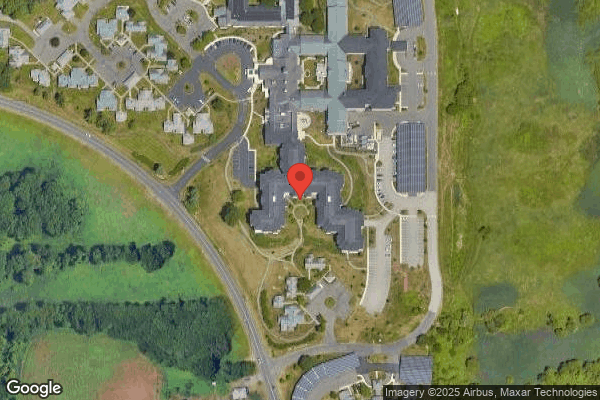



SEABURY

200 SEABURY DRIVE, BLOOMFIELD, CT 06002 (860) 286-0243
Non profit - Church related 72 Beds Independent Data: November 2025
Trust Grade
90/100
#39 of 192 in CT
Last Inspection: March 2024

Within standard 12-15 month inspection cycle. Federal law requires annual inspections.

Overview

Seabury nursing home in Bloomfield, Connecticut has a Trust Grade of A, which means it is excellent and highly recommended for care. It ranks #39 out of 192 facilities in the state, placing it in the top half, and #14 out of 64 in the county, indicating that only a few local options are better. However, the facility is experiencing a worsening trend, with the number of identified issues increasing from 3 in 2022 to 9 in 2024. Staffing is a strong point, with a 5/5 star rating and an 18% turnover rate, which is significantly lower than the state average of 38%. On the downside, there have been concerns noted, such as failing to label food items properly and not conducting required weekly skin checks for residents, indicating some areas that need improvement despite the overall positive ratings.

Trust Score
A
90/100
In Connecticut
#39/192
Top 20%
Safety Record
Low Risk
No red flags
Inspections
Getting Worse
3 → 9 violations
Staff Stability
✓ Good
18% annual turnover. Excellent stability, 30 points below Connecticut's 48% average. Staff who stay learn residents' needs.
Penalties
✓ Good
No fines on record. Clean compliance history, better than most Connecticut facilities.
Skilled Nurses
✓ Good
Each resident gets 76 minutes of Registered Nurse (RN) attention daily — more than 97% of Connecticut nursing homes. RNs are the most trained staff who catch health problems before they become serious.
Violations
⚠ Watch
16 deficiencies on record. Higher than average. Multiple issues found across inspections.
★★★★★
5.0
Overall Rating
★★★★★
5.0
Staff Levels
★★★★★
5.0
Care Quality
★★★★☆
4.0
Inspection Score
Stable
2022: 3 issues
2024: 9 issues

The Good

  • 5-Star Staffing Rating · Excellent nurse staffing levels
  • 5-Star Quality Measures · Strong clinical quality outcomes
  • Low Staff Turnover (18%) · Staff stability means consistent care
  • Full Sprinkler Coverage · Fire safety systems throughout facility
  • No fines on record
  • Staff turnover is low (18%)

    30 points below Connecticut average of 48%

Facility shows strength in staffing levels, quality measures, staff retention, fire safety.

The Bad

No Significant Concerns Identified

This facility shows no red flags. Among Connecticut's 100 nursing homes, only 1% achieve this.

The Ugly 16 deficiencies on record

Mar 2024 9 deficiencies
CONCERN (D)

Potential for Harm - no one hurt, but risky conditions existed

Deficiency F0578 (Tag F0578)

Could have caused harm · This affected 1 resident

**NOTE- TERMS IN BRACKETS HAVE BEEN EDITED TO PROTECT CONFIDENTIALITY** Based on review of the clinical record, facility policy, and interviews for the only sampled resident (Resident #28) reviewed fo...

Read full inspector narrative →
**NOTE- TERMS IN BRACKETS HAVE BEEN EDITED TO PROTECT CONFIDENTIALITY** Based on review of the clinical record, facility policy, and interviews for the only sampled resident (Resident #28) reviewed for advanced directives, the facility failed to have a signed advanced directive available in either the paper or electronic clinical record. The findings include: Resident #28's diagnoses included congestive heart failure and chronic kidney disease. The admission Minimum Data Set assessment dated [DATE] identified Resident #28 was severely cognitively impaired and required moderate assistance for bed mobility and transfers. The Resident Care Plan dated 2/11/24 identified that Resident #28 was a Do Not Resuscitate (DNR) and a Do Not Hospitalize (DNH). Review of the monthly physician's orders for January, February, and March 2024 failed to identify a current or discontinued order for a DNR or DNH. In an interview and clinical record review with the DNS and ADNS on 3/20/24 at 9:21 AM, Resident #28's clinical record failed to reflect a completed and signed advanced directive form and failed to demonstrate a physician's order for an advanced directive. The DNS and ADNS indicated that the facility policy required an advance directive to be signed on admission and have a subsequent physician's order in the clinical record. Neither the DNS nor ADNS could explain why the clinical record failed to contain the required advance directive documentation. Interview with RN #2 on 3/20/24 at 11:28 AM indicated that if a resident was found unresponsive, she would check in the electronic or paper clinical record for a code status however, she was unable to find a physician's order or consent for Resident #28. RN #2 indicated that there was a banner in the electronic clinical record which identified Resident #28 was a DNR/DNH but was unable to identify where or how the information had been placed there without the corresponding order or consent. RN #2 indicated that Resident #28's code status should have been obtained when s/he was admitted to the facility. Review of the Advanced Directive policy dated 2022 directed, in part, that upon admission, should the resident have an advanced directive, copies will be made and placed in the chart as well as communicated to the staff.
CONCERN (D)

Potential for Harm - no one hurt, but risky conditions existed

Notification of Changes (Tag F0580)

Could have caused harm · This affected 1 resident

**NOTE- TERMS IN BRACKETS HAVE BEEN EDITED TO PROTECT CONFIDENTIALITY** Based on review of the clinical record, facility documentation, facility policy and interviews for the only sampled resident (Re...

Read full inspector narrative →
**NOTE- TERMS IN BRACKETS HAVE BEEN EDITED TO PROTECT CONFIDENTIALITY** Based on review of the clinical record, facility documentation, facility policy and interviews for the only sampled resident (Resident #14) reviewed for edema, the facility failed to notify the provider of a significant change in the resident's weight. The findings include: Resident #14's diagnoses included heart failure, anemia, and atrial fibrillation (irregular heartbeat). The admission Minimum Data Set (MDS) assessment dated [DATE] identified Resident #14 was moderately cognitively impaired, required substantial/maximal assistance of staff to transfer, and required substantial/maximal assistance of staff to propel the wheelchair. The Resident Care Plan dated 11/5/23 identified that Resident #14 had heart failure and was at risk of having too much fluid in his/her circulatory system. Interventions included notifying the medical staff if the resident had any signs or symptoms of heart failure and updating the medical staff of any significant changes in the resident's condition. A physician's order dated 1/21/24 directed to weigh Resident #14 each morning before breakfast and to notify the provider if the resident gained more than 2-3 pounds in 24 hours or more than 5 pounds in a week. Review of Resident #14's documented weights from 1/21/24 through 3/20/24 identified the following weight changes in a 24-hour period: A 5.8-pound increase from 1/29/24 to 1/30/24. A 4.0-pound increase from 2/3/24 to 2/4/24. A 15.5-pound increase from 2/8/24 to 2/9/24. A 6.4-pound increase from 2/19/24 to 2/20/24. Review of Resident #14's documented weights from 1/21/24 through 3/20/24 identified the following weight changes in a week: An 8.2-pound increase from 1/29/24 through 2/4/24. A 11.2-pound increase from 2/3/24 through 2/9/24. A 16.1-pound increase from 2/8/24 through 2/14/24. A 22.8-pound increase from 2/27/24 through 3/6/24. In an interview and review of Resident #14's clinical record with the Assistant Director of Nursing (ADON) on 3/20/24 at 9:06 AM, the ADON failed to identify documentation that any provider had been notified of Resident #14's weight increases per the physician ordered parameters. Although provider notification is expected to be documented in the nursing progress notes, via text message on the supervisor's cell phone, or with an entry on a physician notification log, when the documentation was reviewed, the ADON failed to reflect notification to the provider. During an interview with PA #1 on 3/20/24 at 10:45 AM, it was reported that facility staff inconsistently communicate weight changes as instructed by the physician's order. PA #1 further explained that she frequently discovered uncommunicated weight changes while reviewing resident records. Review of the Change of Condition policy dated 2/2022, directed, in part, to consult with the resident's physician when there is a need to alter the resident's treatment, such as an exacerbation of a chronic condition.
CONCERN (D)

Potential for Harm - no one hurt, but risky conditions existed

Quality of Care (Tag F0684)

Could have caused harm · This affected 1 resident

**NOTE- TERMS IN BRACKETS HAVE BEEN EDITED TO PROTECT CONFIDENTIALITY** Based on review of the clinical record, facility documentation, facility policy and interviews for the only sampled resident (Re...

Read full inspector narrative →
**NOTE- TERMS IN BRACKETS HAVE BEEN EDITED TO PROTECT CONFIDENTIALITY** Based on review of the clinical record, facility documentation, facility policy and interviews for the only sampled resident (Resident #14) reviewed for edema, the facility failed to follow the provider's order for daily weights, and for 1 of 2 sampled residents (Resident #18) reviewed for skin conditions the facility failed to ensure a treatment order was correctly transcribed to the [NAME] and that post-surgical wound treatments were performed. The findings include: 1. Resident #14's diagnoses included heart failure, anemia, and atrial fibrillation (irregular heartbeat). The admission Minimum Data Set (MDS) assessment dated [DATE] identified Resident #14 was moderately cognitively impaired, required substantial/maximal assistance of staff to transfer, and required substantial/maximal assistance of staff to propel the wheelchair. The Resident Care Plan dated 11/5/23 identified that Resident #14 had heart failure and was at risk of having too much fluid in his/her circulatory system. Interventions included notifying the medical staff if the resident had any signs or symptoms of heart failure and updating the medical staff of any significant changes in the resident's condition. A physician's order dated 1/21/24 directed to weigh Resident #14 each morning before breakfast and to notify the provider if the resident gains more than 2-3 pounds in 24 hours or more than 5 pounds in a week. Review of Resident #14's weight and vital sign clinical records from 1/21/24 to 3/20/24 identified 59 opportunities for Resident #14 to be weighed and that documentation of Resident #14's weight occurred 35 times since the physician order commenced on 1/21/24 (24 opportunities of missed resident weights). During an interview with RN #2 (the resident's nurse) on 3/20/24 at 8:53 AM, she indicated that all weight measurements and refusals should be documented in the clinical record and identified several missing entries as well as a lack of documentation that Resident #14 had refused to be weighed. Review of the paper log of monthly weights with RN #2 failed to reflect the missing weight documentation. RN #2 stated according to the facility practice, the nursing assistants (NAs) were responsible to obtain Resident #14's weight and that the licensed nurses were responsible to oversee and ensure that NA were weighing and documenting each weight. RN #2 was unable to explain the missing entries, indicated that Resident #14 was dependent on staff to be weighed, and that subsequent to surveyor inquiry, she would obtain Resident #14's weight. Interview with the ADON on 3/20/24 at 9:06 AM, identified that Resident #14 had a physician's order to be weighed prior to breakfast. The ADON was unable to identify why staff were not following the physician directed order's. Additionally, the ADON was unable to locate any documentation related to the 24 missing weights. Review of the Weight Monitoring policy (2/2022), directed, in part, to monitor a resident's weight daily, if clinically indicated, and to document the weight at the time it was obtained. 2. Resident #18's diagnoses included bipolar disorder, delusional disorder, hypothyroidism, and skin lesion. The quarterly Minimum Data Set (MDS) assessment dated [DATE] identified Resident #18 was cognitively intact and required set-up or clean up assistance with eating and oral hygiene, supervision or touching assistance with upper body dressing, and personal hygiene, and had open lesions. The Resident Care Plan dated 3/15/24 identified Resident #18 had impaired skin integrity and was at risk for pressure ulcers and skin injuries. Interventions included keeping the area clean and dry, monitor for pain and discomfort, monitor for signs and symptoms of infections, and minimize skin exposure to moisture. Observation of Resident #18 on 3/18/24 at 11:59 AM identified a clean, dry, and intact dressing to the left forearm that lacked a dressing date (indicating when the treatment was last performed). Review of the physician's order dated 2/26/24 directed facility staff to cleanse the left dorsal (backside) of the wrist with normal saline, pat dry, apply Telfa (non-stick pad), wrap with kerlix gauze daily and as needed. The physician's order on the first electronic record screen was noted to have been discontinued on 2/26/24 but when the original order was fully opened in the electronic record, the discontinue date was noted to have been 3/7/24. The nursing note dated 2/27/24 at 11:11 AM identified Resident #18 was to continue with the current treatment orders of the left dorsal wrist area. Review of the Medication Administration Record (MAR) where treatments were documented and signed as completed, and nursing progress notes from 2/27/24 until 3/6/24 failed to show wound care treatments had been completed for Resident #18. Interview with the DNS on 3/20/24 at 10:26 AM identified that there was a gap in wound care treatments being completed because no wound care orders were in place from 2/27/24 until 3/6/24. The DNS believed the reason were not completed was due to a glitch in the electronic health record. The DNS indicated that although the order was correctly transcribed, the system failed to bring the orders forward and facility staff failed to identify that treatment orders were missing. Subsequent to surveyor inquiry the DNS indicated she would call the electronic health record provider to identify the issue. Interview with MD #1 on 3/21/24 at 10:05 AM identified that there should have been wound care orders in place from 2/27/24 through 3/7/24 and wound treatments should have been performed during that timeframe. Review of the facility policy for physician orders last revised on 11/2023 identified all physician orders in the medical record must be accurate, timely and meet all requirements by state and federal regulations.
CONCERN (D)

Potential for Harm - no one hurt, but risky conditions existed

Pressure Ulcer Prevention (Tag F0686)

Could have caused harm · This affected 1 resident

**NOTE- TERMS IN BRACKETS HAVE BEEN EDITED TO PROTECT CONFIDENTIALITY** Based on observations, review of the clinical record, facility policy, and staff interviews for 1 of 3 residents, (Resident #7),...

Read full inspector narrative →
**NOTE- TERMS IN BRACKETS HAVE BEEN EDITED TO PROTECT CONFIDENTIALITY** Based on observations, review of the clinical record, facility policy, and staff interviews for 1 of 3 residents, (Resident #7), reviewed for pressure ulcers, the facility failed to ensure that a weekly skin assessment was completed by a licensed staff member. The findings included: Resident #7's diagnosis included hypertension, congestive heart failure, and hemiplegia/ hemiparesis following a cerebral infarction affecting the left side. Review of the physician orders dated 8/14/23 directed Resident #7 to have weekly skin checks completed on Mondays during the day shift. The quarterly Minimum Data Set assessment dated [DATE] identified Resident #7 was cognitively intact, was dependent on staff for transfers, required set up for eating, and personal hygiene, and required maximal assistance for bathing, and toileting. The Resident Care Plan dated 1/26/24 identified Resident #7 was at risk for pressure ulcers/injury related to the use of a splint (medical device) to left upper extremity, skin integrity was to be monitored, and skin was to be thoroughly washed and dried prior to daily splint application. The splint was to be removed daily for a thorough skin check and staff were to notify the physician of any signs of breakdown. Observation and interview with Resident #7 on 3/15/24 at 12:11 PM identified s/he had a small, red area noted to the left thumb. Resident #7 stated the area was from a blue splint (which was lying next to him/her.) Resident #7 indicated that s/he had previously informed staff of the area, and that the area had become red within the last week. Re-observation and re-interview with Resident #7 on 3/18/24 at 10:15 AM identified that the left thumb area continued to be red area. The red area was noted to be open to air (uncovered) and Resident #7 indicated that s/he had a shower earlier in the morning. Review of the clinical record weekly skin audit identified that on 3/18/24 Resident #7 had a skin check performed by LPN #1, and that Resident #7's skin was noted to be intact. Interview and review of the weekly skin observation with LPN#1 on 3/19/24 at 12:38 PM identified that she usually performed Resident #7's skin check while the Nurse Aid (NA) provided care, but she was too busy giving out medications on 3/18/24. Further, LPN #1 indicated that she had relied on the NA to conduct the skin observation, the NA had identified and reported that Resident #7 had no skin impairment and that was why she had documented she had completed the observation on the Treatment Administration Record (TAR) and documented that Resident #7's skin was intact. Subsequent to surveyor inquiry Resident #7 was noted with a blister to the left thumb and was to be seen by the PA. Review of the PA note dated 3/19/24 at 1:47 PM identified that Resident #7 had been wearing a day splint for several months without issues and had a newer night splint for a left hand contracture. A small closed blister was noted on the left lateral thumb that appeared may have been rubbing on the splints that were worn. The PA indicated that the area was likely due to shearing against the splint, directed discontinued use of all splints until the area healed, and that Occupational Therapy evaluate splint use. Interview with the Wound Nurse (RN #5) on 3/20/24 at 10:51 AM identified that per the facility policy, a licensed staff member was to perform weekly skin checks and that skin checks were to occur on the resident's shower day. Additionally, RN #5 indicated that it was not acceptable for a NA to perform a weekly skin check. The facility policy for Pressure Injury Prevention and Management stated that licensed nurses would conduct a full body skin assessment on all residents upon admission/readmission, weekly, and after any newly identified pressure injury. Findings would be documented in the medical record and the assessment for pressure injuries would be performed by a licensed nurse and documented on the wound tracker sheet.
CONCERN (D)

Potential for Harm - no one hurt, but risky conditions existed

Respiratory Care (Tag F0695)

Could have caused harm · This affected 1 resident

**NOTE- TERMS IN BRACKETS HAVE BEEN EDITED TO PROTECT CONFIDENTIALITY** Based on observations, review of the clinical record, facility policy, and interviews for 2 of 3 sampled residents (Resident #10...

Read full inspector narrative →
**NOTE- TERMS IN BRACKETS HAVE BEEN EDITED TO PROTECT CONFIDENTIALITY** Based on observations, review of the clinical record, facility policy, and interviews for 2 of 3 sampled residents (Resident #10 and #215) reviewed for respiratory issues, the facility failed to obtain a physician's order for oxygen administration. The findings include: 1. Resident #10's diagnosis included malignant neoplasm of the frontal lobe, atrial fibrillation (irregular heartbeat), and congestive heart failure. The quarterly Minimum Data Set assessment dated [DATE] identified Resident #10 was severely cognitively impaired and was totally dependent on staff for toileting and personal hygiene. The Resident Care Plan dated 2/28/24 identified Resident #10 utilized oxygen with interventions that included regularly monitoring his/her oxygen saturation levels and application of oxygen via nasal cannula as needed. Review of the nursing note dated 3/7/24 at 7:21 AM identified that at 12:30 AM Resident #10 had a low oxygen saturation level on room air (without oxygen) ranging between 85 percent (%) to 87 %, oxygen was applied at 2 Liters (L), and Resident #10's oxygen saturation was rechecked and was 91 % on 2L of oxygen. A Physician Assistant progress note dated 3/7/24 at 3:36 PM identified Resident #10 was still requiring oxygen at 2L. Additionally, the PA progress note identified Resident #10's oxygen saturation levels decreased when the resident self-removed the tube providing the oxygen. Resident #10 was currently taking Moxifloxacin (an antibiotic) for bronchitis/possible pneumonia and was on scheduled nebulizers. The nursing note dated 3/8/24 at 7:06 AM identified Resident #10's oxygen saturation, at the beginning of the shift, was 84% on room air, oxygen at 2L was applied, and the oxygen saturation level was 91% on 2L of oxygen. The nursing note dated 3/8/24 at 4:07 PM identified Resident #10's oxygen saturation was 94% on oxygen via nasal tubing. Review of physician orders in effect on 3/7/24 and 3/8/24 failed to identify a physician order that oxygen was directed despite oxygen being applied on 3/7/24 at and 3/8/24. Interview with LPN #1 on 3/19/24 at 2:35 PM identified Resident #10 was on antibiotic therapy and receiving oxygen for a respiratory illness. Additionally, LPN #1 noted there should have been a physician order in the computer for oxygen, but she had failed to review the physician orders to ensure oxygen was ordered due to needing to tend to her assignment. Interview with the ADNS on 3/19/24 at 2:45 PM identified when oxygen was initiated the nurse on the shift should have obtained an order for oxygen. Additionally, the ADNS identified that if a resident had a low oxygen saturation level, the nurse would put the resident on oxygen and then notify and obtain a physician's order from a provider for oxygen administration. Subsequent to surveyor inquiry, an order was obtained on 3/19/24 at 3:33 PM from the PA that directed staff to apply 1 L of oxygen as needed (PRN) for an saturation level less than 89%. 2. Resident #215's diagnoses included heart failure, atrial fibrillation (irregular heartbeat), and dementia. The admission Minimum Data Set assessment dated [DATE] identified Resident #215 was severely cognitively impaired, required setup for personal hygiene, and supervision assistance for bed mobility and transfers. The MDS did not identify oxygen therapy was in use. Observation on 3/15/24 at 11:40 AM identified Resident #215 was in bed and an oxygen concentrator, turned to the off position, was at the bedside. Observation on 3/18/24 at 9:42 AM identified an oxygen concentrator at Resident #215's bedside with oxygen tubing labeled 3/17/24 from the 11:00 PM to 7:00 AM shift. The oxygen nasal cannula was on the resident and the concentrator was running at 2.0 Liters Per Minute (LPM). Review of the physician, APRN, and nursing progress notes from 2/16/24 through 3/18/24 failed to identify that Resident #215 had been ordered or was utilizing oxygen. Review of the physician orders in effect from 2/20/24 through 3/19/24 failed identify that Resident #215 had an order for oxygen use. Interview and observation with LPN #1 on 3/19/24 at 2:32 PM identified that if she had any residents on oxygen, the order would show up on the Medication Administration Record (MAR) and there would be a physician's order. LPN #1 indicated that if there was an emergency, staff would administer the oxygen first, and then call the provider and get an order before the end of the shift. If a resident appeared distressed or complained of shortness of breath or difficulty breathing, she indicated she would take vital signs and an oxygen saturation level, followed by notifying the provider of her assessment. Upon observation of Resident #215 with LPN #1, she said that she had not previously noticed the concentrator in the room and did not know the resident to ever have used oxygen. Further, LPN #1 identified she was unaware who had put the concentrator in the room as there was no order for oxygen therapy. Interview with LPN #2 on 3/19/24 at 2:42 PM identified that Resident #215 was complaining of shortness of breath earlier in the shift and checked an oxygen saturation level which was noted to be 97% on room air. LPN #2 reported Resident #215 was able to calm down and no new interventions were put into place. LPN #2 denied placing the oxygen concentrator in the room or putting the nasal cannula on the resident. LPN #2 was unable to identify how long the concentrator had been in the room but stated she had seen it at the beginning of the shift. Subsequent to surveyor inquiry, a physician's order dated 3/19/24 was obtained directing staff to apply 1.0 to 2.0 liters of oxygen via a nasal cannula for shortness of breath as needed. Review of the Oxygen Administration policy dated 1/2024 directed, in part, that oxygen was administered under orders of a physician. except in the case of an emergency. In such cases, oxygen was administered and orders for oxygen were obtained as soon as practicable when the situation was under control.
CONCERN (D)

Potential for Harm - no one hurt, but risky conditions existed

Deficiency F0710 (Tag F0710)

Could have caused harm · This affected 1 resident

**NOTE- TERMS IN BRACKETS HAVE BEEN EDITED TO PROTECT CONFIDENTIALITY** Based on review of the clinical record, facility documentation, facility policy, and interviews for the only sampled resident (R...

Read full inspector narrative →
**NOTE- TERMS IN BRACKETS HAVE BEEN EDITED TO PROTECT CONFIDENTIALITY** Based on review of the clinical record, facility documentation, facility policy, and interviews for the only sampled resident (Resident #28) reviewed for hospice, the facility administered hospice services without a physician's order. The findings include: Resident #28's was admitted on [DATE] with diagnoses that included congestive heart failure and chronic kidney disease. The admission Minimum Data Set assessment dated [DATE] identified Resident #28 was severely cognitively impaired and required moderate assistance for bed mobility and transfers. Additionally, the MDS identified that Resident #28 received hospice care. The Resident Care Plan dated 2/11/24 identified that Resident #28 was on hospice care. Interventions included performing a pain assessment every shift, administering comfort meds as ordered and assessing the response, and education on the progression of terminal illness and symptoms during the dying process. Review of the monthly physician's orders dated January, February, and March 2024 failed to identify an active or discontinued order for hospice services. A nurse's note dated 1/17/24 at 4:11 PM identified that Resident #28 was admitted for long term care on hospice. Review of the home hospice clinical note dated 1/17/24, written by the home hospice Licensed Clinical Social Worker (LCSW) identified that Resident #28 was initially admitted to home hospice on 12/5/23 and had just transferred, on that day, from her apartment to the Skilled Nursing Facility. Interview and clinical record review with the DNS on 3/20/24 at 10:13 AM indicated that Resident #28 had transferred from independent living to long term care in January and had already been on hospice services prior to his/her admission. She identified that the resident did not have a new hospice order since being admitted to the facility and was unable to explain the lack of a physician order. Review of the Coordination of Hospice Services policy dated 2022 directed, in part, that the facility and hospice provider will coordinate a plan of care and will implement interventions in accordance with the resident's needs, goals, and recognized standards of practice. Review of the Physician Orders policy dated 11/2023 directed, in part, that at the time of admission, the facility must have physicians' orders for the resident's immediate care. All physicians' orders in the medical record must be accurate, timely and meet all requirements by state and federal regulations.
CONCERN (D)

Potential for Harm - no one hurt, but risky conditions existed

Laboratory Services (Tag F0770)

Could have caused harm · This affected 1 resident

**NOTE- TERMS IN BRACKETS HAVE BEEN EDITED TO PROTECT CONFIDENTIALITY** Based on review of the clinical record, facility policy, and interviews for 1 of 5 sampled residents, (Resident #18), reviewed f...

Read full inspector narrative →
**NOTE- TERMS IN BRACKETS HAVE BEEN EDITED TO PROTECT CONFIDENTIALITY** Based on review of the clinical record, facility policy, and interviews for 1 of 5 sampled residents, (Resident #18), reviewed for unnecessary medications, the facility failed to obtain lab services per the physician order. The findings include: Resident #18's diagnoses included bipolar disorder, hypertension, dementia, and hypothyroidism. The quarterly Minimum Data Set assessment dated [DATE] identified Resident #18 required set-up or clean up assistance with eating and oral hygiene, and supervision or touching assistance with upper body dressing and personal hygiene. The physician orders dated 1/18/24 directed facility staff to obtain laboratory work which included a complete blood count, basic metabolic panel, thyroid stimulating hormone, and vitamin D12 levels. Review of the clinical record failed to identify Resident #18 had laboratory results available per the physician's order on 1/18/24. Interview with the DNS on 03/21/24 at 11:56 AM identified that the facility staff failed to have the physician directed laboratory work completed from the 1/18/24 order for Resident #18. The DNS further stated that the floor nurses are responsible to verify the laboratory orders and complete a requisition form for the laboratory provider. The DNS was unable to explain why the physician's order for laboratory work was not carried out. Review of the facility policy for laboratory services identified, in part, that the facility was responsible for the timeliness of laboratory services.
CONCERN (E)

Potential for Harm - no one hurt, but risky conditions existed

Deficiency F0658 (Tag F0658)

Could have caused harm · This affected multiple residents

**NOTE- TERMS IN BRACKETS HAVE BEEN EDITED TO PROTECT CONFIDENTIALITY** Based on review of the clinical record, facility documentation, facility policy, and interviews for 1 of 3 sampled residents (Re...

Read full inspector narrative →
**NOTE- TERMS IN BRACKETS HAVE BEEN EDITED TO PROTECT CONFIDENTIALITY** Based on review of the clinical record, facility documentation, facility policy, and interviews for 1 of 3 sampled residents (Resident #7) reviewed for pressure ulcers, the facility failed to ensure a weekly skin check was conducted by a licensed staff member and for 1 of 5 sampled residents, (Resident #48) reviewed for unnecessary medications, the facility failed to follow physician orders regarding pain medications. The findings include: 1. Resident #7 had a diagnosis of cerebral infarction with paralysis, hypertension, and congestive heart failure. Review of the physician orders dated 8/14/23 directed Resident #7 to have skin assessments performed weekly on Mondays. The Minimum Data Set assessment dated [DATE] identified Resident #7 was without cognitive impairment, was dependent on staff for transfers and personal hygiene, and required maximal assistance from staff for bathing, and toileting. Resident #7's Resident Care Plan dated 1/26/24 identified Resident #7 was at risk for pressure ulcers/injury related to the use of a splint (medical device) to the left upper extremity, skin integrity was to be monitored, and to thoroughly wash and dry the hand/arm prior to splint application daily. Additionally, splint removal was to occur daily for a thorough skin check and staff was to notify the physician for any signs of skin breakdown. Observation of Resident #7 on 3/15/24 at 12:11 PM identified him/her with a small red area noted to his/her left thumb. Resident #7 indicated the area was caused by a blue splint indicating a splint which was lying next to him/her. Resident #7 stated that s/he had informed staff the area had become red within the last week. Review of Resident #7's 14-day weekly skin assessment dated [DATE] and signed by LPN #1 identified intact skin. Observation and interview on 3/18/24 at 10:15 AM with Resident #7 identified that the left thumb area was red, uncovered and that no treatment had been administered. Additionally, Resident #7 indicated that s/he had been given a shower this morning. Review of the nursing progress notes from 3/15/24 through 3/19/24 failed to identify any alteration in Resident #7's skin. In an interview with LPN #1 on 3/19/24 at 12:38 PM LPN #1 identified that although she had signed for Resident #7's weekly skin review on 3/18/24, the NA (Nurse Aid) had conducted the skin check on 3/18/24. LPN #1 indicated that she usually performed resident skin assessments, however, she had been too busy with other tasks on 3/18/24 and relied on the NA report of Resident #7's intact skin condition for her observation. In an interview with the Wound Care Nurse (RN#5) on 3/20/24 at 10:51 AM, identified that licensed staff members were to perform weekly skin checks and that skin checks were to be conducted on the resident's shower day. Additionally, RN #5 indicated that it was not an acceptable practice for a NA's to perform weekly skin checks. The facility Skin Assessment policy states that a full body audit, or head to toe skin assessment would be conducted by a licensed or registered nurse upon admission/re-admission, and weekly thereafter. 2. Resident #48's diagnoses included dementia, mood disorder, and muscle weakness. A physician's order dated 6/27/23 directed to administer Acetaminophen (Tylenol) 650 mg four times a day as needed. A physician's order dated 6/28/23 directed to administer Tramadol 50 mg every 8 hours as needed for severe back pain if not responsive to Tylenol. The quarterly Minimum Data Set assessment dated [DATE] identified Resident #48 was moderately cognitively impaired and was totally dependent on staff for toileting, bathing, and upper/lower body dressing, and required partial/moderate assistance with walking. The MDS further identified that Resident #48 was not on a scheduled pain medication regimen and had not received any as needed (PRN) pain medication in the last 5 days. The Resident Care Plan updated 10/6/23 identified the potential for pain related to immobility. Interventions included to administer an opioid as ordered, attempt to gradually decrease frequency of use as able, and to complete a pain assessment each shift. Review of the Electronic Medication Administration Record (EMAR) indicated that Resident #48 had received Tramadol (an opioid medication) on 11/10/23, 11/11/23, 11/29/23, 12/7/23, 12/20/23, 12/21/23, 12/22/23, 12/23/23, 12/25/23, 12/26/23, 12/27/23, 1/2/24, 1/5/24, 1/11/24, 1/12/24, 1/13/24, 1/20/24, 1/22/24, 1/26/24, 1/27/24, 1/28/24, 2/3/24, 2/4/24, 2/14/24, 2/18/24, 2/22/24, 2/23/24, 2/26/24, 2/28/24, 2/29/24, 3/4/24, 3/5/24, 3/13/24, 3/17/24, and 3/18/24 (35 times in approximately 4 months) without first receiving Tylenol. Additionally, Resident #48 had received the Tramadol predominantly for reasons other than the physician prescribed reason, severe back pain. A nurse's note dated 11/29/23 at 1:13 AM identified Tramadol was given for left neck/arm pain per Resident #48's request, and that the resident had refused Tylenol first. Interview with RN #3 on 3/20/24 at 12:42 PM identified that the physician orders indicate to administer Tylenol 650 mg four times a day as needed, and to administer Tramadol when Tylenol was not effective for severe back pain. Additionally, RN #3 identified that there was no indication when to use the Tylenol order, however, stated this would be given for pain or fever. RN #3 indicated that she gave Tramadol for reasons other than back pain and without giving Tylenol first because Resident #48 would indicate that s/he wanted Tramadol instead of Tylenol. Subsequent to surveyor inquiry, RN #3 contacted PA #1 on 3/20/24 at 12:56 PM and received a verbal order to change Tramadol to be administered for severe pain (not solely for severe back pain) if the pain was not responsive to Tylenol. Interview with PA #1 on 3/21/24 at 10:11 AM identified that Tramadol was directed to be given to Resident #48 after administering and making the determination that Tylenol was ineffective. Tramadol had been prescribed this way due to the possible sedating side effect of Tramadol. PA #1 indicated she would have expected nurses to notify her both when the Tylenol was ineffective in relieving Resident #48's pain, and when Resident #48 refused Tylenol and requested Tramadol be given first. PA #1 indicated if she had been notified, she would have counseled Resident #48 on the side effects of Tramadol and would have reassessed Resident #48 for pain, possibly directing changes to Resident #48's pain medication regimen. Review of the PRN Medications policy directed, in part, that orders for medications to be given on an as needed basis shall have clear instructions about how and when to administer them. Additionally, when administering a PRN medication, legally authorized staff are to verify the physician's order for the medication, document the reason voiced by the resident and/or assessment findings that show the resident needs the medication, and verify the reason is for the prescribed indication for the medication.
CONCERN (F)

Potential for Harm - no one hurt, but risky conditions existed

Food Safety (Tag F0812)

Could have caused harm · This affected most or all residents

Based on observation in the Dietary Department, staff interview, and facility policy, the facility failed to ensure food items were labeled and dated, and failed to ensure an adequately clean water fi...

Read full inspector narrative →
Based on observation in the Dietary Department, staff interview, and facility policy, the facility failed to ensure food items were labeled and dated, and failed to ensure an adequately clean water filter system for the steam receptacles. The findings include: During a tour of the Dietary Department on 3/15/24 at 10:38 AM with the Executive Chef the following was identified: a. A 40-gallon plastic bin containing loose sugar (approximately 1/4 full) failed to identify the date the sugar was poured into the bin and failed to identify the expiration date of the sugar. b. A 40-gallon plastic bin containing loose rice flour (approximately 1/3 full) failed to identify the date the rice flour was poured into the bin and failed to identify the expiration date of the rice flour. c. A 40-gallon plastic bin containing loose brown rice was (approximately 1/16 full) failed to identify the date the brown rice was poured into the bin and failed to identify the expiration date of the brown rice. d. A 40-gallon plastic bin of approximately 2 cups of loose flour failed to identify the date the flour was poured into the bin and failed to identify the expiration date of the flour. e. A water filter system that feeds a steam receptacle was noted to be soiled and streaked with green/white substances. This filter system was located above a food storage unit and empty food containers. Subsequent to surveyor's inquiry, the water filter system was cleaned. Interview with the Executive Chef on 3/15/24 at 10:38 AM noted that he was unable to explain the reason the bins of rice flour, flour, sugar, and brown rice were not dated when filled or why an expiration date was not identified. He explained that the evening staff conducted nightly inventory checks on all supplies before clocking out which ensured the kitchen was fully stocked and prepared for meal prep the following day. Additionally, the Executive Chef was unable to identify the substances that were noted to have streaked down the water filter system. The facility's Food Storage policy directed culinary managers to maintain adequate food and supplies for food service operations. Additionally, the policy stated that all items were to be appropriately labeled with the expiration or opening date as needed.
Feb 2022 3 deficiencies
CONCERN (D)

Potential for Harm - no one hurt, but risky conditions existed

Quality of Care (Tag F0684)

Could have caused harm · This affected 1 resident

**NOTE- TERMS IN BRACKETS HAVE BEEN EDITED TO PROTECT CONFIDENTIALITY** Based on observation, review of the clinical record, facility documentation, facility policy and interviews for 1 resident (Resi...

Read full inspector narrative →
**NOTE- TERMS IN BRACKETS HAVE BEEN EDITED TO PROTECT CONFIDENTIALITY** Based on observation, review of the clinical record, facility documentation, facility policy and interviews for 1 resident (Resident #309) reviewed for admission/transfer/discharge, the facility failed to perform a full body skin assessment on admission, and to ensure pain medications were readily available to meet the resident's needs on admission. The findings include: Resident #309 was admitted to the facility on [DATE] with diagnoses that included joint replacement surgery, diabetes mellitus, peripheral vascular disease, anemia, and atherosclerotic heart disease. The care plan dated 1/20/22 for identified Resident #309 was at risk for pressure ulcers and skin injuries related to impaired mobility, peripheral vascular disease, diabetes mellitus and aspirin use. Resident #309 is identified to have pain related to total knee replacement, history of lumbar radiculopathy, cervical myelopathy, and osteoarthritis. Interventions included to monitor for changes in CMS to lower extremities, check feet daily, administer opioids as ordered and observe for side effects/adverse reactions including nausea/vomiting, excessive sedation, and mental status changes. Attempt to gradually decrease frequency of use as able. Monitor for constipation, encourage extra fluids, administer bowel regimen as needed for constipation. The discharge MDS dated [DATE] identified Resident #309 had intact cognition and was discharged from the facility to the community, return not anticipated. a. Interview with RN #3 on 2/16/22 at 12:20 PM identified Resident #309 was admitted to the facility on [DATE] at approximately 4:00 PM - 6:00 PM, was not in pain upon admission and indicated he/she was medicated prior to leaving the hospital. Later that shift, the resident had complaints of pain and advised that he/she takes Dilaudid for pain control, but the medications had not arrived yet from pharmacy. RN #3 identified she went to the emergency box to retrieve the medication. RN #3 retrieved the medications from the eBOX (pyxis) on the Larus Unit with another nurse as the system requires a two-person verification withdrawal system. RN #3 identified Resident #309 did not express any additional concerns during this time. Interview and review of the Larus Pyxis with the ADNS on 2/16/22 at 2:30 PM identified the official count of Hydromorphone (all doses) was 0 (zero). The ADNS was unable to access audits within the electronic pyxis for review of the last withdrawal that was made and indicated she would contact their pharmacy to obtain a history. The ADNS identified she was unsure why the count is zero as she expected at the minimum a small supply of the medication incases of emergencies. Interview with Pharmacy Tech #1 on 2/17/22 at 9:30 AM identified he manages the pyxis and pharmacy requests for the Larus Unit at the facility. Pharmacy Tech #1 identified the last time he did a count of Hydromorphone was on 1/17/22. Pharmacy Tech #1 confirmed the count of the Hydromorphone in the pyxis was 0. There have been no replacements made or requests placed to restock Hydromorphone from the facility. Pharmacy Tech #1 confirmed the pyxis is considered an eBOX and there's no other location the nursing staff would be able to attain Hydromorphone. He identified 2 RNs are required to withdraw any narcotic or controlled medication. Interview with Pharmacist #1 on 2/17/22 at 10:00 AM identified she checked and verified all the documentation related to the facility and confirmed there's no documentation related to refilling or supplying Hydromorphone for the eBOX. Pharmacist #1 verified a prescription pack of Hydromorphone 2mg (30 tablets) for Resident #309 was delivered on 1/21/22. The pharmacy received the request for Hydromorphone at 3:30 PM on 1/20/22, (24 hours after the resident was admitted to the facility), the medication left our site at midnight and arrived at the facility at 1:40 AM on 1/21/22. The medication was signed and accepted by RN #1. Interview with the Administrator on 2/17/22 at 2:30 PM identified they performed an internal investigation and identified RN #3 and other nurses withdrew Hydromorphone 2mg from another resident (Resident #43). The Administrator identified this practice is not acceptable and they will re-educate staff accordingly and ensure all prescribed medications will be available upon discharge from referring facility and available upon admission to our facility. The Administrator identified that although Resident #43 was prescribed the pain medication, the resident never requested the medication during their stay at the facility and never missed any doses as needed. Review of Resident #43's Hydromorphone Controlled Drug Receipt/Record/Disposition Form on 2/17/22 at 3:30 PM identified the nursing staff took a total of six (6) doses/tablets of Resident #43 ' s Hydromorphone to administer to Resident #309. The medication was verified to be correct as Hydromorphone 2mg and was noted to have an accurate count with no missing doses. Review of the Medication Administration Policy identified medications are administered by licensed nurses, or other staff who are legally authorized to do so in this state, as ordered by the physician and in accordance with professional standards of practice, in a manner to prevent contamination or infection. Explanation and compliance guidelines identified licensed staff are to review the MAR to identify medication to be administered and compare medication source (bubble pack, vial etc.) with MAR to verify resident name, medication name, form, dose, route, and time. If medication is a controlled substance, sign narcotic book. b. Review of the admission observation assessment dated [DATE] identified RN #3 performed a skin assessment of Resident #309 ' s skin on admission and documented no indication of bilateral heel wounds or injuries. Interview with RN #3 on 2/16/22 at 12:20 PM identified that although she charted the skin assessment accordingly, RN #3 identified she did not look at Resident #309's heels or any other area except the resident's knee. RN #3 verified she focused on the resident's wound and assessed that area but confirmed she did not look at the resident's heels. RN #3 identified when a resident is admitted , a full head to toe skin assessment should be performed to identify any areas of concern and to properly identify/report any findings to the provider. RN #1 was not able to recall if she reported to the following RN/LPN to complete the skin assessment in its entirety. Interview with RN #4 on 2/16/22 at 12:40 PM identified the home health nurse performed an admission assessment on Resident #309 on 1/27/22 at 12:30 PM, 3 days after discharge home, and identified wounds on the resident's bilateral heels. The home health nurse documented the right heel was an intact blister noted to be boggy but was not open. The left heel was documented as a deflated blister with intact skin and not open but could not exclude the possibility of a slight open area that resulted the blister to self-drain. Interview with the ADNS on 2/16/22 at 2:50 PM identified nursing staff are expected to perform a full head to toe skin assessment upon admission on ce the residents arrives in the room. The process would include the RN with the assistance of the nurse aide to perform the skin assessment in a timely and safe manner. If an RN is not able to perform a skin assessment, they are responsible to notify management and the next oncoming nurse to perform the assessment as soon as possible. Review of the Skin Integrity Foot Care policy identified the facility will ensure resident's receive proper treatment and care to maintain mobility and good foot health. The comprehensive assessment process will be utilized for identifying additional risk factors or conditions that increase risk for impaired skin integrity of the foot. Examples include, but are not limited to: diabetes, peripheral vascular disease, peripheral artery disease, venous insufficiency, peripheral neuropathy, and lack of sensation in feet. The comprehensive assessment will include an assessment of the feet for disorders which may require treatment, including, but not limited to, corns, neuromas, calluses, bunions, hammertoes, heel spurs, and nail disorders.
CONCERN (D)

Potential for Harm - no one hurt, but risky conditions existed

Food Safety (Tag F0812)

Could have caused harm · This affected 1 resident

Based on observation, review of facility documentation, facility policy and interviews the facility failed to ensure the sanitizer solution used to clean contact surfaces in the kitchen contained the ...

Read full inspector narrative →
Based on observation, review of facility documentation, facility policy and interviews the facility failed to ensure the sanitizer solution used to clean contact surfaces in the kitchen contained the manufacturer recommended sanitizing levels. The findings include the following: Observation on 2/17/22 at 10:45 AM identified the surface sanitizing solution, Quaternary (QAC) solution in the kitchen registered consistently at less than 150-ppm in 3 of the 3 sanitizing buckets tested. Staff were observed to prepare new solution in 3 buckets and upon testing, the sanitization level for all 3 buckets was less than the 150 ppm. Interview at that time with the Dietary Manager identified it is the managers responsibility to ensure the QAC solution is at the manufactures recommended level. Review of the log for the QAC solutions failed to reflect the ppm of the sanitizing buckets was being recorded. Observation on 2/18/22 at approximately 8:15 AM identified 3 of 3 buckets tested at 50-100ppm QAC. The policy directs the QAT solution should reach a proper concentration of 200-400 ppm.
CONCERN (D)

Potential for Harm - no one hurt, but risky conditions existed

Deficiency F0883 (Tag F0883)

Could have caused harm · This affected 1 resident

Based on review of the clinical record, facility's documentation, facility policy and interview for 2 of 5 residents (Resident #9 and 17) reviewed for pneumococcal immunization, the facility failed to...

Read full inspector narrative →
Based on review of the clinical record, facility's documentation, facility policy and interview for 2 of 5 residents (Resident #9 and 17) reviewed for pneumococcal immunization, the facility failed to assess for pneumococcal immunization status on admission or offer the residents the immunization. The findings include: Resident #9 and 17 were admitted to the facility in 2019. Review of Resident #9 and 17's clinical record failed to reflect that the residents had been assessed for pneumococcal immunization status upon admission to facility or offered a pneumococcal immunization. Interview with the Infection Control Nurse (LPN #1) on 2/8/22 at 2:15 PM identified the clinical record lacked documentation that consent, or assessment had been completed for Residents #9 and 17 to determine pneumococcal immunization status. LPN #1 identified that she recently accepted this position as infection control preventionist (ICP). Interview with the DNS on 2/8/22 at 2:30 PM identified that the ICP is responsible for assessing and tracking immunizations in the facility and indicated that other residents were also affected. Subsequent to surveyor inquiry, consent for the pneumococcal immunization for Residents #9 and 17 was obtained. Review of the pneumococcal/immunization policy directed that all residents should be assessed for pneumococcal immunization upon admission to facility. It also identified that each resident should be offered a pneumococcal immunization unless medically contraindicated or resident had previously been immunized.
Aug 2019 4 deficiencies
CONCERN (D)

Potential for Harm - no one hurt, but risky conditions existed

Deficiency F0659 (Tag F0659)

Could have caused harm · This affected 1 resident

**NOTE- TERMS IN BRACKETS HAVE BEEN EDITED TO PROTECT CONFIDENTIALITY** Based on review of the clinical record, review of facility policy and interviews for one of five resident's reviewed for unneces...

Read full inspector narrative →
**NOTE- TERMS IN BRACKETS HAVE BEEN EDITED TO PROTECT CONFIDENTIALITY** Based on review of the clinical record, review of facility policy and interviews for one of five resident's reviewed for unnecessary medications (Resident #38), the facility failed to review and/or revise the resident's plan of care to meet the resident's needs. The findings included: Resident #38's diagnoses included vascular dementia with behavioral disturbance, depression and anxiety disorder, difficulty walking and idiopathic hypotension. A quarterly Minimum Data Set ( MDS) assessment dated [DATE] identified the resident as severely impaired for cognitive status, without behaviors, requiring extensive assistance from staff for most Activities of Daily Living (ADL), and noted the utilization of both antipsychotic and antidepressant medications during the last seven days. The Resident Care Plan (RCP) updated on 6/29/19 identified a problem of Behavioral symptoms that included threating to throw self on the floor and making suicidal statements. Approaches included : to attempt to redirect with food, fluids, social activity/conversation, to provide a back rub, magazine, pain medication when needed for back pain and directed if further suicidal statements assess for plan. The RCP for behavioral symptoms also directed if further suicidal statements to refer the resident to psychiatry for follow-up. The physician's orders monthly orders for the month of July 2019 included and/or directed to monitor for suicidal ideations every shift (nights, evenings and days), Cymbalta (Anti-depressant) 40 Milligrams (MG) once daily at 9:00 A.M., Seroquel (Anti-Psychotic) 12.5 MG twice daily at 9:00 A.M. and 1:00 P.M., Seroquel 50 MG daily at 4:00 P.M. and Trazodone 50 MG every eight hours, prn (as needed). The nurse's notes dated 7/2/19 at 2:20 P.M. identified Resident #38 voiced feelings of despair stating, I want to die. resident in common area, psychiatric Advanced Practical Registered Nurse (APRN#1) was present and indicated APRN #1 saw Resident # 38 immediately and spoke to resident in the room. Resident # 38 was noted with no suicidal ideations. Resident # 38 appears to be in better spirits, denied feelings of despair and was noted resting at this time. The nurse's note dated 7/2/19 also indicated scheduled medications were administered as ordered. Social worker and psychiatric (APRN#1) was notified and indicated the staff will continue to monitor the resident and provide emotional support. The psychiatric notes dated 7/2/19 identified in part APRN#1 was asked to see Resident #38 for making statements of I wish I was dead in the mid-afternoon and/or I can't do it anymore. Following a complete medical status examination identified Resident # 38 was oriented to person and situation, and at this time the resident is not considered a danger to self and/or others. Impression and/or Plan noted the following: no suicidal intent/plan. The resident was easily redirected. No recall of statements an hour later and the resident was back to baseline, quiet engagement in common area with peers. Plan: Continue to monitor, review with nursing and the Director of Nursing Services (DNS). On 8/15/19 at 1:20 P.M. an interview with APRN#1 in the presence of the DNS, regarding Resident #38's suicidal ideation statements made on 7/2/19 identified that while she/he was sitting at the nurse's desk, he/she was approached by the staff who informed him/her (APRN#1) that Resident # 38 had made some statements about wanting to die. APRN#1 further indicated upon being notified he/she went to evaluate the resident right away. APRN#1 further indicated the resident makes suicidal statements over and over again, primarily out of frustration. Resident #38 has no plan and has no means to harm his/herself such as a knife. APRN #1 verbalized that offering Resident # 38 fluids or food often helps as well as a when needed dose of Trazodone, which has shown to be effect. A review of the 6/29/19 RCP behavioral symptom seconary to history of sucidal statements without a plan given to the surveyor on 8/15/19 failed to reflect that the care plan have been revised to indicated the Resident # 38's statement on 7/2/19 at 2:20 P.M. of feelings of despair stating, I want to die.
CONCERN (D)

Potential for Harm - no one hurt, but risky conditions existed

Accident Prevention (Tag F0689)

Could have caused harm · This affected 1 resident

**NOTE- TERMS IN BRACKETS HAVE BEEN EDITED TO PROTECT CONFIDENTIALITY** Based on observations, review of the clinical record, facility documentation, facility policy, and interviews for one sampled re...

Read full inspector narrative →
**NOTE- TERMS IN BRACKETS HAVE BEEN EDITED TO PROTECT CONFIDENTIALITY** Based on observations, review of the clinical record, facility documentation, facility policy, and interviews for one sampled resident (Resident # 39) reviewed for accidents, the facility failed to implement the facility fall policy to prevent a second fall. The findings include: Resident #39 was admitted on [DATE] with diagnoses that included: heart failure, renal failure, dementia with behavioral disturbance, displaced intertrochanteric fracture of right femur, unsteadiness on feet, and lack of coordination. A physician's order dated 6/6/19 directed to implement the nursing, physical therapy, and occupational therapy care plans. Review of the fall-risk assessment dated [DATE] identified Resident #39 was with intermittent confusion and a high risk for falls. The care plan dated 6/7/19 identified Resident #39 was at risk for fall secondary to weakness, cognitive deficit, and a femur fracture from a recent fall; The care plan further identified Resident #39 was non ambulatory and required the use of a lift for transfers. Interventions directed to keep call bell and personal item within reach, and to provide frequent cues/reminders to call for assistance with transfers and toileting, implement pain control measures, and implement rehabilitation therapy. The admission MDS assessment dated [DATE] identified Resident #39 was with severe cognitive impairment and required extensive assistance with mobility, transfer, and indicated ambulation did not occur. The Reportable Event form and investigation dated 7/9/19 identified on 7/9/19 at 1:45 A.M Resident #39 was observed on the floor in his/her room, did not call for help to get out of bed, his/her rolling walker was at the bedside, the room was dark at the time of the fall, and the resident was noted to be in bed prior to the fall. The report indicated the fall was unwitnessed, Resident # 39 attempted to self-ambulate and had no recall of what caused him/her to fall and why she/he had gotten out of bed. Resident #39 was found with a skin tear on his/her right elbow and Resident # 39 complained of right hip pain. The resident was promptly sent to an acute care facility, where the resident was diagnosed with a right femur re-fracture. The nurse's note dated 6/26/19 identified Resident #39 was oriented to self only; The nurses' note dated 7/9/19 identified Resident #39 was oriented to self only. However, the nurse's note dated 7/14/19 identified Resident #39 was confused as baseline. Review of the physical therapy Discharge summary dated [DATE] identified Resident #39 was unsteady with ambulation, had 3/5 strength of lower extremity, was dependent for transfers turns and walking. The significant change MDS assessment dated [DATE] identified Resident #39 remained with severe cognitive deficit and required extensive assistance with ADL. An interview with RN#1 on 8/14/19 at 1:30 PM identified she/he did not see a reason to implement the fall-risk prevention interventions such as: fall matts, bed/chair alarm, low beds listed on the facility fall-prevention policy because she/he never saw or heard Resident#39 attempted to get out of bed while she/he was at the facility. RN #1 further indicated it appeared to him/her that Resident #39's cognition was improving. An interview with the Assistant Director of Nursing Services (ADNS) on 8/15/19 at 9:38 A.M. identified it appeared to him/her that Resident #39's cognition had improved and the interventions on the fall- prevention policy were not deemed necessary; the facility does not routinely implement all of the interventions listed on the facility fall policy for all residents and identified the falls policy is [AGE] years old and should be updated and revised. Review of facility fall procedure policy dated 4/1993 on 8/15/19 identified appropriate interventions such as therapy assessment, fall mats, bed/chair alarms, low bed, and scoop mattresses will be implemented when a resident is identified as a high risk for falls.
CONCERN (E)

Potential for Harm - no one hurt, but risky conditions existed

Pharmacy Services (Tag F0755)

Could have caused harm · This affected multiple residents

**NOTE- TERMS IN BRACKETS HAVE BEEN EDITED TO PROTECT CONFIDENTIALITY** Based on observations, facility policy and interviews for two medication rooms, the facility failed to remove expired medication...

Read full inspector narrative →
**NOTE- TERMS IN BRACKETS HAVE BEEN EDITED TO PROTECT CONFIDENTIALITY** Based on observations, facility policy and interviews for two medication rooms, the facility failed to remove expired medications from inventory. The findings included: 1. Observation of Laris Unit medication room and medication cart on 8/12/19 at 1:15 P.M. identified 2 containers of expired aspirin 325 MG tablets in the floor stock cabinet; one container had an expiration date of 3/1/19 and the other had an expiration date of 1/1/19. During the observation of the medication cart on the Laris Unit one container of aspirin 325 MG tablets with an expiration date of 1/1/19 was identified. Interview with RN #1 on 8/12/19 at 1:25 P.M. identified the facility expectation is every nurse that administer medication is expected to check the expiration and indicated she/he did not recall when he/she last gave a 325 MG aspirin tablet and could not recall checking the 325 MG aspirin for an expiration date. RN #1 identified she/he was not sure who was responsible for checking the expiration dates of medication containers prior to placing them into the medication floor stock cabinet. 2. Observation of [NAME] Unit medication room and medication cart on 8/12/19 at 1:35 P.M. identified a container of 325 MG aspirin with an expiration date of 1/1/19 in the top drawer of the medication cart. Interview with LPN #1 on 8/12/19 at 1:45 P.M. identified all nurses that administer medication are expected to check the expiration dates on the medication container before they administer the medication. LPN #1 also indicated she/he did not recall when a 325 MG aspirin tablet was given and could not recall checking the aspirin expiration date on the container. Interview with acting DNS on 8/13/19 at 9:45 A.M. identified licensed staff are expected to check medication expiration dates prior to administering them; expired medications should never be kept in inventory. The DNS further identified all nurses are educated upon hire in regard to the importance of checking expiration dates and discarding expired medications. The DNS identified she/he believed that the pharmacy checked expiration dates on floor stock medications. Subsequent to surveyor inquiry, the DNS further indicated she/he had placed a call to pharmacy to verify what services are being provided relating to monitoring expiration dates on medications to improve the facility improve the system. Review of facility medication-storage policy on 8/13/19 at 12:58 P.M. identified in part outdated medications are immediately removed from inventory and disposed of according to procedures for medication disposal. The policy further identifies the nurse will check the expiration date of each medication before administering it, no expired medications will be administered to a resident, and all expired medications will be removed from supply and destroyed.
CONCERN (E)

Potential for Harm - no one hurt, but risky conditions existed

Food Safety (Tag F0812)

Could have caused harm · This affected multiple residents

Based on observations, review of facility documentation and interviews, the facility failed to store, prepare and serve food in accordance with professional standards for food service safety. The find...

Read full inspector narrative →
Based on observations, review of facility documentation and interviews, the facility failed to store, prepare and serve food in accordance with professional standards for food service safety. The findings included: 1. Observation of kitchen during initial tour and interview with Dietary Director on 8/12/19 at 10:00 A.M. identified four dietary personnel with facial hair in the food preparation area without the benefit of facial hair restraints. The Dietary Director identified that she/he was aware of the regulations relating to facial hair restraint and sanitary practices. The Dietary Director further indicated she/he was new to the position and was unable to explain why the dietary personnel staff had never been directed to utilize facial hair. Interview with Dietary Manager on 8/12/19 at 10:10 A.M. identified there is no facility policy relating to facial hair restraint and the dietary employees had not been directed to wear facial-hair restraints. Interview with Administrator on 8/12/19 at 10:16 A.M. identified the dietary department is in the process of being restructured and the facility did not have a written policy for facial hair restraints. Subsequent to surveyor inquiry, the administrative staff on 8/12/19 promptly in-serviced the dietary staff on facial hair restraints. 2. Observation on 8/12/19 at 10:00 A.M. identified the August reach-in refrigerator, the main freeze and walk in refrigerator logs did not have entries for the dates of August 1 through August 7 2019. Interview and review of refrigerator/freezer temperature logs with the Dietary Director on 2/19 at 10:00 A.M. identified the facility expectation is that the temperatures of all freezers and refrigerators be recorded on the logs located on each unit; the facility policy is printed on the top of each form. The Dietary Director also indicated he/she did not realize the logs were incomplete. The Dietary Director indicated this is the mechanism that is utilized to monitor proper function of refrigeration units and without monitoring the temperatures, proper maintenance temperatures are not ensured. Further review of temperature logs of previous months identified that July 2019 logs could not be located and indicated there are multiple days temperatures were not recorded during the months of April 2019, May 2019 and June 2019 for various refrigeration units throughout the facility. The Dietary Director identified the temperature logs should have been monitored by staff to ensure proper temperatures. Interview with Dietary Manager on 8/12/19 at 10:10 A.M .identified the facility expectation/policy relating to monitoring and recording temperatures of refrigerators and freezers is outlined on each of the temperature logs and he/she did not realize that the temperature logs were incomplete.
Understanding Severity Codes (click to expand)
Life-Threatening (Immediate Jeopardy)
J - Isolated K - Pattern L - Widespread
Actual Harm
G - Isolated H - Pattern I - Widespread
Potential for Harm
D - Isolated E - Pattern F - Widespread
No Harm (Minor)
A - Isolated B - Pattern C - Widespread

Questions to Ask on Your Visit

  • "Can I speak with families of current residents?"
  • "What's your RN coverage like on weekends and overnight?"

Our Honest Assessment

Strengths
  • • Grade A (90/100). Above average facility, better than most options in Connecticut.
  • • No major safety red flags. No abuse findings, life-threatening violations, or SFF status.
  • • No fines on record. Clean compliance history, better than most Connecticut facilities.
  • • 18% annual turnover. Excellent stability, 30 points below Connecticut's 48% average. Staff who stay learn residents' needs.
Concerns
  • • 16 deficiencies on record. Higher than average. Multiple issues found across inspections.
Bottom line: Generally positive indicators. Standard due diligence and a personal visit recommended.

About This Facility

What is Seabury's CMS Rating?

CMS assigns SEABURY an overall rating of 5 out of 5 stars, which is considered much above average nationally. Within Connecticut, this rating places the facility higher than 99% of the state's 100 nursing homes. This rating reflects solid performance across the metrics CMS uses to evaluate nursing home quality.

How is Seabury Staffed?

CMS rates SEABURY's staffing level at 5 out of 5 stars, which is much above average compared to other nursing homes. Staff turnover is 18%, compared to the Connecticut average of 46%. This relatively stable workforce can support continuity of care.

What Have Inspectors Found at Seabury?

State health inspectors documented 16 deficiencies at SEABURY during 2019 to 2024. These included: 16 with potential for harm.

Who Owns and Operates Seabury?

SEABURY is owned by a non-profit organization. Non-profit facilities reinvest revenue into operations rather than distributing to shareholders. The facility operates independently rather than as part of a larger chain. With 72 certified beds and approximately 65 residents (about 90% occupancy), it is a smaller facility located in BLOOMFIELD, Connecticut.

How Does Seabury Compare to Other Connecticut Nursing Homes?

Compared to the 100 nursing homes in Connecticut, SEABURY's overall rating (5 stars) is above the state average of 3.1, staff turnover (18%) is significantly lower than the state average of 46%, and health inspection rating (4 stars) is above the national benchmark.

What Should Families Ask When Visiting Seabury?

Based on this facility's data, families visiting should ask: "Can I visit during a mealtime to observe dining assistance and food quality?" "How do you handle medical emergencies, and what is your hospital transfer rate?" "Can I speak with family members of current residents about their experience?"

Is Seabury Safe?

Based on CMS inspection data, SEABURY has a clean safety record: no substantiated abuse findings (meaning no confirmed cases of resident harm), no Immediate Jeopardy citations (the most serious violation level indicating risk of serious injury or death), and is not on the Special Focus Facility watch list (a federal program monitoring the lowest-performing 1% of nursing homes). The facility has a 5-star overall rating and ranks #1 of 100 nursing homes in Connecticut. While no facility is perfect, families should still ask about staff-to-resident ratios and recent inspection results during their visit.

Do Nurses at Seabury Stick Around?

Staff at SEABURY tend to stick around. With a turnover rate of 18%, the facility is 27 percentage points below the Connecticut average of 46%. Low turnover is a positive sign. It means caregivers have time to learn each resident's needs, medications, and personal preferences. Consistent staff also notice subtle changes in a resident's condition more quickly. Registered Nurse turnover is also low at 18%, meaning experienced RNs are available to handle complex medical needs.

Was Seabury Ever Fined?

SEABURY has no federal fines on record. CMS issues fines when nursing homes fail to meet care standards or don't correct problems found during inspections. The absence of fines suggests the facility has either maintained compliance or corrected any issues before penalties were assessed. This is a positive indicator, though families should still review recent inspection reports for the full picture.

Is Seabury on Any Federal Watch List?

SEABURY is not on any federal watch list. The most significant is the Special Focus Facility (SFF) program, which identifies the bottom 1% of nursing homes nationally based on persistent, serious quality problems. Not being on this list means the facility has avoided the pattern of deficiencies that triggers enhanced federal oversight. This is a positive indicator, though families should still review the facility's inspection history directly.